window.__IS_SSR__=true
window.__INITIAL_STATE__={
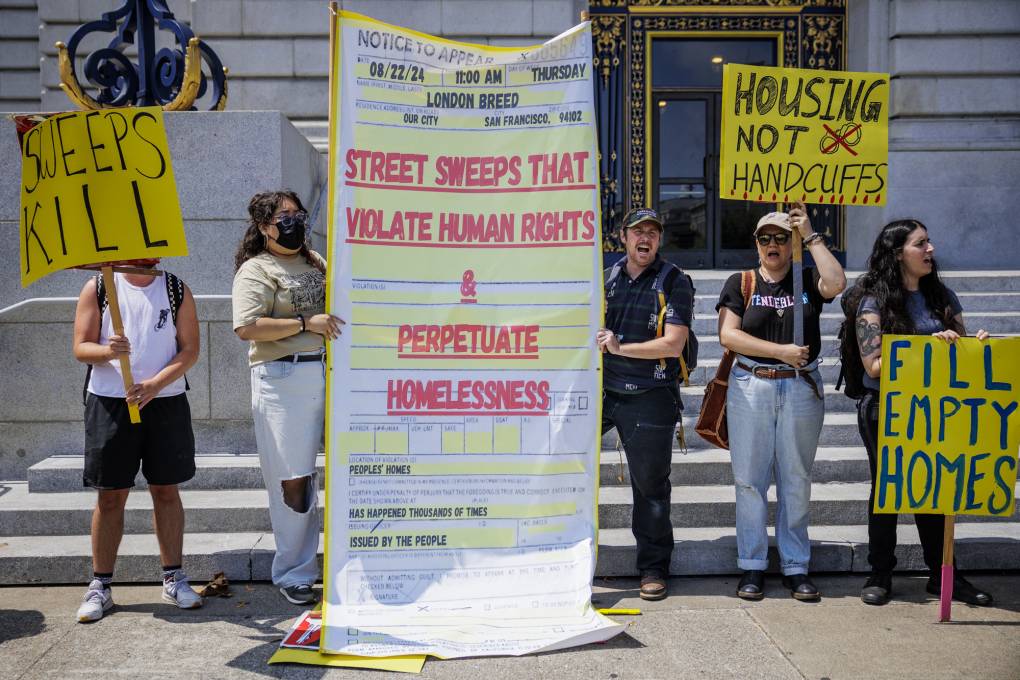
"attachmentsReducer": {
"audio_0": {
"type": "attachments",
"id": "audio_0",
"imgSizes": {
"kqedFullSize": {
"file": "https://ww2.kqed.org/news/wp-content/themes/KQED-unified/img/audio_bgs/background0.jpg"
}
}
},
"audio_1": {
"type": "attachments",
"id": "audio_1",
"imgSizes": {
"kqedFullSize": {
"file": "https://ww2.kqed.org/news/wp-content/themes/KQED-unified/img/audio_bgs/background1.jpg"
}
}
},
"audio_2": {
"type": "attachments",
"id": "audio_2",
"imgSizes": {
"kqedFullSize": {
"file": "https://ww2.kqed.org/news/wp-content/themes/KQED-unified/img/audio_bgs/background2.jpg"
}
}
},
"audio_3": {
"type": "attachments",
"id": "audio_3",
"imgSizes": {
"kqedFullSize": {
"file": "https://ww2.kqed.org/news/wp-content/themes/KQED-unified/img/audio_bgs/background3.jpg"
}
}
},
"audio_4": {
"type": "attachments",
"id": "audio_4",
"imgSizes": {
"kqedFullSize": {
"file": "https://ww2.kqed.org/news/wp-content/themes/KQED-unified/img/audio_bgs/background4.jpg"
}
}
},
"placeholder": {
"type": "attachments",
"id": "placeholder",
"imgSizes": {
"thumbnail": {
"file": "https://cdn.kqed.org/wp-content/uploads/2024/12/KQED-Default-Image-816638274-2000x1333-1-160x107.jpg",
"width": 160,
"height": 107,
"mimeType": "image/jpeg"
},
"medium": {
"file": "https://cdn.kqed.org/wp-content/uploads/2024/12/KQED-Default-Image-816638274-2000x1333-1-800x533.jpg",
"width": 800,
"height": 533,
"mimeType": "image/jpeg"
},
"medium_large": {
"file": "https://cdn.kqed.org/wp-content/uploads/2024/12/KQED-Default-Image-816638274-2000x1333-1-768x512.jpg",
"width": 768,
"height": 512,
"mimeType": "image/jpeg"
},
"large": {
"file": "https://cdn.kqed.org/wp-content/uploads/2024/12/KQED-Default-Image-816638274-2000x1333-1-1020x680.jpg",
"width": 1020,
"height": 680,
"mimeType": "image/jpeg"
},
"1536x1536": {
"file": "https://cdn.kqed.org/wp-content/uploads/2024/12/KQED-Default-Image-816638274-2000x1333-1-1536x1024.jpg",
"width": 1536,
"height": 1024,
"mimeType": "image/jpeg"
},
"fd-lrg": {
"file": "https://cdn.kqed.org/wp-content/uploads/2024/12/KQED-Default-Image-816638274-2000x1333-1-1536x1024.jpg",
"width": 1536,
"height": 1024,
"mimeType": "image/jpeg"
},
"fd-med": {
"file": "https://cdn.kqed.org/wp-content/uploads/2024/12/KQED-Default-Image-816638274-2000x1333-1-1020x680.jpg",
"width": 1020,
"height": 680,
"mimeType": "image/jpeg"
},
"fd-sm": {
"file": "https://cdn.kqed.org/wp-content/uploads/2024/12/KQED-Default-Image-816638274-2000x1333-1-800x533.jpg",
"width": 800,
"height": 533,
"mimeType": "image/jpeg"
},
"post-thumbnail": {
"file": "https://cdn.kqed.org/wp-content/uploads/2024/12/KQED-Default-Image-816638274-2000x1333-1-672x372.jpg",
"width": 672,
"height": 372,
"mimeType": "image/jpeg"
},
"twentyfourteen-full-width": {
"file": "https://cdn.kqed.org/wp-content/uploads/2024/12/KQED-Default-Image-816638274-2000x1333-1-1038x576.jpg",
"width": 1038,
"height": 576,
"mimeType": "image/jpeg"
},
"xxsmall": {
"file": "https://cdn.kqed.org/wp-content/uploads/2024/12/KQED-Default-Image-816638274-2000x1333-1-160x107.jpg",
"width": 160,
"height": 107,
"mimeType": "image/jpeg"
},
"xsmall": {
"file": "https://cdn.kqed.org/wp-content/uploads/2024/12/KQED-Default-Image-816638274-2000x1333-1-672x372.jpg",
"width": 672,
"height": 372,
"mimeType": "image/jpeg"
},
"small": {
"file": "https://cdn.kqed.org/wp-content/uploads/2024/12/KQED-Default-Image-816638274-2000x1333-1-672x372.jpg",
"width": 672,
"height": 372,
"mimeType": "image/jpeg"
},
"xlarge": {
"file": "https://cdn.kqed.org/wp-content/uploads/2024/12/KQED-Default-Image-816638274-2000x1333-1-1020x680.jpg",
"width": 1020,
"height": 680,
"mimeType": "image/jpeg"
},
"full-width": {
"file": "https://cdn.kqed.org/wp-content/uploads/2024/12/KQED-Default-Image-816638274-2000x1333-1-1920x1280.jpg",
"width": 1920,
"height": 1280,
"mimeType": "image/jpeg"
},
"guest-author-32": {
"file": "https://cdn.kqed.org/wp-content/uploads/2025/01/KQED-Default-Image-816638274-1333x1333-1-160x160.jpg",
"width": 32,
"height": 32,
"mimeType": "image/jpeg"
},
"guest-author-50": {
"file": "https://cdn.kqed.org/wp-content/uploads/2025/01/KQED-Default-Image-816638274-1333x1333-1-160x160.jpg",
"width": 50,
"height": 50,
"mimeType": "image/jpeg"
},
"guest-author-64": {
"file": "https://cdn.kqed.org/wp-content/uploads/2025/01/KQED-Default-Image-816638274-1333x1333-1-160x160.jpg",
"width": 64,
"height": 64,
"mimeType": "image/jpeg"
},
"guest-author-96": {
"file": "https://cdn.kqed.org/wp-content/uploads/2025/01/KQED-Default-Image-816638274-1333x1333-1-160x160.jpg",
"width": 96,
"height": 96,
"mimeType": "image/jpeg"
},
"guest-author-128": {
"file": "https://cdn.kqed.org/wp-content/uploads/2025/01/KQED-Default-Image-816638274-1333x1333-1-160x160.jpg",
"width": 128,
"height": 128,
"mimeType": "image/jpeg"
},
"detail": {
"file": "https://cdn.kqed.org/wp-content/uploads/2025/01/KQED-Default-Image-816638274-1333x1333-1-160x160.jpg",
"width": 160,
"height": 160,
"mimeType": "image/jpeg"
},
"kqedFullSize": {
"file": "https://cdn.kqed.org/wp-content/uploads/2024/12/KQED-Default-Image-816638274-2000x1333-1.jpg",
"width": 2000,
"height": 1333
}
}
},
"news_12001564": {
"type": "attachments",
"id": "news_12001564",
"meta": {
"index": "attachments_1716263798",
"site": "news",
"id": "12001564",
"found": true
},
"title": "240822-ACTION-AGAINST-HOMELESS-SWEEPS-MD-01-KQED-1",
"publishDate": 1724421281,
"status": "inherit",
"parent": 0,
"modified": 1724421304,
"caption": "A rally in opposition to San Francisco's unhoused encampment sweeps in front of City Hall on Aug. 22, 2024.",
"credit": "Martin do Nascimento/KQED",
"altTag": null,
"description": null,
"imgSizes": {
"medium": {
"file": "https://cdn.kqed.org/wp-content/uploads/sites/10/2024/08/240822-ACTION-AGAINST-HOMELESS-SWEEPS-MD-01-KQED-1-800x533.jpg",
"width": 800,
"height": 533,
"mimeType": "image/jpeg"
},
"large": {
"file": "https://cdn.kqed.org/wp-content/uploads/sites/10/2024/08/240822-ACTION-AGAINST-HOMELESS-SWEEPS-MD-01-KQED-1-1020x680.jpg",
"width": 1020,
"height": 680,
"mimeType": "image/jpeg"
},
"thumbnail": {
"file": "https://cdn.kqed.org/wp-content/uploads/sites/10/2024/08/240822-ACTION-AGAINST-HOMELESS-SWEEPS-MD-01-KQED-1-160x107.jpg",
"width": 160,
"height": 107,
"mimeType": "image/jpeg"
},
"1536x1536": {
"file": "https://cdn.kqed.org/wp-content/uploads/sites/10/2024/08/240822-ACTION-AGAINST-HOMELESS-SWEEPS-MD-01-KQED-1-1536x1024.jpg",
"width": 1536,
"height": 1024,
"mimeType": "image/jpeg"
},
"post-thumbnail": {
"file": "https://cdn.kqed.org/wp-content/uploads/sites/10/2024/08/240822-ACTION-AGAINST-HOMELESS-SWEEPS-MD-01-KQED-1-672x372.jpg",
"width": 672,
"height": 372,
"mimeType": "image/jpeg"
},
"twentyfourteen-full-width": {
"file": "https://cdn.kqed.org/wp-content/uploads/sites/10/2024/08/240822-ACTION-AGAINST-HOMELESS-SWEEPS-MD-01-KQED-1-1038x576.jpg",
"width": 1038,
"height": 576,
"mimeType": "image/jpeg"
},
"full-width": {
"file": "https://cdn.kqed.org/wp-content/uploads/sites/10/2024/08/240822-ACTION-AGAINST-HOMELESS-SWEEPS-MD-01-KQED-1-1920x1280.jpg",
"width": 1920,
"height": 1280,
"mimeType": "image/jpeg"
},
"kqedFullSize": {
"file": "https://cdn.kqed.org/wp-content/uploads/sites/10/2024/08/240822-ACTION-AGAINST-HOMELESS-SWEEPS-MD-01-KQED-1.jpg",
"width": 2000,
"height": 1333
}
},
"isLoading": false,
"fetchFailed": false
},
"news_12001169": {
"type": "attachments",
"id": "news_12001169",
"meta": {
"index": "attachments_1716263798",
"site": "news",
"id": "12001169",
"found": true
},
"title": "Salinas, CA city sign",
"publishDate": 1724268377,
"status": "inherit",
"parent": 12001167,
"modified": 1724268558,
"caption": "As rental costs surge nationwide, few communities have been hit harder than Salinas, a small farmworker town near the Bay Area. Since 2000, rents there have increased sevenfold compared to incomes. On Tuesday, the Salinas City Council advanced a set of tenant protection policies, including rent control.",
"credit": "4kodiak/iStock via Getty Images",
"altTag": null,
"description": null,
"imgSizes": {
"medium": {
"file": "https://cdn.kqed.org/wp-content/uploads/sites/10/2024/08/SalinasCaliforniaGetty1-800x571.jpg",
"width": 800,
"height": 571,
"mimeType": "image/jpeg"
},
"large": {
"file": "https://cdn.kqed.org/wp-content/uploads/sites/10/2024/08/SalinasCaliforniaGetty1-1020x728.jpg",
"width": 1020,
"height": 728,
"mimeType": "image/jpeg"
},
"thumbnail": {
"file": "https://cdn.kqed.org/wp-content/uploads/sites/10/2024/08/SalinasCaliforniaGetty1-160x114.jpg",
"width": 160,
"height": 114,
"mimeType": "image/jpeg"
},
"1536x1536": {
"file": "https://cdn.kqed.org/wp-content/uploads/sites/10/2024/08/SalinasCaliforniaGetty1-1536x1096.jpg",
"width": 1536,
"height": 1096,
"mimeType": "image/jpeg"
},
"post-thumbnail": {
"file": "https://cdn.kqed.org/wp-content/uploads/sites/10/2024/08/SalinasCaliforniaGetty1-672x372.jpg",
"width": 672,
"height": 372,
"mimeType": "image/jpeg"
},
"twentyfourteen-full-width": {
"file": "https://cdn.kqed.org/wp-content/uploads/sites/10/2024/08/SalinasCaliforniaGetty1-1038x576.jpg",
"width": 1038,
"height": 576,
"mimeType": "image/jpeg"
},
"full-width": {
"file": "https://cdn.kqed.org/wp-content/uploads/sites/10/2024/08/SalinasCaliforniaGetty1-1920x1370.jpg",
"width": 1920,
"height": 1370,
"mimeType": "image/jpeg"
},
"kqedFullSize": {
"file": "https://cdn.kqed.org/wp-content/uploads/sites/10/2024/08/SalinasCaliforniaGetty1.jpg",
"width": 2000,
"height": 1427
}
},
"isLoading": false,
"fetchFailed": false
},
"news_12000943": {
"type": "attachments",
"id": "news_12000943",
"meta": {
"index": "attachments_1716263798",
"site": "news",
"id": "12000943",
"found": true
},
"title": "240406-PeskinCampaignKickoff-038-BL_qed",
"publishDate": 1724181558,
"status": "inherit",
"parent": 12000938,
"modified": 1724181594,
"caption": "Board of Supervisors president Aaron Peskin speaks during a rally to announce his campaign for mayor of San Francisco in Chinatown’s Portsmouth Square in San Francisco on April 6, 2024.",
"credit": "Beth LaBerge/KQED",
"altTag": null,
"description": null,
"imgSizes": {
"medium": {
"file": "https://cdn.kqed.org/wp-content/uploads/sites/10/2024/08/240406-PeskinCampaignKickoff-038-BL_qed-800x533.jpg",
"width": 800,
"height": 533,
"mimeType": "image/jpeg"
},
"large": {
"file": "https://cdn.kqed.org/wp-content/uploads/sites/10/2024/08/240406-PeskinCampaignKickoff-038-BL_qed-1020x680.jpg",
"width": 1020,
"height": 680,
"mimeType": "image/jpeg"
},
"thumbnail": {
"file": "https://cdn.kqed.org/wp-content/uploads/sites/10/2024/08/240406-PeskinCampaignKickoff-038-BL_qed-160x107.jpg",
"width": 160,
"height": 107,
"mimeType": "image/jpeg"
},
"1536x1536": {
"file": "https://cdn.kqed.org/wp-content/uploads/sites/10/2024/08/240406-PeskinCampaignKickoff-038-BL_qed-1536x1024.jpg",
"width": 1536,
"height": 1024,
"mimeType": "image/jpeg"
},
"post-thumbnail": {
"file": "https://cdn.kqed.org/wp-content/uploads/sites/10/2024/08/240406-PeskinCampaignKickoff-038-BL_qed-672x372.jpg",
"width": 672,
"height": 372,
"mimeType": "image/jpeg"
},
"twentyfourteen-full-width": {
"file": "https://cdn.kqed.org/wp-content/uploads/sites/10/2024/08/240406-PeskinCampaignKickoff-038-BL_qed-1038x576.jpg",
"width": 1038,
"height": 576,
"mimeType": "image/jpeg"
},
"full-width": {
"file": "https://cdn.kqed.org/wp-content/uploads/sites/10/2024/08/240406-PeskinCampaignKickoff-038-BL_qed-1920x1280.jpg",
"width": 1920,
"height": 1280,
"mimeType": "image/jpeg"
},
"kqedFullSize": {
"file": "https://cdn.kqed.org/wp-content/uploads/sites/10/2024/08/240406-PeskinCampaignKickoff-038-BL_qed.jpg",
"width": 2000,
"height": 1333
}
},
"isLoading": false,
"fetchFailed": false
},
"news_12000980": {
"type": "attachments",
"id": "news_12000980",
"meta": {
"index": "attachments_1716263798",
"site": "news",
"id": "12000980",
"found": true
},
"title": "San Rafael, California",
"publishDate": 1724186610,
"status": "inherit",
"parent": 12000944,
"modified": 1724186745,
"caption": "San Rafael city leaders approved a plan on Monday to establish a sanctioned homeless encampment, part of a broader push to clamp down on public camping in the wake of favorable court rulings and pressure from Gov. Gavin Newsom.",
"credit": "Matt Gush/iStock via Getty Images",
"altTag": null,
"description": null,
"imgSizes": {
"medium": {
"file": "https://cdn.kqed.org/wp-content/uploads/sites/10/2024/08/SanRafaelCitySkyline1Getty-800x449.jpg",
"width": 800,
"height": 449,
"mimeType": "image/jpeg"
},
"large": {
"file": "https://cdn.kqed.org/wp-content/uploads/sites/10/2024/08/SanRafaelCitySkyline1Getty-1020x573.jpg",
"width": 1020,
"height": 573,
"mimeType": "image/jpeg"
},
"thumbnail": {
"file": "https://cdn.kqed.org/wp-content/uploads/sites/10/2024/08/SanRafaelCitySkyline1Getty-160x90.jpg",
"width": 160,
"height": 90,
"mimeType": "image/jpeg"
},
"1536x1536": {
"file": "https://cdn.kqed.org/wp-content/uploads/sites/10/2024/08/SanRafaelCitySkyline1Getty-1536x862.jpg",
"width": 1536,
"height": 862,
"mimeType": "image/jpeg"
},
"post-thumbnail": {
"file": "https://cdn.kqed.org/wp-content/uploads/sites/10/2024/08/SanRafaelCitySkyline1Getty-672x372.jpg",
"width": 672,
"height": 372,
"mimeType": "image/jpeg"
},
"twentyfourteen-full-width": {
"file": "https://cdn.kqed.org/wp-content/uploads/sites/10/2024/08/SanRafaelCitySkyline1Getty-1038x576.jpg",
"width": 1038,
"height": 576,
"mimeType": "image/jpeg"
},
"full-width": {
"file": "https://cdn.kqed.org/wp-content/uploads/sites/10/2024/08/SanRafaelCitySkyline1Getty-1920x1078.jpg",
"width": 1920,
"height": 1078,
"mimeType": "image/jpeg"
},
"kqedFullSize": {
"file": "https://cdn.kqed.org/wp-content/uploads/sites/10/2024/08/SanRafaelCitySkyline1Getty.jpg",
"width": 2000,
"height": 1123
}
},
"isLoading": false,
"fetchFailed": false
},
"news_11998743": {
"type": "attachments",
"id": "news_11998743",
"meta": {
"index": "attachments_1716263798",
"site": "news",
"id": "11998743",
"found": true
},
"title": "240801-ENCAMPMENT SWEEPS-MD-03-KQED",
"publishDate": 1722690633,
"status": "inherit",
"parent": 12000606,
"modified": 1723850346,
"caption": "Alex Vallardo ties his belongings to a wagon as he prepares to relocate before the sweep team arrives.",
"credit": "Martin do Nascimento/KQED",
"altTag": null,
"description": null,
"imgSizes": {
"medium": {
"file": "https://cdn.kqed.org/wp-content/uploads/sites/10/2024/08/240801-ENCAMPMENT-SWEEPS-MD-03-KQED-800x533.jpg",
"width": 800,
"height": 533,
"mimeType": "image/jpeg"
},
"large": {
"file": "https://cdn.kqed.org/wp-content/uploads/sites/10/2024/08/240801-ENCAMPMENT-SWEEPS-MD-03-KQED-1020x680.jpg",
"width": 1020,
"height": 680,
"mimeType": "image/jpeg"
},
"thumbnail": {
"file": "https://cdn.kqed.org/wp-content/uploads/sites/10/2024/08/240801-ENCAMPMENT-SWEEPS-MD-03-KQED-160x107.jpg",
"width": 160,
"height": 107,
"mimeType": "image/jpeg"
},
"1536x1536": {
"file": "https://cdn.kqed.org/wp-content/uploads/sites/10/2024/08/240801-ENCAMPMENT-SWEEPS-MD-03-KQED-1536x1024.jpg",
"width": 1536,
"height": 1024,
"mimeType": "image/jpeg"
},
"post-thumbnail": {
"file": "https://cdn.kqed.org/wp-content/uploads/sites/10/2024/08/240801-ENCAMPMENT-SWEEPS-MD-03-KQED-672x372.jpg",
"width": 672,
"height": 372,
"mimeType": "image/jpeg"
},
"twentyfourteen-full-width": {
"file": "https://cdn.kqed.org/wp-content/uploads/sites/10/2024/08/240801-ENCAMPMENT-SWEEPS-MD-03-KQED-1038x576.jpg",
"width": 1038,
"height": 576,
"mimeType": "image/jpeg"
},
"full-width": {
"file": "https://cdn.kqed.org/wp-content/uploads/sites/10/2024/08/240801-ENCAMPMENT-SWEEPS-MD-03-KQED-1920x1280.jpg",
"width": 1920,
"height": 1280,
"mimeType": "image/jpeg"
},
"kqedFullSize": {
"file": "https://cdn.kqed.org/wp-content/uploads/sites/10/2024/08/240801-ENCAMPMENT-SWEEPS-MD-03-KQED.jpg",
"width": 2000,
"height": 1333
}
},
"isLoading": false,
"fetchFailed": false
},
"news_11998571": {
"type": "attachments",
"id": "news_11998571",
"meta": {
"index": "attachments_1716263798",
"site": "news",
"id": "11998571",
"found": true
},
"title": "240801-ENCAMPMENT SWEEPS-MD-02-KQED",
"publishDate": 1722601919,
"status": "inherit",
"parent": 12000938,
"modified": 1732740082,
"caption": "An unhoused man relocates his belongings to a new site in anticipation of an encampment sweep by San Francisco's Department of Public Works near Showplace Square in San Francisco on Aug. 1, 2024.",
"credit": "Martin do Nascimento/KQED",
"altTag": "A person wearing black moves a shopping cart full of belongings.",
"description": null,
"imgSizes": {
"medium": {
"file": "https://cdn.kqed.org/wp-content/uploads/sites/10/2024/08/240801-ENCAMPMENT-SWEEPS-MD-02-KQED-800x533.jpg",
"width": 800,
"height": 533,
"mimeType": "image/jpeg"
},
"large": {
"file": "https://cdn.kqed.org/wp-content/uploads/sites/10/2024/08/240801-ENCAMPMENT-SWEEPS-MD-02-KQED-1020x680.jpg",
"width": 1020,
"height": 680,
"mimeType": "image/jpeg"
},
"thumbnail": {
"file": "https://cdn.kqed.org/wp-content/uploads/sites/10/2024/08/240801-ENCAMPMENT-SWEEPS-MD-02-KQED-160x107.jpg",
"width": 160,
"height": 107,
"mimeType": "image/jpeg"
},
"1536x1536": {
"file": "https://cdn.kqed.org/wp-content/uploads/sites/10/2024/08/240801-ENCAMPMENT-SWEEPS-MD-02-KQED-1536x1024.jpg",
"width": 1536,
"height": 1024,
"mimeType": "image/jpeg"
},
"post-thumbnail": {
"file": "https://cdn.kqed.org/wp-content/uploads/sites/10/2024/08/240801-ENCAMPMENT-SWEEPS-MD-02-KQED-672x372.jpg",
"width": 672,
"height": 372,
"mimeType": "image/jpeg"
},
"twentyfourteen-full-width": {
"file": "https://cdn.kqed.org/wp-content/uploads/sites/10/2024/08/240801-ENCAMPMENT-SWEEPS-MD-02-KQED-1038x576.jpg",
"width": 1038,
"height": 576,
"mimeType": "image/jpeg"
},
"full-width": {
"file": "https://cdn.kqed.org/wp-content/uploads/sites/10/2024/08/240801-ENCAMPMENT-SWEEPS-MD-02-KQED-1920x1280.jpg",
"width": 1920,
"height": 1280,
"mimeType": "image/jpeg"
},
"kqedFullSize": {
"file": "https://cdn.kqed.org/wp-content/uploads/sites/10/2024/08/240801-ENCAMPMENT-SWEEPS-MD-02-KQED.jpg?ver=1722631109",
"width": 2000,
"height": 1333
}
},
"isLoading": false,
"fetchFailed": false
},
"news_12000627": {
"type": "attachments",
"id": "news_12000627",
"meta": {
"index": "attachments_1716263798",
"site": "news",
"id": "12000627",
"found": true
},
"title": "20240508_WhatToMakeToBuyHomeCA-7_qed",
"publishDate": 1723854836,
"status": "inherit",
"parent": 12000623,
"modified": 1723856377,
"caption": "A for-sale sign hangs outside a home in San Carlos on May 8. A multimillion-dollar settlement that just went into effect will change how realtors can earn commissions when buying and selling homes. Experts say it could drastically change the real estate market.",
"credit": "Gina Castro/KQED",
"altTag": null,
"description": null,
"imgSizes": {
"medium": {
"file": "https://cdn.kqed.org/wp-content/uploads/sites/10/2024/08/20240508_WhatToMakeToBuyHomeCA-7_qed-800x533.jpg",
"width": 800,
"height": 533,
"mimeType": "image/jpeg"
},
"large": {
"file": "https://cdn.kqed.org/wp-content/uploads/sites/10/2024/08/20240508_WhatToMakeToBuyHomeCA-7_qed-1020x680.jpg",
"width": 1020,
"height": 680,
"mimeType": "image/jpeg"
},
"thumbnail": {
"file": "https://cdn.kqed.org/wp-content/uploads/sites/10/2024/08/20240508_WhatToMakeToBuyHomeCA-7_qed-160x107.jpg",
"width": 160,
"height": 107,
"mimeType": "image/jpeg"
},
"1536x1536": {
"file": "https://cdn.kqed.org/wp-content/uploads/sites/10/2024/08/20240508_WhatToMakeToBuyHomeCA-7_qed-1536x1024.jpg",
"width": 1536,
"height": 1024,
"mimeType": "image/jpeg"
},
"post-thumbnail": {
"file": "https://cdn.kqed.org/wp-content/uploads/sites/10/2024/08/20240508_WhatToMakeToBuyHomeCA-7_qed-672x372.jpg",
"width": 672,
"height": 372,
"mimeType": "image/jpeg"
},
"twentyfourteen-full-width": {
"file": "https://cdn.kqed.org/wp-content/uploads/sites/10/2024/08/20240508_WhatToMakeToBuyHomeCA-7_qed-1038x576.jpg",
"width": 1038,
"height": 576,
"mimeType": "image/jpeg"
},
"full-width": {
"file": "https://cdn.kqed.org/wp-content/uploads/sites/10/2024/08/20240508_WhatToMakeToBuyHomeCA-7_qed-1920x1280.jpg",
"width": 1920,
"height": 1280,
"mimeType": "image/jpeg"
},
"kqedFullSize": {
"file": "https://cdn.kqed.org/wp-content/uploads/sites/10/2024/08/20240508_WhatToMakeToBuyHomeCA-7_qed.jpg",
"width": 2000,
"height": 1333
}
},
"isLoading": false,
"fetchFailed": false
},
"news_12000291": {
"type": "attachments",
"id": "news_12000291",
"meta": {
"index": "attachments_1716263798",
"site": "news",
"id": "12000291",
"found": true
},
"title": "231017-LakeMercedRVs-019-BL_qed",
"publishDate": 1723682731,
"status": "inherit",
"parent": 12000285,
"modified": 1723742553,
"caption": "RVs line Winston Drive in San Francisco in October 2023. Several families have again parked their RVs at the site after being pushed out of a nearby location on Zoo Road. The latest reshuffle follows years of unsuccessful attempts to find a safe parking site or other housing options for dozens of immigrant families living in the RVs.",
"credit": "Beth LaBerge/KQED",
"altTag": null,
"description": null,
"imgSizes": {
"medium": {
"file": "https://cdn.kqed.org/wp-content/uploads/sites/10/2024/08/231017-LakeMercedRVs-019-BL_qed-800x533.jpg",
"width": 800,
"height": 533,
"mimeType": "image/jpeg"
},
"large": {
"file": "https://cdn.kqed.org/wp-content/uploads/sites/10/2024/08/231017-LakeMercedRVs-019-BL_qed-1020x680.jpg",
"width": 1020,
"height": 680,
"mimeType": "image/jpeg"
},
"thumbnail": {
"file": "https://cdn.kqed.org/wp-content/uploads/sites/10/2024/08/231017-LakeMercedRVs-019-BL_qed-160x107.jpg",
"width": 160,
"height": 107,
"mimeType": "image/jpeg"
},
"1536x1536": {
"file": "https://cdn.kqed.org/wp-content/uploads/sites/10/2024/08/231017-LakeMercedRVs-019-BL_qed-1536x1024.jpg",
"width": 1536,
"height": 1024,
"mimeType": "image/jpeg"
},
"post-thumbnail": {
"file": "https://cdn.kqed.org/wp-content/uploads/sites/10/2024/08/231017-LakeMercedRVs-019-BL_qed-672x372.jpg",
"width": 672,
"height": 372,
"mimeType": "image/jpeg"
},
"twentyfourteen-full-width": {
"file": "https://cdn.kqed.org/wp-content/uploads/sites/10/2024/08/231017-LakeMercedRVs-019-BL_qed-1038x576.jpg",
"width": 1038,
"height": 576,
"mimeType": "image/jpeg"
},
"full-width": {
"file": "https://cdn.kqed.org/wp-content/uploads/sites/10/2024/08/231017-LakeMercedRVs-019-BL_qed-1920x1280.jpg",
"width": 1920,
"height": 1280,
"mimeType": "image/jpeg"
},
"kqedFullSize": {
"file": "https://cdn.kqed.org/wp-content/uploads/sites/10/2024/08/231017-LakeMercedRVs-019-BL_qed.jpg",
"width": 2000,
"height": 1333
}
},
"isLoading": false,
"fetchFailed": false
},
"news_11991973": {
"type": "attachments",
"id": "news_11991973",
"meta": {
"index": "attachments_1716263798",
"site": "news",
"id": "11991973",
"found": true
},
"title": "240625-SOLANO COUNTY BOARD OF SUPES-MD-01-KQED",
"publishDate": 1719363381,
"status": "inherit",
"parent": 11991788,
"modified": 1723677654,
"caption": "Areanna Deloney holds a sign advocating against the California Forever/East Solano Plan outside a Solano County Board of Supervisors meeting in Fairfield on June 25, 2024.",
"credit": "Martin do Nascimento/KQED",
"altTag": "A woman wearing a black shirt stands next to another woman outside. She holds a sign in one hand that says \"Solano Says No!\" and a poster of a plant and owl in the other hand.",
"description": null,
"imgSizes": {
"medium": {
"file": "https://cdn.kqed.org/wp-content/uploads/sites/10/2024/06/240625-SOLANO-COUNTY-BOARD-OF-SUPES-MD-01-KQED-800x533.jpg",
"width": 800,
"height": 533,
"mimeType": "image/jpeg"
},
"large": {
"file": "https://cdn.kqed.org/wp-content/uploads/sites/10/2024/06/240625-SOLANO-COUNTY-BOARD-OF-SUPES-MD-01-KQED-1020x680.jpg",
"width": 1020,
"height": 680,
"mimeType": "image/jpeg"
},
"thumbnail": {
"file": "https://cdn.kqed.org/wp-content/uploads/sites/10/2024/06/240625-SOLANO-COUNTY-BOARD-OF-SUPES-MD-01-KQED-160x107.jpg",
"width": 160,
"height": 107,
"mimeType": "image/jpeg"
},
"1536x1536": {
"file": "https://cdn.kqed.org/wp-content/uploads/sites/10/2024/06/240625-SOLANO-COUNTY-BOARD-OF-SUPES-MD-01-KQED-1536x1024.jpg",
"width": 1536,
"height": 1024,
"mimeType": "image/jpeg"
},
"post-thumbnail": {
"file": "https://cdn.kqed.org/wp-content/uploads/sites/10/2024/06/240625-SOLANO-COUNTY-BOARD-OF-SUPES-MD-01-KQED-672x372.jpg",
"width": 672,
"height": 372,
"mimeType": "image/jpeg"
},
"twentyfourteen-full-width": {
"file": "https://cdn.kqed.org/wp-content/uploads/sites/10/2024/06/240625-SOLANO-COUNTY-BOARD-OF-SUPES-MD-01-KQED-1038x576.jpg",
"width": 1038,
"height": 576,
"mimeType": "image/jpeg"
},
"full-width": {
"file": "https://cdn.kqed.org/wp-content/uploads/sites/10/2024/06/240625-SOLANO-COUNTY-BOARD-OF-SUPES-MD-01-KQED-1920x1280.jpg",
"width": 1920,
"height": 1280,
"mimeType": "image/jpeg"
},
"kqedFullSize": {
"file": "https://cdn.kqed.org/wp-content/uploads/sites/10/2024/06/240625-SOLANO-COUNTY-BOARD-OF-SUPES-MD-01-KQED.jpg",
"width": 2000,
"height": 1333
}
},
"isLoading": false,
"fetchFailed": false
},
"news_12000196": {
"type": "attachments",
"id": "news_12000196",
"meta": {
"index": "attachments_1716263798",
"site": "news",
"id": "12000196",
"found": true
},
"title": "An apartment building in the Elmwood neighborhood of Berkeley on July 18, 2024.",
"publishDate": 1723666408,
"status": "inherit",
"parent": 12000157,
"modified": 1723667801,
"caption": "An apartment building in the Elmwood neighborhood of Berkeley on July 18, 2024. A regional bond measure that would have authorized funding for an estimated 70,000 new subsidized apartments and homes will have to wait for a future election after it was pulled from the November ballot on Wednesday.",
"credit": "Beth LaBerge/KQED",
"altTag": null,
"description": null,
"imgSizes": {
"medium": {
"file": "https://cdn.kqed.org/wp-content/uploads/sites/10/2024/08/240718-BerkeleyMissingMiddleHousing-24-BL-800x533.jpg",
"width": 800,
"height": 533,
"mimeType": "image/jpeg"
},
"large": {
"file": "https://cdn.kqed.org/wp-content/uploads/sites/10/2024/08/240718-BerkeleyMissingMiddleHousing-24-BL-1020x680.jpg",
"width": 1020,
"height": 680,
"mimeType": "image/jpeg"
},
"thumbnail": {
"file": "https://cdn.kqed.org/wp-content/uploads/sites/10/2024/08/240718-BerkeleyMissingMiddleHousing-24-BL-160x107.jpg",
"width": 160,
"height": 107,
"mimeType": "image/jpeg"
},
"1536x1536": {
"file": "https://cdn.kqed.org/wp-content/uploads/sites/10/2024/08/240718-BerkeleyMissingMiddleHousing-24-BL-1536x1024.jpg",
"width": 1536,
"height": 1024,
"mimeType": "image/jpeg"
},
"post-thumbnail": {
"file": "https://cdn.kqed.org/wp-content/uploads/sites/10/2024/08/240718-BerkeleyMissingMiddleHousing-24-BL-672x372.jpg",
"width": 672,
"height": 372,
"mimeType": "image/jpeg"
},
"twentyfourteen-full-width": {
"file": "https://cdn.kqed.org/wp-content/uploads/sites/10/2024/08/240718-BerkeleyMissingMiddleHousing-24-BL-1038x576.jpg",
"width": 1038,
"height": 576,
"mimeType": "image/jpeg"
},
"full-width": {
"file": "https://cdn.kqed.org/wp-content/uploads/sites/10/2024/08/240718-BerkeleyMissingMiddleHousing-24-BL-1920x1280.jpg",
"width": 1920,
"height": 1280,
"mimeType": "image/jpeg"
},
"kqedFullSize": {
"file": "https://cdn.kqed.org/wp-content/uploads/sites/10/2024/08/240718-BerkeleyMissingMiddleHousing-24-BL.jpg",
"width": 2000,
"height": 1333
}
},
"isLoading": false,
"fetchFailed": false
},
"news_11996250": {
"type": "attachments",
"id": "news_11996250",
"meta": {
"index": "attachments_1716263798",
"site": "news",
"id": "11996250",
"found": true
},
"title": "240703-JAPANESE AMERICAN FAMILY FARM-MD-28-KQED",
"publishDate": 1721326833,
"status": "inherit",
"parent": 11999500,
"modified": 1723156522,
"caption": "James Tsukuda works on the farm owned by the Sakauye family in San José on July 10, 2024.",
"credit": "Martin do Nascimento/KQED",
"altTag": null,
"description": null,
"imgSizes": {
"medium": {
"file": "https://cdn.kqed.org/wp-content/uploads/sites/10/2024/07/240703-JAPANESE-AMERICAN-FAMILY-FARM-MD-28-KQED-800x533.jpg",
"width": 800,
"height": 533,
"mimeType": "image/jpeg"
},
"large": {
"file": "https://cdn.kqed.org/wp-content/uploads/sites/10/2024/07/240703-JAPANESE-AMERICAN-FAMILY-FARM-MD-28-KQED-1020x680.jpg",
"width": 1020,
"height": 680,
"mimeType": "image/jpeg"
},
"thumbnail": {
"file": "https://cdn.kqed.org/wp-content/uploads/sites/10/2024/07/240703-JAPANESE-AMERICAN-FAMILY-FARM-MD-28-KQED-160x107.jpg",
"width": 160,
"height": 107,
"mimeType": "image/jpeg"
},
"1536x1536": {
"file": "https://cdn.kqed.org/wp-content/uploads/sites/10/2024/07/240703-JAPANESE-AMERICAN-FAMILY-FARM-MD-28-KQED-1536x1024.jpg",
"width": 1536,
"height": 1024,
"mimeType": "image/jpeg"
},
"post-thumbnail": {
"file": "https://cdn.kqed.org/wp-content/uploads/sites/10/2024/07/240703-JAPANESE-AMERICAN-FAMILY-FARM-MD-28-KQED-672x372.jpg",
"width": 672,
"height": 372,
"mimeType": "image/jpeg"
},
"twentyfourteen-full-width": {
"file": "https://cdn.kqed.org/wp-content/uploads/sites/10/2024/07/240703-JAPANESE-AMERICAN-FAMILY-FARM-MD-28-KQED-1038x576.jpg",
"width": 1038,
"height": 576,
"mimeType": "image/jpeg"
},
"full-width": {
"file": "https://cdn.kqed.org/wp-content/uploads/sites/10/2024/07/240703-JAPANESE-AMERICAN-FAMILY-FARM-MD-28-KQED-1920x1280.jpg",
"width": 1920,
"height": 1280,
"mimeType": "image/jpeg"
},
"kqedFullSize": {
"file": "https://cdn.kqed.org/wp-content/uploads/sites/10/2024/07/240703-JAPANESE-AMERICAN-FAMILY-FARM-MD-28-KQED.jpg",
"width": 2000,
"height": 1333
}
},
"isLoading": false,
"fetchFailed": false
},
"news_11999967": {
"type": "attachments",
"id": "news_11999967",
"meta": {
"index": "attachments_1716263798",
"site": "news",
"id": "11999967",
"found": true
},
"title": "071223_San-Francisco_SN_CM_02 copy",
"publishDate": 1723568893,
"status": "inherit",
"parent": 11999966,
"modified": 1723568917,
"caption": "Houses in San Francisco on July 12, 2023. \n",
"credit": "Semantha Norris/CalMatters",
"altTag": null,
"description": null,
"imgSizes": {
"medium": {
"file": "https://cdn.kqed.org/wp-content/uploads/sites/10/2024/08/071223_San-Francisco_SN_CM_02-copy-800x533.jpg",
"width": 800,
"height": 533,
"mimeType": "image/jpeg"
},
"large": {
"file": "https://cdn.kqed.org/wp-content/uploads/sites/10/2024/08/071223_San-Francisco_SN_CM_02-copy-1020x680.jpg",
"width": 1020,
"height": 680,
"mimeType": "image/jpeg"
},
"thumbnail": {
"file": "https://cdn.kqed.org/wp-content/uploads/sites/10/2024/08/071223_San-Francisco_SN_CM_02-copy-160x107.jpg",
"width": 160,
"height": 107,
"mimeType": "image/jpeg"
},
"1536x1536": {
"file": "https://cdn.kqed.org/wp-content/uploads/sites/10/2024/08/071223_San-Francisco_SN_CM_02-copy-1536x1024.jpg",
"width": 1536,
"height": 1024,
"mimeType": "image/jpeg"
},
"post-thumbnail": {
"file": "https://cdn.kqed.org/wp-content/uploads/sites/10/2024/08/071223_San-Francisco_SN_CM_02-copy-672x372.jpg",
"width": 672,
"height": 372,
"mimeType": "image/jpeg"
},
"twentyfourteen-full-width": {
"file": "https://cdn.kqed.org/wp-content/uploads/sites/10/2024/08/071223_San-Francisco_SN_CM_02-copy-1038x576.jpg",
"width": 1038,
"height": 576,
"mimeType": "image/jpeg"
},
"full-width": {
"file": "https://cdn.kqed.org/wp-content/uploads/sites/10/2024/08/071223_San-Francisco_SN_CM_02-copy-1920x1280.jpg",
"width": 1920,
"height": 1280,
"mimeType": "image/jpeg"
},
"kqedFullSize": {
"file": "https://cdn.kqed.org/wp-content/uploads/sites/10/2024/08/071223_San-Francisco_SN_CM_02-copy.jpg",
"width": 2000,
"height": 1333
}
},
"isLoading": false,
"fetchFailed": false
}
},
"audioPlayerReducer": {
"postId": "stream_live",
"isPaused": true,
"isPlaying": false,
"pfsActive": false,
"pledgeModalIsOpen": true,
"playerDrawerIsOpen": false,
"liveAudioPlayStartedAt": 0,
"liveAudioPlayContext": ""
},
"authorsReducer": {
"byline_news_11999966": {
"type": "authors",
"id": "byline_news_11999966",
"meta": {
"override": true
},
"slug": "byline_news_11999966",
"name": "\u003ca href=\"https://calmatters.org/author/levi-sumagaysay/\">Levi Sumagaysay\u003c/a>, CalMatters",
"isLoading": false
},
"vrancano": {
"type": "authors",
"id": "11276",
"meta": {
"index": "authors_1716337520",
"id": "11276",
"found": true
},
"name": "Vanessa Rancaño",
"firstName": "Vanessa",
"lastName": "Rancaño",
"slug": "vrancano",
"email": "vrancano@kqed.org",
"display_author_email": false,
"staff_mastheads": [
"news"
],
"title": "Reporter",
"bio": "Vanessa Rancaño is a features reporter for KQED. She’s also covered homelessness and education for the station and reported from the Central Valley. Her work has aired across public radio, from flagship national news shows to longform narrative podcasts. Before taking up a mic, she worked as a freelance print journalist. She’s been recognized with a number of national and regional awards. Vanessa grew up in California's Central Valley. She's a former NPR Kroc Fellow, and a graduate of the UC Berkeley Graduate School of Journalism.",
"avatar": "https://secure.gravatar.com/avatar/b3a383dfb0e7ee1c17568f2cf067904ab654d6e3de9743fc661f3c788ade1bed?s=600&d=blank&r=g",
"twitter": "vanessarancano",
"bluesky": null,
"facebook": null,
"instagram": null,
"linkedin": null,
"sites": [
{
"site": "arts",
"roles": [
"editor"
]
},
{
"site": "news",
"roles": [
"editor"
]
},
{
"site": "liveblog",
"roles": [
"contributor"
]
}
],
"headData": {
"title": "Vanessa Rancaño | KQED",
"description": "Reporter",
"ogImgSrc": "https://secure.gravatar.com/avatar/b3a383dfb0e7ee1c17568f2cf067904ab654d6e3de9743fc661f3c788ade1bed?s=600&d=blank&r=g",
"twImgSrc": "https://secure.gravatar.com/avatar/b3a383dfb0e7ee1c17568f2cf067904ab654d6e3de9743fc661f3c788ade1bed?s=600&d=blank&r=g"
},
"isLoading": false,
"link": "/author/vrancano"
},
"ebaldassari": {
"type": "authors",
"id": "11652",
"meta": {
"index": "authors_1716337520",
"id": "11652",
"found": true
},
"name": "Erin Baldassari",
"firstName": "Erin",
"lastName": "Baldassari",
"slug": "ebaldassari",
"email": "ebaldassari@KQED.org",
"display_author_email": true,
"staff_mastheads": [
"news"
],
"title": "Staff Writer",
"bio": "Erin Baldassari covers housing for KQED. She's a former print journalist and most recently worked as the transportation reporter for the \u003cem>Mercury News\u003c/em> and \u003cem>East Bay Times. \u003c/em>There, she focused on how the Bay Area’s housing shortage has changed the way people move around the region. She also served on the \u003cem>East Bay Times\u003c/em>’ 2017 Pulitzer Prize-winning team for coverage of the Ghost Ship Fire in Oakland. Prior to that, Erin worked as a breaking news and general assignment reporter for a variety of outlets in the Bay Area and the greater Boston area. A Tufts University alumna, Erin grew up in the foothills of the Sierra Nevada mountains and in Sonoma County. She is a life-long KQED listener.",
"avatar": "https://secure.gravatar.com/avatar/5e95cad64a8ca08288082212e199d2b0cbeb4fd8e8ef5339395f361032bbe005?s=600&d=blank&r=g",
"twitter": "e_baldi",
"bluesky": null,
"facebook": null,
"instagram": null,
"linkedin": null,
"sites": [
{
"site": "news",
"roles": [
"edit_others_posts",
"editor"
]
},
{
"site": "science",
"roles": [
"editor"
]
},
{
"site": "liveblog",
"roles": [
"editor"
]
}
],
"headData": {
"title": "Erin Baldassari | KQED",
"description": "Staff Writer",
"ogImgSrc": "https://secure.gravatar.com/avatar/5e95cad64a8ca08288082212e199d2b0cbeb4fd8e8ef5339395f361032bbe005?s=600&d=blank&r=g",
"twImgSrc": "https://secure.gravatar.com/avatar/5e95cad64a8ca08288082212e199d2b0cbeb4fd8e8ef5339395f361032bbe005?s=600&d=blank&r=g"
},
"isLoading": false,
"link": "/author/ebaldassari"
},
"blaberge": {
"type": "authors",
"id": "11667",
"meta": {
"index": "authors_1716337520",
"id": "11667",
"found": true
},
"name": "Beth LaBerge",
"firstName": "Beth",
"lastName": "LaBerge",
"slug": "blaberge",
"email": "blaberge@KQED.org",
"display_author_email": true,
"staff_mastheads": [
"news"
],
"title": "Photographer, News",
"bio": "Beth LaBerge is a visual journalist for \u003ca href=\"https://www.kqed.org/news\">KQED News\u003c/a>.",
"avatar": "https://secure.gravatar.com/avatar/ce49ecd7a1306685637b45a1f6f5dedfc4ae9481966eb596fea5160466dd6319?s=600&d=blank&r=g",
"twitter": null,
"bluesky": null,
"facebook": null,
"instagram": "https://www.instagram.com/bethlaberge/",
"linkedin": null,
"sites": [
{
"site": "arts",
"roles": [
"editor",
"manage_categories"
]
},
{
"site": "news",
"roles": [
"editor",
"edit_plugins",
"manage_categories"
]
},
{
"site": "science",
"roles": [
"editor",
"contributor",
"author",
"manage_categories"
]
},
{
"site": "perspectives",
"roles": [
"editor"
]
},
{
"site": "liveblog",
"roles": [
"editor"
]
}
],
"headData": {
"title": "Beth LaBerge | KQED",
"description": "Photographer, News",
"ogImgSrc": "https://secure.gravatar.com/avatar/ce49ecd7a1306685637b45a1f6f5dedfc4ae9481966eb596fea5160466dd6319?s=600&d=blank&r=g",
"twImgSrc": "https://secure.gravatar.com/avatar/ce49ecd7a1306685637b45a1f6f5dedfc4ae9481966eb596fea5160466dd6319?s=600&d=blank&r=g"
},
"isLoading": false,
"link": "/author/blaberge"
},
"abandlamudi": {
"type": "authors",
"id": "11672",
"meta": {
"index": "authors_1716337520",
"id": "11672",
"found": true
},
"name": "Adhiti Bandlamudi",
"firstName": "Adhiti",
"lastName": "Bandlamudi",
"slug": "abandlamudi",
"email": "abandlamudi@kqed.org",
"display_author_email": false,
"staff_mastheads": [
"news"
],
"title": "KQED Housing Reporter",
"bio": "Adhiti Bandlamudi reports for KQED's Housing desk. She focuses on how housing gets built across the Bay Area. Before joining KQED in 2020, she reported for WUNC in Durham, North Carolina, WABE in Atlanta, Georgia and Capital Public Radio in Sacramento. In 2017, she was awarded a Kroc Fellowship at NPR where she reported on everything from sprinkles to the Golden State Killer's arrest. When she's not reporting, she's baking new recipes in her kitchen or watching movies with friends and family. She's originally from Georgia and has strong opinions about Great British Bake Off.",
"avatar": "https://secure.gravatar.com/avatar/868129c8b257bb99a3500e2c86a65400?s=600&d=mm&r=g",
"twitter": "oddity_adhiti",
"facebook": null,
"instagram": null,
"linkedin": null,
"sites": [
{
"site": "arts",
"roles": [
"author"
]
},
{
"site": "news",
"roles": [
"editor"
]
},
{
"site": "liveblog",
"roles": [
"author"
]
}
],
"headData": {
"title": "Adhiti Bandlamudi | KQED",
"description": "KQED Housing Reporter",
"ogImgSrc": "https://secure.gravatar.com/avatar/868129c8b257bb99a3500e2c86a65400?s=600&d=mm&r=g",
"twImgSrc": "https://secure.gravatar.com/avatar/868129c8b257bb99a3500e2c86a65400?s=600&d=mm&r=g"
},
"isLoading": false,
"link": "/author/abandlamudi"
},
"sjohnson": {
"type": "authors",
"id": "11840",
"meta": {
"index": "authors_1716337520",
"id": "11840",
"found": true
},
"name": "Sydney Johnson",
"firstName": "Sydney",
"lastName": "Johnson",
"slug": "sjohnson",
"email": "sjohnson@kqed.org",
"display_author_email": false,
"staff_mastheads": [
"news"
],
"title": "KQED Reporter",
"bio": "Sydney Johnson is a general assignment reporter at KQED. She previously reported on public health and city government at the San Francisco Examiner, and before that, she covered statewide education policy for EdSource. Her reporting has won multiple local, state and national awards. Sydney is a graduate of the University of California, Berkeley and lives in San Francisco.",
"avatar": "https://secure.gravatar.com/avatar/97855f2719b72ad6190b7c535fe642c8?s=600&d=blank&r=g",
"twitter": "sydneyfjohnson",
"facebook": null,
"instagram": null,
"linkedin": null,
"sites": [
{
"site": "news",
"roles": [
"editor"
]
}
],
"headData": {
"title": "Sydney Johnson | KQED",
"description": "KQED Reporter",
"ogImgSrc": "https://secure.gravatar.com/avatar/97855f2719b72ad6190b7c535fe642c8?s=600&d=blank&r=g",
"twImgSrc": "https://secure.gravatar.com/avatar/97855f2719b72ad6190b7c535fe642c8?s=600&d=blank&r=g"
},
"isLoading": false,
"link": "/author/sjohnson"
},
"mdonascimento": {
"type": "authors",
"id": "11865",
"meta": {
"index": "authors_1716337520",
"id": "11865",
"found": true
},
"name": "Martin do Nascimento",
"firstName": "Martin",
"lastName": "do Nascimento",
"slug": "mdonascimento",
"email": "mdonascimento@kqed.org",
"display_author_email": false,
"staff_mastheads": [
"news",
"science",
"arts"
],
"title": "KQED Contributor",
"bio": null,
"avatar": "https://secure.gravatar.com/avatar/e5337c4df47f2c1c9af0124a4550094c9ba92a05654bb02aea5e72d902b41744?s=600&d=blank&r=g",
"twitter": null,
"bluesky": null,
"facebook": null,
"instagram": null,
"linkedin": null,
"sites": [
{
"site": "arts",
"roles": [
"manage_categories",
"administrator"
]
},
{
"site": "news",
"roles": [
"manage_categories",
"administrator"
]
},
{
"site": "science",
"roles": [
"manage_categories",
"administrator"
]
},
{
"site": "perspectives",
"roles": [
"administrator"
]
},
{
"site": "liveblog",
"roles": [
"administrator"
]
}
],
"headData": {
"title": "Martin do Nascimento | KQED",
"description": "KQED Contributor",
"ogImgSrc": "https://secure.gravatar.com/avatar/e5337c4df47f2c1c9af0124a4550094c9ba92a05654bb02aea5e72d902b41744?s=600&d=blank&r=g",
"twImgSrc": "https://secure.gravatar.com/avatar/e5337c4df47f2c1c9af0124a4550094c9ba92a05654bb02aea5e72d902b41744?s=600&d=blank&r=g"
},
"isLoading": false,
"link": "/author/mdonascimento"
},
"jgeha": {
"type": "authors",
"id": "11906",
"meta": {
"index": "authors_1716337520",
"id": "11906",
"found": true
},
"name": "Joseph Geha",
"firstName": "Joseph",
"lastName": "Geha",
"slug": "jgeha",
"email": "jgeha@kqed.org",
"display_author_email": false,
"staff_mastheads": [
"news",
"science"
],
"title": "KQED Contributor",
"bio": null,
"avatar": "https://secure.gravatar.com/avatar/ea84d2b6dd93d6369d453edf19dd583f117cd1759d2d9c9c92f9de77017354fe?s=600&d=blank&r=g",
"twitter": null,
"bluesky": null,
"facebook": null,
"instagram": null,
"linkedin": null,
"sites": [
{
"site": "news",
"roles": [
"editor"
]
},
{
"site": "liveblog",
"roles": [
"author"
]
}
],
"headData": {
"title": "Joseph Geha | KQED",
"description": "KQED Contributor",
"ogImgSrc": "https://secure.gravatar.com/avatar/ea84d2b6dd93d6369d453edf19dd583f117cd1759d2d9c9c92f9de77017354fe?s=600&d=blank&r=g",
"twImgSrc": "https://secure.gravatar.com/avatar/ea84d2b6dd93d6369d453edf19dd583f117cd1759d2d9c9c92f9de77017354fe?s=600&d=blank&r=g"
},
"isLoading": false,
"link": "/author/jgeha"
},
"gcastro": {
"type": "authors",
"id": "11908",
"meta": {
"index": "authors_1716337520",
"id": "11908",
"found": true
},
"name": "Gina Castro",
"firstName": "Gina",
"lastName": "Castro",
"slug": "gcastro",
"email": "gcastro@kqed.org",
"display_author_email": false,
"staff_mastheads": [
"news"
],
"title": "KQED Contributor",
"bio": null,
"avatar": "https://secure.gravatar.com/avatar/27b36c9ac0b86aced91deb0fc63fc510307488fa6761ac6062ac2eb798ed123f?s=600&d=blank&r=g",
"twitter": null,
"bluesky": null,
"facebook": null,
"instagram": null,
"linkedin": null,
"sites": [
{
"site": "arts",
"roles": [
"editor"
]
},
{
"site": "news",
"roles": [
"editor"
]
},
{
"site": "science",
"roles": [
"editor"
]
}
],
"headData": {
"title": "Gina Castro | KQED",
"description": "KQED Contributor",
"ogImgSrc": "https://secure.gravatar.com/avatar/27b36c9ac0b86aced91deb0fc63fc510307488fa6761ac6062ac2eb798ed123f?s=600&d=blank&r=g",
"twImgSrc": "https://secure.gravatar.com/avatar/27b36c9ac0b86aced91deb0fc63fc510307488fa6761ac6062ac2eb798ed123f?s=600&d=blank&r=g"
},
"isLoading": false,
"link": "/author/gcastro"
},
"rcooke": {
"type": "authors",
"id": "11921",
"meta": {
"index": "authors_1716337520",
"id": "11921",
"found": true
},
"name": "Riley Cooke",
"firstName": "Riley",
"lastName": "Cooke",
"slug": "rcooke",
"email": "rcooke@kqed.org",
"display_author_email": true,
"staff_mastheads": [
"news"
],
"title": "KQED Contributor",
"bio": "Riley is a senior at UC Berkeley, where she studies political science and journalism. Her work has appeared in SFGate, NBC Bay Area, Local News Matters and more. She enjoys reporting on politics, housing and homelessness — and using as many em dashes as her editors will allow.",
"avatar": "https://secure.gravatar.com/avatar/792f98c126cc5e270a8a96f77f7224ea?s=600&d=blank&r=g",
"twitter": "rrileycooke",
"facebook": null,
"instagram": null,
"linkedin": null,
"sites": [
{
"site": "arts",
"roles": [
"author"
]
},
{
"site": "news",
"roles": [
"author"
]
}
],
"headData": {
"title": "Riley Cooke | KQED",
"description": "KQED Contributor",
"ogImgSrc": "https://secure.gravatar.com/avatar/792f98c126cc5e270a8a96f77f7224ea?s=600&d=blank&r=g",
"twImgSrc": "https://secure.gravatar.com/avatar/792f98c126cc5e270a8a96f77f7224ea?s=600&d=blank&r=g"
},
"isLoading": false,
"link": "/author/rcooke"
}
},
"pagesReducer": {
"news_tag_housing": {
"type": "terms",
"id": "news_1775",
"meta": {
"index": "terms_1716263798",
"site": "news",
"id": "1775",
"score": 7.0360975
},
"featImg": null,
"name": "housing",
"description": null,
"taxonomy": "tag",
"headData": {
"twImgId": null,
"twTitle": null,
"ogTitle": null,
"ogImgId": null,
"twDescription": null,
"description": null,
"title": "housing Archives | KQED News",
"ogDescription": null
},
"ttid": 1790,
"slug": "housing",
"isLoading": false,
"title": "housing",
"pageMeta": {
"site": "news",
"WpPageTemplate": "page-topic-editorial",
"currentPage": 30
},
"blocks": [
{
"blockName": "kqed/post-list",
"attrs": {
"layout": "cardArticle2",
"query": "posts/news?tag=housing",
"seeMore": false,
"paginated": true,
"page": 30
}
},
{
"blockName": "kqed/ad"
}
]
}
},
"pfsSessionReducer": {},
"postsReducer": {
"stream_live": {
"type": "live",
"id": "stream_live",
"audioUrl": "https://streams.kqed.org/kqedradio",
"title": "Live Stream",
"excerpt": "Live Stream information currently unavailable.",
"link": "/radio",
"featImg": "",
"label": {
"name": "KQED Live",
"link": "/"
}
},
"stream_kqedNewscast": {
"type": "posts",
"id": "stream_kqedNewscast",
"audioUrl": "https://www.kqed.org/.stream/anon/radio/RDnews/newscast.mp3?_=1",
"title": "KQED Newscast",
"featImg": "",
"label": {
"name": "88.5 FM",
"link": "/"
}
},
"news_12001373": {
"type": "posts",
"id": "news_12001373",
"meta": {
"index": "posts_1716263798",
"site": "news",
"id": "12001373",
"score": null,
"sort": [
1724350876000
]
},
"guestAuthors": [],
"slug": "homeless-advocates-urge-san-francisco-to-end-counterproductive-sweeps",
"title": "Homeless Advocates Urge SF to End Sweeps, Saying It Should Be 'Safe Place for Everybody'",
"publishDate": 1724350876,
"format": "standard",
"headTitle": "Homeless Advocates Urge SF to End Sweeps, Saying It Should Be ‘Safe Place for Everybody’ | KQED",
"labelTerm": {
"site": "news"
},
"content": "\u003cp>\u003cem>Updated at 3:10 p.m. Thursday\u003c/em>\u003c/p>\n\u003cp>Homeless advocates gathered Thursday afternoon on the steps of San Francisco City Hall to issue Mayor London Breed a symbolic citation in protest of her \u003ca href=\"https://www.kqed.org/news/12000606/scenes-from-san-franciscos-unhoused-encampment-sweeps\">crackdown on encampments\u003c/a>.\u003c/p>\n\u003cp>“This is what should be the moral epicenter of the United States,” Coalition on Homelessness organizer River Beck told a small crowd. “This should be a safe place for everybody, on the sidewalks and off.”\u003c/p>\n\u003cp>Demonstrators held a banner designed like a ticket that cited Breed for “street sweeps that violate rights and perpetuate homelessness.” Near the bottom, it read, “Issued by the people.”\u003c/p>\n\u003cp>“I cannot stand to live in a society where treating human beings like literal pieces of garbage is acceptable,” said District 6 resident Lea M, who declined to give her last name. “I have only seen human misery get worse and worse and worse.”\u003c/p>\n\u003cp>[ad fullwidth]\u003c/p>\n\u003cp>Since the crackdown started at the beginning of the month, advocates say they’re seeing police being more involved in encampment operations, with more citations and arrests as a result.\u003c/p>\n\u003cp>Coalition organizer Mercedes Bullock said the goal of Thursday’s protest is to end this “counterproductive” punitive approach.\u003c/p>\n\u003cp>Breed announced last month that the city would take a \u003ca href=\"https://www.kqed.org/news/11996234/sf-mayor-says-very-aggressive-encampment-sweeps-will-start-in-august\">“very aggressive” stance\u003c/a> on homelessness, directing agencies to target even the smallest encampments. Police are encouraged to follow warnings with citations or arrests.\u003c/p>\n\u003cp>“The goal is not punishment, it is compliance,” according to the mayor’s office.\u003c/p>\n\u003cfigure id=\"attachment_12001431\" class=\"wp-caption aligncenter\" style=\"max-width: 2000px\">\u003cimg loading=\"lazy\" decoding=\"async\" class=\"wp-image-12001431 size-full\" src=\"https://cdn.kqed.org/wp-content/uploads/sites/10/2024/08/240822-ACTION-AGAINST-HOMELESS-SWEEPS-MD-06-KQED.jpg\" alt=\"\" width=\"2000\" height=\"1333\" srcset=\"https://cdn.kqed.org/wp-content/uploads/sites/10/2024/08/240822-ACTION-AGAINST-HOMELESS-SWEEPS-MD-06-KQED.jpg 2000w, https://cdn.kqed.org/wp-content/uploads/sites/10/2024/08/240822-ACTION-AGAINST-HOMELESS-SWEEPS-MD-06-KQED-800x533.jpg 800w, https://cdn.kqed.org/wp-content/uploads/sites/10/2024/08/240822-ACTION-AGAINST-HOMELESS-SWEEPS-MD-06-KQED-1020x680.jpg 1020w, https://cdn.kqed.org/wp-content/uploads/sites/10/2024/08/240822-ACTION-AGAINST-HOMELESS-SWEEPS-MD-06-KQED-160x107.jpg 160w, https://cdn.kqed.org/wp-content/uploads/sites/10/2024/08/240822-ACTION-AGAINST-HOMELESS-SWEEPS-MD-06-KQED-1536x1024.jpg 1536w, https://cdn.kqed.org/wp-content/uploads/sites/10/2024/08/240822-ACTION-AGAINST-HOMELESS-SWEEPS-MD-06-KQED-1920x1280.jpg 1920w\" sizes=\"(max-width: 2000px) 100vw, 2000px\">\u003cfigcaption class=\"wp-caption-text\">Shiba (right) speaks at a rally in opposition to San Francisco’s unhoused encampment sweeps on Aug. 22, 2024. \u003ccite>(Martin do Nascimento/KQED)\u003c/cite>\u003c/figcaption>\u003c/figure>\n\u003cp>The new efforts focus on preventing “re-encampment” after city teams clear a camp. Once an area has been swept, staff no longer have to offer shelter before removing people and potentially citing them.\u003c/p>\n\u003cp>“What we’re seeing is that they’re doing that and a whole lot more,” said Jennifer Friedenbach, executive director of the coalition, which initiated an ongoing lawsuit against the city over its approach to encampment sweeps. “We’re seeing a massive amount of \u003ca href=\"https://www.kqed.org/news/11999041/san-francisco-workers-clearing-homeless-encampments-need-better-training-judge-rules\">property confiscation\u003c/a> … we’re seeing people go backwards in terms of their ability to get into housing because they’re losing all their paperwork.”\u003c/p>\n\u003cp>\u003cspan style=\"font-weight: 400\">[aside postID=news_12000938 hero='https://cdn.kqed.org/wp-content/uploads/sites/10/2024/08/240406-PeskinCampaignKickoff-038-BL_qed-1020x680.jpg']\u003c/span>\u003c/p>\n\u003cp>The policy changes follow a \u003ca href=\"https://www.kqed.org/news/11991340/supreme-court-says-laws-criminalizing-homeless-camping-do-not-violate-constitution\">Supreme Court ruling\u003c/a> that opened the door for cities to enforce anti-camping laws without first offering shelter beds, as well as the resulting \u003ca href=\"https://www.kqed.org/news/11993312/court-lifts-restrictions-on-sf-encampment-sweeps\">changes to an injunction\u003c/a> that limited San Francisco’s ability to enforce certain laws to clear camps amid the coalition’s lawsuit.\u003c/p>\n\u003cp>In the wake of those changes, the San Francisco Police Department issued a notice to members clarifying that they are free to enforce nuisance and sit/lie laws without extending shelter offers.\u003c/p>\n\u003cp>Since the crackdown began, \u003ca href=\"https://www.kqed.org/news/12000781/sf-encampment-crackdown-gets-tents-but-not-people-off-the-streets-neighbors-say\">business owners say they’re seeing fewer tents\u003c/a>, which they welcome, but just as many unhoused people.\u003c/p>\n\u003cp>“They don’t have anywhere to go,” Friedenbach said. “They’re just moving from place to place to place, and they don’t know what to do.”\u003c/p>\n\u003cp>\u003c/p>\n",
"blocks": [],
"excerpt": "Amid escalating enforcement against encampments, activists plan to march from a scheduled sweep to City Hall to issue a symbolic citation to Mayor London Breed.",
"status": "publish",
"parent": 0,
"modified": 1724422245,
"stats": {
"hasAudio": false,
"hasVideo": false,
"hasChartOrMap": false,
"iframeSrcs": [],
"hasGoogleForm": false,
"hasGallery": false,
"hasHearkenModule": false,
"hasPolis": false,
"paragraphCount": 18,
"wordCount": 561
},
"headData": {
"title": "Homeless Advocates Urge SF to End Sweeps, Saying It Should Be 'Safe Place for Everybody' | KQED",
"description": "Amid escalating enforcement against encampments, activists plan to march from a scheduled sweep to City Hall to issue a symbolic citation to Mayor London Breed.",
"ogTitle": "",
"ogDescription": "",
"ogImgId": "",
"twTitle": "",
"twDescription": "",
"twImgId": "",
"schema": {
"@context": "https://schema.org",
"@type": "NewsArticle",
"headline": "Homeless Advocates Urge SF to End Sweeps, Saying It Should Be 'Safe Place for Everybody'",
"datePublished": "2024-08-22T11:21:16-07:00",
"dateModified": "2024-08-23T07:10:45-07:00",
"image": "https://cdn.kqed.org/wp-content/uploads/2020/02/KQED-OG-Image@1x.png",
"isAccessibleForFree": "True",
"publisher": {
"@type": "NewsMediaOrganization",
"@id": "https://www.kqed.org/#organization",
"name": "KQED",
"logo": "https://cdn.kqed.org/wp-content/uploads/2020/02/KQED-OG-Image@1x.png",
"url": "https://www.kqed.org",
"sameAs": [
"https://www.facebook.com/KQED",
"https://twitter.com/KQED",
"https://www.instagram.com/kqed/",
"https://www.tiktok.com/@kqedofficial",
"https://www.linkedin.com/company/kqed",
"https://www.youtube.com/channel/UCeC0IOo7i1P_61zVUWbJ4nw"
]
}
}
},
"sticky": false,
"nprStoryId": "kqed-12001373",
"excludeFromSiteSearch": "Include",
"articleAge": "0",
"path": "/news/12001373/homeless-advocates-urge-san-francisco-to-end-counterproductive-sweeps",
"audioTrackLength": null,
"parsedContent": [
{
"type": "contentString",
"content": "\u003cdiv class=\"post-body\">\u003cp>\u003cp>\u003cem>Updated at 3:10 p.m. Thursday\u003c/em>\u003c/p>\n\u003cp>Homeless advocates gathered Thursday afternoon on the steps of San Francisco City Hall to issue Mayor London Breed a symbolic citation in protest of her \u003ca href=\"https://www.kqed.org/news/12000606/scenes-from-san-franciscos-unhoused-encampment-sweeps\">crackdown on encampments\u003c/a>.\u003c/p>\n\u003cp>“This is what should be the moral epicenter of the United States,” Coalition on Homelessness organizer River Beck told a small crowd. “This should be a safe place for everybody, on the sidewalks and off.”\u003c/p>\n\u003cp>Demonstrators held a banner designed like a ticket that cited Breed for “street sweeps that violate rights and perpetuate homelessness.” Near the bottom, it read, “Issued by the people.”\u003c/p>\n\u003cp>“I cannot stand to live in a society where treating human beings like literal pieces of garbage is acceptable,” said District 6 resident Lea M, who declined to give her last name. “I have only seen human misery get worse and worse and worse.”\u003c/p>\n\u003cp>\u003c/p>\u003c/div>",
"attributes": {
"named": {},
"numeric": []
}
},
{
"type": "component",
"content": "",
"name": "ad",
"attributes": {
"named": {
"label": "fullwidth"
},
"numeric": [
"fullwidth"
]
}
},
{
"type": "contentString",
"content": "\u003cdiv class=\"post-body\">\u003cp>\u003c/p>\n\u003cp>Since the crackdown started at the beginning of the month, advocates say they’re seeing police being more involved in encampment operations, with more citations and arrests as a result.\u003c/p>\n\u003cp>Coalition organizer Mercedes Bullock said the goal of Thursday’s protest is to end this “counterproductive” punitive approach.\u003c/p>\n\u003cp>Breed announced last month that the city would take a \u003ca href=\"https://www.kqed.org/news/11996234/sf-mayor-says-very-aggressive-encampment-sweeps-will-start-in-august\">“very aggressive” stance\u003c/a> on homelessness, directing agencies to target even the smallest encampments. Police are encouraged to follow warnings with citations or arrests.\u003c/p>\n\u003cp>“The goal is not punishment, it is compliance,” according to the mayor’s office.\u003c/p>\n\u003cfigure id=\"attachment_12001431\" class=\"wp-caption aligncenter\" style=\"max-width: 2000px\">\u003cimg loading=\"lazy\" decoding=\"async\" class=\"wp-image-12001431 size-full\" src=\"https://cdn.kqed.org/wp-content/uploads/sites/10/2024/08/240822-ACTION-AGAINST-HOMELESS-SWEEPS-MD-06-KQED.jpg\" alt=\"\" width=\"2000\" height=\"1333\" srcset=\"https://cdn.kqed.org/wp-content/uploads/sites/10/2024/08/240822-ACTION-AGAINST-HOMELESS-SWEEPS-MD-06-KQED.jpg 2000w, https://cdn.kqed.org/wp-content/uploads/sites/10/2024/08/240822-ACTION-AGAINST-HOMELESS-SWEEPS-MD-06-KQED-800x533.jpg 800w, https://cdn.kqed.org/wp-content/uploads/sites/10/2024/08/240822-ACTION-AGAINST-HOMELESS-SWEEPS-MD-06-KQED-1020x680.jpg 1020w, https://cdn.kqed.org/wp-content/uploads/sites/10/2024/08/240822-ACTION-AGAINST-HOMELESS-SWEEPS-MD-06-KQED-160x107.jpg 160w, https://cdn.kqed.org/wp-content/uploads/sites/10/2024/08/240822-ACTION-AGAINST-HOMELESS-SWEEPS-MD-06-KQED-1536x1024.jpg 1536w, https://cdn.kqed.org/wp-content/uploads/sites/10/2024/08/240822-ACTION-AGAINST-HOMELESS-SWEEPS-MD-06-KQED-1920x1280.jpg 1920w\" sizes=\"(max-width: 2000px) 100vw, 2000px\">\u003cfigcaption class=\"wp-caption-text\">Shiba (right) speaks at a rally in opposition to San Francisco’s unhoused encampment sweeps on Aug. 22, 2024. \u003ccite>(Martin do Nascimento/KQED)\u003c/cite>\u003c/figcaption>\u003c/figure>\n\u003cp>The new efforts focus on preventing “re-encampment” after city teams clear a camp. Once an area has been swept, staff no longer have to offer shelter before removing people and potentially citing them.\u003c/p>\n\u003cp>“What we’re seeing is that they’re doing that and a whole lot more,” said Jennifer Friedenbach, executive director of the coalition, which initiated an ongoing lawsuit against the city over its approach to encampment sweeps. “We’re seeing a massive amount of \u003ca href=\"https://www.kqed.org/news/11999041/san-francisco-workers-clearing-homeless-encampments-need-better-training-judge-rules\">property confiscation\u003c/a> … we’re seeing people go backwards in terms of their ability to get into housing because they’re losing all their paperwork.”\u003c/p>\n\u003cp>\u003cspan style=\"font-weight: 400\">\u003c/p>\u003c/div>",
"attributes": {
"named": {},
"numeric": []
}
},
{
"type": "component",
"content": "",
"name": "aside",
"attributes": {
"named": {
"postid": "news_12000938",
"hero": "https://cdn.kqed.org/wp-content/uploads/sites/10/2024/08/240406-PeskinCampaignKickoff-038-BL_qed-1020x680.jpg",
"label": ""
},
"numeric": []
}
},
{
"type": "contentString",
"content": "\u003cdiv class=\"post-body\">\u003cp>\u003c/span>\u003c/p>\n\u003cp>The policy changes follow a \u003ca href=\"https://www.kqed.org/news/11991340/supreme-court-says-laws-criminalizing-homeless-camping-do-not-violate-constitution\">Supreme Court ruling\u003c/a> that opened the door for cities to enforce anti-camping laws without first offering shelter beds, as well as the resulting \u003ca href=\"https://www.kqed.org/news/11993312/court-lifts-restrictions-on-sf-encampment-sweeps\">changes to an injunction\u003c/a> that limited San Francisco’s ability to enforce certain laws to clear camps amid the coalition’s lawsuit.\u003c/p>\n\u003cp>In the wake of those changes, the San Francisco Police Department issued a notice to members clarifying that they are free to enforce nuisance and sit/lie laws without extending shelter offers.\u003c/p>\n\u003cp>Since the crackdown began, \u003ca href=\"https://www.kqed.org/news/12000781/sf-encampment-crackdown-gets-tents-but-not-people-off-the-streets-neighbors-say\">business owners say they’re seeing fewer tents\u003c/a>, which they welcome, but just as many unhoused people.\u003c/p>\n\u003cp>“They don’t have anywhere to go,” Friedenbach said. “They’re just moving from place to place to place, and they don’t know what to do.”\u003c/p>\n\u003cp>\u003c/p>\n\u003c/div>\u003c/p>",
"attributes": {
"named": {},
"numeric": []
}
}
],
"link": "/news/12001373/homeless-advocates-urge-san-francisco-to-end-counterproductive-sweeps",
"authors": [
"11276"
],
"categories": [
"news_6266",
"news_8"
],
"tags": [
"news_27626",
"news_4020",
"news_1775"
],
"featImg": "news_12001564",
"label": "news"
},
"news_12001167": {
"type": "posts",
"id": "news_12001167",
"meta": {
"index": "posts_1716263798",
"site": "news",
"id": "12001167",
"score": null,
"sort": [
1724276760000
]
},
"guestAuthors": [],
"slug": "salinas-is-set-to-cap-rent-hikes-a-historic-step-for-monterey-county-and-farmworker-towns",
"title": "Salinas Is Set to Cap Rent Hikes, a Historic Step for Monterey County and Farmworker Towns",
"publishDate": 1724276760,
"format": "standard",
"headTitle": "Salinas Is Set to Cap Rent Hikes, a Historic Step for Monterey County and Farmworker Towns | KQED",
"labelTerm": {
"site": "news"
},
"content": "\u003cp>In a first for Monterey County, the farmworker community of \u003ca href=\"https://www.kqed.org/news/tag/salinas\">Salinas\u003c/a> is poised to cap rent increases and adopt additional renter protections.\u003c/p>\n\u003cp>On Tuesday night, the Salinas City Council voted to move forward with three measures: rent stabilization, just cause for eviction, and tenant anti-harassment ordinances.\u003c/p>\n\u003cp>The movement comes after over a year of organizing by residents in the majority-renter, majority-Latinx city, and it reflects a growing momentum behind tenant-friendly policies both locally and nationally. Vice President Kamala Harris has embraced the cause, vowing at a rally for her presidential campaign to “take on corporate landlords and cap unfair rent increases.”\u003c/p>\n\u003cp>Even as the list of California cities with rent control gets longer, Salinas stands out for its rural nature and heavily immigrant population.\u003c/p>\n\u003cp>[ad fullwidth]\u003c/p>\n\u003cp>“It’s really historic for a city like Salinas to move forward with these protections,” said Suzanne Dershowitz, senior staff attorney with Public Advocates, a legal advocacy organization that’s supporting the effort.\u003c/p>\n\u003cp>Historically, large cities have borne the brunt of the housing crisis, but as it worsens, it’s spread to rural communities.\u003c/p>\n\u003cp>“The struggle for housing has been evident since before the pandemic, the pandemic just intensified that tenfold,” said “xago” Juarez, an organizer with Building Healthy Communities Monterey County who’s been campaigning for renter protections in Salinas. “This is beyond crisis.”\u003c/p>\n\u003cp>Advocates argue the policies would help prevent homelessness and displacement in a city where rents increased more than seven times as much as renter incomes between 2000 and 2022 and where the number of rent-burdened households spiked by nearly 60% over the same period.\u003c/p>\n\u003cp>Over half of households in Salinas rent, and half of those renters spend more than 30% of their income on housing costs. The median rent in Salinas is $2,400, according to Zillow.\u003c/p>\n\u003cp>\u003cspan style=\"font-weight: 400\">[aside postID=news_12000938 hero='https://cdn.kqed.org/wp-content/uploads/sites/10/2024/08/240406-PeskinCampaignKickoff-038-BL_qed-1020x680.jpg']\u003c/span>\u003c/p>\n\u003cp>As cities struggle to rein in housing costs, they increasingly turn to rent caps and other tenant protections. At least 29 cities in California have rent control measures in place, according to a tally by Tenants Together. Only one of those — Oxnard — is a farmworker community.\u003c/p>\n\u003cp>In the Bay Area, measures that would enact rent control or strengthen existing policies are on the ballot in San Anselmo, Larkspur and Berkeley in November. \u003ca href=\"https://www.kqed.org/news/11975969/concord-tenants-claim-victory-with-passage-of-new-renter-protections\">Concord\u003c/a>, Antioch and Fairfax recently adopted rent caps, while efforts to put them on the ballot in Redwood City, Pittsburg and San Pablo failed.\u003c/p>\n\u003cp>\u003ca href=\"https://dornsife.usc.edu/eri/publications/rent-matters/\">Researchers have reached\u003c/a> mixed \u003ca href=\"https://www.urban.org/sites/default/files/publication/99646/rent_control._what_does_the_research_tell_us_about_the_effectiveness_of_local_action_1.pdf\">conclusions on the subject (PDF)\u003c/a>. \u003ca href=\"https://www.gsb.stanford.edu/faculty-research/publications/effects-rent-control-expansion-tenants-landlords-inequality-evidence\">Some studies\u003c/a> find rent control reduces tenant displacement in the short run but deters\u003ca href=\"https://www.sciencedirect.com/science/article/abs/pii/S0166046213000641\"> landlords from investing in maintenance\u003c/a> and drives up rents in the long term; others find \u003ca href=\"https://www.sciencedirect.com/science/article/abs/pii/S0264275115001122\">no impact on housing markets\u003c/a>; some \u003ca href=\"https://www.gsb.stanford.edu/faculty-research/publications/effects-rent-control-expansion-tenants-landlords-inequality-evidence\">find people of color are more likely to benefit\u003c/a>, while others conclude \u003ca href=\"https://ideas.repec.org/a/bpj/bejeap/v11y2011i1n27.html\">white, wealthier people are\u003c/a>.\u003c/p>\n\u003cp>While California cities and counties have the authority to enact rent control laws, the Costa-Hawkins Rental Housing Act prohibits them from imposing rent control on single-family homes, condominiums, properties built after 1995, and new tenants. In November, voters will weigh in on Proposition 33, which would repeal that law and prevent the state from taking actions to limit local rent control in the future.\u003c/p>\n\u003cp>In Salinas, the sustained pressure from residents on city leaders to enact renter protections is especially striking given it’s a largely immigrant community where language barriers, legal and economic status present hurdles to influencing policy.\u003c/p>\n\u003cp>“There’s all these barriers, things that work against them,” Juarez said. “They don’t have the privilege of having their complaints heard.”\u003c/p>\n\u003cp>For two years, Juarez has been helping to teach farmworker families about city government and how to participate in public meetings. “A focus of that work is them recognizing their power as residents, regardless of documentation, citizenship status, education,” he said. “If they live in Salinas, then they belong in Salinas.”\u003c/p>\n\u003cp>The Salinas rent control plan would cap annual rent increases at 2.75% or 75% of the Consumer Price Index, whichever is lower. It would apply to multi-family residences built before Feb. 1, 1995, per state law.\u003c/p>\n\u003cp>The eviction ordinance would strengthen protections for renters who are kicked out for no fault of their own, including if the owner wants to move in, take the unit off the market or remodel it. In the case of fault evictions, the policy would require landlords to provide the equivalent of three months’ rent as relocation assistance, and if they put the property back on the market within five years, they would have to offer it to the evicted tenant first.\u003c/p>\n\u003cp>The third ordinance would expand renters’ protections against harassment by landlords, adding prohibitions against actions like failing to provide maintenance.\u003c/p>\n\u003cp>The Salinas City Council is set to vote on adopting the policies by the end of September.\u003c/p>\n\u003cp>\u003c/p>\n",
"blocks": [],
"excerpt": "Leaders in the majority-renter, majority-Latinx community voted to advance rent stabilization, just cause for eviction and tenant anti-harassment ordinances.",
"status": "publish",
"parent": 0,
"modified": 1738787240,
"stats": {
"hasAudio": false,
"hasVideo": false,
"hasChartOrMap": false,
"iframeSrcs": [],
"hasGoogleForm": false,
"hasGallery": false,
"hasHearkenModule": false,
"hasPolis": false,
"paragraphCount": 23,
"wordCount": 841
},
"headData": {
"title": "Salinas Is Set to Cap Rent Hikes, a Historic Step for Monterey County and Farmworker Towns | KQED",
"description": "Leaders in the majority-renter, majority-Latinx community voted to advance rent stabilization, just cause for eviction and tenant anti-harassment ordinances.",
"ogTitle": "",
"ogDescription": "",
"ogImgId": "",
"twTitle": "",
"twDescription": "",
"twImgId": "",
"schema": {
"@context": "https://schema.org",
"@type": "NewsArticle",
"headline": "Salinas Is Set to Cap Rent Hikes, a Historic Step for Monterey County and Farmworker Towns",
"datePublished": "2024-08-21T14:46:00-07:00",
"dateModified": "2025-02-05T12:27:20-08:00",
"image": "https://cdn.kqed.org/wp-content/uploads/2020/02/KQED-OG-Image@1x.png",
"isAccessibleForFree": "True",
"publisher": {
"@type": "NewsMediaOrganization",
"@id": "https://www.kqed.org/#organization",
"name": "KQED",
"logo": "https://cdn.kqed.org/wp-content/uploads/2020/02/KQED-OG-Image@1x.png",
"url": "https://www.kqed.org",
"sameAs": [
"https://www.facebook.com/KQED",
"https://twitter.com/KQED",
"https://www.instagram.com/kqed/",
"https://www.tiktok.com/@kqedofficial",
"https://www.linkedin.com/company/kqed",
"https://www.youtube.com/channel/UCeC0IOo7i1P_61zVUWbJ4nw"
]
}
}
},
"sticky": false,
"nprStoryId": "kqed-12001167",
"excludeFromSiteSearch": "Include",
"articleAge": "0",
"path": "/news/12001167/salinas-is-set-to-cap-rent-hikes-a-historic-step-for-monterey-county-and-farmworker-towns",
"audioTrackLength": null,
"parsedContent": [
{
"type": "contentString",
"content": "\u003cdiv class=\"post-body\">\u003cp>\u003cp>In a first for Monterey County, the farmworker community of \u003ca href=\"https://www.kqed.org/news/tag/salinas\">Salinas\u003c/a> is poised to cap rent increases and adopt additional renter protections.\u003c/p>\n\u003cp>On Tuesday night, the Salinas City Council voted to move forward with three measures: rent stabilization, just cause for eviction, and tenant anti-harassment ordinances.\u003c/p>\n\u003cp>The movement comes after over a year of organizing by residents in the majority-renter, majority-Latinx city, and it reflects a growing momentum behind tenant-friendly policies both locally and nationally. Vice President Kamala Harris has embraced the cause, vowing at a rally for her presidential campaign to “take on corporate landlords and cap unfair rent increases.”\u003c/p>\n\u003cp>Even as the list of California cities with rent control gets longer, Salinas stands out for its rural nature and heavily immigrant population.\u003c/p>\n\u003cp>\u003c/p>\u003c/div>",
"attributes": {
"named": {},
"numeric": []
}
},
{
"type": "component",
"content": "",
"name": "ad",
"attributes": {
"named": {
"label": "fullwidth"
},
"numeric": [
"fullwidth"
]
}
},
{
"type": "contentString",
"content": "\u003cdiv class=\"post-body\">\u003cp>\u003c/p>\n\u003cp>“It’s really historic for a city like Salinas to move forward with these protections,” said Suzanne Dershowitz, senior staff attorney with Public Advocates, a legal advocacy organization that’s supporting the effort.\u003c/p>\n\u003cp>Historically, large cities have borne the brunt of the housing crisis, but as it worsens, it’s spread to rural communities.\u003c/p>\n\u003cp>“The struggle for housing has been evident since before the pandemic, the pandemic just intensified that tenfold,” said “xago” Juarez, an organizer with Building Healthy Communities Monterey County who’s been campaigning for renter protections in Salinas. “This is beyond crisis.”\u003c/p>\n\u003cp>Advocates argue the policies would help prevent homelessness and displacement in a city where rents increased more than seven times as much as renter incomes between 2000 and 2022 and where the number of rent-burdened households spiked by nearly 60% over the same period.\u003c/p>\n\u003cp>Over half of households in Salinas rent, and half of those renters spend more than 30% of their income on housing costs. The median rent in Salinas is $2,400, according to Zillow.\u003c/p>\n\u003cp>\u003cspan style=\"font-weight: 400\">\u003c/p>\u003c/div>",
"attributes": {
"named": {},
"numeric": []
}
},
{
"type": "component",
"content": "",
"name": "aside",
"attributes": {
"named": {
"postid": "news_12000938",
"hero": "https://cdn.kqed.org/wp-content/uploads/sites/10/2024/08/240406-PeskinCampaignKickoff-038-BL_qed-1020x680.jpg",
"label": ""
},
"numeric": []
}
},
{
"type": "contentString",
"content": "\u003cdiv class=\"post-body\">\u003cp>\u003c/span>\u003c/p>\n\u003cp>As cities struggle to rein in housing costs, they increasingly turn to rent caps and other tenant protections. At least 29 cities in California have rent control measures in place, according to a tally by Tenants Together. Only one of those — Oxnard — is a farmworker community.\u003c/p>\n\u003cp>In the Bay Area, measures that would enact rent control or strengthen existing policies are on the ballot in San Anselmo, Larkspur and Berkeley in November. \u003ca href=\"https://www.kqed.org/news/11975969/concord-tenants-claim-victory-with-passage-of-new-renter-protections\">Concord\u003c/a>, Antioch and Fairfax recently adopted rent caps, while efforts to put them on the ballot in Redwood City, Pittsburg and San Pablo failed.\u003c/p>\n\u003cp>\u003ca href=\"https://dornsife.usc.edu/eri/publications/rent-matters/\">Researchers have reached\u003c/a> mixed \u003ca href=\"https://www.urban.org/sites/default/files/publication/99646/rent_control._what_does_the_research_tell_us_about_the_effectiveness_of_local_action_1.pdf\">conclusions on the subject (PDF)\u003c/a>. \u003ca href=\"https://www.gsb.stanford.edu/faculty-research/publications/effects-rent-control-expansion-tenants-landlords-inequality-evidence\">Some studies\u003c/a> find rent control reduces tenant displacement in the short run but deters\u003ca href=\"https://www.sciencedirect.com/science/article/abs/pii/S0166046213000641\"> landlords from investing in maintenance\u003c/a> and drives up rents in the long term; others find \u003ca href=\"https://www.sciencedirect.com/science/article/abs/pii/S0264275115001122\">no impact on housing markets\u003c/a>; some \u003ca href=\"https://www.gsb.stanford.edu/faculty-research/publications/effects-rent-control-expansion-tenants-landlords-inequality-evidence\">find people of color are more likely to benefit\u003c/a>, while others conclude \u003ca href=\"https://ideas.repec.org/a/bpj/bejeap/v11y2011i1n27.html\">white, wealthier people are\u003c/a>.\u003c/p>\n\u003cp>While California cities and counties have the authority to enact rent control laws, the Costa-Hawkins Rental Housing Act prohibits them from imposing rent control on single-family homes, condominiums, properties built after 1995, and new tenants. In November, voters will weigh in on Proposition 33, which would repeal that law and prevent the state from taking actions to limit local rent control in the future.\u003c/p>\n\u003cp>In Salinas, the sustained pressure from residents on city leaders to enact renter protections is especially striking given it’s a largely immigrant community where language barriers, legal and economic status present hurdles to influencing policy.\u003c/p>\n\u003cp>“There’s all these barriers, things that work against them,” Juarez said. “They don’t have the privilege of having their complaints heard.”\u003c/p>\n\u003cp>For two years, Juarez has been helping to teach farmworker families about city government and how to participate in public meetings. “A focus of that work is them recognizing their power as residents, regardless of documentation, citizenship status, education,” he said. “If they live in Salinas, then they belong in Salinas.”\u003c/p>\n\u003cp>The Salinas rent control plan would cap annual rent increases at 2.75% or 75% of the Consumer Price Index, whichever is lower. It would apply to multi-family residences built before Feb. 1, 1995, per state law.\u003c/p>\n\u003cp>The eviction ordinance would strengthen protections for renters who are kicked out for no fault of their own, including if the owner wants to move in, take the unit off the market or remodel it. In the case of fault evictions, the policy would require landlords to provide the equivalent of three months’ rent as relocation assistance, and if they put the property back on the market within five years, they would have to offer it to the evicted tenant first.\u003c/p>\n\u003cp>The third ordinance would expand renters’ protections against harassment by landlords, adding prohibitions against actions like failing to provide maintenance.\u003c/p>\n\u003cp>The Salinas City Council is set to vote on adopting the policies by the end of September.\u003c/p>\n\u003cp>\u003c/p>\n\u003c/div>\u003c/p>",
"attributes": {
"named": {},
"numeric": []
}
}
],
"link": "/news/12001167/salinas-is-set-to-cap-rent-hikes-a-historic-step-for-monterey-county-and-farmworker-towns",
"authors": [
"11276"
],
"categories": [
"news_6266",
"news_8"
],
"tags": [
"news_3921",
"news_18538",
"news_1775",
"news_20967",
"news_3924",
"news_4889"
],
"featImg": "news_12001169",
"label": "news"
},
"news_12000938": {
"type": "posts",
"id": "news_12000938",
"meta": {
"index": "posts_1716263798",
"site": "news",
"id": "12000938",
"score": null,
"sort": [
1724192939000
]
},
"guestAuthors": [],
"slug": "to-fight-homelessness-san-francisco-is-ramping-up-sweeps-aaron-peskin-has-another-plan",
"title": "To Fight Homelessness, San Francisco Is Ramping Up Sweeps. Aaron Peskin Has Another Plan",
"publishDate": 1724192939,
"format": "standard",
"headTitle": "To Fight Homelessness, San Francisco Is Ramping Up Sweeps. Aaron Peskin Has Another Plan | KQED",
"labelTerm": {
"site": "news"
},
"content": "\u003cp>Board of Supervisors President Aaron Peskin is drawing a line in the sand on his approach to homelessness versus that of \u003ca href=\"https://www.kqed.org/news/11998871/the-rhetoric-is-amplified-sf-homeless-sweeps-a-focal-point-of-mayors-race\">his opponents running for mayor of San Francisco\u003c/a>.\u003c/p>\n\u003cp>Peskin announced his plan, called From Crisis to Care, on Tuesday, taking a chance to criticize Mayor London Breed’s crackdown and promises from his opponents that their administrations will prioritize \u003ca href=\"https://www.kqed.org/news/12000606/scenes-from-san-franciscos-unhoused-encampment-sweeps\">clearing homeless encampments\u003c/a> after a Supreme Court ruling gave local governments expanded authority to do so.\u003c/p>\n\u003cp>“All these sweeps are doing is moving homelessness from one neighborhood to another,” Peskin said. “These are not actual solutions; these are election-year gimmicks.”\u003c/p>\n\u003cp>Peskin said his plan would expand the shelter system so 2,000 fewer people have to sleep outside every night.\u003c/p>\n\u003cp>[ad fullwidth]\u003c/p>\n\u003cp>The latest federal survey counted \u003ca href=\"https://www.kqed.org/news/11986620/san-francisco-homelessness-up-7-despite-decline-in-street-camping\">more than 8,000 people experiencing homelessness\u003c/a> in San Francisco, but the city has fewer than 4,000 shelter beds to offer, and those are typically around 90% full. There were 198 people on the Department of Homelessness and Supportive Housing’s online waitlist for shelter on Tuesday morning.\u003c/p>\n\u003cp>Peskin pointed to places like the now-full family homeless shelter at Buena Vista Horace Mann K–8 Community School as examples of the work he wants to uplift as mayor.\u003c/p>\n\u003cfigure id=\"attachment_11998571\" class=\"wp-caption aligncenter\" style=\"max-width: 2000px\">\u003cimg loading=\"lazy\" decoding=\"async\" class=\"size-full wp-image-11998571\" src=\"https://cdn.kqed.org/wp-content/uploads/sites/10/2024/08/240801-ENCAMPMENT-SWEEPS-MD-02-KQED.jpg\" alt=\"\" width=\"2000\" height=\"1333\" srcset=\"https://cdn.kqed.org/wp-content/uploads/sites/10/2024/08/240801-ENCAMPMENT-SWEEPS-MD-02-KQED.jpg 2000w, https://cdn.kqed.org/wp-content/uploads/sites/10/2024/08/240801-ENCAMPMENT-SWEEPS-MD-02-KQED-800x533.jpg 800w, https://cdn.kqed.org/wp-content/uploads/sites/10/2024/08/240801-ENCAMPMENT-SWEEPS-MD-02-KQED-1020x680.jpg 1020w, https://cdn.kqed.org/wp-content/uploads/sites/10/2024/08/240801-ENCAMPMENT-SWEEPS-MD-02-KQED-160x107.jpg 160w, https://cdn.kqed.org/wp-content/uploads/sites/10/2024/08/240801-ENCAMPMENT-SWEEPS-MD-02-KQED-1536x1024.jpg 1536w, https://cdn.kqed.org/wp-content/uploads/sites/10/2024/08/240801-ENCAMPMENT-SWEEPS-MD-02-KQED-1920x1280.jpg 1920w\" sizes=\"auto, (max-width: 2000px) 100vw, 2000px\">\u003cfigcaption class=\"wp-caption-text\">An unhoused man relocates his belongings to a new site in anticipation of an encampment sweep by San Francisco’s Department of Public Works near Showplace Square in San Francisco on Aug. 1. \u003ccite>(Martin do Nascimento/KQED)\u003c/cite>\u003c/figcaption>\u003c/figure>\n\u003cp>“This is a dire situation across the school district,” said Anabel Ibanez, a teacher at Buena Vista Horace Mann who helps oversee the homelessness program. “Currently, there is a waitlist in the stayover program that’s housed here at my school. In other words, a waitlist for basic security and dignity.”\u003c/p>\n\u003cp>Peskin’s plan would use existing funding sources — a statewide mental health bond and a San Francisco tax to fund homeless services — to open new housing and treatment beds in reactivated state and county-run hospitals and treatment centers. He is also backing Proposition G on the November ballot, which would amend the city’s charter to use general funds to subsidize housing for extremely low-income residents.\u003c/p>\n\u003cp>Reducing evictions and keeping tenants in their homes is another pillar of the plan. Peskin said he would expand rent control to about 40% more San Francisco apartments that currently don’t have it, create a fund for emergency loans of up to $2,000 for people facing eviction, and expand other rent-relief programs for families facing eviction.\u003c/p>\n\u003cp>“This is not pie in the sky. And I am ready to implement it on day one to make significant progress on day one in the area of homelessness, which is the most important issue that San Francisco faces for both our housed residents and unhoused residents,” Peskin said.\u003c/p>\n\u003cp>Former Mayor Art Agnos endorsed Peskin’s plan on Tuesday.\u003c/p>\n\u003cp>\u003cspan style=\"font-weight: 400\">[aside postID=news_12000285 hero='https://cdn.kqed.org/wp-content/uploads/sites/10/2024/08/231017-LakeMercedRVs-019-BL_qed-1020x680.jpg']\u003c/span>\u003c/p>\n\u003cp>“Each mayor comes up with their own program depending on the politics of the times they are in office rather than what’s in the best interest of the homeless,” Agnos said. “This complicated, unpopular social challenge needs smart management with services aimed at strengthening our current system to honestly help people.”\u003c/p>\n\u003cp>Peskin’s plan comes as San Francisco ramps up citations and sweeps of unhoused people who refuse to move from city streets. Breed \u003ca href=\"https://www.kqed.org/news/11996234/sf-mayor-says-very-aggressive-encampment-sweeps-will-start-in-august\">promised the crackdown\u003c/a> after the conservative-majority U.S. Supreme Court ruled in June that cities can remove tent encampments on sidewalks and other public places and force people to move even if there is no alternative place for them to go, like a temporary shelter.\u003c/p>\n\u003cp>She recently directed street crews that clear encampments to \u003ca href=\"https://www.kqed.org/news/11998474/breed-orders-sf-homeless-outreach-workers-to-offer-relocation-out-of-city-before-shelter\">first offer people bus tickets home\u003c/a>, a resource the city has had since 2005 but recently began promoting again. Peskin said he would broaden that program, too.\u003c/p>\n\u003cp>Breed has also been working for years to open up places for unhoused people to go. Since 2018, when she entered office, San Francisco’s shelter slots have expanded by over 60% and housing for formerly homeless people has increased by more than 50%, according to the mayor’s office.\u003c/p>\n\u003cp>However, without enough places for people to go, Peskin and advocates for unhoused residents say the recent crackdown has mostly amounted to \u003ca href=\"https://www.kqed.org/news/12000781/sf-encampment-crackdown-gets-tents-but-not-people-off-the-streets-neighbors-say\">moving people around from block to block\u003c/a> rather than helping people exit the streets for longer-term housing.\u003c/p>\n\u003cp>“I have received as a supervisor more complaints about homelessness in the last 10 days than I have in the last several years,” Peskin said, adding, “I have never gotten complaints about homelessness on Pacific and Leavenworth. I’m getting them now.”\u003c/p>\n\u003cp>\u003c/p>\n",
"blocks": [],
"excerpt": "The progressive mayoral candidate, taking on his opponents’ rhetoric around clearing tents, vows to open up more shelter and affordable housing.",
"status": "publish",
"parent": 0,
"modified": 1740527449,
"stats": {
"hasAudio": false,
"hasVideo": false,
"hasChartOrMap": false,
"iframeSrcs": [],
"hasGoogleForm": false,
"hasGallery": false,
"hasHearkenModule": false,
"hasPolis": false,
"paragraphCount": 20,
"wordCount": 827
},
"headData": {
"title": "To Fight Homelessness, San Francisco Is Ramping Up Sweeps. Aaron Peskin Has Another Plan | KQED",
"description": "The progressive mayoral candidate, taking on his opponents’ rhetoric around clearing tents, vows to open up more shelter and affordable housing.",
"ogTitle": "",
"ogDescription": "",
"ogImgId": "",
"twTitle": "",
"twDescription": "",
"twImgId": "",
"schema": {
"@context": "https://schema.org",
"@type": "NewsArticle",
"headline": "To Fight Homelessness, San Francisco Is Ramping Up Sweeps. Aaron Peskin Has Another Plan",
"datePublished": "2024-08-20T15:28:59-07:00",
"dateModified": "2025-02-25T15:50:49-08:00",
"image": "https://cdn.kqed.org/wp-content/uploads/2020/02/KQED-OG-Image@1x.png",
"isAccessibleForFree": "True",
"publisher": {
"@type": "NewsMediaOrganization",
"@id": "https://www.kqed.org/#organization",
"name": "KQED",
"logo": "https://cdn.kqed.org/wp-content/uploads/2020/02/KQED-OG-Image@1x.png",
"url": "https://www.kqed.org",
"sameAs": [
"https://www.facebook.com/KQED",
"https://twitter.com/KQED",
"https://www.instagram.com/kqed/",
"https://www.tiktok.com/@kqedofficial",
"https://www.linkedin.com/company/kqed",
"https://www.youtube.com/channel/UCeC0IOo7i1P_61zVUWbJ4nw"
]
}
}
},
"sticky": false,
"nprStoryId": "kqed-12000938",
"excludeFromSiteSearch": "Include",
"articleAge": "0",
"path": "/news/12000938/to-fight-homelessness-san-francisco-is-ramping-up-sweeps-aaron-peskin-has-another-plan",
"audioTrackLength": null,
"parsedContent": [
{
"type": "contentString",
"content": "\u003cdiv class=\"post-body\">\u003cp>\u003cp>Board of Supervisors President Aaron Peskin is drawing a line in the sand on his approach to homelessness versus that of \u003ca href=\"https://www.kqed.org/news/11998871/the-rhetoric-is-amplified-sf-homeless-sweeps-a-focal-point-of-mayors-race\">his opponents running for mayor of San Francisco\u003c/a>.\u003c/p>\n\u003cp>Peskin announced his plan, called From Crisis to Care, on Tuesday, taking a chance to criticize Mayor London Breed’s crackdown and promises from his opponents that their administrations will prioritize \u003ca href=\"https://www.kqed.org/news/12000606/scenes-from-san-franciscos-unhoused-encampment-sweeps\">clearing homeless encampments\u003c/a> after a Supreme Court ruling gave local governments expanded authority to do so.\u003c/p>\n\u003cp>“All these sweeps are doing is moving homelessness from one neighborhood to another,” Peskin said. “These are not actual solutions; these are election-year gimmicks.”\u003c/p>\n\u003cp>Peskin said his plan would expand the shelter system so 2,000 fewer people have to sleep outside every night.\u003c/p>\n\u003cp>\u003c/p>\u003c/div>",
"attributes": {
"named": {},
"numeric": []
}
},
{
"type": "component",
"content": "",
"name": "ad",
"attributes": {
"named": {
"label": "fullwidth"
},
"numeric": [
"fullwidth"
]
}
},
{
"type": "contentString",
"content": "\u003cdiv class=\"post-body\">\u003cp>\u003c/p>\n\u003cp>The latest federal survey counted \u003ca href=\"https://www.kqed.org/news/11986620/san-francisco-homelessness-up-7-despite-decline-in-street-camping\">more than 8,000 people experiencing homelessness\u003c/a> in San Francisco, but the city has fewer than 4,000 shelter beds to offer, and those are typically around 90% full. There were 198 people on the Department of Homelessness and Supportive Housing’s online waitlist for shelter on Tuesday morning.\u003c/p>\n\u003cp>Peskin pointed to places like the now-full family homeless shelter at Buena Vista Horace Mann K–8 Community School as examples of the work he wants to uplift as mayor.\u003c/p>\n\u003cfigure id=\"attachment_11998571\" class=\"wp-caption aligncenter\" style=\"max-width: 2000px\">\u003cimg loading=\"lazy\" decoding=\"async\" class=\"size-full wp-image-11998571\" src=\"https://cdn.kqed.org/wp-content/uploads/sites/10/2024/08/240801-ENCAMPMENT-SWEEPS-MD-02-KQED.jpg\" alt=\"\" width=\"2000\" height=\"1333\" srcset=\"https://cdn.kqed.org/wp-content/uploads/sites/10/2024/08/240801-ENCAMPMENT-SWEEPS-MD-02-KQED.jpg 2000w, https://cdn.kqed.org/wp-content/uploads/sites/10/2024/08/240801-ENCAMPMENT-SWEEPS-MD-02-KQED-800x533.jpg 800w, https://cdn.kqed.org/wp-content/uploads/sites/10/2024/08/240801-ENCAMPMENT-SWEEPS-MD-02-KQED-1020x680.jpg 1020w, https://cdn.kqed.org/wp-content/uploads/sites/10/2024/08/240801-ENCAMPMENT-SWEEPS-MD-02-KQED-160x107.jpg 160w, https://cdn.kqed.org/wp-content/uploads/sites/10/2024/08/240801-ENCAMPMENT-SWEEPS-MD-02-KQED-1536x1024.jpg 1536w, https://cdn.kqed.org/wp-content/uploads/sites/10/2024/08/240801-ENCAMPMENT-SWEEPS-MD-02-KQED-1920x1280.jpg 1920w\" sizes=\"auto, (max-width: 2000px) 100vw, 2000px\">\u003cfigcaption class=\"wp-caption-text\">An unhoused man relocates his belongings to a new site in anticipation of an encampment sweep by San Francisco’s Department of Public Works near Showplace Square in San Francisco on Aug. 1. \u003ccite>(Martin do Nascimento/KQED)\u003c/cite>\u003c/figcaption>\u003c/figure>\n\u003cp>“This is a dire situation across the school district,” said Anabel Ibanez, a teacher at Buena Vista Horace Mann who helps oversee the homelessness program. “Currently, there is a waitlist in the stayover program that’s housed here at my school. In other words, a waitlist for basic security and dignity.”\u003c/p>\n\u003cp>Peskin’s plan would use existing funding sources — a statewide mental health bond and a San Francisco tax to fund homeless services — to open new housing and treatment beds in reactivated state and county-run hospitals and treatment centers. He is also backing Proposition G on the November ballot, which would amend the city’s charter to use general funds to subsidize housing for extremely low-income residents.\u003c/p>\n\u003cp>Reducing evictions and keeping tenants in their homes is another pillar of the plan. Peskin said he would expand rent control to about 40% more San Francisco apartments that currently don’t have it, create a fund for emergency loans of up to $2,000 for people facing eviction, and expand other rent-relief programs for families facing eviction.\u003c/p>\n\u003cp>“This is not pie in the sky. And I am ready to implement it on day one to make significant progress on day one in the area of homelessness, which is the most important issue that San Francisco faces for both our housed residents and unhoused residents,” Peskin said.\u003c/p>\n\u003cp>Former Mayor Art Agnos endorsed Peskin’s plan on Tuesday.\u003c/p>\n\u003cp>\u003cspan style=\"font-weight: 400\">\u003c/p>\u003c/div>",
"attributes": {
"named": {},
"numeric": []
}
},
{
"type": "component",
"content": "",
"name": "aside",
"attributes": {
"named": {
"postid": "news_12000285",
"hero": "https://cdn.kqed.org/wp-content/uploads/sites/10/2024/08/231017-LakeMercedRVs-019-BL_qed-1020x680.jpg",
"label": ""
},
"numeric": []
}
},
{
"type": "contentString",
"content": "\u003cdiv class=\"post-body\">\u003cp>\u003c/span>\u003c/p>\n\u003cp>“Each mayor comes up with their own program depending on the politics of the times they are in office rather than what’s in the best interest of the homeless,” Agnos said. “This complicated, unpopular social challenge needs smart management with services aimed at strengthening our current system to honestly help people.”\u003c/p>\n\u003cp>Peskin’s plan comes as San Francisco ramps up citations and sweeps of unhoused people who refuse to move from city streets. Breed \u003ca href=\"https://www.kqed.org/news/11996234/sf-mayor-says-very-aggressive-encampment-sweeps-will-start-in-august\">promised the crackdown\u003c/a> after the conservative-majority U.S. Supreme Court ruled in June that cities can remove tent encampments on sidewalks and other public places and force people to move even if there is no alternative place for them to go, like a temporary shelter.\u003c/p>\n\u003cp>She recently directed street crews that clear encampments to \u003ca href=\"https://www.kqed.org/news/11998474/breed-orders-sf-homeless-outreach-workers-to-offer-relocation-out-of-city-before-shelter\">first offer people bus tickets home\u003c/a>, a resource the city has had since 2005 but recently began promoting again. Peskin said he would broaden that program, too.\u003c/p>\n\u003cp>Breed has also been working for years to open up places for unhoused people to go. Since 2018, when she entered office, San Francisco’s shelter slots have expanded by over 60% and housing for formerly homeless people has increased by more than 50%, according to the mayor’s office.\u003c/p>\n\u003cp>However, without enough places for people to go, Peskin and advocates for unhoused residents say the recent crackdown has mostly amounted to \u003ca href=\"https://www.kqed.org/news/12000781/sf-encampment-crackdown-gets-tents-but-not-people-off-the-streets-neighbors-say\">moving people around from block to block\u003c/a> rather than helping people exit the streets for longer-term housing.\u003c/p>\n\u003cp>“I have received as a supervisor more complaints about homelessness in the last 10 days than I have in the last several years,” Peskin said, adding, “I have never gotten complaints about homelessness on Pacific and Leavenworth. I’m getting them now.”\u003c/p>\n\u003cp>\u003c/p>\n\u003c/div>\u003c/p>",
"attributes": {
"named": {},
"numeric": []
}
}
],
"link": "/news/12000938/to-fight-homelessness-san-francisco-is-ramping-up-sweeps-aaron-peskin-has-another-plan",
"authors": [
"11840"
],
"categories": [
"news_6266",
"news_8"
],
"tags": [
"news_195",
"news_3921",
"news_27626",
"news_34377",
"news_21214",
"news_4020",
"news_1775",
"news_17968",
"news_38"
],
"featImg": "news_12000943",
"label": "news"
},
"news_12000944": {
"type": "posts",
"id": "news_12000944",
"meta": {
"index": "posts_1716263798",
"site": "news",
"id": "12000944",
"score": null,
"sort": [
1724186825000
]
},
"guestAuthors": [],
"slug": "san-rafael-to-set-up-fenced-sanctioned-homeless-encampment-along-mahon-creek",
"title": "San Rafael to Set Up Fenced, Sanctioned Homeless Encampment Along Mahon Creek",
"publishDate": 1724186825,
"format": "standard",
"headTitle": "San Rafael to Set Up Fenced, Sanctioned Homeless Encampment Along Mahon Creek | KQED",
"labelTerm": {
"site": "news"
},
"content": "\u003cp>\u003ca href=\"https://www.kqed.org/news/tag/san-rafael\">San Rafael\u003c/a> city leaders on Monday night approved a plan to establish a sanctioned encampment for unhoused people, part of a broader local push to restrict public camping in the wake of favorable court rulings and increased pressure from Gov. Gavin Newsom.\u003c/p>\n\u003cp>Almost 50 residents of the city’s largest encampment will be allowed to live there, on the same land where they now camp along Mahon Creek. The city will provide tents, case management, security, garbage and shower services within a fenced zone.\u003c/p>\n\u003cp>Officials hope to keep the camp in place for a maximum of a year and a half while they work toward creating a tiny home site elsewhere.\u003c/p>\n\u003cp>“We are taking a very thoughtful, human-centered and trauma-informed approach to ultimately help resolve the homelessness that these folks are experiencing,” said assistant city manager John Stefanski, who’s been working on the plan since December.\u003c/p>\n\u003cp>[ad fullwidth]\u003c/p>\n\u003cp>As public officials around the state face mounting frustration over homelessness, they’re increasingly looking to these city-approved encampments as a last resort for reducing sanitation and public safety hazards associated with tent cities.\u003c/p>\n\u003cp>San José is \u003ca href=\"https://www.mercurynews.com/2024/06/19/san-jose-approves-sanctioned-encampment-plan-for-500-homeless-people-near-waterways/\">moving ahead with a plan\u003c/a> to relocate 500 unhoused people into managed camps, and \u003ca href=\"https://www.sandiego.gov/homelessness-strategies-and-solutions/services/safe-sleeping-program\">San Diego\u003c/a> has also embraced the approach. Experiments with self-governed, sanctioned camps in \u003ca href=\"https://www.kqed.org/news/11978863/sacramento-gave-a-homeless-camp-a-lease-as-an-experiment-heres-what-happened\">Sacramento\u003c/a> and \u003ca href=\"https://www.kqed.org/news/11442103/oaklands-sanctioned-homeless-camp-project-ends-on-sad-note\">Oakland\u003c/a> have proved controversial.\u003c/p>\n\u003cp>San Rafael previously ran a 50-person sanctioned encampment under Interstate 101, and 70% of its residents ended up no longer homeless, according to Stefanski.\u003c/p>\n\u003cp>He said these projects are necessary stopgaps as the region works to create more shelter space and affordable housing. There are over \u003ca href=\"https://housingfirst.marinhhs.org/point-time-count\">1,000 unhoused people\u003c/a> in the county and only \u003ca href=\"https://storage.googleapis.com/proudcity/sanrafaelca/2024/08/5.a-Proposed-Camping-Ordinance-Amendments-Report-on-Homelessness-Including-Sanctioned-Camping-Program-Homeless-Program-Contracts-Appropration-of-Funds.pdf\">300 shelter beds\u003c/a>.\u003c/p>\n\u003cp>\u003cspan style=\"font-weight: 400\">[aside postID=news_12000781 hero='https://cdn.kqed.org/wp-content/uploads/sites/10/2024/08/240801-ENCAMPMENT-SWEEPS-MD-03-KQED-1020x680.jpg']\u003c/span>\u003c/p>\n\u003cp>On Monday night, the San Rafael City Council also amended the anti-camping ordinance to reflect new flexibility in policing homelessness \u003ca href=\"https://www.kqed.org/news/11991340/supreme-court-says-laws-criminalizing-homeless-camping-do-not-violate-constitution\">granted by the Supreme Court \u003c/a>and a \u003ca href=\"https://www.gov.ca.gov/2024/07/25/governor-newsom-orders-state-agencies-to-address-encampments-in-their-communities-with-urgency-and-dignity/\">directive from Newsom\u003c/a> to take more aggressive action against public camping.\u003c/p>\n\u003cp>After the City Council relaxed the rules in April, a judge this month \u003ca href=\"https://www.mercurynews.com/2024/08/09/federal-judge-san-rafael-can-enforce-homeless-camping-law/\">dismissed a lawsuit\u003c/a> against San Rafael that had limited its ability to enforce that ordinance, which is key to its strategy for cleaning up encampments. Without that impediment, officials said, they were able to move ahead with the sanctioned camp.\u003c/p>\n\u003cp>“I am so tired of waiting to take action,” Mayor Kate Colin said during Monday’s City Council meeting. “We all know the status quo is not OK.”\u003c/p>\n\u003cp>As officials in San Rafael and across the state take advantage of the opening from the court to crack down on encampments, they’re facing a backlash from homeless advocates who warn the tactics only cause more harm.\u003c/p>\n\u003cp>“There’s a perception among city officials that they can take their gloves off and start pummeling people,” said San Rafael advocate Robbie Powelson, who’s been fighting the city’s policies for years.\u003c/p>\n\u003cp>He argues the money would be better spent putting people into permanent housing. For the $4,000 per person per month the sanctioned camp will cost, he said, the city could put people up in their own apartments.\u003c/p>\n\u003cp>But Stefanski said that ignores the amount of support and services unhoused people often need on their path to permanent housing.\u003c/p>\n\u003cp>The City Council voted to funnel $2.2 million in encampment resolution grants and other state funding toward start-up costs.\u003c/p>\n\u003cp>Now that they have the green light from city leaders, outreach workers will begin identifying which of the Mahon camp’s current residents want to take up the offer to stay in the sanctioned encampment. Those who don’t participate can still get supportive services and will be free to camp elsewhere in the city as long as they abide by the updated camping ordinance, Stefanski said.\u003c/p>\n\u003cp>But Stefanski is confident many unhoused residents will embrace the program, whose design is based on comprehensive surveys with residents of the Mahon Creek camp.\u003c/p>\n\u003cp>\u003cstrong>“\u003c/strong>I’m optimistic,” he said. “Because what’s the alternative here?”\u003c/p>\n\u003cp>\u003c/p>\n",
"blocks": [],
"excerpt": "The plan to sanction San Rafael’s largest encampment, which city officials called a necessary stopgap, is part of a broader local push to restrict public camping.",
"status": "publish",
"parent": 0,
"modified": 1725921734,
"stats": {
"hasAudio": false,
"hasVideo": false,
"hasChartOrMap": false,
"iframeSrcs": [],
"hasGoogleForm": false,
"hasGallery": false,
"hasHearkenModule": false,
"hasPolis": false,
"paragraphCount": 22,
"wordCount": 705
},
"headData": {
"title": "San Rafael to Set Up Fenced, Sanctioned Homeless Encampment Along Mahon Creek | KQED",
"description": "The plan to sanction San Rafael’s largest encampment, which city officials called a necessary stopgap, is part of a broader local push to restrict public camping.",
"ogTitle": "",
"ogDescription": "",
"ogImgId": "",
"twTitle": "",
"twDescription": "",
"twImgId": "",
"schema": {
"@context": "https://schema.org",
"@type": "NewsArticle",
"headline": "San Rafael to Set Up Fenced, Sanctioned Homeless Encampment Along Mahon Creek",
"datePublished": "2024-08-20T13:47:05-07:00",
"dateModified": "2024-09-09T15:42:14-07:00",
"image": "https://cdn.kqed.org/wp-content/uploads/2020/02/KQED-OG-Image@1x.png",
"isAccessibleForFree": "True",
"publisher": {
"@type": "NewsMediaOrganization",
"@id": "https://www.kqed.org/#organization",
"name": "KQED",
"logo": "https://cdn.kqed.org/wp-content/uploads/2020/02/KQED-OG-Image@1x.png",
"url": "https://www.kqed.org",
"sameAs": [
"https://www.facebook.com/KQED",
"https://twitter.com/KQED",
"https://www.instagram.com/kqed/",
"https://www.tiktok.com/@kqedofficial",
"https://www.linkedin.com/company/kqed",
"https://www.youtube.com/channel/UCeC0IOo7i1P_61zVUWbJ4nw"
]
}
}
},
"sticky": false,
"nprStoryId": "kqed-12000944",
"excludeFromSiteSearch": "Include",
"articleAge": "0",
"path": "/news/12000944/san-rafael-to-set-up-fenced-sanctioned-homeless-encampment-along-mahon-creek",
"audioTrackLength": null,
"parsedContent": [
{
"type": "contentString",
"content": "\u003cdiv class=\"post-body\">\u003cp>\u003cp>\u003ca href=\"https://www.kqed.org/news/tag/san-rafael\">San Rafael\u003c/a> city leaders on Monday night approved a plan to establish a sanctioned encampment for unhoused people, part of a broader local push to restrict public camping in the wake of favorable court rulings and increased pressure from Gov. Gavin Newsom.\u003c/p>\n\u003cp>Almost 50 residents of the city’s largest encampment will be allowed to live there, on the same land where they now camp along Mahon Creek. The city will provide tents, case management, security, garbage and shower services within a fenced zone.\u003c/p>\n\u003cp>Officials hope to keep the camp in place for a maximum of a year and a half while they work toward creating a tiny home site elsewhere.\u003c/p>\n\u003cp>“We are taking a very thoughtful, human-centered and trauma-informed approach to ultimately help resolve the homelessness that these folks are experiencing,” said assistant city manager John Stefanski, who’s been working on the plan since December.\u003c/p>\n\u003cp>\u003c/p>\u003c/div>",
"attributes": {
"named": {},
"numeric": []
}
},
{
"type": "component",
"content": "",
"name": "ad",
"attributes": {
"named": {
"label": "fullwidth"
},
"numeric": [
"fullwidth"
]
}
},
{
"type": "contentString",
"content": "\u003cdiv class=\"post-body\">\u003cp>\u003c/p>\n\u003cp>As public officials around the state face mounting frustration over homelessness, they’re increasingly looking to these city-approved encampments as a last resort for reducing sanitation and public safety hazards associated with tent cities.\u003c/p>\n\u003cp>San José is \u003ca href=\"https://www.mercurynews.com/2024/06/19/san-jose-approves-sanctioned-encampment-plan-for-500-homeless-people-near-waterways/\">moving ahead with a plan\u003c/a> to relocate 500 unhoused people into managed camps, and \u003ca href=\"https://www.sandiego.gov/homelessness-strategies-and-solutions/services/safe-sleeping-program\">San Diego\u003c/a> has also embraced the approach. Experiments with self-governed, sanctioned camps in \u003ca href=\"https://www.kqed.org/news/11978863/sacramento-gave-a-homeless-camp-a-lease-as-an-experiment-heres-what-happened\">Sacramento\u003c/a> and \u003ca href=\"https://www.kqed.org/news/11442103/oaklands-sanctioned-homeless-camp-project-ends-on-sad-note\">Oakland\u003c/a> have proved controversial.\u003c/p>\n\u003cp>San Rafael previously ran a 50-person sanctioned encampment under Interstate 101, and 70% of its residents ended up no longer homeless, according to Stefanski.\u003c/p>\n\u003cp>He said these projects are necessary stopgaps as the region works to create more shelter space and affordable housing. There are over \u003ca href=\"https://housingfirst.marinhhs.org/point-time-count\">1,000 unhoused people\u003c/a> in the county and only \u003ca href=\"https://storage.googleapis.com/proudcity/sanrafaelca/2024/08/5.a-Proposed-Camping-Ordinance-Amendments-Report-on-Homelessness-Including-Sanctioned-Camping-Program-Homeless-Program-Contracts-Appropration-of-Funds.pdf\">300 shelter beds\u003c/a>.\u003c/p>\n\u003cp>\u003cspan style=\"font-weight: 400\">\u003c/p>\u003c/div>",
"attributes": {
"named": {},
"numeric": []
}
},
{
"type": "component",
"content": "",
"name": "aside",
"attributes": {
"named": {
"postid": "news_12000781",
"hero": "https://cdn.kqed.org/wp-content/uploads/sites/10/2024/08/240801-ENCAMPMENT-SWEEPS-MD-03-KQED-1020x680.jpg",
"label": ""
},
"numeric": []
}
},
{
"type": "contentString",
"content": "\u003cdiv class=\"post-body\">\u003cp>\u003c/span>\u003c/p>\n\u003cp>On Monday night, the San Rafael City Council also amended the anti-camping ordinance to reflect new flexibility in policing homelessness \u003ca href=\"https://www.kqed.org/news/11991340/supreme-court-says-laws-criminalizing-homeless-camping-do-not-violate-constitution\">granted by the Supreme Court \u003c/a>and a \u003ca href=\"https://www.gov.ca.gov/2024/07/25/governor-newsom-orders-state-agencies-to-address-encampments-in-their-communities-with-urgency-and-dignity/\">directive from Newsom\u003c/a> to take more aggressive action against public camping.\u003c/p>\n\u003cp>After the City Council relaxed the rules in April, a judge this month \u003ca href=\"https://www.mercurynews.com/2024/08/09/federal-judge-san-rafael-can-enforce-homeless-camping-law/\">dismissed a lawsuit\u003c/a> against San Rafael that had limited its ability to enforce that ordinance, which is key to its strategy for cleaning up encampments. Without that impediment, officials said, they were able to move ahead with the sanctioned camp.\u003c/p>\n\u003cp>“I am so tired of waiting to take action,” Mayor Kate Colin said during Monday’s City Council meeting. “We all know the status quo is not OK.”\u003c/p>\n\u003cp>As officials in San Rafael and across the state take advantage of the opening from the court to crack down on encampments, they’re facing a backlash from homeless advocates who warn the tactics only cause more harm.\u003c/p>\n\u003cp>“There’s a perception among city officials that they can take their gloves off and start pummeling people,” said San Rafael advocate Robbie Powelson, who’s been fighting the city’s policies for years.\u003c/p>\n\u003cp>He argues the money would be better spent putting people into permanent housing. For the $4,000 per person per month the sanctioned camp will cost, he said, the city could put people up in their own apartments.\u003c/p>\n\u003cp>But Stefanski said that ignores the amount of support and services unhoused people often need on their path to permanent housing.\u003c/p>\n\u003cp>The City Council voted to funnel $2.2 million in encampment resolution grants and other state funding toward start-up costs.\u003c/p>\n\u003cp>Now that they have the green light from city leaders, outreach workers will begin identifying which of the Mahon camp’s current residents want to take up the offer to stay in the sanctioned encampment. Those who don’t participate can still get supportive services and will be free to camp elsewhere in the city as long as they abide by the updated camping ordinance, Stefanski said.\u003c/p>\n\u003cp>But Stefanski is confident many unhoused residents will embrace the program, whose design is based on comprehensive surveys with residents of the Mahon Creek camp.\u003c/p>\n\u003cp>\u003cstrong>“\u003c/strong>I’m optimistic,” he said. “Because what’s the alternative here?”\u003c/p>\n\u003cp>\u003c/p>\n\u003c/div>\u003c/p>",
"attributes": {
"named": {},
"numeric": []
}
}
],
"link": "/news/12000944/san-rafael-to-set-up-fenced-sanctioned-homeless-encampment-along-mahon-creek",
"authors": [
"11276"
],
"categories": [
"news_6266",
"news_8"
],
"tags": [
"news_16",
"news_21214",
"news_4020",
"news_1775",
"news_23515"
],
"featImg": "news_12000980",
"label": "news"
},
"news_12000781": {
"type": "posts",
"id": "news_12000781",
"meta": {
"index": "posts_1716263798",
"site": "news",
"id": "12000781",
"score": null,
"sort": [
1724106346000
]
},
"guestAuthors": [],
"slug": "sf-encampment-crackdown-gets-tents-but-not-people-off-the-streets-neighbors-say",
"title": "SF Encampment Crackdown Gets Tents, But Not People, Off the Streets, Neighbors Say",
"publishDate": 1724106346,
"format": "standard",
"headTitle": "SF Encampment Crackdown Gets Tents, But Not People, Off the Streets, Neighbors Say | KQED",
"labelTerm": {
"site": "news"
},
"content": "\u003cp>More than two weeks into San Francisco’s aggressive \u003ca href=\"https://www.kqed.org/news/12000606/scenes-from-san-franciscos-unhoused-encampment-sweeps\">crackdown on homeless encampments\u003c/a>, business owners and neighbors say they’re seeing a decrease in tents — but not people.\u003c/p>\n\u003cp>“There’s a noticeable difference,” said Christian Martin, executive director of SoMa West Community Benefit District. Encampments are smaller and get cleared more quickly, he said, but as the sweeps diffuse camps, their residents have dispersed across the neighborhood.\u003c/p>\n\u003cp>People appear to be shuffling from place to place as they struggle to find shelter. Martin called it “the kicking of the ant hill effect.”\u003c/p>\n\u003cp>“It looks a lot cleaner and less visible,” he said of the tents and people who inhabit them. But at the same time, he said, the people remain, “just not the tent around them.”\u003c/p>\n\u003cp>[ad fullwidth]\u003c/p>\n\u003cp>Members of the SoMa neighborhood group still see that as an improvement over large camps, Martin said, noting that “what really harms the business atmosphere is the large tent encampments.” Without tents, business owners can more easily ask people to move, he said. “Once there’s a tent, there’s that veil of privacy.”\u003c/p>\n\u003cp>Not all business owners are pleased with the city’s more aggressive tack, which \u003ca href=\"https://www.kqed.org/news/11996234/sf-mayor-says-very-aggressive-encampment-sweeps-will-start-in-august\">Mayor London Breed promised \u003c/a>after a recent U.S. Supreme Court ruling granting cities expanded authority to police encampments.\u003c/p>\n\u003cp>“This is really counterproductive to addressing homelessness and helping those individuals off the street,” said Christin Evans, who owns the Booksmith and the Alembic in the Haight District and acts as vice chair of the Homeless Oversight Commission.\u003c/p>\n\u003cp>\u003cspan style=\"font-weight: 400\">[aside postID=news_12000606 hero='https://cdn.kqed.org/wp-content/uploads/sites/10/2024/08/240801-ENCAMPMENT-SWEEPS-MD-02-KQED-1020x680.jpg']\u003c/span>\u003c/p>\n\u003cp>“I personally have talked to individuals that have said they’ve \u003ca href=\"https://www.kqed.org/news/11999041/san-francisco-workers-clearing-homeless-encampments-need-better-training-judge-rules\">lost heart medication\u003c/a>, that they’ve lost their housing paperwork, that they’ve lost their identification card, debit card,” she said. “These are really big setbacks to people that are really trying to struggle to meet their basic needs.”\u003c/p>\n\u003cp>In the Tenderloin, Rev. Paul Trudeau praised the city’s Health Streets Operation Center (HSOC) teams for consistently tamping down an encampment next to his nonprofit, City Hope, clearing it twice a week for months.\u003c/p>\n\u003cp>But when the city clears the camp, which is most troublesome for him, the residents move across the street, becoming the barbershop owner’s problem. “There’s this constant dance,” he said.\u003c/p>\n\u003cp>More troubling for him, he said, is that it’s becoming increasingly hard to keep up with the overwhelming number of people who show up for the free breakfast at City Hope, which also runs a sober living facility. Since the ramp-up in HSOC team activity, lines have been stretching down the block.\u003c/p>\n\u003cp>“You get this tidal wave of humanity coming from the ebb and flow of encampments,” he said.\u003c/p>\n\u003cp>As unhoused people increasingly migrate within the neighborhood, he speculates they’re noticing the cafe, maybe for the first time. The volume is hard to manage, as are the incidents that he said come with these new customers: A man bashed Trudeau in the head with a rod, splitting it open, after the reverend announced the cafe wouldn’t be able to feed everyone in line; people are overdosing while waiting for food, passing out and vomiting in the cafe.\u003c/p>\n\u003cfigure id=\"attachment_12000574\" class=\"wp-caption aligncenter\" style=\"max-width: 2000px\">\u003cimg loading=\"lazy\" decoding=\"async\" class=\"size-full wp-image-12000574\" src=\"https://cdn.kqed.org/wp-content/uploads/sites/10/2024/08/20240808_EncampmentSweep_GC-29_qed.jpg\" alt=\"\" width=\"2000\" height=\"1333\" srcset=\"https://cdn.kqed.org/wp-content/uploads/sites/10/2024/08/20240808_EncampmentSweep_GC-29_qed.jpg 2000w, https://cdn.kqed.org/wp-content/uploads/sites/10/2024/08/20240808_EncampmentSweep_GC-29_qed-800x533.jpg 800w, https://cdn.kqed.org/wp-content/uploads/sites/10/2024/08/20240808_EncampmentSweep_GC-29_qed-1020x680.jpg 1020w, https://cdn.kqed.org/wp-content/uploads/sites/10/2024/08/20240808_EncampmentSweep_GC-29_qed-160x107.jpg 160w, https://cdn.kqed.org/wp-content/uploads/sites/10/2024/08/20240808_EncampmentSweep_GC-29_qed-1536x1024.jpg 1536w, https://cdn.kqed.org/wp-content/uploads/sites/10/2024/08/20240808_EncampmentSweep_GC-29_qed-1920x1280.jpg 1920w\" sizes=\"auto, (max-width: 2000px) 100vw, 2000px\">\u003cfigcaption class=\"wp-caption-text\">Department of Public Works crew members ask Jasmine to relocate from Leavenworth Street. \u003ccite>(Gina Castro/KQED)\u003c/cite>\u003c/figcaption>\u003c/figure>\n\u003cp>“I’ve been working for nine years trying to build up community, and when you have an influx come in it’s hard to take care of those who’ve called this place their living room,” Trudeau said.\u003c/p>\n\u003cp>Last week, as city workers cleared a small encampment under Interstate 101 near Cesar Chavez and Vermont streets, Gabe Brower stopped to thank them as he was riding by on his bike.\u003c/p>\n\u003cp>A year ago, Brower said, he had his bike stolen from his front porch, and a few days later, as he was passing by the camp on his way to work, he saw one of its residents working on it. He was able to get it back, but said it frustrates him that there was no accountability.\u003c/p>\n\u003cp>“His encampment was cleared, but then he came back, he posted up, and he’s doing the same thing,” Brower said. “It really sucks for people like me who rely on our bikes to get to work, so I’m really happy to see it being taken care of.”\u003c/p>\n\u003cp>While the city crew finished dismantling the camp, its former resident, 52-year-old Salomon Bello Molino, stood a few hundred feet away with his dog and two carts full of remaining possessions. He denied stealing bikes but said he works on them. Asked whether he would set up another camp nearby, he said, “With a decent job I can stop bothering people here, I can leave. But right now, I have nothing. I can’t lie.”\u003c/p>\n\u003cp>\u003c/p>\n",
"blocks": [],
"excerpt": "Over two weeks into San Francisco’s crackdown on homeless encampments, businesses and nonprofits are seeing benefits and unintended consequences.",
"status": "publish",
"parent": 0,
"modified": 1740527452,
"stats": {
"hasAudio": false,
"hasVideo": false,
"hasChartOrMap": false,
"iframeSrcs": [],
"hasGoogleForm": false,
"hasGallery": false,
"hasHearkenModule": false,
"hasPolis": false,
"paragraphCount": 21,
"wordCount": 865
},
"headData": {
"title": "SF Encampment Crackdown Gets Tents, But Not People, Off the Streets, Neighbors Say | KQED",
"description": "Over two weeks into San Francisco’s crackdown on homeless encampments, businesses and nonprofits are seeing benefits and unintended consequences.",
"ogTitle": "",
"ogDescription": "",
"ogImgId": "",
"twTitle": "",
"twDescription": "",
"twImgId": "",
"schema": {
"@context": "https://schema.org",
"@type": "NewsArticle",
"headline": "SF Encampment Crackdown Gets Tents, But Not People, Off the Streets, Neighbors Say",
"datePublished": "2024-08-19T15:25:46-07:00",
"dateModified": "2025-02-25T15:50:52-08:00",
"image": "https://cdn.kqed.org/wp-content/uploads/2020/02/KQED-OG-Image@1x.png",
"isAccessibleForFree": "True",
"publisher": {
"@type": "NewsMediaOrganization",
"@id": "https://www.kqed.org/#organization",
"name": "KQED",
"logo": "https://cdn.kqed.org/wp-content/uploads/2020/02/KQED-OG-Image@1x.png",
"url": "https://www.kqed.org",
"sameAs": [
"https://www.facebook.com/KQED",
"https://twitter.com/KQED",
"https://www.instagram.com/kqed/",
"https://www.tiktok.com/@kqedofficial",
"https://www.linkedin.com/company/kqed",
"https://www.youtube.com/channel/UCeC0IOo7i1P_61zVUWbJ4nw"
]
}
}
},
"sticky": false,
"nprStoryId": "kqed-12000781",
"excludeFromSiteSearch": "Include",
"articleAge": "0",
"path": "/news/12000781/sf-encampment-crackdown-gets-tents-but-not-people-off-the-streets-neighbors-say",
"audioTrackLength": null,
"parsedContent": [
{
"type": "contentString",
"content": "\u003cdiv class=\"post-body\">\u003cp>\u003cp>More than two weeks into San Francisco’s aggressive \u003ca href=\"https://www.kqed.org/news/12000606/scenes-from-san-franciscos-unhoused-encampment-sweeps\">crackdown on homeless encampments\u003c/a>, business owners and neighbors say they’re seeing a decrease in tents — but not people.\u003c/p>\n\u003cp>“There’s a noticeable difference,” said Christian Martin, executive director of SoMa West Community Benefit District. Encampments are smaller and get cleared more quickly, he said, but as the sweeps diffuse camps, their residents have dispersed across the neighborhood.\u003c/p>\n\u003cp>People appear to be shuffling from place to place as they struggle to find shelter. Martin called it “the kicking of the ant hill effect.”\u003c/p>\n\u003cp>“It looks a lot cleaner and less visible,” he said of the tents and people who inhabit them. But at the same time, he said, the people remain, “just not the tent around them.”\u003c/p>\n\u003cp>\u003c/p>\u003c/div>",
"attributes": {
"named": {},
"numeric": []
}
},
{
"type": "component",
"content": "",
"name": "ad",
"attributes": {
"named": {
"label": "fullwidth"
},
"numeric": [
"fullwidth"
]
}
},
{
"type": "contentString",
"content": "\u003cdiv class=\"post-body\">\u003cp>\u003c/p>\n\u003cp>Members of the SoMa neighborhood group still see that as an improvement over large camps, Martin said, noting that “what really harms the business atmosphere is the large tent encampments.” Without tents, business owners can more easily ask people to move, he said. “Once there’s a tent, there’s that veil of privacy.”\u003c/p>\n\u003cp>Not all business owners are pleased with the city’s more aggressive tack, which \u003ca href=\"https://www.kqed.org/news/11996234/sf-mayor-says-very-aggressive-encampment-sweeps-will-start-in-august\">Mayor London Breed promised \u003c/a>after a recent U.S. Supreme Court ruling granting cities expanded authority to police encampments.\u003c/p>\n\u003cp>“This is really counterproductive to addressing homelessness and helping those individuals off the street,” said Christin Evans, who owns the Booksmith and the Alembic in the Haight District and acts as vice chair of the Homeless Oversight Commission.\u003c/p>\n\u003cp>\u003cspan style=\"font-weight: 400\">\u003c/p>\u003c/div>",
"attributes": {
"named": {},
"numeric": []
}
},
{
"type": "component",
"content": "",
"name": "aside",
"attributes": {
"named": {
"postid": "news_12000606",
"hero": "https://cdn.kqed.org/wp-content/uploads/sites/10/2024/08/240801-ENCAMPMENT-SWEEPS-MD-02-KQED-1020x680.jpg",
"label": ""
},
"numeric": []
}
},
{
"type": "contentString",
"content": "\u003cdiv class=\"post-body\">\u003cp>\u003c/span>\u003c/p>\n\u003cp>“I personally have talked to individuals that have said they’ve \u003ca href=\"https://www.kqed.org/news/11999041/san-francisco-workers-clearing-homeless-encampments-need-better-training-judge-rules\">lost heart medication\u003c/a>, that they’ve lost their housing paperwork, that they’ve lost their identification card, debit card,” she said. “These are really big setbacks to people that are really trying to struggle to meet their basic needs.”\u003c/p>\n\u003cp>In the Tenderloin, Rev. Paul Trudeau praised the city’s Health Streets Operation Center (HSOC) teams for consistently tamping down an encampment next to his nonprofit, City Hope, clearing it twice a week for months.\u003c/p>\n\u003cp>But when the city clears the camp, which is most troublesome for him, the residents move across the street, becoming the barbershop owner’s problem. “There’s this constant dance,” he said.\u003c/p>\n\u003cp>More troubling for him, he said, is that it’s becoming increasingly hard to keep up with the overwhelming number of people who show up for the free breakfast at City Hope, which also runs a sober living facility. Since the ramp-up in HSOC team activity, lines have been stretching down the block.\u003c/p>\n\u003cp>“You get this tidal wave of humanity coming from the ebb and flow of encampments,” he said.\u003c/p>\n\u003cp>As unhoused people increasingly migrate within the neighborhood, he speculates they’re noticing the cafe, maybe for the first time. The volume is hard to manage, as are the incidents that he said come with these new customers: A man bashed Trudeau in the head with a rod, splitting it open, after the reverend announced the cafe wouldn’t be able to feed everyone in line; people are overdosing while waiting for food, passing out and vomiting in the cafe.\u003c/p>\n\u003cfigure id=\"attachment_12000574\" class=\"wp-caption aligncenter\" style=\"max-width: 2000px\">\u003cimg loading=\"lazy\" decoding=\"async\" class=\"size-full wp-image-12000574\" src=\"https://cdn.kqed.org/wp-content/uploads/sites/10/2024/08/20240808_EncampmentSweep_GC-29_qed.jpg\" alt=\"\" width=\"2000\" height=\"1333\" srcset=\"https://cdn.kqed.org/wp-content/uploads/sites/10/2024/08/20240808_EncampmentSweep_GC-29_qed.jpg 2000w, https://cdn.kqed.org/wp-content/uploads/sites/10/2024/08/20240808_EncampmentSweep_GC-29_qed-800x533.jpg 800w, https://cdn.kqed.org/wp-content/uploads/sites/10/2024/08/20240808_EncampmentSweep_GC-29_qed-1020x680.jpg 1020w, https://cdn.kqed.org/wp-content/uploads/sites/10/2024/08/20240808_EncampmentSweep_GC-29_qed-160x107.jpg 160w, https://cdn.kqed.org/wp-content/uploads/sites/10/2024/08/20240808_EncampmentSweep_GC-29_qed-1536x1024.jpg 1536w, https://cdn.kqed.org/wp-content/uploads/sites/10/2024/08/20240808_EncampmentSweep_GC-29_qed-1920x1280.jpg 1920w\" sizes=\"auto, (max-width: 2000px) 100vw, 2000px\">\u003cfigcaption class=\"wp-caption-text\">Department of Public Works crew members ask Jasmine to relocate from Leavenworth Street. \u003ccite>(Gina Castro/KQED)\u003c/cite>\u003c/figcaption>\u003c/figure>\n\u003cp>“I’ve been working for nine years trying to build up community, and when you have an influx come in it’s hard to take care of those who’ve called this place their living room,” Trudeau said.\u003c/p>\n\u003cp>Last week, as city workers cleared a small encampment under Interstate 101 near Cesar Chavez and Vermont streets, Gabe Brower stopped to thank them as he was riding by on his bike.\u003c/p>\n\u003cp>A year ago, Brower said, he had his bike stolen from his front porch, and a few days later, as he was passing by the camp on his way to work, he saw one of its residents working on it. He was able to get it back, but said it frustrates him that there was no accountability.\u003c/p>\n\u003cp>“His encampment was cleared, but then he came back, he posted up, and he’s doing the same thing,” Brower said. “It really sucks for people like me who rely on our bikes to get to work, so I’m really happy to see it being taken care of.”\u003c/p>\n\u003cp>While the city crew finished dismantling the camp, its former resident, 52-year-old Salomon Bello Molino, stood a few hundred feet away with his dog and two carts full of remaining possessions. He denied stealing bikes but said he works on them. Asked whether he would set up another camp nearby, he said, “With a decent job I can stop bothering people here, I can leave. But right now, I have nothing. I can’t lie.”\u003c/p>\n\u003cp>\u003c/p>\n\u003c/div>\u003c/p>",
"attributes": {
"named": {},
"numeric": []
}
}
],
"link": "/news/12000781/sf-encampment-crackdown-gets-tents-but-not-people-off-the-streets-neighbors-say",
"authors": [
"11276"
],
"categories": [
"news_6266",
"news_8"
],
"tags": [
"news_21214",
"news_4020",
"news_1775",
"news_6931",
"news_38",
"news_27734"
],
"featImg": "news_11998743",
"label": "news"
},
"news_12000606": {
"type": "posts",
"id": "news_12000606",
"meta": {
"index": "posts_1716263798",
"site": "news",
"id": "12000606",
"score": null,
"sort": [
1724065259000
]
},
"guestAuthors": [],
"slug": "scenes-from-san-franciscos-unhoused-encampment-sweeps",
"title": "Scenes From San Francisco's Unhoused Encampment Sweeps",
"publishDate": 1724065259,
"format": "standard",
"headTitle": "Scenes From San Francisco’s Unhoused Encampment Sweeps | KQED",
"labelTerm": {
"site": "news"
},
"content": "\u003cp>[dropcap]S[/dropcap]an Francisco officials are ramping up citations and sweeps of unhoused people sleeping on the city’s streets.\u003c/p>\n\u003cp>The escalation in enforcement comes as Mayor London Breed \u003ca href=\"https://www.kqed.org/news/11998871/the-rhetoric-is-amplified-sf-homeless-sweeps-a-focal-point-of-mayors-race\">faces a tight reelection this November\u003c/a> and increasing pressure from opponents saying the city hasn’t done enough to solve the problem. In July, she \u003ca href=\"https://www.kqed.org/news/11996234/sf-mayor-says-very-aggressive-encampment-sweeps-will-start-in-august\">vowed to more aggressively clear encampments beginning in August\u003c/a>.\u003c/p>\n\u003cp>The mayor’s crackdown follows the recent \u003ca href=\"https://www.sfchronicle.com/politics/article/homelessness-grants-pass-ruling-19484767.php\">U.S. Supreme Court ruling\u003c/a> making it easier for cities to cite or even arrest unhoused people for sleeping on public property whether or not any alternative shelter is available. She has directed San Francisco city crews made up of police, emergency responders, social outreach workers and street cleaning workers to clear tent encampments throughout the city twice a day. Since the sweeps began, a federal judge \u003ca href=\"https://www.kqed.org/news/11999041/san-francisco-workers-clearing-homeless-encampments-need-better-training-judge-rules\">ruled the city must better train its workers\u003c/a> on how to handle unhoused people’s belongings.\u003c/p>\n\u003cp>The city has increased shelter capacity by more than 60% since 2018 and has added more housing units for formerly unhoused people, according to the mayor’s office. But San Francisco still \u003ca href=\"https://hsh.sfgov.org/services/how-to-get-services/accessing-temporary-shelter/adult-temporary-shelter/shelter-reservation-waitlist/\">lacks enough temporary shelter\u003c/a> and permanent homes for people to move into off the street.\u003c/p>\n\u003cp>KQED’s photo team spent a series of days over the past two weeks documenting the sweeps and speaking with the people impacted by them.\u003c/p>\n\u003cp>[ad fullwidth]\u003c/p>\n\u003ch2>August 1, Showplace Square Neighborhood\u003c/h2>\n\u003cp>City crews sweep encampments on Division Street, from Vermont Street to 9th Street, and on Alameda Street from San Bruno Ave. to Potrero Ave.\u003c/p>\n\u003cp>At 7:45 a.m. Alex Vallardo packs up his camp from under the I-80/Highway101 freeway interchange to avoid losing them to the city’s encampment sweep teams. Vallardo says he plans on staying in the same general part of San Francisco.\u003c/p>\n\u003cfigure id=\"attachment_11998743\" class=\"wp-caption aligncenter\" style=\"max-width: 2000px\">\u003cimg loading=\"lazy\" decoding=\"async\" class=\"size-full wp-image-11998743\" src=\"https://cdn.kqed.org/wp-content/uploads/sites/10/2024/08/240801-ENCAMPMENT-SWEEPS-MD-03-KQED.jpg\" alt=\"\" width=\"2000\" height=\"1333\" srcset=\"https://cdn.kqed.org/wp-content/uploads/sites/10/2024/08/240801-ENCAMPMENT-SWEEPS-MD-03-KQED.jpg 2000w, https://cdn.kqed.org/wp-content/uploads/sites/10/2024/08/240801-ENCAMPMENT-SWEEPS-MD-03-KQED-800x533.jpg 800w, https://cdn.kqed.org/wp-content/uploads/sites/10/2024/08/240801-ENCAMPMENT-SWEEPS-MD-03-KQED-1020x680.jpg 1020w, https://cdn.kqed.org/wp-content/uploads/sites/10/2024/08/240801-ENCAMPMENT-SWEEPS-MD-03-KQED-160x107.jpg 160w, https://cdn.kqed.org/wp-content/uploads/sites/10/2024/08/240801-ENCAMPMENT-SWEEPS-MD-03-KQED-1536x1024.jpg 1536w, https://cdn.kqed.org/wp-content/uploads/sites/10/2024/08/240801-ENCAMPMENT-SWEEPS-MD-03-KQED-1920x1280.jpg 1920w\" sizes=\"auto, (max-width: 2000px) 100vw, 2000px\">\u003cfigcaption class=\"wp-caption-text\">Alex Vallardo ties his belongings to a wagon as he prepares to relocate before the sweep team arrives. \u003ccite>(Martin do Nascimento/KQED)\u003c/cite>\u003c/figcaption>\u003c/figure>\n\u003cp>The sweep begins and a team from the San Francisco Department of Public works clears out a handful of unoccupied encampments and power washes the area.\u003c/p>\n\u003cfigure id=\"attachment_12000640\" class=\"wp-caption aligncenter\" style=\"max-width: 2500px\">\u003cimg loading=\"lazy\" decoding=\"async\" class=\"wp-image-12000640 size-full\" src=\"https://cdn.kqed.org/wp-content/uploads/sites/10/2024/08/ENCAMPMENT-SWEEPS-TRIPTYCH-01.jpg\" alt=\"\" width=\"2500\" height=\"2547\" srcset=\"https://cdn.kqed.org/wp-content/uploads/sites/10/2024/08/ENCAMPMENT-SWEEPS-TRIPTYCH-01.jpg 2500w, https://cdn.kqed.org/wp-content/uploads/sites/10/2024/08/ENCAMPMENT-SWEEPS-TRIPTYCH-01-800x815.jpg 800w, https://cdn.kqed.org/wp-content/uploads/sites/10/2024/08/ENCAMPMENT-SWEEPS-TRIPTYCH-01-1020x1039.jpg 1020w, https://cdn.kqed.org/wp-content/uploads/sites/10/2024/08/ENCAMPMENT-SWEEPS-TRIPTYCH-01-160x163.jpg 160w, https://cdn.kqed.org/wp-content/uploads/sites/10/2024/08/ENCAMPMENT-SWEEPS-TRIPTYCH-01-1508x1536.jpg 1508w, https://cdn.kqed.org/wp-content/uploads/sites/10/2024/08/ENCAMPMENT-SWEEPS-TRIPTYCH-01-2010x2048.jpg 2010w, https://cdn.kqed.org/wp-content/uploads/sites/10/2024/08/ENCAMPMENT-SWEEPS-TRIPTYCH-01-1920x1956.jpg 1920w\" sizes=\"auto, (max-width: 2500px) 100vw, 2500px\">\u003cfigcaption class=\"wp-caption-text\">Workers with the Department of Public Works examine and break down the contents of an unoccupied tent and load it into trucks headed for the dump. \u003ccite>(Martin do Nascimento/KQED)\u003c/cite>\u003c/figcaption>\u003c/figure>\n\u003cfigure id=\"attachment_11998575\" class=\"wp-caption aligncenter\" style=\"max-width: 2000px\">\u003cimg loading=\"lazy\" decoding=\"async\" class=\"size-full wp-image-11998575\" src=\"https://cdn.kqed.org/wp-content/uploads/sites/10/2024/08/240801-ENCAMPMENT-SWEEPS-MD-06-KQED.jpg\" alt=\"\" width=\"2000\" height=\"1333\" srcset=\"https://cdn.kqed.org/wp-content/uploads/sites/10/2024/08/240801-ENCAMPMENT-SWEEPS-MD-06-KQED.jpg 2000w, https://cdn.kqed.org/wp-content/uploads/sites/10/2024/08/240801-ENCAMPMENT-SWEEPS-MD-06-KQED-800x533.jpg 800w, https://cdn.kqed.org/wp-content/uploads/sites/10/2024/08/240801-ENCAMPMENT-SWEEPS-MD-06-KQED-1020x680.jpg 1020w, https://cdn.kqed.org/wp-content/uploads/sites/10/2024/08/240801-ENCAMPMENT-SWEEPS-MD-06-KQED-160x107.jpg 160w, https://cdn.kqed.org/wp-content/uploads/sites/10/2024/08/240801-ENCAMPMENT-SWEEPS-MD-06-KQED-1536x1024.jpg 1536w, https://cdn.kqed.org/wp-content/uploads/sites/10/2024/08/240801-ENCAMPMENT-SWEEPS-MD-06-KQED-1920x1280.jpg 1920w\" sizes=\"auto, (max-width: 2000px) 100vw, 2000px\">\u003cfigcaption class=\"wp-caption-text\">A worker with the Department of Public Works rakes a sidewalk in Showplace Square. \u003ccite>(Martin do Nascimento/KQED)\u003c/cite>\u003c/figcaption>\u003c/figure>\n\u003cfigure id=\"attachment_11998580\" class=\"wp-caption aligncenter\" style=\"max-width: 2000px\">\u003cimg loading=\"lazy\" decoding=\"async\" class=\"size-full wp-image-11998580\" src=\"https://cdn.kqed.org/wp-content/uploads/sites/10/2024/08/240801-ENCAMPMENT-SWEEPS-MD-16-KQED.jpg\" alt=\"\" width=\"2000\" height=\"1333\" srcset=\"https://cdn.kqed.org/wp-content/uploads/sites/10/2024/08/240801-ENCAMPMENT-SWEEPS-MD-16-KQED.jpg 2000w, https://cdn.kqed.org/wp-content/uploads/sites/10/2024/08/240801-ENCAMPMENT-SWEEPS-MD-16-KQED-800x533.jpg 800w, https://cdn.kqed.org/wp-content/uploads/sites/10/2024/08/240801-ENCAMPMENT-SWEEPS-MD-16-KQED-1020x680.jpg 1020w, https://cdn.kqed.org/wp-content/uploads/sites/10/2024/08/240801-ENCAMPMENT-SWEEPS-MD-16-KQED-160x107.jpg 160w, https://cdn.kqed.org/wp-content/uploads/sites/10/2024/08/240801-ENCAMPMENT-SWEEPS-MD-16-KQED-1536x1024.jpg 1536w, https://cdn.kqed.org/wp-content/uploads/sites/10/2024/08/240801-ENCAMPMENT-SWEEPS-MD-16-KQED-1920x1280.jpg 1920w\" sizes=\"auto, (max-width: 2000px) 100vw, 2000px\">\u003cfigcaption class=\"wp-caption-text\">After clearing an encampment, a worker with the Department of Public Works sprays disinfectant and power washes the area. \u003ccite>(Martin do Nascimento/KQED)\u003c/cite>\u003c/figcaption>\u003c/figure>\n\u003cp>By 10:50 a.m. the sweep is over in the area and Alex Vallardo returns to the same location where he’d been that morning. He says he’d like to go home to Mexico but can’t afford to.\u003c/p>\n\u003cfigure id=\"attachment_12000326\" class=\"wp-caption aligncenter\" style=\"max-width: 2000px\">\u003cimg loading=\"lazy\" decoding=\"async\" class=\"size-full wp-image-12000326\" src=\"https://cdn.kqed.org/wp-content/uploads/sites/10/2024/08/240801-ENCAMPMENT-SWEEPS-MD-17-KQED.jpg\" alt=\"\" width=\"2000\" height=\"1333\" srcset=\"https://cdn.kqed.org/wp-content/uploads/sites/10/2024/08/240801-ENCAMPMENT-SWEEPS-MD-17-KQED.jpg 2000w, https://cdn.kqed.org/wp-content/uploads/sites/10/2024/08/240801-ENCAMPMENT-SWEEPS-MD-17-KQED-800x533.jpg 800w, https://cdn.kqed.org/wp-content/uploads/sites/10/2024/08/240801-ENCAMPMENT-SWEEPS-MD-17-KQED-1020x680.jpg 1020w, https://cdn.kqed.org/wp-content/uploads/sites/10/2024/08/240801-ENCAMPMENT-SWEEPS-MD-17-KQED-160x107.jpg 160w, https://cdn.kqed.org/wp-content/uploads/sites/10/2024/08/240801-ENCAMPMENT-SWEEPS-MD-17-KQED-1536x1024.jpg 1536w, https://cdn.kqed.org/wp-content/uploads/sites/10/2024/08/240801-ENCAMPMENT-SWEEPS-MD-17-KQED-1920x1280.jpg 1920w\" sizes=\"auto, (max-width: 2000px) 100vw, 2000px\">\u003cfigcaption class=\"wp-caption-text\">Alex Vallardo reassembles his encampment following the sweep. \u003ccite>(Martin do Nascimento/KQED)\u003c/cite>\u003c/figcaption>\u003c/figure>\n\u003ch2>August 8, Bayview Neighborhood\u003c/h2>\n\u003cp>City crews sweep encampments on McKinnon Ave., from Selby Street to Toland Street, and on Toland Street from McKinnon Ave. to Jerrold Ave.\u003c/p>\n\u003cp>Ronnie Haggard pushes an overloaded cart up Selby Street away from McKinnon Street, where the city’s sweep will begin at 8 a.m.\u003c/p>\n\u003cp>Haggard and Ariel Young are relocating their camp and their four puppies two blocks from where they had been.\u003c/p>\n\u003cp>“We moved from one spot to another just until they’re finished doing what they’re doing,” says Haggard. “Then we’ll move back to where we was.”\u003c/p>\n\u003cfigure id=\"attachment_12000328\" class=\"wp-caption aligncenter\" style=\"max-width: 2000px\">\u003cimg loading=\"lazy\" decoding=\"async\" class=\"size-full wp-image-12000328\" src=\"https://cdn.kqed.org/wp-content/uploads/sites/10/2024/08/240808-ENCAMPMENT-SWEEP-MD-02-KQED.jpg\" alt=\"\" width=\"2000\" height=\"1333\" srcset=\"https://cdn.kqed.org/wp-content/uploads/sites/10/2024/08/240808-ENCAMPMENT-SWEEP-MD-02-KQED.jpg 2000w, https://cdn.kqed.org/wp-content/uploads/sites/10/2024/08/240808-ENCAMPMENT-SWEEP-MD-02-KQED-800x533.jpg 800w, https://cdn.kqed.org/wp-content/uploads/sites/10/2024/08/240808-ENCAMPMENT-SWEEP-MD-02-KQED-1020x680.jpg 1020w, https://cdn.kqed.org/wp-content/uploads/sites/10/2024/08/240808-ENCAMPMENT-SWEEP-MD-02-KQED-160x107.jpg 160w, https://cdn.kqed.org/wp-content/uploads/sites/10/2024/08/240808-ENCAMPMENT-SWEEP-MD-02-KQED-1536x1024.jpg 1536w, https://cdn.kqed.org/wp-content/uploads/sites/10/2024/08/240808-ENCAMPMENT-SWEEP-MD-02-KQED-1920x1280.jpg 1920w\" sizes=\"auto, (max-width: 2000px) 100vw, 2000px\">\u003cfigcaption class=\"wp-caption-text\">Ronnie Haggard pushes a cartload of belongings up Selby Street. \u003ccite>(Martin do Nascimento/KQED)\u003c/cite>\u003c/figcaption>\u003c/figure>\n\u003cfigure id=\"attachment_12000376\" class=\"wp-caption aligncenter\" style=\"max-width: 2500px\">\u003cimg loading=\"lazy\" decoding=\"async\" class=\"size-full wp-image-12000376\" src=\"https://cdn.kqed.org/wp-content/uploads/sites/10/2024/08/ENCAMPMENT-SWEEPS-DIPTYCH-02.jpg\" alt=\"\" width=\"2500\" height=\"866\" srcset=\"https://cdn.kqed.org/wp-content/uploads/sites/10/2024/08/ENCAMPMENT-SWEEPS-DIPTYCH-02.jpg 2500w, https://cdn.kqed.org/wp-content/uploads/sites/10/2024/08/ENCAMPMENT-SWEEPS-DIPTYCH-02-800x277.jpg 800w, https://cdn.kqed.org/wp-content/uploads/sites/10/2024/08/ENCAMPMENT-SWEEPS-DIPTYCH-02-1020x353.jpg 1020w, https://cdn.kqed.org/wp-content/uploads/sites/10/2024/08/ENCAMPMENT-SWEEPS-DIPTYCH-02-160x55.jpg 160w, https://cdn.kqed.org/wp-content/uploads/sites/10/2024/08/ENCAMPMENT-SWEEPS-DIPTYCH-02-1536x532.jpg 1536w, https://cdn.kqed.org/wp-content/uploads/sites/10/2024/08/ENCAMPMENT-SWEEPS-DIPTYCH-02-2048x709.jpg 2048w, https://cdn.kqed.org/wp-content/uploads/sites/10/2024/08/ENCAMPMENT-SWEEPS-DIPTYCH-02-1920x665.jpg 1920w\" sizes=\"auto, (max-width: 2500px) 100vw, 2500px\">\u003cfigcaption class=\"wp-caption-text\">Left: Haggard pushes another cartload of belongings up Selby Street. It took multiple trips to relocate his and Ariel Young’s encampment. Right: Haggard and Young’s puppies in their new encampment. \u003ccite>(Martin do Nascimento/KQED)\u003c/cite>\u003c/figcaption>\u003c/figure>\n\u003cfigure id=\"attachment_12000329\" class=\"wp-caption aligncenter\" style=\"max-width: 2000px\">\u003cimg loading=\"lazy\" decoding=\"async\" class=\"size-full wp-image-12000329\" src=\"https://cdn.kqed.org/wp-content/uploads/sites/10/2024/08/240808-ENCAMPMENT-SWEEP-MD-04-KQED.jpg\" alt=\"\" width=\"2000\" height=\"1333\" srcset=\"https://cdn.kqed.org/wp-content/uploads/sites/10/2024/08/240808-ENCAMPMENT-SWEEP-MD-04-KQED.jpg 2000w, https://cdn.kqed.org/wp-content/uploads/sites/10/2024/08/240808-ENCAMPMENT-SWEEP-MD-04-KQED-800x533.jpg 800w, https://cdn.kqed.org/wp-content/uploads/sites/10/2024/08/240808-ENCAMPMENT-SWEEP-MD-04-KQED-1020x680.jpg 1020w, https://cdn.kqed.org/wp-content/uploads/sites/10/2024/08/240808-ENCAMPMENT-SWEEP-MD-04-KQED-160x107.jpg 160w, https://cdn.kqed.org/wp-content/uploads/sites/10/2024/08/240808-ENCAMPMENT-SWEEP-MD-04-KQED-1536x1024.jpg 1536w, https://cdn.kqed.org/wp-content/uploads/sites/10/2024/08/240808-ENCAMPMENT-SWEEP-MD-04-KQED-1920x1280.jpg 1920w\" sizes=\"auto, (max-width: 2000px) 100vw, 2000px\">\u003cfigcaption class=\"wp-caption-text\">Ariel Young cleans out a pen for her puppies at the new encampment. \u003ccite>(Martin do Nascimento/KQED)\u003c/cite>\u003c/figcaption>\u003c/figure>\n\u003cp>On McKinnon Ave., a man known as MacGyver goes through his belongings deciding what to take with him and what he’ll have to leave.\u003c/p>\n\u003cp>Like several residents of the area, he’s not in a tent but has built a shelter out of wooden pallets. When he leaves, MacGyver is forced to leave the pallets behind.\u003c/p>\n\u003cfigure id=\"attachment_12000330\" class=\"wp-caption aligncenter\" style=\"max-width: 2000px\">\u003cimg loading=\"lazy\" decoding=\"async\" class=\"size-full wp-image-12000330\" src=\"https://cdn.kqed.org/wp-content/uploads/sites/10/2024/08/240808-ENCAMPMENT-SWEEP-MD-08-KQED.jpg\" alt=\"\" width=\"2000\" height=\"1333\" srcset=\"https://cdn.kqed.org/wp-content/uploads/sites/10/2024/08/240808-ENCAMPMENT-SWEEP-MD-08-KQED.jpg 2000w, https://cdn.kqed.org/wp-content/uploads/sites/10/2024/08/240808-ENCAMPMENT-SWEEP-MD-08-KQED-800x533.jpg 800w, https://cdn.kqed.org/wp-content/uploads/sites/10/2024/08/240808-ENCAMPMENT-SWEEP-MD-08-KQED-1020x680.jpg 1020w, https://cdn.kqed.org/wp-content/uploads/sites/10/2024/08/240808-ENCAMPMENT-SWEEP-MD-08-KQED-160x107.jpg 160w, https://cdn.kqed.org/wp-content/uploads/sites/10/2024/08/240808-ENCAMPMENT-SWEEP-MD-08-KQED-1536x1024.jpg 1536w, https://cdn.kqed.org/wp-content/uploads/sites/10/2024/08/240808-ENCAMPMENT-SWEEP-MD-08-KQED-1920x1280.jpg 1920w\" sizes=\"auto, (max-width: 2000px) 100vw, 2000px\">\u003cfigcaption class=\"wp-caption-text\">MacGyver breaks down his encampment. \u003ccite>(Martin do Nascimento/KQED)\u003c/cite>\u003c/figcaption>\u003c/figure>\n\u003cfigure id=\"attachment_12000331\" class=\"wp-caption aligncenter\" style=\"max-width: 2000px\">\u003cimg loading=\"lazy\" decoding=\"async\" class=\"size-full wp-image-12000331\" src=\"https://cdn.kqed.org/wp-content/uploads/sites/10/2024/08/240808-ENCAMPMENT-SWEEP-MD-12-KQED.jpg\" alt=\"\" width=\"2000\" height=\"1333\" srcset=\"https://cdn.kqed.org/wp-content/uploads/sites/10/2024/08/240808-ENCAMPMENT-SWEEP-MD-12-KQED.jpg 2000w, https://cdn.kqed.org/wp-content/uploads/sites/10/2024/08/240808-ENCAMPMENT-SWEEP-MD-12-KQED-800x533.jpg 800w, https://cdn.kqed.org/wp-content/uploads/sites/10/2024/08/240808-ENCAMPMENT-SWEEP-MD-12-KQED-1020x680.jpg 1020w, https://cdn.kqed.org/wp-content/uploads/sites/10/2024/08/240808-ENCAMPMENT-SWEEP-MD-12-KQED-160x107.jpg 160w, https://cdn.kqed.org/wp-content/uploads/sites/10/2024/08/240808-ENCAMPMENT-SWEEP-MD-12-KQED-1536x1024.jpg 1536w, https://cdn.kqed.org/wp-content/uploads/sites/10/2024/08/240808-ENCAMPMENT-SWEEP-MD-12-KQED-1920x1280.jpg 1920w\" sizes=\"auto, (max-width: 2000px) 100vw, 2000px\">\u003cfigcaption class=\"wp-caption-text\">MacGyver relocates the belongings he’s able to move in a shopping cart. \u003ccite>(Martin do Nascimento/KQED)\u003c/cite>\u003c/figcaption>\u003c/figure>\n\u003cp>As the sweep team works its way up at McKinnon Ave., nearby residents Suyen and José Zapatano desperately try to relocate the RV where they live with their 11-year-old son.\u003c/p>\n\u003cp>The battery is dead and they say they’ve been trying to replace it since the night prior.\u003c/p>\n\u003cp>As José calls out of work for the day to address the situation, a mechanic friend tries to install a new battery in the RV. DPW tells the Zapatanos that they have until 9 a.m. to move their vehicle or it will be towed.\u003c/p>\n\u003cfigure id=\"attachment_12000332\" class=\"wp-caption aligncenter\" style=\"max-width: 2000px\">\u003cimg loading=\"lazy\" decoding=\"async\" class=\"size-full wp-image-12000332\" src=\"https://cdn.kqed.org/wp-content/uploads/sites/10/2024/08/240808-ENCAMPMENT-SWEEP-MD-13-KQED.jpg\" alt=\"\" width=\"2000\" height=\"1333\" srcset=\"https://cdn.kqed.org/wp-content/uploads/sites/10/2024/08/240808-ENCAMPMENT-SWEEP-MD-13-KQED.jpg 2000w, https://cdn.kqed.org/wp-content/uploads/sites/10/2024/08/240808-ENCAMPMENT-SWEEP-MD-13-KQED-800x533.jpg 800w, https://cdn.kqed.org/wp-content/uploads/sites/10/2024/08/240808-ENCAMPMENT-SWEEP-MD-13-KQED-1020x680.jpg 1020w, https://cdn.kqed.org/wp-content/uploads/sites/10/2024/08/240808-ENCAMPMENT-SWEEP-MD-13-KQED-160x107.jpg 160w, https://cdn.kqed.org/wp-content/uploads/sites/10/2024/08/240808-ENCAMPMENT-SWEEP-MD-13-KQED-1536x1024.jpg 1536w, https://cdn.kqed.org/wp-content/uploads/sites/10/2024/08/240808-ENCAMPMENT-SWEEP-MD-13-KQED-1920x1280.jpg 1920w\" sizes=\"auto, (max-width: 2000px) 100vw, 2000px\">\u003cfigcaption class=\"wp-caption-text\">José Zapatano (left) calls out of work in order to try to relocate his family’s RV. \u003ccite>(Martin do Nascimento/KQED)\u003c/cite>\u003c/figcaption>\u003c/figure>\n\u003cfigure id=\"attachment_12000333\" class=\"wp-caption aligncenter\" style=\"max-width: 2000px\">\u003cimg loading=\"lazy\" decoding=\"async\" class=\"size-full wp-image-12000333\" src=\"https://cdn.kqed.org/wp-content/uploads/sites/10/2024/08/240808-ENCAMPMENT-SWEEP-MD-14-KQED.jpg\" alt=\"\" width=\"2000\" height=\"1333\" srcset=\"https://cdn.kqed.org/wp-content/uploads/sites/10/2024/08/240808-ENCAMPMENT-SWEEP-MD-14-KQED.jpg 2000w, https://cdn.kqed.org/wp-content/uploads/sites/10/2024/08/240808-ENCAMPMENT-SWEEP-MD-14-KQED-800x533.jpg 800w, https://cdn.kqed.org/wp-content/uploads/sites/10/2024/08/240808-ENCAMPMENT-SWEEP-MD-14-KQED-1020x680.jpg 1020w, https://cdn.kqed.org/wp-content/uploads/sites/10/2024/08/240808-ENCAMPMENT-SWEEP-MD-14-KQED-160x107.jpg 160w, https://cdn.kqed.org/wp-content/uploads/sites/10/2024/08/240808-ENCAMPMENT-SWEEP-MD-14-KQED-1536x1024.jpg 1536w, https://cdn.kqed.org/wp-content/uploads/sites/10/2024/08/240808-ENCAMPMENT-SWEEP-MD-14-KQED-1920x1280.jpg 1920w\" sizes=\"auto, (max-width: 2000px) 100vw, 2000px\">\u003cfigcaption class=\"wp-caption-text\">Suyen Zapatano hugs her son not knowing if they will be able to relocate their RV or if it will be towed. \u003ccite>(Martin do Nascimento/KQED)\u003c/cite>\u003c/figcaption>\u003c/figure>\n\u003cp>The replacement battery doesn’t work – but by strapping the RV to his car, their friend is able to tow the RV one block over and out of the sweep zone.\u003c/p>\n\u003cp>“Nobody would choose to live like this”, says Suyen. She says the family would like to find an apartment to live in but can’t because they don’t have credit.\u003c/p>\n\u003cfigure id=\"attachment_12000334\" class=\"wp-caption aligncenter\" style=\"max-width: 2000px\">\u003cimg loading=\"lazy\" decoding=\"async\" class=\"size-full wp-image-12000334\" src=\"https://cdn.kqed.org/wp-content/uploads/sites/10/2024/08/240808-ENCAMPMENT-SWEEP-MD-15-KQED.jpg\" alt=\"\" width=\"2000\" height=\"1333\" srcset=\"https://cdn.kqed.org/wp-content/uploads/sites/10/2024/08/240808-ENCAMPMENT-SWEEP-MD-15-KQED.jpg 2000w, https://cdn.kqed.org/wp-content/uploads/sites/10/2024/08/240808-ENCAMPMENT-SWEEP-MD-15-KQED-800x533.jpg 800w, https://cdn.kqed.org/wp-content/uploads/sites/10/2024/08/240808-ENCAMPMENT-SWEEP-MD-15-KQED-1020x680.jpg 1020w, https://cdn.kqed.org/wp-content/uploads/sites/10/2024/08/240808-ENCAMPMENT-SWEEP-MD-15-KQED-160x107.jpg 160w, https://cdn.kqed.org/wp-content/uploads/sites/10/2024/08/240808-ENCAMPMENT-SWEEP-MD-15-KQED-1536x1024.jpg 1536w, https://cdn.kqed.org/wp-content/uploads/sites/10/2024/08/240808-ENCAMPMENT-SWEEP-MD-15-KQED-1920x1280.jpg 1920w\" sizes=\"auto, (max-width: 2000px) 100vw, 2000px\">\u003cfigcaption class=\"wp-caption-text\">José Zapatano and a friend strap the RV to the back of the friend’s car. \u003ccite>(Martin do Nascimento/KQED)\u003c/cite>\u003c/figcaption>\u003c/figure>\n\u003cfigure id=\"attachment_12000335\" class=\"wp-caption aligncenter\" style=\"max-width: 2000px\">\u003cimg loading=\"lazy\" decoding=\"async\" class=\"size-full wp-image-12000335\" src=\"https://cdn.kqed.org/wp-content/uploads/sites/10/2024/08/240808-ENCAMPMENT-SWEEP-MD-16-KQED.jpg\" alt=\"\" width=\"2000\" height=\"1333\" srcset=\"https://cdn.kqed.org/wp-content/uploads/sites/10/2024/08/240808-ENCAMPMENT-SWEEP-MD-16-KQED.jpg 2000w, https://cdn.kqed.org/wp-content/uploads/sites/10/2024/08/240808-ENCAMPMENT-SWEEP-MD-16-KQED-800x533.jpg 800w, https://cdn.kqed.org/wp-content/uploads/sites/10/2024/08/240808-ENCAMPMENT-SWEEP-MD-16-KQED-1020x680.jpg 1020w, https://cdn.kqed.org/wp-content/uploads/sites/10/2024/08/240808-ENCAMPMENT-SWEEP-MD-16-KQED-160x107.jpg 160w, https://cdn.kqed.org/wp-content/uploads/sites/10/2024/08/240808-ENCAMPMENT-SWEEP-MD-16-KQED-1536x1024.jpg 1536w, https://cdn.kqed.org/wp-content/uploads/sites/10/2024/08/240808-ENCAMPMENT-SWEEP-MD-16-KQED-1920x1280.jpg 1920w\" sizes=\"auto, (max-width: 2000px) 100vw, 2000px\">\u003cfigcaption class=\"wp-caption-text\">The Zapatanos’ RV is towed by a friend one block over and out of the sweep area. \u003ccite>(Martin do Nascimento/KQED)\u003c/cite>\u003c/figcaption>\u003c/figure>\n\u003cp>The sweep moves up McKinnon Ave. and around the corner on Tolland Ave., alongside the perimeter of a large Amazon facility with crews filling the backs of pickup trucks with trash and discarded belongings to be taken to the dump. A front-end loader is used to demolish larger encampments.\u003c/p>\n\u003cfigure id=\"attachment_12000377\" class=\"wp-caption aligncenter\" style=\"max-width: 2500px\">\u003cimg loading=\"lazy\" decoding=\"async\" class=\"size-full wp-image-12000377\" src=\"https://cdn.kqed.org/wp-content/uploads/sites/10/2024/08/ENCAMPMENT-SWEEPS-DIPTYCH-03.jpg\" alt=\"\" width=\"2500\" height=\"866\" srcset=\"https://cdn.kqed.org/wp-content/uploads/sites/10/2024/08/ENCAMPMENT-SWEEPS-DIPTYCH-03.jpg 2500w, https://cdn.kqed.org/wp-content/uploads/sites/10/2024/08/ENCAMPMENT-SWEEPS-DIPTYCH-03-800x277.jpg 800w, https://cdn.kqed.org/wp-content/uploads/sites/10/2024/08/ENCAMPMENT-SWEEPS-DIPTYCH-03-1020x353.jpg 1020w, https://cdn.kqed.org/wp-content/uploads/sites/10/2024/08/ENCAMPMENT-SWEEPS-DIPTYCH-03-160x55.jpg 160w, https://cdn.kqed.org/wp-content/uploads/sites/10/2024/08/ENCAMPMENT-SWEEPS-DIPTYCH-03-1536x532.jpg 1536w, https://cdn.kqed.org/wp-content/uploads/sites/10/2024/08/ENCAMPMENT-SWEEPS-DIPTYCH-03-2048x709.jpg 2048w, https://cdn.kqed.org/wp-content/uploads/sites/10/2024/08/ENCAMPMENT-SWEEPS-DIPTYCH-03-1920x665.jpg 1920w\" sizes=\"auto, (max-width: 2500px) 100vw, 2500px\">\u003cfigcaption class=\"wp-caption-text\">Crews with the Department of Public Works dispose of the contents of encampments along McKinnon Ave. \u003ccite>(Martin do Nascimento/KQED)\u003c/cite>\u003c/figcaption>\u003c/figure>\n\u003cfigure id=\"attachment_12000337\" class=\"wp-caption aligncenter\" style=\"max-width: 2000px\">\u003cimg loading=\"lazy\" decoding=\"async\" class=\"size-full wp-image-12000337\" src=\"https://cdn.kqed.org/wp-content/uploads/sites/10/2024/08/240808-ENCAMPMENT-SWEEP-MD-18-KQED.jpg\" alt=\"\" width=\"2000\" height=\"1333\" srcset=\"https://cdn.kqed.org/wp-content/uploads/sites/10/2024/08/240808-ENCAMPMENT-SWEEP-MD-18-KQED.jpg 2000w, https://cdn.kqed.org/wp-content/uploads/sites/10/2024/08/240808-ENCAMPMENT-SWEEP-MD-18-KQED-800x533.jpg 800w, https://cdn.kqed.org/wp-content/uploads/sites/10/2024/08/240808-ENCAMPMENT-SWEEP-MD-18-KQED-1020x680.jpg 1020w, https://cdn.kqed.org/wp-content/uploads/sites/10/2024/08/240808-ENCAMPMENT-SWEEP-MD-18-KQED-160x107.jpg 160w, https://cdn.kqed.org/wp-content/uploads/sites/10/2024/08/240808-ENCAMPMENT-SWEEP-MD-18-KQED-1536x1024.jpg 1536w, https://cdn.kqed.org/wp-content/uploads/sites/10/2024/08/240808-ENCAMPMENT-SWEEP-MD-18-KQED-1920x1280.jpg 1920w\" sizes=\"auto, (max-width: 2000px) 100vw, 2000px\">\u003cfigcaption class=\"wp-caption-text\">A Department of Public Works crew uses a front-end loader to scrape an encampment along Tolland Ave. \u003ccite>(Martin do Nascimento/KQED)\u003c/cite>\u003c/figcaption>\u003c/figure>\n\u003cp>After leaving her encampment briefly to relocate a shopping cart full of belongings, a resident of McKinnon Ave. is blocked by San Francisco police officers from returning to gather the remainder of her possessions.\u003c/p>\n\u003cfigure id=\"attachment_12000338\" class=\"wp-caption aligncenter\" style=\"max-width: 2000px\">\u003cimg loading=\"lazy\" decoding=\"async\" class=\"size-full wp-image-12000338\" src=\"https://cdn.kqed.org/wp-content/uploads/sites/10/2024/08/240808-ENCAMPMENT-SWEEP-MD-21-KQED.jpg\" alt=\"\" width=\"2000\" height=\"1333\" srcset=\"https://cdn.kqed.org/wp-content/uploads/sites/10/2024/08/240808-ENCAMPMENT-SWEEP-MD-21-KQED.jpg 2000w, https://cdn.kqed.org/wp-content/uploads/sites/10/2024/08/240808-ENCAMPMENT-SWEEP-MD-21-KQED-800x533.jpg 800w, https://cdn.kqed.org/wp-content/uploads/sites/10/2024/08/240808-ENCAMPMENT-SWEEP-MD-21-KQED-1020x680.jpg 1020w, https://cdn.kqed.org/wp-content/uploads/sites/10/2024/08/240808-ENCAMPMENT-SWEEP-MD-21-KQED-160x107.jpg 160w, https://cdn.kqed.org/wp-content/uploads/sites/10/2024/08/240808-ENCAMPMENT-SWEEP-MD-21-KQED-1536x1024.jpg 1536w, https://cdn.kqed.org/wp-content/uploads/sites/10/2024/08/240808-ENCAMPMENT-SWEEP-MD-21-KQED-1920x1280.jpg 1920w\" sizes=\"auto, (max-width: 2000px) 100vw, 2000px\">\u003cfigcaption class=\"wp-caption-text\">Police bar a resident of McKinnon Ave. from returning to her encampment. \u003ccite>(Martin do Nascimento/KQED)\u003c/cite>\u003c/figcaption>\u003c/figure>\n\u003cp>Gilbert Cayago says he’s been living in an RV along Tolland Ave. for three years. It’s ironic, he says, that after supporting neighbors in repairing their vehicles for years, he’s now unable to start his own and will have to surrender it.\u003c/p>\n\u003cp>Cayago says he’s learned to smile through the pain and jokes with the SFPD officers on the scene. He accepts an offer from the city for placement in housing services and leaves Tolland Ave. after selecting a few prize possessions to take with him, including his guitar.\u003c/p>\n\u003cfigure id=\"attachment_12000339\" class=\"wp-caption aligncenter\" style=\"max-width: 2000px\">\u003cimg loading=\"lazy\" decoding=\"async\" class=\"size-full wp-image-12000339\" src=\"https://cdn.kqed.org/wp-content/uploads/sites/10/2024/08/240808-ENCAMPMENT-SWEEP-MD-23-KQED.jpg\" alt=\"\" width=\"2000\" height=\"1333\" srcset=\"https://cdn.kqed.org/wp-content/uploads/sites/10/2024/08/240808-ENCAMPMENT-SWEEP-MD-23-KQED.jpg 2000w, https://cdn.kqed.org/wp-content/uploads/sites/10/2024/08/240808-ENCAMPMENT-SWEEP-MD-23-KQED-800x533.jpg 800w, https://cdn.kqed.org/wp-content/uploads/sites/10/2024/08/240808-ENCAMPMENT-SWEEP-MD-23-KQED-1020x680.jpg 1020w, https://cdn.kqed.org/wp-content/uploads/sites/10/2024/08/240808-ENCAMPMENT-SWEEP-MD-23-KQED-160x107.jpg 160w, https://cdn.kqed.org/wp-content/uploads/sites/10/2024/08/240808-ENCAMPMENT-SWEEP-MD-23-KQED-1536x1024.jpg 1536w, https://cdn.kqed.org/wp-content/uploads/sites/10/2024/08/240808-ENCAMPMENT-SWEEP-MD-23-KQED-1920x1280.jpg 1920w\" sizes=\"auto, (max-width: 2000px) 100vw, 2000px\">\u003cfigcaption class=\"wp-caption-text\">Gilbert Cayago speaks with police officers after he is unable to relocate his RV from Tolland Ave. \u003ccite>(Martin do Nascimento/KQED)\u003c/cite>\u003c/figcaption>\u003c/figure>\n\u003cfigure id=\"attachment_12000378\" class=\"wp-caption aligncenter\" style=\"max-width: 2500px\">\u003cimg loading=\"lazy\" decoding=\"async\" class=\"size-full wp-image-12000378\" src=\"https://cdn.kqed.org/wp-content/uploads/sites/10/2024/08/ENCAMPMENT-SWEEPS-DIPTYCH-04.jpg\" alt=\"\" width=\"2500\" height=\"866\" srcset=\"https://cdn.kqed.org/wp-content/uploads/sites/10/2024/08/ENCAMPMENT-SWEEPS-DIPTYCH-04.jpg 2500w, https://cdn.kqed.org/wp-content/uploads/sites/10/2024/08/ENCAMPMENT-SWEEPS-DIPTYCH-04-800x277.jpg 800w, https://cdn.kqed.org/wp-content/uploads/sites/10/2024/08/ENCAMPMENT-SWEEPS-DIPTYCH-04-1020x353.jpg 1020w, https://cdn.kqed.org/wp-content/uploads/sites/10/2024/08/ENCAMPMENT-SWEEPS-DIPTYCH-04-160x55.jpg 160w, https://cdn.kqed.org/wp-content/uploads/sites/10/2024/08/ENCAMPMENT-SWEEPS-DIPTYCH-04-1536x532.jpg 1536w, https://cdn.kqed.org/wp-content/uploads/sites/10/2024/08/ENCAMPMENT-SWEEPS-DIPTYCH-04-2048x709.jpg 2048w, https://cdn.kqed.org/wp-content/uploads/sites/10/2024/08/ENCAMPMENT-SWEEPS-DIPTYCH-04-1920x665.jpg 1920w\" sizes=\"auto, (max-width: 2500px) 100vw, 2500px\">\u003cfigcaption class=\"wp-caption-text\">Left: Cayago’s RV is towed. Right: Cayago departs Tolland Ave. for city-provided housing. \u003ccite>(Martin do Nascimento/KQED)\u003c/cite>\u003c/figcaption>\u003c/figure>\n\u003ch2>August 8, Tenderloin Neighborhood\u003c/h2>\n\u003cp>Crews sweep encampments on Leavenworth Street, between Turk and Eddy streets.\u003c/p>\n\u003cp>As the afternoon sweep begins, unhoused people in the area begin packing up their things.\u003c/p>\n\u003cp>Alongside the city’s sweep team, Jay Paulino, a youth reporter at POOR Magazine, is on the scene handing out bagels to unhoused people in the area, and live streaming video documenting the sweeps.\u003c/p>\n\u003cfigure id=\"attachment_12000343\" class=\"wp-caption aligncenter\" style=\"max-width: 2000px\">\u003cimg loading=\"lazy\" decoding=\"async\" class=\"size-full wp-image-12000343\" src=\"https://cdn.kqed.org/wp-content/uploads/sites/10/2024/08/20240808_ENCAMPMENTSWEEP_GC-23-KQED.jpg\" alt=\"\" width=\"2000\" height=\"1342\" srcset=\"https://cdn.kqed.org/wp-content/uploads/sites/10/2024/08/20240808_ENCAMPMENTSWEEP_GC-23-KQED.jpg 2000w, https://cdn.kqed.org/wp-content/uploads/sites/10/2024/08/20240808_ENCAMPMENTSWEEP_GC-23-KQED-800x537.jpg 800w, https://cdn.kqed.org/wp-content/uploads/sites/10/2024/08/20240808_ENCAMPMENTSWEEP_GC-23-KQED-1020x684.jpg 1020w, https://cdn.kqed.org/wp-content/uploads/sites/10/2024/08/20240808_ENCAMPMENTSWEEP_GC-23-KQED-160x107.jpg 160w, https://cdn.kqed.org/wp-content/uploads/sites/10/2024/08/20240808_ENCAMPMENTSWEEP_GC-23-KQED-1536x1031.jpg 1536w, https://cdn.kqed.org/wp-content/uploads/sites/10/2024/08/20240808_ENCAMPMENTSWEEP_GC-23-KQED-1920x1288.jpg 1920w\" sizes=\"auto, (max-width: 2000px) 100vw, 2000px\">\u003cfigcaption class=\"wp-caption-text\">Department of Public Works crews begin their work on Leavenworth Street as unhoused people prepare to relocate from the area. \u003ccite>(Gina Castro/KQED)\u003c/cite>\u003c/figcaption>\u003c/figure>\n\u003cfigure id=\"attachment_12000342\" class=\"wp-caption aligncenter\" style=\"max-width: 2000px\">\u003cimg loading=\"lazy\" decoding=\"async\" class=\"size-full wp-image-12000342\" src=\"https://cdn.kqed.org/wp-content/uploads/sites/10/2024/08/20240808_ENCAMPMENTSWEEP_GC-21-KQED.jpg\" alt=\"\" width=\"2000\" height=\"1333\" srcset=\"https://cdn.kqed.org/wp-content/uploads/sites/10/2024/08/20240808_ENCAMPMENTSWEEP_GC-21-KQED.jpg 2000w, https://cdn.kqed.org/wp-content/uploads/sites/10/2024/08/20240808_ENCAMPMENTSWEEP_GC-21-KQED-800x533.jpg 800w, https://cdn.kqed.org/wp-content/uploads/sites/10/2024/08/20240808_ENCAMPMENTSWEEP_GC-21-KQED-1020x680.jpg 1020w, https://cdn.kqed.org/wp-content/uploads/sites/10/2024/08/20240808_ENCAMPMENTSWEEP_GC-21-KQED-160x107.jpg 160w, https://cdn.kqed.org/wp-content/uploads/sites/10/2024/08/20240808_ENCAMPMENTSWEEP_GC-21-KQED-1536x1024.jpg 1536w, https://cdn.kqed.org/wp-content/uploads/sites/10/2024/08/20240808_ENCAMPMENTSWEEP_GC-21-KQED-1920x1280.jpg 1920w\" sizes=\"auto, (max-width: 2000px) 100vw, 2000px\">\u003cfigcaption class=\"wp-caption-text\">Jay Paulino offers bagels to unhoused people on Leavenworth Street. \u003ccite>(Gina Castro/KQED)\u003c/cite>\u003c/figcaption>\u003c/figure>\n\u003cfigure id=\"attachment_12000341\" class=\"wp-caption aligncenter\" style=\"max-width: 2000px\">\u003cimg loading=\"lazy\" decoding=\"async\" class=\"size-full wp-image-12000341\" src=\"https://cdn.kqed.org/wp-content/uploads/sites/10/2024/08/20240808_ENCAMPMENTSWEEP_GC-6-KQED.jpg\" alt=\"\" width=\"2000\" height=\"1333\" srcset=\"https://cdn.kqed.org/wp-content/uploads/sites/10/2024/08/20240808_ENCAMPMENTSWEEP_GC-6-KQED.jpg 2000w, https://cdn.kqed.org/wp-content/uploads/sites/10/2024/08/20240808_ENCAMPMENTSWEEP_GC-6-KQED-800x533.jpg 800w, https://cdn.kqed.org/wp-content/uploads/sites/10/2024/08/20240808_ENCAMPMENTSWEEP_GC-6-KQED-1020x680.jpg 1020w, https://cdn.kqed.org/wp-content/uploads/sites/10/2024/08/20240808_ENCAMPMENTSWEEP_GC-6-KQED-160x107.jpg 160w, https://cdn.kqed.org/wp-content/uploads/sites/10/2024/08/20240808_ENCAMPMENTSWEEP_GC-6-KQED-1536x1024.jpg 1536w, https://cdn.kqed.org/wp-content/uploads/sites/10/2024/08/20240808_ENCAMPMENTSWEEP_GC-6-KQED-1920x1280.jpg 1920w\" sizes=\"auto, (max-width: 2000px) 100vw, 2000px\">\u003cfigcaption class=\"wp-caption-text\">A Department of Public Works crewmember clears Leavenworth Street. \u003ccite>(Gina Castro/KQED)\u003c/cite>\u003c/figcaption>\u003c/figure>\n\u003cp>As the DPW teams move up Leavenworth Street between Eddy and Ellis streets, an unhoused resident named Jasmine is asked to pack her belongings and clear the area. The sweep team power washes the sidewalks where the people had been.\u003c/p>\n\u003cfigure id=\"attachment_12000574\" class=\"wp-caption aligncenter\" style=\"max-width: 2000px\">\u003cimg loading=\"lazy\" decoding=\"async\" class=\"size-full wp-image-12000574\" src=\"https://cdn.kqed.org/wp-content/uploads/sites/10/2024/08/20240808_EncampmentSweep_GC-29_qed.jpg\" alt=\"\" width=\"2000\" height=\"1333\" srcset=\"https://cdn.kqed.org/wp-content/uploads/sites/10/2024/08/20240808_EncampmentSweep_GC-29_qed.jpg 2000w, https://cdn.kqed.org/wp-content/uploads/sites/10/2024/08/20240808_EncampmentSweep_GC-29_qed-800x533.jpg 800w, https://cdn.kqed.org/wp-content/uploads/sites/10/2024/08/20240808_EncampmentSweep_GC-29_qed-1020x680.jpg 1020w, https://cdn.kqed.org/wp-content/uploads/sites/10/2024/08/20240808_EncampmentSweep_GC-29_qed-160x107.jpg 160w, https://cdn.kqed.org/wp-content/uploads/sites/10/2024/08/20240808_EncampmentSweep_GC-29_qed-1536x1024.jpg 1536w, https://cdn.kqed.org/wp-content/uploads/sites/10/2024/08/20240808_EncampmentSweep_GC-29_qed-1920x1280.jpg 1920w\" sizes=\"auto, (max-width: 2000px) 100vw, 2000px\">\u003cfigcaption class=\"wp-caption-text\">Department of Public Works crew members ask Jasmine to relocate from Leavenworth Street. \u003ccite>(Gina Castro/KQED)\u003c/cite>\u003c/figcaption>\u003c/figure>\n\u003cfigure id=\"attachment_12000345\" class=\"wp-caption aligncenter\" style=\"max-width: 2000px\">\u003cimg loading=\"lazy\" decoding=\"async\" class=\"size-full wp-image-12000345\" src=\"https://cdn.kqed.org/wp-content/uploads/sites/10/2024/08/20240808_ENCAMPMENTSWEEP_GC-40-KQED.jpg\" alt=\"\" width=\"2000\" height=\"1333\" srcset=\"https://cdn.kqed.org/wp-content/uploads/sites/10/2024/08/20240808_ENCAMPMENTSWEEP_GC-40-KQED.jpg 2000w, https://cdn.kqed.org/wp-content/uploads/sites/10/2024/08/20240808_ENCAMPMENTSWEEP_GC-40-KQED-800x533.jpg 800w, https://cdn.kqed.org/wp-content/uploads/sites/10/2024/08/20240808_ENCAMPMENTSWEEP_GC-40-KQED-1020x680.jpg 1020w, https://cdn.kqed.org/wp-content/uploads/sites/10/2024/08/20240808_ENCAMPMENTSWEEP_GC-40-KQED-160x107.jpg 160w, https://cdn.kqed.org/wp-content/uploads/sites/10/2024/08/20240808_ENCAMPMENTSWEEP_GC-40-KQED-1536x1024.jpg 1536w, https://cdn.kqed.org/wp-content/uploads/sites/10/2024/08/20240808_ENCAMPMENTSWEEP_GC-40-KQED-1920x1280.jpg 1920w\" sizes=\"auto, (max-width: 2000px) 100vw, 2000px\">\u003cfigcaption class=\"wp-caption-text\">A Department of Public Works crew member power washes the sidewalk. \u003ccite>(Gina Castro/KQED)\u003c/cite>\u003c/figcaption>\u003c/figure>\n\u003ch2>August 9, South of Market Neighborhood\u003c/h2>\n\u003cp>Crews sweep encampments on Merlin Street, near the intersection of Harrison and 5th streets.\u003c/p>\n\u003cp>“If you don’t know your rights, you’re stuck in this wave,” says Tracey Luz, a Bay Area native who was forced to move.\u003c/p>\n\u003cp>[aside label='More Photo Stories' tag='photography']\u003c/p>\n\u003cp>In the morning, Luz packs her clothes and blankets into a cart and walks with her dog around the corner from where she had been sleeping on Merlin Street, where she’s lived on and off for nearly a year. She says city crews used to clear the area once every six months or so, but it’s happened multiple times in the last couple of weeks.\u003c/p>\n\u003cp>The city notified Luz on August 5 that crews would be clearing the street on August 9, she said. When they arrive, she accepts an offer for shelter for the day. But she doesn’t know where she will go after that, saying the shuffle around had been “disconcerting.”\u003c/p>\n\u003cp>“Some people lose almost everything. They might fall asleep or they are gone and come back and everything is gone,” Luz says.\u003c/p>\n\u003cfigure id=\"attachment_12000348\" class=\"wp-caption aligncenter\" style=\"max-width: 2000px\">\u003cimg loading=\"lazy\" decoding=\"async\" class=\"size-full wp-image-12000348\" src=\"https://cdn.kqed.org/wp-content/uploads/sites/10/2024/08/20240809_ENCAMPMENTSWEEP_GC-11-KQED.jpg\" alt=\"\" width=\"2000\" height=\"1333\" srcset=\"https://cdn.kqed.org/wp-content/uploads/sites/10/2024/08/20240809_ENCAMPMENTSWEEP_GC-11-KQED.jpg 2000w, https://cdn.kqed.org/wp-content/uploads/sites/10/2024/08/20240809_ENCAMPMENTSWEEP_GC-11-KQED-800x533.jpg 800w, https://cdn.kqed.org/wp-content/uploads/sites/10/2024/08/20240809_ENCAMPMENTSWEEP_GC-11-KQED-1020x680.jpg 1020w, https://cdn.kqed.org/wp-content/uploads/sites/10/2024/08/20240809_ENCAMPMENTSWEEP_GC-11-KQED-160x107.jpg 160w, https://cdn.kqed.org/wp-content/uploads/sites/10/2024/08/20240809_ENCAMPMENTSWEEP_GC-11-KQED-1536x1024.jpg 1536w, https://cdn.kqed.org/wp-content/uploads/sites/10/2024/08/20240809_ENCAMPMENTSWEEP_GC-11-KQED-1920x1280.jpg 1920w\" sizes=\"auto, (max-width: 2000px) 100vw, 2000px\">\u003cfigcaption class=\"wp-caption-text\">Tracey Luz with her 7-month-old puppy Scooby on Merlin Street. \u003ccite>(Gina Castro/KQED)\u003c/cite>\u003c/figcaption>\u003c/figure>\n\u003cfigure id=\"attachment_12000687\" class=\"wp-caption aligncenter\" style=\"max-width: 2500px\">\u003cimg loading=\"lazy\" decoding=\"async\" class=\"size-full wp-image-12000687\" src=\"https://cdn.kqed.org/wp-content/uploads/sites/10/2024/08/ENCAMPMENT-SWEEPS-TRIPTYCH-2.jpg\" alt=\"\" width=\"2500\" height=\"2547\" srcset=\"https://cdn.kqed.org/wp-content/uploads/sites/10/2024/08/ENCAMPMENT-SWEEPS-TRIPTYCH-2.jpg 2500w, https://cdn.kqed.org/wp-content/uploads/sites/10/2024/08/ENCAMPMENT-SWEEPS-TRIPTYCH-2-800x815.jpg 800w, https://cdn.kqed.org/wp-content/uploads/sites/10/2024/08/ENCAMPMENT-SWEEPS-TRIPTYCH-2-1020x1039.jpg 1020w, https://cdn.kqed.org/wp-content/uploads/sites/10/2024/08/ENCAMPMENT-SWEEPS-TRIPTYCH-2-160x163.jpg 160w, https://cdn.kqed.org/wp-content/uploads/sites/10/2024/08/ENCAMPMENT-SWEEPS-TRIPTYCH-2-1508x1536.jpg 1508w, https://cdn.kqed.org/wp-content/uploads/sites/10/2024/08/ENCAMPMENT-SWEEPS-TRIPTYCH-2-2010x2048.jpg 2010w, https://cdn.kqed.org/wp-content/uploads/sites/10/2024/08/ENCAMPMENT-SWEEPS-TRIPTYCH-2-1920x1956.jpg 1920w\" sizes=\"auto, (max-width: 2500px) 100vw, 2500px\">\u003cfigcaption class=\"wp-caption-text\">Department of Public Works crews clear encampments from Merlin Street. \u003ccite>(Gina Castro/KQED)\u003c/cite>\u003c/figcaption>\u003c/figure>\n\u003cp>In the nearby Embarcadero Neighborhood, James Harris was told he needed to leave an F-train stop where he’d been staying. Harris, an army veteran, has lived in San Francisco for 33 years.\u003c/p>\n\u003cfigure id=\"attachment_12000351\" class=\"wp-caption aligncenter\" style=\"max-width: 2000px\">\u003cimg loading=\"lazy\" decoding=\"async\" class=\"size-full wp-image-12000351\" src=\"https://cdn.kqed.org/wp-content/uploads/sites/10/2024/08/20240809_ENCAMPMENTSWEEP_GC-41-KQED.jpg\" alt=\"\" width=\"2000\" height=\"1333\" srcset=\"https://cdn.kqed.org/wp-content/uploads/sites/10/2024/08/20240809_ENCAMPMENTSWEEP_GC-41-KQED.jpg 2000w, https://cdn.kqed.org/wp-content/uploads/sites/10/2024/08/20240809_ENCAMPMENTSWEEP_GC-41-KQED-800x533.jpg 800w, https://cdn.kqed.org/wp-content/uploads/sites/10/2024/08/20240809_ENCAMPMENTSWEEP_GC-41-KQED-1020x680.jpg 1020w, https://cdn.kqed.org/wp-content/uploads/sites/10/2024/08/20240809_ENCAMPMENTSWEEP_GC-41-KQED-160x107.jpg 160w, https://cdn.kqed.org/wp-content/uploads/sites/10/2024/08/20240809_ENCAMPMENTSWEEP_GC-41-KQED-1536x1024.jpg 1536w, https://cdn.kqed.org/wp-content/uploads/sites/10/2024/08/20240809_ENCAMPMENTSWEEP_GC-41-KQED-1920x1280.jpg 1920w\" sizes=\"auto, (max-width: 2000px) 100vw, 2000px\">\u003cfigcaption class=\"wp-caption-text\">San Francisco Fire Dept. Incident Commander Leslie Fong speaks with James Harris. \u003ccite>(Gina Castro/KQED)\u003c/cite>\u003c/figcaption>\u003c/figure>\n\u003cfigure id=\"attachment_12000350\" class=\"wp-caption aligncenter\" style=\"max-width: 2000px\">\u003cimg loading=\"lazy\" decoding=\"async\" class=\"size-full wp-image-12000350\" src=\"https://cdn.kqed.org/wp-content/uploads/sites/10/2024/08/20240809_ENCAMPMENTSWEEP_GC-38-KQED.jpg\" alt=\"\" width=\"2000\" height=\"1358\" srcset=\"https://cdn.kqed.org/wp-content/uploads/sites/10/2024/08/20240809_ENCAMPMENTSWEEP_GC-38-KQED.jpg 2000w, https://cdn.kqed.org/wp-content/uploads/sites/10/2024/08/20240809_ENCAMPMENTSWEEP_GC-38-KQED-800x543.jpg 800w, https://cdn.kqed.org/wp-content/uploads/sites/10/2024/08/20240809_ENCAMPMENTSWEEP_GC-38-KQED-1020x693.jpg 1020w, https://cdn.kqed.org/wp-content/uploads/sites/10/2024/08/20240809_ENCAMPMENTSWEEP_GC-38-KQED-160x109.jpg 160w, https://cdn.kqed.org/wp-content/uploads/sites/10/2024/08/20240809_ENCAMPMENTSWEEP_GC-38-KQED-1536x1043.jpg 1536w, https://cdn.kqed.org/wp-content/uploads/sites/10/2024/08/20240809_ENCAMPMENTSWEEP_GC-38-KQED-1920x1304.jpg 1920w\" sizes=\"auto, (max-width: 2000px) 100vw, 2000px\">\u003cfigcaption class=\"wp-caption-text\">James Harris packs his things to relocate his encampment. \u003ccite>(Gina Castro/KQED)\u003c/cite>\u003c/figcaption>\u003c/figure>\n\u003ch2>August 9, South of Market Neighborhood\u003c/h2>\n\u003cp>Crews sweep encampments on 6th Street, between Howard and Minna streets.\u003c/p>\n\u003cp>Seeing the sweep team arrive and begin their work, Gary Lai begins folding and packing his belongings. He says he and his dog Creed are headed “westward,” as far as he can go.\u003c/p>\n\u003cp>Lai says his father is from Hawaii and he wishes he could go there. Lai says he’s been on the street in the area for 5 years but has only been staying where the sweep will take place for the past 24 hours.\u003c/p>\n\u003cfigure id=\"attachment_12000354\" class=\"wp-caption aligncenter\" style=\"max-width: 2000px\">\u003cimg loading=\"lazy\" decoding=\"async\" class=\"size-full wp-image-12000354\" src=\"https://cdn.kqed.org/wp-content/uploads/sites/10/2024/08/080924-ENCAMPMENT-SWEEP-MD-01-KQED.jpg\" alt=\"\" width=\"2000\" height=\"1333\" srcset=\"https://cdn.kqed.org/wp-content/uploads/sites/10/2024/08/080924-ENCAMPMENT-SWEEP-MD-01-KQED.jpg 2000w, https://cdn.kqed.org/wp-content/uploads/sites/10/2024/08/080924-ENCAMPMENT-SWEEP-MD-01-KQED-800x533.jpg 800w, https://cdn.kqed.org/wp-content/uploads/sites/10/2024/08/080924-ENCAMPMENT-SWEEP-MD-01-KQED-1020x680.jpg 1020w, https://cdn.kqed.org/wp-content/uploads/sites/10/2024/08/080924-ENCAMPMENT-SWEEP-MD-01-KQED-160x107.jpg 160w, https://cdn.kqed.org/wp-content/uploads/sites/10/2024/08/080924-ENCAMPMENT-SWEEP-MD-01-KQED-1536x1024.jpg 1536w, https://cdn.kqed.org/wp-content/uploads/sites/10/2024/08/080924-ENCAMPMENT-SWEEP-MD-01-KQED-1920x1280.jpg 1920w\" sizes=\"auto, (max-width: 2000px) 100vw, 2000px\">\u003cfigcaption class=\"wp-caption-text\">Gary Lai carefully folds a blanket while packing up his encampment. \u003ccite>(Martin do Nascimento/KQED)\u003c/cite>\u003c/figcaption>\u003c/figure>\n\u003cfigure id=\"attachment_12000380\" class=\"wp-caption aligncenter\" style=\"max-width: 2500px\">\u003cimg loading=\"lazy\" decoding=\"async\" class=\"size-full wp-image-12000380\" src=\"https://cdn.kqed.org/wp-content/uploads/sites/10/2024/08/ENCAMPMENT-SWEEPS-DIPTYCH-06.jpg\" alt=\"\" width=\"2500\" height=\"866\" srcset=\"https://cdn.kqed.org/wp-content/uploads/sites/10/2024/08/ENCAMPMENT-SWEEPS-DIPTYCH-06.jpg 2500w, https://cdn.kqed.org/wp-content/uploads/sites/10/2024/08/ENCAMPMENT-SWEEPS-DIPTYCH-06-800x277.jpg 800w, https://cdn.kqed.org/wp-content/uploads/sites/10/2024/08/ENCAMPMENT-SWEEPS-DIPTYCH-06-1020x353.jpg 1020w, https://cdn.kqed.org/wp-content/uploads/sites/10/2024/08/ENCAMPMENT-SWEEPS-DIPTYCH-06-160x55.jpg 160w, https://cdn.kqed.org/wp-content/uploads/sites/10/2024/08/ENCAMPMENT-SWEEPS-DIPTYCH-06-1536x532.jpg 1536w, https://cdn.kqed.org/wp-content/uploads/sites/10/2024/08/ENCAMPMENT-SWEEPS-DIPTYCH-06-2048x709.jpg 2048w, https://cdn.kqed.org/wp-content/uploads/sites/10/2024/08/ENCAMPMENT-SWEEPS-DIPTYCH-06-1920x665.jpg 1920w\" sizes=\"auto, (max-width: 2500px) 100vw, 2500px\">\u003cfigcaption class=\"wp-caption-text\">Lai and his dog Creed relocate their encampment to outside the sweep area. \u003ccite>(Martin do Nascimento/KQED)\u003c/cite>\u003c/figcaption>\u003c/figure>\n\u003cp>As others prepare their things to relocate, Incident Commander Leslie Fong with the San Francisco Fire Department approaches several unhoused people within the sweep area to inform them that city officials are on the scene offering services including housing.\u003c/p>\n\u003cfigure id=\"attachment_12000355\" class=\"wp-caption aligncenter\" style=\"max-width: 2000px\">\u003cimg loading=\"lazy\" decoding=\"async\" class=\"size-full wp-image-12000355\" src=\"https://cdn.kqed.org/wp-content/uploads/sites/10/2024/08/080924-ENCAMPMENT-SWEEP-MD-04-KQED.jpg\" alt=\"\" width=\"2000\" height=\"1333\" srcset=\"https://cdn.kqed.org/wp-content/uploads/sites/10/2024/08/080924-ENCAMPMENT-SWEEP-MD-04-KQED.jpg 2000w, https://cdn.kqed.org/wp-content/uploads/sites/10/2024/08/080924-ENCAMPMENT-SWEEP-MD-04-KQED-800x533.jpg 800w, https://cdn.kqed.org/wp-content/uploads/sites/10/2024/08/080924-ENCAMPMENT-SWEEP-MD-04-KQED-1020x680.jpg 1020w, https://cdn.kqed.org/wp-content/uploads/sites/10/2024/08/080924-ENCAMPMENT-SWEEP-MD-04-KQED-160x107.jpg 160w, https://cdn.kqed.org/wp-content/uploads/sites/10/2024/08/080924-ENCAMPMENT-SWEEP-MD-04-KQED-1536x1024.jpg 1536w, https://cdn.kqed.org/wp-content/uploads/sites/10/2024/08/080924-ENCAMPMENT-SWEEP-MD-04-KQED-1920x1280.jpg 1920w\" sizes=\"auto, (max-width: 2000px) 100vw, 2000px\">\u003cfigcaption class=\"wp-caption-text\">Incident Commander Leslie Fong speaks with unhoused people in the sweep area. \u003ccite>(Martin do Nascimento/KQED)\u003c/cite>\u003c/figcaption>\u003c/figure>\n\u003cfigure id=\"attachment_12000358\" class=\"wp-caption aligncenter\" style=\"max-width: 2000px\">\u003cimg loading=\"lazy\" decoding=\"async\" class=\"size-full wp-image-12000358\" src=\"https://cdn.kqed.org/wp-content/uploads/sites/10/2024/08/080924-ENCAMPMENT-SWEEP-MD-12-KQED.jpg\" alt=\"\" width=\"2000\" height=\"1333\" srcset=\"https://cdn.kqed.org/wp-content/uploads/sites/10/2024/08/080924-ENCAMPMENT-SWEEP-MD-12-KQED.jpg 2000w, https://cdn.kqed.org/wp-content/uploads/sites/10/2024/08/080924-ENCAMPMENT-SWEEP-MD-12-KQED-800x533.jpg 800w, https://cdn.kqed.org/wp-content/uploads/sites/10/2024/08/080924-ENCAMPMENT-SWEEP-MD-12-KQED-1020x680.jpg 1020w, https://cdn.kqed.org/wp-content/uploads/sites/10/2024/08/080924-ENCAMPMENT-SWEEP-MD-12-KQED-160x107.jpg 160w, https://cdn.kqed.org/wp-content/uploads/sites/10/2024/08/080924-ENCAMPMENT-SWEEP-MD-12-KQED-1536x1024.jpg 1536w, https://cdn.kqed.org/wp-content/uploads/sites/10/2024/08/080924-ENCAMPMENT-SWEEP-MD-12-KQED-1920x1280.jpg 1920w\" sizes=\"auto, (max-width: 2000px) 100vw, 2000px\">\u003cfigcaption class=\"wp-caption-text\">Department of Public Works teams clear trash from the corner of 6th and Natoma streets. \u003ccite>(Martin do Nascimento/KQED)\u003c/cite>\u003c/figcaption>\u003c/figure>\n\u003cp>“You’d be surprised how quickly your shoes get holes in them,” says Erin Henry as she laces up a pair of shoes on Minna and 6th streets.\u003c/p>\n\u003cp>Henry and her partner Michael Johnson are packing away their tent and getting ready to relocate as the sweep moves up 6th Street towards their encampment.\u003c/p>\n\u003cp>Johnson says that the last time the area was swept he was away from his things and his good wagon was taken, making it harder to move this time.\u003c/p>\n\u003cp>As the sweep approaches, Henry and Johnson relocate their things across 6th Street. to Natoma Street a block that has just been cleared.\u003c/p>\n\u003cfigure id=\"attachment_12000356\" class=\"wp-caption aligncenter\" style=\"max-width: 2000px\">\u003cimg loading=\"lazy\" decoding=\"async\" class=\"size-full wp-image-12000356\" src=\"https://cdn.kqed.org/wp-content/uploads/sites/10/2024/08/080924-ENCAMPMENT-SWEEP-MD-07-KQED.jpg\" alt=\"\" width=\"2000\" height=\"1333\" srcset=\"https://cdn.kqed.org/wp-content/uploads/sites/10/2024/08/080924-ENCAMPMENT-SWEEP-MD-07-KQED.jpg 2000w, https://cdn.kqed.org/wp-content/uploads/sites/10/2024/08/080924-ENCAMPMENT-SWEEP-MD-07-KQED-800x533.jpg 800w, https://cdn.kqed.org/wp-content/uploads/sites/10/2024/08/080924-ENCAMPMENT-SWEEP-MD-07-KQED-1020x680.jpg 1020w, https://cdn.kqed.org/wp-content/uploads/sites/10/2024/08/080924-ENCAMPMENT-SWEEP-MD-07-KQED-160x107.jpg 160w, https://cdn.kqed.org/wp-content/uploads/sites/10/2024/08/080924-ENCAMPMENT-SWEEP-MD-07-KQED-1536x1024.jpg 1536w, https://cdn.kqed.org/wp-content/uploads/sites/10/2024/08/080924-ENCAMPMENT-SWEEP-MD-07-KQED-1920x1280.jpg 1920w\" sizes=\"auto, (max-width: 2000px) 100vw, 2000px\">\u003cfigcaption class=\"wp-caption-text\">Erin Henry laces up a pair of shoes after wearing her old pair through. \u003ccite>(Martin do Nascimento/KQED)\u003c/cite>\u003c/figcaption>\u003c/figure>\n\u003cfigure id=\"attachment_12000381\" class=\"wp-caption aligncenter\" style=\"max-width: 2500px\">\u003cimg loading=\"lazy\" decoding=\"async\" class=\"size-full wp-image-12000381\" src=\"https://cdn.kqed.org/wp-content/uploads/sites/10/2024/08/ENCAMPMENT-SWEEPS-DIPTYCH-07.jpg\" alt=\"\" width=\"2500\" height=\"866\" srcset=\"https://cdn.kqed.org/wp-content/uploads/sites/10/2024/08/ENCAMPMENT-SWEEPS-DIPTYCH-07.jpg 2500w, https://cdn.kqed.org/wp-content/uploads/sites/10/2024/08/ENCAMPMENT-SWEEPS-DIPTYCH-07-800x277.jpg 800w, https://cdn.kqed.org/wp-content/uploads/sites/10/2024/08/ENCAMPMENT-SWEEPS-DIPTYCH-07-1020x353.jpg 1020w, https://cdn.kqed.org/wp-content/uploads/sites/10/2024/08/ENCAMPMENT-SWEEPS-DIPTYCH-07-160x55.jpg 160w, https://cdn.kqed.org/wp-content/uploads/sites/10/2024/08/ENCAMPMENT-SWEEPS-DIPTYCH-07-1536x532.jpg 1536w, https://cdn.kqed.org/wp-content/uploads/sites/10/2024/08/ENCAMPMENT-SWEEPS-DIPTYCH-07-2048x709.jpg 2048w, https://cdn.kqed.org/wp-content/uploads/sites/10/2024/08/ENCAMPMENT-SWEEPS-DIPTYCH-07-1920x665.jpg 1920w\" sizes=\"auto, (max-width: 2500px) 100vw, 2500px\">\u003cfigcaption class=\"wp-caption-text\">Henry and Johnson pack up and relocate their encampment to a block that has just been cleared. \u003ccite>(Martin do Nascimento/KQED)\u003c/cite>\u003c/figcaption>\u003c/figure>\n\u003ch2>August 14, Produce Market Neighborhood\u003c/h2>\n\u003cp>Crews sweep an area underneath the Highway 101 onramp near Cesar Chavez Street, known as The Hairball.\u003c/p>\n\u003cp>Shortly before 8 a.m., Salomon Bello Molina is approached by a member of the Encampment Resolution Team known as ERT. The ERT is an initiative by the city’s Department of Homelessness and Supportive Housing to provide services for unhoused people, including shelter placement.\u003c/p>\n\u003cp>As he packs his belongings, Molina is advised about temporary housing options available to him, but he ultimately declines.\u003c/p>\n\u003cfigure id=\"attachment_12000359\" class=\"wp-caption aligncenter\" style=\"max-width: 2000px\">\u003cimg loading=\"lazy\" decoding=\"async\" class=\"size-full wp-image-12000359\" src=\"https://cdn.kqed.org/wp-content/uploads/sites/10/2024/08/240814-ENCAMPMENTSWEEP-06-BL-KQED.jpg\" alt=\"\" width=\"2000\" height=\"1333\" srcset=\"https://cdn.kqed.org/wp-content/uploads/sites/10/2024/08/240814-ENCAMPMENTSWEEP-06-BL-KQED.jpg 2000w, https://cdn.kqed.org/wp-content/uploads/sites/10/2024/08/240814-ENCAMPMENTSWEEP-06-BL-KQED-800x533.jpg 800w, https://cdn.kqed.org/wp-content/uploads/sites/10/2024/08/240814-ENCAMPMENTSWEEP-06-BL-KQED-1020x680.jpg 1020w, https://cdn.kqed.org/wp-content/uploads/sites/10/2024/08/240814-ENCAMPMENTSWEEP-06-BL-KQED-160x107.jpg 160w, https://cdn.kqed.org/wp-content/uploads/sites/10/2024/08/240814-ENCAMPMENTSWEEP-06-BL-KQED-1536x1024.jpg 1536w, https://cdn.kqed.org/wp-content/uploads/sites/10/2024/08/240814-ENCAMPMENTSWEEP-06-BL-KQED-1920x1280.jpg 1920w\" sizes=\"auto, (max-width: 2000px) 100vw, 2000px\">\u003cfigcaption class=\"wp-caption-text\">An Encampment Resolution Team member speaks with Molina about temporary housing. \u003ccite>(Beth LaBerge/KQED)\u003c/cite>\u003c/figcaption>\u003c/figure>\n\u003cfigure id=\"attachment_12000384\" class=\"wp-caption aligncenter\" style=\"max-width: 2500px\">\u003cimg loading=\"lazy\" decoding=\"async\" class=\"size-full wp-image-12000384\" src=\"https://cdn.kqed.org/wp-content/uploads/sites/10/2024/08/ENCAMPMENT-SWEEPS-DIPTYCH-10.jpg\" alt=\"\" width=\"2500\" height=\"866\" srcset=\"https://cdn.kqed.org/wp-content/uploads/sites/10/2024/08/ENCAMPMENT-SWEEPS-DIPTYCH-10.jpg 2500w, https://cdn.kqed.org/wp-content/uploads/sites/10/2024/08/ENCAMPMENT-SWEEPS-DIPTYCH-10-800x277.jpg 800w, https://cdn.kqed.org/wp-content/uploads/sites/10/2024/08/ENCAMPMENT-SWEEPS-DIPTYCH-10-1020x353.jpg 1020w, https://cdn.kqed.org/wp-content/uploads/sites/10/2024/08/ENCAMPMENT-SWEEPS-DIPTYCH-10-160x55.jpg 160w, https://cdn.kqed.org/wp-content/uploads/sites/10/2024/08/ENCAMPMENT-SWEEPS-DIPTYCH-10-1536x532.jpg 1536w, https://cdn.kqed.org/wp-content/uploads/sites/10/2024/08/ENCAMPMENT-SWEEPS-DIPTYCH-10-2048x709.jpg 2048w, https://cdn.kqed.org/wp-content/uploads/sites/10/2024/08/ENCAMPMENT-SWEEPS-DIPTYCH-10-1920x665.jpg 1920w\" sizes=\"auto, (max-width: 2500px) 100vw, 2500px\">\u003cfigcaption class=\"wp-caption-text\">Left: Molina pets his dog Melvin, who has been his companion for seven years. Right: An Encampment Resolution Team member speaks with Molina about housing options with dogs. \u003ccite>(Beth LaBerge/KQED)\u003c/cite>\u003c/figcaption>\u003c/figure>\n\u003cp>Molina, 52, came to San Francisco 10 years ago with hopes of supporting his children and mother in Mexico. However, two years after his arrival, he became addicted to drugs and has been unhoused ever since.\u003c/p>\n\u003cp>“I came here to work, but I got lost in drugs – I relapsed,” he says. “That addiction is so powerful, you can’t have anything; you sell your things, you lose your principles.”\u003c/p>\n\u003cfigure id=\"attachment_12000360\" class=\"wp-caption aligncenter\" style=\"max-width: 2000px\">\u003cimg loading=\"lazy\" decoding=\"async\" class=\"size-full wp-image-12000360\" src=\"https://cdn.kqed.org/wp-content/uploads/sites/10/2024/08/240814-ENCAMPMENTSWEEP-45-BL-KQED.jpg\" alt=\"\" width=\"2000\" height=\"1333\" srcset=\"https://cdn.kqed.org/wp-content/uploads/sites/10/2024/08/240814-ENCAMPMENTSWEEP-45-BL-KQED.jpg 2000w, https://cdn.kqed.org/wp-content/uploads/sites/10/2024/08/240814-ENCAMPMENTSWEEP-45-BL-KQED-800x533.jpg 800w, https://cdn.kqed.org/wp-content/uploads/sites/10/2024/08/240814-ENCAMPMENTSWEEP-45-BL-KQED-1020x680.jpg 1020w, https://cdn.kqed.org/wp-content/uploads/sites/10/2024/08/240814-ENCAMPMENTSWEEP-45-BL-KQED-160x107.jpg 160w, https://cdn.kqed.org/wp-content/uploads/sites/10/2024/08/240814-ENCAMPMENTSWEEP-45-BL-KQED-1536x1024.jpg 1536w, https://cdn.kqed.org/wp-content/uploads/sites/10/2024/08/240814-ENCAMPMENTSWEEP-45-BL-KQED-1920x1280.jpg 1920w\" sizes=\"auto, (max-width: 2000px) 100vw, 2000px\">\u003cfigcaption class=\"wp-caption-text\">Public Works employees clear debris left under Highway 101 near Cesar Chavez Street. \u003ccite>(Beth LaBerge/KQED)\u003c/cite>\u003c/figcaption>\u003c/figure>\n\u003cfigure id=\"attachment_12000382\" class=\"wp-caption aligncenter\" style=\"max-width: 2500px\">\u003cimg loading=\"lazy\" decoding=\"async\" class=\"size-full wp-image-12000382\" src=\"https://cdn.kqed.org/wp-content/uploads/sites/10/2024/08/ENCAMPMENT-SWEEPS-DIPTYCH-08.jpg\" alt=\"\" width=\"2500\" height=\"866\" srcset=\"https://cdn.kqed.org/wp-content/uploads/sites/10/2024/08/ENCAMPMENT-SWEEPS-DIPTYCH-08.jpg 2500w, https://cdn.kqed.org/wp-content/uploads/sites/10/2024/08/ENCAMPMENT-SWEEPS-DIPTYCH-08-800x277.jpg 800w, https://cdn.kqed.org/wp-content/uploads/sites/10/2024/08/ENCAMPMENT-SWEEPS-DIPTYCH-08-1020x353.jpg 1020w, https://cdn.kqed.org/wp-content/uploads/sites/10/2024/08/ENCAMPMENT-SWEEPS-DIPTYCH-08-160x55.jpg 160w, https://cdn.kqed.org/wp-content/uploads/sites/10/2024/08/ENCAMPMENT-SWEEPS-DIPTYCH-08-1536x532.jpg 1536w, https://cdn.kqed.org/wp-content/uploads/sites/10/2024/08/ENCAMPMENT-SWEEPS-DIPTYCH-08-2048x709.jpg 2048w, https://cdn.kqed.org/wp-content/uploads/sites/10/2024/08/ENCAMPMENT-SWEEPS-DIPTYCH-08-1920x665.jpg 1920w\" sizes=\"auto, (max-width: 2500px) 100vw, 2500px\">\u003cfigcaption class=\"wp-caption-text\">Left: Public Works employees carry wood from a housing structure to a nearby trash truck. Right: Molina moves a cart of his belongings, including a lamp he hopes to trade for food. \u003ccite>(Beth LaBerge/KQED)\u003c/cite>\u003c/figcaption>\u003c/figure>\n\u003cp>Molina describes the encampment sweeps as overwhelming, and during this sweep, he abandoned most of his belongings.\u003c/p>\n\u003cp>“The city shows up – the police, the cleaning crew – and they all want my attention. I can’t give them all my attention. It’s chaos,” he says, adding that the experience gives him “stage fright.”\u003c/p>\n\u003cp>When he leaves, Molina takes only a few small carts filled with food, clothes, a bike he plans to sell and a pair of table lamps he hopes to trade for food.\u003c/p>\n\u003cfigure id=\"attachment_12000361\" class=\"wp-caption aligncenter\" style=\"max-width: 2000px\">\u003cimg loading=\"lazy\" decoding=\"async\" class=\"size-full wp-image-12000361\" src=\"https://cdn.kqed.org/wp-content/uploads/sites/10/2024/08/240814-ENCAMPMENTSWEEP-59-BL-KQED.jpg\" alt=\"\" width=\"2000\" height=\"1333\" srcset=\"https://cdn.kqed.org/wp-content/uploads/sites/10/2024/08/240814-ENCAMPMENTSWEEP-59-BL-KQED.jpg 2000w, https://cdn.kqed.org/wp-content/uploads/sites/10/2024/08/240814-ENCAMPMENTSWEEP-59-BL-KQED-800x533.jpg 800w, https://cdn.kqed.org/wp-content/uploads/sites/10/2024/08/240814-ENCAMPMENTSWEEP-59-BL-KQED-1020x680.jpg 1020w, https://cdn.kqed.org/wp-content/uploads/sites/10/2024/08/240814-ENCAMPMENTSWEEP-59-BL-KQED-160x107.jpg 160w, https://cdn.kqed.org/wp-content/uploads/sites/10/2024/08/240814-ENCAMPMENTSWEEP-59-BL-KQED-1536x1024.jpg 1536w, https://cdn.kqed.org/wp-content/uploads/sites/10/2024/08/240814-ENCAMPMENTSWEEP-59-BL-KQED-1920x1280.jpg 1920w\" sizes=\"auto, (max-width: 2000px) 100vw, 2000px\">\u003cfigcaption class=\"wp-caption-text\">Molina and a friend watch as Public Works employees clean a bicycle path where Molina moved his belongings, just a few hundred feet from where he had been living. \u003ccite>(Beth LaBerge/KQED)\u003c/cite>\u003c/figcaption>\u003c/figure>\n\u003cfigure id=\"attachment_12000383\" class=\"wp-caption aligncenter\" style=\"max-width: 2500px\">\u003cimg loading=\"lazy\" decoding=\"async\" class=\"size-full wp-image-12000383\" src=\"https://cdn.kqed.org/wp-content/uploads/sites/10/2024/08/ENCAMPMENT-SWEEPS-DIPTYCH-09.jpg\" alt=\"\" width=\"2500\" height=\"866\" srcset=\"https://cdn.kqed.org/wp-content/uploads/sites/10/2024/08/ENCAMPMENT-SWEEPS-DIPTYCH-09.jpg 2500w, https://cdn.kqed.org/wp-content/uploads/sites/10/2024/08/ENCAMPMENT-SWEEPS-DIPTYCH-09-800x277.jpg 800w, https://cdn.kqed.org/wp-content/uploads/sites/10/2024/08/ENCAMPMENT-SWEEPS-DIPTYCH-09-1020x353.jpg 1020w, https://cdn.kqed.org/wp-content/uploads/sites/10/2024/08/ENCAMPMENT-SWEEPS-DIPTYCH-09-160x55.jpg 160w, https://cdn.kqed.org/wp-content/uploads/sites/10/2024/08/ENCAMPMENT-SWEEPS-DIPTYCH-09-1536x532.jpg 1536w, https://cdn.kqed.org/wp-content/uploads/sites/10/2024/08/ENCAMPMENT-SWEEPS-DIPTYCH-09-2048x709.jpg 2048w, https://cdn.kqed.org/wp-content/uploads/sites/10/2024/08/ENCAMPMENT-SWEEPS-DIPTYCH-09-1920x665.jpg 1920w\" sizes=\"auto, (max-width: 2500px) 100vw, 2500px\">\u003cfigcaption class=\"wp-caption-text\">Left: Molina holds his dog, Melvin. Right: Public Works employees clean around Molina’s belongings and allow him to remain. \u003ccite>(Beth LaBerge/KQED)\u003c/cite>\u003c/figcaption>\u003c/figure>\n\u003cp>When asked about the kind of support he ideally wants, Molina says he would appreciate a decent job and a quiet place to clean up and keep his dog – a small room with a bathroom, kitchen and refrigerator.\u003c/p>\n\u003cfigure id=\"attachment_12000362\" class=\"wp-caption aligncenter\" style=\"max-width: 2000px\">\u003cimg loading=\"lazy\" decoding=\"async\" class=\"size-full wp-image-12000362\" src=\"https://cdn.kqed.org/wp-content/uploads/sites/10/2024/08/240814-ENCAMPMENTSWEEP-64-BL-KQED.jpg\" alt=\"\" width=\"2000\" height=\"1333\" srcset=\"https://cdn.kqed.org/wp-content/uploads/sites/10/2024/08/240814-ENCAMPMENTSWEEP-64-BL-KQED.jpg 2000w, https://cdn.kqed.org/wp-content/uploads/sites/10/2024/08/240814-ENCAMPMENTSWEEP-64-BL-KQED-800x533.jpg 800w, https://cdn.kqed.org/wp-content/uploads/sites/10/2024/08/240814-ENCAMPMENTSWEEP-64-BL-KQED-1020x680.jpg 1020w, https://cdn.kqed.org/wp-content/uploads/sites/10/2024/08/240814-ENCAMPMENTSWEEP-64-BL-KQED-160x107.jpg 160w, https://cdn.kqed.org/wp-content/uploads/sites/10/2024/08/240814-ENCAMPMENTSWEEP-64-BL-KQED-1536x1024.jpg 1536w, https://cdn.kqed.org/wp-content/uploads/sites/10/2024/08/240814-ENCAMPMENTSWEEP-64-BL-KQED-1920x1280.jpg 1920w\" sizes=\"auto, (max-width: 2000px) 100vw, 2000px\">\u003cfigcaption class=\"wp-caption-text\">The area where Molina lived is cleared of debris and items left behind. \u003ccite>(Beth LaBerge/KQED)\u003c/cite>\u003c/figcaption>\u003c/figure>\n\u003cp>Although he was offered a motel room in the past, he turned it down, citing concerns about neighbors, bedbugs and fleas.\u003c/p>\n\u003cp>“With a decent job, I can stop bothering people here. I can leave. But right now, I have nothing,” he says.\u003c/p>\n\u003cp>\u003cem>KQED’s Vanessa Rancano contributed to this story.\u003c/em>\u003c/p>\n\u003cp>[ad floatright]\u003c/p>\n",
"blocks": [],
"excerpt": "KQED's photo team has been documenting the city's ongoing, ramped-up sweeps of unhoused encampments and speaking with the people impacted by them over the past two weeks.",
"status": "publish",
"parent": 0,
"modified": 1740516461,
"stats": {
"hasAudio": false,
"hasVideo": false,
"hasChartOrMap": false,
"iframeSrcs": [],
"hasGoogleForm": false,
"hasGallery": false,
"hasHearkenModule": false,
"hasPolis": false,
"paragraphCount": 57,
"wordCount": 2625
},
"headData": {
"title": "Scenes From San Francisco's Unhoused Encampment Sweeps | KQED",
"description": "KQED's photo team has been documenting the city's ongoing, ramped-up sweeps of unhoused encampments and speaking with the people impacted by them over the past two weeks.",
"ogTitle": "",
"ogDescription": "",
"ogImgId": "",
"twTitle": "",
"twDescription": "",
"twImgId": "",
"schema": {
"@context": "https://schema.org",
"@type": "NewsArticle",
"headline": "Scenes From San Francisco's Unhoused Encampment Sweeps",
"datePublished": "2024-08-19T04:00:59-07:00",
"dateModified": "2025-02-25T12:47:41-08:00",
"image": "https://cdn.kqed.org/wp-content/uploads/2020/02/KQED-OG-Image@1x.png",
"isAccessibleForFree": "True",
"publisher": {
"@type": "NewsMediaOrganization",
"@id": "https://www.kqed.org/#organization",
"name": "KQED",
"logo": "https://cdn.kqed.org/wp-content/uploads/2020/02/KQED-OG-Image@1x.png",
"url": "https://www.kqed.org",
"sameAs": [
"https://www.facebook.com/KQED",
"https://twitter.com/KQED",
"https://www.instagram.com/kqed/",
"https://www.tiktok.com/@kqedofficial",
"https://www.linkedin.com/company/kqed",
"https://www.youtube.com/channel/UCeC0IOo7i1P_61zVUWbJ4nw"
]
}
}
},
"sticky": false,
"nprStoryId": "kqed-12000606",
"excludeFromSiteSearch": "Include",
"articleAge": "0",
"path": "/news/12000606/scenes-from-san-franciscos-unhoused-encampment-sweeps",
"audioTrackLength": null,
"parsedContent": [
{
"type": "contentString",
"content": "\u003cdiv class=\"post-body\">\u003cp>\u003cp>\u003c/p>\u003cp>\u003cspan class=\"utils-parseShortcode-shortcodes-__dropcapShortcode__dropcap\">S\u003c/span>\u003c/p>\u003cp>an Francisco officials are ramping up citations and sweeps of unhoused people sleeping on the city’s streets.\u003c/p>\n\u003cp>The escalation in enforcement comes as Mayor London Breed \u003ca href=\"https://www.kqed.org/news/11998871/the-rhetoric-is-amplified-sf-homeless-sweeps-a-focal-point-of-mayors-race\">faces a tight reelection this November\u003c/a> and increasing pressure from opponents saying the city hasn’t done enough to solve the problem. In July, she \u003ca href=\"https://www.kqed.org/news/11996234/sf-mayor-says-very-aggressive-encampment-sweeps-will-start-in-august\">vowed to more aggressively clear encampments beginning in August\u003c/a>.\u003c/p>\n\u003cp>The mayor’s crackdown follows the recent \u003ca href=\"https://www.sfchronicle.com/politics/article/homelessness-grants-pass-ruling-19484767.php\">U.S. Supreme Court ruling\u003c/a> making it easier for cities to cite or even arrest unhoused people for sleeping on public property whether or not any alternative shelter is available. She has directed San Francisco city crews made up of police, emergency responders, social outreach workers and street cleaning workers to clear tent encampments throughout the city twice a day. Since the sweeps began, a federal judge \u003ca href=\"https://www.kqed.org/news/11999041/san-francisco-workers-clearing-homeless-encampments-need-better-training-judge-rules\">ruled the city must better train its workers\u003c/a> on how to handle unhoused people’s belongings.\u003c/p>\n\u003cp>The city has increased shelter capacity by more than 60% since 2018 and has added more housing units for formerly unhoused people, according to the mayor’s office. But San Francisco still \u003ca href=\"https://hsh.sfgov.org/services/how-to-get-services/accessing-temporary-shelter/adult-temporary-shelter/shelter-reservation-waitlist/\">lacks enough temporary shelter\u003c/a> and permanent homes for people to move into off the street.\u003c/p>\n\u003cp>KQED’s photo team spent a series of days over the past two weeks documenting the sweeps and speaking with the people impacted by them.\u003c/p>\n\u003cp>\u003c/p>\u003c/div>",
"attributes": {
"named": {},
"numeric": []
}
},
{
"type": "component",
"content": "",
"name": "ad",
"attributes": {
"named": {
"label": "fullwidth"
},
"numeric": [
"fullwidth"
]
}
},
{
"type": "contentString",
"content": "\u003cdiv class=\"post-body\">\u003cp>\u003c/p>\n\u003ch2>August 1, Showplace Square Neighborhood\u003c/h2>\n\u003cp>City crews sweep encampments on Division Street, from Vermont Street to 9th Street, and on Alameda Street from San Bruno Ave. to Potrero Ave.\u003c/p>\n\u003cp>At 7:45 a.m. Alex Vallardo packs up his camp from under the I-80/Highway101 freeway interchange to avoid losing them to the city’s encampment sweep teams. Vallardo says he plans on staying in the same general part of San Francisco.\u003c/p>\n\u003cfigure id=\"attachment_11998743\" class=\"wp-caption aligncenter\" style=\"max-width: 2000px\">\u003cimg loading=\"lazy\" decoding=\"async\" class=\"size-full wp-image-11998743\" src=\"https://cdn.kqed.org/wp-content/uploads/sites/10/2024/08/240801-ENCAMPMENT-SWEEPS-MD-03-KQED.jpg\" alt=\"\" width=\"2000\" height=\"1333\" srcset=\"https://cdn.kqed.org/wp-content/uploads/sites/10/2024/08/240801-ENCAMPMENT-SWEEPS-MD-03-KQED.jpg 2000w, https://cdn.kqed.org/wp-content/uploads/sites/10/2024/08/240801-ENCAMPMENT-SWEEPS-MD-03-KQED-800x533.jpg 800w, https://cdn.kqed.org/wp-content/uploads/sites/10/2024/08/240801-ENCAMPMENT-SWEEPS-MD-03-KQED-1020x680.jpg 1020w, https://cdn.kqed.org/wp-content/uploads/sites/10/2024/08/240801-ENCAMPMENT-SWEEPS-MD-03-KQED-160x107.jpg 160w, https://cdn.kqed.org/wp-content/uploads/sites/10/2024/08/240801-ENCAMPMENT-SWEEPS-MD-03-KQED-1536x1024.jpg 1536w, https://cdn.kqed.org/wp-content/uploads/sites/10/2024/08/240801-ENCAMPMENT-SWEEPS-MD-03-KQED-1920x1280.jpg 1920w\" sizes=\"auto, (max-width: 2000px) 100vw, 2000px\">\u003cfigcaption class=\"wp-caption-text\">Alex Vallardo ties his belongings to a wagon as he prepares to relocate before the sweep team arrives. \u003ccite>(Martin do Nascimento/KQED)\u003c/cite>\u003c/figcaption>\u003c/figure>\n\u003cp>The sweep begins and a team from the San Francisco Department of Public works clears out a handful of unoccupied encampments and power washes the area.\u003c/p>\n\u003cfigure id=\"attachment_12000640\" class=\"wp-caption aligncenter\" style=\"max-width: 2500px\">\u003cimg loading=\"lazy\" decoding=\"async\" class=\"wp-image-12000640 size-full\" src=\"https://cdn.kqed.org/wp-content/uploads/sites/10/2024/08/ENCAMPMENT-SWEEPS-TRIPTYCH-01.jpg\" alt=\"\" width=\"2500\" height=\"2547\" srcset=\"https://cdn.kqed.org/wp-content/uploads/sites/10/2024/08/ENCAMPMENT-SWEEPS-TRIPTYCH-01.jpg 2500w, https://cdn.kqed.org/wp-content/uploads/sites/10/2024/08/ENCAMPMENT-SWEEPS-TRIPTYCH-01-800x815.jpg 800w, https://cdn.kqed.org/wp-content/uploads/sites/10/2024/08/ENCAMPMENT-SWEEPS-TRIPTYCH-01-1020x1039.jpg 1020w, https://cdn.kqed.org/wp-content/uploads/sites/10/2024/08/ENCAMPMENT-SWEEPS-TRIPTYCH-01-160x163.jpg 160w, https://cdn.kqed.org/wp-content/uploads/sites/10/2024/08/ENCAMPMENT-SWEEPS-TRIPTYCH-01-1508x1536.jpg 1508w, https://cdn.kqed.org/wp-content/uploads/sites/10/2024/08/ENCAMPMENT-SWEEPS-TRIPTYCH-01-2010x2048.jpg 2010w, https://cdn.kqed.org/wp-content/uploads/sites/10/2024/08/ENCAMPMENT-SWEEPS-TRIPTYCH-01-1920x1956.jpg 1920w\" sizes=\"auto, (max-width: 2500px) 100vw, 2500px\">\u003cfigcaption class=\"wp-caption-text\">Workers with the Department of Public Works examine and break down the contents of an unoccupied tent and load it into trucks headed for the dump. \u003ccite>(Martin do Nascimento/KQED)\u003c/cite>\u003c/figcaption>\u003c/figure>\n\u003cfigure id=\"attachment_11998575\" class=\"wp-caption aligncenter\" style=\"max-width: 2000px\">\u003cimg loading=\"lazy\" decoding=\"async\" class=\"size-full wp-image-11998575\" src=\"https://cdn.kqed.org/wp-content/uploads/sites/10/2024/08/240801-ENCAMPMENT-SWEEPS-MD-06-KQED.jpg\" alt=\"\" width=\"2000\" height=\"1333\" srcset=\"https://cdn.kqed.org/wp-content/uploads/sites/10/2024/08/240801-ENCAMPMENT-SWEEPS-MD-06-KQED.jpg 2000w, https://cdn.kqed.org/wp-content/uploads/sites/10/2024/08/240801-ENCAMPMENT-SWEEPS-MD-06-KQED-800x533.jpg 800w, https://cdn.kqed.org/wp-content/uploads/sites/10/2024/08/240801-ENCAMPMENT-SWEEPS-MD-06-KQED-1020x680.jpg 1020w, https://cdn.kqed.org/wp-content/uploads/sites/10/2024/08/240801-ENCAMPMENT-SWEEPS-MD-06-KQED-160x107.jpg 160w, https://cdn.kqed.org/wp-content/uploads/sites/10/2024/08/240801-ENCAMPMENT-SWEEPS-MD-06-KQED-1536x1024.jpg 1536w, https://cdn.kqed.org/wp-content/uploads/sites/10/2024/08/240801-ENCAMPMENT-SWEEPS-MD-06-KQED-1920x1280.jpg 1920w\" sizes=\"auto, (max-width: 2000px) 100vw, 2000px\">\u003cfigcaption class=\"wp-caption-text\">A worker with the Department of Public Works rakes a sidewalk in Showplace Square. \u003ccite>(Martin do Nascimento/KQED)\u003c/cite>\u003c/figcaption>\u003c/figure>\n\u003cfigure id=\"attachment_11998580\" class=\"wp-caption aligncenter\" style=\"max-width: 2000px\">\u003cimg loading=\"lazy\" decoding=\"async\" class=\"size-full wp-image-11998580\" src=\"https://cdn.kqed.org/wp-content/uploads/sites/10/2024/08/240801-ENCAMPMENT-SWEEPS-MD-16-KQED.jpg\" alt=\"\" width=\"2000\" height=\"1333\" srcset=\"https://cdn.kqed.org/wp-content/uploads/sites/10/2024/08/240801-ENCAMPMENT-SWEEPS-MD-16-KQED.jpg 2000w, https://cdn.kqed.org/wp-content/uploads/sites/10/2024/08/240801-ENCAMPMENT-SWEEPS-MD-16-KQED-800x533.jpg 800w, https://cdn.kqed.org/wp-content/uploads/sites/10/2024/08/240801-ENCAMPMENT-SWEEPS-MD-16-KQED-1020x680.jpg 1020w, https://cdn.kqed.org/wp-content/uploads/sites/10/2024/08/240801-ENCAMPMENT-SWEEPS-MD-16-KQED-160x107.jpg 160w, https://cdn.kqed.org/wp-content/uploads/sites/10/2024/08/240801-ENCAMPMENT-SWEEPS-MD-16-KQED-1536x1024.jpg 1536w, https://cdn.kqed.org/wp-content/uploads/sites/10/2024/08/240801-ENCAMPMENT-SWEEPS-MD-16-KQED-1920x1280.jpg 1920w\" sizes=\"auto, (max-width: 2000px) 100vw, 2000px\">\u003cfigcaption class=\"wp-caption-text\">After clearing an encampment, a worker with the Department of Public Works sprays disinfectant and power washes the area. \u003ccite>(Martin do Nascimento/KQED)\u003c/cite>\u003c/figcaption>\u003c/figure>\n\u003cp>By 10:50 a.m. the sweep is over in the area and Alex Vallardo returns to the same location where he’d been that morning. He says he’d like to go home to Mexico but can’t afford to.\u003c/p>\n\u003cfigure id=\"attachment_12000326\" class=\"wp-caption aligncenter\" style=\"max-width: 2000px\">\u003cimg loading=\"lazy\" decoding=\"async\" class=\"size-full wp-image-12000326\" src=\"https://cdn.kqed.org/wp-content/uploads/sites/10/2024/08/240801-ENCAMPMENT-SWEEPS-MD-17-KQED.jpg\" alt=\"\" width=\"2000\" height=\"1333\" srcset=\"https://cdn.kqed.org/wp-content/uploads/sites/10/2024/08/240801-ENCAMPMENT-SWEEPS-MD-17-KQED.jpg 2000w, https://cdn.kqed.org/wp-content/uploads/sites/10/2024/08/240801-ENCAMPMENT-SWEEPS-MD-17-KQED-800x533.jpg 800w, https://cdn.kqed.org/wp-content/uploads/sites/10/2024/08/240801-ENCAMPMENT-SWEEPS-MD-17-KQED-1020x680.jpg 1020w, https://cdn.kqed.org/wp-content/uploads/sites/10/2024/08/240801-ENCAMPMENT-SWEEPS-MD-17-KQED-160x107.jpg 160w, https://cdn.kqed.org/wp-content/uploads/sites/10/2024/08/240801-ENCAMPMENT-SWEEPS-MD-17-KQED-1536x1024.jpg 1536w, https://cdn.kqed.org/wp-content/uploads/sites/10/2024/08/240801-ENCAMPMENT-SWEEPS-MD-17-KQED-1920x1280.jpg 1920w\" sizes=\"auto, (max-width: 2000px) 100vw, 2000px\">\u003cfigcaption class=\"wp-caption-text\">Alex Vallardo reassembles his encampment following the sweep. \u003ccite>(Martin do Nascimento/KQED)\u003c/cite>\u003c/figcaption>\u003c/figure>\n\u003ch2>August 8, Bayview Neighborhood\u003c/h2>\n\u003cp>City crews sweep encampments on McKinnon Ave., from Selby Street to Toland Street, and on Toland Street from McKinnon Ave. to Jerrold Ave.\u003c/p>\n\u003cp>Ronnie Haggard pushes an overloaded cart up Selby Street away from McKinnon Street, where the city’s sweep will begin at 8 a.m.\u003c/p>\n\u003cp>Haggard and Ariel Young are relocating their camp and their four puppies two blocks from where they had been.\u003c/p>\n\u003cp>“We moved from one spot to another just until they’re finished doing what they’re doing,” says Haggard. “Then we’ll move back to where we was.”\u003c/p>\n\u003cfigure id=\"attachment_12000328\" class=\"wp-caption aligncenter\" style=\"max-width: 2000px\">\u003cimg loading=\"lazy\" decoding=\"async\" class=\"size-full wp-image-12000328\" src=\"https://cdn.kqed.org/wp-content/uploads/sites/10/2024/08/240808-ENCAMPMENT-SWEEP-MD-02-KQED.jpg\" alt=\"\" width=\"2000\" height=\"1333\" srcset=\"https://cdn.kqed.org/wp-content/uploads/sites/10/2024/08/240808-ENCAMPMENT-SWEEP-MD-02-KQED.jpg 2000w, https://cdn.kqed.org/wp-content/uploads/sites/10/2024/08/240808-ENCAMPMENT-SWEEP-MD-02-KQED-800x533.jpg 800w, https://cdn.kqed.org/wp-content/uploads/sites/10/2024/08/240808-ENCAMPMENT-SWEEP-MD-02-KQED-1020x680.jpg 1020w, https://cdn.kqed.org/wp-content/uploads/sites/10/2024/08/240808-ENCAMPMENT-SWEEP-MD-02-KQED-160x107.jpg 160w, https://cdn.kqed.org/wp-content/uploads/sites/10/2024/08/240808-ENCAMPMENT-SWEEP-MD-02-KQED-1536x1024.jpg 1536w, https://cdn.kqed.org/wp-content/uploads/sites/10/2024/08/240808-ENCAMPMENT-SWEEP-MD-02-KQED-1920x1280.jpg 1920w\" sizes=\"auto, (max-width: 2000px) 100vw, 2000px\">\u003cfigcaption class=\"wp-caption-text\">Ronnie Haggard pushes a cartload of belongings up Selby Street. \u003ccite>(Martin do Nascimento/KQED)\u003c/cite>\u003c/figcaption>\u003c/figure>\n\u003cfigure id=\"attachment_12000376\" class=\"wp-caption aligncenter\" style=\"max-width: 2500px\">\u003cimg loading=\"lazy\" decoding=\"async\" class=\"size-full wp-image-12000376\" src=\"https://cdn.kqed.org/wp-content/uploads/sites/10/2024/08/ENCAMPMENT-SWEEPS-DIPTYCH-02.jpg\" alt=\"\" width=\"2500\" height=\"866\" srcset=\"https://cdn.kqed.org/wp-content/uploads/sites/10/2024/08/ENCAMPMENT-SWEEPS-DIPTYCH-02.jpg 2500w, https://cdn.kqed.org/wp-content/uploads/sites/10/2024/08/ENCAMPMENT-SWEEPS-DIPTYCH-02-800x277.jpg 800w, https://cdn.kqed.org/wp-content/uploads/sites/10/2024/08/ENCAMPMENT-SWEEPS-DIPTYCH-02-1020x353.jpg 1020w, https://cdn.kqed.org/wp-content/uploads/sites/10/2024/08/ENCAMPMENT-SWEEPS-DIPTYCH-02-160x55.jpg 160w, https://cdn.kqed.org/wp-content/uploads/sites/10/2024/08/ENCAMPMENT-SWEEPS-DIPTYCH-02-1536x532.jpg 1536w, https://cdn.kqed.org/wp-content/uploads/sites/10/2024/08/ENCAMPMENT-SWEEPS-DIPTYCH-02-2048x709.jpg 2048w, https://cdn.kqed.org/wp-content/uploads/sites/10/2024/08/ENCAMPMENT-SWEEPS-DIPTYCH-02-1920x665.jpg 1920w\" sizes=\"auto, (max-width: 2500px) 100vw, 2500px\">\u003cfigcaption class=\"wp-caption-text\">Left: Haggard pushes another cartload of belongings up Selby Street. It took multiple trips to relocate his and Ariel Young’s encampment. Right: Haggard and Young’s puppies in their new encampment. \u003ccite>(Martin do Nascimento/KQED)\u003c/cite>\u003c/figcaption>\u003c/figure>\n\u003cfigure id=\"attachment_12000329\" class=\"wp-caption aligncenter\" style=\"max-width: 2000px\">\u003cimg loading=\"lazy\" decoding=\"async\" class=\"size-full wp-image-12000329\" src=\"https://cdn.kqed.org/wp-content/uploads/sites/10/2024/08/240808-ENCAMPMENT-SWEEP-MD-04-KQED.jpg\" alt=\"\" width=\"2000\" height=\"1333\" srcset=\"https://cdn.kqed.org/wp-content/uploads/sites/10/2024/08/240808-ENCAMPMENT-SWEEP-MD-04-KQED.jpg 2000w, https://cdn.kqed.org/wp-content/uploads/sites/10/2024/08/240808-ENCAMPMENT-SWEEP-MD-04-KQED-800x533.jpg 800w, https://cdn.kqed.org/wp-content/uploads/sites/10/2024/08/240808-ENCAMPMENT-SWEEP-MD-04-KQED-1020x680.jpg 1020w, https://cdn.kqed.org/wp-content/uploads/sites/10/2024/08/240808-ENCAMPMENT-SWEEP-MD-04-KQED-160x107.jpg 160w, https://cdn.kqed.org/wp-content/uploads/sites/10/2024/08/240808-ENCAMPMENT-SWEEP-MD-04-KQED-1536x1024.jpg 1536w, https://cdn.kqed.org/wp-content/uploads/sites/10/2024/08/240808-ENCAMPMENT-SWEEP-MD-04-KQED-1920x1280.jpg 1920w\" sizes=\"auto, (max-width: 2000px) 100vw, 2000px\">\u003cfigcaption class=\"wp-caption-text\">Ariel Young cleans out a pen for her puppies at the new encampment. \u003ccite>(Martin do Nascimento/KQED)\u003c/cite>\u003c/figcaption>\u003c/figure>\n\u003cp>On McKinnon Ave., a man known as MacGyver goes through his belongings deciding what to take with him and what he’ll have to leave.\u003c/p>\n\u003cp>Like several residents of the area, he’s not in a tent but has built a shelter out of wooden pallets. When he leaves, MacGyver is forced to leave the pallets behind.\u003c/p>\n\u003cfigure id=\"attachment_12000330\" class=\"wp-caption aligncenter\" style=\"max-width: 2000px\">\u003cimg loading=\"lazy\" decoding=\"async\" class=\"size-full wp-image-12000330\" src=\"https://cdn.kqed.org/wp-content/uploads/sites/10/2024/08/240808-ENCAMPMENT-SWEEP-MD-08-KQED.jpg\" alt=\"\" width=\"2000\" height=\"1333\" srcset=\"https://cdn.kqed.org/wp-content/uploads/sites/10/2024/08/240808-ENCAMPMENT-SWEEP-MD-08-KQED.jpg 2000w, https://cdn.kqed.org/wp-content/uploads/sites/10/2024/08/240808-ENCAMPMENT-SWEEP-MD-08-KQED-800x533.jpg 800w, https://cdn.kqed.org/wp-content/uploads/sites/10/2024/08/240808-ENCAMPMENT-SWEEP-MD-08-KQED-1020x680.jpg 1020w, https://cdn.kqed.org/wp-content/uploads/sites/10/2024/08/240808-ENCAMPMENT-SWEEP-MD-08-KQED-160x107.jpg 160w, https://cdn.kqed.org/wp-content/uploads/sites/10/2024/08/240808-ENCAMPMENT-SWEEP-MD-08-KQED-1536x1024.jpg 1536w, https://cdn.kqed.org/wp-content/uploads/sites/10/2024/08/240808-ENCAMPMENT-SWEEP-MD-08-KQED-1920x1280.jpg 1920w\" sizes=\"auto, (max-width: 2000px) 100vw, 2000px\">\u003cfigcaption class=\"wp-caption-text\">MacGyver breaks down his encampment. \u003ccite>(Martin do Nascimento/KQED)\u003c/cite>\u003c/figcaption>\u003c/figure>\n\u003cfigure id=\"attachment_12000331\" class=\"wp-caption aligncenter\" style=\"max-width: 2000px\">\u003cimg loading=\"lazy\" decoding=\"async\" class=\"size-full wp-image-12000331\" src=\"https://cdn.kqed.org/wp-content/uploads/sites/10/2024/08/240808-ENCAMPMENT-SWEEP-MD-12-KQED.jpg\" alt=\"\" width=\"2000\" height=\"1333\" srcset=\"https://cdn.kqed.org/wp-content/uploads/sites/10/2024/08/240808-ENCAMPMENT-SWEEP-MD-12-KQED.jpg 2000w, https://cdn.kqed.org/wp-content/uploads/sites/10/2024/08/240808-ENCAMPMENT-SWEEP-MD-12-KQED-800x533.jpg 800w, https://cdn.kqed.org/wp-content/uploads/sites/10/2024/08/240808-ENCAMPMENT-SWEEP-MD-12-KQED-1020x680.jpg 1020w, https://cdn.kqed.org/wp-content/uploads/sites/10/2024/08/240808-ENCAMPMENT-SWEEP-MD-12-KQED-160x107.jpg 160w, https://cdn.kqed.org/wp-content/uploads/sites/10/2024/08/240808-ENCAMPMENT-SWEEP-MD-12-KQED-1536x1024.jpg 1536w, https://cdn.kqed.org/wp-content/uploads/sites/10/2024/08/240808-ENCAMPMENT-SWEEP-MD-12-KQED-1920x1280.jpg 1920w\" sizes=\"auto, (max-width: 2000px) 100vw, 2000px\">\u003cfigcaption class=\"wp-caption-text\">MacGyver relocates the belongings he’s able to move in a shopping cart. \u003ccite>(Martin do Nascimento/KQED)\u003c/cite>\u003c/figcaption>\u003c/figure>\n\u003cp>As the sweep team works its way up at McKinnon Ave., nearby residents Suyen and José Zapatano desperately try to relocate the RV where they live with their 11-year-old son.\u003c/p>\n\u003cp>The battery is dead and they say they’ve been trying to replace it since the night prior.\u003c/p>\n\u003cp>As José calls out of work for the day to address the situation, a mechanic friend tries to install a new battery in the RV. DPW tells the Zapatanos that they have until 9 a.m. to move their vehicle or it will be towed.\u003c/p>\n\u003cfigure id=\"attachment_12000332\" class=\"wp-caption aligncenter\" style=\"max-width: 2000px\">\u003cimg loading=\"lazy\" decoding=\"async\" class=\"size-full wp-image-12000332\" src=\"https://cdn.kqed.org/wp-content/uploads/sites/10/2024/08/240808-ENCAMPMENT-SWEEP-MD-13-KQED.jpg\" alt=\"\" width=\"2000\" height=\"1333\" srcset=\"https://cdn.kqed.org/wp-content/uploads/sites/10/2024/08/240808-ENCAMPMENT-SWEEP-MD-13-KQED.jpg 2000w, https://cdn.kqed.org/wp-content/uploads/sites/10/2024/08/240808-ENCAMPMENT-SWEEP-MD-13-KQED-800x533.jpg 800w, https://cdn.kqed.org/wp-content/uploads/sites/10/2024/08/240808-ENCAMPMENT-SWEEP-MD-13-KQED-1020x680.jpg 1020w, https://cdn.kqed.org/wp-content/uploads/sites/10/2024/08/240808-ENCAMPMENT-SWEEP-MD-13-KQED-160x107.jpg 160w, https://cdn.kqed.org/wp-content/uploads/sites/10/2024/08/240808-ENCAMPMENT-SWEEP-MD-13-KQED-1536x1024.jpg 1536w, https://cdn.kqed.org/wp-content/uploads/sites/10/2024/08/240808-ENCAMPMENT-SWEEP-MD-13-KQED-1920x1280.jpg 1920w\" sizes=\"auto, (max-width: 2000px) 100vw, 2000px\">\u003cfigcaption class=\"wp-caption-text\">José Zapatano (left) calls out of work in order to try to relocate his family’s RV. \u003ccite>(Martin do Nascimento/KQED)\u003c/cite>\u003c/figcaption>\u003c/figure>\n\u003cfigure id=\"attachment_12000333\" class=\"wp-caption aligncenter\" style=\"max-width: 2000px\">\u003cimg loading=\"lazy\" decoding=\"async\" class=\"size-full wp-image-12000333\" src=\"https://cdn.kqed.org/wp-content/uploads/sites/10/2024/08/240808-ENCAMPMENT-SWEEP-MD-14-KQED.jpg\" alt=\"\" width=\"2000\" height=\"1333\" srcset=\"https://cdn.kqed.org/wp-content/uploads/sites/10/2024/08/240808-ENCAMPMENT-SWEEP-MD-14-KQED.jpg 2000w, https://cdn.kqed.org/wp-content/uploads/sites/10/2024/08/240808-ENCAMPMENT-SWEEP-MD-14-KQED-800x533.jpg 800w, https://cdn.kqed.org/wp-content/uploads/sites/10/2024/08/240808-ENCAMPMENT-SWEEP-MD-14-KQED-1020x680.jpg 1020w, https://cdn.kqed.org/wp-content/uploads/sites/10/2024/08/240808-ENCAMPMENT-SWEEP-MD-14-KQED-160x107.jpg 160w, https://cdn.kqed.org/wp-content/uploads/sites/10/2024/08/240808-ENCAMPMENT-SWEEP-MD-14-KQED-1536x1024.jpg 1536w, https://cdn.kqed.org/wp-content/uploads/sites/10/2024/08/240808-ENCAMPMENT-SWEEP-MD-14-KQED-1920x1280.jpg 1920w\" sizes=\"auto, (max-width: 2000px) 100vw, 2000px\">\u003cfigcaption class=\"wp-caption-text\">Suyen Zapatano hugs her son not knowing if they will be able to relocate their RV or if it will be towed. \u003ccite>(Martin do Nascimento/KQED)\u003c/cite>\u003c/figcaption>\u003c/figure>\n\u003cp>The replacement battery doesn’t work – but by strapping the RV to his car, their friend is able to tow the RV one block over and out of the sweep zone.\u003c/p>\n\u003cp>“Nobody would choose to live like this”, says Suyen. She says the family would like to find an apartment to live in but can’t because they don’t have credit.\u003c/p>\n\u003cfigure id=\"attachment_12000334\" class=\"wp-caption aligncenter\" style=\"max-width: 2000px\">\u003cimg loading=\"lazy\" decoding=\"async\" class=\"size-full wp-image-12000334\" src=\"https://cdn.kqed.org/wp-content/uploads/sites/10/2024/08/240808-ENCAMPMENT-SWEEP-MD-15-KQED.jpg\" alt=\"\" width=\"2000\" height=\"1333\" srcset=\"https://cdn.kqed.org/wp-content/uploads/sites/10/2024/08/240808-ENCAMPMENT-SWEEP-MD-15-KQED.jpg 2000w, https://cdn.kqed.org/wp-content/uploads/sites/10/2024/08/240808-ENCAMPMENT-SWEEP-MD-15-KQED-800x533.jpg 800w, https://cdn.kqed.org/wp-content/uploads/sites/10/2024/08/240808-ENCAMPMENT-SWEEP-MD-15-KQED-1020x680.jpg 1020w, https://cdn.kqed.org/wp-content/uploads/sites/10/2024/08/240808-ENCAMPMENT-SWEEP-MD-15-KQED-160x107.jpg 160w, https://cdn.kqed.org/wp-content/uploads/sites/10/2024/08/240808-ENCAMPMENT-SWEEP-MD-15-KQED-1536x1024.jpg 1536w, https://cdn.kqed.org/wp-content/uploads/sites/10/2024/08/240808-ENCAMPMENT-SWEEP-MD-15-KQED-1920x1280.jpg 1920w\" sizes=\"auto, (max-width: 2000px) 100vw, 2000px\">\u003cfigcaption class=\"wp-caption-text\">José Zapatano and a friend strap the RV to the back of the friend’s car. \u003ccite>(Martin do Nascimento/KQED)\u003c/cite>\u003c/figcaption>\u003c/figure>\n\u003cfigure id=\"attachment_12000335\" class=\"wp-caption aligncenter\" style=\"max-width: 2000px\">\u003cimg loading=\"lazy\" decoding=\"async\" class=\"size-full wp-image-12000335\" src=\"https://cdn.kqed.org/wp-content/uploads/sites/10/2024/08/240808-ENCAMPMENT-SWEEP-MD-16-KQED.jpg\" alt=\"\" width=\"2000\" height=\"1333\" srcset=\"https://cdn.kqed.org/wp-content/uploads/sites/10/2024/08/240808-ENCAMPMENT-SWEEP-MD-16-KQED.jpg 2000w, https://cdn.kqed.org/wp-content/uploads/sites/10/2024/08/240808-ENCAMPMENT-SWEEP-MD-16-KQED-800x533.jpg 800w, https://cdn.kqed.org/wp-content/uploads/sites/10/2024/08/240808-ENCAMPMENT-SWEEP-MD-16-KQED-1020x680.jpg 1020w, https://cdn.kqed.org/wp-content/uploads/sites/10/2024/08/240808-ENCAMPMENT-SWEEP-MD-16-KQED-160x107.jpg 160w, https://cdn.kqed.org/wp-content/uploads/sites/10/2024/08/240808-ENCAMPMENT-SWEEP-MD-16-KQED-1536x1024.jpg 1536w, https://cdn.kqed.org/wp-content/uploads/sites/10/2024/08/240808-ENCAMPMENT-SWEEP-MD-16-KQED-1920x1280.jpg 1920w\" sizes=\"auto, (max-width: 2000px) 100vw, 2000px\">\u003cfigcaption class=\"wp-caption-text\">The Zapatanos’ RV is towed by a friend one block over and out of the sweep area. \u003ccite>(Martin do Nascimento/KQED)\u003c/cite>\u003c/figcaption>\u003c/figure>\n\u003cp>The sweep moves up McKinnon Ave. and around the corner on Tolland Ave., alongside the perimeter of a large Amazon facility with crews filling the backs of pickup trucks with trash and discarded belongings to be taken to the dump. A front-end loader is used to demolish larger encampments.\u003c/p>\n\u003cfigure id=\"attachment_12000377\" class=\"wp-caption aligncenter\" style=\"max-width: 2500px\">\u003cimg loading=\"lazy\" decoding=\"async\" class=\"size-full wp-image-12000377\" src=\"https://cdn.kqed.org/wp-content/uploads/sites/10/2024/08/ENCAMPMENT-SWEEPS-DIPTYCH-03.jpg\" alt=\"\" width=\"2500\" height=\"866\" srcset=\"https://cdn.kqed.org/wp-content/uploads/sites/10/2024/08/ENCAMPMENT-SWEEPS-DIPTYCH-03.jpg 2500w, https://cdn.kqed.org/wp-content/uploads/sites/10/2024/08/ENCAMPMENT-SWEEPS-DIPTYCH-03-800x277.jpg 800w, https://cdn.kqed.org/wp-content/uploads/sites/10/2024/08/ENCAMPMENT-SWEEPS-DIPTYCH-03-1020x353.jpg 1020w, https://cdn.kqed.org/wp-content/uploads/sites/10/2024/08/ENCAMPMENT-SWEEPS-DIPTYCH-03-160x55.jpg 160w, https://cdn.kqed.org/wp-content/uploads/sites/10/2024/08/ENCAMPMENT-SWEEPS-DIPTYCH-03-1536x532.jpg 1536w, https://cdn.kqed.org/wp-content/uploads/sites/10/2024/08/ENCAMPMENT-SWEEPS-DIPTYCH-03-2048x709.jpg 2048w, https://cdn.kqed.org/wp-content/uploads/sites/10/2024/08/ENCAMPMENT-SWEEPS-DIPTYCH-03-1920x665.jpg 1920w\" sizes=\"auto, (max-width: 2500px) 100vw, 2500px\">\u003cfigcaption class=\"wp-caption-text\">Crews with the Department of Public Works dispose of the contents of encampments along McKinnon Ave. \u003ccite>(Martin do Nascimento/KQED)\u003c/cite>\u003c/figcaption>\u003c/figure>\n\u003cfigure id=\"attachment_12000337\" class=\"wp-caption aligncenter\" style=\"max-width: 2000px\">\u003cimg loading=\"lazy\" decoding=\"async\" class=\"size-full wp-image-12000337\" src=\"https://cdn.kqed.org/wp-content/uploads/sites/10/2024/08/240808-ENCAMPMENT-SWEEP-MD-18-KQED.jpg\" alt=\"\" width=\"2000\" height=\"1333\" srcset=\"https://cdn.kqed.org/wp-content/uploads/sites/10/2024/08/240808-ENCAMPMENT-SWEEP-MD-18-KQED.jpg 2000w, https://cdn.kqed.org/wp-content/uploads/sites/10/2024/08/240808-ENCAMPMENT-SWEEP-MD-18-KQED-800x533.jpg 800w, https://cdn.kqed.org/wp-content/uploads/sites/10/2024/08/240808-ENCAMPMENT-SWEEP-MD-18-KQED-1020x680.jpg 1020w, https://cdn.kqed.org/wp-content/uploads/sites/10/2024/08/240808-ENCAMPMENT-SWEEP-MD-18-KQED-160x107.jpg 160w, https://cdn.kqed.org/wp-content/uploads/sites/10/2024/08/240808-ENCAMPMENT-SWEEP-MD-18-KQED-1536x1024.jpg 1536w, https://cdn.kqed.org/wp-content/uploads/sites/10/2024/08/240808-ENCAMPMENT-SWEEP-MD-18-KQED-1920x1280.jpg 1920w\" sizes=\"auto, (max-width: 2000px) 100vw, 2000px\">\u003cfigcaption class=\"wp-caption-text\">A Department of Public Works crew uses a front-end loader to scrape an encampment along Tolland Ave. \u003ccite>(Martin do Nascimento/KQED)\u003c/cite>\u003c/figcaption>\u003c/figure>\n\u003cp>After leaving her encampment briefly to relocate a shopping cart full of belongings, a resident of McKinnon Ave. is blocked by San Francisco police officers from returning to gather the remainder of her possessions.\u003c/p>\n\u003cfigure id=\"attachment_12000338\" class=\"wp-caption aligncenter\" style=\"max-width: 2000px\">\u003cimg loading=\"lazy\" decoding=\"async\" class=\"size-full wp-image-12000338\" src=\"https://cdn.kqed.org/wp-content/uploads/sites/10/2024/08/240808-ENCAMPMENT-SWEEP-MD-21-KQED.jpg\" alt=\"\" width=\"2000\" height=\"1333\" srcset=\"https://cdn.kqed.org/wp-content/uploads/sites/10/2024/08/240808-ENCAMPMENT-SWEEP-MD-21-KQED.jpg 2000w, https://cdn.kqed.org/wp-content/uploads/sites/10/2024/08/240808-ENCAMPMENT-SWEEP-MD-21-KQED-800x533.jpg 800w, https://cdn.kqed.org/wp-content/uploads/sites/10/2024/08/240808-ENCAMPMENT-SWEEP-MD-21-KQED-1020x680.jpg 1020w, https://cdn.kqed.org/wp-content/uploads/sites/10/2024/08/240808-ENCAMPMENT-SWEEP-MD-21-KQED-160x107.jpg 160w, https://cdn.kqed.org/wp-content/uploads/sites/10/2024/08/240808-ENCAMPMENT-SWEEP-MD-21-KQED-1536x1024.jpg 1536w, https://cdn.kqed.org/wp-content/uploads/sites/10/2024/08/240808-ENCAMPMENT-SWEEP-MD-21-KQED-1920x1280.jpg 1920w\" sizes=\"auto, (max-width: 2000px) 100vw, 2000px\">\u003cfigcaption class=\"wp-caption-text\">Police bar a resident of McKinnon Ave. from returning to her encampment. \u003ccite>(Martin do Nascimento/KQED)\u003c/cite>\u003c/figcaption>\u003c/figure>\n\u003cp>Gilbert Cayago says he’s been living in an RV along Tolland Ave. for three years. It’s ironic, he says, that after supporting neighbors in repairing their vehicles for years, he’s now unable to start his own and will have to surrender it.\u003c/p>\n\u003cp>Cayago says he’s learned to smile through the pain and jokes with the SFPD officers on the scene. He accepts an offer from the city for placement in housing services and leaves Tolland Ave. after selecting a few prize possessions to take with him, including his guitar.\u003c/p>\n\u003cfigure id=\"attachment_12000339\" class=\"wp-caption aligncenter\" style=\"max-width: 2000px\">\u003cimg loading=\"lazy\" decoding=\"async\" class=\"size-full wp-image-12000339\" src=\"https://cdn.kqed.org/wp-content/uploads/sites/10/2024/08/240808-ENCAMPMENT-SWEEP-MD-23-KQED.jpg\" alt=\"\" width=\"2000\" height=\"1333\" srcset=\"https://cdn.kqed.org/wp-content/uploads/sites/10/2024/08/240808-ENCAMPMENT-SWEEP-MD-23-KQED.jpg 2000w, https://cdn.kqed.org/wp-content/uploads/sites/10/2024/08/240808-ENCAMPMENT-SWEEP-MD-23-KQED-800x533.jpg 800w, https://cdn.kqed.org/wp-content/uploads/sites/10/2024/08/240808-ENCAMPMENT-SWEEP-MD-23-KQED-1020x680.jpg 1020w, https://cdn.kqed.org/wp-content/uploads/sites/10/2024/08/240808-ENCAMPMENT-SWEEP-MD-23-KQED-160x107.jpg 160w, https://cdn.kqed.org/wp-content/uploads/sites/10/2024/08/240808-ENCAMPMENT-SWEEP-MD-23-KQED-1536x1024.jpg 1536w, https://cdn.kqed.org/wp-content/uploads/sites/10/2024/08/240808-ENCAMPMENT-SWEEP-MD-23-KQED-1920x1280.jpg 1920w\" sizes=\"auto, (max-width: 2000px) 100vw, 2000px\">\u003cfigcaption class=\"wp-caption-text\">Gilbert Cayago speaks with police officers after he is unable to relocate his RV from Tolland Ave. \u003ccite>(Martin do Nascimento/KQED)\u003c/cite>\u003c/figcaption>\u003c/figure>\n\u003cfigure id=\"attachment_12000378\" class=\"wp-caption aligncenter\" style=\"max-width: 2500px\">\u003cimg loading=\"lazy\" decoding=\"async\" class=\"size-full wp-image-12000378\" src=\"https://cdn.kqed.org/wp-content/uploads/sites/10/2024/08/ENCAMPMENT-SWEEPS-DIPTYCH-04.jpg\" alt=\"\" width=\"2500\" height=\"866\" srcset=\"https://cdn.kqed.org/wp-content/uploads/sites/10/2024/08/ENCAMPMENT-SWEEPS-DIPTYCH-04.jpg 2500w, https://cdn.kqed.org/wp-content/uploads/sites/10/2024/08/ENCAMPMENT-SWEEPS-DIPTYCH-04-800x277.jpg 800w, https://cdn.kqed.org/wp-content/uploads/sites/10/2024/08/ENCAMPMENT-SWEEPS-DIPTYCH-04-1020x353.jpg 1020w, https://cdn.kqed.org/wp-content/uploads/sites/10/2024/08/ENCAMPMENT-SWEEPS-DIPTYCH-04-160x55.jpg 160w, https://cdn.kqed.org/wp-content/uploads/sites/10/2024/08/ENCAMPMENT-SWEEPS-DIPTYCH-04-1536x532.jpg 1536w, https://cdn.kqed.org/wp-content/uploads/sites/10/2024/08/ENCAMPMENT-SWEEPS-DIPTYCH-04-2048x709.jpg 2048w, https://cdn.kqed.org/wp-content/uploads/sites/10/2024/08/ENCAMPMENT-SWEEPS-DIPTYCH-04-1920x665.jpg 1920w\" sizes=\"auto, (max-width: 2500px) 100vw, 2500px\">\u003cfigcaption class=\"wp-caption-text\">Left: Cayago’s RV is towed. Right: Cayago departs Tolland Ave. for city-provided housing. \u003ccite>(Martin do Nascimento/KQED)\u003c/cite>\u003c/figcaption>\u003c/figure>\n\u003ch2>August 8, Tenderloin Neighborhood\u003c/h2>\n\u003cp>Crews sweep encampments on Leavenworth Street, between Turk and Eddy streets.\u003c/p>\n\u003cp>As the afternoon sweep begins, unhoused people in the area begin packing up their things.\u003c/p>\n\u003cp>Alongside the city’s sweep team, Jay Paulino, a youth reporter at POOR Magazine, is on the scene handing out bagels to unhoused people in the area, and live streaming video documenting the sweeps.\u003c/p>\n\u003cfigure id=\"attachment_12000343\" class=\"wp-caption aligncenter\" style=\"max-width: 2000px\">\u003cimg loading=\"lazy\" decoding=\"async\" class=\"size-full wp-image-12000343\" src=\"https://cdn.kqed.org/wp-content/uploads/sites/10/2024/08/20240808_ENCAMPMENTSWEEP_GC-23-KQED.jpg\" alt=\"\" width=\"2000\" height=\"1342\" srcset=\"https://cdn.kqed.org/wp-content/uploads/sites/10/2024/08/20240808_ENCAMPMENTSWEEP_GC-23-KQED.jpg 2000w, https://cdn.kqed.org/wp-content/uploads/sites/10/2024/08/20240808_ENCAMPMENTSWEEP_GC-23-KQED-800x537.jpg 800w, https://cdn.kqed.org/wp-content/uploads/sites/10/2024/08/20240808_ENCAMPMENTSWEEP_GC-23-KQED-1020x684.jpg 1020w, https://cdn.kqed.org/wp-content/uploads/sites/10/2024/08/20240808_ENCAMPMENTSWEEP_GC-23-KQED-160x107.jpg 160w, https://cdn.kqed.org/wp-content/uploads/sites/10/2024/08/20240808_ENCAMPMENTSWEEP_GC-23-KQED-1536x1031.jpg 1536w, https://cdn.kqed.org/wp-content/uploads/sites/10/2024/08/20240808_ENCAMPMENTSWEEP_GC-23-KQED-1920x1288.jpg 1920w\" sizes=\"auto, (max-width: 2000px) 100vw, 2000px\">\u003cfigcaption class=\"wp-caption-text\">Department of Public Works crews begin their work on Leavenworth Street as unhoused people prepare to relocate from the area. \u003ccite>(Gina Castro/KQED)\u003c/cite>\u003c/figcaption>\u003c/figure>\n\u003cfigure id=\"attachment_12000342\" class=\"wp-caption aligncenter\" style=\"max-width: 2000px\">\u003cimg loading=\"lazy\" decoding=\"async\" class=\"size-full wp-image-12000342\" src=\"https://cdn.kqed.org/wp-content/uploads/sites/10/2024/08/20240808_ENCAMPMENTSWEEP_GC-21-KQED.jpg\" alt=\"\" width=\"2000\" height=\"1333\" srcset=\"https://cdn.kqed.org/wp-content/uploads/sites/10/2024/08/20240808_ENCAMPMENTSWEEP_GC-21-KQED.jpg 2000w, https://cdn.kqed.org/wp-content/uploads/sites/10/2024/08/20240808_ENCAMPMENTSWEEP_GC-21-KQED-800x533.jpg 800w, https://cdn.kqed.org/wp-content/uploads/sites/10/2024/08/20240808_ENCAMPMENTSWEEP_GC-21-KQED-1020x680.jpg 1020w, https://cdn.kqed.org/wp-content/uploads/sites/10/2024/08/20240808_ENCAMPMENTSWEEP_GC-21-KQED-160x107.jpg 160w, https://cdn.kqed.org/wp-content/uploads/sites/10/2024/08/20240808_ENCAMPMENTSWEEP_GC-21-KQED-1536x1024.jpg 1536w, https://cdn.kqed.org/wp-content/uploads/sites/10/2024/08/20240808_ENCAMPMENTSWEEP_GC-21-KQED-1920x1280.jpg 1920w\" sizes=\"auto, (max-width: 2000px) 100vw, 2000px\">\u003cfigcaption class=\"wp-caption-text\">Jay Paulino offers bagels to unhoused people on Leavenworth Street. \u003ccite>(Gina Castro/KQED)\u003c/cite>\u003c/figcaption>\u003c/figure>\n\u003cfigure id=\"attachment_12000341\" class=\"wp-caption aligncenter\" style=\"max-width: 2000px\">\u003cimg loading=\"lazy\" decoding=\"async\" class=\"size-full wp-image-12000341\" src=\"https://cdn.kqed.org/wp-content/uploads/sites/10/2024/08/20240808_ENCAMPMENTSWEEP_GC-6-KQED.jpg\" alt=\"\" width=\"2000\" height=\"1333\" srcset=\"https://cdn.kqed.org/wp-content/uploads/sites/10/2024/08/20240808_ENCAMPMENTSWEEP_GC-6-KQED.jpg 2000w, https://cdn.kqed.org/wp-content/uploads/sites/10/2024/08/20240808_ENCAMPMENTSWEEP_GC-6-KQED-800x533.jpg 800w, https://cdn.kqed.org/wp-content/uploads/sites/10/2024/08/20240808_ENCAMPMENTSWEEP_GC-6-KQED-1020x680.jpg 1020w, https://cdn.kqed.org/wp-content/uploads/sites/10/2024/08/20240808_ENCAMPMENTSWEEP_GC-6-KQED-160x107.jpg 160w, https://cdn.kqed.org/wp-content/uploads/sites/10/2024/08/20240808_ENCAMPMENTSWEEP_GC-6-KQED-1536x1024.jpg 1536w, https://cdn.kqed.org/wp-content/uploads/sites/10/2024/08/20240808_ENCAMPMENTSWEEP_GC-6-KQED-1920x1280.jpg 1920w\" sizes=\"auto, (max-width: 2000px) 100vw, 2000px\">\u003cfigcaption class=\"wp-caption-text\">A Department of Public Works crewmember clears Leavenworth Street. \u003ccite>(Gina Castro/KQED)\u003c/cite>\u003c/figcaption>\u003c/figure>\n\u003cp>As the DPW teams move up Leavenworth Street between Eddy and Ellis streets, an unhoused resident named Jasmine is asked to pack her belongings and clear the area. The sweep team power washes the sidewalks where the people had been.\u003c/p>\n\u003cfigure id=\"attachment_12000574\" class=\"wp-caption aligncenter\" style=\"max-width: 2000px\">\u003cimg loading=\"lazy\" decoding=\"async\" class=\"size-full wp-image-12000574\" src=\"https://cdn.kqed.org/wp-content/uploads/sites/10/2024/08/20240808_EncampmentSweep_GC-29_qed.jpg\" alt=\"\" width=\"2000\" height=\"1333\" srcset=\"https://cdn.kqed.org/wp-content/uploads/sites/10/2024/08/20240808_EncampmentSweep_GC-29_qed.jpg 2000w, https://cdn.kqed.org/wp-content/uploads/sites/10/2024/08/20240808_EncampmentSweep_GC-29_qed-800x533.jpg 800w, https://cdn.kqed.org/wp-content/uploads/sites/10/2024/08/20240808_EncampmentSweep_GC-29_qed-1020x680.jpg 1020w, https://cdn.kqed.org/wp-content/uploads/sites/10/2024/08/20240808_EncampmentSweep_GC-29_qed-160x107.jpg 160w, https://cdn.kqed.org/wp-content/uploads/sites/10/2024/08/20240808_EncampmentSweep_GC-29_qed-1536x1024.jpg 1536w, https://cdn.kqed.org/wp-content/uploads/sites/10/2024/08/20240808_EncampmentSweep_GC-29_qed-1920x1280.jpg 1920w\" sizes=\"auto, (max-width: 2000px) 100vw, 2000px\">\u003cfigcaption class=\"wp-caption-text\">Department of Public Works crew members ask Jasmine to relocate from Leavenworth Street. \u003ccite>(Gina Castro/KQED)\u003c/cite>\u003c/figcaption>\u003c/figure>\n\u003cfigure id=\"attachment_12000345\" class=\"wp-caption aligncenter\" style=\"max-width: 2000px\">\u003cimg loading=\"lazy\" decoding=\"async\" class=\"size-full wp-image-12000345\" src=\"https://cdn.kqed.org/wp-content/uploads/sites/10/2024/08/20240808_ENCAMPMENTSWEEP_GC-40-KQED.jpg\" alt=\"\" width=\"2000\" height=\"1333\" srcset=\"https://cdn.kqed.org/wp-content/uploads/sites/10/2024/08/20240808_ENCAMPMENTSWEEP_GC-40-KQED.jpg 2000w, https://cdn.kqed.org/wp-content/uploads/sites/10/2024/08/20240808_ENCAMPMENTSWEEP_GC-40-KQED-800x533.jpg 800w, https://cdn.kqed.org/wp-content/uploads/sites/10/2024/08/20240808_ENCAMPMENTSWEEP_GC-40-KQED-1020x680.jpg 1020w, https://cdn.kqed.org/wp-content/uploads/sites/10/2024/08/20240808_ENCAMPMENTSWEEP_GC-40-KQED-160x107.jpg 160w, https://cdn.kqed.org/wp-content/uploads/sites/10/2024/08/20240808_ENCAMPMENTSWEEP_GC-40-KQED-1536x1024.jpg 1536w, https://cdn.kqed.org/wp-content/uploads/sites/10/2024/08/20240808_ENCAMPMENTSWEEP_GC-40-KQED-1920x1280.jpg 1920w\" sizes=\"auto, (max-width: 2000px) 100vw, 2000px\">\u003cfigcaption class=\"wp-caption-text\">A Department of Public Works crew member power washes the sidewalk. \u003ccite>(Gina Castro/KQED)\u003c/cite>\u003c/figcaption>\u003c/figure>\n\u003ch2>August 9, South of Market Neighborhood\u003c/h2>\n\u003cp>Crews sweep encampments on Merlin Street, near the intersection of Harrison and 5th streets.\u003c/p>\n\u003cp>“If you don’t know your rights, you’re stuck in this wave,” says Tracey Luz, a Bay Area native who was forced to move.\u003c/p>\n\u003cp>\u003c/p>\u003c/div>",
"attributes": {
"named": {},
"numeric": []
}
},
{
"type": "component",
"content": "",
"name": "aside",
"attributes": {
"named": {
"label": "More Photo Stories ",
"tag": "photography"
},
"numeric": []
}
},
{
"type": "contentString",
"content": "\u003cdiv class=\"post-body\">\u003cp>\u003c/p>\n\u003cp>In the morning, Luz packs her clothes and blankets into a cart and walks with her dog around the corner from where she had been sleeping on Merlin Street, where she’s lived on and off for nearly a year. She says city crews used to clear the area once every six months or so, but it’s happened multiple times in the last couple of weeks.\u003c/p>\n\u003cp>The city notified Luz on August 5 that crews would be clearing the street on August 9, she said. When they arrive, she accepts an offer for shelter for the day. But she doesn’t know where she will go after that, saying the shuffle around had been “disconcerting.”\u003c/p>\n\u003cp>“Some people lose almost everything. They might fall asleep or they are gone and come back and everything is gone,” Luz says.\u003c/p>\n\u003cfigure id=\"attachment_12000348\" class=\"wp-caption aligncenter\" style=\"max-width: 2000px\">\u003cimg loading=\"lazy\" decoding=\"async\" class=\"size-full wp-image-12000348\" src=\"https://cdn.kqed.org/wp-content/uploads/sites/10/2024/08/20240809_ENCAMPMENTSWEEP_GC-11-KQED.jpg\" alt=\"\" width=\"2000\" height=\"1333\" srcset=\"https://cdn.kqed.org/wp-content/uploads/sites/10/2024/08/20240809_ENCAMPMENTSWEEP_GC-11-KQED.jpg 2000w, https://cdn.kqed.org/wp-content/uploads/sites/10/2024/08/20240809_ENCAMPMENTSWEEP_GC-11-KQED-800x533.jpg 800w, https://cdn.kqed.org/wp-content/uploads/sites/10/2024/08/20240809_ENCAMPMENTSWEEP_GC-11-KQED-1020x680.jpg 1020w, https://cdn.kqed.org/wp-content/uploads/sites/10/2024/08/20240809_ENCAMPMENTSWEEP_GC-11-KQED-160x107.jpg 160w, https://cdn.kqed.org/wp-content/uploads/sites/10/2024/08/20240809_ENCAMPMENTSWEEP_GC-11-KQED-1536x1024.jpg 1536w, https://cdn.kqed.org/wp-content/uploads/sites/10/2024/08/20240809_ENCAMPMENTSWEEP_GC-11-KQED-1920x1280.jpg 1920w\" sizes=\"auto, (max-width: 2000px) 100vw, 2000px\">\u003cfigcaption class=\"wp-caption-text\">Tracey Luz with her 7-month-old puppy Scooby on Merlin Street. \u003ccite>(Gina Castro/KQED)\u003c/cite>\u003c/figcaption>\u003c/figure>\n\u003cfigure id=\"attachment_12000687\" class=\"wp-caption aligncenter\" style=\"max-width: 2500px\">\u003cimg loading=\"lazy\" decoding=\"async\" class=\"size-full wp-image-12000687\" src=\"https://cdn.kqed.org/wp-content/uploads/sites/10/2024/08/ENCAMPMENT-SWEEPS-TRIPTYCH-2.jpg\" alt=\"\" width=\"2500\" height=\"2547\" srcset=\"https://cdn.kqed.org/wp-content/uploads/sites/10/2024/08/ENCAMPMENT-SWEEPS-TRIPTYCH-2.jpg 2500w, https://cdn.kqed.org/wp-content/uploads/sites/10/2024/08/ENCAMPMENT-SWEEPS-TRIPTYCH-2-800x815.jpg 800w, https://cdn.kqed.org/wp-content/uploads/sites/10/2024/08/ENCAMPMENT-SWEEPS-TRIPTYCH-2-1020x1039.jpg 1020w, https://cdn.kqed.org/wp-content/uploads/sites/10/2024/08/ENCAMPMENT-SWEEPS-TRIPTYCH-2-160x163.jpg 160w, https://cdn.kqed.org/wp-content/uploads/sites/10/2024/08/ENCAMPMENT-SWEEPS-TRIPTYCH-2-1508x1536.jpg 1508w, https://cdn.kqed.org/wp-content/uploads/sites/10/2024/08/ENCAMPMENT-SWEEPS-TRIPTYCH-2-2010x2048.jpg 2010w, https://cdn.kqed.org/wp-content/uploads/sites/10/2024/08/ENCAMPMENT-SWEEPS-TRIPTYCH-2-1920x1956.jpg 1920w\" sizes=\"auto, (max-width: 2500px) 100vw, 2500px\">\u003cfigcaption class=\"wp-caption-text\">Department of Public Works crews clear encampments from Merlin Street. \u003ccite>(Gina Castro/KQED)\u003c/cite>\u003c/figcaption>\u003c/figure>\n\u003cp>In the nearby Embarcadero Neighborhood, James Harris was told he needed to leave an F-train stop where he’d been staying. Harris, an army veteran, has lived in San Francisco for 33 years.\u003c/p>\n\u003cfigure id=\"attachment_12000351\" class=\"wp-caption aligncenter\" style=\"max-width: 2000px\">\u003cimg loading=\"lazy\" decoding=\"async\" class=\"size-full wp-image-12000351\" src=\"https://cdn.kqed.org/wp-content/uploads/sites/10/2024/08/20240809_ENCAMPMENTSWEEP_GC-41-KQED.jpg\" alt=\"\" width=\"2000\" height=\"1333\" srcset=\"https://cdn.kqed.org/wp-content/uploads/sites/10/2024/08/20240809_ENCAMPMENTSWEEP_GC-41-KQED.jpg 2000w, https://cdn.kqed.org/wp-content/uploads/sites/10/2024/08/20240809_ENCAMPMENTSWEEP_GC-41-KQED-800x533.jpg 800w, https://cdn.kqed.org/wp-content/uploads/sites/10/2024/08/20240809_ENCAMPMENTSWEEP_GC-41-KQED-1020x680.jpg 1020w, https://cdn.kqed.org/wp-content/uploads/sites/10/2024/08/20240809_ENCAMPMENTSWEEP_GC-41-KQED-160x107.jpg 160w, https://cdn.kqed.org/wp-content/uploads/sites/10/2024/08/20240809_ENCAMPMENTSWEEP_GC-41-KQED-1536x1024.jpg 1536w, https://cdn.kqed.org/wp-content/uploads/sites/10/2024/08/20240809_ENCAMPMENTSWEEP_GC-41-KQED-1920x1280.jpg 1920w\" sizes=\"auto, (max-width: 2000px) 100vw, 2000px\">\u003cfigcaption class=\"wp-caption-text\">San Francisco Fire Dept. Incident Commander Leslie Fong speaks with James Harris. \u003ccite>(Gina Castro/KQED)\u003c/cite>\u003c/figcaption>\u003c/figure>\n\u003cfigure id=\"attachment_12000350\" class=\"wp-caption aligncenter\" style=\"max-width: 2000px\">\u003cimg loading=\"lazy\" decoding=\"async\" class=\"size-full wp-image-12000350\" src=\"https://cdn.kqed.org/wp-content/uploads/sites/10/2024/08/20240809_ENCAMPMENTSWEEP_GC-38-KQED.jpg\" alt=\"\" width=\"2000\" height=\"1358\" srcset=\"https://cdn.kqed.org/wp-content/uploads/sites/10/2024/08/20240809_ENCAMPMENTSWEEP_GC-38-KQED.jpg 2000w, https://cdn.kqed.org/wp-content/uploads/sites/10/2024/08/20240809_ENCAMPMENTSWEEP_GC-38-KQED-800x543.jpg 800w, https://cdn.kqed.org/wp-content/uploads/sites/10/2024/08/20240809_ENCAMPMENTSWEEP_GC-38-KQED-1020x693.jpg 1020w, https://cdn.kqed.org/wp-content/uploads/sites/10/2024/08/20240809_ENCAMPMENTSWEEP_GC-38-KQED-160x109.jpg 160w, https://cdn.kqed.org/wp-content/uploads/sites/10/2024/08/20240809_ENCAMPMENTSWEEP_GC-38-KQED-1536x1043.jpg 1536w, https://cdn.kqed.org/wp-content/uploads/sites/10/2024/08/20240809_ENCAMPMENTSWEEP_GC-38-KQED-1920x1304.jpg 1920w\" sizes=\"auto, (max-width: 2000px) 100vw, 2000px\">\u003cfigcaption class=\"wp-caption-text\">James Harris packs his things to relocate his encampment. \u003ccite>(Gina Castro/KQED)\u003c/cite>\u003c/figcaption>\u003c/figure>\n\u003ch2>August 9, South of Market Neighborhood\u003c/h2>\n\u003cp>Crews sweep encampments on 6th Street, between Howard and Minna streets.\u003c/p>\n\u003cp>Seeing the sweep team arrive and begin their work, Gary Lai begins folding and packing his belongings. He says he and his dog Creed are headed “westward,” as far as he can go.\u003c/p>\n\u003cp>Lai says his father is from Hawaii and he wishes he could go there. Lai says he’s been on the street in the area for 5 years but has only been staying where the sweep will take place for the past 24 hours.\u003c/p>\n\u003cfigure id=\"attachment_12000354\" class=\"wp-caption aligncenter\" style=\"max-width: 2000px\">\u003cimg loading=\"lazy\" decoding=\"async\" class=\"size-full wp-image-12000354\" src=\"https://cdn.kqed.org/wp-content/uploads/sites/10/2024/08/080924-ENCAMPMENT-SWEEP-MD-01-KQED.jpg\" alt=\"\" width=\"2000\" height=\"1333\" srcset=\"https://cdn.kqed.org/wp-content/uploads/sites/10/2024/08/080924-ENCAMPMENT-SWEEP-MD-01-KQED.jpg 2000w, https://cdn.kqed.org/wp-content/uploads/sites/10/2024/08/080924-ENCAMPMENT-SWEEP-MD-01-KQED-800x533.jpg 800w, https://cdn.kqed.org/wp-content/uploads/sites/10/2024/08/080924-ENCAMPMENT-SWEEP-MD-01-KQED-1020x680.jpg 1020w, https://cdn.kqed.org/wp-content/uploads/sites/10/2024/08/080924-ENCAMPMENT-SWEEP-MD-01-KQED-160x107.jpg 160w, https://cdn.kqed.org/wp-content/uploads/sites/10/2024/08/080924-ENCAMPMENT-SWEEP-MD-01-KQED-1536x1024.jpg 1536w, https://cdn.kqed.org/wp-content/uploads/sites/10/2024/08/080924-ENCAMPMENT-SWEEP-MD-01-KQED-1920x1280.jpg 1920w\" sizes=\"auto, (max-width: 2000px) 100vw, 2000px\">\u003cfigcaption class=\"wp-caption-text\">Gary Lai carefully folds a blanket while packing up his encampment. \u003ccite>(Martin do Nascimento/KQED)\u003c/cite>\u003c/figcaption>\u003c/figure>\n\u003cfigure id=\"attachment_12000380\" class=\"wp-caption aligncenter\" style=\"max-width: 2500px\">\u003cimg loading=\"lazy\" decoding=\"async\" class=\"size-full wp-image-12000380\" src=\"https://cdn.kqed.org/wp-content/uploads/sites/10/2024/08/ENCAMPMENT-SWEEPS-DIPTYCH-06.jpg\" alt=\"\" width=\"2500\" height=\"866\" srcset=\"https://cdn.kqed.org/wp-content/uploads/sites/10/2024/08/ENCAMPMENT-SWEEPS-DIPTYCH-06.jpg 2500w, https://cdn.kqed.org/wp-content/uploads/sites/10/2024/08/ENCAMPMENT-SWEEPS-DIPTYCH-06-800x277.jpg 800w, https://cdn.kqed.org/wp-content/uploads/sites/10/2024/08/ENCAMPMENT-SWEEPS-DIPTYCH-06-1020x353.jpg 1020w, https://cdn.kqed.org/wp-content/uploads/sites/10/2024/08/ENCAMPMENT-SWEEPS-DIPTYCH-06-160x55.jpg 160w, https://cdn.kqed.org/wp-content/uploads/sites/10/2024/08/ENCAMPMENT-SWEEPS-DIPTYCH-06-1536x532.jpg 1536w, https://cdn.kqed.org/wp-content/uploads/sites/10/2024/08/ENCAMPMENT-SWEEPS-DIPTYCH-06-2048x709.jpg 2048w, https://cdn.kqed.org/wp-content/uploads/sites/10/2024/08/ENCAMPMENT-SWEEPS-DIPTYCH-06-1920x665.jpg 1920w\" sizes=\"auto, (max-width: 2500px) 100vw, 2500px\">\u003cfigcaption class=\"wp-caption-text\">Lai and his dog Creed relocate their encampment to outside the sweep area. \u003ccite>(Martin do Nascimento/KQED)\u003c/cite>\u003c/figcaption>\u003c/figure>\n\u003cp>As others prepare their things to relocate, Incident Commander Leslie Fong with the San Francisco Fire Department approaches several unhoused people within the sweep area to inform them that city officials are on the scene offering services including housing.\u003c/p>\n\u003cfigure id=\"attachment_12000355\" class=\"wp-caption aligncenter\" style=\"max-width: 2000px\">\u003cimg loading=\"lazy\" decoding=\"async\" class=\"size-full wp-image-12000355\" src=\"https://cdn.kqed.org/wp-content/uploads/sites/10/2024/08/080924-ENCAMPMENT-SWEEP-MD-04-KQED.jpg\" alt=\"\" width=\"2000\" height=\"1333\" srcset=\"https://cdn.kqed.org/wp-content/uploads/sites/10/2024/08/080924-ENCAMPMENT-SWEEP-MD-04-KQED.jpg 2000w, https://cdn.kqed.org/wp-content/uploads/sites/10/2024/08/080924-ENCAMPMENT-SWEEP-MD-04-KQED-800x533.jpg 800w, https://cdn.kqed.org/wp-content/uploads/sites/10/2024/08/080924-ENCAMPMENT-SWEEP-MD-04-KQED-1020x680.jpg 1020w, https://cdn.kqed.org/wp-content/uploads/sites/10/2024/08/080924-ENCAMPMENT-SWEEP-MD-04-KQED-160x107.jpg 160w, https://cdn.kqed.org/wp-content/uploads/sites/10/2024/08/080924-ENCAMPMENT-SWEEP-MD-04-KQED-1536x1024.jpg 1536w, https://cdn.kqed.org/wp-content/uploads/sites/10/2024/08/080924-ENCAMPMENT-SWEEP-MD-04-KQED-1920x1280.jpg 1920w\" sizes=\"auto, (max-width: 2000px) 100vw, 2000px\">\u003cfigcaption class=\"wp-caption-text\">Incident Commander Leslie Fong speaks with unhoused people in the sweep area. \u003ccite>(Martin do Nascimento/KQED)\u003c/cite>\u003c/figcaption>\u003c/figure>\n\u003cfigure id=\"attachment_12000358\" class=\"wp-caption aligncenter\" style=\"max-width: 2000px\">\u003cimg loading=\"lazy\" decoding=\"async\" class=\"size-full wp-image-12000358\" src=\"https://cdn.kqed.org/wp-content/uploads/sites/10/2024/08/080924-ENCAMPMENT-SWEEP-MD-12-KQED.jpg\" alt=\"\" width=\"2000\" height=\"1333\" srcset=\"https://cdn.kqed.org/wp-content/uploads/sites/10/2024/08/080924-ENCAMPMENT-SWEEP-MD-12-KQED.jpg 2000w, https://cdn.kqed.org/wp-content/uploads/sites/10/2024/08/080924-ENCAMPMENT-SWEEP-MD-12-KQED-800x533.jpg 800w, https://cdn.kqed.org/wp-content/uploads/sites/10/2024/08/080924-ENCAMPMENT-SWEEP-MD-12-KQED-1020x680.jpg 1020w, https://cdn.kqed.org/wp-content/uploads/sites/10/2024/08/080924-ENCAMPMENT-SWEEP-MD-12-KQED-160x107.jpg 160w, https://cdn.kqed.org/wp-content/uploads/sites/10/2024/08/080924-ENCAMPMENT-SWEEP-MD-12-KQED-1536x1024.jpg 1536w, https://cdn.kqed.org/wp-content/uploads/sites/10/2024/08/080924-ENCAMPMENT-SWEEP-MD-12-KQED-1920x1280.jpg 1920w\" sizes=\"auto, (max-width: 2000px) 100vw, 2000px\">\u003cfigcaption class=\"wp-caption-text\">Department of Public Works teams clear trash from the corner of 6th and Natoma streets. \u003ccite>(Martin do Nascimento/KQED)\u003c/cite>\u003c/figcaption>\u003c/figure>\n\u003cp>“You’d be surprised how quickly your shoes get holes in them,” says Erin Henry as she laces up a pair of shoes on Minna and 6th streets.\u003c/p>\n\u003cp>Henry and her partner Michael Johnson are packing away their tent and getting ready to relocate as the sweep moves up 6th Street towards their encampment.\u003c/p>\n\u003cp>Johnson says that the last time the area was swept he was away from his things and his good wagon was taken, making it harder to move this time.\u003c/p>\n\u003cp>As the sweep approaches, Henry and Johnson relocate their things across 6th Street. to Natoma Street a block that has just been cleared.\u003c/p>\n\u003cfigure id=\"attachment_12000356\" class=\"wp-caption aligncenter\" style=\"max-width: 2000px\">\u003cimg loading=\"lazy\" decoding=\"async\" class=\"size-full wp-image-12000356\" src=\"https://cdn.kqed.org/wp-content/uploads/sites/10/2024/08/080924-ENCAMPMENT-SWEEP-MD-07-KQED.jpg\" alt=\"\" width=\"2000\" height=\"1333\" srcset=\"https://cdn.kqed.org/wp-content/uploads/sites/10/2024/08/080924-ENCAMPMENT-SWEEP-MD-07-KQED.jpg 2000w, https://cdn.kqed.org/wp-content/uploads/sites/10/2024/08/080924-ENCAMPMENT-SWEEP-MD-07-KQED-800x533.jpg 800w, https://cdn.kqed.org/wp-content/uploads/sites/10/2024/08/080924-ENCAMPMENT-SWEEP-MD-07-KQED-1020x680.jpg 1020w, https://cdn.kqed.org/wp-content/uploads/sites/10/2024/08/080924-ENCAMPMENT-SWEEP-MD-07-KQED-160x107.jpg 160w, https://cdn.kqed.org/wp-content/uploads/sites/10/2024/08/080924-ENCAMPMENT-SWEEP-MD-07-KQED-1536x1024.jpg 1536w, https://cdn.kqed.org/wp-content/uploads/sites/10/2024/08/080924-ENCAMPMENT-SWEEP-MD-07-KQED-1920x1280.jpg 1920w\" sizes=\"auto, (max-width: 2000px) 100vw, 2000px\">\u003cfigcaption class=\"wp-caption-text\">Erin Henry laces up a pair of shoes after wearing her old pair through. \u003ccite>(Martin do Nascimento/KQED)\u003c/cite>\u003c/figcaption>\u003c/figure>\n\u003cfigure id=\"attachment_12000381\" class=\"wp-caption aligncenter\" style=\"max-width: 2500px\">\u003cimg loading=\"lazy\" decoding=\"async\" class=\"size-full wp-image-12000381\" src=\"https://cdn.kqed.org/wp-content/uploads/sites/10/2024/08/ENCAMPMENT-SWEEPS-DIPTYCH-07.jpg\" alt=\"\" width=\"2500\" height=\"866\" srcset=\"https://cdn.kqed.org/wp-content/uploads/sites/10/2024/08/ENCAMPMENT-SWEEPS-DIPTYCH-07.jpg 2500w, https://cdn.kqed.org/wp-content/uploads/sites/10/2024/08/ENCAMPMENT-SWEEPS-DIPTYCH-07-800x277.jpg 800w, https://cdn.kqed.org/wp-content/uploads/sites/10/2024/08/ENCAMPMENT-SWEEPS-DIPTYCH-07-1020x353.jpg 1020w, https://cdn.kqed.org/wp-content/uploads/sites/10/2024/08/ENCAMPMENT-SWEEPS-DIPTYCH-07-160x55.jpg 160w, https://cdn.kqed.org/wp-content/uploads/sites/10/2024/08/ENCAMPMENT-SWEEPS-DIPTYCH-07-1536x532.jpg 1536w, https://cdn.kqed.org/wp-content/uploads/sites/10/2024/08/ENCAMPMENT-SWEEPS-DIPTYCH-07-2048x709.jpg 2048w, https://cdn.kqed.org/wp-content/uploads/sites/10/2024/08/ENCAMPMENT-SWEEPS-DIPTYCH-07-1920x665.jpg 1920w\" sizes=\"auto, (max-width: 2500px) 100vw, 2500px\">\u003cfigcaption class=\"wp-caption-text\">Henry and Johnson pack up and relocate their encampment to a block that has just been cleared. \u003ccite>(Martin do Nascimento/KQED)\u003c/cite>\u003c/figcaption>\u003c/figure>\n\u003ch2>August 14, Produce Market Neighborhood\u003c/h2>\n\u003cp>Crews sweep an area underneath the Highway 101 onramp near Cesar Chavez Street, known as The Hairball.\u003c/p>\n\u003cp>Shortly before 8 a.m., Salomon Bello Molina is approached by a member of the Encampment Resolution Team known as ERT. The ERT is an initiative by the city’s Department of Homelessness and Supportive Housing to provide services for unhoused people, including shelter placement.\u003c/p>\n\u003cp>As he packs his belongings, Molina is advised about temporary housing options available to him, but he ultimately declines.\u003c/p>\n\u003cfigure id=\"attachment_12000359\" class=\"wp-caption aligncenter\" style=\"max-width: 2000px\">\u003cimg loading=\"lazy\" decoding=\"async\" class=\"size-full wp-image-12000359\" src=\"https://cdn.kqed.org/wp-content/uploads/sites/10/2024/08/240814-ENCAMPMENTSWEEP-06-BL-KQED.jpg\" alt=\"\" width=\"2000\" height=\"1333\" srcset=\"https://cdn.kqed.org/wp-content/uploads/sites/10/2024/08/240814-ENCAMPMENTSWEEP-06-BL-KQED.jpg 2000w, https://cdn.kqed.org/wp-content/uploads/sites/10/2024/08/240814-ENCAMPMENTSWEEP-06-BL-KQED-800x533.jpg 800w, https://cdn.kqed.org/wp-content/uploads/sites/10/2024/08/240814-ENCAMPMENTSWEEP-06-BL-KQED-1020x680.jpg 1020w, https://cdn.kqed.org/wp-content/uploads/sites/10/2024/08/240814-ENCAMPMENTSWEEP-06-BL-KQED-160x107.jpg 160w, https://cdn.kqed.org/wp-content/uploads/sites/10/2024/08/240814-ENCAMPMENTSWEEP-06-BL-KQED-1536x1024.jpg 1536w, https://cdn.kqed.org/wp-content/uploads/sites/10/2024/08/240814-ENCAMPMENTSWEEP-06-BL-KQED-1920x1280.jpg 1920w\" sizes=\"auto, (max-width: 2000px) 100vw, 2000px\">\u003cfigcaption class=\"wp-caption-text\">An Encampment Resolution Team member speaks with Molina about temporary housing. \u003ccite>(Beth LaBerge/KQED)\u003c/cite>\u003c/figcaption>\u003c/figure>\n\u003cfigure id=\"attachment_12000384\" class=\"wp-caption aligncenter\" style=\"max-width: 2500px\">\u003cimg loading=\"lazy\" decoding=\"async\" class=\"size-full wp-image-12000384\" src=\"https://cdn.kqed.org/wp-content/uploads/sites/10/2024/08/ENCAMPMENT-SWEEPS-DIPTYCH-10.jpg\" alt=\"\" width=\"2500\" height=\"866\" srcset=\"https://cdn.kqed.org/wp-content/uploads/sites/10/2024/08/ENCAMPMENT-SWEEPS-DIPTYCH-10.jpg 2500w, https://cdn.kqed.org/wp-content/uploads/sites/10/2024/08/ENCAMPMENT-SWEEPS-DIPTYCH-10-800x277.jpg 800w, https://cdn.kqed.org/wp-content/uploads/sites/10/2024/08/ENCAMPMENT-SWEEPS-DIPTYCH-10-1020x353.jpg 1020w, https://cdn.kqed.org/wp-content/uploads/sites/10/2024/08/ENCAMPMENT-SWEEPS-DIPTYCH-10-160x55.jpg 160w, https://cdn.kqed.org/wp-content/uploads/sites/10/2024/08/ENCAMPMENT-SWEEPS-DIPTYCH-10-1536x532.jpg 1536w, https://cdn.kqed.org/wp-content/uploads/sites/10/2024/08/ENCAMPMENT-SWEEPS-DIPTYCH-10-2048x709.jpg 2048w, https://cdn.kqed.org/wp-content/uploads/sites/10/2024/08/ENCAMPMENT-SWEEPS-DIPTYCH-10-1920x665.jpg 1920w\" sizes=\"auto, (max-width: 2500px) 100vw, 2500px\">\u003cfigcaption class=\"wp-caption-text\">Left: Molina pets his dog Melvin, who has been his companion for seven years. Right: An Encampment Resolution Team member speaks with Molina about housing options with dogs. \u003ccite>(Beth LaBerge/KQED)\u003c/cite>\u003c/figcaption>\u003c/figure>\n\u003cp>Molina, 52, came to San Francisco 10 years ago with hopes of supporting his children and mother in Mexico. However, two years after his arrival, he became addicted to drugs and has been unhoused ever since.\u003c/p>\n\u003cp>“I came here to work, but I got lost in drugs – I relapsed,” he says. “That addiction is so powerful, you can’t have anything; you sell your things, you lose your principles.”\u003c/p>\n\u003cfigure id=\"attachment_12000360\" class=\"wp-caption aligncenter\" style=\"max-width: 2000px\">\u003cimg loading=\"lazy\" decoding=\"async\" class=\"size-full wp-image-12000360\" src=\"https://cdn.kqed.org/wp-content/uploads/sites/10/2024/08/240814-ENCAMPMENTSWEEP-45-BL-KQED.jpg\" alt=\"\" width=\"2000\" height=\"1333\" srcset=\"https://cdn.kqed.org/wp-content/uploads/sites/10/2024/08/240814-ENCAMPMENTSWEEP-45-BL-KQED.jpg 2000w, https://cdn.kqed.org/wp-content/uploads/sites/10/2024/08/240814-ENCAMPMENTSWEEP-45-BL-KQED-800x533.jpg 800w, https://cdn.kqed.org/wp-content/uploads/sites/10/2024/08/240814-ENCAMPMENTSWEEP-45-BL-KQED-1020x680.jpg 1020w, https://cdn.kqed.org/wp-content/uploads/sites/10/2024/08/240814-ENCAMPMENTSWEEP-45-BL-KQED-160x107.jpg 160w, https://cdn.kqed.org/wp-content/uploads/sites/10/2024/08/240814-ENCAMPMENTSWEEP-45-BL-KQED-1536x1024.jpg 1536w, https://cdn.kqed.org/wp-content/uploads/sites/10/2024/08/240814-ENCAMPMENTSWEEP-45-BL-KQED-1920x1280.jpg 1920w\" sizes=\"auto, (max-width: 2000px) 100vw, 2000px\">\u003cfigcaption class=\"wp-caption-text\">Public Works employees clear debris left under Highway 101 near Cesar Chavez Street. \u003ccite>(Beth LaBerge/KQED)\u003c/cite>\u003c/figcaption>\u003c/figure>\n\u003cfigure id=\"attachment_12000382\" class=\"wp-caption aligncenter\" style=\"max-width: 2500px\">\u003cimg loading=\"lazy\" decoding=\"async\" class=\"size-full wp-image-12000382\" src=\"https://cdn.kqed.org/wp-content/uploads/sites/10/2024/08/ENCAMPMENT-SWEEPS-DIPTYCH-08.jpg\" alt=\"\" width=\"2500\" height=\"866\" srcset=\"https://cdn.kqed.org/wp-content/uploads/sites/10/2024/08/ENCAMPMENT-SWEEPS-DIPTYCH-08.jpg 2500w, https://cdn.kqed.org/wp-content/uploads/sites/10/2024/08/ENCAMPMENT-SWEEPS-DIPTYCH-08-800x277.jpg 800w, https://cdn.kqed.org/wp-content/uploads/sites/10/2024/08/ENCAMPMENT-SWEEPS-DIPTYCH-08-1020x353.jpg 1020w, https://cdn.kqed.org/wp-content/uploads/sites/10/2024/08/ENCAMPMENT-SWEEPS-DIPTYCH-08-160x55.jpg 160w, https://cdn.kqed.org/wp-content/uploads/sites/10/2024/08/ENCAMPMENT-SWEEPS-DIPTYCH-08-1536x532.jpg 1536w, https://cdn.kqed.org/wp-content/uploads/sites/10/2024/08/ENCAMPMENT-SWEEPS-DIPTYCH-08-2048x709.jpg 2048w, https://cdn.kqed.org/wp-content/uploads/sites/10/2024/08/ENCAMPMENT-SWEEPS-DIPTYCH-08-1920x665.jpg 1920w\" sizes=\"auto, (max-width: 2500px) 100vw, 2500px\">\u003cfigcaption class=\"wp-caption-text\">Left: Public Works employees carry wood from a housing structure to a nearby trash truck. Right: Molina moves a cart of his belongings, including a lamp he hopes to trade for food. \u003ccite>(Beth LaBerge/KQED)\u003c/cite>\u003c/figcaption>\u003c/figure>\n\u003cp>Molina describes the encampment sweeps as overwhelming, and during this sweep, he abandoned most of his belongings.\u003c/p>\n\u003cp>“The city shows up – the police, the cleaning crew – and they all want my attention. I can’t give them all my attention. It’s chaos,” he says, adding that the experience gives him “stage fright.”\u003c/p>\n\u003cp>When he leaves, Molina takes only a few small carts filled with food, clothes, a bike he plans to sell and a pair of table lamps he hopes to trade for food.\u003c/p>\n\u003cfigure id=\"attachment_12000361\" class=\"wp-caption aligncenter\" style=\"max-width: 2000px\">\u003cimg loading=\"lazy\" decoding=\"async\" class=\"size-full wp-image-12000361\" src=\"https://cdn.kqed.org/wp-content/uploads/sites/10/2024/08/240814-ENCAMPMENTSWEEP-59-BL-KQED.jpg\" alt=\"\" width=\"2000\" height=\"1333\" srcset=\"https://cdn.kqed.org/wp-content/uploads/sites/10/2024/08/240814-ENCAMPMENTSWEEP-59-BL-KQED.jpg 2000w, https://cdn.kqed.org/wp-content/uploads/sites/10/2024/08/240814-ENCAMPMENTSWEEP-59-BL-KQED-800x533.jpg 800w, https://cdn.kqed.org/wp-content/uploads/sites/10/2024/08/240814-ENCAMPMENTSWEEP-59-BL-KQED-1020x680.jpg 1020w, https://cdn.kqed.org/wp-content/uploads/sites/10/2024/08/240814-ENCAMPMENTSWEEP-59-BL-KQED-160x107.jpg 160w, https://cdn.kqed.org/wp-content/uploads/sites/10/2024/08/240814-ENCAMPMENTSWEEP-59-BL-KQED-1536x1024.jpg 1536w, https://cdn.kqed.org/wp-content/uploads/sites/10/2024/08/240814-ENCAMPMENTSWEEP-59-BL-KQED-1920x1280.jpg 1920w\" sizes=\"auto, (max-width: 2000px) 100vw, 2000px\">\u003cfigcaption class=\"wp-caption-text\">Molina and a friend watch as Public Works employees clean a bicycle path where Molina moved his belongings, just a few hundred feet from where he had been living. \u003ccite>(Beth LaBerge/KQED)\u003c/cite>\u003c/figcaption>\u003c/figure>\n\u003cfigure id=\"attachment_12000383\" class=\"wp-caption aligncenter\" style=\"max-width: 2500px\">\u003cimg loading=\"lazy\" decoding=\"async\" class=\"size-full wp-image-12000383\" src=\"https://cdn.kqed.org/wp-content/uploads/sites/10/2024/08/ENCAMPMENT-SWEEPS-DIPTYCH-09.jpg\" alt=\"\" width=\"2500\" height=\"866\" srcset=\"https://cdn.kqed.org/wp-content/uploads/sites/10/2024/08/ENCAMPMENT-SWEEPS-DIPTYCH-09.jpg 2500w, https://cdn.kqed.org/wp-content/uploads/sites/10/2024/08/ENCAMPMENT-SWEEPS-DIPTYCH-09-800x277.jpg 800w, https://cdn.kqed.org/wp-content/uploads/sites/10/2024/08/ENCAMPMENT-SWEEPS-DIPTYCH-09-1020x353.jpg 1020w, https://cdn.kqed.org/wp-content/uploads/sites/10/2024/08/ENCAMPMENT-SWEEPS-DIPTYCH-09-160x55.jpg 160w, https://cdn.kqed.org/wp-content/uploads/sites/10/2024/08/ENCAMPMENT-SWEEPS-DIPTYCH-09-1536x532.jpg 1536w, https://cdn.kqed.org/wp-content/uploads/sites/10/2024/08/ENCAMPMENT-SWEEPS-DIPTYCH-09-2048x709.jpg 2048w, https://cdn.kqed.org/wp-content/uploads/sites/10/2024/08/ENCAMPMENT-SWEEPS-DIPTYCH-09-1920x665.jpg 1920w\" sizes=\"auto, (max-width: 2500px) 100vw, 2500px\">\u003cfigcaption class=\"wp-caption-text\">Left: Molina holds his dog, Melvin. Right: Public Works employees clean around Molina’s belongings and allow him to remain. \u003ccite>(Beth LaBerge/KQED)\u003c/cite>\u003c/figcaption>\u003c/figure>\n\u003cp>When asked about the kind of support he ideally wants, Molina says he would appreciate a decent job and a quiet place to clean up and keep his dog – a small room with a bathroom, kitchen and refrigerator.\u003c/p>\n\u003cfigure id=\"attachment_12000362\" class=\"wp-caption aligncenter\" style=\"max-width: 2000px\">\u003cimg loading=\"lazy\" decoding=\"async\" class=\"size-full wp-image-12000362\" src=\"https://cdn.kqed.org/wp-content/uploads/sites/10/2024/08/240814-ENCAMPMENTSWEEP-64-BL-KQED.jpg\" alt=\"\" width=\"2000\" height=\"1333\" srcset=\"https://cdn.kqed.org/wp-content/uploads/sites/10/2024/08/240814-ENCAMPMENTSWEEP-64-BL-KQED.jpg 2000w, https://cdn.kqed.org/wp-content/uploads/sites/10/2024/08/240814-ENCAMPMENTSWEEP-64-BL-KQED-800x533.jpg 800w, https://cdn.kqed.org/wp-content/uploads/sites/10/2024/08/240814-ENCAMPMENTSWEEP-64-BL-KQED-1020x680.jpg 1020w, https://cdn.kqed.org/wp-content/uploads/sites/10/2024/08/240814-ENCAMPMENTSWEEP-64-BL-KQED-160x107.jpg 160w, https://cdn.kqed.org/wp-content/uploads/sites/10/2024/08/240814-ENCAMPMENTSWEEP-64-BL-KQED-1536x1024.jpg 1536w, https://cdn.kqed.org/wp-content/uploads/sites/10/2024/08/240814-ENCAMPMENTSWEEP-64-BL-KQED-1920x1280.jpg 1920w\" sizes=\"auto, (max-width: 2000px) 100vw, 2000px\">\u003cfigcaption class=\"wp-caption-text\">The area where Molina lived is cleared of debris and items left behind. \u003ccite>(Beth LaBerge/KQED)\u003c/cite>\u003c/figcaption>\u003c/figure>\n\u003cp>Although he was offered a motel room in the past, he turned it down, citing concerns about neighbors, bedbugs and fleas.\u003c/p>\n\u003cp>“With a decent job, I can stop bothering people here. I can leave. But right now, I have nothing,” he says.\u003c/p>\n\u003cp>\u003cem>KQED’s Vanessa Rancano contributed to this story.\u003c/em>\u003c/p>\n\u003cp>\u003c/p>\u003c/div>",
"attributes": {
"named": {},
"numeric": []
}
},
{
"type": "component",
"content": "",
"name": "ad",
"attributes": {
"named": {
"label": "floatright"
},
"numeric": [
"floatright"
]
}
},
{
"type": "contentString",
"content": "\u003cdiv class=\"post-body\">\u003cp>\u003c/p>\n\u003c/div>\u003c/p>",
"attributes": {
"named": {},
"numeric": []
}
}
],
"link": "/news/12000606/scenes-from-san-franciscos-unhoused-encampment-sweeps",
"authors": [
"11865",
"11667",
"11908",
"11840"
],
"categories": [
"news_31795",
"news_6266",
"news_8",
"news_13"
],
"tags": [
"news_27626",
"news_4020",
"news_1775",
"news_2672",
"news_38",
"news_29607"
],
"featImg": "news_11998571",
"label": "news"
},
"news_12000623": {
"type": "posts",
"id": "news_12000623",
"meta": {
"index": "posts_1716263798",
"site": "news",
"id": "12000623",
"score": null,
"sort": [
1723892443000
]
},
"guestAuthors": [],
"slug": "this-is-a-sea-change-bay-area-realtors-react-as-nar-settlement-goes-into-effect",
"title": "'This Is a Sea Change': Bay Area Realtors React as NAR Settlement Goes Into Effect",
"publishDate": 1723892443,
"format": "standard",
"headTitle": "‘This Is a Sea Change’: Bay Area Realtors React as NAR Settlement Goes Into Effect | KQED",
"labelTerm": {
"site": "news"
},
"content": "\u003cp>Homebuyers and sellers are about to experience a seismic change in how they work with realtors. A \u003ca href=\"https://www.kqed.org/news/11980019/national-association-realtors-class-action-lawsuit-buy-sell-house-california-is-about-to-change-heres-how\">settlement agreement in a major class-action lawsuit\u003c/a> against the National Association of Realtors goes into effect on Saturday— and it’s already impacting realtors across the Bay Area.\u003c/p>\n\u003cp>“This is a sea change for both the consumer and for real estate professionals,” Tricia Thomas, CEO of Bay East Association of Realtors, said. “Everyone is entering into waters that they are not familiar with.”\u003c/p>\n\u003cp>The lawsuit accused the trade association of artificially inflating the commissions agents can make in home sales, made possible by a lack of transparency in how a home sale’s commission is split between buying and selling agents.\u003c/p>\n\u003cp>Now, a home buyer and home seller will have to separately negotiate commission rates with their respective agents. Due to the $418 million settlement, agents can no longer list their commission rate on multiple real estate listing service websites like Zillow or Redfin.\u003c/p>\n\u003cp>Thomas said realtors will also have to be more transparent in the kinds of services they will provide clients and will have to justify their commission rates accordingly.\u003c/p>\n\u003cp>[ad fullwidth]\u003c/p>\n\u003cp>“You may have two houses that look the same on the outside, but on the inside, one seller improved it radically and the other didn’t,” she said. “That’s going to impact how long the house sits on the market, what kinds of services that realtor is going to provide — it may mean more marketing, different kinds of marketing.”\u003c/p>\n\u003cp>Previously, if you were selling a home on Zillow, Redfin or another multiple-listing service website, you might have seen an agent’s commission fee listed. While there wasn’t a rule specifying the commission rate, the industry practice was to set it at around 5-6% of the home’s sale price.\u003c/p>\n\u003cp>Then, the seller’s agent and buyer’s agent would negotiate with each other to determine how that commission would be split amongst them. While realtors have long argued that the commission rate is negotiable, many home buyers and sellers would proceed with a home sale based on the rate listed on the listing website.\u003c/p>\n\u003cp>This practice led to buying agents steering their clients towards homes with higher commission rates. \u003ca href=\"https://www.brookings.edu/wp-content/uploads/2019/12/ES-12.12.19-Barwick-Wong.pdf\">Research has shown\u003c/a> this system inhibited competition in some sales and even caused some home sellers to provide a higher commission, regardless of the work the realtor might have done to sell the home.\u003c/p>\n\u003cp>[aside label='More Housing Coverage' tag='housing']\u003c/p>\n\u003cp>Steven Huang, president of the San Francisco Association of Realtors, said these new rules will also force realtors to educate their clients about the complicated home selling and buying process.\u003c/p>\n\u003cp>“A lot of times, consumers are not educated from A to Z up front,” he said. “We as real estate agents need to just thoroughly educate the consumer and let them know what our value is and then let the consumer decide what is a fair payment for that service.”\u003c/p>\n\u003cp>The lawsuit is just one harbinger of change for the real estate industry. A \u003ca href=\"https://legiscan.com/CA/text/AB2992/id/2965736\">proposed state bill\u003c/a> currently making its way through the Senate titled “Buyer-Broker Representation Agreements” would, if passed, require a buyer’s agent to enter into a contract detailing compensation rates and services the agent would provide before the agent starts touring homes with their client.\u003c/p>\n\u003cp>“This contract will actually have you sit down and go over why you’re being compensated, how you plan to be compensated and what kind of value you are bringing to the table for your client,” Michelle Perry, president of the Santa Clara County Association of Realtors, said. “Now we’re going to show our value even more.”\u003c/p>\n\u003cp>As the Federal Reserve is \u003ca href=\"https://www.reuters.com/markets/rates-bonds/fed-officials-show-more-openness-september-rate-cut-2024-08-15/\">expected to lower interest rates next month\u003c/a> and realtors are seeing a \u003ca href=\"https://fred.stlouisfed.org/series/ACTLISCOU41860\">rise in homes being actively listed in the Bay Area\u003c/a>, agents are preparing to see how these new rules play out.\u003c/p>\n\u003cp>\u003c/p>\n\u003cp>“This is happening as the market is moving along and we’re anticipating a pretty busy fall,” said David Stark, a spokesperson for Bay East Realtors Association. “Call us in three months and then six months to see how it’s working out.”\u003c/p>\n\n",
"blocks": [],
"excerpt": "A multimillion-dollar settlement goes into effect on Saturday, changing how realtors can earn commissions when buying and selling homes. Experts say it could drastically change the real estate market.",
"status": "publish",
"parent": 0,
"modified": 1723856660,
"stats": {
"hasAudio": false,
"hasVideo": false,
"hasChartOrMap": false,
"iframeSrcs": [],
"hasGoogleForm": false,
"hasGallery": false,
"hasHearkenModule": false,
"hasPolis": false,
"paragraphCount": 18,
"wordCount": 733
},
"headData": {
"title": "'This Is a Sea Change': Bay Area Realtors React as NAR Settlement Goes Into Effect | KQED",
"description": "A multimillion-dollar settlement goes into effect on Saturday, changing how realtors can earn commissions when buying and selling homes. Experts say it could drastically change the real estate market.",
"ogTitle": "",
"ogDescription": "",
"ogImgId": "",
"twTitle": "",
"twDescription": "",
"twImgId": "",
"schema": {
"@context": "https://schema.org",
"@type": "NewsArticle",
"headline": "'This Is a Sea Change': Bay Area Realtors React as NAR Settlement Goes Into Effect",
"datePublished": "2024-08-17T04:00:43-07:00",
"dateModified": "2024-08-16T18:04:20-07:00",
"image": "https://cdn.kqed.org/wp-content/uploads/2020/02/KQED-OG-Image@1x.png",
"isAccessibleForFree": "True",
"publisher": {
"@type": "NewsMediaOrganization",
"@id": "https://www.kqed.org/#organization",
"name": "KQED",
"logo": "https://cdn.kqed.org/wp-content/uploads/2020/02/KQED-OG-Image@1x.png",
"url": "https://www.kqed.org",
"sameAs": [
"https://www.facebook.com/KQED",
"https://twitter.com/KQED",
"https://www.instagram.com/kqed/",
"https://www.tiktok.com/@kqedofficial",
"https://www.linkedin.com/company/kqed",
"https://www.youtube.com/channel/UCeC0IOo7i1P_61zVUWbJ4nw"
]
}
}
},
"sticky": false,
"excludeFromSiteSearch": "Include",
"articleAge": "0",
"path": "/news/12000623/this-is-a-sea-change-bay-area-realtors-react-as-nar-settlement-goes-into-effect",
"audioTrackLength": null,
"parsedContent": [
{
"type": "contentString",
"content": "\u003cdiv class=\"post-body\">\u003cp>\u003cp>Homebuyers and sellers are about to experience a seismic change in how they work with realtors. A \u003ca href=\"https://www.kqed.org/news/11980019/national-association-realtors-class-action-lawsuit-buy-sell-house-california-is-about-to-change-heres-how\">settlement agreement in a major class-action lawsuit\u003c/a> against the National Association of Realtors goes into effect on Saturday— and it’s already impacting realtors across the Bay Area.\u003c/p>\n\u003cp>“This is a sea change for both the consumer and for real estate professionals,” Tricia Thomas, CEO of Bay East Association of Realtors, said. “Everyone is entering into waters that they are not familiar with.”\u003c/p>\n\u003cp>The lawsuit accused the trade association of artificially inflating the commissions agents can make in home sales, made possible by a lack of transparency in how a home sale’s commission is split between buying and selling agents.\u003c/p>\n\u003cp>Now, a home buyer and home seller will have to separately negotiate commission rates with their respective agents. Due to the $418 million settlement, agents can no longer list their commission rate on multiple real estate listing service websites like Zillow or Redfin.\u003c/p>\n\u003cp>Thomas said realtors will also have to be more transparent in the kinds of services they will provide clients and will have to justify their commission rates accordingly.\u003c/p>\n\u003cp>\u003c/p>\u003c/div>",
"attributes": {
"named": {},
"numeric": []
}
},
{
"type": "component",
"content": "",
"name": "ad",
"attributes": {
"named": {
"label": "fullwidth"
},
"numeric": [
"fullwidth"
]
}
},
{
"type": "contentString",
"content": "\u003cdiv class=\"post-body\">\u003cp>\u003c/p>\n\u003cp>“You may have two houses that look the same on the outside, but on the inside, one seller improved it radically and the other didn’t,” she said. “That’s going to impact how long the house sits on the market, what kinds of services that realtor is going to provide — it may mean more marketing, different kinds of marketing.”\u003c/p>\n\u003cp>Previously, if you were selling a home on Zillow, Redfin or another multiple-listing service website, you might have seen an agent’s commission fee listed. While there wasn’t a rule specifying the commission rate, the industry practice was to set it at around 5-6% of the home’s sale price.\u003c/p>\n\u003cp>Then, the seller’s agent and buyer’s agent would negotiate with each other to determine how that commission would be split amongst them. While realtors have long argued that the commission rate is negotiable, many home buyers and sellers would proceed with a home sale based on the rate listed on the listing website.\u003c/p>\n\u003cp>This practice led to buying agents steering their clients towards homes with higher commission rates. \u003ca href=\"https://www.brookings.edu/wp-content/uploads/2019/12/ES-12.12.19-Barwick-Wong.pdf\">Research has shown\u003c/a> this system inhibited competition in some sales and even caused some home sellers to provide a higher commission, regardless of the work the realtor might have done to sell the home.\u003c/p>\n\u003cp>\u003c/p>\u003c/div>",
"attributes": {
"named": {},
"numeric": []
}
},
{
"type": "component",
"content": "",
"name": "aside",
"attributes": {
"named": {
"label": "More Housing Coverage ",
"tag": "housing"
},
"numeric": []
}
},
{
"type": "contentString",
"content": "\u003cdiv class=\"post-body\">\u003cp>\u003c/p>\n\u003cp>Steven Huang, president of the San Francisco Association of Realtors, said these new rules will also force realtors to educate their clients about the complicated home selling and buying process.\u003c/p>\n\u003cp>“A lot of times, consumers are not educated from A to Z up front,” he said. “We as real estate agents need to just thoroughly educate the consumer and let them know what our value is and then let the consumer decide what is a fair payment for that service.”\u003c/p>\n\u003cp>The lawsuit is just one harbinger of change for the real estate industry. A \u003ca href=\"https://legiscan.com/CA/text/AB2992/id/2965736\">proposed state bill\u003c/a> currently making its way through the Senate titled “Buyer-Broker Representation Agreements” would, if passed, require a buyer’s agent to enter into a contract detailing compensation rates and services the agent would provide before the agent starts touring homes with their client.\u003c/p>\n\u003cp>“This contract will actually have you sit down and go over why you’re being compensated, how you plan to be compensated and what kind of value you are bringing to the table for your client,” Michelle Perry, president of the Santa Clara County Association of Realtors, said. “Now we’re going to show our value even more.”\u003c/p>\n\u003cp>As the Federal Reserve is \u003ca href=\"https://www.reuters.com/markets/rates-bonds/fed-officials-show-more-openness-september-rate-cut-2024-08-15/\">expected to lower interest rates next month\u003c/a> and realtors are seeing a \u003ca href=\"https://fred.stlouisfed.org/series/ACTLISCOU41860\">rise in homes being actively listed in the Bay Area\u003c/a>, agents are preparing to see how these new rules play out.\u003c/p>\n\u003cp>\u003c/p>\n\u003cp>“This is happening as the market is moving along and we’re anticipating a pretty busy fall,” said David Stark, a spokesperson for Bay East Realtors Association. “Call us in three months and then six months to see how it’s working out.”\u003c/p>\n\n\u003c/div>\u003c/p>",
"attributes": {
"named": {},
"numeric": []
}
}
],
"link": "/news/12000623/this-is-a-sea-change-bay-area-realtors-react-as-nar-settlement-goes-into-effect",
"authors": [
"11672"
],
"categories": [
"news_1758",
"news_6266",
"news_8"
],
"tags": [
"news_27626",
"news_1775",
"news_137"
],
"featImg": "news_12000627",
"label": "news"
},
"news_12000285": {
"type": "posts",
"id": "news_12000285",
"meta": {
"index": "posts_1716263798",
"site": "news",
"id": "12000285",
"score": null,
"sort": [
1723732238000
]
},
"guestAuthors": [],
"slug": "unhoused-rv-families-return-to-winston-drive-after-eviction-from-s-f-zoo-road",
"title": "Unhoused San Francisco RV Families Return to Winston Drive After Zoo Road Eviction",
"publishDate": 1723732238,
"format": "standard",
"headTitle": "Unhoused San Francisco RV Families Return to Winston Drive After Zoo Road Eviction | KQED",
"labelTerm": {
"site": "news"
},
"content": "\u003cp>Several families residing in RVs near San Francisco’s Lake Merced Park have returned to an area they previously inhabited on Winston Drive after city officials \u003ca href=\"https://www.kqed.org/news/11999643/unhoused-san-francisco-rv-families-forced-to-move-yet-again-with-nowhere-to-go\">began trying to boot them from a road adjacent to the San Francisco Zoo late last week\u003c/a>. Many of those families had moved to Zoo Road just the week prior — after having been cleared from Winston Drive.\u003c/p>\n\u003cp>This latest shuffle follows several years of \u003ca href=\"https://www.kqed.org/news/11970299/city-delays-parking-restrictions-near-sf-state-offering-brief-reprieve-to-rv-community\">unsuccessful attempts\u003c/a> to find a safe parking space or other housing for dozens of immigrant families living in cars and RVs on Winston Drive behind Stonestown Galleria.\u003c/p>\n\u003cp>“Evicting these families before they have secured housing is not only inhumane but counterproductive,” said Jennifer Friedenbach, executive director of the Coalition on Homelessness, in a statement. “We urge the city to take down the tow-away signs [on Zoo Road] and halt the eviction to ensure that these families can transition into long term housing without unnecessary trauma.”\u003c/p>\n\u003cp>[ad fullwidth]\u003c/p>\n\u003cp>Earlier this year, San Francisco began \u003ca href=\"https://www.kqed.org/news/11983146/san-franciscos-new-parking-rules-set-to-displace-rv-community-near-sf-state\">enforcing four-hour parking restrictions\u003c/a> along Winston Drive. Families were recently told they could park at the Zoo Road site, near the Pomeroy Recreation & Rehabilitation Center, when parking enforcement began. However, the city also began receiving complaints about the RVs in the new location.\u003c/p>\n\u003cp>City officials issued notices to vacate Zoo Road late last week. Then, on Tuesday, the San Francisco Municipal Transportation Agency posted signs warning that the RVs would be towed if not removed before midnight, causing residents to scramble and move yet again. Now, dozens of RVs line Lake Merced Boulevard near Winston Drive.\u003c/p>\n\u003cp>“They have had no sleep, they’re stressed out, they’re scared, and they’re traumatized from all of what they have been experiencing. They’re being pushed from one place to another,” said Yessica Hernandez, a housing justice organizer with the Coalition on Homelessness.\u003c/p>\n\u003cp>[aside label='Related Coverage' tag='homelessness']\u003c/p>\n\u003cp>The city offered housing to some of the families living on Zoo Road, advocates said. Around 20 households agreed to the city’s housing offers, which range from shelter beds to subsidies on rent.\u003c/p>\n\u003cp>However, while the housing applications are processed, the city’s order to vacate Zoo Road remains, concerning residents who don’t know where to go in the interim.\u003c/p>\n\u003cp>Advocates are also concerned that the latest enforcement has split up the tight-knit community of families at Zoo Road, which are made up of majority Latino, non-English speaking immigrants and their children. Outreach workers with La Raza Community Resource Center previously told KQED that they estimate about 50 children live in the community.\u003c/p>\n\u003cp>Advocates say the back and forth and threats of towing, eviction or fines have made it increasingly difficult for the families to move forward.\u003c/p>\n\u003cp>“This is a community of families who are working but can’t afford to pay rent in San Francisco, and they are looking for some help from the city to find the stability that they need,” Hernandez said.\u003c/p>\n\u003cp>\u003c/p>\n",
"blocks": [],
"excerpt": "The latest shuffle follows years of unsuccessful attempts to find a safe parking site or other housing options for dozens of immigrant families living in the RVs.",
"status": "publish",
"parent": 0,
"modified": 1723742555,
"stats": {
"hasAudio": false,
"hasVideo": false,
"hasChartOrMap": false,
"iframeSrcs": [],
"hasGoogleForm": false,
"hasGallery": false,
"hasHearkenModule": false,
"hasPolis": false,
"paragraphCount": 14,
"wordCount": 510
},
"headData": {
"title": "Unhoused San Francisco RV Families Return to Winston Drive After Zoo Road Eviction | KQED",
"description": "The latest shuffle follows years of unsuccessful attempts to find a safe parking site or other housing options for dozens of immigrant families living in the RVs.",
"ogTitle": "",
"ogDescription": "",
"ogImgId": "",
"twTitle": "",
"twDescription": "",
"twImgId": "",
"schema": {
"@context": "https://schema.org",
"@type": "NewsArticle",
"headline": "Unhoused San Francisco RV Families Return to Winston Drive After Zoo Road Eviction",
"datePublished": "2024-08-15T07:30:38-07:00",
"dateModified": "2024-08-15T10:22:35-07:00",
"image": "https://cdn.kqed.org/wp-content/uploads/2020/02/KQED-OG-Image@1x.png",
"isAccessibleForFree": "True",
"publisher": {
"@type": "NewsMediaOrganization",
"@id": "https://www.kqed.org/#organization",
"name": "KQED",
"logo": "https://cdn.kqed.org/wp-content/uploads/2020/02/KQED-OG-Image@1x.png",
"url": "https://www.kqed.org",
"sameAs": [
"https://www.facebook.com/KQED",
"https://twitter.com/KQED",
"https://www.instagram.com/kqed/",
"https://www.tiktok.com/@kqedofficial",
"https://www.linkedin.com/company/kqed",
"https://www.youtube.com/channel/UCeC0IOo7i1P_61zVUWbJ4nw"
]
}
}
},
"sticky": false,
"nprStoryId": "kqed-12000285",
"excludeFromSiteSearch": "Include",
"articleAge": "0",
"path": "/news/12000285/unhoused-rv-families-return-to-winston-drive-after-eviction-from-s-f-zoo-road",
"audioTrackLength": null,
"parsedContent": [
{
"type": "contentString",
"content": "\u003cdiv class=\"post-body\">\u003cp>\u003cp>Several families residing in RVs near San Francisco’s Lake Merced Park have returned to an area they previously inhabited on Winston Drive after city officials \u003ca href=\"https://www.kqed.org/news/11999643/unhoused-san-francisco-rv-families-forced-to-move-yet-again-with-nowhere-to-go\">began trying to boot them from a road adjacent to the San Francisco Zoo late last week\u003c/a>. Many of those families had moved to Zoo Road just the week prior — after having been cleared from Winston Drive.\u003c/p>\n\u003cp>This latest shuffle follows several years of \u003ca href=\"https://www.kqed.org/news/11970299/city-delays-parking-restrictions-near-sf-state-offering-brief-reprieve-to-rv-community\">unsuccessful attempts\u003c/a> to find a safe parking space or other housing for dozens of immigrant families living in cars and RVs on Winston Drive behind Stonestown Galleria.\u003c/p>\n\u003cp>“Evicting these families before they have secured housing is not only inhumane but counterproductive,” said Jennifer Friedenbach, executive director of the Coalition on Homelessness, in a statement. “We urge the city to take down the tow-away signs [on Zoo Road] and halt the eviction to ensure that these families can transition into long term housing without unnecessary trauma.”\u003c/p>\n\u003cp>\u003c/p>\u003c/div>",
"attributes": {
"named": {},
"numeric": []
}
},
{
"type": "component",
"content": "",
"name": "ad",
"attributes": {
"named": {
"label": "fullwidth"
},
"numeric": [
"fullwidth"
]
}
},
{
"type": "contentString",
"content": "\u003cdiv class=\"post-body\">\u003cp>\u003c/p>\n\u003cp>Earlier this year, San Francisco began \u003ca href=\"https://www.kqed.org/news/11983146/san-franciscos-new-parking-rules-set-to-displace-rv-community-near-sf-state\">enforcing four-hour parking restrictions\u003c/a> along Winston Drive. Families were recently told they could park at the Zoo Road site, near the Pomeroy Recreation & Rehabilitation Center, when parking enforcement began. However, the city also began receiving complaints about the RVs in the new location.\u003c/p>\n\u003cp>City officials issued notices to vacate Zoo Road late last week. Then, on Tuesday, the San Francisco Municipal Transportation Agency posted signs warning that the RVs would be towed if not removed before midnight, causing residents to scramble and move yet again. Now, dozens of RVs line Lake Merced Boulevard near Winston Drive.\u003c/p>\n\u003cp>“They have had no sleep, they’re stressed out, they’re scared, and they’re traumatized from all of what they have been experiencing. They’re being pushed from one place to another,” said Yessica Hernandez, a housing justice organizer with the Coalition on Homelessness.\u003c/p>\n\u003cp>\u003c/p>\u003c/div>",
"attributes": {
"named": {},
"numeric": []
}
},
{
"type": "component",
"content": "",
"name": "aside",
"attributes": {
"named": {
"label": "Related Coverage ",
"tag": "homelessness"
},
"numeric": []
}
},
{
"type": "contentString",
"content": "\u003cdiv class=\"post-body\">\u003cp>\u003c/p>\n\u003cp>The city offered housing to some of the families living on Zoo Road, advocates said. Around 20 households agreed to the city’s housing offers, which range from shelter beds to subsidies on rent.\u003c/p>\n\u003cp>However, while the housing applications are processed, the city’s order to vacate Zoo Road remains, concerning residents who don’t know where to go in the interim.\u003c/p>\n\u003cp>Advocates are also concerned that the latest enforcement has split up the tight-knit community of families at Zoo Road, which are made up of majority Latino, non-English speaking immigrants and their children. Outreach workers with La Raza Community Resource Center previously told KQED that they estimate about 50 children live in the community.\u003c/p>\n\u003cp>Advocates say the back and forth and threats of towing, eviction or fines have made it increasingly difficult for the families to move forward.\u003c/p>\n\u003cp>“This is a community of families who are working but can’t afford to pay rent in San Francisco, and they are looking for some help from the city to find the stability that they need,” Hernandez said.\u003c/p>\n\u003cp>\u003c/p>\n\u003c/div>\u003c/p>",
"attributes": {
"named": {},
"numeric": []
}
}
],
"link": "/news/12000285/unhoused-rv-families-return-to-winston-drive-after-eviction-from-s-f-zoo-road",
"authors": [
"11840",
"11921"
],
"categories": [
"news_6266",
"news_8",
"news_1397"
],
"tags": [
"news_4020",
"news_1775",
"news_24635",
"news_38"
],
"featImg": "news_12000291",
"label": "news"
},
"news_12000185": {
"type": "posts",
"id": "news_12000185",
"meta": {
"index": "posts_1716263798",
"site": "news",
"id": "12000185",
"score": null,
"sort": [
1723719615000
]
},
"guestAuthors": [],
"slug": "this-tech-backed-company-tried-to-disrupt-californias-housing-crisis-it-couldnt",
"title": "This Tech-Backed Company Tried to Disrupt California’s Housing Crisis. It Couldn’t",
"publishDate": 1723719615,
"format": "standard",
"headTitle": "This Tech-Backed Company Tried to Disrupt California’s Housing Crisis. It Couldn’t | KQED",
"labelTerm": {
"site": "news"
},
"content": "\u003cp>[dropcap]J[/dropcap]an Sramek saw one of California’s biggest challenges — its dire housing shortage — and wanted to propose a big solution.\u003c/p>\n\u003cp>The former investor and startup founder’s bold “East Solano Plan,” headed to the November ballot, would have authorized construction of a dense, walkable city amid eastern Solano County farmland, complete with schools, parks, homes, and offices connected by bike lanes and buses.\u003c/p>\n\u003cp>By approving the entire city at once, rather than adding new homes and offices piecemeal, Sramek sought to cut through the red tape that often slows new development.\u003c/p>\n\u003cp>But 11 months and $9 million later, Sramek’s development company, California Forever, \u003ca href=\"https://www.kqed.org/news/11996747/california-forever-pulls-bid-to-build-new-city-from-this-years-ballot\">pulled its measure\u003c/a> from the November ballot. Sources close to the company say the abrupt change in course was partly the result of an increasingly meandering campaign that lacked a cohesive strategy. Others pointed to Sramek’s inner circle — dominated by a white, male “bro culture” — as failing to adequately consider constituents’ needs.\u003c/p>\n\u003cp>Ultimately, though, supporters and critics alike agreed the project was stymied by the same foe that tanks countless housing projects across the state: winning neighbors’ approval.\u003c/p>\n\u003cp>[ad fullwidth]\u003c/p>\n\u003cp>“I think it was clearly a very controversial process we went through, and I think it was a bit too quick on our part,” Sramek said. “There’s this really fine balance between process and delivering results.”\u003c/p>\n\u003ch2>Tech City\u003c/h2>\n\u003cp>Even before California Forever\u003ca href=\"https://www.nytimes.com/2023/08/31/business/california-solano-county-city.html\"> first unveiled its proposed new city\u003c/a> last fall, the company was facing an uphill battle wooing would-be voters, who needed to sign off on the plan. Mystery and mistrust had clouded the company for six years as it quietly spent nearly \u003ca href=\"https://abc7news.com/flannery-associates-ceo-jan-sramek-new-solano-county-city-travis-airforce-base-farmland/13832767/\">$1 billion to purchase more than 60,000 acres of farmland\u003c/a>. Some speculated a \u003ca href=\"https://www.kqed.org/news/11957208/near-1-billion-land-purchase-around-california-air-base-under-investigation\">foreign entity was purchasing land\u003c/a> close to the Travis Air Force Base to interfere with military operations. Others thought \u003ca href=\"https://www.reddit.com/r/Sacramento/comments/c96bkb/a_mysterious_corporation_has_quietly_bought/\">Disney\u003c/a> was trying to build a new theme park.\u003c/p>\n\u003cfigure id=\"attachment_12000220\" class=\"wp-caption aligncenter\" style=\"max-width: 2000px\">\u003cimg loading=\"lazy\" decoding=\"async\" class=\"wp-image-12000220 size-full\" src=\"https://cdn.kqed.org/wp-content/uploads/sites/10/2024/08/240502-CaliforniaForever-43-BL_qed.jpg\" alt=\"A map with different areas highlighted.\" width=\"2000\" height=\"1333\" srcset=\"https://cdn.kqed.org/wp-content/uploads/sites/10/2024/08/240502-CaliforniaForever-43-BL_qed.jpg 2000w, https://cdn.kqed.org/wp-content/uploads/sites/10/2024/08/240502-CaliforniaForever-43-BL_qed-800x533.jpg 800w, https://cdn.kqed.org/wp-content/uploads/sites/10/2024/08/240502-CaliforniaForever-43-BL_qed-1020x680.jpg 1020w, https://cdn.kqed.org/wp-content/uploads/sites/10/2024/08/240502-CaliforniaForever-43-BL_qed-160x107.jpg 160w, https://cdn.kqed.org/wp-content/uploads/sites/10/2024/08/240502-CaliforniaForever-43-BL_qed-1536x1024.jpg 1536w, https://cdn.kqed.org/wp-content/uploads/sites/10/2024/08/240502-CaliforniaForever-43-BL_qed-1920x1280.jpg 1920w\" sizes=\"auto, (max-width: 2000px) 100vw, 2000px\">\u003cfigcaption class=\"wp-caption-text\">Maps show California Forever’s potential location at the California Forever office in Rio Vista on May 2, 2024. \u003ccite>(Beth LaBerge/KQED)\u003c/cite>\u003c/figcaption>\u003c/figure>\n\u003cp>It wasn’t until a \u003ca href=\"https://www.nytimes.com/2023/08/25/business/land-purchases-solano-county.html\">\u003ci>New York Times\u003c/i> story\u003c/a> revealed the identity of the venture’s investors — a cadre of some of the most wealthy and influential tech elite — that California Forever was forced to go public. And when it did, it was with a plan that few had anticipated: a master-planned city larger and more ambitious than any in recent memory.\u003c/p>\n\u003cp>Anna Kirsch, a Vallejo resident with the group Artists Against Billionaires, immediately distrusted the company and its plan.\u003c/p>\n\u003cp>“It showed that they had something to hide because of the secrecy,” she said.\u003c/p>\n\u003cfigure id=\"attachment_11991978\" class=\"wp-caption aligncenter\" style=\"max-width: 2000px\">\u003cimg loading=\"lazy\" decoding=\"async\" class=\"wp-image-11991978 size-full\" src=\"https://cdn.kqed.org/wp-content/uploads/sites/10/2024/06/240625-SOLANO-COUNTY-BOARD-OF-SUPES-MD-09-KQED.jpg\" alt=\"Men and women wearing green shirts sit inside a building facing the camera with several people in the background.\" width=\"2000\" height=\"1333\" srcset=\"https://cdn.kqed.org/wp-content/uploads/sites/10/2024/06/240625-SOLANO-COUNTY-BOARD-OF-SUPES-MD-09-KQED.jpg 2000w, https://cdn.kqed.org/wp-content/uploads/sites/10/2024/06/240625-SOLANO-COUNTY-BOARD-OF-SUPES-MD-09-KQED-800x533.jpg 800w, https://cdn.kqed.org/wp-content/uploads/sites/10/2024/06/240625-SOLANO-COUNTY-BOARD-OF-SUPES-MD-09-KQED-1020x680.jpg 1020w, https://cdn.kqed.org/wp-content/uploads/sites/10/2024/06/240625-SOLANO-COUNTY-BOARD-OF-SUPES-MD-09-KQED-160x107.jpg 160w, https://cdn.kqed.org/wp-content/uploads/sites/10/2024/06/240625-SOLANO-COUNTY-BOARD-OF-SUPES-MD-09-KQED-1536x1024.jpg 1536w, https://cdn.kqed.org/wp-content/uploads/sites/10/2024/06/240625-SOLANO-COUNTY-BOARD-OF-SUPES-MD-09-KQED-1920x1280.jpg 1920w\" sizes=\"auto, (max-width: 2000px) 100vw, 2000px\">\u003cfigcaption class=\"wp-caption-text\">Jan Sramek (second from right), CEO of California Forever, listens to public comments during a Solano County Board of Supervisors meeting in Fairfield on June 25, 2024. \u003ccite>(Martin do Nascimento/KQED)\u003c/cite>\u003c/figcaption>\u003c/figure>\n\u003cp>That distrust was on display during California Forever’s \u003ca href=\"https://www.kqed.org/news/11968825/can-silicon-valley-investors-win-over-solano-county\">first town hall meetings\u003c/a> held late last year. Sramek faced a barrage of questions about his background in Silicon Valley’s tech industry and how that would influence the project. He had intended for the meetings to foster productive discussions about what residents wanted out of the project. Instead, angry opponents heckled him.\u003c/p>\n\u003cp>The distrust was compounded by news that, in May\u003cspan style=\"margin: 0px;padding: 0px\"> 2023, California Forever \u003ca href=\"https://www.kqed.org/news/11970694/california-forever-lawsuit-looms-as-solano-county-farmers-fight-back\" target=\"_blank\" rel=\"noopener\">had sued\u003c/a> a group of farmers who had refused to sell their land, accusing them of colluding \u003c/span>to drive up prices. While farmers are not Solano County’s largest employers, they hold a significant amount of cultural capital.\u003c/p>\n\u003cp>“You just don’t sue farmers — it’s a bad look,” said Chris Rico, president of the Solano County Economic Development Corporation. “It shows a lack of understanding of the geography that you’re trying to work in.”\u003c/p>\n\u003cfigure id=\"attachment_12000222\" class=\"wp-caption aligncenter\" style=\"max-width: 2000px\">\u003cimg loading=\"lazy\" decoding=\"async\" class=\"wp-image-12000222 size-full\" src=\"https://cdn.kqed.org/wp-content/uploads/sites/10/2024/08/240625-SOLANO-COUNTY-BOARD-OF-SUPES-MD-14_qed-1.jpg\" alt='A white woman wearing glasses and a light-colored suit sits behind a desk with a sign that reads \"Monica Brown, Supervisor, District 2.\"' width=\"2000\" height=\"1333\" srcset=\"https://cdn.kqed.org/wp-content/uploads/sites/10/2024/08/240625-SOLANO-COUNTY-BOARD-OF-SUPES-MD-14_qed-1.jpg 2000w, https://cdn.kqed.org/wp-content/uploads/sites/10/2024/08/240625-SOLANO-COUNTY-BOARD-OF-SUPES-MD-14_qed-1-800x533.jpg 800w, https://cdn.kqed.org/wp-content/uploads/sites/10/2024/08/240625-SOLANO-COUNTY-BOARD-OF-SUPES-MD-14_qed-1-1020x680.jpg 1020w, https://cdn.kqed.org/wp-content/uploads/sites/10/2024/08/240625-SOLANO-COUNTY-BOARD-OF-SUPES-MD-14_qed-1-160x107.jpg 160w, https://cdn.kqed.org/wp-content/uploads/sites/10/2024/08/240625-SOLANO-COUNTY-BOARD-OF-SUPES-MD-14_qed-1-1536x1024.jpg 1536w, https://cdn.kqed.org/wp-content/uploads/sites/10/2024/08/240625-SOLANO-COUNTY-BOARD-OF-SUPES-MD-14_qed-1-1920x1280.jpg 1920w\" sizes=\"auto, (max-width: 2000px) 100vw, 2000px\">\u003cfigcaption class=\"wp-caption-text\">Solano County Supervisor Monica Brown speaks at a Solano County Board of Supervisors meeting in Fairfield on June 25, 2024. \u003ccite>(Martin do Nascimento/KQED)\u003c/cite>\u003c/figcaption>\u003c/figure>\n\u003cp>Solano County Supervisor Monica Brown, who represents southern Vallejo, Benicia and parts of Fairfield, said the company’s secret land purchase and subsequent lawsuit against farmers “didn’t make a lot of sense” to her.\u003c/p>\n\u003cp>She was one of the project’s most ardent opponents, sharply criticizing it when it came up during county discussions. But Brown said her constituents commended her for it.\u003c/p>\n\u003cp>“Of all the emails I got, I only got two who were not happy with what I had to say, but I got a lot of, ‘Thank you, Monica, you smacked them down,” she said, adding that even in the months since the project was first proposed, her opinion hasn’t changed. “We’re just going to have to keep our eyes open. I don’t trust them.”\u003c/p>\n\u003cp>Despite the deep skepticism surrounding the project early on, some prospective voters kept an open mind. It was a novel, bold solution to some of residents’ biggest problems: long commutes, unaffordable housing and a general lack of job opportunities within the county.\u003c/p>\n\u003cp>Sam Houston, a tech worker who moved to Vallejo in 2018 to find relatively more affordable housing, was on the fence about the project during those first town hall meetings. However, once his son, Jasper, was born in December, his perspective completely changed.\u003c/p>\n\u003cp>“Jasper being a real thing now definitely makes me think about the future and take it more to heart,” he said. “What is the future of Solano County and of Vallejo and this regional economy? This is basically a startup as a city; it’s an exciting opportunity. Maybe my son could be in that place.”\u003c/p>\n\u003ch2>The Campaign\u003c/h2>\n\u003cp>In January, California Forever \u003ca href=\"https://www.kqed.org/news/11972769/not-just-a-crazy-idea-california-forever-releases-ballot-details-for-new-bay-area-city\">formally presented voters\u003c/a> with its proposed ballot measure, the East Solano Plan. With it came a suite of grand promises: ten “guarantees” that included 15,000 jobs that pay 125% of the county’s average wage; down payment assistance programs of up to $50,000, vocational training and loans for new businesses; money for parks and wildland preservation; highway widenings, street improvements and more.\u003c/p>\n\u003cfigure id=\"attachment_12000226\" class=\"wp-caption aligncenter\" style=\"max-width: 2000px\">\u003cimg loading=\"lazy\" decoding=\"async\" class=\"wp-image-12000226 size-full\" src=\"https://cdn.kqed.org/wp-content/uploads/sites/10/2024/08/240502-CaliforniaForever-11-BL_qed.jpg\" alt='An office with a sign that says \"California Forever.\"' width=\"2000\" height=\"1333\" srcset=\"https://cdn.kqed.org/wp-content/uploads/sites/10/2024/08/240502-CaliforniaForever-11-BL_qed.jpg 2000w, https://cdn.kqed.org/wp-content/uploads/sites/10/2024/08/240502-CaliforniaForever-11-BL_qed-800x533.jpg 800w, https://cdn.kqed.org/wp-content/uploads/sites/10/2024/08/240502-CaliforniaForever-11-BL_qed-1020x680.jpg 1020w, https://cdn.kqed.org/wp-content/uploads/sites/10/2024/08/240502-CaliforniaForever-11-BL_qed-160x107.jpg 160w, https://cdn.kqed.org/wp-content/uploads/sites/10/2024/08/240502-CaliforniaForever-11-BL_qed-1536x1024.jpg 1536w, https://cdn.kqed.org/wp-content/uploads/sites/10/2024/08/240502-CaliforniaForever-11-BL_qed-1920x1280.jpg 1920w\" sizes=\"auto, (max-width: 2000px) 100vw, 2000px\">\u003cfigcaption class=\"wp-caption-text\">A California Forever office in the Solano Town Center mall in Fairfield on April 2, 2024. \u003ccite>(Beth LaBerge/KQED)\u003c/cite>\u003c/figcaption>\u003c/figure>\n\u003cp>It opened campaign offices in malls and downtown squares, hired local residents to serve as ambassadors, plastered billboards with the East Solano Plan’s guarantees and aggressively hired the state’s \u003ca href=\"https://www.politico.com/newsletters/california-playbook/2023/12/19/meet-california-forevers-a-team-00132372\">most well-connected campaign strategists and consultants\u003c/a>.\u003c/p>\n\u003cp>The company seemed open to changing its plan to work with its neighbors. When Travis Air Force Base objected to the project’s development map and said it would interfere with military training, California Forever obliged and rewrote its ballot language several times to comply with the base’s demands.\u003c/p>\n\u003cp>Within the first three months, the campaign \u003ca href=\"https://www.kqed.org/news/11984830/california-forever-shells-out-2m-in-campaign-to-build-city-from-scratch\">spent some $2 million\u003c/a>, mostly on campaign consultants and signature gatherers, to qualify its measure for the November ballot. But despite its spending and cooperation with the county, the company’s plan didn’t appear to be gaining enough ground with would-be voters and local elected officials.\u003c/p>\n\u003cp>A former California Forever consultant who asked to remain anonymous told KQED that political strategists urged Sramek and other company leaders to stay focused on the project’s initial plan. But as the campaign inched closer to November, Sramek tacked on even more promises.\u003c/p>\n\u003cp>A regional sports complex. A beach-lined lagoon built by the same company that constructed a Disney theme park. A series of regional medical clinics.\u003c/p>\n\u003cfigure id=\"attachment_11991974\" class=\"wp-caption aligncenter\" style=\"max-width: 2000px\">\u003cimg loading=\"lazy\" decoding=\"async\" class=\"wp-image-11991974 size-full\" src=\"https://cdn.kqed.org/wp-content/uploads/sites/10/2024/06/240625-SOLANO-COUNTY-BOARD-OF-SUPES-MD-02-KQED.jpg\" alt='Several people wearing green clothing stand outside. A Black man holds a sign that reads \"Vote \"Yes\" Opportunity for the people. East Solano Plan.\"' width=\"2000\" height=\"1333\" srcset=\"https://cdn.kqed.org/wp-content/uploads/sites/10/2024/06/240625-SOLANO-COUNTY-BOARD-OF-SUPES-MD-02-KQED.jpg 2000w, https://cdn.kqed.org/wp-content/uploads/sites/10/2024/06/240625-SOLANO-COUNTY-BOARD-OF-SUPES-MD-02-KQED-800x533.jpg 800w, https://cdn.kqed.org/wp-content/uploads/sites/10/2024/06/240625-SOLANO-COUNTY-BOARD-OF-SUPES-MD-02-KQED-1020x680.jpg 1020w, https://cdn.kqed.org/wp-content/uploads/sites/10/2024/06/240625-SOLANO-COUNTY-BOARD-OF-SUPES-MD-02-KQED-160x107.jpg 160w, https://cdn.kqed.org/wp-content/uploads/sites/10/2024/06/240625-SOLANO-COUNTY-BOARD-OF-SUPES-MD-02-KQED-1536x1024.jpg 1536w, https://cdn.kqed.org/wp-content/uploads/sites/10/2024/06/240625-SOLANO-COUNTY-BOARD-OF-SUPES-MD-02-KQED-1920x1280.jpg 1920w\" sizes=\"auto, (max-width: 2000px) 100vw, 2000px\">\u003cfigcaption class=\"wp-caption-text\">Proponents of the California Forever/East Solano Plan wait in line to get into a Solano County Board of Supervisors meeting in Fairfield on June 25, 2024. \u003ccite>(Martin do Nascimento/KQED)\u003c/cite>\u003c/figcaption>\u003c/figure>\n\u003cp>Rico, a member of the company’s community advisory committee, said some of these new promises distracted from the original ten guarantees, which were already lacking detail. And without any binding legal agreement to ensure that California Forever would actually deliver on all of those “guarantees,” he said voters remained skeptical.\u003c/p>\n\u003cp>“What I would like to see as we move forward in this process is how do we take those big shiny things that they were dangling in front of people to try to get them to vote for this and say no, this is actually what people want,” Rico said. “How do we codify those things into a plan in a way that they are binding?”\u003c/p>\n\u003cp>According to another person who worked directly with the company but was not authorized to speak publicly, California Forever also perpetuated a type of exclusive “bro culture,” where most high-level decisions and conversations were steered by white men who held top leadership positions at the company. The source said that culture overlooked some of the project’s most ardent supporters: young, working-class families of color.\u003c/p>\n\u003cp>Anthony Summers, an African American pastor at Impact Vallejo Church, was excited about the East Solano Plan but wanted to make sure communities of color were included in the grand vision.\u003c/p>\n\u003cp>“I believe it’s a fresh idea and a chance to revitalize this area,” he said. “We just have to make sure that the partnership is such that people are afforded the opportunities that are being talked about and that we can hold the founders of the company accountable.”\u003c/p>\n\u003cp>Sramek acknowledged his company has “more work to do when it comes to diversity” and pointed to its community advisory committee, a diverse group of Solano County residents, as one way the company strived to better represent the community.\u003c/p>\n\u003cp>“Urban planning and real estate is an industry that, historically, has not had the kind of diversity and representation that you would expect,” he said in response to the makeup of the company’s leadership. “We are working on that, but we do have team members who are from different ethnicities and different parts of the region. We are excited to do more in the future.”\u003c/p>\n\u003ch2>A Close Race\u003c/h2>\n\u003cfigure id=\"attachment_12000213\" class=\"wp-caption aligncenter\" style=\"max-width: 1999px\">\u003cimg loading=\"lazy\" decoding=\"async\" class=\"wp-image-12000213 size-full\" src=\"https://cdn.kqed.org/wp-content/uploads/sites/10/2024/08/240502-CaliforniaForever-94-BL_qed.jpg\" alt=\"Farmland with a large white windmill in the background.\" width=\"1999\" height=\"1333\" srcset=\"https://cdn.kqed.org/wp-content/uploads/sites/10/2024/08/240502-CaliforniaForever-94-BL_qed.jpg 1999w, https://cdn.kqed.org/wp-content/uploads/sites/10/2024/08/240502-CaliforniaForever-94-BL_qed-800x533.jpg 800w, https://cdn.kqed.org/wp-content/uploads/sites/10/2024/08/240502-CaliforniaForever-94-BL_qed-1020x680.jpg 1020w, https://cdn.kqed.org/wp-content/uploads/sites/10/2024/08/240502-CaliforniaForever-94-BL_qed-160x107.jpg 160w, https://cdn.kqed.org/wp-content/uploads/sites/10/2024/08/240502-CaliforniaForever-94-BL_qed-1536x1024.jpg 1536w, https://cdn.kqed.org/wp-content/uploads/sites/10/2024/08/240502-CaliforniaForever-94-BL_qed-1920x1280.jpg 1920w\" sizes=\"auto, (max-width: 1999px) 100vw, 1999px\">\u003cfigcaption class=\"wp-caption-text\">Farmland west of Rio Vista on May 2, 2024. \u003ccite>(Beth LaBerge/KQED)\u003c/cite>\u003c/figcaption>\u003c/figure>\n\u003cp>Ultimately, California Forever spent $9 million on its campaign, according to campaign finance records.\u003c/p>\n\u003cp>But despite that spending, Sramek said internal polling revealed a close race. Though he thought it was likely the measure would still pass, he said it would be far from a landslide victory. And, it lacked the one thing that would ensure the city could actually get built: support from elected officials. [aside postID=\"news_11991788,news_11991234,news_11996747\" label=\"Related Stories\"]\u003c/p>\n\u003cp>A California Forever employee who was not authorized to speak publicly told KQED that the company attempted to work with city council members and county supervisors multiple times throughout the campaign, but the project became so politicized that few wanted to be associated with it.\u003c/p>\n\u003cp>After \u003ca href=\"https://www.kqed.org/news/11985711/fairfield-officials-wife-returns-money-from-campaign-for-new-california-city\">KQED reported that a Fairfield city council member’s wife\u003c/a> had received $4,000 for connecting the company with Asian-American community groups, she returned the money because she didn’t want to appear to be partnering with the company.\u003c/p>\n\u003cp>“We didn’t fully appreciate the extent to which putting this on the ballot would make it harder for people to work with us locally,” Sramek said. “There’s a lot of people who wanted to work with us who felt that, because this was such a political issue in November, they couldn’t.”\u003c/p>\n\u003cp>Without cooperation from county supervisors, the company would have a hard time building its ideal city because all of the infrastructure — roads and utilities — would first need county approval, even if voters had signed off on the larger plan. And if California Forever wanted to use property taxes or other public funds to pay for that infrastructure, it would also need supervisors’ approval.\u003c/p>\n\u003cfigure id=\"attachment_12000221\" class=\"wp-caption aligncenter\" style=\"max-width: 2000px\">\u003cimg loading=\"lazy\" decoding=\"async\" class=\"wp-image-12000221 size-full\" src=\"https://cdn.kqed.org/wp-content/uploads/sites/10/2024/08/240625-SOLANO-COUNTY-BOARD-OF-SUPES-MD-04_qed.jpg\" alt='A white man wearing glasses and a suit sits behind a desk with a sign that reads \"Mitch Mashburn Chair District 5.\"' width=\"2000\" height=\"1333\" srcset=\"https://cdn.kqed.org/wp-content/uploads/sites/10/2024/08/240625-SOLANO-COUNTY-BOARD-OF-SUPES-MD-04_qed.jpg 2000w, https://cdn.kqed.org/wp-content/uploads/sites/10/2024/08/240625-SOLANO-COUNTY-BOARD-OF-SUPES-MD-04_qed-800x533.jpg 800w, https://cdn.kqed.org/wp-content/uploads/sites/10/2024/08/240625-SOLANO-COUNTY-BOARD-OF-SUPES-MD-04_qed-1020x680.jpg 1020w, https://cdn.kqed.org/wp-content/uploads/sites/10/2024/08/240625-SOLANO-COUNTY-BOARD-OF-SUPES-MD-04_qed-160x107.jpg 160w, https://cdn.kqed.org/wp-content/uploads/sites/10/2024/08/240625-SOLANO-COUNTY-BOARD-OF-SUPES-MD-04_qed-1536x1024.jpg 1536w, https://cdn.kqed.org/wp-content/uploads/sites/10/2024/08/240625-SOLANO-COUNTY-BOARD-OF-SUPES-MD-04_qed-1920x1280.jpg 1920w\" sizes=\"auto, (max-width: 2000px) 100vw, 2000px\">\u003cfigcaption class=\"wp-caption-text\">Solano County Supervisor Mitch Mashburn speaks at a Solano County Board of Supervisors meeting in Fairfield on June 25, 2024. \u003ccite>(Martin do Nascimento/KQED)\u003c/cite>\u003c/figcaption>\u003c/figure>\n\u003cp>Board of Supervisors Chair Mitch Mashburn is one of the few on the board who has expressed an openness to California Forever’s plan. But, he remains skeptical of its current form.\u003c/p>\n\u003cp>“I still don’t feel that this project itself is a good thing for the county or a viable project, given the impacts to the area or the need for huge, massive investments in infrastructure that would have to take place,” Mashburn said. “Show us how this is planned to do no harm. How it’s planned to truly help and not hinder or hurt our county.”\u003c/p>\n\u003cp>A source close to California Forever told KQED that when company leaders saw unanimous dissent from the board, they decided to pull the initiative and spend the next two years bettering those relationships. The company plans to reintroduce its initiative to Solano County voters in 2026.\u003c/p>\n\u003cfigure id=\"attachment_11996755\" class=\"wp-caption aligncenter\" style=\"max-width: 2000px\">\u003cimg loading=\"lazy\" decoding=\"async\" class=\"wp-image-11996755 size-full\" src=\"https://cdn.kqed.org/wp-content/uploads/sites/10/2024/07/20240604_CaliforniaForeverFarms_GC-12_qed.jpg\" alt=\"A sign that says "No to California Forever's East Solano Plan" on the side of the road.\" width=\"2000\" height=\"1333\" srcset=\"https://cdn.kqed.org/wp-content/uploads/sites/10/2024/07/20240604_CaliforniaForeverFarms_GC-12_qed.jpg 2000w, https://cdn.kqed.org/wp-content/uploads/sites/10/2024/07/20240604_CaliforniaForeverFarms_GC-12_qed-800x533.jpg 800w, https://cdn.kqed.org/wp-content/uploads/sites/10/2024/07/20240604_CaliforniaForeverFarms_GC-12_qed-1020x680.jpg 1020w, https://cdn.kqed.org/wp-content/uploads/sites/10/2024/07/20240604_CaliforniaForeverFarms_GC-12_qed-160x107.jpg 160w, https://cdn.kqed.org/wp-content/uploads/sites/10/2024/07/20240604_CaliforniaForeverFarms_GC-12_qed-1536x1024.jpg 1536w, https://cdn.kqed.org/wp-content/uploads/sites/10/2024/07/20240604_CaliforniaForeverFarms_GC-12_qed-1920x1280.jpg 1920w\" sizes=\"auto, (max-width: 2000px) 100vw, 2000px\">\u003cfigcaption class=\"wp-caption-text\">A ‘No to California Forever’ sign is displayed at the entrance of Soul Food Farm in Vacaville on June 4, 2024. \u003ccite>(Gina Castro/KQED)\u003c/cite>\u003c/figcaption>\u003c/figure>\n\u003cp>Looking ahead, Sramek said he wants to spend more time talking with local leaders, businesses and residents about what they want. He plans to focus more on how local and national media cover his company and speculate about his intentions. And he said he is committed, perhaps more than ever, to bringing his grand vision for a new city to fruition.\u003c/p>\n\u003cp>[ad floatright]\u003c/p>\n\u003cp>“California is at a kind of turning point — people are deciding whether they believe we can fix many of the challenges we are dealing with or whether we are just going to set the state in amber and make it impossible to build anything,” he said. “I think in two years, this is going to be a referendum on California.”\u003c/p>\n\n",
"blocks": [],
"excerpt": "Sources close to the project say California Forever was stymied by some of the same problems that have plagued developers in the state for decades.",
"status": "publish",
"parent": 0,
"modified": 1740180481,
"stats": {
"hasAudio": false,
"hasVideo": false,
"hasChartOrMap": false,
"iframeSrcs": [],
"hasGoogleForm": false,
"hasGallery": false,
"hasHearkenModule": false,
"hasPolis": false,
"paragraphCount": 45,
"wordCount": 2336
},
"headData": {
"title": "This Tech-Backed Company Tried to Disrupt California’s Housing Crisis. It Couldn’t | KQED",
"description": "Sources close to the project say California Forever was stymied by some of the same problems that have plagued developers in the state for decades.",
"ogTitle": "",
"ogDescription": "",
"ogImgId": "",
"twTitle": "",
"twDescription": "",
"twImgId": "",
"schema": {
"@context": "https://schema.org",
"@type": "NewsArticle",
"headline": "This Tech-Backed Company Tried to Disrupt California’s Housing Crisis. It Couldn’t",
"datePublished": "2024-08-15T04:00:15-07:00",
"dateModified": "2025-02-21T15:28:01-08:00",
"image": "https://cdn.kqed.org/wp-content/uploads/2020/02/KQED-OG-Image@1x.png",
"isAccessibleForFree": "True",
"publisher": {
"@type": "NewsMediaOrganization",
"@id": "https://www.kqed.org/#organization",
"name": "KQED",
"logo": "https://cdn.kqed.org/wp-content/uploads/2020/02/KQED-OG-Image@1x.png",
"url": "https://www.kqed.org",
"sameAs": [
"https://www.facebook.com/KQED",
"https://twitter.com/KQED",
"https://www.instagram.com/kqed/",
"https://www.tiktok.com/@kqedofficial",
"https://www.linkedin.com/company/kqed",
"https://www.youtube.com/channel/UCeC0IOo7i1P_61zVUWbJ4nw"
]
}
}
},
"audioUrl": "https://traffic.omny.fm/d/clips/0af137ef-751e-4b19-a055-aaef00d2d578/ffca7e9f-6831-41c5-bcaf-aaef00f5a073/922523d9-8fea-4522-9360-b1cd010b95d9/audio.mp3",
"sticky": false,
"nprStoryId": "kqed-12000185",
"templateType": "standard",
"featuredImageType": "standard",
"excludeFromSiteSearch": "Include",
"articleAge": "0",
"path": "/news/12000185/this-tech-backed-company-tried-to-disrupt-californias-housing-crisis-it-couldnt",
"audioTrackLength": null,
"parsedContent": [
{
"type": "contentString",
"content": "\u003cdiv class=\"post-body\">\u003cp>\u003cp>\u003c/p>\u003cp>\u003cspan class=\"utils-parseShortcode-shortcodes-__dropcapShortcode__dropcap\">J\u003c/span>\u003c/p>\u003cp>an Sramek saw one of California’s biggest challenges — its dire housing shortage — and wanted to propose a big solution.\u003c/p>\n\u003cp>The former investor and startup founder’s bold “East Solano Plan,” headed to the November ballot, would have authorized construction of a dense, walkable city amid eastern Solano County farmland, complete with schools, parks, homes, and offices connected by bike lanes and buses.\u003c/p>\n\u003cp>By approving the entire city at once, rather than adding new homes and offices piecemeal, Sramek sought to cut through the red tape that often slows new development.\u003c/p>\n\u003cp>But 11 months and $9 million later, Sramek’s development company, California Forever, \u003ca href=\"https://www.kqed.org/news/11996747/california-forever-pulls-bid-to-build-new-city-from-this-years-ballot\">pulled its measure\u003c/a> from the November ballot. Sources close to the company say the abrupt change in course was partly the result of an increasingly meandering campaign that lacked a cohesive strategy. Others pointed to Sramek’s inner circle — dominated by a white, male “bro culture” — as failing to adequately consider constituents’ needs.\u003c/p>\n\u003cp>Ultimately, though, supporters and critics alike agreed the project was stymied by the same foe that tanks countless housing projects across the state: winning neighbors’ approval.\u003c/p>\n\u003cp>\u003c/p>\u003c/div>",
"attributes": {
"named": {},
"numeric": []
}
},
{
"type": "component",
"content": "",
"name": "ad",
"attributes": {
"named": {
"label": "fullwidth"
},
"numeric": [
"fullwidth"
]
}
},
{
"type": "contentString",
"content": "\u003cdiv class=\"post-body\">\u003cp>\u003c/p>\n\u003cp>“I think it was clearly a very controversial process we went through, and I think it was a bit too quick on our part,” Sramek said. “There’s this really fine balance between process and delivering results.”\u003c/p>\n\u003ch2>Tech City\u003c/h2>\n\u003cp>Even before California Forever\u003ca href=\"https://www.nytimes.com/2023/08/31/business/california-solano-county-city.html\"> first unveiled its proposed new city\u003c/a> last fall, the company was facing an uphill battle wooing would-be voters, who needed to sign off on the plan. Mystery and mistrust had clouded the company for six years as it quietly spent nearly \u003ca href=\"https://abc7news.com/flannery-associates-ceo-jan-sramek-new-solano-county-city-travis-airforce-base-farmland/13832767/\">$1 billion to purchase more than 60,000 acres of farmland\u003c/a>. Some speculated a \u003ca href=\"https://www.kqed.org/news/11957208/near-1-billion-land-purchase-around-california-air-base-under-investigation\">foreign entity was purchasing land\u003c/a> close to the Travis Air Force Base to interfere with military operations. Others thought \u003ca href=\"https://www.reddit.com/r/Sacramento/comments/c96bkb/a_mysterious_corporation_has_quietly_bought/\">Disney\u003c/a> was trying to build a new theme park.\u003c/p>\n\u003cfigure id=\"attachment_12000220\" class=\"wp-caption aligncenter\" style=\"max-width: 2000px\">\u003cimg loading=\"lazy\" decoding=\"async\" class=\"wp-image-12000220 size-full\" src=\"https://cdn.kqed.org/wp-content/uploads/sites/10/2024/08/240502-CaliforniaForever-43-BL_qed.jpg\" alt=\"A map with different areas highlighted.\" width=\"2000\" height=\"1333\" srcset=\"https://cdn.kqed.org/wp-content/uploads/sites/10/2024/08/240502-CaliforniaForever-43-BL_qed.jpg 2000w, https://cdn.kqed.org/wp-content/uploads/sites/10/2024/08/240502-CaliforniaForever-43-BL_qed-800x533.jpg 800w, https://cdn.kqed.org/wp-content/uploads/sites/10/2024/08/240502-CaliforniaForever-43-BL_qed-1020x680.jpg 1020w, https://cdn.kqed.org/wp-content/uploads/sites/10/2024/08/240502-CaliforniaForever-43-BL_qed-160x107.jpg 160w, https://cdn.kqed.org/wp-content/uploads/sites/10/2024/08/240502-CaliforniaForever-43-BL_qed-1536x1024.jpg 1536w, https://cdn.kqed.org/wp-content/uploads/sites/10/2024/08/240502-CaliforniaForever-43-BL_qed-1920x1280.jpg 1920w\" sizes=\"auto, (max-width: 2000px) 100vw, 2000px\">\u003cfigcaption class=\"wp-caption-text\">Maps show California Forever’s potential location at the California Forever office in Rio Vista on May 2, 2024. \u003ccite>(Beth LaBerge/KQED)\u003c/cite>\u003c/figcaption>\u003c/figure>\n\u003cp>It wasn’t until a \u003ca href=\"https://www.nytimes.com/2023/08/25/business/land-purchases-solano-county.html\">\u003ci>New York Times\u003c/i> story\u003c/a> revealed the identity of the venture’s investors — a cadre of some of the most wealthy and influential tech elite — that California Forever was forced to go public. And when it did, it was with a plan that few had anticipated: a master-planned city larger and more ambitious than any in recent memory.\u003c/p>\n\u003cp>Anna Kirsch, a Vallejo resident with the group Artists Against Billionaires, immediately distrusted the company and its plan.\u003c/p>\n\u003cp>“It showed that they had something to hide because of the secrecy,” she said.\u003c/p>\n\u003cfigure id=\"attachment_11991978\" class=\"wp-caption aligncenter\" style=\"max-width: 2000px\">\u003cimg loading=\"lazy\" decoding=\"async\" class=\"wp-image-11991978 size-full\" src=\"https://cdn.kqed.org/wp-content/uploads/sites/10/2024/06/240625-SOLANO-COUNTY-BOARD-OF-SUPES-MD-09-KQED.jpg\" alt=\"Men and women wearing green shirts sit inside a building facing the camera with several people in the background.\" width=\"2000\" height=\"1333\" srcset=\"https://cdn.kqed.org/wp-content/uploads/sites/10/2024/06/240625-SOLANO-COUNTY-BOARD-OF-SUPES-MD-09-KQED.jpg 2000w, https://cdn.kqed.org/wp-content/uploads/sites/10/2024/06/240625-SOLANO-COUNTY-BOARD-OF-SUPES-MD-09-KQED-800x533.jpg 800w, https://cdn.kqed.org/wp-content/uploads/sites/10/2024/06/240625-SOLANO-COUNTY-BOARD-OF-SUPES-MD-09-KQED-1020x680.jpg 1020w, https://cdn.kqed.org/wp-content/uploads/sites/10/2024/06/240625-SOLANO-COUNTY-BOARD-OF-SUPES-MD-09-KQED-160x107.jpg 160w, https://cdn.kqed.org/wp-content/uploads/sites/10/2024/06/240625-SOLANO-COUNTY-BOARD-OF-SUPES-MD-09-KQED-1536x1024.jpg 1536w, https://cdn.kqed.org/wp-content/uploads/sites/10/2024/06/240625-SOLANO-COUNTY-BOARD-OF-SUPES-MD-09-KQED-1920x1280.jpg 1920w\" sizes=\"auto, (max-width: 2000px) 100vw, 2000px\">\u003cfigcaption class=\"wp-caption-text\">Jan Sramek (second from right), CEO of California Forever, listens to public comments during a Solano County Board of Supervisors meeting in Fairfield on June 25, 2024. \u003ccite>(Martin do Nascimento/KQED)\u003c/cite>\u003c/figcaption>\u003c/figure>\n\u003cp>That distrust was on display during California Forever’s \u003ca href=\"https://www.kqed.org/news/11968825/can-silicon-valley-investors-win-over-solano-county\">first town hall meetings\u003c/a> held late last year. Sramek faced a barrage of questions about his background in Silicon Valley’s tech industry and how that would influence the project. He had intended for the meetings to foster productive discussions about what residents wanted out of the project. Instead, angry opponents heckled him.\u003c/p>\n\u003cp>The distrust was compounded by news that, in May\u003cspan style=\"margin: 0px;padding: 0px\"> 2023, California Forever \u003ca href=\"https://www.kqed.org/news/11970694/california-forever-lawsuit-looms-as-solano-county-farmers-fight-back\" target=\"_blank\" rel=\"noopener\">had sued\u003c/a> a group of farmers who had refused to sell their land, accusing them of colluding \u003c/span>to drive up prices. While farmers are not Solano County’s largest employers, they hold a significant amount of cultural capital.\u003c/p>\n\u003cp>“You just don’t sue farmers — it’s a bad look,” said Chris Rico, president of the Solano County Economic Development Corporation. “It shows a lack of understanding of the geography that you’re trying to work in.”\u003c/p>\n\u003cfigure id=\"attachment_12000222\" class=\"wp-caption aligncenter\" style=\"max-width: 2000px\">\u003cimg loading=\"lazy\" decoding=\"async\" class=\"wp-image-12000222 size-full\" src=\"https://cdn.kqed.org/wp-content/uploads/sites/10/2024/08/240625-SOLANO-COUNTY-BOARD-OF-SUPES-MD-14_qed-1.jpg\" alt='A white woman wearing glasses and a light-colored suit sits behind a desk with a sign that reads \"Monica Brown, Supervisor, District 2.\"' width=\"2000\" height=\"1333\" srcset=\"https://cdn.kqed.org/wp-content/uploads/sites/10/2024/08/240625-SOLANO-COUNTY-BOARD-OF-SUPES-MD-14_qed-1.jpg 2000w, https://cdn.kqed.org/wp-content/uploads/sites/10/2024/08/240625-SOLANO-COUNTY-BOARD-OF-SUPES-MD-14_qed-1-800x533.jpg 800w, https://cdn.kqed.org/wp-content/uploads/sites/10/2024/08/240625-SOLANO-COUNTY-BOARD-OF-SUPES-MD-14_qed-1-1020x680.jpg 1020w, https://cdn.kqed.org/wp-content/uploads/sites/10/2024/08/240625-SOLANO-COUNTY-BOARD-OF-SUPES-MD-14_qed-1-160x107.jpg 160w, https://cdn.kqed.org/wp-content/uploads/sites/10/2024/08/240625-SOLANO-COUNTY-BOARD-OF-SUPES-MD-14_qed-1-1536x1024.jpg 1536w, https://cdn.kqed.org/wp-content/uploads/sites/10/2024/08/240625-SOLANO-COUNTY-BOARD-OF-SUPES-MD-14_qed-1-1920x1280.jpg 1920w\" sizes=\"auto, (max-width: 2000px) 100vw, 2000px\">\u003cfigcaption class=\"wp-caption-text\">Solano County Supervisor Monica Brown speaks at a Solano County Board of Supervisors meeting in Fairfield on June 25, 2024. \u003ccite>(Martin do Nascimento/KQED)\u003c/cite>\u003c/figcaption>\u003c/figure>\n\u003cp>Solano County Supervisor Monica Brown, who represents southern Vallejo, Benicia and parts of Fairfield, said the company’s secret land purchase and subsequent lawsuit against farmers “didn’t make a lot of sense” to her.\u003c/p>\n\u003cp>She was one of the project’s most ardent opponents, sharply criticizing it when it came up during county discussions. But Brown said her constituents commended her for it.\u003c/p>\n\u003cp>“Of all the emails I got, I only got two who were not happy with what I had to say, but I got a lot of, ‘Thank you, Monica, you smacked them down,” she said, adding that even in the months since the project was first proposed, her opinion hasn’t changed. “We’re just going to have to keep our eyes open. I don’t trust them.”\u003c/p>\n\u003cp>Despite the deep skepticism surrounding the project early on, some prospective voters kept an open mind. It was a novel, bold solution to some of residents’ biggest problems: long commutes, unaffordable housing and a general lack of job opportunities within the county.\u003c/p>\n\u003cp>Sam Houston, a tech worker who moved to Vallejo in 2018 to find relatively more affordable housing, was on the fence about the project during those first town hall meetings. However, once his son, Jasper, was born in December, his perspective completely changed.\u003c/p>\n\u003cp>“Jasper being a real thing now definitely makes me think about the future and take it more to heart,” he said. “What is the future of Solano County and of Vallejo and this regional economy? This is basically a startup as a city; it’s an exciting opportunity. Maybe my son could be in that place.”\u003c/p>\n\u003ch2>The Campaign\u003c/h2>\n\u003cp>In January, California Forever \u003ca href=\"https://www.kqed.org/news/11972769/not-just-a-crazy-idea-california-forever-releases-ballot-details-for-new-bay-area-city\">formally presented voters\u003c/a> with its proposed ballot measure, the East Solano Plan. With it came a suite of grand promises: ten “guarantees” that included 15,000 jobs that pay 125% of the county’s average wage; down payment assistance programs of up to $50,000, vocational training and loans for new businesses; money for parks and wildland preservation; highway widenings, street improvements and more.\u003c/p>\n\u003cfigure id=\"attachment_12000226\" class=\"wp-caption aligncenter\" style=\"max-width: 2000px\">\u003cimg loading=\"lazy\" decoding=\"async\" class=\"wp-image-12000226 size-full\" src=\"https://cdn.kqed.org/wp-content/uploads/sites/10/2024/08/240502-CaliforniaForever-11-BL_qed.jpg\" alt='An office with a sign that says \"California Forever.\"' width=\"2000\" height=\"1333\" srcset=\"https://cdn.kqed.org/wp-content/uploads/sites/10/2024/08/240502-CaliforniaForever-11-BL_qed.jpg 2000w, https://cdn.kqed.org/wp-content/uploads/sites/10/2024/08/240502-CaliforniaForever-11-BL_qed-800x533.jpg 800w, https://cdn.kqed.org/wp-content/uploads/sites/10/2024/08/240502-CaliforniaForever-11-BL_qed-1020x680.jpg 1020w, https://cdn.kqed.org/wp-content/uploads/sites/10/2024/08/240502-CaliforniaForever-11-BL_qed-160x107.jpg 160w, https://cdn.kqed.org/wp-content/uploads/sites/10/2024/08/240502-CaliforniaForever-11-BL_qed-1536x1024.jpg 1536w, https://cdn.kqed.org/wp-content/uploads/sites/10/2024/08/240502-CaliforniaForever-11-BL_qed-1920x1280.jpg 1920w\" sizes=\"auto, (max-width: 2000px) 100vw, 2000px\">\u003cfigcaption class=\"wp-caption-text\">A California Forever office in the Solano Town Center mall in Fairfield on April 2, 2024. \u003ccite>(Beth LaBerge/KQED)\u003c/cite>\u003c/figcaption>\u003c/figure>\n\u003cp>It opened campaign offices in malls and downtown squares, hired local residents to serve as ambassadors, plastered billboards with the East Solano Plan’s guarantees and aggressively hired the state’s \u003ca href=\"https://www.politico.com/newsletters/california-playbook/2023/12/19/meet-california-forevers-a-team-00132372\">most well-connected campaign strategists and consultants\u003c/a>.\u003c/p>\n\u003cp>The company seemed open to changing its plan to work with its neighbors. When Travis Air Force Base objected to the project’s development map and said it would interfere with military training, California Forever obliged and rewrote its ballot language several times to comply with the base’s demands.\u003c/p>\n\u003cp>Within the first three months, the campaign \u003ca href=\"https://www.kqed.org/news/11984830/california-forever-shells-out-2m-in-campaign-to-build-city-from-scratch\">spent some $2 million\u003c/a>, mostly on campaign consultants and signature gatherers, to qualify its measure for the November ballot. But despite its spending and cooperation with the county, the company’s plan didn’t appear to be gaining enough ground with would-be voters and local elected officials.\u003c/p>\n\u003cp>A former California Forever consultant who asked to remain anonymous told KQED that political strategists urged Sramek and other company leaders to stay focused on the project’s initial plan. But as the campaign inched closer to November, Sramek tacked on even more promises.\u003c/p>\n\u003cp>A regional sports complex. A beach-lined lagoon built by the same company that constructed a Disney theme park. A series of regional medical clinics.\u003c/p>\n\u003cfigure id=\"attachment_11991974\" class=\"wp-caption aligncenter\" style=\"max-width: 2000px\">\u003cimg loading=\"lazy\" decoding=\"async\" class=\"wp-image-11991974 size-full\" src=\"https://cdn.kqed.org/wp-content/uploads/sites/10/2024/06/240625-SOLANO-COUNTY-BOARD-OF-SUPES-MD-02-KQED.jpg\" alt='Several people wearing green clothing stand outside. A Black man holds a sign that reads \"Vote \"Yes\" Opportunity for the people. East Solano Plan.\"' width=\"2000\" height=\"1333\" srcset=\"https://cdn.kqed.org/wp-content/uploads/sites/10/2024/06/240625-SOLANO-COUNTY-BOARD-OF-SUPES-MD-02-KQED.jpg 2000w, https://cdn.kqed.org/wp-content/uploads/sites/10/2024/06/240625-SOLANO-COUNTY-BOARD-OF-SUPES-MD-02-KQED-800x533.jpg 800w, https://cdn.kqed.org/wp-content/uploads/sites/10/2024/06/240625-SOLANO-COUNTY-BOARD-OF-SUPES-MD-02-KQED-1020x680.jpg 1020w, https://cdn.kqed.org/wp-content/uploads/sites/10/2024/06/240625-SOLANO-COUNTY-BOARD-OF-SUPES-MD-02-KQED-160x107.jpg 160w, https://cdn.kqed.org/wp-content/uploads/sites/10/2024/06/240625-SOLANO-COUNTY-BOARD-OF-SUPES-MD-02-KQED-1536x1024.jpg 1536w, https://cdn.kqed.org/wp-content/uploads/sites/10/2024/06/240625-SOLANO-COUNTY-BOARD-OF-SUPES-MD-02-KQED-1920x1280.jpg 1920w\" sizes=\"auto, (max-width: 2000px) 100vw, 2000px\">\u003cfigcaption class=\"wp-caption-text\">Proponents of the California Forever/East Solano Plan wait in line to get into a Solano County Board of Supervisors meeting in Fairfield on June 25, 2024. \u003ccite>(Martin do Nascimento/KQED)\u003c/cite>\u003c/figcaption>\u003c/figure>\n\u003cp>Rico, a member of the company’s community advisory committee, said some of these new promises distracted from the original ten guarantees, which were already lacking detail. And without any binding legal agreement to ensure that California Forever would actually deliver on all of those “guarantees,” he said voters remained skeptical.\u003c/p>\n\u003cp>“What I would like to see as we move forward in this process is how do we take those big shiny things that they were dangling in front of people to try to get them to vote for this and say no, this is actually what people want,” Rico said. “How do we codify those things into a plan in a way that they are binding?”\u003c/p>\n\u003cp>According to another person who worked directly with the company but was not authorized to speak publicly, California Forever also perpetuated a type of exclusive “bro culture,” where most high-level decisions and conversations were steered by white men who held top leadership positions at the company. The source said that culture overlooked some of the project’s most ardent supporters: young, working-class families of color.\u003c/p>\n\u003cp>Anthony Summers, an African American pastor at Impact Vallejo Church, was excited about the East Solano Plan but wanted to make sure communities of color were included in the grand vision.\u003c/p>\n\u003cp>“I believe it’s a fresh idea and a chance to revitalize this area,” he said. “We just have to make sure that the partnership is such that people are afforded the opportunities that are being talked about and that we can hold the founders of the company accountable.”\u003c/p>\n\u003cp>Sramek acknowledged his company has “more work to do when it comes to diversity” and pointed to its community advisory committee, a diverse group of Solano County residents, as one way the company strived to better represent the community.\u003c/p>\n\u003cp>“Urban planning and real estate is an industry that, historically, has not had the kind of diversity and representation that you would expect,” he said in response to the makeup of the company’s leadership. “We are working on that, but we do have team members who are from different ethnicities and different parts of the region. We are excited to do more in the future.”\u003c/p>\n\u003ch2>A Close Race\u003c/h2>\n\u003cfigure id=\"attachment_12000213\" class=\"wp-caption aligncenter\" style=\"max-width: 1999px\">\u003cimg loading=\"lazy\" decoding=\"async\" class=\"wp-image-12000213 size-full\" src=\"https://cdn.kqed.org/wp-content/uploads/sites/10/2024/08/240502-CaliforniaForever-94-BL_qed.jpg\" alt=\"Farmland with a large white windmill in the background.\" width=\"1999\" height=\"1333\" srcset=\"https://cdn.kqed.org/wp-content/uploads/sites/10/2024/08/240502-CaliforniaForever-94-BL_qed.jpg 1999w, https://cdn.kqed.org/wp-content/uploads/sites/10/2024/08/240502-CaliforniaForever-94-BL_qed-800x533.jpg 800w, https://cdn.kqed.org/wp-content/uploads/sites/10/2024/08/240502-CaliforniaForever-94-BL_qed-1020x680.jpg 1020w, https://cdn.kqed.org/wp-content/uploads/sites/10/2024/08/240502-CaliforniaForever-94-BL_qed-160x107.jpg 160w, https://cdn.kqed.org/wp-content/uploads/sites/10/2024/08/240502-CaliforniaForever-94-BL_qed-1536x1024.jpg 1536w, https://cdn.kqed.org/wp-content/uploads/sites/10/2024/08/240502-CaliforniaForever-94-BL_qed-1920x1280.jpg 1920w\" sizes=\"auto, (max-width: 1999px) 100vw, 1999px\">\u003cfigcaption class=\"wp-caption-text\">Farmland west of Rio Vista on May 2, 2024. \u003ccite>(Beth LaBerge/KQED)\u003c/cite>\u003c/figcaption>\u003c/figure>\n\u003cp>Ultimately, California Forever spent $9 million on its campaign, according to campaign finance records.\u003c/p>\n\u003cp>But despite that spending, Sramek said internal polling revealed a close race. Though he thought it was likely the measure would still pass, he said it would be far from a landslide victory. And, it lacked the one thing that would ensure the city could actually get built: support from elected officials. \u003c/p>\u003c/div>",
"attributes": {
"named": {},
"numeric": []
}
},
{
"type": "component",
"content": "",
"name": "aside",
"attributes": {
"named": {
"postid": "news_11991788,news_11991234,news_11996747",
"label": "Related Stories "
},
"numeric": []
}
},
{
"type": "contentString",
"content": "\u003cdiv class=\"post-body\">\u003cp>\u003c/p>\n\u003cp>A California Forever employee who was not authorized to speak publicly told KQED that the company attempted to work with city council members and county supervisors multiple times throughout the campaign, but the project became so politicized that few wanted to be associated with it.\u003c/p>\n\u003cp>After \u003ca href=\"https://www.kqed.org/news/11985711/fairfield-officials-wife-returns-money-from-campaign-for-new-california-city\">KQED reported that a Fairfield city council member’s wife\u003c/a> had received $4,000 for connecting the company with Asian-American community groups, she returned the money because she didn’t want to appear to be partnering with the company.\u003c/p>\n\u003cp>“We didn’t fully appreciate the extent to which putting this on the ballot would make it harder for people to work with us locally,” Sramek said. “There’s a lot of people who wanted to work with us who felt that, because this was such a political issue in November, they couldn’t.”\u003c/p>\n\u003cp>Without cooperation from county supervisors, the company would have a hard time building its ideal city because all of the infrastructure — roads and utilities — would first need county approval, even if voters had signed off on the larger plan. And if California Forever wanted to use property taxes or other public funds to pay for that infrastructure, it would also need supervisors’ approval.\u003c/p>\n\u003cfigure id=\"attachment_12000221\" class=\"wp-caption aligncenter\" style=\"max-width: 2000px\">\u003cimg loading=\"lazy\" decoding=\"async\" class=\"wp-image-12000221 size-full\" src=\"https://cdn.kqed.org/wp-content/uploads/sites/10/2024/08/240625-SOLANO-COUNTY-BOARD-OF-SUPES-MD-04_qed.jpg\" alt='A white man wearing glasses and a suit sits behind a desk with a sign that reads \"Mitch Mashburn Chair District 5.\"' width=\"2000\" height=\"1333\" srcset=\"https://cdn.kqed.org/wp-content/uploads/sites/10/2024/08/240625-SOLANO-COUNTY-BOARD-OF-SUPES-MD-04_qed.jpg 2000w, https://cdn.kqed.org/wp-content/uploads/sites/10/2024/08/240625-SOLANO-COUNTY-BOARD-OF-SUPES-MD-04_qed-800x533.jpg 800w, https://cdn.kqed.org/wp-content/uploads/sites/10/2024/08/240625-SOLANO-COUNTY-BOARD-OF-SUPES-MD-04_qed-1020x680.jpg 1020w, https://cdn.kqed.org/wp-content/uploads/sites/10/2024/08/240625-SOLANO-COUNTY-BOARD-OF-SUPES-MD-04_qed-160x107.jpg 160w, https://cdn.kqed.org/wp-content/uploads/sites/10/2024/08/240625-SOLANO-COUNTY-BOARD-OF-SUPES-MD-04_qed-1536x1024.jpg 1536w, https://cdn.kqed.org/wp-content/uploads/sites/10/2024/08/240625-SOLANO-COUNTY-BOARD-OF-SUPES-MD-04_qed-1920x1280.jpg 1920w\" sizes=\"auto, (max-width: 2000px) 100vw, 2000px\">\u003cfigcaption class=\"wp-caption-text\">Solano County Supervisor Mitch Mashburn speaks at a Solano County Board of Supervisors meeting in Fairfield on June 25, 2024. \u003ccite>(Martin do Nascimento/KQED)\u003c/cite>\u003c/figcaption>\u003c/figure>\n\u003cp>Board of Supervisors Chair Mitch Mashburn is one of the few on the board who has expressed an openness to California Forever’s plan. But, he remains skeptical of its current form.\u003c/p>\n\u003cp>“I still don’t feel that this project itself is a good thing for the county or a viable project, given the impacts to the area or the need for huge, massive investments in infrastructure that would have to take place,” Mashburn said. “Show us how this is planned to do no harm. How it’s planned to truly help and not hinder or hurt our county.”\u003c/p>\n\u003cp>A source close to California Forever told KQED that when company leaders saw unanimous dissent from the board, they decided to pull the initiative and spend the next two years bettering those relationships. The company plans to reintroduce its initiative to Solano County voters in 2026.\u003c/p>\n\u003cfigure id=\"attachment_11996755\" class=\"wp-caption aligncenter\" style=\"max-width: 2000px\">\u003cimg loading=\"lazy\" decoding=\"async\" class=\"wp-image-11996755 size-full\" src=\"https://cdn.kqed.org/wp-content/uploads/sites/10/2024/07/20240604_CaliforniaForeverFarms_GC-12_qed.jpg\" alt=\"A sign that says "No to California Forever's East Solano Plan" on the side of the road.\" width=\"2000\" height=\"1333\" srcset=\"https://cdn.kqed.org/wp-content/uploads/sites/10/2024/07/20240604_CaliforniaForeverFarms_GC-12_qed.jpg 2000w, https://cdn.kqed.org/wp-content/uploads/sites/10/2024/07/20240604_CaliforniaForeverFarms_GC-12_qed-800x533.jpg 800w, https://cdn.kqed.org/wp-content/uploads/sites/10/2024/07/20240604_CaliforniaForeverFarms_GC-12_qed-1020x680.jpg 1020w, https://cdn.kqed.org/wp-content/uploads/sites/10/2024/07/20240604_CaliforniaForeverFarms_GC-12_qed-160x107.jpg 160w, https://cdn.kqed.org/wp-content/uploads/sites/10/2024/07/20240604_CaliforniaForeverFarms_GC-12_qed-1536x1024.jpg 1536w, https://cdn.kqed.org/wp-content/uploads/sites/10/2024/07/20240604_CaliforniaForeverFarms_GC-12_qed-1920x1280.jpg 1920w\" sizes=\"auto, (max-width: 2000px) 100vw, 2000px\">\u003cfigcaption class=\"wp-caption-text\">A ‘No to California Forever’ sign is displayed at the entrance of Soul Food Farm in Vacaville on June 4, 2024. \u003ccite>(Gina Castro/KQED)\u003c/cite>\u003c/figcaption>\u003c/figure>\n\u003cp>Looking ahead, Sramek said he wants to spend more time talking with local leaders, businesses and residents about what they want. He plans to focus more on how local and national media cover his company and speculate about his intentions. And he said he is committed, perhaps more than ever, to bringing his grand vision for a new city to fruition.\u003c/p>\n\u003cp>\u003c/p>\u003c/div>",
"attributes": {
"named": {},
"numeric": []
}
},
{
"type": "component",
"content": "",
"name": "ad",
"attributes": {
"named": {
"label": "floatright"
},
"numeric": [
"floatright"
]
}
},
{
"type": "contentString",
"content": "\u003cdiv class=\"post-body\">\u003cp>\u003c/p>\n\u003cp>“California is at a kind of turning point — people are deciding whether they believe we can fix many of the challenges we are dealing with or whether we are just going to set the state in amber and make it impossible to build anything,” he said. “I think in two years, this is going to be a referendum on California.”\u003c/p>\n\n\u003c/div>\u003c/p>",
"attributes": {
"named": {},
"numeric": []
}
}
],
"link": "/news/12000185/this-tech-backed-company-tried-to-disrupt-californias-housing-crisis-it-couldnt",
"authors": [
"11672"
],
"categories": [
"news_6266",
"news_8"
],
"tags": [
"news_33689",
"news_19905",
"news_18163",
"news_1775",
"news_21358",
"news_23938",
"news_1631",
"news_20147"
],
"featImg": "news_11991973",
"label": "news"
},
"news_12000157": {
"type": "posts",
"id": "news_12000157",
"meta": {
"index": "posts_1716263798",
"site": "news",
"id": "12000157",
"score": null,
"sort": [
1723667613000
]
},
"guestAuthors": [],
"slug": "bay-areas-20-billion-housing-bond-pulled-from-ballots-leaving-advocates-heartbroken",
"title": "Bay Area’s $20 Billion Housing Bond Pulled From Ballots, Leaving Advocates ‘Heartbroken’",
"publishDate": 1723667613,
"format": "standard",
"headTitle": "Bay Area’s $20 Billion Housing Bond Pulled From Ballots, Leaving Advocates ‘Heartbroken’ | KQED",
"labelTerm": {
"site": "news"
},
"content": "\u003cp>\u003ci data-stringify-type=\"italic\">This report contains a correction.\u003c/i>\u003c/p>\n\u003cp>A proposed $20 billion \u003ca href=\"https://www.kqed.org/news/11992046/20-billion-affordable-housing-bond-heads-to-bay-area-voters\">affordable housing bond measure\u003c/a> for the Bay Area will have to wait for a future election after it was pulled from the November ballot on Wednesday.\u003c/p>\n\u003cp>The proposal, called Regional Measure 4, was more than four years in the making and would have authorized funding for an estimated 70,000 new subsidized apartments and homes. It was ultimately imperiled, however, by a lawsuit challenging a \u003ca href=\"https://baha.granicus.com/DocumentViewer.php?file=baha_c8c913d24620c401da177ea1291f3cb6.pdf&view=1\">“mathematical error”\u003c/a> in the cost of repaying the bond, as well as by a desire to focus advocacy efforts on a related statewide proposition.\u003c/p>\n\u003cp>The Bay Area Housing Finance Authority, which introduced the measure, voted unanimously Wednesday to remove it from ballots in all nine counties.\u003c/p>\n\u003cp>Advocates for the regional measure said they were “heartbroken” by the decision.\u003c/p>\n\u003cp>“This is a really difficult day for the campaign side,” said Heather Hood, a vice president at the affordable housing builder Enterprise Community Partners. She teared up while recommending the authority pull the measure. “I really, deeply regret this.”\u003c/p>\n\u003cp>[ad fullwidth]\u003c/p>\n\u003cp>Authority officials estimated the measure would have raised property taxes by around \u003ca href=\"https://mtc.ca.gov/sites/default/files/documents/2024-07/7c_Resolution_0034_Attachment_B_Tax_Rate_Statement.pdf\">$19 on average\u003c/a> for every $100,000 of assessed home value, generating roughly $670 million a year. However, in a \u003ca href=\"https://newspack-missionlocal.s3.amazonaws.com/mission/wp-content/uploads/2024/08/BAHFA-Suit-Khamis-v.-Moreles-Petition-for-Writ-Mandate-Aug-7-2024.pdf\">lawsuit\u003c/a> filed on Aug. 8, a group of residents contested that assertion, saying the total cost of the bond — nearly $48.3 billion, spread out over roughly 50 years — would have actually generated nearly $911 million annually, costing taxpayers more money than the authority had stated.\u003c/p>\n\u003cp>“And most of that money would have gone towards financing costs,” said Jason Bezis, an attorney for the plaintiffs.\u003c/p>\n\u003cp>The authority \u003ca href=\"https://baha.granicus.com/DocumentViewer.php?file=baha_c8c913d24620c401da177ea1291f3cb6.pdf&view=1\">amended the measure\u003c/a>, and advocates said they were confident in defending against other allegations in the complaint that challenged the wording of its 75-word ballot question. Both sides were due to appear in court for a hearing on Wednesday.\u003c/p>\n\u003cp>The larger issue for advocates, however, was polling results that revealed a narrow path to victory for the regional measure, which depended largely on a separate statewide proposition passing to buoy the bond’s chance of success.\u003c/p>\n\u003cp>Currently, infrastructure and housing bonds require a two-thirds supermajority to pass. \u003ca href=\"https://ballotpedia.org/California_Proposition_5,_Lower_Supermajority_Requirement_to_55%25_for_Local_Bond_Measures_to_Fund_Housing_and_Public_Infrastructure_Amendment_(2024)\">Proposition 5\u003c/a>, which is still slated to appear before voters in November, proposes to amend the California Constitution by lowering the voting threshold for infrastructure and housing bonds from a two-thirds supermajority to 55%. If voters approve Prop 5, the regional bond would have been subject to the lower threshold.\u003c/p>\n\u003cp>“The yes vote, including ‘lean yes,’ was 52/54 percent (depending on wording) and 50 percent, respectively,” the staff report reads. “Given voter attitudes, it has been clear for several years that the Bay Area affordable housing bond’s viability is inextricably linked to passage of an amendment to the state’s constitution to adjust the vote threshold.”\u003c/p>\n\u003cp>[aside label='More Housing Coverage' tag='housing']A \u003ca href=\"https://www.courthousenews.com/wp-content/uploads/2024/08/proposition-5-lawsuit.pdf\">separate lawsuit\u003c/a>, filed this month by the Howard Jarvis Taxpayers Association, had challenged the label that will appear on the ballot for the statewide proposition because it does not specify that the threshold would be reduced. The ballot label — a condensed version of the ballot title and summary — states instead that the proposition “[a]llows approval of local infrastructure and housing bonds for low- and middle-income Californians with 55% vote.”\u003c/p>\n\u003cp>However, the association lost on appeal. Laura Dougherty, director of legal affairs for the association, said the label will remain as is.\u003c/p>\n\u003cp>“It’s unfortunate for the voters,” Dougherty said, adding that if the proposition passes, “It allows an increase in property taxes that is not consistent with the spirit of Proposition 13 and is not consistent with the protection that we’ve had since 1879, which is to make sure that bonds require two-thirds voter approval.”\u003c/p>\n\u003cp>At the meeting on Wednesday, many supporters of Regional Measure 4 vowed to turn their attention to Proposition 5.\u003c/p>\n\u003cp>“We need to focus all of our efforts there to getting [Proposition 5] passed,” said Amie Fishman, executive director of the Non-Profit Housing Association of Northern California. “We knew that doing them both together would be hard. And right now, we have to pivot to a sequential plan.”\u003c/p>\n\u003cp>Critics, on the other hand, lauded the authority’s decision to pull the measure. San Mateo County Supervisor Ray Mueller said now was not the time to ask residents to dig into their pockets.\u003c/p>\n\u003cp>“Inflation is crushing our region’s residents. There’s a reason the polling for this measure has been negative,” he said. “It simply is a terrible time to ask residents to pay more taxes.”\u003c/p>\n\u003cp>Johnny Khamis, a former San Jose city council member and lead plaintiff in the lawsuit against the housing finance authority, pointed to a \u003ca href=\"https://www.kqed.org/news/11982237/california-audit-questions-state-homelessness-spending-san-jose\">recent state audit,\u003c/a> which blasted the city for failing to adequately track whether its current spending to address homelessness is actually working.\u003c/p>\n\u003cp>“Governments, even when they have money, have not proven to be good stewards of their money,” Khamis told KQED. “There’s no accountability here.”\u003c/p>\n\u003cp>Members of the authority said they planned to reintroduce some version of the bond measure in 2026.\u003c/p>\n\u003cdiv class=\"c-message_kit__gutter\">\n\u003cdiv class=\"c-message_kit__gutter__right\" role=\"presentation\" data-qa=\"message_content\">\n\u003cdiv class=\"c-message_kit__blocks c-message_kit__blocks--rich_text\">\n\u003cdiv class=\"c-message__message_blocks c-message__message_blocks--rich_text\" data-qa=\"message-text\">\n\u003cdiv class=\"p-block_kit_renderer\" data-qa=\"block-kit-renderer\">\n\u003cdiv class=\"p-block_kit_renderer__block_wrapper p-block_kit_renderer__block_wrapper--first\">\n\u003cdiv class=\"p-rich_text_block\" dir=\"auto\">\n\u003cdiv class=\"p-rich_text_section\">\u003ci data-stringify-type=\"italic\">Aug. 15: An earlier version of this report incorrectly stated a judge agreed with a lawsuit against the bond measure. There was no ruling on the measure, and the housing finance authority amended its ballot initiative voluntarily. \u003c/i>\u003c/div>\n\u003c/div>\n\u003c/div>\n\u003c/div>\n\u003c/div>\n\u003c/div>\n\u003c/div>\n\u003c/div>\n\u003cp>\u003c/p>\n",
"blocks": [],
"excerpt": "A “clerical error” and lawsuit against a related statewide measure imperiled the proposed affordable housing bond, campaign advocates said.",
"status": "publish",
"parent": 0,
"modified": 1723745816,
"stats": {
"hasAudio": false,
"hasVideo": false,
"hasChartOrMap": false,
"iframeSrcs": [],
"hasGoogleForm": false,
"hasGallery": false,
"hasHearkenModule": false,
"hasPolis": false,
"paragraphCount": 24,
"wordCount": 936
},
"headData": {
"title": "Bay Area’s $20 Billion Housing Bond Pulled From Ballots, Leaving Advocates ‘Heartbroken’ | KQED",
"description": "A “clerical error” and lawsuit against a related statewide measure imperiled the proposed affordable housing bond, campaign advocates said.",
"ogTitle": "",
"ogDescription": "",
"ogImgId": "",
"twTitle": "",
"twDescription": "",
"twImgId": "",
"schema": {
"@context": "https://schema.org",
"@type": "NewsArticle",
"headline": "Bay Area’s $20 Billion Housing Bond Pulled From Ballots, Leaving Advocates ‘Heartbroken’",
"datePublished": "2024-08-14T13:33:33-07:00",
"dateModified": "2024-08-15T11:16:56-07:00",
"image": "https://cdn.kqed.org/wp-content/uploads/2020/02/KQED-OG-Image@1x.png",
"isAccessibleForFree": "True",
"publisher": {
"@type": "NewsMediaOrganization",
"@id": "https://www.kqed.org/#organization",
"name": "KQED",
"logo": "https://cdn.kqed.org/wp-content/uploads/2020/02/KQED-OG-Image@1x.png",
"url": "https://www.kqed.org",
"sameAs": [
"https://www.facebook.com/KQED",
"https://twitter.com/KQED",
"https://www.instagram.com/kqed/",
"https://www.tiktok.com/@kqedofficial",
"https://www.linkedin.com/company/kqed",
"https://www.youtube.com/channel/UCeC0IOo7i1P_61zVUWbJ4nw"
]
}
}
},
"sticky": false,
"nprStoryId": "kqed-12000157",
"excludeFromSiteSearch": "Include",
"articleAge": "0",
"path": "/news/12000157/bay-areas-20-billion-housing-bond-pulled-from-ballots-leaving-advocates-heartbroken",
"audioTrackLength": null,
"parsedContent": [
{
"type": "contentString",
"content": "\u003cdiv class=\"post-body\">\u003cp>\u003cp>\u003ci data-stringify-type=\"italic\">This report contains a correction.\u003c/i>\u003c/p>\n\u003cp>A proposed $20 billion \u003ca href=\"https://www.kqed.org/news/11992046/20-billion-affordable-housing-bond-heads-to-bay-area-voters\">affordable housing bond measure\u003c/a> for the Bay Area will have to wait for a future election after it was pulled from the November ballot on Wednesday.\u003c/p>\n\u003cp>The proposal, called Regional Measure 4, was more than four years in the making and would have authorized funding for an estimated 70,000 new subsidized apartments and homes. It was ultimately imperiled, however, by a lawsuit challenging a \u003ca href=\"https://baha.granicus.com/DocumentViewer.php?file=baha_c8c913d24620c401da177ea1291f3cb6.pdf&view=1\">“mathematical error”\u003c/a> in the cost of repaying the bond, as well as by a desire to focus advocacy efforts on a related statewide proposition.\u003c/p>\n\u003cp>The Bay Area Housing Finance Authority, which introduced the measure, voted unanimously Wednesday to remove it from ballots in all nine counties.\u003c/p>\n\u003cp>Advocates for the regional measure said they were “heartbroken” by the decision.\u003c/p>\n\u003cp>“This is a really difficult day for the campaign side,” said Heather Hood, a vice president at the affordable housing builder Enterprise Community Partners. She teared up while recommending the authority pull the measure. “I really, deeply regret this.”\u003c/p>\n\u003cp>\u003c/p>\u003c/div>",
"attributes": {
"named": {},
"numeric": []
}
},
{
"type": "component",
"content": "",
"name": "ad",
"attributes": {
"named": {
"label": "fullwidth"
},
"numeric": [
"fullwidth"
]
}
},
{
"type": "contentString",
"content": "\u003cdiv class=\"post-body\">\u003cp>\u003c/p>\n\u003cp>Authority officials estimated the measure would have raised property taxes by around \u003ca href=\"https://mtc.ca.gov/sites/default/files/documents/2024-07/7c_Resolution_0034_Attachment_B_Tax_Rate_Statement.pdf\">$19 on average\u003c/a> for every $100,000 of assessed home value, generating roughly $670 million a year. However, in a \u003ca href=\"https://newspack-missionlocal.s3.amazonaws.com/mission/wp-content/uploads/2024/08/BAHFA-Suit-Khamis-v.-Moreles-Petition-for-Writ-Mandate-Aug-7-2024.pdf\">lawsuit\u003c/a> filed on Aug. 8, a group of residents contested that assertion, saying the total cost of the bond — nearly $48.3 billion, spread out over roughly 50 years — would have actually generated nearly $911 million annually, costing taxpayers more money than the authority had stated.\u003c/p>\n\u003cp>“And most of that money would have gone towards financing costs,” said Jason Bezis, an attorney for the plaintiffs.\u003c/p>\n\u003cp>The authority \u003ca href=\"https://baha.granicus.com/DocumentViewer.php?file=baha_c8c913d24620c401da177ea1291f3cb6.pdf&view=1\">amended the measure\u003c/a>, and advocates said they were confident in defending against other allegations in the complaint that challenged the wording of its 75-word ballot question. Both sides were due to appear in court for a hearing on Wednesday.\u003c/p>\n\u003cp>The larger issue for advocates, however, was polling results that revealed a narrow path to victory for the regional measure, which depended largely on a separate statewide proposition passing to buoy the bond’s chance of success.\u003c/p>\n\u003cp>Currently, infrastructure and housing bonds require a two-thirds supermajority to pass. \u003ca href=\"https://ballotpedia.org/California_Proposition_5,_Lower_Supermajority_Requirement_to_55%25_for_Local_Bond_Measures_to_Fund_Housing_and_Public_Infrastructure_Amendment_(2024)\">Proposition 5\u003c/a>, which is still slated to appear before voters in November, proposes to amend the California Constitution by lowering the voting threshold for infrastructure and housing bonds from a two-thirds supermajority to 55%. If voters approve Prop 5, the regional bond would have been subject to the lower threshold.\u003c/p>\n\u003cp>“The yes vote, including ‘lean yes,’ was 52/54 percent (depending on wording) and 50 percent, respectively,” the staff report reads. “Given voter attitudes, it has been clear for several years that the Bay Area affordable housing bond’s viability is inextricably linked to passage of an amendment to the state’s constitution to adjust the vote threshold.”\u003c/p>\n\u003cp>\u003c/p>\u003c/div>",
"attributes": {
"named": {},
"numeric": []
}
},
{
"type": "component",
"content": "",
"name": "aside",
"attributes": {
"named": {
"label": "More Housing Coverage ",
"tag": "housing"
},
"numeric": []
}
},
{
"type": "contentString",
"content": "\u003cdiv class=\"post-body\">\u003cp>A \u003ca href=\"https://www.courthousenews.com/wp-content/uploads/2024/08/proposition-5-lawsuit.pdf\">separate lawsuit\u003c/a>, filed this month by the Howard Jarvis Taxpayers Association, had challenged the label that will appear on the ballot for the statewide proposition because it does not specify that the threshold would be reduced. The ballot label — a condensed version of the ballot title and summary — states instead that the proposition “[a]llows approval of local infrastructure and housing bonds for low- and middle-income Californians with 55% vote.”\u003c/p>\n\u003cp>However, the association lost on appeal. Laura Dougherty, director of legal affairs for the association, said the label will remain as is.\u003c/p>\n\u003cp>“It’s unfortunate for the voters,” Dougherty said, adding that if the proposition passes, “It allows an increase in property taxes that is not consistent with the spirit of Proposition 13 and is not consistent with the protection that we’ve had since 1879, which is to make sure that bonds require two-thirds voter approval.”\u003c/p>\n\u003cp>At the meeting on Wednesday, many supporters of Regional Measure 4 vowed to turn their attention to Proposition 5.\u003c/p>\n\u003cp>“We need to focus all of our efforts there to getting [Proposition 5] passed,” said Amie Fishman, executive director of the Non-Profit Housing Association of Northern California. “We knew that doing them both together would be hard. And right now, we have to pivot to a sequential plan.”\u003c/p>\n\u003cp>Critics, on the other hand, lauded the authority’s decision to pull the measure. San Mateo County Supervisor Ray Mueller said now was not the time to ask residents to dig into their pockets.\u003c/p>\n\u003cp>“Inflation is crushing our region’s residents. There’s a reason the polling for this measure has been negative,” he said. “It simply is a terrible time to ask residents to pay more taxes.”\u003c/p>\n\u003cp>Johnny Khamis, a former San Jose city council member and lead plaintiff in the lawsuit against the housing finance authority, pointed to a \u003ca href=\"https://www.kqed.org/news/11982237/california-audit-questions-state-homelessness-spending-san-jose\">recent state audit,\u003c/a> which blasted the city for failing to adequately track whether its current spending to address homelessness is actually working.\u003c/p>\n\u003cp>“Governments, even when they have money, have not proven to be good stewards of their money,” Khamis told KQED. “There’s no accountability here.”\u003c/p>\n\u003cp>Members of the authority said they planned to reintroduce some version of the bond measure in 2026.\u003c/p>\n\u003cdiv class=\"c-message_kit__gutter\">\n\u003cdiv class=\"c-message_kit__gutter__right\" role=\"presentation\" data-qa=\"message_content\">\n\u003cdiv class=\"c-message_kit__blocks c-message_kit__blocks--rich_text\">\n\u003cdiv class=\"c-message__message_blocks c-message__message_blocks--rich_text\" data-qa=\"message-text\">\n\u003cdiv class=\"p-block_kit_renderer\" data-qa=\"block-kit-renderer\">\n\u003cdiv class=\"p-block_kit_renderer__block_wrapper p-block_kit_renderer__block_wrapper--first\">\n\u003cdiv class=\"p-rich_text_block\" dir=\"auto\">\n\u003cdiv class=\"p-rich_text_section\">\u003ci data-stringify-type=\"italic\">Aug. 15: An earlier version of this report incorrectly stated a judge agreed with a lawsuit against the bond measure. There was no ruling on the measure, and the housing finance authority amended its ballot initiative voluntarily. \u003c/i>\u003c/div>\n\u003c/div>\n\u003c/div>\n\u003c/div>\n\u003c/div>\n\u003c/div>\n\u003c/div>\n\u003c/div>\n\u003cp>\u003c/p>\n\u003c/div>\u003c/p>",
"attributes": {
"named": {},
"numeric": []
}
}
],
"link": "/news/12000157/bay-areas-20-billion-housing-bond-pulled-from-ballots-leaving-advocates-heartbroken",
"authors": [
"11652"
],
"categories": [
"news_6266",
"news_8",
"news_13"
],
"tags": [
"news_3921",
"news_18862",
"news_1386",
"news_32945",
"news_21863",
"news_32839",
"news_27626",
"news_1775",
"news_17968"
],
"featImg": "news_12000196",
"label": "news"
},
"news_12000118": {
"type": "posts",
"id": "news_12000118",
"meta": {
"index": "posts_1716263798",
"site": "news",
"id": "12000118",
"score": null,
"sort": [
1723655353000
]
},
"guestAuthors": [],
"slug": "san-jose-council-oks-development-of-historic-japanese-american-farm-for-housing",
"title": "San José Council OKs Development of Historic Japanese American Farm for Housing",
"publishDate": 1723655353,
"format": "standard",
"headTitle": "San José Council OKs Development of Historic Japanese American Farm for Housing | KQED",
"labelTerm": {
"site": "news"
},
"content": "\u003cp>A patch of farmland \u003ca href=\"https://www.kqed.org/news/11999500/historic-japanese-american-family-farm-is-about-to-fade-into-much-needed-housing-in-san-jose\">deeply linked to the history of Japanese Americans in Santa Clara County\u003c/a> will be torn up to make way for nearly 1,500 apartments and townhomes, retail spaces and a public park after the San José City Council approved a development proposal on Tuesday night.\u003c/p>\n\u003cp>The 22.8-acre parcel has been owned by the Sakauyes — a Japanese American family with a long farming legacy — for roughly 120 continuous years. It survived through racist laws limiting Asian Americans’ rights and immigration, two World Wars and decades of redevelopment following the region’s tech boom.\u003c/p>\n\u003cp>Members of the Sakauye family, like 120,000 other Japanese Americans, were forcibly interned at concentration camps during World War II. They were only able to keep their land by having a white neighbor safeguard it for them until they returned.\u003c/p>\n\u003cp>The family now plans to sell the property to Hanover Company, a Houston-based developer, whose representatives said grading of the site could begin as soon as February 2025.\u003c/p>\n\u003cp>[ad fullwidth]\u003c/p>\n\u003cp>The crops are not the only thing that will be uprooted. A fruit stand business will be forced to shutter when development gets underway. The stand has been run for the last four decades by the Tsukudas, another Japanese American farming family, who lease and farm a portion of the land.\u003c/p>\n\u003cp>And while a host of historic structures such as barns and pump houses — including some dating back to the late 19th century and early 20th century — will be leveled to prepare for the development, a century-old home on the site may be spared from the wrecking ball.\u003c/p>\n\u003cp>[aside postID=news_11999500 hero='https://cdn.kqed.org/wp-content/uploads/sites/10/2024/07/240703-JAPANESE-AMERICAN-FAMILY-FARM-MD-15-KQED-1020x680.jpg']\u003c/p>\n\u003cp>In a victory for preservationists and history advocates, the city council asked city staff to seriously explore ways to preserve the 1920 home where prominent farmer, civic figure and booster of Japanese American history, Eiichi Edward Sakauye, lived almost his entire life.\u003c/p>\n\u003cp>Hanover previously proffered a plan to include historic plaques or storyboards on the park site to tell the story of Eiichi Sakauye, but some preservationists, history advocates and councilmembers said more should be done.\u003c/p>\n\u003cp>Thanks in part to an impassioned plea by Vice Mayor Rosemary Kamei, the council’s directions issued Tuesday night include a “preference” to preserve the home near where it currently sits by relocating it into the boundaries of the future public park.\u003c/p>\n\u003cp>“At the end of the day, it’s not just about the house, it’s not just about creating a few plaques to tell the Sakauye story. It’s about our San José story and an American story,” Kamei said from the dais, speaking through tears about the internment orders decades ago.\u003c/p>\n\u003cp>“I really tried not to get emotional, but this is hard because we have many (Asian American and Pacific Islander) communities that have been erased, and we have a chance to do something about this,” Kamei said. “It’s about having the will to preserve a vital piece of history that we can share with future generations …there will be something there, for what was once there.”\u003c/p>\n\u003cp>The other path the council asked staff to explore would see the home relocated about 10 miles south to History Park, a local nonprofit-run space with a growing collection of original and replica homes, businesses, and once prominent landmarks laid out across a miniature city-like grid to reflect the region’s past.\u003c/p>\n\u003cp>Neither option is guaranteed to result in the home being saved, and would depend on hundreds of thousands of dollars of funding that could come from the city, nonprofits, residents or other sources to help pay for the relocation and restoration of the home.\u003c/p>\n\u003cp>City parks officials will come back to the council in the coming months with an evaluation of the two options, officials said.\u003c/p>\n\u003cp>[aside label='More South Bay Coverage' tag='south-bay']\u003c/p>\n\u003cp>The possibility of relocating the home to History Park gained support from Carolyn Sakauye and Jane May, who are the daughters of Eiichi Sakauye and own the land. The sisters’ attorney, Sam Farb, previously wrote to city officials to say they didn’t feel their father’s home was worth saving, but that view has apparently shifted.\u003c/p>\n\u003cp>Farb, at the meeting on Tuesday, said the sisters “would strongly be in favor of trying to preserve the family farmhouse offsite,” such as History Park. Carolyn Sakauye and Jane May previously declined to be interviewed by KQED for a story about the land, citing advice from their attorney.\u003c/p>\n\u003cp>City parks officials also raised concerns about the ongoing funding needed to maintain another historical home in a public park, which the city already struggles to do at some other sites. The council just last week \u003ca href=\"https://www.kqed.org/news/11999166/tax-to-fix-san-joses-dilapidated-parks-wont-appear-on-november-ballot\">scrapped plans\u003c/a> to put a tax measure on the ballot to address a parks maintenance backlog of over $450 million.\u003c/p>\n\u003cp>Hanover, for its part, has said it will pay $100,000 to help cover some relocation costs if the city or other organizations can secure a place for the home.\u003c/p>\n\u003cp>Councilmember Bien Doan suggested that Hanover should consider offering “at least double” that amount to help with the preservation effort.\u003c/p>\n\u003cp>“I think it’s a minimal investment for the history of the Japanese Americans right here in the city of San José,” Doan said.\u003c/p>\n\u003cp>Other council members suggested that more should be done than putting up plaques or storyboards, but the council did not go as far as to require the developer to preserve the home on the site where it currently sits. No part of the council’s approval of the development is contingent on the ultimate outcome for the historic home.\u003c/p>\n\u003cp>Councilmember Peter Ortiz questioned Scott Youdall, a development partner at Hanover, about how much engagement and outreach the company did to the Japanese American community when the development process began. Youdall said the company only consulted with the Sakauye family.\u003c/p>\n\u003cp>“Which does to me send a message that wasn’t front and center of your guys’ minds,” Ortiz said.\u003c/p>\n\u003cp>Rod Diridon Sr., a longtime former city council member, county supervisor and member of regional boards for transportation, told the council on Tuesday that he supports preserving the home.\u003c/p>\n\u003cp>“It is a beautiful project, and I hope you do approve it. But you’ve got to save the house,” Diridon said. He mentioned that History Park had recent success taking on a \u003ca href=\"https://www.mercurynews.com/2024/05/21/155-year-old-coyote-train-depot-takes-a-road-trip-to-san-jose/\">historic train depot building\u003c/a>, which was donated to the park, and a county grant helped cover relocation costs.\u003c/p>\n\u003cp>“There’s got to be a way to protect that house and to do all the things necessary to remind the world what this family went through and what they provided — after they went through it — to society,” Diridon said.\u003c/p>\n\u003cp>Speaking about the generosity of Eiichi Sakauye, Diridon said, “It makes me have goose pimples thinking about how wonderful that quiet, quiet gentleman was.”\u003c/p>\n\u003cp>[ad floatright]\u003c/p>\n",
"blocks": [],
"excerpt": "The Council unanimously approved a development proposal to build nearly 1,500 homes on a historic patch of farmland but encouraged the preservation of a century-old home on the site.",
"status": "publish",
"parent": 0,
"modified": 1723658240,
"stats": {
"hasAudio": false,
"hasVideo": false,
"hasChartOrMap": false,
"iframeSrcs": [],
"hasGoogleForm": false,
"hasGallery": false,
"hasHearkenModule": false,
"hasPolis": false,
"paragraphCount": 31,
"wordCount": 1209
},
"headData": {
"title": "San José Council OKs Development of Historic Japanese American Farm for Housing | KQED",
"description": "The Council unanimously approved a development proposal to build nearly 1,500 homes on a historic patch of farmland but encouraged the preservation of a century-old home on the site.",
"ogTitle": "",
"ogDescription": "",
"ogImgId": "",
"twTitle": "",
"twDescription": "",
"twImgId": "",
"schema": {
"@context": "https://schema.org",
"@type": "NewsArticle",
"headline": "San José Council OKs Development of Historic Japanese American Farm for Housing",
"datePublished": "2024-08-14T10:09:13-07:00",
"dateModified": "2024-08-14T10:57:20-07:00",
"image": "https://cdn.kqed.org/wp-content/uploads/2020/02/KQED-OG-Image@1x.png",
"isAccessibleForFree": "True",
"publisher": {
"@type": "NewsMediaOrganization",
"@id": "https://www.kqed.org/#organization",
"name": "KQED",
"logo": "https://cdn.kqed.org/wp-content/uploads/2020/02/KQED-OG-Image@1x.png",
"url": "https://www.kqed.org",
"sameAs": [
"https://www.facebook.com/KQED",
"https://twitter.com/KQED",
"https://www.instagram.com/kqed/",
"https://www.tiktok.com/@kqedofficial",
"https://www.linkedin.com/company/kqed",
"https://www.youtube.com/channel/UCeC0IOo7i1P_61zVUWbJ4nw"
]
}
}
},
"sticky": false,
"nprStoryId": "kqed-12000118",
"excludeFromSiteSearch": "Include",
"articleAge": "0",
"path": "/news/12000118/san-jose-council-oks-development-of-historic-japanese-american-farm-for-housing",
"audioTrackLength": null,
"parsedContent": [
{
"type": "contentString",
"content": "\u003cdiv class=\"post-body\">\u003cp>\u003cp>A patch of farmland \u003ca href=\"https://www.kqed.org/news/11999500/historic-japanese-american-family-farm-is-about-to-fade-into-much-needed-housing-in-san-jose\">deeply linked to the history of Japanese Americans in Santa Clara County\u003c/a> will be torn up to make way for nearly 1,500 apartments and townhomes, retail spaces and a public park after the San José City Council approved a development proposal on Tuesday night.\u003c/p>\n\u003cp>The 22.8-acre parcel has been owned by the Sakauyes — a Japanese American family with a long farming legacy — for roughly 120 continuous years. It survived through racist laws limiting Asian Americans’ rights and immigration, two World Wars and decades of redevelopment following the region’s tech boom.\u003c/p>\n\u003cp>Members of the Sakauye family, like 120,000 other Japanese Americans, were forcibly interned at concentration camps during World War II. They were only able to keep their land by having a white neighbor safeguard it for them until they returned.\u003c/p>\n\u003cp>The family now plans to sell the property to Hanover Company, a Houston-based developer, whose representatives said grading of the site could begin as soon as February 2025.\u003c/p>\n\u003cp>\u003c/p>\u003c/div>",
"attributes": {
"named": {},
"numeric": []
}
},
{
"type": "component",
"content": "",
"name": "ad",
"attributes": {
"named": {
"label": "fullwidth"
},
"numeric": [
"fullwidth"
]
}
},
{
"type": "contentString",
"content": "\u003cdiv class=\"post-body\">\u003cp>\u003c/p>\n\u003cp>The crops are not the only thing that will be uprooted. A fruit stand business will be forced to shutter when development gets underway. The stand has been run for the last four decades by the Tsukudas, another Japanese American farming family, who lease and farm a portion of the land.\u003c/p>\n\u003cp>And while a host of historic structures such as barns and pump houses — including some dating back to the late 19th century and early 20th century — will be leveled to prepare for the development, a century-old home on the site may be spared from the wrecking ball.\u003c/p>\n\u003cp>\u003c/p>\u003c/div>",
"attributes": {
"named": {},
"numeric": []
}
},
{
"type": "component",
"content": "",
"name": "aside",
"attributes": {
"named": {
"postid": "news_11999500",
"hero": "https://cdn.kqed.org/wp-content/uploads/sites/10/2024/07/240703-JAPANESE-AMERICAN-FAMILY-FARM-MD-15-KQED-1020x680.jpg",
"label": ""
},
"numeric": []
}
},
{
"type": "contentString",
"content": "\u003cdiv class=\"post-body\">\u003cp>\u003c/p>\n\u003cp>In a victory for preservationists and history advocates, the city council asked city staff to seriously explore ways to preserve the 1920 home where prominent farmer, civic figure and booster of Japanese American history, Eiichi Edward Sakauye, lived almost his entire life.\u003c/p>\n\u003cp>Hanover previously proffered a plan to include historic plaques or storyboards on the park site to tell the story of Eiichi Sakauye, but some preservationists, history advocates and councilmembers said more should be done.\u003c/p>\n\u003cp>Thanks in part to an impassioned plea by Vice Mayor Rosemary Kamei, the council’s directions issued Tuesday night include a “preference” to preserve the home near where it currently sits by relocating it into the boundaries of the future public park.\u003c/p>\n\u003cp>“At the end of the day, it’s not just about the house, it’s not just about creating a few plaques to tell the Sakauye story. It’s about our San José story and an American story,” Kamei said from the dais, speaking through tears about the internment orders decades ago.\u003c/p>\n\u003cp>“I really tried not to get emotional, but this is hard because we have many (Asian American and Pacific Islander) communities that have been erased, and we have a chance to do something about this,” Kamei said. “It’s about having the will to preserve a vital piece of history that we can share with future generations …there will be something there, for what was once there.”\u003c/p>\n\u003cp>The other path the council asked staff to explore would see the home relocated about 10 miles south to History Park, a local nonprofit-run space with a growing collection of original and replica homes, businesses, and once prominent landmarks laid out across a miniature city-like grid to reflect the region’s past.\u003c/p>\n\u003cp>Neither option is guaranteed to result in the home being saved, and would depend on hundreds of thousands of dollars of funding that could come from the city, nonprofits, residents or other sources to help pay for the relocation and restoration of the home.\u003c/p>\n\u003cp>City parks officials will come back to the council in the coming months with an evaluation of the two options, officials said.\u003c/p>\n\u003cp>\u003c/p>\u003c/div>",
"attributes": {
"named": {},
"numeric": []
}
},
{
"type": "component",
"content": "",
"name": "aside",
"attributes": {
"named": {
"label": "More South Bay Coverage ",
"tag": "south-bay"
},
"numeric": []
}
},
{
"type": "contentString",
"content": "\u003cdiv class=\"post-body\">\u003cp>\u003c/p>\n\u003cp>The possibility of relocating the home to History Park gained support from Carolyn Sakauye and Jane May, who are the daughters of Eiichi Sakauye and own the land. The sisters’ attorney, Sam Farb, previously wrote to city officials to say they didn’t feel their father’s home was worth saving, but that view has apparently shifted.\u003c/p>\n\u003cp>Farb, at the meeting on Tuesday, said the sisters “would strongly be in favor of trying to preserve the family farmhouse offsite,” such as History Park. Carolyn Sakauye and Jane May previously declined to be interviewed by KQED for a story about the land, citing advice from their attorney.\u003c/p>\n\u003cp>City parks officials also raised concerns about the ongoing funding needed to maintain another historical home in a public park, which the city already struggles to do at some other sites. The council just last week \u003ca href=\"https://www.kqed.org/news/11999166/tax-to-fix-san-joses-dilapidated-parks-wont-appear-on-november-ballot\">scrapped plans\u003c/a> to put a tax measure on the ballot to address a parks maintenance backlog of over $450 million.\u003c/p>\n\u003cp>Hanover, for its part, has said it will pay $100,000 to help cover some relocation costs if the city or other organizations can secure a place for the home.\u003c/p>\n\u003cp>Councilmember Bien Doan suggested that Hanover should consider offering “at least double” that amount to help with the preservation effort.\u003c/p>\n\u003cp>“I think it’s a minimal investment for the history of the Japanese Americans right here in the city of San José,” Doan said.\u003c/p>\n\u003cp>Other council members suggested that more should be done than putting up plaques or storyboards, but the council did not go as far as to require the developer to preserve the home on the site where it currently sits. No part of the council’s approval of the development is contingent on the ultimate outcome for the historic home.\u003c/p>\n\u003cp>Councilmember Peter Ortiz questioned Scott Youdall, a development partner at Hanover, about how much engagement and outreach the company did to the Japanese American community when the development process began. Youdall said the company only consulted with the Sakauye family.\u003c/p>\n\u003cp>“Which does to me send a message that wasn’t front and center of your guys’ minds,” Ortiz said.\u003c/p>\n\u003cp>Rod Diridon Sr., a longtime former city council member, county supervisor and member of regional boards for transportation, told the council on Tuesday that he supports preserving the home.\u003c/p>\n\u003cp>“It is a beautiful project, and I hope you do approve it. But you’ve got to save the house,” Diridon said. He mentioned that History Park had recent success taking on a \u003ca href=\"https://www.mercurynews.com/2024/05/21/155-year-old-coyote-train-depot-takes-a-road-trip-to-san-jose/\">historic train depot building\u003c/a>, which was donated to the park, and a county grant helped cover relocation costs.\u003c/p>\n\u003cp>“There’s got to be a way to protect that house and to do all the things necessary to remind the world what this family went through and what they provided — after they went through it — to society,” Diridon said.\u003c/p>\n\u003cp>Speaking about the generosity of Eiichi Sakauye, Diridon said, “It makes me have goose pimples thinking about how wonderful that quiet, quiet gentleman was.”\u003c/p>\n\u003cp>\u003c/p>\u003c/div>",
"attributes": {
"named": {},
"numeric": []
}
},
{
"type": "component",
"content": "",
"name": "ad",
"attributes": {
"named": {
"label": "floatright"
},
"numeric": [
"floatright"
]
}
},
{
"type": "contentString",
"content": "\u003cdiv class=\"post-body\">\u003cp>\u003c/p>\n\u003c/div>\u003c/p>",
"attributes": {
"named": {},
"numeric": []
}
}
],
"link": "/news/12000118/san-jose-council-oks-development-of-historic-japanese-american-farm-for-housing",
"authors": [
"11906"
],
"categories": [
"news_6266",
"news_8",
"news_13"
],
"tags": [
"news_27626",
"news_1775",
"news_17856",
"news_18541",
"news_21285"
],
"featImg": "news_11996250",
"label": "news"
},
"news_11999966": {
"type": "posts",
"id": "news_11999966",
"meta": {
"index": "posts_1716263798",
"site": "news",
"id": "11999966",
"score": null,
"sort": [
1723576509000
]
},
"guestAuthors": [],
"slug": "your-rent-may-go-up-because-of-rising-insurance-rates",
"title": "Your Rent May Go Up Because of Rising Insurance Rates",
"publishDate": 1723576509,
"format": "standard",
"headTitle": "Your Rent May Go Up Because of Rising Insurance Rates | KQED",
"labelTerm": {
"term": 18481,
"site": "news"
},
"content": "\u003cp>Like single-family homeowners in California, landlords also face higher insurance premiums. And they’re passing along some of those costs to their tenants.\u003c/p>\n\u003cp>Many insurance companies have stopped writing policies in the state because of increased wildfire risks, but that’s not the only reason. They say that in the case of any catastrophe, the potential costs of replacing any residential or commercial property, from labor to material costs, are just plain more expensive now. So, even owners of properties in areas that are not at high risk for wildfires have had their policies canceled because their buildings may need repairs or improvements. Landlords are having to find other insurers or having to turn to the \u003ca href=\"https://calmatters.org/economy/2024/01/california-fire-insurance-2/\">ever-growing and more expensive FAIR Plan\u003c/a>, the insurance industry-run plan that is mandated under California law to be the insurer of last resort.\u003c/p>\n\u003cp>This is where the insurance crisis could worsen the housing crisis, according to some experts. Increased insurance costs for properties other than single-family homes are starting to affect the rental market — in a state where almost half of residents are renters — and could compound the state’s housing problems, they say.\u003c/p>\n\u003cp>[ad fullwidth]\u003c/p>\n\u003cp>Josh Hoover, an insurance broker in the Los Angeles area, handles mostly commercial accounts and said “it’s almost impossible” to find coverage for any large structure. In late 2022, Allstate said it would stop writing new property insurance in the state, including commercial policies. Then State Farm, the biggest insurer in the state, recently \u003ca href=\"https://www.sacbee.com/news/california/article286963825.html\">canceled policies\u003c/a> for tens of thousands of homes, residential community associations, business owners and commercial apartment properties.\u003c/p>\n\u003cp>“Even buildings made in the ’80s are now considered old, which is ridiculous,” Hoover said. “Most carriers want everything updated in the last 30 years. They want a new roof, electrical redone, plumbing redone — they want you to have copper pipes.”\u003c/p>\n\u003ch2>For landlords, ‘death by a thousand cuts’\u003c/h2>\n\u003cp>Earlier this year, Farmers canceled the policy on a 33-unit apartment building in San Bernardino that was built in the 1960s, said its co-owner, Uwe Karbenk. Karbenk found an out-of-state insurer instead of going with the more expensive FAIR Plan, but his premium has still increased by $28,000 to more than $41,000 a year.\u003c/p>\n\u003cp>Combined with state laws that \u003ca href=\"https://calmatters.org/housing/2023/06/california-rent-control-settlement/\">limit how much he is allowed to raise the rent\u003c/a> each year — 5% plus inflation, or up to 10% in some cases, with \u003ca href=\"https://calmatters.org/newsletter/california-rent-control-propositions/\">possibly other rent-control measures on the way\u003c/a> — Karbenk said being a landlord in California is “a little bit like death by a thousand cuts.” He added that if his profit margin continues to shrink, he would rather invest in something else besides real estate.\u003c/p>\n\u003cp>“One of these measures, it’s not a big deal,” Karbenk said. “But over the years, it’s really difficult for mom-and-pops.”\u003c/p>\n\u003cfigure id=\"attachment_11999968\" class=\"wp-caption alignnone\" style=\"max-width: 1536px\">\u003cimg loading=\"lazy\" decoding=\"async\" class=\"size-full wp-image-11999968\" src=\"https://cdn.kqed.org/wp-content/uploads/sites/10/2024/08/081224_Mike-Placido_JH_CM_02-copy.jpg\" alt=\"\" width=\"1536\" height=\"1024\" srcset=\"https://cdn.kqed.org/wp-content/uploads/sites/10/2024/08/081224_Mike-Placido_JH_CM_02-copy.jpg 1536w, https://cdn.kqed.org/wp-content/uploads/sites/10/2024/08/081224_Mike-Placido_JH_CM_02-copy-800x533.jpg 800w, https://cdn.kqed.org/wp-content/uploads/sites/10/2024/08/081224_Mike-Placido_JH_CM_02-copy-1020x680.jpg 1020w, https://cdn.kqed.org/wp-content/uploads/sites/10/2024/08/081224_Mike-Placido_JH_CM_02-copy-160x107.jpg 160w\" sizes=\"(max-width: 1536px) 100vw, 1536px\">\u003cfigcaption class=\"wp-caption-text\">Mike Placido in front of a four-unit rental property that he and his wife own and manage in San Gabriel on Aug. 12, 2024. \u003ccite>(Jules Hotz for CalMatters)\u003c/cite>\u003c/figcaption>\u003c/figure>\n\u003cp>Mike Placido and his wife are definitely a mom-and-pop. They own two rental properties, a four-unit building in San Gabriel and a duplex in Alhambra. He said they bought the properties as a way to supplement their retirement income when the time comes in a few years.\u003c/p>\n\u003cp>When State Farm canceled the policy on their San Gabriel property, Placido got a quote from the FAIR Plan for $8,600, much higher than their old $2,600 premium. Instead, he was able to cobble together three different policies from a Florida-based insurer to get the coverage the old policy provided for $6,500, a 150% increase. So he said he plans to raise rents in January.\u003c/p>\n\u003cp>“It’s not like I’m some land baron,” Placido said. “I’ll pass along as much as I possibly can, as much as the market can bear, and I’ll shoulder the rest. I have no choice.”\u003c/p>\n\u003ch2>Yet another worry for renters\u003c/h2>\n\u003cp>About 44% of Californians are renters, according to the U.S. Census. The median monthly rent in the state is $2,850, a third higher than the national figure, according to online real estate marketer Zillow. About 30% of the state’s renters are considered severely cost-burdened, meaning they spend at least half of their income on housing, \u003ca href=\"https://www.ppic.org/blog/californias-renters/#:~:text=Renters%20make%20up%20a%20much,over%20the%20last%20six%20decades.\">according to an analysis\u003c/a> by the Public Policy Institute of California. Now, their rents could rise to even more burdensome levels.\u003c/p>\n\u003cp>[aside label=\"Related Stories\" postID=\"news_11995878,forum_2010101895350,news_11997351\"]\u003c/p>\n\u003cp>Shanti Singh, legislative director for statewide renters’ rights organization Tenants Together, said, “It’s still kind of an unknown how common it is” that tenants’ rents are rising along with insurance costs, partly because not all landlords say why they’re raising rents.\u003c/p>\n\u003cp>“It depends on the landlords,” Singh said. “Some are transparent; a lot of them aren’t.”\u003c/p>\n\u003cp>Any significant rent increases have not yet shown up in Zillow’s data, which shows California’s median rent is actually down about $100 compared with last year, though it has climbed higher since the beginning of the year.\u003c/p>\n\u003cp>In the Bay Area, two renters who didn’t want to be named out of fear of retaliation from their landlord said the rents at their live-work complex jumped earlier this year, and the reason was spelled out to them in an email with “insurance costs” in the subject line.\u003c/p>\n\u003cp>Singh said she fears things will only get worse for renters as the effects of climate change, such as wildfires, continue to weigh on the affordability of insurance and, in turn, housing.\u003c/p>\n\u003cp>“Tenants are going to have the least recourse,” Singh said. They “always end up bearing a disproportionate brunt of what they can afford.”\u003c/p>\n\u003ch2>Housing and climate change\u003c/h2>\n\u003cp>Singh and others who deal with California’s lack of affordable housing expressed concern about whether certain parts of the state will eventually be uninhabitable and uninsurable — whichever comes first.\u003c/p>\n\u003cp>Sarah Karlinsky, director of research at the Terner Center for Housing Innovation at UC Berkeley, said the lack of enough housing within already developed cities means more building “at the fringe of regions, in places that are more dangerous,” also known as the wildland-urban interface, or the WUI, in wildfire speak.\u003c/p>\n\u003cp>“If we don’t want to continue down this road, we have to fundamentally rethink our development patterns,” Karlinsky added.\u003c/p>\n\u003cfigure id=\"attachment_11999969\" class=\"wp-caption alignnone\" style=\"max-width: 1536px\">\u003cimg loading=\"lazy\" decoding=\"async\" class=\"size-full wp-image-11999969\" src=\"https://cdn.kqed.org/wp-content/uploads/sites/10/2024/08/072723-Fresno-Rent-LV_CM_04-copy.jpg\" alt=\"\" width=\"1536\" height=\"1024\" srcset=\"https://cdn.kqed.org/wp-content/uploads/sites/10/2024/08/072723-Fresno-Rent-LV_CM_04-copy.jpg 1536w, https://cdn.kqed.org/wp-content/uploads/sites/10/2024/08/072723-Fresno-Rent-LV_CM_04-copy-800x533.jpg 800w, https://cdn.kqed.org/wp-content/uploads/sites/10/2024/08/072723-Fresno-Rent-LV_CM_04-copy-1020x680.jpg 1020w, https://cdn.kqed.org/wp-content/uploads/sites/10/2024/08/072723-Fresno-Rent-LV_CM_04-copy-160x107.jpg 160w\" sizes=\"(max-width: 1536px) 100vw, 1536px\">\u003cfigcaption class=\"wp-caption-text\">A rental sign in front of an apartment complex in Tower District in Fresno on July 27, 2023. \u003ccite>(Larry Valenzuela/CalMatters/Catchlight Local)\u003c/cite>\u003c/figcaption>\u003c/figure>\n\u003cp>Laurie Johnson, an urban planner and former chief catastrophe response and resiliency officer for the California Earthquake Authority, pointed out that some property owners in the state who own their buildings and have no mortgages might choose not to insure their properties because of the rising costs. That’s worrisome, she said.\u003c/p>\n\u003cp>“It feels like we want to keep our multifamily stock insured and don’t want to take the risk of losing it,” Johnson said. Hoover, the insurance broker, agreed and said he has had some clients tell him they plan to forgo insurance.\u003c/p>\n\u003cp>Johnson added that just as jurisdictions have been requiring seismic retrofitting in case of earthquakes, protection against fires and other catastrophes — and the ability to replace whatever might be lost — is vital: “You would be displacing so many people.”\u003c/p>\n\u003cp>The growing risks of climate change make it more important than ever for renters to have their own insurance, said Emily Rogan, senior program officer for United Policyholders, a consumer advocacy group.\u003c/p>\n\u003cp>Renters insurance would cover the costs for tenants to stay “somewhere else as you figure out where to live in case of a severe weather event,” Rogan said.\u003c/p>\n\u003ch2>Effects on commercial properties and businesses\u003c/h2>\n\u003cp>Small businesses that rent their space will be affected by their landlords’ rising premiums, too.\u003c/p>\n\u003cp>John Reed owns a mixed-use commercial property in Oakhurst, outside Yosemite — an area that has seen its share of fires in the past several years. Last year, his fire insurance cost about $2,800, but Berkshire Hathaway canceled his policy. He got three different quotes from the FAIR Plan, with the highest being $24,000. Then, he found a plan from Lloyd’s of London for about $14,000.\u003c/p>\n\u003cfigure id=\"attachment_11999972\" class=\"wp-caption alignnone\" style=\"max-width: 1536px\">\u003cimg loading=\"lazy\" decoding=\"async\" class=\"size-full wp-image-11999972\" src=\"https://cdn.kqed.org/wp-content/uploads/sites/10/2024/08/081124_Oakhurst-Landlord-TB_CM_14-copy.jpg\" alt=\"\" width=\"1536\" height=\"1024\" srcset=\"https://cdn.kqed.org/wp-content/uploads/sites/10/2024/08/081124_Oakhurst-Landlord-TB_CM_14-copy.jpg 1536w, https://cdn.kqed.org/wp-content/uploads/sites/10/2024/08/081124_Oakhurst-Landlord-TB_CM_14-copy-800x533.jpg 800w, https://cdn.kqed.org/wp-content/uploads/sites/10/2024/08/081124_Oakhurst-Landlord-TB_CM_14-copy-1020x680.jpg 1020w, https://cdn.kqed.org/wp-content/uploads/sites/10/2024/08/081124_Oakhurst-Landlord-TB_CM_14-copy-160x107.jpg 160w\" sizes=\"(max-width: 1536px) 100vw, 1536px\">\u003cfigcaption class=\"wp-caption-text\">The MVP Commercial building. \u003ccite>(Tracy Barbutes for CalMatters)\u003c/cite>\u003c/figcaption>\u003c/figure>\n\u003cfigure id=\"attachment_11999971\" class=\"wp-caption alignnone\" style=\"max-width: 1536px\">\u003cimg loading=\"lazy\" decoding=\"async\" class=\"size-full wp-image-11999971\" src=\"https://cdn.kqed.org/wp-content/uploads/sites/10/2024/08/081124_Oakhurst-Landlord-TB_CM_08-copy.jpg\" alt=\"\" width=\"1536\" height=\"1024\" srcset=\"https://cdn.kqed.org/wp-content/uploads/sites/10/2024/08/081124_Oakhurst-Landlord-TB_CM_08-copy.jpg 1536w, https://cdn.kqed.org/wp-content/uploads/sites/10/2024/08/081124_Oakhurst-Landlord-TB_CM_08-copy-800x533.jpg 800w, https://cdn.kqed.org/wp-content/uploads/sites/10/2024/08/081124_Oakhurst-Landlord-TB_CM_08-copy-1020x680.jpg 1020w, https://cdn.kqed.org/wp-content/uploads/sites/10/2024/08/081124_Oakhurst-Landlord-TB_CM_08-copy-160x107.jpg 160w\" sizes=\"(max-width: 1536px) 100vw, 1536px\">\u003cfigcaption class=\"wp-caption-text\">John Reed outside of the MVP Commercial building. Oakhurst on Aug. 11, 2024. \u003ccite>(Tracy Barbutes for CalMatters)\u003c/cite>\u003c/figcaption>\u003c/figure>\n\u003cp>Reed said he will have to pass on his increased costs to his six tenants. “As a landlord, I can’t hit them with the whole burden all at once,” he said. “If I’m able to afford it, I will try to spread that out over a two- or three-year period.”\u003c/p>\n\u003cp>California’s insurance commissioner, Ricardo Lara, has unveiled a multi-part plan to address the state’s insurance woes, mainly focused on wildfires. For example, insurers will be allowed to \u003ca href=\"https://calmatters.org/economy/2024/03/california-home-insurance-market/\">use catastrophe models\u003c/a> if they \u003ca href=\"https://calmatters.org/economy/2024/06/california-pushes-insurers-to-cover-more-homes-in-these-areas-is-your-zip-included/\">agree to write policies in certain areas of the state\u003c/a>. However, the insurance department spokesperson Michael Soller pointed out that Lara also recently announced a deal with the FAIR Plan, which creates a high-value commercial coverage option.\u003c/p>\n\u003cp>“The reforms will have broad benefits for the availability of insurance,” Soller said.\u003c/p>\n\u003cp>[ad floatright]\u003c/p>\n",
"blocks": [],
"excerpt": "California landlords see rising insurance costs, so they say they will have to raise rents. But they complain about laws that limit their ability to do so.",
"status": "publish",
"parent": 0,
"modified": 1723576394,
"stats": {
"hasAudio": false,
"hasVideo": false,
"hasChartOrMap": false,
"iframeSrcs": [],
"hasGoogleForm": false,
"hasGallery": false,
"hasHearkenModule": false,
"hasPolis": false,
"paragraphCount": 34,
"wordCount": 1631
},
"headData": {
"title": "Your Rent May Go Up Because of Rising Insurance Rates | KQED",
"description": "California landlords see rising insurance costs, so they say they will have to raise rents. But they complain about laws that limit their ability to do so.",
"ogTitle": "",
"ogDescription": "",
"ogImgId": "",
"twTitle": "",
"twDescription": "",
"twImgId": "",
"schema": {
"@context": "https://schema.org",
"@type": "NewsArticle",
"headline": "Your Rent May Go Up Because of Rising Insurance Rates",
"datePublished": "2024-08-13T12:15:09-07:00",
"dateModified": "2024-08-13T12:13:14-07:00",
"image": "https://cdn.kqed.org/wp-content/uploads/2020/02/KQED-OG-Image@1x.png",
"isAccessibleForFree": "True",
"publisher": {
"@type": "NewsMediaOrganization",
"@id": "https://www.kqed.org/#organization",
"name": "KQED",
"logo": "https://cdn.kqed.org/wp-content/uploads/2020/02/KQED-OG-Image@1x.png",
"url": "https://www.kqed.org",
"sameAs": [
"https://www.facebook.com/KQED",
"https://twitter.com/KQED",
"https://www.instagram.com/kqed/",
"https://www.tiktok.com/@kqedofficial",
"https://www.linkedin.com/company/kqed",
"https://www.youtube.com/channel/UCeC0IOo7i1P_61zVUWbJ4nw"
]
}
}
},
"sticky": false,
"nprByline": "\u003ca href=\"https://calmatters.org/author/levi-sumagaysay/\">Levi Sumagaysay\u003c/a>, CalMatters",
"excludeFromSiteSearch": "Include",
"showOnAuthorArchivePages": "No",
"articleAge": "0",
"path": "/news/11999966/your-rent-may-go-up-because-of-rising-insurance-rates",
"audioTrackLength": null,
"parsedContent": [
{
"type": "contentString",
"content": "\u003cdiv class=\"post-body\">\u003cp>\u003cp>Like single-family homeowners in California, landlords also face higher insurance premiums. And they’re passing along some of those costs to their tenants.\u003c/p>\n\u003cp>Many insurance companies have stopped writing policies in the state because of increased wildfire risks, but that’s not the only reason. They say that in the case of any catastrophe, the potential costs of replacing any residential or commercial property, from labor to material costs, are just plain more expensive now. So, even owners of properties in areas that are not at high risk for wildfires have had their policies canceled because their buildings may need repairs or improvements. Landlords are having to find other insurers or having to turn to the \u003ca href=\"https://calmatters.org/economy/2024/01/california-fire-insurance-2/\">ever-growing and more expensive FAIR Plan\u003c/a>, the insurance industry-run plan that is mandated under California law to be the insurer of last resort.\u003c/p>\n\u003cp>This is where the insurance crisis could worsen the housing crisis, according to some experts. Increased insurance costs for properties other than single-family homes are starting to affect the rental market — in a state where almost half of residents are renters — and could compound the state’s housing problems, they say.\u003c/p>\n\u003cp>\u003c/p>\u003c/div>",
"attributes": {
"named": {},
"numeric": []
}
},
{
"type": "component",
"content": "",
"name": "ad",
"attributes": {
"named": {
"label": "fullwidth"
},
"numeric": [
"fullwidth"
]
}
},
{
"type": "contentString",
"content": "\u003cdiv class=\"post-body\">\u003cp>\u003c/p>\n\u003cp>Josh Hoover, an insurance broker in the Los Angeles area, handles mostly commercial accounts and said “it’s almost impossible” to find coverage for any large structure. In late 2022, Allstate said it would stop writing new property insurance in the state, including commercial policies. Then State Farm, the biggest insurer in the state, recently \u003ca href=\"https://www.sacbee.com/news/california/article286963825.html\">canceled policies\u003c/a> for tens of thousands of homes, residential community associations, business owners and commercial apartment properties.\u003c/p>\n\u003cp>“Even buildings made in the ’80s are now considered old, which is ridiculous,” Hoover said. “Most carriers want everything updated in the last 30 years. They want a new roof, electrical redone, plumbing redone — they want you to have copper pipes.”\u003c/p>\n\u003ch2>For landlords, ‘death by a thousand cuts’\u003c/h2>\n\u003cp>Earlier this year, Farmers canceled the policy on a 33-unit apartment building in San Bernardino that was built in the 1960s, said its co-owner, Uwe Karbenk. Karbenk found an out-of-state insurer instead of going with the more expensive FAIR Plan, but his premium has still increased by $28,000 to more than $41,000 a year.\u003c/p>\n\u003cp>Combined with state laws that \u003ca href=\"https://calmatters.org/housing/2023/06/california-rent-control-settlement/\">limit how much he is allowed to raise the rent\u003c/a> each year — 5% plus inflation, or up to 10% in some cases, with \u003ca href=\"https://calmatters.org/newsletter/california-rent-control-propositions/\">possibly other rent-control measures on the way\u003c/a> — Karbenk said being a landlord in California is “a little bit like death by a thousand cuts.” He added that if his profit margin continues to shrink, he would rather invest in something else besides real estate.\u003c/p>\n\u003cp>“One of these measures, it’s not a big deal,” Karbenk said. “But over the years, it’s really difficult for mom-and-pops.”\u003c/p>\n\u003cfigure id=\"attachment_11999968\" class=\"wp-caption alignnone\" style=\"max-width: 1536px\">\u003cimg loading=\"lazy\" decoding=\"async\" class=\"size-full wp-image-11999968\" src=\"https://cdn.kqed.org/wp-content/uploads/sites/10/2024/08/081224_Mike-Placido_JH_CM_02-copy.jpg\" alt=\"\" width=\"1536\" height=\"1024\" srcset=\"https://cdn.kqed.org/wp-content/uploads/sites/10/2024/08/081224_Mike-Placido_JH_CM_02-copy.jpg 1536w, https://cdn.kqed.org/wp-content/uploads/sites/10/2024/08/081224_Mike-Placido_JH_CM_02-copy-800x533.jpg 800w, https://cdn.kqed.org/wp-content/uploads/sites/10/2024/08/081224_Mike-Placido_JH_CM_02-copy-1020x680.jpg 1020w, https://cdn.kqed.org/wp-content/uploads/sites/10/2024/08/081224_Mike-Placido_JH_CM_02-copy-160x107.jpg 160w\" sizes=\"(max-width: 1536px) 100vw, 1536px\">\u003cfigcaption class=\"wp-caption-text\">Mike Placido in front of a four-unit rental property that he and his wife own and manage in San Gabriel on Aug. 12, 2024. \u003ccite>(Jules Hotz for CalMatters)\u003c/cite>\u003c/figcaption>\u003c/figure>\n\u003cp>Mike Placido and his wife are definitely a mom-and-pop. They own two rental properties, a four-unit building in San Gabriel and a duplex in Alhambra. He said they bought the properties as a way to supplement their retirement income when the time comes in a few years.\u003c/p>\n\u003cp>When State Farm canceled the policy on their San Gabriel property, Placido got a quote from the FAIR Plan for $8,600, much higher than their old $2,600 premium. Instead, he was able to cobble together three different policies from a Florida-based insurer to get the coverage the old policy provided for $6,500, a 150% increase. So he said he plans to raise rents in January.\u003c/p>\n\u003cp>“It’s not like I’m some land baron,” Placido said. “I’ll pass along as much as I possibly can, as much as the market can bear, and I’ll shoulder the rest. I have no choice.”\u003c/p>\n\u003ch2>Yet another worry for renters\u003c/h2>\n\u003cp>About 44% of Californians are renters, according to the U.S. Census. The median monthly rent in the state is $2,850, a third higher than the national figure, according to online real estate marketer Zillow. About 30% of the state’s renters are considered severely cost-burdened, meaning they spend at least half of their income on housing, \u003ca href=\"https://www.ppic.org/blog/californias-renters/#:~:text=Renters%20make%20up%20a%20much,over%20the%20last%20six%20decades.\">according to an analysis\u003c/a> by the Public Policy Institute of California. Now, their rents could rise to even more burdensome levels.\u003c/p>\n\u003cp>\u003c/p>\u003c/div>",
"attributes": {
"named": {},
"numeric": []
}
},
{
"type": "component",
"content": "",
"name": "aside",
"attributes": {
"named": {
"label": "Related Stories ",
"postid": "news_11995878,forum_2010101895350,news_11997351"
},
"numeric": []
}
},
{
"type": "contentString",
"content": "\u003cdiv class=\"post-body\">\u003cp>\u003c/p>\n\u003cp>Shanti Singh, legislative director for statewide renters’ rights organization Tenants Together, said, “It’s still kind of an unknown how common it is” that tenants’ rents are rising along with insurance costs, partly because not all landlords say why they’re raising rents.\u003c/p>\n\u003cp>“It depends on the landlords,” Singh said. “Some are transparent; a lot of them aren’t.”\u003c/p>\n\u003cp>Any significant rent increases have not yet shown up in Zillow’s data, which shows California’s median rent is actually down about $100 compared with last year, though it has climbed higher since the beginning of the year.\u003c/p>\n\u003cp>In the Bay Area, two renters who didn’t want to be named out of fear of retaliation from their landlord said the rents at their live-work complex jumped earlier this year, and the reason was spelled out to them in an email with “insurance costs” in the subject line.\u003c/p>\n\u003cp>Singh said she fears things will only get worse for renters as the effects of climate change, such as wildfires, continue to weigh on the affordability of insurance and, in turn, housing.\u003c/p>\n\u003cp>“Tenants are going to have the least recourse,” Singh said. They “always end up bearing a disproportionate brunt of what they can afford.”\u003c/p>\n\u003ch2>Housing and climate change\u003c/h2>\n\u003cp>Singh and others who deal with California’s lack of affordable housing expressed concern about whether certain parts of the state will eventually be uninhabitable and uninsurable — whichever comes first.\u003c/p>\n\u003cp>Sarah Karlinsky, director of research at the Terner Center for Housing Innovation at UC Berkeley, said the lack of enough housing within already developed cities means more building “at the fringe of regions, in places that are more dangerous,” also known as the wildland-urban interface, or the WUI, in wildfire speak.\u003c/p>\n\u003cp>“If we don’t want to continue down this road, we have to fundamentally rethink our development patterns,” Karlinsky added.\u003c/p>\n\u003cfigure id=\"attachment_11999969\" class=\"wp-caption alignnone\" style=\"max-width: 1536px\">\u003cimg loading=\"lazy\" decoding=\"async\" class=\"size-full wp-image-11999969\" src=\"https://cdn.kqed.org/wp-content/uploads/sites/10/2024/08/072723-Fresno-Rent-LV_CM_04-copy.jpg\" alt=\"\" width=\"1536\" height=\"1024\" srcset=\"https://cdn.kqed.org/wp-content/uploads/sites/10/2024/08/072723-Fresno-Rent-LV_CM_04-copy.jpg 1536w, https://cdn.kqed.org/wp-content/uploads/sites/10/2024/08/072723-Fresno-Rent-LV_CM_04-copy-800x533.jpg 800w, https://cdn.kqed.org/wp-content/uploads/sites/10/2024/08/072723-Fresno-Rent-LV_CM_04-copy-1020x680.jpg 1020w, https://cdn.kqed.org/wp-content/uploads/sites/10/2024/08/072723-Fresno-Rent-LV_CM_04-copy-160x107.jpg 160w\" sizes=\"(max-width: 1536px) 100vw, 1536px\">\u003cfigcaption class=\"wp-caption-text\">A rental sign in front of an apartment complex in Tower District in Fresno on July 27, 2023. \u003ccite>(Larry Valenzuela/CalMatters/Catchlight Local)\u003c/cite>\u003c/figcaption>\u003c/figure>\n\u003cp>Laurie Johnson, an urban planner and former chief catastrophe response and resiliency officer for the California Earthquake Authority, pointed out that some property owners in the state who own their buildings and have no mortgages might choose not to insure their properties because of the rising costs. That’s worrisome, she said.\u003c/p>\n\u003cp>“It feels like we want to keep our multifamily stock insured and don’t want to take the risk of losing it,” Johnson said. Hoover, the insurance broker, agreed and said he has had some clients tell him they plan to forgo insurance.\u003c/p>\n\u003cp>Johnson added that just as jurisdictions have been requiring seismic retrofitting in case of earthquakes, protection against fires and other catastrophes — and the ability to replace whatever might be lost — is vital: “You would be displacing so many people.”\u003c/p>\n\u003cp>The growing risks of climate change make it more important than ever for renters to have their own insurance, said Emily Rogan, senior program officer for United Policyholders, a consumer advocacy group.\u003c/p>\n\u003cp>Renters insurance would cover the costs for tenants to stay “somewhere else as you figure out where to live in case of a severe weather event,” Rogan said.\u003c/p>\n\u003ch2>Effects on commercial properties and businesses\u003c/h2>\n\u003cp>Small businesses that rent their space will be affected by their landlords’ rising premiums, too.\u003c/p>\n\u003cp>John Reed owns a mixed-use commercial property in Oakhurst, outside Yosemite — an area that has seen its share of fires in the past several years. Last year, his fire insurance cost about $2,800, but Berkshire Hathaway canceled his policy. He got three different quotes from the FAIR Plan, with the highest being $24,000. Then, he found a plan from Lloyd’s of London for about $14,000.\u003c/p>\n\u003cfigure id=\"attachment_11999972\" class=\"wp-caption alignnone\" style=\"max-width: 1536px\">\u003cimg loading=\"lazy\" decoding=\"async\" class=\"size-full wp-image-11999972\" src=\"https://cdn.kqed.org/wp-content/uploads/sites/10/2024/08/081124_Oakhurst-Landlord-TB_CM_14-copy.jpg\" alt=\"\" width=\"1536\" height=\"1024\" srcset=\"https://cdn.kqed.org/wp-content/uploads/sites/10/2024/08/081124_Oakhurst-Landlord-TB_CM_14-copy.jpg 1536w, https://cdn.kqed.org/wp-content/uploads/sites/10/2024/08/081124_Oakhurst-Landlord-TB_CM_14-copy-800x533.jpg 800w, https://cdn.kqed.org/wp-content/uploads/sites/10/2024/08/081124_Oakhurst-Landlord-TB_CM_14-copy-1020x680.jpg 1020w, https://cdn.kqed.org/wp-content/uploads/sites/10/2024/08/081124_Oakhurst-Landlord-TB_CM_14-copy-160x107.jpg 160w\" sizes=\"(max-width: 1536px) 100vw, 1536px\">\u003cfigcaption class=\"wp-caption-text\">The MVP Commercial building. \u003ccite>(Tracy Barbutes for CalMatters)\u003c/cite>\u003c/figcaption>\u003c/figure>\n\u003cfigure id=\"attachment_11999971\" class=\"wp-caption alignnone\" style=\"max-width: 1536px\">\u003cimg loading=\"lazy\" decoding=\"async\" class=\"size-full wp-image-11999971\" src=\"https://cdn.kqed.org/wp-content/uploads/sites/10/2024/08/081124_Oakhurst-Landlord-TB_CM_08-copy.jpg\" alt=\"\" width=\"1536\" height=\"1024\" srcset=\"https://cdn.kqed.org/wp-content/uploads/sites/10/2024/08/081124_Oakhurst-Landlord-TB_CM_08-copy.jpg 1536w, https://cdn.kqed.org/wp-content/uploads/sites/10/2024/08/081124_Oakhurst-Landlord-TB_CM_08-copy-800x533.jpg 800w, https://cdn.kqed.org/wp-content/uploads/sites/10/2024/08/081124_Oakhurst-Landlord-TB_CM_08-copy-1020x680.jpg 1020w, https://cdn.kqed.org/wp-content/uploads/sites/10/2024/08/081124_Oakhurst-Landlord-TB_CM_08-copy-160x107.jpg 160w\" sizes=\"(max-width: 1536px) 100vw, 1536px\">\u003cfigcaption class=\"wp-caption-text\">John Reed outside of the MVP Commercial building. Oakhurst on Aug. 11, 2024. \u003ccite>(Tracy Barbutes for CalMatters)\u003c/cite>\u003c/figcaption>\u003c/figure>\n\u003cp>Reed said he will have to pass on his increased costs to his six tenants. “As a landlord, I can’t hit them with the whole burden all at once,” he said. “If I’m able to afford it, I will try to spread that out over a two- or three-year period.”\u003c/p>\n\u003cp>California’s insurance commissioner, Ricardo Lara, has unveiled a multi-part plan to address the state’s insurance woes, mainly focused on wildfires. For example, insurers will be allowed to \u003ca href=\"https://calmatters.org/economy/2024/03/california-home-insurance-market/\">use catastrophe models\u003c/a> if they \u003ca href=\"https://calmatters.org/economy/2024/06/california-pushes-insurers-to-cover-more-homes-in-these-areas-is-your-zip-included/\">agree to write policies in certain areas of the state\u003c/a>. However, the insurance department spokesperson Michael Soller pointed out that Lara also recently announced a deal with the FAIR Plan, which creates a high-value commercial coverage option.\u003c/p>\n\u003cp>“The reforms will have broad benefits for the availability of insurance,” Soller said.\u003c/p>\n\u003cp>\u003c/p>\u003c/div>",
"attributes": {
"named": {},
"numeric": []
}
},
{
"type": "component",
"content": "",
"name": "ad",
"attributes": {
"named": {
"label": "floatright"
},
"numeric": [
"floatright"
]
}
},
{
"type": "contentString",
"content": "\u003cdiv class=\"post-body\">\u003cp>\u003c/p>\n\u003c/div>\u003c/p>",
"attributes": {
"named": {},
"numeric": []
}
}
],
"link": "/news/11999966/your-rent-may-go-up-because-of-rising-insurance-rates",
"authors": [
"byline_news_11999966"
],
"categories": [
"news_31795",
"news_6266",
"news_8"
],
"tags": [
"news_34178",
"news_1775",
"news_18159"
],
"affiliates": [
"news_18481"
],
"featImg": "news_11999967",
"label": "news_18481"
}
},
"podcastsReducer": {
"isFetching": false,
"fetchFailed": false,
"hasFetched": false,
"podcasts": {}
},
"radioProgramsReducer": {
"isFetching": false,
"fetchFailed": false,
"hasFetched": false,
"radioPrograms": {}
},
"radioSearchSegmentsReducer": {},
"programsReducer": {
"all-things-considered": {
"id": "all-things-considered",
"title": "All Things Considered",
"info": "Every weekday, \u003cem>All Things Considered\u003c/em> hosts Robert Siegel, Audie Cornish, Ari Shapiro, and Kelly McEvers present the program's trademark mix of news, interviews, commentaries, reviews, and offbeat features. Michel Martin hosts on the weekends.",
"airtime": "MON-FRI 1pm-2pm, 4:30pm-6:30pm\u003cbr />SAT-SUN 5pm-6pm",
"imageSrc": "https://cdn.kqed.org/wp-content/uploads/2024/04/All-Things-Considered-Podcast-Tile-360x360-1.jpg",
"officialWebsiteLink": "https://www.npr.org/programs/all-things-considered/",
"meta": {
"site": "news",
"source": "npr"
},
"link": "/radio/program/all-things-considered"
},
"american-suburb-podcast": {
"id": "american-suburb-podcast",
"title": "American Suburb: The Podcast",
"tagline": "The flip side of gentrification, told through one town",
"info": "Gentrification is changing cities across America, forcing people from neighborhoods they have long called home. Call them the displaced. Now those priced out of the Bay Area are looking for a better life in an unlikely place. American Suburb follows this migration to one California town along the Delta, 45 miles from San Francisco. But is this once sleepy suburb ready for them?",
"imageSrc": "https://cdn.kqed.org/wp-content/uploads/2024/04/American-Suburb-Podcast-Tile-703x703-1.jpg",
"officialWebsiteLink": "/news/series/american-suburb-podcast",
"meta": {
"site": "news",
"source": "kqed",
"order": 19
},
"link": "/news/series/american-suburb-podcast/",
"subscribe": {
"npr": "https://rpb3r.app.goo.gl/RBrW",
"apple": "https://itunes.apple.com/WebObjects/MZStore.woa/wa/viewPodcast?mt=2&id=1287748328",
"tuneIn": "https://tunein.com/radio/American-Suburb-p1086805/",
"rss": "https://ww2.kqed.org/news/series/american-suburb-podcast/feed/podcast",
"google": "https://podcasts.google.com/feed/aHR0cHM6Ly9mZWVkcy5tZWdhcGhvbmUuZm0vS1FJTkMzMDExODgxNjA5"
}
},
"baycurious": {
"id": "baycurious",
"title": "Bay Curious",
"tagline": "Exploring the Bay Area, one question at a time",
"info": "KQED’s new podcast, Bay Curious, gets to the bottom of the mysteries — both profound and peculiar — that give the Bay Area its unique identity. And we’ll do it with your help! You ask the questions. You decide what Bay Curious investigates. And you join us on the journey to find the answers.",
"imageSrc": "https://cdn.kqed.org/wp-content/uploads/2024/04/Bay-Curious-Podcast-Tile-703x703-1.jpg",
"imageAlt": "KQED Bay Curious",
"officialWebsiteLink": "/news/series/baycurious",
"meta": {
"site": "news",
"source": "kqed",
"order": 3
},
"link": "/podcasts/baycurious",
"subscribe": {
"apple": "https://podcasts.apple.com/us/podcast/bay-curious/id1172473406",
"npr": "https://www.npr.org/podcasts/500557090/bay-curious",
"rss": "https://ww2.kqed.org/news/category/bay-curious-podcast/feed/podcast",
"amazon": "https://music.amazon.com/podcasts/9a90d476-aa04-455d-9a4c-0871ed6216d4/bay-curious",
"stitcher": "https://www.stitcher.com/podcast/kqed/bay-curious",
"spotify": "https://open.spotify.com/show/6O76IdmhixfijmhTZLIJ8k"
}
},
"bbc-world-service": {
"id": "bbc-world-service",
"title": "BBC World Service",
"info": "The day's top stories from BBC News compiled twice daily in the week, once at weekends.",
"airtime": "MON-FRI 9pm-10pm, TUE-FRI 1am-2am",
"imageSrc": "https://cdn.kqed.org/wp-content/uploads/2024/04/BBC-World-Service-Podcast-Tile-360x360-1.jpg",
"officialWebsiteLink": "https://www.bbc.co.uk/sounds/play/live:bbc_world_service",
"meta": {
"site": "news",
"source": "BBC World Service"
},
"link": "/radio/program/bbc-world-service",
"subscribe": {
"apple": "https://itunes.apple.com/us/podcast/global-news-podcast/id135067274?mt=2",
"tuneIn": "https://tunein.com/radio/BBC-World-Service-p455581/",
"rss": "https://podcasts.files.bbci.co.uk/p02nq0gn.rss"
}
},
"californiareport": {
"id": "californiareport",
"title": "The California Report",
"tagline": "California, day by day",
"info": "KQED’s statewide radio news program providing daily coverage of issues, trends and public policy decisions.",
"imageSrc": "https://cdn.kqed.org/wp-content/uploads/2024/04/The-California-Report-Podcast-Tile-703x703-1.jpg",
"imageAlt": "KQED The California Report",
"officialWebsiteLink": "/californiareport",
"meta": {
"site": "news",
"source": "kqed",
"order": 8
},
"link": "/californiareport",
"subscribe": {
"apple": "https://podcasts.apple.com/us/podcast/kqeds-the-california-report/id79681292",
"amazon": "https://music.amazon.com/podcasts/26099305-72af-4542-9dde-ac1807fe36d5/kqed-s-the-california-report",
"npr": "https://www.npr.org/podcasts/432285393/the-california-report",
"stitcher": "https://www.stitcher.com/podcast/kqedfm-kqeds-the-california-report-podcast-8838",
"rss": "https://ww2.kqed.org/news/tag/tcram/feed/podcast"
}
},
"californiareportmagazine": {
"id": "californiareportmagazine",
"title": "The California Report Magazine",
"tagline": "Your state, your stories",
"info": "Every week, The California Report Magazine takes you on a road trip for the ears: to visit the places and meet the people who make California unique. The in-depth storytelling podcast from the California Report.",
"airtime": "FRI 4:30pm-5pm, 6:30pm-7pm, 11pm-11:30pm",
"imageSrc": "https://cdn.kqed.org/wp-content/uploads/2024/04/The-California-Report-Magazine-Podcast-Tile-703x703-1.jpg",
"imageAlt": "KQED The California Report Magazine",
"officialWebsiteLink": "/californiareportmagazine",
"meta": {
"site": "news",
"source": "kqed",
"order": 10
},
"link": "/californiareportmagazine",
"subscribe": {
"apple": "https://podcasts.apple.com/us/podcast/the-california-report-magazine/id1314750545",
"google": "https://podcasts.google.com/feed/aHR0cHM6Ly9mZWVkcy5tZWdhcGhvbmUuZm0vS1FJTkM3NjkwNjk1OTAz",
"npr": "https://www.npr.org/podcasts/564733126/the-california-report-magazine",
"stitcher": "https://www.stitcher.com/podcast/kqed/the-california-report-magazine",
"rss": "https://ww2.kqed.org/news/tag/tcrmag/feed/podcast"
}
},
"city-arts": {
"id": "city-arts",
"title": "City Arts & Lectures",
"info": "A one-hour radio program to hear celebrated writers, artists and thinkers address contemporary ideas and values, often discussing the creative process. Please note: tapes or transcripts are not available",
"imageSrc": "https://ww2.kqed.org/radio/wp-content/uploads/sites/50/2018/05/cityartsandlecture-300x300.jpg",
"officialWebsiteLink": "https://www.cityarts.net/",
"airtime": "SUN 1pm-2pm, TUE 10pm, WED 1am",
"meta": {
"site": "news",
"source": "City Arts & Lectures"
},
"link": "https://www.cityarts.net",
"subscribe": {
"tuneIn": "https://tunein.com/radio/City-Arts-and-Lectures-p692/",
"rss": "https://www.cityarts.net/feed/"
}
},
"closealltabs": {
"id": "closealltabs",
"title": "Close All Tabs",
"tagline": "Your irreverent guide to the trends redefining our world",
"info": "Close All Tabs breaks down how digital culture shapes our world through thoughtful insights and irreverent humor.",
"imageSrc": "https://cdn.kqed.org/wp-content/uploads/2025/02/CAT_2_Tile-scaled.jpg",
"imageAlt": "KQED Close All Tabs",
"officialWebsiteLink": "/podcasts/closealltabs",
"meta": {
"site": "news",
"source": "kqed",
"order": 1
},
"link": "/podcasts/closealltabs",
"subscribe": {
"apple": "https://podcasts.apple.com/us/podcast/close-all-tabs/id214663465",
"rss": "https://feeds.megaphone.fm/KQINC6993880386",
"amazon": "https://music.amazon.com/podcasts/92d9d4ac-67a3-4eed-b10a-fb45d45b1ef2/close-all-tabs",
"spotify": "https://open.spotify.com/show/6LAJFHnGK1pYXYzv6SIol6?si=deb0cae19813417c"
}
},
"code-switch-life-kit": {
"id": "code-switch-life-kit",
"title": "Code Switch / Life Kit",
"info": "\u003cem>Code Switch\u003c/em>, which listeners will hear in the first part of the hour, has fearless and much-needed conversations about race. Hosted by journalists of color, the show tackles the subject of race head-on, exploring how it impacts every part of society — from politics and pop culture to history, sports and more.\u003cbr />\u003cbr />\u003cem>Life Kit\u003c/em>, which will be in the second part of the hour, guides you through spaces and feelings no one prepares you for — from finances to mental health, from workplace microaggressions to imposter syndrome, from relationships to parenting. The show features experts with real world experience and shares their knowledge. Because everyone needs a little help being human.\u003cbr />\u003cbr />\u003ca href=\"https://www.npr.org/podcasts/510312/codeswitch\">\u003cem>Code Switch\u003c/em> offical site and podcast\u003c/a>\u003cbr />\u003ca href=\"https://www.npr.org/lifekit\">\u003cem>Life Kit\u003c/em> offical site and podcast\u003c/a>\u003cbr />",
"airtime": "SUN 9pm-10pm",
"imageSrc": "https://cdn.kqed.org/wp-content/uploads/2024/04/Code-Switch-Life-Kit-Podcast-Tile-360x360-1.jpg",
"meta": {
"site": "radio",
"source": "npr"
},
"link": "/radio/program/code-switch-life-kit",
"subscribe": {
"apple": "https://podcasts.apple.com/podcast/1112190608?mt=2&at=11l79Y&ct=nprdirectory",
"google": "https://podcasts.google.com/feed/aHR0cHM6Ly93d3cubnByLm9yZy9yc3MvcG9kY2FzdC5waHA_aWQ9NTEwMzEy",
"spotify": "https://open.spotify.com/show/3bExJ9JQpkwNhoHvaIIuyV",
"rss": "https://feeds.npr.org/510312/podcast.xml"
}
},
"commonwealth-club": {
"id": "commonwealth-club",
"title": "Commonwealth Club of California Podcast",
"info": "The Commonwealth Club of California is the nation's oldest and largest public affairs forum. As a non-partisan forum, The Club brings to the public airwaves diverse viewpoints on important topics. The Club's weekly radio broadcast - the oldest in the U.S., dating back to 1924 - is carried across the nation on public radio stations and is now podcasting. Our website archive features audio of our recent programs, as well as selected speeches from our long and distinguished history. This podcast feed is usually updated twice a week and is always un-edited.",
"airtime": "THU 10pm, FRI 1am",
"imageSrc": "https://cdn.kqed.org/wp-content/uploads/2024/04/Commonwealth-Club-Podcast-Tile-360x360-1.jpg",
"officialWebsiteLink": "https://www.commonwealthclub.org/podcasts",
"meta": {
"site": "news",
"source": "Commonwealth Club of California"
},
"link": "/radio/program/commonwealth-club",
"subscribe": {
"apple": "https://itunes.apple.com/us/podcast/commonwealth-club-of-california-podcast/id976334034?mt=2",
"google": "https://podcasts.google.com/feed/aHR0cDovL3d3dy5jb21tb253ZWFsdGhjbHViLm9yZy9hdWRpby9wb2RjYXN0L3dlZWtseS54bWw",
"tuneIn": "https://tunein.com/radio/Commonwealth-Club-of-California-p1060/"
}
},
"forum": {
"id": "forum",
"title": "Forum",
"tagline": "The conversation starts here",
"info": "KQED’s live call-in program discussing local, state, national and international issues, as well as in-depth interviews.",
"airtime": "MON-FRI 9am-11am, 10pm-11pm",
"imageSrc": "https://cdn.kqed.org/wp-content/uploads/2024/04/Forum-Podcast-Tile-703x703-1.jpg",
"imageAlt": "KQED Forum with Mina Kim and Alexis Madrigal",
"officialWebsiteLink": "/forum",
"meta": {
"site": "news",
"source": "kqed",
"order": 9
},
"link": "/forum",
"subscribe": {
"apple": "https://podcasts.apple.com/us/podcast/kqeds-forum/id73329719",
"google": "https://podcasts.google.com/feed/aHR0cHM6Ly9mZWVkcy5tZWdhcGhvbmUuZm0vS1FJTkM5NTU3MzgxNjMz",
"npr": "https://www.npr.org/podcasts/432307980/forum",
"stitcher": "https://www.stitcher.com/podcast/kqedfm-kqeds-forum-podcast",
"rss": "https://feeds.megaphone.fm/KQINC9557381633"
}
},
"freakonomics-radio": {
"id": "freakonomics-radio",
"title": "Freakonomics Radio",
"info": "Freakonomics Radio is a one-hour award-winning podcast and public-radio project hosted by Stephen Dubner, with co-author Steve Levitt as a regular guest. It is produced in partnership with WNYC.",
"imageSrc": "https://ww2.kqed.org/news/wp-content/uploads/sites/10/2018/05/freakonomicsRadio.png",
"officialWebsiteLink": "http://freakonomics.com/",
"airtime": "SUN 1am-2am, SAT 3pm-4pm",
"meta": {
"site": "radio",
"source": "WNYC"
},
"link": "/radio/program/freakonomics-radio",
"subscribe": {
"npr": "https://rpb3r.app.goo.gl/4s8b",
"apple": "https://itunes.apple.com/us/podcast/freakonomics-radio/id354668519",
"tuneIn": "https://tunein.com/podcasts/WNYC-Podcasts/Freakonomics-Radio-p272293/",
"rss": "https://feeds.feedburner.com/freakonomicsradio"
}
},
"fresh-air": {
"id": "fresh-air",
"title": "Fresh Air",
"info": "Hosted by Terry Gross, \u003cem>Fresh Air from WHYY\u003c/em> is the Peabody Award-winning weekday magazine of contemporary arts and issues. One of public radio's most popular programs, Fresh Air features intimate conversations with today's biggest luminaries.",
"airtime": "MON-FRI 7pm-8pm",
"imageSrc": "https://cdn.kqed.org/wp-content/uploads/2024/04/Fresh-Air-Podcast-Tile-360x360-1.jpg",
"officialWebsiteLink": "https://www.npr.org/programs/fresh-air/",
"meta": {
"site": "radio",
"source": "npr"
},
"link": "/radio/program/fresh-air",
"subscribe": {
"npr": "https://rpb3r.app.goo.gl/4s8b",
"apple": "https://itunes.apple.com/WebObjects/MZStore.woa/wa/viewPodcast?s=143441&mt=2&id=214089682&at=11l79Y&ct=nprdirectory",
"tuneIn": "https://tunein.com/radio/Fresh-Air-p17/",
"rss": "https://feeds.npr.org/381444908/podcast.xml"
}
},
"here-and-now": {
"id": "here-and-now",
"title": "Here & Now",
"info": "A live production of NPR and WBUR Boston, in collaboration with stations across the country, Here & Now reflects the fluid world of news as it's happening in the middle of the day, with timely, in-depth news, interviews and conversation. Hosted by Robin Young, Jeremy Hobson and Tonya Mosley.",
"airtime": "MON-THU 11am-12pm",
"imageSrc": "https://cdn.kqed.org/wp-content/uploads/2024/04/Here-And-Now-Podcast-Tile-360x360-1.jpg",
"officialWebsiteLink": "http://www.wbur.org/hereandnow",
"meta": {
"site": "news",
"source": "npr"
},
"link": "/radio/program/here-and-now",
"subsdcribe": {
"apple": "https://itunes.apple.com/WebObjects/MZStore.woa/wa/viewPodcast?mt=2&id=426698661",
"tuneIn": "https://tunein.com/radio/Here--Now-p211/",
"rss": "https://feeds.npr.org/510051/podcast.xml"
}
},
"hidden-brain": {
"id": "hidden-brain",
"title": "Hidden Brain",
"info": "Shankar Vedantam uses science and storytelling to reveal the unconscious patterns that drive human behavior, shape our choices and direct our relationships.",
"imageSrc": "https://ww2.kqed.org/radio/wp-content/uploads/sites/50/2018/05/hiddenbrain.jpg",
"officialWebsiteLink": "https://www.npr.org/series/423302056/hidden-brain",
"airtime": "SUN 7pm-8pm",
"meta": {
"site": "news",
"source": "NPR"
},
"link": "/radio/program/hidden-brain",
"subscribe": {
"apple": "https://itunes.apple.com/us/podcast/hidden-brain/id1028908750?mt=2",
"tuneIn": "https://tunein.com/podcasts/Science-Podcasts/Hidden-Brain-p787503/",
"rss": "https://feeds.npr.org/510308/podcast.xml"
}
},
"how-i-built-this": {
"id": "how-i-built-this",
"title": "How I Built This with Guy Raz",
"info": "Guy Raz dives into the stories behind some of the world's best known companies. How I Built This weaves a narrative journey about innovators, entrepreneurs and idealists—and the movements they built.",
"imageSrc": "https://ww2.kqed.org/news/wp-content/uploads/sites/10/2018/05/howIBuiltThis.png",
"officialWebsiteLink": "https://www.npr.org/podcasts/510313/how-i-built-this",
"airtime": "SUN 7:30pm-8pm",
"meta": {
"site": "news",
"source": "npr"
},
"link": "/radio/program/how-i-built-this",
"subscribe": {
"npr": "https://rpb3r.app.goo.gl/3zxy",
"apple": "https://itunes.apple.com/us/podcast/how-i-built-this-with-guy-raz/id1150510297?mt=2",
"tuneIn": "https://tunein.com/podcasts/Arts--Culture-Podcasts/How-I-Built-This-p910896/",
"rss": "https://feeds.npr.org/510313/podcast.xml"
}
},
"hyphenacion": {
"id": "hyphenacion",
"title": "Hyphenación",
"tagline": "Where conversation and cultura meet",
"info": "What kind of no sabo word is Hyphenación? For us, it’s about living within a hyphenation. Like being a third-gen Mexican-American from the Texas border now living that Bay Area Chicano life. Like Xorje! Each week we bring together a couple of hyphenated Latinos to talk all about personal life choices: family, careers, relationships, belonging … everything is on the table. ",
"imageSrc": "https://cdn.kqed.org/wp-content/uploads/2025/03/Hyphenacion_FinalAssets_PodcastTile.png",
"imageAlt": "KQED Hyphenación",
"officialWebsiteLink": "/podcasts/hyphenacion",
"meta": {
"site": "news",
"source": "kqed",
"order": 15
},
"link": "/podcasts/hyphenacion",
"subscribe": {
"apple": "https://podcasts.apple.com/us/podcast/hyphenaci%C3%B3n/id1191591838",
"spotify": "https://open.spotify.com/show/2p3Fifq96nw9BPcmFdIq0o?si=39209f7b25774f38",
"youtube": "https://www.youtube.com/c/kqedarts",
"amazon": "https://music.amazon.com/podcasts/6c3dd23c-93fb-4aab-97ba-1725fa6315f1/hyphenaci%C3%B3n",
"rss": "https://feeds.megaphone.fm/KQINC2275451163"
}
},
"jerrybrown": {
"id": "jerrybrown",
"title": "The Political Mind of Jerry Brown",
"tagline": "Lessons from a lifetime in politics",
"info": "The Political Mind of Jerry Brown brings listeners the wisdom of the former Governor, Mayor, and presidential candidate. Scott Shafer interviewed Brown for more than 40 hours, covering the former governor's life and half-century in the political game – and Brown has some lessons he'd like to share. ",
"imageSrc": "https://cdn.kqed.org/wp-content/uploads/2024/04/The-Political-Mind-of-Jerry-Brown-Podcast-Tile-703x703-1.jpg",
"imageAlt": "KQED The Political Mind of Jerry Brown",
"officialWebsiteLink": "/podcasts/jerrybrown",
"meta": {
"site": "news",
"source": "kqed",
"order": 18
},
"link": "/podcasts/jerrybrown",
"subscribe": {
"npr": "https://www.npr.org/podcasts/790253322/the-political-mind-of-jerry-brown",
"apple": "https://itunes.apple.com/us/podcast/id1492194549",
"rss": "https://ww2.kqed.org/news/series/jerrybrown/feed/podcast/",
"tuneIn": "http://tun.in/pjGcK",
"stitcher": "https://www.stitcher.com/podcast/kqed/the-political-mind-of-jerry-brown",
"spotify": "https://open.spotify.com/show/54C1dmuyFyKMFttY6X2j6r?si=K8SgRCoISNK6ZbjpXrX5-w",
"amazon": "https://music.amazon.com/podcasts/44420f75-3b0e-4301-ab3b-16da6b09e543/the-political-mind-of-jerry-brown"
}
},
"latino-usa": {
"id": "latino-usa",
"title": "Latino USA",
"airtime": "MON 1am-2am, SUN 6pm-7pm",
"info": "Latino USA, the radio journal of news and culture, is the only national, English-language radio program produced from a Latino perspective.",
"imageSrc": "https://ww2.kqed.org/radio/wp-content/uploads/sites/50/2018/04/latinoUsa.jpg",
"officialWebsiteLink": "http://latinousa.org/",
"meta": {
"site": "news",
"source": "npr"
},
"link": "/radio/program/latino-usa",
"subscribe": {
"npr": "https://rpb3r.app.goo.gl/xtTd",
"apple": "https://itunes.apple.com/WebObjects/MZStore.woa/wa/viewPodcast?s=143441&mt=2&id=79681317&at=11l79Y&ct=nprdirectory",
"tuneIn": "https://tunein.com/radio/Latino-USA-p621/",
"rss": "https://feeds.npr.org/510016/podcast.xml"
}
},
"marketplace": {
"id": "marketplace",
"title": "Marketplace",
"info": "Our flagship program, helmed by Kai Ryssdal, examines what the day in money delivered, through stories, conversations, newsworthy numbers and more. Updated Monday through Friday at about 3:30 p.m. PT.",
"airtime": "MON-FRI 4pm-4:30pm, MON-WED 6:30pm-7pm",
"imageSrc": "https://cdn.kqed.org/wp-content/uploads/2024/04/Marketplace-Podcast-Tile-360x360-1.jpg",
"officialWebsiteLink": "https://www.marketplace.org/",
"meta": {
"site": "news",
"source": "American Public Media"
},
"link": "/radio/program/marketplace",
"subscribe": {
"apple": "https://itunes.apple.com/WebObjects/MZStore.woa/wa/viewPodcast?s=143441&mt=2&id=201853034&at=11l79Y&ct=nprdirectory",
"tuneIn": "https://tunein.com/radio/APM-Marketplace-p88/",
"rss": "https://feeds.publicradio.org/public_feeds/marketplace-pm/rss/rss"
}
},
"masters-of-scale": {
"id": "masters-of-scale",
"title": "Masters of Scale",
"info": "Masters of Scale is an original podcast in which LinkedIn co-founder and Greylock Partner Reid Hoffman sets out to describe and prove theories that explain how great entrepreneurs take their companies from zero to a gazillion in ingenious fashion.",
"airtime": "Every other Wednesday June 12 through October 16 at 8pm (repeats Thursdays at 2am)",
"imageSrc": "https://cdn.kqed.org/wp-content/uploads/2024/04/Masters-of-Scale-Podcast-Tile-360x360-1.jpg",
"officialWebsiteLink": "https://mastersofscale.com/",
"meta": {
"site": "radio",
"source": "WaitWhat"
},
"link": "/radio/program/masters-of-scale",
"subscribe": {
"apple": "http://mastersofscale.app.link/",
"rss": "https://rss.art19.com/masters-of-scale"
}
},
"mindshift": {
"id": "mindshift",
"title": "MindShift",
"tagline": "A podcast about the future of learning and how we raise our kids",
"info": "The MindShift podcast explores the innovations in education that are shaping how kids learn. Hosts Ki Sung and Katrina Schwartz introduce listeners to educators, researchers, parents and students who are developing effective ways to improve how kids learn. We cover topics like how fed-up administrators are developing surprising tactics to deal with classroom disruptions; how listening to podcasts are helping kids develop reading skills; the consequences of overparenting; and why interdisciplinary learning can engage students on all ends of the traditional achievement spectrum. This podcast is part of the MindShift education site, a division of KQED News. KQED is an NPR/PBS member station based in San Francisco. You can also visit the MindShift website for episodes and supplemental blog posts or tweet us \u003ca href=\"https://twitter.com/MindShiftKQED\">@MindShiftKQED\u003c/a> or visit us at \u003ca href=\"/mindshift\">MindShift.KQED.org\u003c/a>",
"imageSrc": "https://cdn.kqed.org/wp-content/uploads/2024/04/Mindshift-Podcast-Tile-703x703-1.jpg",
"imageAlt": "KQED MindShift: How We Will Learn",
"officialWebsiteLink": "/mindshift/",
"meta": {
"site": "news",
"source": "kqed",
"order": 12
},
"link": "/podcasts/mindshift",
"subscribe": {
"apple": "https://podcasts.apple.com/us/podcast/mindshift-podcast/id1078765985",
"google": "https://podcasts.google.com/feed/aHR0cHM6Ly9mZWVkcy5tZWdhcGhvbmUuZm0vS1FJTkM1NzY0NjAwNDI5",
"npr": "https://www.npr.org/podcasts/464615685/mind-shift-podcast",
"stitcher": "https://www.stitcher.com/podcast/kqed/stories-teachers-share",
"spotify": "https://open.spotify.com/show/0MxSpNYZKNprFLCl7eEtyx"
}
},
"morning-edition": {
"id": "morning-edition",
"title": "Morning Edition",
"info": "\u003cem>Morning Edition\u003c/em> takes listeners around the country and the world with multi-faceted stories and commentaries every weekday. Hosts Steve Inskeep, David Greene and Rachel Martin bring you the latest breaking news and features to prepare you for the day.",
"airtime": "MON-FRI 3am-9am",
"imageSrc": "https://cdn.kqed.org/wp-content/uploads/2024/04/Morning-Edition-Podcast-Tile-360x360-1.jpg",
"officialWebsiteLink": "https://www.npr.org/programs/morning-edition/",
"meta": {
"site": "news",
"source": "npr"
},
"link": "/radio/program/morning-edition"
},
"onourwatch": {
"id": "onourwatch",
"title": "On Our Watch",
"tagline": "Deeply-reported investigative journalism",
"info": "For decades, the process for how police police themselves has been inconsistent – if not opaque. In some states, like California, these proceedings were completely hidden. After a new police transparency law unsealed scores of internal affairs files, our reporters set out to examine these cases and the shadow world of police discipline. On Our Watch brings listeners into the rooms where officers are questioned and witnesses are interrogated to find out who this system is really protecting. Is it the officers, or the public they've sworn to serve?",
"imageSrc": "https://cdn.kqed.org/wp-content/uploads/2024/04/On-Our-Watch-Podcast-Tile-703x703-1.jpg",
"imageAlt": "On Our Watch from NPR and KQED",
"officialWebsiteLink": "/podcasts/onourwatch",
"meta": {
"site": "news",
"source": "kqed",
"order": 11
},
"link": "/podcasts/onourwatch",
"subscribe": {
"apple": "https://podcasts.apple.com/podcast/id1567098962",
"google": "https://podcasts.google.com/feed/aHR0cHM6Ly9mZWVkcy5ucHIub3JnLzUxMDM2MC9wb2RjYXN0LnhtbD9zYz1nb29nbGVwb2RjYXN0cw",
"npr": "https://rpb3r.app.goo.gl/onourwatch",
"spotify": "https://open.spotify.com/show/0OLWoyizopu6tY1XiuX70x",
"tuneIn": "https://tunein.com/radio/On-Our-Watch-p1436229/",
"stitcher": "https://www.stitcher.com/show/on-our-watch",
"rss": "https://feeds.npr.org/510360/podcast.xml"
}
},
"on-the-media": {
"id": "on-the-media",
"title": "On The Media",
"info": "Our weekly podcast explores how the media 'sausage' is made, casts an incisive eye on fluctuations in the marketplace of ideas, and examines threats to the freedom of information and expression in America and abroad. For one hour a week, the show tries to lift the veil from the process of \"making media,\" especially news media, because it's through that lens that we see the world and the world sees us",
"airtime": "SUN 2pm-3pm, MON 12am-1am",
"imageSrc": "https://ww2.kqed.org/radio/wp-content/uploads/sites/50/2018/04/onTheMedia.png",
"officialWebsiteLink": "https://www.wnycstudios.org/shows/otm",
"meta": {
"site": "news",
"source": "wnyc"
},
"link": "/radio/program/on-the-media",
"subscribe": {
"apple": "https://itunes.apple.com/us/podcast/on-the-media/id73330715?mt=2",
"tuneIn": "https://tunein.com/radio/On-the-Media-p69/",
"rss": "http://feeds.wnyc.org/onthemedia"
}
},
"pbs-newshour": {
"id": "pbs-newshour",
"title": "PBS NewsHour",
"info": "Analysis, background reports and updates from the PBS NewsHour putting today's news in context.",
"airtime": "MON-FRI 3pm-4pm",
"imageSrc": "https://cdn.kqed.org/wp-content/uploads/2024/04/PBS-News-Hour-Podcast-Tile-360x360-1.jpg",
"officialWebsiteLink": "https://www.pbs.org/newshour/",
"meta": {
"site": "news",
"source": "pbs"
},
"link": "/radio/program/pbs-newshour",
"subscribe": {
"apple": "https://itunes.apple.com/us/podcast/pbs-newshour-full-show/id394432287?mt=2",
"tuneIn": "https://tunein.com/radio/PBS-NewsHour---Full-Show-p425698/",
"rss": "https://www.pbs.org/newshour/feeds/rss/podcasts/show"
}
},
"perspectives": {
"id": "perspectives",
"title": "Perspectives",
"tagline": "KQED's series of daily listener commentaries since 1991",
"info": "KQED's series of daily listener commentaries since 1991.",
"imageSrc": "https://cdn.kqed.org/wp-content/uploads/2025/01/Perspectives_Tile_Final.jpg",
"imageAlt": "KQED Perspectives",
"officialWebsiteLink": "/perspectives/",
"meta": {
"site": "radio",
"source": "kqed",
"order": 14
},
"link": "/perspectives",
"subscribe": {
"apple": "https://podcasts.apple.com/us/podcast/id73801135",
"npr": "https://www.npr.org/podcasts/432309616/perspectives",
"rss": "https://ww2.kqed.org/perspectives/category/perspectives/feed/",
"google": "https://podcasts.google.com/feed/aHR0cHM6Ly93dzIua3FlZC5vcmcvcGVyc3BlY3RpdmVzL2NhdGVnb3J5L3BlcnNwZWN0aXZlcy9mZWVkLw"
}
},
"planet-money": {
"id": "planet-money",
"title": "Planet Money",
"info": "The economy explained. Imagine you could call up a friend and say, Meet me at the bar and tell me what's going on with the economy. Now imagine that's actually a fun evening.",
"airtime": "SUN 3pm-4pm",
"imageSrc": "https://ww2.kqed.org/radio/wp-content/uploads/sites/50/2018/04/planetmoney.jpg",
"officialWebsiteLink": "https://www.npr.org/sections/money/",
"meta": {
"site": "news",
"source": "npr"
},
"link": "/radio/program/planet-money",
"subscribe": {
"npr": "https://rpb3r.app.goo.gl/M4f5",
"apple": "https://itunes.apple.com/us/podcast/planet-money/id290783428?mt=2",
"tuneIn": "https://tunein.com/podcasts/Business--Economics-Podcasts/Planet-Money-p164680/",
"rss": "https://feeds.npr.org/510289/podcast.xml"
}
},
"politicalbreakdown": {
"id": "politicalbreakdown",
"title": "Political Breakdown",
"tagline": "Politics from a personal perspective",
"info": "Political Breakdown is a new series that explores the political intersection of California and the nation. Each week hosts Scott Shafer and Marisa Lagos are joined with a new special guest to unpack politics -- with personality — and offer an insider’s glimpse at how politics happens.",
"airtime": "THU 6:30pm-7pm",
"imageSrc": "https://cdn.kqed.org/wp-content/uploads/2024/04/Political-Breakdown-2024-Podcast-Tile-703x703-1.jpg",
"imageAlt": "KQED Political Breakdown",
"officialWebsiteLink": "/podcasts/politicalbreakdown",
"meta": {
"site": "radio",
"source": "kqed",
"order": 5
},
"link": "/podcasts/politicalbreakdown",
"subscribe": {
"apple": "https://podcasts.apple.com/us/podcast/political-breakdown/id1327641087",
"amazon": "https://music.amazon.com/podcasts/e0c2d153-ad36-4c8d-901d-f1da6a724824/political-breakdown",
"npr": "https://www.npr.org/podcasts/572155894/political-breakdown",
"stitcher": "https://www.stitcher.com/podcast/kqed/political-breakdown",
"spotify": "https://open.spotify.com/show/07RVyIjIdk2WDuVehvBMoN",
"rss": "https://ww2.kqed.org/news/tag/political-breakdown/feed/podcast"
}
},
"possible": {
"id": "possible",
"title": "Possible",
"info": "Possible is hosted by entrepreneur Reid Hoffman and writer Aria Finger. Together in Possible, Hoffman and Finger lead enlightening discussions about building a brighter collective future. The show features interviews with visionary guests like Trevor Noah, Sam Altman and Janette Sadik-Khan. Possible paints an optimistic portrait of the world we can create through science, policy, business, art and our shared humanity. It asks: What if everything goes right for once? How can we get there? Each episode also includes a short fiction story generated by advanced AI GPT-4, serving as a thought-provoking springboard to speculate how humanity could leverage technology for good.",
"airtime": "SUN 2pm",
"imageSrc": "https://cdn.kqed.org/wp-content/uploads/2024/04/Possible-Podcast-Tile-360x360-1.jpg",
"officialWebsiteLink": "https://www.possible.fm/",
"meta": {
"site": "news",
"source": "Possible"
},
"link": "/radio/program/possible",
"subscribe": {
"apple": "https://podcasts.apple.com/us/podcast/possible/id1677184070",
"spotify": "https://open.spotify.com/show/730YpdUSNlMyPQwNnyjp4k"
}
},
"pri-the-world": {
"id": "pri-the-world",
"title": "PRI's The World: Latest Edition",
"info": "Each weekday, host Marco Werman and his team of producers bring you the world's most interesting stories in an hour of radio that reminds us just how small our planet really is.",
"airtime": "MON-FRI 2pm-3pm",
"imageSrc": "https://cdn.kqed.org/wp-content/uploads/2024/04/The-World-Podcast-Tile-360x360-1.jpg",
"officialWebsiteLink": "https://www.pri.org/programs/the-world",
"meta": {
"site": "news",
"source": "PRI"
},
"link": "/radio/program/pri-the-world",
"subscribe": {
"apple": "https://itunes.apple.com/us/podcast/pris-the-world-latest-edition/id278196007?mt=2",
"tuneIn": "https://tunein.com/podcasts/News--Politics-Podcasts/PRIs-The-World-p24/",
"rss": "http://feeds.feedburner.com/pri/theworld"
}
},
"radiolab": {
"id": "radiolab",
"title": "Radiolab",
"info": "A two-time Peabody Award-winner, Radiolab is an investigation told through sounds and stories, and centered around one big idea. In the Radiolab world, information sounds like music and science and culture collide. Hosted by Jad Abumrad and Robert Krulwich, the show is designed for listeners who demand skepticism, but appreciate wonder. WNYC Studios is the producer of other leading podcasts including Freakonomics Radio, Death, Sex & Money, On the Media and many more.",
"airtime": "SUN 12am-1am, SAT 2pm-3pm",
"imageSrc": "https://ww2.kqed.org/radio/wp-content/uploads/sites/50/2018/04/radiolab1400.png",
"officialWebsiteLink": "https://www.wnycstudios.org/shows/radiolab/",
"meta": {
"site": "science",
"source": "WNYC"
},
"link": "/radio/program/radiolab",
"subscribe": {
"apple": "https://itunes.apple.com/us/podcast/radiolab/id152249110?mt=2",
"tuneIn": "https://tunein.com/radio/RadioLab-p68032/",
"rss": "https://feeds.wnyc.org/radiolab"
}
},
"reveal": {
"id": "reveal",
"title": "Reveal",
"info": "Created by The Center for Investigative Reporting and PRX, Reveal is public radios first one-hour weekly radio show and podcast dedicated to investigative reporting. Credible, fact based and without a partisan agenda, Reveal combines the power and artistry of driveway moment storytelling with data-rich reporting on critically important issues. The result is stories that inform and inspire, arming our listeners with information to right injustices, hold the powerful accountable and improve lives.Reveal is hosted by Al Letson and showcases the award-winning work of CIR and newsrooms large and small across the nation. In a radio and podcast market crowded with choices, Reveal focuses on important and often surprising stories that illuminate the world for our listeners.",
"airtime": "SAT 4pm-5pm",
"imageSrc": "https://ww2.kqed.org/radio/wp-content/uploads/sites/50/2018/04/reveal300px.png",
"officialWebsiteLink": "https://www.revealnews.org/episodes/",
"meta": {
"site": "news",
"source": "npr"
},
"link": "/radio/program/reveal",
"subscribe": {
"apple": "https://itunes.apple.com/us/podcast/reveal/id886009669",
"tuneIn": "https://tunein.com/radio/Reveal-p679597/",
"rss": "http://feeds.revealradio.org/revealpodcast"
}
},
"rightnowish": {
"id": "rightnowish",
"title": "Rightnowish",
"tagline": "Art is where you find it",
"info": "Rightnowish digs into life in the Bay Area right now… ish. Journalist Pendarvis Harshaw takes us to galleries painted on the sides of liquor stores in West Oakland. We'll dance in warehouses in the Bayview, make smoothies with kids in South Berkeley, and listen to classical music in a 1984 Cutlass Supreme in Richmond. Every week, Pen talks to movers and shakers about how the Bay Area shapes what they create, and how they shape the place we call home.",
"imageSrc": "https://cdn.kqed.org/wp-content/uploads/2024/04/Rightnowish-Podcast-Tile-500x500-1.jpg",
"imageAlt": "KQED Rightnowish with Pendarvis Harshaw",
"officialWebsiteLink": "/podcasts/rightnowish",
"meta": {
"site": "arts",
"source": "kqed",
"order": 16
},
"link": "/podcasts/rightnowish",
"subscribe": {
"npr": "https://www.npr.org/podcasts/721590300/rightnowish",
"rss": "https://ww2.kqed.org/arts/programs/rightnowish/feed/podcast",
"apple": "https://podcasts.apple.com/us/podcast/rightnowish/id1482187648",
"stitcher": "https://www.stitcher.com/podcast/kqed/rightnowish",
"google": "https://podcasts.google.com/feed/aHR0cHM6Ly9mZWVkcy5tZWdhcGhvbmUuZm0vS1FJTkMxMjU5MTY3NDc4",
"spotify": "https://open.spotify.com/show/7kEJuafTzTVan7B78ttz1I"
}
},
"science-friday": {
"id": "science-friday",
"title": "Science Friday",
"info": "Science Friday is a weekly science talk show, broadcast live over public radio stations nationwide. Each week, the show focuses on science topics that are in the news and tries to bring an educated, balanced discussion to bear on the scientific issues at hand. Panels of expert guests join host Ira Flatow, a veteran science journalist, to discuss science and to take questions from listeners during the call-in portion of the program.",
"airtime": "FRI 11am-1pm",
"imageSrc": "https://cdn.kqed.org/wp-content/uploads/2024/04/Science-Friday-Podcast-Tile-360x360-1.jpg",
"officialWebsiteLink": "https://www.wnycstudios.org/shows/science-friday",
"meta": {
"site": "news",
"source": "npr"
},
"link": "/radio/program/science-friday",
"subscribe": {
"apple": "https://itunes.apple.com/WebObjects/MZStore.woa/wa/viewPodcast?s=143441&mt=2&id=73329284&at=11l79Y&ct=nprdirectory",
"tuneIn": "https://tunein.com/radio/Science-Friday-p394/",
"rss": "http://feeds.wnyc.org/science-friday"
}
},
"snap-judgment": {
"id": "snap-judgment",
"title": "Snap Judgment",
"tagline": "Real stories with killer beats",
"info": "The Snap Judgment radio show and podcast mixes real stories with killer beats to produce cinematic, dramatic radio. Snap's musical brand of storytelling dares listeners to see the world through the eyes of another. This is storytelling... with a BEAT!! Snap first aired on public radio stations nationwide in July 2010. Today, Snap Judgment airs on over 450 public radio stations and is brought to the airwaves by KQED & PRX.",
"airtime": "SAT 1pm-2pm, 9pm-10pm",
"imageSrc": "https://cdn.kqed.org/wp-content/uploads/2024/05/Snap-Judgment-Podcast-Tile-703x703-1.jpg",
"imageAlt": "KQED Snap Judgment",
"officialWebsiteLink": "https://snapjudgment.org",
"meta": {
"site": "arts",
"source": "kqed",
"order": 4
},
"link": "https://snapjudgment.org",
"subscribe": {
"apple": "https://podcasts.apple.com/us/podcast/snap-judgment/id283657561",
"npr": "https://www.npr.org/podcasts/449018144/snap-judgment",
"stitcher": "https://www.pandora.com/podcast/snap-judgment/PC:241?source=stitcher-sunset",
"spotify": "https://open.spotify.com/show/3Cct7ZWmxHNAtLgBTqjC5v",
"rss": "https://snap.feed.snapjudgment.org/"
}
},
"soldout": {
"id": "soldout",
"title": "SOLD OUT: Rethinking Housing in America",
"tagline": "A new future for housing",
"info": "Sold Out: Rethinking Housing in America",
"imageSrc": "https://cdn.kqed.org/wp-content/uploads/2024/04/Sold-Out-Podcast-Tile-703x703-1.jpg",
"imageAlt": "KQED Sold Out: Rethinking Housing in America",
"officialWebsiteLink": "/podcasts/soldout",
"meta": {
"site": "news",
"source": "kqed",
"order": 13
},
"link": "/podcasts/soldout",
"subscribe": {
"npr": "https://www.npr.org/podcasts/911586047/s-o-l-d-o-u-t-a-new-future-for-housing",
"apple": "https://podcasts.apple.com/us/podcast/introducing-sold-out-rethinking-housing-in-america/id1531354937",
"rss": "https://feeds.megaphone.fm/soldout",
"spotify": "https://open.spotify.com/show/38dTBSk2ISFoPiyYNoKn1X",
"stitcher": "https://www.stitcher.com/podcast/kqed/sold-out-rethinking-housing-in-america",
"tunein": "https://tunein.com/radio/SOLD-OUT-Rethinking-Housing-in-America-p1365871/"
}
},
"spooked": {
"id": "spooked",
"title": "Spooked",
"tagline": "True-life supernatural stories",
"info": "",
"imageSrc": "https://cdn.kqed.org/wp-content/uploads/2024/10/Spooked-Podcast-Tile-703x703-1.jpg",
"imageAlt": "KQED Spooked",
"officialWebsiteLink": "https://spookedpodcast.org/",
"meta": {
"site": "news",
"source": "kqed",
"order": 7
},
"link": "https://spookedpodcast.org/",
"subscribe": {
"apple": "https://podcasts.apple.com/us/podcast/spooked/id1279361017",
"npr": "https://www.npr.org/podcasts/549547848/snap-judgment-presents-spooked",
"spotify": "https://open.spotify.com/show/76571Rfl3m7PLJQZKQIGCT",
"rss": "https://feeds.simplecast.com/TBotaapn"
}
},
"tech-nation": {
"id": "tech-nation",
"title": "Tech Nation Radio Podcast",
"info": "Tech Nation is a weekly public radio program, hosted by Dr. Moira Gunn. Founded in 1993, it has grown from a simple interview show to a multi-faceted production, featuring conversations with noted technology and science leaders, and a weekly science and technology-related commentary.",
"airtime": "FRI 10pm",
"imageSrc": "https://cdn.kqed.org/wp-content/uploads/2024/04/Tech-Nation-Radio-Podcast-Tile-360x360-1.jpg",
"officialWebsiteLink": "http://technation.podomatic.com/",
"meta": {
"site": "science",
"source": "Tech Nation Media"
},
"link": "/radio/program/tech-nation",
"subscribe": {
"rss": "https://technation.podomatic.com/rss2.xml"
}
},
"ted-radio-hour": {
"id": "ted-radio-hour",
"title": "TED Radio Hour",
"info": "The TED Radio Hour is a journey through fascinating ideas, astonishing inventions, fresh approaches to old problems, and new ways to think and create.",
"airtime": "SUN 3pm-4pm, SAT 10pm-11pm",
"imageSrc": "https://ww2.kqed.org/radio/wp-content/uploads/sites/50/2018/04/tedRadioHour.jpg",
"officialWebsiteLink": "https://www.npr.org/programs/ted-radio-hour/?showDate=2018-06-22",
"meta": {
"site": "news",
"source": "npr"
},
"link": "/radio/program/ted-radio-hour",
"subscribe": {
"npr": "https://rpb3r.app.goo.gl/8vsS",
"apple": "https://itunes.apple.com/WebObjects/MZStore.woa/wa/viewPodcast?s=143441&mt=2&id=523121474&at=11l79Y&ct=nprdirectory",
"tuneIn": "https://tunein.com/radio/TED-Radio-Hour-p418021/",
"rss": "https://feeds.npr.org/510298/podcast.xml"
}
},
"thebay": {
"id": "thebay",
"title": "The Bay",
"tagline": "Local news to keep you rooted",
"info": "Host Devin Katayama walks you through the biggest story of the day with reporters and newsmakers.",
"imageSrc": "https://cdn.kqed.org/wp-content/uploads/2024/04/The-Bay-Podcast-Tile-703x703-1.jpg",
"imageAlt": "KQED The Bay",
"officialWebsiteLink": "/podcasts/thebay",
"meta": {
"site": "radio",
"source": "kqed",
"order": 2
},
"link": "/podcasts/thebay",
"subscribe": {
"apple": "https://podcasts.apple.com/us/podcast/the-bay/id1350043452",
"amazon": "https://music.amazon.com/podcasts/d800ea4c-7a2c-42f2-b861-edaf78a5db0b/the-bay",
"npr": "https://www.npr.org/podcasts/586725995/the-bay",
"stitcher": "https://www.stitcher.com/podcast/kqed/the-bay",
"spotify": "https://open.spotify.com/show/4BIKBKIujizLHlIlBNaAqQ",
"rss": "https://feeds.megaphone.fm/KQINC8259786327"
}
},
"thelatest": {
"id": "thelatest",
"title": "The Latest",
"tagline": "Trusted local news in real time",
"info": "",
"imageSrc": "https://cdn.kqed.org/wp-content/uploads/2025/05/The-Latest-2025-Podcast-Tile-703x703-1.jpg",
"imageAlt": "KQED The Latest",
"officialWebsiteLink": "/thelatest",
"meta": {
"site": "news",
"source": "kqed",
"order": 6
},
"link": "/thelatest",
"subscribe": {
"apple": "https://podcasts.apple.com/us/podcast/the-latest-from-kqed/id1197721799",
"npr": "https://www.npr.org/podcasts/1257949365/the-latest-from-k-q-e-d",
"spotify": "https://open.spotify.com/show/5KIIXMgM9GTi5AepwOYvIZ?si=bd3053fec7244dba",
"rss": "https://feeds.megaphone.fm/KQINC9137121918"
}
},
"theleap": {
"id": "theleap",
"title": "The Leap",
"tagline": "What if you closed your eyes, and jumped?",
"info": "Stories about people making dramatic, risky changes, told by award-winning public radio reporter Judy Campbell.",
"imageSrc": "https://cdn.kqed.org/wp-content/uploads/2024/04/The-Leap-Podcast-Tile-703x703-1.jpg",
"imageAlt": "KQED The Leap",
"officialWebsiteLink": "/podcasts/theleap",
"meta": {
"site": "news",
"source": "kqed",
"order": 17
},
"link": "/podcasts/theleap",
"subscribe": {
"apple": "https://podcasts.apple.com/us/podcast/the-leap/id1046668171",
"npr": "https://www.npr.org/podcasts/447248267/the-leap",
"stitcher": "https://www.stitcher.com/podcast/kqed/the-leap",
"spotify": "https://open.spotify.com/show/3sSlVHHzU0ytLwuGs1SD1U",
"rss": "https://ww2.kqed.org/news/programs/the-leap/feed/podcast"
}
},
"the-moth-radio-hour": {
"id": "the-moth-radio-hour",
"title": "The Moth Radio Hour",
"info": "Since its launch in 1997, The Moth has presented thousands of true stories, told live and without notes, to standing-room-only crowds worldwide. Moth storytellers stand alone, under a spotlight, with only a microphone and a roomful of strangers. The storyteller and the audience embark on a high-wire act of shared experience which is both terrifying and exhilarating. Since 2008, The Moth podcast has featured many of our favorite stories told live on Moth stages around the country. For information on all of our programs and live events, visit themoth.org.",
"airtime": "SAT 8pm-9pm and SUN 11am-12pm",
"imageSrc": "https://ww2.kqed.org/radio/wp-content/uploads/sites/50/2018/04/theMoth.jpg",
"officialWebsiteLink": "https://themoth.org/",
"meta": {
"site": "arts",
"source": "prx"
},
"link": "/radio/program/the-moth-radio-hour",
"subscribe": {
"apple": "https://itunes.apple.com/us/podcast/the-moth-podcast/id275699983?mt=2",
"tuneIn": "https://tunein.com/radio/The-Moth-p273888/",
"rss": "http://feeds.themoth.org/themothpodcast"
}
},
"the-new-yorker-radio-hour": {
"id": "the-new-yorker-radio-hour",
"title": "The New Yorker Radio Hour",
"info": "The New Yorker Radio Hour is a weekly program presented by the magazine's editor, David Remnick, and produced by WNYC Studios and The New Yorker. Each episode features a diverse mix of interviews, profiles, storytelling, and an occasional burst of humor inspired by the magazine, and shaped by its writers, artists, and editors. This isn't a radio version of a magazine, but something all its own, reflecting the rich possibilities of audio storytelling and conversation. Theme music for the show was composed and performed by Merrill Garbus of tUnE-YArDs.",
"airtime": "SAT 10am-11am",
"imageSrc": "https://cdn.kqed.org/wp-content/uploads/2024/04/The-New-Yorker-Podcast-Tile-360x360-1.jpg",
"officialWebsiteLink": "https://www.wnycstudios.org/shows/tnyradiohour",
"meta": {
"site": "arts",
"source": "WNYC"
},
"link": "/radio/program/the-new-yorker-radio-hour",
"subscribe": {
"apple": "https://itunes.apple.com/us/podcast/id1050430296",
"tuneIn": "https://tunein.com/podcasts/WNYC-Podcasts/New-Yorker-Radio-Hour-p803804/",
"rss": "https://feeds.feedburner.com/newyorkerradiohour"
}
},
"the-sam-sanders-show": {
"id": "the-sam-sanders-show",
"title": "The Sam Sanders Show",
"info": "One of public radio's most dynamic voices, Sam Sanders helped launch The NPR Politics Podcast and hosted NPR's hit show It's Been A Minute. Now, the award-winning host returns with something brand new, The Sam Sanders Show. Every week, Sam Sanders and friends dig into the culture that shapes our lives: what's driving the biggest trends, how artists really think, and even the memes you can't stop scrolling past. Sam is beloved for his way of unpacking the world and bringing you up close to fresh currents and engaging conversations. The Sam Sanders Show is smart, funny and always a good time.",
"airtime": "FRI 12-1pm AND SAT 11am-12pm",
"imageSrc": "https://cdn.kqed.org/wp-content/uploads/2025/11/The-Sam-Sanders-Show-Podcast-Tile-400x400-1.jpg",
"officialWebsiteLink": "https://www.kcrw.com/shows/the-sam-sanders-show/latest",
"meta": {
"site": "arts",
"source": "KCRW"
},
"link": "https://www.kcrw.com/shows/the-sam-sanders-show/latest",
"subscribe": {
"rss": "https://feed.cdnstream1.com/zjb/feed/download/ac/28/59/ac28594c-e1d0-4231-8728-61865cdc80e8.xml"
}
},
"the-splendid-table": {
"id": "the-splendid-table",
"title": "The Splendid Table",
"info": "\u003cem>The Splendid Table\u003c/em> hosts our nation's conversations about cooking, sustainability and food culture.",
"imageSrc": "https://cdn.kqed.org/wp-content/uploads/2024/04/The-Splendid-Table-Podcast-Tile-360x360-1.jpg",
"officialWebsiteLink": "https://www.splendidtable.org/",
"airtime": "SUN 10-11 pm",
"meta": {
"site": "radio",
"source": "npr"
},
"link": "/radio/program/the-splendid-table"
},
"this-american-life": {
"id": "this-american-life",
"title": "This American Life",
"info": "This American Life is a weekly public radio show, heard by 2.2 million people on more than 500 stations. Another 2.5 million people download the weekly podcast. It is hosted by Ira Glass, produced in collaboration with Chicago Public Media, delivered to stations by PRX The Public Radio Exchange, and has won all of the major broadcasting awards.",
"airtime": "SAT 12pm-1pm, 7pm-8pm",
"imageSrc": "https://ww2.kqed.org/radio/wp-content/uploads/sites/50/2018/04/thisAmericanLife.png",
"officialWebsiteLink": "https://www.thisamericanlife.org/",
"meta": {
"site": "news",
"source": "wbez"
},
"link": "/radio/program/this-american-life",
"subscribe": {
"apple": "https://itunes.apple.com/WebObjects/MZStore.woa/wa/viewPodcast?s=143441&mt=2&id=201671138&at=11l79Y&ct=nprdirectory",
"rss": "https://www.thisamericanlife.org/podcast/rss.xml"
}
},
"tinydeskradio": {
"id": "tinydeskradio",
"title": "Tiny Desk Radio",
"info": "We're bringing the best of Tiny Desk to the airwaves, only on public radio.",
"airtime": "SUN 8pm and SAT 9pm",
"imageSrc": "https://cdn.kqed.org/wp-content/uploads/2025/04/300x300-For-Member-Station-Logo-Tiny-Desk-Radio-@2x.png",
"officialWebsiteLink": "https://www.npr.org/series/g-s1-52030/tiny-desk-radio",
"meta": {
"site": "news",
"source": "npr"
},
"link": "/radio/program/tinydeskradio",
"subscribe": {
"rss": "https://feeds.npr.org/g-s1-52030/rss.xml"
}
},
"wait-wait-dont-tell-me": {
"id": "wait-wait-dont-tell-me",
"title": "Wait Wait... Don't Tell Me!",
"info": "Peter Sagal and Bill Kurtis host the weekly NPR News quiz show alongside some of the best and brightest news and entertainment personalities.",
"airtime": "SUN 10am-11am, SAT 11am-12pm, SAT 6pm-7pm",
"imageSrc": "https://cdn.kqed.org/wp-content/uploads/2024/04/Wait-Wait-Podcast-Tile-300x300-1.jpg",
"officialWebsiteLink": "https://www.npr.org/programs/wait-wait-dont-tell-me/",
"meta": {
"site": "news",
"source": "npr"
},
"link": "/radio/program/wait-wait-dont-tell-me",
"subscribe": {
"npr": "https://rpb3r.app.goo.gl/Xogv",
"apple": "https://itunes.apple.com/WebObjects/MZStore.woa/wa/viewPodcast?s=143441&mt=2&id=121493804&at=11l79Y&ct=nprdirectory",
"tuneIn": "https://tunein.com/radio/Wait-Wait-Dont-Tell-Me-p46/",
"rss": "https://feeds.npr.org/344098539/podcast.xml"
}
},
"weekend-edition-saturday": {
"id": "weekend-edition-saturday",
"title": "Weekend Edition Saturday",
"info": "Weekend Edition Saturday wraps up the week's news and offers a mix of analysis and features on a wide range of topics, including arts, sports, entertainment, and human interest stories. The two-hour program is hosted by NPR's Peabody Award-winning Scott Simon.",
"airtime": "SAT 5am-10am",
"imageSrc": "https://cdn.kqed.org/wp-content/uploads/2024/04/Weekend-Edition-Podcast-Tile-360x360-1.jpg",
"officialWebsiteLink": "https://www.npr.org/programs/weekend-edition-saturday/",
"meta": {
"site": "news",
"source": "npr"
},
"link": "/radio/program/weekend-edition-saturday"
},
"weekend-edition-sunday": {
"id": "weekend-edition-sunday",
"title": "Weekend Edition Sunday",
"info": "Weekend Edition Sunday features interviews with newsmakers, artists, scientists, politicians, musicians, writers, theologians and historians. The program has covered news events from Nelson Mandela's 1990 release from a South African prison to the capture of Saddam Hussein.",
"airtime": "SUN 5am-10am",
"imageSrc": "https://cdn.kqed.org/wp-content/uploads/2024/04/Weekend-Edition-Podcast-Tile-360x360-1.jpg",
"officialWebsiteLink": "https://www.npr.org/programs/weekend-edition-sunday/",
"meta": {
"site": "news",
"source": "npr"
},
"link": "/radio/program/weekend-edition-sunday"
}
},
"racesReducer": {},
"racesGenElectionReducer": {},
"racesGenElection2026Reducer": {},
"radioSchedulesReducer": {},
"listsReducer": {
"posts/news?tag=housing": {
"isFetching": false,
"latestQuery": {
"from": 348,
"size": 12
},
"vitalsOnly": false,
"totalRequested": 12,
"isLoading": false,
"isLoadingMore": true,
"total": {
"value": 907,
"relation": "eq"
},
"items": [
"news_12001373",
"news_12001167",
"news_12000938",
"news_12000944",
"news_12000781",
"news_12000606",
"news_12000623",
"news_12000285",
"news_12000185",
"news_12000157",
"news_12000118",
"news_11999966"
],
"complete": true
}
},
"recallGuideReducer": {
"intros": {},
"policy": {},
"candidates": {}
},
"savedArticleReducer": {
"articles": [],
"status": {}
},
"newslettersReducer": {
"isFetching": false,
"fetchFailed": false,
"hasFetched": false,
"newsletters": {},
"isSubscribing": false,
"isUnsubscribing": false,
"subscribedNewsletters": {}
},
"termsReducer": {
"about": {
"name": "About",
"type": "terms",
"id": "about",
"slug": "about",
"link": "/about",
"taxonomy": "site"
},
"arts": {
"name": "Arts & Culture",
"grouping": [
"arts",
"pop",
"trulyca"
],
"description": "KQED Arts provides daily in-depth coverage of the Bay Area's music, art, film, performing arts, literature and arts news, as well as cultural commentary and criticism.",
"type": "terms",
"id": "arts",
"slug": "arts",
"link": "/arts",
"taxonomy": "site"
},
"artschool": {
"name": "Art School",
"parent": "arts",
"type": "terms",
"id": "artschool",
"slug": "artschool",
"link": "/artschool",
"taxonomy": "site"
},
"bayareabites": {
"name": "KQED food",
"grouping": [
"food",
"bayareabites",
"checkplease"
],
"parent": "food",
"type": "terms",
"id": "bayareabites",
"slug": "bayareabites",
"link": "/food",
"taxonomy": "site"
},
"bayareahiphop": {
"name": "Bay Area Hiphop",
"type": "terms",
"id": "bayareahiphop",
"slug": "bayareahiphop",
"link": "/bayareahiphop",
"taxonomy": "site"
},
"campaign21": {
"name": "Campaign 21",
"type": "terms",
"id": "campaign21",
"slug": "campaign21",
"link": "/campaign21",
"taxonomy": "site"
},
"careers": {
"name": "Careers",
"type": "terms",
"id": "careers",
"slug": "careers",
"link": "/careers",
"taxonomy": "site"
},
"checkplease": {
"name": "KQED food",
"grouping": [
"food",
"bayareabites",
"checkplease"
],
"parent": "food",
"type": "terms",
"id": "checkplease",
"slug": "checkplease",
"link": "/food",
"taxonomy": "site"
},
"education": {
"name": "Education",
"grouping": [
"education"
],
"type": "terms",
"id": "education",
"slug": "education",
"link": "/education",
"taxonomy": "site"
},
"elections": {
"name": "Elections",
"type": "terms",
"id": "elections",
"slug": "elections",
"link": "/elections",
"taxonomy": "site"
},
"events": {
"name": "Events",
"type": "terms",
"id": "events",
"slug": "events",
"link": "/events",
"taxonomy": "site"
},
"event": {
"name": "Event",
"alias": "events",
"type": "terms",
"id": "event",
"slug": "event",
"link": "/event",
"taxonomy": "site"
},
"filmschoolshorts": {
"name": "Film School Shorts",
"type": "terms",
"id": "filmschoolshorts",
"slug": "filmschoolshorts",
"link": "/filmschoolshorts",
"taxonomy": "site"
},
"food": {
"name": "KQED food",
"grouping": [
"food",
"bayareabites",
"checkplease"
],
"type": "terms",
"id": "food",
"slug": "food",
"link": "/food",
"taxonomy": "site"
},
"forum": {
"name": "Forum",
"relatedContentQuery": "posts/forum?",
"parent": "news",
"type": "terms",
"id": "forum",
"slug": "forum",
"link": "/forum",
"taxonomy": "site"
},
"futureofyou": {
"name": "Future of You",
"grouping": [
"science",
"futureofyou"
],
"parent": "science",
"type": "terms",
"id": "futureofyou",
"slug": "futureofyou",
"link": "/futureofyou",
"taxonomy": "site"
},
"jpepinheart": {
"name": "KQED food",
"relatedContentQuery": "posts/food,bayareabites,checkplease",
"parent": "food",
"type": "terms",
"id": "jpepinheart",
"slug": "jpepinheart",
"link": "/food",
"taxonomy": "site"
},
"liveblog": {
"name": "Live Blog",
"type": "terms",
"id": "liveblog",
"slug": "liveblog",
"link": "/liveblog",
"taxonomy": "site"
},
"livetv": {
"name": "Live TV",
"parent": "tv",
"type": "terms",
"id": "livetv",
"slug": "livetv",
"link": "/livetv",
"taxonomy": "site"
},
"lowdown": {
"name": "The Lowdown",
"relatedContentQuery": "posts/lowdown?",
"parent": "news",
"type": "terms",
"id": "lowdown",
"slug": "lowdown",
"link": "/lowdown",
"taxonomy": "site"
},
"mindshift": {
"name": "Mindshift",
"parent": "news",
"description": "MindShift explores the future of education by highlighting the innovative – and sometimes counterintuitive – ways educators and parents are helping all children succeed.",
"type": "terms",
"id": "mindshift",
"slug": "mindshift",
"link": "/mindshift",
"taxonomy": "site"
},
"news": {
"name": "News",
"grouping": [
"news",
"forum"
],
"type": "terms",
"id": "news",
"slug": "news",
"link": "/news",
"taxonomy": "site"
},
"newsletters": {
"name": "newsletters",
"type": "terms",
"id": "newsletters",
"slug": "newsletters",
"link": "/newsletters",
"taxonomy": "site"
},
"perspectives": {
"name": "Perspectives",
"parent": "radio",
"type": "terms",
"id": "perspectives",
"slug": "perspectives",
"link": "/perspectives",
"taxonomy": "site"
},
"podcasts": {
"name": "Podcasts",
"type": "terms",
"id": "podcasts",
"slug": "podcasts",
"link": "/podcasts",
"taxonomy": "site"
},
"pop": {
"name": "Pop",
"parent": "arts",
"type": "terms",
"id": "pop",
"slug": "pop",
"link": "/pop",
"taxonomy": "site"
},
"pressroom": {
"name": "Pressroom",
"type": "terms",
"id": "pressroom",
"slug": "pressroom",
"link": "/pressroom",
"taxonomy": "site"
},
"quest": {
"name": "Quest",
"parent": "science",
"type": "terms",
"id": "quest",
"slug": "quest",
"link": "/quest",
"taxonomy": "site"
},
"radio": {
"name": "Radio",
"grouping": [
"forum",
"perspectives"
],
"description": "Listen to KQED Public Radio – home of Forum and The California Report – on 88.5 FM in San Francisco, 89.3 FM in Sacramento, 88.3 FM in Santa Rosa and 88.1 FM in Martinez.",
"type": "terms",
"id": "radio",
"slug": "radio",
"link": "/radio",
"taxonomy": "site"
},
"root": {
"name": "KQED",
"image": "https://ww2.kqed.org/app/uploads/2020/02/KQED-OG-Image@1x.png",
"imageWidth": 1200,
"imageHeight": 630,
"headData": {
"title": "KQED | News, Radio, Podcasts, TV | Public Media for Northern California",
"description": "KQED provides public radio, television, and independent reporting on issues that matter to the Bay Area. We’re the NPR and PBS member station for Northern California."
},
"type": "terms",
"id": "root",
"slug": "root",
"link": "/root",
"taxonomy": "site"
},
"science": {
"name": "Science",
"grouping": [
"science",
"futureofyou"
],
"description": "KQED Science brings you award-winning science and environment coverage from the Bay Area and beyond.",
"type": "terms",
"id": "science",
"slug": "science",
"link": "/science",
"taxonomy": "site"
},
"stateofhealth": {
"name": "State of Health",
"parent": "science",
"type": "terms",
"id": "stateofhealth",
"slug": "stateofhealth",
"link": "/stateofhealth",
"taxonomy": "site"
},
"support": {
"name": "Support",
"type": "terms",
"id": "support",
"slug": "support",
"link": "/support",
"taxonomy": "site"
},
"thedolist": {
"name": "The Do List",
"parent": "arts",
"type": "terms",
"id": "thedolist",
"slug": "thedolist",
"link": "/thedolist",
"taxonomy": "site"
},
"trulyca": {
"name": "Truly CA",
"grouping": [
"arts",
"pop",
"trulyca"
],
"parent": "arts",
"type": "terms",
"id": "trulyca",
"slug": "trulyca",
"link": "/trulyca",
"taxonomy": "site"
},
"tv": {
"name": "TV",
"type": "terms",
"id": "tv",
"slug": "tv",
"link": "/tv",
"taxonomy": "site"
},
"voterguide": {
"name": "Voter Guide",
"parent": "elections",
"alias": "elections",
"type": "terms",
"id": "voterguide",
"slug": "voterguide",
"link": "/voterguide",
"taxonomy": "site"
},
"guiaelectoral": {
"name": "Guia Electoral",
"parent": "elections",
"alias": "elections",
"type": "terms",
"id": "guiaelectoral",
"slug": "guiaelectoral",
"link": "/guiaelectoral",
"taxonomy": "site"
},
"news_tag_housing": {
"isLoading": true
},
"news_1775": {
"type": "terms",
"id": "news_1775",
"meta": {
"index": "terms_1716263798",
"site": "news",
"id": "1775",
"found": true
},
"relationships": {},
"featImg": null,
"name": "housing",
"description": null,
"taxonomy": "tag",
"headData": {
"twImgId": null,
"twTitle": null,
"ogTitle": null,
"ogImgId": null,
"twDescription": null,
"description": null,
"title": "housing Archives | KQED News",
"ogDescription": null
},
"ttid": 1790,
"slug": "housing",
"isLoading": false,
"link": "/news/tag/housing"
},
"news_6266": {
"type": "terms",
"id": "news_6266",
"meta": {
"index": "terms_1716263798",
"site": "news",
"id": "6266",
"found": true
},
"relationships": {},
"featImg": null,
"name": "Housing",
"description": null,
"taxonomy": "category",
"headData": {
"twImgId": null,
"twTitle": null,
"ogTitle": null,
"ogImgId": null,
"twDescription": null,
"description": null,
"title": "Housing Archives | KQED News",
"ogDescription": null
},
"ttid": 6290,
"slug": "housing",
"isLoading": false,
"link": "/news/category/housing"
},
"news_8": {
"type": "terms",
"id": "news_8",
"meta": {
"index": "terms_1716263798",
"site": "news",
"id": "8",
"found": true
},
"relationships": {},
"featImg": null,
"name": "News",
"description": null,
"taxonomy": "category",
"headData": {
"twImgId": null,
"twTitle": null,
"ogTitle": null,
"ogImgId": null,
"twDescription": null,
"description": null,
"title": "News Archives | KQED News",
"ogDescription": null
},
"ttid": 8,
"slug": "news",
"isLoading": false,
"link": "/news/category/news"
},
"news_27626": {
"type": "terms",
"id": "news_27626",
"meta": {
"index": "terms_1716263798",
"site": "news",
"id": "27626",
"found": true
},
"relationships": {},
"featImg": null,
"name": "featured-news",
"description": null,
"taxonomy": "tag",
"headData": {
"twImgId": null,
"twTitle": null,
"ogTitle": null,
"ogImgId": null,
"twDescription": null,
"description": null,
"title": "featured-news Archives | KQED News",
"ogDescription": null
},
"ttid": 27643,
"slug": "featured-news",
"isLoading": false,
"link": "/news/tag/featured-news"
},
"news_4020": {
"type": "terms",
"id": "news_4020",
"meta": {
"index": "terms_1716263798",
"site": "news",
"id": "4020",
"found": true
},
"relationships": {},
"name": "Homelessness",
"slug": "homelessness",
"taxonomy": "tag",
"description": null,
"featImg": null,
"headData": {
"title": "Homelessness | KQED News",
"description": null,
"ogTitle": null,
"ogDescription": null,
"ogImgId": null,
"twTitle": null,
"twDescription": null,
"twImgId": null,
"metaRobotsNoIndex": "index"
},
"ttid": 4039,
"isLoading": false,
"link": "/news/tag/homelessness"
},
"news_33739": {
"type": "terms",
"id": "news_33739",
"meta": {
"index": "terms_1716263798",
"site": "news",
"id": "33739",
"found": true
},
"relationships": {},
"featImg": null,
"name": "Housing",
"description": null,
"taxonomy": "interest",
"headData": {
"twImgId": null,
"twTitle": null,
"ogTitle": null,
"ogImgId": null,
"twDescription": null,
"description": null,
"title": "Housing Archives | KQED News",
"ogDescription": null
},
"ttid": 33756,
"slug": "housing",
"isLoading": false,
"link": "/news/interest/housing"
},
"news_33733": {
"type": "terms",
"id": "news_33733",
"meta": {
"index": "terms_1716263798",
"site": "news",
"id": "33733",
"found": true
},
"relationships": {},
"featImg": null,
"name": "News",
"description": null,
"taxonomy": "interest",
"headData": {
"twImgId": null,
"twTitle": null,
"ogTitle": null,
"ogImgId": null,
"twDescription": null,
"description": null,
"title": "News Archives | KQED News",
"ogDescription": null
},
"ttid": 33750,
"slug": "news",
"isLoading": false,
"link": "/news/interest/news"
},
"news_33729": {
"type": "terms",
"id": "news_33729",
"meta": {
"index": "terms_1716263798",
"site": "news",
"id": "33729",
"found": true
},
"relationships": {},
"featImg": null,
"name": "San Francisco",
"description": null,
"taxonomy": "interest",
"headData": {
"twImgId": null,
"twTitle": null,
"ogTitle": null,
"ogImgId": null,
"twDescription": null,
"description": null,
"title": "San Francisco Archives | KQED News",
"ogDescription": null
},
"ttid": 33746,
"slug": "san-francisco",
"isLoading": false,
"link": "/news/interest/san-francisco"
},
"news_3921": {
"type": "terms",
"id": "news_3921",
"meta": {
"index": "terms_1716263798",
"site": "news",
"id": "3921",
"found": true
},
"relationships": {},
"featImg": null,
"name": "affordable housing",
"description": null,
"taxonomy": "tag",
"headData": {
"twImgId": null,
"twTitle": null,
"ogTitle": null,
"ogImgId": null,
"twDescription": null,
"description": null,
"title": "affordable housing Archives | KQED News",
"ogDescription": null
},
"ttid": 3940,
"slug": "affordable-housing",
"isLoading": false,
"link": "/news/tag/affordable-housing"
},
"news_18538": {
"type": "terms",
"id": "news_18538",
"meta": {
"index": "terms_1716263798",
"site": "news",
"id": "18538",
"found": true
},
"relationships": {},
"featImg": null,
"name": "California",
"description": null,
"taxonomy": "tag",
"headData": {
"twImgId": null,
"twTitle": null,
"ogTitle": null,
"ogImgId": null,
"twDescription": null,
"description": null,
"title": "California Archives | KQED News",
"ogDescription": null
},
"ttid": 31,
"slug": "california",
"isLoading": false,
"link": "/news/tag/california"
},
"news_20967": {
"type": "terms",
"id": "news_20967",
"meta": {
"index": "terms_1716263798",
"site": "news",
"id": "20967",
"found": true
},
"relationships": {},
"featImg": null,
"name": "Rent",
"description": null,
"taxonomy": "tag",
"headData": {
"twImgId": null,
"twTitle": null,
"ogTitle": null,
"ogImgId": null,
"twDescription": null,
"description": null,
"title": "Rent Archives | KQED News",
"ogDescription": null
},
"ttid": 20984,
"slug": "rent",
"isLoading": false,
"link": "/news/tag/rent"
},
"news_3924": {
"type": "terms",
"id": "news_3924",
"meta": {
"index": "terms_1716263798",
"site": "news",
"id": "3924",
"found": true
},
"relationships": {},
"name": "Rent Control",
"slug": "rent-control",
"taxonomy": "tag",
"description": null,
"featImg": null,
"headData": {
"title": "Rent Control | KQED News",
"description": null,
"ogTitle": null,
"ogDescription": null,
"ogImgId": null,
"twTitle": null,
"twDescription": null,
"twImgId": null
},
"ttid": 3943,
"isLoading": false,
"link": "/news/tag/rent-control"
},
"news_4889": {
"type": "terms",
"id": "news_4889",
"meta": {
"index": "terms_1716263798",
"site": "news",
"id": "4889",
"found": true
},
"relationships": {},
"featImg": null,
"name": "Salinas",
"description": null,
"taxonomy": "tag",
"headData": {
"twImgId": null,
"twTitle": null,
"ogTitle": null,
"ogImgId": null,
"twDescription": null,
"description": null,
"title": "Salinas Archives | KQED News",
"ogDescription": null
},
"ttid": 4908,
"slug": "salinas",
"isLoading": false,
"link": "/news/tag/salinas"
},
"news_33738": {
"type": "terms",
"id": "news_33738",
"meta": {
"index": "terms_1716263798",
"site": "news",
"id": "33738",
"found": true
},
"relationships": {},
"featImg": null,
"name": "California",
"description": null,
"taxonomy": "interest",
"headData": {
"twImgId": null,
"twTitle": null,
"ogTitle": null,
"ogImgId": null,
"twDescription": null,
"description": null,
"title": "California Archives | KQED News",
"ogDescription": null
},
"ttid": 33755,
"slug": "california",
"isLoading": false,
"link": "/news/interest/california"
},
"news_195": {
"type": "terms",
"id": "news_195",
"meta": {
"index": "terms_1716263798",
"site": "news",
"id": "195",
"found": true
},
"relationships": {},
"featImg": null,
"name": "Aaron Peskin",
"description": null,
"taxonomy": "tag",
"headData": {
"twImgId": null,
"twTitle": null,
"ogTitle": null,
"ogImgId": null,
"twDescription": null,
"description": null,
"title": "Aaron Peskin Archives | KQED News",
"ogDescription": null
},
"ttid": 203,
"slug": "aaron-peskin",
"isLoading": false,
"link": "/news/tag/aaron-peskin"
},
"news_34377": {
"type": "terms",
"id": "news_34377",
"meta": {
"index": "terms_1716263798",
"site": "news",
"id": "34377",
"found": true
},
"relationships": {},
"name": "featured-politics",
"slug": "featured-politics",
"taxonomy": "tag",
"description": null,
"featImg": null,
"headData": {
"title": "featured-politics Archives | KQED News",
"description": null,
"ogTitle": null,
"ogDescription": null,
"ogImgId": null,
"twTitle": null,
"twDescription": null,
"twImgId": null
},
"ttid": 34394,
"isLoading": false,
"link": "/news/tag/featured-politics"
},
"news_21214": {
"type": "terms",
"id": "news_21214",
"meta": {
"index": "terms_1716263798",
"site": "news",
"id": "21214",
"found": true
},
"relationships": {},
"featImg": null,
"name": "homeless encampments",
"description": null,
"taxonomy": "tag",
"headData": {
"twImgId": null,
"twTitle": null,
"ogTitle": null,
"ogImgId": null,
"twDescription": null,
"description": null,
"title": "homeless encampments Archives | KQED News",
"ogDescription": null
},
"ttid": 21231,
"slug": "homeless-encampments",
"isLoading": false,
"link": "/news/tag/homeless-encampments"
},
"news_17968": {
"type": "terms",
"id": "news_17968",
"meta": {
"index": "terms_1716263798",
"site": "news",
"id": "17968",
"found": true
},
"relationships": {},
"name": "Politics",
"slug": "politics",
"taxonomy": "tag",
"description": null,
"featImg": null,
"headData": {
"title": "Politics | KQED News",
"description": null,
"ogTitle": null,
"ogDescription": null,
"ogImgId": null,
"twTitle": null,
"twDescription": null,
"twImgId": null
},
"ttid": 18002,
"isLoading": false,
"link": "/news/tag/politics"
},
"news_38": {
"type": "terms",
"id": "news_38",
"meta": {
"index": "terms_1716263798",
"site": "news",
"id": "38",
"found": true
},
"relationships": {},
"featImg": null,
"name": "San Francisco",
"description": null,
"taxonomy": "tag",
"headData": {
"twImgId": null,
"twTitle": null,
"ogTitle": null,
"ogImgId": null,
"twDescription": null,
"description": null,
"title": "San Francisco Archives | KQED News",
"ogDescription": null
},
"ttid": 58,
"slug": "san-francisco",
"isLoading": false,
"link": "/news/tag/san-francisco"
},
"news_33734": {
"type": "terms",
"id": "news_33734",
"meta": {
"index": "terms_1716263798",
"site": "news",
"id": "33734",
"found": true
},
"relationships": {},
"featImg": null,
"name": "Local Politics",
"description": null,
"taxonomy": "interest",
"headData": {
"twImgId": null,
"twTitle": null,
"ogTitle": null,
"ogImgId": null,
"twDescription": null,
"description": null,
"title": "Local Politics Archives | KQED News",
"ogDescription": null
},
"ttid": 33751,
"slug": "local-politics",
"isLoading": false,
"link": "/news/interest/local-politics"
},
"news_16": {
"type": "terms",
"id": "news_16",
"meta": {
"index": "terms_1716263798",
"site": "news",
"id": "16",
"found": true
},
"relationships": {},
"featImg": null,
"name": "Gavin Newsom",
"description": null,
"taxonomy": "tag",
"headData": {
"twImgId": null,
"twTitle": null,
"ogTitle": null,
"ogImgId": null,
"twDescription": null,
"description": null,
"title": "Gavin Newsom Archives | KQED News",
"ogDescription": null
},
"ttid": 16,
"slug": "gavin-newsom",
"isLoading": false,
"link": "/news/tag/gavin-newsom"
},
"news_23515": {
"type": "terms",
"id": "news_23515",
"meta": {
"index": "terms_1716263798",
"site": "news",
"id": "23515",
"found": true
},
"relationships": {},
"featImg": null,
"name": "San Rafael",
"description": null,
"taxonomy": "tag",
"headData": {
"twImgId": null,
"twTitle": null,
"ogTitle": null,
"ogImgId": null,
"twDescription": null,
"description": null,
"title": "San Rafael Archives | KQED News",
"ogDescription": null
},
"ttid": 23532,
"slug": "san-rafael",
"isLoading": false,
"link": "/news/tag/san-rafael"
},
"news_33741": {
"type": "terms",
"id": "news_33741",
"meta": {
"index": "terms_1716263798",
"site": "news",
"id": "33741",
"found": true
},
"relationships": {},
"featImg": null,
"name": "East Bay",
"description": null,
"taxonomy": "interest",
"headData": {
"twImgId": null,
"twTitle": null,
"ogTitle": null,
"ogImgId": null,
"twDescription": null,
"description": null,
"title": "East Bay Archives | KQED News",
"ogDescription": null
},
"ttid": 33758,
"slug": "east-bay",
"isLoading": false,
"link": "/news/interest/east-bay"
},
"news_6931": {
"type": "terms",
"id": "news_6931",
"meta": {
"index": "terms_1716263798",
"site": "news",
"id": "6931",
"found": true
},
"relationships": {},
"featImg": null,
"name": "London Breed",
"description": null,
"taxonomy": "tag",
"headData": {
"twImgId": null,
"twTitle": null,
"ogTitle": null,
"ogImgId": null,
"twDescription": null,
"description": null,
"title": "London Breed Archives | KQED News",
"ogDescription": null
},
"ttid": 6955,
"slug": "london-breed",
"isLoading": false,
"link": "/news/tag/london-breed"
},
"news_27734": {
"type": "terms",
"id": "news_27734",
"meta": {
"index": "terms_1716263798",
"site": "news",
"id": "27734",
"found": true
},
"relationships": {},
"featImg": null,
"name": "small businesses",
"description": null,
"taxonomy": "tag",
"headData": {
"twImgId": null,
"twTitle": null,
"ogTitle": null,
"ogImgId": null,
"twDescription": null,
"description": null,
"title": "small businesses Archives | KQED News",
"ogDescription": null
},
"ttid": 27751,
"slug": "small-businesses",
"isLoading": false,
"link": "/news/tag/small-businesses"
},
"news_31795": {
"type": "terms",
"id": "news_31795",
"meta": {
"index": "terms_1716263798",
"site": "news",
"id": "31795",
"found": true
},
"relationships": {},
"featImg": null,
"name": "California",
"description": null,
"taxonomy": "category",
"headData": {
"twImgId": null,
"twTitle": null,
"ogTitle": null,
"ogImgId": null,
"twDescription": null,
"description": null,
"title": "California Archives | KQED News",
"ogDescription": null
},
"ttid": 31812,
"slug": "california",
"isLoading": false,
"link": "/news/category/california"
},
"news_13": {
"type": "terms",
"id": "news_13",
"meta": {
"index": "terms_1716263798",
"site": "news",
"id": "13",
"found": true
},
"relationships": {},
"name": "Politics",
"slug": "politics",
"taxonomy": "category",
"description": null,
"featImg": null,
"headData": {
"title": "Politics | KQED News",
"description": null,
"ogTitle": null,
"ogDescription": null,
"ogImgId": null,
"twTitle": null,
"twDescription": null,
"twImgId": null
},
"ttid": 13,
"isLoading": false,
"link": "/news/category/politics"
},
"news_2672": {
"type": "terms",
"id": "news_2672",
"meta": {
"index": "terms_1716263798",
"site": "news",
"id": "2672",
"found": true
},
"relationships": {},
"featImg": null,
"name": "Photography",
"description": "Witness the Bay Area through captivating images and compelling narratives. Explore the latest visually-driven storytelling by KQED and immerse yourself in the heart of our community.",
"taxonomy": "tag",
"headData": {
"twImgId": null,
"twTitle": null,
"ogTitle": null,
"ogImgId": null,
"twDescription": null,
"description": "Witness the Bay Area through captivating images and compelling narratives. Explore the latest visually-driven storytelling by KQED and immerse yourself in the heart of our community.",
"title": "Photography Archives | KQED News",
"ogDescription": null
},
"ttid": 2689,
"slug": "photography",
"isLoading": false,
"link": "/news/tag/photography"
},
"news_29607": {
"type": "terms",
"id": "news_29607",
"meta": {
"index": "terms_1716263798",
"site": "news",
"id": "29607",
"found": true
},
"relationships": {},
"featImg": null,
"name": "unhoused",
"description": null,
"taxonomy": "tag",
"headData": {
"twImgId": null,
"twTitle": null,
"ogTitle": null,
"ogImgId": null,
"twDescription": null,
"description": null,
"title": "unhoused Archives | KQED News",
"ogDescription": null
},
"ttid": 29624,
"slug": "unhoused",
"isLoading": false,
"link": "/news/tag/unhoused"
},
"news_1758": {
"type": "terms",
"id": "news_1758",
"meta": {
"index": "terms_1716263798",
"site": "news",
"id": "1758",
"found": true
},
"relationships": {},
"featImg": null,
"name": "Economy",
"description": null,
"taxonomy": "category",
"headData": {
"twImgId": null,
"twTitle": null,
"ogTitle": null,
"ogImgId": null,
"twDescription": null,
"description": "Full coverage of the economy",
"title": "Economy Archives | KQED News",
"ogDescription": null
},
"ttid": 2648,
"slug": "economy",
"isLoading": false,
"link": "/news/category/economy"
},
"news_137": {
"type": "terms",
"id": "news_137",
"meta": {
"index": "terms_1716263798",
"site": "news",
"id": "137",
"found": true
},
"relationships": {},
"featImg": null,
"name": "real estate",
"description": null,
"taxonomy": "tag",
"headData": {
"twImgId": null,
"twTitle": null,
"ogTitle": null,
"ogImgId": null,
"twDescription": null,
"description": null,
"title": "real estate Archives | KQED News",
"ogDescription": null
},
"ttid": 141,
"slug": "real-estate",
"isLoading": false,
"link": "/news/tag/real-estate"
},
"news_1397": {
"type": "terms",
"id": "news_1397",
"meta": {
"index": "terms_1716263798",
"site": "news",
"id": "1397",
"found": true
},
"relationships": {},
"featImg": null,
"name": "Transportation",
"description": null,
"taxonomy": "category",
"headData": {
"twImgId": null,
"twTitle": null,
"ogTitle": null,
"ogImgId": null,
"twDescription": null,
"description": null,
"title": "Transportation Archives | KQED News",
"ogDescription": null
},
"ttid": 1409,
"slug": "transportation",
"isLoading": false,
"link": "/news/category/transportation"
},
"news_24635": {
"type": "terms",
"id": "news_24635",
"meta": {
"index": "terms_1716263798",
"site": "news",
"id": "24635",
"found": true
},
"relationships": {},
"featImg": null,
"name": "RVs",
"description": null,
"taxonomy": "tag",
"headData": {
"twImgId": null,
"twTitle": null,
"ogTitle": null,
"ogImgId": null,
"twDescription": null,
"description": null,
"title": "RVs Archives | KQED News",
"ogDescription": null
},
"ttid": 24652,
"slug": "rvs",
"isLoading": false,
"link": "/news/tag/rvs"
},
"news_33689": {
"type": "terms",
"id": "news_33689",
"meta": {
"index": "terms_1716263798",
"site": "news",
"id": "33689",
"found": true
},
"relationships": {},
"featImg": null,
"name": "california forever",
"description": null,
"taxonomy": "tag",
"headData": {
"twImgId": null,
"twTitle": null,
"ogTitle": null,
"ogImgId": null,
"twDescription": null,
"description": null,
"title": "california forever Archives | KQED News",
"ogDescription": null
},
"ttid": 33706,
"slug": "california-forever",
"isLoading": false,
"link": "/news/tag/california-forever"
},
"news_19905": {
"type": "terms",
"id": "news_19905",
"meta": {
"index": "terms_1716263798",
"site": "news",
"id": "19905",
"found": true
},
"relationships": {},
"featImg": null,
"name": "campaign finance",
"description": null,
"taxonomy": "tag",
"headData": {
"twImgId": null,
"twTitle": null,
"ogTitle": null,
"ogImgId": null,
"twDescription": null,
"description": null,
"title": "campaign finance Archives | KQED News",
"ogDescription": null
},
"ttid": 19922,
"slug": "campaign-finance",
"isLoading": false,
"link": "/news/tag/campaign-finance"
},
"news_18163": {
"type": "terms",
"id": "news_18163",
"meta": {
"index": "terms_1716263798",
"site": "news",
"id": "18163",
"found": true
},
"relationships": {},
"featImg": null,
"name": "Farmers",
"description": null,
"taxonomy": "tag",
"headData": {
"twImgId": null,
"twTitle": null,
"ogTitle": null,
"ogImgId": null,
"twDescription": null,
"description": null,
"title": "Farmers Archives | KQED News",
"ogDescription": null
},
"ttid": 18197,
"slug": "farmers",
"isLoading": false,
"link": "/news/tag/farmers"
},
"news_21358": {
"type": "terms",
"id": "news_21358",
"meta": {
"index": "terms_1716263798",
"site": "news",
"id": "21358",
"found": true
},
"relationships": {},
"featImg": null,
"name": "housing crisis",
"description": null,
"taxonomy": "tag",
"headData": {
"twImgId": null,
"twTitle": null,
"ogTitle": null,
"ogImgId": null,
"twDescription": null,
"description": null,
"title": "housing crisis Archives | KQED News",
"ogDescription": null
},
"ttid": 21375,
"slug": "housing-crisis",
"isLoading": false,
"link": "/news/tag/housing-crisis"
},
"news_23938": {
"type": "terms",
"id": "news_23938",
"meta": {
"index": "terms_1716263798",
"site": "news",
"id": "23938",
"found": true
},
"relationships": {},
"featImg": null,
"name": "Solano County",
"description": null,
"taxonomy": "tag",
"headData": {
"twImgId": null,
"twTitle": null,
"ogTitle": null,
"ogImgId": null,
"twDescription": null,
"description": null,
"title": "Solano County Archives | KQED News",
"ogDescription": null
},
"ttid": 23955,
"slug": "solano-county",
"isLoading": false,
"link": "/news/tag/solano-county"
},
"news_1631": {
"type": "terms",
"id": "news_1631",
"meta": {
"index": "terms_1716263798",
"site": "news",
"id": "1631",
"found": true
},
"relationships": {},
"name": "Technology",
"slug": "technology",
"taxonomy": "tag",
"description": null,
"featImg": null,
"headData": {
"title": "Technology | KQED News",
"description": null,
"ogTitle": null,
"ogDescription": null,
"ogImgId": null,
"twTitle": null,
"twDescription": null,
"twImgId": null
},
"ttid": 1643,
"isLoading": false,
"link": "/news/tag/technology"
},
"news_20147": {
"type": "terms",
"id": "news_20147",
"meta": {
"index": "terms_1716263798",
"site": "news",
"id": "20147",
"found": true
},
"relationships": {},
"featImg": null,
"name": "voters",
"description": null,
"taxonomy": "tag",
"headData": {
"twImgId": null,
"twTitle": null,
"ogTitle": null,
"ogImgId": null,
"twDescription": null,
"description": null,
"title": "voters Archives | KQED News",
"ogDescription": null
},
"ttid": 20164,
"slug": "voters",
"isLoading": false,
"link": "/news/tag/voters"
},
"news_18862": {
"type": "terms",
"id": "news_18862",
"meta": {
"index": "terms_1716263798",
"site": "news",
"id": "18862",
"found": true
},
"relationships": {},
"featImg": null,
"name": "ballot measures",
"description": null,
"taxonomy": "tag",
"headData": {
"twImgId": null,
"twTitle": null,
"ogTitle": null,
"ogImgId": null,
"twDescription": null,
"description": null,
"title": "ballot measures Archives | KQED News",
"ogDescription": null
},
"ttid": 18879,
"slug": "ballot-measures",
"isLoading": false,
"link": "/news/tag/ballot-measures"
},
"news_1386": {
"type": "terms",
"id": "news_1386",
"meta": {
"index": "terms_1716263798",
"site": "news",
"id": "1386",
"found": true
},
"relationships": {},
"featImg": null,
"name": "Bay Area",
"description": null,
"taxonomy": "tag",
"headData": {
"twImgId": null,
"twTitle": null,
"ogTitle": null,
"ogImgId": null,
"twDescription": null,
"description": null,
"title": "Bay Area Archives | KQED News",
"ogDescription": null
},
"ttid": 1398,
"slug": "bay-area",
"isLoading": false,
"link": "/news/tag/bay-area"
},
"news_32945": {
"type": "terms",
"id": "news_32945",
"meta": {
"index": "terms_1716263798",
"site": "news",
"id": "32945",
"found": true
},
"relationships": {},
"featImg": null,
"name": "bay area housing",
"description": null,
"taxonomy": "tag",
"headData": {
"twImgId": null,
"twTitle": null,
"ogTitle": null,
"ogImgId": null,
"twDescription": null,
"description": null,
"title": "bay area housing Archives | KQED News",
"ogDescription": null
},
"ttid": 32962,
"slug": "bay-area-housing",
"isLoading": false,
"link": "/news/tag/bay-area-housing"
},
"news_21863": {
"type": "terms",
"id": "news_21863",
"meta": {
"index": "terms_1716263798",
"site": "news",
"id": "21863",
"found": true
},
"relationships": {},
"featImg": null,
"name": "development",
"description": null,
"taxonomy": "tag",
"headData": {
"twImgId": null,
"twTitle": null,
"ogTitle": null,
"ogImgId": null,
"twDescription": null,
"description": null,
"title": "development Archives | KQED News",
"ogDescription": null
},
"ttid": 21880,
"slug": "development",
"isLoading": false,
"link": "/news/tag/development"
},
"news_32839": {
"type": "terms",
"id": "news_32839",
"meta": {
"index": "terms_1716263798",
"site": "news",
"id": "32839",
"found": true
},
"relationships": {},
"featImg": null,
"name": "Election 2024",
"description": null,
"taxonomy": "tag",
"headData": {
"twImgId": null,
"twTitle": null,
"ogTitle": null,
"ogImgId": null,
"twDescription": null,
"description": null,
"title": "Election 2024 Archives | KQED News",
"ogDescription": null
},
"ttid": 32856,
"slug": "election-2024",
"isLoading": false,
"link": "/news/tag/election-2024"
},
"news_17856": {
"type": "terms",
"id": "news_17856",
"meta": {
"index": "terms_1716263798",
"site": "news",
"id": "17856",
"found": true
},
"relationships": {},
"featImg": null,
"name": "Japanese Americans",
"description": null,
"taxonomy": "tag",
"headData": {
"twImgId": null,
"twTitle": null,
"ogTitle": null,
"ogImgId": null,
"twDescription": null,
"description": null,
"title": "Japanese Americans Archives | KQED News",
"ogDescription": null
},
"ttid": 17890,
"slug": "japanese-americans",
"isLoading": false,
"link": "/news/tag/japanese-americans"
},
"news_18541": {
"type": "terms",
"id": "news_18541",
"meta": {
"index": "terms_1716263798",
"site": "news",
"id": "18541",
"found": true
},
"relationships": {},
"featImg": null,
"name": "San Jose",
"description": null,
"taxonomy": "tag",
"headData": {
"twImgId": null,
"twTitle": null,
"ogTitle": null,
"ogImgId": null,
"twDescription": null,
"description": null,
"title": "San Jose Archives | KQED News",
"ogDescription": null
},
"ttid": 91,
"slug": "san-jose",
"isLoading": false,
"link": "/news/tag/san-jose"
},
"news_21285": {
"type": "terms",
"id": "news_21285",
"meta": {
"index": "terms_1716263798",
"site": "news",
"id": "21285",
"found": true
},
"relationships": {},
"featImg": null,
"name": "South Bay",
"description": null,
"taxonomy": "tag",
"headData": {
"twImgId": null,
"twTitle": null,
"ogTitle": null,
"ogImgId": null,
"twDescription": null,
"description": null,
"title": "South Bay Archives | KQED News",
"ogDescription": null
},
"ttid": 21302,
"slug": "south-bay",
"isLoading": false,
"link": "/news/tag/south-bay"
},
"news_33736": {
"type": "terms",
"id": "news_33736",
"meta": {
"index": "terms_1716263798",
"site": "news",
"id": "33736",
"found": true
},
"relationships": {},
"featImg": null,
"name": "Arts and Culture",
"description": null,
"taxonomy": "interest",
"headData": {
"twImgId": null,
"twTitle": null,
"ogTitle": null,
"ogImgId": null,
"twDescription": null,
"description": null,
"title": "Arts and Culture Archives | KQED News",
"ogDescription": null
},
"ttid": 33753,
"slug": "arts-and-culture",
"isLoading": false,
"link": "/news/interest/arts-and-culture"
},
"news_33731": {
"type": "terms",
"id": "news_33731",
"meta": {
"index": "terms_1716263798",
"site": "news",
"id": "33731",
"found": true
},
"relationships": {},
"featImg": null,
"name": "South Bay",
"description": null,
"taxonomy": "interest",
"headData": {
"twImgId": null,
"twTitle": null,
"ogTitle": null,
"ogImgId": null,
"twDescription": null,
"description": null,
"title": "South Bay Archives | KQED News",
"ogDescription": null
},
"ttid": 33748,
"slug": "south-bay",
"isLoading": false,
"link": "/news/interest/south-bay"
},
"news_34178": {
"type": "terms",
"id": "news_34178",
"meta": {
"index": "terms_1716263798",
"site": "news",
"id": "34178",
"found": true
},
"relationships": {},
"name": "home insurance",
"slug": "home-insurance",
"taxonomy": "tag",
"description": null,
"featImg": null,
"headData": {
"title": "home insurance Archives | KQED News",
"description": null,
"ogTitle": null,
"ogDescription": null,
"ogImgId": null,
"twTitle": null,
"twDescription": null,
"twImgId": null
},
"ttid": 34195,
"isLoading": false,
"link": "/news/tag/home-insurance"
},
"news_18159": {
"type": "terms",
"id": "news_18159",
"meta": {
"index": "terms_1716263798",
"site": "news",
"id": "18159",
"found": true
},
"relationships": {},
"featImg": null,
"name": "insurance",
"description": null,
"taxonomy": "tag",
"headData": {
"twImgId": null,
"twTitle": null,
"ogTitle": null,
"ogImgId": null,
"twDescription": null,
"description": null,
"title": "insurance Archives | KQED News",
"ogDescription": null
},
"ttid": 18193,
"slug": "insurance",
"isLoading": false,
"link": "/news/tag/insurance"
},
"news_18481": {
"type": "terms",
"id": "news_18481",
"meta": {
"index": "terms_1716263798",
"site": "news",
"id": "18481",
"found": true
},
"relationships": {},
"featImg": null,
"name": "CALmatters",
"description": null,
"taxonomy": "affiliate",
"headData": {
"twImgId": null,
"twTitle": null,
"ogTitle": null,
"ogImgId": null,
"twDescription": null,
"description": null,
"title": "CALmatters Archives | KQED Arts",
"ogDescription": null
},
"ttid": 18515,
"slug": "calmatters",
"isLoading": false,
"link": "/news/affiliate/calmatters"
}
},
"userPermissionsReducer": {
"wpLoggedIn": false
},
"eventsReducer": {},
"fssReducer": {},
"tvDailyScheduleReducer": {},
"tvWeeklyScheduleReducer": {},
"tvPrimetimeScheduleReducer": {},
"tvMonthlyScheduleReducer": {},
"userAccountReducer": {
"user": {
"email": null,
"emailStatus": "EMAIL_UNVALIDATED",
"loggedStatus": "LOGGED_OUT",
"loggingChecked": false,
"articles": [],
"firstName": null,
"lastName": null,
"phoneNumber": null,
"fetchingMembership": false,
"membershipError": false,
"memberships": [
{
"id": null,
"startDate": null,
"firstName": null,
"lastName": null,
"familyNumber": null,
"memberNumber": null,
"memberSince": null,
"expirationDate": null,
"pfsEligible": false,
"isSustaining": false,
"membershipLevel": "Prospect",
"membershipStatus": "Non Member",
"lastGiftDate": null,
"renewalDate": null,
"lastDonationAmount": null
}
]
},
"authModal": {
"isOpen": false,
"view": "LANDING_VIEW"
},
"error": null
},
"youthMediaReducer": {},
"checkPleaseReducer": {
"filterData": {
"region": {
"key": "Restaurant Region",
"filters": [
"Any Region"
]
},
"cuisine": {
"key": "Restaurant Cuisine",
"filters": [
"Any Cuisine"
]
}
},
"restaurantDataById": {},
"restaurantIdsSorted": [],
"error": null
},
"userAgentReducer": {
"userAgent": "Mozilla/5.0 AppleWebKit/537.36 (KHTML, like Gecko; compatible; ClaudeBot/1.0; +claudebot@anthropic.com)",
"isBot": true
},
"requestOutcomesReducer": {
"notFound": []
}
}