window.__IS_SSR__=true
window.__INITIAL_STATE__={
"attachmentsReducer": {
"audio_0": {
"type": "attachments",
"id": "audio_0",
"imgSizes": {
"kqedFullSize": {
"file": "https://ww2.kqed.org/news/wp-content/themes/KQED-unified/img/audio_bgs/background0.jpg"
}
}
},
"audio_1": {
"type": "attachments",
"id": "audio_1",
"imgSizes": {
"kqedFullSize": {
"file": "https://ww2.kqed.org/news/wp-content/themes/KQED-unified/img/audio_bgs/background1.jpg"
}
}
},
"audio_2": {
"type": "attachments",
"id": "audio_2",
"imgSizes": {
"kqedFullSize": {
"file": "https://ww2.kqed.org/news/wp-content/themes/KQED-unified/img/audio_bgs/background2.jpg"
}
}
},
"audio_3": {
"type": "attachments",
"id": "audio_3",
"imgSizes": {
"kqedFullSize": {
"file": "https://ww2.kqed.org/news/wp-content/themes/KQED-unified/img/audio_bgs/background3.jpg"
}
}
},
"audio_4": {
"type": "attachments",
"id": "audio_4",
"imgSizes": {
"kqedFullSize": {
"file": "https://ww2.kqed.org/news/wp-content/themes/KQED-unified/img/audio_bgs/background4.jpg"
}
}
},
"placeholder": {
"type": "attachments",
"id": "placeholder",
"imgSizes": {
"thumbnail": {
"file": "https://cdn.kqed.org/wp-content/uploads/2024/12/KQED-Default-Image-816638274-2000x1333-1-160x107.jpg",
"width": 160,
"height": 107,
"mimeType": "image/jpeg"
},
"medium": {
"file": "https://cdn.kqed.org/wp-content/uploads/2024/12/KQED-Default-Image-816638274-2000x1333-1-800x533.jpg",
"width": 800,
"height": 533,
"mimeType": "image/jpeg"
},
"medium_large": {
"file": "https://cdn.kqed.org/wp-content/uploads/2024/12/KQED-Default-Image-816638274-2000x1333-1-768x512.jpg",
"width": 768,
"height": 512,
"mimeType": "image/jpeg"
},
"large": {
"file": "https://cdn.kqed.org/wp-content/uploads/2024/12/KQED-Default-Image-816638274-2000x1333-1-1020x680.jpg",
"width": 1020,
"height": 680,
"mimeType": "image/jpeg"
},
"1536x1536": {
"file": "https://cdn.kqed.org/wp-content/uploads/2024/12/KQED-Default-Image-816638274-2000x1333-1-1536x1024.jpg",
"width": 1536,
"height": 1024,
"mimeType": "image/jpeg"
},
"fd-lrg": {
"file": "https://cdn.kqed.org/wp-content/uploads/2024/12/KQED-Default-Image-816638274-2000x1333-1-1536x1024.jpg",
"width": 1536,
"height": 1024,
"mimeType": "image/jpeg"
},
"fd-med": {
"file": "https://cdn.kqed.org/wp-content/uploads/2024/12/KQED-Default-Image-816638274-2000x1333-1-1020x680.jpg",
"width": 1020,
"height": 680,
"mimeType": "image/jpeg"
},
"fd-sm": {
"file": "https://cdn.kqed.org/wp-content/uploads/2024/12/KQED-Default-Image-816638274-2000x1333-1-800x533.jpg",
"width": 800,
"height": 533,
"mimeType": "image/jpeg"
},
"post-thumbnail": {
"file": "https://cdn.kqed.org/wp-content/uploads/2024/12/KQED-Default-Image-816638274-2000x1333-1-672x372.jpg",
"width": 672,
"height": 372,
"mimeType": "image/jpeg"
},
"twentyfourteen-full-width": {
"file": "https://cdn.kqed.org/wp-content/uploads/2024/12/KQED-Default-Image-816638274-2000x1333-1-1038x576.jpg",
"width": 1038,
"height": 576,
"mimeType": "image/jpeg"
},
"xxsmall": {
"file": "https://cdn.kqed.org/wp-content/uploads/2024/12/KQED-Default-Image-816638274-2000x1333-1-160x107.jpg",
"width": 160,
"height": 107,
"mimeType": "image/jpeg"
},
"xsmall": {
"file": "https://cdn.kqed.org/wp-content/uploads/2024/12/KQED-Default-Image-816638274-2000x1333-1-672x372.jpg",
"width": 672,
"height": 372,
"mimeType": "image/jpeg"
},
"small": {
"file": "https://cdn.kqed.org/wp-content/uploads/2024/12/KQED-Default-Image-816638274-2000x1333-1-672x372.jpg",
"width": 672,
"height": 372,
"mimeType": "image/jpeg"
},
"xlarge": {
"file": "https://cdn.kqed.org/wp-content/uploads/2024/12/KQED-Default-Image-816638274-2000x1333-1-1020x680.jpg",
"width": 1020,
"height": 680,
"mimeType": "image/jpeg"
},
"full-width": {
"file": "https://cdn.kqed.org/wp-content/uploads/2024/12/KQED-Default-Image-816638274-2000x1333-1-1920x1280.jpg",
"width": 1920,
"height": 1280,
"mimeType": "image/jpeg"
},
"guest-author-32": {
"file": "https://cdn.kqed.org/wp-content/uploads/2025/01/KQED-Default-Image-816638274-1333x1333-1-160x160.jpg",
"width": 32,
"height": 32,
"mimeType": "image/jpeg"
},
"guest-author-50": {
"file": "https://cdn.kqed.org/wp-content/uploads/2025/01/KQED-Default-Image-816638274-1333x1333-1-160x160.jpg",
"width": 50,
"height": 50,
"mimeType": "image/jpeg"
},
"guest-author-64": {
"file": "https://cdn.kqed.org/wp-content/uploads/2025/01/KQED-Default-Image-816638274-1333x1333-1-160x160.jpg",
"width": 64,
"height": 64,
"mimeType": "image/jpeg"
},
"guest-author-96": {
"file": "https://cdn.kqed.org/wp-content/uploads/2025/01/KQED-Default-Image-816638274-1333x1333-1-160x160.jpg",
"width": 96,
"height": 96,
"mimeType": "image/jpeg"
},
"guest-author-128": {
"file": "https://cdn.kqed.org/wp-content/uploads/2025/01/KQED-Default-Image-816638274-1333x1333-1-160x160.jpg",
"width": 128,
"height": 128,
"mimeType": "image/jpeg"
},
"detail": {
"file": "https://cdn.kqed.org/wp-content/uploads/2025/01/KQED-Default-Image-816638274-1333x1333-1-160x160.jpg",
"width": 160,
"height": 160,
"mimeType": "image/jpeg"
},
"kqedFullSize": {
"file": "https://cdn.kqed.org/wp-content/uploads/2024/12/KQED-Default-Image-816638274-2000x1333-1.jpg",
"width": 2000,
"height": 1333
}
}
},
"news_12037371": {
"type": "attachments",
"id": "news_12037371",
"meta": {
"index": "attachments_1716263798",
"site": "news",
"id": "12037371",
"found": true
},
"title": "California Housing",
"publishDate": 1745446139,
"status": "inherit",
"parent": 12037346,
"modified": 1745446206,
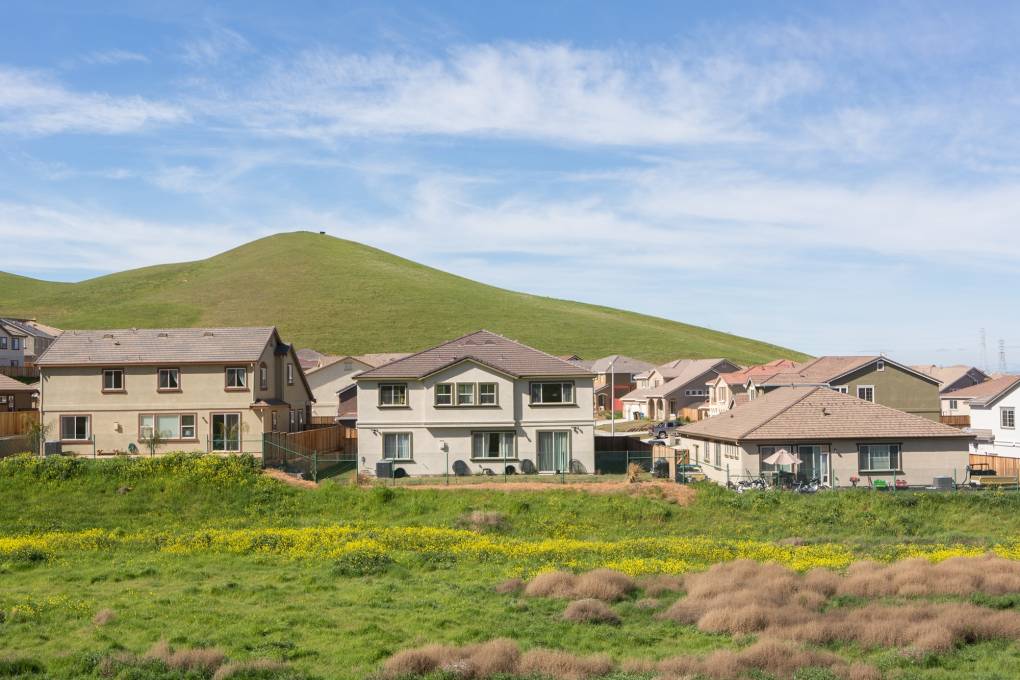
"caption": "A housing development in the hills of Antioch, California, on March 4, 2013. A Concord-based housing developer and his son allegedly offered thousands of dollars to an unnamed Antioch city councilmember last year, according to a federal indictment.\r\n",
"credit": "iStock/Getty Images Plus",
"altTag": null,
"description": null,
"imgSizes": {
"medium": {
"file": "https://cdn.kqed.org/wp-content/uploads/sites/10/2025/04/AntiochHousingDevelopmentGetty-800x533.jpg",
"width": 800,
"height": 533,
"mimeType": "image/jpeg"
},
"large": {
"file": "https://cdn.kqed.org/wp-content/uploads/sites/10/2025/04/AntiochHousingDevelopmentGetty-1020x680.jpg",
"width": 1020,
"height": 680,
"mimeType": "image/jpeg"
},
"thumbnail": {
"file": "https://cdn.kqed.org/wp-content/uploads/sites/10/2025/04/AntiochHousingDevelopmentGetty-160x107.jpg",
"width": 160,
"height": 107,
"mimeType": "image/jpeg"
},
"1536x1536": {
"file": "https://cdn.kqed.org/wp-content/uploads/sites/10/2025/04/AntiochHousingDevelopmentGetty-1536x1024.jpg",
"width": 1536,
"height": 1024,
"mimeType": "image/jpeg"
},
"post-thumbnail": {
"file": "https://cdn.kqed.org/wp-content/uploads/sites/10/2025/04/AntiochHousingDevelopmentGetty-672x372.jpg",
"width": 672,
"height": 372,
"mimeType": "image/jpeg"
},
"twentyfourteen-full-width": {
"file": "https://cdn.kqed.org/wp-content/uploads/sites/10/2025/04/AntiochHousingDevelopmentGetty-1038x576.jpg",
"width": 1038,
"height": 576,
"mimeType": "image/jpeg"
},
"full-width": {
"file": "https://cdn.kqed.org/wp-content/uploads/sites/10/2025/04/AntiochHousingDevelopmentGetty-1920x1280.jpg",
"width": 1920,
"height": 1280,
"mimeType": "image/jpeg"
},
"kqedFullSize": {
"file": "https://cdn.kqed.org/wp-content/uploads/sites/10/2025/04/AntiochHousingDevelopmentGetty.jpg",
"width": 2000,
"height": 1333
}
},
"isLoading": false,
"fetchFailed": false
},
"news_11985735": {
"type": "attachments",
"id": "news_11985735",
"meta": {
"index": "attachments_1716263798",
"site": "news",
"id": "11985735",
"found": true
},
"parent": 0,
"imgSizes": {
"twentyfourteen-full-width": {
"file": "https://cdn.kqed.org/wp-content/uploads/sites/10/2024/05/NO-TECH-FOR-APARTHEID-01-KQED-1-1-1038x576.jpg",
"width": 1038,
"mimeType": "image/jpeg",
"height": 576
},
"thumbnail": {
"file": "https://cdn.kqed.org/wp-content/uploads/sites/10/2024/05/NO-TECH-FOR-APARTHEID-01-KQED-1-1-160x107.jpg",
"width": 160,
"mimeType": "image/jpeg",
"height": 107
},
"post-thumbnail": {
"file": "https://cdn.kqed.org/wp-content/uploads/sites/10/2024/05/NO-TECH-FOR-APARTHEID-01-KQED-1-1-672x372.jpg",
"width": 672,
"mimeType": "image/jpeg",
"height": 372
},
"kqedFullSize": {
"file": "https://cdn.kqed.org/wp-content/uploads/sites/10/2024/05/NO-TECH-FOR-APARTHEID-01-KQED-1-1.jpg",
"width": 2000,
"height": 1333
},
"large": {
"file": "https://cdn.kqed.org/wp-content/uploads/sites/10/2024/05/NO-TECH-FOR-APARTHEID-01-KQED-1-1-1020x680.jpg",
"width": 1020,
"mimeType": "image/jpeg",
"height": 680
},
"1536x1536": {
"file": "https://cdn.kqed.org/wp-content/uploads/sites/10/2024/05/NO-TECH-FOR-APARTHEID-01-KQED-1-1-1536x1024.jpg",
"width": 1536,
"mimeType": "image/jpeg",
"height": 1024
},
"full-width": {
"file": "https://cdn.kqed.org/wp-content/uploads/sites/10/2024/05/NO-TECH-FOR-APARTHEID-01-KQED-1-1-1920x1280.jpg",
"width": 1920,
"mimeType": "image/jpeg",
"height": 1280
},
"medium": {
"file": "https://cdn.kqed.org/wp-content/uploads/sites/10/2024/05/NO-TECH-FOR-APARTHEID-01-KQED-1-1-800x533.jpg",
"width": 800,
"mimeType": "image/jpeg",
"height": 533
}
},
"publishDate": 1715368146,
"modified": 1715368254,
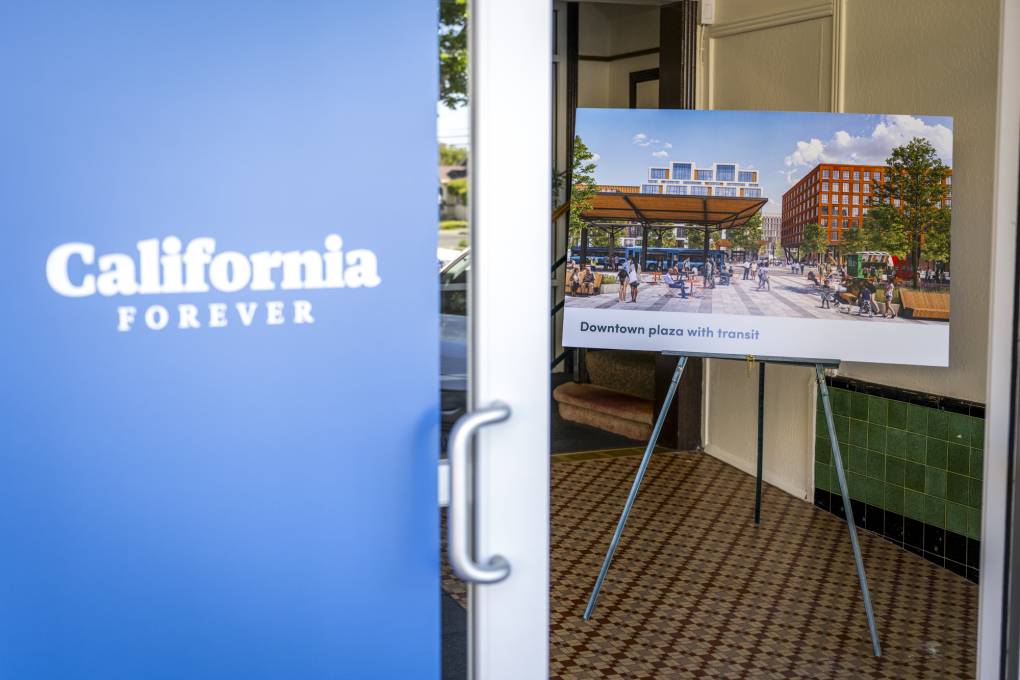
"caption": "Posters for California Forever are displayed in the lobby of the Vista Theatre in Rio Vista on May 2, 2024.",
"description": null,
"title": "NO TECH FOR APARTHEID-01-KQED-1",
"credit": "Beth LaBerge/KQED",
"status": "inherit",
"altTag": null,
"isLoading": false,
"fetchFailed": false
},
"news_12036938": {
"type": "attachments",
"id": "news_12036938",
"meta": {
"index": "attachments_1716263798",
"site": "news",
"id": "12036938",
"found": true
},
"title": "230906-BERRYESSA BART URBAN VILLAGE-MD-06_qed",
"publishDate": 1745258541,
"status": "inherit",
"parent": 12036917,
"modified": 1779817560,
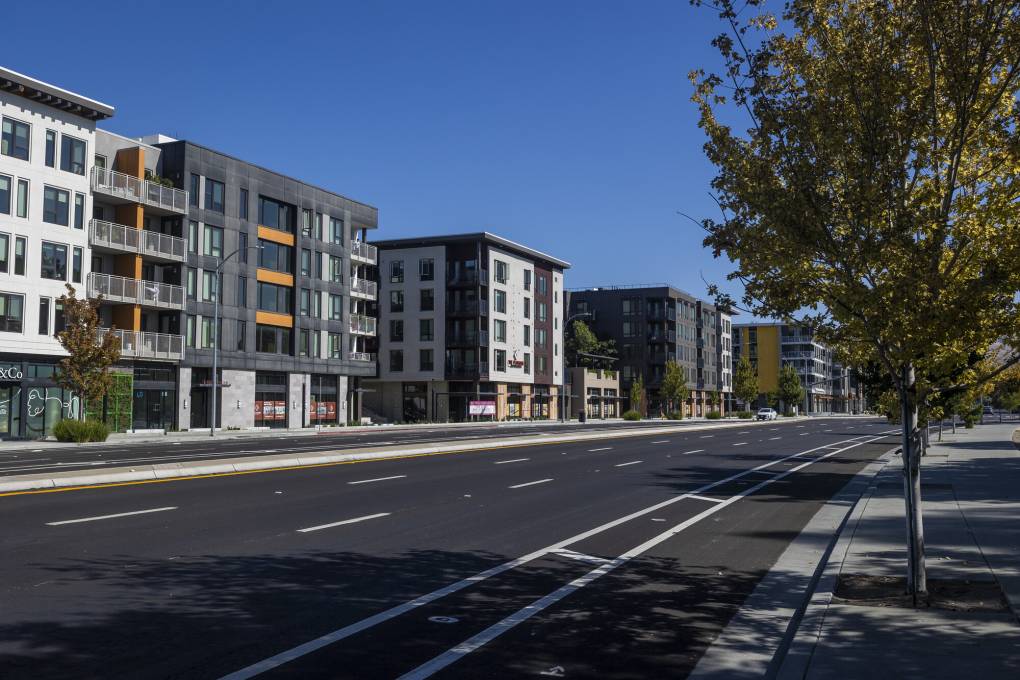
"caption": "Housing developments along Berryessa Road near the Berryessa BART station in San José on Sept. 6, 2023.",
"credit": "Martin do Nascimento/KQED",
"altTag": null,
"description": null,
"imgSizes": {
"medium": {
"file": "https://cdn.kqed.org/wp-content/uploads/sites/10/2025/04/230906-BERRYESSA-BART-URBAN-VILLAGE-MD-06_qed-800x533.jpg",
"width": 800,
"height": 533,
"mimeType": "image/jpeg"
},
"large": {
"file": "https://cdn.kqed.org/wp-content/uploads/sites/10/2025/04/230906-BERRYESSA-BART-URBAN-VILLAGE-MD-06_qed-1020x680.jpg",
"width": 1020,
"height": 680,
"mimeType": "image/jpeg"
},
"thumbnail": {
"file": "https://cdn.kqed.org/wp-content/uploads/sites/10/2025/04/230906-BERRYESSA-BART-URBAN-VILLAGE-MD-06_qed-160x107.jpg",
"width": 160,
"height": 107,
"mimeType": "image/jpeg"
},
"1536x1536": {
"file": "https://cdn.kqed.org/wp-content/uploads/sites/10/2025/04/230906-BERRYESSA-BART-URBAN-VILLAGE-MD-06_qed-1536x1024.jpg",
"width": 1536,
"height": 1024,
"mimeType": "image/jpeg"
},
"post-thumbnail": {
"file": "https://cdn.kqed.org/wp-content/uploads/sites/10/2025/04/230906-BERRYESSA-BART-URBAN-VILLAGE-MD-06_qed-672x372.jpg",
"width": 672,
"height": 372,
"mimeType": "image/jpeg"
},
"twentyfourteen-full-width": {
"file": "https://cdn.kqed.org/wp-content/uploads/sites/10/2025/04/230906-BERRYESSA-BART-URBAN-VILLAGE-MD-06_qed-1038x576.jpg",
"width": 1038,
"height": 576,
"mimeType": "image/jpeg"
},
"full-width": {
"file": "https://cdn.kqed.org/wp-content/uploads/sites/10/2025/04/230906-BERRYESSA-BART-URBAN-VILLAGE-MD-06_qed-1920x1280.jpg",
"width": 1920,
"height": 1280,
"mimeType": "image/jpeg"
},
"kqedFullSize": {
"file": "https://cdn.kqed.org/wp-content/uploads/sites/10/2025/04/230906-BERRYESSA-BART-URBAN-VILLAGE-MD-06_qed.jpg",
"width": 2000,
"height": 1333
}
},
"isLoading": false,
"fetchFailed": false
},
"news_12035831": {
"type": "attachments",
"id": "news_12035831",
"meta": {
"index": "attachments_1716263798",
"site": "news",
"id": "12035831",
"found": true
},
"title": "250409-LIVERMORE BLACK LAND-MD-10-KQED-1",
"publishDate": 1744554334,
"status": "inherit",
"parent": 0,
"modified": 1745003797,
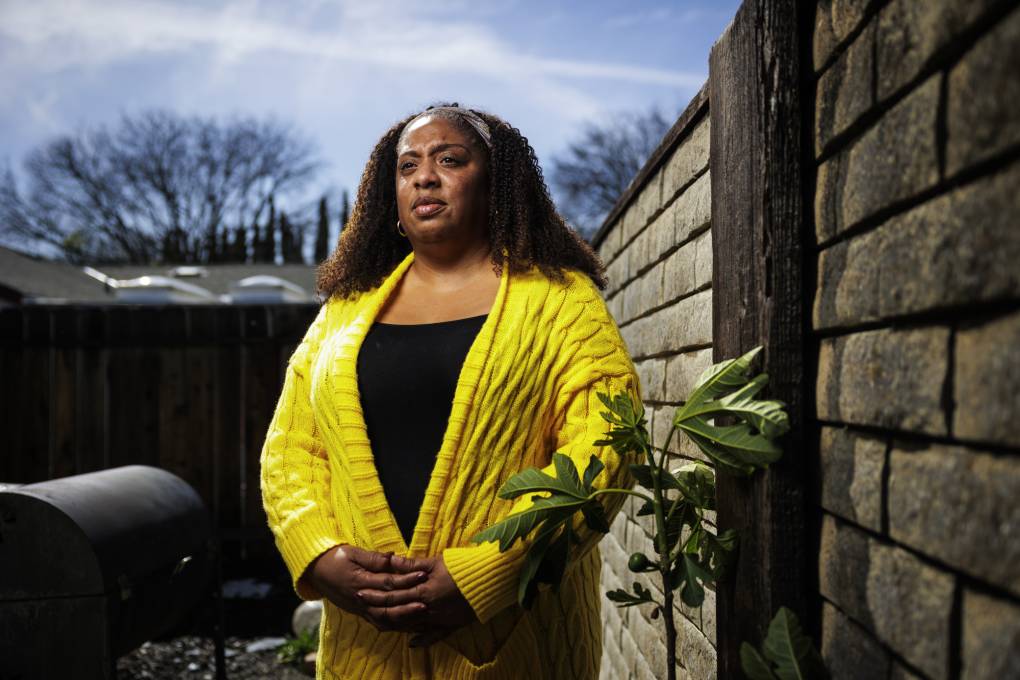
"caption": "Tashenia Pearson stands beside the wall separating her property from her neighbors' in Livermore on April 9, 2025. Pearson's parents bought the home in Livermore in 1971, only to discover the wall, which was built 7 feet onto their property and which effectively gives 740 square feet of the Pearson's property to their neighbor.",
"credit": "Martin do Nascimento/KQED",
"altTag": null,
"description": null,
"imgSizes": {
"medium": {
"file": "https://cdn.kqed.org/wp-content/uploads/sites/10/2025/04/250409-LIVERMORE-BLACK-LAND-MD-10-KQED-1-800x533.jpg",
"width": 800,
"height": 533,
"mimeType": "image/jpeg"
},
"large": {
"file": "https://cdn.kqed.org/wp-content/uploads/sites/10/2025/04/250409-LIVERMORE-BLACK-LAND-MD-10-KQED-1-1020x680.jpg",
"width": 1020,
"height": 680,
"mimeType": "image/jpeg"
},
"thumbnail": {
"file": "https://cdn.kqed.org/wp-content/uploads/sites/10/2025/04/250409-LIVERMORE-BLACK-LAND-MD-10-KQED-1-160x107.jpg",
"width": 160,
"height": 107,
"mimeType": "image/jpeg"
},
"1536x1536": {
"file": "https://cdn.kqed.org/wp-content/uploads/sites/10/2025/04/250409-LIVERMORE-BLACK-LAND-MD-10-KQED-1-1536x1024.jpg",
"width": 1536,
"height": 1024,
"mimeType": "image/jpeg"
},
"post-thumbnail": {
"file": "https://cdn.kqed.org/wp-content/uploads/sites/10/2025/04/250409-LIVERMORE-BLACK-LAND-MD-10-KQED-1-672x372.jpg",
"width": 672,
"height": 372,
"mimeType": "image/jpeg"
},
"twentyfourteen-full-width": {
"file": "https://cdn.kqed.org/wp-content/uploads/sites/10/2025/04/250409-LIVERMORE-BLACK-LAND-MD-10-KQED-1-1038x576.jpg",
"width": 1038,
"height": 576,
"mimeType": "image/jpeg"
},
"full-width": {
"file": "https://cdn.kqed.org/wp-content/uploads/sites/10/2025/04/250409-LIVERMORE-BLACK-LAND-MD-10-KQED-1-1920x1280.jpg",
"width": 1920,
"height": 1280,
"mimeType": "image/jpeg"
},
"kqedFullSize": {
"file": "https://cdn.kqed.org/wp-content/uploads/sites/10/2025/04/250409-LIVERMORE-BLACK-LAND-MD-10-KQED-1.jpg",
"width": 2000,
"height": 1333
}
},
"isLoading": false,
"fetchFailed": false
},
"news_12036564": {
"type": "attachments",
"id": "news_12036564",
"meta": {
"index": "attachments_1716263798",
"site": "news",
"id": "12036564",
"found": true
},
"title": "250126-EcoBlock-32-BL_qed",
"publishDate": 1744994493,
"status": "inherit",
"parent": 12036557,
"modified": 1745020023,
"caption": "Solar panels fill the roofs of two homes in Oakland on Jan. 26, 2025. These houses are a part of EcoBlock, a collaborative project bringing together academics, professionals, government agencies, utilities, private donors, and residents. The initiative aims to help an entire city block reduce emissions through insulation upgrades, electric appliances, and solar panels.",
"credit": "Beth LaBerge/KQED",
"altTag": null,
"description": null,
"imgSizes": {
"medium": {
"file": "https://cdn.kqed.org/wp-content/uploads/sites/10/2025/04/250126-EcoBlock-32-BL_qed-800x533.jpg",
"width": 800,
"height": 533,
"mimeType": "image/jpeg"
},
"large": {
"file": "https://cdn.kqed.org/wp-content/uploads/sites/10/2025/04/250126-EcoBlock-32-BL_qed-1020x680.jpg",
"width": 1020,
"height": 680,
"mimeType": "image/jpeg"
},
"thumbnail": {
"file": "https://cdn.kqed.org/wp-content/uploads/sites/10/2025/04/250126-EcoBlock-32-BL_qed-160x107.jpg",
"width": 160,
"height": 107,
"mimeType": "image/jpeg"
},
"1536x1536": {
"file": "https://cdn.kqed.org/wp-content/uploads/sites/10/2025/04/250126-EcoBlock-32-BL_qed-1536x1024.jpg",
"width": 1536,
"height": 1024,
"mimeType": "image/jpeg"
},
"post-thumbnail": {
"file": "https://cdn.kqed.org/wp-content/uploads/sites/10/2025/04/250126-EcoBlock-32-BL_qed-672x372.jpg",
"width": 672,
"height": 372,
"mimeType": "image/jpeg"
},
"twentyfourteen-full-width": {
"file": "https://cdn.kqed.org/wp-content/uploads/sites/10/2025/04/250126-EcoBlock-32-BL_qed-1038x576.jpg",
"width": 1038,
"height": 576,
"mimeType": "image/jpeg"
},
"full-width": {
"file": "https://cdn.kqed.org/wp-content/uploads/sites/10/2025/04/250126-EcoBlock-32-BL_qed-1920x1280.jpg",
"width": 1920,
"height": 1280,
"mimeType": "image/jpeg"
},
"kqedFullSize": {
"file": "https://cdn.kqed.org/wp-content/uploads/sites/10/2025/04/250126-EcoBlock-32-BL_qed.jpg",
"width": 2000,
"height": 1333
}
},
"isLoading": false,
"fetchFailed": false
},
"news_12036442": {
"type": "attachments",
"id": "news_12036442",
"meta": {
"index": "attachments_1716263798",
"site": "news",
"id": "12036442",
"found": true
},
"title": "20250417_LURIE100DAYS_GC-8-KQED_1",
"publishDate": 1744918107,
"status": "inherit",
"parent": 0,
"modified": 1744918283,
"caption": "Mayor Daniel Lurie delivers remarks on a progress report of his first 100 days in office at the San Francisco Conservatory of Music in San Francisco on April 17, 2025.",
"credit": "Gina Castro/KQED",
"altTag": null,
"description": null,
"imgSizes": {
"medium": {
"file": "https://cdn.kqed.org/wp-content/uploads/sites/10/2025/04/20250417_LURIE100DAYS_GC-8-KQED_1-800x533.jpg",
"width": 800,
"height": 533,
"mimeType": "image/jpeg"
},
"large": {
"file": "https://cdn.kqed.org/wp-content/uploads/sites/10/2025/04/20250417_LURIE100DAYS_GC-8-KQED_1-1020x680.jpg",
"width": 1020,
"height": 680,
"mimeType": "image/jpeg"
},
"thumbnail": {
"file": "https://cdn.kqed.org/wp-content/uploads/sites/10/2025/04/20250417_LURIE100DAYS_GC-8-KQED_1-160x107.jpg",
"width": 160,
"height": 107,
"mimeType": "image/jpeg"
},
"1536x1536": {
"file": "https://cdn.kqed.org/wp-content/uploads/sites/10/2025/04/20250417_LURIE100DAYS_GC-8-KQED_1-1536x1024.jpg",
"width": 1536,
"height": 1024,
"mimeType": "image/jpeg"
},
"post-thumbnail": {
"file": "https://cdn.kqed.org/wp-content/uploads/sites/10/2025/04/20250417_LURIE100DAYS_GC-8-KQED_1-672x372.jpg",
"width": 672,
"height": 372,
"mimeType": "image/jpeg"
},
"twentyfourteen-full-width": {
"file": "https://cdn.kqed.org/wp-content/uploads/sites/10/2025/04/20250417_LURIE100DAYS_GC-8-KQED_1-1038x576.jpg",
"width": 1038,
"height": 576,
"mimeType": "image/jpeg"
},
"full-width": {
"file": "https://cdn.kqed.org/wp-content/uploads/sites/10/2025/04/20250417_LURIE100DAYS_GC-8-KQED_1-1920x1280.jpg",
"width": 1920,
"height": 1280,
"mimeType": "image/jpeg"
},
"kqedFullSize": {
"file": "https://cdn.kqed.org/wp-content/uploads/sites/10/2025/04/20250417_LURIE100DAYS_GC-8-KQED_1.jpg",
"width": 2000,
"height": 1333
}
},
"isLoading": false,
"fetchFailed": false
},
"news_12036286": {
"type": "attachments",
"id": "news_12036286",
"meta": {
"index": "attachments_1716263798",
"site": "news",
"id": "12036286",
"found": true
},
"title": "A sign says, 'Rio Vista Welcomes You' in Rio Vista on May 2, 2024.",
"publishDate": 1744828714,
"status": "inherit",
"parent": 12035971,
"modified": 1744828778,
"caption": "A sign says, 'Rio Vista Welcomes You' in Rio Vista on May 2, 2024.",
"credit": "Beth LaBerge/KQED",
"altTag": null,
"description": null,
"imgSizes": {
"medium": {
"file": "https://cdn.kqed.org/wp-content/uploads/sites/10/2025/04/240502-CaliforniaForever-96-BL_qed-800x533.jpg",
"width": 800,
"height": 533,
"mimeType": "image/jpeg"
},
"large": {
"file": "https://cdn.kqed.org/wp-content/uploads/sites/10/2025/04/240502-CaliforniaForever-96-BL_qed-1020x680.jpg",
"width": 1020,
"height": 680,
"mimeType": "image/jpeg"
},
"thumbnail": {
"file": "https://cdn.kqed.org/wp-content/uploads/sites/10/2025/04/240502-CaliforniaForever-96-BL_qed-160x107.jpg",
"width": 160,
"height": 107,
"mimeType": "image/jpeg"
},
"1536x1536": {
"file": "https://cdn.kqed.org/wp-content/uploads/sites/10/2025/04/240502-CaliforniaForever-96-BL_qed-1536x1024.jpg",
"width": 1536,
"height": 1024,
"mimeType": "image/jpeg"
},
"post-thumbnail": {
"file": "https://cdn.kqed.org/wp-content/uploads/sites/10/2025/04/240502-CaliforniaForever-96-BL_qed-672x372.jpg",
"width": 672,
"height": 372,
"mimeType": "image/jpeg"
},
"twentyfourteen-full-width": {
"file": "https://cdn.kqed.org/wp-content/uploads/sites/10/2025/04/240502-CaliforniaForever-96-BL_qed-1038x576.jpg",
"width": 1038,
"height": 576,
"mimeType": "image/jpeg"
},
"full-width": {
"file": "https://cdn.kqed.org/wp-content/uploads/sites/10/2025/04/240502-CaliforniaForever-96-BL_qed-1920x1280.jpg",
"width": 1920,
"height": 1280,
"mimeType": "image/jpeg"
},
"kqedFullSize": {
"file": "https://cdn.kqed.org/wp-content/uploads/sites/10/2025/04/240502-CaliforniaForever-96-BL_qed.jpg",
"width": 2000,
"height": 1333
}
},
"isLoading": false,
"fetchFailed": false
},
"news_12013319": {
"type": "attachments",
"id": "news_12013319",
"meta": {
"index": "attachments_1716263798",
"site": "news",
"id": "12013319",
"found": true
},
"title": "President Trump Delivers State Of The Union Address To Joint Session Of Congress",
"publishDate": 1730940088,
"status": "inherit",
"parent": 12012387,
"modified": 1741902423,
"caption": "The U.S. Capitol Building on Feb. 5, 2019, in Washington, D.C.",
"credit": "Zach Gibson/Getty Images",
"altTag": null,
"description": null,
"imgSizes": {
"medium": {
"file": "https://cdn.kqed.org/wp-content/uploads/sites/10/2024/11/02052019_capitol_qed-800x533.jpg",
"width": 800,
"height": 533,
"mimeType": "image/jpeg"
},
"large": {
"file": "https://cdn.kqed.org/wp-content/uploads/sites/10/2024/11/02052019_capitol_qed-1020x680.jpg",
"width": 1020,
"height": 680,
"mimeType": "image/jpeg"
},
"thumbnail": {
"file": "https://cdn.kqed.org/wp-content/uploads/sites/10/2024/11/02052019_capitol_qed-160x107.jpg",
"width": 160,
"height": 107,
"mimeType": "image/jpeg"
},
"1536x1536": {
"file": "https://cdn.kqed.org/wp-content/uploads/sites/10/2024/11/02052019_capitol_qed-1536x1024.jpg",
"width": 1536,
"height": 1024,
"mimeType": "image/jpeg"
},
"post-thumbnail": {
"file": "https://cdn.kqed.org/wp-content/uploads/sites/10/2024/11/02052019_capitol_qed-672x372.jpg",
"width": 672,
"height": 372,
"mimeType": "image/jpeg"
},
"twentyfourteen-full-width": {
"file": "https://cdn.kqed.org/wp-content/uploads/sites/10/2024/11/02052019_capitol_qed-1038x576.jpg",
"width": 1038,
"height": 576,
"mimeType": "image/jpeg"
},
"full-width": {
"file": "https://cdn.kqed.org/wp-content/uploads/sites/10/2024/11/02052019_capitol_qed-1920x1280.jpg",
"width": 1920,
"height": 1280,
"mimeType": "image/jpeg"
},
"kqedFullSize": {
"file": "https://cdn.kqed.org/wp-content/uploads/sites/10/2024/11/02052019_capitol_qed.jpg",
"width": 2000,
"height": 1333
}
},
"isLoading": false,
"fetchFailed": false
},
"news_11792295": {
"type": "attachments",
"id": "news_11792295",
"meta": {
"index": "attachments_1716263798",
"site": "news",
"id": "11792295",
"found": true
},
"parent": 11790591,
"imgSizes": {
"apple_news_ca_landscape_5_5": {
"file": "https://ww2.kqed.org/app/uploads/sites/10/2019/12/RS31143_GettyImages-514351304-qut-1044x783.jpg",
"width": 1044,
"mimeType": "image/jpeg",
"height": 783
},
"apple_news_ca_square_4_0": {
"file": "https://ww2.kqed.org/app/uploads/sites/10/2019/12/RS31143_GettyImages-514351304-qut-470x470.jpg",
"width": 470,
"mimeType": "image/jpeg",
"height": 470
},
"twentyfourteen-full-width": {
"file": "https://ww2.kqed.org/app/uploads/sites/10/2019/12/RS31143_GettyImages-514351304-qut-1038x576.jpg",
"width": 1038,
"mimeType": "image/jpeg",
"height": 576
},
"thumbnail": {
"file": "https://ww2.kqed.org/app/uploads/sites/10/2019/12/RS31143_GettyImages-514351304-qut-160x106.jpg",
"width": 160,
"mimeType": "image/jpeg",
"height": 106
},
"post-thumbnail": {
"file": "https://ww2.kqed.org/app/uploads/sites/10/2019/12/RS31143_GettyImages-514351304-qut-672x372.jpg",
"width": 672,
"mimeType": "image/jpeg",
"height": 372
},
"kqedFullSize": {
"file": "https://ww2.kqed.org/app/uploads/sites/10/2019/12/RS31143_GettyImages-514351304-qut-e1579721602813.jpg",
"width": 1919,
"height": 1267
},
"apple_news_ca_landscape_4_7": {
"file": "https://ww2.kqed.org/app/uploads/sites/10/2019/12/RS31143_GettyImages-514351304-qut-632x474.jpg",
"width": 632,
"mimeType": "image/jpeg",
"height": 474
},
"large": {
"file": "https://ww2.kqed.org/app/uploads/sites/10/2019/12/RS31143_GettyImages-514351304-qut-1020x674.jpg",
"width": 1020,
"mimeType": "image/jpeg",
"height": 674
},
"complete_open_graph": {
"file": "https://ww2.kqed.org/app/uploads/sites/10/2019/12/RS31143_GettyImages-514351304-qut-1200x793.jpg",
"width": 1200,
"mimeType": "image/jpeg",
"height": 793
},
"apple_news_ca_landscape_4_0": {
"file": "https://ww2.kqed.org/app/uploads/sites/10/2019/12/RS31143_GettyImages-514351304-qut-536x402.jpg",
"width": 536,
"mimeType": "image/jpeg",
"height": 402
},
"apple_news_ca_portrait_12_9": {
"file": "https://ww2.kqed.org/app/uploads/sites/10/2019/12/RS31143_GettyImages-514351304-qut-1122x1268.jpg",
"width": 1122,
"mimeType": "image/jpeg",
"height": 1268
},
"medium": {
"file": "https://ww2.kqed.org/app/uploads/sites/10/2019/12/RS31143_GettyImages-514351304-qut-800x528.jpg",
"width": 800,
"mimeType": "image/jpeg",
"height": 528
},
"apple_news_ca_portrait_4_0": {
"file": "https://ww2.kqed.org/app/uploads/sites/10/2019/12/RS31143_GettyImages-514351304-qut-354x472.jpg",
"width": 354,
"mimeType": "image/jpeg",
"height": 472
},
"apple_news_ca_portrait_9_7": {
"file": "https://ww2.kqed.org/app/uploads/sites/10/2019/12/RS31143_GettyImages-514351304-qut-840x1120.jpg",
"width": 840,
"mimeType": "image/jpeg",
"height": 1120
},
"apple_news_ca_landscape_12_9": {
"file": "https://ww2.kqed.org/app/uploads/sites/10/2019/12/RS31143_GettyImages-514351304-qut-1832x1268.jpg",
"width": 1832,
"mimeType": "image/jpeg",
"height": 1268
},
"apple_news_ca_square_9_7": {
"file": "https://ww2.kqed.org/app/uploads/sites/10/2019/12/RS31143_GettyImages-514351304-qut-1104x1104.jpg",
"width": 1104,
"mimeType": "image/jpeg",
"height": 1104
},
"apple_news_ca_portrait_4_7": {
"file": "https://ww2.kqed.org/app/uploads/sites/10/2019/12/RS31143_GettyImages-514351304-qut-414x552.jpg",
"width": 414,
"mimeType": "image/jpeg",
"height": 552
},
"apple_news_ca_square_12_9": {
"file": "https://ww2.kqed.org/app/uploads/sites/10/2019/12/RS31143_GettyImages-514351304-qut-1472x1268.jpg",
"width": 1472,
"mimeType": "image/jpeg",
"height": 1268
},
"apple_news_ca_portrait_5_5": {
"file": "https://ww2.kqed.org/app/uploads/sites/10/2019/12/RS31143_GettyImages-514351304-qut-687x916.jpg",
"width": 687,
"mimeType": "image/jpeg",
"height": 916
},
"full-width": {
"file": "https://ww2.kqed.org/app/uploads/sites/10/2019/12/RS31143_GettyImages-514351304-qut-1920x1268.jpg",
"width": 1920,
"mimeType": "image/jpeg",
"height": 1268
},
"apple_news_ca_square_4_7": {
"file": "https://ww2.kqed.org/app/uploads/sites/10/2019/12/RS31143_GettyImages-514351304-qut-550x550.jpg",
"width": 550,
"mimeType": "image/jpeg",
"height": 550
},
"apple_news_ca_landscape_9_7": {
"file": "https://ww2.kqed.org/app/uploads/sites/10/2019/12/RS31143_GettyImages-514351304-qut-1376x1032.jpg",
"width": 1376,
"mimeType": "image/jpeg",
"height": 1032
},
"apple_news_ca_square_5_5": {
"file": "https://ww2.kqed.org/app/uploads/sites/10/2019/12/RS31143_GettyImages-514351304-qut-912x912.jpg",
"width": 912,
"mimeType": "image/jpeg",
"height": 912
}
},
"publishDate": 1576799719,
"modified": 1579654354,
"caption": "Activists and tenants of a San Francisco apartment building protest the landlord's eviction efforts.",
"description": "Activists and tenants of a San Francisco apartment building protest the landlord's eviction efforts.",
"title": "Activists And Tenants Protest Rising Evictions In San Francisco",
"credit": "Justin Sullivan/Getty Images",
"status": "inherit",
"isLoading": false,
"fetchFailed": false
},
"news_12034409": {
"type": "attachments",
"id": "news_12034409",
"meta": {
"index": "attachments_1716263798",
"site": "news",
"id": "12034409",
"found": true
},
"title": "Houses line a street in San Francisco’s Sunset District on March 25, 2025.",
"publishDate": 1743702595,
"status": "inherit",
"parent": 12033966,
"modified": 1743705463,
"caption": "Houses line a street in San Francisco’s Sunset District on March 25, 2025.",
"credit": "Beth LaBerge/KQED",
"altTag": null,
"description": null,
"imgSizes": {
"medium": {
"file": "https://cdn.kqed.org/wp-content/uploads/sites/10/2025/04/250325-ApartmentsonWestside-06-BL_qed-800x533.jpg",
"width": 800,
"height": 533,
"mimeType": "image/jpeg"
},
"large": {
"file": "https://cdn.kqed.org/wp-content/uploads/sites/10/2025/04/250325-ApartmentsonWestside-06-BL_qed-1020x680.jpg",
"width": 1020,
"height": 680,
"mimeType": "image/jpeg"
},
"thumbnail": {
"file": "https://cdn.kqed.org/wp-content/uploads/sites/10/2025/04/250325-ApartmentsonWestside-06-BL_qed-160x107.jpg",
"width": 160,
"height": 107,
"mimeType": "image/jpeg"
},
"1536x1536": {
"file": "https://cdn.kqed.org/wp-content/uploads/sites/10/2025/04/250325-ApartmentsonWestside-06-BL_qed-1536x1024.jpg",
"width": 1536,
"height": 1024,
"mimeType": "image/jpeg"
},
"post-thumbnail": {
"file": "https://cdn.kqed.org/wp-content/uploads/sites/10/2025/04/250325-ApartmentsonWestside-06-BL_qed-672x372.jpg",
"width": 672,
"height": 372,
"mimeType": "image/jpeg"
},
"twentyfourteen-full-width": {
"file": "https://cdn.kqed.org/wp-content/uploads/sites/10/2025/04/250325-ApartmentsonWestside-06-BL_qed-1038x576.jpg",
"width": 1038,
"height": 576,
"mimeType": "image/jpeg"
},
"full-width": {
"file": "https://cdn.kqed.org/wp-content/uploads/sites/10/2025/04/250325-ApartmentsonWestside-06-BL_qed-1920x1280.jpg",
"width": 1920,
"height": 1280,
"mimeType": "image/jpeg"
},
"kqedFullSize": {
"file": "https://cdn.kqed.org/wp-content/uploads/sites/10/2025/04/250325-ApartmentsonWestside-06-BL_qed.jpg",
"width": 1999,
"height": 1333
}
},
"isLoading": false,
"fetchFailed": false
},
"news_12034319": {
"type": "attachments",
"id": "news_12034319",
"meta": {
"index": "attachments_1716263798",
"site": "news",
"id": "12034319",
"found": true
},
"title": "024_SanFrancisco_Housing_07292021_qed",
"publishDate": 1743629527,
"status": "inherit",
"parent": 12034212,
"modified": 1749763097,
"caption": "A 'For Rent' sign hangs in the window of an apartment building in Nob Hill in San Francisco on July 29, 2021.",
"credit": "Beth LaBerge/KQED",
"altTag": null,
"description": null,
"imgSizes": {
"medium": {
"file": "https://cdn.kqed.org/wp-content/uploads/sites/10/2025/04/024_SanFrancisco_Housing_07292021_qed-800x533.jpg",
"width": 800,
"height": 533,
"mimeType": "image/jpeg"
},
"large": {
"file": "https://cdn.kqed.org/wp-content/uploads/sites/10/2025/04/024_SanFrancisco_Housing_07292021_qed-1020x680.jpg",
"width": 1020,
"height": 680,
"mimeType": "image/jpeg"
},
"thumbnail": {
"file": "https://cdn.kqed.org/wp-content/uploads/sites/10/2025/04/024_SanFrancisco_Housing_07292021_qed-160x107.jpg",
"width": 160,
"height": 107,
"mimeType": "image/jpeg"
},
"1536x1536": {
"file": "https://cdn.kqed.org/wp-content/uploads/sites/10/2025/04/024_SanFrancisco_Housing_07292021_qed-1536x1024.jpg",
"width": 1536,
"height": 1024,
"mimeType": "image/jpeg"
},
"post-thumbnail": {
"file": "https://cdn.kqed.org/wp-content/uploads/sites/10/2025/04/024_SanFrancisco_Housing_07292021_qed-672x372.jpg",
"width": 672,
"height": 372,
"mimeType": "image/jpeg"
},
"twentyfourteen-full-width": {
"file": "https://cdn.kqed.org/wp-content/uploads/sites/10/2025/04/024_SanFrancisco_Housing_07292021_qed-1038x576.jpg",
"width": 1038,
"height": 576,
"mimeType": "image/jpeg"
},
"full-width": {
"file": "https://cdn.kqed.org/wp-content/uploads/sites/10/2025/04/024_SanFrancisco_Housing_07292021_qed-1920x1280.jpg",
"width": 1920,
"height": 1280,
"mimeType": "image/jpeg"
},
"kqedFullSize": {
"file": "https://cdn.kqed.org/wp-content/uploads/sites/10/2025/04/024_SanFrancisco_Housing_07292021_qed.jpg",
"width": 2000,
"height": 1333
}
},
"isLoading": false,
"fetchFailed": false
},
"news_12033473": {
"type": "attachments",
"id": "news_12033473",
"meta": {
"index": "attachments_1716263798",
"site": "news",
"id": "12033473",
"found": true
},
"title": "20250327_SoberHousing_GC-9",
"publishDate": 1743128174,
"status": "inherit",
"parent": 0,
"modified": 1743128540,
"caption": "Kull Murray poses for a photo at Hallidie Plaza in San Francisco on March 27, 2025. Murray was evicted from Delancey Street, one of San Francisco’s sober living programs, after relapsing and is now back on the street and navigating the city’s shelter program.",
"credit": "Gina Castro/KQED",
"altTag": null,
"description": null,
"imgSizes": {
"medium": {
"file": "https://cdn.kqed.org/wp-content/uploads/sites/10/2025/03/20250327_SoberHousing_GC-9-800x533.jpg",
"width": 800,
"height": 533,
"mimeType": "image/jpeg"
},
"large": {
"file": "https://cdn.kqed.org/wp-content/uploads/sites/10/2025/03/20250327_SoberHousing_GC-9-1020x680.jpg",
"width": 1020,
"height": 680,
"mimeType": "image/jpeg"
},
"thumbnail": {
"file": "https://cdn.kqed.org/wp-content/uploads/sites/10/2025/03/20250327_SoberHousing_GC-9-160x107.jpg",
"width": 160,
"height": 107,
"mimeType": "image/jpeg"
},
"1536x1536": {
"file": "https://cdn.kqed.org/wp-content/uploads/sites/10/2025/03/20250327_SoberHousing_GC-9-1536x1024.jpg",
"width": 1536,
"height": 1024,
"mimeType": "image/jpeg"
},
"post-thumbnail": {
"file": "https://cdn.kqed.org/wp-content/uploads/sites/10/2025/03/20250327_SoberHousing_GC-9-672x372.jpg",
"width": 672,
"height": 372,
"mimeType": "image/jpeg"
},
"twentyfourteen-full-width": {
"file": "https://cdn.kqed.org/wp-content/uploads/sites/10/2025/03/20250327_SoberHousing_GC-9-1038x576.jpg",
"width": 1038,
"height": 576,
"mimeType": "image/jpeg"
},
"full-width": {
"file": "https://cdn.kqed.org/wp-content/uploads/sites/10/2025/03/20250327_SoberHousing_GC-9-1920x1280.jpg",
"width": 1920,
"height": 1280,
"mimeType": "image/jpeg"
},
"kqedFullSize": {
"file": "https://cdn.kqed.org/wp-content/uploads/sites/10/2025/03/20250327_SoberHousing_GC-9.jpg",
"width": 2000,
"height": 1333
}
},
"isLoading": false,
"fetchFailed": false
}
},
"audioPlayerReducer": {
"postId": "stream_live",
"isPaused": true,
"isPlaying": false,
"pfsActive": false,
"pledgeModalIsOpen": true,
"playerDrawerIsOpen": false,
"liveAudioPlayStartedAt": 0,
"liveAudioPlayContext": ""
},
"authorsReducer": {
"byline_news_12036599": {
"type": "authors",
"id": "byline_news_12036599",
"meta": {
"override": true
},
"slug": "byline_news_12036599",
"name": "Anya Schultz ",
"isLoading": false
},
"matthewgreen": {
"type": "authors",
"id": "1263",
"meta": {
"index": "authors_1716337520",
"id": "1263",
"found": true
},
"name": "Matthew Green",
"firstName": "Matthew",
"lastName": "Green",
"slug": "matthewgreen",
"email": "mgreen@kqed.org",
"display_author_email": false,
"staff_mastheads": [],
"title": "KQED Editor/Reporter",
"bio": "Matthew Green is a digital media producer for KQED News. He previously produced \u003ca href=\"http://www.kqed.org/lowdown\">The Lowdown\u003c/a>, KQED’s multimedia news education blog. Matthew's written for numerous Bay Area publications, including the Oakland Tribune and San Francisco Chronicle. He also taught journalism classes at Fremont High School in East Oakland.\r\n\r\nEmail: mgreen@kqed.org; Twitter: @MGreenKQED",
"avatar": "https://secure.gravatar.com/avatar/3bf498d1267ca02c8494f33d8cfc575e?s=600&d=blank&r=g",
"twitter": "MGreenKQED",
"facebook": null,
"instagram": null,
"linkedin": null,
"sites": [
{
"site": "news",
"roles": []
},
{
"site": "lowdown",
"roles": []
},
{
"site": "science",
"roles": []
},
{
"site": "education",
"roles": []
},
{
"site": "quest",
"roles": []
},
{
"site": "liveblog",
"roles": []
}
],
"headData": {
"title": "Matthew Green | KQED",
"description": "KQED Editor/Reporter",
"ogImgSrc": "https://secure.gravatar.com/avatar/3bf498d1267ca02c8494f33d8cfc575e?s=600&d=blank&r=g",
"twImgSrc": "https://secure.gravatar.com/avatar/3bf498d1267ca02c8494f33d8cfc575e?s=600&d=blank&r=g"
},
"isLoading": false,
"link": "/author/matthewgreen"
},
"mlagos": {
"type": "authors",
"id": "3239",
"meta": {
"index": "authors_1716337520",
"id": "3239",
"found": true
},
"name": "Marisa Lagos",
"firstName": "Marisa",
"lastName": "Lagos",
"slug": "mlagos",
"email": "mlagos@kqed.org",
"display_author_email": false,
"staff_mastheads": [
"news"
],
"title": "KQED Contributor",
"bio": "Marisa Lagos is a correspondent for KQED’s California Politics and Government Desk and co-hosts the award-winning show and podcast, Political Breakdown. At KQED, Lagos also conducts reporting, analysis and investigations into state, local and national politics for radio, TV, online and onstage. In 2022, she and co-host, Scott Shafer, moderated the only gubernatorial debate in California. In 2020, the \u003ci>Washington Post\u003c/i> named her one of the top political journalists in California; she was nominated for a Peabody and won several other awards for her work investigating the 2017 California wildfires. She has worked at the \u003ci>San Francisco Chronicle\u003c/i>, \u003ci>San Francisco Examiner\u003c/i> and \u003ci>Los Angeles Times\u003c/i>. A UC Santa Barbara graduate, she lives in San Francisco with her two sons and husband.",
"avatar": "https://secure.gravatar.com/avatar/a261a0d3696fc066871ef96b85b5e7d2?s=600&d=blank&r=g",
"twitter": "@mlagos",
"facebook": null,
"instagram": null,
"linkedin": null,
"sites": [
{
"site": "arts",
"roles": [
"author"
]
},
{
"site": "news",
"roles": [
"editor"
]
},
{
"site": "science",
"roles": [
"editor"
]
},
{
"site": "forum",
"roles": [
"author"
]
},
{
"site": "liveblog",
"roles": [
"author"
]
}
],
"headData": {
"title": "Marisa Lagos | KQED",
"description": "KQED Contributor",
"ogImgSrc": "https://secure.gravatar.com/avatar/a261a0d3696fc066871ef96b85b5e7d2?s=600&d=blank&r=g",
"twImgSrc": "https://secure.gravatar.com/avatar/a261a0d3696fc066871ef96b85b5e7d2?s=600&d=blank&r=g"
},
"isLoading": false,
"link": "/author/mlagos"
},
"lklivans": {
"type": "authors",
"id": "8648",
"meta": {
"index": "authors_1716337520",
"id": "8648",
"found": true
},
"name": "Laura Klivans",
"firstName": "Laura",
"lastName": "Klivans",
"slug": "lklivans",
"email": "lklivans@kqed.org",
"display_author_email": true,
"staff_mastheads": [
"news",
"science"
],
"title": "Reporter",
"bio": "Laura Klivans is an award-winning science reporter for KQED News, where she covers climate change with an eye on both groundbreaking progress and gaps in action. She is the former host of KQED's blockbuster video series about tiny, amazing animals, \u003cem>Deep Look\u003c/em>. Her work reaches national audiences through NPR, \u003cem>Here & Now, \u003c/em>PRI, and other major outlets. \r\n\r\nLaura’s won five Northern California Area Emmy Awards for Deep Look and First Place in the Greater Bay Area Journalism Awards for a podcast exploring how one Oakland neighborhood teamed up to reduce planet-heating pollution.\r\n\r\nBeyond her reporting, she hosts and moderates events. In the past, she taught audio storytelling at the UC Berkeley Graduate School of Journalism, led international education programs, worked with immigrants and refugees along the Thai-Burmese border, taught high schoolers sex ed, and was an actress. \r\n\r\nShe's a former UC Berkeley Human Rights Fellow, USC Center for Health Journalism's California Fellow and Coro Fellow in Public Affairs. Laura has a master’s in journalism from UC Berkeley, a master’s in education from Harvard, and an undergraduate degree from Northwestern University.\r\n\r\nShe loves trying to riddle the meaning out of vanity license plates.",
"avatar": "https://secure.gravatar.com/avatar/2d2ecd1550a494cc10ad4a503406965585902124739e775a9b3817eebf1d88be?s=600&d=blank&r=g",
"twitter": "lauraklivans",
"bluesky": null,
"facebook": null,
"instagram": null,
"linkedin": null,
"sites": [
{
"site": "news",
"roles": [
"editor"
]
},
{
"site": "stateofhealth",
"roles": [
"contributor",
"editor"
]
},
{
"site": "science",
"roles": [
"editor"
]
},
{
"site": "forum",
"roles": [
"editor"
]
}
],
"headData": {
"title": "Laura Klivans | KQED",
"description": "Reporter",
"ogImgSrc": "https://secure.gravatar.com/avatar/2d2ecd1550a494cc10ad4a503406965585902124739e775a9b3817eebf1d88be?s=600&d=blank&r=g",
"twImgSrc": "https://secure.gravatar.com/avatar/2d2ecd1550a494cc10ad4a503406965585902124739e775a9b3817eebf1d88be?s=600&d=blank&r=g"
},
"isLoading": false,
"link": "/author/lklivans"
},
"abandlamudi": {
"type": "authors",
"id": "11672",
"meta": {
"index": "authors_1716337520",
"id": "11672",
"found": true
},
"name": "Adhiti Bandlamudi",
"firstName": "Adhiti",
"lastName": "Bandlamudi",
"slug": "abandlamudi",
"email": "abandlamudi@kqed.org",
"display_author_email": false,
"staff_mastheads": [
"news"
],
"title": "KQED Housing Reporter",
"bio": "Adhiti Bandlamudi reports for KQED's Housing desk. She focuses on how housing gets built across the Bay Area. Before joining KQED in 2020, she reported for WUNC in Durham, North Carolina, WABE in Atlanta, Georgia and Capital Public Radio in Sacramento. In 2017, she was awarded a Kroc Fellowship at NPR where she reported on everything from sprinkles to the Golden State Killer's arrest. When she's not reporting, she's baking new recipes in her kitchen or watching movies with friends and family. She's originally from Georgia and has strong opinions about Great British Bake Off.",
"avatar": "https://secure.gravatar.com/avatar/868129c8b257bb99a3500e2c86a65400?s=600&d=mm&r=g",
"twitter": "oddity_adhiti",
"facebook": null,
"instagram": null,
"linkedin": null,
"sites": [
{
"site": "arts",
"roles": [
"author"
]
},
{
"site": "news",
"roles": [
"editor"
]
},
{
"site": "liveblog",
"roles": [
"author"
]
}
],
"headData": {
"title": "Adhiti Bandlamudi | KQED",
"description": "KQED Housing Reporter",
"ogImgSrc": "https://secure.gravatar.com/avatar/868129c8b257bb99a3500e2c86a65400?s=600&d=mm&r=g",
"twImgSrc": "https://secure.gravatar.com/avatar/868129c8b257bb99a3500e2c86a65400?s=600&d=mm&r=g"
},
"isLoading": false,
"link": "/author/abandlamudi"
},
"sjohnson": {
"type": "authors",
"id": "11840",
"meta": {
"index": "authors_1716337520",
"id": "11840",
"found": true
},
"name": "Sydney Johnson",
"firstName": "Sydney",
"lastName": "Johnson",
"slug": "sjohnson",
"email": "sjohnson@kqed.org",
"display_author_email": false,
"staff_mastheads": [
"news"
],
"title": "KQED Reporter",
"bio": "Sydney Johnson is a general assignment reporter at KQED. She previously reported on public health and city government at the San Francisco Examiner, and before that, she covered statewide education policy for EdSource. Her reporting has won multiple local, state and national awards. Sydney is a graduate of the University of California, Berkeley and lives in San Francisco.",
"avatar": "https://secure.gravatar.com/avatar/97855f2719b72ad6190b7c535fe642c8?s=600&d=blank&r=g",
"twitter": "sydneyfjohnson",
"facebook": null,
"instagram": null,
"linkedin": null,
"sites": [
{
"site": "news",
"roles": [
"editor"
]
}
],
"headData": {
"title": "Sydney Johnson | KQED",
"description": "KQED Reporter",
"ogImgSrc": "https://secure.gravatar.com/avatar/97855f2719b72ad6190b7c535fe642c8?s=600&d=blank&r=g",
"twImgSrc": "https://secure.gravatar.com/avatar/97855f2719b72ad6190b7c535fe642c8?s=600&d=blank&r=g"
},
"isLoading": false,
"link": "/author/sjohnson"
},
"nkhan": {
"type": "authors",
"id": "11867",
"meta": {
"index": "authors_1716337520",
"id": "11867",
"found": true
},
"name": "Nisa Khan",
"firstName": "Nisa",
"lastName": "Khan",
"slug": "nkhan",
"email": "nkhan@kqed.org",
"display_author_email": false,
"staff_mastheads": [],
"title": "KQED Contributor",
"bio": "Nisa Khan is a reporter for KQED's Audience News Desk. She was formerly a data reporter at Michigan Radio. She earned a Bachelor of Science in Information from the University of Michigan and a Master of Arts in Communication from Stanford University.",
"avatar": "https://secure.gravatar.com/avatar/8720459eef081ff64582b3506b124d58523e80e120704a0cbd9892533c914991?s=600&d=blank&r=g",
"twitter": "mnisakhan",
"bluesky": null,
"facebook": null,
"instagram": null,
"linkedin": null,
"sites": [
{
"site": "arts",
"roles": [
"editor"
]
},
{
"site": "news",
"roles": [
"editor"
]
},
{
"site": "science",
"roles": [
"editor",
"author"
]
},
{
"site": "forum",
"roles": [
"editor"
]
},
{
"site": "liveblog",
"roles": [
"contributor"
]
}
],
"headData": {
"title": "Nisa Khan | KQED",
"description": "KQED Contributor",
"ogImgSrc": "https://secure.gravatar.com/avatar/8720459eef081ff64582b3506b124d58523e80e120704a0cbd9892533c914991?s=600&d=blank&r=g",
"twImgSrc": "https://secure.gravatar.com/avatar/8720459eef081ff64582b3506b124d58523e80e120704a0cbd9892533c914991?s=600&d=blank&r=g"
},
"isLoading": false,
"link": "/author/nkhan"
},
"slim": {
"type": "authors",
"id": "11920",
"meta": {
"index": "authors_1716337520",
"id": "11920",
"found": true
},
"name": "Samantha Lim",
"firstName": "Samantha",
"lastName": "Lim",
"slug": "slim",
"email": "slim@KQED.org",
"display_author_email": false,
"staff_mastheads": [],
"title": "KQED Contributor",
"bio": null,
"avatar": "https://secure.gravatar.com/avatar/82e592e6c15fe1a04d385e8ad0fb0b4e?s=600&d=blank&r=g",
"twitter": null,
"facebook": null,
"instagram": null,
"linkedin": null,
"sites": [
{
"site": "news",
"roles": []
}
],
"headData": {
"title": "Samantha Lim | KQED",
"description": "KQED Contributor",
"ogImgSrc": "https://secure.gravatar.com/avatar/82e592e6c15fe1a04d385e8ad0fb0b4e?s=600&d=blank&r=g",
"twImgSrc": "https://secure.gravatar.com/avatar/82e592e6c15fe1a04d385e8ad0fb0b4e?s=600&d=blank&r=g"
},
"isLoading": false,
"link": "/author/slim"
}
},
"pagesReducer": {
"news_tag_housing": {
"type": "terms",
"id": "news_1775",
"meta": {
"index": "terms_1716263798",
"site": "news",
"id": "1775",
"score": 7.0361176
},
"featImg": null,
"name": "housing",
"description": null,
"taxonomy": "tag",
"headData": {
"twImgId": null,
"twTitle": null,
"ogTitle": null,
"ogImgId": null,
"twDescription": null,
"description": null,
"title": "housing Archives | KQED News",
"ogDescription": null
},
"ttid": 1790,
"slug": "housing",
"isLoading": false,
"title": "housing",
"pageMeta": {
"site": "news",
"WpPageTemplate": "page-topic-editorial",
"currentPage": 19
},
"blocks": [
{
"blockName": "kqed/post-list",
"attrs": {
"layout": "cardArticle2",
"query": "posts/news?tag=housing",
"seeMore": false,
"paginated": true,
"page": 19
}
},
{
"blockName": "kqed/ad"
}
]
}
},
"pfsSessionReducer": {},
"postsReducer": {
"stream_live": {
"type": "live",
"id": "stream_live",
"audioUrl": "https://streams.kqed.org/kqedradio",
"title": "Live Stream",
"excerpt": "Live Stream information currently unavailable.",
"link": "/radio",
"featImg": "",
"label": {
"name": "KQED Live",
"link": "/"
}
},
"stream_kqedNewscast": {
"type": "posts",
"id": "stream_kqedNewscast",
"audioUrl": "https://www.kqed.org/.stream/anon/radio/RDnews/newscast.mp3?_=1",
"title": "KQED Newscast",
"featImg": "",
"label": {
"name": "88.5 FM",
"link": "/"
}
},
"news_12037346": {
"type": "posts",
"id": "news_12037346",
"meta": {
"index": "posts_1716263798",
"site": "news",
"id": "12037346",
"score": null,
"sort": [
1745446327000
]
},
"guestAuthors": [],
"slug": "east-bay-developers-charged-bribery-alleged-antioch-housing-scheme",
"title": "East Bay Developers Charged With Bribery in Alleged Antioch Housing Scheme",
"publishDate": 1745446327,
"format": "standard",
"headTitle": "East Bay Developers Charged With Bribery in Alleged Antioch Housing Scheme | KQED",
"labelTerm": {
"site": "news"
},
"content": "\u003cp>Federal prosecutors this week announced bribery and conspiracy charges against the owners of an East Bay housing development firm, alleging they offered an \u003ca href=\"https://www.kqed.org/news/tag/antioch\">Antioch\u003c/a> city council member thousands of dollars to help approve a residential project in the city.\u003c/p>\n\u003cp>At least the alleged bribe was proffered in a reusable cup.\u003c/p>\n\u003cp>\u003ca href=\"https://cdn.kqed.org/wp-content/uploads/sites/10/2025/04/Indictment-25-90-YGR.pdf\">According to the indictment\u003c/a>, David Sanson, 60, and his 33-year-old son, Trent Sanson, met on several occasions with the unnamed council member in June 2024. The owners of Concord-based DeNova Homes first offered $10,000 and then tried to sweeten the deal with an additional $5,000 in cash stuffed inside a travel coffee mug branded with the company’s logo.\u003c/p>\n\u003cp>[ad fullwidth]\u003c/p>\n\u003cp>The alleged transaction by the father-son duo came after a city of Antioch planning agency opposed approval of DeNova’s proposed 533-unit Aviano housing development, saying the company had not completed all required public infrastructure improvements.\u003c/p>\n\u003cp>The indictment describes a video-recorded meeting on June 12 between Trent Sanson, a Walnut Creek resident, and the council member, during which Sanson allegedly asked the council member to place a motion on the City Council agenda to approve the next phase of the project. He said his father, who now lives in Montana, was willing to pay $10,000 in exchange for the favor.\u003c/p>\n\u003cfigure id=\"attachment_12037277\" class=\"wp-caption aligncenter\" style=\"max-width: 1018px\">\u003cimg loading=\"lazy\" decoding=\"async\" class=\"wp-image-12037277 size-full\" src=\"https://cdn.kqed.org/wp-content/uploads/sites/10/2025/04/Federal-indicment-Anticoh.jpg\" alt=\"\" width=\"1018\" height=\"398\" srcset=\"https://cdn.kqed.org/wp-content/uploads/sites/10/2025/04/Federal-indicment-Anticoh.jpg 1018w, https://cdn.kqed.org/wp-content/uploads/sites/10/2025/04/Federal-indicment-Anticoh-800x313.jpg 800w, https://cdn.kqed.org/wp-content/uploads/sites/10/2025/04/Federal-indicment-Anticoh-160x63.jpg 160w\" sizes=\"auto, (max-width: 1018px) 100vw, 1018px\">\u003cfigcaption class=\"wp-caption-text\">Evidence from a federal indictment shows a travel mug with the DeNova Homes logo containing $5,000 in cash, which was allegedly given to an unnamed Antioch council member in 2024 in exchange for favorable treatment with development projects in the city. \u003ccite>(Courtesy of Northern District of California court records)\u003c/cite>\u003c/figcaption>\u003c/figure>\n\u003cp>“You’re not going to see anything directly, but Dave will be doing something for you,” Trent Sanson allegedly told the council member during that first meeting, adding that his father would likely give $5,000 in cash and another $5,000 as a donation to a political action committee or as an independent expenditure.\u003c/p>\n\u003cp>Several weeks earlier, the council member had received a text from Trent Sanson requesting the meeting to discuss the project. The council member notified the FBI in advance, and agents set up the clandestine video recording.\u003c/p>\n\u003cp>When reached for comment, former Antioch City Councilmember Mike Barbanica, who was on the Council last year, declined to say whether he was the official who reported the alleged bribe.[aside postID=news_12031189 hero='https://cdn.kqed.org/wp-content/uploads/sites/10/2025/03/250303-ANTIOCHPOLICE-11-BL-KQED-1020x680.jpg']“I’ve always had a policy that if there’s an active investigation, I don’t comment on it,” he told KQED, adding that elected officials had an obligation to “do business correctly, do business the right way.”\u003c/p>\n\u003cp>In a statement to KQED, Winston Chan, David Sanson’s attorney, referred to his client as “a respected business leader and philanthropist” with a 30-year track record of building homes in Northern California. Without providing specific details or evidence, he said David Sanson had been “trapped into a web of deceit” orchestrated by “a controversial local politico, whose own suspect personal motivations we look forward to exposing.”\u003c/p>\n\u003cp>“We are reviewing the government’s allegations closely and caution against any rush to judgment based on mere allegations that present a one-sided story. We are confident the facts will show that Dave is innocent,” Chan said.\u003c/p>\n\u003cp>He continued: “It’s incredibly disappointing that Dave’s reputation — built on a decades-long career of creating opportunities for residents of cities like Antioch, that have struggled for years to keep up with housing needs and other challenges — is being dragged through the mud.”\u003c/p>\n\u003cp>A representative for DeNova Homes, which has been building housing developments in cities across the Bay Area for 35 years, \u003ca href=\"https://www.sfchronicle.com/politics/article/bay-area-housing-developers-charged-bribery-20289384.php\">told the \u003cem>San Francisco Chronicle\u003c/em>\u003c/a> that the company was not implicated in the case and said that David Sanson is no longer involved in the company’s leadership or daily operations.\u003c/p>\n\u003cp>David Sanson is still listed on \u003ca href=\"https://www.denovahomes.com/about/management/\">the company’s site\u003c/a> as a founder and “Chief Executive Officer Emeritus.” There is no mention of his son.\u003c/p>\n\u003cp>\u003c/p>\n",
"blocks": [],
"excerpt": "A Concord-based housing developer and his son allegedly offered thousands of dollars to an unnamed Antioch city council member last year, according to a federal indictment.\r\n",
"status": "publish",
"parent": 0,
"modified": 1745451421,
"stats": {
"hasAudio": false,
"hasVideo": false,
"hasChartOrMap": false,
"iframeSrcs": [],
"hasGoogleForm": false,
"hasGallery": false,
"hasHearkenModule": false,
"hasPolis": false,
"paragraphCount": 15,
"wordCount": 710
},
"headData": {
"title": "East Bay Developers Charged With Bribery in Alleged Antioch Housing Scheme | KQED",
"description": "A Concord-based housing developer and his son allegedly offered thousands of dollars to an unnamed Antioch city council member last year, according to a federal indictment.\r\n",
"ogTitle": "",
"ogDescription": "",
"ogImgId": "",
"twTitle": "",
"twDescription": "",
"twImgId": "",
"schema": {
"@context": "https://schema.org",
"@type": "NewsArticle",
"headline": "East Bay Developers Charged With Bribery in Alleged Antioch Housing Scheme",
"datePublished": "2025-04-23T15:12:07-07:00",
"dateModified": "2025-04-23T16:37:01-07:00",
"image": "https://cdn.kqed.org/wp-content/uploads/2020/02/KQED-OG-Image@1x.png",
"isAccessibleForFree": "True",
"publisher": {
"@type": "NewsMediaOrganization",
"@id": "https://www.kqed.org/#organization",
"name": "KQED",
"logo": "https://cdn.kqed.org/wp-content/uploads/2020/02/KQED-OG-Image@1x.png",
"url": "https://www.kqed.org",
"sameAs": [
"https://www.facebook.com/KQED",
"https://twitter.com/KQED",
"https://www.instagram.com/kqed/",
"https://www.tiktok.com/@kqedofficial",
"https://www.linkedin.com/company/kqed",
"https://www.youtube.com/channel/UCeC0IOo7i1P_61zVUWbJ4nw"
]
}
}
},
"sticky": false,
"nprStoryId": "kqed-12037346",
"templateType": "standard",
"featuredImageType": "standard",
"excludeFromSiteSearch": "Include",
"articleAge": "0",
"path": "/news/12037346/east-bay-developers-charged-bribery-alleged-antioch-housing-scheme",
"audioTrackLength": null,
"parsedContent": [
{
"type": "contentString",
"content": "\u003cdiv class=\"post-body\">\u003cp>\u003cp>Federal prosecutors this week announced bribery and conspiracy charges against the owners of an East Bay housing development firm, alleging they offered an \u003ca href=\"https://www.kqed.org/news/tag/antioch\">Antioch\u003c/a> city council member thousands of dollars to help approve a residential project in the city.\u003c/p>\n\u003cp>At least the alleged bribe was proffered in a reusable cup.\u003c/p>\n\u003cp>\u003ca href=\"https://cdn.kqed.org/wp-content/uploads/sites/10/2025/04/Indictment-25-90-YGR.pdf\">According to the indictment\u003c/a>, David Sanson, 60, and his 33-year-old son, Trent Sanson, met on several occasions with the unnamed council member in June 2024. The owners of Concord-based DeNova Homes first offered $10,000 and then tried to sweeten the deal with an additional $5,000 in cash stuffed inside a travel coffee mug branded with the company’s logo.\u003c/p>\n\u003cp>\u003c/p>\u003c/div>",
"attributes": {
"named": {},
"numeric": []
}
},
{
"type": "component",
"content": "",
"name": "ad",
"attributes": {
"named": {
"label": "fullwidth"
},
"numeric": [
"fullwidth"
]
}
},
{
"type": "contentString",
"content": "\u003cdiv class=\"post-body\">\u003cp>\u003c/p>\n\u003cp>The alleged transaction by the father-son duo came after a city of Antioch planning agency opposed approval of DeNova’s proposed 533-unit Aviano housing development, saying the company had not completed all required public infrastructure improvements.\u003c/p>\n\u003cp>The indictment describes a video-recorded meeting on June 12 between Trent Sanson, a Walnut Creek resident, and the council member, during which Sanson allegedly asked the council member to place a motion on the City Council agenda to approve the next phase of the project. He said his father, who now lives in Montana, was willing to pay $10,000 in exchange for the favor.\u003c/p>\n\u003cfigure id=\"attachment_12037277\" class=\"wp-caption aligncenter\" style=\"max-width: 1018px\">\u003cimg loading=\"lazy\" decoding=\"async\" class=\"wp-image-12037277 size-full\" src=\"https://cdn.kqed.org/wp-content/uploads/sites/10/2025/04/Federal-indicment-Anticoh.jpg\" alt=\"\" width=\"1018\" height=\"398\" srcset=\"https://cdn.kqed.org/wp-content/uploads/sites/10/2025/04/Federal-indicment-Anticoh.jpg 1018w, https://cdn.kqed.org/wp-content/uploads/sites/10/2025/04/Federal-indicment-Anticoh-800x313.jpg 800w, https://cdn.kqed.org/wp-content/uploads/sites/10/2025/04/Federal-indicment-Anticoh-160x63.jpg 160w\" sizes=\"auto, (max-width: 1018px) 100vw, 1018px\">\u003cfigcaption class=\"wp-caption-text\">Evidence from a federal indictment shows a travel mug with the DeNova Homes logo containing $5,000 in cash, which was allegedly given to an unnamed Antioch council member in 2024 in exchange for favorable treatment with development projects in the city. \u003ccite>(Courtesy of Northern District of California court records)\u003c/cite>\u003c/figcaption>\u003c/figure>\n\u003cp>“You’re not going to see anything directly, but Dave will be doing something for you,” Trent Sanson allegedly told the council member during that first meeting, adding that his father would likely give $5,000 in cash and another $5,000 as a donation to a political action committee or as an independent expenditure.\u003c/p>\n\u003cp>Several weeks earlier, the council member had received a text from Trent Sanson requesting the meeting to discuss the project. The council member notified the FBI in advance, and agents set up the clandestine video recording.\u003c/p>\n\u003cp>When reached for comment, former Antioch City Councilmember Mike Barbanica, who was on the Council last year, declined to say whether he was the official who reported the alleged bribe.\u003c/p>\u003c/div>",
"attributes": {
"named": {},
"numeric": []
}
},
{
"type": "component",
"content": "",
"name": "aside",
"attributes": {
"named": {
"postid": "news_12031189",
"hero": "https://cdn.kqed.org/wp-content/uploads/sites/10/2025/03/250303-ANTIOCHPOLICE-11-BL-KQED-1020x680.jpg",
"label": ""
},
"numeric": []
}
},
{
"type": "contentString",
"content": "\u003cdiv class=\"post-body\">\u003cp>“I’ve always had a policy that if there’s an active investigation, I don’t comment on it,” he told KQED, adding that elected officials had an obligation to “do business correctly, do business the right way.”\u003c/p>\n\u003cp>In a statement to KQED, Winston Chan, David Sanson’s attorney, referred to his client as “a respected business leader and philanthropist” with a 30-year track record of building homes in Northern California. Without providing specific details or evidence, he said David Sanson had been “trapped into a web of deceit” orchestrated by “a controversial local politico, whose own suspect personal motivations we look forward to exposing.”\u003c/p>\n\u003cp>“We are reviewing the government’s allegations closely and caution against any rush to judgment based on mere allegations that present a one-sided story. We are confident the facts will show that Dave is innocent,” Chan said.\u003c/p>\n\u003cp>He continued: “It’s incredibly disappointing that Dave’s reputation — built on a decades-long career of creating opportunities for residents of cities like Antioch, that have struggled for years to keep up with housing needs and other challenges — is being dragged through the mud.”\u003c/p>\n\u003cp>A representative for DeNova Homes, which has been building housing developments in cities across the Bay Area for 35 years, \u003ca href=\"https://www.sfchronicle.com/politics/article/bay-area-housing-developers-charged-bribery-20289384.php\">told the \u003cem>San Francisco Chronicle\u003c/em>\u003c/a> that the company was not implicated in the case and said that David Sanson is no longer involved in the company’s leadership or daily operations.\u003c/p>\n\u003cp>David Sanson is still listed on \u003ca href=\"https://www.denovahomes.com/about/management/\">the company’s site\u003c/a> as a founder and “Chief Executive Officer Emeritus.” There is no mention of his son.\u003c/p>\n\u003cp>\u003c/p>\n\u003c/div>\u003c/p>",
"attributes": {
"named": {},
"numeric": []
}
}
],
"link": "/news/12037346/east-bay-developers-charged-bribery-alleged-antioch-housing-scheme",
"authors": [
"1263"
],
"categories": [
"news_34167",
"news_28250",
"news_8"
],
"tags": [
"news_19122",
"news_17626",
"news_18352",
"news_1775"
],
"featImg": "news_12037371",
"label": "news"
},
"news_12037142": {
"type": "posts",
"id": "news_12037142",
"meta": {
"index": "posts_1716263798",
"site": "news",
"id": "12037142",
"score": null,
"sort": [
1745426368000
]
},
"guestAuthors": [],
"slug": "california-forevers-shipbuilding-plans-need-more-details-solano-county-officials-say",
"title": "California Forever’s Shipbuilding Plans Need More Details, Solano County Officials Say",
"publishDate": 1745426368,
"format": "standard",
"headTitle": "California Forever’s Shipbuilding Plans Need More Details, Solano County Officials Say | KQED",
"labelTerm": {
"site": "news"
},
"content": "\u003cp>\u003ca href=\"https://www.kqed.org/news/tag/california-forever\">California Forever\u003c/a>, which is still working on its plan to build a city in southeast Solano County, has expressed interest in building ships, too. Solano County officials say they want to see a concrete plan.\u003c/p>\n\u003cp>On Tuesday, the Solano County Board of Supervisors invited the company to present a proposal for constructing and operating a shipbuilding facility, so county staff could understand how it might affect the county’s plans for future development and impacts to surrounding cities.\u003c/p>\n\u003cp>“The county hasn’t seen anything,” Supervisor Wanda Williams said. “It’s time to sit down and have conversations with the county and work with staff so we can see what is this proposal.”\u003c/p>\n\u003cp>[ad fullwidth]\u003c/p>\n\u003cp>The meeting comes a week after Fairfield, Suisun City and Rio Vista passed resolutions supporting shipbuilding in the county. The latter two cities also \u003ca href=\"https://www.kqed.org/news/12035971/california-forever-2-solano-cities-team-up-annexation-talks-move-forward\">agreed to work together\u003c/a> as both explore annexing a portion of California Forever’s more than 60,000 acres of land. The billionaire-backed company is one of the largest landowners in the county.\u003c/p>\n\u003cp>In late March, the company \u003ca href=\"https://californiaforever.com/california-forevers-statement-on-bringing-shipbuilding-back-to-solano-county/\">announced interest\u003c/a> in establishing a shipbuilding facility in Collinsville, a small town located in an unincorporated area across the Sacramento-San Joaquin River Delta from Pittsburg, a city with its \u003ca href=\"https://pittsburgmuseum.org/history/f/historical-timline\">own history of industrial shipbuilding\u003c/a>.\u003c/p>\n\u003cfigure id=\"attachment_11976086\" class=\"wp-caption aligncenter\" style=\"max-width: 2520px\">\u003cimg loading=\"lazy\" decoding=\"async\" class=\"size-full wp-image-11976086\" src=\"https://cdn.kqed.org/wp-content/uploads/sites/10/2024/02/03_Downtown-plaza-with-transit_IMAGE-CREDIT_Designed-by-SITELAB-urban-studio_CMG.jpg\" alt=\"An illustration of a downtown center with people sitting and walking around with various buildings, a food truck and structures on display.\" width=\"2520\" height=\"1418\" srcset=\"https://cdn.kqed.org/wp-content/uploads/sites/10/2024/02/03_Downtown-plaza-with-transit_IMAGE-CREDIT_Designed-by-SITELAB-urban-studio_CMG.jpg 2520w, https://cdn.kqed.org/wp-content/uploads/sites/10/2024/02/03_Downtown-plaza-with-transit_IMAGE-CREDIT_Designed-by-SITELAB-urban-studio_CMG-800x450.jpg 800w, https://cdn.kqed.org/wp-content/uploads/sites/10/2024/02/03_Downtown-plaza-with-transit_IMAGE-CREDIT_Designed-by-SITELAB-urban-studio_CMG-1020x574.jpg 1020w, https://cdn.kqed.org/wp-content/uploads/sites/10/2024/02/03_Downtown-plaza-with-transit_IMAGE-CREDIT_Designed-by-SITELAB-urban-studio_CMG-160x90.jpg 160w, https://cdn.kqed.org/wp-content/uploads/sites/10/2024/02/03_Downtown-plaza-with-transit_IMAGE-CREDIT_Designed-by-SITELAB-urban-studio_CMG-1536x864.jpg 1536w, https://cdn.kqed.org/wp-content/uploads/sites/10/2024/02/03_Downtown-plaza-with-transit_IMAGE-CREDIT_Designed-by-SITELAB-urban-studio_CMG-2048x1152.jpg 2048w, https://cdn.kqed.org/wp-content/uploads/sites/10/2024/02/03_Downtown-plaza-with-transit_IMAGE-CREDIT_Designed-by-SITELAB-urban-studio_CMG-1920x1080.jpg 1920w\" sizes=\"auto, (max-width: 2520px) 100vw, 2520px\">\u003cfigcaption class=\"wp-caption-text\">A rendering of the downtown center in the new city California Forever is proposing to build in Solano County. \u003ccite>(Courtesy California Forever)\u003c/cite>\u003c/figcaption>\u003c/figure>\n\u003cp>California Forever made \u003ca href=\"https://www.nytimes.com/2023/08/31/business/california-solano-county-city.html\">national headlines in 2023\u003c/a> after it \u003ca href=\"https://www.kqed.org/news/11968825/can-silicon-valley-investors-win-over-solano-county\">announced its plans\u003c/a> to build a walkable city, roughly the size of Oakland, on 17,500 acres of land in the Montezuma Hills. Along with the new city, company executives promised to bring \u003ca href=\"https://www.kqed.org/news/11986569/california-forever-says-12-start-ups-will-open-workplaces-in-its-new-city\">good-paying jobs\u003c/a> and \u003ca href=\"https://californiaforever.com/your-life-here/\">new homes\u003c/a>.\u003c/p>\n\u003cp>Solano residents had prepared to vote on the plan in November, but the company \u003ca href=\"https://www.kqed.org/news/11996747/california-forever-pulls-bid-to-build-new-city-from-this-years-ballot\">pulled its initiative from the ballot\u003c/a> and promised to bring it back to voters next year after completing an environmental impact report and development agreement reviewed by the county.\u003c/p>\n\u003cp>According to county officials, the company has not submitted any new documents on its plan yet, but has expressed interest in ship manufacturing in light of federal and state actions supporting reviving the maritime industry.[aside postID=news_12035971 hero='https://cdn.kqed.org/wp-content/uploads/sites/10/2025/04/240502-CaliforniaForever-96-BL_qed-1020x680.jpg']Late last year, lawmakers, including Rep. John Garamendi, introduced the \u003ca href=\"https://garamendi.house.gov/media/press-releases/garamendi-kelly-senators-young-and-kelly-introduce-ships-america-act\">SHIPS for America Act\u003c/a>, which would provide tax credits, financial incentives and revolving funds to boost domestic shipbuilding and repair. Earlier this month, President Donald Trump signed an \u003ca href=\"https://www.whitehouse.gov/presidential-actions/2025/04/restoring-americas-maritime-dominance/\">executive order\u003c/a> directing the leaders of several federal departments to invest in and expand the maritime industry.\u003c/p>\n\u003cp>“The Solano Shipyard is a once-in-a-generation opportunity to restore America’s maritime leadership, revitalize our county’s shipbuilding heritage, and bring tens of thousands of good jobs to the area,” a California Forever spokesperson said in a statement to KQED. “We look forward to working with Solano County and all other stakeholders to seize this moment.”\u003c/p>\n\u003cp>Earlier this month, Assemblymember Lori Wilson announced the creation of a working group focused on expanding the shipbuilding industry in Solano County. It includes a number of local mayors, council members, supervisors and California Forever CEO Jan Sramek.\u003c/p>\n\u003cp>Proponents of the effort pointed to the county’s history in shipbuilding at the Mare Island Naval Shipyard in Vallejo. It was the \u003ca href=\"https://npgallery.nps.gov/NRHP/GetAsset/NHLS/75002103_text\">first naval base\u003c/a> established on the Pacific Ocean in 1854, but was \u003ca href=\"https://www.history.navy.mil/browse-by-topic/organization-and-administration/historic-bases/mare-island.html\">decommissioned in 1996\u003c/a>.\u003c/p>\n\u003cp>Dwight Calloway, a former worker at the Naval Shipyard and member of Wilson’s working group, said he would support a proposal to bring shipbuilding back to Solano County so the United States is less dependent on other countries for trade.\u003c/p>\n\u003cfigure id=\"attachment_12031922\" class=\"wp-caption aligncenter\" style=\"max-width: 2000px\">\u003cimg loading=\"lazy\" decoding=\"async\" class=\"size-full wp-image-12031922\" src=\"https://cdn.kqed.org/wp-content/uploads/sites/10/2025/03/240502-CaliforniaForever-43-BL_qed.jpg\" alt=\"\" width=\"2000\" height=\"1333\" srcset=\"https://cdn.kqed.org/wp-content/uploads/sites/10/2025/03/240502-CaliforniaForever-43-BL_qed.jpg 2000w, https://cdn.kqed.org/wp-content/uploads/sites/10/2025/03/240502-CaliforniaForever-43-BL_qed-800x533.jpg 800w, https://cdn.kqed.org/wp-content/uploads/sites/10/2025/03/240502-CaliforniaForever-43-BL_qed-1020x680.jpg 1020w, https://cdn.kqed.org/wp-content/uploads/sites/10/2025/03/240502-CaliforniaForever-43-BL_qed-160x107.jpg 160w, https://cdn.kqed.org/wp-content/uploads/sites/10/2025/03/240502-CaliforniaForever-43-BL_qed-1536x1024.jpg 1536w, https://cdn.kqed.org/wp-content/uploads/sites/10/2025/03/240502-CaliforniaForever-43-BL_qed-1920x1280.jpg 1920w\" sizes=\"auto, (max-width: 2000px) 100vw, 2000px\">\u003cfigcaption class=\"wp-caption-text\">Maps show California Forever’s potential location at the California Forever office in Rio Vista on May 2, 2024. \u003ccite>(Beth LaBerge/KQED)\u003c/cite>\u003c/figcaption>\u003c/figure>\n\u003cp>“As we sit around discussing what we need to do, but not doing anything — we have to do something,” he said. “Regardless of how we feel about it, we’re behind, but we’re Americans. We can do whatever it is that we need to do because that’s how we’re built.”\u003c/p>\n\u003cp>County Administrator Bill Emlen told KQED more than 1,200 acres in Collinsville could be used for maritime industrial operations, according to the county’s current General Plan. The land is currently zoned for agricultural use.\u003c/p>\n\u003cp>If California Forever submitted a plan to build a shipbuilding facility within those 1,200 acres, it wouldn’t need voter approval.\u003c/p>\n\u003cp>Board Chair Mitch Mashburn said he supported the idea of “some type of shipbuilding industry or manufacturing” but that the county — not individual cities — would be responsible for reviewing any project put forward.\u003c/p>\n\u003cp>“I want to make sure we separate excitement from the process,” he said. “That land sits squarely within the county’s jurisdiction and responsibility. … It is within our regulatory purview within the county, not within any of the cities.”\u003c/p>\n\u003cp>Mashburn also noted that this type of project would be expensive and the county would likely need to invest millions of dollars to update its infrastructure and conduct environmental impact studies.\u003c/p>\n\u003cp>“There’s a lot of talk for this, but there’s not a lot of walk,” he said. “Until we see some monies that come out of the federal government and some supporting legislation that has the funding behind it, this is all a wonderful idea.”\u003c/p>\n\u003cp>\u003c/p>\n",
"blocks": [],
"excerpt": "The billionaire-backed company has said it wants to work with the county and nearby cities to use some of their land to build commercial and naval ships.",
"status": "publish",
"parent": 0,
"modified": 1745430952,
"stats": {
"hasAudio": false,
"hasVideo": false,
"hasChartOrMap": false,
"iframeSrcs": [],
"hasGoogleForm": false,
"hasGallery": false,
"hasHearkenModule": false,
"hasPolis": false,
"paragraphCount": 21,
"wordCount": 938
},
"headData": {
"title": "California Forever’s Shipbuilding Plans Need More Details, Solano County Officials Say | KQED",
"description": "The billionaire-backed company has said it wants to work with the county and nearby cities to use some of their land to build commercial and naval ships.",
"ogTitle": "",
"ogDescription": "",
"ogImgId": "",
"twTitle": "",
"twDescription": "",
"twImgId": "",
"schema": {
"@context": "https://schema.org",
"@type": "NewsArticle",
"headline": "California Forever’s Shipbuilding Plans Need More Details, Solano County Officials Say",
"datePublished": "2025-04-23T09:39:28-07:00",
"dateModified": "2025-04-23T10:55:52-07:00",
"image": "https://cdn.kqed.org/wp-content/uploads/2020/02/KQED-OG-Image@1x.png",
"isAccessibleForFree": "True",
"publisher": {
"@type": "NewsMediaOrganization",
"@id": "https://www.kqed.org/#organization",
"name": "KQED",
"logo": "https://cdn.kqed.org/wp-content/uploads/2020/02/KQED-OG-Image@1x.png",
"url": "https://www.kqed.org",
"sameAs": [
"https://www.facebook.com/KQED",
"https://twitter.com/KQED",
"https://www.instagram.com/kqed/",
"https://www.tiktok.com/@kqedofficial",
"https://www.linkedin.com/company/kqed",
"https://www.youtube.com/channel/UCeC0IOo7i1P_61zVUWbJ4nw"
]
}
}
},
"sticky": false,
"nprStoryId": "kqed-12037142",
"templateType": "standard",
"featuredImageType": "standard",
"excludeFromSiteSearch": "Include",
"articleAge": "0",
"path": "/news/12037142/california-forevers-shipbuilding-plans-need-more-details-solano-county-officials-say",
"audioTrackLength": null,
"parsedContent": [
{
"type": "contentString",
"content": "\u003cdiv class=\"post-body\">\u003cp>\u003cp>\u003ca href=\"https://www.kqed.org/news/tag/california-forever\">California Forever\u003c/a>, which is still working on its plan to build a city in southeast Solano County, has expressed interest in building ships, too. Solano County officials say they want to see a concrete plan.\u003c/p>\n\u003cp>On Tuesday, the Solano County Board of Supervisors invited the company to present a proposal for constructing and operating a shipbuilding facility, so county staff could understand how it might affect the county’s plans for future development and impacts to surrounding cities.\u003c/p>\n\u003cp>“The county hasn’t seen anything,” Supervisor Wanda Williams said. “It’s time to sit down and have conversations with the county and work with staff so we can see what is this proposal.”\u003c/p>\n\u003cp>\u003c/p>\u003c/div>",
"attributes": {
"named": {},
"numeric": []
}
},
{
"type": "component",
"content": "",
"name": "ad",
"attributes": {
"named": {
"label": "fullwidth"
},
"numeric": [
"fullwidth"
]
}
},
{
"type": "contentString",
"content": "\u003cdiv class=\"post-body\">\u003cp>\u003c/p>\n\u003cp>The meeting comes a week after Fairfield, Suisun City and Rio Vista passed resolutions supporting shipbuilding in the county. The latter two cities also \u003ca href=\"https://www.kqed.org/news/12035971/california-forever-2-solano-cities-team-up-annexation-talks-move-forward\">agreed to work together\u003c/a> as both explore annexing a portion of California Forever’s more than 60,000 acres of land. The billionaire-backed company is one of the largest landowners in the county.\u003c/p>\n\u003cp>In late March, the company \u003ca href=\"https://californiaforever.com/california-forevers-statement-on-bringing-shipbuilding-back-to-solano-county/\">announced interest\u003c/a> in establishing a shipbuilding facility in Collinsville, a small town located in an unincorporated area across the Sacramento-San Joaquin River Delta from Pittsburg, a city with its \u003ca href=\"https://pittsburgmuseum.org/history/f/historical-timline\">own history of industrial shipbuilding\u003c/a>.\u003c/p>\n\u003cfigure id=\"attachment_11976086\" class=\"wp-caption aligncenter\" style=\"max-width: 2520px\">\u003cimg loading=\"lazy\" decoding=\"async\" class=\"size-full wp-image-11976086\" src=\"https://cdn.kqed.org/wp-content/uploads/sites/10/2024/02/03_Downtown-plaza-with-transit_IMAGE-CREDIT_Designed-by-SITELAB-urban-studio_CMG.jpg\" alt=\"An illustration of a downtown center with people sitting and walking around with various buildings, a food truck and structures on display.\" width=\"2520\" height=\"1418\" srcset=\"https://cdn.kqed.org/wp-content/uploads/sites/10/2024/02/03_Downtown-plaza-with-transit_IMAGE-CREDIT_Designed-by-SITELAB-urban-studio_CMG.jpg 2520w, https://cdn.kqed.org/wp-content/uploads/sites/10/2024/02/03_Downtown-plaza-with-transit_IMAGE-CREDIT_Designed-by-SITELAB-urban-studio_CMG-800x450.jpg 800w, https://cdn.kqed.org/wp-content/uploads/sites/10/2024/02/03_Downtown-plaza-with-transit_IMAGE-CREDIT_Designed-by-SITELAB-urban-studio_CMG-1020x574.jpg 1020w, https://cdn.kqed.org/wp-content/uploads/sites/10/2024/02/03_Downtown-plaza-with-transit_IMAGE-CREDIT_Designed-by-SITELAB-urban-studio_CMG-160x90.jpg 160w, https://cdn.kqed.org/wp-content/uploads/sites/10/2024/02/03_Downtown-plaza-with-transit_IMAGE-CREDIT_Designed-by-SITELAB-urban-studio_CMG-1536x864.jpg 1536w, https://cdn.kqed.org/wp-content/uploads/sites/10/2024/02/03_Downtown-plaza-with-transit_IMAGE-CREDIT_Designed-by-SITELAB-urban-studio_CMG-2048x1152.jpg 2048w, https://cdn.kqed.org/wp-content/uploads/sites/10/2024/02/03_Downtown-plaza-with-transit_IMAGE-CREDIT_Designed-by-SITELAB-urban-studio_CMG-1920x1080.jpg 1920w\" sizes=\"auto, (max-width: 2520px) 100vw, 2520px\">\u003cfigcaption class=\"wp-caption-text\">A rendering of the downtown center in the new city California Forever is proposing to build in Solano County. \u003ccite>(Courtesy California Forever)\u003c/cite>\u003c/figcaption>\u003c/figure>\n\u003cp>California Forever made \u003ca href=\"https://www.nytimes.com/2023/08/31/business/california-solano-county-city.html\">national headlines in 2023\u003c/a> after it \u003ca href=\"https://www.kqed.org/news/11968825/can-silicon-valley-investors-win-over-solano-county\">announced its plans\u003c/a> to build a walkable city, roughly the size of Oakland, on 17,500 acres of land in the Montezuma Hills. Along with the new city, company executives promised to bring \u003ca href=\"https://www.kqed.org/news/11986569/california-forever-says-12-start-ups-will-open-workplaces-in-its-new-city\">good-paying jobs\u003c/a> and \u003ca href=\"https://californiaforever.com/your-life-here/\">new homes\u003c/a>.\u003c/p>\n\u003cp>Solano residents had prepared to vote on the plan in November, but the company \u003ca href=\"https://www.kqed.org/news/11996747/california-forever-pulls-bid-to-build-new-city-from-this-years-ballot\">pulled its initiative from the ballot\u003c/a> and promised to bring it back to voters next year after completing an environmental impact report and development agreement reviewed by the county.\u003c/p>\n\u003cp>According to county officials, the company has not submitted any new documents on its plan yet, but has expressed interest in ship manufacturing in light of federal and state actions supporting reviving the maritime industry.\u003c/p>\u003c/div>",
"attributes": {
"named": {},
"numeric": []
}
},
{
"type": "component",
"content": "",
"name": "aside",
"attributes": {
"named": {
"postid": "news_12035971",
"hero": "https://cdn.kqed.org/wp-content/uploads/sites/10/2025/04/240502-CaliforniaForever-96-BL_qed-1020x680.jpg",
"label": ""
},
"numeric": []
}
},
{
"type": "contentString",
"content": "\u003cdiv class=\"post-body\">\u003cp>Late last year, lawmakers, including Rep. John Garamendi, introduced the \u003ca href=\"https://garamendi.house.gov/media/press-releases/garamendi-kelly-senators-young-and-kelly-introduce-ships-america-act\">SHIPS for America Act\u003c/a>, which would provide tax credits, financial incentives and revolving funds to boost domestic shipbuilding and repair. Earlier this month, President Donald Trump signed an \u003ca href=\"https://www.whitehouse.gov/presidential-actions/2025/04/restoring-americas-maritime-dominance/\">executive order\u003c/a> directing the leaders of several federal departments to invest in and expand the maritime industry.\u003c/p>\n\u003cp>“The Solano Shipyard is a once-in-a-generation opportunity to restore America’s maritime leadership, revitalize our county’s shipbuilding heritage, and bring tens of thousands of good jobs to the area,” a California Forever spokesperson said in a statement to KQED. “We look forward to working with Solano County and all other stakeholders to seize this moment.”\u003c/p>\n\u003cp>Earlier this month, Assemblymember Lori Wilson announced the creation of a working group focused on expanding the shipbuilding industry in Solano County. It includes a number of local mayors, council members, supervisors and California Forever CEO Jan Sramek.\u003c/p>\n\u003cp>Proponents of the effort pointed to the county’s history in shipbuilding at the Mare Island Naval Shipyard in Vallejo. It was the \u003ca href=\"https://npgallery.nps.gov/NRHP/GetAsset/NHLS/75002103_text\">first naval base\u003c/a> established on the Pacific Ocean in 1854, but was \u003ca href=\"https://www.history.navy.mil/browse-by-topic/organization-and-administration/historic-bases/mare-island.html\">decommissioned in 1996\u003c/a>.\u003c/p>\n\u003cp>Dwight Calloway, a former worker at the Naval Shipyard and member of Wilson’s working group, said he would support a proposal to bring shipbuilding back to Solano County so the United States is less dependent on other countries for trade.\u003c/p>\n\u003cfigure id=\"attachment_12031922\" class=\"wp-caption aligncenter\" style=\"max-width: 2000px\">\u003cimg loading=\"lazy\" decoding=\"async\" class=\"size-full wp-image-12031922\" src=\"https://cdn.kqed.org/wp-content/uploads/sites/10/2025/03/240502-CaliforniaForever-43-BL_qed.jpg\" alt=\"\" width=\"2000\" height=\"1333\" srcset=\"https://cdn.kqed.org/wp-content/uploads/sites/10/2025/03/240502-CaliforniaForever-43-BL_qed.jpg 2000w, https://cdn.kqed.org/wp-content/uploads/sites/10/2025/03/240502-CaliforniaForever-43-BL_qed-800x533.jpg 800w, https://cdn.kqed.org/wp-content/uploads/sites/10/2025/03/240502-CaliforniaForever-43-BL_qed-1020x680.jpg 1020w, https://cdn.kqed.org/wp-content/uploads/sites/10/2025/03/240502-CaliforniaForever-43-BL_qed-160x107.jpg 160w, https://cdn.kqed.org/wp-content/uploads/sites/10/2025/03/240502-CaliforniaForever-43-BL_qed-1536x1024.jpg 1536w, https://cdn.kqed.org/wp-content/uploads/sites/10/2025/03/240502-CaliforniaForever-43-BL_qed-1920x1280.jpg 1920w\" sizes=\"auto, (max-width: 2000px) 100vw, 2000px\">\u003cfigcaption class=\"wp-caption-text\">Maps show California Forever’s potential location at the California Forever office in Rio Vista on May 2, 2024. \u003ccite>(Beth LaBerge/KQED)\u003c/cite>\u003c/figcaption>\u003c/figure>\n\u003cp>“As we sit around discussing what we need to do, but not doing anything — we have to do something,” he said. “Regardless of how we feel about it, we’re behind, but we’re Americans. We can do whatever it is that we need to do because that’s how we’re built.”\u003c/p>\n\u003cp>County Administrator Bill Emlen told KQED more than 1,200 acres in Collinsville could be used for maritime industrial operations, according to the county’s current General Plan. The land is currently zoned for agricultural use.\u003c/p>\n\u003cp>If California Forever submitted a plan to build a shipbuilding facility within those 1,200 acres, it wouldn’t need voter approval.\u003c/p>\n\u003cp>Board Chair Mitch Mashburn said he supported the idea of “some type of shipbuilding industry or manufacturing” but that the county — not individual cities — would be responsible for reviewing any project put forward.\u003c/p>\n\u003cp>“I want to make sure we separate excitement from the process,” he said. “That land sits squarely within the county’s jurisdiction and responsibility. … It is within our regulatory purview within the county, not within any of the cities.”\u003c/p>\n\u003cp>Mashburn also noted that this type of project would be expensive and the county would likely need to invest millions of dollars to update its infrastructure and conduct environmental impact studies.\u003c/p>\n\u003cp>“There’s a lot of talk for this, but there’s not a lot of walk,” he said. “Until we see some monies that come out of the federal government and some supporting legislation that has the funding behind it, this is all a wonderful idea.”\u003c/p>\n\u003cp>\u003c/p>\n\u003c/div>\u003c/p>",
"attributes": {
"named": {},
"numeric": []
}
}
],
"link": "/news/12037142/california-forevers-shipbuilding-plans-need-more-details-solano-county-officials-say",
"authors": [
"11672"
],
"categories": [
"news_31795",
"news_6266",
"news_8"
],
"tags": [
"news_3921",
"news_1386",
"news_34061",
"news_33689",
"news_20472",
"news_1775",
"news_28225",
"news_23938"
],
"featImg": "news_11985735",
"label": "news"
},
"news_12036917": {
"type": "posts",
"id": "news_12036917",
"meta": {
"index": "posts_1716263798",
"site": "news",
"id": "12036917",
"score": null,
"sort": [
1745341084000
]
},
"guestAuthors": [],
"slug": "bill-reform-controversial-environmental-law-faces-first-legislative-hurdle",
"title": "Bill to Reform Controversial California Environmental Law Clears First Legislative Hurdle",
"publishDate": 1745341084,
"format": "standard",
"headTitle": "Bill to Reform Controversial California Environmental Law Clears First Legislative Hurdle | KQED",
"labelTerm": {
"site": "news"
},
"content": "\u003cp>\u003cem>Updated 9:57 a.m. Tuesday\u003c/em>\u003c/p>\n\u003cp>A bill to exempt some housing projects from a controversial California law that \u003ca href=\"https://www.kqed.org/news/12033092/housing-legislation-snips-away-californias-red-tape\">pro-building activists blame for slowing down development\u003c/a> cleared its first legislative hurdle this week.\u003c/p>\n\u003cp>On Monday, the State Assembly’s Natural Resources Committee approved AB 609, introduced by Assemblymember Buffy Wicks (D-Berkeley), which would exempt infill housing projects built within existing cities from review under the California Environmental Quality Act.\u003c/p>\n\u003cp>“Why does it take so long to build housing in California? CEQA, the California Environmental Quality Act, America’s premier environmental protection law, which for over 50 years has helped slow or stall countless bad projects that would have harmed the environment,” Wicks said during the hearing. “But it’s a very blunt tool. And in that time, it has also helped slow or stall countless good projects as well.”\u003c/p>\n\u003cp>[ad fullwidth]\u003c/p>\n\u003cp>Originally passed in 1970, the landmark law requires developers to study any potential impact their project might have on the environment.\u003c/p>\n\u003cp>But in recent years, CEQA has become a political lightning rod as housing activists have \u003ca href=\"https://cayimby.org/blog/how-nimbys-hijacked-ceqa/\">argued it has been used to slow or stop housing projects\u003c/a> from moving forward, while defenders \u003ca href=\"https://ceqaworks.org/ceqa-and-housing/\">say it hasn’t played a major role in deterring housing production\u003c/a> in California.\u003c/p>\n\u003cfigure id=\"attachment_12037002\" class=\"wp-caption aligncenter\" style=\"max-width: 2000px\">\u003cimg loading=\"lazy\" decoding=\"async\" class=\"wp-image-12037002 size-full\" src=\"https://cdn.kqed.org/wp-content/uploads/sites/10/2025/04/saccapitoldome090911_qed.jpg\" alt=\"\" width=\"2000\" height=\"1333\" srcset=\"https://cdn.kqed.org/wp-content/uploads/sites/10/2025/04/saccapitoldome090911_qed.jpg 2000w, https://cdn.kqed.org/wp-content/uploads/sites/10/2025/04/saccapitoldome090911_qed-800x533.jpg 800w, https://cdn.kqed.org/wp-content/uploads/sites/10/2025/04/saccapitoldome090911_qed-1020x680.jpg 1020w, https://cdn.kqed.org/wp-content/uploads/sites/10/2025/04/saccapitoldome090911_qed-160x107.jpg 160w, https://cdn.kqed.org/wp-content/uploads/sites/10/2025/04/saccapitoldome090911_qed-1536x1024.jpg 1536w, https://cdn.kqed.org/wp-content/uploads/sites/10/2025/04/saccapitoldome090911_qed-1920x1280.jpg 1920w\" sizes=\"auto, (max-width: 2000px) 100vw, 2000px\">\u003cfigcaption class=\"wp-caption-text\">The California State Capitol on Feb. 19, 2009, in Sacramento. \u003ccite>(Justin Sullivan/Getty Images)\u003c/cite>\u003c/figcaption>\u003c/figure>\n\u003cp>AB 609 is part of a package of bills authored by several legislators seeking to remove red tape at almost every step of the housing development process. SB 607, authored by Sen. Scott Wiener, would remove some of the work required by CEQA that proponents say is redundant.\u003c/p>\n\u003cp>But not everyone is on board with the proposed changes.\u003c/p>\n\u003cp>“We just have blinders on in terms of how much good CEQA — and looking at the environmental reviews — has done to preserve safety and safety for water and safety from fire,” said Susan Kirsch, president of Catalysts for Local Control.[aside postID=news_12033092 hero='https://cdn.kqed.org/wp-content/uploads/sites/10/2025/03/construction072011_qed-1020x645.jpg']Her group argues that local communities should have a say in what gets built in their neighborhoods. She said the bills from Wicks and Wiener take away power from local residents and give it to the state.\u003c/p>\n\u003cp>“The danger we’re running into is that the state is continuing to try to do things from the top-down, one-size-fits-all point of view and that some of these things should be left to local decision-making with local zoning and local wisdom and stewardship,” she said.\u003c/p>\n\u003cp>AB 609 now heads to the Assembly Committee on Housing and Community Development for its next hearing.\u003c/p>\n\u003cp>Matthew Lewis, a spokesperson for pro-housing group California YIMBY, said he felt optimistic about AB 609, but that any effort to reform CEQA would face strong opposition.\u003c/p>\n\u003cp>“Former Gov. Jerry Brown called CEQA reform ‘the lord’s work’ and there’s a reason that he framed it that way,” he said. “I would anticipate that, while this first hurdle is important, I don’t think it’s going to be the last one.”\u003c/p>\n\u003cp>\u003c/p>\n",
"blocks": [],
"excerpt": "The proposed legislation exempts certain housing projects from some of the rules laid out by the California Environmental Quality Act, known as CEQA. ",
"status": "publish",
"parent": 0,
"modified": 1745354887,
"stats": {
"hasAudio": false,
"hasVideo": false,
"hasChartOrMap": false,
"iframeSrcs": [],
"hasGoogleForm": false,
"hasGallery": false,
"hasHearkenModule": false,
"hasPolis": false,
"paragraphCount": 15,
"wordCount": 543
},
"headData": {
"title": "Bill to Reform Controversial California Environmental Law Clears First Legislative Hurdle | KQED",
"description": "The proposed legislation exempts certain housing projects from some of the rules laid out by the California Environmental Quality Act, known as CEQA. ",
"ogTitle": "",
"ogDescription": "",
"ogImgId": "",
"twTitle": "",
"twDescription": "",
"twImgId": "",
"schema": {
"@context": "https://schema.org",
"@type": "NewsArticle",
"headline": "Bill to Reform Controversial California Environmental Law Clears First Legislative Hurdle",
"datePublished": "2025-04-22T09:58:04-07:00",
"dateModified": "2025-04-22T13:48:07-07:00",
"image": "https://cdn.kqed.org/wp-content/uploads/2020/02/KQED-OG-Image@1x.png",
"isAccessibleForFree": "True",
"publisher": {
"@type": "NewsMediaOrganization",
"@id": "https://www.kqed.org/#organization",
"name": "KQED",
"logo": "https://cdn.kqed.org/wp-content/uploads/2020/02/KQED-OG-Image@1x.png",
"url": "https://www.kqed.org",
"sameAs": [
"https://www.facebook.com/KQED",
"https://twitter.com/KQED",
"https://www.instagram.com/kqed/",
"https://www.tiktok.com/@kqedofficial",
"https://www.linkedin.com/company/kqed",
"https://www.youtube.com/channel/UCeC0IOo7i1P_61zVUWbJ4nw"
]
}
}
},
"sticky": false,
"nprStoryId": "kqed-12036917",
"templateType": "standard",
"featuredImageType": "standard",
"excludeFromSiteSearch": "Include",
"articleAge": "0",
"path": "/news/12036917/bill-reform-controversial-environmental-law-faces-first-legislative-hurdle",
"audioTrackLength": null,
"parsedContent": [
{
"type": "contentString",
"content": "\u003cdiv class=\"post-body\">\u003cp>\u003cp>\u003cem>Updated 9:57 a.m. Tuesday\u003c/em>\u003c/p>\n\u003cp>A bill to exempt some housing projects from a controversial California law that \u003ca href=\"https://www.kqed.org/news/12033092/housing-legislation-snips-away-californias-red-tape\">pro-building activists blame for slowing down development\u003c/a> cleared its first legislative hurdle this week.\u003c/p>\n\u003cp>On Monday, the State Assembly’s Natural Resources Committee approved AB 609, introduced by Assemblymember Buffy Wicks (D-Berkeley), which would exempt infill housing projects built within existing cities from review under the California Environmental Quality Act.\u003c/p>\n\u003cp>“Why does it take so long to build housing in California? CEQA, the California Environmental Quality Act, America’s premier environmental protection law, which for over 50 years has helped slow or stall countless bad projects that would have harmed the environment,” Wicks said during the hearing. “But it’s a very blunt tool. And in that time, it has also helped slow or stall countless good projects as well.”\u003c/p>\n\u003cp>\u003c/p>\u003c/div>",
"attributes": {
"named": {},
"numeric": []
}
},
{
"type": "component",
"content": "",
"name": "ad",
"attributes": {
"named": {
"label": "fullwidth"
},
"numeric": [
"fullwidth"
]
}
},
{
"type": "contentString",
"content": "\u003cdiv class=\"post-body\">\u003cp>\u003c/p>\n\u003cp>Originally passed in 1970, the landmark law requires developers to study any potential impact their project might have on the environment.\u003c/p>\n\u003cp>But in recent years, CEQA has become a political lightning rod as housing activists have \u003ca href=\"https://cayimby.org/blog/how-nimbys-hijacked-ceqa/\">argued it has been used to slow or stop housing projects\u003c/a> from moving forward, while defenders \u003ca href=\"https://ceqaworks.org/ceqa-and-housing/\">say it hasn’t played a major role in deterring housing production\u003c/a> in California.\u003c/p>\n\u003cfigure id=\"attachment_12037002\" class=\"wp-caption aligncenter\" style=\"max-width: 2000px\">\u003cimg loading=\"lazy\" decoding=\"async\" class=\"wp-image-12037002 size-full\" src=\"https://cdn.kqed.org/wp-content/uploads/sites/10/2025/04/saccapitoldome090911_qed.jpg\" alt=\"\" width=\"2000\" height=\"1333\" srcset=\"https://cdn.kqed.org/wp-content/uploads/sites/10/2025/04/saccapitoldome090911_qed.jpg 2000w, https://cdn.kqed.org/wp-content/uploads/sites/10/2025/04/saccapitoldome090911_qed-800x533.jpg 800w, https://cdn.kqed.org/wp-content/uploads/sites/10/2025/04/saccapitoldome090911_qed-1020x680.jpg 1020w, https://cdn.kqed.org/wp-content/uploads/sites/10/2025/04/saccapitoldome090911_qed-160x107.jpg 160w, https://cdn.kqed.org/wp-content/uploads/sites/10/2025/04/saccapitoldome090911_qed-1536x1024.jpg 1536w, https://cdn.kqed.org/wp-content/uploads/sites/10/2025/04/saccapitoldome090911_qed-1920x1280.jpg 1920w\" sizes=\"auto, (max-width: 2000px) 100vw, 2000px\">\u003cfigcaption class=\"wp-caption-text\">The California State Capitol on Feb. 19, 2009, in Sacramento. \u003ccite>(Justin Sullivan/Getty Images)\u003c/cite>\u003c/figcaption>\u003c/figure>\n\u003cp>AB 609 is part of a package of bills authored by several legislators seeking to remove red tape at almost every step of the housing development process. SB 607, authored by Sen. Scott Wiener, would remove some of the work required by CEQA that proponents say is redundant.\u003c/p>\n\u003cp>But not everyone is on board with the proposed changes.\u003c/p>\n\u003cp>“We just have blinders on in terms of how much good CEQA — and looking at the environmental reviews — has done to preserve safety and safety for water and safety from fire,” said Susan Kirsch, president of Catalysts for Local Control.\u003c/p>\u003c/div>",
"attributes": {
"named": {},
"numeric": []
}
},
{
"type": "component",
"content": "",
"name": "aside",
"attributes": {
"named": {
"postid": "news_12033092",
"hero": "https://cdn.kqed.org/wp-content/uploads/sites/10/2025/03/construction072011_qed-1020x645.jpg",
"label": ""
},
"numeric": []
}
},
{
"type": "contentString",
"content": "\u003cdiv class=\"post-body\">\u003cp>Her group argues that local communities should have a say in what gets built in their neighborhoods. She said the bills from Wicks and Wiener take away power from local residents and give it to the state.\u003c/p>\n\u003cp>“The danger we’re running into is that the state is continuing to try to do things from the top-down, one-size-fits-all point of view and that some of these things should be left to local decision-making with local zoning and local wisdom and stewardship,” she said.\u003c/p>\n\u003cp>AB 609 now heads to the Assembly Committee on Housing and Community Development for its next hearing.\u003c/p>\n\u003cp>Matthew Lewis, a spokesperson for pro-housing group California YIMBY, said he felt optimistic about AB 609, but that any effort to reform CEQA would face strong opposition.\u003c/p>\n\u003cp>“Former Gov. Jerry Brown called CEQA reform ‘the lord’s work’ and there’s a reason that he framed it that way,” he said. “I would anticipate that, while this first hurdle is important, I don’t think it’s going to be the last one.”\u003c/p>\n\u003cp>\u003c/p>\n\u003c/div>\u003c/p>",
"attributes": {
"named": {},
"numeric": []
}
}
],
"link": "/news/12036917/bill-reform-controversial-environmental-law-faces-first-legislative-hurdle",
"authors": [
"11672"
],
"categories": [
"news_31795",
"news_6266",
"news_8"
],
"tags": [
"news_3921",
"news_20179",
"news_18538",
"news_22307",
"news_4248",
"news_31830",
"news_27626",
"news_1775",
"news_34502",
"news_34417",
"news_1217"
],
"featImg": "news_12036938",
"label": "news"
},
"news_12036599": {
"type": "posts",
"id": "news_12036599",
"meta": {
"index": "posts_1716263798",
"site": "news",
"id": "12036599",
"score": null,
"sort": [
1745233248000
]
},
"guestAuthors": [],
"slug": "wall-war-vet-fight-land-one-familys-50-year-battle-livermore",
"title": "A Wall, a War Vet and a Fight for Land: One Family’s 50-Year Battle in Livermore",
"publishDate": 1745233248,
"format": "standard",
"headTitle": "A Wall, a War Vet and a Fight for Land: One Family’s 50-Year Battle in Livermore | KQED",
"labelTerm": {},
"content": "\u003cp>Tashenia Pearson’s street in Livermore looks like a postcard for the \u003ca href=\"https://www.kqed.org/news/tag/california\">California\u003c/a> suburban dream — wide driveways, manicured lawns, flags fluttering in the breeze. Evergreen trees lean over fences and neighborhood kids splash in backyard pools year-round.\u003c/p>\n\u003cp>But for Pearson, the tranquility is a facade.\u003c/p>\n\u003cp>“I feel like I’m in the 1920s in Mississippi,” she said one warm afternoon in March as she sat on her front patio under the shade of a wooden pergola. “Not California in 2025.”\u003c/p>\n\u003cp>She pointed to a 6-foot wall of cement blocks that runs along the side of her property, dividing her home from the neighbors next door. The gray wall leans to the side. Behind it sits more than 700 square feet of land she owns but has never been allowed to use.\u003c/p>\n\u003cp>[ad fullwidth]\u003c/p>\n\u003cp>Pearson pays property taxes on the land she’s been fighting to reclaim for the past five years.\u003c/p>\n\u003cp>The wall on Pearson’s lot is part of a bigger story — and a long history — of exclusion, belonging and repair. In the Bay Area and America, owning land is a foundation for wealth and mobility.\u003c/p>\n\u003cp>As the first state to establish both a \u003ca href=\"https://www.kqed.org/reparations\">reparations task force\u003c/a> and a \u003ca href=\"https://tribalaffairs.ca.gov/cthc/\">truth and healing council\u003c/a> for Indigenous residents, California is grappling with its legacy of racist land seizures — a reckoning reflected in settlements like \u003ca href=\"https://www.kqed.org/news/12014575/palm-springs-oks-5-9-million-in-reparations-for-black-and-latino-families-whose-homes-the-city-burned\">Section 14 in Palm Springs\u003c/a>, \u003ca href=\"https://www.kqed.org/news/11956963/how-black-californians-had-their-land-stolen\">Bruce’s Beach in Manhattan Beach\u003c/a>, and recent land returns to \u003ca href=\"https://www.kqed.org/news/11956856/how-a-coast-miwok-group-are-buying-back-a-piece-of-their-ancestral-land-in-marin\">tribes like the Coast Miwok in Marin\u003c/a>. In Livermore, a wealthy city built on unceded Ohlone land that once excluded Black families, the history of land dispossession is playing out in a suburban backyard dispute.\u003c/p>\n\u003cfigure id=\"attachment_12035415\" class=\"wp-caption aligncenter\" style=\"max-width: 2000px\">\u003cimg loading=\"lazy\" decoding=\"async\" class=\"wp-image-12035415 size-full\" src=\"https://cdn.kqed.org/wp-content/uploads/sites/10/2025/04/250409-Livermore-Black-Land-MD-DIPTYCH-1-KQED.jpg\" alt=\"\" width=\"2000\" height=\"804\" srcset=\"https://cdn.kqed.org/wp-content/uploads/sites/10/2025/04/250409-Livermore-Black-Land-MD-DIPTYCH-1-KQED.jpg 2000w, https://cdn.kqed.org/wp-content/uploads/sites/10/2025/04/250409-Livermore-Black-Land-MD-DIPTYCH-1-KQED-800x322.jpg 800w, https://cdn.kqed.org/wp-content/uploads/sites/10/2025/04/250409-Livermore-Black-Land-MD-DIPTYCH-1-KQED-1020x410.jpg 1020w, https://cdn.kqed.org/wp-content/uploads/sites/10/2025/04/250409-Livermore-Black-Land-MD-DIPTYCH-1-KQED-160x64.jpg 160w, https://cdn.kqed.org/wp-content/uploads/sites/10/2025/04/250409-Livermore-Black-Land-MD-DIPTYCH-1-KQED-1536x617.jpg 1536w, https://cdn.kqed.org/wp-content/uploads/sites/10/2025/04/250409-Livermore-Black-Land-MD-DIPTYCH-1-KQED-1920x772.jpg 1920w\" sizes=\"auto, (max-width: 2000px) 100vw, 2000px\">\u003cfigcaption class=\"wp-caption-text\">Left: Tashenia Pearson’s home in Livermore photographed in the 1980’s. Right: Tashenia Pearson and her brother Robert play on swings in their backyard in 1975 in front of the wall that was illegally built on their property. \u003ccite>(Courtesy of Tashenia Pearson)\u003c/cite>\u003c/figcaption>\u003c/figure>\n\u003cp>This story begins in 1971, when Lacerial and Opaline Pearson bought the four-bedroom, mid-century ranch-style home.\u003c/p>\n\u003cp>Lacerial, an Alabama native, served two decades in the U.S. Army and fought in the Korean War. After an honorable discharge, he and Opaline moved to Stockton in the late 1960s. Lacerial took a job driving a mail truck for the United States Postal Service in Oakland.\u003c/p>\n\u003cp>It was a boom time in Livermore, with neighborhoods sprouting across former farmland and construction reshaping the once-sleepy suburb. The expansion of Interstate 580 turned the rural town into a destination for families. Developers such as H.C. Elliott advertised full-sized lots in desirable neighborhoods.\u003c/p>\n\u003cp>Lacerial wanted a shorter commute and Opaline, who was raised in Oklahoma, desired fruit trees and a pool. Using a Department of Veterans Affairs loan, they became the first Black family in the subdivision.[aside postID=news_11956963 hero='https://ww2.kqed.org/app/uploads/sites/10/2023/07/LandTakenthumb_1-1020x574.png']But when the Pearsons moved in, they discovered a wall had been built just a few feet from their house, cutting off nearly a third of their side yard — land they owned — and giving it to the house next door. Their neighbors claimed to have a “recreational easement” over the land.\u003c/p>\n\u003cp>Easements are typically tools for shared use, according to Eli Moore, a property law and racial exclusion expert at UC Berkeley’s Othering and Belonging Institute.\u003c/p>\n\u003cp>“Usually, an easement is about allowing limited access — like using someone’s driveway to reach your house or a conservation easement restricting development,” he said.\u003c/p>\n\u003cp>“Unfortunately, people are very creative with how they perpetuate racism,” said Moore, adding that after the Fair Housing Act passed in 1968, developers and realtors devised covert ways to exclude Black families, like raising prices or steering them to certain neighborhoods.\u003c/p>\n\u003cp>An easement can allow owners to share their property for recreational use. It generally does not include the right to build on the land or to block the property owner from using it. Pearson unraveled the story of how her family’s land was appropriated through meticulous research and documents she found in her parents’ safe.\u003c/p>\n\u003cfigure id=\"attachment_12035412\" class=\"wp-caption aligncenter\" style=\"max-width: 2000px\">\u003cimg loading=\"lazy\" decoding=\"async\" class=\"size-full wp-image-12035412\" src=\"https://cdn.kqed.org/wp-content/uploads/sites/10/2025/04/250409-LIVERMORE-BLACK-LAND-MD-06-KQED.jpg\" alt=\"\" width=\"2000\" height=\"1363\" srcset=\"https://cdn.kqed.org/wp-content/uploads/sites/10/2025/04/250409-LIVERMORE-BLACK-LAND-MD-06-KQED.jpg 2000w, https://cdn.kqed.org/wp-content/uploads/sites/10/2025/04/250409-LIVERMORE-BLACK-LAND-MD-06-KQED-800x545.jpg 800w, https://cdn.kqed.org/wp-content/uploads/sites/10/2025/04/250409-LIVERMORE-BLACK-LAND-MD-06-KQED-1020x695.jpg 1020w, https://cdn.kqed.org/wp-content/uploads/sites/10/2025/04/250409-LIVERMORE-BLACK-LAND-MD-06-KQED-160x109.jpg 160w, https://cdn.kqed.org/wp-content/uploads/sites/10/2025/04/250409-LIVERMORE-BLACK-LAND-MD-06-KQED-1536x1047.jpg 1536w, https://cdn.kqed.org/wp-content/uploads/sites/10/2025/04/250409-LIVERMORE-BLACK-LAND-MD-06-KQED-1920x1308.jpg 1920w\" sizes=\"auto, (max-width: 2000px) 100vw, 2000px\">\u003cfigcaption class=\"wp-caption-text\">Lacerial Pearson (center left), Tashenia Pearson’s father, in Wonju, Korea, in 1951. \u003ccite>(Martin do Nascimento/KQED)\u003c/cite>\u003c/figcaption>\u003c/figure>\n\u003cp>Months before the Pearsons arrived in March 1971, the neighboring property — also built by H.C. Elliott — was sold. The sale explicitly included an easement extending 7 feet into what would become the Pearsons’ property.\u003c/p>\n\u003cp>Yet five months later, when the Pearsons bought their home from H.C. Elliott, their deed made no mention of the easement. In a letter to the \u003cem>Oakland Tribune\u003c/em>, Opaline pleaded for help. “We find we are paying taxes on the seven feet which we cannot use,” she wrote. “We were not informed about this easement before we purchased the home.”\u003c/p>\n\u003cp>She wrote to the VA, saying the wall was not in their deed or in the plans they had reviewed. The VA agreed — it should be removed. H.C. Elliott, the builder, promised it would be.\u003c/p>\n\u003cp>It wasn’t. H.C. Elliott, now Elliott Homes, Inc., did not respond for comment.\u003c/p>\n\u003cp>After two years of trying to get the wall removed, Lacerial and Opaline Pearson signed paperwork formalizing the easement and wall agreement with their neighbors — effectively cementing a loss they were forced to accept. The document cites “valuable consideration,” but it’s unclear what, if anything, they received in return — or why they agreed to sign.\u003c/p>\n\u003cfigure id=\"attachment_12035411\" class=\"wp-caption aligncenter\" style=\"max-width: 2000px\">\u003cimg loading=\"lazy\" decoding=\"async\" class=\"wp-image-12035411 size-full\" src=\"https://cdn.kqed.org/wp-content/uploads/sites/10/2025/04/250409-LIVERMORE-BLACK-LAND-MD-04-KQED.jpg\" alt=\"\" width=\"2000\" height=\"1333\" srcset=\"https://cdn.kqed.org/wp-content/uploads/sites/10/2025/04/250409-LIVERMORE-BLACK-LAND-MD-04-KQED.jpg 2000w, https://cdn.kqed.org/wp-content/uploads/sites/10/2025/04/250409-LIVERMORE-BLACK-LAND-MD-04-KQED-800x533.jpg 800w, https://cdn.kqed.org/wp-content/uploads/sites/10/2025/04/250409-LIVERMORE-BLACK-LAND-MD-04-KQED-1020x680.jpg 1020w, https://cdn.kqed.org/wp-content/uploads/sites/10/2025/04/250409-LIVERMORE-BLACK-LAND-MD-04-KQED-160x107.jpg 160w, https://cdn.kqed.org/wp-content/uploads/sites/10/2025/04/250409-LIVERMORE-BLACK-LAND-MD-04-KQED-1536x1024.jpg 1536w, https://cdn.kqed.org/wp-content/uploads/sites/10/2025/04/250409-LIVERMORE-BLACK-LAND-MD-04-KQED-1920x1280.jpg 1920w\" sizes=\"auto, (max-width: 2000px) 100vw, 2000px\">\u003cfigcaption class=\"wp-caption-text\">The boundary between Tashenia Pearson’s property (left) and her neighbors’ (right). Pearson says the lamp post represents the true property line and that her neighbors’ wall and fencing were built 7 feet into her property. \u003ccite>(Martin do Nascimento/KQED)\u003c/cite>\u003c/figcaption>\u003c/figure>\n\u003cp>Pearson, a toddler at the time, now believes they did it out of resignation, not genuine consent.\u003c/p>\n\u003cp>“They were from the Jim Crow South,” Pearson, who turns 55 on Tuesday, said of her parents. “They weren’t just going to give away their land. They must’ve felt they had no choice.”\u003c/p>\n\u003cp>Livermore has a history of racism. In 1968, three years before the Pearsons moved in, residents packed a Livermore City Council meeting to talk about race. According to archived meeting minutes viewed by KQED, Black residents described being told, “We do not rent to Negroes” or “I personally have nothing against Negroes, but the other tenants would not like it.” One speaker said it was widely known in the community that some builders refused to sell to Black families.[aside postID=news_11991098 hero='https://cdn.kqed.org/wp-content/uploads/sites/10/2024/06/PALM-SPRINGS-4-ZS-KQED-1-1020x680.jpg']Pearson recalled frequently being called the N-word as a child by a boy on her street. She said their Christmas decorations were smashed, bikes were stolen and their house was egged. Opaline, who helped found the first Black church in Livermore, talked constantly about getting their land back — of lazy afternoons with family, lounging in a pool. But the surveyor she hired in the 1980s was denied access.\u003c/p>\n\u003cp>“I remember the look on my mom’s face — disappointment,” Pearson said.\u003c/p>\n\u003cp>The wall stood for the rest of her parents’ lives, just three feet from their side window, tilting a little more with each passing decade. Her mother never built the pool.\u003c/p>\n\u003cp>Opaline passed away in 2003, Lacerial in 2012. Pearson returned from Houston, where she was raising her son, to care for her parents in their final years. Pearson and her brother inherited the property, and in 2019, her brother signed over his share, making her the sole owner. She began remodeling, with thoughts of potentially selling.\u003c/p>\n\u003cp>During renovations, she looked into removing the wall. By then, the neighbors had installed an outdoor shower against the wall, causing water to flood onto Pearson’s side. The city told her she’d need a surveyor to confirm the property lines. But when she shared her plan to survey the property — and possibly rebuild the wall — her new neighbors, Jenelle and Ryan Watson, refused to let the surveyor onto their property.\u003c/p>\n\u003cfigure id=\"attachment_12035410\" class=\"wp-caption aligncenter\" style=\"max-width: 2000px\">\u003cimg loading=\"lazy\" decoding=\"async\" class=\"wp-image-12035410 size-full\" src=\"https://cdn.kqed.org/wp-content/uploads/sites/10/2025/04/250409-LIVERMORE-BLACK-LAND-MD-03-KQED.jpg\" alt=\"\" width=\"2000\" height=\"1333\" srcset=\"https://cdn.kqed.org/wp-content/uploads/sites/10/2025/04/250409-LIVERMORE-BLACK-LAND-MD-03-KQED.jpg 2000w, https://cdn.kqed.org/wp-content/uploads/sites/10/2025/04/250409-LIVERMORE-BLACK-LAND-MD-03-KQED-800x533.jpg 800w, https://cdn.kqed.org/wp-content/uploads/sites/10/2025/04/250409-LIVERMORE-BLACK-LAND-MD-03-KQED-1020x680.jpg 1020w, https://cdn.kqed.org/wp-content/uploads/sites/10/2025/04/250409-LIVERMORE-BLACK-LAND-MD-03-KQED-160x107.jpg 160w, https://cdn.kqed.org/wp-content/uploads/sites/10/2025/04/250409-LIVERMORE-BLACK-LAND-MD-03-KQED-1536x1024.jpg 1536w, https://cdn.kqed.org/wp-content/uploads/sites/10/2025/04/250409-LIVERMORE-BLACK-LAND-MD-03-KQED-1920x1280.jpg 1920w\" sizes=\"auto, (max-width: 2000px) 100vw, 2000px\">\u003cfigcaption class=\"wp-caption-text\">The side of Tashenia Pearson’s home in Livermore. Because of the wall separating Pearson’s property from the neighbors’, there isn’t enough room to install a side gate. \u003ccite>(Martin do Nascimento/KQED)\u003c/cite>\u003c/figcaption>\u003c/figure>\n\u003cp>In 2021, Pearson filed a civil suit in Alameda County to assert her rights to conduct a survey. Using aerial and underground imaging, the survey ultimately confirmed the property boundaries. Pearson discovered she was paying property taxes and insurance on land that extended far beyond the wall.\u003c/p>\n\u003cp>A structural evaluation commissioned as part of the civil suit found the wall to be dangerously unstable in 2022. In 2023, an arbitrator in the civil case ruled that the 1973 easement agreement was binding and ordered Pearson and the Watsons to share responsibility for maintaining the wall. The arbitration, however, left unresolved Pearson’s key concerns about the wall’s safety and potential code violations.\u003c/p>\n\u003cp>Meanwhile, tensions between the neighbors escalated. The Watsons expanded their use of the easement, adding fences, sprinklers and landscaping — actions Pearson contested as unauthorized. Pearson said the Watsons installed floodlights that shone onto her property. The couple accused her of harassment and filed for a restraining order. She filed a counterclaim. A judge granted the Watsons’ in part and denied Pearson’s.\u003c/p>\n\u003cp>Jenelle Watson, in an email, said she and her husband have used their land in accordance with the exclusive recreational easement that was part of their deed when they purchased the home in 2015.\u003c/p>\n\u003cp>“This dispute has been about property rights and easement use,” Watson told KQED. “I’ve addressed everything through legal channels. I do not believe race has played any role in this matter.”\u003c/p>\n\u003cp>Watson said she simply wants to protect her property rights and has followed the legal process, noting that similar easement agreements and exclusive-use provisions exist in other properties within their tract.\u003c/p>\n\u003cfigure id=\"attachment_12035413\" class=\"wp-caption aligncenter\" style=\"max-width: 2000px\">\u003cimg loading=\"lazy\" decoding=\"async\" class=\"wp-image-12035413 size-full\" src=\"https://cdn.kqed.org/wp-content/uploads/sites/10/2025/04/250409-LIVERMORE-BLACK-LAND-MD-09-KQED.jpg\" alt=\"\" width=\"2000\" height=\"1333\" srcset=\"https://cdn.kqed.org/wp-content/uploads/sites/10/2025/04/250409-LIVERMORE-BLACK-LAND-MD-09-KQED.jpg 2000w, https://cdn.kqed.org/wp-content/uploads/sites/10/2025/04/250409-LIVERMORE-BLACK-LAND-MD-09-KQED-800x533.jpg 800w, https://cdn.kqed.org/wp-content/uploads/sites/10/2025/04/250409-LIVERMORE-BLACK-LAND-MD-09-KQED-1020x680.jpg 1020w, https://cdn.kqed.org/wp-content/uploads/sites/10/2025/04/250409-LIVERMORE-BLACK-LAND-MD-09-KQED-160x107.jpg 160w, https://cdn.kqed.org/wp-content/uploads/sites/10/2025/04/250409-LIVERMORE-BLACK-LAND-MD-09-KQED-1536x1024.jpg 1536w, https://cdn.kqed.org/wp-content/uploads/sites/10/2025/04/250409-LIVERMORE-BLACK-LAND-MD-09-KQED-1920x1280.jpg 1920w\" sizes=\"auto, (max-width: 2000px) 100vw, 2000px\">\u003cfigcaption class=\"wp-caption-text\">Tashenia Pearson and her brother Robert play in the snow in their front yard in Livermore in 1976. \u003ccite>(Martin do Nascimento/KQED)\u003c/cite>\u003c/figcaption>\u003c/figure>\n\u003cp>Pearson has repeatedly appealed to Livermore officials for inspections and enforcement. In 2022, the city ordered the Watsons to remove a lattice topper they had installed on the wall, as it exceeded height regulations.\u003c/p>\n\u003cp>In an email, the city of Livermore stated that, while it does not typically inspect private property, city inspectors examined the wall in 2021 and 2022 and found no structural or safety risks. The city stated that, since the California Building Code exempts walls that do not exceed 6 feet, it does not believe it is responsible for requiring a permit or repairing the wall.\u003c/p>\n\u003cp>As for the original issue of why Lacerial and Opaline’s 1971 deed contained no mention of an easement, the city said grant deeds and easements are out of its purview. “The easement should have been disclosed,” the city said. “We do not know why this did not occur.”\u003c/p>\n\u003cp>Pearson feels stuck. If she rents her home, she’s worried about liability — what if the wall falls onto her electrical line? If she sells, she can’t imagine a buyer paying full price. She’s racked up debt paying attorney fees throughout the lengthy dispute.[aside postID=news_12005251 hero='https://cdn.kqed.org/wp-content/uploads/sites/10/2024/09/Black-Art-Week-Hannah-Waiters-1020x765.jpg']“It’s hurtful to not be treated equally,” she said. “I’m 50-something years old and I’m still dealing with this. It’s embarrassing.”\u003c/p>\n\u003cp>Recently, a new law firm, Sethi Orchid Minor LLP, took Pearson’s case. Rahul Sethi, who specializes in property law, said it’s one of the most complex easement disputes he’s seen. The reason he wanted to get involved is the history.\u003c/p>\n\u003cp>“There’s a whole connection to the past,” he said. “I see it as this open sore that just hasn’t been dealt with in 50 years.”\u003c/p>\n\u003cp>Oshea Orchid, another attorney at the firm, put it more bluntly: “In our view, this is how systemic discrimination just continues on,” she said. What seemed like a small issue in 1971 changed the Pearsons’ lives dramatically, she said.\u003c/p>\n\u003cp>“Builders, the city — they thought they could get away with this because it’s easier to push around minorities who can’t easily fight back,” she added. “This is how generational wealth is denied.”\u003c/p>\n\u003cfigure id=\"attachment_12035409\" class=\"wp-caption aligncenter\" style=\"max-width: 2000px\">\u003cimg loading=\"lazy\" decoding=\"async\" class=\"size-full wp-image-12035409\" src=\"https://cdn.kqed.org/wp-content/uploads/sites/10/2025/04/250409-LIVERMORE-BLACK-LAND-MD-01-KQED.jpg\" alt=\"\" width=\"2000\" height=\"1333\" srcset=\"https://cdn.kqed.org/wp-content/uploads/sites/10/2025/04/250409-LIVERMORE-BLACK-LAND-MD-01-KQED.jpg 2000w, https://cdn.kqed.org/wp-content/uploads/sites/10/2025/04/250409-LIVERMORE-BLACK-LAND-MD-01-KQED-800x533.jpg 800w, https://cdn.kqed.org/wp-content/uploads/sites/10/2025/04/250409-LIVERMORE-BLACK-LAND-MD-01-KQED-1020x680.jpg 1020w, https://cdn.kqed.org/wp-content/uploads/sites/10/2025/04/250409-LIVERMORE-BLACK-LAND-MD-01-KQED-160x107.jpg 160w, https://cdn.kqed.org/wp-content/uploads/sites/10/2025/04/250409-LIVERMORE-BLACK-LAND-MD-01-KQED-1536x1024.jpg 1536w, https://cdn.kqed.org/wp-content/uploads/sites/10/2025/04/250409-LIVERMORE-BLACK-LAND-MD-01-KQED-1920x1280.jpg 1920w\" sizes=\"auto, (max-width: 2000px) 100vw, 2000px\">\u003cfigcaption class=\"wp-caption-text\">The wall separating Tashenia Pearson’s property from her neighbors’. \u003ccite>(Martin do Nascimento/KQED)\u003c/cite>\u003c/figcaption>\u003c/figure>\n\u003cp>Pearson carries on with quiet determination, guided by her parents’ memory and a steadfast belief that justice, however delayed, will come. Inside the home she shares with her 27-year-old son, the walls are lined with her father’s medals from the Korean War. There’s a painted portrait of her mother, commissioned by a local artist, and a photo of Pearson and her brother playing in the backyard as children, next to her son’s framed abstract artwork.\u003c/p>\n\u003cp>Outside, the wall stands as a symbol of decades of unresolved racial injustice in a city where Black residents have never made up more than 2% of the population. The Pearson family’s story is about more than property lines. It’s about who is heard when they say something was taken from them, and who is told to move on.\u003c/p>\n\u003cp>“My parents paid for something they never stepped foot on,” she said.\u003c/p>\n\u003cp>\u003ca href=\"http://www.anyaviolet.com\">\u003cem>Anya Schultz\u003c/em>\u003c/a>\u003cem> is an investigative reporter and audio producer based in the Bay Area. She was awarded the Pulitzer Prize in 2023 for her work on the investigative series \u003c/em>\u003ca href=\"https://peabodyawards.com/award-profile/stolen-surviving-st-michaels/\">\u003cem>Stolen: Surviving St. Michael’s\u003c/em>\u003c/a>\u003cem>. \u003c/em>\u003c/p>\n\u003cp>[ad floatright]\u003c/p>\n",
"blocks": [],
"excerpt": "A Black family moved into their new Livermore home in 1971 — and discovered a wall on their land. What followed was a 50-year battle for justice. ",
"status": "publish",
"parent": 0,
"modified": 1745251649,
"stats": {
"hasAudio": false,
"hasVideo": false,
"hasChartOrMap": false,
"iframeSrcs": [],
"hasGoogleForm": false,
"hasGallery": false,
"hasHearkenModule": false,
"hasPolis": false,
"paragraphCount": 47,
"wordCount": 2382
},
"headData": {
"title": "A Wall, a War Vet and a Fight for Land: One Family’s 50-Year Battle in Livermore | KQED",
"description": "A Black family moved into their new Livermore home in 1971 — and discovered a wall on their land. What followed was a 50-year battle for justice. ",
"ogTitle": "",
"ogDescription": "",
"ogImgId": "",
"twTitle": "",
"twDescription": "",
"twImgId": "",
"schema": {
"@context": "https://schema.org",
"@type": "NewsArticle",
"headline": "A Wall, a War Vet and a Fight for Land: One Family’s 50-Year Battle in Livermore",
"datePublished": "2025-04-21T04:00:48-07:00",
"dateModified": "2025-04-21T09:07:29-07:00",
"image": "https://cdn.kqed.org/wp-content/uploads/2020/02/KQED-OG-Image@1x.png",
"isAccessibleForFree": "True",
"publisher": {
"@type": "NewsMediaOrganization",
"@id": "https://www.kqed.org/#organization",
"name": "KQED",
"logo": "https://cdn.kqed.org/wp-content/uploads/2020/02/KQED-OG-Image@1x.png",
"url": "https://www.kqed.org",
"sameAs": [
"https://www.facebook.com/KQED",
"https://twitter.com/KQED",
"https://www.instagram.com/kqed/",
"https://www.tiktok.com/@kqedofficial",
"https://www.linkedin.com/company/kqed",
"https://www.youtube.com/channel/UCeC0IOo7i1P_61zVUWbJ4nw"
]
}
}
},
"source": "Reparations",
"sourceUrl": "https://www.kqed.org/news/tag/reparations",
"sticky": false,
"nprByline": "Anya Schultz ",
"nprStoryId": "kqed-12036599",
"templateType": "standard",
"featuredImageType": "standard",
"excludeFromSiteSearch": "Include",
"showOnAuthorArchivePages": "No",
"articleAge": "0",
"path": "/news/12036599/wall-war-vet-fight-land-one-familys-50-year-battle-livermore",
"audioTrackLength": null,
"parsedContent": [
{
"type": "contentString",
"content": "\u003cdiv class=\"post-body\">\u003cp>\u003cp>Tashenia Pearson’s street in Livermore looks like a postcard for the \u003ca href=\"https://www.kqed.org/news/tag/california\">California\u003c/a> suburban dream — wide driveways, manicured lawns, flags fluttering in the breeze. Evergreen trees lean over fences and neighborhood kids splash in backyard pools year-round.\u003c/p>\n\u003cp>But for Pearson, the tranquility is a facade.\u003c/p>\n\u003cp>“I feel like I’m in the 1920s in Mississippi,” she said one warm afternoon in March as she sat on her front patio under the shade of a wooden pergola. “Not California in 2025.”\u003c/p>\n\u003cp>She pointed to a 6-foot wall of cement blocks that runs along the side of her property, dividing her home from the neighbors next door. The gray wall leans to the side. Behind it sits more than 700 square feet of land she owns but has never been allowed to use.\u003c/p>\n\u003cp>\u003c/p>\u003c/div>",
"attributes": {
"named": {},
"numeric": []
}
},
{
"type": "component",
"content": "",
"name": "ad",
"attributes": {
"named": {
"label": "fullwidth"
},
"numeric": [
"fullwidth"
]
}
},
{
"type": "contentString",
"content": "\u003cdiv class=\"post-body\">\u003cp>\u003c/p>\n\u003cp>Pearson pays property taxes on the land she’s been fighting to reclaim for the past five years.\u003c/p>\n\u003cp>The wall on Pearson’s lot is part of a bigger story — and a long history — of exclusion, belonging and repair. In the Bay Area and America, owning land is a foundation for wealth and mobility.\u003c/p>\n\u003cp>As the first state to establish both a \u003ca href=\"https://www.kqed.org/reparations\">reparations task force\u003c/a> and a \u003ca href=\"https://tribalaffairs.ca.gov/cthc/\">truth and healing council\u003c/a> for Indigenous residents, California is grappling with its legacy of racist land seizures — a reckoning reflected in settlements like \u003ca href=\"https://www.kqed.org/news/12014575/palm-springs-oks-5-9-million-in-reparations-for-black-and-latino-families-whose-homes-the-city-burned\">Section 14 in Palm Springs\u003c/a>, \u003ca href=\"https://www.kqed.org/news/11956963/how-black-californians-had-their-land-stolen\">Bruce’s Beach in Manhattan Beach\u003c/a>, and recent land returns to \u003ca href=\"https://www.kqed.org/news/11956856/how-a-coast-miwok-group-are-buying-back-a-piece-of-their-ancestral-land-in-marin\">tribes like the Coast Miwok in Marin\u003c/a>. In Livermore, a wealthy city built on unceded Ohlone land that once excluded Black families, the history of land dispossession is playing out in a suburban backyard dispute.\u003c/p>\n\u003cfigure id=\"attachment_12035415\" class=\"wp-caption aligncenter\" style=\"max-width: 2000px\">\u003cimg loading=\"lazy\" decoding=\"async\" class=\"wp-image-12035415 size-full\" src=\"https://cdn.kqed.org/wp-content/uploads/sites/10/2025/04/250409-Livermore-Black-Land-MD-DIPTYCH-1-KQED.jpg\" alt=\"\" width=\"2000\" height=\"804\" srcset=\"https://cdn.kqed.org/wp-content/uploads/sites/10/2025/04/250409-Livermore-Black-Land-MD-DIPTYCH-1-KQED.jpg 2000w, https://cdn.kqed.org/wp-content/uploads/sites/10/2025/04/250409-Livermore-Black-Land-MD-DIPTYCH-1-KQED-800x322.jpg 800w, https://cdn.kqed.org/wp-content/uploads/sites/10/2025/04/250409-Livermore-Black-Land-MD-DIPTYCH-1-KQED-1020x410.jpg 1020w, https://cdn.kqed.org/wp-content/uploads/sites/10/2025/04/250409-Livermore-Black-Land-MD-DIPTYCH-1-KQED-160x64.jpg 160w, https://cdn.kqed.org/wp-content/uploads/sites/10/2025/04/250409-Livermore-Black-Land-MD-DIPTYCH-1-KQED-1536x617.jpg 1536w, https://cdn.kqed.org/wp-content/uploads/sites/10/2025/04/250409-Livermore-Black-Land-MD-DIPTYCH-1-KQED-1920x772.jpg 1920w\" sizes=\"auto, (max-width: 2000px) 100vw, 2000px\">\u003cfigcaption class=\"wp-caption-text\">Left: Tashenia Pearson’s home in Livermore photographed in the 1980’s. Right: Tashenia Pearson and her brother Robert play on swings in their backyard in 1975 in front of the wall that was illegally built on their property. \u003ccite>(Courtesy of Tashenia Pearson)\u003c/cite>\u003c/figcaption>\u003c/figure>\n\u003cp>This story begins in 1971, when Lacerial and Opaline Pearson bought the four-bedroom, mid-century ranch-style home.\u003c/p>\n\u003cp>Lacerial, an Alabama native, served two decades in the U.S. Army and fought in the Korean War. After an honorable discharge, he and Opaline moved to Stockton in the late 1960s. Lacerial took a job driving a mail truck for the United States Postal Service in Oakland.\u003c/p>\n\u003cp>It was a boom time in Livermore, with neighborhoods sprouting across former farmland and construction reshaping the once-sleepy suburb. The expansion of Interstate 580 turned the rural town into a destination for families. Developers such as H.C. Elliott advertised full-sized lots in desirable neighborhoods.\u003c/p>\n\u003cp>Lacerial wanted a shorter commute and Opaline, who was raised in Oklahoma, desired fruit trees and a pool. Using a Department of Veterans Affairs loan, they became the first Black family in the subdivision.\u003c/p>\u003c/div>",
"attributes": {
"named": {},
"numeric": []
}
},
{
"type": "component",
"content": "",
"name": "aside",
"attributes": {
"named": {
"postid": "news_11956963",
"hero": "https://ww2.kqed.org/app/uploads/sites/10/2023/07/LandTakenthumb_1-1020x574.png",
"label": ""
},
"numeric": []
}
},
{
"type": "contentString",
"content": "\u003cdiv class=\"post-body\">\u003cp>But when the Pearsons moved in, they discovered a wall had been built just a few feet from their house, cutting off nearly a third of their side yard — land they owned — and giving it to the house next door. Their neighbors claimed to have a “recreational easement” over the land.\u003c/p>\n\u003cp>Easements are typically tools for shared use, according to Eli Moore, a property law and racial exclusion expert at UC Berkeley’s Othering and Belonging Institute.\u003c/p>\n\u003cp>“Usually, an easement is about allowing limited access — like using someone’s driveway to reach your house or a conservation easement restricting development,” he said.\u003c/p>\n\u003cp>“Unfortunately, people are very creative with how they perpetuate racism,” said Moore, adding that after the Fair Housing Act passed in 1968, developers and realtors devised covert ways to exclude Black families, like raising prices or steering them to certain neighborhoods.\u003c/p>\n\u003cp>An easement can allow owners to share their property for recreational use. It generally does not include the right to build on the land or to block the property owner from using it. Pearson unraveled the story of how her family’s land was appropriated through meticulous research and documents she found in her parents’ safe.\u003c/p>\n\u003cfigure id=\"attachment_12035412\" class=\"wp-caption aligncenter\" style=\"max-width: 2000px\">\u003cimg loading=\"lazy\" decoding=\"async\" class=\"size-full wp-image-12035412\" src=\"https://cdn.kqed.org/wp-content/uploads/sites/10/2025/04/250409-LIVERMORE-BLACK-LAND-MD-06-KQED.jpg\" alt=\"\" width=\"2000\" height=\"1363\" srcset=\"https://cdn.kqed.org/wp-content/uploads/sites/10/2025/04/250409-LIVERMORE-BLACK-LAND-MD-06-KQED.jpg 2000w, https://cdn.kqed.org/wp-content/uploads/sites/10/2025/04/250409-LIVERMORE-BLACK-LAND-MD-06-KQED-800x545.jpg 800w, https://cdn.kqed.org/wp-content/uploads/sites/10/2025/04/250409-LIVERMORE-BLACK-LAND-MD-06-KQED-1020x695.jpg 1020w, https://cdn.kqed.org/wp-content/uploads/sites/10/2025/04/250409-LIVERMORE-BLACK-LAND-MD-06-KQED-160x109.jpg 160w, https://cdn.kqed.org/wp-content/uploads/sites/10/2025/04/250409-LIVERMORE-BLACK-LAND-MD-06-KQED-1536x1047.jpg 1536w, https://cdn.kqed.org/wp-content/uploads/sites/10/2025/04/250409-LIVERMORE-BLACK-LAND-MD-06-KQED-1920x1308.jpg 1920w\" sizes=\"auto, (max-width: 2000px) 100vw, 2000px\">\u003cfigcaption class=\"wp-caption-text\">Lacerial Pearson (center left), Tashenia Pearson’s father, in Wonju, Korea, in 1951. \u003ccite>(Martin do Nascimento/KQED)\u003c/cite>\u003c/figcaption>\u003c/figure>\n\u003cp>Months before the Pearsons arrived in March 1971, the neighboring property — also built by H.C. Elliott — was sold. The sale explicitly included an easement extending 7 feet into what would become the Pearsons’ property.\u003c/p>\n\u003cp>Yet five months later, when the Pearsons bought their home from H.C. Elliott, their deed made no mention of the easement. In a letter to the \u003cem>Oakland Tribune\u003c/em>, Opaline pleaded for help. “We find we are paying taxes on the seven feet which we cannot use,” she wrote. “We were not informed about this easement before we purchased the home.”\u003c/p>\n\u003cp>She wrote to the VA, saying the wall was not in their deed or in the plans they had reviewed. The VA agreed — it should be removed. H.C. Elliott, the builder, promised it would be.\u003c/p>\n\u003cp>It wasn’t. H.C. Elliott, now Elliott Homes, Inc., did not respond for comment.\u003c/p>\n\u003cp>After two years of trying to get the wall removed, Lacerial and Opaline Pearson signed paperwork formalizing the easement and wall agreement with their neighbors — effectively cementing a loss they were forced to accept. The document cites “valuable consideration,” but it’s unclear what, if anything, they received in return — or why they agreed to sign.\u003c/p>\n\u003cfigure id=\"attachment_12035411\" class=\"wp-caption aligncenter\" style=\"max-width: 2000px\">\u003cimg loading=\"lazy\" decoding=\"async\" class=\"wp-image-12035411 size-full\" src=\"https://cdn.kqed.org/wp-content/uploads/sites/10/2025/04/250409-LIVERMORE-BLACK-LAND-MD-04-KQED.jpg\" alt=\"\" width=\"2000\" height=\"1333\" srcset=\"https://cdn.kqed.org/wp-content/uploads/sites/10/2025/04/250409-LIVERMORE-BLACK-LAND-MD-04-KQED.jpg 2000w, https://cdn.kqed.org/wp-content/uploads/sites/10/2025/04/250409-LIVERMORE-BLACK-LAND-MD-04-KQED-800x533.jpg 800w, https://cdn.kqed.org/wp-content/uploads/sites/10/2025/04/250409-LIVERMORE-BLACK-LAND-MD-04-KQED-1020x680.jpg 1020w, https://cdn.kqed.org/wp-content/uploads/sites/10/2025/04/250409-LIVERMORE-BLACK-LAND-MD-04-KQED-160x107.jpg 160w, https://cdn.kqed.org/wp-content/uploads/sites/10/2025/04/250409-LIVERMORE-BLACK-LAND-MD-04-KQED-1536x1024.jpg 1536w, https://cdn.kqed.org/wp-content/uploads/sites/10/2025/04/250409-LIVERMORE-BLACK-LAND-MD-04-KQED-1920x1280.jpg 1920w\" sizes=\"auto, (max-width: 2000px) 100vw, 2000px\">\u003cfigcaption class=\"wp-caption-text\">The boundary between Tashenia Pearson’s property (left) and her neighbors’ (right). Pearson says the lamp post represents the true property line and that her neighbors’ wall and fencing were built 7 feet into her property. \u003ccite>(Martin do Nascimento/KQED)\u003c/cite>\u003c/figcaption>\u003c/figure>\n\u003cp>Pearson, a toddler at the time, now believes they did it out of resignation, not genuine consent.\u003c/p>\n\u003cp>“They were from the Jim Crow South,” Pearson, who turns 55 on Tuesday, said of her parents. “They weren’t just going to give away their land. They must’ve felt they had no choice.”\u003c/p>\n\u003cp>Livermore has a history of racism. In 1968, three years before the Pearsons moved in, residents packed a Livermore City Council meeting to talk about race. According to archived meeting minutes viewed by KQED, Black residents described being told, “We do not rent to Negroes” or “I personally have nothing against Negroes, but the other tenants would not like it.” One speaker said it was widely known in the community that some builders refused to sell to Black families.\u003c/p>\u003c/div>",
"attributes": {
"named": {},
"numeric": []
}
},
{
"type": "component",
"content": "",
"name": "aside",
"attributes": {
"named": {
"postid": "news_11991098",
"hero": "https://cdn.kqed.org/wp-content/uploads/sites/10/2024/06/PALM-SPRINGS-4-ZS-KQED-1-1020x680.jpg",
"label": ""
},
"numeric": []
}
},
{
"type": "contentString",
"content": "\u003cdiv class=\"post-body\">\u003cp>Pearson recalled frequently being called the N-word as a child by a boy on her street. She said their Christmas decorations were smashed, bikes were stolen and their house was egged. Opaline, who helped found the first Black church in Livermore, talked constantly about getting their land back — of lazy afternoons with family, lounging in a pool. But the surveyor she hired in the 1980s was denied access.\u003c/p>\n\u003cp>“I remember the look on my mom’s face — disappointment,” Pearson said.\u003c/p>\n\u003cp>The wall stood for the rest of her parents’ lives, just three feet from their side window, tilting a little more with each passing decade. Her mother never built the pool.\u003c/p>\n\u003cp>Opaline passed away in 2003, Lacerial in 2012. Pearson returned from Houston, where she was raising her son, to care for her parents in their final years. Pearson and her brother inherited the property, and in 2019, her brother signed over his share, making her the sole owner. She began remodeling, with thoughts of potentially selling.\u003c/p>\n\u003cp>During renovations, she looked into removing the wall. By then, the neighbors had installed an outdoor shower against the wall, causing water to flood onto Pearson’s side. The city told her she’d need a surveyor to confirm the property lines. But when she shared her plan to survey the property — and possibly rebuild the wall — her new neighbors, Jenelle and Ryan Watson, refused to let the surveyor onto their property.\u003c/p>\n\u003cfigure id=\"attachment_12035410\" class=\"wp-caption aligncenter\" style=\"max-width: 2000px\">\u003cimg loading=\"lazy\" decoding=\"async\" class=\"wp-image-12035410 size-full\" src=\"https://cdn.kqed.org/wp-content/uploads/sites/10/2025/04/250409-LIVERMORE-BLACK-LAND-MD-03-KQED.jpg\" alt=\"\" width=\"2000\" height=\"1333\" srcset=\"https://cdn.kqed.org/wp-content/uploads/sites/10/2025/04/250409-LIVERMORE-BLACK-LAND-MD-03-KQED.jpg 2000w, https://cdn.kqed.org/wp-content/uploads/sites/10/2025/04/250409-LIVERMORE-BLACK-LAND-MD-03-KQED-800x533.jpg 800w, https://cdn.kqed.org/wp-content/uploads/sites/10/2025/04/250409-LIVERMORE-BLACK-LAND-MD-03-KQED-1020x680.jpg 1020w, https://cdn.kqed.org/wp-content/uploads/sites/10/2025/04/250409-LIVERMORE-BLACK-LAND-MD-03-KQED-160x107.jpg 160w, https://cdn.kqed.org/wp-content/uploads/sites/10/2025/04/250409-LIVERMORE-BLACK-LAND-MD-03-KQED-1536x1024.jpg 1536w, https://cdn.kqed.org/wp-content/uploads/sites/10/2025/04/250409-LIVERMORE-BLACK-LAND-MD-03-KQED-1920x1280.jpg 1920w\" sizes=\"auto, (max-width: 2000px) 100vw, 2000px\">\u003cfigcaption class=\"wp-caption-text\">The side of Tashenia Pearson’s home in Livermore. Because of the wall separating Pearson’s property from the neighbors’, there isn’t enough room to install a side gate. \u003ccite>(Martin do Nascimento/KQED)\u003c/cite>\u003c/figcaption>\u003c/figure>\n\u003cp>In 2021, Pearson filed a civil suit in Alameda County to assert her rights to conduct a survey. Using aerial and underground imaging, the survey ultimately confirmed the property boundaries. Pearson discovered she was paying property taxes and insurance on land that extended far beyond the wall.\u003c/p>\n\u003cp>A structural evaluation commissioned as part of the civil suit found the wall to be dangerously unstable in 2022. In 2023, an arbitrator in the civil case ruled that the 1973 easement agreement was binding and ordered Pearson and the Watsons to share responsibility for maintaining the wall. The arbitration, however, left unresolved Pearson’s key concerns about the wall’s safety and potential code violations.\u003c/p>\n\u003cp>Meanwhile, tensions between the neighbors escalated. The Watsons expanded their use of the easement, adding fences, sprinklers and landscaping — actions Pearson contested as unauthorized. Pearson said the Watsons installed floodlights that shone onto her property. The couple accused her of harassment and filed for a restraining order. She filed a counterclaim. A judge granted the Watsons’ in part and denied Pearson’s.\u003c/p>\n\u003cp>Jenelle Watson, in an email, said she and her husband have used their land in accordance with the exclusive recreational easement that was part of their deed when they purchased the home in 2015.\u003c/p>\n\u003cp>“This dispute has been about property rights and easement use,” Watson told KQED. “I’ve addressed everything through legal channels. I do not believe race has played any role in this matter.”\u003c/p>\n\u003cp>Watson said she simply wants to protect her property rights and has followed the legal process, noting that similar easement agreements and exclusive-use provisions exist in other properties within their tract.\u003c/p>\n\u003cfigure id=\"attachment_12035413\" class=\"wp-caption aligncenter\" style=\"max-width: 2000px\">\u003cimg loading=\"lazy\" decoding=\"async\" class=\"wp-image-12035413 size-full\" src=\"https://cdn.kqed.org/wp-content/uploads/sites/10/2025/04/250409-LIVERMORE-BLACK-LAND-MD-09-KQED.jpg\" alt=\"\" width=\"2000\" height=\"1333\" srcset=\"https://cdn.kqed.org/wp-content/uploads/sites/10/2025/04/250409-LIVERMORE-BLACK-LAND-MD-09-KQED.jpg 2000w, https://cdn.kqed.org/wp-content/uploads/sites/10/2025/04/250409-LIVERMORE-BLACK-LAND-MD-09-KQED-800x533.jpg 800w, https://cdn.kqed.org/wp-content/uploads/sites/10/2025/04/250409-LIVERMORE-BLACK-LAND-MD-09-KQED-1020x680.jpg 1020w, https://cdn.kqed.org/wp-content/uploads/sites/10/2025/04/250409-LIVERMORE-BLACK-LAND-MD-09-KQED-160x107.jpg 160w, https://cdn.kqed.org/wp-content/uploads/sites/10/2025/04/250409-LIVERMORE-BLACK-LAND-MD-09-KQED-1536x1024.jpg 1536w, https://cdn.kqed.org/wp-content/uploads/sites/10/2025/04/250409-LIVERMORE-BLACK-LAND-MD-09-KQED-1920x1280.jpg 1920w\" sizes=\"auto, (max-width: 2000px) 100vw, 2000px\">\u003cfigcaption class=\"wp-caption-text\">Tashenia Pearson and her brother Robert play in the snow in their front yard in Livermore in 1976. \u003ccite>(Martin do Nascimento/KQED)\u003c/cite>\u003c/figcaption>\u003c/figure>\n\u003cp>Pearson has repeatedly appealed to Livermore officials for inspections and enforcement. In 2022, the city ordered the Watsons to remove a lattice topper they had installed on the wall, as it exceeded height regulations.\u003c/p>\n\u003cp>In an email, the city of Livermore stated that, while it does not typically inspect private property, city inspectors examined the wall in 2021 and 2022 and found no structural or safety risks. The city stated that, since the California Building Code exempts walls that do not exceed 6 feet, it does not believe it is responsible for requiring a permit or repairing the wall.\u003c/p>\n\u003cp>As for the original issue of why Lacerial and Opaline’s 1971 deed contained no mention of an easement, the city said grant deeds and easements are out of its purview. “The easement should have been disclosed,” the city said. “We do not know why this did not occur.”\u003c/p>\n\u003cp>Pearson feels stuck. If she rents her home, she’s worried about liability — what if the wall falls onto her electrical line? If she sells, she can’t imagine a buyer paying full price. She’s racked up debt paying attorney fees throughout the lengthy dispute.\u003c/p>\u003c/div>",
"attributes": {
"named": {},
"numeric": []
}
},
{
"type": "component",
"content": "",
"name": "aside",
"attributes": {
"named": {
"postid": "news_12005251",
"hero": "https://cdn.kqed.org/wp-content/uploads/sites/10/2024/09/Black-Art-Week-Hannah-Waiters-1020x765.jpg",
"label": ""
},
"numeric": []
}
},
{
"type": "contentString",
"content": "\u003cdiv class=\"post-body\">\u003cp>“It’s hurtful to not be treated equally,” she said. “I’m 50-something years old and I’m still dealing with this. It’s embarrassing.”\u003c/p>\n\u003cp>Recently, a new law firm, Sethi Orchid Minor LLP, took Pearson’s case. Rahul Sethi, who specializes in property law, said it’s one of the most complex easement disputes he’s seen. The reason he wanted to get involved is the history.\u003c/p>\n\u003cp>“There’s a whole connection to the past,” he said. “I see it as this open sore that just hasn’t been dealt with in 50 years.”\u003c/p>\n\u003cp>Oshea Orchid, another attorney at the firm, put it more bluntly: “In our view, this is how systemic discrimination just continues on,” she said. What seemed like a small issue in 1971 changed the Pearsons’ lives dramatically, she said.\u003c/p>\n\u003cp>“Builders, the city — they thought they could get away with this because it’s easier to push around minorities who can’t easily fight back,” she added. “This is how generational wealth is denied.”\u003c/p>\n\u003cfigure id=\"attachment_12035409\" class=\"wp-caption aligncenter\" style=\"max-width: 2000px\">\u003cimg loading=\"lazy\" decoding=\"async\" class=\"size-full wp-image-12035409\" src=\"https://cdn.kqed.org/wp-content/uploads/sites/10/2025/04/250409-LIVERMORE-BLACK-LAND-MD-01-KQED.jpg\" alt=\"\" width=\"2000\" height=\"1333\" srcset=\"https://cdn.kqed.org/wp-content/uploads/sites/10/2025/04/250409-LIVERMORE-BLACK-LAND-MD-01-KQED.jpg 2000w, https://cdn.kqed.org/wp-content/uploads/sites/10/2025/04/250409-LIVERMORE-BLACK-LAND-MD-01-KQED-800x533.jpg 800w, https://cdn.kqed.org/wp-content/uploads/sites/10/2025/04/250409-LIVERMORE-BLACK-LAND-MD-01-KQED-1020x680.jpg 1020w, https://cdn.kqed.org/wp-content/uploads/sites/10/2025/04/250409-LIVERMORE-BLACK-LAND-MD-01-KQED-160x107.jpg 160w, https://cdn.kqed.org/wp-content/uploads/sites/10/2025/04/250409-LIVERMORE-BLACK-LAND-MD-01-KQED-1536x1024.jpg 1536w, https://cdn.kqed.org/wp-content/uploads/sites/10/2025/04/250409-LIVERMORE-BLACK-LAND-MD-01-KQED-1920x1280.jpg 1920w\" sizes=\"auto, (max-width: 2000px) 100vw, 2000px\">\u003cfigcaption class=\"wp-caption-text\">The wall separating Tashenia Pearson’s property from her neighbors’. \u003ccite>(Martin do Nascimento/KQED)\u003c/cite>\u003c/figcaption>\u003c/figure>\n\u003cp>Pearson carries on with quiet determination, guided by her parents’ memory and a steadfast belief that justice, however delayed, will come. Inside the home she shares with her 27-year-old son, the walls are lined with her father’s medals from the Korean War. There’s a painted portrait of her mother, commissioned by a local artist, and a photo of Pearson and her brother playing in the backyard as children, next to her son’s framed abstract artwork.\u003c/p>\n\u003cp>Outside, the wall stands as a symbol of decades of unresolved racial injustice in a city where Black residents have never made up more than 2% of the population. The Pearson family’s story is about more than property lines. It’s about who is heard when they say something was taken from them, and who is told to move on.\u003c/p>\n\u003cp>“My parents paid for something they never stepped foot on,” she said.\u003c/p>\n\u003cp>\u003ca href=\"http://www.anyaviolet.com\">\u003cem>Anya Schultz\u003c/em>\u003c/a>\u003cem> is an investigative reporter and audio producer based in the Bay Area. She was awarded the Pulitzer Prize in 2023 for her work on the investigative series \u003c/em>\u003ca href=\"https://peabodyawards.com/award-profile/stolen-surviving-st-michaels/\">\u003cem>Stolen: Surviving St. Michael’s\u003c/em>\u003c/a>\u003cem>. \u003c/em>\u003c/p>\n\u003cp>\u003c/p>\u003c/div>",
"attributes": {
"named": {},
"numeric": []
}
},
{
"type": "component",
"content": "",
"name": "ad",
"attributes": {
"named": {
"label": "floatright"
},
"numeric": [
"floatright"
]
}
},
{
"type": "contentString",
"content": "\u003cdiv class=\"post-body\">\u003cp>\u003c/p>\n\u003c/div>\u003c/p>",
"attributes": {
"named": {},
"numeric": []
}
}
],
"link": "/news/12036599/wall-war-vet-fight-land-one-familys-50-year-battle-livermore",
"authors": [
"byline_news_12036599"
],
"categories": [
"news_31795",
"news_8",
"news_34199"
],
"tags": [
"news_28272",
"news_18538",
"news_30652",
"news_33935",
"news_27626",
"news_34512",
"news_1775",
"news_804",
"news_2672",
"news_2923"
],
"featImg": "news_12035831",
"label": "source_news_12036599"
},
"news_12036557": {
"type": "posts",
"id": "news_12036557",
"meta": {
"index": "posts_1716263798",
"site": "news",
"id": "12036557",
"score": null,
"sort": [
1745071238000
]
},
"guestAuthors": [],
"slug": "berkeley-policy-aims-to-cut-pollution-from-homes-and-targets-the-moment-you-sell-or-buy",
"title": "Berkeley Policy Aims to Cut Pollution From Homes, and Targets the Moment You Sell (or Buy)",
"publishDate": 1745071238,
"format": "audio",
"headTitle": "Berkeley Policy Aims to Cut Pollution From Homes, and Targets the Moment You Sell (or Buy) | KQED",
"labelTerm": {
"site": "news"
},
"content": "\u003cp>Berkeley’s City Council approved updates to a policy this week intended to slash planet-warming pollution that comes from buildings.\u003c/p>\n\u003cp>If homes do not meet certain efficiency requirements at the time of sale, outgoing and incoming homeowners put money toward upgrades like swapping out a gas furnace for an electric heat pump, adding insulation, or installing solar panels. The buyer is then tasked with completing upgrades and will be reimbursed for those funds once complete.\u003c/p>\n\u003cp>“I’m just really proud of our city council for being able to make this decision,” Berkeley Mayor Adena Ishii said. “The goal at the end of the day is that people are able to make the changes to their homes that will make them more climate-friendly.”\u003c/p>\n\u003cp>[ad fullwidth]\u003c/p>\n\u003cp>The ordinance is intended not only to reduce gases that heat the climate, but also those that pollute indoor spaces. A move toward greater efficiency can also reduce energy bills.\u003c/p>\n\u003cp>The policy will apply to one- to four-unit homes, of which there are roughly 29,000 in Berkeley, according to the city. City representatives said about 700 are sold each year.\u003c/p>\n\u003cp>“No one’s done something quite like this before,” said Ammon Reagan, sustainability program coordinator for the city of Berkeley. Reagan, along with others in the building efficiency space, called the policy a “first-of-its-kind.”\u003c/p>\n\u003cp>“The time of sale is a great trigger point because many homes complete upgrades when a home sells,” Reagan, who manages the building emission savings ordinance, said. “And we want to ensure that those renovations include resilience measures and electric systems because those systems will be in their home for another 15–20 years.”\u003c/p>\n\u003cp>“We’ve seen the effects of climate change, and our homes need to be more resilient in order to weather future climate events,” Reagan said.\u003c/p>\n\u003cp>The policy amends the current Building Emissions Saving \u003ca href=\"https://berkeleyca.gov/construction-development/green-building/building-emissions-saving-ordinance-beso\">Ordinance\u003c/a>, which asked homeowners to make energy-efficiency upgrades on a voluntary basis.\u003c/p>\n\u003cp>[aside postID=news_12035866 hero='https://cdn.kqed.org/wp-content/uploads/sites/10/2025/04/250415-BERKELEY-PLANTS-MD-04-KQED-1020x680.jpg']\u003c/p>\n\u003cp>The \u003ca href=\"https://berkeleyca.gov/sites/default/files/documents/2025-04-15%20Item%2001%20Proposed%20Amendments%20to%20the%20Building%20Emissions.pdf\" target=\"_blank\" rel=\"noopener\">new code (PDF)\u003c/a> requires upgrades, which can be done up to five years prior to a sale. Homeowners can choose from a variety of upgrades to a home, or instead make a $2,500 deposit that will be held in escrow. If that happens, the buyer must match that $2,500 deposit and then use those funds to improve their building’s efficiency. If they fail to do so within two years, the money will be used by the city for low-income electrification programs.\u003c/p>\n\u003cp>The cheapest, simplest way to comply would be to install a heat pump water heater, according to the city, which estimated the average cost to do so in Alameda County is $6,700–$7,900. There are also tax credits and rebates to bring down this price.\u003c/p>\n\u003cp>There are exemptions for first-time homebuyers that meet certain income qualifications, condominiums and accessory dwelling units, and homes that already show high energy efficiency, like if the home already has a heat pump system.\u003c/p>\n\u003cp>City representatives said the measure is intended to help Berkeley homeowners prepare for new requirements from the Bay Area Air District, which will prohibit the sale and installation of gas-powered water heaters and furnaces starting in 2027.\u003c/p>\n\u003cp>The new rules will begin on Jan. 1, 2026, for one- and two-unit residential buildings and in 2028 for three- and four-unit buildings.\u003c/p>\n\u003cp>\u003c/p>\n",
"blocks": [],
"excerpt": "The new policy requires that one- to four-unit buildings undergo upgrades that reduce planet-warming emissions around the time a structure is sold.",
"status": "publish",
"parent": 0,
"modified": 1745431174,
"stats": {
"hasAudio": false,
"hasVideo": false,
"hasChartOrMap": false,
"iframeSrcs": [],
"hasGoogleForm": false,
"hasGallery": false,
"hasHearkenModule": false,
"hasPolis": false,
"paragraphCount": 17,
"wordCount": 600
},
"headData": {
"title": "Berkeley Policy Aims to Cut Pollution From Homes, and Targets the Moment You Sell (or Buy) | KQED",
"description": "The new policy requires that one- to four-unit buildings undergo upgrades that reduce planet-warming emissions around the time a structure is sold.",
"ogTitle": "",
"ogDescription": "",
"ogImgId": "",
"twTitle": "",
"twDescription": "",
"twImgId": "",
"schema": {
"@context": "https://schema.org",
"@type": "NewsArticle",
"headline": "Berkeley Policy Aims to Cut Pollution From Homes, and Targets the Moment You Sell (or Buy)",
"datePublished": "2025-04-19T07:00:38-07:00",
"dateModified": "2025-04-23T10:59:34-07:00",
"image": "https://cdn.kqed.org/wp-content/uploads/2020/02/KQED-OG-Image@1x.png",
"isAccessibleForFree": "True",
"publisher": {
"@type": "NewsMediaOrganization",
"@id": "https://www.kqed.org/#organization",
"name": "KQED",
"logo": "https://cdn.kqed.org/wp-content/uploads/2020/02/KQED-OG-Image@1x.png",
"url": "https://www.kqed.org",
"sameAs": [
"https://www.facebook.com/KQED",
"https://twitter.com/KQED",
"https://www.instagram.com/kqed/",
"https://www.tiktok.com/@kqedofficial",
"https://www.linkedin.com/company/kqed",
"https://www.youtube.com/channel/UCeC0IOo7i1P_61zVUWbJ4nw"
]
}
}
},
"audioUrl": "https://traffic.omny.fm/d/clips/0af137ef-751e-4b19-a055-aaef00d2d578/ffca7e9f-6831-4[…]f-aaef00f5a073/f5da7f11-ec7d-493d-8f3a-b2c8010941fa/audio.mp3",
"sticky": false,
"nprStoryId": "kqed-12036557",
"templateType": "standard",
"featuredImageType": "standard",
"excludeFromSiteSearch": "Include",
"articleAge": "0",
"path": "/news/12036557/berkeley-policy-aims-to-cut-pollution-from-homes-and-targets-the-moment-you-sell-or-buy",
"audioTrackLength": null,
"parsedContent": [
{
"type": "contentString",
"content": "\u003cdiv class=\"post-body\">\u003cp>\u003cp>Berkeley’s City Council approved updates to a policy this week intended to slash planet-warming pollution that comes from buildings.\u003c/p>\n\u003cp>If homes do not meet certain efficiency requirements at the time of sale, outgoing and incoming homeowners put money toward upgrades like swapping out a gas furnace for an electric heat pump, adding insulation, or installing solar panels. The buyer is then tasked with completing upgrades and will be reimbursed for those funds once complete.\u003c/p>\n\u003cp>“I’m just really proud of our city council for being able to make this decision,” Berkeley Mayor Adena Ishii said. “The goal at the end of the day is that people are able to make the changes to their homes that will make them more climate-friendly.”\u003c/p>\n\u003cp>\u003c/p>\u003c/div>",
"attributes": {
"named": {},
"numeric": []
}
},
{
"type": "component",
"content": "",
"name": "ad",
"attributes": {
"named": {
"label": "fullwidth"
},
"numeric": [
"fullwidth"
]
}
},
{
"type": "contentString",
"content": "\u003cdiv class=\"post-body\">\u003cp>\u003c/p>\n\u003cp>The ordinance is intended not only to reduce gases that heat the climate, but also those that pollute indoor spaces. A move toward greater efficiency can also reduce energy bills.\u003c/p>\n\u003cp>The policy will apply to one- to four-unit homes, of which there are roughly 29,000 in Berkeley, according to the city. City representatives said about 700 are sold each year.\u003c/p>\n\u003cp>“No one’s done something quite like this before,” said Ammon Reagan, sustainability program coordinator for the city of Berkeley. Reagan, along with others in the building efficiency space, called the policy a “first-of-its-kind.”\u003c/p>\n\u003cp>“The time of sale is a great trigger point because many homes complete upgrades when a home sells,” Reagan, who manages the building emission savings ordinance, said. “And we want to ensure that those renovations include resilience measures and electric systems because those systems will be in their home for another 15–20 years.”\u003c/p>\n\u003cp>“We’ve seen the effects of climate change, and our homes need to be more resilient in order to weather future climate events,” Reagan said.\u003c/p>\n\u003cp>The policy amends the current Building Emissions Saving \u003ca href=\"https://berkeleyca.gov/construction-development/green-building/building-emissions-saving-ordinance-beso\">Ordinance\u003c/a>, which asked homeowners to make energy-efficiency upgrades on a voluntary basis.\u003c/p>\n\u003cp>\u003c/p>\u003c/div>",
"attributes": {
"named": {},
"numeric": []
}
},
{
"type": "component",
"content": "",
"name": "aside",
"attributes": {
"named": {
"postid": "news_12035866",
"hero": "https://cdn.kqed.org/wp-content/uploads/sites/10/2025/04/250415-BERKELEY-PLANTS-MD-04-KQED-1020x680.jpg",
"label": ""
},
"numeric": []
}
},
{
"type": "contentString",
"content": "\u003cdiv class=\"post-body\">\u003cp>\u003c/p>\n\u003cp>The \u003ca href=\"https://berkeleyca.gov/sites/default/files/documents/2025-04-15%20Item%2001%20Proposed%20Amendments%20to%20the%20Building%20Emissions.pdf\" target=\"_blank\" rel=\"noopener\">new code (PDF)\u003c/a> requires upgrades, which can be done up to five years prior to a sale. Homeowners can choose from a variety of upgrades to a home, or instead make a $2,500 deposit that will be held in escrow. If that happens, the buyer must match that $2,500 deposit and then use those funds to improve their building’s efficiency. If they fail to do so within two years, the money will be used by the city for low-income electrification programs.\u003c/p>\n\u003cp>The cheapest, simplest way to comply would be to install a heat pump water heater, according to the city, which estimated the average cost to do so in Alameda County is $6,700–$7,900. There are also tax credits and rebates to bring down this price.\u003c/p>\n\u003cp>There are exemptions for first-time homebuyers that meet certain income qualifications, condominiums and accessory dwelling units, and homes that already show high energy efficiency, like if the home already has a heat pump system.\u003c/p>\n\u003cp>City representatives said the measure is intended to help Berkeley homeowners prepare for new requirements from the Bay Area Air District, which will prohibit the sale and installation of gas-powered water heaters and furnaces starting in 2027.\u003c/p>\n\u003cp>The new rules will begin on Jan. 1, 2026, for one- and two-unit residential buildings and in 2028 for three- and four-unit buildings.\u003c/p>\n\u003cp>\u003c/p>\n\u003c/div>\u003c/p>",
"attributes": {
"named": {},
"numeric": []
}
}
],
"link": "/news/12036557/berkeley-policy-aims-to-cut-pollution-from-homes-and-targets-the-moment-you-sell-or-buy",
"authors": [
"8648"
],
"categories": [
"news_34165",
"news_6266",
"news_8",
"news_356"
],
"tags": [
"news_1386",
"news_129",
"news_19204",
"news_18352",
"news_35070",
"news_21973",
"news_1775",
"news_31571",
"news_19960",
"news_22456"
],
"featImg": "news_12036564",
"label": "news"
},
"news_12036408": {
"type": "posts",
"id": "news_12036408",
"meta": {
"index": "posts_1716263798",
"site": "news",
"id": "12036408",
"score": null,
"sort": [
1744922591000
]
},
"guestAuthors": [],
"slug": "sf-mayor-daniel-lurie-touts-progress-crime-homelessness-first-100-days",
"title": "SF Mayor Daniel Lurie Touts Progress on Crime, Homelessness in His First 100 Days",
"publishDate": 1744922591,
"format": "standard",
"headTitle": "SF Mayor Daniel Lurie Touts Progress on Crime, Homelessness in His First 100 Days | KQED",
"labelTerm": {
"site": "news"
},
"content": "\u003cp>San Francisco Mayor \u003ca href=\"https://www.kqed.org/news/tag/daniel-lurie\">Daniel Lurie\u003c/a> delivered what he called a “\u003ca href=\"https://media.api.sf.gov/documents/Fact_Sheet_-_Mayor_Luries_100-Day_Progress_Report.pdf\">progress report\u003c/a>” on Thursday, ahead of his 100th day in office, touting the city’s gains in recent months on \u003ca href=\"https://www.kqed.org/news/12030060/after-2-raids-sf-police-say-theyll-follow-drug-markets-from-block-to-block\">public safety\u003c/a>, \u003ca href=\"https://www.kqed.org/news/12031581/first-look-sf-mayor-luries-yearlong-plan-homelessness-response\">homelessness\u003c/a> and government efficiency.\u003c/p>\n\u003cp>In brief remarks from the 10th floor of the San Francisco Conservatory of Music’s Bowes Center overlooking City Hall, the mayor acknowledged the challenges facing San Francisco, which \u003ca href=\"https://www.kqed.org/news/11966281/san-francisco-restaurants-bounce-back-but-downtown-retail-still-struggles\">has struggled to rebound\u003c/a> from pandemic office closures and the ensuing economic challenges.\u003c/p>\n\u003cp>He said a “safe, bustling” downtown is key to attracting businesses and visitors, creating jobs and generating revenue. And he promised to continue working toward his ambitious goals of increasing shelter beds and housing development, hiring police officers and improving Muni and BART.\u003c/p>\n\u003cp>[ad fullwidth]\u003c/p>\n\u003cp>“We are trending in the right direction: Street encampments are dropping and violent crime is down 15%,” Lurie said, adding that car break-ins, a persistent and challenging problem in the city, are at a 22-year low.\u003c/p>\n\u003cp>Lurie highlighted what he called a surge in convention center bookings and noted several businesses that are choosing to stay and expand in San Francisco.\u003c/p>\n\u003cfigure id=\"attachment_12036443\" class=\"wp-caption aligncenter\" style=\"max-width: 2000px\">\u003cimg loading=\"lazy\" decoding=\"async\" class=\"size-full wp-image-12036443\" src=\"https://cdn.kqed.org/wp-content/uploads/sites/10/2025/04/20250417_LURIE100DAYS_GC-9-KQED.jpg\" alt=\"\" width=\"2000\" height=\"1333\" srcset=\"https://cdn.kqed.org/wp-content/uploads/sites/10/2025/04/20250417_LURIE100DAYS_GC-9-KQED.jpg 2000w, https://cdn.kqed.org/wp-content/uploads/sites/10/2025/04/20250417_LURIE100DAYS_GC-9-KQED-800x533.jpg 800w, https://cdn.kqed.org/wp-content/uploads/sites/10/2025/04/20250417_LURIE100DAYS_GC-9-KQED-1020x680.jpg 1020w, https://cdn.kqed.org/wp-content/uploads/sites/10/2025/04/20250417_LURIE100DAYS_GC-9-KQED-160x107.jpg 160w, https://cdn.kqed.org/wp-content/uploads/sites/10/2025/04/20250417_LURIE100DAYS_GC-9-KQED-1536x1024.jpg 1536w, https://cdn.kqed.org/wp-content/uploads/sites/10/2025/04/20250417_LURIE100DAYS_GC-9-KQED-1920x1280.jpg 1920w\" sizes=\"auto, (max-width: 2000px) 100vw, 2000px\">\u003cfigcaption class=\"wp-caption-text\">Mayor Daniel Lurie delivers remarks on a progress report of his first 100 days in office at the San Francisco Conservatory of Music in San Francisco on April 17, 2025. \u003ccite>(Gina Castro/KQED)\u003c/cite>\u003c/figcaption>\u003c/figure>\n\u003cp>“People are betting on San Francisco again,” he said.\u003c/p>\n\u003cp>Part of his approach to the job involves being out in the city, talking to people, he said.\u003c/p>\n\u003cp>“What I’ve learned in these first 100 days is you can’t solve what you can’t see. And I’m going to keep walking and talking to people each and every day, until public safety and public faith have been restored,” he said.\u003c/p>\n\u003cp>Lurie, who ran as \u003ca href=\"https://www.kqed.org/news/12001601/city-hall-outsider-daniel-lurie-wants-to-clean-up-local-government\">a City Hall outsider\u003c/a> who could bring needed change to city government, cited his \u003ca href=\"https://www.kqed.org/news/12017698/lurie-unveils-major-shakeup-san-francisco-mayors-office\">restructuring of the mayor’s office\u003c/a> and collaboration with the Board of Supervisors on issues including \u003ca href=\"https://www.kqed.org/news/12025495/luries-fentanyl-response-clears-san-francisco-board-of-supervisors\">declaring a fentanyl state of emergency\u003c/a> as proof that things are changing.[aside postID=news_12035273 hero='https://cdn.kqed.org/wp-content/uploads/sites/10/2025/01/240108-LurieInaugurationDay-05-1020x680.jpg']But he acknowledged the challenges ahead: the city’s nearly $1 billion budget deficit; its persistent homelessness and behavioral health problems playing out on city streets; its ongoing housing shortage; and the continued work of bringing people — and businesses — back downtown.\u003c/p>\n\u003cp>Lurie has faced criticism that his more aggressive policing approach merely shifts street problems between neighborhoods rather than solving them. In his address, he vowed that he is working toward permanent solutions and defended his \u003ca href=\"https://www.kqed.org/news/12034214/san-francisco-ends-health-programs-for-drug-users-not-active-in-treatment\">controversial policy\u003c/a> of requiring treatment for drug users to receive city-funded drug use supplies.\u003c/p>\n\u003cp>“We will not shy away from making tough calls,” he said. “We have long agreed that fentanyl has changed the game on our streets, but until now, we have not changed our approach.”\u003c/p>\n\u003cp>The mayor said the city expects to achieve his goal of adding 1,500 new shelter and treatment beds by this summer, and will open a new 24/7 police-friendly drop-off center on Geary Street by the end of the month, where law enforcement, paramedics and street outreach teams will be able to place people experiencing mental health or substance use crises. Earlier this year, the city opened \u003ca href=\"https://www.kqed.org/news/12026575/a-new-triage-center-opened-in-san-francisco-but-questions-remain\">a triage center\u003c/a> in San Francisco’s SOMA neighborhood to direct people to treatment or shelter options.\u003c/p>\n\u003cfigure id=\"attachment_12036444\" class=\"wp-caption aligncenter\" style=\"max-width: 2000px\">\u003cimg loading=\"lazy\" decoding=\"async\" class=\"size-full wp-image-12036444\" src=\"https://cdn.kqed.org/wp-content/uploads/sites/10/2025/04/20250417_LURIE100DAYS_GC-12-KQED.jpg\" alt=\"\" width=\"2000\" height=\"1333\" srcset=\"https://cdn.kqed.org/wp-content/uploads/sites/10/2025/04/20250417_LURIE100DAYS_GC-12-KQED.jpg 2000w, https://cdn.kqed.org/wp-content/uploads/sites/10/2025/04/20250417_LURIE100DAYS_GC-12-KQED-800x533.jpg 800w, https://cdn.kqed.org/wp-content/uploads/sites/10/2025/04/20250417_LURIE100DAYS_GC-12-KQED-1020x680.jpg 1020w, https://cdn.kqed.org/wp-content/uploads/sites/10/2025/04/20250417_LURIE100DAYS_GC-12-KQED-160x107.jpg 160w, https://cdn.kqed.org/wp-content/uploads/sites/10/2025/04/20250417_LURIE100DAYS_GC-12-KQED-1536x1024.jpg 1536w, https://cdn.kqed.org/wp-content/uploads/sites/10/2025/04/20250417_LURIE100DAYS_GC-12-KQED-1920x1280.jpg 1920w\" sizes=\"auto, (max-width: 2000px) 100vw, 2000px\">\u003cfigcaption class=\"wp-caption-text\">Members of the Board of Supervisors applaud Mayor Daniel Lurie’s remarks on a progress report of his first 100 days in office at the San Francisco Conservatory of Music in San Francisco on April 17, 2025. \u003ccite>(Gina Castro/KQED)\u003c/cite>\u003c/figcaption>\u003c/figure>\n\u003cp>Lurie also expressed his support \u003ca href=\"https://www.kqed.org/news/12033966/sfs-single-family-home-neighborhoods-apartments-65-story-towers-downtown\">for zoning changes that will bring denser housing\u003c/a> to neighborhoods on the west side, as the city faces pressure to meet its \u003ca href=\"https://sfplanning.org/project/housing-element-update-2022\">state-mandated housing element\u003c/a> to plan for 82,000 new housing units by 2031. His backing of the zoning proposal has raised ire among some of his supporters in those neighborhoods.\u003c/p>\n\u003cp>“We can’t block housing, we must build it at all levels, or the state will do it for us, and that’s unacceptable,” he said. “But this isn’t just about meeting a state mandate. It’s about saying yes to the future of San Francisco. It’s about saying yes to becoming a city with space for more workers, more artists, more dreamers and more families.”\u003c/p>\n\u003cp>Lurie said he will introduce legislation next month to eliminate outdated permitting requirements that make it “too hard” to build housing and run small businesses.\u003c/p>\n\u003cp>“Teachers shouldn’t have to wait seven years for the construction of a home that they can afford. Small businesses in Chinatown shouldn’t have to jump through a dozen hoops to add security gates or signs. And restaurants shouldn’t have to wade through weeks of approvals to put tables and chairs on the sidewalk.”\u003c/p>\n\u003cp>\u003c/p>\n",
"blocks": [],
"excerpt": "In a 100-day “progress report” address on Thursday, Lurie noted a drop in crime and increased collaboration on combating homelessness and the city’s drug crisis.",
"status": "publish",
"parent": 0,
"modified": 1745000975,
"stats": {
"hasAudio": false,
"hasVideo": false,
"hasChartOrMap": false,
"iframeSrcs": [],
"hasGoogleForm": false,
"hasGallery": false,
"hasHearkenModule": false,
"hasPolis": false,
"paragraphCount": 18,
"wordCount": 857
},
"headData": {
"title": "SF Mayor Daniel Lurie Touts Progress on Crime, Homelessness in His First 100 Days | KQED",
"description": "In a 100-day “progress report” address on Thursday, Lurie noted a drop in crime and increased collaboration on combating homelessness and the city’s drug crisis.",
"ogTitle": "",
"ogDescription": "",
"ogImgId": "",
"twTitle": "",
"twDescription": "",
"twImgId": "",
"schema": {
"@context": "https://schema.org",
"@type": "NewsArticle",
"headline": "SF Mayor Daniel Lurie Touts Progress on Crime, Homelessness in His First 100 Days",
"datePublished": "2025-04-17T13:43:11-07:00",
"dateModified": "2025-04-18T11:29:35-07:00",
"image": "https://cdn.kqed.org/wp-content/uploads/2020/02/KQED-OG-Image@1x.png",
"isAccessibleForFree": "True",
"publisher": {
"@type": "NewsMediaOrganization",
"@id": "https://www.kqed.org/#organization",
"name": "KQED",
"logo": "https://cdn.kqed.org/wp-content/uploads/2020/02/KQED-OG-Image@1x.png",
"url": "https://www.kqed.org",
"sameAs": [
"https://www.facebook.com/KQED",
"https://twitter.com/KQED",
"https://www.instagram.com/kqed/",
"https://www.tiktok.com/@kqedofficial",
"https://www.linkedin.com/company/kqed",
"https://www.youtube.com/channel/UCeC0IOo7i1P_61zVUWbJ4nw"
]
}
}
},
"audioUrl": "https://traffic.omny.fm/d/clips/0af137ef-751e-4b19-a055-aaef00d2d578/ffca7e9f-6831-41c5-bcaf-aaef00f5a073/c0c27560-6d35-490b-b37d-b2c301017773/audio.mp3",
"sticky": false,
"nprStoryId": "kqed-12036408",
"templateType": "standard",
"featuredImageType": "standard",
"excludeFromSiteSearch": "Include",
"articleAge": "0",
"path": "/news/12036408/sf-mayor-daniel-lurie-touts-progress-crime-homelessness-first-100-days",
"audioTrackLength": null,
"parsedContent": [
{
"type": "contentString",
"content": "\u003cdiv class=\"post-body\">\u003cp>\u003cp>San Francisco Mayor \u003ca href=\"https://www.kqed.org/news/tag/daniel-lurie\">Daniel Lurie\u003c/a> delivered what he called a “\u003ca href=\"https://media.api.sf.gov/documents/Fact_Sheet_-_Mayor_Luries_100-Day_Progress_Report.pdf\">progress report\u003c/a>” on Thursday, ahead of his 100th day in office, touting the city’s gains in recent months on \u003ca href=\"https://www.kqed.org/news/12030060/after-2-raids-sf-police-say-theyll-follow-drug-markets-from-block-to-block\">public safety\u003c/a>, \u003ca href=\"https://www.kqed.org/news/12031581/first-look-sf-mayor-luries-yearlong-plan-homelessness-response\">homelessness\u003c/a> and government efficiency.\u003c/p>\n\u003cp>In brief remarks from the 10th floor of the San Francisco Conservatory of Music’s Bowes Center overlooking City Hall, the mayor acknowledged the challenges facing San Francisco, which \u003ca href=\"https://www.kqed.org/news/11966281/san-francisco-restaurants-bounce-back-but-downtown-retail-still-struggles\">has struggled to rebound\u003c/a> from pandemic office closures and the ensuing economic challenges.\u003c/p>\n\u003cp>He said a “safe, bustling” downtown is key to attracting businesses and visitors, creating jobs and generating revenue. And he promised to continue working toward his ambitious goals of increasing shelter beds and housing development, hiring police officers and improving Muni and BART.\u003c/p>\n\u003cp>\u003c/p>\u003c/div>",
"attributes": {
"named": {},
"numeric": []
}
},
{
"type": "component",
"content": "",
"name": "ad",
"attributes": {
"named": {
"label": "fullwidth"
},
"numeric": [
"fullwidth"
]
}
},
{
"type": "contentString",
"content": "\u003cdiv class=\"post-body\">\u003cp>\u003c/p>\n\u003cp>“We are trending in the right direction: Street encampments are dropping and violent crime is down 15%,” Lurie said, adding that car break-ins, a persistent and challenging problem in the city, are at a 22-year low.\u003c/p>\n\u003cp>Lurie highlighted what he called a surge in convention center bookings and noted several businesses that are choosing to stay and expand in San Francisco.\u003c/p>\n\u003cfigure id=\"attachment_12036443\" class=\"wp-caption aligncenter\" style=\"max-width: 2000px\">\u003cimg loading=\"lazy\" decoding=\"async\" class=\"size-full wp-image-12036443\" src=\"https://cdn.kqed.org/wp-content/uploads/sites/10/2025/04/20250417_LURIE100DAYS_GC-9-KQED.jpg\" alt=\"\" width=\"2000\" height=\"1333\" srcset=\"https://cdn.kqed.org/wp-content/uploads/sites/10/2025/04/20250417_LURIE100DAYS_GC-9-KQED.jpg 2000w, https://cdn.kqed.org/wp-content/uploads/sites/10/2025/04/20250417_LURIE100DAYS_GC-9-KQED-800x533.jpg 800w, https://cdn.kqed.org/wp-content/uploads/sites/10/2025/04/20250417_LURIE100DAYS_GC-9-KQED-1020x680.jpg 1020w, https://cdn.kqed.org/wp-content/uploads/sites/10/2025/04/20250417_LURIE100DAYS_GC-9-KQED-160x107.jpg 160w, https://cdn.kqed.org/wp-content/uploads/sites/10/2025/04/20250417_LURIE100DAYS_GC-9-KQED-1536x1024.jpg 1536w, https://cdn.kqed.org/wp-content/uploads/sites/10/2025/04/20250417_LURIE100DAYS_GC-9-KQED-1920x1280.jpg 1920w\" sizes=\"auto, (max-width: 2000px) 100vw, 2000px\">\u003cfigcaption class=\"wp-caption-text\">Mayor Daniel Lurie delivers remarks on a progress report of his first 100 days in office at the San Francisco Conservatory of Music in San Francisco on April 17, 2025. \u003ccite>(Gina Castro/KQED)\u003c/cite>\u003c/figcaption>\u003c/figure>\n\u003cp>“People are betting on San Francisco again,” he said.\u003c/p>\n\u003cp>Part of his approach to the job involves being out in the city, talking to people, he said.\u003c/p>\n\u003cp>“What I’ve learned in these first 100 days is you can’t solve what you can’t see. And I’m going to keep walking and talking to people each and every day, until public safety and public faith have been restored,” he said.\u003c/p>\n\u003cp>Lurie, who ran as \u003ca href=\"https://www.kqed.org/news/12001601/city-hall-outsider-daniel-lurie-wants-to-clean-up-local-government\">a City Hall outsider\u003c/a> who could bring needed change to city government, cited his \u003ca href=\"https://www.kqed.org/news/12017698/lurie-unveils-major-shakeup-san-francisco-mayors-office\">restructuring of the mayor’s office\u003c/a> and collaboration with the Board of Supervisors on issues including \u003ca href=\"https://www.kqed.org/news/12025495/luries-fentanyl-response-clears-san-francisco-board-of-supervisors\">declaring a fentanyl state of emergency\u003c/a> as proof that things are changing.\u003c/p>\u003c/div>",
"attributes": {
"named": {},
"numeric": []
}
},
{
"type": "component",
"content": "",
"name": "aside",
"attributes": {
"named": {
"postid": "news_12035273",
"hero": "https://cdn.kqed.org/wp-content/uploads/sites/10/2025/01/240108-LurieInaugurationDay-05-1020x680.jpg",
"label": ""
},
"numeric": []
}
},
{
"type": "contentString",
"content": "\u003cdiv class=\"post-body\">\u003cp>But he acknowledged the challenges ahead: the city’s nearly $1 billion budget deficit; its persistent homelessness and behavioral health problems playing out on city streets; its ongoing housing shortage; and the continued work of bringing people — and businesses — back downtown.\u003c/p>\n\u003cp>Lurie has faced criticism that his more aggressive policing approach merely shifts street problems between neighborhoods rather than solving them. In his address, he vowed that he is working toward permanent solutions and defended his \u003ca href=\"https://www.kqed.org/news/12034214/san-francisco-ends-health-programs-for-drug-users-not-active-in-treatment\">controversial policy\u003c/a> of requiring treatment for drug users to receive city-funded drug use supplies.\u003c/p>\n\u003cp>“We will not shy away from making tough calls,” he said. “We have long agreed that fentanyl has changed the game on our streets, but until now, we have not changed our approach.”\u003c/p>\n\u003cp>The mayor said the city expects to achieve his goal of adding 1,500 new shelter and treatment beds by this summer, and will open a new 24/7 police-friendly drop-off center on Geary Street by the end of the month, where law enforcement, paramedics and street outreach teams will be able to place people experiencing mental health or substance use crises. Earlier this year, the city opened \u003ca href=\"https://www.kqed.org/news/12026575/a-new-triage-center-opened-in-san-francisco-but-questions-remain\">a triage center\u003c/a> in San Francisco’s SOMA neighborhood to direct people to treatment or shelter options.\u003c/p>\n\u003cfigure id=\"attachment_12036444\" class=\"wp-caption aligncenter\" style=\"max-width: 2000px\">\u003cimg loading=\"lazy\" decoding=\"async\" class=\"size-full wp-image-12036444\" src=\"https://cdn.kqed.org/wp-content/uploads/sites/10/2025/04/20250417_LURIE100DAYS_GC-12-KQED.jpg\" alt=\"\" width=\"2000\" height=\"1333\" srcset=\"https://cdn.kqed.org/wp-content/uploads/sites/10/2025/04/20250417_LURIE100DAYS_GC-12-KQED.jpg 2000w, https://cdn.kqed.org/wp-content/uploads/sites/10/2025/04/20250417_LURIE100DAYS_GC-12-KQED-800x533.jpg 800w, https://cdn.kqed.org/wp-content/uploads/sites/10/2025/04/20250417_LURIE100DAYS_GC-12-KQED-1020x680.jpg 1020w, https://cdn.kqed.org/wp-content/uploads/sites/10/2025/04/20250417_LURIE100DAYS_GC-12-KQED-160x107.jpg 160w, https://cdn.kqed.org/wp-content/uploads/sites/10/2025/04/20250417_LURIE100DAYS_GC-12-KQED-1536x1024.jpg 1536w, https://cdn.kqed.org/wp-content/uploads/sites/10/2025/04/20250417_LURIE100DAYS_GC-12-KQED-1920x1280.jpg 1920w\" sizes=\"auto, (max-width: 2000px) 100vw, 2000px\">\u003cfigcaption class=\"wp-caption-text\">Members of the Board of Supervisors applaud Mayor Daniel Lurie’s remarks on a progress report of his first 100 days in office at the San Francisco Conservatory of Music in San Francisco on April 17, 2025. \u003ccite>(Gina Castro/KQED)\u003c/cite>\u003c/figcaption>\u003c/figure>\n\u003cp>Lurie also expressed his support \u003ca href=\"https://www.kqed.org/news/12033966/sfs-single-family-home-neighborhoods-apartments-65-story-towers-downtown\">for zoning changes that will bring denser housing\u003c/a> to neighborhoods on the west side, as the city faces pressure to meet its \u003ca href=\"https://sfplanning.org/project/housing-element-update-2022\">state-mandated housing element\u003c/a> to plan for 82,000 new housing units by 2031. His backing of the zoning proposal has raised ire among some of his supporters in those neighborhoods.\u003c/p>\n\u003cp>“We can’t block housing, we must build it at all levels, or the state will do it for us, and that’s unacceptable,” he said. “But this isn’t just about meeting a state mandate. It’s about saying yes to the future of San Francisco. It’s about saying yes to becoming a city with space for more workers, more artists, more dreamers and more families.”\u003c/p>\n\u003cp>Lurie said he will introduce legislation next month to eliminate outdated permitting requirements that make it “too hard” to build housing and run small businesses.\u003c/p>\n\u003cp>“Teachers shouldn’t have to wait seven years for the construction of a home that they can afford. Small businesses in Chinatown shouldn’t have to jump through a dozen hoops to add security gates or signs. And restaurants shouldn’t have to wade through weeks of approvals to put tables and chairs on the sidewalk.”\u003c/p>\n\u003cp>\u003c/p>\n\u003c/div>\u003c/p>",
"attributes": {
"named": {},
"numeric": []
}
}
],
"link": "/news/12036408/sf-mayor-daniel-lurie-touts-progress-crime-homelessness-first-100-days",
"authors": [
"3239"
],
"categories": [
"news_28250",
"news_8",
"news_13"
],
"tags": [
"news_269",
"news_17626",
"news_34055",
"news_27626",
"news_34377",
"news_35213",
"news_4020",
"news_1775",
"news_320",
"news_17968",
"news_38"
],
"featImg": "news_12036442",
"label": "news"
},
"news_12035971": {
"type": "posts",
"id": "news_12035971",
"meta": {
"index": "posts_1716263798",
"site": "news",
"id": "12035971",
"score": null,
"sort": [
1744829791000
]
},
"guestAuthors": [],
"slug": "california-forever-2-solano-cities-team-up-annexation-talks-move-forward",
"title": "California Forever: 2 Solano Cities Team Up as Annexation Talks Move Forward",
"publishDate": 1744829791,
"format": "standard",
"headTitle": "California Forever: 2 Solano Cities Team Up as Annexation Talks Move Forward | KQED",
"labelTerm": {
"site": "news"
},
"content": "\u003cp>For at least the past few months, \u003ca href=\"https://www.kqed.org/news/12031818/another-solano-county-city-wants-annex-some-california-forevers-land\">two of the smallest\u003c/a> Solano County cities have been \u003ca href=\"https://www.kqed.org/news/12029950/rio-vista-explores-annexing-some-california-forevers-land\">eyeing land\u003c/a> owned by California Forever and exploring whether to annex some of it. Now, they want to team up and negotiate together.\u003c/p>\n\u003cp>On Tuesday, the city councils of Rio Vista and Suisun City each approved an agreement to work together as both \u003ca href=\"https://www.kqed.org/news/12029950/rio-vista-explores-annexing-some-california-forevers-land\">continue t\u003c/a>\u003ca href=\"https://www.kqed.org/news/12031818/another-solano-county-city-wants-annex-some-california-forevers-land\">o explore\u003c/a> expanding their respective boundaries and controlling land owned by the company that’s behind a \u003ca href=\"https://www.kqed.org/news/12011148/sold-out-california-forevers-uphill-battle-to-build-a-walkable-city\">controversial plan\u003c/a> to build a city from scratch on pastureland.\u003c/p>\n\u003cp>“I am looking forward to working with the city of Rio Vista to ensure we can collaborate thoughtfully on exploring annexation efforts that best support both of our communities,” Suisun City Mayor Alma Hernandez said in an email to KQED. “Collaboration will be key, and I’m optimistic about what we can achieve together.”\u003c/p>\n\u003cp>[ad fullwidth]\u003c/p>\n\u003cp>The \u003ca href=\"https://riovista-ca.granicus.com/MetaViewer.php?view_id=1&event_id=2366&meta_id=59904\">Memorandum of Understanding\u003c/a> between Suisun City and Rio Vista vows to protect Travis Air Force Base, ensure sustainability of each city’s economy and water supply, mitigate impacts on traffic and education and address infrastructure needs as each city negotiates how much and where it will annex land.\u003c/p>\n\u003cp>“Suisun City and Rio Vista have made clear that regional benefit is central to their participation,” Michael Fortney, California Forever’s director of partnerships, said during Suisun City’s council meeting. “We’re grateful to be part of this conversation, and we remain committed to open, honest and respectful engagement every step of the way.”\u003c/p>\n\u003cfigure id=\"attachment_12036285\" class=\"wp-caption aligncenter\" style=\"max-width: 2000px\">\u003cimg loading=\"lazy\" decoding=\"async\" class=\"size-full wp-image-12036285\" src=\"https://cdn.kqed.org/wp-content/uploads/sites/10/2025/04/231205-SolanoCountyFarmers-39-BL_qed.jpg\" alt=\"\" width=\"2000\" height=\"1333\" srcset=\"https://cdn.kqed.org/wp-content/uploads/sites/10/2025/04/231205-SolanoCountyFarmers-39-BL_qed.jpg 2000w, https://cdn.kqed.org/wp-content/uploads/sites/10/2025/04/231205-SolanoCountyFarmers-39-BL_qed-800x533.jpg 800w, https://cdn.kqed.org/wp-content/uploads/sites/10/2025/04/231205-SolanoCountyFarmers-39-BL_qed-1020x680.jpg 1020w, https://cdn.kqed.org/wp-content/uploads/sites/10/2025/04/231205-SolanoCountyFarmers-39-BL_qed-160x107.jpg 160w, https://cdn.kqed.org/wp-content/uploads/sites/10/2025/04/231205-SolanoCountyFarmers-39-BL_qed-1536x1024.jpg 1536w, https://cdn.kqed.org/wp-content/uploads/sites/10/2025/04/231205-SolanoCountyFarmers-39-BL_qed-1920x1280.jpg 1920w\" sizes=\"auto, (max-width: 2000px) 100vw, 2000px\">\u003cfigcaption class=\"wp-caption-text\">Jan Sramek, CEO of California Forever, speaks during a town hall meeting in Rio Vista on Dec. 5, 2023, for the proposed California city backed by Silicon Valley investors on farmland in eastern Solano County. \u003ccite>(Beth LaBerge/KQED)\u003c/cite>\u003c/figcaption>\u003c/figure>\n\u003cp>On Tuesday, Suisun City’s council also voted to begin drafting a series of agreements that would formalize a working relationship between it and California Forever. The agreement would require the company to cover costs to explore annexation, so the city doesn’t have to dip into its general fund. City staff said those draft agreements could be presented to the council as early as May 20.\u003c/p>\n\u003cp>But during the meeting, many residents, some of whom live outside of Suisun City, raised questions about how annexation of the land, technically owned by California Forever subsidiary Flannery Associates, could impact wildlife and traffic and might circumvent county voters’ ability to decide on the project.\u003c/p>\n\u003cp>A \u003ca href=\"https://www.kqed.org/news/11972769/not-just-a-crazy-idea-california-forever-releases-ballot-details-for-new-bay-area-city\">ballot measure\u003c/a> for California Forever’s proposed walkable city, which promised to bring thousands of new jobs and homes to the county, was set to go before Solano voters in November.[aside postID=news_12029950 hero='https://cdn.kqed.org/wp-content/uploads/sites/10/2025/03/240502-CaliforniaForever-52-BL_qed-1020x680.jpg']But a few months before the election, \u003ca href=\"https://www.kqed.org/news/11991234/california-forever-releases-water-plan-but-there-are-still-some-questions\">as calls for\u003c/a> \u003ca href=\"https://www.kqed.org/news/11996536/farmers-are-divided-over-california-forevers-plan-in-solano-county\">more detailed\u003c/a> \u003ca href=\"https://www.kqed.org/news/11991788/solano-county-supervisors-want-to-know-more-about-california-forever-before-its-on-the-ballot\">information \u003c/a>about the plan grew, the company \u003ca href=\"https://www.kqed.org/news/11996747/california-forever-pulls-bid-to-build-new-city-from-this-years-ballot\">pulled its initiative\u003c/a> and vowed to return in 2026 with another measure that would include an environmental impact report and development agreement, which the county would review.\u003c/p>\n\u003cp>“Suisun is proposing to help push the project forward by going around the people’s vote and incorporate the Flannery land into the Suisun City,” said Don Lipary, who owns county land near Suisun City and California Forever’s properties. “The majority of people are not on board with this.”\u003c/p>\n\u003cp>Some, who spoke out against the company’s proposal, urged the council to stop annexation discussions for fear that the process could happen too quickly and without public input.\u003c/p>\n\u003cp>“There’s no discussion, there’s no public input, there’s no transparency,” said Jim DeKloe, a professor at Solano College and resident of Cordelia. “This is when you decide whether or not you’re going to partner with the least respected entity in Solano County.”\u003c/p>\n\u003cp>Flannery Associates owns \u003ca href=\"https://calmatters.org/economy/2024/02/california-forever-promises/#:~:text=The%20group%20has%20formed%20a,about%20the%20size%20of%20Vacaville).\">more than 60,000 acres\u003c/a> and is currently one of the largest private landowners in Solano. Rio Vista and Suisun City — \u003ca href=\"https://www.census.gov/quickfacts/fact/table/riovistacitycalifornia,suisuncitycitycalifornia,US/PST045224\">both under 7 square miles in size\u003c/a> — sit closest to it.\u003c/p>\n\u003cp>Officials in both cities have discussed the idea of expanding their respective boundaries since the beginning of this year, and while they share some reasons for expanding, they differ in motivations.\u003c/p>\n\u003cfigure id=\"attachment_12036287\" class=\"wp-caption aligncenter\" style=\"max-width: 2000px\">\u003cimg loading=\"lazy\" decoding=\"async\" class=\"size-full wp-image-12036287\" src=\"https://cdn.kqed.org/wp-content/uploads/sites/10/2025/04/240502-CaliforniaForever-58-BL_qed.jpg\" alt=\"\" width=\"2000\" height=\"1333\" srcset=\"https://cdn.kqed.org/wp-content/uploads/sites/10/2025/04/240502-CaliforniaForever-58-BL_qed.jpg 2000w, https://cdn.kqed.org/wp-content/uploads/sites/10/2025/04/240502-CaliforniaForever-58-BL_qed-800x533.jpg 800w, https://cdn.kqed.org/wp-content/uploads/sites/10/2025/04/240502-CaliforniaForever-58-BL_qed-1020x680.jpg 1020w, https://cdn.kqed.org/wp-content/uploads/sites/10/2025/04/240502-CaliforniaForever-58-BL_qed-160x107.jpg 160w, https://cdn.kqed.org/wp-content/uploads/sites/10/2025/04/240502-CaliforniaForever-58-BL_qed-1536x1024.jpg 1536w, https://cdn.kqed.org/wp-content/uploads/sites/10/2025/04/240502-CaliforniaForever-58-BL_qed-1920x1280.jpg 1920w\" sizes=\"auto, (max-width: 2000px) 100vw, 2000px\">\u003cfigcaption class=\"wp-caption-text\">Downtown Rio Vista on May 2, 2024. \u003ccite>(Beth LaBerge/KQED)\u003c/cite>\u003c/figcaption>\u003c/figure>\n\u003cp>For years, Suisun City has faced a structural deficit, and according to City Manager Bret Prebula, it had to use \u003ca href=\"https://city-suisun-city-ca-budget-book.cleargov.com/17152/introduction/transmittal-letter\">40% of its reserves\u003c/a> last year to avoid cuts to essential services. But if it expanded and broadened its tax base, Prebula said the city might have a more secure financial future.\u003c/p>\n\u003cp>“Expanding allows us to see if we can create an economy of scale, where we can provide the level of service for the entire community,” he said. “We believe this is the best opportunity to help our residents in Suisun City.”\u003c/p>\n\u003cp>Suisun City Councilmember Princess Washington was less sure. She cast the sole dissenting vote at Tuesday’s meeting and said she was elected “to represent the people.”\u003c/p>\n\u003cp>“I represent — or I hear — people who don’t [want the project], and it would not be fair if I didn’t voice that,” she said. “My concern is that we’re putting all of our eggs in one basket.”\u003c/p>\n\u003cp>Rio Vista also wants to broaden its tax base, but it doesn’t face the existential financial crisis its neighboring city does.[aside postID=news_12031818 hero='https://cdn.kqed.org/wp-content/uploads/sites/10/2025/03/240502-CaliforniaForever-43-BL_qed-1020x680.jpg']In March, members of \u003ca href=\"https://riovista-ca.granicus.com/MetaViewer.php?view_id=1&event_id=2363&meta_id=59354\">Rio Vista’s city council\u003c/a> said they were motivated to look into annexation after Suisun City \u003ca href=\"https://media.avcaptureall.cloud/meeting/b98f7eea-cb47-42be-a06b-f85281aa6d5a?start=9514\">expressed interest in January\u003c/a>. Council members said they wanted to protect the feel of their “quaint river town” in the face of California Forever’s bold proposal. Company executives have said the proposed city could eventually support some \u003ca href=\"https://californiaforever.com/the-bold-city-project-of-the-tech-elite/\">400,000 residents at full build-out,\u003c/a> making it roughly the size of Oakland.\u003c/p>\n\u003cp>Last month, both cities sent \u003ca href=\"https://legistarweb-production.s3.amazonaws.com/uploads/attachment/pdf/3208151/GB_-_Letter_for_Annexation_2025.pdf\">letters\u003c/a> to the surrounding 24 landowners, including Flannery Associates, to gauge interest in which might be interested in discussing annexation.\u003c/p>\n\u003cp>Two property owners have so far said they are definitely not interested. But California Forever, along with Mount Calvary Church and Hatch Investments, responded in early April to say they are.\u003c/p>\n\u003cp>Clark Hatch, Hatch Investments’ general partner, told KQED that much of the company’s land, which includes nearly 3,000 acres of pastureland, is not very productive as farmland but could be a good spot for new housing.\u003c/p>\n\u003cp>“There’s no flood issue, there’s no fire issue, there’s no earthquakes, and it’s relatively flat and smooth,” he said. “It’d be nice if some more housing gets built because people want to raise their kids in Solano County, and [there are] not that many houses. It’d be nice to have a new city there.”\u003c/p>\n\u003cp>Amit Pal, another Suisun council member, said that while there were still many questions left unanswered, exploring annexation is just the beginning.\u003c/p>\n\u003cp>“I think once we look at all the facts, we can make the decisions,” he said. “I don’t have the information to do that, and that’s why I wanted to do the exploration — to find out the facts.”\u003c/p>\n\u003cp>https://docs.google.com/forms/d/e/1FAIpQLSfZ-ZKtuSHdeWqxooQwfEcr-oiOpdpJcf2RLZInU7aqjjQlRQ/viewform?embedded=true\u003c/p>\n\u003cp>[ad floatright]\u003c/p>\n",
"blocks": [],
"excerpt": "The talks include a memorandum of understanding with Rio Vista and Suisun City. The latter city also directed staff to draft a reimbursement agreement that requires California Forever to finance its research into annexation.",
"status": "publish",
"parent": 0,
"modified": 1744831927,
"stats": {
"hasAudio": false,
"hasVideo": false,
"hasChartOrMap": false,
"iframeSrcs": [],
"hasGoogleForm": true,
"hasGallery": false,
"hasHearkenModule": false,
"hasPolis": false,
"paragraphCount": 26,
"wordCount": 1279
},
"headData": {
"title": "California Forever: 2 Solano Cities Team Up as Annexation Talks Move Forward | KQED",
"description": "The talks include a memorandum of understanding with Rio Vista and Suisun City. The latter city also directed staff to draft a reimbursement agreement that requires California Forever to finance its research into annexation.",
"ogTitle": "",
"ogDescription": "",
"ogImgId": "",
"twTitle": "",
"twDescription": "",
"twImgId": "",
"schema": {
"@context": "https://schema.org",
"@type": "NewsArticle",
"headline": "California Forever: 2 Solano Cities Team Up as Annexation Talks Move Forward",
"datePublished": "2025-04-16T11:56:31-07:00",
"dateModified": "2025-04-16T12:32:07-07:00",
"image": "https://cdn.kqed.org/wp-content/uploads/2020/02/KQED-OG-Image@1x.png",
"isAccessibleForFree": "True",
"publisher": {
"@type": "NewsMediaOrganization",
"@id": "https://www.kqed.org/#organization",
"name": "KQED",
"logo": "https://cdn.kqed.org/wp-content/uploads/2020/02/KQED-OG-Image@1x.png",
"url": "https://www.kqed.org",
"sameAs": [
"https://www.facebook.com/KQED",
"https://twitter.com/KQED",
"https://www.instagram.com/kqed/",
"https://www.tiktok.com/@kqedofficial",
"https://www.linkedin.com/company/kqed",
"https://www.youtube.com/channel/UCeC0IOo7i1P_61zVUWbJ4nw"
]
}
}
},
"sticky": false,
"nprStoryId": "kqed-12035971",
"templateType": "standard",
"featuredImageType": "standard",
"excludeFromSiteSearch": "Include",
"articleAge": "0",
"path": "/news/12035971/california-forever-2-solano-cities-team-up-annexation-talks-move-forward",
"audioTrackLength": null,
"parsedContent": [
{
"type": "contentString",
"content": "\u003cdiv class=\"post-body\">\u003cp>\u003cp>For at least the past few months, \u003ca href=\"https://www.kqed.org/news/12031818/another-solano-county-city-wants-annex-some-california-forevers-land\">two of the smallest\u003c/a> Solano County cities have been \u003ca href=\"https://www.kqed.org/news/12029950/rio-vista-explores-annexing-some-california-forevers-land\">eyeing land\u003c/a> owned by California Forever and exploring whether to annex some of it. Now, they want to team up and negotiate together.\u003c/p>\n\u003cp>On Tuesday, the city councils of Rio Vista and Suisun City each approved an agreement to work together as both \u003ca href=\"https://www.kqed.org/news/12029950/rio-vista-explores-annexing-some-california-forevers-land\">continue t\u003c/a>\u003ca href=\"https://www.kqed.org/news/12031818/another-solano-county-city-wants-annex-some-california-forevers-land\">o explore\u003c/a> expanding their respective boundaries and controlling land owned by the company that’s behind a \u003ca href=\"https://www.kqed.org/news/12011148/sold-out-california-forevers-uphill-battle-to-build-a-walkable-city\">controversial plan\u003c/a> to build a city from scratch on pastureland.\u003c/p>\n\u003cp>“I am looking forward to working with the city of Rio Vista to ensure we can collaborate thoughtfully on exploring annexation efforts that best support both of our communities,” Suisun City Mayor Alma Hernandez said in an email to KQED. “Collaboration will be key, and I’m optimistic about what we can achieve together.”\u003c/p>\n\u003cp>\u003c/p>\u003c/div>",
"attributes": {
"named": {},
"numeric": []
}
},
{
"type": "component",
"content": "",
"name": "ad",
"attributes": {
"named": {
"label": "fullwidth"
},
"numeric": [
"fullwidth"
]
}
},
{
"type": "contentString",
"content": "\u003cdiv class=\"post-body\">\u003cp>\u003c/p>\n\u003cp>The \u003ca href=\"https://riovista-ca.granicus.com/MetaViewer.php?view_id=1&event_id=2366&meta_id=59904\">Memorandum of Understanding\u003c/a> between Suisun City and Rio Vista vows to protect Travis Air Force Base, ensure sustainability of each city’s economy and water supply, mitigate impacts on traffic and education and address infrastructure needs as each city negotiates how much and where it will annex land.\u003c/p>\n\u003cp>“Suisun City and Rio Vista have made clear that regional benefit is central to their participation,” Michael Fortney, California Forever’s director of partnerships, said during Suisun City’s council meeting. “We’re grateful to be part of this conversation, and we remain committed to open, honest and respectful engagement every step of the way.”\u003c/p>\n\u003cfigure id=\"attachment_12036285\" class=\"wp-caption aligncenter\" style=\"max-width: 2000px\">\u003cimg loading=\"lazy\" decoding=\"async\" class=\"size-full wp-image-12036285\" src=\"https://cdn.kqed.org/wp-content/uploads/sites/10/2025/04/231205-SolanoCountyFarmers-39-BL_qed.jpg\" alt=\"\" width=\"2000\" height=\"1333\" srcset=\"https://cdn.kqed.org/wp-content/uploads/sites/10/2025/04/231205-SolanoCountyFarmers-39-BL_qed.jpg 2000w, https://cdn.kqed.org/wp-content/uploads/sites/10/2025/04/231205-SolanoCountyFarmers-39-BL_qed-800x533.jpg 800w, https://cdn.kqed.org/wp-content/uploads/sites/10/2025/04/231205-SolanoCountyFarmers-39-BL_qed-1020x680.jpg 1020w, https://cdn.kqed.org/wp-content/uploads/sites/10/2025/04/231205-SolanoCountyFarmers-39-BL_qed-160x107.jpg 160w, https://cdn.kqed.org/wp-content/uploads/sites/10/2025/04/231205-SolanoCountyFarmers-39-BL_qed-1536x1024.jpg 1536w, https://cdn.kqed.org/wp-content/uploads/sites/10/2025/04/231205-SolanoCountyFarmers-39-BL_qed-1920x1280.jpg 1920w\" sizes=\"auto, (max-width: 2000px) 100vw, 2000px\">\u003cfigcaption class=\"wp-caption-text\">Jan Sramek, CEO of California Forever, speaks during a town hall meeting in Rio Vista on Dec. 5, 2023, for the proposed California city backed by Silicon Valley investors on farmland in eastern Solano County. \u003ccite>(Beth LaBerge/KQED)\u003c/cite>\u003c/figcaption>\u003c/figure>\n\u003cp>On Tuesday, Suisun City’s council also voted to begin drafting a series of agreements that would formalize a working relationship between it and California Forever. The agreement would require the company to cover costs to explore annexation, so the city doesn’t have to dip into its general fund. City staff said those draft agreements could be presented to the council as early as May 20.\u003c/p>\n\u003cp>But during the meeting, many residents, some of whom live outside of Suisun City, raised questions about how annexation of the land, technically owned by California Forever subsidiary Flannery Associates, could impact wildlife and traffic and might circumvent county voters’ ability to decide on the project.\u003c/p>\n\u003cp>A \u003ca href=\"https://www.kqed.org/news/11972769/not-just-a-crazy-idea-california-forever-releases-ballot-details-for-new-bay-area-city\">ballot measure\u003c/a> for California Forever’s proposed walkable city, which promised to bring thousands of new jobs and homes to the county, was set to go before Solano voters in November.\u003c/p>\u003c/div>",
"attributes": {
"named": {},
"numeric": []
}
},
{
"type": "component",
"content": "",
"name": "aside",
"attributes": {
"named": {
"postid": "news_12029950",
"hero": "https://cdn.kqed.org/wp-content/uploads/sites/10/2025/03/240502-CaliforniaForever-52-BL_qed-1020x680.jpg",
"label": ""
},
"numeric": []
}
},
{
"type": "contentString",
"content": "\u003cdiv class=\"post-body\">\u003cp>But a few months before the election, \u003ca href=\"https://www.kqed.org/news/11991234/california-forever-releases-water-plan-but-there-are-still-some-questions\">as calls for\u003c/a> \u003ca href=\"https://www.kqed.org/news/11996536/farmers-are-divided-over-california-forevers-plan-in-solano-county\">more detailed\u003c/a> \u003ca href=\"https://www.kqed.org/news/11991788/solano-county-supervisors-want-to-know-more-about-california-forever-before-its-on-the-ballot\">information \u003c/a>about the plan grew, the company \u003ca href=\"https://www.kqed.org/news/11996747/california-forever-pulls-bid-to-build-new-city-from-this-years-ballot\">pulled its initiative\u003c/a> and vowed to return in 2026 with another measure that would include an environmental impact report and development agreement, which the county would review.\u003c/p>\n\u003cp>“Suisun is proposing to help push the project forward by going around the people’s vote and incorporate the Flannery land into the Suisun City,” said Don Lipary, who owns county land near Suisun City and California Forever’s properties. “The majority of people are not on board with this.”\u003c/p>\n\u003cp>Some, who spoke out against the company’s proposal, urged the council to stop annexation discussions for fear that the process could happen too quickly and without public input.\u003c/p>\n\u003cp>“There’s no discussion, there’s no public input, there’s no transparency,” said Jim DeKloe, a professor at Solano College and resident of Cordelia. “This is when you decide whether or not you’re going to partner with the least respected entity in Solano County.”\u003c/p>\n\u003cp>Flannery Associates owns \u003ca href=\"https://calmatters.org/economy/2024/02/california-forever-promises/#:~:text=The%20group%20has%20formed%20a,about%20the%20size%20of%20Vacaville).\">more than 60,000 acres\u003c/a> and is currently one of the largest private landowners in Solano. Rio Vista and Suisun City — \u003ca href=\"https://www.census.gov/quickfacts/fact/table/riovistacitycalifornia,suisuncitycitycalifornia,US/PST045224\">both under 7 square miles in size\u003c/a> — sit closest to it.\u003c/p>\n\u003cp>Officials in both cities have discussed the idea of expanding their respective boundaries since the beginning of this year, and while they share some reasons for expanding, they differ in motivations.\u003c/p>\n\u003cfigure id=\"attachment_12036287\" class=\"wp-caption aligncenter\" style=\"max-width: 2000px\">\u003cimg loading=\"lazy\" decoding=\"async\" class=\"size-full wp-image-12036287\" src=\"https://cdn.kqed.org/wp-content/uploads/sites/10/2025/04/240502-CaliforniaForever-58-BL_qed.jpg\" alt=\"\" width=\"2000\" height=\"1333\" srcset=\"https://cdn.kqed.org/wp-content/uploads/sites/10/2025/04/240502-CaliforniaForever-58-BL_qed.jpg 2000w, https://cdn.kqed.org/wp-content/uploads/sites/10/2025/04/240502-CaliforniaForever-58-BL_qed-800x533.jpg 800w, https://cdn.kqed.org/wp-content/uploads/sites/10/2025/04/240502-CaliforniaForever-58-BL_qed-1020x680.jpg 1020w, https://cdn.kqed.org/wp-content/uploads/sites/10/2025/04/240502-CaliforniaForever-58-BL_qed-160x107.jpg 160w, https://cdn.kqed.org/wp-content/uploads/sites/10/2025/04/240502-CaliforniaForever-58-BL_qed-1536x1024.jpg 1536w, https://cdn.kqed.org/wp-content/uploads/sites/10/2025/04/240502-CaliforniaForever-58-BL_qed-1920x1280.jpg 1920w\" sizes=\"auto, (max-width: 2000px) 100vw, 2000px\">\u003cfigcaption class=\"wp-caption-text\">Downtown Rio Vista on May 2, 2024. \u003ccite>(Beth LaBerge/KQED)\u003c/cite>\u003c/figcaption>\u003c/figure>\n\u003cp>For years, Suisun City has faced a structural deficit, and according to City Manager Bret Prebula, it had to use \u003ca href=\"https://city-suisun-city-ca-budget-book.cleargov.com/17152/introduction/transmittal-letter\">40% of its reserves\u003c/a> last year to avoid cuts to essential services. But if it expanded and broadened its tax base, Prebula said the city might have a more secure financial future.\u003c/p>\n\u003cp>“Expanding allows us to see if we can create an economy of scale, where we can provide the level of service for the entire community,” he said. “We believe this is the best opportunity to help our residents in Suisun City.”\u003c/p>\n\u003cp>Suisun City Councilmember Princess Washington was less sure. She cast the sole dissenting vote at Tuesday’s meeting and said she was elected “to represent the people.”\u003c/p>\n\u003cp>“I represent — or I hear — people who don’t [want the project], and it would not be fair if I didn’t voice that,” she said. “My concern is that we’re putting all of our eggs in one basket.”\u003c/p>\n\u003cp>Rio Vista also wants to broaden its tax base, but it doesn’t face the existential financial crisis its neighboring city does.\u003c/p>\u003c/div>",
"attributes": {
"named": {},
"numeric": []
}
},
{
"type": "component",
"content": "",
"name": "aside",
"attributes": {
"named": {
"postid": "news_12031818",
"hero": "https://cdn.kqed.org/wp-content/uploads/sites/10/2025/03/240502-CaliforniaForever-43-BL_qed-1020x680.jpg",
"label": ""
},
"numeric": []
}
},
{
"type": "contentString",
"content": "\u003cdiv class=\"post-body\">\u003cp>In March, members of \u003ca href=\"https://riovista-ca.granicus.com/MetaViewer.php?view_id=1&event_id=2363&meta_id=59354\">Rio Vista’s city council\u003c/a> said they were motivated to look into annexation after Suisun City \u003ca href=\"https://media.avcaptureall.cloud/meeting/b98f7eea-cb47-42be-a06b-f85281aa6d5a?start=9514\">expressed interest in January\u003c/a>. Council members said they wanted to protect the feel of their “quaint river town” in the face of California Forever’s bold proposal. Company executives have said the proposed city could eventually support some \u003ca href=\"https://californiaforever.com/the-bold-city-project-of-the-tech-elite/\">400,000 residents at full build-out,\u003c/a> making it roughly the size of Oakland.\u003c/p>\n\u003cp>Last month, both cities sent \u003ca href=\"https://legistarweb-production.s3.amazonaws.com/uploads/attachment/pdf/3208151/GB_-_Letter_for_Annexation_2025.pdf\">letters\u003c/a> to the surrounding 24 landowners, including Flannery Associates, to gauge interest in which might be interested in discussing annexation.\u003c/p>\n\u003cp>Two property owners have so far said they are definitely not interested. But California Forever, along with Mount Calvary Church and Hatch Investments, responded in early April to say they are.\u003c/p>\n\u003cp>Clark Hatch, Hatch Investments’ general partner, told KQED that much of the company’s land, which includes nearly 3,000 acres of pastureland, is not very productive as farmland but could be a good spot for new housing.\u003c/p>\n\u003cp>“There’s no flood issue, there’s no fire issue, there’s no earthquakes, and it’s relatively flat and smooth,” he said. “It’d be nice if some more housing gets built because people want to raise their kids in Solano County, and [there are] not that many houses. It’d be nice to have a new city there.”\u003c/p>\n\u003cp>Amit Pal, another Suisun council member, said that while there were still many questions left unanswered, exploring annexation is just the beginning.\u003c/p>\n\u003cp>“I think once we look at all the facts, we can make the decisions,” he said. “I don’t have the information to do that, and that’s why I wanted to do the exploration — to find out the facts.”\u003c/p>\u003c/p>\u003cp>\u003cdiv class='utils-parseShortcode-shortcodes-__shortcodes__shortcodeWrapper'>\n \u003ciframe\n src='https://docs.google.com/forms/d/e/1FAIpQLSfZ-ZKtuSHdeWqxooQwfEcr-oiOpdpJcf2RLZInU7aqjjQlRQ/viewform?embedded=true?embedded=true'\n title='https://docs.google.com/forms/d/e/1FAIpQLSfZ-ZKtuSHdeWqxooQwfEcr-oiOpdpJcf2RLZInU7aqjjQlRQ/viewform?embedded=true'\n width='760' height='500'\n frameborder='0'\n marginheight='0' marginwidth='0'>\u003c/iframe>\u003c/div>\u003c/p>\u003cp>\u003cp>\u003c/p>\u003c/div>",
"attributes": {
"named": {},
"numeric": []
}
},
{
"type": "component",
"content": "",
"name": "ad",
"attributes": {
"named": {
"label": "floatright"
},
"numeric": [
"floatright"
]
}
},
{
"type": "contentString",
"content": "\u003cdiv class=\"post-body\">\u003cp>\u003c/p>\n\u003c/div>\u003c/p>",
"attributes": {
"named": {},
"numeric": []
}
}
],
"link": "/news/12035971/california-forever-2-solano-cities-team-up-annexation-talks-move-forward",
"authors": [
"11672"
],
"categories": [
"news_31795",
"news_6266",
"news_8"
],
"tags": [
"news_3921",
"news_1386",
"news_34061",
"news_18538",
"news_33689",
"news_1775",
"news_6615",
"news_28225",
"news_23938",
"news_21140"
],
"featImg": "news_12036286",
"label": "news"
},
"news_12036105": {
"type": "posts",
"id": "news_12036105",
"meta": {
"index": "posts_1716263798",
"site": "news",
"id": "12036105",
"score": null,
"sort": [
1744815633000
]
},
"guestAuthors": [],
"slug": "bay-area-advocates-alarmed-by-mass-firings-at-federal-low-income-energy-program",
"title": "Bay Area Advocates Alarmed by Mass Firings at Federal Low-Income Energy Program",
"publishDate": 1744815633,
"format": "standard",
"headTitle": "Bay Area Advocates Alarmed by Mass Firings at Federal Low-Income Energy Program | KQED",
"labelTerm": {
"site": "news"
},
"content": "\u003cp>Bay Area consumer advocates are sounding alarms after the \u003ca href=\"https://www.kqed.org/news/tag/donald-trump\">Trump administration\u003c/a> this month fired the entire staff running a federal program that helps low-income Americans afford to heat and cool their homes.\u003c/p>\n\u003cp>The Low-Income Home Energy Assistance Program (LIHEAP) distributes federal funds to help \u003ca href=\"https://www.csd.ca.gov/pages/liheapprogram.aspx\">households with their energy needs\u003c/a> through services such as providing one-time financial assistance to pay bills, offering emergency help when utilities are disconnected or upgrading homes to make them more energy-efficient.\u003c/p>\n\u003cp>States use the federal funding to provide those services, but \u003ca href=\"https://www.caliheapapply.com/\">California’s LIHEAP application\u003c/a> warns that executive orders affecting LIHEAP’s “operations and program funding” have left such assistance uncertain.\u003c/p>\n\u003cp>“We encourage you to apply for LIHEAP, but we cannot guarantee a payment assistance benefit, even if you are approved,” the application reads.\u003c/p>\n\u003cp>[ad fullwidth]\u003c/p>\n\u003cp>The uncertainty comes after around \u003ca href=\"https://www.npr.org/sections/shots-health-news/2025/04/01/g-s1-57716/hhs-layoffs-seniors-disabled-liheap-acl\">20 federal employees at the office overseeing LIHEAP\u003c/a> were laid off as part of wide-reaching staff cuts across the \u003ca href=\"https://www.kqed.org/news/12034527/meals-on-wheels-child-welfare-hhs-staff-sf-woke-up-our-jobs-gone\">Department of Health and Human Services\u003c/a> in early April.\u003c/p>\n\u003cp>The Utility Reform Network (TURN), a consumer advocacy group based in Oakland, signed \u003ca href=\"https://www.nclc.org/wp-content/uploads/2025/04/2025.04.11_Letter_Rural-Power-Coalition_LIHEAP-Sign-on-Letter.pdf\">a letter with 220 other groups\u003c/a> last week demanding that Congress reinstate the laid-off federal employees.\u003c/p>\n\u003cp>“If there’s no one working the program, then if you apply, there’s no one going to process that application,” said Lee Trotman, a spokesperson for TURN. “This is a crisis at the federal level. And it’s going to affect Californians.”\u003c/p>\n\u003cp>LIHEAP helps around \u003ca href=\"https://nlihc.org/resource/entire-liheap-staff-hhs-fired-jeopardizing-distribution-home-energy-bill-assistance-low\">6.2 million households across the country\u003c/a>, according to the National Low Income Housing Coalition.\u003c/p>\n\u003cp>[aside postID=news_12035735 hero='https://cdn.kqed.org/wp-content/uploads/sites/10/2025/04/internal-revenue-service_qed-1020x680.jpg']\u003c/p>\n\u003cp>Such aid is especially helpful in Northern California, where the average PG&E \u003ca href=\"https://www.kqed.org/news/12033386/pge-electricity-rates-have-jumped-nearly-70-since-2020\">bill has gone up by 67% since 2020\u003c/a>. A March KQED analysis found that residential ratepayers now pay an average of about $300 a month for their combined gas and electric service, up from $179 in 2020.\u003c/p>\n\u003cp>A program like LIHEAP “basically lowers energy costs for low-income families and gives people breathing room to minimize trade-offs between their energy needs and food, stable housing or medicine,” Trotman said.\u003c/p>\n\u003cp>The letter notes that the Department of Health and Human Services still has $378 million of LIHEAP funding for the fiscal year, which runs through September, and it is “unclear how or if these funds will be distributed” to states.\u003c/p>\n\u003cp>According to the state, California has received over $215 million in LIHEAP funding so far this year.\u003c/p>\n\u003cp>LIHEAP is overseen by the California Department of Community Services and Development (CSD) and is administered by \u003ca href=\"https://www.pge.com/en/account/billing-and-assistance/financial-assistance/low-income-home-energy-assistance-program.html\">31 agencies across the state\u003c/a>.\u003c/p>\n\u003cp>CSD said in a statement to KQED that the department is “committed to understanding the implications of the announcement by the U.S. Department of Health and Human Services (HHS) regarding downsizing in the federal office.”\u003c/p>\n\u003cp>“As of today, we are not experiencing any impacts to LIHEAP’s ability to provide benefits to low-income households. Our priority remains to ensure all Californians continue to receive uninterrupted access to essential LIHEAP services.”\u003c/p>\n\u003ch2>What can you do if you need help with energy bills?\u003c/h2>\n\u003cp>Californians can still \u003ca href=\"https://www.caliheapapply.com/\">apply for LIHEAP online\u003c/a>.\u003c/p>\n\u003cp>Generally, \u003ca href=\"https://www.csd.ca.gov/Pages/LIHEAP-Income-Eligibility.aspx\">eligibility for LIHEAP is based on your household’s income\u003c/a> as follows:\u003c/p>\n\u003cul>\n\u003cli>$3,170.00 monthly income for a household of 1\u003c/li>\n\u003cli>$4,145.41 monthly income for a household of 2\u003c/li>\n\u003cli>$6,096.25 monthly income for a household of 4.\u003c/li>\n\u003c/ul>\n\u003cp>However, eligibility can be affected by other factors like the source of your household’s income, and CSD recommends applicants reach out to their service providers for more information.\u003c/p>\n\u003cp>[aside postID=news_12035871 hero='https://cdn.kqed.org/wp-content/uploads/sites/10/2024/09/012-1020x680.jpg']\u003c/p>\n\u003cp>Trotman said that households may be able to enroll in both LIHEAP and their utility provider’s own discount program.\u003c/p>\n\u003cp>“Federal funding for LIHEAP is limited, and local LIHEAP service providers prioritize benefits and services for particularly vulnerable households,” \u003ca href=\"https://www.csd.ca.gov/pages/liheapprogram.aspx\">the state’s website\u003c/a> reads. “As a result, some households eligible for LIHEAP may not qualify for a benefit in order to prioritize assistance for households with the greatest need.”\u003c/p>\n\u003cp>Trotman said applicants should apply for PG&E’s \u003ca href=\"https://www.pge.com/en/account/billing-and-assistance/financial-assistance/california-alternate-rates-for-energy-program.html\">California Alternate Rates for Energy program\u003c/a> and \u003ca href=\"https://www.pge.com/en/account/billing-and-assistance/financial-assistance/family-electric-rate-assistance-program-fera.html\">Family Electric Rate Assistance (FERA) program\u003c/a>.\u003c/p>\n\u003cp>\u003ca href=\"https://www.kqed.org/news/11972887/pge-rates-are-way-up-do-you-qualify-for-a-discount\">Read more about these discount guides provided by PG&E\u003c/a> and the \u003ca href=\"https://www.kqed.org/news/12023805/pge-bills-keep-rising-what-can-you-do-to-potentially-lower-your-bills\">practical steps you can take to potentially save energy at home\u003c/a>.\u003c/p>\n\u003cp>You can also consult the California Public Utility Commission’s \u003ca href=\"https://www.cpuc.ca.gov/consumer-support/financial-assistance-savings-and-discounts\">listing options for finding more financial assistance and discounts\u003c/a>.\u003c/p>\n\u003cp>\u003c/p>\n",
"blocks": [],
"excerpt": "The Trump administration laid off the entire staff running the Low-Income Home Energy Assistance Program, which helps people with utility bills and energy-efficient upgrades.",
"status": "publish",
"parent": 0,
"modified": 1744765481,
"stats": {
"hasAudio": false,
"hasVideo": false,
"hasChartOrMap": false,
"iframeSrcs": [],
"hasGoogleForm": false,
"hasGallery": false,
"hasHearkenModule": false,
"hasPolis": false,
"paragraphCount": 27,
"wordCount": 790
},
"headData": {
"title": "Bay Area Advocates Alarmed by Mass Firings at Federal Low-Income Energy Program | KQED",
"description": "The Trump administration laid off the entire staff running the Low-Income Home Energy Assistance Program, which helps people with utility bills and energy-efficient upgrades.",
"ogTitle": "",
"ogDescription": "",
"ogImgId": "",
"twTitle": "",
"twDescription": "",
"twImgId": "",
"schema": {
"@context": "https://schema.org",
"@type": "NewsArticle",
"headline": "Bay Area Advocates Alarmed by Mass Firings at Federal Low-Income Energy Program",
"datePublished": "2025-04-16T08:00:33-07:00",
"dateModified": "2025-04-15T18:04:41-07:00",
"image": "https://cdn.kqed.org/wp-content/uploads/2020/02/KQED-OG-Image@1x.png",
"isAccessibleForFree": "True",
"publisher": {
"@type": "NewsMediaOrganization",
"@id": "https://www.kqed.org/#organization",
"name": "KQED",
"logo": "https://cdn.kqed.org/wp-content/uploads/2020/02/KQED-OG-Image@1x.png",
"url": "https://www.kqed.org",
"sameAs": [
"https://www.facebook.com/KQED",
"https://twitter.com/KQED",
"https://www.instagram.com/kqed/",
"https://www.tiktok.com/@kqedofficial",
"https://www.linkedin.com/company/kqed",
"https://www.youtube.com/channel/UCeC0IOo7i1P_61zVUWbJ4nw"
]
}
}
},
"sticky": false,
"templateType": "standard",
"featuredImageType": "standard",
"excludeFromSiteSearch": "Include",
"articleAge": "0",
"path": "/news/12036105/bay-area-advocates-alarmed-by-mass-firings-at-federal-low-income-energy-program",
"audioTrackLength": null,
"parsedContent": [
{
"type": "contentString",
"content": "\u003cdiv class=\"post-body\">\u003cp>\u003cp>Bay Area consumer advocates are sounding alarms after the \u003ca href=\"https://www.kqed.org/news/tag/donald-trump\">Trump administration\u003c/a> this month fired the entire staff running a federal program that helps low-income Americans afford to heat and cool their homes.\u003c/p>\n\u003cp>The Low-Income Home Energy Assistance Program (LIHEAP) distributes federal funds to help \u003ca href=\"https://www.csd.ca.gov/pages/liheapprogram.aspx\">households with their energy needs\u003c/a> through services such as providing one-time financial assistance to pay bills, offering emergency help when utilities are disconnected or upgrading homes to make them more energy-efficient.\u003c/p>\n\u003cp>States use the federal funding to provide those services, but \u003ca href=\"https://www.caliheapapply.com/\">California’s LIHEAP application\u003c/a> warns that executive orders affecting LIHEAP’s “operations and program funding” have left such assistance uncertain.\u003c/p>\n\u003cp>“We encourage you to apply for LIHEAP, but we cannot guarantee a payment assistance benefit, even if you are approved,” the application reads.\u003c/p>\n\u003cp>\u003c/p>\u003c/div>",
"attributes": {
"named": {},
"numeric": []
}
},
{
"type": "component",
"content": "",
"name": "ad",
"attributes": {
"named": {
"label": "fullwidth"
},
"numeric": [
"fullwidth"
]
}
},
{
"type": "contentString",
"content": "\u003cdiv class=\"post-body\">\u003cp>\u003c/p>\n\u003cp>The uncertainty comes after around \u003ca href=\"https://www.npr.org/sections/shots-health-news/2025/04/01/g-s1-57716/hhs-layoffs-seniors-disabled-liheap-acl\">20 federal employees at the office overseeing LIHEAP\u003c/a> were laid off as part of wide-reaching staff cuts across the \u003ca href=\"https://www.kqed.org/news/12034527/meals-on-wheels-child-welfare-hhs-staff-sf-woke-up-our-jobs-gone\">Department of Health and Human Services\u003c/a> in early April.\u003c/p>\n\u003cp>The Utility Reform Network (TURN), a consumer advocacy group based in Oakland, signed \u003ca href=\"https://www.nclc.org/wp-content/uploads/2025/04/2025.04.11_Letter_Rural-Power-Coalition_LIHEAP-Sign-on-Letter.pdf\">a letter with 220 other groups\u003c/a> last week demanding that Congress reinstate the laid-off federal employees.\u003c/p>\n\u003cp>“If there’s no one working the program, then if you apply, there’s no one going to process that application,” said Lee Trotman, a spokesperson for TURN. “This is a crisis at the federal level. And it’s going to affect Californians.”\u003c/p>\n\u003cp>LIHEAP helps around \u003ca href=\"https://nlihc.org/resource/entire-liheap-staff-hhs-fired-jeopardizing-distribution-home-energy-bill-assistance-low\">6.2 million households across the country\u003c/a>, according to the National Low Income Housing Coalition.\u003c/p>\n\u003cp>\u003c/p>\u003c/div>",
"attributes": {
"named": {},
"numeric": []
}
},
{
"type": "component",
"content": "",
"name": "aside",
"attributes": {
"named": {
"postid": "news_12035735",
"hero": "https://cdn.kqed.org/wp-content/uploads/sites/10/2025/04/internal-revenue-service_qed-1020x680.jpg",
"label": ""
},
"numeric": []
}
},
{
"type": "contentString",
"content": "\u003cdiv class=\"post-body\">\u003cp>\u003c/p>\n\u003cp>Such aid is especially helpful in Northern California, where the average PG&E \u003ca href=\"https://www.kqed.org/news/12033386/pge-electricity-rates-have-jumped-nearly-70-since-2020\">bill has gone up by 67% since 2020\u003c/a>. A March KQED analysis found that residential ratepayers now pay an average of about $300 a month for their combined gas and electric service, up from $179 in 2020.\u003c/p>\n\u003cp>A program like LIHEAP “basically lowers energy costs for low-income families and gives people breathing room to minimize trade-offs between their energy needs and food, stable housing or medicine,” Trotman said.\u003c/p>\n\u003cp>The letter notes that the Department of Health and Human Services still has $378 million of LIHEAP funding for the fiscal year, which runs through September, and it is “unclear how or if these funds will be distributed” to states.\u003c/p>\n\u003cp>According to the state, California has received over $215 million in LIHEAP funding so far this year.\u003c/p>\n\u003cp>LIHEAP is overseen by the California Department of Community Services and Development (CSD) and is administered by \u003ca href=\"https://www.pge.com/en/account/billing-and-assistance/financial-assistance/low-income-home-energy-assistance-program.html\">31 agencies across the state\u003c/a>.\u003c/p>\n\u003cp>CSD said in a statement to KQED that the department is “committed to understanding the implications of the announcement by the U.S. Department of Health and Human Services (HHS) regarding downsizing in the federal office.”\u003c/p>\n\u003cp>“As of today, we are not experiencing any impacts to LIHEAP’s ability to provide benefits to low-income households. Our priority remains to ensure all Californians continue to receive uninterrupted access to essential LIHEAP services.”\u003c/p>\n\u003ch2>What can you do if you need help with energy bills?\u003c/h2>\n\u003cp>Californians can still \u003ca href=\"https://www.caliheapapply.com/\">apply for LIHEAP online\u003c/a>.\u003c/p>\n\u003cp>Generally, \u003ca href=\"https://www.csd.ca.gov/Pages/LIHEAP-Income-Eligibility.aspx\">eligibility for LIHEAP is based on your household’s income\u003c/a> as follows:\u003c/p>\n\u003cul>\n\u003cli>$3,170.00 monthly income for a household of 1\u003c/li>\n\u003cli>$4,145.41 monthly income for a household of 2\u003c/li>\n\u003cli>$6,096.25 monthly income for a household of 4.\u003c/li>\n\u003c/ul>\n\u003cp>However, eligibility can be affected by other factors like the source of your household’s income, and CSD recommends applicants reach out to their service providers for more information.\u003c/p>\n\u003cp>\u003c/p>\u003c/div>",
"attributes": {
"named": {},
"numeric": []
}
},
{
"type": "component",
"content": "",
"name": "aside",
"attributes": {
"named": {
"postid": "news_12035871",
"hero": "https://cdn.kqed.org/wp-content/uploads/sites/10/2024/09/012-1020x680.jpg",
"label": ""
},
"numeric": []
}
},
{
"type": "contentString",
"content": "\u003cdiv class=\"post-body\">\u003cp>\u003c/p>\n\u003cp>Trotman said that households may be able to enroll in both LIHEAP and their utility provider’s own discount program.\u003c/p>\n\u003cp>“Federal funding for LIHEAP is limited, and local LIHEAP service providers prioritize benefits and services for particularly vulnerable households,” \u003ca href=\"https://www.csd.ca.gov/pages/liheapprogram.aspx\">the state’s website\u003c/a> reads. “As a result, some households eligible for LIHEAP may not qualify for a benefit in order to prioritize assistance for households with the greatest need.”\u003c/p>\n\u003cp>Trotman said applicants should apply for PG&E’s \u003ca href=\"https://www.pge.com/en/account/billing-and-assistance/financial-assistance/california-alternate-rates-for-energy-program.html\">California Alternate Rates for Energy program\u003c/a> and \u003ca href=\"https://www.pge.com/en/account/billing-and-assistance/financial-assistance/family-electric-rate-assistance-program-fera.html\">Family Electric Rate Assistance (FERA) program\u003c/a>.\u003c/p>\n\u003cp>\u003ca href=\"https://www.kqed.org/news/11972887/pge-rates-are-way-up-do-you-qualify-for-a-discount\">Read more about these discount guides provided by PG&E\u003c/a> and the \u003ca href=\"https://www.kqed.org/news/12023805/pge-bills-keep-rising-what-can-you-do-to-potentially-lower-your-bills\">practical steps you can take to potentially save energy at home\u003c/a>.\u003c/p>\n\u003cp>You can also consult the California Public Utility Commission’s \u003ca href=\"https://www.cpuc.ca.gov/consumer-support/financial-assistance-savings-and-discounts\">listing options for finding more financial assistance and discounts\u003c/a>.\u003c/p>\n\u003cp>\u003c/p>\n\u003c/div>\u003c/p>",
"attributes": {
"named": {},
"numeric": []
}
}
],
"link": "/news/12036105/bay-area-advocates-alarmed-by-mass-firings-at-federal-low-income-energy-program",
"authors": [
"11867"
],
"categories": [
"news_31795",
"news_6266",
"news_34551",
"news_8",
"news_13"
],
"tags": [
"news_3921",
"news_32707",
"news_1386",
"news_18538",
"news_1323",
"news_20466",
"news_1775",
"news_19904",
"news_352",
"news_35193"
],
"featImg": "news_12013319",
"label": "news"
},
"news_12035360": {
"type": "posts",
"id": "news_12035360",
"meta": {
"index": "posts_1716263798",
"site": "news",
"id": "12035360",
"score": null,
"sort": [
1744328854000
]
},
"guestAuthors": [],
"slug": "sf-could-see-homelessness-spike-with-legal-aid-cuts-advocates-warn",
"title": "SF Could See Homelessness Spike With Legal Aid Cuts, Advocates Warn",
"publishDate": 1744328854,
"format": "standard",
"headTitle": "SF Could See Homelessness Spike With Legal Aid Cuts, Advocates Warn | KQED",
"labelTerm": {
"site": "news"
},
"content": "\u003cp>After San Francisco’s housing department told legal nonprofits that the city is slashing funds to balance the city’s budget deficit, organizations defending the city’s most vulnerable in San Francisco say they face an existential threat.\u003c/p>\n\u003cp>The funding cuts will affect seven nonprofits that provide city residents with legal services to lower-income and vulnerable communities who may not have access to private attorneys or other forms of legal representation. The cuts specifically target “general civil legal services,” or legal aid outside of immediate eviction threat, immigration and gender-based violence.\u003c/p>\n\u003cp>At least one affected organization, the Bar Association of San Francisco’s Justice & Diversity Center, may be forced to eliminate all of its general civil legal services in the coming fiscal year as a result of the cuts.\u003c/p>\n\u003cp>[ad fullwidth]\u003c/p>\n\u003cp>“It’s really just distressing and disturbing for people who care about homelessness prevention and taking care of our most vulnerable neighbors,” William Ryland, a granting contracts manager at the Justice & Diversity Center, said. “We will see an increase in homelessness if we do not fund civil legal services.”\u003c/p>\n\u003cp>Ryland said the center stands to lose $650,000 if the city follows through on the cuts. The organization received $3.9 million from the city last year.\u003c/p>\n\u003cp>Other nonprofits at risk include Open Door Legal, the Asian Legal Caucus, Bay Area Legal Aid, Legal Assistance for the Elderly, the AIDS Legal Referral Panel and Legal Link. The nonprofits provide services ranging from representation for lower-income clients facing informal eviction to defense against wage theft, wrongful foreclosures and familial disputes.\u003c/p>\n\u003cp>The cuts, which are set to take effect in July, will amount to an estimated $4.2 million in reduced funding, the nonprofits said.\u003c/p>\n\u003cp>The Bar Association of San Francisco’s pro bono center works directly with unhoused and housing-insecure people seeking public income benefits and provides representation to tenants in conflict with their landlords.\u003c/p>\n\u003cp>[aside postID=news_12034942 hero='https://cdn.kqed.org/wp-content/uploads/sites/10/2025/03/250310-TRUMP-SF-MD-09-KQED-1020x680.jpg']\u003c/p>\n\u003cp>The pre-eviction advocacy program was created in conjunction with the Tenant Right to Counsel project, which was established by Proposition F in 2019. The TRC ensures that services are available to individuals facing an immediate eviction threat but does not extend legal support to tenants who are not facing a formal eviction lawsuit.\u003c/p>\n\u003cp>Funding for immigration legal services and those centered around imminent risk of eviction and gender-based violence will remain, according to the local funding plan released by the Mayor’s Office of Housing and Community Development. Those programs will continue to receive priority funding under the category of “essential community-based services.”\u003c/p>\n\u003cp>“The economic downturn prompted all City departments … to implement mandatory budget reductions for local funding sources,” the Mayor’s Office of Housing and Community Development said in a statement. “We deeply appreciate all organizations that applied for funding and while these reductions were necessary given fiscal constraints, it was not an easy decision.”\u003c/p>\n\u003cp>Open Door Legal, which provides diverse legal services to low-income clients, received $3.5 million from the city last year and is set to lose $2.2 million in the coming fiscal year.\u003c/p>\n\u003cp>A vast majority of the cases handled by the nonprofit fall under the category of general civil matters, said Adrian Tirtanadi, Open Door’s executive director, adding that access to legal aid can be the “difference between life and death” for many of the organization’s clients. If the cuts go through, the nonprofit will have to lay off staff, close at least one office and massively reduce its caseload — around 900 fewer clients will be served, Tirtanadi said.\u003c/p>\n\u003cp>An estimated “60% of people at risk of homelessness had general civil legal issues,” he said, referencing a \u003ca href=\"https://papers.ssrn.com/sol3/papers.cfm?abstract_id=4762824\">study\u003c/a> conducted by Open Door Legal last year. “If you have your wages stolen, then you can’t make your rent. You become homeless. If you’re not providing legal help for wage theft, for example, just defending someone in an eviction is not as helpful.”\u003c/p>\n\u003cp>According to the study, an estimated 46% of people who were at risk of becoming homeless were able to stay housed through access to free civil legal representation.\u003c/p>\n\u003cp>The city of San Francisco faces a \u003ca href=\"https://sfethics.org/commission/budget\">budget shortfall of nearly $1 billion\u003c/a>, according to the city’s ethics commission. Meanwhile, \u003ca href=\"https://www.kqed.org/news/12031581/first-look-sf-mayor-luries-yearlong-plan-homelessness-response\">Mayor Daniel Lurie\u003c/a> pledged to address San Francisco’s high rate of homelessness and housing insecurity by building more shelters and expanding mental health and drug rehabilitation programs for unhoused people.\u003c/p>\n\u003cp>Tirtanadi called the funding cuts to general civil legal services “short sighted.”\u003c/p>\n\u003cp>Each shelter slot costs around $60,000 per person, he said, adding that there’s about $85,000 spent on each unhoused person for emergency services and law enforcement annually. The city needs to focus on prevention instead of mitigation, Tirtanadi said.\u003c/p>\n\u003cp>“If the majority of legal issues causing homelessness are these general issues, and we’re eliminating all funding for general civil legal services, the consequences will be catastrophic.”\u003c/p>\n\u003cp>\u003c/p>\n",
"blocks": [],
"excerpt": "Proposed cuts could force legal aid nonprofits serving San Francisco’s most vulnerable to drop cases and supporters.",
"status": "publish",
"parent": 0,
"modified": 1744337790,
"stats": {
"hasAudio": false,
"hasVideo": false,
"hasChartOrMap": false,
"iframeSrcs": [],
"hasGoogleForm": false,
"hasGallery": false,
"hasHearkenModule": false,
"hasPolis": false,
"paragraphCount": 22,
"wordCount": 882
},
"headData": {
"title": "SF Could See Homelessness Spike With Legal Aid Cuts, Advocates Warn | KQED",
"description": "Proposed cuts could force legal aid nonprofits serving San Francisco’s most vulnerable to drop cases and supporters.",
"ogTitle": "",
"ogDescription": "",
"ogImgId": "",
"twTitle": "",
"twDescription": "",
"twImgId": "",
"schema": {
"@context": "https://schema.org",
"@type": "NewsArticle",
"headline": "SF Could See Homelessness Spike With Legal Aid Cuts, Advocates Warn",
"datePublished": "2025-04-10T16:47:34-07:00",
"dateModified": "2025-04-10T19:16:30-07:00",
"image": "https://cdn.kqed.org/wp-content/uploads/2020/02/KQED-OG-Image@1x.png",
"isAccessibleForFree": "True",
"publisher": {
"@type": "NewsMediaOrganization",
"@id": "https://www.kqed.org/#organization",
"name": "KQED",
"logo": "https://cdn.kqed.org/wp-content/uploads/2020/02/KQED-OG-Image@1x.png",
"url": "https://www.kqed.org",
"sameAs": [
"https://www.facebook.com/KQED",
"https://twitter.com/KQED",
"https://www.instagram.com/kqed/",
"https://www.tiktok.com/@kqedofficial",
"https://www.linkedin.com/company/kqed",
"https://www.youtube.com/channel/UCeC0IOo7i1P_61zVUWbJ4nw"
]
}
}
},
"sticky": false,
"nprStoryId": "kqed-12035360",
"templateType": "standard",
"featuredImageType": "standard",
"excludeFromSiteSearch": "Include",
"articleAge": "0",
"path": "/news/12035360/sf-could-see-homelessness-spike-with-legal-aid-cuts-advocates-warn",
"audioTrackLength": null,
"parsedContent": [
{
"type": "contentString",
"content": "\u003cdiv class=\"post-body\">\u003cp>\u003cp>After San Francisco’s housing department told legal nonprofits that the city is slashing funds to balance the city’s budget deficit, organizations defending the city’s most vulnerable in San Francisco say they face an existential threat.\u003c/p>\n\u003cp>The funding cuts will affect seven nonprofits that provide city residents with legal services to lower-income and vulnerable communities who may not have access to private attorneys or other forms of legal representation. The cuts specifically target “general civil legal services,” or legal aid outside of immediate eviction threat, immigration and gender-based violence.\u003c/p>\n\u003cp>At least one affected organization, the Bar Association of San Francisco’s Justice & Diversity Center, may be forced to eliminate all of its general civil legal services in the coming fiscal year as a result of the cuts.\u003c/p>\n\u003cp>\u003c/p>\u003c/div>",
"attributes": {
"named": {},
"numeric": []
}
},
{
"type": "component",
"content": "",
"name": "ad",
"attributes": {
"named": {
"label": "fullwidth"
},
"numeric": [
"fullwidth"
]
}
},
{
"type": "contentString",
"content": "\u003cdiv class=\"post-body\">\u003cp>\u003c/p>\n\u003cp>“It’s really just distressing and disturbing for people who care about homelessness prevention and taking care of our most vulnerable neighbors,” William Ryland, a granting contracts manager at the Justice & Diversity Center, said. “We will see an increase in homelessness if we do not fund civil legal services.”\u003c/p>\n\u003cp>Ryland said the center stands to lose $650,000 if the city follows through on the cuts. The organization received $3.9 million from the city last year.\u003c/p>\n\u003cp>Other nonprofits at risk include Open Door Legal, the Asian Legal Caucus, Bay Area Legal Aid, Legal Assistance for the Elderly, the AIDS Legal Referral Panel and Legal Link. The nonprofits provide services ranging from representation for lower-income clients facing informal eviction to defense against wage theft, wrongful foreclosures and familial disputes.\u003c/p>\n\u003cp>The cuts, which are set to take effect in July, will amount to an estimated $4.2 million in reduced funding, the nonprofits said.\u003c/p>\n\u003cp>The Bar Association of San Francisco’s pro bono center works directly with unhoused and housing-insecure people seeking public income benefits and provides representation to tenants in conflict with their landlords.\u003c/p>\n\u003cp>\u003c/p>\u003c/div>",
"attributes": {
"named": {},
"numeric": []
}
},
{
"type": "component",
"content": "",
"name": "aside",
"attributes": {
"named": {
"postid": "news_12034942",
"hero": "https://cdn.kqed.org/wp-content/uploads/sites/10/2025/03/250310-TRUMP-SF-MD-09-KQED-1020x680.jpg",
"label": ""
},
"numeric": []
}
},
{
"type": "contentString",
"content": "\u003cdiv class=\"post-body\">\u003cp>\u003c/p>\n\u003cp>The pre-eviction advocacy program was created in conjunction with the Tenant Right to Counsel project, which was established by Proposition F in 2019. The TRC ensures that services are available to individuals facing an immediate eviction threat but does not extend legal support to tenants who are not facing a formal eviction lawsuit.\u003c/p>\n\u003cp>Funding for immigration legal services and those centered around imminent risk of eviction and gender-based violence will remain, according to the local funding plan released by the Mayor’s Office of Housing and Community Development. Those programs will continue to receive priority funding under the category of “essential community-based services.”\u003c/p>\n\u003cp>“The economic downturn prompted all City departments … to implement mandatory budget reductions for local funding sources,” the Mayor’s Office of Housing and Community Development said in a statement. “We deeply appreciate all organizations that applied for funding and while these reductions were necessary given fiscal constraints, it was not an easy decision.”\u003c/p>\n\u003cp>Open Door Legal, which provides diverse legal services to low-income clients, received $3.5 million from the city last year and is set to lose $2.2 million in the coming fiscal year.\u003c/p>\n\u003cp>A vast majority of the cases handled by the nonprofit fall under the category of general civil matters, said Adrian Tirtanadi, Open Door’s executive director, adding that access to legal aid can be the “difference between life and death” for many of the organization’s clients. If the cuts go through, the nonprofit will have to lay off staff, close at least one office and massively reduce its caseload — around 900 fewer clients will be served, Tirtanadi said.\u003c/p>\n\u003cp>An estimated “60% of people at risk of homelessness had general civil legal issues,” he said, referencing a \u003ca href=\"https://papers.ssrn.com/sol3/papers.cfm?abstract_id=4762824\">study\u003c/a> conducted by Open Door Legal last year. “If you have your wages stolen, then you can’t make your rent. You become homeless. If you’re not providing legal help for wage theft, for example, just defending someone in an eviction is not as helpful.”\u003c/p>\n\u003cp>According to the study, an estimated 46% of people who were at risk of becoming homeless were able to stay housed through access to free civil legal representation.\u003c/p>\n\u003cp>The city of San Francisco faces a \u003ca href=\"https://sfethics.org/commission/budget\">budget shortfall of nearly $1 billion\u003c/a>, according to the city’s ethics commission. Meanwhile, \u003ca href=\"https://www.kqed.org/news/12031581/first-look-sf-mayor-luries-yearlong-plan-homelessness-response\">Mayor Daniel Lurie\u003c/a> pledged to address San Francisco’s high rate of homelessness and housing insecurity by building more shelters and expanding mental health and drug rehabilitation programs for unhoused people.\u003c/p>\n\u003cp>Tirtanadi called the funding cuts to general civil legal services “short sighted.”\u003c/p>\n\u003cp>Each shelter slot costs around $60,000 per person, he said, adding that there’s about $85,000 spent on each unhoused person for emergency services and law enforcement annually. The city needs to focus on prevention instead of mitigation, Tirtanadi said.\u003c/p>\n\u003cp>“If the majority of legal issues causing homelessness are these general issues, and we’re eliminating all funding for general civil legal services, the consequences will be catastrophic.”\u003c/p>\n\u003cp>\u003c/p>\n\u003c/div>\u003c/p>",
"attributes": {
"named": {},
"numeric": []
}
}
],
"link": "/news/12035360/sf-could-see-homelessness-spike-with-legal-aid-cuts-advocates-warn",
"authors": [
"11920"
],
"categories": [
"news_6266",
"news_28250",
"news_8"
],
"tags": [
"news_35283",
"news_1775",
"news_38",
"news_6142"
],
"featImg": "news_11792295",
"label": "news"
},
"news_12033966": {
"type": "posts",
"id": "news_12033966",
"meta": {
"index": "posts_1716263798",
"site": "news",
"id": "12033966",
"score": null,
"sort": [
1743714917000
]
},
"guestAuthors": [],
"slug": "sfs-single-family-home-neighborhoods-apartments-65-story-towers-downtown",
"title": "SF’s Single-Family Home Neighborhoods Could See More Apartments, 65-Story Towers Near Downtown",
"publishDate": 1743714917,
"format": "standard",
"headTitle": "SF’s Single-Family Home Neighborhoods Could See More Apartments, 65-Story Towers Near Downtown | KQED",
"labelTerm": {
"site": "news"
},
"content": "\u003cp>San Francisco officials want to make way for \u003ca href=\"https://www.kqed.org/news/11992758/after-missing-housing-goals-sf-has-permit-process-slashed-under-new-state-law\">more housing\u003c/a>. Where to put it? In quiet neighborhoods on the west side, historically known for single-family homes.\u003c/p>\n\u003cp>On Thursday, the city’s planning department will release details of a preliminary proposal to allow mid-rise apartment buildings, up to eight stories tall, along major streets in the Richmond and Sunset districts, along with some other neighborhoods in the northwestern part of the city. It’s also proposing to allow buildings up to 65 stories tall along certain major corridors.\u003c/p>\n\u003cp>The department will host an \u003ca href=\"https://sfplanning.org/planning-commission\">informational \u003c/a>hearing about the plan, \u003ca href=\"https://sanfrancisco.granicus.com/player/camera/50?publish_id=1783&redirect=true\">which will be livestreamed\u003c/a>, on April 10.\u003c/p>\n\u003cp>[ad fullwidth]\u003c/p>\n\u003cp>For decades, city officials \u003ca href=\"https://sfplanning.org/project/expanding-housing-choice\">concentrated\u003c/a> housing development on the \u003ca href=\"https://www.spur.org/news/2025-03-19/why-and-where-san-francisco-needs-allow-more-homes-housing-element-primer\">southeast side\u003c/a> of San Francisco, including the Mission District, South of Market and the Dogpatch, which \u003ca href=\"https://sfplanninggis.org/pim/map/?search=3574009&layers=Height%20and%20Bulk%20Districts\">allow for taller buildings.\u003c/a> Meanwhile, large swaths of the Sunset, Richmond, Marina and Pacific Heights neighborhoods currently only allow for buildings \u003ca href=\"https://sfplanninggis.org/pim/map/?search=3574009&layers=Height%20and%20Bulk%20Districts\">up to four stories tall\u003c/a>.\u003c/p>\n\u003cp>As San Francisco faces pressure from the state to \u003ca href=\"https://sfplanning.org/project/housing-element-update-2022\">plan for more than 82,000 new apartments\u003c/a> by 2031, city officials are considering \u003ca href=\"https://sfplanning.org/project/expanding-housing-choice\">opening these northern and western neighborhoods\u003c/a> to apartments six to \u003ca href=\"https://experience.arcgis.com/experience/6e0e399f9c82456dbda233eacebc433d/\">eight stories tall along major streets\u003c/a>, with some large boulevards, such as Geary Boulevard and Van Ness Avenue, going up to 65 stories tall near the city’s downtown.\u003c/p>\n\u003cfigure id=\"attachment_12033009\" class=\"wp-caption aligncenter\" style=\"max-width: 2000px\">\u003cimg loading=\"lazy\" decoding=\"async\" class=\"wp-image-12033009 size-full\" src=\"https://cdn.kqed.org/wp-content/uploads/sites/10/2025/03/250325-APARTMENTSONWESTSIDE-15-BL-KQED.jpg\" alt=\"\" width=\"2000\" height=\"1333\" srcset=\"https://cdn.kqed.org/wp-content/uploads/sites/10/2025/03/250325-APARTMENTSONWESTSIDE-15-BL-KQED.jpg 2000w, https://cdn.kqed.org/wp-content/uploads/sites/10/2025/03/250325-APARTMENTSONWESTSIDE-15-BL-KQED-800x533.jpg 800w, https://cdn.kqed.org/wp-content/uploads/sites/10/2025/03/250325-APARTMENTSONWESTSIDE-15-BL-KQED-1020x680.jpg 1020w, https://cdn.kqed.org/wp-content/uploads/sites/10/2025/03/250325-APARTMENTSONWESTSIDE-15-BL-KQED-160x107.jpg 160w, https://cdn.kqed.org/wp-content/uploads/sites/10/2025/03/250325-APARTMENTSONWESTSIDE-15-BL-KQED-1536x1024.jpg 1536w, https://cdn.kqed.org/wp-content/uploads/sites/10/2025/03/250325-APARTMENTSONWESTSIDE-15-BL-KQED-1920x1280.jpg 1920w\" sizes=\"auto, (max-width: 2000px) 100vw, 2000px\">\u003cfigcaption class=\"wp-caption-text\">Pedestrians cross the street in San Francisco’s Sunset District on March 25, 2025. \u003ccite>(Beth LaBerge/KQED)\u003c/cite>\u003c/figcaption>\u003c/figure>\n\u003cp>Supervisor Stephen Sherrill, who represents several of the neighborhoods proposed to be rezoned, said the changes could help bring activity back to \u003ca href=\"https://time.com/7086165/san-francisco-economic-recovery/\">once-lively areas\u003c/a> of the city.\u003c/p>\n\u003cp>“Post-pandemic, San Francisco has not rebounded in the way that other cities have, and we have an opportunity to really thoughtfully increase vibrancy in certain areas of the city,” Sherrill said. “By doing that with residents, we can be really effective in planning for the long-term future of the city that stays true with San Francisco.”\u003c/p>\n\u003cp>According to the city’s Principal Planner, Lisa Chen, the decision to add more apartments to the west side is thanks to a state mandate requiring the city to direct new development to well-resourced neighborhoods. People living in the \u003ca href=\"https://belonging.berkeley.edu/sites/default/files/external_pages/unpacked/11484/index.html?t=1743463757#faq\">northern and western neighborhoods\u003c/a> have some of the highest incomes, home values, employment rates and better educational attainment rates than their eastern counterparts.[aside postID=news_12017695 hero='https://cdn.kqed.org/wp-content/uploads/sites/10/2024/12/IMG_3372_qed-1020x680.jpg']Chen said that if the city were to plan for housing in those areas, the people eventually living there would have access to better resources, such as public transit, parks, high-performing public schools, retail, and community facilities.\u003c/p>\n\u003cp>“The reality is that we have already rezoned many parts of the southern and eastern neighborhoods,” Chen said. “While we can continue to look for more opportunities to add housing in those areas, the state is requiring that the emphasis of this rezoning and the majority of units be placed in the well-resourced neighborhoods.”\u003c/p>\n\u003cp>This can be done sensitively, said San Francisco Board of Supervisors President Rafael Mandelman, by focusing development along major corridors in the western and northern parts of the city.\u003c/p>\n\u003cp>“I think people are going to continue to want to work here and live here,” he said. “I think we do need to try as best we can to accommodate that. And I think we can do it without destroying what we love about San Francisco. I think we can balance those things.”\u003c/p>\n\u003cp>However, the plan is receiving mixed reactions from residents, some who want more activity in their suburban-style neighborhoods and others who worry it could displace vulnerable renters and small businesses if the properties they occupy are redeveloped.\u003c/p>\n\u003cfigure id=\"attachment_12033008\" class=\"wp-caption aligncenter\" style=\"max-width: 2000px\">\u003cimg loading=\"lazy\" decoding=\"async\" class=\"size-full wp-image-12033008\" src=\"https://cdn.kqed.org/wp-content/uploads/sites/10/2025/03/250325-APARTMENTSONWESTSIDE-13-BL-KQED.jpg\" alt=\"\" width=\"2000\" height=\"1333\" srcset=\"https://cdn.kqed.org/wp-content/uploads/sites/10/2025/03/250325-APARTMENTSONWESTSIDE-13-BL-KQED.jpg 2000w, https://cdn.kqed.org/wp-content/uploads/sites/10/2025/03/250325-APARTMENTSONWESTSIDE-13-BL-KQED-800x533.jpg 800w, https://cdn.kqed.org/wp-content/uploads/sites/10/2025/03/250325-APARTMENTSONWESTSIDE-13-BL-KQED-1020x680.jpg 1020w, https://cdn.kqed.org/wp-content/uploads/sites/10/2025/03/250325-APARTMENTSONWESTSIDE-13-BL-KQED-160x107.jpg 160w, https://cdn.kqed.org/wp-content/uploads/sites/10/2025/03/250325-APARTMENTSONWESTSIDE-13-BL-KQED-1536x1024.jpg 1536w, https://cdn.kqed.org/wp-content/uploads/sites/10/2025/03/250325-APARTMENTSONWESTSIDE-13-BL-KQED-1920x1280.jpg 1920w\" sizes=\"auto, (max-width: 2000px) 100vw, 2000px\">\u003cfigcaption class=\"wp-caption-text\">Houses line a street in San Francisco’s Sunset District on March 25, 2025. \u003ccite>(Beth LaBerge/KQED)\u003c/cite>\u003c/figcaption>\u003c/figure>\n\u003cp>“I can see people being forced out of their homes, rent-controlled apartments and buildings being destroyed and luxury market-rate housing being built in its place,” said Don Misumi, a member of tenants’ rights group \u003ca href=\"https://www.facebook.com/richmonddistrictrising/\">Richmond District Rising\u003c/a>. “There’s not really much doubt in my mind unless things start to change and I see some concrete proposals that are going to provide tenant protections, that are going to provide protections for small businesses.”\u003c/p>\n\u003cp>San Francisco’s planning department has \u003ca href=\"https://drive.google.com/file/d/11v8sWadgj-MTMLTLRZEBF3wmLc6-ZUxL/view?usp=sharing\">already approved roughly 58,100 new apartments\u003c/a>, largely to be built in the eastern part of the city, that are awaiting construction. However, to reach the state’s goal of planning for more than 82,000 new units, the department is proposing that \u003ca href=\"https://sfplanning.org/sites/default/files/documents/citywide/housing-choice/RHNA-Primer.pdf\">some of the remaining homes\u003c/a> be built in the north and west sides.[aside postID=news_12018940 hero='https://cdn.kqed.org/wp-content/uploads/sites/10/2024/12/OceanTowerRendering2-1020x574.jpg']The city’s preliminary map proposes to \u003ca href=\"https://experience.arcgis.com/experience/6e0e399f9c82456dbda233eacebc433d/#data_s=id%3AdataSource_3-18d42c41053-layer-13%3A43743\">rezone commercial corridors\u003c/a>, including 19th Avenue, Geary Boulevard and Clement Street. The bulk of the proposed rezoning would stretch from Russian Hill to Parkside and could allow for taller buildings — up to 65 stories on certain commercial corridors — creating opportunities for thousands of new homes. The plan also includes increasing height limits in other neighborhoods throughout the city, including along Market Street in the Castro.\u003c/p>\n\u003cp>After multiple informational hearings where residents can offer comments and voice concerns, the proposal will go to the planning commission, where it could be amended or changed. It will ultimately have to go before the Board of Supervisors before the end of January 2026, when the city faces a state-mandated deadline to approve a rezoning plan.\u003c/p>\n\u003cp>If it misses that deadline, \u003ca href=\"https://sfplanning.org/project/expanding-housing-choice#faqs\">it could lose\u003c/a> state funding for affordable housing and public transportation, risk lawsuits, fines and be subject to the\u003ca href=\"https://www.kqed.org/news/11945744/california-building-boom-a-new-law-promised-big-but-has-yet-to-deliver-in-the-bay-area\"> builder’s remedy\u003c/a>, a mechanism that allows developers to circumvent local building rules if the city is out of compliance with state housing law.\u003c/p>\n\u003cp>“The process for our rezoning is a bit of a fait accompli — we already agreed to this,” said Jane Natoli, San Francisco Organizing Director for the pro-housing lobbying group, YIMBY Action. “All we’re trying to do is honor the commitments we told the state we were going to do, at the end of the day, to build the housing we need for San Franciscans.”\u003c/p>\n\u003ch2>From sand dunes to suburban homes\u003c/h2>\n\u003cp>San Francisco’s decision to rezone the western part of the city marks a break from the area’s historically low-density character. Western neighborhoods were some of the \u003ca href=\"https://www.outsidelands.org/richmond_arch.php\">last parts\u003c/a> of the city to be developed.\u003c/p>\n\u003cp>During the mid-to-late 1800s, \u003ca href=\"https://www.outsidelands.org/sunset.php#:~:text=The%201894%20California%20Midwinter%20International,a%20sea%20of%20stucco%20homes\">the Inner Sunset\u003c/a> and \u003ca href=\"https://www.outsidelands.org/richmond_arch.php\">Richmond districts\u003c/a> were home to a handful of dairies, ranches, a chicken farm — even a dynamite factory — while the Outer Sunset stretched out in a yawning sprawl of sand dunes.\u003c/p>\n\u003cfigure id=\"attachment_12033006\" class=\"wp-caption aligncenter\" style=\"max-width: 2000px\">\u003cimg loading=\"lazy\" decoding=\"async\" class=\"size-full wp-image-12033006\" src=\"https://cdn.kqed.org/wp-content/uploads/sites/10/2025/03/250325-APARTMENTSONWESTSIDE-10-BL-KQED.jpg\" alt=\"\" width=\"2000\" height=\"1333\" srcset=\"https://cdn.kqed.org/wp-content/uploads/sites/10/2025/03/250325-APARTMENTSONWESTSIDE-10-BL-KQED.jpg 2000w, https://cdn.kqed.org/wp-content/uploads/sites/10/2025/03/250325-APARTMENTSONWESTSIDE-10-BL-KQED-800x533.jpg 800w, https://cdn.kqed.org/wp-content/uploads/sites/10/2025/03/250325-APARTMENTSONWESTSIDE-10-BL-KQED-1020x680.jpg 1020w, https://cdn.kqed.org/wp-content/uploads/sites/10/2025/03/250325-APARTMENTSONWESTSIDE-10-BL-KQED-160x107.jpg 160w, https://cdn.kqed.org/wp-content/uploads/sites/10/2025/03/250325-APARTMENTSONWESTSIDE-10-BL-KQED-1536x1024.jpg 1536w, https://cdn.kqed.org/wp-content/uploads/sites/10/2025/03/250325-APARTMENTSONWESTSIDE-10-BL-KQED-1920x1280.jpg 1920w\" sizes=\"auto, (max-width: 2000px) 100vw, 2000px\">\u003cfigcaption class=\"wp-caption-text\">A view of the Sunset District and Ocean Beach in San Francisco on March 25, 2025. \u003ccite>(Beth LaBerge/KQED)\u003c/cite>\u003c/figcaption>\u003c/figure>\n\u003cp>In the aftermath of the \u003ca href=\"https://www.conservation.ca.gov/cgs/earthquakes/san-francisco\">devastating 1906 earthquake\u003c/a>, refugee camps sprang up on the city’s underdeveloped western side. Woody LaBounty’s \u003ca href=\"https://www.outsidelands.org/sw17.php\">great-grandparents even met at one of those camps\u003c/a> in the Richmond area, he said. The lifelong Richmond resident and president of the preservationist organization San Francisco Heritage said tract houses soon began popping up atop sand dunes to replace the temporary camps.\u003c/p>\n\u003cp>After World War II, most of the Sunset and Richmond districts had been developed into suburban-style neighborhoods with single-family homes, LaBounty said.\u003c/p>\n\u003cp>“You have a yard for your family to play in, you have multiple bedrooms, you’ve got your own sort of little plot — your little estate,” he said, “even if it’s a 25-by-100-foot lot in the Sunset District.”\u003c/p>\n\u003cp>It’s for that same reason why many westside residents enjoy this part of town today. Paola Soto said she moved to the Outer Sunset five years ago so she and her husband could raise their daughter in a rented single-family home.\u003c/p>\n\u003cp>“We just loved the neighborhood and how family-oriented it is,” she said. “It doesn’t feel like part of the city, but you’re still in the city.”\u003c/p>\n\u003cp>But Soto said there aren’t many amenities or small businesses to patronize on her block. She welcomes the rezoning if it could bring more business activity to her neighborhood but said taller buildings could mean losing “this kind of neighborhood vibe” that she likes.\u003c/p>\n\u003ch2>Picking and choosing\u003c/h2>\n\u003cp>While residents like Soto are hoping the rezoning could bring new small businesses to the Sunset and Richmond, existing business owners are concerned they will be forced out. Yoland Porrata, an esthetician and board member of nonprofit Small Business Forward, owns a skincare studio in the Lower Haight.\u003c/p>\n\u003cp>Right now, she is trying to work with the city to establish new protections against displacement for small business owners, even if they do not own the building.\u003c/p>\n\u003cfigure id=\"attachment_12033010\" class=\"wp-caption aligncenter\" style=\"max-width: 2000px\">\u003cimg loading=\"lazy\" decoding=\"async\" class=\"size-full wp-image-12033010\" src=\"https://cdn.kqed.org/wp-content/uploads/sites/10/2025/03/250325-APARTMENTSONWESTSIDE-16-BL-KQED.jpg\" alt=\"\" width=\"2000\" height=\"1333\" srcset=\"https://cdn.kqed.org/wp-content/uploads/sites/10/2025/03/250325-APARTMENTSONWESTSIDE-16-BL-KQED.jpg 2000w, https://cdn.kqed.org/wp-content/uploads/sites/10/2025/03/250325-APARTMENTSONWESTSIDE-16-BL-KQED-800x533.jpg 800w, https://cdn.kqed.org/wp-content/uploads/sites/10/2025/03/250325-APARTMENTSONWESTSIDE-16-BL-KQED-1020x680.jpg 1020w, https://cdn.kqed.org/wp-content/uploads/sites/10/2025/03/250325-APARTMENTSONWESTSIDE-16-BL-KQED-160x107.jpg 160w, https://cdn.kqed.org/wp-content/uploads/sites/10/2025/03/250325-APARTMENTSONWESTSIDE-16-BL-KQED-1536x1024.jpg 1536w, https://cdn.kqed.org/wp-content/uploads/sites/10/2025/03/250325-APARTMENTSONWESTSIDE-16-BL-KQED-1920x1280.jpg 1920w\" sizes=\"auto, (max-width: 2000px) 100vw, 2000px\">\u003cfigcaption class=\"wp-caption-text\">A bicyclist rides down the street in San Francisco’s Sunset District on March 25, 2025. \u003ccite>(Beth LaBerge/KQED)\u003c/cite>\u003c/figcaption>\u003c/figure>\n\u003cp>“Do we have a right to return?” she asked. “We already have super vulnerable commercial leases that are not nice and tidy in the way that some of the residential leases are.”\u003c/p>\n\u003cp>Along with small business owners, tenants’ rights groups are equally concerned about the city’s plan. San Francisco offers a bevy of tenant protections, but local groups worry the rezoning might encourage landlords to pressure renters to move out or evict them unlawfully.\u003c/p>\n\u003cp>Dyan Ruiz, a member of Race & Equity In All Planning Coalition, said her organization wants to make sure developers are following the city’s laws and that it can make sure tenants aren’t displaced.\u003c/p>\n\u003cp>“We want to increase the accountability and enforcement of existing laws and making sure that there aren’t gaps and loopholes that tenants are falling through,” she said.\u003c/p>\n\u003cp>LaBounty hopes the city can strike some kind of balance — allowing more housing while still retaining the neighborhoods’ quiet charm. Pointing out the coffee shop across the street from where he lives, he said he doesn’t want to see it go.\u003c/p>\n\u003cp>“You got a cafe, a dry cleaner and a bakery right in a row — everybody loves them, you know? Maybe don’t upzone those,” he said. “It feels to me like you could do some picking and choosing, and the neighborhood could totally help you with it too.”\u003c/p>\n\u003cp>[ad floatright]\u003c/p>\n",
"blocks": [],
"excerpt": "San Francisco officials eye the Sunset and Richmond districts for new mid-rise apartments as they work to meet California’s housing mandates and increase density in the city’s north and west side. ",
"status": "publish",
"parent": 0,
"modified": 1744304259,
"stats": {
"hasAudio": false,
"hasVideo": false,
"hasChartOrMap": false,
"iframeSrcs": [],
"hasGoogleForm": false,
"hasGallery": false,
"hasHearkenModule": false,
"hasPolis": false,
"paragraphCount": 35,
"wordCount": 1792
},
"headData": {
"title": "SF’s Single-Family Home Neighborhoods Could See More Apartments, 65-Story Towers Near Downtown | KQED",
"description": "San Francisco officials eye the Sunset and Richmond districts for new mid-rise apartments as they work to meet California’s housing mandates and increase density in the city’s north and west side. ",
"ogTitle": "",
"ogDescription": "",
"ogImgId": "",
"twTitle": "",
"twDescription": "",
"twImgId": "",
"schema": {
"@context": "https://schema.org",
"@type": "NewsArticle",
"headline": "SF’s Single-Family Home Neighborhoods Could See More Apartments, 65-Story Towers Near Downtown",
"datePublished": "2025-04-03T14:15:17-07:00",
"dateModified": "2025-04-10T09:57:39-07:00",
"image": "https://cdn.kqed.org/wp-content/uploads/2020/02/KQED-OG-Image@1x.png",
"isAccessibleForFree": "True",
"publisher": {
"@type": "NewsMediaOrganization",
"@id": "https://www.kqed.org/#organization",
"name": "KQED",
"logo": "https://cdn.kqed.org/wp-content/uploads/2020/02/KQED-OG-Image@1x.png",
"url": "https://www.kqed.org",
"sameAs": [
"https://www.facebook.com/KQED",
"https://twitter.com/KQED",
"https://www.instagram.com/kqed/",
"https://www.tiktok.com/@kqedofficial",
"https://www.linkedin.com/company/kqed",
"https://www.youtube.com/channel/UCeC0IOo7i1P_61zVUWbJ4nw"
]
}
}
},
"audioUrl": "https://traffic.omny.fm/d/clips/0af137ef-751e-4b19-a055-aaef00d2d578/ffca7e9f-6831-41c5-bcaf-aaef00f5a073/1c88fb0e-4c50-4acd-af8b-b2bb0103db41/audio.mp3",
"sticky": false,
"nprStoryId": "kqed-12033966",
"templateType": "standard",
"featuredImageType": "standard",
"excludeFromSiteSearch": "Include",
"articleAge": "0",
"path": "/news/12033966/sfs-single-family-home-neighborhoods-apartments-65-story-towers-downtown",
"audioTrackLength": null,
"parsedContent": [
{
"type": "contentString",
"content": "\u003cdiv class=\"post-body\">\u003cp>\u003cp>San Francisco officials want to make way for \u003ca href=\"https://www.kqed.org/news/11992758/after-missing-housing-goals-sf-has-permit-process-slashed-under-new-state-law\">more housing\u003c/a>. Where to put it? In quiet neighborhoods on the west side, historically known for single-family homes.\u003c/p>\n\u003cp>On Thursday, the city’s planning department will release details of a preliminary proposal to allow mid-rise apartment buildings, up to eight stories tall, along major streets in the Richmond and Sunset districts, along with some other neighborhoods in the northwestern part of the city. It’s also proposing to allow buildings up to 65 stories tall along certain major corridors.\u003c/p>\n\u003cp>The department will host an \u003ca href=\"https://sfplanning.org/planning-commission\">informational \u003c/a>hearing about the plan, \u003ca href=\"https://sanfrancisco.granicus.com/player/camera/50?publish_id=1783&redirect=true\">which will be livestreamed\u003c/a>, on April 10.\u003c/p>\n\u003cp>\u003c/p>\u003c/div>",
"attributes": {
"named": {},
"numeric": []
}
},
{
"type": "component",
"content": "",
"name": "ad",
"attributes": {
"named": {
"label": "fullwidth"
},
"numeric": [
"fullwidth"
]
}
},
{
"type": "contentString",
"content": "\u003cdiv class=\"post-body\">\u003cp>\u003c/p>\n\u003cp>For decades, city officials \u003ca href=\"https://sfplanning.org/project/expanding-housing-choice\">concentrated\u003c/a> housing development on the \u003ca href=\"https://www.spur.org/news/2025-03-19/why-and-where-san-francisco-needs-allow-more-homes-housing-element-primer\">southeast side\u003c/a> of San Francisco, including the Mission District, South of Market and the Dogpatch, which \u003ca href=\"https://sfplanninggis.org/pim/map/?search=3574009&layers=Height%20and%20Bulk%20Districts\">allow for taller buildings.\u003c/a> Meanwhile, large swaths of the Sunset, Richmond, Marina and Pacific Heights neighborhoods currently only allow for buildings \u003ca href=\"https://sfplanninggis.org/pim/map/?search=3574009&layers=Height%20and%20Bulk%20Districts\">up to four stories tall\u003c/a>.\u003c/p>\n\u003cp>As San Francisco faces pressure from the state to \u003ca href=\"https://sfplanning.org/project/housing-element-update-2022\">plan for more than 82,000 new apartments\u003c/a> by 2031, city officials are considering \u003ca href=\"https://sfplanning.org/project/expanding-housing-choice\">opening these northern and western neighborhoods\u003c/a> to apartments six to \u003ca href=\"https://experience.arcgis.com/experience/6e0e399f9c82456dbda233eacebc433d/\">eight stories tall along major streets\u003c/a>, with some large boulevards, such as Geary Boulevard and Van Ness Avenue, going up to 65 stories tall near the city’s downtown.\u003c/p>\n\u003cfigure id=\"attachment_12033009\" class=\"wp-caption aligncenter\" style=\"max-width: 2000px\">\u003cimg loading=\"lazy\" decoding=\"async\" class=\"wp-image-12033009 size-full\" src=\"https://cdn.kqed.org/wp-content/uploads/sites/10/2025/03/250325-APARTMENTSONWESTSIDE-15-BL-KQED.jpg\" alt=\"\" width=\"2000\" height=\"1333\" srcset=\"https://cdn.kqed.org/wp-content/uploads/sites/10/2025/03/250325-APARTMENTSONWESTSIDE-15-BL-KQED.jpg 2000w, https://cdn.kqed.org/wp-content/uploads/sites/10/2025/03/250325-APARTMENTSONWESTSIDE-15-BL-KQED-800x533.jpg 800w, https://cdn.kqed.org/wp-content/uploads/sites/10/2025/03/250325-APARTMENTSONWESTSIDE-15-BL-KQED-1020x680.jpg 1020w, https://cdn.kqed.org/wp-content/uploads/sites/10/2025/03/250325-APARTMENTSONWESTSIDE-15-BL-KQED-160x107.jpg 160w, https://cdn.kqed.org/wp-content/uploads/sites/10/2025/03/250325-APARTMENTSONWESTSIDE-15-BL-KQED-1536x1024.jpg 1536w, https://cdn.kqed.org/wp-content/uploads/sites/10/2025/03/250325-APARTMENTSONWESTSIDE-15-BL-KQED-1920x1280.jpg 1920w\" sizes=\"auto, (max-width: 2000px) 100vw, 2000px\">\u003cfigcaption class=\"wp-caption-text\">Pedestrians cross the street in San Francisco’s Sunset District on March 25, 2025. \u003ccite>(Beth LaBerge/KQED)\u003c/cite>\u003c/figcaption>\u003c/figure>\n\u003cp>Supervisor Stephen Sherrill, who represents several of the neighborhoods proposed to be rezoned, said the changes could help bring activity back to \u003ca href=\"https://time.com/7086165/san-francisco-economic-recovery/\">once-lively areas\u003c/a> of the city.\u003c/p>\n\u003cp>“Post-pandemic, San Francisco has not rebounded in the way that other cities have, and we have an opportunity to really thoughtfully increase vibrancy in certain areas of the city,” Sherrill said. “By doing that with residents, we can be really effective in planning for the long-term future of the city that stays true with San Francisco.”\u003c/p>\n\u003cp>According to the city’s Principal Planner, Lisa Chen, the decision to add more apartments to the west side is thanks to a state mandate requiring the city to direct new development to well-resourced neighborhoods. People living in the \u003ca href=\"https://belonging.berkeley.edu/sites/default/files/external_pages/unpacked/11484/index.html?t=1743463757#faq\">northern and western neighborhoods\u003c/a> have some of the highest incomes, home values, employment rates and better educational attainment rates than their eastern counterparts.\u003c/p>\u003c/div>",
"attributes": {
"named": {},
"numeric": []
}
},
{
"type": "component",
"content": "",
"name": "aside",
"attributes": {
"named": {
"postid": "news_12017695",
"hero": "https://cdn.kqed.org/wp-content/uploads/sites/10/2024/12/IMG_3372_qed-1020x680.jpg",
"label": ""
},
"numeric": []
}
},
{
"type": "contentString",
"content": "\u003cdiv class=\"post-body\">\u003cp>Chen said that if the city were to plan for housing in those areas, the people eventually living there would have access to better resources, such as public transit, parks, high-performing public schools, retail, and community facilities.\u003c/p>\n\u003cp>“The reality is that we have already rezoned many parts of the southern and eastern neighborhoods,” Chen said. “While we can continue to look for more opportunities to add housing in those areas, the state is requiring that the emphasis of this rezoning and the majority of units be placed in the well-resourced neighborhoods.”\u003c/p>\n\u003cp>This can be done sensitively, said San Francisco Board of Supervisors President Rafael Mandelman, by focusing development along major corridors in the western and northern parts of the city.\u003c/p>\n\u003cp>“I think people are going to continue to want to work here and live here,” he said. “I think we do need to try as best we can to accommodate that. And I think we can do it without destroying what we love about San Francisco. I think we can balance those things.”\u003c/p>\n\u003cp>However, the plan is receiving mixed reactions from residents, some who want more activity in their suburban-style neighborhoods and others who worry it could displace vulnerable renters and small businesses if the properties they occupy are redeveloped.\u003c/p>\n\u003cfigure id=\"attachment_12033008\" class=\"wp-caption aligncenter\" style=\"max-width: 2000px\">\u003cimg loading=\"lazy\" decoding=\"async\" class=\"size-full wp-image-12033008\" src=\"https://cdn.kqed.org/wp-content/uploads/sites/10/2025/03/250325-APARTMENTSONWESTSIDE-13-BL-KQED.jpg\" alt=\"\" width=\"2000\" height=\"1333\" srcset=\"https://cdn.kqed.org/wp-content/uploads/sites/10/2025/03/250325-APARTMENTSONWESTSIDE-13-BL-KQED.jpg 2000w, https://cdn.kqed.org/wp-content/uploads/sites/10/2025/03/250325-APARTMENTSONWESTSIDE-13-BL-KQED-800x533.jpg 800w, https://cdn.kqed.org/wp-content/uploads/sites/10/2025/03/250325-APARTMENTSONWESTSIDE-13-BL-KQED-1020x680.jpg 1020w, https://cdn.kqed.org/wp-content/uploads/sites/10/2025/03/250325-APARTMENTSONWESTSIDE-13-BL-KQED-160x107.jpg 160w, https://cdn.kqed.org/wp-content/uploads/sites/10/2025/03/250325-APARTMENTSONWESTSIDE-13-BL-KQED-1536x1024.jpg 1536w, https://cdn.kqed.org/wp-content/uploads/sites/10/2025/03/250325-APARTMENTSONWESTSIDE-13-BL-KQED-1920x1280.jpg 1920w\" sizes=\"auto, (max-width: 2000px) 100vw, 2000px\">\u003cfigcaption class=\"wp-caption-text\">Houses line a street in San Francisco’s Sunset District on March 25, 2025. \u003ccite>(Beth LaBerge/KQED)\u003c/cite>\u003c/figcaption>\u003c/figure>\n\u003cp>“I can see people being forced out of their homes, rent-controlled apartments and buildings being destroyed and luxury market-rate housing being built in its place,” said Don Misumi, a member of tenants’ rights group \u003ca href=\"https://www.facebook.com/richmonddistrictrising/\">Richmond District Rising\u003c/a>. “There’s not really much doubt in my mind unless things start to change and I see some concrete proposals that are going to provide tenant protections, that are going to provide protections for small businesses.”\u003c/p>\n\u003cp>San Francisco’s planning department has \u003ca href=\"https://drive.google.com/file/d/11v8sWadgj-MTMLTLRZEBF3wmLc6-ZUxL/view?usp=sharing\">already approved roughly 58,100 new apartments\u003c/a>, largely to be built in the eastern part of the city, that are awaiting construction. However, to reach the state’s goal of planning for more than 82,000 new units, the department is proposing that \u003ca href=\"https://sfplanning.org/sites/default/files/documents/citywide/housing-choice/RHNA-Primer.pdf\">some of the remaining homes\u003c/a> be built in the north and west sides.\u003c/p>\u003c/div>",
"attributes": {
"named": {},
"numeric": []
}
},
{
"type": "component",
"content": "",
"name": "aside",
"attributes": {
"named": {
"postid": "news_12018940",
"hero": "https://cdn.kqed.org/wp-content/uploads/sites/10/2024/12/OceanTowerRendering2-1020x574.jpg",
"label": ""
},
"numeric": []
}
},
{
"type": "contentString",
"content": "\u003cdiv class=\"post-body\">\u003cp>The city’s preliminary map proposes to \u003ca href=\"https://experience.arcgis.com/experience/6e0e399f9c82456dbda233eacebc433d/#data_s=id%3AdataSource_3-18d42c41053-layer-13%3A43743\">rezone commercial corridors\u003c/a>, including 19th Avenue, Geary Boulevard and Clement Street. The bulk of the proposed rezoning would stretch from Russian Hill to Parkside and could allow for taller buildings — up to 65 stories on certain commercial corridors — creating opportunities for thousands of new homes. The plan also includes increasing height limits in other neighborhoods throughout the city, including along Market Street in the Castro.\u003c/p>\n\u003cp>After multiple informational hearings where residents can offer comments and voice concerns, the proposal will go to the planning commission, where it could be amended or changed. It will ultimately have to go before the Board of Supervisors before the end of January 2026, when the city faces a state-mandated deadline to approve a rezoning plan.\u003c/p>\n\u003cp>If it misses that deadline, \u003ca href=\"https://sfplanning.org/project/expanding-housing-choice#faqs\">it could lose\u003c/a> state funding for affordable housing and public transportation, risk lawsuits, fines and be subject to the\u003ca href=\"https://www.kqed.org/news/11945744/california-building-boom-a-new-law-promised-big-but-has-yet-to-deliver-in-the-bay-area\"> builder’s remedy\u003c/a>, a mechanism that allows developers to circumvent local building rules if the city is out of compliance with state housing law.\u003c/p>\n\u003cp>“The process for our rezoning is a bit of a fait accompli — we already agreed to this,” said Jane Natoli, San Francisco Organizing Director for the pro-housing lobbying group, YIMBY Action. “All we’re trying to do is honor the commitments we told the state we were going to do, at the end of the day, to build the housing we need for San Franciscans.”\u003c/p>\n\u003ch2>From sand dunes to suburban homes\u003c/h2>\n\u003cp>San Francisco’s decision to rezone the western part of the city marks a break from the area’s historically low-density character. Western neighborhoods were some of the \u003ca href=\"https://www.outsidelands.org/richmond_arch.php\">last parts\u003c/a> of the city to be developed.\u003c/p>\n\u003cp>During the mid-to-late 1800s, \u003ca href=\"https://www.outsidelands.org/sunset.php#:~:text=The%201894%20California%20Midwinter%20International,a%20sea%20of%20stucco%20homes\">the Inner Sunset\u003c/a> and \u003ca href=\"https://www.outsidelands.org/richmond_arch.php\">Richmond districts\u003c/a> were home to a handful of dairies, ranches, a chicken farm — even a dynamite factory — while the Outer Sunset stretched out in a yawning sprawl of sand dunes.\u003c/p>\n\u003cfigure id=\"attachment_12033006\" class=\"wp-caption aligncenter\" style=\"max-width: 2000px\">\u003cimg loading=\"lazy\" decoding=\"async\" class=\"size-full wp-image-12033006\" src=\"https://cdn.kqed.org/wp-content/uploads/sites/10/2025/03/250325-APARTMENTSONWESTSIDE-10-BL-KQED.jpg\" alt=\"\" width=\"2000\" height=\"1333\" srcset=\"https://cdn.kqed.org/wp-content/uploads/sites/10/2025/03/250325-APARTMENTSONWESTSIDE-10-BL-KQED.jpg 2000w, https://cdn.kqed.org/wp-content/uploads/sites/10/2025/03/250325-APARTMENTSONWESTSIDE-10-BL-KQED-800x533.jpg 800w, https://cdn.kqed.org/wp-content/uploads/sites/10/2025/03/250325-APARTMENTSONWESTSIDE-10-BL-KQED-1020x680.jpg 1020w, https://cdn.kqed.org/wp-content/uploads/sites/10/2025/03/250325-APARTMENTSONWESTSIDE-10-BL-KQED-160x107.jpg 160w, https://cdn.kqed.org/wp-content/uploads/sites/10/2025/03/250325-APARTMENTSONWESTSIDE-10-BL-KQED-1536x1024.jpg 1536w, https://cdn.kqed.org/wp-content/uploads/sites/10/2025/03/250325-APARTMENTSONWESTSIDE-10-BL-KQED-1920x1280.jpg 1920w\" sizes=\"auto, (max-width: 2000px) 100vw, 2000px\">\u003cfigcaption class=\"wp-caption-text\">A view of the Sunset District and Ocean Beach in San Francisco on March 25, 2025. \u003ccite>(Beth LaBerge/KQED)\u003c/cite>\u003c/figcaption>\u003c/figure>\n\u003cp>In the aftermath of the \u003ca href=\"https://www.conservation.ca.gov/cgs/earthquakes/san-francisco\">devastating 1906 earthquake\u003c/a>, refugee camps sprang up on the city’s underdeveloped western side. Woody LaBounty’s \u003ca href=\"https://www.outsidelands.org/sw17.php\">great-grandparents even met at one of those camps\u003c/a> in the Richmond area, he said. The lifelong Richmond resident and president of the preservationist organization San Francisco Heritage said tract houses soon began popping up atop sand dunes to replace the temporary camps.\u003c/p>\n\u003cp>After World War II, most of the Sunset and Richmond districts had been developed into suburban-style neighborhoods with single-family homes, LaBounty said.\u003c/p>\n\u003cp>“You have a yard for your family to play in, you have multiple bedrooms, you’ve got your own sort of little plot — your little estate,” he said, “even if it’s a 25-by-100-foot lot in the Sunset District.”\u003c/p>\n\u003cp>It’s for that same reason why many westside residents enjoy this part of town today. Paola Soto said she moved to the Outer Sunset five years ago so she and her husband could raise their daughter in a rented single-family home.\u003c/p>\n\u003cp>“We just loved the neighborhood and how family-oriented it is,” she said. “It doesn’t feel like part of the city, but you’re still in the city.”\u003c/p>\n\u003cp>But Soto said there aren’t many amenities or small businesses to patronize on her block. She welcomes the rezoning if it could bring more business activity to her neighborhood but said taller buildings could mean losing “this kind of neighborhood vibe” that she likes.\u003c/p>\n\u003ch2>Picking and choosing\u003c/h2>\n\u003cp>While residents like Soto are hoping the rezoning could bring new small businesses to the Sunset and Richmond, existing business owners are concerned they will be forced out. Yoland Porrata, an esthetician and board member of nonprofit Small Business Forward, owns a skincare studio in the Lower Haight.\u003c/p>\n\u003cp>Right now, she is trying to work with the city to establish new protections against displacement for small business owners, even if they do not own the building.\u003c/p>\n\u003cfigure id=\"attachment_12033010\" class=\"wp-caption aligncenter\" style=\"max-width: 2000px\">\u003cimg loading=\"lazy\" decoding=\"async\" class=\"size-full wp-image-12033010\" src=\"https://cdn.kqed.org/wp-content/uploads/sites/10/2025/03/250325-APARTMENTSONWESTSIDE-16-BL-KQED.jpg\" alt=\"\" width=\"2000\" height=\"1333\" srcset=\"https://cdn.kqed.org/wp-content/uploads/sites/10/2025/03/250325-APARTMENTSONWESTSIDE-16-BL-KQED.jpg 2000w, https://cdn.kqed.org/wp-content/uploads/sites/10/2025/03/250325-APARTMENTSONWESTSIDE-16-BL-KQED-800x533.jpg 800w, https://cdn.kqed.org/wp-content/uploads/sites/10/2025/03/250325-APARTMENTSONWESTSIDE-16-BL-KQED-1020x680.jpg 1020w, https://cdn.kqed.org/wp-content/uploads/sites/10/2025/03/250325-APARTMENTSONWESTSIDE-16-BL-KQED-160x107.jpg 160w, https://cdn.kqed.org/wp-content/uploads/sites/10/2025/03/250325-APARTMENTSONWESTSIDE-16-BL-KQED-1536x1024.jpg 1536w, https://cdn.kqed.org/wp-content/uploads/sites/10/2025/03/250325-APARTMENTSONWESTSIDE-16-BL-KQED-1920x1280.jpg 1920w\" sizes=\"auto, (max-width: 2000px) 100vw, 2000px\">\u003cfigcaption class=\"wp-caption-text\">A bicyclist rides down the street in San Francisco’s Sunset District on March 25, 2025. \u003ccite>(Beth LaBerge/KQED)\u003c/cite>\u003c/figcaption>\u003c/figure>\n\u003cp>“Do we have a right to return?” she asked. “We already have super vulnerable commercial leases that are not nice and tidy in the way that some of the residential leases are.”\u003c/p>\n\u003cp>Along with small business owners, tenants’ rights groups are equally concerned about the city’s plan. San Francisco offers a bevy of tenant protections, but local groups worry the rezoning might encourage landlords to pressure renters to move out or evict them unlawfully.\u003c/p>\n\u003cp>Dyan Ruiz, a member of Race & Equity In All Planning Coalition, said her organization wants to make sure developers are following the city’s laws and that it can make sure tenants aren’t displaced.\u003c/p>\n\u003cp>“We want to increase the accountability and enforcement of existing laws and making sure that there aren’t gaps and loopholes that tenants are falling through,” she said.\u003c/p>\n\u003cp>LaBounty hopes the city can strike some kind of balance — allowing more housing while still retaining the neighborhoods’ quiet charm. Pointing out the coffee shop across the street from where he lives, he said he doesn’t want to see it go.\u003c/p>\n\u003cp>“You got a cafe, a dry cleaner and a bakery right in a row — everybody loves them, you know? Maybe don’t upzone those,” he said. “It feels to me like you could do some picking and choosing, and the neighborhood could totally help you with it too.”\u003c/p>\n\u003cp>\u003c/p>\u003c/div>",
"attributes": {
"named": {},
"numeric": []
}
},
{
"type": "component",
"content": "",
"name": "ad",
"attributes": {
"named": {
"label": "floatright"
},
"numeric": [
"floatright"
]
}
},
{
"type": "contentString",
"content": "\u003cdiv class=\"post-body\">\u003cp>\u003c/p>\n\u003c/div>\u003c/p>",
"attributes": {
"named": {},
"numeric": []
}
}
],
"link": "/news/12033966/sfs-single-family-home-neighborhoods-apartments-65-story-towers-downtown",
"authors": [
"11672"
],
"categories": [
"news_31795",
"news_6266",
"news_8"
],
"tags": [
"news_3921",
"news_34055",
"news_27626",
"news_4020",
"news_1775",
"news_34417",
"news_38",
"news_31584"
],
"featImg": "news_12034409",
"label": "news"
},
"news_12034212": {
"type": "posts",
"id": "news_12034212",
"meta": {
"index": "posts_1716263798",
"site": "news",
"id": "12034212",
"score": null,
"sort": [
1743630243000
]
},
"guestAuthors": [],
"slug": "california-lawmakers-push-lower-rent-cap-expand-protections-property-owners-worried",
"title": "California Lawmakers Push to Lower Rent Cap, Expand Protections. Property Owners Are Worried",
"publishDate": 1743630243,
"format": "standard",
"headTitle": "California Lawmakers Push to Lower Rent Cap, Expand Protections. Property Owners Are Worried | KQED",
"labelTerm": {
"site": "news"
},
"content": "\u003cp>A few months before the 2020 pandemic hit, lawmakers approved \u003ca href=\"https://www.kqed.org/news/11934624/how-much-can-your-landlord-legally-raise-your-rent-this-tool-will-tell-you\">sweeping statewide protections\u003c/a> against evictions and rent increases. Now, a group of legislators wants that law to go further.\u003c/p>\n\u003cp>On Wednesday, Assemblymember Ash Kalra, D-San José, \u003ca href=\"https://a25.asmdc.org/video/20250402-assemblymember-kalra-unveils-bill-permanently-lower-state-rent-cap-affordable-rent\">announced\u003c/a> a new bill, AB 1157, dubbed the “Affordable Rent Act,” that would expand the \u003ca href=\"https://leginfo.legislature.ca.gov/faces/billTextClient.xhtml?bill_id=201920200AB1482\">2019 Tenant Protection Act\u003c/a> to more renters, lower the amount rent can increase each year and make those changes permanent by removing a 2030 sunset date.\u003c/p>\n\u003cp>“For many, the rent just keeps rising by the maximum allowed by state law,” Kalra said at a press conference unveiling the bill. “Areas that were once considered affordable are no longer affordable to the average working-class tenant. Rent is an issue in every corner of this state.”\u003c/p>\n\u003cp>[ad fullwidth]\u003c/p>\n\u003cp>The bill is one of a \u003ca href=\"https://leginfo.legislature.ca.gov/faces/billNavClient.xhtml?bill_id=202520260AB1248\">handful\u003c/a> \u003ca href=\"https://leginfo.legislature.ca.gov/faces/billNavClient.xhtml?bill_id=202520260SB436\">of\u003c/a> \u003ca href=\"https://leginfo.legislature.ca.gov/faces/billTextClient.xhtml?bill_id=202520260SB52\">proposed\u003c/a> \u003ca href=\"https://leginfo.legislature.ca.gov/faces/billNavClient.xhtml?bill_id=202520260SB522\">legislation\u003c/a> aimed at strengthening tenants’ rights. As renters \u003ca href=\"https://www.ppic.org/blog/homeownership-trends-in-california/\">continue\u003c/a> to make up \u003ca href=\"https://www.ppic.org/blog/californias-renters/\">almost half \u003c/a>of the state’s population and are more likely than residents of most other states to spend almost a third of their income on housing costs, tenants’ rights groups say the Affordable Rent Act could help protect millions of renters from displacement.\u003c/p>\n\u003cp>“As a renter in a non-Tenant Protection Act-protected home — a single-family home — I really need this thing to pass,” said Democratic Assemblymember Alex Lee of Milpitas, a co-author of the bill. “We’re in a deficit, and I don’t want to ask for a raise, so I need to pay my rent too.”\u003c/p>\n\u003cfigure id=\"attachment_12034321\" class=\"wp-caption aligncenter\" style=\"max-width: 1999px\">\u003cimg loading=\"lazy\" decoding=\"async\" class=\"size-full wp-image-12034321\" src=\"https://cdn.kqed.org/wp-content/uploads/sites/10/2025/04/003_KQED_SanFrancisco_RentStrike_03312020_qed.jpg\" alt=\"\" width=\"1999\" height=\"1333\" srcset=\"https://cdn.kqed.org/wp-content/uploads/sites/10/2025/04/003_KQED_SanFrancisco_RentStrike_03312020_qed.jpg 1999w, https://cdn.kqed.org/wp-content/uploads/sites/10/2025/04/003_KQED_SanFrancisco_RentStrike_03312020_qed-800x533.jpg 800w, https://cdn.kqed.org/wp-content/uploads/sites/10/2025/04/003_KQED_SanFrancisco_RentStrike_03312020_qed-1020x680.jpg 1020w, https://cdn.kqed.org/wp-content/uploads/sites/10/2025/04/003_KQED_SanFrancisco_RentStrike_03312020_qed-160x107.jpg 160w, https://cdn.kqed.org/wp-content/uploads/sites/10/2025/04/003_KQED_SanFrancisco_RentStrike_03312020_qed-1536x1024.jpg 1536w, https://cdn.kqed.org/wp-content/uploads/sites/10/2025/04/003_KQED_SanFrancisco_RentStrike_03312020_qed-1920x1280.jpg 1920w\" sizes=\"auto, (max-width: 1999px) 100vw, 1999px\">\u003cfigcaption class=\"wp-caption-text\">A “For Rent” sign on a house in the Mission District of San Francisco on Tuesday, March 31, 2020. \u003ccite>(Beth LaBerge/KQED)\u003c/cite>\u003c/figcaption>\u003c/figure>\n\u003cp>But several real estate and property owner groups are concerned it could make the rental market less attractive for a landlord to enter or stay in and they say it undermines the compromise they struck with tenants’ groups in AB 1482, the Tenant Protection Act.\u003c/p>\n\u003cp>The California Apartment Association, the California Building Industry Association, California Association of Realtors and other groups \u003ca href=\"https://cdn.kqed.org/wp-content/uploads/sites/10/2025/04/AB-1157-Kalra-Coalition-Oppose-Lettter.pdf\">sent a letter (PDF)\u003c/a> to Kalra on Tuesday voicing their opposition.\u003c/p>\n\u003cp>“The law struck a careful balance, aiming to prevent rent gouging while protecting California’s efforts to increase housing production,” said Debra Carlton, executive vice president for state and government affairs for the California Apartment Association. “AB 1482 was intended as a temporary, 10-year measure, allowing time for the Legislature to focus on enacting long-term, pro-housing policies.”[aside postID=news_12021928 hero='https://ww2.kqed.org/app/uploads/sites/10/2020/12/RS46311_031_KQED_SanFrancisco_COVIDShutdown_12062020-qut-1020x680.jpg']\u003ca href=\"https://leginfo.legislature.ca.gov/faces/billTextClient.xhtml?bill_id=202520260AB1157\">AB 1157\u003c/a> builds off the 2019 law by lowering the annual rent increase from a maximum of 10% to a maximum of 5%. In the years since the law has been in effect, \u003ca href=\"https://data.bls.gov/timeseries/CUUR0000SA0L1E?output_view=pct_12mths\">inflation has increased\u003c/a> and the amount landlords can raise rents \u003ca href=\"https://caanet.org/all-cpi-figures-for-2024-ab-1482-rent-increases-now-available/\">has crept closer to 10%\u003c/a>.\u003c/p>\n\u003cp>The \u003ca href=\"https://leginfo.legislature.ca.gov/faces/billTextClient.xhtml?bill_id=201920200AB1482\">2019 law \u003c/a>also requires landlords removing a unit from the rental market to pay relocation assistance to evicted tenants and to have a \u003ca href=\"https://leginfo.legislature.ca.gov/faces/codes_displaySection.xhtml?lawCode=CIV§ionNum=1946.2.\">“just cause”\u003c/a> to evict a tenant. While it covers most renters living in multi-family units, it includes exemptions for those living in single-family homes, duplexes and granny flats, among other housing types and living situations.\u003c/p>\n\u003cp>The new bill would remove most of those exemptions.\u003c/p>\n\u003cp>“Stable rents keep communities whole — when people can stay, they build roots, sustain lasting connections and contribute to local economies,” said Rae Huang, a senior organizer with tenants’ rights coalition Housing Now! “Our elected leaders must step up and act now to protect tenants and ensure that all Californians have a place to call home.”\u003c/p>\n\u003cp>Rent control has been a \u003ca href=\"https://www.kqed.org/news/11677380/is-rent-control-working-and-should-we-have-more-or-less-of-it\">recurring point\u003c/a> of debate \u003ca href=\"https://www.kqed.org/news/12008424/prop-33-rent-control-is-on-the-ballot-again-election-2024-california\">across California\u003c/a>, as it has repeatedly appeared on \u003ca href=\"https://www.kqed.org/news/12011500/if-proposition-33-passes-these-bay-area-cities-would-see-big-rent-control-changes\">local \u003c/a>and \u003ca href=\"https://www.kqed.org/elections/results/california/proposition-33\">statewide ballots\u003c/a>. Last November, voters \u003ca href=\"https://www.kqed.org/news/12012553/californians-appear-to-reject-many-rent-control-measures\">shot down Prop 33\u003c/a>, which attempted to repeal the \u003ca href=\"https://leginfo.legislature.ca.gov/faces/codes_displayText.xhtml?article&chapter=2.7.&division=3.&lawCode=CIV&part=4.&title=5.\">Costa-Hawkins Rental Housing Act\u003c/a>. The 1995 law limits how local governments can impose rent control laws. In her letter to Kalra, Carlton pointed to \u003ca href=\"https://pubs.aeaweb.org/doi/pdfplus/10.1257/aer.20181289\">multiple\u003c/a> \u003ca href=\"https://lao.ca.gov/publications/report/3345\">studies\u003c/a> showing that rent control can discourage landlords from placing units on the market and stymie \u003ca href=\"https://www3.mydocsonline.com/pub/hbancstaff/Low-Income-Housing-020816.pdf\">housing construction\u003c/a>.\u003c/p>\n\u003cp>At the press conference, Karla acknowledged that argument but said immediate action is needed while affordable housing is built.\u003c/p>\n\u003cp>“I agree that we do need to build more housing, but we also need to focus on how we keep families from being displaced,” Kalra said. “The number one thing we can do to prevent homelessness is not building housing — it’s keeping people in their homes so they don’t become homeless.”\u003c/p>\n\u003cp>https://docs.google.com/forms/d/e/1FAIpQLSfZ-ZKtuSHdeWqxooQwfEcr-oiOpdpJcf2RLZInU7aqjjQlRQ/viewform?embedded=true\u003c/p>\n\u003cp>\u003c/p>\n",
"blocks": [],
"excerpt": "Tenants’ rights groups say the bill could help renters hold onto an affordable unit, but property owner groups argue it could discourage landlords from staying in the market.",
"status": "publish",
"parent": 0,
"modified": 1744148079,
"stats": {
"hasAudio": false,
"hasVideo": false,
"hasChartOrMap": false,
"iframeSrcs": [],
"hasGoogleForm": true,
"hasGallery": false,
"hasHearkenModule": false,
"hasPolis": false,
"paragraphCount": 16,
"wordCount": 800
},
"headData": {
"title": "California Lawmakers Push to Lower Rent Cap, Expand Protections. Property Owners Are Worried | KQED",
"description": "Tenants’ rights groups say the bill could help renters hold onto an affordable unit, but property owner groups argue it could discourage landlords from staying in the market.",
"ogTitle": "",
"ogDescription": "",
"ogImgId": "",
"twTitle": "",
"twDescription": "",
"twImgId": "",
"schema": {
"@context": "https://schema.org",
"@type": "NewsArticle",
"headline": "California Lawmakers Push to Lower Rent Cap, Expand Protections. Property Owners Are Worried",
"datePublished": "2025-04-02T14:44:03-07:00",
"dateModified": "2025-04-08T14:34:39-07:00",
"image": "https://cdn.kqed.org/wp-content/uploads/2020/02/KQED-OG-Image@1x.png",
"isAccessibleForFree": "True",
"publisher": {
"@type": "NewsMediaOrganization",
"@id": "https://www.kqed.org/#organization",
"name": "KQED",
"logo": "https://cdn.kqed.org/wp-content/uploads/2020/02/KQED-OG-Image@1x.png",
"url": "https://www.kqed.org",
"sameAs": [
"https://www.facebook.com/KQED",
"https://twitter.com/KQED",
"https://www.instagram.com/kqed/",
"https://www.tiktok.com/@kqedofficial",
"https://www.linkedin.com/company/kqed",
"https://www.youtube.com/channel/UCeC0IOo7i1P_61zVUWbJ4nw"
]
}
}
},
"sticky": false,
"nprStoryId": "kqed-12034212",
"templateType": "standard",
"featuredImageType": "standard",
"excludeFromSiteSearch": "Include",
"articleAge": "0",
"path": "/news/12034212/california-lawmakers-push-lower-rent-cap-expand-protections-property-owners-worried",
"audioTrackLength": null,
"parsedContent": [
{
"type": "contentString",
"content": "\u003cdiv class=\"post-body\">\u003cp>\u003cp>A few months before the 2020 pandemic hit, lawmakers approved \u003ca href=\"https://www.kqed.org/news/11934624/how-much-can-your-landlord-legally-raise-your-rent-this-tool-will-tell-you\">sweeping statewide protections\u003c/a> against evictions and rent increases. Now, a group of legislators wants that law to go further.\u003c/p>\n\u003cp>On Wednesday, Assemblymember Ash Kalra, D-San José, \u003ca href=\"https://a25.asmdc.org/video/20250402-assemblymember-kalra-unveils-bill-permanently-lower-state-rent-cap-affordable-rent\">announced\u003c/a> a new bill, AB 1157, dubbed the “Affordable Rent Act,” that would expand the \u003ca href=\"https://leginfo.legislature.ca.gov/faces/billTextClient.xhtml?bill_id=201920200AB1482\">2019 Tenant Protection Act\u003c/a> to more renters, lower the amount rent can increase each year and make those changes permanent by removing a 2030 sunset date.\u003c/p>\n\u003cp>“For many, the rent just keeps rising by the maximum allowed by state law,” Kalra said at a press conference unveiling the bill. “Areas that were once considered affordable are no longer affordable to the average working-class tenant. Rent is an issue in every corner of this state.”\u003c/p>\n\u003cp>\u003c/p>\u003c/div>",
"attributes": {
"named": {},
"numeric": []
}
},
{
"type": "component",
"content": "",
"name": "ad",
"attributes": {
"named": {
"label": "fullwidth"
},
"numeric": [
"fullwidth"
]
}
},
{
"type": "contentString",
"content": "\u003cdiv class=\"post-body\">\u003cp>\u003c/p>\n\u003cp>The bill is one of a \u003ca href=\"https://leginfo.legislature.ca.gov/faces/billNavClient.xhtml?bill_id=202520260AB1248\">handful\u003c/a> \u003ca href=\"https://leginfo.legislature.ca.gov/faces/billNavClient.xhtml?bill_id=202520260SB436\">of\u003c/a> \u003ca href=\"https://leginfo.legislature.ca.gov/faces/billTextClient.xhtml?bill_id=202520260SB52\">proposed\u003c/a> \u003ca href=\"https://leginfo.legislature.ca.gov/faces/billNavClient.xhtml?bill_id=202520260SB522\">legislation\u003c/a> aimed at strengthening tenants’ rights. As renters \u003ca href=\"https://www.ppic.org/blog/homeownership-trends-in-california/\">continue\u003c/a> to make up \u003ca href=\"https://www.ppic.org/blog/californias-renters/\">almost half \u003c/a>of the state’s population and are more likely than residents of most other states to spend almost a third of their income on housing costs, tenants’ rights groups say the Affordable Rent Act could help protect millions of renters from displacement.\u003c/p>\n\u003cp>“As a renter in a non-Tenant Protection Act-protected home — a single-family home — I really need this thing to pass,” said Democratic Assemblymember Alex Lee of Milpitas, a co-author of the bill. “We’re in a deficit, and I don’t want to ask for a raise, so I need to pay my rent too.”\u003c/p>\n\u003cfigure id=\"attachment_12034321\" class=\"wp-caption aligncenter\" style=\"max-width: 1999px\">\u003cimg loading=\"lazy\" decoding=\"async\" class=\"size-full wp-image-12034321\" src=\"https://cdn.kqed.org/wp-content/uploads/sites/10/2025/04/003_KQED_SanFrancisco_RentStrike_03312020_qed.jpg\" alt=\"\" width=\"1999\" height=\"1333\" srcset=\"https://cdn.kqed.org/wp-content/uploads/sites/10/2025/04/003_KQED_SanFrancisco_RentStrike_03312020_qed.jpg 1999w, https://cdn.kqed.org/wp-content/uploads/sites/10/2025/04/003_KQED_SanFrancisco_RentStrike_03312020_qed-800x533.jpg 800w, https://cdn.kqed.org/wp-content/uploads/sites/10/2025/04/003_KQED_SanFrancisco_RentStrike_03312020_qed-1020x680.jpg 1020w, https://cdn.kqed.org/wp-content/uploads/sites/10/2025/04/003_KQED_SanFrancisco_RentStrike_03312020_qed-160x107.jpg 160w, https://cdn.kqed.org/wp-content/uploads/sites/10/2025/04/003_KQED_SanFrancisco_RentStrike_03312020_qed-1536x1024.jpg 1536w, https://cdn.kqed.org/wp-content/uploads/sites/10/2025/04/003_KQED_SanFrancisco_RentStrike_03312020_qed-1920x1280.jpg 1920w\" sizes=\"auto, (max-width: 1999px) 100vw, 1999px\">\u003cfigcaption class=\"wp-caption-text\">A “For Rent” sign on a house in the Mission District of San Francisco on Tuesday, March 31, 2020. \u003ccite>(Beth LaBerge/KQED)\u003c/cite>\u003c/figcaption>\u003c/figure>\n\u003cp>But several real estate and property owner groups are concerned it could make the rental market less attractive for a landlord to enter or stay in and they say it undermines the compromise they struck with tenants’ groups in AB 1482, the Tenant Protection Act.\u003c/p>\n\u003cp>The California Apartment Association, the California Building Industry Association, California Association of Realtors and other groups \u003ca href=\"https://cdn.kqed.org/wp-content/uploads/sites/10/2025/04/AB-1157-Kalra-Coalition-Oppose-Lettter.pdf\">sent a letter (PDF)\u003c/a> to Kalra on Tuesday voicing their opposition.\u003c/p>\n\u003cp>“The law struck a careful balance, aiming to prevent rent gouging while protecting California’s efforts to increase housing production,” said Debra Carlton, executive vice president for state and government affairs for the California Apartment Association. “AB 1482 was intended as a temporary, 10-year measure, allowing time for the Legislature to focus on enacting long-term, pro-housing policies.”\u003c/p>\u003c/div>",
"attributes": {
"named": {},
"numeric": []
}
},
{
"type": "component",
"content": "",
"name": "aside",
"attributes": {
"named": {
"postid": "news_12021928",
"hero": "https://ww2.kqed.org/app/uploads/sites/10/2020/12/RS46311_031_KQED_SanFrancisco_COVIDShutdown_12062020-qut-1020x680.jpg",
"label": ""
},
"numeric": []
}
},
{
"type": "contentString",
"content": "\u003cdiv class=\"post-body\">\u003cp>\u003ca href=\"https://leginfo.legislature.ca.gov/faces/billTextClient.xhtml?bill_id=202520260AB1157\">AB 1157\u003c/a> builds off the 2019 law by lowering the annual rent increase from a maximum of 10% to a maximum of 5%. In the years since the law has been in effect, \u003ca href=\"https://data.bls.gov/timeseries/CUUR0000SA0L1E?output_view=pct_12mths\">inflation has increased\u003c/a> and the amount landlords can raise rents \u003ca href=\"https://caanet.org/all-cpi-figures-for-2024-ab-1482-rent-increases-now-available/\">has crept closer to 10%\u003c/a>.\u003c/p>\n\u003cp>The \u003ca href=\"https://leginfo.legislature.ca.gov/faces/billTextClient.xhtml?bill_id=201920200AB1482\">2019 law \u003c/a>also requires landlords removing a unit from the rental market to pay relocation assistance to evicted tenants and to have a \u003ca href=\"https://leginfo.legislature.ca.gov/faces/codes_displaySection.xhtml?lawCode=CIV§ionNum=1946.2.\">“just cause”\u003c/a> to evict a tenant. While it covers most renters living in multi-family units, it includes exemptions for those living in single-family homes, duplexes and granny flats, among other housing types and living situations.\u003c/p>\n\u003cp>The new bill would remove most of those exemptions.\u003c/p>\n\u003cp>“Stable rents keep communities whole — when people can stay, they build roots, sustain lasting connections and contribute to local economies,” said Rae Huang, a senior organizer with tenants’ rights coalition Housing Now! “Our elected leaders must step up and act now to protect tenants and ensure that all Californians have a place to call home.”\u003c/p>\n\u003cp>Rent control has been a \u003ca href=\"https://www.kqed.org/news/11677380/is-rent-control-working-and-should-we-have-more-or-less-of-it\">recurring point\u003c/a> of debate \u003ca href=\"https://www.kqed.org/news/12008424/prop-33-rent-control-is-on-the-ballot-again-election-2024-california\">across California\u003c/a>, as it has repeatedly appeared on \u003ca href=\"https://www.kqed.org/news/12011500/if-proposition-33-passes-these-bay-area-cities-would-see-big-rent-control-changes\">local \u003c/a>and \u003ca href=\"https://www.kqed.org/elections/results/california/proposition-33\">statewide ballots\u003c/a>. Last November, voters \u003ca href=\"https://www.kqed.org/news/12012553/californians-appear-to-reject-many-rent-control-measures\">shot down Prop 33\u003c/a>, which attempted to repeal the \u003ca href=\"https://leginfo.legislature.ca.gov/faces/codes_displayText.xhtml?article&chapter=2.7.&division=3.&lawCode=CIV&part=4.&title=5.\">Costa-Hawkins Rental Housing Act\u003c/a>. The 1995 law limits how local governments can impose rent control laws. In her letter to Kalra, Carlton pointed to \u003ca href=\"https://pubs.aeaweb.org/doi/pdfplus/10.1257/aer.20181289\">multiple\u003c/a> \u003ca href=\"https://lao.ca.gov/publications/report/3345\">studies\u003c/a> showing that rent control can discourage landlords from placing units on the market and stymie \u003ca href=\"https://www3.mydocsonline.com/pub/hbancstaff/Low-Income-Housing-020816.pdf\">housing construction\u003c/a>.\u003c/p>\n\u003cp>At the press conference, Karla acknowledged that argument but said immediate action is needed while affordable housing is built.\u003c/p>\n\u003cp>“I agree that we do need to build more housing, but we also need to focus on how we keep families from being displaced,” Kalra said. “The number one thing we can do to prevent homelessness is not building housing — it’s keeping people in their homes so they don’t become homeless.”\u003c/p>\u003c/p>\u003cp>\u003cdiv class='utils-parseShortcode-shortcodes-__shortcodes__shortcodeWrapper'>\n \u003ciframe\n src='https://docs.google.com/forms/d/e/1FAIpQLSfZ-ZKtuSHdeWqxooQwfEcr-oiOpdpJcf2RLZInU7aqjjQlRQ/viewform?embedded=true?embedded=true'\n title='https://docs.google.com/forms/d/e/1FAIpQLSfZ-ZKtuSHdeWqxooQwfEcr-oiOpdpJcf2RLZInU7aqjjQlRQ/viewform?embedded=true'\n width='760' height='500'\n frameborder='0'\n marginheight='0' marginwidth='0'>\u003c/iframe>\u003c/div>\u003c/p>\u003cp>\u003cp>\u003c/p>\n\u003c/div>\u003c/p>",
"attributes": {
"named": {},
"numeric": []
}
}
],
"link": "/news/12034212/california-lawmakers-push-lower-rent-cap-expand-protections-property-owners-worried",
"authors": [
"11672"
],
"categories": [
"news_31795",
"news_6266",
"news_8"
],
"tags": [
"news_3921",
"news_1386",
"news_18538",
"news_1775",
"news_20967",
"news_3924",
"news_18541",
"news_27707",
"news_34973"
],
"featImg": "news_12034319",
"label": "news"
},
"news_12034006": {
"type": "posts",
"id": "news_12034006",
"meta": {
"index": "posts_1716263798",
"site": "news",
"id": "12034006",
"score": null,
"sort": [
1743591654000
]
},
"guestAuthors": [],
"slug": "san-francisco-mans-housing-struggle-relapse-put-him-back-on-streets",
"title": "He Lived in SF Drug-Free Housing for Years. A Relapse Put Him Back on the Streets",
"publishDate": 1743591654,
"format": "standard",
"headTitle": "He Lived in SF Drug-Free Housing for Years. A Relapse Put Him Back on the Streets | KQED",
"labelTerm": {
"site": "news"
},
"content": "\u003cp>Kull Murray felt like the pieces were finally falling into place.\u003c/p>\n\u003cp>After more than three years of living sober at Delancey Street Foundation, a residential drug rehabilitation program in \u003ca href=\"https://www.kqed.org/news/tag/san-francisco\">San Francisco\u003c/a>, he had lined up a job and reconnected with family. His future dimmed on a trip home one night in early March.\u003c/p>\n\u003cp>Just one drink would be fine, he thought.\u003c/p>\n\u003cp>[ad fullwidth]\u003c/p>\n\u003cp>“I ended up drinking at least a 12 pack. And then, the next thing I know, I’m at a park with people I’m familiar with and I’m smoking meth,” Murray, a Central Valley native, said. “It happened so quickly.”\u003c/p>\n\u003cp>The slip cost Murray his bed at Delancey Street, where drug use is prohibited.\u003c/p>\n\u003cp>“When I came back the next morning, they called me in to drug test me. I definitely failed, so I just walked out ‘cause I knew what they were gonna do,” Murray, 41, said. “I was about to graduate. And I’ve been trying to rack my brain, why I made this decision. It was a very unfortunate one. Now I’m stuck on the streets in San Francisco.”\u003c/p>\n\u003cfigure id=\"attachment_12033472\" class=\"wp-caption alignleft\" style=\"max-width: 800px\">\u003cimg loading=\"lazy\" decoding=\"async\" class=\"size-medium wp-image-12033472\" src=\"https://cdn.kqed.org/wp-content/uploads/sites/10/2025/03/20250327_SoberHousing_GC-2-800x1200.jpg\" alt=\"\" width=\"800\" height=\"1200\" srcset=\"https://cdn.kqed.org/wp-content/uploads/sites/10/2025/03/20250327_SoberHousing_GC-2-800x1200.jpg 800w, https://cdn.kqed.org/wp-content/uploads/sites/10/2025/03/20250327_SoberHousing_GC-2-1020x1530.jpg 1020w, https://cdn.kqed.org/wp-content/uploads/sites/10/2025/03/20250327_SoberHousing_GC-2-160x240.jpg 160w, https://cdn.kqed.org/wp-content/uploads/sites/10/2025/03/20250327_SoberHousing_GC-2-1024x1536.jpg 1024w, https://cdn.kqed.org/wp-content/uploads/sites/10/2025/03/20250327_SoberHousing_GC-2.jpg 1333w\" sizes=\"auto, (max-width: 800px) 100vw, 800px\">\u003cfigcaption class=\"wp-caption-text\">Kull Murray poses for a photo at Hallidie Plaza in San Francisco on March 27, 2025. \u003ccite>(Gina Castro/KQED)\u003c/cite>\u003c/figcaption>\u003c/figure>\n\u003cp>Murray’s experience comes as San Francisco supervisors push for more low-income housing options that require sobriety in response to the city’s drug crisis.\u003c/p>\n\u003cp>Advocates say it’s a much-needed component of the city’s public housing inventory for people in recovery or low-income residents seeking a drug-free environment.\u003c/p>\n\u003cp>“I’ve been running transitional housing right down the street for the last 10 years. When they discharge, I gotta look and scramble for them to go to a place that’s safe,” Richard Beal, director of recovery services at Tenderloin Housing Clinic, said at a recent town hall about the city’s response to drug use and homelessness in the Tenderloin neighborhood. “We need drug-free housing. We need to complete the bridge.”\u003c/p>\n\u003cp>Supervisor Matt Dorsey, who oversees the South of Market neighborhood, is leading the charge.\u003c/p>\n\u003cp>“Virtually 100%, or close to it, of permanent supportive housing right now has a drug-tolerant policy that people can’t be evicted for the use of illicit drugs,” Dorsey told KQED. “There are people that I hear from who are in recovery and in permanent supportive housing who are asking for drug-free options.”\u003c/p>\n\u003cp>Unhoused for the first time, Murray slept outside the first two nights. On the third day of homelessness, he visited a \u003ca href=\"https://www.kqed.org/news/12026575/a-new-triage-center-opened-in-san-francisco-but-questions-remain\">triage center on Sixth Street\u003c/a>, where he heard he might find help.\u003c/p>\n\u003cp>“I’m hoping that this place will get me a bed in a shelter, if that’s what happens here. I don’t even really know. I just know they have food, and I haven’t eaten in a couple days; that definitely drew me in,” Murray said, sitting on the facility’s picnic bench one recent morning. “I just don’t want to sleep outside.”\u003c/p>\n\u003cp>A social worker found a shelter bed for Murray, where he’s since been sleeping as he applies to jobs and navigates the city’s web of social services. He said he hasn’t used drugs since the relapse, but every day is difficult trying to maintain sobriety while facing the harsh realities of homelessness.\u003c/p>\n\u003cfigure id=\"attachment_12034108\" class=\"wp-caption aligncenter\" style=\"max-width: 2000px\">\u003cimg loading=\"lazy\" decoding=\"async\" class=\"size-full wp-image-12034108\" src=\"https://cdn.kqed.org/wp-content/uploads/sites/10/2025/04/240410-BilalMahmood-002-BL_qed.jpg\" alt=\"\" width=\"2000\" height=\"1333\" srcset=\"https://cdn.kqed.org/wp-content/uploads/sites/10/2025/04/240410-BilalMahmood-002-BL_qed.jpg 2000w, https://cdn.kqed.org/wp-content/uploads/sites/10/2025/04/240410-BilalMahmood-002-BL_qed-800x533.jpg 800w, https://cdn.kqed.org/wp-content/uploads/sites/10/2025/04/240410-BilalMahmood-002-BL_qed-1020x680.jpg 1020w, https://cdn.kqed.org/wp-content/uploads/sites/10/2025/04/240410-BilalMahmood-002-BL_qed-160x107.jpg 160w, https://cdn.kqed.org/wp-content/uploads/sites/10/2025/04/240410-BilalMahmood-002-BL_qed-1536x1024.jpg 1536w, https://cdn.kqed.org/wp-content/uploads/sites/10/2025/04/240410-BilalMahmood-002-BL_qed-1920x1280.jpg 1920w\" sizes=\"auto, (max-width: 2000px) 100vw, 2000px\">\u003cfigcaption class=\"wp-caption-text\">Board of Supervisors District 5 candidate Bilal Mahmood speaks with District 6 supervisor Matt Dorsey before a press conference about his strategy to end open-air drug markets in San Francisco on April 10, 2024. \u003ccite>(Beth LaBerge/KQED)\u003c/cite>\u003c/figcaption>\u003c/figure>\n\u003cp>“What’s creeping into my head and giving me anxiety now is having a uniform or the clothing that I’ll need for a job and the ability to maintain my hygiene,” Murray said on a phone call a few days into his shelter stay. “I’ve taken showers here, but I’m literally putting on the same clothes that I have.\u003c/p>\n\u003cp>“It starts wearing on you, like, the hopelessness.”\u003c/p>\n\u003cp>In 2004, under President George W. Bush, the federal government adopted a “housing first” model requiring permanent supportive housing providers to accept residents regardless of drug use, credit history or criminal background. The idea is backed by studies showing that having a place to live increases a person’s likelihood of stabilizing their health and income.\u003c/p>\n\u003cp>Recognizing that some people in recovery prefer abstinence housing, in 2022, the Department of Housing and Urban Development modified its policy to include drug-free programs.[aside postID=news_12028499 hero='https://cdn.kqed.org/wp-content/uploads/sites/10/2025/02/20250211_SFPOLICETRIAGE_GC-4-KQED-1020x680.jpg']California adopted its housing-first policy in 2016, and state law still prohibits tax dollars from funding drug-free housing. That could soon change. Assemblymember Matt Haney, who represents San Francisco, has proposed \u003ca href=\"https://leginfo.legislature.ca.gov/faces/billNavClient.xhtml?bill_id=202520260AB255\">legislation\u003c/a> to allow state housing-first dollars to go towards residential programs where up to 25% of units are drug-free.\u003c/p>\n\u003cp>If passed, it would also “prohibit eviction on the basis of relapse,” according to the bill’s text. “If a tenant is no longer interested in living in a supportive-recovery residence or is at risk of eviction,” then they should receive “assistance in accessing housing operated with harm-reduction principles that is also permanent housing.”\u003c/p>\n\u003cp>Directives from the Trump administration are already filtering down to the local level. HUD officials said they “will not enforce” grant agreements with the City of San Francisco “to the extent that they require the project to use a housing first program model,” according to a \u003ca href=\"https://californiahealthline.org/wp-content/uploads/sites/3/2025/03/Housing-First-SF-R.pdf\">memo obtained by \u003cem>Kaiser Health News\u003c/em>\u003c/a>.\u003c/p>\n\u003cp>\u003ca href=\"https://www.kqed.org/news/11990693/san-francisco-lawmakers-want-sober-housing-to-be-part-of-homelessness-plan\">Efforts to expand drug-free housing\u003c/a> in San Francisco have percolated for years, and \u003ca href=\"https://www.kqed.org/news/12032892/billionaire-influence-deepens-divisions-among-san-francisco-democrats\">a shift toward the center\u003c/a> among the city’s political leadership has accelerated efforts. The city is on track to open its first drug-free housing facility at the Civic Center Motor Inn this summer.\u003c/p>\n\u003cp>The state and federal changes could boost momentum around legislation that Dorsey plans to reintroduce to grow the city’s abstinence housing stock. His plan would restrict funding for subsidized housing for homeless adults unless a portion of the units are drug-free.\u003c/p>\n\u003cfigure id=\"attachment_12034110\" class=\"wp-caption aligncenter\" style=\"max-width: 1991px\">\u003cimg loading=\"lazy\" decoding=\"async\" class=\"size-full wp-image-12034110\" src=\"https://cdn.kqed.org/wp-content/uploads/sites/10/2025/04/20250211_SFPoliceTriage_GC-16_qed.jpg\" alt=\"\" width=\"1991\" height=\"1333\" srcset=\"https://cdn.kqed.org/wp-content/uploads/sites/10/2025/04/20250211_SFPoliceTriage_GC-16_qed.jpg 1991w, https://cdn.kqed.org/wp-content/uploads/sites/10/2025/04/20250211_SFPoliceTriage_GC-16_qed-800x536.jpg 800w, https://cdn.kqed.org/wp-content/uploads/sites/10/2025/04/20250211_SFPoliceTriage_GC-16_qed-1020x683.jpg 1020w, https://cdn.kqed.org/wp-content/uploads/sites/10/2025/04/20250211_SFPoliceTriage_GC-16_qed-160x107.jpg 160w, https://cdn.kqed.org/wp-content/uploads/sites/10/2025/04/20250211_SFPoliceTriage_GC-16_qed-1536x1028.jpg 1536w, https://cdn.kqed.org/wp-content/uploads/sites/10/2025/04/20250211_SFPoliceTriage_GC-16_qed-1920x1285.jpg 1920w\" sizes=\"auto, (max-width: 1991px) 100vw, 1991px\">\u003cfigcaption class=\"wp-caption-text\">An outdoor triage center at the 469 Stevenson St. parking lot in San Francisco on Feb. 11, 2025. At the site, individuals who were arrested get dropped off, where they can either get treatment, take a bus out of town or go to jail. The center, operating as a 30-day pilot program, also offers resources and food to individuals. \u003ccite>(Gina Castro/KQED)\u003c/cite>\u003c/figcaption>\u003c/figure>\n\u003cp>Dorsey, who identifies as a recovering drug addict, said that a relapse in drug-free housing would not immediately trigger an eviction. Ideally, a person who relapses would be referred to other treatment options in a different setting to keep them connected to care and protect other residents hoping to avoid drug use, he said.\u003c/p>\n\u003cp>“If someone were to have a return to use, the policy would actually require that we place people into a more appropriate level of care,” as opposed to being placed on the street, Dorsey said.\u003c/p>\n\u003cp>He acknowledged that the city lacks adequate alternatives, and situations like Murray’s aren’t uncommon. “We have to make sure we have treatment on demand and expand our recovery options,” Dorsey said.\u003c/p>\n\u003cp>Addiction experts who agree that drug-free housing can support recovery goals have raised concerns over the heightened emphasis on abstinence. Relapse is a regular experience for many substance use disorders.[aside postID=news_12033622 hero='https://cdn.kqed.org/wp-content/uploads/sites/10/2025/01/240903-OverdoseResponse-56-BL_qed-1020x680.jpg']“People who are working towards abstinence have a right to be in a space where there’s no drug use. But we are first obligated to see how we can work with them, if we can figure out what support they need,” said Vitka Eisen, who leads one of the city’s largest drug treatment providers, HealthRIGHT360. “Returning to old ways that didn’t work is not the answer.”\u003c/p>\n\u003cp>If someone has a relapse in HealthRIGHT360’s residential drug treatment programs, Eisen said they are typically evaluated for alternative care, including withdrawal management, medication-assisted treatment, counseling or other services.\u003c/p>\n\u003cp>An abstinence-based transitional housing program at the Drake Hotel takes similar approaches to relapses, using discharge as a last resort only if someone has been violent or shown other disruptive behavior, according to Beal of the Tenderloin Housing Clinic.\u003c/p>\n\u003cp>“The goal is to keep people connected to care. That’s the most important thing, to the degree to which we can turn a single slip from a deepening crisis for the individual,” Eisen said. “The worst outcome is when people are disconnected.”\u003c/p>\n\u003cp>Living away from drug use helped Murray stick to his sobriety. He’s desperate to find a place to live, but he isn’t looking to move back to Delancy Street, which has residents commit to a two-year stay.\u003c/p>\n\u003cp>“It’s not even really an option,” Murray said. “I’m 41 years old. I have kids that I’m desperately trying to get to, and I’ve been there already for three years. I just can’t justify in my head being away from them for another two years.”\u003c/p>\n\u003cp>He’s now hoping for a subsidized housing unit.\u003c/p>\n\u003cp>“I made a mistake, there’s no denying that. But to have three years of sobriety and getting under my feet then to just be cast out like garbage, it’s pretty tough,” Murray said.\u003c/p>\n\u003cp>Between job applications, Murray mostly keeps busy watching YouTube videos about astronomy, history and cute animals. “I spend a lot of time trying to watch positive stuff like educational videos because if I just sit alone and I’m not occupying my mind, it’s pretty depressing,” he said.\u003c/p>\n\u003cp>At the shelter, he said he sees many people with mental illnesses and substance use disorders who need supportive housing.\u003c/p>\n\u003cp>“I’m in the same situation they are in, but my situation is not hopeless. I can figure this out and get my shit together,” Murray said. “Some of these other folks, it’s not their fault and they’re really, really struggling.”\u003c/p>\n\u003cp>[ad floatright]\u003c/p>\n",
"blocks": [],
"excerpt": "San Francisco supervisors are pushing for more abstinence-based housing as state and federal lawmakers move away from housing-first policies, sparking debate over the future of drug-free programs.",
"status": "publish",
"parent": 0,
"modified": 1743610687,
"stats": {
"hasAudio": false,
"hasVideo": false,
"hasChartOrMap": false,
"iframeSrcs": [],
"hasGoogleForm": false,
"hasGallery": false,
"hasHearkenModule": false,
"hasPolis": false,
"paragraphCount": 38,
"wordCount": 1805
},
"headData": {
"title": "He Lived in SF Drug-Free Housing for Years. A Relapse Put Him Back on the Streets | KQED",
"description": "San Francisco supervisors are pushing for more abstinence-based housing as state and federal lawmakers move away from housing-first policies, sparking debate over the future of drug-free programs.",
"ogTitle": "",
"ogDescription": "",
"ogImgId": "",
"twTitle": "",
"twDescription": "",
"twImgId": "",
"schema": {
"@context": "https://schema.org",
"@type": "NewsArticle",
"headline": "He Lived in SF Drug-Free Housing for Years. A Relapse Put Him Back on the Streets",
"datePublished": "2025-04-02T04:00:54-07:00",
"dateModified": "2025-04-02T09:18:07-07:00",
"image": "https://cdn.kqed.org/wp-content/uploads/2020/02/KQED-OG-Image@1x.png",
"isAccessibleForFree": "True",
"publisher": {
"@type": "NewsMediaOrganization",
"@id": "https://www.kqed.org/#organization",
"name": "KQED",
"logo": "https://cdn.kqed.org/wp-content/uploads/2020/02/KQED-OG-Image@1x.png",
"url": "https://www.kqed.org",
"sameAs": [
"https://www.facebook.com/KQED",
"https://twitter.com/KQED",
"https://www.instagram.com/kqed/",
"https://www.tiktok.com/@kqedofficial",
"https://www.linkedin.com/company/kqed",
"https://www.youtube.com/channel/UCeC0IOo7i1P_61zVUWbJ4nw"
]
}
}
},
"sticky": false,
"nprStoryId": "kqed-12034006",
"templateType": "standard",
"featuredImageType": "standard",
"excludeFromSiteSearch": "Include",
"articleAge": "0",
"path": "/news/12034006/san-francisco-mans-housing-struggle-relapse-put-him-back-on-streets",
"audioTrackLength": null,
"parsedContent": [
{
"type": "contentString",
"content": "\u003cdiv class=\"post-body\">\u003cp>\u003cp>Kull Murray felt like the pieces were finally falling into place.\u003c/p>\n\u003cp>After more than three years of living sober at Delancey Street Foundation, a residential drug rehabilitation program in \u003ca href=\"https://www.kqed.org/news/tag/san-francisco\">San Francisco\u003c/a>, he had lined up a job and reconnected with family. His future dimmed on a trip home one night in early March.\u003c/p>\n\u003cp>Just one drink would be fine, he thought.\u003c/p>\n\u003cp>\u003c/p>\u003c/div>",
"attributes": {
"named": {},
"numeric": []
}
},
{
"type": "component",
"content": "",
"name": "ad",
"attributes": {
"named": {
"label": "fullwidth"
},
"numeric": [
"fullwidth"
]
}
},
{
"type": "contentString",
"content": "\u003cdiv class=\"post-body\">\u003cp>\u003c/p>\n\u003cp>“I ended up drinking at least a 12 pack. And then, the next thing I know, I’m at a park with people I’m familiar with and I’m smoking meth,” Murray, a Central Valley native, said. “It happened so quickly.”\u003c/p>\n\u003cp>The slip cost Murray his bed at Delancey Street, where drug use is prohibited.\u003c/p>\n\u003cp>“When I came back the next morning, they called me in to drug test me. I definitely failed, so I just walked out ‘cause I knew what they were gonna do,” Murray, 41, said. “I was about to graduate. And I’ve been trying to rack my brain, why I made this decision. It was a very unfortunate one. Now I’m stuck on the streets in San Francisco.”\u003c/p>\n\u003cfigure id=\"attachment_12033472\" class=\"wp-caption alignleft\" style=\"max-width: 800px\">\u003cimg loading=\"lazy\" decoding=\"async\" class=\"size-medium wp-image-12033472\" src=\"https://cdn.kqed.org/wp-content/uploads/sites/10/2025/03/20250327_SoberHousing_GC-2-800x1200.jpg\" alt=\"\" width=\"800\" height=\"1200\" srcset=\"https://cdn.kqed.org/wp-content/uploads/sites/10/2025/03/20250327_SoberHousing_GC-2-800x1200.jpg 800w, https://cdn.kqed.org/wp-content/uploads/sites/10/2025/03/20250327_SoberHousing_GC-2-1020x1530.jpg 1020w, https://cdn.kqed.org/wp-content/uploads/sites/10/2025/03/20250327_SoberHousing_GC-2-160x240.jpg 160w, https://cdn.kqed.org/wp-content/uploads/sites/10/2025/03/20250327_SoberHousing_GC-2-1024x1536.jpg 1024w, https://cdn.kqed.org/wp-content/uploads/sites/10/2025/03/20250327_SoberHousing_GC-2.jpg 1333w\" sizes=\"auto, (max-width: 800px) 100vw, 800px\">\u003cfigcaption class=\"wp-caption-text\">Kull Murray poses for a photo at Hallidie Plaza in San Francisco on March 27, 2025. \u003ccite>(Gina Castro/KQED)\u003c/cite>\u003c/figcaption>\u003c/figure>\n\u003cp>Murray’s experience comes as San Francisco supervisors push for more low-income housing options that require sobriety in response to the city’s drug crisis.\u003c/p>\n\u003cp>Advocates say it’s a much-needed component of the city’s public housing inventory for people in recovery or low-income residents seeking a drug-free environment.\u003c/p>\n\u003cp>“I’ve been running transitional housing right down the street for the last 10 years. When they discharge, I gotta look and scramble for them to go to a place that’s safe,” Richard Beal, director of recovery services at Tenderloin Housing Clinic, said at a recent town hall about the city’s response to drug use and homelessness in the Tenderloin neighborhood. “We need drug-free housing. We need to complete the bridge.”\u003c/p>\n\u003cp>Supervisor Matt Dorsey, who oversees the South of Market neighborhood, is leading the charge.\u003c/p>\n\u003cp>“Virtually 100%, or close to it, of permanent supportive housing right now has a drug-tolerant policy that people can’t be evicted for the use of illicit drugs,” Dorsey told KQED. “There are people that I hear from who are in recovery and in permanent supportive housing who are asking for drug-free options.”\u003c/p>\n\u003cp>Unhoused for the first time, Murray slept outside the first two nights. On the third day of homelessness, he visited a \u003ca href=\"https://www.kqed.org/news/12026575/a-new-triage-center-opened-in-san-francisco-but-questions-remain\">triage center on Sixth Street\u003c/a>, where he heard he might find help.\u003c/p>\n\u003cp>“I’m hoping that this place will get me a bed in a shelter, if that’s what happens here. I don’t even really know. I just know they have food, and I haven’t eaten in a couple days; that definitely drew me in,” Murray said, sitting on the facility’s picnic bench one recent morning. “I just don’t want to sleep outside.”\u003c/p>\n\u003cp>A social worker found a shelter bed for Murray, where he’s since been sleeping as he applies to jobs and navigates the city’s web of social services. He said he hasn’t used drugs since the relapse, but every day is difficult trying to maintain sobriety while facing the harsh realities of homelessness.\u003c/p>\n\u003cfigure id=\"attachment_12034108\" class=\"wp-caption aligncenter\" style=\"max-width: 2000px\">\u003cimg loading=\"lazy\" decoding=\"async\" class=\"size-full wp-image-12034108\" src=\"https://cdn.kqed.org/wp-content/uploads/sites/10/2025/04/240410-BilalMahmood-002-BL_qed.jpg\" alt=\"\" width=\"2000\" height=\"1333\" srcset=\"https://cdn.kqed.org/wp-content/uploads/sites/10/2025/04/240410-BilalMahmood-002-BL_qed.jpg 2000w, https://cdn.kqed.org/wp-content/uploads/sites/10/2025/04/240410-BilalMahmood-002-BL_qed-800x533.jpg 800w, https://cdn.kqed.org/wp-content/uploads/sites/10/2025/04/240410-BilalMahmood-002-BL_qed-1020x680.jpg 1020w, https://cdn.kqed.org/wp-content/uploads/sites/10/2025/04/240410-BilalMahmood-002-BL_qed-160x107.jpg 160w, https://cdn.kqed.org/wp-content/uploads/sites/10/2025/04/240410-BilalMahmood-002-BL_qed-1536x1024.jpg 1536w, https://cdn.kqed.org/wp-content/uploads/sites/10/2025/04/240410-BilalMahmood-002-BL_qed-1920x1280.jpg 1920w\" sizes=\"auto, (max-width: 2000px) 100vw, 2000px\">\u003cfigcaption class=\"wp-caption-text\">Board of Supervisors District 5 candidate Bilal Mahmood speaks with District 6 supervisor Matt Dorsey before a press conference about his strategy to end open-air drug markets in San Francisco on April 10, 2024. \u003ccite>(Beth LaBerge/KQED)\u003c/cite>\u003c/figcaption>\u003c/figure>\n\u003cp>“What’s creeping into my head and giving me anxiety now is having a uniform or the clothing that I’ll need for a job and the ability to maintain my hygiene,” Murray said on a phone call a few days into his shelter stay. “I’ve taken showers here, but I’m literally putting on the same clothes that I have.\u003c/p>\n\u003cp>“It starts wearing on you, like, the hopelessness.”\u003c/p>\n\u003cp>In 2004, under President George W. Bush, the federal government adopted a “housing first” model requiring permanent supportive housing providers to accept residents regardless of drug use, credit history or criminal background. The idea is backed by studies showing that having a place to live increases a person’s likelihood of stabilizing their health and income.\u003c/p>\n\u003cp>Recognizing that some people in recovery prefer abstinence housing, in 2022, the Department of Housing and Urban Development modified its policy to include drug-free programs.\u003c/p>\u003c/div>",
"attributes": {
"named": {},
"numeric": []
}
},
{
"type": "component",
"content": "",
"name": "aside",
"attributes": {
"named": {
"postid": "news_12028499",
"hero": "https://cdn.kqed.org/wp-content/uploads/sites/10/2025/02/20250211_SFPOLICETRIAGE_GC-4-KQED-1020x680.jpg",
"label": ""
},
"numeric": []
}
},
{
"type": "contentString",
"content": "\u003cdiv class=\"post-body\">\u003cp>California adopted its housing-first policy in 2016, and state law still prohibits tax dollars from funding drug-free housing. That could soon change. Assemblymember Matt Haney, who represents San Francisco, has proposed \u003ca href=\"https://leginfo.legislature.ca.gov/faces/billNavClient.xhtml?bill_id=202520260AB255\">legislation\u003c/a> to allow state housing-first dollars to go towards residential programs where up to 25% of units are drug-free.\u003c/p>\n\u003cp>If passed, it would also “prohibit eviction on the basis of relapse,” according to the bill’s text. “If a tenant is no longer interested in living in a supportive-recovery residence or is at risk of eviction,” then they should receive “assistance in accessing housing operated with harm-reduction principles that is also permanent housing.”\u003c/p>\n\u003cp>Directives from the Trump administration are already filtering down to the local level. HUD officials said they “will not enforce” grant agreements with the City of San Francisco “to the extent that they require the project to use a housing first program model,” according to a \u003ca href=\"https://californiahealthline.org/wp-content/uploads/sites/3/2025/03/Housing-First-SF-R.pdf\">memo obtained by \u003cem>Kaiser Health News\u003c/em>\u003c/a>.\u003c/p>\n\u003cp>\u003ca href=\"https://www.kqed.org/news/11990693/san-francisco-lawmakers-want-sober-housing-to-be-part-of-homelessness-plan\">Efforts to expand drug-free housing\u003c/a> in San Francisco have percolated for years, and \u003ca href=\"https://www.kqed.org/news/12032892/billionaire-influence-deepens-divisions-among-san-francisco-democrats\">a shift toward the center\u003c/a> among the city’s political leadership has accelerated efforts. The city is on track to open its first drug-free housing facility at the Civic Center Motor Inn this summer.\u003c/p>\n\u003cp>The state and federal changes could boost momentum around legislation that Dorsey plans to reintroduce to grow the city’s abstinence housing stock. His plan would restrict funding for subsidized housing for homeless adults unless a portion of the units are drug-free.\u003c/p>\n\u003cfigure id=\"attachment_12034110\" class=\"wp-caption aligncenter\" style=\"max-width: 1991px\">\u003cimg loading=\"lazy\" decoding=\"async\" class=\"size-full wp-image-12034110\" src=\"https://cdn.kqed.org/wp-content/uploads/sites/10/2025/04/20250211_SFPoliceTriage_GC-16_qed.jpg\" alt=\"\" width=\"1991\" height=\"1333\" srcset=\"https://cdn.kqed.org/wp-content/uploads/sites/10/2025/04/20250211_SFPoliceTriage_GC-16_qed.jpg 1991w, https://cdn.kqed.org/wp-content/uploads/sites/10/2025/04/20250211_SFPoliceTriage_GC-16_qed-800x536.jpg 800w, https://cdn.kqed.org/wp-content/uploads/sites/10/2025/04/20250211_SFPoliceTriage_GC-16_qed-1020x683.jpg 1020w, https://cdn.kqed.org/wp-content/uploads/sites/10/2025/04/20250211_SFPoliceTriage_GC-16_qed-160x107.jpg 160w, https://cdn.kqed.org/wp-content/uploads/sites/10/2025/04/20250211_SFPoliceTriage_GC-16_qed-1536x1028.jpg 1536w, https://cdn.kqed.org/wp-content/uploads/sites/10/2025/04/20250211_SFPoliceTriage_GC-16_qed-1920x1285.jpg 1920w\" sizes=\"auto, (max-width: 1991px) 100vw, 1991px\">\u003cfigcaption class=\"wp-caption-text\">An outdoor triage center at the 469 Stevenson St. parking lot in San Francisco on Feb. 11, 2025. At the site, individuals who were arrested get dropped off, where they can either get treatment, take a bus out of town or go to jail. The center, operating as a 30-day pilot program, also offers resources and food to individuals. \u003ccite>(Gina Castro/KQED)\u003c/cite>\u003c/figcaption>\u003c/figure>\n\u003cp>Dorsey, who identifies as a recovering drug addict, said that a relapse in drug-free housing would not immediately trigger an eviction. Ideally, a person who relapses would be referred to other treatment options in a different setting to keep them connected to care and protect other residents hoping to avoid drug use, he said.\u003c/p>\n\u003cp>“If someone were to have a return to use, the policy would actually require that we place people into a more appropriate level of care,” as opposed to being placed on the street, Dorsey said.\u003c/p>\n\u003cp>He acknowledged that the city lacks adequate alternatives, and situations like Murray’s aren’t uncommon. “We have to make sure we have treatment on demand and expand our recovery options,” Dorsey said.\u003c/p>\n\u003cp>Addiction experts who agree that drug-free housing can support recovery goals have raised concerns over the heightened emphasis on abstinence. Relapse is a regular experience for many substance use disorders.\u003c/p>\u003c/div>",
"attributes": {
"named": {},
"numeric": []
}
},
{
"type": "component",
"content": "",
"name": "aside",
"attributes": {
"named": {
"postid": "news_12033622",
"hero": "https://cdn.kqed.org/wp-content/uploads/sites/10/2025/01/240903-OverdoseResponse-56-BL_qed-1020x680.jpg",
"label": ""
},
"numeric": []
}
},
{
"type": "contentString",
"content": "\u003cdiv class=\"post-body\">\u003cp>“People who are working towards abstinence have a right to be in a space where there’s no drug use. But we are first obligated to see how we can work with them, if we can figure out what support they need,” said Vitka Eisen, who leads one of the city’s largest drug treatment providers, HealthRIGHT360. “Returning to old ways that didn’t work is not the answer.”\u003c/p>\n\u003cp>If someone has a relapse in HealthRIGHT360’s residential drug treatment programs, Eisen said they are typically evaluated for alternative care, including withdrawal management, medication-assisted treatment, counseling or other services.\u003c/p>\n\u003cp>An abstinence-based transitional housing program at the Drake Hotel takes similar approaches to relapses, using discharge as a last resort only if someone has been violent or shown other disruptive behavior, according to Beal of the Tenderloin Housing Clinic.\u003c/p>\n\u003cp>“The goal is to keep people connected to care. That’s the most important thing, to the degree to which we can turn a single slip from a deepening crisis for the individual,” Eisen said. “The worst outcome is when people are disconnected.”\u003c/p>\n\u003cp>Living away from drug use helped Murray stick to his sobriety. He’s desperate to find a place to live, but he isn’t looking to move back to Delancy Street, which has residents commit to a two-year stay.\u003c/p>\n\u003cp>“It’s not even really an option,” Murray said. “I’m 41 years old. I have kids that I’m desperately trying to get to, and I’ve been there already for three years. I just can’t justify in my head being away from them for another two years.”\u003c/p>\n\u003cp>He’s now hoping for a subsidized housing unit.\u003c/p>\n\u003cp>“I made a mistake, there’s no denying that. But to have three years of sobriety and getting under my feet then to just be cast out like garbage, it’s pretty tough,” Murray said.\u003c/p>\n\u003cp>Between job applications, Murray mostly keeps busy watching YouTube videos about astronomy, history and cute animals. “I spend a lot of time trying to watch positive stuff like educational videos because if I just sit alone and I’m not occupying my mind, it’s pretty depressing,” he said.\u003c/p>\n\u003cp>At the shelter, he said he sees many people with mental illnesses and substance use disorders who need supportive housing.\u003c/p>\n\u003cp>“I’m in the same situation they are in, but my situation is not hopeless. I can figure this out and get my shit together,” Murray said. “Some of these other folks, it’s not their fault and they’re really, really struggling.”\u003c/p>\n\u003cp>\u003c/p>\u003c/div>",
"attributes": {
"named": {},
"numeric": []
}
},
{
"type": "component",
"content": "",
"name": "ad",
"attributes": {
"named": {
"label": "floatright"
},
"numeric": [
"floatright"
]
}
},
{
"type": "contentString",
"content": "\u003cdiv class=\"post-body\">\u003cp>\u003c/p>\n\u003c/div>\u003c/p>",
"attributes": {
"named": {},
"numeric": []
}
}
],
"link": "/news/12034006/san-francisco-mans-housing-struggle-relapse-put-him-back-on-streets",
"authors": [
"11840"
],
"categories": [
"news_457",
"news_28250",
"news_8"
],
"tags": [
"news_3921",
"news_18538",
"news_34055",
"news_25968",
"news_25959",
"news_1775",
"news_22774",
"news_38",
"news_30212"
],
"featImg": "news_12033473",
"label": "news"
}
},
"podcastsReducer": {
"isFetching": false,
"fetchFailed": false,
"hasFetched": false,
"podcasts": {}
},
"radioProgramsReducer": {
"isFetching": false,
"fetchFailed": false,
"hasFetched": false,
"radioPrograms": {}
},
"radioSearchSegmentsReducer": {},
"programsReducer": {
"all-things-considered": {
"id": "all-things-considered",
"title": "All Things Considered",
"info": "Every weekday, \u003cem>All Things Considered\u003c/em> hosts Robert Siegel, Audie Cornish, Ari Shapiro, and Kelly McEvers present the program's trademark mix of news, interviews, commentaries, reviews, and offbeat features. Michel Martin hosts on the weekends.",
"airtime": "MON-FRI 1pm-2pm, 4:30pm-6:30pm\u003cbr />SAT-SUN 5pm-6pm",
"imageSrc": "https://cdn.kqed.org/wp-content/uploads/2024/04/All-Things-Considered-Podcast-Tile-360x360-1.jpg",
"officialWebsiteLink": "https://www.npr.org/programs/all-things-considered/",
"meta": {
"site": "news",
"source": "npr"
},
"link": "/radio/program/all-things-considered"
},
"american-suburb-podcast": {
"id": "american-suburb-podcast",
"title": "American Suburb: The Podcast",
"tagline": "The flip side of gentrification, told through one town",
"info": "Gentrification is changing cities across America, forcing people from neighborhoods they have long called home. Call them the displaced. Now those priced out of the Bay Area are looking for a better life in an unlikely place. American Suburb follows this migration to one California town along the Delta, 45 miles from San Francisco. But is this once sleepy suburb ready for them?",
"imageSrc": "https://cdn.kqed.org/wp-content/uploads/2024/04/American-Suburb-Podcast-Tile-703x703-1.jpg",
"officialWebsiteLink": "/news/series/american-suburb-podcast",
"meta": {
"site": "news",
"source": "kqed",
"order": 19
},
"link": "/news/series/american-suburb-podcast/",
"subscribe": {
"npr": "https://rpb3r.app.goo.gl/RBrW",
"apple": "https://itunes.apple.com/WebObjects/MZStore.woa/wa/viewPodcast?mt=2&id=1287748328",
"tuneIn": "https://tunein.com/radio/American-Suburb-p1086805/",
"rss": "https://ww2.kqed.org/news/series/american-suburb-podcast/feed/podcast",
"google": "https://podcasts.google.com/feed/aHR0cHM6Ly9mZWVkcy5tZWdhcGhvbmUuZm0vS1FJTkMzMDExODgxNjA5"
}
},
"baycurious": {
"id": "baycurious",
"title": "Bay Curious",
"tagline": "Exploring the Bay Area, one question at a time",
"info": "KQED’s new podcast, Bay Curious, gets to the bottom of the mysteries — both profound and peculiar — that give the Bay Area its unique identity. And we’ll do it with your help! You ask the questions. You decide what Bay Curious investigates. And you join us on the journey to find the answers.",
"imageSrc": "https://cdn.kqed.org/wp-content/uploads/2024/04/Bay-Curious-Podcast-Tile-703x703-1.jpg",
"imageAlt": "KQED Bay Curious",
"officialWebsiteLink": "/news/series/baycurious",
"meta": {
"site": "news",
"source": "kqed",
"order": 3
},
"link": "/podcasts/baycurious",
"subscribe": {
"apple": "https://podcasts.apple.com/us/podcast/bay-curious/id1172473406",
"npr": "https://www.npr.org/podcasts/500557090/bay-curious",
"rss": "https://ww2.kqed.org/news/category/bay-curious-podcast/feed/podcast",
"amazon": "https://music.amazon.com/podcasts/9a90d476-aa04-455d-9a4c-0871ed6216d4/bay-curious",
"stitcher": "https://www.stitcher.com/podcast/kqed/bay-curious",
"spotify": "https://open.spotify.com/show/6O76IdmhixfijmhTZLIJ8k"
}
},
"bbc-world-service": {
"id": "bbc-world-service",
"title": "BBC World Service",
"info": "The day's top stories from BBC News compiled twice daily in the week, once at weekends.",
"airtime": "MON-FRI 9pm-10pm, TUE-FRI 1am-2am",
"imageSrc": "https://cdn.kqed.org/wp-content/uploads/2024/04/BBC-World-Service-Podcast-Tile-360x360-1.jpg",
"officialWebsiteLink": "https://www.bbc.co.uk/sounds/play/live:bbc_world_service",
"meta": {
"site": "news",
"source": "BBC World Service"
},
"link": "/radio/program/bbc-world-service",
"subscribe": {
"apple": "https://itunes.apple.com/us/podcast/global-news-podcast/id135067274?mt=2",
"tuneIn": "https://tunein.com/radio/BBC-World-Service-p455581/",
"rss": "https://podcasts.files.bbci.co.uk/p02nq0gn.rss"
}
},
"californiareport": {
"id": "californiareport",
"title": "The California Report",
"tagline": "California, day by day",
"info": "KQED’s statewide radio news program providing daily coverage of issues, trends and public policy decisions.",
"imageSrc": "https://cdn.kqed.org/wp-content/uploads/2024/04/The-California-Report-Podcast-Tile-703x703-1.jpg",
"imageAlt": "KQED The California Report",
"officialWebsiteLink": "/californiareport",
"meta": {
"site": "news",
"source": "kqed",
"order": 8
},
"link": "/californiareport",
"subscribe": {
"apple": "https://podcasts.apple.com/us/podcast/kqeds-the-california-report/id79681292",
"amazon": "https://music.amazon.com/podcasts/26099305-72af-4542-9dde-ac1807fe36d5/kqed-s-the-california-report",
"npr": "https://www.npr.org/podcasts/432285393/the-california-report",
"stitcher": "https://www.stitcher.com/podcast/kqedfm-kqeds-the-california-report-podcast-8838",
"rss": "https://ww2.kqed.org/news/tag/tcram/feed/podcast"
}
},
"californiareportmagazine": {
"id": "californiareportmagazine",
"title": "The California Report Magazine",
"tagline": "Your state, your stories",
"info": "Every week, The California Report Magazine takes you on a road trip for the ears: to visit the places and meet the people who make California unique. The in-depth storytelling podcast from the California Report.",
"airtime": "FRI 4:30pm-5pm, 6:30pm-7pm, 11pm-11:30pm",
"imageSrc": "https://cdn.kqed.org/wp-content/uploads/2024/04/The-California-Report-Magazine-Podcast-Tile-703x703-1.jpg",
"imageAlt": "KQED The California Report Magazine",
"officialWebsiteLink": "/californiareportmagazine",
"meta": {
"site": "news",
"source": "kqed",
"order": 10
},
"link": "/californiareportmagazine",
"subscribe": {
"apple": "https://podcasts.apple.com/us/podcast/the-california-report-magazine/id1314750545",
"google": "https://podcasts.google.com/feed/aHR0cHM6Ly9mZWVkcy5tZWdhcGhvbmUuZm0vS1FJTkM3NjkwNjk1OTAz",
"npr": "https://www.npr.org/podcasts/564733126/the-california-report-magazine",
"stitcher": "https://www.stitcher.com/podcast/kqed/the-california-report-magazine",
"rss": "https://ww2.kqed.org/news/tag/tcrmag/feed/podcast"
}
},
"city-arts": {
"id": "city-arts",
"title": "City Arts & Lectures",
"info": "A one-hour radio program to hear celebrated writers, artists and thinkers address contemporary ideas and values, often discussing the creative process. Please note: tapes or transcripts are not available",
"imageSrc": "https://ww2.kqed.org/radio/wp-content/uploads/sites/50/2018/05/cityartsandlecture-300x300.jpg",
"officialWebsiteLink": "https://www.cityarts.net/",
"airtime": "SUN 1pm-2pm, TUE 10pm, WED 1am",
"meta": {
"site": "news",
"source": "City Arts & Lectures"
},
"link": "https://www.cityarts.net",
"subscribe": {
"tuneIn": "https://tunein.com/radio/City-Arts-and-Lectures-p692/",
"rss": "https://www.cityarts.net/feed/"
}
},
"closealltabs": {
"id": "closealltabs",
"title": "Close All Tabs",
"tagline": "Your irreverent guide to the trends redefining our world",
"info": "Close All Tabs breaks down how digital culture shapes our world through thoughtful insights and irreverent humor.",
"imageSrc": "https://cdn.kqed.org/wp-content/uploads/2025/02/CAT_2_Tile-scaled.jpg",
"imageAlt": "KQED Close All Tabs",
"officialWebsiteLink": "/podcasts/closealltabs",
"meta": {
"site": "news",
"source": "kqed",
"order": 1
},
"link": "/podcasts/closealltabs",
"subscribe": {
"apple": "https://podcasts.apple.com/us/podcast/close-all-tabs/id214663465",
"rss": "https://feeds.megaphone.fm/KQINC6993880386",
"amazon": "https://music.amazon.com/podcasts/92d9d4ac-67a3-4eed-b10a-fb45d45b1ef2/close-all-tabs",
"spotify": "https://open.spotify.com/show/6LAJFHnGK1pYXYzv6SIol6?si=deb0cae19813417c"
}
},
"code-switch-life-kit": {
"id": "code-switch-life-kit",
"title": "Code Switch / Life Kit",
"info": "\u003cem>Code Switch\u003c/em>, which listeners will hear in the first part of the hour, has fearless and much-needed conversations about race. Hosted by journalists of color, the show tackles the subject of race head-on, exploring how it impacts every part of society — from politics and pop culture to history, sports and more.\u003cbr />\u003cbr />\u003cem>Life Kit\u003c/em>, which will be in the second part of the hour, guides you through spaces and feelings no one prepares you for — from finances to mental health, from workplace microaggressions to imposter syndrome, from relationships to parenting. The show features experts with real world experience and shares their knowledge. Because everyone needs a little help being human.\u003cbr />\u003cbr />\u003ca href=\"https://www.npr.org/podcasts/510312/codeswitch\">\u003cem>Code Switch\u003c/em> offical site and podcast\u003c/a>\u003cbr />\u003ca href=\"https://www.npr.org/lifekit\">\u003cem>Life Kit\u003c/em> offical site and podcast\u003c/a>\u003cbr />",
"airtime": "SUN 9pm-10pm",
"imageSrc": "https://cdn.kqed.org/wp-content/uploads/2024/04/Code-Switch-Life-Kit-Podcast-Tile-360x360-1.jpg",
"meta": {
"site": "radio",
"source": "npr"
},
"link": "/radio/program/code-switch-life-kit",
"subscribe": {
"apple": "https://podcasts.apple.com/podcast/1112190608?mt=2&at=11l79Y&ct=nprdirectory",
"google": "https://podcasts.google.com/feed/aHR0cHM6Ly93d3cubnByLm9yZy9yc3MvcG9kY2FzdC5waHA_aWQ9NTEwMzEy",
"spotify": "https://open.spotify.com/show/3bExJ9JQpkwNhoHvaIIuyV",
"rss": "https://feeds.npr.org/510312/podcast.xml"
}
},
"commonwealth-club": {
"id": "commonwealth-club",
"title": "Commonwealth Club of California Podcast",
"info": "The Commonwealth Club of California is the nation's oldest and largest public affairs forum. As a non-partisan forum, The Club brings to the public airwaves diverse viewpoints on important topics. The Club's weekly radio broadcast - the oldest in the U.S., dating back to 1924 - is carried across the nation on public radio stations and is now podcasting. Our website archive features audio of our recent programs, as well as selected speeches from our long and distinguished history. This podcast feed is usually updated twice a week and is always un-edited.",
"airtime": "THU 10pm, FRI 1am",
"imageSrc": "https://cdn.kqed.org/wp-content/uploads/2024/04/Commonwealth-Club-Podcast-Tile-360x360-1.jpg",
"officialWebsiteLink": "https://www.commonwealthclub.org/podcasts",
"meta": {
"site": "news",
"source": "Commonwealth Club of California"
},
"link": "/radio/program/commonwealth-club",
"subscribe": {
"apple": "https://itunes.apple.com/us/podcast/commonwealth-club-of-california-podcast/id976334034?mt=2",
"google": "https://podcasts.google.com/feed/aHR0cDovL3d3dy5jb21tb253ZWFsdGhjbHViLm9yZy9hdWRpby9wb2RjYXN0L3dlZWtseS54bWw",
"tuneIn": "https://tunein.com/radio/Commonwealth-Club-of-California-p1060/"
}
},
"forum": {
"id": "forum",
"title": "Forum",
"tagline": "The conversation starts here",
"info": "KQED’s live call-in program discussing local, state, national and international issues, as well as in-depth interviews.",
"airtime": "MON-FRI 9am-11am, 10pm-11pm",
"imageSrc": "https://cdn.kqed.org/wp-content/uploads/2024/04/Forum-Podcast-Tile-703x703-1.jpg",
"imageAlt": "KQED Forum with Mina Kim and Alexis Madrigal",
"officialWebsiteLink": "/forum",
"meta": {
"site": "news",
"source": "kqed",
"order": 9
},
"link": "/forum",
"subscribe": {
"apple": "https://podcasts.apple.com/us/podcast/kqeds-forum/id73329719",
"google": "https://podcasts.google.com/feed/aHR0cHM6Ly9mZWVkcy5tZWdhcGhvbmUuZm0vS1FJTkM5NTU3MzgxNjMz",
"npr": "https://www.npr.org/podcasts/432307980/forum",
"stitcher": "https://www.stitcher.com/podcast/kqedfm-kqeds-forum-podcast",
"rss": "https://feeds.megaphone.fm/KQINC9557381633"
}
},
"freakonomics-radio": {
"id": "freakonomics-radio",
"title": "Freakonomics Radio",
"info": "Freakonomics Radio is a one-hour award-winning podcast and public-radio project hosted by Stephen Dubner, with co-author Steve Levitt as a regular guest. It is produced in partnership with WNYC.",
"imageSrc": "https://ww2.kqed.org/news/wp-content/uploads/sites/10/2018/05/freakonomicsRadio.png",
"officialWebsiteLink": "http://freakonomics.com/",
"airtime": "SUN 1am-2am, SAT 3pm-4pm",
"meta": {
"site": "radio",
"source": "WNYC"
},
"link": "/radio/program/freakonomics-radio",
"subscribe": {
"npr": "https://rpb3r.app.goo.gl/4s8b",
"apple": "https://itunes.apple.com/us/podcast/freakonomics-radio/id354668519",
"tuneIn": "https://tunein.com/podcasts/WNYC-Podcasts/Freakonomics-Radio-p272293/",
"rss": "https://feeds.feedburner.com/freakonomicsradio"
}
},
"fresh-air": {
"id": "fresh-air",
"title": "Fresh Air",
"info": "Hosted by Terry Gross, \u003cem>Fresh Air from WHYY\u003c/em> is the Peabody Award-winning weekday magazine of contemporary arts and issues. One of public radio's most popular programs, Fresh Air features intimate conversations with today's biggest luminaries.",
"airtime": "MON-FRI 7pm-8pm",
"imageSrc": "https://cdn.kqed.org/wp-content/uploads/2024/04/Fresh-Air-Podcast-Tile-360x360-1.jpg",
"officialWebsiteLink": "https://www.npr.org/programs/fresh-air/",
"meta": {
"site": "radio",
"source": "npr"
},
"link": "/radio/program/fresh-air",
"subscribe": {
"npr": "https://rpb3r.app.goo.gl/4s8b",
"apple": "https://itunes.apple.com/WebObjects/MZStore.woa/wa/viewPodcast?s=143441&mt=2&id=214089682&at=11l79Y&ct=nprdirectory",
"tuneIn": "https://tunein.com/radio/Fresh-Air-p17/",
"rss": "https://feeds.npr.org/381444908/podcast.xml"
}
},
"here-and-now": {
"id": "here-and-now",
"title": "Here & Now",
"info": "A live production of NPR and WBUR Boston, in collaboration with stations across the country, Here & Now reflects the fluid world of news as it's happening in the middle of the day, with timely, in-depth news, interviews and conversation. Hosted by Robin Young, Jeremy Hobson and Tonya Mosley.",
"airtime": "MON-THU 11am-12pm",
"imageSrc": "https://cdn.kqed.org/wp-content/uploads/2024/04/Here-And-Now-Podcast-Tile-360x360-1.jpg",
"officialWebsiteLink": "http://www.wbur.org/hereandnow",
"meta": {
"site": "news",
"source": "npr"
},
"link": "/radio/program/here-and-now",
"subsdcribe": {
"apple": "https://itunes.apple.com/WebObjects/MZStore.woa/wa/viewPodcast?mt=2&id=426698661",
"tuneIn": "https://tunein.com/radio/Here--Now-p211/",
"rss": "https://feeds.npr.org/510051/podcast.xml"
}
},
"hidden-brain": {
"id": "hidden-brain",
"title": "Hidden Brain",
"info": "Shankar Vedantam uses science and storytelling to reveal the unconscious patterns that drive human behavior, shape our choices and direct our relationships.",
"imageSrc": "https://ww2.kqed.org/radio/wp-content/uploads/sites/50/2018/05/hiddenbrain.jpg",
"officialWebsiteLink": "https://www.npr.org/series/423302056/hidden-brain",
"airtime": "SUN 7pm-8pm",
"meta": {
"site": "news",
"source": "NPR"
},
"link": "/radio/program/hidden-brain",
"subscribe": {
"apple": "https://itunes.apple.com/us/podcast/hidden-brain/id1028908750?mt=2",
"tuneIn": "https://tunein.com/podcasts/Science-Podcasts/Hidden-Brain-p787503/",
"rss": "https://feeds.npr.org/510308/podcast.xml"
}
},
"how-i-built-this": {
"id": "how-i-built-this",
"title": "How I Built This with Guy Raz",
"info": "Guy Raz dives into the stories behind some of the world's best known companies. How I Built This weaves a narrative journey about innovators, entrepreneurs and idealists—and the movements they built.",
"imageSrc": "https://ww2.kqed.org/news/wp-content/uploads/sites/10/2018/05/howIBuiltThis.png",
"officialWebsiteLink": "https://www.npr.org/podcasts/510313/how-i-built-this",
"airtime": "SUN 7:30pm-8pm",
"meta": {
"site": "news",
"source": "npr"
},
"link": "/radio/program/how-i-built-this",
"subscribe": {
"npr": "https://rpb3r.app.goo.gl/3zxy",
"apple": "https://itunes.apple.com/us/podcast/how-i-built-this-with-guy-raz/id1150510297?mt=2",
"tuneIn": "https://tunein.com/podcasts/Arts--Culture-Podcasts/How-I-Built-This-p910896/",
"rss": "https://feeds.npr.org/510313/podcast.xml"
}
},
"hyphenacion": {
"id": "hyphenacion",
"title": "Hyphenación",
"tagline": "Where conversation and cultura meet",
"info": "What kind of no sabo word is Hyphenación? For us, it’s about living within a hyphenation. Like being a third-gen Mexican-American from the Texas border now living that Bay Area Chicano life. Like Xorje! Each week we bring together a couple of hyphenated Latinos to talk all about personal life choices: family, careers, relationships, belonging … everything is on the table. ",
"imageSrc": "https://cdn.kqed.org/wp-content/uploads/2025/03/Hyphenacion_FinalAssets_PodcastTile.png",
"imageAlt": "KQED Hyphenación",
"officialWebsiteLink": "/podcasts/hyphenacion",
"meta": {
"site": "news",
"source": "kqed",
"order": 15
},
"link": "/podcasts/hyphenacion",
"subscribe": {
"apple": "https://podcasts.apple.com/us/podcast/hyphenaci%C3%B3n/id1191591838",
"spotify": "https://open.spotify.com/show/2p3Fifq96nw9BPcmFdIq0o?si=39209f7b25774f38",
"youtube": "https://www.youtube.com/c/kqedarts",
"amazon": "https://music.amazon.com/podcasts/6c3dd23c-93fb-4aab-97ba-1725fa6315f1/hyphenaci%C3%B3n",
"rss": "https://feeds.megaphone.fm/KQINC2275451163"
}
},
"jerrybrown": {
"id": "jerrybrown",
"title": "The Political Mind of Jerry Brown",
"tagline": "Lessons from a lifetime in politics",
"info": "The Political Mind of Jerry Brown brings listeners the wisdom of the former Governor, Mayor, and presidential candidate. Scott Shafer interviewed Brown for more than 40 hours, covering the former governor's life and half-century in the political game – and Brown has some lessons he'd like to share. ",
"imageSrc": "https://cdn.kqed.org/wp-content/uploads/2024/04/The-Political-Mind-of-Jerry-Brown-Podcast-Tile-703x703-1.jpg",
"imageAlt": "KQED The Political Mind of Jerry Brown",
"officialWebsiteLink": "/podcasts/jerrybrown",
"meta": {
"site": "news",
"source": "kqed",
"order": 18
},
"link": "/podcasts/jerrybrown",
"subscribe": {
"npr": "https://www.npr.org/podcasts/790253322/the-political-mind-of-jerry-brown",
"apple": "https://itunes.apple.com/us/podcast/id1492194549",
"rss": "https://ww2.kqed.org/news/series/jerrybrown/feed/podcast/",
"tuneIn": "http://tun.in/pjGcK",
"stitcher": "https://www.stitcher.com/podcast/kqed/the-political-mind-of-jerry-brown",
"spotify": "https://open.spotify.com/show/54C1dmuyFyKMFttY6X2j6r?si=K8SgRCoISNK6ZbjpXrX5-w",
"amazon": "https://music.amazon.com/podcasts/44420f75-3b0e-4301-ab3b-16da6b09e543/the-political-mind-of-jerry-brown"
}
},
"latino-usa": {
"id": "latino-usa",
"title": "Latino USA",
"airtime": "MON 1am-2am, SUN 6pm-7pm",
"info": "Latino USA, the radio journal of news and culture, is the only national, English-language radio program produced from a Latino perspective.",
"imageSrc": "https://ww2.kqed.org/radio/wp-content/uploads/sites/50/2018/04/latinoUsa.jpg",
"officialWebsiteLink": "http://latinousa.org/",
"meta": {
"site": "news",
"source": "npr"
},
"link": "/radio/program/latino-usa",
"subscribe": {
"npr": "https://rpb3r.app.goo.gl/xtTd",
"apple": "https://itunes.apple.com/WebObjects/MZStore.woa/wa/viewPodcast?s=143441&mt=2&id=79681317&at=11l79Y&ct=nprdirectory",
"tuneIn": "https://tunein.com/radio/Latino-USA-p621/",
"rss": "https://feeds.npr.org/510016/podcast.xml"
}
},
"marketplace": {
"id": "marketplace",
"title": "Marketplace",
"info": "Our flagship program, helmed by Kai Ryssdal, examines what the day in money delivered, through stories, conversations, newsworthy numbers and more. Updated Monday through Friday at about 3:30 p.m. PT.",
"airtime": "MON-FRI 4pm-4:30pm, MON-WED 6:30pm-7pm",
"imageSrc": "https://cdn.kqed.org/wp-content/uploads/2024/04/Marketplace-Podcast-Tile-360x360-1.jpg",
"officialWebsiteLink": "https://www.marketplace.org/",
"meta": {
"site": "news",
"source": "American Public Media"
},
"link": "/radio/program/marketplace",
"subscribe": {
"apple": "https://itunes.apple.com/WebObjects/MZStore.woa/wa/viewPodcast?s=143441&mt=2&id=201853034&at=11l79Y&ct=nprdirectory",
"tuneIn": "https://tunein.com/radio/APM-Marketplace-p88/",
"rss": "https://feeds.publicradio.org/public_feeds/marketplace-pm/rss/rss"
}
},
"masters-of-scale": {
"id": "masters-of-scale",
"title": "Masters of Scale",
"info": "Masters of Scale is an original podcast in which LinkedIn co-founder and Greylock Partner Reid Hoffman sets out to describe and prove theories that explain how great entrepreneurs take their companies from zero to a gazillion in ingenious fashion.",
"airtime": "Every other Wednesday June 12 through October 16 at 8pm (repeats Thursdays at 2am)",
"imageSrc": "https://cdn.kqed.org/wp-content/uploads/2024/04/Masters-of-Scale-Podcast-Tile-360x360-1.jpg",
"officialWebsiteLink": "https://mastersofscale.com/",
"meta": {
"site": "radio",
"source": "WaitWhat"
},
"link": "/radio/program/masters-of-scale",
"subscribe": {
"apple": "http://mastersofscale.app.link/",
"rss": "https://rss.art19.com/masters-of-scale"
}
},
"mindshift": {
"id": "mindshift",
"title": "MindShift",
"tagline": "A podcast about the future of learning and how we raise our kids",
"info": "The MindShift podcast explores the innovations in education that are shaping how kids learn. Hosts Ki Sung and Katrina Schwartz introduce listeners to educators, researchers, parents and students who are developing effective ways to improve how kids learn. We cover topics like how fed-up administrators are developing surprising tactics to deal with classroom disruptions; how listening to podcasts are helping kids develop reading skills; the consequences of overparenting; and why interdisciplinary learning can engage students on all ends of the traditional achievement spectrum. This podcast is part of the MindShift education site, a division of KQED News. KQED is an NPR/PBS member station based in San Francisco. You can also visit the MindShift website for episodes and supplemental blog posts or tweet us \u003ca href=\"https://twitter.com/MindShiftKQED\">@MindShiftKQED\u003c/a> or visit us at \u003ca href=\"/mindshift\">MindShift.KQED.org\u003c/a>",
"imageSrc": "https://cdn.kqed.org/wp-content/uploads/2024/04/Mindshift-Podcast-Tile-703x703-1.jpg",
"imageAlt": "KQED MindShift: How We Will Learn",
"officialWebsiteLink": "/mindshift/",
"meta": {
"site": "news",
"source": "kqed",
"order": 12
},
"link": "/podcasts/mindshift",
"subscribe": {
"apple": "https://podcasts.apple.com/us/podcast/mindshift-podcast/id1078765985",
"google": "https://podcasts.google.com/feed/aHR0cHM6Ly9mZWVkcy5tZWdhcGhvbmUuZm0vS1FJTkM1NzY0NjAwNDI5",
"npr": "https://www.npr.org/podcasts/464615685/mind-shift-podcast",
"stitcher": "https://www.stitcher.com/podcast/kqed/stories-teachers-share",
"spotify": "https://open.spotify.com/show/0MxSpNYZKNprFLCl7eEtyx"
}
},
"morning-edition": {
"id": "morning-edition",
"title": "Morning Edition",
"info": "\u003cem>Morning Edition\u003c/em> takes listeners around the country and the world with multi-faceted stories and commentaries every weekday. Hosts Steve Inskeep, David Greene and Rachel Martin bring you the latest breaking news and features to prepare you for the day.",
"airtime": "MON-FRI 3am-9am",
"imageSrc": "https://cdn.kqed.org/wp-content/uploads/2024/04/Morning-Edition-Podcast-Tile-360x360-1.jpg",
"officialWebsiteLink": "https://www.npr.org/programs/morning-edition/",
"meta": {
"site": "news",
"source": "npr"
},
"link": "/radio/program/morning-edition"
},
"onourwatch": {
"id": "onourwatch",
"title": "On Our Watch",
"tagline": "Deeply-reported investigative journalism",
"info": "For decades, the process for how police police themselves has been inconsistent – if not opaque. In some states, like California, these proceedings were completely hidden. After a new police transparency law unsealed scores of internal affairs files, our reporters set out to examine these cases and the shadow world of police discipline. On Our Watch brings listeners into the rooms where officers are questioned and witnesses are interrogated to find out who this system is really protecting. Is it the officers, or the public they've sworn to serve?",
"imageSrc": "https://cdn.kqed.org/wp-content/uploads/2024/04/On-Our-Watch-Podcast-Tile-703x703-1.jpg",
"imageAlt": "On Our Watch from NPR and KQED",
"officialWebsiteLink": "/podcasts/onourwatch",
"meta": {
"site": "news",
"source": "kqed",
"order": 11
},
"link": "/podcasts/onourwatch",
"subscribe": {
"apple": "https://podcasts.apple.com/podcast/id1567098962",
"google": "https://podcasts.google.com/feed/aHR0cHM6Ly9mZWVkcy5ucHIub3JnLzUxMDM2MC9wb2RjYXN0LnhtbD9zYz1nb29nbGVwb2RjYXN0cw",
"npr": "https://rpb3r.app.goo.gl/onourwatch",
"spotify": "https://open.spotify.com/show/0OLWoyizopu6tY1XiuX70x",
"tuneIn": "https://tunein.com/radio/On-Our-Watch-p1436229/",
"stitcher": "https://www.stitcher.com/show/on-our-watch",
"rss": "https://feeds.npr.org/510360/podcast.xml"
}
},
"on-the-media": {
"id": "on-the-media",
"title": "On The Media",
"info": "Our weekly podcast explores how the media 'sausage' is made, casts an incisive eye on fluctuations in the marketplace of ideas, and examines threats to the freedom of information and expression in America and abroad. For one hour a week, the show tries to lift the veil from the process of \"making media,\" especially news media, because it's through that lens that we see the world and the world sees us",
"airtime": "SUN 2pm-3pm, MON 12am-1am",
"imageSrc": "https://ww2.kqed.org/radio/wp-content/uploads/sites/50/2018/04/onTheMedia.png",
"officialWebsiteLink": "https://www.wnycstudios.org/shows/otm",
"meta": {
"site": "news",
"source": "wnyc"
},
"link": "/radio/program/on-the-media",
"subscribe": {
"apple": "https://itunes.apple.com/us/podcast/on-the-media/id73330715?mt=2",
"tuneIn": "https://tunein.com/radio/On-the-Media-p69/",
"rss": "http://feeds.wnyc.org/onthemedia"
}
},
"pbs-newshour": {
"id": "pbs-newshour",
"title": "PBS NewsHour",
"info": "Analysis, background reports and updates from the PBS NewsHour putting today's news in context.",
"airtime": "MON-FRI 3pm-4pm",
"imageSrc": "https://cdn.kqed.org/wp-content/uploads/2024/04/PBS-News-Hour-Podcast-Tile-360x360-1.jpg",
"officialWebsiteLink": "https://www.pbs.org/newshour/",
"meta": {
"site": "news",
"source": "pbs"
},
"link": "/radio/program/pbs-newshour",
"subscribe": {
"apple": "https://itunes.apple.com/us/podcast/pbs-newshour-full-show/id394432287?mt=2",
"tuneIn": "https://tunein.com/radio/PBS-NewsHour---Full-Show-p425698/",
"rss": "https://www.pbs.org/newshour/feeds/rss/podcasts/show"
}
},
"perspectives": {
"id": "perspectives",
"title": "Perspectives",
"tagline": "KQED's series of daily listener commentaries since 1991",
"info": "KQED's series of daily listener commentaries since 1991.",
"imageSrc": "https://cdn.kqed.org/wp-content/uploads/2025/01/Perspectives_Tile_Final.jpg",
"imageAlt": "KQED Perspectives",
"officialWebsiteLink": "/perspectives/",
"meta": {
"site": "radio",
"source": "kqed",
"order": 14
},
"link": "/perspectives",
"subscribe": {
"apple": "https://podcasts.apple.com/us/podcast/id73801135",
"npr": "https://www.npr.org/podcasts/432309616/perspectives",
"rss": "https://ww2.kqed.org/perspectives/category/perspectives/feed/",
"google": "https://podcasts.google.com/feed/aHR0cHM6Ly93dzIua3FlZC5vcmcvcGVyc3BlY3RpdmVzL2NhdGVnb3J5L3BlcnNwZWN0aXZlcy9mZWVkLw"
}
},
"planet-money": {
"id": "planet-money",
"title": "Planet Money",
"info": "The economy explained. Imagine you could call up a friend and say, Meet me at the bar and tell me what's going on with the economy. Now imagine that's actually a fun evening.",
"airtime": "SUN 3pm-4pm",
"imageSrc": "https://ww2.kqed.org/radio/wp-content/uploads/sites/50/2018/04/planetmoney.jpg",
"officialWebsiteLink": "https://www.npr.org/sections/money/",
"meta": {
"site": "news",
"source": "npr"
},
"link": "/radio/program/planet-money",
"subscribe": {
"npr": "https://rpb3r.app.goo.gl/M4f5",
"apple": "https://itunes.apple.com/us/podcast/planet-money/id290783428?mt=2",
"tuneIn": "https://tunein.com/podcasts/Business--Economics-Podcasts/Planet-Money-p164680/",
"rss": "https://feeds.npr.org/510289/podcast.xml"
}
},
"politicalbreakdown": {
"id": "politicalbreakdown",
"title": "Political Breakdown",
"tagline": "Politics from a personal perspective",
"info": "Political Breakdown is a new series that explores the political intersection of California and the nation. Each week hosts Scott Shafer and Marisa Lagos are joined with a new special guest to unpack politics -- with personality — and offer an insider’s glimpse at how politics happens.",
"airtime": "THU 6:30pm-7pm",
"imageSrc": "https://cdn.kqed.org/wp-content/uploads/2024/04/Political-Breakdown-2024-Podcast-Tile-703x703-1.jpg",
"imageAlt": "KQED Political Breakdown",
"officialWebsiteLink": "/podcasts/politicalbreakdown",
"meta": {
"site": "radio",
"source": "kqed",
"order": 5
},
"link": "/podcasts/politicalbreakdown",
"subscribe": {
"apple": "https://podcasts.apple.com/us/podcast/political-breakdown/id1327641087",
"amazon": "https://music.amazon.com/podcasts/e0c2d153-ad36-4c8d-901d-f1da6a724824/political-breakdown",
"npr": "https://www.npr.org/podcasts/572155894/political-breakdown",
"stitcher": "https://www.stitcher.com/podcast/kqed/political-breakdown",
"spotify": "https://open.spotify.com/show/07RVyIjIdk2WDuVehvBMoN",
"rss": "https://ww2.kqed.org/news/tag/political-breakdown/feed/podcast"
}
},
"possible": {
"id": "possible",
"title": "Possible",
"info": "Possible is hosted by entrepreneur Reid Hoffman and writer Aria Finger. Together in Possible, Hoffman and Finger lead enlightening discussions about building a brighter collective future. The show features interviews with visionary guests like Trevor Noah, Sam Altman and Janette Sadik-Khan. Possible paints an optimistic portrait of the world we can create through science, policy, business, art and our shared humanity. It asks: What if everything goes right for once? How can we get there? Each episode also includes a short fiction story generated by advanced AI GPT-4, serving as a thought-provoking springboard to speculate how humanity could leverage technology for good.",
"airtime": "SUN 2pm",
"imageSrc": "https://cdn.kqed.org/wp-content/uploads/2024/04/Possible-Podcast-Tile-360x360-1.jpg",
"officialWebsiteLink": "https://www.possible.fm/",
"meta": {
"site": "news",
"source": "Possible"
},
"link": "/radio/program/possible",
"subscribe": {
"apple": "https://podcasts.apple.com/us/podcast/possible/id1677184070",
"spotify": "https://open.spotify.com/show/730YpdUSNlMyPQwNnyjp4k"
}
},
"pri-the-world": {
"id": "pri-the-world",
"title": "PRI's The World: Latest Edition",
"info": "Each weekday, host Marco Werman and his team of producers bring you the world's most interesting stories in an hour of radio that reminds us just how small our planet really is.",
"airtime": "MON-FRI 2pm-3pm",
"imageSrc": "https://cdn.kqed.org/wp-content/uploads/2024/04/The-World-Podcast-Tile-360x360-1.jpg",
"officialWebsiteLink": "https://www.pri.org/programs/the-world",
"meta": {
"site": "news",
"source": "PRI"
},
"link": "/radio/program/pri-the-world",
"subscribe": {
"apple": "https://itunes.apple.com/us/podcast/pris-the-world-latest-edition/id278196007?mt=2",
"tuneIn": "https://tunein.com/podcasts/News--Politics-Podcasts/PRIs-The-World-p24/",
"rss": "http://feeds.feedburner.com/pri/theworld"
}
},
"radiolab": {
"id": "radiolab",
"title": "Radiolab",
"info": "A two-time Peabody Award-winner, Radiolab is an investigation told through sounds and stories, and centered around one big idea. In the Radiolab world, information sounds like music and science and culture collide. Hosted by Jad Abumrad and Robert Krulwich, the show is designed for listeners who demand skepticism, but appreciate wonder. WNYC Studios is the producer of other leading podcasts including Freakonomics Radio, Death, Sex & Money, On the Media and many more.",
"airtime": "SUN 12am-1am, SAT 2pm-3pm",
"imageSrc": "https://ww2.kqed.org/radio/wp-content/uploads/sites/50/2018/04/radiolab1400.png",
"officialWebsiteLink": "https://www.wnycstudios.org/shows/radiolab/",
"meta": {
"site": "science",
"source": "WNYC"
},
"link": "/radio/program/radiolab",
"subscribe": {
"apple": "https://itunes.apple.com/us/podcast/radiolab/id152249110?mt=2",
"tuneIn": "https://tunein.com/radio/RadioLab-p68032/",
"rss": "https://feeds.wnyc.org/radiolab"
}
},
"reveal": {
"id": "reveal",
"title": "Reveal",
"info": "Created by The Center for Investigative Reporting and PRX, Reveal is public radios first one-hour weekly radio show and podcast dedicated to investigative reporting. Credible, fact based and without a partisan agenda, Reveal combines the power and artistry of driveway moment storytelling with data-rich reporting on critically important issues. The result is stories that inform and inspire, arming our listeners with information to right injustices, hold the powerful accountable and improve lives.Reveal is hosted by Al Letson and showcases the award-winning work of CIR and newsrooms large and small across the nation. In a radio and podcast market crowded with choices, Reveal focuses on important and often surprising stories that illuminate the world for our listeners.",
"airtime": "SAT 4pm-5pm",
"imageSrc": "https://ww2.kqed.org/radio/wp-content/uploads/sites/50/2018/04/reveal300px.png",
"officialWebsiteLink": "https://www.revealnews.org/episodes/",
"meta": {
"site": "news",
"source": "npr"
},
"link": "/radio/program/reveal",
"subscribe": {
"apple": "https://itunes.apple.com/us/podcast/reveal/id886009669",
"tuneIn": "https://tunein.com/radio/Reveal-p679597/",
"rss": "http://feeds.revealradio.org/revealpodcast"
}
},
"rightnowish": {
"id": "rightnowish",
"title": "Rightnowish",
"tagline": "Art is where you find it",
"info": "Rightnowish digs into life in the Bay Area right now… ish. Journalist Pendarvis Harshaw takes us to galleries painted on the sides of liquor stores in West Oakland. We'll dance in warehouses in the Bayview, make smoothies with kids in South Berkeley, and listen to classical music in a 1984 Cutlass Supreme in Richmond. Every week, Pen talks to movers and shakers about how the Bay Area shapes what they create, and how they shape the place we call home.",
"imageSrc": "https://cdn.kqed.org/wp-content/uploads/2024/04/Rightnowish-Podcast-Tile-500x500-1.jpg",
"imageAlt": "KQED Rightnowish with Pendarvis Harshaw",
"officialWebsiteLink": "/podcasts/rightnowish",
"meta": {
"site": "arts",
"source": "kqed",
"order": 16
},
"link": "/podcasts/rightnowish",
"subscribe": {
"npr": "https://www.npr.org/podcasts/721590300/rightnowish",
"rss": "https://ww2.kqed.org/arts/programs/rightnowish/feed/podcast",
"apple": "https://podcasts.apple.com/us/podcast/rightnowish/id1482187648",
"stitcher": "https://www.stitcher.com/podcast/kqed/rightnowish",
"google": "https://podcasts.google.com/feed/aHR0cHM6Ly9mZWVkcy5tZWdhcGhvbmUuZm0vS1FJTkMxMjU5MTY3NDc4",
"spotify": "https://open.spotify.com/show/7kEJuafTzTVan7B78ttz1I"
}
},
"science-friday": {
"id": "science-friday",
"title": "Science Friday",
"info": "Science Friday is a weekly science talk show, broadcast live over public radio stations nationwide. Each week, the show focuses on science topics that are in the news and tries to bring an educated, balanced discussion to bear on the scientific issues at hand. Panels of expert guests join host Ira Flatow, a veteran science journalist, to discuss science and to take questions from listeners during the call-in portion of the program.",
"airtime": "FRI 11am-1pm",
"imageSrc": "https://cdn.kqed.org/wp-content/uploads/2024/04/Science-Friday-Podcast-Tile-360x360-1.jpg",
"officialWebsiteLink": "https://www.wnycstudios.org/shows/science-friday",
"meta": {
"site": "news",
"source": "npr"
},
"link": "/radio/program/science-friday",
"subscribe": {
"apple": "https://itunes.apple.com/WebObjects/MZStore.woa/wa/viewPodcast?s=143441&mt=2&id=73329284&at=11l79Y&ct=nprdirectory",
"tuneIn": "https://tunein.com/radio/Science-Friday-p394/",
"rss": "http://feeds.wnyc.org/science-friday"
}
},
"snap-judgment": {
"id": "snap-judgment",
"title": "Snap Judgment",
"tagline": "Real stories with killer beats",
"info": "The Snap Judgment radio show and podcast mixes real stories with killer beats to produce cinematic, dramatic radio. Snap's musical brand of storytelling dares listeners to see the world through the eyes of another. This is storytelling... with a BEAT!! Snap first aired on public radio stations nationwide in July 2010. Today, Snap Judgment airs on over 450 public radio stations and is brought to the airwaves by KQED & PRX.",
"airtime": "SAT 1pm-2pm, 9pm-10pm",
"imageSrc": "https://cdn.kqed.org/wp-content/uploads/2024/05/Snap-Judgment-Podcast-Tile-703x703-1.jpg",
"imageAlt": "KQED Snap Judgment",
"officialWebsiteLink": "https://snapjudgment.org",
"meta": {
"site": "arts",
"source": "kqed",
"order": 4
},
"link": "https://snapjudgment.org",
"subscribe": {
"apple": "https://podcasts.apple.com/us/podcast/snap-judgment/id283657561",
"npr": "https://www.npr.org/podcasts/449018144/snap-judgment",
"stitcher": "https://www.pandora.com/podcast/snap-judgment/PC:241?source=stitcher-sunset",
"spotify": "https://open.spotify.com/show/3Cct7ZWmxHNAtLgBTqjC5v",
"rss": "https://snap.feed.snapjudgment.org/"
}
},
"soldout": {
"id": "soldout",
"title": "SOLD OUT: Rethinking Housing in America",
"tagline": "A new future for housing",
"info": "Sold Out: Rethinking Housing in America",
"imageSrc": "https://cdn.kqed.org/wp-content/uploads/2024/04/Sold-Out-Podcast-Tile-703x703-1.jpg",
"imageAlt": "KQED Sold Out: Rethinking Housing in America",
"officialWebsiteLink": "/podcasts/soldout",
"meta": {
"site": "news",
"source": "kqed",
"order": 13
},
"link": "/podcasts/soldout",
"subscribe": {
"npr": "https://www.npr.org/podcasts/911586047/s-o-l-d-o-u-t-a-new-future-for-housing",
"apple": "https://podcasts.apple.com/us/podcast/introducing-sold-out-rethinking-housing-in-america/id1531354937",
"rss": "https://feeds.megaphone.fm/soldout",
"spotify": "https://open.spotify.com/show/38dTBSk2ISFoPiyYNoKn1X",
"stitcher": "https://www.stitcher.com/podcast/kqed/sold-out-rethinking-housing-in-america",
"tunein": "https://tunein.com/radio/SOLD-OUT-Rethinking-Housing-in-America-p1365871/"
}
},
"spooked": {
"id": "spooked",
"title": "Spooked",
"tagline": "True-life supernatural stories",
"info": "",
"imageSrc": "https://cdn.kqed.org/wp-content/uploads/2024/10/Spooked-Podcast-Tile-703x703-1.jpg",
"imageAlt": "KQED Spooked",
"officialWebsiteLink": "https://spookedpodcast.org/",
"meta": {
"site": "news",
"source": "kqed",
"order": 7
},
"link": "https://spookedpodcast.org/",
"subscribe": {
"apple": "https://podcasts.apple.com/us/podcast/spooked/id1279361017",
"npr": "https://www.npr.org/podcasts/549547848/snap-judgment-presents-spooked",
"spotify": "https://open.spotify.com/show/76571Rfl3m7PLJQZKQIGCT",
"rss": "https://feeds.simplecast.com/TBotaapn"
}
},
"tech-nation": {
"id": "tech-nation",
"title": "Tech Nation Radio Podcast",
"info": "Tech Nation is a weekly public radio program, hosted by Dr. Moira Gunn. Founded in 1993, it has grown from a simple interview show to a multi-faceted production, featuring conversations with noted technology and science leaders, and a weekly science and technology-related commentary.",
"airtime": "FRI 10pm",
"imageSrc": "https://cdn.kqed.org/wp-content/uploads/2024/04/Tech-Nation-Radio-Podcast-Tile-360x360-1.jpg",
"officialWebsiteLink": "http://technation.podomatic.com/",
"meta": {
"site": "science",
"source": "Tech Nation Media"
},
"link": "/radio/program/tech-nation",
"subscribe": {
"rss": "https://technation.podomatic.com/rss2.xml"
}
},
"ted-radio-hour": {
"id": "ted-radio-hour",
"title": "TED Radio Hour",
"info": "The TED Radio Hour is a journey through fascinating ideas, astonishing inventions, fresh approaches to old problems, and new ways to think and create.",
"airtime": "SUN 3pm-4pm, SAT 10pm-11pm",
"imageSrc": "https://ww2.kqed.org/radio/wp-content/uploads/sites/50/2018/04/tedRadioHour.jpg",
"officialWebsiteLink": "https://www.npr.org/programs/ted-radio-hour/?showDate=2018-06-22",
"meta": {
"site": "news",
"source": "npr"
},
"link": "/radio/program/ted-radio-hour",
"subscribe": {
"npr": "https://rpb3r.app.goo.gl/8vsS",
"apple": "https://itunes.apple.com/WebObjects/MZStore.woa/wa/viewPodcast?s=143441&mt=2&id=523121474&at=11l79Y&ct=nprdirectory",
"tuneIn": "https://tunein.com/radio/TED-Radio-Hour-p418021/",
"rss": "https://feeds.npr.org/510298/podcast.xml"
}
},
"thebay": {
"id": "thebay",
"title": "The Bay",
"tagline": "Local news to keep you rooted",
"info": "Host Devin Katayama walks you through the biggest story of the day with reporters and newsmakers.",
"imageSrc": "https://cdn.kqed.org/wp-content/uploads/2024/04/The-Bay-Podcast-Tile-703x703-1.jpg",
"imageAlt": "KQED The Bay",
"officialWebsiteLink": "/podcasts/thebay",
"meta": {
"site": "radio",
"source": "kqed",
"order": 2
},
"link": "/podcasts/thebay",
"subscribe": {
"apple": "https://podcasts.apple.com/us/podcast/the-bay/id1350043452",
"amazon": "https://music.amazon.com/podcasts/d800ea4c-7a2c-42f2-b861-edaf78a5db0b/the-bay",
"npr": "https://www.npr.org/podcasts/586725995/the-bay",
"stitcher": "https://www.stitcher.com/podcast/kqed/the-bay",
"spotify": "https://open.spotify.com/show/4BIKBKIujizLHlIlBNaAqQ",
"rss": "https://feeds.megaphone.fm/KQINC8259786327"
}
},
"thelatest": {
"id": "thelatest",
"title": "The Latest",
"tagline": "Trusted local news in real time",
"info": "",
"imageSrc": "https://cdn.kqed.org/wp-content/uploads/2025/05/The-Latest-2025-Podcast-Tile-703x703-1.jpg",
"imageAlt": "KQED The Latest",
"officialWebsiteLink": "/thelatest",
"meta": {
"site": "news",
"source": "kqed",
"order": 6
},
"link": "/thelatest",
"subscribe": {
"apple": "https://podcasts.apple.com/us/podcast/the-latest-from-kqed/id1197721799",
"npr": "https://www.npr.org/podcasts/1257949365/the-latest-from-k-q-e-d",
"spotify": "https://open.spotify.com/show/5KIIXMgM9GTi5AepwOYvIZ?si=bd3053fec7244dba",
"rss": "https://feeds.megaphone.fm/KQINC9137121918"
}
},
"theleap": {
"id": "theleap",
"title": "The Leap",
"tagline": "What if you closed your eyes, and jumped?",
"info": "Stories about people making dramatic, risky changes, told by award-winning public radio reporter Judy Campbell.",
"imageSrc": "https://cdn.kqed.org/wp-content/uploads/2024/04/The-Leap-Podcast-Tile-703x703-1.jpg",
"imageAlt": "KQED The Leap",
"officialWebsiteLink": "/podcasts/theleap",
"meta": {
"site": "news",
"source": "kqed",
"order": 17
},
"link": "/podcasts/theleap",
"subscribe": {
"apple": "https://podcasts.apple.com/us/podcast/the-leap/id1046668171",
"npr": "https://www.npr.org/podcasts/447248267/the-leap",
"stitcher": "https://www.stitcher.com/podcast/kqed/the-leap",
"spotify": "https://open.spotify.com/show/3sSlVHHzU0ytLwuGs1SD1U",
"rss": "https://ww2.kqed.org/news/programs/the-leap/feed/podcast"
}
},
"the-moth-radio-hour": {
"id": "the-moth-radio-hour",
"title": "The Moth Radio Hour",
"info": "Since its launch in 1997, The Moth has presented thousands of true stories, told live and without notes, to standing-room-only crowds worldwide. Moth storytellers stand alone, under a spotlight, with only a microphone and a roomful of strangers. The storyteller and the audience embark on a high-wire act of shared experience which is both terrifying and exhilarating. Since 2008, The Moth podcast has featured many of our favorite stories told live on Moth stages around the country. For information on all of our programs and live events, visit themoth.org.",
"airtime": "SAT 8pm-9pm and SUN 11am-12pm",
"imageSrc": "https://ww2.kqed.org/radio/wp-content/uploads/sites/50/2018/04/theMoth.jpg",
"officialWebsiteLink": "https://themoth.org/",
"meta": {
"site": "arts",
"source": "prx"
},
"link": "/radio/program/the-moth-radio-hour",
"subscribe": {
"apple": "https://itunes.apple.com/us/podcast/the-moth-podcast/id275699983?mt=2",
"tuneIn": "https://tunein.com/radio/The-Moth-p273888/",
"rss": "http://feeds.themoth.org/themothpodcast"
}
},
"the-new-yorker-radio-hour": {
"id": "the-new-yorker-radio-hour",
"title": "The New Yorker Radio Hour",
"info": "The New Yorker Radio Hour is a weekly program presented by the magazine's editor, David Remnick, and produced by WNYC Studios and The New Yorker. Each episode features a diverse mix of interviews, profiles, storytelling, and an occasional burst of humor inspired by the magazine, and shaped by its writers, artists, and editors. This isn't a radio version of a magazine, but something all its own, reflecting the rich possibilities of audio storytelling and conversation. Theme music for the show was composed and performed by Merrill Garbus of tUnE-YArDs.",
"airtime": "SAT 10am-11am",
"imageSrc": "https://cdn.kqed.org/wp-content/uploads/2024/04/The-New-Yorker-Podcast-Tile-360x360-1.jpg",
"officialWebsiteLink": "https://www.wnycstudios.org/shows/tnyradiohour",
"meta": {
"site": "arts",
"source": "WNYC"
},
"link": "/radio/program/the-new-yorker-radio-hour",
"subscribe": {
"apple": "https://itunes.apple.com/us/podcast/id1050430296",
"tuneIn": "https://tunein.com/podcasts/WNYC-Podcasts/New-Yorker-Radio-Hour-p803804/",
"rss": "https://feeds.feedburner.com/newyorkerradiohour"
}
},
"the-sam-sanders-show": {
"id": "the-sam-sanders-show",
"title": "The Sam Sanders Show",
"info": "One of public radio's most dynamic voices, Sam Sanders helped launch The NPR Politics Podcast and hosted NPR's hit show It's Been A Minute. Now, the award-winning host returns with something brand new, The Sam Sanders Show. Every week, Sam Sanders and friends dig into the culture that shapes our lives: what's driving the biggest trends, how artists really think, and even the memes you can't stop scrolling past. Sam is beloved for his way of unpacking the world and bringing you up close to fresh currents and engaging conversations. The Sam Sanders Show is smart, funny and always a good time.",
"airtime": "FRI 12-1pm AND SAT 11am-12pm",
"imageSrc": "https://cdn.kqed.org/wp-content/uploads/2025/11/The-Sam-Sanders-Show-Podcast-Tile-400x400-1.jpg",
"officialWebsiteLink": "https://www.kcrw.com/shows/the-sam-sanders-show/latest",
"meta": {
"site": "arts",
"source": "KCRW"
},
"link": "https://www.kcrw.com/shows/the-sam-sanders-show/latest",
"subscribe": {
"rss": "https://feed.cdnstream1.com/zjb/feed/download/ac/28/59/ac28594c-e1d0-4231-8728-61865cdc80e8.xml"
}
},
"the-splendid-table": {
"id": "the-splendid-table",
"title": "The Splendid Table",
"info": "\u003cem>The Splendid Table\u003c/em> hosts our nation's conversations about cooking, sustainability and food culture.",
"imageSrc": "https://cdn.kqed.org/wp-content/uploads/2024/04/The-Splendid-Table-Podcast-Tile-360x360-1.jpg",
"officialWebsiteLink": "https://www.splendidtable.org/",
"airtime": "SUN 10-11 pm",
"meta": {
"site": "radio",
"source": "npr"
},
"link": "/radio/program/the-splendid-table"
},
"this-american-life": {
"id": "this-american-life",
"title": "This American Life",
"info": "This American Life is a weekly public radio show, heard by 2.2 million people on more than 500 stations. Another 2.5 million people download the weekly podcast. It is hosted by Ira Glass, produced in collaboration with Chicago Public Media, delivered to stations by PRX The Public Radio Exchange, and has won all of the major broadcasting awards.",
"airtime": "SAT 12pm-1pm, 7pm-8pm",
"imageSrc": "https://ww2.kqed.org/radio/wp-content/uploads/sites/50/2018/04/thisAmericanLife.png",
"officialWebsiteLink": "https://www.thisamericanlife.org/",
"meta": {
"site": "news",
"source": "wbez"
},
"link": "/radio/program/this-american-life",
"subscribe": {
"apple": "https://itunes.apple.com/WebObjects/MZStore.woa/wa/viewPodcast?s=143441&mt=2&id=201671138&at=11l79Y&ct=nprdirectory",
"rss": "https://www.thisamericanlife.org/podcast/rss.xml"
}
},
"tinydeskradio": {
"id": "tinydeskradio",
"title": "Tiny Desk Radio",
"info": "We're bringing the best of Tiny Desk to the airwaves, only on public radio.",
"airtime": "SUN 8pm and SAT 9pm",
"imageSrc": "https://cdn.kqed.org/wp-content/uploads/2025/04/300x300-For-Member-Station-Logo-Tiny-Desk-Radio-@2x.png",
"officialWebsiteLink": "https://www.npr.org/series/g-s1-52030/tiny-desk-radio",
"meta": {
"site": "news",
"source": "npr"
},
"link": "/radio/program/tinydeskradio",
"subscribe": {
"rss": "https://feeds.npr.org/g-s1-52030/rss.xml"
}
},
"wait-wait-dont-tell-me": {
"id": "wait-wait-dont-tell-me",
"title": "Wait Wait... Don't Tell Me!",
"info": "Peter Sagal and Bill Kurtis host the weekly NPR News quiz show alongside some of the best and brightest news and entertainment personalities.",
"airtime": "SUN 10am-11am, SAT 11am-12pm, SAT 6pm-7pm",
"imageSrc": "https://cdn.kqed.org/wp-content/uploads/2024/04/Wait-Wait-Podcast-Tile-300x300-1.jpg",
"officialWebsiteLink": "https://www.npr.org/programs/wait-wait-dont-tell-me/",
"meta": {
"site": "news",
"source": "npr"
},
"link": "/radio/program/wait-wait-dont-tell-me",
"subscribe": {
"npr": "https://rpb3r.app.goo.gl/Xogv",
"apple": "https://itunes.apple.com/WebObjects/MZStore.woa/wa/viewPodcast?s=143441&mt=2&id=121493804&at=11l79Y&ct=nprdirectory",
"tuneIn": "https://tunein.com/radio/Wait-Wait-Dont-Tell-Me-p46/",
"rss": "https://feeds.npr.org/344098539/podcast.xml"
}
},
"weekend-edition-saturday": {
"id": "weekend-edition-saturday",
"title": "Weekend Edition Saturday",
"info": "Weekend Edition Saturday wraps up the week's news and offers a mix of analysis and features on a wide range of topics, including arts, sports, entertainment, and human interest stories. The two-hour program is hosted by NPR's Peabody Award-winning Scott Simon.",
"airtime": "SAT 5am-10am",
"imageSrc": "https://cdn.kqed.org/wp-content/uploads/2024/04/Weekend-Edition-Podcast-Tile-360x360-1.jpg",
"officialWebsiteLink": "https://www.npr.org/programs/weekend-edition-saturday/",
"meta": {
"site": "news",
"source": "npr"
},
"link": "/radio/program/weekend-edition-saturday"
},
"weekend-edition-sunday": {
"id": "weekend-edition-sunday",
"title": "Weekend Edition Sunday",
"info": "Weekend Edition Sunday features interviews with newsmakers, artists, scientists, politicians, musicians, writers, theologians and historians. The program has covered news events from Nelson Mandela's 1990 release from a South African prison to the capture of Saddam Hussein.",
"airtime": "SUN 5am-10am",
"imageSrc": "https://cdn.kqed.org/wp-content/uploads/2024/04/Weekend-Edition-Podcast-Tile-360x360-1.jpg",
"officialWebsiteLink": "https://www.npr.org/programs/weekend-edition-sunday/",
"meta": {
"site": "news",
"source": "npr"
},
"link": "/radio/program/weekend-edition-sunday"
}
},
"racesReducer": {},
"racesGenElectionReducer": {},
"racesGenElection2026Reducer": {},
"radioSchedulesReducer": {},
"listsReducer": {
"posts/news?tag=housing": {
"isFetching": false,
"latestQuery": {
"from": 216,
"size": 12
},
"vitalsOnly": false,
"totalRequested": 12,
"isLoading": false,
"isLoadingMore": true,
"total": {
"value": 907,
"relation": "eq"
},
"items": [
"news_12037346",
"news_12037142",
"news_12036917",
"news_12036599",
"news_12036557",
"news_12036408",
"news_12035971",
"news_12036105",
"news_12035360",
"news_12033966",
"news_12034212",
"news_12034006"
],
"complete": true
}
},
"recallGuideReducer": {
"intros": {},
"policy": {},
"candidates": {}
},
"savedArticleReducer": {
"articles": [],
"status": {}
},
"newslettersReducer": {
"isFetching": false,
"fetchFailed": false,
"hasFetched": false,
"newsletters": {},
"isSubscribing": false,
"isUnsubscribing": false,
"subscribedNewsletters": {}
},
"termsReducer": {
"about": {
"name": "About",
"type": "terms",
"id": "about",
"slug": "about",
"link": "/about",
"taxonomy": "site"
},
"arts": {
"name": "Arts & Culture",
"grouping": [
"arts",
"pop",
"trulyca"
],
"description": "KQED Arts provides daily in-depth coverage of the Bay Area's music, art, film, performing arts, literature and arts news, as well as cultural commentary and criticism.",
"type": "terms",
"id": "arts",
"slug": "arts",
"link": "/arts",
"taxonomy": "site"
},
"artschool": {
"name": "Art School",
"parent": "arts",
"type": "terms",
"id": "artschool",
"slug": "artschool",
"link": "/artschool",
"taxonomy": "site"
},
"bayareabites": {
"name": "KQED food",
"grouping": [
"food",
"bayareabites",
"checkplease"
],
"parent": "food",
"type": "terms",
"id": "bayareabites",
"slug": "bayareabites",
"link": "/food",
"taxonomy": "site"
},
"bayareahiphop": {
"name": "Bay Area Hiphop",
"type": "terms",
"id": "bayareahiphop",
"slug": "bayareahiphop",
"link": "/bayareahiphop",
"taxonomy": "site"
},
"campaign21": {
"name": "Campaign 21",
"type": "terms",
"id": "campaign21",
"slug": "campaign21",
"link": "/campaign21",
"taxonomy": "site"
},
"careers": {
"name": "Careers",
"type": "terms",
"id": "careers",
"slug": "careers",
"link": "/careers",
"taxonomy": "site"
},
"checkplease": {
"name": "KQED food",
"grouping": [
"food",
"bayareabites",
"checkplease"
],
"parent": "food",
"type": "terms",
"id": "checkplease",
"slug": "checkplease",
"link": "/food",
"taxonomy": "site"
},
"education": {
"name": "Education",
"grouping": [
"education"
],
"type": "terms",
"id": "education",
"slug": "education",
"link": "/education",
"taxonomy": "site"
},
"elections": {
"name": "Elections",
"type": "terms",
"id": "elections",
"slug": "elections",
"link": "/elections",
"taxonomy": "site"
},
"events": {
"name": "Events",
"type": "terms",
"id": "events",
"slug": "events",
"link": "/events",
"taxonomy": "site"
},
"event": {
"name": "Event",
"alias": "events",
"type": "terms",
"id": "event",
"slug": "event",
"link": "/event",
"taxonomy": "site"
},
"filmschoolshorts": {
"name": "Film School Shorts",
"type": "terms",
"id": "filmschoolshorts",
"slug": "filmschoolshorts",
"link": "/filmschoolshorts",
"taxonomy": "site"
},
"food": {
"name": "KQED food",
"grouping": [
"food",
"bayareabites",
"checkplease"
],
"type": "terms",
"id": "food",
"slug": "food",
"link": "/food",
"taxonomy": "site"
},
"forum": {
"name": "Forum",
"relatedContentQuery": "posts/forum?",
"parent": "news",
"type": "terms",
"id": "forum",
"slug": "forum",
"link": "/forum",
"taxonomy": "site"
},
"futureofyou": {
"name": "Future of You",
"grouping": [
"science",
"futureofyou"
],
"parent": "science",
"type": "terms",
"id": "futureofyou",
"slug": "futureofyou",
"link": "/futureofyou",
"taxonomy": "site"
},
"jpepinheart": {
"name": "KQED food",
"relatedContentQuery": "posts/food,bayareabites,checkplease",
"parent": "food",
"type": "terms",
"id": "jpepinheart",
"slug": "jpepinheart",
"link": "/food",
"taxonomy": "site"
},
"liveblog": {
"name": "Live Blog",
"type": "terms",
"id": "liveblog",
"slug": "liveblog",
"link": "/liveblog",
"taxonomy": "site"
},
"livetv": {
"name": "Live TV",
"parent": "tv",
"type": "terms",
"id": "livetv",
"slug": "livetv",
"link": "/livetv",
"taxonomy": "site"
},
"lowdown": {
"name": "The Lowdown",
"relatedContentQuery": "posts/lowdown?",
"parent": "news",
"type": "terms",
"id": "lowdown",
"slug": "lowdown",
"link": "/lowdown",
"taxonomy": "site"
},
"mindshift": {
"name": "Mindshift",
"parent": "news",
"description": "MindShift explores the future of education by highlighting the innovative – and sometimes counterintuitive – ways educators and parents are helping all children succeed.",
"type": "terms",
"id": "mindshift",
"slug": "mindshift",
"link": "/mindshift",
"taxonomy": "site"
},
"news": {
"name": "News",
"grouping": [
"news",
"forum"
],
"type": "terms",
"id": "news",
"slug": "news",
"link": "/news",
"taxonomy": "site"
},
"newsletters": {
"name": "newsletters",
"type": "terms",
"id": "newsletters",
"slug": "newsletters",
"link": "/newsletters",
"taxonomy": "site"
},
"perspectives": {
"name": "Perspectives",
"parent": "radio",
"type": "terms",
"id": "perspectives",
"slug": "perspectives",
"link": "/perspectives",
"taxonomy": "site"
},
"podcasts": {
"name": "Podcasts",
"type": "terms",
"id": "podcasts",
"slug": "podcasts",
"link": "/podcasts",
"taxonomy": "site"
},
"pop": {
"name": "Pop",
"parent": "arts",
"type": "terms",
"id": "pop",
"slug": "pop",
"link": "/pop",
"taxonomy": "site"
},
"pressroom": {
"name": "Pressroom",
"type": "terms",
"id": "pressroom",
"slug": "pressroom",
"link": "/pressroom",
"taxonomy": "site"
},
"quest": {
"name": "Quest",
"parent": "science",
"type": "terms",
"id": "quest",
"slug": "quest",
"link": "/quest",
"taxonomy": "site"
},
"radio": {
"name": "Radio",
"grouping": [
"forum",
"perspectives"
],
"description": "Listen to KQED Public Radio – home of Forum and The California Report – on 88.5 FM in San Francisco, 89.3 FM in Sacramento, 88.3 FM in Santa Rosa and 88.1 FM in Martinez.",
"type": "terms",
"id": "radio",
"slug": "radio",
"link": "/radio",
"taxonomy": "site"
},
"root": {
"name": "KQED",
"image": "https://ww2.kqed.org/app/uploads/2020/02/KQED-OG-Image@1x.png",
"imageWidth": 1200,
"imageHeight": 630,
"headData": {
"title": "KQED | News, Radio, Podcasts, TV | Public Media for Northern California",
"description": "KQED provides public radio, television, and independent reporting on issues that matter to the Bay Area. We’re the NPR and PBS member station for Northern California."
},
"type": "terms",
"id": "root",
"slug": "root",
"link": "/root",
"taxonomy": "site"
},
"science": {
"name": "Science",
"grouping": [
"science",
"futureofyou"
],
"description": "KQED Science brings you award-winning science and environment coverage from the Bay Area and beyond.",
"type": "terms",
"id": "science",
"slug": "science",
"link": "/science",
"taxonomy": "site"
},
"stateofhealth": {
"name": "State of Health",
"parent": "science",
"type": "terms",
"id": "stateofhealth",
"slug": "stateofhealth",
"link": "/stateofhealth",
"taxonomy": "site"
},
"support": {
"name": "Support",
"type": "terms",
"id": "support",
"slug": "support",
"link": "/support",
"taxonomy": "site"
},
"thedolist": {
"name": "The Do List",
"parent": "arts",
"type": "terms",
"id": "thedolist",
"slug": "thedolist",
"link": "/thedolist",
"taxonomy": "site"
},
"trulyca": {
"name": "Truly CA",
"grouping": [
"arts",
"pop",
"trulyca"
],
"parent": "arts",
"type": "terms",
"id": "trulyca",
"slug": "trulyca",
"link": "/trulyca",
"taxonomy": "site"
},
"tv": {
"name": "TV",
"type": "terms",
"id": "tv",
"slug": "tv",
"link": "/tv",
"taxonomy": "site"
},
"voterguide": {
"name": "Voter Guide",
"parent": "elections",
"alias": "elections",
"type": "terms",
"id": "voterguide",
"slug": "voterguide",
"link": "/voterguide",
"taxonomy": "site"
},
"guiaelectoral": {
"name": "Guia Electoral",
"parent": "elections",
"alias": "elections",
"type": "terms",
"id": "guiaelectoral",
"slug": "guiaelectoral",
"link": "/guiaelectoral",
"taxonomy": "site"
},
"news_tag_housing": {
"isLoading": true
},
"news_1775": {
"type": "terms",
"id": "news_1775",
"meta": {
"index": "terms_1716263798",
"site": "news",
"id": "1775",
"found": true
},
"relationships": {},
"featImg": null,
"name": "housing",
"description": null,
"taxonomy": "tag",
"headData": {
"twImgId": null,
"twTitle": null,
"ogTitle": null,
"ogImgId": null,
"twDescription": null,
"description": null,
"title": "housing Archives | KQED News",
"ogDescription": null
},
"ttid": 1790,
"slug": "housing",
"isLoading": false,
"link": "/news/tag/housing"
},
"source_news_12036599": {
"type": "terms",
"id": "source_news_12036599",
"meta": {
"override": true
},
"name": "Reparations",
"link": "https://www.kqed.org/news/tag/reparations",
"isLoading": false
},
"news_34167": {
"type": "terms",
"id": "news_34167",
"meta": {
"index": "terms_1716263798",
"site": "news",
"id": "34167",
"found": true
},
"relationships": {},
"name": "Criminal Justice",
"slug": "criminal-justice",
"taxonomy": "category",
"description": null,
"featImg": null,
"headData": {
"title": "Criminal Justice Archives | KQED News",
"description": null,
"ogTitle": null,
"ogDescription": null,
"ogImgId": null,
"twTitle": null,
"twDescription": null,
"twImgId": null
},
"ttid": 34184,
"isLoading": false,
"link": "/news/category/criminal-justice"
},
"news_28250": {
"type": "terms",
"id": "news_28250",
"meta": {
"index": "terms_1716263798",
"site": "news",
"id": "28250",
"found": true
},
"relationships": {},
"featImg": null,
"name": "Local",
"description": null,
"taxonomy": "category",
"headData": {
"twImgId": null,
"twTitle": null,
"ogTitle": null,
"ogImgId": null,
"twDescription": null,
"description": null,
"title": "Local Archives | KQED News",
"ogDescription": null
},
"ttid": 28267,
"slug": "local",
"isLoading": false,
"link": "/news/category/local"
},
"news_8": {
"type": "terms",
"id": "news_8",
"meta": {
"index": "terms_1716263798",
"site": "news",
"id": "8",
"found": true
},
"relationships": {},
"featImg": null,
"name": "News",
"description": null,
"taxonomy": "category",
"headData": {
"twImgId": null,
"twTitle": null,
"ogTitle": null,
"ogImgId": null,
"twDescription": null,
"description": null,
"title": "News Archives | KQED News",
"ogDescription": null
},
"ttid": 8,
"slug": "news",
"isLoading": false,
"link": "/news/category/news"
},
"news_19122": {
"type": "terms",
"id": "news_19122",
"meta": {
"index": "terms_1716263798",
"site": "news",
"id": "19122",
"found": true
},
"relationships": {},
"featImg": null,
"name": "Antioch",
"description": null,
"taxonomy": "tag",
"headData": {
"twImgId": null,
"twTitle": null,
"ogTitle": null,
"ogImgId": null,
"twDescription": null,
"description": null,
"title": "Antioch Archives | KQED News",
"ogDescription": null
},
"ttid": 19139,
"slug": "antioch",
"isLoading": false,
"link": "/news/tag/antioch"
},
"news_17626": {
"type": "terms",
"id": "news_17626",
"meta": {
"index": "terms_1716263798",
"site": "news",
"id": "17626",
"found": true
},
"relationships": {},
"featImg": null,
"name": "crime",
"description": null,
"taxonomy": "tag",
"headData": {
"twImgId": null,
"twTitle": null,
"ogTitle": null,
"ogImgId": null,
"twDescription": null,
"description": null,
"title": "crime Archives | KQED News",
"ogDescription": null
},
"ttid": 17660,
"slug": "crime",
"isLoading": false,
"link": "/news/tag/crime"
},
"news_18352": {
"type": "terms",
"id": "news_18352",
"meta": {
"index": "terms_1716263798",
"site": "news",
"id": "18352",
"found": true
},
"relationships": {},
"featImg": null,
"name": "East Bay",
"description": null,
"taxonomy": "tag",
"headData": {
"twImgId": null,
"twTitle": null,
"ogTitle": null,
"ogImgId": null,
"twDescription": null,
"description": null,
"title": "East Bay Archives | KQED News",
"ogDescription": null
},
"ttid": 18386,
"slug": "east-bay",
"isLoading": false,
"link": "/news/tag/east-bay"
},
"news_33745": {
"type": "terms",
"id": "news_33745",
"meta": {
"index": "terms_1716263798",
"site": "news",
"id": "33745",
"found": true
},
"relationships": {},
"featImg": null,
"name": "Criminal Justice",
"description": null,
"taxonomy": "interest",
"headData": {
"twImgId": null,
"twTitle": null,
"ogTitle": null,
"ogImgId": null,
"twDescription": null,
"description": null,
"title": "Criminal Justice Archives | KQED News",
"ogDescription": null
},
"ttid": 33762,
"slug": "criminal-justice",
"isLoading": false,
"link": "/news/interest/criminal-justice"
},
"news_33741": {
"type": "terms",
"id": "news_33741",
"meta": {
"index": "terms_1716263798",
"site": "news",
"id": "33741",
"found": true
},
"relationships": {},
"featImg": null,
"name": "East Bay",
"description": null,
"taxonomy": "interest",
"headData": {
"twImgId": null,
"twTitle": null,
"ogTitle": null,
"ogImgId": null,
"twDescription": null,
"description": null,
"title": "East Bay Archives | KQED News",
"ogDescription": null
},
"ttid": 33758,
"slug": "east-bay",
"isLoading": false,
"link": "/news/interest/east-bay"
},
"news_33733": {
"type": "terms",
"id": "news_33733",
"meta": {
"index": "terms_1716263798",
"site": "news",
"id": "33733",
"found": true
},
"relationships": {},
"featImg": null,
"name": "News",
"description": null,
"taxonomy": "interest",
"headData": {
"twImgId": null,
"twTitle": null,
"ogTitle": null,
"ogImgId": null,
"twDescription": null,
"description": null,
"title": "News Archives | KQED News",
"ogDescription": null
},
"ttid": 33750,
"slug": "news",
"isLoading": false,
"link": "/news/interest/news"
},
"news_31795": {
"type": "terms",
"id": "news_31795",
"meta": {
"index": "terms_1716263798",
"site": "news",
"id": "31795",
"found": true
},
"relationships": {},
"featImg": null,
"name": "California",
"description": null,
"taxonomy": "category",
"headData": {
"twImgId": null,
"twTitle": null,
"ogTitle": null,
"ogImgId": null,
"twDescription": null,
"description": null,
"title": "California Archives | KQED News",
"ogDescription": null
},
"ttid": 31812,
"slug": "california",
"isLoading": false,
"link": "/news/category/california"
},
"news_6266": {
"type": "terms",
"id": "news_6266",
"meta": {
"index": "terms_1716263798",
"site": "news",
"id": "6266",
"found": true
},
"relationships": {},
"featImg": null,
"name": "Housing",
"description": null,
"taxonomy": "category",
"headData": {
"twImgId": null,
"twTitle": null,
"ogTitle": null,
"ogImgId": null,
"twDescription": null,
"description": null,
"title": "Housing Archives | KQED News",
"ogDescription": null
},
"ttid": 6290,
"slug": "housing",
"isLoading": false,
"link": "/news/category/housing"
},
"news_3921": {
"type": "terms",
"id": "news_3921",
"meta": {
"index": "terms_1716263798",
"site": "news",
"id": "3921",
"found": true
},
"relationships": {},
"featImg": null,
"name": "affordable housing",
"description": null,
"taxonomy": "tag",
"headData": {
"twImgId": null,
"twTitle": null,
"ogTitle": null,
"ogImgId": null,
"twDescription": null,
"description": null,
"title": "affordable housing Archives | KQED News",
"ogDescription": null
},
"ttid": 3940,
"slug": "affordable-housing",
"isLoading": false,
"link": "/news/tag/affordable-housing"
},
"news_1386": {
"type": "terms",
"id": "news_1386",
"meta": {
"index": "terms_1716263798",
"site": "news",
"id": "1386",
"found": true
},
"relationships": {},
"featImg": null,
"name": "Bay Area",
"description": null,
"taxonomy": "tag",
"headData": {
"twImgId": null,
"twTitle": null,
"ogTitle": null,
"ogImgId": null,
"twDescription": null,
"description": null,
"title": "Bay Area Archives | KQED News",
"ogDescription": null
},
"ttid": 1398,
"slug": "bay-area",
"isLoading": false,
"link": "/news/tag/bay-area"
},
"news_34061": {
"type": "terms",
"id": "news_34061",
"meta": {
"index": "terms_1716263798",
"site": "news",
"id": "34061",
"found": true
},
"relationships": {},
"featImg": null,
"name": "billionaires",
"description": null,
"taxonomy": "tag",
"headData": {
"twImgId": null,
"twTitle": null,
"ogTitle": null,
"ogImgId": null,
"twDescription": null,
"description": null,
"title": "billionaires Archives | KQED News",
"ogDescription": null
},
"ttid": 34078,
"slug": "billionaires",
"isLoading": false,
"link": "/news/tag/billionaires"
},
"news_33689": {
"type": "terms",
"id": "news_33689",
"meta": {
"index": "terms_1716263798",
"site": "news",
"id": "33689",
"found": true
},
"relationships": {},
"featImg": null,
"name": "california forever",
"description": null,
"taxonomy": "tag",
"headData": {
"twImgId": null,
"twTitle": null,
"ogTitle": null,
"ogImgId": null,
"twDescription": null,
"description": null,
"title": "california forever Archives | KQED News",
"ogDescription": null
},
"ttid": 33706,
"slug": "california-forever",
"isLoading": false,
"link": "/news/tag/california-forever"
},
"news_20472": {
"type": "terms",
"id": "news_20472",
"meta": {
"index": "terms_1716263798",
"site": "news",
"id": "20472",
"found": true
},
"relationships": {},
"featImg": null,
"name": "california housing",
"description": null,
"taxonomy": "tag",
"headData": {
"twImgId": null,
"twTitle": null,
"ogTitle": null,
"ogImgId": null,
"twDescription": null,
"description": null,
"title": "california housing Archives | KQED News",
"ogDescription": null
},
"ttid": 20489,
"slug": "california-housing",
"isLoading": false,
"link": "/news/tag/california-housing"
},
"news_28225": {
"type": "terms",
"id": "news_28225",
"meta": {
"index": "terms_1716263798",
"site": "news",
"id": "28225",
"found": true
},
"relationships": {},
"featImg": null,
"name": "rio vista",
"description": null,
"taxonomy": "tag",
"headData": {
"twImgId": null,
"twTitle": null,
"ogTitle": null,
"ogImgId": null,
"twDescription": null,
"description": null,
"title": "rio vista Archives | KQED News",
"ogDescription": null
},
"ttid": 28242,
"slug": "rio-vista",
"isLoading": false,
"link": "/news/tag/rio-vista"
},
"news_23938": {
"type": "terms",
"id": "news_23938",
"meta": {
"index": "terms_1716263798",
"site": "news",
"id": "23938",
"found": true
},
"relationships": {},
"featImg": null,
"name": "Solano County",
"description": null,
"taxonomy": "tag",
"headData": {
"twImgId": null,
"twTitle": null,
"ogTitle": null,
"ogImgId": null,
"twDescription": null,
"description": null,
"title": "Solano County Archives | KQED News",
"ogDescription": null
},
"ttid": 23955,
"slug": "solano-county",
"isLoading": false,
"link": "/news/tag/solano-county"
},
"news_33738": {
"type": "terms",
"id": "news_33738",
"meta": {
"index": "terms_1716263798",
"site": "news",
"id": "33738",
"found": true
},
"relationships": {},
"featImg": null,
"name": "California",
"description": null,
"taxonomy": "interest",
"headData": {
"twImgId": null,
"twTitle": null,
"ogTitle": null,
"ogImgId": null,
"twDescription": null,
"description": null,
"title": "California Archives | KQED News",
"ogDescription": null
},
"ttid": 33755,
"slug": "california",
"isLoading": false,
"link": "/news/interest/california"
},
"news_33739": {
"type": "terms",
"id": "news_33739",
"meta": {
"index": "terms_1716263798",
"site": "news",
"id": "33739",
"found": true
},
"relationships": {},
"featImg": null,
"name": "Housing",
"description": null,
"taxonomy": "interest",
"headData": {
"twImgId": null,
"twTitle": null,
"ogTitle": null,
"ogImgId": null,
"twDescription": null,
"description": null,
"title": "Housing Archives | KQED News",
"ogDescription": null
},
"ttid": 33756,
"slug": "housing",
"isLoading": false,
"link": "/news/interest/housing"
},
"news_20179": {
"type": "terms",
"id": "news_20179",
"meta": {
"index": "terms_1716263798",
"site": "news",
"id": "20179",
"found": true
},
"relationships": {},
"featImg": null,
"name": "Buffy Wicks",
"description": null,
"taxonomy": "tag",
"headData": {
"twImgId": null,
"twTitle": null,
"ogTitle": null,
"ogImgId": null,
"twDescription": null,
"description": null,
"title": "Buffy Wicks Archives | KQED News",
"ogDescription": null
},
"ttid": 20196,
"slug": "buffy-wicks",
"isLoading": false,
"link": "/news/tag/buffy-wicks"
},
"news_18538": {
"type": "terms",
"id": "news_18538",
"meta": {
"index": "terms_1716263798",
"site": "news",
"id": "18538",
"found": true
},
"relationships": {},
"featImg": null,
"name": "California",
"description": null,
"taxonomy": "tag",
"headData": {
"twImgId": null,
"twTitle": null,
"ogTitle": null,
"ogImgId": null,
"twDescription": null,
"description": null,
"title": "California Archives | KQED News",
"ogDescription": null
},
"ttid": 31,
"slug": "california",
"isLoading": false,
"link": "/news/tag/california"
},
"news_22307": {
"type": "terms",
"id": "news_22307",
"meta": {
"index": "terms_1716263798",
"site": "news",
"id": "22307",
"found": true
},
"relationships": {},
"featImg": null,
"name": "california laws",
"description": null,
"taxonomy": "tag",
"headData": {
"twImgId": null,
"twTitle": null,
"ogTitle": null,
"ogImgId": null,
"twDescription": null,
"description": null,
"title": "california laws Archives | KQED News",
"ogDescription": null
},
"ttid": 22324,
"slug": "california-laws",
"isLoading": false,
"link": "/news/tag/california-laws"
},
"news_4248": {
"type": "terms",
"id": "news_4248",
"meta": {
"index": "terms_1716263798",
"site": "news",
"id": "4248",
"found": true
},
"relationships": {},
"featImg": null,
"name": "ceqa",
"description": null,
"taxonomy": "tag",
"headData": {
"twImgId": null,
"twTitle": null,
"ogTitle": null,
"ogImgId": null,
"twDescription": null,
"description": null,
"title": "ceqa Archives | KQED News",
"ogDescription": null
},
"ttid": 4267,
"slug": "ceqa",
"isLoading": false,
"link": "/news/tag/ceqa"
},
"news_31830": {
"type": "terms",
"id": "news_31830",
"meta": {
"index": "terms_1716263798",
"site": "news",
"id": "31830",
"found": true
},
"relationships": {},
"featImg": null,
"name": "environmental pollution",
"description": null,
"taxonomy": "tag",
"headData": {
"twImgId": null,
"twTitle": null,
"ogTitle": null,
"ogImgId": null,
"twDescription": null,
"description": null,
"title": "environmental pollution Archives | KQED News",
"ogDescription": null
},
"ttid": 31847,
"slug": "environmental-pollution",
"isLoading": false,
"link": "/news/tag/environmental-pollution"
},
"news_27626": {
"type": "terms",
"id": "news_27626",
"meta": {
"index": "terms_1716263798",
"site": "news",
"id": "27626",
"found": true
},
"relationships": {},
"featImg": null,
"name": "featured-news",
"description": null,
"taxonomy": "tag",
"headData": {
"twImgId": null,
"twTitle": null,
"ogTitle": null,
"ogImgId": null,
"twDescription": null,
"description": null,
"title": "featured-news Archives | KQED News",
"ogDescription": null
},
"ttid": 27643,
"slug": "featured-news",
"isLoading": false,
"link": "/news/tag/featured-news"
},
"news_34502": {
"type": "terms",
"id": "news_34502",
"meta": {
"index": "terms_1716263798",
"site": "news",
"id": "34502",
"found": true
},
"relationships": {},
"name": "housing laws",
"slug": "housing-laws",
"taxonomy": "tag",
"description": null,
"featImg": null,
"headData": {
"title": "housing laws | KQED News",
"description": null,
"ogTitle": null,
"ogDescription": null,
"ogImgId": null,
"twTitle": null,
"twDescription": null,
"twImgId": null
},
"ttid": 34519,
"isLoading": false,
"link": "/news/tag/housing-laws"
},
"news_34417": {
"type": "terms",
"id": "news_34417",
"meta": {
"index": "terms_1716263798",
"site": "news",
"id": "34417",
"found": true
},
"relationships": {},
"name": "housing shortage",
"slug": "housing-shortage",
"taxonomy": "tag",
"description": null,
"featImg": null,
"headData": {
"title": "housing shortage | KQED News",
"description": null,
"ogTitle": null,
"ogDescription": null,
"ogImgId": null,
"twTitle": null,
"twDescription": null,
"twImgId": null
},
"ttid": 34434,
"isLoading": false,
"link": "/news/tag/housing-shortage"
},
"news_1217": {
"type": "terms",
"id": "news_1217",
"meta": {
"index": "terms_1716263798",
"site": "news",
"id": "1217",
"found": true
},
"relationships": {},
"featImg": null,
"name": "Scott Wiener",
"description": null,
"taxonomy": "tag",
"headData": {
"twImgId": null,
"twTitle": null,
"ogTitle": null,
"ogImgId": null,
"twDescription": null,
"description": null,
"title": "Scott Wiener Archives | KQED News",
"ogDescription": null
},
"ttid": 1229,
"slug": "scott-wiener",
"isLoading": false,
"link": "/news/tag/scott-wiener"
},
"news_34199": {
"type": "terms",
"id": "news_34199",
"meta": {
"index": "terms_1716263798",
"site": "news",
"id": "34199",
"found": true
},
"relationships": {},
"name": "Reparations",
"slug": "reparations",
"taxonomy": "category",
"description": null,
"featImg": null,
"headData": {
"title": "Reparations Archives | KQED News",
"description": null,
"ogTitle": null,
"ogDescription": null,
"ogImgId": null,
"twTitle": null,
"twDescription": null,
"twImgId": null
},
"ttid": 34216,
"isLoading": false,
"link": "/news/category/reparations"
},
"news_28272": {
"type": "terms",
"id": "news_28272",
"meta": {
"index": "terms_1716263798",
"site": "news",
"id": "28272",
"found": true
},
"relationships": {},
"featImg": null,
"name": "black californians",
"description": null,
"taxonomy": "tag",
"headData": {
"twImgId": null,
"twTitle": null,
"ogTitle": null,
"ogImgId": null,
"twDescription": null,
"description": null,
"title": "black californians Archives | KQED News",
"ogDescription": null
},
"ttid": 28289,
"slug": "black-californians",
"isLoading": false,
"link": "/news/tag/black-californians"
},
"news_30652": {
"type": "terms",
"id": "news_30652",
"meta": {
"index": "terms_1716263798",
"site": "news",
"id": "30652",
"found": true
},
"relationships": {},
"featImg": null,
"name": "california-reparations",
"description": null,
"taxonomy": "tag",
"headData": {
"twImgId": null,
"twTitle": null,
"ogTitle": null,
"ogImgId": null,
"twDescription": null,
"description": null,
"title": "california-reparations Archives | KQED News",
"ogDescription": null
},
"ttid": 30669,
"slug": "california-reparations",
"isLoading": false,
"link": "/news/tag/california-reparations"
},
"news_33935": {
"type": "terms",
"id": "news_33935",
"meta": {
"index": "terms_1716263798",
"site": "news",
"id": "33935",
"found": true
},
"relationships": {},
"featImg": null,
"name": "featured-california-reparations",
"description": null,
"taxonomy": "tag",
"headData": {
"twImgId": null,
"twTitle": null,
"ogTitle": null,
"ogImgId": null,
"twDescription": null,
"description": null,
"title": "featured-california-reparations Archives | KQED News",
"ogDescription": null
},
"ttid": 33952,
"slug": "featured-california-reparations",
"isLoading": false,
"link": "/news/tag/featured-california-reparations"
},
"news_34512": {
"type": "terms",
"id": "news_34512",
"meta": {
"index": "terms_1716263798",
"site": "news",
"id": "34512",
"found": true
},
"relationships": {},
"name": "featured-reparations",
"slug": "featured-reparations",
"taxonomy": "tag",
"description": null,
"featImg": null,
"headData": {
"title": "featured-reparations | KQED News",
"description": null,
"ogTitle": null,
"ogDescription": null,
"ogImgId": null,
"twTitle": null,
"twDescription": null,
"twImgId": null
},
"ttid": 34529,
"isLoading": false,
"link": "/news/tag/featured-reparations"
},
"news_804": {
"type": "terms",
"id": "news_804",
"meta": {
"index": "terms_1716263798",
"site": "news",
"id": "804",
"found": true
},
"relationships": {},
"featImg": null,
"name": "Livermore",
"description": null,
"taxonomy": "tag",
"headData": {
"twImgId": null,
"twTitle": null,
"ogTitle": null,
"ogImgId": null,
"twDescription": null,
"description": null,
"title": "Livermore Archives | KQED News",
"ogDescription": null
},
"ttid": 814,
"slug": "livermore",
"isLoading": false,
"link": "/news/tag/livermore"
},
"news_2672": {
"type": "terms",
"id": "news_2672",
"meta": {
"index": "terms_1716263798",
"site": "news",
"id": "2672",
"found": true
},
"relationships": {},
"featImg": null,
"name": "Photography",
"description": "Witness the Bay Area through captivating images and compelling narratives. Explore the latest visually-driven storytelling by KQED and immerse yourself in the heart of our community.",
"taxonomy": "tag",
"headData": {
"twImgId": null,
"twTitle": null,
"ogTitle": null,
"ogImgId": null,
"twDescription": null,
"description": "Witness the Bay Area through captivating images and compelling narratives. Explore the latest visually-driven storytelling by KQED and immerse yourself in the heart of our community.",
"title": "Photography Archives | KQED News",
"ogDescription": null
},
"ttid": 2689,
"slug": "photography",
"isLoading": false,
"link": "/news/tag/photography"
},
"news_2923": {
"type": "terms",
"id": "news_2923",
"meta": {
"index": "terms_1716263798",
"site": "news",
"id": "2923",
"found": true
},
"relationships": {},
"featImg": null,
"name": "reparations",
"description": null,
"taxonomy": "tag",
"headData": {
"twImgId": null,
"twTitle": null,
"ogTitle": null,
"ogImgId": null,
"twDescription": null,
"description": null,
"title": "reparations Archives | KQED News",
"ogDescription": null
},
"ttid": 2941,
"slug": "reparations",
"isLoading": false,
"link": "/news/tag/reparations"
},
"news_33746": {
"type": "terms",
"id": "news_33746",
"meta": {
"index": "terms_1716263798",
"site": "news",
"id": "33746",
"found": true
},
"relationships": {},
"featImg": null,
"name": "Education",
"description": null,
"taxonomy": "interest",
"headData": {
"twImgId": null,
"twTitle": null,
"ogTitle": null,
"ogImgId": null,
"twDescription": null,
"description": null,
"title": "Education Archives | KQED News",
"ogDescription": null
},
"ttid": 33763,
"slug": "education",
"isLoading": false,
"link": "/news/interest/education"
},
"news_34165": {
"type": "terms",
"id": "news_34165",
"meta": {
"index": "terms_1716263798",
"site": "news",
"id": "34165",
"found": true
},
"relationships": {},
"name": "Climate",
"slug": "climate",
"taxonomy": "category",
"description": null,
"featImg": null,
"headData": {
"title": "Climate Archives | KQED News",
"description": null,
"ogTitle": null,
"ogDescription": null,
"ogImgId": null,
"twTitle": null,
"twDescription": null,
"twImgId": null
},
"ttid": 34182,
"isLoading": false,
"link": "/news/category/climate"
},
"news_356": {
"type": "terms",
"id": "news_356",
"meta": {
"index": "terms_1716263798",
"site": "news",
"id": "356",
"found": true
},
"relationships": {},
"featImg": null,
"name": "Science",
"description": null,
"taxonomy": "category",
"headData": {
"twImgId": null,
"twTitle": null,
"ogTitle": null,
"ogImgId": null,
"twDescription": null,
"description": null,
"title": "Science Archives | KQED News",
"ogDescription": null
},
"ttid": 364,
"slug": "science",
"isLoading": false,
"link": "/news/category/science"
},
"news_129": {
"type": "terms",
"id": "news_129",
"meta": {
"index": "terms_1716263798",
"site": "news",
"id": "129",
"found": true
},
"relationships": {},
"featImg": null,
"name": "Berkeley",
"description": null,
"taxonomy": "tag",
"headData": {
"twImgId": null,
"twTitle": null,
"ogTitle": null,
"ogImgId": null,
"twDescription": null,
"description": null,
"title": "Berkeley Archives | KQED News",
"ogDescription": null
},
"ttid": 133,
"slug": "berkeley",
"isLoading": false,
"link": "/news/tag/berkeley"
},
"news_19204": {
"type": "terms",
"id": "news_19204",
"meta": {
"index": "terms_1716263798",
"site": "news",
"id": "19204",
"found": true
},
"relationships": {},
"featImg": null,
"name": "climate",
"description": null,
"taxonomy": "tag",
"headData": {
"twImgId": null,
"twTitle": null,
"ogTitle": null,
"ogImgId": null,
"twDescription": null,
"description": null,
"title": "climate Archives | KQED News",
"ogDescription": null
},
"ttid": 19221,
"slug": "climate",
"isLoading": false,
"link": "/news/tag/climate"
},
"news_35070": {
"type": "terms",
"id": "news_35070",
"meta": {
"index": "terms_1716263798",
"site": "news",
"id": "35070",
"found": true
},
"relationships": {},
"name": "electricity bills",
"slug": "electricity-bills",
"taxonomy": "tag",
"description": null,
"featImg": null,
"headData": {
"title": "electricity bills | KQED News",
"description": null,
"ogTitle": null,
"ogDescription": null,
"ogImgId": null,
"twTitle": null,
"twDescription": null,
"twImgId": null
},
"ttid": 35087,
"isLoading": false,
"link": "/news/tag/electricity-bills"
},
"news_21973": {
"type": "terms",
"id": "news_21973",
"meta": {
"index": "terms_1716263798",
"site": "news",
"id": "21973",
"found": true
},
"relationships": {},
"featImg": null,
"name": "energy",
"description": null,
"taxonomy": "tag",
"headData": {
"twImgId": null,
"twTitle": null,
"ogTitle": null,
"ogImgId": null,
"twDescription": null,
"description": null,
"title": "energy Archives | KQED News",
"ogDescription": null
},
"ttid": 21990,
"slug": "energy",
"isLoading": false,
"link": "/news/tag/energy"
},
"news_31571": {
"type": "terms",
"id": "news_31571",
"meta": {
"index": "terms_1716263798",
"site": "news",
"id": "31571",
"found": true
},
"relationships": {},
"featImg": null,
"name": "power electricity",
"description": null,
"taxonomy": "tag",
"headData": {
"twImgId": null,
"twTitle": null,
"ogTitle": null,
"ogImgId": null,
"twDescription": null,
"description": null,
"title": "power electricity Archives | KQED News",
"ogDescription": null
},
"ttid": 31588,
"slug": "power-electricity",
"isLoading": false,
"link": "/news/tag/power-electricity"
},
"news_19960": {
"type": "terms",
"id": "news_19960",
"meta": {
"index": "terms_1716263798",
"site": "news",
"id": "19960",
"found": true
},
"relationships": {},
"featImg": null,
"name": "public health",
"description": null,
"taxonomy": "tag",
"headData": {
"twImgId": null,
"twTitle": null,
"ogTitle": null,
"ogImgId": null,
"twDescription": null,
"description": null,
"title": "public health Archives | KQED News",
"ogDescription": null
},
"ttid": 19977,
"slug": "public-health",
"isLoading": false,
"link": "/news/tag/public-health"
},
"news_22456": {
"type": "terms",
"id": "news_22456",
"meta": {
"index": "terms_1716263798",
"site": "news",
"id": "22456",
"found": true
},
"relationships": {},
"featImg": null,
"name": "public safety",
"description": null,
"taxonomy": "tag",
"headData": {
"twImgId": null,
"twTitle": null,
"ogTitle": null,
"ogImgId": null,
"twDescription": null,
"description": null,
"title": "public safety Archives | KQED News",
"ogDescription": null
},
"ttid": 22473,
"slug": "public-safety",
"isLoading": false,
"link": "/news/tag/public-safety"
},
"news_33742": {
"type": "terms",
"id": "news_33742",
"meta": {
"index": "terms_1716263798",
"site": "news",
"id": "33742",
"found": true
},
"relationships": {},
"featImg": null,
"name": "Berkeley",
"description": null,
"taxonomy": "interest",
"headData": {
"twImgId": null,
"twTitle": null,
"ogTitle": null,
"ogImgId": null,
"twDescription": null,
"description": null,
"title": "Berkeley Archives | KQED News",
"ogDescription": null
},
"ttid": 33759,
"slug": "berkeley",
"isLoading": false,
"link": "/news/interest/berkeley"
},
"news_33750": {
"type": "terms",
"id": "news_33750",
"meta": {
"index": "terms_1716263798",
"site": "news",
"id": "33750",
"found": true
},
"relationships": {},
"featImg": null,
"name": "Climate",
"description": null,
"taxonomy": "interest",
"headData": {
"twImgId": null,
"twTitle": null,
"ogTitle": null,
"ogImgId": null,
"twDescription": null,
"description": null,
"title": "Climate Archives | KQED News",
"ogDescription": null
},
"ttid": 33767,
"slug": "climate",
"isLoading": false,
"link": "/news/interest/climate"
},
"news_33737": {
"type": "terms",
"id": "news_33737",
"meta": {
"index": "terms_1716263798",
"site": "news",
"id": "33737",
"found": true
},
"relationships": {},
"featImg": null,
"name": "Science",
"description": null,
"taxonomy": "interest",
"headData": {
"twImgId": null,
"twTitle": null,
"ogTitle": null,
"ogImgId": null,
"twDescription": null,
"description": null,
"title": "Science Archives | KQED News",
"ogDescription": null
},
"ttid": 33754,
"slug": "science",
"isLoading": false,
"link": "/news/interest/science"
},
"news_13": {
"type": "terms",
"id": "news_13",
"meta": {
"index": "terms_1716263798",
"site": "news",
"id": "13",
"found": true
},
"relationships": {},
"name": "Politics",
"slug": "politics",
"taxonomy": "category",
"description": null,
"featImg": null,
"headData": {
"title": "Politics | KQED News",
"description": null,
"ogTitle": null,
"ogDescription": null,
"ogImgId": null,
"twTitle": null,
"twDescription": null,
"twImgId": null
},
"ttid": 13,
"isLoading": false,
"link": "/news/category/politics"
},
"news_269": {
"type": "terms",
"id": "news_269",
"meta": {
"index": "terms_1716263798",
"site": "news",
"id": "269",
"found": true
},
"relationships": {},
"featImg": null,
"name": "BART",
"description": null,
"taxonomy": "tag",
"headData": {
"twImgId": null,
"twTitle": null,
"ogTitle": null,
"ogImgId": null,
"twDescription": null,
"description": null,
"title": "BART Archives | KQED News",
"ogDescription": null
},
"ttid": 277,
"slug": "bart",
"isLoading": false,
"link": "/news/tag/bart"
},
"news_34055": {
"type": "terms",
"id": "news_34055",
"meta": {
"index": "terms_1716263798",
"site": "news",
"id": "34055",
"found": true
},
"relationships": {},
"name": "Daniel Lurie",
"slug": "daniel-lurie",
"taxonomy": "tag",
"description": null,
"featImg": null,
"headData": {
"title": "Daniel Lurie | KQED News",
"description": null,
"ogTitle": null,
"ogDescription": null,
"ogImgId": null,
"twTitle": null,
"twDescription": null,
"twImgId": null
},
"ttid": 34072,
"isLoading": false,
"link": "/news/tag/daniel-lurie"
},
"news_34377": {
"type": "terms",
"id": "news_34377",
"meta": {
"index": "terms_1716263798",
"site": "news",
"id": "34377",
"found": true
},
"relationships": {},
"name": "featured-politics",
"slug": "featured-politics",
"taxonomy": "tag",
"description": null,
"featImg": null,
"headData": {
"title": "featured-politics Archives | KQED News",
"description": null,
"ogTitle": null,
"ogDescription": null,
"ogImgId": null,
"twTitle": null,
"twDescription": null,
"twImgId": null
},
"ttid": 34394,
"isLoading": false,
"link": "/news/tag/featured-politics"
},
"news_35213": {
"type": "terms",
"id": "news_35213",
"meta": {
"index": "terms_1716263798",
"site": "news",
"id": "35213",
"found": true
},
"relationships": {},
"name": "homeless shelters",
"slug": "homeless-shelters",
"taxonomy": "tag",
"description": null,
"featImg": null,
"headData": {
"title": "homeless shelters | KQED News",
"description": null,
"ogTitle": null,
"ogDescription": null,
"ogImgId": null,
"twTitle": null,
"twDescription": null,
"twImgId": null
},
"ttid": 35230,
"isLoading": false,
"link": "/news/tag/homeless-shelters"
},
"news_4020": {
"type": "terms",
"id": "news_4020",
"meta": {
"index": "terms_1716263798",
"site": "news",
"id": "4020",
"found": true
},
"relationships": {},
"name": "Homelessness",
"slug": "homelessness",
"taxonomy": "tag",
"description": null,
"featImg": null,
"headData": {
"title": "Homelessness | KQED News",
"description": null,
"ogTitle": null,
"ogDescription": null,
"ogImgId": null,
"twTitle": null,
"twDescription": null,
"twImgId": null,
"metaRobotsNoIndex": "index"
},
"ttid": 4039,
"isLoading": false,
"link": "/news/tag/homelessness"
},
"news_320": {
"type": "terms",
"id": "news_320",
"meta": {
"index": "terms_1716263798",
"site": "news",
"id": "320",
"found": true
},
"relationships": {},
"featImg": null,
"name": "Muni",
"description": null,
"taxonomy": "tag",
"headData": {
"twImgId": null,
"twTitle": null,
"ogTitle": null,
"ogImgId": null,
"twDescription": null,
"description": null,
"title": "Muni Archives | KQED News",
"ogDescription": null
},
"ttid": 328,
"slug": "muni",
"isLoading": false,
"link": "/news/tag/muni"
},
"news_17968": {
"type": "terms",
"id": "news_17968",
"meta": {
"index": "terms_1716263798",
"site": "news",
"id": "17968",
"found": true
},
"relationships": {},
"name": "Politics",
"slug": "politics",
"taxonomy": "tag",
"description": null,
"featImg": null,
"headData": {
"title": "Politics | KQED News",
"description": null,
"ogTitle": null,
"ogDescription": null,
"ogImgId": null,
"twTitle": null,
"twDescription": null,
"twImgId": null
},
"ttid": 18002,
"isLoading": false,
"link": "/news/tag/politics"
},
"news_38": {
"type": "terms",
"id": "news_38",
"meta": {
"index": "terms_1716263798",
"site": "news",
"id": "38",
"found": true
},
"relationships": {},
"featImg": null,
"name": "San Francisco",
"description": null,
"taxonomy": "tag",
"headData": {
"twImgId": null,
"twTitle": null,
"ogTitle": null,
"ogImgId": null,
"twDescription": null,
"description": null,
"title": "San Francisco Archives | KQED News",
"ogDescription": null
},
"ttid": 58,
"slug": "san-francisco",
"isLoading": false,
"link": "/news/tag/san-francisco"
},
"news_33734": {
"type": "terms",
"id": "news_33734",
"meta": {
"index": "terms_1716263798",
"site": "news",
"id": "33734",
"found": true
},
"relationships": {},
"featImg": null,
"name": "Local Politics",
"description": null,
"taxonomy": "interest",
"headData": {
"twImgId": null,
"twTitle": null,
"ogTitle": null,
"ogImgId": null,
"twDescription": null,
"description": null,
"title": "Local Politics Archives | KQED News",
"ogDescription": null
},
"ttid": 33751,
"slug": "local-politics",
"isLoading": false,
"link": "/news/interest/local-politics"
},
"news_33729": {
"type": "terms",
"id": "news_33729",
"meta": {
"index": "terms_1716263798",
"site": "news",
"id": "33729",
"found": true
},
"relationships": {},
"featImg": null,
"name": "San Francisco",
"description": null,
"taxonomy": "interest",
"headData": {
"twImgId": null,
"twTitle": null,
"ogTitle": null,
"ogImgId": null,
"twDescription": null,
"description": null,
"title": "San Francisco Archives | KQED News",
"ogDescription": null
},
"ttid": 33746,
"slug": "san-francisco",
"isLoading": false,
"link": "/news/interest/san-francisco"
},
"news_6615": {
"type": "terms",
"id": "news_6615",
"meta": {
"index": "terms_1716263798",
"site": "news",
"id": "6615",
"found": true
},
"relationships": {},
"featImg": null,
"name": "North Bay",
"description": null,
"taxonomy": "tag",
"headData": {
"twImgId": null,
"twTitle": null,
"ogTitle": null,
"ogImgId": null,
"twDescription": null,
"description": null,
"title": "North Bay Archives | KQED News",
"ogDescription": null
},
"ttid": 6639,
"slug": "north-bay",
"isLoading": false,
"link": "/news/tag/north-bay"
},
"news_21140": {
"type": "terms",
"id": "news_21140",
"meta": {
"index": "terms_1716263798",
"site": "news",
"id": "21140",
"found": true
},
"relationships": {},
"featImg": null,
"name": "Travis Air Force Base",
"description": null,
"taxonomy": "tag",
"headData": {
"twImgId": null,
"twTitle": null,
"ogTitle": null,
"ogImgId": null,
"twDescription": null,
"description": null,
"title": "Travis Air Force Base Archives | KQED News",
"ogDescription": null
},
"ttid": 21157,
"slug": "travis-air-force-base",
"isLoading": false,
"link": "/news/tag/travis-air-force-base"
},
"news_34551": {
"type": "terms",
"id": "news_34551",
"meta": {
"index": "terms_1716263798",
"site": "news",
"id": "34551",
"found": true
},
"relationships": {},
"name": "Labor",
"slug": "labor",
"taxonomy": "category",
"description": "We examine worker safety, workplace regulation, employment trends and union organizing.",
"featImg": null,
"headData": {
"title": "Labor | KQED News",
"description": "We examine worker safety, workplace regulation, employment trends and union organizing.",
"ogTitle": null,
"ogDescription": null,
"ogImgId": null,
"twTitle": null,
"twDescription": null,
"twImgId": null
},
"ttid": 34568,
"isLoading": false,
"link": "/news/category/labor"
},
"news_32707": {
"type": "terms",
"id": "news_32707",
"meta": {
"index": "terms_1716263798",
"site": "news",
"id": "32707",
"found": true
},
"relationships": {},
"featImg": null,
"name": "audience-news",
"description": null,
"taxonomy": "tag",
"headData": {
"twImgId": null,
"twTitle": null,
"ogTitle": null,
"ogImgId": null,
"twDescription": null,
"description": null,
"title": "audience-news Archives | KQED News",
"ogDescription": null
},
"ttid": 32724,
"slug": "audience-news",
"isLoading": false,
"link": "/news/tag/audience-news"
},
"news_1323": {
"type": "terms",
"id": "news_1323",
"meta": {
"index": "terms_1716263798",
"site": "news",
"id": "1323",
"found": true
},
"relationships": {},
"featImg": null,
"name": "Donald Trump",
"description": null,
"taxonomy": "tag",
"headData": {
"twImgId": null,
"twTitle": null,
"ogTitle": null,
"ogImgId": null,
"twDescription": null,
"description": null,
"title": "Donald Trump Archives | KQED News",
"ogDescription": null
},
"ttid": 1335,
"slug": "donald-trump",
"isLoading": false,
"link": "/news/tag/donald-trump"
},
"news_20466": {
"type": "terms",
"id": "news_20466",
"meta": {
"index": "terms_1716263798",
"site": "news",
"id": "20466",
"found": true
},
"relationships": {},
"featImg": null,
"name": "Executive Order",
"description": null,
"taxonomy": "tag",
"headData": {
"twImgId": null,
"twTitle": null,
"ogTitle": null,
"ogImgId": null,
"twDescription": null,
"description": null,
"title": "Executive Order Archives | KQED News",
"ogDescription": null
},
"ttid": 20483,
"slug": "executive-order",
"isLoading": false,
"link": "/news/tag/executive-order"
},
"news_19904": {
"type": "terms",
"id": "news_19904",
"meta": {
"index": "terms_1716263798",
"site": "news",
"id": "19904",
"found": true
},
"relationships": {},
"name": "Labor",
"slug": "labor",
"taxonomy": "tag",
"description": null,
"featImg": null,
"headData": {
"title": "Labor | KQED News",
"description": null,
"ogTitle": null,
"ogDescription": null,
"ogImgId": null,
"twTitle": null,
"twDescription": null,
"twImgId": null
},
"ttid": 19921,
"isLoading": false,
"link": "/news/tag/labor"
},
"news_352": {
"type": "terms",
"id": "news_352",
"meta": {
"index": "terms_1716263798",
"site": "news",
"id": "352",
"found": true
},
"relationships": {},
"featImg": null,
"name": "layoffs",
"description": null,
"taxonomy": "tag",
"headData": {
"twImgId": null,
"twTitle": null,
"ogTitle": null,
"ogImgId": null,
"twDescription": null,
"description": null,
"title": "layoffs Archives | KQED News",
"ogDescription": null
},
"ttid": 360,
"slug": "layoffs",
"isLoading": false,
"link": "/news/tag/layoffs"
},
"news_35193": {
"type": "terms",
"id": "news_35193",
"meta": {
"index": "terms_1716263798",
"site": "news",
"id": "35193",
"found": true
},
"relationships": {},
"name": "rental assistance",
"slug": "rental-assistance",
"taxonomy": "tag",
"description": null,
"featImg": null,
"headData": {
"title": "rental assistance | KQED News",
"description": null,
"ogTitle": null,
"ogDescription": null,
"ogImgId": null,
"twTitle": null,
"twDescription": null,
"twImgId": null
},
"ttid": 35210,
"isLoading": false,
"link": "/news/tag/rental-assistance"
},
"news_35283": {
"type": "terms",
"id": "news_35283",
"meta": {
"index": "terms_1716263798",
"site": "news",
"id": "35283",
"found": true
},
"relationships": {},
"name": "affordable",
"slug": "affordable",
"taxonomy": "tag",
"description": null,
"featImg": null,
"headData": {
"title": "affordable | KQED News",
"description": null,
"ogTitle": null,
"ogDescription": null,
"ogImgId": null,
"twTitle": null,
"twDescription": null,
"twImgId": null
},
"ttid": 35300,
"isLoading": false,
"link": "/news/tag/affordable"
},
"news_6142": {
"type": "terms",
"id": "news_6142",
"meta": {
"index": "terms_1716263798",
"site": "news",
"id": "6142",
"found": true
},
"relationships": {},
"featImg": null,
"name": "San Francisco evictions",
"description": null,
"taxonomy": "tag",
"headData": {
"twImgId": null,
"twTitle": null,
"ogTitle": null,
"ogImgId": null,
"twDescription": null,
"description": null,
"title": "San Francisco evictions Archives | KQED News",
"ogDescription": null
},
"ttid": 6166,
"slug": "san-francisco-evictions",
"isLoading": false,
"link": "/news/tag/san-francisco-evictions"
},
"news_31584": {
"type": "terms",
"id": "news_31584",
"meta": {
"index": "terms_1716263798",
"site": "news",
"id": "31584",
"found": true
},
"relationships": {},
"featImg": null,
"name": "sunset district",
"description": null,
"taxonomy": "tag",
"headData": {
"twImgId": null,
"twTitle": null,
"ogTitle": null,
"ogImgId": null,
"twDescription": null,
"description": null,
"title": "sunset district Archives | KQED News",
"ogDescription": null
},
"ttid": 31601,
"slug": "sunset-district",
"isLoading": false,
"link": "/news/tag/sunset-district"
},
"news_20967": {
"type": "terms",
"id": "news_20967",
"meta": {
"index": "terms_1716263798",
"site": "news",
"id": "20967",
"found": true
},
"relationships": {},
"featImg": null,
"name": "Rent",
"description": null,
"taxonomy": "tag",
"headData": {
"twImgId": null,
"twTitle": null,
"ogTitle": null,
"ogImgId": null,
"twDescription": null,
"description": null,
"title": "Rent Archives | KQED News",
"ogDescription": null
},
"ttid": 20984,
"slug": "rent",
"isLoading": false,
"link": "/news/tag/rent"
},
"news_3924": {
"type": "terms",
"id": "news_3924",
"meta": {
"index": "terms_1716263798",
"site": "news",
"id": "3924",
"found": true
},
"relationships": {},
"name": "Rent Control",
"slug": "rent-control",
"taxonomy": "tag",
"description": null,
"featImg": null,
"headData": {
"title": "Rent Control | KQED News",
"description": null,
"ogTitle": null,
"ogDescription": null,
"ogImgId": null,
"twTitle": null,
"twDescription": null,
"twImgId": null
},
"ttid": 3943,
"isLoading": false,
"link": "/news/tag/rent-control"
},
"news_18541": {
"type": "terms",
"id": "news_18541",
"meta": {
"index": "terms_1716263798",
"site": "news",
"id": "18541",
"found": true
},
"relationships": {},
"featImg": null,
"name": "San Jose",
"description": null,
"taxonomy": "tag",
"headData": {
"twImgId": null,
"twTitle": null,
"ogTitle": null,
"ogImgId": null,
"twDescription": null,
"description": null,
"title": "San Jose Archives | KQED News",
"ogDescription": null
},
"ttid": 91,
"slug": "san-jose",
"isLoading": false,
"link": "/news/tag/san-jose"
},
"news_27707": {
"type": "terms",
"id": "news_27707",
"meta": {
"index": "terms_1716263798",
"site": "news",
"id": "27707",
"found": true
},
"relationships": {},
"featImg": null,
"name": "tenants",
"description": null,
"taxonomy": "tag",
"headData": {
"twImgId": null,
"twTitle": null,
"ogTitle": null,
"ogImgId": null,
"twDescription": null,
"description": null,
"title": "tenants Archives | KQED News",
"ogDescription": null
},
"ttid": 27724,
"slug": "tenants",
"isLoading": false,
"link": "/news/tag/tenants"
},
"news_34973": {
"type": "terms",
"id": "news_34973",
"meta": {
"index": "terms_1716263798",
"site": "news",
"id": "34973",
"found": true
},
"relationships": {},
"name": "tenants rights",
"slug": "tenants-rights",
"taxonomy": "tag",
"description": null,
"featImg": null,
"headData": {
"title": "tenants rights | KQED News",
"description": null,
"ogTitle": null,
"ogDescription": null,
"ogImgId": null,
"twTitle": null,
"twDescription": null,
"twImgId": null
},
"ttid": 34990,
"isLoading": false,
"link": "/news/tag/tenants-rights"
},
"news_457": {
"type": "terms",
"id": "news_457",
"meta": {
"index": "terms_1716263798",
"site": "news",
"id": "457",
"found": true
},
"relationships": {},
"featImg": null,
"name": "Health",
"description": null,
"taxonomy": "category",
"headData": {
"twImgId": null,
"twTitle": null,
"ogTitle": null,
"ogImgId": null,
"twDescription": null,
"description": null,
"title": "Health Archives | KQED News",
"ogDescription": null
},
"ttid": 16998,
"slug": "health",
"isLoading": false,
"link": "/news/category/health"
},
"news_25968": {
"type": "terms",
"id": "news_25968",
"meta": {
"index": "terms_1716263798",
"site": "news",
"id": "25968",
"found": true
},
"relationships": {},
"featImg": null,
"name": "drug addiction",
"description": null,
"taxonomy": "tag",
"headData": {
"twImgId": null,
"twTitle": null,
"ogTitle": null,
"ogImgId": null,
"twDescription": null,
"description": null,
"title": "drug addiction Archives | KQED News",
"ogDescription": null
},
"ttid": 25985,
"slug": "drug-addiction",
"isLoading": false,
"link": "/news/tag/drug-addiction"
},
"news_25959": {
"type": "terms",
"id": "news_25959",
"meta": {
"index": "terms_1716263798",
"site": "news",
"id": "25959",
"found": true
},
"relationships": {},
"featImg": null,
"name": "drug treatment",
"description": null,
"taxonomy": "tag",
"headData": {
"twImgId": null,
"twTitle": null,
"ogTitle": null,
"ogImgId": null,
"twDescription": null,
"description": null,
"title": "drug treatment Archives | KQED News",
"ogDescription": null
},
"ttid": 25976,
"slug": "drug-treatment",
"isLoading": false,
"link": "/news/tag/drug-treatment"
},
"news_22774": {
"type": "terms",
"id": "news_22774",
"meta": {
"index": "terms_1716263798",
"site": "news",
"id": "22774",
"found": true
},
"relationships": {},
"featImg": null,
"name": "opioids",
"description": null,
"taxonomy": "tag",
"headData": {
"twImgId": null,
"twTitle": null,
"ogTitle": null,
"ogImgId": null,
"twDescription": null,
"description": null,
"title": "opioids Archives | KQED News",
"ogDescription": null
},
"ttid": 22791,
"slug": "opioids",
"isLoading": false,
"link": "/news/tag/opioids"
},
"news_30212": {
"type": "terms",
"id": "news_30212",
"meta": {
"index": "terms_1716263798",
"site": "news",
"id": "30212",
"found": true
},
"relationships": {},
"featImg": null,
"name": "social services",
"description": null,
"taxonomy": "tag",
"headData": {
"twImgId": null,
"twTitle": null,
"ogTitle": null,
"ogImgId": null,
"twDescription": null,
"description": null,
"title": "social services Archives | KQED News",
"ogDescription": null
},
"ttid": 30229,
"slug": "social-services",
"isLoading": false,
"link": "/news/tag/social-services"
},
"news_33747": {
"type": "terms",
"id": "news_33747",
"meta": {
"index": "terms_1716263798",
"site": "news",
"id": "33747",
"found": true
},
"relationships": {},
"featImg": null,
"name": "Health",
"description": null,
"taxonomy": "interest",
"headData": {
"twImgId": null,
"twTitle": null,
"ogTitle": null,
"ogImgId": null,
"twDescription": null,
"description": null,
"title": "Health Archives | KQED News",
"ogDescription": null
},
"ttid": 33764,
"slug": "health",
"isLoading": false,
"link": "/news/interest/health"
}
},
"userPermissionsReducer": {
"wpLoggedIn": false
},
"eventsReducer": {},
"fssReducer": {},
"tvDailyScheduleReducer": {},
"tvWeeklyScheduleReducer": {},
"tvPrimetimeScheduleReducer": {},
"tvMonthlyScheduleReducer": {},
"userAccountReducer": {
"user": {
"email": null,
"emailStatus": "EMAIL_UNVALIDATED",
"loggedStatus": "LOGGED_OUT",
"loggingChecked": false,
"articles": [],
"firstName": null,
"lastName": null,
"phoneNumber": null,
"fetchingMembership": false,
"membershipError": false,
"memberships": [
{
"id": null,
"startDate": null,
"firstName": null,
"lastName": null,
"familyNumber": null,
"memberNumber": null,
"memberSince": null,
"expirationDate": null,
"pfsEligible": false,
"isSustaining": false,
"membershipLevel": "Prospect",
"membershipStatus": "Non Member",
"lastGiftDate": null,
"renewalDate": null,
"lastDonationAmount": null
}
]
},
"authModal": {
"isOpen": false,
"view": "LANDING_VIEW"
},
"error": null
},
"youthMediaReducer": {},
"checkPleaseReducer": {
"filterData": {
"region": {
"key": "Restaurant Region",
"filters": [
"Any Region"
]
},
"cuisine": {
"key": "Restaurant Cuisine",
"filters": [
"Any Cuisine"
]
}
},
"restaurantDataById": {},
"restaurantIdsSorted": [],
"error": null
},
"userAgentReducer": {
"userAgent": "Mozilla/5.0 AppleWebKit/537.36 (KHTML, like Gecko; compatible; ClaudeBot/1.0; +claudebot@anthropic.com)",
"isBot": true
},
"requestOutcomesReducer": {
"notFound": []
}
}