window.__IS_SSR__=true
window.__INITIAL_STATE__={
"attachmentsReducer": {
"audio_0": {
"type": "attachments",
"id": "audio_0",
"imgSizes": {
"kqedFullSize": {
"file": "https://ww2.kqed.org/news/wp-content/themes/KQED-unified/img/audio_bgs/background0.jpg"
}
}
},
"audio_1": {
"type": "attachments",
"id": "audio_1",
"imgSizes": {
"kqedFullSize": {
"file": "https://ww2.kqed.org/news/wp-content/themes/KQED-unified/img/audio_bgs/background1.jpg"
}
}
},
"audio_2": {
"type": "attachments",
"id": "audio_2",
"imgSizes": {
"kqedFullSize": {
"file": "https://ww2.kqed.org/news/wp-content/themes/KQED-unified/img/audio_bgs/background2.jpg"
}
}
},
"audio_3": {
"type": "attachments",
"id": "audio_3",
"imgSizes": {
"kqedFullSize": {
"file": "https://ww2.kqed.org/news/wp-content/themes/KQED-unified/img/audio_bgs/background3.jpg"
}
}
},
"audio_4": {
"type": "attachments",
"id": "audio_4",
"imgSizes": {
"kqedFullSize": {
"file": "https://ww2.kqed.org/news/wp-content/themes/KQED-unified/img/audio_bgs/background4.jpg"
}
}
},
"placeholder": {
"type": "attachments",
"id": "placeholder",
"imgSizes": {
"thumbnail": {
"file": "https://cdn.kqed.org/wp-content/uploads/2024/12/KQED-Default-Image-816638274-2000x1333-1-160x107.jpg",
"width": 160,
"height": 107,
"mimeType": "image/jpeg"
},
"medium": {
"file": "https://cdn.kqed.org/wp-content/uploads/2024/12/KQED-Default-Image-816638274-2000x1333-1-800x533.jpg",
"width": 800,
"height": 533,
"mimeType": "image/jpeg"
},
"medium_large": {
"file": "https://cdn.kqed.org/wp-content/uploads/2024/12/KQED-Default-Image-816638274-2000x1333-1-768x512.jpg",
"width": 768,
"height": 512,
"mimeType": "image/jpeg"
},
"large": {
"file": "https://cdn.kqed.org/wp-content/uploads/2024/12/KQED-Default-Image-816638274-2000x1333-1-1020x680.jpg",
"width": 1020,
"height": 680,
"mimeType": "image/jpeg"
},
"1536x1536": {
"file": "https://cdn.kqed.org/wp-content/uploads/2024/12/KQED-Default-Image-816638274-2000x1333-1-1536x1024.jpg",
"width": 1536,
"height": 1024,
"mimeType": "image/jpeg"
},
"fd-lrg": {
"file": "https://cdn.kqed.org/wp-content/uploads/2024/12/KQED-Default-Image-816638274-2000x1333-1-1536x1024.jpg",
"width": 1536,
"height": 1024,
"mimeType": "image/jpeg"
},
"fd-med": {
"file": "https://cdn.kqed.org/wp-content/uploads/2024/12/KQED-Default-Image-816638274-2000x1333-1-1020x680.jpg",
"width": 1020,
"height": 680,
"mimeType": "image/jpeg"
},
"fd-sm": {
"file": "https://cdn.kqed.org/wp-content/uploads/2024/12/KQED-Default-Image-816638274-2000x1333-1-800x533.jpg",
"width": 800,
"height": 533,
"mimeType": "image/jpeg"
},
"post-thumbnail": {
"file": "https://cdn.kqed.org/wp-content/uploads/2024/12/KQED-Default-Image-816638274-2000x1333-1-672x372.jpg",
"width": 672,
"height": 372,
"mimeType": "image/jpeg"
},
"twentyfourteen-full-width": {
"file": "https://cdn.kqed.org/wp-content/uploads/2024/12/KQED-Default-Image-816638274-2000x1333-1-1038x576.jpg",
"width": 1038,
"height": 576,
"mimeType": "image/jpeg"
},
"xxsmall": {
"file": "https://cdn.kqed.org/wp-content/uploads/2024/12/KQED-Default-Image-816638274-2000x1333-1-160x107.jpg",
"width": 160,
"height": 107,
"mimeType": "image/jpeg"
},
"xsmall": {
"file": "https://cdn.kqed.org/wp-content/uploads/2024/12/KQED-Default-Image-816638274-2000x1333-1-672x372.jpg",
"width": 672,
"height": 372,
"mimeType": "image/jpeg"
},
"small": {
"file": "https://cdn.kqed.org/wp-content/uploads/2024/12/KQED-Default-Image-816638274-2000x1333-1-672x372.jpg",
"width": 672,
"height": 372,
"mimeType": "image/jpeg"
},
"xlarge": {
"file": "https://cdn.kqed.org/wp-content/uploads/2024/12/KQED-Default-Image-816638274-2000x1333-1-1020x680.jpg",
"width": 1020,
"height": 680,
"mimeType": "image/jpeg"
},
"full-width": {
"file": "https://cdn.kqed.org/wp-content/uploads/2024/12/KQED-Default-Image-816638274-2000x1333-1-1920x1280.jpg",
"width": 1920,
"height": 1280,
"mimeType": "image/jpeg"
},
"guest-author-32": {
"file": "https://cdn.kqed.org/wp-content/uploads/2025/01/KQED-Default-Image-816638274-1333x1333-1-160x160.jpg",
"width": 32,
"height": 32,
"mimeType": "image/jpeg"
},
"guest-author-50": {
"file": "https://cdn.kqed.org/wp-content/uploads/2025/01/KQED-Default-Image-816638274-1333x1333-1-160x160.jpg",
"width": 50,
"height": 50,
"mimeType": "image/jpeg"
},
"guest-author-64": {
"file": "https://cdn.kqed.org/wp-content/uploads/2025/01/KQED-Default-Image-816638274-1333x1333-1-160x160.jpg",
"width": 64,
"height": 64,
"mimeType": "image/jpeg"
},
"guest-author-96": {
"file": "https://cdn.kqed.org/wp-content/uploads/2025/01/KQED-Default-Image-816638274-1333x1333-1-160x160.jpg",
"width": 96,
"height": 96,
"mimeType": "image/jpeg"
},
"guest-author-128": {
"file": "https://cdn.kqed.org/wp-content/uploads/2025/01/KQED-Default-Image-816638274-1333x1333-1-160x160.jpg",
"width": 128,
"height": 128,
"mimeType": "image/jpeg"
},
"detail": {
"file": "https://cdn.kqed.org/wp-content/uploads/2025/01/KQED-Default-Image-816638274-1333x1333-1-160x160.jpg",
"width": 160,
"height": 160,
"mimeType": "image/jpeg"
},
"kqedFullSize": {
"file": "https://cdn.kqed.org/wp-content/uploads/2024/12/KQED-Default-Image-816638274-2000x1333-1.jpg",
"width": 2000,
"height": 1333
}
}
},
"news_12064775": {
"type": "attachments",
"id": "news_12064775",
"meta": {
"index": "attachments_1716263798",
"site": "news",
"id": "12064775",
"found": true
},
"title": "20251113_RainFolo_GH-7_qed",
"publishDate": 1763589581,
"status": "inherit",
"parent": 12064764,
"modified": 1763589600,
"caption": "A new report from a San Francisco anti-poverty nonprofit showed that 3 out of 10 Bay Area residents struggle to cover basic needs. Above, the dome of San Francisco City Hall is reflected in a puddle during afternoon rain on Nov. 13, 2025.",
"credit": "Gustavo Hernandez/KQED",
"altTag": null,
"description": null,
"imgSizes": {
"thumbnail": {
"file": "https://cdn.kqed.org/wp-content/uploads/sites/10/2025/11/20251113_RainFolo_GH-7_qed-160x107.jpg",
"width": 160,
"height": 107,
"mimeType": "image/jpeg"
},
"1536x1536": {
"file": "https://cdn.kqed.org/wp-content/uploads/sites/10/2025/11/20251113_RainFolo_GH-7_qed-1536x1024.jpg",
"width": 1536,
"height": 1024,
"mimeType": "image/jpeg"
},
"post-thumbnail": {
"file": "https://cdn.kqed.org/wp-content/uploads/sites/10/2025/11/20251113_RainFolo_GH-7_qed-672x372.jpg",
"width": 672,
"height": 372,
"mimeType": "image/jpeg"
},
"twentyfourteen-full-width": {
"file": "https://cdn.kqed.org/wp-content/uploads/sites/10/2025/11/20251113_RainFolo_GH-7_qed-1038x576.jpg",
"width": 1038,
"height": 576,
"mimeType": "image/jpeg"
},
"npr-cds-wide": {
"file": "https://cdn.kqed.org/wp-content/uploads/sites/10/2025/11/20251113_RainFolo_GH-7_qed-1200x675.jpg",
"width": 1200,
"height": 675,
"mimeType": "image/jpeg"
},
"kqedFullSize": {
"file": "https://cdn.kqed.org/wp-content/uploads/sites/10/2025/11/20251113_RainFolo_GH-7_qed.jpg",
"width": 2000,
"height": 1333
}
},
"isLoading": false,
"fetchFailed": false
},
"news_12064410": {
"type": "attachments",
"id": "news_12064410",
"meta": {
"index": "attachments_1716263798",
"site": "news",
"id": "12064410",
"found": true
},
"title": "240522-ERPressure-09-BL_qed",
"publishDate": 1763413983,
"status": "inherit",
"parent": 12064324,
"modified": 1763414011,
"caption": "Nurse Julianne Vidal takes vitals for Brandon Radford, 80, in his room at Oak Days, a permanent supportive housing program in a former hotel in Oakland, on May 22, 2024. Advocates for people experiencing homelessness fear this kind of housing could lose funding under federal guidelines released this month.",
"credit": "Beth LaBerge/KQED",
"altTag": null,
"description": null,
"imgSizes": {
"thumbnail": {
"file": "https://cdn.kqed.org/wp-content/uploads/sites/10/2025/11/240522-ERPressure-09-BL_qed-160x107.jpg",
"width": 160,
"height": 107,
"mimeType": "image/jpeg"
},
"1536x1536": {
"file": "https://cdn.kqed.org/wp-content/uploads/sites/10/2025/11/240522-ERPressure-09-BL_qed-1536x1024.jpg",
"width": 1536,
"height": 1024,
"mimeType": "image/jpeg"
},
"post-thumbnail": {
"file": "https://cdn.kqed.org/wp-content/uploads/sites/10/2025/11/240522-ERPressure-09-BL_qed-672x372.jpg",
"width": 672,
"height": 372,
"mimeType": "image/jpeg"
},
"twentyfourteen-full-width": {
"file": "https://cdn.kqed.org/wp-content/uploads/sites/10/2025/11/240522-ERPressure-09-BL_qed-1038x576.jpg",
"width": 1038,
"height": 576,
"mimeType": "image/jpeg"
},
"npr-cds-wide": {
"file": "https://cdn.kqed.org/wp-content/uploads/sites/10/2025/11/240522-ERPressure-09-BL_qed-1200x675.jpg",
"width": 1200,
"height": 675,
"mimeType": "image/jpeg"
},
"kqedFullSize": {
"file": "https://cdn.kqed.org/wp-content/uploads/sites/10/2025/11/240522-ERPressure-09-BL_qed.jpg",
"width": 2000,
"height": 1333
}
},
"isLoading": false,
"fetchFailed": false
},
"news_12026470": {
"type": "attachments",
"id": "news_12026470",
"meta": {
"index": "attachments_1716263798",
"site": "news",
"id": "12026470",
"found": true
},
"title": "240620-AffordableHousingPresser-16-BL_qed",
"publishDate": 1739218616,
"status": "inherit",
"parent": 12026437,
"modified": 1739218629,
"caption": "San José Mayor Matt Mahan speaks during a press conference in support of a regional affordable housing measure at Five88, a mixed-use residential and retail property, in the Mission Bay neighborhood in San Francisco on June 20, 2024.",
"credit": "Beth LaBerge/KQED",
"altTag": null,
"description": null,
"imgSizes": {
"medium": {
"file": "https://cdn.kqed.org/wp-content/uploads/sites/10/2025/02/240620-AffordableHousingPresser-16-BL_qed-800x533.jpg",
"width": 800,
"height": 533,
"mimeType": "image/jpeg"
},
"large": {
"file": "https://cdn.kqed.org/wp-content/uploads/sites/10/2025/02/240620-AffordableHousingPresser-16-BL_qed-1020x680.jpg",
"width": 1020,
"height": 680,
"mimeType": "image/jpeg"
},
"thumbnail": {
"file": "https://cdn.kqed.org/wp-content/uploads/sites/10/2025/02/240620-AffordableHousingPresser-16-BL_qed-160x107.jpg",
"width": 160,
"height": 107,
"mimeType": "image/jpeg"
},
"1536x1536": {
"file": "https://cdn.kqed.org/wp-content/uploads/sites/10/2025/02/240620-AffordableHousingPresser-16-BL_qed-1536x1024.jpg",
"width": 1536,
"height": 1024,
"mimeType": "image/jpeg"
},
"post-thumbnail": {
"file": "https://cdn.kqed.org/wp-content/uploads/sites/10/2025/02/240620-AffordableHousingPresser-16-BL_qed-672x372.jpg",
"width": 672,
"height": 372,
"mimeType": "image/jpeg"
},
"twentyfourteen-full-width": {
"file": "https://cdn.kqed.org/wp-content/uploads/sites/10/2025/02/240620-AffordableHousingPresser-16-BL_qed-1038x576.jpg",
"width": 1038,
"height": 576,
"mimeType": "image/jpeg"
},
"full-width": {
"file": "https://cdn.kqed.org/wp-content/uploads/sites/10/2025/02/240620-AffordableHousingPresser-16-BL_qed-1920x1280.jpg",
"width": 1920,
"height": 1280,
"mimeType": "image/jpeg"
},
"kqedFullSize": {
"file": "https://cdn.kqed.org/wp-content/uploads/sites/10/2025/02/240620-AffordableHousingPresser-16-BL_qed.jpg",
"width": 2000,
"height": 1333
}
},
"isLoading": false,
"fetchFailed": false
},
"news_12060479": {
"type": "attachments",
"id": "news_12060479",
"meta": {
"index": "attachments_1716263798",
"site": "news",
"id": "12060479",
"found": true
},
"title": "251015-FAIRFAXRECALL-03-BL-KQED",
"publishDate": 1760744743,
"status": "inherit",
"parent": 12061468,
"modified": 1761328370,
"caption": "Signs for and against the recall of Fairfax Mayor Lisel Blash and Vice Mayor Stephanie Hellman sit outside a 7-Eleven in Fairfax on Oct. 15, 2025. ",
"credit": "Beth LaBerge/KQED",
"altTag": null,
"description": null,
"imgSizes": {
"thumbnail": {
"file": "https://cdn.kqed.org/wp-content/uploads/sites/10/2025/10/251015-FAIRFAXRECALL-03-BL-KQED-160x107.jpg",
"width": 160,
"height": 107,
"mimeType": "image/jpeg"
},
"1536x1536": {
"file": "https://cdn.kqed.org/wp-content/uploads/sites/10/2025/10/251015-FAIRFAXRECALL-03-BL-KQED-1536x1024.jpg",
"width": 1536,
"height": 1024,
"mimeType": "image/jpeg"
},
"post-thumbnail": {
"file": "https://cdn.kqed.org/wp-content/uploads/sites/10/2025/10/251015-FAIRFAXRECALL-03-BL-KQED-672x372.jpg",
"width": 672,
"height": 372,
"mimeType": "image/jpeg"
},
"twentyfourteen-full-width": {
"file": "https://cdn.kqed.org/wp-content/uploads/sites/10/2025/10/251015-FAIRFAXRECALL-03-BL-KQED-1038x576.jpg",
"width": 1038,
"height": 576,
"mimeType": "image/jpeg"
},
"kqedFullSize": {
"file": "https://cdn.kqed.org/wp-content/uploads/sites/10/2025/10/251015-FAIRFAXRECALL-03-BL-KQED.jpg",
"width": 2000,
"height": 1333
}
},
"isLoading": false,
"fetchFailed": false
},
"news_12063879": {
"type": "attachments",
"id": "news_12063879",
"meta": {
"index": "attachments_1716263798",
"site": "news",
"id": "12063879",
"found": true
},
"title": "251112-OAKLANDLANDLORD00011_TV-KQED",
"publishDate": 1762986413,
"status": "inherit",
"parent": 0,
"modified": 1762994914,
"caption": "A home in Oakland where tenants are allegedly being threatened with immigration enforcement by their landlords on Nov. 12, 2025.",
"credit": "Tâm Vũ/KQED",
"altTag": null,
"description": null,
"imgSizes": {
"thumbnail": {
"file": "https://cdn.kqed.org/wp-content/uploads/sites/10/2025/11/251112-OAKLANDLANDLORD00011_TV-KQED-160x107.jpg",
"width": 160,
"height": 107,
"mimeType": "image/jpeg"
},
"1536x1536": {
"file": "https://cdn.kqed.org/wp-content/uploads/sites/10/2025/11/251112-OAKLANDLANDLORD00011_TV-KQED-1536x1024.jpg",
"width": 1536,
"height": 1024,
"mimeType": "image/jpeg"
},
"post-thumbnail": {
"file": "https://cdn.kqed.org/wp-content/uploads/sites/10/2025/11/251112-OAKLANDLANDLORD00011_TV-KQED-672x372.jpg",
"width": 672,
"height": 372,
"mimeType": "image/jpeg"
},
"twentyfourteen-full-width": {
"file": "https://cdn.kqed.org/wp-content/uploads/sites/10/2025/11/251112-OAKLANDLANDLORD00011_TV-KQED-1038x576.jpg",
"width": 1038,
"height": 576,
"mimeType": "image/jpeg"
},
"npr-cds-wide": {
"file": "https://cdn.kqed.org/wp-content/uploads/sites/10/2025/11/251112-OAKLANDLANDLORD00011_TV-KQED-1200x675.jpg",
"width": 1200,
"height": 675,
"mimeType": "image/jpeg"
},
"kqedFullSize": {
"file": "https://cdn.kqed.org/wp-content/uploads/sites/10/2025/11/251112-OAKLANDLANDLORD00011_TV-KQED.jpg",
"width": 2000,
"height": 1333
}
},
"isLoading": false,
"fetchFailed": false
},
"news_12058500": {
"type": "attachments",
"id": "news_12058500",
"meta": {
"index": "attachments_1716263798",
"site": "news",
"id": "12058500",
"found": true
},
"title": "251001_BAYAREASHELTER_-17-KQED",
"publishDate": 1759447814,
"status": "inherit",
"parent": 0,
"modified": 1759447933,
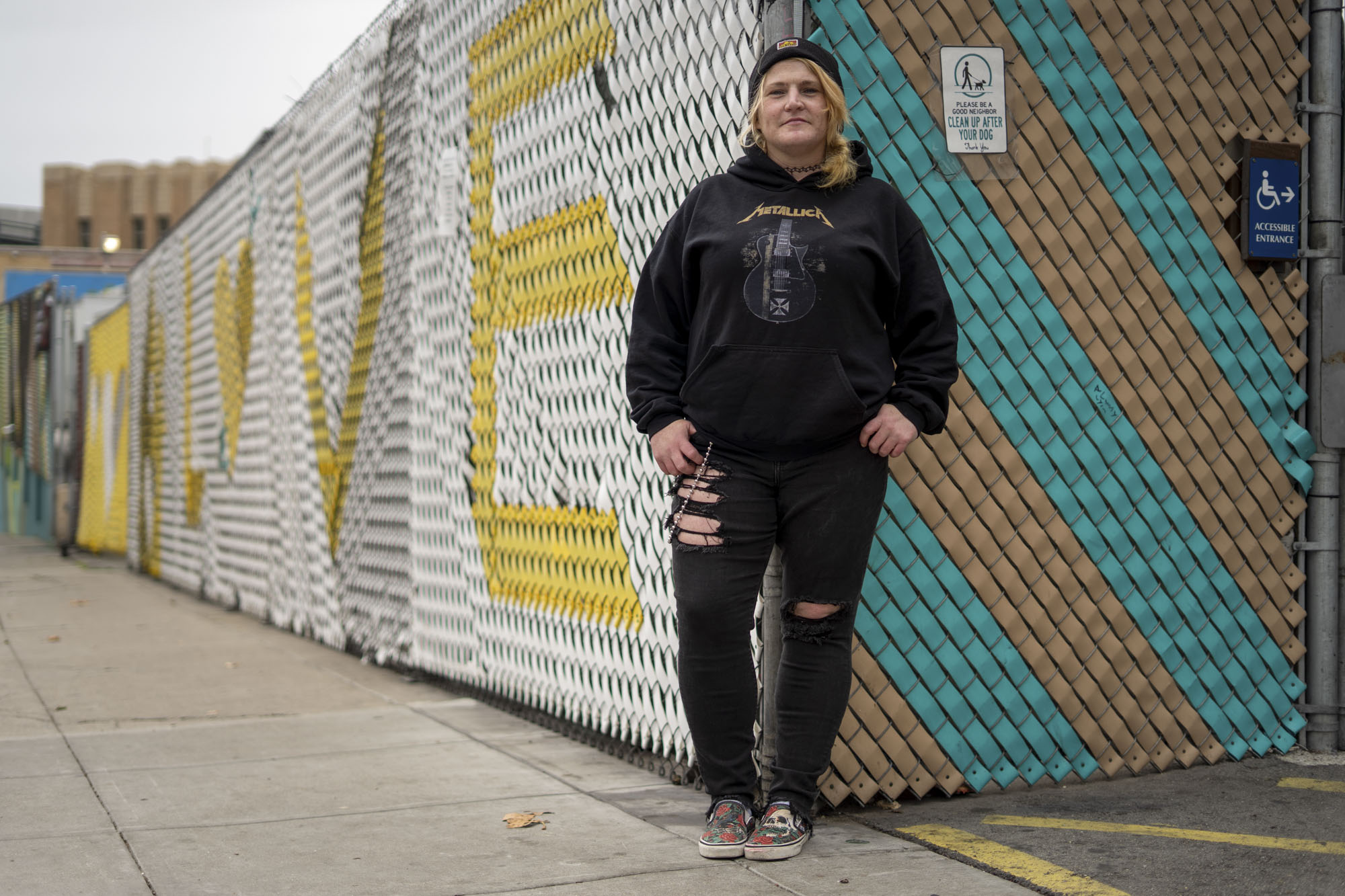
"caption": "Sarah Spillane, a resident of the DignityMoves tiny home cabins, outside the entrance in SoMa in San Francisco on Oct. 1, 2025.",
"credit": "Gustavo Hernandez/KQED",
"altTag": null,
"description": null,
"imgSizes": {
"thumbnail": {
"file": "https://cdn.kqed.org/wp-content/uploads/sites/10/2025/10/251001_BAYAREASHELTER_-17-KQED-160x107.jpg",
"width": 160,
"height": 107,
"mimeType": "image/jpeg"
},
"1536x1536": {
"file": "https://cdn.kqed.org/wp-content/uploads/sites/10/2025/10/251001_BAYAREASHELTER_-17-KQED-1536x1024.jpg",
"width": 1536,
"height": 1024,
"mimeType": "image/jpeg"
},
"post-thumbnail": {
"file": "https://cdn.kqed.org/wp-content/uploads/sites/10/2025/10/251001_BAYAREASHELTER_-17-KQED-672x372.jpg",
"width": 672,
"height": 372,
"mimeType": "image/jpeg"
},
"twentyfourteen-full-width": {
"file": "https://cdn.kqed.org/wp-content/uploads/sites/10/2025/10/251001_BAYAREASHELTER_-17-KQED-1038x576.jpg",
"width": 1038,
"height": 576,
"mimeType": "image/jpeg"
},
"kqedFullSize": {
"file": "https://cdn.kqed.org/wp-content/uploads/sites/10/2025/10/251001_BAYAREASHELTER_-17-KQED.jpg",
"width": 2000,
"height": 1333
}
},
"isLoading": false,
"fetchFailed": false
},
"news_12063437": {
"type": "attachments",
"id": "news_12063437",
"meta": {
"index": "attachments_1716263798",
"site": "news",
"id": "12063437",
"found": true
},
"title": "250724_Visit to Esmeralda,_ 0009_GH_qed",
"publishDate": 1762544620,
"status": "inherit",
"parent": 12059557,
"modified": 1762544628,
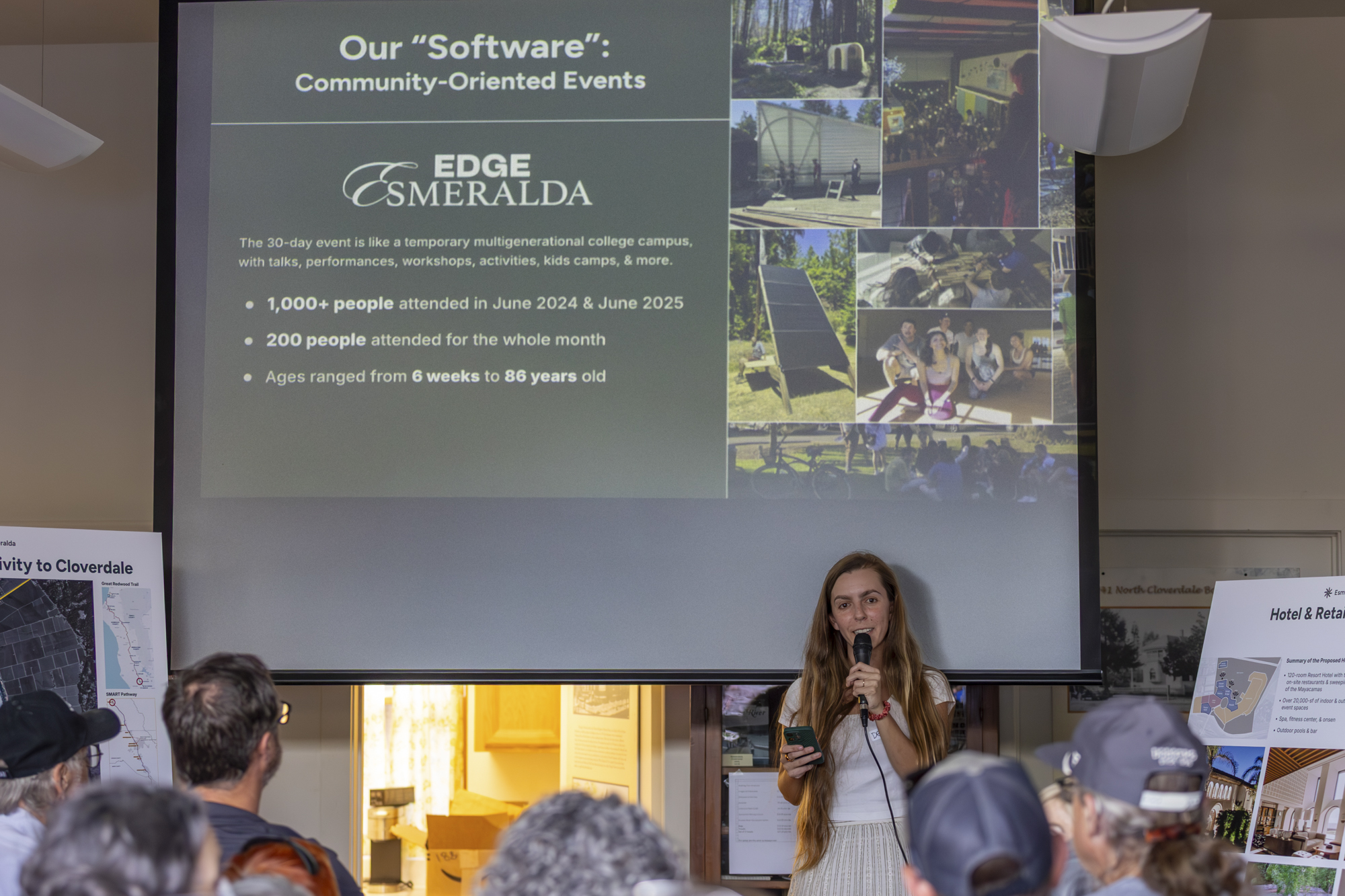
"caption": "A slide titled “Our ‘Software’: Community‑Oriented Events” displays attendance figures for Edge Esmeralda as Devon Zuegel speaks at the Cloverdale Museum of History on July 24, 2025.",
"credit": "Gustavo Hernandez/KQED",
"altTag": null,
"description": null,
"imgSizes": {
"thumbnail": {
"file": "https://cdn.kqed.org/wp-content/uploads/sites/10/2025/11/250724_Visit-to-Esmeralda_-0009_GH_qed-160x107.jpg",
"width": 160,
"height": 107,
"mimeType": "image/jpeg"
},
"1536x1536": {
"file": "https://cdn.kqed.org/wp-content/uploads/sites/10/2025/11/250724_Visit-to-Esmeralda_-0009_GH_qed-1536x1024.jpg",
"width": 1536,
"height": 1024,
"mimeType": "image/jpeg"
},
"post-thumbnail": {
"file": "https://cdn.kqed.org/wp-content/uploads/sites/10/2025/11/250724_Visit-to-Esmeralda_-0009_GH_qed-672x372.jpg",
"width": 672,
"height": 372,
"mimeType": "image/jpeg"
},
"twentyfourteen-full-width": {
"file": "https://cdn.kqed.org/wp-content/uploads/sites/10/2025/11/250724_Visit-to-Esmeralda_-0009_GH_qed-1038x576.jpg",
"width": 1038,
"height": 576,
"mimeType": "image/jpeg"
},
"npr-cds-wide": {
"file": "https://cdn.kqed.org/wp-content/uploads/sites/10/2025/11/250724_Visit-to-Esmeralda_-0009_GH_qed-1200x675.jpg",
"width": 1200,
"height": 675,
"mimeType": "image/jpeg"
},
"kqedFullSize": {
"file": "https://cdn.kqed.org/wp-content/uploads/sites/10/2025/11/250724_Visit-to-Esmeralda_-0009_GH_qed.jpg",
"width": 2000,
"height": 1333
}
},
"isLoading": false,
"fetchFailed": false
},
"news_12063494": {
"type": "attachments",
"id": "news_12063494",
"meta": {
"index": "attachments_1716263798",
"site": "news",
"id": "12063494",
"found": true
},
"title": "250724_VISIT TO ESMERALDA,_ 0008_GH-KQED",
"publishDate": 1762553268,
"status": "inherit",
"parent": 12059557,
"modified": 1762556804,
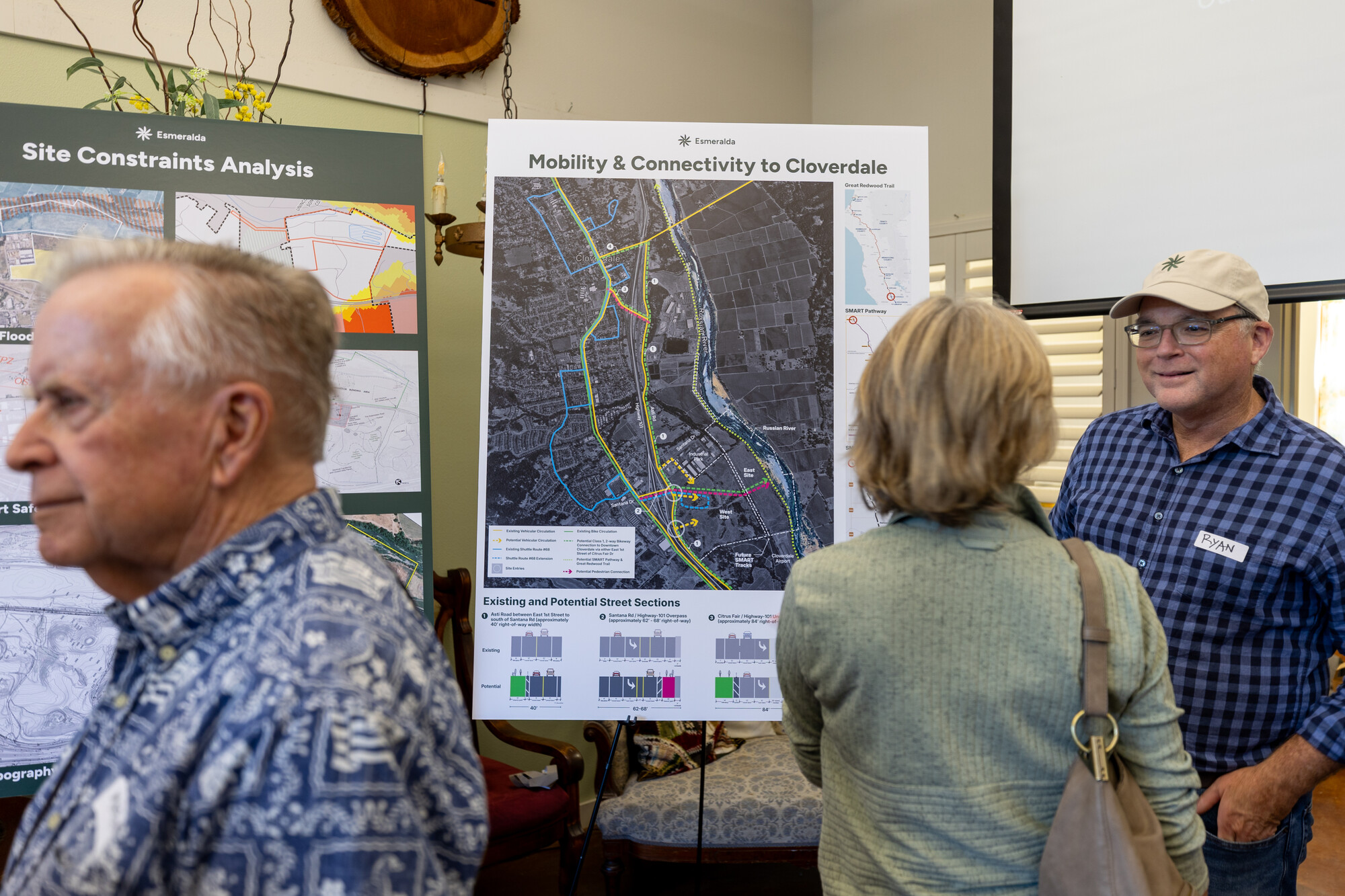
"caption": "Devon Zuegel, Esmeralda development leader, addresses residents at the Cloverdale Museum of History open house on July 24, 2025.",
"credit": "Gustavo Hernandez/KQED",
"altTag": null,
"description": null,
"imgSizes": {
"thumbnail": {
"file": "https://cdn.kqed.org/wp-content/uploads/sites/10/2025/11/250724_VISIT-TO-ESMERALDA_-0008_GH-KQED-160x107.jpg",
"width": 160,
"height": 107,
"mimeType": "image/jpeg"
},
"1536x1536": {
"file": "https://cdn.kqed.org/wp-content/uploads/sites/10/2025/11/250724_VISIT-TO-ESMERALDA_-0008_GH-KQED-1536x1024.jpg",
"width": 1536,
"height": 1024,
"mimeType": "image/jpeg"
},
"post-thumbnail": {
"file": "https://cdn.kqed.org/wp-content/uploads/sites/10/2025/11/250724_VISIT-TO-ESMERALDA_-0008_GH-KQED-672x372.jpg",
"width": 672,
"height": 372,
"mimeType": "image/jpeg"
},
"twentyfourteen-full-width": {
"file": "https://cdn.kqed.org/wp-content/uploads/sites/10/2025/11/250724_VISIT-TO-ESMERALDA_-0008_GH-KQED-1038x576.jpg",
"width": 1038,
"height": 576,
"mimeType": "image/jpeg"
},
"npr-cds-wide": {
"file": "https://cdn.kqed.org/wp-content/uploads/sites/10/2025/11/250724_VISIT-TO-ESMERALDA_-0008_GH-KQED-1200x675.jpg",
"width": 1200,
"height": 675,
"mimeType": "image/jpeg"
},
"kqedFullSize": {
"file": "https://cdn.kqed.org/wp-content/uploads/sites/10/2025/11/250724_VISIT-TO-ESMERALDA_-0008_GH-KQED.jpg",
"width": 2000,
"height": 1333
}
},
"isLoading": false,
"fetchFailed": false
},
"news_12051931": {
"type": "attachments",
"id": "news_12051931",
"meta": {
"index": "attachments_1716263798",
"site": "news",
"id": "12051931",
"found": true
},
"title": "250812-TNDC UNION-MD-07-KQED",
"publishDate": 1755032884,
"status": "inherit",
"parent": 12059460,
"modified": 1762805743,
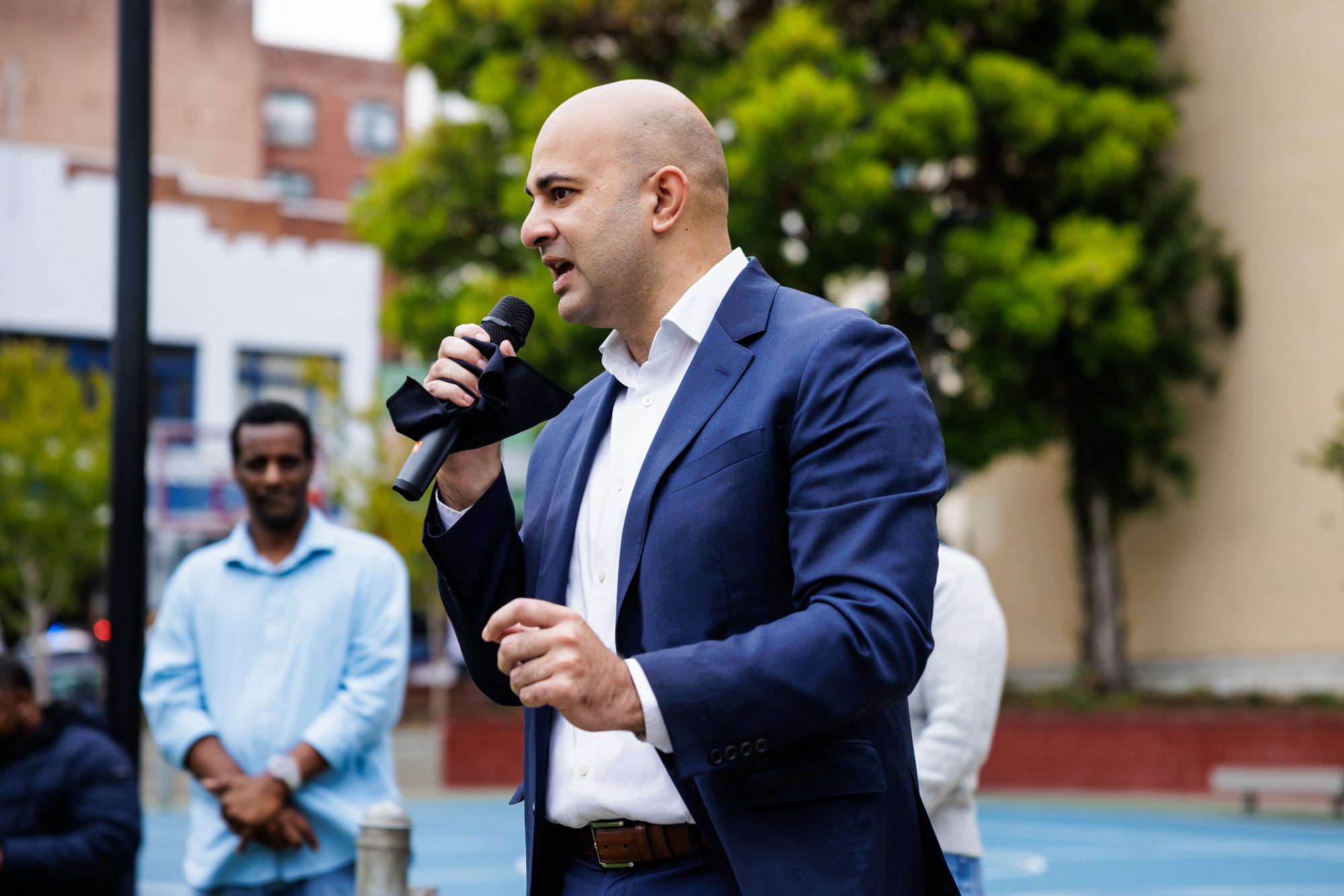
"caption": "Supervisor Bilal Mahmood speaks at an event celebrating the creation of a union by the workers at the Tenderloin Neighborhood Development Corporation at Boeddeker Park in San Francisco on Aug. 12, 2025.",
"credit": "Martin do Nascimento/KQED",
"altTag": null,
"description": null,
"imgSizes": {
"thumbnail": {
"file": "https://cdn.kqed.org/wp-content/uploads/sites/10/2025/08/250812-TNDC-UNION-MD-07-KQED-160x107.jpg",
"width": 160,
"height": 107,
"mimeType": "image/jpeg"
},
"1536x1536": {
"file": "https://cdn.kqed.org/wp-content/uploads/sites/10/2025/08/250812-TNDC-UNION-MD-07-KQED-1536x1025.jpg",
"width": 1536,
"height": 1025,
"mimeType": "image/jpeg"
},
"post-thumbnail": {
"file": "https://cdn.kqed.org/wp-content/uploads/sites/10/2025/08/250812-TNDC-UNION-MD-07-KQED-672x372.jpg",
"width": 672,
"height": 372,
"mimeType": "image/jpeg"
},
"twentyfourteen-full-width": {
"file": "https://cdn.kqed.org/wp-content/uploads/sites/10/2025/08/250812-TNDC-UNION-MD-07-KQED-1038x576.jpg",
"width": 1038,
"height": 576,
"mimeType": "image/jpeg"
},
"kqedFullSize": {
"file": "https://cdn.kqed.org/wp-content/uploads/sites/10/2025/08/250812-TNDC-UNION-MD-07-KQED.jpg",
"width": 2000,
"height": 1334
}
},
"isLoading": false,
"fetchFailed": false
},
"news_12063248": {
"type": "attachments",
"id": "news_12063248",
"meta": {
"index": "attachments_1716263798",
"site": "news",
"id": "12063248",
"found": true
},
"title": "20251106_SFD4SUPERVISOR_GC-23-KQED",
"publishDate": 1762459911,
"status": "inherit",
"parent": 12063157,
"modified": 1762466330,
"caption": "Isabella “Beya” Alcaraz, the next District 4 supervisor, representing the Sunset district, at Ortega Branch Library on Nov. 6, 2025. Alcaraz is the first Filipina-American to serve on the Board of Supervisors.",
"credit": "Gina Castro for KQED",
"altTag": null,
"description": null,
"imgSizes": {
"thumbnail": {
"file": "https://cdn.kqed.org/wp-content/uploads/sites/10/2025/11/20251106_SFD4SUPERVISOR_GC-23-KQED-160x107.jpg",
"width": 160,
"height": 107,
"mimeType": "image/jpeg"
},
"1536x1536": {
"file": "https://cdn.kqed.org/wp-content/uploads/sites/10/2025/11/20251106_SFD4SUPERVISOR_GC-23-KQED-1536x1024.jpg",
"width": 1536,
"height": 1024,
"mimeType": "image/jpeg"
},
"post-thumbnail": {
"file": "https://cdn.kqed.org/wp-content/uploads/sites/10/2025/11/20251106_SFD4SUPERVISOR_GC-23-KQED-672x372.jpg",
"width": 672,
"height": 372,
"mimeType": "image/jpeg"
},
"twentyfourteen-full-width": {
"file": "https://cdn.kqed.org/wp-content/uploads/sites/10/2025/11/20251106_SFD4SUPERVISOR_GC-23-KQED-1038x576.jpg",
"width": 1038,
"height": 576,
"mimeType": "image/jpeg"
},
"npr-cds-wide": {
"file": "https://cdn.kqed.org/wp-content/uploads/sites/10/2025/11/20251106_SFD4SUPERVISOR_GC-23-KQED-1200x675.jpg",
"width": 1200,
"height": 675,
"mimeType": "image/jpeg"
},
"kqedFullSize": {
"file": "https://cdn.kqed.org/wp-content/uploads/sites/10/2025/11/20251106_SFD4SUPERVISOR_GC-23-KQED.jpg",
"width": 2000,
"height": 1333
}
},
"isLoading": false,
"fetchFailed": false
},
"news_12062404": {
"type": "attachments",
"id": "news_12062404",
"meta": {
"index": "attachments_1716263798",
"site": "news",
"id": "12062404",
"found": true
},
"title": "011_KQED_SanFrancisco_RVsMercedBlvd_07272020_qed",
"publishDate": 1761867512,
"status": "inherit",
"parent": 12062394,
"modified": 1761867520,
"caption": "An RV is parked on Merced Boulevard across from the Olympic Club golf course in San Francisco on July 27, 2020.",
"credit": "Beth LaBerge/KQED",
"altTag": null,
"description": null,
"imgSizes": {
"thumbnail": {
"file": "https://cdn.kqed.org/wp-content/uploads/sites/10/2025/10/011_KQED_SanFrancisco_RVsMercedBlvd_07272020_qed-160x107.jpg",
"width": 160,
"height": 107,
"mimeType": "image/jpeg"
},
"1536x1536": {
"file": "https://cdn.kqed.org/wp-content/uploads/sites/10/2025/10/011_KQED_SanFrancisco_RVsMercedBlvd_07272020_qed-1536x1024.jpg",
"width": 1536,
"height": 1024,
"mimeType": "image/jpeg"
},
"post-thumbnail": {
"file": "https://cdn.kqed.org/wp-content/uploads/sites/10/2025/10/011_KQED_SanFrancisco_RVsMercedBlvd_07272020_qed-672x372.jpg",
"width": 672,
"height": 372,
"mimeType": "image/jpeg"
},
"twentyfourteen-full-width": {
"file": "https://cdn.kqed.org/wp-content/uploads/sites/10/2025/10/011_KQED_SanFrancisco_RVsMercedBlvd_07272020_qed-1038x576.jpg",
"width": 1038,
"height": 576,
"mimeType": "image/jpeg"
},
"npr-cds-wide": {
"file": "https://cdn.kqed.org/wp-content/uploads/sites/10/2025/10/011_KQED_SanFrancisco_RVsMercedBlvd_07272020_qed-1200x675.jpg",
"width": 1200,
"height": 675,
"mimeType": "image/jpeg"
},
"kqedFullSize": {
"file": "https://cdn.kqed.org/wp-content/uploads/sites/10/2025/10/011_KQED_SanFrancisco_RVsMercedBlvd_07272020_qed.jpg",
"width": 2000,
"height": 1333
}
},
"isLoading": false,
"fetchFailed": false
}
},
"audioPlayerReducer": {
"postId": "stream_live",
"isPaused": true,
"isPlaying": false,
"pfsActive": false,
"pledgeModalIsOpen": true,
"playerDrawerIsOpen": false,
"liveAudioPlayStartedAt": 0,
"liveAudioPlayContext": ""
},
"authorsReducer": {
"gmarzorati": {
"type": "authors",
"id": "227",
"meta": {
"index": "authors_1716337520",
"id": "227",
"found": true
},
"name": "Guy Marzorati",
"firstName": "Guy",
"lastName": "Marzorati",
"slug": "gmarzorati",
"email": "gmarzorati@KQED.org",
"display_author_email": true,
"staff_mastheads": [
"news"
],
"title": "Correspondent",
"bio": "Guy Marzorati is a correspondent on KQED's California Politics and Government Desk, based in San Jose. A graduate of Santa Clara University, Guy joined KQED in 2013. He reports on state and local politics and produces KQED's digital voter guide.",
"avatar": "https://secure.gravatar.com/avatar/e7038b8dbfd55b104369b76b1cd0b9de?s=600&d=blank&r=g",
"twitter": "guymarzorati",
"facebook": null,
"instagram": null,
"linkedin": null,
"sites": [
{
"site": "",
"roles": [
"editor"
]
},
{
"site": "news",
"roles": [
"editor"
]
},
{
"site": "science",
"roles": [
"editor"
]
},
{
"site": "forum",
"roles": [
"editor"
]
},
{
"site": "elections",
"roles": [
"editor"
]
},
{
"site": "liveblog",
"roles": [
"editor"
]
}
],
"headData": {
"title": "Guy Marzorati | KQED",
"description": "Correspondent",
"ogImgSrc": "https://secure.gravatar.com/avatar/e7038b8dbfd55b104369b76b1cd0b9de?s=600&d=blank&r=g",
"twImgSrc": "https://secure.gravatar.com/avatar/e7038b8dbfd55b104369b76b1cd0b9de?s=600&d=blank&r=g"
},
"isLoading": false,
"link": "/author/gmarzorati"
},
"aemslie": {
"type": "authors",
"id": "3206",
"meta": {
"index": "authors_1716337520",
"id": "3206",
"found": true
},
"name": "Alex Emslie",
"firstName": "Alex",
"lastName": "Emslie",
"slug": "aemslie",
"email": "aemslie@kqed.org",
"display_author_email": true,
"staff_mastheads": [
"news"
],
"title": "KQED Senior Editor",
"bio": "Alex Emslie is senior editor of talent and development at KQED, where he manages dozens of early career journalists and oversees news department internships.\r\n\r\nHe is a former carpenter and proud graduate of City College of San Francisco and San Francisco State University, where he studied journalism and criminal justice before joining KQED in 2013.\r\n\r\nAlex produced investigative journalism focused on \u003ca href=\"https://www.kqed.org/news/11667594/the-trials-of-marvin-mutch-video\">criminal justice\u003c/a> and policing for most of a decade. He has broken major stories about \u003ca href=\"https://www.kqed.org/news/135682/amid-a-series-of-vallejo-police-shootings-one-officers-name-stands-out\">police use of deadly force\u003c/a>, \u003ca href=\"https://www.kqed.org/news/10454955/racist-texts-prompt-sfpd-internal-investigation\">officer misconduct\u003c/a> and \u003ca href=\"https://www.kqed.org/news/11712239/terrorist-or-troll-judge-to-weigh-whether-oakland-man-really-intended-to-attack-bay-area\">other\u003c/a> \u003ca href=\"https://www.kqed.org/news/11221414/hayward-paid-159000-to-husband-of-retired-police-chief-documents-show\">high\u003c/a>-\u003ca href=\"https://www.kqed.org/news/10622762/the-forgotten-tracking-two-homicides-in-san-francisco-public-housing\">profile\u003c/a> \u003ca href=\"https://www.kqed.org/news/11624516/federal-agency-promoted-ranger-just-months-after-his-gun-was-stolen-and-used-in-steinle-killing\">cases\u003c/a>. He co-founded the \u003ca href=\"https://projects.scpr.org/california-reporting-project/\">California Reporting Project\u003c/a> in 2019 to obtain and report on previously confidential police internal investigations. The effort produced well over 100 original stories and changed the course of multiple criminal cases.\r\n\r\nHis work has been recognized with numerous journalism awards, including a national Edward R. Murrow award for several years of \u003ca href=\"https://www.kqed.org/news/11688481/sfpd-officers-in-mario-woods-case-recount-shooting-in-newly-filed-depositions\">reporting\u003c/a> on the San Francisco Police shooting of Mario Woods. His \u003ca href=\"https://www.kqed.org/news/147854/half-of-those-killed-by-san-francisco-police-are-mentally-ill\">reporting\u003c/a> on police killings of people in psychiatric crisis was cited in amicus briefs before the U.S. Supreme Court.\r\n\r\nAlex now enjoys mentoring the next generation of journalists at KQED.",
"avatar": "https://secure.gravatar.com/avatar/e691e65209f20e9da202bd730ead5663?s=600&d=blank&r=g",
"twitter": "SFNewsReporter",
"facebook": null,
"instagram": null,
"linkedin": null,
"sites": [
{
"site": "arts",
"roles": [
"editor"
]
},
{
"site": "news",
"roles": [
"editor"
]
},
{
"site": "mindshift",
"roles": [
"editor"
]
},
{
"site": "stateofhealth",
"roles": [
"editor"
]
},
{
"site": "science",
"roles": [
"administrator"
]
}
],
"headData": {
"title": "Alex Emslie | KQED",
"description": "KQED Senior Editor",
"ogImgSrc": "https://secure.gravatar.com/avatar/e691e65209f20e9da202bd730ead5663?s=600&d=blank&r=g",
"twImgSrc": "https://secure.gravatar.com/avatar/e691e65209f20e9da202bd730ead5663?s=600&d=blank&r=g"
},
"isLoading": false,
"link": "/author/aemslie"
},
"ecruzguevarra": {
"type": "authors",
"id": "8654",
"meta": {
"index": "authors_1716337520",
"id": "8654",
"found": true
},
"name": "Ericka Cruz Guevarra",
"firstName": "Ericka",
"lastName": "Cruz Guevarra",
"slug": "ecruzguevarra",
"email": "ecruzguevarra@kqed.org",
"display_author_email": true,
"staff_mastheads": [
"news"
],
"title": "Producer, The Bay Podcast",
"bio": "Ericka Cruz Guevarra is host of \u003ca href=\"https://www.kqed.org/podcasts/thebay\">\u003cem>The Bay\u003c/em>\u003c/a> podcast at KQED. Before host, she was the show’s producer. Her work in that capacity includes a three-part reported series on policing in Vallejo, which won a 2020 excellence in journalism award from the Society of Professional Journalists. Ericka has worked as a breaking news reporter at Oregon Public Broadcasting, helped produce the Code Switch podcast, and was KQED’s inaugural Raul Ramirez Diversity Fund intern. She’s also an alumna of NPR’s Next Generation Radio program. Send her an email if you have strong feelings about whether Fairfield and Suisun City are the Bay. Ericka is represented by SAG-AFTRA.",
"avatar": "https://secure.gravatar.com/avatar/accefc1de4bafc7e234b69bcb9b6f6536c130fd84709bc3069ef11a78787e1bb?s=600&d=blank&r=g",
"twitter": "NotoriousECG",
"bluesky": null,
"facebook": null,
"instagram": null,
"linkedin": null,
"sites": [
{
"site": "arts",
"roles": [
"subscriber"
]
},
{
"site": "news",
"roles": [
"editor",
"manage_categories"
]
},
{
"site": "futureofyou",
"roles": [
"subscriber"
]
},
{
"site": "stateofhealth",
"roles": [
"subscriber"
]
},
{
"site": "science",
"roles": [
"editor"
]
},
{
"site": "forum",
"roles": [
"subscriber"
]
}
],
"headData": {
"title": "Ericka Cruz Guevarra | KQED",
"description": "Producer, The Bay Podcast",
"ogImgSrc": "https://secure.gravatar.com/avatar/accefc1de4bafc7e234b69bcb9b6f6536c130fd84709bc3069ef11a78787e1bb?s=600&d=blank&r=g",
"twImgSrc": "https://secure.gravatar.com/avatar/accefc1de4bafc7e234b69bcb9b6f6536c130fd84709bc3069ef11a78787e1bb?s=600&d=blank&r=g"
},
"isLoading": false,
"link": "/author/ecruzguevarra"
},
"amontecillo": {
"type": "authors",
"id": "11649",
"meta": {
"index": "authors_1716337520",
"id": "11649",
"found": true
},
"name": "Alan Montecillo",
"firstName": "Alan",
"lastName": "Montecillo",
"slug": "amontecillo",
"email": "amontecillo@kqed.org",
"display_author_email": false,
"staff_mastheads": [
"news"
],
"title": "KQED Contributor",
"bio": "Alan Montecillo is the senior editor of \u003cem>\u003ca href=\"http://kqed.org/thebay\">The Bay\u003c/a>, \u003c/em> KQED's local news podcast. Before moving to the Bay Area, he worked as a senior talk show producer for WILL in Champaign-Urbana, Illinois and at Oregon Public Broadcasting in Portland, Oregon. He has won journalism awards from the Society of Professional Journalists Northern California, the Public Media Journalists Association, The Signal Awards, and has also received a regional Edward R. Murrow award. Alan is a Filipino American from Hong Kong and a graduate of Reed College.",
"avatar": "https://secure.gravatar.com/avatar/268f53a2066899ea9efdd8a5900218b17c822d9862cbc9326cccec53ef41d349?s=600&d=blank&r=g",
"twitter": "alanmontecillo",
"bluesky": null,
"facebook": null,
"instagram": null,
"linkedin": null,
"sites": [
{
"site": "",
"roles": [
"editor"
]
},
{
"site": "news",
"roles": [
"editor",
"manage_categories"
]
}
],
"headData": {
"title": "Alan Montecillo | KQED",
"description": "KQED Contributor",
"ogImgSrc": "https://secure.gravatar.com/avatar/268f53a2066899ea9efdd8a5900218b17c822d9862cbc9326cccec53ef41d349?s=600&d=blank&r=g",
"twImgSrc": "https://secure.gravatar.com/avatar/268f53a2066899ea9efdd8a5900218b17c822d9862cbc9326cccec53ef41d349?s=600&d=blank&r=g"
},
"isLoading": false,
"link": "/author/amontecillo"
},
"ebaldassari": {
"type": "authors",
"id": "11652",
"meta": {
"index": "authors_1716337520",
"id": "11652",
"found": true
},
"name": "Erin Baldassari",
"firstName": "Erin",
"lastName": "Baldassari",
"slug": "ebaldassari",
"email": "ebaldassari@KQED.org",
"display_author_email": true,
"staff_mastheads": [
"news"
],
"title": "Staff Writer",
"bio": "Erin Baldassari covers housing for KQED. She's a former print journalist and most recently worked as the transportation reporter for the \u003cem>Mercury News\u003c/em> and \u003cem>East Bay Times. \u003c/em>There, she focused on how the Bay Area’s housing shortage has changed the way people move around the region. She also served on the \u003cem>East Bay Times\u003c/em>’ 2017 Pulitzer Prize-winning team for coverage of the Ghost Ship Fire in Oakland. Prior to that, Erin worked as a breaking news and general assignment reporter for a variety of outlets in the Bay Area and the greater Boston area. A Tufts University alumna, Erin grew up in the foothills of the Sierra Nevada mountains and in Sonoma County. She is a life-long KQED listener.",
"avatar": "https://secure.gravatar.com/avatar/5e95cad64a8ca08288082212e199d2b0cbeb4fd8e8ef5339395f361032bbe005?s=600&d=blank&r=g",
"twitter": "e_baldi",
"bluesky": null,
"facebook": null,
"instagram": null,
"linkedin": null,
"sites": [
{
"site": "news",
"roles": [
"edit_others_posts",
"editor"
]
},
{
"site": "science",
"roles": [
"editor"
]
},
{
"site": "liveblog",
"roles": [
"editor"
]
}
],
"headData": {
"title": "Erin Baldassari | KQED",
"description": "Staff Writer",
"ogImgSrc": "https://secure.gravatar.com/avatar/5e95cad64a8ca08288082212e199d2b0cbeb4fd8e8ef5339395f361032bbe005?s=600&d=blank&r=g",
"twImgSrc": "https://secure.gravatar.com/avatar/5e95cad64a8ca08288082212e199d2b0cbeb4fd8e8ef5339395f361032bbe005?s=600&d=blank&r=g"
},
"isLoading": false,
"link": "/author/ebaldassari"
},
"abandlamudi": {
"type": "authors",
"id": "11672",
"meta": {
"index": "authors_1716337520",
"id": "11672",
"found": true
},
"name": "Adhiti Bandlamudi",
"firstName": "Adhiti",
"lastName": "Bandlamudi",
"slug": "abandlamudi",
"email": "abandlamudi@kqed.org",
"display_author_email": false,
"staff_mastheads": [
"news"
],
"title": "KQED Housing Reporter",
"bio": "Adhiti Bandlamudi reports for KQED's Housing desk. She focuses on how housing gets built across the Bay Area. Before joining KQED in 2020, she reported for WUNC in Durham, North Carolina, WABE in Atlanta, Georgia and Capital Public Radio in Sacramento. In 2017, she was awarded a Kroc Fellowship at NPR where she reported on everything from sprinkles to the Golden State Killer's arrest. When she's not reporting, she's baking new recipes in her kitchen or watching movies with friends and family. She's originally from Georgia and has strong opinions about Great British Bake Off.",
"avatar": "https://secure.gravatar.com/avatar/868129c8b257bb99a3500e2c86a65400?s=600&d=mm&r=g",
"twitter": "oddity_adhiti",
"facebook": null,
"instagram": null,
"linkedin": null,
"sites": [
{
"site": "arts",
"roles": [
"author"
]
},
{
"site": "news",
"roles": [
"editor"
]
},
{
"site": "liveblog",
"roles": [
"author"
]
}
],
"headData": {
"title": "Adhiti Bandlamudi | KQED",
"description": "KQED Housing Reporter",
"ogImgSrc": "https://secure.gravatar.com/avatar/868129c8b257bb99a3500e2c86a65400?s=600&d=mm&r=g",
"twImgSrc": "https://secure.gravatar.com/avatar/868129c8b257bb99a3500e2c86a65400?s=600&d=mm&r=g"
},
"isLoading": false,
"link": "/author/abandlamudi"
},
"ccabreralomeli": {
"type": "authors",
"id": "11708",
"meta": {
"index": "authors_1716337520",
"id": "11708",
"found": true
},
"name": "Carlos Cabrera-Lomelí",
"firstName": "Carlos",
"lastName": "Cabrera-Lomelí",
"slug": "ccabreralomeli",
"email": "ccabreralomeli@KQED.org",
"display_author_email": true,
"staff_mastheads": [
"news"
],
"title": "Community Reporter",
"bio": "Carlos Cabrera-Lomelí is a community reporter with KQED's digital engagement team. He also reports and co-produces for KQED's bilingual news hub KQED en Español. He grew up in San Francisco's Mission District and has previously worked with Univision, 48 Hills and REFORMA in Mexico City.",
"avatar": "https://secure.gravatar.com/avatar/c309be9665e484f887b818c89e273ecc673004f426f36b24d00a4d813a2e0518?s=600&d=blank&r=g",
"twitter": "@LomeliCabrera",
"bluesky": null,
"facebook": null,
"instagram": null,
"linkedin": null,
"sites": [
{
"site": "arts",
"roles": [
"editor"
]
},
{
"site": "news",
"roles": [
"editor"
]
},
{
"site": "about",
"roles": [
"editor"
]
},
{
"site": "science",
"roles": [
"editor"
]
},
{
"site": "perspectives",
"roles": [
"editor"
]
},
{
"site": "elections",
"roles": [
"editor"
]
},
{
"site": "liveblog",
"roles": [
"contributor"
]
}
],
"headData": {
"title": "Carlos Cabrera-Lomelí | KQED",
"description": "Community Reporter",
"ogImgSrc": "https://secure.gravatar.com/avatar/c309be9665e484f887b818c89e273ecc673004f426f36b24d00a4d813a2e0518?s=600&d=blank&r=g",
"twImgSrc": "https://secure.gravatar.com/avatar/c309be9665e484f887b818c89e273ecc673004f426f36b24d00a4d813a2e0518?s=600&d=blank&r=g"
},
"isLoading": false,
"link": "/author/ccabreralomeli"
},
"ibloom": {
"type": "authors",
"id": "11805",
"meta": {
"index": "authors_1716337520",
"id": "11805",
"found": true
},
"name": "Izzy Bloom",
"firstName": "Izzy",
"lastName": "Bloom",
"slug": "ibloom",
"email": "ibloom@kqed.org",
"display_author_email": false,
"staff_mastheads": [],
"title": "KQED Reporter & Producer",
"bio": "Izzy is a reporter and producer on KQED's California Politics & Government Desk. She joined the desk in 2024 to produce Political Breakdown, covering local and national elections and attending the RNC and DNC in Milwaukee and Chicago. \r\n\r\nBefore that, Izzy was a producer on The California Report and reported long-form stories for The California Report Magazine. She was a finalist for the Third Coast/Richard H. Driehaus Foundation Competition and was awarded for her reporting on indigenous land back by the Society of Professional Journalists. Izzy received her master's in journalism from the University of California, Berkeley.",
"avatar": "https://secure.gravatar.com/avatar/cc4d272ca430783ee1a8efac470a6b1e0fdd082c3beb61da019801d0ff751c8c?s=600&d=blank&r=g",
"twitter": null,
"bluesky": null,
"facebook": null,
"instagram": null,
"linkedin": null,
"sites": [
{
"site": "news",
"roles": [
"editor"
]
},
{
"site": "perspectives",
"roles": [
"editor"
]
}
],
"headData": {
"title": "Izzy Bloom | KQED",
"description": "KQED Reporter & Producer",
"ogImgSrc": "https://secure.gravatar.com/avatar/cc4d272ca430783ee1a8efac470a6b1e0fdd082c3beb61da019801d0ff751c8c?s=600&d=blank&r=g",
"twImgSrc": "https://secure.gravatar.com/avatar/cc4d272ca430783ee1a8efac470a6b1e0fdd082c3beb61da019801d0ff751c8c?s=600&d=blank&r=g"
},
"isLoading": false,
"link": "/author/ibloom"
},
"jessicakariisa": {
"type": "authors",
"id": "11831",
"meta": {
"index": "authors_1716337520",
"id": "11831",
"found": true
},
"name": "Jessica Kariisa",
"firstName": "Jessica",
"lastName": "Kariisa",
"slug": "jessicakariisa",
"email": "jkariisa@kqed.org",
"display_author_email": false,
"staff_mastheads": [],
"title": "Producer, The Bay",
"bio": "Jessica Kariisa is the producer of The Bay. She first joined KQED as an intern for The California Report Magazine, after which she became an on-call producer. She reported a Bay Curious episode on the use of rap lyrics in criminal trials which won a Society of Professional Journalists award in 2023 for Excellence in Features Journalism and the 2023 Signal Award for Best Conversation Starter. She’s worked on podcasts for Snap Judgment and American Public Media. Before embarking on her audio career, she was a music journalist.\r\n\r\nJessica Kariisa is represented by SAG-AFTRA.",
"avatar": "https://secure.gravatar.com/avatar/522e97b28ac0b3d411621c0fde8f3419c7b71ea2c5c262c57c4bb600963f328c?s=600&d=blank&r=g",
"twitter": null,
"bluesky": null,
"facebook": null,
"instagram": null,
"linkedin": null,
"sites": [
{
"site": "arts",
"roles": [
"author"
]
},
{
"site": "news",
"roles": [
"editor",
"manage_categories"
]
}
],
"headData": {
"title": "Jessica Kariisa | KQED",
"description": "Producer, The Bay",
"ogImgSrc": "https://secure.gravatar.com/avatar/522e97b28ac0b3d411621c0fde8f3419c7b71ea2c5c262c57c4bb600963f328c?s=600&d=blank&r=g",
"twImgSrc": "https://secure.gravatar.com/avatar/522e97b28ac0b3d411621c0fde8f3419c7b71ea2c5c262c57c4bb600963f328c?s=600&d=blank&r=g"
},
"isLoading": false,
"link": "/author/jessicakariisa"
},
"sjohnson": {
"type": "authors",
"id": "11840",
"meta": {
"index": "authors_1716337520",
"id": "11840",
"found": true
},
"name": "Sydney Johnson",
"firstName": "Sydney",
"lastName": "Johnson",
"slug": "sjohnson",
"email": "sjohnson@kqed.org",
"display_author_email": false,
"staff_mastheads": [
"news"
],
"title": "KQED Reporter",
"bio": "Sydney Johnson is a general assignment reporter at KQED. She previously reported on public health and city government at the San Francisco Examiner, and before that, she covered statewide education policy for EdSource. Her reporting has won multiple local, state and national awards. Sydney is a graduate of the University of California, Berkeley and lives in San Francisco.",
"avatar": "https://secure.gravatar.com/avatar/97855f2719b72ad6190b7c535fe642c8?s=600&d=blank&r=g",
"twitter": "sydneyfjohnson",
"facebook": null,
"instagram": null,
"linkedin": null,
"sites": [
{
"site": "news",
"roles": [
"editor"
]
}
],
"headData": {
"title": "Sydney Johnson | KQED",
"description": "KQED Reporter",
"ogImgSrc": "https://secure.gravatar.com/avatar/97855f2719b72ad6190b7c535fe642c8?s=600&d=blank&r=g",
"twImgSrc": "https://secure.gravatar.com/avatar/97855f2719b72ad6190b7c535fe642c8?s=600&d=blank&r=g"
},
"isLoading": false,
"link": "/author/sjohnson"
},
"kdebenedetti": {
"type": "authors",
"id": "11913",
"meta": {
"index": "authors_1716337520",
"id": "11913",
"found": true
},
"name": "Katie DeBenedetti",
"firstName": "Katie",
"lastName": "DeBenedetti",
"slug": "kdebenedetti",
"email": "kdebenedetti@kqed.org",
"display_author_email": false,
"staff_mastheads": [
"news",
"science"
],
"title": "KQED Contributor",
"bio": "Katie DeBenedetti is a digital reporter covering daily news for the Express Desk. Prior to joining KQED as a culture reporting intern in January 2024, she covered education and city government for the Napa Valley Register.",
"avatar": "https://secure.gravatar.com/avatar/6e31073cb8f7e4214ab03f42771d0f45?s=600&d=blank&r=g",
"twitter": null,
"facebook": null,
"instagram": null,
"linkedin": null,
"sites": [
{
"site": "news",
"roles": [
"author"
]
},
{
"site": "science",
"roles": [
"author"
]
},
{
"site": "liveblog",
"roles": [
"author"
]
}
],
"headData": {
"title": "Katie DeBenedetti | KQED",
"description": "KQED Contributor",
"ogImgSrc": "https://secure.gravatar.com/avatar/6e31073cb8f7e4214ab03f42771d0f45?s=600&d=blank&r=g",
"twImgSrc": "https://secure.gravatar.com/avatar/6e31073cb8f7e4214ab03f42771d0f45?s=600&d=blank&r=g"
},
"isLoading": false,
"link": "/author/kdebenedetti"
},
"nsuliman": {
"type": "authors",
"id": "11985",
"meta": {
"index": "authors_1716337520",
"id": "11985",
"found": true
},
"name": "Nibras Suliman",
"firstName": "Nibras",
"lastName": "Suliman",
"slug": "nsuliman",
"email": "nsuliman@kqed.org",
"display_author_email": false,
"staff_mastheads": [],
"title": "KQED Contributor",
"bio": null,
"avatar": "https://secure.gravatar.com/avatar/581946774e0249b1fcdfb01d4f143d12?s=600&d=blank&r=g",
"twitter": null,
"facebook": null,
"instagram": null,
"linkedin": null,
"sites": [
{
"site": "news",
"roles": []
}
],
"headData": {
"title": "Nibras Suliman | KQED",
"description": "KQED Contributor",
"ogImgSrc": "https://secure.gravatar.com/avatar/581946774e0249b1fcdfb01d4f143d12?s=600&d=blank&r=g",
"twImgSrc": "https://secure.gravatar.com/avatar/581946774e0249b1fcdfb01d4f143d12?s=600&d=blank&r=g"
},
"isLoading": false,
"link": "/author/nsuliman"
},
"aaliahmad": {
"type": "authors",
"id": "11986",
"meta": {
"index": "authors_1716337520",
"id": "11986",
"found": true
},
"name": "Ayah Ali-Ahmad",
"firstName": "Ayah",
"lastName": "Ali-Ahmad",
"slug": "aaliahmad",
"email": "aaliahmad@KQED.org",
"display_author_email": false,
"staff_mastheads": [],
"title": "KQED Contributor",
"bio": null,
"avatar": "https://secure.gravatar.com/avatar/1cf54f187a5e1064b2cfef3f3d2f1e4f93e453395d56912aca6382a6071ec3ed?s=600&d=blank&r=g",
"twitter": "ayahaliahmad",
"bluesky": null,
"facebook": null,
"instagram": null,
"linkedin": null,
"sites": [
{
"site": "news",
"roles": [
"subscriber"
]
}
],
"headData": {
"title": "Ayah Ali-Ahmad | KQED",
"description": "KQED Contributor",
"ogImgSrc": "https://secure.gravatar.com/avatar/1cf54f187a5e1064b2cfef3f3d2f1e4f93e453395d56912aca6382a6071ec3ed?s=600&d=blank&r=g",
"twImgSrc": "https://secure.gravatar.com/avatar/1cf54f187a5e1064b2cfef3f3d2f1e4f93e453395d56912aca6382a6071ec3ed?s=600&d=blank&r=g"
},
"isLoading": false,
"link": "/author/aaliahmad"
}
},
"pagesReducer": {
"news_tag_housing": {
"type": "terms",
"id": "news_1775",
"meta": {
"index": "terms_1716263798",
"site": "news",
"id": "1775",
"score": 7.0361176
},
"featImg": null,
"name": "housing",
"description": null,
"taxonomy": "tag",
"headData": {
"twImgId": null,
"twTitle": null,
"ogTitle": null,
"ogImgId": null,
"twDescription": null,
"description": null,
"title": "housing Archives | KQED News",
"ogDescription": null
},
"ttid": 1790,
"slug": "housing",
"isLoading": false,
"title": "housing",
"pageMeta": {
"site": "news",
"WpPageTemplate": "page-topic-editorial",
"currentPage": 10
},
"blocks": [
{
"blockName": "kqed/post-list",
"attrs": {
"layout": "cardArticle2",
"query": "posts/news?tag=housing",
"seeMore": false,
"paginated": true,
"page": 10
}
},
{
"blockName": "kqed/ad"
}
]
}
},
"pfsSessionReducer": {},
"postsReducer": {
"stream_live": {
"type": "live",
"id": "stream_live",
"audioUrl": "https://streams.kqed.org/kqedradio",
"title": "Live Stream",
"excerpt": "Live Stream information currently unavailable.",
"link": "/radio",
"featImg": "",
"label": {
"name": "KQED Live",
"link": "/"
}
},
"stream_kqedNewscast": {
"type": "posts",
"id": "stream_kqedNewscast",
"audioUrl": "https://www.kqed.org/.stream/anon/radio/RDnews/newscast.mp3?_=1",
"title": "KQED Newscast",
"featImg": "",
"label": {
"name": "88.5 FM",
"link": "/"
}
},
"news_12064764": {
"type": "posts",
"id": "news_12064764",
"meta": {
"index": "posts_1716263798",
"site": "news",
"id": "12064764",
"score": null,
"sort": [
1763663455000
]
},
"guestAuthors": [],
"slug": "how-a-surge-in-bay-area-poverty-wiped-out-a-decade-of-progress",
"title": "How a Surge in Bay Area Poverty Wiped Out a Decade of Progress",
"publishDate": 1763663455,
"format": "standard",
"headTitle": "How a Surge in Bay Area Poverty Wiped Out a Decade of Progress | KQED",
"labelTerm": {
"site": "news"
},
"content": "\u003cp>A decade of \u003ca href=\"https://www.kqed.org/news/12043582/he-says-legal-aid-fights-poverty-in-sf-now-hes-starting-a-hunger-strike\">economic progress\u003c/a> in the Bay Area has been erased in less than a year, according to a \u003ca href=\"https://tippingpoint.org/research/poverty-solutions/analysis-bay-area-poverty-is-rising/\">new report\u003c/a> released Wednesday by Tipping Point Community, a San Francisco-based anti-poverty nonprofit.\u003c/p>\n\u003cp>According to the data, analyzed in partnership with the Public Policy Institute of California, 2023 saw the Bay Area’s poverty rate climb over 4 percentage points from 12.2% in early 2023 to 16.3% by the end of the year. In just nine months, an additional 245,000 Bay Area residents fell into poverty.\u003c/p>\n\u003cp>“This is one of the fastest regional increases in recent history,” said Sam Cobbs, CEO of Tipping Point, during a media briefing on Tuesday. “That is the size of Boise, Idaho.”\u003c/p>\n\u003cp>[ad fullwidth]\u003c/p>\n\u003cp>For much of the past decade, poverty in the Bay Area had steadily declined. From 2011 to 2021, the region’s rate fell from 18.7% to 10.8%.\u003c/p>\n\u003cp>But the expiration of pandemic-era safety net programs (such as the expanded Child Tax Credit and stimulus payments), historic inflation and rising housing costs reversed those gains.\u003c/p>\n\u003cp>The report paints a stark picture of a region where the cost of living has vastly outpaced wage growth. Between 2016 and 2023, household incomes in the Bay Area rose by 34%, but the cost of living surged by 46%. In total, more than 1.8 million residents — or nearly 3 in 10 people in the region — are now struggling to cover basic needs.\u003c/p>\n\u003cfigure id=\"attachment_11953003\" class=\"wp-caption aligncenter\" style=\"max-width: 2000px\">\u003cimg loading=\"lazy\" decoding=\"async\" class=\"size-full wp-image-11953003\" src=\"https://cdn.kqed.org/wp-content/uploads/sites/10/2023/06/RS66308_230613-SFMarinFoodPantry-22-BL-KQED.jpg\" alt=\"A pair of hands in knit gloves holds the handle of a shopping stroller while a pair of hands in clear plastic gloves places produce into the stroller.\" width=\"2000\" height=\"1333\" srcset=\"https://cdn.kqed.org/wp-content/uploads/sites/10/2023/06/RS66308_230613-SFMarinFoodPantry-22-BL-KQED.jpg 2000w, https://cdn.kqed.org/wp-content/uploads/sites/10/2023/06/RS66308_230613-SFMarinFoodPantry-22-BL-KQED-800x533.jpg 800w, https://cdn.kqed.org/wp-content/uploads/sites/10/2023/06/RS66308_230613-SFMarinFoodPantry-22-BL-KQED-1020x680.jpg 1020w, https://cdn.kqed.org/wp-content/uploads/sites/10/2023/06/RS66308_230613-SFMarinFoodPantry-22-BL-KQED-160x107.jpg 160w, https://cdn.kqed.org/wp-content/uploads/sites/10/2023/06/RS66308_230613-SFMarinFoodPantry-22-BL-KQED-1536x1024.jpg 1536w, https://cdn.kqed.org/wp-content/uploads/sites/10/2023/06/RS66308_230613-SFMarinFoodPantry-22-BL-KQED-1920x1280.jpg 1920w\" sizes=\"auto, (max-width: 2000px) 100vw, 2000px\">\u003cfigcaption class=\"wp-caption-text\">Volunteers distribute food items at a San Francisco-Marin Food Bank pop-up pantry in the Richmond District of San Francisco on June 13, 2023. \u003ccite>(Beth LaBerge/KQED)\u003c/cite>\u003c/figcaption>\u003c/figure>\n\u003cp>One of the report’s most critical findings challenges the assumption that full-time employment guarantees economic security, Cobbs said. Half of all Bay Area residents living in poverty belong to families with at least one full-time, year-round worker.\u003c/p>\n\u003cp>“Working full time is no longer the remedy for poverty in the Bay Area,” Cobbs said. “Over 1 million residents in or near poverty live in families where there’s at least one full-time working adult.”\u003c/p>\n\u003cp>While poverty increased across nearly every county and across all demographics, the Bay’s Black and Asian communities were hit hardest.\u003c/p>\n\u003cp>San Francisco County, which also saw the largest increases, now holds the highest poverty rate in the region at 17.5%, followed closely by Alameda County. Only Marin County’s poverty rate — at 14.4% — remained unchanged.\u003c/p>\n\u003cp>The report noted that while safety net programs kept more than 176,000 people out of poverty in 2023, their impact is diminishing.\u003c/p>\n\u003cp>[aside postID=news_12064324 hero='https://cdn.kqed.org/wp-content/uploads/sites/10/2025/11/240522-ERPressure-09-BL_qed.jpg']Ali Sutton, Tipping Point’s chief program officer, warned that the situation could deteriorate further depending on federal policy changes after the passage of the One Big Beautiful Bill Act, formally known as HR 1.\u003c/p>\n\u003cp>“We are expecting some of the deepest cuts to our social safety net in our history,” Sutton said. “Given those substantial cuts, we anticipate these numbers will only worsen over the next few years.”\u003c/p>\n\u003cp>To address the current crisis, Tipping Point pledged in \u003ca href=\"https://tippingpoint.org/press/bay-area-poverty-fundraising/tipping-point-to-accelerate-bay-area-giving-to-1-billion-following-seismic-cuts-to-direct-assistance/#:~:text=SAN%20FRANCISCO%2C%20July%207%2C%202025,and%20grants%20by%20%24185%20million.\">July\u003c/a> to double its investment in the community, committing $1 billion over the next 10 years. Cobbs said the organization, which was founded by Daniel Lurie in 2005, decades before he became San Francisco’s mayor, \u003ca href=\"https://tippingpoint.org/bay-area-impact/impact-reports/impact-report-2024/#policy-change\">plans to focus on systemic changes\u003c/a> rather than just direct services.\u003c/p>\n\u003cp>“The data makes clear that progress is possible, but only if we continue to invest in what works,” Cobbs said. “When strong policies and proven programs are in place, like access to affordable childcare, career pathways and safety net benefits, poverty declines. When those supports are rolled back, poverty rises.”\u003c/p>\n\u003cp>The group specifically called for reforms focused on stabilizing the cost of living and broadest access to benefits. Cobbs urged officials to unlock public funds to preserve and build affordable housing and to expand subsidized child care, arguing that lowering these costs is essential for parents to remain in the workforce.\u003c/p>\n\u003cp>“This region has the resources, the innovation and the will to solve big problems,” Cobbs said. “Today’s report underscores the urgency, but it also reminds us that solutions are within reach.”\u003c/p>\n\u003cp>\u003c/p>\n",
"blocks": [],
"excerpt": "A new report from a San Francisco anti-poverty nonprofit showed that 3 out of 10 Bay Area residents struggle to cover basic needs. ",
"status": "publish",
"parent": 0,
"modified": 1763667557,
"stats": {
"hasAudio": false,
"hasVideo": false,
"hasChartOrMap": false,
"iframeSrcs": [],
"hasGoogleForm": false,
"hasGallery": false,
"hasHearkenModule": false,
"hasPolis": false,
"paragraphCount": 19,
"wordCount": 743
},
"headData": {
"title": "How a Surge in Bay Area Poverty Wiped Out a Decade of Progress | KQED",
"description": "A new report from a San Francisco anti-poverty nonprofit showed that 3 out of 10 Bay Area residents struggle to cover basic needs. ",
"ogTitle": "",
"ogDescription": "",
"ogImgId": "",
"twTitle": "",
"twDescription": "",
"twImgId": "",
"schema": {
"@context": "https://schema.org",
"@type": "NewsArticle",
"headline": "How a Surge in Bay Area Poverty Wiped Out a Decade of Progress",
"datePublished": "2025-11-20T10:30:55-08:00",
"dateModified": "2025-11-20T11:39:17-08:00",
"image": "https://cdn.kqed.org/wp-content/uploads/2020/02/KQED-OG-Image@1x.png",
"isAccessibleForFree": "True",
"publisher": {
"@type": "NewsMediaOrganization",
"@id": "https://www.kqed.org/#organization",
"name": "KQED",
"logo": "https://cdn.kqed.org/wp-content/uploads/2020/02/KQED-OG-Image@1x.png",
"url": "https://www.kqed.org",
"sameAs": [
"https://www.facebook.com/KQED",
"https://twitter.com/KQED",
"https://www.instagram.com/kqed/",
"https://www.tiktok.com/@kqedofficial",
"https://www.linkedin.com/company/kqed",
"https://www.youtube.com/channel/UCeC0IOo7i1P_61zVUWbJ4nw"
]
}
}
},
"primaryCategory": {
"termId": 8,
"slug": "news",
"name": "News"
},
"sticky": false,
"nprStoryId": "kqed-12064764",
"templateType": "standard",
"featuredImageType": "standard",
"excludeFromSiteSearch": "Include",
"articleAge": "0",
"path": "/news/12064764/how-a-surge-in-bay-area-poverty-wiped-out-a-decade-of-progress",
"audioTrackLength": null,
"parsedContent": [
{
"type": "contentString",
"content": "\u003cdiv class=\"post-body\">\u003cp>\u003cp>A decade of \u003ca href=\"https://www.kqed.org/news/12043582/he-says-legal-aid-fights-poverty-in-sf-now-hes-starting-a-hunger-strike\">economic progress\u003c/a> in the Bay Area has been erased in less than a year, according to a \u003ca href=\"https://tippingpoint.org/research/poverty-solutions/analysis-bay-area-poverty-is-rising/\">new report\u003c/a> released Wednesday by Tipping Point Community, a San Francisco-based anti-poverty nonprofit.\u003c/p>\n\u003cp>According to the data, analyzed in partnership with the Public Policy Institute of California, 2023 saw the Bay Area’s poverty rate climb over 4 percentage points from 12.2% in early 2023 to 16.3% by the end of the year. In just nine months, an additional 245,000 Bay Area residents fell into poverty.\u003c/p>\n\u003cp>“This is one of the fastest regional increases in recent history,” said Sam Cobbs, CEO of Tipping Point, during a media briefing on Tuesday. “That is the size of Boise, Idaho.”\u003c/p>\n\u003cp>\u003c/p>\u003c/div>",
"attributes": {
"named": {},
"numeric": []
}
},
{
"type": "component",
"content": "",
"name": "ad",
"attributes": {
"named": {
"label": "fullwidth"
},
"numeric": [
"fullwidth"
]
}
},
{
"type": "contentString",
"content": "\u003cdiv class=\"post-body\">\u003cp>\u003c/p>\n\u003cp>For much of the past decade, poverty in the Bay Area had steadily declined. From 2011 to 2021, the region’s rate fell from 18.7% to 10.8%.\u003c/p>\n\u003cp>But the expiration of pandemic-era safety net programs (such as the expanded Child Tax Credit and stimulus payments), historic inflation and rising housing costs reversed those gains.\u003c/p>\n\u003cp>The report paints a stark picture of a region where the cost of living has vastly outpaced wage growth. Between 2016 and 2023, household incomes in the Bay Area rose by 34%, but the cost of living surged by 46%. In total, more than 1.8 million residents — or nearly 3 in 10 people in the region — are now struggling to cover basic needs.\u003c/p>\n\u003cfigure id=\"attachment_11953003\" class=\"wp-caption aligncenter\" style=\"max-width: 2000px\">\u003cimg loading=\"lazy\" decoding=\"async\" class=\"size-full wp-image-11953003\" src=\"https://cdn.kqed.org/wp-content/uploads/sites/10/2023/06/RS66308_230613-SFMarinFoodPantry-22-BL-KQED.jpg\" alt=\"A pair of hands in knit gloves holds the handle of a shopping stroller while a pair of hands in clear plastic gloves places produce into the stroller.\" width=\"2000\" height=\"1333\" srcset=\"https://cdn.kqed.org/wp-content/uploads/sites/10/2023/06/RS66308_230613-SFMarinFoodPantry-22-BL-KQED.jpg 2000w, https://cdn.kqed.org/wp-content/uploads/sites/10/2023/06/RS66308_230613-SFMarinFoodPantry-22-BL-KQED-800x533.jpg 800w, https://cdn.kqed.org/wp-content/uploads/sites/10/2023/06/RS66308_230613-SFMarinFoodPantry-22-BL-KQED-1020x680.jpg 1020w, https://cdn.kqed.org/wp-content/uploads/sites/10/2023/06/RS66308_230613-SFMarinFoodPantry-22-BL-KQED-160x107.jpg 160w, https://cdn.kqed.org/wp-content/uploads/sites/10/2023/06/RS66308_230613-SFMarinFoodPantry-22-BL-KQED-1536x1024.jpg 1536w, https://cdn.kqed.org/wp-content/uploads/sites/10/2023/06/RS66308_230613-SFMarinFoodPantry-22-BL-KQED-1920x1280.jpg 1920w\" sizes=\"auto, (max-width: 2000px) 100vw, 2000px\">\u003cfigcaption class=\"wp-caption-text\">Volunteers distribute food items at a San Francisco-Marin Food Bank pop-up pantry in the Richmond District of San Francisco on June 13, 2023. \u003ccite>(Beth LaBerge/KQED)\u003c/cite>\u003c/figcaption>\u003c/figure>\n\u003cp>One of the report’s most critical findings challenges the assumption that full-time employment guarantees economic security, Cobbs said. Half of all Bay Area residents living in poverty belong to families with at least one full-time, year-round worker.\u003c/p>\n\u003cp>“Working full time is no longer the remedy for poverty in the Bay Area,” Cobbs said. “Over 1 million residents in or near poverty live in families where there’s at least one full-time working adult.”\u003c/p>\n\u003cp>While poverty increased across nearly every county and across all demographics, the Bay’s Black and Asian communities were hit hardest.\u003c/p>\n\u003cp>San Francisco County, which also saw the largest increases, now holds the highest poverty rate in the region at 17.5%, followed closely by Alameda County. Only Marin County’s poverty rate — at 14.4% — remained unchanged.\u003c/p>\n\u003cp>The report noted that while safety net programs kept more than 176,000 people out of poverty in 2023, their impact is diminishing.\u003c/p>\n\u003cp>\u003c/p>\u003c/div>",
"attributes": {
"named": {},
"numeric": []
}
},
{
"type": "component",
"content": "",
"name": "aside",
"attributes": {
"named": {
"postid": "news_12064324",
"hero": "https://cdn.kqed.org/wp-content/uploads/sites/10/2025/11/240522-ERPressure-09-BL_qed.jpg",
"label": ""
},
"numeric": []
}
},
{
"type": "contentString",
"content": "\u003cdiv class=\"post-body\">\u003cp>Ali Sutton, Tipping Point’s chief program officer, warned that the situation could deteriorate further depending on federal policy changes after the passage of the One Big Beautiful Bill Act, formally known as HR 1.\u003c/p>\n\u003cp>“We are expecting some of the deepest cuts to our social safety net in our history,” Sutton said. “Given those substantial cuts, we anticipate these numbers will only worsen over the next few years.”\u003c/p>\n\u003cp>To address the current crisis, Tipping Point pledged in \u003ca href=\"https://tippingpoint.org/press/bay-area-poverty-fundraising/tipping-point-to-accelerate-bay-area-giving-to-1-billion-following-seismic-cuts-to-direct-assistance/#:~:text=SAN%20FRANCISCO%2C%20July%207%2C%202025,and%20grants%20by%20%24185%20million.\">July\u003c/a> to double its investment in the community, committing $1 billion over the next 10 years. Cobbs said the organization, which was founded by Daniel Lurie in 2005, decades before he became San Francisco’s mayor, \u003ca href=\"https://tippingpoint.org/bay-area-impact/impact-reports/impact-report-2024/#policy-change\">plans to focus on systemic changes\u003c/a> rather than just direct services.\u003c/p>\n\u003cp>“The data makes clear that progress is possible, but only if we continue to invest in what works,” Cobbs said. “When strong policies and proven programs are in place, like access to affordable childcare, career pathways and safety net benefits, poverty declines. When those supports are rolled back, poverty rises.”\u003c/p>\n\u003cp>The group specifically called for reforms focused on stabilizing the cost of living and broadest access to benefits. Cobbs urged officials to unlock public funds to preserve and build affordable housing and to expand subsidized child care, arguing that lowering these costs is essential for parents to remain in the workforce.\u003c/p>\n\u003cp>“This region has the resources, the innovation and the will to solve big problems,” Cobbs said. “Today’s report underscores the urgency, but it also reminds us that solutions are within reach.”\u003c/p>\n\u003cp>\u003c/p>\n\u003c/div>\u003c/p>",
"attributes": {
"named": {},
"numeric": []
}
}
],
"link": "/news/12064764/how-a-surge-in-bay-area-poverty-wiped-out-a-decade-of-progress",
"authors": [
"11986"
],
"categories": [
"news_1758",
"news_6266",
"news_28250",
"news_8",
"news_13"
],
"tags": [
"news_3921",
"news_1386",
"news_34055",
"news_23333",
"news_1775",
"news_21308",
"news_17968",
"news_1585",
"news_5703",
"news_38"
],
"featImg": "news_12064775",
"label": "news"
},
"news_12064324": {
"type": "posts",
"id": "news_12064324",
"meta": {
"index": "posts_1716263798",
"site": "news",
"id": "12064324",
"score": null,
"sort": [
1763474418000
]
},
"guestAuthors": [],
"slug": "its-devastating-more-than-100m-for-housing-homeless-at-risk-under-new-hud-policy",
"title": "‘It’s Devastating’: More Than $100M for Housing Homeless at Risk Under New HUD Policy",
"publishDate": 1763474418,
"format": "standard",
"headTitle": "‘It’s Devastating’: More Than $100M for Housing Homeless at Risk Under New HUD Policy | KQED",
"labelTerm": {
"site": "news"
},
"content": "\u003cp>The \u003ca href=\"https://www.kqed.org/news/tag/bay-area\">Bay Area\u003c/a> could lose more $100 million in federal funding that helps house people exiting homelessness, according to the policy and advocacy organization, All Home. Homeless service providers are wrestling with what the loss could mean for ongoing efforts to get people off the street and keep them housed.\u003c/p>\n\u003cp>“This policy is short-sighted,” said Vivian Wan, CEO of Abode Services, a nonprofit housing provider in the Bay Area. “It’s not going to drive the economy. It’s not going to be more cost-effective. It is certainly not going to end homelessness.”\u003c/p>\n\u003cp>New guidelines issued by the U.S. Department of Housing and Urban Development last week earmark 70% of a major federal homelessness funding program for competitive grants, up from 10% in prior years. Of the total funding, only 30% can be used for permanent supportive housing, \u003ca href=\"https://endhomelessness.org/wp-content/uploads/2025/11/Overall-Side-By-Side-Comparison-of-FY24-and-FY-25-CoC-Program-Competition-NOFOs.pdf?utm_source=Master+Email+List&utm_campaign=dc00b73fec-EMAIL_CAMPAIGN_2025_09_22_03_36_COPY_01&utm_medium=email&utm_term=0_-bd1968e562-270816748\">down from roughly 90% \u003c/a>in previous years.\u003c/p>\n\u003cp>[ad fullwidth]\u003c/p>\n\u003cp>\u003ca href=\"https://www.hud.gov/news/hud-no-25-132\">In a statement\u003c/a> issued last week, HUD Secretary Scott Turner said the changes were implemented to redirect the majority of the funding from permanent to transitional housing and to prioritize supportive services, such as substance abuse treatment and mental healthcare. The agency said it represented “the most significant policy reforms and changes in the program’s history.”\u003c/p>\n\u003cp>“We are stopping the Biden-era slush fund that fueled the homelessness crisis, shut out faith-based providers simply because of their values, and incentivized never-ending government dependency,” Turner said.\u003c/p>\n\u003cfigure id=\"attachment_12064495\" class=\"wp-caption aligncenter\" style=\"max-width: 2000px\">\u003cimg loading=\"lazy\" decoding=\"async\" class=\"size-full wp-image-12064495\" src=\"https://cdn.kqed.org/wp-content/uploads/sites/10/2025/11/ScottTurnerGetty.jpg\" alt=\"\" width=\"2000\" height=\"1333\" srcset=\"https://cdn.kqed.org/wp-content/uploads/sites/10/2025/11/ScottTurnerGetty.jpg 2000w, https://cdn.kqed.org/wp-content/uploads/sites/10/2025/11/ScottTurnerGetty-160x107.jpg 160w, https://cdn.kqed.org/wp-content/uploads/sites/10/2025/11/ScottTurnerGetty-1536x1024.jpg 1536w\" sizes=\"auto, (max-width: 2000px) 100vw, 2000px\">\u003cfigcaption class=\"wp-caption-text\">Secretary of Housing and Urban Development nominee, Scott Turner, testifies during his confirmation hearing in the Senate Banking, Housing, and Urban Affairs Committee on Thursday, Jan. 16, 2025. \u003ccite>(Bill Clark/CQ-Roll Call, Inc. via Getty Images)\u003c/cite>\u003c/figcaption>\u003c/figure>\n\u003cp>Homelessness policy analysts, service providers and advocates say the new funding guidelines may be especially problematic for the Bay Area because the competitive grants deprioritize funding for agencies that recognize transgender people, use \u003ca href=\"https://www.kqed.org/news/tag/harm-reduction\">harm reduction\u003c/a> practices, and \u003ca href=\"https://www.kqed.org/news/12054270/trumps-tectonic-shift-on-homelessness-could-have-dire-impacts-in-california\">follow Housing First \u003c/a>principles.\u003c/p>\n\u003cp>Ryan Finnigan, deputy director of research for the Terner Center for Housing Innovation at UC Berkeley, said that puts HUD’s new guidelines in “direct contradiction to many of the things that the state of California requires.”\u003c/p>\n\u003cp>In 2023, Bay Area agencies received nearly \u003ca href=\"https://www.hudexchange.info/programs/coc/coc-dashboard-reports/?filter_Year=2023&filter_State=CA&filter_CoC=&program=CoC&group=Dash\">$190 million\u003c/a> in funding from the federal government for permanent supportive housing, according to All Home, and the agency estimates about $103 million of that is now at risk.\u003c/p>\n\u003cp>Some counties have local tax measures to help pay for housing and services for people experiencing homelessness, such as \u003ca href=\"https://www.sf.gov/reports--december-2024--about-our-city-our-home-fund\">Proposition C in San Francisco\u003c/a> and \u003ca href=\"https://www.kqed.org/news/12048961/alameda-county-officials-will-dedicate-nearly-1b-to-homelessness-in-untapped-sales-tax-revenue\">Measure W\u003c/a> in Alameda County. But Finnigan said smaller counties that rely more heavily on federal funding will have a harder time making up the expected shortfall.[aside postID=news_12054270 hero='https://cdn.kqed.org/wp-content/uploads/sites/10/2025/08/250820-HOUSINGFIRST_02100_TV-KQED.jpg']“The hit is harder to weather for the small counties who don’t have as much [local funding] to fall back on,” Finnigan said. “And for the larger counties, that’s not necessarily so simple to understand what might happen and whether or how they can respond. But, they do at least have other resources to try to shuffle around.”\u003c/p>\n\u003cp>Susannah Parsons, director of policy and legislation for All Home, said that in the past, HUD typically continued funding for housing that had already been built. But with the new guidelines specifying that only 30% of the funding can go to permanent housing, it’s unclear how providers will make up the shortfall. The Terner Center estimates that \u003ca href=\"https://www.datawrapper.de/_/fPoHX/\">about 6,800 people exiting homelessness\u003c/a> in the Bay Area’s nine counties live in housing funded by the federal government.\u003c/p>\n\u003cp>“These are folks who are formerly homeless. Most of that — all of them — are elderly and disabled,” Parsons said, adding that because of the changing guidelines, “We’re anticipating significant disruptions in the system, and local jurisdictions right now are having conversations about where to look for immediate funding support to cover those gaps.”\u003c/p>\n\u003cp>But Paul Webster, a senior fellow with the conservative think-tank the Cicero Institute, said agencies can maintain their funding if they cease harm reduction practices and adopt the policies outlined by the federal government.\u003c/p>\n\u003cp>“It’s really up to the providers,” Webster said. “If you look at just the last 15 years of how effective this current approach has been, if I was a provider, I would be thanking HUD for encouraging me to … actually start funding things that work to get people better and get them out of homelessness.”\u003c/p>\n\u003cfigure id=\"attachment_11963502\" class=\"wp-caption aligncenter\" style=\"max-width: 1920px\">\u003cimg loading=\"lazy\" decoding=\"async\" class=\"size-full wp-image-11963502\" src=\"https://cdn.kqed.org/wp-content/uploads/sites/10/2023/10/004_SanFrancisco_AbigailHotel_10222021-qut.jpg\" alt=\"\" width=\"1920\" height=\"1280\" srcset=\"https://cdn.kqed.org/wp-content/uploads/sites/10/2023/10/004_SanFrancisco_AbigailHotel_10222021-qut.jpg 1920w, https://cdn.kqed.org/wp-content/uploads/sites/10/2023/10/004_SanFrancisco_AbigailHotel_10222021-qut-800x533.jpg 800w, https://cdn.kqed.org/wp-content/uploads/sites/10/2023/10/004_SanFrancisco_AbigailHotel_10222021-qut-1020x680.jpg 1020w, https://cdn.kqed.org/wp-content/uploads/sites/10/2023/10/004_SanFrancisco_AbigailHotel_10222021-qut-160x107.jpg 160w, https://cdn.kqed.org/wp-content/uploads/sites/10/2023/10/004_SanFrancisco_AbigailHotel_10222021-qut-1536x1024.jpg 1536w\" sizes=\"auto, (max-width: 1920px) 100vw, 1920px\">\u003cfigcaption class=\"wp-caption-text\">Shireen McSpadden, director of the Department of Homelessness and Supportive Housing, sits in a newly renovated room at the Abigail Hotel in San Francisco on Oct. 22, 2021. \u003ccite>(Beth LaBerge/KQED)\u003c/cite>\u003c/figcaption>\u003c/figure>\n\u003cp>At last count, there were \u003ca href=\"https://www.huduser.gov/portal/sites/default/files/pdf/2024-AHAR-Part-1.pdf\">187,000 people experiencing homelessness\u003c/a> in California. Webster pointed to a \u003ca href=\"https://www.kqed.org/news/11982237/california-audit-questions-state-homelessness-spending-san-jose\">2024 report from the State Auditor\u003c/a> that found the state was not doing enough to track outcomes, despite $24 billion allocated for homelessness between 2019 and 2023. He lauded HUD’s new funding guidelines as “desperately needed.”\u003c/p>\n\u003cp>“This latest funding round is to improve the health and long-term economic dependence for people who are homeless,” Webster said. “And that’s a contrast to the past, whose goal was to increase housing stability. So instead of housing stability, [HUD’s] goal is to improve health and, essentially, self-sufficiency.”\u003c/p>\n\u003cp>Abode Service’s Wan said she thinks it is unlikely the new funding priorities will prompt her organization to change its approach to addressing homelessness, even though she realizes that puts future funding at risk.[aside postID=news_12049734 hero='https://cdn.kqed.org/wp-content/uploads/sites/10/2025/07/241203-FresnoCampingBan-25-BL_qed.jpg']“It’s devastating,” she said. “From an organizational standpoint, we feel strongly that we need to stand behind our values. And it’s scary because that might put us at risk.”\u003c/p>\n\u003cp>In a statement on Friday, Tara Gallegos, a spokesperson for Gov. Gavin Newsom’s Office, said President Donald Trump was punishing Americans with “failed economic policies” and said the approach would only worsen homelessness.\u003c/p>\n\u003cp>In 2024, homelessness in California increased 3%, a smaller rise compared to the \u003ca href=\"https://www.huduser.gov/portal/sites/default/files/pdf/2024-AHAR-Part-1.pdf\">18% increase nationwide\u003c/a>. And unsheltered homelessness grew less than 1%, compared to a national increase of 7%.\u003c/p>\n\u003cp>“Trump’s plans will only exacerbate the problems created by his administration’s failures, putting formerly homeless people who have found stable housing back out on the streets,” Gallegos wrote. “California will continue to advance strategies that work to address the NATIONWIDE homelessness crisis, and support our communities in ways that we know are effective.”\u003c/p>\n\u003cp>Asked whether Newsom would prioritize funding for homeless service providers who find themselves losing federal funding, Gallegos said, “We aren’t able to provide information about any potential internal budget discussions.”\u003c/p>\n\u003cp>But it remains unclear how the new funding priorities will play out. Finnigan said there are still many unanswered questions about how HUD will rank applications and how well local agencies will be able to shift funding to make up for any shortfall. Applications for funding are not due until Jan. 14, and then it could take several months to actually issue awards.\u003c/p>\n\u003cp>In the meantime, existing contracts could expire before new awards are granted.\u003c/p>\n\u003cp>“Amid all of that, you’ve got really hardworking but also really capacity-strapped [local governments] and service providers holding their breath and trying to turn on a dime and figure out how they’re going to adapt to this really shifting landscape,” Finnigan said. “It’s all hard in how much is shifting, but it’s also hard in how much uncertainty there is that they’re trying to weather.”\u003c/p>\n\u003cp>[ad floatright]\u003c/p>\n",
"blocks": [],
"excerpt": "New policy changes under President Donald Trump would fund only 30% of the existing, roughly 6,800 homes for people exiting homelessness in the Bay Area that are currently funded through HUD.",
"status": "publish",
"parent": 0,
"modified": 1763582309,
"stats": {
"hasAudio": false,
"hasVideo": false,
"hasChartOrMap": false,
"iframeSrcs": [],
"hasGoogleForm": false,
"hasGallery": false,
"hasHearkenModule": false,
"hasPolis": false,
"paragraphCount": 25,
"wordCount": 1336
},
"headData": {
"title": "‘It’s Devastating’: More Than $100M for Housing Homeless at Risk Under New HUD Policy | KQED",
"description": "New policy changes under President Donald Trump would fund only 30% of the existing, roughly 6,800 homes for people exiting homelessness in the Bay Area that are currently funded through HUD.",
"ogTitle": "",
"ogDescription": "",
"ogImgId": "",
"twTitle": "",
"twDescription": "",
"twImgId": "",
"schema": {
"@context": "https://schema.org",
"@type": "NewsArticle",
"headline": "‘It’s Devastating’: More Than $100M for Housing Homeless at Risk Under New HUD Policy",
"datePublished": "2025-11-18T06:00:18-08:00",
"dateModified": "2025-11-19T11:58:29-08:00",
"image": "https://cdn.kqed.org/wp-content/uploads/2020/02/KQED-OG-Image@1x.png",
"isAccessibleForFree": "True",
"publisher": {
"@type": "NewsMediaOrganization",
"@id": "https://www.kqed.org/#organization",
"name": "KQED",
"logo": "https://cdn.kqed.org/wp-content/uploads/2020/02/KQED-OG-Image@1x.png",
"url": "https://www.kqed.org",
"sameAs": [
"https://www.facebook.com/KQED",
"https://twitter.com/KQED",
"https://www.instagram.com/kqed/",
"https://www.tiktok.com/@kqedofficial",
"https://www.linkedin.com/company/kqed",
"https://www.youtube.com/channel/UCeC0IOo7i1P_61zVUWbJ4nw"
]
}
}
},
"primaryCategory": {
"termId": 6266,
"slug": "housing",
"name": "Housing"
},
"audioUrl": "https://traffic.omny.fm/d/clips/0af137ef-751e-4b19-a055-aaef00d2d578/ffca7e9f-6831-41c5-bcaf-aaef00f5a073/7808f2f8-180e-480e-ac4f-b39a0119f927/audio.mp3",
"sticky": false,
"nprStoryId": "kqed-12064324",
"templateType": "standard",
"featuredImageType": "standard",
"excludeFromSiteSearch": "Include",
"articleAge": "0",
"path": "/news/12064324/its-devastating-more-than-100m-for-housing-homeless-at-risk-under-new-hud-policy",
"audioTrackLength": null,
"parsedContent": [
{
"type": "contentString",
"content": "\u003cdiv class=\"post-body\">\u003cp>\u003cp>The \u003ca href=\"https://www.kqed.org/news/tag/bay-area\">Bay Area\u003c/a> could lose more $100 million in federal funding that helps house people exiting homelessness, according to the policy and advocacy organization, All Home. Homeless service providers are wrestling with what the loss could mean for ongoing efforts to get people off the street and keep them housed.\u003c/p>\n\u003cp>“This policy is short-sighted,” said Vivian Wan, CEO of Abode Services, a nonprofit housing provider in the Bay Area. “It’s not going to drive the economy. It’s not going to be more cost-effective. It is certainly not going to end homelessness.”\u003c/p>\n\u003cp>New guidelines issued by the U.S. Department of Housing and Urban Development last week earmark 70% of a major federal homelessness funding program for competitive grants, up from 10% in prior years. Of the total funding, only 30% can be used for permanent supportive housing, \u003ca href=\"https://endhomelessness.org/wp-content/uploads/2025/11/Overall-Side-By-Side-Comparison-of-FY24-and-FY-25-CoC-Program-Competition-NOFOs.pdf?utm_source=Master+Email+List&utm_campaign=dc00b73fec-EMAIL_CAMPAIGN_2025_09_22_03_36_COPY_01&utm_medium=email&utm_term=0_-bd1968e562-270816748\">down from roughly 90% \u003c/a>in previous years.\u003c/p>\n\u003cp>\u003c/p>\u003c/div>",
"attributes": {
"named": {},
"numeric": []
}
},
{
"type": "component",
"content": "",
"name": "ad",
"attributes": {
"named": {
"label": "fullwidth"
},
"numeric": [
"fullwidth"
]
}
},
{
"type": "contentString",
"content": "\u003cdiv class=\"post-body\">\u003cp>\u003c/p>\n\u003cp>\u003ca href=\"https://www.hud.gov/news/hud-no-25-132\">In a statement\u003c/a> issued last week, HUD Secretary Scott Turner said the changes were implemented to redirect the majority of the funding from permanent to transitional housing and to prioritize supportive services, such as substance abuse treatment and mental healthcare. The agency said it represented “the most significant policy reforms and changes in the program’s history.”\u003c/p>\n\u003cp>“We are stopping the Biden-era slush fund that fueled the homelessness crisis, shut out faith-based providers simply because of their values, and incentivized never-ending government dependency,” Turner said.\u003c/p>\n\u003cfigure id=\"attachment_12064495\" class=\"wp-caption aligncenter\" style=\"max-width: 2000px\">\u003cimg loading=\"lazy\" decoding=\"async\" class=\"size-full wp-image-12064495\" src=\"https://cdn.kqed.org/wp-content/uploads/sites/10/2025/11/ScottTurnerGetty.jpg\" alt=\"\" width=\"2000\" height=\"1333\" srcset=\"https://cdn.kqed.org/wp-content/uploads/sites/10/2025/11/ScottTurnerGetty.jpg 2000w, https://cdn.kqed.org/wp-content/uploads/sites/10/2025/11/ScottTurnerGetty-160x107.jpg 160w, https://cdn.kqed.org/wp-content/uploads/sites/10/2025/11/ScottTurnerGetty-1536x1024.jpg 1536w\" sizes=\"auto, (max-width: 2000px) 100vw, 2000px\">\u003cfigcaption class=\"wp-caption-text\">Secretary of Housing and Urban Development nominee, Scott Turner, testifies during his confirmation hearing in the Senate Banking, Housing, and Urban Affairs Committee on Thursday, Jan. 16, 2025. \u003ccite>(Bill Clark/CQ-Roll Call, Inc. via Getty Images)\u003c/cite>\u003c/figcaption>\u003c/figure>\n\u003cp>Homelessness policy analysts, service providers and advocates say the new funding guidelines may be especially problematic for the Bay Area because the competitive grants deprioritize funding for agencies that recognize transgender people, use \u003ca href=\"https://www.kqed.org/news/tag/harm-reduction\">harm reduction\u003c/a> practices, and \u003ca href=\"https://www.kqed.org/news/12054270/trumps-tectonic-shift-on-homelessness-could-have-dire-impacts-in-california\">follow Housing First \u003c/a>principles.\u003c/p>\n\u003cp>Ryan Finnigan, deputy director of research for the Terner Center for Housing Innovation at UC Berkeley, said that puts HUD’s new guidelines in “direct contradiction to many of the things that the state of California requires.”\u003c/p>\n\u003cp>In 2023, Bay Area agencies received nearly \u003ca href=\"https://www.hudexchange.info/programs/coc/coc-dashboard-reports/?filter_Year=2023&filter_State=CA&filter_CoC=&program=CoC&group=Dash\">$190 million\u003c/a> in funding from the federal government for permanent supportive housing, according to All Home, and the agency estimates about $103 million of that is now at risk.\u003c/p>\n\u003cp>Some counties have local tax measures to help pay for housing and services for people experiencing homelessness, such as \u003ca href=\"https://www.sf.gov/reports--december-2024--about-our-city-our-home-fund\">Proposition C in San Francisco\u003c/a> and \u003ca href=\"https://www.kqed.org/news/12048961/alameda-county-officials-will-dedicate-nearly-1b-to-homelessness-in-untapped-sales-tax-revenue\">Measure W\u003c/a> in Alameda County. But Finnigan said smaller counties that rely more heavily on federal funding will have a harder time making up the expected shortfall.\u003c/p>\u003c/div>",
"attributes": {
"named": {},
"numeric": []
}
},
{
"type": "component",
"content": "",
"name": "aside",
"attributes": {
"named": {
"postid": "news_12054270",
"hero": "https://cdn.kqed.org/wp-content/uploads/sites/10/2025/08/250820-HOUSINGFIRST_02100_TV-KQED.jpg",
"label": ""
},
"numeric": []
}
},
{
"type": "contentString",
"content": "\u003cdiv class=\"post-body\">\u003cp>“The hit is harder to weather for the small counties who don’t have as much [local funding] to fall back on,” Finnigan said. “And for the larger counties, that’s not necessarily so simple to understand what might happen and whether or how they can respond. But, they do at least have other resources to try to shuffle around.”\u003c/p>\n\u003cp>Susannah Parsons, director of policy and legislation for All Home, said that in the past, HUD typically continued funding for housing that had already been built. But with the new guidelines specifying that only 30% of the funding can go to permanent housing, it’s unclear how providers will make up the shortfall. The Terner Center estimates that \u003ca href=\"https://www.datawrapper.de/_/fPoHX/\">about 6,800 people exiting homelessness\u003c/a> in the Bay Area’s nine counties live in housing funded by the federal government.\u003c/p>\n\u003cp>“These are folks who are formerly homeless. Most of that — all of them — are elderly and disabled,” Parsons said, adding that because of the changing guidelines, “We’re anticipating significant disruptions in the system, and local jurisdictions right now are having conversations about where to look for immediate funding support to cover those gaps.”\u003c/p>\n\u003cp>But Paul Webster, a senior fellow with the conservative think-tank the Cicero Institute, said agencies can maintain their funding if they cease harm reduction practices and adopt the policies outlined by the federal government.\u003c/p>\n\u003cp>“It’s really up to the providers,” Webster said. “If you look at just the last 15 years of how effective this current approach has been, if I was a provider, I would be thanking HUD for encouraging me to … actually start funding things that work to get people better and get them out of homelessness.”\u003c/p>\n\u003cfigure id=\"attachment_11963502\" class=\"wp-caption aligncenter\" style=\"max-width: 1920px\">\u003cimg loading=\"lazy\" decoding=\"async\" class=\"size-full wp-image-11963502\" src=\"https://cdn.kqed.org/wp-content/uploads/sites/10/2023/10/004_SanFrancisco_AbigailHotel_10222021-qut.jpg\" alt=\"\" width=\"1920\" height=\"1280\" srcset=\"https://cdn.kqed.org/wp-content/uploads/sites/10/2023/10/004_SanFrancisco_AbigailHotel_10222021-qut.jpg 1920w, https://cdn.kqed.org/wp-content/uploads/sites/10/2023/10/004_SanFrancisco_AbigailHotel_10222021-qut-800x533.jpg 800w, https://cdn.kqed.org/wp-content/uploads/sites/10/2023/10/004_SanFrancisco_AbigailHotel_10222021-qut-1020x680.jpg 1020w, https://cdn.kqed.org/wp-content/uploads/sites/10/2023/10/004_SanFrancisco_AbigailHotel_10222021-qut-160x107.jpg 160w, https://cdn.kqed.org/wp-content/uploads/sites/10/2023/10/004_SanFrancisco_AbigailHotel_10222021-qut-1536x1024.jpg 1536w\" sizes=\"auto, (max-width: 1920px) 100vw, 1920px\">\u003cfigcaption class=\"wp-caption-text\">Shireen McSpadden, director of the Department of Homelessness and Supportive Housing, sits in a newly renovated room at the Abigail Hotel in San Francisco on Oct. 22, 2021. \u003ccite>(Beth LaBerge/KQED)\u003c/cite>\u003c/figcaption>\u003c/figure>\n\u003cp>At last count, there were \u003ca href=\"https://www.huduser.gov/portal/sites/default/files/pdf/2024-AHAR-Part-1.pdf\">187,000 people experiencing homelessness\u003c/a> in California. Webster pointed to a \u003ca href=\"https://www.kqed.org/news/11982237/california-audit-questions-state-homelessness-spending-san-jose\">2024 report from the State Auditor\u003c/a> that found the state was not doing enough to track outcomes, despite $24 billion allocated for homelessness between 2019 and 2023. He lauded HUD’s new funding guidelines as “desperately needed.”\u003c/p>\n\u003cp>“This latest funding round is to improve the health and long-term economic dependence for people who are homeless,” Webster said. “And that’s a contrast to the past, whose goal was to increase housing stability. So instead of housing stability, [HUD’s] goal is to improve health and, essentially, self-sufficiency.”\u003c/p>\n\u003cp>Abode Service’s Wan said she thinks it is unlikely the new funding priorities will prompt her organization to change its approach to addressing homelessness, even though she realizes that puts future funding at risk.\u003c/p>\u003c/div>",
"attributes": {
"named": {},
"numeric": []
}
},
{
"type": "component",
"content": "",
"name": "aside",
"attributes": {
"named": {
"postid": "news_12049734",
"hero": "https://cdn.kqed.org/wp-content/uploads/sites/10/2025/07/241203-FresnoCampingBan-25-BL_qed.jpg",
"label": ""
},
"numeric": []
}
},
{
"type": "contentString",
"content": "\u003cdiv class=\"post-body\">\u003cp>“It’s devastating,” she said. “From an organizational standpoint, we feel strongly that we need to stand behind our values. And it’s scary because that might put us at risk.”\u003c/p>\n\u003cp>In a statement on Friday, Tara Gallegos, a spokesperson for Gov. Gavin Newsom’s Office, said President Donald Trump was punishing Americans with “failed economic policies” and said the approach would only worsen homelessness.\u003c/p>\n\u003cp>In 2024, homelessness in California increased 3%, a smaller rise compared to the \u003ca href=\"https://www.huduser.gov/portal/sites/default/files/pdf/2024-AHAR-Part-1.pdf\">18% increase nationwide\u003c/a>. And unsheltered homelessness grew less than 1%, compared to a national increase of 7%.\u003c/p>\n\u003cp>“Trump’s plans will only exacerbate the problems created by his administration’s failures, putting formerly homeless people who have found stable housing back out on the streets,” Gallegos wrote. “California will continue to advance strategies that work to address the NATIONWIDE homelessness crisis, and support our communities in ways that we know are effective.”\u003c/p>\n\u003cp>Asked whether Newsom would prioritize funding for homeless service providers who find themselves losing federal funding, Gallegos said, “We aren’t able to provide information about any potential internal budget discussions.”\u003c/p>\n\u003cp>But it remains unclear how the new funding priorities will play out. Finnigan said there are still many unanswered questions about how HUD will rank applications and how well local agencies will be able to shift funding to make up for any shortfall. Applications for funding are not due until Jan. 14, and then it could take several months to actually issue awards.\u003c/p>\n\u003cp>In the meantime, existing contracts could expire before new awards are granted.\u003c/p>\n\u003cp>“Amid all of that, you’ve got really hardworking but also really capacity-strapped [local governments] and service providers holding their breath and trying to turn on a dime and figure out how they’re going to adapt to this really shifting landscape,” Finnigan said. “It’s all hard in how much is shifting, but it’s also hard in how much uncertainty there is that they’re trying to weather.”\u003c/p>\n\u003cp>\u003c/p>\u003c/div>",
"attributes": {
"named": {},
"numeric": []
}
},
{
"type": "component",
"content": "",
"name": "ad",
"attributes": {
"named": {
"label": "floatright"
},
"numeric": [
"floatright"
]
}
},
{
"type": "contentString",
"content": "\u003cdiv class=\"post-body\">\u003cp>\u003c/p>\n\u003c/div>\u003c/p>",
"attributes": {
"named": {},
"numeric": []
}
}
],
"link": "/news/12064324/its-devastating-more-than-100m-for-housing-homeless-at-risk-under-new-hud-policy",
"authors": [
"11652"
],
"categories": [
"news_31795",
"news_6266",
"news_28250",
"news_8"
],
"tags": [
"news_3921",
"news_1386",
"news_18538",
"news_20472",
"news_27626",
"news_35063",
"news_1775",
"news_829",
"news_21308"
],
"featImg": "news_12064410",
"label": "news"
},
"news_12064380": {
"type": "posts",
"id": "news_12064380",
"meta": {
"index": "posts_1716263798",
"site": "news",
"id": "12064380",
"score": null,
"sort": [
1763417758000
]
},
"guestAuthors": [],
"slug": "new-san-jose-tiny-homes-for-unhoused-open-next-to-former-encampment",
"title": "New San José Tiny Homes for Unhoused Open Next to Former Encampment",
"publishDate": 1763417758,
"format": "standard",
"headTitle": "New San José Tiny Homes for Unhoused Open Next to Former Encampment | KQED",
"labelTerm": {
"site": "news"
},
"content": "\u003cp>A new village of tiny homes for people experiencing homelessness opened Monday along the Guadalupe River in San José, as city officials work to \u003ca href=\"https://www.kqed.org/news/12042370/in-san-jose-a-controversial-choice-for-unhoused-shelter-or-arrest\">clear encampments along the riverbed\u003c/a> and move unhoused residents into a \u003ca href=\"https://www.kqed.org/news/12026630/san-jose-has-an-idea-to-bring-street-homelessness-to-functional-zero-can-it-work\">growing system\u003c/a> of temporary housing.\u003c/p>\n\u003cp>The 136-bed development sits on land owned by the Santa Clara Valley Water District, adjacent to a \u003ca href=\"https://www.kqed.org/news/12042960/soon-refusing-shelter-in-san-jose-could-get-you-arrested\">recently cleared encampment\u003c/a> clustered underneath Highway 85. The ribbon-cutting for the Cherry Avenue Interim Housing Community marks the latest in the city’s ambitious program of \u003ca href=\"https://www.kqed.org/news/12059460/bay-area-cities-expand-homeless-shelters-winning-over-neighbors-is-the-hard-part\">shelter expansion\u003c/a>.\u003c/p>\n\u003cp>“In just 10 months, we’ve opened eleven communities like this one, that are helping people get off the streets and get on with their lives,” Mayor Matt Mahan said on Monday.\u003c/p>\n\u003cp>[ad fullwidth]\u003c/p>\n\u003cp>The city council is \u003ca href=\"https://www.kqed.org/news/12043418/san-jose-council-approves-mahans-shelter-enforcement-plan\">investing tens of millions\u003c/a> of dollars to build nearly two dozen interim housing sites, which include tiny homes, converted motels and parking lots for RVs. Mahan \u003ca href=\"https://www.kqed.org/news/12042688/mahan-unveils-final-san-jose-budget-plan\">has argued\u003c/a> that housing can be constructed more quickly than affordable apartment buildings, while providing more desirable living conditions than a congregate shelter.\u003c/p>\n\u003cp>The detached units at Cherry Avenue each contain a bed and an HVAC system. Residents will be able to access bathrooms, laundry, prepared food and social workers in separate buildings.\u003c/p>\n\u003cfigure id=\"attachment_12042506\" class=\"wp-caption aligncenter\" style=\"max-width: 2000px\">\u003cimg loading=\"lazy\" decoding=\"async\" class=\"size-full wp-image-12042506\" src=\"https://cdn.kqed.org/wp-content/uploads/sites/10/2025/06/250529-SJARRESTSHELTERVOTE-14-BL-KQED.jpg\" alt=\"\" width=\"2000\" height=\"1333\" srcset=\"https://cdn.kqed.org/wp-content/uploads/sites/10/2025/06/250529-SJARRESTSHELTERVOTE-14-BL-KQED.jpg 2000w, https://cdn.kqed.org/wp-content/uploads/sites/10/2025/06/250529-SJARRESTSHELTERVOTE-14-BL-KQED-800x533.jpg 800w, https://cdn.kqed.org/wp-content/uploads/sites/10/2025/06/250529-SJARRESTSHELTERVOTE-14-BL-KQED-1020x680.jpg 1020w, https://cdn.kqed.org/wp-content/uploads/sites/10/2025/06/250529-SJARRESTSHELTERVOTE-14-BL-KQED-160x107.jpg 160w, https://cdn.kqed.org/wp-content/uploads/sites/10/2025/06/250529-SJARRESTSHELTERVOTE-14-BL-KQED-1536x1024.jpg 1536w, https://cdn.kqed.org/wp-content/uploads/sites/10/2025/06/250529-SJARRESTSHELTERVOTE-14-BL-KQED-1920x1280.jpg 1920w\" sizes=\"auto, (max-width: 2000px) 100vw, 2000px\">\u003cfigcaption class=\"wp-caption-text\">An interim housing site is built near an unhoused community along the Guadalupe River in San José on May 29, 2025. \u003ccite>(Beth LaBerge/KQED)\u003c/cite>\u003c/figcaption>\u003c/figure>\n\u003cp>The project was approved by the city council in 2023 and was backed by city and state dollars, along with private contributions from developer John Sobrato and Good Samaritan Hospital. The city broke ground on the development in January and residents will begin moving in by the end of the month.\u003c/p>\n\u003cp>Unlike \u003ca href=\"https://www.kqed.org/news/11942734/emergency-calls-complaints-are-down-near-san-joses-temporary-housing-sites-so-why-are-they-still-so-politically-risky\">many shelter projects\u003c/a>, Councilmember Pam Foley said the Cherry Avenue development faced no opposition from the surrounding community, which includes residents of the Robertsville and Erikson neighborhoods and businesses in the Almaden Ranch shopping center.\u003c/p>\n\u003cp>“This is the first and only project that hasn’t had the community members push back in a negative way,” Foley said. “The Erikson neighbors have been fundraising and organizing to create welcome baskets for the new residents who will soon call this home.”[aside postID=news_12059557 hero='https://cdn.kqed.org/wp-content/uploads/sites/10/2025/11/250724_Visit-to-Esmeralda_-0009_GH_qed.jpg']Under city policy, people experiencing homelessness near a new interim housing site are given the first offer to move in. For years, dozens of tents lined the Guadalupe River roughly a hundred yards from the Cherry Avenue shelter.\u003c/p>\n\u003cp>On Monday, the riverbed was clear of tents, the result of a sweep that took place this summer. San José Housing Director Erik Soliván said the city logged the names and contact information for roughly 40 people who were living in the encampment.\u003c/p>\n\u003cp>“As the process moved forward of clearing the encampment, we maintained contact with those individuals,” Soliván said. “That set of individuals who were cleared … will be the first ones to move into this site, as they’ll get the first offers.”\u003c/p>\n\u003cp>Gail Osmer, an advocate for the unhoused, spent years bringing food, blankets and other necessities to people in the riverbank encampment. She said many of the people living in the encampment were moved into other temporary housing facilities after the abatement.\u003c/p>\n\u003cp>“People are happy, I talked to people at the other sites,” Osmer said. “I don’t know if anybody is going to be coming [back] here … but people were happy to go inside — they don’t want to live out in the elements.”\u003c/p>\n\u003cp>\u003c/p>\n",
"blocks": [],
"excerpt": "Unhoused people living along the Guadalupe River will be given priority placement at a new tiny home community on San José’s Cherry Avenue. ",
"status": "publish",
"parent": 0,
"modified": 1763419956,
"stats": {
"hasAudio": false,
"hasVideo": false,
"hasChartOrMap": false,
"iframeSrcs": [],
"hasGoogleForm": false,
"hasGallery": false,
"hasHearkenModule": false,
"hasPolis": false,
"paragraphCount": 14,
"wordCount": 615
},
"headData": {
"title": "New San José Tiny Homes for Unhoused Open Next to Former Encampment | KQED",
"description": "Unhoused people living along the Guadalupe River will be given priority placement at a new tiny home community on San José’s Cherry Avenue. ",
"ogTitle": "",
"ogDescription": "",
"ogImgId": "",
"twTitle": "",
"twDescription": "",
"twImgId": "",
"schema": {
"@context": "https://schema.org",
"@type": "NewsArticle",
"headline": "New San José Tiny Homes for Unhoused Open Next to Former Encampment",
"datePublished": "2025-11-17T14:15:58-08:00",
"dateModified": "2025-11-17T14:52:36-08:00",
"image": "https://cdn.kqed.org/wp-content/uploads/2020/02/KQED-OG-Image@1x.png",
"isAccessibleForFree": "True",
"publisher": {
"@type": "NewsMediaOrganization",
"@id": "https://www.kqed.org/#organization",
"name": "KQED",
"logo": "https://cdn.kqed.org/wp-content/uploads/2020/02/KQED-OG-Image@1x.png",
"url": "https://www.kqed.org",
"sameAs": [
"https://www.facebook.com/KQED",
"https://twitter.com/KQED",
"https://www.instagram.com/kqed/",
"https://www.tiktok.com/@kqedofficial",
"https://www.linkedin.com/company/kqed",
"https://www.youtube.com/channel/UCeC0IOo7i1P_61zVUWbJ4nw"
]
}
}
},
"primaryCategory": {
"termId": 6266,
"slug": "housing",
"name": "Housing"
},
"sticky": false,
"nprStoryId": "kqed-12064380",
"templateType": "standard",
"featuredImageType": "standard",
"excludeFromSiteSearch": "Include",
"articleAge": "0",
"path": "/news/12064380/new-san-jose-tiny-homes-for-unhoused-open-next-to-former-encampment",
"audioTrackLength": null,
"parsedContent": [
{
"type": "contentString",
"content": "\u003cdiv class=\"post-body\">\u003cp>\u003cp>A new village of tiny homes for people experiencing homelessness opened Monday along the Guadalupe River in San José, as city officials work to \u003ca href=\"https://www.kqed.org/news/12042370/in-san-jose-a-controversial-choice-for-unhoused-shelter-or-arrest\">clear encampments along the riverbed\u003c/a> and move unhoused residents into a \u003ca href=\"https://www.kqed.org/news/12026630/san-jose-has-an-idea-to-bring-street-homelessness-to-functional-zero-can-it-work\">growing system\u003c/a> of temporary housing.\u003c/p>\n\u003cp>The 136-bed development sits on land owned by the Santa Clara Valley Water District, adjacent to a \u003ca href=\"https://www.kqed.org/news/12042960/soon-refusing-shelter-in-san-jose-could-get-you-arrested\">recently cleared encampment\u003c/a> clustered underneath Highway 85. The ribbon-cutting for the Cherry Avenue Interim Housing Community marks the latest in the city’s ambitious program of \u003ca href=\"https://www.kqed.org/news/12059460/bay-area-cities-expand-homeless-shelters-winning-over-neighbors-is-the-hard-part\">shelter expansion\u003c/a>.\u003c/p>\n\u003cp>“In just 10 months, we’ve opened eleven communities like this one, that are helping people get off the streets and get on with their lives,” Mayor Matt Mahan said on Monday.\u003c/p>\n\u003cp>\u003c/p>\u003c/div>",
"attributes": {
"named": {},
"numeric": []
}
},
{
"type": "component",
"content": "",
"name": "ad",
"attributes": {
"named": {
"label": "fullwidth"
},
"numeric": [
"fullwidth"
]
}
},
{
"type": "contentString",
"content": "\u003cdiv class=\"post-body\">\u003cp>\u003c/p>\n\u003cp>The city council is \u003ca href=\"https://www.kqed.org/news/12043418/san-jose-council-approves-mahans-shelter-enforcement-plan\">investing tens of millions\u003c/a> of dollars to build nearly two dozen interim housing sites, which include tiny homes, converted motels and parking lots for RVs. Mahan \u003ca href=\"https://www.kqed.org/news/12042688/mahan-unveils-final-san-jose-budget-plan\">has argued\u003c/a> that housing can be constructed more quickly than affordable apartment buildings, while providing more desirable living conditions than a congregate shelter.\u003c/p>\n\u003cp>The detached units at Cherry Avenue each contain a bed and an HVAC system. Residents will be able to access bathrooms, laundry, prepared food and social workers in separate buildings.\u003c/p>\n\u003cfigure id=\"attachment_12042506\" class=\"wp-caption aligncenter\" style=\"max-width: 2000px\">\u003cimg loading=\"lazy\" decoding=\"async\" class=\"size-full wp-image-12042506\" src=\"https://cdn.kqed.org/wp-content/uploads/sites/10/2025/06/250529-SJARRESTSHELTERVOTE-14-BL-KQED.jpg\" alt=\"\" width=\"2000\" height=\"1333\" srcset=\"https://cdn.kqed.org/wp-content/uploads/sites/10/2025/06/250529-SJARRESTSHELTERVOTE-14-BL-KQED.jpg 2000w, https://cdn.kqed.org/wp-content/uploads/sites/10/2025/06/250529-SJARRESTSHELTERVOTE-14-BL-KQED-800x533.jpg 800w, https://cdn.kqed.org/wp-content/uploads/sites/10/2025/06/250529-SJARRESTSHELTERVOTE-14-BL-KQED-1020x680.jpg 1020w, https://cdn.kqed.org/wp-content/uploads/sites/10/2025/06/250529-SJARRESTSHELTERVOTE-14-BL-KQED-160x107.jpg 160w, https://cdn.kqed.org/wp-content/uploads/sites/10/2025/06/250529-SJARRESTSHELTERVOTE-14-BL-KQED-1536x1024.jpg 1536w, https://cdn.kqed.org/wp-content/uploads/sites/10/2025/06/250529-SJARRESTSHELTERVOTE-14-BL-KQED-1920x1280.jpg 1920w\" sizes=\"auto, (max-width: 2000px) 100vw, 2000px\">\u003cfigcaption class=\"wp-caption-text\">An interim housing site is built near an unhoused community along the Guadalupe River in San José on May 29, 2025. \u003ccite>(Beth LaBerge/KQED)\u003c/cite>\u003c/figcaption>\u003c/figure>\n\u003cp>The project was approved by the city council in 2023 and was backed by city and state dollars, along with private contributions from developer John Sobrato and Good Samaritan Hospital. The city broke ground on the development in January and residents will begin moving in by the end of the month.\u003c/p>\n\u003cp>Unlike \u003ca href=\"https://www.kqed.org/news/11942734/emergency-calls-complaints-are-down-near-san-joses-temporary-housing-sites-so-why-are-they-still-so-politically-risky\">many shelter projects\u003c/a>, Councilmember Pam Foley said the Cherry Avenue development faced no opposition from the surrounding community, which includes residents of the Robertsville and Erikson neighborhoods and businesses in the Almaden Ranch shopping center.\u003c/p>\n\u003cp>“This is the first and only project that hasn’t had the community members push back in a negative way,” Foley said. “The Erikson neighbors have been fundraising and organizing to create welcome baskets for the new residents who will soon call this home.”\u003c/p>\u003c/div>",
"attributes": {
"named": {},
"numeric": []
}
},
{
"type": "component",
"content": "",
"name": "aside",
"attributes": {
"named": {
"postid": "news_12059557",
"hero": "https://cdn.kqed.org/wp-content/uploads/sites/10/2025/11/250724_Visit-to-Esmeralda_-0009_GH_qed.jpg",
"label": ""
},
"numeric": []
}
},
{
"type": "contentString",
"content": "\u003cdiv class=\"post-body\">\u003cp>Under city policy, people experiencing homelessness near a new interim housing site are given the first offer to move in. For years, dozens of tents lined the Guadalupe River roughly a hundred yards from the Cherry Avenue shelter.\u003c/p>\n\u003cp>On Monday, the riverbed was clear of tents, the result of a sweep that took place this summer. San José Housing Director Erik Soliván said the city logged the names and contact information for roughly 40 people who were living in the encampment.\u003c/p>\n\u003cp>“As the process moved forward of clearing the encampment, we maintained contact with those individuals,” Soliván said. “That set of individuals who were cleared … will be the first ones to move into this site, as they’ll get the first offers.”\u003c/p>\n\u003cp>Gail Osmer, an advocate for the unhoused, spent years bringing food, blankets and other necessities to people in the riverbank encampment. She said many of the people living in the encampment were moved into other temporary housing facilities after the abatement.\u003c/p>\n\u003cp>“People are happy, I talked to people at the other sites,” Osmer said. “I don’t know if anybody is going to be coming [back] here … but people were happy to go inside — they don’t want to live out in the elements.”\u003c/p>\n\u003cp>\u003c/p>\n\u003c/div>\u003c/p>",
"attributes": {
"named": {},
"numeric": []
}
}
],
"link": "/news/12064380/new-san-jose-tiny-homes-for-unhoused-open-next-to-former-encampment",
"authors": [
"227"
],
"categories": [
"news_6266",
"news_28250",
"news_8"
],
"tags": [
"news_3921",
"news_35213",
"news_1775",
"news_35718",
"news_31197",
"news_18541",
"news_3327"
],
"featImg": "news_12026470",
"label": "news"
},
"news_12064168": {
"type": "posts",
"id": "news_12064168",
"meta": {
"index": "posts_1716263798",
"site": "news",
"id": "12064168",
"score": null,
"sort": [
1763377241000
]
},
"guestAuthors": [],
"slug": "fairfax-votes-no-in-recall-election-about-housing",
"title": "Fairfax Votes 'No' In Recall Election About Housing",
"publishDate": 1763377241,
"format": "audio",
"headTitle": "Fairfax Votes ‘No’ In Recall Election About Housing | KQED",
"labelTerm": {},
"content": "\u003cp class=\"e-91036-text encore-text-body-medium\" data-encore-id=\"text\" data-slate-node=\"element\">\u003cspan data-slate-node=\"text\">\u003cspan class=\"sc-brPLxw gubhrO\" data-slate-leaf=\"true\">The latest Bay Area recall election took place in the Marin County town of Fairfax this November, where some residents hoped to oust the mayor and vice mayor for \u003c/span>\u003c/span>\u003ca class=\"e-91036-text-link e-91036-baseline e-91036-overflow-wrap-anywhere encore-internal-color-text-announcement e-91036-text-link--use-focus sc-ihgnxF fGbrTd\" href=\"https://www.kqed.org/news/12061468/the-latest-bay-area-recall-campaign-is-over-a-six-story-apartment-building\" data-encore-id=\"textLink\" data-slate-node=\"element\" data-slate-inline=\"true\">\u003cspan data-slate-node=\"text\">\u003cspan class=\"sc-brPLxw gubhrO\" data-slate-leaf=\"true\">\u003cu>voting to rezone land for a six-story apartment building.\u003c/u>\u003c/span>\u003c/span>\u003c/a>\u003c/p>\n\u003cp class=\"e-91036-text encore-text-body-medium\" data-encore-id=\"text\" data-slate-node=\"element\" data-slate-fragment=\"JTVCJTdCJTIydHlwZSUyMiUzQSUyMnBhcmFncmFwaCUyMiUyQyUyMmNoaWxkcmVuJTIyJTNBJTVCJTdCJTIydGV4dCUyMiUzQSUyMlRoZSUyMGxhdGVzdCUyMEJheSUyMEFyZWElMjByZWNhbGwlMjBlbGVjdGlvbiUyMHRvb2slMjBwbGFjZSUyMGluJTIwdGhlJTIwTWFyaW4lMjBDb3VudHklMjB0b3duJTIwb2YlMjBGYWlyZmF4JTIwdGhpcyUyME5vdmVtYmVyJTJDJTIwd2hlcmUlMjBzb21lJTIwcmVzaWRlbnRzJTIwaG9wZWQlMjB0byUyMG91c3QlMjB0aGUlMjBtYXlvciUyMGFuZCUyMHZpY2UlMjBtYXlvciUyMGZvciUyMCUyMiU3RCUyQyU3QiUyMnR5cGUlMjIlM0ElMjJsaW5rJTIyJTJDJTIydXJsJTIyJTNBJTIyaHR0cHMlM0ElMkYlMkZ3d3cua3FlZC5vcmclMkZuZXdzJTJGMTIwNjE0NjglMkZ0aGUtbGF0ZXN0LWJheS1hcmVhLXJlY2FsbC1jYW1wYWlnbi1pcy1vdmVyLWEtc2l4LXN0b3J5LWFwYXJ0bWVudC1idWlsZGluZyUyMiUyQyUyMnRhcmdldCUyMiUzQW51bGwlMkMlMjJyZWwlMjIlM0FudWxsJTJDJTIyY2hpbGRyZW4lMjIlM0ElNUIlN0IlMjJ0ZXh0JTIyJTNBJTIydm90aW5nJTIwdG8lMjByZXpvbmUlMjBsYW5kJTIwZm9yJTIwYSUyMHNpeC1zdG9yeSUyMGFwYXJ0bWVudCUyMGJ1aWxkaW5nLiUyMiUyQyUyMnVuZGVybGluZSUyMiUzQXRydWUlN0QlNUQlN0QlNUQlN0QlMkMlN0IlMjJ0eXBlJTIyJTNBJTIycGFyYWdyYXBoJTIyJTJDJTIyY2hpbGRyZW4lMjIlM0ElNUIlN0IlMjJ0ZXh0JTIyJTNBJTIyVGhpcyUyMHRpbWUlMkMlMjB0aGUlMjByZWNhbGwlMjBmYWlsZWQlMkMlMjB3aXRoJTIwcm91Z2hseSUyMDU2JTI1JTIwb2YlMjB2b3RlcnMlMjBvcHRpbmclMjB0byUyMGtlZXAlMjBNYXlvciUyMExpc2VsJTIwQmxhc2glMjBhbmQlMjBWaWNlJTIwTWF5b3IlMjBTdGVwaGFuaWUlMjBIZWxsbWFuLiUyMEtRRUQlRTIlODAlOTlzJTIwSXp6eSUyMEJsb29tJTIwYnJlYWtzJTIwZG93biUyMHRoaXMlMjBzdG9yeSUyMGFuZCUyMGV4cGxhaW5zJTIwd2hhdCUyMHRoaXMlMjBmaWdodCUyMG92ZXIlMjBob3VzaW5nJTIwaW4lMjBGYWlyZmF4JTIwY291bGQlMjBtZWFuJTIwZm9yJTIwdGhlJTIwZW50aXJlJTIwcmVnaW9uLiUyMiU3RCU1RCU3RCU1RA==\">\u003cspan data-slate-node=\"text\">\u003cspan class=\"sc-brPLxw gubhrO\" data-slate-leaf=\"true\">This time, the recall failed, with roughly 56% of voters opting to keep Mayor Lisel Blash and Vice Mayor Stephanie Hellman. KQED’s Izzy Bloom breaks down this story and explains what this fight over housing in Fairfax could mean for the entire region.\u003c/span>\u003c/span>\u003c/p>\n\u003cp data-encore-id=\"text\" data-slate-node=\"element\" data-slate-fragment=\"JTVCJTdCJTIydHlwZSUyMiUzQSUyMnBhcmFncmFwaCUyMiUyQyUyMmNoaWxkcmVuJTIyJTNBJTVCJTdCJTIydGV4dCUyMiUzQSUyMlRoZSUyMGxhdGVzdCUyMEJheSUyMEFyZWElMjByZWNhbGwlMjBlbGVjdGlvbiUyMHRvb2slMjBwbGFjZSUyMGluJTIwdGhlJTIwTWFyaW4lMjBDb3VudHklMjB0b3duJTIwb2YlMjBGYWlyZmF4JTIwdGhpcyUyME5vdmVtYmVyJTJDJTIwd2hlcmUlMjBzb21lJTIwcmVzaWRlbnRzJTIwaG9wZWQlMjB0byUyMG91c3QlMjB0aGUlMjBtYXlvciUyMGFuZCUyMHZpY2UlMjBtYXlvciUyMGZvciUyMCUyMiU3RCUyQyU3QiUyMnR5cGUlMjIlM0ElMjJsaW5rJTIyJTJDJTIydXJsJTIyJTNBJTIyaHR0cHMlM0ElMkYlMkZ3d3cua3FlZC5vcmclMkZuZXdzJTJGMTIwNjE0NjglMkZ0aGUtbGF0ZXN0LWJheS1hcmVhLXJlY2FsbC1jYW1wYWlnbi1pcy1vdmVyLWEtc2l4LXN0b3J5LWFwYXJ0bWVudC1idWlsZGluZyUyMiUyQyUyMnRhcmdldCUyMiUzQW51bGwlMkMlMjJyZWwlMjIlM0FudWxsJTJDJTIyY2hpbGRyZW4lMjIlM0ElNUIlN0IlMjJ0ZXh0JTIyJTNBJTIydm90aW5nJTIwdG8lMjByZXpvbmUlMjBsYW5kJTIwZm9yJTIwYSUyMHNpeC1zdG9yeSUyMGFwYXJ0bWVudCUyMGJ1aWxkaW5nLiUyMiUyQyUyMnVuZGVybGluZSUyMiUzQXRydWUlN0QlNUQlN0QlNUQlN0QlMkMlN0IlMjJ0eXBlJTIyJTNBJTIycGFyYWdyYXBoJTIyJTJDJTIyY2hpbGRyZW4lMjIlM0ElNUIlN0IlMjJ0ZXh0JTIyJTNBJTIyVGhpcyUyMHRpbWUlMkMlMjB0aGUlMjByZWNhbGwlMjBmYWlsZWQlMkMlMjB3aXRoJTIwcm91Z2hseSUyMDU2JTI1JTIwb2YlMjB2b3RlcnMlMjBvcHRpbmclMjB0byUyMGtlZXAlMjBNYXlvciUyMExpc2VsJTIwQmxhc2glMjBhbmQlMjBWaWNlJTIwTWF5b3IlMjBTdGVwaGFuaWUlMjBIZWxsbWFuLiUyMEtRRUQlRTIlODAlOTlzJTIwSXp6eSUyMEJsb29tJTIwYnJlYWtzJTIwZG93biUyMHRoaXMlMjBzdG9yeSUyMGFuZCUyMGV4cGxhaW5zJTIwd2hhdCUyMHRoaXMlMjBmaWdodCUyMG92ZXIlMjBob3VzaW5nJTIwaW4lMjBGYWlyZmF4JTIwY291bGQlMjBtZWFuJTIwZm9yJTIwdGhlJTIwZW50aXJlJTIwcmVnaW9uLiUyMiU3RCU1RCU3RCU1RA==\">\n\u003c!-- iframe plugin v.4.3 wordpress.org/plugins/iframe/ -->\u003cbr>\n\u003ciframe loading=\"lazy\" frameborder=\"0\" height=\"200\" scrolling=\"no\" src=\"https://playlist.megaphone.fm?e=KQINC9586793910&light=true\" width=\"100%\" class=\"iframe-class\">\u003c/iframe>\n\u003c/p>\n\u003cp>\u003ci>Some members of the KQED podcast team are represented by The Screen Actors Guild, American Federation of Television and Radio Artists, San Francisco-Northern California Local.\u003c/i>\u003c/p>\n\u003cp>\u003cem>This is a computer-generated transcript. While our team has reviewed it, there may be errors.\u003c/em>\u003c/p>\n\u003cp>[ad fullwidth]\u003c/p>\n\u003cp>\u003cb>Ericka Cruz Guevarra: \u003c/b>\u003cem>[00:00:49] \u003c/em>I’m Ericka Cruz Guevara and welcome to the Bay local news to keep you rooted. The Bay Area is no stranger to recalls, but what’s rare is a recall that fails. And this past election, a recall vote took place in the small Marin County town of Fairfax, where a group of residents hoped to boot out the mayor and vice mayor over a six-story apartment building proposed for the edge of downtown. And not only did the recall fail, but it was personal in a way that other Bay Area recalls were.\u003c/p>\n\u003cp>\u003cb>Mayor Lisel Blash: \u003c/b>\u003cem>[00:01:32] \u003c/em>People hear about East Bay recalls or recalls in San Francisco, and I’m sure those are painful for the recallees, but this is like a really tiny town. So I see people, my neighbors, people in the supermarket, it just really feels very personal.\u003c/p>\n\u003cp>\u003cb>Ericka Cruz Guevarra: \u003c/b>\u003cem>[00:01:51] \u003c/em>Today, the recall in Fairfax and why what happens here over housing is worth watching.\u003c/p>\n\u003cp>\u003cb>Izzy Bloom: \u003c/b>\u003cem>[00:02:12] \u003c/em>When I went down to Fairfax, most people said that this has really divided their community.\u003c/p>\n\u003cp>\u003cb>Ericka Cruz Guevarra: \u003c/b>\u003cem>[00:02:17] \u003c/em>Izzy Bloom is a politics reporter and producer for KQED’s Political Breakdown Podcast.\u003c/p>\n\u003cp>\u003cb>Izzy Bloom: \u003c/b>\u003cem>[00:02:24] \u003c/em>The recall effort targeted Fairfax Mayor Liesl Blash and its Vice Mayor Stephanie Hellman. I went down a few weeks before the election and along with all of the Halloween decorations and people’s yards, you know, up and down the street, there were all these yes on recall, no recall signs, often at houses right next to each other. And so it’s really pitted neighbors against each other\u003c/p>\n\u003cp>\u003cb>Ericka Cruz Guevarra: \u003c/b>\u003cem>[00:02:50] \u003c/em>Izzy, before we get into this recall election that happened a couple of weeks ago, tell me a little bit more about the town of Fairfax.\u003c/p>\n\u003cp>\u003cb>Izzy Bloom: \u003c/b>\u003cem>[00:02:59] \u003c/em>You know, Fairfax is this really small, charming town in Marin County. It’s about 7,500 residents. It tends to be a little bit more white, higher income. It’s known also for a lot of artists and musicians who’ve been priced out of town because of the high housing costs. It’s nestled in the foothills of Mount Tamalpais. It’s know as the birthplace for mountain biking and also for its progressive politics. But at the same time, Fairfax, like a lot of Marin County, has really high housing costs. And so I felt like there were some interesting conflicts here where residents say they want affordable housing in their town, but they’re also pushing back against high density housing developments. And I think residents know that they have a bit of a reputation as NIMBY. One of the recall organizers said that he thinks that sort of like stunts the conversation. He says they’re a little bit more MIMBY So ‘maybe in my backyard,’ instead of ‘no in my back yard.’\u003cem> \u003c/em>\u003c/p>\n\u003cp>\u003cb>Ericka Cruz Guevarra: \u003c/b>\u003cem>[00:03:58] \u003c/em>In other words, it is Marin County.\u003c/p>\n\u003cp>\u003cb>Izzy Bloom: \u003c/b>\u003cem>[00:04:01] \u003c/em>It is Marin County, yeah.\u003c/p>\n\u003cp>\u003cb>Ericka Cruz Guevarra: \u003c/b>\u003cem>[00:04:03] \u003c/em>A place that is notorious for not building enough housing. Let’s step back a little bit, Izzy, and talk about the rationale behind this recall. As we were just talking about, Marin County has never built enough housing, tell me a little more about why the recall was happening in the first place.\u003c/p>\n\u003cp>\u003cb>Izzy Bloom: \u003c/b>\u003cem>[00:04:23] \u003c/em>Last November, developer Mill Creek Residential submitted a preliminary application to build this 243 unit, six story apartment building in downtown Fairfax. And that would include four levels of residential, two levels of parking, and then the ground floor would be commercial space. And then 49 of those units would be marked as affordable, which is about like $1,900 to $2,500 a month for a studio.\u003c/p>\n\u003cp>\u003cb>Ericka Cruz Guevarra: \u003c/b>\u003cem>[00:04:53] \u003c/em>Oh, God.\u003c/p>\n\u003cp>\u003cb>Izzy Bloom: \u003c/b>\u003cem>[00:04:53] \u003c/em>So, you know, I met recall organizers before the election at this local pub in Fairfax called Naves Bar where the recall leader Candice Neal-Ricker manages\u003cem> \u003c/em>\u003c/p>\n\u003cp>\u003cb>Candace Neal-Ricker: \u003c/b>\u003cem>[00:05:08] \u003c/em>I am local, ultra-low-income, born-and-raised Fairfaxian that could not afford what they are proposing there. This is serious.\u003c/p>\n\u003cp>\u003cb>Izzy Bloom: \u003c/b>\u003cem>[00:05:17] \u003c/em>One of her criticisms is that, first of all, there’s not enough affordable housing included in this development proposal, and also that she doesn’t really think it is affordable like it wouldn’t be affordable to her.\u003c/p>\n\u003cp>\u003cb>Candace Neal-Ricker: \u003c/b>\u003cem>[00:05:28] \u003c/em>I couldn’t afford the 2,700 month studio apartment. So this is not affordable housing. This is a shill of\u003c/p>\n\u003cp>\u003cb>Izzy Bloom: \u003c/b>\u003cem>[00:05:36] \u003c/em>I think really at the heart of this recall was the high density housing development.\u003c/p>\n\u003cp>\u003cb>Ericka Cruz Guevarra: \u003c/b>\u003cem>[00:05:41] \u003c/em>I know a lot of people were actually really, didn’t like how this development would look, right? Tell me a little bit more about how residents were feeling when this housing development was proposed and what were some of the other arguments that you heard about their opposition to it.\u003c/p>\n\u003cp>\u003cb>Izzy Bloom: \u003c/b>\u003cem>[00:06:01] \u003c/em>A lot of people definitely said it wouldn’t fit the esthetic of Fairfax. Multiple people referred to it as a monstrosity. And even the vice mayor, Stephanie Hellman, who faced a recall, described the design as cheap and ugly.\u003c/p>\n\u003cp>\u003cb>Vice Mayor Stephanie Hellman: \u003c/b>\u003cem>[00:06:19] \u003c/em>There’s problems with it. Design-wise, it’s cookie cutter, doesn’t fit with the design and, you know, esthetic or character of the town.\u003c/p>\n\u003cp>\u003cb>Izzy Bloom: \u003c/b>\u003cem>[00:06:30] \u003c/em>This site that it was slated for, it’s called School Street Plaza. It’s this two acre plot of land that’s on a bit of a hill right at the edge of town. And a six story building there really would tower over the town and it would block some residents views of the hills. Other than that, some of the big concerns for the development is that it would cause issues for parking. And the recall petition also said that, it would bring this influx of cars to Fairfax that would create a death trap if there was a wildfire or an earthquake.\u003c/p>\n\u003cp>\u003cb>Ericka Cruz Guevarra: \u003c/b>\u003cem>[00:07:07] \u003c/em>When did this opposition to this housing development then spiral into a recall? Like what were the events that sort of triggered the recall?\u003c/p>\n\u003cp>\u003cb>Izzy Bloom: \u003c/b>\u003cem>[00:07:19] \u003c/em>Last year, the town council voted to rezone the school street site. The state is putting a lot of pressure on local governments to meet housing demands in order to ease California’s housing crisis, or else they’ll take away some of their permitting and zoning authority or, you know, hit them with fines.\u003c/p>\n\u003cp>\u003cb>Ericka Cruz Guevarra: \u003c/b>\u003cem>[00:07:40] \u003c/em>And the council voted to rezone the land in order to move forward with it, and people didn’t like that.\u003c/p>\n\u003cp>\u003cb>Izzy Bloom: \u003c/b>\u003cem>[00:07:47] \u003c/em>They didn’t. Another thing that recall organizers were upset about is that the council processed the development under what’s called ministerial review. Ministerial review is a way to fast track housing developments by allowing them to bypass public hearings and review under the California Environmental Quality Act.\u003c/p>\n\u003cp>\u003cb>Ericka Cruz Guevarra: \u003c/b>\u003cem>[00:08:08] \u003c/em>So, then this recall is on the ballot. What was Candice’s argument for the recall?\u003c/p>\n\u003cp>\u003cb>Izzy Bloom: \u003c/b>\u003cem>[00:08:17] \u003c/em>I think the biggest thing that Candice and other recall organizers were saying is that their elected officials just were out of touch with constituents’ desires.\u003c/p>\n\u003cp>\u003cb>Candace Neal-Ricker: \u003c/b>\u003cem>[00:08:28] \u003c/em>As you recall, it was 100% about getting back to basics and listening to the constituents, the voters of Fairfax, the taxpayers. Council members are not gods. And something that has happened here in Fairfax is they’ve forgotten who they work for and what they were elected to represent.\u003c/p>\n\u003cp>\u003cb>Izzy Bloom: \u003c/b>\u003cem>[00:08:47] \u003c/em>What I really felt like I kept hearing is that, even though there are these state mandates, they wanted their representatives to push back on the state more than they did and listen to what their constituents wanted. I think they really felt like they just rolled over.\u003c/p>\n\u003cp>\u003cb>Candace Neal-Ricker: \u003c/b>\u003cem>[00:09:05] \u003c/em>We can do better here at Fairfax. We can get back to some basics. I believe we can meet the affordable housing needs of the state in a much better way. Again, like as town council members, you’re city planners and city hall and the planning commission, these are your jobs. And to manage them is your elected positions. So it’s a complete sellout to the developers, 100%.\u003c/p>\n\u003cp>\u003cb>Ericka Cruz Guevarra: \u003c/b>\u003cem>[00:09:32] \u003c/em>Coming up, the arguments against the recall in Fairfax, and why it ultimately failed. Stay with us.\u003c/p>\n\u003cp>\u003cb>Ericka Cruz Guevarra: \u003c/b>\u003cem>[00:10:37] \u003c/em>Well, let’s talk now, Izzy, about the arguments against the recall campaign. What was Liesl Blash and Stephanie Hellman’s main argument against the Recall, like at its core?\u003c/p>\n\u003cp>\u003cb>Izzy Bloom: \u003c/b>\u003cem>[00:10:50] \u003c/em>Blash and Hellman really said that their hands were tied. You know, they have this state mandate to permit for 490 new units by 2031. And if they don’t make progress towards that, they could face litigation from the state, fines of up to $600,000 a month, and they could even lose some of their permitting and zoning authority.\u003c/p>\n\u003cp>\u003cb>Vice Mayor Stephanie Hellman: \u003c/b>\u003cem>[00:11:12] \u003c/em>All of my actions have been to protect the town from litigation, penalties, and fines. I’m not happy about a lot of these laws, but I didn’t run for office to break the law.\u003c/p>\n\u003cp>\u003cb>Izzy Bloom: \u003c/b>\u003cem>[00:11:26] \u003c/em>Vice Mayor Hellman said that she really felt like the state was ready to make an example out of Fairfax for this sort of perception that Marin County has not met up with housing demands and helped contribute to state efforts to resolve California’s housing crisis.\u003c/p>\n\u003cp>\u003cb>Vice Mayor Stephanie Hellman: \u003c/b>\u003cem>[00:11:45] \u003c/em>I truly believe that the state and lots of jurisdictions are looking at Fairfax right now as a test case and it’s not about saving me, it’s about saving the town from fiscal ruin.\u003c/p>\n\u003cp>\u003cb>Ericka Cruz Guevarra: \u003c/b>\u003cem>[00:11:58] \u003c/em>I also have to ask, the recall was, it seemed like over this new housing development, but the recall wouldn’t have actually stopped the complex from being built, right?\u003c/p>\n\u003cp>\u003cb>Izzy Bloom: \u003c/b>\u003cem>[00:12:12] \u003c/em>Yeah, I think that’s something that really interested me about this story. It kind of reminds me of what happened in San Francisco’s Sunset District with Supervisor Joel Engardio, who his recall campaign was about his support for closing part of the Great Highway to create the Sunset Dunes Park. And he ultimately was recalled, but it had no impact on what ultimately happened with the park. And in this situation, recalling the mayor and vice mayor wouldn’t impact whether or not this proposal ultimately gets approved or denied. It’s not really up to them. And so I think the recall was a lot more about residents telling local electeds, hey, we don’t agree with your policy decisions and we want you to listen to us, your constituents, not the state. I do think that we’re seeing more and more recalls that are about residents expressing dissatisfaction rather than a being about some specific malfeasance or corruption.\u003c/p>\n\u003cp>\u003cb>Ericka Cruz Guevarra: \u003c/b>\u003cem>[00:13:13] \u003c/em>Yeah, and I mean, if a recall in a place like Fairfax that is so small, I can imagine, has made such a big impact on the town and on the community. But that said, the mayor and the vice mayor seem to have made a pretty convincing argument that they have to build this development, even if people don’t like it, right? And the recall ultimately did not succeed?\u003c/p>\n\u003cp>\u003cb>Izzy Bloom: \u003c/b>\u003cem>[00:13:39] \u003c/em>Yeah, I think that message actually really got out to people that recalling them would not change what happens with this housing development. And it actually was a pretty decisive victory for Blash and Hellman. About 55% to 56% of voters said no on the recall.\u003c/p>\n\u003cp>\u003cb>Vice Mayor Stephanie Hellman: \u003c/b>\u003cem>[00:13:58] \u003c/em>I’ve already started to reach out to folks who were vocally in support of the recall to just listen and hear their perspectives and start to build bridges.\u003c/p>\n\u003cp>\u003cb>Izzy Bloom: \u003c/b>\u003cem>[00:14:10] \u003c/em>Vice Mayor Stephanie Hellman, you know, really said that the No on Recall campaign did a lot of work to educate the residents of Fairfax about basically that, you know, the mayor and vice mayor aren’t supportive of this housing development and that it is just them trying to protect the town.\u003c/p>\n\u003cp>\u003cb>Vice Mayor Stephanie Hellman: \u003c/b>\u003cem>[00:14:29] \u003c/em>There was a handful of residents who really did a lot of work to educate the community on how much local control we’ve really lost. We were all about protecting the town from severe penalties, from losing our housing element certification, which basically gives developers free reign with very, very little, if any, local control.\u003c/p>\n\u003cp>\u003cb>Ericka Cruz Guevarra: \u003c/b>\u003cem>[00:14:57] \u003c/em>It does seem like when I saw the results of this story, it did feel very surprising and rare. I guess, what do you make of that result?\u003c/p>\n\u003cp>\u003cb>Izzy Bloom: \u003c/b>\u003cem>[00:15:09] \u003c/em>Yeah, I actually think in some ways it was pretty surprising. You know, I looked through Ballotpedia’s list of failed recalls in the Bay Area. And in the past decade, this is only the second to fail. Mayor Liesl Blash said that she thinks one thing that made Fairfax different from some of these other recalls in the bay area is just that it’s such a small community. The divisiveness was a lot more visible to residents and it was a little more personal.\u003c/p>\n\u003cp>\u003cb>Mayor Lisel Blash: \u003c/b>\u003cem>[00:15:37] \u003c/em>It’s been, like, a huge amount of time and money on all sides. It’s created incredible stress in Fairfax, and it’s really a time for people to come back together, you know, not keep driving this wedge between us.\u003c/p>\n\u003cp>\u003cb>Izzy Bloom: \u003c/b>\u003cem>[00:15:50] \u003c/em>Prop 50, she thinks, really helped bring out more voters, and that high turnout really helped them, which I think is possible, you know, that otherwise maybe more motivated people to recall the mayor and vice mayor would have turned out.\u003c/p>\n\u003cp>\u003cb>Mayor Lisel Blash: \u003c/b>\u003cem>[00:16:04] \u003c/em>And I think people are weary of the crazy shenanigans and they wanna get back to a more normal environment. You know, it’s been like three solid years of negativity and I think we just have to say this is over. We just need to move on as a community.\u003c/p>\n\u003cp>\u003cb>Ericka Cruz Guevarra: \u003c/b>\u003cem>[00:16:18] \u003c/em>Was there any response from the pro-recall campaign? Did they have any thoughts on why they ultimately lost this recall?\u003c/p>\n\u003cp>\u003cb>Izzy Bloom: \u003c/b>\u003cem>[00:16:29] \u003c/em>They texted me a written statement saying they were obviously disappointed with the results, but that they do feel the recall forced a real conversation about the future of Fairfax and led the town council to confront issues like high density housing and take meaningful action to address them. And they just said they’ll continue to push for better decisions at town hall that works for the residents of FairFax.\u003c/p>\n\u003cp>\u003cb>Ericka Cruz Guevarra: \u003c/b>\u003cem>[00:16:52] \u003c/em>I guess my last question for you, Izzy, how would you explain why, what happens from here on out in Fairfax is relevant to the rest of the region?\u003c/p>\n\u003cp>\u003cb>Izzy Bloom: \u003c/b>\u003cem>[00:17:03] \u003c/em>California right now is really grappling with how they’re going to solve the housing crisis. And Marin County tends to be a bit of a poster child for fighting back against that, but we’re seeing this trend of local power shifting away from local governments to the state when it comes to making housing decisions. And I think residents are just sort of becoming aware of that. And we’ll see whether they use recalls as a tool to push back against it. I mean, Blash said that she thinks there will always be. A group of people in Fairfax who don’t want high-density housing, but she does think one of the messages from the election is that there’s a growing consensus among the town that they do need more housing, they just want to have input on what that looks like.\u003c/p>\n\u003cp>\u003cb>Mayor Lisel Blash: \u003c/b>\u003cem>[00:17:58] \u003c/em>I think one of the things that really came out of this was that people learned that there are state mandates around housing and that that may not be the decision of their council per se, but that we are all facing, you know, a new environment around housing laws. And I think people really learned that from all of the press coverage.\u003c/p>\n\u003cp>\u003cb>Ericka Cruz Guevarra: \u003c/b>\u003cem>[00:18:21] \u003c/em>Well, Izzy, thank you so much for joining me. I appreciate it.\u003c/p>\n\u003cp>[ad floatright]\u003c/p>\n\u003cp>\u003cb>Izzy Bloom: \u003c/b>\u003cem>[00:18:24] \u003c/em>Thank you so much\u003c/p>\n\n",
"blocks": [],
"excerpt": "The latest Bay Area recall election took place in the Marin County town of Fairfax this November, where some residents hoped to oust the mayor and vice mayor for voting to rezone land for a six-story apartment building.",
"status": "publish",
"parent": 0,
"modified": 1763406201,
"stats": {
"hasAudio": true,
"hasVideo": false,
"hasChartOrMap": false,
"iframeSrcs": [],
"hasGoogleForm": false,
"hasGallery": false,
"hasHearkenModule": false,
"hasPolis": false,
"paragraphCount": 60,
"wordCount": 3094
},
"headData": {
"title": "Fairfax Votes 'No' In Recall Election About Housing | KQED",
"description": "The latest Bay Area recall election took place in the Marin County town of Fairfax this November, where some residents hoped to oust the mayor and vice mayor for voting to rezone land for a six-story apartment building.",
"ogTitle": "",
"ogDescription": "",
"ogImgId": "",
"twTitle": "",
"twDescription": "",
"twImgId": "",
"schema": {
"@context": "https://schema.org",
"@type": "NewsArticle",
"headline": "Fairfax Votes 'No' In Recall Election About Housing",
"datePublished": "2025-11-17T03:00:41-08:00",
"dateModified": "2025-11-17T11:03:21-08:00",
"image": "https://cdn.kqed.org/wp-content/uploads/2020/02/KQED-OG-Image@1x.png",
"isAccessibleForFree": "True",
"publisher": {
"@type": "NewsMediaOrganization",
"@id": "https://www.kqed.org/#organization",
"name": "KQED",
"logo": "https://cdn.kqed.org/wp-content/uploads/2020/02/KQED-OG-Image@1x.png",
"url": "https://www.kqed.org",
"sameAs": [
"https://www.facebook.com/KQED",
"https://twitter.com/KQED",
"https://www.instagram.com/kqed/",
"https://www.tiktok.com/@kqedofficial",
"https://www.linkedin.com/company/kqed",
"https://www.youtube.com/channel/UCeC0IOo7i1P_61zVUWbJ4nw"
]
}
}
},
"primaryCategory": {
"termId": 8,
"slug": "news",
"name": "News"
},
"source": "The Bay",
"sourceUrl": "https://www.kqed.org/podcasts/thebay",
"audioUrl": "https://www.podtrac.com/pts/redirect.mp3/chrt.fm/track/G6C7C3/traffic.megaphone.fm/KQINC9586793910.mp3",
"sticky": false,
"nprStoryId": "kqed-12064168",
"templateType": "standard",
"featuredImageType": "standard",
"excludeFromSiteSearch": "Include",
"articleAge": "0",
"path": "/news/12064168/fairfax-votes-no-in-recall-election-about-housing",
"audioTrackLength": null,
"parsedContent": [
{
"type": "contentString",
"content": "\u003cdiv class=\"post-body\">\u003cp>\u003cp class=\"e-91036-text encore-text-body-medium\" data-encore-id=\"text\" data-slate-node=\"element\">\u003cspan data-slate-node=\"text\">\u003cspan class=\"sc-brPLxw gubhrO\" data-slate-leaf=\"true\">The latest Bay Area recall election took place in the Marin County town of Fairfax this November, where some residents hoped to oust the mayor and vice mayor for \u003c/span>\u003c/span>\u003ca class=\"e-91036-text-link e-91036-baseline e-91036-overflow-wrap-anywhere encore-internal-color-text-announcement e-91036-text-link--use-focus sc-ihgnxF fGbrTd\" href=\"https://www.kqed.org/news/12061468/the-latest-bay-area-recall-campaign-is-over-a-six-story-apartment-building\" data-encore-id=\"textLink\" data-slate-node=\"element\" data-slate-inline=\"true\">\u003cspan data-slate-node=\"text\">\u003cspan class=\"sc-brPLxw gubhrO\" data-slate-leaf=\"true\">\u003cu>voting to rezone land for a six-story apartment building.\u003c/u>\u003c/span>\u003c/span>\u003c/a>\u003c/p>\n\u003cp class=\"e-91036-text encore-text-body-medium\" data-encore-id=\"text\" data-slate-node=\"element\" data-slate-fragment=\"JTVCJTdCJTIydHlwZSUyMiUzQSUyMnBhcmFncmFwaCUyMiUyQyUyMmNoaWxkcmVuJTIyJTNBJTVCJTdCJTIydGV4dCUyMiUzQSUyMlRoZSUyMGxhdGVzdCUyMEJheSUyMEFyZWElMjByZWNhbGwlMjBlbGVjdGlvbiUyMHRvb2slMjBwbGFjZSUyMGluJTIwdGhlJTIwTWFyaW4lMjBDb3VudHklMjB0b3duJTIwb2YlMjBGYWlyZmF4JTIwdGhpcyUyME5vdmVtYmVyJTJDJTIwd2hlcmUlMjBzb21lJTIwcmVzaWRlbnRzJTIwaG9wZWQlMjB0byUyMG91c3QlMjB0aGUlMjBtYXlvciUyMGFuZCUyMHZpY2UlMjBtYXlvciUyMGZvciUyMCUyMiU3RCUyQyU3QiUyMnR5cGUlMjIlM0ElMjJsaW5rJTIyJTJDJTIydXJsJTIyJTNBJTIyaHR0cHMlM0ElMkYlMkZ3d3cua3FlZC5vcmclMkZuZXdzJTJGMTIwNjE0NjglMkZ0aGUtbGF0ZXN0LWJheS1hcmVhLXJlY2FsbC1jYW1wYWlnbi1pcy1vdmVyLWEtc2l4LXN0b3J5LWFwYXJ0bWVudC1idWlsZGluZyUyMiUyQyUyMnRhcmdldCUyMiUzQW51bGwlMkMlMjJyZWwlMjIlM0FudWxsJTJDJTIyY2hpbGRyZW4lMjIlM0ElNUIlN0IlMjJ0ZXh0JTIyJTNBJTIydm90aW5nJTIwdG8lMjByZXpvbmUlMjBsYW5kJTIwZm9yJTIwYSUyMHNpeC1zdG9yeSUyMGFwYXJ0bWVudCUyMGJ1aWxkaW5nLiUyMiUyQyUyMnVuZGVybGluZSUyMiUzQXRydWUlN0QlNUQlN0QlNUQlN0QlMkMlN0IlMjJ0eXBlJTIyJTNBJTIycGFyYWdyYXBoJTIyJTJDJTIyY2hpbGRyZW4lMjIlM0ElNUIlN0IlMjJ0ZXh0JTIyJTNBJTIyVGhpcyUyMHRpbWUlMkMlMjB0aGUlMjByZWNhbGwlMjBmYWlsZWQlMkMlMjB3aXRoJTIwcm91Z2hseSUyMDU2JTI1JTIwb2YlMjB2b3RlcnMlMjBvcHRpbmclMjB0byUyMGtlZXAlMjBNYXlvciUyMExpc2VsJTIwQmxhc2glMjBhbmQlMjBWaWNlJTIwTWF5b3IlMjBTdGVwaGFuaWUlMjBIZWxsbWFuLiUyMEtRRUQlRTIlODAlOTlzJTIwSXp6eSUyMEJsb29tJTIwYnJlYWtzJTIwZG93biUyMHRoaXMlMjBzdG9yeSUyMGFuZCUyMGV4cGxhaW5zJTIwd2hhdCUyMHRoaXMlMjBmaWdodCUyMG92ZXIlMjBob3VzaW5nJTIwaW4lMjBGYWlyZmF4JTIwY291bGQlMjBtZWFuJTIwZm9yJTIwdGhlJTIwZW50aXJlJTIwcmVnaW9uLiUyMiU3RCU1RCU3RCU1RA==\">\u003cspan data-slate-node=\"text\">\u003cspan class=\"sc-brPLxw gubhrO\" data-slate-leaf=\"true\">This time, the recall failed, with roughly 56% of voters opting to keep Mayor Lisel Blash and Vice Mayor Stephanie Hellman. KQED’s Izzy Bloom breaks down this story and explains what this fight over housing in Fairfax could mean for the entire region.\u003c/span>\u003c/span>\u003c/p>\n\u003cp data-encore-id=\"text\" data-slate-node=\"element\" data-slate-fragment=\"JTVCJTdCJTIydHlwZSUyMiUzQSUyMnBhcmFncmFwaCUyMiUyQyUyMmNoaWxkcmVuJTIyJTNBJTVCJTdCJTIydGV4dCUyMiUzQSUyMlRoZSUyMGxhdGVzdCUyMEJheSUyMEFyZWElMjByZWNhbGwlMjBlbGVjdGlvbiUyMHRvb2slMjBwbGFjZSUyMGluJTIwdGhlJTIwTWFyaW4lMjBDb3VudHklMjB0b3duJTIwb2YlMjBGYWlyZmF4JTIwdGhpcyUyME5vdmVtYmVyJTJDJTIwd2hlcmUlMjBzb21lJTIwcmVzaWRlbnRzJTIwaG9wZWQlMjB0byUyMG91c3QlMjB0aGUlMjBtYXlvciUyMGFuZCUyMHZpY2UlMjBtYXlvciUyMGZvciUyMCUyMiU3RCUyQyU3QiUyMnR5cGUlMjIlM0ElMjJsaW5rJTIyJTJDJTIydXJsJTIyJTNBJTIyaHR0cHMlM0ElMkYlMkZ3d3cua3FlZC5vcmclMkZuZXdzJTJGMTIwNjE0NjglMkZ0aGUtbGF0ZXN0LWJheS1hcmVhLXJlY2FsbC1jYW1wYWlnbi1pcy1vdmVyLWEtc2l4LXN0b3J5LWFwYXJ0bWVudC1idWlsZGluZyUyMiUyQyUyMnRhcmdldCUyMiUzQW51bGwlMkMlMjJyZWwlMjIlM0FudWxsJTJDJTIyY2hpbGRyZW4lMjIlM0ElNUIlN0IlMjJ0ZXh0JTIyJTNBJTIydm90aW5nJTIwdG8lMjByZXpvbmUlMjBsYW5kJTIwZm9yJTIwYSUyMHNpeC1zdG9yeSUyMGFwYXJ0bWVudCUyMGJ1aWxkaW5nLiUyMiUyQyUyMnVuZGVybGluZSUyMiUzQXRydWUlN0QlNUQlN0QlNUQlN0QlMkMlN0IlMjJ0eXBlJTIyJTNBJTIycGFyYWdyYXBoJTIyJTJDJTIyY2hpbGRyZW4lMjIlM0ElNUIlN0IlMjJ0ZXh0JTIyJTNBJTIyVGhpcyUyMHRpbWUlMkMlMjB0aGUlMjByZWNhbGwlMjBmYWlsZWQlMkMlMjB3aXRoJTIwcm91Z2hseSUyMDU2JTI1JTIwb2YlMjB2b3RlcnMlMjBvcHRpbmclMjB0byUyMGtlZXAlMjBNYXlvciUyMExpc2VsJTIwQmxhc2glMjBhbmQlMjBWaWNlJTIwTWF5b3IlMjBTdGVwaGFuaWUlMjBIZWxsbWFuLiUyMEtRRUQlRTIlODAlOTlzJTIwSXp6eSUyMEJsb29tJTIwYnJlYWtzJTIwZG93biUyMHRoaXMlMjBzdG9yeSUyMGFuZCUyMGV4cGxhaW5zJTIwd2hhdCUyMHRoaXMlMjBmaWdodCUyMG92ZXIlMjBob3VzaW5nJTIwaW4lMjBGYWlyZmF4JTIwY291bGQlMjBtZWFuJTIwZm9yJTIwdGhlJTIwZW50aXJlJTIwcmVnaW9uLiUyMiU3RCU1RCU3RCU1RA==\">\n\u003c!-- iframe plugin v.4.3 wordpress.org/plugins/iframe/ -->\u003cbr>\n\u003ciframe loading=\"lazy\" frameborder=\"0\" height=\"200\" scrolling=\"no\" src=\"https://playlist.megaphone.fm?e=KQINC9586793910&light=true\" width=\"100%\" class=\"iframe-class\">\u003c/iframe>\n\u003c/p>\n\u003cp>\u003ci>Some members of the KQED podcast team are represented by The Screen Actors Guild, American Federation of Television and Radio Artists, San Francisco-Northern California Local.\u003c/i>\u003c/p>\n\u003cp>\u003cem>This is a computer-generated transcript. While our team has reviewed it, there may be errors.\u003c/em>\u003c/p>\n\u003cp>\u003c/p>\u003c/div>",
"attributes": {
"named": {},
"numeric": []
}
},
{
"type": "component",
"content": "",
"name": "ad",
"attributes": {
"named": {
"label": "fullwidth"
},
"numeric": [
"fullwidth"
]
}
},
{
"type": "contentString",
"content": "\u003cdiv class=\"post-body\">\u003cp>\u003c/p>\n\u003cp>\u003cb>Ericka Cruz Guevarra: \u003c/b>\u003cem>[00:00:49] \u003c/em>I’m Ericka Cruz Guevara and welcome to the Bay local news to keep you rooted. The Bay Area is no stranger to recalls, but what’s rare is a recall that fails. And this past election, a recall vote took place in the small Marin County town of Fairfax, where a group of residents hoped to boot out the mayor and vice mayor over a six-story apartment building proposed for the edge of downtown. And not only did the recall fail, but it was personal in a way that other Bay Area recalls were.\u003c/p>\n\u003cp>\u003cb>Mayor Lisel Blash: \u003c/b>\u003cem>[00:01:32] \u003c/em>People hear about East Bay recalls or recalls in San Francisco, and I’m sure those are painful for the recallees, but this is like a really tiny town. So I see people, my neighbors, people in the supermarket, it just really feels very personal.\u003c/p>\n\u003cp>\u003cb>Ericka Cruz Guevarra: \u003c/b>\u003cem>[00:01:51] \u003c/em>Today, the recall in Fairfax and why what happens here over housing is worth watching.\u003c/p>\n\u003cp>\u003cb>Izzy Bloom: \u003c/b>\u003cem>[00:02:12] \u003c/em>When I went down to Fairfax, most people said that this has really divided their community.\u003c/p>\n\u003cp>\u003cb>Ericka Cruz Guevarra: \u003c/b>\u003cem>[00:02:17] \u003c/em>Izzy Bloom is a politics reporter and producer for KQED’s Political Breakdown Podcast.\u003c/p>\n\u003cp>\u003cb>Izzy Bloom: \u003c/b>\u003cem>[00:02:24] \u003c/em>The recall effort targeted Fairfax Mayor Liesl Blash and its Vice Mayor Stephanie Hellman. I went down a few weeks before the election and along with all of the Halloween decorations and people’s yards, you know, up and down the street, there were all these yes on recall, no recall signs, often at houses right next to each other. And so it’s really pitted neighbors against each other\u003c/p>\n\u003cp>\u003cb>Ericka Cruz Guevarra: \u003c/b>\u003cem>[00:02:50] \u003c/em>Izzy, before we get into this recall election that happened a couple of weeks ago, tell me a little bit more about the town of Fairfax.\u003c/p>\n\u003cp>\u003cb>Izzy Bloom: \u003c/b>\u003cem>[00:02:59] \u003c/em>You know, Fairfax is this really small, charming town in Marin County. It’s about 7,500 residents. It tends to be a little bit more white, higher income. It’s known also for a lot of artists and musicians who’ve been priced out of town because of the high housing costs. It’s nestled in the foothills of Mount Tamalpais. It’s know as the birthplace for mountain biking and also for its progressive politics. But at the same time, Fairfax, like a lot of Marin County, has really high housing costs. And so I felt like there were some interesting conflicts here where residents say they want affordable housing in their town, but they’re also pushing back against high density housing developments. And I think residents know that they have a bit of a reputation as NIMBY. One of the recall organizers said that he thinks that sort of like stunts the conversation. He says they’re a little bit more MIMBY So ‘maybe in my backyard,’ instead of ‘no in my back yard.’\u003cem> \u003c/em>\u003c/p>\n\u003cp>\u003cb>Ericka Cruz Guevarra: \u003c/b>\u003cem>[00:03:58] \u003c/em>In other words, it is Marin County.\u003c/p>\n\u003cp>\u003cb>Izzy Bloom: \u003c/b>\u003cem>[00:04:01] \u003c/em>It is Marin County, yeah.\u003c/p>\n\u003cp>\u003cb>Ericka Cruz Guevarra: \u003c/b>\u003cem>[00:04:03] \u003c/em>A place that is notorious for not building enough housing. Let’s step back a little bit, Izzy, and talk about the rationale behind this recall. As we were just talking about, Marin County has never built enough housing, tell me a little more about why the recall was happening in the first place.\u003c/p>\n\u003cp>\u003cb>Izzy Bloom: \u003c/b>\u003cem>[00:04:23] \u003c/em>Last November, developer Mill Creek Residential submitted a preliminary application to build this 243 unit, six story apartment building in downtown Fairfax. And that would include four levels of residential, two levels of parking, and then the ground floor would be commercial space. And then 49 of those units would be marked as affordable, which is about like $1,900 to $2,500 a month for a studio.\u003c/p>\n\u003cp>\u003cb>Ericka Cruz Guevarra: \u003c/b>\u003cem>[00:04:53] \u003c/em>Oh, God.\u003c/p>\n\u003cp>\u003cb>Izzy Bloom: \u003c/b>\u003cem>[00:04:53] \u003c/em>So, you know, I met recall organizers before the election at this local pub in Fairfax called Naves Bar where the recall leader Candice Neal-Ricker manages\u003cem> \u003c/em>\u003c/p>\n\u003cp>\u003cb>Candace Neal-Ricker: \u003c/b>\u003cem>[00:05:08] \u003c/em>I am local, ultra-low-income, born-and-raised Fairfaxian that could not afford what they are proposing there. This is serious.\u003c/p>\n\u003cp>\u003cb>Izzy Bloom: \u003c/b>\u003cem>[00:05:17] \u003c/em>One of her criticisms is that, first of all, there’s not enough affordable housing included in this development proposal, and also that she doesn’t really think it is affordable like it wouldn’t be affordable to her.\u003c/p>\n\u003cp>\u003cb>Candace Neal-Ricker: \u003c/b>\u003cem>[00:05:28] \u003c/em>I couldn’t afford the 2,700 month studio apartment. So this is not affordable housing. This is a shill of\u003c/p>\n\u003cp>\u003cb>Izzy Bloom: \u003c/b>\u003cem>[00:05:36] \u003c/em>I think really at the heart of this recall was the high density housing development.\u003c/p>\n\u003cp>\u003cb>Ericka Cruz Guevarra: \u003c/b>\u003cem>[00:05:41] \u003c/em>I know a lot of people were actually really, didn’t like how this development would look, right? Tell me a little bit more about how residents were feeling when this housing development was proposed and what were some of the other arguments that you heard about their opposition to it.\u003c/p>\n\u003cp>\u003cb>Izzy Bloom: \u003c/b>\u003cem>[00:06:01] \u003c/em>A lot of people definitely said it wouldn’t fit the esthetic of Fairfax. Multiple people referred to it as a monstrosity. And even the vice mayor, Stephanie Hellman, who faced a recall, described the design as cheap and ugly.\u003c/p>\n\u003cp>\u003cb>Vice Mayor Stephanie Hellman: \u003c/b>\u003cem>[00:06:19] \u003c/em>There’s problems with it. Design-wise, it’s cookie cutter, doesn’t fit with the design and, you know, esthetic or character of the town.\u003c/p>\n\u003cp>\u003cb>Izzy Bloom: \u003c/b>\u003cem>[00:06:30] \u003c/em>This site that it was slated for, it’s called School Street Plaza. It’s this two acre plot of land that’s on a bit of a hill right at the edge of town. And a six story building there really would tower over the town and it would block some residents views of the hills. Other than that, some of the big concerns for the development is that it would cause issues for parking. And the recall petition also said that, it would bring this influx of cars to Fairfax that would create a death trap if there was a wildfire or an earthquake.\u003c/p>\n\u003cp>\u003cb>Ericka Cruz Guevarra: \u003c/b>\u003cem>[00:07:07] \u003c/em>When did this opposition to this housing development then spiral into a recall? Like what were the events that sort of triggered the recall?\u003c/p>\n\u003cp>\u003cb>Izzy Bloom: \u003c/b>\u003cem>[00:07:19] \u003c/em>Last year, the town council voted to rezone the school street site. The state is putting a lot of pressure on local governments to meet housing demands in order to ease California’s housing crisis, or else they’ll take away some of their permitting and zoning authority or, you know, hit them with fines.\u003c/p>\n\u003cp>\u003cb>Ericka Cruz Guevarra: \u003c/b>\u003cem>[00:07:40] \u003c/em>And the council voted to rezone the land in order to move forward with it, and people didn’t like that.\u003c/p>\n\u003cp>\u003cb>Izzy Bloom: \u003c/b>\u003cem>[00:07:47] \u003c/em>They didn’t. Another thing that recall organizers were upset about is that the council processed the development under what’s called ministerial review. Ministerial review is a way to fast track housing developments by allowing them to bypass public hearings and review under the California Environmental Quality Act.\u003c/p>\n\u003cp>\u003cb>Ericka Cruz Guevarra: \u003c/b>\u003cem>[00:08:08] \u003c/em>So, then this recall is on the ballot. What was Candice’s argument for the recall?\u003c/p>\n\u003cp>\u003cb>Izzy Bloom: \u003c/b>\u003cem>[00:08:17] \u003c/em>I think the biggest thing that Candice and other recall organizers were saying is that their elected officials just were out of touch with constituents’ desires.\u003c/p>\n\u003cp>\u003cb>Candace Neal-Ricker: \u003c/b>\u003cem>[00:08:28] \u003c/em>As you recall, it was 100% about getting back to basics and listening to the constituents, the voters of Fairfax, the taxpayers. Council members are not gods. And something that has happened here in Fairfax is they’ve forgotten who they work for and what they were elected to represent.\u003c/p>\n\u003cp>\u003cb>Izzy Bloom: \u003c/b>\u003cem>[00:08:47] \u003c/em>What I really felt like I kept hearing is that, even though there are these state mandates, they wanted their representatives to push back on the state more than they did and listen to what their constituents wanted. I think they really felt like they just rolled over.\u003c/p>\n\u003cp>\u003cb>Candace Neal-Ricker: \u003c/b>\u003cem>[00:09:05] \u003c/em>We can do better here at Fairfax. We can get back to some basics. I believe we can meet the affordable housing needs of the state in a much better way. Again, like as town council members, you’re city planners and city hall and the planning commission, these are your jobs. And to manage them is your elected positions. So it’s a complete sellout to the developers, 100%.\u003c/p>\n\u003cp>\u003cb>Ericka Cruz Guevarra: \u003c/b>\u003cem>[00:09:32] \u003c/em>Coming up, the arguments against the recall in Fairfax, and why it ultimately failed. Stay with us.\u003c/p>\n\u003cp>\u003cb>Ericka Cruz Guevarra: \u003c/b>\u003cem>[00:10:37] \u003c/em>Well, let’s talk now, Izzy, about the arguments against the recall campaign. What was Liesl Blash and Stephanie Hellman’s main argument against the Recall, like at its core?\u003c/p>\n\u003cp>\u003cb>Izzy Bloom: \u003c/b>\u003cem>[00:10:50] \u003c/em>Blash and Hellman really said that their hands were tied. You know, they have this state mandate to permit for 490 new units by 2031. And if they don’t make progress towards that, they could face litigation from the state, fines of up to $600,000 a month, and they could even lose some of their permitting and zoning authority.\u003c/p>\n\u003cp>\u003cb>Vice Mayor Stephanie Hellman: \u003c/b>\u003cem>[00:11:12] \u003c/em>All of my actions have been to protect the town from litigation, penalties, and fines. I’m not happy about a lot of these laws, but I didn’t run for office to break the law.\u003c/p>\n\u003cp>\u003cb>Izzy Bloom: \u003c/b>\u003cem>[00:11:26] \u003c/em>Vice Mayor Hellman said that she really felt like the state was ready to make an example out of Fairfax for this sort of perception that Marin County has not met up with housing demands and helped contribute to state efforts to resolve California’s housing crisis.\u003c/p>\n\u003cp>\u003cb>Vice Mayor Stephanie Hellman: \u003c/b>\u003cem>[00:11:45] \u003c/em>I truly believe that the state and lots of jurisdictions are looking at Fairfax right now as a test case and it’s not about saving me, it’s about saving the town from fiscal ruin.\u003c/p>\n\u003cp>\u003cb>Ericka Cruz Guevarra: \u003c/b>\u003cem>[00:11:58] \u003c/em>I also have to ask, the recall was, it seemed like over this new housing development, but the recall wouldn’t have actually stopped the complex from being built, right?\u003c/p>\n\u003cp>\u003cb>Izzy Bloom: \u003c/b>\u003cem>[00:12:12] \u003c/em>Yeah, I think that’s something that really interested me about this story. It kind of reminds me of what happened in San Francisco’s Sunset District with Supervisor Joel Engardio, who his recall campaign was about his support for closing part of the Great Highway to create the Sunset Dunes Park. And he ultimately was recalled, but it had no impact on what ultimately happened with the park. And in this situation, recalling the mayor and vice mayor wouldn’t impact whether or not this proposal ultimately gets approved or denied. It’s not really up to them. And so I think the recall was a lot more about residents telling local electeds, hey, we don’t agree with your policy decisions and we want you to listen to us, your constituents, not the state. I do think that we’re seeing more and more recalls that are about residents expressing dissatisfaction rather than a being about some specific malfeasance or corruption.\u003c/p>\n\u003cp>\u003cb>Ericka Cruz Guevarra: \u003c/b>\u003cem>[00:13:13] \u003c/em>Yeah, and I mean, if a recall in a place like Fairfax that is so small, I can imagine, has made such a big impact on the town and on the community. But that said, the mayor and the vice mayor seem to have made a pretty convincing argument that they have to build this development, even if people don’t like it, right? And the recall ultimately did not succeed?\u003c/p>\n\u003cp>\u003cb>Izzy Bloom: \u003c/b>\u003cem>[00:13:39] \u003c/em>Yeah, I think that message actually really got out to people that recalling them would not change what happens with this housing development. And it actually was a pretty decisive victory for Blash and Hellman. About 55% to 56% of voters said no on the recall.\u003c/p>\n\u003cp>\u003cb>Vice Mayor Stephanie Hellman: \u003c/b>\u003cem>[00:13:58] \u003c/em>I’ve already started to reach out to folks who were vocally in support of the recall to just listen and hear their perspectives and start to build bridges.\u003c/p>\n\u003cp>\u003cb>Izzy Bloom: \u003c/b>\u003cem>[00:14:10] \u003c/em>Vice Mayor Stephanie Hellman, you know, really said that the No on Recall campaign did a lot of work to educate the residents of Fairfax about basically that, you know, the mayor and vice mayor aren’t supportive of this housing development and that it is just them trying to protect the town.\u003c/p>\n\u003cp>\u003cb>Vice Mayor Stephanie Hellman: \u003c/b>\u003cem>[00:14:29] \u003c/em>There was a handful of residents who really did a lot of work to educate the community on how much local control we’ve really lost. We were all about protecting the town from severe penalties, from losing our housing element certification, which basically gives developers free reign with very, very little, if any, local control.\u003c/p>\n\u003cp>\u003cb>Ericka Cruz Guevarra: \u003c/b>\u003cem>[00:14:57] \u003c/em>It does seem like when I saw the results of this story, it did feel very surprising and rare. I guess, what do you make of that result?\u003c/p>\n\u003cp>\u003cb>Izzy Bloom: \u003c/b>\u003cem>[00:15:09] \u003c/em>Yeah, I actually think in some ways it was pretty surprising. You know, I looked through Ballotpedia’s list of failed recalls in the Bay Area. And in the past decade, this is only the second to fail. Mayor Liesl Blash said that she thinks one thing that made Fairfax different from some of these other recalls in the bay area is just that it’s such a small community. The divisiveness was a lot more visible to residents and it was a little more personal.\u003c/p>\n\u003cp>\u003cb>Mayor Lisel Blash: \u003c/b>\u003cem>[00:15:37] \u003c/em>It’s been, like, a huge amount of time and money on all sides. It’s created incredible stress in Fairfax, and it’s really a time for people to come back together, you know, not keep driving this wedge between us.\u003c/p>\n\u003cp>\u003cb>Izzy Bloom: \u003c/b>\u003cem>[00:15:50] \u003c/em>Prop 50, she thinks, really helped bring out more voters, and that high turnout really helped them, which I think is possible, you know, that otherwise maybe more motivated people to recall the mayor and vice mayor would have turned out.\u003c/p>\n\u003cp>\u003cb>Mayor Lisel Blash: \u003c/b>\u003cem>[00:16:04] \u003c/em>And I think people are weary of the crazy shenanigans and they wanna get back to a more normal environment. You know, it’s been like three solid years of negativity and I think we just have to say this is over. We just need to move on as a community.\u003c/p>\n\u003cp>\u003cb>Ericka Cruz Guevarra: \u003c/b>\u003cem>[00:16:18] \u003c/em>Was there any response from the pro-recall campaign? Did they have any thoughts on why they ultimately lost this recall?\u003c/p>\n\u003cp>\u003cb>Izzy Bloom: \u003c/b>\u003cem>[00:16:29] \u003c/em>They texted me a written statement saying they were obviously disappointed with the results, but that they do feel the recall forced a real conversation about the future of Fairfax and led the town council to confront issues like high density housing and take meaningful action to address them. And they just said they’ll continue to push for better decisions at town hall that works for the residents of FairFax.\u003c/p>\n\u003cp>\u003cb>Ericka Cruz Guevarra: \u003c/b>\u003cem>[00:16:52] \u003c/em>I guess my last question for you, Izzy, how would you explain why, what happens from here on out in Fairfax is relevant to the rest of the region?\u003c/p>\n\u003cp>\u003cb>Izzy Bloom: \u003c/b>\u003cem>[00:17:03] \u003c/em>California right now is really grappling with how they’re going to solve the housing crisis. And Marin County tends to be a bit of a poster child for fighting back against that, but we’re seeing this trend of local power shifting away from local governments to the state when it comes to making housing decisions. And I think residents are just sort of becoming aware of that. And we’ll see whether they use recalls as a tool to push back against it. I mean, Blash said that she thinks there will always be. A group of people in Fairfax who don’t want high-density housing, but she does think one of the messages from the election is that there’s a growing consensus among the town that they do need more housing, they just want to have input on what that looks like.\u003c/p>\n\u003cp>\u003cb>Mayor Lisel Blash: \u003c/b>\u003cem>[00:17:58] \u003c/em>I think one of the things that really came out of this was that people learned that there are state mandates around housing and that that may not be the decision of their council per se, but that we are all facing, you know, a new environment around housing laws. And I think people really learned that from all of the press coverage.\u003c/p>\n\u003cp>\u003cb>Ericka Cruz Guevarra: \u003c/b>\u003cem>[00:18:21] \u003c/em>Well, Izzy, thank you so much for joining me. I appreciate it.\u003c/p>\n\u003cp>\u003c/p>\u003c/div>",
"attributes": {
"named": {},
"numeric": []
}
},
{
"type": "component",
"content": "",
"name": "ad",
"attributes": {
"named": {
"label": "floatright"
},
"numeric": [
"floatright"
]
}
},
{
"type": "contentString",
"content": "\u003cdiv class=\"post-body\">\u003cp>\u003c/p>\n\u003cp>\u003cb>Izzy Bloom: \u003c/b>\u003cem>[00:18:24] \u003c/em>Thank you so much\u003c/p>\n\n\u003c/div>\u003c/p>",
"attributes": {
"named": {},
"numeric": []
}
}
],
"link": "/news/12064168/fairfax-votes-no-in-recall-election-about-housing",
"authors": [
"8654",
"11805",
"11831",
"11649"
],
"categories": [
"news_8"
],
"tags": [
"news_18538",
"news_23394",
"news_35525",
"news_1775",
"news_33812",
"news_3729",
"news_25160",
"news_17968",
"news_29647",
"news_22598",
"news_35898"
],
"featImg": "news_12060479",
"label": "source_news_12064168"
},
"news_12063847": {
"type": "posts",
"id": "news_12063847",
"meta": {
"index": "posts_1716263798",
"site": "news",
"id": "12063847",
"score": null,
"sort": [
1762994121000
]
},
"guestAuthors": [],
"slug": "oakland-tenants-say-landlord-used-immigration-threats-to-push-them-out",
"title": "Oakland Tenants Say Landlord Used Immigration Threats to Push Them Out",
"publishDate": 1762994121,
"format": "standard",
"headTitle": "Oakland Tenants Say Landlord Used Immigration Threats to Push Them Out | KQED",
"labelTerm": {
"site": "news"
},
"content": "\u003cp>Tenants in East \u003ca href=\"https://www.kqed.org/news/tag/oakland\">Oakland\u003c/a> are suing their landlord, who they said threatened them with immigration enforcement to force them out of their homes.\u003c/p>\n\u003cp>The plaintiffs alleged that Bay Area-based investor Darrick Chavis, who last May bought the properties where they live, offered them $5,000 to move out — much lower than what \u003ca href=\"https://www.oaklandca.gov/files/assets/city/v/1/housing-comm-dev/documents/rap/property-owners/form_notice-to-tenants-of-move-out-negotiation-rights_en_7.17.24_final.pdf\">Oakland law requires for buy-out offers\u003c/a>. They said that after they refused that offer, he began a monthslong harassment campaign to drive them out.\u003c/p>\n\u003cp>Tenant Benito Briones said he and his wife, Veronica Hernandez, have lived in their Princeton Street home for 20 years, where they care for their grandchild. Briones shared with attorneys text messages that he received in May from a number claiming to be Chavis. After mentioning the buy-out offer, Chavis sent another message to Briones, which read: “My Attorney asked are you legal ?”\u003c/p>\n\u003cp>[ad fullwidth]\u003c/p>\n\u003cp>“This was not a question — this was a threat,” Hernandez said in Spanish at a press conference on Tuesday at the Alameda County Courthouse.\u003c/p>\n\u003cp>“This was using immigration as a weapon to scare us and force us to abandon our home,” she said.\u003c/p>\n\u003cp>Hernandez said her family has a legal immigration status, but clarified that this lawsuit is meant to protect all her neighbors.\u003c/p>\n\u003cp>“Our neighbors are mostly Latino immigrants,” she said. “In the current climate where we see ICE raids across California, for a landlord to ask about your immigration status is not just irresponsible, it is harassment.”\u003c/p>\n\u003cp>Tenants at two properties that Chavis bought are being represented by attorneys with the housing rights nonprofit California Center for Movement Legal Services.\u003c/p>\n\u003cp>The lawsuit alleges that Chavis sent similar messages to Rafael Reyez Zarragoza, who pays rent for his 89-year-old mother.[aside postID=news_12044014 hero='https://cdn.kqed.org/wp-content/uploads/sites/10/2025/04/024_SanFrancisco_Housing_07292021_qed-1020x680.jpg']Reyez Zarragoza said he turned down the buy-out offer in May, and then received a text from the same number claiming to be Chavis. According to Reyez Zarragoza, it read: “Are you legal my staff was asking?” — which was followed by: “Hopefully we can make a deal.”\u003c/p>\n\u003cp>A month later, after Reyez Zarragoza once again declined to end the lease, he received a message that stated: “Ok no problem hope your legal you’ll hear from my attorneys soon and yes we’re checking.”\u003c/p>\n\u003cp>State law \u003ca href=\"https://leginfo.legislature.ca.gov/faces/billTextClient.xhtml?bill_id=201720180AB291\">prohibits landlords\u003c/a> from threatening immigrant tenants with reporting them to immigration officials. Advocates have pointed out that immigrants lacking permanent legal status \u003ca href=\"https://www.kqed.org/news/12044014/renter-tenant-protections-without-lease-california-contract-renting-law\">are especially vulnerable to neglect and abuse\u003c/a> from their landlords, who may threaten them with contacting law enforcement if they speak up about needed repairs or an unlawful eviction.\u003c/p>\n\u003cp>“Regardless of whether you’re documented or not, there’s no difference: We all have the same housing rights,” Leah Simon-Weisberg, executive director of California Center for Movement Legal Services, told KQED earlier this year. “If a landlord is discriminating against you based on your immigration status, that’s illegal.”\u003c/p>\n\u003cp>The lawsuit also states that Chavis failed to make necessary repairs to the property and may be exposing residents to lead from the buildings’ older layers of paint.\u003c/p>\n\u003cp>“Residents just want to stay in their homes,” said Valarie Bachelor, director of Alliance of Californians for Community Empowerment, a housing rights group that has helped these tenants organize.\u003c/p>\n\u003cp>She said that Chavis has refused to provide tenants with an address for mailing rent checks.\u003c/p>\n\u003cp>“They want a conversation with him to be able to live there, stay there and have a relationship with them so that they can be there safely with their families,” Bachelor said.\u003c/p>\n\u003cp>When KQED attempted to contact the number that tenants received messages from, the individual who answered denied being Chavis and hung up.\u003c/p>\n\u003cp>The Oakland City Attorney’s office shared with KQED a letter it sent to Chavis in July, which confirmed several of the tenants’ claims that their rent was unlawfully rejected and that Chavis failed to repair mold and broken windows.\u003c/p>\n\u003cp>Chavis has previously shared on social media that he specializes in flipping homes. He currently holds a California real estate license — which has been both previously \u003ca href=\"https://www2.dre.ca.gov/publicasp/pplinfo.asp?License_id=01396212\">suspended and revoked\u003c/a> — and is registered to an address at a gym in Vacaville.\u003c/p>\n\u003cp>\u003c/p>\n",
"blocks": [],
"excerpt": "East Oakland residents said their Bay Area-based landlord began a monthslong harassment campaign over their immigration status after they rejected his buy-out offer. ",
"status": "publish",
"parent": 0,
"modified": 1762996088,
"stats": {
"hasAudio": false,
"hasVideo": false,
"hasChartOrMap": false,
"iframeSrcs": [],
"hasGoogleForm": false,
"hasGallery": false,
"hasHearkenModule": false,
"hasPolis": false,
"paragraphCount": 21,
"wordCount": 738
},
"headData": {
"title": "Oakland Tenants Say Landlord Used Immigration Threats to Push Them Out | KQED",
"description": "East Oakland residents said their Bay Area-based landlord began a monthslong harassment campaign over their immigration status after they rejected his buy-out offer. ",
"ogTitle": "",
"ogDescription": "",
"ogImgId": "",
"twTitle": "",
"twDescription": "",
"twImgId": "",
"schema": {
"@context": "https://schema.org",
"@type": "NewsArticle",
"headline": "Oakland Tenants Say Landlord Used Immigration Threats to Push Them Out",
"datePublished": "2025-11-12T16:35:21-08:00",
"dateModified": "2025-11-12T17:08:08-08:00",
"image": "https://cdn.kqed.org/wp-content/uploads/2020/02/KQED-OG-Image@1x.png",
"isAccessibleForFree": "True",
"publisher": {
"@type": "NewsMediaOrganization",
"@id": "https://www.kqed.org/#organization",
"name": "KQED",
"logo": "https://cdn.kqed.org/wp-content/uploads/2020/02/KQED-OG-Image@1x.png",
"url": "https://www.kqed.org",
"sameAs": [
"https://www.facebook.com/KQED",
"https://twitter.com/KQED",
"https://www.instagram.com/kqed/",
"https://www.tiktok.com/@kqedofficial",
"https://www.linkedin.com/company/kqed",
"https://www.youtube.com/channel/UCeC0IOo7i1P_61zVUWbJ4nw"
]
}
}
},
"primaryCategory": {
"termId": 1169,
"slug": "immigration",
"name": "Immigration"
},
"sticky": false,
"nprStoryId": "kqed-12063847",
"templateType": "standard",
"featuredImageType": "standard",
"excludeFromSiteSearch": "Include",
"articleAge": "0",
"path": "/news/12063847/oakland-tenants-say-landlord-used-immigration-threats-to-push-them-out",
"audioTrackLength": null,
"parsedContent": [
{
"type": "contentString",
"content": "\u003cdiv class=\"post-body\">\u003cp>\u003cp>Tenants in East \u003ca href=\"https://www.kqed.org/news/tag/oakland\">Oakland\u003c/a> are suing their landlord, who they said threatened them with immigration enforcement to force them out of their homes.\u003c/p>\n\u003cp>The plaintiffs alleged that Bay Area-based investor Darrick Chavis, who last May bought the properties where they live, offered them $5,000 to move out — much lower than what \u003ca href=\"https://www.oaklandca.gov/files/assets/city/v/1/housing-comm-dev/documents/rap/property-owners/form_notice-to-tenants-of-move-out-negotiation-rights_en_7.17.24_final.pdf\">Oakland law requires for buy-out offers\u003c/a>. They said that after they refused that offer, he began a monthslong harassment campaign to drive them out.\u003c/p>\n\u003cp>Tenant Benito Briones said he and his wife, Veronica Hernandez, have lived in their Princeton Street home for 20 years, where they care for their grandchild. Briones shared with attorneys text messages that he received in May from a number claiming to be Chavis. After mentioning the buy-out offer, Chavis sent another message to Briones, which read: “My Attorney asked are you legal ?”\u003c/p>\n\u003cp>\u003c/p>\u003c/div>",
"attributes": {
"named": {},
"numeric": []
}
},
{
"type": "component",
"content": "",
"name": "ad",
"attributes": {
"named": {
"label": "fullwidth"
},
"numeric": [
"fullwidth"
]
}
},
{
"type": "contentString",
"content": "\u003cdiv class=\"post-body\">\u003cp>\u003c/p>\n\u003cp>“This was not a question — this was a threat,” Hernandez said in Spanish at a press conference on Tuesday at the Alameda County Courthouse.\u003c/p>\n\u003cp>“This was using immigration as a weapon to scare us and force us to abandon our home,” she said.\u003c/p>\n\u003cp>Hernandez said her family has a legal immigration status, but clarified that this lawsuit is meant to protect all her neighbors.\u003c/p>\n\u003cp>“Our neighbors are mostly Latino immigrants,” she said. “In the current climate where we see ICE raids across California, for a landlord to ask about your immigration status is not just irresponsible, it is harassment.”\u003c/p>\n\u003cp>Tenants at two properties that Chavis bought are being represented by attorneys with the housing rights nonprofit California Center for Movement Legal Services.\u003c/p>\n\u003cp>The lawsuit alleges that Chavis sent similar messages to Rafael Reyez Zarragoza, who pays rent for his 89-year-old mother.\u003c/p>\u003c/div>",
"attributes": {
"named": {},
"numeric": []
}
},
{
"type": "component",
"content": "",
"name": "aside",
"attributes": {
"named": {
"postid": "news_12044014",
"hero": "https://cdn.kqed.org/wp-content/uploads/sites/10/2025/04/024_SanFrancisco_Housing_07292021_qed-1020x680.jpg",
"label": ""
},
"numeric": []
}
},
{
"type": "contentString",
"content": "\u003cdiv class=\"post-body\">\u003cp>Reyez Zarragoza said he turned down the buy-out offer in May, and then received a text from the same number claiming to be Chavis. According to Reyez Zarragoza, it read: “Are you legal my staff was asking?” — which was followed by: “Hopefully we can make a deal.”\u003c/p>\n\u003cp>A month later, after Reyez Zarragoza once again declined to end the lease, he received a message that stated: “Ok no problem hope your legal you’ll hear from my attorneys soon and yes we’re checking.”\u003c/p>\n\u003cp>State law \u003ca href=\"https://leginfo.legislature.ca.gov/faces/billTextClient.xhtml?bill_id=201720180AB291\">prohibits landlords\u003c/a> from threatening immigrant tenants with reporting them to immigration officials. Advocates have pointed out that immigrants lacking permanent legal status \u003ca href=\"https://www.kqed.org/news/12044014/renter-tenant-protections-without-lease-california-contract-renting-law\">are especially vulnerable to neglect and abuse\u003c/a> from their landlords, who may threaten them with contacting law enforcement if they speak up about needed repairs or an unlawful eviction.\u003c/p>\n\u003cp>“Regardless of whether you’re documented or not, there’s no difference: We all have the same housing rights,” Leah Simon-Weisberg, executive director of California Center for Movement Legal Services, told KQED earlier this year. “If a landlord is discriminating against you based on your immigration status, that’s illegal.”\u003c/p>\n\u003cp>The lawsuit also states that Chavis failed to make necessary repairs to the property and may be exposing residents to lead from the buildings’ older layers of paint.\u003c/p>\n\u003cp>“Residents just want to stay in their homes,” said Valarie Bachelor, director of Alliance of Californians for Community Empowerment, a housing rights group that has helped these tenants organize.\u003c/p>\n\u003cp>She said that Chavis has refused to provide tenants with an address for mailing rent checks.\u003c/p>\n\u003cp>“They want a conversation with him to be able to live there, stay there and have a relationship with them so that they can be there safely with their families,” Bachelor said.\u003c/p>\n\u003cp>When KQED attempted to contact the number that tenants received messages from, the individual who answered denied being Chavis and hung up.\u003c/p>\n\u003cp>The Oakland City Attorney’s office shared with KQED a letter it sent to Chavis in July, which confirmed several of the tenants’ claims that their rent was unlawfully rejected and that Chavis failed to repair mold and broken windows.\u003c/p>\n\u003cp>Chavis has previously shared on social media that he specializes in flipping homes. He currently holds a California real estate license — which has been both previously \u003ca href=\"https://www2.dre.ca.gov/publicasp/pplinfo.asp?License_id=01396212\">suspended and revoked\u003c/a> — and is registered to an address at a gym in Vacaville.\u003c/p>\n\u003cp>\u003c/p>\n\u003c/div>\u003c/p>",
"attributes": {
"named": {},
"numeric": []
}
}
],
"link": "/news/12063847/oakland-tenants-say-landlord-used-immigration-threats-to-push-them-out",
"authors": [
"11985",
"11708"
],
"categories": [
"news_6266",
"news_1169",
"news_6188",
"news_28250",
"news_8"
],
"tags": [
"news_18066",
"news_1775",
"news_20202",
"news_28957",
"news_21891",
"news_34054",
"news_3924",
"news_27707",
"news_34973",
"news_20529"
],
"featImg": "news_12063879",
"label": "news"
},
"news_12059460": {
"type": "posts",
"id": "news_12059460",
"meta": {
"index": "posts_1716263798",
"site": "news",
"id": "12059460",
"score": null,
"sort": [
1762862459000
]
},
"guestAuthors": [],
"slug": "bay-area-cities-expand-homeless-shelters-winning-over-neighbors-is-the-hard-part",
"title": "Bay Area Cities Expand Homeless Shelters. Winning Over Neighbors Is the Hard Part",
"publishDate": 1762862459,
"format": "standard",
"headTitle": "Bay Area Cities Expand Homeless Shelters. Winning Over Neighbors Is the Hard Part | KQED",
"labelTerm": {
"site": "news"
},
"content": "\u003cp>Sarah Spillane is a proud native of \u003ca href=\"https://www.kqed.org/news/tag/san-francisco\">San Francisco\u003c/a>’s Sunset District. “Born and raised, Sunset,” she said while standing outside of her current residence, a modest, tiny cabin near Mid-Market, several miles from the foggy avenues where she grew up.\u003c/p>\n\u003cp>Spillane has lived in this homeless shelter with 70 private cabins for nearly two years, since being picked up by the city’s Homeless Outreach Team nearly a decade after she lost her housing on the westside.\u003c/p>\n\u003cp>Before that, “I did primarily stay in the Sunset when I was homeless,” Spillane said.\u003c/p>\n\u003cp>[ad fullwidth]\u003c/p>\n\u003cp>While her tiny home offers some privacy in the form of her own unit with a lock and key, her goal is to move closer to the Sunset, where her son, who is about to enter high school, still lives. But Spillane can’t afford to live in the neighborhood and the city’s homeless services are primarily concentrated downtown.\u003c/p>\n\u003cp>“Even though I’m from the city, it can get really ugly down here,” she said.\u003c/p>\n\u003cp>As Bay Area cities like San Francisco, San José and Oakland look to curb homelessness, many are turning their focus to expanding transitional housing like this tiny home site, in order to move people off the street quicker.\u003c/p>\n\u003cfigure id=\"attachment_12058494\" class=\"wp-caption aligncenter\" style=\"max-width: 2000px\">\u003cimg loading=\"lazy\" decoding=\"async\" class=\"size-full wp-image-12058494\" src=\"https://cdn.kqed.org/wp-content/uploads/sites/10/2025/10/251001_BAYAREASHELTER_-2-KQED.jpg\" alt=\"\" width=\"2000\" height=\"1333\" srcset=\"https://cdn.kqed.org/wp-content/uploads/sites/10/2025/10/251001_BAYAREASHELTER_-2-KQED.jpg 2000w, https://cdn.kqed.org/wp-content/uploads/sites/10/2025/10/251001_BAYAREASHELTER_-2-KQED-160x107.jpg 160w, https://cdn.kqed.org/wp-content/uploads/sites/10/2025/10/251001_BAYAREASHELTER_-2-KQED-1536x1024.jpg 1536w\" sizes=\"auto, (max-width: 2000px) 100vw, 2000px\">\u003cfigcaption class=\"wp-caption-text\">RVs and trailers parked on Lake Merced Boulevard and State Drive near San Francisco State University in San Francisco on Oct. 1, 2025. \u003ccite>(Gustavo Hernandez/KQED)\u003c/cite>\u003c/figcaption>\u003c/figure>\n\u003cp>But as community and government leaders push to add shelter space in neighborhoods where it’s traditionally been absent, they are grappling with fresh resistance from residents concerned that placing services for homeless people nearby will upend their community.\u003c/p>\n\u003cp>The debate comes on the heels of a Supreme Court ruling in 2024, the \u003cem>City of Grants Pass v. Johnson\u003c/em>, that now allows cities to force unhoused people to move off sidewalks, regardless of whether shelter is available.\u003c/p>\n\u003cp>Cities can cite or arrest individuals who refuse offers of shelter, and instances of both have ramped up across the Bay Area since the ruling, particularly in \u003ca href=\"https://www.kqed.org/news/12051236/an-unhoused-san-francisco-resident-navigates-a-new-era-of-street-enforcement\">major cities like San Francisco\u003c/a> and \u003ca href=\"https://sanjosespotlight.com/san-jose-homeless-housing-wont-be-ready-ahead-of-big-sweep/\">San José\u003c/a>.\u003c/p>\n\u003ch2>San Francisco, San José look to put shelters in new neighborhoods\u003c/h2>\n\u003cp>In San Francisco, as elsewhere, political opposition and constraints on land and transportation have long kept shelters out of many neighborhoods, including single-family home communities like the Sunset. But that dynamic has angered many residents who live in areas like the Tenderloin, Bayview and Mission District, which have a higher concentration of shelters than other parts of the city.\u003c/p>\n\u003cp>The issue recently spurred some local elected leaders to \u003ca href=\"https://www.kqed.org/news/12059519/empty-tiny-homes-headed-to-the-bayview-ruffle-feathers-in-city-hall\">push for greater geographic equity\u003c/a> as more temporary housing is built.\u003c/p>\n\u003cfigure id=\"attachment_12051931\" class=\"wp-caption aligncenter\" style=\"max-width: 2000px\">\u003cimg loading=\"lazy\" decoding=\"async\" class=\"size-full wp-image-12051931\" src=\"https://cdn.kqed.org/wp-content/uploads/sites/10/2025/08/250812-TNDC-UNION-MD-07-KQED.jpg\" alt=\"\" width=\"2000\" height=\"1334\" srcset=\"https://cdn.kqed.org/wp-content/uploads/sites/10/2025/08/250812-TNDC-UNION-MD-07-KQED.jpg 2000w, https://cdn.kqed.org/wp-content/uploads/sites/10/2025/08/250812-TNDC-UNION-MD-07-KQED-160x107.jpg 160w, https://cdn.kqed.org/wp-content/uploads/sites/10/2025/08/250812-TNDC-UNION-MD-07-KQED-1536x1025.jpg 1536w\" sizes=\"auto, (max-width: 2000px) 100vw, 2000px\">\u003cfigcaption class=\"wp-caption-text\">Supervisor Bilal Mahmood speaks at an event celebrating the creation of a union by the workers at the Tenderloin Neighborhood Development Corporation at Boeddeker Park in San Francisco on Aug. 12, 2025. \u003ccite>(Martin do Nascimento/KQED)\u003c/cite>\u003c/figcaption>\u003c/figure>\n\u003cp>“Neighborhoods like the Tenderloin have more resources than unsheltered residents. Other parts of the city are unable to provide life-saving services to those that need it most,” said San Francisco Supervisor Bilal Mahmood, who represents the Tenderloin and recently sponsored an ordinance that requires the city to build shelter in areas where they are lacking.\u003c/p>\n\u003cp>A Budget and Legislative Office analysis shows which parts of the city have the greatest discrepancy between services and people who need them. The Sunset, for example, accounted for 3.8% of the total unhoused population according to 2024 federal data, but provides 0% of year-round shelter. That’s compared to the Tenderloin, which has 19.4% of the unsheltered population and 33.8% of the city’s shelters.\u003c/p>\n\u003cp>San Francisco Mayor Daniel Lurie signed Mahmood’s legislation this fall. Beginning in January, the city will be prohibited from opening new shelters or transitional housing facilities in neighborhoods where the number of existing beds and services exceeds the number of unhoused residents.[aside postID=news_12059519 hero='https://ww2.kqed.org/app/uploads/sites/10/2022/10/RS50006_047_SanFrancisco_JuneteenthKickoffRally_06172021-qut-1020x679.jpg']“Why should someone have to move across the city to access help?” said Edie Irons, director of communications at All Home, a nonprofit that works on regional approaches to solving homelessness. “They might turn down shelter for many reasons. One could be they are far away from where they became homeless.”\u003c/p>\n\u003cp>In San Francisco, proponents of the ordinance hope the legislation will help win over reluctant homeowners, which hasn’t proven easy.\u003c/p>\n\u003cp>Vera Genkin lives in the Sunset and said she “has a big heart for all these people,” but she worries unhoused people from other places will come to her quiet neighborhood looking for services, despite \u003ca href=\"https://www.sf.gov/reports--september-2024--2024-point-time-count\">evidence\u003c/a> showing people often live in the neighborhoods and cities where they became homeless.\u003c/p>\n\u003cp>“Why are we being expected to pick up problems of homelessness that did not start here?” she said. “Why is this county supposed to pay with city municipal funds for some other county’s homelessness? I don’t understand that either, so the same equation applies to me between districts.”\u003c/p>\n\u003cp>Efforts to expand shelters to new neighborhoods have been fraught across the Bay Area.\u003c/p>\n\u003cp>At a town hall meeting earlier this summer, San José’s housing director Erik Soliván presented a plan to open the first temporary housing site in the city’s sleepy Cambrian neighborhood: a converted motel that would provide shelter for senior women and mothers with children.\u003c/p>\n\u003cfigure id=\"attachment_12058493\" class=\"wp-caption aligncenter\" style=\"max-width: 2000px\">\u003cimg loading=\"lazy\" decoding=\"async\" class=\"size-full wp-image-12058493\" src=\"https://cdn.kqed.org/wp-content/uploads/sites/10/2025/10/251001_BAYAREASHELTER_-1-KQED.jpg\" alt=\"\" width=\"2000\" height=\"1333\" srcset=\"https://cdn.kqed.org/wp-content/uploads/sites/10/2025/10/251001_BAYAREASHELTER_-1-KQED.jpg 2000w, https://cdn.kqed.org/wp-content/uploads/sites/10/2025/10/251001_BAYAREASHELTER_-1-KQED-160x107.jpg 160w, https://cdn.kqed.org/wp-content/uploads/sites/10/2025/10/251001_BAYAREASHELTER_-1-KQED-1536x1024.jpg 1536w\" sizes=\"auto, (max-width: 2000px) 100vw, 2000px\">\u003cfigcaption class=\"wp-caption-text\">An RV trailer parked on Lake Merced Boulevard and State Drive near San Francisco State University in San Francisco on Oct. 1, 2025. \u003ccite>(Gustavo Hernandez/KQED)\u003c/cite>\u003c/figcaption>\u003c/figure>\n\u003cp>He was met with jeers.\u003c/p>\n\u003cp>“Put it in your backyard!” one man yelled, in a video \u003ca href=\"https://www.tiktok.com/@sanjosespotlight/video/7515232924657143082\">recorded by the San Jose Spotlight\u003c/a>.\u003c/p>\n\u003cp>“I live in downtown, and I have three of them,” Soliván replied.\u003c/p>\n\u003cp>San José Mayor Matt Mahan and the city council have embarked on an \u003ca href=\"https://www.kqed.org/news/12042688/mahan-unveils-final-san-jose-budget-plan\">aggressive expansion \u003c/a>of short-term shelter in recent years — building out a system of tiny home villages, RV parking lots and sanctioned encampments that have amounted to nearly 1,900 placements across 22 locations as of June.\u003c/p>\n\u003cp>As in San Francisco, most of them remain clustered in the city’s downtown core, or in South San José near Monterey Road. Meanwhile, more upscale neighborhoods such as West San José and Evergreen have no shelter sites.\u003c/p>\n\u003cfigure id=\"attachment_12063652\" class=\"wp-caption aligncenter\" style=\"max-width: 1999px\">\u003cimg loading=\"lazy\" decoding=\"async\" class=\"size-full wp-image-12063652\" src=\"https://cdn.kqed.org/wp-content/uploads/sites/10/2025/11/250512-DAY-WITHOUT-CHILDCARE-MD-06_qed.jpg\" alt=\"\" width=\"1999\" height=\"1333\" srcset=\"https://cdn.kqed.org/wp-content/uploads/sites/10/2025/11/250512-DAY-WITHOUT-CHILDCARE-MD-06_qed.jpg 1999w, https://cdn.kqed.org/wp-content/uploads/sites/10/2025/11/250512-DAY-WITHOUT-CHILDCARE-MD-06_qed-160x107.jpg 160w, https://cdn.kqed.org/wp-content/uploads/sites/10/2025/11/250512-DAY-WITHOUT-CHILDCARE-MD-06_qed-1536x1024.jpg 1536w\" sizes=\"auto, (max-width: 1999px) 100vw, 1999px\">\u003cfigcaption class=\"wp-caption-text\">San José City Councilmember Pamela Campos speaks the Day Without Childcare rally in front of the Federal Building in San José on May 12, 2025. \u003ccite>(Martin do Nascimento/KQED)\u003c/cite>\u003c/figcaption>\u003c/figure>\n\u003cp>“These emergency interim housing sites are one part of what is needed in the continuum of housing, and so we need to make sure that we are distributing them equitably throughout the city,” said Councilmember Pamela Campos, whose District 2 seat includes much of South San José. “Every district in San José is affected by homelessness; therefore, every district should be playing their part in addressing our homelessness crisis.”\u003c/p>\n\u003cp>Earlier this month, the Rue Ferrari interim housing site, in Campos’ district, was expanded from 122 to 266 beds, making it the largest tiny home community in the city. Campos celebrated the move but worried that her sprawling district lacks public transit for residents of Rue Ferrari to easily access jobs and services.\u003c/p>\n\u003cp>“If there’s a way to ensure that we are not putting more than the fair share of emergency interim housing in one district than others, that’s definitely a policy that is worth exploring,” she said. “It cannot continue to be the same neighborhoods and the same places, especially when we’re going into neighborhoods that are severely lacking in the resources and amenities that are needed to support people who are working hard to stabilize their lives and move forward in an upward trajectory.”\u003c/p>\n\u003ch2>Resistance isn’t the only barrier\u003c/h2>\n\u003cp>Mahan has said he would like to see shelters expand into every council district in the city. But he pointed to barriers beyond community pushback. In District 1, for example, which borders Sunnyvale and Cupertino, Mahan said available land is simply too scarce.\u003c/p>\n\u003cp>“That is one of the most densely built-out and expensive places in the city, where it is very hard to secure land. We just don’t have a good parcel that is city-owned to build a solution there,” he said. “And it can’t be a tiny parcel because we need enough scale to make it worth taxpayers’ investment in providing services. So there are just many factors.”\u003c/p>\n\u003cfigure id=\"attachment_12050503\" class=\"wp-caption aligncenter\" style=\"max-width: 2000px\">\u003cimg loading=\"lazy\" decoding=\"async\" class=\"wp-image-12050503 size-full\" src=\"https://cdn.kqed.org/wp-content/uploads/sites/10/2025/07/250731-DEPORTBILL-JG-3_qed.jpg\" alt=\"\" width=\"2000\" height=\"1333\" srcset=\"https://cdn.kqed.org/wp-content/uploads/sites/10/2025/07/250731-DEPORTBILL-JG-3_qed.jpg 2000w, https://cdn.kqed.org/wp-content/uploads/sites/10/2025/07/250731-DEPORTBILL-JG-3_qed-160x107.jpg 160w, https://cdn.kqed.org/wp-content/uploads/sites/10/2025/07/250731-DEPORTBILL-JG-3_qed-1536x1024.jpg 1536w\" sizes=\"auto, (max-width: 2000px) 100vw, 2000px\">\u003cfigcaption class=\"wp-caption-text\">San José Mayor Matt Mahan speaks during a press conference outside City Hall on July 31, 2025. \u003ccite>(Joseph Geha/KQED)\u003c/cite>\u003c/figcaption>\u003c/figure>\n\u003cp>And he said any ordinance governing shelter placement, such as the one passed in San Francisco, could limit opportunities to quickly move people off the street. Mahan pointed to another South San José tiny home site that opened earlier this year, on private land owned by developer John Sobrato, who leased it to the city at virtually no cost.\u003c/p>\n\u003cp>“If we had had a restriction on having a second site within half a mile, we would not have been able to move forward [with] that site,” Mahan said. “So if you create a straitjacket through policy, you start missing opportunities.”\u003c/p>\n\u003cp>Mahan and the council have instead sought to placate the concerns of residents living near existing shelters by instituting a no-encampment zone around each site, granting first preference for beds to people living in the immediate area, and starting community advisory groups to solicit feedback after a shelter opens.[aside postID=news_12058952 hero='https://cdn.kqed.org/wp-content/uploads/sites/10/2025/06/20250616_UNHOUSEDCREEKRESTORATION_GC-37-KQED.jpg']Still, there’s a danger to this approach of trying to convince residents to “share the burden” of homelessness, said Marlene Bennett, an adjunct professor of health law at Santa Clara University.\u003c/p>\n\u003cp>“That unfortunately just propels these negative stereotypes and misinformation about the housing crisis and folks who are experiencing homelessness or maybe living with mental illness or using substances or all three,” Bennett said.\u003c/p>\n\u003cp>There’s also the issue of funding. In San Francisco, Lurie shifted some of the city’s funding for permanent housing toward interim housing in the latest budget cycle, a move that was met with pushback from housing advocates and experts, pointing out that homelessness doesn’t end with shelter.\u003c/p>\n\u003cp>But supporters say the funding is needed to build out temporary options where people can move off the street.\u003c/p>\n\u003cp>“The reality is that they both have the same problem, which is there is not enough funding for shelter,” said Elizabeth Funk, CEO of Dignity Moves, which contracts with both San José and San Francisco to build tiny home shelters. “From HUD all the way down, they’ve decided shelter doesn’t work. We’re trying to change that form of shelter, what you think of as a big warehouse of bunk beds, and focus on interim housing. There needs to be funding for that.”\u003c/p>\n\u003cp>Oakland has not expanded shelter as aggressively because of funding challenges, even as Alameda County is increasing resources for homelessness services.\u003c/p>\n\u003cfigure id=\"attachment_11986458\" class=\"wp-caption aligncenter\" style=\"max-width: 2000px\">\u003cimg loading=\"lazy\" decoding=\"async\" class=\"size-full wp-image-11986458\" src=\"https://cdn.kqed.org/wp-content/uploads/sites/10/2024/05/GettyImages-1247572601-scaled-e1760372488675.jpg\" alt=\"Tents line a city street.\" width=\"2000\" height=\"1334\">\u003cfigcaption class=\"wp-caption-text\">A large tent encampment where people live in West Oakland in February 2023. \u003ccite>(Tayfun CoÅkun/Anadolu Agency via Getty Images)\u003c/cite>\u003c/figcaption>\u003c/figure>\n\u003cp>“We have observed that siting is often the most challenging part of the process of standing up new shelter, due to community pushback,” Irons, with All Home, said, pointing out that many smaller cities are not yet trying to build shelters in neighborhoods where they have historically been absent.\u003c/p>\n\u003cp>In Alameda County, millions of dollars from Measure W, a 2020 ballot measure that authorized a 10-year sales tax, will soon go to a variety of homeless resources across the county, including for transitional housing and shelter.\u003c/p>\n\u003cp>“We are really trying to have a county-wide approach and distribute these resources,” Supervisor Nikki Fortunato Bas said. As a councilmember in Oakland, Fortunato Bas oversaw a tiny home project in her district, which has since transformed into an affordable housing project. “We know that it’s largely African-American residents and more and more seniors.”\u003c/p>\n\u003cp>Oakland is facing cuts to shelter services in the short term before those Measure W funds become available, however.\u003c/p>\n\u003cfigure id=\"attachment_12024498\" class=\"wp-caption aligncenter\" style=\"max-width: 2000px\">\u003cimg loading=\"lazy\" decoding=\"async\" class=\"size-full wp-image-12024498\" src=\"https://cdn.kqed.org/wp-content/uploads/sites/10/2025/01/027_KQED_WoodStreetEncampment_07192022_qed.jpg\" alt=\"\" width=\"2000\" height=\"1333\" srcset=\"https://cdn.kqed.org/wp-content/uploads/sites/10/2025/01/027_KQED_WoodStreetEncampment_07192022_qed.jpg 2000w, https://cdn.kqed.org/wp-content/uploads/sites/10/2025/01/027_KQED_WoodStreetEncampment_07192022_qed-800x533.jpg 800w, https://cdn.kqed.org/wp-content/uploads/sites/10/2025/01/027_KQED_WoodStreetEncampment_07192022_qed-1020x680.jpg 1020w, https://cdn.kqed.org/wp-content/uploads/sites/10/2025/01/027_KQED_WoodStreetEncampment_07192022_qed-160x107.jpg 160w, https://cdn.kqed.org/wp-content/uploads/sites/10/2025/01/027_KQED_WoodStreetEncampment_07192022_qed-1536x1024.jpg 1536w, https://cdn.kqed.org/wp-content/uploads/sites/10/2025/01/027_KQED_WoodStreetEncampment_07192022_qed-1920x1280.jpg 1920w\" sizes=\"auto, (max-width: 2000px) 100vw, 2000px\">\u003cfigcaption class=\"wp-caption-text\">A sign says, “Housing is a Human Right” at the Cob on Wood Project at the Wood Street encampment in West Oakland on July 19, 2022. \u003ccite>(Beth LaBerge/KQED)\u003c/cite>\u003c/figcaption>\u003c/figure>\n\u003cp>Homelessness experts there say that the increased policing that stems from the Grants Pass ruling has not significantly decreased the unhoused population.\u003c/p>\n\u003cp>“We are seeing more and more of an attempt to solve homelessness through the enforcement-forward approach, and a belief that [unhoused] people who are in our community are not from here,” said Sasha Hauswald, interim chief homelessness solutions officer for Oakland. “Those two things actually are positively reinforcing of one another, because the more you have enforcement without real housing options for people to move into, the more people have to move.”\u003c/p>\n\u003cp>In Oakland, just as in San Francisco and Santa Clara counties, most unhoused residents became homeless in the city where they were living.\u003c/p>\n\u003cfigure id=\"attachment_12063655\" class=\"wp-caption aligncenter\" style=\"max-width: 2000px\">\u003cimg loading=\"lazy\" decoding=\"async\" class=\"size-full wp-image-12063655\" src=\"https://cdn.kqed.org/wp-content/uploads/sites/10/2025/11/251001_BayAreaShelter_-16_qed.jpg\" alt=\"\" width=\"2000\" height=\"1333\" srcset=\"https://cdn.kqed.org/wp-content/uploads/sites/10/2025/11/251001_BayAreaShelter_-16_qed.jpg 2000w, https://cdn.kqed.org/wp-content/uploads/sites/10/2025/11/251001_BayAreaShelter_-16_qed-160x107.jpg 160w, https://cdn.kqed.org/wp-content/uploads/sites/10/2025/11/251001_BayAreaShelter_-16_qed-1536x1024.jpg 1536w\" sizes=\"auto, (max-width: 2000px) 100vw, 2000px\">\u003cfigcaption class=\"wp-caption-text\">Sarah Spillane, a resident of the DignityMoves tiny home cabins, outside the entrance in SoMa on Oct. 1, 2025. \u003ccite>(Gustavo Hernandez/KQED)\u003c/cite>\u003c/figcaption>\u003c/figure>\n\u003cp>“Each person is someone’s child, sister, brother — often whole families who have nowhere to go and could use a helping hand,” Mahmood, the San Francisco supervisor, said.\u003c/p>\n\u003cp>Spillane, the Sunset native, hopes that as San Francisco expands shelter options across the city, she’ll be able to move to the neighborhood she considers home.\u003c/p>\n\u003cp>She said having a space like where she’s living now, but closer to her family in the Sunset, “would be an answer to my prayers, big time.”\u003c/p>\n\u003cp>She goes back to the neighborhood as often as she can. “That’s where my heart is.”\u003c/p>\n\u003cp>[ad floatright]\u003c/p>\n",
"blocks": [],
"excerpt": "San Francisco and San José are looking to expand shelters and transitional housing in new neighborhoods to move people off the street quicker, but resistance remains high. ",
"status": "publish",
"parent": 0,
"modified": 1764709520,
"stats": {
"hasAudio": false,
"hasVideo": false,
"hasChartOrMap": false,
"iframeSrcs": [],
"hasGoogleForm": false,
"hasGallery": false,
"hasHearkenModule": false,
"hasPolis": false,
"paragraphCount": 50,
"wordCount": 2401
},
"headData": {
"title": "Bay Area Cities Expand Homeless Shelters. Winning Over Neighbors Is the Hard Part | KQED",
"description": "San Francisco and San José are looking to expand shelters and transitional housing in new neighborhoods to move people off the street quicker, but resistance remains high. ",
"ogTitle": "",
"ogDescription": "",
"ogImgId": "",
"twTitle": "",
"twDescription": "",
"twImgId": "",
"schema": {
"@context": "https://schema.org",
"@type": "NewsArticle",
"headline": "Bay Area Cities Expand Homeless Shelters. Winning Over Neighbors Is the Hard Part",
"datePublished": "2025-11-11T04:00:59-08:00",
"dateModified": "2025-12-02T13:05:20-08:00",
"image": "https://cdn.kqed.org/wp-content/uploads/2020/02/KQED-OG-Image@1x.png",
"isAccessibleForFree": "True",
"publisher": {
"@type": "NewsMediaOrganization",
"@id": "https://www.kqed.org/#organization",
"name": "KQED",
"logo": "https://cdn.kqed.org/wp-content/uploads/2020/02/KQED-OG-Image@1x.png",
"url": "https://www.kqed.org",
"sameAs": [
"https://www.facebook.com/KQED",
"https://twitter.com/KQED",
"https://www.instagram.com/kqed/",
"https://www.tiktok.com/@kqedofficial",
"https://www.linkedin.com/company/kqed",
"https://www.youtube.com/channel/UCeC0IOo7i1P_61zVUWbJ4nw"
]
}
}
},
"primaryCategory": {
"termId": 6266,
"slug": "housing",
"name": "Housing"
},
"audioUrl": "https://traffic.omny.fm/d/clips/0af137ef-751e-4b19-a055-aaef00d2d578/ffca7e9f-6831-41c5-bcaf-aaef00f5a073/30aa3e27-b2da-4d99-beb4-b3a7011d3019/audio.mp3",
"sticky": false,
"nprStoryId": "kqed-12059460",
"templateType": "standard",
"featuredImageType": "standard",
"excludeFromSiteSearch": "Include",
"articleAge": "0",
"path": "/news/12059460/bay-area-cities-expand-homeless-shelters-winning-over-neighbors-is-the-hard-part",
"audioTrackLength": null,
"parsedContent": [
{
"type": "contentString",
"content": "\u003cdiv class=\"post-body\">\u003cp>\u003cp>Sarah Spillane is a proud native of \u003ca href=\"https://www.kqed.org/news/tag/san-francisco\">San Francisco\u003c/a>’s Sunset District. “Born and raised, Sunset,” she said while standing outside of her current residence, a modest, tiny cabin near Mid-Market, several miles from the foggy avenues where she grew up.\u003c/p>\n\u003cp>Spillane has lived in this homeless shelter with 70 private cabins for nearly two years, since being picked up by the city’s Homeless Outreach Team nearly a decade after she lost her housing on the westside.\u003c/p>\n\u003cp>Before that, “I did primarily stay in the Sunset when I was homeless,” Spillane said.\u003c/p>\n\u003cp>\u003c/p>\u003c/div>",
"attributes": {
"named": {},
"numeric": []
}
},
{
"type": "component",
"content": "",
"name": "ad",
"attributes": {
"named": {
"label": "fullwidth"
},
"numeric": [
"fullwidth"
]
}
},
{
"type": "contentString",
"content": "\u003cdiv class=\"post-body\">\u003cp>\u003c/p>\n\u003cp>While her tiny home offers some privacy in the form of her own unit with a lock and key, her goal is to move closer to the Sunset, where her son, who is about to enter high school, still lives. But Spillane can’t afford to live in the neighborhood and the city’s homeless services are primarily concentrated downtown.\u003c/p>\n\u003cp>“Even though I’m from the city, it can get really ugly down here,” she said.\u003c/p>\n\u003cp>As Bay Area cities like San Francisco, San José and Oakland look to curb homelessness, many are turning their focus to expanding transitional housing like this tiny home site, in order to move people off the street quicker.\u003c/p>\n\u003cfigure id=\"attachment_12058494\" class=\"wp-caption aligncenter\" style=\"max-width: 2000px\">\u003cimg loading=\"lazy\" decoding=\"async\" class=\"size-full wp-image-12058494\" src=\"https://cdn.kqed.org/wp-content/uploads/sites/10/2025/10/251001_BAYAREASHELTER_-2-KQED.jpg\" alt=\"\" width=\"2000\" height=\"1333\" srcset=\"https://cdn.kqed.org/wp-content/uploads/sites/10/2025/10/251001_BAYAREASHELTER_-2-KQED.jpg 2000w, https://cdn.kqed.org/wp-content/uploads/sites/10/2025/10/251001_BAYAREASHELTER_-2-KQED-160x107.jpg 160w, https://cdn.kqed.org/wp-content/uploads/sites/10/2025/10/251001_BAYAREASHELTER_-2-KQED-1536x1024.jpg 1536w\" sizes=\"auto, (max-width: 2000px) 100vw, 2000px\">\u003cfigcaption class=\"wp-caption-text\">RVs and trailers parked on Lake Merced Boulevard and State Drive near San Francisco State University in San Francisco on Oct. 1, 2025. \u003ccite>(Gustavo Hernandez/KQED)\u003c/cite>\u003c/figcaption>\u003c/figure>\n\u003cp>But as community and government leaders push to add shelter space in neighborhoods where it’s traditionally been absent, they are grappling with fresh resistance from residents concerned that placing services for homeless people nearby will upend their community.\u003c/p>\n\u003cp>The debate comes on the heels of a Supreme Court ruling in 2024, the \u003cem>City of Grants Pass v. Johnson\u003c/em>, that now allows cities to force unhoused people to move off sidewalks, regardless of whether shelter is available.\u003c/p>\n\u003cp>Cities can cite or arrest individuals who refuse offers of shelter, and instances of both have ramped up across the Bay Area since the ruling, particularly in \u003ca href=\"https://www.kqed.org/news/12051236/an-unhoused-san-francisco-resident-navigates-a-new-era-of-street-enforcement\">major cities like San Francisco\u003c/a> and \u003ca href=\"https://sanjosespotlight.com/san-jose-homeless-housing-wont-be-ready-ahead-of-big-sweep/\">San José\u003c/a>.\u003c/p>\n\u003ch2>San Francisco, San José look to put shelters in new neighborhoods\u003c/h2>\n\u003cp>In San Francisco, as elsewhere, political opposition and constraints on land and transportation have long kept shelters out of many neighborhoods, including single-family home communities like the Sunset. But that dynamic has angered many residents who live in areas like the Tenderloin, Bayview and Mission District, which have a higher concentration of shelters than other parts of the city.\u003c/p>\n\u003cp>The issue recently spurred some local elected leaders to \u003ca href=\"https://www.kqed.org/news/12059519/empty-tiny-homes-headed-to-the-bayview-ruffle-feathers-in-city-hall\">push for greater geographic equity\u003c/a> as more temporary housing is built.\u003c/p>\n\u003cfigure id=\"attachment_12051931\" class=\"wp-caption aligncenter\" style=\"max-width: 2000px\">\u003cimg loading=\"lazy\" decoding=\"async\" class=\"size-full wp-image-12051931\" src=\"https://cdn.kqed.org/wp-content/uploads/sites/10/2025/08/250812-TNDC-UNION-MD-07-KQED.jpg\" alt=\"\" width=\"2000\" height=\"1334\" srcset=\"https://cdn.kqed.org/wp-content/uploads/sites/10/2025/08/250812-TNDC-UNION-MD-07-KQED.jpg 2000w, https://cdn.kqed.org/wp-content/uploads/sites/10/2025/08/250812-TNDC-UNION-MD-07-KQED-160x107.jpg 160w, https://cdn.kqed.org/wp-content/uploads/sites/10/2025/08/250812-TNDC-UNION-MD-07-KQED-1536x1025.jpg 1536w\" sizes=\"auto, (max-width: 2000px) 100vw, 2000px\">\u003cfigcaption class=\"wp-caption-text\">Supervisor Bilal Mahmood speaks at an event celebrating the creation of a union by the workers at the Tenderloin Neighborhood Development Corporation at Boeddeker Park in San Francisco on Aug. 12, 2025. \u003ccite>(Martin do Nascimento/KQED)\u003c/cite>\u003c/figcaption>\u003c/figure>\n\u003cp>“Neighborhoods like the Tenderloin have more resources than unsheltered residents. Other parts of the city are unable to provide life-saving services to those that need it most,” said San Francisco Supervisor Bilal Mahmood, who represents the Tenderloin and recently sponsored an ordinance that requires the city to build shelter in areas where they are lacking.\u003c/p>\n\u003cp>A Budget and Legislative Office analysis shows which parts of the city have the greatest discrepancy between services and people who need them. The Sunset, for example, accounted for 3.8% of the total unhoused population according to 2024 federal data, but provides 0% of year-round shelter. That’s compared to the Tenderloin, which has 19.4% of the unsheltered population and 33.8% of the city’s shelters.\u003c/p>\n\u003cp>San Francisco Mayor Daniel Lurie signed Mahmood’s legislation this fall. Beginning in January, the city will be prohibited from opening new shelters or transitional housing facilities in neighborhoods where the number of existing beds and services exceeds the number of unhoused residents.\u003c/p>\u003c/div>",
"attributes": {
"named": {},
"numeric": []
}
},
{
"type": "component",
"content": "",
"name": "aside",
"attributes": {
"named": {
"postid": "news_12059519",
"hero": "https://ww2.kqed.org/app/uploads/sites/10/2022/10/RS50006_047_SanFrancisco_JuneteenthKickoffRally_06172021-qut-1020x679.jpg",
"label": ""
},
"numeric": []
}
},
{
"type": "contentString",
"content": "\u003cdiv class=\"post-body\">\u003cp>“Why should someone have to move across the city to access help?” said Edie Irons, director of communications at All Home, a nonprofit that works on regional approaches to solving homelessness. “They might turn down shelter for many reasons. One could be they are far away from where they became homeless.”\u003c/p>\n\u003cp>In San Francisco, proponents of the ordinance hope the legislation will help win over reluctant homeowners, which hasn’t proven easy.\u003c/p>\n\u003cp>Vera Genkin lives in the Sunset and said she “has a big heart for all these people,” but she worries unhoused people from other places will come to her quiet neighborhood looking for services, despite \u003ca href=\"https://www.sf.gov/reports--september-2024--2024-point-time-count\">evidence\u003c/a> showing people often live in the neighborhoods and cities where they became homeless.\u003c/p>\n\u003cp>“Why are we being expected to pick up problems of homelessness that did not start here?” she said. “Why is this county supposed to pay with city municipal funds for some other county’s homelessness? I don’t understand that either, so the same equation applies to me between districts.”\u003c/p>\n\u003cp>Efforts to expand shelters to new neighborhoods have been fraught across the Bay Area.\u003c/p>\n\u003cp>At a town hall meeting earlier this summer, San José’s housing director Erik Soliván presented a plan to open the first temporary housing site in the city’s sleepy Cambrian neighborhood: a converted motel that would provide shelter for senior women and mothers with children.\u003c/p>\n\u003cfigure id=\"attachment_12058493\" class=\"wp-caption aligncenter\" style=\"max-width: 2000px\">\u003cimg loading=\"lazy\" decoding=\"async\" class=\"size-full wp-image-12058493\" src=\"https://cdn.kqed.org/wp-content/uploads/sites/10/2025/10/251001_BAYAREASHELTER_-1-KQED.jpg\" alt=\"\" width=\"2000\" height=\"1333\" srcset=\"https://cdn.kqed.org/wp-content/uploads/sites/10/2025/10/251001_BAYAREASHELTER_-1-KQED.jpg 2000w, https://cdn.kqed.org/wp-content/uploads/sites/10/2025/10/251001_BAYAREASHELTER_-1-KQED-160x107.jpg 160w, https://cdn.kqed.org/wp-content/uploads/sites/10/2025/10/251001_BAYAREASHELTER_-1-KQED-1536x1024.jpg 1536w\" sizes=\"auto, (max-width: 2000px) 100vw, 2000px\">\u003cfigcaption class=\"wp-caption-text\">An RV trailer parked on Lake Merced Boulevard and State Drive near San Francisco State University in San Francisco on Oct. 1, 2025. \u003ccite>(Gustavo Hernandez/KQED)\u003c/cite>\u003c/figcaption>\u003c/figure>\n\u003cp>He was met with jeers.\u003c/p>\n\u003cp>“Put it in your backyard!” one man yelled, in a video \u003ca href=\"https://www.tiktok.com/@sanjosespotlight/video/7515232924657143082\">recorded by the San Jose Spotlight\u003c/a>.\u003c/p>\n\u003cp>“I live in downtown, and I have three of them,” Soliván replied.\u003c/p>\n\u003cp>San José Mayor Matt Mahan and the city council have embarked on an \u003ca href=\"https://www.kqed.org/news/12042688/mahan-unveils-final-san-jose-budget-plan\">aggressive expansion \u003c/a>of short-term shelter in recent years — building out a system of tiny home villages, RV parking lots and sanctioned encampments that have amounted to nearly 1,900 placements across 22 locations as of June.\u003c/p>\n\u003cp>As in San Francisco, most of them remain clustered in the city’s downtown core, or in South San José near Monterey Road. Meanwhile, more upscale neighborhoods such as West San José and Evergreen have no shelter sites.\u003c/p>\n\u003cfigure id=\"attachment_12063652\" class=\"wp-caption aligncenter\" style=\"max-width: 1999px\">\u003cimg loading=\"lazy\" decoding=\"async\" class=\"size-full wp-image-12063652\" src=\"https://cdn.kqed.org/wp-content/uploads/sites/10/2025/11/250512-DAY-WITHOUT-CHILDCARE-MD-06_qed.jpg\" alt=\"\" width=\"1999\" height=\"1333\" srcset=\"https://cdn.kqed.org/wp-content/uploads/sites/10/2025/11/250512-DAY-WITHOUT-CHILDCARE-MD-06_qed.jpg 1999w, https://cdn.kqed.org/wp-content/uploads/sites/10/2025/11/250512-DAY-WITHOUT-CHILDCARE-MD-06_qed-160x107.jpg 160w, https://cdn.kqed.org/wp-content/uploads/sites/10/2025/11/250512-DAY-WITHOUT-CHILDCARE-MD-06_qed-1536x1024.jpg 1536w\" sizes=\"auto, (max-width: 1999px) 100vw, 1999px\">\u003cfigcaption class=\"wp-caption-text\">San José City Councilmember Pamela Campos speaks the Day Without Childcare rally in front of the Federal Building in San José on May 12, 2025. \u003ccite>(Martin do Nascimento/KQED)\u003c/cite>\u003c/figcaption>\u003c/figure>\n\u003cp>“These emergency interim housing sites are one part of what is needed in the continuum of housing, and so we need to make sure that we are distributing them equitably throughout the city,” said Councilmember Pamela Campos, whose District 2 seat includes much of South San José. “Every district in San José is affected by homelessness; therefore, every district should be playing their part in addressing our homelessness crisis.”\u003c/p>\n\u003cp>Earlier this month, the Rue Ferrari interim housing site, in Campos’ district, was expanded from 122 to 266 beds, making it the largest tiny home community in the city. Campos celebrated the move but worried that her sprawling district lacks public transit for residents of Rue Ferrari to easily access jobs and services.\u003c/p>\n\u003cp>“If there’s a way to ensure that we are not putting more than the fair share of emergency interim housing in one district than others, that’s definitely a policy that is worth exploring,” she said. “It cannot continue to be the same neighborhoods and the same places, especially when we’re going into neighborhoods that are severely lacking in the resources and amenities that are needed to support people who are working hard to stabilize their lives and move forward in an upward trajectory.”\u003c/p>\n\u003ch2>Resistance isn’t the only barrier\u003c/h2>\n\u003cp>Mahan has said he would like to see shelters expand into every council district in the city. But he pointed to barriers beyond community pushback. In District 1, for example, which borders Sunnyvale and Cupertino, Mahan said available land is simply too scarce.\u003c/p>\n\u003cp>“That is one of the most densely built-out and expensive places in the city, where it is very hard to secure land. We just don’t have a good parcel that is city-owned to build a solution there,” he said. “And it can’t be a tiny parcel because we need enough scale to make it worth taxpayers’ investment in providing services. So there are just many factors.”\u003c/p>\n\u003cfigure id=\"attachment_12050503\" class=\"wp-caption aligncenter\" style=\"max-width: 2000px\">\u003cimg loading=\"lazy\" decoding=\"async\" class=\"wp-image-12050503 size-full\" src=\"https://cdn.kqed.org/wp-content/uploads/sites/10/2025/07/250731-DEPORTBILL-JG-3_qed.jpg\" alt=\"\" width=\"2000\" height=\"1333\" srcset=\"https://cdn.kqed.org/wp-content/uploads/sites/10/2025/07/250731-DEPORTBILL-JG-3_qed.jpg 2000w, https://cdn.kqed.org/wp-content/uploads/sites/10/2025/07/250731-DEPORTBILL-JG-3_qed-160x107.jpg 160w, https://cdn.kqed.org/wp-content/uploads/sites/10/2025/07/250731-DEPORTBILL-JG-3_qed-1536x1024.jpg 1536w\" sizes=\"auto, (max-width: 2000px) 100vw, 2000px\">\u003cfigcaption class=\"wp-caption-text\">San José Mayor Matt Mahan speaks during a press conference outside City Hall on July 31, 2025. \u003ccite>(Joseph Geha/KQED)\u003c/cite>\u003c/figcaption>\u003c/figure>\n\u003cp>And he said any ordinance governing shelter placement, such as the one passed in San Francisco, could limit opportunities to quickly move people off the street. Mahan pointed to another South San José tiny home site that opened earlier this year, on private land owned by developer John Sobrato, who leased it to the city at virtually no cost.\u003c/p>\n\u003cp>“If we had had a restriction on having a second site within half a mile, we would not have been able to move forward [with] that site,” Mahan said. “So if you create a straitjacket through policy, you start missing opportunities.”\u003c/p>\n\u003cp>Mahan and the council have instead sought to placate the concerns of residents living near existing shelters by instituting a no-encampment zone around each site, granting first preference for beds to people living in the immediate area, and starting community advisory groups to solicit feedback after a shelter opens.\u003c/p>\u003c/div>",
"attributes": {
"named": {},
"numeric": []
}
},
{
"type": "component",
"content": "",
"name": "aside",
"attributes": {
"named": {
"postid": "news_12058952",
"hero": "https://cdn.kqed.org/wp-content/uploads/sites/10/2025/06/20250616_UNHOUSEDCREEKRESTORATION_GC-37-KQED.jpg",
"label": ""
},
"numeric": []
}
},
{
"type": "contentString",
"content": "\u003cdiv class=\"post-body\">\u003cp>Still, there’s a danger to this approach of trying to convince residents to “share the burden” of homelessness, said Marlene Bennett, an adjunct professor of health law at Santa Clara University.\u003c/p>\n\u003cp>“That unfortunately just propels these negative stereotypes and misinformation about the housing crisis and folks who are experiencing homelessness or maybe living with mental illness or using substances or all three,” Bennett said.\u003c/p>\n\u003cp>There’s also the issue of funding. In San Francisco, Lurie shifted some of the city’s funding for permanent housing toward interim housing in the latest budget cycle, a move that was met with pushback from housing advocates and experts, pointing out that homelessness doesn’t end with shelter.\u003c/p>\n\u003cp>But supporters say the funding is needed to build out temporary options where people can move off the street.\u003c/p>\n\u003cp>“The reality is that they both have the same problem, which is there is not enough funding for shelter,” said Elizabeth Funk, CEO of Dignity Moves, which contracts with both San José and San Francisco to build tiny home shelters. “From HUD all the way down, they’ve decided shelter doesn’t work. We’re trying to change that form of shelter, what you think of as a big warehouse of bunk beds, and focus on interim housing. There needs to be funding for that.”\u003c/p>\n\u003cp>Oakland has not expanded shelter as aggressively because of funding challenges, even as Alameda County is increasing resources for homelessness services.\u003c/p>\n\u003cfigure id=\"attachment_11986458\" class=\"wp-caption aligncenter\" style=\"max-width: 2000px\">\u003cimg loading=\"lazy\" decoding=\"async\" class=\"size-full wp-image-11986458\" src=\"https://cdn.kqed.org/wp-content/uploads/sites/10/2024/05/GettyImages-1247572601-scaled-e1760372488675.jpg\" alt=\"Tents line a city street.\" width=\"2000\" height=\"1334\">\u003cfigcaption class=\"wp-caption-text\">A large tent encampment where people live in West Oakland in February 2023. \u003ccite>(Tayfun CoÅkun/Anadolu Agency via Getty Images)\u003c/cite>\u003c/figcaption>\u003c/figure>\n\u003cp>“We have observed that siting is often the most challenging part of the process of standing up new shelter, due to community pushback,” Irons, with All Home, said, pointing out that many smaller cities are not yet trying to build shelters in neighborhoods where they have historically been absent.\u003c/p>\n\u003cp>In Alameda County, millions of dollars from Measure W, a 2020 ballot measure that authorized a 10-year sales tax, will soon go to a variety of homeless resources across the county, including for transitional housing and shelter.\u003c/p>\n\u003cp>“We are really trying to have a county-wide approach and distribute these resources,” Supervisor Nikki Fortunato Bas said. As a councilmember in Oakland, Fortunato Bas oversaw a tiny home project in her district, which has since transformed into an affordable housing project. “We know that it’s largely African-American residents and more and more seniors.”\u003c/p>\n\u003cp>Oakland is facing cuts to shelter services in the short term before those Measure W funds become available, however.\u003c/p>\n\u003cfigure id=\"attachment_12024498\" class=\"wp-caption aligncenter\" style=\"max-width: 2000px\">\u003cimg loading=\"lazy\" decoding=\"async\" class=\"size-full wp-image-12024498\" src=\"https://cdn.kqed.org/wp-content/uploads/sites/10/2025/01/027_KQED_WoodStreetEncampment_07192022_qed.jpg\" alt=\"\" width=\"2000\" height=\"1333\" srcset=\"https://cdn.kqed.org/wp-content/uploads/sites/10/2025/01/027_KQED_WoodStreetEncampment_07192022_qed.jpg 2000w, https://cdn.kqed.org/wp-content/uploads/sites/10/2025/01/027_KQED_WoodStreetEncampment_07192022_qed-800x533.jpg 800w, https://cdn.kqed.org/wp-content/uploads/sites/10/2025/01/027_KQED_WoodStreetEncampment_07192022_qed-1020x680.jpg 1020w, https://cdn.kqed.org/wp-content/uploads/sites/10/2025/01/027_KQED_WoodStreetEncampment_07192022_qed-160x107.jpg 160w, https://cdn.kqed.org/wp-content/uploads/sites/10/2025/01/027_KQED_WoodStreetEncampment_07192022_qed-1536x1024.jpg 1536w, https://cdn.kqed.org/wp-content/uploads/sites/10/2025/01/027_KQED_WoodStreetEncampment_07192022_qed-1920x1280.jpg 1920w\" sizes=\"auto, (max-width: 2000px) 100vw, 2000px\">\u003cfigcaption class=\"wp-caption-text\">A sign says, “Housing is a Human Right” at the Cob on Wood Project at the Wood Street encampment in West Oakland on July 19, 2022. \u003ccite>(Beth LaBerge/KQED)\u003c/cite>\u003c/figcaption>\u003c/figure>\n\u003cp>Homelessness experts there say that the increased policing that stems from the Grants Pass ruling has not significantly decreased the unhoused population.\u003c/p>\n\u003cp>“We are seeing more and more of an attempt to solve homelessness through the enforcement-forward approach, and a belief that [unhoused] people who are in our community are not from here,” said Sasha Hauswald, interim chief homelessness solutions officer for Oakland. “Those two things actually are positively reinforcing of one another, because the more you have enforcement without real housing options for people to move into, the more people have to move.”\u003c/p>\n\u003cp>In Oakland, just as in San Francisco and Santa Clara counties, most unhoused residents became homeless in the city where they were living.\u003c/p>\n\u003cfigure id=\"attachment_12063655\" class=\"wp-caption aligncenter\" style=\"max-width: 2000px\">\u003cimg loading=\"lazy\" decoding=\"async\" class=\"size-full wp-image-12063655\" src=\"https://cdn.kqed.org/wp-content/uploads/sites/10/2025/11/251001_BayAreaShelter_-16_qed.jpg\" alt=\"\" width=\"2000\" height=\"1333\" srcset=\"https://cdn.kqed.org/wp-content/uploads/sites/10/2025/11/251001_BayAreaShelter_-16_qed.jpg 2000w, https://cdn.kqed.org/wp-content/uploads/sites/10/2025/11/251001_BayAreaShelter_-16_qed-160x107.jpg 160w, https://cdn.kqed.org/wp-content/uploads/sites/10/2025/11/251001_BayAreaShelter_-16_qed-1536x1024.jpg 1536w\" sizes=\"auto, (max-width: 2000px) 100vw, 2000px\">\u003cfigcaption class=\"wp-caption-text\">Sarah Spillane, a resident of the DignityMoves tiny home cabins, outside the entrance in SoMa on Oct. 1, 2025. \u003ccite>(Gustavo Hernandez/KQED)\u003c/cite>\u003c/figcaption>\u003c/figure>\n\u003cp>“Each person is someone’s child, sister, brother — often whole families who have nowhere to go and could use a helping hand,” Mahmood, the San Francisco supervisor, said.\u003c/p>\n\u003cp>Spillane, the Sunset native, hopes that as San Francisco expands shelter options across the city, she’ll be able to move to the neighborhood she considers home.\u003c/p>\n\u003cp>She said having a space like where she’s living now, but closer to her family in the Sunset, “would be an answer to my prayers, big time.”\u003c/p>\n\u003cp>She goes back to the neighborhood as often as she can. “That’s where my heart is.”\u003c/p>\n\u003cp>\u003c/p>\u003c/div>",
"attributes": {
"named": {},
"numeric": []
}
},
{
"type": "component",
"content": "",
"name": "ad",
"attributes": {
"named": {
"label": "floatright"
},
"numeric": [
"floatright"
]
}
},
{
"type": "contentString",
"content": "\u003cdiv class=\"post-body\">\u003cp>\u003c/p>\n\u003c/div>\u003c/p>",
"attributes": {
"named": {},
"numeric": []
}
}
],
"link": "/news/12059460/bay-area-cities-expand-homeless-shelters-winning-over-neighbors-is-the-hard-part",
"authors": [
"11840",
"227"
],
"categories": [
"news_31795",
"news_6266",
"news_28250",
"news_8",
"news_13"
],
"tags": [
"news_3921",
"news_1386",
"news_34055",
"news_18352",
"news_27626",
"news_34377",
"news_35213",
"news_4020",
"news_1775",
"news_31197",
"news_34054",
"news_17968",
"news_38",
"news_18541",
"news_21285",
"news_31584"
],
"featImg": "news_12058500",
"label": "news"
},
"news_12059557": {
"type": "posts",
"id": "news_12059557",
"meta": {
"index": "posts_1716263798",
"site": "news",
"id": "12059557",
"score": null,
"sort": [
1762786845000
]
},
"guestAuthors": [],
"slug": "esmeralda-courts-locals-as-it-tries-to-learn-from-california-forevers-mistakes",
"title": "Esmeralda Courts Locals as It Tries to Learn From California Forever’s Mistakes",
"publishDate": 1762786845,
"format": "standard",
"headTitle": "Esmeralda Courts Locals as It Tries to Learn From California Forever’s Mistakes | KQED",
"labelTerm": {
"site": "news"
},
"content": "\u003cp>Mark Thayer and his wife quietly perused the brightly colored presentation boards arranged around the Cloverdale Veterans Memorial Building on a recent Wednesday in October. They were curious, but skeptical, and wanted to learn more about a project called Esmeralda, potentially coming to their city.\u003c/p>\n\u003cp>Thayer had read some Facebook posts about the proposed project: a\u003ca href=\"https://www.sonomamag.com/a-temporary-village-is-popping-up-in-healdsburg-for-people-wanting-to-create-a-better-future/?gSlide=4\"> dense, walkable development\u003c/a> on the southern end of Cloverdale, where he lives, a city perched at the northernmost tip of \u003ca href=\"https://www.kqed.org/news/tag/sonoma-county\">Sonoma County\u003c/a>. That night was important: he would be getting information straight from the source.\u003c/p>\n\u003cp>The Esmeralda Land Company, the group behind the project, was hosting an informational open house. The development would include a resort hotel, hundreds of homes and an event space — a substantial change for the small city of nearly 9,000 people — and locals had questions, Thayer included.\u003c/p>\n\u003cp>[ad fullwidth]\u003c/p>\n\u003cp>Who would live there? How big would it be? What about water? Would this project actually pan out?\u003c/p>\n\u003cp>“I’m interested in how it will be developed,” Thayer said. Would it be a bunch of vacation homes? “I hope that it’s something that’s for people that live [there] full-time.”\u003c/p>\n\u003cp>But one of the biggest questions plaguing the company since it first introduced its plans \u003ca href=\"https://web.archive.org/web/20240801024109/https:/www.pressdemocrat.com/article/news/cloverdale-alexander-valley-resort-esmeralda/\">last year\u003c/a>: Was it connected to \u003ca href=\"https://www.kqed.org/news/12000185/this-tech-backed-company-tried-to-disrupt-californias-housing-crisis-it-couldnt\">California Forever\u003c/a>, the company that wants to build a mega-development in southeast Solano County?\u003c/p>\n\u003cfigure id=\"attachment_12063484\" class=\"wp-caption aligncenter\" style=\"max-width: 2000px\">\u003cimg loading=\"lazy\" decoding=\"async\" class=\"wp-image-12063484 size-full\" src=\"https://cdn.kqed.org/wp-content/uploads/sites/10/2025/11/251107-ESMERALDA-WANTS-TO-LEARN-MD-08-KQED.jpg\" alt=\"\" width=\"2000\" height=\"1333\" srcset=\"https://cdn.kqed.org/wp-content/uploads/sites/10/2025/11/251107-ESMERALDA-WANTS-TO-LEARN-MD-08-KQED.jpg 2000w, https://cdn.kqed.org/wp-content/uploads/sites/10/2025/11/251107-ESMERALDA-WANTS-TO-LEARN-MD-08-KQED-160x107.jpg 160w, https://cdn.kqed.org/wp-content/uploads/sites/10/2025/11/251107-ESMERALDA-WANTS-TO-LEARN-MD-08-KQED-1536x1024.jpg 1536w\" sizes=\"auto, (max-width: 2000px) 100vw, 2000px\">\u003cfigcaption class=\"wp-caption-text\">The plot of land in Cloverdale that the Esmeralda Land Company is seeking to develop on Nov. 7, 2025. \u003ccite>(Martin do Nascimento/KQED)\u003c/cite>\u003c/figcaption>\u003c/figure>\n\u003cp>That proposed development faced a rocky start and backlash from residents who criticized California Forever for secretly buying land and suing \u003ca href=\"https://www.kqed.org/news/12005460/farmers-who-refused-to-sell-land-to-california-forever-settle-suits-against-them\">local farmers\u003c/a>. The project has remained controversial ever since.\u003c/p>\n\u003cp>Esmeralda is not related to the Solano-based company, but as it prepares to submit a formal project application to Cloverdale city officials, \u003ca href=\"https://esmeralda.org/public-process\">expected Nov. 12\u003c/a>, leaders have tried to distance their project from California Forever and learn from its mistakes. The Esmeralda Land Company has spent the past two years on outreach, even before securing the property, though it has an exclusive negotiating deal to do so.\u003c/p>\n\u003cp>So far, the efforts seem to be paying off with local leaders rallying around the project, and many residents are cautiously optimistic about it. Urbanist and author Alex Schafran credited the warmer reception to the company’s approach of getting local buy-in before submitting an official development application.[aside postID=news_12059985 hero='https://cdn.kqed.org/wp-content/uploads/sites/10/2025/08/250804-CALIFORNIAFOREVERSUISUNCITY-53-KQED.jpg']Compared to California Forever, he said, “It’s night and day.”\u003c/p>\n\u003cp>“[Esmeralda] is — at least on paper — trying to do things the way a lot of folks have been hoping that urban planning and development would be done: starting with a consultation, starting with the conversations, incorporating local people in the visioning of what’s there, and then being able to actually deliver on the vision that they created,” Schafran said.\u003c/p>\n\u003cp>Still, some residents remain skeptical of whether Esmeralda will actually deliver on its ambitious plan and whether the new development will truly be affordable and accessible to the rest of the city.\u003c/p>\n\u003cp>“Cloverdale is a great town, so people are protective of it,” Esmeralda CEO and Founder Devon Zuegel said. “We’re really committed to making sure that we create a place that people are proud of being part of this community.”\u003c/p>\n\u003cp>Both California Forever and Esmeralda want to build walkable neighborhoods, but the latter project is much smaller. Preliminary plans show the Cloverdale project would include a 184-room hotel, retail space, an outdoor amphitheater and around 600 homes, ranging from apartments to single-family homes to senior housing. Year-round, the neighborhood would host educational events for visitors and Cloverdale residents.\u003c/p>\n\u003cp>Right now, the 266-acre lot where the development would be built is largely vacant, with low rolling hills and a lone truck repair facility. But Zuegel imagines her project will transform the area into a “\u003ca href=\"https://esmeralda.org/\">mini college campus\u003c/a>.”\u003c/p>\n\u003cfigure id=\"attachment_12063481\" class=\"wp-caption aligncenter\" style=\"max-width: 2000px\">\u003cimg loading=\"lazy\" decoding=\"async\" class=\"wp-image-12063481 size-full\" src=\"https://cdn.kqed.org/wp-content/uploads/sites/10/2025/11/251107-ESMERALDA-WANTS-TO-LEARN-MD-05-KQED.jpg\" alt=\"\" width=\"2000\" height=\"1334\" srcset=\"https://cdn.kqed.org/wp-content/uploads/sites/10/2025/11/251107-ESMERALDA-WANTS-TO-LEARN-MD-05-KQED.jpg 2000w, https://cdn.kqed.org/wp-content/uploads/sites/10/2025/11/251107-ESMERALDA-WANTS-TO-LEARN-MD-05-KQED-160x107.jpg 160w, https://cdn.kqed.org/wp-content/uploads/sites/10/2025/11/251107-ESMERALDA-WANTS-TO-LEARN-MD-05-KQED-1536x1025.jpg 1536w\" sizes=\"auto, (max-width: 2000px) 100vw, 2000px\">\u003cfigcaption class=\"wp-caption-text\">The proposed plot of land abuts rolling Sonoma County hillsides on Nov. 7, 2025. \u003ccite>(Martin do Nascimento/KQED)\u003c/cite>\u003c/figcaption>\u003c/figure>\n\u003cp>It’s modeled after \u003ca href=\"https://www.chq.org/\">Chautauqua\u003c/a>, a small resort town in upstate New York that became home to a cultural movement named after the city. When Zuegel talks about her inspiration for the project, she reminisces over summers spent in Chautauqua, where her grandmother lived. During that time, she attended seminars, including one hosted by Jane Goodall, and saw the Beach Boys perform.\u003c/p>\n\u003cp>Zuegel said she chose to develop Esmeralda in Cloverdale precisely because of its small-town feel.\u003c/p>\n\u003cp>“I love Cloverdale, I think it’s such a charming town,” she said. “It really reminded me of Chautauqua, and so, I think leaning into what Cloverdale is already so amazing at, and bringing that out even further, was something that really drew to me.”[aside postID=news_12043295 hero='https://cdn.kqed.org/wp-content/uploads/sites/10/2025/06/250513-CaliforniaForeverAnnexExplainer-38-BL_qed.jpg']While the company has been working hard to garner trust in the community and distance itself from California Forever, Esmeralda shares similarities with the Solano-based company. Like California Forever CEO Jan Sramek, Zuegel worked in Silicon Valley, including at the software developer platform Github and blockchain company Bloom Protocol.\u003c/p>\n\u003cp>And similar to California Forever’s experience in Solano County, residents in Cloverdale raised questions about Esmeralda’s investors. Rumors circulated early on, claiming Esmeralda is backed by venture capitalist Peter Thiel. While Zuegel has refuted that rumor and denied any relations to the conservative libertarian, she has declined to reveal the identities of the project’s 19 backers.\u003c/p>\n\u003cp>When the question came up during a project open house in October, Zuegel was nonspecific, saying they “tend to actually be private individuals who live in the Bay Area.”\u003c/p>\n\u003cp>Like California Forever, Esmeralda has its detractors. Skeptical residents pointed to similar proposals for Cloverdale that have failed to materialize and concerns that the new development will be populated by rich Silicon Valley tech-types.\u003c/p>\n\u003cfigure id=\"attachment_12063494\" class=\"wp-caption aligncenter\" style=\"max-width: 2000px\">\u003cimg loading=\"lazy\" decoding=\"async\" class=\"size-full wp-image-12063494\" src=\"https://cdn.kqed.org/wp-content/uploads/sites/10/2025/11/250724_VISIT-TO-ESMERALDA_-0008_GH-KQED.jpg\" alt=\"\" width=\"2000\" height=\"1333\" srcset=\"https://cdn.kqed.org/wp-content/uploads/sites/10/2025/11/250724_VISIT-TO-ESMERALDA_-0008_GH-KQED.jpg 2000w, https://cdn.kqed.org/wp-content/uploads/sites/10/2025/11/250724_VISIT-TO-ESMERALDA_-0008_GH-KQED-160x107.jpg 160w, https://cdn.kqed.org/wp-content/uploads/sites/10/2025/11/250724_VISIT-TO-ESMERALDA_-0008_GH-KQED-1536x1024.jpg 1536w\" sizes=\"auto, (max-width: 2000px) 100vw, 2000px\">\u003cfigcaption class=\"wp-caption-text\">Devon Zuegel, Esmeralda development leader, addresses residents at the Cloverdale Museum of History open house on July 24, 2025. \u003ccite>(Gustavo Hernandez/KQED)\u003c/cite>\u003c/figcaption>\u003c/figure>\n\u003cp>Nilda Andrews, who attended the company’s first project open house in July, came away with mixed feelings. She recently moved to the small city from San Francisco and said the whole project sounded “very elitist.”\u003c/p>\n\u003cp>“How are they going to bring in the rest of Cloverdale?” she asked. “I’m good for change. But I’m for change for everybody. Not just for the few, the elite.”\u003c/p>\n\u003cp>Mary Ann Brigham, a Cloverdale resident and former mayor of the city, attended Esmeralda’s second open house in October. She has seen multiple projects proposed — and dropped — on the vacant site where Esmeralda would be located and doubts this project will be an exception.\u003c/p>\n\u003cp>Most recently, in 2004, a developer completed an \u003ca href=\"https://ceqanet.lci.ca.gov/2003072142/2\">environmental impact report\u003c/a> for a similar project called the Alexander Valley Resort Project, which included a 150-room hotel, a spa, and a golf course, along with 165 single-family homes. But, according to the \u003ca href=\"https://web.archive.org/web/20240801034717/https:/www.pressdemocrat.com/article/news/for-sale-again-in-cloverdale-267-acres-of-resort-property/\">Press Democrat\u003c/a>, the project fell through in 2017.\u003c/p>\n\u003cfigure id=\"attachment_12063479\" class=\"wp-caption aligncenter\" style=\"max-width: 2000px\">\u003cimg loading=\"lazy\" decoding=\"async\" class=\"wp-image-12063479 size-full\" src=\"https://cdn.kqed.org/wp-content/uploads/sites/10/2025/11/251107-ESMERALDA-WANTS-TO-LEARN-MD-03-KQED.jpg\" alt=\"\" width=\"2000\" height=\"1334\" srcset=\"https://cdn.kqed.org/wp-content/uploads/sites/10/2025/11/251107-ESMERALDA-WANTS-TO-LEARN-MD-03-KQED.jpg 2000w, https://cdn.kqed.org/wp-content/uploads/sites/10/2025/11/251107-ESMERALDA-WANTS-TO-LEARN-MD-03-KQED-160x107.jpg 160w, https://cdn.kqed.org/wp-content/uploads/sites/10/2025/11/251107-ESMERALDA-WANTS-TO-LEARN-MD-03-KQED-1536x1025.jpg 1536w\" sizes=\"auto, (max-width: 2000px) 100vw, 2000px\">\u003cfigcaption class=\"wp-caption-text\">Bicyclists out for a ride in Cloverdale on Nov. 7, 2025. \u003ccite>(Martin do Nascimento/KQED)\u003c/cite>\u003c/figcaption>\u003c/figure>\n\u003cp>“They all end up wasting a lot of the city’s time and money, and then they never go through with it. So, am I skeptical? Yeah,” Brigham said. “I don’t believe anything until a check’s in my hand.”\u003c/p>\n\u003cp>But perhaps one of the sharpest differences between the two companies is their relationships with local elected officials, with California Forever starting on shaky ground and never quite recovering. Esmeralda is hoping to find surer footing.\u003c/p>\n\u003cp>Soon after California Forever formally announced its ambitious plan, the project became a political hot potato as some local and county officials were \u003ca href=\"https://www.kqed.org/news/11976108/california-forever-faces-resistance-from-federal-lawmakers-and-local-leaders-in-solano-county\">vocal in their opposition\u003c/a>, while others declined to comment on it. Some \u003ca href=\"https://www.kqed.org/news/11985711/fairfield-officials-wife-returns-money-from-campaign-for-new-california-city\">distanced themselves\u003c/a> after initially trying to work with California Forever or learn more about the plan.\u003c/p>\n\u003cp>The project was scheduled to go before voters in November 2024, but the company scrapped its ballot measure, in part due to the \u003ca href=\"https://www.kqed.org/news/12000185/this-tech-backed-company-tried-to-disrupt-californias-housing-crisis-it-couldnt\">lack of support among local elects\u003c/a>. California Forever is now pursuing its project through an \u003ca href=\"https://www.kqed.org/news/12059985/california-forever-clears-first-hurdle-in-suisun-city-annexation\">annexation deal\u003c/a> with nearby Suisun City. But even there — after attempting to bypass reluctant county officials and a contentious vote — there are headwinds. Residents are \u003ca href=\"https://www.cbsnews.com/sacramento/news/suisun-city-neighbors-push-to-recall-entire-city-council/\">gathering signatures\u003c/a> in a bid to recall the entire Suisun City Council.\u003c/p>\n\u003cp>“The start of the process was always going to be controversial — the secrecy [of the land acquisition] raises understandable concerns,” California Forever CEO Jan Sramek \u003ca href=\"https://x.com/jansramek/status/1981014132632830099\">recently tweeted\u003c/a>. “We made mistakes when rolling it out.”\u003c/p>\n\u003cfigure id=\"attachment_11991791\" class=\"wp-caption aligncenter\" style=\"max-width: 1200px\">\u003cimg loading=\"lazy\" decoding=\"async\" class=\"wp-image-11991791 size-full\" src=\"https://cdn.kqed.org/wp-content/uploads/sites/10/2024/06/231205-SolanoCountyFarmers-40-BL_scr.jpg\" alt=\"\" width=\"1200\" height=\"800\" srcset=\"https://cdn.kqed.org/wp-content/uploads/sites/10/2024/06/231205-SolanoCountyFarmers-40-BL_scr.jpg 1200w, https://cdn.kqed.org/wp-content/uploads/sites/10/2024/06/231205-SolanoCountyFarmers-40-BL_scr-800x533.jpg 800w, https://cdn.kqed.org/wp-content/uploads/sites/10/2024/06/231205-SolanoCountyFarmers-40-BL_scr-1020x680.jpg 1020w, https://cdn.kqed.org/wp-content/uploads/sites/10/2024/06/231205-SolanoCountyFarmers-40-BL_scr-160x107.jpg 160w\" sizes=\"auto, (max-width: 1200px) 100vw, 1200px\">\u003cfigcaption class=\"wp-caption-text\">Jan Sramek, CEO of California Forever, speaks during a town hall meeting in Rio Vista on Dec. 5, 2023, for the proposed California city backed by Silicon Valley investors on farmland in eastern Solano County. \u003ccite>(Beth LaBerge/KQED)\u003c/cite>\u003c/figcaption>\u003c/figure>\n\u003cp>Zuegel said she watched those mistakes and tried to learn from them.\u003c/p>\n\u003cp>“Seeing the frustration that people had with California Forever definitely further underlined ‘Okay [community outreach] is really important to do,’’ she said. “We’re all learning from different examples that we see out there.”\u003c/p>\n\u003cp>In Cloverdale, Mayor Todd Lands said that when he first heard about Esmeralda, he was worried it was connected to California Forever and became one of its biggest critics.\u003c/p>\n\u003cp>“I made fun of them. They came in here with a project called ‘Edge Esmeralda.’ I called them ‘Utopia,’ I called them ‘the Emerald City,’” he said.\u003c/p>\n\u003cp>But his opinion changed as he learned more and got to know Zuegel. “I listened to their pitch, and I went through what they were actually proposing to the city, and it was done very well. And it was the exact opposite of what I was expecting it to be.”\u003c/p>\n\u003cfigure id=\"attachment_12063486\" class=\"wp-caption aligncenter\" style=\"max-width: 2000px\">\u003cimg loading=\"lazy\" decoding=\"async\" class=\"wp-image-12063486 size-full\" src=\"https://cdn.kqed.org/wp-content/uploads/sites/10/2025/11/251107-ESMERALDA-WANTS-TO-LEARN-MD-10-KQED.jpg\" alt=\"\" width=\"2000\" height=\"1334\" srcset=\"https://cdn.kqed.org/wp-content/uploads/sites/10/2025/11/251107-ESMERALDA-WANTS-TO-LEARN-MD-10-KQED.jpg 2000w, https://cdn.kqed.org/wp-content/uploads/sites/10/2025/11/251107-ESMERALDA-WANTS-TO-LEARN-MD-10-KQED-160x107.jpg 160w, https://cdn.kqed.org/wp-content/uploads/sites/10/2025/11/251107-ESMERALDA-WANTS-TO-LEARN-MD-10-KQED-1536x1025.jpg 1536w\" sizes=\"auto, (max-width: 2000px) 100vw, 2000px\">\u003cfigcaption class=\"wp-caption-text\">PLANK Coffee in downtown Cloverdale on Nov. 7, 2025. \u003ccite>(Martin do Nascimento/KQED)\u003c/cite>\u003c/figcaption>\u003c/figure>\n\u003cp>Beginning in the summer of 2024, the company hosted Edge Esmeralda, a month-long “pop-up village” in Healdsburg, which illustrated what amenities the future development could include. Zuegel said the pop-up was a way to embed into the community and get to know the locals.\u003c/p>\n\u003cp>“Developers often don’t necessarily know how to speak to a local community,” she said. “We wanted to show the ‘Chautauqua way’ of having this multi-generational community in a place that people can walk around. Instead of just having a presentation… we wanted people to be able to live it.”\u003c/p>\n\u003cp>Company staff also reached out to local organizations, including the Cloverdale Senior Center, the Cloverdale Chamber of Commerce and the Veterans Memorial Building, among others.\u003c/p>\n\u003cp>Melanie Hall, the Senior Center’s program manager, said Zuegel came to the center for a tour and eagerly engaged with staff and residents.\u003c/p>\n\u003cfigure id=\"attachment_12063482\" class=\"wp-caption aligncenter\" style=\"max-width: 2000px\">\u003cimg loading=\"lazy\" decoding=\"async\" class=\"wp-image-12063482 size-full\" src=\"https://cdn.kqed.org/wp-content/uploads/sites/10/2025/11/251107-ESMERALDA-WANTS-TO-LEARN-MD-06-KQED.jpg\" alt=\"\" width=\"2000\" height=\"1334\" srcset=\"https://cdn.kqed.org/wp-content/uploads/sites/10/2025/11/251107-ESMERALDA-WANTS-TO-LEARN-MD-06-KQED.jpg 2000w, https://cdn.kqed.org/wp-content/uploads/sites/10/2025/11/251107-ESMERALDA-WANTS-TO-LEARN-MD-06-KQED-160x107.jpg 160w, https://cdn.kqed.org/wp-content/uploads/sites/10/2025/11/251107-ESMERALDA-WANTS-TO-LEARN-MD-06-KQED-1536x1025.jpg 1536w\" sizes=\"auto, (max-width: 2000px) 100vw, 2000px\">\u003cfigcaption class=\"wp-caption-text\">Oak trees stand on the plot of land in Cloverdale that the Esmeralda Land Company is proposing to develop on Nov. 7, 2025. \u003ccite>(Martin do Nascimento/KQED)\u003c/cite>\u003c/figcaption>\u003c/figure>\n\u003cp>“This doesn’t happen that often,” she said. “You don’t usually hear a developer say, ‘We want to hear from the community first if what we’re going to do is going to fit for them.’ So I’m really impressed with that.”\u003c/p>\n\u003cp>Zuegel said she has tried to incorporate feedback from locals into her company’s plan. After speaking with local businesses, she expressed interest in opening what she called “outposts” within Esmeralda — Plank Coffee could have a grab-and-go station in the hotel. Dahlia & Sage, a small grocery store, could offer hotel guests deli sandwiches and baked goods with their morning coffee.\u003c/p>\n\u003cp>Erik Terreri, a local realtor who attended the July event, said he hopes those outposts lead to visitors patronizing downtown Cloverdale, too, which currently sees little foot traffic.\u003c/p>\n\u003cp>“In order to sort of bring people from outside, you’ve got to have more than one good restaurant that’s attracting them. You’ve got to have a few. There’s a critical tipping point, right?” he said. “I see a symbiotic relationship between what they’re going to try and do there and what we’ve been trying to do here in town.”\u003c/p>\n\u003cp>[ad floatright]\u003c/p>\n",
"blocks": [],
"excerpt": "As executives from the Esmeralda Land Company prepare to present their plans to Cloverdale officials on Wednesday, they’ve been trying to distance themselves from California Forever. ",
"status": "publish",
"parent": 0,
"modified": 1762799804,
"stats": {
"hasAudio": false,
"hasVideo": false,
"hasChartOrMap": false,
"iframeSrcs": [],
"hasGoogleForm": false,
"hasGallery": false,
"hasHearkenModule": false,
"hasPolis": false,
"paragraphCount": 44,
"wordCount": 2126
},
"headData": {
"title": "Esmeralda Courts Locals as It Tries to Learn From California Forever’s Mistakes | KQED",
"description": "As executives from the Esmeralda Land Company prepare to present their plans to Cloverdale officials on Wednesday, they’ve been trying to distance themselves from California Forever. ",
"ogTitle": "",
"ogDescription": "",
"ogImgId": "",
"twTitle": "",
"twDescription": "",
"twImgId": "",
"schema": {
"@context": "https://schema.org",
"@type": "NewsArticle",
"headline": "Esmeralda Courts Locals as It Tries to Learn From California Forever’s Mistakes",
"datePublished": "2025-11-10T07:00:45-08:00",
"dateModified": "2025-11-10T10:36:44-08:00",
"image": "https://cdn.kqed.org/wp-content/uploads/2020/02/KQED-OG-Image@1x.png",
"isAccessibleForFree": "True",
"publisher": {
"@type": "NewsMediaOrganization",
"@id": "https://www.kqed.org/#organization",
"name": "KQED",
"logo": "https://cdn.kqed.org/wp-content/uploads/2020/02/KQED-OG-Image@1x.png",
"url": "https://www.kqed.org",
"sameAs": [
"https://www.facebook.com/KQED",
"https://twitter.com/KQED",
"https://www.instagram.com/kqed/",
"https://www.tiktok.com/@kqedofficial",
"https://www.linkedin.com/company/kqed",
"https://www.youtube.com/channel/UCeC0IOo7i1P_61zVUWbJ4nw"
]
}
}
},
"primaryCategory": {
"termId": 6266,
"slug": "housing",
"name": "Housing"
},
"audioUrl": "https://traffic.omny.fm/d/clips/0af137ef-751e-4b19-a055-aaef00d2d578/ffca7e9f-6831-41c5-bcaf-aaef00f5a073/47888c5e-9b20-44bf-929d-b391011dfb16/audio.mp3",
"sticky": false,
"nprStoryId": "kqed-12059557",
"templateType": "standard",
"featuredImageType": "standard",
"excludeFromSiteSearch": "Include",
"articleAge": "0",
"path": "/news/12059557/esmeralda-courts-locals-as-it-tries-to-learn-from-california-forevers-mistakes",
"audioTrackLength": null,
"parsedContent": [
{
"type": "contentString",
"content": "\u003cdiv class=\"post-body\">\u003cp>\u003cp>Mark Thayer and his wife quietly perused the brightly colored presentation boards arranged around the Cloverdale Veterans Memorial Building on a recent Wednesday in October. They were curious, but skeptical, and wanted to learn more about a project called Esmeralda, potentially coming to their city.\u003c/p>\n\u003cp>Thayer had read some Facebook posts about the proposed project: a\u003ca href=\"https://www.sonomamag.com/a-temporary-village-is-popping-up-in-healdsburg-for-people-wanting-to-create-a-better-future/?gSlide=4\"> dense, walkable development\u003c/a> on the southern end of Cloverdale, where he lives, a city perched at the northernmost tip of \u003ca href=\"https://www.kqed.org/news/tag/sonoma-county\">Sonoma County\u003c/a>. That night was important: he would be getting information straight from the source.\u003c/p>\n\u003cp>The Esmeralda Land Company, the group behind the project, was hosting an informational open house. The development would include a resort hotel, hundreds of homes and an event space — a substantial change for the small city of nearly 9,000 people — and locals had questions, Thayer included.\u003c/p>\n\u003cp>\u003c/p>\u003c/div>",
"attributes": {
"named": {},
"numeric": []
}
},
{
"type": "component",
"content": "",
"name": "ad",
"attributes": {
"named": {
"label": "fullwidth"
},
"numeric": [
"fullwidth"
]
}
},
{
"type": "contentString",
"content": "\u003cdiv class=\"post-body\">\u003cp>\u003c/p>\n\u003cp>Who would live there? How big would it be? What about water? Would this project actually pan out?\u003c/p>\n\u003cp>“I’m interested in how it will be developed,” Thayer said. Would it be a bunch of vacation homes? “I hope that it’s something that’s for people that live [there] full-time.”\u003c/p>\n\u003cp>But one of the biggest questions plaguing the company since it first introduced its plans \u003ca href=\"https://web.archive.org/web/20240801024109/https:/www.pressdemocrat.com/article/news/cloverdale-alexander-valley-resort-esmeralda/\">last year\u003c/a>: Was it connected to \u003ca href=\"https://www.kqed.org/news/12000185/this-tech-backed-company-tried-to-disrupt-californias-housing-crisis-it-couldnt\">California Forever\u003c/a>, the company that wants to build a mega-development in southeast Solano County?\u003c/p>\n\u003cfigure id=\"attachment_12063484\" class=\"wp-caption aligncenter\" style=\"max-width: 2000px\">\u003cimg loading=\"lazy\" decoding=\"async\" class=\"wp-image-12063484 size-full\" src=\"https://cdn.kqed.org/wp-content/uploads/sites/10/2025/11/251107-ESMERALDA-WANTS-TO-LEARN-MD-08-KQED.jpg\" alt=\"\" width=\"2000\" height=\"1333\" srcset=\"https://cdn.kqed.org/wp-content/uploads/sites/10/2025/11/251107-ESMERALDA-WANTS-TO-LEARN-MD-08-KQED.jpg 2000w, https://cdn.kqed.org/wp-content/uploads/sites/10/2025/11/251107-ESMERALDA-WANTS-TO-LEARN-MD-08-KQED-160x107.jpg 160w, https://cdn.kqed.org/wp-content/uploads/sites/10/2025/11/251107-ESMERALDA-WANTS-TO-LEARN-MD-08-KQED-1536x1024.jpg 1536w\" sizes=\"auto, (max-width: 2000px) 100vw, 2000px\">\u003cfigcaption class=\"wp-caption-text\">The plot of land in Cloverdale that the Esmeralda Land Company is seeking to develop on Nov. 7, 2025. \u003ccite>(Martin do Nascimento/KQED)\u003c/cite>\u003c/figcaption>\u003c/figure>\n\u003cp>That proposed development faced a rocky start and backlash from residents who criticized California Forever for secretly buying land and suing \u003ca href=\"https://www.kqed.org/news/12005460/farmers-who-refused-to-sell-land-to-california-forever-settle-suits-against-them\">local farmers\u003c/a>. The project has remained controversial ever since.\u003c/p>\n\u003cp>Esmeralda is not related to the Solano-based company, but as it prepares to submit a formal project application to Cloverdale city officials, \u003ca href=\"https://esmeralda.org/public-process\">expected Nov. 12\u003c/a>, leaders have tried to distance their project from California Forever and learn from its mistakes. The Esmeralda Land Company has spent the past two years on outreach, even before securing the property, though it has an exclusive negotiating deal to do so.\u003c/p>\n\u003cp>So far, the efforts seem to be paying off with local leaders rallying around the project, and many residents are cautiously optimistic about it. Urbanist and author Alex Schafran credited the warmer reception to the company’s approach of getting local buy-in before submitting an official development application.\u003c/p>\u003c/div>",
"attributes": {
"named": {},
"numeric": []
}
},
{
"type": "component",
"content": "",
"name": "aside",
"attributes": {
"named": {
"postid": "news_12059985",
"hero": "https://cdn.kqed.org/wp-content/uploads/sites/10/2025/08/250804-CALIFORNIAFOREVERSUISUNCITY-53-KQED.jpg",
"label": ""
},
"numeric": []
}
},
{
"type": "contentString",
"content": "\u003cdiv class=\"post-body\">\u003cp>Compared to California Forever, he said, “It’s night and day.”\u003c/p>\n\u003cp>“[Esmeralda] is — at least on paper — trying to do things the way a lot of folks have been hoping that urban planning and development would be done: starting with a consultation, starting with the conversations, incorporating local people in the visioning of what’s there, and then being able to actually deliver on the vision that they created,” Schafran said.\u003c/p>\n\u003cp>Still, some residents remain skeptical of whether Esmeralda will actually deliver on its ambitious plan and whether the new development will truly be affordable and accessible to the rest of the city.\u003c/p>\n\u003cp>“Cloverdale is a great town, so people are protective of it,” Esmeralda CEO and Founder Devon Zuegel said. “We’re really committed to making sure that we create a place that people are proud of being part of this community.”\u003c/p>\n\u003cp>Both California Forever and Esmeralda want to build walkable neighborhoods, but the latter project is much smaller. Preliminary plans show the Cloverdale project would include a 184-room hotel, retail space, an outdoor amphitheater and around 600 homes, ranging from apartments to single-family homes to senior housing. Year-round, the neighborhood would host educational events for visitors and Cloverdale residents.\u003c/p>\n\u003cp>Right now, the 266-acre lot where the development would be built is largely vacant, with low rolling hills and a lone truck repair facility. But Zuegel imagines her project will transform the area into a “\u003ca href=\"https://esmeralda.org/\">mini college campus\u003c/a>.”\u003c/p>\n\u003cfigure id=\"attachment_12063481\" class=\"wp-caption aligncenter\" style=\"max-width: 2000px\">\u003cimg loading=\"lazy\" decoding=\"async\" class=\"wp-image-12063481 size-full\" src=\"https://cdn.kqed.org/wp-content/uploads/sites/10/2025/11/251107-ESMERALDA-WANTS-TO-LEARN-MD-05-KQED.jpg\" alt=\"\" width=\"2000\" height=\"1334\" srcset=\"https://cdn.kqed.org/wp-content/uploads/sites/10/2025/11/251107-ESMERALDA-WANTS-TO-LEARN-MD-05-KQED.jpg 2000w, https://cdn.kqed.org/wp-content/uploads/sites/10/2025/11/251107-ESMERALDA-WANTS-TO-LEARN-MD-05-KQED-160x107.jpg 160w, https://cdn.kqed.org/wp-content/uploads/sites/10/2025/11/251107-ESMERALDA-WANTS-TO-LEARN-MD-05-KQED-1536x1025.jpg 1536w\" sizes=\"auto, (max-width: 2000px) 100vw, 2000px\">\u003cfigcaption class=\"wp-caption-text\">The proposed plot of land abuts rolling Sonoma County hillsides on Nov. 7, 2025. \u003ccite>(Martin do Nascimento/KQED)\u003c/cite>\u003c/figcaption>\u003c/figure>\n\u003cp>It’s modeled after \u003ca href=\"https://www.chq.org/\">Chautauqua\u003c/a>, a small resort town in upstate New York that became home to a cultural movement named after the city. When Zuegel talks about her inspiration for the project, she reminisces over summers spent in Chautauqua, where her grandmother lived. During that time, she attended seminars, including one hosted by Jane Goodall, and saw the Beach Boys perform.\u003c/p>\n\u003cp>Zuegel said she chose to develop Esmeralda in Cloverdale precisely because of its small-town feel.\u003c/p>\n\u003cp>“I love Cloverdale, I think it’s such a charming town,” she said. “It really reminded me of Chautauqua, and so, I think leaning into what Cloverdale is already so amazing at, and bringing that out even further, was something that really drew to me.”\u003c/p>\u003c/div>",
"attributes": {
"named": {},
"numeric": []
}
},
{
"type": "component",
"content": "",
"name": "aside",
"attributes": {
"named": {
"postid": "news_12043295",
"hero": "https://cdn.kqed.org/wp-content/uploads/sites/10/2025/06/250513-CaliforniaForeverAnnexExplainer-38-BL_qed.jpg",
"label": ""
},
"numeric": []
}
},
{
"type": "contentString",
"content": "\u003cdiv class=\"post-body\">\u003cp>While the company has been working hard to garner trust in the community and distance itself from California Forever, Esmeralda shares similarities with the Solano-based company. Like California Forever CEO Jan Sramek, Zuegel worked in Silicon Valley, including at the software developer platform Github and blockchain company Bloom Protocol.\u003c/p>\n\u003cp>And similar to California Forever’s experience in Solano County, residents in Cloverdale raised questions about Esmeralda’s investors. Rumors circulated early on, claiming Esmeralda is backed by venture capitalist Peter Thiel. While Zuegel has refuted that rumor and denied any relations to the conservative libertarian, she has declined to reveal the identities of the project’s 19 backers.\u003c/p>\n\u003cp>When the question came up during a project open house in October, Zuegel was nonspecific, saying they “tend to actually be private individuals who live in the Bay Area.”\u003c/p>\n\u003cp>Like California Forever, Esmeralda has its detractors. Skeptical residents pointed to similar proposals for Cloverdale that have failed to materialize and concerns that the new development will be populated by rich Silicon Valley tech-types.\u003c/p>\n\u003cfigure id=\"attachment_12063494\" class=\"wp-caption aligncenter\" style=\"max-width: 2000px\">\u003cimg loading=\"lazy\" decoding=\"async\" class=\"size-full wp-image-12063494\" src=\"https://cdn.kqed.org/wp-content/uploads/sites/10/2025/11/250724_VISIT-TO-ESMERALDA_-0008_GH-KQED.jpg\" alt=\"\" width=\"2000\" height=\"1333\" srcset=\"https://cdn.kqed.org/wp-content/uploads/sites/10/2025/11/250724_VISIT-TO-ESMERALDA_-0008_GH-KQED.jpg 2000w, https://cdn.kqed.org/wp-content/uploads/sites/10/2025/11/250724_VISIT-TO-ESMERALDA_-0008_GH-KQED-160x107.jpg 160w, https://cdn.kqed.org/wp-content/uploads/sites/10/2025/11/250724_VISIT-TO-ESMERALDA_-0008_GH-KQED-1536x1024.jpg 1536w\" sizes=\"auto, (max-width: 2000px) 100vw, 2000px\">\u003cfigcaption class=\"wp-caption-text\">Devon Zuegel, Esmeralda development leader, addresses residents at the Cloverdale Museum of History open house on July 24, 2025. \u003ccite>(Gustavo Hernandez/KQED)\u003c/cite>\u003c/figcaption>\u003c/figure>\n\u003cp>Nilda Andrews, who attended the company’s first project open house in July, came away with mixed feelings. She recently moved to the small city from San Francisco and said the whole project sounded “very elitist.”\u003c/p>\n\u003cp>“How are they going to bring in the rest of Cloverdale?” she asked. “I’m good for change. But I’m for change for everybody. Not just for the few, the elite.”\u003c/p>\n\u003cp>Mary Ann Brigham, a Cloverdale resident and former mayor of the city, attended Esmeralda’s second open house in October. She has seen multiple projects proposed — and dropped — on the vacant site where Esmeralda would be located and doubts this project will be an exception.\u003c/p>\n\u003cp>Most recently, in 2004, a developer completed an \u003ca href=\"https://ceqanet.lci.ca.gov/2003072142/2\">environmental impact report\u003c/a> for a similar project called the Alexander Valley Resort Project, which included a 150-room hotel, a spa, and a golf course, along with 165 single-family homes. But, according to the \u003ca href=\"https://web.archive.org/web/20240801034717/https:/www.pressdemocrat.com/article/news/for-sale-again-in-cloverdale-267-acres-of-resort-property/\">Press Democrat\u003c/a>, the project fell through in 2017.\u003c/p>\n\u003cfigure id=\"attachment_12063479\" class=\"wp-caption aligncenter\" style=\"max-width: 2000px\">\u003cimg loading=\"lazy\" decoding=\"async\" class=\"wp-image-12063479 size-full\" src=\"https://cdn.kqed.org/wp-content/uploads/sites/10/2025/11/251107-ESMERALDA-WANTS-TO-LEARN-MD-03-KQED.jpg\" alt=\"\" width=\"2000\" height=\"1334\" srcset=\"https://cdn.kqed.org/wp-content/uploads/sites/10/2025/11/251107-ESMERALDA-WANTS-TO-LEARN-MD-03-KQED.jpg 2000w, https://cdn.kqed.org/wp-content/uploads/sites/10/2025/11/251107-ESMERALDA-WANTS-TO-LEARN-MD-03-KQED-160x107.jpg 160w, https://cdn.kqed.org/wp-content/uploads/sites/10/2025/11/251107-ESMERALDA-WANTS-TO-LEARN-MD-03-KQED-1536x1025.jpg 1536w\" sizes=\"auto, (max-width: 2000px) 100vw, 2000px\">\u003cfigcaption class=\"wp-caption-text\">Bicyclists out for a ride in Cloverdale on Nov. 7, 2025. \u003ccite>(Martin do Nascimento/KQED)\u003c/cite>\u003c/figcaption>\u003c/figure>\n\u003cp>“They all end up wasting a lot of the city’s time and money, and then they never go through with it. So, am I skeptical? Yeah,” Brigham said. “I don’t believe anything until a check’s in my hand.”\u003c/p>\n\u003cp>But perhaps one of the sharpest differences between the two companies is their relationships with local elected officials, with California Forever starting on shaky ground and never quite recovering. Esmeralda is hoping to find surer footing.\u003c/p>\n\u003cp>Soon after California Forever formally announced its ambitious plan, the project became a political hot potato as some local and county officials were \u003ca href=\"https://www.kqed.org/news/11976108/california-forever-faces-resistance-from-federal-lawmakers-and-local-leaders-in-solano-county\">vocal in their opposition\u003c/a>, while others declined to comment on it. Some \u003ca href=\"https://www.kqed.org/news/11985711/fairfield-officials-wife-returns-money-from-campaign-for-new-california-city\">distanced themselves\u003c/a> after initially trying to work with California Forever or learn more about the plan.\u003c/p>\n\u003cp>The project was scheduled to go before voters in November 2024, but the company scrapped its ballot measure, in part due to the \u003ca href=\"https://www.kqed.org/news/12000185/this-tech-backed-company-tried-to-disrupt-californias-housing-crisis-it-couldnt\">lack of support among local elects\u003c/a>. California Forever is now pursuing its project through an \u003ca href=\"https://www.kqed.org/news/12059985/california-forever-clears-first-hurdle-in-suisun-city-annexation\">annexation deal\u003c/a> with nearby Suisun City. But even there — after attempting to bypass reluctant county officials and a contentious vote — there are headwinds. Residents are \u003ca href=\"https://www.cbsnews.com/sacramento/news/suisun-city-neighbors-push-to-recall-entire-city-council/\">gathering signatures\u003c/a> in a bid to recall the entire Suisun City Council.\u003c/p>\n\u003cp>“The start of the process was always going to be controversial — the secrecy [of the land acquisition] raises understandable concerns,” California Forever CEO Jan Sramek \u003ca href=\"https://x.com/jansramek/status/1981014132632830099\">recently tweeted\u003c/a>. “We made mistakes when rolling it out.”\u003c/p>\n\u003cfigure id=\"attachment_11991791\" class=\"wp-caption aligncenter\" style=\"max-width: 1200px\">\u003cimg loading=\"lazy\" decoding=\"async\" class=\"wp-image-11991791 size-full\" src=\"https://cdn.kqed.org/wp-content/uploads/sites/10/2024/06/231205-SolanoCountyFarmers-40-BL_scr.jpg\" alt=\"\" width=\"1200\" height=\"800\" srcset=\"https://cdn.kqed.org/wp-content/uploads/sites/10/2024/06/231205-SolanoCountyFarmers-40-BL_scr.jpg 1200w, https://cdn.kqed.org/wp-content/uploads/sites/10/2024/06/231205-SolanoCountyFarmers-40-BL_scr-800x533.jpg 800w, https://cdn.kqed.org/wp-content/uploads/sites/10/2024/06/231205-SolanoCountyFarmers-40-BL_scr-1020x680.jpg 1020w, https://cdn.kqed.org/wp-content/uploads/sites/10/2024/06/231205-SolanoCountyFarmers-40-BL_scr-160x107.jpg 160w\" sizes=\"auto, (max-width: 1200px) 100vw, 1200px\">\u003cfigcaption class=\"wp-caption-text\">Jan Sramek, CEO of California Forever, speaks during a town hall meeting in Rio Vista on Dec. 5, 2023, for the proposed California city backed by Silicon Valley investors on farmland in eastern Solano County. \u003ccite>(Beth LaBerge/KQED)\u003c/cite>\u003c/figcaption>\u003c/figure>\n\u003cp>Zuegel said she watched those mistakes and tried to learn from them.\u003c/p>\n\u003cp>“Seeing the frustration that people had with California Forever definitely further underlined ‘Okay [community outreach] is really important to do,’’ she said. “We’re all learning from different examples that we see out there.”\u003c/p>\n\u003cp>In Cloverdale, Mayor Todd Lands said that when he first heard about Esmeralda, he was worried it was connected to California Forever and became one of its biggest critics.\u003c/p>\n\u003cp>“I made fun of them. They came in here with a project called ‘Edge Esmeralda.’ I called them ‘Utopia,’ I called them ‘the Emerald City,’” he said.\u003c/p>\n\u003cp>But his opinion changed as he learned more and got to know Zuegel. “I listened to their pitch, and I went through what they were actually proposing to the city, and it was done very well. And it was the exact opposite of what I was expecting it to be.”\u003c/p>\n\u003cfigure id=\"attachment_12063486\" class=\"wp-caption aligncenter\" style=\"max-width: 2000px\">\u003cimg loading=\"lazy\" decoding=\"async\" class=\"wp-image-12063486 size-full\" src=\"https://cdn.kqed.org/wp-content/uploads/sites/10/2025/11/251107-ESMERALDA-WANTS-TO-LEARN-MD-10-KQED.jpg\" alt=\"\" width=\"2000\" height=\"1334\" srcset=\"https://cdn.kqed.org/wp-content/uploads/sites/10/2025/11/251107-ESMERALDA-WANTS-TO-LEARN-MD-10-KQED.jpg 2000w, https://cdn.kqed.org/wp-content/uploads/sites/10/2025/11/251107-ESMERALDA-WANTS-TO-LEARN-MD-10-KQED-160x107.jpg 160w, https://cdn.kqed.org/wp-content/uploads/sites/10/2025/11/251107-ESMERALDA-WANTS-TO-LEARN-MD-10-KQED-1536x1025.jpg 1536w\" sizes=\"auto, (max-width: 2000px) 100vw, 2000px\">\u003cfigcaption class=\"wp-caption-text\">PLANK Coffee in downtown Cloverdale on Nov. 7, 2025. \u003ccite>(Martin do Nascimento/KQED)\u003c/cite>\u003c/figcaption>\u003c/figure>\n\u003cp>Beginning in the summer of 2024, the company hosted Edge Esmeralda, a month-long “pop-up village” in Healdsburg, which illustrated what amenities the future development could include. Zuegel said the pop-up was a way to embed into the community and get to know the locals.\u003c/p>\n\u003cp>“Developers often don’t necessarily know how to speak to a local community,” she said. “We wanted to show the ‘Chautauqua way’ of having this multi-generational community in a place that people can walk around. Instead of just having a presentation… we wanted people to be able to live it.”\u003c/p>\n\u003cp>Company staff also reached out to local organizations, including the Cloverdale Senior Center, the Cloverdale Chamber of Commerce and the Veterans Memorial Building, among others.\u003c/p>\n\u003cp>Melanie Hall, the Senior Center’s program manager, said Zuegel came to the center for a tour and eagerly engaged with staff and residents.\u003c/p>\n\u003cfigure id=\"attachment_12063482\" class=\"wp-caption aligncenter\" style=\"max-width: 2000px\">\u003cimg loading=\"lazy\" decoding=\"async\" class=\"wp-image-12063482 size-full\" src=\"https://cdn.kqed.org/wp-content/uploads/sites/10/2025/11/251107-ESMERALDA-WANTS-TO-LEARN-MD-06-KQED.jpg\" alt=\"\" width=\"2000\" height=\"1334\" srcset=\"https://cdn.kqed.org/wp-content/uploads/sites/10/2025/11/251107-ESMERALDA-WANTS-TO-LEARN-MD-06-KQED.jpg 2000w, https://cdn.kqed.org/wp-content/uploads/sites/10/2025/11/251107-ESMERALDA-WANTS-TO-LEARN-MD-06-KQED-160x107.jpg 160w, https://cdn.kqed.org/wp-content/uploads/sites/10/2025/11/251107-ESMERALDA-WANTS-TO-LEARN-MD-06-KQED-1536x1025.jpg 1536w\" sizes=\"auto, (max-width: 2000px) 100vw, 2000px\">\u003cfigcaption class=\"wp-caption-text\">Oak trees stand on the plot of land in Cloverdale that the Esmeralda Land Company is proposing to develop on Nov. 7, 2025. \u003ccite>(Martin do Nascimento/KQED)\u003c/cite>\u003c/figcaption>\u003c/figure>\n\u003cp>“This doesn’t happen that often,” she said. “You don’t usually hear a developer say, ‘We want to hear from the community first if what we’re going to do is going to fit for them.’ So I’m really impressed with that.”\u003c/p>\n\u003cp>Zuegel said she has tried to incorporate feedback from locals into her company’s plan. After speaking with local businesses, she expressed interest in opening what she called “outposts” within Esmeralda — Plank Coffee could have a grab-and-go station in the hotel. Dahlia & Sage, a small grocery store, could offer hotel guests deli sandwiches and baked goods with their morning coffee.\u003c/p>\n\u003cp>Erik Terreri, a local realtor who attended the July event, said he hopes those outposts lead to visitors patronizing downtown Cloverdale, too, which currently sees little foot traffic.\u003c/p>\n\u003cp>“In order to sort of bring people from outside, you’ve got to have more than one good restaurant that’s attracting them. You’ve got to have a few. There’s a critical tipping point, right?” he said. “I see a symbiotic relationship between what they’re going to try and do there and what we’ve been trying to do here in town.”\u003c/p>\n\u003cp>\u003c/p>\u003c/div>",
"attributes": {
"named": {},
"numeric": []
}
},
{
"type": "component",
"content": "",
"name": "ad",
"attributes": {
"named": {
"label": "floatright"
},
"numeric": [
"floatright"
]
}
},
{
"type": "contentString",
"content": "\u003cdiv class=\"post-body\">\u003cp>\u003c/p>\n\u003c/div>\u003c/p>",
"attributes": {
"named": {},
"numeric": []
}
}
],
"link": "/news/12059557/esmeralda-courts-locals-as-it-tries-to-learn-from-california-forevers-mistakes",
"authors": [
"11672"
],
"categories": [
"news_31795",
"news_6266",
"news_8"
],
"tags": [
"news_3921",
"news_1386",
"news_18538",
"news_33689",
"news_21863",
"news_27626",
"news_4338",
"news_1775",
"news_23938"
],
"featImg": "news_12063437",
"label": "news"
},
"news_12063502": {
"type": "posts",
"id": "news_12063502",
"meta": {
"index": "posts_1716263798",
"site": "news",
"id": "12063502",
"score": null,
"sort": [
1762772418000
]
},
"guestAuthors": [],
"slug": "can-the-esmeralda-land-company-win-over-the-city-of-cloverdale",
"title": "Can the Esmeralda Land Company Win Over the City of Cloverdale?",
"publishDate": 1762772418,
"format": "audio",
"headTitle": "Can the Esmeralda Land Company Win Over the City of Cloverdale? | KQED",
"labelTerm": {},
"content": "\u003cp class=\"e-91036-text encore-text-body-medium\" data-encore-id=\"text\" data-slate-node=\"element\">\u003cspan data-slate-node=\"text\">\u003cspan class=\"sc-fPXMVe cSWPAN\" data-slate-leaf=\"true\">On Wednesday, executives from a group called the Esmeralda Land Company will present their plans to officials in Cloverdale, a small city of roughly 9,000 residents in northern Sonoma County.\u003c/span>\u003c/span>\u003c/p>\n\u003cp class=\"e-91036-text encore-text-body-medium\" data-encore-id=\"text\" data-slate-node=\"element\">\u003cspan data-slate-node=\"text\">\u003cspan class=\"sc-fPXMVe cSWPAN\" data-slate-leaf=\"true\">The project, titled Esmeralda, is led by Devon Zuegel, a tech worker who hopes to build a hotel, new housing, and a park on a 266-acre piece of land in the southern end of the city. She describes the planned development as a “\u003c/span>\u003c/span>\u003ca class=\"e-91036-text-link e-91036-baseline e-91036-overflow-wrap-anywhere encore-internal-color-text-announcement e-91036-text-link--use-focus sc-feUZmu WwYfX\" href=\"https://esmeralda.org/\" data-encore-id=\"textLink\" data-slate-node=\"element\" data-slate-inline=\"true\">\u003cspan data-slate-node=\"text\">\u003cspan class=\"sc-fPXMVe cSWPAN\" data-slate-leaf=\"true\">\u003cu>mini college campus\u003c/u>\u003c/span>\u003c/span>\u003c/a>\u003cspan data-slate-node=\"text\">\u003cspan class=\"sc-fPXMVe cSWPAN\" data-slate-leaf=\"true\">,” reminiscent of the small resort town of Chautauqua, NY. \u003c/span>\u003c/span>\u003c/p>\n\u003cp class=\"e-91036-text encore-text-body-medium\" data-encore-id=\"text\" data-slate-node=\"element\" data-slate-fragment=\"JTVCJTdCJTIydHlwZSUyMiUzQSUyMnBhcmFncmFwaCUyMiUyQyUyMmNoaWxkcmVuJTIyJTNBJTVCJTdCJTIydGV4dCUyMiUzQSUyMk9uJTIwV2VkbmVzZGF5JTJDJTIwZXhlY3V0aXZlcyUyMGZyb20lMjBhJTIwZ3JvdXAlMjBjYWxsZWQlMjB0aGUlMjBFc21lcmFsZGElMjBMYW5kJTIwQ29tcGFueSUyMHdpbGwlMjBwcmVzZW50JTIwdGhlaXIlMjBwbGFucyUyMHRvJTIwb2ZmaWNpYWxzJTIwaW4lMjBDbG92ZXJkYWxlJTJDJTIwYSUyMHNtYWxsJTIwY2l0eSUyMG9mJTIwcm91Z2hseSUyMDklMkMwMDAlMjByZXNpZGVudHMlMjBpbiUyMG5vcnRoZXJuJTIwU29ub21hJTIwQ291bnR5LiUyMiU3RCU1RCU3RCUyQyU3QiUyMnR5cGUlMjIlM0ElMjJwYXJhZ3JhcGglMjIlMkMlMjJjaGlsZHJlbiUyMiUzQSU1QiU3QiUyMnRleHQlMjIlM0ElMjJUaGUlMjBwcm9qZWN0JTJDJTIwdGl0bGVkJTIwRXNtZXJhbGRhJTJDJTIwaXMlMjBsZWQlMjBieSUyMERldm9uJTIwWnVlZ2VsJTJDJTIwYSUyMHRlY2glMjB3b3JrZXIlMjB3aG8lMjBob3BlcyUyMHRvJTIwYnVpbGQlMjBhJTIwaG90ZWwlMkMlMjBuZXclMjBob3VzaW5nJTJDJTIwYW5kJTIwYSUyMHBhcmslMjBvbiUyMGElMjAyNjYtYWNyZSUyMHBpZWNlJTIwb2YlMjBsYW5kJTIwaW4lMjB0aGUlMjBzb3V0aGVybiUyMGVuZCUyMG9mJTIwdGhlJTIwY2l0eS4lMjBTaGUlMjBkZXNjcmliZXMlMjB0aGUlMjBwbGFubmVkJTIwZGV2ZWxvcG1lbnQlMjBhcyUyMGElMjAlRTIlODAlOUMlMjIlN0QlMkMlN0IlMjJ0eXBlJTIyJTNBJTIybGluayUyMiUyQyUyMnVybCUyMiUzQSUyMmh0dHBzJTNBJTJGJTJGZXNtZXJhbGRhLm9yZyUyRiUyMiUyQyUyMnRhcmdldCUyMiUzQW51bGwlMkMlMjJyZWwlMjIlM0FudWxsJTJDJTIyY2hpbGRyZW4lMjIlM0ElNUIlN0IlMjJ0ZXh0JTIyJTNBJTIybWluaSUyMGNvbGxlZ2UlMjBjYW1wdXMlMjIlMkMlMjJ1bmRlcmxpbmUlMjIlM0F0cnVlJTdEJTVEJTdEJTJDJTdCJTIydGV4dCUyMiUzQSUyMiUyQyVFMiU4MCU5RCUyMHJlbWluaXNjZW50JTIwb2YlMjB0aGUlMjBzbWFsbCUyMHJlc29ydCUyMHRvd24lMjBvZiUyMENoYXV0YXVxdWElMkMlMjBOWS4lQzIlQTAlMjIlN0QlNUQlN0QlMkMlN0IlMjJ0eXBlJTIyJTNBJTIycGFyYWdyYXBoJTIyJTJDJTIyY2hpbGRyZW4lMjIlM0ElNUIlN0IlMjJ0ZXh0JTIyJTNBJTIyU29tZSUyMHJlc2lkZW50cyUyQyUyMGluY2x1ZGluZyUyMGxvY2FsJTIwb2ZmaWNpYWxzJTJDJTIwYXJlJTIwZXhjaXRlZCUyMGFib3V0JTIwdGhlJTIwcHJvamVjdCUyMGFuZCUyMCUyMGltcHJlc3NlZCUyMHdpdGglMjBFc21lcmFsZGElRTIlODAlOTlzJTIwb3V0cmVhY2glMjB0byUyMHRoZSUyMGNvbW11bml0eS4lMjBPdGhlcnMlMjB3b3JyeSUyMHRoYXQlMjB0aGUlMjBkZXZlbG9wbWVudCUyMHdpbGwlMjBwcmlvcml0aXplJTIwd2VhbHRoeSUyMFNpbGljb24lMjBWYWxsZXklMjB0ZWNoLXR5cGVzJTIwb3ZlciUyMENsb3ZlcmRhbGUlMjByZXNpZGVudHMuJTIyJTdEJTVEJTdEJTVE\">\u003cspan data-slate-node=\"text\">\u003cspan class=\"sc-fPXMVe cSWPAN\" data-slate-leaf=\"true\">Some residents, including local officials, are excited about the project and impressed with Esmeralda’s outreach to the community. Others worry that the development will prioritize wealthy Silicon Valley tech-types over Cloverdale residents.\u003c/span>\u003c/span>\u003c/p>\n\u003cp data-encore-id=\"text\" data-slate-node=\"element\" data-slate-fragment=\"JTVCJTdCJTIydHlwZSUyMiUzQSUyMnBhcmFncmFwaCUyMiUyQyUyMmNoaWxkcmVuJTIyJTNBJTVCJTdCJTIydGV4dCUyMiUzQSUyMk9uJTIwV2VkbmVzZGF5JTJDJTIwZXhlY3V0aXZlcyUyMGZyb20lMjBhJTIwZ3JvdXAlMjBjYWxsZWQlMjB0aGUlMjBFc21lcmFsZGElMjBMYW5kJTIwQ29tcGFueSUyMHdpbGwlMjBwcmVzZW50JTIwdGhlaXIlMjBwbGFucyUyMHRvJTIwb2ZmaWNpYWxzJTIwaW4lMjBDbG92ZXJkYWxlJTJDJTIwYSUyMHNtYWxsJTIwY2l0eSUyMG9mJTIwcm91Z2hseSUyMDklMkMwMDAlMjByZXNpZGVudHMlMjBpbiUyMG5vcnRoZXJuJTIwU29ub21hJTIwQ291bnR5LiUyMiU3RCU1RCU3RCUyQyU3QiUyMnR5cGUlMjIlM0ElMjJwYXJhZ3JhcGglMjIlMkMlMjJjaGlsZHJlbiUyMiUzQSU1QiU3QiUyMnRleHQlMjIlM0ElMjJUaGUlMjBwcm9qZWN0JTJDJTIwdGl0bGVkJTIwRXNtZXJhbGRhJTJDJTIwaXMlMjBsZWQlMjBieSUyMERldm9uJTIwWnVlZ2VsJTJDJTIwYSUyMHRlY2glMjB3b3JrZXIlMjB3aG8lMjBob3BlcyUyMHRvJTIwYnVpbGQlMjBhJTIwaG90ZWwlMkMlMjBuZXclMjBob3VzaW5nJTJDJTIwYW5kJTIwYSUyMHBhcmslMjBvbiUyMGElMjAyNjYtYWNyZSUyMHBpZWNlJTIwb2YlMjBsYW5kJTIwaW4lMjB0aGUlMjBzb3V0aGVybiUyMGVuZCUyMG9mJTIwdGhlJTIwY2l0eS4lMjBTaGUlMjBkZXNjcmliZXMlMjB0aGUlMjBwbGFubmVkJTIwZGV2ZWxvcG1lbnQlMjBhcyUyMGElMjAlRTIlODAlOUMlMjIlN0QlMkMlN0IlMjJ0eXBlJTIyJTNBJTIybGluayUyMiUyQyUyMnVybCUyMiUzQSUyMmh0dHBzJTNBJTJGJTJGZXNtZXJhbGRhLm9yZyUyRiUyMiUyQyUyMnRhcmdldCUyMiUzQW51bGwlMkMlMjJyZWwlMjIlM0FudWxsJTJDJTIyY2hpbGRyZW4lMjIlM0ElNUIlN0IlMjJ0ZXh0JTIyJTNBJTIybWluaSUyMGNvbGxlZ2UlMjBjYW1wdXMlMjIlMkMlMjJ1bmRlcmxpbmUlMjIlM0F0cnVlJTdEJTVEJTdEJTJDJTdCJTIydGV4dCUyMiUzQSUyMiUyQyVFMiU4MCU5RCUyMHJlbWluaXNjZW50JTIwb2YlMjB0aGUlMjBzbWFsbCUyMHJlc29ydCUyMHRvd24lMjBvZiUyMENoYXV0YXVxdWElMkMlMjBOWS4lQzIlQTAlMjIlN0QlNUQlN0QlMkMlN0IlMjJ0eXBlJTIyJTNBJTIycGFyYWdyYXBoJTIyJTJDJTIyY2hpbGRyZW4lMjIlM0ElNUIlN0IlMjJ0ZXh0JTIyJTNBJTIyU29tZSUyMHJlc2lkZW50cyUyQyUyMGluY2x1ZGluZyUyMGxvY2FsJTIwb2ZmaWNpYWxzJTJDJTIwYXJlJTIwZXhjaXRlZCUyMGFib3V0JTIwdGhlJTIwcHJvamVjdCUyMGFuZCUyMCUyMGltcHJlc3NlZCUyMHdpdGglMjBFc21lcmFsZGElRTIlODAlOTlzJTIwb3V0cmVhY2glMjB0byUyMHRoZSUyMGNvbW11bml0eS4lMjBPdGhlcnMlMjB3b3JyeSUyMHRoYXQlMjB0aGUlMjBkZXZlbG9wbWVudCUyMHdpbGwlMjBwcmlvcml0aXplJTIwd2VhbHRoeSUyMFNpbGljb24lMjBWYWxsZXklMjB0ZWNoLXR5cGVzJTIwb3ZlciUyMENsb3ZlcmRhbGUlMjByZXNpZGVudHMuJTIyJTdEJTVEJTdEJTVE\">\n\u003c!-- iframe plugin v.4.3 wordpress.org/plugins/iframe/ -->\u003cbr>\n\u003ciframe loading=\"lazy\" frameborder=\"0\" height=\"200\" scrolling=\"no\" src=\"https://playlist.megaphone.fm?e=KQINC9718372705&light=true\" width=\"100%\" class=\"iframe-class\">\u003c/iframe>\n\u003c/p>\n\u003cp>\u003ci>Some members of the KQED podcast team are represented by The Screen Actors Guild, American Federation of Television and Radio Artists, San Francisco-Northern California Local.\u003c/i>\u003c/p>\n\u003cp>[ad fullwidth]\u003c/p>\n\u003cp>\u003cem>This is a computer-generated transcript. While our team has reviewed it, there may be errors.\u003c/em>\u003c/p>\n\u003cp>\u003cstrong>Alan Montecillo \u003c/strong>[00:01:41] So, Adhiti, this story takes place in the city of Cloverdale. Tell us a little bit more about this community.\u003c/p>\n\u003cp>\u003cstrong>Adhiti Bandlamudi \u003c/strong>[00:01:48] Yeah, Cloverdale is a small town in northern Sonoma County, kind of on the edges of the Bay Area almost.\u003c/p>\n\u003cp>\u003cstrong>Adhiti Bandlamudi \u003c/strong>[00:01:59] There are a little less than 9,000 people who live there. And it’s kind of quiet. Some of the residents I spoke to there said they moved up after retirement to kind of get away from the hustle and bustle of the Bay Area cities. The average age is a bit older. And I also heard residents say it’s a little more working class than some of the other Sonoma cities like Healdsburg or Windsor even. Many of the people who lived there often work in wine country, but. You know, some are not able to partake in the luxuries of wine country living.\u003c/p>\n\u003cp>\u003cstrong>Alan Montecillo \u003c/strong>[00:02:34] And so we’re talking about Cloverdale because Cloverdale became a place of interest for a group called Esmeralda Land Company, which I guess is the other central character of this story. So what is Esmeralda?\u003c/p>\n\u003cp>\u003cstrong>Adhiti Bandlamudi \u003c/strong>[00:02:48] So Esmeralda is the name of a project which the Esmeralda Land Company was created to build. The Esmeralda Land Company is a development firm. They have not built anything yet. It’s all we know is that they were created to build Esmeralda. Esmeralda is pitched as this project, which will be this dense, walkable neighborhood to be built in the southern kind of portion of Cloverdale where there’s a vacant plot of land. You know, the renderings kind of look like what you might find in like an Italian countryside. And in terms of the people who are behind this project you know, it’s some people who have worked in development for a long time. And at the head of the company is Devon Zuegel.\u003c/p>\n\u003cp>\u003cstrong>Devon Zuegel \u003c/strong>[00:03:41] What I think we’re doing is really building on what makes Cloverdale awesome. I love spending time there and walking up and down the main street.\u003c/p>\n\u003cp>\u003cstrong>Adhiti Bandlamudi \u003c/strong>[00:03:49] And talking to people. She grew up in Mountain View, but then went on to work at some companies in Silicon Valley like GitHub, which is kind of like coding platform, and Bloom Protocol, which is like a blockchain company.\u003c/p>\n\u003cp>\u003cstrong>Alan Montecillo \u003c/strong>[00:04:03] As a software engineer.\u003c/p>\n\u003cp>\u003cstrong>Adhiti Bandlamudi \u003c/strong>[00:04:04] As a software engineer, yes.\u003c/p>\n\u003cp>\u003cstrong>Alan Montecillo \u003c/strong>[00:04:06] Why is Devon interested in developing land at Cloverdale?\u003c/p>\n\u003cp>\u003cstrong>Adhiti Bandlamudi \u003c/strong>[00:04:10] So the way that she puts it is that the vision goes back to summers spent in Chautauqua. So Chautaqua is a small town in upstate New York. Basically the city would host these like summer events, which would have like seminars and concerts and people would travel from near and far to attend them.\u003c/p>\n\u003cp>\u003cstrong>Devon Zuegel \u003c/strong>[00:04:31] A huge part of makes Chautauqua so wonderful is the community and the way that people really trust each other. And so, you know, the shows in little day-to-day things, like everybody sits on their front porches and waves at each other as they walked by.\u003c/p>\n\u003cp>\u003cstrong>Adhiti Bandlamudi \u003c/strong>[00:04:45] Devon’s grandmother lived in Chautauqua and they spent many summers going there and Devon has these fond memories of seeing seminars like one hosted by Jane Goodall and like seeing the Beach Boys perform and basically the way she tells it is that she really enjoyed her time there.\u003c/p>\n\u003cp>\u003cstrong>Devon Zuegel \u003c/strong>[00:05:05] There was one time when I was a kid and someone in Chautauqua lost the diamond out of their engagement ring. And the entire town spent the next 48 hours with their heads crammed down looking for the diamond. And someone found it and returned it to the person. And it’s the sort of place where like that actually happens. Like that sounds like a made up story, but that is real life.\u003c/p>\n\u003cp>\u003cstrong>Adhiti Bandlamudi \u003c/strong>[00:05:28] When she got older, she kind of figured like, huh, why doesn’t something like Chautauqua exist anywhere else in the United States? That became a goal, which is to kind of recreate Chautaqua, but somewhere else. And they found a plot of land in Cloverdale, where basically it seemed like all of the ingredients were kind of already assembled, and their vision could kind of come to life there.\u003c/p>\n\u003cp>\u003cstrong>Devon Zuegel \u003c/strong>[00:05:56] Whenever I talk to people in Cloverdale like, what would you like this place to be? It feels like they’re echoing our design principles.\u003c/p>\n\u003cp>\u003cstrong>Alan Montecillo \u003c/strong>[00:06:05] Okay, so that’s the inspiration, but practically speaking, what are Devon’s goals for this project?\u003c/p>\n\u003cp>\u003cstrong>Adhiti Bandlamudi \u003c/strong>[00:06:14] What Devon wants to do is transform this vacant piece of land into a hotel and an outdoor amphitheater and some retail spaces and around 600 homes. And it would all be walkable.\u003c/p>\n\u003cp>\u003cstrong>Devon Zuegel \u003c/strong>[00:06:30] People describe college as one of their favorite times in life and it’s like when they peeks or something but then I wonder like why can’t we have that experience all the time?\u003c/p>\n\u003cp>\u003cstrong>Adhiti Bandlamudi \u003c/strong>[00:06:41] The way that Devon has described it is that it’s almost like a college campus feel where people are kind of walking around and know each other and there are small shops that exist there. But also it would be like Chautauqua. So there would be programming that would go on year round where people could host seminars and lectures and concerts and things like that that would take place in this resort.\u003c/p>\n\u003cp>\u003cstrong>Devon Zuegel \u003c/strong>[00:07:07] Now that I’m an adult, I don’t personally want to live in a dorm, but living in an experience where I walk past people who I want to be friends with every single day is something that I do want in my life.\u003c/p>\n\u003cp>\u003cstrong>Alan Montecillo \u003c/strong>[00:07:20] So just so I’m understanding the main components of this project, there’s proposed hotel, outdoor amphitheater, I believe also a park.\u003c/p>\n\u003cp>\u003cstrong>Adhiti Bandlamudi \u003c/strong>[00:07:30] A huge park that they would like gift to the city.\u003c/p>\n\u003cp>\u003cstrong>Alan Montecillo \u003c/strong>[00:07:33] Gotcha. But then also housing. What kind of housing are we talking about?\u003c/p>\n\u003cp>\u003cstrong>Adhiti Bandlamudi \u003c/strong>[00:07:37] We’re talking about mixed types of housing. So you could have an apartment building next to a single family home, next to condo, next to senior living center. And what Devon says is this is a good opportunity to add not only some affordability, because her argument, and actually an argument that we’ve heard from a lot of city planners is that if you build that way, it gives people choice so that people are not forced to live in only a single-family home or only an apartment or only a condo that can kind of. Like it’s considered like multi-generational living. So you can have all kinds of people that live within the same neighborhood.\u003c/p>\n\u003cp>\u003cstrong>Alan Montecillo \u003c/strong>[00:08:24] Who are the investors, where’s the money coming from in order to buy and develop this land in Cloverdale.\u003c/p>\n\u003cp>\u003cstrong>Adhiti Bandlamudi \u003c/strong>[00:08:31] We don’t know who the investors are. We know that there are 19 investors, and Devon Zugle has described them as people who live in the Bay Area. The way that she’s phrased it is she sort of said they are small to medium size investors as opposed to large scale investors. And she has said previously that these are typically like families that live in Bay Area who want to live in Esmeralda once it is built. But she is not revealing the identity of these private individuals.\u003c/p>\n\u003cp>\u003cstrong>Alan Montecillo \u003c/strong>[00:09:04] One thing I’m trying to wrap my head around is how much, for lack of a better term, tech DNA is or isn’t part of this project because people propose developments all the time, but one of the reasons we’re talking about this and one of reasons this project has attracted a lot of attention is this idea that it’s some sort of tech utopia. There were a lot headlines about that, you know, around a year ago. Devin does have this sort of Tech background. How much does that factor into this vision for Esmeralda, if at all?\u003c/p>\n\u003cp>\u003cstrong>Adhiti Bandlamudi \u003c/strong>[00:09:34] So the company says not at all. The company says that this is a project that is merely trying to build housing in a different way that hasn’t been done before and it’s supposed to be dense and walkable and have this kind of like, you know, cultural element to it. That being said, the company has done this interesting thing where it’s hosted a pop-up village in Healdsburg, which is a little south of Cloverdale. Basically to give locals like a feel for what the development could be like if it’s eventually built.\u003c/p>\n\u003cp>\u003cstrong>Alan Montecillo \u003c/strong>[00:10:05] I remember that. It was called Edge Esmeralda, right?\u003c/p>\n\u003cp>\u003cstrong>Adhiti Bandlamudi \u003c/strong>[00:10:07] That’s right, Edge Esmeralda. It happened for two summers, starting in 2024, and then again this year in 2025. And I looked at some of the programming. Is kind of tech centric? They had seminars for like cryptocurrency, talking about like techno-humanism.\u003c/p>\n\u003cp>\u003cstrong>Alan Montecillo \u003c/strong>[00:10:34] AI.\u003c/p>\n\u003cp>\u003cstrong>Adhiti Bandlamudi\u003c/strong> [00:10:34] AI, AI was another one, yep. All these ideas that you hear in Silicon Valley. Now, what Esmeralda said is like, yeah, well we’re in Silicon valley, so like we’re gonna make programming that’s relevant to people who might wanna come and stay here. But it’s also interesting that this is like the type of programming that could be at Esmeralda when it is, you know, if it’s eventually built.\u003c/p>\n\u003cp>\u003cstrong>Alan Montecillo \u003c/strong>[00:10:59] As the people behind Esmeralda started to share their plans, they heard a lot of questions that you’d normally hear with any new development. How big would it be? How would they handle issues like water? But they were also getting another big question. Were they connected to California Forever, a different company that wants to build a new city from scratch in Solano County? Now, California Forever bought up a bunch of land in secret. Funded by some of the biggest tech billionaires in Silicon Valley. They, too, promised a walkable community that would bring new housing and all kinds of great things to the area. And it ran into a lot of public opposition.\u003c/p>\n\u003cp>\u003cstrong>Alan Montecillo \u003c/strong>[00:11:43] So Devon Zuegel and Esmeralda had to address this question as they introduced themselves to the city of Cloverdale. So someone in tech wants to build a new, dense, walkable neighborhood. It reminds me a little bit of California forever, which is the effort to build new city in Solano County.\u003c/p>\n\u003cp>\u003cstrong>Adhiti Bandlamudi \u003c/strong>[00:12:09] Yeah, that’s like the elephant in the room, kind of. That’s the context here. These two projects sound really, really similar. They all have this kind of like new urbanist vision of like, we could build better, but they are very different. I mean, Esmeralda is a lot smaller than what California Forever was proposing. And actually when I had asked Devon Zuegel about this, she had said, She had watched California Forever present their vision, and it get a lot of backlash from locals.\u003c/p>\n\u003cp>\u003cstrong>Devon Zuegel \u003c/strong>[00:12:45] If the community is not part of it. But I do think like, you know, seeing the frustration that people had with California forever, definitely further underlined, okay, that’s really important to do.\u003c/p>\n\u003cp>\u003cstrong>Adhiti Bandlamudi \u003c/strong>[00:12:57] And she said she watched that and she was like, huh, okay, we need to do this differently than when we roll out Esmeralda.\u003c/p>\n\u003cp>\u003cstrong>Devon Zuegel \u003c/strong>[00:13:06] So far we feel like we’ve been welcomed and I think that’s going to make things a lot smoother and it’s going make our project more successful because we want the Cloverdale community that’s existing to, this is really a new neighborhood in Clovervale that it’s going to expand into.\u003c/p>\n\u003cp>\u003cstrong>Alan Montecillo \u003c/strong>[00:13:34] How do Devin Zuegel and Esmeralda try to convince the residents of Cloverdale that this is a great idea?\u003c/p>\n\u003cp>\u003cstrong>Adhiti Bandlamudi \u003c/strong>[00:13:42] So one of the ways that they’ve tried to do that is number one, the company has not purchased any land yet. They don’t own that land. The plot of land, that 266 acres, is privately owned and Esmeralda has like an exclusive right to purchase that land if they choose to do it, but they haven’t done it yet. Also, no official plans have been submitted on this project yet. Instead, what they’ve been doing is the company, has been like meeting with the community, holding town halls and coffees with the mayor at the senior multipurpose center. You know, at the town hall meetings, they’re actually like a little bit different because instead of Devon like standing at the front and giving this long presentation, basically people are asking questions and they’ll like cater the food from like a local restaurant and people will be eating food and talking. And generally the vibe is like really excited and upbeat. You know the vibe was also really interesting because Devon will be like kind of talking amongst the crowd and like meeting people and shaking hands. Her dad, like, comes to these meetings and is also talking to people about this event and is like, I’m so proud of my daughter.\u003c/p>\n\u003cp>\u003cstrong>Jim Zuegel \u003c/strong>[00:14:49] She ended up leaving tech because this is what she really wants to do. So she’s very, you know, go get her. We’re very proud.\u003c/p>\n\u003cp>\u003cstrong>Adhiti Bandlamudi \u003c/strong>[00:14:57] Like it feels very folksy.\u003c/p>\n\u003cp>\u003cstrong>Alan Montecillo \u003c/strong>[00:15:00] What about local officials, Adhiti? I mean, I think getting buy-in from the mayor, city council, I don’t think you can build this kind of project without their support. So what have you heard on that front?\u003c/p>\n\u003cp>\u003cstrong>Adhiti Bandlamudi \u003c/strong>[00:15:11] Yeah, you need local support. And one of the interesting differences between Esmeralda and California Forever is that California Forever did not have local support.\u003c/p>\n\u003cp>\u003cstrong>Alan Montecillo \u003c/strong>[00:15:22] Not enough anyway.\u003c/p>\n\u003cp>\u003cstrong>Adhiti Bandlamudi \u003c/strong>[00:15:23] Not enough, and even today, it’s very rare to hear an elected official say publicly that they like California forever. For Esmeralda, that is a totally different thing.\u003c/p>\n\u003cp>\u003cstrong>Todd Lands \u003c/strong>[00:15:33] I think it’s a great presentation and I think that this is a very good project that has worked very close with the city to this point.\u003c/p>\n\u003cp>\u003cstrong>Adhiti Bandlamudi \u003c/strong>[00:15:40] You know, I was talking to Mayor Todd Lands, and he told me that when he first heard about the project, he actually thought it was connected to California forever. And he was really skeptical of what they were trying to do.\u003c/p>\n\u003cp>\u003cstrong>Todd Lands \u003c/strong>[00:15:53] I was one of their biggest critics in the beginning. I made fun of them. They came in here with a project called Edge Esmeralda. I called them Utopia. I called the Emerald City. I was definitely not a fan until I…\u003c/p>\n\u003cp>\u003cstrong>Adhiti Bandlamudi \u003c/strong>[00:16:09] After talking with the company and understanding their vision, he said that he actually really likes what they’re trying to do. And he said they’ve been really receptive to changes and any concerns that city officials bring up.\u003c/p>\n\u003cp>\u003cstrong>Todd Lands \u003c/strong>[00:16:24] I have never had a developer come in and work with the city and work with me the way that they have with this project. To this point, every suggestion I have had, they have integrated back into the project and brought us new plans.\u003c/p>\n\u003cp>\u003cstrong>Adhiti Bandlamudi \u003c/strong>[00:16:36] One of the concerns that a lot of people have about this project is that it will become like a quasi gated community for like rich Silicon Valley tech types. And Todd Lands was telling me that, you know, when he heard that the project actually would try to be really cohesive with what the city already has, there are apparently like bike lanes that go from the city’s downtown into Esmeralda. There is like a bunch of open space and parks that are accessible to everyone and he said that like you know he’s really excited about that part of the city.\u003c/p>\n\u003cp>\u003cstrong>Todd Lands \u003c/strong>[00:17:12] They also have gone to our local stores and community restaurants and asked if they want to have pop-ups or their own little restaurants inside their own design of the hotel. So they’re trying their best to integrate with everything that we currently have and ways to make themselves fit better.\u003c/p>\n\u003cp>\u003cstrong>Alan Montecillo \u003c/strong>[00:17:34] So is that, everything’s all good then? No critics, no problems, we can just wrap it up?\u003c/p>\n\u003cp>\u003cstrong>Adhiti Bandlamudi \u003c/strong>[00:17:39] No, no, no. There are still critics, there are critics, people are skeptical, and people still have questions, yeah.\u003c/p>\n\u003cp>\u003cstrong>Alan Montecillo \u003c/strong>[00:17:45] Yeah, is there any organized opposition to this project in Cloverdale?\u003c/p>\n\u003cp>\u003cstrong>Adhiti Bandlamudi \u003c/strong>[00:17:48] So there’s no organized opposition, but there are residents who are concerned about the project and what it could be. I have heard people ask questions about like, who will this project really be for? Like on paper, you can say that it’s for everyone, but actually speaking, who will it be for. You know, I’ve also heard people still raise concerns about the fact that the investors are private. Like, why don’t we know who these investors are, who these people are?\u003c/p>\n\u003cp>\u003cstrong>Mary Ann Brigham \u003c/strong>[00:18:19] So I like what they’re saying, but is what they are saying true?\u003c/p>\n\u003cp>\u003cstrong>Adhiti Bandlamudi \u003c/strong>[00:18:22] Do you trust them right now? No, because I don’t know enough about it. I actually caught a woman, Mary Ann Brigham. She was at the town hall meeting that the company had hosted in October. She is the former mayor of Cloverdale, but she also kind of works in the nonprofit space there. I was on council for 20 years.\u003c/p>\n\u003cp>\u003cstrong>Mary Ann Brigham \u003c/strong>[00:18:46] And I’ve seen, this is the sixth project I think that’s come through, and they all end up wasting a lot of the city’s time and money and then they never go through.\u003c/p>\n\u003cp>\u003cstrong>Adhiti Bandlamudi \u003c/strong>[00:18:58] She had asked some pointed questions during the question and answer section of the meeting about who the investors are and how involved the company had really become in the community.\u003c/p>\n\u003cp>\u003cstrong>Mary Ann Brigham \u003c/strong>[00:19:10] It’s like I’ve seen this over, and over, and over and over. And I’ve never met a friend that’s a developer. I’m sorry, but I just have.\u003c/p>\n\u003cp>\u003cstrong>Adhiti Bandlamudi \u003c/strong>[00:19:21] She is first off worried that it will kind of just become home to rich Silicon Valley tech types who, you know, treat the the homes that they purchase out there as like second homes, you, know, or third homes and that like half of the neighborhood that Esmeralda builds like just will be vacant.\u003c/p>\n\u003cp>\u003cstrong>Mary Ann Brigham \u003c/strong>[00:19:36] We’re all working class here, business owners, working class. They talk about affordable homes in the 500,000 range. That’s not affordable to Cloverdale. And then they talk about $2 million homes, $3 million homes. That is not Cloverdale. That’s Healdsburg, or that’s Marin.\u003c/p>\n\u003cp>\u003cstrong>Adhiti Bandlamudi \u003c/strong>[00:19:56] Maybe it won’t be physically gated, but it could be economically gated. Asmeralda is promising a lot of things. They’re saying that like, this is gonna bring a lot of good to your town, Cloverdale. But if you don’t trust them, then you don’t trust them. And for Marianne Brigham, and some other residents who I spoke to, they just don’t trust them yet. And maybe, will never.\u003c/p>\n\u003cp>\u003cstrong>Alan Montecillo \u003c/strong>[00:20:27] So Adhiti, what’s the status of this project now?\u003c/p>\n\u003cp>\u003cstrong>Adhiti Bandlamudi \u003c/strong>[00:20:31] So right now, we’re super early on, on November 12th, Cloverdale City Council and the Planning Commission is scheduled to hold a formal hearing to review Esmeralda’s plans like officially. A number of other local agencies will review the project and the company is hoping to get final approvals by early next year. We’ll have to see what happens with this project and how like market conditions. How the local city and how the county kind of responds to this and either hastens the development or wants more reviews, but there’s a long way to go before this is built.\u003c/p>\n\u003cp>\u003cstrong>Alan Montecillo \u003c/strong>[00:21:12] What do you find most interesting about this story, Adhiti, and what takeaways might there be for the rest of the region?\u003c/p>\n\u003cp>[ad floatright]\u003c/p>\n\u003cp>\u003cstrong>Adhiti Bandlamudi \u003c/strong>[00:21:20] The fact that California Forever exists, and now Esmeralda exists too, is evidence of this kind of like growing interest that we’re starting to see amongst people who come from tech or people who like have means who are really frustrated with the way that we have been building housing historically, and they feel like there’s a better way to do it and they’re trying to kind of approach that problem. And then of course, with whatever solution they propose, there’s a bunch of other issues and agendas and political careers, all this other stuff that comes along with it. You know, we have this like nationwide housing crisis and there’s this debate going on as to whether we can do that with infill alone by building within the cities that already exist or starting from scratch, somewhere out there where nobody is building anything or it’s vacant or maybe it’s farmland that people aren’t farming on. And what is gonna be interesting is like, if this works, it could trigger like a bunch of new Esmeraldas or Esmeralda-like projects across the country.\u003c/p>\n\n",
"blocks": [],
"excerpt": "On Wednesday, executives from a group called the Esmeralda Land Company will present their plans to officials in Cloverdale, a small city of roughly 9,000 residents in northern Sonoma County.",
"status": "publish",
"parent": 0,
"modified": 1762992037,
"stats": {
"hasAudio": true,
"hasVideo": false,
"hasChartOrMap": false,
"iframeSrcs": [],
"hasGoogleForm": false,
"hasGallery": false,
"hasHearkenModule": false,
"hasPolis": false,
"paragraphCount": 74,
"wordCount": 4067
},
"headData": {
"title": "Can the Esmeralda Land Company Win Over the City of Cloverdale? | KQED",
"description": "On Wednesday, executives from a group called the Esmeralda Land Company will present their plans to officials in Cloverdale, a small city of roughly 9,000 residents in northern Sonoma County.",
"ogTitle": "",
"ogDescription": "",
"ogImgId": "",
"twTitle": "",
"twDescription": "",
"twImgId": "",
"schema": {
"@context": "https://schema.org",
"@type": "NewsArticle",
"headline": "Can the Esmeralda Land Company Win Over the City of Cloverdale?",
"datePublished": "2025-11-10T03:00:18-08:00",
"dateModified": "2025-11-12T16:00:37-08:00",
"image": "https://cdn.kqed.org/wp-content/uploads/2020/02/KQED-OG-Image@1x.png",
"isAccessibleForFree": "True",
"publisher": {
"@type": "NewsMediaOrganization",
"@id": "https://www.kqed.org/#organization",
"name": "KQED",
"logo": "https://cdn.kqed.org/wp-content/uploads/2020/02/KQED-OG-Image@1x.png",
"url": "https://www.kqed.org",
"sameAs": [
"https://www.facebook.com/KQED",
"https://twitter.com/KQED",
"https://www.instagram.com/kqed/",
"https://www.tiktok.com/@kqedofficial",
"https://www.linkedin.com/company/kqed",
"https://www.youtube.com/channel/UCeC0IOo7i1P_61zVUWbJ4nw"
]
}
}
},
"primaryCategory": {
"termId": 6266,
"slug": "housing",
"name": "Housing"
},
"source": "The Bay",
"sourceUrl": "https://www.kqed.org/podcasts/thebay",
"audioUrl": "https://www.podtrac.com/pts/redirect.mp3/chrt.fm/track/G6C7C3/traffic.megaphone.fm/KQINC9718372705.mp3",
"sticky": false,
"nprStoryId": "kqed-12063502",
"templateType": "standard",
"featuredImageType": "standard",
"excludeFromSiteSearch": "Include",
"articleAge": "0",
"path": "/news/12063502/can-the-esmeralda-land-company-win-over-the-city-of-cloverdale",
"audioTrackLength": null,
"parsedContent": [
{
"type": "contentString",
"content": "\u003cdiv class=\"post-body\">\u003cp>\u003cp class=\"e-91036-text encore-text-body-medium\" data-encore-id=\"text\" data-slate-node=\"element\">\u003cspan data-slate-node=\"text\">\u003cspan class=\"sc-fPXMVe cSWPAN\" data-slate-leaf=\"true\">On Wednesday, executives from a group called the Esmeralda Land Company will present their plans to officials in Cloverdale, a small city of roughly 9,000 residents in northern Sonoma County.\u003c/span>\u003c/span>\u003c/p>\n\u003cp class=\"e-91036-text encore-text-body-medium\" data-encore-id=\"text\" data-slate-node=\"element\">\u003cspan data-slate-node=\"text\">\u003cspan class=\"sc-fPXMVe cSWPAN\" data-slate-leaf=\"true\">The project, titled Esmeralda, is led by Devon Zuegel, a tech worker who hopes to build a hotel, new housing, and a park on a 266-acre piece of land in the southern end of the city. She describes the planned development as a “\u003c/span>\u003c/span>\u003ca class=\"e-91036-text-link e-91036-baseline e-91036-overflow-wrap-anywhere encore-internal-color-text-announcement e-91036-text-link--use-focus sc-feUZmu WwYfX\" href=\"https://esmeralda.org/\" data-encore-id=\"textLink\" data-slate-node=\"element\" data-slate-inline=\"true\">\u003cspan data-slate-node=\"text\">\u003cspan class=\"sc-fPXMVe cSWPAN\" data-slate-leaf=\"true\">\u003cu>mini college campus\u003c/u>\u003c/span>\u003c/span>\u003c/a>\u003cspan data-slate-node=\"text\">\u003cspan class=\"sc-fPXMVe cSWPAN\" data-slate-leaf=\"true\">,” reminiscent of the small resort town of Chautauqua, NY. \u003c/span>\u003c/span>\u003c/p>\n\u003cp class=\"e-91036-text encore-text-body-medium\" data-encore-id=\"text\" data-slate-node=\"element\" data-slate-fragment=\"JTVCJTdCJTIydHlwZSUyMiUzQSUyMnBhcmFncmFwaCUyMiUyQyUyMmNoaWxkcmVuJTIyJTNBJTVCJTdCJTIydGV4dCUyMiUzQSUyMk9uJTIwV2VkbmVzZGF5JTJDJTIwZXhlY3V0aXZlcyUyMGZyb20lMjBhJTIwZ3JvdXAlMjBjYWxsZWQlMjB0aGUlMjBFc21lcmFsZGElMjBMYW5kJTIwQ29tcGFueSUyMHdpbGwlMjBwcmVzZW50JTIwdGhlaXIlMjBwbGFucyUyMHRvJTIwb2ZmaWNpYWxzJTIwaW4lMjBDbG92ZXJkYWxlJTJDJTIwYSUyMHNtYWxsJTIwY2l0eSUyMG9mJTIwcm91Z2hseSUyMDklMkMwMDAlMjByZXNpZGVudHMlMjBpbiUyMG5vcnRoZXJuJTIwU29ub21hJTIwQ291bnR5LiUyMiU3RCU1RCU3RCUyQyU3QiUyMnR5cGUlMjIlM0ElMjJwYXJhZ3JhcGglMjIlMkMlMjJjaGlsZHJlbiUyMiUzQSU1QiU3QiUyMnRleHQlMjIlM0ElMjJUaGUlMjBwcm9qZWN0JTJDJTIwdGl0bGVkJTIwRXNtZXJhbGRhJTJDJTIwaXMlMjBsZWQlMjBieSUyMERldm9uJTIwWnVlZ2VsJTJDJTIwYSUyMHRlY2glMjB3b3JrZXIlMjB3aG8lMjBob3BlcyUyMHRvJTIwYnVpbGQlMjBhJTIwaG90ZWwlMkMlMjBuZXclMjBob3VzaW5nJTJDJTIwYW5kJTIwYSUyMHBhcmslMjBvbiUyMGElMjAyNjYtYWNyZSUyMHBpZWNlJTIwb2YlMjBsYW5kJTIwaW4lMjB0aGUlMjBzb3V0aGVybiUyMGVuZCUyMG9mJTIwdGhlJTIwY2l0eS4lMjBTaGUlMjBkZXNjcmliZXMlMjB0aGUlMjBwbGFubmVkJTIwZGV2ZWxvcG1lbnQlMjBhcyUyMGElMjAlRTIlODAlOUMlMjIlN0QlMkMlN0IlMjJ0eXBlJTIyJTNBJTIybGluayUyMiUyQyUyMnVybCUyMiUzQSUyMmh0dHBzJTNBJTJGJTJGZXNtZXJhbGRhLm9yZyUyRiUyMiUyQyUyMnRhcmdldCUyMiUzQW51bGwlMkMlMjJyZWwlMjIlM0FudWxsJTJDJTIyY2hpbGRyZW4lMjIlM0ElNUIlN0IlMjJ0ZXh0JTIyJTNBJTIybWluaSUyMGNvbGxlZ2UlMjBjYW1wdXMlMjIlMkMlMjJ1bmRlcmxpbmUlMjIlM0F0cnVlJTdEJTVEJTdEJTJDJTdCJTIydGV4dCUyMiUzQSUyMiUyQyVFMiU4MCU5RCUyMHJlbWluaXNjZW50JTIwb2YlMjB0aGUlMjBzbWFsbCUyMHJlc29ydCUyMHRvd24lMjBvZiUyMENoYXV0YXVxdWElMkMlMjBOWS4lQzIlQTAlMjIlN0QlNUQlN0QlMkMlN0IlMjJ0eXBlJTIyJTNBJTIycGFyYWdyYXBoJTIyJTJDJTIyY2hpbGRyZW4lMjIlM0ElNUIlN0IlMjJ0ZXh0JTIyJTNBJTIyU29tZSUyMHJlc2lkZW50cyUyQyUyMGluY2x1ZGluZyUyMGxvY2FsJTIwb2ZmaWNpYWxzJTJDJTIwYXJlJTIwZXhjaXRlZCUyMGFib3V0JTIwdGhlJTIwcHJvamVjdCUyMGFuZCUyMCUyMGltcHJlc3NlZCUyMHdpdGglMjBFc21lcmFsZGElRTIlODAlOTlzJTIwb3V0cmVhY2glMjB0byUyMHRoZSUyMGNvbW11bml0eS4lMjBPdGhlcnMlMjB3b3JyeSUyMHRoYXQlMjB0aGUlMjBkZXZlbG9wbWVudCUyMHdpbGwlMjBwcmlvcml0aXplJTIwd2VhbHRoeSUyMFNpbGljb24lMjBWYWxsZXklMjB0ZWNoLXR5cGVzJTIwb3ZlciUyMENsb3ZlcmRhbGUlMjByZXNpZGVudHMuJTIyJTdEJTVEJTdEJTVE\">\u003cspan data-slate-node=\"text\">\u003cspan class=\"sc-fPXMVe cSWPAN\" data-slate-leaf=\"true\">Some residents, including local officials, are excited about the project and impressed with Esmeralda’s outreach to the community. Others worry that the development will prioritize wealthy Silicon Valley tech-types over Cloverdale residents.\u003c/span>\u003c/span>\u003c/p>\n\u003cp data-encore-id=\"text\" data-slate-node=\"element\" data-slate-fragment=\"JTVCJTdCJTIydHlwZSUyMiUzQSUyMnBhcmFncmFwaCUyMiUyQyUyMmNoaWxkcmVuJTIyJTNBJTVCJTdCJTIydGV4dCUyMiUzQSUyMk9uJTIwV2VkbmVzZGF5JTJDJTIwZXhlY3V0aXZlcyUyMGZyb20lMjBhJTIwZ3JvdXAlMjBjYWxsZWQlMjB0aGUlMjBFc21lcmFsZGElMjBMYW5kJTIwQ29tcGFueSUyMHdpbGwlMjBwcmVzZW50JTIwdGhlaXIlMjBwbGFucyUyMHRvJTIwb2ZmaWNpYWxzJTIwaW4lMjBDbG92ZXJkYWxlJTJDJTIwYSUyMHNtYWxsJTIwY2l0eSUyMG9mJTIwcm91Z2hseSUyMDklMkMwMDAlMjByZXNpZGVudHMlMjBpbiUyMG5vcnRoZXJuJTIwU29ub21hJTIwQ291bnR5LiUyMiU3RCU1RCU3RCUyQyU3QiUyMnR5cGUlMjIlM0ElMjJwYXJhZ3JhcGglMjIlMkMlMjJjaGlsZHJlbiUyMiUzQSU1QiU3QiUyMnRleHQlMjIlM0ElMjJUaGUlMjBwcm9qZWN0JTJDJTIwdGl0bGVkJTIwRXNtZXJhbGRhJTJDJTIwaXMlMjBsZWQlMjBieSUyMERldm9uJTIwWnVlZ2VsJTJDJTIwYSUyMHRlY2glMjB3b3JrZXIlMjB3aG8lMjBob3BlcyUyMHRvJTIwYnVpbGQlMjBhJTIwaG90ZWwlMkMlMjBuZXclMjBob3VzaW5nJTJDJTIwYW5kJTIwYSUyMHBhcmslMjBvbiUyMGElMjAyNjYtYWNyZSUyMHBpZWNlJTIwb2YlMjBsYW5kJTIwaW4lMjB0aGUlMjBzb3V0aGVybiUyMGVuZCUyMG9mJTIwdGhlJTIwY2l0eS4lMjBTaGUlMjBkZXNjcmliZXMlMjB0aGUlMjBwbGFubmVkJTIwZGV2ZWxvcG1lbnQlMjBhcyUyMGElMjAlRTIlODAlOUMlMjIlN0QlMkMlN0IlMjJ0eXBlJTIyJTNBJTIybGluayUyMiUyQyUyMnVybCUyMiUzQSUyMmh0dHBzJTNBJTJGJTJGZXNtZXJhbGRhLm9yZyUyRiUyMiUyQyUyMnRhcmdldCUyMiUzQW51bGwlMkMlMjJyZWwlMjIlM0FudWxsJTJDJTIyY2hpbGRyZW4lMjIlM0ElNUIlN0IlMjJ0ZXh0JTIyJTNBJTIybWluaSUyMGNvbGxlZ2UlMjBjYW1wdXMlMjIlMkMlMjJ1bmRlcmxpbmUlMjIlM0F0cnVlJTdEJTVEJTdEJTJDJTdCJTIydGV4dCUyMiUzQSUyMiUyQyVFMiU4MCU5RCUyMHJlbWluaXNjZW50JTIwb2YlMjB0aGUlMjBzbWFsbCUyMHJlc29ydCUyMHRvd24lMjBvZiUyMENoYXV0YXVxdWElMkMlMjBOWS4lQzIlQTAlMjIlN0QlNUQlN0QlMkMlN0IlMjJ0eXBlJTIyJTNBJTIycGFyYWdyYXBoJTIyJTJDJTIyY2hpbGRyZW4lMjIlM0ElNUIlN0IlMjJ0ZXh0JTIyJTNBJTIyU29tZSUyMHJlc2lkZW50cyUyQyUyMGluY2x1ZGluZyUyMGxvY2FsJTIwb2ZmaWNpYWxzJTJDJTIwYXJlJTIwZXhjaXRlZCUyMGFib3V0JTIwdGhlJTIwcHJvamVjdCUyMGFuZCUyMCUyMGltcHJlc3NlZCUyMHdpdGglMjBFc21lcmFsZGElRTIlODAlOTlzJTIwb3V0cmVhY2glMjB0byUyMHRoZSUyMGNvbW11bml0eS4lMjBPdGhlcnMlMjB3b3JyeSUyMHRoYXQlMjB0aGUlMjBkZXZlbG9wbWVudCUyMHdpbGwlMjBwcmlvcml0aXplJTIwd2VhbHRoeSUyMFNpbGljb24lMjBWYWxsZXklMjB0ZWNoLXR5cGVzJTIwb3ZlciUyMENsb3ZlcmRhbGUlMjByZXNpZGVudHMuJTIyJTdEJTVEJTdEJTVE\">\n\u003c!-- iframe plugin v.4.3 wordpress.org/plugins/iframe/ -->\u003cbr>\n\u003ciframe loading=\"lazy\" frameborder=\"0\" height=\"200\" scrolling=\"no\" src=\"https://playlist.megaphone.fm?e=KQINC9718372705&light=true\" width=\"100%\" class=\"iframe-class\">\u003c/iframe>\n\u003c/p>\n\u003cp>\u003ci>Some members of the KQED podcast team are represented by The Screen Actors Guild, American Federation of Television and Radio Artists, San Francisco-Northern California Local.\u003c/i>\u003c/p>\n\u003cp>\u003c/p>\u003c/div>",
"attributes": {
"named": {},
"numeric": []
}
},
{
"type": "component",
"content": "",
"name": "ad",
"attributes": {
"named": {
"label": "fullwidth"
},
"numeric": [
"fullwidth"
]
}
},
{
"type": "contentString",
"content": "\u003cdiv class=\"post-body\">\u003cp>\u003c/p>\n\u003cp>\u003cem>This is a computer-generated transcript. While our team has reviewed it, there may be errors.\u003c/em>\u003c/p>\n\u003cp>\u003cstrong>Alan Montecillo \u003c/strong>[00:01:41] So, Adhiti, this story takes place in the city of Cloverdale. Tell us a little bit more about this community.\u003c/p>\n\u003cp>\u003cstrong>Adhiti Bandlamudi \u003c/strong>[00:01:48] Yeah, Cloverdale is a small town in northern Sonoma County, kind of on the edges of the Bay Area almost.\u003c/p>\n\u003cp>\u003cstrong>Adhiti Bandlamudi \u003c/strong>[00:01:59] There are a little less than 9,000 people who live there. And it’s kind of quiet. Some of the residents I spoke to there said they moved up after retirement to kind of get away from the hustle and bustle of the Bay Area cities. The average age is a bit older. And I also heard residents say it’s a little more working class than some of the other Sonoma cities like Healdsburg or Windsor even. Many of the people who lived there often work in wine country, but. You know, some are not able to partake in the luxuries of wine country living.\u003c/p>\n\u003cp>\u003cstrong>Alan Montecillo \u003c/strong>[00:02:34] And so we’re talking about Cloverdale because Cloverdale became a place of interest for a group called Esmeralda Land Company, which I guess is the other central character of this story. So what is Esmeralda?\u003c/p>\n\u003cp>\u003cstrong>Adhiti Bandlamudi \u003c/strong>[00:02:48] So Esmeralda is the name of a project which the Esmeralda Land Company was created to build. The Esmeralda Land Company is a development firm. They have not built anything yet. It’s all we know is that they were created to build Esmeralda. Esmeralda is pitched as this project, which will be this dense, walkable neighborhood to be built in the southern kind of portion of Cloverdale where there’s a vacant plot of land. You know, the renderings kind of look like what you might find in like an Italian countryside. And in terms of the people who are behind this project you know, it’s some people who have worked in development for a long time. And at the head of the company is Devon Zuegel.\u003c/p>\n\u003cp>\u003cstrong>Devon Zuegel \u003c/strong>[00:03:41] What I think we’re doing is really building on what makes Cloverdale awesome. I love spending time there and walking up and down the main street.\u003c/p>\n\u003cp>\u003cstrong>Adhiti Bandlamudi \u003c/strong>[00:03:49] And talking to people. She grew up in Mountain View, but then went on to work at some companies in Silicon Valley like GitHub, which is kind of like coding platform, and Bloom Protocol, which is like a blockchain company.\u003c/p>\n\u003cp>\u003cstrong>Alan Montecillo \u003c/strong>[00:04:03] As a software engineer.\u003c/p>\n\u003cp>\u003cstrong>Adhiti Bandlamudi \u003c/strong>[00:04:04] As a software engineer, yes.\u003c/p>\n\u003cp>\u003cstrong>Alan Montecillo \u003c/strong>[00:04:06] Why is Devon interested in developing land at Cloverdale?\u003c/p>\n\u003cp>\u003cstrong>Adhiti Bandlamudi \u003c/strong>[00:04:10] So the way that she puts it is that the vision goes back to summers spent in Chautauqua. So Chautaqua is a small town in upstate New York. Basically the city would host these like summer events, which would have like seminars and concerts and people would travel from near and far to attend them.\u003c/p>\n\u003cp>\u003cstrong>Devon Zuegel \u003c/strong>[00:04:31] A huge part of makes Chautauqua so wonderful is the community and the way that people really trust each other. And so, you know, the shows in little day-to-day things, like everybody sits on their front porches and waves at each other as they walked by.\u003c/p>\n\u003cp>\u003cstrong>Adhiti Bandlamudi \u003c/strong>[00:04:45] Devon’s grandmother lived in Chautauqua and they spent many summers going there and Devon has these fond memories of seeing seminars like one hosted by Jane Goodall and like seeing the Beach Boys perform and basically the way she tells it is that she really enjoyed her time there.\u003c/p>\n\u003cp>\u003cstrong>Devon Zuegel \u003c/strong>[00:05:05] There was one time when I was a kid and someone in Chautauqua lost the diamond out of their engagement ring. And the entire town spent the next 48 hours with their heads crammed down looking for the diamond. And someone found it and returned it to the person. And it’s the sort of place where like that actually happens. Like that sounds like a made up story, but that is real life.\u003c/p>\n\u003cp>\u003cstrong>Adhiti Bandlamudi \u003c/strong>[00:05:28] When she got older, she kind of figured like, huh, why doesn’t something like Chautauqua exist anywhere else in the United States? That became a goal, which is to kind of recreate Chautaqua, but somewhere else. And they found a plot of land in Cloverdale, where basically it seemed like all of the ingredients were kind of already assembled, and their vision could kind of come to life there.\u003c/p>\n\u003cp>\u003cstrong>Devon Zuegel \u003c/strong>[00:05:56] Whenever I talk to people in Cloverdale like, what would you like this place to be? It feels like they’re echoing our design principles.\u003c/p>\n\u003cp>\u003cstrong>Alan Montecillo \u003c/strong>[00:06:05] Okay, so that’s the inspiration, but practically speaking, what are Devon’s goals for this project?\u003c/p>\n\u003cp>\u003cstrong>Adhiti Bandlamudi \u003c/strong>[00:06:14] What Devon wants to do is transform this vacant piece of land into a hotel and an outdoor amphitheater and some retail spaces and around 600 homes. And it would all be walkable.\u003c/p>\n\u003cp>\u003cstrong>Devon Zuegel \u003c/strong>[00:06:30] People describe college as one of their favorite times in life and it’s like when they peeks or something but then I wonder like why can’t we have that experience all the time?\u003c/p>\n\u003cp>\u003cstrong>Adhiti Bandlamudi \u003c/strong>[00:06:41] The way that Devon has described it is that it’s almost like a college campus feel where people are kind of walking around and know each other and there are small shops that exist there. But also it would be like Chautauqua. So there would be programming that would go on year round where people could host seminars and lectures and concerts and things like that that would take place in this resort.\u003c/p>\n\u003cp>\u003cstrong>Devon Zuegel \u003c/strong>[00:07:07] Now that I’m an adult, I don’t personally want to live in a dorm, but living in an experience where I walk past people who I want to be friends with every single day is something that I do want in my life.\u003c/p>\n\u003cp>\u003cstrong>Alan Montecillo \u003c/strong>[00:07:20] So just so I’m understanding the main components of this project, there’s proposed hotel, outdoor amphitheater, I believe also a park.\u003c/p>\n\u003cp>\u003cstrong>Adhiti Bandlamudi \u003c/strong>[00:07:30] A huge park that they would like gift to the city.\u003c/p>\n\u003cp>\u003cstrong>Alan Montecillo \u003c/strong>[00:07:33] Gotcha. But then also housing. What kind of housing are we talking about?\u003c/p>\n\u003cp>\u003cstrong>Adhiti Bandlamudi \u003c/strong>[00:07:37] We’re talking about mixed types of housing. So you could have an apartment building next to a single family home, next to condo, next to senior living center. And what Devon says is this is a good opportunity to add not only some affordability, because her argument, and actually an argument that we’ve heard from a lot of city planners is that if you build that way, it gives people choice so that people are not forced to live in only a single-family home or only an apartment or only a condo that can kind of. Like it’s considered like multi-generational living. So you can have all kinds of people that live within the same neighborhood.\u003c/p>\n\u003cp>\u003cstrong>Alan Montecillo \u003c/strong>[00:08:24] Who are the investors, where’s the money coming from in order to buy and develop this land in Cloverdale.\u003c/p>\n\u003cp>\u003cstrong>Adhiti Bandlamudi \u003c/strong>[00:08:31] We don’t know who the investors are. We know that there are 19 investors, and Devon Zugle has described them as people who live in the Bay Area. The way that she’s phrased it is she sort of said they are small to medium size investors as opposed to large scale investors. And she has said previously that these are typically like families that live in Bay Area who want to live in Esmeralda once it is built. But she is not revealing the identity of these private individuals.\u003c/p>\n\u003cp>\u003cstrong>Alan Montecillo \u003c/strong>[00:09:04] One thing I’m trying to wrap my head around is how much, for lack of a better term, tech DNA is or isn’t part of this project because people propose developments all the time, but one of the reasons we’re talking about this and one of reasons this project has attracted a lot of attention is this idea that it’s some sort of tech utopia. There were a lot headlines about that, you know, around a year ago. Devin does have this sort of Tech background. How much does that factor into this vision for Esmeralda, if at all?\u003c/p>\n\u003cp>\u003cstrong>Adhiti Bandlamudi \u003c/strong>[00:09:34] So the company says not at all. The company says that this is a project that is merely trying to build housing in a different way that hasn’t been done before and it’s supposed to be dense and walkable and have this kind of like, you know, cultural element to it. That being said, the company has done this interesting thing where it’s hosted a pop-up village in Healdsburg, which is a little south of Cloverdale. Basically to give locals like a feel for what the development could be like if it’s eventually built.\u003c/p>\n\u003cp>\u003cstrong>Alan Montecillo \u003c/strong>[00:10:05] I remember that. It was called Edge Esmeralda, right?\u003c/p>\n\u003cp>\u003cstrong>Adhiti Bandlamudi \u003c/strong>[00:10:07] That’s right, Edge Esmeralda. It happened for two summers, starting in 2024, and then again this year in 2025. And I looked at some of the programming. Is kind of tech centric? They had seminars for like cryptocurrency, talking about like techno-humanism.\u003c/p>\n\u003cp>\u003cstrong>Alan Montecillo \u003c/strong>[00:10:34] AI.\u003c/p>\n\u003cp>\u003cstrong>Adhiti Bandlamudi\u003c/strong> [00:10:34] AI, AI was another one, yep. All these ideas that you hear in Silicon Valley. Now, what Esmeralda said is like, yeah, well we’re in Silicon valley, so like we’re gonna make programming that’s relevant to people who might wanna come and stay here. But it’s also interesting that this is like the type of programming that could be at Esmeralda when it is, you know, if it’s eventually built.\u003c/p>\n\u003cp>\u003cstrong>Alan Montecillo \u003c/strong>[00:10:59] As the people behind Esmeralda started to share their plans, they heard a lot of questions that you’d normally hear with any new development. How big would it be? How would they handle issues like water? But they were also getting another big question. Were they connected to California Forever, a different company that wants to build a new city from scratch in Solano County? Now, California Forever bought up a bunch of land in secret. Funded by some of the biggest tech billionaires in Silicon Valley. They, too, promised a walkable community that would bring new housing and all kinds of great things to the area. And it ran into a lot of public opposition.\u003c/p>\n\u003cp>\u003cstrong>Alan Montecillo \u003c/strong>[00:11:43] So Devon Zuegel and Esmeralda had to address this question as they introduced themselves to the city of Cloverdale. So someone in tech wants to build a new, dense, walkable neighborhood. It reminds me a little bit of California forever, which is the effort to build new city in Solano County.\u003c/p>\n\u003cp>\u003cstrong>Adhiti Bandlamudi \u003c/strong>[00:12:09] Yeah, that’s like the elephant in the room, kind of. That’s the context here. These two projects sound really, really similar. They all have this kind of like new urbanist vision of like, we could build better, but they are very different. I mean, Esmeralda is a lot smaller than what California Forever was proposing. And actually when I had asked Devon Zuegel about this, she had said, She had watched California Forever present their vision, and it get a lot of backlash from locals.\u003c/p>\n\u003cp>\u003cstrong>Devon Zuegel \u003c/strong>[00:12:45] If the community is not part of it. But I do think like, you know, seeing the frustration that people had with California forever, definitely further underlined, okay, that’s really important to do.\u003c/p>\n\u003cp>\u003cstrong>Adhiti Bandlamudi \u003c/strong>[00:12:57] And she said she watched that and she was like, huh, okay, we need to do this differently than when we roll out Esmeralda.\u003c/p>\n\u003cp>\u003cstrong>Devon Zuegel \u003c/strong>[00:13:06] So far we feel like we’ve been welcomed and I think that’s going to make things a lot smoother and it’s going make our project more successful because we want the Cloverdale community that’s existing to, this is really a new neighborhood in Clovervale that it’s going to expand into.\u003c/p>\n\u003cp>\u003cstrong>Alan Montecillo \u003c/strong>[00:13:34] How do Devin Zuegel and Esmeralda try to convince the residents of Cloverdale that this is a great idea?\u003c/p>\n\u003cp>\u003cstrong>Adhiti Bandlamudi \u003c/strong>[00:13:42] So one of the ways that they’ve tried to do that is number one, the company has not purchased any land yet. They don’t own that land. The plot of land, that 266 acres, is privately owned and Esmeralda has like an exclusive right to purchase that land if they choose to do it, but they haven’t done it yet. Also, no official plans have been submitted on this project yet. Instead, what they’ve been doing is the company, has been like meeting with the community, holding town halls and coffees with the mayor at the senior multipurpose center. You know, at the town hall meetings, they’re actually like a little bit different because instead of Devon like standing at the front and giving this long presentation, basically people are asking questions and they’ll like cater the food from like a local restaurant and people will be eating food and talking. And generally the vibe is like really excited and upbeat. You know the vibe was also really interesting because Devon will be like kind of talking amongst the crowd and like meeting people and shaking hands. Her dad, like, comes to these meetings and is also talking to people about this event and is like, I’m so proud of my daughter.\u003c/p>\n\u003cp>\u003cstrong>Jim Zuegel \u003c/strong>[00:14:49] She ended up leaving tech because this is what she really wants to do. So she’s very, you know, go get her. We’re very proud.\u003c/p>\n\u003cp>\u003cstrong>Adhiti Bandlamudi \u003c/strong>[00:14:57] Like it feels very folksy.\u003c/p>\n\u003cp>\u003cstrong>Alan Montecillo \u003c/strong>[00:15:00] What about local officials, Adhiti? I mean, I think getting buy-in from the mayor, city council, I don’t think you can build this kind of project without their support. So what have you heard on that front?\u003c/p>\n\u003cp>\u003cstrong>Adhiti Bandlamudi \u003c/strong>[00:15:11] Yeah, you need local support. And one of the interesting differences between Esmeralda and California Forever is that California Forever did not have local support.\u003c/p>\n\u003cp>\u003cstrong>Alan Montecillo \u003c/strong>[00:15:22] Not enough anyway.\u003c/p>\n\u003cp>\u003cstrong>Adhiti Bandlamudi \u003c/strong>[00:15:23] Not enough, and even today, it’s very rare to hear an elected official say publicly that they like California forever. For Esmeralda, that is a totally different thing.\u003c/p>\n\u003cp>\u003cstrong>Todd Lands \u003c/strong>[00:15:33] I think it’s a great presentation and I think that this is a very good project that has worked very close with the city to this point.\u003c/p>\n\u003cp>\u003cstrong>Adhiti Bandlamudi \u003c/strong>[00:15:40] You know, I was talking to Mayor Todd Lands, and he told me that when he first heard about the project, he actually thought it was connected to California forever. And he was really skeptical of what they were trying to do.\u003c/p>\n\u003cp>\u003cstrong>Todd Lands \u003c/strong>[00:15:53] I was one of their biggest critics in the beginning. I made fun of them. They came in here with a project called Edge Esmeralda. I called them Utopia. I called the Emerald City. I was definitely not a fan until I…\u003c/p>\n\u003cp>\u003cstrong>Adhiti Bandlamudi \u003c/strong>[00:16:09] After talking with the company and understanding their vision, he said that he actually really likes what they’re trying to do. And he said they’ve been really receptive to changes and any concerns that city officials bring up.\u003c/p>\n\u003cp>\u003cstrong>Todd Lands \u003c/strong>[00:16:24] I have never had a developer come in and work with the city and work with me the way that they have with this project. To this point, every suggestion I have had, they have integrated back into the project and brought us new plans.\u003c/p>\n\u003cp>\u003cstrong>Adhiti Bandlamudi \u003c/strong>[00:16:36] One of the concerns that a lot of people have about this project is that it will become like a quasi gated community for like rich Silicon Valley tech types. And Todd Lands was telling me that, you know, when he heard that the project actually would try to be really cohesive with what the city already has, there are apparently like bike lanes that go from the city’s downtown into Esmeralda. There is like a bunch of open space and parks that are accessible to everyone and he said that like you know he’s really excited about that part of the city.\u003c/p>\n\u003cp>\u003cstrong>Todd Lands \u003c/strong>[00:17:12] They also have gone to our local stores and community restaurants and asked if they want to have pop-ups or their own little restaurants inside their own design of the hotel. So they’re trying their best to integrate with everything that we currently have and ways to make themselves fit better.\u003c/p>\n\u003cp>\u003cstrong>Alan Montecillo \u003c/strong>[00:17:34] So is that, everything’s all good then? No critics, no problems, we can just wrap it up?\u003c/p>\n\u003cp>\u003cstrong>Adhiti Bandlamudi \u003c/strong>[00:17:39] No, no, no. There are still critics, there are critics, people are skeptical, and people still have questions, yeah.\u003c/p>\n\u003cp>\u003cstrong>Alan Montecillo \u003c/strong>[00:17:45] Yeah, is there any organized opposition to this project in Cloverdale?\u003c/p>\n\u003cp>\u003cstrong>Adhiti Bandlamudi \u003c/strong>[00:17:48] So there’s no organized opposition, but there are residents who are concerned about the project and what it could be. I have heard people ask questions about like, who will this project really be for? Like on paper, you can say that it’s for everyone, but actually speaking, who will it be for. You know, I’ve also heard people still raise concerns about the fact that the investors are private. Like, why don’t we know who these investors are, who these people are?\u003c/p>\n\u003cp>\u003cstrong>Mary Ann Brigham \u003c/strong>[00:18:19] So I like what they’re saying, but is what they are saying true?\u003c/p>\n\u003cp>\u003cstrong>Adhiti Bandlamudi \u003c/strong>[00:18:22] Do you trust them right now? No, because I don’t know enough about it. I actually caught a woman, Mary Ann Brigham. She was at the town hall meeting that the company had hosted in October. She is the former mayor of Cloverdale, but she also kind of works in the nonprofit space there. I was on council for 20 years.\u003c/p>\n\u003cp>\u003cstrong>Mary Ann Brigham \u003c/strong>[00:18:46] And I’ve seen, this is the sixth project I think that’s come through, and they all end up wasting a lot of the city’s time and money and then they never go through.\u003c/p>\n\u003cp>\u003cstrong>Adhiti Bandlamudi \u003c/strong>[00:18:58] She had asked some pointed questions during the question and answer section of the meeting about who the investors are and how involved the company had really become in the community.\u003c/p>\n\u003cp>\u003cstrong>Mary Ann Brigham \u003c/strong>[00:19:10] It’s like I’ve seen this over, and over, and over and over. And I’ve never met a friend that’s a developer. I’m sorry, but I just have.\u003c/p>\n\u003cp>\u003cstrong>Adhiti Bandlamudi \u003c/strong>[00:19:21] She is first off worried that it will kind of just become home to rich Silicon Valley tech types who, you know, treat the the homes that they purchase out there as like second homes, you, know, or third homes and that like half of the neighborhood that Esmeralda builds like just will be vacant.\u003c/p>\n\u003cp>\u003cstrong>Mary Ann Brigham \u003c/strong>[00:19:36] We’re all working class here, business owners, working class. They talk about affordable homes in the 500,000 range. That’s not affordable to Cloverdale. And then they talk about $2 million homes, $3 million homes. That is not Cloverdale. That’s Healdsburg, or that’s Marin.\u003c/p>\n\u003cp>\u003cstrong>Adhiti Bandlamudi \u003c/strong>[00:19:56] Maybe it won’t be physically gated, but it could be economically gated. Asmeralda is promising a lot of things. They’re saying that like, this is gonna bring a lot of good to your town, Cloverdale. But if you don’t trust them, then you don’t trust them. And for Marianne Brigham, and some other residents who I spoke to, they just don’t trust them yet. And maybe, will never.\u003c/p>\n\u003cp>\u003cstrong>Alan Montecillo \u003c/strong>[00:20:27] So Adhiti, what’s the status of this project now?\u003c/p>\n\u003cp>\u003cstrong>Adhiti Bandlamudi \u003c/strong>[00:20:31] So right now, we’re super early on, on November 12th, Cloverdale City Council and the Planning Commission is scheduled to hold a formal hearing to review Esmeralda’s plans like officially. A number of other local agencies will review the project and the company is hoping to get final approvals by early next year. We’ll have to see what happens with this project and how like market conditions. How the local city and how the county kind of responds to this and either hastens the development or wants more reviews, but there’s a long way to go before this is built.\u003c/p>\n\u003cp>\u003cstrong>Alan Montecillo \u003c/strong>[00:21:12] What do you find most interesting about this story, Adhiti, and what takeaways might there be for the rest of the region?\u003c/p>\n\u003cp>\u003c/p>\u003c/div>",
"attributes": {
"named": {},
"numeric": []
}
},
{
"type": "component",
"content": "",
"name": "ad",
"attributes": {
"named": {
"label": "floatright"
},
"numeric": [
"floatright"
]
}
},
{
"type": "contentString",
"content": "\u003cdiv class=\"post-body\">\u003cp>\u003c/p>\n\u003cp>\u003cstrong>Adhiti Bandlamudi \u003c/strong>[00:21:20] The fact that California Forever exists, and now Esmeralda exists too, is evidence of this kind of like growing interest that we’re starting to see amongst people who come from tech or people who like have means who are really frustrated with the way that we have been building housing historically, and they feel like there’s a better way to do it and they’re trying to kind of approach that problem. And then of course, with whatever solution they propose, there’s a bunch of other issues and agendas and political careers, all this other stuff that comes along with it. You know, we have this like nationwide housing crisis and there’s this debate going on as to whether we can do that with infill alone by building within the cities that already exist or starting from scratch, somewhere out there where nobody is building anything or it’s vacant or maybe it’s farmland that people aren’t farming on. And what is gonna be interesting is like, if this works, it could trigger like a bunch of new Esmeraldas or Esmeralda-like projects across the country.\u003c/p>\n\n\u003c/div>\u003c/p>",
"attributes": {
"named": {},
"numeric": []
}
}
],
"link": "/news/12063502/can-the-esmeralda-land-company-win-over-the-city-of-cloverdale",
"authors": [
"11649",
"11672",
"11831",
"8654"
],
"categories": [
"news_6266",
"news_8"
],
"tags": [
"news_1775",
"news_33812",
"news_34586",
"news_4981",
"news_22598"
],
"featImg": "news_12063494",
"label": "source_news_12063502"
},
"news_12063220": {
"type": "posts",
"id": "news_12063220",
"meta": {
"index": "posts_1716263798",
"site": "news",
"id": "12063220",
"score": null,
"sort": [
1762546013000
]
},
"guestAuthors": [],
"slug": "sf-supervisors-press-geo-group-halfway-house-operator-about-july-death-of-resident",
"title": "SF Supervisors Press Geo Group, Halfway House Operator, About July Death of Resident",
"publishDate": 1762546013,
"format": "standard",
"headTitle": "SF Supervisors Press Geo Group, Halfway House Operator, About July Death of Resident | KQED",
"labelTerm": {
"site": "news"
},
"content": "\u003cp>A \u003ca href=\"https://www.kqed.org/news/tag/san-francisco\">San Francisco\u003c/a> supervisor vowed to continue pressing for answers at a City Hall hearing on Thursday, where representatives from Geo Group and a halfway house operated by the global private prison company repeatedly refused to discuss the July \u003ca href=\"https://www.kqed.org/news/12049169/sf-supervisor-to-probe-ice-contractor-after-death-of-halfway-house-resident\">death of a resident. \u003c/a>\u003c/p>\n\u003cp>Supervisor Bilal Mahmood said he has “deep concerns about health, safety and civil rights at 111 Taylor,” in reference to the reentry facility with varying levels of restriction for people awaiting trial and those released on parole in both the federal and state criminal justice systems.\u003c/p>\n\u003cp>Melvin Bulauan, 44, was transferred to the facility in early July from a secure state psychiatric hospital in Atascadero, according to his family and \u003ca href=\"https://missionlocal.org/2025/07/sf-death-sparks-investigation-geo-group-tenderloin/\">reporting by Mission Local\u003c/a>. Before that, he had served part of a state prison sentence at San Quentin stemming from his attack on a pedestrian in July 2023 and other previous violent assaults.\u003c/p>\n\u003cp>[ad fullwidth]\u003c/p>\n\u003cp>Bulauan’s family members, who spoke at the hearing, \u003ca href=\"https://www.gofundme.com/f/for-the-dad-who-never-stopped-trying\">said\u003c/a> he \u003ca href=\"https://www.gofundme.com/f/for-the-dad-who-never-stopped-trying\">struggled\u003c/a> for decades with substance use and lived with bipolar disorder, depression and schizophrenia. Bulauan’s son, Anjru Jaezon de Leon, said he’d asked Atascadero officials not to release his father to the facility in San Francisco’s Tenderloin, arguing that his father wasn’t ready for the change.\u003c/p>\n\u003cp>“I advocated, and my sister advocated that it would be in his best interest not to be in San Francisco,” Bulauan’s son said. “And those concerns were ultimately cast aside.”\u003c/p>\n\u003cp>Bulauan’s son said he last spoke with his father on the phone on July 13, just a few days after Bulauan had been transferred to a halfway house at 111 Taylor.\u003c/p>\n\u003cfigure id=\"attachment_12063234\" class=\"wp-caption aligncenter\" style=\"max-width: 2000px\">\u003cimg loading=\"lazy\" decoding=\"async\" class=\"size-full wp-image-12063234\" src=\"https://cdn.kqed.org/wp-content/uploads/sites/10/2025/11/250716_ComptonsCafeteriaBuilding_GH-2_qed.jpg\" alt=\"\" width=\"2000\" height=\"1333\" srcset=\"https://cdn.kqed.org/wp-content/uploads/sites/10/2025/11/250716_ComptonsCafeteriaBuilding_GH-2_qed.jpg 2000w, https://cdn.kqed.org/wp-content/uploads/sites/10/2025/11/250716_ComptonsCafeteriaBuilding_GH-2_qed-160x107.jpg 160w, https://cdn.kqed.org/wp-content/uploads/sites/10/2025/11/250716_ComptonsCafeteriaBuilding_GH-2_qed-1536x1024.jpg 1536w\" sizes=\"auto, (max-width: 2000px) 100vw, 2000px\">\u003cfigcaption class=\"wp-caption-text\">111 Taylor St., the former Compton’s Cafeteria site now operated as a GEO Group halfway house, stands in San Francisco’s Tenderloin on July 16, 2025. \u003ccite>(Gustavo Hernandez/KQED)\u003c/cite>\u003c/figcaption>\u003c/figure>\n\u003cp>“‘I’m anxious,’” Bulauan’s son remembers his father saying. “‘I’m scared. I’d rather go back to jail than stay here.’”\u003c/p>\n\u003cp>“He sounded like a man cornered, like someone drowning. I called the facility three times, begging for a wellness check, and three times they hung up on me before I could even complete a sentence.”\u003c/p>\n\u003cp>The next morning, Bulauan was found dead on the sidewalk near the building, his son said.\u003c/p>\n\u003cp>“He died alone on the pavement, a block from where he said he was too afraid to sleep.”[aside postID=news_12049169 hero='https://cdn.kqed.org/wp-content/uploads/sites/10/2025/07/250716_ComptonsCafeteriaBuilding_GH_qed.jpg']Bulauan’s mother, Amelia Miguel, spoke to the Board of Supervisors’ committee through tears.\u003c/p>\n\u003cp>“He was to be safe when he was there,” she said, sobbing. “But it’s not, it’s not, it’s not, it’s not.”\u003c/p>\n\u003cp>Geo Group, which is also a contractor for Immigration and Customs Enforcement facilities, purchased the building at the corner of Turk and Taylor streets in 1989. The company’s website said the site’s mission is to “help prepare individuals to reintegrate back to society,” through “placements” from six months to one year.\u003c/p>\n\u003cp>Representatives from federal probation and pretrial departments at the hearing said repeatedly that many of the defendants and parolees that they oversee would be incarcerated if not for the option of a supervised community facility, only offered by the Taylor Street Center in this region.\u003c/p>\n\u003cp>“It’s not perfect, but it provides us a secure place for people to come back to our communities, for them to become employed, for them to become citizens that can provide positive things to our community,” said Chief Probation Officer Chris Carrubba-Katz. “Taylor Street epitomizes the spirit of San Francisco of inclusivity, and it provides housing to people convicted of crimes where they are not welcome and they are safe in other cities.”\u003c/p>\n\u003cp>Representatives from Geo Group and the Taylor Street Center repeatedly refused to answer Mahmood’s questions about Bulauan’s death.\u003c/p>\n\u003cfigure id=\"attachment_12048479\" class=\"wp-caption aligncenter\" style=\"max-width: 2000px\">\u003cimg loading=\"lazy\" decoding=\"async\" class=\"wp-image-12048479 size-full\" src=\"https://cdn.kqed.org/wp-content/uploads/sites/10/2025/07/250716_ComptonsCafeteriaBuilding_GH-4_qed.jpg\" alt=\"\" width=\"2000\" height=\"1333\" srcset=\"https://cdn.kqed.org/wp-content/uploads/sites/10/2025/07/250716_ComptonsCafeteriaBuilding_GH-4_qed.jpg 2000w, https://cdn.kqed.org/wp-content/uploads/sites/10/2025/07/250716_ComptonsCafeteriaBuilding_GH-4_qed-160x107.jpg 160w, https://cdn.kqed.org/wp-content/uploads/sites/10/2025/07/250716_ComptonsCafeteriaBuilding_GH-4_qed-1536x1024.jpg 1536w\" sizes=\"auto, (max-width: 2000px) 100vw, 2000px\">\u003cfigcaption class=\"wp-caption-text\">Activists challenged GEO Group’s use of 111 Taylor St. in the Tenderloin as a transitional housing facility during a July 16, 2025, San Francisco Board of Appeals hearing at City Hall. \u003ccite>(Gustavo Hernandez/KQED)\u003c/cite>\u003c/figcaption>\u003c/figure>\n\u003cp>“We’re not able to comment on the specifics of an individual case,” Mollyrose Graves, Geo-rentry Services partnership development director, said in response to Mahmood. “If you have a question around general policy or procedures, we’d be happy to answer.”\u003c/p>\n\u003cp>Geo Group has been criticized over poor conditions and neglect at the facility at 111 Taylor St., which holds a place in LGBTQ+ history as the site of a 1966 riot for trans rights.\u003c/p>\n\u003cp>\u003cstrong>“\u003c/strong>We have testimony from former residents that they’ve been locked out, denied mental health support, forced to live without kitchen access, and punished for breaking curfew, not to mention complaints of overcrowding, poor living conditions of the facility,” Supervisor Jackie Fielder said.[aside postID=news_12062394 hero='https://cdn.kqed.org/wp-content/uploads/sites/10/2025/10/011_KQED_SanFrancisco_RVsMercedBlvd_07272020_qed.jpg']Facility director Maria Richard told supervisors that the center has been “extremely responsive” to issues with rodents and cockroaches.\u003c/p>\n\u003cp>Days before Balauan’s death, a group of San Francisco \u003ca href=\"https://www.kqed.org/arts/13978869/trans-activists-vow-to-liberate-comptons-after-sf-board-of-appeals-loss\">activists began an effort to oust\u003c/a> Geo Group from 111 Taylor St., the historic site of Compton’s Cafeteria, and turn it into a community center.\u003c/p>\n\u003cp>Janetta Johnson, co-founder of the Transgender District and an advocate for incarcerated trans people, laid out a different vision for the building on Thursday: “Studio apartments and one-bedroom apartments for people with mental health issues, with mental health providers on staff, not a prison\u003cem>.”\u003c/em>\u003c/p>\n\u003cp>Mahmood indicated that the center could be challenged under a state law prohibiting private, for-profit prisons from being operated in the state. That law recently \u003ca href=\"https://www.ild.org/immigrant-legal-defense-blog/9th-circuit-rules-against-californias-ban-on-private-immigration-detention\">suffered a setback\u003c/a> before the 9th Circuit Court of Appeals as it applies to immigration detention in a case brought by Geo Group and the federal government. He also pointed out that modern rules for group housing in San Francisco require access to a full kitchen, which the Taylor Street Center does not offer.\u003c/p>\n\u003cp>“My goal moving forward is to ensure that no facility, public or private, operating under the banner of reentry or rehabilitation functions as a \u003cem>de facto\u003c/em> detention center without proper oversight, accountability and respect for human dignity,” Mahmood said.\u003c/p>\n\u003cp>[ad floatright]\u003c/p>\n",
"blocks": [],
"excerpt": "San Francisco Supervisor Bilal Mahmood asked the private prison company representatives about alleged neglect at a contentious, three-hour City Hall hearing on Thursday.",
"status": "publish",
"parent": 0,
"modified": 1762547425,
"stats": {
"hasAudio": false,
"hasVideo": false,
"hasChartOrMap": false,
"iframeSrcs": [],
"hasGoogleForm": false,
"hasGallery": false,
"hasHearkenModule": false,
"hasPolis": false,
"paragraphCount": 24,
"wordCount": 1111
},
"headData": {
"title": "SF Supervisors Press Geo Group, Halfway House Operator, About July Death of Resident | KQED",
"description": "San Francisco Supervisor Bilal Mahmood asked the private prison company representatives about alleged neglect at a contentious, three-hour City Hall hearing on Thursday.",
"ogTitle": "",
"ogDescription": "",
"ogImgId": "",
"twTitle": "",
"twDescription": "",
"twImgId": "",
"schema": {
"@context": "https://schema.org",
"@type": "NewsArticle",
"headline": "SF Supervisors Press Geo Group, Halfway House Operator, About July Death of Resident",
"datePublished": "2025-11-07T12:06:53-08:00",
"dateModified": "2025-11-07T12:30:25-08:00",
"image": "https://cdn.kqed.org/wp-content/uploads/2020/02/KQED-OG-Image@1x.png",
"isAccessibleForFree": "True",
"publisher": {
"@type": "NewsMediaOrganization",
"@id": "https://www.kqed.org/#organization",
"name": "KQED",
"logo": "https://cdn.kqed.org/wp-content/uploads/2020/02/KQED-OG-Image@1x.png",
"url": "https://www.kqed.org",
"sameAs": [
"https://www.facebook.com/KQED",
"https://twitter.com/KQED",
"https://www.instagram.com/kqed/",
"https://www.tiktok.com/@kqedofficial",
"https://www.linkedin.com/company/kqed",
"https://www.youtube.com/channel/UCeC0IOo7i1P_61zVUWbJ4nw"
]
}
}
},
"primaryCategory": {
"termId": 34167,
"slug": "criminal-justice",
"name": "Criminal Justice"
},
"sticky": false,
"nprStoryId": "kqed-12063220",
"templateType": "standard",
"featuredImageType": "standard",
"excludeFromSiteSearch": "Include",
"articleAge": "0",
"path": "/news/12063220/sf-supervisors-press-geo-group-halfway-house-operator-about-july-death-of-resident",
"audioTrackLength": null,
"parsedContent": [
{
"type": "contentString",
"content": "\u003cdiv class=\"post-body\">\u003cp>\u003cp>A \u003ca href=\"https://www.kqed.org/news/tag/san-francisco\">San Francisco\u003c/a> supervisor vowed to continue pressing for answers at a City Hall hearing on Thursday, where representatives from Geo Group and a halfway house operated by the global private prison company repeatedly refused to discuss the July \u003ca href=\"https://www.kqed.org/news/12049169/sf-supervisor-to-probe-ice-contractor-after-death-of-halfway-house-resident\">death of a resident. \u003c/a>\u003c/p>\n\u003cp>Supervisor Bilal Mahmood said he has “deep concerns about health, safety and civil rights at 111 Taylor,” in reference to the reentry facility with varying levels of restriction for people awaiting trial and those released on parole in both the federal and state criminal justice systems.\u003c/p>\n\u003cp>Melvin Bulauan, 44, was transferred to the facility in early July from a secure state psychiatric hospital in Atascadero, according to his family and \u003ca href=\"https://missionlocal.org/2025/07/sf-death-sparks-investigation-geo-group-tenderloin/\">reporting by Mission Local\u003c/a>. Before that, he had served part of a state prison sentence at San Quentin stemming from his attack on a pedestrian in July 2023 and other previous violent assaults.\u003c/p>\n\u003cp>\u003c/p>\u003c/div>",
"attributes": {
"named": {},
"numeric": []
}
},
{
"type": "component",
"content": "",
"name": "ad",
"attributes": {
"named": {
"label": "fullwidth"
},
"numeric": [
"fullwidth"
]
}
},
{
"type": "contentString",
"content": "\u003cdiv class=\"post-body\">\u003cp>\u003c/p>\n\u003cp>Bulauan’s family members, who spoke at the hearing, \u003ca href=\"https://www.gofundme.com/f/for-the-dad-who-never-stopped-trying\">said\u003c/a> he \u003ca href=\"https://www.gofundme.com/f/for-the-dad-who-never-stopped-trying\">struggled\u003c/a> for decades with substance use and lived with bipolar disorder, depression and schizophrenia. Bulauan’s son, Anjru Jaezon de Leon, said he’d asked Atascadero officials not to release his father to the facility in San Francisco’s Tenderloin, arguing that his father wasn’t ready for the change.\u003c/p>\n\u003cp>“I advocated, and my sister advocated that it would be in his best interest not to be in San Francisco,” Bulauan’s son said. “And those concerns were ultimately cast aside.”\u003c/p>\n\u003cp>Bulauan’s son said he last spoke with his father on the phone on July 13, just a few days after Bulauan had been transferred to a halfway house at 111 Taylor.\u003c/p>\n\u003cfigure id=\"attachment_12063234\" class=\"wp-caption aligncenter\" style=\"max-width: 2000px\">\u003cimg loading=\"lazy\" decoding=\"async\" class=\"size-full wp-image-12063234\" src=\"https://cdn.kqed.org/wp-content/uploads/sites/10/2025/11/250716_ComptonsCafeteriaBuilding_GH-2_qed.jpg\" alt=\"\" width=\"2000\" height=\"1333\" srcset=\"https://cdn.kqed.org/wp-content/uploads/sites/10/2025/11/250716_ComptonsCafeteriaBuilding_GH-2_qed.jpg 2000w, https://cdn.kqed.org/wp-content/uploads/sites/10/2025/11/250716_ComptonsCafeteriaBuilding_GH-2_qed-160x107.jpg 160w, https://cdn.kqed.org/wp-content/uploads/sites/10/2025/11/250716_ComptonsCafeteriaBuilding_GH-2_qed-1536x1024.jpg 1536w\" sizes=\"auto, (max-width: 2000px) 100vw, 2000px\">\u003cfigcaption class=\"wp-caption-text\">111 Taylor St., the former Compton’s Cafeteria site now operated as a GEO Group halfway house, stands in San Francisco’s Tenderloin on July 16, 2025. \u003ccite>(Gustavo Hernandez/KQED)\u003c/cite>\u003c/figcaption>\u003c/figure>\n\u003cp>“‘I’m anxious,’” Bulauan’s son remembers his father saying. “‘I’m scared. I’d rather go back to jail than stay here.’”\u003c/p>\n\u003cp>“He sounded like a man cornered, like someone drowning. I called the facility three times, begging for a wellness check, and three times they hung up on me before I could even complete a sentence.”\u003c/p>\n\u003cp>The next morning, Bulauan was found dead on the sidewalk near the building, his son said.\u003c/p>\n\u003cp>“He died alone on the pavement, a block from where he said he was too afraid to sleep.”\u003c/p>\u003c/div>",
"attributes": {
"named": {},
"numeric": []
}
},
{
"type": "component",
"content": "",
"name": "aside",
"attributes": {
"named": {
"postid": "news_12049169",
"hero": "https://cdn.kqed.org/wp-content/uploads/sites/10/2025/07/250716_ComptonsCafeteriaBuilding_GH_qed.jpg",
"label": ""
},
"numeric": []
}
},
{
"type": "contentString",
"content": "\u003cdiv class=\"post-body\">\u003cp>Bulauan’s mother, Amelia Miguel, spoke to the Board of Supervisors’ committee through tears.\u003c/p>\n\u003cp>“He was to be safe when he was there,” she said, sobbing. “But it’s not, it’s not, it’s not, it’s not.”\u003c/p>\n\u003cp>Geo Group, which is also a contractor for Immigration and Customs Enforcement facilities, purchased the building at the corner of Turk and Taylor streets in 1989. The company’s website said the site’s mission is to “help prepare individuals to reintegrate back to society,” through “placements” from six months to one year.\u003c/p>\n\u003cp>Representatives from federal probation and pretrial departments at the hearing said repeatedly that many of the defendants and parolees that they oversee would be incarcerated if not for the option of a supervised community facility, only offered by the Taylor Street Center in this region.\u003c/p>\n\u003cp>“It’s not perfect, but it provides us a secure place for people to come back to our communities, for them to become employed, for them to become citizens that can provide positive things to our community,” said Chief Probation Officer Chris Carrubba-Katz. “Taylor Street epitomizes the spirit of San Francisco of inclusivity, and it provides housing to people convicted of crimes where they are not welcome and they are safe in other cities.”\u003c/p>\n\u003cp>Representatives from Geo Group and the Taylor Street Center repeatedly refused to answer Mahmood’s questions about Bulauan’s death.\u003c/p>\n\u003cfigure id=\"attachment_12048479\" class=\"wp-caption aligncenter\" style=\"max-width: 2000px\">\u003cimg loading=\"lazy\" decoding=\"async\" class=\"wp-image-12048479 size-full\" src=\"https://cdn.kqed.org/wp-content/uploads/sites/10/2025/07/250716_ComptonsCafeteriaBuilding_GH-4_qed.jpg\" alt=\"\" width=\"2000\" height=\"1333\" srcset=\"https://cdn.kqed.org/wp-content/uploads/sites/10/2025/07/250716_ComptonsCafeteriaBuilding_GH-4_qed.jpg 2000w, https://cdn.kqed.org/wp-content/uploads/sites/10/2025/07/250716_ComptonsCafeteriaBuilding_GH-4_qed-160x107.jpg 160w, https://cdn.kqed.org/wp-content/uploads/sites/10/2025/07/250716_ComptonsCafeteriaBuilding_GH-4_qed-1536x1024.jpg 1536w\" sizes=\"auto, (max-width: 2000px) 100vw, 2000px\">\u003cfigcaption class=\"wp-caption-text\">Activists challenged GEO Group’s use of 111 Taylor St. in the Tenderloin as a transitional housing facility during a July 16, 2025, San Francisco Board of Appeals hearing at City Hall. \u003ccite>(Gustavo Hernandez/KQED)\u003c/cite>\u003c/figcaption>\u003c/figure>\n\u003cp>“We’re not able to comment on the specifics of an individual case,” Mollyrose Graves, Geo-rentry Services partnership development director, said in response to Mahmood. “If you have a question around general policy or procedures, we’d be happy to answer.”\u003c/p>\n\u003cp>Geo Group has been criticized over poor conditions and neglect at the facility at 111 Taylor St., which holds a place in LGBTQ+ history as the site of a 1966 riot for trans rights.\u003c/p>\n\u003cp>\u003cstrong>“\u003c/strong>We have testimony from former residents that they’ve been locked out, denied mental health support, forced to live without kitchen access, and punished for breaking curfew, not to mention complaints of overcrowding, poor living conditions of the facility,” Supervisor Jackie Fielder said.\u003c/p>\u003c/div>",
"attributes": {
"named": {},
"numeric": []
}
},
{
"type": "component",
"content": "",
"name": "aside",
"attributes": {
"named": {
"postid": "news_12062394",
"hero": "https://cdn.kqed.org/wp-content/uploads/sites/10/2025/10/011_KQED_SanFrancisco_RVsMercedBlvd_07272020_qed.jpg",
"label": ""
},
"numeric": []
}
},
{
"type": "contentString",
"content": "\u003cdiv class=\"post-body\">\u003cp>Facility director Maria Richard told supervisors that the center has been “extremely responsive” to issues with rodents and cockroaches.\u003c/p>\n\u003cp>Days before Balauan’s death, a group of San Francisco \u003ca href=\"https://www.kqed.org/arts/13978869/trans-activists-vow-to-liberate-comptons-after-sf-board-of-appeals-loss\">activists began an effort to oust\u003c/a> Geo Group from 111 Taylor St., the historic site of Compton’s Cafeteria, and turn it into a community center.\u003c/p>\n\u003cp>Janetta Johnson, co-founder of the Transgender District and an advocate for incarcerated trans people, laid out a different vision for the building on Thursday: “Studio apartments and one-bedroom apartments for people with mental health issues, with mental health providers on staff, not a prison\u003cem>.”\u003c/em>\u003c/p>\n\u003cp>Mahmood indicated that the center could be challenged under a state law prohibiting private, for-profit prisons from being operated in the state. That law recently \u003ca href=\"https://www.ild.org/immigrant-legal-defense-blog/9th-circuit-rules-against-californias-ban-on-private-immigration-detention\">suffered a setback\u003c/a> before the 9th Circuit Court of Appeals as it applies to immigration detention in a case brought by Geo Group and the federal government. He also pointed out that modern rules for group housing in San Francisco require access to a full kitchen, which the Taylor Street Center does not offer.\u003c/p>\n\u003cp>“My goal moving forward is to ensure that no facility, public or private, operating under the banner of reentry or rehabilitation functions as a \u003cem>de facto\u003c/em> detention center without proper oversight, accountability and respect for human dignity,” Mahmood said.\u003c/p>\n\u003cp>\u003c/p>\u003c/div>",
"attributes": {
"named": {},
"numeric": []
}
},
{
"type": "component",
"content": "",
"name": "ad",
"attributes": {
"named": {
"label": "floatright"
},
"numeric": [
"floatright"
]
}
},
{
"type": "contentString",
"content": "\u003cdiv class=\"post-body\">\u003cp>\u003c/p>\n\u003c/div>\u003c/p>",
"attributes": {
"named": {},
"numeric": []
}
}
],
"link": "/news/12063220/sf-supervisors-press-geo-group-halfway-house-operator-about-july-death-of-resident",
"authors": [
"3206"
],
"categories": [
"news_34167",
"news_6266",
"news_28250",
"news_8"
],
"tags": [
"news_3921",
"news_17725",
"news_22434",
"news_1775",
"news_3181"
],
"featImg": "news_12051931",
"label": "news"
},
"news_12063157": {
"type": "posts",
"id": "news_12063157",
"meta": {
"index": "posts_1716263798",
"site": "news",
"id": "12063157",
"score": null,
"sort": [
1762430440000
]
},
"guestAuthors": [],
"slug": "lurie-names-29-year-old-isabella-beya-alcaraz-as-san-francisco-supervisor",
"title": "Lurie Names 29-Year-Old Isabella 'Beya' Alcaraz as San Francisco Supervisor",
"publishDate": 1762430440,
"format": "standard",
"headTitle": "Lurie Names 29-Year-Old Isabella ‘Beya’ Alcaraz as San Francisco Supervisor | KQED",
"labelTerm": {
"site": "news"
},
"content": "\u003cp>In a much-anticipated decision, Mayor \u003ca href=\"https://www.kqed.org/news/tag/daniel-lurie\">Daniel Lurie\u003c/a> announced Thursday that he has appointed Isabella “Beya” Alcaraz as the next District 4 supervisor to represent the Sunset District.\u003c/p>\n\u003cp>The selection of a relatively unknown 29-year-old comes after a decisive recall election in September, when District 4 \u003ca href=\"https://www.kqed.org/news/12055340/san-francisco-supervisor-joel-engardio-braces-for-tuesday-recall-vote\">residents voted to remove Supervisor Joel Engardio\u003c/a>, leaving a seat open on the powerful Board of Supervisors.\u003c/p>\n\u003cp>The recall election stemmed from local residents’ \u003ca href=\"https://www.kqed.org/news/12041124/sunset-residents-weigh-recall-of-supervisor-engardio-over-great-highway-closure\">frustration over Engardio’s support\u003c/a> for closing the Upper Great Highway to \u003ca href=\"https://www.kqed.org/news/12036078/san-francisco-opens-controversial-new-park\">open a park\u003c/a>, but ultimately touched on everything from housing policy to racial dynamics on the westside.\u003c/p>\n\u003cp>[ad fullwidth]\u003c/p>\n\u003cp>“We have to ensure that people can still drive to work and get to the doctor. That affordable housing exists for the next generation. Too many of these decisions have been made without us from the top down,” Alcaraz said at a press conference on Thursday. “I want to hear your concerns and design community-informed solutions.”\u003c/p>\n\u003cp>Lurie swore in the new supervisor at the press conference outside the Ortega library branch on Thursday morning.\u003c/p>\n\u003cp>“Beya will be a bridge between generations, between the long-time residents like her family, who helped build this community, and the young people who will carry it forward,” Lurie said. “She’s a bridge between small business owners, working families, and our city government. She is a bridge to the future of the Sunset.”\u003c/p>\n\u003cfigure id=\"attachment_12063244\" class=\"wp-caption aligncenter\" style=\"max-width: 2000px\">\u003cimg loading=\"lazy\" decoding=\"async\" class=\"size-full wp-image-12063244\" src=\"https://cdn.kqed.org/wp-content/uploads/sites/10/2025/11/20251106_SFD4SUPERVISOR_GC-6-KQED.jpg\" alt=\"\" width=\"2000\" height=\"1333\" srcset=\"https://cdn.kqed.org/wp-content/uploads/sites/10/2025/11/20251106_SFD4SUPERVISOR_GC-6-KQED.jpg 2000w, https://cdn.kqed.org/wp-content/uploads/sites/10/2025/11/20251106_SFD4SUPERVISOR_GC-6-KQED-160x107.jpg 160w, https://cdn.kqed.org/wp-content/uploads/sites/10/2025/11/20251106_SFD4SUPERVISOR_GC-6-KQED-1536x1024.jpg 1536w\" sizes=\"auto, (max-width: 2000px) 100vw, 2000px\">\u003cfigcaption class=\"wp-caption-text\">Isabella “Beya” Alcaraz, right, takes the oath of office as the next District 4 supervisor, representing the Sunset district, at Ortega Branch Library on Nov. 6, 2025. Alcaraz is the first Filipina-American to serve on the Board of Supervisors. \u003ccite>(Gina Castro for KQED)\u003c/cite>\u003c/figcaption>\u003c/figure>\n\u003cp>Alcaraz, a lifelong Sunset resident, is the first Filipina-American to serve on the Board of Supervisors and one of the youngest. (Former Sunset supervisors Carmen Chiu and Katy Tang were also 29 when they joined the board. In 2000, Chris Daly was the youngest person elected to the Board of Supervisors, at age 28.)\u003c/p>\n\u003cp>“Today’s announcement marks an important milestone for the Sunset District’s diverse communities to come together to advance shared goals,” Tang said. “Beya’s steadfast commitment to public service, prioritization of residents’ voices, and collaborative approach will drive meaningful progress and long-term improvement across District 4.”\u003c/p>\n\u003cp>Prior to her appointment, Alcaraz owned and operated a pet supply store called the Animal Connection in her neighborhood. She sold the business in 2025 and, more recently, taught art and music lessons for children. She was not a major public voice in the recall election.[aside postID=news_12062042 hero='https://cdn.kqed.org/wp-content/uploads/sites/10/2025/06/250519-AffordableHousingFile-24-BL_qed.jpg']Following the successful recall, many speculated over who the mayor might pick to steer the Sunset forward. Lurie could use another vote on the Board of Supervisors to help pass his \u003ca href=\"https://www.kqed.org/news/12062042/report-projects-weak-housing-production-under-san-francisco-zoning-plan-over-next-20-years\">Family Zoning Plan\u003c/a>, which would increase height and density regulations to make way for thousands of new homes on the westside. Some recall supporters and Sunset residents have challenged the plan, saying it poses threats to the community, and were eager to see someone appointed who would oppose it.\u003c/p>\n\u003cp>A source familiar with Alcaraz said she supports bringing more housing to the Sunset, but could introduce amendments to the current plan that’s under deliberation.\u003c/p>\n\u003cp>While Alcaraz comes to the position with relatively little experience in governance or campaigning, she also brings little political baggage. Some recall supporters, such as local business owner Albert Chow, had also put their names out for Lurie’s consideration, but could have been controversial due to their direct ties to the campaign.\u003c/p>\n\u003cp>She’s received early support from some of the neighborhood’s Chinese Americans, who played a pivotal role in the recall election, and business leaders like Ed Siu, chairman of the Chinatown Merchants United Association of San Francisco.\u003c/p>\n\u003cfigure id=\"attachment_11961411\" class=\"wp-caption aligncenter\" style=\"max-width: 2000px\">\u003cimg loading=\"lazy\" decoding=\"async\" class=\"wp-image-11961411 size-full\" src=\"https://cdn.kqed.org/wp-content/uploads/sites/10/2023/09/230913-SFPDStaff-011-BL-KQED.jpg\" alt=\"A person with glasses is photographed as other people pass on a busy city sidewalk.\" width=\"2000\" height=\"1333\" srcset=\"https://cdn.kqed.org/wp-content/uploads/sites/10/2023/09/230913-SFPDStaff-011-BL-KQED.jpg 2000w, https://cdn.kqed.org/wp-content/uploads/sites/10/2023/09/230913-SFPDStaff-011-BL-KQED-800x533.jpg 800w, https://cdn.kqed.org/wp-content/uploads/sites/10/2023/09/230913-SFPDStaff-011-BL-KQED-1020x680.jpg 1020w, https://cdn.kqed.org/wp-content/uploads/sites/10/2023/09/230913-SFPDStaff-011-BL-KQED-160x107.jpg 160w, https://cdn.kqed.org/wp-content/uploads/sites/10/2023/09/230913-SFPDStaff-011-BL-KQED-1536x1024.jpg 1536w, https://cdn.kqed.org/wp-content/uploads/sites/10/2023/09/230913-SFPDStaff-011-BL-KQED-1920x1280.jpg 1920w\" sizes=\"auto, (max-width: 2000px) 100vw, 2000px\">\u003cfigcaption class=\"wp-caption-text\">Edward Siu, president of the Chinatown Merchants United Association, stands on a busy corner of Stockton Street in San Francisco’s Chinatown neighborhood on Sept. 13, 2023. \u003ccite>(Beth LaBerge/KQED)\u003c/cite>\u003c/figcaption>\u003c/figure>\n\u003cp>“As a former small business owner, Beya knows firsthand the challenges local merchants face and the vital role they play in keeping our neighborhoods strong and vibrant,” Siu said in a statement. “Beya also has deep respect and understanding for the needs and values of our Chinese community here in the Sunset.”\u003c/p>\n\u003cp>Alcaraz has not shared how she voted in the recall election. But at a night market shortly after, she directly approached the mayor and said she wanted to be his pick.\u003c/p>\n\u003cp>“This neighborhood deserves to be represented by one of its own. Someone grounded in people, not politics. Someone who can bring a fresh perspective to City Hall and who’s ready to put in the work,” Lurie said.\u003c/p>\n\u003cp>Alcaraz will serve as supervisor until the next local election in June 2026, when voters will decide if she or someone else will permanently hold the District 4 seat.\u003c/p>\n\u003cp>The new supervisor will have to guide the divided community through an ongoing battle over the Great Highway, which led to Engardio’s fallout.\u003c/p>\n\u003cfigure id=\"attachment_12040913\" class=\"wp-caption aligncenter\" style=\"max-width: 2000px\">\u003cimg loading=\"lazy\" decoding=\"async\" class=\"size-full wp-image-12040913\" src=\"https://cdn.kqed.org/wp-content/uploads/sites/10/2025/05/SunsetDunesGetty.jpg\" alt=\"\" width=\"2000\" height=\"1333\" srcset=\"https://cdn.kqed.org/wp-content/uploads/sites/10/2025/05/SunsetDunesGetty.jpg 2000w, https://cdn.kqed.org/wp-content/uploads/sites/10/2025/05/SunsetDunesGetty-800x533.jpg 800w, https://cdn.kqed.org/wp-content/uploads/sites/10/2025/05/SunsetDunesGetty-1020x680.jpg 1020w, https://cdn.kqed.org/wp-content/uploads/sites/10/2025/05/SunsetDunesGetty-160x107.jpg 160w, https://cdn.kqed.org/wp-content/uploads/sites/10/2025/05/SunsetDunesGetty-1536x1024.jpg 1536w, https://cdn.kqed.org/wp-content/uploads/sites/10/2025/05/SunsetDunesGetty-1920x1280.jpg 1920w\" sizes=\"auto, (max-width: 2000px) 100vw, 2000px\">\u003cfigcaption class=\"wp-caption-text\">Visitors are seen during the grand opening of the Sunset Dunes Park along the former Upper Great Highway, in San Francisco, on April 12, 2025. \u003ccite>(Stephen Lam/San Francisco Chronicle via Getty Images)\u003c/cite>\u003c/figcaption>\u003c/figure>\n\u003cp>In 2024, voters across the city approved a ballot measure that closed off the Upper Great Highway to make way for a beachside park now known as Sunset Dunes. But the majority of voters in the Sunset, who live closest to the park, voted against it.\u003c/p>\n\u003cp>Many who supported the recall said that the change has affected their commute times — even though a San Francisco Municipal Transportation Agency study shows traffic has not significantly changed since the road closure — and that they felt their voices were not represented by their supervisor.\u003c/p>\n\u003cp>A source familiar with Alcaraz said she believed the city’s former compromise to allow cars on the Great Highway on weekdays, but close it off for recreation on the weekends, worked well and would be open to revisiting the issue to bring cars back to the thoroughfare.\u003c/p>\n\u003cp>Many residents are already nervously anticipating the new supervisor’s plans for the Great Highway, but welcoming her with cautious optimism.\u003c/p>\n\u003cp>“We’re encouraged that she wants to engage directly with her constituents rather than prescribing top-down solutions from City Hall,” Lucas Lux, president of Friends of Sunset Dunes, said in a statement. “We want to be crystal clear: Allowing cars on the park in any way is not a ‘compromise.’ It’s a park closure … Our community deserves better: a permanent coastal park that San Francisco can be proud of, not a return to a halfway measure that left our neighborhood embroiled in argument for five years.”\u003c/p>\n\u003cfigure id=\"attachment_12035824\" class=\"wp-caption aligncenter\" style=\"max-width: 2000px\">\u003cimg loading=\"lazy\" decoding=\"async\" class=\"size-full wp-image-12035824\" src=\"https://cdn.kqed.org/wp-content/uploads/sites/10/2025/04/20250412_SunsetDunesGrandOpening_GC-18_qed.jpg\" alt=\"\" width=\"2000\" height=\"1333\" srcset=\"https://cdn.kqed.org/wp-content/uploads/sites/10/2025/04/20250412_SunsetDunesGrandOpening_GC-18_qed.jpg 2000w, https://cdn.kqed.org/wp-content/uploads/sites/10/2025/04/20250412_SunsetDunesGrandOpening_GC-18_qed-800x533.jpg 800w, https://cdn.kqed.org/wp-content/uploads/sites/10/2025/04/20250412_SunsetDunesGrandOpening_GC-18_qed-1020x680.jpg 1020w, https://cdn.kqed.org/wp-content/uploads/sites/10/2025/04/20250412_SunsetDunesGrandOpening_GC-18_qed-160x107.jpg 160w, https://cdn.kqed.org/wp-content/uploads/sites/10/2025/04/20250412_SunsetDunesGrandOpening_GC-18_qed-1536x1024.jpg 1536w, https://cdn.kqed.org/wp-content/uploads/sites/10/2025/04/20250412_SunsetDunesGrandOpening_GC-18_qed-1920x1280.jpg 1920w\" sizes=\"auto, (max-width: 2000px) 100vw, 2000px\">\u003cfigcaption class=\"wp-caption-text\">Children play on a tree branch at the Sunset Dunes Park grand opening on the Upper Great Highway in San Francisco on April 12, 2025. \u003ccite>(Gina Castro/KQED)\u003c/cite>\u003c/figcaption>\u003c/figure>\n\u003cp>Matt Lopez, a lifetime Sunset resident who runs two bars in the neighborhood, said he was initially against the park and closing off the Great Highway. But since it’s open, he said he frequently visits with his baby and enjoys the open space. Still, he’s sympathetic to the drivers who have had their commutes to work affected by the change.\u003c/p>\n\u003cp>He likes the idea of having a local resident and small business owner step into City Hall to represent the neighborhood.\u003c/p>\n\u003cp>“Everything she said in her speech really resonated with me,” said Lopez, who attended the press conference on Thursday. “The Sunset was a forgotten neighborhood for a really long time.”\u003c/p>\n\u003cp>One of Alcaraz’s top priorities, and toughest tests, will be uniting the Sunset after the tense election season.\u003c/p>\n\u003cp>“The Sunset has shown that we are ready to rally from the ground up. In the spirit of healing and moving forward, I will work to bring all the residents of this district together to secure the future of the Sunset,” she said. “This is our chance to have a seat at the table.”\u003c/p>\n\u003cp>[ad floatright]\u003c/p>\n",
"blocks": [],
"excerpt": "Alcaraz, the first Filipina-American on the San Francisco Board of Supervisors, fills the District 4 seat after Joel Engardio’s recall.",
"status": "publish",
"parent": 0,
"modified": 1762466902,
"stats": {
"hasAudio": false,
"hasVideo": false,
"hasChartOrMap": false,
"iframeSrcs": [],
"hasGoogleForm": false,
"hasGallery": false,
"hasHearkenModule": false,
"hasPolis": false,
"paragraphCount": 29,
"wordCount": 1404
},
"headData": {
"title": "Lurie Names 29-Year-Old Isabella 'Beya' Alcaraz as San Francisco Supervisor | KQED",
"description": "Alcaraz, the first Filipina-American on the San Francisco Board of Supervisors, fills the District 4 seat after Joel Engardio’s recall.",
"ogTitle": "",
"ogDescription": "",
"ogImgId": "",
"twTitle": "",
"twDescription": "",
"twImgId": "",
"schema": {
"@context": "https://schema.org",
"@type": "NewsArticle",
"headline": "Lurie Names 29-Year-Old Isabella 'Beya' Alcaraz as San Francisco Supervisor",
"datePublished": "2025-11-06T04:00:40-08:00",
"dateModified": "2025-11-06T14:08:22-08:00",
"image": "https://cdn.kqed.org/wp-content/uploads/2020/02/KQED-OG-Image@1x.png",
"isAccessibleForFree": "True",
"publisher": {
"@type": "NewsMediaOrganization",
"@id": "https://www.kqed.org/#organization",
"name": "KQED",
"logo": "https://cdn.kqed.org/wp-content/uploads/2020/02/KQED-OG-Image@1x.png",
"url": "https://www.kqed.org",
"sameAs": [
"https://www.facebook.com/KQED",
"https://twitter.com/KQED",
"https://www.instagram.com/kqed/",
"https://www.tiktok.com/@kqedofficial",
"https://www.linkedin.com/company/kqed",
"https://www.youtube.com/channel/UCeC0IOo7i1P_61zVUWbJ4nw"
]
}
}
},
"primaryCategory": {
"termId": 13,
"slug": "politics",
"name": "Politics"
},
"sticky": false,
"nprStoryId": "kqed-12063157",
"templateType": "standard",
"featuredImageType": "standard",
"excludeFromSiteSearch": "Include",
"articleAge": "0",
"path": "/news/12063157/lurie-names-29-year-old-isabella-beya-alcaraz-as-san-francisco-supervisor",
"audioTrackLength": null,
"parsedContent": [
{
"type": "contentString",
"content": "\u003cdiv class=\"post-body\">\u003cp>\u003cp>In a much-anticipated decision, Mayor \u003ca href=\"https://www.kqed.org/news/tag/daniel-lurie\">Daniel Lurie\u003c/a> announced Thursday that he has appointed Isabella “Beya” Alcaraz as the next District 4 supervisor to represent the Sunset District.\u003c/p>\n\u003cp>The selection of a relatively unknown 29-year-old comes after a decisive recall election in September, when District 4 \u003ca href=\"https://www.kqed.org/news/12055340/san-francisco-supervisor-joel-engardio-braces-for-tuesday-recall-vote\">residents voted to remove Supervisor Joel Engardio\u003c/a>, leaving a seat open on the powerful Board of Supervisors.\u003c/p>\n\u003cp>The recall election stemmed from local residents’ \u003ca href=\"https://www.kqed.org/news/12041124/sunset-residents-weigh-recall-of-supervisor-engardio-over-great-highway-closure\">frustration over Engardio’s support\u003c/a> for closing the Upper Great Highway to \u003ca href=\"https://www.kqed.org/news/12036078/san-francisco-opens-controversial-new-park\">open a park\u003c/a>, but ultimately touched on everything from housing policy to racial dynamics on the westside.\u003c/p>\n\u003cp>\u003c/p>\u003c/div>",
"attributes": {
"named": {},
"numeric": []
}
},
{
"type": "component",
"content": "",
"name": "ad",
"attributes": {
"named": {
"label": "fullwidth"
},
"numeric": [
"fullwidth"
]
}
},
{
"type": "contentString",
"content": "\u003cdiv class=\"post-body\">\u003cp>\u003c/p>\n\u003cp>“We have to ensure that people can still drive to work and get to the doctor. That affordable housing exists for the next generation. Too many of these decisions have been made without us from the top down,” Alcaraz said at a press conference on Thursday. “I want to hear your concerns and design community-informed solutions.”\u003c/p>\n\u003cp>Lurie swore in the new supervisor at the press conference outside the Ortega library branch on Thursday morning.\u003c/p>\n\u003cp>“Beya will be a bridge between generations, between the long-time residents like her family, who helped build this community, and the young people who will carry it forward,” Lurie said. “She’s a bridge between small business owners, working families, and our city government. She is a bridge to the future of the Sunset.”\u003c/p>\n\u003cfigure id=\"attachment_12063244\" class=\"wp-caption aligncenter\" style=\"max-width: 2000px\">\u003cimg loading=\"lazy\" decoding=\"async\" class=\"size-full wp-image-12063244\" src=\"https://cdn.kqed.org/wp-content/uploads/sites/10/2025/11/20251106_SFD4SUPERVISOR_GC-6-KQED.jpg\" alt=\"\" width=\"2000\" height=\"1333\" srcset=\"https://cdn.kqed.org/wp-content/uploads/sites/10/2025/11/20251106_SFD4SUPERVISOR_GC-6-KQED.jpg 2000w, https://cdn.kqed.org/wp-content/uploads/sites/10/2025/11/20251106_SFD4SUPERVISOR_GC-6-KQED-160x107.jpg 160w, https://cdn.kqed.org/wp-content/uploads/sites/10/2025/11/20251106_SFD4SUPERVISOR_GC-6-KQED-1536x1024.jpg 1536w\" sizes=\"auto, (max-width: 2000px) 100vw, 2000px\">\u003cfigcaption class=\"wp-caption-text\">Isabella “Beya” Alcaraz, right, takes the oath of office as the next District 4 supervisor, representing the Sunset district, at Ortega Branch Library on Nov. 6, 2025. Alcaraz is the first Filipina-American to serve on the Board of Supervisors. \u003ccite>(Gina Castro for KQED)\u003c/cite>\u003c/figcaption>\u003c/figure>\n\u003cp>Alcaraz, a lifelong Sunset resident, is the first Filipina-American to serve on the Board of Supervisors and one of the youngest. (Former Sunset supervisors Carmen Chiu and Katy Tang were also 29 when they joined the board. In 2000, Chris Daly was the youngest person elected to the Board of Supervisors, at age 28.)\u003c/p>\n\u003cp>“Today’s announcement marks an important milestone for the Sunset District’s diverse communities to come together to advance shared goals,” Tang said. “Beya’s steadfast commitment to public service, prioritization of residents’ voices, and collaborative approach will drive meaningful progress and long-term improvement across District 4.”\u003c/p>\n\u003cp>Prior to her appointment, Alcaraz owned and operated a pet supply store called the Animal Connection in her neighborhood. She sold the business in 2025 and, more recently, taught art and music lessons for children. She was not a major public voice in the recall election.\u003c/p>\u003c/div>",
"attributes": {
"named": {},
"numeric": []
}
},
{
"type": "component",
"content": "",
"name": "aside",
"attributes": {
"named": {
"postid": "news_12062042",
"hero": "https://cdn.kqed.org/wp-content/uploads/sites/10/2025/06/250519-AffordableHousingFile-24-BL_qed.jpg",
"label": ""
},
"numeric": []
}
},
{
"type": "contentString",
"content": "\u003cdiv class=\"post-body\">\u003cp>Following the successful recall, many speculated over who the mayor might pick to steer the Sunset forward. Lurie could use another vote on the Board of Supervisors to help pass his \u003ca href=\"https://www.kqed.org/news/12062042/report-projects-weak-housing-production-under-san-francisco-zoning-plan-over-next-20-years\">Family Zoning Plan\u003c/a>, which would increase height and density regulations to make way for thousands of new homes on the westside. Some recall supporters and Sunset residents have challenged the plan, saying it poses threats to the community, and were eager to see someone appointed who would oppose it.\u003c/p>\n\u003cp>A source familiar with Alcaraz said she supports bringing more housing to the Sunset, but could introduce amendments to the current plan that’s under deliberation.\u003c/p>\n\u003cp>While Alcaraz comes to the position with relatively little experience in governance or campaigning, she also brings little political baggage. Some recall supporters, such as local business owner Albert Chow, had also put their names out for Lurie’s consideration, but could have been controversial due to their direct ties to the campaign.\u003c/p>\n\u003cp>She’s received early support from some of the neighborhood’s Chinese Americans, who played a pivotal role in the recall election, and business leaders like Ed Siu, chairman of the Chinatown Merchants United Association of San Francisco.\u003c/p>\n\u003cfigure id=\"attachment_11961411\" class=\"wp-caption aligncenter\" style=\"max-width: 2000px\">\u003cimg loading=\"lazy\" decoding=\"async\" class=\"wp-image-11961411 size-full\" src=\"https://cdn.kqed.org/wp-content/uploads/sites/10/2023/09/230913-SFPDStaff-011-BL-KQED.jpg\" alt=\"A person with glasses is photographed as other people pass on a busy city sidewalk.\" width=\"2000\" height=\"1333\" srcset=\"https://cdn.kqed.org/wp-content/uploads/sites/10/2023/09/230913-SFPDStaff-011-BL-KQED.jpg 2000w, https://cdn.kqed.org/wp-content/uploads/sites/10/2023/09/230913-SFPDStaff-011-BL-KQED-800x533.jpg 800w, https://cdn.kqed.org/wp-content/uploads/sites/10/2023/09/230913-SFPDStaff-011-BL-KQED-1020x680.jpg 1020w, https://cdn.kqed.org/wp-content/uploads/sites/10/2023/09/230913-SFPDStaff-011-BL-KQED-160x107.jpg 160w, https://cdn.kqed.org/wp-content/uploads/sites/10/2023/09/230913-SFPDStaff-011-BL-KQED-1536x1024.jpg 1536w, https://cdn.kqed.org/wp-content/uploads/sites/10/2023/09/230913-SFPDStaff-011-BL-KQED-1920x1280.jpg 1920w\" sizes=\"auto, (max-width: 2000px) 100vw, 2000px\">\u003cfigcaption class=\"wp-caption-text\">Edward Siu, president of the Chinatown Merchants United Association, stands on a busy corner of Stockton Street in San Francisco’s Chinatown neighborhood on Sept. 13, 2023. \u003ccite>(Beth LaBerge/KQED)\u003c/cite>\u003c/figcaption>\u003c/figure>\n\u003cp>“As a former small business owner, Beya knows firsthand the challenges local merchants face and the vital role they play in keeping our neighborhoods strong and vibrant,” Siu said in a statement. “Beya also has deep respect and understanding for the needs and values of our Chinese community here in the Sunset.”\u003c/p>\n\u003cp>Alcaraz has not shared how she voted in the recall election. But at a night market shortly after, she directly approached the mayor and said she wanted to be his pick.\u003c/p>\n\u003cp>“This neighborhood deserves to be represented by one of its own. Someone grounded in people, not politics. Someone who can bring a fresh perspective to City Hall and who’s ready to put in the work,” Lurie said.\u003c/p>\n\u003cp>Alcaraz will serve as supervisor until the next local election in June 2026, when voters will decide if she or someone else will permanently hold the District 4 seat.\u003c/p>\n\u003cp>The new supervisor will have to guide the divided community through an ongoing battle over the Great Highway, which led to Engardio’s fallout.\u003c/p>\n\u003cfigure id=\"attachment_12040913\" class=\"wp-caption aligncenter\" style=\"max-width: 2000px\">\u003cimg loading=\"lazy\" decoding=\"async\" class=\"size-full wp-image-12040913\" src=\"https://cdn.kqed.org/wp-content/uploads/sites/10/2025/05/SunsetDunesGetty.jpg\" alt=\"\" width=\"2000\" height=\"1333\" srcset=\"https://cdn.kqed.org/wp-content/uploads/sites/10/2025/05/SunsetDunesGetty.jpg 2000w, https://cdn.kqed.org/wp-content/uploads/sites/10/2025/05/SunsetDunesGetty-800x533.jpg 800w, https://cdn.kqed.org/wp-content/uploads/sites/10/2025/05/SunsetDunesGetty-1020x680.jpg 1020w, https://cdn.kqed.org/wp-content/uploads/sites/10/2025/05/SunsetDunesGetty-160x107.jpg 160w, https://cdn.kqed.org/wp-content/uploads/sites/10/2025/05/SunsetDunesGetty-1536x1024.jpg 1536w, https://cdn.kqed.org/wp-content/uploads/sites/10/2025/05/SunsetDunesGetty-1920x1280.jpg 1920w\" sizes=\"auto, (max-width: 2000px) 100vw, 2000px\">\u003cfigcaption class=\"wp-caption-text\">Visitors are seen during the grand opening of the Sunset Dunes Park along the former Upper Great Highway, in San Francisco, on April 12, 2025. \u003ccite>(Stephen Lam/San Francisco Chronicle via Getty Images)\u003c/cite>\u003c/figcaption>\u003c/figure>\n\u003cp>In 2024, voters across the city approved a ballot measure that closed off the Upper Great Highway to make way for a beachside park now known as Sunset Dunes. But the majority of voters in the Sunset, who live closest to the park, voted against it.\u003c/p>\n\u003cp>Many who supported the recall said that the change has affected their commute times — even though a San Francisco Municipal Transportation Agency study shows traffic has not significantly changed since the road closure — and that they felt their voices were not represented by their supervisor.\u003c/p>\n\u003cp>A source familiar with Alcaraz said she believed the city’s former compromise to allow cars on the Great Highway on weekdays, but close it off for recreation on the weekends, worked well and would be open to revisiting the issue to bring cars back to the thoroughfare.\u003c/p>\n\u003cp>Many residents are already nervously anticipating the new supervisor’s plans for the Great Highway, but welcoming her with cautious optimism.\u003c/p>\n\u003cp>“We’re encouraged that she wants to engage directly with her constituents rather than prescribing top-down solutions from City Hall,” Lucas Lux, president of Friends of Sunset Dunes, said in a statement. “We want to be crystal clear: Allowing cars on the park in any way is not a ‘compromise.’ It’s a park closure … Our community deserves better: a permanent coastal park that San Francisco can be proud of, not a return to a halfway measure that left our neighborhood embroiled in argument for five years.”\u003c/p>\n\u003cfigure id=\"attachment_12035824\" class=\"wp-caption aligncenter\" style=\"max-width: 2000px\">\u003cimg loading=\"lazy\" decoding=\"async\" class=\"size-full wp-image-12035824\" src=\"https://cdn.kqed.org/wp-content/uploads/sites/10/2025/04/20250412_SunsetDunesGrandOpening_GC-18_qed.jpg\" alt=\"\" width=\"2000\" height=\"1333\" srcset=\"https://cdn.kqed.org/wp-content/uploads/sites/10/2025/04/20250412_SunsetDunesGrandOpening_GC-18_qed.jpg 2000w, https://cdn.kqed.org/wp-content/uploads/sites/10/2025/04/20250412_SunsetDunesGrandOpening_GC-18_qed-800x533.jpg 800w, https://cdn.kqed.org/wp-content/uploads/sites/10/2025/04/20250412_SunsetDunesGrandOpening_GC-18_qed-1020x680.jpg 1020w, https://cdn.kqed.org/wp-content/uploads/sites/10/2025/04/20250412_SunsetDunesGrandOpening_GC-18_qed-160x107.jpg 160w, https://cdn.kqed.org/wp-content/uploads/sites/10/2025/04/20250412_SunsetDunesGrandOpening_GC-18_qed-1536x1024.jpg 1536w, https://cdn.kqed.org/wp-content/uploads/sites/10/2025/04/20250412_SunsetDunesGrandOpening_GC-18_qed-1920x1280.jpg 1920w\" sizes=\"auto, (max-width: 2000px) 100vw, 2000px\">\u003cfigcaption class=\"wp-caption-text\">Children play on a tree branch at the Sunset Dunes Park grand opening on the Upper Great Highway in San Francisco on April 12, 2025. \u003ccite>(Gina Castro/KQED)\u003c/cite>\u003c/figcaption>\u003c/figure>\n\u003cp>Matt Lopez, a lifetime Sunset resident who runs two bars in the neighborhood, said he was initially against the park and closing off the Great Highway. But since it’s open, he said he frequently visits with his baby and enjoys the open space. Still, he’s sympathetic to the drivers who have had their commutes to work affected by the change.\u003c/p>\n\u003cp>He likes the idea of having a local resident and small business owner step into City Hall to represent the neighborhood.\u003c/p>\n\u003cp>“Everything she said in her speech really resonated with me,” said Lopez, who attended the press conference on Thursday. “The Sunset was a forgotten neighborhood for a really long time.”\u003c/p>\n\u003cp>One of Alcaraz’s top priorities, and toughest tests, will be uniting the Sunset after the tense election season.\u003c/p>\n\u003cp>“The Sunset has shown that we are ready to rally from the ground up. In the spirit of healing and moving forward, I will work to bring all the residents of this district together to secure the future of the Sunset,” she said. “This is our chance to have a seat at the table.”\u003c/p>\n\u003cp>\u003c/p>\u003c/div>",
"attributes": {
"named": {},
"numeric": []
}
},
{
"type": "component",
"content": "",
"name": "ad",
"attributes": {
"named": {
"label": "floatright"
},
"numeric": [
"floatright"
]
}
},
{
"type": "contentString",
"content": "\u003cdiv class=\"post-body\">\u003cp>\u003c/p>\n\u003c/div>\u003c/p>",
"attributes": {
"named": {},
"numeric": []
}
}
],
"link": "/news/12063157/lurie-names-29-year-old-isabella-beya-alcaraz-as-san-francisco-supervisor",
"authors": [
"11840"
],
"categories": [
"news_31795",
"news_8",
"news_13"
],
"tags": [
"news_34055",
"news_3841",
"news_1775",
"news_38",
"news_196"
],
"featImg": "news_12063248",
"label": "news"
},
"news_12063044": {
"type": "posts",
"id": "news_12063044",
"meta": {
"index": "posts_1716263798",
"site": "news",
"id": "12063044",
"score": null,
"sort": [
1762378579000
]
},
"guestAuthors": [],
"slug": "fairfax-recall-of-mayor-vice-mayor-appears-poised-to-fail-early-returns-show",
"title": "Fairfax Recall of Mayor, Vice-Mayor Appears Poised to Fail, Early Returns Show",
"publishDate": 1762378579,
"format": "standard",
"headTitle": "Fairfax Recall of Mayor, Vice-Mayor Appears Poised to Fail, Early Returns Show | KQED",
"labelTerm": {
"site": "news"
},
"content": "\u003cp>An attempt to \u003ca href=\"https://www.kqed.org/news/12061468/the-latest-bay-area-recall-campaign-is-over-a-six-story-apartment-building\">recall two North Bay officials over housing density\u003c/a> appears headed for failure, early ballot returns showed Wednesday.\u003c/p>\n\u003cp>A petition to recall Fairfax Mayor Lisel Blash and Vice Mayor Stephanie Hellman accused the leaders of mismanaging money and ignoring infrastructure repairs in the small Marin County town, but at the center of the campaign was a referendum on their perceived support for a new six-story apartment complex proposed near the small town’s center.\u003c/p>\n\u003cp>Despite widespread anger over the development, the pair looked poised to hold onto their seats by wide \u003ca href=\"https://results.enr.clarityelections.com/CA/Marin/124182/web.345435/#/detail/3\">margins\u003c/a> on Wednesday morning.\u003c/p>\n\u003cp>[ad fullwidth]\u003c/p>\n\u003cp>“The results look very encouraging and we are so thankful for our volunteers, community members, elected officials, and organizations who showed up and supported us,” they said in a joint statement. “We remain committed to a safe, affordable, fair Fairfax and look forward to all ballots being counted.”\u003c/p>\n\u003cp>Recall supporters, who launched their campaign last March, have blamed Blash and Hellman for backing a rezoning plan that allowed developers to move forward with plans for the large apartment complex.\u003c/p>\n\u003cfigure id=\"attachment_12061569\" class=\"wp-caption aligncenter\" style=\"max-width: 1999px\">\u003ca href=\"https://cdn.kqed.org/wp-content/uploads/sites/10/2025/10/251015-FairfaxRecall-11-BL_qed.jpg\">\u003cimg loading=\"lazy\" decoding=\"async\" class=\"size-full wp-image-12061569\" src=\"https://cdn.kqed.org/wp-content/uploads/sites/10/2025/10/251015-FairfaxRecall-11-BL_qed.jpg\" alt=\"\" width=\"1999\" height=\"1333\" srcset=\"https://cdn.kqed.org/wp-content/uploads/sites/10/2025/10/251015-FairfaxRecall-11-BL_qed.jpg 1999w, https://cdn.kqed.org/wp-content/uploads/sites/10/2025/10/251015-FairfaxRecall-11-BL_qed-160x107.jpg 160w, https://cdn.kqed.org/wp-content/uploads/sites/10/2025/10/251015-FairfaxRecall-11-BL_qed-1536x1024.jpg 1536w\" sizes=\"auto, (max-width: 1999px) 100vw, 1999px\">\u003c/a>\u003cfigcaption class=\"wp-caption-text\">A Halloween display plays on election-related content in Fairfax on Oct. 15, 2025. \u003ccite>(Beth LaBerge/KQED)\u003c/cite>\u003c/figcaption>\u003c/figure>\n\u003cp>Two other former council members who supported the zoning changes lost their seats on town council last November.\u003c/p>\n\u003cp>That month, development firm Mill Creek Residential submitted an application to build a 243-unit apartment building, plus two floors for parking and ground-floor commercial space, on a two-acre plot in downtown Fairfax, known as School Street Plaza. The plan has been unpopular with many of the 7,500 residents of the town, and Hellman herself told KQED last month that the “cookie-cutter” design looked out of place and was too tall for the area.\u003c/p>\n\u003cp>But, she and Blash both said, the town needs to build more housing as the state’s deadline to meet certain housing requirements approaches. Fairfax is required to add more than 490 new homes by 2031.[aside postID=news_12061468 hero='https://cdn.kqed.org/wp-content/uploads/sites/10/2025/10/251015-FAIRFAXRECALL-24-BL-KQED.jpg']The redevelopment is very much still in limbo — Fairfax’s planning director sent a letter to Mill Creek Residential last month \u003ca href=\"https://storage.googleapis.com/proudcity/fairfaxca/2025/10/ec4f9313-95-broadway-application-consistency-review-10-16-25.pdf\">threatening to deny the project\u003c/a> if developers didn’t address a number of issues in their proposal, which make it inconsistent with the town’s objective design standards, by Nov. 17. According to \u003ca href=\"https://storage.googleapis.com/proudcity/fairfaxca/2025/10/40fec0e1-6-95-broadway-response-to-hurd-letter-10-24-25.pdf\">a follow up letter\u003c/a>, the company’s attorney shot back with an email saying the town had blown past its 60-day window to vote on the project, and was therefore “deemed approved.”\u003c/p>\n\u003cp>Recall organizers on Wednesday morning had not admitted defeat, saying in a statement that there were still hundreds of votes left to be counted.\u003c/p>\n\u003cp>“We are committed to ensuring every last voice is heard before the outcome is determined,” they said via email. “Regardless of the final result, we are not going anywhere. Our movement will remain fully engaged in local government and ensure that the interests of our residents are represented by the Town Council. We can do better in Fairfax, and we are confident that, in time, we will see a return to common sense leadership in our community.”\u003c/p>\n\u003cp>Either way, the recall results won’t have any direct impact on whether the School Street Plaza project ultimately goes forward. And, according to anti-recall advocate Chris Kent, the town will still have to face its housing crisis. If the town fails to add the units it’s required to by 2031, the state will step in to do so.\u003c/p>\n\u003cp>“There are people who want to stop time in its tracks,” Kent said. “They’d like there to be no growth ever, but history shows us the growth happens anyway. We either do that intelligently and plan for how we’re going to manage growth or we try to fight the state when we don’t have the power to do that, or the sovereignty.”\u003c/p>\n\u003cp>\u003cem>KQED’s \u003c/em>\u003ca href=\"https://www.kqed.org/author/ibloom\">\u003cem>Izzy Bloom\u003c/em>\u003c/a>\u003cem> and \u003c/em>\u003ca href=\"https://www.kqed.org/author/aemslie\">\u003cem>Alex Emslie\u003c/em>\u003c/a>\u003cem> contributed to this report.\u003c/em>\u003c/p>\n\u003cp>\u003c/p>\n",
"blocks": [],
"excerpt": "The blistering recall attempt centered around a proposed housing development in the small Marin County town. ",
"status": "publish",
"parent": 0,
"modified": 1762380662,
"stats": {
"hasAudio": false,
"hasVideo": false,
"hasChartOrMap": false,
"iframeSrcs": [],
"hasGoogleForm": false,
"hasGallery": false,
"hasHearkenModule": false,
"hasPolis": false,
"paragraphCount": 15,
"wordCount": 703
},
"headData": {
"title": "Fairfax Recall of Mayor, Vice-Mayor Appears Poised to Fail, Early Returns Show | KQED",
"description": "The blistering recall attempt centered around a proposed housing development in the small Marin County town. ",
"ogTitle": "",
"ogDescription": "",
"ogImgId": "",
"twTitle": "",
"twDescription": "",
"twImgId": "",
"schema": {
"@context": "https://schema.org",
"@type": "NewsArticle",
"headline": "Fairfax Recall of Mayor, Vice-Mayor Appears Poised to Fail, Early Returns Show",
"datePublished": "2025-11-05T13:36:19-08:00",
"dateModified": "2025-11-05T14:11:02-08:00",
"image": "https://cdn.kqed.org/wp-content/uploads/2020/02/KQED-OG-Image@1x.png",
"isAccessibleForFree": "True",
"publisher": {
"@type": "NewsMediaOrganization",
"@id": "https://www.kqed.org/#organization",
"name": "KQED",
"logo": "https://cdn.kqed.org/wp-content/uploads/2020/02/KQED-OG-Image@1x.png",
"url": "https://www.kqed.org",
"sameAs": [
"https://www.facebook.com/KQED",
"https://twitter.com/KQED",
"https://www.instagram.com/kqed/",
"https://www.tiktok.com/@kqedofficial",
"https://www.linkedin.com/company/kqed",
"https://www.youtube.com/channel/UCeC0IOo7i1P_61zVUWbJ4nw"
]
}
}
},
"primaryCategory": {
"termId": 13,
"slug": "politics",
"name": "Politics"
},
"sticky": false,
"nprStoryId": "kqed-12063044",
"templateType": "standard",
"featuredImageType": "standard",
"excludeFromSiteSearch": "Include",
"articleAge": "0",
"path": "/news/12063044/fairfax-recall-of-mayor-vice-mayor-appears-poised-to-fail-early-returns-show",
"audioTrackLength": null,
"parsedContent": [
{
"type": "contentString",
"content": "\u003cdiv class=\"post-body\">\u003cp>\u003cp>An attempt to \u003ca href=\"https://www.kqed.org/news/12061468/the-latest-bay-area-recall-campaign-is-over-a-six-story-apartment-building\">recall two North Bay officials over housing density\u003c/a> appears headed for failure, early ballot returns showed Wednesday.\u003c/p>\n\u003cp>A petition to recall Fairfax Mayor Lisel Blash and Vice Mayor Stephanie Hellman accused the leaders of mismanaging money and ignoring infrastructure repairs in the small Marin County town, but at the center of the campaign was a referendum on their perceived support for a new six-story apartment complex proposed near the small town’s center.\u003c/p>\n\u003cp>Despite widespread anger over the development, the pair looked poised to hold onto their seats by wide \u003ca href=\"https://results.enr.clarityelections.com/CA/Marin/124182/web.345435/#/detail/3\">margins\u003c/a> on Wednesday morning.\u003c/p>\n\u003cp>\u003c/p>\u003c/div>",
"attributes": {
"named": {},
"numeric": []
}
},
{
"type": "component",
"content": "",
"name": "ad",
"attributes": {
"named": {
"label": "fullwidth"
},
"numeric": [
"fullwidth"
]
}
},
{
"type": "contentString",
"content": "\u003cdiv class=\"post-body\">\u003cp>\u003c/p>\n\u003cp>“The results look very encouraging and we are so thankful for our volunteers, community members, elected officials, and organizations who showed up and supported us,” they said in a joint statement. “We remain committed to a safe, affordable, fair Fairfax and look forward to all ballots being counted.”\u003c/p>\n\u003cp>Recall supporters, who launched their campaign last March, have blamed Blash and Hellman for backing a rezoning plan that allowed developers to move forward with plans for the large apartment complex.\u003c/p>\n\u003cfigure id=\"attachment_12061569\" class=\"wp-caption aligncenter\" style=\"max-width: 1999px\">\u003ca href=\"https://cdn.kqed.org/wp-content/uploads/sites/10/2025/10/251015-FairfaxRecall-11-BL_qed.jpg\">\u003cimg loading=\"lazy\" decoding=\"async\" class=\"size-full wp-image-12061569\" src=\"https://cdn.kqed.org/wp-content/uploads/sites/10/2025/10/251015-FairfaxRecall-11-BL_qed.jpg\" alt=\"\" width=\"1999\" height=\"1333\" srcset=\"https://cdn.kqed.org/wp-content/uploads/sites/10/2025/10/251015-FairfaxRecall-11-BL_qed.jpg 1999w, https://cdn.kqed.org/wp-content/uploads/sites/10/2025/10/251015-FairfaxRecall-11-BL_qed-160x107.jpg 160w, https://cdn.kqed.org/wp-content/uploads/sites/10/2025/10/251015-FairfaxRecall-11-BL_qed-1536x1024.jpg 1536w\" sizes=\"auto, (max-width: 1999px) 100vw, 1999px\">\u003c/a>\u003cfigcaption class=\"wp-caption-text\">A Halloween display plays on election-related content in Fairfax on Oct. 15, 2025. \u003ccite>(Beth LaBerge/KQED)\u003c/cite>\u003c/figcaption>\u003c/figure>\n\u003cp>Two other former council members who supported the zoning changes lost their seats on town council last November.\u003c/p>\n\u003cp>That month, development firm Mill Creek Residential submitted an application to build a 243-unit apartment building, plus two floors for parking and ground-floor commercial space, on a two-acre plot in downtown Fairfax, known as School Street Plaza. The plan has been unpopular with many of the 7,500 residents of the town, and Hellman herself told KQED last month that the “cookie-cutter” design looked out of place and was too tall for the area.\u003c/p>\n\u003cp>But, she and Blash both said, the town needs to build more housing as the state’s deadline to meet certain housing requirements approaches. Fairfax is required to add more than 490 new homes by 2031.\u003c/p>\u003c/div>",
"attributes": {
"named": {},
"numeric": []
}
},
{
"type": "component",
"content": "",
"name": "aside",
"attributes": {
"named": {
"postid": "news_12061468",
"hero": "https://cdn.kqed.org/wp-content/uploads/sites/10/2025/10/251015-FAIRFAXRECALL-24-BL-KQED.jpg",
"label": ""
},
"numeric": []
}
},
{
"type": "contentString",
"content": "\u003cdiv class=\"post-body\">\u003cp>The redevelopment is very much still in limbo — Fairfax’s planning director sent a letter to Mill Creek Residential last month \u003ca href=\"https://storage.googleapis.com/proudcity/fairfaxca/2025/10/ec4f9313-95-broadway-application-consistency-review-10-16-25.pdf\">threatening to deny the project\u003c/a> if developers didn’t address a number of issues in their proposal, which make it inconsistent with the town’s objective design standards, by Nov. 17. According to \u003ca href=\"https://storage.googleapis.com/proudcity/fairfaxca/2025/10/40fec0e1-6-95-broadway-response-to-hurd-letter-10-24-25.pdf\">a follow up letter\u003c/a>, the company’s attorney shot back with an email saying the town had blown past its 60-day window to vote on the project, and was therefore “deemed approved.”\u003c/p>\n\u003cp>Recall organizers on Wednesday morning had not admitted defeat, saying in a statement that there were still hundreds of votes left to be counted.\u003c/p>\n\u003cp>“We are committed to ensuring every last voice is heard before the outcome is determined,” they said via email. “Regardless of the final result, we are not going anywhere. Our movement will remain fully engaged in local government and ensure that the interests of our residents are represented by the Town Council. We can do better in Fairfax, and we are confident that, in time, we will see a return to common sense leadership in our community.”\u003c/p>\n\u003cp>Either way, the recall results won’t have any direct impact on whether the School Street Plaza project ultimately goes forward. And, according to anti-recall advocate Chris Kent, the town will still have to face its housing crisis. If the town fails to add the units it’s required to by 2031, the state will step in to do so.\u003c/p>\n\u003cp>“There are people who want to stop time in its tracks,” Kent said. “They’d like there to be no growth ever, but history shows us the growth happens anyway. We either do that intelligently and plan for how we’re going to manage growth or we try to fight the state when we don’t have the power to do that, or the sovereignty.”\u003c/p>\n\u003cp>\u003cem>KQED’s \u003c/em>\u003ca href=\"https://www.kqed.org/author/ibloom\">\u003cem>Izzy Bloom\u003c/em>\u003c/a>\u003cem> and \u003c/em>\u003ca href=\"https://www.kqed.org/author/aemslie\">\u003cem>Alex Emslie\u003c/em>\u003c/a>\u003cem> contributed to this report.\u003c/em>\u003c/p>\n\u003cp>\u003c/p>\n\u003c/div>\u003c/p>",
"attributes": {
"named": {},
"numeric": []
}
}
],
"link": "/news/12063044/fairfax-recall-of-mayor-vice-mayor-appears-poised-to-fail-early-returns-show",
"authors": [
"11913"
],
"categories": [
"news_6266",
"news_28250",
"news_8",
"news_13"
],
"tags": [
"news_35525",
"news_1775",
"news_3729",
"news_17968"
],
"featImg": "news_12060479",
"label": "news"
},
"news_12062394": {
"type": "posts",
"id": "news_12062394",
"meta": {
"index": "posts_1716263798",
"site": "news",
"id": "12062394",
"score": null,
"sort": [
1761929451000
]
},
"guestAuthors": [],
"slug": "ready-or-not-san-francisco-to-begin-enforcement-of-latest-rv-ban",
"title": "Ready or Not, San Francisco to Begin Enforcement of Latest RV Ban",
"publishDate": 1761929451,
"format": "standard",
"headTitle": "Ready or Not, San Francisco to Begin Enforcement of Latest RV Ban | KQED",
"labelTerm": {
"site": "news"
},
"content": "\u003cp>Hundreds of RV dwellers across San Francisco could be ticketed or towed if they do not move their vehicles every two hours beginning Nov. 1, when the city’s new parking enforcement goes into effect.\u003c/p>\n\u003cp>Mayor Daniel Lurie \u003ca href=\"https://www.kqed.org/news/12048307/sf-just-voted-to-ban-long-term-rv-parking-what-happens-to-the-people-inside\">signed legislation\u003c/a> for the \u003ca href=\"https://www.kqed.org/news/12043568/san-francisco-mayor-proposes-to-ban-rvs-from-long-term-street-parking\">new parking restrictions\u003c/a> in July as part of a \u003ca href=\"https://www.sf.gov/news-mayor-lurie-signs-legislation-to-address-rv-and-vehicular-homelessness-restore-public-spaces-in-san-francisco\">wider effort\u003c/a> to clear streets of RVs, tents and homeless encampments. But many people living in vehicles and homeless advocates have tried to delay enforcement, saying it will put \u003ca href=\"https://www.kqed.org/news/12047562/please-just-let-us-be-san-francisco-rv-crackdown-advances-despite-families-pleas\">intense pressure and financial strain\u003c/a> on extremely low-income residents while dispersing RVs across the city. Right now, many are clustered in the Bayview neighborhood.\u003c/p>\n\u003cp>“They say they’re leading with compassion, but to me, they’re actually starting from a punitive standpoint to basically evict everybody in RVs and trailers from the city,” said Zach Bollinger, who lives in an RV near Lake Merced.\u003c/p>\n\u003cp>[ad fullwidth]\u003c/p>\n\u003cp>Leading up to the enforcement deadline, the city started a permitting process for people who live in RVs, allowing them to park without being subject to the two-hour parking limit. City officials said 270 permits have been issued so far.\u003c/p>\n\u003cp>To obtain the \u003ca href=\"https://www.sf.gov/large-vehicle-refuge-permit-program\">six-month permit\u003c/a>, which includes a blue sticker that must be affixed to the back of the vehicle, RV owners must agree to participate in case management and connect with housing services. To qualify for a permit, a person or family must have lived in their vehicle as of May 31, 2025. They can request another six-month extension for their permit if the city is unable to offer them housing before it expires.\u003c/p>\n\u003cfigure id=\"attachment_12058493\" class=\"wp-caption aligncenter\" style=\"max-width: 2000px\">\u003ca href=\"https://cdn.kqed.org/wp-content/uploads/sites/10/2025/10/251001_BAYAREASHELTER_-1-KQED.jpg\">\u003cimg loading=\"lazy\" decoding=\"async\" class=\"size-full wp-image-12058493\" src=\"https://cdn.kqed.org/wp-content/uploads/sites/10/2025/10/251001_BAYAREASHELTER_-1-KQED.jpg\" alt=\"\" width=\"2000\" height=\"1333\" srcset=\"https://cdn.kqed.org/wp-content/uploads/sites/10/2025/10/251001_BAYAREASHELTER_-1-KQED.jpg 2000w, https://cdn.kqed.org/wp-content/uploads/sites/10/2025/10/251001_BAYAREASHELTER_-1-KQED-160x107.jpg 160w, https://cdn.kqed.org/wp-content/uploads/sites/10/2025/10/251001_BAYAREASHELTER_-1-KQED-1536x1024.jpg 1536w\" sizes=\"auto, (max-width: 2000px) 100vw, 2000px\">\u003c/a>\u003cfigcaption class=\"wp-caption-text\">An RV trailer parked on Lake Merced Boulevard and State Drive near San Francisco State University in San Francisco on Oct. 1, 2025. \u003ccite>(Gustavo Hernandez/KQED)\u003c/cite>\u003c/figcaption>\u003c/figure>\n\u003cp>“The vast majority of people here are really interested in receiving an apartment or house,” said Bollinger, who has lived in his RV since 2017.\u003c/p>\n\u003cp>But some people living in RVs are now scrambling to obtain a permit, including those who say they weren’t part of the city’s tally of 451 inhabited vehicles earlier this year, \u003ca href=\"https://missionlocal.org/2025/10/they-were-missed-in-s-f-s-city-wide-rv-count-as-tow-trucks-prepare-to-deploy-some-have-struggled-to-prove-they-were-there/\">\u003cem>Mission Local\u003c/em>\u003c/a> reports.\u003c/p>\n\u003cp>“The baseline census was taken in May, but those living in an RV in San Francisco prior to that census can submit accepted forms of documentation in an appeal process through October 30 to be granted a permit,” Deborah Bouck, communications manager for the Department of Homelessness and Supportive Housing, said in an email on the 30th when asked about RV residents who were not counted in the city’s earlier survey.\u003c/p>\n\u003cp>The city does not have enough housing for all of the residents living in cars and RVs. In the latest budget cycle, the city allocated funding for 65 additional housing vouchers specifically for RV families looking to move out of their vehicles, and is now in the process of moving those families into their new homes.\u003c/p>\n\u003cp>As of Oct. 30, just one family had been moved out of an RV and into housing. Bouck said that should increase once the parking enforcement begins.[aside postID=news_12062042 hero='https://cdn.kqed.org/wp-content/uploads/sites/10/2025/10/250519-AffordableHousingFile-13-BL_qed-1.jpg']Meanwhile, the city said it will be offering single adults with RV permits housing vouchers, non-congregate shelter beds and permanent supportive housing units. So far, many have largely been offered temporary shelter, said Bollinger, who works as a rideshare driver and photographer.\u003c/p>\n\u003cp>For him, the RV offers more independence and privacy than a shelter.\u003c/p>\n\u003cp>“In order to receive our permits, we also have to sign up to receive services like shelter or housing,” he said. “The cost of living is really high. You know, moving for street sweeping, having to find places to fill and dump tanks, dispose of garbage, that kind of stuff sucks to do. But I have a lot less worries about having to make the bills.”\u003c/p>\n\u003cp>About 9% of the city’s unhoused population lives in vehicles, according to \u003ca href=\"https://media.api.sf.gov/documents/2024_PIT_Slide_Brief.pdf\">2024 federal data\u003c/a>. While a small portion of the homeless population overall, the number of people living in vehicles increased 37% from 2022 to 2024.\u003c/p>\n\u003cp>Families are disproportionately affected by the RV ban. The city’s \u003ca href=\"https://media.api.sf.gov/documents/2024_PIT_Slide_Brief.pdf\">2024 Point-in-Time count\u003c/a> found about 130 unsheltered families in the city, and 90% of those families lived in vehicles.\u003c/p>\n\u003cp>District 10, which includes the Bayview neighborhood, saw the largest increase in unsheltered homelessness between 2022 and 2024, largely due to an increase in people living in vehicles. There, local supervisor Shamann Walton and other community leaders have pushed for a safe parking site for families living in RVs. The city walked back a plan to keep a pandemic-era parking site open, sending many families to other streets with parking restrictions and often a lack of water hook-ups or sanitation services. Today, the city has no active safe parking programs.\u003c/p>\n\u003cp>Besides the Bayview, the city’s west side, where Bollinger frequently parks, had the second-highest portion of homeless residents living in vehicles.\u003c/p>\n\u003cp>City officials have gone back and forth over how to handle lines of RVs in residential areas, which increased after the coronavirus pandemic. In 2024, former Mayor London Breed similarly \u003ca href=\"https://www.kqed.org/news/12007425/san-francisco-bans-overnight-parking-for-rvs-on-most-city-streets\">attempted to impose an RV ban\u003c/a>, then \u003ca href=\"https://www.kqed.org/news/12017544/sf-supes-reverse-citys-controversial-rv-parking-ban\">reversed course\u003c/a> after \u003ca href=\"https://www.kqed.org/news/12014339/sfs-overnight-rv-parking-ban-has-yet-to-be-enforced-as-advocates-try-to-reverse-it\">RV dwellers and homeless advocates pushed back\u003c/a>.\u003c/p>\n\u003cp>“This comes down to being very aristocratic,” Bollinger said. “It’s not meeting the needs of the homeless population in general. It’s really just so that we can say, ‘look at our beautiful, wonderful city’ when it’s not solving any economic issues.”\u003c/p>\n\u003cp>\u003c/p>\n",
"blocks": [],
"excerpt": "Starting Nov. 1, unpermitted RVs and other large vehicles could be ticketed or towed if they park for more than two hours. ",
"status": "publish",
"parent": 0,
"modified": 1761934946,
"stats": {
"hasAudio": false,
"hasVideo": false,
"hasChartOrMap": false,
"iframeSrcs": [],
"hasGoogleForm": false,
"hasGallery": false,
"hasHearkenModule": false,
"hasPolis": false,
"paragraphCount": 20,
"wordCount": 953
},
"headData": {
"title": "Ready or Not, San Francisco to Begin Enforcement of Latest RV Ban | KQED",
"description": "Starting Nov. 1, unpermitted RVs and other large vehicles could be ticketed or towed if they park for more than two hours. ",
"ogTitle": "",
"ogDescription": "",
"ogImgId": "",
"twTitle": "",
"twDescription": "",
"twImgId": "",
"schema": {
"@context": "https://schema.org",
"@type": "NewsArticle",
"headline": "Ready or Not, San Francisco to Begin Enforcement of Latest RV Ban",
"datePublished": "2025-10-31T09:50:51-07:00",
"dateModified": "2025-10-31T11:22:26-07:00",
"image": "https://cdn.kqed.org/wp-content/uploads/2020/02/KQED-OG-Image@1x.png",
"isAccessibleForFree": "True",
"publisher": {
"@type": "NewsMediaOrganization",
"@id": "https://www.kqed.org/#organization",
"name": "KQED",
"logo": "https://cdn.kqed.org/wp-content/uploads/2020/02/KQED-OG-Image@1x.png",
"url": "https://www.kqed.org",
"sameAs": [
"https://www.facebook.com/KQED",
"https://twitter.com/KQED",
"https://www.instagram.com/kqed/",
"https://www.tiktok.com/@kqedofficial",
"https://www.linkedin.com/company/kqed",
"https://www.youtube.com/channel/UCeC0IOo7i1P_61zVUWbJ4nw"
]
}
}
},
"primaryCategory": {
"termId": 6266,
"slug": "housing",
"name": "Housing"
},
"sticky": false,
"nprStoryId": "kqed-12062394",
"templateType": "standard",
"featuredImageType": "standard",
"excludeFromSiteSearch": "Include",
"articleAge": "0",
"path": "/news/12062394/ready-or-not-san-francisco-to-begin-enforcement-of-latest-rv-ban",
"audioTrackLength": null,
"parsedContent": [
{
"type": "contentString",
"content": "\u003cdiv class=\"post-body\">\u003cp>\u003cp>Hundreds of RV dwellers across San Francisco could be ticketed or towed if they do not move their vehicles every two hours beginning Nov. 1, when the city’s new parking enforcement goes into effect.\u003c/p>\n\u003cp>Mayor Daniel Lurie \u003ca href=\"https://www.kqed.org/news/12048307/sf-just-voted-to-ban-long-term-rv-parking-what-happens-to-the-people-inside\">signed legislation\u003c/a> for the \u003ca href=\"https://www.kqed.org/news/12043568/san-francisco-mayor-proposes-to-ban-rvs-from-long-term-street-parking\">new parking restrictions\u003c/a> in July as part of a \u003ca href=\"https://www.sf.gov/news-mayor-lurie-signs-legislation-to-address-rv-and-vehicular-homelessness-restore-public-spaces-in-san-francisco\">wider effort\u003c/a> to clear streets of RVs, tents and homeless encampments. But many people living in vehicles and homeless advocates have tried to delay enforcement, saying it will put \u003ca href=\"https://www.kqed.org/news/12047562/please-just-let-us-be-san-francisco-rv-crackdown-advances-despite-families-pleas\">intense pressure and financial strain\u003c/a> on extremely low-income residents while dispersing RVs across the city. Right now, many are clustered in the Bayview neighborhood.\u003c/p>\n\u003cp>“They say they’re leading with compassion, but to me, they’re actually starting from a punitive standpoint to basically evict everybody in RVs and trailers from the city,” said Zach Bollinger, who lives in an RV near Lake Merced.\u003c/p>\n\u003cp>\u003c/p>\u003c/div>",
"attributes": {
"named": {},
"numeric": []
}
},
{
"type": "component",
"content": "",
"name": "ad",
"attributes": {
"named": {
"label": "fullwidth"
},
"numeric": [
"fullwidth"
]
}
},
{
"type": "contentString",
"content": "\u003cdiv class=\"post-body\">\u003cp>\u003c/p>\n\u003cp>Leading up to the enforcement deadline, the city started a permitting process for people who live in RVs, allowing them to park without being subject to the two-hour parking limit. City officials said 270 permits have been issued so far.\u003c/p>\n\u003cp>To obtain the \u003ca href=\"https://www.sf.gov/large-vehicle-refuge-permit-program\">six-month permit\u003c/a>, which includes a blue sticker that must be affixed to the back of the vehicle, RV owners must agree to participate in case management and connect with housing services. To qualify for a permit, a person or family must have lived in their vehicle as of May 31, 2025. They can request another six-month extension for their permit if the city is unable to offer them housing before it expires.\u003c/p>\n\u003cfigure id=\"attachment_12058493\" class=\"wp-caption aligncenter\" style=\"max-width: 2000px\">\u003ca href=\"https://cdn.kqed.org/wp-content/uploads/sites/10/2025/10/251001_BAYAREASHELTER_-1-KQED.jpg\">\u003cimg loading=\"lazy\" decoding=\"async\" class=\"size-full wp-image-12058493\" src=\"https://cdn.kqed.org/wp-content/uploads/sites/10/2025/10/251001_BAYAREASHELTER_-1-KQED.jpg\" alt=\"\" width=\"2000\" height=\"1333\" srcset=\"https://cdn.kqed.org/wp-content/uploads/sites/10/2025/10/251001_BAYAREASHELTER_-1-KQED.jpg 2000w, https://cdn.kqed.org/wp-content/uploads/sites/10/2025/10/251001_BAYAREASHELTER_-1-KQED-160x107.jpg 160w, https://cdn.kqed.org/wp-content/uploads/sites/10/2025/10/251001_BAYAREASHELTER_-1-KQED-1536x1024.jpg 1536w\" sizes=\"auto, (max-width: 2000px) 100vw, 2000px\">\u003c/a>\u003cfigcaption class=\"wp-caption-text\">An RV trailer parked on Lake Merced Boulevard and State Drive near San Francisco State University in San Francisco on Oct. 1, 2025. \u003ccite>(Gustavo Hernandez/KQED)\u003c/cite>\u003c/figcaption>\u003c/figure>\n\u003cp>“The vast majority of people here are really interested in receiving an apartment or house,” said Bollinger, who has lived in his RV since 2017.\u003c/p>\n\u003cp>But some people living in RVs are now scrambling to obtain a permit, including those who say they weren’t part of the city’s tally of 451 inhabited vehicles earlier this year, \u003ca href=\"https://missionlocal.org/2025/10/they-were-missed-in-s-f-s-city-wide-rv-count-as-tow-trucks-prepare-to-deploy-some-have-struggled-to-prove-they-were-there/\">\u003cem>Mission Local\u003c/em>\u003c/a> reports.\u003c/p>\n\u003cp>“The baseline census was taken in May, but those living in an RV in San Francisco prior to that census can submit accepted forms of documentation in an appeal process through October 30 to be granted a permit,” Deborah Bouck, communications manager for the Department of Homelessness and Supportive Housing, said in an email on the 30th when asked about RV residents who were not counted in the city’s earlier survey.\u003c/p>\n\u003cp>The city does not have enough housing for all of the residents living in cars and RVs. In the latest budget cycle, the city allocated funding for 65 additional housing vouchers specifically for RV families looking to move out of their vehicles, and is now in the process of moving those families into their new homes.\u003c/p>\n\u003cp>As of Oct. 30, just one family had been moved out of an RV and into housing. Bouck said that should increase once the parking enforcement begins.\u003c/p>\u003c/div>",
"attributes": {
"named": {},
"numeric": []
}
},
{
"type": "component",
"content": "",
"name": "aside",
"attributes": {
"named": {
"postid": "news_12062042",
"hero": "https://cdn.kqed.org/wp-content/uploads/sites/10/2025/10/250519-AffordableHousingFile-13-BL_qed-1.jpg",
"label": ""
},
"numeric": []
}
},
{
"type": "contentString",
"content": "\u003cdiv class=\"post-body\">\u003cp>Meanwhile, the city said it will be offering single adults with RV permits housing vouchers, non-congregate shelter beds and permanent supportive housing units. So far, many have largely been offered temporary shelter, said Bollinger, who works as a rideshare driver and photographer.\u003c/p>\n\u003cp>For him, the RV offers more independence and privacy than a shelter.\u003c/p>\n\u003cp>“In order to receive our permits, we also have to sign up to receive services like shelter or housing,” he said. “The cost of living is really high. You know, moving for street sweeping, having to find places to fill and dump tanks, dispose of garbage, that kind of stuff sucks to do. But I have a lot less worries about having to make the bills.”\u003c/p>\n\u003cp>About 9% of the city’s unhoused population lives in vehicles, according to \u003ca href=\"https://media.api.sf.gov/documents/2024_PIT_Slide_Brief.pdf\">2024 federal data\u003c/a>. While a small portion of the homeless population overall, the number of people living in vehicles increased 37% from 2022 to 2024.\u003c/p>\n\u003cp>Families are disproportionately affected by the RV ban. The city’s \u003ca href=\"https://media.api.sf.gov/documents/2024_PIT_Slide_Brief.pdf\">2024 Point-in-Time count\u003c/a> found about 130 unsheltered families in the city, and 90% of those families lived in vehicles.\u003c/p>\n\u003cp>District 10, which includes the Bayview neighborhood, saw the largest increase in unsheltered homelessness between 2022 and 2024, largely due to an increase in people living in vehicles. There, local supervisor Shamann Walton and other community leaders have pushed for a safe parking site for families living in RVs. The city walked back a plan to keep a pandemic-era parking site open, sending many families to other streets with parking restrictions and often a lack of water hook-ups or sanitation services. Today, the city has no active safe parking programs.\u003c/p>\n\u003cp>Besides the Bayview, the city’s west side, where Bollinger frequently parks, had the second-highest portion of homeless residents living in vehicles.\u003c/p>\n\u003cp>City officials have gone back and forth over how to handle lines of RVs in residential areas, which increased after the coronavirus pandemic. In 2024, former Mayor London Breed similarly \u003ca href=\"https://www.kqed.org/news/12007425/san-francisco-bans-overnight-parking-for-rvs-on-most-city-streets\">attempted to impose an RV ban\u003c/a>, then \u003ca href=\"https://www.kqed.org/news/12017544/sf-supes-reverse-citys-controversial-rv-parking-ban\">reversed course\u003c/a> after \u003ca href=\"https://www.kqed.org/news/12014339/sfs-overnight-rv-parking-ban-has-yet-to-be-enforced-as-advocates-try-to-reverse-it\">RV dwellers and homeless advocates pushed back\u003c/a>.\u003c/p>\n\u003cp>“This comes down to being very aristocratic,” Bollinger said. “It’s not meeting the needs of the homeless population in general. It’s really just so that we can say, ‘look at our beautiful, wonderful city’ when it’s not solving any economic issues.”\u003c/p>\n\u003cp>\u003c/p>\n\u003c/div>\u003c/p>",
"attributes": {
"named": {},
"numeric": []
}
}
],
"link": "/news/12062394/ready-or-not-san-francisco-to-begin-enforcement-of-latest-rv-ban",
"authors": [
"11840"
],
"categories": [
"news_31795",
"news_6266",
"news_8",
"news_13"
],
"tags": [
"news_3921",
"news_34055",
"news_27626",
"news_1775",
"news_38"
],
"featImg": "news_12062404",
"label": "news"
}
},
"podcastsReducer": {
"isFetching": false,
"fetchFailed": false,
"hasFetched": false,
"podcasts": {}
},
"radioProgramsReducer": {
"isFetching": false,
"fetchFailed": false,
"hasFetched": false,
"radioPrograms": {}
},
"radioSearchSegmentsReducer": {},
"programsReducer": {
"all-things-considered": {
"id": "all-things-considered",
"title": "All Things Considered",
"info": "Every weekday, \u003cem>All Things Considered\u003c/em> hosts Robert Siegel, Audie Cornish, Ari Shapiro, and Kelly McEvers present the program's trademark mix of news, interviews, commentaries, reviews, and offbeat features. Michel Martin hosts on the weekends.",
"airtime": "MON-FRI 1pm-2pm, 4:30pm-6:30pm\u003cbr />SAT-SUN 5pm-6pm",
"imageSrc": "https://cdn.kqed.org/wp-content/uploads/2024/04/All-Things-Considered-Podcast-Tile-360x360-1.jpg",
"officialWebsiteLink": "https://www.npr.org/programs/all-things-considered/",
"meta": {
"site": "news",
"source": "npr"
},
"link": "/radio/program/all-things-considered"
},
"american-suburb-podcast": {
"id": "american-suburb-podcast",
"title": "American Suburb: The Podcast",
"tagline": "The flip side of gentrification, told through one town",
"info": "Gentrification is changing cities across America, forcing people from neighborhoods they have long called home. Call them the displaced. Now those priced out of the Bay Area are looking for a better life in an unlikely place. American Suburb follows this migration to one California town along the Delta, 45 miles from San Francisco. But is this once sleepy suburb ready for them?",
"imageSrc": "https://cdn.kqed.org/wp-content/uploads/2024/04/American-Suburb-Podcast-Tile-703x703-1.jpg",
"officialWebsiteLink": "/news/series/american-suburb-podcast",
"meta": {
"site": "news",
"source": "kqed",
"order": 19
},
"link": "/news/series/american-suburb-podcast/",
"subscribe": {
"npr": "https://rpb3r.app.goo.gl/RBrW",
"apple": "https://itunes.apple.com/WebObjects/MZStore.woa/wa/viewPodcast?mt=2&id=1287748328",
"tuneIn": "https://tunein.com/radio/American-Suburb-p1086805/",
"rss": "https://ww2.kqed.org/news/series/american-suburb-podcast/feed/podcast",
"google": "https://podcasts.google.com/feed/aHR0cHM6Ly9mZWVkcy5tZWdhcGhvbmUuZm0vS1FJTkMzMDExODgxNjA5"
}
},
"baycurious": {
"id": "baycurious",
"title": "Bay Curious",
"tagline": "Exploring the Bay Area, one question at a time",
"info": "KQED’s new podcast, Bay Curious, gets to the bottom of the mysteries — both profound and peculiar — that give the Bay Area its unique identity. And we’ll do it with your help! You ask the questions. You decide what Bay Curious investigates. And you join us on the journey to find the answers.",
"imageSrc": "https://cdn.kqed.org/wp-content/uploads/2024/04/Bay-Curious-Podcast-Tile-703x703-1.jpg",
"imageAlt": "KQED Bay Curious",
"officialWebsiteLink": "/news/series/baycurious",
"meta": {
"site": "news",
"source": "kqed",
"order": 3
},
"link": "/podcasts/baycurious",
"subscribe": {
"apple": "https://podcasts.apple.com/us/podcast/bay-curious/id1172473406",
"npr": "https://www.npr.org/podcasts/500557090/bay-curious",
"rss": "https://ww2.kqed.org/news/category/bay-curious-podcast/feed/podcast",
"amazon": "https://music.amazon.com/podcasts/9a90d476-aa04-455d-9a4c-0871ed6216d4/bay-curious",
"stitcher": "https://www.stitcher.com/podcast/kqed/bay-curious",
"spotify": "https://open.spotify.com/show/6O76IdmhixfijmhTZLIJ8k"
}
},
"bbc-world-service": {
"id": "bbc-world-service",
"title": "BBC World Service",
"info": "The day's top stories from BBC News compiled twice daily in the week, once at weekends.",
"airtime": "MON-FRI 9pm-10pm, TUE-FRI 1am-2am",
"imageSrc": "https://cdn.kqed.org/wp-content/uploads/2024/04/BBC-World-Service-Podcast-Tile-360x360-1.jpg",
"officialWebsiteLink": "https://www.bbc.co.uk/sounds/play/live:bbc_world_service",
"meta": {
"site": "news",
"source": "BBC World Service"
},
"link": "/radio/program/bbc-world-service",
"subscribe": {
"apple": "https://itunes.apple.com/us/podcast/global-news-podcast/id135067274?mt=2",
"tuneIn": "https://tunein.com/radio/BBC-World-Service-p455581/",
"rss": "https://podcasts.files.bbci.co.uk/p02nq0gn.rss"
}
},
"californiareport": {
"id": "californiareport",
"title": "The California Report",
"tagline": "California, day by day",
"info": "KQED’s statewide radio news program providing daily coverage of issues, trends and public policy decisions.",
"imageSrc": "https://cdn.kqed.org/wp-content/uploads/2024/04/The-California-Report-Podcast-Tile-703x703-1.jpg",
"imageAlt": "KQED The California Report",
"officialWebsiteLink": "/californiareport",
"meta": {
"site": "news",
"source": "kqed",
"order": 8
},
"link": "/californiareport",
"subscribe": {
"apple": "https://podcasts.apple.com/us/podcast/kqeds-the-california-report/id79681292",
"amazon": "https://music.amazon.com/podcasts/26099305-72af-4542-9dde-ac1807fe36d5/kqed-s-the-california-report",
"npr": "https://www.npr.org/podcasts/432285393/the-california-report",
"stitcher": "https://www.stitcher.com/podcast/kqedfm-kqeds-the-california-report-podcast-8838",
"rss": "https://ww2.kqed.org/news/tag/tcram/feed/podcast"
}
},
"californiareportmagazine": {
"id": "californiareportmagazine",
"title": "The California Report Magazine",
"tagline": "Your state, your stories",
"info": "Every week, The California Report Magazine takes you on a road trip for the ears: to visit the places and meet the people who make California unique. The in-depth storytelling podcast from the California Report.",
"airtime": "FRI 4:30pm-5pm, 6:30pm-7pm, 11pm-11:30pm",
"imageSrc": "https://cdn.kqed.org/wp-content/uploads/2024/04/The-California-Report-Magazine-Podcast-Tile-703x703-1.jpg",
"imageAlt": "KQED The California Report Magazine",
"officialWebsiteLink": "/californiareportmagazine",
"meta": {
"site": "news",
"source": "kqed",
"order": 10
},
"link": "/californiareportmagazine",
"subscribe": {
"apple": "https://podcasts.apple.com/us/podcast/the-california-report-magazine/id1314750545",
"google": "https://podcasts.google.com/feed/aHR0cHM6Ly9mZWVkcy5tZWdhcGhvbmUuZm0vS1FJTkM3NjkwNjk1OTAz",
"npr": "https://www.npr.org/podcasts/564733126/the-california-report-magazine",
"stitcher": "https://www.stitcher.com/podcast/kqed/the-california-report-magazine",
"rss": "https://ww2.kqed.org/news/tag/tcrmag/feed/podcast"
}
},
"city-arts": {
"id": "city-arts",
"title": "City Arts & Lectures",
"info": "A one-hour radio program to hear celebrated writers, artists and thinkers address contemporary ideas and values, often discussing the creative process. Please note: tapes or transcripts are not available",
"imageSrc": "https://ww2.kqed.org/radio/wp-content/uploads/sites/50/2018/05/cityartsandlecture-300x300.jpg",
"officialWebsiteLink": "https://www.cityarts.net/",
"airtime": "SUN 1pm-2pm, TUE 10pm, WED 1am",
"meta": {
"site": "news",
"source": "City Arts & Lectures"
},
"link": "https://www.cityarts.net",
"subscribe": {
"tuneIn": "https://tunein.com/radio/City-Arts-and-Lectures-p692/",
"rss": "https://www.cityarts.net/feed/"
}
},
"closealltabs": {
"id": "closealltabs",
"title": "Close All Tabs",
"tagline": "Your irreverent guide to the trends redefining our world",
"info": "Close All Tabs breaks down how digital culture shapes our world through thoughtful insights and irreverent humor.",
"imageSrc": "https://cdn.kqed.org/wp-content/uploads/2025/02/CAT_2_Tile-scaled.jpg",
"imageAlt": "KQED Close All Tabs",
"officialWebsiteLink": "/podcasts/closealltabs",
"meta": {
"site": "news",
"source": "kqed",
"order": 1
},
"link": "/podcasts/closealltabs",
"subscribe": {
"apple": "https://podcasts.apple.com/us/podcast/close-all-tabs/id214663465",
"rss": "https://feeds.megaphone.fm/KQINC6993880386",
"amazon": "https://music.amazon.com/podcasts/92d9d4ac-67a3-4eed-b10a-fb45d45b1ef2/close-all-tabs",
"spotify": "https://open.spotify.com/show/6LAJFHnGK1pYXYzv6SIol6?si=deb0cae19813417c"
}
},
"code-switch-life-kit": {
"id": "code-switch-life-kit",
"title": "Code Switch / Life Kit",
"info": "\u003cem>Code Switch\u003c/em>, which listeners will hear in the first part of the hour, has fearless and much-needed conversations about race. Hosted by journalists of color, the show tackles the subject of race head-on, exploring how it impacts every part of society — from politics and pop culture to history, sports and more.\u003cbr />\u003cbr />\u003cem>Life Kit\u003c/em>, which will be in the second part of the hour, guides you through spaces and feelings no one prepares you for — from finances to mental health, from workplace microaggressions to imposter syndrome, from relationships to parenting. The show features experts with real world experience and shares their knowledge. Because everyone needs a little help being human.\u003cbr />\u003cbr />\u003ca href=\"https://www.npr.org/podcasts/510312/codeswitch\">\u003cem>Code Switch\u003c/em> offical site and podcast\u003c/a>\u003cbr />\u003ca href=\"https://www.npr.org/lifekit\">\u003cem>Life Kit\u003c/em> offical site and podcast\u003c/a>\u003cbr />",
"airtime": "SUN 9pm-10pm",
"imageSrc": "https://cdn.kqed.org/wp-content/uploads/2024/04/Code-Switch-Life-Kit-Podcast-Tile-360x360-1.jpg",
"meta": {
"site": "radio",
"source": "npr"
},
"link": "/radio/program/code-switch-life-kit",
"subscribe": {
"apple": "https://podcasts.apple.com/podcast/1112190608?mt=2&at=11l79Y&ct=nprdirectory",
"google": "https://podcasts.google.com/feed/aHR0cHM6Ly93d3cubnByLm9yZy9yc3MvcG9kY2FzdC5waHA_aWQ9NTEwMzEy",
"spotify": "https://open.spotify.com/show/3bExJ9JQpkwNhoHvaIIuyV",
"rss": "https://feeds.npr.org/510312/podcast.xml"
}
},
"commonwealth-club": {
"id": "commonwealth-club",
"title": "Commonwealth Club of California Podcast",
"info": "The Commonwealth Club of California is the nation's oldest and largest public affairs forum. As a non-partisan forum, The Club brings to the public airwaves diverse viewpoints on important topics. The Club's weekly radio broadcast - the oldest in the U.S., dating back to 1924 - is carried across the nation on public radio stations and is now podcasting. Our website archive features audio of our recent programs, as well as selected speeches from our long and distinguished history. This podcast feed is usually updated twice a week and is always un-edited.",
"airtime": "THU 10pm, FRI 1am",
"imageSrc": "https://cdn.kqed.org/wp-content/uploads/2024/04/Commonwealth-Club-Podcast-Tile-360x360-1.jpg",
"officialWebsiteLink": "https://www.commonwealthclub.org/podcasts",
"meta": {
"site": "news",
"source": "Commonwealth Club of California"
},
"link": "/radio/program/commonwealth-club",
"subscribe": {
"apple": "https://itunes.apple.com/us/podcast/commonwealth-club-of-california-podcast/id976334034?mt=2",
"google": "https://podcasts.google.com/feed/aHR0cDovL3d3dy5jb21tb253ZWFsdGhjbHViLm9yZy9hdWRpby9wb2RjYXN0L3dlZWtseS54bWw",
"tuneIn": "https://tunein.com/radio/Commonwealth-Club-of-California-p1060/"
}
},
"forum": {
"id": "forum",
"title": "Forum",
"tagline": "The conversation starts here",
"info": "KQED’s live call-in program discussing local, state, national and international issues, as well as in-depth interviews.",
"airtime": "MON-FRI 9am-11am, 10pm-11pm",
"imageSrc": "https://cdn.kqed.org/wp-content/uploads/2024/04/Forum-Podcast-Tile-703x703-1.jpg",
"imageAlt": "KQED Forum with Mina Kim and Alexis Madrigal",
"officialWebsiteLink": "/forum",
"meta": {
"site": "news",
"source": "kqed",
"order": 9
},
"link": "/forum",
"subscribe": {
"apple": "https://podcasts.apple.com/us/podcast/kqeds-forum/id73329719",
"google": "https://podcasts.google.com/feed/aHR0cHM6Ly9mZWVkcy5tZWdhcGhvbmUuZm0vS1FJTkM5NTU3MzgxNjMz",
"npr": "https://www.npr.org/podcasts/432307980/forum",
"stitcher": "https://www.stitcher.com/podcast/kqedfm-kqeds-forum-podcast",
"rss": "https://feeds.megaphone.fm/KQINC9557381633"
}
},
"freakonomics-radio": {
"id": "freakonomics-radio",
"title": "Freakonomics Radio",
"info": "Freakonomics Radio is a one-hour award-winning podcast and public-radio project hosted by Stephen Dubner, with co-author Steve Levitt as a regular guest. It is produced in partnership with WNYC.",
"imageSrc": "https://ww2.kqed.org/news/wp-content/uploads/sites/10/2018/05/freakonomicsRadio.png",
"officialWebsiteLink": "http://freakonomics.com/",
"airtime": "SUN 1am-2am, SAT 3pm-4pm",
"meta": {
"site": "radio",
"source": "WNYC"
},
"link": "/radio/program/freakonomics-radio",
"subscribe": {
"npr": "https://rpb3r.app.goo.gl/4s8b",
"apple": "https://itunes.apple.com/us/podcast/freakonomics-radio/id354668519",
"tuneIn": "https://tunein.com/podcasts/WNYC-Podcasts/Freakonomics-Radio-p272293/",
"rss": "https://feeds.feedburner.com/freakonomicsradio"
}
},
"fresh-air": {
"id": "fresh-air",
"title": "Fresh Air",
"info": "Hosted by Terry Gross, \u003cem>Fresh Air from WHYY\u003c/em> is the Peabody Award-winning weekday magazine of contemporary arts and issues. One of public radio's most popular programs, Fresh Air features intimate conversations with today's biggest luminaries.",
"airtime": "MON-FRI 7pm-8pm",
"imageSrc": "https://cdn.kqed.org/wp-content/uploads/2024/04/Fresh-Air-Podcast-Tile-360x360-1.jpg",
"officialWebsiteLink": "https://www.npr.org/programs/fresh-air/",
"meta": {
"site": "radio",
"source": "npr"
},
"link": "/radio/program/fresh-air",
"subscribe": {
"npr": "https://rpb3r.app.goo.gl/4s8b",
"apple": "https://itunes.apple.com/WebObjects/MZStore.woa/wa/viewPodcast?s=143441&mt=2&id=214089682&at=11l79Y&ct=nprdirectory",
"tuneIn": "https://tunein.com/radio/Fresh-Air-p17/",
"rss": "https://feeds.npr.org/381444908/podcast.xml"
}
},
"here-and-now": {
"id": "here-and-now",
"title": "Here & Now",
"info": "A live production of NPR and WBUR Boston, in collaboration with stations across the country, Here & Now reflects the fluid world of news as it's happening in the middle of the day, with timely, in-depth news, interviews and conversation. Hosted by Robin Young, Jeremy Hobson and Tonya Mosley.",
"airtime": "MON-THU 11am-12pm",
"imageSrc": "https://cdn.kqed.org/wp-content/uploads/2024/04/Here-And-Now-Podcast-Tile-360x360-1.jpg",
"officialWebsiteLink": "http://www.wbur.org/hereandnow",
"meta": {
"site": "news",
"source": "npr"
},
"link": "/radio/program/here-and-now",
"subsdcribe": {
"apple": "https://itunes.apple.com/WebObjects/MZStore.woa/wa/viewPodcast?mt=2&id=426698661",
"tuneIn": "https://tunein.com/radio/Here--Now-p211/",
"rss": "https://feeds.npr.org/510051/podcast.xml"
}
},
"hidden-brain": {
"id": "hidden-brain",
"title": "Hidden Brain",
"info": "Shankar Vedantam uses science and storytelling to reveal the unconscious patterns that drive human behavior, shape our choices and direct our relationships.",
"imageSrc": "https://ww2.kqed.org/radio/wp-content/uploads/sites/50/2018/05/hiddenbrain.jpg",
"officialWebsiteLink": "https://www.npr.org/series/423302056/hidden-brain",
"airtime": "SUN 7pm-8pm",
"meta": {
"site": "news",
"source": "NPR"
},
"link": "/radio/program/hidden-brain",
"subscribe": {
"apple": "https://itunes.apple.com/us/podcast/hidden-brain/id1028908750?mt=2",
"tuneIn": "https://tunein.com/podcasts/Science-Podcasts/Hidden-Brain-p787503/",
"rss": "https://feeds.npr.org/510308/podcast.xml"
}
},
"how-i-built-this": {
"id": "how-i-built-this",
"title": "How I Built This with Guy Raz",
"info": "Guy Raz dives into the stories behind some of the world's best known companies. How I Built This weaves a narrative journey about innovators, entrepreneurs and idealists—and the movements they built.",
"imageSrc": "https://ww2.kqed.org/news/wp-content/uploads/sites/10/2018/05/howIBuiltThis.png",
"officialWebsiteLink": "https://www.npr.org/podcasts/510313/how-i-built-this",
"airtime": "SUN 7:30pm-8pm",
"meta": {
"site": "news",
"source": "npr"
},
"link": "/radio/program/how-i-built-this",
"subscribe": {
"npr": "https://rpb3r.app.goo.gl/3zxy",
"apple": "https://itunes.apple.com/us/podcast/how-i-built-this-with-guy-raz/id1150510297?mt=2",
"tuneIn": "https://tunein.com/podcasts/Arts--Culture-Podcasts/How-I-Built-This-p910896/",
"rss": "https://feeds.npr.org/510313/podcast.xml"
}
},
"hyphenacion": {
"id": "hyphenacion",
"title": "Hyphenación",
"tagline": "Where conversation and cultura meet",
"info": "What kind of no sabo word is Hyphenación? For us, it’s about living within a hyphenation. Like being a third-gen Mexican-American from the Texas border now living that Bay Area Chicano life. Like Xorje! Each week we bring together a couple of hyphenated Latinos to talk all about personal life choices: family, careers, relationships, belonging … everything is on the table. ",
"imageSrc": "https://cdn.kqed.org/wp-content/uploads/2025/03/Hyphenacion_FinalAssets_PodcastTile.png",
"imageAlt": "KQED Hyphenación",
"officialWebsiteLink": "/podcasts/hyphenacion",
"meta": {
"site": "news",
"source": "kqed",
"order": 15
},
"link": "/podcasts/hyphenacion",
"subscribe": {
"apple": "https://podcasts.apple.com/us/podcast/hyphenaci%C3%B3n/id1191591838",
"spotify": "https://open.spotify.com/show/2p3Fifq96nw9BPcmFdIq0o?si=39209f7b25774f38",
"youtube": "https://www.youtube.com/c/kqedarts",
"amazon": "https://music.amazon.com/podcasts/6c3dd23c-93fb-4aab-97ba-1725fa6315f1/hyphenaci%C3%B3n",
"rss": "https://feeds.megaphone.fm/KQINC2275451163"
}
},
"jerrybrown": {
"id": "jerrybrown",
"title": "The Political Mind of Jerry Brown",
"tagline": "Lessons from a lifetime in politics",
"info": "The Political Mind of Jerry Brown brings listeners the wisdom of the former Governor, Mayor, and presidential candidate. Scott Shafer interviewed Brown for more than 40 hours, covering the former governor's life and half-century in the political game – and Brown has some lessons he'd like to share. ",
"imageSrc": "https://cdn.kqed.org/wp-content/uploads/2024/04/The-Political-Mind-of-Jerry-Brown-Podcast-Tile-703x703-1.jpg",
"imageAlt": "KQED The Political Mind of Jerry Brown",
"officialWebsiteLink": "/podcasts/jerrybrown",
"meta": {
"site": "news",
"source": "kqed",
"order": 18
},
"link": "/podcasts/jerrybrown",
"subscribe": {
"npr": "https://www.npr.org/podcasts/790253322/the-political-mind-of-jerry-brown",
"apple": "https://itunes.apple.com/us/podcast/id1492194549",
"rss": "https://ww2.kqed.org/news/series/jerrybrown/feed/podcast/",
"tuneIn": "http://tun.in/pjGcK",
"stitcher": "https://www.stitcher.com/podcast/kqed/the-political-mind-of-jerry-brown",
"spotify": "https://open.spotify.com/show/54C1dmuyFyKMFttY6X2j6r?si=K8SgRCoISNK6ZbjpXrX5-w",
"amazon": "https://music.amazon.com/podcasts/44420f75-3b0e-4301-ab3b-16da6b09e543/the-political-mind-of-jerry-brown"
}
},
"latino-usa": {
"id": "latino-usa",
"title": "Latino USA",
"airtime": "MON 1am-2am, SUN 6pm-7pm",
"info": "Latino USA, the radio journal of news and culture, is the only national, English-language radio program produced from a Latino perspective.",
"imageSrc": "https://ww2.kqed.org/radio/wp-content/uploads/sites/50/2018/04/latinoUsa.jpg",
"officialWebsiteLink": "http://latinousa.org/",
"meta": {
"site": "news",
"source": "npr"
},
"link": "/radio/program/latino-usa",
"subscribe": {
"npr": "https://rpb3r.app.goo.gl/xtTd",
"apple": "https://itunes.apple.com/WebObjects/MZStore.woa/wa/viewPodcast?s=143441&mt=2&id=79681317&at=11l79Y&ct=nprdirectory",
"tuneIn": "https://tunein.com/radio/Latino-USA-p621/",
"rss": "https://feeds.npr.org/510016/podcast.xml"
}
},
"marketplace": {
"id": "marketplace",
"title": "Marketplace",
"info": "Our flagship program, helmed by Kai Ryssdal, examines what the day in money delivered, through stories, conversations, newsworthy numbers and more. Updated Monday through Friday at about 3:30 p.m. PT.",
"airtime": "MON-FRI 4pm-4:30pm, MON-WED 6:30pm-7pm",
"imageSrc": "https://cdn.kqed.org/wp-content/uploads/2024/04/Marketplace-Podcast-Tile-360x360-1.jpg",
"officialWebsiteLink": "https://www.marketplace.org/",
"meta": {
"site": "news",
"source": "American Public Media"
},
"link": "/radio/program/marketplace",
"subscribe": {
"apple": "https://itunes.apple.com/WebObjects/MZStore.woa/wa/viewPodcast?s=143441&mt=2&id=201853034&at=11l79Y&ct=nprdirectory",
"tuneIn": "https://tunein.com/radio/APM-Marketplace-p88/",
"rss": "https://feeds.publicradio.org/public_feeds/marketplace-pm/rss/rss"
}
},
"masters-of-scale": {
"id": "masters-of-scale",
"title": "Masters of Scale",
"info": "Masters of Scale is an original podcast in which LinkedIn co-founder and Greylock Partner Reid Hoffman sets out to describe and prove theories that explain how great entrepreneurs take their companies from zero to a gazillion in ingenious fashion.",
"airtime": "Every other Wednesday June 12 through October 16 at 8pm (repeats Thursdays at 2am)",
"imageSrc": "https://cdn.kqed.org/wp-content/uploads/2024/04/Masters-of-Scale-Podcast-Tile-360x360-1.jpg",
"officialWebsiteLink": "https://mastersofscale.com/",
"meta": {
"site": "radio",
"source": "WaitWhat"
},
"link": "/radio/program/masters-of-scale",
"subscribe": {
"apple": "http://mastersofscale.app.link/",
"rss": "https://rss.art19.com/masters-of-scale"
}
},
"mindshift": {
"id": "mindshift",
"title": "MindShift",
"tagline": "A podcast about the future of learning and how we raise our kids",
"info": "The MindShift podcast explores the innovations in education that are shaping how kids learn. Hosts Ki Sung and Katrina Schwartz introduce listeners to educators, researchers, parents and students who are developing effective ways to improve how kids learn. We cover topics like how fed-up administrators are developing surprising tactics to deal with classroom disruptions; how listening to podcasts are helping kids develop reading skills; the consequences of overparenting; and why interdisciplinary learning can engage students on all ends of the traditional achievement spectrum. This podcast is part of the MindShift education site, a division of KQED News. KQED is an NPR/PBS member station based in San Francisco. You can also visit the MindShift website for episodes and supplemental blog posts or tweet us \u003ca href=\"https://twitter.com/MindShiftKQED\">@MindShiftKQED\u003c/a> or visit us at \u003ca href=\"/mindshift\">MindShift.KQED.org\u003c/a>",
"imageSrc": "https://cdn.kqed.org/wp-content/uploads/2024/04/Mindshift-Podcast-Tile-703x703-1.jpg",
"imageAlt": "KQED MindShift: How We Will Learn",
"officialWebsiteLink": "/mindshift/",
"meta": {
"site": "news",
"source": "kqed",
"order": 12
},
"link": "/podcasts/mindshift",
"subscribe": {
"apple": "https://podcasts.apple.com/us/podcast/mindshift-podcast/id1078765985",
"google": "https://podcasts.google.com/feed/aHR0cHM6Ly9mZWVkcy5tZWdhcGhvbmUuZm0vS1FJTkM1NzY0NjAwNDI5",
"npr": "https://www.npr.org/podcasts/464615685/mind-shift-podcast",
"stitcher": "https://www.stitcher.com/podcast/kqed/stories-teachers-share",
"spotify": "https://open.spotify.com/show/0MxSpNYZKNprFLCl7eEtyx"
}
},
"morning-edition": {
"id": "morning-edition",
"title": "Morning Edition",
"info": "\u003cem>Morning Edition\u003c/em> takes listeners around the country and the world with multi-faceted stories and commentaries every weekday. Hosts Steve Inskeep, David Greene and Rachel Martin bring you the latest breaking news and features to prepare you for the day.",
"airtime": "MON-FRI 3am-9am",
"imageSrc": "https://cdn.kqed.org/wp-content/uploads/2024/04/Morning-Edition-Podcast-Tile-360x360-1.jpg",
"officialWebsiteLink": "https://www.npr.org/programs/morning-edition/",
"meta": {
"site": "news",
"source": "npr"
},
"link": "/radio/program/morning-edition"
},
"onourwatch": {
"id": "onourwatch",
"title": "On Our Watch",
"tagline": "Deeply-reported investigative journalism",
"info": "For decades, the process for how police police themselves has been inconsistent – if not opaque. In some states, like California, these proceedings were completely hidden. After a new police transparency law unsealed scores of internal affairs files, our reporters set out to examine these cases and the shadow world of police discipline. On Our Watch brings listeners into the rooms where officers are questioned and witnesses are interrogated to find out who this system is really protecting. Is it the officers, or the public they've sworn to serve?",
"imageSrc": "https://cdn.kqed.org/wp-content/uploads/2024/04/On-Our-Watch-Podcast-Tile-703x703-1.jpg",
"imageAlt": "On Our Watch from NPR and KQED",
"officialWebsiteLink": "/podcasts/onourwatch",
"meta": {
"site": "news",
"source": "kqed",
"order": 11
},
"link": "/podcasts/onourwatch",
"subscribe": {
"apple": "https://podcasts.apple.com/podcast/id1567098962",
"google": "https://podcasts.google.com/feed/aHR0cHM6Ly9mZWVkcy5ucHIub3JnLzUxMDM2MC9wb2RjYXN0LnhtbD9zYz1nb29nbGVwb2RjYXN0cw",
"npr": "https://rpb3r.app.goo.gl/onourwatch",
"spotify": "https://open.spotify.com/show/0OLWoyizopu6tY1XiuX70x",
"tuneIn": "https://tunein.com/radio/On-Our-Watch-p1436229/",
"stitcher": "https://www.stitcher.com/show/on-our-watch",
"rss": "https://feeds.npr.org/510360/podcast.xml"
}
},
"on-the-media": {
"id": "on-the-media",
"title": "On The Media",
"info": "Our weekly podcast explores how the media 'sausage' is made, casts an incisive eye on fluctuations in the marketplace of ideas, and examines threats to the freedom of information and expression in America and abroad. For one hour a week, the show tries to lift the veil from the process of \"making media,\" especially news media, because it's through that lens that we see the world and the world sees us",
"airtime": "SUN 2pm-3pm, MON 12am-1am",
"imageSrc": "https://ww2.kqed.org/radio/wp-content/uploads/sites/50/2018/04/onTheMedia.png",
"officialWebsiteLink": "https://www.wnycstudios.org/shows/otm",
"meta": {
"site": "news",
"source": "wnyc"
},
"link": "/radio/program/on-the-media",
"subscribe": {
"apple": "https://itunes.apple.com/us/podcast/on-the-media/id73330715?mt=2",
"tuneIn": "https://tunein.com/radio/On-the-Media-p69/",
"rss": "http://feeds.wnyc.org/onthemedia"
}
},
"pbs-newshour": {
"id": "pbs-newshour",
"title": "PBS NewsHour",
"info": "Analysis, background reports and updates from the PBS NewsHour putting today's news in context.",
"airtime": "MON-FRI 3pm-4pm",
"imageSrc": "https://cdn.kqed.org/wp-content/uploads/2024/04/PBS-News-Hour-Podcast-Tile-360x360-1.jpg",
"officialWebsiteLink": "https://www.pbs.org/newshour/",
"meta": {
"site": "news",
"source": "pbs"
},
"link": "/radio/program/pbs-newshour",
"subscribe": {
"apple": "https://itunes.apple.com/us/podcast/pbs-newshour-full-show/id394432287?mt=2",
"tuneIn": "https://tunein.com/radio/PBS-NewsHour---Full-Show-p425698/",
"rss": "https://www.pbs.org/newshour/feeds/rss/podcasts/show"
}
},
"perspectives": {
"id": "perspectives",
"title": "Perspectives",
"tagline": "KQED's series of daily listener commentaries since 1991",
"info": "KQED's series of daily listener commentaries since 1991.",
"imageSrc": "https://cdn.kqed.org/wp-content/uploads/2025/01/Perspectives_Tile_Final.jpg",
"imageAlt": "KQED Perspectives",
"officialWebsiteLink": "/perspectives/",
"meta": {
"site": "radio",
"source": "kqed",
"order": 14
},
"link": "/perspectives",
"subscribe": {
"apple": "https://podcasts.apple.com/us/podcast/id73801135",
"npr": "https://www.npr.org/podcasts/432309616/perspectives",
"rss": "https://ww2.kqed.org/perspectives/category/perspectives/feed/",
"google": "https://podcasts.google.com/feed/aHR0cHM6Ly93dzIua3FlZC5vcmcvcGVyc3BlY3RpdmVzL2NhdGVnb3J5L3BlcnNwZWN0aXZlcy9mZWVkLw"
}
},
"planet-money": {
"id": "planet-money",
"title": "Planet Money",
"info": "The economy explained. Imagine you could call up a friend and say, Meet me at the bar and tell me what's going on with the economy. Now imagine that's actually a fun evening.",
"airtime": "SUN 3pm-4pm",
"imageSrc": "https://ww2.kqed.org/radio/wp-content/uploads/sites/50/2018/04/planetmoney.jpg",
"officialWebsiteLink": "https://www.npr.org/sections/money/",
"meta": {
"site": "news",
"source": "npr"
},
"link": "/radio/program/planet-money",
"subscribe": {
"npr": "https://rpb3r.app.goo.gl/M4f5",
"apple": "https://itunes.apple.com/us/podcast/planet-money/id290783428?mt=2",
"tuneIn": "https://tunein.com/podcasts/Business--Economics-Podcasts/Planet-Money-p164680/",
"rss": "https://feeds.npr.org/510289/podcast.xml"
}
},
"politicalbreakdown": {
"id": "politicalbreakdown",
"title": "Political Breakdown",
"tagline": "Politics from a personal perspective",
"info": "Political Breakdown is a new series that explores the political intersection of California and the nation. Each week hosts Scott Shafer and Marisa Lagos are joined with a new special guest to unpack politics -- with personality — and offer an insider’s glimpse at how politics happens.",
"airtime": "THU 6:30pm-7pm",
"imageSrc": "https://cdn.kqed.org/wp-content/uploads/2024/04/Political-Breakdown-2024-Podcast-Tile-703x703-1.jpg",
"imageAlt": "KQED Political Breakdown",
"officialWebsiteLink": "/podcasts/politicalbreakdown",
"meta": {
"site": "radio",
"source": "kqed",
"order": 5
},
"link": "/podcasts/politicalbreakdown",
"subscribe": {
"apple": "https://podcasts.apple.com/us/podcast/political-breakdown/id1327641087",
"amazon": "https://music.amazon.com/podcasts/e0c2d153-ad36-4c8d-901d-f1da6a724824/political-breakdown",
"npr": "https://www.npr.org/podcasts/572155894/political-breakdown",
"stitcher": "https://www.stitcher.com/podcast/kqed/political-breakdown",
"spotify": "https://open.spotify.com/show/07RVyIjIdk2WDuVehvBMoN",
"rss": "https://ww2.kqed.org/news/tag/political-breakdown/feed/podcast"
}
},
"possible": {
"id": "possible",
"title": "Possible",
"info": "Possible is hosted by entrepreneur Reid Hoffman and writer Aria Finger. Together in Possible, Hoffman and Finger lead enlightening discussions about building a brighter collective future. The show features interviews with visionary guests like Trevor Noah, Sam Altman and Janette Sadik-Khan. Possible paints an optimistic portrait of the world we can create through science, policy, business, art and our shared humanity. It asks: What if everything goes right for once? How can we get there? Each episode also includes a short fiction story generated by advanced AI GPT-4, serving as a thought-provoking springboard to speculate how humanity could leverage technology for good.",
"airtime": "SUN 2pm",
"imageSrc": "https://cdn.kqed.org/wp-content/uploads/2024/04/Possible-Podcast-Tile-360x360-1.jpg",
"officialWebsiteLink": "https://www.possible.fm/",
"meta": {
"site": "news",
"source": "Possible"
},
"link": "/radio/program/possible",
"subscribe": {
"apple": "https://podcasts.apple.com/us/podcast/possible/id1677184070",
"spotify": "https://open.spotify.com/show/730YpdUSNlMyPQwNnyjp4k"
}
},
"pri-the-world": {
"id": "pri-the-world",
"title": "PRI's The World: Latest Edition",
"info": "Each weekday, host Marco Werman and his team of producers bring you the world's most interesting stories in an hour of radio that reminds us just how small our planet really is.",
"airtime": "MON-FRI 2pm-3pm",
"imageSrc": "https://cdn.kqed.org/wp-content/uploads/2024/04/The-World-Podcast-Tile-360x360-1.jpg",
"officialWebsiteLink": "https://www.pri.org/programs/the-world",
"meta": {
"site": "news",
"source": "PRI"
},
"link": "/radio/program/pri-the-world",
"subscribe": {
"apple": "https://itunes.apple.com/us/podcast/pris-the-world-latest-edition/id278196007?mt=2",
"tuneIn": "https://tunein.com/podcasts/News--Politics-Podcasts/PRIs-The-World-p24/",
"rss": "http://feeds.feedburner.com/pri/theworld"
}
},
"radiolab": {
"id": "radiolab",
"title": "Radiolab",
"info": "A two-time Peabody Award-winner, Radiolab is an investigation told through sounds and stories, and centered around one big idea. In the Radiolab world, information sounds like music and science and culture collide. Hosted by Jad Abumrad and Robert Krulwich, the show is designed for listeners who demand skepticism, but appreciate wonder. WNYC Studios is the producer of other leading podcasts including Freakonomics Radio, Death, Sex & Money, On the Media and many more.",
"airtime": "SUN 12am-1am, SAT 2pm-3pm",
"imageSrc": "https://ww2.kqed.org/radio/wp-content/uploads/sites/50/2018/04/radiolab1400.png",
"officialWebsiteLink": "https://www.wnycstudios.org/shows/radiolab/",
"meta": {
"site": "science",
"source": "WNYC"
},
"link": "/radio/program/radiolab",
"subscribe": {
"apple": "https://itunes.apple.com/us/podcast/radiolab/id152249110?mt=2",
"tuneIn": "https://tunein.com/radio/RadioLab-p68032/",
"rss": "https://feeds.wnyc.org/radiolab"
}
},
"reveal": {
"id": "reveal",
"title": "Reveal",
"info": "Created by The Center for Investigative Reporting and PRX, Reveal is public radios first one-hour weekly radio show and podcast dedicated to investigative reporting. Credible, fact based and without a partisan agenda, Reveal combines the power and artistry of driveway moment storytelling with data-rich reporting on critically important issues. The result is stories that inform and inspire, arming our listeners with information to right injustices, hold the powerful accountable and improve lives.Reveal is hosted by Al Letson and showcases the award-winning work of CIR and newsrooms large and small across the nation. In a radio and podcast market crowded with choices, Reveal focuses on important and often surprising stories that illuminate the world for our listeners.",
"airtime": "SAT 4pm-5pm",
"imageSrc": "https://ww2.kqed.org/radio/wp-content/uploads/sites/50/2018/04/reveal300px.png",
"officialWebsiteLink": "https://www.revealnews.org/episodes/",
"meta": {
"site": "news",
"source": "npr"
},
"link": "/radio/program/reveal",
"subscribe": {
"apple": "https://itunes.apple.com/us/podcast/reveal/id886009669",
"tuneIn": "https://tunein.com/radio/Reveal-p679597/",
"rss": "http://feeds.revealradio.org/revealpodcast"
}
},
"rightnowish": {
"id": "rightnowish",
"title": "Rightnowish",
"tagline": "Art is where you find it",
"info": "Rightnowish digs into life in the Bay Area right now… ish. Journalist Pendarvis Harshaw takes us to galleries painted on the sides of liquor stores in West Oakland. We'll dance in warehouses in the Bayview, make smoothies with kids in South Berkeley, and listen to classical music in a 1984 Cutlass Supreme in Richmond. Every week, Pen talks to movers and shakers about how the Bay Area shapes what they create, and how they shape the place we call home.",
"imageSrc": "https://cdn.kqed.org/wp-content/uploads/2024/04/Rightnowish-Podcast-Tile-500x500-1.jpg",
"imageAlt": "KQED Rightnowish with Pendarvis Harshaw",
"officialWebsiteLink": "/podcasts/rightnowish",
"meta": {
"site": "arts",
"source": "kqed",
"order": 16
},
"link": "/podcasts/rightnowish",
"subscribe": {
"npr": "https://www.npr.org/podcasts/721590300/rightnowish",
"rss": "https://ww2.kqed.org/arts/programs/rightnowish/feed/podcast",
"apple": "https://podcasts.apple.com/us/podcast/rightnowish/id1482187648",
"stitcher": "https://www.stitcher.com/podcast/kqed/rightnowish",
"google": "https://podcasts.google.com/feed/aHR0cHM6Ly9mZWVkcy5tZWdhcGhvbmUuZm0vS1FJTkMxMjU5MTY3NDc4",
"spotify": "https://open.spotify.com/show/7kEJuafTzTVan7B78ttz1I"
}
},
"science-friday": {
"id": "science-friday",
"title": "Science Friday",
"info": "Science Friday is a weekly science talk show, broadcast live over public radio stations nationwide. Each week, the show focuses on science topics that are in the news and tries to bring an educated, balanced discussion to bear on the scientific issues at hand. Panels of expert guests join host Ira Flatow, a veteran science journalist, to discuss science and to take questions from listeners during the call-in portion of the program.",
"airtime": "FRI 11am-1pm",
"imageSrc": "https://cdn.kqed.org/wp-content/uploads/2024/04/Science-Friday-Podcast-Tile-360x360-1.jpg",
"officialWebsiteLink": "https://www.wnycstudios.org/shows/science-friday",
"meta": {
"site": "news",
"source": "npr"
},
"link": "/radio/program/science-friday",
"subscribe": {
"apple": "https://itunes.apple.com/WebObjects/MZStore.woa/wa/viewPodcast?s=143441&mt=2&id=73329284&at=11l79Y&ct=nprdirectory",
"tuneIn": "https://tunein.com/radio/Science-Friday-p394/",
"rss": "http://feeds.wnyc.org/science-friday"
}
},
"snap-judgment": {
"id": "snap-judgment",
"title": "Snap Judgment",
"tagline": "Real stories with killer beats",
"info": "The Snap Judgment radio show and podcast mixes real stories with killer beats to produce cinematic, dramatic radio. Snap's musical brand of storytelling dares listeners to see the world through the eyes of another. This is storytelling... with a BEAT!! Snap first aired on public radio stations nationwide in July 2010. Today, Snap Judgment airs on over 450 public radio stations and is brought to the airwaves by KQED & PRX.",
"airtime": "SAT 1pm-2pm, 9pm-10pm",
"imageSrc": "https://cdn.kqed.org/wp-content/uploads/2024/05/Snap-Judgment-Podcast-Tile-703x703-1.jpg",
"imageAlt": "KQED Snap Judgment",
"officialWebsiteLink": "https://snapjudgment.org",
"meta": {
"site": "arts",
"source": "kqed",
"order": 4
},
"link": "https://snapjudgment.org",
"subscribe": {
"apple": "https://podcasts.apple.com/us/podcast/snap-judgment/id283657561",
"npr": "https://www.npr.org/podcasts/449018144/snap-judgment",
"stitcher": "https://www.pandora.com/podcast/snap-judgment/PC:241?source=stitcher-sunset",
"spotify": "https://open.spotify.com/show/3Cct7ZWmxHNAtLgBTqjC5v",
"rss": "https://snap.feed.snapjudgment.org/"
}
},
"soldout": {
"id": "soldout",
"title": "SOLD OUT: Rethinking Housing in America",
"tagline": "A new future for housing",
"info": "Sold Out: Rethinking Housing in America",
"imageSrc": "https://cdn.kqed.org/wp-content/uploads/2024/04/Sold-Out-Podcast-Tile-703x703-1.jpg",
"imageAlt": "KQED Sold Out: Rethinking Housing in America",
"officialWebsiteLink": "/podcasts/soldout",
"meta": {
"site": "news",
"source": "kqed",
"order": 13
},
"link": "/podcasts/soldout",
"subscribe": {
"npr": "https://www.npr.org/podcasts/911586047/s-o-l-d-o-u-t-a-new-future-for-housing",
"apple": "https://podcasts.apple.com/us/podcast/introducing-sold-out-rethinking-housing-in-america/id1531354937",
"rss": "https://feeds.megaphone.fm/soldout",
"spotify": "https://open.spotify.com/show/38dTBSk2ISFoPiyYNoKn1X",
"stitcher": "https://www.stitcher.com/podcast/kqed/sold-out-rethinking-housing-in-america",
"tunein": "https://tunein.com/radio/SOLD-OUT-Rethinking-Housing-in-America-p1365871/"
}
},
"spooked": {
"id": "spooked",
"title": "Spooked",
"tagline": "True-life supernatural stories",
"info": "",
"imageSrc": "https://cdn.kqed.org/wp-content/uploads/2024/10/Spooked-Podcast-Tile-703x703-1.jpg",
"imageAlt": "KQED Spooked",
"officialWebsiteLink": "https://spookedpodcast.org/",
"meta": {
"site": "news",
"source": "kqed",
"order": 7
},
"link": "https://spookedpodcast.org/",
"subscribe": {
"apple": "https://podcasts.apple.com/us/podcast/spooked/id1279361017",
"npr": "https://www.npr.org/podcasts/549547848/snap-judgment-presents-spooked",
"spotify": "https://open.spotify.com/show/76571Rfl3m7PLJQZKQIGCT",
"rss": "https://feeds.simplecast.com/TBotaapn"
}
},
"tech-nation": {
"id": "tech-nation",
"title": "Tech Nation Radio Podcast",
"info": "Tech Nation is a weekly public radio program, hosted by Dr. Moira Gunn. Founded in 1993, it has grown from a simple interview show to a multi-faceted production, featuring conversations with noted technology and science leaders, and a weekly science and technology-related commentary.",
"airtime": "FRI 10pm",
"imageSrc": "https://cdn.kqed.org/wp-content/uploads/2024/04/Tech-Nation-Radio-Podcast-Tile-360x360-1.jpg",
"officialWebsiteLink": "http://technation.podomatic.com/",
"meta": {
"site": "science",
"source": "Tech Nation Media"
},
"link": "/radio/program/tech-nation",
"subscribe": {
"rss": "https://technation.podomatic.com/rss2.xml"
}
},
"ted-radio-hour": {
"id": "ted-radio-hour",
"title": "TED Radio Hour",
"info": "The TED Radio Hour is a journey through fascinating ideas, astonishing inventions, fresh approaches to old problems, and new ways to think and create.",
"airtime": "SUN 3pm-4pm, SAT 10pm-11pm",
"imageSrc": "https://ww2.kqed.org/radio/wp-content/uploads/sites/50/2018/04/tedRadioHour.jpg",
"officialWebsiteLink": "https://www.npr.org/programs/ted-radio-hour/?showDate=2018-06-22",
"meta": {
"site": "news",
"source": "npr"
},
"link": "/radio/program/ted-radio-hour",
"subscribe": {
"npr": "https://rpb3r.app.goo.gl/8vsS",
"apple": "https://itunes.apple.com/WebObjects/MZStore.woa/wa/viewPodcast?s=143441&mt=2&id=523121474&at=11l79Y&ct=nprdirectory",
"tuneIn": "https://tunein.com/radio/TED-Radio-Hour-p418021/",
"rss": "https://feeds.npr.org/510298/podcast.xml"
}
},
"thebay": {
"id": "thebay",
"title": "The Bay",
"tagline": "Local news to keep you rooted",
"info": "Host Devin Katayama walks you through the biggest story of the day with reporters and newsmakers.",
"imageSrc": "https://cdn.kqed.org/wp-content/uploads/2024/04/The-Bay-Podcast-Tile-703x703-1.jpg",
"imageAlt": "KQED The Bay",
"officialWebsiteLink": "/podcasts/thebay",
"meta": {
"site": "radio",
"source": "kqed",
"order": 2
},
"link": "/podcasts/thebay",
"subscribe": {
"apple": "https://podcasts.apple.com/us/podcast/the-bay/id1350043452",
"amazon": "https://music.amazon.com/podcasts/d800ea4c-7a2c-42f2-b861-edaf78a5db0b/the-bay",
"npr": "https://www.npr.org/podcasts/586725995/the-bay",
"stitcher": "https://www.stitcher.com/podcast/kqed/the-bay",
"spotify": "https://open.spotify.com/show/4BIKBKIujizLHlIlBNaAqQ",
"rss": "https://feeds.megaphone.fm/KQINC8259786327"
}
},
"thelatest": {
"id": "thelatest",
"title": "The Latest",
"tagline": "Trusted local news in real time",
"info": "",
"imageSrc": "https://cdn.kqed.org/wp-content/uploads/2025/05/The-Latest-2025-Podcast-Tile-703x703-1.jpg",
"imageAlt": "KQED The Latest",
"officialWebsiteLink": "/thelatest",
"meta": {
"site": "news",
"source": "kqed",
"order": 6
},
"link": "/thelatest",
"subscribe": {
"apple": "https://podcasts.apple.com/us/podcast/the-latest-from-kqed/id1197721799",
"npr": "https://www.npr.org/podcasts/1257949365/the-latest-from-k-q-e-d",
"spotify": "https://open.spotify.com/show/5KIIXMgM9GTi5AepwOYvIZ?si=bd3053fec7244dba",
"rss": "https://feeds.megaphone.fm/KQINC9137121918"
}
},
"theleap": {
"id": "theleap",
"title": "The Leap",
"tagline": "What if you closed your eyes, and jumped?",
"info": "Stories about people making dramatic, risky changes, told by award-winning public radio reporter Judy Campbell.",
"imageSrc": "https://cdn.kqed.org/wp-content/uploads/2024/04/The-Leap-Podcast-Tile-703x703-1.jpg",
"imageAlt": "KQED The Leap",
"officialWebsiteLink": "/podcasts/theleap",
"meta": {
"site": "news",
"source": "kqed",
"order": 17
},
"link": "/podcasts/theleap",
"subscribe": {
"apple": "https://podcasts.apple.com/us/podcast/the-leap/id1046668171",
"npr": "https://www.npr.org/podcasts/447248267/the-leap",
"stitcher": "https://www.stitcher.com/podcast/kqed/the-leap",
"spotify": "https://open.spotify.com/show/3sSlVHHzU0ytLwuGs1SD1U",
"rss": "https://ww2.kqed.org/news/programs/the-leap/feed/podcast"
}
},
"the-moth-radio-hour": {
"id": "the-moth-radio-hour",
"title": "The Moth Radio Hour",
"info": "Since its launch in 1997, The Moth has presented thousands of true stories, told live and without notes, to standing-room-only crowds worldwide. Moth storytellers stand alone, under a spotlight, with only a microphone and a roomful of strangers. The storyteller and the audience embark on a high-wire act of shared experience which is both terrifying and exhilarating. Since 2008, The Moth podcast has featured many of our favorite stories told live on Moth stages around the country. For information on all of our programs and live events, visit themoth.org.",
"airtime": "SAT 8pm-9pm and SUN 11am-12pm",
"imageSrc": "https://ww2.kqed.org/radio/wp-content/uploads/sites/50/2018/04/theMoth.jpg",
"officialWebsiteLink": "https://themoth.org/",
"meta": {
"site": "arts",
"source": "prx"
},
"link": "/radio/program/the-moth-radio-hour",
"subscribe": {
"apple": "https://itunes.apple.com/us/podcast/the-moth-podcast/id275699983?mt=2",
"tuneIn": "https://tunein.com/radio/The-Moth-p273888/",
"rss": "http://feeds.themoth.org/themothpodcast"
}
},
"the-new-yorker-radio-hour": {
"id": "the-new-yorker-radio-hour",
"title": "The New Yorker Radio Hour",
"info": "The New Yorker Radio Hour is a weekly program presented by the magazine's editor, David Remnick, and produced by WNYC Studios and The New Yorker. Each episode features a diverse mix of interviews, profiles, storytelling, and an occasional burst of humor inspired by the magazine, and shaped by its writers, artists, and editors. This isn't a radio version of a magazine, but something all its own, reflecting the rich possibilities of audio storytelling and conversation. Theme music for the show was composed and performed by Merrill Garbus of tUnE-YArDs.",
"airtime": "SAT 10am-11am",
"imageSrc": "https://cdn.kqed.org/wp-content/uploads/2024/04/The-New-Yorker-Podcast-Tile-360x360-1.jpg",
"officialWebsiteLink": "https://www.wnycstudios.org/shows/tnyradiohour",
"meta": {
"site": "arts",
"source": "WNYC"
},
"link": "/radio/program/the-new-yorker-radio-hour",
"subscribe": {
"apple": "https://itunes.apple.com/us/podcast/id1050430296",
"tuneIn": "https://tunein.com/podcasts/WNYC-Podcasts/New-Yorker-Radio-Hour-p803804/",
"rss": "https://feeds.feedburner.com/newyorkerradiohour"
}
},
"the-sam-sanders-show": {
"id": "the-sam-sanders-show",
"title": "The Sam Sanders Show",
"info": "One of public radio's most dynamic voices, Sam Sanders helped launch The NPR Politics Podcast and hosted NPR's hit show It's Been A Minute. Now, the award-winning host returns with something brand new, The Sam Sanders Show. Every week, Sam Sanders and friends dig into the culture that shapes our lives: what's driving the biggest trends, how artists really think, and even the memes you can't stop scrolling past. Sam is beloved for his way of unpacking the world and bringing you up close to fresh currents and engaging conversations. The Sam Sanders Show is smart, funny and always a good time.",
"airtime": "FRI 12-1pm AND SAT 11am-12pm",
"imageSrc": "https://cdn.kqed.org/wp-content/uploads/2025/11/The-Sam-Sanders-Show-Podcast-Tile-400x400-1.jpg",
"officialWebsiteLink": "https://www.kcrw.com/shows/the-sam-sanders-show/latest",
"meta": {
"site": "arts",
"source": "KCRW"
},
"link": "https://www.kcrw.com/shows/the-sam-sanders-show/latest",
"subscribe": {
"rss": "https://feed.cdnstream1.com/zjb/feed/download/ac/28/59/ac28594c-e1d0-4231-8728-61865cdc80e8.xml"
}
},
"the-splendid-table": {
"id": "the-splendid-table",
"title": "The Splendid Table",
"info": "\u003cem>The Splendid Table\u003c/em> hosts our nation's conversations about cooking, sustainability and food culture.",
"imageSrc": "https://cdn.kqed.org/wp-content/uploads/2024/04/The-Splendid-Table-Podcast-Tile-360x360-1.jpg",
"officialWebsiteLink": "https://www.splendidtable.org/",
"airtime": "SUN 10-11 pm",
"meta": {
"site": "radio",
"source": "npr"
},
"link": "/radio/program/the-splendid-table"
},
"this-american-life": {
"id": "this-american-life",
"title": "This American Life",
"info": "This American Life is a weekly public radio show, heard by 2.2 million people on more than 500 stations. Another 2.5 million people download the weekly podcast. It is hosted by Ira Glass, produced in collaboration with Chicago Public Media, delivered to stations by PRX The Public Radio Exchange, and has won all of the major broadcasting awards.",
"airtime": "SAT 12pm-1pm, 7pm-8pm",
"imageSrc": "https://ww2.kqed.org/radio/wp-content/uploads/sites/50/2018/04/thisAmericanLife.png",
"officialWebsiteLink": "https://www.thisamericanlife.org/",
"meta": {
"site": "news",
"source": "wbez"
},
"link": "/radio/program/this-american-life",
"subscribe": {
"apple": "https://itunes.apple.com/WebObjects/MZStore.woa/wa/viewPodcast?s=143441&mt=2&id=201671138&at=11l79Y&ct=nprdirectory",
"rss": "https://www.thisamericanlife.org/podcast/rss.xml"
}
},
"tinydeskradio": {
"id": "tinydeskradio",
"title": "Tiny Desk Radio",
"info": "We're bringing the best of Tiny Desk to the airwaves, only on public radio.",
"airtime": "SUN 8pm and SAT 9pm",
"imageSrc": "https://cdn.kqed.org/wp-content/uploads/2025/04/300x300-For-Member-Station-Logo-Tiny-Desk-Radio-@2x.png",
"officialWebsiteLink": "https://www.npr.org/series/g-s1-52030/tiny-desk-radio",
"meta": {
"site": "news",
"source": "npr"
},
"link": "/radio/program/tinydeskradio",
"subscribe": {
"rss": "https://feeds.npr.org/g-s1-52030/rss.xml"
}
},
"wait-wait-dont-tell-me": {
"id": "wait-wait-dont-tell-me",
"title": "Wait Wait... Don't Tell Me!",
"info": "Peter Sagal and Bill Kurtis host the weekly NPR News quiz show alongside some of the best and brightest news and entertainment personalities.",
"airtime": "SUN 10am-11am, SAT 11am-12pm, SAT 6pm-7pm",
"imageSrc": "https://cdn.kqed.org/wp-content/uploads/2024/04/Wait-Wait-Podcast-Tile-300x300-1.jpg",
"officialWebsiteLink": "https://www.npr.org/programs/wait-wait-dont-tell-me/",
"meta": {
"site": "news",
"source": "npr"
},
"link": "/radio/program/wait-wait-dont-tell-me",
"subscribe": {
"npr": "https://rpb3r.app.goo.gl/Xogv",
"apple": "https://itunes.apple.com/WebObjects/MZStore.woa/wa/viewPodcast?s=143441&mt=2&id=121493804&at=11l79Y&ct=nprdirectory",
"tuneIn": "https://tunein.com/radio/Wait-Wait-Dont-Tell-Me-p46/",
"rss": "https://feeds.npr.org/344098539/podcast.xml"
}
},
"weekend-edition-saturday": {
"id": "weekend-edition-saturday",
"title": "Weekend Edition Saturday",
"info": "Weekend Edition Saturday wraps up the week's news and offers a mix of analysis and features on a wide range of topics, including arts, sports, entertainment, and human interest stories. The two-hour program is hosted by NPR's Peabody Award-winning Scott Simon.",
"airtime": "SAT 5am-10am",
"imageSrc": "https://cdn.kqed.org/wp-content/uploads/2024/04/Weekend-Edition-Podcast-Tile-360x360-1.jpg",
"officialWebsiteLink": "https://www.npr.org/programs/weekend-edition-saturday/",
"meta": {
"site": "news",
"source": "npr"
},
"link": "/radio/program/weekend-edition-saturday"
},
"weekend-edition-sunday": {
"id": "weekend-edition-sunday",
"title": "Weekend Edition Sunday",
"info": "Weekend Edition Sunday features interviews with newsmakers, artists, scientists, politicians, musicians, writers, theologians and historians. The program has covered news events from Nelson Mandela's 1990 release from a South African prison to the capture of Saddam Hussein.",
"airtime": "SUN 5am-10am",
"imageSrc": "https://cdn.kqed.org/wp-content/uploads/2024/04/Weekend-Edition-Podcast-Tile-360x360-1.jpg",
"officialWebsiteLink": "https://www.npr.org/programs/weekend-edition-sunday/",
"meta": {
"site": "news",
"source": "npr"
},
"link": "/radio/program/weekend-edition-sunday"
}
},
"racesReducer": {},
"racesGenElectionReducer": {},
"racesGenElection2026Reducer": {},
"radioSchedulesReducer": {},
"listsReducer": {
"posts/news?tag=housing": {
"isFetching": false,
"latestQuery": {
"from": 108,
"size": 12
},
"vitalsOnly": false,
"totalRequested": 12,
"isLoading": false,
"isLoadingMore": true,
"total": {
"value": 907,
"relation": "eq"
},
"items": [
"news_12064764",
"news_12064324",
"news_12064380",
"news_12064168",
"news_12063847",
"news_12059460",
"news_12059557",
"news_12063502",
"news_12063220",
"news_12063157",
"news_12063044",
"news_12062394"
],
"complete": true
}
},
"recallGuideReducer": {
"intros": {},
"policy": {},
"candidates": {}
},
"savedArticleReducer": {
"articles": [],
"status": {}
},
"newslettersReducer": {
"isFetching": false,
"fetchFailed": false,
"hasFetched": false,
"newsletters": {},
"isSubscribing": false,
"isUnsubscribing": false,
"subscribedNewsletters": {}
},
"termsReducer": {
"about": {
"name": "About",
"type": "terms",
"id": "about",
"slug": "about",
"link": "/about",
"taxonomy": "site"
},
"arts": {
"name": "Arts & Culture",
"grouping": [
"arts",
"pop",
"trulyca"
],
"description": "KQED Arts provides daily in-depth coverage of the Bay Area's music, art, film, performing arts, literature and arts news, as well as cultural commentary and criticism.",
"type": "terms",
"id": "arts",
"slug": "arts",
"link": "/arts",
"taxonomy": "site"
},
"artschool": {
"name": "Art School",
"parent": "arts",
"type": "terms",
"id": "artschool",
"slug": "artschool",
"link": "/artschool",
"taxonomy": "site"
},
"bayareabites": {
"name": "KQED food",
"grouping": [
"food",
"bayareabites",
"checkplease"
],
"parent": "food",
"type": "terms",
"id": "bayareabites",
"slug": "bayareabites",
"link": "/food",
"taxonomy": "site"
},
"bayareahiphop": {
"name": "Bay Area Hiphop",
"type": "terms",
"id": "bayareahiphop",
"slug": "bayareahiphop",
"link": "/bayareahiphop",
"taxonomy": "site"
},
"campaign21": {
"name": "Campaign 21",
"type": "terms",
"id": "campaign21",
"slug": "campaign21",
"link": "/campaign21",
"taxonomy": "site"
},
"careers": {
"name": "Careers",
"type": "terms",
"id": "careers",
"slug": "careers",
"link": "/careers",
"taxonomy": "site"
},
"checkplease": {
"name": "KQED food",
"grouping": [
"food",
"bayareabites",
"checkplease"
],
"parent": "food",
"type": "terms",
"id": "checkplease",
"slug": "checkplease",
"link": "/food",
"taxonomy": "site"
},
"education": {
"name": "Education",
"grouping": [
"education"
],
"type": "terms",
"id": "education",
"slug": "education",
"link": "/education",
"taxonomy": "site"
},
"elections": {
"name": "Elections",
"type": "terms",
"id": "elections",
"slug": "elections",
"link": "/elections",
"taxonomy": "site"
},
"events": {
"name": "Events",
"type": "terms",
"id": "events",
"slug": "events",
"link": "/events",
"taxonomy": "site"
},
"event": {
"name": "Event",
"alias": "events",
"type": "terms",
"id": "event",
"slug": "event",
"link": "/event",
"taxonomy": "site"
},
"filmschoolshorts": {
"name": "Film School Shorts",
"type": "terms",
"id": "filmschoolshorts",
"slug": "filmschoolshorts",
"link": "/filmschoolshorts",
"taxonomy": "site"
},
"food": {
"name": "KQED food",
"grouping": [
"food",
"bayareabites",
"checkplease"
],
"type": "terms",
"id": "food",
"slug": "food",
"link": "/food",
"taxonomy": "site"
},
"forum": {
"name": "Forum",
"relatedContentQuery": "posts/forum?",
"parent": "news",
"type": "terms",
"id": "forum",
"slug": "forum",
"link": "/forum",
"taxonomy": "site"
},
"futureofyou": {
"name": "Future of You",
"grouping": [
"science",
"futureofyou"
],
"parent": "science",
"type": "terms",
"id": "futureofyou",
"slug": "futureofyou",
"link": "/futureofyou",
"taxonomy": "site"
},
"jpepinheart": {
"name": "KQED food",
"relatedContentQuery": "posts/food,bayareabites,checkplease",
"parent": "food",
"type": "terms",
"id": "jpepinheart",
"slug": "jpepinheart",
"link": "/food",
"taxonomy": "site"
},
"liveblog": {
"name": "Live Blog",
"type": "terms",
"id": "liveblog",
"slug": "liveblog",
"link": "/liveblog",
"taxonomy": "site"
},
"livetv": {
"name": "Live TV",
"parent": "tv",
"type": "terms",
"id": "livetv",
"slug": "livetv",
"link": "/livetv",
"taxonomy": "site"
},
"lowdown": {
"name": "The Lowdown",
"relatedContentQuery": "posts/lowdown?",
"parent": "news",
"type": "terms",
"id": "lowdown",
"slug": "lowdown",
"link": "/lowdown",
"taxonomy": "site"
},
"mindshift": {
"name": "Mindshift",
"parent": "news",
"description": "MindShift explores the future of education by highlighting the innovative – and sometimes counterintuitive – ways educators and parents are helping all children succeed.",
"type": "terms",
"id": "mindshift",
"slug": "mindshift",
"link": "/mindshift",
"taxonomy": "site"
},
"news": {
"name": "News",
"grouping": [
"news",
"forum"
],
"type": "terms",
"id": "news",
"slug": "news",
"link": "/news",
"taxonomy": "site"
},
"newsletters": {
"name": "newsletters",
"type": "terms",
"id": "newsletters",
"slug": "newsletters",
"link": "/newsletters",
"taxonomy": "site"
},
"perspectives": {
"name": "Perspectives",
"parent": "radio",
"type": "terms",
"id": "perspectives",
"slug": "perspectives",
"link": "/perspectives",
"taxonomy": "site"
},
"podcasts": {
"name": "Podcasts",
"type": "terms",
"id": "podcasts",
"slug": "podcasts",
"link": "/podcasts",
"taxonomy": "site"
},
"pop": {
"name": "Pop",
"parent": "arts",
"type": "terms",
"id": "pop",
"slug": "pop",
"link": "/pop",
"taxonomy": "site"
},
"pressroom": {
"name": "Pressroom",
"type": "terms",
"id": "pressroom",
"slug": "pressroom",
"link": "/pressroom",
"taxonomy": "site"
},
"quest": {
"name": "Quest",
"parent": "science",
"type": "terms",
"id": "quest",
"slug": "quest",
"link": "/quest",
"taxonomy": "site"
},
"radio": {
"name": "Radio",
"grouping": [
"forum",
"perspectives"
],
"description": "Listen to KQED Public Radio – home of Forum and The California Report – on 88.5 FM in San Francisco, 89.3 FM in Sacramento, 88.3 FM in Santa Rosa and 88.1 FM in Martinez.",
"type": "terms",
"id": "radio",
"slug": "radio",
"link": "/radio",
"taxonomy": "site"
},
"root": {
"name": "KQED",
"image": "https://ww2.kqed.org/app/uploads/2020/02/KQED-OG-Image@1x.png",
"imageWidth": 1200,
"imageHeight": 630,
"headData": {
"title": "KQED | News, Radio, Podcasts, TV | Public Media for Northern California",
"description": "KQED provides public radio, television, and independent reporting on issues that matter to the Bay Area. We’re the NPR and PBS member station for Northern California."
},
"type": "terms",
"id": "root",
"slug": "root",
"link": "/root",
"taxonomy": "site"
},
"science": {
"name": "Science",
"grouping": [
"science",
"futureofyou"
],
"description": "KQED Science brings you award-winning science and environment coverage from the Bay Area and beyond.",
"type": "terms",
"id": "science",
"slug": "science",
"link": "/science",
"taxonomy": "site"
},
"stateofhealth": {
"name": "State of Health",
"parent": "science",
"type": "terms",
"id": "stateofhealth",
"slug": "stateofhealth",
"link": "/stateofhealth",
"taxonomy": "site"
},
"support": {
"name": "Support",
"type": "terms",
"id": "support",
"slug": "support",
"link": "/support",
"taxonomy": "site"
},
"thedolist": {
"name": "The Do List",
"parent": "arts",
"type": "terms",
"id": "thedolist",
"slug": "thedolist",
"link": "/thedolist",
"taxonomy": "site"
},
"trulyca": {
"name": "Truly CA",
"grouping": [
"arts",
"pop",
"trulyca"
],
"parent": "arts",
"type": "terms",
"id": "trulyca",
"slug": "trulyca",
"link": "/trulyca",
"taxonomy": "site"
},
"tv": {
"name": "TV",
"type": "terms",
"id": "tv",
"slug": "tv",
"link": "/tv",
"taxonomy": "site"
},
"voterguide": {
"name": "Voter Guide",
"parent": "elections",
"alias": "elections",
"type": "terms",
"id": "voterguide",
"slug": "voterguide",
"link": "/voterguide",
"taxonomy": "site"
},
"guiaelectoral": {
"name": "Guia Electoral",
"parent": "elections",
"alias": "elections",
"type": "terms",
"id": "guiaelectoral",
"slug": "guiaelectoral",
"link": "/guiaelectoral",
"taxonomy": "site"
},
"news_tag_housing": {
"isLoading": true
},
"news_1775": {
"type": "terms",
"id": "news_1775",
"meta": {
"index": "terms_1716263798",
"site": "news",
"id": "1775",
"found": true
},
"relationships": {},
"featImg": null,
"name": "housing",
"description": null,
"taxonomy": "tag",
"headData": {
"twImgId": null,
"twTitle": null,
"ogTitle": null,
"ogImgId": null,
"twDescription": null,
"description": null,
"title": "housing Archives | KQED News",
"ogDescription": null
},
"ttid": 1790,
"slug": "housing",
"isLoading": false,
"link": "/news/tag/housing"
},
"source_news_12064168": {
"type": "terms",
"id": "source_news_12064168",
"meta": {
"override": true
},
"name": "The Bay",
"link": "https://www.kqed.org/podcasts/thebay",
"isLoading": false
},
"source_news_12063502": {
"type": "terms",
"id": "source_news_12063502",
"meta": {
"override": true
},
"name": "The Bay",
"link": "https://www.kqed.org/podcasts/thebay",
"isLoading": false
},
"news_1758": {
"type": "terms",
"id": "news_1758",
"meta": {
"index": "terms_1716263798",
"site": "news",
"id": "1758",
"found": true
},
"relationships": {},
"featImg": null,
"name": "Economy",
"description": null,
"taxonomy": "category",
"headData": {
"twImgId": null,
"twTitle": null,
"ogTitle": null,
"ogImgId": null,
"twDescription": null,
"description": "Full coverage of the economy",
"title": "Economy Archives | KQED News",
"ogDescription": null
},
"ttid": 2648,
"slug": "economy",
"isLoading": false,
"link": "/news/category/economy"
},
"news_6266": {
"type": "terms",
"id": "news_6266",
"meta": {
"index": "terms_1716263798",
"site": "news",
"id": "6266",
"found": true
},
"relationships": {},
"featImg": null,
"name": "Housing",
"description": null,
"taxonomy": "category",
"headData": {
"twImgId": null,
"twTitle": null,
"ogTitle": null,
"ogImgId": null,
"twDescription": null,
"description": null,
"title": "Housing Archives | KQED News",
"ogDescription": null
},
"ttid": 6290,
"slug": "housing",
"isLoading": false,
"link": "/news/category/housing"
},
"news_28250": {
"type": "terms",
"id": "news_28250",
"meta": {
"index": "terms_1716263798",
"site": "news",
"id": "28250",
"found": true
},
"relationships": {},
"featImg": null,
"name": "Local",
"description": null,
"taxonomy": "category",
"headData": {
"twImgId": null,
"twTitle": null,
"ogTitle": null,
"ogImgId": null,
"twDescription": null,
"description": null,
"title": "Local Archives | KQED News",
"ogDescription": null
},
"ttid": 28267,
"slug": "local",
"isLoading": false,
"link": "/news/category/local"
},
"news_8": {
"type": "terms",
"id": "news_8",
"meta": {
"index": "terms_1716263798",
"site": "news",
"id": "8",
"found": true
},
"relationships": {},
"featImg": null,
"name": "News",
"description": null,
"taxonomy": "category",
"headData": {
"twImgId": null,
"twTitle": null,
"ogTitle": null,
"ogImgId": null,
"twDescription": null,
"description": null,
"title": "News Archives | KQED News",
"ogDescription": null
},
"ttid": 8,
"slug": "news",
"isLoading": false,
"link": "/news/category/news"
},
"news_13": {
"type": "terms",
"id": "news_13",
"meta": {
"index": "terms_1716263798",
"site": "news",
"id": "13",
"found": true
},
"relationships": {},
"name": "Politics",
"slug": "politics",
"taxonomy": "category",
"description": null,
"featImg": null,
"headData": {
"title": "Politics | KQED News",
"description": null,
"ogTitle": null,
"ogDescription": null,
"ogImgId": null,
"twTitle": null,
"twDescription": null,
"twImgId": null
},
"ttid": 13,
"isLoading": false,
"link": "/news/category/politics"
},
"news_3921": {
"type": "terms",
"id": "news_3921",
"meta": {
"index": "terms_1716263798",
"site": "news",
"id": "3921",
"found": true
},
"relationships": {},
"featImg": null,
"name": "affordable housing",
"description": null,
"taxonomy": "tag",
"headData": {
"twImgId": null,
"twTitle": null,
"ogTitle": null,
"ogImgId": null,
"twDescription": null,
"description": null,
"title": "affordable housing Archives | KQED News",
"ogDescription": null
},
"ttid": 3940,
"slug": "affordable-housing",
"isLoading": false,
"link": "/news/tag/affordable-housing"
},
"news_1386": {
"type": "terms",
"id": "news_1386",
"meta": {
"index": "terms_1716263798",
"site": "news",
"id": "1386",
"found": true
},
"relationships": {},
"featImg": null,
"name": "Bay Area",
"description": null,
"taxonomy": "tag",
"headData": {
"twImgId": null,
"twTitle": null,
"ogTitle": null,
"ogImgId": null,
"twDescription": null,
"description": null,
"title": "Bay Area Archives | KQED News",
"ogDescription": null
},
"ttid": 1398,
"slug": "bay-area",
"isLoading": false,
"link": "/news/tag/bay-area"
},
"news_34055": {
"type": "terms",
"id": "news_34055",
"meta": {
"index": "terms_1716263798",
"site": "news",
"id": "34055",
"found": true
},
"relationships": {},
"name": "Daniel Lurie",
"slug": "daniel-lurie",
"taxonomy": "tag",
"description": null,
"featImg": null,
"headData": {
"title": "Daniel Lurie | KQED News",
"description": null,
"ogTitle": null,
"ogDescription": null,
"ogImgId": null,
"twTitle": null,
"twDescription": null,
"twImgId": null
},
"ttid": 34072,
"isLoading": false,
"link": "/news/tag/daniel-lurie"
},
"news_23333": {
"type": "terms",
"id": "news_23333",
"meta": {
"index": "terms_1716263798",
"site": "news",
"id": "23333",
"found": true
},
"relationships": {},
"featImg": null,
"name": "families",
"description": null,
"taxonomy": "tag",
"headData": {
"twImgId": null,
"twTitle": null,
"ogTitle": null,
"ogImgId": null,
"twDescription": null,
"description": null,
"title": "families Archives | KQED News",
"ogDescription": null
},
"ttid": 23350,
"slug": "families",
"isLoading": false,
"link": "/news/tag/families"
},
"news_21308": {
"type": "terms",
"id": "news_21308",
"meta": {
"index": "terms_1716263798",
"site": "news",
"id": "21308",
"found": true
},
"relationships": {},
"featImg": null,
"name": "low-income",
"description": null,
"taxonomy": "tag",
"headData": {
"twImgId": null,
"twTitle": null,
"ogTitle": null,
"ogImgId": null,
"twDescription": null,
"description": null,
"title": "low-income Archives | KQED News",
"ogDescription": null
},
"ttid": 21325,
"slug": "low-income",
"isLoading": false,
"link": "/news/tag/low-income"
},
"news_17968": {
"type": "terms",
"id": "news_17968",
"meta": {
"index": "terms_1716263798",
"site": "news",
"id": "17968",
"found": true
},
"relationships": {},
"name": "Politics",
"slug": "politics",
"taxonomy": "tag",
"description": null,
"featImg": null,
"headData": {
"title": "Politics | KQED News",
"description": null,
"ogTitle": null,
"ogDescription": null,
"ogImgId": null,
"twTitle": null,
"twDescription": null,
"twImgId": null
},
"ttid": 18002,
"isLoading": false,
"link": "/news/tag/politics"
},
"news_1585": {
"type": "terms",
"id": "news_1585",
"meta": {
"index": "terms_1716263798",
"site": "news",
"id": "1585",
"found": true
},
"relationships": {},
"featImg": null,
"name": "poverty",
"description": null,
"taxonomy": "tag",
"headData": {
"twImgId": null,
"twTitle": null,
"ogTitle": null,
"ogImgId": null,
"twDescription": null,
"description": null,
"title": "poverty Archives | KQED News",
"ogDescription": null
},
"ttid": 1597,
"slug": "poverty",
"isLoading": false,
"link": "/news/tag/poverty"
},
"news_5703": {
"type": "terms",
"id": "news_5703",
"meta": {
"index": "terms_1716263798",
"site": "news",
"id": "5703",
"found": true
},
"relationships": {},
"featImg": null,
"name": "poverty issues",
"description": null,
"taxonomy": "tag",
"headData": {
"twImgId": null,
"twTitle": null,
"ogTitle": null,
"ogImgId": null,
"twDescription": null,
"description": null,
"title": "poverty issues Archives | KQED News",
"ogDescription": null
},
"ttid": 5727,
"slug": "poverty-issues-2",
"isLoading": false,
"link": "/news/tag/poverty-issues-2"
},
"news_38": {
"type": "terms",
"id": "news_38",
"meta": {
"index": "terms_1716263798",
"site": "news",
"id": "38",
"found": true
},
"relationships": {},
"featImg": null,
"name": "San Francisco",
"description": null,
"taxonomy": "tag",
"headData": {
"twImgId": null,
"twTitle": null,
"ogTitle": null,
"ogImgId": null,
"twDescription": null,
"description": null,
"title": "San Francisco Archives | KQED News",
"ogDescription": null
},
"ttid": 58,
"slug": "san-francisco",
"isLoading": false,
"link": "/news/tag/san-francisco"
},
"news_33739": {
"type": "terms",
"id": "news_33739",
"meta": {
"index": "terms_1716263798",
"site": "news",
"id": "33739",
"found": true
},
"relationships": {},
"featImg": null,
"name": "Housing",
"description": null,
"taxonomy": "interest",
"headData": {
"twImgId": null,
"twTitle": null,
"ogTitle": null,
"ogImgId": null,
"twDescription": null,
"description": null,
"title": "Housing Archives | KQED News",
"ogDescription": null
},
"ttid": 33756,
"slug": "housing",
"isLoading": false,
"link": "/news/interest/housing"
},
"news_33734": {
"type": "terms",
"id": "news_33734",
"meta": {
"index": "terms_1716263798",
"site": "news",
"id": "33734",
"found": true
},
"relationships": {},
"featImg": null,
"name": "Local Politics",
"description": null,
"taxonomy": "interest",
"headData": {
"twImgId": null,
"twTitle": null,
"ogTitle": null,
"ogImgId": null,
"twDescription": null,
"description": null,
"title": "Local Politics Archives | KQED News",
"ogDescription": null
},
"ttid": 33751,
"slug": "local-politics",
"isLoading": false,
"link": "/news/interest/local-politics"
},
"news_33733": {
"type": "terms",
"id": "news_33733",
"meta": {
"index": "terms_1716263798",
"site": "news",
"id": "33733",
"found": true
},
"relationships": {},
"featImg": null,
"name": "News",
"description": null,
"taxonomy": "interest",
"headData": {
"twImgId": null,
"twTitle": null,
"ogTitle": null,
"ogImgId": null,
"twDescription": null,
"description": null,
"title": "News Archives | KQED News",
"ogDescription": null
},
"ttid": 33750,
"slug": "news",
"isLoading": false,
"link": "/news/interest/news"
},
"news_33729": {
"type": "terms",
"id": "news_33729",
"meta": {
"index": "terms_1716263798",
"site": "news",
"id": "33729",
"found": true
},
"relationships": {},
"featImg": null,
"name": "San Francisco",
"description": null,
"taxonomy": "interest",
"headData": {
"twImgId": null,
"twTitle": null,
"ogTitle": null,
"ogImgId": null,
"twDescription": null,
"description": null,
"title": "San Francisco Archives | KQED News",
"ogDescription": null
},
"ttid": 33746,
"slug": "san-francisco",
"isLoading": false,
"link": "/news/interest/san-francisco"
},
"news_31795": {
"type": "terms",
"id": "news_31795",
"meta": {
"index": "terms_1716263798",
"site": "news",
"id": "31795",
"found": true
},
"relationships": {},
"featImg": null,
"name": "California",
"description": null,
"taxonomy": "category",
"headData": {
"twImgId": null,
"twTitle": null,
"ogTitle": null,
"ogImgId": null,
"twDescription": null,
"description": null,
"title": "California Archives | KQED News",
"ogDescription": null
},
"ttid": 31812,
"slug": "california",
"isLoading": false,
"link": "/news/category/california"
},
"news_18538": {
"type": "terms",
"id": "news_18538",
"meta": {
"index": "terms_1716263798",
"site": "news",
"id": "18538",
"found": true
},
"relationships": {},
"featImg": null,
"name": "California",
"description": null,
"taxonomy": "tag",
"headData": {
"twImgId": null,
"twTitle": null,
"ogTitle": null,
"ogImgId": null,
"twDescription": null,
"description": null,
"title": "California Archives | KQED News",
"ogDescription": null
},
"ttid": 31,
"slug": "california",
"isLoading": false,
"link": "/news/tag/california"
},
"news_20472": {
"type": "terms",
"id": "news_20472",
"meta": {
"index": "terms_1716263798",
"site": "news",
"id": "20472",
"found": true
},
"relationships": {},
"featImg": null,
"name": "california housing",
"description": null,
"taxonomy": "tag",
"headData": {
"twImgId": null,
"twTitle": null,
"ogTitle": null,
"ogImgId": null,
"twDescription": null,
"description": null,
"title": "california housing Archives | KQED News",
"ogDescription": null
},
"ttid": 20489,
"slug": "california-housing",
"isLoading": false,
"link": "/news/tag/california-housing"
},
"news_27626": {
"type": "terms",
"id": "news_27626",
"meta": {
"index": "terms_1716263798",
"site": "news",
"id": "27626",
"found": true
},
"relationships": {},
"featImg": null,
"name": "featured-news",
"description": null,
"taxonomy": "tag",
"headData": {
"twImgId": null,
"twTitle": null,
"ogTitle": null,
"ogImgId": null,
"twDescription": null,
"description": null,
"title": "featured-news Archives | KQED News",
"ogDescription": null
},
"ttid": 27643,
"slug": "featured-news",
"isLoading": false,
"link": "/news/tag/featured-news"
},
"news_35063": {
"type": "terms",
"id": "news_35063",
"meta": {
"index": "terms_1716263798",
"site": "news",
"id": "35063",
"found": true
},
"relationships": {},
"name": "federal funding",
"slug": "federal-funding",
"taxonomy": "tag",
"description": null,
"featImg": null,
"headData": {
"title": "federal funding | KQED News",
"description": null,
"ogTitle": null,
"ogDescription": null,
"ogImgId": null,
"twTitle": null,
"twDescription": null,
"twImgId": null
},
"ttid": 35080,
"isLoading": false,
"link": "/news/tag/federal-funding"
},
"news_829": {
"type": "terms",
"id": "news_829",
"meta": {
"index": "terms_1716263798",
"site": "news",
"id": "829",
"found": true
},
"relationships": {},
"featImg": null,
"name": "hud",
"description": null,
"taxonomy": "tag",
"headData": {
"twImgId": null,
"twTitle": null,
"ogTitle": null,
"ogImgId": null,
"twDescription": null,
"description": null,
"title": "hud Archives | KQED News",
"ogDescription": null
},
"ttid": 839,
"slug": "hud",
"isLoading": false,
"link": "/news/tag/hud"
},
"news_33738": {
"type": "terms",
"id": "news_33738",
"meta": {
"index": "terms_1716263798",
"site": "news",
"id": "33738",
"found": true
},
"relationships": {},
"featImg": null,
"name": "California",
"description": null,
"taxonomy": "interest",
"headData": {
"twImgId": null,
"twTitle": null,
"ogTitle": null,
"ogImgId": null,
"twDescription": null,
"description": null,
"title": "California Archives | KQED News",
"ogDescription": null
},
"ttid": 33755,
"slug": "california",
"isLoading": false,
"link": "/news/interest/california"
},
"news_35213": {
"type": "terms",
"id": "news_35213",
"meta": {
"index": "terms_1716263798",
"site": "news",
"id": "35213",
"found": true
},
"relationships": {},
"name": "homeless shelters",
"slug": "homeless-shelters",
"taxonomy": "tag",
"description": null,
"featImg": null,
"headData": {
"title": "homeless shelters | KQED News",
"description": null,
"ogTitle": null,
"ogDescription": null,
"ogImgId": null,
"twTitle": null,
"twDescription": null,
"twImgId": null
},
"ttid": 35230,
"isLoading": false,
"link": "/news/tag/homeless-shelters"
},
"news_35718": {
"type": "terms",
"id": "news_35718",
"meta": {
"index": "terms_1716263798",
"site": "news",
"id": "35718",
"found": true
},
"relationships": {},
"name": "housing assistance",
"slug": "housing-assistance",
"taxonomy": "tag",
"description": null,
"featImg": null,
"headData": {
"title": "housing assistance | KQED News",
"description": null,
"ogTitle": null,
"ogDescription": null,
"ogImgId": null,
"twTitle": null,
"twDescription": null,
"twImgId": null
},
"ttid": 35735,
"isLoading": false,
"link": "/news/tag/housing-assistance"
},
"news_31197": {
"type": "terms",
"id": "news_31197",
"meta": {
"index": "terms_1716263798",
"site": "news",
"id": "31197",
"found": true
},
"relationships": {},
"name": "Matt Mahan",
"slug": "matt-mahan",
"taxonomy": "tag",
"description": null,
"featImg": null,
"headData": {
"title": "Matt Mahan | KQED News",
"description": null,
"ogTitle": null,
"ogDescription": null,
"ogImgId": null,
"twTitle": null,
"twDescription": null,
"twImgId": null
},
"ttid": 31214,
"isLoading": false,
"link": "/news/tag/matt-mahan"
},
"news_18541": {
"type": "terms",
"id": "news_18541",
"meta": {
"index": "terms_1716263798",
"site": "news",
"id": "18541",
"found": true
},
"relationships": {},
"featImg": null,
"name": "San Jose",
"description": null,
"taxonomy": "tag",
"headData": {
"twImgId": null,
"twTitle": null,
"ogTitle": null,
"ogImgId": null,
"twDescription": null,
"description": null,
"title": "San Jose Archives | KQED News",
"ogDescription": null
},
"ttid": 91,
"slug": "san-jose",
"isLoading": false,
"link": "/news/tag/san-jose"
},
"news_3327": {
"type": "terms",
"id": "news_3327",
"meta": {
"index": "terms_1716263798",
"site": "news",
"id": "3327",
"found": true
},
"relationships": {},
"featImg": null,
"name": "shelter",
"description": null,
"taxonomy": "tag",
"headData": {
"twImgId": null,
"twTitle": null,
"ogTitle": null,
"ogImgId": null,
"twDescription": null,
"description": null,
"title": "shelter Archives | KQED News",
"ogDescription": null
},
"ttid": 3345,
"slug": "shelter",
"isLoading": false,
"link": "/news/tag/shelter"
},
"news_33731": {
"type": "terms",
"id": "news_33731",
"meta": {
"index": "terms_1716263798",
"site": "news",
"id": "33731",
"found": true
},
"relationships": {},
"featImg": null,
"name": "South Bay",
"description": null,
"taxonomy": "interest",
"headData": {
"twImgId": null,
"twTitle": null,
"ogTitle": null,
"ogImgId": null,
"twDescription": null,
"description": null,
"title": "South Bay Archives | KQED News",
"ogDescription": null
},
"ttid": 33748,
"slug": "south-bay",
"isLoading": false,
"link": "/news/interest/south-bay"
},
"news_23394": {
"type": "terms",
"id": "news_23394",
"meta": {
"index": "terms_1716263798",
"site": "news",
"id": "23394",
"found": true
},
"relationships": {},
"featImg": null,
"name": "elections",
"description": null,
"taxonomy": "tag",
"headData": {
"twImgId": null,
"twTitle": null,
"ogTitle": null,
"ogImgId": null,
"twDescription": null,
"description": null,
"title": "elections Archives | KQED News",
"ogDescription": null
},
"ttid": 23411,
"slug": "elections",
"isLoading": false,
"link": "/news/tag/elections"
},
"news_35525": {
"type": "terms",
"id": "news_35525",
"meta": {
"index": "terms_1716263798",
"site": "news",
"id": "35525",
"found": true
},
"relationships": {},
"name": "fairfax",
"slug": "fairfax",
"taxonomy": "tag",
"description": null,
"featImg": null,
"headData": {
"title": "fairfax | KQED News",
"description": null,
"ogTitle": null,
"ogDescription": null,
"ogImgId": null,
"twTitle": null,
"twDescription": null,
"twImgId": null
},
"ttid": 35542,
"isLoading": false,
"link": "/news/tag/fairfax"
},
"news_33812": {
"type": "terms",
"id": "news_33812",
"meta": {
"index": "terms_1716263798",
"site": "news",
"id": "33812",
"found": true
},
"relationships": {},
"featImg": null,
"name": "Interests",
"description": null,
"taxonomy": "tag",
"headData": {
"twImgId": null,
"twTitle": null,
"ogTitle": null,
"ogImgId": null,
"twDescription": null,
"description": null,
"title": "Interests Archives | KQED News",
"ogDescription": null
},
"ttid": 33829,
"slug": "interests",
"isLoading": false,
"link": "/news/tag/interests"
},
"news_3729": {
"type": "terms",
"id": "news_3729",
"meta": {
"index": "terms_1716263798",
"site": "news",
"id": "3729",
"found": true
},
"relationships": {},
"featImg": null,
"name": "Marin County",
"description": null,
"taxonomy": "tag",
"headData": {
"twImgId": null,
"twTitle": null,
"ogTitle": null,
"ogImgId": null,
"twDescription": null,
"description": null,
"title": "Marin County Archives | KQED News",
"ogDescription": null
},
"ttid": 3747,
"slug": "marin-county",
"isLoading": false,
"link": "/news/tag/marin-county"
},
"news_25160": {
"type": "terms",
"id": "news_25160",
"meta": {
"index": "terms_1716263798",
"site": "news",
"id": "25160",
"found": true
},
"relationships": {},
"featImg": null,
"name": "NIMBY",
"description": null,
"taxonomy": "tag",
"headData": {
"twImgId": null,
"twTitle": null,
"ogTitle": null,
"ogImgId": null,
"twDescription": null,
"description": null,
"title": "NIMBY Archives | KQED News",
"ogDescription": null
},
"ttid": 25177,
"slug": "nimby",
"isLoading": false,
"link": "/news/tag/nimby"
},
"news_29647": {
"type": "terms",
"id": "news_29647",
"meta": {
"index": "terms_1716263798",
"site": "news",
"id": "29647",
"found": true
},
"relationships": {},
"featImg": null,
"name": "Recall election",
"description": null,
"taxonomy": "tag",
"headData": {
"twImgId": null,
"twTitle": null,
"ogTitle": null,
"ogImgId": null,
"twDescription": null,
"description": null,
"title": "Recall election Archives | KQED News",
"ogDescription": null
},
"ttid": 29664,
"slug": "recall-election",
"isLoading": false,
"link": "/news/tag/recall-election"
},
"news_22598": {
"type": "terms",
"id": "news_22598",
"meta": {
"index": "terms_1716263798",
"site": "news",
"id": "22598",
"found": true
},
"relationships": {},
"featImg": null,
"name": "The Bay",
"description": "\u003cimg class=\"alignnone size-medium wp-image-11638190\" src=\"https://ww2.kqed.org/news/wp-content/uploads/sites/10/2018/02/TheBay_1200x6301.png\" alt=\"\" />\r\n\u003cbr/>\r\n\r\nEvery good story starts local. So that’s where we start. \u003ci>The Bay\u003c/i> is storytelling for daily news. KQED host Devin Katayama talks with reporters to help us make sense of what’s happening in the Bay Area. One story. One conversation. One idea.\r\n\r\n\u003cstrong>Subscribe to The Bay:\u003c/strong>\r\n\r\n\u003ca href=\"https://itunes.apple.com/us/podcast/the-bay/id1350043452?mt=2\">\u003cimg src=\"https://ww2.kqed.org/news/wp-content/uploads/sites/10/2018/01/Listen_on_Apple_Podcasts_sRGB_US-e1515635079510.png\" />\u003c/a>",
"taxonomy": "tag",
"headData": {
"twImgId": null,
"twTitle": null,
"ogTitle": null,
"ogImgId": null,
"twDescription": null,
"description": "Every good story starts local. So that’s where we start. The Bay is storytelling for daily news. KQED host Devin Katayama talks with reporters to help us make sense of what’s happening in the Bay Area. One story. One conversation. One idea. Subscribe to The Bay:",
"title": "The Bay Archives | KQED News",
"ogDescription": null
},
"ttid": 22615,
"slug": "the-bay",
"isLoading": false,
"link": "/news/tag/the-bay"
},
"news_35898": {
"type": "terms",
"id": "news_35898",
"meta": {
"index": "terms_1716263798",
"site": "news",
"id": "35898",
"found": true
},
"relationships": {},
"name": "yimby",
"slug": "yimby",
"taxonomy": "tag",
"description": null,
"featImg": null,
"headData": {
"title": "yimby | KQED News",
"description": null,
"ogTitle": null,
"ogDescription": null,
"ogImgId": null,
"twTitle": null,
"twDescription": null,
"twImgId": null
},
"ttid": 35915,
"isLoading": false,
"link": "/news/tag/yimby"
},
"news_1169": {
"type": "terms",
"id": "news_1169",
"meta": {
"index": "terms_1716263798",
"site": "news",
"id": "1169",
"found": true
},
"relationships": {},
"featImg": null,
"name": "Immigration",
"description": null,
"taxonomy": "category",
"headData": {
"twImgId": null,
"twTitle": null,
"ogTitle": null,
"ogImgId": null,
"twDescription": null,
"description": null,
"title": "Immigration Archives | KQED News",
"ogDescription": null
},
"ttid": 1180,
"slug": "immigration",
"isLoading": false,
"link": "/news/category/immigration"
},
"news_6188": {
"type": "terms",
"id": "news_6188",
"meta": {
"index": "terms_1716263798",
"site": "news",
"id": "6188",
"found": true
},
"relationships": {},
"featImg": null,
"name": "Law and Justice",
"description": null,
"taxonomy": "category",
"headData": {
"twImgId": null,
"twTitle": null,
"ogTitle": null,
"ogImgId": null,
"twDescription": null,
"description": null,
"title": "Law and Justice Archives | KQED News",
"ogDescription": null
},
"ttid": 6212,
"slug": "law-and-justice",
"isLoading": false,
"link": "/news/category/law-and-justice"
},
"news_18066": {
"type": "terms",
"id": "news_18066",
"meta": {
"index": "terms_1716263798",
"site": "news",
"id": "18066",
"found": true
},
"relationships": {},
"featImg": null,
"name": "east oakland",
"description": null,
"taxonomy": "tag",
"headData": {
"twImgId": null,
"twTitle": null,
"ogTitle": null,
"ogImgId": null,
"twDescription": null,
"description": null,
"title": "east oakland Archives | KQED News",
"ogDescription": null
},
"ttid": 18100,
"slug": "east-oakland",
"isLoading": false,
"link": "/news/tag/east-oakland"
},
"news_20202": {
"type": "terms",
"id": "news_20202",
"meta": {
"index": "terms_1716263798",
"site": "news",
"id": "20202",
"found": true
},
"relationships": {},
"featImg": null,
"name": "immigration",
"description": null,
"taxonomy": "tag",
"headData": {
"twImgId": null,
"twTitle": null,
"ogTitle": null,
"ogImgId": null,
"twDescription": null,
"description": null,
"title": "immigration Archives | KQED News",
"ogDescription": null
},
"ttid": 20219,
"slug": "immigration",
"isLoading": false,
"link": "/news/tag/immigration"
},
"news_28957": {
"type": "terms",
"id": "news_28957",
"meta": {
"index": "terms_1716263798",
"site": "news",
"id": "28957",
"found": true
},
"relationships": {},
"featImg": null,
"name": "landlords",
"description": null,
"taxonomy": "tag",
"headData": {
"twImgId": null,
"twTitle": null,
"ogTitle": null,
"ogImgId": null,
"twDescription": null,
"description": null,
"title": "landlords Archives | KQED News",
"ogDescription": null
},
"ttid": 28974,
"slug": "landlords",
"isLoading": false,
"link": "/news/tag/landlords"
},
"news_21891": {
"type": "terms",
"id": "news_21891",
"meta": {
"index": "terms_1716263798",
"site": "news",
"id": "21891",
"found": true
},
"relationships": {},
"featImg": null,
"name": "lawsuits",
"description": null,
"taxonomy": "tag",
"headData": {
"twImgId": null,
"twTitle": null,
"ogTitle": null,
"ogImgId": null,
"twDescription": null,
"description": null,
"title": "lawsuits Archives | KQED News",
"ogDescription": null
},
"ttid": 21908,
"slug": "lawsuits",
"isLoading": false,
"link": "/news/tag/lawsuits"
},
"news_34054": {
"type": "terms",
"id": "news_34054",
"meta": {
"index": "terms_1716263798",
"site": "news",
"id": "34054",
"found": true
},
"relationships": {},
"featImg": null,
"name": "oakland",
"description": null,
"taxonomy": "tag",
"headData": {
"twImgId": null,
"twTitle": null,
"ogTitle": null,
"ogImgId": null,
"twDescription": null,
"description": null,
"title": "oakland Archives | KQED News",
"ogDescription": null
},
"ttid": 34071,
"slug": "oakland",
"isLoading": false,
"link": "/news/tag/oakland"
},
"news_3924": {
"type": "terms",
"id": "news_3924",
"meta": {
"index": "terms_1716263798",
"site": "news",
"id": "3924",
"found": true
},
"relationships": {},
"name": "Rent Control",
"slug": "rent-control",
"taxonomy": "tag",
"description": null,
"featImg": null,
"headData": {
"title": "Rent Control | KQED News",
"description": null,
"ogTitle": null,
"ogDescription": null,
"ogImgId": null,
"twTitle": null,
"twDescription": null,
"twImgId": null
},
"ttid": 3943,
"isLoading": false,
"link": "/news/tag/rent-control"
},
"news_27707": {
"type": "terms",
"id": "news_27707",
"meta": {
"index": "terms_1716263798",
"site": "news",
"id": "27707",
"found": true
},
"relationships": {},
"featImg": null,
"name": "tenants",
"description": null,
"taxonomy": "tag",
"headData": {
"twImgId": null,
"twTitle": null,
"ogTitle": null,
"ogImgId": null,
"twDescription": null,
"description": null,
"title": "tenants Archives | KQED News",
"ogDescription": null
},
"ttid": 27724,
"slug": "tenants",
"isLoading": false,
"link": "/news/tag/tenants"
},
"news_34973": {
"type": "terms",
"id": "news_34973",
"meta": {
"index": "terms_1716263798",
"site": "news",
"id": "34973",
"found": true
},
"relationships": {},
"name": "tenants rights",
"slug": "tenants-rights",
"taxonomy": "tag",
"description": null,
"featImg": null,
"headData": {
"title": "tenants rights | KQED News",
"description": null,
"ogTitle": null,
"ogDescription": null,
"ogImgId": null,
"twTitle": null,
"twDescription": null,
"twImgId": null
},
"ttid": 34990,
"isLoading": false,
"link": "/news/tag/tenants-rights"
},
"news_20529": {
"type": "terms",
"id": "news_20529",
"meta": {
"index": "terms_1716263798",
"site": "news",
"id": "20529",
"found": true
},
"relationships": {},
"featImg": null,
"name": "U.S. Immigration and Customs Enforcement",
"description": null,
"taxonomy": "tag",
"headData": {
"twImgId": null,
"twTitle": null,
"ogTitle": null,
"ogImgId": null,
"twDescription": null,
"description": null,
"title": "U.S. Immigration and Customs Enforcement Archives | KQED News",
"ogDescription": null
},
"ttid": 20546,
"slug": "u-s-immigration-and-customs-enforcement",
"isLoading": false,
"link": "/news/tag/u-s-immigration-and-customs-enforcement"
},
"news_33748": {
"type": "terms",
"id": "news_33748",
"meta": {
"index": "terms_1716263798",
"site": "news",
"id": "33748",
"found": true
},
"relationships": {},
"featImg": null,
"name": "Immigration",
"description": null,
"taxonomy": "interest",
"headData": {
"twImgId": null,
"twTitle": null,
"ogTitle": null,
"ogImgId": null,
"twDescription": null,
"description": null,
"title": "Immigration Archives | KQED News",
"ogDescription": null
},
"ttid": 33765,
"slug": "immigration",
"isLoading": false,
"link": "/news/interest/immigration"
},
"news_33730": {
"type": "terms",
"id": "news_33730",
"meta": {
"index": "terms_1716263798",
"site": "news",
"id": "33730",
"found": true
},
"relationships": {},
"featImg": null,
"name": "Oakland",
"description": null,
"taxonomy": "interest",
"headData": {
"twImgId": null,
"twTitle": null,
"ogTitle": null,
"ogImgId": null,
"twDescription": null,
"description": null,
"title": "Oakland Archives | KQED News",
"ogDescription": null
},
"ttid": 33747,
"slug": "oakland",
"isLoading": false,
"link": "/news/interest/oakland"
},
"news_18352": {
"type": "terms",
"id": "news_18352",
"meta": {
"index": "terms_1716263798",
"site": "news",
"id": "18352",
"found": true
},
"relationships": {},
"featImg": null,
"name": "East Bay",
"description": null,
"taxonomy": "tag",
"headData": {
"twImgId": null,
"twTitle": null,
"ogTitle": null,
"ogImgId": null,
"twDescription": null,
"description": null,
"title": "East Bay Archives | KQED News",
"ogDescription": null
},
"ttid": 18386,
"slug": "east-bay",
"isLoading": false,
"link": "/news/tag/east-bay"
},
"news_34377": {
"type": "terms",
"id": "news_34377",
"meta": {
"index": "terms_1716263798",
"site": "news",
"id": "34377",
"found": true
},
"relationships": {},
"name": "featured-politics",
"slug": "featured-politics",
"taxonomy": "tag",
"description": null,
"featImg": null,
"headData": {
"title": "featured-politics Archives | KQED News",
"description": null,
"ogTitle": null,
"ogDescription": null,
"ogImgId": null,
"twTitle": null,
"twDescription": null,
"twImgId": null
},
"ttid": 34394,
"isLoading": false,
"link": "/news/tag/featured-politics"
},
"news_4020": {
"type": "terms",
"id": "news_4020",
"meta": {
"index": "terms_1716263798",
"site": "news",
"id": "4020",
"found": true
},
"relationships": {},
"name": "Homelessness",
"slug": "homelessness",
"taxonomy": "tag",
"description": null,
"featImg": null,
"headData": {
"title": "Homelessness | KQED News",
"description": null,
"ogTitle": null,
"ogDescription": null,
"ogImgId": null,
"twTitle": null,
"twDescription": null,
"twImgId": null,
"metaRobotsNoIndex": "index"
},
"ttid": 4039,
"isLoading": false,
"link": "/news/tag/homelessness"
},
"news_21285": {
"type": "terms",
"id": "news_21285",
"meta": {
"index": "terms_1716263798",
"site": "news",
"id": "21285",
"found": true
},
"relationships": {},
"featImg": null,
"name": "South Bay",
"description": null,
"taxonomy": "tag",
"headData": {
"twImgId": null,
"twTitle": null,
"ogTitle": null,
"ogImgId": null,
"twDescription": null,
"description": null,
"title": "South Bay Archives | KQED News",
"ogDescription": null
},
"ttid": 21302,
"slug": "south-bay",
"isLoading": false,
"link": "/news/tag/south-bay"
},
"news_31584": {
"type": "terms",
"id": "news_31584",
"meta": {
"index": "terms_1716263798",
"site": "news",
"id": "31584",
"found": true
},
"relationships": {},
"featImg": null,
"name": "sunset district",
"description": null,
"taxonomy": "tag",
"headData": {
"twImgId": null,
"twTitle": null,
"ogTitle": null,
"ogImgId": null,
"twDescription": null,
"description": null,
"title": "sunset district Archives | KQED News",
"ogDescription": null
},
"ttid": 31601,
"slug": "sunset-district",
"isLoading": false,
"link": "/news/tag/sunset-district"
},
"news_33689": {
"type": "terms",
"id": "news_33689",
"meta": {
"index": "terms_1716263798",
"site": "news",
"id": "33689",
"found": true
},
"relationships": {},
"featImg": null,
"name": "california forever",
"description": null,
"taxonomy": "tag",
"headData": {
"twImgId": null,
"twTitle": null,
"ogTitle": null,
"ogImgId": null,
"twDescription": null,
"description": null,
"title": "california forever Archives | KQED News",
"ogDescription": null
},
"ttid": 33706,
"slug": "california-forever",
"isLoading": false,
"link": "/news/tag/california-forever"
},
"news_21863": {
"type": "terms",
"id": "news_21863",
"meta": {
"index": "terms_1716263798",
"site": "news",
"id": "21863",
"found": true
},
"relationships": {},
"featImg": null,
"name": "development",
"description": null,
"taxonomy": "tag",
"headData": {
"twImgId": null,
"twTitle": null,
"ogTitle": null,
"ogImgId": null,
"twDescription": null,
"description": null,
"title": "development Archives | KQED News",
"ogDescription": null
},
"ttid": 21880,
"slug": "development",
"isLoading": false,
"link": "/news/tag/development"
},
"news_4338": {
"type": "terms",
"id": "news_4338",
"meta": {
"index": "terms_1716263798",
"site": "news",
"id": "4338",
"found": true
},
"relationships": {},
"featImg": null,
"name": "Healdsburg",
"description": null,
"taxonomy": "tag",
"headData": {
"twImgId": null,
"twTitle": null,
"ogTitle": null,
"ogImgId": null,
"twDescription": null,
"description": null,
"title": "Healdsburg Archives | KQED News",
"ogDescription": null
},
"ttid": 4357,
"slug": "healdsburg",
"isLoading": false,
"link": "/news/tag/healdsburg"
},
"news_23938": {
"type": "terms",
"id": "news_23938",
"meta": {
"index": "terms_1716263798",
"site": "news",
"id": "23938",
"found": true
},
"relationships": {},
"featImg": null,
"name": "Solano County",
"description": null,
"taxonomy": "tag",
"headData": {
"twImgId": null,
"twTitle": null,
"ogTitle": null,
"ogImgId": null,
"twDescription": null,
"description": null,
"title": "Solano County Archives | KQED News",
"ogDescription": null
},
"ttid": 23955,
"slug": "solano-county",
"isLoading": false,
"link": "/news/tag/solano-county"
},
"news_34586": {
"type": "terms",
"id": "news_34586",
"meta": {
"index": "terms_1716263798",
"site": "news",
"id": "34586",
"found": true
},
"relationships": {},
"name": "Silicon Valley",
"slug": "silicon-valley",
"taxonomy": "tag",
"description": null,
"featImg": null,
"headData": {
"title": "Silicon Valley | KQED News",
"description": null,
"ogTitle": null,
"ogDescription": null,
"ogImgId": null,
"twTitle": null,
"twDescription": null,
"twImgId": null
},
"ttid": 34603,
"isLoading": false,
"link": "/news/tag/silicon-valley"
},
"news_4981": {
"type": "terms",
"id": "news_4981",
"meta": {
"index": "terms_1716263798",
"site": "news",
"id": "4981",
"found": true
},
"relationships": {},
"featImg": null,
"name": "Sonoma County",
"description": null,
"taxonomy": "tag",
"headData": {
"twImgId": null,
"twTitle": null,
"ogTitle": null,
"ogImgId": null,
"twDescription": null,
"description": null,
"title": "Sonoma County Archives | KQED News",
"ogDescription": null
},
"ttid": 5000,
"slug": "sonoma-county",
"isLoading": false,
"link": "/news/tag/sonoma-county"
},
"news_34167": {
"type": "terms",
"id": "news_34167",
"meta": {
"index": "terms_1716263798",
"site": "news",
"id": "34167",
"found": true
},
"relationships": {},
"name": "Criminal Justice",
"slug": "criminal-justice",
"taxonomy": "category",
"description": null,
"featImg": null,
"headData": {
"title": "Criminal Justice Archives | KQED News",
"description": null,
"ogTitle": null,
"ogDescription": null,
"ogImgId": null,
"twTitle": null,
"twDescription": null,
"twImgId": null
},
"ttid": 34184,
"isLoading": false,
"link": "/news/category/criminal-justice"
},
"news_17725": {
"type": "terms",
"id": "news_17725",
"meta": {
"index": "terms_1716263798",
"site": "news",
"id": "17725",
"found": true
},
"relationships": {},
"featImg": null,
"name": "criminal justice",
"description": null,
"taxonomy": "tag",
"headData": {
"twImgId": null,
"twTitle": null,
"ogTitle": null,
"ogImgId": null,
"twDescription": null,
"description": null,
"title": "criminal justice Archives | KQED News",
"ogDescription": null
},
"ttid": 17759,
"slug": "criminal-justice",
"isLoading": false,
"link": "/news/tag/criminal-justice"
},
"news_22434": {
"type": "terms",
"id": "news_22434",
"meta": {
"index": "terms_1716263798",
"site": "news",
"id": "22434",
"found": true
},
"relationships": {},
"featImg": null,
"name": "death",
"description": null,
"taxonomy": "tag",
"headData": {
"twImgId": null,
"twTitle": null,
"ogTitle": null,
"ogImgId": null,
"twDescription": null,
"description": null,
"title": "death Archives | KQED News",
"ogDescription": null
},
"ttid": 22451,
"slug": "death",
"isLoading": false,
"link": "/news/tag/death"
},
"news_3181": {
"type": "terms",
"id": "news_3181",
"meta": {
"index": "terms_1716263798",
"site": "news",
"id": "3181",
"found": true
},
"relationships": {},
"featImg": null,
"name": "Tenderloin",
"description": null,
"taxonomy": "tag",
"headData": {
"twImgId": null,
"twTitle": null,
"ogTitle": null,
"ogImgId": null,
"twDescription": null,
"description": null,
"title": "Tenderloin Archives | KQED News",
"ogDescription": null
},
"ttid": 3199,
"slug": "tenderloin",
"isLoading": false,
"link": "/news/tag/tenderloin"
},
"news_33745": {
"type": "terms",
"id": "news_33745",
"meta": {
"index": "terms_1716263798",
"site": "news",
"id": "33745",
"found": true
},
"relationships": {},
"featImg": null,
"name": "Criminal Justice",
"description": null,
"taxonomy": "interest",
"headData": {
"twImgId": null,
"twTitle": null,
"ogTitle": null,
"ogImgId": null,
"twDescription": null,
"description": null,
"title": "Criminal Justice Archives | KQED News",
"ogDescription": null
},
"ttid": 33762,
"slug": "criminal-justice",
"isLoading": false,
"link": "/news/interest/criminal-justice"
},
"news_3841": {
"type": "terms",
"id": "news_3841",
"meta": {
"index": "terms_1716263798",
"site": "news",
"id": "3841",
"found": true
},
"relationships": {},
"featImg": null,
"name": "Great Highway",
"description": null,
"taxonomy": "tag",
"headData": {
"twImgId": null,
"twTitle": null,
"ogTitle": null,
"ogImgId": null,
"twDescription": null,
"description": null,
"title": "Great Highway Archives | KQED News",
"ogDescription": null
},
"ttid": 3860,
"slug": "great-highway",
"isLoading": false,
"link": "/news/tag/great-highway"
},
"news_196": {
"type": "terms",
"id": "news_196",
"meta": {
"index": "terms_1716263798",
"site": "news",
"id": "196",
"found": true
},
"relationships": {},
"featImg": null,
"name": "San Francisco Board of Supervisors",
"description": null,
"taxonomy": "tag",
"headData": {
"twImgId": null,
"twTitle": null,
"ogTitle": null,
"ogImgId": null,
"twDescription": null,
"description": null,
"title": "San Francisco Board of Supervisors Archives | KQED News",
"ogDescription": null
},
"ttid": 204,
"slug": "san-francisco-board-of-supervisors",
"isLoading": false,
"link": "/news/tag/san-francisco-board-of-supervisors"
}
},
"userPermissionsReducer": {
"wpLoggedIn": false
},
"eventsReducer": {},
"fssReducer": {},
"tvDailyScheduleReducer": {},
"tvWeeklyScheduleReducer": {},
"tvPrimetimeScheduleReducer": {},
"tvMonthlyScheduleReducer": {},
"userAccountReducer": {
"user": {
"email": null,
"emailStatus": "EMAIL_UNVALIDATED",
"loggedStatus": "LOGGED_OUT",
"loggingChecked": false,
"articles": [],
"firstName": null,
"lastName": null,
"phoneNumber": null,
"fetchingMembership": false,
"membershipError": false,
"memberships": [
{
"id": null,
"startDate": null,
"firstName": null,
"lastName": null,
"familyNumber": null,
"memberNumber": null,
"memberSince": null,
"expirationDate": null,
"pfsEligible": false,
"isSustaining": false,
"membershipLevel": "Prospect",
"membershipStatus": "Non Member",
"lastGiftDate": null,
"renewalDate": null,
"lastDonationAmount": null
}
]
},
"authModal": {
"isOpen": false,
"view": "LANDING_VIEW"
},
"error": null
},
"youthMediaReducer": {},
"checkPleaseReducer": {
"filterData": {
"region": {
"key": "Restaurant Region",
"filters": [
"Any Region"
]
},
"cuisine": {
"key": "Restaurant Cuisine",
"filters": [
"Any Cuisine"
]
}
},
"restaurantDataById": {},
"restaurantIdsSorted": [],
"error": null
},
"userAgentReducer": {
"userAgent": "Mozilla/5.0 AppleWebKit/537.36 (KHTML, like Gecko; compatible; ClaudeBot/1.0; +claudebot@anthropic.com)",
"isBot": true
},
"requestOutcomesReducer": {
"notFound": []
}
}