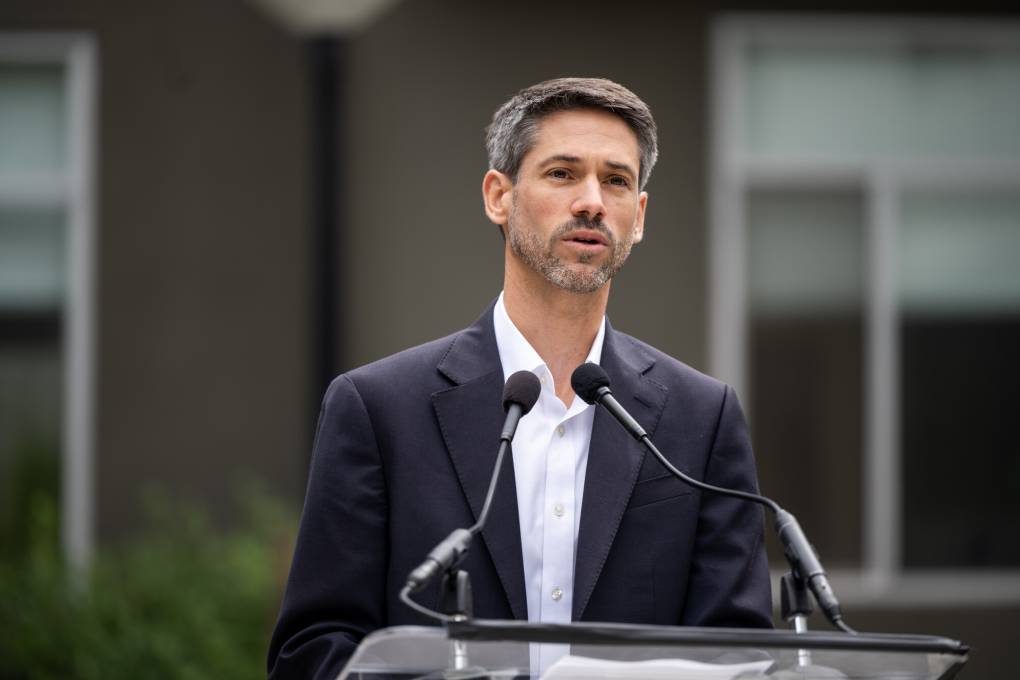
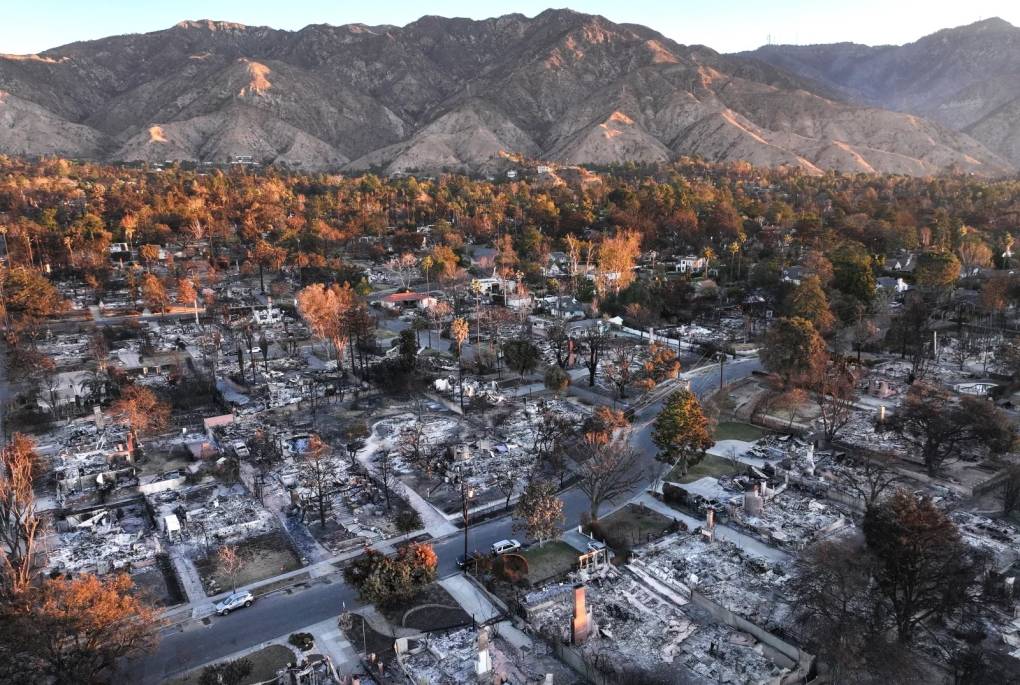
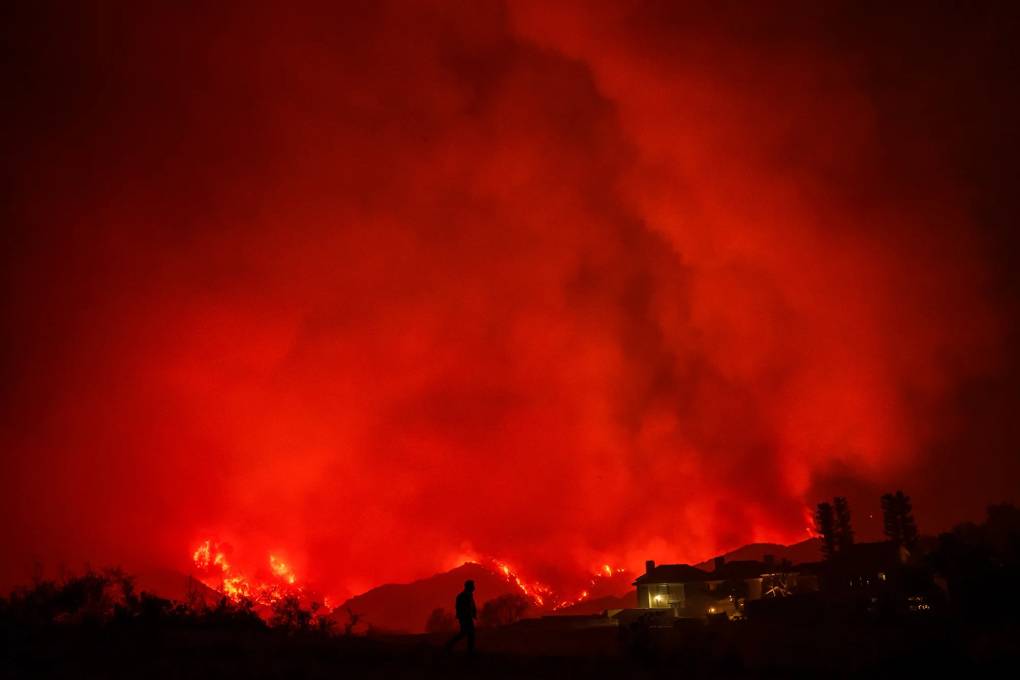
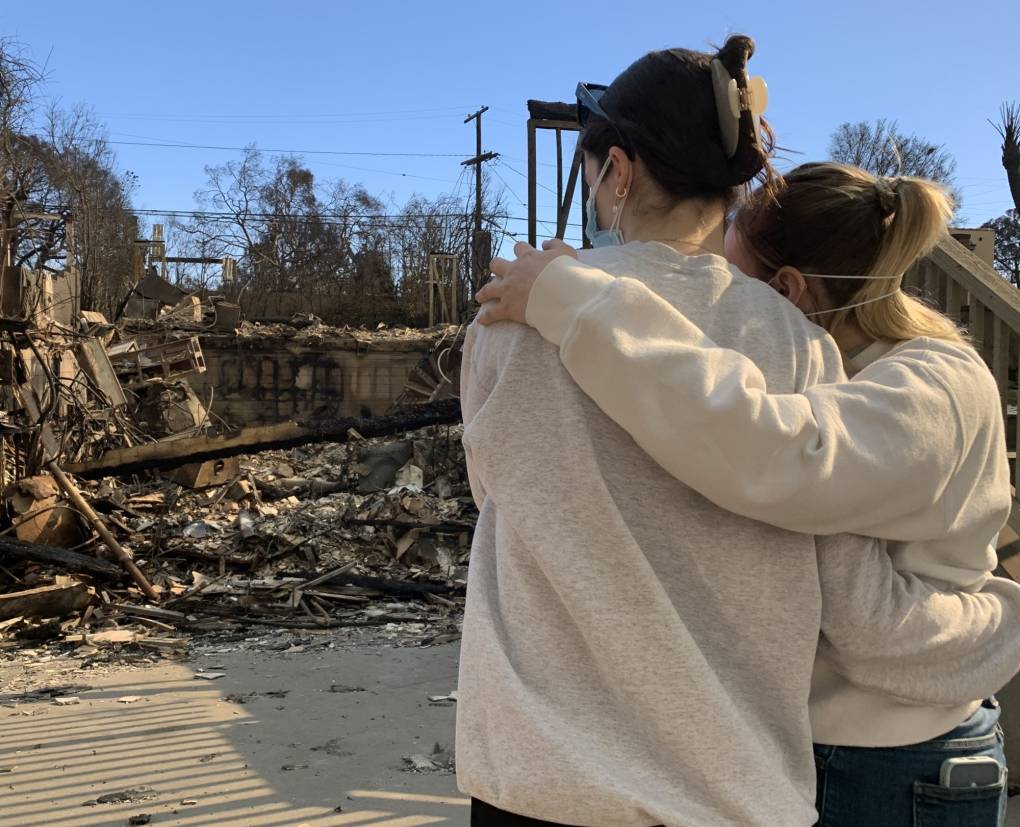
window.__IS_SSR__=true
window.__INITIAL_STATE__={
"attachmentsReducer": {
"audio_0": {
"type": "attachments",
"id": "audio_0",
"imgSizes": {
"kqedFullSize": {
"file": "https://ww2.kqed.org/news/wp-content/themes/KQED-unified/img/audio_bgs/background0.jpg"
}
}
},
"audio_1": {
"type": "attachments",
"id": "audio_1",
"imgSizes": {
"kqedFullSize": {
"file": "https://ww2.kqed.org/news/wp-content/themes/KQED-unified/img/audio_bgs/background1.jpg"
}
}
},
"audio_2": {
"type": "attachments",
"id": "audio_2",
"imgSizes": {
"kqedFullSize": {
"file": "https://ww2.kqed.org/news/wp-content/themes/KQED-unified/img/audio_bgs/background2.jpg"
}
}
},
"audio_3": {
"type": "attachments",
"id": "audio_3",
"imgSizes": {
"kqedFullSize": {
"file": "https://ww2.kqed.org/news/wp-content/themes/KQED-unified/img/audio_bgs/background3.jpg"
}
}
},
"audio_4": {
"type": "attachments",
"id": "audio_4",
"imgSizes": {
"kqedFullSize": {
"file": "https://ww2.kqed.org/news/wp-content/themes/KQED-unified/img/audio_bgs/background4.jpg"
}
}
},
"placeholder": {
"type": "attachments",
"id": "placeholder",
"imgSizes": {
"thumbnail": {
"file": "https://cdn.kqed.org/wp-content/uploads/2024/12/KQED-Default-Image-816638274-2000x1333-1-160x107.jpg",
"width": 160,
"height": 107,
"mimeType": "image/jpeg"
},
"medium": {
"file": "https://cdn.kqed.org/wp-content/uploads/2024/12/KQED-Default-Image-816638274-2000x1333-1-800x533.jpg",
"width": 800,
"height": 533,
"mimeType": "image/jpeg"
},
"medium_large": {
"file": "https://cdn.kqed.org/wp-content/uploads/2024/12/KQED-Default-Image-816638274-2000x1333-1-768x512.jpg",
"width": 768,
"height": 512,
"mimeType": "image/jpeg"
},
"large": {
"file": "https://cdn.kqed.org/wp-content/uploads/2024/12/KQED-Default-Image-816638274-2000x1333-1-1020x680.jpg",
"width": 1020,
"height": 680,
"mimeType": "image/jpeg"
},
"1536x1536": {
"file": "https://cdn.kqed.org/wp-content/uploads/2024/12/KQED-Default-Image-816638274-2000x1333-1-1536x1024.jpg",
"width": 1536,
"height": 1024,
"mimeType": "image/jpeg"
},
"fd-lrg": {
"file": "https://cdn.kqed.org/wp-content/uploads/2024/12/KQED-Default-Image-816638274-2000x1333-1-1536x1024.jpg",
"width": 1536,
"height": 1024,
"mimeType": "image/jpeg"
},
"fd-med": {
"file": "https://cdn.kqed.org/wp-content/uploads/2024/12/KQED-Default-Image-816638274-2000x1333-1-1020x680.jpg",
"width": 1020,
"height": 680,
"mimeType": "image/jpeg"
},
"fd-sm": {
"file": "https://cdn.kqed.org/wp-content/uploads/2024/12/KQED-Default-Image-816638274-2000x1333-1-800x533.jpg",
"width": 800,
"height": 533,
"mimeType": "image/jpeg"
},
"post-thumbnail": {
"file": "https://cdn.kqed.org/wp-content/uploads/2024/12/KQED-Default-Image-816638274-2000x1333-1-672x372.jpg",
"width": 672,
"height": 372,
"mimeType": "image/jpeg"
},
"twentyfourteen-full-width": {
"file": "https://cdn.kqed.org/wp-content/uploads/2024/12/KQED-Default-Image-816638274-2000x1333-1-1038x576.jpg",
"width": 1038,
"height": 576,
"mimeType": "image/jpeg"
},
"xxsmall": {
"file": "https://cdn.kqed.org/wp-content/uploads/2024/12/KQED-Default-Image-816638274-2000x1333-1-160x107.jpg",
"width": 160,
"height": 107,
"mimeType": "image/jpeg"
},
"xsmall": {
"file": "https://cdn.kqed.org/wp-content/uploads/2024/12/KQED-Default-Image-816638274-2000x1333-1-672x372.jpg",
"width": 672,
"height": 372,
"mimeType": "image/jpeg"
},
"small": {
"file": "https://cdn.kqed.org/wp-content/uploads/2024/12/KQED-Default-Image-816638274-2000x1333-1-672x372.jpg",
"width": 672,
"height": 372,
"mimeType": "image/jpeg"
},
"xlarge": {
"file": "https://cdn.kqed.org/wp-content/uploads/2024/12/KQED-Default-Image-816638274-2000x1333-1-1020x680.jpg",
"width": 1020,
"height": 680,
"mimeType": "image/jpeg"
},
"full-width": {
"file": "https://cdn.kqed.org/wp-content/uploads/2024/12/KQED-Default-Image-816638274-2000x1333-1-1920x1280.jpg",
"width": 1920,
"height": 1280,
"mimeType": "image/jpeg"
},
"guest-author-32": {
"file": "https://cdn.kqed.org/wp-content/uploads/2025/01/KQED-Default-Image-816638274-1333x1333-1-160x160.jpg",
"width": 32,
"height": 32,
"mimeType": "image/jpeg"
},
"guest-author-50": {
"file": "https://cdn.kqed.org/wp-content/uploads/2025/01/KQED-Default-Image-816638274-1333x1333-1-160x160.jpg",
"width": 50,
"height": 50,
"mimeType": "image/jpeg"
},
"guest-author-64": {
"file": "https://cdn.kqed.org/wp-content/uploads/2025/01/KQED-Default-Image-816638274-1333x1333-1-160x160.jpg",
"width": 64,
"height": 64,
"mimeType": "image/jpeg"
},
"guest-author-96": {
"file": "https://cdn.kqed.org/wp-content/uploads/2025/01/KQED-Default-Image-816638274-1333x1333-1-160x160.jpg",
"width": 96,
"height": 96,
"mimeType": "image/jpeg"
},
"guest-author-128": {
"file": "https://cdn.kqed.org/wp-content/uploads/2025/01/KQED-Default-Image-816638274-1333x1333-1-160x160.jpg",
"width": 128,
"height": 128,
"mimeType": "image/jpeg"
},
"detail": {
"file": "https://cdn.kqed.org/wp-content/uploads/2025/01/KQED-Default-Image-816638274-1333x1333-1-160x160.jpg",
"width": 160,
"height": 160,
"mimeType": "image/jpeg"
},
"kqedFullSize": {
"file": "https://cdn.kqed.org/wp-content/uploads/2024/12/KQED-Default-Image-816638274-2000x1333-1.jpg",
"width": 2000,
"height": 1333
}
}
},
"news_12026470": {
"type": "attachments",
"id": "news_12026470",
"meta": {
"index": "attachments_1716263798",
"site": "news",
"id": "12026470",
"found": true
},
"title": "240620-AffordableHousingPresser-16-BL_qed",
"publishDate": 1739218616,
"status": "inherit",
"parent": 12026437,
"modified": 1739218629,
"caption": "San José Mayor Matt Mahan speaks during a press conference in support of a regional affordable housing measure at Five88, a mixed-use residential and retail property, in the Mission Bay neighborhood in San Francisco on June 20, 2024.",
"credit": "Beth LaBerge/KQED",
"altTag": null,
"description": null,
"imgSizes": {
"medium": {
"file": "https://cdn.kqed.org/wp-content/uploads/sites/10/2025/02/240620-AffordableHousingPresser-16-BL_qed-800x533.jpg",
"width": 800,
"height": 533,
"mimeType": "image/jpeg"
},
"large": {
"file": "https://cdn.kqed.org/wp-content/uploads/sites/10/2025/02/240620-AffordableHousingPresser-16-BL_qed-1020x680.jpg",
"width": 1020,
"height": 680,
"mimeType": "image/jpeg"
},
"thumbnail": {
"file": "https://cdn.kqed.org/wp-content/uploads/sites/10/2025/02/240620-AffordableHousingPresser-16-BL_qed-160x107.jpg",
"width": 160,
"height": 107,
"mimeType": "image/jpeg"
},
"1536x1536": {
"file": "https://cdn.kqed.org/wp-content/uploads/sites/10/2025/02/240620-AffordableHousingPresser-16-BL_qed-1536x1024.jpg",
"width": 1536,
"height": 1024,
"mimeType": "image/jpeg"
},
"post-thumbnail": {
"file": "https://cdn.kqed.org/wp-content/uploads/sites/10/2025/02/240620-AffordableHousingPresser-16-BL_qed-672x372.jpg",
"width": 672,
"height": 372,
"mimeType": "image/jpeg"
},
"twentyfourteen-full-width": {
"file": "https://cdn.kqed.org/wp-content/uploads/sites/10/2025/02/240620-AffordableHousingPresser-16-BL_qed-1038x576.jpg",
"width": 1038,
"height": 576,
"mimeType": "image/jpeg"
},
"full-width": {
"file": "https://cdn.kqed.org/wp-content/uploads/sites/10/2025/02/240620-AffordableHousingPresser-16-BL_qed-1920x1280.jpg",
"width": 1920,
"height": 1280,
"mimeType": "image/jpeg"
},
"kqedFullSize": {
"file": "https://cdn.kqed.org/wp-content/uploads/sites/10/2025/02/240620-AffordableHousingPresser-16-BL_qed.jpg",
"width": 2000,
"height": 1333
}
},
"isLoading": false,
"fetchFailed": false
},
"news_12025106": {
"type": "attachments",
"id": "news_12025106",
"meta": {
"index": "attachments_1716263798",
"site": "news",
"id": "12025106",
"found": true
},
"title": "default",
"publishDate": 1738352596,
"status": "inherit",
"parent": 12025097,
"modified": 1738352618,
"caption": "Under Los Angeles County's new plan, development would be limited in the foothills of Altadena, where the wildfire risk is highest.",
"credit": "Mario Tama/Getty Images/Getty Images North America",
"altTag": null,
"description": null,
"imgSizes": {
"medium": {
"file": "https://cdn.kqed.org/wp-content/uploads/sites/10/2025/01/npr.brightspotcdn-1-copy-10-800x537.jpg",
"width": 800,
"height": 537,
"mimeType": "image/jpeg"
},
"large": {
"file": "https://cdn.kqed.org/wp-content/uploads/sites/10/2025/01/npr.brightspotcdn-1-copy-10-1020x685.jpg",
"width": 1020,
"height": 685,
"mimeType": "image/jpeg"
},
"thumbnail": {
"file": "https://cdn.kqed.org/wp-content/uploads/sites/10/2025/01/npr.brightspotcdn-1-copy-10-160x107.jpg",
"width": 160,
"height": 107,
"mimeType": "image/jpeg"
},
"1536x1536": {
"file": "https://cdn.kqed.org/wp-content/uploads/sites/10/2025/01/npr.brightspotcdn-1-copy-10-1536x1031.jpg",
"width": 1536,
"height": 1031,
"mimeType": "image/jpeg"
},
"post-thumbnail": {
"file": "https://cdn.kqed.org/wp-content/uploads/sites/10/2025/01/npr.brightspotcdn-1-copy-10-672x372.jpg",
"width": 672,
"height": 372,
"mimeType": "image/jpeg"
},
"twentyfourteen-full-width": {
"file": "https://cdn.kqed.org/wp-content/uploads/sites/10/2025/01/npr.brightspotcdn-1-copy-10-1038x576.jpg",
"width": 1038,
"height": 576,
"mimeType": "image/jpeg"
},
"kqedFullSize": {
"file": "https://cdn.kqed.org/wp-content/uploads/sites/10/2025/01/npr.brightspotcdn-1-copy-10.jpg",
"width": 1600,
"height": 1074
}
},
"isLoading": false,
"fetchFailed": false
},
"news_12024792": {
"type": "attachments",
"id": "news_12024792",
"meta": {
"index": "attachments_1716263798",
"site": "news",
"id": "12024792",
"found": true
},
"title": "GRANTS PASS, OREGON: Unhoused people have set up a tent communi",
"publishDate": 1738260207,
"status": "inherit",
"parent": 12024778,
"modified": 1738262707,
"caption": "Unhoused people have set up a tent community at Riverside Park in Grants Pass, Oregon, on Thursday, March 28, 2024. ",
"credit": "Melina Mara/The Washington Post via Getty Images",
"altTag": null,
"description": null,
"imgSizes": {
"medium": {
"file": "https://cdn.kqed.org/wp-content/uploads/sites/10/2025/01/GettyImages-2147916692-800x450.jpg",
"width": 800,
"height": 450,
"mimeType": "image/jpeg"
},
"large": {
"file": "https://cdn.kqed.org/wp-content/uploads/sites/10/2025/01/GettyImages-2147916692-1020x574.jpg",
"width": 1020,
"height": 574,
"mimeType": "image/jpeg"
},
"thumbnail": {
"file": "https://cdn.kqed.org/wp-content/uploads/sites/10/2025/01/GettyImages-2147916692-160x90.jpg",
"width": 160,
"height": 90,
"mimeType": "image/jpeg"
},
"post-thumbnail": {
"file": "https://cdn.kqed.org/wp-content/uploads/sites/10/2025/01/GettyImages-2147916692-672x372.jpg",
"width": 672,
"height": 372,
"mimeType": "image/jpeg"
},
"kqedFullSize": {
"file": "https://cdn.kqed.org/wp-content/uploads/sites/10/2025/01/GettyImages-2147916692.jpg",
"width": 1024,
"height": 576
}
},
"isLoading": false,
"fetchFailed": false
},
"news_12024517": {
"type": "attachments",
"id": "news_12024517",
"meta": {
"index": "attachments_1716263798",
"site": "news",
"id": "12024517",
"found": true
},
"title": "President Donald Trump Signs More Executive Orders",
"publishDate": 1738124468,
"status": "inherit",
"parent": 12024454,
"modified": 1739562121,
"caption": "U.S. President Donald Trump speaks to reporters after signing a series of executive orders in the Oval Office of the White House on Jan. 23, 2025, in Washington, D.C. ",
"credit": "Anna Moneymaker/Getty Images",
"altTag": null,
"description": null,
"imgSizes": {
"medium": {
"file": "https://cdn.kqed.org/wp-content/uploads/sites/10/2025/01/GettyImages-2195559727-800x534.jpg",
"width": 800,
"height": 534,
"mimeType": "image/jpeg"
},
"large": {
"file": "https://cdn.kqed.org/wp-content/uploads/sites/10/2025/01/GettyImages-2195559727-1020x680.jpg",
"width": 1020,
"height": 680,
"mimeType": "image/jpeg"
},
"thumbnail": {
"file": "https://cdn.kqed.org/wp-content/uploads/sites/10/2025/01/GettyImages-2195559727-160x107.jpg",
"width": 160,
"height": 107,
"mimeType": "image/jpeg"
},
"post-thumbnail": {
"file": "https://cdn.kqed.org/wp-content/uploads/sites/10/2025/01/GettyImages-2195559727-672x372.jpg",
"width": 672,
"height": 372,
"mimeType": "image/jpeg"
},
"twentyfourteen-full-width": {
"file": "https://cdn.kqed.org/wp-content/uploads/sites/10/2025/01/GettyImages-2195559727-1024x576.jpg",
"width": 1024,
"height": 576,
"mimeType": "image/jpeg"
},
"kqedFullSize": {
"file": "https://cdn.kqed.org/wp-content/uploads/sites/10/2025/01/GettyImages-2195559727.jpg",
"width": 1024,
"height": 683
}
},
"isLoading": false,
"fetchFailed": false
},
"news_12022441": {
"type": "attachments",
"id": "news_12022441",
"meta": {
"index": "attachments_1716263798",
"site": "news",
"id": "12022441",
"found": true
},
"title": "011025_LA-Wildfires_JH_CM_14 copy",
"publishDate": 1736981756,
"status": "inherit",
"parent": 12022439,
"modified": 1736981781,
"caption": "The western hills of Mandeville Canyon burning as the Palisades Fire continues to spread in Los Angeles on Jan. 10, 2025.",
"credit": "Jules Hotz for CalMatters",
"altTag": null,
"description": null,
"imgSizes": {
"medium": {
"file": "https://cdn.kqed.org/wp-content/uploads/sites/10/2025/01/011025_LA-Wildfires_JH_CM_14-copy-800x533.jpg",
"width": 800,
"height": 533,
"mimeType": "image/jpeg"
},
"large": {
"file": "https://cdn.kqed.org/wp-content/uploads/sites/10/2025/01/011025_LA-Wildfires_JH_CM_14-copy-1020x680.jpg",
"width": 1020,
"height": 680,
"mimeType": "image/jpeg"
},
"thumbnail": {
"file": "https://cdn.kqed.org/wp-content/uploads/sites/10/2025/01/011025_LA-Wildfires_JH_CM_14-copy-160x107.jpg",
"width": 160,
"height": 107,
"mimeType": "image/jpeg"
},
"1536x1536": {
"file": "https://cdn.kqed.org/wp-content/uploads/sites/10/2025/01/011025_LA-Wildfires_JH_CM_14-copy-1536x1024.jpg",
"width": 1536,
"height": 1024,
"mimeType": "image/jpeg"
},
"post-thumbnail": {
"file": "https://cdn.kqed.org/wp-content/uploads/sites/10/2025/01/011025_LA-Wildfires_JH_CM_14-copy-672x372.jpg",
"width": 672,
"height": 372,
"mimeType": "image/jpeg"
},
"twentyfourteen-full-width": {
"file": "https://cdn.kqed.org/wp-content/uploads/sites/10/2025/01/011025_LA-Wildfires_JH_CM_14-copy-1038x576.jpg",
"width": 1038,
"height": 576,
"mimeType": "image/jpeg"
},
"full-width": {
"file": "https://cdn.kqed.org/wp-content/uploads/sites/10/2025/01/011025_LA-Wildfires_JH_CM_14-copy-1920x1280.jpg",
"width": 1920,
"height": 1280,
"mimeType": "image/jpeg"
},
"kqedFullSize": {
"file": "https://cdn.kqed.org/wp-content/uploads/sites/10/2025/01/011025_LA-Wildfires_JH_CM_14-copy.jpg",
"width": 2000,
"height": 1333
}
},
"isLoading": false,
"fetchFailed": false
},
"news_12022379": {
"type": "attachments",
"id": "news_12022379",
"meta": {
"index": "attachments_1716263798",
"site": "news",
"id": "12022379",
"found": true
},
"title": "PacificPalisadesRebuild2",
"publishDate": 1736975553,
"status": "inherit",
"parent": 12022375,
"modified": 1736975824,
"caption": "Katharine Steffes consoles Emma Deiter on Saturday, Jan. 11, 2025, as she gazes at the ruins of her home at 910 Hartzell St., destroyed by the Palisades fire. Deiter had hoped to recover her late dog's ashes and her prom dress, but both were lost in the devastation.",
"credit": "Rachael Myrow/KQED",
"altTag": null,
"description": null,
"imgSizes": {
"medium": {
"file": "https://cdn.kqed.org/wp-content/uploads/sites/10/2025/01/PacificPalisadesRebuild2-800x649.jpg",
"width": 800,
"height": 649,
"mimeType": "image/jpeg"
},
"large": {
"file": "https://cdn.kqed.org/wp-content/uploads/sites/10/2025/01/PacificPalisadesRebuild2-1020x827.jpg",
"width": 1020,
"height": 827,
"mimeType": "image/jpeg"
},
"thumbnail": {
"file": "https://cdn.kqed.org/wp-content/uploads/sites/10/2025/01/PacificPalisadesRebuild2-160x130.jpg",
"width": 160,
"height": 130,
"mimeType": "image/jpeg"
},
"1536x1536": {
"file": "https://cdn.kqed.org/wp-content/uploads/sites/10/2025/01/PacificPalisadesRebuild2-1536x1246.jpg",
"width": 1536,
"height": 1246,
"mimeType": "image/jpeg"
},
"post-thumbnail": {
"file": "https://cdn.kqed.org/wp-content/uploads/sites/10/2025/01/PacificPalisadesRebuild2-672x372.jpg",
"width": 672,
"height": 372,
"mimeType": "image/jpeg"
},
"twentyfourteen-full-width": {
"file": "https://cdn.kqed.org/wp-content/uploads/sites/10/2025/01/PacificPalisadesRebuild2-1038x576.jpg",
"width": 1038,
"height": 576,
"mimeType": "image/jpeg"
},
"full-width": {
"file": "https://cdn.kqed.org/wp-content/uploads/sites/10/2025/01/PacificPalisadesRebuild2-1920x1557.jpg",
"width": 1920,
"height": 1557,
"mimeType": "image/jpeg"
},
"kqedFullSize": {
"file": "https://cdn.kqed.org/wp-content/uploads/sites/10/2025/01/PacificPalisadesRebuild2.jpg",
"width": 2000,
"height": 1622
}
},
"isLoading": false,
"fetchFailed": false
},
"news_12020498": {
"type": "attachments",
"id": "news_12020498",
"meta": {
"index": "attachments_1716263798",
"site": "news",
"id": "12020498",
"found": true
},
"title": "250105-LurieInaugurationCleanup-51",
"publishDate": 1736206956,
"status": "inherit",
"parent": 0,
"modified": 1736207201,
"caption": "San Francisco Mayor-elect Daniel Lurie walks with Supervisor Rafael Mandelman and Manny Yekutiel during a trash pick up in the Mission District on Jan. 5, 2025, during a weekend of service before his inauguration.",
"credit": "Beth LaBerge/KQED",
"altTag": null,
"description": null,
"imgSizes": {
"medium": {
"file": "https://cdn.kqed.org/wp-content/uploads/sites/10/2025/01/250105-LurieInaugurationCleanup-51-800x1000.jpg",
"width": 800,
"height": 1000,
"mimeType": "image/jpeg"
},
"large": {
"file": "https://cdn.kqed.org/wp-content/uploads/sites/10/2025/01/250105-LurieInaugurationCleanup-51-1020x1275.jpg",
"width": 1020,
"height": 1275,
"mimeType": "image/jpeg"
},
"thumbnail": {
"file": "https://cdn.kqed.org/wp-content/uploads/sites/10/2025/01/250105-LurieInaugurationCleanup-51-160x200.jpg",
"width": 160,
"height": 200,
"mimeType": "image/jpeg"
},
"1536x1536": {
"file": "https://cdn.kqed.org/wp-content/uploads/sites/10/2025/01/250105-LurieInaugurationCleanup-51-1229x1536.jpg",
"width": 1229,
"height": 1536,
"mimeType": "image/jpeg"
},
"post-thumbnail": {
"file": "https://cdn.kqed.org/wp-content/uploads/sites/10/2025/01/250105-LurieInaugurationCleanup-51-672x372.jpg",
"width": 672,
"height": 372,
"mimeType": "image/jpeg"
},
"twentyfourteen-full-width": {
"file": "https://cdn.kqed.org/wp-content/uploads/sites/10/2025/01/250105-LurieInaugurationCleanup-51-1038x576.jpg",
"width": 1038,
"height": 576,
"mimeType": "image/jpeg"
},
"kqedFullSize": {
"file": "https://cdn.kqed.org/wp-content/uploads/sites/10/2025/01/250105-LurieInaugurationCleanup-51.jpg",
"width": 1600,
"height": 2000
}
},
"isLoading": false,
"fetchFailed": false
},
"news_12021639": {
"type": "attachments",
"id": "news_12021639",
"meta": {
"index": "attachments_1716263798",
"site": "news",
"id": "12021639",
"found": true
},
"title": "010625-Newsom-Budget-AP-CM",
"publishDate": 1736555497,
"status": "inherit",
"parent": 12021637,
"modified": 1736555532,
"caption": "Gov. Gavin Newsom outlines his proposed 2025-2026 state budget during a news conference at California State University, Stanislaus in Turlock, on Jan. 6, 2025.",
"credit": "Rich Pedroncelli, AP Photo",
"altTag": null,
"description": null,
"imgSizes": {
"medium": {
"file": "https://cdn.kqed.org/wp-content/uploads/sites/10/2025/01/010625-Newsom-Budget-AP-CM-800x533.jpg",
"width": 800,
"height": 533,
"mimeType": "image/jpeg"
},
"large": {
"file": "https://cdn.kqed.org/wp-content/uploads/sites/10/2025/01/010625-Newsom-Budget-AP-CM-1020x680.jpg",
"width": 1020,
"height": 680,
"mimeType": "image/jpeg"
},
"thumbnail": {
"file": "https://cdn.kqed.org/wp-content/uploads/sites/10/2025/01/010625-Newsom-Budget-AP-CM-160x107.jpg",
"width": 160,
"height": 107,
"mimeType": "image/jpeg"
},
"1536x1536": {
"file": "https://cdn.kqed.org/wp-content/uploads/sites/10/2025/01/010625-Newsom-Budget-AP-CM-1536x1024.jpg",
"width": 1536,
"height": 1024,
"mimeType": "image/jpeg"
},
"post-thumbnail": {
"file": "https://cdn.kqed.org/wp-content/uploads/sites/10/2025/01/010625-Newsom-Budget-AP-CM-672x372.jpg",
"width": 672,
"height": 372,
"mimeType": "image/jpeg"
},
"twentyfourteen-full-width": {
"file": "https://cdn.kqed.org/wp-content/uploads/sites/10/2025/01/010625-Newsom-Budget-AP-CM-1038x576.jpg",
"width": 1038,
"height": 576,
"mimeType": "image/jpeg"
},
"full-width": {
"file": "https://cdn.kqed.org/wp-content/uploads/sites/10/2025/01/010625-Newsom-Budget-AP-CM-1920x1280.jpg",
"width": 1920,
"height": 1280,
"mimeType": "image/jpeg"
},
"kqedFullSize": {
"file": "https://cdn.kqed.org/wp-content/uploads/sites/10/2025/01/010625-Newsom-Budget-AP-CM.jpg",
"width": 2000,
"height": 1333
}
},
"isLoading": false,
"fetchFailed": false
},
"news_12019948": {
"type": "attachments",
"id": "news_12019948",
"meta": {
"index": "attachments_1716263798",
"site": "news",
"id": "12019948",
"found": true
},
"title": "241203-FresnoCampingBan-74-BL_qed",
"publishDate": 1735432452,
"status": "inherit",
"parent": 12019944,
"modified": 1735578454,
"caption": "An unhoused Fresno resident walks with the Tower District in downtown Fresno in the background, on Dec. 3, 2024.",
"credit": "Beth LaBerge/KQED",
"altTag": null,
"description": null,
"imgSizes": {
"medium": {
"file": "https://cdn.kqed.org/wp-content/uploads/sites/10/2024/12/241203-FresnoCampingBan-74-BL_qed-800x533.jpg",
"width": 800,
"height": 533,
"mimeType": "image/jpeg"
},
"large": {
"file": "https://cdn.kqed.org/wp-content/uploads/sites/10/2024/12/241203-FresnoCampingBan-74-BL_qed-1020x680.jpg",
"width": 1020,
"height": 680,
"mimeType": "image/jpeg"
},
"thumbnail": {
"file": "https://cdn.kqed.org/wp-content/uploads/sites/10/2024/12/241203-FresnoCampingBan-74-BL_qed-160x107.jpg",
"width": 160,
"height": 107,
"mimeType": "image/jpeg"
},
"1536x1536": {
"file": "https://cdn.kqed.org/wp-content/uploads/sites/10/2024/12/241203-FresnoCampingBan-74-BL_qed-1536x1024.jpg",
"width": 1536,
"height": 1024,
"mimeType": "image/jpeg"
},
"post-thumbnail": {
"file": "https://cdn.kqed.org/wp-content/uploads/sites/10/2024/12/241203-FresnoCampingBan-74-BL_qed-672x372.jpg",
"width": 672,
"height": 372,
"mimeType": "image/jpeg"
},
"twentyfourteen-full-width": {
"file": "https://cdn.kqed.org/wp-content/uploads/sites/10/2024/12/241203-FresnoCampingBan-74-BL_qed-1038x576.jpg",
"width": 1038,
"height": 576,
"mimeType": "image/jpeg"
},
"full-width": {
"file": "https://cdn.kqed.org/wp-content/uploads/sites/10/2024/12/241203-FresnoCampingBan-74-BL_qed-1920x1280.jpg",
"width": 1920,
"height": 1280,
"mimeType": "image/jpeg"
},
"kqedFullSize": {
"file": "https://cdn.kqed.org/wp-content/uploads/sites/10/2024/12/241203-FresnoCampingBan-74-BL_qed.jpg",
"width": 1999,
"height": 1333
}
},
"isLoading": false,
"fetchFailed": false
},
"news_12018209": {
"type": "attachments",
"id": "news_12018209",
"meta": {
"index": "attachments_1716263798",
"site": "news",
"id": "12018209",
"found": true
},
"title": "241114-SupportiveHousingInsurance-24-BL_qed",
"publishDate": 1734122536,
"status": "inherit",
"parent": 12018206,
"modified": 1734122570,
"caption": "Resident Solomon Bukenya sits to read at his desk at the newly built supportive housing site at 1064 Mission Street in San Francisco, run by Episcopal Community Services, on Nov. 14, 2024.",
"credit": "Beth LaBerge/KQED",
"altTag": null,
"description": null,
"imgSizes": {
"medium": {
"file": "https://cdn.kqed.org/wp-content/uploads/sites/10/2024/12/241114-SupportiveHousingInsurance-24-BL_qed-800x533.jpg",
"width": 800,
"height": 533,
"mimeType": "image/jpeg"
},
"large": {
"file": "https://cdn.kqed.org/wp-content/uploads/sites/10/2024/12/241114-SupportiveHousingInsurance-24-BL_qed-1020x680.jpg",
"width": 1020,
"height": 680,
"mimeType": "image/jpeg"
},
"thumbnail": {
"file": "https://cdn.kqed.org/wp-content/uploads/sites/10/2024/12/241114-SupportiveHousingInsurance-24-BL_qed-160x107.jpg",
"width": 160,
"height": 107,
"mimeType": "image/jpeg"
},
"1536x1536": {
"file": "https://cdn.kqed.org/wp-content/uploads/sites/10/2024/12/241114-SupportiveHousingInsurance-24-BL_qed-1536x1024.jpg",
"width": 1536,
"height": 1024,
"mimeType": "image/jpeg"
},
"post-thumbnail": {
"file": "https://cdn.kqed.org/wp-content/uploads/sites/10/2024/12/241114-SupportiveHousingInsurance-24-BL_qed-672x372.jpg",
"width": 672,
"height": 372,
"mimeType": "image/jpeg"
},
"twentyfourteen-full-width": {
"file": "https://cdn.kqed.org/wp-content/uploads/sites/10/2024/12/241114-SupportiveHousingInsurance-24-BL_qed-1038x576.jpg",
"width": 1038,
"height": 576,
"mimeType": "image/jpeg"
},
"full-width": {
"file": "https://cdn.kqed.org/wp-content/uploads/sites/10/2024/12/241114-SupportiveHousingInsurance-24-BL_qed-1920x1280.jpg",
"width": 1920,
"height": 1280,
"mimeType": "image/jpeg"
},
"kqedFullSize": {
"file": "https://cdn.kqed.org/wp-content/uploads/sites/10/2024/12/241114-SupportiveHousingInsurance-24-BL_qed.jpg",
"width": 2000,
"height": 1333
}
},
"isLoading": false,
"fetchFailed": false
},
"news_12017613": {
"type": "attachments",
"id": "news_12017613",
"meta": {
"index": "attachments_1716263798",
"site": "news",
"id": "12017613",
"found": true
},
"title": "241203-FresnoCampingBan-23-BL",
"publishDate": 1733929164,
"status": "inherit",
"parent": 0,
"modified": 1735582524,
"caption": "An unhoused person packs a cart of their belongings after Officer Omar Khan, a police officer with the Homeless Assistance Response Team (HART), speaks with them about clearing the area in Fresno on Dec. 3, 2024, while Public Utilities Department employees begin to discard of items.",
"credit": "Beth LaBerge/KQED",
"altTag": null,
"description": null,
"imgSizes": {
"medium": {
"file": "https://cdn.kqed.org/wp-content/uploads/sites/10/2024/12/241203-FresnoCampingBan-23-BL-800x533.jpg",
"width": 800,
"height": 533,
"mimeType": "image/jpeg"
},
"large": {
"file": "https://cdn.kqed.org/wp-content/uploads/sites/10/2024/12/241203-FresnoCampingBan-23-BL-1020x679.jpg",
"width": 1020,
"height": 679,
"mimeType": "image/jpeg"
},
"thumbnail": {
"file": "https://cdn.kqed.org/wp-content/uploads/sites/10/2024/12/241203-FresnoCampingBan-23-BL-160x107.jpg",
"width": 160,
"height": 107,
"mimeType": "image/jpeg"
},
"1536x1536": {
"file": "https://cdn.kqed.org/wp-content/uploads/sites/10/2024/12/241203-FresnoCampingBan-23-BL-1536x1023.jpg",
"width": 1536,
"height": 1023,
"mimeType": "image/jpeg"
},
"post-thumbnail": {
"file": "https://cdn.kqed.org/wp-content/uploads/sites/10/2024/12/241203-FresnoCampingBan-23-BL-672x372.jpg",
"width": 672,
"height": 372,
"mimeType": "image/jpeg"
},
"twentyfourteen-full-width": {
"file": "https://cdn.kqed.org/wp-content/uploads/sites/10/2024/12/241203-FresnoCampingBan-23-BL-1038x576.jpg",
"width": 1038,
"height": 576,
"mimeType": "image/jpeg"
},
"full-width": {
"file": "https://cdn.kqed.org/wp-content/uploads/sites/10/2024/12/241203-FresnoCampingBan-23-BL-1920x1279.jpg",
"width": 1920,
"height": 1279,
"mimeType": "image/jpeg"
},
"kqedFullSize": {
"file": "https://cdn.kqed.org/wp-content/uploads/sites/10/2024/12/241203-FresnoCampingBan-23-BL.jpg",
"width": 2000,
"height": 1332
}
},
"isLoading": false,
"fetchFailed": false
},
"news_12019804": {
"type": "attachments",
"id": "news_12019804",
"meta": {
"index": "attachments_1716263798",
"site": "news",
"id": "12019804",
"found": true
},
"title": "npr.brightspotcdn copy",
"publishDate": 1735238321,
"status": "inherit",
"parent": 12019791,
"modified": 1735238360,
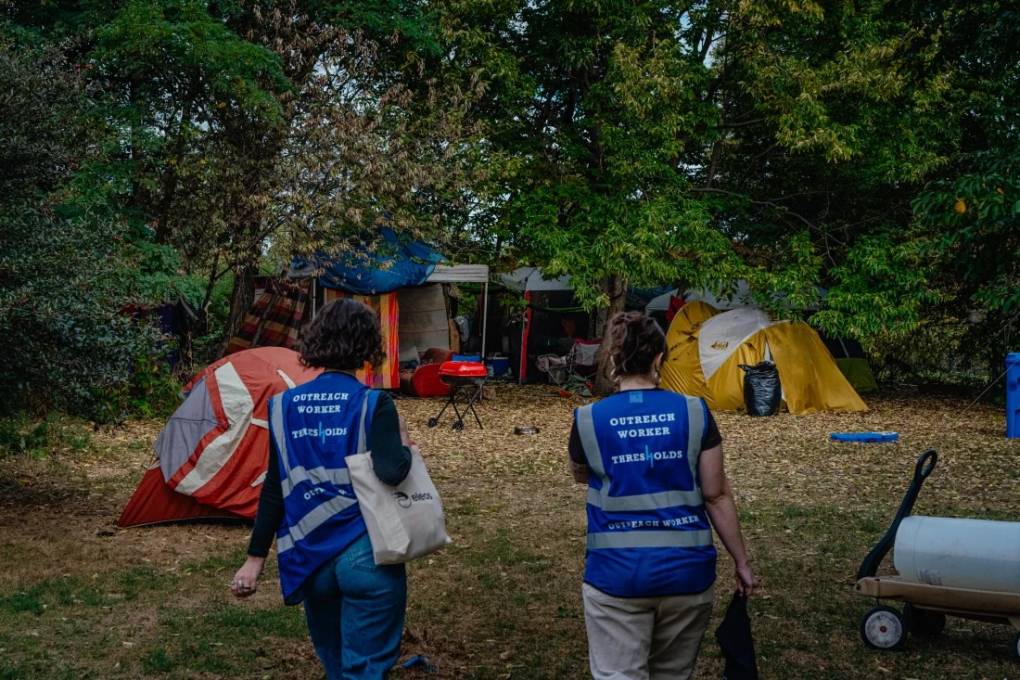
"caption": "The burst of new laws follows a landmark US Supreme Court ruling and reflects public frustration with record-high homelessness. Outreach workers Lillian Risser (left) and Sophia Loveland (right) approach a tent encampment in Chicago on Sept. 23, 2024. The organization is working to re-home people living in encampments to more permanent housing.",
"credit": "Jamie Kelter Davis for NPR",
"altTag": null,
"description": null,
"imgSizes": {
"medium": {
"file": "https://cdn.kqed.org/wp-content/uploads/sites/10/2024/12/npr.brightspotcdn-copy-8-800x533.jpg",
"width": 800,
"height": 533,
"mimeType": "image/jpeg"
},
"large": {
"file": "https://cdn.kqed.org/wp-content/uploads/sites/10/2024/12/npr.brightspotcdn-copy-8-1020x680.jpg",
"width": 1020,
"height": 680,
"mimeType": "image/jpeg"
},
"thumbnail": {
"file": "https://cdn.kqed.org/wp-content/uploads/sites/10/2024/12/npr.brightspotcdn-copy-8-160x107.jpg",
"width": 160,
"height": 107,
"mimeType": "image/jpeg"
},
"post-thumbnail": {
"file": "https://cdn.kqed.org/wp-content/uploads/sites/10/2024/12/npr.brightspotcdn-copy-8-672x372.jpg",
"width": 672,
"height": 372,
"mimeType": "image/jpeg"
},
"twentyfourteen-full-width": {
"file": "https://cdn.kqed.org/wp-content/uploads/sites/10/2024/12/npr.brightspotcdn-copy-8-1038x576.jpg",
"width": 1038,
"height": 576,
"mimeType": "image/jpeg"
},
"kqedFullSize": {
"file": "https://cdn.kqed.org/wp-content/uploads/sites/10/2024/12/npr.brightspotcdn-copy-8.jpg",
"width": 1100,
"height": 733
}
},
"isLoading": false,
"fetchFailed": false
}
},
"audioPlayerReducer": {
"postId": "stream_live",
"isPaused": true,
"isPlaying": false,
"pfsActive": false,
"pledgeModalIsOpen": true,
"playerDrawerIsOpen": false,
"liveAudioPlayStartedAt": 0,
"liveAudioPlayContext": ""
},
"authorsReducer": {
"byline_news_12024778": {
"type": "authors",
"id": "byline_news_12024778",
"meta": {
"override": true
},
"slug": "byline_news_12024778",
"name": "Claire Rush, Associated Press",
"isLoading": false
},
"byline_news_12022439": {
"type": "authors",
"id": "byline_news_12022439",
"meta": {
"override": true
},
"slug": "byline_news_12022439",
"name": "\u003ca href=\"https://calmatters.org/author/marisa-kendall/\">Marisa Kendall\u003c/a>, CalMatters",
"isLoading": false
},
"byline_news_12021637": {
"type": "authors",
"id": "byline_news_12021637",
"meta": {
"override": true
},
"slug": "byline_news_12021637",
"name": "\u003ca href=\"https://calmatters.org/author/mikhailzinshteyn/\">Mikhail Zinshteyn\u003c/a> and \u003ca href=\"https://calmatters.org/author/yue-yu/\">Yue Stella Yu\u003c/a>, CalMatters",
"isLoading": false
},
"byline_news_12019791": {
"type": "authors",
"id": "byline_news_12019791",
"meta": {
"override": true
},
"slug": "byline_news_12019791",
"name": "\u003ca href=\"https://www.npr.org/people/2100815/jennifer-ludden\">Jennifer Ludden\u003c/a>, NPR",
"isLoading": false
},
"gmarzorati": {
"type": "authors",
"id": "227",
"meta": {
"index": "authors_1716337520",
"id": "227",
"found": true
},
"name": "Guy Marzorati",
"firstName": "Guy",
"lastName": "Marzorati",
"slug": "gmarzorati",
"email": "gmarzorati@KQED.org",
"display_author_email": true,
"staff_mastheads": [
"news"
],
"title": "Correspondent",
"bio": "Guy Marzorati is a correspondent on KQED's California Politics and Government Desk, based in San Jose. A graduate of Santa Clara University, Guy joined KQED in 2013. He reports on state and local politics and produces KQED's digital voter guide.",
"avatar": "https://secure.gravatar.com/avatar/e7038b8dbfd55b104369b76b1cd0b9de?s=600&d=blank&r=g",
"twitter": "guymarzorati",
"facebook": null,
"instagram": null,
"linkedin": null,
"sites": [
{
"site": "",
"roles": [
"editor"
]
},
{
"site": "news",
"roles": [
"editor"
]
},
{
"site": "science",
"roles": [
"editor"
]
},
{
"site": "forum",
"roles": [
"editor"
]
},
{
"site": "elections",
"roles": [
"editor"
]
},
{
"site": "liveblog",
"roles": [
"editor"
]
}
],
"headData": {
"title": "Guy Marzorati | KQED",
"description": "Correspondent",
"ogImgSrc": "https://secure.gravatar.com/avatar/e7038b8dbfd55b104369b76b1cd0b9de?s=600&d=blank&r=g",
"twImgSrc": "https://secure.gravatar.com/avatar/e7038b8dbfd55b104369b76b1cd0b9de?s=600&d=blank&r=g"
},
"isLoading": false,
"link": "/author/gmarzorati"
},
"rachael-myrow": {
"type": "authors",
"id": "251",
"meta": {
"index": "authors_1716337520",
"id": "251",
"found": true
},
"name": "Rachael Myrow",
"firstName": "Rachael",
"lastName": "Myrow",
"slug": "rachael-myrow",
"email": "rmyrow@kqed.org",
"display_author_email": true,
"staff_mastheads": [
"news"
],
"title": "Senior Editor of KQED's Silicon Valley News Desk",
"bio": "• I write and edit stories about how Silicon Valley power and policies shape everyday life in California. I’m also passionate about making Bay Area history and culture more accessible to a broad public. • I’ve been a journalist for most of my life, starting in high school with The Franklin Press in Los Angeles, where I grew up. While earning my first degree in English at UC Berkeley, I got my start in public radio at KALX-FM. After completing a second degree in journalism at Cal, I landed my first professional job at Marketplace, then moved on to KPCC (now LAist), and then KQED, where I hosted The California Report for more than seven years. • My reporting has appeared on NPR, The World, WBUR’s \u003ci>Here & Now\u003c/i>, and the BBC. I also guest host for KQED’s \u003ci>Forum\u003c/i>, as well as the Commonwealth Club in San Francisco. • I speak periodically on media, democracy and technology issues, and do voiceover work for documentaries and educational video projects. • Outside of the studio, you'll find me hiking Bay Area trails and whipping up Insta-ready meals in my kitchen. • I do not accept gifts, money, or favors from anyone connected to my reporting, I don't pay people for information, and I do not support or donate to political causes. • I strive to treat the people I report on with fairness, honesty, and respect. I also recognize there are often multiple sides to a story and work to verify information through multiple sources and documentation. If I get something wrong, I correct it.",
"avatar": "https://secure.gravatar.com/avatar/87bf8cb5874e045cdff430523a6d48b1?s=600&d=blank&r=g",
"twitter": "rachaelmyrow",
"facebook": null,
"instagram": null,
"linkedin": "https://www.linkedin.com/in/rachaelmyrow/",
"sites": [
{
"site": "arts",
"roles": [
"administrator"
]
},
{
"site": "news",
"roles": [
"edit_others_posts",
"editor"
]
},
{
"site": "futureofyou",
"roles": [
"editor"
]
},
{
"site": "bayareabites",
"roles": [
"editor"
]
},
{
"site": "stateofhealth",
"roles": [
"editor"
]
},
{
"site": "science",
"roles": [
"editor"
]
},
{
"site": "food",
"roles": [
"editor"
]
},
{
"site": "forum",
"roles": [
"editor"
]
},
{
"site": "liveblog",
"roles": [
"author"
]
}
],
"headData": {
"title": "Rachael Myrow | KQED",
"description": "Senior Editor of KQED's Silicon Valley News Desk",
"ogImgSrc": "https://secure.gravatar.com/avatar/87bf8cb5874e045cdff430523a6d48b1?s=600&d=blank&r=g",
"twImgSrc": "https://secure.gravatar.com/avatar/87bf8cb5874e045cdff430523a6d48b1?s=600&d=blank&r=g"
},
"isLoading": false,
"link": "/author/rachael-myrow"
},
"carlysevern": {
"type": "authors",
"id": "3243",
"meta": {
"index": "authors_1716337520",
"id": "3243",
"found": true
},
"name": "Carly Severn",
"firstName": "Carly",
"lastName": "Severn",
"slug": "carlysevern",
"email": "csevern@kqed.org",
"display_author_email": false,
"staff_mastheads": [
"news"
],
"title": "Senior Editor, Audience News ",
"bio": "Carly is KQED's Senior Editor of Audience News on the Digital News team, and has reported for the California Report Magazine, Bay Curious and KQED Arts. She's formerly the host of \u003ca href=\"http://ww2.kqed.org/pop/category/the-cooler/\" rel=\"noopener noreferrer\">The Cooler\u003c/a> podcast.",
"avatar": "https://secure.gravatar.com/avatar/2d8d6765f186e64c798cf7f0c8088a41?s=600&d=blank&r=g",
"twitter": "teacupinthebay",
"facebook": null,
"instagram": null,
"linkedin": null,
"sites": [
{
"site": "",
"roles": [
"editor"
]
},
{
"site": "arts",
"roles": [
"editor"
]
},
{
"site": "news",
"roles": [
"administrator"
]
},
{
"site": "pop",
"roles": [
"editor"
]
},
{
"site": "futureofyou",
"roles": [
"editor"
]
},
{
"site": "about",
"roles": [
"administrator"
]
},
{
"site": "mindshift",
"roles": [
"editor"
]
},
{
"site": "bayareabites",
"roles": [
"editor"
]
},
{
"site": "stateofhealth",
"roles": [
"editor"
]
},
{
"site": "science",
"roles": [
"editor"
]
},
{
"site": "food",
"roles": [
"contributor"
]
},
{
"site": "forum",
"roles": [
"editor"
]
},
{
"site": "perspectives",
"roles": [
"administrator"
]
},
{
"site": "liveblog",
"roles": [
"editor"
]
}
],
"headData": {
"title": "Carly Severn | KQED",
"description": "Senior Editor, Audience News ",
"ogImgSrc": "https://secure.gravatar.com/avatar/2d8d6765f186e64c798cf7f0c8088a41?s=600&d=blank&r=g",
"twImgSrc": "https://secure.gravatar.com/avatar/2d8d6765f186e64c798cf7f0c8088a41?s=600&d=blank&r=g"
},
"isLoading": false,
"link": "/author/carlysevern"
},
"vrancano": {
"type": "authors",
"id": "11276",
"meta": {
"index": "authors_1716337520",
"id": "11276",
"found": true
},
"name": "Vanessa Rancaño",
"firstName": "Vanessa",
"lastName": "Rancaño",
"slug": "vrancano",
"email": "vrancano@kqed.org",
"display_author_email": false,
"staff_mastheads": [
"news"
],
"title": "Reporter, Housing",
"bio": "Vanessa Rancaño is a features reporter for KQED. She’s also covered homelessness and education for the station and reported from the Central Valley. Her work has aired across public radio, from flagship national news shows to longform narrative podcasts. Before taking up a mic, she worked as a freelance print journalist. She’s been recognized with a number of national and regional awards. Vanessa grew up in California's Central Valley. She's a former NPR Kroc Fellow, and a graduate of the UC Berkeley Graduate School of Journalism.",
"avatar": "https://secure.gravatar.com/avatar/b3a383dfb0e7ee1c17568f2cf067904ab654d6e3de9743fc661f3c788ade1bed?s=600&d=blank&r=g",
"twitter": "vanessarancano",
"bluesky": null,
"facebook": null,
"instagram": null,
"linkedin": null,
"sites": [
{
"site": "arts",
"roles": [
"editor"
]
},
{
"site": "news",
"roles": [
"editor"
]
},
{
"site": "liveblog",
"roles": [
"contributor"
]
}
],
"headData": {
"title": "Vanessa Rancaño | KQED",
"description": "Reporter, Housing",
"ogImgSrc": "https://secure.gravatar.com/avatar/b3a383dfb0e7ee1c17568f2cf067904ab654d6e3de9743fc661f3c788ade1bed?s=600&d=blank&r=g",
"twImgSrc": "https://secure.gravatar.com/avatar/b3a383dfb0e7ee1c17568f2cf067904ab654d6e3de9743fc661f3c788ade1bed?s=600&d=blank&r=g"
},
"isLoading": false,
"link": "/author/vrancano"
},
"msolomon": {
"type": "authors",
"id": "11651",
"meta": {
"index": "authors_1716337520",
"id": "11651",
"found": true
},
"name": "Molly Solomon",
"firstName": "Molly",
"lastName": "Solomon",
"slug": "msolomon",
"email": "msolomon@KQED.org",
"display_author_email": false,
"staff_mastheads": [
"news"
],
"title": "Senior Editor",
"bio": "Molly Solomon is the senior editor of KQED's California Politics and Government Desk. Previously, she was the station's editor-at-large, with a focus on editing early childhood education, politics, and criminal justice. Before that, she managed and edited statewide election coverage for The California Newsroom, a collaboration of local public radio stations, CalMatters and NPR. Molly joined KQED in 2019 to launch the station’s housing affordability desk, where she reported on homelessness, evictions and is the co-host of KQED’s housing podcast, SOLD OUT: Rethinking Housing in America. Before that, she was the Southwest Washington Bureau Chief for Oregon Public Broadcasting and a reporter at Hawaii Public Radio. Her stories have aired on NPR’s \u003cem>Morning Edition\u003c/em>, \u003cem>All Things Considered\u003c/em>, \u003cem>Here & Now\u003c/em>, \u003cem>Science Friday\u003c/em> and \u003cem>Marketplace\u003c/em>. Molly's award-winning reporting has been honored by the Best of the West, Edward R. Murrow awards, Society of Professional Journalists, National Headliner Awards, and the Asian American Journalists Association. Born and raised in Berkeley, Molly is a big fan of burritos and her scruffy terrier, Ollie.",
"avatar": "https://secure.gravatar.com/avatar/9ad9794616923d81c9a79897161545bd?s=600&d=blank&r=g",
"twitter": "solomonout",
"facebook": null,
"instagram": null,
"linkedin": null,
"sites": [
{
"site": "news",
"roles": [
"editor"
]
},
{
"site": "science",
"roles": [
"editor"
]
}
],
"headData": {
"title": "Molly Solomon | KQED",
"description": "Senior Editor",
"ogImgSrc": "https://secure.gravatar.com/avatar/9ad9794616923d81c9a79897161545bd?s=600&d=blank&r=g",
"twImgSrc": "https://secure.gravatar.com/avatar/9ad9794616923d81c9a79897161545bd?s=600&d=blank&r=g"
},
"isLoading": false,
"link": "/author/msolomon"
},
"kmizuguchi": {
"type": "authors",
"id": "11739",
"meta": {
"index": "authors_1716337520",
"id": "11739",
"found": true
},
"name": "Keith Mizuguchi",
"firstName": "Keith",
"lastName": "Mizuguchi",
"slug": "kmizuguchi",
"email": "kmizuguchi@kqed.org",
"display_author_email": false,
"staff_mastheads": [],
"title": "KQED Contributor",
"bio": null,
"avatar": "https://secure.gravatar.com/avatar/64d8a7de0723d4099b9fe4e915136103febcc20809abce228ee4415bcb237023?s=600&d=blank&r=g",
"twitter": null,
"bluesky": null,
"facebook": null,
"instagram": null,
"linkedin": null,
"sites": [
{
"site": "news",
"roles": [
"editor"
]
},
{
"site": "science",
"roles": [
"editor"
]
}
],
"headData": {
"title": "Keith Mizuguchi | KQED",
"description": "KQED Contributor",
"ogImgSrc": "https://secure.gravatar.com/avatar/64d8a7de0723d4099b9fe4e915136103febcc20809abce228ee4415bcb237023?s=600&d=blank&r=g",
"twImgSrc": "https://secure.gravatar.com/avatar/64d8a7de0723d4099b9fe4e915136103febcc20809abce228ee4415bcb237023?s=600&d=blank&r=g"
},
"isLoading": false,
"link": "/author/kmizuguchi"
},
"sjohnson": {
"type": "authors",
"id": "11840",
"meta": {
"index": "authors_1716337520",
"id": "11840",
"found": true
},
"name": "Sydney Johnson",
"firstName": "Sydney",
"lastName": "Johnson",
"slug": "sjohnson",
"email": "sjohnson@kqed.org",
"display_author_email": false,
"staff_mastheads": [
"news"
],
"title": "KQED Reporter",
"bio": "Sydney Johnson is a general assignment reporter at KQED. She previously reported on public health and city government at the San Francisco Examiner, and before that, she covered statewide education policy for EdSource. Her reporting has won multiple local, state and national awards. Sydney is a graduate of the University of California, Berkeley and lives in San Francisco.",
"avatar": "https://secure.gravatar.com/avatar/97855f2719b72ad6190b7c535fe642c8?s=600&d=blank&r=g",
"twitter": "sydneyfjohnson",
"facebook": null,
"instagram": null,
"linkedin": null,
"sites": [
{
"site": "news",
"roles": [
"editor"
]
}
],
"headData": {
"title": "Sydney Johnson | KQED",
"description": "KQED Reporter",
"ogImgSrc": "https://secure.gravatar.com/avatar/97855f2719b72ad6190b7c535fe642c8?s=600&d=blank&r=g",
"twImgSrc": "https://secure.gravatar.com/avatar/97855f2719b72ad6190b7c535fe642c8?s=600&d=blank&r=g"
},
"isLoading": false,
"link": "/author/sjohnson"
}
},
"pagesReducer": {
"news_tag_homelessness": {
"type": "terms",
"id": "news_4020",
"meta": {
"index": "terms_1716263798",
"site": "news",
"id": "4020",
"score": 8.555192
},
"name": "Homelessness",
"slug": "homelessness",
"taxonomy": "tag",
"description": null,
"featImg": null,
"headData": {
"title": "Homelessness | KQED News",
"description": null,
"ogTitle": null,
"ogDescription": null,
"ogImgId": null,
"twTitle": null,
"twDescription": null,
"twImgId": null,
"metaRobotsNoIndex": "index"
},
"ttid": 4039,
"isLoading": false,
"title": "Homelessness",
"pageMeta": {
"site": "news",
"WpPageTemplate": "page-topic-editorial",
"currentPage": 9
},
"blocks": [
{
"blockName": "kqed/post-list",
"attrs": {
"layout": "cardArticle2",
"query": "posts/news?tag=homelessness",
"seeMore": false,
"paginated": true,
"page": 9
}
},
{
"blockName": "kqed/ad"
}
]
}
},
"pfsSessionReducer": {},
"postsReducer": {
"stream_live": {
"type": "live",
"id": "stream_live",
"audioUrl": "https://streams.kqed.org/kqedradio",
"title": "Live Stream",
"excerpt": "Live Stream information currently unavailable.",
"link": "/radio",
"featImg": "",
"label": {
"name": "KQED Live",
"link": "/"
}
},
"stream_kqedNewscast": {
"type": "posts",
"id": "stream_kqedNewscast",
"audioUrl": "https://www.kqed.org/.stream/anon/radio/RDnews/newscast.mp3?_=1",
"title": "KQED Newscast",
"featImg": "",
"label": {
"name": "88.5 FM",
"link": "/"
}
},
"news_12026437": {
"type": "posts",
"id": "news_12026437",
"meta": {
"index": "posts_1716263798",
"site": "news",
"id": "12026437",
"score": null,
"sort": [
1739218957000
]
},
"guestAuthors": [],
"slug": "san-jose-mayor-proposes-permanent-shift-homeless-funding-from-housing-shelter",
"title": "San José Mayor Proposes Permanent Shift in Homeless Funding From Housing to Shelter",
"publishDate": 1739218957,
"format": "standard",
"headTitle": "San José Mayor Proposes Permanent Shift in Homeless Funding From Housing to Shelter | KQED",
"labelTerm": {
"site": "news"
},
"content": "\u003cp>Armed \u003ca href=\"https://www.kqed.org/news/12024327/san-jose-council-taps-engineering-executive-carl-salas-vacant-seat\">with a new council majority\u003c/a>, San José Mayor Matt Mahan will propose permanently reshaping the city’s strategy to reduce homelessness in his upcoming budget proposal.\u003c/p>\n\u003cp>During his first two years in office, \u003ca href=\"https://www.kqed.org/news/11989926/san-jose-council-approves-budget-with-historic-shift-in-unhoused-spending\">Mahan has centered his plan to reduce street homelessness on steering Measure E tax dollars\u003c/a> away from the construction of affordable apartments toward the development of interim housing and shelter. The mayor now wants to make that shift permanent, a move that could end yearly budget fights with supporters of affordable housing and cement his vision for homeless spending.\u003c/p>\n\u003cp>“Our strategy for ending unsheltered homelessness in San José has shifted dramatically,” Mahan told KQED. “The council has voted in line with that strategy, but now we need to actually make permanent the Measure E funding to sustain it.”\u003c/p>\n\u003cp>[ad fullwidth]\u003c/p>\n\u003cp>Mahan wants funds from Measure E, a tax on property sales of $2 million or more, to pay for the costs of interim shelter. Only once those costs are covered will excess transfer tax revenue go to building affordable housing.\u003c/p>\n\u003cp>“That’s the ‘nice to have,’” Mahan said. “The ‘need to have’ is getting people into a safe, dignified place today.”\u003c/p>\n\u003cfigure id=\"attachment_11983130\" class=\"wp-caption aligncenter\" style=\"max-width: 1920px\">\u003cimg loading=\"lazy\" decoding=\"async\" class=\"size-full wp-image-11983130\" src=\"https://cdn.kqed.org/wp-content/uploads/sites/10/2024/04/20230801-SJCityHall-27-JY_qut-1.jpg\" alt=\"\" width=\"1920\" height=\"1280\" srcset=\"https://cdn.kqed.org/wp-content/uploads/sites/10/2024/04/20230801-SJCityHall-27-JY_qut-1.jpg 1920w, https://cdn.kqed.org/wp-content/uploads/sites/10/2024/04/20230801-SJCityHall-27-JY_qut-1-800x533.jpg 800w, https://cdn.kqed.org/wp-content/uploads/sites/10/2024/04/20230801-SJCityHall-27-JY_qut-1-1020x680.jpg 1020w, https://cdn.kqed.org/wp-content/uploads/sites/10/2024/04/20230801-SJCityHall-27-JY_qut-1-160x107.jpg 160w, https://cdn.kqed.org/wp-content/uploads/sites/10/2024/04/20230801-SJCityHall-27-JY_qut-1-1536x1024.jpg 1536w\" sizes=\"auto, (max-width: 1920px) 100vw, 1920px\">\u003cfigcaption class=\"wp-caption-text\">City Hall in San José, California, on Tuesday, Aug. 1, 2023. \u003ccite>(Juliana Yamada/KQED)\u003c/cite>\u003c/figcaption>\u003c/figure>\n\u003cp>San José currently has 499 units of interim housing spread across six communities — which \u003ca href=\"https://www.kqed.org/news/11942734/emergency-calls-complaints-are-down-near-san-joses-temporary-housing-sites-so-why-are-they-still-so-politically-risky\">typically consist of small studios with in-unit bathrooms and communal kitchens\u003c/a>. City officials plan to open several new sites this year, in addition to a second managed parking lot for people living in their vehicles.\u003c/p>\n\u003cp>While Measure E tax revenue can technically be spent on any city service, voters approved it in 2020 specifically to increase housing affordability and reduce homelessness. Under the current formula, 75% of Measure E revenue goes to affordable housing, 15% to shelter and 10% to homelessness prevention.\u003c/p>\n\u003cp>In his first two budgets, Mahan pushed to temporarily change this allocation. In 2023, \u003ca href=\"https://www.kqed.org/news/11952913/san-jose-council-approves-modest-shift-toward-temporary-homeless-housing\">he was largely rebuffed by the council\u003c/a>, but last year, he secured unanimous support for spending 65% of Measure E revenue on temporary housing and shelter — arguing that short-term projects were necessary to clear \u003ca href=\"https://www.kqed.org/news/11979482/san-jose-mayor-matt-mahan-calls-for-urgent-action-on-homelessness-in-city-budget-plan\">encampments along the city’s waterways\u003c/a> and avoid water quality fines.\u003c/p>\n\u003cp>[aside postID=news_12026053 hero='https://cdn.kqed.org/wp-content/uploads/sites/10/2025/02/MPFD0580-1020x680.jpg']\u003c/p>\n\u003cp>When the \u003ca href=\"https://www.kqed.org/news/11989926/san-jose-council-approves-budget-with-historic-shift-in-unhoused-spending\">council backed Mahan’s funding shift last year\u003c/a>, they also approved an amendment clarifying that the Measure E spending formula favoring affordable housing would remain the default heading into this year’s budget talks.\u003c/p>\n\u003cp>“It’s a policy decision as to whether or not we’re going to have this fight every single year and have Groundhog Day — or we just acknowledge that this is our strategy and we need to make clear how we’re going to fund it,” Mahan said.\u003c/p>\n\u003cp>Mahan appears to have a six-vote path to implementing these changes in the budget year beginning July 1. Last month, the council \u003ca href=\"https://www.kqed.org/news/12024327/san-jose-council-taps-engineering-executive-carl-salas-vacant-seat\">appointed Carl Salas, an engineering executive supported by Mahan\u003c/a>, to the vacant District 3 seat.\u003c/p>\n\u003cp>During his interview for the job, Salas told the council he agreed with Mahan that the city needs to focus its funding on short-term housing.\u003c/p>\n\u003cp>The mayor’s proposal will likely draw pushback from affordable housing advocates, \u003ca href=\"https://www.kqed.org/news/11949797/in-controversial-plan-san-jose-mayor-seeks-to-use-homelessness-dollars-to-build-more-temporary-shelters-instead-of-permanent-housing\">who have called Mahan’s strategy shortsighted\u003c/a>. Without city funding for the construction of new affordable apartments, they argue that people experiencing homelessness won’t have a place to go after staying in shelters and tiny homes.\u003c/p>\n\u003cp>“It slows the housing production in our community down to a crawl,” said Ray Bramson, chief operating officer of housing nonprofit Destination: Home.\u003c/p>\n\u003cp>“We’ve got a lot of great projects off the ground and running, but now they’re struggling to find that local funding that is so necessary so that they can apply for tax credits and move forward.”\u003c/p>\n\u003cp>Mahan said the shift would allow the city to shave $40 million from an estimated $60 million budget shortfall. That’s because the council previously voted to absorb the construction and operating costs of interim housing into the general fund — an ongoing cost without a dedicated funding source. A city budget forecast released last year found that without a change to Measure E, the interim housing program will require increasing amounts of general fund spending — reaching $70 million in the 2028-29 fiscal year.\u003c/p>\n\u003cp>“This is what we knew was going to happen all along,” Bramson said. “As you build more of these [interim] sites and more of these units, there is a fixed cost you are committing yourself to in perpetuity to keep these places running.”\u003c/p>\n\u003cp>Mahan will provide details of his spending plan when he releases his proposed budget in early March. On Tuesday, the council will review updated budget estimates and begin discussion on closing the $60 million shortfall. The deficit is largely the result of weaker-than-expected sales tax revenue, according to the city manager’s office.\u003c/p>\n\u003cp>\u003c/p>\n",
"blocks": [],
"excerpt": "San José Mayor Matt Mahan wants Measure E tax revenue to cover interim shelter costs before new affordable housing. ",
"status": "publish",
"parent": 0,
"modified": 1739221509,
"stats": {
"hasAudio": false,
"hasVideo": false,
"hasChartOrMap": false,
"iframeSrcs": [],
"hasGoogleForm": false,
"hasGallery": false,
"hasHearkenModule": false,
"hasPolis": false,
"paragraphCount": 21,
"wordCount": 870
},
"headData": {
"title": "San José Mayor Proposes Permanent Shift in Homeless Funding From Housing to Shelter | KQED",
"description": "San José Mayor Matt Mahan wants Measure E tax revenue to cover interim shelter costs before new affordable housing. ",
"ogTitle": "",
"ogDescription": "",
"ogImgId": "",
"twTitle": "",
"twDescription": "",
"twImgId": "",
"schema": {
"@context": "https://schema.org",
"@type": "NewsArticle",
"headline": "San José Mayor Proposes Permanent Shift in Homeless Funding From Housing to Shelter",
"datePublished": "2025-02-10T12:22:37-08:00",
"dateModified": "2025-02-10T13:05:09-08:00",
"image": "https://cdn.kqed.org/wp-content/uploads/2020/02/KQED-OG-Image@1x.png",
"isAccessibleForFree": "True",
"publisher": {
"@type": "NewsMediaOrganization",
"@id": "https://www.kqed.org/#organization",
"name": "KQED",
"logo": "https://cdn.kqed.org/wp-content/uploads/2020/02/KQED-OG-Image@1x.png",
"url": "https://www.kqed.org",
"sameAs": [
"https://www.facebook.com/KQED",
"https://twitter.com/KQED",
"https://www.instagram.com/kqed/",
"https://www.tiktok.com/@kqedofficial",
"https://www.linkedin.com/company/kqed",
"https://www.youtube.com/channel/UCeC0IOo7i1P_61zVUWbJ4nw"
]
}
}
},
"sticky": false,
"nprStoryId": "kqed-12026437",
"excludeFromSiteSearch": "Include",
"articleAge": "0",
"path": "/news/12026437/san-jose-mayor-proposes-permanent-shift-homeless-funding-from-housing-shelter",
"audioTrackLength": null,
"parsedContent": [
{
"type": "contentString",
"content": "\u003cdiv class=\"post-body\">\u003cp>\u003cp>Armed \u003ca href=\"https://www.kqed.org/news/12024327/san-jose-council-taps-engineering-executive-carl-salas-vacant-seat\">with a new council majority\u003c/a>, San José Mayor Matt Mahan will propose permanently reshaping the city’s strategy to reduce homelessness in his upcoming budget proposal.\u003c/p>\n\u003cp>During his first two years in office, \u003ca href=\"https://www.kqed.org/news/11989926/san-jose-council-approves-budget-with-historic-shift-in-unhoused-spending\">Mahan has centered his plan to reduce street homelessness on steering Measure E tax dollars\u003c/a> away from the construction of affordable apartments toward the development of interim housing and shelter. The mayor now wants to make that shift permanent, a move that could end yearly budget fights with supporters of affordable housing and cement his vision for homeless spending.\u003c/p>\n\u003cp>“Our strategy for ending unsheltered homelessness in San José has shifted dramatically,” Mahan told KQED. “The council has voted in line with that strategy, but now we need to actually make permanent the Measure E funding to sustain it.”\u003c/p>\n\u003cp>\u003c/p>\u003c/div>",
"attributes": {
"named": {},
"numeric": []
}
},
{
"type": "component",
"content": "",
"name": "ad",
"attributes": {
"named": {
"label": "fullwidth"
},
"numeric": [
"fullwidth"
]
}
},
{
"type": "contentString",
"content": "\u003cdiv class=\"post-body\">\u003cp>\u003c/p>\n\u003cp>Mahan wants funds from Measure E, a tax on property sales of $2 million or more, to pay for the costs of interim shelter. Only once those costs are covered will excess transfer tax revenue go to building affordable housing.\u003c/p>\n\u003cp>“That’s the ‘nice to have,’” Mahan said. “The ‘need to have’ is getting people into a safe, dignified place today.”\u003c/p>\n\u003cfigure id=\"attachment_11983130\" class=\"wp-caption aligncenter\" style=\"max-width: 1920px\">\u003cimg loading=\"lazy\" decoding=\"async\" class=\"size-full wp-image-11983130\" src=\"https://cdn.kqed.org/wp-content/uploads/sites/10/2024/04/20230801-SJCityHall-27-JY_qut-1.jpg\" alt=\"\" width=\"1920\" height=\"1280\" srcset=\"https://cdn.kqed.org/wp-content/uploads/sites/10/2024/04/20230801-SJCityHall-27-JY_qut-1.jpg 1920w, https://cdn.kqed.org/wp-content/uploads/sites/10/2024/04/20230801-SJCityHall-27-JY_qut-1-800x533.jpg 800w, https://cdn.kqed.org/wp-content/uploads/sites/10/2024/04/20230801-SJCityHall-27-JY_qut-1-1020x680.jpg 1020w, https://cdn.kqed.org/wp-content/uploads/sites/10/2024/04/20230801-SJCityHall-27-JY_qut-1-160x107.jpg 160w, https://cdn.kqed.org/wp-content/uploads/sites/10/2024/04/20230801-SJCityHall-27-JY_qut-1-1536x1024.jpg 1536w\" sizes=\"auto, (max-width: 1920px) 100vw, 1920px\">\u003cfigcaption class=\"wp-caption-text\">City Hall in San José, California, on Tuesday, Aug. 1, 2023. \u003ccite>(Juliana Yamada/KQED)\u003c/cite>\u003c/figcaption>\u003c/figure>\n\u003cp>San José currently has 499 units of interim housing spread across six communities — which \u003ca href=\"https://www.kqed.org/news/11942734/emergency-calls-complaints-are-down-near-san-joses-temporary-housing-sites-so-why-are-they-still-so-politically-risky\">typically consist of small studios with in-unit bathrooms and communal kitchens\u003c/a>. City officials plan to open several new sites this year, in addition to a second managed parking lot for people living in their vehicles.\u003c/p>\n\u003cp>While Measure E tax revenue can technically be spent on any city service, voters approved it in 2020 specifically to increase housing affordability and reduce homelessness. Under the current formula, 75% of Measure E revenue goes to affordable housing, 15% to shelter and 10% to homelessness prevention.\u003c/p>\n\u003cp>In his first two budgets, Mahan pushed to temporarily change this allocation. In 2023, \u003ca href=\"https://www.kqed.org/news/11952913/san-jose-council-approves-modest-shift-toward-temporary-homeless-housing\">he was largely rebuffed by the council\u003c/a>, but last year, he secured unanimous support for spending 65% of Measure E revenue on temporary housing and shelter — arguing that short-term projects were necessary to clear \u003ca href=\"https://www.kqed.org/news/11979482/san-jose-mayor-matt-mahan-calls-for-urgent-action-on-homelessness-in-city-budget-plan\">encampments along the city’s waterways\u003c/a> and avoid water quality fines.\u003c/p>\n\u003cp>\u003c/p>\u003c/div>",
"attributes": {
"named": {},
"numeric": []
}
},
{
"type": "component",
"content": "",
"name": "aside",
"attributes": {
"named": {
"postid": "news_12026053",
"hero": "https://cdn.kqed.org/wp-content/uploads/sites/10/2025/02/MPFD0580-1020x680.jpg",
"label": ""
},
"numeric": []
}
},
{
"type": "contentString",
"content": "\u003cdiv class=\"post-body\">\u003cp>\u003c/p>\n\u003cp>When the \u003ca href=\"https://www.kqed.org/news/11989926/san-jose-council-approves-budget-with-historic-shift-in-unhoused-spending\">council backed Mahan’s funding shift last year\u003c/a>, they also approved an amendment clarifying that the Measure E spending formula favoring affordable housing would remain the default heading into this year’s budget talks.\u003c/p>\n\u003cp>“It’s a policy decision as to whether or not we’re going to have this fight every single year and have Groundhog Day — or we just acknowledge that this is our strategy and we need to make clear how we’re going to fund it,” Mahan said.\u003c/p>\n\u003cp>Mahan appears to have a six-vote path to implementing these changes in the budget year beginning July 1. Last month, the council \u003ca href=\"https://www.kqed.org/news/12024327/san-jose-council-taps-engineering-executive-carl-salas-vacant-seat\">appointed Carl Salas, an engineering executive supported by Mahan\u003c/a>, to the vacant District 3 seat.\u003c/p>\n\u003cp>During his interview for the job, Salas told the council he agreed with Mahan that the city needs to focus its funding on short-term housing.\u003c/p>\n\u003cp>The mayor’s proposal will likely draw pushback from affordable housing advocates, \u003ca href=\"https://www.kqed.org/news/11949797/in-controversial-plan-san-jose-mayor-seeks-to-use-homelessness-dollars-to-build-more-temporary-shelters-instead-of-permanent-housing\">who have called Mahan’s strategy shortsighted\u003c/a>. Without city funding for the construction of new affordable apartments, they argue that people experiencing homelessness won’t have a place to go after staying in shelters and tiny homes.\u003c/p>\n\u003cp>“It slows the housing production in our community down to a crawl,” said Ray Bramson, chief operating officer of housing nonprofit Destination: Home.\u003c/p>\n\u003cp>“We’ve got a lot of great projects off the ground and running, but now they’re struggling to find that local funding that is so necessary so that they can apply for tax credits and move forward.”\u003c/p>\n\u003cp>Mahan said the shift would allow the city to shave $40 million from an estimated $60 million budget shortfall. That’s because the council previously voted to absorb the construction and operating costs of interim housing into the general fund — an ongoing cost without a dedicated funding source. A city budget forecast released last year found that without a change to Measure E, the interim housing program will require increasing amounts of general fund spending — reaching $70 million in the 2028-29 fiscal year.\u003c/p>\n\u003cp>“This is what we knew was going to happen all along,” Bramson said. “As you build more of these [interim] sites and more of these units, there is a fixed cost you are committing yourself to in perpetuity to keep these places running.”\u003c/p>\n\u003cp>Mahan will provide details of his spending plan when he releases his proposed budget in early March. On Tuesday, the council will review updated budget estimates and begin discussion on closing the $60 million shortfall. The deficit is largely the result of weaker-than-expected sales tax revenue, according to the city manager’s office.\u003c/p>\n\u003cp>\u003c/p>\n\u003c/div>\u003c/p>",
"attributes": {
"named": {},
"numeric": []
}
}
],
"link": "/news/12026437/san-jose-mayor-proposes-permanent-shift-homeless-funding-from-housing-shelter",
"authors": [
"227"
],
"categories": [
"news_31795",
"news_6266",
"news_8"
],
"tags": [
"news_3921",
"news_27626",
"news_4020",
"news_1775",
"news_31197",
"news_18541"
],
"featImg": "news_12026470",
"label": "news"
},
"news_12026419": {
"type": "posts",
"id": "news_12026419",
"meta": {
"index": "posts_1716263798",
"site": "news",
"id": "12026419",
"score": null,
"sort": [
1739212127000
]
},
"guestAuthors": [],
"slug": "survivors-link-up-to-help-one-another-following-natural-disasters",
"title": "Survivors Link Up To Help One Another Following Natural Disasters",
"publishDate": 1739212127,
"format": "audio",
"headTitle": "Survivors Link Up To Help One Another Following Natural Disasters | KQED",
"labelTerm": {},
"content": "\u003cp>\u003cb>Here are the morning’s top stories on Monday, February 10, 2025…\u003c/b>\u003c/p>\n\u003cul>\n\u003cli style=\"font-weight: 400\">\u003cspan style=\"font-weight: 400\">There’s a growing club you don’t want to be a part of. They’re the people who’ve lost their homes and had their lives turned upside down because of natural catastrophes. But getting through these events, whether they’re fires or floods, also means you can be a source of hope for others in their moment of crisis. One group is linking these extreme weather survivors, the veterans with the newcomers.\u003c/span>\u003c/li>\n\u003cli style=\"font-weight: 400\">\u003cspan style=\"font-weight: 400\">On Tuesday, the city of Fremont is expected to vote on a new ordinance that would make it a crime to “aid or abet” an illegal homeless encampment.\u003c/span>\u003c/li>\n\u003c/ul>\n\u003ch2>\u003cstrong>Survivors Group Supports Those Impacted By LA Fires\u003c/strong>\u003c/h2>\n\u003cp>\u003cspan style=\"font-weight: 400\">\u003ca href=\"https://www.extremeweathersurvivors.org/\">Extreme Weather Survivors\u003c/a> is a nationwide non-profit that includes a community of people directly harmed by disasters like wildfires, floods, extreme heat, deadly air pollution, drought, and hurricanes. It’s a space for survivors to support and learn from one another, and to fight to keep these disasters from happening to more families and communities.\u003c/span>\u003c/p>\n\u003cp>Jodi and Jeff Moreno are some of the newest members. Along with their three daughters, they lost their Altadena home of 19 years in the LA fires last month. Through the group, they were able to contact Erica Solove online. Solove survived one of Colorado’s most destructive fires on record, the Marshall Fire. Eventually Solove and her family rebuilt, and moved back to their neighborhood.\u003c/p>\n\u003cp>The Morenos have questions that only a veteran fire survivor like Solove can answer. Like rebuilding and safety issues. But they’re not the only victims involved with Extreme Weather Survivors. “We can emotionally connect with all of our friends who are surviving this,” said Jeff Moreno. “And be there for each other. But none of us know what the next step is. You get to talk with people who went down the road.”\u003c/p>\n\u003ch2 class=\"entry-title \">\u003ca href=\"https://calmatters.org/housing/homelessness/2025/02/fremont-ordinance-aid-abet/\">\u003cstrong>Should ‘Aiding’ Or ‘Abetting’ A Homeless Camp Be Illegal?\u003c/strong>\u003c/a>\u003c/h2>\n\u003cp>As communities up and down California ban homeless encampments, one Bay Area city is trying to go a step further.\u003c/p>\n\u003cp>[ad fullwidth]\u003c/p>\n\u003cp>The East Bay city of Fremont is set to vote Tuesday on a \u003ca href=\"https://fremontcityca.iqm2.com/Citizens/Detail_LegiFile.aspx?Frame=&MeetingID=1987&MediaPosition=&ID=5308&CssClass=\">new ordinance\u003c/a> that would make it illegal to camp on any street or sidewalk, in any park or on any other public property. But, in an apparent California first, it also would make anyone “causing, permitting, aiding, abetting or concealing” an illegal encampment guilty of a misdemeanor – and possibly subject to a $1,000 fine and six months in jail.\u003c/p>\n\u003cp>\u003c/p>\n\u003cp>That unusual prohibition — the latest in a series of crackdowns by communities following a Supreme Court decision last summer — has alarmed activists who worry it could be used against aid workers who provide services to people living in encampments. While Fremont Mayor Raj Salwan told CalMatters that police won’t target outreach workers handing out food and clothing, the ordinance doesn’t specify what qualifies as “aiding, abetting or concealing.”\u003c/p>\n\n",
"blocks": [],
"excerpt": "Extreme Weather Survivors is a nationwide non-profit that includes a community of people directly harmed by disasters.",
"status": "publish",
"parent": 0,
"modified": 1740521481,
"stats": {
"hasAudio": false,
"hasVideo": false,
"hasChartOrMap": false,
"iframeSrcs": [],
"hasGoogleForm": false,
"hasGallery": false,
"hasHearkenModule": false,
"hasPolis": false,
"paragraphCount": 9,
"wordCount": 522
},
"headData": {
"title": "Survivors Link Up To Help One Another Following Natural Disasters | KQED",
"description": "Extreme Weather Survivors is a nationwide non-profit that includes a community of people directly harmed by disasters.",
"ogTitle": "",
"ogDescription": "",
"ogImgId": "",
"twTitle": "",
"twDescription": "",
"twImgId": "",
"schema": {
"@context": "https://schema.org",
"@type": "NewsArticle",
"headline": "Survivors Link Up To Help One Another Following Natural Disasters",
"datePublished": "2025-02-10T10:28:47-08:00",
"dateModified": "2025-02-25T14:11:21-08:00",
"image": "https://cdn.kqed.org/wp-content/uploads/2020/02/KQED-OG-Image@1x.png",
"isAccessibleForFree": "True",
"publisher": {
"@type": "NewsMediaOrganization",
"@id": "https://www.kqed.org/#organization",
"name": "KQED",
"logo": "https://cdn.kqed.org/wp-content/uploads/2020/02/KQED-OG-Image@1x.png",
"url": "https://www.kqed.org",
"sameAs": [
"https://www.facebook.com/KQED",
"https://twitter.com/KQED",
"https://www.instagram.com/kqed/",
"https://www.tiktok.com/@kqedofficial",
"https://www.linkedin.com/company/kqed",
"https://www.youtube.com/channel/UCeC0IOo7i1P_61zVUWbJ4nw"
]
}
}
},
"source": "The California Report",
"sourceUrl": "https://www.kqed.org/news/tag/tcrarchive/",
"audioUrl": "https://www.podtrac.com/pts/redirect.mp3/chrt.fm/track/G6C7C3/traffic.megaphone.fm/KQINC5333209856.mp3?updated=1739200346",
"sticky": false,
"nprStoryId": "kqed-12026419",
"excludeFromSiteSearch": "Include",
"articleAge": "0",
"path": "/news/12026419/survivors-link-up-to-help-one-another-following-natural-disasters",
"audioTrackLength": null,
"parsedContent": [
{
"type": "contentString",
"content": "\u003cdiv class=\"post-body\">\u003cp>\u003cp>\u003cb>Here are the morning’s top stories on Monday, February 10, 2025…\u003c/b>\u003c/p>\n\u003cul>\n\u003cli style=\"font-weight: 400\">\u003cspan style=\"font-weight: 400\">There’s a growing club you don’t want to be a part of. They’re the people who’ve lost their homes and had their lives turned upside down because of natural catastrophes. But getting through these events, whether they’re fires or floods, also means you can be a source of hope for others in their moment of crisis. One group is linking these extreme weather survivors, the veterans with the newcomers.\u003c/span>\u003c/li>\n\u003cli style=\"font-weight: 400\">\u003cspan style=\"font-weight: 400\">On Tuesday, the city of Fremont is expected to vote on a new ordinance that would make it a crime to “aid or abet” an illegal homeless encampment.\u003c/span>\u003c/li>\n\u003c/ul>\n\u003ch2>\u003cstrong>Survivors Group Supports Those Impacted By LA Fires\u003c/strong>\u003c/h2>\n\u003cp>\u003cspan style=\"font-weight: 400\">\u003ca href=\"https://www.extremeweathersurvivors.org/\">Extreme Weather Survivors\u003c/a> is a nationwide non-profit that includes a community of people directly harmed by disasters like wildfires, floods, extreme heat, deadly air pollution, drought, and hurricanes. It’s a space for survivors to support and learn from one another, and to fight to keep these disasters from happening to more families and communities.\u003c/span>\u003c/p>\n\u003cp>Jodi and Jeff Moreno are some of the newest members. Along with their three daughters, they lost their Altadena home of 19 years in the LA fires last month. Through the group, they were able to contact Erica Solove online. Solove survived one of Colorado’s most destructive fires on record, the Marshall Fire. Eventually Solove and her family rebuilt, and moved back to their neighborhood.\u003c/p>\n\u003cp>The Morenos have questions that only a veteran fire survivor like Solove can answer. Like rebuilding and safety issues. But they’re not the only victims involved with Extreme Weather Survivors. “We can emotionally connect with all of our friends who are surviving this,” said Jeff Moreno. “And be there for each other. But none of us know what the next step is. You get to talk with people who went down the road.”\u003c/p>\n\u003ch2 class=\"entry-title \">\u003ca href=\"https://calmatters.org/housing/homelessness/2025/02/fremont-ordinance-aid-abet/\">\u003cstrong>Should ‘Aiding’ Or ‘Abetting’ A Homeless Camp Be Illegal?\u003c/strong>\u003c/a>\u003c/h2>\n\u003cp>As communities up and down California ban homeless encampments, one Bay Area city is trying to go a step further.\u003c/p>\n\u003cp>\u003c/p>\u003c/div>",
"attributes": {
"named": {},
"numeric": []
}
},
{
"type": "component",
"content": "",
"name": "ad",
"attributes": {
"named": {
"label": "fullwidth"
},
"numeric": [
"fullwidth"
]
}
},
{
"type": "contentString",
"content": "\u003cdiv class=\"post-body\">\u003cp>\u003c/p>\n\u003cp>The East Bay city of Fremont is set to vote Tuesday on a \u003ca href=\"https://fremontcityca.iqm2.com/Citizens/Detail_LegiFile.aspx?Frame=&MeetingID=1987&MediaPosition=&ID=5308&CssClass=\">new ordinance\u003c/a> that would make it illegal to camp on any street or sidewalk, in any park or on any other public property. But, in an apparent California first, it also would make anyone “causing, permitting, aiding, abetting or concealing” an illegal encampment guilty of a misdemeanor – and possibly subject to a $1,000 fine and six months in jail.\u003c/p>\n\u003cp>\u003c/p>\n\u003cp>That unusual prohibition — the latest in a series of crackdowns by communities following a Supreme Court decision last summer — has alarmed activists who worry it could be used against aid workers who provide services to people living in encampments. While Fremont Mayor Raj Salwan told CalMatters that police won’t target outreach workers handing out food and clothing, the ordinance doesn’t specify what qualifies as “aiding, abetting or concealing.”\u003c/p>\n\n\u003c/div>\u003c/p>",
"attributes": {
"named": {},
"numeric": []
}
}
],
"link": "/news/12026419/survivors-link-up-to-help-one-another-following-natural-disasters",
"authors": [
"11739"
],
"programs": [
"news_72"
],
"categories": [
"news_33520",
"news_34018"
],
"tags": [
"news_34998",
"news_66",
"news_21214",
"news_4020",
"news_34877",
"news_34997",
"news_21998",
"news_21268"
],
"featImg": "news_12025106",
"label": "source_news_12026419"
},
"news_12024778": {
"type": "posts",
"id": "news_12024778",
"meta": {
"index": "posts_1716263798",
"site": "news",
"id": "12024778",
"score": null,
"sort": [
1738261821000
]
},
"guestAuthors": [],
"slug": "oregon-city-at-the-heart-of-a-supreme-court-ruling-sued-over-camping-rules",
"title": "City at Heart of Supreme Court Ruling on Homeless Encampments Sued Over Camping Rules",
"publishDate": 1738261821,
"format": "standard",
"headTitle": "City at Heart of Supreme Court Ruling on Homeless Encampments Sued Over Camping Rules | KQED",
"labelTerm": {
"site": "news"
},
"content": "\u003cp>\u003cem>Updated 2:45 p.m. Thursday\u003c/em>\u003c/p>\n\u003cp>The small Oregon city at the \u003ca href=\"https://apnews.com/article/grants-pass-oregon-supreme-court-homeless-encampments-a8dcddb518bd76b11d409666c06701b8\">heart of a major U.S. Supreme Court ruling\u003c/a> last year that allowed cities across the country to enforce homeless camping bans is facing a fresh lawsuit over its camping rules, as advocates find new ways to challenge them in a legal landscape shifted by the high court’s decision.\u003c/p>\n\u003cp>Disability Rights Oregon sued Grants Pass on Thursday, accusing it of violating a state law requiring cities’ camping regulations to be “objectively reasonable.”\u003c/p>\n\u003cp>“I don’t think that the bad decision from the Supreme Court is the end of homeless advocacy,” Tom Stenson, the group’s deputy legal director, told The Associated Press. “I think we’re going to see that it continues, because the problem isn’t going away. The need for housing is not going away.”\u003c/p>\n\u003cp>Mike Zacchino, the information coordinator for Grants Pass, said in an email that the city had no comment.\u003c/p>\n\u003cp>[ad fullwidth]\u003c/p>\n\u003cp>\u003ca href=\"https://apnews.com/article/supreme-court-homeless-camping-bans-506ac68dc069e3bf456c10fcedfa6bee\">Last June’s Supreme Court ruling\u003c/a> made the southern Oregon mountain town of 40,000 the unlikely face of the nation’s homelessness crisis. It ushered in a new era of homeless policy by allowing cities across the U.S. to ban sleeping outside and fine people for doing so, even when there aren’t enough shelter beds.\u003c/p>\n\u003cp>In Grants Pass — where officials have struggled for years to address a homelessness crisis that has divided residents — the decision paved the way for the new mayor and City Council members elected in November to crack down on camping upon taking office.\u003c/p>\n\u003cp>The high court decision overturned a ruling from a California-based appeals court that found camping bans when shelter space is lacking amounted to cruel and unusual punishment under the U.S. Constitution’s Eighth Amendment. It enabled Grants Pass to enforce local ordinances barring camping on city property such as parks and sidewalks.\u003c/p>\n\u003cp>Grants Pass has just one overnight shelter for adults — the Gospel Rescue Mission — and its rules requiring attendance at religious services and barring pets, alcohol, drugs and smoking mean many won’t stay there.\u003c/p>\n\u003cp>\u003ca href=\"https://apnews.com/article/oregon-homeless-camping-grants-pass-supreme-court-10735d893442aa60f907f1cae7502af3\">After the ruling was issued\u003c/a>, the City Council designated two city-owned properties as the areas where the town’s hundreds of homeless people would be allowed to stay.\u003c/p>\n\u003cp>But last week, the new council closed the larger of the two campsites — which housed roughly 120 tents, the complaint says — and made the remaining smaller one only open from 5 p.m. to 7 a.m., forcing people to pack up their belongings every morning and carry them throughout the day with no place where they can legally set down their things.\u003c/p>\n\u003cfigure id=\"attachment_12024793\" class=\"wp-caption aligncenter\" style=\"max-width: 1024px\">\u003cimg loading=\"lazy\" decoding=\"async\" class=\"size-full wp-image-12024793\" src=\"https://cdn.kqed.org/wp-content/uploads/sites/10/2025/01/GettyImages-2149700693.jpg\" alt=\"\" width=\"1024\" height=\"677\" srcset=\"https://cdn.kqed.org/wp-content/uploads/sites/10/2025/01/GettyImages-2149700693.jpg 1024w, https://cdn.kqed.org/wp-content/uploads/sites/10/2025/01/GettyImages-2149700693-800x529.jpg 800w, https://cdn.kqed.org/wp-content/uploads/sites/10/2025/01/GettyImages-2149700693-1020x674.jpg 1020w, https://cdn.kqed.org/wp-content/uploads/sites/10/2025/01/GettyImages-2149700693-160x106.jpg 160w\" sizes=\"auto, (max-width: 1024px) 100vw, 1024px\">\u003cfigcaption class=\"wp-caption-text\">Homeless rights activists hold a rally outside of the U.S. Supreme Court on April 22, 2024, in Washington, D.C. \u003ccite>(Kevin Dietsch/Getty Images)\u003c/cite>\u003c/figcaption>\u003c/figure>\n\u003cp>“It wants to make being homeless in Grants Pass so unpleasant that people go elsewhere,” Disability Rights Oregon said of the city in its complaint. “Despite the presence of numerous elderly, ill, and disabled people on site, the city increased its draconian restrictions in the dead of winter leaving hundreds of people with no legal option for their continued survival.”\u003c/p>\n\u003cp>Five homeless people with disabilities who live in Grants Pass are named as plaintiffs in the lawsuit. They include people who use wheelchairs and canes, as well as people suffering from the aftermath of a stroke or missing part of their limbs, according to the complaint.\u003c/p>\n\u003cp>Among them is Janine Harris, who has lived in Grants Pass for over two decades and became homeless four years ago. The 57-year-old, who says she struggles with post-traumatic stress disorder and depression, lived at the larger city-sanctioned campsite that closed last week.\u003c/p>\n\u003cp>“A lot of us do not have any idea where to go,” she told the AP on Thursday. “I really am hurting, physically and mentally.”[aside label=\"Related Stories\" postID=\"news_12019944,news_12018466,news_12005474\"]Harris said she joined the lawsuit as a plaintiff because she wants city officials to recognize that homeless people are human beings. “Just because we don’t live in a house doesn’t mean that we’re not,” she said.\u003c/p>\n\u003cp>The complaint says the camping restrictions discriminate against people with disabilities and violate state law, which states that cities’ rules regarding when, where and how homeless people can sleep or keep warm and dry outdoors must be “objectively reasonable.”\u003c/p>\n\u003cp>“The City has discriminated against people with disabilities by imposing standards for participation in its camping program that require people to move themselves and their own belongings frequently and for no good purpose,” the complaint says. “People with physical disabilities affecting their movement or chronic illnesses that make frequent lifting, carrying, and walking distances difficult or impossible have been and will be cited and prosecuted for violating city ordinances regarding camping.”\u003c/p>\n\u003cp>Disability Rights Oregon is asking the court to block the city from enforcing its camping rules.\u003c/p>\n\u003cp>Homelessness continues to be a nationwide crisis. Last year, \u003ca href=\"https://apnews.com/article/homelessness-population-count-2024-hud-migrants-2e0e2b4503b754612a1d0b3b73abf75f\">it increased 18%\u003c/a> in a dramatic rise driven mostly by a lack of \u003ca href=\"https://apnews.com/article/low-income-housing-tax-credit-affordable-harris-8f68bcf189c17f910459142ee8a50289\">affordable housing\u003c/a> as well as \u003ca href=\"https://apnews.com/article/hurricane-helene-florida-georgia-north-carolina-south-carolina-92d5caaafe40644e1db687cf6431395f\">devastating natural disasters\u003c/a> and an \u003ca href=\"https://apnews.com/article/massachusetts-homeless-migrants-shelter-limits-6e447344d46212bc889afb421edd78fc\">increase in migrants\u003c/a> in several parts of the country.\u003c/p>\n\u003cp>\u003cem>This story has been updated to correct that New York did not ban sleeping outside and to clarify that cities across the U.S. are now allowed to do so.\u003c/em>\u003c/p>\n\u003cp>\u003c/p>\n",
"blocks": [],
"excerpt": "A small Oregon city is facing a fresh lawsuit over its homeless camping rules. Disability Rights Oregon sued Grants Pass on Thursday.",
"status": "publish",
"parent": 0,
"modified": 1738277046,
"stats": {
"hasAudio": false,
"hasVideo": false,
"hasChartOrMap": false,
"iframeSrcs": [],
"hasGoogleForm": false,
"hasGallery": false,
"hasHearkenModule": false,
"hasPolis": false,
"paragraphCount": 22,
"wordCount": 943
},
"headData": {
"title": "City at Heart of Supreme Court Ruling on Homeless Encampments Sued Over Camping Rules | KQED",
"description": "A small Oregon city is facing a fresh lawsuit over its homeless camping rules. Disability Rights Oregon sued Grants Pass on Thursday.",
"ogTitle": "",
"ogDescription": "",
"ogImgId": "",
"twTitle": "",
"twDescription": "",
"twImgId": "",
"schema": {
"@context": "https://schema.org",
"@type": "NewsArticle",
"headline": "City at Heart of Supreme Court Ruling on Homeless Encampments Sued Over Camping Rules",
"datePublished": "2025-01-30T10:30:21-08:00",
"dateModified": "2025-01-30T14:44:06-08:00",
"image": "https://cdn.kqed.org/wp-content/uploads/2020/02/KQED-OG-Image@1x.png",
"isAccessibleForFree": "True",
"publisher": {
"@type": "NewsMediaOrganization",
"@id": "https://www.kqed.org/#organization",
"name": "KQED",
"logo": "https://cdn.kqed.org/wp-content/uploads/2020/02/KQED-OG-Image@1x.png",
"url": "https://www.kqed.org",
"sameAs": [
"https://www.facebook.com/KQED",
"https://twitter.com/KQED",
"https://www.instagram.com/kqed/",
"https://www.tiktok.com/@kqedofficial",
"https://www.linkedin.com/company/kqed",
"https://www.youtube.com/channel/UCeC0IOo7i1P_61zVUWbJ4nw"
]
}
}
},
"sticky": false,
"nprByline": "Claire Rush, Associated Press",
"nprStoryId": "kqed-12024778",
"excludeFromSiteSearch": "Include",
"showOnAuthorArchivePages": "No",
"articleAge": "0",
"path": "/news/12024778/oregon-city-at-the-heart-of-a-supreme-court-ruling-sued-over-camping-rules",
"audioTrackLength": null,
"parsedContent": [
{
"type": "contentString",
"content": "\u003cdiv class=\"post-body\">\u003cp>\u003cp>\u003cem>Updated 2:45 p.m. Thursday\u003c/em>\u003c/p>\n\u003cp>The small Oregon city at the \u003ca href=\"https://apnews.com/article/grants-pass-oregon-supreme-court-homeless-encampments-a8dcddb518bd76b11d409666c06701b8\">heart of a major U.S. Supreme Court ruling\u003c/a> last year that allowed cities across the country to enforce homeless camping bans is facing a fresh lawsuit over its camping rules, as advocates find new ways to challenge them in a legal landscape shifted by the high court’s decision.\u003c/p>\n\u003cp>Disability Rights Oregon sued Grants Pass on Thursday, accusing it of violating a state law requiring cities’ camping regulations to be “objectively reasonable.”\u003c/p>\n\u003cp>“I don’t think that the bad decision from the Supreme Court is the end of homeless advocacy,” Tom Stenson, the group’s deputy legal director, told The Associated Press. “I think we’re going to see that it continues, because the problem isn’t going away. The need for housing is not going away.”\u003c/p>\n\u003cp>Mike Zacchino, the information coordinator for Grants Pass, said in an email that the city had no comment.\u003c/p>\n\u003cp>\u003c/p>\u003c/div>",
"attributes": {
"named": {},
"numeric": []
}
},
{
"type": "component",
"content": "",
"name": "ad",
"attributes": {
"named": {
"label": "fullwidth"
},
"numeric": [
"fullwidth"
]
}
},
{
"type": "contentString",
"content": "\u003cdiv class=\"post-body\">\u003cp>\u003c/p>\n\u003cp>\u003ca href=\"https://apnews.com/article/supreme-court-homeless-camping-bans-506ac68dc069e3bf456c10fcedfa6bee\">Last June’s Supreme Court ruling\u003c/a> made the southern Oregon mountain town of 40,000 the unlikely face of the nation’s homelessness crisis. It ushered in a new era of homeless policy by allowing cities across the U.S. to ban sleeping outside and fine people for doing so, even when there aren’t enough shelter beds.\u003c/p>\n\u003cp>In Grants Pass — where officials have struggled for years to address a homelessness crisis that has divided residents — the decision paved the way for the new mayor and City Council members elected in November to crack down on camping upon taking office.\u003c/p>\n\u003cp>The high court decision overturned a ruling from a California-based appeals court that found camping bans when shelter space is lacking amounted to cruel and unusual punishment under the U.S. Constitution’s Eighth Amendment. It enabled Grants Pass to enforce local ordinances barring camping on city property such as parks and sidewalks.\u003c/p>\n\u003cp>Grants Pass has just one overnight shelter for adults — the Gospel Rescue Mission — and its rules requiring attendance at religious services and barring pets, alcohol, drugs and smoking mean many won’t stay there.\u003c/p>\n\u003cp>\u003ca href=\"https://apnews.com/article/oregon-homeless-camping-grants-pass-supreme-court-10735d893442aa60f907f1cae7502af3\">After the ruling was issued\u003c/a>, the City Council designated two city-owned properties as the areas where the town’s hundreds of homeless people would be allowed to stay.\u003c/p>\n\u003cp>But last week, the new council closed the larger of the two campsites — which housed roughly 120 tents, the complaint says — and made the remaining smaller one only open from 5 p.m. to 7 a.m., forcing people to pack up their belongings every morning and carry them throughout the day with no place where they can legally set down their things.\u003c/p>\n\u003cfigure id=\"attachment_12024793\" class=\"wp-caption aligncenter\" style=\"max-width: 1024px\">\u003cimg loading=\"lazy\" decoding=\"async\" class=\"size-full wp-image-12024793\" src=\"https://cdn.kqed.org/wp-content/uploads/sites/10/2025/01/GettyImages-2149700693.jpg\" alt=\"\" width=\"1024\" height=\"677\" srcset=\"https://cdn.kqed.org/wp-content/uploads/sites/10/2025/01/GettyImages-2149700693.jpg 1024w, https://cdn.kqed.org/wp-content/uploads/sites/10/2025/01/GettyImages-2149700693-800x529.jpg 800w, https://cdn.kqed.org/wp-content/uploads/sites/10/2025/01/GettyImages-2149700693-1020x674.jpg 1020w, https://cdn.kqed.org/wp-content/uploads/sites/10/2025/01/GettyImages-2149700693-160x106.jpg 160w\" sizes=\"auto, (max-width: 1024px) 100vw, 1024px\">\u003cfigcaption class=\"wp-caption-text\">Homeless rights activists hold a rally outside of the U.S. Supreme Court on April 22, 2024, in Washington, D.C. \u003ccite>(Kevin Dietsch/Getty Images)\u003c/cite>\u003c/figcaption>\u003c/figure>\n\u003cp>“It wants to make being homeless in Grants Pass so unpleasant that people go elsewhere,” Disability Rights Oregon said of the city in its complaint. “Despite the presence of numerous elderly, ill, and disabled people on site, the city increased its draconian restrictions in the dead of winter leaving hundreds of people with no legal option for their continued survival.”\u003c/p>\n\u003cp>Five homeless people with disabilities who live in Grants Pass are named as plaintiffs in the lawsuit. They include people who use wheelchairs and canes, as well as people suffering from the aftermath of a stroke or missing part of their limbs, according to the complaint.\u003c/p>\n\u003cp>Among them is Janine Harris, who has lived in Grants Pass for over two decades and became homeless four years ago. The 57-year-old, who says she struggles with post-traumatic stress disorder and depression, lived at the larger city-sanctioned campsite that closed last week.\u003c/p>\n\u003cp>“A lot of us do not have any idea where to go,” she told the AP on Thursday. “I really am hurting, physically and mentally.”\u003c/p>\u003c/div>",
"attributes": {
"named": {},
"numeric": []
}
},
{
"type": "component",
"content": "",
"name": "aside",
"attributes": {
"named": {
"label": "Related Stories ",
"postid": "news_12019944,news_12018466,news_12005474"
},
"numeric": []
}
},
{
"type": "contentString",
"content": "\u003cdiv class=\"post-body\">\u003cp>Harris said she joined the lawsuit as a plaintiff because she wants city officials to recognize that homeless people are human beings. “Just because we don’t live in a house doesn’t mean that we’re not,” she said.\u003c/p>\n\u003cp>The complaint says the camping restrictions discriminate against people with disabilities and violate state law, which states that cities’ rules regarding when, where and how homeless people can sleep or keep warm and dry outdoors must be “objectively reasonable.”\u003c/p>\n\u003cp>“The City has discriminated against people with disabilities by imposing standards for participation in its camping program that require people to move themselves and their own belongings frequently and for no good purpose,” the complaint says. “People with physical disabilities affecting their movement or chronic illnesses that make frequent lifting, carrying, and walking distances difficult or impossible have been and will be cited and prosecuted for violating city ordinances regarding camping.”\u003c/p>\n\u003cp>Disability Rights Oregon is asking the court to block the city from enforcing its camping rules.\u003c/p>\n\u003cp>Homelessness continues to be a nationwide crisis. Last year, \u003ca href=\"https://apnews.com/article/homelessness-population-count-2024-hud-migrants-2e0e2b4503b754612a1d0b3b73abf75f\">it increased 18%\u003c/a> in a dramatic rise driven mostly by a lack of \u003ca href=\"https://apnews.com/article/low-income-housing-tax-credit-affordable-harris-8f68bcf189c17f910459142ee8a50289\">affordable housing\u003c/a> as well as \u003ca href=\"https://apnews.com/article/hurricane-helene-florida-georgia-north-carolina-south-carolina-92d5caaafe40644e1db687cf6431395f\">devastating natural disasters\u003c/a> and an \u003ca href=\"https://apnews.com/article/massachusetts-homeless-migrants-shelter-limits-6e447344d46212bc889afb421edd78fc\">increase in migrants\u003c/a> in several parts of the country.\u003c/p>\n\u003cp>\u003cem>This story has been updated to correct that New York did not ban sleeping outside and to clarify that cities across the U.S. are now allowed to do so.\u003c/em>\u003c/p>\n\u003cp>\u003c/p>\n\u003c/div>\u003c/p>",
"attributes": {
"named": {},
"numeric": []
}
}
],
"link": "/news/12024778/oregon-city-at-the-heart-of-a-supreme-court-ruling-sued-over-camping-rules",
"authors": [
"byline_news_12024778"
],
"categories": [
"news_6266",
"news_6188",
"news_8"
],
"tags": [
"news_21214",
"news_4020",
"news_1775",
"news_19954",
"news_1172",
"news_29607"
],
"featImg": "news_12024792",
"label": "news"
},
"news_12024454": {
"type": "posts",
"id": "news_12024454",
"meta": {
"index": "posts_1716263798",
"site": "news",
"id": "12024454",
"score": null,
"sort": [
1738164639000
]
},
"guestAuthors": [],
"slug": "how-will-this-second-trump-presidency-impact-different-parts-of-california-you-told-us",
"title": "How Will This Second Trump Presidency Impact Different Parts of California? You Told Us",
"publishDate": 1738164639,
"format": "standard",
"headTitle": "How Will This Second Trump Presidency Impact Different Parts of California? You Told Us | KQED",
"labelTerm": {
"site": "news"
},
"content": "\u003cp>How do you think the next four years under President Donald Trump will affect your daily life and community?\u003c/p>\n\u003cp>That’s \u003ca href=\"https://www.kqed.org/news/12022187/how-would-another-trump-term-impact-your-corner-of-california\">the question KQED and its California public radio partners in The California Newsroom posed\u003c/a> to our listeners and readers around the state as Trump returned to the White House for a second term. More than 150 of you shared your questions, hopes and fears about the coming years, from concerns about immigration, the economy to social services and the future of California under Trump 2.0.\u003c/p>\n\u003cp>We’ve gathered this selection of responses below from Californians across the state. If these comments strike a chord with you — or if you don’t see your particular issues or concerns reflected below — you can \u003ca href=\"#A\">submit your own thoughts using our Google Form below\u003c/a>. What you share with us could be shared on kqed.org, KQED Public Radio or KQED’s social media.\u003c/p>\n\u003cp>\u003cem>Responses have been lightly edited for brevity and clarity.\u003c/em>\u003c/p>\n\u003ch2>\u003cstrong>The future of California under Trump \u003c/strong>\u003c/h2>\n\u003cfigure id=\"attachment_12004715\" class=\"wp-caption aligncenter\" style=\"max-width: 2000px\">\u003cimg loading=\"lazy\" decoding=\"async\" class=\"size-full wp-image-12004715\" src=\"https://cdn.kqed.org/wp-content/uploads/sites/10/2024/09/240913-TRUMPRALLY-JG-1.jpg\" alt=\"\" width=\"2000\" height=\"1333\" srcset=\"https://cdn.kqed.org/wp-content/uploads/sites/10/2024/09/240913-TRUMPRALLY-JG-1.jpg 2000w, https://cdn.kqed.org/wp-content/uploads/sites/10/2024/09/240913-TRUMPRALLY-JG-1-800x533.jpg 800w, https://cdn.kqed.org/wp-content/uploads/sites/10/2024/09/240913-TRUMPRALLY-JG-1-1020x680.jpg 1020w, https://cdn.kqed.org/wp-content/uploads/sites/10/2024/09/240913-TRUMPRALLY-JG-1-160x107.jpg 160w, https://cdn.kqed.org/wp-content/uploads/sites/10/2024/09/240913-TRUMPRALLY-JG-1-1536x1024.jpg 1536w, https://cdn.kqed.org/wp-content/uploads/sites/10/2024/09/240913-TRUMPRALLY-JG-1-1920x1280.jpg 1920w\" sizes=\"auto, (max-width: 2000px) 100vw, 2000px\">\u003cfigcaption class=\"wp-caption-text\">Paul Nguyen of San José chants on the side of El Camino Real in Palo Alto during a rally supporting Donald Trump for President on Friday, Sept. 13, 2024. \u003ccite>(Joseph Geha/KQED)\u003c/cite>\u003c/figcaption>\u003c/figure>\n\u003cp>Being a California resident for all my life, I feel that Trump policies will have little effect on California residents other than costing taxpayers millions that our state will spend on lawsuits against the federal government. Just seeing California Trump-proof itself by using taxpayer funds to litigate all things Trump instead of looking at the future makes me want to leave this great state in search of a more pleasant and positive place in America. I hope there can be some kind of peaceful alternative to all the upcoming lawsuits.\u003c/p>\n\u003cp>\u003cstrong>– James, Shasta\u003c/strong>\u003c/p>\n\u003cp>Trump’s cabinet selections are to me the most troubling. There are none that aren’t willing to do his bidding, rather than what is in the best interest of the United States … Therefore, they will be willing to take hostages and make California pay for any slight they feel they have suffered. This time around, there will be very few people standing in his way when he wants to enact poor policies that further degrade the environment, the social safety net, and humanitarian relief.\u003c/p>\n\u003cp>\u003cstrong>– Ana, Contra Costa County\u003c/strong>\u003c/p>\n\u003cp>[ad fullwidth]\u003c/p>\n\u003cp>I think that I will benefit from the increased job possibilities from oil drilling and as a business owner I am glad to see limits on the EPA’s oversteps into our daily work. As a realtor I look forward to reduced regulations that will lead to more urgently needed housing being built.\u003c/p>\n\u003cp>\u003cstrong>– Shannon, San Luis Obispo County\u003c/strong>\u003c/p>\n\u003cp>It will be very disruptive. We have just suffered catastrophic wildfires that are still burning, and he doesn’t care. We are a region of immigrants proud of our diversity, and he wants to rip that apart with deportations. We are increasingly harmed by the climate crisis and he calls that a hoax. His tariffs will stop business at our ports. Congress under the Republicans will try to harm us and he will enjoy that.\u003c/p>\n\u003cp>\u003cstrong>– Sally, L.A.\u003c/strong>\u003c/p>\n\u003ch2>\u003cstrong>The economy\u003c/strong>\u003c/h2>\n\u003cfigure id=\"attachment_12024465\" class=\"wp-caption aligncenter\" style=\"max-width: 2000px\">\u003cimg loading=\"lazy\" decoding=\"async\" class=\"size-full wp-image-12024465\" src=\"https://cdn.kqed.org/wp-content/uploads/sites/10/2025/01/food-stamp-cuts-photo-1-_qed.jpg\" alt=\"\" width=\"2000\" height=\"1316\" srcset=\"https://cdn.kqed.org/wp-content/uploads/sites/10/2025/01/food-stamp-cuts-photo-1-_qed.jpg 2000w, https://cdn.kqed.org/wp-content/uploads/sites/10/2025/01/food-stamp-cuts-photo-1-_qed-800x526.jpg 800w, https://cdn.kqed.org/wp-content/uploads/sites/10/2025/01/food-stamp-cuts-photo-1-_qed-1020x671.jpg 1020w, https://cdn.kqed.org/wp-content/uploads/sites/10/2025/01/food-stamp-cuts-photo-1-_qed-160x105.jpg 160w, https://cdn.kqed.org/wp-content/uploads/sites/10/2025/01/food-stamp-cuts-photo-1-_qed-1536x1011.jpg 1536w, https://cdn.kqed.org/wp-content/uploads/sites/10/2025/01/food-stamp-cuts-photo-1-_qed-1920x1263.jpg 1920w\" sizes=\"auto, (max-width: 2000px) 100vw, 2000px\">\u003cfigcaption class=\"wp-caption-text\">Antoinette Martinez does her weekly grocery shopping at FoodMaxx on July 26, 2019. \u003ccite>(Anne Wernikoff/CalMatters)\u003c/cite>\u003c/figcaption>\u003c/figure>\n\u003cp>I can’t help but think his economic ideas will cause problematic inflationary issues. His threats to withhold federal emergency funds cause me to wonder if there’s a way we can “redirect” our federal tax payments to the state of California as a way to challenge his audacity. As he requires quid pro quo of other nations to receive our support, maybe we as a state should enact the same mentality.\u003c/p>\n\u003cp>\u003cstrong>– Carl, Manteca\u003c/strong>\u003c/p>\n\u003cp>I am hoping for lower taxes, cheaper gasoline and utilities, and streamlined regulation for small businesses. I am optimistic about better economic growth and the enforcement of law.\u003c/p>\n\u003cp>\u003cstrong>– Emerson, Pleasant Valley\u003c/strong>\u003c/p>\n\u003cp>I think I’ll be hurt. Silicon Valley has caved to this man and many within that community, while not supporting him philosophically, recognize that economically they will do well. For people like me, who have professional jobs but can’t compete with high tech and finance salaries, the struggle will drive me out or limit my lifestyle. Meanwhile, many of my more privileged friends just want to avoid the news for the next 4 years. That’s not an option. We need to know what is coming at us and our nation.\u003c/p>\n\u003cp>\u003cstrong>– Andria, San José\u003c/strong>\u003c/p>\n\u003cp>People have given up looking for jobs and everything is so expensive I’m going into credit debt. I think the economy will get better and I hope housing prices can go down decreasing the homeless here in CA.\u003c/p>\n\u003cp>\u003cstrong>– John, Folsom\u003c/strong>\u003c/p>\n\u003ch2>\u003cstrong>Discrimination and civil rights\u003c/strong>\u003c/h2>\n\u003cfigure id=\"attachment_12024467\" class=\"wp-caption aligncenter\" style=\"max-width: 1777px\">\u003cimg loading=\"lazy\" decoding=\"async\" class=\"size-full wp-image-12024467\" src=\"https://cdn.kqed.org/wp-content/uploads/sites/10/2025/01/IMG_1361_qed.jpg\" alt=\"\" width=\"1777\" height=\"1333\" srcset=\"https://cdn.kqed.org/wp-content/uploads/sites/10/2025/01/IMG_1361_qed.jpg 1777w, https://cdn.kqed.org/wp-content/uploads/sites/10/2025/01/IMG_1361_qed-800x600.jpg 800w, https://cdn.kqed.org/wp-content/uploads/sites/10/2025/01/IMG_1361_qed-1020x765.jpg 1020w, https://cdn.kqed.org/wp-content/uploads/sites/10/2025/01/IMG_1361_qed-160x120.jpg 160w, https://cdn.kqed.org/wp-content/uploads/sites/10/2025/01/IMG_1361_qed-1536x1152.jpg 1536w\" sizes=\"auto, (max-width: 1777px) 100vw, 1777px\">\u003cfigcaption class=\"wp-caption-text\">People protest President Donald Trump’s decision to bar transgender people from serving in the military, in a march through San Francisco’s Castro neighborhood on July 26, 2017. \u003ccite>(Polly Stryker/KQED)\u003c/cite>\u003c/figcaption>\u003c/figure>\n\u003cp>I am a transgender woman and my life is severely impacted. With the recent passing of executive orders on January 20. With changes like workplace protections and private spaces, I no longer have the safety and security of how I do trivial things like shop, go to a bathroom, workout in a gym, or even use the post office. … Right now my right to live as who I am is under siege, and I don’t see myself staying in the U.S. much longer.\u003c/p>\n\u003cp>\u003cstrong>– Kaedi, Tustin\u003c/strong>\u003c/p>\n\u003cp>Any online interactions have increased bigotry since the bigots feel protected now, which is unfortunate. I am an LGBTQ ally but I wouldn’t consider myself in that bracket. I get attacked online for mentioning that everyone has a right to their opinion and their identity. I’m also concerned for myself that we are regressing in terms of rights for minorities as I am a minority.\u003c/p>\n\u003cp>\u003cstrong>– Alexander, San Francisco\u003c/strong>\u003c/p>\n\u003cp>The media is making a lot of noise, but Trump’s tactics of shock and awe can be very effective. Some fights/policies will fail and some I’ll disagree with, but the nation requires a much needed kick in the ass, so we could lead again, instead of being the woke nation that’s more focused on gender equality and DEI initiatives than creating opportunities for all.\u003c/p>\n\u003cp>\u003cstrong>– Cindy, Encinitas\u003c/strong>\u003c/p>\n\u003cp>I live in East San José, a vibrant and ethnically diverse neighborhood. I also work for the UC system and was a community college counselor for years. I have seen first hand the long term/short term effects of the bigotry, blatant racism, and discrimination against undocumented Americans and folks who identify as LGBTQIA. Former students and their families living under intense fear is detrimental to their health and yet they all work here and pay taxes that they get zero benefits for.\u003c/p>\n\u003cp>\u003cstrong>– Nohemy, San José\u003c/strong>\u003c/p>\n\u003cp>I hope that I am not directly impacted, but I believe that Trump’s elitism and selfishness will empower the rich and the ignorant to treat perceived “others” with discrimination, contempt, or worse. As a white person, I am not that fearful; as a woman, I am extremely anxious and concerned. And for people of color, I am also very anxious and concerned.\u003c/p>\n\u003cp>\u003cstrong>– Sarah, Orange County\u003c/strong>\u003c/p>\n\u003cp>The impact of fear, preparation, and resolve has been felt by the trans community since he was nominated to run for the Republican Party. We began to save medications, learn self-defense, understand our fragile rights, and learn to read legislation and Supreme Court tea leaves. … My optimism comes from knowing my elders have fought this before. Trans people have always, and will always, exist. We find joy in small moments while rusting the gears of the hate machine.\u003c/p>\n\u003cp>\u003cstrong>Chloe, L.A.\u003c/strong>\u003c/p>\n\u003ch2>\u003cstrong>Housing and homelessness\u003c/strong>\u003c/h2>\n\u003cfigure id=\"attachment_12024498\" class=\"wp-caption aligncenter\" style=\"max-width: 2000px\">\u003cimg loading=\"lazy\" decoding=\"async\" class=\"size-full wp-image-12024498\" src=\"https://cdn.kqed.org/wp-content/uploads/sites/10/2025/01/027_KQED_WoodStreetEncampment_07192022_qed.jpg\" alt=\"\" width=\"2000\" height=\"1333\" srcset=\"https://cdn.kqed.org/wp-content/uploads/sites/10/2025/01/027_KQED_WoodStreetEncampment_07192022_qed.jpg 2000w, https://cdn.kqed.org/wp-content/uploads/sites/10/2025/01/027_KQED_WoodStreetEncampment_07192022_qed-800x533.jpg 800w, https://cdn.kqed.org/wp-content/uploads/sites/10/2025/01/027_KQED_WoodStreetEncampment_07192022_qed-1020x680.jpg 1020w, https://cdn.kqed.org/wp-content/uploads/sites/10/2025/01/027_KQED_WoodStreetEncampment_07192022_qed-160x107.jpg 160w, https://cdn.kqed.org/wp-content/uploads/sites/10/2025/01/027_KQED_WoodStreetEncampment_07192022_qed-1536x1024.jpg 1536w, https://cdn.kqed.org/wp-content/uploads/sites/10/2025/01/027_KQED_WoodStreetEncampment_07192022_qed-1920x1280.jpg 1920w\" sizes=\"auto, (max-width: 2000px) 100vw, 2000px\">\u003cfigcaption class=\"wp-caption-text\">A sign says, ‘Housing is a Human Right’ at the Cob on Wood Project at the Wood Street encampment in West Oakland on Tuesday, July 19, 2022. \u003ccite>(Beth LaBerge/KQED)\u003c/cite>\u003c/figcaption>\u003c/figure>\n\u003cp>I wish to see reduced homelessness, easier paths to home construction and easier agricultural access to water. Optimistic about the America First policies to focus on building more homes and propping up businesses by reducing the onerous regulatory state.\u003c/p>\n\u003cp>\u003cstrong>– Shannon, San Luis Obispo \u003c/strong>\u003c/p>\n\u003cp>We need to help the homeless more as well as build housing for them and also for people whose income is considered “extremely low” and “low” income. I live in Senior subsidized housing so I have the lowest rent I can find but I worry if Trump takes away housing subsidies, rent will go up and I’ll be on the street as will many other seniors who live here.I also worry that I won’t be able to afford food.\u003c/p>\n\u003cp>\u003cstrong>– Jody, Contra Costa County\u003c/strong>\u003c/p>\n\u003cp>By no means MAGA, I consider myself pretty moderate. But this state and much of the country needs a hard reboot. Voters feel overburdened with the cost of utilities, gas and housing. … Though Trump will not get some of his agenda accomplished, he’s going to shake things up.\u003c/p>\n\u003cp>\u003cstrong>– Cindy, Encinitas\u003c/strong>\u003c/p>\n\u003ch2>\u003cstrong>Immigration and border security \u003c/strong>\u003c/h2>\n\u003cfigure id=\"attachment_11971660\" class=\"wp-caption aligncenter\" style=\"max-width: 1568px\">\u003cimg loading=\"lazy\" decoding=\"async\" class=\"size-full wp-image-11971660\" src=\"https://cdn.kqed.org/wp-content/uploads/sites/10/2024/01/080923_Salinas-Farmworkers_SN_CM_16-copy.jpg\" alt=\"\" width=\"1568\" height=\"1045\" srcset=\"https://cdn.kqed.org/wp-content/uploads/sites/10/2024/01/080923_Salinas-Farmworkers_SN_CM_16-copy.jpg 1568w, https://cdn.kqed.org/wp-content/uploads/sites/10/2024/01/080923_Salinas-Farmworkers_SN_CM_16-copy-800x533.jpg 800w, https://cdn.kqed.org/wp-content/uploads/sites/10/2024/01/080923_Salinas-Farmworkers_SN_CM_16-copy-1020x680.jpg 1020w, https://cdn.kqed.org/wp-content/uploads/sites/10/2024/01/080923_Salinas-Farmworkers_SN_CM_16-copy-160x107.jpg 160w, https://cdn.kqed.org/wp-content/uploads/sites/10/2024/01/080923_Salinas-Farmworkers_SN_CM_16-copy-1536x1024.jpg 1536w\" sizes=\"auto, (max-width: 1568px) 100vw, 1568px\">\u003cfigcaption class=\"wp-caption-text\">Farmworkers harvest strawberries in Salinas on Aug. 9, 2023. \u003ccite>(Semantha Norris/CalMatters)\u003c/cite>\u003c/figcaption>\u003c/figure>\n\u003cp>I went to work yesterday, the first day of class; the first day since Trump’s executive orders. I am sitting in a circle with my students. These are first generation young adults from all over California and a few international students from Uganda, Nigeria and China. My heart stops. What can I say to them to reassure them? As I pass out markers and construction paper so they can place their names, I add that they can also write their preferred pronoun. “Oops,” I add, “I just broke an executive order.” I refrain from saying that I will defy the other orders. If ICE comes to remove them, they will have to remove me too.\u003c/p>\n\u003cp>\u003cstrong>– Susan, Merced\u003c/strong>\u003c/p>\n\u003cp>We need to prioritize fairness and justice. It’s unacceptable that illegal immigrants are often treated better than our Native American communities — this has to change, and I stand firmly for it. Ending birthright citizenship is a strong first step toward addressing these issues.\u003c/p>\n\u003cp>\u003cstrong>– Amanda, Crescent City\u003c/strong>\u003c/p>\n\u003cp>I live near the border and to see families separated from one another is heartbreaking. I’ve experienced immigration raids when I lived at the racetrack and the agents are completely lacking in compassion. My sister may have a harder time getting the medicine she needs. My adult children are half Mexican and already fear racist policies. I’m a bilingual teacher (white) and I worry for students. I work in minority communities. I’m afraid for the gardener here at the apartment complex where I live. And I’m angry at people who voted for Trump including my younger sister and brother.\u003c/p>\n\u003cp>\u003cstrong>– Stacey, La Mesa\u003c/strong>\u003c/p>\n\u003cp>I am very concerned that we have illegal immigrants, gang members in drug cartels in our community and the state is refusing to work with the Trump administration to clear criminals out. I am concerned that California has become a criminal enabling state.\u003c/p>\n\u003cp>\u003cstrong>– Kerry, Los Angeles\u003c/strong>\u003c/p>\n\u003cp>I am a teacher and I know there are several undocumented families in our community. I fear the day where I might not see my students anymore. I love my students and I will worry about them for the next four years. Also I have undocumented family members. I fear for their safety and whether the last day I saw them would have been my last.\u003c/p>\n\u003cp>\u003cstrong>– Cynthia, Santa Clara County\u003c/strong>\u003c/p>\n\u003cp>If this incoming administration deports undocumented Americans, imagine all the jobs that would be unfilled, education enrollments would continue to drop, tax revenue would decrease, but most tragic of all is that we would lose wonderful people who make our country better. In my 13 plus years of being in education, no one works harder and wants to be a contributor to our country than undocumented Americans.\u003c/p>\n\u003cp>\u003cstrong>– Nohemy, East San José\u003c/strong>\u003c/p>\n\u003ch2>\u003cstrong>Climate and the environment\u003c/strong>\u003c/h2>\n\u003cfigure id=\"attachment_12021737\" class=\"wp-caption aligncenter\" style=\"max-width: 1024px\">\u003cimg loading=\"lazy\" decoding=\"async\" class=\"size-full wp-image-12021737\" src=\"https://cdn.kqed.org/wp-content/uploads/sites/10/2025/01/GettyImages-2192687291.jpg\" alt=\"Firefighters look on as a big red smoky blaze comes over a hill.\" width=\"1024\" height=\"683\" srcset=\"https://cdn.kqed.org/wp-content/uploads/sites/10/2025/01/GettyImages-2192687291.jpg 1024w, https://cdn.kqed.org/wp-content/uploads/sites/10/2025/01/GettyImages-2192687291-800x534.jpg 800w, https://cdn.kqed.org/wp-content/uploads/sites/10/2025/01/GettyImages-2192687291-1020x680.jpg 1020w, https://cdn.kqed.org/wp-content/uploads/sites/10/2025/01/GettyImages-2192687291-160x107.jpg 160w\" sizes=\"auto, (max-width: 1024px) 100vw, 1024px\">\u003cfigcaption class=\"wp-caption-text\">A view of Palisades Fire as firefighting planes and helicopters drop water over flames in Mandeville Canyon in Los Angeles, on Jan. 10, 2025. \u003ccite>(Tayfun Coskun/Anadolu via Getty Images)\u003c/cite>\u003c/figcaption>\u003c/figure>\n\u003cp>I think that I will benefit from the increased job possibilities from oil drilling and as a business owner I am glad to see limits on the EPA’s oversteps into our daily work.\u003c/p>\n\u003cp>\u003cstrong>– Shannon, San Luis Obispo\u003c/strong>\u003c/p>\n\u003cp>I am worried about California receiving financial help for the L.A. fires. And I am afraid Trump will undo all climate change legislation, and as a result there will be more catastrophic weather events.\u003c/p>\n\u003cp>\u003cstrong>– Susan, San José\u003c/strong>\u003c/p>\n\u003cp>It will be very disruptive. We have just suffered catastrophic wildfires that are still burning, and he doesn’t care. We are increasingly harmed by the climate crisis and he calls that a hoax. Our recovery from the Palisades and Eaton fires is likely to be harder, slower and meaner with his administration.\u003c/p>\n\u003cp>\u003cstrong>– Sally, Los Angeles\u003c/strong>\u003c/p>\n\u003ch2>\u003cstrong>Division and anxiety \u003c/strong>\u003c/h2>\n\u003cfigure id=\"attachment_12007728\" class=\"wp-caption aligncenter\" style=\"max-width: 2000px\">\u003cimg loading=\"lazy\" decoding=\"async\" class=\"size-full wp-image-12007728\" src=\"https://cdn.kqed.org/wp-content/uploads/sites/10/2024/10/20240623_GAZAEVACUATION_GC-20-KQED.jpg\" alt=\"\" width=\"2000\" height=\"1333\" srcset=\"https://cdn.kqed.org/wp-content/uploads/sites/10/2024/10/20240623_GAZAEVACUATION_GC-20-KQED.jpg 2000w, https://cdn.kqed.org/wp-content/uploads/sites/10/2024/10/20240623_GAZAEVACUATION_GC-20-KQED-800x533.jpg 800w, https://cdn.kqed.org/wp-content/uploads/sites/10/2024/10/20240623_GAZAEVACUATION_GC-20-KQED-1020x680.jpg 1020w, https://cdn.kqed.org/wp-content/uploads/sites/10/2024/10/20240623_GAZAEVACUATION_GC-20-KQED-160x107.jpg 160w, https://cdn.kqed.org/wp-content/uploads/sites/10/2024/10/20240623_GAZAEVACUATION_GC-20-KQED-1536x1024.jpg 1536w, https://cdn.kqed.org/wp-content/uploads/sites/10/2024/10/20240623_GAZAEVACUATION_GC-20-KQED-1920x1280.jpg 1920w\" sizes=\"auto, (max-width: 2000px) 100vw, 2000px\">\u003cfigcaption class=\"wp-caption-text\">Angelica Davila (right) faces off with a counterprotester at Window on the Bay Park in Monterey on June 23, 2024. Ceasefire demonstrators and Former President Trump supporters rallied at the same park. \u003ccite>(Gina Castro/KQED)\u003c/cite>\u003c/figcaption>\u003c/figure>\n\u003cp>Trump’s presidency is intentionally designed to keep us in constant states of anxiety and depression so that we’ll be worried about what he intends to do next and depressed about what he has done already. He will lie constantly & convince us to mistrust reliable sources of news.\u003c/p>\n\u003cp>\u003cstrong>– Barbara, Newark\u003c/strong>\u003c/p>\n\u003cp>The lies and disinformation that Trump’s team will be spewing out will certainly cause me great emotional distress because I fear it will lead more and more people from factual information and therefore to actions threatening our democracy.\u003c/p>\n\u003cp>\u003cstrong>– Elli, Yolo County\u003c/strong>\u003c/p>\n\u003cp>It will make my life a living hell of chaos and confusion along with the never ending pack of lies that he tells … Why are there two systems of justice in this country? One for white males and the other for the rest of us.\u003c/p>\n\u003cp>\u003cstrong>– D.C., Fresno\u003c/strong>\u003c/p>\n\u003cp>There’s going to be more chaos and hate. Less facts. Unfortunately I live in a predominantly red area in SLO County … I’ve had to be very careful not to discuss politics in any way shape or form for fear of being bullied and insulted for not confirming to the MAGA way.\u003c/p>\n\u003cp>\u003cstrong>– Catherine, Atascadero\u003c/strong>\u003c/p>\n\u003cp>I won’t be decreasing my amitriptyline dose anytime soon.\u003c/p>\n\u003cp>\u003cstrong>– Charmaine, Walnut Creek\u003c/strong>\u003c/p>\n\u003ch2>\u003cstrong>Cuts to social services programs\u003c/strong>\u003c/h2>\n\u003cfigure id=\"attachment_12024503\" class=\"wp-caption aligncenter\" style=\"max-width: 2000px\">\u003cimg loading=\"lazy\" decoding=\"async\" class=\"size-full wp-image-12024503\" src=\"https://cdn.kqed.org/wp-content/uploads/sites/10/2025/01/240903-OverdoseResponse-56-BL_qed.jpg\" alt=\"\" width=\"2000\" height=\"1333\" srcset=\"https://cdn.kqed.org/wp-content/uploads/sites/10/2025/01/240903-OverdoseResponse-56-BL_qed.jpg 2000w, https://cdn.kqed.org/wp-content/uploads/sites/10/2025/01/240903-OverdoseResponse-56-BL_qed-800x533.jpg 800w, https://cdn.kqed.org/wp-content/uploads/sites/10/2025/01/240903-OverdoseResponse-56-BL_qed-1020x680.jpg 1020w, https://cdn.kqed.org/wp-content/uploads/sites/10/2025/01/240903-OverdoseResponse-56-BL_qed-160x107.jpg 160w, https://cdn.kqed.org/wp-content/uploads/sites/10/2025/01/240903-OverdoseResponse-56-BL_qed-1536x1024.jpg 1536w, https://cdn.kqed.org/wp-content/uploads/sites/10/2025/01/240903-OverdoseResponse-56-BL_qed-1920x1280.jpg 1920w\" sizes=\"auto, (max-width: 2000px) 100vw, 2000px\">\u003cfigcaption class=\"wp-caption-text\">Paramedic Isaac James (left) and counselor Chantel Hernandez-Coleman, members of the Street Overdose Response Team, speak with 2 people sitting on the street in the South of Market neighborhood in San Francisco on Sept. 3, 2024. \u003ccite>(Beth LaBerge/KQED)\u003c/cite>\u003c/figcaption>\u003c/figure>\n\u003cp>Since I am disabled & have Medicare & Medi-Cal I worry that funding for my healthcare will be cut. I worry that there may be reduced funding for Section 8 (subsidized housing) and that also will affect me directly.\u003c/p>\n\u003cp>\u003cstrong>– Delia, South San Francisco\u003c/strong>\u003c/p>\n\u003cp>I’m hoping the next four years under [Trump] will have little to no effect on my life or community, since the only effect we might see will be negative. Plans to cut social services, including Medicare and Social Security while cutting taxes for the oligarchs and increasing tariffs on foreign goods, including food, may bankrupt our family and put us out onto the street, worst case.\u003c/p>\n\u003cp>\u003cstrong>– Mike, Merced\u003c/strong>\u003c/p>\n\u003cp>I’m not optimistic that anything will get better. I think he’s out to dismantle health care, Medicare and social security. I’m concerned for the farm workers who are instrumental in our rural agricultural community. His rhetoric is mean spirited and negative.\u003c/p>\n\u003cp>– \u003cstrong>Claudia, Nicolaus\u003c/strong>\u003c/p>\n\u003cp>Prices are going to go crazy and those of us on programs like Medicare, Social Security etc. will shiver in our boots until Trump leaves office. It’s very difficult to live under these threats when you are old and barely getting by as it is.\u003c/p>\n\u003cp>\u003cstrong>– Jody, Contra Costa County\u003c/strong>\u003c/p>\n\u003cp>\u003ca id=\"A\">\u003c/a>\u003cstrong>Tell Us: How Will a Second Trump Presidency Impact Your Corner of California?\u003c/strong>\u003c/p>\n\u003cp>https://docs.google.com/forms/d/e/1FAIpQLSe-6Em0FA1xZECy5BUiL9ZpDYksuiNmoh2TaPYkoWn-fV9wlQ/viewform?usp=preview\u003c/p>\n\u003cp>[ad floatright]\u003c/p>\n",
"blocks": [],
"excerpt": null,
"status": "publish",
"parent": 0,
"modified": 1738179896,
"stats": {
"hasAudio": false,
"hasVideo": false,
"hasChartOrMap": false,
"iframeSrcs": [],
"hasGoogleForm": true,
"hasGallery": false,
"hasHearkenModule": false,
"hasPolis": false,
"paragraphCount": 77,
"wordCount": 2783
},
"headData": {
"title": "How Will This Second Trump Presidency Impact Different Parts of California? You Told Us | KQED",
"description": "How do you think the next four years under President Donald Trump will affect your daily life and community? That’s the question KQED and its California public radio partners in The California Newsroom posed to our listeners and readers around the state as Trump returned to the White House for a second term. More than 150 of you shared your questions, hopes and fears about the coming years, from concerns about immigration, the economy to social services and the future of California under Trump 2.0. We’ve gathered this selection of responses below from Californians across the state. If these comments",
"ogTitle": "",
"ogDescription": "",
"ogImgId": "",
"twTitle": "",
"twDescription": "",
"twImgId": "",
"schema": {
"@context": "https://schema.org",
"@type": "NewsArticle",
"headline": "How Will This Second Trump Presidency Impact Different Parts of California? You Told Us",
"datePublished": "2025-01-29T07:30:39-08:00",
"dateModified": "2025-01-29T11:44:56-08:00",
"image": "https://cdn.kqed.org/wp-content/uploads/2020/02/KQED-OG-Image@1x.png",
"isAccessibleForFree": "True",
"publisher": {
"@type": "NewsMediaOrganization",
"@id": "https://www.kqed.org/#organization",
"name": "KQED",
"logo": "https://cdn.kqed.org/wp-content/uploads/2020/02/KQED-OG-Image@1x.png",
"url": "https://www.kqed.org",
"sameAs": [
"https://www.facebook.com/KQED",
"https://twitter.com/KQED",
"https://www.instagram.com/kqed/",
"https://www.tiktok.com/@kqedofficial",
"https://www.linkedin.com/company/kqed",
"https://www.youtube.com/channel/UCeC0IOo7i1P_61zVUWbJ4nw"
]
}
}
},
"audioUrl": "https://cdn.kqed.org/wp-content/uploads/sites/10/2025/01/KQED-Inauguration-Special.mp3",
"sticky": false,
"nprStoryId": "kqed-12024454",
"excludeFromSiteSearch": "Include",
"articleAge": "0",
"path": "/news/12024454/how-will-this-second-trump-presidency-impact-different-parts-of-california-you-told-us",
"audioTrackLength": null,
"parsedContent": [
{
"type": "contentString",
"content": "\u003cdiv class=\"post-body\">\u003cp>\u003cp>How do you think the next four years under President Donald Trump will affect your daily life and community?\u003c/p>\n\u003cp>That’s \u003ca href=\"https://www.kqed.org/news/12022187/how-would-another-trump-term-impact-your-corner-of-california\">the question KQED and its California public radio partners in The California Newsroom posed\u003c/a> to our listeners and readers around the state as Trump returned to the White House for a second term. More than 150 of you shared your questions, hopes and fears about the coming years, from concerns about immigration, the economy to social services and the future of California under Trump 2.0.\u003c/p>\n\u003cp>We’ve gathered this selection of responses below from Californians across the state. If these comments strike a chord with you — or if you don’t see your particular issues or concerns reflected below — you can \u003ca href=\"#A\">submit your own thoughts using our Google Form below\u003c/a>. What you share with us could be shared on kqed.org, KQED Public Radio or KQED’s social media.\u003c/p>\n\u003cp>\u003cem>Responses have been lightly edited for brevity and clarity.\u003c/em>\u003c/p>\n\u003ch2>\u003cstrong>The future of California under Trump \u003c/strong>\u003c/h2>\n\u003cfigure id=\"attachment_12004715\" class=\"wp-caption aligncenter\" style=\"max-width: 2000px\">\u003cimg loading=\"lazy\" decoding=\"async\" class=\"size-full wp-image-12004715\" src=\"https://cdn.kqed.org/wp-content/uploads/sites/10/2024/09/240913-TRUMPRALLY-JG-1.jpg\" alt=\"\" width=\"2000\" height=\"1333\" srcset=\"https://cdn.kqed.org/wp-content/uploads/sites/10/2024/09/240913-TRUMPRALLY-JG-1.jpg 2000w, https://cdn.kqed.org/wp-content/uploads/sites/10/2024/09/240913-TRUMPRALLY-JG-1-800x533.jpg 800w, https://cdn.kqed.org/wp-content/uploads/sites/10/2024/09/240913-TRUMPRALLY-JG-1-1020x680.jpg 1020w, https://cdn.kqed.org/wp-content/uploads/sites/10/2024/09/240913-TRUMPRALLY-JG-1-160x107.jpg 160w, https://cdn.kqed.org/wp-content/uploads/sites/10/2024/09/240913-TRUMPRALLY-JG-1-1536x1024.jpg 1536w, https://cdn.kqed.org/wp-content/uploads/sites/10/2024/09/240913-TRUMPRALLY-JG-1-1920x1280.jpg 1920w\" sizes=\"auto, (max-width: 2000px) 100vw, 2000px\">\u003cfigcaption class=\"wp-caption-text\">Paul Nguyen of San José chants on the side of El Camino Real in Palo Alto during a rally supporting Donald Trump for President on Friday, Sept. 13, 2024. \u003ccite>(Joseph Geha/KQED)\u003c/cite>\u003c/figcaption>\u003c/figure>\n\u003cp>Being a California resident for all my life, I feel that Trump policies will have little effect on California residents other than costing taxpayers millions that our state will spend on lawsuits against the federal government. Just seeing California Trump-proof itself by using taxpayer funds to litigate all things Trump instead of looking at the future makes me want to leave this great state in search of a more pleasant and positive place in America. I hope there can be some kind of peaceful alternative to all the upcoming lawsuits.\u003c/p>\n\u003cp>\u003cstrong>– James, Shasta\u003c/strong>\u003c/p>\n\u003cp>Trump’s cabinet selections are to me the most troubling. There are none that aren’t willing to do his bidding, rather than what is in the best interest of the United States … Therefore, they will be willing to take hostages and make California pay for any slight they feel they have suffered. This time around, there will be very few people standing in his way when he wants to enact poor policies that further degrade the environment, the social safety net, and humanitarian relief.\u003c/p>\n\u003cp>\u003cstrong>– Ana, Contra Costa County\u003c/strong>\u003c/p>\n\u003cp>\u003c/p>\u003c/div>",
"attributes": {
"named": {},
"numeric": []
}
},
{
"type": "component",
"content": "",
"name": "ad",
"attributes": {
"named": {
"label": "fullwidth"
},
"numeric": [
"fullwidth"
]
}
},
{
"type": "contentString",
"content": "\u003cdiv class=\"post-body\">\u003cp>\u003c/p>\n\u003cp>I think that I will benefit from the increased job possibilities from oil drilling and as a business owner I am glad to see limits on the EPA’s oversteps into our daily work. As a realtor I look forward to reduced regulations that will lead to more urgently needed housing being built.\u003c/p>\n\u003cp>\u003cstrong>– Shannon, San Luis Obispo County\u003c/strong>\u003c/p>\n\u003cp>It will be very disruptive. We have just suffered catastrophic wildfires that are still burning, and he doesn’t care. We are a region of immigrants proud of our diversity, and he wants to rip that apart with deportations. We are increasingly harmed by the climate crisis and he calls that a hoax. His tariffs will stop business at our ports. Congress under the Republicans will try to harm us and he will enjoy that.\u003c/p>\n\u003cp>\u003cstrong>– Sally, L.A.\u003c/strong>\u003c/p>\n\u003ch2>\u003cstrong>The economy\u003c/strong>\u003c/h2>\n\u003cfigure id=\"attachment_12024465\" class=\"wp-caption aligncenter\" style=\"max-width: 2000px\">\u003cimg loading=\"lazy\" decoding=\"async\" class=\"size-full wp-image-12024465\" src=\"https://cdn.kqed.org/wp-content/uploads/sites/10/2025/01/food-stamp-cuts-photo-1-_qed.jpg\" alt=\"\" width=\"2000\" height=\"1316\" srcset=\"https://cdn.kqed.org/wp-content/uploads/sites/10/2025/01/food-stamp-cuts-photo-1-_qed.jpg 2000w, https://cdn.kqed.org/wp-content/uploads/sites/10/2025/01/food-stamp-cuts-photo-1-_qed-800x526.jpg 800w, https://cdn.kqed.org/wp-content/uploads/sites/10/2025/01/food-stamp-cuts-photo-1-_qed-1020x671.jpg 1020w, https://cdn.kqed.org/wp-content/uploads/sites/10/2025/01/food-stamp-cuts-photo-1-_qed-160x105.jpg 160w, https://cdn.kqed.org/wp-content/uploads/sites/10/2025/01/food-stamp-cuts-photo-1-_qed-1536x1011.jpg 1536w, https://cdn.kqed.org/wp-content/uploads/sites/10/2025/01/food-stamp-cuts-photo-1-_qed-1920x1263.jpg 1920w\" sizes=\"auto, (max-width: 2000px) 100vw, 2000px\">\u003cfigcaption class=\"wp-caption-text\">Antoinette Martinez does her weekly grocery shopping at FoodMaxx on July 26, 2019. \u003ccite>(Anne Wernikoff/CalMatters)\u003c/cite>\u003c/figcaption>\u003c/figure>\n\u003cp>I can’t help but think his economic ideas will cause problematic inflationary issues. His threats to withhold federal emergency funds cause me to wonder if there’s a way we can “redirect” our federal tax payments to the state of California as a way to challenge his audacity. As he requires quid pro quo of other nations to receive our support, maybe we as a state should enact the same mentality.\u003c/p>\n\u003cp>\u003cstrong>– Carl, Manteca\u003c/strong>\u003c/p>\n\u003cp>I am hoping for lower taxes, cheaper gasoline and utilities, and streamlined regulation for small businesses. I am optimistic about better economic growth and the enforcement of law.\u003c/p>\n\u003cp>\u003cstrong>– Emerson, Pleasant Valley\u003c/strong>\u003c/p>\n\u003cp>I think I’ll be hurt. Silicon Valley has caved to this man and many within that community, while not supporting him philosophically, recognize that economically they will do well. For people like me, who have professional jobs but can’t compete with high tech and finance salaries, the struggle will drive me out or limit my lifestyle. Meanwhile, many of my more privileged friends just want to avoid the news for the next 4 years. That’s not an option. We need to know what is coming at us and our nation.\u003c/p>\n\u003cp>\u003cstrong>– Andria, San José\u003c/strong>\u003c/p>\n\u003cp>People have given up looking for jobs and everything is so expensive I’m going into credit debt. I think the economy will get better and I hope housing prices can go down decreasing the homeless here in CA.\u003c/p>\n\u003cp>\u003cstrong>– John, Folsom\u003c/strong>\u003c/p>\n\u003ch2>\u003cstrong>Discrimination and civil rights\u003c/strong>\u003c/h2>\n\u003cfigure id=\"attachment_12024467\" class=\"wp-caption aligncenter\" style=\"max-width: 1777px\">\u003cimg loading=\"lazy\" decoding=\"async\" class=\"size-full wp-image-12024467\" src=\"https://cdn.kqed.org/wp-content/uploads/sites/10/2025/01/IMG_1361_qed.jpg\" alt=\"\" width=\"1777\" height=\"1333\" srcset=\"https://cdn.kqed.org/wp-content/uploads/sites/10/2025/01/IMG_1361_qed.jpg 1777w, https://cdn.kqed.org/wp-content/uploads/sites/10/2025/01/IMG_1361_qed-800x600.jpg 800w, https://cdn.kqed.org/wp-content/uploads/sites/10/2025/01/IMG_1361_qed-1020x765.jpg 1020w, https://cdn.kqed.org/wp-content/uploads/sites/10/2025/01/IMG_1361_qed-160x120.jpg 160w, https://cdn.kqed.org/wp-content/uploads/sites/10/2025/01/IMG_1361_qed-1536x1152.jpg 1536w\" sizes=\"auto, (max-width: 1777px) 100vw, 1777px\">\u003cfigcaption class=\"wp-caption-text\">People protest President Donald Trump’s decision to bar transgender people from serving in the military, in a march through San Francisco’s Castro neighborhood on July 26, 2017. \u003ccite>(Polly Stryker/KQED)\u003c/cite>\u003c/figcaption>\u003c/figure>\n\u003cp>I am a transgender woman and my life is severely impacted. With the recent passing of executive orders on January 20. With changes like workplace protections and private spaces, I no longer have the safety and security of how I do trivial things like shop, go to a bathroom, workout in a gym, or even use the post office. … Right now my right to live as who I am is under siege, and I don’t see myself staying in the U.S. much longer.\u003c/p>\n\u003cp>\u003cstrong>– Kaedi, Tustin\u003c/strong>\u003c/p>\n\u003cp>Any online interactions have increased bigotry since the bigots feel protected now, which is unfortunate. I am an LGBTQ ally but I wouldn’t consider myself in that bracket. I get attacked online for mentioning that everyone has a right to their opinion and their identity. I’m also concerned for myself that we are regressing in terms of rights for minorities as I am a minority.\u003c/p>\n\u003cp>\u003cstrong>– Alexander, San Francisco\u003c/strong>\u003c/p>\n\u003cp>The media is making a lot of noise, but Trump’s tactics of shock and awe can be very effective. Some fights/policies will fail and some I’ll disagree with, but the nation requires a much needed kick in the ass, so we could lead again, instead of being the woke nation that’s more focused on gender equality and DEI initiatives than creating opportunities for all.\u003c/p>\n\u003cp>\u003cstrong>– Cindy, Encinitas\u003c/strong>\u003c/p>\n\u003cp>I live in East San José, a vibrant and ethnically diverse neighborhood. I also work for the UC system and was a community college counselor for years. I have seen first hand the long term/short term effects of the bigotry, blatant racism, and discrimination against undocumented Americans and folks who identify as LGBTQIA. Former students and their families living under intense fear is detrimental to their health and yet they all work here and pay taxes that they get zero benefits for.\u003c/p>\n\u003cp>\u003cstrong>– Nohemy, San José\u003c/strong>\u003c/p>\n\u003cp>I hope that I am not directly impacted, but I believe that Trump’s elitism and selfishness will empower the rich and the ignorant to treat perceived “others” with discrimination, contempt, or worse. As a white person, I am not that fearful; as a woman, I am extremely anxious and concerned. And for people of color, I am also very anxious and concerned.\u003c/p>\n\u003cp>\u003cstrong>– Sarah, Orange County\u003c/strong>\u003c/p>\n\u003cp>The impact of fear, preparation, and resolve has been felt by the trans community since he was nominated to run for the Republican Party. We began to save medications, learn self-defense, understand our fragile rights, and learn to read legislation and Supreme Court tea leaves. … My optimism comes from knowing my elders have fought this before. Trans people have always, and will always, exist. We find joy in small moments while rusting the gears of the hate machine.\u003c/p>\n\u003cp>\u003cstrong>Chloe, L.A.\u003c/strong>\u003c/p>\n\u003ch2>\u003cstrong>Housing and homelessness\u003c/strong>\u003c/h2>\n\u003cfigure id=\"attachment_12024498\" class=\"wp-caption aligncenter\" style=\"max-width: 2000px\">\u003cimg loading=\"lazy\" decoding=\"async\" class=\"size-full wp-image-12024498\" src=\"https://cdn.kqed.org/wp-content/uploads/sites/10/2025/01/027_KQED_WoodStreetEncampment_07192022_qed.jpg\" alt=\"\" width=\"2000\" height=\"1333\" srcset=\"https://cdn.kqed.org/wp-content/uploads/sites/10/2025/01/027_KQED_WoodStreetEncampment_07192022_qed.jpg 2000w, https://cdn.kqed.org/wp-content/uploads/sites/10/2025/01/027_KQED_WoodStreetEncampment_07192022_qed-800x533.jpg 800w, https://cdn.kqed.org/wp-content/uploads/sites/10/2025/01/027_KQED_WoodStreetEncampment_07192022_qed-1020x680.jpg 1020w, https://cdn.kqed.org/wp-content/uploads/sites/10/2025/01/027_KQED_WoodStreetEncampment_07192022_qed-160x107.jpg 160w, https://cdn.kqed.org/wp-content/uploads/sites/10/2025/01/027_KQED_WoodStreetEncampment_07192022_qed-1536x1024.jpg 1536w, https://cdn.kqed.org/wp-content/uploads/sites/10/2025/01/027_KQED_WoodStreetEncampment_07192022_qed-1920x1280.jpg 1920w\" sizes=\"auto, (max-width: 2000px) 100vw, 2000px\">\u003cfigcaption class=\"wp-caption-text\">A sign says, ‘Housing is a Human Right’ at the Cob on Wood Project at the Wood Street encampment in West Oakland on Tuesday, July 19, 2022. \u003ccite>(Beth LaBerge/KQED)\u003c/cite>\u003c/figcaption>\u003c/figure>\n\u003cp>I wish to see reduced homelessness, easier paths to home construction and easier agricultural access to water. Optimistic about the America First policies to focus on building more homes and propping up businesses by reducing the onerous regulatory state.\u003c/p>\n\u003cp>\u003cstrong>– Shannon, San Luis Obispo \u003c/strong>\u003c/p>\n\u003cp>We need to help the homeless more as well as build housing for them and also for people whose income is considered “extremely low” and “low” income. I live in Senior subsidized housing so I have the lowest rent I can find but I worry if Trump takes away housing subsidies, rent will go up and I’ll be on the street as will many other seniors who live here.I also worry that I won’t be able to afford food.\u003c/p>\n\u003cp>\u003cstrong>– Jody, Contra Costa County\u003c/strong>\u003c/p>\n\u003cp>By no means MAGA, I consider myself pretty moderate. But this state and much of the country needs a hard reboot. Voters feel overburdened with the cost of utilities, gas and housing. … Though Trump will not get some of his agenda accomplished, he’s going to shake things up.\u003c/p>\n\u003cp>\u003cstrong>– Cindy, Encinitas\u003c/strong>\u003c/p>\n\u003ch2>\u003cstrong>Immigration and border security \u003c/strong>\u003c/h2>\n\u003cfigure id=\"attachment_11971660\" class=\"wp-caption aligncenter\" style=\"max-width: 1568px\">\u003cimg loading=\"lazy\" decoding=\"async\" class=\"size-full wp-image-11971660\" src=\"https://cdn.kqed.org/wp-content/uploads/sites/10/2024/01/080923_Salinas-Farmworkers_SN_CM_16-copy.jpg\" alt=\"\" width=\"1568\" height=\"1045\" srcset=\"https://cdn.kqed.org/wp-content/uploads/sites/10/2024/01/080923_Salinas-Farmworkers_SN_CM_16-copy.jpg 1568w, https://cdn.kqed.org/wp-content/uploads/sites/10/2024/01/080923_Salinas-Farmworkers_SN_CM_16-copy-800x533.jpg 800w, https://cdn.kqed.org/wp-content/uploads/sites/10/2024/01/080923_Salinas-Farmworkers_SN_CM_16-copy-1020x680.jpg 1020w, https://cdn.kqed.org/wp-content/uploads/sites/10/2024/01/080923_Salinas-Farmworkers_SN_CM_16-copy-160x107.jpg 160w, https://cdn.kqed.org/wp-content/uploads/sites/10/2024/01/080923_Salinas-Farmworkers_SN_CM_16-copy-1536x1024.jpg 1536w\" sizes=\"auto, (max-width: 1568px) 100vw, 1568px\">\u003cfigcaption class=\"wp-caption-text\">Farmworkers harvest strawberries in Salinas on Aug. 9, 2023. \u003ccite>(Semantha Norris/CalMatters)\u003c/cite>\u003c/figcaption>\u003c/figure>\n\u003cp>I went to work yesterday, the first day of class; the first day since Trump’s executive orders. I am sitting in a circle with my students. These are first generation young adults from all over California and a few international students from Uganda, Nigeria and China. My heart stops. What can I say to them to reassure them? As I pass out markers and construction paper so they can place their names, I add that they can also write their preferred pronoun. “Oops,” I add, “I just broke an executive order.” I refrain from saying that I will defy the other orders. If ICE comes to remove them, they will have to remove me too.\u003c/p>\n\u003cp>\u003cstrong>– Susan, Merced\u003c/strong>\u003c/p>\n\u003cp>We need to prioritize fairness and justice. It’s unacceptable that illegal immigrants are often treated better than our Native American communities — this has to change, and I stand firmly for it. Ending birthright citizenship is a strong first step toward addressing these issues.\u003c/p>\n\u003cp>\u003cstrong>– Amanda, Crescent City\u003c/strong>\u003c/p>\n\u003cp>I live near the border and to see families separated from one another is heartbreaking. I’ve experienced immigration raids when I lived at the racetrack and the agents are completely lacking in compassion. My sister may have a harder time getting the medicine she needs. My adult children are half Mexican and already fear racist policies. I’m a bilingual teacher (white) and I worry for students. I work in minority communities. I’m afraid for the gardener here at the apartment complex where I live. And I’m angry at people who voted for Trump including my younger sister and brother.\u003c/p>\n\u003cp>\u003cstrong>– Stacey, La Mesa\u003c/strong>\u003c/p>\n\u003cp>I am very concerned that we have illegal immigrants, gang members in drug cartels in our community and the state is refusing to work with the Trump administration to clear criminals out. I am concerned that California has become a criminal enabling state.\u003c/p>\n\u003cp>\u003cstrong>– Kerry, Los Angeles\u003c/strong>\u003c/p>\n\u003cp>I am a teacher and I know there are several undocumented families in our community. I fear the day where I might not see my students anymore. I love my students and I will worry about them for the next four years. Also I have undocumented family members. I fear for their safety and whether the last day I saw them would have been my last.\u003c/p>\n\u003cp>\u003cstrong>– Cynthia, Santa Clara County\u003c/strong>\u003c/p>\n\u003cp>If this incoming administration deports undocumented Americans, imagine all the jobs that would be unfilled, education enrollments would continue to drop, tax revenue would decrease, but most tragic of all is that we would lose wonderful people who make our country better. In my 13 plus years of being in education, no one works harder and wants to be a contributor to our country than undocumented Americans.\u003c/p>\n\u003cp>\u003cstrong>– Nohemy, East San José\u003c/strong>\u003c/p>\n\u003ch2>\u003cstrong>Climate and the environment\u003c/strong>\u003c/h2>\n\u003cfigure id=\"attachment_12021737\" class=\"wp-caption aligncenter\" style=\"max-width: 1024px\">\u003cimg loading=\"lazy\" decoding=\"async\" class=\"size-full wp-image-12021737\" src=\"https://cdn.kqed.org/wp-content/uploads/sites/10/2025/01/GettyImages-2192687291.jpg\" alt=\"Firefighters look on as a big red smoky blaze comes over a hill.\" width=\"1024\" height=\"683\" srcset=\"https://cdn.kqed.org/wp-content/uploads/sites/10/2025/01/GettyImages-2192687291.jpg 1024w, https://cdn.kqed.org/wp-content/uploads/sites/10/2025/01/GettyImages-2192687291-800x534.jpg 800w, https://cdn.kqed.org/wp-content/uploads/sites/10/2025/01/GettyImages-2192687291-1020x680.jpg 1020w, https://cdn.kqed.org/wp-content/uploads/sites/10/2025/01/GettyImages-2192687291-160x107.jpg 160w\" sizes=\"auto, (max-width: 1024px) 100vw, 1024px\">\u003cfigcaption class=\"wp-caption-text\">A view of Palisades Fire as firefighting planes and helicopters drop water over flames in Mandeville Canyon in Los Angeles, on Jan. 10, 2025. \u003ccite>(Tayfun Coskun/Anadolu via Getty Images)\u003c/cite>\u003c/figcaption>\u003c/figure>\n\u003cp>I think that I will benefit from the increased job possibilities from oil drilling and as a business owner I am glad to see limits on the EPA’s oversteps into our daily work.\u003c/p>\n\u003cp>\u003cstrong>– Shannon, San Luis Obispo\u003c/strong>\u003c/p>\n\u003cp>I am worried about California receiving financial help for the L.A. fires. And I am afraid Trump will undo all climate change legislation, and as a result there will be more catastrophic weather events.\u003c/p>\n\u003cp>\u003cstrong>– Susan, San José\u003c/strong>\u003c/p>\n\u003cp>It will be very disruptive. We have just suffered catastrophic wildfires that are still burning, and he doesn’t care. We are increasingly harmed by the climate crisis and he calls that a hoax. Our recovery from the Palisades and Eaton fires is likely to be harder, slower and meaner with his administration.\u003c/p>\n\u003cp>\u003cstrong>– Sally, Los Angeles\u003c/strong>\u003c/p>\n\u003ch2>\u003cstrong>Division and anxiety \u003c/strong>\u003c/h2>\n\u003cfigure id=\"attachment_12007728\" class=\"wp-caption aligncenter\" style=\"max-width: 2000px\">\u003cimg loading=\"lazy\" decoding=\"async\" class=\"size-full wp-image-12007728\" src=\"https://cdn.kqed.org/wp-content/uploads/sites/10/2024/10/20240623_GAZAEVACUATION_GC-20-KQED.jpg\" alt=\"\" width=\"2000\" height=\"1333\" srcset=\"https://cdn.kqed.org/wp-content/uploads/sites/10/2024/10/20240623_GAZAEVACUATION_GC-20-KQED.jpg 2000w, https://cdn.kqed.org/wp-content/uploads/sites/10/2024/10/20240623_GAZAEVACUATION_GC-20-KQED-800x533.jpg 800w, https://cdn.kqed.org/wp-content/uploads/sites/10/2024/10/20240623_GAZAEVACUATION_GC-20-KQED-1020x680.jpg 1020w, https://cdn.kqed.org/wp-content/uploads/sites/10/2024/10/20240623_GAZAEVACUATION_GC-20-KQED-160x107.jpg 160w, https://cdn.kqed.org/wp-content/uploads/sites/10/2024/10/20240623_GAZAEVACUATION_GC-20-KQED-1536x1024.jpg 1536w, https://cdn.kqed.org/wp-content/uploads/sites/10/2024/10/20240623_GAZAEVACUATION_GC-20-KQED-1920x1280.jpg 1920w\" sizes=\"auto, (max-width: 2000px) 100vw, 2000px\">\u003cfigcaption class=\"wp-caption-text\">Angelica Davila (right) faces off with a counterprotester at Window on the Bay Park in Monterey on June 23, 2024. Ceasefire demonstrators and Former President Trump supporters rallied at the same park. \u003ccite>(Gina Castro/KQED)\u003c/cite>\u003c/figcaption>\u003c/figure>\n\u003cp>Trump’s presidency is intentionally designed to keep us in constant states of anxiety and depression so that we’ll be worried about what he intends to do next and depressed about what he has done already. He will lie constantly & convince us to mistrust reliable sources of news.\u003c/p>\n\u003cp>\u003cstrong>– Barbara, Newark\u003c/strong>\u003c/p>\n\u003cp>The lies and disinformation that Trump’s team will be spewing out will certainly cause me great emotional distress because I fear it will lead more and more people from factual information and therefore to actions threatening our democracy.\u003c/p>\n\u003cp>\u003cstrong>– Elli, Yolo County\u003c/strong>\u003c/p>\n\u003cp>It will make my life a living hell of chaos and confusion along with the never ending pack of lies that he tells … Why are there two systems of justice in this country? One for white males and the other for the rest of us.\u003c/p>\n\u003cp>\u003cstrong>– D.C., Fresno\u003c/strong>\u003c/p>\n\u003cp>There’s going to be more chaos and hate. Less facts. Unfortunately I live in a predominantly red area in SLO County … I’ve had to be very careful not to discuss politics in any way shape or form for fear of being bullied and insulted for not confirming to the MAGA way.\u003c/p>\n\u003cp>\u003cstrong>– Catherine, Atascadero\u003c/strong>\u003c/p>\n\u003cp>I won’t be decreasing my amitriptyline dose anytime soon.\u003c/p>\n\u003cp>\u003cstrong>– Charmaine, Walnut Creek\u003c/strong>\u003c/p>\n\u003ch2>\u003cstrong>Cuts to social services programs\u003c/strong>\u003c/h2>\n\u003cfigure id=\"attachment_12024503\" class=\"wp-caption aligncenter\" style=\"max-width: 2000px\">\u003cimg loading=\"lazy\" decoding=\"async\" class=\"size-full wp-image-12024503\" src=\"https://cdn.kqed.org/wp-content/uploads/sites/10/2025/01/240903-OverdoseResponse-56-BL_qed.jpg\" alt=\"\" width=\"2000\" height=\"1333\" srcset=\"https://cdn.kqed.org/wp-content/uploads/sites/10/2025/01/240903-OverdoseResponse-56-BL_qed.jpg 2000w, https://cdn.kqed.org/wp-content/uploads/sites/10/2025/01/240903-OverdoseResponse-56-BL_qed-800x533.jpg 800w, https://cdn.kqed.org/wp-content/uploads/sites/10/2025/01/240903-OverdoseResponse-56-BL_qed-1020x680.jpg 1020w, https://cdn.kqed.org/wp-content/uploads/sites/10/2025/01/240903-OverdoseResponse-56-BL_qed-160x107.jpg 160w, https://cdn.kqed.org/wp-content/uploads/sites/10/2025/01/240903-OverdoseResponse-56-BL_qed-1536x1024.jpg 1536w, https://cdn.kqed.org/wp-content/uploads/sites/10/2025/01/240903-OverdoseResponse-56-BL_qed-1920x1280.jpg 1920w\" sizes=\"auto, (max-width: 2000px) 100vw, 2000px\">\u003cfigcaption class=\"wp-caption-text\">Paramedic Isaac James (left) and counselor Chantel Hernandez-Coleman, members of the Street Overdose Response Team, speak with 2 people sitting on the street in the South of Market neighborhood in San Francisco on Sept. 3, 2024. \u003ccite>(Beth LaBerge/KQED)\u003c/cite>\u003c/figcaption>\u003c/figure>\n\u003cp>Since I am disabled & have Medicare & Medi-Cal I worry that funding for my healthcare will be cut. I worry that there may be reduced funding for Section 8 (subsidized housing) and that also will affect me directly.\u003c/p>\n\u003cp>\u003cstrong>– Delia, South San Francisco\u003c/strong>\u003c/p>\n\u003cp>I’m hoping the next four years under [Trump] will have little to no effect on my life or community, since the only effect we might see will be negative. Plans to cut social services, including Medicare and Social Security while cutting taxes for the oligarchs and increasing tariffs on foreign goods, including food, may bankrupt our family and put us out onto the street, worst case.\u003c/p>\n\u003cp>\u003cstrong>– Mike, Merced\u003c/strong>\u003c/p>\n\u003cp>I’m not optimistic that anything will get better. I think he’s out to dismantle health care, Medicare and social security. I’m concerned for the farm workers who are instrumental in our rural agricultural community. His rhetoric is mean spirited and negative.\u003c/p>\n\u003cp>– \u003cstrong>Claudia, Nicolaus\u003c/strong>\u003c/p>\n\u003cp>Prices are going to go crazy and those of us on programs like Medicare, Social Security etc. will shiver in our boots until Trump leaves office. It’s very difficult to live under these threats when you are old and barely getting by as it is.\u003c/p>\n\u003cp>\u003cstrong>– Jody, Contra Costa County\u003c/strong>\u003c/p>\n\u003cp>\u003ca id=\"A\">\u003c/a>\u003cstrong>Tell Us: How Will a Second Trump Presidency Impact Your Corner of California?\u003c/strong>\u003c/p>\u003c/p>\u003cp>\u003cdiv class='utils-parseShortcode-shortcodes-__shortcodes__shortcodeWrapper'>\n \u003ciframe\n src='https://docs.google.com/forms/d/e/1FAIpQLSe-6Em0FA1xZECy5BUiL9ZpDYksuiNmoh2TaPYkoWn-fV9wlQ/viewform?usp=preview?embedded=true'\n title='https://docs.google.com/forms/d/e/1FAIpQLSe-6Em0FA1xZECy5BUiL9ZpDYksuiNmoh2TaPYkoWn-fV9wlQ/viewform?usp=preview'\n width='760' height='500'\n frameborder='0'\n marginheight='0' marginwidth='0'>\u003c/iframe>\u003c/div>\u003c/p>\u003cp>\u003cp>\u003c/p>\u003c/div>",
"attributes": {
"named": {},
"numeric": []
}
},
{
"type": "component",
"content": "",
"name": "ad",
"attributes": {
"named": {
"label": "floatright"
},
"numeric": [
"floatright"
]
}
},
{
"type": "contentString",
"content": "\u003cdiv class=\"post-body\">\u003cp>\u003c/p>\n\u003c/div>\u003c/p>",
"attributes": {
"named": {},
"numeric": []
}
}
],
"link": "/news/12024454/how-will-this-second-trump-presidency-impact-different-parts-of-california-you-told-us",
"authors": [
"3243",
"11651"
],
"categories": [
"news_31795",
"news_34165",
"news_1758",
"news_19906",
"news_34168",
"news_6266",
"news_1169",
"news_8",
"news_13"
],
"tags": [
"news_32707",
"news_18538",
"news_1323",
"news_18545",
"news_4020",
"news_1775",
"news_20202",
"news_17968"
],
"featImg": "news_12024517",
"label": "news"
},
"news_12022439": {
"type": "posts",
"id": "news_12022439",
"meta": {
"index": "posts_1716263798",
"site": "news",
"id": "12022439",
"score": null,
"sort": [
1736983400000
]
},
"guestAuthors": [],
"slug": "the-crisis-is-here-la-fires-could-exacerbate-californias-homelessness-problem",
"title": "'The Crisis Is Here': LA Fires Could Exacerbate California's Homelessness Problem",
"publishDate": 1736983400,
"format": "standard",
"headTitle": "‘The Crisis Is Here’: LA Fires Could Exacerbate California’s Homelessness Problem | KQED",
"labelTerm": {
"term": 18481,
"site": "news"
},
"content": "\u003cp>Jennielynn Holmes stood in the middle of a makeshift evacuation center when the scope of the crisis hit her.\u003c/p>\n\u003cp>Surrounded by thousands of people who had just fled the Tubbs Fire, which burned through Santa Rosa in 2017, Holmes realized many of these people would soon be added to the area’s already extensive caseload of unhoused clients.\u003c/p>\n\u003cp>“This is the group of people (that) is one crisis away from entering homelessness,” thought Holmes, who helps lead the area’s homelessness response as CEO of Catholic Charities of the Diocese of Santa Rosa. “And the crisis is here.”\u003c/p>\n\u003cp>[ad fullwidth]\u003c/p>\n\u003cp>As \u003ca href=\"https://calmatters.org/environment/wildfires/2025/01/la-fires-size-mapped/\">multiple wildfires\u003c/a> continue to incinerate homes and displace tens of thousands of people in Los Angeles County, experts worry about the long-term effects the fires will have on the state’s already dire homelessness crisis. In other parts of California burned by past wildfires, communities are still dealing with the fallout years later.\u003c/p>\n\u003cp>People who had too little or no insurance on their homes, or who rented, sometimes end up on the street when their home burns and they can’t find another place to live.\u003c/p>\n\u003cp>But it’s not just people whose homes burn down that feel the pain. Renters in undamaged buildings get evicted because their landlord raises rents to take advantage of refugees’ desperation — or because the landlord lost another home in the fire and needs to move into their rental unit.[aside label=\"Related Stories\" postID=\"news_12021019,news_12022375,news_12022057\"]And when a community loses thousands of homes at once when they already have a housing shortage, prices go up across the board, displacing even more people. To make the situation worse, each fire threatens to raise already sky-high home \u003ca href=\"https://calmatters.org/economy/2025/01/la-fires-california-insurance/\">insurance rates\u003c/a>, making rebuilding or buying a new home even more prohibitively expensive.\u003c/p>\n\u003cp>As climate change leads to hotter and drier seasons in California, these \u003ca href=\"https://calmatters.org/explainers/california-wildfire-season-worsening-explained/\">wildfires\u003c/a> have become more unpredictable and extreme. Each new, devastating fire sets the state back in its fight against homelessness.\u003c/p>\n\u003cp>“It’s really putting a strain on all of California at this point,” said Matt Plotkin, who helped lead recovery efforts for the 2018 Camp Fire in Butte County as head of what is now the Camp Fire Collaborative, before landing in his current role as director of equity and advocacy for United Way of Northern California.\u003c/p>\n\u003cp>The fires in Los Angeles County have burned more than 40,000 acres, killed at least 24 people and damaged or destroyed an estimated 12,000 homes and other structures — a loss sure to further exacerbate the housing shortage in a county that already has more than \u003ca href=\"https://www.lahsa.org/documents?id=8170-los-angeles-county-hc2024-data-summary\">75,000 homeless residents\u003c/a>. While much of the attention around the current fires has been on destruction in the wealthy enclave of \u003ca href=\"https://www.nytimes.com/2025/01/12/us/palisades-wildfires.html\">Pacific Palisades\u003c/a>, experts say the rich won’t be the only ones affected.\u003c/p>\n\u003cp>An analysis of three past California wildfires sheds some light on what might happen once the smoke clears in Los Angeles County.\u003c/p>\n\u003ch2>Camp Fire\u003c/h2>\n\u003cp>After the 2018 \u003ca href=\"https://www.fire.ca.gov/incidents/2018/11/8/camp-fire/\">Camp Fire\u003c/a> destroyed much of the rural town of Paradise in Butte County, thousands of evacuees poured into Chico, about 15 miles away. Now, more than six years later, the Sacramento Valley city still feels the effects.\u003c/p>\n\u003cp>“We are still dealing with people being now, unfortunately, chronically houseless due to the Camp Fire,” Plotkin said. “The impact, I would not use the word ‘impacted’ because that is past tense. I would say it is still current, present. So I still say ‘impact.’”\u003c/p>\n\u003cp>Paradise lost about 15,000 homes in the fire. So far, only about 2,900 single-family homes and 550 multi-family units have been rebuilt, according to Mayor Steve Crowder. The loss had a large ripple effect. After the fire, vacancy rates in Butte County dropped to 1% or less, according to the county’s 2023 homeless point-in-time count \u003ca href=\"https://www.buttehomelesscoc.com/uploads/1/1/7/5/117500423/2023_pit_executive_summary.pdf\">report (PDF)\u003c/a>.\u003c/p>\n\u003cfigure id=\"attachment_12022442\" class=\"wp-caption aligncenter\" style=\"max-width: 1568px\">\u003cimg loading=\"lazy\" decoding=\"async\" class=\"size-full wp-image-12022442\" src=\"https://cdn.kqed.org/wp-content/uploads/sites/10/2025/01/100119_Paradise_AW_CM_019-copy.jpg\" alt=\"\" width=\"1568\" height=\"1045\" srcset=\"https://cdn.kqed.org/wp-content/uploads/sites/10/2025/01/100119_Paradise_AW_CM_019-copy.jpg 1568w, https://cdn.kqed.org/wp-content/uploads/sites/10/2025/01/100119_Paradise_AW_CM_019-copy-800x533.jpg 800w, https://cdn.kqed.org/wp-content/uploads/sites/10/2025/01/100119_Paradise_AW_CM_019-copy-1020x680.jpg 1020w, https://cdn.kqed.org/wp-content/uploads/sites/10/2025/01/100119_Paradise_AW_CM_019-copy-160x107.jpg 160w, https://cdn.kqed.org/wp-content/uploads/sites/10/2025/01/100119_Paradise_AW_CM_019-copy-1536x1024.jpg 1536w\" sizes=\"auto, (max-width: 1568px) 100vw, 1568px\">\u003cfigcaption class=\"wp-caption-text\">A worker walks among the debris at Evergreen Mobile Home Park in Paradise on Oct. 1, 2019. Nearly eleven months after the Camp Fire, California Recycle and other agencies are still working to remove wildfire debris from the area. \u003ccite>(Anne Wernikoff for CalMatters)\u003c/cite>\u003c/figcaption>\u003c/figure>\n\u003cp>The fire also made life more difficult for people who were already homeless in Paradise. Before the fire, the town had a few homeless shelters operated by local churches. Those are all gone now, Crowder said.\u003c/p>\n\u003cp>Immediately after the fire, Paradise passed an ordinance allowing survivors to live in trailers or RVs on their burned-out properties while they rebuild. It was supposed to be a temporary measure, but, in many cases, rebuilding took years as people waited for slow-moving insurance, federal funds and money from a settlement with PG&E to reach them. About 100 trailers remain — and some have no sewage hookup, creating unsanitary conditions, Crowder said.\u003c/p>\n\u003cp>The town soon will have to figure out how to remove those trailers and try to find permanent housing for their occupants, he said.\u003c/p>\n\u003ch2>CZU Lightning Complex\u003c/h2>\n\u003cp>The 2020 CZU Lightning Complex, made up of multiple fires sparked by lightning strikes, destroyed nearly 700 homes in Santa Cruz County.\u003c/p>\n\u003cp>Four years later, only about a third of those residences were being rebuilt, according to a 2024 Santa Cruz County Civil Grand Jury \u003ca href=\"https://www.santacruzcountyca.gov/Portals/0/County/GrandJury/GJ2024_final/2024-6_CZU_Report.pdf\">report (PDF)\u003c/a>.\u003c/p>\n\u003cp>For several years, people displaced either directly or indirectly by the fires showed up at homeless service provider Housing Matters asking for help, said the nonprofit’s Chief Initiatives Officer Tom Stagg. While no one collected comprehensive data on how many people became homeless specifically because of the fire, the anecdotal evidence was everywhere, he said.\u003c/p>\n\u003cp>“I remember definitely seeing an increase in RVs that people were staying in in town for up to two years after the fire,” he said.\u003c/p>\n\u003cp>The CZU fires tore through rural communities in the Santa Cruz Mountains, including the San Lorenzo Valley, which used to be an affordable refuge for people priced out of other areas, Stagg said. Losing homes there has made the region’s affordable housing crisis even worse, he said.\u003c/p>\n\u003cfigure id=\"attachment_12022443\" class=\"wp-caption aligncenter\" style=\"max-width: 1568px\">\u003cimg loading=\"lazy\" decoding=\"async\" class=\"size-full wp-image-12022443\" src=\"https://cdn.kqed.org/wp-content/uploads/sites/10/2025/01/SJM_BoulderCreekCZU_082320_01-copy.jpg\" alt=\"\" width=\"1568\" height=\"1045\" srcset=\"https://cdn.kqed.org/wp-content/uploads/sites/10/2025/01/SJM_BoulderCreekCZU_082320_01-copy.jpg 1568w, https://cdn.kqed.org/wp-content/uploads/sites/10/2025/01/SJM_BoulderCreekCZU_082320_01-copy-800x533.jpg 800w, https://cdn.kqed.org/wp-content/uploads/sites/10/2025/01/SJM_BoulderCreekCZU_082320_01-copy-1020x680.jpg 1020w, https://cdn.kqed.org/wp-content/uploads/sites/10/2025/01/SJM_BoulderCreekCZU_082320_01-copy-160x107.jpg 160w, https://cdn.kqed.org/wp-content/uploads/sites/10/2025/01/SJM_BoulderCreekCZU_082320_01-copy-1536x1024.jpg 1536w\" sizes=\"auto, (max-width: 1568px) 100vw, 1568px\">\u003cfigcaption class=\"wp-caption-text\">Burned cars in the rubble of a home during the CZU Lightning Complex Fire, near Boulder Creek, on Aug. 23, 2020. \u003ccite>(Aric Crabb/Bay Area News Group)\u003c/cite>\u003c/figcaption>\u003c/figure>\n\u003cp>In addition, people burned out of the Santa Cruz Mountains — or trying to escape the threat of fire there — moved into the city of Santa Cruz, stressing the city’s housing market and bringing down the vacancy rate, said Robert Ratner, director of Santa Cruz County’s Housing for Health.\u003c/p>\n\u003cp>It’s common for people to migrate after a fire, traveling to places where they have friends and family or where they believe they can find affordable housing. That fact makes every California wildfire a regional — even statewide — event. Even before the CZU fires, Stagg’s team saw people end up homeless in Santa Cruz after being displaced from Paradise by the Camp Fire.\u003c/p>\n\u003cp>It’s difficult to track exactly how many people are made homeless by a fire, but as fires increasingly ravage California, some communities are interested in trying.\u003c/p>\n\u003cp>Because of the COVID-19 pandemic, Santa Cruz County did not conduct a homeless census in the year after the CZU fires. Later counts asked participants about the primary reason they became homeless, listing natural disaster as an option. Few people ever chose that answer, but Ratner thinks that may be because there are so many combined factors that lead to homelessness. For example, someone might be displaced by a fire, but it’s ultimately their economic insecurity that prevents them from finding a new place to live.\u003c/p>\n\u003cp>Wording the question differently might produce better data, Ratner said.\u003c/p>\n\u003cp>“It feels like something we need to start asking about so we can get better information,” he said.\u003c/p>\n\u003cp>Some rural counties in the far north of the state, where wildfires are frequent, already ask. In 2023, nearly a quarter of Siskiyou County’s 507 homeless residents said they were homeless as a result of fire, according to the county’s most recent \u003ca href=\"https://files.cityofredding.gov/Document%20Center/Departments/Housing/NorCal%20COC/PIT/Reports/2023%20NorCal%20CoC%20PIT%20Report.pdf\">point-in-time count (PDF)\u003c/a>.\u003c/p>\n\u003ch2>Tubbs Fire\u003c/h2>\n\u003cp>After the 2017 \u003ca href=\"https://www.fire.ca.gov/incidents/2017/10/8/tubbs-fire-central-lnu-complex/\">Tubbs Fire\u003c/a> burned through Napa and Sonoma counties in the Bay Area’s wine country, local service providers saw a spike in homelessness about a year and a half later, Holmes said.\u003c/p>\n\u003cp>Immediately after the fire, money and other aid from FEMA, the local and state government, and philanthropic organizations poured in. Many people were able to live doubled or tripled-up with friends or family for a period of time. But when the money ran out, and those cramped living situations became unsustainable, people found themselves out on the street.\u003c/p>\n\u003cp>It’s a situation that could repeat in Los Angeles County, Holmes said.\u003c/p>\n\u003cp>“It’s incredibly challenging because you’re dealing with a huge new homeless population,” she said. “People who lost their homes are now technically homeless. So with already a crazy amount of people experiencing homelessness, particularly in Southern California, and now you add on potentially tens of thousands more.”\u003c/p>\n\u003cfigure id=\"attachment_12022444\" class=\"wp-caption aligncenter\" style=\"max-width: 1568px\">\u003cimg loading=\"lazy\" decoding=\"async\" class=\"size-full wp-image-12022444\" src=\"https://cdn.kqed.org/wp-content/uploads/sites/10/2025/01/011425-Tubbs-Fire-JH-AP-01-copy.jpg\" alt=\"\" width=\"1568\" height=\"1046\" srcset=\"https://cdn.kqed.org/wp-content/uploads/sites/10/2025/01/011425-Tubbs-Fire-JH-AP-01-copy.jpg 1568w, https://cdn.kqed.org/wp-content/uploads/sites/10/2025/01/011425-Tubbs-Fire-JH-AP-01-copy-800x534.jpg 800w, https://cdn.kqed.org/wp-content/uploads/sites/10/2025/01/011425-Tubbs-Fire-JH-AP-01-copy-1020x680.jpg 1020w, https://cdn.kqed.org/wp-content/uploads/sites/10/2025/01/011425-Tubbs-Fire-JH-AP-01-copy-160x107.jpg 160w, https://cdn.kqed.org/wp-content/uploads/sites/10/2025/01/011425-Tubbs-Fire-JH-AP-01-copy-1536x1025.jpg 1536w\" sizes=\"auto, (max-width: 1568px) 100vw, 1568px\">\u003cfigcaption class=\"wp-caption-text\">In this Oct. 13, 2017, file photo, a row of chimneys stand in a neighborhood devastated by the Tubbs Fire near Santa Rosa, Sonoma County. In an order dated July 12, 2021, Los Angeles County Superior Court Judge Mary Strobel ruled that California Insurance Commissioner Richard Lara has the power to order the state’s ‘Insurer of last resort’ to offer more options for homeowners who can’t buy traditional coverage because they live in areas threatened by wildfires. \u003ccite>(Jae C. Hong/AP Photo)\u003c/cite>\u003c/figcaption>\u003c/figure>\n\u003cp>After the Tubbs Fires, the Catholic Charities of the Diocese of Santa Rosa (the organization Holmes runs) created a disaster case management team with up to 20 case managers and wrote a disaster case management playbook. The organization thought it would be a temporary program. But the fires continued, and it’s now become a permanent fixture.\u003c/p>\n\u003cp>For several years following the fire, Sonoma County included fire-related questions in its annual \u003ca href=\"https://sonomacounty.ca.gov/Microsites/Permit%20Sonoma/Documents/Archive/Misc/2018_HomelessCensusReport.pdf\">homeless point-in-time count (PDF)\u003c/a>. The year after the disaster, more than a third of homeless survey respondents said their previous housing or sleeping location had been affected by the fire in some way — including 12% who said it had been burned or otherwise destroyed.\u003c/p>\n\u003cp>The county also surveyed people who were housed to determine how many people might be at risk of becoming homeless. The survey found about 7% of Sonoma County households had someone living with them temporarily in the year after the fire. Using that data, the researchers estimated that 21,482 people were living temporarily doubled-up. Of those, nearly 40% said they were living that way because they lost their housing as a direct result of the fire. An additional 11% said they lost their housing because their landlord moved in or the rent increased because of the fire.\u003c/p>\n\u003cp>The city of Santa Rosa has \u003ca href=\"https://santarosa.maps.arcgis.com/apps/dashboards/07e39ea4077c42a883430a9f60103bc2\">permitted\u003c/a> 3,220 new residential units since the 2017 fire, according to city data. That includes more than 370 affordable units, said Megan Basinger, the city’s director of housing and community services.\u003c/p>\n\u003cp>“We’ve seen more restricted units come online since the fire than I think we’ve ever seen,” she said.\u003c/p>\n\u003cp>As Los Angeles County starts to think about rebuilding, no one is watching with more empathy than those who have been through it before, Holmes said.\u003c/p>\n\u003cp>“We just feel so much for what’s going on down there because we know what it feels like,” she said, “to watch a community you love just be taken away so quickly.”\u003c/p>\n\u003cp>[ad floatright]\u003c/p>\n",
"blocks": [],
"excerpt": "As wildfires continue to incinerate homes and displace tens of thousands of people in L.A. County, experts worry about the long-term effects the fires will have on the state’s already dire homelessness crisis.",
"status": "publish",
"parent": 0,
"modified": 1736985328,
"stats": {
"hasAudio": false,
"hasVideo": false,
"hasChartOrMap": false,
"iframeSrcs": [],
"hasGoogleForm": false,
"hasGallery": false,
"hasHearkenModule": false,
"hasPolis": false,
"paragraphCount": 41,
"wordCount": 1996
},
"headData": {
"title": "'The Crisis Is Here': LA Fires Could Exacerbate California's Homelessness Problem | KQED",
"description": "As wildfires continue to incinerate homes and displace tens of thousands of people in L.A. County, experts worry about the long-term effects the fires will have on the state’s already dire homelessness crisis.",
"ogTitle": "",
"ogDescription": "",
"ogImgId": "",
"twTitle": "",
"twDescription": "",
"twImgId": "",
"schema": {
"@context": "https://schema.org",
"@type": "NewsArticle",
"headline": "'The Crisis Is Here': LA Fires Could Exacerbate California's Homelessness Problem",
"datePublished": "2025-01-15T15:23:20-08:00",
"dateModified": "2025-01-15T15:55:28-08:00",
"image": "https://cdn.kqed.org/wp-content/uploads/2020/02/KQED-OG-Image@1x.png",
"isAccessibleForFree": "True",
"publisher": {
"@type": "NewsMediaOrganization",
"@id": "https://www.kqed.org/#organization",
"name": "KQED",
"logo": "https://cdn.kqed.org/wp-content/uploads/2020/02/KQED-OG-Image@1x.png",
"url": "https://www.kqed.org",
"sameAs": [
"https://www.facebook.com/KQED",
"https://twitter.com/KQED",
"https://www.instagram.com/kqed/",
"https://www.tiktok.com/@kqedofficial",
"https://www.linkedin.com/company/kqed",
"https://www.youtube.com/channel/UCeC0IOo7i1P_61zVUWbJ4nw"
]
}
}
},
"sticky": false,
"nprByline": "\u003ca href=\"https://calmatters.org/author/marisa-kendall/\">Marisa Kendall\u003c/a>, CalMatters",
"nprStoryId": "kqed-12022439",
"excludeFromSiteSearch": "Include",
"showOnAuthorArchivePages": "No",
"articleAge": "0",
"path": "/news/12022439/the-crisis-is-here-la-fires-could-exacerbate-californias-homelessness-problem",
"audioTrackLength": null,
"parsedContent": [
{
"type": "contentString",
"content": "\u003cdiv class=\"post-body\">\u003cp>\u003cp>Jennielynn Holmes stood in the middle of a makeshift evacuation center when the scope of the crisis hit her.\u003c/p>\n\u003cp>Surrounded by thousands of people who had just fled the Tubbs Fire, which burned through Santa Rosa in 2017, Holmes realized many of these people would soon be added to the area’s already extensive caseload of unhoused clients.\u003c/p>\n\u003cp>“This is the group of people (that) is one crisis away from entering homelessness,” thought Holmes, who helps lead the area’s homelessness response as CEO of Catholic Charities of the Diocese of Santa Rosa. “And the crisis is here.”\u003c/p>\n\u003cp>\u003c/p>\u003c/div>",
"attributes": {
"named": {},
"numeric": []
}
},
{
"type": "component",
"content": "",
"name": "ad",
"attributes": {
"named": {
"label": "fullwidth"
},
"numeric": [
"fullwidth"
]
}
},
{
"type": "contentString",
"content": "\u003cdiv class=\"post-body\">\u003cp>\u003c/p>\n\u003cp>As \u003ca href=\"https://calmatters.org/environment/wildfires/2025/01/la-fires-size-mapped/\">multiple wildfires\u003c/a> continue to incinerate homes and displace tens of thousands of people in Los Angeles County, experts worry about the long-term effects the fires will have on the state’s already dire homelessness crisis. In other parts of California burned by past wildfires, communities are still dealing with the fallout years later.\u003c/p>\n\u003cp>People who had too little or no insurance on their homes, or who rented, sometimes end up on the street when their home burns and they can’t find another place to live.\u003c/p>\n\u003cp>But it’s not just people whose homes burn down that feel the pain. Renters in undamaged buildings get evicted because their landlord raises rents to take advantage of refugees’ desperation — or because the landlord lost another home in the fire and needs to move into their rental unit.\u003c/p>\u003c/div>",
"attributes": {
"named": {},
"numeric": []
}
},
{
"type": "component",
"content": "",
"name": "aside",
"attributes": {
"named": {
"label": "Related Stories ",
"postid": "news_12021019,news_12022375,news_12022057"
},
"numeric": []
}
},
{
"type": "contentString",
"content": "\u003cdiv class=\"post-body\">\u003cp>And when a community loses thousands of homes at once when they already have a housing shortage, prices go up across the board, displacing even more people. To make the situation worse, each fire threatens to raise already sky-high home \u003ca href=\"https://calmatters.org/economy/2025/01/la-fires-california-insurance/\">insurance rates\u003c/a>, making rebuilding or buying a new home even more prohibitively expensive.\u003c/p>\n\u003cp>As climate change leads to hotter and drier seasons in California, these \u003ca href=\"https://calmatters.org/explainers/california-wildfire-season-worsening-explained/\">wildfires\u003c/a> have become more unpredictable and extreme. Each new, devastating fire sets the state back in its fight against homelessness.\u003c/p>\n\u003cp>“It’s really putting a strain on all of California at this point,” said Matt Plotkin, who helped lead recovery efforts for the 2018 Camp Fire in Butte County as head of what is now the Camp Fire Collaborative, before landing in his current role as director of equity and advocacy for United Way of Northern California.\u003c/p>\n\u003cp>The fires in Los Angeles County have burned more than 40,000 acres, killed at least 24 people and damaged or destroyed an estimated 12,000 homes and other structures — a loss sure to further exacerbate the housing shortage in a county that already has more than \u003ca href=\"https://www.lahsa.org/documents?id=8170-los-angeles-county-hc2024-data-summary\">75,000 homeless residents\u003c/a>. While much of the attention around the current fires has been on destruction in the wealthy enclave of \u003ca href=\"https://www.nytimes.com/2025/01/12/us/palisades-wildfires.html\">Pacific Palisades\u003c/a>, experts say the rich won’t be the only ones affected.\u003c/p>\n\u003cp>An analysis of three past California wildfires sheds some light on what might happen once the smoke clears in Los Angeles County.\u003c/p>\n\u003ch2>Camp Fire\u003c/h2>\n\u003cp>After the 2018 \u003ca href=\"https://www.fire.ca.gov/incidents/2018/11/8/camp-fire/\">Camp Fire\u003c/a> destroyed much of the rural town of Paradise in Butte County, thousands of evacuees poured into Chico, about 15 miles away. Now, more than six years later, the Sacramento Valley city still feels the effects.\u003c/p>\n\u003cp>“We are still dealing with people being now, unfortunately, chronically houseless due to the Camp Fire,” Plotkin said. “The impact, I would not use the word ‘impacted’ because that is past tense. I would say it is still current, present. So I still say ‘impact.’”\u003c/p>\n\u003cp>Paradise lost about 15,000 homes in the fire. So far, only about 2,900 single-family homes and 550 multi-family units have been rebuilt, according to Mayor Steve Crowder. The loss had a large ripple effect. After the fire, vacancy rates in Butte County dropped to 1% or less, according to the county’s 2023 homeless point-in-time count \u003ca href=\"https://www.buttehomelesscoc.com/uploads/1/1/7/5/117500423/2023_pit_executive_summary.pdf\">report (PDF)\u003c/a>.\u003c/p>\n\u003cfigure id=\"attachment_12022442\" class=\"wp-caption aligncenter\" style=\"max-width: 1568px\">\u003cimg loading=\"lazy\" decoding=\"async\" class=\"size-full wp-image-12022442\" src=\"https://cdn.kqed.org/wp-content/uploads/sites/10/2025/01/100119_Paradise_AW_CM_019-copy.jpg\" alt=\"\" width=\"1568\" height=\"1045\" srcset=\"https://cdn.kqed.org/wp-content/uploads/sites/10/2025/01/100119_Paradise_AW_CM_019-copy.jpg 1568w, https://cdn.kqed.org/wp-content/uploads/sites/10/2025/01/100119_Paradise_AW_CM_019-copy-800x533.jpg 800w, https://cdn.kqed.org/wp-content/uploads/sites/10/2025/01/100119_Paradise_AW_CM_019-copy-1020x680.jpg 1020w, https://cdn.kqed.org/wp-content/uploads/sites/10/2025/01/100119_Paradise_AW_CM_019-copy-160x107.jpg 160w, https://cdn.kqed.org/wp-content/uploads/sites/10/2025/01/100119_Paradise_AW_CM_019-copy-1536x1024.jpg 1536w\" sizes=\"auto, (max-width: 1568px) 100vw, 1568px\">\u003cfigcaption class=\"wp-caption-text\">A worker walks among the debris at Evergreen Mobile Home Park in Paradise on Oct. 1, 2019. Nearly eleven months after the Camp Fire, California Recycle and other agencies are still working to remove wildfire debris from the area. \u003ccite>(Anne Wernikoff for CalMatters)\u003c/cite>\u003c/figcaption>\u003c/figure>\n\u003cp>The fire also made life more difficult for people who were already homeless in Paradise. Before the fire, the town had a few homeless shelters operated by local churches. Those are all gone now, Crowder said.\u003c/p>\n\u003cp>Immediately after the fire, Paradise passed an ordinance allowing survivors to live in trailers or RVs on their burned-out properties while they rebuild. It was supposed to be a temporary measure, but, in many cases, rebuilding took years as people waited for slow-moving insurance, federal funds and money from a settlement with PG&E to reach them. About 100 trailers remain — and some have no sewage hookup, creating unsanitary conditions, Crowder said.\u003c/p>\n\u003cp>The town soon will have to figure out how to remove those trailers and try to find permanent housing for their occupants, he said.\u003c/p>\n\u003ch2>CZU Lightning Complex\u003c/h2>\n\u003cp>The 2020 CZU Lightning Complex, made up of multiple fires sparked by lightning strikes, destroyed nearly 700 homes in Santa Cruz County.\u003c/p>\n\u003cp>Four years later, only about a third of those residences were being rebuilt, according to a 2024 Santa Cruz County Civil Grand Jury \u003ca href=\"https://www.santacruzcountyca.gov/Portals/0/County/GrandJury/GJ2024_final/2024-6_CZU_Report.pdf\">report (PDF)\u003c/a>.\u003c/p>\n\u003cp>For several years, people displaced either directly or indirectly by the fires showed up at homeless service provider Housing Matters asking for help, said the nonprofit’s Chief Initiatives Officer Tom Stagg. While no one collected comprehensive data on how many people became homeless specifically because of the fire, the anecdotal evidence was everywhere, he said.\u003c/p>\n\u003cp>“I remember definitely seeing an increase in RVs that people were staying in in town for up to two years after the fire,” he said.\u003c/p>\n\u003cp>The CZU fires tore through rural communities in the Santa Cruz Mountains, including the San Lorenzo Valley, which used to be an affordable refuge for people priced out of other areas, Stagg said. Losing homes there has made the region’s affordable housing crisis even worse, he said.\u003c/p>\n\u003cfigure id=\"attachment_12022443\" class=\"wp-caption aligncenter\" style=\"max-width: 1568px\">\u003cimg loading=\"lazy\" decoding=\"async\" class=\"size-full wp-image-12022443\" src=\"https://cdn.kqed.org/wp-content/uploads/sites/10/2025/01/SJM_BoulderCreekCZU_082320_01-copy.jpg\" alt=\"\" width=\"1568\" height=\"1045\" srcset=\"https://cdn.kqed.org/wp-content/uploads/sites/10/2025/01/SJM_BoulderCreekCZU_082320_01-copy.jpg 1568w, https://cdn.kqed.org/wp-content/uploads/sites/10/2025/01/SJM_BoulderCreekCZU_082320_01-copy-800x533.jpg 800w, https://cdn.kqed.org/wp-content/uploads/sites/10/2025/01/SJM_BoulderCreekCZU_082320_01-copy-1020x680.jpg 1020w, https://cdn.kqed.org/wp-content/uploads/sites/10/2025/01/SJM_BoulderCreekCZU_082320_01-copy-160x107.jpg 160w, https://cdn.kqed.org/wp-content/uploads/sites/10/2025/01/SJM_BoulderCreekCZU_082320_01-copy-1536x1024.jpg 1536w\" sizes=\"auto, (max-width: 1568px) 100vw, 1568px\">\u003cfigcaption class=\"wp-caption-text\">Burned cars in the rubble of a home during the CZU Lightning Complex Fire, near Boulder Creek, on Aug. 23, 2020. \u003ccite>(Aric Crabb/Bay Area News Group)\u003c/cite>\u003c/figcaption>\u003c/figure>\n\u003cp>In addition, people burned out of the Santa Cruz Mountains — or trying to escape the threat of fire there — moved into the city of Santa Cruz, stressing the city’s housing market and bringing down the vacancy rate, said Robert Ratner, director of Santa Cruz County’s Housing for Health.\u003c/p>\n\u003cp>It’s common for people to migrate after a fire, traveling to places where they have friends and family or where they believe they can find affordable housing. That fact makes every California wildfire a regional — even statewide — event. Even before the CZU fires, Stagg’s team saw people end up homeless in Santa Cruz after being displaced from Paradise by the Camp Fire.\u003c/p>\n\u003cp>It’s difficult to track exactly how many people are made homeless by a fire, but as fires increasingly ravage California, some communities are interested in trying.\u003c/p>\n\u003cp>Because of the COVID-19 pandemic, Santa Cruz County did not conduct a homeless census in the year after the CZU fires. Later counts asked participants about the primary reason they became homeless, listing natural disaster as an option. Few people ever chose that answer, but Ratner thinks that may be because there are so many combined factors that lead to homelessness. For example, someone might be displaced by a fire, but it’s ultimately their economic insecurity that prevents them from finding a new place to live.\u003c/p>\n\u003cp>Wording the question differently might produce better data, Ratner said.\u003c/p>\n\u003cp>“It feels like something we need to start asking about so we can get better information,” he said.\u003c/p>\n\u003cp>Some rural counties in the far north of the state, where wildfires are frequent, already ask. In 2023, nearly a quarter of Siskiyou County’s 507 homeless residents said they were homeless as a result of fire, according to the county’s most recent \u003ca href=\"https://files.cityofredding.gov/Document%20Center/Departments/Housing/NorCal%20COC/PIT/Reports/2023%20NorCal%20CoC%20PIT%20Report.pdf\">point-in-time count (PDF)\u003c/a>.\u003c/p>\n\u003ch2>Tubbs Fire\u003c/h2>\n\u003cp>After the 2017 \u003ca href=\"https://www.fire.ca.gov/incidents/2017/10/8/tubbs-fire-central-lnu-complex/\">Tubbs Fire\u003c/a> burned through Napa and Sonoma counties in the Bay Area’s wine country, local service providers saw a spike in homelessness about a year and a half later, Holmes said.\u003c/p>\n\u003cp>Immediately after the fire, money and other aid from FEMA, the local and state government, and philanthropic organizations poured in. Many people were able to live doubled or tripled-up with friends or family for a period of time. But when the money ran out, and those cramped living situations became unsustainable, people found themselves out on the street.\u003c/p>\n\u003cp>It’s a situation that could repeat in Los Angeles County, Holmes said.\u003c/p>\n\u003cp>“It’s incredibly challenging because you’re dealing with a huge new homeless population,” she said. “People who lost their homes are now technically homeless. So with already a crazy amount of people experiencing homelessness, particularly in Southern California, and now you add on potentially tens of thousands more.”\u003c/p>\n\u003cfigure id=\"attachment_12022444\" class=\"wp-caption aligncenter\" style=\"max-width: 1568px\">\u003cimg loading=\"lazy\" decoding=\"async\" class=\"size-full wp-image-12022444\" src=\"https://cdn.kqed.org/wp-content/uploads/sites/10/2025/01/011425-Tubbs-Fire-JH-AP-01-copy.jpg\" alt=\"\" width=\"1568\" height=\"1046\" srcset=\"https://cdn.kqed.org/wp-content/uploads/sites/10/2025/01/011425-Tubbs-Fire-JH-AP-01-copy.jpg 1568w, https://cdn.kqed.org/wp-content/uploads/sites/10/2025/01/011425-Tubbs-Fire-JH-AP-01-copy-800x534.jpg 800w, https://cdn.kqed.org/wp-content/uploads/sites/10/2025/01/011425-Tubbs-Fire-JH-AP-01-copy-1020x680.jpg 1020w, https://cdn.kqed.org/wp-content/uploads/sites/10/2025/01/011425-Tubbs-Fire-JH-AP-01-copy-160x107.jpg 160w, https://cdn.kqed.org/wp-content/uploads/sites/10/2025/01/011425-Tubbs-Fire-JH-AP-01-copy-1536x1025.jpg 1536w\" sizes=\"auto, (max-width: 1568px) 100vw, 1568px\">\u003cfigcaption class=\"wp-caption-text\">In this Oct. 13, 2017, file photo, a row of chimneys stand in a neighborhood devastated by the Tubbs Fire near Santa Rosa, Sonoma County. In an order dated July 12, 2021, Los Angeles County Superior Court Judge Mary Strobel ruled that California Insurance Commissioner Richard Lara has the power to order the state’s ‘Insurer of last resort’ to offer more options for homeowners who can’t buy traditional coverage because they live in areas threatened by wildfires. \u003ccite>(Jae C. Hong/AP Photo)\u003c/cite>\u003c/figcaption>\u003c/figure>\n\u003cp>After the Tubbs Fires, the Catholic Charities of the Diocese of Santa Rosa (the organization Holmes runs) created a disaster case management team with up to 20 case managers and wrote a disaster case management playbook. The organization thought it would be a temporary program. But the fires continued, and it’s now become a permanent fixture.\u003c/p>\n\u003cp>For several years following the fire, Sonoma County included fire-related questions in its annual \u003ca href=\"https://sonomacounty.ca.gov/Microsites/Permit%20Sonoma/Documents/Archive/Misc/2018_HomelessCensusReport.pdf\">homeless point-in-time count (PDF)\u003c/a>. The year after the disaster, more than a third of homeless survey respondents said their previous housing or sleeping location had been affected by the fire in some way — including 12% who said it had been burned or otherwise destroyed.\u003c/p>\n\u003cp>The county also surveyed people who were housed to determine how many people might be at risk of becoming homeless. The survey found about 7% of Sonoma County households had someone living with them temporarily in the year after the fire. Using that data, the researchers estimated that 21,482 people were living temporarily doubled-up. Of those, nearly 40% said they were living that way because they lost their housing as a direct result of the fire. An additional 11% said they lost their housing because their landlord moved in or the rent increased because of the fire.\u003c/p>\n\u003cp>The city of Santa Rosa has \u003ca href=\"https://santarosa.maps.arcgis.com/apps/dashboards/07e39ea4077c42a883430a9f60103bc2\">permitted\u003c/a> 3,220 new residential units since the 2017 fire, according to city data. That includes more than 370 affordable units, said Megan Basinger, the city’s director of housing and community services.\u003c/p>\n\u003cp>“We’ve seen more restricted units come online since the fire than I think we’ve ever seen,” she said.\u003c/p>\n\u003cp>As Los Angeles County starts to think about rebuilding, no one is watching with more empathy than those who have been through it before, Holmes said.\u003c/p>\n\u003cp>“We just feel so much for what’s going on down there because we know what it feels like,” she said, “to watch a community you love just be taken away so quickly.”\u003c/p>\n\u003cp>\u003c/p>\u003c/div>",
"attributes": {
"named": {},
"numeric": []
}
},
{
"type": "component",
"content": "",
"name": "ad",
"attributes": {
"named": {
"label": "floatright"
},
"numeric": [
"floatright"
]
}
},
{
"type": "contentString",
"content": "\u003cdiv class=\"post-body\">\u003cp>\u003c/p>\n\u003c/div>\u003c/p>",
"attributes": {
"named": {},
"numeric": []
}
}
],
"link": "/news/12022439/the-crisis-is-here-la-fires-could-exacerbate-californias-homelessness-problem",
"authors": [
"byline_news_12022439"
],
"categories": [
"news_31795",
"news_34165",
"news_6266",
"news_8"
],
"tags": [
"news_4020",
"news_1775",
"news_4",
"news_21238",
"news_4463"
],
"affiliates": [
"news_18481"
],
"featImg": "news_12022441",
"label": "news_18481"
},
"news_12022375": {
"type": "posts",
"id": "news_12022375",
"meta": {
"index": "posts_1716263798",
"site": "news",
"id": "12022375",
"score": null,
"sort": [
1736980880000
]
},
"guestAuthors": [],
"slug": "many-in-pacific-palisades-were-not-wealthy-after-fire-can-they-rebuild",
"title": "Many in Pacific Palisades Were Not Wealthy. After Fire, Can They Rebuild?",
"publishDate": 1736980880,
"format": "standard",
"headTitle": "Many in Pacific Palisades Were Not Wealthy. After Fire, Can They Rebuild? | KQED",
"labelTerm": {
"site": "news"
},
"content": "\u003cp>\u003cstrong>Los Angeles — \u003c/strong>Many Pacific Palisades locals, current and former, have been following the \u003ca href=\"https://www.facebook.com/kent.steffes.5\">Facebook feed of 56-year-old Kent Steffes\u003c/a>. He lives in nearby Brentwood now and hasn’t lost his home, but perhaps that’s given him the emotional bandwidth to share more effectively with others what’s happened to their old neighborhood.\u003c/p>\n\u003cp>Overlooking the Pacific Ocean like its neighbors Malibu and Santa Monica, Pacific Palisades is an affluent neighborhood by any measure. It’s home to celebrities like Arnold Schwarzenegger, Reese Witherspoon and Tom Hanks. Median home values often exceed $3 million. Luxury homes sell for tens of millions. But many of the families who’ve lost their homes are not fabulously wealthy.\u003c/p>\n\u003cp>“What most people don’t know is that a lot of the homes are owned by people who can’t afford to live here anymore. They won’t be able to rebuild,” Steffes said. That’s because many family members can’t afford to buy the homes they own at the current market rate. “They couldn’t afford to get a mortgage on it.”\u003c/p>\n\u003cp>[ad fullwidth]\u003c/p>\n\u003cp>Along with his 20-year-old daughter, Katharine Steffes, who also attended Palisades High (partially burned), we toured the neighborhood as it lay smoking. “All my friends live here,” the sophomore at the University of Notre Dame said. “I don’t know if this place will ever be the same.”\u003c/p>\n\u003cp>Kent Steffes’ family moved to the Pacific Palisades highlands in 1973 when he was 5. His dad, an engineer at Hughes Aircraft Co., bought a home for $75,000, which would be around $533,000 in today’s dollars. The house had five bedrooms, although many homes built in “Pali” in the 1960s and ’70s featured two or three bedrooms.\u003c/p>\n\u003cfigure id=\"attachment_12022381\" class=\"wp-caption aligncenter\" style=\"max-width: 1024px\">\u003cimg loading=\"lazy\" decoding=\"async\" class=\"size-full wp-image-12022381\" src=\"https://cdn.kqed.org/wp-content/uploads/sites/10/2025/01/PacificPalisadesRebuild1.jpeg\" alt=\"\" width=\"1024\" height=\"768\" srcset=\"https://cdn.kqed.org/wp-content/uploads/sites/10/2025/01/PacificPalisadesRebuild1.jpeg 1024w, https://cdn.kqed.org/wp-content/uploads/sites/10/2025/01/PacificPalisadesRebuild1-800x600.jpeg 800w, https://cdn.kqed.org/wp-content/uploads/sites/10/2025/01/PacificPalisadesRebuild1-1020x765.jpeg 1020w, https://cdn.kqed.org/wp-content/uploads/sites/10/2025/01/PacificPalisadesRebuild1-160x120.jpeg 160w\" sizes=\"auto, (max-width: 1024px) 100vw, 1024px\">\u003cfigcaption class=\"wp-caption-text\">“What most people don’t know is that a lot of the homes are owned by people who can’t afford to live here anymore. They won’t be able to rebuild,” said Kent Steffes, 56, who grew up in Pacific Palisades. \u003ccite>(Rachael Myrow/KQED)\u003c/cite>\u003c/figcaption>\u003c/figure>\n\u003cp>“You were always outside biking or riding skateboards around town,” said Steffes, who grew up to win the inaugural beach volleyball gold medal at the \u003ca href=\"https://en.wikipedia.org/wiki/1996_Summer_Olympics\">1996 Summer Olympics\u003c/a> in \u003ca href=\"https://en.wikipedia.org/wiki/Atlanta\">Atlanta\u003c/a>. He works in finance now. “There was always someplace to explore and have fun and plenty of friends to do it with. We ran out of the house in the morning and didn’t come home until the street lights came on.”\u003c/p>\n\u003cp>But as the decades passed, the neighborhood grew wealthier. By the time Steffes was in his 30s, many modest three- to four-bedroom homes were giving way to “McMansions,” double the size, on the same small lots. Big or small, the original owners aged and died and passed on their homes to their children, as Kent Steffes’ parents did. “We just sold that home last year for $2.5 million.”\u003c/p>\n\u003cp>Because of \u003ca href=\"https://www.kqed.org/news/11711689/40-years-on-how-does-proposition-13-impact-the-california-dream\">Proposition 13\u003c/a>, passed in 1978, family members who inherited properties were essentially given the original property tax rate. Steffes’ parents paid about $4,000 in property taxes. Steffes said the people who bought the house last year pay about $37,500.\u003c/p>\n\u003cp>In addition to the much higher tax rate, a lot of insurance plans cover only the value of the house as it is, not the cost to rebuild according to modern building codes.\u003c/p>\n\u003cp>“So they’ll say, ‘Hey, your house is worth $300,000,’” Steffes said hypothetically. “But it’ll cost you $1 million to rebuild that same thing.”\u003c/p>\n\u003cp>Nancy Wallace, a real estate professor at UC Berkeley’s Haas School of Business, \u003ca href=\"https://newsroom.haas.berkeley.edu/research/the-situation-is-dire-why-prof-nancy-wallace-researches-wildfire-risk/\">lost her own home\u003c/a> to the Oakland Hills fire of 1991. She’s now considered an expert in price modeling and wildfire “mispricing,” as she puts it, in the insurance market.\u003c/p>\n\u003cfigure id=\"attachment_12022382\" class=\"wp-caption aligncenter\" style=\"max-width: 1216px\">\u003cimg loading=\"lazy\" decoding=\"async\" class=\"size-full wp-image-12022382\" src=\"https://cdn.kqed.org/wp-content/uploads/sites/10/2025/01/PacificPalisadesRebuild3.jpg\" alt=\"\" width=\"1216\" height=\"912\" srcset=\"https://cdn.kqed.org/wp-content/uploads/sites/10/2025/01/PacificPalisadesRebuild3.jpg 1216w, https://cdn.kqed.org/wp-content/uploads/sites/10/2025/01/PacificPalisadesRebuild3-800x600.jpg 800w, https://cdn.kqed.org/wp-content/uploads/sites/10/2025/01/PacificPalisadesRebuild3-1020x765.jpg 1020w, https://cdn.kqed.org/wp-content/uploads/sites/10/2025/01/PacificPalisadesRebuild3-160x120.jpg 160w\" sizes=\"auto, (max-width: 1216px) 100vw, 1216px\">\u003cfigcaption class=\"wp-caption-text\">Marquez Charter Elementary School was destroyed in the Palisades fire, erasing cherished childhood memories for countless individuals. \u003ccite>(Courtesy Kent Steffes )\u003c/cite>\u003c/figcaption>\u003c/figure>\n\u003cp>“Insurance adjusters are not your friends,” she said. “They’re not there to sympathize. They’re there to minimize the payout of their company. It might be dressed up with nice words, but that is the challenge that you’re facing.”\u003c/p>\n\u003cp>Due in large part to \u003ca href=\"https://www.kqed.org/news/12020835/southern-california-fires-could-be-most-expensive-us-history\">climate-change-driven wildfires\u003c/a>, hundreds of thousands of Californians have lost their insurance policies altogether in 2024. This has forced many homeowners to turn to the \u003ca href=\"https://www.kqed.org/science/1992401/homeowners-insurance-market-stretched-even-thinner-as-2-more-companies-leave-california\">California FAIR Plan\u003c/a>, a state-mandated insurance market of last resort, which often provides more expensive and limited coverage.\u003c/p>\n\u003cp>State Farm, the largest insurer group in California,\u003ca href=\"https://apnews.com/article/california-wildfire-insurance-e31bef0ed7eeddcde096a5b8f2c1768f\"> announced a halt\u003c/a> to new homeowner insurance policies in the state in 2023 and began canceling or non-renewing policies for tens of thousands of properties in 2024.\u003c/p>\n\u003cp>[aside postID=news_12021911 hero='https://cdn.kqed.org/wp-content/uploads/sites/10/2025/01/20250113_Oakland-Fires_DMB_01810_qed-1020x680.jpg']\u003c/p>\n\u003cp>However, a spokesman told KQED State Farm still insures 250,000 homes and “As of Tuesday, Jan. 14, we’ve begun to process over 6,700 home and auto claims, already putting tens of millions of dollars back into customers’ hands. We are prepared to address the growing number of claims expected as residents return and assess damage.”\u003c/p>\n\u003cp>Allstate paused the sale of homeowners insurance policies for new customers in 2022. “We continue to offer coverage to most existing homeowners insurance customers,” an Allstate spokesperson wrote KQED.\u003c/p>\n\u003cp>Based on Wallace’s analysis, about 1 million California homes are in high- or very high-risk areas, with 2 million to 4.5 million more in vulnerable wildland-urban interface zones. The time it takes to rebuild a home after a wildfire varies significantly depending on the severity of the damage, availability of contractors, and compliance with updated building codes, but Wallace estimates it could take up to four years to rebuild a home destroyed by a wildfire.\u003c/p>\n\u003cp>“Four years is a lifetime for many people,” she said but noted the incentives in the current system are to rebuild, and for those with the money to rebuild, build back bigger and more expensively. That’s if they have insurance policies that will meet the demand now.\u003c/p>\n\u003cp>Given \u003ca href=\"https://abcnews.go.com/Business/los-angeles-fire-losses-reach-30-billion-insurers/story?id=117653563\">how expensive\u003c/a> the Palisades Fire is expected to be, Wallace warned the California insurance market could fail because many insurance policies are too generous given the actual risks, and the state insurance commissioner’s office has only recently begun to allow the industry to adjust for the changing reality.\u003c/p>\n\u003cp>All these factors exacerbate the trend toward gentrification in Pacific Palisades and neighborhoods like it, meaning home ownership in those places is becoming infeasible for any but the most wealthy Californians.\u003c/p>\n\u003cp>Ultimately, Wallace said, many homeowners in Pacific Palisades will choose to do what she did after the Oakland Hills fire took her home: move out of the neighborhood.\u003c/p>\n\u003cp>[ad floatright]\u003c/p>\n",
"blocks": [],
"excerpt": "Although the Palisades Fire affected a largely affluent area, many families who lost their homes were longtime residents who would not be able to afford to recreate what they had before.",
"status": "publish",
"parent": 0,
"modified": 1736984570,
"stats": {
"hasAudio": false,
"hasVideo": false,
"hasChartOrMap": false,
"iframeSrcs": [],
"hasGoogleForm": false,
"hasGallery": false,
"hasHearkenModule": false,
"hasPolis": false,
"paragraphCount": 24,
"wordCount": 1189
},
"headData": {
"title": "Many in Pacific Palisades Were Not Wealthy. After Fire, Can They Rebuild? | KQED",
"description": "Although the Palisades Fire affected a largely affluent area, many families who lost their homes were longtime residents who would not be able to afford to recreate what they had before.",
"ogTitle": "",
"ogDescription": "",
"ogImgId": "",
"twTitle": "",
"twDescription": "",
"twImgId": "",
"schema": {
"@context": "https://schema.org",
"@type": "NewsArticle",
"headline": "Many in Pacific Palisades Were Not Wealthy. After Fire, Can They Rebuild?",
"datePublished": "2025-01-15T14:41:20-08:00",
"dateModified": "2025-01-15T15:42:50-08:00",
"image": "https://cdn.kqed.org/wp-content/uploads/2020/02/KQED-OG-Image@1x.png",
"isAccessibleForFree": "True",
"publisher": {
"@type": "NewsMediaOrganization",
"@id": "https://www.kqed.org/#organization",
"name": "KQED",
"logo": "https://cdn.kqed.org/wp-content/uploads/2020/02/KQED-OG-Image@1x.png",
"url": "https://www.kqed.org",
"sameAs": [
"https://www.facebook.com/KQED",
"https://twitter.com/KQED",
"https://www.instagram.com/kqed/",
"https://www.tiktok.com/@kqedofficial",
"https://www.linkedin.com/company/kqed",
"https://www.youtube.com/channel/UCeC0IOo7i1P_61zVUWbJ4nw"
]
}
}
},
"sticky": false,
"nprStoryId": "kqed-12022375",
"excludeFromSiteSearch": "Include",
"articleAge": "0",
"path": "/news/12022375/many-in-pacific-palisades-were-not-wealthy-after-fire-can-they-rebuild",
"audioTrackLength": null,
"parsedContent": [
{
"type": "contentString",
"content": "\u003cdiv class=\"post-body\">\u003cp>\u003cp>\u003cstrong>Los Angeles — \u003c/strong>Many Pacific Palisades locals, current and former, have been following the \u003ca href=\"https://www.facebook.com/kent.steffes.5\">Facebook feed of 56-year-old Kent Steffes\u003c/a>. He lives in nearby Brentwood now and hasn’t lost his home, but perhaps that’s given him the emotional bandwidth to share more effectively with others what’s happened to their old neighborhood.\u003c/p>\n\u003cp>Overlooking the Pacific Ocean like its neighbors Malibu and Santa Monica, Pacific Palisades is an affluent neighborhood by any measure. It’s home to celebrities like Arnold Schwarzenegger, Reese Witherspoon and Tom Hanks. Median home values often exceed $3 million. Luxury homes sell for tens of millions. But many of the families who’ve lost their homes are not fabulously wealthy.\u003c/p>\n\u003cp>“What most people don’t know is that a lot of the homes are owned by people who can’t afford to live here anymore. They won’t be able to rebuild,” Steffes said. That’s because many family members can’t afford to buy the homes they own at the current market rate. “They couldn’t afford to get a mortgage on it.”\u003c/p>\n\u003cp>\u003c/p>\u003c/div>",
"attributes": {
"named": {},
"numeric": []
}
},
{
"type": "component",
"content": "",
"name": "ad",
"attributes": {
"named": {
"label": "fullwidth"
},
"numeric": [
"fullwidth"
]
}
},
{
"type": "contentString",
"content": "\u003cdiv class=\"post-body\">\u003cp>\u003c/p>\n\u003cp>Along with his 20-year-old daughter, Katharine Steffes, who also attended Palisades High (partially burned), we toured the neighborhood as it lay smoking. “All my friends live here,” the sophomore at the University of Notre Dame said. “I don’t know if this place will ever be the same.”\u003c/p>\n\u003cp>Kent Steffes’ family moved to the Pacific Palisades highlands in 1973 when he was 5. His dad, an engineer at Hughes Aircraft Co., bought a home for $75,000, which would be around $533,000 in today’s dollars. The house had five bedrooms, although many homes built in “Pali” in the 1960s and ’70s featured two or three bedrooms.\u003c/p>\n\u003cfigure id=\"attachment_12022381\" class=\"wp-caption aligncenter\" style=\"max-width: 1024px\">\u003cimg loading=\"lazy\" decoding=\"async\" class=\"size-full wp-image-12022381\" src=\"https://cdn.kqed.org/wp-content/uploads/sites/10/2025/01/PacificPalisadesRebuild1.jpeg\" alt=\"\" width=\"1024\" height=\"768\" srcset=\"https://cdn.kqed.org/wp-content/uploads/sites/10/2025/01/PacificPalisadesRebuild1.jpeg 1024w, https://cdn.kqed.org/wp-content/uploads/sites/10/2025/01/PacificPalisadesRebuild1-800x600.jpeg 800w, https://cdn.kqed.org/wp-content/uploads/sites/10/2025/01/PacificPalisadesRebuild1-1020x765.jpeg 1020w, https://cdn.kqed.org/wp-content/uploads/sites/10/2025/01/PacificPalisadesRebuild1-160x120.jpeg 160w\" sizes=\"auto, (max-width: 1024px) 100vw, 1024px\">\u003cfigcaption class=\"wp-caption-text\">“What most people don’t know is that a lot of the homes are owned by people who can’t afford to live here anymore. They won’t be able to rebuild,” said Kent Steffes, 56, who grew up in Pacific Palisades. \u003ccite>(Rachael Myrow/KQED)\u003c/cite>\u003c/figcaption>\u003c/figure>\n\u003cp>“You were always outside biking or riding skateboards around town,” said Steffes, who grew up to win the inaugural beach volleyball gold medal at the \u003ca href=\"https://en.wikipedia.org/wiki/1996_Summer_Olympics\">1996 Summer Olympics\u003c/a> in \u003ca href=\"https://en.wikipedia.org/wiki/Atlanta\">Atlanta\u003c/a>. He works in finance now. “There was always someplace to explore and have fun and plenty of friends to do it with. We ran out of the house in the morning and didn’t come home until the street lights came on.”\u003c/p>\n\u003cp>But as the decades passed, the neighborhood grew wealthier. By the time Steffes was in his 30s, many modest three- to four-bedroom homes were giving way to “McMansions,” double the size, on the same small lots. Big or small, the original owners aged and died and passed on their homes to their children, as Kent Steffes’ parents did. “We just sold that home last year for $2.5 million.”\u003c/p>\n\u003cp>Because of \u003ca href=\"https://www.kqed.org/news/11711689/40-years-on-how-does-proposition-13-impact-the-california-dream\">Proposition 13\u003c/a>, passed in 1978, family members who inherited properties were essentially given the original property tax rate. Steffes’ parents paid about $4,000 in property taxes. Steffes said the people who bought the house last year pay about $37,500.\u003c/p>\n\u003cp>In addition to the much higher tax rate, a lot of insurance plans cover only the value of the house as it is, not the cost to rebuild according to modern building codes.\u003c/p>\n\u003cp>“So they’ll say, ‘Hey, your house is worth $300,000,’” Steffes said hypothetically. “But it’ll cost you $1 million to rebuild that same thing.”\u003c/p>\n\u003cp>Nancy Wallace, a real estate professor at UC Berkeley’s Haas School of Business, \u003ca href=\"https://newsroom.haas.berkeley.edu/research/the-situation-is-dire-why-prof-nancy-wallace-researches-wildfire-risk/\">lost her own home\u003c/a> to the Oakland Hills fire of 1991. She’s now considered an expert in price modeling and wildfire “mispricing,” as she puts it, in the insurance market.\u003c/p>\n\u003cfigure id=\"attachment_12022382\" class=\"wp-caption aligncenter\" style=\"max-width: 1216px\">\u003cimg loading=\"lazy\" decoding=\"async\" class=\"size-full wp-image-12022382\" src=\"https://cdn.kqed.org/wp-content/uploads/sites/10/2025/01/PacificPalisadesRebuild3.jpg\" alt=\"\" width=\"1216\" height=\"912\" srcset=\"https://cdn.kqed.org/wp-content/uploads/sites/10/2025/01/PacificPalisadesRebuild3.jpg 1216w, https://cdn.kqed.org/wp-content/uploads/sites/10/2025/01/PacificPalisadesRebuild3-800x600.jpg 800w, https://cdn.kqed.org/wp-content/uploads/sites/10/2025/01/PacificPalisadesRebuild3-1020x765.jpg 1020w, https://cdn.kqed.org/wp-content/uploads/sites/10/2025/01/PacificPalisadesRebuild3-160x120.jpg 160w\" sizes=\"auto, (max-width: 1216px) 100vw, 1216px\">\u003cfigcaption class=\"wp-caption-text\">Marquez Charter Elementary School was destroyed in the Palisades fire, erasing cherished childhood memories for countless individuals. \u003ccite>(Courtesy Kent Steffes )\u003c/cite>\u003c/figcaption>\u003c/figure>\n\u003cp>“Insurance adjusters are not your friends,” she said. “They’re not there to sympathize. They’re there to minimize the payout of their company. It might be dressed up with nice words, but that is the challenge that you’re facing.”\u003c/p>\n\u003cp>Due in large part to \u003ca href=\"https://www.kqed.org/news/12020835/southern-california-fires-could-be-most-expensive-us-history\">climate-change-driven wildfires\u003c/a>, hundreds of thousands of Californians have lost their insurance policies altogether in 2024. This has forced many homeowners to turn to the \u003ca href=\"https://www.kqed.org/science/1992401/homeowners-insurance-market-stretched-even-thinner-as-2-more-companies-leave-california\">California FAIR Plan\u003c/a>, a state-mandated insurance market of last resort, which often provides more expensive and limited coverage.\u003c/p>\n\u003cp>State Farm, the largest insurer group in California,\u003ca href=\"https://apnews.com/article/california-wildfire-insurance-e31bef0ed7eeddcde096a5b8f2c1768f\"> announced a halt\u003c/a> to new homeowner insurance policies in the state in 2023 and began canceling or non-renewing policies for tens of thousands of properties in 2024.\u003c/p>\n\u003cp>\u003c/p>\u003c/div>",
"attributes": {
"named": {},
"numeric": []
}
},
{
"type": "component",
"content": "",
"name": "aside",
"attributes": {
"named": {
"postid": "news_12021911",
"hero": "https://cdn.kqed.org/wp-content/uploads/sites/10/2025/01/20250113_Oakland-Fires_DMB_01810_qed-1020x680.jpg",
"label": ""
},
"numeric": []
}
},
{
"type": "contentString",
"content": "\u003cdiv class=\"post-body\">\u003cp>\u003c/p>\n\u003cp>However, a spokesman told KQED State Farm still insures 250,000 homes and “As of Tuesday, Jan. 14, we’ve begun to process over 6,700 home and auto claims, already putting tens of millions of dollars back into customers’ hands. We are prepared to address the growing number of claims expected as residents return and assess damage.”\u003c/p>\n\u003cp>Allstate paused the sale of homeowners insurance policies for new customers in 2022. “We continue to offer coverage to most existing homeowners insurance customers,” an Allstate spokesperson wrote KQED.\u003c/p>\n\u003cp>Based on Wallace’s analysis, about 1 million California homes are in high- or very high-risk areas, with 2 million to 4.5 million more in vulnerable wildland-urban interface zones. The time it takes to rebuild a home after a wildfire varies significantly depending on the severity of the damage, availability of contractors, and compliance with updated building codes, but Wallace estimates it could take up to four years to rebuild a home destroyed by a wildfire.\u003c/p>\n\u003cp>“Four years is a lifetime for many people,” she said but noted the incentives in the current system are to rebuild, and for those with the money to rebuild, build back bigger and more expensively. That’s if they have insurance policies that will meet the demand now.\u003c/p>\n\u003cp>Given \u003ca href=\"https://abcnews.go.com/Business/los-angeles-fire-losses-reach-30-billion-insurers/story?id=117653563\">how expensive\u003c/a> the Palisades Fire is expected to be, Wallace warned the California insurance market could fail because many insurance policies are too generous given the actual risks, and the state insurance commissioner’s office has only recently begun to allow the industry to adjust for the changing reality.\u003c/p>\n\u003cp>All these factors exacerbate the trend toward gentrification in Pacific Palisades and neighborhoods like it, meaning home ownership in those places is becoming infeasible for any but the most wealthy Californians.\u003c/p>\n\u003cp>Ultimately, Wallace said, many homeowners in Pacific Palisades will choose to do what she did after the Oakland Hills fire took her home: move out of the neighborhood.\u003c/p>\n\u003cp>\u003c/p>\u003c/div>",
"attributes": {
"named": {},
"numeric": []
}
},
{
"type": "component",
"content": "",
"name": "ad",
"attributes": {
"named": {
"label": "floatright"
},
"numeric": [
"floatright"
]
}
},
{
"type": "contentString",
"content": "\u003cdiv class=\"post-body\">\u003cp>\u003c/p>\n\u003c/div>\u003c/p>",
"attributes": {
"named": {},
"numeric": []
}
}
],
"link": "/news/12022375/many-in-pacific-palisades-were-not-wealthy-after-fire-can-they-rebuild",
"authors": [
"251"
],
"categories": [
"news_31795",
"news_6266",
"news_8"
],
"tags": [
"news_3921",
"news_18538",
"news_19204",
"news_255",
"news_20023",
"news_27626",
"news_34178",
"news_4020",
"news_1775",
"news_881",
"news_4463"
],
"featImg": "news_12022379",
"label": "news"
},
"news_12021879": {
"type": "posts",
"id": "news_12021879",
"meta": {
"index": "posts_1716263798",
"site": "news",
"id": "12021879",
"score": null,
"sort": [
1736863236000
]
},
"guestAuthors": [],
"slug": "sf-mayor-lurie-launches-1st-legislative-push-fentanyl-emergency-response",
"title": "SF Mayor Lurie Launches His 1st Legislative Push: Fentanyl Emergency Response",
"publishDate": 1736863236,
"format": "standard",
"headTitle": "SF Mayor Lurie Launches His 1st Legislative Push: Fentanyl Emergency Response | KQED",
"labelTerm": {
"site": "news"
},
"content": "\u003cp>Newly sworn-in \u003ca href=\"https://www.kqed.org/news/tag/daniel-lurie\">Mayor Daniel Lurie\u003c/a> promised voters he would make big strides on San Francisco’s most pressing issues around homelessness and drugs. Now comes the heavy lifting.\u003c/p>\n\u003cp>On Tuesday, he’ll ask the Board of Supervisors to approve a handful of bureaucratic policy changes that he said will speed up permitting to build elements of his campaign platform, like opening 1,500 shelter beds in his first six months in office.\u003c/p>\n\u003cp>On the campaign trail, Lurie had vowed to declare a state of emergency around fentanyl. During his inaugural address on Wednesday, the mayor told the sun-kissed masses he is \u003ca href=\"https://www.kqed.org/news/12020848/now-sf-mayor-lurie-unveils-emergency-plans-drug-homelessness-crises\">introducing what he’s called “Fentanyl State of Emergency Ordinances”\u003c/a> — not exactly an emergency proclamation, but a legislative move that he’ll need supervisors to pass.\u003c/p>\n\u003cp>[ad fullwidth]\u003c/p>\n\u003cp>“This will allow us to further surge resources and bypass the bureaucratic hurdles standing in the way of tackling this crisis,” Lurie said. Hinting at the clearance, he still needs to move forward on his idea, Lurie added: “I look forward to working with the incoming Board of Supervisors for their quick approval.”\u003c/p>\n\u003cp>Lurie’s “Fentanyl State of Emergency Ordinances” should not be confused with an official state of emergency, a specific legal action that can allow mayors to bypass regulations and bureaucracy in response to a disaster. The difference means Lurie has to get permission from colleagues to streamline these efforts since, legally, he can’t declare an emergency over fentanyl (or any other drug) specifically, \u003ca href=\"https://missionlocal.org/2024/11/san-francisco-has-no-idea-how-daniel-lurie-will-govern-does-he/\">\u003cem>Mission Local\u003c/em> reports\u003c/a>.\u003c/p>\n\u003cfigure id=\"attachment_12021881\" class=\"wp-caption aligncenter\" style=\"max-width: 2000px\">\u003cimg loading=\"lazy\" decoding=\"async\" class=\"size-full wp-image-12021881\" src=\"https://cdn.kqed.org/wp-content/uploads/sites/10/2025/01/240108-LurieInaugurationDay-34_qed.jpg\" alt=\"\" width=\"2000\" height=\"1333\" srcset=\"https://cdn.kqed.org/wp-content/uploads/sites/10/2025/01/240108-LurieInaugurationDay-34_qed.jpg 2000w, https://cdn.kqed.org/wp-content/uploads/sites/10/2025/01/240108-LurieInaugurationDay-34_qed-800x533.jpg 800w, https://cdn.kqed.org/wp-content/uploads/sites/10/2025/01/240108-LurieInaugurationDay-34_qed-1020x680.jpg 1020w, https://cdn.kqed.org/wp-content/uploads/sites/10/2025/01/240108-LurieInaugurationDay-34_qed-160x107.jpg 160w, https://cdn.kqed.org/wp-content/uploads/sites/10/2025/01/240108-LurieInaugurationDay-34_qed-1536x1024.jpg 1536w, https://cdn.kqed.org/wp-content/uploads/sites/10/2025/01/240108-LurieInaugurationDay-34_qed-1920x1280.jpg 1920w\" sizes=\"auto, (max-width: 2000px) 100vw, 2000px\">\u003cfigcaption class=\"wp-caption-text\">Daniel Lurie addresses a crowd of hundreds for the first time as city mayor on Inauguration Day at Civic Center in San Francisco on Jan. 8, 2025. \u003ccite>(Beth LaBerge/KQED)\u003c/cite>\u003c/figcaption>\u003c/figure>\n\u003cp>Supervisor Bilal Mahmood represents the Tenderloin, where the majority of overdose deaths have occurred in recent years in San Francisco. He said he’s optimistic about the plan, which was still sparse on details as of Monday.\u003c/p>\n\u003cp>“It gives us the same powers we had during COVID to work with urgency to spin up new command centers and shelters and give us the personnel we need to shut down open-air drug markets,” Mahmood said.\u003c/p>\n\u003cp>If supervisors pass his legislative package, Lurie wants to first expand evening hours for the city’s Drug Market Agency Coordination Center — which targets outdoor drug users, drug dealers and illegal street vending — and asked the police chief to come up with a budget to make the effort permanent. He also wants to create a “Hospitality Zone Task Force,” essentially a police unit for the city’s tourist areas, including Union Square, Market Street and Moscone Center.\u003c/p>\n\u003cp>Lurie also wants to open up an additional 24/7 drop-off center for people experiencing a behavioral health crisis. In his speech last week, Lurie said the center would be “police-friendly” while serving as an alternative to overnight stays in jail or the city’s emergency rooms.\u003c/p>\n\u003cp>San Francisco already has several street intervention teams that respond to overdoses and other crises that police may be less equipped to handle. But the mayor also said he wants to streamline those initiatives — which could mean cuts or reorganization ahead.\u003c/p>\n\u003cp>“We currently have at least nine street teams operated by five different departments. Despite having made a vast investment of resources and personnel, no one thinks the current structure is working,” Lurie said. “Our first step in streamlining our crisis response is to mandate that all departments coordinate to build and maintain a single public-facing Street Conditions Dashboard.”\u003c/p>\n\u003ch2>Who’s paying?\u003c/h2>\n\u003cp>Lurie, an heir to the Levi Strauss fortune who ran an anti-poverty nonprofit but has no prior experience in elected office, said he wants to fund his ambitious promises using a mix of private and public funding.\u003c/p>\n\u003cp>“This authorization will fast track a public-private partnership to stand up temporary emergency shelter and address the homelessness crisis on our streets,” Lurie said last Wednesday. “It is time to move past the politics of demonizing each other on every single issue. It’s time to redefine how politics works in San Francisco.”\u003c/p>\n\u003cfigure id=\"attachment_12020807\" class=\"wp-caption aligncenter\" style=\"max-width: 2000px\">\u003cimg loading=\"lazy\" decoding=\"async\" class=\"size-full wp-image-12020807\" src=\"https://cdn.kqed.org/wp-content/uploads/sites/10/2025/01/250108-LurieInaugurationDay-10.jpg\" alt=\"\" width=\"2000\" height=\"1333\" srcset=\"https://cdn.kqed.org/wp-content/uploads/sites/10/2025/01/250108-LurieInaugurationDay-10.jpg 2000w, https://cdn.kqed.org/wp-content/uploads/sites/10/2025/01/250108-LurieInaugurationDay-10-800x533.jpg 800w, https://cdn.kqed.org/wp-content/uploads/sites/10/2025/01/250108-LurieInaugurationDay-10-1020x680.jpg 1020w, https://cdn.kqed.org/wp-content/uploads/sites/10/2025/01/250108-LurieInaugurationDay-10-160x107.jpg 160w, https://cdn.kqed.org/wp-content/uploads/sites/10/2025/01/250108-LurieInaugurationDay-10-1536x1024.jpg 1536w, https://cdn.kqed.org/wp-content/uploads/sites/10/2025/01/250108-LurieInaugurationDay-10-1920x1280.jpg 1920w\" sizes=\"auto, (max-width: 2000px) 100vw, 2000px\">\u003cfigcaption class=\"wp-caption-text\">Mayor-elect Daniel Lurie and his family serve food at St. Anthony’s Foundation, a nonprofit providing meals, medical care, clothing, shelter and addiction recovery in San Francisco, on Jan. 8, 2025, before his inauguration ceremony. \u003ccite>(Beth LaBerge/KQED)\u003c/cite>\u003c/figcaption>\u003c/figure>\n\u003cp>On the campaign trail, Lurie maintained a steadfast message that he would bring accountability and change to San Francisco as a political outsider with no ties to corruption scandals and other status quo operations in City Hall. But Lurie’s first major ask to his colleagues on the Board of Supervisors would essentially give supervisors less authority to block or approve contracts that departments will need to make in order to, for example, expand shelters and staff them.\u003c/p>\n\u003cp>A policy memo provided by the mayor’s office said the mayor would propose to “speed procurement processes by waiving code procurement rules for executing contracts and grants” and authorize the use of private funding in the form of behested payments, which are essentially donations. The city administrator and controller will also be tasked with reviewing and auditing the ordinances.\u003c/p>\n\u003cp>[aside postID=news_12020848 hero='https://cdn.kqed.org/wp-content/uploads/sites/10/2025/01/20250108_LurieInaugurationDay_GC_00196-1020x680.jpg']\u003c/p>\n\u003cp>“There are good reasons we have processes in place to avoid conflicts of interest and ethical problems. But with something this high profile, I have confidence in the fourth estate and city government that we can get this right,” said Supervisor Matt Dorsey, whose district includes the South of Market neighborhood. “Fentanyl is a moral emergency and personal to me as someone with experience recovering from drug addiction. We have an opportunity to bring solutions that are as big as the problem and surge resources where they are needed.”\u003c/p>\n\u003cp>The city has had a fraught relationship with behested payments in the past, however, and critics and government watchdogs say they can open the floodgates for corruption.\u003c/p>\n\u003cp>After a spiraling corruption scandal involving behested payments sent former Public Works head Mohammad Nuru to prison, San Francisco voters in June 2022 passed legislation that made it harder for city officials to solicit donations in an effort to limit misconduct.\u003c/p>\n\u003cp>The city can grant waivers to its behested payment laws, and it has done so several times already, including Mayor London Breed’s effort to fundraise for pandas at the city’s zoo and the city’s unsuccessfully attempt to open overdose prevention centers with private funding.\u003c/p>\n\u003cp>Supervisor Rafael Mandelman, who recently was elected board president, didn’t comment on Lurie’s plan specifically since the legislation was still underway but said he supports giving the mayor more flexibility to carry out his platform.\u003c/p>\n\u003cp>“It is reasonable to ask private parties to contribute to the city’s efforts, and if people want to do it as a gift, that is laudable, and the mayor should have the authority to do that,” Mandelman said. “I think our behested payment restrictions are pretty cumbersome and hard for the mayor and BOS to navigate. I would be open to reforms of that.”\u003c/p>\n\u003cp>[ad floatright]\u003c/p>\n",
"blocks": [],
"excerpt": "Mayor Daniel Lurie promised to make big strides on San Francisco’s most pressing issues around homelessness and drugs. Now comes the heavy lifting.",
"status": "publish",
"parent": 0,
"modified": 1740520827,
"stats": {
"hasAudio": false,
"hasVideo": false,
"hasChartOrMap": false,
"iframeSrcs": [],
"hasGoogleForm": false,
"hasGallery": false,
"hasHearkenModule": false,
"hasPolis": false,
"paragraphCount": 24,
"wordCount": 1237
},
"headData": {
"title": "SF Mayor Lurie Launches His 1st Legislative Push: Fentanyl Emergency Response | KQED",
"description": "Mayor Daniel Lurie promised to make big strides on San Francisco’s most pressing issues around homelessness and drugs. Now comes the heavy lifting.",
"ogTitle": "",
"ogDescription": "",
"ogImgId": "",
"twTitle": "",
"twDescription": "",
"twImgId": "",
"schema": {
"@context": "https://schema.org",
"@type": "NewsArticle",
"headline": "SF Mayor Lurie Launches His 1st Legislative Push: Fentanyl Emergency Response",
"datePublished": "2025-01-14T06:00:36-08:00",
"dateModified": "2025-02-25T14:00:27-08:00",
"image": "https://cdn.kqed.org/wp-content/uploads/2020/02/KQED-OG-Image@1x.png",
"isAccessibleForFree": "True",
"publisher": {
"@type": "NewsMediaOrganization",
"@id": "https://www.kqed.org/#organization",
"name": "KQED",
"logo": "https://cdn.kqed.org/wp-content/uploads/2020/02/KQED-OG-Image@1x.png",
"url": "https://www.kqed.org",
"sameAs": [
"https://www.facebook.com/KQED",
"https://twitter.com/KQED",
"https://www.instagram.com/kqed/",
"https://www.tiktok.com/@kqedofficial",
"https://www.linkedin.com/company/kqed",
"https://www.youtube.com/channel/UCeC0IOo7i1P_61zVUWbJ4nw"
]
}
}
},
"sticky": false,
"nprStoryId": "kqed-12021879",
"excludeFromSiteSearch": "Include",
"articleAge": "0",
"path": "/news/12021879/sf-mayor-lurie-launches-1st-legislative-push-fentanyl-emergency-response",
"audioTrackLength": null,
"parsedContent": [
{
"type": "contentString",
"content": "\u003cdiv class=\"post-body\">\u003cp>\u003cp>Newly sworn-in \u003ca href=\"https://www.kqed.org/news/tag/daniel-lurie\">Mayor Daniel Lurie\u003c/a> promised voters he would make big strides on San Francisco’s most pressing issues around homelessness and drugs. Now comes the heavy lifting.\u003c/p>\n\u003cp>On Tuesday, he’ll ask the Board of Supervisors to approve a handful of bureaucratic policy changes that he said will speed up permitting to build elements of his campaign platform, like opening 1,500 shelter beds in his first six months in office.\u003c/p>\n\u003cp>On the campaign trail, Lurie had vowed to declare a state of emergency around fentanyl. During his inaugural address on Wednesday, the mayor told the sun-kissed masses he is \u003ca href=\"https://www.kqed.org/news/12020848/now-sf-mayor-lurie-unveils-emergency-plans-drug-homelessness-crises\">introducing what he’s called “Fentanyl State of Emergency Ordinances”\u003c/a> — not exactly an emergency proclamation, but a legislative move that he’ll need supervisors to pass.\u003c/p>\n\u003cp>\u003c/p>\u003c/div>",
"attributes": {
"named": {},
"numeric": []
}
},
{
"type": "component",
"content": "",
"name": "ad",
"attributes": {
"named": {
"label": "fullwidth"
},
"numeric": [
"fullwidth"
]
}
},
{
"type": "contentString",
"content": "\u003cdiv class=\"post-body\">\u003cp>\u003c/p>\n\u003cp>“This will allow us to further surge resources and bypass the bureaucratic hurdles standing in the way of tackling this crisis,” Lurie said. Hinting at the clearance, he still needs to move forward on his idea, Lurie added: “I look forward to working with the incoming Board of Supervisors for their quick approval.”\u003c/p>\n\u003cp>Lurie’s “Fentanyl State of Emergency Ordinances” should not be confused with an official state of emergency, a specific legal action that can allow mayors to bypass regulations and bureaucracy in response to a disaster. The difference means Lurie has to get permission from colleagues to streamline these efforts since, legally, he can’t declare an emergency over fentanyl (or any other drug) specifically, \u003ca href=\"https://missionlocal.org/2024/11/san-francisco-has-no-idea-how-daniel-lurie-will-govern-does-he/\">\u003cem>Mission Local\u003c/em> reports\u003c/a>.\u003c/p>\n\u003cfigure id=\"attachment_12021881\" class=\"wp-caption aligncenter\" style=\"max-width: 2000px\">\u003cimg loading=\"lazy\" decoding=\"async\" class=\"size-full wp-image-12021881\" src=\"https://cdn.kqed.org/wp-content/uploads/sites/10/2025/01/240108-LurieInaugurationDay-34_qed.jpg\" alt=\"\" width=\"2000\" height=\"1333\" srcset=\"https://cdn.kqed.org/wp-content/uploads/sites/10/2025/01/240108-LurieInaugurationDay-34_qed.jpg 2000w, https://cdn.kqed.org/wp-content/uploads/sites/10/2025/01/240108-LurieInaugurationDay-34_qed-800x533.jpg 800w, https://cdn.kqed.org/wp-content/uploads/sites/10/2025/01/240108-LurieInaugurationDay-34_qed-1020x680.jpg 1020w, https://cdn.kqed.org/wp-content/uploads/sites/10/2025/01/240108-LurieInaugurationDay-34_qed-160x107.jpg 160w, https://cdn.kqed.org/wp-content/uploads/sites/10/2025/01/240108-LurieInaugurationDay-34_qed-1536x1024.jpg 1536w, https://cdn.kqed.org/wp-content/uploads/sites/10/2025/01/240108-LurieInaugurationDay-34_qed-1920x1280.jpg 1920w\" sizes=\"auto, (max-width: 2000px) 100vw, 2000px\">\u003cfigcaption class=\"wp-caption-text\">Daniel Lurie addresses a crowd of hundreds for the first time as city mayor on Inauguration Day at Civic Center in San Francisco on Jan. 8, 2025. \u003ccite>(Beth LaBerge/KQED)\u003c/cite>\u003c/figcaption>\u003c/figure>\n\u003cp>Supervisor Bilal Mahmood represents the Tenderloin, where the majority of overdose deaths have occurred in recent years in San Francisco. He said he’s optimistic about the plan, which was still sparse on details as of Monday.\u003c/p>\n\u003cp>“It gives us the same powers we had during COVID to work with urgency to spin up new command centers and shelters and give us the personnel we need to shut down open-air drug markets,” Mahmood said.\u003c/p>\n\u003cp>If supervisors pass his legislative package, Lurie wants to first expand evening hours for the city’s Drug Market Agency Coordination Center — which targets outdoor drug users, drug dealers and illegal street vending — and asked the police chief to come up with a budget to make the effort permanent. He also wants to create a “Hospitality Zone Task Force,” essentially a police unit for the city’s tourist areas, including Union Square, Market Street and Moscone Center.\u003c/p>\n\u003cp>Lurie also wants to open up an additional 24/7 drop-off center for people experiencing a behavioral health crisis. In his speech last week, Lurie said the center would be “police-friendly” while serving as an alternative to overnight stays in jail or the city’s emergency rooms.\u003c/p>\n\u003cp>San Francisco already has several street intervention teams that respond to overdoses and other crises that police may be less equipped to handle. But the mayor also said he wants to streamline those initiatives — which could mean cuts or reorganization ahead.\u003c/p>\n\u003cp>“We currently have at least nine street teams operated by five different departments. Despite having made a vast investment of resources and personnel, no one thinks the current structure is working,” Lurie said. “Our first step in streamlining our crisis response is to mandate that all departments coordinate to build and maintain a single public-facing Street Conditions Dashboard.”\u003c/p>\n\u003ch2>Who’s paying?\u003c/h2>\n\u003cp>Lurie, an heir to the Levi Strauss fortune who ran an anti-poverty nonprofit but has no prior experience in elected office, said he wants to fund his ambitious promises using a mix of private and public funding.\u003c/p>\n\u003cp>“This authorization will fast track a public-private partnership to stand up temporary emergency shelter and address the homelessness crisis on our streets,” Lurie said last Wednesday. “It is time to move past the politics of demonizing each other on every single issue. It’s time to redefine how politics works in San Francisco.”\u003c/p>\n\u003cfigure id=\"attachment_12020807\" class=\"wp-caption aligncenter\" style=\"max-width: 2000px\">\u003cimg loading=\"lazy\" decoding=\"async\" class=\"size-full wp-image-12020807\" src=\"https://cdn.kqed.org/wp-content/uploads/sites/10/2025/01/250108-LurieInaugurationDay-10.jpg\" alt=\"\" width=\"2000\" height=\"1333\" srcset=\"https://cdn.kqed.org/wp-content/uploads/sites/10/2025/01/250108-LurieInaugurationDay-10.jpg 2000w, https://cdn.kqed.org/wp-content/uploads/sites/10/2025/01/250108-LurieInaugurationDay-10-800x533.jpg 800w, https://cdn.kqed.org/wp-content/uploads/sites/10/2025/01/250108-LurieInaugurationDay-10-1020x680.jpg 1020w, https://cdn.kqed.org/wp-content/uploads/sites/10/2025/01/250108-LurieInaugurationDay-10-160x107.jpg 160w, https://cdn.kqed.org/wp-content/uploads/sites/10/2025/01/250108-LurieInaugurationDay-10-1536x1024.jpg 1536w, https://cdn.kqed.org/wp-content/uploads/sites/10/2025/01/250108-LurieInaugurationDay-10-1920x1280.jpg 1920w\" sizes=\"auto, (max-width: 2000px) 100vw, 2000px\">\u003cfigcaption class=\"wp-caption-text\">Mayor-elect Daniel Lurie and his family serve food at St. Anthony’s Foundation, a nonprofit providing meals, medical care, clothing, shelter and addiction recovery in San Francisco, on Jan. 8, 2025, before his inauguration ceremony. \u003ccite>(Beth LaBerge/KQED)\u003c/cite>\u003c/figcaption>\u003c/figure>\n\u003cp>On the campaign trail, Lurie maintained a steadfast message that he would bring accountability and change to San Francisco as a political outsider with no ties to corruption scandals and other status quo operations in City Hall. But Lurie’s first major ask to his colleagues on the Board of Supervisors would essentially give supervisors less authority to block or approve contracts that departments will need to make in order to, for example, expand shelters and staff them.\u003c/p>\n\u003cp>A policy memo provided by the mayor’s office said the mayor would propose to “speed procurement processes by waiving code procurement rules for executing contracts and grants” and authorize the use of private funding in the form of behested payments, which are essentially donations. The city administrator and controller will also be tasked with reviewing and auditing the ordinances.\u003c/p>\n\u003cp>\u003c/p>\u003c/div>",
"attributes": {
"named": {},
"numeric": []
}
},
{
"type": "component",
"content": "",
"name": "aside",
"attributes": {
"named": {
"postid": "news_12020848",
"hero": "https://cdn.kqed.org/wp-content/uploads/sites/10/2025/01/20250108_LurieInaugurationDay_GC_00196-1020x680.jpg",
"label": ""
},
"numeric": []
}
},
{
"type": "contentString",
"content": "\u003cdiv class=\"post-body\">\u003cp>\u003c/p>\n\u003cp>“There are good reasons we have processes in place to avoid conflicts of interest and ethical problems. But with something this high profile, I have confidence in the fourth estate and city government that we can get this right,” said Supervisor Matt Dorsey, whose district includes the South of Market neighborhood. “Fentanyl is a moral emergency and personal to me as someone with experience recovering from drug addiction. We have an opportunity to bring solutions that are as big as the problem and surge resources where they are needed.”\u003c/p>\n\u003cp>The city has had a fraught relationship with behested payments in the past, however, and critics and government watchdogs say they can open the floodgates for corruption.\u003c/p>\n\u003cp>After a spiraling corruption scandal involving behested payments sent former Public Works head Mohammad Nuru to prison, San Francisco voters in June 2022 passed legislation that made it harder for city officials to solicit donations in an effort to limit misconduct.\u003c/p>\n\u003cp>The city can grant waivers to its behested payment laws, and it has done so several times already, including Mayor London Breed’s effort to fundraise for pandas at the city’s zoo and the city’s unsuccessfully attempt to open overdose prevention centers with private funding.\u003c/p>\n\u003cp>Supervisor Rafael Mandelman, who recently was elected board president, didn’t comment on Lurie’s plan specifically since the legislation was still underway but said he supports giving the mayor more flexibility to carry out his platform.\u003c/p>\n\u003cp>“It is reasonable to ask private parties to contribute to the city’s efforts, and if people want to do it as a gift, that is laudable, and the mayor should have the authority to do that,” Mandelman said. “I think our behested payment restrictions are pretty cumbersome and hard for the mayor and BOS to navigate. I would be open to reforms of that.”\u003c/p>\n\u003cp>\u003c/p>\u003c/div>",
"attributes": {
"named": {},
"numeric": []
}
},
{
"type": "component",
"content": "",
"name": "ad",
"attributes": {
"named": {
"label": "floatright"
},
"numeric": [
"floatright"
]
}
},
{
"type": "contentString",
"content": "\u003cdiv class=\"post-body\">\u003cp>\u003c/p>\n\u003c/div>\u003c/p>",
"attributes": {
"named": {},
"numeric": []
}
}
],
"link": "/news/12021879/sf-mayor-lurie-launches-1st-legislative-push-fentanyl-emergency-response",
"authors": [
"11840"
],
"categories": [
"news_457",
"news_28250",
"news_8"
],
"tags": [
"news_34055",
"news_34377",
"news_23051",
"news_18543",
"news_4020",
"news_1775",
"news_17968",
"news_25113",
"news_38",
"news_3181"
],
"featImg": "news_12020498",
"label": "news"
},
"news_12021637": {
"type": "posts",
"id": "news_12021637",
"meta": {
"index": "posts_1716263798",
"site": "news",
"id": "12021637",
"score": null,
"sort": [
1736557860000
]
},
"guestAuthors": [],
"slug": "california-has-more-money-than-expected-heres-how-gov-newsom-wants-to-spend-it",
"title": "California Has More Money Than Expected. Here's How Gov. Newsom Wants to Spend It",
"publishDate": 1736557860,
"format": "standard",
"headTitle": "California Has More Money Than Expected. Here’s How Gov. Newsom Wants to Spend It | KQED",
"labelTerm": {
"term": 18481,
"site": "news"
},
"content": "\u003cp>No deficits. A “modest” surplus of $363 million. Almost $17 billion more in revenue than planned.\u003c/p>\n\u003cp>Gov. \u003ca href=\"https://dof.ca.gov/wp-content/uploads/sites/352/2023/03/CHART-B.pdf\">Gavin Newsom\u003c/a>’s office laid out its vision today for how California should spend its considerable bounty, a total budget of $322 billion — projected to be the \u003ca href=\"https://dof.ca.gov/wp-content/uploads/sites/352/2023/03/CHART-B.pdf\">second largest\u003c/a> state spending plan ever.\u003c/p>\n\u003cp>It released the proposal — on the date required by law — at a moment of deep uncertainty with devastating fires continuing to burn in Los Angeles County and President-elect Donald Trump preparing to take office this month. Those developments could require significant changes to Newsom’s plan before he finalizes the state budget in late June.\u003c/p>\n\u003cp>The economic impact of the ongoing Los Angeles-area fires alone is estimated to be at least $135 billion. That’s based on damage caused to homes, cars, businesses and lost economic activity, said Dan DePodwin, senior director of forecasting operations at AccuWeather. A spokesperson for the Governor’s Office of Emergency Services said it’s too soon to calculate the cost of the fires to the state.\u003c/p>\n\u003cp>\u003ca href=\"https://calmatters.org/environment/wildfires/2025/01/california-fires-donald-trump-money/\">Trump, meanwhile, has repeatedly threatened\u003c/a> to withhold federal disaster aid from California, which is facing \u003ca href=\"https://calmatters.org/explainers/california-wildfire-season-worsening-explained/\">one of its most destructive wildfires this week\u003c/a>. While outgoing President Joe Biden has approved Newsom’s request for a major disaster declaration — allowing the state to tap into \u003ca href=\"https://www.gov.ca.gov/2025/01/08/governor-newsom-quickly-secures-major-disaster-declaration-from-president-biden-for-los-angeles-fires/\">federal funding and assistance programs\u003c/a> — the state could still need more federal disaster funding under Trump’s administration.\u003c/p>\n\u003cp>[ad fullwidth]\u003c/p>\n\u003cp>“The bottom could completely fall out,” Newsom said in a preview of his budget proposal earlier this week.\u003c/p>\n\u003cp>Nonetheless, the fiscal outlook is far rosier than the pall that hung over California last year when lawmakers and the governor scrambled to plug a more than $46 billion budget hole. \u003ca href=\"https://calmatters.org/politics/capitol/2024/06/california-budget-deal-4/\">In June\u003c/a>, they struck a deal to cut $16 billion in spending, delay another $3 billion in funding for various services and draw a total $12 billion from the state’s rainy day fund for two fiscal years.\u003c/p>\n\u003cp>Now, the administration projects the state budget’s main tranche of cash, the general fund, will rise to $229 billion in 2025-26. That’s about \u003ca href=\"https://ebudget.ca.gov/reference/MultiYearProjection.pdf\">$10 billion more\u003c/a> than what his office and lawmakers predicted last June and roughly $17 billion more than what’s in this year’s budget.\u003c/p>\n\u003cp>But Newsom’s also sticking to last year’s deal with the Legislature to \u003ca href=\"https://ebudget.ca.gov/2024-25/pdf/Enacted/BudgetSummary/Introduction.pdf#page=2\">pull $7.1 billion\u003c/a> from the state’s main reserve account — even though his office projected on Monday that revenues are up by $16.5 billion more than planned across a three-year budget window.\u003c/p>\n\u003cp>Sen. \u003ca href=\"https://calmatters.digitaldemocracy.org/legislators/roger-niello-165442\">Roger Niello\u003c/a>, a Republican representing Roseville, criticized Newsom’s plan to continue drawing from reserves.\u003c/p>\n\u003cp>“We’re talking about increased revenues and a relatively strong economy, and yet we have to pull from reserves, which doesn’t make sense to a lot of people,” said Niello, the top Republican on the Senate budget committee. “And it also kind of doesn’t make sense that you’re talking about actually having a surplus when you had to pull from the reserves to create that surplus.”\u003c/p>\n\u003ch2>New homeless agency, free diapers\u003c/h2>\n\u003cp>Those conditions allowed Newsom to make several new proposals, including creating a state agency to better coordinate homelessness and housing policies. The administration did not propose new spending on homelessness, and it did not release details on how it would reorganize existing departments under the agency Newsom envisions.\u003c/p>\n\u003cp>Finance Director Joe Stepenshaw said the spending plan proposes just $1.2 billion in new funding. “There is very limited new commitments in this budget,” he said.\u003c/p>\n\u003ch2>Most state revenue comes from personal income tax\u003c/h2>\n\u003cp>The personal income Californians pay accounts for about 60% of money that goes toward the state’s general fund. Corporate taxes as well as sales and use taxes make up another third. \u003cem>General fund revenue by source for the past three budget years\u003c/em>\u003c/p>\n\u003cp>\u003c!-- iframe plugin v.4.3 wordpress.org/plugins/iframe/ -->\u003cbr>\n\u003ciframe loading=\"lazy\" src=\"https://datawrapper.dwcdn.net/Owxvx/4/\" width=\"800\" height=\"500\" scrolling=\"yes\" class=\"iframe-class\" frameborder=\"0\">\u003c/iframe>\u003cbr>\n In a small item that could make a meaningful difference to new parents, Newsom wants to spend $7.4 million to provide a three month supply of diapers for newborns. He also seeks to \u003ca href=\"https://ebudget.ca.gov/2025-26/pdf/BudgetSummary/TK-12Education.pdf#page=7\">add $40 million in funds\u003c/a> for schools to screen students for reading difficulties, including dyslexia.\u003c/p>\n\u003cp>Newsom also wants to add 700 firefighters next fiscal year, bringing the total number of firefighters almost 10,000. \u003ca href=\"https://eservices.calhr.ca.gov/enterprisehrblazorpublic/public/api/MOU/GetPublicDocumentContentByID?DocumentIdentifier=8926a1bc-88b3-40e9-9585-fa00c065083f\">Cal Fire had about 5,800 firefighters\u003c/a> just seven years ago. The state has been increasing their headcount because of the growing intensity of California wildfires to accommodate contract changes that are meant to \u003ca href=\"https://calmatters.org/environment/wildfires/2022/12/cal-fire-labor-contract/\">give firefighters better schedules\u003c/a>.\u003c/p>\n\u003cp>And, voters gave Newsom more flexibility last year when they approved three substantial bonds, which allow the state to borrow money and repay it over time.\u003c/p>\n\u003cp>As a result, the budget includes $2.7 billion in \u003ca href=\"https://calmatters.org/politics/elections/2024/11/california-election-news-proposition-4-environment/\">new climate spending\u003c/a> stemming from Proposition 4; $8.5 billion for \u003ca href=\"https://calmatters.org/education/k-12-education/2024/11/california-election-result-prop-2/\">school facilities\u003c/a> thanks to Proposition 2; and $6.4 billion for \u003ca href=\"https://calmatters.org/health/mental-health/2024/05/mental-health-housing-proposition-1/\">mental health housing\u003c/a> from Proposition 1.\u003c/p>\n\u003cfigure id=\"attachment_11971855\" class=\"wp-caption aligncenter\" style=\"max-width: 2560px\">\u003cimg loading=\"lazy\" decoding=\"async\" class=\"size-full wp-image-11971855\" src=\"https://cdn.kqed.org/wp-content/uploads/sites/10/2024/01/230726-SAN-QUENTIN-MHN-24-scaled.jpg\" alt=\"A prison guard in uniform stands in front of a gate with a building in the background.\" width=\"2560\" height=\"1707\" srcset=\"https://cdn.kqed.org/wp-content/uploads/sites/10/2024/01/230726-SAN-QUENTIN-MHN-24-scaled.jpg 2560w, https://cdn.kqed.org/wp-content/uploads/sites/10/2024/01/230726-SAN-QUENTIN-MHN-24-800x533.jpg 800w, https://cdn.kqed.org/wp-content/uploads/sites/10/2024/01/230726-SAN-QUENTIN-MHN-24-1020x680.jpg 1020w, https://cdn.kqed.org/wp-content/uploads/sites/10/2024/01/230726-SAN-QUENTIN-MHN-24-160x107.jpg 160w, https://cdn.kqed.org/wp-content/uploads/sites/10/2024/01/230726-SAN-QUENTIN-MHN-24-1536x1024.jpg 1536w, https://cdn.kqed.org/wp-content/uploads/sites/10/2024/01/230726-SAN-QUENTIN-MHN-24-2048x1365.jpg 2048w, https://cdn.kqed.org/wp-content/uploads/sites/10/2024/01/230726-SAN-QUENTIN-MHN-24-1920x1280.jpg 1920w\" sizes=\"auto, (max-width: 2560px) 100vw, 2560px\">\u003cfigcaption class=\"wp-caption-text\">The entry gate at San Quentin State Prison on July 26, 2023. \u003ccite>(Martin do Nascimento/KQED)\u003c/cite>\u003c/figcaption>\u003c/figure>\n\u003ch2>Lower spending on prisons, tight budgets for UC and Cal State\u003c/h2>\n\u003cp>Still, the balanced budget rests on proceeding with cuts to many state programs that Newsom and the Legislature agreed to last June, including a 7.95% cut in operational budget to nearly all state agencies.\u003c/p>\n\u003cp>Newsom said earlier this week that his administration has been tightening spending, including by eliminating 6,500 vacant positions. By eliminating those positions, the state saves $1.2 billion, Newsom said.\u003c/p>\n\u003cp>The administration also projects lower spending in state prisons even though it expects California’s incarcerated population to increase in the short term because of the sentencing changes voters approved when \u003ca href=\"https://calmatters.org/justice/2024/11/retail-theft-proposition-36-election/\">they passed Proposition 36\u003c/a> in November. Newsom’s budget would cut corrections spending by $400 million, bringing it down to $13.6 billion.\u003c/p>\n\u003cp>Most of the cuts took hold last summer, but Newsom is going forward with slashing state support to the University of California and California State University by nearly 8% in 2025–26 — a combined hit of $772 million.\u003c/p>\n\u003cp>“Larger class sizes, fewer course offerings and a reduced workforce will hinder students’ ability to graduate on time,” said Cal State’s chancellor, Mildred Garcia, in a statement.\u003c/p>\n\u003cp>For UC, the cuts and delays mean that the system will end up with $400 million more in state support in 2027–28 than it got in 2023–24. Ongoing increases to tuition also will bring in more money. But, with growing labor and academic costs to teach its students of roughly half a billion dollars annually, the UC told CalMatters that it expects to see a revenue shortfall of more than $700 million in 2027–28.\u003c/p>\n\u003cp>[aside tag='education' label='More Education Coverage']\u003c/p>\n\u003cp>“I am disappointed reductions have been proposed in both the University of California and California State University budgets. We will explore ways to restore these cuts, particularly to the CSUs,” said John Sen. Laird, the Santa Cruz Democrat who is the chairperson the budget committee that oversees education spending.\u003c/p>\n\u003cp>Student financial aid remains mostly untouched in the budget plan. The state’s flagship tuition waiver program, the Cal Grant, remains unscathed — a $2.6 billion behemoth benefiting more than 400,000 students.\u003c/p>\n\u003cp>Public K–12 education and community colleges would be fully funded under Newsom’s proposal. Newsom intends to proceed with fully funding the state’s \u003ca href=\"https://calmatters.org/education/k-12-education/2024/07/transitional-kindergarten/\">expanded early education programming\u003c/a>, transitional kindergarten, to all eligible 4-year-olds. His budget would mean the \u003ca href=\"https://ebudget.ca.gov/2025-26/pdf/BudgetSummary/TK-12Education.pdf#page=4\">second largest amount of state support\u003c/a> for K–12 and community colleges. About half of the state’s general fund \u003ca href=\"https://ebudget.ca.gov/budget/2025-26/#/BudgetDetail\">supports education\u003c/a>, and most of that flows to public K–12.\u003c/p>\n\u003cp>The proposed budget includes \u003ca href=\"https://ebudget.ca.gov/2025-26/pdf/BudgetSummary/HigherEducation.pdf#page=3\">$100 million in new money\u003c/a> to help community colleges provide students with course credit for prior work experience. The end goal in \u003ca href=\"https://calmatters.org/education/higher-education/2024/12/job-training/\">his master plan for career education\u003c/a> is to overhaul the state’s \u003ca href=\"https://calmatters.org/economy/2024/09/trade-schools-job-training-california/\">convoluted job training programs\u003c/a>.\u003c/p>\n\u003ch2>Asking voters to put more money in reserves\u003c/h2>\n\u003cp>Newsom’s budget proposal includes $17 billion in reserves. But, he cautioned, the state may decide to set aside more money because of the economic uncertainty his administration anticipates from Trump’s trade and immigration policies.\u003c/p>\n\u003cp>That’s partly why his office wants to raise the cap on how much money the state can deposit to its rainy day fund. As a \u003ca href=\"https://www.sacbee.com/news/politics-government/article5369607.html\">result of Proposition 2\u003c/a> — a ballot measure approved by voters in 2014 — the state is required to make deposits until the balance reaches 10% of the state’s general fund tax revenue.\u003c/p>\n\u003cp>During the budget presentation, Stephenshaw said Newsom wants to up the limit to 20%. That change would require voters to pass a ballot measure allowing it.\u003c/p>\n\u003cp>[ad floatright]\u003c/p>\n\u003cp>“This will enable us to save a lot more during the upswings and be able to provide a more stable management of our funds going forward to protect the programs and services that the Californians rely upon,” Stephenshaw said.\u003c/p>\n\n",
"blocks": [],
"excerpt": "Gov. Gavin Newsom expects a small California budget surplus after facing a deficit one year ago. ",
"status": "publish",
"parent": 0,
"modified": 1736635602,
"stats": {
"hasAudio": false,
"hasVideo": false,
"hasChartOrMap": true,
"iframeSrcs": [
"https://datawrapper.dwcdn.net/Owxvx/4/"
],
"hasGoogleForm": false,
"hasGallery": false,
"hasHearkenModule": false,
"hasPolis": false,
"paragraphCount": 35,
"wordCount": 1541
},
"headData": {
"title": "California Has More Money Than Expected. Here's How Gov. Newsom Wants to Spend It | KQED",
"description": "Gov. Gavin Newsom expects a small California budget surplus after facing a deficit one year ago. ",
"ogTitle": "",
"ogDescription": "",
"ogImgId": "",
"twTitle": "",
"twDescription": "",
"twImgId": "",
"schema": {
"@context": "https://schema.org",
"@type": "NewsArticle",
"headline": "California Has More Money Than Expected. Here's How Gov. Newsom Wants to Spend It",
"datePublished": "2025-01-10T17:11:00-08:00",
"dateModified": "2025-01-11T14:46:42-08:00",
"image": "https://cdn.kqed.org/wp-content/uploads/2020/02/KQED-OG-Image@1x.png",
"isAccessibleForFree": "True",
"publisher": {
"@type": "NewsMediaOrganization",
"@id": "https://www.kqed.org/#organization",
"name": "KQED",
"logo": "https://cdn.kqed.org/wp-content/uploads/2020/02/KQED-OG-Image@1x.png",
"url": "https://www.kqed.org",
"sameAs": [
"https://www.facebook.com/KQED",
"https://twitter.com/KQED",
"https://www.instagram.com/kqed/",
"https://www.tiktok.com/@kqedofficial",
"https://www.linkedin.com/company/kqed",
"https://www.youtube.com/channel/UCeC0IOo7i1P_61zVUWbJ4nw"
]
}
}
},
"sticky": false,
"nprByline": "\u003ca href=\"https://calmatters.org/author/mikhailzinshteyn/\">Mikhail Zinshteyn\u003c/a> and \u003ca href=\"https://calmatters.org/author/yue-yu/\">Yue Stella Yu\u003c/a>, CalMatters",
"nprStoryId": "kqed-12021637",
"excludeFromSiteSearch": "Include",
"showOnAuthorArchivePages": "No",
"articleAge": "0",
"path": "/news/12021637/california-has-more-money-than-expected-heres-how-gov-newsom-wants-to-spend-it",
"audioTrackLength": null,
"parsedContent": [
{
"type": "contentString",
"content": "\u003cdiv class=\"post-body\">\u003cp>\u003cp>No deficits. A “modest” surplus of $363 million. Almost $17 billion more in revenue than planned.\u003c/p>\n\u003cp>Gov. \u003ca href=\"https://dof.ca.gov/wp-content/uploads/sites/352/2023/03/CHART-B.pdf\">Gavin Newsom\u003c/a>’s office laid out its vision today for how California should spend its considerable bounty, a total budget of $322 billion — projected to be the \u003ca href=\"https://dof.ca.gov/wp-content/uploads/sites/352/2023/03/CHART-B.pdf\">second largest\u003c/a> state spending plan ever.\u003c/p>\n\u003cp>It released the proposal — on the date required by law — at a moment of deep uncertainty with devastating fires continuing to burn in Los Angeles County and President-elect Donald Trump preparing to take office this month. Those developments could require significant changes to Newsom’s plan before he finalizes the state budget in late June.\u003c/p>\n\u003cp>The economic impact of the ongoing Los Angeles-area fires alone is estimated to be at least $135 billion. That’s based on damage caused to homes, cars, businesses and lost economic activity, said Dan DePodwin, senior director of forecasting operations at AccuWeather. A spokesperson for the Governor’s Office of Emergency Services said it’s too soon to calculate the cost of the fires to the state.\u003c/p>\n\u003cp>\u003ca href=\"https://calmatters.org/environment/wildfires/2025/01/california-fires-donald-trump-money/\">Trump, meanwhile, has repeatedly threatened\u003c/a> to withhold federal disaster aid from California, which is facing \u003ca href=\"https://calmatters.org/explainers/california-wildfire-season-worsening-explained/\">one of its most destructive wildfires this week\u003c/a>. While outgoing President Joe Biden has approved Newsom’s request for a major disaster declaration — allowing the state to tap into \u003ca href=\"https://www.gov.ca.gov/2025/01/08/governor-newsom-quickly-secures-major-disaster-declaration-from-president-biden-for-los-angeles-fires/\">federal funding and assistance programs\u003c/a> — the state could still need more federal disaster funding under Trump’s administration.\u003c/p>\n\u003cp>\u003c/p>\u003c/div>",
"attributes": {
"named": {},
"numeric": []
}
},
{
"type": "component",
"content": "",
"name": "ad",
"attributes": {
"named": {
"label": "fullwidth"
},
"numeric": [
"fullwidth"
]
}
},
{
"type": "contentString",
"content": "\u003cdiv class=\"post-body\">\u003cp>\u003c/p>\n\u003cp>“The bottom could completely fall out,” Newsom said in a preview of his budget proposal earlier this week.\u003c/p>\n\u003cp>Nonetheless, the fiscal outlook is far rosier than the pall that hung over California last year when lawmakers and the governor scrambled to plug a more than $46 billion budget hole. \u003ca href=\"https://calmatters.org/politics/capitol/2024/06/california-budget-deal-4/\">In June\u003c/a>, they struck a deal to cut $16 billion in spending, delay another $3 billion in funding for various services and draw a total $12 billion from the state’s rainy day fund for two fiscal years.\u003c/p>\n\u003cp>Now, the administration projects the state budget’s main tranche of cash, the general fund, will rise to $229 billion in 2025-26. That’s about \u003ca href=\"https://ebudget.ca.gov/reference/MultiYearProjection.pdf\">$10 billion more\u003c/a> than what his office and lawmakers predicted last June and roughly $17 billion more than what’s in this year’s budget.\u003c/p>\n\u003cp>But Newsom’s also sticking to last year’s deal with the Legislature to \u003ca href=\"https://ebudget.ca.gov/2024-25/pdf/Enacted/BudgetSummary/Introduction.pdf#page=2\">pull $7.1 billion\u003c/a> from the state’s main reserve account — even though his office projected on Monday that revenues are up by $16.5 billion more than planned across a three-year budget window.\u003c/p>\n\u003cp>Sen. \u003ca href=\"https://calmatters.digitaldemocracy.org/legislators/roger-niello-165442\">Roger Niello\u003c/a>, a Republican representing Roseville, criticized Newsom’s plan to continue drawing from reserves.\u003c/p>\n\u003cp>“We’re talking about increased revenues and a relatively strong economy, and yet we have to pull from reserves, which doesn’t make sense to a lot of people,” said Niello, the top Republican on the Senate budget committee. “And it also kind of doesn’t make sense that you’re talking about actually having a surplus when you had to pull from the reserves to create that surplus.”\u003c/p>\n\u003ch2>New homeless agency, free diapers\u003c/h2>\n\u003cp>Those conditions allowed Newsom to make several new proposals, including creating a state agency to better coordinate homelessness and housing policies. The administration did not propose new spending on homelessness, and it did not release details on how it would reorganize existing departments under the agency Newsom envisions.\u003c/p>\n\u003cp>Finance Director Joe Stepenshaw said the spending plan proposes just $1.2 billion in new funding. “There is very limited new commitments in this budget,” he said.\u003c/p>\n\u003ch2>Most state revenue comes from personal income tax\u003c/h2>\n\u003cp>The personal income Californians pay accounts for about 60% of money that goes toward the state’s general fund. Corporate taxes as well as sales and use taxes make up another third. \u003cem>General fund revenue by source for the past three budget years\u003c/em>\u003c/p>\n\u003cp>\u003c!-- iframe plugin v.4.3 wordpress.org/plugins/iframe/ -->\u003cbr>\n\u003ciframe loading=\"lazy\" src=\"https://datawrapper.dwcdn.net/Owxvx/4/\" width=\"800\" height=\"500\" scrolling=\"yes\" class=\"iframe-class\" frameborder=\"0\">\u003c/iframe>\u003cbr>\n In a small item that could make a meaningful difference to new parents, Newsom wants to spend $7.4 million to provide a three month supply of diapers for newborns. He also seeks to \u003ca href=\"https://ebudget.ca.gov/2025-26/pdf/BudgetSummary/TK-12Education.pdf#page=7\">add $40 million in funds\u003c/a> for schools to screen students for reading difficulties, including dyslexia.\u003c/p>\n\u003cp>Newsom also wants to add 700 firefighters next fiscal year, bringing the total number of firefighters almost 10,000. \u003ca href=\"https://eservices.calhr.ca.gov/enterprisehrblazorpublic/public/api/MOU/GetPublicDocumentContentByID?DocumentIdentifier=8926a1bc-88b3-40e9-9585-fa00c065083f\">Cal Fire had about 5,800 firefighters\u003c/a> just seven years ago. The state has been increasing their headcount because of the growing intensity of California wildfires to accommodate contract changes that are meant to \u003ca href=\"https://calmatters.org/environment/wildfires/2022/12/cal-fire-labor-contract/\">give firefighters better schedules\u003c/a>.\u003c/p>\n\u003cp>And, voters gave Newsom more flexibility last year when they approved three substantial bonds, which allow the state to borrow money and repay it over time.\u003c/p>\n\u003cp>As a result, the budget includes $2.7 billion in \u003ca href=\"https://calmatters.org/politics/elections/2024/11/california-election-news-proposition-4-environment/\">new climate spending\u003c/a> stemming from Proposition 4; $8.5 billion for \u003ca href=\"https://calmatters.org/education/k-12-education/2024/11/california-election-result-prop-2/\">school facilities\u003c/a> thanks to Proposition 2; and $6.4 billion for \u003ca href=\"https://calmatters.org/health/mental-health/2024/05/mental-health-housing-proposition-1/\">mental health housing\u003c/a> from Proposition 1.\u003c/p>\n\u003cfigure id=\"attachment_11971855\" class=\"wp-caption aligncenter\" style=\"max-width: 2560px\">\u003cimg loading=\"lazy\" decoding=\"async\" class=\"size-full wp-image-11971855\" src=\"https://cdn.kqed.org/wp-content/uploads/sites/10/2024/01/230726-SAN-QUENTIN-MHN-24-scaled.jpg\" alt=\"A prison guard in uniform stands in front of a gate with a building in the background.\" width=\"2560\" height=\"1707\" srcset=\"https://cdn.kqed.org/wp-content/uploads/sites/10/2024/01/230726-SAN-QUENTIN-MHN-24-scaled.jpg 2560w, https://cdn.kqed.org/wp-content/uploads/sites/10/2024/01/230726-SAN-QUENTIN-MHN-24-800x533.jpg 800w, https://cdn.kqed.org/wp-content/uploads/sites/10/2024/01/230726-SAN-QUENTIN-MHN-24-1020x680.jpg 1020w, https://cdn.kqed.org/wp-content/uploads/sites/10/2024/01/230726-SAN-QUENTIN-MHN-24-160x107.jpg 160w, https://cdn.kqed.org/wp-content/uploads/sites/10/2024/01/230726-SAN-QUENTIN-MHN-24-1536x1024.jpg 1536w, https://cdn.kqed.org/wp-content/uploads/sites/10/2024/01/230726-SAN-QUENTIN-MHN-24-2048x1365.jpg 2048w, https://cdn.kqed.org/wp-content/uploads/sites/10/2024/01/230726-SAN-QUENTIN-MHN-24-1920x1280.jpg 1920w\" sizes=\"auto, (max-width: 2560px) 100vw, 2560px\">\u003cfigcaption class=\"wp-caption-text\">The entry gate at San Quentin State Prison on July 26, 2023. \u003ccite>(Martin do Nascimento/KQED)\u003c/cite>\u003c/figcaption>\u003c/figure>\n\u003ch2>Lower spending on prisons, tight budgets for UC and Cal State\u003c/h2>\n\u003cp>Still, the balanced budget rests on proceeding with cuts to many state programs that Newsom and the Legislature agreed to last June, including a 7.95% cut in operational budget to nearly all state agencies.\u003c/p>\n\u003cp>Newsom said earlier this week that his administration has been tightening spending, including by eliminating 6,500 vacant positions. By eliminating those positions, the state saves $1.2 billion, Newsom said.\u003c/p>\n\u003cp>The administration also projects lower spending in state prisons even though it expects California’s incarcerated population to increase in the short term because of the sentencing changes voters approved when \u003ca href=\"https://calmatters.org/justice/2024/11/retail-theft-proposition-36-election/\">they passed Proposition 36\u003c/a> in November. Newsom’s budget would cut corrections spending by $400 million, bringing it down to $13.6 billion.\u003c/p>\n\u003cp>Most of the cuts took hold last summer, but Newsom is going forward with slashing state support to the University of California and California State University by nearly 8% in 2025–26 — a combined hit of $772 million.\u003c/p>\n\u003cp>“Larger class sizes, fewer course offerings and a reduced workforce will hinder students’ ability to graduate on time,” said Cal State’s chancellor, Mildred Garcia, in a statement.\u003c/p>\n\u003cp>For UC, the cuts and delays mean that the system will end up with $400 million more in state support in 2027–28 than it got in 2023–24. Ongoing increases to tuition also will bring in more money. But, with growing labor and academic costs to teach its students of roughly half a billion dollars annually, the UC told CalMatters that it expects to see a revenue shortfall of more than $700 million in 2027–28.\u003c/p>\n\u003cp>\u003c/p>\u003c/div>",
"attributes": {
"named": {},
"numeric": []
}
},
{
"type": "component",
"content": "",
"name": "aside",
"attributes": {
"named": {
"tag": "education",
"label": "More Education Coverage "
},
"numeric": []
}
},
{
"type": "contentString",
"content": "\u003cdiv class=\"post-body\">\u003cp>\u003c/p>\n\u003cp>“I am disappointed reductions have been proposed in both the University of California and California State University budgets. We will explore ways to restore these cuts, particularly to the CSUs,” said John Sen. Laird, the Santa Cruz Democrat who is the chairperson the budget committee that oversees education spending.\u003c/p>\n\u003cp>Student financial aid remains mostly untouched in the budget plan. The state’s flagship tuition waiver program, the Cal Grant, remains unscathed — a $2.6 billion behemoth benefiting more than 400,000 students.\u003c/p>\n\u003cp>Public K–12 education and community colleges would be fully funded under Newsom’s proposal. Newsom intends to proceed with fully funding the state’s \u003ca href=\"https://calmatters.org/education/k-12-education/2024/07/transitional-kindergarten/\">expanded early education programming\u003c/a>, transitional kindergarten, to all eligible 4-year-olds. His budget would mean the \u003ca href=\"https://ebudget.ca.gov/2025-26/pdf/BudgetSummary/TK-12Education.pdf#page=4\">second largest amount of state support\u003c/a> for K–12 and community colleges. About half of the state’s general fund \u003ca href=\"https://ebudget.ca.gov/budget/2025-26/#/BudgetDetail\">supports education\u003c/a>, and most of that flows to public K–12.\u003c/p>\n\u003cp>The proposed budget includes \u003ca href=\"https://ebudget.ca.gov/2025-26/pdf/BudgetSummary/HigherEducation.pdf#page=3\">$100 million in new money\u003c/a> to help community colleges provide students with course credit for prior work experience. The end goal in \u003ca href=\"https://calmatters.org/education/higher-education/2024/12/job-training/\">his master plan for career education\u003c/a> is to overhaul the state’s \u003ca href=\"https://calmatters.org/economy/2024/09/trade-schools-job-training-california/\">convoluted job training programs\u003c/a>.\u003c/p>\n\u003ch2>Asking voters to put more money in reserves\u003c/h2>\n\u003cp>Newsom’s budget proposal includes $17 billion in reserves. But, he cautioned, the state may decide to set aside more money because of the economic uncertainty his administration anticipates from Trump’s trade and immigration policies.\u003c/p>\n\u003cp>That’s partly why his office wants to raise the cap on how much money the state can deposit to its rainy day fund. As a \u003ca href=\"https://www.sacbee.com/news/politics-government/article5369607.html\">result of Proposition 2\u003c/a> — a ballot measure approved by voters in 2014 — the state is required to make deposits until the balance reaches 10% of the state’s general fund tax revenue.\u003c/p>\n\u003cp>During the budget presentation, Stephenshaw said Newsom wants to up the limit to 20%. That change would require voters to pass a ballot measure allowing it.\u003c/p>\n\u003cp>\u003c/p>\u003c/div>",
"attributes": {
"named": {},
"numeric": []
}
},
{
"type": "component",
"content": "",
"name": "ad",
"attributes": {
"named": {
"label": "floatright"
},
"numeric": [
"floatright"
]
}
},
{
"type": "contentString",
"content": "\u003cdiv class=\"post-body\">\u003cp>\u003c/p>\n\u003cp>“This will enable us to save a lot more during the upswings and be able to provide a more stable management of our funds going forward to protect the programs and services that the Californians rely upon,” Stephenshaw said.\u003c/p>\n\n\u003c/div>\u003c/p>",
"attributes": {
"named": {},
"numeric": []
}
}
],
"link": "/news/12021637/california-has-more-money-than-expected-heres-how-gov-newsom-wants-to-spend-it",
"authors": [
"byline_news_12021637"
],
"categories": [
"news_31795",
"news_1758",
"news_28250",
"news_8"
],
"tags": [
"news_1759",
"news_29447",
"news_402",
"news_20013",
"news_16",
"news_4020",
"news_25694"
],
"affiliates": [
"news_18481"
],
"featImg": "news_12021639",
"label": "news_18481"
},
"news_12019944": {
"type": "posts",
"id": "news_12019944",
"meta": {
"index": "posts_1716263798",
"site": "news",
"id": "12019944",
"score": null,
"sort": [
1736177802000
]
},
"guestAuthors": [],
"slug": "in-fresno-one-of-californias-toughest-new-camping-bans-comes-into-focus",
"title": "In Fresno, One of California's Toughest New Camping Bans Comes Into Focus",
"publishDate": 1736177802,
"format": "standard",
"headTitle": "In Fresno, One of California’s Toughest New Camping Bans Comes Into Focus | KQED",
"labelTerm": {
"site": "news"
},
"content": "\u003cp>On a foggy morning in early December, Fresno police Sgt. Steven Jaquez scanned the city streets for tents, shopping carts, strewn belongings, and their owners.\u003c/p>\n\u003cp>From behind the wheel of his patrol car, he pointed out a small group of mostly men sitting on the sidewalk drinking beers with bags and carts around them. As soon as they spotted him, they scrambled to their feet.\u003c/p>\n\u003cp>“They know there’s a good chance, ‘if I don’t get up and I don’t get moving, those cops are probably going to arrest me,'” said Jaquez, who supervises the department’s police team that responds to complaints about homeless encampments.\u003c/p>\n\u003cp>Since the Supreme Court \u003ca href=\"https://www.npr.org/2024/06/28/nx-s1-4992010/supreme-court-homeless-punish-sleeping-encampments\">\u003cu>empowered local governments to crack down\u003c/u>\u003c/a> on homeless encampments in June, at least 40 jurisdictions around California have enacted new laws or toughened existing ones, according to the National Homelessness Law Center.\u003c/p>\n\u003cp>\u003ca href=\"https://www.huduser.gov/portal/sites/default/files/pdf/2023-AHAR-Part-1.pdf\">\u003cu>The state is ground zero (PDF)\u003c/u>\u003c/a> for the nation’s homelessness crisis and NHLC says California’s new tally of camping bans is higher than any other state in the nation. Advocates for homeless people say that \u003ca href=\"https://librarystage.municode.com/ca/fresno/ordinances/code_of_ordinances?nodeId=1310244\">\u003cu>Fresno’s law\u003c/u>\u003c/a> is among the toughest in the state: banning camping, sitting or lying on public property anytime, anywhere.\u003c/p>\n\u003cfigure id=\"attachment_12017616\" class=\"wp-caption aligncenter\" style=\"max-width: 2000px\">\u003cimg loading=\"lazy\" decoding=\"async\" class=\"size-full wp-image-12017616\" src=\"https://cdn.kqed.org/wp-content/uploads/sites/10/2024/12/241203-FresnoCampingBan-39-BL.jpg\" alt=\"\" width=\"2000\" height=\"1332\" srcset=\"https://cdn.kqed.org/wp-content/uploads/sites/10/2024/12/241203-FresnoCampingBan-39-BL.jpg 2000w, https://cdn.kqed.org/wp-content/uploads/sites/10/2024/12/241203-FresnoCampingBan-39-BL-800x533.jpg 800w, https://cdn.kqed.org/wp-content/uploads/sites/10/2024/12/241203-FresnoCampingBan-39-BL-1020x679.jpg 1020w, https://cdn.kqed.org/wp-content/uploads/sites/10/2024/12/241203-FresnoCampingBan-39-BL-160x107.jpg 160w, https://cdn.kqed.org/wp-content/uploads/sites/10/2024/12/241203-FresnoCampingBan-39-BL-1536x1023.jpg 1536w, https://cdn.kqed.org/wp-content/uploads/sites/10/2024/12/241203-FresnoCampingBan-39-BL-1920x1279.jpg 1920w\" sizes=\"auto, (max-width: 2000px) 100vw, 2000px\">\u003cfigcaption class=\"wp-caption-text\">Members of the Fresno Police Department’s Homeless Assistance Response Team (HART) speak with Shannon Thom, an unhoused resident, in Fresno on Dec. 3, 2024. \u003ccite>(Beth LaBerge/KQED)\u003c/cite>\u003c/figcaption>\u003c/figure>\n\u003cp>City officials say the law is crafted to incentivize people to choose rehab by offering substance abuse treatment in lieu of arrest for violating the law — a misdemeanor punishable with up to a year in jail, a fine of up to $1,000 or both.\u003c/p>\n\u003cp>“Enough is enough,” Fresno City Councilmember Miguel Arias said in late September on \u003ca href=\"https://www.kqed.org/news/12005898/fresno-rolls-out-one-of-californias-most-aggressive-camping-bans\">\u003cu>the day the law went into effect\u003c/u>\u003c/a>. “It’s time for them to get the help or expect to go through withdrawals in a county jail.”\u003c/p>\n\u003cp>\u003ca href=\"https://docs.google.com/viewer?url=https%3A%2F%2Ffiles.hudexchange.info%2Freports%2Fpublished%2FCoC_PopSub_CoC_CA-514-2023_CA_2023.pdf\" target=\"_blank\" rel=\"noopener\">\u003cu>Only a subset of\u003c/u>\u003c/a> unhoused people in the area report being chronic substance users, according to data collected by the federal government. And city officials say they’re also trying to provide housing and services to people who don’t use drugs – but resources are limited.\u003c/p>\n\u003cp>The new policies in Fresno and across the state mark a dramatic shift from the pandemic, when the \u003ca href=\"https://nlihc.org/resource/cdc-advises-against-clearing-homeless-encampments-if-alternate-housing-not-available\">\u003cu>CDC advised encampments should be left in place\u003c/u>\u003c/a>. And as the number of people experiencing homelessness has spiked in the state — growing to more than \u003ca href=\"https://www.huduser.gov/portal/datasets/ahar/2023-ahar-part-1-pit-estimates-of-homelessness-in-the-us.html\">\u003cu>181,000 at last count\u003c/u>\u003c/a>\u003cu> \u003c/u>— voters have \u003ca href=\"https://www.ppic.org/blog/overwhelming-majorities-are-concerned-about-homelessness-support-many-policies-to-address-it/\">\u003cu>in turn become increasingly impatient\u003c/u>\u003c/a> for \u003ca href=\"https://www.latimes.com/homeless-housing/story/2021-12-01/la-voters-are-frustrated-impatient-over-persistent-homelessness-crisis\">\u003cu>a change from the status quo\u003c/u>\u003c/a>. Now, the reality of this new paradigm in Fresno is beginning to take shape.\u003c/p>\n\u003cp>[ad fullwidth]\u003c/p>\n\u003ch2>‘We really don’t know where to go’\u003c/h2>\n\u003cp>The day after the law went into effect in September, a homeless man named Amado Real was sitting with his friends on the sidewalk in front of a boarded-up building near downtown Fresno when police officers with the Homeless Assistance Response Team rolled up.\u003c/p>\n\u003cp>They told Real and the others they had to leave because of the new law, and offered to take them to a homeless services provider downtown.\u003c/p>\n\u003cp>Real and his girlfriend refused — Real later said because they feel it’s chaotic and dangerous down there, and they felt safer staying where they were.\u003c/p>\n\u003cp>“We really don’t know where to go,” Real said.\u003c/p>\n\u003cfigure id=\"attachment_12017614\" class=\"wp-caption aligncenter\" style=\"max-width: 2000px\">\u003cimg loading=\"lazy\" decoding=\"async\" class=\"size-full wp-image-12017614\" src=\"https://cdn.kqed.org/wp-content/uploads/sites/10/2024/12/241203-FresnoCampingBan-27-BL.jpg\" alt=\"\" width=\"2000\" height=\"1332\" srcset=\"https://cdn.kqed.org/wp-content/uploads/sites/10/2024/12/241203-FresnoCampingBan-27-BL.jpg 2000w, https://cdn.kqed.org/wp-content/uploads/sites/10/2024/12/241203-FresnoCampingBan-27-BL-800x533.jpg 800w, https://cdn.kqed.org/wp-content/uploads/sites/10/2024/12/241203-FresnoCampingBan-27-BL-1020x679.jpg 1020w, https://cdn.kqed.org/wp-content/uploads/sites/10/2024/12/241203-FresnoCampingBan-27-BL-160x107.jpg 160w, https://cdn.kqed.org/wp-content/uploads/sites/10/2024/12/241203-FresnoCampingBan-27-BL-1536x1023.jpg 1536w, https://cdn.kqed.org/wp-content/uploads/sites/10/2024/12/241203-FresnoCampingBan-27-BL-1920x1279.jpg 1920w\" sizes=\"auto, (max-width: 2000px) 100vw, 2000px\">\u003cfigcaption class=\"wp-caption-text\">Members of the Fresno Police Department’s Homeless Assistance Response Team (HART) stand near a group of unhoused residents after their camp was cleared in Fresno on Dec. 3, 2024. \u003ccite>(Beth LaBerge/KQED)\u003c/cite>\u003c/figcaption>\u003c/figure>\n\u003cp>That same sentiment was echoed by a number of homeless people in Fresno, though others said they had positive experiences getting services. A spokesperson for the city said that they’ve cleaned up an encampment around the service-provider to make it safer.\u003c/p>\n\u003cp>Real is exactly the kind of person city leaders say they’re targeting with the new law — a longtime heroin addict who has been living on the streets for over four years. Real said he grew up in Fresno and spends much of his time in the neighborhood where he was raised.\u003c/p>\n\u003cp>Three days into the crackdown, police had already told him to move along at least three times. He couldn’t sit in front of the boarded up building, in a gas station parking lot, or, just a couple minutes later, stand on the sidewalk around the corner.\u003c/p>\n\u003cp>“It’s like I don’t have any rights anymore,” the 59-year-old said. “I can’t even walk in my own neighborhood. I can’t even sit down. I can’t even be alive.”\u003c/p>\n\u003cp>This is the kind of “\u003ca href=\"https://www.fresnobee.com/news/local/article292931589.html\">\u003cu>tough love\u003c/u>\u003c/a>” leaders in Fresno have said they hope will force people to get off the streets. But three months after the law went into effect, Real wasn’t any closer to getting clean or housed.\u003c/p>\n\u003cp>Like other people living unsheltered in the city, he had found a way to camp out of public view and make do with fewer things, a change many business owners and residents welcome.\u003c/p>\n\u003cfigure id=\"attachment_12017613\" class=\"wp-caption aligncenter\" style=\"max-width: 2000px\">\u003cimg loading=\"lazy\" decoding=\"async\" class=\"size-full wp-image-12017613\" src=\"https://cdn.kqed.org/wp-content/uploads/sites/10/2024/12/241203-FresnoCampingBan-23-BL.jpg\" alt=\"\" width=\"2000\" height=\"1332\" srcset=\"https://cdn.kqed.org/wp-content/uploads/sites/10/2024/12/241203-FresnoCampingBan-23-BL.jpg 2000w, https://cdn.kqed.org/wp-content/uploads/sites/10/2024/12/241203-FresnoCampingBan-23-BL-800x533.jpg 800w, https://cdn.kqed.org/wp-content/uploads/sites/10/2024/12/241203-FresnoCampingBan-23-BL-1020x679.jpg 1020w, https://cdn.kqed.org/wp-content/uploads/sites/10/2024/12/241203-FresnoCampingBan-23-BL-160x107.jpg 160w, https://cdn.kqed.org/wp-content/uploads/sites/10/2024/12/241203-FresnoCampingBan-23-BL-1536x1023.jpg 1536w, https://cdn.kqed.org/wp-content/uploads/sites/10/2024/12/241203-FresnoCampingBan-23-BL-1920x1279.jpg 1920w\" sizes=\"auto, (max-width: 2000px) 100vw, 2000px\">\u003cfigcaption class=\"wp-caption-text\">An unhoused person packs a cart of their belongings after Officer Omar Khan, a police officer with the Homeless Assistance Response Team (HART), speaks with them about clearing the area in Fresno on Dec. 3, 2024, while Public Utilities Department employees begin to discard of items. \u003ccite>(Beth LaBerge/KQED)\u003c/cite>\u003c/figcaption>\u003c/figure>\n\u003cp>Mayor Jerry Dyer said the law is making a difference. “Behavior is changing for the better,” he said. “We’re still utilizing compassion and being humane in the way we approach people, but now there’s the accountability.”\u003c/p>\n\u003cp>By mid-December, a police spokesperson said they’d arrested more than 300 people. They also said only 15 people had accepted the treatment offer so far.\u003c/p>\n\u003cp>Real had predicted that kind of reluctant response. He said he’s been to rehab three times, and even started training as a drug counselor before he relapsed.\u003c/p>\n\u003cp>“You can’t force somebody into rehab. It’s not going to work,” he said. “I know that from experience.”\u003c/p>\n\u003ch2>‘The true long-term solution is housing’\u003c/h2>\n\u003cp>People arrested under the law can be offered the option of completing a six-month drug treatment program to avoid the arrest appearing on their criminal record, according to police training documents. But \u003ca href=\"https://docs.google.com/viewer?url=https%3A%2F%2Ffiles.hudexchange.info%2Freports%2Fpublished%2FCoC_PopSub_CoC_CA-514-2023_CA_2023.pdf\">\u003cu>only about a third \u003c/u>\u003c/a>report being chronic substance users.\u003c/p>\n\u003cp>\u003ca href=\"https://siepr.stanford.edu/publications/policy-brief/homelessness-california-causes-and-policy-considerations\">\u003cu>Research\u003c/u>\u003c/a> finds homelessness is caused by an interplay of both personal and structural factors; trauma, mental illness, discrimination and incarceration make people more vulnerable to ending up on the streets. Drug addiction can be a contributing factor, but experts say it’s the \u003ca href=\"https://homelessness.ucsf.edu/our-impact/studies/california-statewide-study-people-experiencing-homelessness\">\u003cu>precarity caused by\u003c/u>\u003c/a> poverty and high housing costs that drives widespread homelessness.\u003c/p>\n\u003cp>Between 2017 and last year, rents in Fresno County for a typical two-bedroom apartment increased more than 40%, \u003ca href=\"https://www.huduser.gov/portal/datasets/fmr/fmrs/FY2017_code/select_Geography.odn\">\u003cu>according to the federal government\u003c/u>\u003c/a>. During that time, the number of unhoused people in Fresno and the neighboring county \u003ca href=\"https://www.hudexchange.info/programs/coc/coc-homeless-populations-and-subpopulations-reports/?filter_Year=2023&filter_Scope=CoC&filter_State=CA&filter_CoC=CA-514&program=CoC&group=PopSub\">\u003cu>more than doubled\u003c/u>.\u003c/a>\u003c/p>\n\u003cfigure id=\"attachment_12017615\" class=\"wp-caption aligncenter\" style=\"max-width: 2000px\">\u003cimg loading=\"lazy\" decoding=\"async\" class=\"size-full wp-image-12017615\" src=\"https://cdn.kqed.org/wp-content/uploads/sites/10/2024/12/241203-FresnoCampingBan-56-BL.jpg\" alt=\"\" width=\"2000\" height=\"1332\" srcset=\"https://cdn.kqed.org/wp-content/uploads/sites/10/2024/12/241203-FresnoCampingBan-56-BL.jpg 2000w, https://cdn.kqed.org/wp-content/uploads/sites/10/2024/12/241203-FresnoCampingBan-56-BL-800x533.jpg 800w, https://cdn.kqed.org/wp-content/uploads/sites/10/2024/12/241203-FresnoCampingBan-56-BL-1020x679.jpg 1020w, https://cdn.kqed.org/wp-content/uploads/sites/10/2024/12/241203-FresnoCampingBan-56-BL-160x107.jpg 160w, https://cdn.kqed.org/wp-content/uploads/sites/10/2024/12/241203-FresnoCampingBan-56-BL-1536x1023.jpg 1536w, https://cdn.kqed.org/wp-content/uploads/sites/10/2024/12/241203-FresnoCampingBan-56-BL-1920x1279.jpg 1920w\" sizes=\"auto, (max-width: 2000px) 100vw, 2000px\">\u003cfigcaption class=\"wp-caption-text\">Gary Briggs, an unhoused resident in the Mayfair neighborhood of Fresno, moves a cart of items he was allowed to keep after the Homeless Assistance Response Team (HART) cleared his camp on Dec. 3, 2024, while carrying a kitten named Snowflake. \u003ccite>(Beth LaBerge/KQED)\u003c/cite>\u003c/figcaption>\u003c/figure>\n\u003cp>Officials emphasize that police and outreach workers regularly offer to connect people with housing and other services before they make an arrest.\u003c/p>\n\u003cp>But in Real’s case, he said it hasn’t led to actually being housed. Outreach workers have helped him sign up for a spot on the waitlist at an emergency shelter four times, he said, but he hasn’t followed up with them, and they haven’t followed up with him. He doesn’t have a phone, a watch, or a permanent address.\u003c/p>\n\u003cp>And despite efforts to provide more shelter beds and services, the city struggles to match demand. Dyer said Fresno spends about $15 million on shelter services per year, which helped fund about 1,400 year-round emergency shelter and transitional housing beds. And there were \u003ca href=\"https://fresnomaderahomeless.org/point-in-time\">\u003cu>nearly as many people\u003c/u>\u003c/a> sleeping in them, \u003ca href=\"https://files.hudexchange.info/reports/published/CoC_HIC_CoC_CA-514-2023_CA_2023.pdf\">\u003cu>according to federal data (PDF)\u003c/u>\u003c/a>.\u003c/p>\n\u003cp>Meanwhile, there were another 1,800 people \u003ca href=\"https://fresnomaderahomeless.org/point-in-time\">\u003cu>living unsheltered on Fresno’s streets\u003c/u>\u003c/a>.\u003c/p>\n\u003cp>“Based on our outreach, 90% of the unhoused are already waiting for services,” said Fresno civil rights and criminal defense attorney Kevin Little. “So it’s really a meaningless law to give them a choice between being arrested and seeking services that they already are waiting for.”\u003c/p>\n\u003cp>With the help of volunteers, Little said he has been interviewing unhoused people affected by the camping ban and preparing to file a lawsuit against the city.\u003c/p>\n\u003cp>He argued the law is leaving unhoused people worse off without actually solving anything, warning these arrests can set off a cascade of negative consequences that only further entrench people into homelessness — an \u003ca href=\"https://journals.sagepub.com/doi/full/10.1177/0003122419872671\">\u003cu>assertion\u003c/u>\u003c/a>\u003ca href=\"https://bmcpublichealth.biomedcentral.com/articles/10.1186/s12889-022-13227-4\">\u003cu>supported\u003c/u>\u003c/a> by \u003ca href=\"https://housingmatters.urban.org/research-summary/criminalizing-homelessness-creates-instability-unhoused-people\">\u003cu>research\u003c/u>\u003c/a>.[aside label=\"Related Stories\" postID=\"news_12005898,news_12009058,news_12005474,news_12018466\"]Jail booking logs in Fresno show the majority of people arrested on public camping charges are only held in custody for a matter of hours, just long enough to be processed. But advocates for the unhoused, and unhoused people themselves, say they can lose most of their belongings in the process and get separated from friends and pets.\u003c/p>\n\u003cp>According to the city, 51 people arrested on charges of public camping were prosecuted by the City Attorney’s Office by mid-December. Most of those cases were still working their way through the system; eight had been dismissed, and 17 defendants hadn’t shown up to court, likely earning them warrants for failing to appear.\u003c/p>\n\u003cp>Dyer dismissed concerns that the arrests are ineffectual, saying the camping ban is just one part of the city’s broader strategy to address homelessness, which includes investing in shelter and affordable housing.\u003c/p>\n\u003cp>“The true long-term solution is housing with services,” Dyer said, adding that he also sees a role for enforcement. “I do believe that it’s the necessary accountability that’s going to cause people to change behavior over the long run. And it is something that the people of Fresno expect.”\u003c/p>\n\u003cp>California’s \u003ca href=\"https://www.hcd.ca.gov/planning-and-community-development/housing-element-implementation-and-apr-dashboard\">Housing and Community Development Department shows\u003c/a> that Fresno completed some 780 low-income housing units between 2019 and last year, and a spokesperson for the city said hundreds more are in the works.\u003c/p>\n\u003cfigure id=\"attachment_12019473\" class=\"wp-caption aligncenter\" style=\"max-width: 1999px\">\u003cimg loading=\"lazy\" decoding=\"async\" class=\"size-full wp-image-12019473\" src=\"https://cdn.kqed.org/wp-content/uploads/sites/10/2024/12/241203-FresnoCampingBan-85-BL.jpg\" alt=\"\" width=\"1999\" height=\"1333\" srcset=\"https://cdn.kqed.org/wp-content/uploads/sites/10/2024/12/241203-FresnoCampingBan-85-BL.jpg 1999w, https://cdn.kqed.org/wp-content/uploads/sites/10/2024/12/241203-FresnoCampingBan-85-BL-800x533.jpg 800w, https://cdn.kqed.org/wp-content/uploads/sites/10/2024/12/241203-FresnoCampingBan-85-BL-1020x680.jpg 1020w, https://cdn.kqed.org/wp-content/uploads/sites/10/2024/12/241203-FresnoCampingBan-85-BL-160x107.jpg 160w, https://cdn.kqed.org/wp-content/uploads/sites/10/2024/12/241203-FresnoCampingBan-85-BL-1536x1024.jpg 1536w, https://cdn.kqed.org/wp-content/uploads/sites/10/2024/12/241203-FresnoCampingBan-85-BL-1920x1280.jpg 1920w\" sizes=\"auto, (max-width: 1999px) 100vw, 1999px\">\u003cfigcaption class=\"wp-caption-text\">Juan Rodriguez, an unhoused resident sits on G Street near the Poverello House in Fresno on Dec. 3, 2024. \u003ccite>(Beth LaBerge/KQED)\u003c/cite>\u003c/figcaption>\u003c/figure>\n\u003ch2>Mixed feelings among residents\u003c/h2>\n\u003cp>In interviews, residents expressed mixed feelings about the law. Some business owners said they relied on unhoused people as customers, others said they were glad to see police respond more quickly to complaints.\u003c/p>\n\u003cp>As Sgt. Jaquez worked his way around the city, following reported complaints from alley to sidewalk to overpass, more than one person approached him to express their gratitude for his team’s work.\u003c/p>\n\u003cp>Among them was Devonta Mayberry, who uses an electric wheelchair. He told Jaquez the clear sidewalks have transformed his ability to get around his neighborhood, and made his daughter feel safer walking around.\u003c/p>\n\u003cp>“Y’all finally getting this stuff cleaned up,” he said. “They’re doing drugs out here and then it’s babies right here. All we can do is call for help.”\u003c/p>\n\u003cp>“You hit me up on 311 if you have problems,” Jaquez said, referring to Fresno’s non-emergency phone number that connects residents to city services. “We’re trying to return neighborhoods back to people who live in the neighborhoods.”\u003c/p>\n\u003cp>In the roughly 25 years since he began work as a police officer in Fresno, Sgt. Jaquez said he has watched tent encampments take over parts of the city. After three years working with the department’s homelessness response team, he said he’s proud of his work cleaning up some of the larger camps. But even he doesn’t see this as a solution.\u003c/p>\n\u003cp>“Just moving them right now does not solve this problem,” he said. “But it gives a couple of hours, and then we’ll come back another time and deal with it again.”\u003c/p>\n\u003cp>[ad floatright]\u003c/p>\n",
"blocks": [],
"excerpt": "California has more camping bans than any other state. Advocates for homeless people say Fresno's law is among the toughest, banning camping, sitting or lying on public property anytime, anywhere. ",
"status": "publish",
"parent": 0,
"modified": 1742323924,
"stats": {
"hasAudio": false,
"hasVideo": false,
"hasChartOrMap": false,
"iframeSrcs": [],
"hasGoogleForm": false,
"hasGallery": false,
"hasHearkenModule": false,
"hasPolis": false,
"paragraphCount": 46,
"wordCount": 2125
},
"headData": {
"title": "In Fresno, One of California's Toughest New Camping Bans Comes Into Focus | KQED",
"description": "California has more camping bans than any other state. Advocates for homeless people say Fresno's law is among the toughest, banning camping, sitting or lying on public property anytime, anywhere. ",
"ogTitle": "",
"ogDescription": "",
"ogImgId": "",
"twTitle": "",
"twDescription": "",
"twImgId": "",
"schema": {
"@context": "https://schema.org",
"@type": "NewsArticle",
"headline": "In Fresno, One of California's Toughest New Camping Bans Comes Into Focus",
"datePublished": "2025-01-06T07:36:42-08:00",
"dateModified": "2025-03-18T11:52:04-07:00",
"image": "https://cdn.kqed.org/wp-content/uploads/2020/02/KQED-OG-Image@1x.png",
"isAccessibleForFree": "True",
"publisher": {
"@type": "NewsMediaOrganization",
"@id": "https://www.kqed.org/#organization",
"name": "KQED",
"logo": "https://cdn.kqed.org/wp-content/uploads/2020/02/KQED-OG-Image@1x.png",
"url": "https://www.kqed.org",
"sameAs": [
"https://www.facebook.com/KQED",
"https://twitter.com/KQED",
"https://www.instagram.com/kqed/",
"https://www.tiktok.com/@kqedofficial",
"https://www.linkedin.com/company/kqed",
"https://www.youtube.com/channel/UCeC0IOo7i1P_61zVUWbJ4nw"
]
}
}
},
"audioUrl": "https://traffic.omny.fm/d/clips/0af137ef-751e-4b19-a055-aaef00d2d578/ffca7e9f-6831-41c5-bcaf-aaef00f5a073/1fca80cc-7985-4608-a8cc-b256011418c5/audio.mp3",
"sticky": false,
"nprStoryId": "kqed-12019944",
"templateType": "standard",
"featuredImageType": "standard",
"excludeFromSiteSearch": "Include",
"showOnAuthorArchivePages": "No",
"articleAge": "0",
"path": "/news/12019944/in-fresno-one-of-californias-toughest-new-camping-bans-comes-into-focus",
"audioTrackLength": null,
"parsedContent": [
{
"type": "contentString",
"content": "\u003cdiv class=\"post-body\">\u003cp>\u003cp>On a foggy morning in early December, Fresno police Sgt. Steven Jaquez scanned the city streets for tents, shopping carts, strewn belongings, and their owners.\u003c/p>\n\u003cp>From behind the wheel of his patrol car, he pointed out a small group of mostly men sitting on the sidewalk drinking beers with bags and carts around them. As soon as they spotted him, they scrambled to their feet.\u003c/p>\n\u003cp>“They know there’s a good chance, ‘if I don’t get up and I don’t get moving, those cops are probably going to arrest me,'” said Jaquez, who supervises the department’s police team that responds to complaints about homeless encampments.\u003c/p>\n\u003cp>Since the Supreme Court \u003ca href=\"https://www.npr.org/2024/06/28/nx-s1-4992010/supreme-court-homeless-punish-sleeping-encampments\">\u003cu>empowered local governments to crack down\u003c/u>\u003c/a> on homeless encampments in June, at least 40 jurisdictions around California have enacted new laws or toughened existing ones, according to the National Homelessness Law Center.\u003c/p>\n\u003cp>\u003ca href=\"https://www.huduser.gov/portal/sites/default/files/pdf/2023-AHAR-Part-1.pdf\">\u003cu>The state is ground zero (PDF)\u003c/u>\u003c/a> for the nation’s homelessness crisis and NHLC says California’s new tally of camping bans is higher than any other state in the nation. Advocates for homeless people say that \u003ca href=\"https://librarystage.municode.com/ca/fresno/ordinances/code_of_ordinances?nodeId=1310244\">\u003cu>Fresno’s law\u003c/u>\u003c/a> is among the toughest in the state: banning camping, sitting or lying on public property anytime, anywhere.\u003c/p>\n\u003cfigure id=\"attachment_12017616\" class=\"wp-caption aligncenter\" style=\"max-width: 2000px\">\u003cimg loading=\"lazy\" decoding=\"async\" class=\"size-full wp-image-12017616\" src=\"https://cdn.kqed.org/wp-content/uploads/sites/10/2024/12/241203-FresnoCampingBan-39-BL.jpg\" alt=\"\" width=\"2000\" height=\"1332\" srcset=\"https://cdn.kqed.org/wp-content/uploads/sites/10/2024/12/241203-FresnoCampingBan-39-BL.jpg 2000w, https://cdn.kqed.org/wp-content/uploads/sites/10/2024/12/241203-FresnoCampingBan-39-BL-800x533.jpg 800w, https://cdn.kqed.org/wp-content/uploads/sites/10/2024/12/241203-FresnoCampingBan-39-BL-1020x679.jpg 1020w, https://cdn.kqed.org/wp-content/uploads/sites/10/2024/12/241203-FresnoCampingBan-39-BL-160x107.jpg 160w, https://cdn.kqed.org/wp-content/uploads/sites/10/2024/12/241203-FresnoCampingBan-39-BL-1536x1023.jpg 1536w, https://cdn.kqed.org/wp-content/uploads/sites/10/2024/12/241203-FresnoCampingBan-39-BL-1920x1279.jpg 1920w\" sizes=\"auto, (max-width: 2000px) 100vw, 2000px\">\u003cfigcaption class=\"wp-caption-text\">Members of the Fresno Police Department’s Homeless Assistance Response Team (HART) speak with Shannon Thom, an unhoused resident, in Fresno on Dec. 3, 2024. \u003ccite>(Beth LaBerge/KQED)\u003c/cite>\u003c/figcaption>\u003c/figure>\n\u003cp>City officials say the law is crafted to incentivize people to choose rehab by offering substance abuse treatment in lieu of arrest for violating the law — a misdemeanor punishable with up to a year in jail, a fine of up to $1,000 or both.\u003c/p>\n\u003cp>“Enough is enough,” Fresno City Councilmember Miguel Arias said in late September on \u003ca href=\"https://www.kqed.org/news/12005898/fresno-rolls-out-one-of-californias-most-aggressive-camping-bans\">\u003cu>the day the law went into effect\u003c/u>\u003c/a>. “It’s time for them to get the help or expect to go through withdrawals in a county jail.”\u003c/p>\n\u003cp>\u003ca href=\"https://docs.google.com/viewer?url=https%3A%2F%2Ffiles.hudexchange.info%2Freports%2Fpublished%2FCoC_PopSub_CoC_CA-514-2023_CA_2023.pdf\" target=\"_blank\" rel=\"noopener\">\u003cu>Only a subset of\u003c/u>\u003c/a> unhoused people in the area report being chronic substance users, according to data collected by the federal government. And city officials say they’re also trying to provide housing and services to people who don’t use drugs – but resources are limited.\u003c/p>\n\u003cp>The new policies in Fresno and across the state mark a dramatic shift from the pandemic, when the \u003ca href=\"https://nlihc.org/resource/cdc-advises-against-clearing-homeless-encampments-if-alternate-housing-not-available\">\u003cu>CDC advised encampments should be left in place\u003c/u>\u003c/a>. And as the number of people experiencing homelessness has spiked in the state — growing to more than \u003ca href=\"https://www.huduser.gov/portal/datasets/ahar/2023-ahar-part-1-pit-estimates-of-homelessness-in-the-us.html\">\u003cu>181,000 at last count\u003c/u>\u003c/a>\u003cu> \u003c/u>— voters have \u003ca href=\"https://www.ppic.org/blog/overwhelming-majorities-are-concerned-about-homelessness-support-many-policies-to-address-it/\">\u003cu>in turn become increasingly impatient\u003c/u>\u003c/a> for \u003ca href=\"https://www.latimes.com/homeless-housing/story/2021-12-01/la-voters-are-frustrated-impatient-over-persistent-homelessness-crisis\">\u003cu>a change from the status quo\u003c/u>\u003c/a>. Now, the reality of this new paradigm in Fresno is beginning to take shape.\u003c/p>\n\u003cp>\u003c/p>\u003c/div>",
"attributes": {
"named": {},
"numeric": []
}
},
{
"type": "component",
"content": "",
"name": "ad",
"attributes": {
"named": {
"label": "fullwidth"
},
"numeric": [
"fullwidth"
]
}
},
{
"type": "contentString",
"content": "\u003cdiv class=\"post-body\">\u003cp>\u003c/p>\n\u003ch2>‘We really don’t know where to go’\u003c/h2>\n\u003cp>The day after the law went into effect in September, a homeless man named Amado Real was sitting with his friends on the sidewalk in front of a boarded-up building near downtown Fresno when police officers with the Homeless Assistance Response Team rolled up.\u003c/p>\n\u003cp>They told Real and the others they had to leave because of the new law, and offered to take them to a homeless services provider downtown.\u003c/p>\n\u003cp>Real and his girlfriend refused — Real later said because they feel it’s chaotic and dangerous down there, and they felt safer staying where they were.\u003c/p>\n\u003cp>“We really don’t know where to go,” Real said.\u003c/p>\n\u003cfigure id=\"attachment_12017614\" class=\"wp-caption aligncenter\" style=\"max-width: 2000px\">\u003cimg loading=\"lazy\" decoding=\"async\" class=\"size-full wp-image-12017614\" src=\"https://cdn.kqed.org/wp-content/uploads/sites/10/2024/12/241203-FresnoCampingBan-27-BL.jpg\" alt=\"\" width=\"2000\" height=\"1332\" srcset=\"https://cdn.kqed.org/wp-content/uploads/sites/10/2024/12/241203-FresnoCampingBan-27-BL.jpg 2000w, https://cdn.kqed.org/wp-content/uploads/sites/10/2024/12/241203-FresnoCampingBan-27-BL-800x533.jpg 800w, https://cdn.kqed.org/wp-content/uploads/sites/10/2024/12/241203-FresnoCampingBan-27-BL-1020x679.jpg 1020w, https://cdn.kqed.org/wp-content/uploads/sites/10/2024/12/241203-FresnoCampingBan-27-BL-160x107.jpg 160w, https://cdn.kqed.org/wp-content/uploads/sites/10/2024/12/241203-FresnoCampingBan-27-BL-1536x1023.jpg 1536w, https://cdn.kqed.org/wp-content/uploads/sites/10/2024/12/241203-FresnoCampingBan-27-BL-1920x1279.jpg 1920w\" sizes=\"auto, (max-width: 2000px) 100vw, 2000px\">\u003cfigcaption class=\"wp-caption-text\">Members of the Fresno Police Department’s Homeless Assistance Response Team (HART) stand near a group of unhoused residents after their camp was cleared in Fresno on Dec. 3, 2024. \u003ccite>(Beth LaBerge/KQED)\u003c/cite>\u003c/figcaption>\u003c/figure>\n\u003cp>That same sentiment was echoed by a number of homeless people in Fresno, though others said they had positive experiences getting services. A spokesperson for the city said that they’ve cleaned up an encampment around the service-provider to make it safer.\u003c/p>\n\u003cp>Real is exactly the kind of person city leaders say they’re targeting with the new law — a longtime heroin addict who has been living on the streets for over four years. Real said he grew up in Fresno and spends much of his time in the neighborhood where he was raised.\u003c/p>\n\u003cp>Three days into the crackdown, police had already told him to move along at least three times. He couldn’t sit in front of the boarded up building, in a gas station parking lot, or, just a couple minutes later, stand on the sidewalk around the corner.\u003c/p>\n\u003cp>“It’s like I don’t have any rights anymore,” the 59-year-old said. “I can’t even walk in my own neighborhood. I can’t even sit down. I can’t even be alive.”\u003c/p>\n\u003cp>This is the kind of “\u003ca href=\"https://www.fresnobee.com/news/local/article292931589.html\">\u003cu>tough love\u003c/u>\u003c/a>” leaders in Fresno have said they hope will force people to get off the streets. But three months after the law went into effect, Real wasn’t any closer to getting clean or housed.\u003c/p>\n\u003cp>Like other people living unsheltered in the city, he had found a way to camp out of public view and make do with fewer things, a change many business owners and residents welcome.\u003c/p>\n\u003cfigure id=\"attachment_12017613\" class=\"wp-caption aligncenter\" style=\"max-width: 2000px\">\u003cimg loading=\"lazy\" decoding=\"async\" class=\"size-full wp-image-12017613\" src=\"https://cdn.kqed.org/wp-content/uploads/sites/10/2024/12/241203-FresnoCampingBan-23-BL.jpg\" alt=\"\" width=\"2000\" height=\"1332\" srcset=\"https://cdn.kqed.org/wp-content/uploads/sites/10/2024/12/241203-FresnoCampingBan-23-BL.jpg 2000w, https://cdn.kqed.org/wp-content/uploads/sites/10/2024/12/241203-FresnoCampingBan-23-BL-800x533.jpg 800w, https://cdn.kqed.org/wp-content/uploads/sites/10/2024/12/241203-FresnoCampingBan-23-BL-1020x679.jpg 1020w, https://cdn.kqed.org/wp-content/uploads/sites/10/2024/12/241203-FresnoCampingBan-23-BL-160x107.jpg 160w, https://cdn.kqed.org/wp-content/uploads/sites/10/2024/12/241203-FresnoCampingBan-23-BL-1536x1023.jpg 1536w, https://cdn.kqed.org/wp-content/uploads/sites/10/2024/12/241203-FresnoCampingBan-23-BL-1920x1279.jpg 1920w\" sizes=\"auto, (max-width: 2000px) 100vw, 2000px\">\u003cfigcaption class=\"wp-caption-text\">An unhoused person packs a cart of their belongings after Officer Omar Khan, a police officer with the Homeless Assistance Response Team (HART), speaks with them about clearing the area in Fresno on Dec. 3, 2024, while Public Utilities Department employees begin to discard of items. \u003ccite>(Beth LaBerge/KQED)\u003c/cite>\u003c/figcaption>\u003c/figure>\n\u003cp>Mayor Jerry Dyer said the law is making a difference. “Behavior is changing for the better,” he said. “We’re still utilizing compassion and being humane in the way we approach people, but now there’s the accountability.”\u003c/p>\n\u003cp>By mid-December, a police spokesperson said they’d arrested more than 300 people. They also said only 15 people had accepted the treatment offer so far.\u003c/p>\n\u003cp>Real had predicted that kind of reluctant response. He said he’s been to rehab three times, and even started training as a drug counselor before he relapsed.\u003c/p>\n\u003cp>“You can’t force somebody into rehab. It’s not going to work,” he said. “I know that from experience.”\u003c/p>\n\u003ch2>‘The true long-term solution is housing’\u003c/h2>\n\u003cp>People arrested under the law can be offered the option of completing a six-month drug treatment program to avoid the arrest appearing on their criminal record, according to police training documents. But \u003ca href=\"https://docs.google.com/viewer?url=https%3A%2F%2Ffiles.hudexchange.info%2Freports%2Fpublished%2FCoC_PopSub_CoC_CA-514-2023_CA_2023.pdf\">\u003cu>only about a third \u003c/u>\u003c/a>report being chronic substance users.\u003c/p>\n\u003cp>\u003ca href=\"https://siepr.stanford.edu/publications/policy-brief/homelessness-california-causes-and-policy-considerations\">\u003cu>Research\u003c/u>\u003c/a> finds homelessness is caused by an interplay of both personal and structural factors; trauma, mental illness, discrimination and incarceration make people more vulnerable to ending up on the streets. Drug addiction can be a contributing factor, but experts say it’s the \u003ca href=\"https://homelessness.ucsf.edu/our-impact/studies/california-statewide-study-people-experiencing-homelessness\">\u003cu>precarity caused by\u003c/u>\u003c/a> poverty and high housing costs that drives widespread homelessness.\u003c/p>\n\u003cp>Between 2017 and last year, rents in Fresno County for a typical two-bedroom apartment increased more than 40%, \u003ca href=\"https://www.huduser.gov/portal/datasets/fmr/fmrs/FY2017_code/select_Geography.odn\">\u003cu>according to the federal government\u003c/u>\u003c/a>. During that time, the number of unhoused people in Fresno and the neighboring county \u003ca href=\"https://www.hudexchange.info/programs/coc/coc-homeless-populations-and-subpopulations-reports/?filter_Year=2023&filter_Scope=CoC&filter_State=CA&filter_CoC=CA-514&program=CoC&group=PopSub\">\u003cu>more than doubled\u003c/u>.\u003c/a>\u003c/p>\n\u003cfigure id=\"attachment_12017615\" class=\"wp-caption aligncenter\" style=\"max-width: 2000px\">\u003cimg loading=\"lazy\" decoding=\"async\" class=\"size-full wp-image-12017615\" src=\"https://cdn.kqed.org/wp-content/uploads/sites/10/2024/12/241203-FresnoCampingBan-56-BL.jpg\" alt=\"\" width=\"2000\" height=\"1332\" srcset=\"https://cdn.kqed.org/wp-content/uploads/sites/10/2024/12/241203-FresnoCampingBan-56-BL.jpg 2000w, https://cdn.kqed.org/wp-content/uploads/sites/10/2024/12/241203-FresnoCampingBan-56-BL-800x533.jpg 800w, https://cdn.kqed.org/wp-content/uploads/sites/10/2024/12/241203-FresnoCampingBan-56-BL-1020x679.jpg 1020w, https://cdn.kqed.org/wp-content/uploads/sites/10/2024/12/241203-FresnoCampingBan-56-BL-160x107.jpg 160w, https://cdn.kqed.org/wp-content/uploads/sites/10/2024/12/241203-FresnoCampingBan-56-BL-1536x1023.jpg 1536w, https://cdn.kqed.org/wp-content/uploads/sites/10/2024/12/241203-FresnoCampingBan-56-BL-1920x1279.jpg 1920w\" sizes=\"auto, (max-width: 2000px) 100vw, 2000px\">\u003cfigcaption class=\"wp-caption-text\">Gary Briggs, an unhoused resident in the Mayfair neighborhood of Fresno, moves a cart of items he was allowed to keep after the Homeless Assistance Response Team (HART) cleared his camp on Dec. 3, 2024, while carrying a kitten named Snowflake. \u003ccite>(Beth LaBerge/KQED)\u003c/cite>\u003c/figcaption>\u003c/figure>\n\u003cp>Officials emphasize that police and outreach workers regularly offer to connect people with housing and other services before they make an arrest.\u003c/p>\n\u003cp>But in Real’s case, he said it hasn’t led to actually being housed. Outreach workers have helped him sign up for a spot on the waitlist at an emergency shelter four times, he said, but he hasn’t followed up with them, and they haven’t followed up with him. He doesn’t have a phone, a watch, or a permanent address.\u003c/p>\n\u003cp>And despite efforts to provide more shelter beds and services, the city struggles to match demand. Dyer said Fresno spends about $15 million on shelter services per year, which helped fund about 1,400 year-round emergency shelter and transitional housing beds. And there were \u003ca href=\"https://fresnomaderahomeless.org/point-in-time\">\u003cu>nearly as many people\u003c/u>\u003c/a> sleeping in them, \u003ca href=\"https://files.hudexchange.info/reports/published/CoC_HIC_CoC_CA-514-2023_CA_2023.pdf\">\u003cu>according to federal data (PDF)\u003c/u>\u003c/a>.\u003c/p>\n\u003cp>Meanwhile, there were another 1,800 people \u003ca href=\"https://fresnomaderahomeless.org/point-in-time\">\u003cu>living unsheltered on Fresno’s streets\u003c/u>\u003c/a>.\u003c/p>\n\u003cp>“Based on our outreach, 90% of the unhoused are already waiting for services,” said Fresno civil rights and criminal defense attorney Kevin Little. “So it’s really a meaningless law to give them a choice between being arrested and seeking services that they already are waiting for.”\u003c/p>\n\u003cp>With the help of volunteers, Little said he has been interviewing unhoused people affected by the camping ban and preparing to file a lawsuit against the city.\u003c/p>\n\u003cp>He argued the law is leaving unhoused people worse off without actually solving anything, warning these arrests can set off a cascade of negative consequences that only further entrench people into homelessness — an \u003ca href=\"https://journals.sagepub.com/doi/full/10.1177/0003122419872671\">\u003cu>assertion\u003c/u>\u003c/a>\u003ca href=\"https://bmcpublichealth.biomedcentral.com/articles/10.1186/s12889-022-13227-4\">\u003cu>supported\u003c/u>\u003c/a> by \u003ca href=\"https://housingmatters.urban.org/research-summary/criminalizing-homelessness-creates-instability-unhoused-people\">\u003cu>research\u003c/u>\u003c/a>.\u003c/p>\u003c/div>",
"attributes": {
"named": {},
"numeric": []
}
},
{
"type": "component",
"content": "",
"name": "aside",
"attributes": {
"named": {
"label": "Related Stories ",
"postid": "news_12005898,news_12009058,news_12005474,news_12018466"
},
"numeric": []
}
},
{
"type": "contentString",
"content": "\u003cdiv class=\"post-body\">\u003cp>Jail booking logs in Fresno show the majority of people arrested on public camping charges are only held in custody for a matter of hours, just long enough to be processed. But advocates for the unhoused, and unhoused people themselves, say they can lose most of their belongings in the process and get separated from friends and pets.\u003c/p>\n\u003cp>According to the city, 51 people arrested on charges of public camping were prosecuted by the City Attorney’s Office by mid-December. Most of those cases were still working their way through the system; eight had been dismissed, and 17 defendants hadn’t shown up to court, likely earning them warrants for failing to appear.\u003c/p>\n\u003cp>Dyer dismissed concerns that the arrests are ineffectual, saying the camping ban is just one part of the city’s broader strategy to address homelessness, which includes investing in shelter and affordable housing.\u003c/p>\n\u003cp>“The true long-term solution is housing with services,” Dyer said, adding that he also sees a role for enforcement. “I do believe that it’s the necessary accountability that’s going to cause people to change behavior over the long run. And it is something that the people of Fresno expect.”\u003c/p>\n\u003cp>California’s \u003ca href=\"https://www.hcd.ca.gov/planning-and-community-development/housing-element-implementation-and-apr-dashboard\">Housing and Community Development Department shows\u003c/a> that Fresno completed some 780 low-income housing units between 2019 and last year, and a spokesperson for the city said hundreds more are in the works.\u003c/p>\n\u003cfigure id=\"attachment_12019473\" class=\"wp-caption aligncenter\" style=\"max-width: 1999px\">\u003cimg loading=\"lazy\" decoding=\"async\" class=\"size-full wp-image-12019473\" src=\"https://cdn.kqed.org/wp-content/uploads/sites/10/2024/12/241203-FresnoCampingBan-85-BL.jpg\" alt=\"\" width=\"1999\" height=\"1333\" srcset=\"https://cdn.kqed.org/wp-content/uploads/sites/10/2024/12/241203-FresnoCampingBan-85-BL.jpg 1999w, https://cdn.kqed.org/wp-content/uploads/sites/10/2024/12/241203-FresnoCampingBan-85-BL-800x533.jpg 800w, https://cdn.kqed.org/wp-content/uploads/sites/10/2024/12/241203-FresnoCampingBan-85-BL-1020x680.jpg 1020w, https://cdn.kqed.org/wp-content/uploads/sites/10/2024/12/241203-FresnoCampingBan-85-BL-160x107.jpg 160w, https://cdn.kqed.org/wp-content/uploads/sites/10/2024/12/241203-FresnoCampingBan-85-BL-1536x1024.jpg 1536w, https://cdn.kqed.org/wp-content/uploads/sites/10/2024/12/241203-FresnoCampingBan-85-BL-1920x1280.jpg 1920w\" sizes=\"auto, (max-width: 1999px) 100vw, 1999px\">\u003cfigcaption class=\"wp-caption-text\">Juan Rodriguez, an unhoused resident sits on G Street near the Poverello House in Fresno on Dec. 3, 2024. \u003ccite>(Beth LaBerge/KQED)\u003c/cite>\u003c/figcaption>\u003c/figure>\n\u003ch2>Mixed feelings among residents\u003c/h2>\n\u003cp>In interviews, residents expressed mixed feelings about the law. Some business owners said they relied on unhoused people as customers, others said they were glad to see police respond more quickly to complaints.\u003c/p>\n\u003cp>As Sgt. Jaquez worked his way around the city, following reported complaints from alley to sidewalk to overpass, more than one person approached him to express their gratitude for his team’s work.\u003c/p>\n\u003cp>Among them was Devonta Mayberry, who uses an electric wheelchair. He told Jaquez the clear sidewalks have transformed his ability to get around his neighborhood, and made his daughter feel safer walking around.\u003c/p>\n\u003cp>“Y’all finally getting this stuff cleaned up,” he said. “They’re doing drugs out here and then it’s babies right here. All we can do is call for help.”\u003c/p>\n\u003cp>“You hit me up on 311 if you have problems,” Jaquez said, referring to Fresno’s non-emergency phone number that connects residents to city services. “We’re trying to return neighborhoods back to people who live in the neighborhoods.”\u003c/p>\n\u003cp>In the roughly 25 years since he began work as a police officer in Fresno, Sgt. Jaquez said he has watched tent encampments take over parts of the city. After three years working with the department’s homelessness response team, he said he’s proud of his work cleaning up some of the larger camps. But even he doesn’t see this as a solution.\u003c/p>\n\u003cp>“Just moving them right now does not solve this problem,” he said. “But it gives a couple of hours, and then we’ll come back another time and deal with it again.”\u003c/p>\n\u003cp>\u003c/p>\u003c/div>",
"attributes": {
"named": {},
"numeric": []
}
},
{
"type": "component",
"content": "",
"name": "ad",
"attributes": {
"named": {
"label": "floatright"
},
"numeric": [
"floatright"
]
}
},
{
"type": "contentString",
"content": "\u003cdiv class=\"post-body\">\u003cp>\u003c/p>\n\u003c/div>\u003c/p>",
"attributes": {
"named": {},
"numeric": []
}
}
],
"link": "/news/12019944/in-fresno-one-of-californias-toughest-new-camping-bans-comes-into-focus",
"authors": [
"11276"
],
"categories": [
"news_31795",
"news_6266",
"news_6188",
"news_8"
],
"tags": [
"news_27626",
"news_37",
"news_4020",
"news_1775"
],
"featImg": "news_12019948",
"label": "news"
},
"news_12019678": {
"type": "posts",
"id": "news_12019678",
"meta": {
"index": "posts_1716263798",
"site": "news",
"id": "12019678",
"score": null,
"sort": [
1735657259000
]
},
"guestAuthors": [],
"slug": "dramatic-insurance-spikes-could-tank-californias-homeless-housing",
"title": "Dramatic Insurance Spikes Could Tank California's Homeless Housing",
"publishDate": 1735657259,
"format": "audio",
"headTitle": "Dramatic Insurance Spikes Could Tank California’s Homeless Housing | KQED",
"labelTerm": {},
"content": "\u003cp>\u003cb>Here are the morning’s top stories on Tuesday, December 31, 2024…\u003c/b>\u003c/p>\n\u003cul>\n\u003cli style=\"font-weight: 400\">\u003cspan style=\"font-weight: 400\">To end homelessness, California’s political leaders have championed a seemingly simple solution: build homes for people who don’t have them. Even better, put those homes in places where unhoused folks are already living — in cities, close to public transportation and services. But insurers are increasingly eyeing those properties as \u003c/span>\u003ca href=\"https://www.kqed.org/news/12018206/dramatic-insurance-spikes-could-tank-californias-affordable-housing-plans\">\u003cspan style=\"font-weight: 400\">too risky to serve\u003c/span>\u003c/a>\u003cspan style=\"font-weight: 400\"> — not because of potentially catastrophic storms or wildfires — but because of who lives there and the urban neighborhoods where they’re located. \u003c/span>\u003c/li>\n\u003cli>A \u003ca href=\"https://calmatters.org/housing/2024/12/help-fight-eviction-new-laws-2025/\">new law\u003c/a> that goes into effect in the new year could give tenants facing eviction a better shot at staying in their homes.\u003c/li>\n\u003c/ul>\n\u003ch2>\u003ca href=\"https://www.kqed.org/news/12018206/dramatic-insurance-spikes-could-tank-californias-affordable-housing-plans\">\u003cstrong>How California’s Insurance Issues Are Impacting Supportive Housing For Unhoused Community \u003c/strong>\u003c/a>\u003c/h2>\n\u003cp>Dora Gallo is holding her breath for the next insurance quote. Last year, premiums for the nonprofit she leads, A Community of Friends, rose nearly 200% — from $1.4 million to $3.8 million — to cover its portfolio of 47 properties. Spread across mostly urban neighborhoods in Los Angeles County, the roughly 2,000 apartments are reserved primarily for people exiting homelessness and who have a mental health disability.\u003c/p>\n\u003cp>A growing number of housing providers across the country are experiencing the same financial pain as A Community of Friends. Organizations that specialize in what’s known as \u003ca href=\"https://www.hudexchange.info/homelessness-assistance/coc-esg-virtual-binders/coc-program-components/permanent-housing/permanent-supportive-housing/\">permanent supportive housing\u003c/a> — housing that includes support services for people with disabilities or who have been chronically homeless — are reporting dramatic increases in insurance premiums, a reality they say is threatening their ability to continue operating.\u003c/p>\n\u003cp>Justine Marcus, Northern California policy director for the national nonprofit, Enterprise Community Partners, said that’s especially problematic for California, which, at last count, had more than \u003ca href=\"https://www.huduser.gov/portal/sites/default/files/pdf/2023-AHAR-Part-1.pdf\">181,000 homeless residents\u003c/a> and where state officials have \u003ca href=\"https://www.hcd.ca.gov/grants-funding/active-funding/docs/housing-first-fact-sheet.pdf\">made it a priority\u003c/a> to place those residents into permanent housing.\u003c/p>\n\u003cp>Industry experts say increasing premiums are the result of greater weariness on the part of insurance carriers to take on what they consider to be riskier properties, especially as they also confront higher rebuilding costs, more frequent losses from natural disasters, and other challenges.\u003c/p>\n\u003ch2 class=\"entry-title \">\u003ca href=\"https://calmatters.org/housing/2024/12/help-fight-eviction-new-laws-2025/\">\u003cstrong>New Law Could Help Tenants Facing Eviction Stay In Their Homes\u003c/strong>\u003c/a>\u003c/h2>\n\u003cp>Tenant advocates suffered a big defeat this fall when California voters \u003ca href=\"https://calmatters.org/politics/2024/11/california-election-results-prop-33-rent-control/\">decided against \u003c/a>expanding cities’ ability to limit rent increases. But a \u003ca href=\"https://digitaldemocracy.calmatters.org/bills/ca_202320240ab2347?slug=CA_202320240AB2347&_gl=1*k5i8i5*_gcl_aw*R0NMLjE3MzA4MzYxMjUuQ2owS0NRaUFvYWU1QmhDTkFSSXNBRFZMelpkWGlEUU1lYUdycFQ5UHFTZWMzMzZ4cnRpNXFDWFZWQWJ6cFFyZFlna2RXejk1SXJNbUw1WWFBaUhCRUFMd193Y0I.*_gcl_au*OTEyNTcyNzYzLjE3MzE5NjY5MDE.*_ga*MTQzNDIzMDAzMi4xNjkyNjU2NDc5*_ga_5TKXNLE5NK*MTczNDAyNDkxMy41NjguMS4xNzM0MDI1MTQ4LjE3LjAuMA..*_ga_DX0K9PCWYH*MTczNDAyNDkxMy4yNDIuMS4xNzM0MDI1MTA1LjAuMC4w*_ga_GNY4L81DZE*MTczNDAyNDkxNC41NTcuMS4xNzM0MDI1MTA2LjAuMC4w\">state law\u003c/a> set to take effect Jan. 1 will give renters facing eviction a little more breathing room.\u003c/p>\n\u003cp>[ad fullwidth]\u003c/p>\n\u003cp>The law \u003ca href=\"https://calmatters.org/housing/2024/09/california-eviction-law/\">doubles the time\u003c/a> tenants have to respond after receiving an eviction notice from five business days to ten. Lawyers who work with renters say that what may seem like a minor procedural change could make a big difference in allowing people to stay in their homes.\u003c/p>\n\u003cp>Tenants who are served an eviction notice and don’t respond in writing within the legal timeframe can lose their case by default, potentially incurring financial penalties and a black mark on their record that affects their future ability to obtain housing. That’s true even if a tenant has a valid legal defense – for example, if their landlord increased the rent above \u003ca href=\"https://calmatters.org/housing/2024/04/california-rent-relief-low-income-tenants/\">state limits\u003c/a> or refused to fix problems like lack of heat or broken door locks. About 40% of California tenants lose their cases this way, \u003ca href=\"https://calmatters.org/housing/2022/07/california-eviction-tenants-tool/\">researchers have estimated\u003c/a>.\u003c/p>\n\u003cp>\u003c/p>\n\u003cp> \u003c/p>\n\n",
"blocks": [],
"excerpt": "Insurers are increasingly eyeing properties for the unhoused community as too risky to serve.",
"status": "publish",
"parent": 0,
"modified": 1740516950,
"stats": {
"hasAudio": false,
"hasVideo": false,
"hasChartOrMap": false,
"iframeSrcs": [],
"hasGoogleForm": false,
"hasGallery": false,
"hasHearkenModule": false,
"hasPolis": false,
"paragraphCount": 10,
"wordCount": 579
},
"headData": {
"title": "Dramatic Insurance Spikes Could Tank California's Homeless Housing | KQED",
"description": "Insurers are increasingly eyeing properties for the unhoused community as too risky to serve.",
"ogTitle": "",
"ogDescription": "",
"ogImgId": "",
"twTitle": "",
"twDescription": "",
"twImgId": "",
"schema": {
"@context": "https://schema.org",
"@type": "NewsArticle",
"headline": "Dramatic Insurance Spikes Could Tank California's Homeless Housing",
"datePublished": "2024-12-31T07:00:59-08:00",
"dateModified": "2025-02-25T12:55:50-08:00",
"image": "https://cdn.kqed.org/wp-content/uploads/2020/02/KQED-OG-Image@1x.png",
"isAccessibleForFree": "True",
"publisher": {
"@type": "NewsMediaOrganization",
"@id": "https://www.kqed.org/#organization",
"name": "KQED",
"logo": "https://cdn.kqed.org/wp-content/uploads/2020/02/KQED-OG-Image@1x.png",
"url": "https://www.kqed.org",
"sameAs": [
"https://www.facebook.com/KQED",
"https://twitter.com/KQED",
"https://www.instagram.com/kqed/",
"https://www.tiktok.com/@kqedofficial",
"https://www.linkedin.com/company/kqed",
"https://www.youtube.com/channel/UCeC0IOo7i1P_61zVUWbJ4nw"
]
}
}
},
"source": "The California Report",
"sourceUrl": "https://www.kqed.org/news/tag/tcrarchive/",
"audioUrl": "https://www.podtrac.com/pts/redirect.mp3/chrt.fm/track/G6C7C3/traffic.megaphone.fm/KQINC5469601227.mp3?updated=1735589280",
"sticky": false,
"excludeFromSiteSearch": "Include",
"articleAge": "0",
"path": "/news/12019678/dramatic-insurance-spikes-could-tank-californias-homeless-housing",
"audioTrackLength": null,
"parsedContent": [
{
"type": "contentString",
"content": "\u003cdiv class=\"post-body\">\u003cp>\u003cp>\u003cb>Here are the morning’s top stories on Tuesday, December 31, 2024…\u003c/b>\u003c/p>\n\u003cul>\n\u003cli style=\"font-weight: 400\">\u003cspan style=\"font-weight: 400\">To end homelessness, California’s political leaders have championed a seemingly simple solution: build homes for people who don’t have them. Even better, put those homes in places where unhoused folks are already living — in cities, close to public transportation and services. But insurers are increasingly eyeing those properties as \u003c/span>\u003ca href=\"https://www.kqed.org/news/12018206/dramatic-insurance-spikes-could-tank-californias-affordable-housing-plans\">\u003cspan style=\"font-weight: 400\">too risky to serve\u003c/span>\u003c/a>\u003cspan style=\"font-weight: 400\"> — not because of potentially catastrophic storms or wildfires — but because of who lives there and the urban neighborhoods where they’re located. \u003c/span>\u003c/li>\n\u003cli>A \u003ca href=\"https://calmatters.org/housing/2024/12/help-fight-eviction-new-laws-2025/\">new law\u003c/a> that goes into effect in the new year could give tenants facing eviction a better shot at staying in their homes.\u003c/li>\n\u003c/ul>\n\u003ch2>\u003ca href=\"https://www.kqed.org/news/12018206/dramatic-insurance-spikes-could-tank-californias-affordable-housing-plans\">\u003cstrong>How California’s Insurance Issues Are Impacting Supportive Housing For Unhoused Community \u003c/strong>\u003c/a>\u003c/h2>\n\u003cp>Dora Gallo is holding her breath for the next insurance quote. Last year, premiums for the nonprofit she leads, A Community of Friends, rose nearly 200% — from $1.4 million to $3.8 million — to cover its portfolio of 47 properties. Spread across mostly urban neighborhoods in Los Angeles County, the roughly 2,000 apartments are reserved primarily for people exiting homelessness and who have a mental health disability.\u003c/p>\n\u003cp>A growing number of housing providers across the country are experiencing the same financial pain as A Community of Friends. Organizations that specialize in what’s known as \u003ca href=\"https://www.hudexchange.info/homelessness-assistance/coc-esg-virtual-binders/coc-program-components/permanent-housing/permanent-supportive-housing/\">permanent supportive housing\u003c/a> — housing that includes support services for people with disabilities or who have been chronically homeless — are reporting dramatic increases in insurance premiums, a reality they say is threatening their ability to continue operating.\u003c/p>\n\u003cp>Justine Marcus, Northern California policy director for the national nonprofit, Enterprise Community Partners, said that’s especially problematic for California, which, at last count, had more than \u003ca href=\"https://www.huduser.gov/portal/sites/default/files/pdf/2023-AHAR-Part-1.pdf\">181,000 homeless residents\u003c/a> and where state officials have \u003ca href=\"https://www.hcd.ca.gov/grants-funding/active-funding/docs/housing-first-fact-sheet.pdf\">made it a priority\u003c/a> to place those residents into permanent housing.\u003c/p>\n\u003cp>Industry experts say increasing premiums are the result of greater weariness on the part of insurance carriers to take on what they consider to be riskier properties, especially as they also confront higher rebuilding costs, more frequent losses from natural disasters, and other challenges.\u003c/p>\n\u003ch2 class=\"entry-title \">\u003ca href=\"https://calmatters.org/housing/2024/12/help-fight-eviction-new-laws-2025/\">\u003cstrong>New Law Could Help Tenants Facing Eviction Stay In Their Homes\u003c/strong>\u003c/a>\u003c/h2>\n\u003cp>Tenant advocates suffered a big defeat this fall when California voters \u003ca href=\"https://calmatters.org/politics/2024/11/california-election-results-prop-33-rent-control/\">decided against \u003c/a>expanding cities’ ability to limit rent increases. But a \u003ca href=\"https://digitaldemocracy.calmatters.org/bills/ca_202320240ab2347?slug=CA_202320240AB2347&_gl=1*k5i8i5*_gcl_aw*R0NMLjE3MzA4MzYxMjUuQ2owS0NRaUFvYWU1QmhDTkFSSXNBRFZMelpkWGlEUU1lYUdycFQ5UHFTZWMzMzZ4cnRpNXFDWFZWQWJ6cFFyZFlna2RXejk1SXJNbUw1WWFBaUhCRUFMd193Y0I.*_gcl_au*OTEyNTcyNzYzLjE3MzE5NjY5MDE.*_ga*MTQzNDIzMDAzMi4xNjkyNjU2NDc5*_ga_5TKXNLE5NK*MTczNDAyNDkxMy41NjguMS4xNzM0MDI1MTQ4LjE3LjAuMA..*_ga_DX0K9PCWYH*MTczNDAyNDkxMy4yNDIuMS4xNzM0MDI1MTA1LjAuMC4w*_ga_GNY4L81DZE*MTczNDAyNDkxNC41NTcuMS4xNzM0MDI1MTA2LjAuMC4w\">state law\u003c/a> set to take effect Jan. 1 will give renters facing eviction a little more breathing room.\u003c/p>\n\u003cp>\u003c/p>\u003c/div>",
"attributes": {
"named": {},
"numeric": []
}
},
{
"type": "component",
"content": "",
"name": "ad",
"attributes": {
"named": {
"label": "fullwidth"
},
"numeric": [
"fullwidth"
]
}
},
{
"type": "contentString",
"content": "\u003cdiv class=\"post-body\">\u003cp>\u003c/p>\n\u003cp>The law \u003ca href=\"https://calmatters.org/housing/2024/09/california-eviction-law/\">doubles the time\u003c/a> tenants have to respond after receiving an eviction notice from five business days to ten. Lawyers who work with renters say that what may seem like a minor procedural change could make a big difference in allowing people to stay in their homes.\u003c/p>\n\u003cp>Tenants who are served an eviction notice and don’t respond in writing within the legal timeframe can lose their case by default, potentially incurring financial penalties and a black mark on their record that affects their future ability to obtain housing. That’s true even if a tenant has a valid legal defense – for example, if their landlord increased the rent above \u003ca href=\"https://calmatters.org/housing/2024/04/california-rent-relief-low-income-tenants/\">state limits\u003c/a> or refused to fix problems like lack of heat or broken door locks. About 40% of California tenants lose their cases this way, \u003ca href=\"https://calmatters.org/housing/2022/07/california-eviction-tenants-tool/\">researchers have estimated\u003c/a>.\u003c/p>\n\u003cp>\u003c/p>\n\u003cp> \u003c/p>\n\n\u003c/div>\u003c/p>",
"attributes": {
"named": {},
"numeric": []
}
}
],
"link": "/news/12019678/dramatic-insurance-spikes-could-tank-californias-homeless-housing",
"authors": [
"11739"
],
"programs": [
"news_72"
],
"categories": [
"news_33520",
"news_34018"
],
"tags": [
"news_18372",
"news_4020",
"news_18159",
"news_21998",
"news_21268",
"news_27707"
],
"featImg": "news_12018209",
"label": "source_news_12019678"
},
"news_12019673": {
"type": "posts",
"id": "news_12019673",
"meta": {
"index": "posts_1716263798",
"site": "news",
"id": "12019673",
"score": null,
"sort": [
1735570848000
]
},
"guestAuthors": [],
"slug": "homelessness-still-a-problem-in-fresno-despite-tough-crackdown",
"title": "Homelessness Still A Problem In Fresno Despite Tough Crackdown",
"publishDate": 1735570848,
"format": "audio",
"headTitle": "Homelessness Still A Problem In Fresno Despite Tough Crackdown | KQED",
"labelTerm": {},
"content": "\u003cp>\u003cb>Here are the morning’s top stories on Monday, December 30, 2024…\u003c/b>\u003c/p>\n\u003cul>\n\u003cli>\u003cspan style=\"font-weight: 400\">Since the Supreme Court gave local governments greater power to police homelessness this summer, some 40 cities across California have passed anti-camping laws, according to the National Homelessness Law Center. One of the harshest crackdowns is in \u003c/span>\u003ca href=\"https://www.kqed.org/news/12005898/fresno-rolls-out-one-of-californias-most-aggressive-camping-bans\">\u003cspan style=\"font-weight: 400\">the city of Fresno. \u003c/span>\u003c/a>\u003cspan style=\"font-weight: 400\"> \u003c/span>\u003c/li>\n\u003c/ul>\n\u003ch2 class=\"routes-Site-routes-Post-Title-__Title__title\">\u003ca href=\"https://www.kqed.org/news/12019944/in-fresno-one-of-californias-toughest-new-camping-bans-comes-into-focus\">In Fresno, One Of California’s Toughest New Camping Bans Comes Into Focus\u003c/a>\u003c/h2>\n\u003cp>Since the Supreme Court \u003ca href=\"https://www.npr.org/2024/06/28/nx-s1-4992010/supreme-court-homeless-punish-sleeping-encampments\">\u003cu>empowered local governments to crack down\u003c/u>\u003c/a> on homeless encampments in June, at least 40 jurisdictions around California have enacted new laws or toughened existing ones, according to the National Homelessness Law Center.\u003c/p>\n\u003cp>\u003ca href=\"https://www.huduser.gov/portal/sites/default/files/pdf/2023-AHAR-Part-1.pdf\">\u003cu>The state is ground zero (PDF)\u003c/u>\u003c/a> for the nation’s homelessness crisis and NHLC says California’s new tally of camping bans is higher than any other state in the nation. Advocates for homeless people say that \u003ca href=\"https://librarystage.municode.com/ca/fresno/ordinances/code_of_ordinances?nodeId=1310244\">\u003cu>Fresno’s law\u003c/u>\u003c/a> is among the toughest in the state: banning camping, sitting or lying on public property anytime, anywhere.\u003c/p>\n\u003cp>City officials say the law is crafted to incentivize people to choose rehab by offering substance abuse treatment in lieu of arrest for violating the law — a misdemeanor punishable with up to a year in jail, a fine of up to $1,000 or both.\u003c/p>\n\u003cp>The new policies in Fresno and across the state mark a dramatic shift from the pandemic, when the \u003ca href=\"https://nlihc.org/resource/cdc-advises-against-clearing-homeless-encampments-if-alternate-housing-not-available\">\u003cu>CDC advised encampments should be left in place\u003c/u>\u003c/a>. And as the number of people experiencing homelessness has spiked in the state — growing to more than \u003ca href=\"https://www.huduser.gov/portal/datasets/ahar/2023-ahar-part-1-pit-estimates-of-homelessness-in-the-us.html\">\u003cu>181,000 at last count\u003c/u>\u003c/a>\u003cu> \u003c/u>— voters have \u003ca href=\"https://www.ppic.org/blog/overwhelming-majorities-are-concerned-about-homelessness-support-many-policies-to-address-it/\">\u003cu>in turn become increasingly impatient\u003c/u>\u003c/a> for \u003ca href=\"https://www.latimes.com/homeless-housing/story/2021-12-01/la-voters-are-frustrated-impatient-over-persistent-homelessness-crisis\">\u003cu>a change from the status quo\u003c/u>\u003c/a>. Now, the reality of this new paradigm in Fresno is beginning to take shape.\u003c/p>\n\u003cp>[ad fullwidth]\u003c/p>\u003cp>\u003c/p>\n",
"blocks": [],
"excerpt": "After a Supreme Court ruling on homeless encampments, Fresno enacted one of the toughest camping bans in the state.",
"status": "publish",
"parent": 0,
"modified": 1740516954,
"stats": {
"hasAudio": false,
"hasVideo": false,
"hasChartOrMap": false,
"iframeSrcs": [],
"hasGoogleForm": false,
"hasGallery": false,
"hasHearkenModule": false,
"hasPolis": false,
"paragraphCount": 7,
"wordCount": 305
},
"headData": {
"title": "Homelessness Still A Problem In Fresno Despite Tough Crackdown | KQED",
"description": "After a Supreme Court ruling on homeless encampments, Fresno enacted one of the toughest camping bans in the state.",
"ogTitle": "",
"ogDescription": "",
"ogImgId": "",
"twTitle": "",
"twDescription": "",
"twImgId": "",
"schema": {
"@context": "https://schema.org",
"@type": "NewsArticle",
"headline": "Homelessness Still A Problem In Fresno Despite Tough Crackdown",
"datePublished": "2024-12-30T07:00:48-08:00",
"dateModified": "2025-02-25T12:55:54-08:00",
"image": "https://cdn.kqed.org/wp-content/uploads/2020/02/KQED-OG-Image@1x.png",
"isAccessibleForFree": "True",
"publisher": {
"@type": "NewsMediaOrganization",
"@id": "https://www.kqed.org/#organization",
"name": "KQED",
"logo": "https://cdn.kqed.org/wp-content/uploads/2020/02/KQED-OG-Image@1x.png",
"url": "https://www.kqed.org",
"sameAs": [
"https://www.facebook.com/KQED",
"https://twitter.com/KQED",
"https://www.instagram.com/kqed/",
"https://www.tiktok.com/@kqedofficial",
"https://www.linkedin.com/company/kqed",
"https://www.youtube.com/channel/UCeC0IOo7i1P_61zVUWbJ4nw"
]
}
}
},
"source": "The California Report",
"sourceUrl": "https://www.kqed.org/news/tag/tcrarchive/",
"audioUrl": "https://www.podtrac.com/pts/redirect.mp3/chrt.fm/track/G6C7C3/traffic.megaphone.fm/KQINC2807068001.mp3?updated=1734989920",
"sticky": false,
"nprStoryId": "kqed-12019673",
"excludeFromSiteSearch": "Include",
"articleAge": "0",
"path": "/news/12019673/homelessness-still-a-problem-in-fresno-despite-tough-crackdown",
"audioTrackLength": null,
"parsedContent": [
{
"type": "contentString",
"content": "\u003cdiv class=\"post-body\">\u003cp>\u003cp>\u003cb>Here are the morning’s top stories on Monday, December 30, 2024…\u003c/b>\u003c/p>\n\u003cul>\n\u003cli>\u003cspan style=\"font-weight: 400\">Since the Supreme Court gave local governments greater power to police homelessness this summer, some 40 cities across California have passed anti-camping laws, according to the National Homelessness Law Center. One of the harshest crackdowns is in \u003c/span>\u003ca href=\"https://www.kqed.org/news/12005898/fresno-rolls-out-one-of-californias-most-aggressive-camping-bans\">\u003cspan style=\"font-weight: 400\">the city of Fresno. \u003c/span>\u003c/a>\u003cspan style=\"font-weight: 400\"> \u003c/span>\u003c/li>\n\u003c/ul>\n\u003ch2 class=\"routes-Site-routes-Post-Title-__Title__title\">\u003ca href=\"https://www.kqed.org/news/12019944/in-fresno-one-of-californias-toughest-new-camping-bans-comes-into-focus\">In Fresno, One Of California’s Toughest New Camping Bans Comes Into Focus\u003c/a>\u003c/h2>\n\u003cp>Since the Supreme Court \u003ca href=\"https://www.npr.org/2024/06/28/nx-s1-4992010/supreme-court-homeless-punish-sleeping-encampments\">\u003cu>empowered local governments to crack down\u003c/u>\u003c/a> on homeless encampments in June, at least 40 jurisdictions around California have enacted new laws or toughened existing ones, according to the National Homelessness Law Center.\u003c/p>\n\u003cp>\u003ca href=\"https://www.huduser.gov/portal/sites/default/files/pdf/2023-AHAR-Part-1.pdf\">\u003cu>The state is ground zero (PDF)\u003c/u>\u003c/a> for the nation’s homelessness crisis and NHLC says California’s new tally of camping bans is higher than any other state in the nation. Advocates for homeless people say that \u003ca href=\"https://librarystage.municode.com/ca/fresno/ordinances/code_of_ordinances?nodeId=1310244\">\u003cu>Fresno’s law\u003c/u>\u003c/a> is among the toughest in the state: banning camping, sitting or lying on public property anytime, anywhere.\u003c/p>\n\u003cp>City officials say the law is crafted to incentivize people to choose rehab by offering substance abuse treatment in lieu of arrest for violating the law — a misdemeanor punishable with up to a year in jail, a fine of up to $1,000 or both.\u003c/p>\n\u003cp>The new policies in Fresno and across the state mark a dramatic shift from the pandemic, when the \u003ca href=\"https://nlihc.org/resource/cdc-advises-against-clearing-homeless-encampments-if-alternate-housing-not-available\">\u003cu>CDC advised encampments should be left in place\u003c/u>\u003c/a>. And as the number of people experiencing homelessness has spiked in the state — growing to more than \u003ca href=\"https://www.huduser.gov/portal/datasets/ahar/2023-ahar-part-1-pit-estimates-of-homelessness-in-the-us.html\">\u003cu>181,000 at last count\u003c/u>\u003c/a>\u003cu> \u003c/u>— voters have \u003ca href=\"https://www.ppic.org/blog/overwhelming-majorities-are-concerned-about-homelessness-support-many-policies-to-address-it/\">\u003cu>in turn become increasingly impatient\u003c/u>\u003c/a> for \u003ca href=\"https://www.latimes.com/homeless-housing/story/2021-12-01/la-voters-are-frustrated-impatient-over-persistent-homelessness-crisis\">\u003cu>a change from the status quo\u003c/u>\u003c/a>. Now, the reality of this new paradigm in Fresno is beginning to take shape.\u003c/p>\n\u003cp>\u003c/p>\u003c/div>",
"attributes": {
"named": {},
"numeric": []
}
},
{
"type": "component",
"content": "",
"name": "ad",
"attributes": {
"named": {
"label": "fullwidth"
},
"numeric": [
"fullwidth"
]
}
},
{
"type": "contentString",
"content": "\u003cdiv class=\"post-body\">\u003cp>\u003c/p>\u003cp>\u003c/p>\n\u003c/div>\u003c/p>",
"attributes": {
"named": {},
"numeric": []
}
}
],
"link": "/news/12019673/homelessness-still-a-problem-in-fresno-despite-tough-crackdown",
"authors": [
"11739"
],
"programs": [
"news_72"
],
"categories": [
"news_33520",
"news_34018"
],
"tags": [
"news_37",
"news_4020",
"news_21998",
"news_21268"
],
"featImg": "news_12017613",
"label": "source_news_12019673"
},
"news_12019791": {
"type": "posts",
"id": "news_12019791",
"meta": {
"index": "posts_1716263798",
"site": "news",
"id": "12019791",
"score": null,
"sort": [
1735238942000
]
},
"guestAuthors": [],
"slug": "over-100-cities-banned-homeless-encampments-in-2024-will-it-work",
"title": "Over 100 Cities Banned Homeless Encampments in 2024. Will It Work?",
"publishDate": 1735238942,
"format": "standard",
"headTitle": "Over 100 Cities Banned Homeless Encampments in 2024. Will It Work? | KQED",
"labelTerm": {
"site": "news"
},
"content": "\u003cp>WASHINGTON — In the six months since the U.S. Supreme Court \u003ca href=\"https://www.npr.org/2024/06/28/nx-s1-4992010/supreme-court-homeless-punish-sleeping-encampments\">made it easier\u003c/a> for cities to crack down on homelessness, more than a hundred places around the country have banned people from sleeping outside even if they have nowhere else to go.\u003c/p>\n\u003cp>The spike reflects widespread frustration over \u003ca href=\"https://www.npr.org/homelessness-affordable-housing-crisis-rent-assistance\">record-high rates\u003c/a> of homelessness, along with drug use and mental breakdowns in public spaces. But advocates for the unhoused warn that more fines and jail time will only make the problem worse.\u003c/p>\n\u003cp>The new laws are in rural, urban and suburban towns and cities — both Republican-led and \u003ca href=\"https://www.npr.org/2024/09/30/nx-s1-5094930/supreme-court-homeless-camps-san-francisco\">Democratic\u003c/a> — and span every region, including in places not known for homelessness, like West Virginia, New Hampshire and Wyoming. Many of the bans are in \u003ca href=\"https://calmatters.org/housing/homelessness/2024/09/camping-ban-ordinances/\">California\u003c/a>, home to about half of the nation’s quarter of a million people who live outside.\u003c/p>\n\u003cfigure id=\"attachment_12019805\" class=\"wp-caption aligncenter\" style=\"max-width: 1600px\">\u003cimg loading=\"lazy\" decoding=\"async\" class=\"size-full wp-image-12019805\" src=\"https://cdn.kqed.org/wp-content/uploads/sites/10/2024/12/npr.brightspotcdn-1-copy-4.jpg\" alt=\"\" width=\"1600\" height=\"1067\" srcset=\"https://cdn.kqed.org/wp-content/uploads/sites/10/2024/12/npr.brightspotcdn-1-copy-4.jpg 1600w, https://cdn.kqed.org/wp-content/uploads/sites/10/2024/12/npr.brightspotcdn-1-copy-4-800x534.jpg 800w, https://cdn.kqed.org/wp-content/uploads/sites/10/2024/12/npr.brightspotcdn-1-copy-4-1020x680.jpg 1020w, https://cdn.kqed.org/wp-content/uploads/sites/10/2024/12/npr.brightspotcdn-1-copy-4-160x107.jpg 160w, https://cdn.kqed.org/wp-content/uploads/sites/10/2024/12/npr.brightspotcdn-1-copy-4-1536x1024.jpg 1536w\" sizes=\"auto, (max-width: 1600px) 100vw, 1600px\">\u003cfigcaption class=\"wp-caption-text\">A homeless encampment is seen Thursday, July 25, 2024, in Oakland. California Gov. Gavin Newsom issued an executive order on July 25 to direct state agencies on how to remove homeless encampments, a month after a Supreme Court ruling allowing cities to enforce bans on sleeping outside in public spaces. \u003ccite>(Godofredo A. Vásquez/AP Photo)\u003c/cite>\u003c/figcaption>\u003c/figure>\n\u003cp>“Letting them stay in place is cruel. We want to prompt them to come to a better place,” says Tom Patti, a San Joaquin County supervisor in California’s Central Valley.\u003c/p>\n\u003cp>He spearheaded \u003ca href=\"https://stocktonia.org/news/local-government/2024/09/27/sj-county-supervisors-approve-expanding-homeless-enforcement-ordinance/#:~:text=This%20ordinance%20was%20initially%20presented,prohibited%20due%20to%20health%20reasons\">an ordinance\u003c/a> to make it “uncomfortable” for people to camp outside. It bans sleeping in cars and requires people living outside to move at least 300 feet every hour. Patti says the county’s approach will no longer be reaching out to people for weeks or months to offer blankets and build trust.\u003c/p>\n\u003cp>“We’ve now shifted to a ‘Hello? Where are you from? Where is your support network? Let’s help get you back to home,'” he says.\u003c/p>\n\u003cp>San Joaquin County’s law also calls for creating safe camping spaces, though Patti says that will take time to coordinate with cities. Violators of the new ban face a fine of up to $1,000 and six months in jail, but Patti says enforcement is discretionary.\u003c/p>\n\u003cp>“We’re not hardcore,” he says. “But we do know that if a person’s trying to build a pallet palace with their blue tarps and tents, we say, ‘No, no, no, you’re not allowed to do this, you are trespassing.'”\u003c/p>\n\u003cp>[ad fullwidth]\u003c/p>\n\u003ch2>Critics say camping bans do nothing to fix the problems driving homelessness\u003c/h2>\n\u003cp>In 2018, a federal appeals court ruled that cities could \u003cem>not\u003c/em> punish people for sleeping outside, because it would amount to cruel and unusual punishment if they had nowhere else to go. The Supreme Court declined to \u003ca href=\"https://www.npr.org/2019/12/16/788435163/supreme-court-wont-hear-case-to-ticket-homeless-for-sleeping-in-public-spaces\">take up the case\u003c/a>. That left nine Western states unable to clear out encampments unless they offered people a place to stay. Some larger cities responded by beefing up their supply of shelter beds and investing significant money to build affordable housing.\u003c/p>\n\u003cp>But the homeless population in California and elsewhere rose relentlessly. Economists say a key factor has been a massive \u003ca href=\"https://www.npr.org/2024/12/11/nx-s1-5223561/the-u-s-is-facing-a-severe-housing-shortage-will-trumps-proposals-help\">housing shortage\u003c/a> that’s pushed up rents and home prices faster than wages, a trend made worse by pandemic price spikes and inflation. A large \u003ca href=\"https://www.pewtrusts.org/en/research-and-analysis/articles/2023/08/22/how-housing-costs-drive-levels-of-homelessness\">body of research\u003c/a> has found that high housing costs drive up homelessness.\u003c/p>\n\u003cp>By the time a more conservative U.S. Supreme Court \u003ca href=\"https://www.npr.org/2024/02/20/1230140189/supreme-court-homeless-camps-grants-pass-case-housing\">took up camping bans\u003c/a> this year, politicians of both parties were pushing for more flexibility to manage what they considered a public health and safety crisis.\u003c/p>\n\u003cp>So far, in the months since the ruling, some places with aggressive new camping bans have \u003ca href=\"https://www.npr.org/2024/09/30/nx-s1-5094930/supreme-court-homeless-camps-san-francisco\">ramped up\u003c/a> fines and \u003ca href=\"https://abc30.com/post/fresno-arrests-139-new-law-illegal-camping/15442598/\">arrests\u003c/a>. Backers say the aim is to push people into drug treatment or other help that can get them off the streets. Advocates for the unhoused believe the ruling has also \u003ca href=\"https://www.nashvillescene.com/news/citylimits/outdoor-camping-law-enforced-downtown/article_0a1d916e-a925-11ef-9124-533be66d10d9.html\">emboldened enforcement\u003c/a> in states outside the West who’d passed their own \u003ca href=\"https://www.lpm.org/news/2024-12-19/pregnant-kentucky-woman-cited-for-street-camping-while-in-labor\">camping bans\u003c/a>.\u003c/p>\n\u003cp>But other cities have been slow to apply their harsher new laws.\u003c/p>\n\u003cfigure id=\"attachment_12019807\" class=\"wp-caption aligncenter\" style=\"max-width: 1600px\">\u003cimg loading=\"lazy\" decoding=\"async\" class=\"size-full wp-image-12019807\" src=\"https://cdn.kqed.org/wp-content/uploads/sites/10/2024/12/npr.brightspotcdn-2-copy.jpg\" alt=\"\" width=\"1600\" height=\"1067\" srcset=\"https://cdn.kqed.org/wp-content/uploads/sites/10/2024/12/npr.brightspotcdn-2-copy.jpg 1600w, https://cdn.kqed.org/wp-content/uploads/sites/10/2024/12/npr.brightspotcdn-2-copy-800x534.jpg 800w, https://cdn.kqed.org/wp-content/uploads/sites/10/2024/12/npr.brightspotcdn-2-copy-1020x680.jpg 1020w, https://cdn.kqed.org/wp-content/uploads/sites/10/2024/12/npr.brightspotcdn-2-copy-160x107.jpg 160w, https://cdn.kqed.org/wp-content/uploads/sites/10/2024/12/npr.brightspotcdn-2-copy-1536x1024.jpg 1536w\" sizes=\"auto, (max-width: 1600px) 100vw, 1600px\">\u003cfigcaption class=\"wp-caption-text\">A ‘No Camping’ sign is posted on the first day of a statute that took effect, making it illegal in Florida to sleep on sidewalks, in parks, on beaches or in other public spaces — one of the country’s strictest anti-homelessness laws, Tuesday, Oct. 1, 2024, in Fort Lauderdale, Fla. \u003ccite>(Lynne Sladky/AP Photo)\u003c/cite>\u003c/figcaption>\u003c/figure>\n\u003cp>“Law enforcement in a lot of these communities actually don’t want to be the first line of services for people who are experiencing homelessness,” says Ann Oliva, CEO of the National Alliance to End Homelessness. “And it’s a drain on their resources.”\u003c/p>\n\u003cp>She and other advocates also say saddling someone with fines or an arrest record only makes it harder for them to get housing or find a job. Plus, treatment programs and shelter beds are in short supply. “No community in the country has enough resources to serve everybody who’s experiencing homelessness,” Oliva says.\u003c/p>\n\u003cp>Some cities have held firm against the Supreme Court ruling. The most prominent is \u003ca href=\"https://calmatters.org/housing/homelessness/2024/10/inside-safe/\">Los Angeles\u003c/a>, where Mayor Karen Bass has pushed to move people temporarily into motels and touted success after the number of people living on the streets dropped 10% this year.\u003c/p>\n\u003cp>Still, Jesse Rabinowitz, with the National Homelessness Law Center, says the list of new camping bans keeps growing. And he worries this focus on clearing out encampments will distract from the real problem.\u003c/p>\n\u003cfigure id=\"attachment_12019810\" class=\"wp-caption aligncenter\" style=\"max-width: 1600px\">\u003cimg loading=\"lazy\" decoding=\"async\" class=\"size-full wp-image-12019810\" src=\"https://cdn.kqed.org/wp-content/uploads/sites/10/2024/12/npr.brightspotcdn-3-copy.jpg\" alt=\"\" width=\"1600\" height=\"1089\" srcset=\"https://cdn.kqed.org/wp-content/uploads/sites/10/2024/12/npr.brightspotcdn-3-copy.jpg 1600w, https://cdn.kqed.org/wp-content/uploads/sites/10/2024/12/npr.brightspotcdn-3-copy-800x545.jpg 800w, https://cdn.kqed.org/wp-content/uploads/sites/10/2024/12/npr.brightspotcdn-3-copy-1020x694.jpg 1020w, https://cdn.kqed.org/wp-content/uploads/sites/10/2024/12/npr.brightspotcdn-3-copy-160x109.jpg 160w, https://cdn.kqed.org/wp-content/uploads/sites/10/2024/12/npr.brightspotcdn-3-copy-1536x1045.jpg 1536w\" sizes=\"auto, (max-width: 1600px) 100vw, 1600px\">\u003cfigcaption class=\"wp-caption-text\">People pass an encampment in the Skid Row community in Los Angeles on June 28, 2024. The US Supreme Court ruled cities can ban people, including those who are homeless, from camping and sleeping outdoors in public places, overturning lower court rulings. \u003ccite>(Mario Tama/Getty Images)\u003c/cite>\u003c/figcaption>\u003c/figure>\n\u003cp>“It’s time for our elected officials to recognize that half of this country \u003ca href=\"https://www.npr.org/2024/01/25/1225957874/housing-unaffordable-for-record-half-all-u-s-renters-study-finds\">struggles to pay rent\u003c/a>, and we need to address the affordable housing crisis,” he says. “That is the only way we’re going to see fewer people sleeping outside.”\u003c/p>\n\u003ch2>The struggle to clear out parks and get people into long-term housing\u003c/h2>\n\u003cp>Supervisor Patti says San Joaquin County has been adding more affordable housing and shelter space for years. So has Long Beach, Calif., says Paul Duncan, who manages that city’s Homeless Services. But there’s still not nearly enough, he says, and Long Beach has faced some of the steepest rent hikes in the country over the past decade. Duncan admits that simply forcing unhoused people to move around is not a long-term solution.\u003c/p>\n\u003cp>“What tends to happen is that encampment will ultimately return to that location,” he says.\u003c/p>\n\u003cp>But this summer, after the Supreme Court ruling, Long Beach decided to \u003ca href=\"https://laist.com/news/housing-homelessness/long-beach-grants-pass-supreme-court-ruling-unhoused-people\">step up enforcement\u003c/a> of its longtime camping ban. It began by targeting four public parks that had become hard for the general public to use. The most challenging one was downtown next to a library.[aside label=\"Related Stories\" postID=\"news_12014227,forum_2010101906457,news_11999041\"]“We had a significant number of people living in the park area, in the middle of the soccer field, you know, right next to the restroom in the walkways of the park,” Duncan says.\u003c/p>\n\u003cp>Despite intensive outreach, many continued to rebuff offers of a shelter bed and services. The number of citations for camping or loitering after hours spiked, with 265 issued between late June and late October, according to the Long Beach Police Department. A diversion program can keep those misdemeanors off someone’s record if they’re working with a case manager to find housing and support.\u003c/p>\n\u003cp>These days, Duncan says the downtown park is mostly clear, although some people still sleep there overnight. Dozens of people are now living temporarily in motels, but it’s taking longer than expected to get them into permanent housing.\u003c/p>\n\u003cp>One of those in a motel is 45-year-old Rasheena McCord, a mother of four. Her financial troubles came after she split from an abusive boyfriend and then had her work hours cut. She lived in her car for a time, but it broke down and there was no public transport to get her to her 5 a.m. shift at FedEx.\u003c/p>\n\u003cp>“And then I ended up not only not having a car anymore, I ended up sleeping in the parks. And I lost my job,” she says.\u003c/p>\n\u003cp>McCord’s oldest child is in the military. She sent her youngest to live with her father and placed two young adult children in the Long Beach Rescue Mission. But McCord did not want to go to a shelter herself. She says the idea of sharing a room with strangers felt distressing and unsafe. So she spent two long years in the downtown park.\u003c/p>\n\u003cp>“My belongings were getting stolen,” she says. “I would wake up and all my stuff would be gone. I got 13 stitches in my face because someone hit me with a bottle. It was terrible.”\u003c/p>\n\u003cp>Despite such desperate conditions, she knows people who insist on continuing to live outside and says she understands why.\u003c/p>\n\u003cp>“At some point, you’re out there for so long and it seems like there’s no help. And then when something comes along, it’s like, ‘Do I really believe it? Should I try it out?'” she says.\u003c/p>\n\u003cp>McCord thinks it’s “totally wrong” that cities can now ban people from sleeping outside. But she’s grateful she was offered temporary housing. She’s now taking classes to become a registered nurse and hopes to get a permanent housing voucher before her allotted time in the motel runs out in May.\u003c/p>\n\u003cp>[ad floatright]\u003c/p>\n",
"blocks": [],
"excerpt": "Many of the bans are in California, home to about half of the nation’s quarter of a million people who live outside.",
"status": "publish",
"parent": 0,
"modified": 1735247464,
"stats": {
"hasAudio": false,
"hasVideo": false,
"hasChartOrMap": false,
"iframeSrcs": [],
"hasGoogleForm": false,
"hasGallery": false,
"hasHearkenModule": false,
"hasPolis": false,
"paragraphCount": 32,
"wordCount": 1676
},
"headData": {
"title": "Over 100 Cities Banned Homeless Encampments in 2024. Will It Work? | KQED",
"description": "Many of the bans are in California, home to about half of the nation’s quarter of a million people who live outside.",
"ogTitle": "",
"ogDescription": "",
"ogImgId": "",
"twTitle": "",
"twDescription": "",
"twImgId": "",
"schema": {
"@context": "https://schema.org",
"@type": "NewsArticle",
"headline": "Over 100 Cities Banned Homeless Encampments in 2024. Will It Work?",
"datePublished": "2024-12-26T10:49:02-08:00",
"dateModified": "2024-12-26T13:11:04-08:00",
"image": "https://cdn.kqed.org/wp-content/uploads/2020/02/KQED-OG-Image@1x.png",
"isAccessibleForFree": "True",
"publisher": {
"@type": "NewsMediaOrganization",
"@id": "https://www.kqed.org/#organization",
"name": "KQED",
"logo": "https://cdn.kqed.org/wp-content/uploads/2020/02/KQED-OG-Image@1x.png",
"url": "https://www.kqed.org",
"sameAs": [
"https://www.facebook.com/KQED",
"https://twitter.com/KQED",
"https://www.instagram.com/kqed/",
"https://www.tiktok.com/@kqedofficial",
"https://www.linkedin.com/company/kqed",
"https://www.youtube.com/channel/UCeC0IOo7i1P_61zVUWbJ4nw"
]
}
}
},
"sticky": false,
"nprByline": "\u003ca href=\"https://www.npr.org/people/2100815/jennifer-ludden\">Jennifer Ludden\u003c/a>, NPR",
"nprStoryId": "kqed-12019791",
"excludeFromSiteSearch": "Include",
"showOnAuthorArchivePages": "No",
"articleAge": "0",
"path": "/news/12019791/over-100-cities-banned-homeless-encampments-in-2024-will-it-work",
"audioTrackLength": null,
"parsedContent": [
{
"type": "contentString",
"content": "\u003cdiv class=\"post-body\">\u003cp>\u003cp>WASHINGTON — In the six months since the U.S. Supreme Court \u003ca href=\"https://www.npr.org/2024/06/28/nx-s1-4992010/supreme-court-homeless-punish-sleeping-encampments\">made it easier\u003c/a> for cities to crack down on homelessness, more than a hundred places around the country have banned people from sleeping outside even if they have nowhere else to go.\u003c/p>\n\u003cp>The spike reflects widespread frustration over \u003ca href=\"https://www.npr.org/homelessness-affordable-housing-crisis-rent-assistance\">record-high rates\u003c/a> of homelessness, along with drug use and mental breakdowns in public spaces. But advocates for the unhoused warn that more fines and jail time will only make the problem worse.\u003c/p>\n\u003cp>The new laws are in rural, urban and suburban towns and cities — both Republican-led and \u003ca href=\"https://www.npr.org/2024/09/30/nx-s1-5094930/supreme-court-homeless-camps-san-francisco\">Democratic\u003c/a> — and span every region, including in places not known for homelessness, like West Virginia, New Hampshire and Wyoming. Many of the bans are in \u003ca href=\"https://calmatters.org/housing/homelessness/2024/09/camping-ban-ordinances/\">California\u003c/a>, home to about half of the nation’s quarter of a million people who live outside.\u003c/p>\n\u003cfigure id=\"attachment_12019805\" class=\"wp-caption aligncenter\" style=\"max-width: 1600px\">\u003cimg loading=\"lazy\" decoding=\"async\" class=\"size-full wp-image-12019805\" src=\"https://cdn.kqed.org/wp-content/uploads/sites/10/2024/12/npr.brightspotcdn-1-copy-4.jpg\" alt=\"\" width=\"1600\" height=\"1067\" srcset=\"https://cdn.kqed.org/wp-content/uploads/sites/10/2024/12/npr.brightspotcdn-1-copy-4.jpg 1600w, https://cdn.kqed.org/wp-content/uploads/sites/10/2024/12/npr.brightspotcdn-1-copy-4-800x534.jpg 800w, https://cdn.kqed.org/wp-content/uploads/sites/10/2024/12/npr.brightspotcdn-1-copy-4-1020x680.jpg 1020w, https://cdn.kqed.org/wp-content/uploads/sites/10/2024/12/npr.brightspotcdn-1-copy-4-160x107.jpg 160w, https://cdn.kqed.org/wp-content/uploads/sites/10/2024/12/npr.brightspotcdn-1-copy-4-1536x1024.jpg 1536w\" sizes=\"auto, (max-width: 1600px) 100vw, 1600px\">\u003cfigcaption class=\"wp-caption-text\">A homeless encampment is seen Thursday, July 25, 2024, in Oakland. California Gov. Gavin Newsom issued an executive order on July 25 to direct state agencies on how to remove homeless encampments, a month after a Supreme Court ruling allowing cities to enforce bans on sleeping outside in public spaces. \u003ccite>(Godofredo A. Vásquez/AP Photo)\u003c/cite>\u003c/figcaption>\u003c/figure>\n\u003cp>“Letting them stay in place is cruel. We want to prompt them to come to a better place,” says Tom Patti, a San Joaquin County supervisor in California’s Central Valley.\u003c/p>\n\u003cp>He spearheaded \u003ca href=\"https://stocktonia.org/news/local-government/2024/09/27/sj-county-supervisors-approve-expanding-homeless-enforcement-ordinance/#:~:text=This%20ordinance%20was%20initially%20presented,prohibited%20due%20to%20health%20reasons\">an ordinance\u003c/a> to make it “uncomfortable” for people to camp outside. It bans sleeping in cars and requires people living outside to move at least 300 feet every hour. Patti says the county’s approach will no longer be reaching out to people for weeks or months to offer blankets and build trust.\u003c/p>\n\u003cp>“We’ve now shifted to a ‘Hello? Where are you from? Where is your support network? Let’s help get you back to home,'” he says.\u003c/p>\n\u003cp>San Joaquin County’s law also calls for creating safe camping spaces, though Patti says that will take time to coordinate with cities. Violators of the new ban face a fine of up to $1,000 and six months in jail, but Patti says enforcement is discretionary.\u003c/p>\n\u003cp>“We’re not hardcore,” he says. “But we do know that if a person’s trying to build a pallet palace with their blue tarps and tents, we say, ‘No, no, no, you’re not allowed to do this, you are trespassing.'”\u003c/p>\n\u003cp>\u003c/p>\u003c/div>",
"attributes": {
"named": {},
"numeric": []
}
},
{
"type": "component",
"content": "",
"name": "ad",
"attributes": {
"named": {
"label": "fullwidth"
},
"numeric": [
"fullwidth"
]
}
},
{
"type": "contentString",
"content": "\u003cdiv class=\"post-body\">\u003cp>\u003c/p>\n\u003ch2>Critics say camping bans do nothing to fix the problems driving homelessness\u003c/h2>\n\u003cp>In 2018, a federal appeals court ruled that cities could \u003cem>not\u003c/em> punish people for sleeping outside, because it would amount to cruel and unusual punishment if they had nowhere else to go. The Supreme Court declined to \u003ca href=\"https://www.npr.org/2019/12/16/788435163/supreme-court-wont-hear-case-to-ticket-homeless-for-sleeping-in-public-spaces\">take up the case\u003c/a>. That left nine Western states unable to clear out encampments unless they offered people a place to stay. Some larger cities responded by beefing up their supply of shelter beds and investing significant money to build affordable housing.\u003c/p>\n\u003cp>But the homeless population in California and elsewhere rose relentlessly. Economists say a key factor has been a massive \u003ca href=\"https://www.npr.org/2024/12/11/nx-s1-5223561/the-u-s-is-facing-a-severe-housing-shortage-will-trumps-proposals-help\">housing shortage\u003c/a> that’s pushed up rents and home prices faster than wages, a trend made worse by pandemic price spikes and inflation. A large \u003ca href=\"https://www.pewtrusts.org/en/research-and-analysis/articles/2023/08/22/how-housing-costs-drive-levels-of-homelessness\">body of research\u003c/a> has found that high housing costs drive up homelessness.\u003c/p>\n\u003cp>By the time a more conservative U.S. Supreme Court \u003ca href=\"https://www.npr.org/2024/02/20/1230140189/supreme-court-homeless-camps-grants-pass-case-housing\">took up camping bans\u003c/a> this year, politicians of both parties were pushing for more flexibility to manage what they considered a public health and safety crisis.\u003c/p>\n\u003cp>So far, in the months since the ruling, some places with aggressive new camping bans have \u003ca href=\"https://www.npr.org/2024/09/30/nx-s1-5094930/supreme-court-homeless-camps-san-francisco\">ramped up\u003c/a> fines and \u003ca href=\"https://abc30.com/post/fresno-arrests-139-new-law-illegal-camping/15442598/\">arrests\u003c/a>. Backers say the aim is to push people into drug treatment or other help that can get them off the streets. Advocates for the unhoused believe the ruling has also \u003ca href=\"https://www.nashvillescene.com/news/citylimits/outdoor-camping-law-enforced-downtown/article_0a1d916e-a925-11ef-9124-533be66d10d9.html\">emboldened enforcement\u003c/a> in states outside the West who’d passed their own \u003ca href=\"https://www.lpm.org/news/2024-12-19/pregnant-kentucky-woman-cited-for-street-camping-while-in-labor\">camping bans\u003c/a>.\u003c/p>\n\u003cp>But other cities have been slow to apply their harsher new laws.\u003c/p>\n\u003cfigure id=\"attachment_12019807\" class=\"wp-caption aligncenter\" style=\"max-width: 1600px\">\u003cimg loading=\"lazy\" decoding=\"async\" class=\"size-full wp-image-12019807\" src=\"https://cdn.kqed.org/wp-content/uploads/sites/10/2024/12/npr.brightspotcdn-2-copy.jpg\" alt=\"\" width=\"1600\" height=\"1067\" srcset=\"https://cdn.kqed.org/wp-content/uploads/sites/10/2024/12/npr.brightspotcdn-2-copy.jpg 1600w, https://cdn.kqed.org/wp-content/uploads/sites/10/2024/12/npr.brightspotcdn-2-copy-800x534.jpg 800w, https://cdn.kqed.org/wp-content/uploads/sites/10/2024/12/npr.brightspotcdn-2-copy-1020x680.jpg 1020w, https://cdn.kqed.org/wp-content/uploads/sites/10/2024/12/npr.brightspotcdn-2-copy-160x107.jpg 160w, https://cdn.kqed.org/wp-content/uploads/sites/10/2024/12/npr.brightspotcdn-2-copy-1536x1024.jpg 1536w\" sizes=\"auto, (max-width: 1600px) 100vw, 1600px\">\u003cfigcaption class=\"wp-caption-text\">A ‘No Camping’ sign is posted on the first day of a statute that took effect, making it illegal in Florida to sleep on sidewalks, in parks, on beaches or in other public spaces — one of the country’s strictest anti-homelessness laws, Tuesday, Oct. 1, 2024, in Fort Lauderdale, Fla. \u003ccite>(Lynne Sladky/AP Photo)\u003c/cite>\u003c/figcaption>\u003c/figure>\n\u003cp>“Law enforcement in a lot of these communities actually don’t want to be the first line of services for people who are experiencing homelessness,” says Ann Oliva, CEO of the National Alliance to End Homelessness. “And it’s a drain on their resources.”\u003c/p>\n\u003cp>She and other advocates also say saddling someone with fines or an arrest record only makes it harder for them to get housing or find a job. Plus, treatment programs and shelter beds are in short supply. “No community in the country has enough resources to serve everybody who’s experiencing homelessness,” Oliva says.\u003c/p>\n\u003cp>Some cities have held firm against the Supreme Court ruling. The most prominent is \u003ca href=\"https://calmatters.org/housing/homelessness/2024/10/inside-safe/\">Los Angeles\u003c/a>, where Mayor Karen Bass has pushed to move people temporarily into motels and touted success after the number of people living on the streets dropped 10% this year.\u003c/p>\n\u003cp>Still, Jesse Rabinowitz, with the National Homelessness Law Center, says the list of new camping bans keeps growing. And he worries this focus on clearing out encampments will distract from the real problem.\u003c/p>\n\u003cfigure id=\"attachment_12019810\" class=\"wp-caption aligncenter\" style=\"max-width: 1600px\">\u003cimg loading=\"lazy\" decoding=\"async\" class=\"size-full wp-image-12019810\" src=\"https://cdn.kqed.org/wp-content/uploads/sites/10/2024/12/npr.brightspotcdn-3-copy.jpg\" alt=\"\" width=\"1600\" height=\"1089\" srcset=\"https://cdn.kqed.org/wp-content/uploads/sites/10/2024/12/npr.brightspotcdn-3-copy.jpg 1600w, https://cdn.kqed.org/wp-content/uploads/sites/10/2024/12/npr.brightspotcdn-3-copy-800x545.jpg 800w, https://cdn.kqed.org/wp-content/uploads/sites/10/2024/12/npr.brightspotcdn-3-copy-1020x694.jpg 1020w, https://cdn.kqed.org/wp-content/uploads/sites/10/2024/12/npr.brightspotcdn-3-copy-160x109.jpg 160w, https://cdn.kqed.org/wp-content/uploads/sites/10/2024/12/npr.brightspotcdn-3-copy-1536x1045.jpg 1536w\" sizes=\"auto, (max-width: 1600px) 100vw, 1600px\">\u003cfigcaption class=\"wp-caption-text\">People pass an encampment in the Skid Row community in Los Angeles on June 28, 2024. The US Supreme Court ruled cities can ban people, including those who are homeless, from camping and sleeping outdoors in public places, overturning lower court rulings. \u003ccite>(Mario Tama/Getty Images)\u003c/cite>\u003c/figcaption>\u003c/figure>\n\u003cp>“It’s time for our elected officials to recognize that half of this country \u003ca href=\"https://www.npr.org/2024/01/25/1225957874/housing-unaffordable-for-record-half-all-u-s-renters-study-finds\">struggles to pay rent\u003c/a>, and we need to address the affordable housing crisis,” he says. “That is the only way we’re going to see fewer people sleeping outside.”\u003c/p>\n\u003ch2>The struggle to clear out parks and get people into long-term housing\u003c/h2>\n\u003cp>Supervisor Patti says San Joaquin County has been adding more affordable housing and shelter space for years. So has Long Beach, Calif., says Paul Duncan, who manages that city’s Homeless Services. But there’s still not nearly enough, he says, and Long Beach has faced some of the steepest rent hikes in the country over the past decade. Duncan admits that simply forcing unhoused people to move around is not a long-term solution.\u003c/p>\n\u003cp>“What tends to happen is that encampment will ultimately return to that location,” he says.\u003c/p>\n\u003cp>But this summer, after the Supreme Court ruling, Long Beach decided to \u003ca href=\"https://laist.com/news/housing-homelessness/long-beach-grants-pass-supreme-court-ruling-unhoused-people\">step up enforcement\u003c/a> of its longtime camping ban. It began by targeting four public parks that had become hard for the general public to use. The most challenging one was downtown next to a library.\u003c/p>\u003c/div>",
"attributes": {
"named": {},
"numeric": []
}
},
{
"type": "component",
"content": "",
"name": "aside",
"attributes": {
"named": {
"label": "Related Stories ",
"postid": "news_12014227,forum_2010101906457,news_11999041"
},
"numeric": []
}
},
{
"type": "contentString",
"content": "\u003cdiv class=\"post-body\">\u003cp>“We had a significant number of people living in the park area, in the middle of the soccer field, you know, right next to the restroom in the walkways of the park,” Duncan says.\u003c/p>\n\u003cp>Despite intensive outreach, many continued to rebuff offers of a shelter bed and services. The number of citations for camping or loitering after hours spiked, with 265 issued between late June and late October, according to the Long Beach Police Department. A diversion program can keep those misdemeanors off someone’s record if they’re working with a case manager to find housing and support.\u003c/p>\n\u003cp>These days, Duncan says the downtown park is mostly clear, although some people still sleep there overnight. Dozens of people are now living temporarily in motels, but it’s taking longer than expected to get them into permanent housing.\u003c/p>\n\u003cp>One of those in a motel is 45-year-old Rasheena McCord, a mother of four. Her financial troubles came after she split from an abusive boyfriend and then had her work hours cut. She lived in her car for a time, but it broke down and there was no public transport to get her to her 5 a.m. shift at FedEx.\u003c/p>\n\u003cp>“And then I ended up not only not having a car anymore, I ended up sleeping in the parks. And I lost my job,” she says.\u003c/p>\n\u003cp>McCord’s oldest child is in the military. She sent her youngest to live with her father and placed two young adult children in the Long Beach Rescue Mission. But McCord did not want to go to a shelter herself. She says the idea of sharing a room with strangers felt distressing and unsafe. So she spent two long years in the downtown park.\u003c/p>\n\u003cp>“My belongings were getting stolen,” she says. “I would wake up and all my stuff would be gone. I got 13 stitches in my face because someone hit me with a bottle. It was terrible.”\u003c/p>\n\u003cp>Despite such desperate conditions, she knows people who insist on continuing to live outside and says she understands why.\u003c/p>\n\u003cp>“At some point, you’re out there for so long and it seems like there’s no help. And then when something comes along, it’s like, ‘Do I really believe it? Should I try it out?'” she says.\u003c/p>\n\u003cp>McCord thinks it’s “totally wrong” that cities can now ban people from sleeping outside. But she’s grateful she was offered temporary housing. She’s now taking classes to become a registered nurse and hopes to get a permanent housing voucher before her allotted time in the motel runs out in May.\u003c/p>\n\u003cp>\u003c/p>\u003c/div>",
"attributes": {
"named": {},
"numeric": []
}
},
{
"type": "component",
"content": "",
"name": "ad",
"attributes": {
"named": {
"label": "floatright"
},
"numeric": [
"floatright"
]
}
},
{
"type": "contentString",
"content": "\u003cdiv class=\"post-body\">\u003cp>\u003c/p>\n\u003c/div>\u003c/p>",
"attributes": {
"named": {},
"numeric": []
}
}
],
"link": "/news/12019791/over-100-cities-banned-homeless-encampments-in-2024-will-it-work",
"authors": [
"byline_news_12019791"
],
"categories": [
"news_6266",
"news_8"
],
"tags": [
"news_27626",
"news_21214",
"news_4020"
],
"featImg": "news_12019804",
"label": "news"
}
},
"podcastsReducer": {
"isFetching": false,
"fetchFailed": false,
"hasFetched": false,
"podcasts": {}
},
"radioProgramsReducer": {
"isFetching": false,
"fetchFailed": false,
"hasFetched": false,
"radioPrograms": {}
},
"programsReducer": {
"all-things-considered": {
"id": "all-things-considered",
"title": "All Things Considered",
"info": "Every weekday, \u003cem>All Things Considered\u003c/em> hosts Robert Siegel, Audie Cornish, Ari Shapiro, and Kelly McEvers present the program's trademark mix of news, interviews, commentaries, reviews, and offbeat features. Michel Martin hosts on the weekends.",
"airtime": "MON-FRI 1pm-2pm, 4:30pm-6:30pm\u003cbr />SAT-SUN 5pm-6pm",
"imageSrc": "https://cdn.kqed.org/wp-content/uploads/2024/04/All-Things-Considered-Podcast-Tile-360x360-1.jpg",
"officialWebsiteLink": "https://www.npr.org/programs/all-things-considered/",
"meta": {
"site": "news",
"source": "npr"
},
"link": "/radio/program/all-things-considered"
},
"american-suburb-podcast": {
"id": "american-suburb-podcast",
"title": "American Suburb: The Podcast",
"tagline": "The flip side of gentrification, told through one town",
"info": "Gentrification is changing cities across America, forcing people from neighborhoods they have long called home. Call them the displaced. Now those priced out of the Bay Area are looking for a better life in an unlikely place. American Suburb follows this migration to one California town along the Delta, 45 miles from San Francisco. But is this once sleepy suburb ready for them?",
"imageSrc": "https://cdn.kqed.org/wp-content/uploads/2024/04/American-Suburb-Podcast-Tile-703x703-1.jpg",
"officialWebsiteLink": "/news/series/american-suburb-podcast",
"meta": {
"site": "news",
"source": "kqed",
"order": 19
},
"link": "/news/series/american-suburb-podcast/",
"subscribe": {
"npr": "https://rpb3r.app.goo.gl/RBrW",
"apple": "https://itunes.apple.com/WebObjects/MZStore.woa/wa/viewPodcast?mt=2&id=1287748328",
"tuneIn": "https://tunein.com/radio/American-Suburb-p1086805/",
"rss": "https://ww2.kqed.org/news/series/american-suburb-podcast/feed/podcast",
"google": "https://podcasts.google.com/feed/aHR0cHM6Ly9mZWVkcy5tZWdhcGhvbmUuZm0vS1FJTkMzMDExODgxNjA5"
}
},
"baycurious": {
"id": "baycurious",
"title": "Bay Curious",
"tagline": "Exploring the Bay Area, one question at a time",
"info": "KQED’s new podcast, Bay Curious, gets to the bottom of the mysteries — both profound and peculiar — that give the Bay Area its unique identity. And we’ll do it with your help! You ask the questions. You decide what Bay Curious investigates. And you join us on the journey to find the answers.",
"imageSrc": "https://cdn.kqed.org/wp-content/uploads/2024/04/Bay-Curious-Podcast-Tile-703x703-1.jpg",
"imageAlt": "KQED Bay Curious",
"officialWebsiteLink": "/news/series/baycurious",
"meta": {
"site": "news",
"source": "kqed",
"order": 3
},
"link": "/podcasts/baycurious",
"subscribe": {
"apple": "https://podcasts.apple.com/us/podcast/bay-curious/id1172473406",
"npr": "https://www.npr.org/podcasts/500557090/bay-curious",
"rss": "https://ww2.kqed.org/news/category/bay-curious-podcast/feed/podcast",
"amazon": "https://music.amazon.com/podcasts/9a90d476-aa04-455d-9a4c-0871ed6216d4/bay-curious",
"stitcher": "https://www.stitcher.com/podcast/kqed/bay-curious",
"spotify": "https://open.spotify.com/show/6O76IdmhixfijmhTZLIJ8k"
}
},
"bbc-world-service": {
"id": "bbc-world-service",
"title": "BBC World Service",
"info": "The day's top stories from BBC News compiled twice daily in the week, once at weekends.",
"airtime": "MON-FRI 9pm-10pm, TUE-FRI 1am-2am",
"imageSrc": "https://cdn.kqed.org/wp-content/uploads/2024/04/BBC-World-Service-Podcast-Tile-360x360-1.jpg",
"officialWebsiteLink": "https://www.bbc.co.uk/sounds/play/live:bbc_world_service",
"meta": {
"site": "news",
"source": "BBC World Service"
},
"link": "/radio/program/bbc-world-service",
"subscribe": {
"apple": "https://itunes.apple.com/us/podcast/global-news-podcast/id135067274?mt=2",
"tuneIn": "https://tunein.com/radio/BBC-World-Service-p455581/",
"rss": "https://podcasts.files.bbci.co.uk/p02nq0gn.rss"
}
},
"californiareport": {
"id": "californiareport",
"title": "The California Report",
"tagline": "California, day by day",
"info": "KQED’s statewide radio news program providing daily coverage of issues, trends and public policy decisions.",
"imageSrc": "https://cdn.kqed.org/wp-content/uploads/2024/04/The-California-Report-Podcast-Tile-703x703-1.jpg",
"imageAlt": "KQED The California Report",
"officialWebsiteLink": "/californiareport",
"meta": {
"site": "news",
"source": "kqed",
"order": 8
},
"link": "/californiareport",
"subscribe": {
"apple": "https://podcasts.apple.com/us/podcast/kqeds-the-california-report/id79681292",
"amazon": "https://music.amazon.com/podcasts/26099305-72af-4542-9dde-ac1807fe36d5/kqed-s-the-california-report",
"npr": "https://www.npr.org/podcasts/432285393/the-california-report",
"stitcher": "https://www.stitcher.com/podcast/kqedfm-kqeds-the-california-report-podcast-8838",
"rss": "https://ww2.kqed.org/news/tag/tcram/feed/podcast"
}
},
"californiareportmagazine": {
"id": "californiareportmagazine",
"title": "The California Report Magazine",
"tagline": "Your state, your stories",
"info": "Every week, The California Report Magazine takes you on a road trip for the ears: to visit the places and meet the people who make California unique. The in-depth storytelling podcast from the California Report.",
"airtime": "FRI 4:30pm-5pm, 6:30pm-7pm, 11pm-11:30pm",
"imageSrc": "https://cdn.kqed.org/wp-content/uploads/2024/04/The-California-Report-Magazine-Podcast-Tile-703x703-1.jpg",
"imageAlt": "KQED The California Report Magazine",
"officialWebsiteLink": "/californiareportmagazine",
"meta": {
"site": "news",
"source": "kqed",
"order": 10
},
"link": "/californiareportmagazine",
"subscribe": {
"apple": "https://podcasts.apple.com/us/podcast/the-california-report-magazine/id1314750545",
"google": "https://podcasts.google.com/feed/aHR0cHM6Ly9mZWVkcy5tZWdhcGhvbmUuZm0vS1FJTkM3NjkwNjk1OTAz",
"npr": "https://www.npr.org/podcasts/564733126/the-california-report-magazine",
"stitcher": "https://www.stitcher.com/podcast/kqed/the-california-report-magazine",
"rss": "https://ww2.kqed.org/news/tag/tcrmag/feed/podcast"
}
},
"city-arts": {
"id": "city-arts",
"title": "City Arts & Lectures",
"info": "A one-hour radio program to hear celebrated writers, artists and thinkers address contemporary ideas and values, often discussing the creative process. Please note: tapes or transcripts are not available",
"imageSrc": "https://ww2.kqed.org/radio/wp-content/uploads/sites/50/2018/05/cityartsandlecture-300x300.jpg",
"officialWebsiteLink": "https://www.cityarts.net/",
"airtime": "SUN 1pm-2pm, TUE 10pm, WED 1am",
"meta": {
"site": "news",
"source": "City Arts & Lectures"
},
"link": "https://www.cityarts.net",
"subscribe": {
"tuneIn": "https://tunein.com/radio/City-Arts-and-Lectures-p692/",
"rss": "https://www.cityarts.net/feed/"
}
},
"closealltabs": {
"id": "closealltabs",
"title": "Close All Tabs",
"tagline": "Your irreverent guide to the trends redefining our world",
"info": "Close All Tabs breaks down how digital culture shapes our world through thoughtful insights and irreverent humor.",
"imageSrc": "https://cdn.kqed.org/wp-content/uploads/2025/02/CAT_2_Tile-scaled.jpg",
"imageAlt": "KQED Close All Tabs",
"officialWebsiteLink": "/podcasts/closealltabs",
"meta": {
"site": "news",
"source": "kqed",
"order": 1
},
"link": "/podcasts/closealltabs",
"subscribe": {
"apple": "https://podcasts.apple.com/us/podcast/close-all-tabs/id214663465",
"rss": "https://feeds.megaphone.fm/KQINC6993880386",
"amazon": "https://music.amazon.com/podcasts/92d9d4ac-67a3-4eed-b10a-fb45d45b1ef2/close-all-tabs",
"spotify": "https://open.spotify.com/show/6LAJFHnGK1pYXYzv6SIol6?si=deb0cae19813417c"
}
},
"code-switch-life-kit": {
"id": "code-switch-life-kit",
"title": "Code Switch / Life Kit",
"info": "\u003cem>Code Switch\u003c/em>, which listeners will hear in the first part of the hour, has fearless and much-needed conversations about race. Hosted by journalists of color, the show tackles the subject of race head-on, exploring how it impacts every part of society — from politics and pop culture to history, sports and more.\u003cbr />\u003cbr />\u003cem>Life Kit\u003c/em>, which will be in the second part of the hour, guides you through spaces and feelings no one prepares you for — from finances to mental health, from workplace microaggressions to imposter syndrome, from relationships to parenting. The show features experts with real world experience and shares their knowledge. Because everyone needs a little help being human.\u003cbr />\u003cbr />\u003ca href=\"https://www.npr.org/podcasts/510312/codeswitch\">\u003cem>Code Switch\u003c/em> offical site and podcast\u003c/a>\u003cbr />\u003ca href=\"https://www.npr.org/lifekit\">\u003cem>Life Kit\u003c/em> offical site and podcast\u003c/a>\u003cbr />",
"airtime": "SUN 9pm-10pm",
"imageSrc": "https://cdn.kqed.org/wp-content/uploads/2024/04/Code-Switch-Life-Kit-Podcast-Tile-360x360-1.jpg",
"meta": {
"site": "radio",
"source": "npr"
},
"link": "/radio/program/code-switch-life-kit",
"subscribe": {
"apple": "https://podcasts.apple.com/podcast/1112190608?mt=2&at=11l79Y&ct=nprdirectory",
"google": "https://podcasts.google.com/feed/aHR0cHM6Ly93d3cubnByLm9yZy9yc3MvcG9kY2FzdC5waHA_aWQ9NTEwMzEy",
"spotify": "https://open.spotify.com/show/3bExJ9JQpkwNhoHvaIIuyV",
"rss": "https://feeds.npr.org/510312/podcast.xml"
}
},
"commonwealth-club": {
"id": "commonwealth-club",
"title": "Commonwealth Club of California Podcast",
"info": "The Commonwealth Club of California is the nation's oldest and largest public affairs forum. As a non-partisan forum, The Club brings to the public airwaves diverse viewpoints on important topics. The Club's weekly radio broadcast - the oldest in the U.S., dating back to 1924 - is carried across the nation on public radio stations and is now podcasting. Our website archive features audio of our recent programs, as well as selected speeches from our long and distinguished history. This podcast feed is usually updated twice a week and is always un-edited.",
"airtime": "THU 10pm, FRI 1am",
"imageSrc": "https://cdn.kqed.org/wp-content/uploads/2024/04/Commonwealth-Club-Podcast-Tile-360x360-1.jpg",
"officialWebsiteLink": "https://www.commonwealthclub.org/podcasts",
"meta": {
"site": "news",
"source": "Commonwealth Club of California"
},
"link": "/radio/program/commonwealth-club",
"subscribe": {
"apple": "https://itunes.apple.com/us/podcast/commonwealth-club-of-california-podcast/id976334034?mt=2",
"google": "https://podcasts.google.com/feed/aHR0cDovL3d3dy5jb21tb253ZWFsdGhjbHViLm9yZy9hdWRpby9wb2RjYXN0L3dlZWtseS54bWw",
"tuneIn": "https://tunein.com/radio/Commonwealth-Club-of-California-p1060/"
}
},
"forum": {
"id": "forum",
"title": "Forum",
"tagline": "The conversation starts here",
"info": "KQED’s live call-in program discussing local, state, national and international issues, as well as in-depth interviews.",
"airtime": "MON-FRI 9am-11am, 10pm-11pm",
"imageSrc": "https://cdn.kqed.org/wp-content/uploads/2024/04/Forum-Podcast-Tile-703x703-1.jpg",
"imageAlt": "KQED Forum with Mina Kim and Alexis Madrigal",
"officialWebsiteLink": "/forum",
"meta": {
"site": "news",
"source": "kqed",
"order": 9
},
"link": "/forum",
"subscribe": {
"apple": "https://podcasts.apple.com/us/podcast/kqeds-forum/id73329719",
"google": "https://podcasts.google.com/feed/aHR0cHM6Ly9mZWVkcy5tZWdhcGhvbmUuZm0vS1FJTkM5NTU3MzgxNjMz",
"npr": "https://www.npr.org/podcasts/432307980/forum",
"stitcher": "https://www.stitcher.com/podcast/kqedfm-kqeds-forum-podcast",
"rss": "https://feeds.megaphone.fm/KQINC9557381633"
}
},
"freakonomics-radio": {
"id": "freakonomics-radio",
"title": "Freakonomics Radio",
"info": "Freakonomics Radio is a one-hour award-winning podcast and public-radio project hosted by Stephen Dubner, with co-author Steve Levitt as a regular guest. It is produced in partnership with WNYC.",
"imageSrc": "https://ww2.kqed.org/news/wp-content/uploads/sites/10/2018/05/freakonomicsRadio.png",
"officialWebsiteLink": "http://freakonomics.com/",
"airtime": "SUN 1am-2am, SAT 3pm-4pm",
"meta": {
"site": "radio",
"source": "WNYC"
},
"link": "/radio/program/freakonomics-radio",
"subscribe": {
"npr": "https://rpb3r.app.goo.gl/4s8b",
"apple": "https://itunes.apple.com/us/podcast/freakonomics-radio/id354668519",
"tuneIn": "https://tunein.com/podcasts/WNYC-Podcasts/Freakonomics-Radio-p272293/",
"rss": "https://feeds.feedburner.com/freakonomicsradio"
}
},
"fresh-air": {
"id": "fresh-air",
"title": "Fresh Air",
"info": "Hosted by Terry Gross, \u003cem>Fresh Air from WHYY\u003c/em> is the Peabody Award-winning weekday magazine of contemporary arts and issues. One of public radio's most popular programs, Fresh Air features intimate conversations with today's biggest luminaries.",
"airtime": "MON-FRI 7pm-8pm",
"imageSrc": "https://cdn.kqed.org/wp-content/uploads/2024/04/Fresh-Air-Podcast-Tile-360x360-1.jpg",
"officialWebsiteLink": "https://www.npr.org/programs/fresh-air/",
"meta": {
"site": "radio",
"source": "npr"
},
"link": "/radio/program/fresh-air",
"subscribe": {
"npr": "https://rpb3r.app.goo.gl/4s8b",
"apple": "https://itunes.apple.com/WebObjects/MZStore.woa/wa/viewPodcast?s=143441&mt=2&id=214089682&at=11l79Y&ct=nprdirectory",
"tuneIn": "https://tunein.com/radio/Fresh-Air-p17/",
"rss": "https://feeds.npr.org/381444908/podcast.xml"
}
},
"here-and-now": {
"id": "here-and-now",
"title": "Here & Now",
"info": "A live production of NPR and WBUR Boston, in collaboration with stations across the country, Here & Now reflects the fluid world of news as it's happening in the middle of the day, with timely, in-depth news, interviews and conversation. Hosted by Robin Young, Jeremy Hobson and Tonya Mosley.",
"airtime": "MON-THU 11am-12pm",
"imageSrc": "https://cdn.kqed.org/wp-content/uploads/2024/04/Here-And-Now-Podcast-Tile-360x360-1.jpg",
"officialWebsiteLink": "http://www.wbur.org/hereandnow",
"meta": {
"site": "news",
"source": "npr"
},
"link": "/radio/program/here-and-now",
"subsdcribe": {
"apple": "https://itunes.apple.com/WebObjects/MZStore.woa/wa/viewPodcast?mt=2&id=426698661",
"tuneIn": "https://tunein.com/radio/Here--Now-p211/",
"rss": "https://feeds.npr.org/510051/podcast.xml"
}
},
"hidden-brain": {
"id": "hidden-brain",
"title": "Hidden Brain",
"info": "Shankar Vedantam uses science and storytelling to reveal the unconscious patterns that drive human behavior, shape our choices and direct our relationships.",
"imageSrc": "https://ww2.kqed.org/radio/wp-content/uploads/sites/50/2018/05/hiddenbrain.jpg",
"officialWebsiteLink": "https://www.npr.org/series/423302056/hidden-brain",
"airtime": "SUN 7pm-8pm",
"meta": {
"site": "news",
"source": "NPR"
},
"link": "/radio/program/hidden-brain",
"subscribe": {
"apple": "https://itunes.apple.com/us/podcast/hidden-brain/id1028908750?mt=2",
"tuneIn": "https://tunein.com/podcasts/Science-Podcasts/Hidden-Brain-p787503/",
"rss": "https://feeds.npr.org/510308/podcast.xml"
}
},
"how-i-built-this": {
"id": "how-i-built-this",
"title": "How I Built This with Guy Raz",
"info": "Guy Raz dives into the stories behind some of the world's best known companies. How I Built This weaves a narrative journey about innovators, entrepreneurs and idealists—and the movements they built.",
"imageSrc": "https://ww2.kqed.org/news/wp-content/uploads/sites/10/2018/05/howIBuiltThis.png",
"officialWebsiteLink": "https://www.npr.org/podcasts/510313/how-i-built-this",
"airtime": "SUN 7:30pm-8pm",
"meta": {
"site": "news",
"source": "npr"
},
"link": "/radio/program/how-i-built-this",
"subscribe": {
"npr": "https://rpb3r.app.goo.gl/3zxy",
"apple": "https://itunes.apple.com/us/podcast/how-i-built-this-with-guy-raz/id1150510297?mt=2",
"tuneIn": "https://tunein.com/podcasts/Arts--Culture-Podcasts/How-I-Built-This-p910896/",
"rss": "https://feeds.npr.org/510313/podcast.xml"
}
},
"hyphenacion": {
"id": "hyphenacion",
"title": "Hyphenación",
"tagline": "Where conversation and cultura meet",
"info": "What kind of no sabo word is Hyphenación? For us, it’s about living within a hyphenation. Like being a third-gen Mexican-American from the Texas border now living that Bay Area Chicano life. Like Xorje! Each week we bring together a couple of hyphenated Latinos to talk all about personal life choices: family, careers, relationships, belonging … everything is on the table. ",
"imageSrc": "https://cdn.kqed.org/wp-content/uploads/2025/03/Hyphenacion_FinalAssets_PodcastTile.png",
"imageAlt": "KQED Hyphenación",
"officialWebsiteLink": "/podcasts/hyphenacion",
"meta": {
"site": "news",
"source": "kqed",
"order": 15
},
"link": "/podcasts/hyphenacion",
"subscribe": {
"apple": "https://podcasts.apple.com/us/podcast/hyphenaci%C3%B3n/id1191591838",
"spotify": "https://open.spotify.com/show/2p3Fifq96nw9BPcmFdIq0o?si=39209f7b25774f38",
"youtube": "https://www.youtube.com/c/kqedarts",
"amazon": "https://music.amazon.com/podcasts/6c3dd23c-93fb-4aab-97ba-1725fa6315f1/hyphenaci%C3%B3n",
"rss": "https://feeds.megaphone.fm/KQINC2275451163"
}
},
"jerrybrown": {
"id": "jerrybrown",
"title": "The Political Mind of Jerry Brown",
"tagline": "Lessons from a lifetime in politics",
"info": "The Political Mind of Jerry Brown brings listeners the wisdom of the former Governor, Mayor, and presidential candidate. Scott Shafer interviewed Brown for more than 40 hours, covering the former governor's life and half-century in the political game – and Brown has some lessons he'd like to share. ",
"imageSrc": "https://cdn.kqed.org/wp-content/uploads/2024/04/The-Political-Mind-of-Jerry-Brown-Podcast-Tile-703x703-1.jpg",
"imageAlt": "KQED The Political Mind of Jerry Brown",
"officialWebsiteLink": "/podcasts/jerrybrown",
"meta": {
"site": "news",
"source": "kqed",
"order": 18
},
"link": "/podcasts/jerrybrown",
"subscribe": {
"npr": "https://www.npr.org/podcasts/790253322/the-political-mind-of-jerry-brown",
"apple": "https://itunes.apple.com/us/podcast/id1492194549",
"rss": "https://ww2.kqed.org/news/series/jerrybrown/feed/podcast/",
"tuneIn": "http://tun.in/pjGcK",
"stitcher": "https://www.stitcher.com/podcast/kqed/the-political-mind-of-jerry-brown",
"spotify": "https://open.spotify.com/show/54C1dmuyFyKMFttY6X2j6r?si=K8SgRCoISNK6ZbjpXrX5-w",
"amazon": "https://music.amazon.com/podcasts/44420f75-3b0e-4301-ab3b-16da6b09e543/the-political-mind-of-jerry-brown"
}
},
"latino-usa": {
"id": "latino-usa",
"title": "Latino USA",
"airtime": "MON 1am-2am, SUN 6pm-7pm",
"info": "Latino USA, the radio journal of news and culture, is the only national, English-language radio program produced from a Latino perspective.",
"imageSrc": "https://ww2.kqed.org/radio/wp-content/uploads/sites/50/2018/04/latinoUsa.jpg",
"officialWebsiteLink": "http://latinousa.org/",
"meta": {
"site": "news",
"source": "npr"
},
"link": "/radio/program/latino-usa",
"subscribe": {
"npr": "https://rpb3r.app.goo.gl/xtTd",
"apple": "https://itunes.apple.com/WebObjects/MZStore.woa/wa/viewPodcast?s=143441&mt=2&id=79681317&at=11l79Y&ct=nprdirectory",
"tuneIn": "https://tunein.com/radio/Latino-USA-p621/",
"rss": "https://feeds.npr.org/510016/podcast.xml"
}
},
"marketplace": {
"id": "marketplace",
"title": "Marketplace",
"info": "Our flagship program, helmed by Kai Ryssdal, examines what the day in money delivered, through stories, conversations, newsworthy numbers and more. Updated Monday through Friday at about 3:30 p.m. PT.",
"airtime": "MON-FRI 4pm-4:30pm, MON-WED 6:30pm-7pm",
"imageSrc": "https://cdn.kqed.org/wp-content/uploads/2024/04/Marketplace-Podcast-Tile-360x360-1.jpg",
"officialWebsiteLink": "https://www.marketplace.org/",
"meta": {
"site": "news",
"source": "American Public Media"
},
"link": "/radio/program/marketplace",
"subscribe": {
"apple": "https://itunes.apple.com/WebObjects/MZStore.woa/wa/viewPodcast?s=143441&mt=2&id=201853034&at=11l79Y&ct=nprdirectory",
"tuneIn": "https://tunein.com/radio/APM-Marketplace-p88/",
"rss": "https://feeds.publicradio.org/public_feeds/marketplace-pm/rss/rss"
}
},
"masters-of-scale": {
"id": "masters-of-scale",
"title": "Masters of Scale",
"info": "Masters of Scale is an original podcast in which LinkedIn co-founder and Greylock Partner Reid Hoffman sets out to describe and prove theories that explain how great entrepreneurs take their companies from zero to a gazillion in ingenious fashion.",
"airtime": "Every other Wednesday June 12 through October 16 at 8pm (repeats Thursdays at 2am)",
"imageSrc": "https://cdn.kqed.org/wp-content/uploads/2024/04/Masters-of-Scale-Podcast-Tile-360x360-1.jpg",
"officialWebsiteLink": "https://mastersofscale.com/",
"meta": {
"site": "radio",
"source": "WaitWhat"
},
"link": "/radio/program/masters-of-scale",
"subscribe": {
"apple": "http://mastersofscale.app.link/",
"rss": "https://rss.art19.com/masters-of-scale"
}
},
"mindshift": {
"id": "mindshift",
"title": "MindShift",
"tagline": "A podcast about the future of learning and how we raise our kids",
"info": "The MindShift podcast explores the innovations in education that are shaping how kids learn. Hosts Ki Sung and Katrina Schwartz introduce listeners to educators, researchers, parents and students who are developing effective ways to improve how kids learn. We cover topics like how fed-up administrators are developing surprising tactics to deal with classroom disruptions; how listening to podcasts are helping kids develop reading skills; the consequences of overparenting; and why interdisciplinary learning can engage students on all ends of the traditional achievement spectrum. This podcast is part of the MindShift education site, a division of KQED News. KQED is an NPR/PBS member station based in San Francisco. You can also visit the MindShift website for episodes and supplemental blog posts or tweet us \u003ca href=\"https://twitter.com/MindShiftKQED\">@MindShiftKQED\u003c/a> or visit us at \u003ca href=\"/mindshift\">MindShift.KQED.org\u003c/a>",
"imageSrc": "https://cdn.kqed.org/wp-content/uploads/2024/04/Mindshift-Podcast-Tile-703x703-1.jpg",
"imageAlt": "KQED MindShift: How We Will Learn",
"officialWebsiteLink": "/mindshift/",
"meta": {
"site": "news",
"source": "kqed",
"order": 12
},
"link": "/podcasts/mindshift",
"subscribe": {
"apple": "https://podcasts.apple.com/us/podcast/mindshift-podcast/id1078765985",
"google": "https://podcasts.google.com/feed/aHR0cHM6Ly9mZWVkcy5tZWdhcGhvbmUuZm0vS1FJTkM1NzY0NjAwNDI5",
"npr": "https://www.npr.org/podcasts/464615685/mind-shift-podcast",
"stitcher": "https://www.stitcher.com/podcast/kqed/stories-teachers-share",
"spotify": "https://open.spotify.com/show/0MxSpNYZKNprFLCl7eEtyx"
}
},
"morning-edition": {
"id": "morning-edition",
"title": "Morning Edition",
"info": "\u003cem>Morning Edition\u003c/em> takes listeners around the country and the world with multi-faceted stories and commentaries every weekday. Hosts Steve Inskeep, David Greene and Rachel Martin bring you the latest breaking news and features to prepare you for the day.",
"airtime": "MON-FRI 3am-9am",
"imageSrc": "https://cdn.kqed.org/wp-content/uploads/2024/04/Morning-Edition-Podcast-Tile-360x360-1.jpg",
"officialWebsiteLink": "https://www.npr.org/programs/morning-edition/",
"meta": {
"site": "news",
"source": "npr"
},
"link": "/radio/program/morning-edition"
},
"onourwatch": {
"id": "onourwatch",
"title": "On Our Watch",
"tagline": "Deeply-reported investigative journalism",
"info": "For decades, the process for how police police themselves has been inconsistent – if not opaque. In some states, like California, these proceedings were completely hidden. After a new police transparency law unsealed scores of internal affairs files, our reporters set out to examine these cases and the shadow world of police discipline. On Our Watch brings listeners into the rooms where officers are questioned and witnesses are interrogated to find out who this system is really protecting. Is it the officers, or the public they've sworn to serve?",
"imageSrc": "https://cdn.kqed.org/wp-content/uploads/2024/04/On-Our-Watch-Podcast-Tile-703x703-1.jpg",
"imageAlt": "On Our Watch from NPR and KQED",
"officialWebsiteLink": "/podcasts/onourwatch",
"meta": {
"site": "news",
"source": "kqed",
"order": 11
},
"link": "/podcasts/onourwatch",
"subscribe": {
"apple": "https://podcasts.apple.com/podcast/id1567098962",
"google": "https://podcasts.google.com/feed/aHR0cHM6Ly9mZWVkcy5ucHIub3JnLzUxMDM2MC9wb2RjYXN0LnhtbD9zYz1nb29nbGVwb2RjYXN0cw",
"npr": "https://rpb3r.app.goo.gl/onourwatch",
"spotify": "https://open.spotify.com/show/0OLWoyizopu6tY1XiuX70x",
"tuneIn": "https://tunein.com/radio/On-Our-Watch-p1436229/",
"stitcher": "https://www.stitcher.com/show/on-our-watch",
"rss": "https://feeds.npr.org/510360/podcast.xml"
}
},
"on-the-media": {
"id": "on-the-media",
"title": "On The Media",
"info": "Our weekly podcast explores how the media 'sausage' is made, casts an incisive eye on fluctuations in the marketplace of ideas, and examines threats to the freedom of information and expression in America and abroad. For one hour a week, the show tries to lift the veil from the process of \"making media,\" especially news media, because it's through that lens that we see the world and the world sees us",
"airtime": "SUN 2pm-3pm, MON 12am-1am",
"imageSrc": "https://ww2.kqed.org/radio/wp-content/uploads/sites/50/2018/04/onTheMedia.png",
"officialWebsiteLink": "https://www.wnycstudios.org/shows/otm",
"meta": {
"site": "news",
"source": "wnyc"
},
"link": "/radio/program/on-the-media",
"subscribe": {
"apple": "https://itunes.apple.com/us/podcast/on-the-media/id73330715?mt=2",
"tuneIn": "https://tunein.com/radio/On-the-Media-p69/",
"rss": "http://feeds.wnyc.org/onthemedia"
}
},
"pbs-newshour": {
"id": "pbs-newshour",
"title": "PBS NewsHour",
"info": "Analysis, background reports and updates from the PBS NewsHour putting today's news in context.",
"airtime": "MON-FRI 3pm-4pm",
"imageSrc": "https://cdn.kqed.org/wp-content/uploads/2024/04/PBS-News-Hour-Podcast-Tile-360x360-1.jpg",
"officialWebsiteLink": "https://www.pbs.org/newshour/",
"meta": {
"site": "news",
"source": "pbs"
},
"link": "/radio/program/pbs-newshour",
"subscribe": {
"apple": "https://itunes.apple.com/us/podcast/pbs-newshour-full-show/id394432287?mt=2",
"tuneIn": "https://tunein.com/radio/PBS-NewsHour---Full-Show-p425698/",
"rss": "https://www.pbs.org/newshour/feeds/rss/podcasts/show"
}
},
"perspectives": {
"id": "perspectives",
"title": "Perspectives",
"tagline": "KQED's series of daily listener commentaries since 1991",
"info": "KQED's series of daily listener commentaries since 1991.",
"imageSrc": "https://cdn.kqed.org/wp-content/uploads/2025/01/Perspectives_Tile_Final.jpg",
"imageAlt": "KQED Perspectives",
"officialWebsiteLink": "/perspectives/",
"meta": {
"site": "radio",
"source": "kqed",
"order": 14
},
"link": "/perspectives",
"subscribe": {
"apple": "https://podcasts.apple.com/us/podcast/id73801135",
"npr": "https://www.npr.org/podcasts/432309616/perspectives",
"rss": "https://ww2.kqed.org/perspectives/category/perspectives/feed/",
"google": "https://podcasts.google.com/feed/aHR0cHM6Ly93dzIua3FlZC5vcmcvcGVyc3BlY3RpdmVzL2NhdGVnb3J5L3BlcnNwZWN0aXZlcy9mZWVkLw"
}
},
"planet-money": {
"id": "planet-money",
"title": "Planet Money",
"info": "The economy explained. Imagine you could call up a friend and say, Meet me at the bar and tell me what's going on with the economy. Now imagine that's actually a fun evening.",
"airtime": "SUN 3pm-4pm",
"imageSrc": "https://ww2.kqed.org/radio/wp-content/uploads/sites/50/2018/04/planetmoney.jpg",
"officialWebsiteLink": "https://www.npr.org/sections/money/",
"meta": {
"site": "news",
"source": "npr"
},
"link": "/radio/program/planet-money",
"subscribe": {
"npr": "https://rpb3r.app.goo.gl/M4f5",
"apple": "https://itunes.apple.com/us/podcast/planet-money/id290783428?mt=2",
"tuneIn": "https://tunein.com/podcasts/Business--Economics-Podcasts/Planet-Money-p164680/",
"rss": "https://feeds.npr.org/510289/podcast.xml"
}
},
"politicalbreakdown": {
"id": "politicalbreakdown",
"title": "Political Breakdown",
"tagline": "Politics from a personal perspective",
"info": "Political Breakdown is a new series that explores the political intersection of California and the nation. Each week hosts Scott Shafer and Marisa Lagos are joined with a new special guest to unpack politics -- with personality — and offer an insider’s glimpse at how politics happens.",
"airtime": "THU 6:30pm-7pm",
"imageSrc": "https://cdn.kqed.org/wp-content/uploads/2024/04/Political-Breakdown-2024-Podcast-Tile-703x703-1.jpg",
"imageAlt": "KQED Political Breakdown",
"officialWebsiteLink": "/podcasts/politicalbreakdown",
"meta": {
"site": "radio",
"source": "kqed",
"order": 5
},
"link": "/podcasts/politicalbreakdown",
"subscribe": {
"apple": "https://podcasts.apple.com/us/podcast/political-breakdown/id1327641087",
"amazon": "https://music.amazon.com/podcasts/e0c2d153-ad36-4c8d-901d-f1da6a724824/political-breakdown",
"npr": "https://www.npr.org/podcasts/572155894/political-breakdown",
"stitcher": "https://www.stitcher.com/podcast/kqed/political-breakdown",
"spotify": "https://open.spotify.com/show/07RVyIjIdk2WDuVehvBMoN",
"rss": "https://ww2.kqed.org/news/tag/political-breakdown/feed/podcast"
}
},
"possible": {
"id": "possible",
"title": "Possible",
"info": "Possible is hosted by entrepreneur Reid Hoffman and writer Aria Finger. Together in Possible, Hoffman and Finger lead enlightening discussions about building a brighter collective future. The show features interviews with visionary guests like Trevor Noah, Sam Altman and Janette Sadik-Khan. Possible paints an optimistic portrait of the world we can create through science, policy, business, art and our shared humanity. It asks: What if everything goes right for once? How can we get there? Each episode also includes a short fiction story generated by advanced AI GPT-4, serving as a thought-provoking springboard to speculate how humanity could leverage technology for good.",
"airtime": "SUN 2pm",
"imageSrc": "https://cdn.kqed.org/wp-content/uploads/2024/04/Possible-Podcast-Tile-360x360-1.jpg",
"officialWebsiteLink": "https://www.possible.fm/",
"meta": {
"site": "news",
"source": "Possible"
},
"link": "/radio/program/possible",
"subscribe": {
"apple": "https://podcasts.apple.com/us/podcast/possible/id1677184070",
"spotify": "https://open.spotify.com/show/730YpdUSNlMyPQwNnyjp4k"
}
},
"pri-the-world": {
"id": "pri-the-world",
"title": "PRI's The World: Latest Edition",
"info": "Each weekday, host Marco Werman and his team of producers bring you the world's most interesting stories in an hour of radio that reminds us just how small our planet really is.",
"airtime": "MON-FRI 2pm-3pm",
"imageSrc": "https://cdn.kqed.org/wp-content/uploads/2024/04/The-World-Podcast-Tile-360x360-1.jpg",
"officialWebsiteLink": "https://www.pri.org/programs/the-world",
"meta": {
"site": "news",
"source": "PRI"
},
"link": "/radio/program/pri-the-world",
"subscribe": {
"apple": "https://itunes.apple.com/us/podcast/pris-the-world-latest-edition/id278196007?mt=2",
"tuneIn": "https://tunein.com/podcasts/News--Politics-Podcasts/PRIs-The-World-p24/",
"rss": "http://feeds.feedburner.com/pri/theworld"
}
},
"radiolab": {
"id": "radiolab",
"title": "Radiolab",
"info": "A two-time Peabody Award-winner, Radiolab is an investigation told through sounds and stories, and centered around one big idea. In the Radiolab world, information sounds like music and science and culture collide. Hosted by Jad Abumrad and Robert Krulwich, the show is designed for listeners who demand skepticism, but appreciate wonder. WNYC Studios is the producer of other leading podcasts including Freakonomics Radio, Death, Sex & Money, On the Media and many more.",
"airtime": "SUN 12am-1am, SAT 2pm-3pm",
"imageSrc": "https://ww2.kqed.org/radio/wp-content/uploads/sites/50/2018/04/radiolab1400.png",
"officialWebsiteLink": "https://www.wnycstudios.org/shows/radiolab/",
"meta": {
"site": "science",
"source": "WNYC"
},
"link": "/radio/program/radiolab",
"subscribe": {
"apple": "https://itunes.apple.com/us/podcast/radiolab/id152249110?mt=2",
"tuneIn": "https://tunein.com/radio/RadioLab-p68032/",
"rss": "https://feeds.wnyc.org/radiolab"
}
},
"reveal": {
"id": "reveal",
"title": "Reveal",
"info": "Created by The Center for Investigative Reporting and PRX, Reveal is public radios first one-hour weekly radio show and podcast dedicated to investigative reporting. Credible, fact based and without a partisan agenda, Reveal combines the power and artistry of driveway moment storytelling with data-rich reporting on critically important issues. The result is stories that inform and inspire, arming our listeners with information to right injustices, hold the powerful accountable and improve lives.Reveal is hosted by Al Letson and showcases the award-winning work of CIR and newsrooms large and small across the nation. In a radio and podcast market crowded with choices, Reveal focuses on important and often surprising stories that illuminate the world for our listeners.",
"airtime": "SAT 4pm-5pm",
"imageSrc": "https://ww2.kqed.org/radio/wp-content/uploads/sites/50/2018/04/reveal300px.png",
"officialWebsiteLink": "https://www.revealnews.org/episodes/",
"meta": {
"site": "news",
"source": "npr"
},
"link": "/radio/program/reveal",
"subscribe": {
"apple": "https://itunes.apple.com/us/podcast/reveal/id886009669",
"tuneIn": "https://tunein.com/radio/Reveal-p679597/",
"rss": "http://feeds.revealradio.org/revealpodcast"
}
},
"rightnowish": {
"id": "rightnowish",
"title": "Rightnowish",
"tagline": "Art is where you find it",
"info": "Rightnowish digs into life in the Bay Area right now… ish. Journalist Pendarvis Harshaw takes us to galleries painted on the sides of liquor stores in West Oakland. We'll dance in warehouses in the Bayview, make smoothies with kids in South Berkeley, and listen to classical music in a 1984 Cutlass Supreme in Richmond. Every week, Pen talks to movers and shakers about how the Bay Area shapes what they create, and how they shape the place we call home.",
"imageSrc": "https://cdn.kqed.org/wp-content/uploads/2024/04/Rightnowish-Podcast-Tile-500x500-1.jpg",
"imageAlt": "KQED Rightnowish with Pendarvis Harshaw",
"officialWebsiteLink": "/podcasts/rightnowish",
"meta": {
"site": "arts",
"source": "kqed",
"order": 16
},
"link": "/podcasts/rightnowish",
"subscribe": {
"npr": "https://www.npr.org/podcasts/721590300/rightnowish",
"rss": "https://ww2.kqed.org/arts/programs/rightnowish/feed/podcast",
"apple": "https://podcasts.apple.com/us/podcast/rightnowish/id1482187648",
"stitcher": "https://www.stitcher.com/podcast/kqed/rightnowish",
"google": "https://podcasts.google.com/feed/aHR0cHM6Ly9mZWVkcy5tZWdhcGhvbmUuZm0vS1FJTkMxMjU5MTY3NDc4",
"spotify": "https://open.spotify.com/show/7kEJuafTzTVan7B78ttz1I"
}
},
"science-friday": {
"id": "science-friday",
"title": "Science Friday",
"info": "Science Friday is a weekly science talk show, broadcast live over public radio stations nationwide. Each week, the show focuses on science topics that are in the news and tries to bring an educated, balanced discussion to bear on the scientific issues at hand. Panels of expert guests join host Ira Flatow, a veteran science journalist, to discuss science and to take questions from listeners during the call-in portion of the program.",
"airtime": "FRI 11am-1pm",
"imageSrc": "https://cdn.kqed.org/wp-content/uploads/2024/04/Science-Friday-Podcast-Tile-360x360-1.jpg",
"officialWebsiteLink": "https://www.wnycstudios.org/shows/science-friday",
"meta": {
"site": "news",
"source": "npr"
},
"link": "/radio/program/science-friday",
"subscribe": {
"apple": "https://itunes.apple.com/WebObjects/MZStore.woa/wa/viewPodcast?s=143441&mt=2&id=73329284&at=11l79Y&ct=nprdirectory",
"tuneIn": "https://tunein.com/radio/Science-Friday-p394/",
"rss": "http://feeds.wnyc.org/science-friday"
}
},
"snap-judgment": {
"id": "snap-judgment",
"title": "Snap Judgment",
"tagline": "Real stories with killer beats",
"info": "The Snap Judgment radio show and podcast mixes real stories with killer beats to produce cinematic, dramatic radio. Snap's musical brand of storytelling dares listeners to see the world through the eyes of another. This is storytelling... with a BEAT!! Snap first aired on public radio stations nationwide in July 2010. Today, Snap Judgment airs on over 450 public radio stations and is brought to the airwaves by KQED & PRX.",
"airtime": "SAT 1pm-2pm, 9pm-10pm",
"imageSrc": "https://cdn.kqed.org/wp-content/uploads/2024/05/Snap-Judgment-Podcast-Tile-703x703-1.jpg",
"imageAlt": "KQED Snap Judgment",
"officialWebsiteLink": "https://snapjudgment.org",
"meta": {
"site": "arts",
"source": "kqed",
"order": 4
},
"link": "https://snapjudgment.org",
"subscribe": {
"apple": "https://podcasts.apple.com/us/podcast/snap-judgment/id283657561",
"npr": "https://www.npr.org/podcasts/449018144/snap-judgment",
"stitcher": "https://www.pandora.com/podcast/snap-judgment/PC:241?source=stitcher-sunset",
"spotify": "https://open.spotify.com/show/3Cct7ZWmxHNAtLgBTqjC5v",
"rss": "https://snap.feed.snapjudgment.org/"
}
},
"soldout": {
"id": "soldout",
"title": "SOLD OUT: Rethinking Housing in America",
"tagline": "A new future for housing",
"info": "Sold Out: Rethinking Housing in America",
"imageSrc": "https://cdn.kqed.org/wp-content/uploads/2024/04/Sold-Out-Podcast-Tile-703x703-1.jpg",
"imageAlt": "KQED Sold Out: Rethinking Housing in America",
"officialWebsiteLink": "/podcasts/soldout",
"meta": {
"site": "news",
"source": "kqed",
"order": 13
},
"link": "/podcasts/soldout",
"subscribe": {
"npr": "https://www.npr.org/podcasts/911586047/s-o-l-d-o-u-t-a-new-future-for-housing",
"apple": "https://podcasts.apple.com/us/podcast/introducing-sold-out-rethinking-housing-in-america/id1531354937",
"rss": "https://feeds.megaphone.fm/soldout",
"spotify": "https://open.spotify.com/show/38dTBSk2ISFoPiyYNoKn1X",
"stitcher": "https://www.stitcher.com/podcast/kqed/sold-out-rethinking-housing-in-america",
"tunein": "https://tunein.com/radio/SOLD-OUT-Rethinking-Housing-in-America-p1365871/"
}
},
"spooked": {
"id": "spooked",
"title": "Spooked",
"tagline": "True-life supernatural stories",
"info": "",
"imageSrc": "https://cdn.kqed.org/wp-content/uploads/2024/10/Spooked-Podcast-Tile-703x703-1.jpg",
"imageAlt": "KQED Spooked",
"officialWebsiteLink": "https://spookedpodcast.org/",
"meta": {
"site": "news",
"source": "kqed",
"order": 7
},
"link": "https://spookedpodcast.org/",
"subscribe": {
"apple": "https://podcasts.apple.com/us/podcast/spooked/id1279361017",
"npr": "https://www.npr.org/podcasts/549547848/snap-judgment-presents-spooked",
"spotify": "https://open.spotify.com/show/76571Rfl3m7PLJQZKQIGCT",
"rss": "https://feeds.simplecast.com/TBotaapn"
}
},
"tech-nation": {
"id": "tech-nation",
"title": "Tech Nation Radio Podcast",
"info": "Tech Nation is a weekly public radio program, hosted by Dr. Moira Gunn. Founded in 1993, it has grown from a simple interview show to a multi-faceted production, featuring conversations with noted technology and science leaders, and a weekly science and technology-related commentary.",
"airtime": "FRI 10pm",
"imageSrc": "https://cdn.kqed.org/wp-content/uploads/2024/04/Tech-Nation-Radio-Podcast-Tile-360x360-1.jpg",
"officialWebsiteLink": "http://technation.podomatic.com/",
"meta": {
"site": "science",
"source": "Tech Nation Media"
},
"link": "/radio/program/tech-nation",
"subscribe": {
"rss": "https://technation.podomatic.com/rss2.xml"
}
},
"ted-radio-hour": {
"id": "ted-radio-hour",
"title": "TED Radio Hour",
"info": "The TED Radio Hour is a journey through fascinating ideas, astonishing inventions, fresh approaches to old problems, and new ways to think and create.",
"airtime": "SUN 3pm-4pm, SAT 10pm-11pm",
"imageSrc": "https://ww2.kqed.org/radio/wp-content/uploads/sites/50/2018/04/tedRadioHour.jpg",
"officialWebsiteLink": "https://www.npr.org/programs/ted-radio-hour/?showDate=2018-06-22",
"meta": {
"site": "news",
"source": "npr"
},
"link": "/radio/program/ted-radio-hour",
"subscribe": {
"npr": "https://rpb3r.app.goo.gl/8vsS",
"apple": "https://itunes.apple.com/WebObjects/MZStore.woa/wa/viewPodcast?s=143441&mt=2&id=523121474&at=11l79Y&ct=nprdirectory",
"tuneIn": "https://tunein.com/radio/TED-Radio-Hour-p418021/",
"rss": "https://feeds.npr.org/510298/podcast.xml"
}
},
"thebay": {
"id": "thebay",
"title": "The Bay",
"tagline": "Local news to keep you rooted",
"info": "Host Devin Katayama walks you through the biggest story of the day with reporters and newsmakers.",
"imageSrc": "https://cdn.kqed.org/wp-content/uploads/2024/04/The-Bay-Podcast-Tile-703x703-1.jpg",
"imageAlt": "KQED The Bay",
"officialWebsiteLink": "/podcasts/thebay",
"meta": {
"site": "radio",
"source": "kqed",
"order": 2
},
"link": "/podcasts/thebay",
"subscribe": {
"apple": "https://podcasts.apple.com/us/podcast/the-bay/id1350043452",
"amazon": "https://music.amazon.com/podcasts/d800ea4c-7a2c-42f2-b861-edaf78a5db0b/the-bay",
"npr": "https://www.npr.org/podcasts/586725995/the-bay",
"stitcher": "https://www.stitcher.com/podcast/kqed/the-bay",
"spotify": "https://open.spotify.com/show/4BIKBKIujizLHlIlBNaAqQ",
"rss": "https://feeds.megaphone.fm/KQINC8259786327"
}
},
"thelatest": {
"id": "thelatest",
"title": "The Latest",
"tagline": "Trusted local news in real time",
"info": "",
"imageSrc": "https://cdn.kqed.org/wp-content/uploads/2025/05/The-Latest-2025-Podcast-Tile-703x703-1.jpg",
"imageAlt": "KQED The Latest",
"officialWebsiteLink": "/thelatest",
"meta": {
"site": "news",
"source": "kqed",
"order": 6
},
"link": "/thelatest",
"subscribe": {
"apple": "https://podcasts.apple.com/us/podcast/the-latest-from-kqed/id1197721799",
"npr": "https://www.npr.org/podcasts/1257949365/the-latest-from-k-q-e-d",
"spotify": "https://open.spotify.com/show/5KIIXMgM9GTi5AepwOYvIZ?si=bd3053fec7244dba",
"rss": "https://feeds.megaphone.fm/KQINC9137121918"
}
},
"theleap": {
"id": "theleap",
"title": "The Leap",
"tagline": "What if you closed your eyes, and jumped?",
"info": "Stories about people making dramatic, risky changes, told by award-winning public radio reporter Judy Campbell.",
"imageSrc": "https://cdn.kqed.org/wp-content/uploads/2024/04/The-Leap-Podcast-Tile-703x703-1.jpg",
"imageAlt": "KQED The Leap",
"officialWebsiteLink": "/podcasts/theleap",
"meta": {
"site": "news",
"source": "kqed",
"order": 17
},
"link": "/podcasts/theleap",
"subscribe": {
"apple": "https://podcasts.apple.com/us/podcast/the-leap/id1046668171",
"npr": "https://www.npr.org/podcasts/447248267/the-leap",
"stitcher": "https://www.stitcher.com/podcast/kqed/the-leap",
"spotify": "https://open.spotify.com/show/3sSlVHHzU0ytLwuGs1SD1U",
"rss": "https://ww2.kqed.org/news/programs/the-leap/feed/podcast"
}
},
"the-moth-radio-hour": {
"id": "the-moth-radio-hour",
"title": "The Moth Radio Hour",
"info": "Since its launch in 1997, The Moth has presented thousands of true stories, told live and without notes, to standing-room-only crowds worldwide. Moth storytellers stand alone, under a spotlight, with only a microphone and a roomful of strangers. The storyteller and the audience embark on a high-wire act of shared experience which is both terrifying and exhilarating. Since 2008, The Moth podcast has featured many of our favorite stories told live on Moth stages around the country. For information on all of our programs and live events, visit themoth.org.",
"airtime": "SAT 8pm-9pm and SUN 11am-12pm",
"imageSrc": "https://ww2.kqed.org/radio/wp-content/uploads/sites/50/2018/04/theMoth.jpg",
"officialWebsiteLink": "https://themoth.org/",
"meta": {
"site": "arts",
"source": "prx"
},
"link": "/radio/program/the-moth-radio-hour",
"subscribe": {
"apple": "https://itunes.apple.com/us/podcast/the-moth-podcast/id275699983?mt=2",
"tuneIn": "https://tunein.com/radio/The-Moth-p273888/",
"rss": "http://feeds.themoth.org/themothpodcast"
}
},
"the-new-yorker-radio-hour": {
"id": "the-new-yorker-radio-hour",
"title": "The New Yorker Radio Hour",
"info": "The New Yorker Radio Hour is a weekly program presented by the magazine's editor, David Remnick, and produced by WNYC Studios and The New Yorker. Each episode features a diverse mix of interviews, profiles, storytelling, and an occasional burst of humor inspired by the magazine, and shaped by its writers, artists, and editors. This isn't a radio version of a magazine, but something all its own, reflecting the rich possibilities of audio storytelling and conversation. Theme music for the show was composed and performed by Merrill Garbus of tUnE-YArDs.",
"airtime": "SAT 10am-11am",
"imageSrc": "https://cdn.kqed.org/wp-content/uploads/2024/04/The-New-Yorker-Podcast-Tile-360x360-1.jpg",
"officialWebsiteLink": "https://www.wnycstudios.org/shows/tnyradiohour",
"meta": {
"site": "arts",
"source": "WNYC"
},
"link": "/radio/program/the-new-yorker-radio-hour",
"subscribe": {
"apple": "https://itunes.apple.com/us/podcast/id1050430296",
"tuneIn": "https://tunein.com/podcasts/WNYC-Podcasts/New-Yorker-Radio-Hour-p803804/",
"rss": "https://feeds.feedburner.com/newyorkerradiohour"
}
},
"the-sam-sanders-show": {
"id": "the-sam-sanders-show",
"title": "The Sam Sanders Show",
"info": "One of public radio's most dynamic voices, Sam Sanders helped launch The NPR Politics Podcast and hosted NPR's hit show It's Been A Minute. Now, the award-winning host returns with something brand new, The Sam Sanders Show. Every week, Sam Sanders and friends dig into the culture that shapes our lives: what's driving the biggest trends, how artists really think, and even the memes you can't stop scrolling past. Sam is beloved for his way of unpacking the world and bringing you up close to fresh currents and engaging conversations. The Sam Sanders Show is smart, funny and always a good time.",
"airtime": "FRI 12-1pm AND SAT 11am-12pm",
"imageSrc": "https://cdn.kqed.org/wp-content/uploads/2025/11/The-Sam-Sanders-Show-Podcast-Tile-400x400-1.jpg",
"officialWebsiteLink": "https://www.kcrw.com/shows/the-sam-sanders-show/latest",
"meta": {
"site": "arts",
"source": "KCRW"
},
"link": "https://www.kcrw.com/shows/the-sam-sanders-show/latest",
"subscribe": {
"rss": "https://feed.cdnstream1.com/zjb/feed/download/ac/28/59/ac28594c-e1d0-4231-8728-61865cdc80e8.xml"
}
},
"the-splendid-table": {
"id": "the-splendid-table",
"title": "The Splendid Table",
"info": "\u003cem>The Splendid Table\u003c/em> hosts our nation's conversations about cooking, sustainability and food culture.",
"imageSrc": "https://cdn.kqed.org/wp-content/uploads/2024/04/The-Splendid-Table-Podcast-Tile-360x360-1.jpg",
"officialWebsiteLink": "https://www.splendidtable.org/",
"airtime": "SUN 10-11 pm",
"meta": {
"site": "radio",
"source": "npr"
},
"link": "/radio/program/the-splendid-table"
},
"this-american-life": {
"id": "this-american-life",
"title": "This American Life",
"info": "This American Life is a weekly public radio show, heard by 2.2 million people on more than 500 stations. Another 2.5 million people download the weekly podcast. It is hosted by Ira Glass, produced in collaboration with Chicago Public Media, delivered to stations by PRX The Public Radio Exchange, and has won all of the major broadcasting awards.",
"airtime": "SAT 12pm-1pm, 7pm-8pm",
"imageSrc": "https://ww2.kqed.org/radio/wp-content/uploads/sites/50/2018/04/thisAmericanLife.png",
"officialWebsiteLink": "https://www.thisamericanlife.org/",
"meta": {
"site": "news",
"source": "wbez"
},
"link": "/radio/program/this-american-life",
"subscribe": {
"apple": "https://itunes.apple.com/WebObjects/MZStore.woa/wa/viewPodcast?s=143441&mt=2&id=201671138&at=11l79Y&ct=nprdirectory",
"rss": "https://www.thisamericanlife.org/podcast/rss.xml"
}
},
"tinydeskradio": {
"id": "tinydeskradio",
"title": "Tiny Desk Radio",
"info": "We're bringing the best of Tiny Desk to the airwaves, only on public radio.",
"airtime": "SUN 8pm and SAT 9pm",
"imageSrc": "https://cdn.kqed.org/wp-content/uploads/2025/04/300x300-For-Member-Station-Logo-Tiny-Desk-Radio-@2x.png",
"officialWebsiteLink": "https://www.npr.org/series/g-s1-52030/tiny-desk-radio",
"meta": {
"site": "news",
"source": "npr"
},
"link": "/radio/program/tinydeskradio",
"subscribe": {
"rss": "https://feeds.npr.org/g-s1-52030/rss.xml"
}
},
"wait-wait-dont-tell-me": {
"id": "wait-wait-dont-tell-me",
"title": "Wait Wait... Don't Tell Me!",
"info": "Peter Sagal and Bill Kurtis host the weekly NPR News quiz show alongside some of the best and brightest news and entertainment personalities.",
"airtime": "SUN 10am-11am, SAT 11am-12pm, SAT 6pm-7pm",
"imageSrc": "https://cdn.kqed.org/wp-content/uploads/2024/04/Wait-Wait-Podcast-Tile-300x300-1.jpg",
"officialWebsiteLink": "https://www.npr.org/programs/wait-wait-dont-tell-me/",
"meta": {
"site": "news",
"source": "npr"
},
"link": "/radio/program/wait-wait-dont-tell-me",
"subscribe": {
"npr": "https://rpb3r.app.goo.gl/Xogv",
"apple": "https://itunes.apple.com/WebObjects/MZStore.woa/wa/viewPodcast?s=143441&mt=2&id=121493804&at=11l79Y&ct=nprdirectory",
"tuneIn": "https://tunein.com/radio/Wait-Wait-Dont-Tell-Me-p46/",
"rss": "https://feeds.npr.org/344098539/podcast.xml"
}
},
"weekend-edition-saturday": {
"id": "weekend-edition-saturday",
"title": "Weekend Edition Saturday",
"info": "Weekend Edition Saturday wraps up the week's news and offers a mix of analysis and features on a wide range of topics, including arts, sports, entertainment, and human interest stories. The two-hour program is hosted by NPR's Peabody Award-winning Scott Simon.",
"airtime": "SAT 5am-10am",
"imageSrc": "https://cdn.kqed.org/wp-content/uploads/2024/04/Weekend-Edition-Podcast-Tile-360x360-1.jpg",
"officialWebsiteLink": "https://www.npr.org/programs/weekend-edition-saturday/",
"meta": {
"site": "news",
"source": "npr"
},
"link": "/radio/program/weekend-edition-saturday"
},
"weekend-edition-sunday": {
"id": "weekend-edition-sunday",
"title": "Weekend Edition Sunday",
"info": "Weekend Edition Sunday features interviews with newsmakers, artists, scientists, politicians, musicians, writers, theologians and historians. The program has covered news events from Nelson Mandela's 1990 release from a South African prison to the capture of Saddam Hussein.",
"airtime": "SUN 5am-10am",
"imageSrc": "https://cdn.kqed.org/wp-content/uploads/2024/04/Weekend-Edition-Podcast-Tile-360x360-1.jpg",
"officialWebsiteLink": "https://www.npr.org/programs/weekend-edition-sunday/",
"meta": {
"site": "news",
"source": "npr"
},
"link": "/radio/program/weekend-edition-sunday"
}
},
"racesReducer": {},
"racesGenElectionReducer": {},
"racesGenElection2026Reducer": {},
"radioSchedulesReducer": {},
"listsReducer": {
"posts/news?tag=homelessness": {
"isFetching": false,
"latestQuery": {
"from": 96,
"size": 12
},
"vitalsOnly": false,
"totalRequested": 12,
"isLoading": false,
"isLoadingMore": true,
"total": {
"value": 799,
"relation": "eq"
},
"items": [
"news_12026437",
"news_12026419",
"news_12024778",
"news_12024454",
"news_12022439",
"news_12022375",
"news_12021879",
"news_12021637",
"news_12019944",
"news_12019678",
"news_12019673",
"news_12019791"
],
"complete": true
}
},
"recallGuideReducer": {
"intros": {},
"policy": {},
"candidates": {}
},
"savedArticleReducer": {
"articles": [],
"status": {}
},
"newslettersReducer": {
"isFetching": false,
"fetchFailed": false,
"hasFetched": false,
"newsletters": {},
"isSubscribing": false,
"isUnsubscribing": false,
"subscribedNewsletters": {}
},
"termsReducer": {
"about": {
"name": "About",
"type": "terms",
"id": "about",
"slug": "about",
"link": "/about",
"taxonomy": "site"
},
"arts": {
"name": "Arts & Culture",
"grouping": [
"arts",
"pop",
"trulyca"
],
"description": "KQED Arts provides daily in-depth coverage of the Bay Area's music, art, film, performing arts, literature and arts news, as well as cultural commentary and criticism.",
"type": "terms",
"id": "arts",
"slug": "arts",
"link": "/arts",
"taxonomy": "site"
},
"artschool": {
"name": "Art School",
"parent": "arts",
"type": "terms",
"id": "artschool",
"slug": "artschool",
"link": "/artschool",
"taxonomy": "site"
},
"bayareabites": {
"name": "KQED food",
"grouping": [
"food",
"bayareabites",
"checkplease"
],
"parent": "food",
"type": "terms",
"id": "bayareabites",
"slug": "bayareabites",
"link": "/food",
"taxonomy": "site"
},
"bayareahiphop": {
"name": "Bay Area Hiphop",
"type": "terms",
"id": "bayareahiphop",
"slug": "bayareahiphop",
"link": "/bayareahiphop",
"taxonomy": "site"
},
"campaign21": {
"name": "Campaign 21",
"type": "terms",
"id": "campaign21",
"slug": "campaign21",
"link": "/campaign21",
"taxonomy": "site"
},
"careers": {
"name": "Careers",
"type": "terms",
"id": "careers",
"slug": "careers",
"link": "/careers",
"taxonomy": "site"
},
"checkplease": {
"name": "KQED food",
"grouping": [
"food",
"bayareabites",
"checkplease"
],
"parent": "food",
"type": "terms",
"id": "checkplease",
"slug": "checkplease",
"link": "/food",
"taxonomy": "site"
},
"education": {
"name": "Education",
"grouping": [
"education"
],
"type": "terms",
"id": "education",
"slug": "education",
"link": "/education",
"taxonomy": "site"
},
"elections": {
"name": "Elections",
"type": "terms",
"id": "elections",
"slug": "elections",
"link": "/elections",
"taxonomy": "site"
},
"events": {
"name": "Events",
"type": "terms",
"id": "events",
"slug": "events",
"link": "/events",
"taxonomy": "site"
},
"event": {
"name": "Event",
"alias": "events",
"type": "terms",
"id": "event",
"slug": "event",
"link": "/event",
"taxonomy": "site"
},
"filmschoolshorts": {
"name": "Film School Shorts",
"type": "terms",
"id": "filmschoolshorts",
"slug": "filmschoolshorts",
"link": "/filmschoolshorts",
"taxonomy": "site"
},
"food": {
"name": "KQED food",
"grouping": [
"food",
"bayareabites",
"checkplease"
],
"type": "terms",
"id": "food",
"slug": "food",
"link": "/food",
"taxonomy": "site"
},
"forum": {
"name": "Forum",
"relatedContentQuery": "posts/forum?",
"parent": "news",
"type": "terms",
"id": "forum",
"slug": "forum",
"link": "/forum",
"taxonomy": "site"
},
"futureofyou": {
"name": "Future of You",
"grouping": [
"science",
"futureofyou"
],
"parent": "science",
"type": "terms",
"id": "futureofyou",
"slug": "futureofyou",
"link": "/futureofyou",
"taxonomy": "site"
},
"jpepinheart": {
"name": "KQED food",
"relatedContentQuery": "posts/food,bayareabites,checkplease",
"parent": "food",
"type": "terms",
"id": "jpepinheart",
"slug": "jpepinheart",
"link": "/food",
"taxonomy": "site"
},
"liveblog": {
"name": "Live Blog",
"type": "terms",
"id": "liveblog",
"slug": "liveblog",
"link": "/liveblog",
"taxonomy": "site"
},
"livetv": {
"name": "Live TV",
"parent": "tv",
"type": "terms",
"id": "livetv",
"slug": "livetv",
"link": "/livetv",
"taxonomy": "site"
},
"lowdown": {
"name": "The Lowdown",
"relatedContentQuery": "posts/lowdown?",
"parent": "news",
"type": "terms",
"id": "lowdown",
"slug": "lowdown",
"link": "/lowdown",
"taxonomy": "site"
},
"mindshift": {
"name": "Mindshift",
"parent": "news",
"description": "MindShift explores the future of education by highlighting the innovative – and sometimes counterintuitive – ways educators and parents are helping all children succeed.",
"type": "terms",
"id": "mindshift",
"slug": "mindshift",
"link": "/mindshift",
"taxonomy": "site"
},
"news": {
"name": "News",
"grouping": [
"news",
"forum"
],
"type": "terms",
"id": "news",
"slug": "news",
"link": "/news",
"taxonomy": "site"
},
"newsletters": {
"name": "newsletters",
"type": "terms",
"id": "newsletters",
"slug": "newsletters",
"link": "/newsletters",
"taxonomy": "site"
},
"perspectives": {
"name": "Perspectives",
"parent": "radio",
"type": "terms",
"id": "perspectives",
"slug": "perspectives",
"link": "/perspectives",
"taxonomy": "site"
},
"podcasts": {
"name": "Podcasts",
"type": "terms",
"id": "podcasts",
"slug": "podcasts",
"link": "/podcasts",
"taxonomy": "site"
},
"pop": {
"name": "Pop",
"parent": "arts",
"type": "terms",
"id": "pop",
"slug": "pop",
"link": "/pop",
"taxonomy": "site"
},
"pressroom": {
"name": "Pressroom",
"type": "terms",
"id": "pressroom",
"slug": "pressroom",
"link": "/pressroom",
"taxonomy": "site"
},
"quest": {
"name": "Quest",
"parent": "science",
"type": "terms",
"id": "quest",
"slug": "quest",
"link": "/quest",
"taxonomy": "site"
},
"radio": {
"name": "Radio",
"grouping": [
"forum",
"perspectives"
],
"description": "Listen to KQED Public Radio – home of Forum and The California Report – on 88.5 FM in San Francisco, 89.3 FM in Sacramento, 88.3 FM in Santa Rosa and 88.1 FM in Martinez.",
"type": "terms",
"id": "radio",
"slug": "radio",
"link": "/radio",
"taxonomy": "site"
},
"root": {
"name": "KQED",
"image": "https://ww2.kqed.org/app/uploads/2020/02/KQED-OG-Image@1x.png",
"imageWidth": 1200,
"imageHeight": 630,
"headData": {
"title": "KQED | News, Radio, Podcasts, TV | Public Media for Northern California",
"description": "KQED provides public radio, television, and independent reporting on issues that matter to the Bay Area. We’re the NPR and PBS member station for Northern California."
},
"type": "terms",
"id": "root",
"slug": "root",
"link": "/root",
"taxonomy": "site"
},
"science": {
"name": "Science",
"grouping": [
"science",
"futureofyou"
],
"description": "KQED Science brings you award-winning science and environment coverage from the Bay Area and beyond.",
"type": "terms",
"id": "science",
"slug": "science",
"link": "/science",
"taxonomy": "site"
},
"stateofhealth": {
"name": "State of Health",
"parent": "science",
"type": "terms",
"id": "stateofhealth",
"slug": "stateofhealth",
"link": "/stateofhealth",
"taxonomy": "site"
},
"support": {
"name": "Support",
"type": "terms",
"id": "support",
"slug": "support",
"link": "/support",
"taxonomy": "site"
},
"thedolist": {
"name": "The Do List",
"parent": "arts",
"type": "terms",
"id": "thedolist",
"slug": "thedolist",
"link": "/thedolist",
"taxonomy": "site"
},
"trulyca": {
"name": "Truly CA",
"grouping": [
"arts",
"pop",
"trulyca"
],
"parent": "arts",
"type": "terms",
"id": "trulyca",
"slug": "trulyca",
"link": "/trulyca",
"taxonomy": "site"
},
"tv": {
"name": "TV",
"type": "terms",
"id": "tv",
"slug": "tv",
"link": "/tv",
"taxonomy": "site"
},
"voterguide": {
"name": "Voter Guide",
"parent": "elections",
"alias": "elections",
"type": "terms",
"id": "voterguide",
"slug": "voterguide",
"link": "/voterguide",
"taxonomy": "site"
},
"guiaelectoral": {
"name": "Guia Electoral",
"parent": "elections",
"alias": "elections",
"type": "terms",
"id": "guiaelectoral",
"slug": "guiaelectoral",
"link": "/guiaelectoral",
"taxonomy": "site"
},
"news_tag_homelessness": {
"isLoading": true
},
"news_4020": {
"type": "terms",
"id": "news_4020",
"meta": {
"index": "terms_1716263798",
"site": "news",
"id": "4020",
"found": true
},
"relationships": {},
"name": "Homelessness",
"slug": "homelessness",
"taxonomy": "tag",
"description": null,
"featImg": null,
"headData": {
"title": "Homelessness | KQED News",
"description": null,
"ogTitle": null,
"ogDescription": null,
"ogImgId": null,
"twTitle": null,
"twDescription": null,
"twImgId": null,
"metaRobotsNoIndex": "index"
},
"ttid": 4039,
"isLoading": false,
"link": "/news/tag/homelessness"
},
"source_news_12026419": {
"type": "terms",
"id": "source_news_12026419",
"meta": {
"override": true
},
"name": "The California Report",
"link": "https://www.kqed.org/news/tag/tcrarchive/",
"isLoading": false
},
"source_news_12019678": {
"type": "terms",
"id": "source_news_12019678",
"meta": {
"override": true
},
"name": "The California Report",
"link": "https://www.kqed.org/news/tag/tcrarchive/",
"isLoading": false
},
"source_news_12019673": {
"type": "terms",
"id": "source_news_12019673",
"meta": {
"override": true
},
"name": "The California Report",
"link": "https://www.kqed.org/news/tag/tcrarchive/",
"isLoading": false
},
"news_31795": {
"type": "terms",
"id": "news_31795",
"meta": {
"index": "terms_1716263798",
"site": "news",
"id": "31795",
"found": true
},
"relationships": {},
"featImg": null,
"name": "California",
"description": null,
"taxonomy": "category",
"headData": {
"twImgId": null,
"twTitle": null,
"ogTitle": null,
"ogImgId": null,
"twDescription": null,
"description": null,
"title": "California Archives | KQED News",
"ogDescription": null
},
"ttid": 31812,
"slug": "california",
"isLoading": false,
"link": "/news/category/california"
},
"news_6266": {
"type": "terms",
"id": "news_6266",
"meta": {
"index": "terms_1716263798",
"site": "news",
"id": "6266",
"found": true
},
"relationships": {},
"featImg": null,
"name": "Housing",
"description": null,
"taxonomy": "category",
"headData": {
"twImgId": null,
"twTitle": null,
"ogTitle": null,
"ogImgId": null,
"twDescription": null,
"description": null,
"title": "Housing Archives | KQED News",
"ogDescription": null
},
"ttid": 6290,
"slug": "housing",
"isLoading": false,
"link": "/news/category/housing"
},
"news_8": {
"type": "terms",
"id": "news_8",
"meta": {
"index": "terms_1716263798",
"site": "news",
"id": "8",
"found": true
},
"relationships": {},
"featImg": null,
"name": "News",
"description": null,
"taxonomy": "category",
"headData": {
"twImgId": null,
"twTitle": null,
"ogTitle": null,
"ogImgId": null,
"twDescription": null,
"description": null,
"title": "News Archives | KQED News",
"ogDescription": null
},
"ttid": 8,
"slug": "news",
"isLoading": false,
"link": "/news/category/news"
},
"news_3921": {
"type": "terms",
"id": "news_3921",
"meta": {
"index": "terms_1716263798",
"site": "news",
"id": "3921",
"found": true
},
"relationships": {},
"featImg": null,
"name": "affordable housing",
"description": null,
"taxonomy": "tag",
"headData": {
"twImgId": null,
"twTitle": null,
"ogTitle": null,
"ogImgId": null,
"twDescription": null,
"description": null,
"title": "affordable housing Archives | KQED News",
"ogDescription": null
},
"ttid": 3940,
"slug": "affordable-housing",
"isLoading": false,
"link": "/news/tag/affordable-housing"
},
"news_27626": {
"type": "terms",
"id": "news_27626",
"meta": {
"index": "terms_1716263798",
"site": "news",
"id": "27626",
"found": true
},
"relationships": {},
"featImg": null,
"name": "featured-news",
"description": null,
"taxonomy": "tag",
"headData": {
"twImgId": null,
"twTitle": null,
"ogTitle": null,
"ogImgId": null,
"twDescription": null,
"description": null,
"title": "featured-news Archives | KQED News",
"ogDescription": null
},
"ttid": 27643,
"slug": "featured-news",
"isLoading": false,
"link": "/news/tag/featured-news"
},
"news_1775": {
"type": "terms",
"id": "news_1775",
"meta": {
"index": "terms_1716263798",
"site": "news",
"id": "1775",
"found": true
},
"relationships": {},
"featImg": null,
"name": "housing",
"description": null,
"taxonomy": "tag",
"headData": {
"twImgId": null,
"twTitle": null,
"ogTitle": null,
"ogImgId": null,
"twDescription": null,
"description": null,
"title": "housing Archives | KQED News",
"ogDescription": null
},
"ttid": 1790,
"slug": "housing",
"isLoading": false,
"link": "/news/tag/housing"
},
"news_31197": {
"type": "terms",
"id": "news_31197",
"meta": {
"index": "terms_1716263798",
"site": "news",
"id": "31197",
"found": true
},
"relationships": {},
"name": "Matt Mahan",
"slug": "matt-mahan",
"taxonomy": "tag",
"description": null,
"featImg": null,
"headData": {
"title": "Matt Mahan | KQED News",
"description": null,
"ogTitle": null,
"ogDescription": null,
"ogImgId": null,
"twTitle": null,
"twDescription": null,
"twImgId": null
},
"ttid": 31214,
"isLoading": false,
"link": "/news/tag/matt-mahan"
},
"news_18541": {
"type": "terms",
"id": "news_18541",
"meta": {
"index": "terms_1716263798",
"site": "news",
"id": "18541",
"found": true
},
"relationships": {},
"featImg": null,
"name": "San Jose",
"description": null,
"taxonomy": "tag",
"headData": {
"twImgId": null,
"twTitle": null,
"ogTitle": null,
"ogImgId": null,
"twDescription": null,
"description": null,
"title": "San Jose Archives | KQED News",
"ogDescription": null
},
"ttid": 91,
"slug": "san-jose",
"isLoading": false,
"link": "/news/tag/san-jose"
},
"news_33739": {
"type": "terms",
"id": "news_33739",
"meta": {
"index": "terms_1716263798",
"site": "news",
"id": "33739",
"found": true
},
"relationships": {},
"featImg": null,
"name": "Housing",
"description": null,
"taxonomy": "interest",
"headData": {
"twImgId": null,
"twTitle": null,
"ogTitle": null,
"ogImgId": null,
"twDescription": null,
"description": null,
"title": "Housing Archives | KQED News",
"ogDescription": null
},
"ttid": 33756,
"slug": "housing",
"isLoading": false,
"link": "/news/interest/housing"
},
"news_33733": {
"type": "terms",
"id": "news_33733",
"meta": {
"index": "terms_1716263798",
"site": "news",
"id": "33733",
"found": true
},
"relationships": {},
"featImg": null,
"name": "News",
"description": null,
"taxonomy": "interest",
"headData": {
"twImgId": null,
"twTitle": null,
"ogTitle": null,
"ogImgId": null,
"twDescription": null,
"description": null,
"title": "News Archives | KQED News",
"ogDescription": null
},
"ttid": 33750,
"slug": "news",
"isLoading": false,
"link": "/news/interest/news"
},
"news_33731": {
"type": "terms",
"id": "news_33731",
"meta": {
"index": "terms_1716263798",
"site": "news",
"id": "33731",
"found": true
},
"relationships": {},
"featImg": null,
"name": "South Bay",
"description": null,
"taxonomy": "interest",
"headData": {
"twImgId": null,
"twTitle": null,
"ogTitle": null,
"ogImgId": null,
"twDescription": null,
"description": null,
"title": "South Bay Archives | KQED News",
"ogDescription": null
},
"ttid": 33748,
"slug": "south-bay",
"isLoading": false,
"link": "/news/interest/south-bay"
},
"news_72": {
"type": "terms",
"id": "news_72",
"meta": {
"index": "terms_1716263798",
"site": "news",
"id": "72",
"found": true
},
"relationships": {},
"featImg": "https://ww2.kqed.org/app/uploads/sites/10/2014/10/TCR-2-Logo-Web-Banners-03.png",
"name": "The California Report",
"description": null,
"taxonomy": "program",
"headData": {
"twImgId": null,
"twTitle": null,
"ogTitle": null,
"ogImgId": null,
"twDescription": null,
"description": null,
"title": "The California Report Archives | KQED News",
"ogDescription": null
},
"ttid": 6969,
"slug": "the-california-report",
"isLoading": false,
"link": "/news/program/the-california-report"
},
"news_33520": {
"type": "terms",
"id": "news_33520",
"meta": {
"index": "terms_1716263798",
"site": "news",
"id": "33520",
"found": true
},
"relationships": {},
"featImg": null,
"name": "Podcast",
"description": null,
"taxonomy": "category",
"headData": {
"twImgId": null,
"twTitle": null,
"ogTitle": null,
"ogImgId": null,
"twDescription": null,
"description": null,
"title": "Podcast Archives | KQED News",
"ogDescription": null
},
"ttid": 33537,
"slug": "podcast",
"isLoading": false,
"link": "/news/category/podcast"
},
"news_34018": {
"type": "terms",
"id": "news_34018",
"meta": {
"index": "terms_1716263798",
"site": "news",
"id": "34018",
"found": true
},
"relationships": {},
"featImg": null,
"name": "tcr",
"description": null,
"taxonomy": "category",
"headData": {
"twImgId": null,
"twTitle": null,
"ogTitle": null,
"ogImgId": null,
"twDescription": null,
"description": null,
"title": "tcr Archives | KQED News",
"ogDescription": null
},
"ttid": 34035,
"slug": "tcr",
"isLoading": false,
"link": "/news/category/tcr"
},
"news_34998": {
"type": "terms",
"id": "news_34998",
"meta": {
"index": "terms_1716263798",
"site": "news",
"id": "34998",
"found": true
},
"relationships": {},
"name": "Extreme Weather Survivors",
"slug": "extreme-weather-survivors",
"taxonomy": "tag",
"description": null,
"featImg": null,
"headData": {
"title": "Extreme Weather Survivors | KQED News",
"description": null,
"ogTitle": null,
"ogDescription": null,
"ogImgId": null,
"twTitle": null,
"twDescription": null,
"twImgId": null
},
"ttid": 35015,
"isLoading": false,
"link": "/news/tag/extreme-weather-survivors"
},
"news_66": {
"type": "terms",
"id": "news_66",
"meta": {
"index": "terms_1716263798",
"site": "news",
"id": "66",
"found": true
},
"relationships": {},
"featImg": null,
"name": "Fremont",
"description": null,
"taxonomy": "tag",
"headData": {
"twImgId": null,
"twTitle": null,
"ogTitle": null,
"ogImgId": null,
"twDescription": null,
"description": null,
"title": "Fremont Archives | KQED News",
"ogDescription": null
},
"ttid": 67,
"slug": "fremont",
"isLoading": false,
"link": "/news/tag/fremont"
},
"news_21214": {
"type": "terms",
"id": "news_21214",
"meta": {
"index": "terms_1716263798",
"site": "news",
"id": "21214",
"found": true
},
"relationships": {},
"featImg": null,
"name": "homeless encampments",
"description": null,
"taxonomy": "tag",
"headData": {
"twImgId": null,
"twTitle": null,
"ogTitle": null,
"ogImgId": null,
"twDescription": null,
"description": null,
"title": "homeless encampments Archives | KQED News",
"ogDescription": null
},
"ttid": 21231,
"slug": "homeless-encampments",
"isLoading": false,
"link": "/news/tag/homeless-encampments"
},
"news_34877": {
"type": "terms",
"id": "news_34877",
"meta": {
"index": "terms_1716263798",
"site": "news",
"id": "34877",
"found": true
},
"relationships": {},
"name": "LA Fires",
"slug": "la-fires",
"taxonomy": "tag",
"description": null,
"featImg": null,
"headData": {
"title": "LA Fires | KQED News",
"description": null,
"ogTitle": null,
"ogDescription": null,
"ogImgId": null,
"twTitle": null,
"twDescription": null,
"twImgId": null
},
"ttid": 34894,
"isLoading": false,
"link": "/news/tag/la-fires"
},
"news_34997": {
"type": "terms",
"id": "news_34997",
"meta": {
"index": "terms_1716263798",
"site": "news",
"id": "34997",
"found": true
},
"relationships": {},
"name": "survivors",
"slug": "survivors",
"taxonomy": "tag",
"description": null,
"featImg": null,
"headData": {
"title": "survivors | KQED News",
"description": null,
"ogTitle": null,
"ogDescription": null,
"ogImgId": null,
"twTitle": null,
"twDescription": null,
"twImgId": null
},
"ttid": 35014,
"isLoading": false,
"link": "/news/tag/survivors"
},
"news_21998": {
"type": "terms",
"id": "news_21998",
"meta": {
"index": "terms_1716263798",
"site": "news",
"id": "21998",
"found": true
},
"relationships": {},
"featImg": null,
"name": "TCRAM",
"description": null,
"taxonomy": "tag",
"headData": {
"twImgId": null,
"twTitle": null,
"ogTitle": null,
"ogImgId": null,
"twDescription": null,
"description": null,
"title": "TCRAM Archives | KQED News",
"ogDescription": null
},
"ttid": 22015,
"slug": "tcram",
"isLoading": false,
"link": "/news/tag/tcram"
},
"news_21268": {
"type": "terms",
"id": "news_21268",
"meta": {
"index": "terms_1716263798",
"site": "news",
"id": "21268",
"found": true
},
"relationships": {},
"featImg": null,
"name": "tcrarchive",
"description": null,
"taxonomy": "tag",
"headData": {
"twImgId": null,
"twTitle": null,
"ogTitle": null,
"ogImgId": null,
"twDescription": null,
"description": null,
"title": "tcrarchive Archives | KQED News",
"ogDescription": null
},
"ttid": 21285,
"slug": "tcrarchive",
"isLoading": false,
"link": "/news/tag/tcrarchive"
},
"news_6188": {
"type": "terms",
"id": "news_6188",
"meta": {
"index": "terms_1716263798",
"site": "news",
"id": "6188",
"found": true
},
"relationships": {},
"featImg": null,
"name": "Law and Justice",
"description": null,
"taxonomy": "category",
"headData": {
"twImgId": null,
"twTitle": null,
"ogTitle": null,
"ogImgId": null,
"twDescription": null,
"description": null,
"title": "Law and Justice Archives | KQED News",
"ogDescription": null
},
"ttid": 6212,
"slug": "law-and-justice",
"isLoading": false,
"link": "/news/category/law-and-justice"
},
"news_19954": {
"type": "terms",
"id": "news_19954",
"meta": {
"index": "terms_1716263798",
"site": "news",
"id": "19954",
"found": true
},
"relationships": {},
"featImg": null,
"name": "Law and Justice",
"description": null,
"taxonomy": "tag",
"headData": {
"twImgId": null,
"twTitle": null,
"ogTitle": null,
"ogImgId": null,
"twDescription": null,
"description": null,
"title": "Law and Justice Archives | KQED News",
"ogDescription": null
},
"ttid": 19971,
"slug": "law-and-justice",
"isLoading": false,
"link": "/news/tag/law-and-justice"
},
"news_1172": {
"type": "terms",
"id": "news_1172",
"meta": {
"index": "terms_1716263798",
"site": "news",
"id": "1172",
"found": true
},
"relationships": {},
"featImg": null,
"name": "U.S. Supreme Court",
"description": null,
"taxonomy": "tag",
"headData": {
"twImgId": null,
"twTitle": null,
"ogTitle": null,
"ogImgId": null,
"twDescription": null,
"description": null,
"title": "U.S. Supreme Court Archives | KQED News",
"ogDescription": null
},
"ttid": 1183,
"slug": "u-s-supreme-court",
"isLoading": false,
"link": "/news/tag/u-s-supreme-court"
},
"news_29607": {
"type": "terms",
"id": "news_29607",
"meta": {
"index": "terms_1716263798",
"site": "news",
"id": "29607",
"found": true
},
"relationships": {},
"featImg": null,
"name": "unhoused",
"description": null,
"taxonomy": "tag",
"headData": {
"twImgId": null,
"twTitle": null,
"ogTitle": null,
"ogImgId": null,
"twDescription": null,
"description": null,
"title": "unhoused Archives | KQED News",
"ogDescription": null
},
"ttid": 29624,
"slug": "unhoused",
"isLoading": false,
"link": "/news/tag/unhoused"
},
"news_34165": {
"type": "terms",
"id": "news_34165",
"meta": {
"index": "terms_1716263798",
"site": "news",
"id": "34165",
"found": true
},
"relationships": {},
"name": "Climate",
"slug": "climate",
"taxonomy": "category",
"description": null,
"featImg": null,
"headData": {
"title": "Climate Archives | KQED News",
"description": null,
"ogTitle": null,
"ogDescription": null,
"ogImgId": null,
"twTitle": null,
"twDescription": null,
"twImgId": null
},
"ttid": 34182,
"isLoading": false,
"link": "/news/category/climate"
},
"news_1758": {
"type": "terms",
"id": "news_1758",
"meta": {
"index": "terms_1716263798",
"site": "news",
"id": "1758",
"found": true
},
"relationships": {},
"featImg": null,
"name": "Economy",
"description": null,
"taxonomy": "category",
"headData": {
"twImgId": null,
"twTitle": null,
"ogTitle": null,
"ogImgId": null,
"twDescription": null,
"description": "Full coverage of the economy",
"title": "Economy Archives | KQED News",
"ogDescription": null
},
"ttid": 2648,
"slug": "economy",
"isLoading": false,
"link": "/news/category/economy"
},
"news_19906": {
"type": "terms",
"id": "news_19906",
"meta": {
"index": "terms_1716263798",
"site": "news",
"id": "19906",
"found": true
},
"relationships": {},
"featImg": null,
"name": "Environment",
"description": null,
"taxonomy": "category",
"headData": {
"twImgId": null,
"twTitle": null,
"ogTitle": null,
"ogImgId": null,
"twDescription": null,
"description": null,
"title": "Environment Archives | KQED News",
"ogDescription": null
},
"ttid": 19923,
"slug": "environment",
"isLoading": false,
"link": "/news/category/environment"
},
"news_34168": {
"type": "terms",
"id": "news_34168",
"meta": {
"index": "terms_1716263798",
"site": "news",
"id": "34168",
"found": true
},
"relationships": {},
"name": "Guides and Explainers",
"slug": "guides-and-explainers",
"taxonomy": "category",
"description": null,
"featImg": null,
"headData": {
"title": "Guides and Explainers Archives | KQED News",
"description": null,
"ogTitle": null,
"ogDescription": null,
"ogImgId": null,
"twTitle": null,
"twDescription": null,
"twImgId": null
},
"ttid": 34185,
"isLoading": false,
"link": "/news/category/guides-and-explainers"
},
"news_1169": {
"type": "terms",
"id": "news_1169",
"meta": {
"index": "terms_1716263798",
"site": "news",
"id": "1169",
"found": true
},
"relationships": {},
"featImg": null,
"name": "Immigration",
"description": null,
"taxonomy": "category",
"headData": {
"twImgId": null,
"twTitle": null,
"ogTitle": null,
"ogImgId": null,
"twDescription": null,
"description": null,
"title": "Immigration Archives | KQED News",
"ogDescription": null
},
"ttid": 1180,
"slug": "immigration",
"isLoading": false,
"link": "/news/category/immigration"
},
"news_13": {
"type": "terms",
"id": "news_13",
"meta": {
"index": "terms_1716263798",
"site": "news",
"id": "13",
"found": true
},
"relationships": {},
"name": "Politics",
"slug": "politics",
"taxonomy": "category",
"description": null,
"featImg": null,
"headData": {
"title": "Politics | KQED News",
"description": null,
"ogTitle": null,
"ogDescription": null,
"ogImgId": null,
"twTitle": null,
"twDescription": null,
"twImgId": null
},
"ttid": 13,
"isLoading": false,
"link": "/news/category/politics"
},
"news_32707": {
"type": "terms",
"id": "news_32707",
"meta": {
"index": "terms_1716263798",
"site": "news",
"id": "32707",
"found": true
},
"relationships": {},
"featImg": null,
"name": "audience-news",
"description": null,
"taxonomy": "tag",
"headData": {
"twImgId": null,
"twTitle": null,
"ogTitle": null,
"ogImgId": null,
"twDescription": null,
"description": null,
"title": "audience-news Archives | KQED News",
"ogDescription": null
},
"ttid": 32724,
"slug": "audience-news",
"isLoading": false,
"link": "/news/tag/audience-news"
},
"news_18538": {
"type": "terms",
"id": "news_18538",
"meta": {
"index": "terms_1716263798",
"site": "news",
"id": "18538",
"found": true
},
"relationships": {},
"featImg": null,
"name": "California",
"description": null,
"taxonomy": "tag",
"headData": {
"twImgId": null,
"twTitle": null,
"ogTitle": null,
"ogImgId": null,
"twDescription": null,
"description": null,
"title": "California Archives | KQED News",
"ogDescription": null
},
"ttid": 31,
"slug": "california",
"isLoading": false,
"link": "/news/tag/california"
},
"news_1323": {
"type": "terms",
"id": "news_1323",
"meta": {
"index": "terms_1716263798",
"site": "news",
"id": "1323",
"found": true
},
"relationships": {},
"featImg": null,
"name": "Donald Trump",
"description": null,
"taxonomy": "tag",
"headData": {
"twImgId": null,
"twTitle": null,
"ogTitle": null,
"ogImgId": null,
"twDescription": null,
"description": null,
"title": "Donald Trump Archives | KQED News",
"ogDescription": null
},
"ttid": 1335,
"slug": "donald-trump",
"isLoading": false,
"link": "/news/tag/donald-trump"
},
"news_18545": {
"type": "terms",
"id": "news_18545",
"meta": {
"index": "terms_1716263798",
"site": "news",
"id": "18545",
"found": true
},
"relationships": {},
"featImg": null,
"name": "Economy",
"description": null,
"taxonomy": "tag",
"headData": {
"twImgId": null,
"twTitle": null,
"ogTitle": null,
"ogImgId": null,
"twDescription": null,
"description": null,
"title": "Economy Archives | KQED News",
"ogDescription": null
},
"ttid": 1771,
"slug": "economy",
"isLoading": false,
"link": "/news/tag/economy"
},
"news_20202": {
"type": "terms",
"id": "news_20202",
"meta": {
"index": "terms_1716263798",
"site": "news",
"id": "20202",
"found": true
},
"relationships": {},
"featImg": null,
"name": "immigration",
"description": null,
"taxonomy": "tag",
"headData": {
"twImgId": null,
"twTitle": null,
"ogTitle": null,
"ogImgId": null,
"twDescription": null,
"description": null,
"title": "immigration Archives | KQED News",
"ogDescription": null
},
"ttid": 20219,
"slug": "immigration",
"isLoading": false,
"link": "/news/tag/immigration"
},
"news_17968": {
"type": "terms",
"id": "news_17968",
"meta": {
"index": "terms_1716263798",
"site": "news",
"id": "17968",
"found": true
},
"relationships": {},
"name": "Politics",
"slug": "politics",
"taxonomy": "tag",
"description": null,
"featImg": null,
"headData": {
"title": "Politics | KQED News",
"description": null,
"ogTitle": null,
"ogDescription": null,
"ogImgId": null,
"twTitle": null,
"twDescription": null,
"twImgId": null
},
"ttid": 18002,
"isLoading": false,
"link": "/news/tag/politics"
},
"news_33738": {
"type": "terms",
"id": "news_33738",
"meta": {
"index": "terms_1716263798",
"site": "news",
"id": "33738",
"found": true
},
"relationships": {},
"featImg": null,
"name": "California",
"description": null,
"taxonomy": "interest",
"headData": {
"twImgId": null,
"twTitle": null,
"ogTitle": null,
"ogImgId": null,
"twDescription": null,
"description": null,
"title": "California Archives | KQED News",
"ogDescription": null
},
"ttid": 33755,
"slug": "california",
"isLoading": false,
"link": "/news/interest/california"
},
"news_33750": {
"type": "terms",
"id": "news_33750",
"meta": {
"index": "terms_1716263798",
"site": "news",
"id": "33750",
"found": true
},
"relationships": {},
"featImg": null,
"name": "Climate",
"description": null,
"taxonomy": "interest",
"headData": {
"twImgId": null,
"twTitle": null,
"ogTitle": null,
"ogImgId": null,
"twDescription": null,
"description": null,
"title": "Climate Archives | KQED News",
"ogDescription": null
},
"ttid": 33767,
"slug": "climate",
"isLoading": false,
"link": "/news/interest/climate"
},
"news_33748": {
"type": "terms",
"id": "news_33748",
"meta": {
"index": "terms_1716263798",
"site": "news",
"id": "33748",
"found": true
},
"relationships": {},
"featImg": null,
"name": "Immigration",
"description": null,
"taxonomy": "interest",
"headData": {
"twImgId": null,
"twTitle": null,
"ogTitle": null,
"ogImgId": null,
"twDescription": null,
"description": null,
"title": "Immigration Archives | KQED News",
"ogDescription": null
},
"ttid": 33765,
"slug": "immigration",
"isLoading": false,
"link": "/news/interest/immigration"
},
"news_4": {
"type": "terms",
"id": "news_4",
"meta": {
"index": "terms_1716263798",
"site": "news",
"id": "4",
"found": true
},
"relationships": {},
"featImg": null,
"name": "los angeles",
"description": null,
"taxonomy": "tag",
"headData": {
"twImgId": null,
"twTitle": null,
"ogTitle": null,
"ogImgId": null,
"twDescription": null,
"description": null,
"title": "los angeles Archives | KQED News",
"ogDescription": null
},
"ttid": 4,
"slug": "los-angeles",
"isLoading": false,
"link": "/news/tag/los-angeles"
},
"news_21238": {
"type": "terms",
"id": "news_21238",
"meta": {
"index": "terms_1716263798",
"site": "news",
"id": "21238",
"found": true
},
"relationships": {},
"featImg": null,
"name": "Los Angeles County",
"description": null,
"taxonomy": "tag",
"headData": {
"twImgId": null,
"twTitle": null,
"ogTitle": null,
"ogImgId": null,
"twDescription": null,
"description": null,
"title": "Los Angeles County Archives | KQED News",
"ogDescription": null
},
"ttid": 21255,
"slug": "los-angeles-county",
"isLoading": false,
"link": "/news/tag/los-angeles-county"
},
"news_4463": {
"type": "terms",
"id": "news_4463",
"meta": {
"index": "terms_1716263798",
"site": "news",
"id": "4463",
"found": true
},
"relationships": {},
"featImg": null,
"name": "wildfires",
"description": null,
"taxonomy": "tag",
"headData": {
"twImgId": null,
"twTitle": null,
"ogTitle": null,
"ogImgId": null,
"twDescription": null,
"description": null,
"title": "wildfires Archives | KQED News",
"ogDescription": null
},
"ttid": 4482,
"slug": "wildfires",
"isLoading": false,
"link": "/news/tag/wildfires"
},
"news_18481": {
"type": "terms",
"id": "news_18481",
"meta": {
"index": "terms_1716263798",
"site": "news",
"id": "18481",
"found": true
},
"relationships": {},
"featImg": null,
"name": "CALmatters",
"description": null,
"taxonomy": "affiliate",
"headData": {
"twImgId": null,
"twTitle": null,
"ogTitle": null,
"ogImgId": null,
"twDescription": null,
"description": null,
"title": "CALmatters Archives | KQED Arts",
"ogDescription": null
},
"ttid": 18515,
"slug": "calmatters",
"isLoading": false,
"link": "/news/affiliate/calmatters"
},
"news_19204": {
"type": "terms",
"id": "news_19204",
"meta": {
"index": "terms_1716263798",
"site": "news",
"id": "19204",
"found": true
},
"relationships": {},
"featImg": null,
"name": "climate",
"description": null,
"taxonomy": "tag",
"headData": {
"twImgId": null,
"twTitle": null,
"ogTitle": null,
"ogImgId": null,
"twDescription": null,
"description": null,
"title": "climate Archives | KQED News",
"ogDescription": null
},
"ttid": 19221,
"slug": "climate",
"isLoading": false,
"link": "/news/tag/climate"
},
"news_255": {
"type": "terms",
"id": "news_255",
"meta": {
"index": "terms_1716263798",
"site": "news",
"id": "255",
"found": true
},
"relationships": {},
"featImg": null,
"name": "climate change",
"description": null,
"taxonomy": "tag",
"headData": {
"twImgId": null,
"twTitle": null,
"ogTitle": null,
"ogImgId": null,
"twDescription": null,
"description": null,
"title": "climate change Archives | KQED News",
"ogDescription": null
},
"ttid": 263,
"slug": "climate-change",
"isLoading": false,
"link": "/news/tag/climate-change"
},
"news_20023": {
"type": "terms",
"id": "news_20023",
"meta": {
"index": "terms_1716263798",
"site": "news",
"id": "20023",
"found": true
},
"relationships": {},
"featImg": null,
"name": "environment",
"description": null,
"taxonomy": "tag",
"headData": {
"twImgId": null,
"twTitle": null,
"ogTitle": null,
"ogImgId": null,
"twDescription": null,
"description": null,
"title": "environment Archives | KQED News",
"ogDescription": null
},
"ttid": 20040,
"slug": "environment",
"isLoading": false,
"link": "/news/tag/environment"
},
"news_34178": {
"type": "terms",
"id": "news_34178",
"meta": {
"index": "terms_1716263798",
"site": "news",
"id": "34178",
"found": true
},
"relationships": {},
"name": "home insurance",
"slug": "home-insurance",
"taxonomy": "tag",
"description": null,
"featImg": null,
"headData": {
"title": "home insurance Archives | KQED News",
"description": null,
"ogTitle": null,
"ogDescription": null,
"ogImgId": null,
"twTitle": null,
"twDescription": null,
"twImgId": null
},
"ttid": 34195,
"isLoading": false,
"link": "/news/tag/home-insurance"
},
"news_881": {
"type": "terms",
"id": "news_881",
"meta": {
"index": "terms_1716263798",
"site": "news",
"id": "881",
"found": true
},
"relationships": {},
"featImg": null,
"name": "Natural Disasters",
"description": null,
"taxonomy": "tag",
"headData": {
"twImgId": null,
"twTitle": null,
"ogTitle": null,
"ogImgId": null,
"twDescription": null,
"description": null,
"title": "Natural Disasters Archives | KQED News",
"ogDescription": null
},
"ttid": 891,
"slug": "natural-disasters",
"isLoading": false,
"link": "/news/tag/natural-disasters"
},
"news_457": {
"type": "terms",
"id": "news_457",
"meta": {
"index": "terms_1716263798",
"site": "news",
"id": "457",
"found": true
},
"relationships": {},
"featImg": null,
"name": "Health",
"description": null,
"taxonomy": "category",
"headData": {
"twImgId": null,
"twTitle": null,
"ogTitle": null,
"ogImgId": null,
"twDescription": null,
"description": null,
"title": "Health Archives | KQED News",
"ogDescription": null
},
"ttid": 16998,
"slug": "health",
"isLoading": false,
"link": "/news/category/health"
},
"news_28250": {
"type": "terms",
"id": "news_28250",
"meta": {
"index": "terms_1716263798",
"site": "news",
"id": "28250",
"found": true
},
"relationships": {},
"featImg": null,
"name": "Local",
"description": null,
"taxonomy": "category",
"headData": {
"twImgId": null,
"twTitle": null,
"ogTitle": null,
"ogImgId": null,
"twDescription": null,
"description": null,
"title": "Local Archives | KQED News",
"ogDescription": null
},
"ttid": 28267,
"slug": "local",
"isLoading": false,
"link": "/news/category/local"
},
"news_34055": {
"type": "terms",
"id": "news_34055",
"meta": {
"index": "terms_1716263798",
"site": "news",
"id": "34055",
"found": true
},
"relationships": {},
"name": "Daniel Lurie",
"slug": "daniel-lurie",
"taxonomy": "tag",
"description": null,
"featImg": null,
"headData": {
"title": "Daniel Lurie | KQED News",
"description": null,
"ogTitle": null,
"ogDescription": null,
"ogImgId": null,
"twTitle": null,
"twDescription": null,
"twImgId": null
},
"ttid": 34072,
"isLoading": false,
"link": "/news/tag/daniel-lurie"
},
"news_34377": {
"type": "terms",
"id": "news_34377",
"meta": {
"index": "terms_1716263798",
"site": "news",
"id": "34377",
"found": true
},
"relationships": {},
"name": "featured-politics",
"slug": "featured-politics",
"taxonomy": "tag",
"description": null,
"featImg": null,
"headData": {
"title": "featured-politics Archives | KQED News",
"description": null,
"ogTitle": null,
"ogDescription": null,
"ogImgId": null,
"twTitle": null,
"twDescription": null,
"twImgId": null
},
"ttid": 34394,
"isLoading": false,
"link": "/news/tag/featured-politics"
},
"news_23051": {
"type": "terms",
"id": "news_23051",
"meta": {
"index": "terms_1716263798",
"site": "news",
"id": "23051",
"found": true
},
"relationships": {},
"featImg": null,
"name": "fentanyl",
"description": null,
"taxonomy": "tag",
"headData": {
"twImgId": null,
"twTitle": null,
"ogTitle": null,
"ogImgId": null,
"twDescription": null,
"description": null,
"title": "fentanyl Archives | KQED News",
"ogDescription": null
},
"ttid": 23068,
"slug": "fentanyl",
"isLoading": false,
"link": "/news/tag/fentanyl"
},
"news_18543": {
"type": "terms",
"id": "news_18543",
"meta": {
"index": "terms_1716263798",
"site": "news",
"id": "18543",
"found": true
},
"relationships": {},
"featImg": null,
"name": "Health",
"description": null,
"taxonomy": "tag",
"headData": {
"twImgId": null,
"twTitle": null,
"ogTitle": null,
"ogImgId": null,
"twDescription": null,
"description": null,
"title": "Health Archives | KQED News",
"ogDescription": null
},
"ttid": 466,
"slug": "health",
"isLoading": false,
"link": "/news/tag/health"
},
"news_25113": {
"type": "terms",
"id": "news_25113",
"meta": {
"index": "terms_1716263798",
"site": "news",
"id": "25113",
"found": true
},
"relationships": {},
"featImg": null,
"name": "Rafael Mandelman",
"description": null,
"taxonomy": "tag",
"headData": {
"twImgId": null,
"twTitle": null,
"ogTitle": null,
"ogImgId": null,
"twDescription": null,
"description": null,
"title": "Rafael Mandelman Archives | KQED News",
"ogDescription": null
},
"ttid": 25130,
"slug": "rafael-mandelman",
"isLoading": false,
"link": "/news/tag/rafael-mandelman"
},
"news_38": {
"type": "terms",
"id": "news_38",
"meta": {
"index": "terms_1716263798",
"site": "news",
"id": "38",
"found": true
},
"relationships": {},
"featImg": null,
"name": "San Francisco",
"description": null,
"taxonomy": "tag",
"headData": {
"twImgId": null,
"twTitle": null,
"ogTitle": null,
"ogImgId": null,
"twDescription": null,
"description": null,
"title": "San Francisco Archives | KQED News",
"ogDescription": null
},
"ttid": 58,
"slug": "san-francisco",
"isLoading": false,
"link": "/news/tag/san-francisco"
},
"news_3181": {
"type": "terms",
"id": "news_3181",
"meta": {
"index": "terms_1716263798",
"site": "news",
"id": "3181",
"found": true
},
"relationships": {},
"featImg": null,
"name": "Tenderloin",
"description": null,
"taxonomy": "tag",
"headData": {
"twImgId": null,
"twTitle": null,
"ogTitle": null,
"ogImgId": null,
"twDescription": null,
"description": null,
"title": "Tenderloin Archives | KQED News",
"ogDescription": null
},
"ttid": 3199,
"slug": "tenderloin",
"isLoading": false,
"link": "/news/tag/tenderloin"
},
"news_33747": {
"type": "terms",
"id": "news_33747",
"meta": {
"index": "terms_1716263798",
"site": "news",
"id": "33747",
"found": true
},
"relationships": {},
"featImg": null,
"name": "Health",
"description": null,
"taxonomy": "interest",
"headData": {
"twImgId": null,
"twTitle": null,
"ogTitle": null,
"ogImgId": null,
"twDescription": null,
"description": null,
"title": "Health Archives | KQED News",
"ogDescription": null
},
"ttid": 33764,
"slug": "health",
"isLoading": false,
"link": "/news/interest/health"
},
"news_33729": {
"type": "terms",
"id": "news_33729",
"meta": {
"index": "terms_1716263798",
"site": "news",
"id": "33729",
"found": true
},
"relationships": {},
"featImg": null,
"name": "San Francisco",
"description": null,
"taxonomy": "interest",
"headData": {
"twImgId": null,
"twTitle": null,
"ogTitle": null,
"ogImgId": null,
"twDescription": null,
"description": null,
"title": "San Francisco Archives | KQED News",
"ogDescription": null
},
"ttid": 33746,
"slug": "san-francisco",
"isLoading": false,
"link": "/news/interest/san-francisco"
},
"news_1759": {
"type": "terms",
"id": "news_1759",
"meta": {
"index": "terms_1716263798",
"site": "news",
"id": "1759",
"found": true
},
"relationships": {},
"featImg": null,
"name": "budget",
"description": null,
"taxonomy": "tag",
"headData": {
"twImgId": null,
"twTitle": null,
"ogTitle": null,
"ogImgId": null,
"twDescription": null,
"description": null,
"title": "budget Archives | KQED News",
"ogDescription": null
},
"ttid": 1772,
"slug": "budget",
"isLoading": false,
"link": "/news/tag/budget"
},
"news_29447": {
"type": "terms",
"id": "news_29447",
"meta": {
"index": "terms_1716263798",
"site": "news",
"id": "29447",
"found": true
},
"relationships": {},
"featImg": null,
"name": "budget surplus",
"description": null,
"taxonomy": "tag",
"headData": {
"twImgId": null,
"twTitle": null,
"ogTitle": null,
"ogImgId": null,
"twDescription": null,
"description": null,
"title": "budget surplus Archives | KQED News",
"ogDescription": null
},
"ttid": 29464,
"slug": "budget-surplus",
"isLoading": false,
"link": "/news/tag/budget-surplus"
},
"news_402": {
"type": "terms",
"id": "news_402",
"meta": {
"index": "terms_1716263798",
"site": "news",
"id": "402",
"found": true
},
"relationships": {},
"featImg": null,
"name": "California budget",
"description": null,
"taxonomy": "tag",
"headData": {
"twImgId": null,
"twTitle": null,
"ogTitle": null,
"ogImgId": null,
"twDescription": null,
"description": null,
"title": "California budget Archives | KQED News",
"ogDescription": null
},
"ttid": 410,
"slug": "california-budget",
"isLoading": false,
"link": "/news/tag/california-budget"
},
"news_20013": {
"type": "terms",
"id": "news_20013",
"meta": {
"index": "terms_1716263798",
"site": "news",
"id": "20013",
"found": true
},
"relationships": {},
"featImg": null,
"name": "education",
"description": null,
"taxonomy": "tag",
"headData": {
"twImgId": null,
"twTitle": null,
"ogTitle": null,
"ogImgId": null,
"twDescription": null,
"description": null,
"title": "education Archives | KQED News",
"ogDescription": null
},
"ttid": 20030,
"slug": "education",
"isLoading": false,
"link": "/news/tag/education"
},
"news_16": {
"type": "terms",
"id": "news_16",
"meta": {
"index": "terms_1716263798",
"site": "news",
"id": "16",
"found": true
},
"relationships": {},
"featImg": null,
"name": "Gavin Newsom",
"description": null,
"taxonomy": "tag",
"headData": {
"twImgId": null,
"twTitle": null,
"ogTitle": null,
"ogImgId": null,
"twDescription": null,
"description": null,
"title": "Gavin Newsom Archives | KQED News",
"ogDescription": null
},
"ttid": 16,
"slug": "gavin-newsom",
"isLoading": false,
"link": "/news/tag/gavin-newsom"
},
"news_25694": {
"type": "terms",
"id": "news_25694",
"meta": {
"index": "terms_1716263798",
"site": "news",
"id": "25694",
"found": true
},
"relationships": {},
"featImg": null,
"name": "income taxes",
"description": null,
"taxonomy": "tag",
"headData": {
"twImgId": null,
"twTitle": null,
"ogTitle": null,
"ogImgId": null,
"twDescription": null,
"description": null,
"title": "income taxes Archives | KQED News",
"ogDescription": null
},
"ttid": 25711,
"slug": "income-taxes",
"isLoading": false,
"link": "/news/tag/income-taxes"
},
"news_33734": {
"type": "terms",
"id": "news_33734",
"meta": {
"index": "terms_1716263798",
"site": "news",
"id": "33734",
"found": true
},
"relationships": {},
"featImg": null,
"name": "Local Politics",
"description": null,
"taxonomy": "interest",
"headData": {
"twImgId": null,
"twTitle": null,
"ogTitle": null,
"ogImgId": null,
"twDescription": null,
"description": null,
"title": "Local Politics Archives | KQED News",
"ogDescription": null
},
"ttid": 33751,
"slug": "local-politics",
"isLoading": false,
"link": "/news/interest/local-politics"
},
"news_37": {
"type": "terms",
"id": "news_37",
"meta": {
"index": "terms_1716263798",
"site": "news",
"id": "37",
"found": true
},
"relationships": {},
"featImg": null,
"name": "Fresno",
"description": null,
"taxonomy": "tag",
"headData": {
"twImgId": null,
"twTitle": null,
"ogTitle": null,
"ogImgId": null,
"twDescription": null,
"description": null,
"title": "Fresno Archives | KQED News",
"ogDescription": null
},
"ttid": 37,
"slug": "fresno",
"isLoading": false,
"link": "/news/tag/fresno"
},
"news_18372": {
"type": "terms",
"id": "news_18372",
"meta": {
"index": "terms_1716263798",
"site": "news",
"id": "18372",
"found": true
},
"relationships": {},
"featImg": null,
"name": "evictions",
"description": null,
"taxonomy": "tag",
"headData": {
"twImgId": null,
"twTitle": null,
"ogTitle": null,
"ogImgId": null,
"twDescription": null,
"description": null,
"title": "evictions Archives | KQED News",
"ogDescription": null
},
"ttid": 18406,
"slug": "evictions",
"isLoading": false,
"link": "/news/tag/evictions"
},
"news_18159": {
"type": "terms",
"id": "news_18159",
"meta": {
"index": "terms_1716263798",
"site": "news",
"id": "18159",
"found": true
},
"relationships": {},
"featImg": null,
"name": "insurance",
"description": null,
"taxonomy": "tag",
"headData": {
"twImgId": null,
"twTitle": null,
"ogTitle": null,
"ogImgId": null,
"twDescription": null,
"description": null,
"title": "insurance Archives | KQED News",
"ogDescription": null
},
"ttid": 18193,
"slug": "insurance",
"isLoading": false,
"link": "/news/tag/insurance"
},
"news_27707": {
"type": "terms",
"id": "news_27707",
"meta": {
"index": "terms_1716263798",
"site": "news",
"id": "27707",
"found": true
},
"relationships": {},
"featImg": null,
"name": "tenants",
"description": null,
"taxonomy": "tag",
"headData": {
"twImgId": null,
"twTitle": null,
"ogTitle": null,
"ogImgId": null,
"twDescription": null,
"description": null,
"title": "tenants Archives | KQED News",
"ogDescription": null
},
"ttid": 27724,
"slug": "tenants",
"isLoading": false,
"link": "/news/tag/tenants"
}
},
"userPermissionsReducer": {
"wpLoggedIn": false
},
"eventsReducer": {},
"fssReducer": {},
"tvDailyScheduleReducer": {},
"tvWeeklyScheduleReducer": {},
"tvPrimetimeScheduleReducer": {},
"tvMonthlyScheduleReducer": {},
"userAccountReducer": {
"user": {
"email": null,
"emailStatus": "EMAIL_UNVALIDATED",
"loggedStatus": "LOGGED_OUT",
"loggingChecked": false,
"articles": [],
"firstName": null,
"lastName": null,
"phoneNumber": null,
"fetchingMembership": false,
"membershipError": false,
"memberships": [
{
"id": null,
"startDate": null,
"firstName": null,
"lastName": null,
"familyNumber": null,
"memberNumber": null,
"memberSince": null,
"expirationDate": null,
"pfsEligible": false,
"isSustaining": false,
"membershipLevel": "Prospect",
"membershipStatus": "Non Member",
"lastGiftDate": null,
"renewalDate": null,
"lastDonationAmount": null
}
]
},
"authModal": {
"isOpen": false,
"view": "LANDING_VIEW"
},
"error": null
},
"youthMediaReducer": {},
"checkPleaseReducer": {
"filterData": {
"region": {
"key": "Restaurant Region",
"filters": [
"Any Region"
]
},
"cuisine": {
"key": "Restaurant Cuisine",
"filters": [
"Any Cuisine"
]
}
},
"restaurantDataById": {},
"restaurantIdsSorted": [],
"error": null
},
"userAgentReducer": {
"userAgent": "Mozilla/5.0 AppleWebKit/537.36 (KHTML, like Gecko; compatible; ClaudeBot/1.0; +claudebot@anthropic.com)",
"isBot": true
}
}