window.__IS_SSR__=true
window.__INITIAL_STATE__={
"attachmentsReducer": {
"audio_0": {
"type": "attachments",
"id": "audio_0",
"imgSizes": {
"kqedFullSize": {
"file": "https://ww2.kqed.org/news/wp-content/themes/KQED-unified/img/audio_bgs/background0.jpg"
}
}
},
"audio_1": {
"type": "attachments",
"id": "audio_1",
"imgSizes": {
"kqedFullSize": {
"file": "https://ww2.kqed.org/news/wp-content/themes/KQED-unified/img/audio_bgs/background1.jpg"
}
}
},
"audio_2": {
"type": "attachments",
"id": "audio_2",
"imgSizes": {
"kqedFullSize": {
"file": "https://ww2.kqed.org/news/wp-content/themes/KQED-unified/img/audio_bgs/background2.jpg"
}
}
},
"audio_3": {
"type": "attachments",
"id": "audio_3",
"imgSizes": {
"kqedFullSize": {
"file": "https://ww2.kqed.org/news/wp-content/themes/KQED-unified/img/audio_bgs/background3.jpg"
}
}
},
"audio_4": {
"type": "attachments",
"id": "audio_4",
"imgSizes": {
"kqedFullSize": {
"file": "https://ww2.kqed.org/news/wp-content/themes/KQED-unified/img/audio_bgs/background4.jpg"
}
}
},
"placeholder": {
"type": "attachments",
"id": "placeholder",
"imgSizes": {
"thumbnail": {
"file": "https://cdn.kqed.org/wp-content/uploads/2024/12/KQED-Default-Image-816638274-2000x1333-1-160x107.jpg",
"width": 160,
"height": 107,
"mimeType": "image/jpeg"
},
"medium": {
"file": "https://cdn.kqed.org/wp-content/uploads/2024/12/KQED-Default-Image-816638274-2000x1333-1-800x533.jpg",
"width": 800,
"height": 533,
"mimeType": "image/jpeg"
},
"medium_large": {
"file": "https://cdn.kqed.org/wp-content/uploads/2024/12/KQED-Default-Image-816638274-2000x1333-1-768x512.jpg",
"width": 768,
"height": 512,
"mimeType": "image/jpeg"
},
"large": {
"file": "https://cdn.kqed.org/wp-content/uploads/2024/12/KQED-Default-Image-816638274-2000x1333-1-1020x680.jpg",
"width": 1020,
"height": 680,
"mimeType": "image/jpeg"
},
"1536x1536": {
"file": "https://cdn.kqed.org/wp-content/uploads/2024/12/KQED-Default-Image-816638274-2000x1333-1-1536x1024.jpg",
"width": 1536,
"height": 1024,
"mimeType": "image/jpeg"
},
"fd-lrg": {
"file": "https://cdn.kqed.org/wp-content/uploads/2024/12/KQED-Default-Image-816638274-2000x1333-1-1536x1024.jpg",
"width": 1536,
"height": 1024,
"mimeType": "image/jpeg"
},
"fd-med": {
"file": "https://cdn.kqed.org/wp-content/uploads/2024/12/KQED-Default-Image-816638274-2000x1333-1-1020x680.jpg",
"width": 1020,
"height": 680,
"mimeType": "image/jpeg"
},
"fd-sm": {
"file": "https://cdn.kqed.org/wp-content/uploads/2024/12/KQED-Default-Image-816638274-2000x1333-1-800x533.jpg",
"width": 800,
"height": 533,
"mimeType": "image/jpeg"
},
"post-thumbnail": {
"file": "https://cdn.kqed.org/wp-content/uploads/2024/12/KQED-Default-Image-816638274-2000x1333-1-672x372.jpg",
"width": 672,
"height": 372,
"mimeType": "image/jpeg"
},
"twentyfourteen-full-width": {
"file": "https://cdn.kqed.org/wp-content/uploads/2024/12/KQED-Default-Image-816638274-2000x1333-1-1038x576.jpg",
"width": 1038,
"height": 576,
"mimeType": "image/jpeg"
},
"xxsmall": {
"file": "https://cdn.kqed.org/wp-content/uploads/2024/12/KQED-Default-Image-816638274-2000x1333-1-160x107.jpg",
"width": 160,
"height": 107,
"mimeType": "image/jpeg"
},
"xsmall": {
"file": "https://cdn.kqed.org/wp-content/uploads/2024/12/KQED-Default-Image-816638274-2000x1333-1-672x372.jpg",
"width": 672,
"height": 372,
"mimeType": "image/jpeg"
},
"small": {
"file": "https://cdn.kqed.org/wp-content/uploads/2024/12/KQED-Default-Image-816638274-2000x1333-1-672x372.jpg",
"width": 672,
"height": 372,
"mimeType": "image/jpeg"
},
"xlarge": {
"file": "https://cdn.kqed.org/wp-content/uploads/2024/12/KQED-Default-Image-816638274-2000x1333-1-1020x680.jpg",
"width": 1020,
"height": 680,
"mimeType": "image/jpeg"
},
"full-width": {
"file": "https://cdn.kqed.org/wp-content/uploads/2024/12/KQED-Default-Image-816638274-2000x1333-1-1920x1280.jpg",
"width": 1920,
"height": 1280,
"mimeType": "image/jpeg"
},
"guest-author-32": {
"file": "https://cdn.kqed.org/wp-content/uploads/2025/01/KQED-Default-Image-816638274-1333x1333-1-160x160.jpg",
"width": 32,
"height": 32,
"mimeType": "image/jpeg"
},
"guest-author-50": {
"file": "https://cdn.kqed.org/wp-content/uploads/2025/01/KQED-Default-Image-816638274-1333x1333-1-160x160.jpg",
"width": 50,
"height": 50,
"mimeType": "image/jpeg"
},
"guest-author-64": {
"file": "https://cdn.kqed.org/wp-content/uploads/2025/01/KQED-Default-Image-816638274-1333x1333-1-160x160.jpg",
"width": 64,
"height": 64,
"mimeType": "image/jpeg"
},
"guest-author-96": {
"file": "https://cdn.kqed.org/wp-content/uploads/2025/01/KQED-Default-Image-816638274-1333x1333-1-160x160.jpg",
"width": 96,
"height": 96,
"mimeType": "image/jpeg"
},
"guest-author-128": {
"file": "https://cdn.kqed.org/wp-content/uploads/2025/01/KQED-Default-Image-816638274-1333x1333-1-160x160.jpg",
"width": 128,
"height": 128,
"mimeType": "image/jpeg"
},
"detail": {
"file": "https://cdn.kqed.org/wp-content/uploads/2025/01/KQED-Default-Image-816638274-1333x1333-1-160x160.jpg",
"width": 160,
"height": 160,
"mimeType": "image/jpeg"
},
"kqedFullSize": {
"file": "https://cdn.kqed.org/wp-content/uploads/2024/12/KQED-Default-Image-816638274-2000x1333-1.jpg",
"width": 2000,
"height": 1333
}
}
},
"news_12029999": {
"type": "attachments",
"id": "news_12029999",
"meta": {
"index": "attachments_1716263798",
"site": "news",
"id": "12029999",
"found": true
},
"title": "240620-AffordableHousingPresser-10-BL_qed (1)",
"publishDate": 1741232089,
"status": "inherit",
"parent": 12029843,
"modified": 1741232109,
"caption": "San José Mayor Matt Mahan speaks during a press conference in support of a regional affordable housing measure in the Mission Bay neighborhood in San Francisco on June 20, 2024. Mahan’s proposal would make San José the latest Bay Area city to escalate criminal enforcement against people experiencing unsheltered homelessness.",
"credit": "Beth LaBerge/KQED",
"altTag": null,
"description": null,
"imgSizes": {
"medium": {
"file": "https://cdn.kqed.org/wp-content/uploads/sites/10/2025/03/240620-AffordableHousingPresser-10-BL_qed-1-800x533.jpg",
"width": 800,
"height": 533,
"mimeType": "image/jpeg"
},
"large": {
"file": "https://cdn.kqed.org/wp-content/uploads/sites/10/2025/03/240620-AffordableHousingPresser-10-BL_qed-1-1020x680.jpg",
"width": 1020,
"height": 680,
"mimeType": "image/jpeg"
},
"thumbnail": {
"file": "https://cdn.kqed.org/wp-content/uploads/sites/10/2025/03/240620-AffordableHousingPresser-10-BL_qed-1-160x107.jpg",
"width": 160,
"height": 107,
"mimeType": "image/jpeg"
},
"1536x1536": {
"file": "https://cdn.kqed.org/wp-content/uploads/sites/10/2025/03/240620-AffordableHousingPresser-10-BL_qed-1-1536x1024.jpg",
"width": 1536,
"height": 1024,
"mimeType": "image/jpeg"
},
"post-thumbnail": {
"file": "https://cdn.kqed.org/wp-content/uploads/sites/10/2025/03/240620-AffordableHousingPresser-10-BL_qed-1-672x372.jpg",
"width": 672,
"height": 372,
"mimeType": "image/jpeg"
},
"twentyfourteen-full-width": {
"file": "https://cdn.kqed.org/wp-content/uploads/sites/10/2025/03/240620-AffordableHousingPresser-10-BL_qed-1-1038x576.jpg",
"width": 1038,
"height": 576,
"mimeType": "image/jpeg"
},
"full-width": {
"file": "https://cdn.kqed.org/wp-content/uploads/sites/10/2025/03/240620-AffordableHousingPresser-10-BL_qed-1-1920x1280.jpg",
"width": 1920,
"height": 1280,
"mimeType": "image/jpeg"
},
"kqedFullSize": {
"file": "https://cdn.kqed.org/wp-content/uploads/sites/10/2025/03/240620-AffordableHousingPresser-10-BL_qed-1.jpg",
"width": 1999,
"height": 1333
}
},
"isLoading": false,
"fetchFailed": false
},
"news_12029701": {
"type": "attachments",
"id": "news_12029701",
"meta": {
"index": "attachments_1716263798",
"site": "news",
"id": "12029701",
"found": true
},
"title": "250304-OAKLANDHIGHSTREETENCAMPMENT-19-BL-KQED",
"publishDate": 1741127852,
"status": "inherit",
"parent": 0,
"modified": 1741127893,
"caption": "Gilberto Gonzales, 64, packs belongings to move outside of his shelter on Alameda Avenue in Oakland on March 4, 2025, before crews move in to clear the area. He resided in the High Street encampment for 13 years.",
"credit": "Beth LaBerge/KQED",
"altTag": null,
"description": null,
"imgSizes": {
"medium": {
"file": "https://cdn.kqed.org/wp-content/uploads/sites/10/2025/03/250304-OAKLANDHIGHSTREETENCAMPMENT-19-BL-KQED-800x533.jpg",
"width": 800,
"height": 533,
"mimeType": "image/jpeg"
},
"large": {
"file": "https://cdn.kqed.org/wp-content/uploads/sites/10/2025/03/250304-OAKLANDHIGHSTREETENCAMPMENT-19-BL-KQED-1020x680.jpg",
"width": 1020,
"height": 680,
"mimeType": "image/jpeg"
},
"thumbnail": {
"file": "https://cdn.kqed.org/wp-content/uploads/sites/10/2025/03/250304-OAKLANDHIGHSTREETENCAMPMENT-19-BL-KQED-160x107.jpg",
"width": 160,
"height": 107,
"mimeType": "image/jpeg"
},
"1536x1536": {
"file": "https://cdn.kqed.org/wp-content/uploads/sites/10/2025/03/250304-OAKLANDHIGHSTREETENCAMPMENT-19-BL-KQED-1536x1024.jpg",
"width": 1536,
"height": 1024,
"mimeType": "image/jpeg"
},
"post-thumbnail": {
"file": "https://cdn.kqed.org/wp-content/uploads/sites/10/2025/03/250304-OAKLANDHIGHSTREETENCAMPMENT-19-BL-KQED-672x372.jpg",
"width": 672,
"height": 372,
"mimeType": "image/jpeg"
},
"twentyfourteen-full-width": {
"file": "https://cdn.kqed.org/wp-content/uploads/sites/10/2025/03/250304-OAKLANDHIGHSTREETENCAMPMENT-19-BL-KQED-1038x576.jpg",
"width": 1038,
"height": 576,
"mimeType": "image/jpeg"
},
"full-width": {
"file": "https://cdn.kqed.org/wp-content/uploads/sites/10/2025/03/250304-OAKLANDHIGHSTREETENCAMPMENT-19-BL-KQED-1920x1280.jpg",
"width": 1920,
"height": 1280,
"mimeType": "image/jpeg"
},
"kqedFullSize": {
"file": "https://cdn.kqed.org/wp-content/uploads/sites/10/2025/03/250304-OAKLANDHIGHSTREETENCAMPMENT-19-BL-KQED.jpg",
"width": 2000,
"height": 1333
}
},
"isLoading": false,
"fetchFailed": false
},
"news_12029622": {
"type": "attachments",
"id": "news_12029622",
"meta": {
"index": "attachments_1716263798",
"site": "news",
"id": "12029622",
"found": true
},
"title": "20241217-UnhousedDemonstrations-JY-355_qed",
"publishDate": 1741116824,
"status": "inherit",
"parent": 12029619,
"modified": 1741123481,
"caption": "Maks Doulton paints on a tent during a demonstration against the rise in encampment sweeps in front of City Hall in San Francisco on Tuesday, Dec. 17, 2024. Doulton is temporarily housed after being homeless for about a year but worries about her brothers and sisters, who are still on the streets.",
"credit": "Juliana Yamada/KQED",
"altTag": null,
"description": null,
"imgSizes": {
"medium": {
"file": "https://cdn.kqed.org/wp-content/uploads/sites/10/2025/03/20241217-UnhousedDemonstrations-JY-355_qed-800x533.jpg",
"width": 800,
"height": 533,
"mimeType": "image/jpeg"
},
"large": {
"file": "https://cdn.kqed.org/wp-content/uploads/sites/10/2025/03/20241217-UnhousedDemonstrations-JY-355_qed-1020x680.jpg",
"width": 1020,
"height": 680,
"mimeType": "image/jpeg"
},
"thumbnail": {
"file": "https://cdn.kqed.org/wp-content/uploads/sites/10/2025/03/20241217-UnhousedDemonstrations-JY-355_qed-160x107.jpg",
"width": 160,
"height": 107,
"mimeType": "image/jpeg"
},
"1536x1536": {
"file": "https://cdn.kqed.org/wp-content/uploads/sites/10/2025/03/20241217-UnhousedDemonstrations-JY-355_qed-1536x1024.jpg",
"width": 1536,
"height": 1024,
"mimeType": "image/jpeg"
},
"post-thumbnail": {
"file": "https://cdn.kqed.org/wp-content/uploads/sites/10/2025/03/20241217-UnhousedDemonstrations-JY-355_qed-672x372.jpg",
"width": 672,
"height": 372,
"mimeType": "image/jpeg"
},
"twentyfourteen-full-width": {
"file": "https://cdn.kqed.org/wp-content/uploads/sites/10/2025/03/20241217-UnhousedDemonstrations-JY-355_qed-1038x576.jpg",
"width": 1038,
"height": 576,
"mimeType": "image/jpeg"
},
"full-width": {
"file": "https://cdn.kqed.org/wp-content/uploads/sites/10/2025/03/20241217-UnhousedDemonstrations-JY-355_qed-1920x1280.jpg",
"width": 1920,
"height": 1280,
"mimeType": "image/jpeg"
},
"kqedFullSize": {
"file": "https://cdn.kqed.org/wp-content/uploads/sites/10/2025/03/20241217-UnhousedDemonstrations-JY-355_qed.jpg",
"width": 2000,
"height": 1333
}
},
"isLoading": false,
"fetchFailed": false
},
"news_12028620": {
"type": "attachments",
"id": "news_12028620",
"meta": {
"index": "attachments_1716263798",
"site": "news",
"id": "12028620",
"found": true
},
"title": "man on bus",
"publishDate": 1740531404,
"status": "inherit",
"parent": 0,
"modified": 1740531472,
"caption": "A $200,000 pilot program, championed by San José Mayor Matt Mahan, will offer bus and train tickets to unhoused people who want to reconnect with family or friends.",
"credit": "Jason Yeomans/Getty Images",
"altTag": null,
"description": null,
"imgSizes": {
"medium": {
"file": "https://cdn.kqed.org/wp-content/uploads/sites/10/2025/02/GettyImages-1150473913-800x600.jpg",
"width": 800,
"height": 600,
"mimeType": "image/jpeg"
},
"large": {
"file": "https://cdn.kqed.org/wp-content/uploads/sites/10/2025/02/GettyImages-1150473913-1020x765.jpg",
"width": 1020,
"height": 765,
"mimeType": "image/jpeg"
},
"thumbnail": {
"file": "https://cdn.kqed.org/wp-content/uploads/sites/10/2025/02/GettyImages-1150473913-160x120.jpg",
"width": 160,
"height": 120,
"mimeType": "image/jpeg"
},
"1536x1536": {
"file": "https://cdn.kqed.org/wp-content/uploads/sites/10/2025/02/GettyImages-1150473913-1536x1152.jpg",
"width": 1536,
"height": 1152,
"mimeType": "image/jpeg"
},
"2048x2048": {
"file": "https://cdn.kqed.org/wp-content/uploads/sites/10/2025/02/GettyImages-1150473913-2048x1536.jpg",
"width": 2048,
"height": 1536,
"mimeType": "image/jpeg"
},
"post-thumbnail": {
"file": "https://cdn.kqed.org/wp-content/uploads/sites/10/2025/02/GettyImages-1150473913-672x372.jpg",
"width": 672,
"height": 372,
"mimeType": "image/jpeg"
},
"twentyfourteen-full-width": {
"file": "https://cdn.kqed.org/wp-content/uploads/sites/10/2025/02/GettyImages-1150473913-1038x576.jpg",
"width": 1038,
"height": 576,
"mimeType": "image/jpeg"
},
"full-width": {
"file": "https://cdn.kqed.org/wp-content/uploads/sites/10/2025/02/GettyImages-1150473913-1920x1440.jpg",
"width": 1920,
"height": 1440,
"mimeType": "image/jpeg"
},
"kqedFullSize": {
"file": "https://cdn.kqed.org/wp-content/uploads/sites/10/2025/02/GettyImages-1150473913-scaled.jpg",
"width": 2560,
"height": 1920
}
},
"isLoading": false,
"fetchFailed": false
},
"news_12029251": {
"type": "attachments",
"id": "news_12029251",
"meta": {
"index": "attachments_1716263798",
"site": "news",
"id": "12029251",
"found": true
},
"title": "111524_Anatomy-Of-A-Sweep-JK_CM_05 copy",
"publishDate": 1740773938,
"status": "inherit",
"parent": 12029249,
"modified": 1740773975,
"caption": "San Francisco police officers instruct an unhoused person to move personal items that are blocking the sidewalk on Cedar Street in San Francisco on Nov. 15, 2024. Unhoused people on Cedar Street are forced to move their shelters and belongings on a regular basis by San Francisco city workers.",
"credit": "Jungho Kim for CalMatters",
"altTag": null,
"description": null,
"imgSizes": {
"medium": {
"file": "https://cdn.kqed.org/wp-content/uploads/sites/10/2025/02/111524_Anatomy-Of-A-Sweep-JK_CM_05-copy-800x533.jpg",
"width": 800,
"height": 533,
"mimeType": "image/jpeg"
},
"large": {
"file": "https://cdn.kqed.org/wp-content/uploads/sites/10/2025/02/111524_Anatomy-Of-A-Sweep-JK_CM_05-copy-1020x680.jpg",
"width": 1020,
"height": 680,
"mimeType": "image/jpeg"
},
"thumbnail": {
"file": "https://cdn.kqed.org/wp-content/uploads/sites/10/2025/02/111524_Anatomy-Of-A-Sweep-JK_CM_05-copy-160x107.jpg",
"width": 160,
"height": 107,
"mimeType": "image/jpeg"
},
"1536x1536": {
"file": "https://cdn.kqed.org/wp-content/uploads/sites/10/2025/02/111524_Anatomy-Of-A-Sweep-JK_CM_05-copy-1536x1024.jpg",
"width": 1536,
"height": 1024,
"mimeType": "image/jpeg"
},
"post-thumbnail": {
"file": "https://cdn.kqed.org/wp-content/uploads/sites/10/2025/02/111524_Anatomy-Of-A-Sweep-JK_CM_05-copy-672x372.jpg",
"width": 672,
"height": 372,
"mimeType": "image/jpeg"
},
"twentyfourteen-full-width": {
"file": "https://cdn.kqed.org/wp-content/uploads/sites/10/2025/02/111524_Anatomy-Of-A-Sweep-JK_CM_05-copy-1038x576.jpg",
"width": 1038,
"height": 576,
"mimeType": "image/jpeg"
},
"full-width": {
"file": "https://cdn.kqed.org/wp-content/uploads/sites/10/2025/02/111524_Anatomy-Of-A-Sweep-JK_CM_05-copy-1920x1280.jpg",
"width": 1920,
"height": 1280,
"mimeType": "image/jpeg"
},
"kqedFullSize": {
"file": "https://cdn.kqed.org/wp-content/uploads/sites/10/2025/02/111524_Anatomy-Of-A-Sweep-JK_CM_05-copy.jpg",
"width": 2000,
"height": 1333
}
},
"isLoading": false,
"fetchFailed": false
},
"news_12028697": {
"type": "attachments",
"id": "news_12028697",
"meta": {
"index": "attachments_1716263798",
"site": "news",
"id": "12028697",
"found": true
},
"title": "051424-OC-Shelter-JAH-CM-19",
"publishDate": 1740581858,
"status": "inherit",
"parent": 12028695,
"modified": 1740581887,
"caption": "Catherine Moore goes through old notebooks and papers, filled with the names and numbers of shelters and possible housing leads that she called during the period in which she was homeless, on May 14, 2024. ",
"credit": "Jules Hotz/CalMatters",
"altTag": null,
"description": null,
"imgSizes": {
"medium": {
"file": "https://cdn.kqed.org/wp-content/uploads/sites/10/2025/02/051424-OC-Shelter-JAH-CM-19-800x533.jpg",
"width": 800,
"height": 533,
"mimeType": "image/jpeg"
},
"large": {
"file": "https://cdn.kqed.org/wp-content/uploads/sites/10/2025/02/051424-OC-Shelter-JAH-CM-19-1020x680.jpg",
"width": 1020,
"height": 680,
"mimeType": "image/jpeg"
},
"thumbnail": {
"file": "https://cdn.kqed.org/wp-content/uploads/sites/10/2025/02/051424-OC-Shelter-JAH-CM-19-160x107.jpg",
"width": 160,
"height": 107,
"mimeType": "image/jpeg"
},
"1536x1536": {
"file": "https://cdn.kqed.org/wp-content/uploads/sites/10/2025/02/051424-OC-Shelter-JAH-CM-19-1536x1024.jpg",
"width": 1536,
"height": 1024,
"mimeType": "image/jpeg"
},
"post-thumbnail": {
"file": "https://cdn.kqed.org/wp-content/uploads/sites/10/2025/02/051424-OC-Shelter-JAH-CM-19-672x372.jpg",
"width": 672,
"height": 372,
"mimeType": "image/jpeg"
},
"twentyfourteen-full-width": {
"file": "https://cdn.kqed.org/wp-content/uploads/sites/10/2025/02/051424-OC-Shelter-JAH-CM-19-1038x576.jpg",
"width": 1038,
"height": 576,
"mimeType": "image/jpeg"
},
"full-width": {
"file": "https://cdn.kqed.org/wp-content/uploads/sites/10/2025/02/051424-OC-Shelter-JAH-CM-19-1920x1280.jpg",
"width": 1920,
"height": 1280,
"mimeType": "image/jpeg"
},
"kqedFullSize": {
"file": "https://cdn.kqed.org/wp-content/uploads/sites/10/2025/02/051424-OC-Shelter-JAH-CM-19.jpg",
"width": 2000,
"height": 1333
}
},
"isLoading": false,
"fetchFailed": false
},
"news_12028702": {
"type": "attachments",
"id": "news_12028702",
"meta": {
"index": "attachments_1716263798",
"site": "news",
"id": "12028702",
"found": true
},
"title": "20241217_UnhousedDemonstration_GC-19_qed",
"publishDate": 1740590574,
"status": "inherit",
"parent": 12028660,
"modified": 1740590681,
"caption": "A sign reading “Sweeps Kill End the Violence” is posted outside of Vallejo City Hall in Vallejo on Dec. 17, 2024. Homeless artists, housed allies, encampment sweep survivors and spiritual leaders launched \"sweeps-free sanctuary community” sites in several cities across the state and in Seattle in response to encampment sweeps. At the sites, they offer clothing, food, first aid kits and other products for people.",
"credit": "Gina Castro/KQED",
"altTag": null,
"description": null,
"imgSizes": {
"medium": {
"file": "https://cdn.kqed.org/wp-content/uploads/sites/10/2025/02/20241217_UnhousedDemonstration_GC-19_qed-800x533.jpg",
"width": 800,
"height": 533,
"mimeType": "image/jpeg"
},
"large": {
"file": "https://cdn.kqed.org/wp-content/uploads/sites/10/2025/02/20241217_UnhousedDemonstration_GC-19_qed-1020x680.jpg",
"width": 1020,
"height": 680,
"mimeType": "image/jpeg"
},
"thumbnail": {
"file": "https://cdn.kqed.org/wp-content/uploads/sites/10/2025/02/20241217_UnhousedDemonstration_GC-19_qed-160x107.jpg",
"width": 160,
"height": 107,
"mimeType": "image/jpeg"
},
"1536x1536": {
"file": "https://cdn.kqed.org/wp-content/uploads/sites/10/2025/02/20241217_UnhousedDemonstration_GC-19_qed-1536x1024.jpg",
"width": 1536,
"height": 1024,
"mimeType": "image/jpeg"
},
"post-thumbnail": {
"file": "https://cdn.kqed.org/wp-content/uploads/sites/10/2025/02/20241217_UnhousedDemonstration_GC-19_qed-672x372.jpg",
"width": 672,
"height": 372,
"mimeType": "image/jpeg"
},
"twentyfourteen-full-width": {
"file": "https://cdn.kqed.org/wp-content/uploads/sites/10/2025/02/20241217_UnhousedDemonstration_GC-19_qed-1038x576.jpg",
"width": 1038,
"height": 576,
"mimeType": "image/jpeg"
},
"full-width": {
"file": "https://cdn.kqed.org/wp-content/uploads/sites/10/2025/02/20241217_UnhousedDemonstration_GC-19_qed-1920x1280.jpg",
"width": 1920,
"height": 1280,
"mimeType": "image/jpeg"
},
"kqedFullSize": {
"file": "https://cdn.kqed.org/wp-content/uploads/sites/10/2025/02/20241217_UnhousedDemonstration_GC-19_qed.jpg",
"width": 2000,
"height": 1333
}
},
"isLoading": false,
"fetchFailed": false
},
"news_12028488": {
"type": "attachments",
"id": "news_12028488",
"meta": {
"index": "attachments_1716263798",
"site": "news",
"id": "12028488",
"found": true
},
"title": "Evelyn Alfred 3",
"publishDate": 1740515695,
"status": "inherit",
"parent": 0,
"modified": 1740528003,
"caption": "Evelyn Alfred, 64, sits outside her home, a structure she built out of wood beams, insulation and tarps across from the Vallejo marina. Advocates say her recent legal victory could have broad implications for fights over homeless encampments across the nation.",
"credit": "Vanessa Rancaño/KQED",
"altTag": null,
"description": null,
"imgSizes": {
"medium": {
"file": "https://cdn.kqed.org/wp-content/uploads/sites/10/2025/02/Evelyn-Alfred-3-800x600.jpg",
"width": 800,
"height": 600,
"mimeType": "image/jpeg"
},
"large": {
"file": "https://cdn.kqed.org/wp-content/uploads/sites/10/2025/02/Evelyn-Alfred-3-1020x765.jpg",
"width": 1020,
"height": 765,
"mimeType": "image/jpeg"
},
"thumbnail": {
"file": "https://cdn.kqed.org/wp-content/uploads/sites/10/2025/02/Evelyn-Alfred-3-160x120.jpg",
"width": 160,
"height": 120,
"mimeType": "image/jpeg"
},
"1536x1536": {
"file": "https://cdn.kqed.org/wp-content/uploads/sites/10/2025/02/Evelyn-Alfred-3-1536x1152.jpg",
"width": 1536,
"height": 1152,
"mimeType": "image/jpeg"
},
"post-thumbnail": {
"file": "https://cdn.kqed.org/wp-content/uploads/sites/10/2025/02/Evelyn-Alfred-3-672x372.jpg",
"width": 672,
"height": 372,
"mimeType": "image/jpeg"
},
"twentyfourteen-full-width": {
"file": "https://cdn.kqed.org/wp-content/uploads/sites/10/2025/02/Evelyn-Alfred-3-1038x576.jpg",
"width": 1038,
"height": 576,
"mimeType": "image/jpeg"
},
"full-width": {
"file": "https://cdn.kqed.org/wp-content/uploads/sites/10/2025/02/Evelyn-Alfred-3-1920x1440.jpg",
"width": 1920,
"height": 1440,
"mimeType": "image/jpeg"
},
"kqedFullSize": {
"file": "https://cdn.kqed.org/wp-content/uploads/sites/10/2025/02/Evelyn-Alfred-3.jpg",
"width": 2000,
"height": 1500
}
},
"isLoading": false,
"fetchFailed": false
},
"news_12026728": {
"type": "attachments",
"id": "news_12026728",
"meta": {
"index": "attachments_1716263798",
"site": "news",
"id": "12026728",
"found": true
},
"title": "20250211_SFPOLICETRIAGE_GC-26-KQED",
"publishDate": 1739385334,
"status": "inherit",
"parent": 0,
"modified": 1739469658,
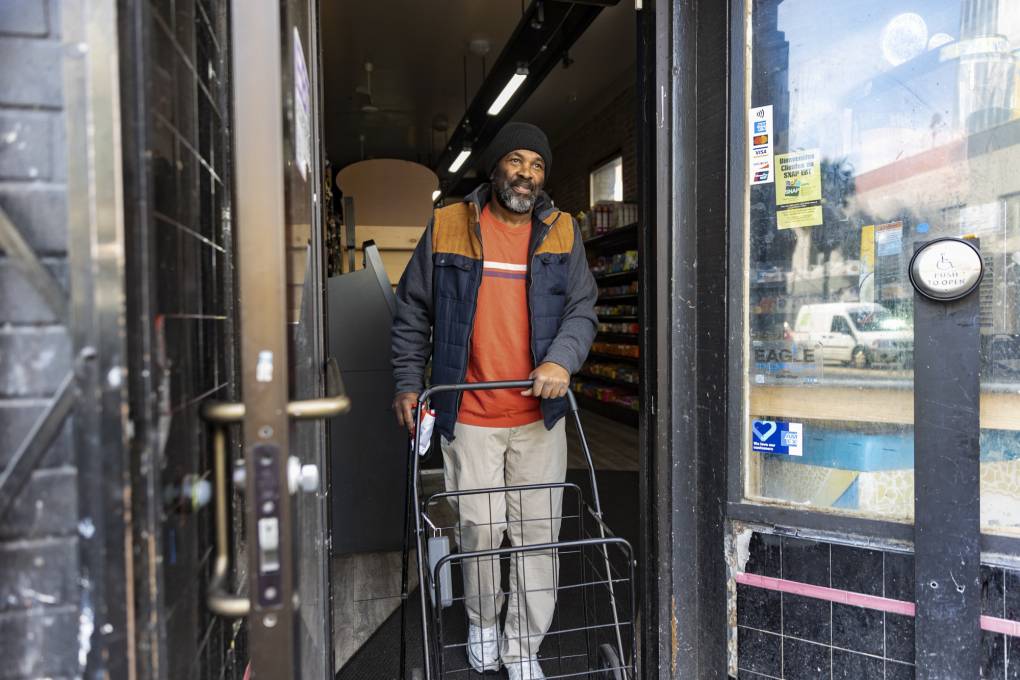
"caption": "Byron Carter walks out of a liquor store on 6th Street on Feb. 11, 2025. Carter lives at Hotel Henry.",
"credit": "Gina Castro/KQED",
"altTag": null,
"description": null,
"imgSizes": {
"medium": {
"file": "https://cdn.kqed.org/wp-content/uploads/sites/10/2025/02/20250211_SFPOLICETRIAGE_GC-26-KQED-800x533.jpg",
"width": 800,
"height": 533,
"mimeType": "image/jpeg"
},
"large": {
"file": "https://cdn.kqed.org/wp-content/uploads/sites/10/2025/02/20250211_SFPOLICETRIAGE_GC-26-KQED-1020x680.jpg",
"width": 1020,
"height": 680,
"mimeType": "image/jpeg"
},
"thumbnail": {
"file": "https://cdn.kqed.org/wp-content/uploads/sites/10/2025/02/20250211_SFPOLICETRIAGE_GC-26-KQED-160x107.jpg",
"width": 160,
"height": 107,
"mimeType": "image/jpeg"
},
"1536x1536": {
"file": "https://cdn.kqed.org/wp-content/uploads/sites/10/2025/02/20250211_SFPOLICETRIAGE_GC-26-KQED-1536x1024.jpg",
"width": 1536,
"height": 1024,
"mimeType": "image/jpeg"
},
"post-thumbnail": {
"file": "https://cdn.kqed.org/wp-content/uploads/sites/10/2025/02/20250211_SFPOLICETRIAGE_GC-26-KQED-672x372.jpg",
"width": 672,
"height": 372,
"mimeType": "image/jpeg"
},
"twentyfourteen-full-width": {
"file": "https://cdn.kqed.org/wp-content/uploads/sites/10/2025/02/20250211_SFPOLICETRIAGE_GC-26-KQED-1038x576.jpg",
"width": 1038,
"height": 576,
"mimeType": "image/jpeg"
},
"full-width": {
"file": "https://cdn.kqed.org/wp-content/uploads/sites/10/2025/02/20250211_SFPOLICETRIAGE_GC-26-KQED-1920x1280.jpg",
"width": 1920,
"height": 1280,
"mimeType": "image/jpeg"
},
"kqedFullSize": {
"file": "https://cdn.kqed.org/wp-content/uploads/sites/10/2025/02/20250211_SFPOLICETRIAGE_GC-26-KQED.jpg",
"width": 2000,
"height": 1333
}
},
"isLoading": false,
"fetchFailed": false
},
"news_12026494": {
"type": "attachments",
"id": "news_12026494",
"meta": {
"index": "attachments_1716263798",
"site": "news",
"id": "12026494",
"found": true
},
"title": "20250210_Unhoused-Ban_DMB_00250",
"publishDate": 1739225401,
"status": "inherit",
"parent": 0,
"modified": 1739391190,
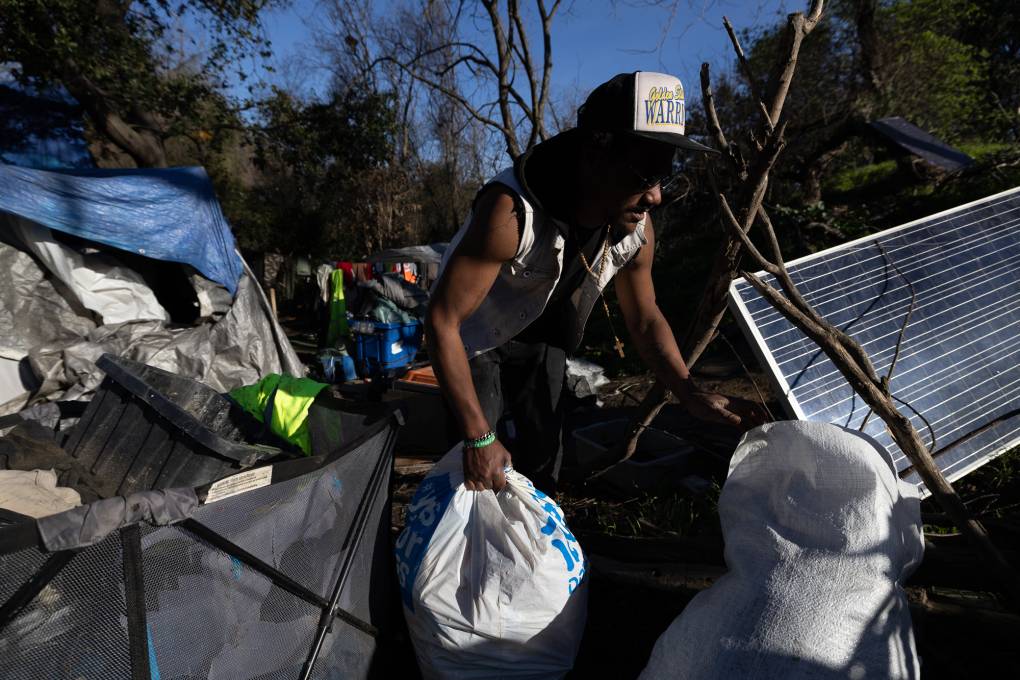
"caption": "Devante Booth works to clean up the area of his makeshift shelter near Quarry Lakes Drive in Fremont, California, on Monday, Feb. 10, 2025. Booth says he grew up in the system after his mother put him in a tub of boiling water at the age of 3. \"We don't choose to live like this,\" Booth says. On Feb. 11, 2025, Fremont city leaders are expected to vote on a proposed public camping ban that extends punishment beyond those living on the streets to people who facilitate or conceal encampments in what is being described as a first-in-the-state ban.",
"credit": "David M. Barreda/KQED",
"altTag": null,
"description": null,
"imgSizes": {
"medium": {
"file": "https://cdn.kqed.org/wp-content/uploads/sites/10/2025/02/20250210_Unhoused-Ban_DMB_00250-800x533.jpg",
"width": 800,
"height": 533,
"mimeType": "image/jpeg"
},
"large": {
"file": "https://cdn.kqed.org/wp-content/uploads/sites/10/2025/02/20250210_Unhoused-Ban_DMB_00250-1020x680.jpg",
"width": 1020,
"height": 680,
"mimeType": "image/jpeg"
},
"thumbnail": {
"file": "https://cdn.kqed.org/wp-content/uploads/sites/10/2025/02/20250210_Unhoused-Ban_DMB_00250-160x107.jpg",
"width": 160,
"height": 107,
"mimeType": "image/jpeg"
},
"1536x1536": {
"file": "https://cdn.kqed.org/wp-content/uploads/sites/10/2025/02/20250210_Unhoused-Ban_DMB_00250-1536x1024.jpg",
"width": 1536,
"height": 1024,
"mimeType": "image/jpeg"
},
"post-thumbnail": {
"file": "https://cdn.kqed.org/wp-content/uploads/sites/10/2025/02/20250210_Unhoused-Ban_DMB_00250-672x372.jpg",
"width": 672,
"height": 372,
"mimeType": "image/jpeg"
},
"twentyfourteen-full-width": {
"file": "https://cdn.kqed.org/wp-content/uploads/sites/10/2025/02/20250210_Unhoused-Ban_DMB_00250-1038x576.jpg",
"width": 1038,
"height": 576,
"mimeType": "image/jpeg"
},
"full-width": {
"file": "https://cdn.kqed.org/wp-content/uploads/sites/10/2025/02/20250210_Unhoused-Ban_DMB_00250-1920x1280.jpg",
"width": 1920,
"height": 1280,
"mimeType": "image/jpeg"
},
"kqedFullSize": {
"file": "https://cdn.kqed.org/wp-content/uploads/sites/10/2025/02/20250210_Unhoused-Ban_DMB_00250.jpg",
"width": 2000,
"height": 1333
}
},
"isLoading": false,
"fetchFailed": false
},
"news_12026493": {
"type": "attachments",
"id": "news_12026493",
"meta": {
"index": "attachments_1716263798",
"site": "news",
"id": "12026493",
"found": true
},
"title": "20250210_Unhoused-Ban_DMB_00117",
"publishDate": 1739225395,
"status": "inherit",
"parent": 12026580,
"modified": 1739385117,
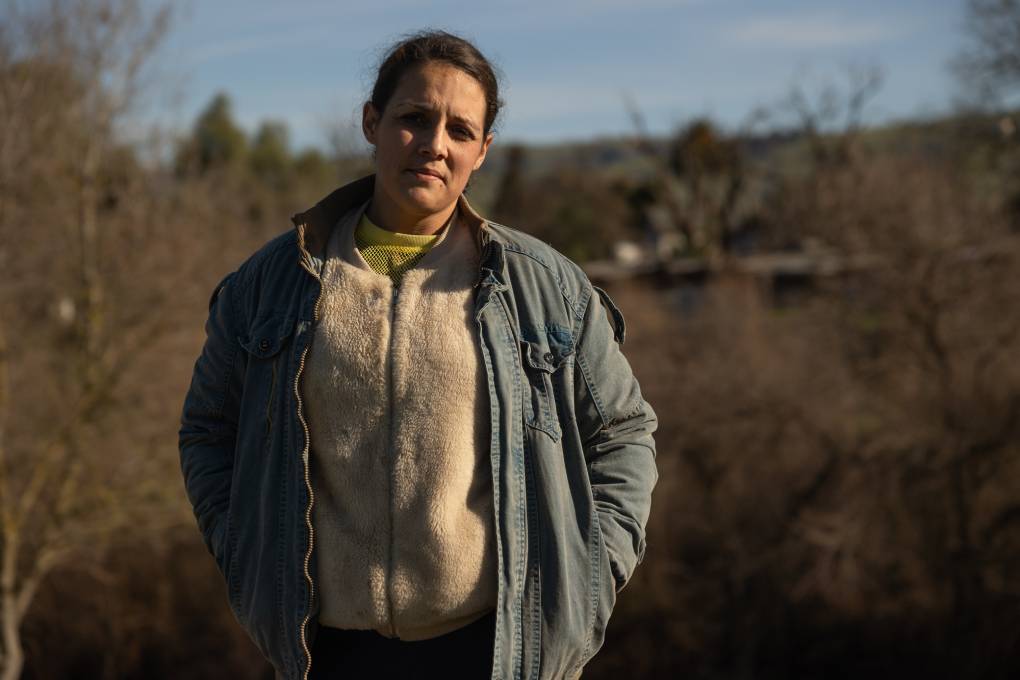
"caption": "Jasmine Grijalva poses for a portrait near Quarry Lakes Drive in Fremont, California, on Monday, Feb. 10, 2025. Grijalva has been unhoused since moving from the Central Valley to the Bay Area in June 2020. On Feb. 11, 2025, Fremont city leaders are expected to vote on a proposed public camping ban that extends punishment beyond those living on the streets to people who facilitate or conceal encampments in what is described as a first-in-the-state ban.",
"credit": "David M. Barreda/KQED",
"altTag": null,
"description": null,
"imgSizes": {
"medium": {
"file": "https://cdn.kqed.org/wp-content/uploads/sites/10/2025/02/20250210_Unhoused-Ban_DMB_00117-800x533.jpg",
"width": 800,
"height": 533,
"mimeType": "image/jpeg"
},
"large": {
"file": "https://cdn.kqed.org/wp-content/uploads/sites/10/2025/02/20250210_Unhoused-Ban_DMB_00117-1020x680.jpg",
"width": 1020,
"height": 680,
"mimeType": "image/jpeg"
},
"thumbnail": {
"file": "https://cdn.kqed.org/wp-content/uploads/sites/10/2025/02/20250210_Unhoused-Ban_DMB_00117-160x107.jpg",
"width": 160,
"height": 107,
"mimeType": "image/jpeg"
},
"1536x1536": {
"file": "https://cdn.kqed.org/wp-content/uploads/sites/10/2025/02/20250210_Unhoused-Ban_DMB_00117-1536x1024.jpg",
"width": 1536,
"height": 1024,
"mimeType": "image/jpeg"
},
"post-thumbnail": {
"file": "https://cdn.kqed.org/wp-content/uploads/sites/10/2025/02/20250210_Unhoused-Ban_DMB_00117-672x372.jpg",
"width": 672,
"height": 372,
"mimeType": "image/jpeg"
},
"twentyfourteen-full-width": {
"file": "https://cdn.kqed.org/wp-content/uploads/sites/10/2025/02/20250210_Unhoused-Ban_DMB_00117-1038x576.jpg",
"width": 1038,
"height": 576,
"mimeType": "image/jpeg"
},
"full-width": {
"file": "https://cdn.kqed.org/wp-content/uploads/sites/10/2025/02/20250210_Unhoused-Ban_DMB_00117-1920x1280.jpg",
"width": 1920,
"height": 1280,
"mimeType": "image/jpeg"
},
"kqedFullSize": {
"file": "https://cdn.kqed.org/wp-content/uploads/sites/10/2025/02/20250210_Unhoused-Ban_DMB_00117.jpg",
"width": 2000,
"height": 1333
}
},
"isLoading": false,
"fetchFailed": false
}
},
"audioPlayerReducer": {
"postId": "stream_live",
"isPaused": true,
"isPlaying": false,
"pfsActive": false,
"pledgeModalIsOpen": true,
"playerDrawerIsOpen": false,
"liveAudioPlayStartedAt": 0,
"liveAudioPlayContext": ""
},
"authorsReducer": {
"byline_news_12029249": {
"type": "authors",
"id": "byline_news_12029249",
"meta": {
"override": true
},
"slug": "byline_news_12029249",
"name": "\u003ca href=\"https://calmatters.org/author/marisa-kendall/\">Marisa Kendall\u003c/a> and \u003ca href=\"https://calmatters.org/author/katie-anastas/\">Katie Anastas\u003c/a>, CalMatters",
"isLoading": false
},
"gmarzorati": {
"type": "authors",
"id": "227",
"meta": {
"index": "authors_1716337520",
"id": "227",
"found": true
},
"name": "Guy Marzorati",
"firstName": "Guy",
"lastName": "Marzorati",
"slug": "gmarzorati",
"email": "gmarzorati@KQED.org",
"display_author_email": true,
"staff_mastheads": [
"news"
],
"title": "Correspondent",
"bio": "Guy Marzorati is a correspondent on KQED's California Politics and Government Desk, based in San Jose. A graduate of Santa Clara University, Guy joined KQED in 2013. He reports on state and local politics and produces KQED's digital voter guide.",
"avatar": "https://secure.gravatar.com/avatar/e7038b8dbfd55b104369b76b1cd0b9de?s=600&d=blank&r=g",
"twitter": "guymarzorati",
"facebook": null,
"instagram": null,
"linkedin": null,
"sites": [
{
"site": "",
"roles": [
"editor"
]
},
{
"site": "news",
"roles": [
"editor"
]
},
{
"site": "science",
"roles": [
"editor"
]
},
{
"site": "forum",
"roles": [
"editor"
]
},
{
"site": "elections",
"roles": [
"editor"
]
},
{
"site": "liveblog",
"roles": [
"editor"
]
}
],
"headData": {
"title": "Guy Marzorati | KQED",
"description": "Correspondent",
"ogImgSrc": "https://secure.gravatar.com/avatar/e7038b8dbfd55b104369b76b1cd0b9de?s=600&d=blank&r=g",
"twImgSrc": "https://secure.gravatar.com/avatar/e7038b8dbfd55b104369b76b1cd0b9de?s=600&d=blank&r=g"
},
"isLoading": false,
"link": "/author/gmarzorati"
},
"matthewgreen": {
"type": "authors",
"id": "1263",
"meta": {
"index": "authors_1716337520",
"id": "1263",
"found": true
},
"name": "Matthew Green",
"firstName": "Matthew",
"lastName": "Green",
"slug": "matthewgreen",
"email": "mgreen@kqed.org",
"display_author_email": false,
"staff_mastheads": [],
"title": "KQED Editor/Reporter",
"bio": "Matthew Green is a digital media producer for KQED News. He previously produced \u003ca href=\"http://www.kqed.org/lowdown\">The Lowdown\u003c/a>, KQED’s multimedia news education blog. Matthew's written for numerous Bay Area publications, including the Oakland Tribune and San Francisco Chronicle. He also taught journalism classes at Fremont High School in East Oakland.\r\n\r\nEmail: mgreen@kqed.org; Twitter: @MGreenKQED",
"avatar": "https://secure.gravatar.com/avatar/3bf498d1267ca02c8494f33d8cfc575e?s=600&d=blank&r=g",
"twitter": "MGreenKQED",
"facebook": null,
"instagram": null,
"linkedin": null,
"sites": [
{
"site": "news",
"roles": []
},
{
"site": "lowdown",
"roles": []
},
{
"site": "science",
"roles": []
},
{
"site": "education",
"roles": []
},
{
"site": "quest",
"roles": []
},
{
"site": "liveblog",
"roles": []
}
],
"headData": {
"title": "Matthew Green | KQED",
"description": "KQED Editor/Reporter",
"ogImgSrc": "https://secure.gravatar.com/avatar/3bf498d1267ca02c8494f33d8cfc575e?s=600&d=blank&r=g",
"twImgSrc": "https://secure.gravatar.com/avatar/3bf498d1267ca02c8494f33d8cfc575e?s=600&d=blank&r=g"
},
"isLoading": false,
"link": "/author/matthewgreen"
},
"vrancano": {
"type": "authors",
"id": "11276",
"meta": {
"index": "authors_1716337520",
"id": "11276",
"found": true
},
"name": "Vanessa Rancaño",
"firstName": "Vanessa",
"lastName": "Rancaño",
"slug": "vrancano",
"email": "vrancano@kqed.org",
"display_author_email": false,
"staff_mastheads": [
"news"
],
"title": "Reporter, Housing",
"bio": "Vanessa Rancaño is a features reporter for KQED. She’s also covered homelessness and education for the station and reported from the Central Valley. Her work has aired across public radio, from flagship national news shows to longform narrative podcasts. Before taking up a mic, she worked as a freelance print journalist. She’s been recognized with a number of national and regional awards. Vanessa grew up in California's Central Valley. She's a former NPR Kroc Fellow, and a graduate of the UC Berkeley Graduate School of Journalism.",
"avatar": "https://secure.gravatar.com/avatar/b3a383dfb0e7ee1c17568f2cf067904ab654d6e3de9743fc661f3c788ade1bed?s=600&d=blank&r=g",
"twitter": "vanessarancano",
"bluesky": null,
"facebook": null,
"instagram": null,
"linkedin": null,
"sites": [
{
"site": "arts",
"roles": [
"editor"
]
},
{
"site": "news",
"roles": [
"editor"
]
},
{
"site": "liveblog",
"roles": [
"contributor"
]
}
],
"headData": {
"title": "Vanessa Rancaño | KQED",
"description": "Reporter, Housing",
"ogImgSrc": "https://secure.gravatar.com/avatar/b3a383dfb0e7ee1c17568f2cf067904ab654d6e3de9743fc661f3c788ade1bed?s=600&d=blank&r=g",
"twImgSrc": "https://secure.gravatar.com/avatar/b3a383dfb0e7ee1c17568f2cf067904ab654d6e3de9743fc661f3c788ade1bed?s=600&d=blank&r=g"
},
"isLoading": false,
"link": "/author/vrancano"
},
"amontecillo": {
"type": "authors",
"id": "11649",
"meta": {
"index": "authors_1716337520",
"id": "11649",
"found": true
},
"name": "Alan Montecillo",
"firstName": "Alan",
"lastName": "Montecillo",
"slug": "amontecillo",
"email": "amontecillo@kqed.org",
"display_author_email": false,
"staff_mastheads": [
"news"
],
"title": "KQED Contributor",
"bio": "Alan Montecillo is the senior editor of \u003cem>\u003ca href=\"http://kqed.org/thebay\">The Bay\u003c/a>, \u003c/em> KQED's local news podcast. Before moving to the Bay Area, he worked as a senior talk show producer for WILL in Champaign-Urbana, Illinois and at Oregon Public Broadcasting in Portland, Oregon. He has won journalism awards from the Society of Professional Journalists Northern California, the Public Media Journalists Association, The Signal Awards, and has also received a regional Edward R. Murrow award. Alan is a Filipino American from Hong Kong and a graduate of Reed College.",
"avatar": "https://secure.gravatar.com/avatar/d5e4e7a76481969ccba76f4e2b5ccabc?s=600&d=blank&r=g",
"twitter": "alanmontecillo",
"facebook": null,
"instagram": null,
"linkedin": null,
"sites": [
{
"site": "",
"roles": [
"editor"
]
},
{
"site": "news",
"roles": [
"editor",
"manage_categories"
]
}
],
"headData": {
"title": "Alan Montecillo | KQED",
"description": "KQED Contributor",
"ogImgSrc": "https://secure.gravatar.com/avatar/d5e4e7a76481969ccba76f4e2b5ccabc?s=600&d=blank&r=g",
"twImgSrc": "https://secure.gravatar.com/avatar/d5e4e7a76481969ccba76f4e2b5ccabc?s=600&d=blank&r=g"
},
"isLoading": false,
"link": "/author/amontecillo"
},
"kmizuguchi": {
"type": "authors",
"id": "11739",
"meta": {
"index": "authors_1716337520",
"id": "11739",
"found": true
},
"name": "Keith Mizuguchi",
"firstName": "Keith",
"lastName": "Mizuguchi",
"slug": "kmizuguchi",
"email": "kmizuguchi@kqed.org",
"display_author_email": false,
"staff_mastheads": [],
"title": "KQED Contributor",
"bio": null,
"avatar": "https://secure.gravatar.com/avatar/64d8a7de0723d4099b9fe4e915136103febcc20809abce228ee4415bcb237023?s=600&d=blank&r=g",
"twitter": null,
"bluesky": null,
"facebook": null,
"instagram": null,
"linkedin": null,
"sites": [
{
"site": "news",
"roles": [
"editor"
]
},
{
"site": "science",
"roles": [
"editor"
]
}
],
"headData": {
"title": "Keith Mizuguchi | KQED",
"description": "KQED Contributor",
"ogImgSrc": "https://secure.gravatar.com/avatar/64d8a7de0723d4099b9fe4e915136103febcc20809abce228ee4415bcb237023?s=600&d=blank&r=g",
"twImgSrc": "https://secure.gravatar.com/avatar/64d8a7de0723d4099b9fe4e915136103febcc20809abce228ee4415bcb237023?s=600&d=blank&r=g"
},
"isLoading": false,
"link": "/author/kmizuguchi"
},
"jessicakariisa": {
"type": "authors",
"id": "11831",
"meta": {
"index": "authors_1716337520",
"id": "11831",
"found": true
},
"name": "Jessica Kariisa",
"firstName": "Jessica",
"lastName": "Kariisa",
"slug": "jessicakariisa",
"email": "jkariisa@kqed.org",
"display_author_email": false,
"staff_mastheads": [],
"title": "Producer, The Bay",
"bio": "Jessica Kariisa is the producer of The Bay. She first joined KQED as an intern for The California Report Magazine, after which she became an on-call producer. She reported a Bay Curious episode on the use of rap lyrics in criminal trials which won a Society of Professional Journalists award in 2023 for Excellence in Features Journalism and the 2023 Signal Award for Best Conversation Starter. She’s worked on podcasts for Snap Judgment and American Public Media. Before embarking on her audio career, she was a music journalist.\r\n\r\nJessica Kariisa is represented by SAG-AFTRA.",
"avatar": "https://secure.gravatar.com/avatar/522e97b28ac0b3d411621c0fde8f3419c7b71ea2c5c262c57c4bb600963f328c?s=600&d=blank&r=g",
"twitter": null,
"bluesky": null,
"facebook": null,
"instagram": null,
"linkedin": null,
"sites": [
{
"site": "arts",
"roles": [
"author"
]
},
{
"site": "news",
"roles": [
"editor",
"manage_categories"
]
}
],
"headData": {
"title": "Jessica Kariisa | KQED",
"description": "Producer, The Bay",
"ogImgSrc": "https://secure.gravatar.com/avatar/522e97b28ac0b3d411621c0fde8f3419c7b71ea2c5c262c57c4bb600963f328c?s=600&d=blank&r=g",
"twImgSrc": "https://secure.gravatar.com/avatar/522e97b28ac0b3d411621c0fde8f3419c7b71ea2c5c262c57c4bb600963f328c?s=600&d=blank&r=g"
},
"isLoading": false,
"link": "/author/jessicakariisa"
},
"sjohnson": {
"type": "authors",
"id": "11840",
"meta": {
"index": "authors_1716337520",
"id": "11840",
"found": true
},
"name": "Sydney Johnson",
"firstName": "Sydney",
"lastName": "Johnson",
"slug": "sjohnson",
"email": "sjohnson@kqed.org",
"display_author_email": false,
"staff_mastheads": [
"news"
],
"title": "KQED Reporter",
"bio": "Sydney Johnson is a general assignment reporter at KQED. She previously reported on public health and city government at the San Francisco Examiner, and before that, she covered statewide education policy for EdSource. Her reporting has won multiple local, state and national awards. Sydney is a graduate of the University of California, Berkeley and lives in San Francisco.",
"avatar": "https://secure.gravatar.com/avatar/97855f2719b72ad6190b7c535fe642c8?s=600&d=blank&r=g",
"twitter": "sydneyfjohnson",
"facebook": null,
"instagram": null,
"linkedin": null,
"sites": [
{
"site": "news",
"roles": [
"editor"
]
}
],
"headData": {
"title": "Sydney Johnson | KQED",
"description": "KQED Reporter",
"ogImgSrc": "https://secure.gravatar.com/avatar/97855f2719b72ad6190b7c535fe642c8?s=600&d=blank&r=g",
"twImgSrc": "https://secure.gravatar.com/avatar/97855f2719b72ad6190b7c535fe642c8?s=600&d=blank&r=g"
},
"isLoading": false,
"link": "/author/sjohnson"
},
"jgeha": {
"type": "authors",
"id": "11906",
"meta": {
"index": "authors_1716337520",
"id": "11906",
"found": true
},
"name": "Joseph Geha",
"firstName": "Joseph",
"lastName": "Geha",
"slug": "jgeha",
"email": "jgeha@kqed.org",
"display_author_email": false,
"staff_mastheads": [
"news",
"science"
],
"title": "KQED Contributor",
"bio": null,
"avatar": "https://secure.gravatar.com/avatar/ea84d2b6dd93d6369d453edf19dd583f117cd1759d2d9c9c92f9de77017354fe?s=600&d=blank&r=g",
"twitter": null,
"bluesky": null,
"facebook": null,
"instagram": null,
"linkedin": null,
"sites": [
{
"site": "news",
"roles": [
"editor"
]
},
{
"site": "liveblog",
"roles": [
"author"
]
}
],
"headData": {
"title": "Joseph Geha | KQED",
"description": "KQED Contributor",
"ogImgSrc": "https://secure.gravatar.com/avatar/ea84d2b6dd93d6369d453edf19dd583f117cd1759d2d9c9c92f9de77017354fe?s=600&d=blank&r=g",
"twImgSrc": "https://secure.gravatar.com/avatar/ea84d2b6dd93d6369d453edf19dd583f117cd1759d2d9c9c92f9de77017354fe?s=600&d=blank&r=g"
},
"isLoading": false,
"link": "/author/jgeha"
},
"mvelasquez": {
"type": "authors",
"id": "11939",
"meta": {
"index": "authors_1716337520",
"id": "11939",
"found": true
},
"name": "Mel Velasquez",
"firstName": "Mel",
"lastName": "Velasquez",
"slug": "mvelasquez",
"email": "mvelasquez@kqed.org",
"display_author_email": false,
"staff_mastheads": [],
"title": "KQED Contributor",
"bio": null,
"avatar": "https://secure.gravatar.com/avatar/409094312d56fab09fef4251e949ffa6?s=600&d=blank&r=g",
"twitter": null,
"facebook": null,
"instagram": null,
"linkedin": "www.linkedin.com/in/melanievelasquezz",
"sites": [
{
"site": "news",
"roles": [
"editor"
]
}
],
"headData": {
"title": "Mel Velasquez | KQED",
"description": "KQED Contributor",
"ogImgSrc": "https://secure.gravatar.com/avatar/409094312d56fab09fef4251e949ffa6?s=600&d=blank&r=g",
"twImgSrc": "https://secure.gravatar.com/avatar/409094312d56fab09fef4251e949ffa6?s=600&d=blank&r=g"
},
"isLoading": false,
"link": "/author/mvelasquez"
},
"tpaoli": {
"type": "authors",
"id": "11945",
"meta": {
"index": "authors_1716337520",
"id": "11945",
"found": true
},
"name": "Tessa Paoli",
"firstName": "Tessa",
"lastName": "Paoli",
"slug": "tpaoli",
"email": "tpaoli@kqed.org",
"display_author_email": false,
"staff_mastheads": [],
"title": "KQED Contributor",
"bio": null,
"avatar": "https://secure.gravatar.com/avatar/cf3572a84291e4bdfdf32ea2d72a79f6?s=600&d=blank&r=g",
"twitter": null,
"facebook": null,
"instagram": null,
"linkedin": null,
"sites": [
{
"site": "news",
"roles": [
"author"
]
}
],
"headData": {
"title": "Tessa Paoli | KQED",
"description": "KQED Contributor",
"ogImgSrc": "https://secure.gravatar.com/avatar/cf3572a84291e4bdfdf32ea2d72a79f6?s=600&d=blank&r=g",
"twImgSrc": "https://secure.gravatar.com/avatar/cf3572a84291e4bdfdf32ea2d72a79f6?s=600&d=blank&r=g"
},
"isLoading": false,
"link": "/author/tpaoli"
}
},
"pagesReducer": {
"news_tag_homelessness": {
"type": "terms",
"id": "news_4020",
"meta": {
"index": "terms_1716263798",
"site": "news",
"id": "4020",
"score": 8.555192
},
"name": "Homelessness",
"slug": "homelessness",
"taxonomy": "tag",
"description": null,
"featImg": null,
"headData": {
"title": "Homelessness | KQED News",
"description": null,
"ogTitle": null,
"ogDescription": null,
"ogImgId": null,
"twTitle": null,
"twDescription": null,
"twImgId": null,
"metaRobotsNoIndex": "index"
},
"ttid": 4039,
"isLoading": false,
"title": "Homelessness",
"pageMeta": {
"site": "news",
"WpPageTemplate": "page-topic-editorial",
"currentPage": 8
},
"blocks": [
{
"blockName": "kqed/post-list",
"attrs": {
"layout": "cardArticle2",
"query": "posts/news?tag=homelessness",
"seeMore": false,
"paginated": true,
"page": 8
}
},
{
"blockName": "kqed/ad"
}
]
}
},
"pfsSessionReducer": {},
"postsReducer": {
"stream_live": {
"type": "live",
"id": "stream_live",
"audioUrl": "https://streams.kqed.org/kqedradio",
"title": "Live Stream",
"excerpt": "Live Stream information currently unavailable.",
"link": "/radio",
"featImg": "",
"label": {
"name": "KQED Live",
"link": "/"
}
},
"stream_kqedNewscast": {
"type": "posts",
"id": "stream_kqedNewscast",
"audioUrl": "https://www.kqed.org/.stream/anon/radio/RDnews/newscast.mp3?_=1",
"title": "KQED Newscast",
"featImg": "",
"label": {
"name": "88.5 FM",
"link": "/"
}
},
"news_12029843": {
"type": "posts",
"id": "news_12029843",
"meta": {
"index": "posts_1716263798",
"site": "news",
"id": "12029843",
"score": null,
"sort": [
1741269617000
]
},
"guestAuthors": [],
"slug": "san-jose-mayor-pushes-to-arrest-unhoused-who-refuse-shelter",
"title": "San José Mayor Pushes to Arrest Unhoused Who Refuse Shelter",
"publishDate": 1741269617,
"format": "standard",
"headTitle": "San José Mayor Pushes to Arrest Unhoused Who Refuse Shelter | KQED",
"labelTerm": {
"site": "news"
},
"content": "\u003cp>\u003ca href=\"https://www.kqed.org/news/tag/san-jose\">San José\u003c/a> Mayor Matt Mahan is proposing that unhoused people who refuse multiple offers of shelter should face arrest, arguing that they have a “responsibility” to move indoors if the city has a bed available.\u003c/p>\n\u003cp>Mahan’s plan would make San José the latest Bay Area city to escalate criminal enforcement against people experiencing unsheltered homelessness in the wake of a Supreme Court ruling last year that allowed arrests for sleeping outside. With \u003ca href=\"https://www.kqed.org/news/12024327/san-jose-council-taps-engineering-executive-carl-salas-vacant-seat\">a new six-vote majority on the City Council\u003c/a>, Mahan will look to enact the enforcement measure as part of an \u003ca href=\"https://www.kqed.org/news/12026437/san-jose-mayor-proposes-permanent-shift-homeless-funding-from-housing-shelter\">ambitious budget proposal that also includes a shift in city funding\u003c/a> to pay for temporary housing and shelter.\u003c/p>\n\u003cp>“The city is making historic investments in expanding interim housing and shelter options,” Mahan told KQED. “And as we do that, we also need to hold our homeless neighbors accountable for coming indoors.”\u003c/p>\n\u003cp>[ad fullwidth]\u003c/p>\n\u003cp>The proposal would direct the city attorney to expand the definition of trespassing in the municipal code to include occupying public space after three offers of shelter. Unhoused residents who decline shelter would first be issued a warning or a citation. If they refuse shelter after a third encounter with city staff, they would be subject to arrest.\u003c/p>\n\u003cp>Last month, \u003ca href=\"https://www.kqed.org/news/12026580/this-bay-area-city-just-passed-the-most-extreme-encampment-ban-in-california\">the Fremont City Council passed an ordinance that banned camping for more than three consecutive nights\u003c/a>, punishable by a fine or jail time. Mahan said he was concerned that those outright bans on camping would push people experiencing homelessness into larger cities like San José. He emphasized that his plan was different because arrests would be preceded by multiple offers of shelter.\u003c/p>\n\u003cp>“Simply banning camping does not end homelessness, but holding people accountable for accepting shelter and housing when it’s available can help us to ultimately end homelessness,” he said.\u003c/p>\n\u003cp>Mahan \u003ca href=\"https://www.kqed.org/news/11979482/san-jose-mayor-matt-mahan-calls-for-urgent-action-on-homelessness-in-city-budget-plan\">has made the construction of temporary housing and shelter\u003c/a> the centerpiece of his plan to reduce homelessness in San José. The city currently operates more than 1,000 shelter spaces — which include tiny homes, converted motels and parking lots for people living in their vehicles.\u003c/p>\n\u003cp>The mayor said his enforcement proposal was motivated by difficulties he said city staff faced in convincing people experiencing homelessness in South San José to move into a new 204-unit interim housing site that opened last month on Monterey Road and Branham Lane. Under current city policy, people living outdoors near a new interim housing site are given first preference for beds when the facility opens.\u003c/p>\n\u003cp>“If someone is refusing a brand new apartment with an en-suite bathroom and a kitchenette, as is the case at Branham and Monterey — where we just saw roughly one-third of people encamped in the area say ‘no’ — we are probably beyond the point where the city has the tools to help that person,” Mahan added.[aside postID=news_12028615 hero='https://cdn.kqed.org/wp-content/uploads/sites/10/2025/02/GettyImages-1150473913-1020x765.jpg'] A report from city staff published in February found a much lower rate of so-called “service resistance” — just 541 people \u003ca href=\"https://www.kqed.org/news/12026630/san-jose-has-an-idea-to-bring-street-homelessness-to-functional-zero-can-it-work\">out of the estimated 5,477 who are living without shelter in the city\u003c/a>. And the same report found a low vacancy rate of just 5% across all city and county-operated shelter spaces in San José.\u003c/p>\n\u003cp>For JD Marone, who lives in an encampment along the Guadalupe River in South San José, the barrier to moving indoors — even to a studio-sized tiny home — is the lack of space for his two large dogs.\u003c/p>\n\u003cp>“They are used to being free, running and protecting my stuff,” he told KQED. “That’s probably why I still have my tools, is because of my dogs.”\u003c/p>\n\u003cp>Marone would likely get preference for a spot in a nearby interim housing site on Cherry Avenue, which is set to open later this year. But he said he can’t decide between the dogs and a potential housing offer.\u003c/p>\n\u003cp>“It stops me from getting work — when I go to work, that’s all I think about all day is ‘Are my dogs okay? It does limit me, it limits me a lot,” he said. “A lot of these people here have animals, so it’s going to be tough on all of us.”\u003c/p>\n\u003cp>Across California, many cities have adopted tougher approaches to reducing unsheltered homelessness. The U.S. Supreme Court ruled last year that banning encampments, even if no shelter space is available, is not a form of “cruel and unusual punishment” because the laws target an activity, not someone’s personal status. In the months since the ruling, police in cities such as San Diego and San Francisco \u003ca href=\"https://www.kqed.org/news/12015125/tentless-amid-encampment-crackdown-unhoused-san-franciscans-storms\">have arrested hundreds of people\u003c/a> for sleeping outside.\u003c/p>\n\u003cp>State Assemblymember Alex Lee, a Democrat who represents Fremont and parts of San José, called Mahan’s initiative “immoral, ineffective and stupid,” adding that he would explore writing state legislation to “curb the criminalization of homelessness” on the city level.\u003c/p>\n\u003cp>“The choice is you go to this tiny home or you go to jail?” Lee asked. “It’s another clear indication that the mayor is more interested in making homelessness invisible than solving it.”\u003c/p>\n\u003cp>San José City Councilmember Pamela Campos said she was concerned that the policy would make “a challenging problem more challenging.”\u003c/p>\n\u003cp>“With a criminal record, if this policy does pass, that’s only going to make it more difficult to find the jobs and the housing that are going to support self-sustainability,” Campos said.\u003c/p>\n\u003cp>Campos told KQED she wanted to hear more details about how the policy would be implemented — and how it would affect existing police and fire response across the sprawling city.\u003c/p>\n\u003cp>Mahan expressed confidence that the enforcement plan would win support from the city’s police force. It was immediately embraced by police and fire union leaders.\u003c/p>\n\u003cp>“I believe that increasing accountability and actually focusing on getting that population into shelter, housing or a treatment center, or detoxing in the county jail for 30 days, will ultimately save a tremendous amount of police and fire capacity to respond to other calls,” Mahan said.\u003c/p>\n\u003cp>The City Council will debate the proposal, along with the rest of Mahan’s spending plan for the 2025–26 fiscal year, later this month. A final city budget will be voted on in June.\u003c/p>\n\u003cp>\u003cem>This story was updated at 2 p.m. Thursday.\u003c/em>\u003c/p>\n\u003cp>[ad floatright]\u003c/p>\n",
"blocks": [],
"excerpt": "Matt Mahan’s proposal would make San José the latest Bay Area city to escalate criminal enforcement against people experiencing unsheltered homelessness.",
"status": "publish",
"parent": 0,
"modified": 1741406692,
"stats": {
"hasAudio": false,
"hasVideo": false,
"hasChartOrMap": false,
"iframeSrcs": [],
"hasGoogleForm": false,
"hasGallery": false,
"hasHearkenModule": false,
"hasPolis": false,
"paragraphCount": 25,
"wordCount": 1124
},
"headData": {
"title": "San José Mayor Pushes to Arrest Unhoused Who Refuse Shelter | KQED",
"description": "Matt Mahan’s proposal would make San José the latest Bay Area city to escalate criminal enforcement against people experiencing unsheltered homelessness.",
"ogTitle": "",
"ogDescription": "",
"ogImgId": "",
"twTitle": "",
"twDescription": "",
"twImgId": "",
"schema": {
"@context": "https://schema.org",
"@type": "NewsArticle",
"headline": "San José Mayor Pushes to Arrest Unhoused Who Refuse Shelter",
"datePublished": "2025-03-06T06:00:17-08:00",
"dateModified": "2025-03-07T20:04:52-08:00",
"image": "https://cdn.kqed.org/wp-content/uploads/2020/02/KQED-OG-Image@1x.png",
"isAccessibleForFree": "True",
"publisher": {
"@type": "NewsMediaOrganization",
"@id": "https://www.kqed.org/#organization",
"name": "KQED",
"logo": "https://cdn.kqed.org/wp-content/uploads/2020/02/KQED-OG-Image@1x.png",
"url": "https://www.kqed.org",
"sameAs": [
"https://www.facebook.com/KQED",
"https://twitter.com/KQED",
"https://www.instagram.com/kqed/",
"https://www.tiktok.com/@kqedofficial",
"https://www.linkedin.com/company/kqed",
"https://www.youtube.com/channel/UCeC0IOo7i1P_61zVUWbJ4nw"
]
}
}
},
"sticky": false,
"nprStoryId": "kqed-12029843",
"templateType": "standard",
"featuredImageType": "standard",
"excludeFromSiteSearch": "Include",
"articleAge": "0",
"path": "/news/12029843/san-jose-mayor-pushes-to-arrest-unhoused-who-refuse-shelter",
"audioTrackLength": null,
"parsedContent": [
{
"type": "contentString",
"content": "\u003cdiv class=\"post-body\">\u003cp>\u003cp>\u003ca href=\"https://www.kqed.org/news/tag/san-jose\">San José\u003c/a> Mayor Matt Mahan is proposing that unhoused people who refuse multiple offers of shelter should face arrest, arguing that they have a “responsibility” to move indoors if the city has a bed available.\u003c/p>\n\u003cp>Mahan’s plan would make San José the latest Bay Area city to escalate criminal enforcement against people experiencing unsheltered homelessness in the wake of a Supreme Court ruling last year that allowed arrests for sleeping outside. With \u003ca href=\"https://www.kqed.org/news/12024327/san-jose-council-taps-engineering-executive-carl-salas-vacant-seat\">a new six-vote majority on the City Council\u003c/a>, Mahan will look to enact the enforcement measure as part of an \u003ca href=\"https://www.kqed.org/news/12026437/san-jose-mayor-proposes-permanent-shift-homeless-funding-from-housing-shelter\">ambitious budget proposal that also includes a shift in city funding\u003c/a> to pay for temporary housing and shelter.\u003c/p>\n\u003cp>“The city is making historic investments in expanding interim housing and shelter options,” Mahan told KQED. “And as we do that, we also need to hold our homeless neighbors accountable for coming indoors.”\u003c/p>\n\u003cp>\u003c/p>\u003c/div>",
"attributes": {
"named": {},
"numeric": []
}
},
{
"type": "component",
"content": "",
"name": "ad",
"attributes": {
"named": {
"label": "fullwidth"
},
"numeric": [
"fullwidth"
]
}
},
{
"type": "contentString",
"content": "\u003cdiv class=\"post-body\">\u003cp>\u003c/p>\n\u003cp>The proposal would direct the city attorney to expand the definition of trespassing in the municipal code to include occupying public space after three offers of shelter. Unhoused residents who decline shelter would first be issued a warning or a citation. If they refuse shelter after a third encounter with city staff, they would be subject to arrest.\u003c/p>\n\u003cp>Last month, \u003ca href=\"https://www.kqed.org/news/12026580/this-bay-area-city-just-passed-the-most-extreme-encampment-ban-in-california\">the Fremont City Council passed an ordinance that banned camping for more than three consecutive nights\u003c/a>, punishable by a fine or jail time. Mahan said he was concerned that those outright bans on camping would push people experiencing homelessness into larger cities like San José. He emphasized that his plan was different because arrests would be preceded by multiple offers of shelter.\u003c/p>\n\u003cp>“Simply banning camping does not end homelessness, but holding people accountable for accepting shelter and housing when it’s available can help us to ultimately end homelessness,” he said.\u003c/p>\n\u003cp>Mahan \u003ca href=\"https://www.kqed.org/news/11979482/san-jose-mayor-matt-mahan-calls-for-urgent-action-on-homelessness-in-city-budget-plan\">has made the construction of temporary housing and shelter\u003c/a> the centerpiece of his plan to reduce homelessness in San José. The city currently operates more than 1,000 shelter spaces — which include tiny homes, converted motels and parking lots for people living in their vehicles.\u003c/p>\n\u003cp>The mayor said his enforcement proposal was motivated by difficulties he said city staff faced in convincing people experiencing homelessness in South San José to move into a new 204-unit interim housing site that opened last month on Monterey Road and Branham Lane. Under current city policy, people living outdoors near a new interim housing site are given first preference for beds when the facility opens.\u003c/p>\n\u003cp>“If someone is refusing a brand new apartment with an en-suite bathroom and a kitchenette, as is the case at Branham and Monterey — where we just saw roughly one-third of people encamped in the area say ‘no’ — we are probably beyond the point where the city has the tools to help that person,” Mahan added.\u003c/p>\u003c/div>",
"attributes": {
"named": {},
"numeric": []
}
},
{
"type": "component",
"content": "",
"name": "aside",
"attributes": {
"named": {
"postid": "news_12028615",
"hero": "https://cdn.kqed.org/wp-content/uploads/sites/10/2025/02/GettyImages-1150473913-1020x765.jpg",
"label": ""
},
"numeric": []
}
},
{
"type": "contentString",
"content": "\u003cdiv class=\"post-body\">\u003cp> A report from city staff published in February found a much lower rate of so-called “service resistance” — just 541 people \u003ca href=\"https://www.kqed.org/news/12026630/san-jose-has-an-idea-to-bring-street-homelessness-to-functional-zero-can-it-work\">out of the estimated 5,477 who are living without shelter in the city\u003c/a>. And the same report found a low vacancy rate of just 5% across all city and county-operated shelter spaces in San José.\u003c/p>\n\u003cp>For JD Marone, who lives in an encampment along the Guadalupe River in South San José, the barrier to moving indoors — even to a studio-sized tiny home — is the lack of space for his two large dogs.\u003c/p>\n\u003cp>“They are used to being free, running and protecting my stuff,” he told KQED. “That’s probably why I still have my tools, is because of my dogs.”\u003c/p>\n\u003cp>Marone would likely get preference for a spot in a nearby interim housing site on Cherry Avenue, which is set to open later this year. But he said he can’t decide between the dogs and a potential housing offer.\u003c/p>\n\u003cp>“It stops me from getting work — when I go to work, that’s all I think about all day is ‘Are my dogs okay? It does limit me, it limits me a lot,” he said. “A lot of these people here have animals, so it’s going to be tough on all of us.”\u003c/p>\n\u003cp>Across California, many cities have adopted tougher approaches to reducing unsheltered homelessness. The U.S. Supreme Court ruled last year that banning encampments, even if no shelter space is available, is not a form of “cruel and unusual punishment” because the laws target an activity, not someone’s personal status. In the months since the ruling, police in cities such as San Diego and San Francisco \u003ca href=\"https://www.kqed.org/news/12015125/tentless-amid-encampment-crackdown-unhoused-san-franciscans-storms\">have arrested hundreds of people\u003c/a> for sleeping outside.\u003c/p>\n\u003cp>State Assemblymember Alex Lee, a Democrat who represents Fremont and parts of San José, called Mahan’s initiative “immoral, ineffective and stupid,” adding that he would explore writing state legislation to “curb the criminalization of homelessness” on the city level.\u003c/p>\n\u003cp>“The choice is you go to this tiny home or you go to jail?” Lee asked. “It’s another clear indication that the mayor is more interested in making homelessness invisible than solving it.”\u003c/p>\n\u003cp>San José City Councilmember Pamela Campos said she was concerned that the policy would make “a challenging problem more challenging.”\u003c/p>\n\u003cp>“With a criminal record, if this policy does pass, that’s only going to make it more difficult to find the jobs and the housing that are going to support self-sustainability,” Campos said.\u003c/p>\n\u003cp>Campos told KQED she wanted to hear more details about how the policy would be implemented — and how it would affect existing police and fire response across the sprawling city.\u003c/p>\n\u003cp>Mahan expressed confidence that the enforcement plan would win support from the city’s police force. It was immediately embraced by police and fire union leaders.\u003c/p>\n\u003cp>“I believe that increasing accountability and actually focusing on getting that population into shelter, housing or a treatment center, or detoxing in the county jail for 30 days, will ultimately save a tremendous amount of police and fire capacity to respond to other calls,” Mahan said.\u003c/p>\n\u003cp>The City Council will debate the proposal, along with the rest of Mahan’s spending plan for the 2025–26 fiscal year, later this month. A final city budget will be voted on in June.\u003c/p>\n\u003cp>\u003cem>This story was updated at 2 p.m. Thursday.\u003c/em>\u003c/p>\n\u003cp>\u003c/p>\u003c/div>",
"attributes": {
"named": {},
"numeric": []
}
},
{
"type": "component",
"content": "",
"name": "ad",
"attributes": {
"named": {
"label": "floatright"
},
"numeric": [
"floatright"
]
}
},
{
"type": "contentString",
"content": "\u003cdiv class=\"post-body\">\u003cp>\u003c/p>\n\u003c/div>\u003c/p>",
"attributes": {
"named": {},
"numeric": []
}
}
],
"link": "/news/12029843/san-jose-mayor-pushes-to-arrest-unhoused-who-refuse-shelter",
"authors": [
"227"
],
"categories": [
"news_6266",
"news_8",
"news_13"
],
"tags": [
"news_3921",
"news_27626",
"news_34377",
"news_4020",
"news_1775",
"news_17968",
"news_18541",
"news_21285"
],
"featImg": "news_12029999",
"label": "news"
},
"news_12029645": {
"type": "posts",
"id": "news_12029645",
"meta": {
"index": "posts_1716263798",
"site": "news",
"id": "12029645",
"score": null,
"sort": [
1741186820000
]
},
"guestAuthors": [],
"slug": "oakland-clears-homeless-encampment-installs-shipping-container-barrier",
"title": "‘Nowhere to Go’: Unhoused Residents Displaced as Oakland Seals Off Encampment",
"publishDate": 1741186820,
"format": "standard",
"headTitle": "‘Nowhere to Go’: Unhoused Residents Displaced as Oakland Seals Off Encampment | KQED",
"labelTerm": {
"site": "news"
},
"content": "\u003cp>Gilberto Gonzales was one of the last holdouts on Tuesday, watching as a small army of workers cleared the encampment in \u003ca href=\"https://www.kqed.org/news/tag/oakland\">Oakland’s\u003c/a> Fruitvale District, where he’s lived for more than a decade.\u003c/p>\n\u003cp>Clad in a yellow safety vest and a brown fisherman’s cap, Gonzales said that after multiple warnings, the city had given him the final order to move his makeshift compound an hour before the clearing began.\u003c/p>\n\u003cp>“I don’t see nowhere to go,” he said, noting that the city had already confiscated his car. “Now I have to move to the other side of the street.”\u003c/p>\n\u003cp>[ad fullwidth]\u003c/p>\n\u003cp>Gonzales, 64, said he would gladly accept housing, but nothing the city has offered so far has been suitable.\u003c/p>\n\u003cp>“I’m a senior already, you know,” he said. “I see a lot of apartments for seniors, and I don’t know why I don’t get one of those apartments.”\u003c/p>\n\u003cfigure id=\"attachment_12029700\" class=\"wp-caption aligncenter\" style=\"max-width: 2000px\">\u003ca href=\"https://cdn.kqed.org/wp-content/uploads/sites/10/2025/03/250304-OAKLANDHIGHSTREETENCAMPMENT-17-BL-KQED.jpg\">\u003cimg loading=\"lazy\" decoding=\"async\" class=\"size-full wp-image-12029700\" src=\"https://cdn.kqed.org/wp-content/uploads/sites/10/2025/03/250304-OAKLANDHIGHSTREETENCAMPMENT-17-BL-KQED.jpg\" alt=\"\" width=\"2000\" height=\"1333\" srcset=\"https://cdn.kqed.org/wp-content/uploads/sites/10/2025/03/250304-OAKLANDHIGHSTREETENCAMPMENT-17-BL-KQED.jpg 2000w, https://cdn.kqed.org/wp-content/uploads/sites/10/2025/03/250304-OAKLANDHIGHSTREETENCAMPMENT-17-BL-KQED-800x533.jpg 800w, https://cdn.kqed.org/wp-content/uploads/sites/10/2025/03/250304-OAKLANDHIGHSTREETENCAMPMENT-17-BL-KQED-1020x680.jpg 1020w, https://cdn.kqed.org/wp-content/uploads/sites/10/2025/03/250304-OAKLANDHIGHSTREETENCAMPMENT-17-BL-KQED-160x107.jpg 160w, https://cdn.kqed.org/wp-content/uploads/sites/10/2025/03/250304-OAKLANDHIGHSTREETENCAMPMENT-17-BL-KQED-1536x1024.jpg 1536w, https://cdn.kqed.org/wp-content/uploads/sites/10/2025/03/250304-OAKLANDHIGHSTREETENCAMPMENT-17-BL-KQED-1920x1280.jpg 1920w\" sizes=\"auto, (max-width: 2000px) 100vw, 2000px\">\u003c/a>\u003cfigcaption class=\"wp-caption-text\">Gilberto Gonzales, 64, stands outside his shelter on Alameda Avenue in Oakland on March 4, 2025, before crews arrive to clear the area. \u003ccite>(Beth LaBerge/KQED)\u003c/cite>\u003c/figcaption>\u003c/figure>\n\u003cp>The city of Oakland last week began sweeping the large encampment that, for years, has occupied a privately owned vacant lot on Alameda Avenue, next to a Home Depot, under the shadow of Interstate 880.\u003c/p>\n\u003cp>But after multiple failed attempts in recent years to remove inhabitants and fence off the area, the city is now partnering with the property owner and a local container business to install a barrier of double-stacked shipping containers.\u003c/p>\n\u003cp>Oakland City Councilmember Noel Gallo, who represents the neighborhood, told KQED the property owner has “re-fenced it five times, but the day or two after we put up the fence, somebody tears it down, breaks in and moves in.”\u003c/p>\n\u003cp>Gallo said nearby business owners and residents have long complained about the encampment, citing frequent drug activity, abandoned cars and other nuisances. The city, he said, sued the Los Angeles-based property owner multiple times to address the blight, even placing a lien on his property in 2023 for \u003ca href=\"https://cdn.kqed.org/wp-content/uploads/sites/10/2025/03/4200-Alameda-Ave_lien.pdf\">failing to reimburse the city (PDF)\u003c/a> for $6,000 in abatement actions.\u003c/p>\n\u003cfigure id=\"attachment_12029703\" class=\"wp-caption aligncenter\" style=\"max-width: 2000px\">\u003ca href=\"https://cdn.kqed.org/wp-content/uploads/sites/10/2025/03/250304-OaklandHighStreetEncampment-14-BL_qed.jpg\">\u003cimg loading=\"lazy\" decoding=\"async\" class=\"size-full wp-image-12029703\" src=\"https://cdn.kqed.org/wp-content/uploads/sites/10/2025/03/250304-OaklandHighStreetEncampment-14-BL_qed.jpg\" alt=\"\" width=\"2000\" height=\"1333\" srcset=\"https://cdn.kqed.org/wp-content/uploads/sites/10/2025/03/250304-OaklandHighStreetEncampment-14-BL_qed.jpg 2000w, https://cdn.kqed.org/wp-content/uploads/sites/10/2025/03/250304-OaklandHighStreetEncampment-14-BL_qed-800x533.jpg 800w, https://cdn.kqed.org/wp-content/uploads/sites/10/2025/03/250304-OaklandHighStreetEncampment-14-BL_qed-1020x680.jpg 1020w, https://cdn.kqed.org/wp-content/uploads/sites/10/2025/03/250304-OaklandHighStreetEncampment-14-BL_qed-160x107.jpg 160w, https://cdn.kqed.org/wp-content/uploads/sites/10/2025/03/250304-OaklandHighStreetEncampment-14-BL_qed-1536x1024.jpg 1536w, https://cdn.kqed.org/wp-content/uploads/sites/10/2025/03/250304-OaklandHighStreetEncampment-14-BL_qed-1920x1280.jpg 1920w\" sizes=\"auto, (max-width: 2000px) 100vw, 2000px\">\u003c/a>\u003cfigcaption class=\"wp-caption-text\">A section of an encampment on Alameda Avenue in Oakland is cleared on March 4, 2025. A shipping container barrier now surrounds the property. \u003ccite>(Beth LaBerge/KQED)\u003c/cite>\u003c/figcaption>\u003c/figure>\n\u003cfigure id=\"attachment_12029766\" class=\"wp-caption aligncenter\" style=\"max-width: 2500px\">\u003ca href=\"https://cdn.kqed.org/wp-content/uploads/sites/10/2025/03/Copy-of-KQED-side-by-side-downpage-image-5.jpg\">\u003cimg loading=\"lazy\" decoding=\"async\" class=\"size-full wp-image-12029766\" src=\"https://cdn.kqed.org/wp-content/uploads/sites/10/2025/03/Copy-of-KQED-side-by-side-downpage-image-5.jpg\" alt=\"\" width=\"2500\" height=\"833\" srcset=\"https://cdn.kqed.org/wp-content/uploads/sites/10/2025/03/Copy-of-KQED-side-by-side-downpage-image-5.jpg 2500w, https://cdn.kqed.org/wp-content/uploads/sites/10/2025/03/Copy-of-KQED-side-by-side-downpage-image-5-800x267.jpg 800w, https://cdn.kqed.org/wp-content/uploads/sites/10/2025/03/Copy-of-KQED-side-by-side-downpage-image-5-1020x340.jpg 1020w, https://cdn.kqed.org/wp-content/uploads/sites/10/2025/03/Copy-of-KQED-side-by-side-downpage-image-5-160x53.jpg 160w, https://cdn.kqed.org/wp-content/uploads/sites/10/2025/03/Copy-of-KQED-side-by-side-downpage-image-5-1536x512.jpg 1536w, https://cdn.kqed.org/wp-content/uploads/sites/10/2025/03/Copy-of-KQED-side-by-side-downpage-image-5-2048x682.jpg 2048w, https://cdn.kqed.org/wp-content/uploads/sites/10/2025/03/Copy-of-KQED-side-by-side-downpage-image-5-1920x640.jpg 1920w\" sizes=\"auto, (max-width: 2500px) 100vw, 2500px\">\u003c/a>\u003cfigcaption class=\"wp-caption-text\">Left: A car sits on top of a shipping container barrier on property leased by Oakland Container Services. Right: A car is towed from an encampment on land leased by Oakland Container Services. \u003ccite>(Beth LaBerge/KQED)\u003c/cite>\u003c/figcaption>\u003c/figure>\n\u003cp>“The condition and the environmental surrounding of it was out of control,” Gallo said, adding that people in the encampment were given several months’ notice and offered services and housing options. “And certainly we don’t wanna [see] Home Depot leaving Oakland.”\u003c/p>\n\u003cp>The vacant land, which was previously used as a \u003ca href=\"https://www.waterboards.ca.gov/water_issues/programs/deed_restrict/docs/ekotek_4200alamedaave_oakland.pdf\">waste oil recycling facility\u003c/a> and is listed in the U.S. Environmental Protection Agency’s \u003ca href=\"https://cumulis.epa.gov/supercpad/CurSites/csitinfo.cfm?id=0901737\">Superfund site directory\u003c/a>, can’t be used for housing because of contamination issues, he added.\u003c/p>\n\u003cp>The move to use shipping containers comes as Oakland struggles to address its ongoing homelessness crisis. As of last year, the city counted 5,485 unhoused people, a nearly 9% increase since 2022, according to \u003ca href=\"https://www.kqed.org/news/tag/alameda-county\">Alameda County’s\u003c/a> latest \u003ca href=\"https://oaklandside.org/wp-content/uploads/2024/12/Alameda-County-2024-PIT-Homelessness-Report-FINAL-12.9.2024.pdf\">point-in-time count (PDF)\u003c/a>. Gallo said the city’s \u003ca href=\"https://www.kqed.org/news/12028114/audit-finds-overtime-waste-in-oakland-suggesting-a-widespread-spending-problem\">ongoing financial challenges\u003c/a> and its lack of available land for RV parking sites have only compounded the problem, as evidenced by the \u003ca href=\"https://oaklandside.org/wp-content/uploads/2024/06/View-Report-15.pdf\">dramatic proliferation of encampments\u003c/a> in recent years.\u003c/p>\n\u003cfigure id=\"attachment_12029696\" class=\"wp-caption aligncenter\" style=\"max-width: 2000px\">\u003ca href=\"https://cdn.kqed.org/wp-content/uploads/sites/10/2025/03/250304-OAKLANDHIGHSTREETENCAMPMENT-09-BL-KQED.jpg\">\u003cimg loading=\"lazy\" decoding=\"async\" class=\"size-full wp-image-12029696\" src=\"https://cdn.kqed.org/wp-content/uploads/sites/10/2025/03/250304-OAKLANDHIGHSTREETENCAMPMENT-09-BL-KQED.jpg\" alt=\"\" width=\"2000\" height=\"1333\" srcset=\"https://cdn.kqed.org/wp-content/uploads/sites/10/2025/03/250304-OAKLANDHIGHSTREETENCAMPMENT-09-BL-KQED.jpg 2000w, https://cdn.kqed.org/wp-content/uploads/sites/10/2025/03/250304-OAKLANDHIGHSTREETENCAMPMENT-09-BL-KQED-800x533.jpg 800w, https://cdn.kqed.org/wp-content/uploads/sites/10/2025/03/250304-OAKLANDHIGHSTREETENCAMPMENT-09-BL-KQED-1020x680.jpg 1020w, https://cdn.kqed.org/wp-content/uploads/sites/10/2025/03/250304-OAKLANDHIGHSTREETENCAMPMENT-09-BL-KQED-160x107.jpg 160w, https://cdn.kqed.org/wp-content/uploads/sites/10/2025/03/250304-OAKLANDHIGHSTREETENCAMPMENT-09-BL-KQED-1536x1024.jpg 1536w, https://cdn.kqed.org/wp-content/uploads/sites/10/2025/03/250304-OAKLANDHIGHSTREETENCAMPMENT-09-BL-KQED-1920x1280.jpg 1920w\" sizes=\"auto, (max-width: 2000px) 100vw, 2000px\">\u003c/a>\u003cfigcaption class=\"wp-caption-text\">Sam Itamar (left) speaks with Jeff Alberto, owner of Oakland Container Services, on a property along Alameda Avenue in Oakland on March 4, 2025. The site, formerly an encampment, is now being enclosed by a shipping container wall built by Alberto and his team. \u003ccite>(Beth LaBerge/KQED)\u003c/cite>\u003c/figcaption>\u003c/figure>\n\u003cp>By Tuesday afternoon, a semi-completed wall of containers had already sprung up along Alameda Avenue as workers scrambled to remove the remaining debris, including a plastic baby swing still hanging from the lone tree on the property. A caseworker with a local homeless support group spoke with the few lingering former residents.\u003c/p>\n\u003cp>Jeff Alberto, who owns Oakland Container Services, the business supplying the shipping containers, said he hopes to finish the job on Wednesday. “The plan is to go all the way down [from the freeway entrance] to the end of the street,” said Alberto, who grew up in the neighborhood.[aside postID=news_12029619 hero='https://cdn.kqed.org/wp-content/uploads/sites/10/2025/03/20241217-UnhousedDemonstrations-JY-355_qed.jpg']\u003c/p>\n\u003cp>It was a scene reminiscent of People’s Park, which UC Berkeley \u003ca href=\"https://www.kqed.org/news/11989984/six-months-after-peoples-park-closure-many-former-residents-and-supporters-struggle-to-adjust\">fortified with shipping containers\u003c/a> last January after protesters tore down fencing and destroyed construction equipment.\u003c/p>\n\u003cp>In exchange for providing the containers, Alberto is leasing the land from the property owner for his expanding container business. He partnered with Caltrans and the city to clear the property.\u003c/p>\n\u003cp>Alberto said he also helped transport containers to People’s Park last year, in what has become an unexpected niche for his business.\u003c/p>\n\u003cp>“On my email signatures, it says, ‘We do it all,’” he said. “Like, we don’t say no to anything, especially to make it look better.”\u003c/p>\n\u003cfigure id=\"attachment_12029769\" class=\"wp-caption aligncenter\" style=\"max-width: 2000px\">\u003cimg loading=\"lazy\" decoding=\"async\" class=\"size-full wp-image-12029769\" src=\"https://cdn.kqed.org/wp-content/uploads/sites/10/2025/03/250304-OaklandHighStreetEncampment-01-BL_qed.jpg\" alt=\"\" width=\"2000\" height=\"1333\" srcset=\"https://cdn.kqed.org/wp-content/uploads/sites/10/2025/03/250304-OaklandHighStreetEncampment-01-BL_qed.jpg 2000w, https://cdn.kqed.org/wp-content/uploads/sites/10/2025/03/250304-OaklandHighStreetEncampment-01-BL_qed-800x533.jpg 800w, https://cdn.kqed.org/wp-content/uploads/sites/10/2025/03/250304-OaklandHighStreetEncampment-01-BL_qed-1020x680.jpg 1020w, https://cdn.kqed.org/wp-content/uploads/sites/10/2025/03/250304-OaklandHighStreetEncampment-01-BL_qed-160x107.jpg 160w, https://cdn.kqed.org/wp-content/uploads/sites/10/2025/03/250304-OaklandHighStreetEncampment-01-BL_qed-1536x1024.jpg 1536w, https://cdn.kqed.org/wp-content/uploads/sites/10/2025/03/250304-OaklandHighStreetEncampment-01-BL_qed-1920x1280.jpg 1920w\" sizes=\"auto, (max-width: 2000px) 100vw, 2000px\">\u003cfigcaption class=\"wp-caption-text\">Jeff Alberto, owner of Oakland Container Services, walks along Alameda Avenue in Oakland on March 4, 2025, toward the land he is leasing for his container business. \u003ccite>(Beth LaBerge/KQED)\u003c/cite>\u003c/figcaption>\u003c/figure>\n\u003cp>Alberto doesn’t have any misgivings about blocking unhoused people from returning here. Most were offered housing, he said, but didn’t take it. Instead, they relocated a few blocks away.\u003c/p>\n\u003cp>“They had six years here to get their act together,” he said. “We shouldn’t suffer for all of this. I think it’s time for a change.”\u003c/p>\n\u003cp>\u003c/p>\n",
"blocks": [],
"excerpt": "The city last week began sweeping the large encampment that, for years, has occupied a privately owned vacant lot on Alameda Avenue, next to a Home Depot, in the Fruitvale District. The property is now walled off by shipping containers.",
"status": "publish",
"parent": 0,
"modified": 1741208705,
"stats": {
"hasAudio": false,
"hasVideo": false,
"hasChartOrMap": false,
"iframeSrcs": [],
"hasGoogleForm": false,
"hasGallery": false,
"hasHearkenModule": false,
"hasPolis": false,
"paragraphCount": 22,
"wordCount": 987
},
"headData": {
"title": "‘Nowhere to Go’: Unhoused Residents Displaced as Oakland Seals Off Encampment | KQED",
"description": "The city last week began sweeping the large encampment that, for years, has occupied a privately owned vacant lot on Alameda Avenue, next to a Home Depot, in the Fruitvale District. The property is now walled off by shipping containers.",
"ogTitle": "",
"ogDescription": "",
"ogImgId": "",
"twTitle": "",
"twDescription": "",
"twImgId": "",
"schema": {
"@context": "https://schema.org",
"@type": "NewsArticle",
"headline": "‘Nowhere to Go’: Unhoused Residents Displaced as Oakland Seals Off Encampment",
"datePublished": "2025-03-05T07:00:20-08:00",
"dateModified": "2025-03-05T13:05:05-08:00",
"image": "https://cdn.kqed.org/wp-content/uploads/2020/02/KQED-OG-Image@1x.png",
"isAccessibleForFree": "True",
"publisher": {
"@type": "NewsMediaOrganization",
"@id": "https://www.kqed.org/#organization",
"name": "KQED",
"logo": "https://cdn.kqed.org/wp-content/uploads/2020/02/KQED-OG-Image@1x.png",
"url": "https://www.kqed.org",
"sameAs": [
"https://www.facebook.com/KQED",
"https://twitter.com/KQED",
"https://www.instagram.com/kqed/",
"https://www.tiktok.com/@kqedofficial",
"https://www.linkedin.com/company/kqed",
"https://www.youtube.com/channel/UCeC0IOo7i1P_61zVUWbJ4nw"
]
}
}
},
"sticky": false,
"nprStoryId": "kqed-12029645",
"templateType": "standard",
"featuredImageType": "standard",
"excludeFromSiteSearch": "Include",
"articleAge": "0",
"path": "/news/12029645/oakland-clears-homeless-encampment-installs-shipping-container-barrier",
"audioTrackLength": null,
"parsedContent": [
{
"type": "contentString",
"content": "\u003cdiv class=\"post-body\">\u003cp>\u003cp>Gilberto Gonzales was one of the last holdouts on Tuesday, watching as a small army of workers cleared the encampment in \u003ca href=\"https://www.kqed.org/news/tag/oakland\">Oakland’s\u003c/a> Fruitvale District, where he’s lived for more than a decade.\u003c/p>\n\u003cp>Clad in a yellow safety vest and a brown fisherman’s cap, Gonzales said that after multiple warnings, the city had given him the final order to move his makeshift compound an hour before the clearing began.\u003c/p>\n\u003cp>“I don’t see nowhere to go,” he said, noting that the city had already confiscated his car. “Now I have to move to the other side of the street.”\u003c/p>\n\u003cp>\u003c/p>\u003c/div>",
"attributes": {
"named": {},
"numeric": []
}
},
{
"type": "component",
"content": "",
"name": "ad",
"attributes": {
"named": {
"label": "fullwidth"
},
"numeric": [
"fullwidth"
]
}
},
{
"type": "contentString",
"content": "\u003cdiv class=\"post-body\">\u003cp>\u003c/p>\n\u003cp>Gonzales, 64, said he would gladly accept housing, but nothing the city has offered so far has been suitable.\u003c/p>\n\u003cp>“I’m a senior already, you know,” he said. “I see a lot of apartments for seniors, and I don’t know why I don’t get one of those apartments.”\u003c/p>\n\u003cfigure id=\"attachment_12029700\" class=\"wp-caption aligncenter\" style=\"max-width: 2000px\">\u003ca href=\"https://cdn.kqed.org/wp-content/uploads/sites/10/2025/03/250304-OAKLANDHIGHSTREETENCAMPMENT-17-BL-KQED.jpg\">\u003cimg loading=\"lazy\" decoding=\"async\" class=\"size-full wp-image-12029700\" src=\"https://cdn.kqed.org/wp-content/uploads/sites/10/2025/03/250304-OAKLANDHIGHSTREETENCAMPMENT-17-BL-KQED.jpg\" alt=\"\" width=\"2000\" height=\"1333\" srcset=\"https://cdn.kqed.org/wp-content/uploads/sites/10/2025/03/250304-OAKLANDHIGHSTREETENCAMPMENT-17-BL-KQED.jpg 2000w, https://cdn.kqed.org/wp-content/uploads/sites/10/2025/03/250304-OAKLANDHIGHSTREETENCAMPMENT-17-BL-KQED-800x533.jpg 800w, https://cdn.kqed.org/wp-content/uploads/sites/10/2025/03/250304-OAKLANDHIGHSTREETENCAMPMENT-17-BL-KQED-1020x680.jpg 1020w, https://cdn.kqed.org/wp-content/uploads/sites/10/2025/03/250304-OAKLANDHIGHSTREETENCAMPMENT-17-BL-KQED-160x107.jpg 160w, https://cdn.kqed.org/wp-content/uploads/sites/10/2025/03/250304-OAKLANDHIGHSTREETENCAMPMENT-17-BL-KQED-1536x1024.jpg 1536w, https://cdn.kqed.org/wp-content/uploads/sites/10/2025/03/250304-OAKLANDHIGHSTREETENCAMPMENT-17-BL-KQED-1920x1280.jpg 1920w\" sizes=\"auto, (max-width: 2000px) 100vw, 2000px\">\u003c/a>\u003cfigcaption class=\"wp-caption-text\">Gilberto Gonzales, 64, stands outside his shelter on Alameda Avenue in Oakland on March 4, 2025, before crews arrive to clear the area. \u003ccite>(Beth LaBerge/KQED)\u003c/cite>\u003c/figcaption>\u003c/figure>\n\u003cp>The city of Oakland last week began sweeping the large encampment that, for years, has occupied a privately owned vacant lot on Alameda Avenue, next to a Home Depot, under the shadow of Interstate 880.\u003c/p>\n\u003cp>But after multiple failed attempts in recent years to remove inhabitants and fence off the area, the city is now partnering with the property owner and a local container business to install a barrier of double-stacked shipping containers.\u003c/p>\n\u003cp>Oakland City Councilmember Noel Gallo, who represents the neighborhood, told KQED the property owner has “re-fenced it five times, but the day or two after we put up the fence, somebody tears it down, breaks in and moves in.”\u003c/p>\n\u003cp>Gallo said nearby business owners and residents have long complained about the encampment, citing frequent drug activity, abandoned cars and other nuisances. The city, he said, sued the Los Angeles-based property owner multiple times to address the blight, even placing a lien on his property in 2023 for \u003ca href=\"https://cdn.kqed.org/wp-content/uploads/sites/10/2025/03/4200-Alameda-Ave_lien.pdf\">failing to reimburse the city (PDF)\u003c/a> for $6,000 in abatement actions.\u003c/p>\n\u003cfigure id=\"attachment_12029703\" class=\"wp-caption aligncenter\" style=\"max-width: 2000px\">\u003ca href=\"https://cdn.kqed.org/wp-content/uploads/sites/10/2025/03/250304-OaklandHighStreetEncampment-14-BL_qed.jpg\">\u003cimg loading=\"lazy\" decoding=\"async\" class=\"size-full wp-image-12029703\" src=\"https://cdn.kqed.org/wp-content/uploads/sites/10/2025/03/250304-OaklandHighStreetEncampment-14-BL_qed.jpg\" alt=\"\" width=\"2000\" height=\"1333\" srcset=\"https://cdn.kqed.org/wp-content/uploads/sites/10/2025/03/250304-OaklandHighStreetEncampment-14-BL_qed.jpg 2000w, https://cdn.kqed.org/wp-content/uploads/sites/10/2025/03/250304-OaklandHighStreetEncampment-14-BL_qed-800x533.jpg 800w, https://cdn.kqed.org/wp-content/uploads/sites/10/2025/03/250304-OaklandHighStreetEncampment-14-BL_qed-1020x680.jpg 1020w, https://cdn.kqed.org/wp-content/uploads/sites/10/2025/03/250304-OaklandHighStreetEncampment-14-BL_qed-160x107.jpg 160w, https://cdn.kqed.org/wp-content/uploads/sites/10/2025/03/250304-OaklandHighStreetEncampment-14-BL_qed-1536x1024.jpg 1536w, https://cdn.kqed.org/wp-content/uploads/sites/10/2025/03/250304-OaklandHighStreetEncampment-14-BL_qed-1920x1280.jpg 1920w\" sizes=\"auto, (max-width: 2000px) 100vw, 2000px\">\u003c/a>\u003cfigcaption class=\"wp-caption-text\">A section of an encampment on Alameda Avenue in Oakland is cleared on March 4, 2025. A shipping container barrier now surrounds the property. \u003ccite>(Beth LaBerge/KQED)\u003c/cite>\u003c/figcaption>\u003c/figure>\n\u003cfigure id=\"attachment_12029766\" class=\"wp-caption aligncenter\" style=\"max-width: 2500px\">\u003ca href=\"https://cdn.kqed.org/wp-content/uploads/sites/10/2025/03/Copy-of-KQED-side-by-side-downpage-image-5.jpg\">\u003cimg loading=\"lazy\" decoding=\"async\" class=\"size-full wp-image-12029766\" src=\"https://cdn.kqed.org/wp-content/uploads/sites/10/2025/03/Copy-of-KQED-side-by-side-downpage-image-5.jpg\" alt=\"\" width=\"2500\" height=\"833\" srcset=\"https://cdn.kqed.org/wp-content/uploads/sites/10/2025/03/Copy-of-KQED-side-by-side-downpage-image-5.jpg 2500w, https://cdn.kqed.org/wp-content/uploads/sites/10/2025/03/Copy-of-KQED-side-by-side-downpage-image-5-800x267.jpg 800w, https://cdn.kqed.org/wp-content/uploads/sites/10/2025/03/Copy-of-KQED-side-by-side-downpage-image-5-1020x340.jpg 1020w, https://cdn.kqed.org/wp-content/uploads/sites/10/2025/03/Copy-of-KQED-side-by-side-downpage-image-5-160x53.jpg 160w, https://cdn.kqed.org/wp-content/uploads/sites/10/2025/03/Copy-of-KQED-side-by-side-downpage-image-5-1536x512.jpg 1536w, https://cdn.kqed.org/wp-content/uploads/sites/10/2025/03/Copy-of-KQED-side-by-side-downpage-image-5-2048x682.jpg 2048w, https://cdn.kqed.org/wp-content/uploads/sites/10/2025/03/Copy-of-KQED-side-by-side-downpage-image-5-1920x640.jpg 1920w\" sizes=\"auto, (max-width: 2500px) 100vw, 2500px\">\u003c/a>\u003cfigcaption class=\"wp-caption-text\">Left: A car sits on top of a shipping container barrier on property leased by Oakland Container Services. Right: A car is towed from an encampment on land leased by Oakland Container Services. \u003ccite>(Beth LaBerge/KQED)\u003c/cite>\u003c/figcaption>\u003c/figure>\n\u003cp>“The condition and the environmental surrounding of it was out of control,” Gallo said, adding that people in the encampment were given several months’ notice and offered services and housing options. “And certainly we don’t wanna [see] Home Depot leaving Oakland.”\u003c/p>\n\u003cp>The vacant land, which was previously used as a \u003ca href=\"https://www.waterboards.ca.gov/water_issues/programs/deed_restrict/docs/ekotek_4200alamedaave_oakland.pdf\">waste oil recycling facility\u003c/a> and is listed in the U.S. Environmental Protection Agency’s \u003ca href=\"https://cumulis.epa.gov/supercpad/CurSites/csitinfo.cfm?id=0901737\">Superfund site directory\u003c/a>, can’t be used for housing because of contamination issues, he added.\u003c/p>\n\u003cp>The move to use shipping containers comes as Oakland struggles to address its ongoing homelessness crisis. As of last year, the city counted 5,485 unhoused people, a nearly 9% increase since 2022, according to \u003ca href=\"https://www.kqed.org/news/tag/alameda-county\">Alameda County’s\u003c/a> latest \u003ca href=\"https://oaklandside.org/wp-content/uploads/2024/12/Alameda-County-2024-PIT-Homelessness-Report-FINAL-12.9.2024.pdf\">point-in-time count (PDF)\u003c/a>. Gallo said the city’s \u003ca href=\"https://www.kqed.org/news/12028114/audit-finds-overtime-waste-in-oakland-suggesting-a-widespread-spending-problem\">ongoing financial challenges\u003c/a> and its lack of available land for RV parking sites have only compounded the problem, as evidenced by the \u003ca href=\"https://oaklandside.org/wp-content/uploads/2024/06/View-Report-15.pdf\">dramatic proliferation of encampments\u003c/a> in recent years.\u003c/p>\n\u003cfigure id=\"attachment_12029696\" class=\"wp-caption aligncenter\" style=\"max-width: 2000px\">\u003ca href=\"https://cdn.kqed.org/wp-content/uploads/sites/10/2025/03/250304-OAKLANDHIGHSTREETENCAMPMENT-09-BL-KQED.jpg\">\u003cimg loading=\"lazy\" decoding=\"async\" class=\"size-full wp-image-12029696\" src=\"https://cdn.kqed.org/wp-content/uploads/sites/10/2025/03/250304-OAKLANDHIGHSTREETENCAMPMENT-09-BL-KQED.jpg\" alt=\"\" width=\"2000\" height=\"1333\" srcset=\"https://cdn.kqed.org/wp-content/uploads/sites/10/2025/03/250304-OAKLANDHIGHSTREETENCAMPMENT-09-BL-KQED.jpg 2000w, https://cdn.kqed.org/wp-content/uploads/sites/10/2025/03/250304-OAKLANDHIGHSTREETENCAMPMENT-09-BL-KQED-800x533.jpg 800w, https://cdn.kqed.org/wp-content/uploads/sites/10/2025/03/250304-OAKLANDHIGHSTREETENCAMPMENT-09-BL-KQED-1020x680.jpg 1020w, https://cdn.kqed.org/wp-content/uploads/sites/10/2025/03/250304-OAKLANDHIGHSTREETENCAMPMENT-09-BL-KQED-160x107.jpg 160w, https://cdn.kqed.org/wp-content/uploads/sites/10/2025/03/250304-OAKLANDHIGHSTREETENCAMPMENT-09-BL-KQED-1536x1024.jpg 1536w, https://cdn.kqed.org/wp-content/uploads/sites/10/2025/03/250304-OAKLANDHIGHSTREETENCAMPMENT-09-BL-KQED-1920x1280.jpg 1920w\" sizes=\"auto, (max-width: 2000px) 100vw, 2000px\">\u003c/a>\u003cfigcaption class=\"wp-caption-text\">Sam Itamar (left) speaks with Jeff Alberto, owner of Oakland Container Services, on a property along Alameda Avenue in Oakland on March 4, 2025. The site, formerly an encampment, is now being enclosed by a shipping container wall built by Alberto and his team. \u003ccite>(Beth LaBerge/KQED)\u003c/cite>\u003c/figcaption>\u003c/figure>\n\u003cp>By Tuesday afternoon, a semi-completed wall of containers had already sprung up along Alameda Avenue as workers scrambled to remove the remaining debris, including a plastic baby swing still hanging from the lone tree on the property. A caseworker with a local homeless support group spoke with the few lingering former residents.\u003c/p>\n\u003cp>Jeff Alberto, who owns Oakland Container Services, the business supplying the shipping containers, said he hopes to finish the job on Wednesday. “The plan is to go all the way down [from the freeway entrance] to the end of the street,” said Alberto, who grew up in the neighborhood.\u003c/p>\u003c/div>",
"attributes": {
"named": {},
"numeric": []
}
},
{
"type": "component",
"content": "",
"name": "aside",
"attributes": {
"named": {
"postid": "news_12029619",
"hero": "https://cdn.kqed.org/wp-content/uploads/sites/10/2025/03/20241217-UnhousedDemonstrations-JY-355_qed.jpg",
"label": ""
},
"numeric": []
}
},
{
"type": "contentString",
"content": "\u003cdiv class=\"post-body\">\u003cp>\u003c/p>\n\u003cp>It was a scene reminiscent of People’s Park, which UC Berkeley \u003ca href=\"https://www.kqed.org/news/11989984/six-months-after-peoples-park-closure-many-former-residents-and-supporters-struggle-to-adjust\">fortified with shipping containers\u003c/a> last January after protesters tore down fencing and destroyed construction equipment.\u003c/p>\n\u003cp>In exchange for providing the containers, Alberto is leasing the land from the property owner for his expanding container business. He partnered with Caltrans and the city to clear the property.\u003c/p>\n\u003cp>Alberto said he also helped transport containers to People’s Park last year, in what has become an unexpected niche for his business.\u003c/p>\n\u003cp>“On my email signatures, it says, ‘We do it all,’” he said. “Like, we don’t say no to anything, especially to make it look better.”\u003c/p>\n\u003cfigure id=\"attachment_12029769\" class=\"wp-caption aligncenter\" style=\"max-width: 2000px\">\u003cimg loading=\"lazy\" decoding=\"async\" class=\"size-full wp-image-12029769\" src=\"https://cdn.kqed.org/wp-content/uploads/sites/10/2025/03/250304-OaklandHighStreetEncampment-01-BL_qed.jpg\" alt=\"\" width=\"2000\" height=\"1333\" srcset=\"https://cdn.kqed.org/wp-content/uploads/sites/10/2025/03/250304-OaklandHighStreetEncampment-01-BL_qed.jpg 2000w, https://cdn.kqed.org/wp-content/uploads/sites/10/2025/03/250304-OaklandHighStreetEncampment-01-BL_qed-800x533.jpg 800w, https://cdn.kqed.org/wp-content/uploads/sites/10/2025/03/250304-OaklandHighStreetEncampment-01-BL_qed-1020x680.jpg 1020w, https://cdn.kqed.org/wp-content/uploads/sites/10/2025/03/250304-OaklandHighStreetEncampment-01-BL_qed-160x107.jpg 160w, https://cdn.kqed.org/wp-content/uploads/sites/10/2025/03/250304-OaklandHighStreetEncampment-01-BL_qed-1536x1024.jpg 1536w, https://cdn.kqed.org/wp-content/uploads/sites/10/2025/03/250304-OaklandHighStreetEncampment-01-BL_qed-1920x1280.jpg 1920w\" sizes=\"auto, (max-width: 2000px) 100vw, 2000px\">\u003cfigcaption class=\"wp-caption-text\">Jeff Alberto, owner of Oakland Container Services, walks along Alameda Avenue in Oakland on March 4, 2025, toward the land he is leasing for his container business. \u003ccite>(Beth LaBerge/KQED)\u003c/cite>\u003c/figcaption>\u003c/figure>\n\u003cp>Alberto doesn’t have any misgivings about blocking unhoused people from returning here. Most were offered housing, he said, but didn’t take it. Instead, they relocated a few blocks away.\u003c/p>\n\u003cp>“They had six years here to get their act together,” he said. “We shouldn’t suffer for all of this. I think it’s time for a change.”\u003c/p>\n\u003cp>\u003c/p>\n\u003c/div>\u003c/p>",
"attributes": {
"named": {},
"numeric": []
}
}
],
"link": "/news/12029645/oakland-clears-homeless-encampment-installs-shipping-container-barrier",
"authors": [
"1263"
],
"categories": [
"news_31795",
"news_6266",
"news_8"
],
"tags": [
"news_3921",
"news_260",
"news_18066",
"news_27626",
"news_21214",
"news_4020",
"news_1775",
"news_34054"
],
"featImg": "news_12029701",
"label": "news"
},
"news_12029619": {
"type": "posts",
"id": "news_12029619",
"meta": {
"index": "posts_1716263798",
"site": "news",
"id": "12029619",
"score": null,
"sort": [
1741122924000
]
},
"guestAuthors": [],
"slug": "luries-nonprofit-giving-san-francisco-11-million-prevent-family-homelessness",
"title": "Lurie’s Nonprofit Is Giving San Francisco $11 Million to Prevent Family Homelessness",
"publishDate": 1741122924,
"format": "standard",
"headTitle": "Lurie’s Nonprofit Is Giving San Francisco $11 Million to Prevent Family Homelessness | KQED",
"labelTerm": {
"site": "news"
},
"content": "\u003cp>The nonprofit that San Francisco \u003ca href=\"https://www.kqed.org/news/tag/daniel-lurie\">Mayor Daniel Lurie\u003c/a> founded before entering City Hall is now investing millions of dollars to help the city combat homelessness, a key issue on which the mayor has vowed to make progress.\u003c/p>\n\u003cp>Tipping Point Community on Tuesday announced it will donate $11 million to support a pilot program aimed at preventing family homelessness, which surged by 94% in San Francisco last year, according to the \u003ca href=\"https://www.sf.gov/reports--september-2024--2024-point-time-count\">latest point-in-time count\u003c/a> of the city’s homeless population.\u003c/p>\n\u003cp>“This investment assists families in crisis today while we develop and scale a model to support families in need for decades to come,” Lurie said in a statement. “Creating lasting change in San Francisco requires all hands on deck, and I’m proud to launch this critical public-private partnership with Tipping Point.”\u003c/p>\n\u003cp>[ad fullwidth]\u003c/p>\n\u003cp>The 18-month pilot program will run through June 2026 and will fund direct assistance to approximately 1,500 households to support back rent and other living expenses for families at risk of losing their housing. The money will also be used to create a database of the city’s homelessness prevention efforts in an attempt to streamline the city’s network of services, which can be a complicated maze for families seeking support.\u003c/p>\n\u003cp>“Perhaps there’s a family member with undiagnosed mental health issues, and that is one of the issues that is putting the family’s housing at risk. These dollars can help pay for health services for the family so that they can stay housed,” Tipping Point CEO Sam Cobbs said. “Just about anything that a family needs to stay housed and to improve, increase their income, these dollars will be used to do that.”\u003c/p>\n\u003cfigure id=\"attachment_12029663\" class=\"wp-caption aligncenter\" style=\"max-width: 2000px\">\u003cimg loading=\"lazy\" decoding=\"async\" class=\"size-full wp-image-12029663\" src=\"https://cdn.kqed.org/wp-content/uploads/sites/10/2025/03/240610-HomelessFamilies-23-BL_qed.jpg\" alt=\"\" width=\"2000\" height=\"1333\" srcset=\"https://cdn.kqed.org/wp-content/uploads/sites/10/2025/03/240610-HomelessFamilies-23-BL_qed.jpg 2000w, https://cdn.kqed.org/wp-content/uploads/sites/10/2025/03/240610-HomelessFamilies-23-BL_qed-800x533.jpg 800w, https://cdn.kqed.org/wp-content/uploads/sites/10/2025/03/240610-HomelessFamilies-23-BL_qed-1020x680.jpg 1020w, https://cdn.kqed.org/wp-content/uploads/sites/10/2025/03/240610-HomelessFamilies-23-BL_qed-160x107.jpg 160w, https://cdn.kqed.org/wp-content/uploads/sites/10/2025/03/240610-HomelessFamilies-23-BL_qed-1536x1024.jpg 1536w, https://cdn.kqed.org/wp-content/uploads/sites/10/2025/03/240610-HomelessFamilies-23-BL_qed-1920x1280.jpg 1920w\" sizes=\"auto, (max-width: 2000px) 100vw, 2000px\">\u003cfigcaption class=\"wp-caption-text\">Shelter beds are set up in an auditorium at Buena Vista Horace Mann Community School on June 10, 2024, which operates as one of San Francisco’s largest homeless shelters. The nonprofit Dolores Street Community Services runs the shelter after hours and during the summer when school is not in session for San Francisco Unified School District students and their families. \u003ccite>(Beth LaBerge/KQED)\u003c/cite>\u003c/figcaption>\u003c/figure>\n\u003cp>Lurie \u003ca href=\"https://www.kqed.org/news/11999069/what-can-the-sf-mayor-actually-do-about-homelessness\">vowed on the campaign trail\u003c/a> to build 1,500 shelter beds and more affordable housing to significantly reduce homelessness, something many of his predecessors also attempted and struggled to achieve.\u003c/p>\n\u003cp>One of his first attempts to steer the homelessness response was a law expanding his powers as mayor to more quickly hire and contract services related to homelessness as well as the drug crisis. The Board of Supervisors \u003ca href=\"https://www.kqed.org/news/12025495/luries-fentanyl-response-clears-san-francisco-board-of-supervisors\">passed it last month\u003c/a>.\u003c/p>\n\u003cp>That ordinance also makes it easier for the city to solicit and receive private donations — known as behested payments — for such efforts. However, the mayor did not request the Tipping Point funding, according to Cobbs, who said it is not directly tied to his legislative efforts to cut red tape.\u003c/p>\n\u003cp>[aside postID=news_12029248 hero='https://ww2.kqed.org/app/uploads/sites/10/2023/09/230911-MattieScottFreedomWest-019-BL-KQED-1020x680.jpg']\u003c/p>\n\u003cp>“The donation is going directly to the nonprofits working on these issues; none of the dollars are going directly to the city,” Cobbs said, noting that all five of the nonprofits that will receive funds have contracts with the city. “Family homelessness is the fastest growing part of the homeless population in San Francisco, and this is really meant to prevent that from happening.”\u003c/p>\n\u003cp>Still, the donation has raised eyebrows by some government ethics watchdogs.\u003c/p>\n\u003cp>Sean McMorris, the transparency, ethics and accountability program manager at California Common Cause, said there’s “potentially a slippery slope” around conflict of interest laws if donors close to Lurie see Tipping Point Community as a conduit for footing the city’s bills for contracts and services.\u003c/p>\n\u003cp>“Lurie founded this organization and has recused himself; however, you can’t discount the fact that they are giving millions of dollars now after learning that Lurie wanted private enterprises to come in and help solve the homelessness problem,” McMorris said. “I hope the program is successful, but it does raise some new concerns for me.”\u003c/p>\n\u003cp>Funding from Tipping Point will go toward five nonprofits working on homelessness prevention and services: Compass Family Services, APA Family Support Services, Booker T. Community Service Center, Mission Neighborhood Centers and Mission Economic Development Agency.\u003c/p>\n\u003cfigure id=\"attachment_12029666\" class=\"wp-caption aligncenter\" style=\"max-width: 2000px\">\u003cimg loading=\"lazy\" decoding=\"async\" class=\"size-full wp-image-12029666\" src=\"https://cdn.kqed.org/wp-content/uploads/sites/10/2025/03/CompassFamilyServices.jpg\" alt=\"\" width=\"2000\" height=\"1428\" srcset=\"https://cdn.kqed.org/wp-content/uploads/sites/10/2025/03/CompassFamilyServices.jpg 2000w, https://cdn.kqed.org/wp-content/uploads/sites/10/2025/03/CompassFamilyServices-800x571.jpg 800w, https://cdn.kqed.org/wp-content/uploads/sites/10/2025/03/CompassFamilyServices-1020x728.jpg 1020w, https://cdn.kqed.org/wp-content/uploads/sites/10/2025/03/CompassFamilyServices-160x114.jpg 160w, https://cdn.kqed.org/wp-content/uploads/sites/10/2025/03/CompassFamilyServices-1536x1097.jpg 1536w, https://cdn.kqed.org/wp-content/uploads/sites/10/2025/03/CompassFamilyServices-1920x1371.jpg 1920w\" sizes=\"auto, (max-width: 2000px) 100vw, 2000px\">\u003cfigcaption class=\"wp-caption-text\">Staff at Compass Family Services pose for a portrait outside of the organization in San Francisco on Sept. 18, 2022. \u003ccite>(Beth LaBerge/KQED)\u003c/cite>\u003c/figcaption>\u003c/figure>\n\u003cp>Tipping Point Community will evaluate the results of the program after it concludes.\u003c/p>\n\u003cp>“For at-risk families in San Francisco, successfully preventing homelessness requires more than just financial support,” Compass Family Services CEO Erica Kisch said in a statement. “It requires childcare, stable employment, and ongoing wraparound support.”\u003c/p>\n\u003cp>The $11 million donation is part of a broader $100 million fundraising initiative to address San Francisco homelessness that the Tipping Point Community started in 2017 when Lurie was still CEO. The organization donated $50 million to a program with similar goals in 2018.\u003c/p>\n\u003cp>Tipping Point is still shy of meeting its $100 million goal, according to Cobbs. Meanwhile, the rate of family homelessness has increased in San Francisco in recent years, especially after the pandemic hit when many families were already struggling to afford the city’s high cost of living and lost employment.\u003c/p>\n\u003cp>\u003c/p>\n",
"blocks": [],
"excerpt": "Tipping Point Community, which Mayor Daniel Lurie founded before entering City Hall, will support a pilot program aimed at stemming a surge in family homelessness.",
"status": "publish",
"parent": 0,
"modified": 1741132126,
"stats": {
"hasAudio": false,
"hasVideo": false,
"hasChartOrMap": false,
"iframeSrcs": [],
"hasGoogleForm": false,
"hasGallery": false,
"hasHearkenModule": false,
"hasPolis": false,
"paragraphCount": 20,
"wordCount": 906
},
"headData": {
"title": "Lurie’s Nonprofit Is Giving San Francisco $11 Million to Prevent Family Homelessness | KQED",
"description": "Tipping Point Community, which Mayor Daniel Lurie founded before entering City Hall, will support a pilot program aimed at stemming a surge in family homelessness.",
"ogTitle": "",
"ogDescription": "",
"ogImgId": "",
"twTitle": "",
"twDescription": "",
"twImgId": "",
"schema": {
"@context": "https://schema.org",
"@type": "NewsArticle",
"headline": "Lurie’s Nonprofit Is Giving San Francisco $11 Million to Prevent Family Homelessness",
"datePublished": "2025-03-04T13:15:24-08:00",
"dateModified": "2025-03-04T15:48:46-08:00",
"image": "https://cdn.kqed.org/wp-content/uploads/2020/02/KQED-OG-Image@1x.png",
"isAccessibleForFree": "True",
"publisher": {
"@type": "NewsMediaOrganization",
"@id": "https://www.kqed.org/#organization",
"name": "KQED",
"logo": "https://cdn.kqed.org/wp-content/uploads/2020/02/KQED-OG-Image@1x.png",
"url": "https://www.kqed.org",
"sameAs": [
"https://www.facebook.com/KQED",
"https://twitter.com/KQED",
"https://www.instagram.com/kqed/",
"https://www.tiktok.com/@kqedofficial",
"https://www.linkedin.com/company/kqed",
"https://www.youtube.com/channel/UCeC0IOo7i1P_61zVUWbJ4nw"
]
}
}
},
"sticky": false,
"nprStoryId": "kqed-12029619",
"templateType": "standard",
"featuredImageType": "standard",
"excludeFromSiteSearch": "Include",
"articleAge": "0",
"path": "/news/12029619/luries-nonprofit-giving-san-francisco-11-million-prevent-family-homelessness",
"audioTrackLength": null,
"parsedContent": [
{
"type": "contentString",
"content": "\u003cdiv class=\"post-body\">\u003cp>\u003cp>The nonprofit that San Francisco \u003ca href=\"https://www.kqed.org/news/tag/daniel-lurie\">Mayor Daniel Lurie\u003c/a> founded before entering City Hall is now investing millions of dollars to help the city combat homelessness, a key issue on which the mayor has vowed to make progress.\u003c/p>\n\u003cp>Tipping Point Community on Tuesday announced it will donate $11 million to support a pilot program aimed at preventing family homelessness, which surged by 94% in San Francisco last year, according to the \u003ca href=\"https://www.sf.gov/reports--september-2024--2024-point-time-count\">latest point-in-time count\u003c/a> of the city’s homeless population.\u003c/p>\n\u003cp>“This investment assists families in crisis today while we develop and scale a model to support families in need for decades to come,” Lurie said in a statement. “Creating lasting change in San Francisco requires all hands on deck, and I’m proud to launch this critical public-private partnership with Tipping Point.”\u003c/p>\n\u003cp>\u003c/p>\u003c/div>",
"attributes": {
"named": {},
"numeric": []
}
},
{
"type": "component",
"content": "",
"name": "ad",
"attributes": {
"named": {
"label": "fullwidth"
},
"numeric": [
"fullwidth"
]
}
},
{
"type": "contentString",
"content": "\u003cdiv class=\"post-body\">\u003cp>\u003c/p>\n\u003cp>The 18-month pilot program will run through June 2026 and will fund direct assistance to approximately 1,500 households to support back rent and other living expenses for families at risk of losing their housing. The money will also be used to create a database of the city’s homelessness prevention efforts in an attempt to streamline the city’s network of services, which can be a complicated maze for families seeking support.\u003c/p>\n\u003cp>“Perhaps there’s a family member with undiagnosed mental health issues, and that is one of the issues that is putting the family’s housing at risk. These dollars can help pay for health services for the family so that they can stay housed,” Tipping Point CEO Sam Cobbs said. “Just about anything that a family needs to stay housed and to improve, increase their income, these dollars will be used to do that.”\u003c/p>\n\u003cfigure id=\"attachment_12029663\" class=\"wp-caption aligncenter\" style=\"max-width: 2000px\">\u003cimg loading=\"lazy\" decoding=\"async\" class=\"size-full wp-image-12029663\" src=\"https://cdn.kqed.org/wp-content/uploads/sites/10/2025/03/240610-HomelessFamilies-23-BL_qed.jpg\" alt=\"\" width=\"2000\" height=\"1333\" srcset=\"https://cdn.kqed.org/wp-content/uploads/sites/10/2025/03/240610-HomelessFamilies-23-BL_qed.jpg 2000w, https://cdn.kqed.org/wp-content/uploads/sites/10/2025/03/240610-HomelessFamilies-23-BL_qed-800x533.jpg 800w, https://cdn.kqed.org/wp-content/uploads/sites/10/2025/03/240610-HomelessFamilies-23-BL_qed-1020x680.jpg 1020w, https://cdn.kqed.org/wp-content/uploads/sites/10/2025/03/240610-HomelessFamilies-23-BL_qed-160x107.jpg 160w, https://cdn.kqed.org/wp-content/uploads/sites/10/2025/03/240610-HomelessFamilies-23-BL_qed-1536x1024.jpg 1536w, https://cdn.kqed.org/wp-content/uploads/sites/10/2025/03/240610-HomelessFamilies-23-BL_qed-1920x1280.jpg 1920w\" sizes=\"auto, (max-width: 2000px) 100vw, 2000px\">\u003cfigcaption class=\"wp-caption-text\">Shelter beds are set up in an auditorium at Buena Vista Horace Mann Community School on June 10, 2024, which operates as one of San Francisco’s largest homeless shelters. The nonprofit Dolores Street Community Services runs the shelter after hours and during the summer when school is not in session for San Francisco Unified School District students and their families. \u003ccite>(Beth LaBerge/KQED)\u003c/cite>\u003c/figcaption>\u003c/figure>\n\u003cp>Lurie \u003ca href=\"https://www.kqed.org/news/11999069/what-can-the-sf-mayor-actually-do-about-homelessness\">vowed on the campaign trail\u003c/a> to build 1,500 shelter beds and more affordable housing to significantly reduce homelessness, something many of his predecessors also attempted and struggled to achieve.\u003c/p>\n\u003cp>One of his first attempts to steer the homelessness response was a law expanding his powers as mayor to more quickly hire and contract services related to homelessness as well as the drug crisis. The Board of Supervisors \u003ca href=\"https://www.kqed.org/news/12025495/luries-fentanyl-response-clears-san-francisco-board-of-supervisors\">passed it last month\u003c/a>.\u003c/p>\n\u003cp>That ordinance also makes it easier for the city to solicit and receive private donations — known as behested payments — for such efforts. However, the mayor did not request the Tipping Point funding, according to Cobbs, who said it is not directly tied to his legislative efforts to cut red tape.\u003c/p>\n\u003cp>\u003c/p>\u003c/div>",
"attributes": {
"named": {},
"numeric": []
}
},
{
"type": "component",
"content": "",
"name": "aside",
"attributes": {
"named": {
"postid": "news_12029248",
"hero": "https://ww2.kqed.org/app/uploads/sites/10/2023/09/230911-MattieScottFreedomWest-019-BL-KQED-1020x680.jpg",
"label": ""
},
"numeric": []
}
},
{
"type": "contentString",
"content": "\u003cdiv class=\"post-body\">\u003cp>\u003c/p>\n\u003cp>“The donation is going directly to the nonprofits working on these issues; none of the dollars are going directly to the city,” Cobbs said, noting that all five of the nonprofits that will receive funds have contracts with the city. “Family homelessness is the fastest growing part of the homeless population in San Francisco, and this is really meant to prevent that from happening.”\u003c/p>\n\u003cp>Still, the donation has raised eyebrows by some government ethics watchdogs.\u003c/p>\n\u003cp>Sean McMorris, the transparency, ethics and accountability program manager at California Common Cause, said there’s “potentially a slippery slope” around conflict of interest laws if donors close to Lurie see Tipping Point Community as a conduit for footing the city’s bills for contracts and services.\u003c/p>\n\u003cp>“Lurie founded this organization and has recused himself; however, you can’t discount the fact that they are giving millions of dollars now after learning that Lurie wanted private enterprises to come in and help solve the homelessness problem,” McMorris said. “I hope the program is successful, but it does raise some new concerns for me.”\u003c/p>\n\u003cp>Funding from Tipping Point will go toward five nonprofits working on homelessness prevention and services: Compass Family Services, APA Family Support Services, Booker T. Community Service Center, Mission Neighborhood Centers and Mission Economic Development Agency.\u003c/p>\n\u003cfigure id=\"attachment_12029666\" class=\"wp-caption aligncenter\" style=\"max-width: 2000px\">\u003cimg loading=\"lazy\" decoding=\"async\" class=\"size-full wp-image-12029666\" src=\"https://cdn.kqed.org/wp-content/uploads/sites/10/2025/03/CompassFamilyServices.jpg\" alt=\"\" width=\"2000\" height=\"1428\" srcset=\"https://cdn.kqed.org/wp-content/uploads/sites/10/2025/03/CompassFamilyServices.jpg 2000w, https://cdn.kqed.org/wp-content/uploads/sites/10/2025/03/CompassFamilyServices-800x571.jpg 800w, https://cdn.kqed.org/wp-content/uploads/sites/10/2025/03/CompassFamilyServices-1020x728.jpg 1020w, https://cdn.kqed.org/wp-content/uploads/sites/10/2025/03/CompassFamilyServices-160x114.jpg 160w, https://cdn.kqed.org/wp-content/uploads/sites/10/2025/03/CompassFamilyServices-1536x1097.jpg 1536w, https://cdn.kqed.org/wp-content/uploads/sites/10/2025/03/CompassFamilyServices-1920x1371.jpg 1920w\" sizes=\"auto, (max-width: 2000px) 100vw, 2000px\">\u003cfigcaption class=\"wp-caption-text\">Staff at Compass Family Services pose for a portrait outside of the organization in San Francisco on Sept. 18, 2022. \u003ccite>(Beth LaBerge/KQED)\u003c/cite>\u003c/figcaption>\u003c/figure>\n\u003cp>Tipping Point Community will evaluate the results of the program after it concludes.\u003c/p>\n\u003cp>“For at-risk families in San Francisco, successfully preventing homelessness requires more than just financial support,” Compass Family Services CEO Erica Kisch said in a statement. “It requires childcare, stable employment, and ongoing wraparound support.”\u003c/p>\n\u003cp>The $11 million donation is part of a broader $100 million fundraising initiative to address San Francisco homelessness that the Tipping Point Community started in 2017 when Lurie was still CEO. The organization donated $50 million to a program with similar goals in 2018.\u003c/p>\n\u003cp>Tipping Point is still shy of meeting its $100 million goal, according to Cobbs. Meanwhile, the rate of family homelessness has increased in San Francisco in recent years, especially after the pandemic hit when many families were already struggling to afford the city’s high cost of living and lost employment.\u003c/p>\n\u003cp>\u003c/p>\n\u003c/div>\u003c/p>",
"attributes": {
"named": {},
"numeric": []
}
}
],
"link": "/news/12029619/luries-nonprofit-giving-san-francisco-11-million-prevent-family-homelessness",
"authors": [
"11840"
],
"categories": [
"news_6266",
"news_8",
"news_13"
],
"tags": [
"news_3921",
"news_34055",
"news_21777",
"news_27626",
"news_34377",
"news_4020",
"news_1775",
"news_34320",
"news_17968",
"news_38"
],
"featImg": "news_12029622",
"label": "news"
},
"news_12029245": {
"type": "posts",
"id": "news_12029245",
"meta": {
"index": "posts_1716263798",
"site": "news",
"id": "12029245",
"score": null,
"sort": [
1740999609000
]
},
"guestAuthors": [],
"slug": "san-jose-announces-plan-to-send-some-homeless-residents-out-of-the-city",
"title": "San José Announces Plan to Send Some Homeless Residents Out of the City",
"publishDate": 1740999609,
"format": "audio",
"headTitle": "San José Announces Plan to Send Some Homeless Residents Out of the City | KQED",
"labelTerm": {},
"content": "\u003cp>\u003cspan style=\"font-weight: 400\">San José leaders have announced a new and controversial plan as part of their efforts to end street homelessness. ‘Homeward Bound’ will offer to send unhoused residents to family or friends who are willing to take them in. Mayor Matt Mahan says it’s an additional tool to get people off the streets, while some homelessness advocates say it’s an ineffective and inhumane approach.\u003c/span>\u003c/p>\n\u003cp>\u003cstrong>Links: \u003c/strong>\u003c/p>\n\u003cul>\n\u003cli>\u003ca href=\"https://www.kqed.org/news/12028615/san-jose-adopts-controversial-plan-to-bus-homeless-people-out-of-the-city\">San José Adopts Controversial Plan to Bus Homeless People Out of the City\u003c/a>\u003c/li>\n\u003c/ul>\n\u003cp>\u003cem>Some members of the KQED podcast team are represented by The Screen Actors Guild, American Federation of Television and Radio Artists. San Francisco Northern California Local.\u003c/em>\u003c/p>\n\u003cp>\u003c!-- iframe plugin v.4.3 wordpress.org/plugins/iframe/ -->\u003cbr>\n\u003ciframe loading=\"lazy\" frameborder=\"0\" height=\"200\" scrolling=\"no\" src=\"https://playlist.megaphone.fm?e=KQINC3422661440&light=true\" width=\"100%\" class=\"iframe-class\">\u003c/iframe>\u003c/p>\n\u003cp>\u003cem>This is a computer-generated transcript. While our team has reviewed it, there may be errors.\u003c/em>\u003c/p>\n\u003cp>[ad fullwidth]\u003c/p>\n\u003cp>\u003cstrong>Joseph Geha \u003c/strong>[00:01:07] Homelessness in San Jose is a major problem. Over 6 ,300 people counted as homeless in some of the latest numbers. Usually those counts are considered undercounts, so it’s a significant problem. People have a lot of different feelings about how it should be approached, but most people seem to agree that it’s a major problem that the city should be doing all it can to solve.\u003c/p>\n\u003cp>\u003cstrong>Alan Montecillo \u003c/strong>[00:01:39] And so what has the city been doing about homelessness, especially the mayor, Matt Mahan?\u003c/p>\n\u003cp>\u003cstrong>Joseph Geha \u003c/strong>[00:01:46] So Mayor Matt Mahan, since taking office and even during his initial campaigns, you know, he’s been pushing for what he called basics, right? Back to basics was one of his campaign slogans about public safety and about homelessness.\u003c/p>\n\u003cp>\u003cstrong>Matt Mahan \u003c/strong>[00:01:59] I want us to act with a greater sense of urgency. I think we have have a true humanitarian crisis on the streets.\u003c/p>\n\u003cp>\u003cstrong>Joseph Geha \u003c/strong>[00:02:06] And what he’s done now since having the governing power for a couple of years is really push things toward shorter term solutions. The city has said that with their current shelter space, both with places run by the county and by the city, but within the bounds of San Jose, there are several thousand people who still do not have places to go right now, even as the city plans to in the next several months and coming years more than triple its temporary shelter space, there’s still going to be a shortage for a long time, even in some very optimistic projections. And so in the past, while the city has kind of taken a mixed approach towards supporting things like permanent affordable housing and supportive housing with services, so people have a place to live forever, and also supported some short -term solutions like temporary shelters, Mayor Matt Mahan has really pushed it toward a focus almost entirely on short -term. like temporary shelters, like sanctioned encampments, like safe parking sites, and now this latest program.\u003c/p>\n\u003cp>\u003cstrong>Alan Montecillo \u003c/strong>[00:03:13] We’re talking now, Joseph, speaking of this latest program, because last Tuesday, the city of San Jose announced that it would be launching a pilot program called Homeward Bound.\u003c/p>\n\u003cp>\u003cstrong>Joseph Geha \u003c/strong>[00:03:26] Yeah, so the mayor and the city’s director of housing, Eric Solivan, came out and essentially told folks at a press conference that the city is putting up $200,000 of its housing funds to help support a pilot program to buy train or bus tickets for people who are unhoused in the city, so long as they have somewhere to go in another part of the city or another part of the country.\u003c/p>\n\u003cp>\u003cstrong>Matt Mahan \u003c/strong>[00:03:51] Homeward Bound offers one way out. If our outreach workers can offer people family reconnection services immediately, that saves a bed in our shelter system for someone who truly doesn’t have anyone to support them.\u003c/p>\n\u003cp>\u003cstrong>Joseph Geha \u003c/strong>[00:04:06] The city is willing to help facilitate their transportation and get them to this place where they may become, you know, housed and more stable. And it’s not a new idea. Other cities have tried this, but in San Jose, this would be the first time the city is officially kind of supporting it from its own housing department.\u003c/p>\n\u003cp>\u003cstrong>Alan Montecillo \u003c/strong>[00:04:27] I want to know about the details here. Like, how is that going to work? Are they going to take a survey? Like, hey, who has family that could take them in? Who is this intended for? How is this going to work?\u003c/p>\n\u003cp>\u003cstrong>Joseph Geha \u003c/strong>[00:04:38] Yeah so technically anybody who’s currently unhoused is eligible. If you are one of the many thousands living on the streets of San Jose and trying to find a better situation you have the prerequisites already. Outreach workers who work for the city currently or who contract with the city through a non -profit who are already going out to talk to unhoused people on a daily or weekly basis and learn about their living situation and ask them about their needs well they’re essentially just going to be adding one more question into something that they might already be talking with them about, and that question’s going to be, hey, do you think you have a family member or a friend or someone from your past who would be willing to put you up? And if that conversation develops into, you know, the right opportunity being there, that outreach worker can verify some of those details with, like, a phone call to a family member or a friend and try to ensure that all that is correct and that there’s a person willing to accept someone on the other end. And then if that all lines up, they can help them buy a bus or train ticket right there on the spot, or maybe within a couple of days and get this person set up and on their way.\u003c/p>\n\u003cp>\u003cstrong>Alan Montecillo \u003c/strong>[00:05:44] And this would be a bus or train ticket to potentially anywhere in the country.\u003c/p>\n\u003cp>\u003cstrong>Joseph Geha \u003c/strong>[00:05:49] Anywhere. Yeah, it sounds like anywhere that can be reached by bus or train up to a $1 ,000 limit is what the city said they will spend on each person. At least in the early going here, that’s going to be on the table.\u003c/p>\n\u003cp>\u003cstrong>Alan Montecillo \u003c/strong>[00:06:01] You know, I know that you can, through this program, get transported to another part of San Jose. It’s not just to get people out of the area. But I do think embedded in this story is this idea that I hear a lot, which is that people come to cities in California, like San Jose, San Francisco, LA, from other parts of the country because it’s a better place to live outside. It’s warmer and there’s more resources to essentially take advantage of. How true is that in San Jose? Do we even know how many people living outside in San Jose are from out of town versus in the city?\u003c/p>\n\u003cp>\u003cstrong>Joseph Geha \u003c/strong>[00:06:40] It’s a common misconception that a lot of people who are unhoused might come to places like San Jose for, you know, more generous handouts or better weather, but the data doesn’t really support that. What we have seen in surveys from city and county officials who who work with the unhoused is that the large majority of people living on the streets of San Jose right now report that their last known physical address was in San Jose or in Santa Clara County, which is a broad place. but certainly they’re not necessarily, you know coming from afar before they became homeless they were living here or living in this region when whatever the circumstances were that occurred to make them lose their houses\u003c/p>\n\u003cp>\u003cstrong>Alan Montecillo \u003c/strong>[00:07:26] As you said, this is new for San Jose, but isn’t new in general. And this certainly isn’t the first time I’ve heard of this idea. Do we have any examples, recent examples or otherwise, of this type of program in action?\u003c/p>\n\u003cp>\u003cstrong>Joseph Geha \u003c/strong>[00:07:42] Absolutely. One of the best programs, I guess, to make a comparison for here in the Bay Area is San Francisco. In San Francisco, they had a program called Homeward Bound, which is the same name as the San Jose program that’s been running for about 20 years. That program was started by then -mayor Gavin Newsom in San Francisco. The issue there is we’ve had some kind of mixed results in terms of understanding how successful it has been. Some of the issues might be, okay, so the person gets set up with this ticket, they end up where they’re going, and maybe even they call the back to let them know. that, yes, I’ve made it to so -and -so’s place, and things are going good. But who knows what happens to them a week, a month, three months, a year out? Are they becoming homeless in another city or another portion of the city? Are they struggling in some way? Is their life improving in a marked way?\u003c/p>\n\u003cp>\u003cstrong>Dr. Jamie Chang \u003c/strong>[00:08:37] The lack of a bus ticket home is not the root cause of homelessness.\u003c/p>\n\u003cp>\u003cstrong>Joseph Geha \u003c/strong>[00:08:41] I spoke with Dr. Jamie Chang, she’s an associate professor at UC Berkeley’s School of Social Welfare, and she has raised some concerns about whether or not the program does enough to find out if it is a success.\u003c/p>\n\u003cp>\u003cstrong>Dr. Jamie Chang \u003c/strong>[00:08:53] There is very, very little evidence as to the long -term success of these programs. We don’t really know what happens to people once they’re dropped off at their destination.\u003c/p>\n\u003cp>\u003cstrong>Joseph Geha \u003c/strong>[00:09:03] And that’s why some people have concerns about whether or not the program is doing what it actually intends to do.\u003c/p>\n\u003cp>\u003cstrong>Dr. Jamie Chang \u003c/strong>[00:09:09] While these programs might temporarily be effective at removing people from an area without a system in place to ensure their success elsewhere, I’m skeptical about its overall efficacy.\u003c/p>\n\u003cp>\u003cstrong>Alan Montecillo \u003c/strong>[00:09:27] Okay, so people like Mayor Matt Mahan say, this is just one tool in the toolbox. We’re trying a lot of things. If you have a loved one who can take care of you somewhere else, we will help you get there. People like Dr. Chang are warning that there’s not a lot of data or evidence that this really works, at least based on San Francisco’s experience. I gotta imagine there are critics based in San Jose as well who think that this is a bad idea, right?\u003c/p>\n\u003cp>\u003cstrong>Joseph Geha \u003c/strong>[00:09:54] Yeah, one of the people I spoke with is Gail Osmer, and she’s a long -time advocate for people who are unhoused.\u003c/p>\n\u003cp>\u003cstrong>Gail Osmer \u003c/strong>[00:10:01] I don’t agree with it. Some people do want to go home and it works for them and I think it’s a great idea, but I think mainly it’s going to be a failure.\u003c/p>\n\u003cp>\u003cstrong>Joseph Geha \u003c/strong>[00:10:12] But her biggest concern when I spoke with her about this is, you know, a few things. First of all, a trust element. She’s not really certain that folks who are in the unhoused community who might have a little bit of, you know, distrust of authority figures and stuff, or someone they may not know in an outreach worker very closely, that they’re just going to start spilling all these details about their friends or family or their past lives or somebody who might be able to take them in. You know, it may not be a subject they want to talk about.\u003c/p>\n\u003cp>\u003cstrong>Gail Osmer \u003c/strong>[00:10:37] Do you think the unhoused are going to trust a stranger or somebody they don’t really know to give them information or even talk to them about going home?\u003c/p>\n\u003cp>\u003cstrong>Joseph Geha \u003c/strong>[00:10:47] The second problem she had, of course, is just similar to Dr. Chang, is the verification of where they’re going to end up. And, you know, she raised an example, of course, that the city, even through its best efforts and good faith, may not actually be able to verify what kind of home environment people are going to be sent to.\u003c/p>\n\u003cp>\u003cstrong>Gail Osmer \u003c/strong>[00:11:04] But there’s a lot of problems that people have probably at home, you know, and we don’t know the home environment. What if somebody is clean and sober and they send them home or whatever, and they’re in a home where there’s, you know, alcoholism?\u003c/p>\n\u003cp>\u003cstrong>Joseph Geha \u003c/strong>[00:11:21] The connotation with hearing about bus or train tickets being offered for unhoused people to essentially leave the area, it does sometimes strike people the wrong way. One of the concerns that Gail Osmer raised with us was that she believes the mayor might be doing this for the wrong reasons. She said essentially that he wants unhoused people out of sight and out of mind.\u003c/p>\n\u003cp>\u003cstrong>Gail Osmer \u003c/strong>[00:11:48] I think this is just a way to get rid of the unhoused from the mayor.\u003c/p>\n\u003cp>\u003cstrong>Alan Montecillo \u003c/strong>[00:11:56] So all that said, Joseph, what’s next for the program? I know it was just announced on Tuesday. What has the city said? How will we know if it’s working?\u003c/p>\n\u003cp>\u003cstrong>Joseph Geha \u003c/strong>[00:12:07] Yeah, so, you know, as far as the city officials have told us, this can pretty much be implemented immediately and get started right away. The city did say it is going to emphasize that upfront verification. It’s gonna do all it can through its teams and its workers to ensure that the person or place that they are helping an unhoused person reach in the end is a good place for them. As far as whether the follow -up is actually going to be there, it sounds like the city is not going to put a lot of resources into that. So what kind of data and what kind of qualitative evaluation the city is gonna put into deciding whether or not to. continue or expand this program in the future after its initial run, it still kind of remains to be seen.\u003c/p>\n\u003cp>\u003cstrong>Alan Montecillo \u003c/strong>[00:12:53] We should say this is one of many things San Jose is doing. You know, it’s a $200 ,000 pilot program, which is not a lot of money for a city of San Jose size, definitely a lot of money for a regular person. But what does this story tell us about the city’s priorities when it comes to homelessness and housing?\u003c/p>\n\u003cp>[ad floatright]\u003c/p>\n\u003cp>\u003cstrong>Joseph Geha \u003c/strong>[00:13:13] This program in particular, along with all these other efforts, will kind of fit into a larger picture, so to speak, of what Mayor Matt Mahon has really staked part of his reputation on is his approach to this issue. And I think he wants to be the mayor who says, I ended street homelessness in San Jose in my tenure. I got 5,000 plus people off the street in short order. But if it doesn’t end up working out in the long term, you know, there could be bigger questions. He doesn’t want, as he just said last week, he doesn’t want perfect to be the enemy of good. He openly admitted that it’s easy for folks to poke holes in some of these attempts or some of these programs. It’s easy to say there are problems with this approach or gaps in this approach or it may not be correct for everybody. But he’s saying because of the literal life and death stakes for the people living on the street, that something needs to be done now and the city is willing to try multiple efforts to reach this goal.\u003c/p>\n\n",
"blocks": [],
"excerpt": "The program is the latest initiative in Matt Mahan's fight against homelessness in the South Bay city. ",
"status": "publish",
"parent": 0,
"modified": 1741041454,
"stats": {
"hasAudio": true,
"hasVideo": false,
"hasChartOrMap": false,
"iframeSrcs": [],
"hasGoogleForm": false,
"hasGallery": false,
"hasHearkenModule": false,
"hasPolis": false,
"paragraphCount": 42,
"wordCount": 2764
},
"headData": {
"title": "San José Announces Plan to Send Some Homeless Residents Out of the City | KQED",
"description": "The program is the latest initiative in Matt Mahan's fight against homelessness in the South Bay city. ",
"ogTitle": "",
"ogDescription": "",
"ogImgId": "",
"twTitle": "",
"twDescription": "",
"twImgId": "",
"schema": {
"@context": "https://schema.org",
"@type": "NewsArticle",
"headline": "San José Announces Plan to Send Some Homeless Residents Out of the City",
"datePublished": "2025-03-03T03:00:09-08:00",
"dateModified": "2025-03-03T14:37:34-08:00",
"image": "https://cdn.kqed.org/wp-content/uploads/2020/02/KQED-OG-Image@1x.png",
"isAccessibleForFree": "True",
"publisher": {
"@type": "NewsMediaOrganization",
"@id": "https://www.kqed.org/#organization",
"name": "KQED",
"logo": "https://cdn.kqed.org/wp-content/uploads/2020/02/KQED-OG-Image@1x.png",
"url": "https://www.kqed.org",
"sameAs": [
"https://www.facebook.com/KQED",
"https://twitter.com/KQED",
"https://www.instagram.com/kqed/",
"https://www.tiktok.com/@kqedofficial",
"https://www.linkedin.com/company/kqed",
"https://www.youtube.com/channel/UCeC0IOo7i1P_61zVUWbJ4nw"
]
}
}
},
"source": "The Bay",
"sourceUrl": "https://www.kqed.org/podcasts/thebay",
"audioUrl": "https://www.podtrac.com/pts/redirect.mp3/chrt.fm/track/G6C7C3/traffic.megaphone.fm/KQINC3422661440.mp3?updated=1740785037",
"sticky": false,
"nprStoryId": "kqed-12029245",
"templateType": "standard",
"featuredImageType": "standard",
"excludeFromSiteSearch": "Include",
"articleAge": "0",
"path": "/news/12029245/san-jose-announces-plan-to-send-some-homeless-residents-out-of-the-city",
"audioTrackLength": null,
"parsedContent": [
{
"type": "contentString",
"content": "\u003cdiv class=\"post-body\">\u003cp>\u003cp>\u003cspan style=\"font-weight: 400\">San José leaders have announced a new and controversial plan as part of their efforts to end street homelessness. ‘Homeward Bound’ will offer to send unhoused residents to family or friends who are willing to take them in. Mayor Matt Mahan says it’s an additional tool to get people off the streets, while some homelessness advocates say it’s an ineffective and inhumane approach.\u003c/span>\u003c/p>\n\u003cp>\u003cstrong>Links: \u003c/strong>\u003c/p>\n\u003cul>\n\u003cli>\u003ca href=\"https://www.kqed.org/news/12028615/san-jose-adopts-controversial-plan-to-bus-homeless-people-out-of-the-city\">San José Adopts Controversial Plan to Bus Homeless People Out of the City\u003c/a>\u003c/li>\n\u003c/ul>\n\u003cp>\u003cem>Some members of the KQED podcast team are represented by The Screen Actors Guild, American Federation of Television and Radio Artists. San Francisco Northern California Local.\u003c/em>\u003c/p>\n\u003cp>\u003c!-- iframe plugin v.4.3 wordpress.org/plugins/iframe/ -->\u003cbr>\n\u003ciframe loading=\"lazy\" frameborder=\"0\" height=\"200\" scrolling=\"no\" src=\"https://playlist.megaphone.fm?e=KQINC3422661440&light=true\" width=\"100%\" class=\"iframe-class\">\u003c/iframe>\u003c/p>\n\u003cp>\u003cem>This is a computer-generated transcript. While our team has reviewed it, there may be errors.\u003c/em>\u003c/p>\n\u003cp>\u003c/p>\u003c/div>",
"attributes": {
"named": {},
"numeric": []
}
},
{
"type": "component",
"content": "",
"name": "ad",
"attributes": {
"named": {
"label": "fullwidth"
},
"numeric": [
"fullwidth"
]
}
},
{
"type": "contentString",
"content": "\u003cdiv class=\"post-body\">\u003cp>\u003c/p>\n\u003cp>\u003cstrong>Joseph Geha \u003c/strong>[00:01:07] Homelessness in San Jose is a major problem. Over 6 ,300 people counted as homeless in some of the latest numbers. Usually those counts are considered undercounts, so it’s a significant problem. People have a lot of different feelings about how it should be approached, but most people seem to agree that it’s a major problem that the city should be doing all it can to solve.\u003c/p>\n\u003cp>\u003cstrong>Alan Montecillo \u003c/strong>[00:01:39] And so what has the city been doing about homelessness, especially the mayor, Matt Mahan?\u003c/p>\n\u003cp>\u003cstrong>Joseph Geha \u003c/strong>[00:01:46] So Mayor Matt Mahan, since taking office and even during his initial campaigns, you know, he’s been pushing for what he called basics, right? Back to basics was one of his campaign slogans about public safety and about homelessness.\u003c/p>\n\u003cp>\u003cstrong>Matt Mahan \u003c/strong>[00:01:59] I want us to act with a greater sense of urgency. I think we have have a true humanitarian crisis on the streets.\u003c/p>\n\u003cp>\u003cstrong>Joseph Geha \u003c/strong>[00:02:06] And what he’s done now since having the governing power for a couple of years is really push things toward shorter term solutions. The city has said that with their current shelter space, both with places run by the county and by the city, but within the bounds of San Jose, there are several thousand people who still do not have places to go right now, even as the city plans to in the next several months and coming years more than triple its temporary shelter space, there’s still going to be a shortage for a long time, even in some very optimistic projections. And so in the past, while the city has kind of taken a mixed approach towards supporting things like permanent affordable housing and supportive housing with services, so people have a place to live forever, and also supported some short -term solutions like temporary shelters, Mayor Matt Mahan has really pushed it toward a focus almost entirely on short -term. like temporary shelters, like sanctioned encampments, like safe parking sites, and now this latest program.\u003c/p>\n\u003cp>\u003cstrong>Alan Montecillo \u003c/strong>[00:03:13] We’re talking now, Joseph, speaking of this latest program, because last Tuesday, the city of San Jose announced that it would be launching a pilot program called Homeward Bound.\u003c/p>\n\u003cp>\u003cstrong>Joseph Geha \u003c/strong>[00:03:26] Yeah, so the mayor and the city’s director of housing, Eric Solivan, came out and essentially told folks at a press conference that the city is putting up $200,000 of its housing funds to help support a pilot program to buy train or bus tickets for people who are unhoused in the city, so long as they have somewhere to go in another part of the city or another part of the country.\u003c/p>\n\u003cp>\u003cstrong>Matt Mahan \u003c/strong>[00:03:51] Homeward Bound offers one way out. If our outreach workers can offer people family reconnection services immediately, that saves a bed in our shelter system for someone who truly doesn’t have anyone to support them.\u003c/p>\n\u003cp>\u003cstrong>Joseph Geha \u003c/strong>[00:04:06] The city is willing to help facilitate their transportation and get them to this place where they may become, you know, housed and more stable. And it’s not a new idea. Other cities have tried this, but in San Jose, this would be the first time the city is officially kind of supporting it from its own housing department.\u003c/p>\n\u003cp>\u003cstrong>Alan Montecillo \u003c/strong>[00:04:27] I want to know about the details here. Like, how is that going to work? Are they going to take a survey? Like, hey, who has family that could take them in? Who is this intended for? How is this going to work?\u003c/p>\n\u003cp>\u003cstrong>Joseph Geha \u003c/strong>[00:04:38] Yeah so technically anybody who’s currently unhoused is eligible. If you are one of the many thousands living on the streets of San Jose and trying to find a better situation you have the prerequisites already. Outreach workers who work for the city currently or who contract with the city through a non -profit who are already going out to talk to unhoused people on a daily or weekly basis and learn about their living situation and ask them about their needs well they’re essentially just going to be adding one more question into something that they might already be talking with them about, and that question’s going to be, hey, do you think you have a family member or a friend or someone from your past who would be willing to put you up? And if that conversation develops into, you know, the right opportunity being there, that outreach worker can verify some of those details with, like, a phone call to a family member or a friend and try to ensure that all that is correct and that there’s a person willing to accept someone on the other end. And then if that all lines up, they can help them buy a bus or train ticket right there on the spot, or maybe within a couple of days and get this person set up and on their way.\u003c/p>\n\u003cp>\u003cstrong>Alan Montecillo \u003c/strong>[00:05:44] And this would be a bus or train ticket to potentially anywhere in the country.\u003c/p>\n\u003cp>\u003cstrong>Joseph Geha \u003c/strong>[00:05:49] Anywhere. Yeah, it sounds like anywhere that can be reached by bus or train up to a $1 ,000 limit is what the city said they will spend on each person. At least in the early going here, that’s going to be on the table.\u003c/p>\n\u003cp>\u003cstrong>Alan Montecillo \u003c/strong>[00:06:01] You know, I know that you can, through this program, get transported to another part of San Jose. It’s not just to get people out of the area. But I do think embedded in this story is this idea that I hear a lot, which is that people come to cities in California, like San Jose, San Francisco, LA, from other parts of the country because it’s a better place to live outside. It’s warmer and there’s more resources to essentially take advantage of. How true is that in San Jose? Do we even know how many people living outside in San Jose are from out of town versus in the city?\u003c/p>\n\u003cp>\u003cstrong>Joseph Geha \u003c/strong>[00:06:40] It’s a common misconception that a lot of people who are unhoused might come to places like San Jose for, you know, more generous handouts or better weather, but the data doesn’t really support that. What we have seen in surveys from city and county officials who who work with the unhoused is that the large majority of people living on the streets of San Jose right now report that their last known physical address was in San Jose or in Santa Clara County, which is a broad place. but certainly they’re not necessarily, you know coming from afar before they became homeless they were living here or living in this region when whatever the circumstances were that occurred to make them lose their houses\u003c/p>\n\u003cp>\u003cstrong>Alan Montecillo \u003c/strong>[00:07:26] As you said, this is new for San Jose, but isn’t new in general. And this certainly isn’t the first time I’ve heard of this idea. Do we have any examples, recent examples or otherwise, of this type of program in action?\u003c/p>\n\u003cp>\u003cstrong>Joseph Geha \u003c/strong>[00:07:42] Absolutely. One of the best programs, I guess, to make a comparison for here in the Bay Area is San Francisco. In San Francisco, they had a program called Homeward Bound, which is the same name as the San Jose program that’s been running for about 20 years. That program was started by then -mayor Gavin Newsom in San Francisco. The issue there is we’ve had some kind of mixed results in terms of understanding how successful it has been. Some of the issues might be, okay, so the person gets set up with this ticket, they end up where they’re going, and maybe even they call the back to let them know. that, yes, I’ve made it to so -and -so’s place, and things are going good. But who knows what happens to them a week, a month, three months, a year out? Are they becoming homeless in another city or another portion of the city? Are they struggling in some way? Is their life improving in a marked way?\u003c/p>\n\u003cp>\u003cstrong>Dr. Jamie Chang \u003c/strong>[00:08:37] The lack of a bus ticket home is not the root cause of homelessness.\u003c/p>\n\u003cp>\u003cstrong>Joseph Geha \u003c/strong>[00:08:41] I spoke with Dr. Jamie Chang, she’s an associate professor at UC Berkeley’s School of Social Welfare, and she has raised some concerns about whether or not the program does enough to find out if it is a success.\u003c/p>\n\u003cp>\u003cstrong>Dr. Jamie Chang \u003c/strong>[00:08:53] There is very, very little evidence as to the long -term success of these programs. We don’t really know what happens to people once they’re dropped off at their destination.\u003c/p>\n\u003cp>\u003cstrong>Joseph Geha \u003c/strong>[00:09:03] And that’s why some people have concerns about whether or not the program is doing what it actually intends to do.\u003c/p>\n\u003cp>\u003cstrong>Dr. Jamie Chang \u003c/strong>[00:09:09] While these programs might temporarily be effective at removing people from an area without a system in place to ensure their success elsewhere, I’m skeptical about its overall efficacy.\u003c/p>\n\u003cp>\u003cstrong>Alan Montecillo \u003c/strong>[00:09:27] Okay, so people like Mayor Matt Mahan say, this is just one tool in the toolbox. We’re trying a lot of things. If you have a loved one who can take care of you somewhere else, we will help you get there. People like Dr. Chang are warning that there’s not a lot of data or evidence that this really works, at least based on San Francisco’s experience. I gotta imagine there are critics based in San Jose as well who think that this is a bad idea, right?\u003c/p>\n\u003cp>\u003cstrong>Joseph Geha \u003c/strong>[00:09:54] Yeah, one of the people I spoke with is Gail Osmer, and she’s a long -time advocate for people who are unhoused.\u003c/p>\n\u003cp>\u003cstrong>Gail Osmer \u003c/strong>[00:10:01] I don’t agree with it. Some people do want to go home and it works for them and I think it’s a great idea, but I think mainly it’s going to be a failure.\u003c/p>\n\u003cp>\u003cstrong>Joseph Geha \u003c/strong>[00:10:12] But her biggest concern when I spoke with her about this is, you know, a few things. First of all, a trust element. She’s not really certain that folks who are in the unhoused community who might have a little bit of, you know, distrust of authority figures and stuff, or someone they may not know in an outreach worker very closely, that they’re just going to start spilling all these details about their friends or family or their past lives or somebody who might be able to take them in. You know, it may not be a subject they want to talk about.\u003c/p>\n\u003cp>\u003cstrong>Gail Osmer \u003c/strong>[00:10:37] Do you think the unhoused are going to trust a stranger or somebody they don’t really know to give them information or even talk to them about going home?\u003c/p>\n\u003cp>\u003cstrong>Joseph Geha \u003c/strong>[00:10:47] The second problem she had, of course, is just similar to Dr. Chang, is the verification of where they’re going to end up. And, you know, she raised an example, of course, that the city, even through its best efforts and good faith, may not actually be able to verify what kind of home environment people are going to be sent to.\u003c/p>\n\u003cp>\u003cstrong>Gail Osmer \u003c/strong>[00:11:04] But there’s a lot of problems that people have probably at home, you know, and we don’t know the home environment. What if somebody is clean and sober and they send them home or whatever, and they’re in a home where there’s, you know, alcoholism?\u003c/p>\n\u003cp>\u003cstrong>Joseph Geha \u003c/strong>[00:11:21] The connotation with hearing about bus or train tickets being offered for unhoused people to essentially leave the area, it does sometimes strike people the wrong way. One of the concerns that Gail Osmer raised with us was that she believes the mayor might be doing this for the wrong reasons. She said essentially that he wants unhoused people out of sight and out of mind.\u003c/p>\n\u003cp>\u003cstrong>Gail Osmer \u003c/strong>[00:11:48] I think this is just a way to get rid of the unhoused from the mayor.\u003c/p>\n\u003cp>\u003cstrong>Alan Montecillo \u003c/strong>[00:11:56] So all that said, Joseph, what’s next for the program? I know it was just announced on Tuesday. What has the city said? How will we know if it’s working?\u003c/p>\n\u003cp>\u003cstrong>Joseph Geha \u003c/strong>[00:12:07] Yeah, so, you know, as far as the city officials have told us, this can pretty much be implemented immediately and get started right away. The city did say it is going to emphasize that upfront verification. It’s gonna do all it can through its teams and its workers to ensure that the person or place that they are helping an unhoused person reach in the end is a good place for them. As far as whether the follow -up is actually going to be there, it sounds like the city is not going to put a lot of resources into that. So what kind of data and what kind of qualitative evaluation the city is gonna put into deciding whether or not to. continue or expand this program in the future after its initial run, it still kind of remains to be seen.\u003c/p>\n\u003cp>\u003cstrong>Alan Montecillo \u003c/strong>[00:12:53] We should say this is one of many things San Jose is doing. You know, it’s a $200 ,000 pilot program, which is not a lot of money for a city of San Jose size, definitely a lot of money for a regular person. But what does this story tell us about the city’s priorities when it comes to homelessness and housing?\u003c/p>\n\u003cp>\u003c/p>\u003c/div>",
"attributes": {
"named": {},
"numeric": []
}
},
{
"type": "component",
"content": "",
"name": "ad",
"attributes": {
"named": {
"label": "floatright"
},
"numeric": [
"floatright"
]
}
},
{
"type": "contentString",
"content": "\u003cdiv class=\"post-body\">\u003cp>\u003c/p>\n\u003cp>\u003cstrong>Joseph Geha \u003c/strong>[00:13:13] This program in particular, along with all these other efforts, will kind of fit into a larger picture, so to speak, of what Mayor Matt Mahon has really staked part of his reputation on is his approach to this issue. And I think he wants to be the mayor who says, I ended street homelessness in San Jose in my tenure. I got 5,000 plus people off the street in short order. But if it doesn’t end up working out in the long term, you know, there could be bigger questions. He doesn’t want, as he just said last week, he doesn’t want perfect to be the enemy of good. He openly admitted that it’s easy for folks to poke holes in some of these attempts or some of these programs. It’s easy to say there are problems with this approach or gaps in this approach or it may not be correct for everybody. But he’s saying because of the literal life and death stakes for the people living on the street, that something needs to be done now and the city is willing to try multiple efforts to reach this goal.\u003c/p>\n\n\u003c/div>\u003c/p>",
"attributes": {
"named": {},
"numeric": []
}
}
],
"link": "/news/12029245/san-jose-announces-plan-to-send-some-homeless-residents-out-of-the-city",
"authors": [
"11649",
"11906",
"11831",
"11945",
"11939"
],
"programs": [
"news_28779"
],
"categories": [
"news_6266",
"news_8",
"news_33520"
],
"tags": [
"news_4020",
"news_1775",
"news_33812",
"news_31197",
"news_18541",
"news_21285",
"news_22598",
"news_29607"
],
"featImg": "news_12028620",
"label": "source_news_12029245"
},
"news_12029249": {
"type": "posts",
"id": "news_12029249",
"meta": {
"index": "posts_1716263798",
"site": "news",
"id": "12029249",
"score": null,
"sort": [
1740843059000
]
},
"guestAuthors": [],
"slug": "look-theres-nowhere-else-to-go-inside-californias-crackdown-on-homeless-camps",
"title": "‘Look, There’s Nowhere Else to Go’: Inside California’s Crackdown on Homeless Camps",
"publishDate": 1740843059,
"format": "standard",
"headTitle": "‘Look, There’s Nowhere Else to Go’: Inside California’s Crackdown on Homeless Camps | KQED",
"labelTerm": {
"term": 18481,
"site": "news"
},
"content": "\u003cp>It’s been eight months since the U.S. Supreme Court \u003ca href=\"https://calmatters.org/housing/2024/06/california-homeless-camps-grants-pass-ruling/\">fundamentally changed\u003c/a> how cities in California and beyond can respond to homeless encampments, allowing them to clear camps and arrest people for sleeping outside — even when there’s nowhere else to sleep.\u003c/p>\n\u003cp>The \u003ca href=\"https://calmatters.org/housing/2024/06/california-homeless-camps-grants-pass-ruling/\">July ruling\u003c/a> in the case \u003ca href=\"https://www.supremecourt.gov/docket/docketfiles/html/public/23-175.html\">Grants Pass v. Johnson\u003c/a> upended six years of protections for unhoused people. It was a radical change, and it came as many Californians, from small business owners to Gov. Gavin Newsom, were fed up with regularly seeing tent camps that stretched for blocks, human feces smeared on sidewalks and people injecting drugs in the open. Once the Supreme Court gave the green light, even liberal strongholds such as San Francisco were quick to start removing camps — despite a collective outcry from activists supporting the rights of homeless Californians.\u003c/p>\n\u003cp>What has that meant for people living outside?\u003c/p>\n\u003cp>CalMatters spent four months interviewing experts, requesting data and making a dozen visits to encampments in San Francisco and Fresno to document enforcement efforts and follow the unhoused people displaced when their camps were cleared. Our public media partner, KPBS, did extensive reporting and visits to encampments in San Diego.\u003c/p>\n\u003cp>[ad fullwidth]\u003c/p>\n\u003cp>Experts agree clearing or “sweeping” encampments alone can’t end \u003ca href=\"https://calmatters.org/category/housing/homelessness/\">homelessness\u003c/a>. But here’s what we did see over and over as a result of sweeps in those cities: people becoming more likely to lose touch with support services, people losing essential items they need to get into housing (such as birth certificates) or to survive the elements (such as tents) and people still stuck on the streets — sometimes in new locations.\u003c/p>\n\u003cp>In some cases, cities try to pair enforcement with \u003ca href=\"https://calmatters.org/housing/2025/02/california-homeless-shelters-purgatory/\">offers of a shelter bed\u003c/a> or other services. But shelter is generally in short supply, and the types of programs available often don’t work for everyone on the street.\u003c/p>\n\u003cp>Cities are continuing with enforcement, anyway. Here’s what that looks like.\u003c/p>\n\u003ch2>San Francisco\u003c/h2>\n\u003cp>Linda Vazquez sat cross-legged on the sidewalk during an afternoon last fall, with two dogs in her lap and her hands cuffed behind her back. A police officer stood over her.\u003c/p>\n\u003cp>Beside her, balanced on a camp stove, sat the pot of chicharrones she’d been cooking for lunch.\u003c/p>\n\u003cp>Vazquez, 52, was clearly upset. “Because I did \u003cem>so \u003c/em>bad,” she yelled sarcastically at the officer, who was citing her for “unauthorized lodging,” a misdemeanor under California’s penal code. “This is the biggest crime ever.”[aside postID=news_12028502 hero='https://cdn.kqed.org/wp-content/uploads/sites/10/2025/02/Evelyn-Alfred-3.jpg']\u003c/p>\n\u003cp>The police didn’t end up taking Vazquez to jail, and instead gave her a slip of paper with a date to show up in court. They did confiscate the tarp she was sheltering under as “evidence,” making it harder for her to survive on the street.\u003c/p>\n\u003cp>The \u003ca href=\"https://calmatters.org/housing/homelessness/2025/02/california-homeless-camping-citation-trials/\">citation \u003c/a>was Vazquez’s second in two weeks.\u003c/p>\n\u003cp>Within hours, Vazquez was back, setting up camp in the same spot — a block that had essentially become hers. Vazquez was known throughout the neighborhood, always surrounded by dogs and friends. On any given day, you might find her cooking meals to share, giving away blankets and other provisions to her unhoused neighbors or hitting people who caused trouble on the block with a blast of water from her Super Soaker squirt gun. At night, she watched horror movies on a tablet in her tent.\u003c/p>\n\u003cp>Vazquez continued to camp there for the next three months and received at least one more citation.\u003c/p>\n\u003cp>“I said, ‘look, there’s nowhere else to go,’” Vazquez said. ‘“All the other places are doing the same thing. So where do you want me to go? Where do you want me to hide out?’”\u003c/p>\n\u003cp>A California native, Vazquez grew up bouncing between Modesto, Santa Cruz, Gilroy, Monterey and other places as her mother found work on different farms. Her life took a turn for the worse in her 20s when, she says, her former partner became abusive. She fled to San Francisco in 1998, and for the past few years has been bouncing between the street, shelters and subsidized housing placements.\u003c/p>\n\u003cp>Encampment removals in Vazquez’s neighborhood — a handful of alleys that run between Van Ness Avenue and Larkin Street at the edge of San Francisco’s Tenderloin neighborhood — have fallen into a predictable rhythm. There are sweeps nearly every Monday and Friday, regular as clockwork.\u003c/p>\n\u003cfigure id=\"attachment_12029253\" class=\"wp-caption aligncenter\" style=\"max-width: 1568px\">\u003cimg loading=\"lazy\" decoding=\"async\" class=\"size-full wp-image-12029253\" src=\"https://cdn.kqed.org/wp-content/uploads/sites/10/2025/02/111924_Anatomy-Of-A-Sweep-JK_CM_04-copy.jpg\" alt=\"\" width=\"1568\" height=\"1045\" srcset=\"https://cdn.kqed.org/wp-content/uploads/sites/10/2025/02/111924_Anatomy-Of-A-Sweep-JK_CM_04-copy.jpg 1568w, https://cdn.kqed.org/wp-content/uploads/sites/10/2025/02/111924_Anatomy-Of-A-Sweep-JK_CM_04-copy-800x533.jpg 800w, https://cdn.kqed.org/wp-content/uploads/sites/10/2025/02/111924_Anatomy-Of-A-Sweep-JK_CM_04-copy-1020x680.jpg 1020w, https://cdn.kqed.org/wp-content/uploads/sites/10/2025/02/111924_Anatomy-Of-A-Sweep-JK_CM_04-copy-160x107.jpg 160w, https://cdn.kqed.org/wp-content/uploads/sites/10/2025/02/111924_Anatomy-Of-A-Sweep-JK_CM_04-copy-1536x1024.jpg 1536w\" sizes=\"auto, (max-width: 1568px) 100vw, 1568px\">\u003cfigcaption class=\"wp-caption-text\">‘It’s ridiculous because, if it was actually sweeping, then I’d understand, but since it’s not actually sweeping, the fuck are you moving me for? Then I got to deal with all this shit, then all the toppings you want to put on it, like getting citations, going to jail and all that. Why?’ said Linda Vazquez, 52. Above, Vazquez tidies her belongings outside of her tent on Cedar Street in San Francisco on Nov. 19, 2024. \u003ccite>(Jungho Kim for CalMatters)\u003c/cite>\u003c/figcaption>\u003c/figure>\n\u003cfigure id=\"attachment_12029259\" class=\"wp-caption aligncenter\" style=\"max-width: 2500px\">\u003cimg loading=\"lazy\" decoding=\"async\" class=\"size-full wp-image-12029259\" src=\"https://cdn.kqed.org/wp-content/uploads/sites/10/2025/03/Copy-of-KQED-side-by-side-downpage-image.jpg\" alt=\"\" width=\"2500\" height=\"833\" srcset=\"https://cdn.kqed.org/wp-content/uploads/sites/10/2025/03/Copy-of-KQED-side-by-side-downpage-image.jpg 2500w, https://cdn.kqed.org/wp-content/uploads/sites/10/2025/03/Copy-of-KQED-side-by-side-downpage-image-800x267.jpg 800w, https://cdn.kqed.org/wp-content/uploads/sites/10/2025/03/Copy-of-KQED-side-by-side-downpage-image-1020x340.jpg 1020w, https://cdn.kqed.org/wp-content/uploads/sites/10/2025/03/Copy-of-KQED-side-by-side-downpage-image-160x53.jpg 160w, https://cdn.kqed.org/wp-content/uploads/sites/10/2025/03/Copy-of-KQED-side-by-side-downpage-image-1536x512.jpg 1536w, https://cdn.kqed.org/wp-content/uploads/sites/10/2025/03/Copy-of-KQED-side-by-side-downpage-image-2048x682.jpg 2048w, https://cdn.kqed.org/wp-content/uploads/sites/10/2025/03/Copy-of-KQED-side-by-side-downpage-image-1920x640.jpg 1920w\" sizes=\"auto, (max-width: 2500px) 100vw, 2500px\">\u003cfigcaption class=\"wp-caption-text\">Left: Linda Vazquez holds a citation for ‘unauthorized lodging’ from the San Francisco Police Department in San Francisco on Nov. 15, 2024. Right: An encampment on Cedar Street in San Francisco on Nov. 19, 2024. \u003ccite>(Jungho Kim for CalMatters)\u003c/cite>\u003c/figcaption>\u003c/figure>\n\u003cp>CalMatters visited that area about twice a week for five weeks last fall. During that time, city outreach teams spoke with people camping there 138 times, according to Jackie Thornhill, spokesperson for the city’s Department of Emergency Management. They placed people in shelter 27 times, and placed one person in permanent housing. Police made 16 arrests.\u003c/p>\n\u003cp>On most days during that five-week span, CalMatters saw several people camped on each block, despite the frequent sweeps. Their reasons for living on the street varied. Many couldn’t stand being in a shelter. One man said he once saw a fellow shelter resident get raped, and since then, he’s avoided those facilities at all costs. A woman CalMatters spoke with said she already had housing in a city-funded SRO, but she’s a victim of domestic violence, and her abuser found out where she lives. Now, she doesn’t feel safe going back.\u003c/p>\n\u003cp>A recent \u003ca href=\"https://calmatters.org/housing/2025/02/california-homeless-shelters-purgatory/\">CalMatters investigation\u003c/a> revealed that many California shelters are a purgatory — plagued by unsanitary and unsafe conditions, and operating with next-to-no oversight.\u003c/p>\n\u003cp>Many people opt to sleep on the street and try to be gone in the morning before the city shows up to kick them out.\u003c/p>\n\u003cp>It’s not uncommon for as many as a dozen city workers to participate in an encampment removal, including police, fire department paramedics and staff from the city’s Department of Emergency Management, Homeless Outreach Team and Encampment Resolution Team.\u003c/p>\n\u003cp>That work is coordinated by Mary Ellen Carroll, executive director of the city’s Department of Emergency Management. The goal, she said, is to clean up and offer people services.\u003c/p>\n\u003cp>“Sometimes people will get up and move around and come back after,” said Carroll, who was on site as her team cleaned up encampments in Vazquez’s neighborhood on a Friday afternoon last fall. “But…it’s a matter of consistency, to just keep coming and addressing.”\u003c/p>\n\u003cp>On that Friday, Carroll’s team spoke with 13 people camping in the alleyways between Van Ness and Larkin. None of them accepted a shelter bed. From January through early November 2024, her team engaged with people in that area 930 times, and referred people to shelter 180 times. In another 47 cases, the person already had housing or shelter.\u003c/p>\n\u003cp>Typically, only between 20% and 30% of people accept a shelter bed when it’s offered, according to the city.\u003c/p>\n\u003cp>With those low placement numbers, and with people returning over and over to camp on the same streets, are the city’s efforts helping?\u003c/p>\n\u003cp>“I think that it is helping, overall,” Carroll said. Clearing encampments is just part of a broader strategy that includes outreach and services, but it’s an important piece, she said.\u003c/p>\n\u003cp>To David Schmitz, a 60-year-old photographer who lives in an apartment overlooking the street where Vazquez camps, the encampment sweeps have made a difference. When he first moved in, about four months earlier, it was common to see at least a dozen tents on the street. People frequently urinated against his garage door, he said.\u003c/p>\n\u003cp>On the November afternoon that he spoke to CalMatters, the city had just finished a clean-up that left the street spotless — not a tent or piece of trash in sight. Schmitz said he’d never seen it so clean.\u003c/p>\n\u003cfigure id=\"attachment_12029262\" class=\"wp-caption aligncenter\" style=\"max-width: 1568px\">\u003cimg loading=\"lazy\" decoding=\"async\" class=\"size-full wp-image-12029262\" src=\"https://cdn.kqed.org/wp-content/uploads/sites/10/2025/03/111524_Anatomy-Of-A-Sweep-JK_CM_06-copy.jpg\" alt=\"\" width=\"1568\" height=\"1045\" srcset=\"https://cdn.kqed.org/wp-content/uploads/sites/10/2025/03/111524_Anatomy-Of-A-Sweep-JK_CM_06-copy.jpg 1568w, https://cdn.kqed.org/wp-content/uploads/sites/10/2025/03/111524_Anatomy-Of-A-Sweep-JK_CM_06-copy-800x533.jpg 800w, https://cdn.kqed.org/wp-content/uploads/sites/10/2025/03/111524_Anatomy-Of-A-Sweep-JK_CM_06-copy-1020x680.jpg 1020w, https://cdn.kqed.org/wp-content/uploads/sites/10/2025/03/111524_Anatomy-Of-A-Sweep-JK_CM_06-copy-160x107.jpg 160w, https://cdn.kqed.org/wp-content/uploads/sites/10/2025/03/111524_Anatomy-Of-A-Sweep-JK_CM_06-copy-1536x1024.jpg 1536w\" sizes=\"auto, (max-width: 1568px) 100vw, 1568px\">\u003cfigcaption class=\"wp-caption-text\">An unhoused man carries a tarp and some of his belongings across Polk Street during a homeless encampment sweep in San Francisco on Nov. 15, 2024. Unhoused people on Cedar Street are forced to move their shelters and belongings on a regular basis by San Francisco city workers. \u003ccite>(Jungho Kim for CalMatters)\u003c/cite>\u003c/figcaption>\u003c/figure>\n\u003cp>“I was euphoric,” he said. “I was like, this is amazing. This is what it could be like, you know. If it were like this … I would see my neighbors more. It wouldn’t be such an apocalyptic feeling to come out here.”\u003c/p>\n\u003cp>Not everyone caught camping gets cited or arrested. Police typically give people citations if they have pitched a tent or strung up a tarp, like Vazquez did, to use as shelter, but not if they are sleeping in the open on just a blanket, said Sgt. J. Ellison with the police department’s Healthy Streets Operation Center.\u003c/p>\n\u003cp>Ellison sees Vazquez frequently because many of the city’s shelter and transitional housing programs won’t allow all of Vazquez’s dogs. She has three, and she’s unwilling to give any up.\u003c/p>\n\u003cp>“I can’t leave them,” Vazquez said, “because I’ve had them since they were the size of my hand.”\u003c/p>\n\u003cp>Instead, nearly every Monday and Friday, Vazquez and her friends packed up everything they owned and moved around the corner, waiting there until the police and other city personnel left and they could return.\u003c/p>\n\u003cp>On a recent rainy Monday afternoon, Vazquez was sick, huddling in a small tent with a hairdryer on (using jumper cables to siphon power from a nearby street light) to keep warm. The city came three days earlier and took her larger, gray tent, tarps, portable heater and other belongings, she said. It was raining then, too, and Vazquez said she stood outside in the rain for hours until a friend could give her a new tent. All her clothes got soaked — as did the two paper camping citations that told her when she was supposed to appear in court.\u003c/p>\n\u003cp>The city was coming again that afternoon to clear the street.\u003c/p>\n\u003cp>“I don’t have no energy at all,” Vazquez said, sniffling and coughing. “But I have to move.”\u003c/p>\n\u003cp>Not long after, Vazquez found a hotel in San Francisco that agreed to take her and her three dogs. A room there costs $70 a day — money Vazquez pays with her disability benefits. She found the place on her own, without the city’s help, she said.\u003c/p>\n\u003cp>Vazquez isn’t sure how long she’ll be able to keep up with the payments. But she has a more pressing concern: The hotel is making her leave temporarily, so that it doesn’t have to grant her tenant’s rights.\u003c/p>\n\u003cp>Where will she go until she can return?\u003c/p>\n\u003cp>“I guess I’m going to be in a tent for three days,” she said. “And then I’m going to come back.”\u003c/p>\n\u003ch2>San Diego\u003c/h2>\n\u003cp>San Diego’s \u003ca href=\"https://www.kpbs.org/news/local/2023/07/31/san-diegos-unsafe-camping-ordinance-enforcement-begins\">unsafe camping ordinance\u003c/a> went into effect nearly a year before the U.S. Supreme Court’s Grants Pass decision. It prohibits tent camping in all public spaces if shelter beds are available, and near homeless shelters, schools, parks and transit centers regardless of shelter availability.\u003c/p>\n\u003cp>It also outlined the process for clearing encampments, reducing \u003ca href=\"https://www.sandiego.gov/homelessness-strategies-and-solutions/about/legal-settlements#:~:text=Isaiah%20Settlement%20(2011)&text=A%20one%2Dtime%20settlement%20payment,individuals%20could%20store%20personal%20belongings.\">a previous 72-hour\u003c/a> notice to just 24 hours. Part of the process includes the city’s Environmental Services Department posting neon green notices prior to clearing an encampment.\u003c/p>\n\u003cp>Aldea Secory has gotten used to it.\u003c/p>\n\u003cp>“Every other day, pretty much, they make us clean up and move,” she said. She and her husband found they could avoid the sweeps for a while if they stayed near the freeway, on state property the California Department of Transportation oversees.\u003c/p>\n\u003cp>“We were on the side of the freeway for, like, a month,” Secory said. Then, she said, the California Highway Patrol swept that site.\u003c/p>\n\u003cp>“That’s the last time we lost all our stuff,” she said. “It’s heartbreaking to come back to that. You have to start over again and again and again.”\u003c/p>\n\u003cp>Twenty-four hours after the green notices get posted on fences, light posts, tents or nearby vegetation, city staff take photos of the site and look through any remaining bags, boxes and other items that might contain valuable belongings, such as paperwork or medication.\u003c/p>\n\u003cfigure id=\"attachment_12029263\" class=\"wp-caption aligncenter\" style=\"max-width: 1568px\">\u003cimg loading=\"lazy\" decoding=\"async\" class=\"size-full wp-image-12029263\" src=\"https://cdn.kqed.org/wp-content/uploads/sites/10/2025/03/012125-NoticeSignEncampment-KPBS-CM-01-copy.jpg\" alt=\"\" width=\"1568\" height=\"1027\" srcset=\"https://cdn.kqed.org/wp-content/uploads/sites/10/2025/03/012125-NoticeSignEncampment-KPBS-CM-01-copy.jpg 1568w, https://cdn.kqed.org/wp-content/uploads/sites/10/2025/03/012125-NoticeSignEncampment-KPBS-CM-01-copy-800x524.jpg 800w, https://cdn.kqed.org/wp-content/uploads/sites/10/2025/03/012125-NoticeSignEncampment-KPBS-CM-01-copy-1020x668.jpg 1020w, https://cdn.kqed.org/wp-content/uploads/sites/10/2025/03/012125-NoticeSignEncampment-KPBS-CM-01-copy-160x105.jpg 160w, https://cdn.kqed.org/wp-content/uploads/sites/10/2025/03/012125-NoticeSignEncampment-KPBS-CM-01-copy-1536x1006.jpg 1536w\" sizes=\"auto, (max-width: 1568px) 100vw, 1568px\">\u003cfigcaption class=\"wp-caption-text\">A flyer giving 24 hours’ notice before an encampment cleanup hangs in Downtown San Diego on Jan. 21, 2025. \u003ccite>(Katie Anastas/KPBS)\u003c/cite>\u003c/figcaption>\u003c/figure>\n\u003cp>Franklin Coopersmith, deputy director of the Environmental Services Department’s Clean SD Division, said cleanup can take around 10 to 30 minutes in places with frequent sweeps, such as downtown surface streets. In more remote areas, like canyons, it can take several days.\u003c/p>\n\u003cp>Secory said she’s had valuable items discarded.\u003c/p>\n\u003cp>“They’ve thrown brand new things away,” she said. “I had a brand new $35, $40 bag of dog food just thrown away. Beds, clothes, it doesn’t matter. Birth certificates, medication. Doesn’t matter. They just throw it away.”\u003c/p>\n\u003cp>Personal items can get discarded for a few reasons, Coopersmith said.\u003c/p>\n\u003cp>Sometimes, he said, they’re in pockets or containers city employees might miss.\u003c/p>\n\u003cp>“A lot of times, too, people are storing them with food that’s spoiled or bags that have gotten wet and they’ve turned moldy,” he said. “We’re not going to be searching a moldy bag that might have a birth certificate at the very bottom of it. If they’re putting their ID or something next to a meth pipe, our code officers aren’t going to be going through that stuff to figure it out.”\u003c/p>\n\u003cp>“Any remaining items soiled with moisture, food, human waste, pet waste, insect infestation, drug paraphernalia or in disrepair are then discarded,” \u003ca href=\"https://www.sandiego.gov/homelessness-strategies-and-solutions/services/abatement\">their policy reads\u003c/a>.[aside postID=news_12026580 hero='https://cdn.kqed.org/wp-content/uploads/sites/10/2025/02/20250210_Unhoused-Ban_DMB_00250.jpg']\u003c/p>\n\u003cp>“Most people that are out there on the streets know that if it’s something important, they need to keep it close to them or in a place that’s easy for them to grab,” Coopersmith said.\u003c/p>\n\u003cp>After the cleanup, the city posts a yellow flyer with information on how to get those non-discarded items back. Coopersmith said they put the notices close to where they found the items. They’ll keep things in storage for up to 90 days and deliver them back to the owner, according to the city.\u003c/p>\n\u003cp>Secory and her husband now live in a tent at one of two campgrounds the city has created on vacant land. The sites, known as Safe Sleeping sites, are operated by Dreams for Change, a nonprofit that provides homeless services and food distribution. The\u003ca href=\"https://www.sandiego.gov/sites/default/files/dfc-safe-sleeping-program.pdf\"> city provides restrooms and wash stations\u003c/a> and pays the nonprofit to provide outdoor sleeping arrangements, a daily meal and a snack. San Diego Mayor Todd Gloria has \u003ca href=\"https://www.kpbs.org/news/public-safety/2024/09/20/providers-city-leaders-and-researchers-say-safe-parking-fills-critical-gap-in-shelter-services\">asked the U.S. Department of Housing and Urban Development\u003c/a> to consider those sites as shelters.\u003c/p>\n\u003cp>“Having somewhere to keep your stuff and not worry about it getting stolen or messed up, it’s a big help,” Secory said.\u003c/p>\n\u003cp>San Diego’s camping ordinance has made it more difficult for service providers like Jenni Wilkens to stay in contact with unhoused people. She manages the street health program at Father Joe’s Villages, a nonprofit that runs shelters and does outreach work. Staff from their Village Health Center visit encampments weekly to provide help such as wound care, substance use disorder counseling and prescription management.\u003c/p>\n\u003cp>“Prior to the ordinance going into effect, we had very, very tight relationships with the community members we were serving,” Wilkens said. “We always knew where we could find them. Follow-up was much, much easier. They knew where to expect us, and we just knew we were going to be able to find our folks. Since the camping ordinance passed, the abatement sweeps have been much more frequent and much more aggressive. So we have not been able to provide that quality follow-up care that we used to be able to provide, just because everybody is moving. We lose track of our patients.”\u003c/p>\n\u003cp>One of the patients, Lee Alirez, has high blood pressure. She’d been dealing with headaches, blurred vision and chest pain before she got diagnosed. Moving her camp frequently has made it hard to stay in contact with the health team.\u003c/p>\n\u003cp>“There was a couple of different times they couldn’t find me, and I was just literally across the street and around the corner,” Alirez said. “And that was in the midst of all that, trying to figure out what was going on with my blood pressure.”\u003c/p>\n\u003cfigure id=\"attachment_12029266\" class=\"wp-caption aligncenter\" style=\"max-width: 1568px\">\u003cimg loading=\"lazy\" decoding=\"async\" class=\"size-full wp-image-12029266\" src=\"https://cdn.kqed.org/wp-content/uploads/sites/10/2025/03/012825-MB_HOMELESS_MEDICAL-KPBS-CM-06-copy.jpg\" alt=\"\" width=\"1568\" height=\"1046\" srcset=\"https://cdn.kqed.org/wp-content/uploads/sites/10/2025/03/012825-MB_HOMELESS_MEDICAL-KPBS-CM-06-copy.jpg 1568w, https://cdn.kqed.org/wp-content/uploads/sites/10/2025/03/012825-MB_HOMELESS_MEDICAL-KPBS-CM-06-copy-800x534.jpg 800w, https://cdn.kqed.org/wp-content/uploads/sites/10/2025/03/012825-MB_HOMELESS_MEDICAL-KPBS-CM-06-copy-1020x680.jpg 1020w, https://cdn.kqed.org/wp-content/uploads/sites/10/2025/03/012825-MB_HOMELESS_MEDICAL-KPBS-CM-06-copy-160x107.jpg 160w, https://cdn.kqed.org/wp-content/uploads/sites/10/2025/03/012825-MB_HOMELESS_MEDICAL-KPBS-CM-06-copy-1536x1025.jpg 1536w\" sizes=\"auto, (max-width: 1568px) 100vw, 1568px\">\u003cfigcaption class=\"wp-caption-text\">Lee Alirez sits with her dog on Jan. 28, 2025. \u003ccite>(Matt Bowler/KPBS)\u003c/cite>\u003c/figcaption>\u003c/figure>\n\u003cp>In some cases, Wilkens said, the frequent movement has made people more likely to accept shelter. But many others have moved to state property — freeway onramps and offramps, overpasses and under bridges.\u003c/p>\n\u003cp>“My team can’t put themselves at risk to reach our patients,” she said. “We also can’t go to a location and ask them to cross back over the freeway to see us. So they’re just getting further and further away from resources.”\u003c/p>\n\u003cp>Steve Shebloski, a captain with the San Diego Police Department’s Neighborhood Policing Division, said the city’s police don’t have the resources or authority to enforce city ordinances on state land.\u003c/p>\n\u003cp>“I understand the frustration when people see an encampment go from city property, where it feels like officers are doing their job, and it goes right over the state property. That’s frustrating,” he said. “We can only do so much, and we have to focus on city property. And I don’t know if we can get into the world of policing 151 miles of state highways within the city.”\u003c/p>\n\u003cp>In July, Gov. Gavin Newsom \u003ca href=\"https://www.gov.ca.gov/wp-content/uploads/2024/07/2024-Encampments-EO-7-24.pdf\">ordered state agencies (PDF)\u003c/a> to clear encampments from state property.\u003c/p>\n\u003cp>A spokesperson for Caltrans District 11, which includes San Diego, wrote in an email that they prioritize removing encampments that present “a threat to infrastructure or people.” The agency gives a 48-hour notice to people in an encampment before a sweep, unless there’s an imminent safety risk, and gives social service providers and local governments two weeks’ notice so they can reach out to people staying there.\u003c/p>\n\u003cp>Shebloski said SDPD has been meeting with California Highway Patrol on how they can work together. But while the city’s neighborhood policing division has been active since 2018, Newsom’s executive order is less than a year old.\u003c/p>\n\u003cp>“When you look at Caltrans and CHP, they have commuters. We have residents,” he said. “I think this is kind of a new thing for them to dive into.”\u003c/p>\n\u003ch2>Fresno\u003c/h2>\n\u003cp>It’s become less common these days to see large homeless encampments in and around downtown Fresno.\u003c/p>\n\u003cp>But spend any time there, and you’ll see something else: People walking the streets, pushing carts and strollers loaded with blankets and other necessities.\u003c/p>\n\u003cp>The \u003ca href=\"https://www.kqed.org/news/12005898/fresno-rolls-out-one-of-californias-most-aggressive-camping-bans\">city\u003c/a> and \u003ca href=\"https://www.fresnobee.com/news/local/article291219750.html\">county\u003c/a> banned camping on all public property last year, but the area still struggles with a shortage of shelter beds. Now Robert Fox, 32, sleeps on the ground with no tent because it makes it easier to leave when the police come.\u003c/p>\n\u003cp>“If I gotta leave, all I gotta do is push the cart and get out of here,” Fox said. “Every morning we pack up and have our stuff ready to go. You can’t get attached to anything. You can’t get comfortable. You’re always on the move.”\u003c/p>\n\u003cp>Fox ended up outside after getting kicked out of a drug treatment program. He said he was selling drugs to raise money for new lodgings as the program’s end date approached. He spent a few nights at the nearby shelters, but to get a spot, he has to get in line early and spend hours waiting. If he does get a bed, he can’t bring all his belongings with him — so he worries about someone stealing what he has to leave on the street. It’s not worth it for one night inside, he said.\u003c/p>\n\u003cfigure id=\"attachment_12029269\" class=\"wp-caption aligncenter\" style=\"max-width: 1568px\">\u003cimg loading=\"lazy\" decoding=\"async\" class=\"size-full wp-image-12029269\" src=\"https://cdn.kqed.org/wp-content/uploads/sites/10/2025/03/020525-Homeless-Encampment-Sweep-Fresno-LV_CM_22-copy.jpg\" alt=\"\" width=\"1568\" height=\"1045\" srcset=\"https://cdn.kqed.org/wp-content/uploads/sites/10/2025/03/020525-Homeless-Encampment-Sweep-Fresno-LV_CM_22-copy.jpg 1568w, https://cdn.kqed.org/wp-content/uploads/sites/10/2025/03/020525-Homeless-Encampment-Sweep-Fresno-LV_CM_22-copy-800x533.jpg 800w, https://cdn.kqed.org/wp-content/uploads/sites/10/2025/03/020525-Homeless-Encampment-Sweep-Fresno-LV_CM_22-copy-1020x680.jpg 1020w, https://cdn.kqed.org/wp-content/uploads/sites/10/2025/03/020525-Homeless-Encampment-Sweep-Fresno-LV_CM_22-copy-160x107.jpg 160w, https://cdn.kqed.org/wp-content/uploads/sites/10/2025/03/020525-Homeless-Encampment-Sweep-Fresno-LV_CM_22-copy-1536x1024.jpg 1536w\" sizes=\"auto, (max-width: 1568px) 100vw, 1568px\">\u003cfigcaption class=\"wp-caption-text\">Fresno Police and city workers conduct a homeless encampment sweep under a highway overpass in downtown on Feb. 3, 2025. \u003ccite>(Larry Valenzuela/CalMatters/CatchLight Local)\u003c/cite>\u003c/figcaption>\u003c/figure>\n\u003cp>Instead, he now sleeps on an empty dirt lot behind the Poverello House and Fresno Mission shelters, next to a set of railroad tracks and beneath an overpass. It’s near the methadone clinic he visits daily to keep himself off heroin and fentanyl.\u003c/p>\n\u003cp>“If I had somewhere else to go, I wouldn’t be here,” Fox said. “Because they don’t really want us here.”\u003c/p>\n\u003cp>More than 100 people used to camp in the area around the Poverello House and Fresno Mission, and police mostly used to leave them alone, said advocates and people who live on the streets of Fresno.[aside postID=news_12019944 hero='https://cdn.kqed.org/wp-content/uploads/sites/10/2024/12/241203-FresnoCampingBan-74-BL_qed-1020x680.jpg']“Over time, people have gotten more scared to go down there,” said Dez Martinez, a formerly homeless advocate who founded the grassroots organization We Are Not Invisible. She said people worried about getting arrested as police began enforcing the new camping ordinance. “Ever since the ordinance went into effect, (there are) a lot less people. Now everybody’s going to ‘abandos’ (abandoned buildings).”\u003c/p>\n\u003cp>Last fall, the city removed a large homeless encampment that had spread across streets surrounding the shelters.\u003c/p>\n\u003cp>“It was not a very healthy and safe place for those that were camping there and for those nearby,” said Phil Skei, assistant director of the city’s Planning & Development Department.\u003c/p>\n\u003cp>The operation received a lot of fanfare — Mayor Jerry Dyer attended and \u003ca href=\"https://www.instagram.com/mayorjerrydyer/p/DB2N_R0yFNq/?img_index=1\">posted about it\u003c/a> on Instagram — and the city held dozens of shelter beds for people displaced from that area. Skei said the city brought 52 people into temporary shelter that day. Another roughly 30 left before the clean-up, and the city doesn’t know where they went.\u003c/p>\n\u003cp>While Skei says the city had a bed for everyone who wanted one that day, that’s not always the case.\u003c/p>\n\u003cp>“It’s a common occurrence where we show up to a place where there’s one person camping or two people camping and we don’t have shelter beds available that day,” Skei said.\u003c/p>\n\u003cfigure id=\"attachment_12029272\" class=\"wp-caption aligncenter\" style=\"max-width: 2500px\">\u003cimg loading=\"lazy\" decoding=\"async\" class=\"size-full wp-image-12029272\" src=\"https://cdn.kqed.org/wp-content/uploads/sites/10/2025/03/Copy-of-KQED-side-by-side-downpage-image-1.jpg\" alt=\"\" width=\"2500\" height=\"833\" srcset=\"https://cdn.kqed.org/wp-content/uploads/sites/10/2025/03/Copy-of-KQED-side-by-side-downpage-image-1.jpg 2500w, https://cdn.kqed.org/wp-content/uploads/sites/10/2025/03/Copy-of-KQED-side-by-side-downpage-image-1-800x267.jpg 800w, https://cdn.kqed.org/wp-content/uploads/sites/10/2025/03/Copy-of-KQED-side-by-side-downpage-image-1-1020x340.jpg 1020w, https://cdn.kqed.org/wp-content/uploads/sites/10/2025/03/Copy-of-KQED-side-by-side-downpage-image-1-160x53.jpg 160w, https://cdn.kqed.org/wp-content/uploads/sites/10/2025/03/Copy-of-KQED-side-by-side-downpage-image-1-1536x512.jpg 1536w, https://cdn.kqed.org/wp-content/uploads/sites/10/2025/03/Copy-of-KQED-side-by-side-downpage-image-1-2048x682.jpg 2048w, https://cdn.kqed.org/wp-content/uploads/sites/10/2025/03/Copy-of-KQED-side-by-side-downpage-image-1-1920x640.jpg 1920w\" sizes=\"auto, (max-width: 2500px) 100vw, 2500px\">\u003cfigcaption class=\"wp-caption-text\">Left: Activist Dez Martinez uses her phone to record police officers as they detain an unhoused person for questioning off the highway in Fresno on Jan. 30, 2025. Right: A homeless encampment located on a dirt lot in West Fresno on Jan. 30, 2025. \u003ccite>(Larry Valenzuela/CalMatters/CatchLight Local)\u003c/cite>\u003c/figcaption>\u003c/figure>\n\u003cp>By late January, three months after the Poverello House operation, the surrounding streets were still mostly clear. Martinez said she knows of people arrested after coming back to that area. Skei said in “a minority of cases,” the city does resort to arrests to keep areas from getting re-encamped.\u003c/p>\n\u003cp>But though the streets were empty, Fox wasn’t the only one sleeping on the dirt lot behind the shelters.\u003c/p>\n\u003cp>Leron Bell, 39, said officers with the California Highway Patrol make him move every few days. They usually give a warning of up to 20 minutes, he said, and if he doesn’t move fast enough, they start confiscating things he hasn’t packed up yet. So far, he’s lost a tent, a bicycle, a gas stove, his ID and his birth certificate, which he’s still having a hard time replacing.\u003c/p>\n\u003cp>“I try to rush,” Bell said, “hurry up and try to put as much as I can in either my shopping cart or my wagon.”\u003c/p>\n\u003cp>Once he’s packed, he goes to the other side of the railroad tracks and waits until the officers leave. He’s been in and out of shelters, but the strict rules make him feel like he’s in jail, he said.\u003c/p>\n\u003cp>“I hate having to start over,” Bell said, “but, it’s like, I’m doing my best as I can being homeless.”\u003c/p>\n\u003cp>Four miles away, another group of tents, makeshift shelters and vehicles was scattered across an empty dirt lot behind a Family Dollar store. That’s where Roy Tellez, 62, was living when CalMatters spoke to him this winter.\u003c/p>\n\u003cp>Recently, the police told him to pack up and leave his campside, so he did, he said. HHe was thirsty and needed water for his dog, so he pushed his cart, loaded with his belongings, to a store across the street. But police found him there and arrested him for camping, Tellez said.\u003c/p>\n\u003cp>He said he spent about four hours in jail — just long enough for people to steal all his belongings from where he left them on the street.\u003c/p>\n\u003cp>“What was the whole point?” he asked. “What was the inconvenience about?”\u003c/p>\n\u003cp>[ad floatright]\u003c/p>\n",
"blocks": [],
"excerpt": "CalMatters spent four months interviewing experts, requesting data and making a dozen visits to encampments in San Francisco and Fresno to document enforcement efforts and follow the unhoused people displaced when their camps were cleared. ",
"status": "publish",
"parent": 0,
"modified": 1741111529,
"stats": {
"hasAudio": false,
"hasVideo": false,
"hasChartOrMap": false,
"iframeSrcs": [],
"hasGoogleForm": false,
"hasGallery": false,
"hasHearkenModule": false,
"hasPolis": false,
"paragraphCount": 97,
"wordCount": 4506
},
"headData": {
"title": "‘Look, There’s Nowhere Else to Go’: Inside California’s Crackdown on Homeless Camps | KQED",
"description": "CalMatters spent four months interviewing experts, requesting data and making a dozen visits to encampments in San Francisco and Fresno to document enforcement efforts and follow the unhoused people displaced when their camps were cleared. ",
"ogTitle": "",
"ogDescription": "",
"ogImgId": "",
"twTitle": "",
"twDescription": "",
"twImgId": "",
"schema": {
"@context": "https://schema.org",
"@type": "NewsArticle",
"headline": "‘Look, There’s Nowhere Else to Go’: Inside California’s Crackdown on Homeless Camps",
"datePublished": "2025-03-01T07:30:59-08:00",
"dateModified": "2025-03-04T10:05:29-08:00",
"image": "https://cdn.kqed.org/wp-content/uploads/2020/02/KQED-OG-Image@1x.png",
"isAccessibleForFree": "True",
"publisher": {
"@type": "NewsMediaOrganization",
"@id": "https://www.kqed.org/#organization",
"name": "KQED",
"logo": "https://cdn.kqed.org/wp-content/uploads/2020/02/KQED-OG-Image@1x.png",
"url": "https://www.kqed.org",
"sameAs": [
"https://www.facebook.com/KQED",
"https://twitter.com/KQED",
"https://www.instagram.com/kqed/",
"https://www.tiktok.com/@kqedofficial",
"https://www.linkedin.com/company/kqed",
"https://www.youtube.com/channel/UCeC0IOo7i1P_61zVUWbJ4nw"
]
}
}
},
"sticky": false,
"nprByline": "\u003ca href=\"https://calmatters.org/author/marisa-kendall/\">Marisa Kendall\u003c/a> and \u003ca href=\"https://calmatters.org/author/katie-anastas/\">Katie Anastas\u003c/a>, CalMatters",
"nprStoryId": "kqed-12029249",
"templateType": "standard",
"featuredImageType": "standard",
"excludeFromSiteSearch": "Include",
"showOnAuthorArchivePages": "No",
"articleAge": "0",
"path": "/news/12029249/look-theres-nowhere-else-to-go-inside-californias-crackdown-on-homeless-camps",
"audioTrackLength": null,
"parsedContent": [
{
"type": "contentString",
"content": "\u003cdiv class=\"post-body\">\u003cp>\u003cp>It’s been eight months since the U.S. Supreme Court \u003ca href=\"https://calmatters.org/housing/2024/06/california-homeless-camps-grants-pass-ruling/\">fundamentally changed\u003c/a> how cities in California and beyond can respond to homeless encampments, allowing them to clear camps and arrest people for sleeping outside — even when there’s nowhere else to sleep.\u003c/p>\n\u003cp>The \u003ca href=\"https://calmatters.org/housing/2024/06/california-homeless-camps-grants-pass-ruling/\">July ruling\u003c/a> in the case \u003ca href=\"https://www.supremecourt.gov/docket/docketfiles/html/public/23-175.html\">Grants Pass v. Johnson\u003c/a> upended six years of protections for unhoused people. It was a radical change, and it came as many Californians, from small business owners to Gov. Gavin Newsom, were fed up with regularly seeing tent camps that stretched for blocks, human feces smeared on sidewalks and people injecting drugs in the open. Once the Supreme Court gave the green light, even liberal strongholds such as San Francisco were quick to start removing camps — despite a collective outcry from activists supporting the rights of homeless Californians.\u003c/p>\n\u003cp>What has that meant for people living outside?\u003c/p>\n\u003cp>CalMatters spent four months interviewing experts, requesting data and making a dozen visits to encampments in San Francisco and Fresno to document enforcement efforts and follow the unhoused people displaced when their camps were cleared. Our public media partner, KPBS, did extensive reporting and visits to encampments in San Diego.\u003c/p>\n\u003cp>\u003c/p>\u003c/div>",
"attributes": {
"named": {},
"numeric": []
}
},
{
"type": "component",
"content": "",
"name": "ad",
"attributes": {
"named": {
"label": "fullwidth"
},
"numeric": [
"fullwidth"
]
}
},
{
"type": "contentString",
"content": "\u003cdiv class=\"post-body\">\u003cp>\u003c/p>\n\u003cp>Experts agree clearing or “sweeping” encampments alone can’t end \u003ca href=\"https://calmatters.org/category/housing/homelessness/\">homelessness\u003c/a>. But here’s what we did see over and over as a result of sweeps in those cities: people becoming more likely to lose touch with support services, people losing essential items they need to get into housing (such as birth certificates) or to survive the elements (such as tents) and people still stuck on the streets — sometimes in new locations.\u003c/p>\n\u003cp>In some cases, cities try to pair enforcement with \u003ca href=\"https://calmatters.org/housing/2025/02/california-homeless-shelters-purgatory/\">offers of a shelter bed\u003c/a> or other services. But shelter is generally in short supply, and the types of programs available often don’t work for everyone on the street.\u003c/p>\n\u003cp>Cities are continuing with enforcement, anyway. Here’s what that looks like.\u003c/p>\n\u003ch2>San Francisco\u003c/h2>\n\u003cp>Linda Vazquez sat cross-legged on the sidewalk during an afternoon last fall, with two dogs in her lap and her hands cuffed behind her back. A police officer stood over her.\u003c/p>\n\u003cp>Beside her, balanced on a camp stove, sat the pot of chicharrones she’d been cooking for lunch.\u003c/p>\n\u003cp>Vazquez, 52, was clearly upset. “Because I did \u003cem>so \u003c/em>bad,” she yelled sarcastically at the officer, who was citing her for “unauthorized lodging,” a misdemeanor under California’s penal code. “This is the biggest crime ever.”\u003c/p>\u003c/div>",
"attributes": {
"named": {},
"numeric": []
}
},
{
"type": "component",
"content": "",
"name": "aside",
"attributes": {
"named": {
"postid": "news_12028502",
"hero": "https://cdn.kqed.org/wp-content/uploads/sites/10/2025/02/Evelyn-Alfred-3.jpg",
"label": ""
},
"numeric": []
}
},
{
"type": "contentString",
"content": "\u003cdiv class=\"post-body\">\u003cp>\u003c/p>\n\u003cp>The police didn’t end up taking Vazquez to jail, and instead gave her a slip of paper with a date to show up in court. They did confiscate the tarp she was sheltering under as “evidence,” making it harder for her to survive on the street.\u003c/p>\n\u003cp>The \u003ca href=\"https://calmatters.org/housing/homelessness/2025/02/california-homeless-camping-citation-trials/\">citation \u003c/a>was Vazquez’s second in two weeks.\u003c/p>\n\u003cp>Within hours, Vazquez was back, setting up camp in the same spot — a block that had essentially become hers. Vazquez was known throughout the neighborhood, always surrounded by dogs and friends. On any given day, you might find her cooking meals to share, giving away blankets and other provisions to her unhoused neighbors or hitting people who caused trouble on the block with a blast of water from her Super Soaker squirt gun. At night, she watched horror movies on a tablet in her tent.\u003c/p>\n\u003cp>Vazquez continued to camp there for the next three months and received at least one more citation.\u003c/p>\n\u003cp>“I said, ‘look, there’s nowhere else to go,’” Vazquez said. ‘“All the other places are doing the same thing. So where do you want me to go? Where do you want me to hide out?’”\u003c/p>\n\u003cp>A California native, Vazquez grew up bouncing between Modesto, Santa Cruz, Gilroy, Monterey and other places as her mother found work on different farms. Her life took a turn for the worse in her 20s when, she says, her former partner became abusive. She fled to San Francisco in 1998, and for the past few years has been bouncing between the street, shelters and subsidized housing placements.\u003c/p>\n\u003cp>Encampment removals in Vazquez’s neighborhood — a handful of alleys that run between Van Ness Avenue and Larkin Street at the edge of San Francisco’s Tenderloin neighborhood — have fallen into a predictable rhythm. There are sweeps nearly every Monday and Friday, regular as clockwork.\u003c/p>\n\u003cfigure id=\"attachment_12029253\" class=\"wp-caption aligncenter\" style=\"max-width: 1568px\">\u003cimg loading=\"lazy\" decoding=\"async\" class=\"size-full wp-image-12029253\" src=\"https://cdn.kqed.org/wp-content/uploads/sites/10/2025/02/111924_Anatomy-Of-A-Sweep-JK_CM_04-copy.jpg\" alt=\"\" width=\"1568\" height=\"1045\" srcset=\"https://cdn.kqed.org/wp-content/uploads/sites/10/2025/02/111924_Anatomy-Of-A-Sweep-JK_CM_04-copy.jpg 1568w, https://cdn.kqed.org/wp-content/uploads/sites/10/2025/02/111924_Anatomy-Of-A-Sweep-JK_CM_04-copy-800x533.jpg 800w, https://cdn.kqed.org/wp-content/uploads/sites/10/2025/02/111924_Anatomy-Of-A-Sweep-JK_CM_04-copy-1020x680.jpg 1020w, https://cdn.kqed.org/wp-content/uploads/sites/10/2025/02/111924_Anatomy-Of-A-Sweep-JK_CM_04-copy-160x107.jpg 160w, https://cdn.kqed.org/wp-content/uploads/sites/10/2025/02/111924_Anatomy-Of-A-Sweep-JK_CM_04-copy-1536x1024.jpg 1536w\" sizes=\"auto, (max-width: 1568px) 100vw, 1568px\">\u003cfigcaption class=\"wp-caption-text\">‘It’s ridiculous because, if it was actually sweeping, then I’d understand, but since it’s not actually sweeping, the fuck are you moving me for? Then I got to deal with all this shit, then all the toppings you want to put on it, like getting citations, going to jail and all that. Why?’ said Linda Vazquez, 52. Above, Vazquez tidies her belongings outside of her tent on Cedar Street in San Francisco on Nov. 19, 2024. \u003ccite>(Jungho Kim for CalMatters)\u003c/cite>\u003c/figcaption>\u003c/figure>\n\u003cfigure id=\"attachment_12029259\" class=\"wp-caption aligncenter\" style=\"max-width: 2500px\">\u003cimg loading=\"lazy\" decoding=\"async\" class=\"size-full wp-image-12029259\" src=\"https://cdn.kqed.org/wp-content/uploads/sites/10/2025/03/Copy-of-KQED-side-by-side-downpage-image.jpg\" alt=\"\" width=\"2500\" height=\"833\" srcset=\"https://cdn.kqed.org/wp-content/uploads/sites/10/2025/03/Copy-of-KQED-side-by-side-downpage-image.jpg 2500w, https://cdn.kqed.org/wp-content/uploads/sites/10/2025/03/Copy-of-KQED-side-by-side-downpage-image-800x267.jpg 800w, https://cdn.kqed.org/wp-content/uploads/sites/10/2025/03/Copy-of-KQED-side-by-side-downpage-image-1020x340.jpg 1020w, https://cdn.kqed.org/wp-content/uploads/sites/10/2025/03/Copy-of-KQED-side-by-side-downpage-image-160x53.jpg 160w, https://cdn.kqed.org/wp-content/uploads/sites/10/2025/03/Copy-of-KQED-side-by-side-downpage-image-1536x512.jpg 1536w, https://cdn.kqed.org/wp-content/uploads/sites/10/2025/03/Copy-of-KQED-side-by-side-downpage-image-2048x682.jpg 2048w, https://cdn.kqed.org/wp-content/uploads/sites/10/2025/03/Copy-of-KQED-side-by-side-downpage-image-1920x640.jpg 1920w\" sizes=\"auto, (max-width: 2500px) 100vw, 2500px\">\u003cfigcaption class=\"wp-caption-text\">Left: Linda Vazquez holds a citation for ‘unauthorized lodging’ from the San Francisco Police Department in San Francisco on Nov. 15, 2024. Right: An encampment on Cedar Street in San Francisco on Nov. 19, 2024. \u003ccite>(Jungho Kim for CalMatters)\u003c/cite>\u003c/figcaption>\u003c/figure>\n\u003cp>CalMatters visited that area about twice a week for five weeks last fall. During that time, city outreach teams spoke with people camping there 138 times, according to Jackie Thornhill, spokesperson for the city’s Department of Emergency Management. They placed people in shelter 27 times, and placed one person in permanent housing. Police made 16 arrests.\u003c/p>\n\u003cp>On most days during that five-week span, CalMatters saw several people camped on each block, despite the frequent sweeps. Their reasons for living on the street varied. Many couldn’t stand being in a shelter. One man said he once saw a fellow shelter resident get raped, and since then, he’s avoided those facilities at all costs. A woman CalMatters spoke with said she already had housing in a city-funded SRO, but she’s a victim of domestic violence, and her abuser found out where she lives. Now, she doesn’t feel safe going back.\u003c/p>\n\u003cp>A recent \u003ca href=\"https://calmatters.org/housing/2025/02/california-homeless-shelters-purgatory/\">CalMatters investigation\u003c/a> revealed that many California shelters are a purgatory — plagued by unsanitary and unsafe conditions, and operating with next-to-no oversight.\u003c/p>\n\u003cp>Many people opt to sleep on the street and try to be gone in the morning before the city shows up to kick them out.\u003c/p>\n\u003cp>It’s not uncommon for as many as a dozen city workers to participate in an encampment removal, including police, fire department paramedics and staff from the city’s Department of Emergency Management, Homeless Outreach Team and Encampment Resolution Team.\u003c/p>\n\u003cp>That work is coordinated by Mary Ellen Carroll, executive director of the city’s Department of Emergency Management. The goal, she said, is to clean up and offer people services.\u003c/p>\n\u003cp>“Sometimes people will get up and move around and come back after,” said Carroll, who was on site as her team cleaned up encampments in Vazquez’s neighborhood on a Friday afternoon last fall. “But…it’s a matter of consistency, to just keep coming and addressing.”\u003c/p>\n\u003cp>On that Friday, Carroll’s team spoke with 13 people camping in the alleyways between Van Ness and Larkin. None of them accepted a shelter bed. From January through early November 2024, her team engaged with people in that area 930 times, and referred people to shelter 180 times. In another 47 cases, the person already had housing or shelter.\u003c/p>\n\u003cp>Typically, only between 20% and 30% of people accept a shelter bed when it’s offered, according to the city.\u003c/p>\n\u003cp>With those low placement numbers, and with people returning over and over to camp on the same streets, are the city’s efforts helping?\u003c/p>\n\u003cp>“I think that it is helping, overall,” Carroll said. Clearing encampments is just part of a broader strategy that includes outreach and services, but it’s an important piece, she said.\u003c/p>\n\u003cp>To David Schmitz, a 60-year-old photographer who lives in an apartment overlooking the street where Vazquez camps, the encampment sweeps have made a difference. When he first moved in, about four months earlier, it was common to see at least a dozen tents on the street. People frequently urinated against his garage door, he said.\u003c/p>\n\u003cp>On the November afternoon that he spoke to CalMatters, the city had just finished a clean-up that left the street spotless — not a tent or piece of trash in sight. Schmitz said he’d never seen it so clean.\u003c/p>\n\u003cfigure id=\"attachment_12029262\" class=\"wp-caption aligncenter\" style=\"max-width: 1568px\">\u003cimg loading=\"lazy\" decoding=\"async\" class=\"size-full wp-image-12029262\" src=\"https://cdn.kqed.org/wp-content/uploads/sites/10/2025/03/111524_Anatomy-Of-A-Sweep-JK_CM_06-copy.jpg\" alt=\"\" width=\"1568\" height=\"1045\" srcset=\"https://cdn.kqed.org/wp-content/uploads/sites/10/2025/03/111524_Anatomy-Of-A-Sweep-JK_CM_06-copy.jpg 1568w, https://cdn.kqed.org/wp-content/uploads/sites/10/2025/03/111524_Anatomy-Of-A-Sweep-JK_CM_06-copy-800x533.jpg 800w, https://cdn.kqed.org/wp-content/uploads/sites/10/2025/03/111524_Anatomy-Of-A-Sweep-JK_CM_06-copy-1020x680.jpg 1020w, https://cdn.kqed.org/wp-content/uploads/sites/10/2025/03/111524_Anatomy-Of-A-Sweep-JK_CM_06-copy-160x107.jpg 160w, https://cdn.kqed.org/wp-content/uploads/sites/10/2025/03/111524_Anatomy-Of-A-Sweep-JK_CM_06-copy-1536x1024.jpg 1536w\" sizes=\"auto, (max-width: 1568px) 100vw, 1568px\">\u003cfigcaption class=\"wp-caption-text\">An unhoused man carries a tarp and some of his belongings across Polk Street during a homeless encampment sweep in San Francisco on Nov. 15, 2024. Unhoused people on Cedar Street are forced to move their shelters and belongings on a regular basis by San Francisco city workers. \u003ccite>(Jungho Kim for CalMatters)\u003c/cite>\u003c/figcaption>\u003c/figure>\n\u003cp>“I was euphoric,” he said. “I was like, this is amazing. This is what it could be like, you know. If it were like this … I would see my neighbors more. It wouldn’t be such an apocalyptic feeling to come out here.”\u003c/p>\n\u003cp>Not everyone caught camping gets cited or arrested. Police typically give people citations if they have pitched a tent or strung up a tarp, like Vazquez did, to use as shelter, but not if they are sleeping in the open on just a blanket, said Sgt. J. Ellison with the police department’s Healthy Streets Operation Center.\u003c/p>\n\u003cp>Ellison sees Vazquez frequently because many of the city’s shelter and transitional housing programs won’t allow all of Vazquez’s dogs. She has three, and she’s unwilling to give any up.\u003c/p>\n\u003cp>“I can’t leave them,” Vazquez said, “because I’ve had them since they were the size of my hand.”\u003c/p>\n\u003cp>Instead, nearly every Monday and Friday, Vazquez and her friends packed up everything they owned and moved around the corner, waiting there until the police and other city personnel left and they could return.\u003c/p>\n\u003cp>On a recent rainy Monday afternoon, Vazquez was sick, huddling in a small tent with a hairdryer on (using jumper cables to siphon power from a nearby street light) to keep warm. The city came three days earlier and took her larger, gray tent, tarps, portable heater and other belongings, she said. It was raining then, too, and Vazquez said she stood outside in the rain for hours until a friend could give her a new tent. All her clothes got soaked — as did the two paper camping citations that told her when she was supposed to appear in court.\u003c/p>\n\u003cp>The city was coming again that afternoon to clear the street.\u003c/p>\n\u003cp>“I don’t have no energy at all,” Vazquez said, sniffling and coughing. “But I have to move.”\u003c/p>\n\u003cp>Not long after, Vazquez found a hotel in San Francisco that agreed to take her and her three dogs. A room there costs $70 a day — money Vazquez pays with her disability benefits. She found the place on her own, without the city’s help, she said.\u003c/p>\n\u003cp>Vazquez isn’t sure how long she’ll be able to keep up with the payments. But she has a more pressing concern: The hotel is making her leave temporarily, so that it doesn’t have to grant her tenant’s rights.\u003c/p>\n\u003cp>Where will she go until she can return?\u003c/p>\n\u003cp>“I guess I’m going to be in a tent for three days,” she said. “And then I’m going to come back.”\u003c/p>\n\u003ch2>San Diego\u003c/h2>\n\u003cp>San Diego’s \u003ca href=\"https://www.kpbs.org/news/local/2023/07/31/san-diegos-unsafe-camping-ordinance-enforcement-begins\">unsafe camping ordinance\u003c/a> went into effect nearly a year before the U.S. Supreme Court’s Grants Pass decision. It prohibits tent camping in all public spaces if shelter beds are available, and near homeless shelters, schools, parks and transit centers regardless of shelter availability.\u003c/p>\n\u003cp>It also outlined the process for clearing encampments, reducing \u003ca href=\"https://www.sandiego.gov/homelessness-strategies-and-solutions/about/legal-settlements#:~:text=Isaiah%20Settlement%20(2011)&text=A%20one%2Dtime%20settlement%20payment,individuals%20could%20store%20personal%20belongings.\">a previous 72-hour\u003c/a> notice to just 24 hours. Part of the process includes the city’s Environmental Services Department posting neon green notices prior to clearing an encampment.\u003c/p>\n\u003cp>Aldea Secory has gotten used to it.\u003c/p>\n\u003cp>“Every other day, pretty much, they make us clean up and move,” she said. She and her husband found they could avoid the sweeps for a while if they stayed near the freeway, on state property the California Department of Transportation oversees.\u003c/p>\n\u003cp>“We were on the side of the freeway for, like, a month,” Secory said. Then, she said, the California Highway Patrol swept that site.\u003c/p>\n\u003cp>“That’s the last time we lost all our stuff,” she said. “It’s heartbreaking to come back to that. You have to start over again and again and again.”\u003c/p>\n\u003cp>Twenty-four hours after the green notices get posted on fences, light posts, tents or nearby vegetation, city staff take photos of the site and look through any remaining bags, boxes and other items that might contain valuable belongings, such as paperwork or medication.\u003c/p>\n\u003cfigure id=\"attachment_12029263\" class=\"wp-caption aligncenter\" style=\"max-width: 1568px\">\u003cimg loading=\"lazy\" decoding=\"async\" class=\"size-full wp-image-12029263\" src=\"https://cdn.kqed.org/wp-content/uploads/sites/10/2025/03/012125-NoticeSignEncampment-KPBS-CM-01-copy.jpg\" alt=\"\" width=\"1568\" height=\"1027\" srcset=\"https://cdn.kqed.org/wp-content/uploads/sites/10/2025/03/012125-NoticeSignEncampment-KPBS-CM-01-copy.jpg 1568w, https://cdn.kqed.org/wp-content/uploads/sites/10/2025/03/012125-NoticeSignEncampment-KPBS-CM-01-copy-800x524.jpg 800w, https://cdn.kqed.org/wp-content/uploads/sites/10/2025/03/012125-NoticeSignEncampment-KPBS-CM-01-copy-1020x668.jpg 1020w, https://cdn.kqed.org/wp-content/uploads/sites/10/2025/03/012125-NoticeSignEncampment-KPBS-CM-01-copy-160x105.jpg 160w, https://cdn.kqed.org/wp-content/uploads/sites/10/2025/03/012125-NoticeSignEncampment-KPBS-CM-01-copy-1536x1006.jpg 1536w\" sizes=\"auto, (max-width: 1568px) 100vw, 1568px\">\u003cfigcaption class=\"wp-caption-text\">A flyer giving 24 hours’ notice before an encampment cleanup hangs in Downtown San Diego on Jan. 21, 2025. \u003ccite>(Katie Anastas/KPBS)\u003c/cite>\u003c/figcaption>\u003c/figure>\n\u003cp>Franklin Coopersmith, deputy director of the Environmental Services Department’s Clean SD Division, said cleanup can take around 10 to 30 minutes in places with frequent sweeps, such as downtown surface streets. In more remote areas, like canyons, it can take several days.\u003c/p>\n\u003cp>Secory said she’s had valuable items discarded.\u003c/p>\n\u003cp>“They’ve thrown brand new things away,” she said. “I had a brand new $35, $40 bag of dog food just thrown away. Beds, clothes, it doesn’t matter. Birth certificates, medication. Doesn’t matter. They just throw it away.”\u003c/p>\n\u003cp>Personal items can get discarded for a few reasons, Coopersmith said.\u003c/p>\n\u003cp>Sometimes, he said, they’re in pockets or containers city employees might miss.\u003c/p>\n\u003cp>“A lot of times, too, people are storing them with food that’s spoiled or bags that have gotten wet and they’ve turned moldy,” he said. “We’re not going to be searching a moldy bag that might have a birth certificate at the very bottom of it. If they’re putting their ID or something next to a meth pipe, our code officers aren’t going to be going through that stuff to figure it out.”\u003c/p>\n\u003cp>“Any remaining items soiled with moisture, food, human waste, pet waste, insect infestation, drug paraphernalia or in disrepair are then discarded,” \u003ca href=\"https://www.sandiego.gov/homelessness-strategies-and-solutions/services/abatement\">their policy reads\u003c/a>.\u003c/p>\u003c/div>",
"attributes": {
"named": {},
"numeric": []
}
},
{
"type": "component",
"content": "",
"name": "aside",
"attributes": {
"named": {
"postid": "news_12026580",
"hero": "https://cdn.kqed.org/wp-content/uploads/sites/10/2025/02/20250210_Unhoused-Ban_DMB_00250.jpg",
"label": ""
},
"numeric": []
}
},
{
"type": "contentString",
"content": "\u003cdiv class=\"post-body\">\u003cp>\u003c/p>\n\u003cp>“Most people that are out there on the streets know that if it’s something important, they need to keep it close to them or in a place that’s easy for them to grab,” Coopersmith said.\u003c/p>\n\u003cp>After the cleanup, the city posts a yellow flyer with information on how to get those non-discarded items back. Coopersmith said they put the notices close to where they found the items. They’ll keep things in storage for up to 90 days and deliver them back to the owner, according to the city.\u003c/p>\n\u003cp>Secory and her husband now live in a tent at one of two campgrounds the city has created on vacant land. The sites, known as Safe Sleeping sites, are operated by Dreams for Change, a nonprofit that provides homeless services and food distribution. The\u003ca href=\"https://www.sandiego.gov/sites/default/files/dfc-safe-sleeping-program.pdf\"> city provides restrooms and wash stations\u003c/a> and pays the nonprofit to provide outdoor sleeping arrangements, a daily meal and a snack. San Diego Mayor Todd Gloria has \u003ca href=\"https://www.kpbs.org/news/public-safety/2024/09/20/providers-city-leaders-and-researchers-say-safe-parking-fills-critical-gap-in-shelter-services\">asked the U.S. Department of Housing and Urban Development\u003c/a> to consider those sites as shelters.\u003c/p>\n\u003cp>“Having somewhere to keep your stuff and not worry about it getting stolen or messed up, it’s a big help,” Secory said.\u003c/p>\n\u003cp>San Diego’s camping ordinance has made it more difficult for service providers like Jenni Wilkens to stay in contact with unhoused people. She manages the street health program at Father Joe’s Villages, a nonprofit that runs shelters and does outreach work. Staff from their Village Health Center visit encampments weekly to provide help such as wound care, substance use disorder counseling and prescription management.\u003c/p>\n\u003cp>“Prior to the ordinance going into effect, we had very, very tight relationships with the community members we were serving,” Wilkens said. “We always knew where we could find them. Follow-up was much, much easier. They knew where to expect us, and we just knew we were going to be able to find our folks. Since the camping ordinance passed, the abatement sweeps have been much more frequent and much more aggressive. So we have not been able to provide that quality follow-up care that we used to be able to provide, just because everybody is moving. We lose track of our patients.”\u003c/p>\n\u003cp>One of the patients, Lee Alirez, has high blood pressure. She’d been dealing with headaches, blurred vision and chest pain before she got diagnosed. Moving her camp frequently has made it hard to stay in contact with the health team.\u003c/p>\n\u003cp>“There was a couple of different times they couldn’t find me, and I was just literally across the street and around the corner,” Alirez said. “And that was in the midst of all that, trying to figure out what was going on with my blood pressure.”\u003c/p>\n\u003cfigure id=\"attachment_12029266\" class=\"wp-caption aligncenter\" style=\"max-width: 1568px\">\u003cimg loading=\"lazy\" decoding=\"async\" class=\"size-full wp-image-12029266\" src=\"https://cdn.kqed.org/wp-content/uploads/sites/10/2025/03/012825-MB_HOMELESS_MEDICAL-KPBS-CM-06-copy.jpg\" alt=\"\" width=\"1568\" height=\"1046\" srcset=\"https://cdn.kqed.org/wp-content/uploads/sites/10/2025/03/012825-MB_HOMELESS_MEDICAL-KPBS-CM-06-copy.jpg 1568w, https://cdn.kqed.org/wp-content/uploads/sites/10/2025/03/012825-MB_HOMELESS_MEDICAL-KPBS-CM-06-copy-800x534.jpg 800w, https://cdn.kqed.org/wp-content/uploads/sites/10/2025/03/012825-MB_HOMELESS_MEDICAL-KPBS-CM-06-copy-1020x680.jpg 1020w, https://cdn.kqed.org/wp-content/uploads/sites/10/2025/03/012825-MB_HOMELESS_MEDICAL-KPBS-CM-06-copy-160x107.jpg 160w, https://cdn.kqed.org/wp-content/uploads/sites/10/2025/03/012825-MB_HOMELESS_MEDICAL-KPBS-CM-06-copy-1536x1025.jpg 1536w\" sizes=\"auto, (max-width: 1568px) 100vw, 1568px\">\u003cfigcaption class=\"wp-caption-text\">Lee Alirez sits with her dog on Jan. 28, 2025. \u003ccite>(Matt Bowler/KPBS)\u003c/cite>\u003c/figcaption>\u003c/figure>\n\u003cp>In some cases, Wilkens said, the frequent movement has made people more likely to accept shelter. But many others have moved to state property — freeway onramps and offramps, overpasses and under bridges.\u003c/p>\n\u003cp>“My team can’t put themselves at risk to reach our patients,” she said. “We also can’t go to a location and ask them to cross back over the freeway to see us. So they’re just getting further and further away from resources.”\u003c/p>\n\u003cp>Steve Shebloski, a captain with the San Diego Police Department’s Neighborhood Policing Division, said the city’s police don’t have the resources or authority to enforce city ordinances on state land.\u003c/p>\n\u003cp>“I understand the frustration when people see an encampment go from city property, where it feels like officers are doing their job, and it goes right over the state property. That’s frustrating,” he said. “We can only do so much, and we have to focus on city property. And I don’t know if we can get into the world of policing 151 miles of state highways within the city.”\u003c/p>\n\u003cp>In July, Gov. Gavin Newsom \u003ca href=\"https://www.gov.ca.gov/wp-content/uploads/2024/07/2024-Encampments-EO-7-24.pdf\">ordered state agencies (PDF)\u003c/a> to clear encampments from state property.\u003c/p>\n\u003cp>A spokesperson for Caltrans District 11, which includes San Diego, wrote in an email that they prioritize removing encampments that present “a threat to infrastructure or people.” The agency gives a 48-hour notice to people in an encampment before a sweep, unless there’s an imminent safety risk, and gives social service providers and local governments two weeks’ notice so they can reach out to people staying there.\u003c/p>\n\u003cp>Shebloski said SDPD has been meeting with California Highway Patrol on how they can work together. But while the city’s neighborhood policing division has been active since 2018, Newsom’s executive order is less than a year old.\u003c/p>\n\u003cp>“When you look at Caltrans and CHP, they have commuters. We have residents,” he said. “I think this is kind of a new thing for them to dive into.”\u003c/p>\n\u003ch2>Fresno\u003c/h2>\n\u003cp>It’s become less common these days to see large homeless encampments in and around downtown Fresno.\u003c/p>\n\u003cp>But spend any time there, and you’ll see something else: People walking the streets, pushing carts and strollers loaded with blankets and other necessities.\u003c/p>\n\u003cp>The \u003ca href=\"https://www.kqed.org/news/12005898/fresno-rolls-out-one-of-californias-most-aggressive-camping-bans\">city\u003c/a> and \u003ca href=\"https://www.fresnobee.com/news/local/article291219750.html\">county\u003c/a> banned camping on all public property last year, but the area still struggles with a shortage of shelter beds. Now Robert Fox, 32, sleeps on the ground with no tent because it makes it easier to leave when the police come.\u003c/p>\n\u003cp>“If I gotta leave, all I gotta do is push the cart and get out of here,” Fox said. “Every morning we pack up and have our stuff ready to go. You can’t get attached to anything. You can’t get comfortable. You’re always on the move.”\u003c/p>\n\u003cp>Fox ended up outside after getting kicked out of a drug treatment program. He said he was selling drugs to raise money for new lodgings as the program’s end date approached. He spent a few nights at the nearby shelters, but to get a spot, he has to get in line early and spend hours waiting. If he does get a bed, he can’t bring all his belongings with him — so he worries about someone stealing what he has to leave on the street. It’s not worth it for one night inside, he said.\u003c/p>\n\u003cfigure id=\"attachment_12029269\" class=\"wp-caption aligncenter\" style=\"max-width: 1568px\">\u003cimg loading=\"lazy\" decoding=\"async\" class=\"size-full wp-image-12029269\" src=\"https://cdn.kqed.org/wp-content/uploads/sites/10/2025/03/020525-Homeless-Encampment-Sweep-Fresno-LV_CM_22-copy.jpg\" alt=\"\" width=\"1568\" height=\"1045\" srcset=\"https://cdn.kqed.org/wp-content/uploads/sites/10/2025/03/020525-Homeless-Encampment-Sweep-Fresno-LV_CM_22-copy.jpg 1568w, https://cdn.kqed.org/wp-content/uploads/sites/10/2025/03/020525-Homeless-Encampment-Sweep-Fresno-LV_CM_22-copy-800x533.jpg 800w, https://cdn.kqed.org/wp-content/uploads/sites/10/2025/03/020525-Homeless-Encampment-Sweep-Fresno-LV_CM_22-copy-1020x680.jpg 1020w, https://cdn.kqed.org/wp-content/uploads/sites/10/2025/03/020525-Homeless-Encampment-Sweep-Fresno-LV_CM_22-copy-160x107.jpg 160w, https://cdn.kqed.org/wp-content/uploads/sites/10/2025/03/020525-Homeless-Encampment-Sweep-Fresno-LV_CM_22-copy-1536x1024.jpg 1536w\" sizes=\"auto, (max-width: 1568px) 100vw, 1568px\">\u003cfigcaption class=\"wp-caption-text\">Fresno Police and city workers conduct a homeless encampment sweep under a highway overpass in downtown on Feb. 3, 2025. \u003ccite>(Larry Valenzuela/CalMatters/CatchLight Local)\u003c/cite>\u003c/figcaption>\u003c/figure>\n\u003cp>Instead, he now sleeps on an empty dirt lot behind the Poverello House and Fresno Mission shelters, next to a set of railroad tracks and beneath an overpass. It’s near the methadone clinic he visits daily to keep himself off heroin and fentanyl.\u003c/p>\n\u003cp>“If I had somewhere else to go, I wouldn’t be here,” Fox said. “Because they don’t really want us here.”\u003c/p>\n\u003cp>More than 100 people used to camp in the area around the Poverello House and Fresno Mission, and police mostly used to leave them alone, said advocates and people who live on the streets of Fresno.\u003c/p>\u003c/div>",
"attributes": {
"named": {},
"numeric": []
}
},
{
"type": "component",
"content": "",
"name": "aside",
"attributes": {
"named": {
"postid": "news_12019944",
"hero": "https://cdn.kqed.org/wp-content/uploads/sites/10/2024/12/241203-FresnoCampingBan-74-BL_qed-1020x680.jpg",
"label": ""
},
"numeric": []
}
},
{
"type": "contentString",
"content": "\u003cdiv class=\"post-body\">\u003cp>“Over time, people have gotten more scared to go down there,” said Dez Martinez, a formerly homeless advocate who founded the grassroots organization We Are Not Invisible. She said people worried about getting arrested as police began enforcing the new camping ordinance. “Ever since the ordinance went into effect, (there are) a lot less people. Now everybody’s going to ‘abandos’ (abandoned buildings).”\u003c/p>\n\u003cp>Last fall, the city removed a large homeless encampment that had spread across streets surrounding the shelters.\u003c/p>\n\u003cp>“It was not a very healthy and safe place for those that were camping there and for those nearby,” said Phil Skei, assistant director of the city’s Planning & Development Department.\u003c/p>\n\u003cp>The operation received a lot of fanfare — Mayor Jerry Dyer attended and \u003ca href=\"https://www.instagram.com/mayorjerrydyer/p/DB2N_R0yFNq/?img_index=1\">posted about it\u003c/a> on Instagram — and the city held dozens of shelter beds for people displaced from that area. Skei said the city brought 52 people into temporary shelter that day. Another roughly 30 left before the clean-up, and the city doesn’t know where they went.\u003c/p>\n\u003cp>While Skei says the city had a bed for everyone who wanted one that day, that’s not always the case.\u003c/p>\n\u003cp>“It’s a common occurrence where we show up to a place where there’s one person camping or two people camping and we don’t have shelter beds available that day,” Skei said.\u003c/p>\n\u003cfigure id=\"attachment_12029272\" class=\"wp-caption aligncenter\" style=\"max-width: 2500px\">\u003cimg loading=\"lazy\" decoding=\"async\" class=\"size-full wp-image-12029272\" src=\"https://cdn.kqed.org/wp-content/uploads/sites/10/2025/03/Copy-of-KQED-side-by-side-downpage-image-1.jpg\" alt=\"\" width=\"2500\" height=\"833\" srcset=\"https://cdn.kqed.org/wp-content/uploads/sites/10/2025/03/Copy-of-KQED-side-by-side-downpage-image-1.jpg 2500w, https://cdn.kqed.org/wp-content/uploads/sites/10/2025/03/Copy-of-KQED-side-by-side-downpage-image-1-800x267.jpg 800w, https://cdn.kqed.org/wp-content/uploads/sites/10/2025/03/Copy-of-KQED-side-by-side-downpage-image-1-1020x340.jpg 1020w, https://cdn.kqed.org/wp-content/uploads/sites/10/2025/03/Copy-of-KQED-side-by-side-downpage-image-1-160x53.jpg 160w, https://cdn.kqed.org/wp-content/uploads/sites/10/2025/03/Copy-of-KQED-side-by-side-downpage-image-1-1536x512.jpg 1536w, https://cdn.kqed.org/wp-content/uploads/sites/10/2025/03/Copy-of-KQED-side-by-side-downpage-image-1-2048x682.jpg 2048w, https://cdn.kqed.org/wp-content/uploads/sites/10/2025/03/Copy-of-KQED-side-by-side-downpage-image-1-1920x640.jpg 1920w\" sizes=\"auto, (max-width: 2500px) 100vw, 2500px\">\u003cfigcaption class=\"wp-caption-text\">Left: Activist Dez Martinez uses her phone to record police officers as they detain an unhoused person for questioning off the highway in Fresno on Jan. 30, 2025. Right: A homeless encampment located on a dirt lot in West Fresno on Jan. 30, 2025. \u003ccite>(Larry Valenzuela/CalMatters/CatchLight Local)\u003c/cite>\u003c/figcaption>\u003c/figure>\n\u003cp>By late January, three months after the Poverello House operation, the surrounding streets were still mostly clear. Martinez said she knows of people arrested after coming back to that area. Skei said in “a minority of cases,” the city does resort to arrests to keep areas from getting re-encamped.\u003c/p>\n\u003cp>But though the streets were empty, Fox wasn’t the only one sleeping on the dirt lot behind the shelters.\u003c/p>\n\u003cp>Leron Bell, 39, said officers with the California Highway Patrol make him move every few days. They usually give a warning of up to 20 minutes, he said, and if he doesn’t move fast enough, they start confiscating things he hasn’t packed up yet. So far, he’s lost a tent, a bicycle, a gas stove, his ID and his birth certificate, which he’s still having a hard time replacing.\u003c/p>\n\u003cp>“I try to rush,” Bell said, “hurry up and try to put as much as I can in either my shopping cart or my wagon.”\u003c/p>\n\u003cp>Once he’s packed, he goes to the other side of the railroad tracks and waits until the officers leave. He’s been in and out of shelters, but the strict rules make him feel like he’s in jail, he said.\u003c/p>\n\u003cp>“I hate having to start over,” Bell said, “but, it’s like, I’m doing my best as I can being homeless.”\u003c/p>\n\u003cp>Four miles away, another group of tents, makeshift shelters and vehicles was scattered across an empty dirt lot behind a Family Dollar store. That’s where Roy Tellez, 62, was living when CalMatters spoke to him this winter.\u003c/p>\n\u003cp>Recently, the police told him to pack up and leave his campside, so he did, he said. HHe was thirsty and needed water for his dog, so he pushed his cart, loaded with his belongings, to a store across the street. But police found him there and arrested him for camping, Tellez said.\u003c/p>\n\u003cp>He said he spent about four hours in jail — just long enough for people to steal all his belongings from where he left them on the street.\u003c/p>\n\u003cp>“What was the whole point?” he asked. “What was the inconvenience about?”\u003c/p>\n\u003cp>\u003c/p>\u003c/div>",
"attributes": {
"named": {},
"numeric": []
}
},
{
"type": "component",
"content": "",
"name": "ad",
"attributes": {
"named": {
"label": "floatright"
},
"numeric": [
"floatright"
]
}
},
{
"type": "contentString",
"content": "\u003cdiv class=\"post-body\">\u003cp>\u003c/p>\n\u003c/div>\u003c/p>",
"attributes": {
"named": {},
"numeric": []
}
}
],
"link": "/news/12029249/look-theres-nowhere-else-to-go-inside-californias-crackdown-on-homeless-camps",
"authors": [
"byline_news_12029249"
],
"categories": [
"news_6266",
"news_6188",
"news_8"
],
"tags": [
"news_37",
"news_21214",
"news_4020",
"news_1775",
"news_4486",
"news_38",
"news_29607"
],
"affiliates": [
"news_18481"
],
"featImg": "news_12029251",
"label": "news_18481"
},
"news_12028695": {
"type": "posts",
"id": "news_12028695",
"meta": {
"index": "posts_1716263798",
"site": "news",
"id": "12028695",
"score": null,
"sort": [
1740596929000
]
},
"guestAuthors": [],
"slug": "danger-and-dysfunction-plague-californias-homeless-shelter-system",
"title": "Danger And Dysfunction Plague California's Homeless Shelter System",
"publishDate": 1740596929,
"format": "audio",
"headTitle": "Danger And Dysfunction Plague California’s Homeless Shelter System | KQED",
"labelTerm": {},
"content": "\u003cp>\u003cb>Here are the morning’s top stories on Wednesday, February 26, 2025…\u003c/b>\u003c/p>\n\u003cul>\n\u003cli style=\"font-weight: 400\">\u003cspan style=\"font-weight: 400\">California’s homeless shelters are deadlier than the state’s jails and only a fraction of the people in them end up in permanent housing. Those are just a couple of the startling findings in \u003c/span>\u003ca href=\"https://calmatters.org/housing/2025/02/california-homeless-shelters-purgatory/\">\u003cspan style=\"font-weight: 400\">a new investigation\u003c/span>\u003c/a>\u003cspan style=\"font-weight: 400\"> out this week from our California newsroom partner CalMatters. \u003c/span>\u003c/li>\n\u003cli style=\"font-weight: 400\">\u003cspan style=\"font-weight: 400\">More than 50,000 University of California workers are \u003c/span>\u003ca href=\"https://www.kqed.org/news/12028446/tens-of-thousands-uc-workers-strike-disrupting-campuses-hospitals-labs\">\u003cspan style=\"font-weight: 400\">set to go on strike\u003c/span>\u003c/a>\u003cspan style=\"font-weight: 400\"> statewide starting Wednesday.\u003c/span>\u003c/li>\n\u003cli>Despite community concerns, LA County supervisors have \u003ca href=\"https://laist.com/news/climate-environment/three-la-county-landfills-are-set-to-accept-wildfire-debris\">voted unanimously to allow\u003c/a> a county owned landfill in the city of Calabasas to receive ash and debris from properties destroyed in the recent L.A. fires.\u003c/li>\n\u003c/ul>\n\u003ch2 class=\"entry-title entry-title--with-subtitle\">\u003ca href=\"https://calmatters.org/housing/2025/02/california-homeless-shelters-purgatory/\">\u003cstrong>‘A Volunteer Jail:’ Inside The Scandals And Abuse Pushing California’s Homeless Out Of Shelters\u003c/strong>\u003c/a>\u003c/h2>\n\u003cp>Even if residents of the state’s roughly \u003ca href=\"https://files.hudexchange.info/reports/published/CoC_HIC_State_CA_2024.pdf\">61,000 emergency shelter beds\u003c/a> endure the gauntlet, they’ll likely get stuck in housing purgatory. New state data obtained by CalMatters shows that fewer than 1 in 4 residents who cycle through shelters each year move into permanent homes, far below what many shelter operators promised in their contracts with public agencies.\u003c/p>\n\u003cp>As \u003ca href=\"https://calmatters.org/housing/homelessness/2025/01/hud-pit-count-2024/\">homelessness rises\u003c/a> in California, state and local officials keep relying on shelters as the backbone of their \u003ca href=\"https://calmatters.org/housing/homelessness/2024/08/homeless-encampments-sweep-reax/\">increasingly aggressive efforts\u003c/a> to get people off the streets. But the conditions inside, combined with low housing rates, now have some experts and even shelter executives calling on governments to fundamentally rethink their approach.\u003c/p>\n\u003cp>To better understand what’s happening inside shelters, CalMatters requested and analyzed previously unreleased state performance data, reviewed thousands of police calls and incident reports, and interviewed more than 80 shelter residents and personnel.\u003c/p>\n\u003cp>No state agency could provide an estimate for how much total taxpayer money is spent on shelters, so CalMatters analyzed local contracts and state funding data. The news organization found that governments have invested at least $1 billion since 2018. The number of emergency shelter beds in the state more than doubled, from around 27,000 to 61,000, \u003ca href=\"https://www.huduser.gov/portal/datasets/ahar/2024-ahar-part-1-pit-estimates-of-homelessness-in-the-us.html\">federal data\u003c/a> shows. There are still three times as many homeless people as there are shelter beds in California. Annual shelter death rates tripled between 2018 and mid-2024. A total of 2,007 people died, according to data obtained from the California Interagency Council on Homelessness. That’s nearly \u003ca href=\"https://calmatters.org/justice/2024/03/death-in-california-jails/\">twice as many\u003c/a> deaths as California jails saw during the same period.\u003c/p>\n\u003ch2 class=\"routes-Site-routes-Post-Title-__Title__title\">\u003ca href=\"https://www.kqed.org/news/12028446/tens-of-thousands-uc-workers-strike-disrupting-campuses-hospitals-labs\">\u003cstrong>Thousands Of UC Workers To Strike, Disrupting Campuses, Hospitals And Labs\u003c/strong>\u003c/a>\u003c/h2>\n\u003cp>Tens of thousands of \u003ca href=\"https://www.kqed.org/news/12027153/uc-workers-vote-to-strike-amid-federal-funding-threats\">University of California\u003c/a> health care, research and technical employees have begun a multiday strike on Wednesday, potentially disrupting daily operations at UC campuses, hospitals and laboratories statewide.\u003c/p>\n\u003cp>[ad fullwidth]\u003c/p>\n\u003cp>More than 50,000 UC workers represented by the University Professional and Technical Employees Local 9119 and the American Federation of State, County and Municipal Employees Local 3299 could walk out over top union concerns such as low wages and severe understaffing, which the university disputes.\u003c/p>\n\u003cp>Contract negotiations between the two unions and UC — one of the state’s largest employers with over 200,000 workers — began months ago, but no agreements have been reached.\u003c/p>\n\u003ch2 class=\"ArticlePage-headline\">\u003ca href=\"https://laist.com/news/climate-environment/three-la-county-landfills-are-set-to-accept-wildfire-debris\">\u003cstrong>Three LA County Landfills Are Set To Accept Wildfire Debris\u003c/strong>\u003c/a>\u003c/h2>\n\u003cp>L.A. County supervisors cleared the way Tuesday for large amounts of wildfire debris to be disposed of at the Calabasas, Sunshine Canyon and Lancaster landfills.\u003c/p>\n\u003cp>The debris will come from \u003ca class=\"Link\" href=\"https://recovery.lacounty.gov/debris-removal/phase-2/#1738366770419-e248a618-6d7a\" target=\"_blank\" rel=\"noopener\" data-cms-ai=\"0\">\u003cu>Phase 2\u003c/u>\u003c/a> of the cleanup process, which includes ash, soil and the remnants of homes, including foundations and chimneys. Hazardous material such as asbestos, propane tanks, solvents and lithium batteries should have been removed as part of Phase 1 of the cleanup\u003ci>. \u003c/i>That should be wrapping up this week, according to U.S. Army Corps of Engineers Col. Eric Swenson, who spoke during the supervisors’ meeting.\u003c/p>\n\u003cp>\u003c/p>\n\u003cp>“The fire ash and debris is in an uncontrolled state, and what is most important for the health of this community … is that we get it from an uncontrolled environment to a controlled environment as quickly and safely as possible,” Swenson said.\u003c/p>\n\n",
"blocks": [],
"excerpt": "California's homeless shelters are deadlier than the state's jails, according to an investigation from CalMatters.",
"status": "publish",
"parent": 0,
"modified": 1740612191,
"stats": {
"hasAudio": false,
"hasVideo": false,
"hasChartOrMap": false,
"iframeSrcs": [],
"hasGoogleForm": false,
"hasGallery": false,
"hasHearkenModule": false,
"hasPolis": false,
"paragraphCount": 13,
"wordCount": 692
},
"headData": {
"title": "Danger And Dysfunction Plague California's Homeless Shelter System | KQED",
"description": "California's homeless shelters are deadlier than the state's jails, according to an investigation from CalMatters.",
"ogTitle": "",
"ogDescription": "",
"ogImgId": "",
"twTitle": "",
"twDescription": "",
"twImgId": "",
"schema": {
"@context": "https://schema.org",
"@type": "NewsArticle",
"headline": "Danger And Dysfunction Plague California's Homeless Shelter System",
"datePublished": "2025-02-26T11:08:49-08:00",
"dateModified": "2025-02-26T15:23:11-08:00",
"image": "https://cdn.kqed.org/wp-content/uploads/2020/02/KQED-OG-Image@1x.png",
"isAccessibleForFree": "True",
"publisher": {
"@type": "NewsMediaOrganization",
"@id": "https://www.kqed.org/#organization",
"name": "KQED",
"logo": "https://cdn.kqed.org/wp-content/uploads/2020/02/KQED-OG-Image@1x.png",
"url": "https://www.kqed.org",
"sameAs": [
"https://www.facebook.com/KQED",
"https://twitter.com/KQED",
"https://www.instagram.com/kqed/",
"https://www.tiktok.com/@kqedofficial",
"https://www.linkedin.com/company/kqed",
"https://www.youtube.com/channel/UCeC0IOo7i1P_61zVUWbJ4nw"
]
}
}
},
"source": "The California Report",
"sourceUrl": "https://www.kqed.org/news/tag/tcrarchive/",
"audioUrl": "https://www.podtrac.com/pts/redirect.mp3/chrt.fm/track/G6C7C3/traffic.megaphone.fm/KQINC9956030916.mp3?updated=1740582557",
"sticky": false,
"nprStoryId": "kqed-12028695",
"excludeFromSiteSearch": "Include",
"articleAge": "0",
"path": "/news/12028695/danger-and-dysfunction-plague-californias-homeless-shelter-system",
"audioTrackLength": null,
"parsedContent": [
{
"type": "contentString",
"content": "\u003cdiv class=\"post-body\">\u003cp>\u003cp>\u003cb>Here are the morning’s top stories on Wednesday, February 26, 2025…\u003c/b>\u003c/p>\n\u003cul>\n\u003cli style=\"font-weight: 400\">\u003cspan style=\"font-weight: 400\">California’s homeless shelters are deadlier than the state’s jails and only a fraction of the people in them end up in permanent housing. Those are just a couple of the startling findings in \u003c/span>\u003ca href=\"https://calmatters.org/housing/2025/02/california-homeless-shelters-purgatory/\">\u003cspan style=\"font-weight: 400\">a new investigation\u003c/span>\u003c/a>\u003cspan style=\"font-weight: 400\"> out this week from our California newsroom partner CalMatters. \u003c/span>\u003c/li>\n\u003cli style=\"font-weight: 400\">\u003cspan style=\"font-weight: 400\">More than 50,000 University of California workers are \u003c/span>\u003ca href=\"https://www.kqed.org/news/12028446/tens-of-thousands-uc-workers-strike-disrupting-campuses-hospitals-labs\">\u003cspan style=\"font-weight: 400\">set to go on strike\u003c/span>\u003c/a>\u003cspan style=\"font-weight: 400\"> statewide starting Wednesday.\u003c/span>\u003c/li>\n\u003cli>Despite community concerns, LA County supervisors have \u003ca href=\"https://laist.com/news/climate-environment/three-la-county-landfills-are-set-to-accept-wildfire-debris\">voted unanimously to allow\u003c/a> a county owned landfill in the city of Calabasas to receive ash and debris from properties destroyed in the recent L.A. fires.\u003c/li>\n\u003c/ul>\n\u003ch2 class=\"entry-title entry-title--with-subtitle\">\u003ca href=\"https://calmatters.org/housing/2025/02/california-homeless-shelters-purgatory/\">\u003cstrong>‘A Volunteer Jail:’ Inside The Scandals And Abuse Pushing California’s Homeless Out Of Shelters\u003c/strong>\u003c/a>\u003c/h2>\n\u003cp>Even if residents of the state’s roughly \u003ca href=\"https://files.hudexchange.info/reports/published/CoC_HIC_State_CA_2024.pdf\">61,000 emergency shelter beds\u003c/a> endure the gauntlet, they’ll likely get stuck in housing purgatory. New state data obtained by CalMatters shows that fewer than 1 in 4 residents who cycle through shelters each year move into permanent homes, far below what many shelter operators promised in their contracts with public agencies.\u003c/p>\n\u003cp>As \u003ca href=\"https://calmatters.org/housing/homelessness/2025/01/hud-pit-count-2024/\">homelessness rises\u003c/a> in California, state and local officials keep relying on shelters as the backbone of their \u003ca href=\"https://calmatters.org/housing/homelessness/2024/08/homeless-encampments-sweep-reax/\">increasingly aggressive efforts\u003c/a> to get people off the streets. But the conditions inside, combined with low housing rates, now have some experts and even shelter executives calling on governments to fundamentally rethink their approach.\u003c/p>\n\u003cp>To better understand what’s happening inside shelters, CalMatters requested and analyzed previously unreleased state performance data, reviewed thousands of police calls and incident reports, and interviewed more than 80 shelter residents and personnel.\u003c/p>\n\u003cp>No state agency could provide an estimate for how much total taxpayer money is spent on shelters, so CalMatters analyzed local contracts and state funding data. The news organization found that governments have invested at least $1 billion since 2018. The number of emergency shelter beds in the state more than doubled, from around 27,000 to 61,000, \u003ca href=\"https://www.huduser.gov/portal/datasets/ahar/2024-ahar-part-1-pit-estimates-of-homelessness-in-the-us.html\">federal data\u003c/a> shows. There are still three times as many homeless people as there are shelter beds in California. Annual shelter death rates tripled between 2018 and mid-2024. A total of 2,007 people died, according to data obtained from the California Interagency Council on Homelessness. That’s nearly \u003ca href=\"https://calmatters.org/justice/2024/03/death-in-california-jails/\">twice as many\u003c/a> deaths as California jails saw during the same period.\u003c/p>\n\u003ch2 class=\"routes-Site-routes-Post-Title-__Title__title\">\u003ca href=\"https://www.kqed.org/news/12028446/tens-of-thousands-uc-workers-strike-disrupting-campuses-hospitals-labs\">\u003cstrong>Thousands Of UC Workers To Strike, Disrupting Campuses, Hospitals And Labs\u003c/strong>\u003c/a>\u003c/h2>\n\u003cp>Tens of thousands of \u003ca href=\"https://www.kqed.org/news/12027153/uc-workers-vote-to-strike-amid-federal-funding-threats\">University of California\u003c/a> health care, research and technical employees have begun a multiday strike on Wednesday, potentially disrupting daily operations at UC campuses, hospitals and laboratories statewide.\u003c/p>\n\u003cp>\u003c/p>\u003c/div>",
"attributes": {
"named": {},
"numeric": []
}
},
{
"type": "component",
"content": "",
"name": "ad",
"attributes": {
"named": {
"label": "fullwidth"
},
"numeric": [
"fullwidth"
]
}
},
{
"type": "contentString",
"content": "\u003cdiv class=\"post-body\">\u003cp>\u003c/p>\n\u003cp>More than 50,000 UC workers represented by the University Professional and Technical Employees Local 9119 and the American Federation of State, County and Municipal Employees Local 3299 could walk out over top union concerns such as low wages and severe understaffing, which the university disputes.\u003c/p>\n\u003cp>Contract negotiations between the two unions and UC — one of the state’s largest employers with over 200,000 workers — began months ago, but no agreements have been reached.\u003c/p>\n\u003ch2 class=\"ArticlePage-headline\">\u003ca href=\"https://laist.com/news/climate-environment/three-la-county-landfills-are-set-to-accept-wildfire-debris\">\u003cstrong>Three LA County Landfills Are Set To Accept Wildfire Debris\u003c/strong>\u003c/a>\u003c/h2>\n\u003cp>L.A. County supervisors cleared the way Tuesday for large amounts of wildfire debris to be disposed of at the Calabasas, Sunshine Canyon and Lancaster landfills.\u003c/p>\n\u003cp>The debris will come from \u003ca class=\"Link\" href=\"https://recovery.lacounty.gov/debris-removal/phase-2/#1738366770419-e248a618-6d7a\" target=\"_blank\" rel=\"noopener\" data-cms-ai=\"0\">\u003cu>Phase 2\u003c/u>\u003c/a> of the cleanup process, which includes ash, soil and the remnants of homes, including foundations and chimneys. Hazardous material such as asbestos, propane tanks, solvents and lithium batteries should have been removed as part of Phase 1 of the cleanup\u003ci>. \u003c/i>That should be wrapping up this week, according to U.S. Army Corps of Engineers Col. Eric Swenson, who spoke during the supervisors’ meeting.\u003c/p>\n\u003cp>\u003c/p>\n\u003cp>“The fire ash and debris is in an uncontrolled state, and what is most important for the health of this community … is that we get it from an uncontrolled environment to a controlled environment as quickly and safely as possible,” Swenson said.\u003c/p>\n\n\u003c/div>\u003c/p>",
"attributes": {
"named": {},
"numeric": []
}
}
],
"link": "/news/12028695/danger-and-dysfunction-plague-californias-homeless-shelter-system",
"authors": [
"11739"
],
"programs": [
"news_72"
],
"categories": [
"news_33520",
"news_34018"
],
"tags": [
"news_35035",
"news_4020",
"news_34877",
"news_35099",
"news_2759",
"news_21998",
"news_21268",
"news_35047"
],
"featImg": "news_12028697",
"label": "source_news_12028695"
},
"news_12028660": {
"type": "posts",
"id": "news_12028660",
"meta": {
"index": "posts_1716263798",
"site": "news",
"id": "12028660",
"score": null,
"sort": [
1740592297000
]
},
"guestAuthors": [],
"slug": "unhoused-man-killed-vallejo-trash-cleanup-christmas-eve-city-acknowledges",
"title": "Death of Man in Vallejo Cleanup Sparks Concerns Over Encampment Sweeps",
"publishDate": 1740592297,
"format": "standard",
"headTitle": "Death of Man in Vallejo Cleanup Sparks Concerns Over Encampment Sweeps | KQED",
"labelTerm": {
"site": "news"
},
"content": "\u003cp>A man was crushed to death in \u003ca href=\"https://www.kqed.org/news/tag/vallejo\">Vallejo\u003c/a> during a city-run cleanup on Christmas Eve, city officials said Tuesday.\u003c/p>\n\u003cp>Vallejo homeless advocate Eli Smith said she knew the man, James Oakley II, as a local unhoused resident. She said he was living in the area where workers were clearing debris. The Solano County Coroner’s Office confirmed Oakley’s name, identifying him as a 58-year-old American Canyon resident. Smith said he grew up there.\u003c/p>\n\u003cp>[ad fullwidth]\u003c/p>\n\u003cp>The disclosure comes two months after the Dec. 24 incident, during which officials said a public works crew “encountered” an injured man who was later confirmed to have been “compressed within the debris.”\u003c/p>\n\u003cp>The coroner determined the cause of death was multiple blunt force injuries. In a press release, the city said those were “likely sustained accidentally by the heavy equipment.”\u003c/p>\n\u003cp>City officials did not immediately return requests for comment.\u003c/p>\n\u003cp>[aside postID=news_12028502 hero='https://cdn.kqed.org/wp-content/uploads/sites/10/2025/02/Evelyn-Alfred-3-1020x765.jpg']\u003c/p>\n\u003cp>Smith said accelerated efforts to clear encampments and remove unhoused people’s property have left them more vulnerable to incidents like this.\u003c/p>\n\u003cp>“People are forced to become less visible because they no longer have tents. They are not in a community. They are no longer as noticeable because they don’t have shelter,” she said. “People will sleep under a tarp. People will try to find something to kind of get underneath.”\u003c/p>\n\u003cp>The Vallejo Police Department investigated the death and found no indication of “intent to cause harm, bodily injury or death,” city officials said, and the district attorney’s office found there wasn’t enough evidence to file criminal charges.\u003c/p>\n\u003cp>Other people experiencing homelessness have been killed in similar incidents. A 33-year-old woman was \u003ca href=\"https://www.latimes.com/local/lanow/la-me-ln-modesto-death-20180830-story.html\">killed in Modesto in 2018\u003c/a> when a frontloader hit her during a CalTrans cleanup. Last month, \u003ca href=\"https://apnews.com/article/homeless-atlanta-ebenezer-mlk-ff421e31ebc13dc53919190074931c42\">an Atlanta man\u003c/a> was crushed inside a tent by a bulldozer during a cleanup ahead of Martin Luther King Jr. Day festivities.\u003c/p>\n\u003cp>Cities across California and beyond have ramped up encampment sweeps since the \u003ca href=\"https://www.kqed.org/news/11983492/how-a-pivotal-case-on-homelessness-could-redefine-policies-in-california-and-the-nation\">Supreme Court granted them more power\u003c/a> to enforce anti-camping laws last summer.\u003c/p>\n\u003cp>“The city sends its deepest condolences to the family of the deceased person,” Vallejo City Manager Andrew Murray said in a statement. “This was a tragic accident.”\u003c/p>\n\u003cp>\u003c/p>\n",
"blocks": [],
"excerpt": "A Vallejo man was crushed to death during a city cleanup on Christmas Eve. Officials called it a tragic accident, but advocates warn unhoused people face growing risks.",
"status": "publish",
"parent": 0,
"modified": 1740596389,
"stats": {
"hasAudio": false,
"hasVideo": false,
"hasChartOrMap": false,
"iframeSrcs": [],
"hasGoogleForm": false,
"hasGallery": false,
"hasHearkenModule": false,
"hasPolis": false,
"paragraphCount": 14,
"wordCount": 408
},
"headData": {
"title": "Death of Man in Vallejo Cleanup Sparks Concerns Over Encampment Sweeps | KQED",
"description": "A Vallejo man was crushed to death during a city cleanup on Christmas Eve. Officials called it a tragic accident, but advocates warn unhoused people face growing risks.",
"ogTitle": "",
"ogDescription": "",
"ogImgId": "",
"twTitle": "",
"twDescription": "",
"twImgId": "",
"schema": {
"@context": "https://schema.org",
"@type": "NewsArticle",
"headline": "Death of Man in Vallejo Cleanup Sparks Concerns Over Encampment Sweeps",
"datePublished": "2025-02-26T09:51:37-08:00",
"dateModified": "2025-02-26T10:59:49-08:00",
"image": "https://cdn.kqed.org/wp-content/uploads/2020/02/KQED-OG-Image@1x.png",
"isAccessibleForFree": "True",
"publisher": {
"@type": "NewsMediaOrganization",
"@id": "https://www.kqed.org/#organization",
"name": "KQED",
"logo": "https://cdn.kqed.org/wp-content/uploads/2020/02/KQED-OG-Image@1x.png",
"url": "https://www.kqed.org",
"sameAs": [
"https://www.facebook.com/KQED",
"https://twitter.com/KQED",
"https://www.instagram.com/kqed/",
"https://www.tiktok.com/@kqedofficial",
"https://www.linkedin.com/company/kqed",
"https://www.youtube.com/channel/UCeC0IOo7i1P_61zVUWbJ4nw"
]
}
}
},
"sticky": false,
"nprStoryId": "kqed-12028660",
"excludeFromSiteSearch": "Include",
"articleAge": "0",
"path": "/news/12028660/unhoused-man-killed-vallejo-trash-cleanup-christmas-eve-city-acknowledges",
"audioTrackLength": null,
"parsedContent": [
{
"type": "contentString",
"content": "\u003cdiv class=\"post-body\">\u003cp>\u003cp>A man was crushed to death in \u003ca href=\"https://www.kqed.org/news/tag/vallejo\">Vallejo\u003c/a> during a city-run cleanup on Christmas Eve, city officials said Tuesday.\u003c/p>\n\u003cp>Vallejo homeless advocate Eli Smith said she knew the man, James Oakley II, as a local unhoused resident. She said he was living in the area where workers were clearing debris. The Solano County Coroner’s Office confirmed Oakley’s name, identifying him as a 58-year-old American Canyon resident. Smith said he grew up there.\u003c/p>\n\u003cp>\u003c/p>\u003c/div>",
"attributes": {
"named": {},
"numeric": []
}
},
{
"type": "component",
"content": "",
"name": "ad",
"attributes": {
"named": {
"label": "fullwidth"
},
"numeric": [
"fullwidth"
]
}
},
{
"type": "contentString",
"content": "\u003cdiv class=\"post-body\">\u003cp>\u003c/p>\n\u003cp>The disclosure comes two months after the Dec. 24 incident, during which officials said a public works crew “encountered” an injured man who was later confirmed to have been “compressed within the debris.”\u003c/p>\n\u003cp>The coroner determined the cause of death was multiple blunt force injuries. In a press release, the city said those were “likely sustained accidentally by the heavy equipment.”\u003c/p>\n\u003cp>City officials did not immediately return requests for comment.\u003c/p>\n\u003cp>\u003c/p>\u003c/div>",
"attributes": {
"named": {},
"numeric": []
}
},
{
"type": "component",
"content": "",
"name": "aside",
"attributes": {
"named": {
"postid": "news_12028502",
"hero": "https://cdn.kqed.org/wp-content/uploads/sites/10/2025/02/Evelyn-Alfred-3-1020x765.jpg",
"label": ""
},
"numeric": []
}
},
{
"type": "contentString",
"content": "\u003cdiv class=\"post-body\">\u003cp>\u003c/p>\n\u003cp>Smith said accelerated efforts to clear encampments and remove unhoused people’s property have left them more vulnerable to incidents like this.\u003c/p>\n\u003cp>“People are forced to become less visible because they no longer have tents. They are not in a community. They are no longer as noticeable because they don’t have shelter,” she said. “People will sleep under a tarp. People will try to find something to kind of get underneath.”\u003c/p>\n\u003cp>The Vallejo Police Department investigated the death and found no indication of “intent to cause harm, bodily injury or death,” city officials said, and the district attorney’s office found there wasn’t enough evidence to file criminal charges.\u003c/p>\n\u003cp>Other people experiencing homelessness have been killed in similar incidents. A 33-year-old woman was \u003ca href=\"https://www.latimes.com/local/lanow/la-me-ln-modesto-death-20180830-story.html\">killed in Modesto in 2018\u003c/a> when a frontloader hit her during a CalTrans cleanup. Last month, \u003ca href=\"https://apnews.com/article/homeless-atlanta-ebenezer-mlk-ff421e31ebc13dc53919190074931c42\">an Atlanta man\u003c/a> was crushed inside a tent by a bulldozer during a cleanup ahead of Martin Luther King Jr. Day festivities.\u003c/p>\n\u003cp>Cities across California and beyond have ramped up encampment sweeps since the \u003ca href=\"https://www.kqed.org/news/11983492/how-a-pivotal-case-on-homelessness-could-redefine-policies-in-california-and-the-nation\">Supreme Court granted them more power\u003c/a> to enforce anti-camping laws last summer.\u003c/p>\n\u003cp>“The city sends its deepest condolences to the family of the deceased person,” Vallejo City Manager Andrew Murray said in a statement. “This was a tragic accident.”\u003c/p>\n\u003cp>\u003c/p>\n\u003c/div>\u003c/p>",
"attributes": {
"named": {},
"numeric": []
}
}
],
"link": "/news/12028660/unhoused-man-killed-vallejo-trash-cleanup-christmas-eve-city-acknowledges",
"authors": [
"11276"
],
"categories": [
"news_31795",
"news_6266",
"news_8"
],
"tags": [
"news_22434",
"news_18352",
"news_35094",
"news_21214",
"news_4020",
"news_1775",
"news_273"
],
"featImg": "news_12028702",
"label": "news"
},
"news_12028615": {
"type": "posts",
"id": "news_12028615",
"meta": {
"index": "posts_1716263798",
"site": "news",
"id": "12028615",
"score": null,
"sort": [
1740574827000
]
},
"guestAuthors": [],
"slug": "san-jose-adopts-controversial-plan-to-bus-homeless-people-out-of-the-city",
"title": "San José Adopts Controversial Plan to Bus Homeless People Out of the City",
"publishDate": 1740574827,
"format": "standard",
"headTitle": "San José Adopts Controversial Plan to Bus Homeless People Out of the City | KQED",
"labelTerm": {
"site": "news"
},
"content": "\u003cp>As San José Mayor Matt Mahan continues to champion a drastic shift toward \u003ca href=\"https://www.kqed.org/news/12026437/san-jose-mayor-proposes-permanent-shift-homeless-funding-from-housing-shelter\">shorter-term solutions\u003c/a> to \u003ca href=\"https://www.kqed.org/news/12026630/san-jose-has-an-idea-to-bring-street-homelessness-to-functional-zero-can-it-work\">ending street homelessness\u003c/a>, the city is rolling out another avenue to that end: busing people who are unhoused to family members or friends who will take them in.\u003c/p>\n\u003cp>Mahan and city housing officials say the pilot program, called Homeward Bound, will serve as another tool in the city’s kit to help bring thousands of people who currently have nowhere else to go into a managed living situation. It is set to start as soon as this week and will provide up to $1,000 for bus and train tickets as far away as the East Coast.\u003c/p>\n\u003cp>“Many of the people living and dying on our streets have a loved one who cares for them,” Mahan said during a Tuesday press conference outside City Hall. “Many have connections and ties to places they can’t reach. And each one has a different story, a different reason for being on the streets.”\u003c/p>\n\u003cp>However, a local advocate for unhoused people and a Bay Area homelessness researcher are skeptical the program will be effective and are concerned about the lack of follow-up and limited data from similar programs run in other cities. In San Francisco, which has \u003ca href=\"https://www.sfchronicle.com/sf/article/sf-homeless-people-bus-program-19257394.php\">had similar programs\u003c/a> running for two decades, the success of those efforts has been hard to track, and of what data there is, the \u003ca href=\"https://sfstandard.com/2024/08/22/homeless-humboldt-bus-san-francisco-other-states/\">results are mixed\u003c/a>.\u003c/p>\n\u003cp>Mahan acknowledged the program, which will be funded with $200,000 of city money and run by its outreach workers or contractors, will not be a fit for everyone.\u003c/p>\n\u003cp>[ad fullwidth]\u003c/p>\n\u003cp>“But it’s the right program for anyone trying to get home, trying to restart their lives and reconnect with family or friends who are willing to help,” he said.\u003c/p>\n\u003cp>The program doesn’t have any firmly defined goals or benchmarks, but Mahan and city officials said San José will be collecting information about who uses it and plan to analyze that when deciding whether to expand the effort in the future.\u003c/p>\n\u003cp>For Gail Osmer, an advocate who regularly assists unhoused people with finding resources and services, the program feels like the wrong approach.\u003c/p>\n\u003cp>“Out of sight, out of mind,” Osmer said, adding that she feels Mahan is just using this program as a way to shift homelessness off of San José’s list of things to address.\u003c/p>\n\u003cp>“Do you think the unhoused are going to trust a stranger or somebody they don’t really know to give them information or even talk to them about going home?” Osmer said.\u003c/p>\n\u003cp>[aside postID=news_12026437]She also expressed concern that the city wouldn’t be able to ensure people remain housed and safe wherever they end up.\u003c/p>\n\u003cp>“What if somebody is clean and sober, and they send them home, and they’re in a home where there’s alcoholism?” Osmer said. “I think this is just a way to get rid of the unhoused.”\u003c/p>\n\u003cp>In San Francisco, a \u003ca href=\"https://hsh.sfgov.org/services/the-homelessness-response-system/problem-solving/relocation-assistance-programs/\">data dashboard\u003c/a> from the city’s Department of Homelessness and Supportive Housing shows that 1,159 people used one of the city’s three relocation assistance programs from Fiscal Year 2022 to present. However, the dashboard does not include any data about where people end up.\u003c/p>\n\u003cp>The \u003ca href=\"https://www.sfchronicle.com/sf/article/sf-homeless-people-bus-program-19257394.php\">San Francisco Chronicle reported last year\u003c/a> that about 60% of people remained with their friends or family after follow-ups. The rest could not be tracked.\u003c/p>\n\u003cp>The lack of clear data on the outcomes for people using the program concerns Dr. Jamie Chang, an associate professor at UC Berkeley’s School of Social Welfare, whose research focuses on homelessness and substance use treatment.\u003c/p>\n\u003cp>“I think that while these programs might temporarily be effective at removing people from an area, without a system in place to ensure their success elsewhere, I’m skeptical about its overall efficacy,” Chang told KQED. “We don’t really know what happens to people once they’re dropped off at their destination.”\u003c/p>\n\u003cp>She also said the programs should be monitored and tracked closely so they are not used to coerce people to leave.\u003c/p>\n\u003cp>[aside postID=news_12026630]Erik Soliván, San José’s director of housing, said the city has evaluated San Francisco’s program and plans to have case managers speak with the person who would be taking in their unhoused friend or family member upfront to verify that it will be safe and stable.\u003c/p>\n\u003cp>“The learning from the San Francisco model is that we have to do some due diligence and put an expectation on the individual that once you land, call us,” he said.\u003c/p>\n\u003cp>However, there won’t be too many restrictions in place, and there won’t be continued follow-up once a person has made it to their landing spot.\u003c/p>\n\u003cp>“We’re not going to require a family member because maybe it’s a friend. We’re not going to require that the landing place be a particular house because maybe it’s an ADU they’re living in. There’s lots of options,” Soliván said.\u003c/p>\n\u003cp>He added that outreach workers will be authorized to spend up to $500 during routine conversations with unhoused people to set them up with transportation or up to $1,000 after receiving a supervisor’s approval.\u003c/p>\n\u003cp>“They’re going to have iPads and phones to make that transaction available. So that way, if it’s just a ticket to go to Portland and hop on a bus, you can make that happen today and turn it around,” Soliván said.\u003c/p>\n\u003cp>Chang said the program could be effective for some people who have access to support in another place, but that is uncommon among people experiencing homelessness.\u003c/p>\n\u003cp>\u003c/p>\n\u003cp>“It’s not the inability to get a ticket to go home that’s the issue,” she said. “For most people who are homeless, it’s actually having a safe place to go home to begin with, as well as having the adequate services to treat trauma, and mental health, and access to quality substance use treatment.”\u003c/p>\n\n",
"blocks": [],
"excerpt": "San José Mayor Matt Mahan is championing the $200,000 pilot program, which will offer bus and train tickets to homeless people who want to reconnect with family or friends.",
"status": "publish",
"parent": 0,
"modified": 1740534566,
"stats": {
"hasAudio": false,
"hasVideo": false,
"hasChartOrMap": false,
"iframeSrcs": [],
"hasGoogleForm": false,
"hasGallery": false,
"hasHearkenModule": false,
"hasPolis": false,
"paragraphCount": 27,
"wordCount": 1067
},
"headData": {
"title": "San José Adopts Controversial Plan to Bus Homeless People Out of the City | KQED",
"description": "San José Mayor Matt Mahan is championing the $200,000 pilot program, which will offer bus and train tickets to homeless people who want to reconnect with family or friends.",
"ogTitle": "",
"ogDescription": "",
"ogImgId": "",
"twTitle": "",
"twDescription": "",
"twImgId": "",
"schema": {
"@context": "https://schema.org",
"@type": "NewsArticle",
"headline": "San José Adopts Controversial Plan to Bus Homeless People Out of the City",
"datePublished": "2025-02-26T05:00:27-08:00",
"dateModified": "2025-02-25T17:49:26-08:00",
"image": "https://cdn.kqed.org/wp-content/uploads/2020/02/KQED-OG-Image@1x.png",
"isAccessibleForFree": "True",
"publisher": {
"@type": "NewsMediaOrganization",
"@id": "https://www.kqed.org/#organization",
"name": "KQED",
"logo": "https://cdn.kqed.org/wp-content/uploads/2020/02/KQED-OG-Image@1x.png",
"url": "https://www.kqed.org",
"sameAs": [
"https://www.facebook.com/KQED",
"https://twitter.com/KQED",
"https://www.instagram.com/kqed/",
"https://www.tiktok.com/@kqedofficial",
"https://www.linkedin.com/company/kqed",
"https://www.youtube.com/channel/UCeC0IOo7i1P_61zVUWbJ4nw"
]
}
}
},
"sticky": false,
"excludeFromSiteSearch": "Include",
"articleAge": "0",
"path": "/news/12028615/san-jose-adopts-controversial-plan-to-bus-homeless-people-out-of-the-city",
"audioTrackLength": null,
"parsedContent": [
{
"type": "contentString",
"content": "\u003cdiv class=\"post-body\">\u003cp>\u003cp>As San José Mayor Matt Mahan continues to champion a drastic shift toward \u003ca href=\"https://www.kqed.org/news/12026437/san-jose-mayor-proposes-permanent-shift-homeless-funding-from-housing-shelter\">shorter-term solutions\u003c/a> to \u003ca href=\"https://www.kqed.org/news/12026630/san-jose-has-an-idea-to-bring-street-homelessness-to-functional-zero-can-it-work\">ending street homelessness\u003c/a>, the city is rolling out another avenue to that end: busing people who are unhoused to family members or friends who will take them in.\u003c/p>\n\u003cp>Mahan and city housing officials say the pilot program, called Homeward Bound, will serve as another tool in the city’s kit to help bring thousands of people who currently have nowhere else to go into a managed living situation. It is set to start as soon as this week and will provide up to $1,000 for bus and train tickets as far away as the East Coast.\u003c/p>\n\u003cp>“Many of the people living and dying on our streets have a loved one who cares for them,” Mahan said during a Tuesday press conference outside City Hall. “Many have connections and ties to places they can’t reach. And each one has a different story, a different reason for being on the streets.”\u003c/p>\n\u003cp>However, a local advocate for unhoused people and a Bay Area homelessness researcher are skeptical the program will be effective and are concerned about the lack of follow-up and limited data from similar programs run in other cities. In San Francisco, which has \u003ca href=\"https://www.sfchronicle.com/sf/article/sf-homeless-people-bus-program-19257394.php\">had similar programs\u003c/a> running for two decades, the success of those efforts has been hard to track, and of what data there is, the \u003ca href=\"https://sfstandard.com/2024/08/22/homeless-humboldt-bus-san-francisco-other-states/\">results are mixed\u003c/a>.\u003c/p>\n\u003cp>Mahan acknowledged the program, which will be funded with $200,000 of city money and run by its outreach workers or contractors, will not be a fit for everyone.\u003c/p>\n\u003cp>\u003c/p>\u003c/div>",
"attributes": {
"named": {},
"numeric": []
}
},
{
"type": "component",
"content": "",
"name": "ad",
"attributes": {
"named": {
"label": "fullwidth"
},
"numeric": [
"fullwidth"
]
}
},
{
"type": "contentString",
"content": "\u003cdiv class=\"post-body\">\u003cp>\u003c/p>\n\u003cp>“But it’s the right program for anyone trying to get home, trying to restart their lives and reconnect with family or friends who are willing to help,” he said.\u003c/p>\n\u003cp>The program doesn’t have any firmly defined goals or benchmarks, but Mahan and city officials said San José will be collecting information about who uses it and plan to analyze that when deciding whether to expand the effort in the future.\u003c/p>\n\u003cp>For Gail Osmer, an advocate who regularly assists unhoused people with finding resources and services, the program feels like the wrong approach.\u003c/p>\n\u003cp>“Out of sight, out of mind,” Osmer said, adding that she feels Mahan is just using this program as a way to shift homelessness off of San José’s list of things to address.\u003c/p>\n\u003cp>“Do you think the unhoused are going to trust a stranger or somebody they don’t really know to give them information or even talk to them about going home?” Osmer said.\u003c/p>\n\u003cp>\u003c/p>\u003c/div>",
"attributes": {
"named": {},
"numeric": []
}
},
{
"type": "component",
"content": "",
"name": "aside",
"attributes": {
"named": {
"postid": "news_12026437",
"label": ""
},
"numeric": []
}
},
{
"type": "contentString",
"content": "\u003cdiv class=\"post-body\">\u003cp>She also expressed concern that the city wouldn’t be able to ensure people remain housed and safe wherever they end up.\u003c/p>\n\u003cp>“What if somebody is clean and sober, and they send them home, and they’re in a home where there’s alcoholism?” Osmer said. “I think this is just a way to get rid of the unhoused.”\u003c/p>\n\u003cp>In San Francisco, a \u003ca href=\"https://hsh.sfgov.org/services/the-homelessness-response-system/problem-solving/relocation-assistance-programs/\">data dashboard\u003c/a> from the city’s Department of Homelessness and Supportive Housing shows that 1,159 people used one of the city’s three relocation assistance programs from Fiscal Year 2022 to present. However, the dashboard does not include any data about where people end up.\u003c/p>\n\u003cp>The \u003ca href=\"https://www.sfchronicle.com/sf/article/sf-homeless-people-bus-program-19257394.php\">San Francisco Chronicle reported last year\u003c/a> that about 60% of people remained with their friends or family after follow-ups. The rest could not be tracked.\u003c/p>\n\u003cp>The lack of clear data on the outcomes for people using the program concerns Dr. Jamie Chang, an associate professor at UC Berkeley’s School of Social Welfare, whose research focuses on homelessness and substance use treatment.\u003c/p>\n\u003cp>“I think that while these programs might temporarily be effective at removing people from an area, without a system in place to ensure their success elsewhere, I’m skeptical about its overall efficacy,” Chang told KQED. “We don’t really know what happens to people once they’re dropped off at their destination.”\u003c/p>\n\u003cp>She also said the programs should be monitored and tracked closely so they are not used to coerce people to leave.\u003c/p>\n\u003cp>\u003c/p>\u003c/div>",
"attributes": {
"named": {},
"numeric": []
}
},
{
"type": "component",
"content": "",
"name": "aside",
"attributes": {
"named": {
"postid": "news_12026630",
"label": ""
},
"numeric": []
}
},
{
"type": "contentString",
"content": "\u003cdiv class=\"post-body\">\u003cp>Erik Soliván, San José’s director of housing, said the city has evaluated San Francisco’s program and plans to have case managers speak with the person who would be taking in their unhoused friend or family member upfront to verify that it will be safe and stable.\u003c/p>\n\u003cp>“The learning from the San Francisco model is that we have to do some due diligence and put an expectation on the individual that once you land, call us,” he said.\u003c/p>\n\u003cp>However, there won’t be too many restrictions in place, and there won’t be continued follow-up once a person has made it to their landing spot.\u003c/p>\n\u003cp>“We’re not going to require a family member because maybe it’s a friend. We’re not going to require that the landing place be a particular house because maybe it’s an ADU they’re living in. There’s lots of options,” Soliván said.\u003c/p>\n\u003cp>He added that outreach workers will be authorized to spend up to $500 during routine conversations with unhoused people to set them up with transportation or up to $1,000 after receiving a supervisor’s approval.\u003c/p>\n\u003cp>“They’re going to have iPads and phones to make that transaction available. So that way, if it’s just a ticket to go to Portland and hop on a bus, you can make that happen today and turn it around,” Soliván said.\u003c/p>\n\u003cp>Chang said the program could be effective for some people who have access to support in another place, but that is uncommon among people experiencing homelessness.\u003c/p>\n\u003cp>\u003c/p>\n\u003cp>“It’s not the inability to get a ticket to go home that’s the issue,” she said. “For most people who are homeless, it’s actually having a safe place to go home to begin with, as well as having the adequate services to treat trauma, and mental health, and access to quality substance use treatment.”\u003c/p>\n\n\u003c/div>\u003c/p>",
"attributes": {
"named": {},
"numeric": []
}
}
],
"link": "/news/12028615/san-jose-adopts-controversial-plan-to-bus-homeless-people-out-of-the-city",
"authors": [
"11906"
],
"categories": [
"news_6266",
"news_8",
"news_1397"
],
"tags": [
"news_4020",
"news_31197",
"news_18541",
"news_21285"
],
"featImg": "news_12028620",
"label": "news"
},
"news_12028502": {
"type": "posts",
"id": "news_12028502",
"meta": {
"index": "posts_1716263798",
"site": "news",
"id": "12028502",
"score": null,
"sort": [
1740571209000
]
},
"guestAuthors": [],
"slug": "this-bay-area-womans-legal-victory-challenges-californias-homeless-encampment-crackdown",
"title": "This Bay Area Woman's Legal Victory Challenges California's Homeless Encampment Crackdown",
"publishDate": 1740571209,
"format": "standard",
"headTitle": "This Bay Area Woman’s Legal Victory Challenges California’s Homeless Encampment Crackdown | KQED",
"labelTerm": {
"site": "news"
},
"content": "\u003cp>Over the course of two years, Evelyn Alfred built a home on vacant city-owned land in Vallejo. Using wooden beams, insulation, tarps and some experience in construction, she built a two-room structure, complete with windows and blinds, a shower, leather couches and a raised bed.\u003c/p>\n\u003cp>For Alfred, who is 64 years old, has several disabilities, and has been unhoused for more than two decades, her makeshift home provided shelter and stability.\u003c/p>\n\u003cp>But when city officials told her she had to leave in late October, her eviction seemed all but inevitable. Just a few months earlier, the Supreme Court \u003ca href=\"https://www.kqed.org/news/11991340/supreme-court-says-laws-criminalizing-homeless-camping-do-not-violate-constitution\">had given cities greater leeway to remove people\u003c/a> living in structures like hers, under threat of fines and jail time — even if no alternative shelter was available.\u003c/p>\n\u003cp>“All of a sudden, I got a notice, [a] lady came and said you got 72 hours notice … And I said ‘I can’t move in 72 hours,’” Alfred recalled. “There’s no way.’”\u003c/p>\n\u003cp>She sued. And earlier this month, a district court judge determined she could stay until the case is resolved in a victory legal advocates say is the first of its kind in the country since the Supreme Court’s order last year — and one they say could have broad implications for legal fights over homeless encampments across the nation.\u003c/p>\n\u003cp>[ad fullwidth]\u003c/p>\n\u003cp>People experiencing homelessness and their allies have long used the courts to fight what they see as overly aggressive tactics to remove them from city streets, but the Supreme Court’s recent decision \u003ca href=\"https://www.kqed.org/news/12000606/scenes-from-san-franciscos-unhoused-encampment-sweeps\">dealt them a major blow\u003c/a>. Now, with Alfred’s case, they’re hoping another legal strategy has gained a foothold.\u003c/p>\n\u003cp>“It sends a message that the courts recognize unhoused people have multiple constitutional rights that may be violated by criminalization or sweeps policies,” said Tristia Bauman, an attorney with the Law Foundation of Silicon Valley who specializes in laws related to homelessness but wasn’t involved in the case.\u003c/p>\n\u003cp>Not everyone, however, thinks it’s a winning argument. Ilan Wurman, an attorney who’s pioneered legal arguments brought by business owners against cities in an effort to force them to clean encampments, said the Supreme Court’s decision upheld an established legal precedent.\u003c/p>\n\u003cp>“The courts are going to see through it,” Wurman said. “The nub of the Supreme Court’s prior ruling was that these municipal regulations and ordinances fit comfortably within a longstanding tradition of reasonable police powers.”\u003c/p>\n\u003cp>But, even Wurman admitted Alfred’s case was likely to inspire new litigation.\u003c/p>\n\u003cp>Since last year’s \u003ca href=\"https://www.kqed.org/news/11983492/how-a-pivotal-case-on-homelessness-could-redefine-policies-in-california-and-the-nation\">Supreme Court decision in City of Grants Pass, Oregon v. Johnson\u003c/a>, cities across California have moved to \u003ca href=\"https://calmatters.org/housing/homelessness/2024/09/camping-ban-ordinances/\">crackdown on encampments\u003c/a>. By the National Homelessness Law Center’s tally, some 40 California jurisdictions have passed or strengthened laws governing homelessness, among them Fremont, which earlier this month adopted what’s believed to be one of the \u003ca href=\"https://www.kqed.org/news/12026580/this-bay-area-city-just-passed-the-most-extreme-encampment-ban-in-california\">broadest anti-camping laws\u003c/a> in the nation.\u003c/p>\n\u003cp>[aside postID=news_12026580]Vallejo has a \u003ca href=\"https://library.municode.com/ca/vallejo/codes/municipal_code?nodeId=TIT7PUHESAWE_IVOFAGPUHESA_CH7.67UNCASTPEPRPU\">longstanding camping ban on the books\u003c/a>, and relied on that, its \u003ca href=\"https://www.cityofvallejo.net/common/pages/DisplayFile.aspx?itemId=17972007\">encampment policy\u003c/a> and the state penal code and in its attempt to clear the camp.\u003c/p>\n\u003cp>In Alfred’s case, however, federal District Court Judge Dena Coggins found that Vallejo’s plan to raze her shelter while failing to offer Alfred any alternative and barring her from camping anywhere in the city would likely “expose her to more dangerous conditions than she currently faces” — a violation of her due process rights.\u003c/p>\n\u003cp>In her order, Coggins pointed out Alfred had submitted applications with multiple services providers and had reached out to more than a dozen apartment buildings, only to run into waiting lists. The city, meanwhile, had done next to nothing to connect Alfred with housing resources and had given her closer to 65 hours notice to leave, in an apparent violation of its own policies, according to the judge.\u003c/p>\n\u003cp>The city did not provide an interview or written statement in response to requests for comment.\u003c/p>\n\u003cfigure id=\"attachment_12028489\" class=\"wp-caption aligncenter\" style=\"max-width: 1131px\">\u003cimg loading=\"lazy\" decoding=\"async\" class=\"size-full wp-image-12028489\" src=\"https://cdn.kqed.org/wp-content/uploads/sites/10/2025/02/image00000112.jpg\" alt=\"\" width=\"1131\" height=\"848\" srcset=\"https://cdn.kqed.org/wp-content/uploads/sites/10/2025/02/image00000112.jpg 1131w, https://cdn.kqed.org/wp-content/uploads/sites/10/2025/02/image00000112-800x600.jpg 800w, https://cdn.kqed.org/wp-content/uploads/sites/10/2025/02/image00000112-1020x765.jpg 1020w, https://cdn.kqed.org/wp-content/uploads/sites/10/2025/02/image00000112-160x120.jpg 160w\" sizes=\"auto, (max-width: 1131px) 100vw, 1131px\">\u003cfigcaption class=\"wp-caption-text\">Evelyn Alfred built this makeshift structure on vacant city-owned land across from the Vallejo marina over the course of two years. \u003ccite>(Courtesy Eli Smith)\u003c/cite>\u003c/figcaption>\u003c/figure>\n\u003cp>In her scathing dissent on the Grants Pass ruling, Justice Sonia Sotomayor pointed to the due process clause as a possible avenue for challenging “anti-homelessness ordinances,” writing it “may well place constitutional limits” on such policies.\u003c/p>\n\u003cp>This was the legal argument Alfred’s lawyers presented to Coggins, but until her ruling, those arguments \u003ca href=\"https://www.kqed.org/news/11993380/unhoused-oakland-residents-eviction-battle-is-early-test-of-supreme-court-ruling\">had only been successful in buying unhoused people a few extra days\u003c/a> or weeks to pack their belongings before being forced to leave.\u003c/p>\n\u003cp>Attorney Andrea Henson, who has supported several unhoused people in those cases, including in Alfred’s Vallejo suit, said the Supreme Court’s decision has made it more difficult to ask judges to block encampment sweeps.\u003c/p>\n\u003cp>“It’s been extraordinarily hard going to court about these [sweeps] because of the environment,” Henson said.\u003c/p>\n\u003cp>As more cities establish new policies to crack down on encampments, Henson said she hopes they’ll look to Alfred’s legal victory as a cautionary tale.\u003c/p>\n\u003cp>“If you don’t offer anything, and you don’t let people camp anywhere, there’s precedent now that that can be seen as deliberate indifference,” Henson said.\u003c/p>\n\u003cp>[aside postID=news_12000987]Before Henson got involved, advocates with the local chapter of the California Homeless Union initially filed the lawsuit. Their win is the latest illustration of the impact of the group’s organizing efforts, which have led to lawsuits around the state filed by unhoused people and activists without formal legal schooling.\u003c/p>\n\u003cp>“The goal is to build leadership and build a movement,” said union member Eli Smith, who initiated the Vallejo action, though she’s not a trained lawyer.\u003c/p>\n\u003cp>Eli is heartened by all the new faces that showed up at the local union’s weekly meeting after their win made news.\u003c/p>\n\u003cp>“I am hoping that it will help not just fortify the tools we have to fight and set a legal precedent, which is incredibly significant,” Eli said, “but that it’ll also give people hope in this political landscape that is so bleak.”\u003c/p>\n\u003cp>Alfred said she’s now waiting to get approved for a subsidized unit in senior housing. For her, the injunction was a vindication.\u003c/p>\n\u003cp>[ad floatright]\u003c/p>\n\u003cp>“If anybody’s homeless, I just tell them to fight because they don’t have the right to do what they’re doing to us, so just fight and let everybody know that you’re human too.”\u003c/p>\n\n",
"blocks": [],
"excerpt": "Legal advocates say the precedent set in a Vallejo case could act as a check on lawmakers as they move to crack down on encampments in the wake of last summer’s Supreme Court decision.",
"status": "publish",
"parent": 0,
"modified": 1742323999,
"stats": {
"hasAudio": false,
"hasVideo": false,
"hasChartOrMap": false,
"iframeSrcs": [],
"hasGoogleForm": false,
"hasGallery": false,
"hasHearkenModule": false,
"hasPolis": false,
"paragraphCount": 29,
"wordCount": 1143
},
"headData": {
"title": "This Bay Area Woman's Legal Victory Challenges California's Homeless Encampment Crackdown | KQED",
"description": "Legal advocates say the precedent set in a Vallejo case could act as a check on lawmakers as they move to crack down on encampments in the wake of last summer’s Supreme Court decision.",
"ogTitle": "",
"ogDescription": "",
"ogImgId": "",
"twTitle": "",
"twDescription": "",
"twImgId": "",
"schema": {
"@context": "https://schema.org",
"@type": "NewsArticle",
"headline": "This Bay Area Woman's Legal Victory Challenges California's Homeless Encampment Crackdown",
"datePublished": "2025-02-26T04:00:09-08:00",
"dateModified": "2025-03-18T11:53:19-07:00",
"image": "https://cdn.kqed.org/wp-content/uploads/2020/02/KQED-OG-Image@1x.png",
"isAccessibleForFree": "True",
"publisher": {
"@type": "NewsMediaOrganization",
"@id": "https://www.kqed.org/#organization",
"name": "KQED",
"logo": "https://cdn.kqed.org/wp-content/uploads/2020/02/KQED-OG-Image@1x.png",
"url": "https://www.kqed.org",
"sameAs": [
"https://www.facebook.com/KQED",
"https://twitter.com/KQED",
"https://www.instagram.com/kqed/",
"https://www.tiktok.com/@kqedofficial",
"https://www.linkedin.com/company/kqed",
"https://www.youtube.com/channel/UCeC0IOo7i1P_61zVUWbJ4nw"
]
}
}
},
"audioUrl": "https://traffic.omny.fm/d/clips/0af137ef-751e-4b19-a055-aaef00d2d578/ffca7e9f-6831-41c5-bcaf-aaef00f5a073/01437cbe-b42d-416a-b541-b2960111b637/audio.mp3",
"sticky": false,
"nprStoryId": "kqed-12028502",
"templateType": "standard",
"featuredImageType": "standard",
"excludeFromSiteSearch": "Include",
"articleAge": "0",
"path": "/news/12028502/this-bay-area-womans-legal-victory-challenges-californias-homeless-encampment-crackdown",
"audioTrackLength": null,
"parsedContent": [
{
"type": "contentString",
"content": "\u003cdiv class=\"post-body\">\u003cp>\u003cp>Over the course of two years, Evelyn Alfred built a home on vacant city-owned land in Vallejo. Using wooden beams, insulation, tarps and some experience in construction, she built a two-room structure, complete with windows and blinds, a shower, leather couches and a raised bed.\u003c/p>\n\u003cp>For Alfred, who is 64 years old, has several disabilities, and has been unhoused for more than two decades, her makeshift home provided shelter and stability.\u003c/p>\n\u003cp>But when city officials told her she had to leave in late October, her eviction seemed all but inevitable. Just a few months earlier, the Supreme Court \u003ca href=\"https://www.kqed.org/news/11991340/supreme-court-says-laws-criminalizing-homeless-camping-do-not-violate-constitution\">had given cities greater leeway to remove people\u003c/a> living in structures like hers, under threat of fines and jail time — even if no alternative shelter was available.\u003c/p>\n\u003cp>“All of a sudden, I got a notice, [a] lady came and said you got 72 hours notice … And I said ‘I can’t move in 72 hours,’” Alfred recalled. “There’s no way.’”\u003c/p>\n\u003cp>She sued. And earlier this month, a district court judge determined she could stay until the case is resolved in a victory legal advocates say is the first of its kind in the country since the Supreme Court’s order last year — and one they say could have broad implications for legal fights over homeless encampments across the nation.\u003c/p>\n\u003cp>\u003c/p>\u003c/div>",
"attributes": {
"named": {},
"numeric": []
}
},
{
"type": "component",
"content": "",
"name": "ad",
"attributes": {
"named": {
"label": "fullwidth"
},
"numeric": [
"fullwidth"
]
}
},
{
"type": "contentString",
"content": "\u003cdiv class=\"post-body\">\u003cp>\u003c/p>\n\u003cp>People experiencing homelessness and their allies have long used the courts to fight what they see as overly aggressive tactics to remove them from city streets, but the Supreme Court’s recent decision \u003ca href=\"https://www.kqed.org/news/12000606/scenes-from-san-franciscos-unhoused-encampment-sweeps\">dealt them a major blow\u003c/a>. Now, with Alfred’s case, they’re hoping another legal strategy has gained a foothold.\u003c/p>\n\u003cp>“It sends a message that the courts recognize unhoused people have multiple constitutional rights that may be violated by criminalization or sweeps policies,” said Tristia Bauman, an attorney with the Law Foundation of Silicon Valley who specializes in laws related to homelessness but wasn’t involved in the case.\u003c/p>\n\u003cp>Not everyone, however, thinks it’s a winning argument. Ilan Wurman, an attorney who’s pioneered legal arguments brought by business owners against cities in an effort to force them to clean encampments, said the Supreme Court’s decision upheld an established legal precedent.\u003c/p>\n\u003cp>“The courts are going to see through it,” Wurman said. “The nub of the Supreme Court’s prior ruling was that these municipal regulations and ordinances fit comfortably within a longstanding tradition of reasonable police powers.”\u003c/p>\n\u003cp>But, even Wurman admitted Alfred’s case was likely to inspire new litigation.\u003c/p>\n\u003cp>Since last year’s \u003ca href=\"https://www.kqed.org/news/11983492/how-a-pivotal-case-on-homelessness-could-redefine-policies-in-california-and-the-nation\">Supreme Court decision in City of Grants Pass, Oregon v. Johnson\u003c/a>, cities across California have moved to \u003ca href=\"https://calmatters.org/housing/homelessness/2024/09/camping-ban-ordinances/\">crackdown on encampments\u003c/a>. By the National Homelessness Law Center’s tally, some 40 California jurisdictions have passed or strengthened laws governing homelessness, among them Fremont, which earlier this month adopted what’s believed to be one of the \u003ca href=\"https://www.kqed.org/news/12026580/this-bay-area-city-just-passed-the-most-extreme-encampment-ban-in-california\">broadest anti-camping laws\u003c/a> in the nation.\u003c/p>\n\u003cp>\u003c/p>\u003c/div>",
"attributes": {
"named": {},
"numeric": []
}
},
{
"type": "component",
"content": "",
"name": "aside",
"attributes": {
"named": {
"postid": "news_12026580",
"label": ""
},
"numeric": []
}
},
{
"type": "contentString",
"content": "\u003cdiv class=\"post-body\">\u003cp>Vallejo has a \u003ca href=\"https://library.municode.com/ca/vallejo/codes/municipal_code?nodeId=TIT7PUHESAWE_IVOFAGPUHESA_CH7.67UNCASTPEPRPU\">longstanding camping ban on the books\u003c/a>, and relied on that, its \u003ca href=\"https://www.cityofvallejo.net/common/pages/DisplayFile.aspx?itemId=17972007\">encampment policy\u003c/a> and the state penal code and in its attempt to clear the camp.\u003c/p>\n\u003cp>In Alfred’s case, however, federal District Court Judge Dena Coggins found that Vallejo’s plan to raze her shelter while failing to offer Alfred any alternative and barring her from camping anywhere in the city would likely “expose her to more dangerous conditions than she currently faces” — a violation of her due process rights.\u003c/p>\n\u003cp>In her order, Coggins pointed out Alfred had submitted applications with multiple services providers and had reached out to more than a dozen apartment buildings, only to run into waiting lists. The city, meanwhile, had done next to nothing to connect Alfred with housing resources and had given her closer to 65 hours notice to leave, in an apparent violation of its own policies, according to the judge.\u003c/p>\n\u003cp>The city did not provide an interview or written statement in response to requests for comment.\u003c/p>\n\u003cfigure id=\"attachment_12028489\" class=\"wp-caption aligncenter\" style=\"max-width: 1131px\">\u003cimg loading=\"lazy\" decoding=\"async\" class=\"size-full wp-image-12028489\" src=\"https://cdn.kqed.org/wp-content/uploads/sites/10/2025/02/image00000112.jpg\" alt=\"\" width=\"1131\" height=\"848\" srcset=\"https://cdn.kqed.org/wp-content/uploads/sites/10/2025/02/image00000112.jpg 1131w, https://cdn.kqed.org/wp-content/uploads/sites/10/2025/02/image00000112-800x600.jpg 800w, https://cdn.kqed.org/wp-content/uploads/sites/10/2025/02/image00000112-1020x765.jpg 1020w, https://cdn.kqed.org/wp-content/uploads/sites/10/2025/02/image00000112-160x120.jpg 160w\" sizes=\"auto, (max-width: 1131px) 100vw, 1131px\">\u003cfigcaption class=\"wp-caption-text\">Evelyn Alfred built this makeshift structure on vacant city-owned land across from the Vallejo marina over the course of two years. \u003ccite>(Courtesy Eli Smith)\u003c/cite>\u003c/figcaption>\u003c/figure>\n\u003cp>In her scathing dissent on the Grants Pass ruling, Justice Sonia Sotomayor pointed to the due process clause as a possible avenue for challenging “anti-homelessness ordinances,” writing it “may well place constitutional limits” on such policies.\u003c/p>\n\u003cp>This was the legal argument Alfred’s lawyers presented to Coggins, but until her ruling, those arguments \u003ca href=\"https://www.kqed.org/news/11993380/unhoused-oakland-residents-eviction-battle-is-early-test-of-supreme-court-ruling\">had only been successful in buying unhoused people a few extra days\u003c/a> or weeks to pack their belongings before being forced to leave.\u003c/p>\n\u003cp>Attorney Andrea Henson, who has supported several unhoused people in those cases, including in Alfred’s Vallejo suit, said the Supreme Court’s decision has made it more difficult to ask judges to block encampment sweeps.\u003c/p>\n\u003cp>“It’s been extraordinarily hard going to court about these [sweeps] because of the environment,” Henson said.\u003c/p>\n\u003cp>As more cities establish new policies to crack down on encampments, Henson said she hopes they’ll look to Alfred’s legal victory as a cautionary tale.\u003c/p>\n\u003cp>“If you don’t offer anything, and you don’t let people camp anywhere, there’s precedent now that that can be seen as deliberate indifference,” Henson said.\u003c/p>\n\u003cp>\u003c/p>\u003c/div>",
"attributes": {
"named": {},
"numeric": []
}
},
{
"type": "component",
"content": "",
"name": "aside",
"attributes": {
"named": {
"postid": "news_12000987",
"label": ""
},
"numeric": []
}
},
{
"type": "contentString",
"content": "\u003cdiv class=\"post-body\">\u003cp>Before Henson got involved, advocates with the local chapter of the California Homeless Union initially filed the lawsuit. Their win is the latest illustration of the impact of the group’s organizing efforts, which have led to lawsuits around the state filed by unhoused people and activists without formal legal schooling.\u003c/p>\n\u003cp>“The goal is to build leadership and build a movement,” said union member Eli Smith, who initiated the Vallejo action, though she’s not a trained lawyer.\u003c/p>\n\u003cp>Eli is heartened by all the new faces that showed up at the local union’s weekly meeting after their win made news.\u003c/p>\n\u003cp>“I am hoping that it will help not just fortify the tools we have to fight and set a legal precedent, which is incredibly significant,” Eli said, “but that it’ll also give people hope in this political landscape that is so bleak.”\u003c/p>\n\u003cp>Alfred said she’s now waiting to get approved for a subsidized unit in senior housing. For her, the injunction was a vindication.\u003c/p>\n\u003cp>\u003c/p>\u003c/div>",
"attributes": {
"named": {},
"numeric": []
}
},
{
"type": "component",
"content": "",
"name": "ad",
"attributes": {
"named": {
"label": "floatright"
},
"numeric": [
"floatright"
]
}
},
{
"type": "contentString",
"content": "\u003cdiv class=\"post-body\">\u003cp>\u003c/p>\n\u003cp>“If anybody’s homeless, I just tell them to fight because they don’t have the right to do what they’re doing to us, so just fight and let everybody know that you’re human too.”\u003c/p>\n\n\u003c/div>\u003c/p>",
"attributes": {
"named": {},
"numeric": []
}
}
],
"link": "/news/12028502/this-bay-area-womans-legal-victory-challenges-californias-homeless-encampment-crackdown",
"authors": [
"11276"
],
"categories": [
"news_31795",
"news_6266",
"news_6188",
"news_28250",
"news_8"
],
"tags": [
"news_35094",
"news_35095",
"news_27626",
"news_21214",
"news_4020",
"news_1775",
"news_29607",
"news_273"
],
"featImg": "news_12028488",
"label": "news"
},
"news_12026575": {
"type": "posts",
"id": "news_12026575",
"meta": {
"index": "posts_1716263798",
"site": "news",
"id": "12026575",
"score": null,
"sort": [
1739887210000
]
},
"guestAuthors": [],
"slug": "a-new-triage-center-opened-in-san-francisco-but-questions-remain",
"title": "A New Triage Center Opened in San Francisco, but Questions Remain",
"publishDate": 1739887210,
"format": "standard",
"headTitle": "A New Triage Center Opened in San Francisco, but Questions Remain | KQED",
"labelTerm": {
"site": "news"
},
"content": "\u003cp>Alex Crafton stood at the corner of Sixth and Jessie streets in \u003ca href=\"https://www.kqed.org/news/tag/san-francisco\">San Francisco’s\u003c/a> South of Market neighborhood, holding a cup of coffee. A few weeks ago, police arrested the 26-year-old for drug possession outside his former SRO at the same corner, releasing him within 24 hours.\u003c/p>\n\u003cp>He’s currently living with a friend in the Mission, but he came back to the area recently to check out San Francisco’s latest experiment to address the fentanyl crisis, something he knows first-hand through struggling with addiction for several years.\u003c/p>\n\u003cp>“The cops have been cracking down more lately, but it’s a lawless city,” Crafton said after exiting a new triage center \u003ca href=\"https://www.kqed.org/news/tag/daniel-lurie\">Mayor Daniel Lurie\u003c/a> and other city agencies, including the San Francisco Police Department and Public Health Department, opened this month on 469 Stevenson St. in a fenced-off corner of a former Nordstrom parking lot. “I don’t know if I agree with forcing people to go into rehab because that generally doesn’t work.”\u003c/p>\n\u003cp>[ad fullwidth]\u003c/p>\n\u003cp>On a recent Tuesday, workers at the triage center offered free water, coffee and snacks, and helped visitors sign up for government IDs and other programs like emergency shelter and Journey Home, which offers bus tickets out of the city for people looking to reunite with loved ones.\u003c/p>\n\u003cp>John DaRosa, who lives in his car near Sixth and Jessie, stopped by the triage center to find a place to stay that night and a cup of coffee. While staff connected with him, he left, still unsure about a place to sleep.\u003c/p>\n\u003cp>“They were very welcoming,” he said. “I’d like to get help.”\u003c/p>\n\u003cp>They are some of the people that Lurie is hoping to reach with the space he envisions as a walk-in center where people can get connected with health and social services, as well as a drop-off point where law enforcement can bring people who have been arrested for processing.\u003c/p>\n\u003cp>The triage center opened to the public on Feb. 7, but details about how law enforcement will operate during the 30-day pilot remain scant.\u003c/p>\n\u003cp>In its first week, the site was primarily a few picnic tables and white tents. Spokespersons from both SFPD and the mayor’s office declined to say when police operations would start but noted that site outcomes and local conditions will be evaluated after 30 days.\u003c/p>\n\u003cp>“I can’t sit by, so we are trying this and demand that people move from the street into the triage center, a place where they can get a cup of coffee, they can be seen by somebody,” Lurie said on \u003ca href=\"https://www.kqed.org/forum/2010101908873/san-francisco-mayor-daniel-lurie-takes-your-questions\">KQED’s \u003cem>Forum\u003c/em>\u003c/a>. “We’re going to try something new, and that’s what the triage center is doing.”\u003c/p>\n\u003cfigure id=\"attachment_12026723\" class=\"wp-caption aligncenter\" style=\"max-width: 2000px\">\u003cimg loading=\"lazy\" decoding=\"async\" class=\"size-full wp-image-12026723\" src=\"https://cdn.kqed.org/wp-content/uploads/sites/10/2025/02/20250211_SFPOLICETRIAGE_GC-4-KQED.jpg\" alt=\"\" width=\"2000\" height=\"1333\" srcset=\"https://cdn.kqed.org/wp-content/uploads/sites/10/2025/02/20250211_SFPOLICETRIAGE_GC-4-KQED.jpg 2000w, https://cdn.kqed.org/wp-content/uploads/sites/10/2025/02/20250211_SFPOLICETRIAGE_GC-4-KQED-800x533.jpg 800w, https://cdn.kqed.org/wp-content/uploads/sites/10/2025/02/20250211_SFPOLICETRIAGE_GC-4-KQED-1020x680.jpg 1020w, https://cdn.kqed.org/wp-content/uploads/sites/10/2025/02/20250211_SFPOLICETRIAGE_GC-4-KQED-160x107.jpg 160w, https://cdn.kqed.org/wp-content/uploads/sites/10/2025/02/20250211_SFPOLICETRIAGE_GC-4-KQED-1536x1024.jpg 1536w, https://cdn.kqed.org/wp-content/uploads/sites/10/2025/02/20250211_SFPOLICETRIAGE_GC-4-KQED-1920x1280.jpg 1920w\" sizes=\"auto, (max-width: 2000px) 100vw, 2000px\">\u003cfigcaption class=\"wp-caption-text\">A new outdoor triage center in a parking lot on Stevenson Street on Feb. 11, 2025. At the site, individuals who are arrested will get dropped off by police so they can either get treatment, take a bus out of town or go to jail. The center, operating as a 30-day pilot program, also offers resources and food to individuals. \u003ccite>(Gina Castro/KQED)\u003c/cite>\u003c/figcaption>\u003c/figure>\n\u003cp>On Feb. 12, Lurie \u003ca href=\"https://www.kqed.org/news/12025495/luries-fentanyl-response-clears-san-francisco-board-of-supervisors\">signed his first major piece of legislation into law\u003c/a>, which aims to expedite hiring and contracting by limiting the Board of Supervisors’ approval for certain programs addressing the fentanyl crisis, an opioid about 50 times stronger than heroin that has been associated with the most overdose deaths in San Francisco in recent years.\u003c/p>\n\u003cp>The same day, Lurie announced a second site will open this spring in the Tenderloin at 822 Geary St. for law enforcement, paramedics and street outreach teams to place people experiencing mental health or substance use crises. The Tenderloin facility is a tenet of Lurie’s plan for his first six months in office, along with opening 1,500 shelter beds, which he’s acknowledged the city lacks enough of to direct people to at the drop-off sites.\u003c/p>\n\u003cp>“The center will be staffed by medical professionals,” he said at a press conference. “It will divert people from the emergency department at places like SF General (Hospital), and it will accept patients dropped off by police, paramedics and street crisis response teams. This will free up essential hospital and first responder resources.”\u003c/p>\n\u003cp>It’s not the first time that the city has tried a pop-up-style center aimed at improving street conditions and connecting people to drug treatment.\u003c/p>\n\u003cp>In 2022, as part of Mayor London Breed’s Tenderloin Emergency Initiative, \u003ca href=\"https://www.kqed.org/news/11915870/inside-san-franciscos-tenderloin-center-that-serves-hundreds-every-day\">the city opened the Tenderloin Center\u003c/a>, a temporary site that operated at United Nations Plaza and offered food, hygiene services and connections to health and social services. Unlike Lurie’s new sites, it allowed supervised drug consumption. Medical professionals there reversed more than 300 overdoses, with no lives lost.\u003c/p>\n\u003cp>However, the Tenderloin Center faced scrutiny from residents and local businesses for its location in the heart of the Civic Center, where it often drew hundreds of people daily.\u003c/p>\n\u003cp>“What was really great about that program (Tenderloin Center) is that with all of the many overdoses they encountered there, not a single life was lost,” said Crafton, who visited the Tenderloin Center during its 10-month run. “That was a good thing.”\u003c/p>\n\u003cfigure id=\"attachment_12026724\" class=\"wp-caption aligncenter\" style=\"max-width: 2000px\">\u003cimg loading=\"lazy\" decoding=\"async\" class=\"size-full wp-image-12026724\" src=\"https://cdn.kqed.org/wp-content/uploads/sites/10/2025/02/20250211_SFPOLICETRIAGE_GC-9-KQED.jpg\" alt=\"\" width=\"2000\" height=\"1333\" srcset=\"https://cdn.kqed.org/wp-content/uploads/sites/10/2025/02/20250211_SFPOLICETRIAGE_GC-9-KQED.jpg 2000w, https://cdn.kqed.org/wp-content/uploads/sites/10/2025/02/20250211_SFPOLICETRIAGE_GC-9-KQED-800x533.jpg 800w, https://cdn.kqed.org/wp-content/uploads/sites/10/2025/02/20250211_SFPOLICETRIAGE_GC-9-KQED-1020x680.jpg 1020w, https://cdn.kqed.org/wp-content/uploads/sites/10/2025/02/20250211_SFPOLICETRIAGE_GC-9-KQED-160x107.jpg 160w, https://cdn.kqed.org/wp-content/uploads/sites/10/2025/02/20250211_SFPOLICETRIAGE_GC-9-KQED-1536x1024.jpg 1536w, https://cdn.kqed.org/wp-content/uploads/sites/10/2025/02/20250211_SFPOLICETRIAGE_GC-9-KQED-1920x1280.jpg 1920w\" sizes=\"auto, (max-width: 2000px) 100vw, 2000px\">\u003cfigcaption class=\"wp-caption-text\">John DaRosa and April DaRosa outside of an outdoor triage area on Stevenson Street on Feb. 11, 2025. The two are hoping to get a shelter space. \u003ccite>(Gina Castro/KQED)\u003c/cite>\u003c/figcaption>\u003c/figure>\n\u003cp>Law enforcement, along with leaders from the public health and emergency management departments, expressed support for the city’s latest fentanyl response.\u003c/p>\n\u003cp>“This center will be a tremendous help to our officers who are working hard to enforce the law and improve street conditions in San Francisco,” SFPD Chief Bill Scott said in a statement. “I want to thank Mayor Daniel Lurie for moving swiftly to address this crisis and empowering our entire city in the effort.”\u003c/p>\n\u003cp>As of Monday, police have not yet used the triage center for any arrest processing or drop-offs, according to a spokesperson from the mayor’s office. He said police have so far been able to process arrests directly on the street and have not yet utilized the new command center in the SoMa parking lot.\u003c/p>\n\u003cp>The site was closed all Presidents Day weekend due to inadequate staffing, according to the mayor’s spokesperson.\u003c/p>\n\u003cp>But addiction experts like Vitka Eisen, CEO of HealthRIGHT 360, the city’s largest nonprofit drug treatment provider, remain skeptical. While HealthRIGHT has been asked to set aside additional beds for drop-offs at its SoMa RISE sobering center, the broader strategy of the drop-off sites remains unclear.[aside postID=news_12025495 hero='https://cdn.kqed.org/wp-content/uploads/sites/10/2025/02/250107-LurieInterfaithCeremony-31_qed.jpg']\u003c/p>\n\u003cp>“I don’t think the solution to people’s drug use on the streets — the solution doesn’t come from law enforcement,” said Eisen, as multiple people could be seen bent over using drugs openly in the recently power-washed alleyway near the triage center. “I’m not entirely clear on the intent of what’s been open on Jessie Street.”\u003c/p>\n\u003cp>Neighborhood residents like Byron Carter, who lives about a block from the site at Hotel Henry, are skeptical about the triage center’s long-term goals. He’s noticed cleaner streets during the day since it opened, but said drug dealing, public drug use and other dangerous activity resume after the center closes for the night.\u003c/p>\n\u003cp>Meanwhile, people like Crafton are still trying to navigate the new services. On his way out, he said the triage site could help anyone unaware of available resources. But the help he’s seeking — a place he can afford as he tries to get off fentanyl — wasn’t available.\u003c/p>\n\u003cp>“They have the HOT (Homeless Outreach Team) team there, the people who refer you to different programs like housing or getting public benefits like food stamps. You know, just pointing you in the right direction,” Crafton said. “But I pretty much knew about all those things, and I’m all good. I just wanted a cup of coffee.”\u003c/p>\n\u003cp>[ad floatright]\u003c/p>\n",
"blocks": [],
"excerpt": "Skepticism surrounds Mayor Daniel Lurie’s pilot triage sites, which aim to create drop-off points for police while also connecting voluntary walk-ins with health and social services. ",
"status": "publish",
"parent": 0,
"modified": 1739992715,
"stats": {
"hasAudio": false,
"hasVideo": false,
"hasChartOrMap": false,
"iframeSrcs": [],
"hasGoogleForm": false,
"hasGallery": false,
"hasHearkenModule": false,
"hasPolis": false,
"paragraphCount": 28,
"wordCount": 1412
},
"headData": {
"title": "A New Triage Center Opened in San Francisco, but Questions Remain | KQED",
"description": "Skepticism surrounds Mayor Daniel Lurie’s pilot triage sites, which aim to create drop-off points for police while also connecting voluntary walk-ins with health and social services. ",
"ogTitle": "",
"ogDescription": "",
"ogImgId": "",
"twTitle": "",
"twDescription": "",
"twImgId": "",
"schema": {
"@context": "https://schema.org",
"@type": "NewsArticle",
"headline": "A New Triage Center Opened in San Francisco, but Questions Remain",
"datePublished": "2025-02-18T06:00:10-08:00",
"dateModified": "2025-02-19T11:18:35-08:00",
"image": "https://cdn.kqed.org/wp-content/uploads/2020/02/KQED-OG-Image@1x.png",
"isAccessibleForFree": "True",
"publisher": {
"@type": "NewsMediaOrganization",
"@id": "https://www.kqed.org/#organization",
"name": "KQED",
"logo": "https://cdn.kqed.org/wp-content/uploads/2020/02/KQED-OG-Image@1x.png",
"url": "https://www.kqed.org",
"sameAs": [
"https://www.facebook.com/KQED",
"https://twitter.com/KQED",
"https://www.instagram.com/kqed/",
"https://www.tiktok.com/@kqedofficial",
"https://www.linkedin.com/company/kqed",
"https://www.youtube.com/channel/UCeC0IOo7i1P_61zVUWbJ4nw"
]
}
}
},
"audioUrl": "https://traffic.omny.fm/d/clips/0af137ef-751e-4b19-a055-aaef00d2d578/ffca7e9f-6831-41c5-bcaf-aaef00f5a073/2f1075b1-95f8-43cc-a6ac-b289011343ca/audio.mp3",
"sticky": false,
"nprStoryId": "kqed-12026575",
"excludeFromSiteSearch": "Include",
"articleAge": "0",
"path": "/news/12026575/a-new-triage-center-opened-in-san-francisco-but-questions-remain",
"audioTrackLength": null,
"parsedContent": [
{
"type": "contentString",
"content": "\u003cdiv class=\"post-body\">\u003cp>\u003cp>Alex Crafton stood at the corner of Sixth and Jessie streets in \u003ca href=\"https://www.kqed.org/news/tag/san-francisco\">San Francisco’s\u003c/a> South of Market neighborhood, holding a cup of coffee. A few weeks ago, police arrested the 26-year-old for drug possession outside his former SRO at the same corner, releasing him within 24 hours.\u003c/p>\n\u003cp>He’s currently living with a friend in the Mission, but he came back to the area recently to check out San Francisco’s latest experiment to address the fentanyl crisis, something he knows first-hand through struggling with addiction for several years.\u003c/p>\n\u003cp>“The cops have been cracking down more lately, but it’s a lawless city,” Crafton said after exiting a new triage center \u003ca href=\"https://www.kqed.org/news/tag/daniel-lurie\">Mayor Daniel Lurie\u003c/a> and other city agencies, including the San Francisco Police Department and Public Health Department, opened this month on 469 Stevenson St. in a fenced-off corner of a former Nordstrom parking lot. “I don’t know if I agree with forcing people to go into rehab because that generally doesn’t work.”\u003c/p>\n\u003cp>\u003c/p>\u003c/div>",
"attributes": {
"named": {},
"numeric": []
}
},
{
"type": "component",
"content": "",
"name": "ad",
"attributes": {
"named": {
"label": "fullwidth"
},
"numeric": [
"fullwidth"
]
}
},
{
"type": "contentString",
"content": "\u003cdiv class=\"post-body\">\u003cp>\u003c/p>\n\u003cp>On a recent Tuesday, workers at the triage center offered free water, coffee and snacks, and helped visitors sign up for government IDs and other programs like emergency shelter and Journey Home, which offers bus tickets out of the city for people looking to reunite with loved ones.\u003c/p>\n\u003cp>John DaRosa, who lives in his car near Sixth and Jessie, stopped by the triage center to find a place to stay that night and a cup of coffee. While staff connected with him, he left, still unsure about a place to sleep.\u003c/p>\n\u003cp>“They were very welcoming,” he said. “I’d like to get help.”\u003c/p>\n\u003cp>They are some of the people that Lurie is hoping to reach with the space he envisions as a walk-in center where people can get connected with health and social services, as well as a drop-off point where law enforcement can bring people who have been arrested for processing.\u003c/p>\n\u003cp>The triage center opened to the public on Feb. 7, but details about how law enforcement will operate during the 30-day pilot remain scant.\u003c/p>\n\u003cp>In its first week, the site was primarily a few picnic tables and white tents. Spokespersons from both SFPD and the mayor’s office declined to say when police operations would start but noted that site outcomes and local conditions will be evaluated after 30 days.\u003c/p>\n\u003cp>“I can’t sit by, so we are trying this and demand that people move from the street into the triage center, a place where they can get a cup of coffee, they can be seen by somebody,” Lurie said on \u003ca href=\"https://www.kqed.org/forum/2010101908873/san-francisco-mayor-daniel-lurie-takes-your-questions\">KQED’s \u003cem>Forum\u003c/em>\u003c/a>. “We’re going to try something new, and that’s what the triage center is doing.”\u003c/p>\n\u003cfigure id=\"attachment_12026723\" class=\"wp-caption aligncenter\" style=\"max-width: 2000px\">\u003cimg loading=\"lazy\" decoding=\"async\" class=\"size-full wp-image-12026723\" src=\"https://cdn.kqed.org/wp-content/uploads/sites/10/2025/02/20250211_SFPOLICETRIAGE_GC-4-KQED.jpg\" alt=\"\" width=\"2000\" height=\"1333\" srcset=\"https://cdn.kqed.org/wp-content/uploads/sites/10/2025/02/20250211_SFPOLICETRIAGE_GC-4-KQED.jpg 2000w, https://cdn.kqed.org/wp-content/uploads/sites/10/2025/02/20250211_SFPOLICETRIAGE_GC-4-KQED-800x533.jpg 800w, https://cdn.kqed.org/wp-content/uploads/sites/10/2025/02/20250211_SFPOLICETRIAGE_GC-4-KQED-1020x680.jpg 1020w, https://cdn.kqed.org/wp-content/uploads/sites/10/2025/02/20250211_SFPOLICETRIAGE_GC-4-KQED-160x107.jpg 160w, https://cdn.kqed.org/wp-content/uploads/sites/10/2025/02/20250211_SFPOLICETRIAGE_GC-4-KQED-1536x1024.jpg 1536w, https://cdn.kqed.org/wp-content/uploads/sites/10/2025/02/20250211_SFPOLICETRIAGE_GC-4-KQED-1920x1280.jpg 1920w\" sizes=\"auto, (max-width: 2000px) 100vw, 2000px\">\u003cfigcaption class=\"wp-caption-text\">A new outdoor triage center in a parking lot on Stevenson Street on Feb. 11, 2025. At the site, individuals who are arrested will get dropped off by police so they can either get treatment, take a bus out of town or go to jail. The center, operating as a 30-day pilot program, also offers resources and food to individuals. \u003ccite>(Gina Castro/KQED)\u003c/cite>\u003c/figcaption>\u003c/figure>\n\u003cp>On Feb. 12, Lurie \u003ca href=\"https://www.kqed.org/news/12025495/luries-fentanyl-response-clears-san-francisco-board-of-supervisors\">signed his first major piece of legislation into law\u003c/a>, which aims to expedite hiring and contracting by limiting the Board of Supervisors’ approval for certain programs addressing the fentanyl crisis, an opioid about 50 times stronger than heroin that has been associated with the most overdose deaths in San Francisco in recent years.\u003c/p>\n\u003cp>The same day, Lurie announced a second site will open this spring in the Tenderloin at 822 Geary St. for law enforcement, paramedics and street outreach teams to place people experiencing mental health or substance use crises. The Tenderloin facility is a tenet of Lurie’s plan for his first six months in office, along with opening 1,500 shelter beds, which he’s acknowledged the city lacks enough of to direct people to at the drop-off sites.\u003c/p>\n\u003cp>“The center will be staffed by medical professionals,” he said at a press conference. “It will divert people from the emergency department at places like SF General (Hospital), and it will accept patients dropped off by police, paramedics and street crisis response teams. This will free up essential hospital and first responder resources.”\u003c/p>\n\u003cp>It’s not the first time that the city has tried a pop-up-style center aimed at improving street conditions and connecting people to drug treatment.\u003c/p>\n\u003cp>In 2022, as part of Mayor London Breed’s Tenderloin Emergency Initiative, \u003ca href=\"https://www.kqed.org/news/11915870/inside-san-franciscos-tenderloin-center-that-serves-hundreds-every-day\">the city opened the Tenderloin Center\u003c/a>, a temporary site that operated at United Nations Plaza and offered food, hygiene services and connections to health and social services. Unlike Lurie’s new sites, it allowed supervised drug consumption. Medical professionals there reversed more than 300 overdoses, with no lives lost.\u003c/p>\n\u003cp>However, the Tenderloin Center faced scrutiny from residents and local businesses for its location in the heart of the Civic Center, where it often drew hundreds of people daily.\u003c/p>\n\u003cp>“What was really great about that program (Tenderloin Center) is that with all of the many overdoses they encountered there, not a single life was lost,” said Crafton, who visited the Tenderloin Center during its 10-month run. “That was a good thing.”\u003c/p>\n\u003cfigure id=\"attachment_12026724\" class=\"wp-caption aligncenter\" style=\"max-width: 2000px\">\u003cimg loading=\"lazy\" decoding=\"async\" class=\"size-full wp-image-12026724\" src=\"https://cdn.kqed.org/wp-content/uploads/sites/10/2025/02/20250211_SFPOLICETRIAGE_GC-9-KQED.jpg\" alt=\"\" width=\"2000\" height=\"1333\" srcset=\"https://cdn.kqed.org/wp-content/uploads/sites/10/2025/02/20250211_SFPOLICETRIAGE_GC-9-KQED.jpg 2000w, https://cdn.kqed.org/wp-content/uploads/sites/10/2025/02/20250211_SFPOLICETRIAGE_GC-9-KQED-800x533.jpg 800w, https://cdn.kqed.org/wp-content/uploads/sites/10/2025/02/20250211_SFPOLICETRIAGE_GC-9-KQED-1020x680.jpg 1020w, https://cdn.kqed.org/wp-content/uploads/sites/10/2025/02/20250211_SFPOLICETRIAGE_GC-9-KQED-160x107.jpg 160w, https://cdn.kqed.org/wp-content/uploads/sites/10/2025/02/20250211_SFPOLICETRIAGE_GC-9-KQED-1536x1024.jpg 1536w, https://cdn.kqed.org/wp-content/uploads/sites/10/2025/02/20250211_SFPOLICETRIAGE_GC-9-KQED-1920x1280.jpg 1920w\" sizes=\"auto, (max-width: 2000px) 100vw, 2000px\">\u003cfigcaption class=\"wp-caption-text\">John DaRosa and April DaRosa outside of an outdoor triage area on Stevenson Street on Feb. 11, 2025. The two are hoping to get a shelter space. \u003ccite>(Gina Castro/KQED)\u003c/cite>\u003c/figcaption>\u003c/figure>\n\u003cp>Law enforcement, along with leaders from the public health and emergency management departments, expressed support for the city’s latest fentanyl response.\u003c/p>\n\u003cp>“This center will be a tremendous help to our officers who are working hard to enforce the law and improve street conditions in San Francisco,” SFPD Chief Bill Scott said in a statement. “I want to thank Mayor Daniel Lurie for moving swiftly to address this crisis and empowering our entire city in the effort.”\u003c/p>\n\u003cp>As of Monday, police have not yet used the triage center for any arrest processing or drop-offs, according to a spokesperson from the mayor’s office. He said police have so far been able to process arrests directly on the street and have not yet utilized the new command center in the SoMa parking lot.\u003c/p>\n\u003cp>The site was closed all Presidents Day weekend due to inadequate staffing, according to the mayor’s spokesperson.\u003c/p>\n\u003cp>But addiction experts like Vitka Eisen, CEO of HealthRIGHT 360, the city’s largest nonprofit drug treatment provider, remain skeptical. While HealthRIGHT has been asked to set aside additional beds for drop-offs at its SoMa RISE sobering center, the broader strategy of the drop-off sites remains unclear.\u003c/p>\u003c/div>",
"attributes": {
"named": {},
"numeric": []
}
},
{
"type": "component",
"content": "",
"name": "aside",
"attributes": {
"named": {
"postid": "news_12025495",
"hero": "https://cdn.kqed.org/wp-content/uploads/sites/10/2025/02/250107-LurieInterfaithCeremony-31_qed.jpg",
"label": ""
},
"numeric": []
}
},
{
"type": "contentString",
"content": "\u003cdiv class=\"post-body\">\u003cp>\u003c/p>\n\u003cp>“I don’t think the solution to people’s drug use on the streets — the solution doesn’t come from law enforcement,” said Eisen, as multiple people could be seen bent over using drugs openly in the recently power-washed alleyway near the triage center. “I’m not entirely clear on the intent of what’s been open on Jessie Street.”\u003c/p>\n\u003cp>Neighborhood residents like Byron Carter, who lives about a block from the site at Hotel Henry, are skeptical about the triage center’s long-term goals. He’s noticed cleaner streets during the day since it opened, but said drug dealing, public drug use and other dangerous activity resume after the center closes for the night.\u003c/p>\n\u003cp>Meanwhile, people like Crafton are still trying to navigate the new services. On his way out, he said the triage site could help anyone unaware of available resources. But the help he’s seeking — a place he can afford as he tries to get off fentanyl — wasn’t available.\u003c/p>\n\u003cp>“They have the HOT (Homeless Outreach Team) team there, the people who refer you to different programs like housing or getting public benefits like food stamps. You know, just pointing you in the right direction,” Crafton said. “But I pretty much knew about all those things, and I’m all good. I just wanted a cup of coffee.”\u003c/p>\n\u003cp>\u003c/p>\u003c/div>",
"attributes": {
"named": {},
"numeric": []
}
},
{
"type": "component",
"content": "",
"name": "ad",
"attributes": {
"named": {
"label": "floatright"
},
"numeric": [
"floatright"
]
}
},
{
"type": "contentString",
"content": "\u003cdiv class=\"post-body\">\u003cp>\u003c/p>\n\u003c/div>\u003c/p>",
"attributes": {
"named": {},
"numeric": []
}
}
],
"link": "/news/12026575/a-new-triage-center-opened-in-san-francisco-but-questions-remain",
"authors": [
"11840"
],
"categories": [
"news_31795",
"news_8",
"news_13"
],
"tags": [
"news_34055",
"news_25959",
"news_27626",
"news_34377",
"news_4020",
"news_2109",
"news_17968",
"news_19960",
"news_38",
"news_545"
],
"featImg": "news_12026728",
"label": "news"
},
"news_12026580": {
"type": "posts",
"id": "news_12026580",
"meta": {
"index": "posts_1716263798",
"site": "news",
"id": "12026580",
"score": null,
"sort": [
1739385747000
]
},
"guestAuthors": [],
"slug": "this-bay-area-city-just-passed-the-most-extreme-encampment-ban-in-california",
"title": "This Bay Area City Just Passed the Most Extreme Encampment Ban in California",
"publishDate": 1739385747,
"format": "standard",
"headTitle": "This Bay Area City Just Passed the Most Extreme Encampment Ban in California | KQED",
"labelTerm": {
"site": "news"
},
"content": "\u003cp>Fremont city leaders on Tuesday night passed what could be the state’s most extreme \u003ca href=\"https://fremontcityca.iqm2.com/Citizens/Detail_LegiFile.aspx?Frame=&MeetingID=2006&MediaPosition=&ID=5341&CssClass=\">anti-camping law\u003c/a> over widespread condemnation from legal advocates and homeless services providers.\u003c/p>\n\u003cp>The ordinance \u003ca href=\"https://www.kqed.org/news/12026508/this-bay-area-citys-encampment-ban-could-become-the-toughest-in-the-state\">bans camping\u003c/a> on not only public property but also private land, including on residential property, for more than three consecutive nights. In what appears to be the first ban of its kind, it also prohibits anyone from “permitting, aiding, abetting or concealing” camping on those lands — a provision so broad advocates warn it could have a chilling effect on outreach, food distribution and other efforts to provide much-needed help to unhoused people.\u003c/p>\n\u003cp>A violation is punishable by up to six months in jail or a fine of up to $1,000.\u003c/p>\n\u003cp>After four and a half hours of discussion and impassioned public comment, the City Council voted 6–1 in favor of the plan, with only Vice Mayor Desrie Campbell opposed.\u003c/p>\n\u003cp>“We must balance accountability with compassion,” Mayor Raj Salwan said. “We can’t just say, ‘Let’s just leave things as they are,’ because whatever we’re doing is not enough.”\u003c/p>\n\u003cp>[ad fullwidth]\u003c/p>\n\u003cp>Cities across California have \u003ca href=\"https://www.kqed.org/news/11997352/newsom-orders-state-agencies-to-dismantle-homeless-encampments-across-california\">cracked down\u003c/a> on encampments since the Supreme Court gave local officials \u003ca href=\"https://www.kqed.org/news/11991340/supreme-court-says-laws-criminalizing-homeless-camping-do-not-violate-constitution\">more power to do so\u003c/a> last summer, though none to the extent of Fremont.\u003c/p>\n\u003cp>Eric Tars, policy director for the National Homelessness Law Center, called the city’s ordinance “both unprecedented and deeply cruel.”\u003c/p>\n\u003cp>NHLC was among 20 organizations that signed on to a Feb. 7 letter to the council warning that the law could lead to “devastating humanitarian consequences” and arguing that the language was so broad as to be “patently unreasonable,” exposing the city to legal liability.\u003c/p>\n\u003cp>Council members were prepared to amend the ordinance on Tuesday by asking the city attorney to add language clarifying that providing food or clothing to people living on the streets wouldn’t be punishable under the ordinance while helping someone to build a shelter outdoors would.\u003c/p>\n\u003cp>But they opted against that because it would have meant delaying a vote until March.\u003c/p>\n\u003cfigure id=\"attachment_12026493\" class=\"wp-caption aligncenter\" style=\"max-width: 2000px\">\u003cimg loading=\"lazy\" decoding=\"async\" class=\"size-full wp-image-12026493\" src=\"https://cdn.kqed.org/wp-content/uploads/sites/10/2025/02/20250210_Unhoused-Ban_DMB_00117.jpg\" alt=\"\" width=\"2000\" height=\"1333\" srcset=\"https://cdn.kqed.org/wp-content/uploads/sites/10/2025/02/20250210_Unhoused-Ban_DMB_00117.jpg 2000w, https://cdn.kqed.org/wp-content/uploads/sites/10/2025/02/20250210_Unhoused-Ban_DMB_00117-800x533.jpg 800w, https://cdn.kqed.org/wp-content/uploads/sites/10/2025/02/20250210_Unhoused-Ban_DMB_00117-1020x680.jpg 1020w, https://cdn.kqed.org/wp-content/uploads/sites/10/2025/02/20250210_Unhoused-Ban_DMB_00117-160x107.jpg 160w, https://cdn.kqed.org/wp-content/uploads/sites/10/2025/02/20250210_Unhoused-Ban_DMB_00117-1536x1024.jpg 1536w, https://cdn.kqed.org/wp-content/uploads/sites/10/2025/02/20250210_Unhoused-Ban_DMB_00117-1920x1280.jpg 1920w\" sizes=\"auto, (max-width: 2000px) 100vw, 2000px\">\u003cfigcaption class=\"wp-caption-text\">Jasmine Grijalva poses for a portrait near Quarry Lakes Drive in Fremont, California, on Feb. 10, 2025. Grijalva has been unhoused since moving from the Central Valley to the Bay Area in June 2020. \u003ccite>(David M. Barreda/KQED)\u003c/cite>\u003c/figcaption>\u003c/figure>\n\u003cp>Local services providers have raised concerns that they would run afoul of the law by performing core job functions, like handing out water and blankets.\u003c/p>\n\u003cp>“If my staff gives someone a blanket so they don’t freeze at night or a bottle of water, that would be considered aiding, right?” Vivian Wan, CEO of Abode Services, told KQED. Abode runs a shelter and other housing programs in Fremont.\u003c/p>\n\u003cp>Sabyl Landrum, an attorney for the East Bay Community Law Center’s homelessness unit, said the ordinance was so broad that residents could potentially be cited for letting a family member stay in an RV in their driveway or pitch a tent in their backyard if they did so for more than three days in a row.\u003c/p>\n\u003cp>Mayor Salwan dismissed those concerns. In an interview, he said the language in the ordinance had been “weaponized” and insisted the council was taking a “common sense” approach intended to give officials a tool to deal with the camps that have received the most complaints about health and safety hazards.\u003c/p>\n\u003cp>“The goal is not to penalize people for giving water or food or a tent or some support services,” he said. “Absolutely not.”\u003c/p>\n\u003cfigure id=\"attachment_12026496\" class=\"wp-caption aligncenter\" style=\"max-width: 2000px\">\u003cimg loading=\"lazy\" decoding=\"async\" class=\"size-full wp-image-12026496\" src=\"https://cdn.kqed.org/wp-content/uploads/sites/10/2025/02/20250210_Unhoused-Ban_DMB_00457.jpg\" alt=\"\" width=\"2000\" height=\"1333\" srcset=\"https://cdn.kqed.org/wp-content/uploads/sites/10/2025/02/20250210_Unhoused-Ban_DMB_00457.jpg 2000w, https://cdn.kqed.org/wp-content/uploads/sites/10/2025/02/20250210_Unhoused-Ban_DMB_00457-800x533.jpg 800w, https://cdn.kqed.org/wp-content/uploads/sites/10/2025/02/20250210_Unhoused-Ban_DMB_00457-1020x680.jpg 1020w, https://cdn.kqed.org/wp-content/uploads/sites/10/2025/02/20250210_Unhoused-Ban_DMB_00457-160x107.jpg 160w, https://cdn.kqed.org/wp-content/uploads/sites/10/2025/02/20250210_Unhoused-Ban_DMB_00457-1536x1024.jpg 1536w, https://cdn.kqed.org/wp-content/uploads/sites/10/2025/02/20250210_Unhoused-Ban_DMB_00457-1920x1280.jpg 1920w\" sizes=\"auto, (max-width: 2000px) 100vw, 2000px\">\u003cfigcaption class=\"wp-caption-text\">Devante Booth practices the acoustic guitar outside of his makeshift shelter near Quarry Lakes Drive in Fremont, Calif. In addition to playing the guitar, Booth collects Lego sets and repairs bicycles for others in the community. \u003ccite>(David M. Barreda/KQED)\u003c/cite>\u003c/figcaption>\u003c/figure>\n\u003cp>The council heard public comment on Tuesday from over 70 community members, who were deeply divided on the proposal.\u003c/p>\n\u003cp>Those in favor appealed to the council to address trash, noise, loose dogs and campfire smoke in their neighborhoods. They complained about urine-soaked parking lots, people showering in their yards or stealing from them, and worried aloud about encampment fires spreading to their homes.\u003c/p>\n\u003cp>David Gutierrez, a small-business owner, said customers have to navigate an encampment to reach his door and voice concerns about their safety, “or they’ve just decided not to patronize our business at all,” he said.\u003c/p>\n\u003cp>Opponents argued the law was inhumane and counterproductive, misusing money while driving people deeper into homelessness.\u003c/p>\n\u003cp>“There are better ways these funds can be used, such as social services like Housing First initiatives and affordable housing, which are the only true long-term options if you don’t want people to camp,” said resident Sierra Fields, “and these are true public safety options.”\u003c/p>\n\u003cfigure id=\"attachment_12026498\" class=\"wp-caption aligncenter\" style=\"max-width: 2000px\">\u003cimg loading=\"lazy\" decoding=\"async\" class=\"size-full wp-image-12026498\" src=\"https://cdn.kqed.org/wp-content/uploads/sites/10/2025/02/20250210_Unhoused-Ban_DMB_00765.jpg\" alt=\"\" width=\"2000\" height=\"1333\" srcset=\"https://cdn.kqed.org/wp-content/uploads/sites/10/2025/02/20250210_Unhoused-Ban_DMB_00765.jpg 2000w, https://cdn.kqed.org/wp-content/uploads/sites/10/2025/02/20250210_Unhoused-Ban_DMB_00765-800x533.jpg 800w, https://cdn.kqed.org/wp-content/uploads/sites/10/2025/02/20250210_Unhoused-Ban_DMB_00765-1020x680.jpg 1020w, https://cdn.kqed.org/wp-content/uploads/sites/10/2025/02/20250210_Unhoused-Ban_DMB_00765-160x107.jpg 160w, https://cdn.kqed.org/wp-content/uploads/sites/10/2025/02/20250210_Unhoused-Ban_DMB_00765-1536x1024.jpg 1536w, https://cdn.kqed.org/wp-content/uploads/sites/10/2025/02/20250210_Unhoused-Ban_DMB_00765-1920x1280.jpg 1920w\" sizes=\"auto, (max-width: 2000px) 100vw, 2000px\">\u003cfigcaption class=\"wp-caption-text\">Jasmine Grijalva drives a golf ball across open public space as Devante Booth looks on near Quarry Lakes Drive in Fremont, Calif., on Feb. 10, 2025. They are among approximately 40 people who live in an encampment at this location. \u003ccite>(David M. Barreda/KQED)\u003c/cite>\u003c/figcaption>\u003c/figure>\n\u003cp>Salwan and other council members acknowledged that the ordinance is not a solution and said they would continue to invest in emergency shelter and affordable housing.\u003c/p>\n\u003cp>Fremont’s budget for the 2024–25 fiscal year included $8 million on homelessness services and enforcement, according to city staff. The city has \u003ca href=\"https://homelessness.acgov.org/data_point_in_time.page?\">cut homelessness by more than 20% since 2022\u003c/a>, but there were still over 600 people living unsheltered at last count — and the city has just 129 year-round shelter beds.[aside postID=news_11997352 hero='https://cdn.kqed.org/wp-content/uploads/sites/10/2024/07/GavinNewsomGetty.jpg']\u003c/p>\n\u003cp>The new law is set to go into effect in 30 days. Fremont Police Chief Sean Washington told the council his officers would only rely on it in “extreme situations,” where there are health or safety hazards and “we are unable to get voluntary compliance,” he said.\u003c/p>\n\u003cp>Legal advocates emphasized that regardless of agency policies and lawmakers’ intentions, as written, the law’s broad language allows it to be applied broadly.\u003c/p>\n\u003cp>Among those concerned is state Assemblymember Alex Lee, who represents Fremont and said he was “frankly embarrassed” by the city’s move.\u003c/p>\n\u003cp>He said he was looking into legislative action to reign in proliferating laws policing homelessness.\u003c/p>\n\u003cp>“I’m going to continue helping, aiding and abetting unhoused neighbors,” he said. “I’m never going to stop doing that.”\u003c/p>\n\u003cp>https://docs.google.com/forms/d/e/1FAIpQLSfZ-ZKtuSHdeWqxooQwfEcr-oiOpdpJcf2RLZInU7aqjjQlRQ/viewform?embedded=true\u003c/p>\n\u003cp>[ad floatright]\u003c/p>\n",
"blocks": [],
"excerpt": "Fremont’s new law not only restricts camping on public and private property but also prohibits aiding, abetting and concealing it. Advocates warn of unintended consequences — and lawsuits.",
"status": "publish",
"parent": 0,
"modified": 1740528494,
"stats": {
"hasAudio": false,
"hasVideo": false,
"hasChartOrMap": false,
"iframeSrcs": [],
"hasGoogleForm": true,
"hasGallery": false,
"hasHearkenModule": false,
"hasPolis": false,
"paragraphCount": 29,
"wordCount": 1126
},
"headData": {
"title": "This Bay Area City Just Passed the Most Extreme Encampment Ban in California | KQED",
"description": "Fremont’s new law not only restricts camping on public and private property but also prohibits aiding, abetting and concealing it. Advocates warn of unintended consequences — and lawsuits.",
"ogTitle": "",
"ogDescription": "",
"ogImgId": "",
"twTitle": "",
"twDescription": "",
"twImgId": "",
"schema": {
"@context": "https://schema.org",
"@type": "NewsArticle",
"headline": "This Bay Area City Just Passed the Most Extreme Encampment Ban in California",
"datePublished": "2025-02-12T10:42:27-08:00",
"dateModified": "2025-02-25T16:08:14-08:00",
"image": "https://cdn.kqed.org/wp-content/uploads/2020/02/KQED-OG-Image@1x.png",
"isAccessibleForFree": "True",
"publisher": {
"@type": "NewsMediaOrganization",
"@id": "https://www.kqed.org/#organization",
"name": "KQED",
"logo": "https://cdn.kqed.org/wp-content/uploads/2020/02/KQED-OG-Image@1x.png",
"url": "https://www.kqed.org",
"sameAs": [
"https://www.facebook.com/KQED",
"https://twitter.com/KQED",
"https://www.instagram.com/kqed/",
"https://www.tiktok.com/@kqedofficial",
"https://www.linkedin.com/company/kqed",
"https://www.youtube.com/channel/UCeC0IOo7i1P_61zVUWbJ4nw"
]
}
}
},
"sticky": false,
"nprStoryId": "kqed-12026580",
"excludeFromSiteSearch": "Include",
"articleAge": "0",
"path": "/news/12026580/this-bay-area-city-just-passed-the-most-extreme-encampment-ban-in-california",
"audioTrackLength": null,
"parsedContent": [
{
"type": "contentString",
"content": "\u003cdiv class=\"post-body\">\u003cp>\u003cp>Fremont city leaders on Tuesday night passed what could be the state’s most extreme \u003ca href=\"https://fremontcityca.iqm2.com/Citizens/Detail_LegiFile.aspx?Frame=&MeetingID=2006&MediaPosition=&ID=5341&CssClass=\">anti-camping law\u003c/a> over widespread condemnation from legal advocates and homeless services providers.\u003c/p>\n\u003cp>The ordinance \u003ca href=\"https://www.kqed.org/news/12026508/this-bay-area-citys-encampment-ban-could-become-the-toughest-in-the-state\">bans camping\u003c/a> on not only public property but also private land, including on residential property, for more than three consecutive nights. In what appears to be the first ban of its kind, it also prohibits anyone from “permitting, aiding, abetting or concealing” camping on those lands — a provision so broad advocates warn it could have a chilling effect on outreach, food distribution and other efforts to provide much-needed help to unhoused people.\u003c/p>\n\u003cp>A violation is punishable by up to six months in jail or a fine of up to $1,000.\u003c/p>\n\u003cp>After four and a half hours of discussion and impassioned public comment, the City Council voted 6–1 in favor of the plan, with only Vice Mayor Desrie Campbell opposed.\u003c/p>\n\u003cp>“We must balance accountability with compassion,” Mayor Raj Salwan said. “We can’t just say, ‘Let’s just leave things as they are,’ because whatever we’re doing is not enough.”\u003c/p>\n\u003cp>\u003c/p>\u003c/div>",
"attributes": {
"named": {},
"numeric": []
}
},
{
"type": "component",
"content": "",
"name": "ad",
"attributes": {
"named": {
"label": "fullwidth"
},
"numeric": [
"fullwidth"
]
}
},
{
"type": "contentString",
"content": "\u003cdiv class=\"post-body\">\u003cp>\u003c/p>\n\u003cp>Cities across California have \u003ca href=\"https://www.kqed.org/news/11997352/newsom-orders-state-agencies-to-dismantle-homeless-encampments-across-california\">cracked down\u003c/a> on encampments since the Supreme Court gave local officials \u003ca href=\"https://www.kqed.org/news/11991340/supreme-court-says-laws-criminalizing-homeless-camping-do-not-violate-constitution\">more power to do so\u003c/a> last summer, though none to the extent of Fremont.\u003c/p>\n\u003cp>Eric Tars, policy director for the National Homelessness Law Center, called the city’s ordinance “both unprecedented and deeply cruel.”\u003c/p>\n\u003cp>NHLC was among 20 organizations that signed on to a Feb. 7 letter to the council warning that the law could lead to “devastating humanitarian consequences” and arguing that the language was so broad as to be “patently unreasonable,” exposing the city to legal liability.\u003c/p>\n\u003cp>Council members were prepared to amend the ordinance on Tuesday by asking the city attorney to add language clarifying that providing food or clothing to people living on the streets wouldn’t be punishable under the ordinance while helping someone to build a shelter outdoors would.\u003c/p>\n\u003cp>But they opted against that because it would have meant delaying a vote until March.\u003c/p>\n\u003cfigure id=\"attachment_12026493\" class=\"wp-caption aligncenter\" style=\"max-width: 2000px\">\u003cimg loading=\"lazy\" decoding=\"async\" class=\"size-full wp-image-12026493\" src=\"https://cdn.kqed.org/wp-content/uploads/sites/10/2025/02/20250210_Unhoused-Ban_DMB_00117.jpg\" alt=\"\" width=\"2000\" height=\"1333\" srcset=\"https://cdn.kqed.org/wp-content/uploads/sites/10/2025/02/20250210_Unhoused-Ban_DMB_00117.jpg 2000w, https://cdn.kqed.org/wp-content/uploads/sites/10/2025/02/20250210_Unhoused-Ban_DMB_00117-800x533.jpg 800w, https://cdn.kqed.org/wp-content/uploads/sites/10/2025/02/20250210_Unhoused-Ban_DMB_00117-1020x680.jpg 1020w, https://cdn.kqed.org/wp-content/uploads/sites/10/2025/02/20250210_Unhoused-Ban_DMB_00117-160x107.jpg 160w, https://cdn.kqed.org/wp-content/uploads/sites/10/2025/02/20250210_Unhoused-Ban_DMB_00117-1536x1024.jpg 1536w, https://cdn.kqed.org/wp-content/uploads/sites/10/2025/02/20250210_Unhoused-Ban_DMB_00117-1920x1280.jpg 1920w\" sizes=\"auto, (max-width: 2000px) 100vw, 2000px\">\u003cfigcaption class=\"wp-caption-text\">Jasmine Grijalva poses for a portrait near Quarry Lakes Drive in Fremont, California, on Feb. 10, 2025. Grijalva has been unhoused since moving from the Central Valley to the Bay Area in June 2020. \u003ccite>(David M. Barreda/KQED)\u003c/cite>\u003c/figcaption>\u003c/figure>\n\u003cp>Local services providers have raised concerns that they would run afoul of the law by performing core job functions, like handing out water and blankets.\u003c/p>\n\u003cp>“If my staff gives someone a blanket so they don’t freeze at night or a bottle of water, that would be considered aiding, right?” Vivian Wan, CEO of Abode Services, told KQED. Abode runs a shelter and other housing programs in Fremont.\u003c/p>\n\u003cp>Sabyl Landrum, an attorney for the East Bay Community Law Center’s homelessness unit, said the ordinance was so broad that residents could potentially be cited for letting a family member stay in an RV in their driveway or pitch a tent in their backyard if they did so for more than three days in a row.\u003c/p>\n\u003cp>Mayor Salwan dismissed those concerns. In an interview, he said the language in the ordinance had been “weaponized” and insisted the council was taking a “common sense” approach intended to give officials a tool to deal with the camps that have received the most complaints about health and safety hazards.\u003c/p>\n\u003cp>“The goal is not to penalize people for giving water or food or a tent or some support services,” he said. “Absolutely not.”\u003c/p>\n\u003cfigure id=\"attachment_12026496\" class=\"wp-caption aligncenter\" style=\"max-width: 2000px\">\u003cimg loading=\"lazy\" decoding=\"async\" class=\"size-full wp-image-12026496\" src=\"https://cdn.kqed.org/wp-content/uploads/sites/10/2025/02/20250210_Unhoused-Ban_DMB_00457.jpg\" alt=\"\" width=\"2000\" height=\"1333\" srcset=\"https://cdn.kqed.org/wp-content/uploads/sites/10/2025/02/20250210_Unhoused-Ban_DMB_00457.jpg 2000w, https://cdn.kqed.org/wp-content/uploads/sites/10/2025/02/20250210_Unhoused-Ban_DMB_00457-800x533.jpg 800w, https://cdn.kqed.org/wp-content/uploads/sites/10/2025/02/20250210_Unhoused-Ban_DMB_00457-1020x680.jpg 1020w, https://cdn.kqed.org/wp-content/uploads/sites/10/2025/02/20250210_Unhoused-Ban_DMB_00457-160x107.jpg 160w, https://cdn.kqed.org/wp-content/uploads/sites/10/2025/02/20250210_Unhoused-Ban_DMB_00457-1536x1024.jpg 1536w, https://cdn.kqed.org/wp-content/uploads/sites/10/2025/02/20250210_Unhoused-Ban_DMB_00457-1920x1280.jpg 1920w\" sizes=\"auto, (max-width: 2000px) 100vw, 2000px\">\u003cfigcaption class=\"wp-caption-text\">Devante Booth practices the acoustic guitar outside of his makeshift shelter near Quarry Lakes Drive in Fremont, Calif. In addition to playing the guitar, Booth collects Lego sets and repairs bicycles for others in the community. \u003ccite>(David M. Barreda/KQED)\u003c/cite>\u003c/figcaption>\u003c/figure>\n\u003cp>The council heard public comment on Tuesday from over 70 community members, who were deeply divided on the proposal.\u003c/p>\n\u003cp>Those in favor appealed to the council to address trash, noise, loose dogs and campfire smoke in their neighborhoods. They complained about urine-soaked parking lots, people showering in their yards or stealing from them, and worried aloud about encampment fires spreading to their homes.\u003c/p>\n\u003cp>David Gutierrez, a small-business owner, said customers have to navigate an encampment to reach his door and voice concerns about their safety, “or they’ve just decided not to patronize our business at all,” he said.\u003c/p>\n\u003cp>Opponents argued the law was inhumane and counterproductive, misusing money while driving people deeper into homelessness.\u003c/p>\n\u003cp>“There are better ways these funds can be used, such as social services like Housing First initiatives and affordable housing, which are the only true long-term options if you don’t want people to camp,” said resident Sierra Fields, “and these are true public safety options.”\u003c/p>\n\u003cfigure id=\"attachment_12026498\" class=\"wp-caption aligncenter\" style=\"max-width: 2000px\">\u003cimg loading=\"lazy\" decoding=\"async\" class=\"size-full wp-image-12026498\" src=\"https://cdn.kqed.org/wp-content/uploads/sites/10/2025/02/20250210_Unhoused-Ban_DMB_00765.jpg\" alt=\"\" width=\"2000\" height=\"1333\" srcset=\"https://cdn.kqed.org/wp-content/uploads/sites/10/2025/02/20250210_Unhoused-Ban_DMB_00765.jpg 2000w, https://cdn.kqed.org/wp-content/uploads/sites/10/2025/02/20250210_Unhoused-Ban_DMB_00765-800x533.jpg 800w, https://cdn.kqed.org/wp-content/uploads/sites/10/2025/02/20250210_Unhoused-Ban_DMB_00765-1020x680.jpg 1020w, https://cdn.kqed.org/wp-content/uploads/sites/10/2025/02/20250210_Unhoused-Ban_DMB_00765-160x107.jpg 160w, https://cdn.kqed.org/wp-content/uploads/sites/10/2025/02/20250210_Unhoused-Ban_DMB_00765-1536x1024.jpg 1536w, https://cdn.kqed.org/wp-content/uploads/sites/10/2025/02/20250210_Unhoused-Ban_DMB_00765-1920x1280.jpg 1920w\" sizes=\"auto, (max-width: 2000px) 100vw, 2000px\">\u003cfigcaption class=\"wp-caption-text\">Jasmine Grijalva drives a golf ball across open public space as Devante Booth looks on near Quarry Lakes Drive in Fremont, Calif., on Feb. 10, 2025. They are among approximately 40 people who live in an encampment at this location. \u003ccite>(David M. Barreda/KQED)\u003c/cite>\u003c/figcaption>\u003c/figure>\n\u003cp>Salwan and other council members acknowledged that the ordinance is not a solution and said they would continue to invest in emergency shelter and affordable housing.\u003c/p>\n\u003cp>Fremont’s budget for the 2024–25 fiscal year included $8 million on homelessness services and enforcement, according to city staff. The city has \u003ca href=\"https://homelessness.acgov.org/data_point_in_time.page?\">cut homelessness by more than 20% since 2022\u003c/a>, but there were still over 600 people living unsheltered at last count — and the city has just 129 year-round shelter beds.\u003c/p>\u003c/div>",
"attributes": {
"named": {},
"numeric": []
}
},
{
"type": "component",
"content": "",
"name": "aside",
"attributes": {
"named": {
"postid": "news_11997352",
"hero": "https://cdn.kqed.org/wp-content/uploads/sites/10/2024/07/GavinNewsomGetty.jpg",
"label": ""
},
"numeric": []
}
},
{
"type": "contentString",
"content": "\u003cdiv class=\"post-body\">\u003cp>\u003c/p>\n\u003cp>The new law is set to go into effect in 30 days. Fremont Police Chief Sean Washington told the council his officers would only rely on it in “extreme situations,” where there are health or safety hazards and “we are unable to get voluntary compliance,” he said.\u003c/p>\n\u003cp>Legal advocates emphasized that regardless of agency policies and lawmakers’ intentions, as written, the law’s broad language allows it to be applied broadly.\u003c/p>\n\u003cp>Among those concerned is state Assemblymember Alex Lee, who represents Fremont and said he was “frankly embarrassed” by the city’s move.\u003c/p>\n\u003cp>He said he was looking into legislative action to reign in proliferating laws policing homelessness.\u003c/p>\n\u003cp>“I’m going to continue helping, aiding and abetting unhoused neighbors,” he said. “I’m never going to stop doing that.”\u003c/p>\u003c/p>\u003cp>\u003cdiv class='utils-parseShortcode-shortcodes-__shortcodes__shortcodeWrapper'>\n \u003ciframe\n src='https://docs.google.com/forms/d/e/1FAIpQLSfZ-ZKtuSHdeWqxooQwfEcr-oiOpdpJcf2RLZInU7aqjjQlRQ/viewform?embedded=true?embedded=true'\n title='https://docs.google.com/forms/d/e/1FAIpQLSfZ-ZKtuSHdeWqxooQwfEcr-oiOpdpJcf2RLZInU7aqjjQlRQ/viewform?embedded=true'\n width='760' height='500'\n frameborder='0'\n marginheight='0' marginwidth='0'>\u003c/iframe>\u003c/div>\u003c/p>\u003cp>\u003cp>\u003c/p>\u003c/div>",
"attributes": {
"named": {},
"numeric": []
}
},
{
"type": "component",
"content": "",
"name": "ad",
"attributes": {
"named": {
"label": "floatright"
},
"numeric": [
"floatright"
]
}
},
{
"type": "contentString",
"content": "\u003cdiv class=\"post-body\">\u003cp>\u003c/p>\n\u003c/div>\u003c/p>",
"attributes": {
"named": {},
"numeric": []
}
}
],
"link": "/news/12026580/this-bay-area-city-just-passed-the-most-extreme-encampment-ban-in-california",
"authors": [
"11276"
],
"categories": [
"news_31795",
"news_6266",
"news_8"
],
"tags": [
"news_3921",
"news_18538",
"news_27626",
"news_66",
"news_21214",
"news_4020",
"news_1775"
],
"featImg": "news_12026494",
"label": "news"
},
"news_12026508": {
"type": "posts",
"id": "news_12026508",
"meta": {
"index": "posts_1716263798",
"site": "news",
"id": "12026508",
"score": null,
"sort": [
1739278842000
]
},
"guestAuthors": [],
"slug": "this-bay-area-citys-encampment-ban-could-become-the-toughest-in-the-state",
"title": "This Bay Area City’s Encampment Ban Could Become the Toughest in the State",
"publishDate": 1739278842,
"format": "standard",
"headTitle": "This Bay Area City’s Encampment Ban Could Become the Toughest in the State | KQED",
"labelTerm": {
"site": "news"
},
"content": "\u003cp>Fremont city leaders are expected Tuesday to consider a \u003ca href=\"https://fremontcityca.iqm2.com/Citizens/Detail_LegiFile.aspx?Frame=&MeetingID=2006&MediaPosition=&ID=5341&CssClass=\">camping ban\u003c/a> that legal advocates say could be among the harshest in the state.\u003c/p>\n\u003cp>It would restrict camping on not only public property but also private property for more than three consecutive nights. And, it would prohibit anyone from “permitting, aiding, abetting or concealing” camping on those lands.\u003c/p>\n\u003cp>If the city council adopts the new rules on Tuesday, they would go into effect in 30 days.\u003c/p>\n\u003cp>Public frustration with widespread homelessness has led cities across California to \u003ca href=\"https://www.kqed.org/news/11997352/newsom-orders-state-agencies-to-dismantle-homeless-encampments-across-california\">crack down\u003c/a> on encampments. And, the Supreme Court last summer gave local officials \u003ca href=\"https://www.kqed.org/news/11991340/supreme-court-says-laws-criminalizing-homeless-camping-do-not-violate-constitution\">more power to do so\u003c/a>. However, advocates say Fremont’s proposed plan goes further than most.\u003c/p>\n\u003cp>Eric Tars, policy director for the National Homelessness Law Center, said that, while other cities may have general clauses in their municipal codes prohibiting “aiding and abetting” any violation, they aren’t generally enforced.\u003c/p>\n\u003cp>[ad fullwidth]\u003c/p>\n\u003cp>“So making it this clear and explicit around people needing to live outside can only mean Fremont is trying to do something different,” he wrote in an email.\u003c/p>\n\u003cp>Advocates for people experiencing homelessness say the proposed law would make it more difficult for them to do their jobs.\u003c/p>\n\u003cp>“If my staff gives someone a blanket so they don’t freeze at night or a bottle of water, that would be considered aiding, right?” said Vivian Wan, CEO of Abode Services, which runs a shelter and other housing programs in Fremont. “If we don’t disclose where someone is sleeping outside, would that be concealing?”\u003c/p>\n\u003cp>Fremont Mayor Raj Salwan refuted the characterization of the plan as uniquely harsh, pointing out that Fremont’s \u003ca href=\"https://www.codepublishing.com/CA/Fremont/html/Fremont01/Fremont0110.html\">existing law\u003c/a> is like other cities’ that prohibit people from aiding and abetting any code violation. He said the language was only restated in this ordinance for the \u003ca href=\"https://www.fremont.gov/home/showdocument?id=17280&t=638745346086012766\">sake of transparency\u003c/a> and dismissed concerns that advocates’ work would be impacted.\u003c/p>\n\u003cp>“The goal is not to penalize people for giving water or food or a tent or some support services,” he said. “Absolutely not.”\u003c/p>\n\u003cp>The aim, he said, is to give the city another tool to deal with the camps that have received the most complaints.\u003c/p>\n\u003cp>“If somebody is doing something that’s not safe, we can say, ‘Hey, you can’t do that.’ And at least they will have some concern that there may be some repercussions,” Salwan said.\u003c/p>\n\u003cfigure id=\"attachment_12026496\" class=\"wp-caption aligncenter\" style=\"max-width: 2000px\">\u003cimg loading=\"lazy\" decoding=\"async\" class=\"wp-image-12026496 size-full\" src=\"https://cdn.kqed.org/wp-content/uploads/sites/10/2025/02/20250210_Unhoused-Ban_DMB_00457.jpg\" alt=\"\" width=\"2000\" height=\"1333\" srcset=\"https://cdn.kqed.org/wp-content/uploads/sites/10/2025/02/20250210_Unhoused-Ban_DMB_00457.jpg 2000w, https://cdn.kqed.org/wp-content/uploads/sites/10/2025/02/20250210_Unhoused-Ban_DMB_00457-800x533.jpg 800w, https://cdn.kqed.org/wp-content/uploads/sites/10/2025/02/20250210_Unhoused-Ban_DMB_00457-1020x680.jpg 1020w, https://cdn.kqed.org/wp-content/uploads/sites/10/2025/02/20250210_Unhoused-Ban_DMB_00457-160x107.jpg 160w, https://cdn.kqed.org/wp-content/uploads/sites/10/2025/02/20250210_Unhoused-Ban_DMB_00457-1536x1024.jpg 1536w, https://cdn.kqed.org/wp-content/uploads/sites/10/2025/02/20250210_Unhoused-Ban_DMB_00457-1920x1280.jpg 1920w\" sizes=\"auto, (max-width: 2000px) 100vw, 2000px\">\u003cfigcaption class=\"wp-caption-text\">Devante Booth practices the acoustic guitar outside of his makeshift shelter near Quarry Lakes Drive in Fremont, California, on Monday, Feb. 10, 2025. In addition to playing the guitar, Booth collects Lego sets and repairs bicycles for others in the community. On Feb. 11, 2025, Fremont city leaders are expected to vote on a proposed public camping ban that extends punishment beyond those living on the streets to people who facilitate or conceal encampments in what is being described as a first-in-the-state ban. \u003ccite>(David M. Barreda/KQED)\u003c/cite>\u003c/figcaption>\u003c/figure>\n\u003cp>Sabyl Landrum, an attorney for the East Bay Community Law Center’s homelessness unit, argued that the ordinance is overly broad, especially with respect to the inclusion of aiding and abetting and private property. The plan bars camping on private property for more than three consecutive nights, so Landrum said residents could potentially be cited for letting a family member stay in an RV in their driveway or pitch a tent in their backyard.\u003c/p>\n\u003cp>\u003cspan style=\"font-weight: 400;\">[aside label=’More Housing Coverage' tag='housing']\u003c/span>\u003c/p>\n\u003cp>Even if that’s not officials’ intention, she said, “They are enacting an ordinance that can be used that way. Courts are going to interpret it based on the language of the ordinance, so they need to change the language.”\u003c/p>\n\u003cp>In \u003ca href=\"https://fremontcityca.iqm2.com/Citizens/Detail_LegiFile.aspx?Frame=&MeetingID=1987&MediaPosition=&ID=5308&CssClass=\">a December report\u003c/a> on the proposed ban, city staff estimated that implementing it would take over a million dollars in ongoing funding for law enforcement, waste management services and outreach.\u003c/p>\n\u003cp>Salwan said the city council will address community concerns before adopting the new rules, pointing out that Fremont has \u003ca href=\"https://homelessness.acgov.org/data_point_in_time.page?\">cut homelessness by more than 20% since 2022\u003c/a>.\u003c/p>\n\u003cp>“Our goal is always to lead with services and safety and to, again, help people get a permanent path to housing,” he said.\u003c/p>\n\u003cp>But right now, unhoused residents and their advocates say there just aren’t enough temporary or permanent placements.\u003c/p>\n\u003cp>Jasmine Grijalva, 33, lives along a creek on the outskirts of Fremont in one of the encampments city leaders are targeting for cleanup. She said she’s been trying to get housing for four years. After working with various services providers, she said she’s finally on the cusp of getting a subsidized apartment.\u003c/p>\n\u003cp>But that’s not the case for most of her neighbors in the camp, she said.\u003c/p>\n\u003cp>“We’re trying to figure out how we can just be corresponding with the world that’s out there. They don’t like looking at us. They don’t want to deal with us,” Grijalva said. “If you’re going to kick us out, give us somewhere else that we can be at. Give us something. Don’t just take it all away.”\u003c/p>\n\u003cp>\u003c/p>\n\u003cp>https://docs.google.com/forms/d/e/1FAIpQLSfZ-ZKtuSHdeWqxooQwfEcr-oiOpdpJcf2RLZInU7aqjjQlRQ/viewform?embedded=true\u003c/p>\n\n",
"blocks": [],
"excerpt": "Fremont’s proposed new law would restrict camping on public and private property and prohibit aiding, abetting and concealing it. Advocates warn of unintended consequences. ",
"status": "publish",
"parent": 0,
"modified": 1739474172,
"stats": {
"hasAudio": false,
"hasVideo": false,
"hasChartOrMap": false,
"iframeSrcs": [],
"hasGoogleForm": true,
"hasGallery": false,
"hasHearkenModule": false,
"hasPolis": false,
"paragraphCount": 24,
"wordCount": 897
},
"headData": {
"title": "This Bay Area City’s Encampment Ban Could Become the Toughest in the State | KQED",
"description": "Fremont’s proposed new law would restrict camping on public and private property and prohibit aiding, abetting and concealing it. Advocates warn of unintended consequences. ",
"ogTitle": "",
"ogDescription": "",
"ogImgId": "",
"twTitle": "",
"twDescription": "",
"twImgId": "",
"schema": {
"@context": "https://schema.org",
"@type": "NewsArticle",
"headline": "This Bay Area City’s Encampment Ban Could Become the Toughest in the State",
"datePublished": "2025-02-11T05:00:42-08:00",
"dateModified": "2025-02-13T11:16:12-08:00",
"image": "https://cdn.kqed.org/wp-content/uploads/2020/02/KQED-OG-Image@1x.png",
"isAccessibleForFree": "True",
"publisher": {
"@type": "NewsMediaOrganization",
"@id": "https://www.kqed.org/#organization",
"name": "KQED",
"logo": "https://cdn.kqed.org/wp-content/uploads/2020/02/KQED-OG-Image@1x.png",
"url": "https://www.kqed.org",
"sameAs": [
"https://www.facebook.com/KQED",
"https://twitter.com/KQED",
"https://www.instagram.com/kqed/",
"https://www.tiktok.com/@kqedofficial",
"https://www.linkedin.com/company/kqed",
"https://www.youtube.com/channel/UCeC0IOo7i1P_61zVUWbJ4nw"
]
}
}
},
"audioUrl": "https://traffic.omny.fm/d/clips/0af137ef-751e-4b19-a055-aaef00d2d578/ffca7e9f-6831-41c5-bcaf-aaef00f5a073/12f55219-f6a4-4e54-a6af-b2810115fa78/audio.mp3",
"sticky": false,
"nprStoryId": "kqed-12026508",
"excludeFromSiteSearch": "Include",
"articleAge": "0",
"path": "/news/12026508/this-bay-area-citys-encampment-ban-could-become-the-toughest-in-the-state",
"audioTrackLength": null,
"parsedContent": [
{
"type": "contentString",
"content": "\u003cdiv class=\"post-body\">\u003cp>\u003cp>Fremont city leaders are expected Tuesday to consider a \u003ca href=\"https://fremontcityca.iqm2.com/Citizens/Detail_LegiFile.aspx?Frame=&MeetingID=2006&MediaPosition=&ID=5341&CssClass=\">camping ban\u003c/a> that legal advocates say could be among the harshest in the state.\u003c/p>\n\u003cp>It would restrict camping on not only public property but also private property for more than three consecutive nights. And, it would prohibit anyone from “permitting, aiding, abetting or concealing” camping on those lands.\u003c/p>\n\u003cp>If the city council adopts the new rules on Tuesday, they would go into effect in 30 days.\u003c/p>\n\u003cp>Public frustration with widespread homelessness has led cities across California to \u003ca href=\"https://www.kqed.org/news/11997352/newsom-orders-state-agencies-to-dismantle-homeless-encampments-across-california\">crack down\u003c/a> on encampments. And, the Supreme Court last summer gave local officials \u003ca href=\"https://www.kqed.org/news/11991340/supreme-court-says-laws-criminalizing-homeless-camping-do-not-violate-constitution\">more power to do so\u003c/a>. However, advocates say Fremont’s proposed plan goes further than most.\u003c/p>\n\u003cp>Eric Tars, policy director for the National Homelessness Law Center, said that, while other cities may have general clauses in their municipal codes prohibiting “aiding and abetting” any violation, they aren’t generally enforced.\u003c/p>\n\u003cp>\u003c/p>\u003c/div>",
"attributes": {
"named": {},
"numeric": []
}
},
{
"type": "component",
"content": "",
"name": "ad",
"attributes": {
"named": {
"label": "fullwidth"
},
"numeric": [
"fullwidth"
]
}
},
{
"type": "contentString",
"content": "\u003cdiv class=\"post-body\">\u003cp>\u003c/p>\n\u003cp>“So making it this clear and explicit around people needing to live outside can only mean Fremont is trying to do something different,” he wrote in an email.\u003c/p>\n\u003cp>Advocates for people experiencing homelessness say the proposed law would make it more difficult for them to do their jobs.\u003c/p>\n\u003cp>“If my staff gives someone a blanket so they don’t freeze at night or a bottle of water, that would be considered aiding, right?” said Vivian Wan, CEO of Abode Services, which runs a shelter and other housing programs in Fremont. “If we don’t disclose where someone is sleeping outside, would that be concealing?”\u003c/p>\n\u003cp>Fremont Mayor Raj Salwan refuted the characterization of the plan as uniquely harsh, pointing out that Fremont’s \u003ca href=\"https://www.codepublishing.com/CA/Fremont/html/Fremont01/Fremont0110.html\">existing law\u003c/a> is like other cities’ that prohibit people from aiding and abetting any code violation. He said the language was only restated in this ordinance for the \u003ca href=\"https://www.fremont.gov/home/showdocument?id=17280&t=638745346086012766\">sake of transparency\u003c/a> and dismissed concerns that advocates’ work would be impacted.\u003c/p>\n\u003cp>“The goal is not to penalize people for giving water or food or a tent or some support services,” he said. “Absolutely not.”\u003c/p>\n\u003cp>The aim, he said, is to give the city another tool to deal with the camps that have received the most complaints.\u003c/p>\n\u003cp>“If somebody is doing something that’s not safe, we can say, ‘Hey, you can’t do that.’ And at least they will have some concern that there may be some repercussions,” Salwan said.\u003c/p>\n\u003cfigure id=\"attachment_12026496\" class=\"wp-caption aligncenter\" style=\"max-width: 2000px\">\u003cimg loading=\"lazy\" decoding=\"async\" class=\"wp-image-12026496 size-full\" src=\"https://cdn.kqed.org/wp-content/uploads/sites/10/2025/02/20250210_Unhoused-Ban_DMB_00457.jpg\" alt=\"\" width=\"2000\" height=\"1333\" srcset=\"https://cdn.kqed.org/wp-content/uploads/sites/10/2025/02/20250210_Unhoused-Ban_DMB_00457.jpg 2000w, https://cdn.kqed.org/wp-content/uploads/sites/10/2025/02/20250210_Unhoused-Ban_DMB_00457-800x533.jpg 800w, https://cdn.kqed.org/wp-content/uploads/sites/10/2025/02/20250210_Unhoused-Ban_DMB_00457-1020x680.jpg 1020w, https://cdn.kqed.org/wp-content/uploads/sites/10/2025/02/20250210_Unhoused-Ban_DMB_00457-160x107.jpg 160w, https://cdn.kqed.org/wp-content/uploads/sites/10/2025/02/20250210_Unhoused-Ban_DMB_00457-1536x1024.jpg 1536w, https://cdn.kqed.org/wp-content/uploads/sites/10/2025/02/20250210_Unhoused-Ban_DMB_00457-1920x1280.jpg 1920w\" sizes=\"auto, (max-width: 2000px) 100vw, 2000px\">\u003cfigcaption class=\"wp-caption-text\">Devante Booth practices the acoustic guitar outside of his makeshift shelter near Quarry Lakes Drive in Fremont, California, on Monday, Feb. 10, 2025. In addition to playing the guitar, Booth collects Lego sets and repairs bicycles for others in the community. On Feb. 11, 2025, Fremont city leaders are expected to vote on a proposed public camping ban that extends punishment beyond those living on the streets to people who facilitate or conceal encampments in what is being described as a first-in-the-state ban. \u003ccite>(David M. Barreda/KQED)\u003c/cite>\u003c/figcaption>\u003c/figure>\n\u003cp>Sabyl Landrum, an attorney for the East Bay Community Law Center’s homelessness unit, argued that the ordinance is overly broad, especially with respect to the inclusion of aiding and abetting and private property. The plan bars camping on private property for more than three consecutive nights, so Landrum said residents could potentially be cited for letting a family member stay in an RV in their driveway or pitch a tent in their backyard.\u003c/p>\n\u003cp>\u003cspan style=\"font-weight: 400;\">\u003c/p>\u003c/div>",
"attributes": {
"named": {},
"numeric": []
}
},
{
"type": "component",
"content": "",
"name": "aside",
"attributes": {
"named": {
"label": "More Housing Coverage'",
"tag": "housing"
},
"numeric": [
"Housing",
"Coverage'"
]
}
},
{
"type": "contentString",
"content": "\u003cdiv class=\"post-body\">\u003cp>\u003c/span>\u003c/p>\n\u003cp>Even if that’s not officials’ intention, she said, “They are enacting an ordinance that can be used that way. Courts are going to interpret it based on the language of the ordinance, so they need to change the language.”\u003c/p>\n\u003cp>In \u003ca href=\"https://fremontcityca.iqm2.com/Citizens/Detail_LegiFile.aspx?Frame=&MeetingID=1987&MediaPosition=&ID=5308&CssClass=\">a December report\u003c/a> on the proposed ban, city staff estimated that implementing it would take over a million dollars in ongoing funding for law enforcement, waste management services and outreach.\u003c/p>\n\u003cp>Salwan said the city council will address community concerns before adopting the new rules, pointing out that Fremont has \u003ca href=\"https://homelessness.acgov.org/data_point_in_time.page?\">cut homelessness by more than 20% since 2022\u003c/a>.\u003c/p>\n\u003cp>“Our goal is always to lead with services and safety and to, again, help people get a permanent path to housing,” he said.\u003c/p>\n\u003cp>But right now, unhoused residents and their advocates say there just aren’t enough temporary or permanent placements.\u003c/p>\n\u003cp>Jasmine Grijalva, 33, lives along a creek on the outskirts of Fremont in one of the encampments city leaders are targeting for cleanup. She said she’s been trying to get housing for four years. After working with various services providers, she said she’s finally on the cusp of getting a subsidized apartment.\u003c/p>\n\u003cp>But that’s not the case for most of her neighbors in the camp, she said.\u003c/p>\n\u003cp>“We’re trying to figure out how we can just be corresponding with the world that’s out there. They don’t like looking at us. They don’t want to deal with us,” Grijalva said. “If you’re going to kick us out, give us somewhere else that we can be at. Give us something. Don’t just take it all away.”\u003c/p>\n\u003cp>\u003c/p>\u003c/p>\u003cp>\u003cdiv class='utils-parseShortcode-shortcodes-__shortcodes__shortcodeWrapper'>\n \u003ciframe\n src='https://docs.google.com/forms/d/e/1FAIpQLSfZ-ZKtuSHdeWqxooQwfEcr-oiOpdpJcf2RLZInU7aqjjQlRQ/viewform?embedded=true?embedded=true'\n title='https://docs.google.com/forms/d/e/1FAIpQLSfZ-ZKtuSHdeWqxooQwfEcr-oiOpdpJcf2RLZInU7aqjjQlRQ/viewform?embedded=true'\n width='760' height='500'\n frameborder='0'\n marginheight='0' marginwidth='0'>\u003c/iframe>\u003c/div>\u003c/p>\u003cp>\n\u003c/div>\u003c/p>",
"attributes": {
"named": {},
"numeric": []
}
}
],
"link": "/news/12026508/this-bay-area-citys-encampment-ban-could-become-the-toughest-in-the-state",
"authors": [
"11276"
],
"categories": [
"news_31795",
"news_6266",
"news_28250",
"news_8",
"news_13"
],
"tags": [
"news_27626",
"news_66",
"news_4020",
"news_1775",
"news_35004"
],
"featImg": "news_12026493",
"label": "news"
}
},
"podcastsReducer": {
"isFetching": false,
"fetchFailed": false,
"hasFetched": false,
"podcasts": {}
},
"radioProgramsReducer": {
"isFetching": false,
"fetchFailed": false,
"hasFetched": false,
"radioPrograms": {}
},
"programsReducer": {
"all-things-considered": {
"id": "all-things-considered",
"title": "All Things Considered",
"info": "Every weekday, \u003cem>All Things Considered\u003c/em> hosts Robert Siegel, Audie Cornish, Ari Shapiro, and Kelly McEvers present the program's trademark mix of news, interviews, commentaries, reviews, and offbeat features. Michel Martin hosts on the weekends.",
"airtime": "MON-FRI 1pm-2pm, 4:30pm-6:30pm\u003cbr />SAT-SUN 5pm-6pm",
"imageSrc": "https://cdn.kqed.org/wp-content/uploads/2024/04/All-Things-Considered-Podcast-Tile-360x360-1.jpg",
"officialWebsiteLink": "https://www.npr.org/programs/all-things-considered/",
"meta": {
"site": "news",
"source": "npr"
},
"link": "/radio/program/all-things-considered"
},
"american-suburb-podcast": {
"id": "american-suburb-podcast",
"title": "American Suburb: The Podcast",
"tagline": "The flip side of gentrification, told through one town",
"info": "Gentrification is changing cities across America, forcing people from neighborhoods they have long called home. Call them the displaced. Now those priced out of the Bay Area are looking for a better life in an unlikely place. American Suburb follows this migration to one California town along the Delta, 45 miles from San Francisco. But is this once sleepy suburb ready for them?",
"imageSrc": "https://cdn.kqed.org/wp-content/uploads/2024/04/American-Suburb-Podcast-Tile-703x703-1.jpg",
"officialWebsiteLink": "/news/series/american-suburb-podcast",
"meta": {
"site": "news",
"source": "kqed",
"order": 19
},
"link": "/news/series/american-suburb-podcast/",
"subscribe": {
"npr": "https://rpb3r.app.goo.gl/RBrW",
"apple": "https://itunes.apple.com/WebObjects/MZStore.woa/wa/viewPodcast?mt=2&id=1287748328",
"tuneIn": "https://tunein.com/radio/American-Suburb-p1086805/",
"rss": "https://ww2.kqed.org/news/series/american-suburb-podcast/feed/podcast",
"google": "https://podcasts.google.com/feed/aHR0cHM6Ly9mZWVkcy5tZWdhcGhvbmUuZm0vS1FJTkMzMDExODgxNjA5"
}
},
"baycurious": {
"id": "baycurious",
"title": "Bay Curious",
"tagline": "Exploring the Bay Area, one question at a time",
"info": "KQED’s new podcast, Bay Curious, gets to the bottom of the mysteries — both profound and peculiar — that give the Bay Area its unique identity. And we’ll do it with your help! You ask the questions. You decide what Bay Curious investigates. And you join us on the journey to find the answers.",
"imageSrc": "https://cdn.kqed.org/wp-content/uploads/2024/04/Bay-Curious-Podcast-Tile-703x703-1.jpg",
"imageAlt": "KQED Bay Curious",
"officialWebsiteLink": "/news/series/baycurious",
"meta": {
"site": "news",
"source": "kqed",
"order": 3
},
"link": "/podcasts/baycurious",
"subscribe": {
"apple": "https://podcasts.apple.com/us/podcast/bay-curious/id1172473406",
"npr": "https://www.npr.org/podcasts/500557090/bay-curious",
"rss": "https://ww2.kqed.org/news/category/bay-curious-podcast/feed/podcast",
"amazon": "https://music.amazon.com/podcasts/9a90d476-aa04-455d-9a4c-0871ed6216d4/bay-curious",
"stitcher": "https://www.stitcher.com/podcast/kqed/bay-curious",
"spotify": "https://open.spotify.com/show/6O76IdmhixfijmhTZLIJ8k"
}
},
"bbc-world-service": {
"id": "bbc-world-service",
"title": "BBC World Service",
"info": "The day's top stories from BBC News compiled twice daily in the week, once at weekends.",
"airtime": "MON-FRI 9pm-10pm, TUE-FRI 1am-2am",
"imageSrc": "https://cdn.kqed.org/wp-content/uploads/2024/04/BBC-World-Service-Podcast-Tile-360x360-1.jpg",
"officialWebsiteLink": "https://www.bbc.co.uk/sounds/play/live:bbc_world_service",
"meta": {
"site": "news",
"source": "BBC World Service"
},
"link": "/radio/program/bbc-world-service",
"subscribe": {
"apple": "https://itunes.apple.com/us/podcast/global-news-podcast/id135067274?mt=2",
"tuneIn": "https://tunein.com/radio/BBC-World-Service-p455581/",
"rss": "https://podcasts.files.bbci.co.uk/p02nq0gn.rss"
}
},
"californiareport": {
"id": "californiareport",
"title": "The California Report",
"tagline": "California, day by day",
"info": "KQED’s statewide radio news program providing daily coverage of issues, trends and public policy decisions.",
"imageSrc": "https://cdn.kqed.org/wp-content/uploads/2024/04/The-California-Report-Podcast-Tile-703x703-1.jpg",
"imageAlt": "KQED The California Report",
"officialWebsiteLink": "/californiareport",
"meta": {
"site": "news",
"source": "kqed",
"order": 8
},
"link": "/californiareport",
"subscribe": {
"apple": "https://podcasts.apple.com/us/podcast/kqeds-the-california-report/id79681292",
"amazon": "https://music.amazon.com/podcasts/26099305-72af-4542-9dde-ac1807fe36d5/kqed-s-the-california-report",
"npr": "https://www.npr.org/podcasts/432285393/the-california-report",
"stitcher": "https://www.stitcher.com/podcast/kqedfm-kqeds-the-california-report-podcast-8838",
"rss": "https://ww2.kqed.org/news/tag/tcram/feed/podcast"
}
},
"californiareportmagazine": {
"id": "californiareportmagazine",
"title": "The California Report Magazine",
"tagline": "Your state, your stories",
"info": "Every week, The California Report Magazine takes you on a road trip for the ears: to visit the places and meet the people who make California unique. The in-depth storytelling podcast from the California Report.",
"airtime": "FRI 4:30pm-5pm, 6:30pm-7pm, 11pm-11:30pm",
"imageSrc": "https://cdn.kqed.org/wp-content/uploads/2024/04/The-California-Report-Magazine-Podcast-Tile-703x703-1.jpg",
"imageAlt": "KQED The California Report Magazine",
"officialWebsiteLink": "/californiareportmagazine",
"meta": {
"site": "news",
"source": "kqed",
"order": 10
},
"link": "/californiareportmagazine",
"subscribe": {
"apple": "https://podcasts.apple.com/us/podcast/the-california-report-magazine/id1314750545",
"google": "https://podcasts.google.com/feed/aHR0cHM6Ly9mZWVkcy5tZWdhcGhvbmUuZm0vS1FJTkM3NjkwNjk1OTAz",
"npr": "https://www.npr.org/podcasts/564733126/the-california-report-magazine",
"stitcher": "https://www.stitcher.com/podcast/kqed/the-california-report-magazine",
"rss": "https://ww2.kqed.org/news/tag/tcrmag/feed/podcast"
}
},
"city-arts": {
"id": "city-arts",
"title": "City Arts & Lectures",
"info": "A one-hour radio program to hear celebrated writers, artists and thinkers address contemporary ideas and values, often discussing the creative process. Please note: tapes or transcripts are not available",
"imageSrc": "https://ww2.kqed.org/radio/wp-content/uploads/sites/50/2018/05/cityartsandlecture-300x300.jpg",
"officialWebsiteLink": "https://www.cityarts.net/",
"airtime": "SUN 1pm-2pm, TUE 10pm, WED 1am",
"meta": {
"site": "news",
"source": "City Arts & Lectures"
},
"link": "https://www.cityarts.net",
"subscribe": {
"tuneIn": "https://tunein.com/radio/City-Arts-and-Lectures-p692/",
"rss": "https://www.cityarts.net/feed/"
}
},
"closealltabs": {
"id": "closealltabs",
"title": "Close All Tabs",
"tagline": "Your irreverent guide to the trends redefining our world",
"info": "Close All Tabs breaks down how digital culture shapes our world through thoughtful insights and irreverent humor.",
"imageSrc": "https://cdn.kqed.org/wp-content/uploads/2025/02/CAT_2_Tile-scaled.jpg",
"imageAlt": "KQED Close All Tabs",
"officialWebsiteLink": "/podcasts/closealltabs",
"meta": {
"site": "news",
"source": "kqed",
"order": 1
},
"link": "/podcasts/closealltabs",
"subscribe": {
"apple": "https://podcasts.apple.com/us/podcast/close-all-tabs/id214663465",
"rss": "https://feeds.megaphone.fm/KQINC6993880386",
"amazon": "https://music.amazon.com/podcasts/92d9d4ac-67a3-4eed-b10a-fb45d45b1ef2/close-all-tabs",
"spotify": "https://open.spotify.com/show/6LAJFHnGK1pYXYzv6SIol6?si=deb0cae19813417c"
}
},
"code-switch-life-kit": {
"id": "code-switch-life-kit",
"title": "Code Switch / Life Kit",
"info": "\u003cem>Code Switch\u003c/em>, which listeners will hear in the first part of the hour, has fearless and much-needed conversations about race. Hosted by journalists of color, the show tackles the subject of race head-on, exploring how it impacts every part of society — from politics and pop culture to history, sports and more.\u003cbr />\u003cbr />\u003cem>Life Kit\u003c/em>, which will be in the second part of the hour, guides you through spaces and feelings no one prepares you for — from finances to mental health, from workplace microaggressions to imposter syndrome, from relationships to parenting. The show features experts with real world experience and shares their knowledge. Because everyone needs a little help being human.\u003cbr />\u003cbr />\u003ca href=\"https://www.npr.org/podcasts/510312/codeswitch\">\u003cem>Code Switch\u003c/em> offical site and podcast\u003c/a>\u003cbr />\u003ca href=\"https://www.npr.org/lifekit\">\u003cem>Life Kit\u003c/em> offical site and podcast\u003c/a>\u003cbr />",
"airtime": "SUN 9pm-10pm",
"imageSrc": "https://cdn.kqed.org/wp-content/uploads/2024/04/Code-Switch-Life-Kit-Podcast-Tile-360x360-1.jpg",
"meta": {
"site": "radio",
"source": "npr"
},
"link": "/radio/program/code-switch-life-kit",
"subscribe": {
"apple": "https://podcasts.apple.com/podcast/1112190608?mt=2&at=11l79Y&ct=nprdirectory",
"google": "https://podcasts.google.com/feed/aHR0cHM6Ly93d3cubnByLm9yZy9yc3MvcG9kY2FzdC5waHA_aWQ9NTEwMzEy",
"spotify": "https://open.spotify.com/show/3bExJ9JQpkwNhoHvaIIuyV",
"rss": "https://feeds.npr.org/510312/podcast.xml"
}
},
"commonwealth-club": {
"id": "commonwealth-club",
"title": "Commonwealth Club of California Podcast",
"info": "The Commonwealth Club of California is the nation's oldest and largest public affairs forum. As a non-partisan forum, The Club brings to the public airwaves diverse viewpoints on important topics. The Club's weekly radio broadcast - the oldest in the U.S., dating back to 1924 - is carried across the nation on public radio stations and is now podcasting. Our website archive features audio of our recent programs, as well as selected speeches from our long and distinguished history. This podcast feed is usually updated twice a week and is always un-edited.",
"airtime": "THU 10pm, FRI 1am",
"imageSrc": "https://cdn.kqed.org/wp-content/uploads/2024/04/Commonwealth-Club-Podcast-Tile-360x360-1.jpg",
"officialWebsiteLink": "https://www.commonwealthclub.org/podcasts",
"meta": {
"site": "news",
"source": "Commonwealth Club of California"
},
"link": "/radio/program/commonwealth-club",
"subscribe": {
"apple": "https://itunes.apple.com/us/podcast/commonwealth-club-of-california-podcast/id976334034?mt=2",
"google": "https://podcasts.google.com/feed/aHR0cDovL3d3dy5jb21tb253ZWFsdGhjbHViLm9yZy9hdWRpby9wb2RjYXN0L3dlZWtseS54bWw",
"tuneIn": "https://tunein.com/radio/Commonwealth-Club-of-California-p1060/"
}
},
"forum": {
"id": "forum",
"title": "Forum",
"tagline": "The conversation starts here",
"info": "KQED’s live call-in program discussing local, state, national and international issues, as well as in-depth interviews.",
"airtime": "MON-FRI 9am-11am, 10pm-11pm",
"imageSrc": "https://cdn.kqed.org/wp-content/uploads/2024/04/Forum-Podcast-Tile-703x703-1.jpg",
"imageAlt": "KQED Forum with Mina Kim and Alexis Madrigal",
"officialWebsiteLink": "/forum",
"meta": {
"site": "news",
"source": "kqed",
"order": 9
},
"link": "/forum",
"subscribe": {
"apple": "https://podcasts.apple.com/us/podcast/kqeds-forum/id73329719",
"google": "https://podcasts.google.com/feed/aHR0cHM6Ly9mZWVkcy5tZWdhcGhvbmUuZm0vS1FJTkM5NTU3MzgxNjMz",
"npr": "https://www.npr.org/podcasts/432307980/forum",
"stitcher": "https://www.stitcher.com/podcast/kqedfm-kqeds-forum-podcast",
"rss": "https://feeds.megaphone.fm/KQINC9557381633"
}
},
"freakonomics-radio": {
"id": "freakonomics-radio",
"title": "Freakonomics Radio",
"info": "Freakonomics Radio is a one-hour award-winning podcast and public-radio project hosted by Stephen Dubner, with co-author Steve Levitt as a regular guest. It is produced in partnership with WNYC.",
"imageSrc": "https://ww2.kqed.org/news/wp-content/uploads/sites/10/2018/05/freakonomicsRadio.png",
"officialWebsiteLink": "http://freakonomics.com/",
"airtime": "SUN 1am-2am, SAT 3pm-4pm",
"meta": {
"site": "radio",
"source": "WNYC"
},
"link": "/radio/program/freakonomics-radio",
"subscribe": {
"npr": "https://rpb3r.app.goo.gl/4s8b",
"apple": "https://itunes.apple.com/us/podcast/freakonomics-radio/id354668519",
"tuneIn": "https://tunein.com/podcasts/WNYC-Podcasts/Freakonomics-Radio-p272293/",
"rss": "https://feeds.feedburner.com/freakonomicsradio"
}
},
"fresh-air": {
"id": "fresh-air",
"title": "Fresh Air",
"info": "Hosted by Terry Gross, \u003cem>Fresh Air from WHYY\u003c/em> is the Peabody Award-winning weekday magazine of contemporary arts and issues. One of public radio's most popular programs, Fresh Air features intimate conversations with today's biggest luminaries.",
"airtime": "MON-FRI 7pm-8pm",
"imageSrc": "https://cdn.kqed.org/wp-content/uploads/2024/04/Fresh-Air-Podcast-Tile-360x360-1.jpg",
"officialWebsiteLink": "https://www.npr.org/programs/fresh-air/",
"meta": {
"site": "radio",
"source": "npr"
},
"link": "/radio/program/fresh-air",
"subscribe": {
"npr": "https://rpb3r.app.goo.gl/4s8b",
"apple": "https://itunes.apple.com/WebObjects/MZStore.woa/wa/viewPodcast?s=143441&mt=2&id=214089682&at=11l79Y&ct=nprdirectory",
"tuneIn": "https://tunein.com/radio/Fresh-Air-p17/",
"rss": "https://feeds.npr.org/381444908/podcast.xml"
}
},
"here-and-now": {
"id": "here-and-now",
"title": "Here & Now",
"info": "A live production of NPR and WBUR Boston, in collaboration with stations across the country, Here & Now reflects the fluid world of news as it's happening in the middle of the day, with timely, in-depth news, interviews and conversation. Hosted by Robin Young, Jeremy Hobson and Tonya Mosley.",
"airtime": "MON-THU 11am-12pm",
"imageSrc": "https://cdn.kqed.org/wp-content/uploads/2024/04/Here-And-Now-Podcast-Tile-360x360-1.jpg",
"officialWebsiteLink": "http://www.wbur.org/hereandnow",
"meta": {
"site": "news",
"source": "npr"
},
"link": "/radio/program/here-and-now",
"subsdcribe": {
"apple": "https://itunes.apple.com/WebObjects/MZStore.woa/wa/viewPodcast?mt=2&id=426698661",
"tuneIn": "https://tunein.com/radio/Here--Now-p211/",
"rss": "https://feeds.npr.org/510051/podcast.xml"
}
},
"hidden-brain": {
"id": "hidden-brain",
"title": "Hidden Brain",
"info": "Shankar Vedantam uses science and storytelling to reveal the unconscious patterns that drive human behavior, shape our choices and direct our relationships.",
"imageSrc": "https://ww2.kqed.org/radio/wp-content/uploads/sites/50/2018/05/hiddenbrain.jpg",
"officialWebsiteLink": "https://www.npr.org/series/423302056/hidden-brain",
"airtime": "SUN 7pm-8pm",
"meta": {
"site": "news",
"source": "NPR"
},
"link": "/radio/program/hidden-brain",
"subscribe": {
"apple": "https://itunes.apple.com/us/podcast/hidden-brain/id1028908750?mt=2",
"tuneIn": "https://tunein.com/podcasts/Science-Podcasts/Hidden-Brain-p787503/",
"rss": "https://feeds.npr.org/510308/podcast.xml"
}
},
"how-i-built-this": {
"id": "how-i-built-this",
"title": "How I Built This with Guy Raz",
"info": "Guy Raz dives into the stories behind some of the world's best known companies. How I Built This weaves a narrative journey about innovators, entrepreneurs and idealists—and the movements they built.",
"imageSrc": "https://ww2.kqed.org/news/wp-content/uploads/sites/10/2018/05/howIBuiltThis.png",
"officialWebsiteLink": "https://www.npr.org/podcasts/510313/how-i-built-this",
"airtime": "SUN 7:30pm-8pm",
"meta": {
"site": "news",
"source": "npr"
},
"link": "/radio/program/how-i-built-this",
"subscribe": {
"npr": "https://rpb3r.app.goo.gl/3zxy",
"apple": "https://itunes.apple.com/us/podcast/how-i-built-this-with-guy-raz/id1150510297?mt=2",
"tuneIn": "https://tunein.com/podcasts/Arts--Culture-Podcasts/How-I-Built-This-p910896/",
"rss": "https://feeds.npr.org/510313/podcast.xml"
}
},
"hyphenacion": {
"id": "hyphenacion",
"title": "Hyphenación",
"tagline": "Where conversation and cultura meet",
"info": "What kind of no sabo word is Hyphenación? For us, it’s about living within a hyphenation. Like being a third-gen Mexican-American from the Texas border now living that Bay Area Chicano life. Like Xorje! Each week we bring together a couple of hyphenated Latinos to talk all about personal life choices: family, careers, relationships, belonging … everything is on the table. ",
"imageSrc": "https://cdn.kqed.org/wp-content/uploads/2025/03/Hyphenacion_FinalAssets_PodcastTile.png",
"imageAlt": "KQED Hyphenación",
"officialWebsiteLink": "/podcasts/hyphenacion",
"meta": {
"site": "news",
"source": "kqed",
"order": 15
},
"link": "/podcasts/hyphenacion",
"subscribe": {
"apple": "https://podcasts.apple.com/us/podcast/hyphenaci%C3%B3n/id1191591838",
"spotify": "https://open.spotify.com/show/2p3Fifq96nw9BPcmFdIq0o?si=39209f7b25774f38",
"youtube": "https://www.youtube.com/c/kqedarts",
"amazon": "https://music.amazon.com/podcasts/6c3dd23c-93fb-4aab-97ba-1725fa6315f1/hyphenaci%C3%B3n",
"rss": "https://feeds.megaphone.fm/KQINC2275451163"
}
},
"jerrybrown": {
"id": "jerrybrown",
"title": "The Political Mind of Jerry Brown",
"tagline": "Lessons from a lifetime in politics",
"info": "The Political Mind of Jerry Brown brings listeners the wisdom of the former Governor, Mayor, and presidential candidate. Scott Shafer interviewed Brown for more than 40 hours, covering the former governor's life and half-century in the political game – and Brown has some lessons he'd like to share. ",
"imageSrc": "https://cdn.kqed.org/wp-content/uploads/2024/04/The-Political-Mind-of-Jerry-Brown-Podcast-Tile-703x703-1.jpg",
"imageAlt": "KQED The Political Mind of Jerry Brown",
"officialWebsiteLink": "/podcasts/jerrybrown",
"meta": {
"site": "news",
"source": "kqed",
"order": 18
},
"link": "/podcasts/jerrybrown",
"subscribe": {
"npr": "https://www.npr.org/podcasts/790253322/the-political-mind-of-jerry-brown",
"apple": "https://itunes.apple.com/us/podcast/id1492194549",
"rss": "https://ww2.kqed.org/news/series/jerrybrown/feed/podcast/",
"tuneIn": "http://tun.in/pjGcK",
"stitcher": "https://www.stitcher.com/podcast/kqed/the-political-mind-of-jerry-brown",
"spotify": "https://open.spotify.com/show/54C1dmuyFyKMFttY6X2j6r?si=K8SgRCoISNK6ZbjpXrX5-w",
"amazon": "https://music.amazon.com/podcasts/44420f75-3b0e-4301-ab3b-16da6b09e543/the-political-mind-of-jerry-brown"
}
},
"latino-usa": {
"id": "latino-usa",
"title": "Latino USA",
"airtime": "MON 1am-2am, SUN 6pm-7pm",
"info": "Latino USA, the radio journal of news and culture, is the only national, English-language radio program produced from a Latino perspective.",
"imageSrc": "https://ww2.kqed.org/radio/wp-content/uploads/sites/50/2018/04/latinoUsa.jpg",
"officialWebsiteLink": "http://latinousa.org/",
"meta": {
"site": "news",
"source": "npr"
},
"link": "/radio/program/latino-usa",
"subscribe": {
"npr": "https://rpb3r.app.goo.gl/xtTd",
"apple": "https://itunes.apple.com/WebObjects/MZStore.woa/wa/viewPodcast?s=143441&mt=2&id=79681317&at=11l79Y&ct=nprdirectory",
"tuneIn": "https://tunein.com/radio/Latino-USA-p621/",
"rss": "https://feeds.npr.org/510016/podcast.xml"
}
},
"marketplace": {
"id": "marketplace",
"title": "Marketplace",
"info": "Our flagship program, helmed by Kai Ryssdal, examines what the day in money delivered, through stories, conversations, newsworthy numbers and more. Updated Monday through Friday at about 3:30 p.m. PT.",
"airtime": "MON-FRI 4pm-4:30pm, MON-WED 6:30pm-7pm",
"imageSrc": "https://cdn.kqed.org/wp-content/uploads/2024/04/Marketplace-Podcast-Tile-360x360-1.jpg",
"officialWebsiteLink": "https://www.marketplace.org/",
"meta": {
"site": "news",
"source": "American Public Media"
},
"link": "/radio/program/marketplace",
"subscribe": {
"apple": "https://itunes.apple.com/WebObjects/MZStore.woa/wa/viewPodcast?s=143441&mt=2&id=201853034&at=11l79Y&ct=nprdirectory",
"tuneIn": "https://tunein.com/radio/APM-Marketplace-p88/",
"rss": "https://feeds.publicradio.org/public_feeds/marketplace-pm/rss/rss"
}
},
"masters-of-scale": {
"id": "masters-of-scale",
"title": "Masters of Scale",
"info": "Masters of Scale is an original podcast in which LinkedIn co-founder and Greylock Partner Reid Hoffman sets out to describe and prove theories that explain how great entrepreneurs take their companies from zero to a gazillion in ingenious fashion.",
"airtime": "Every other Wednesday June 12 through October 16 at 8pm (repeats Thursdays at 2am)",
"imageSrc": "https://cdn.kqed.org/wp-content/uploads/2024/04/Masters-of-Scale-Podcast-Tile-360x360-1.jpg",
"officialWebsiteLink": "https://mastersofscale.com/",
"meta": {
"site": "radio",
"source": "WaitWhat"
},
"link": "/radio/program/masters-of-scale",
"subscribe": {
"apple": "http://mastersofscale.app.link/",
"rss": "https://rss.art19.com/masters-of-scale"
}
},
"mindshift": {
"id": "mindshift",
"title": "MindShift",
"tagline": "A podcast about the future of learning and how we raise our kids",
"info": "The MindShift podcast explores the innovations in education that are shaping how kids learn. Hosts Ki Sung and Katrina Schwartz introduce listeners to educators, researchers, parents and students who are developing effective ways to improve how kids learn. We cover topics like how fed-up administrators are developing surprising tactics to deal with classroom disruptions; how listening to podcasts are helping kids develop reading skills; the consequences of overparenting; and why interdisciplinary learning can engage students on all ends of the traditional achievement spectrum. This podcast is part of the MindShift education site, a division of KQED News. KQED is an NPR/PBS member station based in San Francisco. You can also visit the MindShift website for episodes and supplemental blog posts or tweet us \u003ca href=\"https://twitter.com/MindShiftKQED\">@MindShiftKQED\u003c/a> or visit us at \u003ca href=\"/mindshift\">MindShift.KQED.org\u003c/a>",
"imageSrc": "https://cdn.kqed.org/wp-content/uploads/2024/04/Mindshift-Podcast-Tile-703x703-1.jpg",
"imageAlt": "KQED MindShift: How We Will Learn",
"officialWebsiteLink": "/mindshift/",
"meta": {
"site": "news",
"source": "kqed",
"order": 12
},
"link": "/podcasts/mindshift",
"subscribe": {
"apple": "https://podcasts.apple.com/us/podcast/mindshift-podcast/id1078765985",
"google": "https://podcasts.google.com/feed/aHR0cHM6Ly9mZWVkcy5tZWdhcGhvbmUuZm0vS1FJTkM1NzY0NjAwNDI5",
"npr": "https://www.npr.org/podcasts/464615685/mind-shift-podcast",
"stitcher": "https://www.stitcher.com/podcast/kqed/stories-teachers-share",
"spotify": "https://open.spotify.com/show/0MxSpNYZKNprFLCl7eEtyx"
}
},
"morning-edition": {
"id": "morning-edition",
"title": "Morning Edition",
"info": "\u003cem>Morning Edition\u003c/em> takes listeners around the country and the world with multi-faceted stories and commentaries every weekday. Hosts Steve Inskeep, David Greene and Rachel Martin bring you the latest breaking news and features to prepare you for the day.",
"airtime": "MON-FRI 3am-9am",
"imageSrc": "https://cdn.kqed.org/wp-content/uploads/2024/04/Morning-Edition-Podcast-Tile-360x360-1.jpg",
"officialWebsiteLink": "https://www.npr.org/programs/morning-edition/",
"meta": {
"site": "news",
"source": "npr"
},
"link": "/radio/program/morning-edition"
},
"onourwatch": {
"id": "onourwatch",
"title": "On Our Watch",
"tagline": "Deeply-reported investigative journalism",
"info": "For decades, the process for how police police themselves has been inconsistent – if not opaque. In some states, like California, these proceedings were completely hidden. After a new police transparency law unsealed scores of internal affairs files, our reporters set out to examine these cases and the shadow world of police discipline. On Our Watch brings listeners into the rooms where officers are questioned and witnesses are interrogated to find out who this system is really protecting. Is it the officers, or the public they've sworn to serve?",
"imageSrc": "https://cdn.kqed.org/wp-content/uploads/2024/04/On-Our-Watch-Podcast-Tile-703x703-1.jpg",
"imageAlt": "On Our Watch from NPR and KQED",
"officialWebsiteLink": "/podcasts/onourwatch",
"meta": {
"site": "news",
"source": "kqed",
"order": 11
},
"link": "/podcasts/onourwatch",
"subscribe": {
"apple": "https://podcasts.apple.com/podcast/id1567098962",
"google": "https://podcasts.google.com/feed/aHR0cHM6Ly9mZWVkcy5ucHIub3JnLzUxMDM2MC9wb2RjYXN0LnhtbD9zYz1nb29nbGVwb2RjYXN0cw",
"npr": "https://rpb3r.app.goo.gl/onourwatch",
"spotify": "https://open.spotify.com/show/0OLWoyizopu6tY1XiuX70x",
"tuneIn": "https://tunein.com/radio/On-Our-Watch-p1436229/",
"stitcher": "https://www.stitcher.com/show/on-our-watch",
"rss": "https://feeds.npr.org/510360/podcast.xml"
}
},
"on-the-media": {
"id": "on-the-media",
"title": "On The Media",
"info": "Our weekly podcast explores how the media 'sausage' is made, casts an incisive eye on fluctuations in the marketplace of ideas, and examines threats to the freedom of information and expression in America and abroad. For one hour a week, the show tries to lift the veil from the process of \"making media,\" especially news media, because it's through that lens that we see the world and the world sees us",
"airtime": "SUN 2pm-3pm, MON 12am-1am",
"imageSrc": "https://ww2.kqed.org/radio/wp-content/uploads/sites/50/2018/04/onTheMedia.png",
"officialWebsiteLink": "https://www.wnycstudios.org/shows/otm",
"meta": {
"site": "news",
"source": "wnyc"
},
"link": "/radio/program/on-the-media",
"subscribe": {
"apple": "https://itunes.apple.com/us/podcast/on-the-media/id73330715?mt=2",
"tuneIn": "https://tunein.com/radio/On-the-Media-p69/",
"rss": "http://feeds.wnyc.org/onthemedia"
}
},
"pbs-newshour": {
"id": "pbs-newshour",
"title": "PBS NewsHour",
"info": "Analysis, background reports and updates from the PBS NewsHour putting today's news in context.",
"airtime": "MON-FRI 3pm-4pm",
"imageSrc": "https://cdn.kqed.org/wp-content/uploads/2024/04/PBS-News-Hour-Podcast-Tile-360x360-1.jpg",
"officialWebsiteLink": "https://www.pbs.org/newshour/",
"meta": {
"site": "news",
"source": "pbs"
},
"link": "/radio/program/pbs-newshour",
"subscribe": {
"apple": "https://itunes.apple.com/us/podcast/pbs-newshour-full-show/id394432287?mt=2",
"tuneIn": "https://tunein.com/radio/PBS-NewsHour---Full-Show-p425698/",
"rss": "https://www.pbs.org/newshour/feeds/rss/podcasts/show"
}
},
"perspectives": {
"id": "perspectives",
"title": "Perspectives",
"tagline": "KQED's series of daily listener commentaries since 1991",
"info": "KQED's series of daily listener commentaries since 1991.",
"imageSrc": "https://cdn.kqed.org/wp-content/uploads/2025/01/Perspectives_Tile_Final.jpg",
"imageAlt": "KQED Perspectives",
"officialWebsiteLink": "/perspectives/",
"meta": {
"site": "radio",
"source": "kqed",
"order": 14
},
"link": "/perspectives",
"subscribe": {
"apple": "https://podcasts.apple.com/us/podcast/id73801135",
"npr": "https://www.npr.org/podcasts/432309616/perspectives",
"rss": "https://ww2.kqed.org/perspectives/category/perspectives/feed/",
"google": "https://podcasts.google.com/feed/aHR0cHM6Ly93dzIua3FlZC5vcmcvcGVyc3BlY3RpdmVzL2NhdGVnb3J5L3BlcnNwZWN0aXZlcy9mZWVkLw"
}
},
"planet-money": {
"id": "planet-money",
"title": "Planet Money",
"info": "The economy explained. Imagine you could call up a friend and say, Meet me at the bar and tell me what's going on with the economy. Now imagine that's actually a fun evening.",
"airtime": "SUN 3pm-4pm",
"imageSrc": "https://ww2.kqed.org/radio/wp-content/uploads/sites/50/2018/04/planetmoney.jpg",
"officialWebsiteLink": "https://www.npr.org/sections/money/",
"meta": {
"site": "news",
"source": "npr"
},
"link": "/radio/program/planet-money",
"subscribe": {
"npr": "https://rpb3r.app.goo.gl/M4f5",
"apple": "https://itunes.apple.com/us/podcast/planet-money/id290783428?mt=2",
"tuneIn": "https://tunein.com/podcasts/Business--Economics-Podcasts/Planet-Money-p164680/",
"rss": "https://feeds.npr.org/510289/podcast.xml"
}
},
"politicalbreakdown": {
"id": "politicalbreakdown",
"title": "Political Breakdown",
"tagline": "Politics from a personal perspective",
"info": "Political Breakdown is a new series that explores the political intersection of California and the nation. Each week hosts Scott Shafer and Marisa Lagos are joined with a new special guest to unpack politics -- with personality — and offer an insider’s glimpse at how politics happens.",
"airtime": "THU 6:30pm-7pm",
"imageSrc": "https://cdn.kqed.org/wp-content/uploads/2024/04/Political-Breakdown-2024-Podcast-Tile-703x703-1.jpg",
"imageAlt": "KQED Political Breakdown",
"officialWebsiteLink": "/podcasts/politicalbreakdown",
"meta": {
"site": "radio",
"source": "kqed",
"order": 5
},
"link": "/podcasts/politicalbreakdown",
"subscribe": {
"apple": "https://podcasts.apple.com/us/podcast/political-breakdown/id1327641087",
"amazon": "https://music.amazon.com/podcasts/e0c2d153-ad36-4c8d-901d-f1da6a724824/political-breakdown",
"npr": "https://www.npr.org/podcasts/572155894/political-breakdown",
"stitcher": "https://www.stitcher.com/podcast/kqed/political-breakdown",
"spotify": "https://open.spotify.com/show/07RVyIjIdk2WDuVehvBMoN",
"rss": "https://ww2.kqed.org/news/tag/political-breakdown/feed/podcast"
}
},
"possible": {
"id": "possible",
"title": "Possible",
"info": "Possible is hosted by entrepreneur Reid Hoffman and writer Aria Finger. Together in Possible, Hoffman and Finger lead enlightening discussions about building a brighter collective future. The show features interviews with visionary guests like Trevor Noah, Sam Altman and Janette Sadik-Khan. Possible paints an optimistic portrait of the world we can create through science, policy, business, art and our shared humanity. It asks: What if everything goes right for once? How can we get there? Each episode also includes a short fiction story generated by advanced AI GPT-4, serving as a thought-provoking springboard to speculate how humanity could leverage technology for good.",
"airtime": "SUN 2pm",
"imageSrc": "https://cdn.kqed.org/wp-content/uploads/2024/04/Possible-Podcast-Tile-360x360-1.jpg",
"officialWebsiteLink": "https://www.possible.fm/",
"meta": {
"site": "news",
"source": "Possible"
},
"link": "/radio/program/possible",
"subscribe": {
"apple": "https://podcasts.apple.com/us/podcast/possible/id1677184070",
"spotify": "https://open.spotify.com/show/730YpdUSNlMyPQwNnyjp4k"
}
},
"pri-the-world": {
"id": "pri-the-world",
"title": "PRI's The World: Latest Edition",
"info": "Each weekday, host Marco Werman and his team of producers bring you the world's most interesting stories in an hour of radio that reminds us just how small our planet really is.",
"airtime": "MON-FRI 2pm-3pm",
"imageSrc": "https://cdn.kqed.org/wp-content/uploads/2024/04/The-World-Podcast-Tile-360x360-1.jpg",
"officialWebsiteLink": "https://www.pri.org/programs/the-world",
"meta": {
"site": "news",
"source": "PRI"
},
"link": "/radio/program/pri-the-world",
"subscribe": {
"apple": "https://itunes.apple.com/us/podcast/pris-the-world-latest-edition/id278196007?mt=2",
"tuneIn": "https://tunein.com/podcasts/News--Politics-Podcasts/PRIs-The-World-p24/",
"rss": "http://feeds.feedburner.com/pri/theworld"
}
},
"radiolab": {
"id": "radiolab",
"title": "Radiolab",
"info": "A two-time Peabody Award-winner, Radiolab is an investigation told through sounds and stories, and centered around one big idea. In the Radiolab world, information sounds like music and science and culture collide. Hosted by Jad Abumrad and Robert Krulwich, the show is designed for listeners who demand skepticism, but appreciate wonder. WNYC Studios is the producer of other leading podcasts including Freakonomics Radio, Death, Sex & Money, On the Media and many more.",
"airtime": "SUN 12am-1am, SAT 2pm-3pm",
"imageSrc": "https://ww2.kqed.org/radio/wp-content/uploads/sites/50/2018/04/radiolab1400.png",
"officialWebsiteLink": "https://www.wnycstudios.org/shows/radiolab/",
"meta": {
"site": "science",
"source": "WNYC"
},
"link": "/radio/program/radiolab",
"subscribe": {
"apple": "https://itunes.apple.com/us/podcast/radiolab/id152249110?mt=2",
"tuneIn": "https://tunein.com/radio/RadioLab-p68032/",
"rss": "https://feeds.wnyc.org/radiolab"
}
},
"reveal": {
"id": "reveal",
"title": "Reveal",
"info": "Created by The Center for Investigative Reporting and PRX, Reveal is public radios first one-hour weekly radio show and podcast dedicated to investigative reporting. Credible, fact based and without a partisan agenda, Reveal combines the power and artistry of driveway moment storytelling with data-rich reporting on critically important issues. The result is stories that inform and inspire, arming our listeners with information to right injustices, hold the powerful accountable and improve lives.Reveal is hosted by Al Letson and showcases the award-winning work of CIR and newsrooms large and small across the nation. In a radio and podcast market crowded with choices, Reveal focuses on important and often surprising stories that illuminate the world for our listeners.",
"airtime": "SAT 4pm-5pm",
"imageSrc": "https://ww2.kqed.org/radio/wp-content/uploads/sites/50/2018/04/reveal300px.png",
"officialWebsiteLink": "https://www.revealnews.org/episodes/",
"meta": {
"site": "news",
"source": "npr"
},
"link": "/radio/program/reveal",
"subscribe": {
"apple": "https://itunes.apple.com/us/podcast/reveal/id886009669",
"tuneIn": "https://tunein.com/radio/Reveal-p679597/",
"rss": "http://feeds.revealradio.org/revealpodcast"
}
},
"rightnowish": {
"id": "rightnowish",
"title": "Rightnowish",
"tagline": "Art is where you find it",
"info": "Rightnowish digs into life in the Bay Area right now… ish. Journalist Pendarvis Harshaw takes us to galleries painted on the sides of liquor stores in West Oakland. We'll dance in warehouses in the Bayview, make smoothies with kids in South Berkeley, and listen to classical music in a 1984 Cutlass Supreme in Richmond. Every week, Pen talks to movers and shakers about how the Bay Area shapes what they create, and how they shape the place we call home.",
"imageSrc": "https://cdn.kqed.org/wp-content/uploads/2024/04/Rightnowish-Podcast-Tile-500x500-1.jpg",
"imageAlt": "KQED Rightnowish with Pendarvis Harshaw",
"officialWebsiteLink": "/podcasts/rightnowish",
"meta": {
"site": "arts",
"source": "kqed",
"order": 16
},
"link": "/podcasts/rightnowish",
"subscribe": {
"npr": "https://www.npr.org/podcasts/721590300/rightnowish",
"rss": "https://ww2.kqed.org/arts/programs/rightnowish/feed/podcast",
"apple": "https://podcasts.apple.com/us/podcast/rightnowish/id1482187648",
"stitcher": "https://www.stitcher.com/podcast/kqed/rightnowish",
"google": "https://podcasts.google.com/feed/aHR0cHM6Ly9mZWVkcy5tZWdhcGhvbmUuZm0vS1FJTkMxMjU5MTY3NDc4",
"spotify": "https://open.spotify.com/show/7kEJuafTzTVan7B78ttz1I"
}
},
"science-friday": {
"id": "science-friday",
"title": "Science Friday",
"info": "Science Friday is a weekly science talk show, broadcast live over public radio stations nationwide. Each week, the show focuses on science topics that are in the news and tries to bring an educated, balanced discussion to bear on the scientific issues at hand. Panels of expert guests join host Ira Flatow, a veteran science journalist, to discuss science and to take questions from listeners during the call-in portion of the program.",
"airtime": "FRI 11am-1pm",
"imageSrc": "https://cdn.kqed.org/wp-content/uploads/2024/04/Science-Friday-Podcast-Tile-360x360-1.jpg",
"officialWebsiteLink": "https://www.wnycstudios.org/shows/science-friday",
"meta": {
"site": "news",
"source": "npr"
},
"link": "/radio/program/science-friday",
"subscribe": {
"apple": "https://itunes.apple.com/WebObjects/MZStore.woa/wa/viewPodcast?s=143441&mt=2&id=73329284&at=11l79Y&ct=nprdirectory",
"tuneIn": "https://tunein.com/radio/Science-Friday-p394/",
"rss": "http://feeds.wnyc.org/science-friday"
}
},
"snap-judgment": {
"id": "snap-judgment",
"title": "Snap Judgment",
"tagline": "Real stories with killer beats",
"info": "The Snap Judgment radio show and podcast mixes real stories with killer beats to produce cinematic, dramatic radio. Snap's musical brand of storytelling dares listeners to see the world through the eyes of another. This is storytelling... with a BEAT!! Snap first aired on public radio stations nationwide in July 2010. Today, Snap Judgment airs on over 450 public radio stations and is brought to the airwaves by KQED & PRX.",
"airtime": "SAT 1pm-2pm, 9pm-10pm",
"imageSrc": "https://cdn.kqed.org/wp-content/uploads/2024/05/Snap-Judgment-Podcast-Tile-703x703-1.jpg",
"imageAlt": "KQED Snap Judgment",
"officialWebsiteLink": "https://snapjudgment.org",
"meta": {
"site": "arts",
"source": "kqed",
"order": 4
},
"link": "https://snapjudgment.org",
"subscribe": {
"apple": "https://podcasts.apple.com/us/podcast/snap-judgment/id283657561",
"npr": "https://www.npr.org/podcasts/449018144/snap-judgment",
"stitcher": "https://www.pandora.com/podcast/snap-judgment/PC:241?source=stitcher-sunset",
"spotify": "https://open.spotify.com/show/3Cct7ZWmxHNAtLgBTqjC5v",
"rss": "https://snap.feed.snapjudgment.org/"
}
},
"soldout": {
"id": "soldout",
"title": "SOLD OUT: Rethinking Housing in America",
"tagline": "A new future for housing",
"info": "Sold Out: Rethinking Housing in America",
"imageSrc": "https://cdn.kqed.org/wp-content/uploads/2024/04/Sold-Out-Podcast-Tile-703x703-1.jpg",
"imageAlt": "KQED Sold Out: Rethinking Housing in America",
"officialWebsiteLink": "/podcasts/soldout",
"meta": {
"site": "news",
"source": "kqed",
"order": 13
},
"link": "/podcasts/soldout",
"subscribe": {
"npr": "https://www.npr.org/podcasts/911586047/s-o-l-d-o-u-t-a-new-future-for-housing",
"apple": "https://podcasts.apple.com/us/podcast/introducing-sold-out-rethinking-housing-in-america/id1531354937",
"rss": "https://feeds.megaphone.fm/soldout",
"spotify": "https://open.spotify.com/show/38dTBSk2ISFoPiyYNoKn1X",
"stitcher": "https://www.stitcher.com/podcast/kqed/sold-out-rethinking-housing-in-america",
"tunein": "https://tunein.com/radio/SOLD-OUT-Rethinking-Housing-in-America-p1365871/"
}
},
"spooked": {
"id": "spooked",
"title": "Spooked",
"tagline": "True-life supernatural stories",
"info": "",
"imageSrc": "https://cdn.kqed.org/wp-content/uploads/2024/10/Spooked-Podcast-Tile-703x703-1.jpg",
"imageAlt": "KQED Spooked",
"officialWebsiteLink": "https://spookedpodcast.org/",
"meta": {
"site": "news",
"source": "kqed",
"order": 7
},
"link": "https://spookedpodcast.org/",
"subscribe": {
"apple": "https://podcasts.apple.com/us/podcast/spooked/id1279361017",
"npr": "https://www.npr.org/podcasts/549547848/snap-judgment-presents-spooked",
"spotify": "https://open.spotify.com/show/76571Rfl3m7PLJQZKQIGCT",
"rss": "https://feeds.simplecast.com/TBotaapn"
}
},
"tech-nation": {
"id": "tech-nation",
"title": "Tech Nation Radio Podcast",
"info": "Tech Nation is a weekly public radio program, hosted by Dr. Moira Gunn. Founded in 1993, it has grown from a simple interview show to a multi-faceted production, featuring conversations with noted technology and science leaders, and a weekly science and technology-related commentary.",
"airtime": "FRI 10pm",
"imageSrc": "https://cdn.kqed.org/wp-content/uploads/2024/04/Tech-Nation-Radio-Podcast-Tile-360x360-1.jpg",
"officialWebsiteLink": "http://technation.podomatic.com/",
"meta": {
"site": "science",
"source": "Tech Nation Media"
},
"link": "/radio/program/tech-nation",
"subscribe": {
"rss": "https://technation.podomatic.com/rss2.xml"
}
},
"ted-radio-hour": {
"id": "ted-radio-hour",
"title": "TED Radio Hour",
"info": "The TED Radio Hour is a journey through fascinating ideas, astonishing inventions, fresh approaches to old problems, and new ways to think and create.",
"airtime": "SUN 3pm-4pm, SAT 10pm-11pm",
"imageSrc": "https://ww2.kqed.org/radio/wp-content/uploads/sites/50/2018/04/tedRadioHour.jpg",
"officialWebsiteLink": "https://www.npr.org/programs/ted-radio-hour/?showDate=2018-06-22",
"meta": {
"site": "news",
"source": "npr"
},
"link": "/radio/program/ted-radio-hour",
"subscribe": {
"npr": "https://rpb3r.app.goo.gl/8vsS",
"apple": "https://itunes.apple.com/WebObjects/MZStore.woa/wa/viewPodcast?s=143441&mt=2&id=523121474&at=11l79Y&ct=nprdirectory",
"tuneIn": "https://tunein.com/radio/TED-Radio-Hour-p418021/",
"rss": "https://feeds.npr.org/510298/podcast.xml"
}
},
"thebay": {
"id": "thebay",
"title": "The Bay",
"tagline": "Local news to keep you rooted",
"info": "Host Devin Katayama walks you through the biggest story of the day with reporters and newsmakers.",
"imageSrc": "https://cdn.kqed.org/wp-content/uploads/2024/04/The-Bay-Podcast-Tile-703x703-1.jpg",
"imageAlt": "KQED The Bay",
"officialWebsiteLink": "/podcasts/thebay",
"meta": {
"site": "radio",
"source": "kqed",
"order": 2
},
"link": "/podcasts/thebay",
"subscribe": {
"apple": "https://podcasts.apple.com/us/podcast/the-bay/id1350043452",
"amazon": "https://music.amazon.com/podcasts/d800ea4c-7a2c-42f2-b861-edaf78a5db0b/the-bay",
"npr": "https://www.npr.org/podcasts/586725995/the-bay",
"stitcher": "https://www.stitcher.com/podcast/kqed/the-bay",
"spotify": "https://open.spotify.com/show/4BIKBKIujizLHlIlBNaAqQ",
"rss": "https://feeds.megaphone.fm/KQINC8259786327"
}
},
"thelatest": {
"id": "thelatest",
"title": "The Latest",
"tagline": "Trusted local news in real time",
"info": "",
"imageSrc": "https://cdn.kqed.org/wp-content/uploads/2025/05/The-Latest-2025-Podcast-Tile-703x703-1.jpg",
"imageAlt": "KQED The Latest",
"officialWebsiteLink": "/thelatest",
"meta": {
"site": "news",
"source": "kqed",
"order": 6
},
"link": "/thelatest",
"subscribe": {
"apple": "https://podcasts.apple.com/us/podcast/the-latest-from-kqed/id1197721799",
"npr": "https://www.npr.org/podcasts/1257949365/the-latest-from-k-q-e-d",
"spotify": "https://open.spotify.com/show/5KIIXMgM9GTi5AepwOYvIZ?si=bd3053fec7244dba",
"rss": "https://feeds.megaphone.fm/KQINC9137121918"
}
},
"theleap": {
"id": "theleap",
"title": "The Leap",
"tagline": "What if you closed your eyes, and jumped?",
"info": "Stories about people making dramatic, risky changes, told by award-winning public radio reporter Judy Campbell.",
"imageSrc": "https://cdn.kqed.org/wp-content/uploads/2024/04/The-Leap-Podcast-Tile-703x703-1.jpg",
"imageAlt": "KQED The Leap",
"officialWebsiteLink": "/podcasts/theleap",
"meta": {
"site": "news",
"source": "kqed",
"order": 17
},
"link": "/podcasts/theleap",
"subscribe": {
"apple": "https://podcasts.apple.com/us/podcast/the-leap/id1046668171",
"npr": "https://www.npr.org/podcasts/447248267/the-leap",
"stitcher": "https://www.stitcher.com/podcast/kqed/the-leap",
"spotify": "https://open.spotify.com/show/3sSlVHHzU0ytLwuGs1SD1U",
"rss": "https://ww2.kqed.org/news/programs/the-leap/feed/podcast"
}
},
"the-moth-radio-hour": {
"id": "the-moth-radio-hour",
"title": "The Moth Radio Hour",
"info": "Since its launch in 1997, The Moth has presented thousands of true stories, told live and without notes, to standing-room-only crowds worldwide. Moth storytellers stand alone, under a spotlight, with only a microphone and a roomful of strangers. The storyteller and the audience embark on a high-wire act of shared experience which is both terrifying and exhilarating. Since 2008, The Moth podcast has featured many of our favorite stories told live on Moth stages around the country. For information on all of our programs and live events, visit themoth.org.",
"airtime": "SAT 8pm-9pm and SUN 11am-12pm",
"imageSrc": "https://ww2.kqed.org/radio/wp-content/uploads/sites/50/2018/04/theMoth.jpg",
"officialWebsiteLink": "https://themoth.org/",
"meta": {
"site": "arts",
"source": "prx"
},
"link": "/radio/program/the-moth-radio-hour",
"subscribe": {
"apple": "https://itunes.apple.com/us/podcast/the-moth-podcast/id275699983?mt=2",
"tuneIn": "https://tunein.com/radio/The-Moth-p273888/",
"rss": "http://feeds.themoth.org/themothpodcast"
}
},
"the-new-yorker-radio-hour": {
"id": "the-new-yorker-radio-hour",
"title": "The New Yorker Radio Hour",
"info": "The New Yorker Radio Hour is a weekly program presented by the magazine's editor, David Remnick, and produced by WNYC Studios and The New Yorker. Each episode features a diverse mix of interviews, profiles, storytelling, and an occasional burst of humor inspired by the magazine, and shaped by its writers, artists, and editors. This isn't a radio version of a magazine, but something all its own, reflecting the rich possibilities of audio storytelling and conversation. Theme music for the show was composed and performed by Merrill Garbus of tUnE-YArDs.",
"airtime": "SAT 10am-11am",
"imageSrc": "https://cdn.kqed.org/wp-content/uploads/2024/04/The-New-Yorker-Podcast-Tile-360x360-1.jpg",
"officialWebsiteLink": "https://www.wnycstudios.org/shows/tnyradiohour",
"meta": {
"site": "arts",
"source": "WNYC"
},
"link": "/radio/program/the-new-yorker-radio-hour",
"subscribe": {
"apple": "https://itunes.apple.com/us/podcast/id1050430296",
"tuneIn": "https://tunein.com/podcasts/WNYC-Podcasts/New-Yorker-Radio-Hour-p803804/",
"rss": "https://feeds.feedburner.com/newyorkerradiohour"
}
},
"the-sam-sanders-show": {
"id": "the-sam-sanders-show",
"title": "The Sam Sanders Show",
"info": "One of public radio's most dynamic voices, Sam Sanders helped launch The NPR Politics Podcast and hosted NPR's hit show It's Been A Minute. Now, the award-winning host returns with something brand new, The Sam Sanders Show. Every week, Sam Sanders and friends dig into the culture that shapes our lives: what's driving the biggest trends, how artists really think, and even the memes you can't stop scrolling past. Sam is beloved for his way of unpacking the world and bringing you up close to fresh currents and engaging conversations. The Sam Sanders Show is smart, funny and always a good time.",
"airtime": "FRI 12-1pm AND SAT 11am-12pm",
"imageSrc": "https://cdn.kqed.org/wp-content/uploads/2025/11/The-Sam-Sanders-Show-Podcast-Tile-400x400-1.jpg",
"officialWebsiteLink": "https://www.kcrw.com/shows/the-sam-sanders-show/latest",
"meta": {
"site": "arts",
"source": "KCRW"
},
"link": "https://www.kcrw.com/shows/the-sam-sanders-show/latest",
"subscribe": {
"rss": "https://feed.cdnstream1.com/zjb/feed/download/ac/28/59/ac28594c-e1d0-4231-8728-61865cdc80e8.xml"
}
},
"the-splendid-table": {
"id": "the-splendid-table",
"title": "The Splendid Table",
"info": "\u003cem>The Splendid Table\u003c/em> hosts our nation's conversations about cooking, sustainability and food culture.",
"imageSrc": "https://cdn.kqed.org/wp-content/uploads/2024/04/The-Splendid-Table-Podcast-Tile-360x360-1.jpg",
"officialWebsiteLink": "https://www.splendidtable.org/",
"airtime": "SUN 10-11 pm",
"meta": {
"site": "radio",
"source": "npr"
},
"link": "/radio/program/the-splendid-table"
},
"this-american-life": {
"id": "this-american-life",
"title": "This American Life",
"info": "This American Life is a weekly public radio show, heard by 2.2 million people on more than 500 stations. Another 2.5 million people download the weekly podcast. It is hosted by Ira Glass, produced in collaboration with Chicago Public Media, delivered to stations by PRX The Public Radio Exchange, and has won all of the major broadcasting awards.",
"airtime": "SAT 12pm-1pm, 7pm-8pm",
"imageSrc": "https://ww2.kqed.org/radio/wp-content/uploads/sites/50/2018/04/thisAmericanLife.png",
"officialWebsiteLink": "https://www.thisamericanlife.org/",
"meta": {
"site": "news",
"source": "wbez"
},
"link": "/radio/program/this-american-life",
"subscribe": {
"apple": "https://itunes.apple.com/WebObjects/MZStore.woa/wa/viewPodcast?s=143441&mt=2&id=201671138&at=11l79Y&ct=nprdirectory",
"rss": "https://www.thisamericanlife.org/podcast/rss.xml"
}
},
"tinydeskradio": {
"id": "tinydeskradio",
"title": "Tiny Desk Radio",
"info": "We're bringing the best of Tiny Desk to the airwaves, only on public radio.",
"airtime": "SUN 8pm and SAT 9pm",
"imageSrc": "https://cdn.kqed.org/wp-content/uploads/2025/04/300x300-For-Member-Station-Logo-Tiny-Desk-Radio-@2x.png",
"officialWebsiteLink": "https://www.npr.org/series/g-s1-52030/tiny-desk-radio",
"meta": {
"site": "news",
"source": "npr"
},
"link": "/radio/program/tinydeskradio",
"subscribe": {
"rss": "https://feeds.npr.org/g-s1-52030/rss.xml"
}
},
"wait-wait-dont-tell-me": {
"id": "wait-wait-dont-tell-me",
"title": "Wait Wait... Don't Tell Me!",
"info": "Peter Sagal and Bill Kurtis host the weekly NPR News quiz show alongside some of the best and brightest news and entertainment personalities.",
"airtime": "SUN 10am-11am, SAT 11am-12pm, SAT 6pm-7pm",
"imageSrc": "https://cdn.kqed.org/wp-content/uploads/2024/04/Wait-Wait-Podcast-Tile-300x300-1.jpg",
"officialWebsiteLink": "https://www.npr.org/programs/wait-wait-dont-tell-me/",
"meta": {
"site": "news",
"source": "npr"
},
"link": "/radio/program/wait-wait-dont-tell-me",
"subscribe": {
"npr": "https://rpb3r.app.goo.gl/Xogv",
"apple": "https://itunes.apple.com/WebObjects/MZStore.woa/wa/viewPodcast?s=143441&mt=2&id=121493804&at=11l79Y&ct=nprdirectory",
"tuneIn": "https://tunein.com/radio/Wait-Wait-Dont-Tell-Me-p46/",
"rss": "https://feeds.npr.org/344098539/podcast.xml"
}
},
"weekend-edition-saturday": {
"id": "weekend-edition-saturday",
"title": "Weekend Edition Saturday",
"info": "Weekend Edition Saturday wraps up the week's news and offers a mix of analysis and features on a wide range of topics, including arts, sports, entertainment, and human interest stories. The two-hour program is hosted by NPR's Peabody Award-winning Scott Simon.",
"airtime": "SAT 5am-10am",
"imageSrc": "https://cdn.kqed.org/wp-content/uploads/2024/04/Weekend-Edition-Podcast-Tile-360x360-1.jpg",
"officialWebsiteLink": "https://www.npr.org/programs/weekend-edition-saturday/",
"meta": {
"site": "news",
"source": "npr"
},
"link": "/radio/program/weekend-edition-saturday"
},
"weekend-edition-sunday": {
"id": "weekend-edition-sunday",
"title": "Weekend Edition Sunday",
"info": "Weekend Edition Sunday features interviews with newsmakers, artists, scientists, politicians, musicians, writers, theologians and historians. The program has covered news events from Nelson Mandela's 1990 release from a South African prison to the capture of Saddam Hussein.",
"airtime": "SUN 5am-10am",
"imageSrc": "https://cdn.kqed.org/wp-content/uploads/2024/04/Weekend-Edition-Podcast-Tile-360x360-1.jpg",
"officialWebsiteLink": "https://www.npr.org/programs/weekend-edition-sunday/",
"meta": {
"site": "news",
"source": "npr"
},
"link": "/radio/program/weekend-edition-sunday"
}
},
"racesReducer": {},
"racesGenElectionReducer": {},
"racesGenElection2026Reducer": {},
"radioSchedulesReducer": {},
"listsReducer": {
"posts/news?tag=homelessness": {
"isFetching": false,
"latestQuery": {
"from": 84,
"size": 12
},
"vitalsOnly": false,
"totalRequested": 12,
"isLoading": false,
"isLoadingMore": true,
"total": {
"value": 799,
"relation": "eq"
},
"items": [
"news_12029843",
"news_12029645",
"news_12029619",
"news_12029245",
"news_12029249",
"news_12028695",
"news_12028660",
"news_12028615",
"news_12028502",
"news_12026575",
"news_12026580",
"news_12026508"
],
"complete": true
}
},
"recallGuideReducer": {
"intros": {},
"policy": {},
"candidates": {}
},
"savedArticleReducer": {
"articles": [],
"status": {}
},
"newslettersReducer": {
"isFetching": false,
"fetchFailed": false,
"hasFetched": false,
"newsletters": {},
"isSubscribing": false,
"isUnsubscribing": false,
"subscribedNewsletters": {}
},
"termsReducer": {
"about": {
"name": "About",
"type": "terms",
"id": "about",
"slug": "about",
"link": "/about",
"taxonomy": "site"
},
"arts": {
"name": "Arts & Culture",
"grouping": [
"arts",
"pop",
"trulyca"
],
"description": "KQED Arts provides daily in-depth coverage of the Bay Area's music, art, film, performing arts, literature and arts news, as well as cultural commentary and criticism.",
"type": "terms",
"id": "arts",
"slug": "arts",
"link": "/arts",
"taxonomy": "site"
},
"artschool": {
"name": "Art School",
"parent": "arts",
"type": "terms",
"id": "artschool",
"slug": "artschool",
"link": "/artschool",
"taxonomy": "site"
},
"bayareabites": {
"name": "KQED food",
"grouping": [
"food",
"bayareabites",
"checkplease"
],
"parent": "food",
"type": "terms",
"id": "bayareabites",
"slug": "bayareabites",
"link": "/food",
"taxonomy": "site"
},
"bayareahiphop": {
"name": "Bay Area Hiphop",
"type": "terms",
"id": "bayareahiphop",
"slug": "bayareahiphop",
"link": "/bayareahiphop",
"taxonomy": "site"
},
"campaign21": {
"name": "Campaign 21",
"type": "terms",
"id": "campaign21",
"slug": "campaign21",
"link": "/campaign21",
"taxonomy": "site"
},
"careers": {
"name": "Careers",
"type": "terms",
"id": "careers",
"slug": "careers",
"link": "/careers",
"taxonomy": "site"
},
"checkplease": {
"name": "KQED food",
"grouping": [
"food",
"bayareabites",
"checkplease"
],
"parent": "food",
"type": "terms",
"id": "checkplease",
"slug": "checkplease",
"link": "/food",
"taxonomy": "site"
},
"education": {
"name": "Education",
"grouping": [
"education"
],
"type": "terms",
"id": "education",
"slug": "education",
"link": "/education",
"taxonomy": "site"
},
"elections": {
"name": "Elections",
"type": "terms",
"id": "elections",
"slug": "elections",
"link": "/elections",
"taxonomy": "site"
},
"events": {
"name": "Events",
"type": "terms",
"id": "events",
"slug": "events",
"link": "/events",
"taxonomy": "site"
},
"event": {
"name": "Event",
"alias": "events",
"type": "terms",
"id": "event",
"slug": "event",
"link": "/event",
"taxonomy": "site"
},
"filmschoolshorts": {
"name": "Film School Shorts",
"type": "terms",
"id": "filmschoolshorts",
"slug": "filmschoolshorts",
"link": "/filmschoolshorts",
"taxonomy": "site"
},
"food": {
"name": "KQED food",
"grouping": [
"food",
"bayareabites",
"checkplease"
],
"type": "terms",
"id": "food",
"slug": "food",
"link": "/food",
"taxonomy": "site"
},
"forum": {
"name": "Forum",
"relatedContentQuery": "posts/forum?",
"parent": "news",
"type": "terms",
"id": "forum",
"slug": "forum",
"link": "/forum",
"taxonomy": "site"
},
"futureofyou": {
"name": "Future of You",
"grouping": [
"science",
"futureofyou"
],
"parent": "science",
"type": "terms",
"id": "futureofyou",
"slug": "futureofyou",
"link": "/futureofyou",
"taxonomy": "site"
},
"jpepinheart": {
"name": "KQED food",
"relatedContentQuery": "posts/food,bayareabites,checkplease",
"parent": "food",
"type": "terms",
"id": "jpepinheart",
"slug": "jpepinheart",
"link": "/food",
"taxonomy": "site"
},
"liveblog": {
"name": "Live Blog",
"type": "terms",
"id": "liveblog",
"slug": "liveblog",
"link": "/liveblog",
"taxonomy": "site"
},
"livetv": {
"name": "Live TV",
"parent": "tv",
"type": "terms",
"id": "livetv",
"slug": "livetv",
"link": "/livetv",
"taxonomy": "site"
},
"lowdown": {
"name": "The Lowdown",
"relatedContentQuery": "posts/lowdown?",
"parent": "news",
"type": "terms",
"id": "lowdown",
"slug": "lowdown",
"link": "/lowdown",
"taxonomy": "site"
},
"mindshift": {
"name": "Mindshift",
"parent": "news",
"description": "MindShift explores the future of education by highlighting the innovative – and sometimes counterintuitive – ways educators and parents are helping all children succeed.",
"type": "terms",
"id": "mindshift",
"slug": "mindshift",
"link": "/mindshift",
"taxonomy": "site"
},
"news": {
"name": "News",
"grouping": [
"news",
"forum"
],
"type": "terms",
"id": "news",
"slug": "news",
"link": "/news",
"taxonomy": "site"
},
"newsletters": {
"name": "newsletters",
"type": "terms",
"id": "newsletters",
"slug": "newsletters",
"link": "/newsletters",
"taxonomy": "site"
},
"perspectives": {
"name": "Perspectives",
"parent": "radio",
"type": "terms",
"id": "perspectives",
"slug": "perspectives",
"link": "/perspectives",
"taxonomy": "site"
},
"podcasts": {
"name": "Podcasts",
"type": "terms",
"id": "podcasts",
"slug": "podcasts",
"link": "/podcasts",
"taxonomy": "site"
},
"pop": {
"name": "Pop",
"parent": "arts",
"type": "terms",
"id": "pop",
"slug": "pop",
"link": "/pop",
"taxonomy": "site"
},
"pressroom": {
"name": "Pressroom",
"type": "terms",
"id": "pressroom",
"slug": "pressroom",
"link": "/pressroom",
"taxonomy": "site"
},
"quest": {
"name": "Quest",
"parent": "science",
"type": "terms",
"id": "quest",
"slug": "quest",
"link": "/quest",
"taxonomy": "site"
},
"radio": {
"name": "Radio",
"grouping": [
"forum",
"perspectives"
],
"description": "Listen to KQED Public Radio – home of Forum and The California Report – on 88.5 FM in San Francisco, 89.3 FM in Sacramento, 88.3 FM in Santa Rosa and 88.1 FM in Martinez.",
"type": "terms",
"id": "radio",
"slug": "radio",
"link": "/radio",
"taxonomy": "site"
},
"root": {
"name": "KQED",
"image": "https://ww2.kqed.org/app/uploads/2020/02/KQED-OG-Image@1x.png",
"imageWidth": 1200,
"imageHeight": 630,
"headData": {
"title": "KQED | News, Radio, Podcasts, TV | Public Media for Northern California",
"description": "KQED provides public radio, television, and independent reporting on issues that matter to the Bay Area. We’re the NPR and PBS member station for Northern California."
},
"type": "terms",
"id": "root",
"slug": "root",
"link": "/root",
"taxonomy": "site"
},
"science": {
"name": "Science",
"grouping": [
"science",
"futureofyou"
],
"description": "KQED Science brings you award-winning science and environment coverage from the Bay Area and beyond.",
"type": "terms",
"id": "science",
"slug": "science",
"link": "/science",
"taxonomy": "site"
},
"stateofhealth": {
"name": "State of Health",
"parent": "science",
"type": "terms",
"id": "stateofhealth",
"slug": "stateofhealth",
"link": "/stateofhealth",
"taxonomy": "site"
},
"support": {
"name": "Support",
"type": "terms",
"id": "support",
"slug": "support",
"link": "/support",
"taxonomy": "site"
},
"thedolist": {
"name": "The Do List",
"parent": "arts",
"type": "terms",
"id": "thedolist",
"slug": "thedolist",
"link": "/thedolist",
"taxonomy": "site"
},
"trulyca": {
"name": "Truly CA",
"grouping": [
"arts",
"pop",
"trulyca"
],
"parent": "arts",
"type": "terms",
"id": "trulyca",
"slug": "trulyca",
"link": "/trulyca",
"taxonomy": "site"
},
"tv": {
"name": "TV",
"type": "terms",
"id": "tv",
"slug": "tv",
"link": "/tv",
"taxonomy": "site"
},
"voterguide": {
"name": "Voter Guide",
"parent": "elections",
"alias": "elections",
"type": "terms",
"id": "voterguide",
"slug": "voterguide",
"link": "/voterguide",
"taxonomy": "site"
},
"guiaelectoral": {
"name": "Guia Electoral",
"parent": "elections",
"alias": "elections",
"type": "terms",
"id": "guiaelectoral",
"slug": "guiaelectoral",
"link": "/guiaelectoral",
"taxonomy": "site"
},
"news_tag_homelessness": {
"isLoading": true
},
"news_4020": {
"type": "terms",
"id": "news_4020",
"meta": {
"index": "terms_1716263798",
"site": "news",
"id": "4020",
"found": true
},
"relationships": {},
"name": "Homelessness",
"slug": "homelessness",
"taxonomy": "tag",
"description": null,
"featImg": null,
"headData": {
"title": "Homelessness | KQED News",
"description": null,
"ogTitle": null,
"ogDescription": null,
"ogImgId": null,
"twTitle": null,
"twDescription": null,
"twImgId": null,
"metaRobotsNoIndex": "index"
},
"ttid": 4039,
"isLoading": false,
"link": "/news/tag/homelessness"
},
"source_news_12029245": {
"type": "terms",
"id": "source_news_12029245",
"meta": {
"override": true
},
"name": "The Bay",
"link": "https://www.kqed.org/podcasts/thebay",
"isLoading": false
},
"source_news_12028695": {
"type": "terms",
"id": "source_news_12028695",
"meta": {
"override": true
},
"name": "The California Report",
"link": "https://www.kqed.org/news/tag/tcrarchive/",
"isLoading": false
},
"news_6266": {
"type": "terms",
"id": "news_6266",
"meta": {
"index": "terms_1716263798",
"site": "news",
"id": "6266",
"found": true
},
"relationships": {},
"featImg": null,
"name": "Housing",
"description": null,
"taxonomy": "category",
"headData": {
"twImgId": null,
"twTitle": null,
"ogTitle": null,
"ogImgId": null,
"twDescription": null,
"description": null,
"title": "Housing Archives | KQED News",
"ogDescription": null
},
"ttid": 6290,
"slug": "housing",
"isLoading": false,
"link": "/news/category/housing"
},
"news_8": {
"type": "terms",
"id": "news_8",
"meta": {
"index": "terms_1716263798",
"site": "news",
"id": "8",
"found": true
},
"relationships": {},
"featImg": null,
"name": "News",
"description": null,
"taxonomy": "category",
"headData": {
"twImgId": null,
"twTitle": null,
"ogTitle": null,
"ogImgId": null,
"twDescription": null,
"description": null,
"title": "News Archives | KQED News",
"ogDescription": null
},
"ttid": 8,
"slug": "news",
"isLoading": false,
"link": "/news/category/news"
},
"news_13": {
"type": "terms",
"id": "news_13",
"meta": {
"index": "terms_1716263798",
"site": "news",
"id": "13",
"found": true
},
"relationships": {},
"name": "Politics",
"slug": "politics",
"taxonomy": "category",
"description": null,
"featImg": null,
"headData": {
"title": "Politics | KQED News",
"description": null,
"ogTitle": null,
"ogDescription": null,
"ogImgId": null,
"twTitle": null,
"twDescription": null,
"twImgId": null
},
"ttid": 13,
"isLoading": false,
"link": "/news/category/politics"
},
"news_3921": {
"type": "terms",
"id": "news_3921",
"meta": {
"index": "terms_1716263798",
"site": "news",
"id": "3921",
"found": true
},
"relationships": {},
"featImg": null,
"name": "affordable housing",
"description": null,
"taxonomy": "tag",
"headData": {
"twImgId": null,
"twTitle": null,
"ogTitle": null,
"ogImgId": null,
"twDescription": null,
"description": null,
"title": "affordable housing Archives | KQED News",
"ogDescription": null
},
"ttid": 3940,
"slug": "affordable-housing",
"isLoading": false,
"link": "/news/tag/affordable-housing"
},
"news_27626": {
"type": "terms",
"id": "news_27626",
"meta": {
"index": "terms_1716263798",
"site": "news",
"id": "27626",
"found": true
},
"relationships": {},
"featImg": null,
"name": "featured-news",
"description": null,
"taxonomy": "tag",
"headData": {
"twImgId": null,
"twTitle": null,
"ogTitle": null,
"ogImgId": null,
"twDescription": null,
"description": null,
"title": "featured-news Archives | KQED News",
"ogDescription": null
},
"ttid": 27643,
"slug": "featured-news",
"isLoading": false,
"link": "/news/tag/featured-news"
},
"news_34377": {
"type": "terms",
"id": "news_34377",
"meta": {
"index": "terms_1716263798",
"site": "news",
"id": "34377",
"found": true
},
"relationships": {},
"name": "featured-politics",
"slug": "featured-politics",
"taxonomy": "tag",
"description": null,
"featImg": null,
"headData": {
"title": "featured-politics Archives | KQED News",
"description": null,
"ogTitle": null,
"ogDescription": null,
"ogImgId": null,
"twTitle": null,
"twDescription": null,
"twImgId": null
},
"ttid": 34394,
"isLoading": false,
"link": "/news/tag/featured-politics"
},
"news_1775": {
"type": "terms",
"id": "news_1775",
"meta": {
"index": "terms_1716263798",
"site": "news",
"id": "1775",
"found": true
},
"relationships": {},
"featImg": null,
"name": "housing",
"description": null,
"taxonomy": "tag",
"headData": {
"twImgId": null,
"twTitle": null,
"ogTitle": null,
"ogImgId": null,
"twDescription": null,
"description": null,
"title": "housing Archives | KQED News",
"ogDescription": null
},
"ttid": 1790,
"slug": "housing",
"isLoading": false,
"link": "/news/tag/housing"
},
"news_17968": {
"type": "terms",
"id": "news_17968",
"meta": {
"index": "terms_1716263798",
"site": "news",
"id": "17968",
"found": true
},
"relationships": {},
"name": "Politics",
"slug": "politics",
"taxonomy": "tag",
"description": null,
"featImg": null,
"headData": {
"title": "Politics | KQED News",
"description": null,
"ogTitle": null,
"ogDescription": null,
"ogImgId": null,
"twTitle": null,
"twDescription": null,
"twImgId": null
},
"ttid": 18002,
"isLoading": false,
"link": "/news/tag/politics"
},
"news_18541": {
"type": "terms",
"id": "news_18541",
"meta": {
"index": "terms_1716263798",
"site": "news",
"id": "18541",
"found": true
},
"relationships": {},
"featImg": null,
"name": "San Jose",
"description": null,
"taxonomy": "tag",
"headData": {
"twImgId": null,
"twTitle": null,
"ogTitle": null,
"ogImgId": null,
"twDescription": null,
"description": null,
"title": "San Jose Archives | KQED News",
"ogDescription": null
},
"ttid": 91,
"slug": "san-jose",
"isLoading": false,
"link": "/news/tag/san-jose"
},
"news_21285": {
"type": "terms",
"id": "news_21285",
"meta": {
"index": "terms_1716263798",
"site": "news",
"id": "21285",
"found": true
},
"relationships": {},
"featImg": null,
"name": "South Bay",
"description": null,
"taxonomy": "tag",
"headData": {
"twImgId": null,
"twTitle": null,
"ogTitle": null,
"ogImgId": null,
"twDescription": null,
"description": null,
"title": "South Bay Archives | KQED News",
"ogDescription": null
},
"ttid": 21302,
"slug": "south-bay",
"isLoading": false,
"link": "/news/tag/south-bay"
},
"news_33739": {
"type": "terms",
"id": "news_33739",
"meta": {
"index": "terms_1716263798",
"site": "news",
"id": "33739",
"found": true
},
"relationships": {},
"featImg": null,
"name": "Housing",
"description": null,
"taxonomy": "interest",
"headData": {
"twImgId": null,
"twTitle": null,
"ogTitle": null,
"ogImgId": null,
"twDescription": null,
"description": null,
"title": "Housing Archives | KQED News",
"ogDescription": null
},
"ttid": 33756,
"slug": "housing",
"isLoading": false,
"link": "/news/interest/housing"
},
"news_33733": {
"type": "terms",
"id": "news_33733",
"meta": {
"index": "terms_1716263798",
"site": "news",
"id": "33733",
"found": true
},
"relationships": {},
"featImg": null,
"name": "News",
"description": null,
"taxonomy": "interest",
"headData": {
"twImgId": null,
"twTitle": null,
"ogTitle": null,
"ogImgId": null,
"twDescription": null,
"description": null,
"title": "News Archives | KQED News",
"ogDescription": null
},
"ttid": 33750,
"slug": "news",
"isLoading": false,
"link": "/news/interest/news"
},
"news_33731": {
"type": "terms",
"id": "news_33731",
"meta": {
"index": "terms_1716263798",
"site": "news",
"id": "33731",
"found": true
},
"relationships": {},
"featImg": null,
"name": "South Bay",
"description": null,
"taxonomy": "interest",
"headData": {
"twImgId": null,
"twTitle": null,
"ogTitle": null,
"ogImgId": null,
"twDescription": null,
"description": null,
"title": "South Bay Archives | KQED News",
"ogDescription": null
},
"ttid": 33748,
"slug": "south-bay",
"isLoading": false,
"link": "/news/interest/south-bay"
},
"news_31795": {
"type": "terms",
"id": "news_31795",
"meta": {
"index": "terms_1716263798",
"site": "news",
"id": "31795",
"found": true
},
"relationships": {},
"featImg": null,
"name": "California",
"description": null,
"taxonomy": "category",
"headData": {
"twImgId": null,
"twTitle": null,
"ogTitle": null,
"ogImgId": null,
"twDescription": null,
"description": null,
"title": "California Archives | KQED News",
"ogDescription": null
},
"ttid": 31812,
"slug": "california",
"isLoading": false,
"link": "/news/category/california"
},
"news_260": {
"type": "terms",
"id": "news_260",
"meta": {
"index": "terms_1716263798",
"site": "news",
"id": "260",
"found": true
},
"relationships": {},
"featImg": null,
"name": "Alameda County",
"description": null,
"taxonomy": "tag",
"headData": {
"twImgId": null,
"twTitle": null,
"ogTitle": null,
"ogImgId": null,
"twDescription": null,
"description": null,
"title": "Alameda County Archives | KQED News",
"ogDescription": null
},
"ttid": 268,
"slug": "alameda-county",
"isLoading": false,
"link": "/news/tag/alameda-county"
},
"news_18066": {
"type": "terms",
"id": "news_18066",
"meta": {
"index": "terms_1716263798",
"site": "news",
"id": "18066",
"found": true
},
"relationships": {},
"featImg": null,
"name": "east oakland",
"description": null,
"taxonomy": "tag",
"headData": {
"twImgId": null,
"twTitle": null,
"ogTitle": null,
"ogImgId": null,
"twDescription": null,
"description": null,
"title": "east oakland Archives | KQED News",
"ogDescription": null
},
"ttid": 18100,
"slug": "east-oakland",
"isLoading": false,
"link": "/news/tag/east-oakland"
},
"news_21214": {
"type": "terms",
"id": "news_21214",
"meta": {
"index": "terms_1716263798",
"site": "news",
"id": "21214",
"found": true
},
"relationships": {},
"featImg": null,
"name": "homeless encampments",
"description": null,
"taxonomy": "tag",
"headData": {
"twImgId": null,
"twTitle": null,
"ogTitle": null,
"ogImgId": null,
"twDescription": null,
"description": null,
"title": "homeless encampments Archives | KQED News",
"ogDescription": null
},
"ttid": 21231,
"slug": "homeless-encampments",
"isLoading": false,
"link": "/news/tag/homeless-encampments"
},
"news_34054": {
"type": "terms",
"id": "news_34054",
"meta": {
"index": "terms_1716263798",
"site": "news",
"id": "34054",
"found": true
},
"relationships": {},
"featImg": null,
"name": "oakland",
"description": null,
"taxonomy": "tag",
"headData": {
"twImgId": null,
"twTitle": null,
"ogTitle": null,
"ogImgId": null,
"twDescription": null,
"description": null,
"title": "oakland Archives | KQED News",
"ogDescription": null
},
"ttid": 34071,
"slug": "oakland",
"isLoading": false,
"link": "/news/tag/oakland"
},
"news_33730": {
"type": "terms",
"id": "news_33730",
"meta": {
"index": "terms_1716263798",
"site": "news",
"id": "33730",
"found": true
},
"relationships": {},
"featImg": null,
"name": "Oakland",
"description": null,
"taxonomy": "interest",
"headData": {
"twImgId": null,
"twTitle": null,
"ogTitle": null,
"ogImgId": null,
"twDescription": null,
"description": null,
"title": "Oakland Archives | KQED News",
"ogDescription": null
},
"ttid": 33747,
"slug": "oakland",
"isLoading": false,
"link": "/news/interest/oakland"
},
"news_34055": {
"type": "terms",
"id": "news_34055",
"meta": {
"index": "terms_1716263798",
"site": "news",
"id": "34055",
"found": true
},
"relationships": {},
"name": "Daniel Lurie",
"slug": "daniel-lurie",
"taxonomy": "tag",
"description": null,
"featImg": null,
"headData": {
"title": "Daniel Lurie | KQED News",
"description": null,
"ogTitle": null,
"ogDescription": null,
"ogImgId": null,
"twTitle": null,
"twDescription": null,
"twImgId": null
},
"ttid": 34072,
"isLoading": false,
"link": "/news/tag/daniel-lurie"
},
"news_21777": {
"type": "terms",
"id": "news_21777",
"meta": {
"index": "terms_1716263798",
"site": "news",
"id": "21777",
"found": true
},
"relationships": {},
"featImg": null,
"name": "donations",
"description": null,
"taxonomy": "tag",
"headData": {
"twImgId": null,
"twTitle": null,
"ogTitle": null,
"ogImgId": null,
"twDescription": null,
"description": null,
"title": "donations Archives | KQED News",
"ogDescription": null
},
"ttid": 21794,
"slug": "donations",
"isLoading": false,
"link": "/news/tag/donations"
},
"news_34320": {
"type": "terms",
"id": "news_34320",
"meta": {
"index": "terms_1716263798",
"site": "news",
"id": "34320",
"found": true
},
"relationships": {},
"name": "political donations",
"slug": "political-donations",
"taxonomy": "tag",
"description": null,
"featImg": null,
"headData": {
"title": "political donations Archives | KQED News",
"description": null,
"ogTitle": null,
"ogDescription": null,
"ogImgId": null,
"twTitle": null,
"twDescription": null,
"twImgId": null
},
"ttid": 34337,
"isLoading": false,
"link": "/news/tag/political-donations"
},
"news_38": {
"type": "terms",
"id": "news_38",
"meta": {
"index": "terms_1716263798",
"site": "news",
"id": "38",
"found": true
},
"relationships": {},
"featImg": null,
"name": "San Francisco",
"description": null,
"taxonomy": "tag",
"headData": {
"twImgId": null,
"twTitle": null,
"ogTitle": null,
"ogImgId": null,
"twDescription": null,
"description": null,
"title": "San Francisco Archives | KQED News",
"ogDescription": null
},
"ttid": 58,
"slug": "san-francisco",
"isLoading": false,
"link": "/news/tag/san-francisco"
},
"news_33729": {
"type": "terms",
"id": "news_33729",
"meta": {
"index": "terms_1716263798",
"site": "news",
"id": "33729",
"found": true
},
"relationships": {},
"featImg": null,
"name": "San Francisco",
"description": null,
"taxonomy": "interest",
"headData": {
"twImgId": null,
"twTitle": null,
"ogTitle": null,
"ogImgId": null,
"twDescription": null,
"description": null,
"title": "San Francisco Archives | KQED News",
"ogDescription": null
},
"ttid": 33746,
"slug": "san-francisco",
"isLoading": false,
"link": "/news/interest/san-francisco"
},
"news_28779": {
"type": "terms",
"id": "news_28779",
"meta": {
"index": "terms_1716263798",
"site": "news",
"id": "28779",
"found": true
},
"relationships": {},
"featImg": null,
"name": "The Bay",
"description": null,
"taxonomy": "program",
"headData": {
"twImgId": null,
"twTitle": null,
"ogTitle": null,
"ogImgId": null,
"twDescription": null,
"description": "The Bay is a daily news and culture program from KQED that covers the latest headlines, trends, and stories that matter to the Bay Area.",
"title": "The Bay Area Archives | KQED",
"ogDescription": null
},
"ttid": 28796,
"slug": "the-bay",
"isLoading": false,
"link": "/news/program/the-bay"
},
"news_33520": {
"type": "terms",
"id": "news_33520",
"meta": {
"index": "terms_1716263798",
"site": "news",
"id": "33520",
"found": true
},
"relationships": {},
"featImg": null,
"name": "Podcast",
"description": null,
"taxonomy": "category",
"headData": {
"twImgId": null,
"twTitle": null,
"ogTitle": null,
"ogImgId": null,
"twDescription": null,
"description": null,
"title": "Podcast Archives | KQED News",
"ogDescription": null
},
"ttid": 33537,
"slug": "podcast",
"isLoading": false,
"link": "/news/category/podcast"
},
"news_33812": {
"type": "terms",
"id": "news_33812",
"meta": {
"index": "terms_1716263798",
"site": "news",
"id": "33812",
"found": true
},
"relationships": {},
"featImg": null,
"name": "Interests",
"description": null,
"taxonomy": "tag",
"headData": {
"twImgId": null,
"twTitle": null,
"ogTitle": null,
"ogImgId": null,
"twDescription": null,
"description": null,
"title": "Interests Archives | KQED News",
"ogDescription": null
},
"ttid": 33829,
"slug": "interests",
"isLoading": false,
"link": "/news/tag/interests"
},
"news_31197": {
"type": "terms",
"id": "news_31197",
"meta": {
"index": "terms_1716263798",
"site": "news",
"id": "31197",
"found": true
},
"relationships": {},
"name": "Matt Mahan",
"slug": "matt-mahan",
"taxonomy": "tag",
"description": null,
"featImg": null,
"headData": {
"title": "Matt Mahan | KQED News",
"description": null,
"ogTitle": null,
"ogDescription": null,
"ogImgId": null,
"twTitle": null,
"twDescription": null,
"twImgId": null
},
"ttid": 31214,
"isLoading": false,
"link": "/news/tag/matt-mahan"
},
"news_22598": {
"type": "terms",
"id": "news_22598",
"meta": {
"index": "terms_1716263798",
"site": "news",
"id": "22598",
"found": true
},
"relationships": {},
"featImg": null,
"name": "The Bay",
"description": "\u003cimg class=\"alignnone size-medium wp-image-11638190\" src=\"https://ww2.kqed.org/news/wp-content/uploads/sites/10/2018/02/TheBay_1200x6301.png\" alt=\"\" />\r\n\u003cbr/>\r\n\r\nEvery good story starts local. So that’s where we start. \u003ci>The Bay\u003c/i> is storytelling for daily news. KQED host Devin Katayama talks with reporters to help us make sense of what’s happening in the Bay Area. One story. One conversation. One idea.\r\n\r\n\u003cstrong>Subscribe to The Bay:\u003c/strong>\r\n\r\n\u003ca href=\"https://itunes.apple.com/us/podcast/the-bay/id1350043452?mt=2\">\u003cimg src=\"https://ww2.kqed.org/news/wp-content/uploads/sites/10/2018/01/Listen_on_Apple_Podcasts_sRGB_US-e1515635079510.png\" />\u003c/a>",
"taxonomy": "tag",
"headData": {
"twImgId": null,
"twTitle": null,
"ogTitle": null,
"ogImgId": null,
"twDescription": null,
"description": "Every good story starts local. So that’s where we start. The Bay is storytelling for daily news. KQED host Devin Katayama talks with reporters to help us make sense of what’s happening in the Bay Area. One story. One conversation. One idea. Subscribe to The Bay:",
"title": "The Bay Archives | KQED News",
"ogDescription": null
},
"ttid": 22615,
"slug": "the-bay",
"isLoading": false,
"link": "/news/tag/the-bay"
},
"news_29607": {
"type": "terms",
"id": "news_29607",
"meta": {
"index": "terms_1716263798",
"site": "news",
"id": "29607",
"found": true
},
"relationships": {},
"featImg": null,
"name": "unhoused",
"description": null,
"taxonomy": "tag",
"headData": {
"twImgId": null,
"twTitle": null,
"ogTitle": null,
"ogImgId": null,
"twDescription": null,
"description": null,
"title": "unhoused Archives | KQED News",
"ogDescription": null
},
"ttid": 29624,
"slug": "unhoused",
"isLoading": false,
"link": "/news/tag/unhoused"
},
"news_6188": {
"type": "terms",
"id": "news_6188",
"meta": {
"index": "terms_1716263798",
"site": "news",
"id": "6188",
"found": true
},
"relationships": {},
"featImg": null,
"name": "Law and Justice",
"description": null,
"taxonomy": "category",
"headData": {
"twImgId": null,
"twTitle": null,
"ogTitle": null,
"ogImgId": null,
"twDescription": null,
"description": null,
"title": "Law and Justice Archives | KQED News",
"ogDescription": null
},
"ttid": 6212,
"slug": "law-and-justice",
"isLoading": false,
"link": "/news/category/law-and-justice"
},
"news_37": {
"type": "terms",
"id": "news_37",
"meta": {
"index": "terms_1716263798",
"site": "news",
"id": "37",
"found": true
},
"relationships": {},
"featImg": null,
"name": "Fresno",
"description": null,
"taxonomy": "tag",
"headData": {
"twImgId": null,
"twTitle": null,
"ogTitle": null,
"ogImgId": null,
"twDescription": null,
"description": null,
"title": "Fresno Archives | KQED News",
"ogDescription": null
},
"ttid": 37,
"slug": "fresno",
"isLoading": false,
"link": "/news/tag/fresno"
},
"news_4486": {
"type": "terms",
"id": "news_4486",
"meta": {
"index": "terms_1716263798",
"site": "news",
"id": "4486",
"found": true
},
"relationships": {},
"featImg": null,
"name": "San Diego",
"description": null,
"taxonomy": "tag",
"headData": {
"twImgId": null,
"twTitle": null,
"ogTitle": null,
"ogImgId": null,
"twDescription": null,
"description": null,
"title": "San Diego Archives | KQED News",
"ogDescription": null
},
"ttid": 4505,
"slug": "san-diego",
"isLoading": false,
"link": "/news/tag/san-diego"
},
"news_18481": {
"type": "terms",
"id": "news_18481",
"meta": {
"index": "terms_1716263798",
"site": "news",
"id": "18481",
"found": true
},
"relationships": {},
"featImg": null,
"name": "CALmatters",
"description": null,
"taxonomy": "affiliate",
"headData": {
"twImgId": null,
"twTitle": null,
"ogTitle": null,
"ogImgId": null,
"twDescription": null,
"description": null,
"title": "CALmatters Archives | KQED Arts",
"ogDescription": null
},
"ttid": 18515,
"slug": "calmatters",
"isLoading": false,
"link": "/news/affiliate/calmatters"
},
"news_72": {
"type": "terms",
"id": "news_72",
"meta": {
"index": "terms_1716263798",
"site": "news",
"id": "72",
"found": true
},
"relationships": {},
"featImg": "https://ww2.kqed.org/app/uploads/sites/10/2014/10/TCR-2-Logo-Web-Banners-03.png",
"name": "The California Report",
"description": null,
"taxonomy": "program",
"headData": {
"twImgId": null,
"twTitle": null,
"ogTitle": null,
"ogImgId": null,
"twDescription": null,
"description": null,
"title": "The California Report Archives | KQED News",
"ogDescription": null
},
"ttid": 6969,
"slug": "the-california-report",
"isLoading": false,
"link": "/news/program/the-california-report"
},
"news_34018": {
"type": "terms",
"id": "news_34018",
"meta": {
"index": "terms_1716263798",
"site": "news",
"id": "34018",
"found": true
},
"relationships": {},
"featImg": null,
"name": "tcr",
"description": null,
"taxonomy": "category",
"headData": {
"twImgId": null,
"twTitle": null,
"ogTitle": null,
"ogImgId": null,
"twDescription": null,
"description": null,
"title": "tcr Archives | KQED News",
"ogDescription": null
},
"ttid": 34035,
"slug": "tcr",
"isLoading": false,
"link": "/news/category/tcr"
},
"news_35035": {
"type": "terms",
"id": "news_35035",
"meta": {
"index": "terms_1716263798",
"site": "news",
"id": "35035",
"found": true
},
"relationships": {},
"name": "debris",
"slug": "debris",
"taxonomy": "tag",
"description": null,
"featImg": null,
"headData": {
"title": "debris | KQED News",
"description": null,
"ogTitle": null,
"ogDescription": null,
"ogImgId": null,
"twTitle": null,
"twDescription": null,
"twImgId": null
},
"ttid": 35052,
"isLoading": false,
"link": "/news/tag/debris"
},
"news_34877": {
"type": "terms",
"id": "news_34877",
"meta": {
"index": "terms_1716263798",
"site": "news",
"id": "34877",
"found": true
},
"relationships": {},
"name": "LA Fires",
"slug": "la-fires",
"taxonomy": "tag",
"description": null,
"featImg": null,
"headData": {
"title": "LA Fires | KQED News",
"description": null,
"ogTitle": null,
"ogDescription": null,
"ogImgId": null,
"twTitle": null,
"twDescription": null,
"twImgId": null
},
"ttid": 34894,
"isLoading": false,
"link": "/news/tag/la-fires"
},
"news_35099": {
"type": "terms",
"id": "news_35099",
"meta": {
"index": "terms_1716263798",
"site": "news",
"id": "35099",
"found": true
},
"relationships": {},
"name": "landfills",
"slug": "landfills",
"taxonomy": "tag",
"description": null,
"featImg": null,
"headData": {
"title": "landfills | KQED News",
"description": null,
"ogTitle": null,
"ogDescription": null,
"ogImgId": null,
"twTitle": null,
"twDescription": null,
"twImgId": null
},
"ttid": 35116,
"isLoading": false,
"link": "/news/tag/landfills"
},
"news_2759": {
"type": "terms",
"id": "news_2759",
"meta": {
"index": "terms_1716263798",
"site": "news",
"id": "2759",
"found": true
},
"relationships": {},
"featImg": null,
"name": "Strike",
"description": null,
"taxonomy": "tag",
"headData": {
"twImgId": null,
"twTitle": null,
"ogTitle": null,
"ogImgId": null,
"twDescription": null,
"description": null,
"title": "Strike Archives | KQED News",
"ogDescription": null
},
"ttid": 2777,
"slug": "strike",
"isLoading": false,
"link": "/news/tag/strike"
},
"news_21998": {
"type": "terms",
"id": "news_21998",
"meta": {
"index": "terms_1716263798",
"site": "news",
"id": "21998",
"found": true
},
"relationships": {},
"featImg": null,
"name": "TCRAM",
"description": null,
"taxonomy": "tag",
"headData": {
"twImgId": null,
"twTitle": null,
"ogTitle": null,
"ogImgId": null,
"twDescription": null,
"description": null,
"title": "TCRAM Archives | KQED News",
"ogDescription": null
},
"ttid": 22015,
"slug": "tcram",
"isLoading": false,
"link": "/news/tag/tcram"
},
"news_21268": {
"type": "terms",
"id": "news_21268",
"meta": {
"index": "terms_1716263798",
"site": "news",
"id": "21268",
"found": true
},
"relationships": {},
"featImg": null,
"name": "tcrarchive",
"description": null,
"taxonomy": "tag",
"headData": {
"twImgId": null,
"twTitle": null,
"ogTitle": null,
"ogImgId": null,
"twDescription": null,
"description": null,
"title": "tcrarchive Archives | KQED News",
"ogDescription": null
},
"ttid": 21285,
"slug": "tcrarchive",
"isLoading": false,
"link": "/news/tag/tcrarchive"
},
"news_35047": {
"type": "terms",
"id": "news_35047",
"meta": {
"index": "terms_1716263798",
"site": "news",
"id": "35047",
"found": true
},
"relationships": {},
"name": "UC workers",
"slug": "uc-workers",
"taxonomy": "tag",
"description": null,
"featImg": null,
"headData": {
"title": "UC workers | KQED News",
"description": null,
"ogTitle": null,
"ogDescription": null,
"ogImgId": null,
"twTitle": null,
"twDescription": null,
"twImgId": null
},
"ttid": 35064,
"isLoading": false,
"link": "/news/tag/uc-workers"
},
"news_22434": {
"type": "terms",
"id": "news_22434",
"meta": {
"index": "terms_1716263798",
"site": "news",
"id": "22434",
"found": true
},
"relationships": {},
"featImg": null,
"name": "death",
"description": null,
"taxonomy": "tag",
"headData": {
"twImgId": null,
"twTitle": null,
"ogTitle": null,
"ogImgId": null,
"twDescription": null,
"description": null,
"title": "death Archives | KQED News",
"ogDescription": null
},
"ttid": 22451,
"slug": "death",
"isLoading": false,
"link": "/news/tag/death"
},
"news_18352": {
"type": "terms",
"id": "news_18352",
"meta": {
"index": "terms_1716263798",
"site": "news",
"id": "18352",
"found": true
},
"relationships": {},
"featImg": null,
"name": "East Bay",
"description": null,
"taxonomy": "tag",
"headData": {
"twImgId": null,
"twTitle": null,
"ogTitle": null,
"ogImgId": null,
"twDescription": null,
"description": null,
"title": "East Bay Archives | KQED News",
"ogDescription": null
},
"ttid": 18386,
"slug": "east-bay",
"isLoading": false,
"link": "/news/tag/east-bay"
},
"news_35094": {
"type": "terms",
"id": "news_35094",
"meta": {
"index": "terms_1716263798",
"site": "news",
"id": "35094",
"found": true
},
"relationships": {},
"name": "encampment sweeps",
"slug": "encampment-sweeps",
"taxonomy": "tag",
"description": null,
"featImg": null,
"headData": {
"title": "encampment sweeps | KQED News",
"description": null,
"ogTitle": null,
"ogDescription": null,
"ogImgId": null,
"twTitle": null,
"twDescription": null,
"twImgId": null
},
"ttid": 35111,
"isLoading": false,
"link": "/news/tag/encampment-sweeps"
},
"news_273": {
"type": "terms",
"id": "news_273",
"meta": {
"index": "terms_1716263798",
"site": "news",
"id": "273",
"found": true
},
"relationships": {},
"featImg": null,
"name": "Vallejo",
"description": null,
"taxonomy": "tag",
"headData": {
"twImgId": null,
"twTitle": null,
"ogTitle": null,
"ogImgId": null,
"twDescription": null,
"description": null,
"title": "Vallejo Archives | KQED News",
"ogDescription": null
},
"ttid": 281,
"slug": "vallejo",
"isLoading": false,
"link": "/news/tag/vallejo"
},
"news_33741": {
"type": "terms",
"id": "news_33741",
"meta": {
"index": "terms_1716263798",
"site": "news",
"id": "33741",
"found": true
},
"relationships": {},
"featImg": null,
"name": "East Bay",
"description": null,
"taxonomy": "interest",
"headData": {
"twImgId": null,
"twTitle": null,
"ogTitle": null,
"ogImgId": null,
"twDescription": null,
"description": null,
"title": "East Bay Archives | KQED News",
"ogDescription": null
},
"ttid": 33758,
"slug": "east-bay",
"isLoading": false,
"link": "/news/interest/east-bay"
},
"news_1397": {
"type": "terms",
"id": "news_1397",
"meta": {
"index": "terms_1716263798",
"site": "news",
"id": "1397",
"found": true
},
"relationships": {},
"featImg": null,
"name": "Transportation",
"description": null,
"taxonomy": "category",
"headData": {
"twImgId": null,
"twTitle": null,
"ogTitle": null,
"ogImgId": null,
"twDescription": null,
"description": null,
"title": "Transportation Archives | KQED News",
"ogDescription": null
},
"ttid": 1409,
"slug": "transportation",
"isLoading": false,
"link": "/news/category/transportation"
},
"news_33738": {
"type": "terms",
"id": "news_33738",
"meta": {
"index": "terms_1716263798",
"site": "news",
"id": "33738",
"found": true
},
"relationships": {},
"featImg": null,
"name": "California",
"description": null,
"taxonomy": "interest",
"headData": {
"twImgId": null,
"twTitle": null,
"ogTitle": null,
"ogImgId": null,
"twDescription": null,
"description": null,
"title": "California Archives | KQED News",
"ogDescription": null
},
"ttid": 33755,
"slug": "california",
"isLoading": false,
"link": "/news/interest/california"
},
"news_28250": {
"type": "terms",
"id": "news_28250",
"meta": {
"index": "terms_1716263798",
"site": "news",
"id": "28250",
"found": true
},
"relationships": {},
"featImg": null,
"name": "Local",
"description": null,
"taxonomy": "category",
"headData": {
"twImgId": null,
"twTitle": null,
"ogTitle": null,
"ogImgId": null,
"twDescription": null,
"description": null,
"title": "Local Archives | KQED News",
"ogDescription": null
},
"ttid": 28267,
"slug": "local",
"isLoading": false,
"link": "/news/category/local"
},
"news_35095": {
"type": "terms",
"id": "news_35095",
"meta": {
"index": "terms_1716263798",
"site": "news",
"id": "35095",
"found": true
},
"relationships": {},
"name": "encampments",
"slug": "encampments",
"taxonomy": "tag",
"description": null,
"featImg": null,
"headData": {
"title": "encampments | KQED News",
"description": null,
"ogTitle": null,
"ogDescription": null,
"ogImgId": null,
"twTitle": null,
"twDescription": null,
"twImgId": null
},
"ttid": 35112,
"isLoading": false,
"link": "/news/tag/encampments"
},
"news_33734": {
"type": "terms",
"id": "news_33734",
"meta": {
"index": "terms_1716263798",
"site": "news",
"id": "33734",
"found": true
},
"relationships": {},
"featImg": null,
"name": "Local Politics",
"description": null,
"taxonomy": "interest",
"headData": {
"twImgId": null,
"twTitle": null,
"ogTitle": null,
"ogImgId": null,
"twDescription": null,
"description": null,
"title": "Local Politics Archives | KQED News",
"ogDescription": null
},
"ttid": 33751,
"slug": "local-politics",
"isLoading": false,
"link": "/news/interest/local-politics"
},
"news_25959": {
"type": "terms",
"id": "news_25959",
"meta": {
"index": "terms_1716263798",
"site": "news",
"id": "25959",
"found": true
},
"relationships": {},
"featImg": null,
"name": "drug treatment",
"description": null,
"taxonomy": "tag",
"headData": {
"twImgId": null,
"twTitle": null,
"ogTitle": null,
"ogImgId": null,
"twDescription": null,
"description": null,
"title": "drug treatment Archives | KQED News",
"ogDescription": null
},
"ttid": 25976,
"slug": "drug-treatment",
"isLoading": false,
"link": "/news/tag/drug-treatment"
},
"news_2109": {
"type": "terms",
"id": "news_2109",
"meta": {
"index": "terms_1716263798",
"site": "news",
"id": "2109",
"found": true
},
"relationships": {},
"featImg": null,
"name": "mental health",
"description": null,
"taxonomy": "tag",
"headData": {
"twImgId": null,
"twTitle": null,
"ogTitle": null,
"ogImgId": null,
"twDescription": null,
"description": null,
"title": "mental health Archives | KQED News",
"ogDescription": null
},
"ttid": 2124,
"slug": "mental-health",
"isLoading": false,
"link": "/news/tag/mental-health"
},
"news_19960": {
"type": "terms",
"id": "news_19960",
"meta": {
"index": "terms_1716263798",
"site": "news",
"id": "19960",
"found": true
},
"relationships": {},
"featImg": null,
"name": "public health",
"description": null,
"taxonomy": "tag",
"headData": {
"twImgId": null,
"twTitle": null,
"ogTitle": null,
"ogImgId": null,
"twDescription": null,
"description": null,
"title": "public health Archives | KQED News",
"ogDescription": null
},
"ttid": 19977,
"slug": "public-health",
"isLoading": false,
"link": "/news/tag/public-health"
},
"news_545": {
"type": "terms",
"id": "news_545",
"meta": {
"index": "terms_1716263798",
"site": "news",
"id": "545",
"found": true
},
"relationships": {},
"featImg": null,
"name": "San Francisco Police Department",
"description": null,
"taxonomy": "tag",
"headData": {
"twImgId": null,
"twTitle": null,
"ogTitle": null,
"ogImgId": null,
"twDescription": null,
"description": null,
"title": "San Francisco Police Department Archives | KQED News",
"ogDescription": null
},
"ttid": 554,
"slug": "san-francisco-police-department",
"isLoading": false,
"link": "/news/tag/san-francisco-police-department"
},
"news_18538": {
"type": "terms",
"id": "news_18538",
"meta": {
"index": "terms_1716263798",
"site": "news",
"id": "18538",
"found": true
},
"relationships": {},
"featImg": null,
"name": "California",
"description": null,
"taxonomy": "tag",
"headData": {
"twImgId": null,
"twTitle": null,
"ogTitle": null,
"ogImgId": null,
"twDescription": null,
"description": null,
"title": "California Archives | KQED News",
"ogDescription": null
},
"ttid": 31,
"slug": "california",
"isLoading": false,
"link": "/news/tag/california"
},
"news_66": {
"type": "terms",
"id": "news_66",
"meta": {
"index": "terms_1716263798",
"site": "news",
"id": "66",
"found": true
},
"relationships": {},
"featImg": null,
"name": "Fremont",
"description": null,
"taxonomy": "tag",
"headData": {
"twImgId": null,
"twTitle": null,
"ogTitle": null,
"ogImgId": null,
"twDescription": null,
"description": null,
"title": "Fremont Archives | KQED News",
"ogDescription": null
},
"ttid": 67,
"slug": "fremont",
"isLoading": false,
"link": "/news/tag/fremont"
},
"news_35004": {
"type": "terms",
"id": "news_35004",
"meta": {
"index": "terms_1716263798",
"site": "news",
"id": "35004",
"found": true
},
"relationships": {},
"name": "Raj Salwan",
"slug": "raj-salwan",
"taxonomy": "tag",
"description": null,
"featImg": null,
"headData": {
"title": "Raj Salwan | KQED News",
"description": null,
"ogTitle": null,
"ogDescription": null,
"ogImgId": null,
"twTitle": null,
"twDescription": null,
"twImgId": null
},
"ttid": 35021,
"isLoading": false,
"link": "/news/tag/raj-salwan"
}
},
"userPermissionsReducer": {
"wpLoggedIn": false
},
"eventsReducer": {},
"fssReducer": {},
"tvDailyScheduleReducer": {},
"tvWeeklyScheduleReducer": {},
"tvPrimetimeScheduleReducer": {},
"tvMonthlyScheduleReducer": {},
"userAccountReducer": {
"user": {
"email": null,
"emailStatus": "EMAIL_UNVALIDATED",
"loggedStatus": "LOGGED_OUT",
"loggingChecked": false,
"articles": [],
"firstName": null,
"lastName": null,
"phoneNumber": null,
"fetchingMembership": false,
"membershipError": false,
"memberships": [
{
"id": null,
"startDate": null,
"firstName": null,
"lastName": null,
"familyNumber": null,
"memberNumber": null,
"memberSince": null,
"expirationDate": null,
"pfsEligible": false,
"isSustaining": false,
"membershipLevel": "Prospect",
"membershipStatus": "Non Member",
"lastGiftDate": null,
"renewalDate": null,
"lastDonationAmount": null
}
]
},
"authModal": {
"isOpen": false,
"view": "LANDING_VIEW"
},
"error": null
},
"youthMediaReducer": {},
"checkPleaseReducer": {
"filterData": {
"region": {
"key": "Restaurant Region",
"filters": [
"Any Region"
]
},
"cuisine": {
"key": "Restaurant Cuisine",
"filters": [
"Any Cuisine"
]
}
},
"restaurantDataById": {},
"restaurantIdsSorted": [],
"error": null
},
"userAgentReducer": {
"userAgent": "Mozilla/5.0 AppleWebKit/537.36 (KHTML, like Gecko; compatible; ClaudeBot/1.0; +claudebot@anthropic.com)",
"isBot": true
}
}