window.__IS_SSR__=true
window.__INITIAL_STATE__={
"attachmentsReducer": {
"audio_0": {
"type": "attachments",
"id": "audio_0",
"imgSizes": {
"kqedFullSize": {
"file": "https://ww2.kqed.org/news/wp-content/themes/KQED-unified/img/audio_bgs/background0.jpg"
}
}
},
"audio_1": {
"type": "attachments",
"id": "audio_1",
"imgSizes": {
"kqedFullSize": {
"file": "https://ww2.kqed.org/news/wp-content/themes/KQED-unified/img/audio_bgs/background1.jpg"
}
}
},
"audio_2": {
"type": "attachments",
"id": "audio_2",
"imgSizes": {
"kqedFullSize": {
"file": "https://ww2.kqed.org/news/wp-content/themes/KQED-unified/img/audio_bgs/background2.jpg"
}
}
},
"audio_3": {
"type": "attachments",
"id": "audio_3",
"imgSizes": {
"kqedFullSize": {
"file": "https://ww2.kqed.org/news/wp-content/themes/KQED-unified/img/audio_bgs/background3.jpg"
}
}
},
"audio_4": {
"type": "attachments",
"id": "audio_4",
"imgSizes": {
"kqedFullSize": {
"file": "https://ww2.kqed.org/news/wp-content/themes/KQED-unified/img/audio_bgs/background4.jpg"
}
}
},
"placeholder": {
"type": "attachments",
"id": "placeholder",
"imgSizes": {
"thumbnail": {
"file": "https://cdn.kqed.org/wp-content/uploads/2024/12/KQED-Default-Image-816638274-2000x1333-1-160x107.jpg",
"width": 160,
"height": 107,
"mimeType": "image/jpeg"
},
"medium": {
"file": "https://cdn.kqed.org/wp-content/uploads/2024/12/KQED-Default-Image-816638274-2000x1333-1-800x533.jpg",
"width": 800,
"height": 533,
"mimeType": "image/jpeg"
},
"medium_large": {
"file": "https://cdn.kqed.org/wp-content/uploads/2024/12/KQED-Default-Image-816638274-2000x1333-1-768x512.jpg",
"width": 768,
"height": 512,
"mimeType": "image/jpeg"
},
"large": {
"file": "https://cdn.kqed.org/wp-content/uploads/2024/12/KQED-Default-Image-816638274-2000x1333-1-1020x680.jpg",
"width": 1020,
"height": 680,
"mimeType": "image/jpeg"
},
"1536x1536": {
"file": "https://cdn.kqed.org/wp-content/uploads/2024/12/KQED-Default-Image-816638274-2000x1333-1-1536x1024.jpg",
"width": 1536,
"height": 1024,
"mimeType": "image/jpeg"
},
"fd-lrg": {
"file": "https://cdn.kqed.org/wp-content/uploads/2024/12/KQED-Default-Image-816638274-2000x1333-1-1536x1024.jpg",
"width": 1536,
"height": 1024,
"mimeType": "image/jpeg"
},
"fd-med": {
"file": "https://cdn.kqed.org/wp-content/uploads/2024/12/KQED-Default-Image-816638274-2000x1333-1-1020x680.jpg",
"width": 1020,
"height": 680,
"mimeType": "image/jpeg"
},
"fd-sm": {
"file": "https://cdn.kqed.org/wp-content/uploads/2024/12/KQED-Default-Image-816638274-2000x1333-1-800x533.jpg",
"width": 800,
"height": 533,
"mimeType": "image/jpeg"
},
"post-thumbnail": {
"file": "https://cdn.kqed.org/wp-content/uploads/2024/12/KQED-Default-Image-816638274-2000x1333-1-672x372.jpg",
"width": 672,
"height": 372,
"mimeType": "image/jpeg"
},
"twentyfourteen-full-width": {
"file": "https://cdn.kqed.org/wp-content/uploads/2024/12/KQED-Default-Image-816638274-2000x1333-1-1038x576.jpg",
"width": 1038,
"height": 576,
"mimeType": "image/jpeg"
},
"xxsmall": {
"file": "https://cdn.kqed.org/wp-content/uploads/2024/12/KQED-Default-Image-816638274-2000x1333-1-160x107.jpg",
"width": 160,
"height": 107,
"mimeType": "image/jpeg"
},
"xsmall": {
"file": "https://cdn.kqed.org/wp-content/uploads/2024/12/KQED-Default-Image-816638274-2000x1333-1-672x372.jpg",
"width": 672,
"height": 372,
"mimeType": "image/jpeg"
},
"small": {
"file": "https://cdn.kqed.org/wp-content/uploads/2024/12/KQED-Default-Image-816638274-2000x1333-1-672x372.jpg",
"width": 672,
"height": 372,
"mimeType": "image/jpeg"
},
"xlarge": {
"file": "https://cdn.kqed.org/wp-content/uploads/2024/12/KQED-Default-Image-816638274-2000x1333-1-1020x680.jpg",
"width": 1020,
"height": 680,
"mimeType": "image/jpeg"
},
"full-width": {
"file": "https://cdn.kqed.org/wp-content/uploads/2024/12/KQED-Default-Image-816638274-2000x1333-1-1920x1280.jpg",
"width": 1920,
"height": 1280,
"mimeType": "image/jpeg"
},
"guest-author-32": {
"file": "https://cdn.kqed.org/wp-content/uploads/2025/01/KQED-Default-Image-816638274-1333x1333-1-160x160.jpg",
"width": 32,
"height": 32,
"mimeType": "image/jpeg"
},
"guest-author-50": {
"file": "https://cdn.kqed.org/wp-content/uploads/2025/01/KQED-Default-Image-816638274-1333x1333-1-160x160.jpg",
"width": 50,
"height": 50,
"mimeType": "image/jpeg"
},
"guest-author-64": {
"file": "https://cdn.kqed.org/wp-content/uploads/2025/01/KQED-Default-Image-816638274-1333x1333-1-160x160.jpg",
"width": 64,
"height": 64,
"mimeType": "image/jpeg"
},
"guest-author-96": {
"file": "https://cdn.kqed.org/wp-content/uploads/2025/01/KQED-Default-Image-816638274-1333x1333-1-160x160.jpg",
"width": 96,
"height": 96,
"mimeType": "image/jpeg"
},
"guest-author-128": {
"file": "https://cdn.kqed.org/wp-content/uploads/2025/01/KQED-Default-Image-816638274-1333x1333-1-160x160.jpg",
"width": 128,
"height": 128,
"mimeType": "image/jpeg"
},
"detail": {
"file": "https://cdn.kqed.org/wp-content/uploads/2025/01/KQED-Default-Image-816638274-1333x1333-1-160x160.jpg",
"width": 160,
"height": 160,
"mimeType": "image/jpeg"
},
"kqedFullSize": {
"file": "https://cdn.kqed.org/wp-content/uploads/2024/12/KQED-Default-Image-816638274-2000x1333-1.jpg",
"width": 2000,
"height": 1333
}
}
},
"news_12034409": {
"type": "attachments",
"id": "news_12034409",
"meta": {
"index": "attachments_1716263798",
"site": "news",
"id": "12034409",
"found": true
},
"title": "Houses line a street in San Francisco’s Sunset District on March 25, 2025.",
"publishDate": 1743702595,
"status": "inherit",
"parent": 12033966,
"modified": 1743705463,
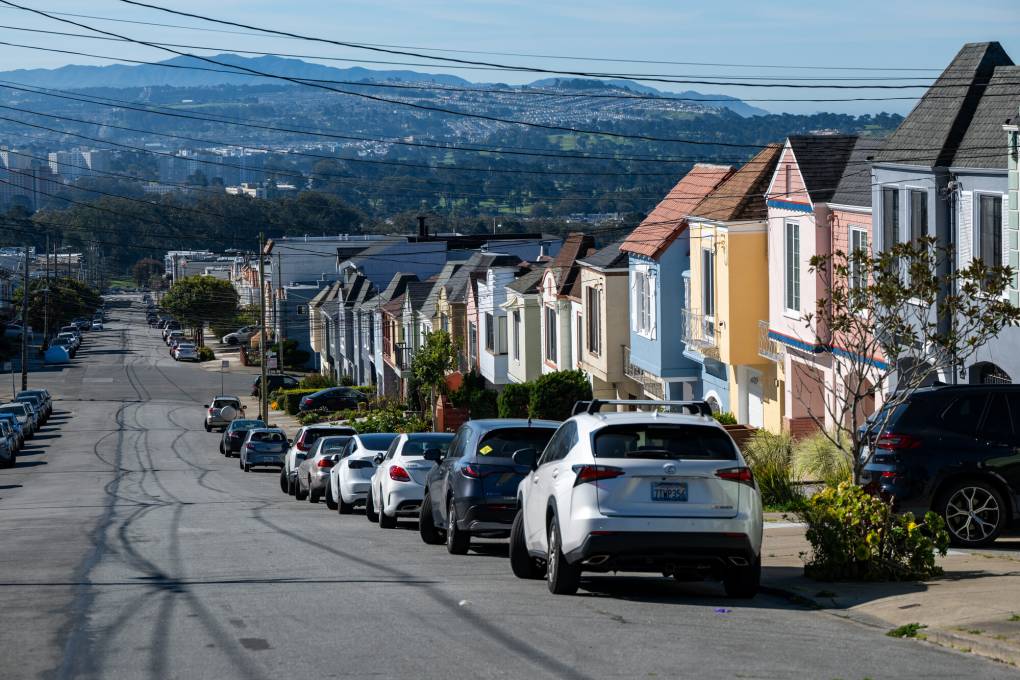
"caption": "Houses in San Francisco’s Sunset District on March 25, 2025. San Francisco officials eye the Sunset and Richmond districts for new mid-rise apartments as they work to meet California’s housing mandates and increase density in the city’s north and west side. ",
"credit": "Beth LaBerge/KQED",
"altTag": null,
"description": null,
"imgSizes": {
"medium": {
"file": "https://cdn.kqed.org/wp-content/uploads/sites/10/2025/04/250325-ApartmentsonWestside-06-BL_qed-800x533.jpg",
"width": 800,
"height": 533,
"mimeType": "image/jpeg"
},
"large": {
"file": "https://cdn.kqed.org/wp-content/uploads/sites/10/2025/04/250325-ApartmentsonWestside-06-BL_qed-1020x680.jpg",
"width": 1020,
"height": 680,
"mimeType": "image/jpeg"
},
"thumbnail": {
"file": "https://cdn.kqed.org/wp-content/uploads/sites/10/2025/04/250325-ApartmentsonWestside-06-BL_qed-160x107.jpg",
"width": 160,
"height": 107,
"mimeType": "image/jpeg"
},
"1536x1536": {
"file": "https://cdn.kqed.org/wp-content/uploads/sites/10/2025/04/250325-ApartmentsonWestside-06-BL_qed-1536x1024.jpg",
"width": 1536,
"height": 1024,
"mimeType": "image/jpeg"
},
"post-thumbnail": {
"file": "https://cdn.kqed.org/wp-content/uploads/sites/10/2025/04/250325-ApartmentsonWestside-06-BL_qed-672x372.jpg",
"width": 672,
"height": 372,
"mimeType": "image/jpeg"
},
"twentyfourteen-full-width": {
"file": "https://cdn.kqed.org/wp-content/uploads/sites/10/2025/04/250325-ApartmentsonWestside-06-BL_qed-1038x576.jpg",
"width": 1038,
"height": 576,
"mimeType": "image/jpeg"
},
"full-width": {
"file": "https://cdn.kqed.org/wp-content/uploads/sites/10/2025/04/250325-ApartmentsonWestside-06-BL_qed-1920x1280.jpg",
"width": 1920,
"height": 1280,
"mimeType": "image/jpeg"
},
"kqedFullSize": {
"file": "https://cdn.kqed.org/wp-content/uploads/sites/10/2025/04/250325-ApartmentsonWestside-06-BL_qed.jpg",
"width": 1999,
"height": 1333
}
},
"isLoading": false,
"fetchFailed": false
},
"news_12033297": {
"type": "attachments",
"id": "news_12033297",
"meta": {
"index": "attachments_1716263798",
"site": "news",
"id": "12033297",
"found": true
},
"title": "01.16.2025-Alex-01-scaled copy",
"publishDate": 1743095764,
"status": "inherit",
"parent": 12033293,
"modified": 1743095791,
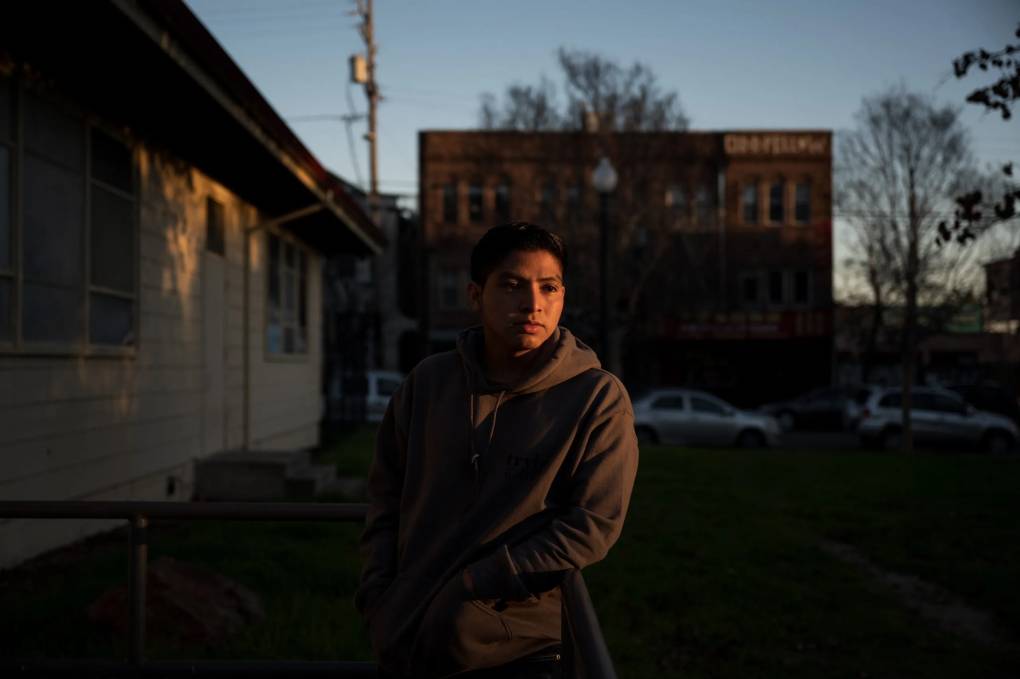
"caption": "Jorge poses for a portrait at a park in East Oakland on Thursday, Jan. 16, 2025. ",
"credit": "Hiram Alejandro Durán for El Tímpano/Catchlight/Report for America corps member",
"altTag": null,
"description": null,
"imgSizes": {
"medium": {
"file": "https://cdn.kqed.org/wp-content/uploads/sites/10/2025/03/01.16.2025-Alex-01-scaled-copy-800x532.jpg",
"width": 800,
"height": 532,
"mimeType": "image/jpeg"
},
"large": {
"file": "https://cdn.kqed.org/wp-content/uploads/sites/10/2025/03/01.16.2025-Alex-01-scaled-copy-1020x679.jpg",
"width": 1020,
"height": 679,
"mimeType": "image/jpeg"
},
"thumbnail": {
"file": "https://cdn.kqed.org/wp-content/uploads/sites/10/2025/03/01.16.2025-Alex-01-scaled-copy-160x106.jpg",
"width": 160,
"height": 106,
"mimeType": "image/jpeg"
},
"1536x1536": {
"file": "https://cdn.kqed.org/wp-content/uploads/sites/10/2025/03/01.16.2025-Alex-01-scaled-copy-1536x1022.jpg",
"width": 1536,
"height": 1022,
"mimeType": "image/jpeg"
},
"2048x2048": {
"file": "https://cdn.kqed.org/wp-content/uploads/sites/10/2025/03/01.16.2025-Alex-01-scaled-copy-2048x1362.jpg",
"width": 2048,
"height": 1362,
"mimeType": "image/jpeg"
},
"post-thumbnail": {
"file": "https://cdn.kqed.org/wp-content/uploads/sites/10/2025/03/01.16.2025-Alex-01-scaled-copy-672x372.jpg",
"width": 672,
"height": 372,
"mimeType": "image/jpeg"
},
"twentyfourteen-full-width": {
"file": "https://cdn.kqed.org/wp-content/uploads/sites/10/2025/03/01.16.2025-Alex-01-scaled-copy-1038x576.jpg",
"width": 1038,
"height": 576,
"mimeType": "image/jpeg"
},
"full-width": {
"file": "https://cdn.kqed.org/wp-content/uploads/sites/10/2025/03/01.16.2025-Alex-01-scaled-copy-1920x1277.jpg",
"width": 1920,
"height": 1277,
"mimeType": "image/jpeg"
},
"kqedFullSize": {
"file": "https://cdn.kqed.org/wp-content/uploads/sites/10/2025/03/01.16.2025-Alex-01-scaled-copy.jpg",
"width": 2560,
"height": 1703
}
},
"isLoading": false,
"fetchFailed": false
},
"news_12033317": {
"type": "attachments",
"id": "news_12033317",
"meta": {
"index": "attachments_1716263798",
"site": "news",
"id": "12033317",
"found": true
},
"title": "New Housing Starts Rise Higher Than Expected In January",
"publishDate": 1743098021,
"status": "inherit",
"parent": 12033092,
"modified": 1743098104,
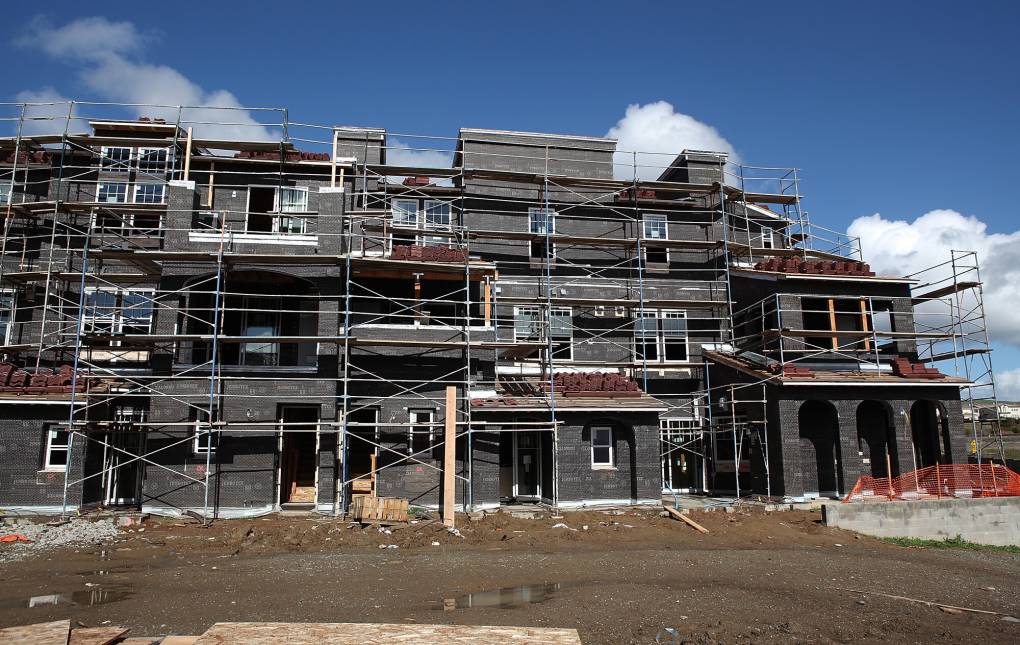
"caption": "A condo complex takes shape in a growing housing development under construction on Feb. 16, 2011, in Dublin, California.",
"credit": "Justin Sullivan/Getty Images",
"altTag": null,
"description": null,
"imgSizes": {
"medium": {
"file": "https://cdn.kqed.org/wp-content/uploads/sites/10/2025/03/construction072011_qed-800x506.jpg",
"width": 800,
"height": 506,
"mimeType": "image/jpeg"
},
"large": {
"file": "https://cdn.kqed.org/wp-content/uploads/sites/10/2025/03/construction072011_qed-1020x645.jpg",
"width": 1020,
"height": 645,
"mimeType": "image/jpeg"
},
"thumbnail": {
"file": "https://cdn.kqed.org/wp-content/uploads/sites/10/2025/03/construction072011_qed-160x101.jpg",
"width": 160,
"height": 101,
"mimeType": "image/jpeg"
},
"1536x1536": {
"file": "https://cdn.kqed.org/wp-content/uploads/sites/10/2025/03/construction072011_qed-1536x971.jpg",
"width": 1536,
"height": 971,
"mimeType": "image/jpeg"
},
"post-thumbnail": {
"file": "https://cdn.kqed.org/wp-content/uploads/sites/10/2025/03/construction072011_qed-672x372.jpg",
"width": 672,
"height": 372,
"mimeType": "image/jpeg"
},
"twentyfourteen-full-width": {
"file": "https://cdn.kqed.org/wp-content/uploads/sites/10/2025/03/construction072011_qed-1038x576.jpg",
"width": 1038,
"height": 576,
"mimeType": "image/jpeg"
},
"full-width": {
"file": "https://cdn.kqed.org/wp-content/uploads/sites/10/2025/03/construction072011_qed-1920x1213.jpg",
"width": 1920,
"height": 1213,
"mimeType": "image/jpeg"
},
"kqedFullSize": {
"file": "https://cdn.kqed.org/wp-content/uploads/sites/10/2025/03/construction072011_qed.jpg",
"width": 2000,
"height": 1264
}
},
"isLoading": false,
"fetchFailed": false
},
"news_12032921": {
"type": "attachments",
"id": "news_12032921",
"meta": {
"index": "attachments_1716263798",
"site": "news",
"id": "12032921",
"found": true
},
"title": "092024-Salinas-Shelter-MO-CM-36 copy",
"publishDate": 1742925785,
"status": "inherit",
"parent": 12032918,
"modified": 1742925814,
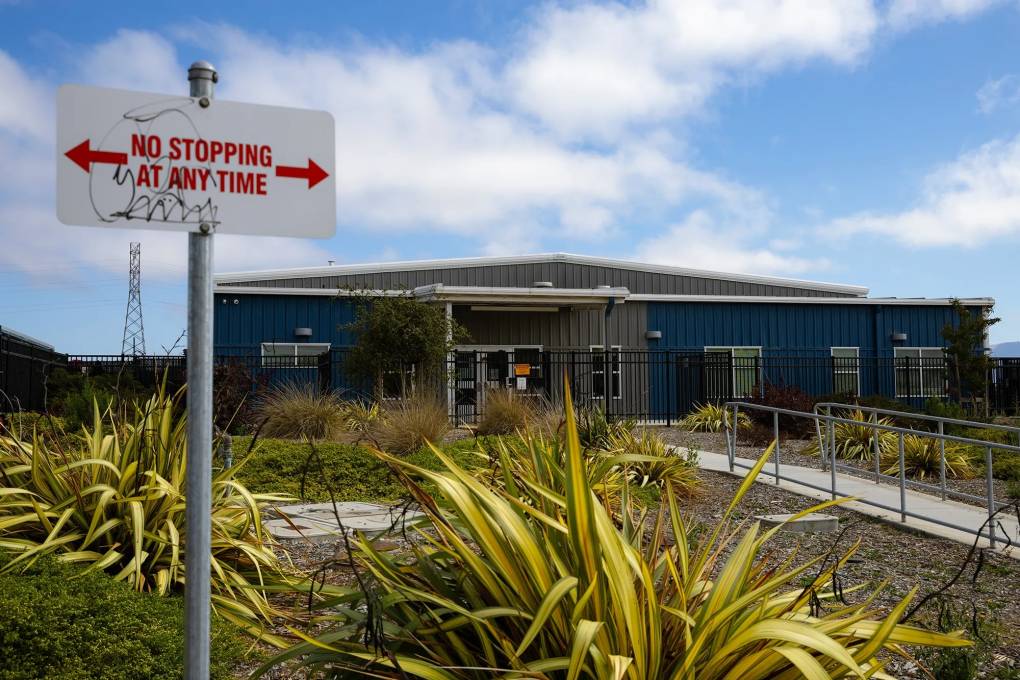
"caption": "The Share Center, a shelter for people experiencing homelessness in Monterey County in Salinas, on Sept. 20, 2024. The center's previous operator faced a long list of allegations, including fraud and inappropriate relationships with clients.",
"credit": "Manuel Obregozo for CalMatters",
"altTag": null,
"description": null,
"imgSizes": {
"medium": {
"file": "https://cdn.kqed.org/wp-content/uploads/sites/10/2025/03/092024-Salinas-Shelter-MO-CM-36-copy-800x533.jpg",
"width": 800,
"height": 533,
"mimeType": "image/jpeg"
},
"large": {
"file": "https://cdn.kqed.org/wp-content/uploads/sites/10/2025/03/092024-Salinas-Shelter-MO-CM-36-copy-1020x680.jpg",
"width": 1020,
"height": 680,
"mimeType": "image/jpeg"
},
"thumbnail": {
"file": "https://cdn.kqed.org/wp-content/uploads/sites/10/2025/03/092024-Salinas-Shelter-MO-CM-36-copy-160x107.jpg",
"width": 160,
"height": 107,
"mimeType": "image/jpeg"
},
"1536x1536": {
"file": "https://cdn.kqed.org/wp-content/uploads/sites/10/2025/03/092024-Salinas-Shelter-MO-CM-36-copy-1536x1024.jpg",
"width": 1536,
"height": 1024,
"mimeType": "image/jpeg"
},
"post-thumbnail": {
"file": "https://cdn.kqed.org/wp-content/uploads/sites/10/2025/03/092024-Salinas-Shelter-MO-CM-36-copy-672x372.jpg",
"width": 672,
"height": 372,
"mimeType": "image/jpeg"
},
"twentyfourteen-full-width": {
"file": "https://cdn.kqed.org/wp-content/uploads/sites/10/2025/03/092024-Salinas-Shelter-MO-CM-36-copy-1038x576.jpg",
"width": 1038,
"height": 576,
"mimeType": "image/jpeg"
},
"full-width": {
"file": "https://cdn.kqed.org/wp-content/uploads/sites/10/2025/03/092024-Salinas-Shelter-MO-CM-36-copy-1920x1280.jpg",
"width": 1920,
"height": 1280,
"mimeType": "image/jpeg"
},
"kqedFullSize": {
"file": "https://cdn.kqed.org/wp-content/uploads/sites/10/2025/03/092024-Salinas-Shelter-MO-CM-36-copy.jpg",
"width": 2000,
"height": 1333
}
},
"isLoading": false,
"fetchFailed": false
},
"news_12032752": {
"type": "attachments",
"id": "news_12032752",
"meta": {
"index": "attachments_1716263798",
"site": "news",
"id": "12032752",
"found": true
},
"title": "005_KQED_WoodStreet_12162022_qed",
"publishDate": 1742839566,
"status": "inherit",
"parent": 12032734,
"modified": 1742927250,
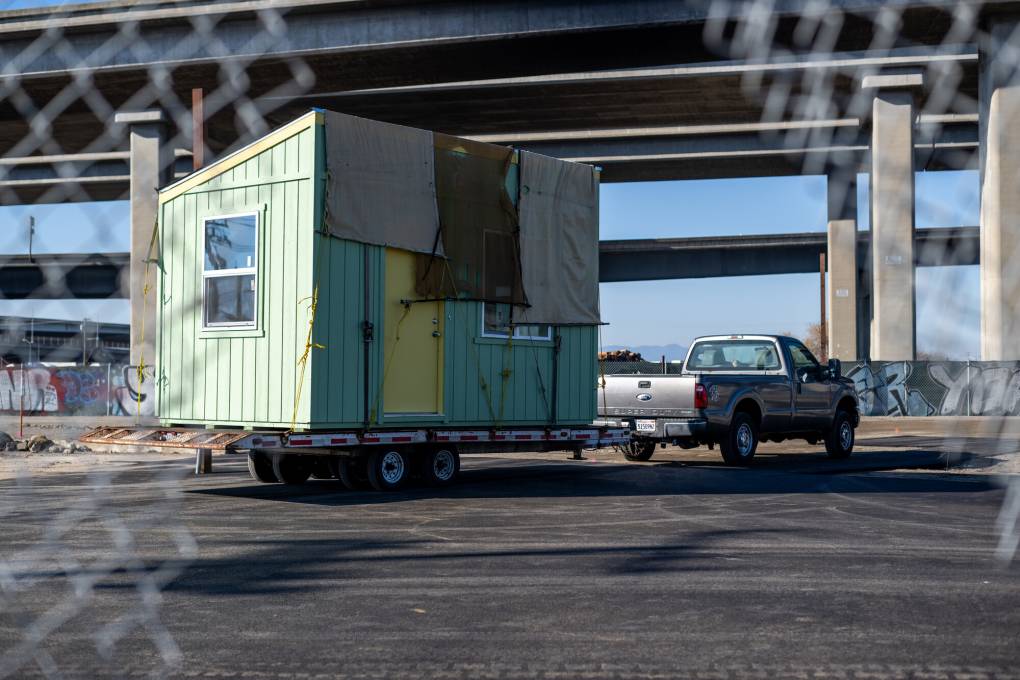
"caption": "A tiny home is trucked into the Wood Street Cabin Community, a planned 100-bed shelter program on the second portion of the Game Changer lot located at 2601 Wood St., in Oakland on Dec. 16, 2022.",
"credit": "Beth LaBerge/KQED",
"altTag": null,
"description": null,
"imgSizes": {
"medium": {
"file": "https://cdn.kqed.org/wp-content/uploads/sites/10/2025/03/005_KQED_WoodStreet_12162022_qed-800x533.jpg",
"width": 800,
"height": 533,
"mimeType": "image/jpeg"
},
"large": {
"file": "https://cdn.kqed.org/wp-content/uploads/sites/10/2025/03/005_KQED_WoodStreet_12162022_qed-1020x680.jpg",
"width": 1020,
"height": 680,
"mimeType": "image/jpeg"
},
"thumbnail": {
"file": "https://cdn.kqed.org/wp-content/uploads/sites/10/2025/03/005_KQED_WoodStreet_12162022_qed-160x107.jpg",
"width": 160,
"height": 107,
"mimeType": "image/jpeg"
},
"1536x1536": {
"file": "https://cdn.kqed.org/wp-content/uploads/sites/10/2025/03/005_KQED_WoodStreet_12162022_qed-1536x1024.jpg",
"width": 1536,
"height": 1024,
"mimeType": "image/jpeg"
},
"post-thumbnail": {
"file": "https://cdn.kqed.org/wp-content/uploads/sites/10/2025/03/005_KQED_WoodStreet_12162022_qed-672x372.jpg",
"width": 672,
"height": 372,
"mimeType": "image/jpeg"
},
"twentyfourteen-full-width": {
"file": "https://cdn.kqed.org/wp-content/uploads/sites/10/2025/03/005_KQED_WoodStreet_12162022_qed-1038x576.jpg",
"width": 1038,
"height": 576,
"mimeType": "image/jpeg"
},
"full-width": {
"file": "https://cdn.kqed.org/wp-content/uploads/sites/10/2025/03/005_KQED_WoodStreet_12162022_qed-1920x1280.jpg",
"width": 1920,
"height": 1280,
"mimeType": "image/jpeg"
},
"kqedFullSize": {
"file": "https://cdn.kqed.org/wp-content/uploads/sites/10/2025/03/005_KQED_WoodStreet_12162022_qed.jpg",
"width": 2000,
"height": 1333
}
},
"isLoading": false,
"fetchFailed": false
},
"news_12031106": {
"type": "attachments",
"id": "news_12031106",
"meta": {
"index": "attachments_1716263798",
"site": "news",
"id": "12031106",
"found": true
},
"title": "250311-VALLEJO HOMELESS DEATH VIGIL-MD-01-KQED",
"publishDate": 1741822357,
"status": "inherit",
"parent": 12031016,
"modified": 1741823337,
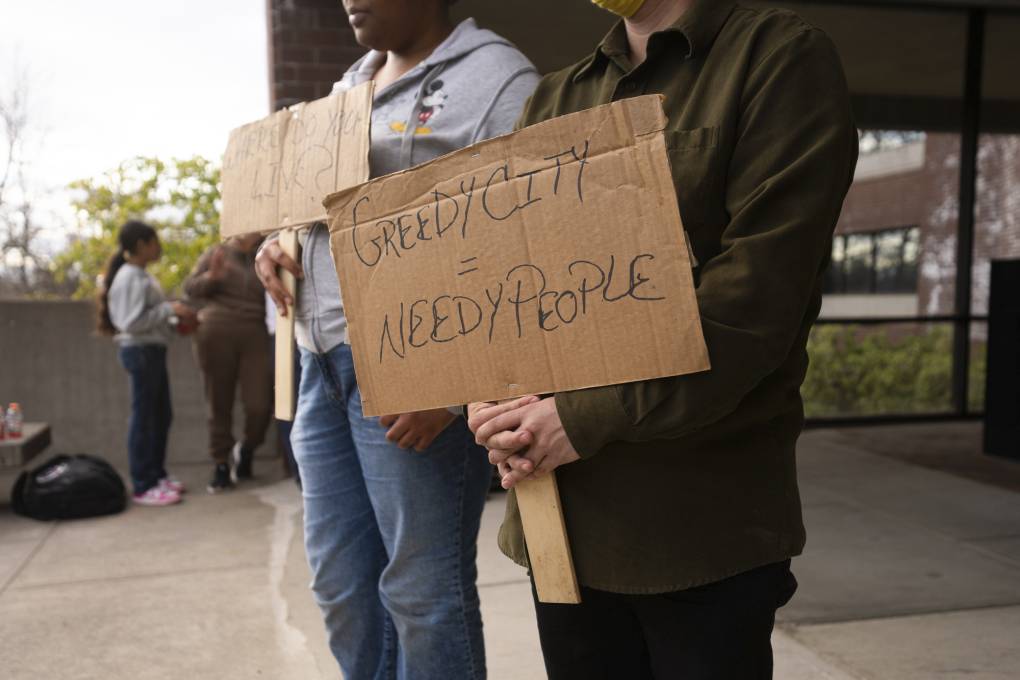
"caption": "Participants of a rally outside of Vallejo City Hall for James Oakley hold homemade signs on March 11, 2025.",
"credit": "Aryk Copley for KQED",
"altTag": null,
"description": null,
"imgSizes": {
"medium": {
"file": "https://cdn.kqed.org/wp-content/uploads/sites/10/2025/03/250311-VALLEJO-HOMELESS-DEATH-VIGIL-MD-01-KQED-800x533.jpg",
"width": 800,
"height": 533,
"mimeType": "image/jpeg"
},
"large": {
"file": "https://cdn.kqed.org/wp-content/uploads/sites/10/2025/03/250311-VALLEJO-HOMELESS-DEATH-VIGIL-MD-01-KQED-1020x680.jpg",
"width": 1020,
"height": 680,
"mimeType": "image/jpeg"
},
"thumbnail": {
"file": "https://cdn.kqed.org/wp-content/uploads/sites/10/2025/03/250311-VALLEJO-HOMELESS-DEATH-VIGIL-MD-01-KQED-160x107.jpg",
"width": 160,
"height": 107,
"mimeType": "image/jpeg"
},
"1536x1536": {
"file": "https://cdn.kqed.org/wp-content/uploads/sites/10/2025/03/250311-VALLEJO-HOMELESS-DEATH-VIGIL-MD-01-KQED-1536x1024.jpg",
"width": 1536,
"height": 1024,
"mimeType": "image/jpeg"
},
"post-thumbnail": {
"file": "https://cdn.kqed.org/wp-content/uploads/sites/10/2025/03/250311-VALLEJO-HOMELESS-DEATH-VIGIL-MD-01-KQED-672x372.jpg",
"width": 672,
"height": 372,
"mimeType": "image/jpeg"
},
"twentyfourteen-full-width": {
"file": "https://cdn.kqed.org/wp-content/uploads/sites/10/2025/03/250311-VALLEJO-HOMELESS-DEATH-VIGIL-MD-01-KQED-1038x576.jpg",
"width": 1038,
"height": 576,
"mimeType": "image/jpeg"
},
"full-width": {
"file": "https://cdn.kqed.org/wp-content/uploads/sites/10/2025/03/250311-VALLEJO-HOMELESS-DEATH-VIGIL-MD-01-KQED-1920x1280.jpg",
"width": 1920,
"height": 1280,
"mimeType": "image/jpeg"
},
"kqedFullSize": {
"file": "https://cdn.kqed.org/wp-content/uploads/sites/10/2025/03/250311-VALLEJO-HOMELESS-DEATH-VIGIL-MD-01-KQED.jpg",
"width": 2000,
"height": 1333
}
},
"isLoading": false,
"fetchFailed": false
},
"news_12031817": {
"type": "attachments",
"id": "news_12031817",
"meta": {
"index": "attachments_1716263798",
"site": "news",
"id": "12031817",
"found": true
},
"title": "A tent sits in St. James Park in San José on April 9, 2024.",
"publishDate": 1742316428,
"status": "inherit",
"parent": 12031813,
"modified": 1742316439,
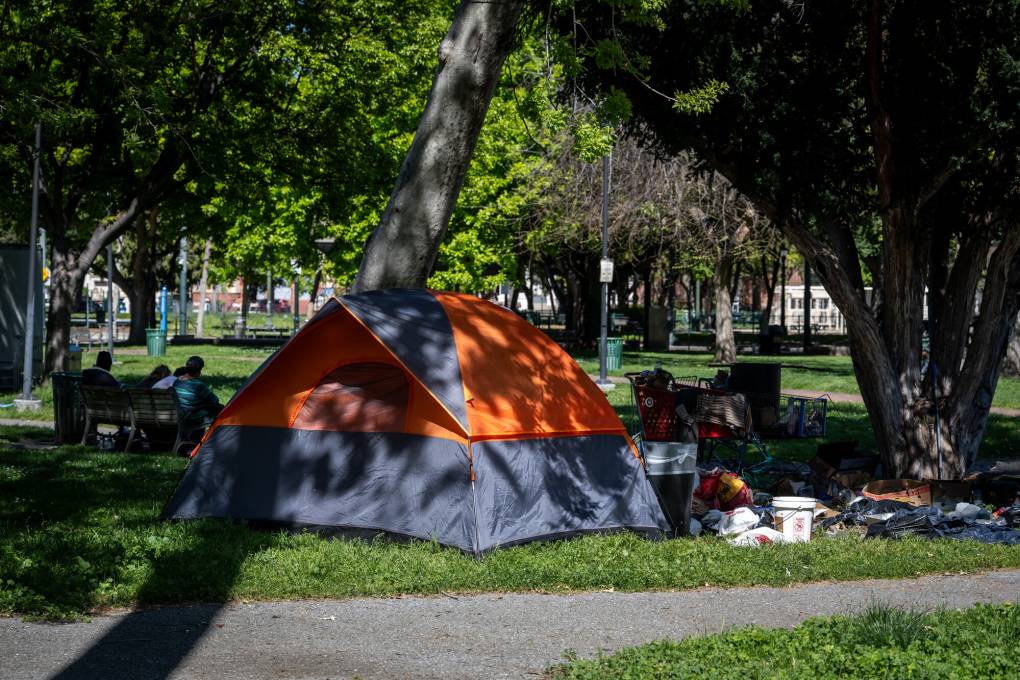
"caption": "A tent sits in St. James Park in San José on April 9, 2024.",
"credit": "Beth LaBerge/KQED",
"altTag": null,
"description": null,
"imgSizes": {
"medium": {
"file": "https://cdn.kqed.org/wp-content/uploads/sites/10/2025/03/240409-SJEncampmentBan-045-BL_qed-800x533.jpg",
"width": 800,
"height": 533,
"mimeType": "image/jpeg"
},
"large": {
"file": "https://cdn.kqed.org/wp-content/uploads/sites/10/2025/03/240409-SJEncampmentBan-045-BL_qed-1020x680.jpg",
"width": 1020,
"height": 680,
"mimeType": "image/jpeg"
},
"thumbnail": {
"file": "https://cdn.kqed.org/wp-content/uploads/sites/10/2025/03/240409-SJEncampmentBan-045-BL_qed-160x107.jpg",
"width": 160,
"height": 107,
"mimeType": "image/jpeg"
},
"1536x1536": {
"file": "https://cdn.kqed.org/wp-content/uploads/sites/10/2025/03/240409-SJEncampmentBan-045-BL_qed-1536x1024.jpg",
"width": 1536,
"height": 1024,
"mimeType": "image/jpeg"
},
"post-thumbnail": {
"file": "https://cdn.kqed.org/wp-content/uploads/sites/10/2025/03/240409-SJEncampmentBan-045-BL_qed-672x372.jpg",
"width": 672,
"height": 372,
"mimeType": "image/jpeg"
},
"twentyfourteen-full-width": {
"file": "https://cdn.kqed.org/wp-content/uploads/sites/10/2025/03/240409-SJEncampmentBan-045-BL_qed-1038x576.jpg",
"width": 1038,
"height": 576,
"mimeType": "image/jpeg"
},
"full-width": {
"file": "https://cdn.kqed.org/wp-content/uploads/sites/10/2025/03/240409-SJEncampmentBan-045-BL_qed-1920x1280.jpg",
"width": 1920,
"height": 1280,
"mimeType": "image/jpeg"
},
"kqedFullSize": {
"file": "https://cdn.kqed.org/wp-content/uploads/sites/10/2025/03/240409-SJEncampmentBan-045-BL_qed.jpg",
"width": 1999,
"height": 1333
}
},
"isLoading": false,
"fetchFailed": false
},
"news_12031677": {
"type": "attachments",
"id": "news_12031677",
"meta": {
"index": "attachments_1716263798",
"site": "news",
"id": "12031677",
"found": true
},
"title": "Apartment buildings in Nob Hill in San Francisco on July 29, 2021.",
"publishDate": 1742246529,
"status": "inherit",
"parent": 12030792,
"modified": 1742246540,
"caption": "Apartment buildings in Nob Hill in San Francisco on July 29, 2021.",
"credit": "Beth LaBerge/KQED",
"altTag": null,
"description": null,
"imgSizes": {
"medium": {
"file": "https://cdn.kqed.org/wp-content/uploads/sites/10/2025/03/001_SanFrancisco_Housing_07292021_qed-800x533.jpg",
"width": 800,
"height": 533,
"mimeType": "image/jpeg"
},
"large": {
"file": "https://cdn.kqed.org/wp-content/uploads/sites/10/2025/03/001_SanFrancisco_Housing_07292021_qed-1020x680.jpg",
"width": 1020,
"height": 680,
"mimeType": "image/jpeg"
},
"thumbnail": {
"file": "https://cdn.kqed.org/wp-content/uploads/sites/10/2025/03/001_SanFrancisco_Housing_07292021_qed-160x107.jpg",
"width": 160,
"height": 107,
"mimeType": "image/jpeg"
},
"1536x1536": {
"file": "https://cdn.kqed.org/wp-content/uploads/sites/10/2025/03/001_SanFrancisco_Housing_07292021_qed-1536x1024.jpg",
"width": 1536,
"height": 1024,
"mimeType": "image/jpeg"
},
"post-thumbnail": {
"file": "https://cdn.kqed.org/wp-content/uploads/sites/10/2025/03/001_SanFrancisco_Housing_07292021_qed-672x372.jpg",
"width": 672,
"height": 372,
"mimeType": "image/jpeg"
},
"twentyfourteen-full-width": {
"file": "https://cdn.kqed.org/wp-content/uploads/sites/10/2025/03/001_SanFrancisco_Housing_07292021_qed-1038x576.jpg",
"width": 1038,
"height": 576,
"mimeType": "image/jpeg"
},
"full-width": {
"file": "https://cdn.kqed.org/wp-content/uploads/sites/10/2025/03/001_SanFrancisco_Housing_07292021_qed-1920x1280.jpg",
"width": 1920,
"height": 1280,
"mimeType": "image/jpeg"
},
"kqedFullSize": {
"file": "https://cdn.kqed.org/wp-content/uploads/sites/10/2025/03/001_SanFrancisco_Housing_07292021_qed.jpg",
"width": 1999,
"height": 1333
}
},
"isLoading": false,
"fetchFailed": false
},
"news_12028707": {
"type": "attachments",
"id": "news_12028707",
"meta": {
"index": "attachments_1716263798",
"site": "news",
"id": "12028707",
"found": true
},
"title": "250218-SFDowntown-16-BL_qed",
"publishDate": 1740591027,
"status": "inherit",
"parent": 12028703,
"modified": 1740591048,
"caption": "Mayor Daniel Lurie listens to speakers during a press conference in Union Square, San Francisco, on Feb. 18, 2025, announcing legislation to increase nightlife in Downtown San Francisco to help the recovery of the neighborhood.",
"credit": "Beth LaBerge/KQED",
"altTag": null,
"description": null,
"imgSizes": {
"medium": {
"file": "https://cdn.kqed.org/wp-content/uploads/sites/10/2025/02/250218-SFDowntown-16-BL_qed-800x533.jpg",
"width": 800,
"height": 533,
"mimeType": "image/jpeg"
},
"large": {
"file": "https://cdn.kqed.org/wp-content/uploads/sites/10/2025/02/250218-SFDowntown-16-BL_qed-1020x680.jpg",
"width": 1020,
"height": 680,
"mimeType": "image/jpeg"
},
"thumbnail": {
"file": "https://cdn.kqed.org/wp-content/uploads/sites/10/2025/02/250218-SFDowntown-16-BL_qed-160x107.jpg",
"width": 160,
"height": 107,
"mimeType": "image/jpeg"
},
"1536x1536": {
"file": "https://cdn.kqed.org/wp-content/uploads/sites/10/2025/02/250218-SFDowntown-16-BL_qed-1536x1024.jpg",
"width": 1536,
"height": 1024,
"mimeType": "image/jpeg"
},
"post-thumbnail": {
"file": "https://cdn.kqed.org/wp-content/uploads/sites/10/2025/02/250218-SFDowntown-16-BL_qed-672x372.jpg",
"width": 672,
"height": 372,
"mimeType": "image/jpeg"
},
"twentyfourteen-full-width": {
"file": "https://cdn.kqed.org/wp-content/uploads/sites/10/2025/02/250218-SFDowntown-16-BL_qed-1038x576.jpg",
"width": 1038,
"height": 576,
"mimeType": "image/jpeg"
},
"full-width": {
"file": "https://cdn.kqed.org/wp-content/uploads/sites/10/2025/02/250218-SFDowntown-16-BL_qed-1920x1280.jpg",
"width": 1920,
"height": 1280,
"mimeType": "image/jpeg"
},
"kqedFullSize": {
"file": "https://cdn.kqed.org/wp-content/uploads/sites/10/2025/02/250218-SFDowntown-16-BL_qed.jpg",
"width": 2000,
"height": 1333
}
},
"isLoading": false,
"fetchFailed": false
},
"news_12031111": {
"type": "attachments",
"id": "news_12031111",
"meta": {
"index": "attachments_1716263798",
"site": "news",
"id": "12031111",
"found": true
},
"title": "250311-VALLEJO HOMELESS DEATH VIGIL-MD-06-KQED",
"publishDate": 1741822379,
"status": "inherit",
"parent": 0,
"modified": 1741822630,
"caption": "Shawn O'Malley (left) and Kathryn Salm (right) hold up a banner in support of their friend James Oakley, who was killed during a sweep in Vallejo, on March 11, 2025.",
"credit": "Aryk Copley for KQED",
"altTag": null,
"description": null,
"imgSizes": {
"medium": {
"file": "https://cdn.kqed.org/wp-content/uploads/sites/10/2025/03/250311-VALLEJO-HOMELESS-DEATH-VIGIL-MD-06-KQED-800x533.jpg",
"width": 800,
"height": 533,
"mimeType": "image/jpeg"
},
"large": {
"file": "https://cdn.kqed.org/wp-content/uploads/sites/10/2025/03/250311-VALLEJO-HOMELESS-DEATH-VIGIL-MD-06-KQED-1020x680.jpg",
"width": 1020,
"height": 680,
"mimeType": "image/jpeg"
},
"thumbnail": {
"file": "https://cdn.kqed.org/wp-content/uploads/sites/10/2025/03/250311-VALLEJO-HOMELESS-DEATH-VIGIL-MD-06-KQED-160x107.jpg",
"width": 160,
"height": 107,
"mimeType": "image/jpeg"
},
"1536x1536": {
"file": "https://cdn.kqed.org/wp-content/uploads/sites/10/2025/03/250311-VALLEJO-HOMELESS-DEATH-VIGIL-MD-06-KQED-1536x1024.jpg",
"width": 1536,
"height": 1024,
"mimeType": "image/jpeg"
},
"post-thumbnail": {
"file": "https://cdn.kqed.org/wp-content/uploads/sites/10/2025/03/250311-VALLEJO-HOMELESS-DEATH-VIGIL-MD-06-KQED-672x372.jpg",
"width": 672,
"height": 372,
"mimeType": "image/jpeg"
},
"twentyfourteen-full-width": {
"file": "https://cdn.kqed.org/wp-content/uploads/sites/10/2025/03/250311-VALLEJO-HOMELESS-DEATH-VIGIL-MD-06-KQED-1038x576.jpg",
"width": 1038,
"height": 576,
"mimeType": "image/jpeg"
},
"full-width": {
"file": "https://cdn.kqed.org/wp-content/uploads/sites/10/2025/03/250311-VALLEJO-HOMELESS-DEATH-VIGIL-MD-06-KQED-1920x1280.jpg",
"width": 1920,
"height": 1280,
"mimeType": "image/jpeg"
},
"kqedFullSize": {
"file": "https://cdn.kqed.org/wp-content/uploads/sites/10/2025/03/250311-VALLEJO-HOMELESS-DEATH-VIGIL-MD-06-KQED.jpg",
"width": 2000,
"height": 1333
}
},
"isLoading": false,
"fetchFailed": false
},
"news_12030729": {
"type": "attachments",
"id": "news_12030729",
"meta": {
"index": "attachments_1716263798",
"site": "news",
"id": "12030729",
"found": true
},
"title": "241203-FresnoCampingBan-67-BL_qed",
"publishDate": 1741713196,
"status": "inherit",
"parent": 12030725,
"modified": 1741713231,
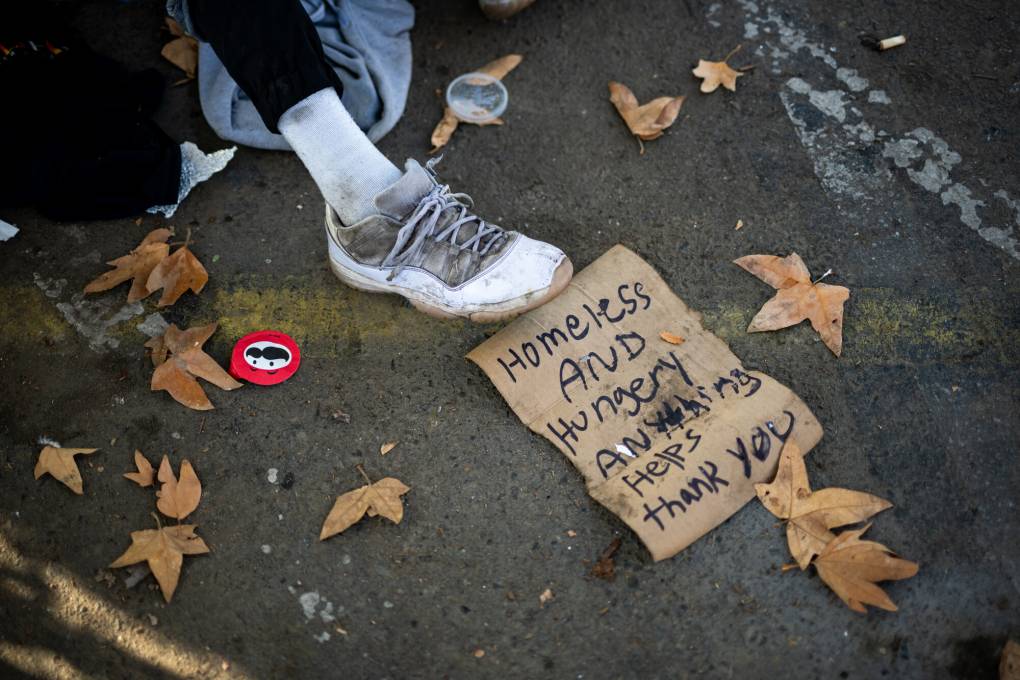
"caption": "A sign says, \"Homeless and Hungery\" near an encampment in Fresno, California, on Dec. 3, 2024.",
"credit": "Beth LaBerge/KQED",
"altTag": null,
"description": null,
"imgSizes": {
"medium": {
"file": "https://cdn.kqed.org/wp-content/uploads/sites/10/2025/03/241203-FresnoCampingBan-67-BL_qed-800x533.jpg",
"width": 800,
"height": 533,
"mimeType": "image/jpeg"
},
"large": {
"file": "https://cdn.kqed.org/wp-content/uploads/sites/10/2025/03/241203-FresnoCampingBan-67-BL_qed-1020x680.jpg",
"width": 1020,
"height": 680,
"mimeType": "image/jpeg"
},
"thumbnail": {
"file": "https://cdn.kqed.org/wp-content/uploads/sites/10/2025/03/241203-FresnoCampingBan-67-BL_qed-160x107.jpg",
"width": 160,
"height": 107,
"mimeType": "image/jpeg"
},
"1536x1536": {
"file": "https://cdn.kqed.org/wp-content/uploads/sites/10/2025/03/241203-FresnoCampingBan-67-BL_qed-1536x1024.jpg",
"width": 1536,
"height": 1024,
"mimeType": "image/jpeg"
},
"post-thumbnail": {
"file": "https://cdn.kqed.org/wp-content/uploads/sites/10/2025/03/241203-FresnoCampingBan-67-BL_qed-672x372.jpg",
"width": 672,
"height": 372,
"mimeType": "image/jpeg"
},
"twentyfourteen-full-width": {
"file": "https://cdn.kqed.org/wp-content/uploads/sites/10/2025/03/241203-FresnoCampingBan-67-BL_qed-1038x576.jpg",
"width": 1038,
"height": 576,
"mimeType": "image/jpeg"
},
"full-width": {
"file": "https://cdn.kqed.org/wp-content/uploads/sites/10/2025/03/241203-FresnoCampingBan-67-BL_qed-1920x1280.jpg",
"width": 1920,
"height": 1280,
"mimeType": "image/jpeg"
},
"kqedFullSize": {
"file": "https://cdn.kqed.org/wp-content/uploads/sites/10/2025/03/241203-FresnoCampingBan-67-BL_qed.jpg",
"width": 2000,
"height": 1333
}
},
"isLoading": false,
"fetchFailed": false
},
"news_11996094": {
"type": "attachments",
"id": "news_11996094",
"meta": {
"index": "attachments_1716263798",
"site": "news",
"id": "11996094",
"found": true
},
"title": "051424-OC-Shelter-JAH-CM-32",
"publishDate": 1721247134,
"status": "inherit",
"parent": 11996078,
"modified": 1721248071,
"caption": "The only 24 hour outdoor access residents had at this former homeless shelter in Anaheim, was a small outdoor patio used for smoking. The shelter has since been permanently shut down and partially boarded up. May 14, 2024. ",
"credit": "Jules Hotz / CalMatters",
"altTag": "The outside of a door.",
"description": null,
"imgSizes": {
"medium": {
"file": "https://cdn.kqed.org/wp-content/uploads/sites/10/2024/07/051424-OC-Shelter-JAH-CM-32-800x533.jpg",
"width": 800,
"height": 533,
"mimeType": "image/jpeg"
},
"large": {
"file": "https://cdn.kqed.org/wp-content/uploads/sites/10/2024/07/051424-OC-Shelter-JAH-CM-32-1020x680.jpg",
"width": 1020,
"height": 680,
"mimeType": "image/jpeg"
},
"thumbnail": {
"file": "https://cdn.kqed.org/wp-content/uploads/sites/10/2024/07/051424-OC-Shelter-JAH-CM-32-160x107.jpg",
"width": 160,
"height": 107,
"mimeType": "image/jpeg"
},
"1536x1536": {
"file": "https://cdn.kqed.org/wp-content/uploads/sites/10/2024/07/051424-OC-Shelter-JAH-CM-32-1536x1024.jpg",
"width": 1536,
"height": 1024,
"mimeType": "image/jpeg"
},
"post-thumbnail": {
"file": "https://cdn.kqed.org/wp-content/uploads/sites/10/2024/07/051424-OC-Shelter-JAH-CM-32-672x372.jpg",
"width": 672,
"height": 372,
"mimeType": "image/jpeg"
},
"twentyfourteen-full-width": {
"file": "https://cdn.kqed.org/wp-content/uploads/sites/10/2024/07/051424-OC-Shelter-JAH-CM-32-1038x576.jpg",
"width": 1038,
"height": 576,
"mimeType": "image/jpeg"
},
"full-width": {
"file": "https://cdn.kqed.org/wp-content/uploads/sites/10/2024/07/051424-OC-Shelter-JAH-CM-32-1920x1280.jpg",
"width": 1920,
"height": 1280,
"mimeType": "image/jpeg"
},
"kqedFullSize": {
"file": "https://cdn.kqed.org/wp-content/uploads/sites/10/2024/07/051424-OC-Shelter-JAH-CM-32.jpg",
"width": 2000,
"height": 1333
}
},
"isLoading": false,
"fetchFailed": false
}
},
"audioPlayerReducer": {
"postId": "stream_live",
"isPaused": true,
"isPlaying": false,
"pfsActive": false,
"pledgeModalIsOpen": true,
"playerDrawerIsOpen": false,
"liveAudioPlayStartedAt": 0,
"liveAudioPlayContext": ""
},
"authorsReducer": {
"byline_news_12033293": {
"type": "authors",
"id": "byline_news_12033293",
"meta": {
"override": true
},
"slug": "byline_news_12033293",
"name": "\u003ca href=\"https://www.eltimpano.org/author/cgaribay/\">Cassandra Garibay\u003c/a> and \u003ca href=\"https://www.eltimpano.org/author/xloeza/\">Ximena Loeza \u003c/a>, El Tímpano",
"isLoading": false
},
"byline_news_12032918": {
"type": "authors",
"id": "byline_news_12032918",
"meta": {
"override": true
},
"slug": "byline_news_12032918",
"name": "\u003ca href=\"https://calmatters.org/author/laurenhepler/\">Lauren Hepler\u003c/a>, CalMatters",
"isLoading": false
},
"byline_news_12030725": {
"type": "authors",
"id": "byline_news_12030725",
"meta": {
"override": true
},
"slug": "byline_news_12030725",
"name": "Cami Dominguez",
"isLoading": false
},
"gmarzorati": {
"type": "authors",
"id": "227",
"meta": {
"index": "authors_1716337520",
"id": "227",
"found": true
},
"name": "Guy Marzorati",
"firstName": "Guy",
"lastName": "Marzorati",
"slug": "gmarzorati",
"email": "gmarzorati@KQED.org",
"display_author_email": true,
"staff_mastheads": [
"news"
],
"title": "Correspondent",
"bio": "Guy Marzorati is a correspondent on KQED's California Politics and Government Desk, based in San Jose. A graduate of Santa Clara University, Guy joined KQED in 2013. He reports on state and local politics and produces KQED's digital voter guide.",
"avatar": "https://secure.gravatar.com/avatar/e7038b8dbfd55b104369b76b1cd0b9de?s=600&d=blank&r=g",
"twitter": "guymarzorati",
"facebook": null,
"instagram": null,
"linkedin": null,
"sites": [
{
"site": "",
"roles": [
"editor"
]
},
{
"site": "news",
"roles": [
"editor"
]
},
{
"site": "science",
"roles": [
"editor"
]
},
{
"site": "forum",
"roles": [
"editor"
]
},
{
"site": "elections",
"roles": [
"editor"
]
},
{
"site": "liveblog",
"roles": [
"editor"
]
}
],
"headData": {
"title": "Guy Marzorati | KQED",
"description": "Correspondent",
"ogImgSrc": "https://secure.gravatar.com/avatar/e7038b8dbfd55b104369b76b1cd0b9de?s=600&d=blank&r=g",
"twImgSrc": "https://secure.gravatar.com/avatar/e7038b8dbfd55b104369b76b1cd0b9de?s=600&d=blank&r=g"
},
"isLoading": false,
"link": "/author/gmarzorati"
},
"scottshafer": {
"type": "authors",
"id": "255",
"meta": {
"index": "authors_1716337520",
"id": "255",
"found": true
},
"name": "Scott Shafer",
"firstName": "Scott",
"lastName": "Shafer",
"slug": "scottshafer",
"email": "sshafer@kqed.org",
"display_author_email": false,
"staff_mastheads": [
"news"
],
"title": "KQED Contributor",
"bio": "Scott Shafer is a senior editor with the KQED Politics and Government desk. He is co-host of Political Breakdown, the award-winning radio show and podcast with a personal take on the world of politics. Scott came to KQED in 1998 to host the statewide\u003cem> California Report\u003c/em>. Prior to that he had extended stints in politics and government\u003cem>.\u003c/em> He uses that inside experience at KQED in his, reporting, hosting and analysis for the politics desk. Scott collaborated \u003cem>Political Breakdown a\u003c/em>nd on \u003cem>The Political Mind of Jerry Brown, \u003c/em>an eight-part series about the life and extraordinary political career of the former governor. For fun, he plays water polo with the San Francisco Tsunami.",
"avatar": "https://secure.gravatar.com/avatar/a62ebae45b79d7aed1a39a0e3bf68104?s=600&d=blank&r=g",
"twitter": "scottshafer",
"bluesky": null,
"facebook": null,
"instagram": null,
"linkedin": null,
"sites": [
{
"site": "news",
"roles": [
"editor"
]
},
{
"site": "stateofhealth",
"roles": [
"author"
]
},
{
"site": "science",
"roles": [
"author"
]
},
{
"site": "forum",
"roles": [
"subscriber"
]
},
{
"site": "liveblog",
"roles": [
"author"
]
}
],
"headData": {
"title": "Scott Shafer | KQED",
"description": "KQED Contributor",
"ogImgSrc": "https://secure.gravatar.com/avatar/a62ebae45b79d7aed1a39a0e3bf68104?s=600&d=blank&r=g",
"twImgSrc": "https://secure.gravatar.com/avatar/a62ebae45b79d7aed1a39a0e3bf68104?s=600&d=blank&r=g"
},
"isLoading": false,
"link": "/author/scottshafer"
},
"mlagos": {
"type": "authors",
"id": "3239",
"meta": {
"index": "authors_1716337520",
"id": "3239",
"found": true
},
"name": "Marisa Lagos",
"firstName": "Marisa",
"lastName": "Lagos",
"slug": "mlagos",
"email": "mlagos@kqed.org",
"display_author_email": false,
"staff_mastheads": [
"news"
],
"title": "KQED Contributor",
"bio": "Marisa Lagos is a correspondent for KQED’s California Politics and Government Desk and co-hosts the award-winning show and podcast, Political Breakdown. At KQED, Lagos also conducts reporting, analysis and investigations into state, local and national politics for radio, TV, online and onstage. In 2022, she and co-host, Scott Shafer, moderated the only gubernatorial debate in California. In 2020, the \u003ci>Washington Post\u003c/i> named her one of the top political journalists in California; she was nominated for a Peabody and won several other awards for her work investigating the 2017 California wildfires. She has worked at the \u003ci>San Francisco Chronicle\u003c/i>, \u003ci>San Francisco Examiner\u003c/i> and \u003ci>Los Angeles Times\u003c/i>. A UC Santa Barbara graduate, she lives in San Francisco with her two sons and husband.",
"avatar": "https://secure.gravatar.com/avatar/a261a0d3696fc066871ef96b85b5e7d2?s=600&d=blank&r=g",
"twitter": "@mlagos",
"facebook": null,
"instagram": null,
"linkedin": null,
"sites": [
{
"site": "arts",
"roles": [
"author"
]
},
{
"site": "news",
"roles": [
"editor"
]
},
{
"site": "science",
"roles": [
"editor"
]
},
{
"site": "forum",
"roles": [
"author"
]
},
{
"site": "liveblog",
"roles": [
"author"
]
}
],
"headData": {
"title": "Marisa Lagos | KQED",
"description": "KQED Contributor",
"ogImgSrc": "https://secure.gravatar.com/avatar/a261a0d3696fc066871ef96b85b5e7d2?s=600&d=blank&r=g",
"twImgSrc": "https://secure.gravatar.com/avatar/a261a0d3696fc066871ef96b85b5e7d2?s=600&d=blank&r=g"
},
"isLoading": false,
"link": "/author/mlagos"
},
"ecruzguevarra": {
"type": "authors",
"id": "8654",
"meta": {
"index": "authors_1716337520",
"id": "8654",
"found": true
},
"name": "Ericka Cruz Guevarra",
"firstName": "Ericka",
"lastName": "Cruz Guevarra",
"slug": "ecruzguevarra",
"email": "ecruzguevarra@kqed.org",
"display_author_email": true,
"staff_mastheads": [
"news"
],
"title": "Producer, The Bay Podcast",
"bio": "Ericka Cruz Guevarra is host of \u003ca href=\"https://www.kqed.org/podcasts/thebay\">\u003cem>The Bay\u003c/em>\u003c/a> podcast at KQED. Before host, she was the show’s producer. Her work in that capacity includes a three-part reported series on policing in Vallejo, which won a 2020 excellence in journalism award from the Society of Professional Journalists. Ericka has worked as a breaking news reporter at Oregon Public Broadcasting, helped produce the Code Switch podcast, and was KQED’s inaugural Raul Ramirez Diversity Fund intern. She’s also an alumna of NPR’s Next Generation Radio program. Send her an email if you have strong feelings about whether Fairfield and Suisun City are the Bay. Ericka is represented by SAG-AFTRA.",
"avatar": "https://secure.gravatar.com/avatar/25e5ab8d3d53fad2dcc7bb2b5c506b1a?s=600&d=blank&r=g",
"twitter": "NotoriousECG",
"facebook": null,
"instagram": null,
"linkedin": null,
"sites": [
{
"site": "arts",
"roles": [
"subscriber"
]
},
{
"site": "news",
"roles": [
"editor",
"manage_categories"
]
},
{
"site": "futureofyou",
"roles": [
"subscriber"
]
},
{
"site": "stateofhealth",
"roles": [
"subscriber"
]
},
{
"site": "science",
"roles": [
"editor"
]
},
{
"site": "forum",
"roles": [
"subscriber"
]
}
],
"headData": {
"title": "Ericka Cruz Guevarra | KQED",
"description": "Producer, The Bay Podcast",
"ogImgSrc": "https://secure.gravatar.com/avatar/25e5ab8d3d53fad2dcc7bb2b5c506b1a?s=600&d=blank&r=g",
"twImgSrc": "https://secure.gravatar.com/avatar/25e5ab8d3d53fad2dcc7bb2b5c506b1a?s=600&d=blank&r=g"
},
"isLoading": false,
"link": "/author/ecruzguevarra"
},
"vrancano": {
"type": "authors",
"id": "11276",
"meta": {
"index": "authors_1716337520",
"id": "11276",
"found": true
},
"name": "Vanessa Rancaño",
"firstName": "Vanessa",
"lastName": "Rancaño",
"slug": "vrancano",
"email": "vrancano@kqed.org",
"display_author_email": false,
"staff_mastheads": [
"news"
],
"title": "Reporter, Housing",
"bio": "Vanessa Rancaño is a features reporter for KQED. She’s also covered homelessness and education for the station and reported from the Central Valley. Her work has aired across public radio, from flagship national news shows to longform narrative podcasts. Before taking up a mic, she worked as a freelance print journalist. She’s been recognized with a number of national and regional awards. Vanessa grew up in California's Central Valley. She's a former NPR Kroc Fellow, and a graduate of the UC Berkeley Graduate School of Journalism.",
"avatar": "https://secure.gravatar.com/avatar/b3a383dfb0e7ee1c17568f2cf067904ab654d6e3de9743fc661f3c788ade1bed?s=600&d=blank&r=g",
"twitter": "vanessarancano",
"bluesky": null,
"facebook": null,
"instagram": null,
"linkedin": null,
"sites": [
{
"site": "arts",
"roles": [
"editor"
]
},
{
"site": "news",
"roles": [
"editor"
]
},
{
"site": "liveblog",
"roles": [
"contributor"
]
}
],
"headData": {
"title": "Vanessa Rancaño | KQED",
"description": "Reporter, Housing",
"ogImgSrc": "https://secure.gravatar.com/avatar/b3a383dfb0e7ee1c17568f2cf067904ab654d6e3de9743fc661f3c788ade1bed?s=600&d=blank&r=g",
"twImgSrc": "https://secure.gravatar.com/avatar/b3a383dfb0e7ee1c17568f2cf067904ab654d6e3de9743fc661f3c788ade1bed?s=600&d=blank&r=g"
},
"isLoading": false,
"link": "/author/vrancano"
},
"amontecillo": {
"type": "authors",
"id": "11649",
"meta": {
"index": "authors_1716337520",
"id": "11649",
"found": true
},
"name": "Alan Montecillo",
"firstName": "Alan",
"lastName": "Montecillo",
"slug": "amontecillo",
"email": "amontecillo@kqed.org",
"display_author_email": false,
"staff_mastheads": [
"news"
],
"title": "KQED Contributor",
"bio": "Alan Montecillo is the senior editor of \u003cem>\u003ca href=\"http://kqed.org/thebay\">The Bay\u003c/a>, \u003c/em> KQED's local news podcast. Before moving to the Bay Area, he worked as a senior talk show producer for WILL in Champaign-Urbana, Illinois and at Oregon Public Broadcasting in Portland, Oregon. He has won journalism awards from the Society of Professional Journalists Northern California, the Public Media Journalists Association, The Signal Awards, and has also received a regional Edward R. Murrow award. Alan is a Filipino American from Hong Kong and a graduate of Reed College.",
"avatar": "https://secure.gravatar.com/avatar/d5e4e7a76481969ccba76f4e2b5ccabc?s=600&d=blank&r=g",
"twitter": "alanmontecillo",
"facebook": null,
"instagram": null,
"linkedin": null,
"sites": [
{
"site": "",
"roles": [
"editor"
]
},
{
"site": "news",
"roles": [
"editor",
"manage_categories"
]
}
],
"headData": {
"title": "Alan Montecillo | KQED",
"description": "KQED Contributor",
"ogImgSrc": "https://secure.gravatar.com/avatar/d5e4e7a76481969ccba76f4e2b5ccabc?s=600&d=blank&r=g",
"twImgSrc": "https://secure.gravatar.com/avatar/d5e4e7a76481969ccba76f4e2b5ccabc?s=600&d=blank&r=g"
},
"isLoading": false,
"link": "/author/amontecillo"
},
"ebaldassari": {
"type": "authors",
"id": "11652",
"meta": {
"index": "authors_1716337520",
"id": "11652",
"found": true
},
"name": "Erin Baldassari",
"firstName": "Erin",
"lastName": "Baldassari",
"slug": "ebaldassari",
"email": "ebaldassari@KQED.org",
"display_author_email": true,
"staff_mastheads": [
"news"
],
"title": "Staff Writer",
"bio": "Erin Baldassari covers housing for KQED. She's a former print journalist and most recently worked as the transportation reporter for the \u003cem>Mercury News\u003c/em> and \u003cem>East Bay Times. \u003c/em>There, she focused on how the Bay Area’s housing shortage has changed the way people move around the region. She also served on the \u003cem>East Bay Times\u003c/em>’ 2017 Pulitzer Prize-winning team for coverage of the Ghost Ship Fire in Oakland. Prior to that, Erin worked as a breaking news and general assignment reporter for a variety of outlets in the Bay Area and the greater Boston area. A Tufts University alumna, Erin grew up in the foothills of the Sierra Nevada mountains and in Sonoma County. She is a life-long KQED listener.",
"avatar": "https://secure.gravatar.com/avatar/660ce35d088ca54ad606d7e941abc652?s=600&d=mm&r=g",
"twitter": "e_baldi",
"facebook": null,
"instagram": null,
"linkedin": null,
"sites": [
{
"site": "news",
"roles": [
"edit_others_posts",
"editor"
]
},
{
"site": "science",
"roles": [
"editor"
]
},
{
"site": "liveblog",
"roles": [
"editor"
]
}
],
"headData": {
"title": "Erin Baldassari | KQED",
"description": "Staff Writer",
"ogImgSrc": "https://secure.gravatar.com/avatar/660ce35d088ca54ad606d7e941abc652?s=600&d=mm&r=g",
"twImgSrc": "https://secure.gravatar.com/avatar/660ce35d088ca54ad606d7e941abc652?s=600&d=mm&r=g"
},
"isLoading": false,
"link": "/author/ebaldassari"
},
"abandlamudi": {
"type": "authors",
"id": "11672",
"meta": {
"index": "authors_1716337520",
"id": "11672",
"found": true
},
"name": "Adhiti Bandlamudi",
"firstName": "Adhiti",
"lastName": "Bandlamudi",
"slug": "abandlamudi",
"email": "abandlamudi@kqed.org",
"display_author_email": false,
"staff_mastheads": [
"news"
],
"title": "KQED Housing Reporter",
"bio": "Adhiti Bandlamudi reports for KQED's Housing desk. She focuses on how housing gets built across the Bay Area. Before joining KQED in 2020, she reported for WUNC in Durham, North Carolina, WABE in Atlanta, Georgia and Capital Public Radio in Sacramento. In 2017, she was awarded a Kroc Fellowship at NPR where she reported on everything from sprinkles to the Golden State Killer's arrest. When she's not reporting, she's baking new recipes in her kitchen or watching movies with friends and family. She's originally from Georgia and has strong opinions about Great British Bake Off.",
"avatar": "https://secure.gravatar.com/avatar/868129c8b257bb99a3500e2c86a65400?s=600&d=mm&r=g",
"twitter": "oddity_adhiti",
"facebook": null,
"instagram": null,
"linkedin": null,
"sites": [
{
"site": "arts",
"roles": [
"author"
]
},
{
"site": "news",
"roles": [
"editor"
]
},
{
"site": "liveblog",
"roles": [
"author"
]
}
],
"headData": {
"title": "Adhiti Bandlamudi | KQED",
"description": "KQED Housing Reporter",
"ogImgSrc": "https://secure.gravatar.com/avatar/868129c8b257bb99a3500e2c86a65400?s=600&d=mm&r=g",
"twImgSrc": "https://secure.gravatar.com/avatar/868129c8b257bb99a3500e2c86a65400?s=600&d=mm&r=g"
},
"isLoading": false,
"link": "/author/abandlamudi"
},
"jessicakariisa": {
"type": "authors",
"id": "11831",
"meta": {
"index": "authors_1716337520",
"id": "11831",
"found": true
},
"name": "Jessica Kariisa",
"firstName": "Jessica",
"lastName": "Kariisa",
"slug": "jessicakariisa",
"email": "jkariisa@kqed.org",
"display_author_email": false,
"staff_mastheads": [],
"title": "Producer, The Bay",
"bio": "Jessica Kariisa is the producer of The Bay. She first joined KQED as an intern for The California Report Magazine, after which she became an on-call producer. She reported a Bay Curious episode on the use of rap lyrics in criminal trials which won a Society of Professional Journalists award in 2023 for Excellence in Features Journalism and the 2023 Signal Award for Best Conversation Starter. She’s worked on podcasts for Snap Judgment and American Public Media. Before embarking on her audio career, she was a music journalist.\r\n\r\nJessica Kariisa is represented by SAG-AFTRA.",
"avatar": "https://secure.gravatar.com/avatar/522e97b28ac0b3d411621c0fde8f3419c7b71ea2c5c262c57c4bb600963f328c?s=600&d=blank&r=g",
"twitter": null,
"bluesky": null,
"facebook": null,
"instagram": null,
"linkedin": null,
"sites": [
{
"site": "arts",
"roles": [
"author"
]
},
{
"site": "news",
"roles": [
"editor",
"manage_categories"
]
}
],
"headData": {
"title": "Jessica Kariisa | KQED",
"description": "Producer, The Bay",
"ogImgSrc": "https://secure.gravatar.com/avatar/522e97b28ac0b3d411621c0fde8f3419c7b71ea2c5c262c57c4bb600963f328c?s=600&d=blank&r=g",
"twImgSrc": "https://secure.gravatar.com/avatar/522e97b28ac0b3d411621c0fde8f3419c7b71ea2c5c262c57c4bb600963f328c?s=600&d=blank&r=g"
},
"isLoading": false,
"link": "/author/jessicakariisa"
},
"sjohnson": {
"type": "authors",
"id": "11840",
"meta": {
"index": "authors_1716337520",
"id": "11840",
"found": true
},
"name": "Sydney Johnson",
"firstName": "Sydney",
"lastName": "Johnson",
"slug": "sjohnson",
"email": "sjohnson@kqed.org",
"display_author_email": false,
"staff_mastheads": [
"news"
],
"title": "KQED Reporter",
"bio": "Sydney Johnson is a general assignment reporter at KQED. She previously reported on public health and city government at the San Francisco Examiner, and before that, she covered statewide education policy for EdSource. Her reporting has won multiple local, state and national awards. Sydney is a graduate of the University of California, Berkeley and lives in San Francisco.",
"avatar": "https://secure.gravatar.com/avatar/97855f2719b72ad6190b7c535fe642c8?s=600&d=blank&r=g",
"twitter": "sydneyfjohnson",
"facebook": null,
"instagram": null,
"linkedin": null,
"sites": [
{
"site": "news",
"roles": [
"editor"
]
}
],
"headData": {
"title": "Sydney Johnson | KQED",
"description": "KQED Reporter",
"ogImgSrc": "https://secure.gravatar.com/avatar/97855f2719b72ad6190b7c535fe642c8?s=600&d=blank&r=g",
"twImgSrc": "https://secure.gravatar.com/avatar/97855f2719b72ad6190b7c535fe642c8?s=600&d=blank&r=g"
},
"isLoading": false,
"link": "/author/sjohnson"
},
"mvelasquez": {
"type": "authors",
"id": "11939",
"meta": {
"index": "authors_1716337520",
"id": "11939",
"found": true
},
"name": "Mel Velasquez",
"firstName": "Mel",
"lastName": "Velasquez",
"slug": "mvelasquez",
"email": "mvelasquez@kqed.org",
"display_author_email": false,
"staff_mastheads": [],
"title": "KQED Contributor",
"bio": null,
"avatar": "https://secure.gravatar.com/avatar/409094312d56fab09fef4251e949ffa6?s=600&d=blank&r=g",
"twitter": null,
"facebook": null,
"instagram": null,
"linkedin": "www.linkedin.com/in/melanievelasquezz",
"sites": [
{
"site": "news",
"roles": [
"editor"
]
}
],
"headData": {
"title": "Mel Velasquez | KQED",
"description": "KQED Contributor",
"ogImgSrc": "https://secure.gravatar.com/avatar/409094312d56fab09fef4251e949ffa6?s=600&d=blank&r=g",
"twImgSrc": "https://secure.gravatar.com/avatar/409094312d56fab09fef4251e949ffa6?s=600&d=blank&r=g"
},
"isLoading": false,
"link": "/author/mvelasquez"
}
},
"pagesReducer": {
"news_tag_homelessness": {
"type": "terms",
"id": "news_4020",
"meta": {
"index": "terms_1716263798",
"site": "news",
"id": "4020",
"score": 8.554564
},
"name": "Homelessness",
"slug": "homelessness",
"taxonomy": "tag",
"description": null,
"featImg": null,
"headData": {
"title": "Homelessness | KQED News",
"description": null,
"ogTitle": null,
"ogDescription": null,
"ogImgId": null,
"twTitle": null,
"twDescription": null,
"twImgId": null,
"metaRobotsNoIndex": "index"
},
"ttid": 4039,
"isLoading": false,
"title": "Homelessness",
"pageMeta": {
"site": "news",
"WpPageTemplate": "page-topic-editorial",
"currentPage": 7
},
"blocks": [
{
"blockName": "kqed/post-list",
"attrs": {
"layout": "cardArticle2",
"query": "posts/news?tag=homelessness",
"seeMore": false,
"paginated": true,
"page": 7
}
},
{
"blockName": "kqed/ad"
}
]
}
},
"pfsSessionReducer": {},
"postsReducer": {
"stream_live": {
"type": "live",
"id": "stream_live",
"audioUrl": "https://streams.kqed.org/kqedradio",
"title": "Live Stream",
"excerpt": "Live Stream information currently unavailable.",
"link": "/radio",
"featImg": "",
"label": {
"name": "KQED Live",
"link": "/"
}
},
"stream_kqedNewscast": {
"type": "posts",
"id": "stream_kqedNewscast",
"audioUrl": "https://www.kqed.org/.stream/anon/radio/RDnews/newscast.mp3?_=1",
"title": "KQED Newscast",
"featImg": "",
"label": {
"name": "88.5 FM",
"link": "/"
}
},
"news_12033966": {
"type": "posts",
"id": "news_12033966",
"meta": {
"index": "posts_1716263798",
"site": "news",
"id": "12033966",
"score": null,
"sort": [
1743714917000
]
},
"guestAuthors": [],
"slug": "sfs-single-family-home-neighborhoods-apartments-65-story-towers-downtown",
"title": "SF’s Single-Family Home Neighborhoods Could See More Apartments, 65-Story Towers Near Downtown",
"publishDate": 1743714917,
"format": "standard",
"headTitle": "SF’s Single-Family Home Neighborhoods Could See More Apartments, 65-Story Towers Near Downtown | KQED",
"labelTerm": {
"site": "news"
},
"content": "\u003cp>San Francisco officials want to make way for \u003ca href=\"https://www.kqed.org/news/11992758/after-missing-housing-goals-sf-has-permit-process-slashed-under-new-state-law\">more housing\u003c/a>. Where to put it? In quiet neighborhoods on the west side, historically known for single-family homes.\u003c/p>\n\u003cp>On Thursday, the city’s planning department will release details of a preliminary proposal to allow mid-rise apartment buildings, up to eight stories tall, along major streets in the Richmond and Sunset districts, along with some other neighborhoods in the northwestern part of the city. It’s also proposing to allow buildings up to 65 stories tall along certain major corridors.\u003c/p>\n\u003cp>The department will host an \u003ca href=\"https://sfplanning.org/planning-commission\">informational \u003c/a>hearing about the plan, \u003ca href=\"https://sanfrancisco.granicus.com/player/camera/50?publish_id=1783&redirect=true\">which will be livestreamed\u003c/a>, on April 10.\u003c/p>\n\u003cp>[ad fullwidth]\u003c/p>\n\u003cp>For decades, city officials \u003ca href=\"https://sfplanning.org/project/expanding-housing-choice\">concentrated\u003c/a> housing development on the \u003ca href=\"https://www.spur.org/news/2025-03-19/why-and-where-san-francisco-needs-allow-more-homes-housing-element-primer\">southeast side\u003c/a> of San Francisco, including the Mission District, South of Market and the Dogpatch, which \u003ca href=\"https://sfplanninggis.org/pim/map/?search=3574009&layers=Height%20and%20Bulk%20Districts\">allow for taller buildings.\u003c/a> Meanwhile, large swaths of the Sunset, Richmond, Marina and Pacific Heights neighborhoods currently only allow for buildings \u003ca href=\"https://sfplanninggis.org/pim/map/?search=3574009&layers=Height%20and%20Bulk%20Districts\">up to four stories tall\u003c/a>.\u003c/p>\n\u003cp>As San Francisco faces pressure from the state to \u003ca href=\"https://sfplanning.org/project/housing-element-update-2022\">plan for more than 82,000 new apartments\u003c/a> by 2031, city officials are considering \u003ca href=\"https://sfplanning.org/project/expanding-housing-choice\">opening these northern and western neighborhoods\u003c/a> to apartments six to \u003ca href=\"https://experience.arcgis.com/experience/6e0e399f9c82456dbda233eacebc433d/\">eight stories tall along major streets\u003c/a>, with some large boulevards, such as Geary Boulevard and Van Ness Avenue, going up to 65 stories tall near the city’s downtown.\u003c/p>\n\u003cfigure id=\"attachment_12033009\" class=\"wp-caption aligncenter\" style=\"max-width: 2000px\">\u003cimg loading=\"lazy\" decoding=\"async\" class=\"wp-image-12033009 size-full\" src=\"https://cdn.kqed.org/wp-content/uploads/sites/10/2025/03/250325-APARTMENTSONWESTSIDE-15-BL-KQED.jpg\" alt=\"\" width=\"2000\" height=\"1333\" srcset=\"https://cdn.kqed.org/wp-content/uploads/sites/10/2025/03/250325-APARTMENTSONWESTSIDE-15-BL-KQED.jpg 2000w, https://cdn.kqed.org/wp-content/uploads/sites/10/2025/03/250325-APARTMENTSONWESTSIDE-15-BL-KQED-800x533.jpg 800w, https://cdn.kqed.org/wp-content/uploads/sites/10/2025/03/250325-APARTMENTSONWESTSIDE-15-BL-KQED-1020x680.jpg 1020w, https://cdn.kqed.org/wp-content/uploads/sites/10/2025/03/250325-APARTMENTSONWESTSIDE-15-BL-KQED-160x107.jpg 160w, https://cdn.kqed.org/wp-content/uploads/sites/10/2025/03/250325-APARTMENTSONWESTSIDE-15-BL-KQED-1536x1024.jpg 1536w, https://cdn.kqed.org/wp-content/uploads/sites/10/2025/03/250325-APARTMENTSONWESTSIDE-15-BL-KQED-1920x1280.jpg 1920w\" sizes=\"auto, (max-width: 2000px) 100vw, 2000px\">\u003cfigcaption class=\"wp-caption-text\">Pedestrians cross the street in San Francisco’s Sunset District on March 25, 2025. \u003ccite>(Beth LaBerge/KQED)\u003c/cite>\u003c/figcaption>\u003c/figure>\n\u003cp>Supervisor Stephen Sherrill, who represents several of the neighborhoods proposed to be rezoned, said the changes could help bring activity back to \u003ca href=\"https://time.com/7086165/san-francisco-economic-recovery/\">once-lively areas\u003c/a> of the city.\u003c/p>\n\u003cp>“Post-pandemic, San Francisco has not rebounded in the way that other cities have, and we have an opportunity to really thoughtfully increase vibrancy in certain areas of the city,” Sherrill said. “By doing that with residents, we can be really effective in planning for the long-term future of the city that stays true with San Francisco.”\u003c/p>\n\u003cp>According to the city’s Principal Planner, Lisa Chen, the decision to add more apartments to the west side is thanks to a state mandate requiring the city to direct new development to well-resourced neighborhoods. People living in the \u003ca href=\"https://belonging.berkeley.edu/sites/default/files/external_pages/unpacked/11484/index.html?t=1743463757#faq\">northern and western neighborhoods\u003c/a> have some of the highest incomes, home values, employment rates and better educational attainment rates than their eastern counterparts.[aside postID=news_12017695 hero='https://cdn.kqed.org/wp-content/uploads/sites/10/2024/12/IMG_3372_qed-1020x680.jpg']Chen said that if the city were to plan for housing in those areas, the people eventually living there would have access to better resources, such as public transit, parks, high-performing public schools, retail, and community facilities.\u003c/p>\n\u003cp>“The reality is that we have already rezoned many parts of the southern and eastern neighborhoods,” Chen said. “While we can continue to look for more opportunities to add housing in those areas, the state is requiring that the emphasis of this rezoning and the majority of units be placed in the well-resourced neighborhoods.”\u003c/p>\n\u003cp>This can be done sensitively, said San Francisco Board of Supervisors President Rafael Mandelman, by focusing development along major corridors in the western and northern parts of the city.\u003c/p>\n\u003cp>“I think people are going to continue to want to work here and live here,” he said. “I think we do need to try as best we can to accommodate that. And I think we can do it without destroying what we love about San Francisco. I think we can balance those things.”\u003c/p>\n\u003cp>However, the plan is receiving mixed reactions from residents, some who want more activity in their suburban-style neighborhoods and others who worry it could displace vulnerable renters and small businesses if the properties they occupy are redeveloped.\u003c/p>\n\u003cfigure id=\"attachment_12033008\" class=\"wp-caption aligncenter\" style=\"max-width: 2000px\">\u003cimg loading=\"lazy\" decoding=\"async\" class=\"size-full wp-image-12033008\" src=\"https://cdn.kqed.org/wp-content/uploads/sites/10/2025/03/250325-APARTMENTSONWESTSIDE-13-BL-KQED.jpg\" alt=\"\" width=\"2000\" height=\"1333\" srcset=\"https://cdn.kqed.org/wp-content/uploads/sites/10/2025/03/250325-APARTMENTSONWESTSIDE-13-BL-KQED.jpg 2000w, https://cdn.kqed.org/wp-content/uploads/sites/10/2025/03/250325-APARTMENTSONWESTSIDE-13-BL-KQED-800x533.jpg 800w, https://cdn.kqed.org/wp-content/uploads/sites/10/2025/03/250325-APARTMENTSONWESTSIDE-13-BL-KQED-1020x680.jpg 1020w, https://cdn.kqed.org/wp-content/uploads/sites/10/2025/03/250325-APARTMENTSONWESTSIDE-13-BL-KQED-160x107.jpg 160w, https://cdn.kqed.org/wp-content/uploads/sites/10/2025/03/250325-APARTMENTSONWESTSIDE-13-BL-KQED-1536x1024.jpg 1536w, https://cdn.kqed.org/wp-content/uploads/sites/10/2025/03/250325-APARTMENTSONWESTSIDE-13-BL-KQED-1920x1280.jpg 1920w\" sizes=\"auto, (max-width: 2000px) 100vw, 2000px\">\u003cfigcaption class=\"wp-caption-text\">Houses line a street in San Francisco’s Sunset District on March 25, 2025. \u003ccite>(Beth LaBerge/KQED)\u003c/cite>\u003c/figcaption>\u003c/figure>\n\u003cp>“I can see people being forced out of their homes, rent-controlled apartments and buildings being destroyed and luxury market-rate housing being built in its place,” said Don Misumi, a member of tenants’ rights group \u003ca href=\"https://www.facebook.com/richmonddistrictrising/\">Richmond District Rising\u003c/a>. “There’s not really much doubt in my mind unless things start to change and I see some concrete proposals that are going to provide tenant protections, that are going to provide protections for small businesses.”\u003c/p>\n\u003cp>San Francisco’s planning department has \u003ca href=\"https://drive.google.com/file/d/11v8sWadgj-MTMLTLRZEBF3wmLc6-ZUxL/view?usp=sharing\">already approved roughly 58,100 new apartments\u003c/a>, largely to be built in the eastern part of the city, that are awaiting construction. However, to reach the state’s goal of planning for more than 82,000 new units, the department is proposing that \u003ca href=\"https://sfplanning.org/sites/default/files/documents/citywide/housing-choice/RHNA-Primer.pdf\">some of the remaining homes\u003c/a> be built in the north and west sides.[aside postID=news_12018940 hero='https://cdn.kqed.org/wp-content/uploads/sites/10/2024/12/OceanTowerRendering2-1020x574.jpg']The city’s preliminary map proposes to \u003ca href=\"https://experience.arcgis.com/experience/6e0e399f9c82456dbda233eacebc433d/#data_s=id%3AdataSource_3-18d42c41053-layer-13%3A43743\">rezone commercial corridors\u003c/a>, including 19th Avenue, Geary Boulevard and Clement Street. The bulk of the proposed rezoning would stretch from Russian Hill to Parkside and could allow for taller buildings — up to 65 stories on certain commercial corridors — creating opportunities for thousands of new homes. The plan also includes increasing height limits in other neighborhoods throughout the city, including along Market Street in the Castro.\u003c/p>\n\u003cp>After multiple informational hearings where residents can offer comments and voice concerns, the proposal will go to the planning commission, where it could be amended or changed. It will ultimately have to go before the Board of Supervisors before the end of January 2026, when the city faces a state-mandated deadline to approve a rezoning plan.\u003c/p>\n\u003cp>If it misses that deadline, \u003ca href=\"https://sfplanning.org/project/expanding-housing-choice#faqs\">it could lose\u003c/a> state funding for affordable housing and public transportation, risk lawsuits, fines and be subject to the\u003ca href=\"https://www.kqed.org/news/11945744/california-building-boom-a-new-law-promised-big-but-has-yet-to-deliver-in-the-bay-area\"> builder’s remedy\u003c/a>, a mechanism that allows developers to circumvent local building rules if the city is out of compliance with state housing law.\u003c/p>\n\u003cp>“The process for our rezoning is a bit of a fait accompli — we already agreed to this,” said Jane Natoli, San Francisco Organizing Director for the pro-housing lobbying group, YIMBY Action. “All we’re trying to do is honor the commitments we told the state we were going to do, at the end of the day, to build the housing we need for San Franciscans.”\u003c/p>\n\u003ch2>From sand dunes to suburban homes\u003c/h2>\n\u003cp>San Francisco’s decision to rezone the western part of the city marks a break from the area’s historically low-density character. Western neighborhoods were some of the \u003ca href=\"https://www.outsidelands.org/richmond_arch.php\">last parts\u003c/a> of the city to be developed.\u003c/p>\n\u003cp>During the mid-to-late 1800s, \u003ca href=\"https://www.outsidelands.org/sunset.php#:~:text=The%201894%20California%20Midwinter%20International,a%20sea%20of%20stucco%20homes\">the Inner Sunset\u003c/a> and \u003ca href=\"https://www.outsidelands.org/richmond_arch.php\">Richmond districts\u003c/a> were home to a handful of dairies, ranches, a chicken farm — even a dynamite factory — while the Outer Sunset stretched out in a yawning sprawl of sand dunes.\u003c/p>\n\u003cfigure id=\"attachment_12033006\" class=\"wp-caption aligncenter\" style=\"max-width: 2000px\">\u003cimg loading=\"lazy\" decoding=\"async\" class=\"size-full wp-image-12033006\" src=\"https://cdn.kqed.org/wp-content/uploads/sites/10/2025/03/250325-APARTMENTSONWESTSIDE-10-BL-KQED.jpg\" alt=\"\" width=\"2000\" height=\"1333\" srcset=\"https://cdn.kqed.org/wp-content/uploads/sites/10/2025/03/250325-APARTMENTSONWESTSIDE-10-BL-KQED.jpg 2000w, https://cdn.kqed.org/wp-content/uploads/sites/10/2025/03/250325-APARTMENTSONWESTSIDE-10-BL-KQED-800x533.jpg 800w, https://cdn.kqed.org/wp-content/uploads/sites/10/2025/03/250325-APARTMENTSONWESTSIDE-10-BL-KQED-1020x680.jpg 1020w, https://cdn.kqed.org/wp-content/uploads/sites/10/2025/03/250325-APARTMENTSONWESTSIDE-10-BL-KQED-160x107.jpg 160w, https://cdn.kqed.org/wp-content/uploads/sites/10/2025/03/250325-APARTMENTSONWESTSIDE-10-BL-KQED-1536x1024.jpg 1536w, https://cdn.kqed.org/wp-content/uploads/sites/10/2025/03/250325-APARTMENTSONWESTSIDE-10-BL-KQED-1920x1280.jpg 1920w\" sizes=\"auto, (max-width: 2000px) 100vw, 2000px\">\u003cfigcaption class=\"wp-caption-text\">A view of the Sunset District and Ocean Beach in San Francisco on March 25, 2025. \u003ccite>(Beth LaBerge/KQED)\u003c/cite>\u003c/figcaption>\u003c/figure>\n\u003cp>In the aftermath of the \u003ca href=\"https://www.conservation.ca.gov/cgs/earthquakes/san-francisco\">devastating 1906 earthquake\u003c/a>, refugee camps sprang up on the city’s underdeveloped western side. Woody LaBounty’s \u003ca href=\"https://www.outsidelands.org/sw17.php\">great-grandparents even met at one of those camps\u003c/a> in the Richmond area, he said. The lifelong Richmond resident and president of the preservationist organization San Francisco Heritage said tract houses soon began popping up atop sand dunes to replace the temporary camps.\u003c/p>\n\u003cp>After World War II, most of the Sunset and Richmond districts had been developed into suburban-style neighborhoods with single-family homes, LaBounty said.\u003c/p>\n\u003cp>“You have a yard for your family to play in, you have multiple bedrooms, you’ve got your own sort of little plot — your little estate,” he said, “even if it’s a 25-by-100-foot lot in the Sunset District.”\u003c/p>\n\u003cp>It’s for that same reason why many westside residents enjoy this part of town today. Paola Soto said she moved to the Outer Sunset five years ago so she and her husband could raise their daughter in a rented single-family home.\u003c/p>\n\u003cp>“We just loved the neighborhood and how family-oriented it is,” she said. “It doesn’t feel like part of the city, but you’re still in the city.”\u003c/p>\n\u003cp>But Soto said there aren’t many amenities or small businesses to patronize on her block. She welcomes the rezoning if it could bring more business activity to her neighborhood but said taller buildings could mean losing “this kind of neighborhood vibe” that she likes.\u003c/p>\n\u003ch2>Picking and choosing\u003c/h2>\n\u003cp>While residents like Soto are hoping the rezoning could bring new small businesses to the Sunset and Richmond, existing business owners are concerned they will be forced out. Yoland Porrata, an esthetician and board member of nonprofit Small Business Forward, owns a skincare studio in the Lower Haight.\u003c/p>\n\u003cp>Right now, she is trying to work with the city to establish new protections against displacement for small business owners, even if they do not own the building.\u003c/p>\n\u003cfigure id=\"attachment_12033010\" class=\"wp-caption aligncenter\" style=\"max-width: 2000px\">\u003cimg loading=\"lazy\" decoding=\"async\" class=\"size-full wp-image-12033010\" src=\"https://cdn.kqed.org/wp-content/uploads/sites/10/2025/03/250325-APARTMENTSONWESTSIDE-16-BL-KQED.jpg\" alt=\"\" width=\"2000\" height=\"1333\" srcset=\"https://cdn.kqed.org/wp-content/uploads/sites/10/2025/03/250325-APARTMENTSONWESTSIDE-16-BL-KQED.jpg 2000w, https://cdn.kqed.org/wp-content/uploads/sites/10/2025/03/250325-APARTMENTSONWESTSIDE-16-BL-KQED-800x533.jpg 800w, https://cdn.kqed.org/wp-content/uploads/sites/10/2025/03/250325-APARTMENTSONWESTSIDE-16-BL-KQED-1020x680.jpg 1020w, https://cdn.kqed.org/wp-content/uploads/sites/10/2025/03/250325-APARTMENTSONWESTSIDE-16-BL-KQED-160x107.jpg 160w, https://cdn.kqed.org/wp-content/uploads/sites/10/2025/03/250325-APARTMENTSONWESTSIDE-16-BL-KQED-1536x1024.jpg 1536w, https://cdn.kqed.org/wp-content/uploads/sites/10/2025/03/250325-APARTMENTSONWESTSIDE-16-BL-KQED-1920x1280.jpg 1920w\" sizes=\"auto, (max-width: 2000px) 100vw, 2000px\">\u003cfigcaption class=\"wp-caption-text\">A bicyclist rides down the street in San Francisco’s Sunset District on March 25, 2025. \u003ccite>(Beth LaBerge/KQED)\u003c/cite>\u003c/figcaption>\u003c/figure>\n\u003cp>“Do we have a right to return?” she asked. “We already have super vulnerable commercial leases that are not nice and tidy in the way that some of the residential leases are.”\u003c/p>\n\u003cp>Along with small business owners, tenants’ rights groups are equally concerned about the city’s plan. San Francisco offers a bevy of tenant protections, but local groups worry the rezoning might encourage landlords to pressure renters to move out or evict them unlawfully.\u003c/p>\n\u003cp>Dyan Ruiz, a member of Race & Equity In All Planning Coalition, said her organization wants to make sure developers are following the city’s laws and that it can make sure tenants aren’t displaced.\u003c/p>\n\u003cp>“We want to increase the accountability and enforcement of existing laws and making sure that there aren’t gaps and loopholes that tenants are falling through,” she said.\u003c/p>\n\u003cp>LaBounty hopes the city can strike some kind of balance — allowing more housing while still retaining the neighborhoods’ quiet charm. Pointing out the coffee shop across the street from where he lives, he said he doesn’t want to see it go.\u003c/p>\n\u003cp>“You got a cafe, a dry cleaner and a bakery right in a row — everybody loves them, you know? Maybe don’t upzone those,” he said. “It feels to me like you could do some picking and choosing, and the neighborhood could totally help you with it too.”\u003c/p>\n\u003cp>[ad floatright]\u003c/p>\n",
"blocks": [],
"excerpt": "San Francisco officials eye the Sunset and Richmond districts for new mid-rise apartments as they work to meet California’s housing mandates and increase density in the city’s north and west side. ",
"status": "publish",
"parent": 0,
"modified": 1744304259,
"stats": {
"hasAudio": false,
"hasVideo": false,
"hasChartOrMap": false,
"iframeSrcs": [],
"hasGoogleForm": false,
"hasGallery": false,
"hasHearkenModule": false,
"hasPolis": false,
"paragraphCount": 35,
"wordCount": 1792
},
"headData": {
"title": "SF’s Single-Family Home Neighborhoods Could See More Apartments, 65-Story Towers Near Downtown | KQED",
"description": "San Francisco officials eye the Sunset and Richmond districts for new mid-rise apartments as they work to meet California’s housing mandates and increase density in the city’s north and west side. ",
"ogTitle": "",
"ogDescription": "",
"ogImgId": "",
"twTitle": "",
"twDescription": "",
"twImgId": "",
"schema": {
"@context": "https://schema.org",
"@type": "NewsArticle",
"headline": "SF’s Single-Family Home Neighborhoods Could See More Apartments, 65-Story Towers Near Downtown",
"datePublished": "2025-04-03T14:15:17-07:00",
"dateModified": "2025-04-10T09:57:39-07:00",
"image": "https://cdn.kqed.org/wp-content/uploads/2020/02/KQED-OG-Image@1x.png",
"isAccessibleForFree": "True",
"publisher": {
"@type": "NewsMediaOrganization",
"@id": "https://www.kqed.org/#organization",
"name": "KQED",
"logo": "https://cdn.kqed.org/wp-content/uploads/2020/02/KQED-OG-Image@1x.png",
"url": "https://www.kqed.org",
"sameAs": [
"https://www.facebook.com/KQED",
"https://twitter.com/KQED",
"https://www.instagram.com/kqed/",
"https://www.tiktok.com/@kqedofficial",
"https://www.linkedin.com/company/kqed",
"https://www.youtube.com/channel/UCeC0IOo7i1P_61zVUWbJ4nw"
]
}
}
},
"audioUrl": "https://traffic.omny.fm/d/clips/0af137ef-751e-4b19-a055-aaef00d2d578/ffca7e9f-6831-41c5-bcaf-aaef00f5a073/1c88fb0e-4c50-4acd-af8b-b2bb0103db41/audio.mp3",
"sticky": false,
"nprStoryId": "kqed-12033966",
"templateType": "standard",
"featuredImageType": "standard",
"excludeFromSiteSearch": "Include",
"articleAge": "0",
"path": "/news/12033966/sfs-single-family-home-neighborhoods-apartments-65-story-towers-downtown",
"audioTrackLength": null,
"parsedContent": [
{
"type": "contentString",
"content": "\u003cdiv class=\"post-body\">\u003cp>\u003cp>San Francisco officials want to make way for \u003ca href=\"https://www.kqed.org/news/11992758/after-missing-housing-goals-sf-has-permit-process-slashed-under-new-state-law\">more housing\u003c/a>. Where to put it? In quiet neighborhoods on the west side, historically known for single-family homes.\u003c/p>\n\u003cp>On Thursday, the city’s planning department will release details of a preliminary proposal to allow mid-rise apartment buildings, up to eight stories tall, along major streets in the Richmond and Sunset districts, along with some other neighborhoods in the northwestern part of the city. It’s also proposing to allow buildings up to 65 stories tall along certain major corridors.\u003c/p>\n\u003cp>The department will host an \u003ca href=\"https://sfplanning.org/planning-commission\">informational \u003c/a>hearing about the plan, \u003ca href=\"https://sanfrancisco.granicus.com/player/camera/50?publish_id=1783&redirect=true\">which will be livestreamed\u003c/a>, on April 10.\u003c/p>\n\u003cp>\u003c/p>\u003c/div>",
"attributes": {
"named": {},
"numeric": []
}
},
{
"type": "component",
"content": "",
"name": "ad",
"attributes": {
"named": {
"label": "fullwidth"
},
"numeric": [
"fullwidth"
]
}
},
{
"type": "contentString",
"content": "\u003cdiv class=\"post-body\">\u003cp>\u003c/p>\n\u003cp>For decades, city officials \u003ca href=\"https://sfplanning.org/project/expanding-housing-choice\">concentrated\u003c/a> housing development on the \u003ca href=\"https://www.spur.org/news/2025-03-19/why-and-where-san-francisco-needs-allow-more-homes-housing-element-primer\">southeast side\u003c/a> of San Francisco, including the Mission District, South of Market and the Dogpatch, which \u003ca href=\"https://sfplanninggis.org/pim/map/?search=3574009&layers=Height%20and%20Bulk%20Districts\">allow for taller buildings.\u003c/a> Meanwhile, large swaths of the Sunset, Richmond, Marina and Pacific Heights neighborhoods currently only allow for buildings \u003ca href=\"https://sfplanninggis.org/pim/map/?search=3574009&layers=Height%20and%20Bulk%20Districts\">up to four stories tall\u003c/a>.\u003c/p>\n\u003cp>As San Francisco faces pressure from the state to \u003ca href=\"https://sfplanning.org/project/housing-element-update-2022\">plan for more than 82,000 new apartments\u003c/a> by 2031, city officials are considering \u003ca href=\"https://sfplanning.org/project/expanding-housing-choice\">opening these northern and western neighborhoods\u003c/a> to apartments six to \u003ca href=\"https://experience.arcgis.com/experience/6e0e399f9c82456dbda233eacebc433d/\">eight stories tall along major streets\u003c/a>, with some large boulevards, such as Geary Boulevard and Van Ness Avenue, going up to 65 stories tall near the city’s downtown.\u003c/p>\n\u003cfigure id=\"attachment_12033009\" class=\"wp-caption aligncenter\" style=\"max-width: 2000px\">\u003cimg loading=\"lazy\" decoding=\"async\" class=\"wp-image-12033009 size-full\" src=\"https://cdn.kqed.org/wp-content/uploads/sites/10/2025/03/250325-APARTMENTSONWESTSIDE-15-BL-KQED.jpg\" alt=\"\" width=\"2000\" height=\"1333\" srcset=\"https://cdn.kqed.org/wp-content/uploads/sites/10/2025/03/250325-APARTMENTSONWESTSIDE-15-BL-KQED.jpg 2000w, https://cdn.kqed.org/wp-content/uploads/sites/10/2025/03/250325-APARTMENTSONWESTSIDE-15-BL-KQED-800x533.jpg 800w, https://cdn.kqed.org/wp-content/uploads/sites/10/2025/03/250325-APARTMENTSONWESTSIDE-15-BL-KQED-1020x680.jpg 1020w, https://cdn.kqed.org/wp-content/uploads/sites/10/2025/03/250325-APARTMENTSONWESTSIDE-15-BL-KQED-160x107.jpg 160w, https://cdn.kqed.org/wp-content/uploads/sites/10/2025/03/250325-APARTMENTSONWESTSIDE-15-BL-KQED-1536x1024.jpg 1536w, https://cdn.kqed.org/wp-content/uploads/sites/10/2025/03/250325-APARTMENTSONWESTSIDE-15-BL-KQED-1920x1280.jpg 1920w\" sizes=\"auto, (max-width: 2000px) 100vw, 2000px\">\u003cfigcaption class=\"wp-caption-text\">Pedestrians cross the street in San Francisco’s Sunset District on March 25, 2025. \u003ccite>(Beth LaBerge/KQED)\u003c/cite>\u003c/figcaption>\u003c/figure>\n\u003cp>Supervisor Stephen Sherrill, who represents several of the neighborhoods proposed to be rezoned, said the changes could help bring activity back to \u003ca href=\"https://time.com/7086165/san-francisco-economic-recovery/\">once-lively areas\u003c/a> of the city.\u003c/p>\n\u003cp>“Post-pandemic, San Francisco has not rebounded in the way that other cities have, and we have an opportunity to really thoughtfully increase vibrancy in certain areas of the city,” Sherrill said. “By doing that with residents, we can be really effective in planning for the long-term future of the city that stays true with San Francisco.”\u003c/p>\n\u003cp>According to the city’s Principal Planner, Lisa Chen, the decision to add more apartments to the west side is thanks to a state mandate requiring the city to direct new development to well-resourced neighborhoods. People living in the \u003ca href=\"https://belonging.berkeley.edu/sites/default/files/external_pages/unpacked/11484/index.html?t=1743463757#faq\">northern and western neighborhoods\u003c/a> have some of the highest incomes, home values, employment rates and better educational attainment rates than their eastern counterparts.\u003c/p>\u003c/div>",
"attributes": {
"named": {},
"numeric": []
}
},
{
"type": "component",
"content": "",
"name": "aside",
"attributes": {
"named": {
"postid": "news_12017695",
"hero": "https://cdn.kqed.org/wp-content/uploads/sites/10/2024/12/IMG_3372_qed-1020x680.jpg",
"label": ""
},
"numeric": []
}
},
{
"type": "contentString",
"content": "\u003cdiv class=\"post-body\">\u003cp>Chen said that if the city were to plan for housing in those areas, the people eventually living there would have access to better resources, such as public transit, parks, high-performing public schools, retail, and community facilities.\u003c/p>\n\u003cp>“The reality is that we have already rezoned many parts of the southern and eastern neighborhoods,” Chen said. “While we can continue to look for more opportunities to add housing in those areas, the state is requiring that the emphasis of this rezoning and the majority of units be placed in the well-resourced neighborhoods.”\u003c/p>\n\u003cp>This can be done sensitively, said San Francisco Board of Supervisors President Rafael Mandelman, by focusing development along major corridors in the western and northern parts of the city.\u003c/p>\n\u003cp>“I think people are going to continue to want to work here and live here,” he said. “I think we do need to try as best we can to accommodate that. And I think we can do it without destroying what we love about San Francisco. I think we can balance those things.”\u003c/p>\n\u003cp>However, the plan is receiving mixed reactions from residents, some who want more activity in their suburban-style neighborhoods and others who worry it could displace vulnerable renters and small businesses if the properties they occupy are redeveloped.\u003c/p>\n\u003cfigure id=\"attachment_12033008\" class=\"wp-caption aligncenter\" style=\"max-width: 2000px\">\u003cimg loading=\"lazy\" decoding=\"async\" class=\"size-full wp-image-12033008\" src=\"https://cdn.kqed.org/wp-content/uploads/sites/10/2025/03/250325-APARTMENTSONWESTSIDE-13-BL-KQED.jpg\" alt=\"\" width=\"2000\" height=\"1333\" srcset=\"https://cdn.kqed.org/wp-content/uploads/sites/10/2025/03/250325-APARTMENTSONWESTSIDE-13-BL-KQED.jpg 2000w, https://cdn.kqed.org/wp-content/uploads/sites/10/2025/03/250325-APARTMENTSONWESTSIDE-13-BL-KQED-800x533.jpg 800w, https://cdn.kqed.org/wp-content/uploads/sites/10/2025/03/250325-APARTMENTSONWESTSIDE-13-BL-KQED-1020x680.jpg 1020w, https://cdn.kqed.org/wp-content/uploads/sites/10/2025/03/250325-APARTMENTSONWESTSIDE-13-BL-KQED-160x107.jpg 160w, https://cdn.kqed.org/wp-content/uploads/sites/10/2025/03/250325-APARTMENTSONWESTSIDE-13-BL-KQED-1536x1024.jpg 1536w, https://cdn.kqed.org/wp-content/uploads/sites/10/2025/03/250325-APARTMENTSONWESTSIDE-13-BL-KQED-1920x1280.jpg 1920w\" sizes=\"auto, (max-width: 2000px) 100vw, 2000px\">\u003cfigcaption class=\"wp-caption-text\">Houses line a street in San Francisco’s Sunset District on March 25, 2025. \u003ccite>(Beth LaBerge/KQED)\u003c/cite>\u003c/figcaption>\u003c/figure>\n\u003cp>“I can see people being forced out of their homes, rent-controlled apartments and buildings being destroyed and luxury market-rate housing being built in its place,” said Don Misumi, a member of tenants’ rights group \u003ca href=\"https://www.facebook.com/richmonddistrictrising/\">Richmond District Rising\u003c/a>. “There’s not really much doubt in my mind unless things start to change and I see some concrete proposals that are going to provide tenant protections, that are going to provide protections for small businesses.”\u003c/p>\n\u003cp>San Francisco’s planning department has \u003ca href=\"https://drive.google.com/file/d/11v8sWadgj-MTMLTLRZEBF3wmLc6-ZUxL/view?usp=sharing\">already approved roughly 58,100 new apartments\u003c/a>, largely to be built in the eastern part of the city, that are awaiting construction. However, to reach the state’s goal of planning for more than 82,000 new units, the department is proposing that \u003ca href=\"https://sfplanning.org/sites/default/files/documents/citywide/housing-choice/RHNA-Primer.pdf\">some of the remaining homes\u003c/a> be built in the north and west sides.\u003c/p>\u003c/div>",
"attributes": {
"named": {},
"numeric": []
}
},
{
"type": "component",
"content": "",
"name": "aside",
"attributes": {
"named": {
"postid": "news_12018940",
"hero": "https://cdn.kqed.org/wp-content/uploads/sites/10/2024/12/OceanTowerRendering2-1020x574.jpg",
"label": ""
},
"numeric": []
}
},
{
"type": "contentString",
"content": "\u003cdiv class=\"post-body\">\u003cp>The city’s preliminary map proposes to \u003ca href=\"https://experience.arcgis.com/experience/6e0e399f9c82456dbda233eacebc433d/#data_s=id%3AdataSource_3-18d42c41053-layer-13%3A43743\">rezone commercial corridors\u003c/a>, including 19th Avenue, Geary Boulevard and Clement Street. The bulk of the proposed rezoning would stretch from Russian Hill to Parkside and could allow for taller buildings — up to 65 stories on certain commercial corridors — creating opportunities for thousands of new homes. The plan also includes increasing height limits in other neighborhoods throughout the city, including along Market Street in the Castro.\u003c/p>\n\u003cp>After multiple informational hearings where residents can offer comments and voice concerns, the proposal will go to the planning commission, where it could be amended or changed. It will ultimately have to go before the Board of Supervisors before the end of January 2026, when the city faces a state-mandated deadline to approve a rezoning plan.\u003c/p>\n\u003cp>If it misses that deadline, \u003ca href=\"https://sfplanning.org/project/expanding-housing-choice#faqs\">it could lose\u003c/a> state funding for affordable housing and public transportation, risk lawsuits, fines and be subject to the\u003ca href=\"https://www.kqed.org/news/11945744/california-building-boom-a-new-law-promised-big-but-has-yet-to-deliver-in-the-bay-area\"> builder’s remedy\u003c/a>, a mechanism that allows developers to circumvent local building rules if the city is out of compliance with state housing law.\u003c/p>\n\u003cp>“The process for our rezoning is a bit of a fait accompli — we already agreed to this,” said Jane Natoli, San Francisco Organizing Director for the pro-housing lobbying group, YIMBY Action. “All we’re trying to do is honor the commitments we told the state we were going to do, at the end of the day, to build the housing we need for San Franciscans.”\u003c/p>\n\u003ch2>From sand dunes to suburban homes\u003c/h2>\n\u003cp>San Francisco’s decision to rezone the western part of the city marks a break from the area’s historically low-density character. Western neighborhoods were some of the \u003ca href=\"https://www.outsidelands.org/richmond_arch.php\">last parts\u003c/a> of the city to be developed.\u003c/p>\n\u003cp>During the mid-to-late 1800s, \u003ca href=\"https://www.outsidelands.org/sunset.php#:~:text=The%201894%20California%20Midwinter%20International,a%20sea%20of%20stucco%20homes\">the Inner Sunset\u003c/a> and \u003ca href=\"https://www.outsidelands.org/richmond_arch.php\">Richmond districts\u003c/a> were home to a handful of dairies, ranches, a chicken farm — even a dynamite factory — while the Outer Sunset stretched out in a yawning sprawl of sand dunes.\u003c/p>\n\u003cfigure id=\"attachment_12033006\" class=\"wp-caption aligncenter\" style=\"max-width: 2000px\">\u003cimg loading=\"lazy\" decoding=\"async\" class=\"size-full wp-image-12033006\" src=\"https://cdn.kqed.org/wp-content/uploads/sites/10/2025/03/250325-APARTMENTSONWESTSIDE-10-BL-KQED.jpg\" alt=\"\" width=\"2000\" height=\"1333\" srcset=\"https://cdn.kqed.org/wp-content/uploads/sites/10/2025/03/250325-APARTMENTSONWESTSIDE-10-BL-KQED.jpg 2000w, https://cdn.kqed.org/wp-content/uploads/sites/10/2025/03/250325-APARTMENTSONWESTSIDE-10-BL-KQED-800x533.jpg 800w, https://cdn.kqed.org/wp-content/uploads/sites/10/2025/03/250325-APARTMENTSONWESTSIDE-10-BL-KQED-1020x680.jpg 1020w, https://cdn.kqed.org/wp-content/uploads/sites/10/2025/03/250325-APARTMENTSONWESTSIDE-10-BL-KQED-160x107.jpg 160w, https://cdn.kqed.org/wp-content/uploads/sites/10/2025/03/250325-APARTMENTSONWESTSIDE-10-BL-KQED-1536x1024.jpg 1536w, https://cdn.kqed.org/wp-content/uploads/sites/10/2025/03/250325-APARTMENTSONWESTSIDE-10-BL-KQED-1920x1280.jpg 1920w\" sizes=\"auto, (max-width: 2000px) 100vw, 2000px\">\u003cfigcaption class=\"wp-caption-text\">A view of the Sunset District and Ocean Beach in San Francisco on March 25, 2025. \u003ccite>(Beth LaBerge/KQED)\u003c/cite>\u003c/figcaption>\u003c/figure>\n\u003cp>In the aftermath of the \u003ca href=\"https://www.conservation.ca.gov/cgs/earthquakes/san-francisco\">devastating 1906 earthquake\u003c/a>, refugee camps sprang up on the city’s underdeveloped western side. Woody LaBounty’s \u003ca href=\"https://www.outsidelands.org/sw17.php\">great-grandparents even met at one of those camps\u003c/a> in the Richmond area, he said. The lifelong Richmond resident and president of the preservationist organization San Francisco Heritage said tract houses soon began popping up atop sand dunes to replace the temporary camps.\u003c/p>\n\u003cp>After World War II, most of the Sunset and Richmond districts had been developed into suburban-style neighborhoods with single-family homes, LaBounty said.\u003c/p>\n\u003cp>“You have a yard for your family to play in, you have multiple bedrooms, you’ve got your own sort of little plot — your little estate,” he said, “even if it’s a 25-by-100-foot lot in the Sunset District.”\u003c/p>\n\u003cp>It’s for that same reason why many westside residents enjoy this part of town today. Paola Soto said she moved to the Outer Sunset five years ago so she and her husband could raise their daughter in a rented single-family home.\u003c/p>\n\u003cp>“We just loved the neighborhood and how family-oriented it is,” she said. “It doesn’t feel like part of the city, but you’re still in the city.”\u003c/p>\n\u003cp>But Soto said there aren’t many amenities or small businesses to patronize on her block. She welcomes the rezoning if it could bring more business activity to her neighborhood but said taller buildings could mean losing “this kind of neighborhood vibe” that she likes.\u003c/p>\n\u003ch2>Picking and choosing\u003c/h2>\n\u003cp>While residents like Soto are hoping the rezoning could bring new small businesses to the Sunset and Richmond, existing business owners are concerned they will be forced out. Yoland Porrata, an esthetician and board member of nonprofit Small Business Forward, owns a skincare studio in the Lower Haight.\u003c/p>\n\u003cp>Right now, she is trying to work with the city to establish new protections against displacement for small business owners, even if they do not own the building.\u003c/p>\n\u003cfigure id=\"attachment_12033010\" class=\"wp-caption aligncenter\" style=\"max-width: 2000px\">\u003cimg loading=\"lazy\" decoding=\"async\" class=\"size-full wp-image-12033010\" src=\"https://cdn.kqed.org/wp-content/uploads/sites/10/2025/03/250325-APARTMENTSONWESTSIDE-16-BL-KQED.jpg\" alt=\"\" width=\"2000\" height=\"1333\" srcset=\"https://cdn.kqed.org/wp-content/uploads/sites/10/2025/03/250325-APARTMENTSONWESTSIDE-16-BL-KQED.jpg 2000w, https://cdn.kqed.org/wp-content/uploads/sites/10/2025/03/250325-APARTMENTSONWESTSIDE-16-BL-KQED-800x533.jpg 800w, https://cdn.kqed.org/wp-content/uploads/sites/10/2025/03/250325-APARTMENTSONWESTSIDE-16-BL-KQED-1020x680.jpg 1020w, https://cdn.kqed.org/wp-content/uploads/sites/10/2025/03/250325-APARTMENTSONWESTSIDE-16-BL-KQED-160x107.jpg 160w, https://cdn.kqed.org/wp-content/uploads/sites/10/2025/03/250325-APARTMENTSONWESTSIDE-16-BL-KQED-1536x1024.jpg 1536w, https://cdn.kqed.org/wp-content/uploads/sites/10/2025/03/250325-APARTMENTSONWESTSIDE-16-BL-KQED-1920x1280.jpg 1920w\" sizes=\"auto, (max-width: 2000px) 100vw, 2000px\">\u003cfigcaption class=\"wp-caption-text\">A bicyclist rides down the street in San Francisco’s Sunset District on March 25, 2025. \u003ccite>(Beth LaBerge/KQED)\u003c/cite>\u003c/figcaption>\u003c/figure>\n\u003cp>“Do we have a right to return?” she asked. “We already have super vulnerable commercial leases that are not nice and tidy in the way that some of the residential leases are.”\u003c/p>\n\u003cp>Along with small business owners, tenants’ rights groups are equally concerned about the city’s plan. San Francisco offers a bevy of tenant protections, but local groups worry the rezoning might encourage landlords to pressure renters to move out or evict them unlawfully.\u003c/p>\n\u003cp>Dyan Ruiz, a member of Race & Equity In All Planning Coalition, said her organization wants to make sure developers are following the city’s laws and that it can make sure tenants aren’t displaced.\u003c/p>\n\u003cp>“We want to increase the accountability and enforcement of existing laws and making sure that there aren’t gaps and loopholes that tenants are falling through,” she said.\u003c/p>\n\u003cp>LaBounty hopes the city can strike some kind of balance — allowing more housing while still retaining the neighborhoods’ quiet charm. Pointing out the coffee shop across the street from where he lives, he said he doesn’t want to see it go.\u003c/p>\n\u003cp>“You got a cafe, a dry cleaner and a bakery right in a row — everybody loves them, you know? Maybe don’t upzone those,” he said. “It feels to me like you could do some picking and choosing, and the neighborhood could totally help you with it too.”\u003c/p>\n\u003cp>\u003c/p>\u003c/div>",
"attributes": {
"named": {},
"numeric": []
}
},
{
"type": "component",
"content": "",
"name": "ad",
"attributes": {
"named": {
"label": "floatright"
},
"numeric": [
"floatright"
]
}
},
{
"type": "contentString",
"content": "\u003cdiv class=\"post-body\">\u003cp>\u003c/p>\n\u003c/div>\u003c/p>",
"attributes": {
"named": {},
"numeric": []
}
}
],
"link": "/news/12033966/sfs-single-family-home-neighborhoods-apartments-65-story-towers-downtown",
"authors": [
"11672"
],
"categories": [
"news_31795",
"news_6266",
"news_8"
],
"tags": [
"news_3921",
"news_34055",
"news_27626",
"news_4020",
"news_1775",
"news_34417",
"news_38",
"news_31584"
],
"featImg": "news_12034409",
"label": "news"
},
"news_12033293": {
"type": "posts",
"id": "news_12033293",
"meta": {
"index": "posts_1716263798",
"site": "news",
"id": "12033293",
"score": null,
"sort": [
1743184843000
]
},
"guestAuthors": [],
"slug": "soaring-housing-costs-make-life-even-more-challenging-for-oaklands-unaccompanied-minors",
"title": "Soaring Housing Costs Make Life Even More Challenging for Oakland’s Unaccompanied Minors",
"publishDate": 1743184843,
"format": "standard",
"headTitle": "Soaring Housing Costs Make Life Even More Challenging for Oakland’s Unaccompanied Minors | KQED",
"labelTerm": {},
"content": "\u003cp>\u003cem>\u003ca href=\"https://www.eltimpano.org/espanol/vivienda-espanol/el-aumento-del-costo-de-la-vivienda-dificulta-aun-mas-la-vida-de-los-menores-no-acompanados-de-oakland/\">Lea esta historia en español.\u003c/a>\u003c/em>\u003c/p>\n\u003cp>Jorge arrived in the United States aged 16 and roughly $9,000 in debt to those who helped him make the harrowing journey from Guatemala to California.\u003c/p>\n\u003cp>The day after he arrived in Oakland, he found a job cleaning roofs and attics and eventually working in construction.\u003c/p>\n\u003cp>“I didn’t have the opportunity to continue with school or to go to school,” Jorge said in Spanish, though his native tongue is Mam, an indigenous language spoken in Guatemala. “When I came here, finding myself with such a huge debt, with pressure on me like that, [people] asking me to pay that debt, it affected me.”\u003c/p>\n\u003cp>An increasing number of young people like Jorge are arriving in Alameda County. While the exact numbers are unclear, between October 2023 and June 2024, more than 500 unaccompanied minors were released to a sponsor (an adult who takes responsibility for the child while they await immigration proceedings) in Alameda County, \u003ca href=\"https://www.hhs.gov/programs/social-services/unaccompanied-children-released-to-sponsors-by-county-june-2024.html\">according to the latest Health and Human Services data\u003c/a>. Alameda County is second only to Los Angeles County in the number of unaccompanied minors released to sponsors statewide. \u003ca href=\"https://calmatters.org/california-divide/2024/07/unaccompanied-minors-legal-advocacy-ending/\">More than 64,000\u003c/a> unaccompanied children settled in California between January 2015 and May 2023, according to an analysis of federal data by CalMatters.\u003c/p>\n\u003cp>[ad fullwidth]\u003c/p>\n\u003cp>Unaccompanied minors’ journeys to the U.S. leave a lasting mark on their mental health, compounded by the economic demands on them when they arrive. Once here, they face a staggering cost of living fueled by the Bay Area’s housing crisis. Some, like Jorge, must also pay the debt they accumulated getting to the U.S. As the challenges build, so do the traumas, yet the need for mental health care is often lost behind basic survival.\u003c/p>\n\u003cp>“They’ve sometimes experienced layers of trauma and family separation,” explained Lisa Hoffman, the Co-Executive Director of East Bay Sanctuary Covenant (EBSC). “They are incredibly vulnerable and need many layers of support.”\u003c/p>\n\u003cp>Hoffman’s organization works with the Children’s Holistic Immigration Representation Project (CHIRP), a pilot program with the Acacia Center for Justice, a nonprofit, non-governmental organization that pairs a social worker with an immigration lawyer to provide stabilizing and trauma-informed support to unaccompanied minors immigrating into the U.S., while also helping them maneuver the immigration court system. The program is one of few that offers assistance to unaccompanied minors. According to data from CHIRP, between Sept. 1, 2022 and Dec. 31, 2023, legal representation was provided to more than 600 children with immigration cases. CHIRP also accompanied 300 youth to critical appointments including educational or medical services.\u003c/p>\n\u003cp>Governor Gavin Newsom’s proposed budget for 2025–2026 excludes funding for CHIRP, which would leave a more than $17 million gap in the program’s budget.\u003c/p>\n\u003cp>Federal funding for the Acacia Center’s legal aid program for unaccompanied minors is also in flux. On Feb. 18, the Department of Interior emailed a stop-work order to the center to immediately pause services for their Unaccompanied Children Program. The order was lifted by the Trump administration on Feb. 21 and the center issued a statement reading in part: “Children who arrive in the U.S. unaccompanied by parents or legal guardians often have survived targeted violence, abuse, persecution or trafficking. It is unconscionable to think that they should be forced to represent themselves in immigration court against a trained government attorney in an adversarial hearing before a judge, without even a child-friendly orientation or understanding of their legal options.”\u003c/p>\n\u003cp>Unaccompanied minors are a group targeted by the Trump administration’s plans to deport undocumented immigrants, according to \u003ca href=\"https://www.reuters.com/world/us/trump-administration-directs-ice-agents-find-deport-unaccompanied-migrant-2025-02-23/\">Reuters\u003c/a>, which reviewed an \u003ca href=\"https://english.elpais.com/usa/2025-02-25/trump-administration-launches-offensive-to-deport-undocumented-minors-who-entered-us-alone.html\">internal memo\u003c/a> from the administration to ICE detailing those plans.\u003c/p>\n\u003ch2>‘Kids experience trauma in different ways than adults’\u003c/h2>\n\u003cp>The immediate needs of unaccompanied minors can both subsume and multiply their mental health needs.\u003c/p>\n\u003cp>Center on Immigrant Child Welfare Director Kristina Lovato described the experience of these young migrants as the triple-trauma paradigm: the trauma of leaving your home, the trauma of the journey and the trauma of resettling in an ambiguous or even hostile environment.\u003c/p>\n\u003cp>“The mental health needs of unaccompanied minors are severely impacted upon resettlement in the U.S.,” Lovato said. “They’ve dreamed of being in the U.S. for the ability to go to college, the ability to send money back home, but once they arrive here, there’s a different reality and they realize that they have to go to work immediately.”\u003c/p>\n\u003cp>Time constraints and a need to work were significant barriers to establishing a sense of community, further affecting their mental health, Lovato said, according to a forthcoming study in which the Center on Immigrant Child Welfare interviewed 90 unaccompanied minors and young adults across California about their mental health needs.\u003c/p>\n\u003cp>“The need to work is primary and that means other things fall to the wayside, like the ability to go to school, the ability to feel like they can engage in civic life,” Lovato said, as was the case for Jorge.\u003c/p>\n\u003cp>Abigail L’Esperance is the interim co-director of the immigration unit at the East Bay Community Law Center (EBCLC), which provides legal aid for CHIRP participants. She emphasized the importance of trauma-informed practices when working with children, noting that they often have difficulty talking about their experiences because of the trauma they have endured.\u003c/p>\n\u003cp>“Kids experience trauma in different ways than adults,” L’Esperance said. “It takes them longer to build trust with their legal advocate and to also understand what’s happening during the legal process. We’ve learned we need to prioritize the mental health of the child, to avoid having the child be retraumatized during the process.”\u003c/p>\n\u003cp>Jorge came to the U.S. with his brother, following family members who had come to Oakland before them. The brothers were seeking better education and work opportunities. However, the financial support promised by a family member who had said they could help fell through almost immediately. Meanwhile, Jorge was pressured to hand over the money he owed.\u003c/p>\n\u003cp>Jorge said he skipped meals to save money any way he could to pay off his debt within six months and avoid accumulating interest. He didn’t have the time or the financial stability to attend school or socialize. He had bills to pay — rent, a cell phone, car insurance and $1,500 a month towards his debt until it was paid off. At the time, he was making about $120 a day, working five to six days weekly.\u003c/p>\n\u003cp>“I can’t forget, I was able to endure hunger to pay everything I owed,” he said. “I didn’t want people to put more pressure on me, asking me, ‘When are you going to pay me?’”\u003c/p>\n\u003cp>For Jorge, the financial stress was isolating, he said. “I was only thinking about that … I almost didn’t want to talk to other people anymore.” Had he not been able to find work, he added, the stress would have been even more daunting.\u003c/p>\n\u003cfigure id=\"attachment_12033299\" class=\"wp-caption aligncenter\" style=\"max-width: 1568px\">\u003cimg loading=\"lazy\" decoding=\"async\" class=\"size-full wp-image-12033299\" src=\"https://cdn.kqed.org/wp-content/uploads/sites/10/2025/03/01.16.2025-AlexDiptych-01-scaled-copy.jpg\" alt=\"\" width=\"1568\" height=\"1022\" srcset=\"https://cdn.kqed.org/wp-content/uploads/sites/10/2025/03/01.16.2025-AlexDiptych-01-scaled-copy.jpg 1568w, https://cdn.kqed.org/wp-content/uploads/sites/10/2025/03/01.16.2025-AlexDiptych-01-scaled-copy-800x521.jpg 800w, https://cdn.kqed.org/wp-content/uploads/sites/10/2025/03/01.16.2025-AlexDiptych-01-scaled-copy-1020x665.jpg 1020w, https://cdn.kqed.org/wp-content/uploads/sites/10/2025/03/01.16.2025-AlexDiptych-01-scaled-copy-160x104.jpg 160w, https://cdn.kqed.org/wp-content/uploads/sites/10/2025/03/01.16.2025-AlexDiptych-01-scaled-copy-1536x1001.jpg 1536w\" sizes=\"auto, (max-width: 1568px) 100vw, 1568px\">\u003cfigcaption class=\"wp-caption-text\">Left: A letter Jorge wrote in preparation for his interview with El Tímpano and to practice his written Spanish. Right: Jorge stands for a portrait at a park in East Oakland on Thursday, Jan. 16, 2025. \u003ccite>(Hiram Alejandro Durán for El Tímpano/Catchlight/Report for America corps member)\u003c/cite>\u003c/figcaption>\u003c/figure>\n\u003ch2>Housing insecurity and mental health\u003c/h2>\n\u003cp>Even after he paid off his debt, Jorge said working to afford monthly rent and other bills kept him from attending school. A \u003ca href=\"https://achealthyschools.org/wp-content/uploads/2020/04/181_Unaccompanied_Immigrant_Youth_UIY.pdf\">2019 Alameda County report, which is the most recent data (PDF)\u003c/a> on unaccompanied minors, found that they are “highly impacted by the housing crisis.”\u003c/p>\n\u003cp>Some unaccompanied minors live in stable family situations, but others contend with high rent and overcrowded housing. They face a litany of needs, from assistance navigating a byzantine legal system to basic health care like teeth cleaning. But, the report noted, “the need for stable housing seems to be paramount.”\u003c/p>\n\u003cp>During the 2023–2024 school year alone, the Oakland Unified School District (OUSD) had approximately 1,006 immigrant students — 75% of whom were unaccompanied minors — who came to the U.S. in the past three years and are considered housing insecure, according to\u003ca href=\"https://drive.google.com/drive/folders/1wHQAMEDu1GtgGMPtazPOotygX35EGqTR?usp=drive_link\"> the most recent OUSD McKinney-Vento data\u003c/a>, which tracks the number of students considered homeless.\u003c/p>\n\u003cp>OUSD Newcomer and Refugee/Asylum Services Program Manager Nate Dunstan said in a Sept. 2024 interview that almost all the students he works with are housing insecure or living in overcrowded housing. “Either they’re doubled up or they’re in substandard housing,” he said.\u003c/p>\n\u003cp>For many, the lack of basic needs, such as housing, often pushes aside the ability to address mental and emotional needs.\u003c/p>\n\u003cp>“We do see a lot of that,” La Familia Caminos Program Supervisor Elizabeth Ventura said. “We’re client-driven, so if their need is food and basic needs or medical or whatever it is … through that process, we’re planting seeds. We’re planting seeds around mental health.”\u003c/p>\n\u003cp>The Caminos Program, which is a collaboration between Alameda County Health Service’s Healthy Schools and Communities Agency and the nonprofit organization La Familia, was launched in 2013 following an uptick in unaccompanied minors arriving in the county, according to Jasmine Gonzalez, the program coordinator. The program partners with schools around Alameda County to offer training and wraparound support for unaccompanied minors, including mental health support.\u003c/p>\n\u003cp>Gonzalez and Ventura said the program has found success working within schools to build community trust, offer services and sometimes break down the stigma around seeking mental health support.\u003c/p>\n\u003cp>“Schools are a safe place for students to be at when they’re unaccompanied,” Ventura said. “So really working with administration and the school sites … providing that education around [students’] needs and their challenges, so that they can work with them and not work against them.”\u003c/p>\n\u003cp>However, language access, time constraints and navigating health systems are some of the continued barriers unaccompanied minors and recent immigrants face, especially when resources are scarce. Lisa Hoffman with EBSC said she has long dealt with a lack of resources in her work and she expects that scarcity to continue.\u003c/p>\n\u003cp>“There’s not enough lawyers, but there’s also very few mental health professionals who are trained to be able to work with this population in linguistically and culturally accessible ways,” Hoffman said. “Many people in immigrant communities, whether youth or adults, are living in a lot of fear right now, and unaccompanied minors are also absorbing a lot of this rhetoric and fear. It does create even more barriers for them to be able to access the services that they need.”\u003c/p>\n\u003cp>Despite this, Lovato said many of the immigrant youth she has spoken to have developed and relied on social networks and mutual aid in their community for emotional, mental health and basic needs support.\u003c/p>\n\u003ch2>Informal networks of care\u003c/h2>\n\u003cp>Despite the lack of readily available services, some unaccompanied youth not only survive but thrive by drawing connections to the area’s immigrant community.\u003c/p>\n\u003cp>“When they’re unable to access support because of barriers, let’s say because of their [immigration] status, these youth are so resilient,” Lovato said. “I think what’s working well is the ways in which youth find incredible, insightful ways to reach out to one another and be of support to one another, and that’s happening through mutual aid,” she said.\u003c/p>\n\u003cp>Lovato said oftentimes people rely on word-of-mouth and it is a friend or community member of unaccompanied minors and young adults that serves as a connection point to services.\u003c/p>\n\u003cfigure id=\"attachment_12033300\" class=\"wp-caption aligncenter\" style=\"max-width: 1568px\">\u003cimg loading=\"lazy\" decoding=\"async\" class=\"size-full wp-image-12033300\" src=\"https://cdn.kqed.org/wp-content/uploads/sites/10/2025/03/01.16.2025-Alex-03-scaled-copy-e1743096010246.jpg\" alt=\"\" width=\"1568\" height=\"1025\" srcset=\"https://cdn.kqed.org/wp-content/uploads/sites/10/2025/03/01.16.2025-Alex-03-scaled-copy-e1743096010246.jpg 1568w, https://cdn.kqed.org/wp-content/uploads/sites/10/2025/03/01.16.2025-Alex-03-scaled-copy-e1743096010246-800x523.jpg 800w, https://cdn.kqed.org/wp-content/uploads/sites/10/2025/03/01.16.2025-Alex-03-scaled-copy-e1743096010246-1020x667.jpg 1020w, https://cdn.kqed.org/wp-content/uploads/sites/10/2025/03/01.16.2025-Alex-03-scaled-copy-e1743096010246-160x105.jpg 160w, https://cdn.kqed.org/wp-content/uploads/sites/10/2025/03/01.16.2025-Alex-03-scaled-copy-e1743096010246-1536x1004.jpg 1536w\" sizes=\"auto, (max-width: 1568px) 100vw, 1568px\">\u003cfigcaption class=\"wp-caption-text\">Jorge at a park in East Oakland on Thursday, Jan. 16, 2025. \u003ccite>(Hiram Alejandro Durán for El Tímpano/Catchlight/Report for America corps member)\u003c/cite>\u003c/figcaption>\u003c/figure>\n\u003cp>While Jorge didn’t seek out mental health services when experiencing immense stress, he said finding a community meant finding support for goals that once felt out of reach.\u003c/p>\n\u003cp>Now 20, Jorge is a student at an alternative high school where he said he is on track to graduate in May. Jorge said a member of his church introduced him to a community-based nonprofit, where he now works two days a week and is encouraged to attend school, a dream that he had not been able to start for several years living in Oakland.\u003c/p>\n\u003cp>“I never gave up on being in school, maybe at some point I thought about it but I didn’t give up,” Jorge said. “To this day I continue studying, I continue learning new words [in English], I continue meeting more people through school. It has opened more doors for me.”\u003c/p>\n\u003cp>Attending school has not come without its challenges, however. Since he began attending school two days a week, he’s had to give up some work hours and at times has struggled to afford life in Oakland. When he is not in school or working with the nonprofit, he is still working in construction and landscaping. But, Jorge adds, he is committed to finishing school and continuing his education in college, studying either biology or architecture, he hasn’t decided yet. “Biology because I want to help my community,” he said, “and architecture I want to [study] because I have the ability to work in construction, so I want to use my skills.”\u003c/p>\n\u003cp>\u003cem>El Tímpano is part of the \u003c/em>\u003ca href=\"https://mentalhealthjournalism.org/parity-collaborative/\">\u003cem>Mental Health Parity Collaborative\u003c/em>\u003c/a>\u003cem>, a group of newsrooms that are covering stories on mental health care access and inequities in the U.S. The partners on this project include The Carter Center and newsrooms in select states across the country.\u003c/em>\u003c/p>\n\u003cp>[ad floatright]\u003c/p>\n",
"blocks": [],
"excerpt": "Amid staggering cost of living and debt, young migrants’ mental health needs take a back seat.",
"status": "publish",
"parent": 0,
"modified": 1743097196,
"stats": {
"hasAudio": false,
"hasVideo": false,
"hasChartOrMap": false,
"iframeSrcs": [],
"hasGoogleForm": false,
"hasGallery": false,
"hasHearkenModule": false,
"hasPolis": false,
"paragraphCount": 44,
"wordCount": 2380
},
"headData": {
"title": "Soaring Housing Costs Make Life Even More Challenging for Oakland’s Unaccompanied Minors | KQED",
"description": "Amid staggering cost of living and debt, young migrants’ mental health needs take a back seat.",
"ogTitle": "",
"ogDescription": "",
"ogImgId": "",
"twTitle": "",
"twDescription": "",
"twImgId": "",
"schema": {
"@context": "https://schema.org",
"@type": "NewsArticle",
"headline": "Soaring Housing Costs Make Life Even More Challenging for Oakland’s Unaccompanied Minors",
"datePublished": "2025-03-28T11:00:43-07:00",
"dateModified": "2025-03-27T10:39:56-07:00",
"image": "https://cdn.kqed.org/wp-content/uploads/2020/02/KQED-OG-Image@1x.png",
"isAccessibleForFree": "True",
"publisher": {
"@type": "NewsMediaOrganization",
"@id": "https://www.kqed.org/#organization",
"name": "KQED",
"logo": "https://cdn.kqed.org/wp-content/uploads/2020/02/KQED-OG-Image@1x.png",
"url": "https://www.kqed.org",
"sameAs": [
"https://www.facebook.com/KQED",
"https://twitter.com/KQED",
"https://www.instagram.com/kqed/",
"https://www.tiktok.com/@kqedofficial",
"https://www.linkedin.com/company/kqed",
"https://www.youtube.com/channel/UCeC0IOo7i1P_61zVUWbJ4nw"
]
}
}
},
"source": "El Tímpano",
"sourceUrl": "https://www.eltimpano.org/",
"sticky": false,
"nprByline": "\u003ca href=\"https://www.eltimpano.org/author/cgaribay/\">Cassandra Garibay\u003c/a> and \u003ca href=\"https://www.eltimpano.org/author/xloeza/\">Ximena Loeza \u003c/a>, El Tímpano",
"templateType": "standard",
"featuredImageType": "standard",
"excludeFromSiteSearch": "Include",
"showOnAuthorArchivePages": "No",
"articleAge": "0",
"path": "/news/12033293/soaring-housing-costs-make-life-even-more-challenging-for-oaklands-unaccompanied-minors",
"audioTrackLength": null,
"parsedContent": [
{
"type": "contentString",
"content": "\u003cdiv class=\"post-body\">\u003cp>\u003cp>\u003cem>\u003ca href=\"https://www.eltimpano.org/espanol/vivienda-espanol/el-aumento-del-costo-de-la-vivienda-dificulta-aun-mas-la-vida-de-los-menores-no-acompanados-de-oakland/\">Lea esta historia en español.\u003c/a>\u003c/em>\u003c/p>\n\u003cp>Jorge arrived in the United States aged 16 and roughly $9,000 in debt to those who helped him make the harrowing journey from Guatemala to California.\u003c/p>\n\u003cp>The day after he arrived in Oakland, he found a job cleaning roofs and attics and eventually working in construction.\u003c/p>\n\u003cp>“I didn’t have the opportunity to continue with school or to go to school,” Jorge said in Spanish, though his native tongue is Mam, an indigenous language spoken in Guatemala. “When I came here, finding myself with such a huge debt, with pressure on me like that, [people] asking me to pay that debt, it affected me.”\u003c/p>\n\u003cp>An increasing number of young people like Jorge are arriving in Alameda County. While the exact numbers are unclear, between October 2023 and June 2024, more than 500 unaccompanied minors were released to a sponsor (an adult who takes responsibility for the child while they await immigration proceedings) in Alameda County, \u003ca href=\"https://www.hhs.gov/programs/social-services/unaccompanied-children-released-to-sponsors-by-county-june-2024.html\">according to the latest Health and Human Services data\u003c/a>. Alameda County is second only to Los Angeles County in the number of unaccompanied minors released to sponsors statewide. \u003ca href=\"https://calmatters.org/california-divide/2024/07/unaccompanied-minors-legal-advocacy-ending/\">More than 64,000\u003c/a> unaccompanied children settled in California between January 2015 and May 2023, according to an analysis of federal data by CalMatters.\u003c/p>\n\u003cp>\u003c/p>\u003c/div>",
"attributes": {
"named": {},
"numeric": []
}
},
{
"type": "component",
"content": "",
"name": "ad",
"attributes": {
"named": {
"label": "fullwidth"
},
"numeric": [
"fullwidth"
]
}
},
{
"type": "contentString",
"content": "\u003cdiv class=\"post-body\">\u003cp>\u003c/p>\n\u003cp>Unaccompanied minors’ journeys to the U.S. leave a lasting mark on their mental health, compounded by the economic demands on them when they arrive. Once here, they face a staggering cost of living fueled by the Bay Area’s housing crisis. Some, like Jorge, must also pay the debt they accumulated getting to the U.S. As the challenges build, so do the traumas, yet the need for mental health care is often lost behind basic survival.\u003c/p>\n\u003cp>“They’ve sometimes experienced layers of trauma and family separation,” explained Lisa Hoffman, the Co-Executive Director of East Bay Sanctuary Covenant (EBSC). “They are incredibly vulnerable and need many layers of support.”\u003c/p>\n\u003cp>Hoffman’s organization works with the Children’s Holistic Immigration Representation Project (CHIRP), a pilot program with the Acacia Center for Justice, a nonprofit, non-governmental organization that pairs a social worker with an immigration lawyer to provide stabilizing and trauma-informed support to unaccompanied minors immigrating into the U.S., while also helping them maneuver the immigration court system. The program is one of few that offers assistance to unaccompanied minors. According to data from CHIRP, between Sept. 1, 2022 and Dec. 31, 2023, legal representation was provided to more than 600 children with immigration cases. CHIRP also accompanied 300 youth to critical appointments including educational or medical services.\u003c/p>\n\u003cp>Governor Gavin Newsom’s proposed budget for 2025–2026 excludes funding for CHIRP, which would leave a more than $17 million gap in the program’s budget.\u003c/p>\n\u003cp>Federal funding for the Acacia Center’s legal aid program for unaccompanied minors is also in flux. On Feb. 18, the Department of Interior emailed a stop-work order to the center to immediately pause services for their Unaccompanied Children Program. The order was lifted by the Trump administration on Feb. 21 and the center issued a statement reading in part: “Children who arrive in the U.S. unaccompanied by parents or legal guardians often have survived targeted violence, abuse, persecution or trafficking. It is unconscionable to think that they should be forced to represent themselves in immigration court against a trained government attorney in an adversarial hearing before a judge, without even a child-friendly orientation or understanding of their legal options.”\u003c/p>\n\u003cp>Unaccompanied minors are a group targeted by the Trump administration’s plans to deport undocumented immigrants, according to \u003ca href=\"https://www.reuters.com/world/us/trump-administration-directs-ice-agents-find-deport-unaccompanied-migrant-2025-02-23/\">Reuters\u003c/a>, which reviewed an \u003ca href=\"https://english.elpais.com/usa/2025-02-25/trump-administration-launches-offensive-to-deport-undocumented-minors-who-entered-us-alone.html\">internal memo\u003c/a> from the administration to ICE detailing those plans.\u003c/p>\n\u003ch2>‘Kids experience trauma in different ways than adults’\u003c/h2>\n\u003cp>The immediate needs of unaccompanied minors can both subsume and multiply their mental health needs.\u003c/p>\n\u003cp>Center on Immigrant Child Welfare Director Kristina Lovato described the experience of these young migrants as the triple-trauma paradigm: the trauma of leaving your home, the trauma of the journey and the trauma of resettling in an ambiguous or even hostile environment.\u003c/p>\n\u003cp>“The mental health needs of unaccompanied minors are severely impacted upon resettlement in the U.S.,” Lovato said. “They’ve dreamed of being in the U.S. for the ability to go to college, the ability to send money back home, but once they arrive here, there’s a different reality and they realize that they have to go to work immediately.”\u003c/p>\n\u003cp>Time constraints and a need to work were significant barriers to establishing a sense of community, further affecting their mental health, Lovato said, according to a forthcoming study in which the Center on Immigrant Child Welfare interviewed 90 unaccompanied minors and young adults across California about their mental health needs.\u003c/p>\n\u003cp>“The need to work is primary and that means other things fall to the wayside, like the ability to go to school, the ability to feel like they can engage in civic life,” Lovato said, as was the case for Jorge.\u003c/p>\n\u003cp>Abigail L’Esperance is the interim co-director of the immigration unit at the East Bay Community Law Center (EBCLC), which provides legal aid for CHIRP participants. She emphasized the importance of trauma-informed practices when working with children, noting that they often have difficulty talking about their experiences because of the trauma they have endured.\u003c/p>\n\u003cp>“Kids experience trauma in different ways than adults,” L’Esperance said. “It takes them longer to build trust with their legal advocate and to also understand what’s happening during the legal process. We’ve learned we need to prioritize the mental health of the child, to avoid having the child be retraumatized during the process.”\u003c/p>\n\u003cp>Jorge came to the U.S. with his brother, following family members who had come to Oakland before them. The brothers were seeking better education and work opportunities. However, the financial support promised by a family member who had said they could help fell through almost immediately. Meanwhile, Jorge was pressured to hand over the money he owed.\u003c/p>\n\u003cp>Jorge said he skipped meals to save money any way he could to pay off his debt within six months and avoid accumulating interest. He didn’t have the time or the financial stability to attend school or socialize. He had bills to pay — rent, a cell phone, car insurance and $1,500 a month towards his debt until it was paid off. At the time, he was making about $120 a day, working five to six days weekly.\u003c/p>\n\u003cp>“I can’t forget, I was able to endure hunger to pay everything I owed,” he said. “I didn’t want people to put more pressure on me, asking me, ‘When are you going to pay me?’”\u003c/p>\n\u003cp>For Jorge, the financial stress was isolating, he said. “I was only thinking about that … I almost didn’t want to talk to other people anymore.” Had he not been able to find work, he added, the stress would have been even more daunting.\u003c/p>\n\u003cfigure id=\"attachment_12033299\" class=\"wp-caption aligncenter\" style=\"max-width: 1568px\">\u003cimg loading=\"lazy\" decoding=\"async\" class=\"size-full wp-image-12033299\" src=\"https://cdn.kqed.org/wp-content/uploads/sites/10/2025/03/01.16.2025-AlexDiptych-01-scaled-copy.jpg\" alt=\"\" width=\"1568\" height=\"1022\" srcset=\"https://cdn.kqed.org/wp-content/uploads/sites/10/2025/03/01.16.2025-AlexDiptych-01-scaled-copy.jpg 1568w, https://cdn.kqed.org/wp-content/uploads/sites/10/2025/03/01.16.2025-AlexDiptych-01-scaled-copy-800x521.jpg 800w, https://cdn.kqed.org/wp-content/uploads/sites/10/2025/03/01.16.2025-AlexDiptych-01-scaled-copy-1020x665.jpg 1020w, https://cdn.kqed.org/wp-content/uploads/sites/10/2025/03/01.16.2025-AlexDiptych-01-scaled-copy-160x104.jpg 160w, https://cdn.kqed.org/wp-content/uploads/sites/10/2025/03/01.16.2025-AlexDiptych-01-scaled-copy-1536x1001.jpg 1536w\" sizes=\"auto, (max-width: 1568px) 100vw, 1568px\">\u003cfigcaption class=\"wp-caption-text\">Left: A letter Jorge wrote in preparation for his interview with El Tímpano and to practice his written Spanish. Right: Jorge stands for a portrait at a park in East Oakland on Thursday, Jan. 16, 2025. \u003ccite>(Hiram Alejandro Durán for El Tímpano/Catchlight/Report for America corps member)\u003c/cite>\u003c/figcaption>\u003c/figure>\n\u003ch2>Housing insecurity and mental health\u003c/h2>\n\u003cp>Even after he paid off his debt, Jorge said working to afford monthly rent and other bills kept him from attending school. A \u003ca href=\"https://achealthyschools.org/wp-content/uploads/2020/04/181_Unaccompanied_Immigrant_Youth_UIY.pdf\">2019 Alameda County report, which is the most recent data (PDF)\u003c/a> on unaccompanied minors, found that they are “highly impacted by the housing crisis.”\u003c/p>\n\u003cp>Some unaccompanied minors live in stable family situations, but others contend with high rent and overcrowded housing. They face a litany of needs, from assistance navigating a byzantine legal system to basic health care like teeth cleaning. But, the report noted, “the need for stable housing seems to be paramount.”\u003c/p>\n\u003cp>During the 2023–2024 school year alone, the Oakland Unified School District (OUSD) had approximately 1,006 immigrant students — 75% of whom were unaccompanied minors — who came to the U.S. in the past three years and are considered housing insecure, according to\u003ca href=\"https://drive.google.com/drive/folders/1wHQAMEDu1GtgGMPtazPOotygX35EGqTR?usp=drive_link\"> the most recent OUSD McKinney-Vento data\u003c/a>, which tracks the number of students considered homeless.\u003c/p>\n\u003cp>OUSD Newcomer and Refugee/Asylum Services Program Manager Nate Dunstan said in a Sept. 2024 interview that almost all the students he works with are housing insecure or living in overcrowded housing. “Either they’re doubled up or they’re in substandard housing,” he said.\u003c/p>\n\u003cp>For many, the lack of basic needs, such as housing, often pushes aside the ability to address mental and emotional needs.\u003c/p>\n\u003cp>“We do see a lot of that,” La Familia Caminos Program Supervisor Elizabeth Ventura said. “We’re client-driven, so if their need is food and basic needs or medical or whatever it is … through that process, we’re planting seeds. We’re planting seeds around mental health.”\u003c/p>\n\u003cp>The Caminos Program, which is a collaboration between Alameda County Health Service’s Healthy Schools and Communities Agency and the nonprofit organization La Familia, was launched in 2013 following an uptick in unaccompanied minors arriving in the county, according to Jasmine Gonzalez, the program coordinator. The program partners with schools around Alameda County to offer training and wraparound support for unaccompanied minors, including mental health support.\u003c/p>\n\u003cp>Gonzalez and Ventura said the program has found success working within schools to build community trust, offer services and sometimes break down the stigma around seeking mental health support.\u003c/p>\n\u003cp>“Schools are a safe place for students to be at when they’re unaccompanied,” Ventura said. “So really working with administration and the school sites … providing that education around [students’] needs and their challenges, so that they can work with them and not work against them.”\u003c/p>\n\u003cp>However, language access, time constraints and navigating health systems are some of the continued barriers unaccompanied minors and recent immigrants face, especially when resources are scarce. Lisa Hoffman with EBSC said she has long dealt with a lack of resources in her work and she expects that scarcity to continue.\u003c/p>\n\u003cp>“There’s not enough lawyers, but there’s also very few mental health professionals who are trained to be able to work with this population in linguistically and culturally accessible ways,” Hoffman said. “Many people in immigrant communities, whether youth or adults, are living in a lot of fear right now, and unaccompanied minors are also absorbing a lot of this rhetoric and fear. It does create even more barriers for them to be able to access the services that they need.”\u003c/p>\n\u003cp>Despite this, Lovato said many of the immigrant youth she has spoken to have developed and relied on social networks and mutual aid in their community for emotional, mental health and basic needs support.\u003c/p>\n\u003ch2>Informal networks of care\u003c/h2>\n\u003cp>Despite the lack of readily available services, some unaccompanied youth not only survive but thrive by drawing connections to the area’s immigrant community.\u003c/p>\n\u003cp>“When they’re unable to access support because of barriers, let’s say because of their [immigration] status, these youth are so resilient,” Lovato said. “I think what’s working well is the ways in which youth find incredible, insightful ways to reach out to one another and be of support to one another, and that’s happening through mutual aid,” she said.\u003c/p>\n\u003cp>Lovato said oftentimes people rely on word-of-mouth and it is a friend or community member of unaccompanied minors and young adults that serves as a connection point to services.\u003c/p>\n\u003cfigure id=\"attachment_12033300\" class=\"wp-caption aligncenter\" style=\"max-width: 1568px\">\u003cimg loading=\"lazy\" decoding=\"async\" class=\"size-full wp-image-12033300\" src=\"https://cdn.kqed.org/wp-content/uploads/sites/10/2025/03/01.16.2025-Alex-03-scaled-copy-e1743096010246.jpg\" alt=\"\" width=\"1568\" height=\"1025\" srcset=\"https://cdn.kqed.org/wp-content/uploads/sites/10/2025/03/01.16.2025-Alex-03-scaled-copy-e1743096010246.jpg 1568w, https://cdn.kqed.org/wp-content/uploads/sites/10/2025/03/01.16.2025-Alex-03-scaled-copy-e1743096010246-800x523.jpg 800w, https://cdn.kqed.org/wp-content/uploads/sites/10/2025/03/01.16.2025-Alex-03-scaled-copy-e1743096010246-1020x667.jpg 1020w, https://cdn.kqed.org/wp-content/uploads/sites/10/2025/03/01.16.2025-Alex-03-scaled-copy-e1743096010246-160x105.jpg 160w, https://cdn.kqed.org/wp-content/uploads/sites/10/2025/03/01.16.2025-Alex-03-scaled-copy-e1743096010246-1536x1004.jpg 1536w\" sizes=\"auto, (max-width: 1568px) 100vw, 1568px\">\u003cfigcaption class=\"wp-caption-text\">Jorge at a park in East Oakland on Thursday, Jan. 16, 2025. \u003ccite>(Hiram Alejandro Durán for El Tímpano/Catchlight/Report for America corps member)\u003c/cite>\u003c/figcaption>\u003c/figure>\n\u003cp>While Jorge didn’t seek out mental health services when experiencing immense stress, he said finding a community meant finding support for goals that once felt out of reach.\u003c/p>\n\u003cp>Now 20, Jorge is a student at an alternative high school where he said he is on track to graduate in May. Jorge said a member of his church introduced him to a community-based nonprofit, where he now works two days a week and is encouraged to attend school, a dream that he had not been able to start for several years living in Oakland.\u003c/p>\n\u003cp>“I never gave up on being in school, maybe at some point I thought about it but I didn’t give up,” Jorge said. “To this day I continue studying, I continue learning new words [in English], I continue meeting more people through school. It has opened more doors for me.”\u003c/p>\n\u003cp>Attending school has not come without its challenges, however. Since he began attending school two days a week, he’s had to give up some work hours and at times has struggled to afford life in Oakland. When he is not in school or working with the nonprofit, he is still working in construction and landscaping. But, Jorge adds, he is committed to finishing school and continuing his education in college, studying either biology or architecture, he hasn’t decided yet. “Biology because I want to help my community,” he said, “and architecture I want to [study] because I have the ability to work in construction, so I want to use my skills.”\u003c/p>\n\u003cp>\u003cem>El Tímpano is part of the \u003c/em>\u003ca href=\"https://mentalhealthjournalism.org/parity-collaborative/\">\u003cem>Mental Health Parity Collaborative\u003c/em>\u003c/a>\u003cem>, a group of newsrooms that are covering stories on mental health care access and inequities in the U.S. The partners on this project include The Carter Center and newsrooms in select states across the country.\u003c/em>\u003c/p>\n\u003cp>\u003c/p>\u003c/div>",
"attributes": {
"named": {},
"numeric": []
}
},
{
"type": "component",
"content": "",
"name": "ad",
"attributes": {
"named": {
"label": "floatright"
},
"numeric": [
"floatright"
]
}
},
{
"type": "contentString",
"content": "\u003cdiv class=\"post-body\">\u003cp>\u003c/p>\n\u003c/div>\u003c/p>",
"attributes": {
"named": {},
"numeric": []
}
}
],
"link": "/news/12033293/soaring-housing-costs-make-life-even-more-challenging-for-oaklands-unaccompanied-minors",
"authors": [
"byline_news_12033293"
],
"categories": [
"news_457",
"news_6266",
"news_1169",
"news_8"
],
"tags": [
"news_30826",
"news_18543",
"news_4020",
"news_1775",
"news_17708"
],
"featImg": "news_12033297",
"label": "source_news_12033293"
},
"news_12033092": {
"type": "posts",
"id": "news_12033092",
"meta": {
"index": "posts_1716263798",
"site": "news",
"id": "12033092",
"score": null,
"sort": [
1743098816000
]
},
"guestAuthors": [],
"slug": "housing-legislation-snips-away-californias-red-tape",
"title": "Progress By 1,000 Cuts? Housing Legislation Snips Away at California’s Red Tape",
"publishDate": 1743098816,
"format": "standard",
"headTitle": "Progress By 1,000 Cuts? Housing Legislation Snips Away at California’s Red Tape | KQED",
"labelTerm": {
"site": "news"
},
"content": "\u003cp>When it comes to building California out of its \u003ca href=\"https://lao.ca.gov/LAOEconTax/Article/Detail/793\">housing shortage\u003c/a>, some lawmakers say the devil is most often in the details.\u003c/p>\n\u003cp>To begin untangling what they describe as a knotted web of regulation, Assemblymember Buffy Wicks, D-Oakland, on Thursday announced an ambitious and wide-ranging package of more than 20 bills from over a dozen authors. Together, the package seeks to surgically remove red tape at nearly every stage of the permitting journey, from application through construction.\u003c/p>\n\u003cp>The goal, Wicks said, is “clearer rules when it comes to housing, faster timelines and fewer bureaucratic hoops.”\u003c/p>\n\u003cp>[ad fullwidth]\u003c/p>\n\u003cp>The package, which includes at least one Republican-authored bill, is mostly technical in nature: cleaning up or extending prior legislation, expanding existing law to additional agencies and closing loopholes. However, it also includes several proposals that touch on third-rail topics in California, including bills to streamline or exempt certain housing projects from environmental or Coastal Commission review.\u003c/p>\n\u003cp>“This bill package represents iteration,” Wicks said of the overall vision. “Taking a deep dive into the weeds and trying to understand what have been the hurdles? Why has this been so hard? Why is it so difficult to actually permit housing and entitle housing and get it up and running?”\u003c/p>\n\u003cp>Wicks led that deep dive last year, when she helmed an \u003ca href=\"https://calmatters.digitaldemocracy.org/committees/1470#bills-and-hearings\">Assembly Select Committee\u003c/a> that invited practitioners, experts and others to share their experiences and describe the barriers that come with building new housing, transit and clean energy projects.\u003c/p>\n\u003cfigure id=\"attachment_11914459\" class=\"wp-caption aligncenter\" style=\"max-width: 1920px\">\u003cimg loading=\"lazy\" decoding=\"async\" class=\"size-full wp-image-11914459\" src=\"https://cdn.kqed.org/wp-content/uploads/sites/10/2022/05/Buffy-Wicks-scaled-e1652831452424.jpg\" alt=\"\" width=\"1920\" height=\"1371\">\u003cfigcaption class=\"wp-caption-text\">Assemblymember Buffy Wicks speaks on the floor of the state Assembly in January 2020. \u003ccite>(Krishnia Parker/California State Assembly Democratic Caucus)\u003c/cite>\u003c/figcaption>\u003c/figure>\n\u003cp>Wicks’ report on the committee’s findings, released \u003ca href=\"https://a14.asmdc.org/sites/a14.asmdc.org/files/2025-02/assemblyselectcommitteeonpermittingreform-finalreportwithoutappendices-march2025.pdf\">earlier this month\u003c/a>, outlined a goal: that permitting — any “decision point” where a government must give permission for a new project to proceed — should be timely, transparent and consistently applied.\u003c/p>\n\u003cp>But, perhaps above all, the report noted, it should result in actually getting the project built.\u003c/p>\n\u003cp>“We’ve become victims in California of making the process the objective; the process is sacred,” said Matt Regan, a policy lead at the business-oriented Bay Area Council, which helped facilitate the hearings, tours and interviews that informed the committee’s white paper. “What [Wicks is] saying is maybe, the end product is more important.”\u003c/p>\n\u003cp>Republican Asm. Josh Hoover, of Folsom, said there’s a lot in the package with which people in his party can agree. Hoover pins some of the blame for California’s spiraling home costs on an “anti-housing majority” that overregulated the industry into gridlock and said this bill package is a welcome retreat from that trend.\u003c/p>\n\u003cp>“So, I’ve actually really appreciated the work Asm. Wicks is doing because she really is pushing back against a lot of that,” he said. “The only way we’re actually going to build the homes that we need in California is by reforming a lot of these things and getting rid of a lot of these barriers.”\u003c/p>\n\u003ch2>Third-rail politics\u003c/h2>\n\u003cp>While many of the bills in the package are more narrowly focused on the minutiae of the state’s permitting labyrinths, others take aim at issues long seen as sacrosanct.\u003c/p>\n\u003cp>One of Wicks’ own bills, \u003ca href=\"https://leginfo.legislature.ca.gov/faces/billNavClient.xhtml?bill_id=202520260AB609\">AB 609\u003c/a>, would exempt infill housing projects, if they’re consistent with local regulations, from review under the California Environmental Quality Act (CEQA). Another bill, \u003ca href=\"https://leginfo.legislature.ca.gov/faces/billNavClient.xhtml?bill_id=202520260SB607\">SB 607\u003c/a> from Democratic San Francisco state Sen. Scott Wiener, removes what proponents describe as duplicative work that’s currently required under CEQA.\u003c/p>\n\u003cfigure id=\"attachment_12033318\" class=\"wp-caption aligncenter\" style=\"max-width: 2000px\">\u003cimg loading=\"lazy\" decoding=\"async\" class=\"wp-image-12033318 size-full\" src=\"https://cdn.kqed.org/wp-content/uploads/sites/10/2025/03/Bay-Meadows-Sales-Sign.jpg\" alt=\"\" width=\"2000\" height=\"1500\" srcset=\"https://cdn.kqed.org/wp-content/uploads/sites/10/2025/03/Bay-Meadows-Sales-Sign.jpg 2000w, https://cdn.kqed.org/wp-content/uploads/sites/10/2025/03/Bay-Meadows-Sales-Sign-800x600.jpg 800w, https://cdn.kqed.org/wp-content/uploads/sites/10/2025/03/Bay-Meadows-Sales-Sign-1020x765.jpg 1020w, https://cdn.kqed.org/wp-content/uploads/sites/10/2025/03/Bay-Meadows-Sales-Sign-160x120.jpg 160w, https://cdn.kqed.org/wp-content/uploads/sites/10/2025/03/Bay-Meadows-Sales-Sign-1536x1152.jpg 1536w, https://cdn.kqed.org/wp-content/uploads/sites/10/2025/03/Bay-Meadows-Sales-Sign-1920x1440.jpg 1920w\" sizes=\"auto, (max-width: 2000px) 100vw, 2000px\">\u003cfigcaption class=\"wp-caption-text\">Bay Meadows, San Mateo’s largest new development, is transforming a former racetrack into a vibrant community with 1,100 new housing units, commercial spaces, parks and a high school — all still under construction — on Jan. 20, 2015. \u003ccite>(Rachael Myrow/KQED)\u003c/cite>\u003c/figcaption>\u003c/figure>\n\u003cp>The landmark \u003ca href=\"https://www.sierraclub.org/sites/www.sierraclub.org/files/sce/sierra-club-california/PDFs/CEQA_Fact_Sheet.pdf\">1970 environmental regulation\u003c/a>, pronounced \u003cem>sea-kwah\u003c/em> in the state’s housing parlance, requires developers to study potential negative impacts for all kinds of projects.\u003c/p>\n\u003cp>But in the half-century since its passage, it’s become a lightning rod in the \u003ca href=\"https://www.califaep.org/docs/CEQA_and_Housing_Report_1-30-19.pdf\">housing debate\u003c/a> — fiercely defended by those who say it has \u003ca href=\"https://ceja.org/what-we-do/green-zones/ceqa-and-housing-development/#:~:text=While%20CEQA%20%E2%80%9Cstreamlining%E2%80%9D%20policies%20have,state's%20housing%20and%20affordability%20crisis.\">very little impact on development\u003c/a> and blasted by those who claim it’s been \u003ca href=\"https://cayimby.org/blog/how-nimbys-hijacked-ceqa/\">hijacked and distorted\u003c/a> to NIMBYists’ ends.\u003c/p>\n\u003cp>Regan described Wicks’ bill as a “blanket exemption” from the hotly-debated law that gives infill development — housing built within existing urban areas — a “fighting chance to get through the process.”[aside postID=news_12031813 hero='https://cdn.kqed.org/wp-content/uploads/sites/10/2025/03/240409-SJEncampmentBan-045-BL_qed-1020x680.jpg']A representative of the California Environmental Justice Alliance, which \u003ca href=\"https://ceja.org/what-we-do/green-zones/ceqa-case-studies/\">supports robust CEQA protections\u003c/a>, said the organization was still digesting the bill package and deferred comment to a later date.\u003c/p>\n\u003cp>Debates over those two bills, however, will likely be rivaled by discussions over a separate yet \u003ca href=\"https://calmatters.org/housing/2024/03/california-coastal-commission-protections/\">equally\u003c/a> \u003ca href=\"https://calmatters.org/commentary/2024/06/coastal-housing-protections-california-debate/\">contentious\u003c/a> subject within California housing politics: the Coastal Commission. \u003ca href=\"https://leginfo.legislature.ca.gov/faces/billNavClient.xhtml?bill_id=202520260AB357\">AB 357\u003c/a> by Asm. David Alvarez, D-Chula Vista, would allow public colleges and universities to forgo commission approval before building student or faculty and staff housing on its properties.\u003c/p>\n\u003cp>Alvarez anticipates there’ll be pushback but said the proposal was “the minimum” policymakers could do to address \u003ca href=\"https://www.insidehighered.com/news/2022/03/29/housing-demand-far-exceeds-supply-california-colleges#:~:text=In%20California%2C%20where%20public%20in,year%20institution%20or%20graduate%20school.\">rising student\u003c/a> \u003ca href=\"https://hechingerreport.org/the-fastest-growing-college-expense-may-not-be-what-people-think/#:~:text=Yet%20neighborhood%20opposition%2C%20zoning%20restrictions,per%20year%20to%203%2C500%20students.&text=%E2%80%9CI%20expect%20you're%20going,monthly%20rent%20there%20is%20%242%2C299.\">housing costs\u003c/a>.\u003c/p>\n\u003cp>“Nobody’s saying that you don’t have to go through a process, you do,” Alvarez said of his bill. “Go through the regular process that everybody else goes through, but not the additional process of review by the Coastal Commission.”\u003c/p>\n\u003cp>There will likely be dissent from both state and local governments, too, over bills that impact them, Wicks said, but she welcomed it. “We’re gonna have some really important conversations this year that may touch on some third-rail politics in California,” Wicks said, “but I think it’s time that we have them.”\u003c/p>\n\u003ch2>Improving the process\u003c/h2>\n\u003cp>The bulk of the bills are less likely to draw the same kind of attention and are focused on reforming the state’s byzantine permitting processes, which vary from city to city and agency to agency.\u003c/p>\n\u003cp>\u003ca href=\"https://leginfo.legislature.ca.gov/faces/billNavClient.xhtml?bill_id=202520260AB1294\">AB 1294\u003c/a>, from San Francisco Democratic Asm. Matt Haney seeks to smooth some of that variability by requiring the state’s housing department to craft a simplified, universal application, making it easier for developers to operate in a wider range of jurisdictions.\u003c/p>\n\u003cfigure id=\"attachment_12027566\" class=\"wp-caption aligncenter\" style=\"max-width: 2000px\">\u003cimg loading=\"lazy\" decoding=\"async\" class=\"size-full wp-image-12027566\" src=\"https://cdn.kqed.org/wp-content/uploads/sites/10/2025/02/250218-SFDowntown-14-BL.jpg\" alt=\"\" width=\"2000\" height=\"1333\" srcset=\"https://cdn.kqed.org/wp-content/uploads/sites/10/2025/02/250218-SFDowntown-14-BL.jpg 2000w, https://cdn.kqed.org/wp-content/uploads/sites/10/2025/02/250218-SFDowntown-14-BL-800x533.jpg 800w, https://cdn.kqed.org/wp-content/uploads/sites/10/2025/02/250218-SFDowntown-14-BL-1020x680.jpg 1020w, https://cdn.kqed.org/wp-content/uploads/sites/10/2025/02/250218-SFDowntown-14-BL-160x107.jpg 160w, https://cdn.kqed.org/wp-content/uploads/sites/10/2025/02/250218-SFDowntown-14-BL-1536x1024.jpg 1536w, https://cdn.kqed.org/wp-content/uploads/sites/10/2025/02/250218-SFDowntown-14-BL-1920x1280.jpg 1920w\" sizes=\"auto, (max-width: 2000px) 100vw, 2000px\">\u003cfigcaption class=\"wp-caption-text\">Assemblymember Matt Haney speaks during a press conference announcing legislation to increase nightlife in Downtown San Francisco to help the recovery of the neighborhood, in Union Square, San Francisco, on Tuesday, Feb. 18, 2025. \u003ccite>(Beth LaBerge/KQED)\u003c/cite>\u003c/figcaption>\u003c/figure>\n\u003cp>“We have far too complex of a system for folks who want to build new homes in California,” Haney said. “There are still many cities and counties across the state that ask you for all sorts of things up front that cost huge sums of money, take a ton of time and make it very complex and complicated to build new homes.”\u003c/p>\n\u003cp>A spokesperson for the League of California Cities declined to comment, saying the organization is “still reviewing the bill package in its totality and considering its potential impact on local governments.”\u003c/p>\n\u003cp>Fifteen of the bills aim to improve two other crucial steps in the permitting process: the entitlement and post-entitlement phases, when government agencies give developers the green light to move forward with a proposed project and then supply them with the permits to actually begin building.[aside postID=news_12032734 hero='https://cdn.kqed.org/wp-content/uploads/sites/10/2025/03/005_KQED_WoodStreet_12162022_qed-1020x680.jpg']Within that cadre, there are two bills — \u003ca href=\"https://leginfo.legislature.ca.gov/faces/billNavClient.xhtml?bill_id=202520260AB920\">AB 920\u003c/a> and \u003ca href=\"https://leginfo.legislature.ca.gov/faces/billNavClient.xhtml?bill_id=202520260SB489\">SB 489\u003c/a> — that require either larger cities or state agencies, respectively, to post certain information online.\u003c/p>\n\u003cp>Others — such as \u003ca href=\"https://leginfo.legislature.ca.gov/faces/billNavClient.xhtml?bill_id=202520260AB1007\">AB 1007\u003c/a> and \u003ca href=\"https://leginfo.legislature.ca.gov/faces/billNavClient.xhtml?bill_id=202520260AB1026\">AB 1026\u003c/a> — shorten the time it takes to approve or deny housing applications or building permits for local governments or investor-owned utilities, respectively.\u003c/p>\n\u003cp>Corey Smith, executive director of the pro-housing lobbying group, Housing Action Coalition, which is sponsoring AB 1026, described the bill as a “good governance measure” aimed at “getting parity across the board for permit reviews.”\u003c/p>\n\u003cp>\u003ca href=\"https://leginfo.legislature.ca.gov/faces/billNavClient.xhtml?bill_id=202520260AB557\">AB 557\u003c/a> expedites factory-built housing by allowing the state, which already conducts building inspections on modular homes, to also oversee installations.\u003c/p>\n\u003cp>All told, Dan Dunmoyer, president and CEO of the California Building Industry Association, which is sponsoring at least seven bills in the package, said most are not “rock-the-world” bills.\u003c/p>\n\u003cp>“We are chipping away at all the different layers that local governments in the state and others have added,” he said. “There isn’t an omnibus fix-it bill, but there are a collection of measures to, in fact, improve the overarching process.”\u003c/p>\n\u003cp>\u003cem>KQED housing reporter \u003c/em>\u003ca href=\"https://www.kqed.org/author/abandlamudi\">\u003cem>Adhiti Bandlamudi\u003c/em>\u003c/a>\u003cem> contributed to this report. \u003c/em>\u003c/p>\n\u003cp>https://docs.google.com/forms/d/e/1FAIpQLSfZ-ZKtuSHdeWqxooQwfEcr-oiOpdpJcf2RLZInU7aqjjQlRQ/viewform?embedded=true\u003c/p>\n\u003cp>[ad floatright]\u003c/p>\n",
"blocks": [],
"excerpt": "California currently permits around a third of the homes that leaders say are needed to stop home prices from continuing to skyrocket. This slate of bills aims to help.",
"status": "publish",
"parent": 0,
"modified": 1743454967,
"stats": {
"hasAudio": false,
"hasVideo": false,
"hasChartOrMap": false,
"iframeSrcs": [],
"hasGoogleForm": true,
"hasGallery": false,
"hasHearkenModule": false,
"hasPolis": false,
"paragraphCount": 33,
"wordCount": 1522
},
"headData": {
"title": "Progress By 1,000 Cuts? Housing Legislation Snips Away at California’s Red Tape | KQED",
"description": "California currently permits around a third of the homes that leaders say are needed to stop home prices from continuing to skyrocket. This slate of bills aims to help.",
"ogTitle": "",
"ogDescription": "",
"ogImgId": "",
"twTitle": "",
"twDescription": "",
"twImgId": "",
"schema": {
"@context": "https://schema.org",
"@type": "NewsArticle",
"headline": "Progress By 1,000 Cuts? Housing Legislation Snips Away at California’s Red Tape",
"datePublished": "2025-03-27T11:06:56-07:00",
"dateModified": "2025-03-31T14:02:47-07:00",
"image": "https://cdn.kqed.org/wp-content/uploads/2020/02/KQED-OG-Image@1x.png",
"isAccessibleForFree": "True",
"publisher": {
"@type": "NewsMediaOrganization",
"@id": "https://www.kqed.org/#organization",
"name": "KQED",
"logo": "https://cdn.kqed.org/wp-content/uploads/2020/02/KQED-OG-Image@1x.png",
"url": "https://www.kqed.org",
"sameAs": [
"https://www.facebook.com/KQED",
"https://twitter.com/KQED",
"https://www.instagram.com/kqed/",
"https://www.tiktok.com/@kqedofficial",
"https://www.linkedin.com/company/kqed",
"https://www.youtube.com/channel/UCeC0IOo7i1P_61zVUWbJ4nw"
]
}
}
},
"audioUrl": "https://traffic.omny.fm/d/clips/0af137ef-751e-4b19-a055-aaef00d2d578/ffca7e9f-6831-41c5-bcaf-aaef00f5a073/f62312d3-9909-4f27-be1d-b2ae01085f87/audio.mp3",
"sticky": false,
"nprStoryId": "kqed-12033092",
"templateType": "standard",
"featuredImageType": "standard",
"excludeFromSiteSearch": "Include",
"articleAge": "0",
"path": "/news/12033092/housing-legislation-snips-away-californias-red-tape",
"audioTrackLength": null,
"parsedContent": [
{
"type": "contentString",
"content": "\u003cdiv class=\"post-body\">\u003cp>\u003cp>When it comes to building California out of its \u003ca href=\"https://lao.ca.gov/LAOEconTax/Article/Detail/793\">housing shortage\u003c/a>, some lawmakers say the devil is most often in the details.\u003c/p>\n\u003cp>To begin untangling what they describe as a knotted web of regulation, Assemblymember Buffy Wicks, D-Oakland, on Thursday announced an ambitious and wide-ranging package of more than 20 bills from over a dozen authors. Together, the package seeks to surgically remove red tape at nearly every stage of the permitting journey, from application through construction.\u003c/p>\n\u003cp>The goal, Wicks said, is “clearer rules when it comes to housing, faster timelines and fewer bureaucratic hoops.”\u003c/p>\n\u003cp>\u003c/p>\u003c/div>",
"attributes": {
"named": {},
"numeric": []
}
},
{
"type": "component",
"content": "",
"name": "ad",
"attributes": {
"named": {
"label": "fullwidth"
},
"numeric": [
"fullwidth"
]
}
},
{
"type": "contentString",
"content": "\u003cdiv class=\"post-body\">\u003cp>\u003c/p>\n\u003cp>The package, which includes at least one Republican-authored bill, is mostly technical in nature: cleaning up or extending prior legislation, expanding existing law to additional agencies and closing loopholes. However, it also includes several proposals that touch on third-rail topics in California, including bills to streamline or exempt certain housing projects from environmental or Coastal Commission review.\u003c/p>\n\u003cp>“This bill package represents iteration,” Wicks said of the overall vision. “Taking a deep dive into the weeds and trying to understand what have been the hurdles? Why has this been so hard? Why is it so difficult to actually permit housing and entitle housing and get it up and running?”\u003c/p>\n\u003cp>Wicks led that deep dive last year, when she helmed an \u003ca href=\"https://calmatters.digitaldemocracy.org/committees/1470#bills-and-hearings\">Assembly Select Committee\u003c/a> that invited practitioners, experts and others to share their experiences and describe the barriers that come with building new housing, transit and clean energy projects.\u003c/p>\n\u003cfigure id=\"attachment_11914459\" class=\"wp-caption aligncenter\" style=\"max-width: 1920px\">\u003cimg loading=\"lazy\" decoding=\"async\" class=\"size-full wp-image-11914459\" src=\"https://cdn.kqed.org/wp-content/uploads/sites/10/2022/05/Buffy-Wicks-scaled-e1652831452424.jpg\" alt=\"\" width=\"1920\" height=\"1371\">\u003cfigcaption class=\"wp-caption-text\">Assemblymember Buffy Wicks speaks on the floor of the state Assembly in January 2020. \u003ccite>(Krishnia Parker/California State Assembly Democratic Caucus)\u003c/cite>\u003c/figcaption>\u003c/figure>\n\u003cp>Wicks’ report on the committee’s findings, released \u003ca href=\"https://a14.asmdc.org/sites/a14.asmdc.org/files/2025-02/assemblyselectcommitteeonpermittingreform-finalreportwithoutappendices-march2025.pdf\">earlier this month\u003c/a>, outlined a goal: that permitting — any “decision point” where a government must give permission for a new project to proceed — should be timely, transparent and consistently applied.\u003c/p>\n\u003cp>But, perhaps above all, the report noted, it should result in actually getting the project built.\u003c/p>\n\u003cp>“We’ve become victims in California of making the process the objective; the process is sacred,” said Matt Regan, a policy lead at the business-oriented Bay Area Council, which helped facilitate the hearings, tours and interviews that informed the committee’s white paper. “What [Wicks is] saying is maybe, the end product is more important.”\u003c/p>\n\u003cp>Republican Asm. Josh Hoover, of Folsom, said there’s a lot in the package with which people in his party can agree. Hoover pins some of the blame for California’s spiraling home costs on an “anti-housing majority” that overregulated the industry into gridlock and said this bill package is a welcome retreat from that trend.\u003c/p>\n\u003cp>“So, I’ve actually really appreciated the work Asm. Wicks is doing because she really is pushing back against a lot of that,” he said. “The only way we’re actually going to build the homes that we need in California is by reforming a lot of these things and getting rid of a lot of these barriers.”\u003c/p>\n\u003ch2>Third-rail politics\u003c/h2>\n\u003cp>While many of the bills in the package are more narrowly focused on the minutiae of the state’s permitting labyrinths, others take aim at issues long seen as sacrosanct.\u003c/p>\n\u003cp>One of Wicks’ own bills, \u003ca href=\"https://leginfo.legislature.ca.gov/faces/billNavClient.xhtml?bill_id=202520260AB609\">AB 609\u003c/a>, would exempt infill housing projects, if they’re consistent with local regulations, from review under the California Environmental Quality Act (CEQA). Another bill, \u003ca href=\"https://leginfo.legislature.ca.gov/faces/billNavClient.xhtml?bill_id=202520260SB607\">SB 607\u003c/a> from Democratic San Francisco state Sen. Scott Wiener, removes what proponents describe as duplicative work that’s currently required under CEQA.\u003c/p>\n\u003cfigure id=\"attachment_12033318\" class=\"wp-caption aligncenter\" style=\"max-width: 2000px\">\u003cimg loading=\"lazy\" decoding=\"async\" class=\"wp-image-12033318 size-full\" src=\"https://cdn.kqed.org/wp-content/uploads/sites/10/2025/03/Bay-Meadows-Sales-Sign.jpg\" alt=\"\" width=\"2000\" height=\"1500\" srcset=\"https://cdn.kqed.org/wp-content/uploads/sites/10/2025/03/Bay-Meadows-Sales-Sign.jpg 2000w, https://cdn.kqed.org/wp-content/uploads/sites/10/2025/03/Bay-Meadows-Sales-Sign-800x600.jpg 800w, https://cdn.kqed.org/wp-content/uploads/sites/10/2025/03/Bay-Meadows-Sales-Sign-1020x765.jpg 1020w, https://cdn.kqed.org/wp-content/uploads/sites/10/2025/03/Bay-Meadows-Sales-Sign-160x120.jpg 160w, https://cdn.kqed.org/wp-content/uploads/sites/10/2025/03/Bay-Meadows-Sales-Sign-1536x1152.jpg 1536w, https://cdn.kqed.org/wp-content/uploads/sites/10/2025/03/Bay-Meadows-Sales-Sign-1920x1440.jpg 1920w\" sizes=\"auto, (max-width: 2000px) 100vw, 2000px\">\u003cfigcaption class=\"wp-caption-text\">Bay Meadows, San Mateo’s largest new development, is transforming a former racetrack into a vibrant community with 1,100 new housing units, commercial spaces, parks and a high school — all still under construction — on Jan. 20, 2015. \u003ccite>(Rachael Myrow/KQED)\u003c/cite>\u003c/figcaption>\u003c/figure>\n\u003cp>The landmark \u003ca href=\"https://www.sierraclub.org/sites/www.sierraclub.org/files/sce/sierra-club-california/PDFs/CEQA_Fact_Sheet.pdf\">1970 environmental regulation\u003c/a>, pronounced \u003cem>sea-kwah\u003c/em> in the state’s housing parlance, requires developers to study potential negative impacts for all kinds of projects.\u003c/p>\n\u003cp>But in the half-century since its passage, it’s become a lightning rod in the \u003ca href=\"https://www.califaep.org/docs/CEQA_and_Housing_Report_1-30-19.pdf\">housing debate\u003c/a> — fiercely defended by those who say it has \u003ca href=\"https://ceja.org/what-we-do/green-zones/ceqa-and-housing-development/#:~:text=While%20CEQA%20%E2%80%9Cstreamlining%E2%80%9D%20policies%20have,state's%20housing%20and%20affordability%20crisis.\">very little impact on development\u003c/a> and blasted by those who claim it’s been \u003ca href=\"https://cayimby.org/blog/how-nimbys-hijacked-ceqa/\">hijacked and distorted\u003c/a> to NIMBYists’ ends.\u003c/p>\n\u003cp>Regan described Wicks’ bill as a “blanket exemption” from the hotly-debated law that gives infill development — housing built within existing urban areas — a “fighting chance to get through the process.”\u003c/p>\u003c/div>",
"attributes": {
"named": {},
"numeric": []
}
},
{
"type": "component",
"content": "",
"name": "aside",
"attributes": {
"named": {
"postid": "news_12031813",
"hero": "https://cdn.kqed.org/wp-content/uploads/sites/10/2025/03/240409-SJEncampmentBan-045-BL_qed-1020x680.jpg",
"label": ""
},
"numeric": []
}
},
{
"type": "contentString",
"content": "\u003cdiv class=\"post-body\">\u003cp>A representative of the California Environmental Justice Alliance, which \u003ca href=\"https://ceja.org/what-we-do/green-zones/ceqa-case-studies/\">supports robust CEQA protections\u003c/a>, said the organization was still digesting the bill package and deferred comment to a later date.\u003c/p>\n\u003cp>Debates over those two bills, however, will likely be rivaled by discussions over a separate yet \u003ca href=\"https://calmatters.org/housing/2024/03/california-coastal-commission-protections/\">equally\u003c/a> \u003ca href=\"https://calmatters.org/commentary/2024/06/coastal-housing-protections-california-debate/\">contentious\u003c/a> subject within California housing politics: the Coastal Commission. \u003ca href=\"https://leginfo.legislature.ca.gov/faces/billNavClient.xhtml?bill_id=202520260AB357\">AB 357\u003c/a> by Asm. David Alvarez, D-Chula Vista, would allow public colleges and universities to forgo commission approval before building student or faculty and staff housing on its properties.\u003c/p>\n\u003cp>Alvarez anticipates there’ll be pushback but said the proposal was “the minimum” policymakers could do to address \u003ca href=\"https://www.insidehighered.com/news/2022/03/29/housing-demand-far-exceeds-supply-california-colleges#:~:text=In%20California%2C%20where%20public%20in,year%20institution%20or%20graduate%20school.\">rising student\u003c/a> \u003ca href=\"https://hechingerreport.org/the-fastest-growing-college-expense-may-not-be-what-people-think/#:~:text=Yet%20neighborhood%20opposition%2C%20zoning%20restrictions,per%20year%20to%203%2C500%20students.&text=%E2%80%9CI%20expect%20you're%20going,monthly%20rent%20there%20is%20%242%2C299.\">housing costs\u003c/a>.\u003c/p>\n\u003cp>“Nobody’s saying that you don’t have to go through a process, you do,” Alvarez said of his bill. “Go through the regular process that everybody else goes through, but not the additional process of review by the Coastal Commission.”\u003c/p>\n\u003cp>There will likely be dissent from both state and local governments, too, over bills that impact them, Wicks said, but she welcomed it. “We’re gonna have some really important conversations this year that may touch on some third-rail politics in California,” Wicks said, “but I think it’s time that we have them.”\u003c/p>\n\u003ch2>Improving the process\u003c/h2>\n\u003cp>The bulk of the bills are less likely to draw the same kind of attention and are focused on reforming the state’s byzantine permitting processes, which vary from city to city and agency to agency.\u003c/p>\n\u003cp>\u003ca href=\"https://leginfo.legislature.ca.gov/faces/billNavClient.xhtml?bill_id=202520260AB1294\">AB 1294\u003c/a>, from San Francisco Democratic Asm. Matt Haney seeks to smooth some of that variability by requiring the state’s housing department to craft a simplified, universal application, making it easier for developers to operate in a wider range of jurisdictions.\u003c/p>\n\u003cfigure id=\"attachment_12027566\" class=\"wp-caption aligncenter\" style=\"max-width: 2000px\">\u003cimg loading=\"lazy\" decoding=\"async\" class=\"size-full wp-image-12027566\" src=\"https://cdn.kqed.org/wp-content/uploads/sites/10/2025/02/250218-SFDowntown-14-BL.jpg\" alt=\"\" width=\"2000\" height=\"1333\" srcset=\"https://cdn.kqed.org/wp-content/uploads/sites/10/2025/02/250218-SFDowntown-14-BL.jpg 2000w, https://cdn.kqed.org/wp-content/uploads/sites/10/2025/02/250218-SFDowntown-14-BL-800x533.jpg 800w, https://cdn.kqed.org/wp-content/uploads/sites/10/2025/02/250218-SFDowntown-14-BL-1020x680.jpg 1020w, https://cdn.kqed.org/wp-content/uploads/sites/10/2025/02/250218-SFDowntown-14-BL-160x107.jpg 160w, https://cdn.kqed.org/wp-content/uploads/sites/10/2025/02/250218-SFDowntown-14-BL-1536x1024.jpg 1536w, https://cdn.kqed.org/wp-content/uploads/sites/10/2025/02/250218-SFDowntown-14-BL-1920x1280.jpg 1920w\" sizes=\"auto, (max-width: 2000px) 100vw, 2000px\">\u003cfigcaption class=\"wp-caption-text\">Assemblymember Matt Haney speaks during a press conference announcing legislation to increase nightlife in Downtown San Francisco to help the recovery of the neighborhood, in Union Square, San Francisco, on Tuesday, Feb. 18, 2025. \u003ccite>(Beth LaBerge/KQED)\u003c/cite>\u003c/figcaption>\u003c/figure>\n\u003cp>“We have far too complex of a system for folks who want to build new homes in California,” Haney said. “There are still many cities and counties across the state that ask you for all sorts of things up front that cost huge sums of money, take a ton of time and make it very complex and complicated to build new homes.”\u003c/p>\n\u003cp>A spokesperson for the League of California Cities declined to comment, saying the organization is “still reviewing the bill package in its totality and considering its potential impact on local governments.”\u003c/p>\n\u003cp>Fifteen of the bills aim to improve two other crucial steps in the permitting process: the entitlement and post-entitlement phases, when government agencies give developers the green light to move forward with a proposed project and then supply them with the permits to actually begin building.\u003c/p>\u003c/div>",
"attributes": {
"named": {},
"numeric": []
}
},
{
"type": "component",
"content": "",
"name": "aside",
"attributes": {
"named": {
"postid": "news_12032734",
"hero": "https://cdn.kqed.org/wp-content/uploads/sites/10/2025/03/005_KQED_WoodStreet_12162022_qed-1020x680.jpg",
"label": ""
},
"numeric": []
}
},
{
"type": "contentString",
"content": "\u003cdiv class=\"post-body\">\u003cp>Within that cadre, there are two bills — \u003ca href=\"https://leginfo.legislature.ca.gov/faces/billNavClient.xhtml?bill_id=202520260AB920\">AB 920\u003c/a> and \u003ca href=\"https://leginfo.legislature.ca.gov/faces/billNavClient.xhtml?bill_id=202520260SB489\">SB 489\u003c/a> — that require either larger cities or state agencies, respectively, to post certain information online.\u003c/p>\n\u003cp>Others — such as \u003ca href=\"https://leginfo.legislature.ca.gov/faces/billNavClient.xhtml?bill_id=202520260AB1007\">AB 1007\u003c/a> and \u003ca href=\"https://leginfo.legislature.ca.gov/faces/billNavClient.xhtml?bill_id=202520260AB1026\">AB 1026\u003c/a> — shorten the time it takes to approve or deny housing applications or building permits for local governments or investor-owned utilities, respectively.\u003c/p>\n\u003cp>Corey Smith, executive director of the pro-housing lobbying group, Housing Action Coalition, which is sponsoring AB 1026, described the bill as a “good governance measure” aimed at “getting parity across the board for permit reviews.”\u003c/p>\n\u003cp>\u003ca href=\"https://leginfo.legislature.ca.gov/faces/billNavClient.xhtml?bill_id=202520260AB557\">AB 557\u003c/a> expedites factory-built housing by allowing the state, which already conducts building inspections on modular homes, to also oversee installations.\u003c/p>\n\u003cp>All told, Dan Dunmoyer, president and CEO of the California Building Industry Association, which is sponsoring at least seven bills in the package, said most are not “rock-the-world” bills.\u003c/p>\n\u003cp>“We are chipping away at all the different layers that local governments in the state and others have added,” he said. “There isn’t an omnibus fix-it bill, but there are a collection of measures to, in fact, improve the overarching process.”\u003c/p>\n\u003cp>\u003cem>KQED housing reporter \u003c/em>\u003ca href=\"https://www.kqed.org/author/abandlamudi\">\u003cem>Adhiti Bandlamudi\u003c/em>\u003c/a>\u003cem> contributed to this report. \u003c/em>\u003c/p>\u003c/p>\u003cp>\u003cdiv class='utils-parseShortcode-shortcodes-__shortcodes__shortcodeWrapper'>\n \u003ciframe\n src='https://docs.google.com/forms/d/e/1FAIpQLSfZ-ZKtuSHdeWqxooQwfEcr-oiOpdpJcf2RLZInU7aqjjQlRQ/viewform?embedded=true?embedded=true'\n title='https://docs.google.com/forms/d/e/1FAIpQLSfZ-ZKtuSHdeWqxooQwfEcr-oiOpdpJcf2RLZInU7aqjjQlRQ/viewform?embedded=true'\n width='760' height='500'\n frameborder='0'\n marginheight='0' marginwidth='0'>\u003c/iframe>\u003c/div>\u003c/p>\u003cp>\u003cp>\u003c/p>\u003c/div>",
"attributes": {
"named": {},
"numeric": []
}
},
{
"type": "component",
"content": "",
"name": "ad",
"attributes": {
"named": {
"label": "floatright"
},
"numeric": [
"floatright"
]
}
},
{
"type": "contentString",
"content": "\u003cdiv class=\"post-body\">\u003cp>\u003c/p>\n\u003c/div>\u003c/p>",
"attributes": {
"named": {},
"numeric": []
}
}
],
"link": "/news/12033092/housing-legislation-snips-away-californias-red-tape",
"authors": [
"11652"
],
"categories": [
"news_31795",
"news_6266",
"news_8"
],
"tags": [
"news_3921",
"news_20179",
"news_18538",
"news_32695",
"news_4020",
"news_1775",
"news_34417",
"news_25468"
],
"featImg": "news_12033317",
"label": "news"
},
"news_12032918": {
"type": "posts",
"id": "news_12032918",
"meta": {
"index": "posts_1716263798",
"site": "news",
"id": "12032918",
"score": null,
"sort": [
1742932810000
]
},
"guestAuthors": [],
"slug": "california-considers-more-homeless-shelter-oversight-after-calmatters-investigation",
"title": "California Considers More Homeless Shelter Oversight After CalMatters Investigation",
"publishDate": 1742932810,
"format": "standard",
"headTitle": "California Considers More Homeless Shelter Oversight After CalMatters Investigation | KQED",
"labelTerm": {
"term": 18481,
"site": "news"
},
"content": "\u003cp>\u003cem>This story was originally published by \u003ca href=\"https://calmatters.org/\">CalMatters\u003c/a>. \u003ca href=\"https://calmatters.org/subscribe-to-calmatters/\">Sign up\u003c/a> for their newsletters.\u003c/em>\u003c/p>\n\u003cp>A new state bill would add more oversight to California homeless shelters after a \u003ca href=\"https://calmatters.org/housing/2025/02/california-homeless-shelters-purgatory/\">CalMatters investigation exposed\u003c/a> that many taxpayer-funded facilities are plagued by violence, mismanagement and low success rates.\u003c/p>\n\u003cp>The bill would build on an existing state law that was supposed to add basic checks on homeless shelter safety and sanitation. Previous \u003ca href=\"https://calmatters.org/housing/homelessness/2024/07/california-homeless-shelters/\">CalMatters reporting found\u003c/a> all but a handful of cities and counties have ignored the law.\u003c/p>\n\u003cp>Under the new proposal, local governments would be required to perform annual inspections of taxpayer-funded shelters, and cities and counties could lose state funding if they fail to correct code violations or keep neglecting to file mandatory reports. Shelter operators would also have to do more to inform residents of their rights to file complaints.\u003c/p>\n\u003cp>[ad fullwidth]\u003c/p>\n\u003cp>The oversight push comes amid a statewide boom in homeless shelters. California governments have spent at least $1 billion to more than double the state’s emergency shelter beds since 2018, \u003ca href=\"https://www.huduser.gov/portal/datasets/ahar/2024-ahar-part-1-pit-estimates-of-homelessness-in-the-us.html\">federal data\u003c/a> shows. The 61,000 beds aren’t nearly enough; the state still has three times as many homeless residents as shelter beds. Many of those who do get in also report serious problems: violence, filth, theft, mismanagement and a nagging lack of real housing to move onto.\u003c/p>\n\u003cp>[aside postID=news_12032734 hero='https://cdn.kqed.org/wp-content/uploads/sites/10/2025/03/005_KQED_WoodStreet_12162022_qed-1020x680.jpg']\u003c/p>\n\u003cp>“We’re really new in this field of operating shelters in California,” said Assemblymember Sharon Quirk-Silva, a Democrat who represents parts of Orange and L.A. counties. She authored both the initial state law and the new proposed changes. “Local municipalities need to be responsible for upholding basic standards of care, ensuring that shelters are safe, well managed and serving their intended purpose.”\u003c/p>\n\u003cp>Quirk-Silva first proposed more state shelter monitoring after \u003ca href=\"https://www.aclusocal.org/en/publications/thisplaceiskillingme#:~:text=A%20year%2Dlong%20investigation%20by,porta%20potties%3B%20showers%20with%20no\">a 2019 ACLU report\u003c/a> revealed maggots, flooding and sexual harassment in Orange County shelters. Over the past year, \u003ca href=\"https://calmatters.org/housing/homelessness/2025/02/california-homeless-shelters-takeaways/\">CalMatters reviewed\u003c/a> thousands of statewide shelter records, complaints, lawsuits and police logs that reveal lasting and more widespread issues, including stabbings, sex crimes, fraud allegations, staff stealing from homeless clients and shelters that kick out far more people than they house.\u003c/p>\n\u003cp>The existing state shelter law is supposed to require cities and counties to perform inspections and report to the state if they receive complaints about shelter conditions. But public records \u003ca href=\"https://calmatters.org/housing/homelessness/2024/07/california-homeless-shelters/\">requested by CalMatters\u003c/a> from the California Department of Housing and Community Development showed that, as of last summer, just nine of California’s more than 500 total cities and counties had filed the required reports.\u003c/p>\n\u003cp>“It was really some of your work that brought this issue of non-reporting to us,” Quirk-Silva said. “The numbers definitely showed that we had very little compliance.”\u003c/p>\n\u003cp>The new shelter bill, \u003ca href=\"https://calmatters.digitaldemocracy.org/bills/ca_202520260ab750\">AB 750\u003c/a>, is expected to be considered by the California State Assembly Committee on Housing and Community Development in the coming weeks. While the housing agency said it is unable to comment on proposed legislation, Quirk-Silva said that more analysis is forthcoming on the resources that could be required to implement the changes.[aside postID=news_12029706 hero='https://cdn.kqed.org/wp-content/uploads/sites/10/2025/03/051424-OC-Shelter-JAH-CM-32-1020x680.jpg']What happens next will be significant for cities across the state, where officials have rushed to open new shelters in recent years as they \u003ca href=\"https://calmatters.org/housing/homelessness/2025/02/california-homeless-encampment-sweeps/\">ramp up street encampment clearings\u003c/a>. Bunk bed-lined group shelters have existed in big cities since the 1980s, but communities across California are now hiring contract shelter operators to demonstrate that they’re offering alternatives to street crackdowns. The shelters are supposed to get people off the street, connect them to social services, then provide a bridge to permanent housing.\u003c/p>\n\u003cp>Still, statewide \u003ca href=\"https://calmatters.org/housing/2025/02/california-homeless-shelters-purgatory/\">data obtained by CalMatters\u003c/a> shows that fewer than 1 in 4 shelter residents move onto permanent housing. The majority keep cycling through tents, jails, hospitals and other short-term programs.\u003c/p>\n\u003cp>Some shelter operators and local governments say that the challenges are no surprise. The facilities are often manned by low-paid frontline workers who struggle to manage shifting budgets, scarce housing options and residents with drastically different needs — sober and addicted, healthy and severely ill, families and individuals, recently paroled and crime survivors, newly evicted and chronically homeless.\u003c/p>\n\u003cp>The new state shelter bill is limited in scope to focus on inspections and complaints related to building standards for public health and sanitation. Advocates say that could limit recourse for broader issues.\u003c/p>\n\u003cp>“This bill definitely does not at all address these other forms of abuse and malfeasance and sometimes crime,” said Eve Garrow, a senior policy analyst and advocate for the ACLU of Southern California who authored the 2019 Orange County shelter report. “We need other forms of accountability. It really is still the Wild West out there.”\u003c/p>\n\u003cp>Some places, including San Francisco and Monterey County, have created systems for outside groups to review shelter complaints after concerns about lacking follow up and residents facing retaliation for speaking up. Homelessness researchers also emphasize the potential of more specialized shelters to help people work through widely varied health, substance use or financial issues.\u003c/p>\n\u003cp>Longer term, housing experts question how the state is balancing immediate offerings like shelters with solutions to deliver lasting homes. Many favor increasing investment in subsidized housing or redirecting funds to rent assistance programs to quickly get people off the street or keep them from becoming homeless in the first place.\u003c/p>\n\u003cp>“We’re trying to make a broken system a little safer and cleaner,” Garrow said. “But we know that what people actually need is safe, permanent housing that they can afford.”\u003c/p>\n\u003cp>\u003cstrong>Need help? \u003c/strong>\u003cem>Read our guide on how to \u003c/em>\u003ca href=\"https://calmatters.org/housing/homelessness/2025/02/how-to-file-a-complaint-against-a-california-homeless-shelter/\">\u003cem>file a shelter complaint\u003c/em>\u003c/a>\u003cem> or find legal resources.\u003c/em>\u003c/p>\n\u003cp>\u003cstrong>Tell us your story.\u003c/strong>\u003cem> Help us continue reporting on shelter conditions by filling out \u003c/em>\u003ca href=\"https://docs.google.com/forms/d/e/1FAIpQLScr6ZjT38VfmAzm5SkEPuNTyj1gYtNKS1vRQGdgw3xndLVXtA/viewform\">\u003cem>our survey\u003c/em>\u003c/a>\u003cem>.\u003c/em>\u003c/p>\n\u003cp>\u003cem>This article was \u003ca href=\"https://calmatters.org/housing/homelessness/2025/03/homeless-shelter-oversight-bill/\">originally published on CalMatters\u003c/a> and was republished under the \u003ca href=\"https://creativecommons.org/licenses/by-nc-nd/4.0/\">Creative Commons Attribution-NonCommercial-NoDerivatives\u003c/a> license.\u003c/em>\u003c/p>\n\u003cp>\u003c/p>\n",
"blocks": [],
"excerpt": "State lawmakers will debate a bill to require annual inspections, new complaint processes and harsher penalties for local governments that don’t file mandatory reports.",
"status": "publish",
"parent": 0,
"modified": 1742929480,
"stats": {
"hasAudio": false,
"hasVideo": false,
"hasChartOrMap": false,
"iframeSrcs": [],
"hasGoogleForm": false,
"hasGallery": false,
"hasHearkenModule": false,
"hasPolis": false,
"paragraphCount": 23,
"wordCount": 1016
},
"headData": {
"title": "California Considers More Homeless Shelter Oversight After CalMatters Investigation | KQED",
"description": "State lawmakers will debate a bill to require annual inspections, new complaint processes and harsher penalties for local governments that don’t file mandatory reports.",
"ogTitle": "",
"ogDescription": "",
"ogImgId": "",
"twTitle": "",
"twDescription": "",
"twImgId": "",
"schema": {
"@context": "https://schema.org",
"@type": "NewsArticle",
"headline": "California Considers More Homeless Shelter Oversight After CalMatters Investigation",
"datePublished": "2025-03-25T13:00:10-07:00",
"dateModified": "2025-03-25T12:04:40-07:00",
"image": "https://cdn.kqed.org/wp-content/uploads/2020/02/KQED-OG-Image@1x.png",
"isAccessibleForFree": "True",
"publisher": {
"@type": "NewsMediaOrganization",
"@id": "https://www.kqed.org/#organization",
"name": "KQED",
"logo": "https://cdn.kqed.org/wp-content/uploads/2020/02/KQED-OG-Image@1x.png",
"url": "https://www.kqed.org",
"sameAs": [
"https://www.facebook.com/KQED",
"https://twitter.com/KQED",
"https://www.instagram.com/kqed/",
"https://www.tiktok.com/@kqedofficial",
"https://www.linkedin.com/company/kqed",
"https://www.youtube.com/channel/UCeC0IOo7i1P_61zVUWbJ4nw"
]
}
}
},
"sticky": false,
"nprByline": "\u003ca href=\"https://calmatters.org/author/laurenhepler/\">Lauren Hepler\u003c/a>, CalMatters",
"templateType": "standard",
"featuredImageType": "standard",
"excludeFromSiteSearch": "Include",
"showOnAuthorArchivePages": "No",
"articleAge": "0",
"path": "/news/12032918/california-considers-more-homeless-shelter-oversight-after-calmatters-investigation",
"audioTrackLength": null,
"parsedContent": [
{
"type": "contentString",
"content": "\u003cdiv class=\"post-body\">\u003cp>\u003cp>\u003cem>This story was originally published by \u003ca href=\"https://calmatters.org/\">CalMatters\u003c/a>. \u003ca href=\"https://calmatters.org/subscribe-to-calmatters/\">Sign up\u003c/a> for their newsletters.\u003c/em>\u003c/p>\n\u003cp>A new state bill would add more oversight to California homeless shelters after a \u003ca href=\"https://calmatters.org/housing/2025/02/california-homeless-shelters-purgatory/\">CalMatters investigation exposed\u003c/a> that many taxpayer-funded facilities are plagued by violence, mismanagement and low success rates.\u003c/p>\n\u003cp>The bill would build on an existing state law that was supposed to add basic checks on homeless shelter safety and sanitation. Previous \u003ca href=\"https://calmatters.org/housing/homelessness/2024/07/california-homeless-shelters/\">CalMatters reporting found\u003c/a> all but a handful of cities and counties have ignored the law.\u003c/p>\n\u003cp>Under the new proposal, local governments would be required to perform annual inspections of taxpayer-funded shelters, and cities and counties could lose state funding if they fail to correct code violations or keep neglecting to file mandatory reports. Shelter operators would also have to do more to inform residents of their rights to file complaints.\u003c/p>\n\u003cp>\u003c/p>\u003c/div>",
"attributes": {
"named": {},
"numeric": []
}
},
{
"type": "component",
"content": "",
"name": "ad",
"attributes": {
"named": {
"label": "fullwidth"
},
"numeric": [
"fullwidth"
]
}
},
{
"type": "contentString",
"content": "\u003cdiv class=\"post-body\">\u003cp>\u003c/p>\n\u003cp>The oversight push comes amid a statewide boom in homeless shelters. California governments have spent at least $1 billion to more than double the state’s emergency shelter beds since 2018, \u003ca href=\"https://www.huduser.gov/portal/datasets/ahar/2024-ahar-part-1-pit-estimates-of-homelessness-in-the-us.html\">federal data\u003c/a> shows. The 61,000 beds aren’t nearly enough; the state still has three times as many homeless residents as shelter beds. Many of those who do get in also report serious problems: violence, filth, theft, mismanagement and a nagging lack of real housing to move onto.\u003c/p>\n\u003cp>\u003c/p>\u003c/div>",
"attributes": {
"named": {},
"numeric": []
}
},
{
"type": "component",
"content": "",
"name": "aside",
"attributes": {
"named": {
"postid": "news_12032734",
"hero": "https://cdn.kqed.org/wp-content/uploads/sites/10/2025/03/005_KQED_WoodStreet_12162022_qed-1020x680.jpg",
"label": ""
},
"numeric": []
}
},
{
"type": "contentString",
"content": "\u003cdiv class=\"post-body\">\u003cp>\u003c/p>\n\u003cp>“We’re really new in this field of operating shelters in California,” said Assemblymember Sharon Quirk-Silva, a Democrat who represents parts of Orange and L.A. counties. She authored both the initial state law and the new proposed changes. “Local municipalities need to be responsible for upholding basic standards of care, ensuring that shelters are safe, well managed and serving their intended purpose.”\u003c/p>\n\u003cp>Quirk-Silva first proposed more state shelter monitoring after \u003ca href=\"https://www.aclusocal.org/en/publications/thisplaceiskillingme#:~:text=A%20year%2Dlong%20investigation%20by,porta%20potties%3B%20showers%20with%20no\">a 2019 ACLU report\u003c/a> revealed maggots, flooding and sexual harassment in Orange County shelters. Over the past year, \u003ca href=\"https://calmatters.org/housing/homelessness/2025/02/california-homeless-shelters-takeaways/\">CalMatters reviewed\u003c/a> thousands of statewide shelter records, complaints, lawsuits and police logs that reveal lasting and more widespread issues, including stabbings, sex crimes, fraud allegations, staff stealing from homeless clients and shelters that kick out far more people than they house.\u003c/p>\n\u003cp>The existing state shelter law is supposed to require cities and counties to perform inspections and report to the state if they receive complaints about shelter conditions. But public records \u003ca href=\"https://calmatters.org/housing/homelessness/2024/07/california-homeless-shelters/\">requested by CalMatters\u003c/a> from the California Department of Housing and Community Development showed that, as of last summer, just nine of California’s more than 500 total cities and counties had filed the required reports.\u003c/p>\n\u003cp>“It was really some of your work that brought this issue of non-reporting to us,” Quirk-Silva said. “The numbers definitely showed that we had very little compliance.”\u003c/p>\n\u003cp>The new shelter bill, \u003ca href=\"https://calmatters.digitaldemocracy.org/bills/ca_202520260ab750\">AB 750\u003c/a>, is expected to be considered by the California State Assembly Committee on Housing and Community Development in the coming weeks. While the housing agency said it is unable to comment on proposed legislation, Quirk-Silva said that more analysis is forthcoming on the resources that could be required to implement the changes.\u003c/p>\u003c/div>",
"attributes": {
"named": {},
"numeric": []
}
},
{
"type": "component",
"content": "",
"name": "aside",
"attributes": {
"named": {
"postid": "news_12029706",
"hero": "https://cdn.kqed.org/wp-content/uploads/sites/10/2025/03/051424-OC-Shelter-JAH-CM-32-1020x680.jpg",
"label": ""
},
"numeric": []
}
},
{
"type": "contentString",
"content": "\u003cdiv class=\"post-body\">\u003cp>What happens next will be significant for cities across the state, where officials have rushed to open new shelters in recent years as they \u003ca href=\"https://calmatters.org/housing/homelessness/2025/02/california-homeless-encampment-sweeps/\">ramp up street encampment clearings\u003c/a>. Bunk bed-lined group shelters have existed in big cities since the 1980s, but communities across California are now hiring contract shelter operators to demonstrate that they’re offering alternatives to street crackdowns. The shelters are supposed to get people off the street, connect them to social services, then provide a bridge to permanent housing.\u003c/p>\n\u003cp>Still, statewide \u003ca href=\"https://calmatters.org/housing/2025/02/california-homeless-shelters-purgatory/\">data obtained by CalMatters\u003c/a> shows that fewer than 1 in 4 shelter residents move onto permanent housing. The majority keep cycling through tents, jails, hospitals and other short-term programs.\u003c/p>\n\u003cp>Some shelter operators and local governments say that the challenges are no surprise. The facilities are often manned by low-paid frontline workers who struggle to manage shifting budgets, scarce housing options and residents with drastically different needs — sober and addicted, healthy and severely ill, families and individuals, recently paroled and crime survivors, newly evicted and chronically homeless.\u003c/p>\n\u003cp>The new state shelter bill is limited in scope to focus on inspections and complaints related to building standards for public health and sanitation. Advocates say that could limit recourse for broader issues.\u003c/p>\n\u003cp>“This bill definitely does not at all address these other forms of abuse and malfeasance and sometimes crime,” said Eve Garrow, a senior policy analyst and advocate for the ACLU of Southern California who authored the 2019 Orange County shelter report. “We need other forms of accountability. It really is still the Wild West out there.”\u003c/p>\n\u003cp>Some places, including San Francisco and Monterey County, have created systems for outside groups to review shelter complaints after concerns about lacking follow up and residents facing retaliation for speaking up. Homelessness researchers also emphasize the potential of more specialized shelters to help people work through widely varied health, substance use or financial issues.\u003c/p>\n\u003cp>Longer term, housing experts question how the state is balancing immediate offerings like shelters with solutions to deliver lasting homes. Many favor increasing investment in subsidized housing or redirecting funds to rent assistance programs to quickly get people off the street or keep them from becoming homeless in the first place.\u003c/p>\n\u003cp>“We’re trying to make a broken system a little safer and cleaner,” Garrow said. “But we know that what people actually need is safe, permanent housing that they can afford.”\u003c/p>\n\u003cp>\u003cstrong>Need help? \u003c/strong>\u003cem>Read our guide on how to \u003c/em>\u003ca href=\"https://calmatters.org/housing/homelessness/2025/02/how-to-file-a-complaint-against-a-california-homeless-shelter/\">\u003cem>file a shelter complaint\u003c/em>\u003c/a>\u003cem> or find legal resources.\u003c/em>\u003c/p>\n\u003cp>\u003cstrong>Tell us your story.\u003c/strong>\u003cem> Help us continue reporting on shelter conditions by filling out \u003c/em>\u003ca href=\"https://docs.google.com/forms/d/e/1FAIpQLScr6ZjT38VfmAzm5SkEPuNTyj1gYtNKS1vRQGdgw3xndLVXtA/viewform\">\u003cem>our survey\u003c/em>\u003c/a>\u003cem>.\u003c/em>\u003c/p>\n\u003cp>\u003cem>This article was \u003ca href=\"https://calmatters.org/housing/homelessness/2025/03/homeless-shelter-oversight-bill/\">originally published on CalMatters\u003c/a> and was republished under the \u003ca href=\"https://creativecommons.org/licenses/by-nc-nd/4.0/\">Creative Commons Attribution-NonCommercial-NoDerivatives\u003c/a> license.\u003c/em>\u003c/p>\n\u003cp>\u003c/p>\n\u003c/div>\u003c/p>",
"attributes": {
"named": {},
"numeric": []
}
}
],
"link": "/news/12032918/california-considers-more-homeless-shelter-oversight-after-calmatters-investigation",
"authors": [
"byline_news_12032918"
],
"categories": [
"news_6266",
"news_8"
],
"tags": [
"news_4020",
"news_1775"
],
"affiliates": [
"news_18481"
],
"featImg": "news_12032921",
"label": "news_18481"
},
"news_12032734": {
"type": "posts",
"id": "news_12032734",
"meta": {
"index": "posts_1716263798",
"site": "news",
"id": "12032734",
"score": null,
"sort": [
1742926306000
]
},
"guestAuthors": [],
"slug": "homeless-services-nonprofits-oakland-fails-pay-contracts",
"title": "‘It’s a Mess’: Homeless Services Nonprofits Say Oakland Routinely Fails to Pay Contracts",
"publishDate": 1742926306,
"format": "standard",
"headTitle": "‘It’s a Mess’: Homeless Services Nonprofits Say Oakland Routinely Fails to Pay Contracts | KQED",
"labelTerm": {
"site": "news"
},
"content": "\u003cp>\u003cem>Updated 12:07 p.m. Tuesday\u003c/em>\u003c/p>\n\u003cp>A year without pay. Millions in debt. Months without a contract.\u003c/p>\n\u003cp>Those are some of the allegations from homelessness services providers in Oakland that have surfaced since one nonprofit nearly had to shut down two shelters this month. Its experience is shining a spotlight on a broken repayment system that’s thwarting the city’s ability to address one of its most pressing problems.\u003c/p>\n\u003cp>The \u003ca href=\"https://www.oaklandca.gov/news/city-of-oakland-opens-100-bed-cabin-shelter-program-at-wood-street\">Wood Street Community Cabins\u003c/a> and \u003ca href=\"https://www.self-sufficiency.org/rvpark#:~:text=The%20Wood%20Street%20RV%20Safe,support%20to%20find%20permanent%20housing.\">RV safe parking\u003c/a> sites in West Oakland, which consist of 100 cabin beds and 40 RV spots, are slated to close at the end of June but were nearly forced to shut down three months early, after the city missed some five months of payments to the nonprofit running the sites, Building Opportunities for Self-Sufficiency (BOSS).\u003c/p>\n\u003cp>[ad fullwidth]\u003c/p>\n\u003cp>Nonprofits say BOSS’ experience is only the latest example of an ongoing struggle that has them operating under the weight of massive debt as they wait on the city to reimburse them for housing and feeding its most vulnerable residents. And it’s those residents who are hurt most as they contend with subpar living conditions at some sites that are exacerbated by the stymied cash flow.\u003c/p>\n\u003cp>“No one really knows exactly what’s going on,” John Janosko, a former resident of the Wood Street Cabins, said during a Monday press conference outside the shelters, where advocates rebuked the city and lobbied to take over the sites.\u003c/p>\n\u003cfigure id=\"attachment_12032760\" class=\"wp-caption aligncenter\" style=\"max-width: 2000px\">\u003cimg loading=\"lazy\" decoding=\"async\" class=\"size-full wp-image-12032760\" src=\"https://cdn.kqed.org/wp-content/uploads/sites/10/2025/03/016_KQED_WoodStreet_12162022_qed.jpg\" alt=\"\" width=\"2000\" height=\"1333\" srcset=\"https://cdn.kqed.org/wp-content/uploads/sites/10/2025/03/016_KQED_WoodStreet_12162022_qed.jpg 2000w, https://cdn.kqed.org/wp-content/uploads/sites/10/2025/03/016_KQED_WoodStreet_12162022_qed-800x533.jpg 800w, https://cdn.kqed.org/wp-content/uploads/sites/10/2025/03/016_KQED_WoodStreet_12162022_qed-1020x680.jpg 1020w, https://cdn.kqed.org/wp-content/uploads/sites/10/2025/03/016_KQED_WoodStreet_12162022_qed-160x107.jpg 160w, https://cdn.kqed.org/wp-content/uploads/sites/10/2025/03/016_KQED_WoodStreet_12162022_qed-1536x1024.jpg 1536w, https://cdn.kqed.org/wp-content/uploads/sites/10/2025/03/016_KQED_WoodStreet_12162022_qed-1920x1280.jpg 1920w\" sizes=\"auto, (max-width: 2000px) 100vw, 2000px\">\u003cfigcaption class=\"wp-caption-text\">Tiny homes trucked into the Wood Street Cabin Community, a planned 100-bed shelter program on the second portion of the Game Changer lot located at 2601 Wood St., in Oakland, on Dec. 16, 2022. \u003ccite>(Beth LaBerge/KQED)\u003c/cite>\u003c/figcaption>\u003c/figure>\n\u003cp>He said muddled information has left residents uncertain of when they’ll need to find alternative housing, with some expecting to leave in a matter of weeks and others circulating rumors the site may run through the end of the year. According to BOSS, there are currently 70 people living in either the cabins or at the RV site. Of those, 41 are still awaiting a housing placement.\u003c/p>\n\u003cp>“The bottom line is we don’t know, so we’re basically here to help uplift and support our family,” Janosko said.\u003c/p>\n\u003cp>BOSS CEO Donald Frazier said he issued layoff notices to staff last week in preparation to shut down at the end of March after repeated and increasingly urgent requests for payment went unaddressed.\u003c/p>\n\u003cp>It was only after the layoff notices went out that city officials sat down with Frazier and provided assurances the city would make good on its debt. In all, Frazier said the city owes BOSS about $900,000 through April and that the organization will need another $480,000 to fund the programs through June.[aside postID=news_12030792 hero='https://cdn.kqed.org/wp-content/uploads/sites/10/2025/03/001_SanFrancisco_Housing_07292021_qed-1020x680.jpg']“We’ll see,” he said. “Until the money is in our hands, I won’t be content.”\u003c/p>\n\u003cp>Sean Maher, a spokesperson for the city of Oakland, said in a statement to KQED that staff is working on solutions to “bring the city’s outstanding payments to BOSS up to current, as well as identifying solutions to support the programs’ operations to the end of June.”\u003c/p>\n\u003cp>At a Friday meeting, officials with the City Administrator’s Office told Frazier they would provide the back pay owed for November through January within 10 days. As a result, Frazier said he would rescind the layoff notices and inform staff of the June closure.\u003c/p>\n\u003cp>“This will allow critical time for identifying options for the residents currently being served by both programs,” Maher said, adding that those options would be finalized over the next several days.\u003c/p>\n\u003cp>But on Monday, some cabin residents said they had little sense of where they’d end up.\u003c/p>\n\u003cp>“I’ll go stay in a tent if it comes to that,” said Jared Defigh, who’s been living at the site for about two years. “I might get housed before then, it’s hard to say.”\u003c/p>\n\u003cfigure id=\"attachment_12032761\" class=\"wp-caption aligncenter\" style=\"max-width: 1999px\">\u003cimg loading=\"lazy\" decoding=\"async\" class=\"size-full wp-image-12032761\" src=\"https://cdn.kqed.org/wp-content/uploads/sites/10/2025/03/012_KQED_WoodStreetCommonsEviction_04102023_qed.jpg\" alt=\"\" width=\"1999\" height=\"1333\" srcset=\"https://cdn.kqed.org/wp-content/uploads/sites/10/2025/03/012_KQED_WoodStreetCommonsEviction_04102023_qed.jpg 1999w, https://cdn.kqed.org/wp-content/uploads/sites/10/2025/03/012_KQED_WoodStreetCommonsEviction_04102023_qed-800x533.jpg 800w, https://cdn.kqed.org/wp-content/uploads/sites/10/2025/03/012_KQED_WoodStreetCommonsEviction_04102023_qed-1020x680.jpg 1020w, https://cdn.kqed.org/wp-content/uploads/sites/10/2025/03/012_KQED_WoodStreetCommonsEviction_04102023_qed-160x107.jpg 160w, https://cdn.kqed.org/wp-content/uploads/sites/10/2025/03/012_KQED_WoodStreetCommonsEviction_04102023_qed-1536x1024.jpg 1536w, https://cdn.kqed.org/wp-content/uploads/sites/10/2025/03/012_KQED_WoodStreetCommonsEviction_04102023_qed-1920x1280.jpg 1920w\" sizes=\"auto, (max-width: 1999px) 100vw, 1999px\">\u003cfigcaption class=\"wp-caption-text\">A Wood Street resident tours the Tuff Sheds near the Wood Street encampment in Oakland on April 10, 2023. \u003ccite>(Beth LaBerge/KQED)\u003c/cite>\u003c/figcaption>\u003c/figure>\n\u003cp>Late payments from local governments and the state are \u003ca href=\"https://calmatters.org/housing/homelessness/2024/10/nonprofit-reimbursements/\">a thorn in the side of services providers around California\u003c/a>, with some large organizations regularly waiting on tens of millions of dollars in reimbursement at any given time. However, local nonprofits say the lags in Oakland are extreme.\u003c/p>\n\u003cp>KQED spoke with three other local nonprofit providers who said payment delays make it particularly challenging to operate in the city. While a typical wait time is two to three months, one leader estimates Oakland takes nearly twice as long to pay. Another said it’s not unusual for the city to run a year behind on payments.\u003c/p>\n\u003cp>Roots Community Health CEO Noha Aboelata said that for the second year in a row, the city has racked up a million-dollar debt with the nonprofit. She and other CEOs, including some who declined to speak on record, said that while the situation long predates Oakland’s \u003ca href=\"https://www.kqed.org/news/12027537/oakland-budget-crisis-leads-nonprofit-cuts-leaving-social-services-limbo\">current budget crisis\u003c/a>, it’s only gotten worse. And, Aboelata said the delays now extend to the contracting process itself, meaning organizations are often working for months without contracts in place.\u003c/p>\n\u003cp>“Without a contract in place, you can’t invoice,” she said. “So the delays have gotten incredibly lengthy.”[aside postID=news_12031813 hero='https://cdn.kqed.org/wp-content/uploads/sites/10/2025/03/240409-SJEncampmentBan-045-BL_qed-1020x680.jpg']In a statement, Maher said the city values its service providers and welcomes feedback “on ways we can collaboratively improve our work together, including in our contracting, invoicing, and payments processes.”\u003c/p>\n\u003cp>Aboelata said she understands the city is in a fiscal crisis and is willing to work through it.\u003c/p>\n\u003cp>“But we really do need clarity,” she said, echoing the frustration over poor communication with the city that the other CEOs expressed. “Every week we’re not knowing what’s going to happen next or what we’re going to be told, or what we are going to find, so it does create kind of an instability.”\u003c/p>\n\u003cp>That instability also breeds inefficiency, leaders said.\u003c/p>\n\u003cp>For BOSS, that means taking out a line of credit to cover operating costs, resulting in added interest payments that will most likely get passed on to taxpayers.\u003c/p>\n\u003cp>And residents say it also manifests as mismanagement and subpar conditions at the shelters themselves.\u003c/p>\n\u003cp>“They didn’t have toilet paper, they didn’t have drinking water,” said a former resident of the Wood Street Cabins and advocate who goes by Freeway. “The facilities were constantly non-functioning as they are right now.”\u003c/p>\n\u003cp>“We don’t even have shower heads anymore,” Defigh said. “There might be sewage coming out of that bathroom.”\u003c/p>\n\u003cp>Frazier acknowledged those challenges, though he said the sewage issue had been addressed. With cashflow severely limited, he said BOSS struggled to maintain the shelters, leading to health and safety concerns.\u003c/p>\n\u003cfigure id=\"attachment_12032924\" class=\"wp-caption aligncenter\" style=\"max-width: 2000px\">\u003cimg loading=\"lazy\" decoding=\"async\" class=\"wp-image-12032924 size-full\" src=\"https://cdn.kqed.org/wp-content/uploads/sites/10/2025/03/004_KQED_WoodStreet_12162022_qed.jpg\" alt=\"\" width=\"2000\" height=\"1333\" srcset=\"https://cdn.kqed.org/wp-content/uploads/sites/10/2025/03/004_KQED_WoodStreet_12162022_qed.jpg 2000w, https://cdn.kqed.org/wp-content/uploads/sites/10/2025/03/004_KQED_WoodStreet_12162022_qed-800x533.jpg 800w, https://cdn.kqed.org/wp-content/uploads/sites/10/2025/03/004_KQED_WoodStreet_12162022_qed-1020x680.jpg 1020w, https://cdn.kqed.org/wp-content/uploads/sites/10/2025/03/004_KQED_WoodStreet_12162022_qed-160x107.jpg 160w, https://cdn.kqed.org/wp-content/uploads/sites/10/2025/03/004_KQED_WoodStreet_12162022_qed-1536x1024.jpg 1536w, https://cdn.kqed.org/wp-content/uploads/sites/10/2025/03/004_KQED_WoodStreet_12162022_qed-1920x1280.jpg 1920w\" sizes=\"auto, (max-width: 2000px) 100vw, 2000px\">\u003cfigcaption class=\"wp-caption-text\">A small home is transported to the Wood Street Cabin Community, a planned 100-bed shelter program on the second section of the Game Changer lot at 2601 Wood St. in Oakland, on Dec. 16, 2022. \u003ccite>(Beth LaBerge/KQED)\u003c/cite>\u003c/figcaption>\u003c/figure>\n\u003cp>“There were tremendous problems,” he said. “All that was a direct result of not having funds to do all the existing maintenance and some deferred maintenance.”\u003c/p>\n\u003cp>\u003ca href=\"https://www.documentcloud.org/documents/25867210-letter-to-city-administrator-1/\">In a February letter (PDF)\u003c/a> to City Administrator Jestin Johnson, Frazier alerted officials that delays had “significantly impacted clients, staff wages and limited our ability to accept new clients.” The letter lists an estimated $130,000–$150,000 worth of necessary maintenance, including mold testing, remediation and repairs to over two dozen units. One charred cabin needed removing, according to the letter; others needed new locks, doors, floors and windows.\u003c/p>\n\u003cp>In an email accompanying the letter, Frazier called the conditions at the cabins “unconscionable.”\u003c/p>\n\u003cp>“Staff and participants’ health and safety are at risk,” he wrote.\u003c/p>\n\u003cp>That pressure ultimately led the city to reimburse BOSS for payments owed from September and October of last year, he said, but the organization hasn’t been paid since then.\u003c/p>\n\u003cp>“It’s a mess,” Frazier said. “It strains the entire agency. It’s like stretching a rubber band — how far can you stretch it before it pops?”\u003c/p>\n\u003cp>[ad floatright]\u003c/p>\n",
"blocks": [],
"excerpt": "Homeless services providers say they’re struggling under the weight of massive debt as they wait on the city of Oakland to reimburse them for housing and feeding its most vulnerable residents. And it’s those residents who are hurt most.",
"status": "publish",
"parent": 0,
"modified": 1742929650,
"stats": {
"hasAudio": false,
"hasVideo": false,
"hasChartOrMap": false,
"iframeSrcs": [],
"hasGoogleForm": false,
"hasGallery": false,
"hasHearkenModule": false,
"hasPolis": false,
"paragraphCount": 35,
"wordCount": 1460
},
"headData": {
"title": "‘It’s a Mess’: Homeless Services Nonprofits Say Oakland Routinely Fails to Pay Contracts | KQED",
"description": "Homeless services providers say they’re struggling under the weight of massive debt as they wait on the city of Oakland to reimburse them for housing and feeding its most vulnerable residents. And it’s those residents who are hurt most.",
"ogTitle": "",
"ogDescription": "",
"ogImgId": "",
"twTitle": "",
"twDescription": "",
"twImgId": "",
"schema": {
"@context": "https://schema.org",
"@type": "NewsArticle",
"headline": "‘It’s a Mess’: Homeless Services Nonprofits Say Oakland Routinely Fails to Pay Contracts",
"datePublished": "2025-03-25T11:11:46-07:00",
"dateModified": "2025-03-25T12:07:30-07:00",
"image": "https://cdn.kqed.org/wp-content/uploads/2020/02/KQED-OG-Image@1x.png",
"isAccessibleForFree": "True",
"publisher": {
"@type": "NewsMediaOrganization",
"@id": "https://www.kqed.org/#organization",
"name": "KQED",
"logo": "https://cdn.kqed.org/wp-content/uploads/2020/02/KQED-OG-Image@1x.png",
"url": "https://www.kqed.org",
"sameAs": [
"https://www.facebook.com/KQED",
"https://twitter.com/KQED",
"https://www.instagram.com/kqed/",
"https://www.tiktok.com/@kqedofficial",
"https://www.linkedin.com/company/kqed",
"https://www.youtube.com/channel/UCeC0IOo7i1P_61zVUWbJ4nw"
]
}
}
},
"sticky": false,
"nprStoryId": "kqed-12032734",
"templateType": "standard",
"featuredImageType": "standard",
"excludeFromSiteSearch": "Include",
"articleAge": "0",
"path": "/news/12032734/homeless-services-nonprofits-oakland-fails-pay-contracts",
"audioTrackLength": null,
"parsedContent": [
{
"type": "contentString",
"content": "\u003cdiv class=\"post-body\">\u003cp>\u003cp>\u003cem>Updated 12:07 p.m. Tuesday\u003c/em>\u003c/p>\n\u003cp>A year without pay. Millions in debt. Months without a contract.\u003c/p>\n\u003cp>Those are some of the allegations from homelessness services providers in Oakland that have surfaced since one nonprofit nearly had to shut down two shelters this month. Its experience is shining a spotlight on a broken repayment system that’s thwarting the city’s ability to address one of its most pressing problems.\u003c/p>\n\u003cp>The \u003ca href=\"https://www.oaklandca.gov/news/city-of-oakland-opens-100-bed-cabin-shelter-program-at-wood-street\">Wood Street Community Cabins\u003c/a> and \u003ca href=\"https://www.self-sufficiency.org/rvpark#:~:text=The%20Wood%20Street%20RV%20Safe,support%20to%20find%20permanent%20housing.\">RV safe parking\u003c/a> sites in West Oakland, which consist of 100 cabin beds and 40 RV spots, are slated to close at the end of June but were nearly forced to shut down three months early, after the city missed some five months of payments to the nonprofit running the sites, Building Opportunities for Self-Sufficiency (BOSS).\u003c/p>\n\u003cp>\u003c/p>\u003c/div>",
"attributes": {
"named": {},
"numeric": []
}
},
{
"type": "component",
"content": "",
"name": "ad",
"attributes": {
"named": {
"label": "fullwidth"
},
"numeric": [
"fullwidth"
]
}
},
{
"type": "contentString",
"content": "\u003cdiv class=\"post-body\">\u003cp>\u003c/p>\n\u003cp>Nonprofits say BOSS’ experience is only the latest example of an ongoing struggle that has them operating under the weight of massive debt as they wait on the city to reimburse them for housing and feeding its most vulnerable residents. And it’s those residents who are hurt most as they contend with subpar living conditions at some sites that are exacerbated by the stymied cash flow.\u003c/p>\n\u003cp>“No one really knows exactly what’s going on,” John Janosko, a former resident of the Wood Street Cabins, said during a Monday press conference outside the shelters, where advocates rebuked the city and lobbied to take over the sites.\u003c/p>\n\u003cfigure id=\"attachment_12032760\" class=\"wp-caption aligncenter\" style=\"max-width: 2000px\">\u003cimg loading=\"lazy\" decoding=\"async\" class=\"size-full wp-image-12032760\" src=\"https://cdn.kqed.org/wp-content/uploads/sites/10/2025/03/016_KQED_WoodStreet_12162022_qed.jpg\" alt=\"\" width=\"2000\" height=\"1333\" srcset=\"https://cdn.kqed.org/wp-content/uploads/sites/10/2025/03/016_KQED_WoodStreet_12162022_qed.jpg 2000w, https://cdn.kqed.org/wp-content/uploads/sites/10/2025/03/016_KQED_WoodStreet_12162022_qed-800x533.jpg 800w, https://cdn.kqed.org/wp-content/uploads/sites/10/2025/03/016_KQED_WoodStreet_12162022_qed-1020x680.jpg 1020w, https://cdn.kqed.org/wp-content/uploads/sites/10/2025/03/016_KQED_WoodStreet_12162022_qed-160x107.jpg 160w, https://cdn.kqed.org/wp-content/uploads/sites/10/2025/03/016_KQED_WoodStreet_12162022_qed-1536x1024.jpg 1536w, https://cdn.kqed.org/wp-content/uploads/sites/10/2025/03/016_KQED_WoodStreet_12162022_qed-1920x1280.jpg 1920w\" sizes=\"auto, (max-width: 2000px) 100vw, 2000px\">\u003cfigcaption class=\"wp-caption-text\">Tiny homes trucked into the Wood Street Cabin Community, a planned 100-bed shelter program on the second portion of the Game Changer lot located at 2601 Wood St., in Oakland, on Dec. 16, 2022. \u003ccite>(Beth LaBerge/KQED)\u003c/cite>\u003c/figcaption>\u003c/figure>\n\u003cp>He said muddled information has left residents uncertain of when they’ll need to find alternative housing, with some expecting to leave in a matter of weeks and others circulating rumors the site may run through the end of the year. According to BOSS, there are currently 70 people living in either the cabins or at the RV site. Of those, 41 are still awaiting a housing placement.\u003c/p>\n\u003cp>“The bottom line is we don’t know, so we’re basically here to help uplift and support our family,” Janosko said.\u003c/p>\n\u003cp>BOSS CEO Donald Frazier said he issued layoff notices to staff last week in preparation to shut down at the end of March after repeated and increasingly urgent requests for payment went unaddressed.\u003c/p>\n\u003cp>It was only after the layoff notices went out that city officials sat down with Frazier and provided assurances the city would make good on its debt. In all, Frazier said the city owes BOSS about $900,000 through April and that the organization will need another $480,000 to fund the programs through June.\u003c/p>\u003c/div>",
"attributes": {
"named": {},
"numeric": []
}
},
{
"type": "component",
"content": "",
"name": "aside",
"attributes": {
"named": {
"postid": "news_12030792",
"hero": "https://cdn.kqed.org/wp-content/uploads/sites/10/2025/03/001_SanFrancisco_Housing_07292021_qed-1020x680.jpg",
"label": ""
},
"numeric": []
}
},
{
"type": "contentString",
"content": "\u003cdiv class=\"post-body\">\u003cp>“We’ll see,” he said. “Until the money is in our hands, I won’t be content.”\u003c/p>\n\u003cp>Sean Maher, a spokesperson for the city of Oakland, said in a statement to KQED that staff is working on solutions to “bring the city’s outstanding payments to BOSS up to current, as well as identifying solutions to support the programs’ operations to the end of June.”\u003c/p>\n\u003cp>At a Friday meeting, officials with the City Administrator’s Office told Frazier they would provide the back pay owed for November through January within 10 days. As a result, Frazier said he would rescind the layoff notices and inform staff of the June closure.\u003c/p>\n\u003cp>“This will allow critical time for identifying options for the residents currently being served by both programs,” Maher said, adding that those options would be finalized over the next several days.\u003c/p>\n\u003cp>But on Monday, some cabin residents said they had little sense of where they’d end up.\u003c/p>\n\u003cp>“I’ll go stay in a tent if it comes to that,” said Jared Defigh, who’s been living at the site for about two years. “I might get housed before then, it’s hard to say.”\u003c/p>\n\u003cfigure id=\"attachment_12032761\" class=\"wp-caption aligncenter\" style=\"max-width: 1999px\">\u003cimg loading=\"lazy\" decoding=\"async\" class=\"size-full wp-image-12032761\" src=\"https://cdn.kqed.org/wp-content/uploads/sites/10/2025/03/012_KQED_WoodStreetCommonsEviction_04102023_qed.jpg\" alt=\"\" width=\"1999\" height=\"1333\" srcset=\"https://cdn.kqed.org/wp-content/uploads/sites/10/2025/03/012_KQED_WoodStreetCommonsEviction_04102023_qed.jpg 1999w, https://cdn.kqed.org/wp-content/uploads/sites/10/2025/03/012_KQED_WoodStreetCommonsEviction_04102023_qed-800x533.jpg 800w, https://cdn.kqed.org/wp-content/uploads/sites/10/2025/03/012_KQED_WoodStreetCommonsEviction_04102023_qed-1020x680.jpg 1020w, https://cdn.kqed.org/wp-content/uploads/sites/10/2025/03/012_KQED_WoodStreetCommonsEviction_04102023_qed-160x107.jpg 160w, https://cdn.kqed.org/wp-content/uploads/sites/10/2025/03/012_KQED_WoodStreetCommonsEviction_04102023_qed-1536x1024.jpg 1536w, https://cdn.kqed.org/wp-content/uploads/sites/10/2025/03/012_KQED_WoodStreetCommonsEviction_04102023_qed-1920x1280.jpg 1920w\" sizes=\"auto, (max-width: 1999px) 100vw, 1999px\">\u003cfigcaption class=\"wp-caption-text\">A Wood Street resident tours the Tuff Sheds near the Wood Street encampment in Oakland on April 10, 2023. \u003ccite>(Beth LaBerge/KQED)\u003c/cite>\u003c/figcaption>\u003c/figure>\n\u003cp>Late payments from local governments and the state are \u003ca href=\"https://calmatters.org/housing/homelessness/2024/10/nonprofit-reimbursements/\">a thorn in the side of services providers around California\u003c/a>, with some large organizations regularly waiting on tens of millions of dollars in reimbursement at any given time. However, local nonprofits say the lags in Oakland are extreme.\u003c/p>\n\u003cp>KQED spoke with three other local nonprofit providers who said payment delays make it particularly challenging to operate in the city. While a typical wait time is two to three months, one leader estimates Oakland takes nearly twice as long to pay. Another said it’s not unusual for the city to run a year behind on payments.\u003c/p>\n\u003cp>Roots Community Health CEO Noha Aboelata said that for the second year in a row, the city has racked up a million-dollar debt with the nonprofit. She and other CEOs, including some who declined to speak on record, said that while the situation long predates Oakland’s \u003ca href=\"https://www.kqed.org/news/12027537/oakland-budget-crisis-leads-nonprofit-cuts-leaving-social-services-limbo\">current budget crisis\u003c/a>, it’s only gotten worse. And, Aboelata said the delays now extend to the contracting process itself, meaning organizations are often working for months without contracts in place.\u003c/p>\n\u003cp>“Without a contract in place, you can’t invoice,” she said. “So the delays have gotten incredibly lengthy.”\u003c/p>\u003c/div>",
"attributes": {
"named": {},
"numeric": []
}
},
{
"type": "component",
"content": "",
"name": "aside",
"attributes": {
"named": {
"postid": "news_12031813",
"hero": "https://cdn.kqed.org/wp-content/uploads/sites/10/2025/03/240409-SJEncampmentBan-045-BL_qed-1020x680.jpg",
"label": ""
},
"numeric": []
}
},
{
"type": "contentString",
"content": "\u003cdiv class=\"post-body\">\u003cp>In a statement, Maher said the city values its service providers and welcomes feedback “on ways we can collaboratively improve our work together, including in our contracting, invoicing, and payments processes.”\u003c/p>\n\u003cp>Aboelata said she understands the city is in a fiscal crisis and is willing to work through it.\u003c/p>\n\u003cp>“But we really do need clarity,” she said, echoing the frustration over poor communication with the city that the other CEOs expressed. “Every week we’re not knowing what’s going to happen next or what we’re going to be told, or what we are going to find, so it does create kind of an instability.”\u003c/p>\n\u003cp>That instability also breeds inefficiency, leaders said.\u003c/p>\n\u003cp>For BOSS, that means taking out a line of credit to cover operating costs, resulting in added interest payments that will most likely get passed on to taxpayers.\u003c/p>\n\u003cp>And residents say it also manifests as mismanagement and subpar conditions at the shelters themselves.\u003c/p>\n\u003cp>“They didn’t have toilet paper, they didn’t have drinking water,” said a former resident of the Wood Street Cabins and advocate who goes by Freeway. “The facilities were constantly non-functioning as they are right now.”\u003c/p>\n\u003cp>“We don’t even have shower heads anymore,” Defigh said. “There might be sewage coming out of that bathroom.”\u003c/p>\n\u003cp>Frazier acknowledged those challenges, though he said the sewage issue had been addressed. With cashflow severely limited, he said BOSS struggled to maintain the shelters, leading to health and safety concerns.\u003c/p>\n\u003cfigure id=\"attachment_12032924\" class=\"wp-caption aligncenter\" style=\"max-width: 2000px\">\u003cimg loading=\"lazy\" decoding=\"async\" class=\"wp-image-12032924 size-full\" src=\"https://cdn.kqed.org/wp-content/uploads/sites/10/2025/03/004_KQED_WoodStreet_12162022_qed.jpg\" alt=\"\" width=\"2000\" height=\"1333\" srcset=\"https://cdn.kqed.org/wp-content/uploads/sites/10/2025/03/004_KQED_WoodStreet_12162022_qed.jpg 2000w, https://cdn.kqed.org/wp-content/uploads/sites/10/2025/03/004_KQED_WoodStreet_12162022_qed-800x533.jpg 800w, https://cdn.kqed.org/wp-content/uploads/sites/10/2025/03/004_KQED_WoodStreet_12162022_qed-1020x680.jpg 1020w, https://cdn.kqed.org/wp-content/uploads/sites/10/2025/03/004_KQED_WoodStreet_12162022_qed-160x107.jpg 160w, https://cdn.kqed.org/wp-content/uploads/sites/10/2025/03/004_KQED_WoodStreet_12162022_qed-1536x1024.jpg 1536w, https://cdn.kqed.org/wp-content/uploads/sites/10/2025/03/004_KQED_WoodStreet_12162022_qed-1920x1280.jpg 1920w\" sizes=\"auto, (max-width: 2000px) 100vw, 2000px\">\u003cfigcaption class=\"wp-caption-text\">A small home is transported to the Wood Street Cabin Community, a planned 100-bed shelter program on the second section of the Game Changer lot at 2601 Wood St. in Oakland, on Dec. 16, 2022. \u003ccite>(Beth LaBerge/KQED)\u003c/cite>\u003c/figcaption>\u003c/figure>\n\u003cp>“There were tremendous problems,” he said. “All that was a direct result of not having funds to do all the existing maintenance and some deferred maintenance.”\u003c/p>\n\u003cp>\u003ca href=\"https://www.documentcloud.org/documents/25867210-letter-to-city-administrator-1/\">In a February letter (PDF)\u003c/a> to City Administrator Jestin Johnson, Frazier alerted officials that delays had “significantly impacted clients, staff wages and limited our ability to accept new clients.” The letter lists an estimated $130,000–$150,000 worth of necessary maintenance, including mold testing, remediation and repairs to over two dozen units. One charred cabin needed removing, according to the letter; others needed new locks, doors, floors and windows.\u003c/p>\n\u003cp>In an email accompanying the letter, Frazier called the conditions at the cabins “unconscionable.”\u003c/p>\n\u003cp>“Staff and participants’ health and safety are at risk,” he wrote.\u003c/p>\n\u003cp>That pressure ultimately led the city to reimburse BOSS for payments owed from September and October of last year, he said, but the organization hasn’t been paid since then.\u003c/p>\n\u003cp>“It’s a mess,” Frazier said. “It strains the entire agency. It’s like stretching a rubber band — how far can you stretch it before it pops?”\u003c/p>\n\u003cp>\u003c/p>\u003c/div>",
"attributes": {
"named": {},
"numeric": []
}
},
{
"type": "component",
"content": "",
"name": "ad",
"attributes": {
"named": {
"label": "floatright"
},
"numeric": [
"floatright"
]
}
},
{
"type": "contentString",
"content": "\u003cdiv class=\"post-body\">\u003cp>\u003c/p>\n\u003c/div>\u003c/p>",
"attributes": {
"named": {},
"numeric": []
}
}
],
"link": "/news/12032734/homeless-services-nonprofits-oakland-fails-pay-contracts",
"authors": [
"11276"
],
"categories": [
"news_31795",
"news_6266",
"news_8"
],
"tags": [
"news_3921",
"news_27626",
"news_4020",
"news_1775",
"news_34054",
"news_3327",
"news_2318",
"news_31342"
],
"featImg": "news_12032752",
"label": "news"
},
"news_12032266": {
"type": "posts",
"id": "news_12032266",
"meta": {
"index": "posts_1716263798",
"site": "news",
"id": "12032266",
"score": null,
"sort": [
1742551217000
]
},
"guestAuthors": [],
"slug": "three-months-after-homeless-man-is-killed-in-city-clean-up-vallejo-pauses-encampment-sweeps",
"title": "Three Months After Homeless Man Is Killed in City Cleanup, Vallejo Pauses Encampment Sweeps",
"publishDate": 1742551217,
"format": "audio",
"headTitle": "Three Months After Homeless Man Is Killed in City Cleanup, Vallejo Pauses Encampment Sweeps | KQED",
"labelTerm": {},
"content": "\u003cp style=\"text-align: left\">\u003cspan style=\"font-weight: 400\">In recent weeks, the public has learned that a 58-year-old man named James Oakley was crushed to death during a city-run trash cleanup on Christmas Eve, sparking outrage and shock among unhoused residents and advocates. Now, the city has put a temporary pause on encampment sweeps. \u003c/span>\u003c/p>\n\u003cp style=\"text-align: left\">\n\u003c!-- iframe plugin v.4.3 wordpress.org/plugins/iframe/ -->\u003cbr>\n\u003ciframe loading=\"lazy\" frameborder=\"0\" height=\"200\" scrolling=\"no\" src=\"https://playlist.megaphone.fm?e=KQINC4765919077&light=true\" width=\"100%\" class=\"iframe-class\">\u003c/iframe>\n\u003c/p>\n\u003cp style=\"text-align: left\">\u003cstrong>Links:\u003c/strong>\u003c/p>\n\u003cul style=\"text-align: left\">\n\u003cli>\u003ca href=\"https://www.kqed.org/news/12031016/report-unhoused-man-seen-alive-before-being-crushed-during-vallejo-cleanup\">Report: Unhoused Man Seen Alive Before Being Crushed During Vallejo Cleanup\u003c/a>\u003c/li>\n\u003c/ul>\n\u003cp>\u003cem>This is a computer-generated transcript. While our team has reviewed it, there may be errors.\u003c/em>\u003c/p>\n\u003cp>\u003cb>Ericka Cruz Guevarra: \u003c/b>\u003cem>[00:01:15] \u003c/em>Well, Vanessa, I wonder if you can take us back to Christmas Eve in Vallejo when the city was conducting a cleanup. Where exactly was this?\u003c/p>\n\u003cp>[ad fullwidth]\u003c/p>\n\u003cp>\u003cb>Vanessa Rancaño: \u003c/b>\u003cem>[00:01:28] \u003c/em>So it was at the northern edge of the city, sort of near the border with American Canyon. In what appears to have been basically a field or along the edge of this empty land right off of Broadway.\u003c/p>\n\u003cp>\u003cb>Ericka Cruz Guevarra: \u003c/b>\u003cem>[00:01:54] \u003c/em>What exactly were they cleaning? I guess what did the city of Vallejo say they were doing?\u003c/p>\n\u003cp>\u003cb>Vanessa Rancaño: \u003c/b>\u003cem>[00:02:01] \u003c/em>They described it as an illegal dumping site and they said that a public works crew was out there doing a cleanup. So really all the city acknowledged at the time was that on the morning of December 24th this public works crew was out there doing this cleanup and they came across a body. Officials said that the city was investigating this incident and that the employees involved we’re getting some supportive services. and then the Solano County Coroner’s Office at the time also told reporters that they were investigating. But that’s basically all we knew.\u003c/p>\n\u003cp>\u003cb>Ericka Cruz Guevarra: \u003c/b>\u003cem>[00:02:42] \u003c/em>Yeah, it seemed like a sort of incomplete picture at the time. And that was sort of the official story that the city had given on this cleanup. But how much time passes until we actually learn anything new? And what did we learn?\u003c/p>\n\u003cp>\u003cb>Vanessa Rancaño: \u003c/b>\u003cem>[00:03:01] \u003c/em>Right, so about two months later at the end of February, the city announced that a man had in fact been killed during that trash cleanup. The coroner’s office identified him as a 58-year-old black man named James Oakley II, and determined that he died of blunt force trauma, likely caused by heavy machinery. It also became clear at that point that Oakley was unhoused. Local homeless advocates said that they knew him as someone who had been homeless in the city for many years and had lived in the area where that public works crew was doing the trash cleanup. We also learned at that point that the police department’s investigation didn’t find any indication that there was an intent to cause harm. and the Solano County District Attorney’s Office found that there wasn’t enough evidence to file criminal charges. The city manager at that point referred to this as a, quote, tragic accident and said that the city sent its deepest condolences to the family of the deceased.\u003c/p>\n\u003cp>\u003cb>Ericka Cruz Guevarra: \u003c/b>\u003cem>[00:04:21] \u003c/em>And I mean, obviously, this was just shocking information to hear. It sort of really changes and changed, I think, what a lot of people understood and knew about this cleanup and what had actually happened. And you, from there as a reporter, made a couple of records requests, right? What records did you get and what exactly did they show?\u003c/p>\n\u003cp>\u003cb>Vanessa Rancaño: \u003c/b>\u003cem>[00:04:49] \u003c/em>Yeah, we started submitting public records requests at that point for records from the coroner’s office, the police department, other city departments, really in hopes of piecing together what had happened. We’re still waiting on the city to get back to us on multiple fronts, but what we were able to get was the death investigation report and autopsy report from the coroner’s office. I think one of the most significant revelations is the fact that Oakley was seen alive the same morning that he was killed. According to the death investigation report, waste collection workers with this private company, Recology, told police that they had been at the site earlier that morning to pick up trash, but they decided not to pick up the trash when they saw a man there with the stuff. When the Vallejo Public Works crew got there to clear the trash later that morning, They reported seeing a mattress covered with a tarp. along with some tote bags, a shopping cart, and bags of trash. And the workers reported that they kicked this mattress and called out to ask if anybody was there. And when they didn’t get a response, they started clearing the items without lifting this tarp that was covering the mattress. The backhoe operator then went ahead and used the front bucket on this machine to crush the mattress and sort of scoop it up. Between this investigation and the autopsy, the coroner’s office determined that Oakley was killed when the backhoe crushed him and this mattress that he was lying on.\u003c/p>\n\u003cp>\u003cb>Ericka Cruz Guevarra: \u003c/b>\u003cem>[00:06:52] \u003c/em>I mean, Vanessa, the details of this story and of this death investigation are just like horrifying to hear. But what do we know about the man who was killed, James Oakley?\u003c/p>\n\u003cp>\u003cb>Vanessa Rancaño: \u003c/b>\u003cem>[00:07:08] \u003c/em>He was 58 at the time of his death. He’d grown up in American Canyon and it sounds like he had been living in this area sort of on the border between Vallejo and American Canyon for some time. We know from old newspaper articles and court records and friends that he was a star athlete In high school, in the 80s, we played football, basketball, baseball. wrestled. But later on, he struggled with drug addiction and served time in prison for manslaughter at one point and then for drug charges as well.\u003c/p>\n\u003cp>\u003cb>Sean O’Malley: \u003c/b>\u003cem>[00:07:51] \u003c/em>I met him. I knew his girlfriend at the time. This is probably a year and a half ago.\u003cem> \u003c/em>\u003c/p>\n\u003cp>\u003cb>Vanessa Rancaño: \u003c/b>\u003cem>[00:07:58] \u003c/em>I talked to a man named Sean O’Malley, and O’Malley himself is unhoused and has been for many years in Vallejo. He’s also one of the leaders of the Vallejo Homeless Union.\u003c/p>\n\u003cp>\u003cb>Sean O’Malley: \u003c/b>\u003cem>[00:08:11] \u003c/em>He’s a big guy, like a gentle giant guy, man. You know, they try to paint this narrative of him. I mean, he did go to prison years ago. I didn’t know him as that. I knew him later, you know what I mean?\u003c/p>\n\u003cp>\u003cb>Vanessa Rancaño: \u003c/b>\u003cem>[00:08:19] \u003c/em>He first met Oakley a couple of years ago, he said, when his car broke down in the middle of the road and Oakley offered him a jump.\u003c/p>\n\u003cp>\u003cb>Sean O’Malley: \u003c/b>\u003cem>[00:08:30] \u003c/em>And he come with his truck, he used to have a jeep, like a red jeep, and he gave me a jump. And I thought it was really cool. Like, you know, I didn’t even know him.\u003c/p>\n\u003cp>\u003cb>Vanessa Rancaño: \u003c/b>\u003cem>[00:08:37] \u003c/em>The two of them went on to play dice together. He said they played these weekly dice games.\u003c/p>\n\u003cp>\u003cb>Sean O’Malley: \u003c/b>\u003cem>[00:08:42] \u003c/em>He always accused me of cheating. He said my dice were loaded because he’s always lost. I was just better, that’s all. You know what I mean? Sore loser, but I am too, so I can’t fault him for that.\u003c/p>\n\u003cp>\u003cb>Vanessa Rancaño: \u003c/b>\u003cem>[00:08:51] \u003c/em>He said that Oakley was living in this shed in a parking lot adjacent to the field where he was killed. That’s not something that we were able to confirm, but I was out there and I saw that shed.\u003c/p>\n\u003cp>\u003cb>Ericka Cruz Guevarra: \u003c/b>\u003cem>[00:09:05] \u003c/em>What else did Sean tell you about his reaction to what happened to his friend? I mean, I’m sure he was shocked and horrified to hear the details of this cleanup.\u003c/p>\n\u003cp>\u003cb>Vanessa Rancaño: \u003c/b>\u003cem>[00:09:18] \u003c/em>Yeah, he was immensely critical of the city.\u003c/p>\n\u003cp>\u003cb>Sean O’Malley: \u003c/b>\u003cem>[00:09:22] \u003c/em>You know, it’s definitely incompetence. Most definitely on the city’s part. Is it criminal incompetence? I don’t know, but it’s definitely incompetence. That’s for sure.\u003c/p>\n\u003cp>\u003cb>Vanessa Rancaño: \u003c/b>\u003cem>[00:09:30] \u003c/em>He described it as careless, reckless, and negligent.\u003c/p>\n\u003cp>\u003cb>Sean O’Malley: \u003c/b>\u003cem>[00:09:35] \u003c/em>You know, somebody should be held accountable, you know, most definitely. I mean, okay, an accident, but an accident due to negligence, completely. That kind of accident does not happen. That scooper should never touch the person, ever, period. Shouldn’t even get near a person. Shouldn’t be within 20 feet of somebody.\u003c/p>\n\u003cp>\u003cb>Ericka Cruz Guevarra: \u003c/b>\u003cem>[00:09:56] \u003c/em>What other reactions have you seen from unhoused folks in Vallejo?\u003c/p>\n\u003cp>\u003cb>Vanessa Rancaño: \u003c/b>\u003cem>[00:10:02] \u003c/em>Last week, advocates held a protest and vigil for Oakley in front of Vallejo City Hall.\u003c/p>\n\u003cp>\u003cb>Speaker at the vigil: \u003c/b>\u003cem>[00:10:11] \u003c/em>You know, we are here today to uphold brother James, who was brutally killed by state-sponsored violence.\u003c/p>\n\u003cp>\u003cb>Vanessa Rancaño: \u003c/b>\u003cem>[00:10:20] \u003c/em>There were a couple dozen people out there. They were burning cobalt, there was drumming, there were a number of different speakers.\u003c/p>\n\u003cp>\u003cb>Speaker at the vigil: \u003c/b>\u003cem>[00:10:31] \u003c/em>We pray that Brother James is in the spirit world with those that love him, getting all the love and hugs that he deserves, that his family has peace right now because we know they’re suffering his loss. Our hearts go out to them.\u003c/p>\n\u003cp>\u003cb>Vanessa Rancaño: \u003c/b>\u003cem>[00:10:52] \u003c/em>They called on the city to reconsider its approach to handling homeless encampments. And in some cases, advocates were calling for an all-out freeze on sweeps. What they were arguing is that while this death may not have been intentional, it is, in their eyes, the logical end result of policies and practices and rhetoric. that they say dehumanizes homeless people and encourages what they describe as a sort of violence in the form of encampment sweeps. And they were out there really warning that there will be more deaths if things don’t change.\u003c/p>\n\u003cp>\u003cb>Ericka Cruz Guevarra: \u003c/b>\u003cem>[00:11:42] \u003c/em>Coming up, how the city of Vallejo responded to James Oakley’s death. Stay with us.\u003c/p>\n\u003cp>\u003cb>Ericka Cruz Guevarra: \u003c/b>\u003cem>[00:11:57] \u003c/em>Well, it seems like there’s a lot of focus then on Vallejo’s policies around homelessness. Has the city or any city official said anything since all of this information has come out?\u003c/p>\n\u003cp>\u003cb>Vanessa Rancaño: \u003c/b>\u003cem>[00:12:13] \u003c/em>I had been reaching out to the city council, to the mayor, to other officials, and heard nothing except for a very brief statement from the city manager. But last week, the mayor did call for a special council meeting to talk about homelessness broadly. And so that finally happened this Tuesday.\u003c/p>\n\u003cp>\u003cb>Mayor Andrea Sorce: \u003c/b>\u003cem>[00:12:35] \u003c/em>I want the community, we haven’t spent enough time on this issue, and so I want the community to say what needs to be said. We have a lot of speakers, so we’re going to be, you know, listening to speakers, and I think that’s an important part of this process.\u003c/p>\n\u003cp>\u003cb>Vanessa Rancaño: \u003c/b>\u003cem>[00:12:47] \u003c/em>The mayor, Andrea Sorce, framed this as a forum for the council to hear from the community. And she opened by highlighting that the city has new leadership. So the city council has four new members who were elected in November, including Sorce herself.\u003c/p>\n\u003cp>\u003cb>Mayor Andrea Sorce: \u003c/b>\u003cem>[00:13:05] \u003c/em>I think we’re really ready to tackle this, and that was what I was hoping to do tonight is really start developing effective policy and having this council take the leadership on the issue and get going on this.\u003c/p>\n\u003cp>\u003cb>Vanessa Rancaño: \u003c/b>\u003cem>[00:13:16] \u003c/em>So she encouraged folks to say whatever they wanted at this meeting, but really to bring any ideas that they have forward about how to handle this.\u003c/p>\n\u003cp>\u003cb>Ericka Cruz Guevarra: \u003c/b>\u003cem>[00:13:28] \u003c/em>And what did you hear from public comment at this meeting? What was sort of the range of, I guess, feelings and requests that folks brought to the council?\u003c/p>\n\u003cp>\u003cb>Vanessa Rancaño: \u003c/b>\u003cem>[00:13:39] \u003c/em>There was some anger and some angst and a lot of frustration.\u003c/p>\n\u003cp>\u003cb>Public Comment: \u003c/b>\u003cem>[00:13:45] \u003c/em>These sweeps have got to stop, man. They’re ungodly. They kill not only humans, animals, but the planet.\u003c/p>\n\u003cp>\u003cb>Vanessa Rancaño: \u003c/b>\u003cem>[00:13:55] \u003c/em>Unhoused people who had been through sweeps talked about the trauma that they experienced. They talked about losing all their belongings in some cases.\u003c/p>\n\u003cp>\u003cb>Public Comment: \u003c/b>\u003cem>[00:14:06] \u003c/em>The current policies of the city of Vallejo are inhumane and violate the basic human rights that should be granted to everyone with or without shelter.\u003c/p>\n\u003cp>\u003cb>Public Comment: \u003c/b>\u003cem>[00:14:15] \u003c/em>I don’t want to be unhoused. I’ve never wanted to be unhoused. The sweeps don’t work. You take my stuff, throw it away. I used to have an RV. You took it. Now I live in a pickup truck. There’s gotta be a better way.\u003c/p>\n\u003cp>\u003cb>Vanessa Rancaño: \u003c/b>\u003cem>[00:14:31] \u003c/em>Residents talked about frustration with encampments. People talked about feeling threatened by unhoused residents with severe mental health issues.\u003c/p>\n\u003cp>\u003cb>Public Comment: \u003c/b>\u003cem>[00:14:46] \u003c/em>My wife was rudely harassed in my presence by a disturbed homeless man outside of the St. Vincent’s Hill Neighborhood Associations meeting downtown. I’m dedicated to Vallejo, but these experiences will scare many away.\u003c/p>\n\u003cp>\u003cb>Public Comment: \u003c/b>\u003cem>[00:15:00] \u003c/em>Legal camping, the trash, the filth, the toxic smoke, the drug use, and criminal behavior cannot be tolerated in this cash-strapped city. Finally, I must stand up for an innocent Public Works employee who was doing his job clearing an illegal dump site.\u003c/p>\n\u003cp>\u003cb>Vanessa Rancaño: \u003c/b>\u003cem>[00:15:18] \u003c/em>Unhoused residents and their advocates and then housed residents and business owners. What they all had in common was a real sense that the status quo is totally unacceptable and that there’s been a real lack of leadership and the city needs to step up.\u003c/p>\n\u003cp>\u003cb>Ericka Cruz Guevarra: \u003c/b>\u003cem>[00:15:46] \u003c/em>What came out of this meeting beyond council members hearing from the public? I mean, does the city have anything to say about what it’s going to do to make sure this kind of thing, like what happened to James Oakley, doesn’t happen again?\u003c/p>\n\u003cp>\u003cb>Vanessa Rancaño: \u003c/b>\u003cem>[00:16:04] \u003c/em>Yeah, it was interesting because this incident was the subtext, I think, of this whole conversation. And while several members of the public brought it up explicitly, the council members themselves did not address it at all. It was only at the very end of the meeting that Mayor Source adjourned in honor of James Oakley. It was quite a long meeting. It didn’t end until midnight. And the council members at that point said it was too late to make any productive decisions. What they did agree to do was pick up the conversation again on April 1st. And in the meantime, they directed staff barring some sort of imminent public health issue to pause encampment sweeps. One thing Sean O’Malley told me that he is working on with other advocates is a slate of guidelines to give the city around how to handle encampment removals and debris cleanups. So examples of recommendations that he gave me include providing dumpsters so that garbage doesn’t pile up.\u003c/p>\n\u003cp>\u003cb>Sean O’Malley: \u003c/b>\u003cem>[00:17:24] \u003c/em>It costs a lot to do debris removal. If they put a dumpster out there, it costs about $600 a month. And the bathrooms, they should be able to subsidize the bathrooms like porta-parties and stuff at every camp.\u003c/p>\n\u003cp>\u003cb>Vanessa Rancaño: \u003c/b>\u003cem>[00:17:34] \u003c/em>And he said that they are planning to meet with city officials in the coming weeks to go over this stuff.\u003c/p>\n\u003cp>\u003cb>Ericka Cruz Guevarra: \u003c/b>\u003cem>[00:17:45] \u003c/em>And I guess it remains to be seen as well how what happened to James Oakley changes or doesn’t change the city’s policy around encampment sweeps?\u003cem> \u003c/em>\u003c/p>\n\u003cp>\u003cb>Vanessa Rancaño: \u003c/b>\u003cem>[00:17:59] \u003c/em>Yeah, exactly. I mean, I think that’s one of the things that we’re all going to be watching for. And how do city leaders navigate the pressure coming from advocates in the wake of this incident alongside the continued pressure that they’re facing from housed residents who are deeply frustrated with the situation. So it will be interesting to see how the city navigates that.\u003c/p>\n\n\n\n\u003cp>[ad floatright]\u003c/p>\n\u003cp style=\"text-align: left\">\u003cem>Some members of the KQED podcast team are represented by The Screen Actors Guild, American Federation of Television and Radio Artists. San Francisco Northern California Local.\u003c/em>\u003c/p>\n\n",
"blocks": [],
"excerpt": "A 58-year-old unhoused man named James Oakley was crushed to death during a city-run trash cleanup on Christmas Eve, sparking outrage and shock among unhoused residents and advocates.",
"status": "publish",
"parent": 0,
"modified": 1742589775,
"stats": {
"hasAudio": true,
"hasVideo": false,
"hasChartOrMap": false,
"iframeSrcs": [],
"hasGoogleForm": false,
"hasGallery": false,
"hasHearkenModule": false,
"hasPolis": false,
"paragraphCount": 55,
"wordCount": 2917
},
"headData": {
"title": "Three Months After Homeless Man Is Killed in City Cleanup, Vallejo Pauses Encampment Sweeps | KQED",
"description": "A 58-year-old unhoused man named James Oakley was crushed to death during a city-run trash cleanup on Christmas Eve, sparking outrage and shock among unhoused residents and advocates.",
"ogTitle": "",
"ogDescription": "",
"ogImgId": "",
"twTitle": "",
"twDescription": "",
"twImgId": "",
"schema": {
"@context": "https://schema.org",
"@type": "NewsArticle",
"headline": "Three Months After Homeless Man Is Killed in City Cleanup, Vallejo Pauses Encampment Sweeps",
"datePublished": "2025-03-21T03:00:17-07:00",
"dateModified": "2025-03-21T13:42:55-07:00",
"image": "https://cdn.kqed.org/wp-content/uploads/2020/02/KQED-OG-Image@1x.png",
"isAccessibleForFree": "True",
"publisher": {
"@type": "NewsMediaOrganization",
"@id": "https://www.kqed.org/#organization",
"name": "KQED",
"logo": "https://cdn.kqed.org/wp-content/uploads/2020/02/KQED-OG-Image@1x.png",
"url": "https://www.kqed.org",
"sameAs": [
"https://www.facebook.com/KQED",
"https://twitter.com/KQED",
"https://www.instagram.com/kqed/",
"https://www.tiktok.com/@kqedofficial",
"https://www.linkedin.com/company/kqed",
"https://www.youtube.com/channel/UCeC0IOo7i1P_61zVUWbJ4nw"
]
}
}
},
"source": "The Bay",
"sourceUrl": "https://www.kqed.org/podcasts/thebay",
"audioUrl": "https://www.podtrac.com/pts/redirect.mp3/chrt.fm/track/G6C7C3/traffic.megaphone.fm/KQINC4765919077.mp3?updated=1742510562",
"sticky": false,
"nprStoryId": "kqed-12032266",
"templateType": "standard",
"featuredImageType": "standard",
"excludeFromSiteSearch": "Include",
"articleAge": "0",
"path": "/news/12032266/three-months-after-homeless-man-is-killed-in-city-clean-up-vallejo-pauses-encampment-sweeps",
"audioTrackLength": null,
"parsedContent": [
{
"type": "contentString",
"content": "\u003cdiv class=\"post-body\">\u003cp>\u003cp style=\"text-align: left\">\u003cspan style=\"font-weight: 400\">In recent weeks, the public has learned that a 58-year-old man named James Oakley was crushed to death during a city-run trash cleanup on Christmas Eve, sparking outrage and shock among unhoused residents and advocates. Now, the city has put a temporary pause on encampment sweeps. \u003c/span>\u003c/p>\n\u003cp style=\"text-align: left\">\n\u003c!-- iframe plugin v.4.3 wordpress.org/plugins/iframe/ -->\u003cbr>\n\u003ciframe loading=\"lazy\" frameborder=\"0\" height=\"200\" scrolling=\"no\" src=\"https://playlist.megaphone.fm?e=KQINC4765919077&light=true\" width=\"100%\" class=\"iframe-class\">\u003c/iframe>\n\u003c/p>\n\u003cp style=\"text-align: left\">\u003cstrong>Links:\u003c/strong>\u003c/p>\n\u003cul style=\"text-align: left\">\n\u003cli>\u003ca href=\"https://www.kqed.org/news/12031016/report-unhoused-man-seen-alive-before-being-crushed-during-vallejo-cleanup\">Report: Unhoused Man Seen Alive Before Being Crushed During Vallejo Cleanup\u003c/a>\u003c/li>\n\u003c/ul>\n\u003cp>\u003cem>This is a computer-generated transcript. While our team has reviewed it, there may be errors.\u003c/em>\u003c/p>\n\u003cp>\u003cb>Ericka Cruz Guevarra: \u003c/b>\u003cem>[00:01:15] \u003c/em>Well, Vanessa, I wonder if you can take us back to Christmas Eve in Vallejo when the city was conducting a cleanup. Where exactly was this?\u003c/p>\n\u003cp>\u003c/p>\u003c/div>",
"attributes": {
"named": {},
"numeric": []
}
},
{
"type": "component",
"content": "",
"name": "ad",
"attributes": {
"named": {
"label": "fullwidth"
},
"numeric": [
"fullwidth"
]
}
},
{
"type": "contentString",
"content": "\u003cdiv class=\"post-body\">\u003cp>\u003c/p>\n\u003cp>\u003cb>Vanessa Rancaño: \u003c/b>\u003cem>[00:01:28] \u003c/em>So it was at the northern edge of the city, sort of near the border with American Canyon. In what appears to have been basically a field or along the edge of this empty land right off of Broadway.\u003c/p>\n\u003cp>\u003cb>Ericka Cruz Guevarra: \u003c/b>\u003cem>[00:01:54] \u003c/em>What exactly were they cleaning? I guess what did the city of Vallejo say they were doing?\u003c/p>\n\u003cp>\u003cb>Vanessa Rancaño: \u003c/b>\u003cem>[00:02:01] \u003c/em>They described it as an illegal dumping site and they said that a public works crew was out there doing a cleanup. So really all the city acknowledged at the time was that on the morning of December 24th this public works crew was out there doing this cleanup and they came across a body. Officials said that the city was investigating this incident and that the employees involved we’re getting some supportive services. and then the Solano County Coroner’s Office at the time also told reporters that they were investigating. But that’s basically all we knew.\u003c/p>\n\u003cp>\u003cb>Ericka Cruz Guevarra: \u003c/b>\u003cem>[00:02:42] \u003c/em>Yeah, it seemed like a sort of incomplete picture at the time. And that was sort of the official story that the city had given on this cleanup. But how much time passes until we actually learn anything new? And what did we learn?\u003c/p>\n\u003cp>\u003cb>Vanessa Rancaño: \u003c/b>\u003cem>[00:03:01] \u003c/em>Right, so about two months later at the end of February, the city announced that a man had in fact been killed during that trash cleanup. The coroner’s office identified him as a 58-year-old black man named James Oakley II, and determined that he died of blunt force trauma, likely caused by heavy machinery. It also became clear at that point that Oakley was unhoused. Local homeless advocates said that they knew him as someone who had been homeless in the city for many years and had lived in the area where that public works crew was doing the trash cleanup. We also learned at that point that the police department’s investigation didn’t find any indication that there was an intent to cause harm. and the Solano County District Attorney’s Office found that there wasn’t enough evidence to file criminal charges. The city manager at that point referred to this as a, quote, tragic accident and said that the city sent its deepest condolences to the family of the deceased.\u003c/p>\n\u003cp>\u003cb>Ericka Cruz Guevarra: \u003c/b>\u003cem>[00:04:21] \u003c/em>And I mean, obviously, this was just shocking information to hear. It sort of really changes and changed, I think, what a lot of people understood and knew about this cleanup and what had actually happened. And you, from there as a reporter, made a couple of records requests, right? What records did you get and what exactly did they show?\u003c/p>\n\u003cp>\u003cb>Vanessa Rancaño: \u003c/b>\u003cem>[00:04:49] \u003c/em>Yeah, we started submitting public records requests at that point for records from the coroner’s office, the police department, other city departments, really in hopes of piecing together what had happened. We’re still waiting on the city to get back to us on multiple fronts, but what we were able to get was the death investigation report and autopsy report from the coroner’s office. I think one of the most significant revelations is the fact that Oakley was seen alive the same morning that he was killed. According to the death investigation report, waste collection workers with this private company, Recology, told police that they had been at the site earlier that morning to pick up trash, but they decided not to pick up the trash when they saw a man there with the stuff. When the Vallejo Public Works crew got there to clear the trash later that morning, They reported seeing a mattress covered with a tarp. along with some tote bags, a shopping cart, and bags of trash. And the workers reported that they kicked this mattress and called out to ask if anybody was there. And when they didn’t get a response, they started clearing the items without lifting this tarp that was covering the mattress. The backhoe operator then went ahead and used the front bucket on this machine to crush the mattress and sort of scoop it up. Between this investigation and the autopsy, the coroner’s office determined that Oakley was killed when the backhoe crushed him and this mattress that he was lying on.\u003c/p>\n\u003cp>\u003cb>Ericka Cruz Guevarra: \u003c/b>\u003cem>[00:06:52] \u003c/em>I mean, Vanessa, the details of this story and of this death investigation are just like horrifying to hear. But what do we know about the man who was killed, James Oakley?\u003c/p>\n\u003cp>\u003cb>Vanessa Rancaño: \u003c/b>\u003cem>[00:07:08] \u003c/em>He was 58 at the time of his death. He’d grown up in American Canyon and it sounds like he had been living in this area sort of on the border between Vallejo and American Canyon for some time. We know from old newspaper articles and court records and friends that he was a star athlete In high school, in the 80s, we played football, basketball, baseball. wrestled. But later on, he struggled with drug addiction and served time in prison for manslaughter at one point and then for drug charges as well.\u003c/p>\n\u003cp>\u003cb>Sean O’Malley: \u003c/b>\u003cem>[00:07:51] \u003c/em>I met him. I knew his girlfriend at the time. This is probably a year and a half ago.\u003cem> \u003c/em>\u003c/p>\n\u003cp>\u003cb>Vanessa Rancaño: \u003c/b>\u003cem>[00:07:58] \u003c/em>I talked to a man named Sean O’Malley, and O’Malley himself is unhoused and has been for many years in Vallejo. He’s also one of the leaders of the Vallejo Homeless Union.\u003c/p>\n\u003cp>\u003cb>Sean O’Malley: \u003c/b>\u003cem>[00:08:11] \u003c/em>He’s a big guy, like a gentle giant guy, man. You know, they try to paint this narrative of him. I mean, he did go to prison years ago. I didn’t know him as that. I knew him later, you know what I mean?\u003c/p>\n\u003cp>\u003cb>Vanessa Rancaño: \u003c/b>\u003cem>[00:08:19] \u003c/em>He first met Oakley a couple of years ago, he said, when his car broke down in the middle of the road and Oakley offered him a jump.\u003c/p>\n\u003cp>\u003cb>Sean O’Malley: \u003c/b>\u003cem>[00:08:30] \u003c/em>And he come with his truck, he used to have a jeep, like a red jeep, and he gave me a jump. And I thought it was really cool. Like, you know, I didn’t even know him.\u003c/p>\n\u003cp>\u003cb>Vanessa Rancaño: \u003c/b>\u003cem>[00:08:37] \u003c/em>The two of them went on to play dice together. He said they played these weekly dice games.\u003c/p>\n\u003cp>\u003cb>Sean O’Malley: \u003c/b>\u003cem>[00:08:42] \u003c/em>He always accused me of cheating. He said my dice were loaded because he’s always lost. I was just better, that’s all. You know what I mean? Sore loser, but I am too, so I can’t fault him for that.\u003c/p>\n\u003cp>\u003cb>Vanessa Rancaño: \u003c/b>\u003cem>[00:08:51] \u003c/em>He said that Oakley was living in this shed in a parking lot adjacent to the field where he was killed. That’s not something that we were able to confirm, but I was out there and I saw that shed.\u003c/p>\n\u003cp>\u003cb>Ericka Cruz Guevarra: \u003c/b>\u003cem>[00:09:05] \u003c/em>What else did Sean tell you about his reaction to what happened to his friend? I mean, I’m sure he was shocked and horrified to hear the details of this cleanup.\u003c/p>\n\u003cp>\u003cb>Vanessa Rancaño: \u003c/b>\u003cem>[00:09:18] \u003c/em>Yeah, he was immensely critical of the city.\u003c/p>\n\u003cp>\u003cb>Sean O’Malley: \u003c/b>\u003cem>[00:09:22] \u003c/em>You know, it’s definitely incompetence. Most definitely on the city’s part. Is it criminal incompetence? I don’t know, but it’s definitely incompetence. That’s for sure.\u003c/p>\n\u003cp>\u003cb>Vanessa Rancaño: \u003c/b>\u003cem>[00:09:30] \u003c/em>He described it as careless, reckless, and negligent.\u003c/p>\n\u003cp>\u003cb>Sean O’Malley: \u003c/b>\u003cem>[00:09:35] \u003c/em>You know, somebody should be held accountable, you know, most definitely. I mean, okay, an accident, but an accident due to negligence, completely. That kind of accident does not happen. That scooper should never touch the person, ever, period. Shouldn’t even get near a person. Shouldn’t be within 20 feet of somebody.\u003c/p>\n\u003cp>\u003cb>Ericka Cruz Guevarra: \u003c/b>\u003cem>[00:09:56] \u003c/em>What other reactions have you seen from unhoused folks in Vallejo?\u003c/p>\n\u003cp>\u003cb>Vanessa Rancaño: \u003c/b>\u003cem>[00:10:02] \u003c/em>Last week, advocates held a protest and vigil for Oakley in front of Vallejo City Hall.\u003c/p>\n\u003cp>\u003cb>Speaker at the vigil: \u003c/b>\u003cem>[00:10:11] \u003c/em>You know, we are here today to uphold brother James, who was brutally killed by state-sponsored violence.\u003c/p>\n\u003cp>\u003cb>Vanessa Rancaño: \u003c/b>\u003cem>[00:10:20] \u003c/em>There were a couple dozen people out there. They were burning cobalt, there was drumming, there were a number of different speakers.\u003c/p>\n\u003cp>\u003cb>Speaker at the vigil: \u003c/b>\u003cem>[00:10:31] \u003c/em>We pray that Brother James is in the spirit world with those that love him, getting all the love and hugs that he deserves, that his family has peace right now because we know they’re suffering his loss. Our hearts go out to them.\u003c/p>\n\u003cp>\u003cb>Vanessa Rancaño: \u003c/b>\u003cem>[00:10:52] \u003c/em>They called on the city to reconsider its approach to handling homeless encampments. And in some cases, advocates were calling for an all-out freeze on sweeps. What they were arguing is that while this death may not have been intentional, it is, in their eyes, the logical end result of policies and practices and rhetoric. that they say dehumanizes homeless people and encourages what they describe as a sort of violence in the form of encampment sweeps. And they were out there really warning that there will be more deaths if things don’t change.\u003c/p>\n\u003cp>\u003cb>Ericka Cruz Guevarra: \u003c/b>\u003cem>[00:11:42] \u003c/em>Coming up, how the city of Vallejo responded to James Oakley’s death. Stay with us.\u003c/p>\n\u003cp>\u003cb>Ericka Cruz Guevarra: \u003c/b>\u003cem>[00:11:57] \u003c/em>Well, it seems like there’s a lot of focus then on Vallejo’s policies around homelessness. Has the city or any city official said anything since all of this information has come out?\u003c/p>\n\u003cp>\u003cb>Vanessa Rancaño: \u003c/b>\u003cem>[00:12:13] \u003c/em>I had been reaching out to the city council, to the mayor, to other officials, and heard nothing except for a very brief statement from the city manager. But last week, the mayor did call for a special council meeting to talk about homelessness broadly. And so that finally happened this Tuesday.\u003c/p>\n\u003cp>\u003cb>Mayor Andrea Sorce: \u003c/b>\u003cem>[00:12:35] \u003c/em>I want the community, we haven’t spent enough time on this issue, and so I want the community to say what needs to be said. We have a lot of speakers, so we’re going to be, you know, listening to speakers, and I think that’s an important part of this process.\u003c/p>\n\u003cp>\u003cb>Vanessa Rancaño: \u003c/b>\u003cem>[00:12:47] \u003c/em>The mayor, Andrea Sorce, framed this as a forum for the council to hear from the community. And she opened by highlighting that the city has new leadership. So the city council has four new members who were elected in November, including Sorce herself.\u003c/p>\n\u003cp>\u003cb>Mayor Andrea Sorce: \u003c/b>\u003cem>[00:13:05] \u003c/em>I think we’re really ready to tackle this, and that was what I was hoping to do tonight is really start developing effective policy and having this council take the leadership on the issue and get going on this.\u003c/p>\n\u003cp>\u003cb>Vanessa Rancaño: \u003c/b>\u003cem>[00:13:16] \u003c/em>So she encouraged folks to say whatever they wanted at this meeting, but really to bring any ideas that they have forward about how to handle this.\u003c/p>\n\u003cp>\u003cb>Ericka Cruz Guevarra: \u003c/b>\u003cem>[00:13:28] \u003c/em>And what did you hear from public comment at this meeting? What was sort of the range of, I guess, feelings and requests that folks brought to the council?\u003c/p>\n\u003cp>\u003cb>Vanessa Rancaño: \u003c/b>\u003cem>[00:13:39] \u003c/em>There was some anger and some angst and a lot of frustration.\u003c/p>\n\u003cp>\u003cb>Public Comment: \u003c/b>\u003cem>[00:13:45] \u003c/em>These sweeps have got to stop, man. They’re ungodly. They kill not only humans, animals, but the planet.\u003c/p>\n\u003cp>\u003cb>Vanessa Rancaño: \u003c/b>\u003cem>[00:13:55] \u003c/em>Unhoused people who had been through sweeps talked about the trauma that they experienced. They talked about losing all their belongings in some cases.\u003c/p>\n\u003cp>\u003cb>Public Comment: \u003c/b>\u003cem>[00:14:06] \u003c/em>The current policies of the city of Vallejo are inhumane and violate the basic human rights that should be granted to everyone with or without shelter.\u003c/p>\n\u003cp>\u003cb>Public Comment: \u003c/b>\u003cem>[00:14:15] \u003c/em>I don’t want to be unhoused. I’ve never wanted to be unhoused. The sweeps don’t work. You take my stuff, throw it away. I used to have an RV. You took it. Now I live in a pickup truck. There’s gotta be a better way.\u003c/p>\n\u003cp>\u003cb>Vanessa Rancaño: \u003c/b>\u003cem>[00:14:31] \u003c/em>Residents talked about frustration with encampments. People talked about feeling threatened by unhoused residents with severe mental health issues.\u003c/p>\n\u003cp>\u003cb>Public Comment: \u003c/b>\u003cem>[00:14:46] \u003c/em>My wife was rudely harassed in my presence by a disturbed homeless man outside of the St. Vincent’s Hill Neighborhood Associations meeting downtown. I’m dedicated to Vallejo, but these experiences will scare many away.\u003c/p>\n\u003cp>\u003cb>Public Comment: \u003c/b>\u003cem>[00:15:00] \u003c/em>Legal camping, the trash, the filth, the toxic smoke, the drug use, and criminal behavior cannot be tolerated in this cash-strapped city. Finally, I must stand up for an innocent Public Works employee who was doing his job clearing an illegal dump site.\u003c/p>\n\u003cp>\u003cb>Vanessa Rancaño: \u003c/b>\u003cem>[00:15:18] \u003c/em>Unhoused residents and their advocates and then housed residents and business owners. What they all had in common was a real sense that the status quo is totally unacceptable and that there’s been a real lack of leadership and the city needs to step up.\u003c/p>\n\u003cp>\u003cb>Ericka Cruz Guevarra: \u003c/b>\u003cem>[00:15:46] \u003c/em>What came out of this meeting beyond council members hearing from the public? I mean, does the city have anything to say about what it’s going to do to make sure this kind of thing, like what happened to James Oakley, doesn’t happen again?\u003c/p>\n\u003cp>\u003cb>Vanessa Rancaño: \u003c/b>\u003cem>[00:16:04] \u003c/em>Yeah, it was interesting because this incident was the subtext, I think, of this whole conversation. And while several members of the public brought it up explicitly, the council members themselves did not address it at all. It was only at the very end of the meeting that Mayor Source adjourned in honor of James Oakley. It was quite a long meeting. It didn’t end until midnight. And the council members at that point said it was too late to make any productive decisions. What they did agree to do was pick up the conversation again on April 1st. And in the meantime, they directed staff barring some sort of imminent public health issue to pause encampment sweeps. One thing Sean O’Malley told me that he is working on with other advocates is a slate of guidelines to give the city around how to handle encampment removals and debris cleanups. So examples of recommendations that he gave me include providing dumpsters so that garbage doesn’t pile up.\u003c/p>\n\u003cp>\u003cb>Sean O’Malley: \u003c/b>\u003cem>[00:17:24] \u003c/em>It costs a lot to do debris removal. If they put a dumpster out there, it costs about $600 a month. And the bathrooms, they should be able to subsidize the bathrooms like porta-parties and stuff at every camp.\u003c/p>\n\u003cp>\u003cb>Vanessa Rancaño: \u003c/b>\u003cem>[00:17:34] \u003c/em>And he said that they are planning to meet with city officials in the coming weeks to go over this stuff.\u003c/p>\n\u003cp>\u003cb>Ericka Cruz Guevarra: \u003c/b>\u003cem>[00:17:45] \u003c/em>And I guess it remains to be seen as well how what happened to James Oakley changes or doesn’t change the city’s policy around encampment sweeps?\u003cem> \u003c/em>\u003c/p>\n\u003cp>\u003cb>Vanessa Rancaño: \u003c/b>\u003cem>[00:17:59] \u003c/em>Yeah, exactly. I mean, I think that’s one of the things that we’re all going to be watching for. And how do city leaders navigate the pressure coming from advocates in the wake of this incident alongside the continued pressure that they’re facing from housed residents who are deeply frustrated with the situation. So it will be interesting to see how the city navigates that.\u003c/p>\n\n\n\n\u003cp>\u003c/p>\u003c/div>",
"attributes": {
"named": {},
"numeric": []
}
},
{
"type": "component",
"content": "",
"name": "ad",
"attributes": {
"named": {
"label": "floatright"
},
"numeric": [
"floatright"
]
}
},
{
"type": "contentString",
"content": "\u003cdiv class=\"post-body\">\u003cp>\u003c/p>\n\u003cp style=\"text-align: left\">\u003cem>Some members of the KQED podcast team are represented by The Screen Actors Guild, American Federation of Television and Radio Artists. San Francisco Northern California Local.\u003c/em>\u003c/p>\n\n\u003c/div>\u003c/p>",
"attributes": {
"named": {},
"numeric": []
}
}
],
"link": "/news/12032266/three-months-after-homeless-man-is-killed-in-city-clean-up-vallejo-pauses-encampment-sweeps",
"authors": [
"8654",
"11276",
"11831",
"11939",
"11649"
],
"categories": [
"news_8"
],
"tags": [
"news_35129",
"news_21214",
"news_4020",
"news_33812",
"news_22598",
"news_273"
],
"featImg": "news_12031106",
"label": "source_news_12032266"
},
"news_12031813": {
"type": "posts",
"id": "news_12031813",
"meta": {
"index": "posts_1716263798",
"site": "news",
"id": "12031813",
"score": null,
"sort": [
1742407207000
]
},
"guestAuthors": [],
"slug": "san-jose-council-gives-initial-approval-mayors-controversial-homelessness-pay-plans",
"title": "San José Council Gives Initial Approval to Mayor’s Controversial Homelessness and Pay Plans",
"publishDate": 1742407207,
"format": "standard",
"headTitle": "San José Council Gives Initial Approval to Mayor’s Controversial Homelessness and Pay Plans | KQED",
"labelTerm": {
"site": "news"
},
"content": "\u003cp>San José Mayor Matt Mahan’s \u003ca href=\"https://www.kqed.org/news/12029843/san-jose-mayor-pushes-to-arrest-unhoused-who-refuse-shelter\">controversial plans on homelessness\u003c/a> and City Hall pay won initial approval from the city council on Tuesday night after a long and tense meeting.\u003c/p>\n\u003cp>The council approved Mahan’s preliminary budget for the \u003ca href=\"https://www.kqed.org/news/12026772/san-jose-faces-60-million-budget-shortfall-as-negotiations-begin\">upcoming fiscal year\u003c/a>, which includes his proposal to arrest people experiencing homelessness who refuse three offers of shelter. The idea set off hours of heated discussion among residents and council members, suggesting the proposal will continue to stir debate before the council takes a final vote in June.\u003c/p>\n\u003cp>With a working six-vote majority on the council — at least until a \u003ca href=\"https://www.kqed.org/news/12030375/san-jose-district-3-special-election-whos-running-and-how-to-vote\">special election\u003c/a> next month — Mahan is pursuing his most ambitious spending plan since taking office in 2023.\u003c/p>\n\u003cp>[ad fullwidth]\u003c/p>\n\u003cp>Beyond the idea he has dubbed “Responsibility to Shelter,” Mahan is proposing a 2026 ballot measure to tie council and mayoral pay raises to performance metrics. His budget also includes a \u003ca href=\"https://www.kqed.org/news/12026437/san-jose-mayor-proposes-permanent-shift-homeless-funding-from-housing-shelter\">shift in funding\u003c/a> away from affordable housing toward interim housing and shelter.\u003c/p>\n\u003cp>“We will not be able to maintain the trust of our community and continue to spend tens of millions of dollars a year to invest in interim housing … if we cannot prove to [residents] that it allows us to resolve the homeless encampments that have caused so much harm to the broader community,” Mahan said.\u003c/p>\n\u003cfigure id=\"attachment_12031248\" class=\"wp-caption aligncenter\" style=\"max-width: 2000px\">\u003cimg loading=\"lazy\" decoding=\"async\" class=\"size-full wp-image-12031248\" src=\"https://cdn.kqed.org/wp-content/uploads/sites/10/2025/03/250312-MATT-MAHAN-ON-PB-MD-04-KQED.jpg\" alt=\"\" width=\"2000\" height=\"1333\" srcset=\"https://cdn.kqed.org/wp-content/uploads/sites/10/2025/03/250312-MATT-MAHAN-ON-PB-MD-04-KQED.jpg 2000w, https://cdn.kqed.org/wp-content/uploads/sites/10/2025/03/250312-MATT-MAHAN-ON-PB-MD-04-KQED-800x533.jpg 800w, https://cdn.kqed.org/wp-content/uploads/sites/10/2025/03/250312-MATT-MAHAN-ON-PB-MD-04-KQED-1020x680.jpg 1020w, https://cdn.kqed.org/wp-content/uploads/sites/10/2025/03/250312-MATT-MAHAN-ON-PB-MD-04-KQED-160x107.jpg 160w, https://cdn.kqed.org/wp-content/uploads/sites/10/2025/03/250312-MATT-MAHAN-ON-PB-MD-04-KQED-1536x1024.jpg 1536w, https://cdn.kqed.org/wp-content/uploads/sites/10/2025/03/250312-MATT-MAHAN-ON-PB-MD-04-KQED-1920x1280.jpg 1920w\" sizes=\"auto, (max-width: 2000px) 100vw, 2000px\">\u003cfigcaption class=\"wp-caption-text\">San José Mayor Matt Mahan is interviewed for Political Breakdown at the KQED offices in San Francisco on March 13, 2025. \u003ccite>(Martin do Nascimento/KQED)\u003c/cite>\u003c/figcaption>\u003c/figure>\n\u003cp>The budget framework, known as the March Budget Message, was approved on a 7-4 vote, with Councilmembers Rosemary Kamei, Bien Doan, Pam Foley, Michael Mulcahy, George Casey and Carl Salas joining Mahan in support. Councilmembers David Cohen, Peter Ortiz, Domingo Candelas and Pamela Campos voted against the plan.\u003c/p>\n\u003cp>Mahan’s plan to impose penalties for refusing shelter has ignited a firestorm in South Bay politics, \u003ca href=\"https://x.com/alex_lee/status/1898122536560603485\">drawing criticism\u003c/a> from state Assemblymembers Alex Lee and Ash Kalra, as well as members of the Santa Clara County Board of Supervisors. Opponents argue that it will leave unhoused people with damaging criminal records and sap city resources.\u003c/p>\n\u003cp>“In the short term, I worry about the impact this will have on emergency services who are already overburdened,” Ortiz said. “Officers are constantly forced to prioritize, to triage emergencies in the field. I’m just nervous about adding another responsibility to the police force.”[aside postID=news_12029843 hero='https://cdn.kqed.org/wp-content/uploads/sites/10/2025/03/240620-AffordableHousingPresser-10-BL_qed-1-1020x680.jpg']The city operates more than 1,000 shelter spaces, including tiny homes and converted motels, and hundreds more units are expected to open this year. The facilities are in high demand.\u003c/p>\n\u003cp>A recent report from city staff found that just 541 people out of the estimated 5,477 who are living without shelter in the city are “program-resistant.”\u003c/p>\n\u003cp>But crucially, the mayor and council have pledged to maintain no-encampment zones around new interim housing sites, which Mahan described as a key carrot for gaining neighborhood support.\u003c/p>\n\u003cp>Mahan said his proposal on pay raises is part of his vision to “deliver the outcomes our residents are demanding and to build trust in government.” If approved by voters, the Salary Setting Commission would align raises (beyond the cost of living) to the city’s progress on council-approved goals, such as reducing homelessness and crime.\u003c/p>\n\u003cp>Cohen said the program could lead future councils to prioritize short-term benchmarks or manipulate goals to ensure higher pay.\u003c/p>\n\u003cfigure id=\"attachment_12015960\" class=\"wp-caption aligncenter\" style=\"max-width: 2000px\">\u003cimg loading=\"lazy\" decoding=\"async\" class=\"size-full wp-image-12015960\" src=\"https://cdn.kqed.org/wp-content/uploads/sites/10/2024/11/SantaClaraCountyHomelessnessGetty1.jpg\" alt=\"\" width=\"2000\" height=\"1333\" srcset=\"https://cdn.kqed.org/wp-content/uploads/sites/10/2024/11/SantaClaraCountyHomelessnessGetty1.jpg 2000w, https://cdn.kqed.org/wp-content/uploads/sites/10/2024/11/SantaClaraCountyHomelessnessGetty1-800x533.jpg 800w, https://cdn.kqed.org/wp-content/uploads/sites/10/2024/11/SantaClaraCountyHomelessnessGetty1-1020x680.jpg 1020w, https://cdn.kqed.org/wp-content/uploads/sites/10/2024/11/SantaClaraCountyHomelessnessGetty1-160x107.jpg 160w, https://cdn.kqed.org/wp-content/uploads/sites/10/2024/11/SantaClaraCountyHomelessnessGetty1-1536x1024.jpg 1536w, https://cdn.kqed.org/wp-content/uploads/sites/10/2024/11/SantaClaraCountyHomelessnessGetty1-1920x1280.jpg 1920w\" sizes=\"auto, (max-width: 2000px) 100vw, 2000px\">\u003cfigcaption class=\"wp-caption-text\">Clusters of tents belonging to unhoused residents line the banks of Coyote Creek near Tully Road on Jan. 4, 2023, in San José, California. \u003ccite>(Dai Sugano/MediaNews Group/The Mercury News via Getty Images)\u003c/cite>\u003c/figcaption>\u003c/figure>\n\u003cp>“We might say our current council wouldn’t do that, but going to the voters and changing it is a permanent change,” he added.\u003c/p>\n\u003cp>Both the homeless enforcement and council pay measures will be voted on separately from the rest of the budget in June.\u003c/p>\n\u003cp>The city faces an estimated $45.6 million shortfall in the fiscal year beginning July 1. Mahan is proposing to largely close the gap by shifting dedicated homeless funding away from building permanent affordable housing to cover the city’s interim housing costs.\u003c/p>\n\u003cp>The fate of funding created by Measure E, a 2020 real estate transfer tax, has been central to \u003ca href=\"https://www.kqed.org/news/11989926/san-jose-council-approves-budget-with-historic-shift-in-unhoused-spending\">budget debates\u003c/a> for the past two years. Now, Mahan is pushing to permanently allocate up to 90% for interim housing and shelter, with 10% going to homeless prevention programs like rental assistance.\u003c/p>\n\u003cp>More than a hundred residents lined up to speak at Tuesday’s meeting, with most focused on the more than 5,000 people experiencing homelessness in San José. Deborah Brown urged the council and Mahan to put aside their differences and work with urgency.\u003c/p>\n\u003cp>“Tonight, someone will be out there, freezing to death or sick and helpless, and my hope is that you as a unit, who the city has given you the permission to run this city, that you will take those funds that you have and get this problem solved,” Brown said. “I know you can do it.”\u003c/p>\n\u003cp>\u003c/p>\n",
"blocks": [],
"excerpt": "San José Mayor Matt Mahan’s preliminary budget plan includes a 2026 ballot measure to tie council and mayoral pay raises to performance metrics.",
"status": "publish",
"parent": 0,
"modified": 1742410807,
"stats": {
"hasAudio": false,
"hasVideo": false,
"hasChartOrMap": false,
"iframeSrcs": [],
"hasGoogleForm": false,
"hasGallery": false,
"hasHearkenModule": false,
"hasPolis": false,
"paragraphCount": 20,
"wordCount": 883
},
"headData": {
"title": "San José Council Gives Initial Approval to Mayor’s Controversial Homelessness and Pay Plans | KQED",
"description": "San José Mayor Matt Mahan’s preliminary budget plan includes a 2026 ballot measure to tie council and mayoral pay raises to performance metrics.",
"ogTitle": "",
"ogDescription": "",
"ogImgId": "",
"twTitle": "",
"twDescription": "",
"twImgId": "",
"schema": {
"@context": "https://schema.org",
"@type": "NewsArticle",
"headline": "San José Council Gives Initial Approval to Mayor’s Controversial Homelessness and Pay Plans",
"datePublished": "2025-03-19T11:00:07-07:00",
"dateModified": "2025-03-19T12:00:07-07:00",
"image": "https://cdn.kqed.org/wp-content/uploads/2020/02/KQED-OG-Image@1x.png",
"isAccessibleForFree": "True",
"publisher": {
"@type": "NewsMediaOrganization",
"@id": "https://www.kqed.org/#organization",
"name": "KQED",
"logo": "https://cdn.kqed.org/wp-content/uploads/2020/02/KQED-OG-Image@1x.png",
"url": "https://www.kqed.org",
"sameAs": [
"https://www.facebook.com/KQED",
"https://twitter.com/KQED",
"https://www.instagram.com/kqed/",
"https://www.tiktok.com/@kqedofficial",
"https://www.linkedin.com/company/kqed",
"https://www.youtube.com/channel/UCeC0IOo7i1P_61zVUWbJ4nw"
]
}
}
},
"sticky": false,
"nprStoryId": "kqed-12031813",
"templateType": "standard",
"featuredImageType": "standard",
"excludeFromSiteSearch": "Include",
"articleAge": "0",
"path": "/news/12031813/san-jose-council-gives-initial-approval-mayors-controversial-homelessness-pay-plans",
"audioTrackLength": null,
"parsedContent": [
{
"type": "contentString",
"content": "\u003cdiv class=\"post-body\">\u003cp>\u003cp>San José Mayor Matt Mahan’s \u003ca href=\"https://www.kqed.org/news/12029843/san-jose-mayor-pushes-to-arrest-unhoused-who-refuse-shelter\">controversial plans on homelessness\u003c/a> and City Hall pay won initial approval from the city council on Tuesday night after a long and tense meeting.\u003c/p>\n\u003cp>The council approved Mahan’s preliminary budget for the \u003ca href=\"https://www.kqed.org/news/12026772/san-jose-faces-60-million-budget-shortfall-as-negotiations-begin\">upcoming fiscal year\u003c/a>, which includes his proposal to arrest people experiencing homelessness who refuse three offers of shelter. The idea set off hours of heated discussion among residents and council members, suggesting the proposal will continue to stir debate before the council takes a final vote in June.\u003c/p>\n\u003cp>With a working six-vote majority on the council — at least until a \u003ca href=\"https://www.kqed.org/news/12030375/san-jose-district-3-special-election-whos-running-and-how-to-vote\">special election\u003c/a> next month — Mahan is pursuing his most ambitious spending plan since taking office in 2023.\u003c/p>\n\u003cp>\u003c/p>\u003c/div>",
"attributes": {
"named": {},
"numeric": []
}
},
{
"type": "component",
"content": "",
"name": "ad",
"attributes": {
"named": {
"label": "fullwidth"
},
"numeric": [
"fullwidth"
]
}
},
{
"type": "contentString",
"content": "\u003cdiv class=\"post-body\">\u003cp>\u003c/p>\n\u003cp>Beyond the idea he has dubbed “Responsibility to Shelter,” Mahan is proposing a 2026 ballot measure to tie council and mayoral pay raises to performance metrics. His budget also includes a \u003ca href=\"https://www.kqed.org/news/12026437/san-jose-mayor-proposes-permanent-shift-homeless-funding-from-housing-shelter\">shift in funding\u003c/a> away from affordable housing toward interim housing and shelter.\u003c/p>\n\u003cp>“We will not be able to maintain the trust of our community and continue to spend tens of millions of dollars a year to invest in interim housing … if we cannot prove to [residents] that it allows us to resolve the homeless encampments that have caused so much harm to the broader community,” Mahan said.\u003c/p>\n\u003cfigure id=\"attachment_12031248\" class=\"wp-caption aligncenter\" style=\"max-width: 2000px\">\u003cimg loading=\"lazy\" decoding=\"async\" class=\"size-full wp-image-12031248\" src=\"https://cdn.kqed.org/wp-content/uploads/sites/10/2025/03/250312-MATT-MAHAN-ON-PB-MD-04-KQED.jpg\" alt=\"\" width=\"2000\" height=\"1333\" srcset=\"https://cdn.kqed.org/wp-content/uploads/sites/10/2025/03/250312-MATT-MAHAN-ON-PB-MD-04-KQED.jpg 2000w, https://cdn.kqed.org/wp-content/uploads/sites/10/2025/03/250312-MATT-MAHAN-ON-PB-MD-04-KQED-800x533.jpg 800w, https://cdn.kqed.org/wp-content/uploads/sites/10/2025/03/250312-MATT-MAHAN-ON-PB-MD-04-KQED-1020x680.jpg 1020w, https://cdn.kqed.org/wp-content/uploads/sites/10/2025/03/250312-MATT-MAHAN-ON-PB-MD-04-KQED-160x107.jpg 160w, https://cdn.kqed.org/wp-content/uploads/sites/10/2025/03/250312-MATT-MAHAN-ON-PB-MD-04-KQED-1536x1024.jpg 1536w, https://cdn.kqed.org/wp-content/uploads/sites/10/2025/03/250312-MATT-MAHAN-ON-PB-MD-04-KQED-1920x1280.jpg 1920w\" sizes=\"auto, (max-width: 2000px) 100vw, 2000px\">\u003cfigcaption class=\"wp-caption-text\">San José Mayor Matt Mahan is interviewed for Political Breakdown at the KQED offices in San Francisco on March 13, 2025. \u003ccite>(Martin do Nascimento/KQED)\u003c/cite>\u003c/figcaption>\u003c/figure>\n\u003cp>The budget framework, known as the March Budget Message, was approved on a 7-4 vote, with Councilmembers Rosemary Kamei, Bien Doan, Pam Foley, Michael Mulcahy, George Casey and Carl Salas joining Mahan in support. Councilmembers David Cohen, Peter Ortiz, Domingo Candelas and Pamela Campos voted against the plan.\u003c/p>\n\u003cp>Mahan’s plan to impose penalties for refusing shelter has ignited a firestorm in South Bay politics, \u003ca href=\"https://x.com/alex_lee/status/1898122536560603485\">drawing criticism\u003c/a> from state Assemblymembers Alex Lee and Ash Kalra, as well as members of the Santa Clara County Board of Supervisors. Opponents argue that it will leave unhoused people with damaging criminal records and sap city resources.\u003c/p>\n\u003cp>“In the short term, I worry about the impact this will have on emergency services who are already overburdened,” Ortiz said. “Officers are constantly forced to prioritize, to triage emergencies in the field. I’m just nervous about adding another responsibility to the police force.”\u003c/p>\u003c/div>",
"attributes": {
"named": {},
"numeric": []
}
},
{
"type": "component",
"content": "",
"name": "aside",
"attributes": {
"named": {
"postid": "news_12029843",
"hero": "https://cdn.kqed.org/wp-content/uploads/sites/10/2025/03/240620-AffordableHousingPresser-10-BL_qed-1-1020x680.jpg",
"label": ""
},
"numeric": []
}
},
{
"type": "contentString",
"content": "\u003cdiv class=\"post-body\">\u003cp>The city operates more than 1,000 shelter spaces, including tiny homes and converted motels, and hundreds more units are expected to open this year. The facilities are in high demand.\u003c/p>\n\u003cp>A recent report from city staff found that just 541 people out of the estimated 5,477 who are living without shelter in the city are “program-resistant.”\u003c/p>\n\u003cp>But crucially, the mayor and council have pledged to maintain no-encampment zones around new interim housing sites, which Mahan described as a key carrot for gaining neighborhood support.\u003c/p>\n\u003cp>Mahan said his proposal on pay raises is part of his vision to “deliver the outcomes our residents are demanding and to build trust in government.” If approved by voters, the Salary Setting Commission would align raises (beyond the cost of living) to the city’s progress on council-approved goals, such as reducing homelessness and crime.\u003c/p>\n\u003cp>Cohen said the program could lead future councils to prioritize short-term benchmarks or manipulate goals to ensure higher pay.\u003c/p>\n\u003cfigure id=\"attachment_12015960\" class=\"wp-caption aligncenter\" style=\"max-width: 2000px\">\u003cimg loading=\"lazy\" decoding=\"async\" class=\"size-full wp-image-12015960\" src=\"https://cdn.kqed.org/wp-content/uploads/sites/10/2024/11/SantaClaraCountyHomelessnessGetty1.jpg\" alt=\"\" width=\"2000\" height=\"1333\" srcset=\"https://cdn.kqed.org/wp-content/uploads/sites/10/2024/11/SantaClaraCountyHomelessnessGetty1.jpg 2000w, https://cdn.kqed.org/wp-content/uploads/sites/10/2024/11/SantaClaraCountyHomelessnessGetty1-800x533.jpg 800w, https://cdn.kqed.org/wp-content/uploads/sites/10/2024/11/SantaClaraCountyHomelessnessGetty1-1020x680.jpg 1020w, https://cdn.kqed.org/wp-content/uploads/sites/10/2024/11/SantaClaraCountyHomelessnessGetty1-160x107.jpg 160w, https://cdn.kqed.org/wp-content/uploads/sites/10/2024/11/SantaClaraCountyHomelessnessGetty1-1536x1024.jpg 1536w, https://cdn.kqed.org/wp-content/uploads/sites/10/2024/11/SantaClaraCountyHomelessnessGetty1-1920x1280.jpg 1920w\" sizes=\"auto, (max-width: 2000px) 100vw, 2000px\">\u003cfigcaption class=\"wp-caption-text\">Clusters of tents belonging to unhoused residents line the banks of Coyote Creek near Tully Road on Jan. 4, 2023, in San José, California. \u003ccite>(Dai Sugano/MediaNews Group/The Mercury News via Getty Images)\u003c/cite>\u003c/figcaption>\u003c/figure>\n\u003cp>“We might say our current council wouldn’t do that, but going to the voters and changing it is a permanent change,” he added.\u003c/p>\n\u003cp>Both the homeless enforcement and council pay measures will be voted on separately from the rest of the budget in June.\u003c/p>\n\u003cp>The city faces an estimated $45.6 million shortfall in the fiscal year beginning July 1. Mahan is proposing to largely close the gap by shifting dedicated homeless funding away from building permanent affordable housing to cover the city’s interim housing costs.\u003c/p>\n\u003cp>The fate of funding created by Measure E, a 2020 real estate transfer tax, has been central to \u003ca href=\"https://www.kqed.org/news/11989926/san-jose-council-approves-budget-with-historic-shift-in-unhoused-spending\">budget debates\u003c/a> for the past two years. Now, Mahan is pushing to permanently allocate up to 90% for interim housing and shelter, with 10% going to homeless prevention programs like rental assistance.\u003c/p>\n\u003cp>More than a hundred residents lined up to speak at Tuesday’s meeting, with most focused on the more than 5,000 people experiencing homelessness in San José. Deborah Brown urged the council and Mahan to put aside their differences and work with urgency.\u003c/p>\n\u003cp>“Tonight, someone will be out there, freezing to death or sick and helpless, and my hope is that you as a unit, who the city has given you the permission to run this city, that you will take those funds that you have and get this problem solved,” Brown said. “I know you can do it.”\u003c/p>\n\u003cp>\u003c/p>\n\u003c/div>\u003c/p>",
"attributes": {
"named": {},
"numeric": []
}
}
],
"link": "/news/12031813/san-jose-council-gives-initial-approval-mayors-controversial-homelessness-pay-plans",
"authors": [
"227"
],
"categories": [
"news_6266",
"news_8",
"news_13"
],
"tags": [
"news_3921",
"news_34377",
"news_4020",
"news_1775",
"news_31197",
"news_17968",
"news_18541",
"news_3327",
"news_21285"
],
"featImg": "news_12031817",
"label": "news"
},
"news_12030792": {
"type": "posts",
"id": "news_12030792",
"meta": {
"index": "posts_1716263798",
"site": "news",
"id": "12030792",
"score": null,
"sort": [
1742299209000
]
},
"guestAuthors": [],
"slug": "san-francisco-considers-pausing-empty-homes-tax",
"title": "San Francisco Considers Pausing Empty Homes Tax",
"publishDate": 1742299209,
"format": "standard",
"headTitle": "San Francisco Considers Pausing Empty Homes Tax | KQED",
"labelTerm": {
"site": "news"
},
"content": "\u003cp>The San Francisco Board of Supervisors on Tuesday is scheduled to consider pausing the collection of \u003ca href=\"https://www.kqed.org/news/11930303/should-sf-and-berkeley-tax-empty-homes-following-oaklands-lead\">a tax on vacant homes\u003c/a> amidst ongoing litigation.\u003c/p>\n\u003cp>\u003ca href=\"https://thefrisc.com/its-high-time-to-slay-the-myth-of-all-those-vacant-san-francisco-homes-2efd50728d8/\">Supporters\u003c/a> of the tax \u003ca href=\"https://www.reddit.com/r/bayarea/comments/skw0ub/more_than_40000_vacant_homes_in_san_francisco_20/\">often\u003c/a> \u003ca href=\"https://www.instagram.com/p/DDkWzxxv1qQ/\">point\u003c/a> to vacancy rates as a contributing factor to the city’s high home prices. And in 2022, \u003ca href=\"https://www.kqed.org/news/11931327/heres-every-bay-area-housing-measure-on-the-ballot-tomorrow\">voters approved\u003c/a> the \u003ca href=\"https://sftreasurer.org/business/taxes-fees/empty-homes-tax-eht\">Empty Homes Tax\u003c/a> to open vacant units for new renters and owners.\u003c/p>\n\u003cp>It would have \u003ca href=\"https://digitalsf.org/islandora/object/islandora%3A218071?solr_nav%5Bid%5D=baca753a092dbebb3e9b&solr_nav%5Bpage%5D=0&solr_nav%5Boffset%5D=0\">levied stiff penalties \u003c/a>for owners holding units vacant, ranging between $2,500 to $5,000 per unit, depending on its size. If the apartment was kept vacant for three or more consecutive years, an owner could pay up to the maximum penalty of $20,000 per unit.\u003c/p>\n\u003cp>The first filings were slated to be due at the end of April.\u003c/p>\n\u003cp>[ad fullwidth]\u003c/p>\n\u003cp>However, a few months after voters approved the tax, \u003ca href=\"https://www.courthousenews.com/wp-content/uploads/2023/02/small-realty-vs-san-francisco-complaint-.pdf\">groups representing property owners sued the city\u003c/a>, claiming it violated their constitutional rights. And, in November, a superior court judge agreed, \u003ca href=\"https://s3.amazonaws.com/jnswire/jns-media/2e/60/19799276/NORCAL_PropM_unconstitutional_ruling_11-26-24.pdf\">ruling the Empty Homes Tax is unconstitutional\u003c/a> and violates \u003ca href=\"https://leginfo.legislature.ca.gov/faces/codes_displayText.xhtml?lawCode=GOV&division=7.&title=1.&part=&chapter=12.75.&article=\">California’s Ellis Act\u003c/a>, which bars any public entity, including a city, from forcing a property owner to offer accommodations for rent or lease.\u003c/p>\n\u003cp>“The right to exclude people from your property has long been considered one of the most fundamental aspects of property ownership,” said Jeremy Talcott, a property rights attorney with the Pacific Legal Foundation. “In essence, this forces people to open up their private property to a third party.”\u003c/p>\n\u003cfigure id=\"attachment_12031680\" class=\"wp-caption aligncenter\" style=\"max-width: 2000px\">\u003cimg loading=\"lazy\" decoding=\"async\" class=\"size-full wp-image-12031680\" src=\"https://cdn.kqed.org/wp-content/uploads/sites/10/2025/03/230630-100-VAN-NESS-MHN-22_qed.jpg\" alt=\"\" width=\"2000\" height=\"1333\" srcset=\"https://cdn.kqed.org/wp-content/uploads/sites/10/2025/03/230630-100-VAN-NESS-MHN-22_qed.jpg 2000w, https://cdn.kqed.org/wp-content/uploads/sites/10/2025/03/230630-100-VAN-NESS-MHN-22_qed-800x533.jpg 800w, https://cdn.kqed.org/wp-content/uploads/sites/10/2025/03/230630-100-VAN-NESS-MHN-22_qed-1020x680.jpg 1020w, https://cdn.kqed.org/wp-content/uploads/sites/10/2025/03/230630-100-VAN-NESS-MHN-22_qed-160x107.jpg 160w, https://cdn.kqed.org/wp-content/uploads/sites/10/2025/03/230630-100-VAN-NESS-MHN-22_qed-1536x1024.jpg 1536w, https://cdn.kqed.org/wp-content/uploads/sites/10/2025/03/230630-100-VAN-NESS-MHN-22_qed-1920x1280.jpg 1920w\" sizes=\"auto, (max-width: 2000px) 100vw, 2000px\">\u003cfigcaption class=\"wp-caption-text\">The view looking west from the 100 Van Ness building rooftop in San Francisco on June 30, 2023. \u003ccite>(Martin do Nascimento/KQED)\u003c/cite>\u003c/figcaption>\u003c/figure>\n\u003cp>The court ordered the city to stop enforcing or administering the tax. In a statement, Alex Barrett-Shorter, a spokesperson for City Attorney David Chiu, said the city was “disappointed by the trial court’s decision.” Last year, the city \u003ca href=\"https://appellatecases.courtinfo.ca.gov/search/case/dockets.cfm?dist=1&doc_id=3119880&doc_no=A172067&request_token=NiIwLSEnTkw%2BWzBFSCFNWE5IIEw6UVxfJCI%2BRzxSQCAgCg%3D%3D\">appealed\u003c/a> and is scheduled to \u003ca href=\"https://appellatecases.courtinfo.ca.gov/search/case/scheduledActions.cfm?dist=1&doc_id=3119880&doc_no=A172067&request_token=NiIwLSEnTkw%2BWzBFSCFNWE5IIEw6UVxfJCI%2BRzxSQCAgCg%3D%3D\">present opening arguments\u003c/a> in April, even as opponents have vowed to keep fighting.\u003c/p>\n\u003cp>Last week, San Francisco’s Board of Supervisors was scheduled to consider pausing the tax until a year after a final decision is made on the tax’s legality, but Supervisor Jackie Fielder asked to continue the item until this week’s meeting.\u003c/p>\n\u003cp>Her staff told KQED she wanted to understand whether the city could start collecting the tax if a lower court ruled in the city’s favor but ultimately decided against it.\u003c/p>\n\u003cp>[aside postID=news_11930303 hero='https://ww2.kqed.org/app/uploads/sites/10/2022/10/RS59672_017_KQED_BerkeleyMeasureM_10262022-qut-1020x680.jpg']\u003c/p>\n\u003cp>Former San Francisco Supervisor Dean Preston, a vocal proponent of the tax, said it was meant to target large corporate landlords and real estate spectators who might purchase homes but hold them off the market.\u003c/p>\n\u003cp>“The concern of all the advocates behind [the tax] was these properties where the homes just aren’t being used as homes for people,” he said. “They’re being used like shares of stock in the stock market for real estate investors to buy them and hold them for years and then resell them at higher values for profit.”\u003c/p>\n\u003cp>According to an October 2022 \u003ca href=\"https://56a418ca-94d2-476c-9a45-f491ca4a0387.usrfiles.com/ugd/56a418_8ba58b3bef6543b0ad09ce81a0ef037c.pdf\">city report\u003c/a>, which used data from the U.S. Census Bureau’s American Community Survey, there were more than 60,000 San Francisco housing units considered vacant in 2021, though that statistic includes homes that are temporarily vacant because a tenant hasn’t moved in yet, the home is undergoing repairs or the property is caught in legal proceedings, among other reasons.\u003c/p>\n\u003cp>The tax \u003ca href=\"https://sftreasurer.org/file/empty-homes-tax-presentation/download?inline\">would have applied to\u003c/a> buildings with three or more units if the unit was kept vacant for more than 182 days in a calendar year. Single-family homes, duplexes and units occupied by travelers or vacationers would be exempt. And it allowed for vacancies during periods of construction, repairs, disasters or if the owner died.\u003c/p>\n\u003cfigure id=\"attachment_12031683\" class=\"wp-caption aligncenter\" style=\"max-width: 2000px\">\u003cimg loading=\"lazy\" decoding=\"async\" class=\"size-full wp-image-12031683\" src=\"https://cdn.kqed.org/wp-content/uploads/sites/10/2025/03/Houses_in_San_Francisco_qed.jpg\" alt=\"\" width=\"2000\" height=\"857\" srcset=\"https://cdn.kqed.org/wp-content/uploads/sites/10/2025/03/Houses_in_San_Francisco_qed.jpg 2000w, https://cdn.kqed.org/wp-content/uploads/sites/10/2025/03/Houses_in_San_Francisco_qed-800x343.jpg 800w, https://cdn.kqed.org/wp-content/uploads/sites/10/2025/03/Houses_in_San_Francisco_qed-1020x437.jpg 1020w, https://cdn.kqed.org/wp-content/uploads/sites/10/2025/03/Houses_in_San_Francisco_qed-160x69.jpg 160w, https://cdn.kqed.org/wp-content/uploads/sites/10/2025/03/Houses_in_San_Francisco_qed-1536x658.jpg 1536w, https://cdn.kqed.org/wp-content/uploads/sites/10/2025/03/Houses_in_San_Francisco_qed-1920x823.jpg 1920w\" sizes=\"auto, (max-width: 2000px) 100vw, 2000px\">\u003cfigcaption class=\"wp-caption-text\">A row of homes on Capp Street, between 22nd and 23rd streets, in San Francisco’s Mission District. \u003ccite>(Wikimedia Commons)\u003c/cite>\u003c/figcaption>\u003c/figure>\n\u003cp>\u003ca href=\"https://sfbos.org/sites/default/files/BLA.Residential%20Vacancies.013122_final.pdf\">In an earlier report from January 2022 (PDF)\u003c/a>, the city assumed fewer than a fifth of San Francisco’s vacant homes would be subject to the tax, and it could collect a little more than $61 million per year in net revenue.\u003c/p>\n\u003cp>Opponents argued the tax would ultimately \u003ca href=\"https://www.smallprop.org/press/supervisor-prestons-proposed-vacancy-tax-measure-would-place-a-hefty-tax/\">apply to fewer units\u003c/a> than the city predicted and \u003ca href=\"https://tsfaction.org/prop-m\">wouldn’t address\u003c/a> barriers to constructing new housing.\u003c/p>\n\u003cp>Steven Huang, president of the San Francisco Association of Realtors, said the tax was an “unfair punishment on homeowners disallowed by the courts.” The organization was one of the plaintiffs in the lawsuit against the city.\u003c/p>\n\u003cp>“The solution at hand is not the right one because the courts said so,” he said. “The right move should be to go back to the drawing board and craft something that actually solves the problem rather than going down a path that they’ve been told is not the right one.”\u003c/p>\n\u003cfigure id=\"attachment_12031686\" class=\"wp-caption aligncenter\" style=\"max-width: 2000px\">\u003cimg loading=\"lazy\" decoding=\"async\" class=\"size-full wp-image-12031686\" src=\"https://cdn.kqed.org/wp-content/uploads/sites/10/2025/03/001_KQED_SanFrancisco_Covid19_04072020_qed.jpg\" alt=\"\" width=\"2000\" height=\"1333\" srcset=\"https://cdn.kqed.org/wp-content/uploads/sites/10/2025/03/001_KQED_SanFrancisco_Covid19_04072020_qed.jpg 2000w, https://cdn.kqed.org/wp-content/uploads/sites/10/2025/03/001_KQED_SanFrancisco_Covid19_04072020_qed-800x533.jpg 800w, https://cdn.kqed.org/wp-content/uploads/sites/10/2025/03/001_KQED_SanFrancisco_Covid19_04072020_qed-1020x680.jpg 1020w, https://cdn.kqed.org/wp-content/uploads/sites/10/2025/03/001_KQED_SanFrancisco_Covid19_04072020_qed-160x107.jpg 160w, https://cdn.kqed.org/wp-content/uploads/sites/10/2025/03/001_KQED_SanFrancisco_Covid19_04072020_qed-1536x1024.jpg 1536w, https://cdn.kqed.org/wp-content/uploads/sites/10/2025/03/001_KQED_SanFrancisco_Covid19_04072020_qed-1920x1280.jpg 1920w\" sizes=\"auto, (max-width: 2000px) 100vw, 2000px\">\u003cfigcaption class=\"wp-caption-text\">Empty streets in downtown San Francisco on April 7, 2020. \u003ccite>(Beth LaBerge/KQED)\u003c/cite>\u003c/figcaption>\u003c/figure>\n\u003cp>Out of the homes that were considered vacant in 2021, the city found that \u003ca href=\"https://56a418ca-94d2-476c-9a45-f491ca4a0387.usrfiles.com/ugd/56a418_8ba58b3bef6543b0ad09ce81a0ef037c.pdf\">more than 16%\u003c/a> were occupied seasonally or recreationally.\u003c/p>\n\u003cp>“Those are truly pied-à-terres,” said Sarah Karlinsky, research director with the Terner Center for Housing Innovation at UC Berkeley. She authored \u003ca href=\"https://www.spur.org/sites/default/files/2014-10/SPUR_Non-Primary_Residences.pdf\">a study on vacancy rates (PDF)\u003c/a> almost a decade before San Francisco voted on the Empty Homes Tax.\u003c/p>\n\u003cp>In it, she found that there were nearly 900 homes that were sold but unoccupied in 2012. By 2021, that number had grown to more than 10,270, representing about 2.5% of the city’s total housing stock at the time, according to the \u003ca href=\"https://56a418ca-94d2-476c-9a45-f491ca4a0387.usrfiles.com/ugd/56a418_8ba58b3bef6543b0ad09ce81a0ef037c.pdf\">city’s report\u003c/a>.\u003c/p>\n\u003cp>“It’s not a ton of units, but it’s also not insignificant during a period where we’re having a housing crisis,” she said.\u003c/p>\n\u003cp>San Francisco’s tax was modeled after one Vancouver voters passed in 2016, which reduced the vacancy rate by more than 20% and generated more than $20 million for affordable housing in its first year, according to \u003ca href=\"https://www.spur.org/voter-guide/2022-11/sf-prop-m-vacant-homes\">an analysis\u003c/a> by the urban planning think tank, SPUR. The following year, SPUR researchers found that the percentage of vacant homes in Vancouver continued to decrease, albeit at a much lower rate.\u003c/p>\n\u003cfigure id=\"attachment_12031689\" class=\"wp-caption aligncenter\" style=\"max-width: 1999px\">\u003cimg loading=\"lazy\" decoding=\"async\" class=\"size-full wp-image-12031689\" src=\"https://cdn.kqed.org/wp-content/uploads/sites/10/2025/03/470165429_qed-1.jpg\" alt=\"\" width=\"1999\" height=\"1333\" srcset=\"https://cdn.kqed.org/wp-content/uploads/sites/10/2025/03/470165429_qed-1.jpg 1999w, https://cdn.kqed.org/wp-content/uploads/sites/10/2025/03/470165429_qed-1-800x533.jpg 800w, https://cdn.kqed.org/wp-content/uploads/sites/10/2025/03/470165429_qed-1-1020x680.jpg 1020w, https://cdn.kqed.org/wp-content/uploads/sites/10/2025/03/470165429_qed-1-160x107.jpg 160w, https://cdn.kqed.org/wp-content/uploads/sites/10/2025/03/470165429_qed-1-1536x1024.jpg 1536w, https://cdn.kqed.org/wp-content/uploads/sites/10/2025/03/470165429_qed-1-1920x1280.jpg 1920w\" sizes=\"auto, (max-width: 1999px) 100vw, 1999px\">\u003cfigcaption class=\"wp-caption-text\">A bicyclist rides by a row of homes on Feb. 18, 2014, in San Francisco. \u003ccite>(Justin Sullivan/Getty Images)\u003c/cite>\u003c/figcaption>\u003c/figure>\n\u003cp>However, when it came to the tax’s impact on housing affordability, Vancouver officials found that \u003ca href=\"https://www.bloomberg.com/news/features/2021-08-16/taxing-the-rich-do-housing-prices-fall-when-empty-second-homes-are-taxed\">there were fewer vacant units\u003c/a> than they had initially expected, and it didn’t have an impact on housing costs.\u003c/p>\n\u003cp>Other Bay Area cities, including Berkeley and Oakland, have passed similar taxes. \u003ca href=\"https://rentboard.berkeleyca.gov/laws-regulations/city-berkeley-ordinances-affecting-rental-properties/empty-homes-tax\">Berkeley\u003c/a>’s tax, which voters approved the same year as San Francisco’s, has not been billed to property owners yet, though the \u003ca href=\"https://berkeleyca.gov/sites/default/files/documents/Measure%20M%20-%20November%208%2C%202022%20Election.pdf\">city estimated (PDF)\u003c/a> it could generate up to $5.9 million annually. \u003ca href=\"https://www.oaklandca.gov/topics/vacantpropertytax\">Oakland’s tax\u003c/a>, which voters approved in 2018 and covers all properties, levies an annual tax of up to $3,000 per vacant home and $6,000 per parcel.\u003c/p>\n\u003cp>\u003ca href=\"https://oakland.legistar.com/LegislationDetail.aspx?ID=6722176&GUID=40CFF307-9BED-4270-A81A-301C09FE9FD6&Options=&Search=\">As of June 2024\u003c/a>, Oakland had collected an average of $5.53 million per year in revenue, but it has \u003ca href=\"https://oakland.legistar.com/LegislationDetail.aspx?ID=6854943&GUID=0A065116-182B-4C8C-A135-1D1BCA26E210&Options=&Search=\">not resulted in a decrease in vacant properties\u003c/a> since 2019, when the city began collecting the tax.\u003c/p>\n\u003cp>Because of the legal proceedings, San Francisco hasn’t been able to test whether the tax could impact home prices.\u003c/p>\n\u003cp>But even if a lower court allows the city to start collecting the tax, Amanda Fried, a spokesperson for San Francisco’s Office of the Treasurer and Tax Collector, said the process would still be complicated because many property owners would have to file paperwork for the tax, even if their property isn’t vacant.\u003c/p>\n\u003cp>“Similar to your income taxes with the IRS, you’re required to file every year, even if you don’t owe anything,” she said. “It would have been difficult to implement this tax without a lawsuit, but if there’s still uncertainty, trying to convince 80,000 property owners that they need to go online and file a piece of paper that their property isn’t vacant is a lot. It’s hard.”\u003c/p>\n\u003cp>https://docs.google.com/forms/d/e/1FAIpQLSfZ-ZKtuSHdeWqxooQwfEcr-oiOpdpJcf2RLZInU7aqjjQlRQ/viewform?embedded=true\u003c/p>\n\u003cp>[ad floatright]\u003c/p>\n",
"blocks": [],
"excerpt": "In 2022, San Francisco voters approved a tax meant to open up housing units that were otherwise vacant. But the tax has been held up in litigation, and city officials haven’t been able to implement it yet. ",
"status": "publish",
"parent": 0,
"modified": 1742316814,
"stats": {
"hasAudio": false,
"hasVideo": false,
"hasChartOrMap": false,
"iframeSrcs": [],
"hasGoogleForm": true,
"hasGallery": false,
"hasHearkenModule": false,
"hasPolis": false,
"paragraphCount": 31,
"wordCount": 1409
},
"headData": {
"title": "San Francisco Considers Pausing Empty Homes Tax | KQED",
"description": "In 2022, San Francisco voters approved a tax meant to open up housing units that were otherwise vacant. But the tax has been held up in litigation, and city officials haven’t been able to implement it yet. ",
"ogTitle": "",
"ogDescription": "",
"ogImgId": "",
"twTitle": "",
"twDescription": "",
"twImgId": "",
"schema": {
"@context": "https://schema.org",
"@type": "NewsArticle",
"headline": "San Francisco Considers Pausing Empty Homes Tax",
"datePublished": "2025-03-18T05:00:09-07:00",
"dateModified": "2025-03-18T09:53:34-07:00",
"image": "https://cdn.kqed.org/wp-content/uploads/2020/02/KQED-OG-Image@1x.png",
"isAccessibleForFree": "True",
"publisher": {
"@type": "NewsMediaOrganization",
"@id": "https://www.kqed.org/#organization",
"name": "KQED",
"logo": "https://cdn.kqed.org/wp-content/uploads/2020/02/KQED-OG-Image@1x.png",
"url": "https://www.kqed.org",
"sameAs": [
"https://www.facebook.com/KQED",
"https://twitter.com/KQED",
"https://www.instagram.com/kqed/",
"https://www.tiktok.com/@kqedofficial",
"https://www.linkedin.com/company/kqed",
"https://www.youtube.com/channel/UCeC0IOo7i1P_61zVUWbJ4nw"
]
}
}
},
"sticky": false,
"nprStoryId": "kqed-12030792",
"templateType": "standard",
"featuredImageType": "standard",
"excludeFromSiteSearch": "Include",
"articleAge": "0",
"path": "/news/12030792/san-francisco-considers-pausing-empty-homes-tax",
"audioTrackLength": null,
"parsedContent": [
{
"type": "contentString",
"content": "\u003cdiv class=\"post-body\">\u003cp>\u003cp>The San Francisco Board of Supervisors on Tuesday is scheduled to consider pausing the collection of \u003ca href=\"https://www.kqed.org/news/11930303/should-sf-and-berkeley-tax-empty-homes-following-oaklands-lead\">a tax on vacant homes\u003c/a> amidst ongoing litigation.\u003c/p>\n\u003cp>\u003ca href=\"https://thefrisc.com/its-high-time-to-slay-the-myth-of-all-those-vacant-san-francisco-homes-2efd50728d8/\">Supporters\u003c/a> of the tax \u003ca href=\"https://www.reddit.com/r/bayarea/comments/skw0ub/more_than_40000_vacant_homes_in_san_francisco_20/\">often\u003c/a> \u003ca href=\"https://www.instagram.com/p/DDkWzxxv1qQ/\">point\u003c/a> to vacancy rates as a contributing factor to the city’s high home prices. And in 2022, \u003ca href=\"https://www.kqed.org/news/11931327/heres-every-bay-area-housing-measure-on-the-ballot-tomorrow\">voters approved\u003c/a> the \u003ca href=\"https://sftreasurer.org/business/taxes-fees/empty-homes-tax-eht\">Empty Homes Tax\u003c/a> to open vacant units for new renters and owners.\u003c/p>\n\u003cp>It would have \u003ca href=\"https://digitalsf.org/islandora/object/islandora%3A218071?solr_nav%5Bid%5D=baca753a092dbebb3e9b&solr_nav%5Bpage%5D=0&solr_nav%5Boffset%5D=0\">levied stiff penalties \u003c/a>for owners holding units vacant, ranging between $2,500 to $5,000 per unit, depending on its size. If the apartment was kept vacant for three or more consecutive years, an owner could pay up to the maximum penalty of $20,000 per unit.\u003c/p>\n\u003cp>The first filings were slated to be due at the end of April.\u003c/p>\n\u003cp>\u003c/p>\u003c/div>",
"attributes": {
"named": {},
"numeric": []
}
},
{
"type": "component",
"content": "",
"name": "ad",
"attributes": {
"named": {
"label": "fullwidth"
},
"numeric": [
"fullwidth"
]
}
},
{
"type": "contentString",
"content": "\u003cdiv class=\"post-body\">\u003cp>\u003c/p>\n\u003cp>However, a few months after voters approved the tax, \u003ca href=\"https://www.courthousenews.com/wp-content/uploads/2023/02/small-realty-vs-san-francisco-complaint-.pdf\">groups representing property owners sued the city\u003c/a>, claiming it violated their constitutional rights. And, in November, a superior court judge agreed, \u003ca href=\"https://s3.amazonaws.com/jnswire/jns-media/2e/60/19799276/NORCAL_PropM_unconstitutional_ruling_11-26-24.pdf\">ruling the Empty Homes Tax is unconstitutional\u003c/a> and violates \u003ca href=\"https://leginfo.legislature.ca.gov/faces/codes_displayText.xhtml?lawCode=GOV&division=7.&title=1.&part=&chapter=12.75.&article=\">California’s Ellis Act\u003c/a>, which bars any public entity, including a city, from forcing a property owner to offer accommodations for rent or lease.\u003c/p>\n\u003cp>“The right to exclude people from your property has long been considered one of the most fundamental aspects of property ownership,” said Jeremy Talcott, a property rights attorney with the Pacific Legal Foundation. “In essence, this forces people to open up their private property to a third party.”\u003c/p>\n\u003cfigure id=\"attachment_12031680\" class=\"wp-caption aligncenter\" style=\"max-width: 2000px\">\u003cimg loading=\"lazy\" decoding=\"async\" class=\"size-full wp-image-12031680\" src=\"https://cdn.kqed.org/wp-content/uploads/sites/10/2025/03/230630-100-VAN-NESS-MHN-22_qed.jpg\" alt=\"\" width=\"2000\" height=\"1333\" srcset=\"https://cdn.kqed.org/wp-content/uploads/sites/10/2025/03/230630-100-VAN-NESS-MHN-22_qed.jpg 2000w, https://cdn.kqed.org/wp-content/uploads/sites/10/2025/03/230630-100-VAN-NESS-MHN-22_qed-800x533.jpg 800w, https://cdn.kqed.org/wp-content/uploads/sites/10/2025/03/230630-100-VAN-NESS-MHN-22_qed-1020x680.jpg 1020w, https://cdn.kqed.org/wp-content/uploads/sites/10/2025/03/230630-100-VAN-NESS-MHN-22_qed-160x107.jpg 160w, https://cdn.kqed.org/wp-content/uploads/sites/10/2025/03/230630-100-VAN-NESS-MHN-22_qed-1536x1024.jpg 1536w, https://cdn.kqed.org/wp-content/uploads/sites/10/2025/03/230630-100-VAN-NESS-MHN-22_qed-1920x1280.jpg 1920w\" sizes=\"auto, (max-width: 2000px) 100vw, 2000px\">\u003cfigcaption class=\"wp-caption-text\">The view looking west from the 100 Van Ness building rooftop in San Francisco on June 30, 2023. \u003ccite>(Martin do Nascimento/KQED)\u003c/cite>\u003c/figcaption>\u003c/figure>\n\u003cp>The court ordered the city to stop enforcing or administering the tax. In a statement, Alex Barrett-Shorter, a spokesperson for City Attorney David Chiu, said the city was “disappointed by the trial court’s decision.” Last year, the city \u003ca href=\"https://appellatecases.courtinfo.ca.gov/search/case/dockets.cfm?dist=1&doc_id=3119880&doc_no=A172067&request_token=NiIwLSEnTkw%2BWzBFSCFNWE5IIEw6UVxfJCI%2BRzxSQCAgCg%3D%3D\">appealed\u003c/a> and is scheduled to \u003ca href=\"https://appellatecases.courtinfo.ca.gov/search/case/scheduledActions.cfm?dist=1&doc_id=3119880&doc_no=A172067&request_token=NiIwLSEnTkw%2BWzBFSCFNWE5IIEw6UVxfJCI%2BRzxSQCAgCg%3D%3D\">present opening arguments\u003c/a> in April, even as opponents have vowed to keep fighting.\u003c/p>\n\u003cp>Last week, San Francisco’s Board of Supervisors was scheduled to consider pausing the tax until a year after a final decision is made on the tax’s legality, but Supervisor Jackie Fielder asked to continue the item until this week’s meeting.\u003c/p>\n\u003cp>Her staff told KQED she wanted to understand whether the city could start collecting the tax if a lower court ruled in the city’s favor but ultimately decided against it.\u003c/p>\n\u003cp>\u003c/p>\u003c/div>",
"attributes": {
"named": {},
"numeric": []
}
},
{
"type": "component",
"content": "",
"name": "aside",
"attributes": {
"named": {
"postid": "news_11930303",
"hero": "https://ww2.kqed.org/app/uploads/sites/10/2022/10/RS59672_017_KQED_BerkeleyMeasureM_10262022-qut-1020x680.jpg",
"label": ""
},
"numeric": []
}
},
{
"type": "contentString",
"content": "\u003cdiv class=\"post-body\">\u003cp>\u003c/p>\n\u003cp>Former San Francisco Supervisor Dean Preston, a vocal proponent of the tax, said it was meant to target large corporate landlords and real estate spectators who might purchase homes but hold them off the market.\u003c/p>\n\u003cp>“The concern of all the advocates behind [the tax] was these properties where the homes just aren’t being used as homes for people,” he said. “They’re being used like shares of stock in the stock market for real estate investors to buy them and hold them for years and then resell them at higher values for profit.”\u003c/p>\n\u003cp>According to an October 2022 \u003ca href=\"https://56a418ca-94d2-476c-9a45-f491ca4a0387.usrfiles.com/ugd/56a418_8ba58b3bef6543b0ad09ce81a0ef037c.pdf\">city report\u003c/a>, which used data from the U.S. Census Bureau’s American Community Survey, there were more than 60,000 San Francisco housing units considered vacant in 2021, though that statistic includes homes that are temporarily vacant because a tenant hasn’t moved in yet, the home is undergoing repairs or the property is caught in legal proceedings, among other reasons.\u003c/p>\n\u003cp>The tax \u003ca href=\"https://sftreasurer.org/file/empty-homes-tax-presentation/download?inline\">would have applied to\u003c/a> buildings with three or more units if the unit was kept vacant for more than 182 days in a calendar year. Single-family homes, duplexes and units occupied by travelers or vacationers would be exempt. And it allowed for vacancies during periods of construction, repairs, disasters or if the owner died.\u003c/p>\n\u003cfigure id=\"attachment_12031683\" class=\"wp-caption aligncenter\" style=\"max-width: 2000px\">\u003cimg loading=\"lazy\" decoding=\"async\" class=\"size-full wp-image-12031683\" src=\"https://cdn.kqed.org/wp-content/uploads/sites/10/2025/03/Houses_in_San_Francisco_qed.jpg\" alt=\"\" width=\"2000\" height=\"857\" srcset=\"https://cdn.kqed.org/wp-content/uploads/sites/10/2025/03/Houses_in_San_Francisco_qed.jpg 2000w, https://cdn.kqed.org/wp-content/uploads/sites/10/2025/03/Houses_in_San_Francisco_qed-800x343.jpg 800w, https://cdn.kqed.org/wp-content/uploads/sites/10/2025/03/Houses_in_San_Francisco_qed-1020x437.jpg 1020w, https://cdn.kqed.org/wp-content/uploads/sites/10/2025/03/Houses_in_San_Francisco_qed-160x69.jpg 160w, https://cdn.kqed.org/wp-content/uploads/sites/10/2025/03/Houses_in_San_Francisco_qed-1536x658.jpg 1536w, https://cdn.kqed.org/wp-content/uploads/sites/10/2025/03/Houses_in_San_Francisco_qed-1920x823.jpg 1920w\" sizes=\"auto, (max-width: 2000px) 100vw, 2000px\">\u003cfigcaption class=\"wp-caption-text\">A row of homes on Capp Street, between 22nd and 23rd streets, in San Francisco’s Mission District. \u003ccite>(Wikimedia Commons)\u003c/cite>\u003c/figcaption>\u003c/figure>\n\u003cp>\u003ca href=\"https://sfbos.org/sites/default/files/BLA.Residential%20Vacancies.013122_final.pdf\">In an earlier report from January 2022 (PDF)\u003c/a>, the city assumed fewer than a fifth of San Francisco’s vacant homes would be subject to the tax, and it could collect a little more than $61 million per year in net revenue.\u003c/p>\n\u003cp>Opponents argued the tax would ultimately \u003ca href=\"https://www.smallprop.org/press/supervisor-prestons-proposed-vacancy-tax-measure-would-place-a-hefty-tax/\">apply to fewer units\u003c/a> than the city predicted and \u003ca href=\"https://tsfaction.org/prop-m\">wouldn’t address\u003c/a> barriers to constructing new housing.\u003c/p>\n\u003cp>Steven Huang, president of the San Francisco Association of Realtors, said the tax was an “unfair punishment on homeowners disallowed by the courts.” The organization was one of the plaintiffs in the lawsuit against the city.\u003c/p>\n\u003cp>“The solution at hand is not the right one because the courts said so,” he said. “The right move should be to go back to the drawing board and craft something that actually solves the problem rather than going down a path that they’ve been told is not the right one.”\u003c/p>\n\u003cfigure id=\"attachment_12031686\" class=\"wp-caption aligncenter\" style=\"max-width: 2000px\">\u003cimg loading=\"lazy\" decoding=\"async\" class=\"size-full wp-image-12031686\" src=\"https://cdn.kqed.org/wp-content/uploads/sites/10/2025/03/001_KQED_SanFrancisco_Covid19_04072020_qed.jpg\" alt=\"\" width=\"2000\" height=\"1333\" srcset=\"https://cdn.kqed.org/wp-content/uploads/sites/10/2025/03/001_KQED_SanFrancisco_Covid19_04072020_qed.jpg 2000w, https://cdn.kqed.org/wp-content/uploads/sites/10/2025/03/001_KQED_SanFrancisco_Covid19_04072020_qed-800x533.jpg 800w, https://cdn.kqed.org/wp-content/uploads/sites/10/2025/03/001_KQED_SanFrancisco_Covid19_04072020_qed-1020x680.jpg 1020w, https://cdn.kqed.org/wp-content/uploads/sites/10/2025/03/001_KQED_SanFrancisco_Covid19_04072020_qed-160x107.jpg 160w, https://cdn.kqed.org/wp-content/uploads/sites/10/2025/03/001_KQED_SanFrancisco_Covid19_04072020_qed-1536x1024.jpg 1536w, https://cdn.kqed.org/wp-content/uploads/sites/10/2025/03/001_KQED_SanFrancisco_Covid19_04072020_qed-1920x1280.jpg 1920w\" sizes=\"auto, (max-width: 2000px) 100vw, 2000px\">\u003cfigcaption class=\"wp-caption-text\">Empty streets in downtown San Francisco on April 7, 2020. \u003ccite>(Beth LaBerge/KQED)\u003c/cite>\u003c/figcaption>\u003c/figure>\n\u003cp>Out of the homes that were considered vacant in 2021, the city found that \u003ca href=\"https://56a418ca-94d2-476c-9a45-f491ca4a0387.usrfiles.com/ugd/56a418_8ba58b3bef6543b0ad09ce81a0ef037c.pdf\">more than 16%\u003c/a> were occupied seasonally or recreationally.\u003c/p>\n\u003cp>“Those are truly pied-à-terres,” said Sarah Karlinsky, research director with the Terner Center for Housing Innovation at UC Berkeley. She authored \u003ca href=\"https://www.spur.org/sites/default/files/2014-10/SPUR_Non-Primary_Residences.pdf\">a study on vacancy rates (PDF)\u003c/a> almost a decade before San Francisco voted on the Empty Homes Tax.\u003c/p>\n\u003cp>In it, she found that there were nearly 900 homes that were sold but unoccupied in 2012. By 2021, that number had grown to more than 10,270, representing about 2.5% of the city’s total housing stock at the time, according to the \u003ca href=\"https://56a418ca-94d2-476c-9a45-f491ca4a0387.usrfiles.com/ugd/56a418_8ba58b3bef6543b0ad09ce81a0ef037c.pdf\">city’s report\u003c/a>.\u003c/p>\n\u003cp>“It’s not a ton of units, but it’s also not insignificant during a period where we’re having a housing crisis,” she said.\u003c/p>\n\u003cp>San Francisco’s tax was modeled after one Vancouver voters passed in 2016, which reduced the vacancy rate by more than 20% and generated more than $20 million for affordable housing in its first year, according to \u003ca href=\"https://www.spur.org/voter-guide/2022-11/sf-prop-m-vacant-homes\">an analysis\u003c/a> by the urban planning think tank, SPUR. The following year, SPUR researchers found that the percentage of vacant homes in Vancouver continued to decrease, albeit at a much lower rate.\u003c/p>\n\u003cfigure id=\"attachment_12031689\" class=\"wp-caption aligncenter\" style=\"max-width: 1999px\">\u003cimg loading=\"lazy\" decoding=\"async\" class=\"size-full wp-image-12031689\" src=\"https://cdn.kqed.org/wp-content/uploads/sites/10/2025/03/470165429_qed-1.jpg\" alt=\"\" width=\"1999\" height=\"1333\" srcset=\"https://cdn.kqed.org/wp-content/uploads/sites/10/2025/03/470165429_qed-1.jpg 1999w, https://cdn.kqed.org/wp-content/uploads/sites/10/2025/03/470165429_qed-1-800x533.jpg 800w, https://cdn.kqed.org/wp-content/uploads/sites/10/2025/03/470165429_qed-1-1020x680.jpg 1020w, https://cdn.kqed.org/wp-content/uploads/sites/10/2025/03/470165429_qed-1-160x107.jpg 160w, https://cdn.kqed.org/wp-content/uploads/sites/10/2025/03/470165429_qed-1-1536x1024.jpg 1536w, https://cdn.kqed.org/wp-content/uploads/sites/10/2025/03/470165429_qed-1-1920x1280.jpg 1920w\" sizes=\"auto, (max-width: 1999px) 100vw, 1999px\">\u003cfigcaption class=\"wp-caption-text\">A bicyclist rides by a row of homes on Feb. 18, 2014, in San Francisco. \u003ccite>(Justin Sullivan/Getty Images)\u003c/cite>\u003c/figcaption>\u003c/figure>\n\u003cp>However, when it came to the tax’s impact on housing affordability, Vancouver officials found that \u003ca href=\"https://www.bloomberg.com/news/features/2021-08-16/taxing-the-rich-do-housing-prices-fall-when-empty-second-homes-are-taxed\">there were fewer vacant units\u003c/a> than they had initially expected, and it didn’t have an impact on housing costs.\u003c/p>\n\u003cp>Other Bay Area cities, including Berkeley and Oakland, have passed similar taxes. \u003ca href=\"https://rentboard.berkeleyca.gov/laws-regulations/city-berkeley-ordinances-affecting-rental-properties/empty-homes-tax\">Berkeley\u003c/a>’s tax, which voters approved the same year as San Francisco’s, has not been billed to property owners yet, though the \u003ca href=\"https://berkeleyca.gov/sites/default/files/documents/Measure%20M%20-%20November%208%2C%202022%20Election.pdf\">city estimated (PDF)\u003c/a> it could generate up to $5.9 million annually. \u003ca href=\"https://www.oaklandca.gov/topics/vacantpropertytax\">Oakland’s tax\u003c/a>, which voters approved in 2018 and covers all properties, levies an annual tax of up to $3,000 per vacant home and $6,000 per parcel.\u003c/p>\n\u003cp>\u003ca href=\"https://oakland.legistar.com/LegislationDetail.aspx?ID=6722176&GUID=40CFF307-9BED-4270-A81A-301C09FE9FD6&Options=&Search=\">As of June 2024\u003c/a>, Oakland had collected an average of $5.53 million per year in revenue, but it has \u003ca href=\"https://oakland.legistar.com/LegislationDetail.aspx?ID=6854943&GUID=0A065116-182B-4C8C-A135-1D1BCA26E210&Options=&Search=\">not resulted in a decrease in vacant properties\u003c/a> since 2019, when the city began collecting the tax.\u003c/p>\n\u003cp>Because of the legal proceedings, San Francisco hasn’t been able to test whether the tax could impact home prices.\u003c/p>\n\u003cp>But even if a lower court allows the city to start collecting the tax, Amanda Fried, a spokesperson for San Francisco’s Office of the Treasurer and Tax Collector, said the process would still be complicated because many property owners would have to file paperwork for the tax, even if their property isn’t vacant.\u003c/p>\n\u003cp>“Similar to your income taxes with the IRS, you’re required to file every year, even if you don’t owe anything,” she said. “It would have been difficult to implement this tax without a lawsuit, but if there’s still uncertainty, trying to convince 80,000 property owners that they need to go online and file a piece of paper that their property isn’t vacant is a lot. It’s hard.”\u003c/p>\u003c/p>\u003cp>\u003cdiv class='utils-parseShortcode-shortcodes-__shortcodes__shortcodeWrapper'>\n \u003ciframe\n src='https://docs.google.com/forms/d/e/1FAIpQLSfZ-ZKtuSHdeWqxooQwfEcr-oiOpdpJcf2RLZInU7aqjjQlRQ/viewform?embedded=true?embedded=true'\n title='https://docs.google.com/forms/d/e/1FAIpQLSfZ-ZKtuSHdeWqxooQwfEcr-oiOpdpJcf2RLZInU7aqjjQlRQ/viewform?embedded=true'\n width='760' height='500'\n frameborder='0'\n marginheight='0' marginwidth='0'>\u003c/iframe>\u003c/div>\u003c/p>\u003cp>\u003cp>\u003c/p>\u003c/div>",
"attributes": {
"named": {},
"numeric": []
}
},
{
"type": "component",
"content": "",
"name": "ad",
"attributes": {
"named": {
"label": "floatright"
},
"numeric": [
"floatright"
]
}
},
{
"type": "contentString",
"content": "\u003cdiv class=\"post-body\">\u003cp>\u003c/p>\n\u003c/div>\u003c/p>",
"attributes": {
"named": {},
"numeric": []
}
}
],
"link": "/news/12030792/san-francisco-considers-pausing-empty-homes-tax",
"authors": [
"11672"
],
"categories": [
"news_31795",
"news_6266",
"news_8"
],
"tags": [
"news_3921",
"news_18538",
"news_3567",
"news_4020",
"news_1775",
"news_34054",
"news_38"
],
"featImg": "news_12031677",
"label": "news"
},
"news_12031581": {
"type": "posts",
"id": "news_12031581",
"meta": {
"index": "posts_1716263798",
"site": "news",
"id": "12031581",
"score": null,
"sort": [
1742240233000
]
},
"guestAuthors": [],
"slug": "first-look-sf-mayor-luries-yearlong-plan-homelessness-response",
"title": "A First Look at SF Mayor Lurie’s Yearlong Plan on Homelessness Response",
"publishDate": 1742240233,
"format": "standard",
"headTitle": "A First Look at SF Mayor Lurie’s Yearlong Plan on Homelessness Response | KQED",
"labelTerm": {
"site": "news"
},
"content": "\u003cp>\u003cem>Updated 3:37 p.m. Monday\u003c/em>\u003c/p>\n\u003cp>As Mayor \u003ca href=\"https://www.kqed.org/news/tag/daniel-lurie\">Daniel Lurie\u003c/a>’s plan to reshape San Francisco’s homelessness and mental health response begins to take form, he is set to sign an executive order on Monday aimed at restructuring the street outreach teams, consolidating bureaucracy in city services and potentially scaling back some harm reduction programs.\u003c/p>\n\u003cp>The yearlong plan announced Monday comes on top of Lurie’s earlier promises to build at least 1,500 shelter beds within his first six months in office, as well as the first major legislative effort of his term — a law \u003ca href=\"https://www.kqed.org/news/12025495/luries-fentanyl-response-clears-san-francisco-board-of-supervisors\">passed in February\u003c/a> giving him expanded authority to cut through bureaucracy and more quickly hire and contract out both homelessness and drug treatment services.\u003c/p>\n\u003cp>Lurie had made reducing San Francisco’s homeless population, estimated at more than 8,000 people, a key priority on the campaign trail.\u003c/p>\n\u003cp>[ad fullwidth]\u003c/p>\n\u003cp>“At the heart of my administration’s strategy for improving conditions on the streets are our efforts to help people move into the treatment and care that they need,” Lurie said at a recent Board of Supervisors meeting where board members questioned his long-term plan for addressing street conditions, after \u003ca href=\"https://www.kqed.org/news/12030060/after-2-raids-sf-police-say-theyll-follow-drug-markets-from-block-to-block\">two overnight law enforcement raids\u003c/a> at public spaces known for open drug use and sales. “We must strengthen and expand our behavioral health and homeless systems.”\u003c/p>\n\u003cp>Dubbed “Breaking the Cycle,” the mayor’s new blueprint will first aim to consolidate the city’s 10 street outreach teams within the next 100 days. The teams provide critical services, including emergency medicine professionals responding to overdoses and outreach workers helping people into shelters.\u003c/p>\n\u003cfigure id=\"attachment_12029042\" class=\"wp-caption aligncenter\" style=\"max-width: 2000px\">\u003cimg loading=\"lazy\" decoding=\"async\" class=\"size-full wp-image-12029042\" src=\"https://cdn.kqed.org/wp-content/uploads/sites/10/2025/02/123_1-scaled-e1740692245681.jpg\" alt=\"\" width=\"2000\" height=\"900\">\u003cfigcaption class=\"wp-caption-text\">Police officers carried out a sweeping drug market raid on the evening of Feb. 26, 2025, in Jefferson Square Park. \u003ccite>(Courtesy Sebastian Luke)\u003c/cite>\u003c/figcaption>\u003c/figure>\n\u003cp>“We’re going to overhaul how the city organizes our street outreach efforts, replacing a fragmented structure with neighborhood-based teams that have the tools to connect people to treatment while keeping our public spaces clean,” Lurie said at a press conference on Monday.\u003c/p>\n\u003cp>A \u003ca href=\"https://sfbos.org/sites/default/files/110723%20Performance%20Audit%20of%20San%20Francisco%20Street%20Teams.pdf\">city audit published in 2023\u003c/a> found that the rapid expansion of the teams during the pandemic lacked coordination and consistent messaging. The audit also found that in the vast majority of cases, first responders are unable to connect people to services, the reason is a lack of shelter and housing.\u003c/p>\n\u003cp>“Resource referral, connection, and transportation are distinguishing and essential functions of the city’s street teams, but the ability of street teams to fulfill this function is inherently limited by the underlying system of services to which street team members can refer clients,” the report reads.\u003c/p>\n\u003cp>According to the blueprint announced Monday, Lurie is still aiming to reach his 1,500-shelter bed goal within six months. However, the effort has already hit a few snags — the 116-resident Cova Hotel that opened during the pandemic for homeless residents recently shuttered, and other plans to expand shelter beds in two Tenderloin hotels have met backlash from neighbors.\u003c/p>\n\u003cp>[aside postID=news_12030060 hero='https://cdn.kqed.org/wp-content/uploads/sites/10/2025/03/240830-SFSideshowLegislation-21-BL_qed-1020x680.jpg']\u003c/p>\n\u003cp>Over the next year, the city aims to use state and federal funding to increase shelter and other homeless services, according to Lurie’s announcement, as well as to overhaul data systems used to track clients and measure outcomes for the city’s homelessness response.\u003c/p>\n\u003cp>Lurie is also looking to review the city’s harm reduction services, an approach to health care \u003ca href=\"https://www.kqed.org/news/11911092/from-the-underground-to-public-health-policy-a-history-of-harm-reduction-in-san-francisco\">the city adopted after the HIV/AIDS crisis\u003c/a> that involves preventive efforts such as handing out cleaner supplies to reduce infection.\u003c/p>\n\u003cp>While harm reduction is supported by public health officials and advocates as a life-saving method for reducing overdose risk and connecting drug users to service providers, it has become a polarizing fixture in the city’s debate over drug treatment and law enforcement.\u003c/p>\n\u003cp>“There are two people a day dying of overdose in our city. By any standard that is unacceptable, and what we’re doing is not working,” Lurie said Monday. He did not say which programs could downsize in particular. “Everything is going to be looked at, and things will change.”\u003c/p>\n\u003cp>Kunal Modi, chief of health, homelessness and family services for the mayor’s office, recently posted on social media platform X that the city is also looking to invest in more sober living options.\u003c/p>\n\u003cp>Some recovery advocates have celebrated the push for more sobriety housing, saying it gives residents space to distance themselves from drug use, while others have pointed to state laws requiring permanent supportive housing to accept residents regardless of their drug use status. The idea is based on research showing people are more successful in their recovery if they have access to housing first rather than as a reward.\u003c/p>\n\u003cp>https://twitter.com/kunalmodi/status/1878458417033228372\u003c/p>\n\u003cp>After the Board of Supervisors passed Lurie’s Fentanyl State of Emergency Ordinance last month to expand his powers, the city \u003ca href=\"https://www.kqed.org/news/12026575/a-new-triage-center-opened-in-san-francisco-but-questions-remain\">set up a walk-in triage center\u003c/a> in the South of Market neighborhood to connect people to government programs and provide a police command station. The results, however, have been stunted by the city’s inability to provide longer-term treatment or shelter, city officials said.\u003c/p>\n\u003cp>Its successes, Modi posted, were “improved street conditions, cross-department collaboration, service placements and arrests.” But he said what didn’t work was that the city ran out of shelter and treatment beds daily, and outdoor drug markets were not eradicated but only displaced to other neighborhoods.\u003c/p>\n\u003cp>Lurie is now planning to open up a second center at 822 Geary Street where first responders can drop off people in need of medical care, slated to open this spring.\u003c/p>\n\u003cp>\u003c/p>\n",
"blocks": [],
"excerpt": "The San Francisco mayor is set to sign an executive order to merge street crisis teams and consolidate bureaucracy, building on earlier promises to add 1,500 shelter beds.",
"status": "publish",
"parent": 0,
"modified": 1742251050,
"stats": {
"hasAudio": false,
"hasVideo": false,
"hasChartOrMap": false,
"iframeSrcs": [],
"hasGoogleForm": false,
"hasGallery": false,
"hasHearkenModule": false,
"hasPolis": false,
"paragraphCount": 22,
"wordCount": 980
},
"headData": {
"title": "A First Look at SF Mayor Lurie’s Yearlong Plan on Homelessness Response | KQED",
"description": "The San Francisco mayor is set to sign an executive order to merge street crisis teams and consolidate bureaucracy, building on earlier promises to add 1,500 shelter beds.",
"ogTitle": "",
"ogDescription": "",
"ogImgId": "",
"twTitle": "",
"twDescription": "",
"twImgId": "",
"schema": {
"@context": "https://schema.org",
"@type": "NewsArticle",
"headline": "A First Look at SF Mayor Lurie’s Yearlong Plan on Homelessness Response",
"datePublished": "2025-03-17T12:37:13-07:00",
"dateModified": "2025-03-17T15:37:30-07:00",
"image": "https://cdn.kqed.org/wp-content/uploads/2020/02/KQED-OG-Image@1x.png",
"isAccessibleForFree": "True",
"publisher": {
"@type": "NewsMediaOrganization",
"@id": "https://www.kqed.org/#organization",
"name": "KQED",
"logo": "https://cdn.kqed.org/wp-content/uploads/2020/02/KQED-OG-Image@1x.png",
"url": "https://www.kqed.org",
"sameAs": [
"https://www.facebook.com/KQED",
"https://twitter.com/KQED",
"https://www.instagram.com/kqed/",
"https://www.tiktok.com/@kqedofficial",
"https://www.linkedin.com/company/kqed",
"https://www.youtube.com/channel/UCeC0IOo7i1P_61zVUWbJ4nw"
]
}
}
},
"sticky": false,
"nprStoryId": "kqed-12031581",
"templateType": "standard",
"featuredImageType": "standard",
"excludeFromSiteSearch": "Include",
"articleAge": "0",
"path": "/news/12031581/first-look-sf-mayor-luries-yearlong-plan-homelessness-response",
"audioTrackLength": null,
"parsedContent": [
{
"type": "contentString",
"content": "\u003cdiv class=\"post-body\">\u003cp>\u003cp>\u003cem>Updated 3:37 p.m. Monday\u003c/em>\u003c/p>\n\u003cp>As Mayor \u003ca href=\"https://www.kqed.org/news/tag/daniel-lurie\">Daniel Lurie\u003c/a>’s plan to reshape San Francisco’s homelessness and mental health response begins to take form, he is set to sign an executive order on Monday aimed at restructuring the street outreach teams, consolidating bureaucracy in city services and potentially scaling back some harm reduction programs.\u003c/p>\n\u003cp>The yearlong plan announced Monday comes on top of Lurie’s earlier promises to build at least 1,500 shelter beds within his first six months in office, as well as the first major legislative effort of his term — a law \u003ca href=\"https://www.kqed.org/news/12025495/luries-fentanyl-response-clears-san-francisco-board-of-supervisors\">passed in February\u003c/a> giving him expanded authority to cut through bureaucracy and more quickly hire and contract out both homelessness and drug treatment services.\u003c/p>\n\u003cp>Lurie had made reducing San Francisco’s homeless population, estimated at more than 8,000 people, a key priority on the campaign trail.\u003c/p>\n\u003cp>\u003c/p>\u003c/div>",
"attributes": {
"named": {},
"numeric": []
}
},
{
"type": "component",
"content": "",
"name": "ad",
"attributes": {
"named": {
"label": "fullwidth"
},
"numeric": [
"fullwidth"
]
}
},
{
"type": "contentString",
"content": "\u003cdiv class=\"post-body\">\u003cp>\u003c/p>\n\u003cp>“At the heart of my administration’s strategy for improving conditions on the streets are our efforts to help people move into the treatment and care that they need,” Lurie said at a recent Board of Supervisors meeting where board members questioned his long-term plan for addressing street conditions, after \u003ca href=\"https://www.kqed.org/news/12030060/after-2-raids-sf-police-say-theyll-follow-drug-markets-from-block-to-block\">two overnight law enforcement raids\u003c/a> at public spaces known for open drug use and sales. “We must strengthen and expand our behavioral health and homeless systems.”\u003c/p>\n\u003cp>Dubbed “Breaking the Cycle,” the mayor’s new blueprint will first aim to consolidate the city’s 10 street outreach teams within the next 100 days. The teams provide critical services, including emergency medicine professionals responding to overdoses and outreach workers helping people into shelters.\u003c/p>\n\u003cfigure id=\"attachment_12029042\" class=\"wp-caption aligncenter\" style=\"max-width: 2000px\">\u003cimg loading=\"lazy\" decoding=\"async\" class=\"size-full wp-image-12029042\" src=\"https://cdn.kqed.org/wp-content/uploads/sites/10/2025/02/123_1-scaled-e1740692245681.jpg\" alt=\"\" width=\"2000\" height=\"900\">\u003cfigcaption class=\"wp-caption-text\">Police officers carried out a sweeping drug market raid on the evening of Feb. 26, 2025, in Jefferson Square Park. \u003ccite>(Courtesy Sebastian Luke)\u003c/cite>\u003c/figcaption>\u003c/figure>\n\u003cp>“We’re going to overhaul how the city organizes our street outreach efforts, replacing a fragmented structure with neighborhood-based teams that have the tools to connect people to treatment while keeping our public spaces clean,” Lurie said at a press conference on Monday.\u003c/p>\n\u003cp>A \u003ca href=\"https://sfbos.org/sites/default/files/110723%20Performance%20Audit%20of%20San%20Francisco%20Street%20Teams.pdf\">city audit published in 2023\u003c/a> found that the rapid expansion of the teams during the pandemic lacked coordination and consistent messaging. The audit also found that in the vast majority of cases, first responders are unable to connect people to services, the reason is a lack of shelter and housing.\u003c/p>\n\u003cp>“Resource referral, connection, and transportation are distinguishing and essential functions of the city’s street teams, but the ability of street teams to fulfill this function is inherently limited by the underlying system of services to which street team members can refer clients,” the report reads.\u003c/p>\n\u003cp>According to the blueprint announced Monday, Lurie is still aiming to reach his 1,500-shelter bed goal within six months. However, the effort has already hit a few snags — the 116-resident Cova Hotel that opened during the pandemic for homeless residents recently shuttered, and other plans to expand shelter beds in two Tenderloin hotels have met backlash from neighbors.\u003c/p>\n\u003cp>\u003c/p>\u003c/div>",
"attributes": {
"named": {},
"numeric": []
}
},
{
"type": "component",
"content": "",
"name": "aside",
"attributes": {
"named": {
"postid": "news_12030060",
"hero": "https://cdn.kqed.org/wp-content/uploads/sites/10/2025/03/240830-SFSideshowLegislation-21-BL_qed-1020x680.jpg",
"label": ""
},
"numeric": []
}
},
{
"type": "contentString",
"content": "\u003cdiv class=\"post-body\">\u003cp>\u003c/p>\n\u003cp>Over the next year, the city aims to use state and federal funding to increase shelter and other homeless services, according to Lurie’s announcement, as well as to overhaul data systems used to track clients and measure outcomes for the city’s homelessness response.\u003c/p>\n\u003cp>Lurie is also looking to review the city’s harm reduction services, an approach to health care \u003ca href=\"https://www.kqed.org/news/11911092/from-the-underground-to-public-health-policy-a-history-of-harm-reduction-in-san-francisco\">the city adopted after the HIV/AIDS crisis\u003c/a> that involves preventive efforts such as handing out cleaner supplies to reduce infection.\u003c/p>\n\u003cp>While harm reduction is supported by public health officials and advocates as a life-saving method for reducing overdose risk and connecting drug users to service providers, it has become a polarizing fixture in the city’s debate over drug treatment and law enforcement.\u003c/p>\n\u003cp>“There are two people a day dying of overdose in our city. By any standard that is unacceptable, and what we’re doing is not working,” Lurie said Monday. He did not say which programs could downsize in particular. “Everything is going to be looked at, and things will change.”\u003c/p>\n\u003cp>Kunal Modi, chief of health, homelessness and family services for the mayor’s office, recently posted on social media platform X that the city is also looking to invest in more sober living options.\u003c/p>\n\u003cp>Some recovery advocates have celebrated the push for more sobriety housing, saying it gives residents space to distance themselves from drug use, while others have pointed to state laws requiring permanent supportive housing to accept residents regardless of their drug use status. The idea is based on research showing people are more successful in their recovery if they have access to housing first rather than as a reward.\u003c/p>\u003c/p>\u003c/div>",
"attributes": {
"named": {},
"numeric": []
}
},
{
"type": "component",
"content": "",
"name": "singleTwitterStatus",
"attributes": {
"named": {
"id": "1878458417033228372"
},
"numeric": []
}
},
{
"type": "contentString",
"content": "\u003cdiv class=\"post-body\">\u003cp>\n\u003cp>After the Board of Supervisors passed Lurie’s Fentanyl State of Emergency Ordinance last month to expand his powers, the city \u003ca href=\"https://www.kqed.org/news/12026575/a-new-triage-center-opened-in-san-francisco-but-questions-remain\">set up a walk-in triage center\u003c/a> in the South of Market neighborhood to connect people to government programs and provide a police command station. The results, however, have been stunted by the city’s inability to provide longer-term treatment or shelter, city officials said.\u003c/p>\n\u003cp>Its successes, Modi posted, were “improved street conditions, cross-department collaboration, service placements and arrests.” But he said what didn’t work was that the city ran out of shelter and treatment beds daily, and outdoor drug markets were not eradicated but only displaced to other neighborhoods.\u003c/p>\n\u003cp>Lurie is now planning to open up a second center at 822 Geary Street where first responders can drop off people in need of medical care, slated to open this spring.\u003c/p>\n\u003cp>\u003c/p>\n\u003c/div>\u003c/p>",
"attributes": {
"named": {},
"numeric": []
}
}
],
"link": "/news/12031581/first-look-sf-mayor-luries-yearlong-plan-homelessness-response",
"authors": [
"11840"
],
"categories": [
"news_6266",
"news_8",
"news_13"
],
"tags": [
"news_3921",
"news_34055",
"news_25968",
"news_25959",
"news_34377",
"news_34405",
"news_4020",
"news_1775",
"news_2109",
"news_17968",
"news_38"
],
"featImg": "news_12028707",
"label": "news"
},
"news_12031016": {
"type": "posts",
"id": "news_12031016",
"meta": {
"index": "posts_1716263798",
"site": "news",
"id": "12031016",
"score": null,
"sort": [
1741867244000
]
},
"guestAuthors": [],
"slug": "report-unhoused-man-seen-alive-before-being-crushed-during-vallejo-cleanup",
"title": "Report: Unhoused Man Seen Alive Before Being Crushed During Vallejo Cleanup",
"publishDate": 1741867244,
"format": "standard",
"headTitle": "Report: Unhoused Man Seen Alive Before Being Crushed During Vallejo Cleanup | KQED",
"labelTerm": {
"site": "news"
},
"content": "\u003cp>An unhoused man was seen alive on the morning he was crushed to death during a city-run trash cleanup in \u003ca href=\"https://www.kqed.org/news/tag/vallejo\">Vallejo\u003c/a> on Christmas Eve, according to a death investigation report released to KQED.\u003c/p>\n\u003cp>The Solano County Coroner’s Office late last month identified the man as 58-year-old James Edward Oakley II, originally of American Canyon. Local advocates for unhoused residents \u003ca href=\"https://www.kqed.org/news/12028660/unhoused-man-killed-vallejo-trash-cleanup-christmas-eve-city-acknowledges\">said they knew him\u003c/a> as a longtime member of the homeless community who had for some time lived in the area bordering Vallejo and American Canyon, where he was killed.\u003c/p>\n\u003cp>New details revealed by the death investigation report shed light on what happened that day and raise questions about how city workers handled the cleanup.\u003c/p>\n\u003cp>[ad fullwidth]\u003c/p>\n\u003cp>“It just shows more and more the ineptitude of the city, how they just botched the whole thing,” said Sean O’Malley, an unhoused Vallejo resident who was a friend of Oakley’s. “It’s just crazy. It’s horrible.”\u003c/p>\n\u003cp>In a statement, Vallejo City Manager Andrew Murray said the city is “deeply saddened by this tragic accident” and is in the process of reviewing its policies and procedures. The mayor and council members did not respond to KQED’s requests for comment, but at a Tuesday meeting of the City Council, Mayor Andrea Sorce called for a special session on homelessness.\u003c/p>\n\u003cfigure id=\"attachment_12031110\" class=\"wp-caption aligncenter\" style=\"max-width: 2000px\">\u003ca href=\"https://cdn.kqed.org/wp-content/uploads/sites/10/2025/03/250311-VALLEJO-HOMELESS-DEATH-VIGIL-MD-05-KQED.jpg\">\u003cimg loading=\"lazy\" decoding=\"async\" class=\"size-full wp-image-12031110\" src=\"https://cdn.kqed.org/wp-content/uploads/sites/10/2025/03/250311-VALLEJO-HOMELESS-DEATH-VIGIL-MD-05-KQED.jpg\" alt=\"\" width=\"2000\" height=\"1333\" srcset=\"https://cdn.kqed.org/wp-content/uploads/sites/10/2025/03/250311-VALLEJO-HOMELESS-DEATH-VIGIL-MD-05-KQED.jpg 2000w, https://cdn.kqed.org/wp-content/uploads/sites/10/2025/03/250311-VALLEJO-HOMELESS-DEATH-VIGIL-MD-05-KQED-800x533.jpg 800w, https://cdn.kqed.org/wp-content/uploads/sites/10/2025/03/250311-VALLEJO-HOMELESS-DEATH-VIGIL-MD-05-KQED-1020x680.jpg 1020w, https://cdn.kqed.org/wp-content/uploads/sites/10/2025/03/250311-VALLEJO-HOMELESS-DEATH-VIGIL-MD-05-KQED-160x107.jpg 160w, https://cdn.kqed.org/wp-content/uploads/sites/10/2025/03/250311-VALLEJO-HOMELESS-DEATH-VIGIL-MD-05-KQED-1536x1024.jpg 1536w, https://cdn.kqed.org/wp-content/uploads/sites/10/2025/03/250311-VALLEJO-HOMELESS-DEATH-VIGIL-MD-05-KQED-1920x1280.jpg 1920w\" sizes=\"auto, (max-width: 2000px) 100vw, 2000px\">\u003c/a>\u003cfigcaption class=\"wp-caption-text\">Friends and supporters of James Oakley deliver speeches during a demonstration outside of Vallejo City Hall on March 11th, 2025. \u003ccite>(Aryk Copley for KQED)\u003c/cite>\u003c/figcaption>\u003c/figure>\n\u003cfigure id=\"attachment_12031115\" class=\"wp-caption aligncenter\" style=\"max-width: 2500px\">\u003ca href=\"https://cdn.kqed.org/wp-content/uploads/sites/10/2025/03/Copy-of-KQED-side-by-side-downpage-image-12.jpg\">\u003cimg loading=\"lazy\" decoding=\"async\" class=\"size-full wp-image-12031115\" src=\"https://cdn.kqed.org/wp-content/uploads/sites/10/2025/03/Copy-of-KQED-side-by-side-downpage-image-12.jpg\" alt=\"\" width=\"2500\" height=\"833\" srcset=\"https://cdn.kqed.org/wp-content/uploads/sites/10/2025/03/Copy-of-KQED-side-by-side-downpage-image-12.jpg 2500w, https://cdn.kqed.org/wp-content/uploads/sites/10/2025/03/Copy-of-KQED-side-by-side-downpage-image-12-800x267.jpg 800w, https://cdn.kqed.org/wp-content/uploads/sites/10/2025/03/Copy-of-KQED-side-by-side-downpage-image-12-1020x340.jpg 1020w, https://cdn.kqed.org/wp-content/uploads/sites/10/2025/03/Copy-of-KQED-side-by-side-downpage-image-12-160x53.jpg 160w, https://cdn.kqed.org/wp-content/uploads/sites/10/2025/03/Copy-of-KQED-side-by-side-downpage-image-12-1536x512.jpg 1536w, https://cdn.kqed.org/wp-content/uploads/sites/10/2025/03/Copy-of-KQED-side-by-side-downpage-image-12-2048x682.jpg 2048w, https://cdn.kqed.org/wp-content/uploads/sites/10/2025/03/Copy-of-KQED-side-by-side-downpage-image-12-1920x640.jpg 1920w\" sizes=\"auto, (max-width: 2500px) 100vw, 2500px\">\u003c/a>\u003cfigcaption class=\"wp-caption-text\">Left: A participant of a rally outside of Vallejo City Hall for James Oakley holds up a homemade sign on March 11, 2025. Right: Kathryn Salm delivers words of support to a small crowd gathered in front of Vallejo City Hall to protest the death of Oakley on March 11th, 2025. \u003ccite>(Aryk Copley for KQED)\u003c/cite>\u003c/figcaption>\u003c/figure>\n\u003cp>According to the report prepared by Solano County Sheriff’s Deputy Jessica Dew, who responded to the scene, waste collection workers with the company Recology told police they had approached the site to pick up trash earlier that morning but opted against it when they saw a man among the items.\u003c/p>\n\u003cp>City officials described the area as an “illegal dumping” site. People who knew Oakley said he was living there after being asked to leave a nearby shed.[aside postID=news_12028660 hero='https://cdn.kqed.org/wp-content/uploads/sites/10/2025/02/20241217_UnhousedDemonstration_GC-19_qed-1020x680.jpg']When a Vallejo public works crew arrived to clear the trash later that morning, they reported seeing a mattress covered with a “tarp,” along with several tote bags, a shopping cart and bags of trash. Workers reported kicking the mattress and calling out, asking if anyone was there, according to the death investigation. When they didn’t get a response, they started clearing the items without lifting the “tarp” covering the mattress.\u003c/p>\n\u003cp>Dew clarified in her report that she did not see a tarp but noted that blankets and clothing were piled on the mattress.\u003c/p>\n\u003cp>The backhoe operator then used the machine’s front bucket to crush the mattress before scooping it up. As the driver moved it toward a nearby dump truck, another worker spotted a human leg hanging from the bucket.\u003c/p>\n\u003cp>When Dew got to the site, Oakley’s body had been taken out of the backhoe bucket and Dew noted blood inside. Oakley and the mattress were both in the roadway, next to a dump truck. Dew noted the trash pile “appeared to have a void where the mattress was previously sitting.”\u003c/p>\n\u003cfigure id=\"attachment_12031107\" class=\"wp-caption aligncenter\" style=\"max-width: 2000px\">\u003ca href=\"https://cdn.kqed.org/wp-content/uploads/sites/10/2025/03/250311-VALLEJO-HOMELESS-DEATH-VIGIL-MD-02-KQED.jpg\">\u003cimg loading=\"lazy\" decoding=\"async\" class=\"size-full wp-image-12031107\" src=\"https://cdn.kqed.org/wp-content/uploads/sites/10/2025/03/250311-VALLEJO-HOMELESS-DEATH-VIGIL-MD-02-KQED.jpg\" alt=\"\" width=\"2000\" height=\"1333\" srcset=\"https://cdn.kqed.org/wp-content/uploads/sites/10/2025/03/250311-VALLEJO-HOMELESS-DEATH-VIGIL-MD-02-KQED.jpg 2000w, https://cdn.kqed.org/wp-content/uploads/sites/10/2025/03/250311-VALLEJO-HOMELESS-DEATH-VIGIL-MD-02-KQED-800x533.jpg 800w, https://cdn.kqed.org/wp-content/uploads/sites/10/2025/03/250311-VALLEJO-HOMELESS-DEATH-VIGIL-MD-02-KQED-1020x680.jpg 1020w, https://cdn.kqed.org/wp-content/uploads/sites/10/2025/03/250311-VALLEJO-HOMELESS-DEATH-VIGIL-MD-02-KQED-160x107.jpg 160w, https://cdn.kqed.org/wp-content/uploads/sites/10/2025/03/250311-VALLEJO-HOMELESS-DEATH-VIGIL-MD-02-KQED-1536x1024.jpg 1536w, https://cdn.kqed.org/wp-content/uploads/sites/10/2025/03/250311-VALLEJO-HOMELESS-DEATH-VIGIL-MD-02-KQED-1920x1280.jpg 1920w\" sizes=\"auto, (max-width: 2000px) 100vw, 2000px\">\u003c/a>\u003cfigcaption class=\"wp-caption-text\">Muteado Silencio performs a traditional dance in honor of James Oakley on March 11, 2025. \u003ccite>(Aryk Copley for KQED)\u003c/cite>\u003c/figcaption>\u003c/figure>\n\u003cp>Dew wrote in her report that she found a wallet next to Oakley containing his California ID card. In his back pocket, he had $1.59.\u003c/p>\n\u003cp>An autopsy and death investigation by the coroner’s office determined that Oakley died from multiple blunt force injuries caused by the backhoe crushing the mattress he was lying on. The toxicology report showed Oakley had methamphetamine but no alcohol in his system.\u003c/p>\n\u003cp>As a high school student in the ’80s, Oakley had been a celebrated athlete. He later served prison sentences for manslaughter and drug charges and struggled with drug addiction, according to court records and articles in the Napa Valley Register.\u003c/p>\n\u003cp>O’Malley first met Oakley a couple of years ago when his car broke down, and Oakley offered him a jump. “I thought it was really cool. I didn’t even know him,” he said, describing Oakley as “a gentle giant.” The two went on to play dice together regularly.[aside postID=news_12028502 hero='https://cdn.kqed.org/wp-content/uploads/sites/10/2025/02/Evelyn-Alfred-3-1020x765.jpg']“He said my dice were loaded because he always lost,” O’Malley said, laughing at the recollection. “That’s what I say, too, when I lose.”\u003c/p>\n\u003cp>According to the death investigation report, Oakley is survived by his father, sister and two adult children.\u003c/p>\n\u003cp>The Vallejo Police Department investigated the death and found no indication of “intent to cause harm, bodily injury or death,” city officials said, and the district attorney’s office found there wasn’t enough evidence to file criminal charges.\u003c/p>\n\u003cp>At the time of the incident, Vallejo officials said only that a dead body had been discovered during a cleanup at an illegal dumping site. Two months later, the city acknowledged Oakley had been crushed by city workers, calling it a “tragic accident.”\u003c/p>\n\u003cp>At a vigil for Oakley outside Vallejo City Hall on Tuesday, O’Malley and other activists called on the city to reconsider its approach to clearing homeless encampments.\u003c/p>\n\u003cp>“We’re out here saying James should never have died,” said Tiny Gray-Garcia, co-founder of POOR Magazine. “We have to change [this] policy of hate because more of us are going to die.”\u003c/p>\n\u003cfigure id=\"attachment_12031106\" class=\"wp-caption aligncenter\" style=\"max-width: 2000px\">\u003ca href=\"https://cdn.kqed.org/wp-content/uploads/sites/10/2025/03/250311-VALLEJO-HOMELESS-DEATH-VIGIL-MD-01-KQED.jpg\">\u003cimg loading=\"lazy\" decoding=\"async\" class=\"size-full wp-image-12031106\" src=\"https://cdn.kqed.org/wp-content/uploads/sites/10/2025/03/250311-VALLEJO-HOMELESS-DEATH-VIGIL-MD-01-KQED.jpg\" alt=\"\" width=\"2000\" height=\"1333\" srcset=\"https://cdn.kqed.org/wp-content/uploads/sites/10/2025/03/250311-VALLEJO-HOMELESS-DEATH-VIGIL-MD-01-KQED.jpg 2000w, https://cdn.kqed.org/wp-content/uploads/sites/10/2025/03/250311-VALLEJO-HOMELESS-DEATH-VIGIL-MD-01-KQED-800x533.jpg 800w, https://cdn.kqed.org/wp-content/uploads/sites/10/2025/03/250311-VALLEJO-HOMELESS-DEATH-VIGIL-MD-01-KQED-1020x680.jpg 1020w, https://cdn.kqed.org/wp-content/uploads/sites/10/2025/03/250311-VALLEJO-HOMELESS-DEATH-VIGIL-MD-01-KQED-160x107.jpg 160w, https://cdn.kqed.org/wp-content/uploads/sites/10/2025/03/250311-VALLEJO-HOMELESS-DEATH-VIGIL-MD-01-KQED-1536x1024.jpg 1536w, https://cdn.kqed.org/wp-content/uploads/sites/10/2025/03/250311-VALLEJO-HOMELESS-DEATH-VIGIL-MD-01-KQED-1920x1280.jpg 1920w\" sizes=\"auto, (max-width: 2000px) 100vw, 2000px\">\u003c/a>\u003cfigcaption class=\"wp-caption-text\">Participants of a rally outside of Vallejo City Hall for James Oakley hold homemade signs on March 11, 2025. \u003ccite>(Aryk Copley for KQED)\u003c/cite>\u003c/figcaption>\u003c/figure>\n\u003cp>She suspects similar deaths often go unreported. “The case of James is just one that we saw, and they can’t deny it,” she said.\u003c/p>\n\u003cp>O’Malley said he and other advocates are working on a slate of guidelines to give the city around handling encampment removals and debris cleanups. The recommendations include providing dumpsters so garbage doesn’t pile up and offering services before clearing camps.\u003c/p>\n\u003cp>“If anything comes from this, it’ll be them changing their policies,” O’Malley said. “How many more people need to die?”\u003c/p>\n\u003cp>https://docs.google.com/forms/d/e/1FAIpQLSfZ-ZKtuSHdeWqxooQwfEcr-oiOpdpJcf2RLZInU7aqjjQlRQ/viewform?embedded=true\u003c/p>\n\u003cp>[ad floatright]\u003c/p>\n",
"blocks": [],
"excerpt": "A newly released death investigation report sheds light on what happened the day an unhoused man was crushed to death and raises questions about how city workers handled the cleanup.",
"status": "publish",
"parent": 0,
"modified": 1742493071,
"stats": {
"hasAudio": false,
"hasVideo": false,
"hasChartOrMap": false,
"iframeSrcs": [],
"hasGoogleForm": true,
"hasGallery": false,
"hasHearkenModule": false,
"hasPolis": false,
"paragraphCount": 24,
"wordCount": 1157
},
"headData": {
"title": "Report: Unhoused Man Seen Alive Before Being Crushed During Vallejo Cleanup | KQED",
"description": "A newly released death investigation report sheds light on what happened the day an unhoused man was crushed to death and raises questions about how city workers handled the cleanup.",
"ogTitle": "",
"ogDescription": "",
"ogImgId": "",
"twTitle": "",
"twDescription": "",
"twImgId": "",
"schema": {
"@context": "https://schema.org",
"@type": "NewsArticle",
"headline": "Report: Unhoused Man Seen Alive Before Being Crushed During Vallejo Cleanup",
"datePublished": "2025-03-13T05:00:44-07:00",
"dateModified": "2025-03-20T10:51:11-07:00",
"image": "https://cdn.kqed.org/wp-content/uploads/2020/02/KQED-OG-Image@1x.png",
"isAccessibleForFree": "True",
"publisher": {
"@type": "NewsMediaOrganization",
"@id": "https://www.kqed.org/#organization",
"name": "KQED",
"logo": "https://cdn.kqed.org/wp-content/uploads/2020/02/KQED-OG-Image@1x.png",
"url": "https://www.kqed.org",
"sameAs": [
"https://www.facebook.com/KQED",
"https://twitter.com/KQED",
"https://www.instagram.com/kqed/",
"https://www.tiktok.com/@kqedofficial",
"https://www.linkedin.com/company/kqed",
"https://www.youtube.com/channel/UCeC0IOo7i1P_61zVUWbJ4nw"
]
}
}
},
"audioUrl": "https://traffic.omny.fm/d/clips/0af137ef-751e-4b19-a055-aaef00d2d578/ffca7e9f-6831-41c5-bcaf-aaef00f5a073/62137aed-760e-4fdd-baf7-b2a3010c11a6/audio.mp3",
"sticky": false,
"nprStoryId": "kqed-12031016",
"templateType": "standard",
"featuredImageType": "standard",
"excludeFromSiteSearch": "Include",
"articleAge": "0",
"path": "/news/12031016/report-unhoused-man-seen-alive-before-being-crushed-during-vallejo-cleanup",
"audioTrackLength": null,
"parsedContent": [
{
"type": "contentString",
"content": "\u003cdiv class=\"post-body\">\u003cp>\u003cp>An unhoused man was seen alive on the morning he was crushed to death during a city-run trash cleanup in \u003ca href=\"https://www.kqed.org/news/tag/vallejo\">Vallejo\u003c/a> on Christmas Eve, according to a death investigation report released to KQED.\u003c/p>\n\u003cp>The Solano County Coroner’s Office late last month identified the man as 58-year-old James Edward Oakley II, originally of American Canyon. Local advocates for unhoused residents \u003ca href=\"https://www.kqed.org/news/12028660/unhoused-man-killed-vallejo-trash-cleanup-christmas-eve-city-acknowledges\">said they knew him\u003c/a> as a longtime member of the homeless community who had for some time lived in the area bordering Vallejo and American Canyon, where he was killed.\u003c/p>\n\u003cp>New details revealed by the death investigation report shed light on what happened that day and raise questions about how city workers handled the cleanup.\u003c/p>\n\u003cp>\u003c/p>\u003c/div>",
"attributes": {
"named": {},
"numeric": []
}
},
{
"type": "component",
"content": "",
"name": "ad",
"attributes": {
"named": {
"label": "fullwidth"
},
"numeric": [
"fullwidth"
]
}
},
{
"type": "contentString",
"content": "\u003cdiv class=\"post-body\">\u003cp>\u003c/p>\n\u003cp>“It just shows more and more the ineptitude of the city, how they just botched the whole thing,” said Sean O’Malley, an unhoused Vallejo resident who was a friend of Oakley’s. “It’s just crazy. It’s horrible.”\u003c/p>\n\u003cp>In a statement, Vallejo City Manager Andrew Murray said the city is “deeply saddened by this tragic accident” and is in the process of reviewing its policies and procedures. The mayor and council members did not respond to KQED’s requests for comment, but at a Tuesday meeting of the City Council, Mayor Andrea Sorce called for a special session on homelessness.\u003c/p>\n\u003cfigure id=\"attachment_12031110\" class=\"wp-caption aligncenter\" style=\"max-width: 2000px\">\u003ca href=\"https://cdn.kqed.org/wp-content/uploads/sites/10/2025/03/250311-VALLEJO-HOMELESS-DEATH-VIGIL-MD-05-KQED.jpg\">\u003cimg loading=\"lazy\" decoding=\"async\" class=\"size-full wp-image-12031110\" src=\"https://cdn.kqed.org/wp-content/uploads/sites/10/2025/03/250311-VALLEJO-HOMELESS-DEATH-VIGIL-MD-05-KQED.jpg\" alt=\"\" width=\"2000\" height=\"1333\" srcset=\"https://cdn.kqed.org/wp-content/uploads/sites/10/2025/03/250311-VALLEJO-HOMELESS-DEATH-VIGIL-MD-05-KQED.jpg 2000w, https://cdn.kqed.org/wp-content/uploads/sites/10/2025/03/250311-VALLEJO-HOMELESS-DEATH-VIGIL-MD-05-KQED-800x533.jpg 800w, https://cdn.kqed.org/wp-content/uploads/sites/10/2025/03/250311-VALLEJO-HOMELESS-DEATH-VIGIL-MD-05-KQED-1020x680.jpg 1020w, https://cdn.kqed.org/wp-content/uploads/sites/10/2025/03/250311-VALLEJO-HOMELESS-DEATH-VIGIL-MD-05-KQED-160x107.jpg 160w, https://cdn.kqed.org/wp-content/uploads/sites/10/2025/03/250311-VALLEJO-HOMELESS-DEATH-VIGIL-MD-05-KQED-1536x1024.jpg 1536w, https://cdn.kqed.org/wp-content/uploads/sites/10/2025/03/250311-VALLEJO-HOMELESS-DEATH-VIGIL-MD-05-KQED-1920x1280.jpg 1920w\" sizes=\"auto, (max-width: 2000px) 100vw, 2000px\">\u003c/a>\u003cfigcaption class=\"wp-caption-text\">Friends and supporters of James Oakley deliver speeches during a demonstration outside of Vallejo City Hall on March 11th, 2025. \u003ccite>(Aryk Copley for KQED)\u003c/cite>\u003c/figcaption>\u003c/figure>\n\u003cfigure id=\"attachment_12031115\" class=\"wp-caption aligncenter\" style=\"max-width: 2500px\">\u003ca href=\"https://cdn.kqed.org/wp-content/uploads/sites/10/2025/03/Copy-of-KQED-side-by-side-downpage-image-12.jpg\">\u003cimg loading=\"lazy\" decoding=\"async\" class=\"size-full wp-image-12031115\" src=\"https://cdn.kqed.org/wp-content/uploads/sites/10/2025/03/Copy-of-KQED-side-by-side-downpage-image-12.jpg\" alt=\"\" width=\"2500\" height=\"833\" srcset=\"https://cdn.kqed.org/wp-content/uploads/sites/10/2025/03/Copy-of-KQED-side-by-side-downpage-image-12.jpg 2500w, https://cdn.kqed.org/wp-content/uploads/sites/10/2025/03/Copy-of-KQED-side-by-side-downpage-image-12-800x267.jpg 800w, https://cdn.kqed.org/wp-content/uploads/sites/10/2025/03/Copy-of-KQED-side-by-side-downpage-image-12-1020x340.jpg 1020w, https://cdn.kqed.org/wp-content/uploads/sites/10/2025/03/Copy-of-KQED-side-by-side-downpage-image-12-160x53.jpg 160w, https://cdn.kqed.org/wp-content/uploads/sites/10/2025/03/Copy-of-KQED-side-by-side-downpage-image-12-1536x512.jpg 1536w, https://cdn.kqed.org/wp-content/uploads/sites/10/2025/03/Copy-of-KQED-side-by-side-downpage-image-12-2048x682.jpg 2048w, https://cdn.kqed.org/wp-content/uploads/sites/10/2025/03/Copy-of-KQED-side-by-side-downpage-image-12-1920x640.jpg 1920w\" sizes=\"auto, (max-width: 2500px) 100vw, 2500px\">\u003c/a>\u003cfigcaption class=\"wp-caption-text\">Left: A participant of a rally outside of Vallejo City Hall for James Oakley holds up a homemade sign on March 11, 2025. Right: Kathryn Salm delivers words of support to a small crowd gathered in front of Vallejo City Hall to protest the death of Oakley on March 11th, 2025. \u003ccite>(Aryk Copley for KQED)\u003c/cite>\u003c/figcaption>\u003c/figure>\n\u003cp>According to the report prepared by Solano County Sheriff’s Deputy Jessica Dew, who responded to the scene, waste collection workers with the company Recology told police they had approached the site to pick up trash earlier that morning but opted against it when they saw a man among the items.\u003c/p>\n\u003cp>City officials described the area as an “illegal dumping” site. People who knew Oakley said he was living there after being asked to leave a nearby shed.\u003c/p>\u003c/div>",
"attributes": {
"named": {},
"numeric": []
}
},
{
"type": "component",
"content": "",
"name": "aside",
"attributes": {
"named": {
"postid": "news_12028660",
"hero": "https://cdn.kqed.org/wp-content/uploads/sites/10/2025/02/20241217_UnhousedDemonstration_GC-19_qed-1020x680.jpg",
"label": ""
},
"numeric": []
}
},
{
"type": "contentString",
"content": "\u003cdiv class=\"post-body\">\u003cp>When a Vallejo public works crew arrived to clear the trash later that morning, they reported seeing a mattress covered with a “tarp,” along with several tote bags, a shopping cart and bags of trash. Workers reported kicking the mattress and calling out, asking if anyone was there, according to the death investigation. When they didn’t get a response, they started clearing the items without lifting the “tarp” covering the mattress.\u003c/p>\n\u003cp>Dew clarified in her report that she did not see a tarp but noted that blankets and clothing were piled on the mattress.\u003c/p>\n\u003cp>The backhoe operator then used the machine’s front bucket to crush the mattress before scooping it up. As the driver moved it toward a nearby dump truck, another worker spotted a human leg hanging from the bucket.\u003c/p>\n\u003cp>When Dew got to the site, Oakley’s body had been taken out of the backhoe bucket and Dew noted blood inside. Oakley and the mattress were both in the roadway, next to a dump truck. Dew noted the trash pile “appeared to have a void where the mattress was previously sitting.”\u003c/p>\n\u003cfigure id=\"attachment_12031107\" class=\"wp-caption aligncenter\" style=\"max-width: 2000px\">\u003ca href=\"https://cdn.kqed.org/wp-content/uploads/sites/10/2025/03/250311-VALLEJO-HOMELESS-DEATH-VIGIL-MD-02-KQED.jpg\">\u003cimg loading=\"lazy\" decoding=\"async\" class=\"size-full wp-image-12031107\" src=\"https://cdn.kqed.org/wp-content/uploads/sites/10/2025/03/250311-VALLEJO-HOMELESS-DEATH-VIGIL-MD-02-KQED.jpg\" alt=\"\" width=\"2000\" height=\"1333\" srcset=\"https://cdn.kqed.org/wp-content/uploads/sites/10/2025/03/250311-VALLEJO-HOMELESS-DEATH-VIGIL-MD-02-KQED.jpg 2000w, https://cdn.kqed.org/wp-content/uploads/sites/10/2025/03/250311-VALLEJO-HOMELESS-DEATH-VIGIL-MD-02-KQED-800x533.jpg 800w, https://cdn.kqed.org/wp-content/uploads/sites/10/2025/03/250311-VALLEJO-HOMELESS-DEATH-VIGIL-MD-02-KQED-1020x680.jpg 1020w, https://cdn.kqed.org/wp-content/uploads/sites/10/2025/03/250311-VALLEJO-HOMELESS-DEATH-VIGIL-MD-02-KQED-160x107.jpg 160w, https://cdn.kqed.org/wp-content/uploads/sites/10/2025/03/250311-VALLEJO-HOMELESS-DEATH-VIGIL-MD-02-KQED-1536x1024.jpg 1536w, https://cdn.kqed.org/wp-content/uploads/sites/10/2025/03/250311-VALLEJO-HOMELESS-DEATH-VIGIL-MD-02-KQED-1920x1280.jpg 1920w\" sizes=\"auto, (max-width: 2000px) 100vw, 2000px\">\u003c/a>\u003cfigcaption class=\"wp-caption-text\">Muteado Silencio performs a traditional dance in honor of James Oakley on March 11, 2025. \u003ccite>(Aryk Copley for KQED)\u003c/cite>\u003c/figcaption>\u003c/figure>\n\u003cp>Dew wrote in her report that she found a wallet next to Oakley containing his California ID card. In his back pocket, he had $1.59.\u003c/p>\n\u003cp>An autopsy and death investigation by the coroner’s office determined that Oakley died from multiple blunt force injuries caused by the backhoe crushing the mattress he was lying on. The toxicology report showed Oakley had methamphetamine but no alcohol in his system.\u003c/p>\n\u003cp>As a high school student in the ’80s, Oakley had been a celebrated athlete. He later served prison sentences for manslaughter and drug charges and struggled with drug addiction, according to court records and articles in the Napa Valley Register.\u003c/p>\n\u003cp>O’Malley first met Oakley a couple of years ago when his car broke down, and Oakley offered him a jump. “I thought it was really cool. I didn’t even know him,” he said, describing Oakley as “a gentle giant.” The two went on to play dice together regularly.\u003c/p>\u003c/div>",
"attributes": {
"named": {},
"numeric": []
}
},
{
"type": "component",
"content": "",
"name": "aside",
"attributes": {
"named": {
"postid": "news_12028502",
"hero": "https://cdn.kqed.org/wp-content/uploads/sites/10/2025/02/Evelyn-Alfred-3-1020x765.jpg",
"label": ""
},
"numeric": []
}
},
{
"type": "contentString",
"content": "\u003cdiv class=\"post-body\">\u003cp>“He said my dice were loaded because he always lost,” O’Malley said, laughing at the recollection. “That’s what I say, too, when I lose.”\u003c/p>\n\u003cp>According to the death investigation report, Oakley is survived by his father, sister and two adult children.\u003c/p>\n\u003cp>The Vallejo Police Department investigated the death and found no indication of “intent to cause harm, bodily injury or death,” city officials said, and the district attorney’s office found there wasn’t enough evidence to file criminal charges.\u003c/p>\n\u003cp>At the time of the incident, Vallejo officials said only that a dead body had been discovered during a cleanup at an illegal dumping site. Two months later, the city acknowledged Oakley had been crushed by city workers, calling it a “tragic accident.”\u003c/p>\n\u003cp>At a vigil for Oakley outside Vallejo City Hall on Tuesday, O’Malley and other activists called on the city to reconsider its approach to clearing homeless encampments.\u003c/p>\n\u003cp>“We’re out here saying James should never have died,” said Tiny Gray-Garcia, co-founder of POOR Magazine. “We have to change [this] policy of hate because more of us are going to die.”\u003c/p>\n\u003cfigure id=\"attachment_12031106\" class=\"wp-caption aligncenter\" style=\"max-width: 2000px\">\u003ca href=\"https://cdn.kqed.org/wp-content/uploads/sites/10/2025/03/250311-VALLEJO-HOMELESS-DEATH-VIGIL-MD-01-KQED.jpg\">\u003cimg loading=\"lazy\" decoding=\"async\" class=\"size-full wp-image-12031106\" src=\"https://cdn.kqed.org/wp-content/uploads/sites/10/2025/03/250311-VALLEJO-HOMELESS-DEATH-VIGIL-MD-01-KQED.jpg\" alt=\"\" width=\"2000\" height=\"1333\" srcset=\"https://cdn.kqed.org/wp-content/uploads/sites/10/2025/03/250311-VALLEJO-HOMELESS-DEATH-VIGIL-MD-01-KQED.jpg 2000w, https://cdn.kqed.org/wp-content/uploads/sites/10/2025/03/250311-VALLEJO-HOMELESS-DEATH-VIGIL-MD-01-KQED-800x533.jpg 800w, https://cdn.kqed.org/wp-content/uploads/sites/10/2025/03/250311-VALLEJO-HOMELESS-DEATH-VIGIL-MD-01-KQED-1020x680.jpg 1020w, https://cdn.kqed.org/wp-content/uploads/sites/10/2025/03/250311-VALLEJO-HOMELESS-DEATH-VIGIL-MD-01-KQED-160x107.jpg 160w, https://cdn.kqed.org/wp-content/uploads/sites/10/2025/03/250311-VALLEJO-HOMELESS-DEATH-VIGIL-MD-01-KQED-1536x1024.jpg 1536w, https://cdn.kqed.org/wp-content/uploads/sites/10/2025/03/250311-VALLEJO-HOMELESS-DEATH-VIGIL-MD-01-KQED-1920x1280.jpg 1920w\" sizes=\"auto, (max-width: 2000px) 100vw, 2000px\">\u003c/a>\u003cfigcaption class=\"wp-caption-text\">Participants of a rally outside of Vallejo City Hall for James Oakley hold homemade signs on March 11, 2025. \u003ccite>(Aryk Copley for KQED)\u003c/cite>\u003c/figcaption>\u003c/figure>\n\u003cp>She suspects similar deaths often go unreported. “The case of James is just one that we saw, and they can’t deny it,” she said.\u003c/p>\n\u003cp>O’Malley said he and other advocates are working on a slate of guidelines to give the city around handling encampment removals and debris cleanups. The recommendations include providing dumpsters so garbage doesn’t pile up and offering services before clearing camps.\u003c/p>\n\u003cp>“If anything comes from this, it’ll be them changing their policies,” O’Malley said. “How many more people need to die?”\u003c/p>\u003c/p>\u003cp>\u003cdiv class='utils-parseShortcode-shortcodes-__shortcodes__shortcodeWrapper'>\n \u003ciframe\n src='https://docs.google.com/forms/d/e/1FAIpQLSfZ-ZKtuSHdeWqxooQwfEcr-oiOpdpJcf2RLZInU7aqjjQlRQ/viewform?embedded=true?embedded=true'\n title='https://docs.google.com/forms/d/e/1FAIpQLSfZ-ZKtuSHdeWqxooQwfEcr-oiOpdpJcf2RLZInU7aqjjQlRQ/viewform?embedded=true'\n width='760' height='500'\n frameborder='0'\n marginheight='0' marginwidth='0'>\u003c/iframe>\u003c/div>\u003c/p>\u003cp>\u003cp>\u003c/p>\u003c/div>",
"attributes": {
"named": {},
"numeric": []
}
},
{
"type": "component",
"content": "",
"name": "ad",
"attributes": {
"named": {
"label": "floatright"
},
"numeric": [
"floatright"
]
}
},
{
"type": "contentString",
"content": "\u003cdiv class=\"post-body\">\u003cp>\u003c/p>\n\u003c/div>\u003c/p>",
"attributes": {
"named": {},
"numeric": []
}
}
],
"link": "/news/12031016/report-unhoused-man-seen-alive-before-being-crushed-during-vallejo-cleanup",
"authors": [
"11276"
],
"categories": [
"news_34167",
"news_6266",
"news_6188",
"news_8"
],
"tags": [
"news_35094",
"news_27626",
"news_21214",
"news_4020",
"news_1775",
"news_29607",
"news_273"
],
"featImg": "news_12031111",
"label": "news"
},
"news_12030725": {
"type": "posts",
"id": "news_12030725",
"meta": {
"index": "posts_1716263798",
"site": "news",
"id": "12030725",
"score": null,
"sort": [
1741737280000
]
},
"guestAuthors": [],
"slug": "united-way-bay-area-raises-alarm-over-federal-funding-pause-hunger-homelessness",
"title": "United Way Bay Area Raises Alarm Over Federal Funding Pause for Hunger, Homelessness",
"publishDate": 1741737280,
"format": "standard",
"headTitle": "United Way Bay Area Raises Alarm Over Federal Funding Pause for Hunger, Homelessness | KQED",
"labelTerm": {
"site": "news"
},
"content": "\u003cp>United Way Bay Area is warning that a federal funding pause could worsen hunger and \u003ca href=\"https://www.kqed.org/news/12030088/why-californias-homeless-shelters-are-a-bridge-to-nowhere\">homelessness across the region\u003c/a>. Under a budget approved last April, California was set to receive $18.3 million in federal aid, with $2.5 million allocated for the Bay Area.\u003c/p>\n\u003cp>That funding is now indefinitely paused.\u003c/p>\n\u003cp>At the federal level, the Emergency Food and Shelter Program (FEMA) oversees the funds, which are then distributed to United Way. From there, United Way awards grants to local nonprofits, typically supporting 100 to 110 organizations each year.\u003c/p>\n\u003cp>[ad fullwidth]\u003c/p>\n\u003cp>Laura Escobar, vice president of Safety Net Resources at United Way Bay Area, describes her role as a bridge between government funding and the communities that rely on it.\u003c/p>\n\u003cp>“Usually, we get double the amount of requests than we have funding for. So we know the need is out there. We know the nonprofit sector needs these funds,” Escobar said. “We see the impact that these funds have.”\u003c/p>\n\u003cp>United Way Bay Area distributes funds across seven Bay Area counties: Alameda, Contra Costa, Marin, Napa, San Francisco, San Mateo, Santa Clara and Solano.\u003c/p>\n\u003cp>When a nonprofit receives a grant from United Way, it can allocate the funds to best serve its community’s specific needs. In each county, a local board made up of experts from various organizations, including city and county programs, helps determine how the money is most effectively used.\u003c/p>\n\u003cp>[aside postID=news_12030273 hero='https://cdn.kqed.org/wp-content/uploads/sites/10/2025/03/GettyImages-2202530063-1020x715.jpg']\u003c/p>\n\u003cp>As a result, services vary, but in the Bay Area, they often focus on rent relief and financial assistance for groceries.\u003c/p>\n\u003cp>Food is Free Bay Area is an organization that works to bridge food insecurity by providing free food distributions. Executive director Heather Pierini worries about the domino effects the federal funding pause could have on those who rely on these services.\u003c/p>\n\u003cp>“For something to be funded that long, through so many administrations, and become an integral piece of how we fund services for people in need, and then to be just similarly dismissed, is horrific,” Pierini said.\u003c/p>\n\u003cp>Pierini emphasizes the growing demand for Food is Free Bay Area’s services, noting that in 2024, more than 500 families sought assistance during a three-day distribution period. By February 2025, that need increased, extending distributions to five consecutive days.\u003c/p>\n\u003cp>“The need is growing immensely, and I’m terrified for what’s happening for our funding,” Pierini said. “How I’m going to be able to continue making food stretch for the people that we serve.”\u003c/p>\n\u003cp>Funding from United Way allows Food is Free Bay Area to provide fresh groceries, which is not common as most of their usual supplies are near the end of their freshness cycle.\u003c/p>\n\u003cp>The community greatly appreciates fresh produce, Pierini said, but she remains uncertain how much longer they’ll be able to provide it.\u003c/p>\n\u003cp>Executive director Ronda Kogler of Children’s Network of Solano County, an organization dedicated to bridging service gaps for families, shared that in 2024, they received $47,000 to directly assist 49 families, benefitting a total of 167 household members.\u003c/p>\n\u003cp>“We have received this funding for several years and every dollar we receive goes directly to help low-income families with emergency rental or mortgage assistance,” Kogler said in a statement. “The pause in this funding will negatively impact our ability to help families in need in Solano County, at a time when the need is great and growing.”\u003c/p>\n\u003cp>United Way Bay Area is urging people to contact their local representatives to advocate for this issue at the congressional level.\u003c/p>\n\u003cp>\u003c/p>\n",
"blocks": [],
"excerpt": "United Way Bay Area warns of an indefinite pause in federal funding for hunger and homelessness relief, impacting local nonprofits in seven Bay Area counties, including Alameda, Contra Costa, Marin and beyond.",
"status": "publish",
"parent": 0,
"modified": 1741800304,
"stats": {
"hasAudio": false,
"hasVideo": false,
"hasChartOrMap": false,
"iframeSrcs": [],
"hasGoogleForm": false,
"hasGallery": false,
"hasHearkenModule": false,
"hasPolis": false,
"paragraphCount": 20,
"wordCount": 621
},
"headData": {
"title": "United Way Bay Area Raises Alarm Over Federal Funding Pause for Hunger, Homelessness | KQED",
"description": "United Way Bay Area warns of an indefinite pause in federal funding for hunger and homelessness relief, impacting local nonprofits in seven Bay Area counties, including Alameda, Contra Costa, Marin and beyond.",
"ogTitle": "",
"ogDescription": "",
"ogImgId": "",
"twTitle": "",
"twDescription": "",
"twImgId": "",
"schema": {
"@context": "https://schema.org",
"@type": "NewsArticle",
"headline": "United Way Bay Area Raises Alarm Over Federal Funding Pause for Hunger, Homelessness",
"datePublished": "2025-03-11T16:54:40-07:00",
"dateModified": "2025-03-12T10:25:04-07:00",
"image": "https://cdn.kqed.org/wp-content/uploads/2020/02/KQED-OG-Image@1x.png",
"isAccessibleForFree": "True",
"publisher": {
"@type": "NewsMediaOrganization",
"@id": "https://www.kqed.org/#organization",
"name": "KQED",
"logo": "https://cdn.kqed.org/wp-content/uploads/2020/02/KQED-OG-Image@1x.png",
"url": "https://www.kqed.org",
"sameAs": [
"https://www.facebook.com/KQED",
"https://twitter.com/KQED",
"https://www.instagram.com/kqed/",
"https://www.tiktok.com/@kqedofficial",
"https://www.linkedin.com/company/kqed",
"https://www.youtube.com/channel/UCeC0IOo7i1P_61zVUWbJ4nw"
]
}
}
},
"sticky": false,
"nprByline": "Cami Dominguez",
"nprStoryId": "kqed-12030725",
"templateType": "standard",
"featuredImageType": "standard",
"excludeFromSiteSearch": "Include",
"showOnAuthorArchivePages": "No",
"articleAge": "0",
"path": "/news/12030725/united-way-bay-area-raises-alarm-over-federal-funding-pause-hunger-homelessness",
"audioTrackLength": null,
"parsedContent": [
{
"type": "contentString",
"content": "\u003cdiv class=\"post-body\">\u003cp>\u003cp>United Way Bay Area is warning that a federal funding pause could worsen hunger and \u003ca href=\"https://www.kqed.org/news/12030088/why-californias-homeless-shelters-are-a-bridge-to-nowhere\">homelessness across the region\u003c/a>. Under a budget approved last April, California was set to receive $18.3 million in federal aid, with $2.5 million allocated for the Bay Area.\u003c/p>\n\u003cp>That funding is now indefinitely paused.\u003c/p>\n\u003cp>At the federal level, the Emergency Food and Shelter Program (FEMA) oversees the funds, which are then distributed to United Way. From there, United Way awards grants to local nonprofits, typically supporting 100 to 110 organizations each year.\u003c/p>\n\u003cp>\u003c/p>\u003c/div>",
"attributes": {
"named": {},
"numeric": []
}
},
{
"type": "component",
"content": "",
"name": "ad",
"attributes": {
"named": {
"label": "fullwidth"
},
"numeric": [
"fullwidth"
]
}
},
{
"type": "contentString",
"content": "\u003cdiv class=\"post-body\">\u003cp>\u003c/p>\n\u003cp>Laura Escobar, vice president of Safety Net Resources at United Way Bay Area, describes her role as a bridge between government funding and the communities that rely on it.\u003c/p>\n\u003cp>“Usually, we get double the amount of requests than we have funding for. So we know the need is out there. We know the nonprofit sector needs these funds,” Escobar said. “We see the impact that these funds have.”\u003c/p>\n\u003cp>United Way Bay Area distributes funds across seven Bay Area counties: Alameda, Contra Costa, Marin, Napa, San Francisco, San Mateo, Santa Clara and Solano.\u003c/p>\n\u003cp>When a nonprofit receives a grant from United Way, it can allocate the funds to best serve its community’s specific needs. In each county, a local board made up of experts from various organizations, including city and county programs, helps determine how the money is most effectively used.\u003c/p>\n\u003cp>\u003c/p>\u003c/div>",
"attributes": {
"named": {},
"numeric": []
}
},
{
"type": "component",
"content": "",
"name": "aside",
"attributes": {
"named": {
"postid": "news_12030273",
"hero": "https://cdn.kqed.org/wp-content/uploads/sites/10/2025/03/GettyImages-2202530063-1020x715.jpg",
"label": ""
},
"numeric": []
}
},
{
"type": "contentString",
"content": "\u003cdiv class=\"post-body\">\u003cp>\u003c/p>\n\u003cp>As a result, services vary, but in the Bay Area, they often focus on rent relief and financial assistance for groceries.\u003c/p>\n\u003cp>Food is Free Bay Area is an organization that works to bridge food insecurity by providing free food distributions. Executive director Heather Pierini worries about the domino effects the federal funding pause could have on those who rely on these services.\u003c/p>\n\u003cp>“For something to be funded that long, through so many administrations, and become an integral piece of how we fund services for people in need, and then to be just similarly dismissed, is horrific,” Pierini said.\u003c/p>\n\u003cp>Pierini emphasizes the growing demand for Food is Free Bay Area’s services, noting that in 2024, more than 500 families sought assistance during a three-day distribution period. By February 2025, that need increased, extending distributions to five consecutive days.\u003c/p>\n\u003cp>“The need is growing immensely, and I’m terrified for what’s happening for our funding,” Pierini said. “How I’m going to be able to continue making food stretch for the people that we serve.”\u003c/p>\n\u003cp>Funding from United Way allows Food is Free Bay Area to provide fresh groceries, which is not common as most of their usual supplies are near the end of their freshness cycle.\u003c/p>\n\u003cp>The community greatly appreciates fresh produce, Pierini said, but she remains uncertain how much longer they’ll be able to provide it.\u003c/p>\n\u003cp>Executive director Ronda Kogler of Children’s Network of Solano County, an organization dedicated to bridging service gaps for families, shared that in 2024, they received $47,000 to directly assist 49 families, benefitting a total of 167 household members.\u003c/p>\n\u003cp>“We have received this funding for several years and every dollar we receive goes directly to help low-income families with emergency rental or mortgage assistance,” Kogler said in a statement. “The pause in this funding will negatively impact our ability to help families in need in Solano County, at a time when the need is great and growing.”\u003c/p>\n\u003cp>United Way Bay Area is urging people to contact their local representatives to advocate for this issue at the congressional level.\u003c/p>\n\u003cp>\u003c/p>\n\u003c/div>\u003c/p>",
"attributes": {
"named": {},
"numeric": []
}
}
],
"link": "/news/12030725/united-way-bay-area-raises-alarm-over-federal-funding-pause-hunger-homelessness",
"authors": [
"byline_news_12030725"
],
"categories": [
"news_6266",
"news_8",
"news_13"
],
"tags": [
"news_3921",
"news_1386",
"news_18538",
"news_1323",
"news_20466",
"news_34377",
"news_35063",
"news_34927",
"news_4020",
"news_1775",
"news_21161",
"news_3424",
"news_17968",
"news_35154"
],
"featImg": "news_12030729",
"label": "news"
},
"news_12030088": {
"type": "posts",
"id": "news_12030088",
"meta": {
"index": "posts_1716263798",
"site": "news",
"id": "12030088",
"score": null,
"sort": [
1741345225000
]
},
"guestAuthors": [],
"slug": "why-californias-homeless-shelters-are-a-bridge-to-nowhere",
"title": "Why California’s Homeless Shelters Are a ‘Bridge to Nowhere’",
"publishDate": 1741345225,
"format": "audio",
"headTitle": "Why California’s Homeless Shelters Are a ‘Bridge to Nowhere’ | KQED",
"labelTerm": {},
"content": "\u003cp>\u003ca href=\"https://calmatters.org/housing/2025/02/california-homeless-shelters-purgatory/\">\u003cspan style=\"font-weight: 400\">An investigation by CalMatters\u003c/span>\u003c/a>\u003cspan style=\"font-weight: 400\"> found that homeless shelters are dangerous, chaotic, and ineffective at getting people into permanent housing. The lead reporter behind the investigation, Lauren Hepler, spoke with KQED’s Political Breakdown about what’s gone wrong.\u003c/span>\u003c/p>\n\u003cp>\u003c!-- iframe plugin v.4.3 wordpress.org/plugins/iframe/ -->\u003cbr>\n\u003ciframe loading=\"lazy\" frameborder=\"0\" height=\"200\" scrolling=\"no\" src=\"https://playlist.megaphone.fm?e=KQINC7219890057\" width=\"100%\" class=\"iframe-class\">\u003c/iframe>\u003c/p>\n\u003cp>\u003cem>This is a computer-generated transcript. While our team has reviewed it, there may be errors.\u003c/em>\u003c/p>\n\u003cp>\u003cstrong>Scott Shafer \u003c/strong>[00:02:46] Hey everybody from KQED in San Francisco, this is Political Breakdown, I’m Scott Shafer.\u003c/p>\n\u003cp>\u003cstrong>Marisa Lagos \u003c/strong>[00:02:51] And I’m Marisa Lagos, today on The Breakdown, emergency shelters are often the first stop for unhoused people living on the streets. But a new investigation by our media partner, CalMatters, found shelters to be unsafe and unsuccessful at getting most residents into permanent housing.\u003c/p>\n\u003cp>[ad fullwidth]\u003c/p>\n\u003cp>\u003cstrong>Scott Shafer \u003c/strong>[00:03:06] Their comprehensive review of shelter incident reports, police records, and interviews with dozens of residents found a system often mired in chaos and scandals. The lead reporter on that CalMatters report, Lauren Hepler, joins us to talk about what they found. Lauren, welcome to Political Breakdown.\u003c/p>\n\u003cp>\u003cstrong>Lauren Hepler \u003c/strong>[00:03:23] Thanks so much for having me.\u003c/p>\n\u003cp>\u003cstrong>Scott Shafer \u003c/strong>[00:03:24] Well, I know this was a very comprehensive report. So first of all, why don’t you just tell us what you and your colleagues at CalMatters did in investigating this, the documents you reviewed, and so on.\u003c/p>\n\u003cp>\u003cstrong>Lauren Hepler \u003c/strong>[00:03:35] Yeah, this really grew out of about 10 years I’ve been covering homelessness in California and talking to people on the streets. You know, if you’re living in a tent or a shanty, kind of an obvious question is why are you out here? Like, this is a difficult way to live when we know that there are these shelters that at least maybe have a bunk bed, some hot meals, but over and over again I heard that people felt like they were treated like an animal in shelters. Women told me about sexual assaults. So we really wanted to see what’s the paper trail like here, how widespread are incidents like this. So we filed Public Records Act requests with every county in California. And what we got back was pretty shocking. It really showed kind of disarray across the state. So we got records from Salinas internal emails that showed all these complaints about staff stealing donations, helping friends and family jump the line for housing. In LA, court records showed that a nonprofit hired a man convicted of attempted murder to work security. He then went on to commit three sex crimes in one day against women at the shelter. And then there were just dozens of other reports about stabbings, about black mold, about rotten food, and I could go on, unfortunately, so we found that these are systemic and widespread.\u003c/p>\n\u003cp>\u003cstrong>Marisa Lagos \u003c/strong>[00:04:50] So it sounds like you really did look at the entire system, not just specific providers or specific, you know, individual shelters. Were there any through lines though here? I mean, I imagine there’s only a certain number of nonprofits operating in this space.\u003c/p>\n\u003cp>\u003cstrong>Lauren Hepler \u003c/strong>[00:05:07] Yeah, it’s interesting. There are a few sort of much bigger nonprofits that we found, like the one I mentioned in Los Angeles, Hopix is part of this bigger nonprofit called Special Service for Groups or SSG. And they brought in like $170 million in revenue in 2023. That’s a nine figure jump, you know, in just recent years. So they’re an example of a large nonprofit that operates lots of different homeless services programs, shelters being one of them. Another we looked at is Bay Area Community Services. They saw revenue climb 1 ,000 % in the decade up to 2023. They’re now bringing in like $98 million a year. So you see these big players getting a lot of grants. And then in some places, there are also much smaller nonprofits that operate one -off programs. And that’s sort of the variety that we saw.\u003c/p>\n\u003cp>\u003cstrong>Scott Shafer \u003c/strong>[00:05:58] You did note that scandals seem to have plagued the fast-growing shelter operators in particular. You mentioned ones in Oakland and LA. They ramped up too fast. Is that just because they couldn’t kind of keep up with their own growth, or were they fundamentally flawed in some other way?\u003c/p>\n\u003cp>\u003cstrong>Lauren Hepler \u003c/strong>[00:06:15] I think the one through line is the staffing here. So you have the nonprofits at an administrative level that are bringing in millions of dollars in grants to address what is a really complicated, difficult issue. But that money doesn’t always trickle down to the frontline workers who have to kind of deal with the chaos day in and day out. These jobs pay just over minimum wage a lot of times in shelters. So you’ll hear that there’s a lot of churn, and it’s difficult to recruit for these jobs. Sometimes there’s allegations, like I mentioned, of staff stealing if they themselves are maybe struggling or their families. So it’s a complicated issue that unfortunately doesn’t have, you know, easy solutions.\u003c/p>\n\u003cp>\u003cstrong>Marisa Lagos \u003c/strong>[00:06:56] And one of the reasons, Lauren, you all dug into this is that this has been a boon, right? I mean, we’ve seen you actually calculate it because the government didn’t apparently have a number for you, but that, you know, governments have invested over a billion dollars in recent years since 2018, and the number of shelter beds has more than doubled. And yet there’s still three times as many homeless people. So I guess stepping back for a second, like, what is it that the governor and public officials and these shelter operators say is meant to be the function of these shelters? Are they supposed to be a bridge to other housing or just a way to kind of get the problem off the streets and out of our visible line of sight?\u003c/p>\n\u003cp>\u003cstrong>Lauren Hepler \u003c/strong>[00:07:36] Yeah, that’s an interesting question because you’ll see it very clearly on the non-profit’s websites that say like, our goal is to obtain permanent housing as rapidly as possible. Very clearly stated. When you go to the governor’s office, sometimes there’s a little bit of waffling like, well, you know, the solutions have to work together. These are shorter term. But what we found is that when it comes down to it, these shelter operators often have, you know, specific targets in their contracts, like house at least 30% of people here all the way up to like house 70% of the people here. And there’s lots of different ways people do the math, but even in the most generous way we found that fewer than one in four people move on to permanent housing across the state and the rest kind of keep churning through our jails, our hospitals, tents, other shelters.\u003c/p>\n\u003cp>\u003cstrong>Scott Shafer \u003c/strong>[00:08:25] You found that chaos, I’m quoting here, chaos often breaks out in the shelters. What does that look like? I mean, you mentioned a couple of specific incidents, but what does like chaos look like?\u003c/p>\n\u003cp>\u003cstrong>Lauren Hepler \u003c/strong>[00:08:35] Yeah, one shelter operator described it as, we’re putting out two or three dumpster fires every day. So that can be like a brawl, a fight between either people living at a shelter, sometimes staff get involved. It sometimes escalates to real violence, like I mentioned stabbings, I interviewed women outside of a shelter in LA, one literally had a black eye and staples still in her head from a beating. so unfortunately it sometimes escalates to violence. And then there’s also kind of just the sanitation and public health issues, a lot of reports of black mold, of rotten food, illnesses that spread very rapidly in these kind of group settings.\u003c/p>\n\u003cp>\u003cstrong>Marisa Lagos \u003c/strong>[00:09:18] I mean, I know that you talked to a lot of people, I think more than 80 residents in the shelters. And we have some tape from one person you met. Can you talk a little bit about Katherine Moore and the story you heard from her?\u003c/p>\n\u003cp>\u003cstrong>Lauren Hepler \u003c/strong>[00:09:31] Yeah, so Katherine lives down in Orange County, you know, sort of like a famously sunny, expensive place to live, but her experience there, she ended up living in an RV with her husband when she lost her waitressing job during the Great Recession. and it ultimately they split up. So she was left with nothing and ultimately ended up homeless, living on the streets in and around Anaheim. And in that period, she was very honest and said, I started using meth to stay up at night when physical attacks and robberies were most common and it just led to this kind of spiral of addiction. She ended up in jail where she got clean. And then as she left jail, she moved to a city funded shelter in Anaheim. And here’s what she had to say about that experience and why it can. make people hesitant to accept offers of shelter.\u003c/p>\n\u003cp>\u003cstrong>Katherine Moore \u003c/strong>[00:10:22] I feel without the proper education and training, you are just traumatizing the people more. And that’s why you have so many homeless people who are shelter resistant. It’s because they’ve been in the shelter, they’ve been treated really poorly, and most of them don’t have a voice to stand up for themselves. They don’t feel like they deserve anything better just because of how poorly they’ve been treated.\u003c/p>\n\u003cp>\u003cstrong>Scott Shafer \u003c/strong>[00:10:46] And Lauren, where is Katherine Moore now and how is she doing?\u003c/p>\n\u003cp>\u003cstrong>Lauren Hepler \u003c/strong>[00:10:50] Katherine defied the odds. She eventually got permanent housing through a housing voucher. That only came after she ended up back on the streets and actually joined a class action lawsuit over issues she experienced in the shelter, including finding drugs on the floor while she was in recovery, sexual harassment from security guards, bloody toilets, again, kind of a sadly long laundry list of issues.\u003c/p>\n\u003cp>\u003cstrong>Scott Shafer \u003c/strong>[00:11:16] Lauren, one of the things you wrote is that nearly all of California’s 500 -plus cities and counties have ignored a state law that requires them to document and address dangerous shelter conditions. How is that? I mean, that’s just mind-boggling. Was there just no accountability? Who was supposed to be following up to make sure that they followed the law?\u003c/p>\n\u003cp>\u003cstrong>Lauren Hepler \u003c/strong>[00:11:39] Yeah, this issue really gets at the blame shifting and the finger pointing you see around homelessness in California, where the governor and state officials are often saying, hey, this is a local problem. We send money to cities and counties for them to deal with encampments, issues with their shelters. So back in 2021, there was a state law that was supposed to kind of try and put those pieces together. The cities and the counties were supposed to report on just the basics as the author, Sharon Quirk-Silva told me, you know, how… how are these facilities operating in terms of like the buildings, the mold, any habitability issues, and if there are any major complaints. but when we asked for those reports from this law that was passed in 2021, we found that it’s like four counties and five cities out of, again, hundreds of counties and cities in California had actually filed those reports. So the state since then has put out a bulletin to be like, hey, everyone needs to be filing these reports. And there’s actually a bill that was just introduced to kind of strengthen that oversight. So that’s one thing we’ll be looking at really closely to see if the state gets serious about either threatening funding or at least following through on that oversight.\u003c/p>\n\u003cp>\u003cstrong>Marisa Lagos \u003c/strong>[00:12:51] I mean, clearly the state and local governments should have a role here, but I also do wonder about these shelter operators, and do you think they’re like almost promising too much? I was really struck by one of the quotes in your piece by the CEO of Mercy House, Larry Haynes, who he said, you know, if we’re forced to act as psychiatric wards, sort of housing people who might have criminal histories, mental health problems, other health issues. families, single people. Like, what do you think is gonna happen here? So I don’t know, like, was he one of the only ones that took responsibility there? Because it does seem like part of this whole process is all these nonprofits bid on these to get this money, right? So they’re making pretty clear promises in writing about what they think they could do.\u003c/p>\n\u003cp>\u003cstrong>Lauren Hepler \u003c/strong>[00:13:37] Yes, Larry Haynes was probably the most candid about this, but I heard variations of this from a lot of shelter operators. The nonprofits did not create the housing crisis. It is not entirely their fault that there are not affordable apartments to move people into after they end up at a shelter. Things like housing vouchers often have years-long waits in California, so that’s one issue. And then, like Larry said, you have kind of these human -level problems where shelters kind of become a dumping ground for like all of our issues in society, like my editor said public schools often are kind of similar, but in this case it’s like you have failing health care systems. If people can’t get psychiatric care you get dumped in a place like this. People with intense, I met a woman with an incurable brain disease in Orange County, a kind of Parkinson’s-like condition that had been in and out of a lot of facilities. So that one of the big problems seems to be that we use shelters as like a one -size -fits -all type of solution when really people have drastically different needs.\u003c/p>\n\u003cp>\u003cstrong>Scott Shafer \u003c/strong>[00:14:41] That description, you know, we can’t be psychiatric wards and solve everybody’s problems, sounds a lot like the jails at the county level. And as you point out in your reporting, the number of people who died in the shelters is actually higher than in jails in California. You know, what does that tell you?\u003c/p>\n\u003cp>\u003cstrong>Lauren Hepler \u003c/strong>[00:15:00] Yeah, this was the first time we had seen this number, so the state tallied it up and said more than 2,000 people have died in shelters since 2018, and like you say, that’s nearly twice as many as died in California jails during the same period as just one point of comparison. We’re doing more work right now to get those coroner’s reports and understand exactly what is going on, but so far it appears similar to jails, that you’ve got kind of a mix of. spillover from the drug crisis, there are a lot of overdoses, but also a lot of chronic health issues, people dying of heart conditions, lung conditions, and then very sadly you have occasional suicides or homicides.\u003c/p>\n\u003cp>\u003cstrong>Marisa Lagos \u003c/strong>[00:15:42] Yeah, and I mean in some ways it makes sense, right? Because jails are more tightly controlled in terms of who can come in and out, what can come in and out. But one of the other findings is, and we’ve sort of hit on this before, but I want you to dig into it longer, which is shelters are kind of a dead end, right? Like you say that maybe a fifth of residents over the past six years actually ended up in housing. And then in some cases, they tend to kick out more people than they help get housed. So what does that tell us? And were you surprised by those findings?\u003c/p>\n\u003cp>\u003cstrong>Lauren Hepler \u003c/strong>[00:16:13] Yeah, honestly, it was kind of most jarring to see this in person, like I think of a shelter, the one we looked at in Salinas, where there were all these complaints about mismanagement and staff stealing donations. But when I got there to interview people, what I immediately noticed was there were a bunch of people living in the woods right outside this homeless shelter, literally like 70 yards away, and they had all been kicked out of the shelter. And they were just like, well, we’re here. We have nothing. So they just kind of make a go of it, living outside there. And we saw that in Anaheim, other parts of the state as well. And it’s born out in the data. Like if you look at this provider Mercy House in Orange County, they house about 11 % of their residents last year, but about eight times that many were exited, which means getting kicked out for a whole variety of reasons. And so again, I think what it shows when you pan out is kind of how we’re stuck in this self -defeating cycle on homelessness. We’re trying to pump money into solutions, but people just end up cycling through these different types of institutions.\u003c/p>\n\u003cp>\u003cstrong>Scott Shafer \u003c/strong>[00:17:21] You know, obviously, Governor Newsom and his administration have made a real push toward dealing with homelessness. They’ve spent a lot of money on this. And he touts, you know, sometimes the results he did during COVID. And I’m wondering, like, what does the governor’s office say about this? Have they been forthcoming or have they kind of punted?\u003c/p>\n\u003cp>\u003cstrong>Lauren Hepler \u003c/strong>[00:17:40] The governor’s office refused to give us an interview directly about our findings. We were directed to two state housing and homeless services agencies. And what they said was basically that shelters are part of a system. We know it’s not the be all end all, but they’re one solution that the state has invested in. and that’s certainly true, but I think it’s also worth asking what are the conditions in these places? Is anyone paying attention? And what’s being done about it?\u003c/p>\n\u003cp>\u003cstrong>Marisa Lagos \u003c/strong>[00:18:12] I mean, when you talk to these residents, like I know some people say, I could get a shelter bed, but I feel safer in my car or on the street. How much of that, you heard that, and is that more common from women or families, or is that kind of across the board in terms of the threats to somebody’s personal safety they might feel in some of these facilities?\u003c/p>\n\u003cp>\u003cstrong>Lauren Hepler \u003c/strong>[00:18:34] Yeah, so I definitely heard from an array of people. Yeah, like what comes to mind of a man in his 50s who was living outside on the streets in a dangerous part of East Oakland who told me, I know it’s risky out here, but I’m not going back in one of those places. They treated me like a dirty animal. And then the women that I mentioned who had experienced sexual assaults in shelters. So you do get a broad cross section of people who say, I’ve been there, I’ve done that. I’m not going back. But the thing that makes it so confusing and messy to deal with is that there’s also lots of people who are in line trying to get into these places. So it’s like, you’ve got a scarcity issue, there’s not enough beds to go around, but then once people get in, they have this negative experience and it makes them mistrustful of the whole system. And that is very hard to unwind.\u003c/p>\n\u003cp>\u003cstrong>Scott Shafer \u003c/strong>[00:19:23] I know you talked to experts outside of California who are very critical of what California is doing. Do they point to any other states that are doing it better?\u003c/p>\n\u003cp>\u003cstrong>Lauren Hepler \u003c/strong>[00:19:33] The big point of comparison is in New York City where they have what’s called a right to shelter. There are the kind of parity between shelter beds and the number of homeless people in New York, but they have their own issues obviously right now apart from issues they’re having with capacity because of so much influx of folks coming from different countries right now. They also have issues in New York with the psychiatric needs going untreated and kind of these one size fits all shelters not leading to housing. So there’s a different approach there, but I think a lot of folks say it’s not necessarily better than what we have here.\u003c/p>\n\u003cp>\u003cstrong>Marisa Lagos \u003c/strong>[00:20:11] What about things sort of outside of, you know, government funded housing or government run housing and support? I’m thinking about things like income support, rental assistance. What do we know about, you know, the success of those types of programs and if we’re trying them at all here in California?\u003c/p>\n\u003cp>\u003cstrong>Lauren Hepler \u003c/strong>[00:20:29] Yeah, that’s a big issue where there’s a lot of experimentation going on right now. So we’ve seen pilots recently in San Francisco, in LA, one in 2023 in San Francisco found that 70% of homeless people surveyed said they could have stayed housed with an additional $300 to $500 in monthly income. And a pilot in LA paid people $750 a month and found that within six months only almost 30% of those people got back into housing. So experts say this is important for a couple reasons. One, rent assistance or income could help us turn off the spigot of people falling into homelessness and adding pressure on these systems and obviously preventing them a lot of personal upheaval and trauma. But also you could potentially use this to rehouse some of people who are on the street. But it’s a question of how do you prioritize those programs versus these other things we’re investing in?\u003c/p>\n\u003cp>\u003cstrong>Scott Shafer \u003c/strong>[00:21:29] It seems like some local governments, I’m thinking like San Jose, are beginning to turn away from shelters. Is that something that’s widespread? I mean, is there a broader sense that this system of shelters just isn’t? Congregate shelters.\u003c/p>\n\u003cp>\u003cstrong>Marisa Lagos \u003c/strong>[00:21:43] Congregate shelters, right? You’re talking about, like, tiny homes.\u003c/p>\n\u003cp>\u003cstrong>Scott Shafer \u003c/strong>[00:21:46] Yeah, like tiny homes. Yeah, so that, you know, you really have more independence, more security, more, you know, individual, like personal space.\u003c/p>\n\u003cp>\u003cstrong>Lauren Hepler \u003c/strong>[00:21:54] We’re doing more reporting on this right now, but I gotta say, in the complaints and incident reports we got, there were also a lot of violent attacks happening in the COVID motels, in the tiny homes, a lot of overdoses when you have the locked doors. So it’s an issue where ultimately you need like these supports in place, whether it’s a big facility with bunk beds or a smaller space where people have more private areas, which certainly a lot of people say privacy is extremely important. I don’t want to understate that, but you can’t just kind of store folks away and hope that things get better. You need to have that real hands-on support. But like you say, we are seeing a huge variety across the state right now. San Diego recently debated a huge 1,000 bed shelter that ultimately… got defeated. In places like Long Beach, I just toured an old public hospital that they’re morphing into a campus with shelter, drug detox, medical services, all on one site. So there is a lot of experimentation and it will be interesting to see how that goes.\u003c/p>\n\u003cp>\u003cstrong>Marisa Lagos \u003c/strong>[00:23:02] What’s been, besides not any reaction from the governor’s office, what have you heard from policymakers, lawmakers, maybe local officials, like what’s the reaction been since this piece came out last week?\u003c/p>\n\u003cp>\u003cstrong>Lauren Hepler \u003c/strong>[00:23:16] Yeah, so we were pointed to one state bill, actually a couple state bills, but one AB 750 was just proposed and that would strengthen kind of the state oversight here, add some teeth to that 2021 law we mentioned where the cities and the counties are supposed to be telling the state how everything’s going at the shelters. So we’ll see if that passes. There’s another bill that kind of deals with the funding side of things, asking the local governments to more specifically report on how they’re using state money for different homeless services solutions. So both of those will definitely be interesting to watch.\u003c/p>\n\u003cp>\u003cstrong>Scott Shafer \u003c/strong>[00:23:52] I want to come back to something you said earlier, which is you gave this specific example of the security guard that was hired by a shelter in Los Angeles. He had been convicted of murder and went on to assault three women, I think, in one day. What happened to him? I mean, is he gone? I mean, are the shelters, like, even after the fact, are they taking steps to, like, resolve and fix and address some of the problems after they happen at least?\u003c/p>\n\u003cp>\u003cstrong>Lauren Hepler \u003c/strong>[00:24:16] Yeah, this one, so the security guard had previously been convicted of second -degree attempted murder and robbery and then he was hired at the shelter in south LA just before the pandemic. Like we say, there were three counts of sexual battery in one day against women staying at the shelter. The specifics of the attacks kind of vary but groping, unwanted touching, these types of things. But no one at the shelter called police that day. In fact, another staffer actually gave him a ride home. We later read in the court records that one of the women said she was kicked out of the shelter when she came forward. Police were eventually brought in and months later the DA charged the case and he was eventually convicted and went to prison.\u003c/p>\n\u003cp>\u003cstrong>Marisa Lagos \u003c/strong>[00:25:07] So is that, I think this is another thing you documented before you let go, which is that it’s not unusual for if shelter residents bring up problems or crimes that they actually themselves are punished. Is that another thing that needs more oversight?\u003c/p>\n\u003cp>\u003cstrong>Lauren Hepler \u003c/strong>[00:25:23] Yeah, we heard that from multiple people that they’re discouraged from calling police, from calling ambulances because, you know, neighbors obviously are very wary of issues of criminality around shelters or homeless services sites. So that becomes its whole, own issue. But yes, I think in general folks feel that even if they complain, a lot of times those complaints aren’t dealt with or they certainly aren’t kept updated on the process.\u003c/p>\n\u003cp>\u003cstrong>Scott Shafer \u003c/strong>[00:25:52] Well, some very, very important investigative reporting. Thank you so much, Lauren Hepler from CalMatters. Appreciate your sharing it with us. Political Breakdown is a production of KQED. Our engineer is Jim Bennett. Our producer is Dana Cronin. I’m Scott Schaeffer here with Marisa Lagos. Thanks for listening.\u003c/p>\n\u003cp>[ad floatright]\u003c/p>\n\u003cp>\u003cstrong>Ericka Cruz Guevarra \u003c/strong>[00:26:15] That was CalMatters reporter Lauren Hepler speaking with Scott Schaeffer and Marisa Lagos on the Political Breakdown podcast. This episode was produced by Dana Cronin. You can hear Political Breakdown wherever you listen to The Bay. The Bay team is me, Jessica Kariisa, Alan Montecillo and Mel Velasquez. We get support from Jen Chien, Katie Springer, Maha Sanad and Holly Karnan. Support for The Bay is provided in part by the Osher Production Fund. Some members of the KQED podcast team are represented by the Screen Actors Guild, American Federation of Television and Radio Artists, San Francisco, Northern California Local. I’m Ericka Cruz-Guevarra. Thanks so much for listening. Talk to you next week.\u003c/p>\n\n",
"blocks": [],
"excerpt": null,
"status": "publish",
"parent": 0,
"modified": 1741632883,
"stats": {
"hasAudio": true,
"hasVideo": false,
"hasChartOrMap": false,
"iframeSrcs": [],
"hasGoogleForm": false,
"hasGallery": false,
"hasHearkenModule": false,
"hasPolis": false,
"paragraphCount": 52,
"wordCount": 4838
},
"headData": {
"title": "Why California’s Homeless Shelters Are a ‘Bridge to Nowhere’ | KQED",
"description": "An investigation by CalMatters found that homeless shelters are dangerous, chaotic, and ineffective at getting people into permanent housing. The lead reporter behind the investigation, Lauren Hepler, spoke with KQED’s Political Breakdown about what’s gone wrong. This is a computer-generated transcript. While our team has reviewed it, there may be errors. Scott Shafer Hey everybody from KQED in San Francisco, this is Political Breakdown, I'm Scott Shafer. Marisa Lagos And I'm Marisa Lagos, today on The Breakdown, emergency shelters are often the first stop for unhoused people living on the streets. But a new investigation by our media",
"ogTitle": "",
"ogDescription": "",
"ogImgId": "",
"twTitle": "",
"twDescription": "",
"twImgId": "",
"schema": {
"@context": "https://schema.org",
"@type": "NewsArticle",
"headline": "Why California’s Homeless Shelters Are a ‘Bridge to Nowhere’",
"datePublished": "2025-03-07T03:00:25-08:00",
"dateModified": "2025-03-10T11:54:43-07:00",
"image": "https://cdn.kqed.org/wp-content/uploads/2020/02/KQED-OG-Image@1x.png",
"isAccessibleForFree": "True",
"publisher": {
"@type": "NewsMediaOrganization",
"@id": "https://www.kqed.org/#organization",
"name": "KQED",
"logo": "https://cdn.kqed.org/wp-content/uploads/2020/02/KQED-OG-Image@1x.png",
"url": "https://www.kqed.org",
"sameAs": [
"https://www.facebook.com/KQED",
"https://twitter.com/KQED",
"https://www.instagram.com/kqed/",
"https://www.tiktok.com/@kqedofficial",
"https://www.linkedin.com/company/kqed",
"https://www.youtube.com/channel/UCeC0IOo7i1P_61zVUWbJ4nw"
]
}
}
},
"source": "The Bay",
"sourceUrl": "https://www.kqed.org/podcasts/thebay",
"audioUrl": "https://www.podtrac.com/pts/redirect.mp3/chrt.fm/track/G6C7C3/traffic.megaphone.fm/KQINC7219890057.mp3?updated=1741288482",
"sticky": false,
"nprStoryId": "kqed-12030088",
"templateType": "standard",
"featuredImageType": "standard",
"excludeFromSiteSearch": "Include",
"articleAge": "0",
"path": "/news/12030088/why-californias-homeless-shelters-are-a-bridge-to-nowhere",
"audioTrackLength": null,
"parsedContent": [
{
"type": "contentString",
"content": "\u003cdiv class=\"post-body\">\u003cp>\u003cp>\u003ca href=\"https://calmatters.org/housing/2025/02/california-homeless-shelters-purgatory/\">\u003cspan style=\"font-weight: 400\">An investigation by CalMatters\u003c/span>\u003c/a>\u003cspan style=\"font-weight: 400\"> found that homeless shelters are dangerous, chaotic, and ineffective at getting people into permanent housing. The lead reporter behind the investigation, Lauren Hepler, spoke with KQED’s Political Breakdown about what’s gone wrong.\u003c/span>\u003c/p>\n\u003cp>\u003c!-- iframe plugin v.4.3 wordpress.org/plugins/iframe/ -->\u003cbr>\n\u003ciframe loading=\"lazy\" frameborder=\"0\" height=\"200\" scrolling=\"no\" src=\"https://playlist.megaphone.fm?e=KQINC7219890057\" width=\"100%\" class=\"iframe-class\">\u003c/iframe>\u003c/p>\n\u003cp>\u003cem>This is a computer-generated transcript. While our team has reviewed it, there may be errors.\u003c/em>\u003c/p>\n\u003cp>\u003cstrong>Scott Shafer \u003c/strong>[00:02:46] Hey everybody from KQED in San Francisco, this is Political Breakdown, I’m Scott Shafer.\u003c/p>\n\u003cp>\u003cstrong>Marisa Lagos \u003c/strong>[00:02:51] And I’m Marisa Lagos, today on The Breakdown, emergency shelters are often the first stop for unhoused people living on the streets. But a new investigation by our media partner, CalMatters, found shelters to be unsafe and unsuccessful at getting most residents into permanent housing.\u003c/p>\n\u003cp>\u003c/p>\u003c/div>",
"attributes": {
"named": {},
"numeric": []
}
},
{
"type": "component",
"content": "",
"name": "ad",
"attributes": {
"named": {
"label": "fullwidth"
},
"numeric": [
"fullwidth"
]
}
},
{
"type": "contentString",
"content": "\u003cdiv class=\"post-body\">\u003cp>\u003c/p>\n\u003cp>\u003cstrong>Scott Shafer \u003c/strong>[00:03:06] Their comprehensive review of shelter incident reports, police records, and interviews with dozens of residents found a system often mired in chaos and scandals. The lead reporter on that CalMatters report, Lauren Hepler, joins us to talk about what they found. Lauren, welcome to Political Breakdown.\u003c/p>\n\u003cp>\u003cstrong>Lauren Hepler \u003c/strong>[00:03:23] Thanks so much for having me.\u003c/p>\n\u003cp>\u003cstrong>Scott Shafer \u003c/strong>[00:03:24] Well, I know this was a very comprehensive report. So first of all, why don’t you just tell us what you and your colleagues at CalMatters did in investigating this, the documents you reviewed, and so on.\u003c/p>\n\u003cp>\u003cstrong>Lauren Hepler \u003c/strong>[00:03:35] Yeah, this really grew out of about 10 years I’ve been covering homelessness in California and talking to people on the streets. You know, if you’re living in a tent or a shanty, kind of an obvious question is why are you out here? Like, this is a difficult way to live when we know that there are these shelters that at least maybe have a bunk bed, some hot meals, but over and over again I heard that people felt like they were treated like an animal in shelters. Women told me about sexual assaults. So we really wanted to see what’s the paper trail like here, how widespread are incidents like this. So we filed Public Records Act requests with every county in California. And what we got back was pretty shocking. It really showed kind of disarray across the state. So we got records from Salinas internal emails that showed all these complaints about staff stealing donations, helping friends and family jump the line for housing. In LA, court records showed that a nonprofit hired a man convicted of attempted murder to work security. He then went on to commit three sex crimes in one day against women at the shelter. And then there were just dozens of other reports about stabbings, about black mold, about rotten food, and I could go on, unfortunately, so we found that these are systemic and widespread.\u003c/p>\n\u003cp>\u003cstrong>Marisa Lagos \u003c/strong>[00:04:50] So it sounds like you really did look at the entire system, not just specific providers or specific, you know, individual shelters. Were there any through lines though here? I mean, I imagine there’s only a certain number of nonprofits operating in this space.\u003c/p>\n\u003cp>\u003cstrong>Lauren Hepler \u003c/strong>[00:05:07] Yeah, it’s interesting. There are a few sort of much bigger nonprofits that we found, like the one I mentioned in Los Angeles, Hopix is part of this bigger nonprofit called Special Service for Groups or SSG. And they brought in like $170 million in revenue in 2023. That’s a nine figure jump, you know, in just recent years. So they’re an example of a large nonprofit that operates lots of different homeless services programs, shelters being one of them. Another we looked at is Bay Area Community Services. They saw revenue climb 1 ,000 % in the decade up to 2023. They’re now bringing in like $98 million a year. So you see these big players getting a lot of grants. And then in some places, there are also much smaller nonprofits that operate one -off programs. And that’s sort of the variety that we saw.\u003c/p>\n\u003cp>\u003cstrong>Scott Shafer \u003c/strong>[00:05:58] You did note that scandals seem to have plagued the fast-growing shelter operators in particular. You mentioned ones in Oakland and LA. They ramped up too fast. Is that just because they couldn’t kind of keep up with their own growth, or were they fundamentally flawed in some other way?\u003c/p>\n\u003cp>\u003cstrong>Lauren Hepler \u003c/strong>[00:06:15] I think the one through line is the staffing here. So you have the nonprofits at an administrative level that are bringing in millions of dollars in grants to address what is a really complicated, difficult issue. But that money doesn’t always trickle down to the frontline workers who have to kind of deal with the chaos day in and day out. These jobs pay just over minimum wage a lot of times in shelters. So you’ll hear that there’s a lot of churn, and it’s difficult to recruit for these jobs. Sometimes there’s allegations, like I mentioned, of staff stealing if they themselves are maybe struggling or their families. So it’s a complicated issue that unfortunately doesn’t have, you know, easy solutions.\u003c/p>\n\u003cp>\u003cstrong>Marisa Lagos \u003c/strong>[00:06:56] And one of the reasons, Lauren, you all dug into this is that this has been a boon, right? I mean, we’ve seen you actually calculate it because the government didn’t apparently have a number for you, but that, you know, governments have invested over a billion dollars in recent years since 2018, and the number of shelter beds has more than doubled. And yet there’s still three times as many homeless people. So I guess stepping back for a second, like, what is it that the governor and public officials and these shelter operators say is meant to be the function of these shelters? Are they supposed to be a bridge to other housing or just a way to kind of get the problem off the streets and out of our visible line of sight?\u003c/p>\n\u003cp>\u003cstrong>Lauren Hepler \u003c/strong>[00:07:36] Yeah, that’s an interesting question because you’ll see it very clearly on the non-profit’s websites that say like, our goal is to obtain permanent housing as rapidly as possible. Very clearly stated. When you go to the governor’s office, sometimes there’s a little bit of waffling like, well, you know, the solutions have to work together. These are shorter term. But what we found is that when it comes down to it, these shelter operators often have, you know, specific targets in their contracts, like house at least 30% of people here all the way up to like house 70% of the people here. And there’s lots of different ways people do the math, but even in the most generous way we found that fewer than one in four people move on to permanent housing across the state and the rest kind of keep churning through our jails, our hospitals, tents, other shelters.\u003c/p>\n\u003cp>\u003cstrong>Scott Shafer \u003c/strong>[00:08:25] You found that chaos, I’m quoting here, chaos often breaks out in the shelters. What does that look like? I mean, you mentioned a couple of specific incidents, but what does like chaos look like?\u003c/p>\n\u003cp>\u003cstrong>Lauren Hepler \u003c/strong>[00:08:35] Yeah, one shelter operator described it as, we’re putting out two or three dumpster fires every day. So that can be like a brawl, a fight between either people living at a shelter, sometimes staff get involved. It sometimes escalates to real violence, like I mentioned stabbings, I interviewed women outside of a shelter in LA, one literally had a black eye and staples still in her head from a beating. so unfortunately it sometimes escalates to violence. And then there’s also kind of just the sanitation and public health issues, a lot of reports of black mold, of rotten food, illnesses that spread very rapidly in these kind of group settings.\u003c/p>\n\u003cp>\u003cstrong>Marisa Lagos \u003c/strong>[00:09:18] I mean, I know that you talked to a lot of people, I think more than 80 residents in the shelters. And we have some tape from one person you met. Can you talk a little bit about Katherine Moore and the story you heard from her?\u003c/p>\n\u003cp>\u003cstrong>Lauren Hepler \u003c/strong>[00:09:31] Yeah, so Katherine lives down in Orange County, you know, sort of like a famously sunny, expensive place to live, but her experience there, she ended up living in an RV with her husband when she lost her waitressing job during the Great Recession. and it ultimately they split up. So she was left with nothing and ultimately ended up homeless, living on the streets in and around Anaheim. And in that period, she was very honest and said, I started using meth to stay up at night when physical attacks and robberies were most common and it just led to this kind of spiral of addiction. She ended up in jail where she got clean. And then as she left jail, she moved to a city funded shelter in Anaheim. And here’s what she had to say about that experience and why it can. make people hesitant to accept offers of shelter.\u003c/p>\n\u003cp>\u003cstrong>Katherine Moore \u003c/strong>[00:10:22] I feel without the proper education and training, you are just traumatizing the people more. And that’s why you have so many homeless people who are shelter resistant. It’s because they’ve been in the shelter, they’ve been treated really poorly, and most of them don’t have a voice to stand up for themselves. They don’t feel like they deserve anything better just because of how poorly they’ve been treated.\u003c/p>\n\u003cp>\u003cstrong>Scott Shafer \u003c/strong>[00:10:46] And Lauren, where is Katherine Moore now and how is she doing?\u003c/p>\n\u003cp>\u003cstrong>Lauren Hepler \u003c/strong>[00:10:50] Katherine defied the odds. She eventually got permanent housing through a housing voucher. That only came after she ended up back on the streets and actually joined a class action lawsuit over issues she experienced in the shelter, including finding drugs on the floor while she was in recovery, sexual harassment from security guards, bloody toilets, again, kind of a sadly long laundry list of issues.\u003c/p>\n\u003cp>\u003cstrong>Scott Shafer \u003c/strong>[00:11:16] Lauren, one of the things you wrote is that nearly all of California’s 500 -plus cities and counties have ignored a state law that requires them to document and address dangerous shelter conditions. How is that? I mean, that’s just mind-boggling. Was there just no accountability? Who was supposed to be following up to make sure that they followed the law?\u003c/p>\n\u003cp>\u003cstrong>Lauren Hepler \u003c/strong>[00:11:39] Yeah, this issue really gets at the blame shifting and the finger pointing you see around homelessness in California, where the governor and state officials are often saying, hey, this is a local problem. We send money to cities and counties for them to deal with encampments, issues with their shelters. So back in 2021, there was a state law that was supposed to kind of try and put those pieces together. The cities and the counties were supposed to report on just the basics as the author, Sharon Quirk-Silva told me, you know, how… how are these facilities operating in terms of like the buildings, the mold, any habitability issues, and if there are any major complaints. but when we asked for those reports from this law that was passed in 2021, we found that it’s like four counties and five cities out of, again, hundreds of counties and cities in California had actually filed those reports. So the state since then has put out a bulletin to be like, hey, everyone needs to be filing these reports. And there’s actually a bill that was just introduced to kind of strengthen that oversight. So that’s one thing we’ll be looking at really closely to see if the state gets serious about either threatening funding or at least following through on that oversight.\u003c/p>\n\u003cp>\u003cstrong>Marisa Lagos \u003c/strong>[00:12:51] I mean, clearly the state and local governments should have a role here, but I also do wonder about these shelter operators, and do you think they’re like almost promising too much? I was really struck by one of the quotes in your piece by the CEO of Mercy House, Larry Haynes, who he said, you know, if we’re forced to act as psychiatric wards, sort of housing people who might have criminal histories, mental health problems, other health issues. families, single people. Like, what do you think is gonna happen here? So I don’t know, like, was he one of the only ones that took responsibility there? Because it does seem like part of this whole process is all these nonprofits bid on these to get this money, right? So they’re making pretty clear promises in writing about what they think they could do.\u003c/p>\n\u003cp>\u003cstrong>Lauren Hepler \u003c/strong>[00:13:37] Yes, Larry Haynes was probably the most candid about this, but I heard variations of this from a lot of shelter operators. The nonprofits did not create the housing crisis. It is not entirely their fault that there are not affordable apartments to move people into after they end up at a shelter. Things like housing vouchers often have years-long waits in California, so that’s one issue. And then, like Larry said, you have kind of these human -level problems where shelters kind of become a dumping ground for like all of our issues in society, like my editor said public schools often are kind of similar, but in this case it’s like you have failing health care systems. If people can’t get psychiatric care you get dumped in a place like this. People with intense, I met a woman with an incurable brain disease in Orange County, a kind of Parkinson’s-like condition that had been in and out of a lot of facilities. So that one of the big problems seems to be that we use shelters as like a one -size -fits -all type of solution when really people have drastically different needs.\u003c/p>\n\u003cp>\u003cstrong>Scott Shafer \u003c/strong>[00:14:41] That description, you know, we can’t be psychiatric wards and solve everybody’s problems, sounds a lot like the jails at the county level. And as you point out in your reporting, the number of people who died in the shelters is actually higher than in jails in California. You know, what does that tell you?\u003c/p>\n\u003cp>\u003cstrong>Lauren Hepler \u003c/strong>[00:15:00] Yeah, this was the first time we had seen this number, so the state tallied it up and said more than 2,000 people have died in shelters since 2018, and like you say, that’s nearly twice as many as died in California jails during the same period as just one point of comparison. We’re doing more work right now to get those coroner’s reports and understand exactly what is going on, but so far it appears similar to jails, that you’ve got kind of a mix of. spillover from the drug crisis, there are a lot of overdoses, but also a lot of chronic health issues, people dying of heart conditions, lung conditions, and then very sadly you have occasional suicides or homicides.\u003c/p>\n\u003cp>\u003cstrong>Marisa Lagos \u003c/strong>[00:15:42] Yeah, and I mean in some ways it makes sense, right? Because jails are more tightly controlled in terms of who can come in and out, what can come in and out. But one of the other findings is, and we’ve sort of hit on this before, but I want you to dig into it longer, which is shelters are kind of a dead end, right? Like you say that maybe a fifth of residents over the past six years actually ended up in housing. And then in some cases, they tend to kick out more people than they help get housed. So what does that tell us? And were you surprised by those findings?\u003c/p>\n\u003cp>\u003cstrong>Lauren Hepler \u003c/strong>[00:16:13] Yeah, honestly, it was kind of most jarring to see this in person, like I think of a shelter, the one we looked at in Salinas, where there were all these complaints about mismanagement and staff stealing donations. But when I got there to interview people, what I immediately noticed was there were a bunch of people living in the woods right outside this homeless shelter, literally like 70 yards away, and they had all been kicked out of the shelter. And they were just like, well, we’re here. We have nothing. So they just kind of make a go of it, living outside there. And we saw that in Anaheim, other parts of the state as well. And it’s born out in the data. Like if you look at this provider Mercy House in Orange County, they house about 11 % of their residents last year, but about eight times that many were exited, which means getting kicked out for a whole variety of reasons. And so again, I think what it shows when you pan out is kind of how we’re stuck in this self -defeating cycle on homelessness. We’re trying to pump money into solutions, but people just end up cycling through these different types of institutions.\u003c/p>\n\u003cp>\u003cstrong>Scott Shafer \u003c/strong>[00:17:21] You know, obviously, Governor Newsom and his administration have made a real push toward dealing with homelessness. They’ve spent a lot of money on this. And he touts, you know, sometimes the results he did during COVID. And I’m wondering, like, what does the governor’s office say about this? Have they been forthcoming or have they kind of punted?\u003c/p>\n\u003cp>\u003cstrong>Lauren Hepler \u003c/strong>[00:17:40] The governor’s office refused to give us an interview directly about our findings. We were directed to two state housing and homeless services agencies. And what they said was basically that shelters are part of a system. We know it’s not the be all end all, but they’re one solution that the state has invested in. and that’s certainly true, but I think it’s also worth asking what are the conditions in these places? Is anyone paying attention? And what’s being done about it?\u003c/p>\n\u003cp>\u003cstrong>Marisa Lagos \u003c/strong>[00:18:12] I mean, when you talk to these residents, like I know some people say, I could get a shelter bed, but I feel safer in my car or on the street. How much of that, you heard that, and is that more common from women or families, or is that kind of across the board in terms of the threats to somebody’s personal safety they might feel in some of these facilities?\u003c/p>\n\u003cp>\u003cstrong>Lauren Hepler \u003c/strong>[00:18:34] Yeah, so I definitely heard from an array of people. Yeah, like what comes to mind of a man in his 50s who was living outside on the streets in a dangerous part of East Oakland who told me, I know it’s risky out here, but I’m not going back in one of those places. They treated me like a dirty animal. And then the women that I mentioned who had experienced sexual assaults in shelters. So you do get a broad cross section of people who say, I’ve been there, I’ve done that. I’m not going back. But the thing that makes it so confusing and messy to deal with is that there’s also lots of people who are in line trying to get into these places. So it’s like, you’ve got a scarcity issue, there’s not enough beds to go around, but then once people get in, they have this negative experience and it makes them mistrustful of the whole system. And that is very hard to unwind.\u003c/p>\n\u003cp>\u003cstrong>Scott Shafer \u003c/strong>[00:19:23] I know you talked to experts outside of California who are very critical of what California is doing. Do they point to any other states that are doing it better?\u003c/p>\n\u003cp>\u003cstrong>Lauren Hepler \u003c/strong>[00:19:33] The big point of comparison is in New York City where they have what’s called a right to shelter. There are the kind of parity between shelter beds and the number of homeless people in New York, but they have their own issues obviously right now apart from issues they’re having with capacity because of so much influx of folks coming from different countries right now. They also have issues in New York with the psychiatric needs going untreated and kind of these one size fits all shelters not leading to housing. So there’s a different approach there, but I think a lot of folks say it’s not necessarily better than what we have here.\u003c/p>\n\u003cp>\u003cstrong>Marisa Lagos \u003c/strong>[00:20:11] What about things sort of outside of, you know, government funded housing or government run housing and support? I’m thinking about things like income support, rental assistance. What do we know about, you know, the success of those types of programs and if we’re trying them at all here in California?\u003c/p>\n\u003cp>\u003cstrong>Lauren Hepler \u003c/strong>[00:20:29] Yeah, that’s a big issue where there’s a lot of experimentation going on right now. So we’ve seen pilots recently in San Francisco, in LA, one in 2023 in San Francisco found that 70% of homeless people surveyed said they could have stayed housed with an additional $300 to $500 in monthly income. And a pilot in LA paid people $750 a month and found that within six months only almost 30% of those people got back into housing. So experts say this is important for a couple reasons. One, rent assistance or income could help us turn off the spigot of people falling into homelessness and adding pressure on these systems and obviously preventing them a lot of personal upheaval and trauma. But also you could potentially use this to rehouse some of people who are on the street. But it’s a question of how do you prioritize those programs versus these other things we’re investing in?\u003c/p>\n\u003cp>\u003cstrong>Scott Shafer \u003c/strong>[00:21:29] It seems like some local governments, I’m thinking like San Jose, are beginning to turn away from shelters. Is that something that’s widespread? I mean, is there a broader sense that this system of shelters just isn’t? Congregate shelters.\u003c/p>\n\u003cp>\u003cstrong>Marisa Lagos \u003c/strong>[00:21:43] Congregate shelters, right? You’re talking about, like, tiny homes.\u003c/p>\n\u003cp>\u003cstrong>Scott Shafer \u003c/strong>[00:21:46] Yeah, like tiny homes. Yeah, so that, you know, you really have more independence, more security, more, you know, individual, like personal space.\u003c/p>\n\u003cp>\u003cstrong>Lauren Hepler \u003c/strong>[00:21:54] We’re doing more reporting on this right now, but I gotta say, in the complaints and incident reports we got, there were also a lot of violent attacks happening in the COVID motels, in the tiny homes, a lot of overdoses when you have the locked doors. So it’s an issue where ultimately you need like these supports in place, whether it’s a big facility with bunk beds or a smaller space where people have more private areas, which certainly a lot of people say privacy is extremely important. I don’t want to understate that, but you can’t just kind of store folks away and hope that things get better. You need to have that real hands-on support. But like you say, we are seeing a huge variety across the state right now. San Diego recently debated a huge 1,000 bed shelter that ultimately… got defeated. In places like Long Beach, I just toured an old public hospital that they’re morphing into a campus with shelter, drug detox, medical services, all on one site. So there is a lot of experimentation and it will be interesting to see how that goes.\u003c/p>\n\u003cp>\u003cstrong>Marisa Lagos \u003c/strong>[00:23:02] What’s been, besides not any reaction from the governor’s office, what have you heard from policymakers, lawmakers, maybe local officials, like what’s the reaction been since this piece came out last week?\u003c/p>\n\u003cp>\u003cstrong>Lauren Hepler \u003c/strong>[00:23:16] Yeah, so we were pointed to one state bill, actually a couple state bills, but one AB 750 was just proposed and that would strengthen kind of the state oversight here, add some teeth to that 2021 law we mentioned where the cities and the counties are supposed to be telling the state how everything’s going at the shelters. So we’ll see if that passes. There’s another bill that kind of deals with the funding side of things, asking the local governments to more specifically report on how they’re using state money for different homeless services solutions. So both of those will definitely be interesting to watch.\u003c/p>\n\u003cp>\u003cstrong>Scott Shafer \u003c/strong>[00:23:52] I want to come back to something you said earlier, which is you gave this specific example of the security guard that was hired by a shelter in Los Angeles. He had been convicted of murder and went on to assault three women, I think, in one day. What happened to him? I mean, is he gone? I mean, are the shelters, like, even after the fact, are they taking steps to, like, resolve and fix and address some of the problems after they happen at least?\u003c/p>\n\u003cp>\u003cstrong>Lauren Hepler \u003c/strong>[00:24:16] Yeah, this one, so the security guard had previously been convicted of second -degree attempted murder and robbery and then he was hired at the shelter in south LA just before the pandemic. Like we say, there were three counts of sexual battery in one day against women staying at the shelter. The specifics of the attacks kind of vary but groping, unwanted touching, these types of things. But no one at the shelter called police that day. In fact, another staffer actually gave him a ride home. We later read in the court records that one of the women said she was kicked out of the shelter when she came forward. Police were eventually brought in and months later the DA charged the case and he was eventually convicted and went to prison.\u003c/p>\n\u003cp>\u003cstrong>Marisa Lagos \u003c/strong>[00:25:07] So is that, I think this is another thing you documented before you let go, which is that it’s not unusual for if shelter residents bring up problems or crimes that they actually themselves are punished. Is that another thing that needs more oversight?\u003c/p>\n\u003cp>\u003cstrong>Lauren Hepler \u003c/strong>[00:25:23] Yeah, we heard that from multiple people that they’re discouraged from calling police, from calling ambulances because, you know, neighbors obviously are very wary of issues of criminality around shelters or homeless services sites. So that becomes its whole, own issue. But yes, I think in general folks feel that even if they complain, a lot of times those complaints aren’t dealt with or they certainly aren’t kept updated on the process.\u003c/p>\n\u003cp>\u003cstrong>Scott Shafer \u003c/strong>[00:25:52] Well, some very, very important investigative reporting. Thank you so much, Lauren Hepler from CalMatters. Appreciate your sharing it with us. Political Breakdown is a production of KQED. Our engineer is Jim Bennett. Our producer is Dana Cronin. I’m Scott Schaeffer here with Marisa Lagos. Thanks for listening.\u003c/p>\n\u003cp>\u003c/p>\u003c/div>",
"attributes": {
"named": {},
"numeric": []
}
},
{
"type": "component",
"content": "",
"name": "ad",
"attributes": {
"named": {
"label": "floatright"
},
"numeric": [
"floatright"
]
}
},
{
"type": "contentString",
"content": "\u003cdiv class=\"post-body\">\u003cp>\u003c/p>\n\u003cp>\u003cstrong>Ericka Cruz Guevarra \u003c/strong>[00:26:15] That was CalMatters reporter Lauren Hepler speaking with Scott Schaeffer and Marisa Lagos on the Political Breakdown podcast. This episode was produced by Dana Cronin. You can hear Political Breakdown wherever you listen to The Bay. The Bay team is me, Jessica Kariisa, Alan Montecillo and Mel Velasquez. We get support from Jen Chien, Katie Springer, Maha Sanad and Holly Karnan. Support for The Bay is provided in part by the Osher Production Fund. Some members of the KQED podcast team are represented by the Screen Actors Guild, American Federation of Television and Radio Artists, San Francisco, Northern California Local. I’m Ericka Cruz-Guevarra. Thanks so much for listening. Talk to you next week.\u003c/p>\n\n\u003c/div>\u003c/p>",
"attributes": {
"named": {},
"numeric": []
}
}
],
"link": "/news/12030088/why-californias-homeless-shelters-are-a-bridge-to-nowhere",
"authors": [
"8654",
"255",
"3239"
],
"categories": [
"news_8"
],
"tags": [
"news_4020",
"news_33812",
"news_22598"
],
"featImg": "news_11996094",
"label": "source_news_12030088"
}
},
"podcastsReducer": {
"isFetching": false,
"fetchFailed": false,
"hasFetched": false,
"podcasts": {}
},
"radioProgramsReducer": {
"isFetching": false,
"fetchFailed": false,
"hasFetched": false,
"radioPrograms": {}
},
"programsReducer": {
"all-things-considered": {
"id": "all-things-considered",
"title": "All Things Considered",
"info": "Every weekday, \u003cem>All Things Considered\u003c/em> hosts Robert Siegel, Audie Cornish, Ari Shapiro, and Kelly McEvers present the program's trademark mix of news, interviews, commentaries, reviews, and offbeat features. Michel Martin hosts on the weekends.",
"airtime": "MON-FRI 1pm-2pm, 4:30pm-6:30pm\u003cbr />SAT-SUN 5pm-6pm",
"imageSrc": "https://cdn.kqed.org/wp-content/uploads/2024/04/All-Things-Considered-Podcast-Tile-360x360-1.jpg",
"officialWebsiteLink": "https://www.npr.org/programs/all-things-considered/",
"meta": {
"site": "news",
"source": "npr"
},
"link": "/radio/program/all-things-considered"
},
"american-suburb-podcast": {
"id": "american-suburb-podcast",
"title": "American Suburb: The Podcast",
"tagline": "The flip side of gentrification, told through one town",
"info": "Gentrification is changing cities across America, forcing people from neighborhoods they have long called home. Call them the displaced. Now those priced out of the Bay Area are looking for a better life in an unlikely place. American Suburb follows this migration to one California town along the Delta, 45 miles from San Francisco. But is this once sleepy suburb ready for them?",
"imageSrc": "https://cdn.kqed.org/wp-content/uploads/2024/04/American-Suburb-Podcast-Tile-703x703-1.jpg",
"officialWebsiteLink": "/news/series/american-suburb-podcast",
"meta": {
"site": "news",
"source": "kqed",
"order": 19
},
"link": "/news/series/american-suburb-podcast/",
"subscribe": {
"npr": "https://rpb3r.app.goo.gl/RBrW",
"apple": "https://itunes.apple.com/WebObjects/MZStore.woa/wa/viewPodcast?mt=2&id=1287748328",
"tuneIn": "https://tunein.com/radio/American-Suburb-p1086805/",
"rss": "https://ww2.kqed.org/news/series/american-suburb-podcast/feed/podcast",
"google": "https://podcasts.google.com/feed/aHR0cHM6Ly9mZWVkcy5tZWdhcGhvbmUuZm0vS1FJTkMzMDExODgxNjA5"
}
},
"baycurious": {
"id": "baycurious",
"title": "Bay Curious",
"tagline": "Exploring the Bay Area, one question at a time",
"info": "KQED’s new podcast, Bay Curious, gets to the bottom of the mysteries — both profound and peculiar — that give the Bay Area its unique identity. And we’ll do it with your help! You ask the questions. You decide what Bay Curious investigates. And you join us on the journey to find the answers.",
"imageSrc": "https://cdn.kqed.org/wp-content/uploads/2024/04/Bay-Curious-Podcast-Tile-703x703-1.jpg",
"imageAlt": "KQED Bay Curious",
"officialWebsiteLink": "/news/series/baycurious",
"meta": {
"site": "news",
"source": "kqed",
"order": 3
},
"link": "/podcasts/baycurious",
"subscribe": {
"apple": "https://podcasts.apple.com/us/podcast/bay-curious/id1172473406",
"npr": "https://www.npr.org/podcasts/500557090/bay-curious",
"rss": "https://ww2.kqed.org/news/category/bay-curious-podcast/feed/podcast",
"amazon": "https://music.amazon.com/podcasts/9a90d476-aa04-455d-9a4c-0871ed6216d4/bay-curious",
"stitcher": "https://www.stitcher.com/podcast/kqed/bay-curious",
"spotify": "https://open.spotify.com/show/6O76IdmhixfijmhTZLIJ8k"
}
},
"bbc-world-service": {
"id": "bbc-world-service",
"title": "BBC World Service",
"info": "The day's top stories from BBC News compiled twice daily in the week, once at weekends.",
"airtime": "MON-FRI 9pm-10pm, TUE-FRI 1am-2am",
"imageSrc": "https://cdn.kqed.org/wp-content/uploads/2024/04/BBC-World-Service-Podcast-Tile-360x360-1.jpg",
"officialWebsiteLink": "https://www.bbc.co.uk/sounds/play/live:bbc_world_service",
"meta": {
"site": "news",
"source": "BBC World Service"
},
"link": "/radio/program/bbc-world-service",
"subscribe": {
"apple": "https://itunes.apple.com/us/podcast/global-news-podcast/id135067274?mt=2",
"tuneIn": "https://tunein.com/radio/BBC-World-Service-p455581/",
"rss": "https://podcasts.files.bbci.co.uk/p02nq0gn.rss"
}
},
"californiareport": {
"id": "californiareport",
"title": "The California Report",
"tagline": "California, day by day",
"info": "KQED’s statewide radio news program providing daily coverage of issues, trends and public policy decisions.",
"imageSrc": "https://cdn.kqed.org/wp-content/uploads/2024/04/The-California-Report-Podcast-Tile-703x703-1.jpg",
"imageAlt": "KQED The California Report",
"officialWebsiteLink": "/californiareport",
"meta": {
"site": "news",
"source": "kqed",
"order": 8
},
"link": "/californiareport",
"subscribe": {
"apple": "https://podcasts.apple.com/us/podcast/kqeds-the-california-report/id79681292",
"amazon": "https://music.amazon.com/podcasts/26099305-72af-4542-9dde-ac1807fe36d5/kqed-s-the-california-report",
"npr": "https://www.npr.org/podcasts/432285393/the-california-report",
"stitcher": "https://www.stitcher.com/podcast/kqedfm-kqeds-the-california-report-podcast-8838",
"rss": "https://ww2.kqed.org/news/tag/tcram/feed/podcast"
}
},
"californiareportmagazine": {
"id": "californiareportmagazine",
"title": "The California Report Magazine",
"tagline": "Your state, your stories",
"info": "Every week, The California Report Magazine takes you on a road trip for the ears: to visit the places and meet the people who make California unique. The in-depth storytelling podcast from the California Report.",
"airtime": "FRI 4:30pm-5pm, 6:30pm-7pm, 11pm-11:30pm",
"imageSrc": "https://cdn.kqed.org/wp-content/uploads/2024/04/The-California-Report-Magazine-Podcast-Tile-703x703-1.jpg",
"imageAlt": "KQED The California Report Magazine",
"officialWebsiteLink": "/californiareportmagazine",
"meta": {
"site": "news",
"source": "kqed",
"order": 10
},
"link": "/californiareportmagazine",
"subscribe": {
"apple": "https://podcasts.apple.com/us/podcast/the-california-report-magazine/id1314750545",
"google": "https://podcasts.google.com/feed/aHR0cHM6Ly9mZWVkcy5tZWdhcGhvbmUuZm0vS1FJTkM3NjkwNjk1OTAz",
"npr": "https://www.npr.org/podcasts/564733126/the-california-report-magazine",
"stitcher": "https://www.stitcher.com/podcast/kqed/the-california-report-magazine",
"rss": "https://ww2.kqed.org/news/tag/tcrmag/feed/podcast"
}
},
"city-arts": {
"id": "city-arts",
"title": "City Arts & Lectures",
"info": "A one-hour radio program to hear celebrated writers, artists and thinkers address contemporary ideas and values, often discussing the creative process. Please note: tapes or transcripts are not available",
"imageSrc": "https://ww2.kqed.org/radio/wp-content/uploads/sites/50/2018/05/cityartsandlecture-300x300.jpg",
"officialWebsiteLink": "https://www.cityarts.net/",
"airtime": "SUN 1pm-2pm, TUE 10pm, WED 1am",
"meta": {
"site": "news",
"source": "City Arts & Lectures"
},
"link": "https://www.cityarts.net",
"subscribe": {
"tuneIn": "https://tunein.com/radio/City-Arts-and-Lectures-p692/",
"rss": "https://www.cityarts.net/feed/"
}
},
"closealltabs": {
"id": "closealltabs",
"title": "Close All Tabs",
"tagline": "Your irreverent guide to the trends redefining our world",
"info": "Close All Tabs breaks down how digital culture shapes our world through thoughtful insights and irreverent humor.",
"imageSrc": "https://cdn.kqed.org/wp-content/uploads/2025/02/CAT_2_Tile-scaled.jpg",
"imageAlt": "KQED Close All Tabs",
"officialWebsiteLink": "/podcasts/closealltabs",
"meta": {
"site": "news",
"source": "kqed",
"order": 1
},
"link": "/podcasts/closealltabs",
"subscribe": {
"apple": "https://podcasts.apple.com/us/podcast/close-all-tabs/id214663465",
"rss": "https://feeds.megaphone.fm/KQINC6993880386",
"amazon": "https://music.amazon.com/podcasts/92d9d4ac-67a3-4eed-b10a-fb45d45b1ef2/close-all-tabs",
"spotify": "https://open.spotify.com/show/6LAJFHnGK1pYXYzv6SIol6?si=deb0cae19813417c"
}
},
"code-switch-life-kit": {
"id": "code-switch-life-kit",
"title": "Code Switch / Life Kit",
"info": "\u003cem>Code Switch\u003c/em>, which listeners will hear in the first part of the hour, has fearless and much-needed conversations about race. Hosted by journalists of color, the show tackles the subject of race head-on, exploring how it impacts every part of society — from politics and pop culture to history, sports and more.\u003cbr />\u003cbr />\u003cem>Life Kit\u003c/em>, which will be in the second part of the hour, guides you through spaces and feelings no one prepares you for — from finances to mental health, from workplace microaggressions to imposter syndrome, from relationships to parenting. The show features experts with real world experience and shares their knowledge. Because everyone needs a little help being human.\u003cbr />\u003cbr />\u003ca href=\"https://www.npr.org/podcasts/510312/codeswitch\">\u003cem>Code Switch\u003c/em> offical site and podcast\u003c/a>\u003cbr />\u003ca href=\"https://www.npr.org/lifekit\">\u003cem>Life Kit\u003c/em> offical site and podcast\u003c/a>\u003cbr />",
"airtime": "SUN 9pm-10pm",
"imageSrc": "https://cdn.kqed.org/wp-content/uploads/2024/04/Code-Switch-Life-Kit-Podcast-Tile-360x360-1.jpg",
"meta": {
"site": "radio",
"source": "npr"
},
"link": "/radio/program/code-switch-life-kit",
"subscribe": {
"apple": "https://podcasts.apple.com/podcast/1112190608?mt=2&at=11l79Y&ct=nprdirectory",
"google": "https://podcasts.google.com/feed/aHR0cHM6Ly93d3cubnByLm9yZy9yc3MvcG9kY2FzdC5waHA_aWQ9NTEwMzEy",
"spotify": "https://open.spotify.com/show/3bExJ9JQpkwNhoHvaIIuyV",
"rss": "https://feeds.npr.org/510312/podcast.xml"
}
},
"commonwealth-club": {
"id": "commonwealth-club",
"title": "Commonwealth Club of California Podcast",
"info": "The Commonwealth Club of California is the nation's oldest and largest public affairs forum. As a non-partisan forum, The Club brings to the public airwaves diverse viewpoints on important topics. The Club's weekly radio broadcast - the oldest in the U.S., dating back to 1924 - is carried across the nation on public radio stations and is now podcasting. Our website archive features audio of our recent programs, as well as selected speeches from our long and distinguished history. This podcast feed is usually updated twice a week and is always un-edited.",
"airtime": "THU 10pm, FRI 1am",
"imageSrc": "https://cdn.kqed.org/wp-content/uploads/2024/04/Commonwealth-Club-Podcast-Tile-360x360-1.jpg",
"officialWebsiteLink": "https://www.commonwealthclub.org/podcasts",
"meta": {
"site": "news",
"source": "Commonwealth Club of California"
},
"link": "/radio/program/commonwealth-club",
"subscribe": {
"apple": "https://itunes.apple.com/us/podcast/commonwealth-club-of-california-podcast/id976334034?mt=2",
"google": "https://podcasts.google.com/feed/aHR0cDovL3d3dy5jb21tb253ZWFsdGhjbHViLm9yZy9hdWRpby9wb2RjYXN0L3dlZWtseS54bWw",
"tuneIn": "https://tunein.com/radio/Commonwealth-Club-of-California-p1060/"
}
},
"forum": {
"id": "forum",
"title": "Forum",
"tagline": "The conversation starts here",
"info": "KQED’s live call-in program discussing local, state, national and international issues, as well as in-depth interviews.",
"airtime": "MON-FRI 9am-11am, 10pm-11pm",
"imageSrc": "https://cdn.kqed.org/wp-content/uploads/2024/04/Forum-Podcast-Tile-703x703-1.jpg",
"imageAlt": "KQED Forum with Mina Kim and Alexis Madrigal",
"officialWebsiteLink": "/forum",
"meta": {
"site": "news",
"source": "kqed",
"order": 9
},
"link": "/forum",
"subscribe": {
"apple": "https://podcasts.apple.com/us/podcast/kqeds-forum/id73329719",
"google": "https://podcasts.google.com/feed/aHR0cHM6Ly9mZWVkcy5tZWdhcGhvbmUuZm0vS1FJTkM5NTU3MzgxNjMz",
"npr": "https://www.npr.org/podcasts/432307980/forum",
"stitcher": "https://www.stitcher.com/podcast/kqedfm-kqeds-forum-podcast",
"rss": "https://feeds.megaphone.fm/KQINC9557381633"
}
},
"freakonomics-radio": {
"id": "freakonomics-radio",
"title": "Freakonomics Radio",
"info": "Freakonomics Radio is a one-hour award-winning podcast and public-radio project hosted by Stephen Dubner, with co-author Steve Levitt as a regular guest. It is produced in partnership with WNYC.",
"imageSrc": "https://ww2.kqed.org/news/wp-content/uploads/sites/10/2018/05/freakonomicsRadio.png",
"officialWebsiteLink": "http://freakonomics.com/",
"airtime": "SUN 1am-2am, SAT 3pm-4pm",
"meta": {
"site": "radio",
"source": "WNYC"
},
"link": "/radio/program/freakonomics-radio",
"subscribe": {
"npr": "https://rpb3r.app.goo.gl/4s8b",
"apple": "https://itunes.apple.com/us/podcast/freakonomics-radio/id354668519",
"tuneIn": "https://tunein.com/podcasts/WNYC-Podcasts/Freakonomics-Radio-p272293/",
"rss": "https://feeds.feedburner.com/freakonomicsradio"
}
},
"fresh-air": {
"id": "fresh-air",
"title": "Fresh Air",
"info": "Hosted by Terry Gross, \u003cem>Fresh Air from WHYY\u003c/em> is the Peabody Award-winning weekday magazine of contemporary arts and issues. One of public radio's most popular programs, Fresh Air features intimate conversations with today's biggest luminaries.",
"airtime": "MON-FRI 7pm-8pm",
"imageSrc": "https://cdn.kqed.org/wp-content/uploads/2024/04/Fresh-Air-Podcast-Tile-360x360-1.jpg",
"officialWebsiteLink": "https://www.npr.org/programs/fresh-air/",
"meta": {
"site": "radio",
"source": "npr"
},
"link": "/radio/program/fresh-air",
"subscribe": {
"npr": "https://rpb3r.app.goo.gl/4s8b",
"apple": "https://itunes.apple.com/WebObjects/MZStore.woa/wa/viewPodcast?s=143441&mt=2&id=214089682&at=11l79Y&ct=nprdirectory",
"tuneIn": "https://tunein.com/radio/Fresh-Air-p17/",
"rss": "https://feeds.npr.org/381444908/podcast.xml"
}
},
"here-and-now": {
"id": "here-and-now",
"title": "Here & Now",
"info": "A live production of NPR and WBUR Boston, in collaboration with stations across the country, Here & Now reflects the fluid world of news as it's happening in the middle of the day, with timely, in-depth news, interviews and conversation. Hosted by Robin Young, Jeremy Hobson and Tonya Mosley.",
"airtime": "MON-THU 11am-12pm",
"imageSrc": "https://cdn.kqed.org/wp-content/uploads/2024/04/Here-And-Now-Podcast-Tile-360x360-1.jpg",
"officialWebsiteLink": "http://www.wbur.org/hereandnow",
"meta": {
"site": "news",
"source": "npr"
},
"link": "/radio/program/here-and-now",
"subsdcribe": {
"apple": "https://itunes.apple.com/WebObjects/MZStore.woa/wa/viewPodcast?mt=2&id=426698661",
"tuneIn": "https://tunein.com/radio/Here--Now-p211/",
"rss": "https://feeds.npr.org/510051/podcast.xml"
}
},
"hidden-brain": {
"id": "hidden-brain",
"title": "Hidden Brain",
"info": "Shankar Vedantam uses science and storytelling to reveal the unconscious patterns that drive human behavior, shape our choices and direct our relationships.",
"imageSrc": "https://ww2.kqed.org/radio/wp-content/uploads/sites/50/2018/05/hiddenbrain.jpg",
"officialWebsiteLink": "https://www.npr.org/series/423302056/hidden-brain",
"airtime": "SUN 7pm-8pm",
"meta": {
"site": "news",
"source": "NPR"
},
"link": "/radio/program/hidden-brain",
"subscribe": {
"apple": "https://itunes.apple.com/us/podcast/hidden-brain/id1028908750?mt=2",
"tuneIn": "https://tunein.com/podcasts/Science-Podcasts/Hidden-Brain-p787503/",
"rss": "https://feeds.npr.org/510308/podcast.xml"
}
},
"how-i-built-this": {
"id": "how-i-built-this",
"title": "How I Built This with Guy Raz",
"info": "Guy Raz dives into the stories behind some of the world's best known companies. How I Built This weaves a narrative journey about innovators, entrepreneurs and idealists—and the movements they built.",
"imageSrc": "https://ww2.kqed.org/news/wp-content/uploads/sites/10/2018/05/howIBuiltThis.png",
"officialWebsiteLink": "https://www.npr.org/podcasts/510313/how-i-built-this",
"airtime": "SUN 7:30pm-8pm",
"meta": {
"site": "news",
"source": "npr"
},
"link": "/radio/program/how-i-built-this",
"subscribe": {
"npr": "https://rpb3r.app.goo.gl/3zxy",
"apple": "https://itunes.apple.com/us/podcast/how-i-built-this-with-guy-raz/id1150510297?mt=2",
"tuneIn": "https://tunein.com/podcasts/Arts--Culture-Podcasts/How-I-Built-This-p910896/",
"rss": "https://feeds.npr.org/510313/podcast.xml"
}
},
"hyphenacion": {
"id": "hyphenacion",
"title": "Hyphenación",
"tagline": "Where conversation and cultura meet",
"info": "What kind of no sabo word is Hyphenación? For us, it’s about living within a hyphenation. Like being a third-gen Mexican-American from the Texas border now living that Bay Area Chicano life. Like Xorje! Each week we bring together a couple of hyphenated Latinos to talk all about personal life choices: family, careers, relationships, belonging … everything is on the table. ",
"imageSrc": "https://cdn.kqed.org/wp-content/uploads/2025/03/Hyphenacion_FinalAssets_PodcastTile.png",
"imageAlt": "KQED Hyphenación",
"officialWebsiteLink": "/podcasts/hyphenacion",
"meta": {
"site": "news",
"source": "kqed",
"order": 15
},
"link": "/podcasts/hyphenacion",
"subscribe": {
"apple": "https://podcasts.apple.com/us/podcast/hyphenaci%C3%B3n/id1191591838",
"spotify": "https://open.spotify.com/show/2p3Fifq96nw9BPcmFdIq0o?si=39209f7b25774f38",
"youtube": "https://www.youtube.com/c/kqedarts",
"amazon": "https://music.amazon.com/podcasts/6c3dd23c-93fb-4aab-97ba-1725fa6315f1/hyphenaci%C3%B3n",
"rss": "https://feeds.megaphone.fm/KQINC2275451163"
}
},
"jerrybrown": {
"id": "jerrybrown",
"title": "The Political Mind of Jerry Brown",
"tagline": "Lessons from a lifetime in politics",
"info": "The Political Mind of Jerry Brown brings listeners the wisdom of the former Governor, Mayor, and presidential candidate. Scott Shafer interviewed Brown for more than 40 hours, covering the former governor's life and half-century in the political game – and Brown has some lessons he'd like to share. ",
"imageSrc": "https://cdn.kqed.org/wp-content/uploads/2024/04/The-Political-Mind-of-Jerry-Brown-Podcast-Tile-703x703-1.jpg",
"imageAlt": "KQED The Political Mind of Jerry Brown",
"officialWebsiteLink": "/podcasts/jerrybrown",
"meta": {
"site": "news",
"source": "kqed",
"order": 18
},
"link": "/podcasts/jerrybrown",
"subscribe": {
"npr": "https://www.npr.org/podcasts/790253322/the-political-mind-of-jerry-brown",
"apple": "https://itunes.apple.com/us/podcast/id1492194549",
"rss": "https://ww2.kqed.org/news/series/jerrybrown/feed/podcast/",
"tuneIn": "http://tun.in/pjGcK",
"stitcher": "https://www.stitcher.com/podcast/kqed/the-political-mind-of-jerry-brown",
"spotify": "https://open.spotify.com/show/54C1dmuyFyKMFttY6X2j6r?si=K8SgRCoISNK6ZbjpXrX5-w",
"amazon": "https://music.amazon.com/podcasts/44420f75-3b0e-4301-ab3b-16da6b09e543/the-political-mind-of-jerry-brown"
}
},
"latino-usa": {
"id": "latino-usa",
"title": "Latino USA",
"airtime": "MON 1am-2am, SUN 6pm-7pm",
"info": "Latino USA, the radio journal of news and culture, is the only national, English-language radio program produced from a Latino perspective.",
"imageSrc": "https://ww2.kqed.org/radio/wp-content/uploads/sites/50/2018/04/latinoUsa.jpg",
"officialWebsiteLink": "http://latinousa.org/",
"meta": {
"site": "news",
"source": "npr"
},
"link": "/radio/program/latino-usa",
"subscribe": {
"npr": "https://rpb3r.app.goo.gl/xtTd",
"apple": "https://itunes.apple.com/WebObjects/MZStore.woa/wa/viewPodcast?s=143441&mt=2&id=79681317&at=11l79Y&ct=nprdirectory",
"tuneIn": "https://tunein.com/radio/Latino-USA-p621/",
"rss": "https://feeds.npr.org/510016/podcast.xml"
}
},
"marketplace": {
"id": "marketplace",
"title": "Marketplace",
"info": "Our flagship program, helmed by Kai Ryssdal, examines what the day in money delivered, through stories, conversations, newsworthy numbers and more. Updated Monday through Friday at about 3:30 p.m. PT.",
"airtime": "MON-FRI 4pm-4:30pm, MON-WED 6:30pm-7pm",
"imageSrc": "https://cdn.kqed.org/wp-content/uploads/2024/04/Marketplace-Podcast-Tile-360x360-1.jpg",
"officialWebsiteLink": "https://www.marketplace.org/",
"meta": {
"site": "news",
"source": "American Public Media"
},
"link": "/radio/program/marketplace",
"subscribe": {
"apple": "https://itunes.apple.com/WebObjects/MZStore.woa/wa/viewPodcast?s=143441&mt=2&id=201853034&at=11l79Y&ct=nprdirectory",
"tuneIn": "https://tunein.com/radio/APM-Marketplace-p88/",
"rss": "https://feeds.publicradio.org/public_feeds/marketplace-pm/rss/rss"
}
},
"masters-of-scale": {
"id": "masters-of-scale",
"title": "Masters of Scale",
"info": "Masters of Scale is an original podcast in which LinkedIn co-founder and Greylock Partner Reid Hoffman sets out to describe and prove theories that explain how great entrepreneurs take their companies from zero to a gazillion in ingenious fashion.",
"airtime": "Every other Wednesday June 12 through October 16 at 8pm (repeats Thursdays at 2am)",
"imageSrc": "https://cdn.kqed.org/wp-content/uploads/2024/04/Masters-of-Scale-Podcast-Tile-360x360-1.jpg",
"officialWebsiteLink": "https://mastersofscale.com/",
"meta": {
"site": "radio",
"source": "WaitWhat"
},
"link": "/radio/program/masters-of-scale",
"subscribe": {
"apple": "http://mastersofscale.app.link/",
"rss": "https://rss.art19.com/masters-of-scale"
}
},
"mindshift": {
"id": "mindshift",
"title": "MindShift",
"tagline": "A podcast about the future of learning and how we raise our kids",
"info": "The MindShift podcast explores the innovations in education that are shaping how kids learn. Hosts Ki Sung and Katrina Schwartz introduce listeners to educators, researchers, parents and students who are developing effective ways to improve how kids learn. We cover topics like how fed-up administrators are developing surprising tactics to deal with classroom disruptions; how listening to podcasts are helping kids develop reading skills; the consequences of overparenting; and why interdisciplinary learning can engage students on all ends of the traditional achievement spectrum. This podcast is part of the MindShift education site, a division of KQED News. KQED is an NPR/PBS member station based in San Francisco. You can also visit the MindShift website for episodes and supplemental blog posts or tweet us \u003ca href=\"https://twitter.com/MindShiftKQED\">@MindShiftKQED\u003c/a> or visit us at \u003ca href=\"/mindshift\">MindShift.KQED.org\u003c/a>",
"imageSrc": "https://cdn.kqed.org/wp-content/uploads/2024/04/Mindshift-Podcast-Tile-703x703-1.jpg",
"imageAlt": "KQED MindShift: How We Will Learn",
"officialWebsiteLink": "/mindshift/",
"meta": {
"site": "news",
"source": "kqed",
"order": 12
},
"link": "/podcasts/mindshift",
"subscribe": {
"apple": "https://podcasts.apple.com/us/podcast/mindshift-podcast/id1078765985",
"google": "https://podcasts.google.com/feed/aHR0cHM6Ly9mZWVkcy5tZWdhcGhvbmUuZm0vS1FJTkM1NzY0NjAwNDI5",
"npr": "https://www.npr.org/podcasts/464615685/mind-shift-podcast",
"stitcher": "https://www.stitcher.com/podcast/kqed/stories-teachers-share",
"spotify": "https://open.spotify.com/show/0MxSpNYZKNprFLCl7eEtyx"
}
},
"morning-edition": {
"id": "morning-edition",
"title": "Morning Edition",
"info": "\u003cem>Morning Edition\u003c/em> takes listeners around the country and the world with multi-faceted stories and commentaries every weekday. Hosts Steve Inskeep, David Greene and Rachel Martin bring you the latest breaking news and features to prepare you for the day.",
"airtime": "MON-FRI 3am-9am",
"imageSrc": "https://cdn.kqed.org/wp-content/uploads/2024/04/Morning-Edition-Podcast-Tile-360x360-1.jpg",
"officialWebsiteLink": "https://www.npr.org/programs/morning-edition/",
"meta": {
"site": "news",
"source": "npr"
},
"link": "/radio/program/morning-edition"
},
"onourwatch": {
"id": "onourwatch",
"title": "On Our Watch",
"tagline": "Deeply-reported investigative journalism",
"info": "For decades, the process for how police police themselves has been inconsistent – if not opaque. In some states, like California, these proceedings were completely hidden. After a new police transparency law unsealed scores of internal affairs files, our reporters set out to examine these cases and the shadow world of police discipline. On Our Watch brings listeners into the rooms where officers are questioned and witnesses are interrogated to find out who this system is really protecting. Is it the officers, or the public they've sworn to serve?",
"imageSrc": "https://cdn.kqed.org/wp-content/uploads/2024/04/On-Our-Watch-Podcast-Tile-703x703-1.jpg",
"imageAlt": "On Our Watch from NPR and KQED",
"officialWebsiteLink": "/podcasts/onourwatch",
"meta": {
"site": "news",
"source": "kqed",
"order": 11
},
"link": "/podcasts/onourwatch",
"subscribe": {
"apple": "https://podcasts.apple.com/podcast/id1567098962",
"google": "https://podcasts.google.com/feed/aHR0cHM6Ly9mZWVkcy5ucHIub3JnLzUxMDM2MC9wb2RjYXN0LnhtbD9zYz1nb29nbGVwb2RjYXN0cw",
"npr": "https://rpb3r.app.goo.gl/onourwatch",
"spotify": "https://open.spotify.com/show/0OLWoyizopu6tY1XiuX70x",
"tuneIn": "https://tunein.com/radio/On-Our-Watch-p1436229/",
"stitcher": "https://www.stitcher.com/show/on-our-watch",
"rss": "https://feeds.npr.org/510360/podcast.xml"
}
},
"on-the-media": {
"id": "on-the-media",
"title": "On The Media",
"info": "Our weekly podcast explores how the media 'sausage' is made, casts an incisive eye on fluctuations in the marketplace of ideas, and examines threats to the freedom of information and expression in America and abroad. For one hour a week, the show tries to lift the veil from the process of \"making media,\" especially news media, because it's through that lens that we see the world and the world sees us",
"airtime": "SUN 2pm-3pm, MON 12am-1am",
"imageSrc": "https://ww2.kqed.org/radio/wp-content/uploads/sites/50/2018/04/onTheMedia.png",
"officialWebsiteLink": "https://www.wnycstudios.org/shows/otm",
"meta": {
"site": "news",
"source": "wnyc"
},
"link": "/radio/program/on-the-media",
"subscribe": {
"apple": "https://itunes.apple.com/us/podcast/on-the-media/id73330715?mt=2",
"tuneIn": "https://tunein.com/radio/On-the-Media-p69/",
"rss": "http://feeds.wnyc.org/onthemedia"
}
},
"pbs-newshour": {
"id": "pbs-newshour",
"title": "PBS NewsHour",
"info": "Analysis, background reports and updates from the PBS NewsHour putting today's news in context.",
"airtime": "MON-FRI 3pm-4pm",
"imageSrc": "https://cdn.kqed.org/wp-content/uploads/2024/04/PBS-News-Hour-Podcast-Tile-360x360-1.jpg",
"officialWebsiteLink": "https://www.pbs.org/newshour/",
"meta": {
"site": "news",
"source": "pbs"
},
"link": "/radio/program/pbs-newshour",
"subscribe": {
"apple": "https://itunes.apple.com/us/podcast/pbs-newshour-full-show/id394432287?mt=2",
"tuneIn": "https://tunein.com/radio/PBS-NewsHour---Full-Show-p425698/",
"rss": "https://www.pbs.org/newshour/feeds/rss/podcasts/show"
}
},
"perspectives": {
"id": "perspectives",
"title": "Perspectives",
"tagline": "KQED's series of daily listener commentaries since 1991",
"info": "KQED's series of daily listener commentaries since 1991.",
"imageSrc": "https://cdn.kqed.org/wp-content/uploads/2025/01/Perspectives_Tile_Final.jpg",
"imageAlt": "KQED Perspectives",
"officialWebsiteLink": "/perspectives/",
"meta": {
"site": "radio",
"source": "kqed",
"order": 14
},
"link": "/perspectives",
"subscribe": {
"apple": "https://podcasts.apple.com/us/podcast/id73801135",
"npr": "https://www.npr.org/podcasts/432309616/perspectives",
"rss": "https://ww2.kqed.org/perspectives/category/perspectives/feed/",
"google": "https://podcasts.google.com/feed/aHR0cHM6Ly93dzIua3FlZC5vcmcvcGVyc3BlY3RpdmVzL2NhdGVnb3J5L3BlcnNwZWN0aXZlcy9mZWVkLw"
}
},
"planet-money": {
"id": "planet-money",
"title": "Planet Money",
"info": "The economy explained. Imagine you could call up a friend and say, Meet me at the bar and tell me what's going on with the economy. Now imagine that's actually a fun evening.",
"airtime": "SUN 3pm-4pm",
"imageSrc": "https://ww2.kqed.org/radio/wp-content/uploads/sites/50/2018/04/planetmoney.jpg",
"officialWebsiteLink": "https://www.npr.org/sections/money/",
"meta": {
"site": "news",
"source": "npr"
},
"link": "/radio/program/planet-money",
"subscribe": {
"npr": "https://rpb3r.app.goo.gl/M4f5",
"apple": "https://itunes.apple.com/us/podcast/planet-money/id290783428?mt=2",
"tuneIn": "https://tunein.com/podcasts/Business--Economics-Podcasts/Planet-Money-p164680/",
"rss": "https://feeds.npr.org/510289/podcast.xml"
}
},
"politicalbreakdown": {
"id": "politicalbreakdown",
"title": "Political Breakdown",
"tagline": "Politics from a personal perspective",
"info": "Political Breakdown is a new series that explores the political intersection of California and the nation. Each week hosts Scott Shafer and Marisa Lagos are joined with a new special guest to unpack politics -- with personality — and offer an insider’s glimpse at how politics happens.",
"airtime": "THU 6:30pm-7pm",
"imageSrc": "https://cdn.kqed.org/wp-content/uploads/2024/04/Political-Breakdown-2024-Podcast-Tile-703x703-1.jpg",
"imageAlt": "KQED Political Breakdown",
"officialWebsiteLink": "/podcasts/politicalbreakdown",
"meta": {
"site": "radio",
"source": "kqed",
"order": 5
},
"link": "/podcasts/politicalbreakdown",
"subscribe": {
"apple": "https://podcasts.apple.com/us/podcast/political-breakdown/id1327641087",
"amazon": "https://music.amazon.com/podcasts/e0c2d153-ad36-4c8d-901d-f1da6a724824/political-breakdown",
"npr": "https://www.npr.org/podcasts/572155894/political-breakdown",
"stitcher": "https://www.stitcher.com/podcast/kqed/political-breakdown",
"spotify": "https://open.spotify.com/show/07RVyIjIdk2WDuVehvBMoN",
"rss": "https://ww2.kqed.org/news/tag/political-breakdown/feed/podcast"
}
},
"possible": {
"id": "possible",
"title": "Possible",
"info": "Possible is hosted by entrepreneur Reid Hoffman and writer Aria Finger. Together in Possible, Hoffman and Finger lead enlightening discussions about building a brighter collective future. The show features interviews with visionary guests like Trevor Noah, Sam Altman and Janette Sadik-Khan. Possible paints an optimistic portrait of the world we can create through science, policy, business, art and our shared humanity. It asks: What if everything goes right for once? How can we get there? Each episode also includes a short fiction story generated by advanced AI GPT-4, serving as a thought-provoking springboard to speculate how humanity could leverage technology for good.",
"airtime": "SUN 2pm",
"imageSrc": "https://cdn.kqed.org/wp-content/uploads/2024/04/Possible-Podcast-Tile-360x360-1.jpg",
"officialWebsiteLink": "https://www.possible.fm/",
"meta": {
"site": "news",
"source": "Possible"
},
"link": "/radio/program/possible",
"subscribe": {
"apple": "https://podcasts.apple.com/us/podcast/possible/id1677184070",
"spotify": "https://open.spotify.com/show/730YpdUSNlMyPQwNnyjp4k"
}
},
"pri-the-world": {
"id": "pri-the-world",
"title": "PRI's The World: Latest Edition",
"info": "Each weekday, host Marco Werman and his team of producers bring you the world's most interesting stories in an hour of radio that reminds us just how small our planet really is.",
"airtime": "MON-FRI 2pm-3pm",
"imageSrc": "https://cdn.kqed.org/wp-content/uploads/2024/04/The-World-Podcast-Tile-360x360-1.jpg",
"officialWebsiteLink": "https://www.pri.org/programs/the-world",
"meta": {
"site": "news",
"source": "PRI"
},
"link": "/radio/program/pri-the-world",
"subscribe": {
"apple": "https://itunes.apple.com/us/podcast/pris-the-world-latest-edition/id278196007?mt=2",
"tuneIn": "https://tunein.com/podcasts/News--Politics-Podcasts/PRIs-The-World-p24/",
"rss": "http://feeds.feedburner.com/pri/theworld"
}
},
"radiolab": {
"id": "radiolab",
"title": "Radiolab",
"info": "A two-time Peabody Award-winner, Radiolab is an investigation told through sounds and stories, and centered around one big idea. In the Radiolab world, information sounds like music and science and culture collide. Hosted by Jad Abumrad and Robert Krulwich, the show is designed for listeners who demand skepticism, but appreciate wonder. WNYC Studios is the producer of other leading podcasts including Freakonomics Radio, Death, Sex & Money, On the Media and many more.",
"airtime": "SUN 12am-1am, SAT 2pm-3pm",
"imageSrc": "https://ww2.kqed.org/radio/wp-content/uploads/sites/50/2018/04/radiolab1400.png",
"officialWebsiteLink": "https://www.wnycstudios.org/shows/radiolab/",
"meta": {
"site": "science",
"source": "WNYC"
},
"link": "/radio/program/radiolab",
"subscribe": {
"apple": "https://itunes.apple.com/us/podcast/radiolab/id152249110?mt=2",
"tuneIn": "https://tunein.com/radio/RadioLab-p68032/",
"rss": "https://feeds.wnyc.org/radiolab"
}
},
"reveal": {
"id": "reveal",
"title": "Reveal",
"info": "Created by The Center for Investigative Reporting and PRX, Reveal is public radios first one-hour weekly radio show and podcast dedicated to investigative reporting. Credible, fact based and without a partisan agenda, Reveal combines the power and artistry of driveway moment storytelling with data-rich reporting on critically important issues. The result is stories that inform and inspire, arming our listeners with information to right injustices, hold the powerful accountable and improve lives.Reveal is hosted by Al Letson and showcases the award-winning work of CIR and newsrooms large and small across the nation. In a radio and podcast market crowded with choices, Reveal focuses on important and often surprising stories that illuminate the world for our listeners.",
"airtime": "SAT 4pm-5pm",
"imageSrc": "https://ww2.kqed.org/radio/wp-content/uploads/sites/50/2018/04/reveal300px.png",
"officialWebsiteLink": "https://www.revealnews.org/episodes/",
"meta": {
"site": "news",
"source": "npr"
},
"link": "/radio/program/reveal",
"subscribe": {
"apple": "https://itunes.apple.com/us/podcast/reveal/id886009669",
"tuneIn": "https://tunein.com/radio/Reveal-p679597/",
"rss": "http://feeds.revealradio.org/revealpodcast"
}
},
"rightnowish": {
"id": "rightnowish",
"title": "Rightnowish",
"tagline": "Art is where you find it",
"info": "Rightnowish digs into life in the Bay Area right now… ish. Journalist Pendarvis Harshaw takes us to galleries painted on the sides of liquor stores in West Oakland. We'll dance in warehouses in the Bayview, make smoothies with kids in South Berkeley, and listen to classical music in a 1984 Cutlass Supreme in Richmond. Every week, Pen talks to movers and shakers about how the Bay Area shapes what they create, and how they shape the place we call home.",
"imageSrc": "https://cdn.kqed.org/wp-content/uploads/2024/04/Rightnowish-Podcast-Tile-500x500-1.jpg",
"imageAlt": "KQED Rightnowish with Pendarvis Harshaw",
"officialWebsiteLink": "/podcasts/rightnowish",
"meta": {
"site": "arts",
"source": "kqed",
"order": 16
},
"link": "/podcasts/rightnowish",
"subscribe": {
"npr": "https://www.npr.org/podcasts/721590300/rightnowish",
"rss": "https://ww2.kqed.org/arts/programs/rightnowish/feed/podcast",
"apple": "https://podcasts.apple.com/us/podcast/rightnowish/id1482187648",
"stitcher": "https://www.stitcher.com/podcast/kqed/rightnowish",
"google": "https://podcasts.google.com/feed/aHR0cHM6Ly9mZWVkcy5tZWdhcGhvbmUuZm0vS1FJTkMxMjU5MTY3NDc4",
"spotify": "https://open.spotify.com/show/7kEJuafTzTVan7B78ttz1I"
}
},
"science-friday": {
"id": "science-friday",
"title": "Science Friday",
"info": "Science Friday is a weekly science talk show, broadcast live over public radio stations nationwide. Each week, the show focuses on science topics that are in the news and tries to bring an educated, balanced discussion to bear on the scientific issues at hand. Panels of expert guests join host Ira Flatow, a veteran science journalist, to discuss science and to take questions from listeners during the call-in portion of the program.",
"airtime": "FRI 11am-1pm",
"imageSrc": "https://cdn.kqed.org/wp-content/uploads/2024/04/Science-Friday-Podcast-Tile-360x360-1.jpg",
"officialWebsiteLink": "https://www.wnycstudios.org/shows/science-friday",
"meta": {
"site": "news",
"source": "npr"
},
"link": "/radio/program/science-friday",
"subscribe": {
"apple": "https://itunes.apple.com/WebObjects/MZStore.woa/wa/viewPodcast?s=143441&mt=2&id=73329284&at=11l79Y&ct=nprdirectory",
"tuneIn": "https://tunein.com/radio/Science-Friday-p394/",
"rss": "http://feeds.wnyc.org/science-friday"
}
},
"snap-judgment": {
"id": "snap-judgment",
"title": "Snap Judgment",
"tagline": "Real stories with killer beats",
"info": "The Snap Judgment radio show and podcast mixes real stories with killer beats to produce cinematic, dramatic radio. Snap's musical brand of storytelling dares listeners to see the world through the eyes of another. This is storytelling... with a BEAT!! Snap first aired on public radio stations nationwide in July 2010. Today, Snap Judgment airs on over 450 public radio stations and is brought to the airwaves by KQED & PRX.",
"airtime": "SAT 1pm-2pm, 9pm-10pm",
"imageSrc": "https://cdn.kqed.org/wp-content/uploads/2024/05/Snap-Judgment-Podcast-Tile-703x703-1.jpg",
"imageAlt": "KQED Snap Judgment",
"officialWebsiteLink": "https://snapjudgment.org",
"meta": {
"site": "arts",
"source": "kqed",
"order": 4
},
"link": "https://snapjudgment.org",
"subscribe": {
"apple": "https://podcasts.apple.com/us/podcast/snap-judgment/id283657561",
"npr": "https://www.npr.org/podcasts/449018144/snap-judgment",
"stitcher": "https://www.pandora.com/podcast/snap-judgment/PC:241?source=stitcher-sunset",
"spotify": "https://open.spotify.com/show/3Cct7ZWmxHNAtLgBTqjC5v",
"rss": "https://snap.feed.snapjudgment.org/"
}
},
"soldout": {
"id": "soldout",
"title": "SOLD OUT: Rethinking Housing in America",
"tagline": "A new future for housing",
"info": "Sold Out: Rethinking Housing in America",
"imageSrc": "https://cdn.kqed.org/wp-content/uploads/2024/04/Sold-Out-Podcast-Tile-703x703-1.jpg",
"imageAlt": "KQED Sold Out: Rethinking Housing in America",
"officialWebsiteLink": "/podcasts/soldout",
"meta": {
"site": "news",
"source": "kqed",
"order": 13
},
"link": "/podcasts/soldout",
"subscribe": {
"npr": "https://www.npr.org/podcasts/911586047/s-o-l-d-o-u-t-a-new-future-for-housing",
"apple": "https://podcasts.apple.com/us/podcast/introducing-sold-out-rethinking-housing-in-america/id1531354937",
"rss": "https://feeds.megaphone.fm/soldout",
"spotify": "https://open.spotify.com/show/38dTBSk2ISFoPiyYNoKn1X",
"stitcher": "https://www.stitcher.com/podcast/kqed/sold-out-rethinking-housing-in-america",
"tunein": "https://tunein.com/radio/SOLD-OUT-Rethinking-Housing-in-America-p1365871/"
}
},
"spooked": {
"id": "spooked",
"title": "Spooked",
"tagline": "True-life supernatural stories",
"info": "",
"imageSrc": "https://cdn.kqed.org/wp-content/uploads/2024/10/Spooked-Podcast-Tile-703x703-1.jpg",
"imageAlt": "KQED Spooked",
"officialWebsiteLink": "https://spookedpodcast.org/",
"meta": {
"site": "news",
"source": "kqed",
"order": 7
},
"link": "https://spookedpodcast.org/",
"subscribe": {
"apple": "https://podcasts.apple.com/us/podcast/spooked/id1279361017",
"npr": "https://www.npr.org/podcasts/549547848/snap-judgment-presents-spooked",
"spotify": "https://open.spotify.com/show/76571Rfl3m7PLJQZKQIGCT",
"rss": "https://feeds.simplecast.com/TBotaapn"
}
},
"tech-nation": {
"id": "tech-nation",
"title": "Tech Nation Radio Podcast",
"info": "Tech Nation is a weekly public radio program, hosted by Dr. Moira Gunn. Founded in 1993, it has grown from a simple interview show to a multi-faceted production, featuring conversations with noted technology and science leaders, and a weekly science and technology-related commentary.",
"airtime": "FRI 10pm",
"imageSrc": "https://cdn.kqed.org/wp-content/uploads/2024/04/Tech-Nation-Radio-Podcast-Tile-360x360-1.jpg",
"officialWebsiteLink": "http://technation.podomatic.com/",
"meta": {
"site": "science",
"source": "Tech Nation Media"
},
"link": "/radio/program/tech-nation",
"subscribe": {
"rss": "https://technation.podomatic.com/rss2.xml"
}
},
"ted-radio-hour": {
"id": "ted-radio-hour",
"title": "TED Radio Hour",
"info": "The TED Radio Hour is a journey through fascinating ideas, astonishing inventions, fresh approaches to old problems, and new ways to think and create.",
"airtime": "SUN 3pm-4pm, SAT 10pm-11pm",
"imageSrc": "https://ww2.kqed.org/radio/wp-content/uploads/sites/50/2018/04/tedRadioHour.jpg",
"officialWebsiteLink": "https://www.npr.org/programs/ted-radio-hour/?showDate=2018-06-22",
"meta": {
"site": "news",
"source": "npr"
},
"link": "/radio/program/ted-radio-hour",
"subscribe": {
"npr": "https://rpb3r.app.goo.gl/8vsS",
"apple": "https://itunes.apple.com/WebObjects/MZStore.woa/wa/viewPodcast?s=143441&mt=2&id=523121474&at=11l79Y&ct=nprdirectory",
"tuneIn": "https://tunein.com/radio/TED-Radio-Hour-p418021/",
"rss": "https://feeds.npr.org/510298/podcast.xml"
}
},
"thebay": {
"id": "thebay",
"title": "The Bay",
"tagline": "Local news to keep you rooted",
"info": "Host Devin Katayama walks you through the biggest story of the day with reporters and newsmakers.",
"imageSrc": "https://cdn.kqed.org/wp-content/uploads/2024/04/The-Bay-Podcast-Tile-703x703-1.jpg",
"imageAlt": "KQED The Bay",
"officialWebsiteLink": "/podcasts/thebay",
"meta": {
"site": "radio",
"source": "kqed",
"order": 2
},
"link": "/podcasts/thebay",
"subscribe": {
"apple": "https://podcasts.apple.com/us/podcast/the-bay/id1350043452",
"amazon": "https://music.amazon.com/podcasts/d800ea4c-7a2c-42f2-b861-edaf78a5db0b/the-bay",
"npr": "https://www.npr.org/podcasts/586725995/the-bay",
"stitcher": "https://www.stitcher.com/podcast/kqed/the-bay",
"spotify": "https://open.spotify.com/show/4BIKBKIujizLHlIlBNaAqQ",
"rss": "https://feeds.megaphone.fm/KQINC8259786327"
}
},
"thelatest": {
"id": "thelatest",
"title": "The Latest",
"tagline": "Trusted local news in real time",
"info": "",
"imageSrc": "https://cdn.kqed.org/wp-content/uploads/2025/05/The-Latest-2025-Podcast-Tile-703x703-1.jpg",
"imageAlt": "KQED The Latest",
"officialWebsiteLink": "/thelatest",
"meta": {
"site": "news",
"source": "kqed",
"order": 6
},
"link": "/thelatest",
"subscribe": {
"apple": "https://podcasts.apple.com/us/podcast/the-latest-from-kqed/id1197721799",
"npr": "https://www.npr.org/podcasts/1257949365/the-latest-from-k-q-e-d",
"spotify": "https://open.spotify.com/show/5KIIXMgM9GTi5AepwOYvIZ?si=bd3053fec7244dba",
"rss": "https://feeds.megaphone.fm/KQINC9137121918"
}
},
"theleap": {
"id": "theleap",
"title": "The Leap",
"tagline": "What if you closed your eyes, and jumped?",
"info": "Stories about people making dramatic, risky changes, told by award-winning public radio reporter Judy Campbell.",
"imageSrc": "https://cdn.kqed.org/wp-content/uploads/2024/04/The-Leap-Podcast-Tile-703x703-1.jpg",
"imageAlt": "KQED The Leap",
"officialWebsiteLink": "/podcasts/theleap",
"meta": {
"site": "news",
"source": "kqed",
"order": 17
},
"link": "/podcasts/theleap",
"subscribe": {
"apple": "https://podcasts.apple.com/us/podcast/the-leap/id1046668171",
"npr": "https://www.npr.org/podcasts/447248267/the-leap",
"stitcher": "https://www.stitcher.com/podcast/kqed/the-leap",
"spotify": "https://open.spotify.com/show/3sSlVHHzU0ytLwuGs1SD1U",
"rss": "https://ww2.kqed.org/news/programs/the-leap/feed/podcast"
}
},
"the-moth-radio-hour": {
"id": "the-moth-radio-hour",
"title": "The Moth Radio Hour",
"info": "Since its launch in 1997, The Moth has presented thousands of true stories, told live and without notes, to standing-room-only crowds worldwide. Moth storytellers stand alone, under a spotlight, with only a microphone and a roomful of strangers. The storyteller and the audience embark on a high-wire act of shared experience which is both terrifying and exhilarating. Since 2008, The Moth podcast has featured many of our favorite stories told live on Moth stages around the country. For information on all of our programs and live events, visit themoth.org.",
"airtime": "SAT 8pm-9pm and SUN 11am-12pm",
"imageSrc": "https://ww2.kqed.org/radio/wp-content/uploads/sites/50/2018/04/theMoth.jpg",
"officialWebsiteLink": "https://themoth.org/",
"meta": {
"site": "arts",
"source": "prx"
},
"link": "/radio/program/the-moth-radio-hour",
"subscribe": {
"apple": "https://itunes.apple.com/us/podcast/the-moth-podcast/id275699983?mt=2",
"tuneIn": "https://tunein.com/radio/The-Moth-p273888/",
"rss": "http://feeds.themoth.org/themothpodcast"
}
},
"the-new-yorker-radio-hour": {
"id": "the-new-yorker-radio-hour",
"title": "The New Yorker Radio Hour",
"info": "The New Yorker Radio Hour is a weekly program presented by the magazine's editor, David Remnick, and produced by WNYC Studios and The New Yorker. Each episode features a diverse mix of interviews, profiles, storytelling, and an occasional burst of humor inspired by the magazine, and shaped by its writers, artists, and editors. This isn't a radio version of a magazine, but something all its own, reflecting the rich possibilities of audio storytelling and conversation. Theme music for the show was composed and performed by Merrill Garbus of tUnE-YArDs.",
"airtime": "SAT 10am-11am",
"imageSrc": "https://cdn.kqed.org/wp-content/uploads/2024/04/The-New-Yorker-Podcast-Tile-360x360-1.jpg",
"officialWebsiteLink": "https://www.wnycstudios.org/shows/tnyradiohour",
"meta": {
"site": "arts",
"source": "WNYC"
},
"link": "/radio/program/the-new-yorker-radio-hour",
"subscribe": {
"apple": "https://itunes.apple.com/us/podcast/id1050430296",
"tuneIn": "https://tunein.com/podcasts/WNYC-Podcasts/New-Yorker-Radio-Hour-p803804/",
"rss": "https://feeds.feedburner.com/newyorkerradiohour"
}
},
"the-sam-sanders-show": {
"id": "the-sam-sanders-show",
"title": "The Sam Sanders Show",
"info": "One of public radio's most dynamic voices, Sam Sanders helped launch The NPR Politics Podcast and hosted NPR's hit show It's Been A Minute. Now, the award-winning host returns with something brand new, The Sam Sanders Show. Every week, Sam Sanders and friends dig into the culture that shapes our lives: what's driving the biggest trends, how artists really think, and even the memes you can't stop scrolling past. Sam is beloved for his way of unpacking the world and bringing you up close to fresh currents and engaging conversations. The Sam Sanders Show is smart, funny and always a good time.",
"airtime": "FRI 12-1pm AND SAT 11am-12pm",
"imageSrc": "https://cdn.kqed.org/wp-content/uploads/2025/11/The-Sam-Sanders-Show-Podcast-Tile-400x400-1.jpg",
"officialWebsiteLink": "https://www.kcrw.com/shows/the-sam-sanders-show/latest",
"meta": {
"site": "arts",
"source": "KCRW"
},
"link": "https://www.kcrw.com/shows/the-sam-sanders-show/latest",
"subscribe": {
"rss": "https://feed.cdnstream1.com/zjb/feed/download/ac/28/59/ac28594c-e1d0-4231-8728-61865cdc80e8.xml"
}
},
"the-splendid-table": {
"id": "the-splendid-table",
"title": "The Splendid Table",
"info": "\u003cem>The Splendid Table\u003c/em> hosts our nation's conversations about cooking, sustainability and food culture.",
"imageSrc": "https://cdn.kqed.org/wp-content/uploads/2024/04/The-Splendid-Table-Podcast-Tile-360x360-1.jpg",
"officialWebsiteLink": "https://www.splendidtable.org/",
"airtime": "SUN 10-11 pm",
"meta": {
"site": "radio",
"source": "npr"
},
"link": "/radio/program/the-splendid-table"
},
"this-american-life": {
"id": "this-american-life",
"title": "This American Life",
"info": "This American Life is a weekly public radio show, heard by 2.2 million people on more than 500 stations. Another 2.5 million people download the weekly podcast. It is hosted by Ira Glass, produced in collaboration with Chicago Public Media, delivered to stations by PRX The Public Radio Exchange, and has won all of the major broadcasting awards.",
"airtime": "SAT 12pm-1pm, 7pm-8pm",
"imageSrc": "https://ww2.kqed.org/radio/wp-content/uploads/sites/50/2018/04/thisAmericanLife.png",
"officialWebsiteLink": "https://www.thisamericanlife.org/",
"meta": {
"site": "news",
"source": "wbez"
},
"link": "/radio/program/this-american-life",
"subscribe": {
"apple": "https://itunes.apple.com/WebObjects/MZStore.woa/wa/viewPodcast?s=143441&mt=2&id=201671138&at=11l79Y&ct=nprdirectory",
"rss": "https://www.thisamericanlife.org/podcast/rss.xml"
}
},
"tinydeskradio": {
"id": "tinydeskradio",
"title": "Tiny Desk Radio",
"info": "We're bringing the best of Tiny Desk to the airwaves, only on public radio.",
"airtime": "SUN 8pm and SAT 9pm",
"imageSrc": "https://cdn.kqed.org/wp-content/uploads/2025/04/300x300-For-Member-Station-Logo-Tiny-Desk-Radio-@2x.png",
"officialWebsiteLink": "https://www.npr.org/series/g-s1-52030/tiny-desk-radio",
"meta": {
"site": "news",
"source": "npr"
},
"link": "/radio/program/tinydeskradio",
"subscribe": {
"rss": "https://feeds.npr.org/g-s1-52030/rss.xml"
}
},
"wait-wait-dont-tell-me": {
"id": "wait-wait-dont-tell-me",
"title": "Wait Wait... Don't Tell Me!",
"info": "Peter Sagal and Bill Kurtis host the weekly NPR News quiz show alongside some of the best and brightest news and entertainment personalities.",
"airtime": "SUN 10am-11am, SAT 11am-12pm, SAT 6pm-7pm",
"imageSrc": "https://cdn.kqed.org/wp-content/uploads/2024/04/Wait-Wait-Podcast-Tile-300x300-1.jpg",
"officialWebsiteLink": "https://www.npr.org/programs/wait-wait-dont-tell-me/",
"meta": {
"site": "news",
"source": "npr"
},
"link": "/radio/program/wait-wait-dont-tell-me",
"subscribe": {
"npr": "https://rpb3r.app.goo.gl/Xogv",
"apple": "https://itunes.apple.com/WebObjects/MZStore.woa/wa/viewPodcast?s=143441&mt=2&id=121493804&at=11l79Y&ct=nprdirectory",
"tuneIn": "https://tunein.com/radio/Wait-Wait-Dont-Tell-Me-p46/",
"rss": "https://feeds.npr.org/344098539/podcast.xml"
}
},
"weekend-edition-saturday": {
"id": "weekend-edition-saturday",
"title": "Weekend Edition Saturday",
"info": "Weekend Edition Saturday wraps up the week's news and offers a mix of analysis and features on a wide range of topics, including arts, sports, entertainment, and human interest stories. The two-hour program is hosted by NPR's Peabody Award-winning Scott Simon.",
"airtime": "SAT 5am-10am",
"imageSrc": "https://cdn.kqed.org/wp-content/uploads/2024/04/Weekend-Edition-Podcast-Tile-360x360-1.jpg",
"officialWebsiteLink": "https://www.npr.org/programs/weekend-edition-saturday/",
"meta": {
"site": "news",
"source": "npr"
},
"link": "/radio/program/weekend-edition-saturday"
},
"weekend-edition-sunday": {
"id": "weekend-edition-sunday",
"title": "Weekend Edition Sunday",
"info": "Weekend Edition Sunday features interviews with newsmakers, artists, scientists, politicians, musicians, writers, theologians and historians. The program has covered news events from Nelson Mandela's 1990 release from a South African prison to the capture of Saddam Hussein.",
"airtime": "SUN 5am-10am",
"imageSrc": "https://cdn.kqed.org/wp-content/uploads/2024/04/Weekend-Edition-Podcast-Tile-360x360-1.jpg",
"officialWebsiteLink": "https://www.npr.org/programs/weekend-edition-sunday/",
"meta": {
"site": "news",
"source": "npr"
},
"link": "/radio/program/weekend-edition-sunday"
}
},
"racesReducer": {},
"racesGenElectionReducer": {},
"racesGenElection2026Reducer": {},
"radioSchedulesReducer": {},
"listsReducer": {
"posts/news?tag=homelessness": {
"isFetching": false,
"latestQuery": {
"from": 72,
"size": 12
},
"vitalsOnly": false,
"totalRequested": 12,
"isLoading": false,
"isLoadingMore": true,
"total": {
"value": 799,
"relation": "eq"
},
"items": [
"news_12033966",
"news_12033293",
"news_12033092",
"news_12032918",
"news_12032734",
"news_12032266",
"news_12031813",
"news_12030792",
"news_12031581",
"news_12031016",
"news_12030725",
"news_12030088"
],
"complete": true
}
},
"recallGuideReducer": {
"intros": {},
"policy": {},
"candidates": {}
},
"savedArticleReducer": {
"articles": [],
"status": {}
},
"newslettersReducer": {
"isFetching": false,
"fetchFailed": false,
"hasFetched": false,
"newsletters": {},
"isSubscribing": false,
"isUnsubscribing": false,
"subscribedNewsletters": {}
},
"termsReducer": {
"about": {
"name": "About",
"type": "terms",
"id": "about",
"slug": "about",
"link": "/about",
"taxonomy": "site"
},
"arts": {
"name": "Arts & Culture",
"grouping": [
"arts",
"pop",
"trulyca"
],
"description": "KQED Arts provides daily in-depth coverage of the Bay Area's music, art, film, performing arts, literature and arts news, as well as cultural commentary and criticism.",
"type": "terms",
"id": "arts",
"slug": "arts",
"link": "/arts",
"taxonomy": "site"
},
"artschool": {
"name": "Art School",
"parent": "arts",
"type": "terms",
"id": "artschool",
"slug": "artschool",
"link": "/artschool",
"taxonomy": "site"
},
"bayareabites": {
"name": "KQED food",
"grouping": [
"food",
"bayareabites",
"checkplease"
],
"parent": "food",
"type": "terms",
"id": "bayareabites",
"slug": "bayareabites",
"link": "/food",
"taxonomy": "site"
},
"bayareahiphop": {
"name": "Bay Area Hiphop",
"type": "terms",
"id": "bayareahiphop",
"slug": "bayareahiphop",
"link": "/bayareahiphop",
"taxonomy": "site"
},
"campaign21": {
"name": "Campaign 21",
"type": "terms",
"id": "campaign21",
"slug": "campaign21",
"link": "/campaign21",
"taxonomy": "site"
},
"careers": {
"name": "Careers",
"type": "terms",
"id": "careers",
"slug": "careers",
"link": "/careers",
"taxonomy": "site"
},
"checkplease": {
"name": "KQED food",
"grouping": [
"food",
"bayareabites",
"checkplease"
],
"parent": "food",
"type": "terms",
"id": "checkplease",
"slug": "checkplease",
"link": "/food",
"taxonomy": "site"
},
"education": {
"name": "Education",
"grouping": [
"education"
],
"type": "terms",
"id": "education",
"slug": "education",
"link": "/education",
"taxonomy": "site"
},
"elections": {
"name": "Elections",
"type": "terms",
"id": "elections",
"slug": "elections",
"link": "/elections",
"taxonomy": "site"
},
"events": {
"name": "Events",
"type": "terms",
"id": "events",
"slug": "events",
"link": "/events",
"taxonomy": "site"
},
"event": {
"name": "Event",
"alias": "events",
"type": "terms",
"id": "event",
"slug": "event",
"link": "/event",
"taxonomy": "site"
},
"filmschoolshorts": {
"name": "Film School Shorts",
"type": "terms",
"id": "filmschoolshorts",
"slug": "filmschoolshorts",
"link": "/filmschoolshorts",
"taxonomy": "site"
},
"food": {
"name": "KQED food",
"grouping": [
"food",
"bayareabites",
"checkplease"
],
"type": "terms",
"id": "food",
"slug": "food",
"link": "/food",
"taxonomy": "site"
},
"forum": {
"name": "Forum",
"relatedContentQuery": "posts/forum?",
"parent": "news",
"type": "terms",
"id": "forum",
"slug": "forum",
"link": "/forum",
"taxonomy": "site"
},
"futureofyou": {
"name": "Future of You",
"grouping": [
"science",
"futureofyou"
],
"parent": "science",
"type": "terms",
"id": "futureofyou",
"slug": "futureofyou",
"link": "/futureofyou",
"taxonomy": "site"
},
"jpepinheart": {
"name": "KQED food",
"relatedContentQuery": "posts/food,bayareabites,checkplease",
"parent": "food",
"type": "terms",
"id": "jpepinheart",
"slug": "jpepinheart",
"link": "/food",
"taxonomy": "site"
},
"liveblog": {
"name": "Live Blog",
"type": "terms",
"id": "liveblog",
"slug": "liveblog",
"link": "/liveblog",
"taxonomy": "site"
},
"livetv": {
"name": "Live TV",
"parent": "tv",
"type": "terms",
"id": "livetv",
"slug": "livetv",
"link": "/livetv",
"taxonomy": "site"
},
"lowdown": {
"name": "The Lowdown",
"relatedContentQuery": "posts/lowdown?",
"parent": "news",
"type": "terms",
"id": "lowdown",
"slug": "lowdown",
"link": "/lowdown",
"taxonomy": "site"
},
"mindshift": {
"name": "Mindshift",
"parent": "news",
"description": "MindShift explores the future of education by highlighting the innovative – and sometimes counterintuitive – ways educators and parents are helping all children succeed.",
"type": "terms",
"id": "mindshift",
"slug": "mindshift",
"link": "/mindshift",
"taxonomy": "site"
},
"news": {
"name": "News",
"grouping": [
"news",
"forum"
],
"type": "terms",
"id": "news",
"slug": "news",
"link": "/news",
"taxonomy": "site"
},
"newsletters": {
"name": "newsletters",
"type": "terms",
"id": "newsletters",
"slug": "newsletters",
"link": "/newsletters",
"taxonomy": "site"
},
"perspectives": {
"name": "Perspectives",
"parent": "radio",
"type": "terms",
"id": "perspectives",
"slug": "perspectives",
"link": "/perspectives",
"taxonomy": "site"
},
"podcasts": {
"name": "Podcasts",
"type": "terms",
"id": "podcasts",
"slug": "podcasts",
"link": "/podcasts",
"taxonomy": "site"
},
"pop": {
"name": "Pop",
"parent": "arts",
"type": "terms",
"id": "pop",
"slug": "pop",
"link": "/pop",
"taxonomy": "site"
},
"pressroom": {
"name": "Pressroom",
"type": "terms",
"id": "pressroom",
"slug": "pressroom",
"link": "/pressroom",
"taxonomy": "site"
},
"quest": {
"name": "Quest",
"parent": "science",
"type": "terms",
"id": "quest",
"slug": "quest",
"link": "/quest",
"taxonomy": "site"
},
"radio": {
"name": "Radio",
"grouping": [
"forum",
"perspectives"
],
"description": "Listen to KQED Public Radio – home of Forum and The California Report – on 88.5 FM in San Francisco, 89.3 FM in Sacramento, 88.3 FM in Santa Rosa and 88.1 FM in Martinez.",
"type": "terms",
"id": "radio",
"slug": "radio",
"link": "/radio",
"taxonomy": "site"
},
"root": {
"name": "KQED",
"image": "https://ww2.kqed.org/app/uploads/2020/02/KQED-OG-Image@1x.png",
"imageWidth": 1200,
"imageHeight": 630,
"headData": {
"title": "KQED | News, Radio, Podcasts, TV | Public Media for Northern California",
"description": "KQED provides public radio, television, and independent reporting on issues that matter to the Bay Area. We’re the NPR and PBS member station for Northern California."
},
"type": "terms",
"id": "root",
"slug": "root",
"link": "/root",
"taxonomy": "site"
},
"science": {
"name": "Science",
"grouping": [
"science",
"futureofyou"
],
"description": "KQED Science brings you award-winning science and environment coverage from the Bay Area and beyond.",
"type": "terms",
"id": "science",
"slug": "science",
"link": "/science",
"taxonomy": "site"
},
"stateofhealth": {
"name": "State of Health",
"parent": "science",
"type": "terms",
"id": "stateofhealth",
"slug": "stateofhealth",
"link": "/stateofhealth",
"taxonomy": "site"
},
"support": {
"name": "Support",
"type": "terms",
"id": "support",
"slug": "support",
"link": "/support",
"taxonomy": "site"
},
"thedolist": {
"name": "The Do List",
"parent": "arts",
"type": "terms",
"id": "thedolist",
"slug": "thedolist",
"link": "/thedolist",
"taxonomy": "site"
},
"trulyca": {
"name": "Truly CA",
"grouping": [
"arts",
"pop",
"trulyca"
],
"parent": "arts",
"type": "terms",
"id": "trulyca",
"slug": "trulyca",
"link": "/trulyca",
"taxonomy": "site"
},
"tv": {
"name": "TV",
"type": "terms",
"id": "tv",
"slug": "tv",
"link": "/tv",
"taxonomy": "site"
},
"voterguide": {
"name": "Voter Guide",
"parent": "elections",
"alias": "elections",
"type": "terms",
"id": "voterguide",
"slug": "voterguide",
"link": "/voterguide",
"taxonomy": "site"
},
"guiaelectoral": {
"name": "Guia Electoral",
"parent": "elections",
"alias": "elections",
"type": "terms",
"id": "guiaelectoral",
"slug": "guiaelectoral",
"link": "/guiaelectoral",
"taxonomy": "site"
},
"news_tag_homelessness": {
"isLoading": true
},
"news_4020": {
"type": "terms",
"id": "news_4020",
"meta": {
"index": "terms_1716263798",
"site": "news",
"id": "4020",
"found": true
},
"relationships": {},
"name": "Homelessness",
"slug": "homelessness",
"taxonomy": "tag",
"description": null,
"featImg": null,
"headData": {
"title": "Homelessness | KQED News",
"description": null,
"ogTitle": null,
"ogDescription": null,
"ogImgId": null,
"twTitle": null,
"twDescription": null,
"twImgId": null,
"metaRobotsNoIndex": "index"
},
"ttid": 4039,
"isLoading": false,
"link": "/news/tag/homelessness"
},
"source_news_12033293": {
"type": "terms",
"id": "source_news_12033293",
"meta": {
"override": true
},
"name": "El Tímpano",
"link": "https://www.eltimpano.org/",
"isLoading": false
},
"source_news_12032266": {
"type": "terms",
"id": "source_news_12032266",
"meta": {
"override": true
},
"name": "The Bay",
"link": "https://www.kqed.org/podcasts/thebay",
"isLoading": false
},
"source_news_12030088": {
"type": "terms",
"id": "source_news_12030088",
"meta": {
"override": true
},
"name": "The Bay",
"link": "https://www.kqed.org/podcasts/thebay",
"isLoading": false
},
"news_31795": {
"type": "terms",
"id": "news_31795",
"meta": {
"index": "terms_1716263798",
"site": "news",
"id": "31795",
"found": true
},
"relationships": {},
"featImg": null,
"name": "California",
"description": null,
"taxonomy": "category",
"headData": {
"twImgId": null,
"twTitle": null,
"ogTitle": null,
"ogImgId": null,
"twDescription": null,
"description": null,
"title": "California Archives | KQED News",
"ogDescription": null
},
"ttid": 31812,
"slug": "california",
"isLoading": false,
"link": "/news/category/california"
},
"news_6266": {
"type": "terms",
"id": "news_6266",
"meta": {
"index": "terms_1716263798",
"site": "news",
"id": "6266",
"found": true
},
"relationships": {},
"featImg": null,
"name": "Housing",
"description": null,
"taxonomy": "category",
"headData": {
"twImgId": null,
"twTitle": null,
"ogTitle": null,
"ogImgId": null,
"twDescription": null,
"description": null,
"title": "Housing Archives | KQED News",
"ogDescription": null
},
"ttid": 6290,
"slug": "housing",
"isLoading": false,
"link": "/news/category/housing"
},
"news_8": {
"type": "terms",
"id": "news_8",
"meta": {
"index": "terms_1716263798",
"site": "news",
"id": "8",
"found": true
},
"relationships": {},
"featImg": null,
"name": "News",
"description": null,
"taxonomy": "category",
"headData": {
"twImgId": null,
"twTitle": null,
"ogTitle": null,
"ogImgId": null,
"twDescription": null,
"description": null,
"title": "News Archives | KQED News",
"ogDescription": null
},
"ttid": 8,
"slug": "news",
"isLoading": false,
"link": "/news/category/news"
},
"news_3921": {
"type": "terms",
"id": "news_3921",
"meta": {
"index": "terms_1716263798",
"site": "news",
"id": "3921",
"found": true
},
"relationships": {},
"featImg": null,
"name": "affordable housing",
"description": null,
"taxonomy": "tag",
"headData": {
"twImgId": null,
"twTitle": null,
"ogTitle": null,
"ogImgId": null,
"twDescription": null,
"description": null,
"title": "affordable housing Archives | KQED News",
"ogDescription": null
},
"ttid": 3940,
"slug": "affordable-housing",
"isLoading": false,
"link": "/news/tag/affordable-housing"
},
"news_34055": {
"type": "terms",
"id": "news_34055",
"meta": {
"index": "terms_1716263798",
"site": "news",
"id": "34055",
"found": true
},
"relationships": {},
"name": "Daniel Lurie",
"slug": "daniel-lurie",
"taxonomy": "tag",
"description": null,
"featImg": null,
"headData": {
"title": "Daniel Lurie | KQED News",
"description": null,
"ogTitle": null,
"ogDescription": null,
"ogImgId": null,
"twTitle": null,
"twDescription": null,
"twImgId": null
},
"ttid": 34072,
"isLoading": false,
"link": "/news/tag/daniel-lurie"
},
"news_27626": {
"type": "terms",
"id": "news_27626",
"meta": {
"index": "terms_1716263798",
"site": "news",
"id": "27626",
"found": true
},
"relationships": {},
"featImg": null,
"name": "featured-news",
"description": null,
"taxonomy": "tag",
"headData": {
"twImgId": null,
"twTitle": null,
"ogTitle": null,
"ogImgId": null,
"twDescription": null,
"description": null,
"title": "featured-news Archives | KQED News",
"ogDescription": null
},
"ttid": 27643,
"slug": "featured-news",
"isLoading": false,
"link": "/news/tag/featured-news"
},
"news_1775": {
"type": "terms",
"id": "news_1775",
"meta": {
"index": "terms_1716263798",
"site": "news",
"id": "1775",
"found": true
},
"relationships": {},
"featImg": null,
"name": "housing",
"description": null,
"taxonomy": "tag",
"headData": {
"twImgId": null,
"twTitle": null,
"ogTitle": null,
"ogImgId": null,
"twDescription": null,
"description": null,
"title": "housing Archives | KQED News",
"ogDescription": null
},
"ttid": 1790,
"slug": "housing",
"isLoading": false,
"link": "/news/tag/housing"
},
"news_34417": {
"type": "terms",
"id": "news_34417",
"meta": {
"index": "terms_1716263798",
"site": "news",
"id": "34417",
"found": true
},
"relationships": {},
"name": "housing shortage",
"slug": "housing-shortage",
"taxonomy": "tag",
"description": null,
"featImg": null,
"headData": {
"title": "housing shortage | KQED News",
"description": null,
"ogTitle": null,
"ogDescription": null,
"ogImgId": null,
"twTitle": null,
"twDescription": null,
"twImgId": null
},
"ttid": 34434,
"isLoading": false,
"link": "/news/tag/housing-shortage"
},
"news_38": {
"type": "terms",
"id": "news_38",
"meta": {
"index": "terms_1716263798",
"site": "news",
"id": "38",
"found": true
},
"relationships": {},
"featImg": null,
"name": "San Francisco",
"description": null,
"taxonomy": "tag",
"headData": {
"twImgId": null,
"twTitle": null,
"ogTitle": null,
"ogImgId": null,
"twDescription": null,
"description": null,
"title": "San Francisco Archives | KQED News",
"ogDescription": null
},
"ttid": 58,
"slug": "san-francisco",
"isLoading": false,
"link": "/news/tag/san-francisco"
},
"news_31584": {
"type": "terms",
"id": "news_31584",
"meta": {
"index": "terms_1716263798",
"site": "news",
"id": "31584",
"found": true
},
"relationships": {},
"featImg": null,
"name": "sunset district",
"description": null,
"taxonomy": "tag",
"headData": {
"twImgId": null,
"twTitle": null,
"ogTitle": null,
"ogImgId": null,
"twDescription": null,
"description": null,
"title": "sunset district Archives | KQED News",
"ogDescription": null
},
"ttid": 31601,
"slug": "sunset-district",
"isLoading": false,
"link": "/news/tag/sunset-district"
},
"news_33739": {
"type": "terms",
"id": "news_33739",
"meta": {
"index": "terms_1716263798",
"site": "news",
"id": "33739",
"found": true
},
"relationships": {},
"featImg": null,
"name": "Housing",
"description": null,
"taxonomy": "interest",
"headData": {
"twImgId": null,
"twTitle": null,
"ogTitle": null,
"ogImgId": null,
"twDescription": null,
"description": null,
"title": "Housing Archives | KQED News",
"ogDescription": null
},
"ttid": 33756,
"slug": "housing",
"isLoading": false,
"link": "/news/interest/housing"
},
"news_33733": {
"type": "terms",
"id": "news_33733",
"meta": {
"index": "terms_1716263798",
"site": "news",
"id": "33733",
"found": true
},
"relationships": {},
"featImg": null,
"name": "News",
"description": null,
"taxonomy": "interest",
"headData": {
"twImgId": null,
"twTitle": null,
"ogTitle": null,
"ogImgId": null,
"twDescription": null,
"description": null,
"title": "News Archives | KQED News",
"ogDescription": null
},
"ttid": 33750,
"slug": "news",
"isLoading": false,
"link": "/news/interest/news"
},
"news_33729": {
"type": "terms",
"id": "news_33729",
"meta": {
"index": "terms_1716263798",
"site": "news",
"id": "33729",
"found": true
},
"relationships": {},
"featImg": null,
"name": "San Francisco",
"description": null,
"taxonomy": "interest",
"headData": {
"twImgId": null,
"twTitle": null,
"ogTitle": null,
"ogImgId": null,
"twDescription": null,
"description": null,
"title": "San Francisco Archives | KQED News",
"ogDescription": null
},
"ttid": 33746,
"slug": "san-francisco",
"isLoading": false,
"link": "/news/interest/san-francisco"
},
"news_457": {
"type": "terms",
"id": "news_457",
"meta": {
"index": "terms_1716263798",
"site": "news",
"id": "457",
"found": true
},
"relationships": {},
"featImg": null,
"name": "Health",
"description": null,
"taxonomy": "category",
"headData": {
"twImgId": null,
"twTitle": null,
"ogTitle": null,
"ogImgId": null,
"twDescription": null,
"description": null,
"title": "Health Archives | KQED News",
"ogDescription": null
},
"ttid": 16998,
"slug": "health",
"isLoading": false,
"link": "/news/category/health"
},
"news_1169": {
"type": "terms",
"id": "news_1169",
"meta": {
"index": "terms_1716263798",
"site": "news",
"id": "1169",
"found": true
},
"relationships": {},
"featImg": null,
"name": "Immigration",
"description": null,
"taxonomy": "category",
"headData": {
"twImgId": null,
"twTitle": null,
"ogTitle": null,
"ogImgId": null,
"twDescription": null,
"description": null,
"title": "Immigration Archives | KQED News",
"ogDescription": null
},
"ttid": 1180,
"slug": "immigration",
"isLoading": false,
"link": "/news/category/immigration"
},
"news_30826": {
"type": "terms",
"id": "news_30826",
"meta": {
"index": "terms_1716263798",
"site": "news",
"id": "30826",
"found": true
},
"relationships": {},
"featImg": null,
"name": "children's mental health",
"description": null,
"taxonomy": "tag",
"headData": {
"twImgId": null,
"twTitle": null,
"ogTitle": null,
"ogImgId": null,
"twDescription": null,
"description": null,
"title": "children's mental health Archives | KQED News",
"ogDescription": null
},
"ttid": 30843,
"slug": "childrens-mental-health",
"isLoading": false,
"link": "/news/tag/childrens-mental-health"
},
"news_18543": {
"type": "terms",
"id": "news_18543",
"meta": {
"index": "terms_1716263798",
"site": "news",
"id": "18543",
"found": true
},
"relationships": {},
"featImg": null,
"name": "Health",
"description": null,
"taxonomy": "tag",
"headData": {
"twImgId": null,
"twTitle": null,
"ogTitle": null,
"ogImgId": null,
"twDescription": null,
"description": null,
"title": "Health Archives | KQED News",
"ogDescription": null
},
"ttid": 466,
"slug": "health",
"isLoading": false,
"link": "/news/tag/health"
},
"news_17708": {
"type": "terms",
"id": "news_17708",
"meta": {
"index": "terms_1716263798",
"site": "news",
"id": "17708",
"found": true
},
"relationships": {},
"featImg": null,
"name": "immigrants",
"description": null,
"taxonomy": "tag",
"headData": {
"twImgId": null,
"twTitle": null,
"ogTitle": null,
"ogImgId": null,
"twDescription": null,
"description": null,
"title": "immigrants Archives | KQED News",
"ogDescription": null
},
"ttid": 17742,
"slug": "immigrants",
"isLoading": false,
"link": "/news/tag/immigrants"
},
"news_33747": {
"type": "terms",
"id": "news_33747",
"meta": {
"index": "terms_1716263798",
"site": "news",
"id": "33747",
"found": true
},
"relationships": {},
"featImg": null,
"name": "Health",
"description": null,
"taxonomy": "interest",
"headData": {
"twImgId": null,
"twTitle": null,
"ogTitle": null,
"ogImgId": null,
"twDescription": null,
"description": null,
"title": "Health Archives | KQED News",
"ogDescription": null
},
"ttid": 33764,
"slug": "health",
"isLoading": false,
"link": "/news/interest/health"
},
"news_33748": {
"type": "terms",
"id": "news_33748",
"meta": {
"index": "terms_1716263798",
"site": "news",
"id": "33748",
"found": true
},
"relationships": {},
"featImg": null,
"name": "Immigration",
"description": null,
"taxonomy": "interest",
"headData": {
"twImgId": null,
"twTitle": null,
"ogTitle": null,
"ogImgId": null,
"twDescription": null,
"description": null,
"title": "Immigration Archives | KQED News",
"ogDescription": null
},
"ttid": 33765,
"slug": "immigration",
"isLoading": false,
"link": "/news/interest/immigration"
},
"news_33730": {
"type": "terms",
"id": "news_33730",
"meta": {
"index": "terms_1716263798",
"site": "news",
"id": "33730",
"found": true
},
"relationships": {},
"featImg": null,
"name": "Oakland",
"description": null,
"taxonomy": "interest",
"headData": {
"twImgId": null,
"twTitle": null,
"ogTitle": null,
"ogImgId": null,
"twDescription": null,
"description": null,
"title": "Oakland Archives | KQED News",
"ogDescription": null
},
"ttid": 33747,
"slug": "oakland",
"isLoading": false,
"link": "/news/interest/oakland"
},
"news_20179": {
"type": "terms",
"id": "news_20179",
"meta": {
"index": "terms_1716263798",
"site": "news",
"id": "20179",
"found": true
},
"relationships": {},
"featImg": null,
"name": "Buffy Wicks",
"description": null,
"taxonomy": "tag",
"headData": {
"twImgId": null,
"twTitle": null,
"ogTitle": null,
"ogImgId": null,
"twDescription": null,
"description": null,
"title": "Buffy Wicks Archives | KQED News",
"ogDescription": null
},
"ttid": 20196,
"slug": "buffy-wicks",
"isLoading": false,
"link": "/news/tag/buffy-wicks"
},
"news_18538": {
"type": "terms",
"id": "news_18538",
"meta": {
"index": "terms_1716263798",
"site": "news",
"id": "18538",
"found": true
},
"relationships": {},
"featImg": null,
"name": "California",
"description": null,
"taxonomy": "tag",
"headData": {
"twImgId": null,
"twTitle": null,
"ogTitle": null,
"ogImgId": null,
"twDescription": null,
"description": null,
"title": "California Archives | KQED News",
"ogDescription": null
},
"ttid": 31,
"slug": "california",
"isLoading": false,
"link": "/news/tag/california"
},
"news_32695": {
"type": "terms",
"id": "news_32695",
"meta": {
"index": "terms_1716263798",
"site": "news",
"id": "32695",
"found": true
},
"relationships": {},
"featImg": null,
"name": "construction",
"description": null,
"taxonomy": "tag",
"headData": {
"twImgId": null,
"twTitle": null,
"ogTitle": null,
"ogImgId": null,
"twDescription": null,
"description": null,
"title": "construction Archives | KQED News",
"ogDescription": null
},
"ttid": 32712,
"slug": "construction",
"isLoading": false,
"link": "/news/tag/construction"
},
"news_25468": {
"type": "terms",
"id": "news_25468",
"meta": {
"index": "terms_1716263798",
"site": "news",
"id": "25468",
"found": true
},
"relationships": {},
"featImg": null,
"name": "Matt Haney",
"description": null,
"taxonomy": "tag",
"headData": {
"twImgId": null,
"twTitle": null,
"ogTitle": null,
"ogImgId": null,
"twDescription": null,
"description": null,
"title": "Matt Haney Archives | KQED News",
"ogDescription": null
},
"ttid": 25485,
"slug": "matt-haney",
"isLoading": false,
"link": "/news/tag/matt-haney"
},
"news_33738": {
"type": "terms",
"id": "news_33738",
"meta": {
"index": "terms_1716263798",
"site": "news",
"id": "33738",
"found": true
},
"relationships": {},
"featImg": null,
"name": "California",
"description": null,
"taxonomy": "interest",
"headData": {
"twImgId": null,
"twTitle": null,
"ogTitle": null,
"ogImgId": null,
"twDescription": null,
"description": null,
"title": "California Archives | KQED News",
"ogDescription": null
},
"ttid": 33755,
"slug": "california",
"isLoading": false,
"link": "/news/interest/california"
},
"news_18481": {
"type": "terms",
"id": "news_18481",
"meta": {
"index": "terms_1716263798",
"site": "news",
"id": "18481",
"found": true
},
"relationships": {},
"featImg": null,
"name": "CALmatters",
"description": null,
"taxonomy": "affiliate",
"headData": {
"twImgId": null,
"twTitle": null,
"ogTitle": null,
"ogImgId": null,
"twDescription": null,
"description": null,
"title": "CALmatters Archives | KQED Arts",
"ogDescription": null
},
"ttid": 18515,
"slug": "calmatters",
"isLoading": false,
"link": "/news/affiliate/calmatters"
},
"news_34054": {
"type": "terms",
"id": "news_34054",
"meta": {
"index": "terms_1716263798",
"site": "news",
"id": "34054",
"found": true
},
"relationships": {},
"featImg": null,
"name": "oakland",
"description": null,
"taxonomy": "tag",
"headData": {
"twImgId": null,
"twTitle": null,
"ogTitle": null,
"ogImgId": null,
"twDescription": null,
"description": null,
"title": "oakland Archives | KQED News",
"ogDescription": null
},
"ttid": 34071,
"slug": "oakland",
"isLoading": false,
"link": "/news/tag/oakland"
},
"news_3327": {
"type": "terms",
"id": "news_3327",
"meta": {
"index": "terms_1716263798",
"site": "news",
"id": "3327",
"found": true
},
"relationships": {},
"featImg": null,
"name": "shelter",
"description": null,
"taxonomy": "tag",
"headData": {
"twImgId": null,
"twTitle": null,
"ogTitle": null,
"ogImgId": null,
"twDescription": null,
"description": null,
"title": "shelter Archives | KQED News",
"ogDescription": null
},
"ttid": 3345,
"slug": "shelter",
"isLoading": false,
"link": "/news/tag/shelter"
},
"news_2318": {
"type": "terms",
"id": "news_2318",
"meta": {
"index": "terms_1716263798",
"site": "news",
"id": "2318",
"found": true
},
"relationships": {},
"featImg": null,
"name": "West Oakland",
"description": null,
"taxonomy": "tag",
"headData": {
"twImgId": null,
"twTitle": null,
"ogTitle": null,
"ogImgId": null,
"twDescription": null,
"description": null,
"title": "West Oakland Archives | KQED News",
"ogDescription": null
},
"ttid": 2333,
"slug": "west-oakland",
"isLoading": false,
"link": "/news/tag/west-oakland"
},
"news_31342": {
"type": "terms",
"id": "news_31342",
"meta": {
"index": "terms_1716263798",
"site": "news",
"id": "31342",
"found": true
},
"relationships": {},
"featImg": null,
"name": "wood street",
"description": null,
"taxonomy": "tag",
"headData": {
"twImgId": null,
"twTitle": null,
"ogTitle": null,
"ogImgId": null,
"twDescription": null,
"description": null,
"title": "wood street Archives | KQED News",
"ogDescription": null
},
"ttid": 31359,
"slug": "wood-street",
"isLoading": false,
"link": "/news/tag/wood-street"
},
"news_35129": {
"type": "terms",
"id": "news_35129",
"meta": {
"index": "terms_1716263798",
"site": "news",
"id": "35129",
"found": true
},
"relationships": {},
"name": "homeless",
"slug": "homeless",
"taxonomy": "tag",
"description": null,
"featImg": null,
"headData": {
"title": "homeless | KQED News",
"description": null,
"ogTitle": null,
"ogDescription": null,
"ogImgId": null,
"twTitle": null,
"twDescription": null,
"twImgId": null
},
"ttid": 35146,
"isLoading": false,
"link": "/news/tag/homeless"
},
"news_21214": {
"type": "terms",
"id": "news_21214",
"meta": {
"index": "terms_1716263798",
"site": "news",
"id": "21214",
"found": true
},
"relationships": {},
"featImg": null,
"name": "homeless encampments",
"description": null,
"taxonomy": "tag",
"headData": {
"twImgId": null,
"twTitle": null,
"ogTitle": null,
"ogImgId": null,
"twDescription": null,
"description": null,
"title": "homeless encampments Archives | KQED News",
"ogDescription": null
},
"ttid": 21231,
"slug": "homeless-encampments",
"isLoading": false,
"link": "/news/tag/homeless-encampments"
},
"news_33812": {
"type": "terms",
"id": "news_33812",
"meta": {
"index": "terms_1716263798",
"site": "news",
"id": "33812",
"found": true
},
"relationships": {},
"featImg": null,
"name": "Interests",
"description": null,
"taxonomy": "tag",
"headData": {
"twImgId": null,
"twTitle": null,
"ogTitle": null,
"ogImgId": null,
"twDescription": null,
"description": null,
"title": "Interests Archives | KQED News",
"ogDescription": null
},
"ttid": 33829,
"slug": "interests",
"isLoading": false,
"link": "/news/tag/interests"
},
"news_22598": {
"type": "terms",
"id": "news_22598",
"meta": {
"index": "terms_1716263798",
"site": "news",
"id": "22598",
"found": true
},
"relationships": {},
"featImg": null,
"name": "The Bay",
"description": "\u003cimg class=\"alignnone size-medium wp-image-11638190\" src=\"https://ww2.kqed.org/news/wp-content/uploads/sites/10/2018/02/TheBay_1200x6301.png\" alt=\"\" />\r\n\u003cbr/>\r\n\r\nEvery good story starts local. So that’s where we start. \u003ci>The Bay\u003c/i> is storytelling for daily news. KQED host Devin Katayama talks with reporters to help us make sense of what’s happening in the Bay Area. One story. One conversation. One idea.\r\n\r\n\u003cstrong>Subscribe to The Bay:\u003c/strong>\r\n\r\n\u003ca href=\"https://itunes.apple.com/us/podcast/the-bay/id1350043452?mt=2\">\u003cimg src=\"https://ww2.kqed.org/news/wp-content/uploads/sites/10/2018/01/Listen_on_Apple_Podcasts_sRGB_US-e1515635079510.png\" />\u003c/a>",
"taxonomy": "tag",
"headData": {
"twImgId": null,
"twTitle": null,
"ogTitle": null,
"ogImgId": null,
"twDescription": null,
"description": "Every good story starts local. So that’s where we start. The Bay is storytelling for daily news. KQED host Devin Katayama talks with reporters to help us make sense of what’s happening in the Bay Area. One story. One conversation. One idea. Subscribe to The Bay:",
"title": "The Bay Archives | KQED News",
"ogDescription": null
},
"ttid": 22615,
"slug": "the-bay",
"isLoading": false,
"link": "/news/tag/the-bay"
},
"news_273": {
"type": "terms",
"id": "news_273",
"meta": {
"index": "terms_1716263798",
"site": "news",
"id": "273",
"found": true
},
"relationships": {},
"featImg": null,
"name": "Vallejo",
"description": null,
"taxonomy": "tag",
"headData": {
"twImgId": null,
"twTitle": null,
"ogTitle": null,
"ogImgId": null,
"twDescription": null,
"description": null,
"title": "Vallejo Archives | KQED News",
"ogDescription": null
},
"ttid": 281,
"slug": "vallejo",
"isLoading": false,
"link": "/news/tag/vallejo"
},
"news_13": {
"type": "terms",
"id": "news_13",
"meta": {
"index": "terms_1716263798",
"site": "news",
"id": "13",
"found": true
},
"relationships": {},
"name": "Politics",
"slug": "politics",
"taxonomy": "category",
"description": null,
"featImg": null,
"headData": {
"title": "Politics | KQED News",
"description": null,
"ogTitle": null,
"ogDescription": null,
"ogImgId": null,
"twTitle": null,
"twDescription": null,
"twImgId": null
},
"ttid": 13,
"isLoading": false,
"link": "/news/category/politics"
},
"news_34377": {
"type": "terms",
"id": "news_34377",
"meta": {
"index": "terms_1716263798",
"site": "news",
"id": "34377",
"found": true
},
"relationships": {},
"name": "featured-politics",
"slug": "featured-politics",
"taxonomy": "tag",
"description": null,
"featImg": null,
"headData": {
"title": "featured-politics Archives | KQED News",
"description": null,
"ogTitle": null,
"ogDescription": null,
"ogImgId": null,
"twTitle": null,
"twDescription": null,
"twImgId": null
},
"ttid": 34394,
"isLoading": false,
"link": "/news/tag/featured-politics"
},
"news_31197": {
"type": "terms",
"id": "news_31197",
"meta": {
"index": "terms_1716263798",
"site": "news",
"id": "31197",
"found": true
},
"relationships": {},
"name": "Matt Mahan",
"slug": "matt-mahan",
"taxonomy": "tag",
"description": null,
"featImg": null,
"headData": {
"title": "Matt Mahan | KQED News",
"description": null,
"ogTitle": null,
"ogDescription": null,
"ogImgId": null,
"twTitle": null,
"twDescription": null,
"twImgId": null
},
"ttid": 31214,
"isLoading": false,
"link": "/news/tag/matt-mahan"
},
"news_17968": {
"type": "terms",
"id": "news_17968",
"meta": {
"index": "terms_1716263798",
"site": "news",
"id": "17968",
"found": true
},
"relationships": {},
"name": "Politics",
"slug": "politics",
"taxonomy": "tag",
"description": null,
"featImg": null,
"headData": {
"title": "Politics | KQED News",
"description": null,
"ogTitle": null,
"ogDescription": null,
"ogImgId": null,
"twTitle": null,
"twDescription": null,
"twImgId": null
},
"ttid": 18002,
"isLoading": false,
"link": "/news/tag/politics"
},
"news_18541": {
"type": "terms",
"id": "news_18541",
"meta": {
"index": "terms_1716263798",
"site": "news",
"id": "18541",
"found": true
},
"relationships": {},
"featImg": null,
"name": "San Jose",
"description": null,
"taxonomy": "tag",
"headData": {
"twImgId": null,
"twTitle": null,
"ogTitle": null,
"ogImgId": null,
"twDescription": null,
"description": null,
"title": "San Jose Archives | KQED News",
"ogDescription": null
},
"ttid": 91,
"slug": "san-jose",
"isLoading": false,
"link": "/news/tag/san-jose"
},
"news_21285": {
"type": "terms",
"id": "news_21285",
"meta": {
"index": "terms_1716263798",
"site": "news",
"id": "21285",
"found": true
},
"relationships": {},
"featImg": null,
"name": "South Bay",
"description": null,
"taxonomy": "tag",
"headData": {
"twImgId": null,
"twTitle": null,
"ogTitle": null,
"ogImgId": null,
"twDescription": null,
"description": null,
"title": "South Bay Archives | KQED News",
"ogDescription": null
},
"ttid": 21302,
"slug": "south-bay",
"isLoading": false,
"link": "/news/tag/south-bay"
},
"news_33734": {
"type": "terms",
"id": "news_33734",
"meta": {
"index": "terms_1716263798",
"site": "news",
"id": "33734",
"found": true
},
"relationships": {},
"featImg": null,
"name": "Local Politics",
"description": null,
"taxonomy": "interest",
"headData": {
"twImgId": null,
"twTitle": null,
"ogTitle": null,
"ogImgId": null,
"twDescription": null,
"description": null,
"title": "Local Politics Archives | KQED News",
"ogDescription": null
},
"ttid": 33751,
"slug": "local-politics",
"isLoading": false,
"link": "/news/interest/local-politics"
},
"news_33731": {
"type": "terms",
"id": "news_33731",
"meta": {
"index": "terms_1716263798",
"site": "news",
"id": "33731",
"found": true
},
"relationships": {},
"featImg": null,
"name": "South Bay",
"description": null,
"taxonomy": "interest",
"headData": {
"twImgId": null,
"twTitle": null,
"ogTitle": null,
"ogImgId": null,
"twDescription": null,
"description": null,
"title": "South Bay Archives | KQED News",
"ogDescription": null
},
"ttid": 33748,
"slug": "south-bay",
"isLoading": false,
"link": "/news/interest/south-bay"
},
"news_3567": {
"type": "terms",
"id": "news_3567",
"meta": {
"index": "terms_1716263798",
"site": "news",
"id": "3567",
"found": true
},
"relationships": {},
"featImg": null,
"name": "home prices",
"description": null,
"taxonomy": "tag",
"headData": {
"twImgId": null,
"twTitle": null,
"ogTitle": null,
"ogImgId": null,
"twDescription": null,
"description": null,
"title": "home prices Archives | KQED News",
"ogDescription": null
},
"ttid": 3585,
"slug": "home-prices",
"isLoading": false,
"link": "/news/tag/home-prices"
},
"news_25968": {
"type": "terms",
"id": "news_25968",
"meta": {
"index": "terms_1716263798",
"site": "news",
"id": "25968",
"found": true
},
"relationships": {},
"featImg": null,
"name": "drug addiction",
"description": null,
"taxonomy": "tag",
"headData": {
"twImgId": null,
"twTitle": null,
"ogTitle": null,
"ogImgId": null,
"twDescription": null,
"description": null,
"title": "drug addiction Archives | KQED News",
"ogDescription": null
},
"ttid": 25985,
"slug": "drug-addiction",
"isLoading": false,
"link": "/news/tag/drug-addiction"
},
"news_25959": {
"type": "terms",
"id": "news_25959",
"meta": {
"index": "terms_1716263798",
"site": "news",
"id": "25959",
"found": true
},
"relationships": {},
"featImg": null,
"name": "drug treatment",
"description": null,
"taxonomy": "tag",
"headData": {
"twImgId": null,
"twTitle": null,
"ogTitle": null,
"ogImgId": null,
"twDescription": null,
"description": null,
"title": "drug treatment Archives | KQED News",
"ogDescription": null
},
"ttid": 25976,
"slug": "drug-treatment",
"isLoading": false,
"link": "/news/tag/drug-treatment"
},
"news_34405": {
"type": "terms",
"id": "news_34405",
"meta": {
"index": "terms_1716263798",
"site": "news",
"id": "34405",
"found": true
},
"relationships": {},
"name": "harm reduction",
"slug": "harm-reduction",
"taxonomy": "tag",
"description": null,
"featImg": null,
"headData": {
"title": "harm reduction Archives | KQED News",
"description": null,
"ogTitle": null,
"ogDescription": null,
"ogImgId": null,
"twTitle": null,
"twDescription": null,
"twImgId": null
},
"ttid": 34422,
"isLoading": false,
"link": "/news/tag/harm-reduction"
},
"news_2109": {
"type": "terms",
"id": "news_2109",
"meta": {
"index": "terms_1716263798",
"site": "news",
"id": "2109",
"found": true
},
"relationships": {},
"featImg": null,
"name": "mental health",
"description": null,
"taxonomy": "tag",
"headData": {
"twImgId": null,
"twTitle": null,
"ogTitle": null,
"ogImgId": null,
"twDescription": null,
"description": null,
"title": "mental health Archives | KQED News",
"ogDescription": null
},
"ttid": 2124,
"slug": "mental-health",
"isLoading": false,
"link": "/news/tag/mental-health"
},
"news_34167": {
"type": "terms",
"id": "news_34167",
"meta": {
"index": "terms_1716263798",
"site": "news",
"id": "34167",
"found": true
},
"relationships": {},
"name": "Criminal Justice",
"slug": "criminal-justice",
"taxonomy": "category",
"description": null,
"featImg": null,
"headData": {
"title": "Criminal Justice Archives | KQED News",
"description": null,
"ogTitle": null,
"ogDescription": null,
"ogImgId": null,
"twTitle": null,
"twDescription": null,
"twImgId": null
},
"ttid": 34184,
"isLoading": false,
"link": "/news/category/criminal-justice"
},
"news_6188": {
"type": "terms",
"id": "news_6188",
"meta": {
"index": "terms_1716263798",
"site": "news",
"id": "6188",
"found": true
},
"relationships": {},
"featImg": null,
"name": "Law and Justice",
"description": null,
"taxonomy": "category",
"headData": {
"twImgId": null,
"twTitle": null,
"ogTitle": null,
"ogImgId": null,
"twDescription": null,
"description": null,
"title": "Law and Justice Archives | KQED News",
"ogDescription": null
},
"ttid": 6212,
"slug": "law-and-justice",
"isLoading": false,
"link": "/news/category/law-and-justice"
},
"news_35094": {
"type": "terms",
"id": "news_35094",
"meta": {
"index": "terms_1716263798",
"site": "news",
"id": "35094",
"found": true
},
"relationships": {},
"name": "encampment sweeps",
"slug": "encampment-sweeps",
"taxonomy": "tag",
"description": null,
"featImg": null,
"headData": {
"title": "encampment sweeps | KQED News",
"description": null,
"ogTitle": null,
"ogDescription": null,
"ogImgId": null,
"twTitle": null,
"twDescription": null,
"twImgId": null
},
"ttid": 35111,
"isLoading": false,
"link": "/news/tag/encampment-sweeps"
},
"news_29607": {
"type": "terms",
"id": "news_29607",
"meta": {
"index": "terms_1716263798",
"site": "news",
"id": "29607",
"found": true
},
"relationships": {},
"featImg": null,
"name": "unhoused",
"description": null,
"taxonomy": "tag",
"headData": {
"twImgId": null,
"twTitle": null,
"ogTitle": null,
"ogImgId": null,
"twDescription": null,
"description": null,
"title": "unhoused Archives | KQED News",
"ogDescription": null
},
"ttid": 29624,
"slug": "unhoused",
"isLoading": false,
"link": "/news/tag/unhoused"
},
"news_33745": {
"type": "terms",
"id": "news_33745",
"meta": {
"index": "terms_1716263798",
"site": "news",
"id": "33745",
"found": true
},
"relationships": {},
"featImg": null,
"name": "Criminal Justice",
"description": null,
"taxonomy": "interest",
"headData": {
"twImgId": null,
"twTitle": null,
"ogTitle": null,
"ogImgId": null,
"twDescription": null,
"description": null,
"title": "Criminal Justice Archives | KQED News",
"ogDescription": null
},
"ttid": 33762,
"slug": "criminal-justice",
"isLoading": false,
"link": "/news/interest/criminal-justice"
},
"news_33743": {
"type": "terms",
"id": "news_33743",
"meta": {
"index": "terms_1716263798",
"site": "news",
"id": "33743",
"found": true
},
"relationships": {},
"featImg": null,
"name": "North Bay",
"description": null,
"taxonomy": "interest",
"headData": {
"twImgId": null,
"twTitle": null,
"ogTitle": null,
"ogImgId": null,
"twDescription": null,
"description": null,
"title": "North Bay Archives | KQED News",
"ogDescription": null
},
"ttid": 33760,
"slug": "north-bay",
"isLoading": false,
"link": "/news/interest/north-bay"
},
"news_1386": {
"type": "terms",
"id": "news_1386",
"meta": {
"index": "terms_1716263798",
"site": "news",
"id": "1386",
"found": true
},
"relationships": {},
"featImg": null,
"name": "Bay Area",
"description": null,
"taxonomy": "tag",
"headData": {
"twImgId": null,
"twTitle": null,
"ogTitle": null,
"ogImgId": null,
"twDescription": null,
"description": null,
"title": "Bay Area Archives | KQED News",
"ogDescription": null
},
"ttid": 1398,
"slug": "bay-area",
"isLoading": false,
"link": "/news/tag/bay-area"
},
"news_1323": {
"type": "terms",
"id": "news_1323",
"meta": {
"index": "terms_1716263798",
"site": "news",
"id": "1323",
"found": true
},
"relationships": {},
"featImg": null,
"name": "Donald Trump",
"description": null,
"taxonomy": "tag",
"headData": {
"twImgId": null,
"twTitle": null,
"ogTitle": null,
"ogImgId": null,
"twDescription": null,
"description": null,
"title": "Donald Trump Archives | KQED News",
"ogDescription": null
},
"ttid": 1335,
"slug": "donald-trump",
"isLoading": false,
"link": "/news/tag/donald-trump"
},
"news_20466": {
"type": "terms",
"id": "news_20466",
"meta": {
"index": "terms_1716263798",
"site": "news",
"id": "20466",
"found": true
},
"relationships": {},
"featImg": null,
"name": "Executive Order",
"description": null,
"taxonomy": "tag",
"headData": {
"twImgId": null,
"twTitle": null,
"ogTitle": null,
"ogImgId": null,
"twDescription": null,
"description": null,
"title": "Executive Order Archives | KQED News",
"ogDescription": null
},
"ttid": 20483,
"slug": "executive-order",
"isLoading": false,
"link": "/news/tag/executive-order"
},
"news_35063": {
"type": "terms",
"id": "news_35063",
"meta": {
"index": "terms_1716263798",
"site": "news",
"id": "35063",
"found": true
},
"relationships": {},
"name": "federal funding",
"slug": "federal-funding",
"taxonomy": "tag",
"description": null,
"featImg": null,
"headData": {
"title": "federal funding | KQED News",
"description": null,
"ogTitle": null,
"ogDescription": null,
"ogImgId": null,
"twTitle": null,
"twDescription": null,
"twImgId": null
},
"ttid": 35080,
"isLoading": false,
"link": "/news/tag/federal-funding"
},
"news_34927": {
"type": "terms",
"id": "news_34927",
"meta": {
"index": "terms_1716263798",
"site": "news",
"id": "34927",
"found": true
},
"relationships": {},
"name": "federal funds",
"slug": "federal-funds",
"taxonomy": "tag",
"description": null,
"featImg": null,
"headData": {
"title": "federal funds | KQED News",
"description": null,
"ogTitle": null,
"ogDescription": null,
"ogImgId": null,
"twTitle": null,
"twDescription": null,
"twImgId": null
},
"ttid": 34944,
"isLoading": false,
"link": "/news/tag/federal-funds"
},
"news_21161": {
"type": "terms",
"id": "news_21161",
"meta": {
"index": "terms_1716263798",
"site": "news",
"id": "21161",
"found": true
},
"relationships": {},
"featImg": null,
"name": "hunger",
"description": null,
"taxonomy": "tag",
"headData": {
"twImgId": null,
"twTitle": null,
"ogTitle": null,
"ogImgId": null,
"twDescription": null,
"description": null,
"title": "hunger Archives | KQED News",
"ogDescription": null
},
"ttid": 21178,
"slug": "hunger",
"isLoading": false,
"link": "/news/tag/hunger"
},
"news_3424": {
"type": "terms",
"id": "news_3424",
"meta": {
"index": "terms_1716263798",
"site": "news",
"id": "3424",
"found": true
},
"relationships": {},
"featImg": null,
"name": "nonprofits",
"description": null,
"taxonomy": "tag",
"headData": {
"twImgId": null,
"twTitle": null,
"ogTitle": null,
"ogImgId": null,
"twDescription": null,
"description": null,
"title": "nonprofits Archives | KQED News",
"ogDescription": null
},
"ttid": 3442,
"slug": "nonprofits",
"isLoading": false,
"link": "/news/tag/nonprofits"
},
"news_35154": {
"type": "terms",
"id": "news_35154",
"meta": {
"index": "terms_1716263798",
"site": "news",
"id": "35154",
"found": true
},
"relationships": {},
"name": "united",
"slug": "united",
"taxonomy": "tag",
"description": null,
"featImg": null,
"headData": {
"title": "united | KQED News",
"description": null,
"ogTitle": null,
"ogDescription": null,
"ogImgId": null,
"twTitle": null,
"twDescription": null,
"twImgId": null
},
"ttid": 35171,
"isLoading": false,
"link": "/news/tag/united"
}
},
"userPermissionsReducer": {
"wpLoggedIn": false
},
"eventsReducer": {},
"fssReducer": {},
"tvDailyScheduleReducer": {},
"tvWeeklyScheduleReducer": {},
"tvPrimetimeScheduleReducer": {},
"tvMonthlyScheduleReducer": {},
"userAccountReducer": {
"user": {
"email": null,
"emailStatus": "EMAIL_UNVALIDATED",
"loggedStatus": "LOGGED_OUT",
"loggingChecked": false,
"articles": [],
"firstName": null,
"lastName": null,
"phoneNumber": null,
"fetchingMembership": false,
"membershipError": false,
"memberships": [
{
"id": null,
"startDate": null,
"firstName": null,
"lastName": null,
"familyNumber": null,
"memberNumber": null,
"memberSince": null,
"expirationDate": null,
"pfsEligible": false,
"isSustaining": false,
"membershipLevel": "Prospect",
"membershipStatus": "Non Member",
"lastGiftDate": null,
"renewalDate": null,
"lastDonationAmount": null
}
]
},
"authModal": {
"isOpen": false,
"view": "LANDING_VIEW"
},
"error": null
},
"youthMediaReducer": {},
"checkPleaseReducer": {
"filterData": {
"region": {
"key": "Restaurant Region",
"filters": [
"Any Region"
]
},
"cuisine": {
"key": "Restaurant Cuisine",
"filters": [
"Any Cuisine"
]
}
},
"restaurantDataById": {},
"restaurantIdsSorted": [],
"error": null
},
"userAgentReducer": {
"userAgent": "Mozilla/5.0 AppleWebKit/537.36 (KHTML, like Gecko; compatible; ClaudeBot/1.0; +claudebot@anthropic.com)",
"isBot": true
}
}