window.__IS_SSR__=true
window.__INITIAL_STATE__={
"attachmentsReducer": {
"audio_0": {
"type": "attachments",
"id": "audio_0",
"imgSizes": {
"kqedFullSize": {
"file": "https://ww2.kqed.org/news/wp-content/themes/KQED-unified/img/audio_bgs/background0.jpg"
}
}
},
"audio_1": {
"type": "attachments",
"id": "audio_1",
"imgSizes": {
"kqedFullSize": {
"file": "https://ww2.kqed.org/news/wp-content/themes/KQED-unified/img/audio_bgs/background1.jpg"
}
}
},
"audio_2": {
"type": "attachments",
"id": "audio_2",
"imgSizes": {
"kqedFullSize": {
"file": "https://ww2.kqed.org/news/wp-content/themes/KQED-unified/img/audio_bgs/background2.jpg"
}
}
},
"audio_3": {
"type": "attachments",
"id": "audio_3",
"imgSizes": {
"kqedFullSize": {
"file": "https://ww2.kqed.org/news/wp-content/themes/KQED-unified/img/audio_bgs/background3.jpg"
}
}
},
"audio_4": {
"type": "attachments",
"id": "audio_4",
"imgSizes": {
"kqedFullSize": {
"file": "https://ww2.kqed.org/news/wp-content/themes/KQED-unified/img/audio_bgs/background4.jpg"
}
}
},
"placeholder": {
"type": "attachments",
"id": "placeholder",
"imgSizes": {
"thumbnail": {
"file": "https://cdn.kqed.org/wp-content/uploads/2024/12/KQED-Default-Image-816638274-2000x1333-1-160x107.jpg",
"width": 160,
"height": 107,
"mimeType": "image/jpeg"
},
"medium": {
"file": "https://cdn.kqed.org/wp-content/uploads/2024/12/KQED-Default-Image-816638274-2000x1333-1-800x533.jpg",
"width": 800,
"height": 533,
"mimeType": "image/jpeg"
},
"medium_large": {
"file": "https://cdn.kqed.org/wp-content/uploads/2024/12/KQED-Default-Image-816638274-2000x1333-1-768x512.jpg",
"width": 768,
"height": 512,
"mimeType": "image/jpeg"
},
"large": {
"file": "https://cdn.kqed.org/wp-content/uploads/2024/12/KQED-Default-Image-816638274-2000x1333-1-1020x680.jpg",
"width": 1020,
"height": 680,
"mimeType": "image/jpeg"
},
"1536x1536": {
"file": "https://cdn.kqed.org/wp-content/uploads/2024/12/KQED-Default-Image-816638274-2000x1333-1-1536x1024.jpg",
"width": 1536,
"height": 1024,
"mimeType": "image/jpeg"
},
"fd-lrg": {
"file": "https://cdn.kqed.org/wp-content/uploads/2024/12/KQED-Default-Image-816638274-2000x1333-1-1536x1024.jpg",
"width": 1536,
"height": 1024,
"mimeType": "image/jpeg"
},
"fd-med": {
"file": "https://cdn.kqed.org/wp-content/uploads/2024/12/KQED-Default-Image-816638274-2000x1333-1-1020x680.jpg",
"width": 1020,
"height": 680,
"mimeType": "image/jpeg"
},
"fd-sm": {
"file": "https://cdn.kqed.org/wp-content/uploads/2024/12/KQED-Default-Image-816638274-2000x1333-1-800x533.jpg",
"width": 800,
"height": 533,
"mimeType": "image/jpeg"
},
"post-thumbnail": {
"file": "https://cdn.kqed.org/wp-content/uploads/2024/12/KQED-Default-Image-816638274-2000x1333-1-672x372.jpg",
"width": 672,
"height": 372,
"mimeType": "image/jpeg"
},
"twentyfourteen-full-width": {
"file": "https://cdn.kqed.org/wp-content/uploads/2024/12/KQED-Default-Image-816638274-2000x1333-1-1038x576.jpg",
"width": 1038,
"height": 576,
"mimeType": "image/jpeg"
},
"xxsmall": {
"file": "https://cdn.kqed.org/wp-content/uploads/2024/12/KQED-Default-Image-816638274-2000x1333-1-160x107.jpg",
"width": 160,
"height": 107,
"mimeType": "image/jpeg"
},
"xsmall": {
"file": "https://cdn.kqed.org/wp-content/uploads/2024/12/KQED-Default-Image-816638274-2000x1333-1-672x372.jpg",
"width": 672,
"height": 372,
"mimeType": "image/jpeg"
},
"small": {
"file": "https://cdn.kqed.org/wp-content/uploads/2024/12/KQED-Default-Image-816638274-2000x1333-1-672x372.jpg",
"width": 672,
"height": 372,
"mimeType": "image/jpeg"
},
"xlarge": {
"file": "https://cdn.kqed.org/wp-content/uploads/2024/12/KQED-Default-Image-816638274-2000x1333-1-1020x680.jpg",
"width": 1020,
"height": 680,
"mimeType": "image/jpeg"
},
"full-width": {
"file": "https://cdn.kqed.org/wp-content/uploads/2024/12/KQED-Default-Image-816638274-2000x1333-1-1920x1280.jpg",
"width": 1920,
"height": 1280,
"mimeType": "image/jpeg"
},
"guest-author-32": {
"file": "https://cdn.kqed.org/wp-content/uploads/2025/01/KQED-Default-Image-816638274-1333x1333-1-160x160.jpg",
"width": 32,
"height": 32,
"mimeType": "image/jpeg"
},
"guest-author-50": {
"file": "https://cdn.kqed.org/wp-content/uploads/2025/01/KQED-Default-Image-816638274-1333x1333-1-160x160.jpg",
"width": 50,
"height": 50,
"mimeType": "image/jpeg"
},
"guest-author-64": {
"file": "https://cdn.kqed.org/wp-content/uploads/2025/01/KQED-Default-Image-816638274-1333x1333-1-160x160.jpg",
"width": 64,
"height": 64,
"mimeType": "image/jpeg"
},
"guest-author-96": {
"file": "https://cdn.kqed.org/wp-content/uploads/2025/01/KQED-Default-Image-816638274-1333x1333-1-160x160.jpg",
"width": 96,
"height": 96,
"mimeType": "image/jpeg"
},
"guest-author-128": {
"file": "https://cdn.kqed.org/wp-content/uploads/2025/01/KQED-Default-Image-816638274-1333x1333-1-160x160.jpg",
"width": 128,
"height": 128,
"mimeType": "image/jpeg"
},
"detail": {
"file": "https://cdn.kqed.org/wp-content/uploads/2025/01/KQED-Default-Image-816638274-1333x1333-1-160x160.jpg",
"width": 160,
"height": 160,
"mimeType": "image/jpeg"
},
"kqedFullSize": {
"file": "https://cdn.kqed.org/wp-content/uploads/2024/12/KQED-Default-Image-816638274-2000x1333-1.jpg",
"width": 2000,
"height": 1333
}
}
},
"news_11689754": {
"type": "attachments",
"id": "news_11689754",
"meta": {
"index": "attachments_1716263798",
"site": "news",
"id": "11689754",
"found": true
},
"parent": 0,
"imgSizes": {
"small": {
"file": "https://ww2.kqed.org/app/uploads/sites/10/2018/08/Photo-1-520x347.jpg",
"width": 520,
"mimeType": "image/jpeg",
"height": 347
},
"twentyfourteen-full-width": {
"file": "https://ww2.kqed.org/app/uploads/sites/10/2018/08/Photo-1-1038x576.jpg",
"width": 1038,
"mimeType": "image/jpeg",
"height": 576
},
"thumbnail": {
"file": "https://ww2.kqed.org/app/uploads/sites/10/2018/08/Photo-1-160x107.jpg",
"width": 160,
"mimeType": "image/jpeg",
"height": 107
},
"fd-sm": {
"file": "https://ww2.kqed.org/app/uploads/sites/10/2018/08/Photo-1-960x640.jpg",
"width": 960,
"mimeType": "image/jpeg",
"height": 640
},
"post-thumbnail": {
"file": "https://ww2.kqed.org/app/uploads/sites/10/2018/08/Photo-1-672x372.jpg",
"width": 672,
"mimeType": "image/jpeg",
"height": 372
},
"xsmall": {
"file": "https://ww2.kqed.org/app/uploads/sites/10/2018/08/Photo-1-375x250.jpg",
"width": 375,
"mimeType": "image/jpeg",
"height": 250
},
"kqedFullSize": {
"file": "https://ww2.kqed.org/app/uploads/sites/10/2018/08/Photo-1-e1535740862793.jpg",
"width": 1920,
"height": 1280
},
"large": {
"file": "https://ww2.kqed.org/app/uploads/sites/10/2018/08/Photo-1-1020x680.jpg",
"width": 1020,
"mimeType": "image/jpeg",
"height": 680
},
"xlarge": {
"file": "https://ww2.kqed.org/app/uploads/sites/10/2018/08/Photo-1-1180x787.jpg",
"width": 1180,
"mimeType": "image/jpeg",
"height": 787
},
"complete_open_graph": {
"file": "https://ww2.kqed.org/app/uploads/sites/10/2018/08/Photo-1-1200x800.jpg",
"width": 1200,
"mimeType": "image/jpeg",
"height": 800
},
"guest-author-50": {
"file": "https://ww2.kqed.org/app/uploads/sites/10/2018/08/Photo-1-50x50.jpg",
"width": 50,
"mimeType": "image/jpeg",
"height": 50
},
"guest-author-96": {
"file": "https://ww2.kqed.org/app/uploads/sites/10/2018/08/Photo-1-96x96.jpg",
"width": 96,
"mimeType": "image/jpeg",
"height": 96
},
"medium": {
"file": "https://ww2.kqed.org/app/uploads/sites/10/2018/08/Photo-1-800x533.jpg",
"width": 800,
"mimeType": "image/jpeg",
"height": 533
},
"guest-author-64": {
"file": "https://ww2.kqed.org/app/uploads/sites/10/2018/08/Photo-1-64x64.jpg",
"width": 64,
"mimeType": "image/jpeg",
"height": 64
},
"guest-author-32": {
"file": "https://ww2.kqed.org/app/uploads/sites/10/2018/08/Photo-1-32x32.jpg",
"width": 32,
"mimeType": "image/jpeg",
"height": 32
},
"fd-lrg": {
"file": "https://ww2.kqed.org/app/uploads/sites/10/2018/08/Photo-1-1920x1280.jpg",
"width": 1920,
"mimeType": "image/jpeg",
"height": 1280
},
"fd-med": {
"file": "https://ww2.kqed.org/app/uploads/sites/10/2018/08/Photo-1-1180x787.jpg",
"width": 1180,
"mimeType": "image/jpeg",
"height": 787
},
"full-width": {
"file": "https://ww2.kqed.org/app/uploads/sites/10/2018/08/Photo-1-1920x1280.jpg",
"width": 1920,
"mimeType": "image/jpeg",
"height": 1280
},
"detail": {
"file": "https://ww2.kqed.org/app/uploads/sites/10/2018/08/Photo-1-150x150.jpg",
"width": 150,
"mimeType": "image/jpeg",
"height": 150
},
"guest-author-128": {
"file": "https://ww2.kqed.org/app/uploads/sites/10/2018/08/Photo-1-128x128.jpg",
"width": 128,
"mimeType": "image/jpeg",
"height": 128
},
"xxsmall": {
"file": "https://ww2.kqed.org/app/uploads/sites/10/2018/08/Photo-1-240x160.jpg",
"width": 240,
"mimeType": "image/jpeg",
"height": 160
}
},
"publishDate": 1535740762,
"modified": 1535822469,
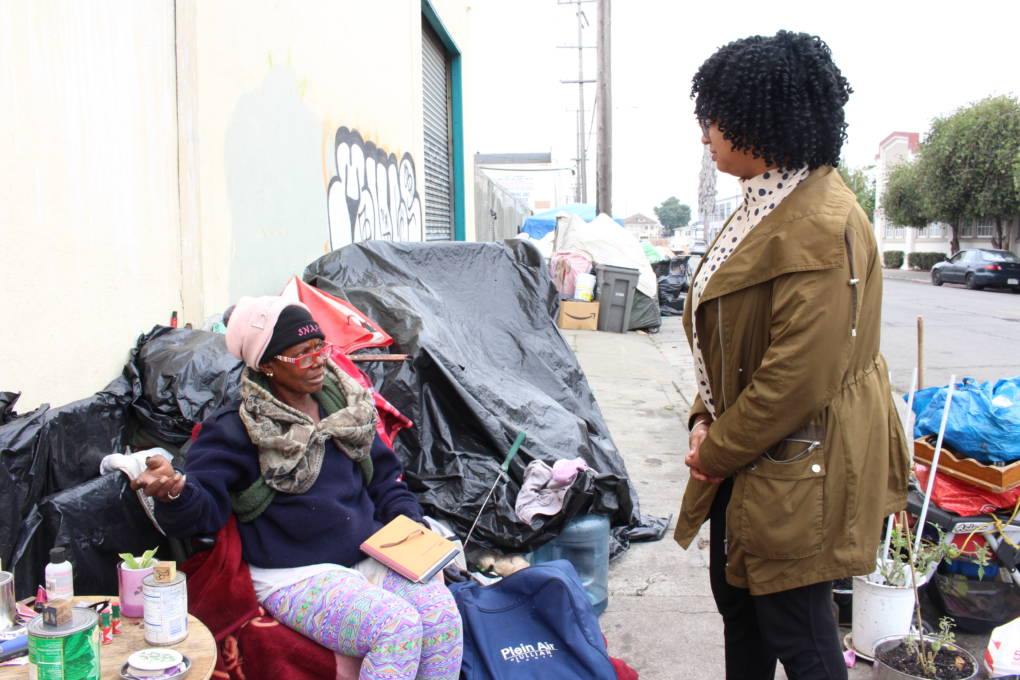
"caption": "Homeless advocate Candice Elder, 34, checks in with Dorothy Smith, 65, at an encampment in Oakland on Aug. 24, 2018. Smith, who raised her children in the city, said her disability benefits are not enough to afford housing. 'It just don’t support me,' she said.\n",
"description": null,
"title": "Photo 1",
"credit": "Farida Jhabvala Romero/KQED",
"status": "inherit",
"isLoading": false,
"fetchFailed": false
},
"news_11003810": {
"type": "attachments",
"id": "news_11003810",
"meta": {
"index": "attachments_1716263798",
"site": "news",
"id": "11003810",
"found": true
},
"parent": 11003807,
"imgSizes": {
"twentyfourteen-full-width": {
"file": "https://ww2.kqed.org/app/uploads/sites/10/2016/06/homeless-encampment-dog-in-tent-1038x576.jpg",
"width": 1038,
"mimeType": "image/jpeg",
"height": 576
},
"thumbnail": {
"file": "https://ww2.kqed.org/app/uploads/sites/10/2016/06/homeless-encampment-dog-in-tent-400x225.jpg",
"width": 400,
"mimeType": "image/jpeg",
"height": 225
},
"fd-sm": {
"file": "https://ww2.kqed.org/app/uploads/sites/10/2016/06/homeless-encampment-dog-in-tent-960x540.jpg",
"width": 960,
"mimeType": "image/jpeg",
"height": 540
},
"post-thumbnail": {
"file": "https://ww2.kqed.org/app/uploads/sites/10/2016/06/homeless-encampment-dog-in-tent-672x372.jpg",
"width": 672,
"mimeType": "image/jpeg",
"height": 372
},
"kqedFullSize": {
"file": "https://ww2.kqed.org/app/uploads/sites/10/2016/06/homeless-encampment-dog-in-tent.jpg",
"width": 1920,
"height": 1080
},
"large": {
"file": "https://ww2.kqed.org/app/uploads/sites/10/2016/06/homeless-encampment-dog-in-tent-1920x1080.jpg",
"width": 1920,
"mimeType": "image/jpeg",
"height": 1080
},
"guest-author-50": {
"file": "https://ww2.kqed.org/app/uploads/sites/10/2016/06/homeless-encampment-dog-in-tent-50x50.jpg",
"width": 50,
"mimeType": "image/jpeg",
"height": 50
},
"guest-author-96": {
"file": "https://ww2.kqed.org/app/uploads/sites/10/2016/06/homeless-encampment-dog-in-tent-96x96.jpg",
"width": 96,
"mimeType": "image/jpeg",
"height": 96
},
"medium": {
"file": "https://ww2.kqed.org/app/uploads/sites/10/2016/06/homeless-encampment-dog-in-tent-800x450.jpg",
"width": 800,
"mimeType": "image/jpeg",
"height": 450
},
"guest-author-64": {
"file": "https://ww2.kqed.org/app/uploads/sites/10/2016/06/homeless-encampment-dog-in-tent-64x64.jpg",
"width": 64,
"mimeType": "image/jpeg",
"height": 64
},
"guest-author-32": {
"file": "https://ww2.kqed.org/app/uploads/sites/10/2016/06/homeless-encampment-dog-in-tent-32x32.jpg",
"width": 32,
"mimeType": "image/jpeg",
"height": 32
},
"jmtc-small-thumb": {
"file": "https://ww2.kqed.org/app/uploads/sites/10/2016/06/homeless-encampment-dog-in-tent-280x150.jpg",
"width": 280,
"mimeType": "image/jpeg",
"height": 150
},
"fd-lrg": {
"file": "https://ww2.kqed.org/app/uploads/sites/10/2016/06/homeless-encampment-dog-in-tent-1920x1080.jpg",
"width": 1920,
"mimeType": "image/jpeg",
"height": 1080
},
"fd-med": {
"file": "https://ww2.kqed.org/app/uploads/sites/10/2016/06/homeless-encampment-dog-in-tent-1180x664.jpg",
"width": 1180,
"mimeType": "image/jpeg",
"height": 664
},
"detail": {
"file": "https://ww2.kqed.org/app/uploads/sites/10/2016/06/homeless-encampment-dog-in-tent-150x150.jpg",
"width": 150,
"mimeType": "image/jpeg",
"height": 150
},
"guest-author-128": {
"file": "https://ww2.kqed.org/app/uploads/sites/10/2016/06/homeless-encampment-dog-in-tent-128x128.jpg",
"width": 128,
"mimeType": "image/jpeg",
"height": 128
}
},
"publishDate": 1467155819,
"modified": 1477090052,
"caption": "A homeless encampment along San Francisco's Division Street.",
"description": "A homeless encampment along San Francisco's Division Street.",
"title": "homeless encampment dog in tent",
"credit": "Amy Mustafa/KQED",
"status": "inherit",
"isLoading": false,
"fetchFailed": false
},
"news_11680042": {
"type": "attachments",
"id": "news_11680042",
"meta": {
"index": "attachments_1716263798",
"site": "news",
"id": "11680042",
"found": true
},
"parent": 11679965,
"imgSizes": {
"small": {
"file": "https://ww2.kqed.org/app/uploads/sites/10/2018/07/RS31769_SFMAYOR0712-qut-520x347.jpg",
"width": 520,
"mimeType": "image/jpeg",
"height": 347
},
"twentyfourteen-full-width": {
"file": "https://ww2.kqed.org/app/uploads/sites/10/2018/07/RS31769_SFMAYOR0712-qut-1038x576.jpg",
"width": 1038,
"mimeType": "image/jpeg",
"height": 576
},
"thumbnail": {
"file": "https://ww2.kqed.org/app/uploads/sites/10/2018/07/RS31769_SFMAYOR0712-qut-160x107.jpg",
"width": 160,
"mimeType": "image/jpeg",
"height": 107
},
"fd-sm": {
"file": "https://ww2.kqed.org/app/uploads/sites/10/2018/07/RS31769_SFMAYOR0712-qut-960x640.jpg",
"width": 960,
"mimeType": "image/jpeg",
"height": 640
},
"post-thumbnail": {
"file": "https://ww2.kqed.org/app/uploads/sites/10/2018/07/RS31769_SFMAYOR0712-qut-672x372.jpg",
"width": 672,
"mimeType": "image/jpeg",
"height": 372
},
"xsmall": {
"file": "https://ww2.kqed.org/app/uploads/sites/10/2018/07/RS31769_SFMAYOR0712-qut-375x250.jpg",
"width": 375,
"mimeType": "image/jpeg",
"height": 250
},
"kqedFullSize": {
"file": "https://ww2.kqed.org/app/uploads/sites/10/2018/07/RS31769_SFMAYOR0712-qut.jpg",
"width": 1920,
"height": 1280
},
"large": {
"file": "https://ww2.kqed.org/app/uploads/sites/10/2018/07/RS31769_SFMAYOR0712-qut-1020x680.jpg",
"width": 1020,
"mimeType": "image/jpeg",
"height": 680
},
"xlarge": {
"file": "https://ww2.kqed.org/app/uploads/sites/10/2018/07/RS31769_SFMAYOR0712-qut-1180x787.jpg",
"width": 1180,
"mimeType": "image/jpeg",
"height": 787
},
"complete_open_graph": {
"file": "https://ww2.kqed.org/app/uploads/sites/10/2018/07/RS31769_SFMAYOR0712-qut-1200x800.jpg",
"width": 1200,
"mimeType": "image/jpeg",
"height": 800
},
"guest-author-50": {
"file": "https://ww2.kqed.org/app/uploads/sites/10/2018/07/RS31769_SFMAYOR0712-qut-50x50.jpg",
"width": 50,
"mimeType": "image/jpeg",
"height": 50
},
"guest-author-96": {
"file": "https://ww2.kqed.org/app/uploads/sites/10/2018/07/RS31769_SFMAYOR0712-qut-96x96.jpg",
"width": 96,
"mimeType": "image/jpeg",
"height": 96
},
"medium": {
"file": "https://ww2.kqed.org/app/uploads/sites/10/2018/07/RS31769_SFMAYOR0712-qut-800x533.jpg",
"width": 800,
"mimeType": "image/jpeg",
"height": 533
},
"guest-author-64": {
"file": "https://ww2.kqed.org/app/uploads/sites/10/2018/07/RS31769_SFMAYOR0712-qut-64x64.jpg",
"width": 64,
"mimeType": "image/jpeg",
"height": 64
},
"guest-author-32": {
"file": "https://ww2.kqed.org/app/uploads/sites/10/2018/07/RS31769_SFMAYOR0712-qut-32x32.jpg",
"width": 32,
"mimeType": "image/jpeg",
"height": 32
},
"fd-lrg": {
"file": "https://ww2.kqed.org/app/uploads/sites/10/2018/07/RS31769_SFMAYOR0712-qut-1920x1280.jpg",
"width": 1920,
"mimeType": "image/jpeg",
"height": 1280
},
"fd-med": {
"file": "https://ww2.kqed.org/app/uploads/sites/10/2018/07/RS31769_SFMAYOR0712-qut-1180x787.jpg",
"width": 1180,
"mimeType": "image/jpeg",
"height": 787
},
"full-width": {
"file": "https://ww2.kqed.org/app/uploads/sites/10/2018/07/RS31769_SFMAYOR0712-qut-1920x1280.jpg",
"width": 1920,
"mimeType": "image/jpeg",
"height": 1280
},
"detail": {
"file": "https://ww2.kqed.org/app/uploads/sites/10/2018/07/RS31769_SFMAYOR0712-qut-150x150.jpg",
"width": 150,
"mimeType": "image/jpeg",
"height": 150
},
"guest-author-128": {
"file": "https://ww2.kqed.org/app/uploads/sites/10/2018/07/RS31769_SFMAYOR0712-qut-128x128.jpg",
"width": 128,
"mimeType": "image/jpeg",
"height": 128
},
"xxsmall": {
"file": "https://ww2.kqed.org/app/uploads/sites/10/2018/07/RS31769_SFMAYOR0712-qut-240x160.jpg",
"width": 240,
"mimeType": "image/jpeg",
"height": 160
}
},
"publishDate": 1531336702,
"modified": 1531336702,
"caption": "Mayor-elect London Breed practices her speech outside City Hall ahead of the Mayoral inauguration in San Francisco, California, on Wednesday, July 11, 2018.",
"description": null,
"title": "SFMAYOR0712",
"credit": null,
"status": "inherit",
"isLoading": false,
"fetchFailed": false
},
"news_11698316": {
"type": "attachments",
"id": "news_11698316",
"meta": {
"index": "attachments_1716263798",
"site": "news",
"id": "11698316",
"found": true
},
"parent": 11698303,
"imgSizes": {
"small": {
"file": "https://ww2.kqed.org/app/uploads/sites/10/2018/10/Rising-Up-1-e1539303263168-520x293.jpg",
"width": 520,
"mimeType": "image/jpeg",
"height": 293
},
"twentyfourteen-full-width": {
"file": "https://ww2.kqed.org/app/uploads/sites/10/2018/10/Rising-Up-1-e1539303263168-1038x576.jpg",
"width": 1038,
"mimeType": "image/jpeg",
"height": 576
},
"thumbnail": {
"file": "https://ww2.kqed.org/app/uploads/sites/10/2018/10/Rising-Up-1-e1539303263168-160x90.jpg",
"width": 160,
"mimeType": "image/jpeg",
"height": 90
},
"fd-sm": {
"file": "https://ww2.kqed.org/app/uploads/sites/10/2018/10/Rising-Up-1-e1539303263168-960x541.jpg",
"width": 960,
"mimeType": "image/jpeg",
"height": 541
},
"post-thumbnail": {
"file": "https://ww2.kqed.org/app/uploads/sites/10/2018/10/Rising-Up-1-e1539303263168-672x372.jpg",
"width": 672,
"mimeType": "image/jpeg",
"height": 372
},
"xsmall": {
"file": "https://ww2.kqed.org/app/uploads/sites/10/2018/10/Rising-Up-1-e1539303263168-375x211.jpg",
"width": 375,
"mimeType": "image/jpeg",
"height": 211
},
"kqedFullSize": {
"file": "https://ww2.kqed.org/app/uploads/sites/10/2018/10/Rising-Up-1-e1539303263168.jpg",
"width": 3507,
"height": 1975
},
"large": {
"file": "https://ww2.kqed.org/app/uploads/sites/10/2018/10/Rising-Up-1-e1539303263168-1020x574.jpg",
"width": 1020,
"mimeType": "image/jpeg",
"height": 574
},
"xlarge": {
"file": "https://ww2.kqed.org/app/uploads/sites/10/2018/10/Rising-Up-1-e1539303263168-1180x665.jpg",
"width": 1180,
"mimeType": "image/jpeg",
"height": 665
},
"complete_open_graph": {
"file": "https://ww2.kqed.org/app/uploads/sites/10/2018/10/Rising-Up-1-e1539303263168-1200x676.jpg",
"width": 1200,
"mimeType": "image/jpeg",
"height": 676
},
"guest-author-50": {
"file": "https://ww2.kqed.org/app/uploads/sites/10/2018/10/Rising-Up-1-e1539303263168-50x50.jpg",
"width": 50,
"mimeType": "image/jpeg",
"height": 50
},
"guest-author-96": {
"file": "https://ww2.kqed.org/app/uploads/sites/10/2018/10/Rising-Up-1-e1539303263168-96x96.jpg",
"width": 96,
"mimeType": "image/jpeg",
"height": 96
},
"medium": {
"file": "https://ww2.kqed.org/app/uploads/sites/10/2018/10/Rising-Up-1-e1539303263168-800x451.jpg",
"width": 800,
"mimeType": "image/jpeg",
"height": 451
},
"guest-author-64": {
"file": "https://ww2.kqed.org/app/uploads/sites/10/2018/10/Rising-Up-1-e1539303263168-64x64.jpg",
"width": 64,
"mimeType": "image/jpeg",
"height": 64
},
"guest-author-32": {
"file": "https://ww2.kqed.org/app/uploads/sites/10/2018/10/Rising-Up-1-e1539303263168-32x32.jpg",
"width": 32,
"mimeType": "image/jpeg",
"height": 32
},
"fd-lrg": {
"file": "https://ww2.kqed.org/app/uploads/sites/10/2018/10/Rising-Up-1-e1539303263168-1920x1081.jpg",
"width": 1920,
"mimeType": "image/jpeg",
"height": 1081
},
"fd-med": {
"file": "https://ww2.kqed.org/app/uploads/sites/10/2018/10/Rising-Up-1-e1539303263168-1180x665.jpg",
"width": 1180,
"mimeType": "image/jpeg",
"height": 665
},
"full-width": {
"file": "https://ww2.kqed.org/app/uploads/sites/10/2018/10/Rising-Up-1-e1539303263168-1920x1081.jpg",
"width": 1920,
"mimeType": "image/jpeg",
"height": 1081
},
"detail": {
"file": "https://ww2.kqed.org/app/uploads/sites/10/2018/10/Rising-Up-1-e1539303263168-150x150.jpg",
"width": 150,
"mimeType": "image/jpeg",
"height": 150
},
"guest-author-128": {
"file": "https://ww2.kqed.org/app/uploads/sites/10/2018/10/Rising-Up-1-e1539303263168-128x128.jpg",
"width": 128,
"mimeType": "image/jpeg",
"height": 128
},
"xxsmall": {
"file": "https://ww2.kqed.org/app/uploads/sites/10/2018/10/Rising-Up-1-e1539303263168-240x135.jpg",
"width": 240,
"mimeType": "image/jpeg",
"height": 135
}
},
"publishDate": 1539303141,
"modified": 1539303249,
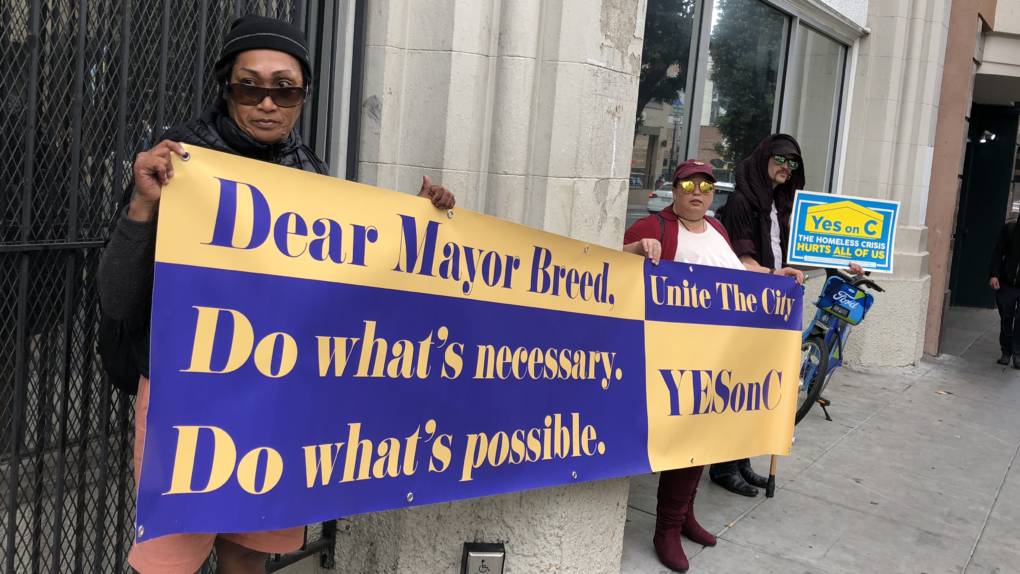
"caption": "Protesters outside Larkin Street Youth Services say the city should focus more energy on Prop C, which they view as a more comprehensive solution to San Francisco's youth homeless problem. ",
"description": "Protesters outside Larkin Street Youth Services say the city should focus more energy on Prop C, which they view as a more comprehensive solution to San Francisco's youth homeless problem. ",
"title": "Rising Up 1",
"credit": "Chloe Veltman/KQED",
"status": "inherit",
"isLoading": false,
"fetchFailed": false
},
"news_11697016": {
"type": "attachments",
"id": "news_11697016",
"meta": {
"index": "attachments_1716263798",
"site": "news",
"id": "11697016",
"found": true
},
"parent": 11696888,
"imgSizes": {
"small": {
"file": "https://ww2.kqed.org/app/uploads/sites/10/2018/10/microunits-520x277.jpg",
"width": 520,
"mimeType": "image/jpeg",
"height": 277
},
"thumbnail": {
"file": "https://ww2.kqed.org/app/uploads/sites/10/2018/10/microunits-160x85.jpg",
"width": 160,
"mimeType": "image/jpeg",
"height": 85
},
"fd-sm": {
"file": "https://ww2.kqed.org/app/uploads/sites/10/2018/10/microunits-960x511.jpg",
"width": 960,
"mimeType": "image/jpeg",
"height": 511
},
"post-thumbnail": {
"file": "https://ww2.kqed.org/app/uploads/sites/10/2018/10/microunits-672x372.jpg",
"width": 672,
"mimeType": "image/jpeg",
"height": 372
},
"xsmall": {
"file": "https://ww2.kqed.org/app/uploads/sites/10/2018/10/microunits-375x200.jpg",
"width": 375,
"mimeType": "image/jpeg",
"height": 200
},
"kqedFullSize": {
"file": "https://ww2.kqed.org/app/uploads/sites/10/2018/10/microunits.jpg",
"width": 1009,
"height": 537
},
"guest-author-50": {
"file": "https://ww2.kqed.org/app/uploads/sites/10/2018/10/microunits-50x50.jpg",
"width": 50,
"mimeType": "image/jpeg",
"height": 50
},
"guest-author-96": {
"file": "https://ww2.kqed.org/app/uploads/sites/10/2018/10/microunits-96x96.jpg",
"width": 96,
"mimeType": "image/jpeg",
"height": 96
},
"medium": {
"file": "https://ww2.kqed.org/app/uploads/sites/10/2018/10/microunits-800x426.jpg",
"width": 800,
"mimeType": "image/jpeg",
"height": 426
},
"guest-author-64": {
"file": "https://ww2.kqed.org/app/uploads/sites/10/2018/10/microunits-64x64.jpg",
"width": 64,
"mimeType": "image/jpeg",
"height": 64
},
"guest-author-32": {
"file": "https://ww2.kqed.org/app/uploads/sites/10/2018/10/microunits-32x32.jpg",
"width": 32,
"mimeType": "image/jpeg",
"height": 32
},
"detail": {
"file": "https://ww2.kqed.org/app/uploads/sites/10/2018/10/microunits-150x150.jpg",
"width": 150,
"mimeType": "image/jpeg",
"height": 150
},
"guest-author-128": {
"file": "https://ww2.kqed.org/app/uploads/sites/10/2018/10/microunits-128x128.jpg",
"width": 128,
"mimeType": "image/jpeg",
"height": 128
},
"xxsmall": {
"file": "https://ww2.kqed.org/app/uploads/sites/10/2018/10/microunits-240x128.jpg",
"width": 240,
"mimeType": "image/jpeg",
"height": 128
}
},
"publishDate": 1538788612,
"modified": 1538788789,
"caption": "An artist's rendering of the planned supportive housing complex on Depot Road in Hayward. ",
"description": null,
"title": "microunits",
"credit": "Abode Services",
"status": "inherit",
"isLoading": false,
"fetchFailed": false
},
"news_11696170": {
"type": "attachments",
"id": "news_11696170",
"meta": {
"index": "attachments_1716263798",
"site": "news",
"id": "11696170",
"found": true
},
"parent": 11696128,
"imgSizes": {
"small": {
"file": "https://ww2.kqed.org/app/uploads/sites/10/2018/10/IMG-1342-520x390.jpg",
"width": 520,
"mimeType": "image/jpeg",
"height": 390
},
"twentyfourteen-full-width": {
"file": "https://ww2.kqed.org/app/uploads/sites/10/2018/10/IMG-1342-1038x576.jpg",
"width": 1038,
"mimeType": "image/jpeg",
"height": 576
},
"thumbnail": {
"file": "https://ww2.kqed.org/app/uploads/sites/10/2018/10/IMG-1342-160x120.jpg",
"width": 160,
"mimeType": "image/jpeg",
"height": 120
},
"fd-sm": {
"file": "https://ww2.kqed.org/app/uploads/sites/10/2018/10/IMG-1342-960x720.jpg",
"width": 960,
"mimeType": "image/jpeg",
"height": 720
},
"post-thumbnail": {
"file": "https://ww2.kqed.org/app/uploads/sites/10/2018/10/IMG-1342-672x372.jpg",
"width": 672,
"mimeType": "image/jpeg",
"height": 372
},
"xsmall": {
"file": "https://ww2.kqed.org/app/uploads/sites/10/2018/10/IMG-1342-375x281.jpg",
"width": 375,
"mimeType": "image/jpeg",
"height": 281
},
"kqedFullSize": {
"file": "https://ww2.kqed.org/app/uploads/sites/10/2018/10/IMG-1342-e1538521639348.jpg",
"width": 1920,
"height": 1440
},
"large": {
"file": "https://ww2.kqed.org/app/uploads/sites/10/2018/10/IMG-1342-1020x765.jpg",
"width": 1020,
"mimeType": "image/jpeg",
"height": 765
},
"xlarge": {
"file": "https://ww2.kqed.org/app/uploads/sites/10/2018/10/IMG-1342-1180x885.jpg",
"width": 1180,
"mimeType": "image/jpeg",
"height": 885
},
"complete_open_graph": {
"file": "https://ww2.kqed.org/app/uploads/sites/10/2018/10/IMG-1342-1200x900.jpg",
"width": 1200,
"mimeType": "image/jpeg",
"height": 900
},
"guest-author-50": {
"file": "https://ww2.kqed.org/app/uploads/sites/10/2018/10/IMG-1342-50x50.jpg",
"width": 50,
"mimeType": "image/jpeg",
"height": 50
},
"guest-author-96": {
"file": "https://ww2.kqed.org/app/uploads/sites/10/2018/10/IMG-1342-96x96.jpg",
"width": 96,
"mimeType": "image/jpeg",
"height": 96
},
"medium": {
"file": "https://ww2.kqed.org/app/uploads/sites/10/2018/10/IMG-1342-800x600.jpg",
"width": 800,
"mimeType": "image/jpeg",
"height": 600
},
"guest-author-64": {
"file": "https://ww2.kqed.org/app/uploads/sites/10/2018/10/IMG-1342-64x64.jpg",
"width": 64,
"mimeType": "image/jpeg",
"height": 64
},
"guest-author-32": {
"file": "https://ww2.kqed.org/app/uploads/sites/10/2018/10/IMG-1342-32x32.jpg",
"width": 32,
"mimeType": "image/jpeg",
"height": 32
},
"fd-lrg": {
"file": "https://ww2.kqed.org/app/uploads/sites/10/2018/10/IMG-1342-1920x1440.jpg",
"width": 1920,
"mimeType": "image/jpeg",
"height": 1440
},
"fd-med": {
"file": "https://ww2.kqed.org/app/uploads/sites/10/2018/10/IMG-1342-1180x885.jpg",
"width": 1180,
"mimeType": "image/jpeg",
"height": 885
},
"full-width": {
"file": "https://ww2.kqed.org/app/uploads/sites/10/2018/10/IMG-1342-1920x1440.jpg",
"width": 1920,
"mimeType": "image/jpeg",
"height": 1440
},
"detail": {
"file": "https://ww2.kqed.org/app/uploads/sites/10/2018/10/IMG-1342-150x150.jpg",
"width": 150,
"mimeType": "image/jpeg",
"height": 150
},
"guest-author-128": {
"file": "https://ww2.kqed.org/app/uploads/sites/10/2018/10/IMG-1342-128x128.jpg",
"width": 128,
"mimeType": "image/jpeg",
"height": 128
},
"xxsmall": {
"file": "https://ww2.kqed.org/app/uploads/sites/10/2018/10/IMG-1342-240x180.jpg",
"width": 240,
"mimeType": "image/jpeg",
"height": 180
}
},
"publishDate": 1538520330,
"modified": 1538590834,
"caption": "A new \"Tuff Shed\" homeless camp will open near Lake Merritt on Oct. 4, 2018.",
"description": null,
"title": "IMG-1342",
"credit": "Chloe Veltman/KQED",
"status": "inherit",
"isLoading": false,
"fetchFailed": false
},
"news_11695573": {
"type": "attachments",
"id": "news_11695573",
"meta": {
"index": "attachments_1716263798",
"site": "news",
"id": "11695573",
"found": true
},
"parent": 11695570,
"imgSizes": {
"small": {
"file": "https://ww2.kqed.org/app/uploads/sites/10/2018/09/imagegen-78188624a0b9175fa9a8637bb9f0954084fa3d81-s800-c85-520x390.jpg",
"width": 520,
"mimeType": "image/jpeg",
"height": 390
},
"twentyfourteen-full-width": {
"file": "https://ww2.kqed.org/app/uploads/sites/10/2018/09/imagegen-78188624a0b9175fa9a8637bb9f0954084fa3d81-s800-c85-1038x576.jpg",
"width": 1038,
"mimeType": "image/jpeg",
"height": 576
},
"thumbnail": {
"file": "https://ww2.kqed.org/app/uploads/sites/10/2018/09/imagegen-78188624a0b9175fa9a8637bb9f0954084fa3d81-s800-c85-160x120.jpg",
"width": 160,
"mimeType": "image/jpeg",
"height": 120
},
"fd-sm": {
"file": "https://ww2.kqed.org/app/uploads/sites/10/2018/09/imagegen-78188624a0b9175fa9a8637bb9f0954084fa3d81-s800-c85-960x720.jpg",
"width": 960,
"mimeType": "image/jpeg",
"height": 720
},
"post-thumbnail": {
"file": "https://ww2.kqed.org/app/uploads/sites/10/2018/09/imagegen-78188624a0b9175fa9a8637bb9f0954084fa3d81-s800-c85-672x372.jpg",
"width": 672,
"mimeType": "image/jpeg",
"height": 372
},
"xsmall": {
"file": "https://ww2.kqed.org/app/uploads/sites/10/2018/09/imagegen-78188624a0b9175fa9a8637bb9f0954084fa3d81-s800-c85-375x281.jpg",
"width": 375,
"mimeType": "image/jpeg",
"height": 281
},
"kqedFullSize": {
"file": "https://ww2.kqed.org/app/uploads/sites/10/2018/09/imagegen-78188624a0b9175fa9a8637bb9f0954084fa3d81-s800-c85.jpg",
"width": 1920,
"height": 1440
},
"large": {
"file": "https://ww2.kqed.org/app/uploads/sites/10/2018/09/imagegen-78188624a0b9175fa9a8637bb9f0954084fa3d81-s800-c85-1020x765.jpg",
"width": 1020,
"mimeType": "image/jpeg",
"height": 765
},
"xlarge": {
"file": "https://ww2.kqed.org/app/uploads/sites/10/2018/09/imagegen-78188624a0b9175fa9a8637bb9f0954084fa3d81-s800-c85-1180x885.jpg",
"width": 1180,
"mimeType": "image/jpeg",
"height": 885
},
"complete_open_graph": {
"file": "https://ww2.kqed.org/app/uploads/sites/10/2018/09/imagegen-78188624a0b9175fa9a8637bb9f0954084fa3d81-s800-c85-1200x900.jpg",
"width": 1200,
"mimeType": "image/jpeg",
"height": 900
},
"guest-author-50": {
"file": "https://ww2.kqed.org/app/uploads/sites/10/2018/09/imagegen-78188624a0b9175fa9a8637bb9f0954084fa3d81-s800-c85-50x50.jpg",
"width": 50,
"mimeType": "image/jpeg",
"height": 50
},
"guest-author-96": {
"file": "https://ww2.kqed.org/app/uploads/sites/10/2018/09/imagegen-78188624a0b9175fa9a8637bb9f0954084fa3d81-s800-c85-96x96.jpg",
"width": 96,
"mimeType": "image/jpeg",
"height": 96
},
"medium": {
"file": "https://ww2.kqed.org/app/uploads/sites/10/2018/09/imagegen-78188624a0b9175fa9a8637bb9f0954084fa3d81-s800-c85-800x600.jpg",
"width": 800,
"mimeType": "image/jpeg",
"height": 600
},
"guest-author-64": {
"file": "https://ww2.kqed.org/app/uploads/sites/10/2018/09/imagegen-78188624a0b9175fa9a8637bb9f0954084fa3d81-s800-c85-64x64.jpg",
"width": 64,
"mimeType": "image/jpeg",
"height": 64
},
"guest-author-32": {
"file": "https://ww2.kqed.org/app/uploads/sites/10/2018/09/imagegen-78188624a0b9175fa9a8637bb9f0954084fa3d81-s800-c85-32x32.jpg",
"width": 32,
"mimeType": "image/jpeg",
"height": 32
},
"fd-lrg": {
"file": "https://ww2.kqed.org/app/uploads/sites/10/2018/09/imagegen-78188624a0b9175fa9a8637bb9f0954084fa3d81-s800-c85-1920x1440.jpg",
"width": 1920,
"mimeType": "image/jpeg",
"height": 1440
},
"fd-med": {
"file": "https://ww2.kqed.org/app/uploads/sites/10/2018/09/imagegen-78188624a0b9175fa9a8637bb9f0954084fa3d81-s800-c85-1180x885.jpg",
"width": 1180,
"mimeType": "image/jpeg",
"height": 885
},
"full-width": {
"file": "https://ww2.kqed.org/app/uploads/sites/10/2018/09/imagegen-78188624a0b9175fa9a8637bb9f0954084fa3d81-s800-c85-1920x1440.jpg",
"width": 1920,
"mimeType": "image/jpeg",
"height": 1440
},
"detail": {
"file": "https://ww2.kqed.org/app/uploads/sites/10/2018/09/imagegen-78188624a0b9175fa9a8637bb9f0954084fa3d81-s800-c85-150x150.jpg",
"width": 150,
"mimeType": "image/jpeg",
"height": 150
},
"guest-author-128": {
"file": "https://ww2.kqed.org/app/uploads/sites/10/2018/09/imagegen-78188624a0b9175fa9a8637bb9f0954084fa3d81-s800-c85-128x128.jpg",
"width": 128,
"mimeType": "image/jpeg",
"height": 128
},
"xxsmall": {
"file": "https://ww2.kqed.org/app/uploads/sites/10/2018/09/imagegen-78188624a0b9175fa9a8637bb9f0954084fa3d81-s800-c85-240x180.jpg",
"width": 240,
"mimeType": "image/jpeg",
"height": 180
}
},
"publishDate": 1538326045,
"modified": 1538326073,
"caption": "Nereida locks up after finishing a Wednesday shift at the Los Angeles optometry shop where she works full time. Despite her job, Nereida and her two kids are unable to find a home in LA and are living with friends.",
"description": "Nereida locks up after finishing a Wednesday shift at the Los Angeles optometry shop where she works full time. Despite her job, Nereida and her two kids are unable to find a home in LA and are living with friends.",
"title": "imagegen-78188624a0b9175fa9a8637bb9f0954084fa3d81-s800-c85",
"credit": "David Wagner/KPCC",
"status": "inherit",
"isLoading": false,
"fetchFailed": false
},
"news_11694635": {
"type": "attachments",
"id": "news_11694635",
"meta": {
"index": "attachments_1716263798",
"site": "news",
"id": "11694635",
"found": true
},
"parent": 11694626,
"imgSizes": {
"small": {
"file": "https://ww2.kqed.org/app/uploads/sites/10/2018/09/smallworld_092518_final-520x340.jpg",
"width": 520,
"mimeType": "image/jpeg",
"height": 340
},
"twentyfourteen-full-width": {
"file": "https://ww2.kqed.org/app/uploads/sites/10/2018/09/smallworld_092518_final-1038x576.jpg",
"width": 1038,
"mimeType": "image/jpeg",
"height": 576
},
"thumbnail": {
"file": "https://ww2.kqed.org/app/uploads/sites/10/2018/09/smallworld_092518_final-160x105.jpg",
"width": 160,
"mimeType": "image/jpeg",
"height": 105
},
"fd-sm": {
"file": "https://ww2.kqed.org/app/uploads/sites/10/2018/09/smallworld_092518_final-960x629.jpg",
"width": 960,
"mimeType": "image/jpeg",
"height": 629
},
"post-thumbnail": {
"file": "https://ww2.kqed.org/app/uploads/sites/10/2018/09/smallworld_092518_final-672x372.jpg",
"width": 672,
"mimeType": "image/jpeg",
"height": 372
},
"xsmall": {
"file": "https://ww2.kqed.org/app/uploads/sites/10/2018/09/smallworld_092518_final-375x246.jpg",
"width": 375,
"mimeType": "image/jpeg",
"height": 246
},
"kqedFullSize": {
"file": "https://ww2.kqed.org/app/uploads/sites/10/2018/09/smallworld_092518_final.jpg",
"width": 1920,
"height": 1257
},
"large": {
"file": "https://ww2.kqed.org/app/uploads/sites/10/2018/09/smallworld_092518_final-1020x668.jpg",
"width": 1020,
"mimeType": "image/jpeg",
"height": 668
},
"xlarge": {
"file": "https://ww2.kqed.org/app/uploads/sites/10/2018/09/smallworld_092518_final-1180x773.jpg",
"width": 1180,
"mimeType": "image/jpeg",
"height": 773
},
"complete_open_graph": {
"file": "https://ww2.kqed.org/app/uploads/sites/10/2018/09/smallworld_092518_final-1200x786.jpg",
"width": 1200,
"mimeType": "image/jpeg",
"height": 786
},
"guest-author-50": {
"file": "https://ww2.kqed.org/app/uploads/sites/10/2018/09/smallworld_092518_final-50x50.jpg",
"width": 50,
"mimeType": "image/jpeg",
"height": 50
},
"guest-author-96": {
"file": "https://ww2.kqed.org/app/uploads/sites/10/2018/09/smallworld_092518_final-96x96.jpg",
"width": 96,
"mimeType": "image/jpeg",
"height": 96
},
"medium": {
"file": "https://ww2.kqed.org/app/uploads/sites/10/2018/09/smallworld_092518_final-800x524.jpg",
"width": 800,
"mimeType": "image/jpeg",
"height": 524
},
"guest-author-64": {
"file": "https://ww2.kqed.org/app/uploads/sites/10/2018/09/smallworld_092518_final-64x64.jpg",
"width": 64,
"mimeType": "image/jpeg",
"height": 64
},
"guest-author-32": {
"file": "https://ww2.kqed.org/app/uploads/sites/10/2018/09/smallworld_092518_final-32x32.jpg",
"width": 32,
"mimeType": "image/jpeg",
"height": 32
},
"fd-lrg": {
"file": "https://ww2.kqed.org/app/uploads/sites/10/2018/09/smallworld_092518_final-1920x1257.jpg",
"width": 1920,
"mimeType": "image/jpeg",
"height": 1257
},
"fd-med": {
"file": "https://ww2.kqed.org/app/uploads/sites/10/2018/09/smallworld_092518_final-1180x773.jpg",
"width": 1180,
"mimeType": "image/jpeg",
"height": 773
},
"full-width": {
"file": "https://ww2.kqed.org/app/uploads/sites/10/2018/09/smallworld_092518_final-1920x1257.jpg",
"width": 1920,
"mimeType": "image/jpeg",
"height": 1257
},
"detail": {
"file": "https://ww2.kqed.org/app/uploads/sites/10/2018/09/smallworld_092518_final-150x150.jpg",
"width": 150,
"mimeType": "image/jpeg",
"height": 150
},
"guest-author-128": {
"file": "https://ww2.kqed.org/app/uploads/sites/10/2018/09/smallworld_092518_final-128x128.jpg",
"width": 128,
"mimeType": "image/jpeg",
"height": 128
},
"xxsmall": {
"file": "https://ww2.kqed.org/app/uploads/sites/10/2018/09/smallworld_092518_final-240x157.jpg",
"width": 240,
"mimeType": "image/jpeg",
"height": 157
}
},
"publishDate": 1537917676,
"modified": 1537917690,
"caption": null,
"description": null,
"title": "smallworld_092518_final",
"credit": null,
"status": "inherit",
"isLoading": false,
"fetchFailed": false
},
"news_11693782": {
"type": "attachments",
"id": "news_11693782",
"meta": {
"index": "attachments_1716263798",
"site": "news",
"id": "11693782",
"found": true
},
"parent": 11693751,
"imgSizes": {
"small": {
"file": "https://ww2.kqed.org/app/uploads/sites/10/2018/09/IMG_7195-e1537488002688-520x293.jpg",
"width": 520,
"mimeType": "image/jpeg",
"height": 293
},
"thumbnail": {
"file": "https://ww2.kqed.org/app/uploads/sites/10/2018/09/IMG_7195-e1537488002688-160x90.jpg",
"width": 160,
"mimeType": "image/jpeg",
"height": 90
},
"post-thumbnail": {
"file": "https://ww2.kqed.org/app/uploads/sites/10/2018/09/IMG_7195-640x372.jpg",
"width": 640,
"mimeType": "image/jpeg",
"height": 372
},
"xsmall": {
"file": "https://ww2.kqed.org/app/uploads/sites/10/2018/09/IMG_7195-e1537488002688-375x211.jpg",
"width": 375,
"mimeType": "image/jpeg",
"height": 211
},
"kqedFullSize": {
"file": "https://ww2.kqed.org/app/uploads/sites/10/2018/09/IMG_7195-e1537488002688.jpg",
"width": 627,
"height": 353
},
"guest-author-50": {
"file": "https://ww2.kqed.org/app/uploads/sites/10/2018/09/IMG_7195-e1537488002688-50x50.jpg",
"width": 50,
"mimeType": "image/jpeg",
"height": 50
},
"guest-author-96": {
"file": "https://ww2.kqed.org/app/uploads/sites/10/2018/09/IMG_7195-e1537488002688-96x96.jpg",
"width": 96,
"mimeType": "image/jpeg",
"height": 96
},
"guest-author-64": {
"file": "https://ww2.kqed.org/app/uploads/sites/10/2018/09/IMG_7195-e1537488002688-64x64.jpg",
"width": 64,
"mimeType": "image/jpeg",
"height": 64
},
"detail": {
"file": "https://ww2.kqed.org/app/uploads/sites/10/2018/09/IMG_7195-e1537488002688-150x150.jpg",
"width": 150,
"mimeType": "image/jpeg",
"height": 150
},
"guest-author-32": {
"file": "https://ww2.kqed.org/app/uploads/sites/10/2018/09/IMG_7195-e1537488002688-32x32.jpg",
"width": 32,
"mimeType": "image/jpeg",
"height": 32
},
"guest-author-128": {
"file": "https://ww2.kqed.org/app/uploads/sites/10/2018/09/IMG_7195-e1537488002688-128x128.jpg",
"width": 128,
"mimeType": "image/jpeg",
"height": 128
},
"xxsmall": {
"file": "https://ww2.kqed.org/app/uploads/sites/10/2018/09/IMG_7195-e1537488002688-240x135.jpg",
"width": 240,
"mimeType": "image/jpeg",
"height": 135
}
},
"publishDate": 1537487921,
"modified": 1537573223,
"caption": "Compass Family Services' new hub on Grove Street in San Francisco.",
"description": "Compass Family Services new hub on Grove Street in San Francisco.",
"title": "IMG_7195",
"credit": "Compass Family Services ",
"status": "inherit",
"isLoading": false,
"fetchFailed": false
},
"news_11693303": {
"type": "attachments",
"id": "news_11693303",
"meta": {
"index": "attachments_1716263798",
"site": "news",
"id": "11693303",
"found": true
},
"parent": 11693282,
"imgSizes": {
"small": {
"file": "https://ww2.kqed.org/app/uploads/sites/10/2018/09/HomelessManSleeps-520x327.jpg",
"width": 520,
"mimeType": "image/jpeg",
"height": 327
},
"twentyfourteen-full-width": {
"file": "https://ww2.kqed.org/app/uploads/sites/10/2018/09/HomelessManSleeps-1038x576.jpg",
"width": 1038,
"mimeType": "image/jpeg",
"height": 576
},
"thumbnail": {
"file": "https://ww2.kqed.org/app/uploads/sites/10/2018/09/HomelessManSleeps-160x101.jpg",
"width": 160,
"mimeType": "image/jpeg",
"height": 101
},
"fd-sm": {
"file": "https://ww2.kqed.org/app/uploads/sites/10/2018/09/HomelessManSleeps-960x604.jpg",
"width": 960,
"mimeType": "image/jpeg",
"height": 604
},
"post-thumbnail": {
"file": "https://ww2.kqed.org/app/uploads/sites/10/2018/09/HomelessManSleeps-672x372.jpg",
"width": 672,
"mimeType": "image/jpeg",
"height": 372
},
"xsmall": {
"file": "https://ww2.kqed.org/app/uploads/sites/10/2018/09/HomelessManSleeps-375x236.jpg",
"width": 375,
"mimeType": "image/jpeg",
"height": 236
},
"kqedFullSize": {
"file": "https://ww2.kqed.org/app/uploads/sites/10/2018/09/HomelessManSleeps.jpg",
"width": 1920,
"height": 1208
},
"large": {
"file": "https://ww2.kqed.org/app/uploads/sites/10/2018/09/HomelessManSleeps-1020x642.jpg",
"width": 1020,
"mimeType": "image/jpeg",
"height": 642
},
"xlarge": {
"file": "https://ww2.kqed.org/app/uploads/sites/10/2018/09/HomelessManSleeps-1180x742.jpg",
"width": 1180,
"mimeType": "image/jpeg",
"height": 742
},
"complete_open_graph": {
"file": "https://ww2.kqed.org/app/uploads/sites/10/2018/09/HomelessManSleeps-1200x755.jpg",
"width": 1200,
"mimeType": "image/jpeg",
"height": 755
},
"guest-author-50": {
"file": "https://ww2.kqed.org/app/uploads/sites/10/2018/09/HomelessManSleeps-50x50.jpg",
"width": 50,
"mimeType": "image/jpeg",
"height": 50
},
"guest-author-96": {
"file": "https://ww2.kqed.org/app/uploads/sites/10/2018/09/HomelessManSleeps-96x96.jpg",
"width": 96,
"mimeType": "image/jpeg",
"height": 96
},
"medium": {
"file": "https://ww2.kqed.org/app/uploads/sites/10/2018/09/HomelessManSleeps-800x503.jpg",
"width": 800,
"mimeType": "image/jpeg",
"height": 503
},
"guest-author-64": {
"file": "https://ww2.kqed.org/app/uploads/sites/10/2018/09/HomelessManSleeps-64x64.jpg",
"width": 64,
"mimeType": "image/jpeg",
"height": 64
},
"guest-author-32": {
"file": "https://ww2.kqed.org/app/uploads/sites/10/2018/09/HomelessManSleeps-32x32.jpg",
"width": 32,
"mimeType": "image/jpeg",
"height": 32
},
"fd-lrg": {
"file": "https://ww2.kqed.org/app/uploads/sites/10/2018/09/HomelessManSleeps-1920x1208.jpg",
"width": 1920,
"mimeType": "image/jpeg",
"height": 1208
},
"fd-med": {
"file": "https://ww2.kqed.org/app/uploads/sites/10/2018/09/HomelessManSleeps-1180x742.jpg",
"width": 1180,
"mimeType": "image/jpeg",
"height": 742
},
"full-width": {
"file": "https://ww2.kqed.org/app/uploads/sites/10/2018/09/HomelessManSleeps-1920x1208.jpg",
"width": 1920,
"mimeType": "image/jpeg",
"height": 1208
},
"detail": {
"file": "https://ww2.kqed.org/app/uploads/sites/10/2018/09/HomelessManSleeps-150x150.jpg",
"width": 150,
"mimeType": "image/jpeg",
"height": 150
},
"guest-author-128": {
"file": "https://ww2.kqed.org/app/uploads/sites/10/2018/09/HomelessManSleeps-128x128.jpg",
"width": 128,
"mimeType": "image/jpeg",
"height": 128
},
"xxsmall": {
"file": "https://ww2.kqed.org/app/uploads/sites/10/2018/09/HomelessManSleeps-240x151.jpg",
"width": 240,
"mimeType": "image/jpeg",
"height": 151
}
},
"publishDate": 1537311159,
"modified": 1537311194,
"caption": "A homeless man sleeps beside his makeshift temporary shelter on a street in downtown Los Angeles on June 25, 2018.",
"description": "A homeless man sleeps beside his makeshift temporary shelter on a street in downtown Los Angeles on June 25, 2018.",
"title": "HomelessManSleeps",
"credit": "FREDERIC J. BROWN/AFP/Getty Images",
"status": "inherit",
"isLoading": false,
"fetchFailed": false
},
"news_11691986": {
"type": "attachments",
"id": "news_11691986",
"meta": {
"index": "attachments_1716263798",
"site": "news",
"id": "11691986",
"found": true
},
"parent": 11691982,
"imgSizes": {
"small": {
"file": "https://ww2.kqed.org/app/uploads/sites/10/2018/09/ForRent-520x348.jpg",
"width": 520,
"mimeType": "image/jpeg",
"height": 348
},
"twentyfourteen-full-width": {
"file": "https://ww2.kqed.org/app/uploads/sites/10/2018/09/ForRent-1038x576.jpg",
"width": 1038,
"mimeType": "image/jpeg",
"height": 576
},
"thumbnail": {
"file": "https://ww2.kqed.org/app/uploads/sites/10/2018/09/ForRent-160x107.jpg",
"width": 160,
"mimeType": "image/jpeg",
"height": 107
},
"fd-sm": {
"file": "https://ww2.kqed.org/app/uploads/sites/10/2018/09/ForRent-960x642.jpg",
"width": 960,
"mimeType": "image/jpeg",
"height": 642
},
"post-thumbnail": {
"file": "https://ww2.kqed.org/app/uploads/sites/10/2018/09/ForRent-672x372.jpg",
"width": 672,
"mimeType": "image/jpeg",
"height": 372
},
"xsmall": {
"file": "https://ww2.kqed.org/app/uploads/sites/10/2018/09/ForRent-375x251.jpg",
"width": 375,
"mimeType": "image/jpeg",
"height": 251
},
"kqedFullSize": {
"file": "https://ww2.kqed.org/app/uploads/sites/10/2018/09/ForRent.jpg",
"width": 1920,
"height": 1284
},
"large": {
"file": "https://ww2.kqed.org/app/uploads/sites/10/2018/09/ForRent-1020x682.jpg",
"width": 1020,
"mimeType": "image/jpeg",
"height": 682
},
"xlarge": {
"file": "https://ww2.kqed.org/app/uploads/sites/10/2018/09/ForRent-1180x789.jpg",
"width": 1180,
"mimeType": "image/jpeg",
"height": 789
},
"complete_open_graph": {
"file": "https://ww2.kqed.org/app/uploads/sites/10/2018/09/ForRent-1200x803.jpg",
"width": 1200,
"mimeType": "image/jpeg",
"height": 803
},
"guest-author-50": {
"file": "https://ww2.kqed.org/app/uploads/sites/10/2018/09/ForRent-50x50.jpg",
"width": 50,
"mimeType": "image/jpeg",
"height": 50
},
"guest-author-96": {
"file": "https://ww2.kqed.org/app/uploads/sites/10/2018/09/ForRent-96x96.jpg",
"width": 96,
"mimeType": "image/jpeg",
"height": 96
},
"medium": {
"file": "https://ww2.kqed.org/app/uploads/sites/10/2018/09/ForRent-800x535.jpg",
"width": 800,
"mimeType": "image/jpeg",
"height": 535
},
"guest-author-64": {
"file": "https://ww2.kqed.org/app/uploads/sites/10/2018/09/ForRent-64x64.jpg",
"width": 64,
"mimeType": "image/jpeg",
"height": 64
},
"guest-author-32": {
"file": "https://ww2.kqed.org/app/uploads/sites/10/2018/09/ForRent-32x32.jpg",
"width": 32,
"mimeType": "image/jpeg",
"height": 32
},
"fd-lrg": {
"file": "https://ww2.kqed.org/app/uploads/sites/10/2018/09/ForRent-1920x1284.jpg",
"width": 1920,
"mimeType": "image/jpeg",
"height": 1284
},
"fd-med": {
"file": "https://ww2.kqed.org/app/uploads/sites/10/2018/09/ForRent-1180x789.jpg",
"width": 1180,
"mimeType": "image/jpeg",
"height": 789
},
"full-width": {
"file": "https://ww2.kqed.org/app/uploads/sites/10/2018/09/ForRent-1920x1284.jpg",
"width": 1920,
"mimeType": "image/jpeg",
"height": 1284
},
"detail": {
"file": "https://ww2.kqed.org/app/uploads/sites/10/2018/09/ForRent-150x150.jpg",
"width": 150,
"mimeType": "image/jpeg",
"height": 150
},
"guest-author-128": {
"file": "https://ww2.kqed.org/app/uploads/sites/10/2018/09/ForRent-128x128.jpg",
"width": 128,
"mimeType": "image/jpeg",
"height": 128
},
"xxsmall": {
"file": "https://ww2.kqed.org/app/uploads/sites/10/2018/09/ForRent-240x161.jpg",
"width": 240,
"mimeType": "image/jpeg",
"height": 161
}
},
"publishDate": 1536783159,
"modified": 1536783270,
"caption": "A 'For Rent' sign is posted on a building in Hollywood, one of only a few cities in L.A. County with rent stabilization or tenant protection ordinances on the books.",
"description": "A 'For Rent' sign is posted on a building in Hollywood, one of only a few cities in L.A. County with rent stabilization or tenant protection ordinances on the books.",
"title": "ForRent",
"credit": "ROBYN BECK/AFP/Getty Images",
"status": "inherit",
"isLoading": false,
"fetchFailed": false
},
"news_11691675": {
"type": "attachments",
"id": "news_11691675",
"meta": {
"index": "attachments_1716263798",
"site": "news",
"id": "11691675",
"found": true
},
"parent": 11691665,
"imgSizes": {
"small": {
"file": "https://ww2.kqed.org/app/uploads/sites/10/2018/09/Laney-College-Tiny-Home-project-e1536622305942-520x293.jpg",
"width": 520,
"mimeType": "image/jpeg",
"height": 293
},
"thumbnail": {
"file": "https://ww2.kqed.org/app/uploads/sites/10/2018/09/Laney-College-Tiny-Home-project-e1536622305942-160x90.jpg",
"width": 160,
"mimeType": "image/jpeg",
"height": 90
},
"post-thumbnail": {
"file": "https://ww2.kqed.org/app/uploads/sites/10/2018/09/Laney-College-Tiny-Home-project-668x372.jpg",
"width": 668,
"mimeType": "image/jpeg",
"height": 372
},
"xsmall": {
"file": "https://ww2.kqed.org/app/uploads/sites/10/2018/09/Laney-College-Tiny-Home-project-e1536622305942-375x211.jpg",
"width": 375,
"mimeType": "image/jpeg",
"height": 211
},
"kqedFullSize": {
"file": "https://ww2.kqed.org/app/uploads/sites/10/2018/09/Laney-College-Tiny-Home-project-e1536622305942.jpg",
"width": 616,
"height": 347
},
"guest-author-50": {
"file": "https://ww2.kqed.org/app/uploads/sites/10/2018/09/Laney-College-Tiny-Home-project-e1536622305942-50x50.jpg",
"width": 50,
"mimeType": "image/jpeg",
"height": 50
},
"guest-author-96": {
"file": "https://ww2.kqed.org/app/uploads/sites/10/2018/09/Laney-College-Tiny-Home-project-e1536622305942-96x96.jpg",
"width": 96,
"mimeType": "image/jpeg",
"height": 96
},
"guest-author-64": {
"file": "https://ww2.kqed.org/app/uploads/sites/10/2018/09/Laney-College-Tiny-Home-project-e1536622305942-64x64.jpg",
"width": 64,
"mimeType": "image/jpeg",
"height": 64
},
"detail": {
"file": "https://ww2.kqed.org/app/uploads/sites/10/2018/09/Laney-College-Tiny-Home-project-e1536622305942-150x150.jpg",
"width": 150,
"mimeType": "image/jpeg",
"height": 150
},
"guest-author-32": {
"file": "https://ww2.kqed.org/app/uploads/sites/10/2018/09/Laney-College-Tiny-Home-project-e1536622305942-32x32.jpg",
"width": 32,
"mimeType": "image/jpeg",
"height": 32
},
"guest-author-128": {
"file": "https://ww2.kqed.org/app/uploads/sites/10/2018/09/Laney-College-Tiny-Home-project-e1536622305942-128x128.jpg",
"width": 128,
"mimeType": "image/jpeg",
"height": 128
},
"xxsmall": {
"file": "https://ww2.kqed.org/app/uploads/sites/10/2018/09/Laney-College-Tiny-Home-project-e1536622305942-240x135.jpg",
"width": 240,
"mimeType": "image/jpeg",
"height": 135
}
},
"publishDate": 1536622248,
"modified": 1536704618,
"caption": "Students at Laney College in Oakland participate in the school's tiny house-building course on Aug. 31, 2017. ",
"description": "Students at Laney College in Oakland, Calif. participate in the school's tiny house-building course, Thursday, Aug. 31, 2017. ",
"title": "Laney College Tiny Home project",
"credit": "D. Ross Cameron",
"status": "inherit",
"isLoading": false,
"fetchFailed": false
}
},
"audioPlayerReducer": {
"postId": "stream_live",
"isPaused": true,
"isPlaying": false,
"pfsActive": false,
"pledgeModalIsOpen": true,
"playerDrawerIsOpen": false,
"liveAudioPlayStartedAt": 0,
"liveAudioPlayContext": ""
},
"authorsReducer": {
"byline_news_11695570": {
"type": "authors",
"id": "byline_news_11695570",
"meta": {
"override": true
},
"slug": "byline_news_11695570",
"name": "\u003cstrong>David Wagner\u003c/strong>",
"isLoading": false
},
"byline_news_11693282": {
"type": "authors",
"id": "byline_news_11693282",
"meta": {
"override": true
},
"slug": "byline_news_11693282",
"name": "\u003cstrong>\u003ca href=\"https://www.kpbs.org/staff/amita-sharma/\">Amita Sharma\u003c/a>\u003c/strong>",
"isLoading": false
},
"byline_news_11691982": {
"type": "authors",
"id": "byline_news_11691982",
"meta": {
"override": true
},
"slug": "byline_news_11691982",
"name": "\u003cstrong>\u003ca href=\"http://www.laist.com/author/Matt%20Tinoco\">Matt Tinoco\u003c/a>\u003c/strong>",
"isLoading": false
},
"gmarzorati": {
"type": "authors",
"id": "227",
"meta": {
"index": "authors_1716337520",
"id": "227",
"found": true
},
"name": "Guy Marzorati",
"firstName": "Guy",
"lastName": "Marzorati",
"slug": "gmarzorati",
"email": "gmarzorati@KQED.org",
"display_author_email": true,
"staff_mastheads": [
"news"
],
"title": "Correspondent",
"bio": "Guy Marzorati is a correspondent on KQED's California Politics and Government Desk, based in San Jose. A graduate of Santa Clara University, Guy joined KQED in 2013. He reports on state and local politics and produces KQED's digital voter guide.",
"avatar": "https://secure.gravatar.com/avatar/e7038b8dbfd55b104369b76b1cd0b9de?s=600&d=blank&r=g",
"twitter": "guymarzorati",
"facebook": null,
"instagram": null,
"linkedin": null,
"sites": [
{
"site": "",
"roles": [
"editor"
]
},
{
"site": "news",
"roles": [
"editor"
]
},
{
"site": "science",
"roles": [
"editor"
]
},
{
"site": "forum",
"roles": [
"editor"
]
},
{
"site": "elections",
"roles": [
"editor"
]
},
{
"site": "liveblog",
"roles": [
"editor"
]
}
],
"headData": {
"title": "Guy Marzorati | KQED",
"description": "Correspondent",
"ogImgSrc": "https://secure.gravatar.com/avatar/e7038b8dbfd55b104369b76b1cd0b9de?s=600&d=blank&r=g",
"twImgSrc": "https://secure.gravatar.com/avatar/e7038b8dbfd55b104369b76b1cd0b9de?s=600&d=blank&r=g"
},
"isLoading": false,
"link": "/author/gmarzorati"
},
"matthewgreen": {
"type": "authors",
"id": "1263",
"meta": {
"index": "authors_1716337520",
"id": "1263",
"found": true
},
"name": "Matthew Green",
"firstName": "Matthew",
"lastName": "Green",
"slug": "matthewgreen",
"email": "mgreen@kqed.org",
"display_author_email": false,
"staff_mastheads": [],
"title": "KQED Editor/Reporter",
"bio": "Matthew Green is a digital media producer for KQED News. He previously produced \u003ca href=\"http://www.kqed.org/lowdown\">The Lowdown\u003c/a>, KQED’s multimedia news education blog. Matthew's written for numerous Bay Area publications, including the Oakland Tribune and San Francisco Chronicle. He also taught journalism classes at Fremont High School in East Oakland.\r\n\r\nEmail: mgreen@kqed.org; Twitter: @MGreenKQED",
"avatar": "https://secure.gravatar.com/avatar/3bf498d1267ca02c8494f33d8cfc575e?s=600&d=blank&r=g",
"twitter": "MGreenKQED",
"facebook": null,
"instagram": null,
"linkedin": null,
"sites": [
{
"site": "news",
"roles": []
},
{
"site": "lowdown",
"roles": []
},
{
"site": "science",
"roles": []
},
{
"site": "education",
"roles": []
},
{
"site": "quest",
"roles": []
},
{
"site": "liveblog",
"roles": []
}
],
"headData": {
"title": "Matthew Green | KQED",
"description": "KQED Editor/Reporter",
"ogImgSrc": "https://secure.gravatar.com/avatar/3bf498d1267ca02c8494f33d8cfc575e?s=600&d=blank&r=g",
"twImgSrc": "https://secure.gravatar.com/avatar/3bf498d1267ca02c8494f33d8cfc575e?s=600&d=blank&r=g"
},
"isLoading": false,
"link": "/author/matthewgreen"
},
"markfiore": {
"type": "authors",
"id": "3236",
"meta": {
"index": "authors_1716337520",
"id": "3236",
"found": true
},
"name": "Mark Fiore",
"firstName": "Mark",
"lastName": "Fiore",
"slug": "markfiore",
"email": "mark@markfiore.com",
"display_author_email": false,
"staff_mastheads": [
"news"
],
"title": "KQED News Cartoonist",
"bio": "\u003ca href=\"http://www.MarkFiore.com\">MarkFiore.com\u003c/a> | \u003ca href=\"https://twitter.com/markfiore\">Follow on Twitter\u003c/a> | \u003ca href=\"https://www.facebook.com/pages/Mark-Fiore-Animated-Political-Cartoons/94451707396?ref=bookmarks\">Facebook\u003c/a> | \u003ca href=\"mailto:mark@markfiore.com\">email\u003c/a>\r\n\r\nPulitzer Prize-winner, Mark Fiore, who the Wall Street Journal has called “the undisputed guru of the form,” creates animated political cartoons in San Francisco, where his work has been featured regularly on the San Francisco Chronicle’s web site, SFGate.com. His work has appeared on Newsweek.com, Slate.com, CBSNews.com, MotherJones.com, DailyKos.com and NPR’s web site. Fiore’s political animation has appeared on CNN, Frontline, Bill Moyers Journal, Salon.com and cable and broadcast outlets across the globe.\r\n\r\nBeginning his professional life by drawing traditional political cartoons for newspapers, Fiore’s work appeared in publications ranging from the Washington Post to the Los Angeles Times. In the late 1990s, he began to experiment with animating political cartoons and, after a short stint at the San Jose Mercury News as their staff cartoonist, Fiore devoted all his energies to animation.\r\nGrowing up in California, Fiore also spent a good portion of his life in the backwoods of Idaho. It was this combination that shaped him politically. Mark majored in political science at Colorado College, where, in a perfect send-off for a cartoonist, he received his diploma in 1991 as commencement speaker Dick Cheney smiled approvingly.\r\nMark Fiore was awarded the Pulitzer Prize for political cartooning in 2010, a Robert F. Kennedy Journalism Award in 2004 and has twice received an Online Journalism Award for commentary from the Online News Association (2002, 2008). Fiore has received two awards for his work in new media from the National Cartoonists Society (2001, 2002), and in 2006 received The James Madison Freedom of Information Award from The Society of Professional Journalists.",
"avatar": "https://secure.gravatar.com/avatar/fc4e2a612b15b67bad0c6f0e1db4ca9b?s=600&d=blank&r=g",
"twitter": "MarkFiore",
"facebook": null,
"instagram": "https://www.instagram.com/markfiore/?hl=en",
"linkedin": null,
"sites": [
{
"site": "arts",
"roles": [
"contributor"
]
},
{
"site": "news",
"roles": [
"editor"
]
},
{
"site": "futureofyou",
"roles": [
"editor"
]
},
{
"site": "science",
"roles": [
"editor"
]
}
],
"headData": {
"title": "Mark Fiore | KQED",
"description": "KQED News Cartoonist",
"ogImgSrc": "https://secure.gravatar.com/avatar/fc4e2a612b15b67bad0c6f0e1db4ca9b?s=600&d=blank&r=g",
"twImgSrc": "https://secure.gravatar.com/avatar/fc4e2a612b15b67bad0c6f0e1db4ca9b?s=600&d=blank&r=g"
},
"isLoading": false,
"link": "/author/markfiore"
},
"dkatayama": {
"type": "authors",
"id": "7240",
"meta": {
"index": "authors_1716337520",
"id": "7240",
"found": true
},
"name": "Devin Katayama",
"firstName": "Devin",
"lastName": "Katayama",
"slug": "dkatayama",
"email": "dkatayama@kqed.org",
"display_author_email": true,
"staff_mastheads": [
"news"
],
"title": "Editor of Talent and Development",
"bio": "Devin Katayama is former Editor of Talent and Development for KQED. He supported our internship program and on-call staff by looking for equitable opportunities to improve the newsroom.\r\n\r\nHe previously hosted The Bay and American Suburb podcasts from KQED News. Prior to returning to the Bay Area in 2015, Devin was the education reporter for WFPL in Louisville and worked as a producer with radio stations in Chicago and Portland, OR. His work has appeared on NPR’s \u003cem>Morning Edition, All Things Considered, The Takeaway\u003c/em> and \u003cem>Here and Now.\u003c/em>\r\n\r\nDevin earned his MA in Journalism from Columbia College Chicago, where he was a Follett Fellow and the recipient of the 2011 Studs Terkel Community Media Workshop Scholarship for his story on Chicago's homeless youth. He won WBUR's 2014 Daniel Schorr award and a regional RTNDA Edward R. Murrow Award for his documentary \"At Risk\" that looked at issues facing some of Louisville's students. Devin has also received numerous local awards from the Associated Press and the Society of Professional Journalists.",
"avatar": "https://secure.gravatar.com/avatar/d0d2978a31002fb2de107921a8e18405?s=600&d=blank&r=g",
"twitter": "RadioDevin",
"facebook": null,
"instagram": null,
"linkedin": null,
"sites": [
{
"site": "arts",
"roles": []
},
{
"site": "news",
"roles": [
"author"
]
},
{
"site": "stateofhealth",
"roles": [
"author"
]
},
{
"site": "forum",
"roles": [
"editor"
]
},
{
"site": "perspectives",
"roles": [
"editor"
]
}
],
"headData": {
"title": "Devin Katayama | KQED",
"description": "Editor of Talent and Development",
"ogImgSrc": "https://secure.gravatar.com/avatar/d0d2978a31002fb2de107921a8e18405?s=600&d=blank&r=g",
"twImgSrc": "https://secure.gravatar.com/avatar/d0d2978a31002fb2de107921a8e18405?s=600&d=blank&r=g"
},
"isLoading": false,
"link": "/author/dkatayama"
},
"cveltman": {
"type": "authors",
"id": "8608",
"meta": {
"index": "authors_1716337520",
"id": "8608",
"found": true
},
"name": "Chloe Veltman",
"firstName": "Chloe",
"lastName": "Veltman",
"slug": "cveltman",
"email": "cveltman@kqed.org",
"display_author_email": true,
"staff_mastheads": [],
"title": "Arts and Culture Reporter",
"bio": "Chloe Veltman is a former arts and culture reporter for KQED. Prior to joining the organization, she launched and led the arts bureau at Colorado Public Radio, served as the Bay Area's culture columnist for the New York Times, and was the founder, host and executive producer of VoiceBox, a national award-winning weekly podcast/radio show and live events series all about the human voice. Chloe is the recipient of numerous prizes, grants and fellowships including a Webby Award for her work on interactive storytelling, both the John S Knight Journalism Fellowship and Humanities Center Fellowship at Stanford University, the Sundance Arts Writing Fellowship and a Library of Congress Research Fellowship. She is the author of the book \"On Acting\" and has appeared as a guest lecturer at Yale University and the San Francisco Conservatory of Music among other institutions. She holds a BA in english literature from King's College, Cambridge, and a Masters in Dramaturgy from the Central School of Speech and Drama/Harvard Institute for Advanced Theater Training.\r\n\u003ca href=\"https://www.chloeveltman.com\">www.chloeveltman.com\u003c/a>",
"avatar": "https://secure.gravatar.com/avatar/55403394b00a1ddab683952c2eb2cf85?s=600&d=blank&r=g",
"twitter": "chloeveltman",
"facebook": null,
"instagram": null,
"linkedin": null,
"sites": [
{
"site": "arts",
"roles": []
},
{
"site": "news",
"roles": [
"author"
]
},
{
"site": "pop",
"roles": [
"editor"
]
},
{
"site": "science",
"roles": []
}
],
"headData": {
"title": "Chloe Veltman | KQED",
"description": "Arts and Culture Reporter",
"ogImgSrc": "https://secure.gravatar.com/avatar/55403394b00a1ddab683952c2eb2cf85?s=600&d=blank&r=g",
"twImgSrc": "https://secure.gravatar.com/avatar/55403394b00a1ddab683952c2eb2cf85?s=600&d=blank&r=g"
},
"isLoading": false,
"link": "/author/cveltman"
},
"eaguilar": {
"type": "authors",
"id": "11382",
"meta": {
"index": "authors_1716337520",
"id": "11382",
"found": true
},
"name": "Erika Aguilar",
"firstName": "Erika",
"lastName": "Aguilar",
"slug": "eaguilar",
"email": "eaa712@gmail.com",
"display_author_email": false,
"staff_mastheads": [],
"title": "KQED Contributor",
"bio": "Erika Aguilar was the director of podcasts at KQED. She was in charge of KQED's portfolio of original podcasts and teams, and sets strategic plans for production and engagement.\r\n\r\nErika helped establish KQED's new housing affordability desk as senior editor. She was also a producer and editor for KQED's local news podcast called \u003cem>The Bay, \u003c/em>and wrote stories about housing in the Bay Area as a reporter for KQED News.\r\n\r\nErika joined KQED in 2017 after producing independent audio projects and podcasts in Southern California. She spent more than a dozen years reporting stories about law enforcement, breaking news, homelessness, government and the environment for KPCC in Los Angeles and KUT in Austin. She also volunteers as an editor and mentor for various journalism training programs.\r\n\r\nErika Aguilar is a proud Tejana from San Antonio. She believes in compromise, optimism and Selena.",
"avatar": "https://secure.gravatar.com/avatar/85bf7bb8dd9af4136525d94cef00f026?s=600&d=blank&r=g",
"twitter": "erikaaaguilar",
"facebook": null,
"instagram": null,
"linkedin": null,
"sites": [
{
"site": "",
"roles": [
"editor"
]
},
{
"site": "news",
"roles": [
"subscriber"
]
},
{
"site": "podcasts",
"roles": [
"editor"
]
}
],
"headData": {
"title": "Erika Aguilar | KQED",
"description": "KQED Contributor",
"ogImgSrc": "https://secure.gravatar.com/avatar/85bf7bb8dd9af4136525d94cef00f026?s=600&d=blank&r=g",
"twImgSrc": "https://secure.gravatar.com/avatar/85bf7bb8dd9af4136525d94cef00f026?s=600&d=blank&r=g"
},
"isLoading": false,
"link": "/author/eaguilar"
},
"ktandy": {
"type": "authors",
"id": "11545",
"meta": {
"index": "authors_1716337520",
"id": "11545",
"found": true
},
"name": "Katie Tandy",
"firstName": "Katie",
"lastName": "Tandy",
"slug": "ktandy",
"email": "ktandy@kqed.org",
"display_author_email": false,
"staff_mastheads": [],
"title": "KQED Contributor",
"bio": "Katie Tandy is the co-founding editor of\u003ca href=\"http://www.theestablishment.co\"> The Establishment,\u003c/a> an online news+culture publication which champions the voices and stories of those who have been marginalized by mainstream media.\r\nShe is a former on-call interactive producer for KQED.",
"avatar": "https://secure.gravatar.com/avatar/1f877a62bab50d75c8bbef40e4ebe7f6?s=600&d=blank&r=g",
"twitter": null,
"facebook": null,
"instagram": null,
"linkedin": null,
"sites": [
{
"site": "news",
"roles": [
"subscriber"
]
}
],
"headData": {
"title": "Katie Tandy | KQED",
"description": "KQED Contributor",
"ogImgSrc": "https://secure.gravatar.com/avatar/1f877a62bab50d75c8bbef40e4ebe7f6?s=600&d=blank&r=g",
"twImgSrc": "https://secure.gravatar.com/avatar/1f877a62bab50d75c8bbef40e4ebe7f6?s=600&d=blank&r=g"
},
"isLoading": false,
"link": "/author/ktandy"
}
},
"pagesReducer": {
"news_tag_homelessness": {
"type": "terms",
"id": "news_4020",
"meta": {
"index": "terms_1716263798",
"site": "news",
"id": "4020",
"score": 8.5546055
},
"name": "Homelessness",
"slug": "homelessness",
"taxonomy": "tag",
"description": null,
"featImg": null,
"headData": {
"title": "Homelessness | KQED News",
"description": null,
"ogTitle": null,
"ogDescription": null,
"ogImgId": null,
"twTitle": null,
"twDescription": null,
"twImgId": null,
"metaRobotsNoIndex": "index"
},
"ttid": 4039,
"isLoading": false,
"title": "Homelessness",
"pageMeta": {
"site": "news",
"WpPageTemplate": "page-topic-editorial",
"currentPage": 45
},
"blocks": [
{
"blockName": "kqed/post-list",
"attrs": {
"layout": "cardArticle2",
"query": "posts/news?tag=homelessness",
"seeMore": false,
"paginated": true,
"page": 45
}
},
{
"blockName": "kqed/ad"
}
]
}
},
"pfsSessionReducer": {},
"postsReducer": {
"stream_live": {
"type": "live",
"id": "stream_live",
"audioUrl": "https://streams.kqed.org/kqedradio",
"title": "Live Stream",
"excerpt": "Live Stream information currently unavailable.",
"link": "/radio",
"featImg": "",
"label": {
"name": "KQED Live",
"link": "/"
}
},
"stream_kqedNewscast": {
"type": "posts",
"id": "stream_kqedNewscast",
"audioUrl": "https://www.kqed.org/.stream/anon/radio/RDnews/newscast.mp3?_=1",
"title": "KQED Newscast",
"featImg": "",
"label": {
"name": "88.5 FM",
"link": "/"
}
},
"news_11700750": {
"type": "posts",
"id": "news_11700750",
"meta": {
"index": "posts_1716263798",
"site": "news",
"id": "11700750",
"score": null,
"sort": [
1540412075000
]
},
"parent": 0,
"labelTerm": {
"site": "news"
},
"blocks": [],
"publishDate": 1540412075,
"format": "standard",
"disqusTitle": "After Scathing UN Report Calling Homeless Conditions 'Cruel and Inhuman,' Activists Demand Oakland Stop Street Removals",
"title": "After Scathing UN Report Calling Homeless Conditions 'Cruel and Inhuman,' Activists Demand Oakland Stop Street Removals",
"headTitle": "KQED News",
"content": "\u003cp>About 100 homeless advocates and residents rallied in front of Oakland City Hall Tuesday, imploring the city to improve living conditions in homeless encampments instead of trying to tear them down and evict people living there.\u003c/p>\n\u003cp>Protestors also sent an open letter to Mayor Libby Schaaf asking her to stop ordering so-called \"sidewalk sweeps.\"\u003c/p>\n\u003cp>The action was prompted by the recent release of a scathing \u003ca href=\"http://www.undocs.org/A/73/310/rev.1\" target=\"_blank\" rel=\"noopener\">United Nations report on global homelessness\u003c/a> that specifically criticizes Oakland and San Francisco for denying basic services to people living in street encampments. The report is based on a walking tour taken by Leilani Farha, the UN Special Rapporteur on the right to housing.\u003c/p>\n\u003cp>Describing conditions at the homeless encampments as \"cruel and inhuman,\" and comparing them to slums in the world's poorest nations, the report chastises both cities for denying basic services to people living on the street.\u003c/p>\n\u003cp>\"Attempting to discourage residents from remaining in informal settlements or encampments by denying access to water, sanitation and health services and other basic necessities constitutes cruel and inhuman treatment,\" the report said, \"and is a violation of multiple human rights, including the rights to life, housing, health and water and sanitation.\"\u003c/p>\n\u003cp>[ad fullwidth]\u003c/p>\n\u003cp>It added: \"Such punitive policies must be prohibited in law and immediately ceased.\"\u003c/p>\n\u003cp>“She was just struck by people’s need to say that they are a human being,\" said Paul Boden, head of the Western Regional Advocacy Project in San Francisco. \"If people really felt like they were being treated as they were human beings, they wouldn't need to be so adamant in telling strangers that they, in fact, are human beings.”\u003c/p>\n\u003cp>Boden added that cities need to use different language to describe homelessness on their streets.\u003c/p>\n\u003cp>“They have always insisted on referring to it as camping and lodging and encampment because by putting it in the context of camping, it sounds choiceful and it’s therefore okay to criminalize that activity,” he said.\u003c/p>\n\u003cp>Earlier this month, Oakland opened a \u003ca href=\"https://www.kqed.org/news/11696128/video-third-tuff-shed-camp-to-house-oaklands-homeless-set-to-open-thursday\" target=\"_blank\" rel=\"noopener\">temporary homeless housing community \u003c/a>composed of small sheds, located near Lake Merritt. It's the third \"Tuff Shed\" camp the city has installed since December. The city said it would begin enforcing a no-camping rule around the lake once the sheds were established, heightening concerns among residents of the growing encampment nearby. But no one has been forcibly removed yet, according to the mayor's office.\u003c/p>\n\u003cp>\"For weeks, the city has sent social service professionals to ask unsheltered residents if they would like to move into the Tuff Shed cabin communities, said mayor's office spokesman Justin Berton. \"So far, 30 people have volunteered to move onto the site and 2 people have already transitioned into housing. No police have been involved, nor has anyone been forcibly removed.”\u003c/p>\n\u003cp>Candice Elder, who runs the East Oakland Collective, a group that offers services to homeless residents and hosted Farha in January, said the report identified a crucial need.\u003c/p>\n\u003cp>\u003c/p>\n\u003cp>“We’ve been pushing for a while for Oakland city officials to allocate more funds to sanitation and pick up,\" she said. \"The whole community benefits, the more of us that are healthy, educated, well-housed, well-fed.\"\u003c/p>\n\n",
"disqusIdentifier": "11700750 https://ww2.kqed.org/news/?p=11700750",
"disqusUrl": "https://ww2.kqed.org/news/2018/10/24/after-scathing-un-report-on-homelessness-advocates-demand-oakland-stop-sidewalk-sweeps/",
"stats": {
"hasVideo": false,
"hasChartOrMap": false,
"hasAudio": false,
"hasPolis": false,
"wordCount": 538,
"hasGoogleForm": false,
"hasGallery": false,
"hasHearkenModule": false,
"iframeSrcs": [],
"paragraphCount": 15
},
"modified": 1540424416,
"excerpt": "The UN report, based on a walking tour last January in San Francisco and Oakland, called conditions in homeless encampments \"cruel and inhuman.\"",
"headData": {
"twImgId": "",
"twTitle": "",
"ogTitle": "",
"ogImgId": "",
"twDescription": "",
"description": "The UN report, based on a walking tour last January in San Francisco and Oakland, called conditions in homeless encampments "cruel and inhuman."",
"title": "After Scathing UN Report Calling Homeless Conditions 'Cruel and Inhuman,' Activists Demand Oakland Stop Street Removals | KQED",
"ogDescription": "",
"schema": {
"@context": "https://schema.org",
"@type": "NewsArticle",
"headline": "After Scathing UN Report Calling Homeless Conditions 'Cruel and Inhuman,' Activists Demand Oakland Stop Street Removals",
"datePublished": "2018-10-24T13:14:35-07:00",
"dateModified": "2018-10-24T16:40:16-07:00",
"image": "https://cdn.kqed.org/wp-content/uploads/2020/02/KQED-OG-Image@1x.png",
"isAccessibleForFree": "True",
"publisher": {
"@type": "NewsMediaOrganization",
"@id": "https://www.kqed.org/#organization",
"name": "KQED",
"logo": "https://cdn.kqed.org/wp-content/uploads/2020/02/KQED-OG-Image@1x.png",
"url": "https://www.kqed.org",
"sameAs": [
"https://www.facebook.com/KQED",
"https://twitter.com/KQED",
"https://www.instagram.com/kqed/",
"https://www.tiktok.com/@kqedofficial",
"https://www.linkedin.com/company/kqed",
"https://www.youtube.com/channel/UCeC0IOo7i1P_61zVUWbJ4nw"
]
}
}
},
"guestAuthors": [],
"slug": "after-scathing-un-report-on-homelessness-advocates-demand-oakland-stop-sidewalk-sweeps",
"status": "publish",
"path": "/news/11700750/after-scathing-un-report-on-homelessness-advocates-demand-oakland-stop-sidewalk-sweeps",
"audioTrackLength": null,
"parsedContent": [
{
"type": "contentString",
"content": "\u003cdiv class=\"post-body\">\u003cp>\u003cp>About 100 homeless advocates and residents rallied in front of Oakland City Hall Tuesday, imploring the city to improve living conditions in homeless encampments instead of trying to tear them down and evict people living there.\u003c/p>\n\u003cp>Protestors also sent an open letter to Mayor Libby Schaaf asking her to stop ordering so-called \"sidewalk sweeps.\"\u003c/p>\n\u003cp>The action was prompted by the recent release of a scathing \u003ca href=\"http://www.undocs.org/A/73/310/rev.1\" target=\"_blank\" rel=\"noopener\">United Nations report on global homelessness\u003c/a> that specifically criticizes Oakland and San Francisco for denying basic services to people living in street encampments. The report is based on a walking tour taken by Leilani Farha, the UN Special Rapporteur on the right to housing.\u003c/p>\n\u003cp>Describing conditions at the homeless encampments as \"cruel and inhuman,\" and comparing them to slums in the world's poorest nations, the report chastises both cities for denying basic services to people living on the street.\u003c/p>\n\u003cp>\"Attempting to discourage residents from remaining in informal settlements or encampments by denying access to water, sanitation and health services and other basic necessities constitutes cruel and inhuman treatment,\" the report said, \"and is a violation of multiple human rights, including the rights to life, housing, health and water and sanitation.\"\u003c/p>\n\u003cp>\u003c/p>\u003c/div>",
"attributes": {
"named": {},
"numeric": []
}
},
{
"type": "component",
"content": "",
"name": "ad",
"attributes": {
"named": {
"label": "fullwidth"
},
"numeric": [
"fullwidth"
]
}
},
{
"type": "contentString",
"content": "\u003cdiv class=\"post-body\">\u003cp>\u003c/p>\n\u003cp>It added: \"Such punitive policies must be prohibited in law and immediately ceased.\"\u003c/p>\n\u003cp>“She was just struck by people’s need to say that they are a human being,\" said Paul Boden, head of the Western Regional Advocacy Project in San Francisco. \"If people really felt like they were being treated as they were human beings, they wouldn't need to be so adamant in telling strangers that they, in fact, are human beings.”\u003c/p>\n\u003cp>Boden added that cities need to use different language to describe homelessness on their streets.\u003c/p>\n\u003cp>“They have always insisted on referring to it as camping and lodging and encampment because by putting it in the context of camping, it sounds choiceful and it’s therefore okay to criminalize that activity,” he said.\u003c/p>\n\u003cp>Earlier this month, Oakland opened a \u003ca href=\"https://www.kqed.org/news/11696128/video-third-tuff-shed-camp-to-house-oaklands-homeless-set-to-open-thursday\" target=\"_blank\" rel=\"noopener\">temporary homeless housing community \u003c/a>composed of small sheds, located near Lake Merritt. It's the third \"Tuff Shed\" camp the city has installed since December. The city said it would begin enforcing a no-camping rule around the lake once the sheds were established, heightening concerns among residents of the growing encampment nearby. But no one has been forcibly removed yet, according to the mayor's office.\u003c/p>\n\u003cp>\"For weeks, the city has sent social service professionals to ask unsheltered residents if they would like to move into the Tuff Shed cabin communities, said mayor's office spokesman Justin Berton. \"So far, 30 people have volunteered to move onto the site and 2 people have already transitioned into housing. No police have been involved, nor has anyone been forcibly removed.”\u003c/p>\n\u003cp>Candice Elder, who runs the East Oakland Collective, a group that offers services to homeless residents and hosted Farha in January, said the report identified a crucial need.\u003c/p>\n\u003cp>\u003c/p>\n\u003cp>“We’ve been pushing for a while for Oakland city officials to allocate more funds to sanitation and pick up,\" she said. \"The whole community benefits, the more of us that are healthy, educated, well-housed, well-fed.\"\u003c/p>\n\n\u003c/div>\u003c/p>",
"attributes": {
"named": {},
"numeric": []
}
}
],
"link": "/news/11700750/after-scathing-un-report-on-homelessness-advocates-demand-oakland-stop-sidewalk-sweeps",
"authors": [
"11382",
"1263"
],
"categories": [
"news_6266",
"news_8"
],
"tags": [
"news_4020",
"news_1875"
],
"featImg": "news_11689754",
"label": "news"
},
"news_11699957": {
"type": "posts",
"id": "news_11699957",
"meta": {
"index": "posts_1716263798",
"site": "news",
"id": "11699957",
"score": null,
"sort": [
1540202424000
]
},
"guestAuthors": [],
"slug": "prop-c-should-tech-pay-more-for-sfs-homeless-problems",
"title": "Should S.F.'s Big Businesses Be Taxed to Pay for Homelessness?",
"publishDate": 1540202424,
"format": "audio",
"headTitle": "Should S.F.’s Big Businesses Be Taxed to Pay for Homelessness? | KQED",
"labelTerm": {},
"content": "\u003cp>A Twitter fight between two of San Francisco’s biggest, and wealthiest, tech leaders says a lot about the city’s problem with homelessness. \u003ca href=\"https://ballotpedia.org/San_Francisco,_California,_Proposition_C,_Gross_Receipts_Tax_for_Homelessness_Services_(November_2018)\">Proposition C\u003c/a> calls for taxing the city’s most profitable companies to double the $300 million already spent on homelessness. You might be surprised by who supports and opposes it.\u003c/p>\n\u003cp>Guest: \u003ca href=\"https://twitter.com/GuyMarzorati?ref_src=twsrc%5Egoogle%7Ctwcamp%5Eserp%7Ctwgr%5Eauthor\">Guy Marzorati\u003c/a>, KQED politics and government reporter\u003c/p>\n\u003cp>[ad fullwidth]\u003c/p>\u003cp>\u003c/p>\n",
"blocks": [],
"excerpt": null,
"status": "publish",
"parent": 0,
"modified": 1725926328,
"stats": {
"hasAudio": false,
"hasVideo": false,
"hasChartOrMap": false,
"iframeSrcs": [],
"hasGoogleForm": false,
"hasGallery": false,
"hasHearkenModule": false,
"hasPolis": false,
"paragraphCount": 4,
"wordCount": 68
},
"headData": {
"title": "Should S.F.'s Big Businesses Be Taxed to Pay for Homelessness? | KQED",
"description": "A Twitter fight between two of San Francisco's biggest, and wealthiest, tech leaders says a lot about the city's problem with homelessness. Proposition C calls for taxing the city's most profitable companies to double the $300 million already spent on homelessness. You might be surprised by who supports and opposes it. Guest: Guy Marzorati, KQED politics and government reporter",
"ogTitle": "",
"ogDescription": "",
"ogImgId": "",
"twTitle": "",
"twDescription": "",
"twImgId": "",
"schema": {
"@context": "https://schema.org",
"@type": "NewsArticle",
"headline": "Should S.F.'s Big Businesses Be Taxed to Pay for Homelessness?",
"datePublished": "2018-10-22T03:00:24-07:00",
"dateModified": "2024-09-09T16:58:48-07:00",
"image": "https://cdn.kqed.org/wp-content/uploads/2020/02/KQED-OG-Image@1x.png",
"isAccessibleForFree": "True",
"publisher": {
"@type": "NewsMediaOrganization",
"@id": "https://www.kqed.org/#organization",
"name": "KQED",
"logo": "https://cdn.kqed.org/wp-content/uploads/2020/02/KQED-OG-Image@1x.png",
"url": "https://www.kqed.org",
"sameAs": [
"https://www.facebook.com/KQED",
"https://twitter.com/KQED",
"https://www.instagram.com/kqed/",
"https://www.tiktok.com/@kqedofficial",
"https://www.linkedin.com/company/kqed",
"https://www.youtube.com/channel/UCeC0IOo7i1P_61zVUWbJ4nw"
]
}
}
},
"source": "The Bay",
"sourceUrl": "https://www.kqed.org/news/tag/the-bay",
"audioUrl": "https://od1.kqed.org/anon.kqed/radio/thebay/2018/10/PropClast.mp3",
"sticky": false,
"audioTrackLength": 641,
"path": "/news/11699957/prop-c-should-tech-pay-more-for-sfs-homeless-problems",
"audioDuration": 640000,
"parsedContent": [
{
"type": "contentString",
"content": "\u003cdiv class=\"post-body\">\u003cp>\u003cp>A Twitter fight between two of San Francisco’s biggest, and wealthiest, tech leaders says a lot about the city’s problem with homelessness. \u003ca href=\"https://ballotpedia.org/San_Francisco,_California,_Proposition_C,_Gross_Receipts_Tax_for_Homelessness_Services_(November_2018)\">Proposition C\u003c/a> calls for taxing the city’s most profitable companies to double the $300 million already spent on homelessness. You might be surprised by who supports and opposes it.\u003c/p>\n\u003cp>Guest: \u003ca href=\"https://twitter.com/GuyMarzorati?ref_src=twsrc%5Egoogle%7Ctwcamp%5Eserp%7Ctwgr%5Eauthor\">Guy Marzorati\u003c/a>, KQED politics and government reporter\u003c/p>\n\u003cp>\u003c/p>\u003c/div>",
"attributes": {
"named": {},
"numeric": []
}
},
{
"type": "component",
"content": "",
"name": "ad",
"attributes": {
"named": {
"label": "fullwidth"
},
"numeric": [
"fullwidth"
]
}
},
{
"type": "contentString",
"content": "\u003cdiv class=\"post-body\">\u003cp>\u003c/p>\u003cp>\u003c/p>\n\u003c/div>\u003c/p>",
"attributes": {
"named": {},
"numeric": []
}
}
],
"link": "/news/11699957/prop-c-should-tech-pay-more-for-sfs-homeless-problems",
"authors": [
"7240"
],
"programs": [
"news_28779"
],
"categories": [
"news_6266",
"news_8",
"news_33520"
],
"tags": [
"news_4020",
"news_24446",
"news_38",
"news_22598"
],
"featImg": "news_11003810",
"label": "source_news_11699957"
},
"news_11700067": {
"type": "posts",
"id": "news_11700067",
"meta": {
"index": "posts_1716263798",
"site": "news",
"id": "11700067",
"score": null,
"sort": [
1540047659000
]
},
"parent": 0,
"labelTerm": {
"site": "news",
"term": 72
},
"blocks": [],
"publishDate": 1540047659,
"format": "standard",
"disqusTitle": "100 Days Into Job, S.F. Mayor Breed Reflects on Housing, Homelessness Efforts, and Why She Opposes Proposition C",
"title": "100 Days Into Job, S.F. Mayor Breed Reflects on Housing, Homelessness Efforts, and Why She Opposes Proposition C",
"headTitle": "The California Report | KQED News",
"content": "\u003cp>San Francisco Mayor London Breed took some time recently to chat with KQED's Guy Marzorati about her first 100 days in office and what she's done so far to address the city's ongoing homeless and housing challenges.\u003c/p>\n\u003cp>She also explained why she opposes Proposition C, a hotly contested November ballot measure that would fund housing and homelessness services in the city by raising taxes on certain businesses.\u003c/p>\n\u003cp>Below is an excerpt of the interview.\u003c/p>\n\u003cp>\u003cem>Marzorati: You successfully pushed for a bill at the state level that will expand the conservatorship program here in S.F. and allow the county to take responsibility for homeless residents who have severe mental health issues. That state law goes into effect in January. Are you confident the city will have a plan in place to deal with those folks by then and also residential treatment beds available at that time?\u003c/em>\u003c/p>\n\u003cp>\u003cstrong>Breed\u003c/strong>: I am more than confident, and I’m excited about what we are planning in order to address this major challenge. This is a huge victory for our city, and right now we’re developing the legislation to send to the Board of Supervisors to opt into this particular program.\u003c/p>\n\u003cp>[ad fullwidth]\u003c/p>\n\u003cp>The other part of that is we’ve identified locations to increase the number of mental health stabilization beds in S.F. to meet what we expect to be the need so that they have places to go. We can’t “conserve” anyone unless we have a place for them to go. And that’s what this is about. Because people are frustrated when they see someone who clearly needs help, who is clearly having, unfortunately, a mental breakdown, and jail is not the place for them to be when they need to get better.\u003c/p>\n\u003cp>It’s really about getting them into the right place, into a treatment facility for the purposes of developing a long-term plan of action to help them get stable, to help them get housed, to help them get the services they need in order to be in a better situation than what we see.\u003c/p>\n\u003cp>\u003cem>Marzorati: Voters in November are going to vote on Proposition C in the city to bring in more revenue for homeless services. You oppose that measure. If that’s not the answer, do you and your administration have an alternate plan to bring in new revenues to address this crisis?\u003c/em>\u003c/p>\n\u003cp>\u003cstrong>Breed\u003c/strong>: I think what's important with what we do with the over $300 million that we are spending for homeless services, including an additional $60 million that I have been able to add to the budget this past fiscal year, is that there is a level of accountability. We use a lot of the money to pay for subsidies to house people. There’s a lot of the money, of course, that’s used for supportive services. And right now we have just started this process I’m really excited about where we have a coordinated entry system for people who are struggling with homelessness in order to get them the help and support they need.\u003c/p>\n\u003cp>The goal to use this system is to follow people, to understand what the challenges are, and to make sure that we’re able to track the resources that are being used and how we’re able to help someone. From my perspective, we need to understand what we’re doing now, whether or not we’re making the right investments and, more importantly, what is our long-term plan of action to address these issues.\u003c/p>\n\u003cp>This is a problem bigger than just San Francisco. We have to look at regional strategies, we have to look at what we are doing now and the investments we’re making now, redirecting those funds. Can big business pay more to support this? Yes, they can. But things like a ballot measure need to be handled more responsibly, where you’re bringing everyone to the table for the purposes of providing input and looking at the financial data, looking at jobs, looking at all of those things and how they play a role in making sure that as we try and tax, that there aren’t the unintended consequences of job loss for middle-income residents. I mean, manufacturing, retail, those are things that are important to San Francisco.\u003c/p>\n\u003cp>And people keep talking about this gap between the haves and the haves-not. Well, yeah, the haves on the whole top level can definitely afford to pay a lot more. But I want to make sure as mayor, because I have to be the one to implement anything that is taxed or the voters initiate, I want to make sure that I can promise that this will deliver the results they’re looking for. And at this time, that's where we're struggling with the challenges of Prop C.\u003c/p>\n\u003cp>\u003cem>Marzorati: That goes right into my next question. Is it a concern of yours that ultimately you’re going to have to be the one accountable for the spending as it relates to the homeless crisis?\u003c/em>\u003c/p>\n\u003cp>\u003cstrong>Breed\u003c/strong>: Yeah, and I think that people elected me in order to address this problem. This is at the top of everyone’s list because it is a problem in San Francisco. But I think in order to address it, we have to understand it better. We have to understand where our resources are already going, and we have to make better investments now. So that’s what I’m trying to do as mayor. Before I ask for another commitment, I want to make sure that as I’m being held accountable, it’s for the decisions I make, not the decisions that other people are making.\u003c/p>\n\u003cp>\u003cem>Marzorati: You talk about getting a greater understanding of the current homeless population and how they're being served in the city. Do you think the city and homeless advocates should hold off on any new funding before the city gets a greater account of that?\u003c/em>\u003c/p>\n\u003cp>\u003cstrong>Breed\u003c/strong>: Any increase in taxes ought to be a collaborative effort. There ought to be real options for the purposes of making sure that when we ask the voters for this money, that we’re able to deliver what we say we’re going to deliver as a result of this money.\u003c/p>\n\u003cp>\u003cem>Marzorati: I want to ask about safe injection sites. This was another bill at the state level that was \u003ca href=\"https://www.kqed.org/news/11695653/brown-rejects-supervised-injection-site-for-san-francisco\" target=\"_blank\" rel=\"noopener\">vetoed by the governor\u003c/a> that would have allowed pilot program for supervised injection sites here in the city. You said you’re not giving up on it. What does that mean?\u003c/em>\u003c/p>\n\u003cp>\u003cstrong>Breed\u003c/strong>: We’re looking at ways in which we could potentially open a site or sites here in our city. In addition to the challenges with state law, there are challenges with federal law as well. We are hopeful that Gavin Newsom, if he becomes governor, will be more supportive of our efforts, because this is just not about providing a convenient place for people to shoot-up and use drugs.\u003c/p>\n\u003cp>People unfortunately suffer from drug addiction, and it’s not just going to go away because we don’t want to see it. So what are ways in which we can try to help people into treatment? This is one of the most effective ways to do that. And this is why I’m pushing for it, because when that person is coming to a safe injection site on a regular basis, we’re able to collect and discard the needles safely, we’re able to keep it in contained environment so it’s not happening out on the streets, and you don’t see the needles out there as much.\u003c/p>\n\u003cp>It could not only save lives, it could save money. It could save about $2.3 million in the hospital visits, the needle cleanup, all these things we’re dealing with around public health. This is just an innovative way to address what we know is a very challenging, complex problem. The opioid crisis sadly has impacted not just San Francisco, but it exists all over the United States. We have to do something different if we want to see something different.\u003c/p>\n\u003cp>\u003cem>Marzorati: You talked during the campaign about a “historic culture of no” in San Francisco around the development of housing. Can you talk about your administration’s efforts around streamlining and getting housing built faster that has already been identified as affordable housing?\u003c/em>\u003c/p>\n\u003cp>\u003cstrong>Breed\u003c/strong>: One of the first things I did was to get all of the departments responsible for approvals as it relates to housing production and infrastructure together, and we meet on a regular basis to talk about solutions. And one of the easiest solutions that was proposed was to cut back on the bureaucratic red tape for ADUs — accessory dwelling units, aka in-laws. We came together, and I put out the directive to say that I want existing permits that are in the pipeline to be completed in the next six months. And moving forward, any new applications need to be approved within four months, because they were taking anywhere between 12 and 18 months.\u003c/p>\n\u003cp>We’re talking about around 1,400 units, about 90 percent of those would most likely be rent-controlled units. This is the only way that we could add rent-controlled units into our housing stock. And we would hold it up with bureaucracy?\u003c/p>\n\u003cp>Which is why I’m bringing on someone to manage this whole process for the purposes of making sure that we get rid of redundant policies, that departments are working together instead of in isolation, that we’re getting approvals faster for some of the minor things that hold up projects.\u003c/p>\n\u003cp>We’re going to take care of this so we can get this much needed housing on the market now.\u003c/p>\n\u003cp>\u003cem>Marzorati: When you take walks through neighborhoods, do you feel more optimistic or less optimistic as you sit here 100 days in, to solving this homeless crisis?\u003c/em>\u003c/p>\n\u003cp>\u003cstrong>Breed\u003c/strong>: I’m not yet satisfied, but I’m a lot more happy today than I was when I first started. Because I spend so much time in those neighborhoods where there are challenges. And what I appreciate most is that I am starting to see the difference, especially along Market Street. Now, to be clear, I’m not suggesting that we solved the problem. But compared to when I first started, the trash, the number of homeless individuals, just recently cracking down on drug dealing and a number of other issues.\u003c/p>\n\u003cp>[ad floatright]\u003c/p>\n\u003cp>I just feel like people really feel excited. And they want their circumstances to change, of course, but we have to do a better job of helping them, and if they’re noticing a difference out there too, even though many of them are struggling, then I do think there’s hope for the future of San Francisco.\u003c/p>\n\n",
"disqusIdentifier": "11700067 https://ww2.kqed.org/news/?p=11700067",
"disqusUrl": "https://ww2.kqed.org/news/2018/10/20/after-100-days-at-the-helm-s-f-mayor-london-breed-reflects-on-housing-homelessness-efforts/",
"stats": {
"hasVideo": false,
"hasChartOrMap": false,
"hasAudio": false,
"hasPolis": false,
"wordCount": 1876,
"hasGoogleForm": false,
"hasGallery": false,
"hasHearkenModule": false,
"iframeSrcs": [],
"paragraphCount": 30
},
"modified": 1541197910,
"excerpt": "In an interview with KQED, the mayor also explained why she opposes Proposition C.",
"headData": {
"twImgId": "",
"twTitle": "",
"ogTitle": "",
"ogImgId": "",
"twDescription": "",
"description": "In an interview with KQED, the mayor also explained why she opposes Proposition C.",
"title": "100 Days Into Job, S.F. Mayor Breed Reflects on Housing, Homelessness Efforts, and Why She Opposes Proposition C | KQED",
"ogDescription": "",
"schema": {
"@context": "https://schema.org",
"@type": "NewsArticle",
"headline": "100 Days Into Job, S.F. Mayor Breed Reflects on Housing, Homelessness Efforts, and Why She Opposes Proposition C",
"datePublished": "2018-10-20T08:00:59-07:00",
"dateModified": "2018-11-02T15:31:50-07:00",
"image": "https://cdn.kqed.org/wp-content/uploads/2020/02/KQED-OG-Image@1x.png",
"isAccessibleForFree": "True",
"publisher": {
"@type": "NewsMediaOrganization",
"@id": "https://www.kqed.org/#organization",
"name": "KQED",
"logo": "https://cdn.kqed.org/wp-content/uploads/2020/02/KQED-OG-Image@1x.png",
"url": "https://www.kqed.org",
"sameAs": [
"https://www.facebook.com/KQED",
"https://twitter.com/KQED",
"https://www.instagram.com/kqed/",
"https://www.tiktok.com/@kqedofficial",
"https://www.linkedin.com/company/kqed",
"https://www.youtube.com/channel/UCeC0IOo7i1P_61zVUWbJ4nw"
]
}
}
},
"guestAuthors": [],
"slug": "after-100-days-at-the-helm-s-f-mayor-london-breed-reflects-on-housing-homelessness-efforts",
"status": "publish",
"path": "/news/11700067/after-100-days-at-the-helm-s-f-mayor-london-breed-reflects-on-housing-homelessness-efforts",
"audioTrackLength": null,
"parsedContent": [
{
"type": "contentString",
"content": "\u003cdiv class=\"post-body\">\u003cp>\u003cp>San Francisco Mayor London Breed took some time recently to chat with KQED's Guy Marzorati about her first 100 days in office and what she's done so far to address the city's ongoing homeless and housing challenges.\u003c/p>\n\u003cp>She also explained why she opposes Proposition C, a hotly contested November ballot measure that would fund housing and homelessness services in the city by raising taxes on certain businesses.\u003c/p>\n\u003cp>Below is an excerpt of the interview.\u003c/p>\n\u003cp>\u003cem>Marzorati: You successfully pushed for a bill at the state level that will expand the conservatorship program here in S.F. and allow the county to take responsibility for homeless residents who have severe mental health issues. That state law goes into effect in January. Are you confident the city will have a plan in place to deal with those folks by then and also residential treatment beds available at that time?\u003c/em>\u003c/p>\n\u003cp>\u003cstrong>Breed\u003c/strong>: I am more than confident, and I’m excited about what we are planning in order to address this major challenge. This is a huge victory for our city, and right now we’re developing the legislation to send to the Board of Supervisors to opt into this particular program.\u003c/p>\n\u003cp>\u003c/p>\u003c/div>",
"attributes": {
"named": {},
"numeric": []
}
},
{
"type": "component",
"content": "",
"name": "ad",
"attributes": {
"named": {
"label": "fullwidth"
},
"numeric": [
"fullwidth"
]
}
},
{
"type": "contentString",
"content": "\u003cdiv class=\"post-body\">\u003cp>\u003c/p>\n\u003cp>The other part of that is we’ve identified locations to increase the number of mental health stabilization beds in S.F. to meet what we expect to be the need so that they have places to go. We can’t “conserve” anyone unless we have a place for them to go. And that’s what this is about. Because people are frustrated when they see someone who clearly needs help, who is clearly having, unfortunately, a mental breakdown, and jail is not the place for them to be when they need to get better.\u003c/p>\n\u003cp>It’s really about getting them into the right place, into a treatment facility for the purposes of developing a long-term plan of action to help them get stable, to help them get housed, to help them get the services they need in order to be in a better situation than what we see.\u003c/p>\n\u003cp>\u003cem>Marzorati: Voters in November are going to vote on Proposition C in the city to bring in more revenue for homeless services. You oppose that measure. If that’s not the answer, do you and your administration have an alternate plan to bring in new revenues to address this crisis?\u003c/em>\u003c/p>\n\u003cp>\u003cstrong>Breed\u003c/strong>: I think what's important with what we do with the over $300 million that we are spending for homeless services, including an additional $60 million that I have been able to add to the budget this past fiscal year, is that there is a level of accountability. We use a lot of the money to pay for subsidies to house people. There’s a lot of the money, of course, that’s used for supportive services. And right now we have just started this process I’m really excited about where we have a coordinated entry system for people who are struggling with homelessness in order to get them the help and support they need.\u003c/p>\n\u003cp>The goal to use this system is to follow people, to understand what the challenges are, and to make sure that we’re able to track the resources that are being used and how we’re able to help someone. From my perspective, we need to understand what we’re doing now, whether or not we’re making the right investments and, more importantly, what is our long-term plan of action to address these issues.\u003c/p>\n\u003cp>This is a problem bigger than just San Francisco. We have to look at regional strategies, we have to look at what we are doing now and the investments we’re making now, redirecting those funds. Can big business pay more to support this? Yes, they can. But things like a ballot measure need to be handled more responsibly, where you’re bringing everyone to the table for the purposes of providing input and looking at the financial data, looking at jobs, looking at all of those things and how they play a role in making sure that as we try and tax, that there aren’t the unintended consequences of job loss for middle-income residents. I mean, manufacturing, retail, those are things that are important to San Francisco.\u003c/p>\n\u003cp>And people keep talking about this gap between the haves and the haves-not. Well, yeah, the haves on the whole top level can definitely afford to pay a lot more. But I want to make sure as mayor, because I have to be the one to implement anything that is taxed or the voters initiate, I want to make sure that I can promise that this will deliver the results they’re looking for. And at this time, that's where we're struggling with the challenges of Prop C.\u003c/p>\n\u003cp>\u003cem>Marzorati: That goes right into my next question. Is it a concern of yours that ultimately you’re going to have to be the one accountable for the spending as it relates to the homeless crisis?\u003c/em>\u003c/p>\n\u003cp>\u003cstrong>Breed\u003c/strong>: Yeah, and I think that people elected me in order to address this problem. This is at the top of everyone’s list because it is a problem in San Francisco. But I think in order to address it, we have to understand it better. We have to understand where our resources are already going, and we have to make better investments now. So that’s what I’m trying to do as mayor. Before I ask for another commitment, I want to make sure that as I’m being held accountable, it’s for the decisions I make, not the decisions that other people are making.\u003c/p>\n\u003cp>\u003cem>Marzorati: You talk about getting a greater understanding of the current homeless population and how they're being served in the city. Do you think the city and homeless advocates should hold off on any new funding before the city gets a greater account of that?\u003c/em>\u003c/p>\n\u003cp>\u003cstrong>Breed\u003c/strong>: Any increase in taxes ought to be a collaborative effort. There ought to be real options for the purposes of making sure that when we ask the voters for this money, that we’re able to deliver what we say we’re going to deliver as a result of this money.\u003c/p>\n\u003cp>\u003cem>Marzorati: I want to ask about safe injection sites. This was another bill at the state level that was \u003ca href=\"https://www.kqed.org/news/11695653/brown-rejects-supervised-injection-site-for-san-francisco\" target=\"_blank\" rel=\"noopener\">vetoed by the governor\u003c/a> that would have allowed pilot program for supervised injection sites here in the city. You said you’re not giving up on it. What does that mean?\u003c/em>\u003c/p>\n\u003cp>\u003cstrong>Breed\u003c/strong>: We’re looking at ways in which we could potentially open a site or sites here in our city. In addition to the challenges with state law, there are challenges with federal law as well. We are hopeful that Gavin Newsom, if he becomes governor, will be more supportive of our efforts, because this is just not about providing a convenient place for people to shoot-up and use drugs.\u003c/p>\n\u003cp>People unfortunately suffer from drug addiction, and it’s not just going to go away because we don’t want to see it. So what are ways in which we can try to help people into treatment? This is one of the most effective ways to do that. And this is why I’m pushing for it, because when that person is coming to a safe injection site on a regular basis, we’re able to collect and discard the needles safely, we’re able to keep it in contained environment so it’s not happening out on the streets, and you don’t see the needles out there as much.\u003c/p>\n\u003cp>It could not only save lives, it could save money. It could save about $2.3 million in the hospital visits, the needle cleanup, all these things we’re dealing with around public health. This is just an innovative way to address what we know is a very challenging, complex problem. The opioid crisis sadly has impacted not just San Francisco, but it exists all over the United States. We have to do something different if we want to see something different.\u003c/p>\n\u003cp>\u003cem>Marzorati: You talked during the campaign about a “historic culture of no” in San Francisco around the development of housing. Can you talk about your administration’s efforts around streamlining and getting housing built faster that has already been identified as affordable housing?\u003c/em>\u003c/p>\n\u003cp>\u003cstrong>Breed\u003c/strong>: One of the first things I did was to get all of the departments responsible for approvals as it relates to housing production and infrastructure together, and we meet on a regular basis to talk about solutions. And one of the easiest solutions that was proposed was to cut back on the bureaucratic red tape for ADUs — accessory dwelling units, aka in-laws. We came together, and I put out the directive to say that I want existing permits that are in the pipeline to be completed in the next six months. And moving forward, any new applications need to be approved within four months, because they were taking anywhere between 12 and 18 months.\u003c/p>\n\u003cp>We’re talking about around 1,400 units, about 90 percent of those would most likely be rent-controlled units. This is the only way that we could add rent-controlled units into our housing stock. And we would hold it up with bureaucracy?\u003c/p>\n\u003cp>Which is why I’m bringing on someone to manage this whole process for the purposes of making sure that we get rid of redundant policies, that departments are working together instead of in isolation, that we’re getting approvals faster for some of the minor things that hold up projects.\u003c/p>\n\u003cp>We’re going to take care of this so we can get this much needed housing on the market now.\u003c/p>\n\u003cp>\u003cem>Marzorati: When you take walks through neighborhoods, do you feel more optimistic or less optimistic as you sit here 100 days in, to solving this homeless crisis?\u003c/em>\u003c/p>\n\u003cp>\u003cstrong>Breed\u003c/strong>: I’m not yet satisfied, but I’m a lot more happy today than I was when I first started. Because I spend so much time in those neighborhoods where there are challenges. And what I appreciate most is that I am starting to see the difference, especially along Market Street. Now, to be clear, I’m not suggesting that we solved the problem. But compared to when I first started, the trash, the number of homeless individuals, just recently cracking down on drug dealing and a number of other issues.\u003c/p>\n\u003cp>\u003c/p>\u003c/div>",
"attributes": {
"named": {},
"numeric": []
}
},
{
"type": "component",
"content": "",
"name": "ad",
"attributes": {
"named": {
"label": "floatright"
},
"numeric": [
"floatright"
]
}
},
{
"type": "contentString",
"content": "\u003cdiv class=\"post-body\">\u003cp>\u003c/p>\n\u003cp>I just feel like people really feel excited. And they want their circumstances to change, of course, but we have to do a better job of helping them, and if they’re noticing a difference out there too, even though many of them are struggling, then I do think there’s hope for the future of San Francisco.\u003c/p>\n\n\u003c/div>\u003c/p>",
"attributes": {
"named": {},
"numeric": []
}
}
],
"link": "/news/11700067/after-100-days-at-the-helm-s-f-mayor-london-breed-reflects-on-housing-homelessness-efforts",
"authors": [
"227",
"1263"
],
"programs": [
"news_72"
],
"categories": [
"news_6266",
"news_8"
],
"tags": [
"news_19542",
"news_4020",
"news_24446",
"news_6931",
"news_23314"
],
"featImg": "news_11680042",
"label": "news_72"
},
"news_11698303": {
"type": "posts",
"id": "news_11698303",
"meta": {
"index": "posts_1716263798",
"site": "news",
"id": "11698303",
"score": null,
"sort": [
1539375675000
]
},
"parent": 0,
"labelTerm": {
"site": "news",
"term": 72
},
"blocks": [],
"publishDate": 1539375675,
"format": "audio",
"disqusTitle": "Homeless Nonprofits Show Mixed Feelings Toward New 'Rising Up' Campaign",
"title": "Homeless Nonprofits Show Mixed Feelings Toward New 'Rising Up' Campaign",
"headTitle": "The California Report | KQED News",
"content": "\u003cp>At the Tenderloin headquarters of homeless youth nonprofit \u003ca href=\"https://larkinstreetyouth.org/\" target=\"_blank\" rel=\"noopener\">Larkin Street Youth Services\u003c/a>, excitement about the new \"\u003ca href=\"https://sfmayor.org/article/mayor-london-breed-announces-rising-campaign-house-and-secure-employment-homeless-youth\" target=\"_blank\" rel=\"noopener\">Rising Up\u003c/a>\" campaign is palpable.\u003c/p>\n\u003cp>The campaign aims to get homeless people aged 18 to 24 off the streets of San Francisco by providing temporary housing subsidies and job placements.\u003c/p>\n\u003cp>\"We're going to make sure that it is unacceptable to have young people sleeping on our streets in this city ever again,\" said Larkin Street Executive Director Sherilyn Adams at the campaign launch this week. Mayor London Breed was also in attendance.\u003c/p>\n\u003cfigure id=\"attachment_11698314\" class=\"wp-caption alignright\" style=\"max-width: 800px\">\u003cimg class=\"size-medium wp-image-11698314\" src=\"https://ww2.kqed.org/news/wp-content/uploads/sites/10/2018/10/Rising-Up-2-800x600.jpg\" alt='San Francisco Mayor London Breed kicks off the launch event for \"Rising Up.\"' width=\"800\" height=\"600\" srcset=\"https://ww2.kqed.org/app/uploads/sites/10/2018/10/Rising-Up-2-800x600.jpg 800w, https://ww2.kqed.org/app/uploads/sites/10/2018/10/Rising-Up-2-160x120.jpg 160w, https://ww2.kqed.org/app/uploads/sites/10/2018/10/Rising-Up-2-1020x765.jpg 1020w, https://ww2.kqed.org/app/uploads/sites/10/2018/10/Rising-Up-2-1200x900.jpg 1200w, https://ww2.kqed.org/app/uploads/sites/10/2018/10/Rising-Up-2-1920x1440.jpg 1920w, https://ww2.kqed.org/app/uploads/sites/10/2018/10/Rising-Up-2-1180x885.jpg 1180w, https://ww2.kqed.org/app/uploads/sites/10/2018/10/Rising-Up-2-960x720.jpg 960w, https://ww2.kqed.org/app/uploads/sites/10/2018/10/Rising-Up-2-240x180.jpg 240w, https://ww2.kqed.org/app/uploads/sites/10/2018/10/Rising-Up-2-375x281.jpg 375w, https://ww2.kqed.org/app/uploads/sites/10/2018/10/Rising-Up-2-520x390.jpg 520w\" sizes=\"(max-width: 800px) 100vw, 800px\">\u003cfigcaption class=\"wp-caption-text\">San Francisco Mayor London Breed kicks off the launch event for \"Rising Up.\" \u003ccite>(Chloe Veltman/KQED)\u003c/cite>\u003c/figcaption>\u003c/figure>\n\u003cp>Adams' organization is one of several nonprofits working alongside the city of San Francisco and corporate partners on the $22 million \"Rising Up\" initiative. With the city contributing $6 million in public funds to the effort, supporters say \"Rising Up\" will provide crucial assistance in a city where more than a thousand young people regularly sleep outdoors each night.\u003c/p>\n\u003cp>But the new campaign is drawing mixed reactions from nonprofits that work in the youth homeless services space.\u003c/p>\n\u003cp>[ad fullwidth]\u003c/p>\n\u003cp>Outside the Larkin Street Youth Services building, a handful of protesters wave big yellow and blue “\u003ca href=\"https://www.ourcityourhomesf.org/\" target=\"_blank\" rel=\"noopener\">Yes on C\u003c/a>” banners and chant, \"Hey Hey Mayor Breed! Unite this City! Yes on C!\"\u003c/p>\n\u003cp>Amy Farah Weiss, who was rallying passersby with a bullhorn, is the founder and director of the homeless nonprofit \u003ca href=\"http://www.saintfrancischallenge.org/\" target=\"_blank\" rel=\"noopener\">Saint Francis Challenge\u003c/a>. Weiss said the city should focus on rallying voters around Proposition C, a measure on the November ballot which seeks to tax corporations as a way to fund homeless relief efforts.\u003c/p>\n\u003cp>\"We have the funding and resources through Prop. C to address this comprehensively,\" Weiss said. \"We don't need a piecemeal approach.\"\u003c/p>\n\u003cfigure id=\"attachment_11698313\" class=\"wp-caption alignright\" style=\"max-width: 800px\">\u003cimg class=\"wp-image-11698313 size-medium\" src=\"https://ww2.kqed.org/news/wp-content/uploads/sites/10/2018/10/Rising-Up-3-e1539302996688-800x1067.jpg\" alt=\"Amy Farah Weiss rallies passersby around Proposition C.\" width=\"800\" height=\"1067\" srcset=\"https://ww2.kqed.org/app/uploads/sites/10/2018/10/Rising-Up-3-e1539302996688-800x1067.jpg 800w, https://ww2.kqed.org/app/uploads/sites/10/2018/10/Rising-Up-3-e1539302996688-160x213.jpg 160w, https://ww2.kqed.org/app/uploads/sites/10/2018/10/Rising-Up-3-e1539302996688-1020x1360.jpg 1020w, https://ww2.kqed.org/app/uploads/sites/10/2018/10/Rising-Up-3-e1539302996688-900x1200.jpg 900w, https://ww2.kqed.org/app/uploads/sites/10/2018/10/Rising-Up-3-e1539302996688-1920x2560.jpg 1920w, https://ww2.kqed.org/app/uploads/sites/10/2018/10/Rising-Up-3-e1539302996688-1180x1573.jpg 1180w, https://ww2.kqed.org/app/uploads/sites/10/2018/10/Rising-Up-3-e1539302996688-960x1280.jpg 960w, https://ww2.kqed.org/app/uploads/sites/10/2018/10/Rising-Up-3-e1539302996688-240x320.jpg 240w, https://ww2.kqed.org/app/uploads/sites/10/2018/10/Rising-Up-3-e1539302996688-375x500.jpg 375w, https://ww2.kqed.org/app/uploads/sites/10/2018/10/Rising-Up-3-e1539302996688-520x693.jpg 520w\" sizes=\"(max-width: 800px) 100vw, 800px\">\u003cfigcaption class=\"wp-caption-text\">Amy Farah Weiss rallies passersby around Proposition C. \u003ccite>(Chloe Veltman/KQED)\u003c/cite>\u003c/figcaption>\u003c/figure>\n\u003cp>Other nonprofit leaders, like Jennifer Friedenbach, executive director of the \u003ca href=\"http://www.cohsf.org\" target=\"_blank\" rel=\"noopener\">Coalition On Homelessness\u003c/a>, agree. She's excited about the initiative. But she said \"Rising Up\" should be thought of as an interim investment — a stop gap rather than a long-term solution to the problem of youth homelessness.\u003c/p>\n\u003cp>\"We need to have permanent housing to ensure that as more youth become homeless, they have a safe and decent place to call home,\" Friedenbach says.\u003c/p>\n\u003cp>\u003c/p>\n\u003cp>\"Rising Up\" administrators say they intend to start placing people in housing within a couple of months.\u003c/p>\n\n",
"disqusIdentifier": "11698303 https://ww2.kqed.org/news/?p=11698303",
"disqusUrl": "https://ww2.kqed.org/news/2018/10/12/homeless-nonprofits-show-mixed-feelings-towards-new-rising-up-campaign/",
"stats": {
"hasVideo": false,
"hasChartOrMap": false,
"hasAudio": false,
"hasPolis": false,
"wordCount": 398,
"hasGoogleForm": false,
"hasGallery": false,
"hasHearkenModule": false,
"iframeSrcs": [],
"paragraphCount": 13
},
"modified": 1539378235,
"excerpt": "The campaign aims to get homeless people aged 18 to 24 off the streets of San Francisco by providing temporary housing subsidies and job placements.",
"headData": {
"twImgId": "",
"twTitle": "",
"ogTitle": "",
"ogImgId": "",
"twDescription": "",
"description": "The campaign aims to get homeless people aged 18 to 24 off the streets of San Francisco by providing temporary housing subsidies and job placements.",
"title": "Homeless Nonprofits Show Mixed Feelings Toward New 'Rising Up' Campaign | KQED",
"ogDescription": "",
"schema": {
"@context": "https://schema.org",
"@type": "NewsArticle",
"headline": "Homeless Nonprofits Show Mixed Feelings Toward New 'Rising Up' Campaign",
"datePublished": "2018-10-12T13:21:15-07:00",
"dateModified": "2018-10-12T14:03:55-07:00",
"image": "https://cdn.kqed.org/wp-content/uploads/2020/02/KQED-OG-Image@1x.png",
"isAccessibleForFree": "True",
"publisher": {
"@type": "NewsMediaOrganization",
"@id": "https://www.kqed.org/#organization",
"name": "KQED",
"logo": "https://cdn.kqed.org/wp-content/uploads/2020/02/KQED-OG-Image@1x.png",
"url": "https://www.kqed.org",
"sameAs": [
"https://www.facebook.com/KQED",
"https://twitter.com/KQED",
"https://www.instagram.com/kqed/",
"https://www.tiktok.com/@kqedofficial",
"https://www.linkedin.com/company/kqed",
"https://www.youtube.com/channel/UCeC0IOo7i1P_61zVUWbJ4nw"
]
}
}
},
"guestAuthors": [],
"slug": "homeless-nonprofits-show-mixed-feelings-towards-new-rising-up-campaign",
"status": "publish",
"audioUrl": "https://www.kqed.org/.stream/anon/radio/RDnews/2018/10/VeltmanHomelessYouth.mp3",
"audioTrackLength": 114,
"path": "/news/11698303/homeless-nonprofits-show-mixed-feelings-towards-new-rising-up-campaign",
"audioDuration": 121000,
"parsedContent": [
{
"type": "contentString",
"content": "\u003cdiv class=\"post-body\">\u003cp>\u003cp>At the Tenderloin headquarters of homeless youth nonprofit \u003ca href=\"https://larkinstreetyouth.org/\" target=\"_blank\" rel=\"noopener\">Larkin Street Youth Services\u003c/a>, excitement about the new \"\u003ca href=\"https://sfmayor.org/article/mayor-london-breed-announces-rising-campaign-house-and-secure-employment-homeless-youth\" target=\"_blank\" rel=\"noopener\">Rising Up\u003c/a>\" campaign is palpable.\u003c/p>\n\u003cp>The campaign aims to get homeless people aged 18 to 24 off the streets of San Francisco by providing temporary housing subsidies and job placements.\u003c/p>\n\u003cp>\"We're going to make sure that it is unacceptable to have young people sleeping on our streets in this city ever again,\" said Larkin Street Executive Director Sherilyn Adams at the campaign launch this week. Mayor London Breed was also in attendance.\u003c/p>\n\u003cfigure id=\"attachment_11698314\" class=\"wp-caption alignright\" style=\"max-width: 800px\">\u003cimg class=\"size-medium wp-image-11698314\" src=\"https://ww2.kqed.org/news/wp-content/uploads/sites/10/2018/10/Rising-Up-2-800x600.jpg\" alt='San Francisco Mayor London Breed kicks off the launch event for \"Rising Up.\"' width=\"800\" height=\"600\" srcset=\"https://ww2.kqed.org/app/uploads/sites/10/2018/10/Rising-Up-2-800x600.jpg 800w, https://ww2.kqed.org/app/uploads/sites/10/2018/10/Rising-Up-2-160x120.jpg 160w, https://ww2.kqed.org/app/uploads/sites/10/2018/10/Rising-Up-2-1020x765.jpg 1020w, https://ww2.kqed.org/app/uploads/sites/10/2018/10/Rising-Up-2-1200x900.jpg 1200w, https://ww2.kqed.org/app/uploads/sites/10/2018/10/Rising-Up-2-1920x1440.jpg 1920w, https://ww2.kqed.org/app/uploads/sites/10/2018/10/Rising-Up-2-1180x885.jpg 1180w, https://ww2.kqed.org/app/uploads/sites/10/2018/10/Rising-Up-2-960x720.jpg 960w, https://ww2.kqed.org/app/uploads/sites/10/2018/10/Rising-Up-2-240x180.jpg 240w, https://ww2.kqed.org/app/uploads/sites/10/2018/10/Rising-Up-2-375x281.jpg 375w, https://ww2.kqed.org/app/uploads/sites/10/2018/10/Rising-Up-2-520x390.jpg 520w\" sizes=\"(max-width: 800px) 100vw, 800px\">\u003cfigcaption class=\"wp-caption-text\">San Francisco Mayor London Breed kicks off the launch event for \"Rising Up.\" \u003ccite>(Chloe Veltman/KQED)\u003c/cite>\u003c/figcaption>\u003c/figure>\n\u003cp>Adams' organization is one of several nonprofits working alongside the city of San Francisco and corporate partners on the $22 million \"Rising Up\" initiative. With the city contributing $6 million in public funds to the effort, supporters say \"Rising Up\" will provide crucial assistance in a city where more than a thousand young people regularly sleep outdoors each night.\u003c/p>\n\u003cp>But the new campaign is drawing mixed reactions from nonprofits that work in the youth homeless services space.\u003c/p>\n\u003cp>\u003c/p>\u003c/div>",
"attributes": {
"named": {},
"numeric": []
}
},
{
"type": "component",
"content": "",
"name": "ad",
"attributes": {
"named": {
"label": "fullwidth"
},
"numeric": [
"fullwidth"
]
}
},
{
"type": "contentString",
"content": "\u003cdiv class=\"post-body\">\u003cp>\u003c/p>\n\u003cp>Outside the Larkin Street Youth Services building, a handful of protesters wave big yellow and blue “\u003ca href=\"https://www.ourcityourhomesf.org/\" target=\"_blank\" rel=\"noopener\">Yes on C\u003c/a>” banners and chant, \"Hey Hey Mayor Breed! Unite this City! Yes on C!\"\u003c/p>\n\u003cp>Amy Farah Weiss, who was rallying passersby with a bullhorn, is the founder and director of the homeless nonprofit \u003ca href=\"http://www.saintfrancischallenge.org/\" target=\"_blank\" rel=\"noopener\">Saint Francis Challenge\u003c/a>. Weiss said the city should focus on rallying voters around Proposition C, a measure on the November ballot which seeks to tax corporations as a way to fund homeless relief efforts.\u003c/p>\n\u003cp>\"We have the funding and resources through Prop. C to address this comprehensively,\" Weiss said. \"We don't need a piecemeal approach.\"\u003c/p>\n\u003cfigure id=\"attachment_11698313\" class=\"wp-caption alignright\" style=\"max-width: 800px\">\u003cimg class=\"wp-image-11698313 size-medium\" src=\"https://ww2.kqed.org/news/wp-content/uploads/sites/10/2018/10/Rising-Up-3-e1539302996688-800x1067.jpg\" alt=\"Amy Farah Weiss rallies passersby around Proposition C.\" width=\"800\" height=\"1067\" srcset=\"https://ww2.kqed.org/app/uploads/sites/10/2018/10/Rising-Up-3-e1539302996688-800x1067.jpg 800w, https://ww2.kqed.org/app/uploads/sites/10/2018/10/Rising-Up-3-e1539302996688-160x213.jpg 160w, https://ww2.kqed.org/app/uploads/sites/10/2018/10/Rising-Up-3-e1539302996688-1020x1360.jpg 1020w, https://ww2.kqed.org/app/uploads/sites/10/2018/10/Rising-Up-3-e1539302996688-900x1200.jpg 900w, https://ww2.kqed.org/app/uploads/sites/10/2018/10/Rising-Up-3-e1539302996688-1920x2560.jpg 1920w, https://ww2.kqed.org/app/uploads/sites/10/2018/10/Rising-Up-3-e1539302996688-1180x1573.jpg 1180w, https://ww2.kqed.org/app/uploads/sites/10/2018/10/Rising-Up-3-e1539302996688-960x1280.jpg 960w, https://ww2.kqed.org/app/uploads/sites/10/2018/10/Rising-Up-3-e1539302996688-240x320.jpg 240w, https://ww2.kqed.org/app/uploads/sites/10/2018/10/Rising-Up-3-e1539302996688-375x500.jpg 375w, https://ww2.kqed.org/app/uploads/sites/10/2018/10/Rising-Up-3-e1539302996688-520x693.jpg 520w\" sizes=\"(max-width: 800px) 100vw, 800px\">\u003cfigcaption class=\"wp-caption-text\">Amy Farah Weiss rallies passersby around Proposition C. \u003ccite>(Chloe Veltman/KQED)\u003c/cite>\u003c/figcaption>\u003c/figure>\n\u003cp>Other nonprofit leaders, like Jennifer Friedenbach, executive director of the \u003ca href=\"http://www.cohsf.org\" target=\"_blank\" rel=\"noopener\">Coalition On Homelessness\u003c/a>, agree. She's excited about the initiative. But she said \"Rising Up\" should be thought of as an interim investment — a stop gap rather than a long-term solution to the problem of youth homelessness.\u003c/p>\n\u003cp>\"We need to have permanent housing to ensure that as more youth become homeless, they have a safe and decent place to call home,\" Friedenbach says.\u003c/p>\n\u003cp>\u003c/p>\n\u003cp>\"Rising Up\" administrators say they intend to start placing people in housing within a couple of months.\u003c/p>\n\n\u003c/div>\u003c/p>",
"attributes": {
"named": {},
"numeric": []
}
}
],
"link": "/news/11698303/homeless-nonprofits-show-mixed-feelings-towards-new-rising-up-campaign",
"authors": [
"8608"
],
"programs": [
"news_72"
],
"categories": [
"news_6266",
"news_8"
],
"tags": [
"news_4020",
"news_20164"
],
"featImg": "news_11698316",
"label": "news_72"
},
"news_11696888": {
"type": "posts",
"id": "news_11696888",
"meta": {
"index": "posts_1716263798",
"site": "news",
"id": "11696888",
"score": null,
"sort": [
1538917234000
]
},
"guestAuthors": [],
"slug": "hayward-approves-millions-for-new-affordable-housing-projects",
"title": "Hayward Approves Millions for New Affordable Housing Projects",
"publishDate": 1538917234,
"format": "standard",
"headTitle": "Hayward Approves Millions for New Affordable Housing Projects | KQED",
"labelTerm": {
"site": "news"
},
"content": "\u003cp>The city of Hayward is putting earnest money down on plans to make more affordable housing available for its lowest-income residents.\u003c/p>\n\u003cp>On Tuesday, the city council approved $28.6 million to construct three affordable housing developments on what are now vacant lots. The projects, which will be handed off to two non-profit developers, will include 259 new apartments for low and extremely low income residents.\u003c/p>\n\u003cp>“Based on the overall timeline, we’re looking to complete construction in 2021,” said Christina Morales, Hayward’s housing division manager, noting that all three projects will take about a year to build.\u003c/p>\n\u003cp>Of the new units, 57 will be reserved for people who are currently homeless, with half of those designated specifically for homeless veterans, she added.\u003c/p>\n\u003cp>Funding for the projects comes primarily from a county housing bond as well as fees paid by developers who choose not to include below-market units in their projects. Additional money is expected to come from state and federal tax credits.\u003c/p>\n\u003cp>[ad fullwidth]\u003c/p>\n\u003cp>Like many Bay Area cities, Hayward has long struggled with a major shortage of affordable housing and an increasing homeless population. There were roughly 300 unsheltered homeless people in the city, according to Alameda County’s most recent \u003ca href=\"http://everyonehome.org/everyone-counts/\" target=\"_blank\" rel=\"noopener\">point-in-time count\u003c/a> from 2017. About half of them are considered chronically homeless (living continuously on the street for more than a year).\u003c/p>\n\u003cp>Meanwhile, Hayward’s housing stock has grown slowly—an average of about 200 new units per year, failing to keep pace with the city’s fast growing population, which recently topped 160,000.\u003c/p>\n\u003cp>\u003cstrong>Supportive Housing Complex Planned\u003c/strong>\u003c/p>\n\u003cp>The bulk of the new funding, $24 million, will go toward a supportive housing complex, a place where services are provided side-by-side with housing.\u003c/p>\n\u003cp>The complex will include 126 micro-units. Each apartment will be 240 square feet and include a bathroom, kitchenette and a pull-out bed—just enough space for one person. The complex, which will be located on Depot Road near the city’s Mt. Eden neighborhood, will also include several indoor and outdoor community spaces and direct connections to social service providers.\u003c/p>\n\u003cp>“It’s very exciting to have a city like Hayward strongly support housing focused on homeless people and people with disabilities,” said Louis Chicoine, executive director of Abode Services, a Fremont-based development corporation that the city selected to build the Depot Road complex. “This project will be a big step forward when you consider number of homes it’ll create for people who really need it.”\u003c/p>\n\u003cp>A quarter of the Depot Road units will be reserved for people who are currently homeless, another quarter for disabled residents and the remaining half for very low-income individuals—people generally earning less than $15,000 a year, said Chicoine, with all applicants subject to a strict verification process. Most residents will be single adults, and the average monthly rent is expected to be somewhere between $250 and $300 per unit.\u003c/p>\n\u003cp>“Like most cities in the Bay Area, Hayward has a horrible homeless problem, and it’s pretty clear that the answer is creating supportive housing,” Chicoine said.\u003c/p>\n\u003cp>The Depot Road project, he said, will have a similar design as Abode’s other supportive housing complexes in Alameda and Santa Clara counties, with residents guaranteed ongoing housing if they follow the rules and use the services provided. Like most of Abode’s other projects, he expects demand to be very high.\u003c/p>\n\u003cp>“We’ll be overwhelmed with applications,” Chicoine said, noting that Abode received 6,000 applications for a total of 63 units in their recently opened Laguna Commons development in Fremont.\u003c/p>\n\u003cp>Chicoine also points out that it’s typical for some neighbors to be leery of affordable housing projects like this in their backyards, fearing an increase in crime and vagrancy.\u003c/p>\n\u003cp>“Some neighbors are not excited about having any new housing development,” he said. “That’s the Bay Area.”\u003c/p>\n\u003cp>\u003c/p>\n\u003cp>But, he adds, housing like this is the most effective way to address what often seems like an intractable homelessness problem.\u003c/p>\n\n",
"blocks": [],
"excerpt": "$28.6 million will be used primarily to create supportive housing for very low-income residents.",
"status": "publish",
"parent": 0,
"modified": 1740517602,
"stats": {
"hasAudio": false,
"hasVideo": false,
"hasChartOrMap": false,
"iframeSrcs": [],
"hasGoogleForm": false,
"hasGallery": false,
"hasHearkenModule": false,
"hasPolis": false,
"paragraphCount": 20,
"wordCount": 706
},
"headData": {
"title": "Hayward Approves Millions for New Affordable Housing Projects | KQED",
"description": "$28.6 million will be used primarily to create supportive housing for very low-income residents.",
"ogTitle": "",
"ogDescription": "",
"ogImgId": "",
"twTitle": "",
"twDescription": "",
"twImgId": "",
"schema": {
"@context": "https://schema.org",
"@type": "NewsArticle",
"headline": "Hayward Approves Millions for New Affordable Housing Projects",
"datePublished": "2018-10-07T06:00:34-07:00",
"dateModified": "2025-02-25T13:06:42-08:00",
"image": "https://cdn.kqed.org/wp-content/uploads/2020/02/KQED-OG-Image@1x.png",
"isAccessibleForFree": "True",
"publisher": {
"@type": "NewsMediaOrganization",
"@id": "https://www.kqed.org/#organization",
"name": "KQED",
"logo": "https://cdn.kqed.org/wp-content/uploads/2020/02/KQED-OG-Image@1x.png",
"url": "https://www.kqed.org",
"sameAs": [
"https://www.facebook.com/KQED",
"https://twitter.com/KQED",
"https://www.instagram.com/kqed/",
"https://www.tiktok.com/@kqedofficial",
"https://www.linkedin.com/company/kqed",
"https://www.youtube.com/channel/UCeC0IOo7i1P_61zVUWbJ4nw"
]
}
}
},
"sticky": false,
"path": "/news/11696888/hayward-approves-millions-for-new-affordable-housing-projects",
"audioTrackLength": null,
"parsedContent": [
{
"type": "contentString",
"content": "\u003cdiv class=\"post-body\">\u003cp>\u003cp>The city of Hayward is putting earnest money down on plans to make more affordable housing available for its lowest-income residents.\u003c/p>\n\u003cp>On Tuesday, the city council approved $28.6 million to construct three affordable housing developments on what are now vacant lots. The projects, which will be handed off to two non-profit developers, will include 259 new apartments for low and extremely low income residents.\u003c/p>\n\u003cp>“Based on the overall timeline, we’re looking to complete construction in 2021,” said Christina Morales, Hayward’s housing division manager, noting that all three projects will take about a year to build.\u003c/p>\n\u003cp>Of the new units, 57 will be reserved for people who are currently homeless, with half of those designated specifically for homeless veterans, she added.\u003c/p>\n\u003cp>Funding for the projects comes primarily from a county housing bond as well as fees paid by developers who choose not to include below-market units in their projects. Additional money is expected to come from state and federal tax credits.\u003c/p>\n\u003cp>\u003c/p>\u003c/div>",
"attributes": {
"named": {},
"numeric": []
}
},
{
"type": "component",
"content": "",
"name": "ad",
"attributes": {
"named": {
"label": "fullwidth"
},
"numeric": [
"fullwidth"
]
}
},
{
"type": "contentString",
"content": "\u003cdiv class=\"post-body\">\u003cp>\u003c/p>\n\u003cp>Like many Bay Area cities, Hayward has long struggled with a major shortage of affordable housing and an increasing homeless population. There were roughly 300 unsheltered homeless people in the city, according to Alameda County’s most recent \u003ca href=\"http://everyonehome.org/everyone-counts/\" target=\"_blank\" rel=\"noopener\">point-in-time count\u003c/a> from 2017. About half of them are considered chronically homeless (living continuously on the street for more than a year).\u003c/p>\n\u003cp>Meanwhile, Hayward’s housing stock has grown slowly—an average of about 200 new units per year, failing to keep pace with the city’s fast growing population, which recently topped 160,000.\u003c/p>\n\u003cp>\u003cstrong>Supportive Housing Complex Planned\u003c/strong>\u003c/p>\n\u003cp>The bulk of the new funding, $24 million, will go toward a supportive housing complex, a place where services are provided side-by-side with housing.\u003c/p>\n\u003cp>The complex will include 126 micro-units. Each apartment will be 240 square feet and include a bathroom, kitchenette and a pull-out bed—just enough space for one person. The complex, which will be located on Depot Road near the city’s Mt. Eden neighborhood, will also include several indoor and outdoor community spaces and direct connections to social service providers.\u003c/p>\n\u003cp>“It’s very exciting to have a city like Hayward strongly support housing focused on homeless people and people with disabilities,” said Louis Chicoine, executive director of Abode Services, a Fremont-based development corporation that the city selected to build the Depot Road complex. “This project will be a big step forward when you consider number of homes it’ll create for people who really need it.”\u003c/p>\n\u003cp>A quarter of the Depot Road units will be reserved for people who are currently homeless, another quarter for disabled residents and the remaining half for very low-income individuals—people generally earning less than $15,000 a year, said Chicoine, with all applicants subject to a strict verification process. Most residents will be single adults, and the average monthly rent is expected to be somewhere between $250 and $300 per unit.\u003c/p>\n\u003cp>“Like most cities in the Bay Area, Hayward has a horrible homeless problem, and it’s pretty clear that the answer is creating supportive housing,” Chicoine said.\u003c/p>\n\u003cp>The Depot Road project, he said, will have a similar design as Abode’s other supportive housing complexes in Alameda and Santa Clara counties, with residents guaranteed ongoing housing if they follow the rules and use the services provided. Like most of Abode’s other projects, he expects demand to be very high.\u003c/p>\n\u003cp>“We’ll be overwhelmed with applications,” Chicoine said, noting that Abode received 6,000 applications for a total of 63 units in their recently opened Laguna Commons development in Fremont.\u003c/p>\n\u003cp>Chicoine also points out that it’s typical for some neighbors to be leery of affordable housing projects like this in their backyards, fearing an increase in crime and vagrancy.\u003c/p>\n\u003cp>“Some neighbors are not excited about having any new housing development,” he said. “That’s the Bay Area.”\u003c/p>\n\u003cp>\u003c/p>\n\u003cp>But, he adds, housing like this is the most effective way to address what often seems like an intractable homelessness problem.\u003c/p>\n\n\u003c/div>\u003c/p>",
"attributes": {
"named": {},
"numeric": []
}
}
],
"link": "/news/11696888/hayward-approves-millions-for-new-affordable-housing-projects",
"authors": [
"1263"
],
"categories": [
"news_6266",
"news_8"
],
"tags": [
"news_4020"
],
"featImg": "news_11697016",
"label": "news"
},
"news_11696128": {
"type": "posts",
"id": "news_11696128",
"meta": {
"index": "posts_1716263798",
"site": "news",
"id": "11696128",
"score": null,
"sort": [
1538585613000
]
},
"parent": 0,
"labelTerm": {
"site": "news"
},
"blocks": [],
"publishDate": 1538585613,
"format": "audio",
"disqusTitle": "VIDEO: Third 'Tuff Shed' Camp to House Oakland's Homeless Set to Open Thursday",
"title": "VIDEO: Third 'Tuff Shed' Camp to House Oakland's Homeless Set to Open Thursday",
"headTitle": "KQED News",
"content": "\u003cp>Oakland plans to open its latest temporary homeless housing community made of small sheds on Thursday near Lake Merritt.\u003c/p>\n\u003cp>It's the third such \"\u003ca href=\"https://www.kqed.org/news/11677912/inside-one-of-oaklands-tuff-shed-homeless-communities\" target=\"_blank\" rel=\"noopener\">Tuff Shed\u003c/a>\" camp installed by Oakland authorities since December to help alleviate the city’s rampant homeless problem.\u003c/p>\n\u003cp>Critics of the program say the camps have too many rules, but Oakland Mayor Libby Schaaf says this is a misconception.\u003c/p>\n\u003cp>\"The residents of this community can come and go as they please,\" Schaaf said Tuesday morning during a press conference and walk-through of the project. \"The key to their units is held only by them.\"\u003c/p>\n\u003cp>There are 20 identical pale-green cabins arranged in rows by Lake Merritt poised to house 40 people. Each 136-square-foot plastic shed boasts a door, three windows, a plastic trash can and two camping cots separated by a cloth curtain. The fact that the sheds will house two people has raised some red flags.\u003c/p>\n\u003cp>[ad fullwidth]\u003c/p>\n\u003cp>One homeless man in the Lake Merritt community — who asked not be named because he felt embarrassed about his housing situation — said he believed that asking potential strangers to live together could provoke conflict between residents. Due to the possible presence of mental illness, addiction or behavioral problems — even just chronic snoring or different sleep schedules — he believes the sheds should be single occupancy.\u003c/p>\n\u003cp>https://youtu.be/dirKfYtgzpM\u003c/p>\n\u003cp>Joe DeVries, assistant to the city administrator, acknowledged this potential friction and said the city is \"trying to match people as best we can\" and \"work on the whole person.\"\u003c/p>\n\u003cp>The new encampment offers 24-hour security, site management and full-time case managements of its occupants.\u003c/p>\n\u003cp>\"Living in your car on the street is less safe than living in a secure facility,\" DeVries said.\u003c/p>\n\u003cfigure id=\"attachment_11696166\" class=\"wp-caption alignlright\" style=\"max-width: 298px\">\u003cimg class=\" wp-image-11696166\" src=\"https://ww2.kqed.org/news/wp-content/uploads/sites/10/2018/10/devries-800x600.jpg\" alt=\"\" width=\"298\" height=\"223\">\u003cfigcaption class=\"wp-caption-text\">Joe DeVries, Oakland's assistant to the city administrator \u003ccite>(Chloe Veltman/KQED)\u003c/cite>\u003c/figcaption>\u003c/figure>\n\u003cp>DeVries also explained that this Thursday is a \"soft opening\" for people to move into the sheds. There are still a host of things that need to happen, including the addition of green privacy screens to the chain-link fence that encompasses the camp, the completion of the call box and the improvement of the \"community tent,\" which arrived Tuesday.\u003c/p>\n\u003cp>DeVries also emphasized that the city doesn't conceive of these sheds as a permanent solution.\u003c/p>\n\u003cp>\"We don't consider this housing. We consider this moving from a tent to a bed,\" he said.\u003c/p>\n\u003cp>Schaaf said that more than half of those housed at the first enclave at Sixth and Brush streets have permanent housing now.\u003c/p>\n\u003cp>\"That is a far higher rate than our traditional mobile outreach that we do on a day-to-day basis throughout the streets of Oakland. So this is a strategy that is worth scaling.\"\u003c/p>\n\u003cp>Oakland officials said that shortly after the shelter opens, the city will begin enforcing a camping ban around the lake.\u003c/p>\n\u003cp>\u003c/p>\n\u003cp>\u003cem>KQED's Chloe Veltman and Bay City News contributed to this post.\u003c/em>\u003c/p>\n\n",
"disqusIdentifier": "11696128 https://ww2.kqed.org/news/?p=11696128",
"disqusUrl": "https://ww2.kqed.org/news/2018/10/03/video-third-tuff-shed-camp-to-house-oaklands-homeless-set-to-open-thursday/",
"stats": {
"hasVideo": false,
"hasChartOrMap": false,
"hasAudio": false,
"hasPolis": false,
"wordCount": 492,
"hasGoogleForm": false,
"hasGallery": false,
"hasHearkenModule": false,
"iframeSrcs": [],
"paragraphCount": 18
},
"modified": 1538605578,
"excerpt": "There are 20 identical pale-green cabins arranged in rows by Lake Merritt poised to house 40 people.",
"headData": {
"twImgId": "",
"twTitle": "",
"ogTitle": "",
"ogImgId": "",
"twDescription": "",
"description": "There are 20 identical pale-green cabins arranged in rows by Lake Merritt poised to house 40 people.",
"title": "VIDEO: Third 'Tuff Shed' Camp to House Oakland's Homeless Set to Open Thursday | KQED",
"ogDescription": "",
"schema": {
"@context": "https://schema.org",
"@type": "NewsArticle",
"headline": "VIDEO: Third 'Tuff Shed' Camp to House Oakland's Homeless Set to Open Thursday",
"datePublished": "2018-10-03T09:53:33-07:00",
"dateModified": "2018-10-03T15:26:18-07:00",
"image": "https://cdn.kqed.org/wp-content/uploads/2020/02/KQED-OG-Image@1x.png",
"isAccessibleForFree": "True",
"publisher": {
"@type": "NewsMediaOrganization",
"@id": "https://www.kqed.org/#organization",
"name": "KQED",
"logo": "https://cdn.kqed.org/wp-content/uploads/2020/02/KQED-OG-Image@1x.png",
"url": "https://www.kqed.org",
"sameAs": [
"https://www.facebook.com/KQED",
"https://twitter.com/KQED",
"https://www.instagram.com/kqed/",
"https://www.tiktok.com/@kqedofficial",
"https://www.linkedin.com/company/kqed",
"https://www.youtube.com/channel/UCeC0IOo7i1P_61zVUWbJ4nw"
]
}
}
},
"guestAuthors": [],
"slug": "video-third-tuff-shed-camp-to-house-oaklands-homeless-set-to-open-thursday",
"status": "publish",
"audioUrl": "https://www.kqed.org/.stream/anon/radio/RDnews/2018/10/VeltmanTuffSheds.mp3",
"audioTrackLength": 116,
"path": "/news/11696128/video-third-tuff-shed-camp-to-house-oaklands-homeless-set-to-open-thursday",
"audioDuration": 103000,
"parsedContent": [
{
"type": "contentString",
"content": "\u003cdiv class=\"post-body\">\u003cp>\u003cp>Oakland plans to open its latest temporary homeless housing community made of small sheds on Thursday near Lake Merritt.\u003c/p>\n\u003cp>It's the third such \"\u003ca href=\"https://www.kqed.org/news/11677912/inside-one-of-oaklands-tuff-shed-homeless-communities\" target=\"_blank\" rel=\"noopener\">Tuff Shed\u003c/a>\" camp installed by Oakland authorities since December to help alleviate the city’s rampant homeless problem.\u003c/p>\n\u003cp>Critics of the program say the camps have too many rules, but Oakland Mayor Libby Schaaf says this is a misconception.\u003c/p>\n\u003cp>\"The residents of this community can come and go as they please,\" Schaaf said Tuesday morning during a press conference and walk-through of the project. \"The key to their units is held only by them.\"\u003c/p>\n\u003cp>There are 20 identical pale-green cabins arranged in rows by Lake Merritt poised to house 40 people. Each 136-square-foot plastic shed boasts a door, three windows, a plastic trash can and two camping cots separated by a cloth curtain. The fact that the sheds will house two people has raised some red flags.\u003c/p>\n\u003cp>\u003c/p>\u003c/div>",
"attributes": {
"named": {},
"numeric": []
}
},
{
"type": "component",
"content": "",
"name": "ad",
"attributes": {
"named": {
"label": "fullwidth"
},
"numeric": [
"fullwidth"
]
}
},
{
"type": "contentString",
"content": "\u003cdiv class=\"post-body\">\u003cp>\u003c/p>\n\u003cp>One homeless man in the Lake Merritt community — who asked not be named because he felt embarrassed about his housing situation — said he believed that asking potential strangers to live together could provoke conflict between residents. Due to the possible presence of mental illness, addiction or behavioral problems — even just chronic snoring or different sleep schedules — he believes the sheds should be single occupancy.\u003c/p>\u003c/p>\u003cp>\u003cspan class='utils-parseShortcode-shortcodes-__youtubeShortcode__embedYoutube'>\n \u003cspan class='utils-parseShortcode-shortcodes-__youtubeShortcode__embedYoutubeInside'>\n \u003ciframe\n loading='lazy'\n class='utils-parseShortcode-shortcodes-__youtubeShortcode__youtubePlayer'\n type='text/html'\n src='//www.youtube.com/embed/dirKfYtgzpM'\n title='//www.youtube.com/embed/dirKfYtgzpM'\n allowfullscreen='true'\n style='border:0;'>\u003c/iframe>\n \u003c/span>\n \u003c/span>\u003c/p>\u003cp>\u003cp>Joe DeVries, assistant to the city administrator, acknowledged this potential friction and said the city is \"trying to match people as best we can\" and \"work on the whole person.\"\u003c/p>\n\u003cp>The new encampment offers 24-hour security, site management and full-time case managements of its occupants.\u003c/p>\n\u003cp>\"Living in your car on the street is less safe than living in a secure facility,\" DeVries said.\u003c/p>\n\u003cfigure id=\"attachment_11696166\" class=\"wp-caption alignlright\" style=\"max-width: 298px\">\u003cimg class=\" wp-image-11696166\" src=\"https://ww2.kqed.org/news/wp-content/uploads/sites/10/2018/10/devries-800x600.jpg\" alt=\"\" width=\"298\" height=\"223\">\u003cfigcaption class=\"wp-caption-text\">Joe DeVries, Oakland's assistant to the city administrator \u003ccite>(Chloe Veltman/KQED)\u003c/cite>\u003c/figcaption>\u003c/figure>\n\u003cp>DeVries also explained that this Thursday is a \"soft opening\" for people to move into the sheds. There are still a host of things that need to happen, including the addition of green privacy screens to the chain-link fence that encompasses the camp, the completion of the call box and the improvement of the \"community tent,\" which arrived Tuesday.\u003c/p>\n\u003cp>DeVries also emphasized that the city doesn't conceive of these sheds as a permanent solution.\u003c/p>\n\u003cp>\"We don't consider this housing. We consider this moving from a tent to a bed,\" he said.\u003c/p>\n\u003cp>Schaaf said that more than half of those housed at the first enclave at Sixth and Brush streets have permanent housing now.\u003c/p>\n\u003cp>\"That is a far higher rate than our traditional mobile outreach that we do on a day-to-day basis throughout the streets of Oakland. So this is a strategy that is worth scaling.\"\u003c/p>\n\u003cp>Oakland officials said that shortly after the shelter opens, the city will begin enforcing a camping ban around the lake.\u003c/p>\n\u003cp>\u003c/p>\n\u003cp>\u003cem>KQED's Chloe Veltman and Bay City News contributed to this post.\u003c/em>\u003c/p>\n\n\u003c/div>\u003c/p>",
"attributes": {
"named": {},
"numeric": []
}
}
],
"link": "/news/11696128/video-third-tuff-shed-camp-to-house-oaklands-homeless-set-to-open-thursday",
"authors": [
"11545"
],
"categories": [
"news_6266",
"news_8"
],
"tags": [
"news_4020",
"news_18"
],
"featImg": "news_11696170",
"label": "news"
},
"news_11695570": {
"type": "posts",
"id": "news_11695570",
"meta": {
"index": "posts_1716263798",
"site": "news",
"id": "11695570",
"score": null,
"sort": [
1538328202000
]
},
"guestAuthors": [],
"slug": "working-while-homeless-a-tough-job-for-thousands-of-californians",
"title": "Working While Homeless: A Tough Job for Thousands of Californians",
"publishDate": 1538328202,
"format": "standard",
"headTitle": "Working While Homeless: A Tough Job for Thousands of Californians | KQED",
"labelTerm": {},
"content": "\u003cp>One of the first steps to helping people out of homelessness is getting them a steady job. But what about the thousands of homeless Californians who are already working?\u003c/p>\n\u003cp>Pinning down exactly how many Californians are working while homeless is not easy. Many try to hide it. But recent estimates suggest that it’s not uncommon.\u003c/p>\n\u003cp>A \u003ca href=\"http://hsh.sfgov.org/wp-content/uploads/2017/06/2017-SF-Point-in-Time-Count-General-FINAL-6.21.17.pdf\">2017 survey\u003c/a> of the homeless population in San Francisco found 13 percent of respondents reporting part or full-time employment. That’s in a city with an estimated 7,499 people experiencing homelessness. \u003c/p>\n\u003cp>This year, an estimated 10 percent of the 4,990 people living unsheltered in San Diego \u003ca href=\"https://www.rtfhsd.org/wp-content/uploads/2017/06/2018-WPoint-in-Time-Count-Annual-Report.pdf\">said they were currently working\u003c/a>.\u003c/p>\n\u003cp>Los Angeles County has more than 50,000 residents who are homeless. Eight percent of adults surveyed in 2017 said they were working to some degree, mostly in part-time, seasonal or temporary work. Among homeless adults with children, 27 percent said they were working either part or full-time. \u003c/p>\n\u003cp>[ad fullwidth]\u003c/p>\n\u003cp>\u003cstrong>‘You don’t have a place to go’\u003c/strong>\u003c/p>\n\u003cp>That includes parents like Nereida, a single mother of two young daughters who works full time at a Los Angeles optometrist’s office.\u003c/p>\n\u003cp>“I do pre-testing,” said Nereida, who asked that her last name not be used in this story. “I take measurements of [patients’] eyes. After that, the doctor sees them.”\u003c/p>\n\u003cp>Nereida hasn’t told her boss that she doesn’t have a stable place to live. She said she would be embarrassed. And she wonders if she would be treated differently.\u003c/p>\n\u003cp>“I don’t want him to have a different view of me, and to think that [it] is going to affect my work life,” she said. \u003c/p>\n\u003cp>Six days a week, she finishes her shift with a few appointment reminder calls. Then she turns off the display lights in the eyeglass cases. She sets the alarm, locks the doors and walks out to her car.\u003c/p>\n\u003cp>Some weeks, that’s where she spends the night.\u003c/p>\n\u003cp>“There’s been several times where I just slept in my car,” she said. “I parked close to the gym, because that’s where I get ready in the mornings.” \u003c/p>\n\u003cp>Nereida moved to the Los Angeles area almost a year ago. She’s been able to rent rooms for a few months here and there. Lately, she’s been staying with a friend. Someone has always been willing to let her kids spend the night. But she never thought finding a place of her own would be this hard.\u003c/p>\n\u003cp>She admits her credit score is bad. Between car payments, gas and childcare costs, Nereida hasn’t been able to save for a security deposit, plus first and last month’s rent.\u003c/p>\n\u003cp>At $17 an hour, she earns more than minimum wage. But even if she did manage to find an apartment, the city’s median rent for a two-bedroom — \u003ca href=\"https://www.apartmentlist.com/rentonomics/national-rent-data/\" rel=\"noopener\" target=\"_blank\">estimated at $1,752\u003c/a> by listings website Apartment List — would claim more than half of her income.\u003c/p>\n\u003cp>“You have to really focus on work when you’re at work, and try to put on a face that everything’s OK,” Nereida said. “Once you’re done, you break down. Because you don’t have a place to go.”\u003c/p>\n\u003cp>\u003cstrong>Homeless employees lack legal protections at work\u003c/strong>\u003c/p>\n\u003cp>Workers have protections on the job when it comes to factors like race and gender. But Jessica Bartholow, a policy advocate with \u003ca href=\"https://wclp.org/staff/jessica-bartholow/\" rel=\"noopener\" target=\"_blank\">the Western Center on Law and Poverty\u003c/a>, said, “There are no laws in California that protect you from being discriminated against based on your housing status.” \u003c/p>\n\u003cp>Bartholow was one of the advocates pushing for \u003ca href=\"https://leginfo.legislature.ca.gov/faces/billNavClient.xhtml?bill_id=201320140AB5\" rel=\"noopener\" target=\"_blank\">a 2012 California bill\u003c/a> that would have banned discrimination against homeless employees. Had it passed, California would have joined Rhode Island in defining homelessness as a protected class in the workplace.\u003c/p>\n\u003cp>The bill faced opposition from groups like the California Chamber of Commerce and it died in committee. \u003c/p>\n\u003cp>Bartholow looks at California’s housing crisis today and wonders why legislators haven’t reconsidered it.\u003c/p>\n\u003cp>“If we know that income is one of the best ways out of poverty, why wouldn’t it be a best policy practice to make sure that people who are homeless and working are not at risk of losing their jobs or having reduced hours?” she asked.\u003c/p>\n\u003cp>\u003cstrong>How employers can help\u003c/strong>\u003c/p>\n\u003cp>Some employers have succeeded at helping their workers pull themselves out of homelessness.\u003c/p>\n\u003cp>“We don’t have the solution of being able to solve everything with money,” said \u003ca href=\"https://nevhc.org/our-team/kimberly-wyard/\" rel=\"noopener\" target=\"_blank\">Kim Wyard, CEO of the Northeast Valley Health Corporation\u003c/a>.\u003c/p>\n\u003cp>“We’re not a food bank. And we’re not a housing organization. But we can certainly help make those connections,” she said.\u003c/p>\n\u003cp>Wyard’s organization provides health services to people who are low-income or homeless. It already has strong connections with the Los Angeles homeless support system.\u003c/p>\n\u003cp>So when one or more of her own employees have fallen into homelessness, Wyard said those connections were a huge help. Calls to a group that provides housing for homeless families, \u003ca href=\"https://lafh.org/\" rel=\"noopener\" target=\"_blank\">LA Family Housing\u003c/a>, recently helped one employee and her family get back on their feet.\u003c/p>\n\u003cp>Wyard’s advice to other employers worried about homelessness in their workforce is to know who to call for help.\u003c/p>\n\u003cp>“I think that it may take a little bit of digging to put a homeless resource list together for your staff,” she said. “But those resources are there.”\u003c/p>\n\u003cp>Of course, for that approach to work, employees would need to feel comfortable telling their bosses about their situation.\u003c/p>\n\u003cp>Nereida, the optometrist’s assistant, said her employer treats her well and pays her fairly.\u003c/p>\n\u003cp>But she said when she looks for housing assistance, she feels people’s image of homelessness works against her. She describes herself as a soccer mom, and she looks the part.\u003c/p>\n\u003cp>“I’ve gotten comments like, ‘Sorry, but if I looked at you, I wouldn’t assume that you’re homeless,'” Nereida said. \u003c/p>\n\u003cp>“Do I have to have ripped clothes? Dirty clothes? I have a job. So I can’t come to work unpresentable or unprofessional.”\u003c/p>\n\u003cp>[ad floatright]\u003c/p>\n\u003cp>Nereida is not sure how long her current housing situation at a friend’s place will last. Her biggest fear is that she’ll end up back in her car. But this time, with her kids in the back seat. \u003c/p>\n\u003cdiv class=\"fullattribution\">Copyright 2018 KPCC. To see more, visit \u003ca href=\"http://www.kpcc.org/\" rel=\"noopener\" target=\"_blank\">KPCC\u003c/a>.\u003cimg decoding=\"async\" src=\"https://www.google-analytics.com/__utm.gif?utmac=UA-5828686-4&utmdt=Working+While+Homeless%3A+A+Tough+Job+For+Thousands+Of+Californians&utme=8(APIKey)9(MDAxOTAwOTE4MDEyMTkxMDAzNjczZDljZA004)\">\u003c/div>\n\n",
"blocks": [],
"excerpt": "California has more homeless people than any other state and thousands of homeless are working in part-time or full-time jobs. Many are afraid to tell their employer about a lack of housing.",
"status": "publish",
"parent": 0,
"modified": 1740517607,
"stats": {
"hasAudio": false,
"hasVideo": false,
"hasChartOrMap": false,
"iframeSrcs": [],
"hasGoogleForm": false,
"hasGallery": false,
"hasHearkenModule": false,
"hasPolis": false,
"paragraphCount": 39,
"wordCount": 1125
},
"headData": {
"title": "Working While Homeless: A Tough Job for Thousands of Californians | KQED",
"description": "California has more homeless people than any other state and thousands of homeless are working in part-time or full-time jobs. Many are afraid to tell their employer about a lack of housing.",
"ogTitle": "",
"ogDescription": "",
"ogImgId": "",
"twTitle": "",
"twDescription": "",
"twImgId": "",
"schema": {
"@context": "https://schema.org",
"@type": "NewsArticle",
"headline": "Working While Homeless: A Tough Job for Thousands of Californians",
"datePublished": "2018-09-30T10:23:22-07:00",
"dateModified": "2025-02-25T13:06:47-08:00",
"image": "https://cdn.kqed.org/wp-content/uploads/2020/02/KQED-OG-Image@1x.png",
"isAccessibleForFree": "True",
"publisher": {
"@type": "NewsMediaOrganization",
"@id": "https://www.kqed.org/#organization",
"name": "KQED",
"logo": "https://cdn.kqed.org/wp-content/uploads/2020/02/KQED-OG-Image@1x.png",
"url": "https://www.kqed.org",
"sameAs": [
"https://www.facebook.com/KQED",
"https://twitter.com/KQED",
"https://www.instagram.com/kqed/",
"https://www.tiktok.com/@kqedofficial",
"https://www.linkedin.com/company/kqed",
"https://www.youtube.com/channel/UCeC0IOo7i1P_61zVUWbJ4nw"
]
}
}
},
"source": "NPR",
"sourceUrl": "https://www.npr.org/",
"sticky": false,
"nprImageCredit": "David Wagner",
"nprByline": "\u003cstrong>David Wagner\u003c/strong>",
"nprImageAgency": "KPCC",
"nprStoryId": "652572292",
"nprApiLink": "http://api.npr.org/query?id=652572292&apiKey=MDAxOTAwOTE4MDEyMTkxMDAzNjczZDljZA004",
"nprHtmlLink": "https://www.npr.org/2018/09/30/652572292/working-while-homeless-a-tough-job-for-thousands-of-californians?ft=nprml&f=652572292",
"nprRetrievedStory": "1",
"nprPubDate": "Sun, 30 Sep 2018 08:23:00 -0400",
"nprStoryDate": "Sun, 30 Sep 2018 08:23:34 -0400",
"nprLastModifiedDate": "Sun, 30 Sep 2018 08:23:34 -0400",
"nprAudio": "https://ondemand.npr.org/anon.npr-mp3/npr/wesun/2018/09/20180930_wesun_working_while_homeless_a_tough_job_for_thousands_of_californians.mp3?orgId=144&topicId=1003&d=221&p=10&story=652572292&ft=nprml&f=652572292",
"nprAudioM3u": "http://api.npr.org/m3u/1653086827-679bae.m3u?orgId=144&topicId=1003&d=221&p=10&story=652572292&ft=nprml&f=652572292",
"audioTrackLength": 222,
"path": "/news/11695570/working-while-homeless-a-tough-job-for-thousands-of-californians",
"audioUrl": "https://ondemand.npr.org/anon.npr-mp3/npr/wesun/2018/09/20180930_wesun_working_while_homeless_a_tough_job_for_thousands_of_californians.mp3?orgId=144&topicId=1003&d=221&p=10&story=652572292&ft=nprml&f=652572292",
"parsedContent": [
{
"type": "contentString",
"content": "\u003cdiv class=\"post-body\">\u003cp>\u003cp>One of the first steps to helping people out of homelessness is getting them a steady job. But what about the thousands of homeless Californians who are already working?\u003c/p>\n\u003cp>Pinning down exactly how many Californians are working while homeless is not easy. Many try to hide it. But recent estimates suggest that it’s not uncommon.\u003c/p>\n\u003cp>A \u003ca href=\"http://hsh.sfgov.org/wp-content/uploads/2017/06/2017-SF-Point-in-Time-Count-General-FINAL-6.21.17.pdf\">2017 survey\u003c/a> of the homeless population in San Francisco found 13 percent of respondents reporting part or full-time employment. That’s in a city with an estimated 7,499 people experiencing homelessness. \u003c/p>\n\u003cp>This year, an estimated 10 percent of the 4,990 people living unsheltered in San Diego \u003ca href=\"https://www.rtfhsd.org/wp-content/uploads/2017/06/2018-WPoint-in-Time-Count-Annual-Report.pdf\">said they were currently working\u003c/a>.\u003c/p>\n\u003cp>Los Angeles County has more than 50,000 residents who are homeless. Eight percent of adults surveyed in 2017 said they were working to some degree, mostly in part-time, seasonal or temporary work. Among homeless adults with children, 27 percent said they were working either part or full-time. \u003c/p>\n\u003cp>\u003c/p>\u003c/div>",
"attributes": {
"named": {},
"numeric": []
}
},
{
"type": "component",
"content": "",
"name": "ad",
"attributes": {
"named": {
"label": "fullwidth"
},
"numeric": [
"fullwidth"
]
}
},
{
"type": "contentString",
"content": "\u003cdiv class=\"post-body\">\u003cp>\u003c/p>\n\u003cp>\u003cstrong>‘You don’t have a place to go’\u003c/strong>\u003c/p>\n\u003cp>That includes parents like Nereida, a single mother of two young daughters who works full time at a Los Angeles optometrist’s office.\u003c/p>\n\u003cp>“I do pre-testing,” said Nereida, who asked that her last name not be used in this story. “I take measurements of [patients’] eyes. After that, the doctor sees them.”\u003c/p>\n\u003cp>Nereida hasn’t told her boss that she doesn’t have a stable place to live. She said she would be embarrassed. And she wonders if she would be treated differently.\u003c/p>\n\u003cp>“I don’t want him to have a different view of me, and to think that [it] is going to affect my work life,” she said. \u003c/p>\n\u003cp>Six days a week, she finishes her shift with a few appointment reminder calls. Then she turns off the display lights in the eyeglass cases. She sets the alarm, locks the doors and walks out to her car.\u003c/p>\n\u003cp>Some weeks, that’s where she spends the night.\u003c/p>\n\u003cp>“There’s been several times where I just slept in my car,” she said. “I parked close to the gym, because that’s where I get ready in the mornings.” \u003c/p>\n\u003cp>Nereida moved to the Los Angeles area almost a year ago. She’s been able to rent rooms for a few months here and there. Lately, she’s been staying with a friend. Someone has always been willing to let her kids spend the night. But she never thought finding a place of her own would be this hard.\u003c/p>\n\u003cp>She admits her credit score is bad. Between car payments, gas and childcare costs, Nereida hasn’t been able to save for a security deposit, plus first and last month’s rent.\u003c/p>\n\u003cp>At $17 an hour, she earns more than minimum wage. But even if she did manage to find an apartment, the city’s median rent for a two-bedroom — \u003ca href=\"https://www.apartmentlist.com/rentonomics/national-rent-data/\" rel=\"noopener\" target=\"_blank\">estimated at $1,752\u003c/a> by listings website Apartment List — would claim more than half of her income.\u003c/p>\n\u003cp>“You have to really focus on work when you’re at work, and try to put on a face that everything’s OK,” Nereida said. “Once you’re done, you break down. Because you don’t have a place to go.”\u003c/p>\n\u003cp>\u003cstrong>Homeless employees lack legal protections at work\u003c/strong>\u003c/p>\n\u003cp>Workers have protections on the job when it comes to factors like race and gender. But Jessica Bartholow, a policy advocate with \u003ca href=\"https://wclp.org/staff/jessica-bartholow/\" rel=\"noopener\" target=\"_blank\">the Western Center on Law and Poverty\u003c/a>, said, “There are no laws in California that protect you from being discriminated against based on your housing status.” \u003c/p>\n\u003cp>Bartholow was one of the advocates pushing for \u003ca href=\"https://leginfo.legislature.ca.gov/faces/billNavClient.xhtml?bill_id=201320140AB5\" rel=\"noopener\" target=\"_blank\">a 2012 California bill\u003c/a> that would have banned discrimination against homeless employees. Had it passed, California would have joined Rhode Island in defining homelessness as a protected class in the workplace.\u003c/p>\n\u003cp>The bill faced opposition from groups like the California Chamber of Commerce and it died in committee. \u003c/p>\n\u003cp>Bartholow looks at California’s housing crisis today and wonders why legislators haven’t reconsidered it.\u003c/p>\n\u003cp>“If we know that income is one of the best ways out of poverty, why wouldn’t it be a best policy practice to make sure that people who are homeless and working are not at risk of losing their jobs or having reduced hours?” she asked.\u003c/p>\n\u003cp>\u003cstrong>How employers can help\u003c/strong>\u003c/p>\n\u003cp>Some employers have succeeded at helping their workers pull themselves out of homelessness.\u003c/p>\n\u003cp>“We don’t have the solution of being able to solve everything with money,” said \u003ca href=\"https://nevhc.org/our-team/kimberly-wyard/\" rel=\"noopener\" target=\"_blank\">Kim Wyard, CEO of the Northeast Valley Health Corporation\u003c/a>.\u003c/p>\n\u003cp>“We’re not a food bank. And we’re not a housing organization. But we can certainly help make those connections,” she said.\u003c/p>\n\u003cp>Wyard’s organization provides health services to people who are low-income or homeless. It already has strong connections with the Los Angeles homeless support system.\u003c/p>\n\u003cp>So when one or more of her own employees have fallen into homelessness, Wyard said those connections were a huge help. Calls to a group that provides housing for homeless families, \u003ca href=\"https://lafh.org/\" rel=\"noopener\" target=\"_blank\">LA Family Housing\u003c/a>, recently helped one employee and her family get back on their feet.\u003c/p>\n\u003cp>Wyard’s advice to other employers worried about homelessness in their workforce is to know who to call for help.\u003c/p>\n\u003cp>“I think that it may take a little bit of digging to put a homeless resource list together for your staff,” she said. “But those resources are there.”\u003c/p>\n\u003cp>Of course, for that approach to work, employees would need to feel comfortable telling their bosses about their situation.\u003c/p>\n\u003cp>Nereida, the optometrist’s assistant, said her employer treats her well and pays her fairly.\u003c/p>\n\u003cp>But she said when she looks for housing assistance, she feels people’s image of homelessness works against her. She describes herself as a soccer mom, and she looks the part.\u003c/p>\n\u003cp>“I’ve gotten comments like, ‘Sorry, but if I looked at you, I wouldn’t assume that you’re homeless,'” Nereida said. \u003c/p>\n\u003cp>“Do I have to have ripped clothes? Dirty clothes? I have a job. So I can’t come to work unpresentable or unprofessional.”\u003c/p>\n\u003cp>\u003c/p>\u003c/div>",
"attributes": {
"named": {},
"numeric": []
}
},
{
"type": "component",
"content": "",
"name": "ad",
"attributes": {
"named": {
"label": "floatright"
},
"numeric": [
"floatright"
]
}
},
{
"type": "contentString",
"content": "\u003cdiv class=\"post-body\">\u003cp>\u003c/p>\n\u003cp>Nereida is not sure how long her current housing situation at a friend’s place will last. Her biggest fear is that she’ll end up back in her car. But this time, with her kids in the back seat. \u003c/p>\n\u003cdiv class=\"fullattribution\">Copyright 2018 KPCC. To see more, visit \u003ca href=\"http://www.kpcc.org/\" rel=\"noopener\" target=\"_blank\">KPCC\u003c/a>.\u003cimg decoding=\"async\" src=\"https://www.google-analytics.com/__utm.gif?utmac=UA-5828686-4&utmdt=Working+While+Homeless%3A+A+Tough+Job+For+Thousands+Of+Californians&utme=8(APIKey)9(MDAxOTAwOTE4MDEyMTkxMDAzNjczZDljZA004)\">\u003c/div>\n\n\u003c/div>\u003c/p>",
"attributes": {
"named": {},
"numeric": []
}
}
],
"link": "/news/11695570/working-while-homeless-a-tough-job-for-thousands-of-californians",
"authors": [
"byline_news_11695570"
],
"programs": [
"news_72"
],
"categories": [
"news_6266",
"news_8",
"news_33520"
],
"tags": [
"news_4020",
"news_21358",
"news_17041"
],
"featImg": "news_11695573",
"label": "source_news_11695570"
},
"news_11694626": {
"type": "posts",
"id": "news_11694626",
"meta": {
"index": "posts_1716263798",
"site": "news",
"id": "11694626",
"score": null,
"sort": [
1537922338000
]
},
"parent": 0,
"labelTerm": {
"site": "news",
"term": 18515
},
"blocks": [],
"publishDate": 1537922338,
"format": "standard",
"disqusTitle": "The Kingdom of Contract Negotiations",
"title": "The Kingdom of Contract Negotiations",
"headTitle": "Mark Fiore: Drawn to the Bay | KQED News",
"content": "\u003cp>After unions representing workers at Disneyland in Anaheim called out \u003ca href=\"https://www.kqed.org/news/11653499/the-not-so-magic-kingdom\" target=\"_blank\" rel=\"noopener\">low wages and homelessness\u003c/a>, more than 2,700 members of Unite Here Local 11 \u003ca href=\"http://bit.ly/fioredisneyraise\" target=\"_blank\" rel=\"noopener\">ratified a new five-year contract\u003c/a>.\u003c/p>\n\u003cp>The new deal will raise the minimum wage to $15 an hour and raise wages 40 percent over the next two years for workers in Disneyland's three hotels.\u003c/p>\n\u003cp>But not all workers at Disneyland will get a raise.\u003c/p>\n\u003cp>Workers United Local 50, which represents 6,500 food service workers in the \"Magic Kingdom,\" will continue to make a $12 minimum wage and face contract renegotiation in 2020.\u003c/p>\n\u003cp>The website for Local 50 currently announces a \u003ca href=\"https://www.wulocal50.org/single-post/2018/09/05/SEPTEMBER-FOOD-BANK\" target=\"_blank\" rel=\"noopener\">monthly food bank\u003c/a> that provides free food for members if they show their Disneyland identification card.\u003c/p>\n\u003cp>[ad fullwidth]\u003c/p>\u003cp>\u003c/p>\n",
"disqusIdentifier": "11694626 https://ww2.kqed.org/news/?p=11694626",
"disqusUrl": "https://ww2.kqed.org/news/2018/09/25/the-kingdom-of-contract-negotiations/",
"stats": {
"hasVideo": false,
"hasChartOrMap": false,
"hasAudio": false,
"hasPolis": false,
"wordCount": 125,
"hasGoogleForm": false,
"hasGallery": false,
"hasHearkenModule": false,
"iframeSrcs": [],
"paragraphCount": 7
},
"modified": 1537922338,
"excerpt": "After unions representing workers at Disneyland in Anaheim called out low wages and homelessness, more than 2,700 members of Unite Here Local 11 ratified a new five-year contract.",
"headData": {
"twImgId": "",
"twTitle": "",
"ogTitle": "",
"ogImgId": "",
"twDescription": "",
"description": "After unions representing workers at Disneyland in Anaheim called out low wages and homelessness, more than 2,700 members of Unite Here Local 11 ratified a new five-year contract.",
"title": "The Kingdom of Contract Negotiations | KQED",
"ogDescription": "",
"schema": {
"@context": "https://schema.org",
"@type": "NewsArticle",
"headline": "The Kingdom of Contract Negotiations",
"datePublished": "2018-09-25T17:38:58-07:00",
"dateModified": "2018-09-25T17:38:58-07:00",
"image": "https://cdn.kqed.org/wp-content/uploads/2020/02/KQED-OG-Image@1x.png",
"isAccessibleForFree": "True",
"publisher": {
"@type": "NewsMediaOrganization",
"@id": "https://www.kqed.org/#organization",
"name": "KQED",
"logo": "https://cdn.kqed.org/wp-content/uploads/2020/02/KQED-OG-Image@1x.png",
"url": "https://www.kqed.org",
"sameAs": [
"https://www.facebook.com/KQED",
"https://twitter.com/KQED",
"https://www.instagram.com/kqed/",
"https://www.tiktok.com/@kqedofficial",
"https://www.linkedin.com/company/kqed",
"https://www.youtube.com/channel/UCeC0IOo7i1P_61zVUWbJ4nw"
]
}
}
},
"guestAuthors": [],
"slug": "the-kingdom-of-contract-negotiations",
"status": "publish",
"path": "/news/11694626/the-kingdom-of-contract-negotiations",
"audioTrackLength": null,
"parsedContent": [
{
"type": "contentString",
"content": "\u003cdiv class=\"post-body\">\u003cp>\u003cp>After unions representing workers at Disneyland in Anaheim called out \u003ca href=\"https://www.kqed.org/news/11653499/the-not-so-magic-kingdom\" target=\"_blank\" rel=\"noopener\">low wages and homelessness\u003c/a>, more than 2,700 members of Unite Here Local 11 \u003ca href=\"http://bit.ly/fioredisneyraise\" target=\"_blank\" rel=\"noopener\">ratified a new five-year contract\u003c/a>.\u003c/p>\n\u003cp>The new deal will raise the minimum wage to $15 an hour and raise wages 40 percent over the next two years for workers in Disneyland's three hotels.\u003c/p>\n\u003cp>But not all workers at Disneyland will get a raise.\u003c/p>\n\u003cp>Workers United Local 50, which represents 6,500 food service workers in the \"Magic Kingdom,\" will continue to make a $12 minimum wage and face contract renegotiation in 2020.\u003c/p>\n\u003cp>The website for Local 50 currently announces a \u003ca href=\"https://www.wulocal50.org/single-post/2018/09/05/SEPTEMBER-FOOD-BANK\" target=\"_blank\" rel=\"noopener\">monthly food bank\u003c/a> that provides free food for members if they show their Disneyland identification card.\u003c/p>\n\u003cp>\u003c/p>\u003c/div>",
"attributes": {
"named": {},
"numeric": []
}
},
{
"type": "component",
"content": "",
"name": "ad",
"attributes": {
"named": {
"label": "fullwidth"
},
"numeric": [
"fullwidth"
]
}
},
{
"type": "contentString",
"content": "\u003cdiv class=\"post-body\">\u003cp>\u003c/p>\u003cp>\u003c/p>\n\u003c/div>\u003c/p>",
"attributes": {
"named": {},
"numeric": []
}
}
],
"link": "/news/11694626/the-kingdom-of-contract-negotiations",
"authors": [
"3236"
],
"series": [
"news_18515"
],
"categories": [
"news_223",
"news_1758",
"news_24114",
"news_457",
"news_6266",
"news_8"
],
"tags": [
"news_20356",
"news_22568",
"news_4020",
"news_19904",
"news_20482",
"news_20949",
"news_2141",
"news_1585"
],
"featImg": "news_11694635",
"label": "news_18515"
},
"news_11693751": {
"type": "posts",
"id": "news_11693751",
"meta": {
"index": "posts_1716263798",
"site": "news",
"id": "11693751",
"score": null,
"sort": [
1537557119000
]
},
"guestAuthors": [],
"slug": "nonprofit-owned-homeless-services-hub-opens-in-san-francisco",
"title": "Nonprofit-Owned Homeless Services Hub Opens in San Francisco",
"publishDate": 1537557119,
"format": "audio",
"headTitle": "Nonprofit-Owned Homeless Services Hub Opens in San Francisco | KQED",
"labelTerm": {
"site": "news"
},
"content": "\u003cp>A new facility dedicated to serving the needs of homeless and at-risk families opened Thursday in San Francisco.\u003c/p>\n\u003cp>The 18,000-square-foot \u003ca href=\"https://www.compass-sf.org/\" target=\"_blank\" rel=\"noopener\">Compass Family Services\u003c/a> hub, located on Grove Street near City Hall, will offer medical, housing and other services. The facility aims to serve more than 5,000 parents and children living in poverty in San Francisco. The climate of skyrocketing rents is making things tough not just for at-risk families, but also for the nonprofits that serve them.\u003c/p>\n\u003cp>Compass board chairman Chris Wagner says it was a coup for his organization to be able to purchase the new $8.5 million building.\u003c/p>\n\u003cp>“We can’t survive if we don’t have the ability to secure our real estate and the site to serve people,” Wagner said in a phone interview. “There’s an irony to finding a permanent home for a nonprofit to serve people who are homeless.”\u003c/p>\n\u003cp>Compass was able to purchase the building with help from a real estate investor, a $1 million grant from the city’s \u003ca href=\"https://www.ncclf.org/sfsustainability/\" target=\"_blank\" rel=\"noopener\">Nonprofit Sustainability Initiative\u003c/a> and other sources.\u003c/p>\n\u003cp>[ad fullwidth]\u003c/p>\n\u003cp>In an email, a spokeswoman for the mayor’s \u003ca href=\"https://oewd.org/\" target=\"_blank\" rel=\"noopener\">Office of Economic & Workforce Development (OEWD)\u003c/a> said it’s rare for any organization deeply rooted in low-income and historically underserved communities to be able to access the resources necessary to acquire property. The spokeswoman added that the real estate market moves quickly, and foundations and boards of directors are often too slow to act in comparison with their competitors for space.\u003c/p>\n\u003cp>\u003c/p>\n\u003cp>Wagner said Compass must now raise money to pay off loans taken out to make improvements to the building.\u003c/p>\n\n",
"blocks": [],
"excerpt": "The 18,000-square-foot Compass Family Services hub, located on Grove Street near City Hall, will offer emergency, medical, housing and other services.",
"status": "publish",
"parent": 0,
"modified": 1740517613,
"stats": {
"hasAudio": false,
"hasVideo": false,
"hasChartOrMap": false,
"iframeSrcs": [],
"hasGoogleForm": false,
"hasGallery": false,
"hasHearkenModule": false,
"hasPolis": false,
"paragraphCount": 9,
"wordCount": 287
},
"headData": {
"title": "Nonprofit-Owned Homeless Services Hub Opens in San Francisco | KQED",
"description": "The 18,000-square-foot Compass Family Services hub, located on Grove Street near City Hall, will offer emergency, medical, housing and other services.",
"ogTitle": "",
"ogDescription": "",
"ogImgId": "",
"twTitle": "",
"twDescription": "",
"twImgId": "",
"schema": {
"@context": "https://schema.org",
"@type": "NewsArticle",
"headline": "Nonprofit-Owned Homeless Services Hub Opens in San Francisco",
"datePublished": "2018-09-21T12:11:59-07:00",
"dateModified": "2025-02-25T13:06:53-08:00",
"image": "https://cdn.kqed.org/wp-content/uploads/2020/02/KQED-OG-Image@1x.png",
"isAccessibleForFree": "True",
"publisher": {
"@type": "NewsMediaOrganization",
"@id": "https://www.kqed.org/#organization",
"name": "KQED",
"logo": "https://cdn.kqed.org/wp-content/uploads/2020/02/KQED-OG-Image@1x.png",
"url": "https://www.kqed.org",
"sameAs": [
"https://www.facebook.com/KQED",
"https://twitter.com/KQED",
"https://www.instagram.com/kqed/",
"https://www.tiktok.com/@kqedofficial",
"https://www.linkedin.com/company/kqed",
"https://www.youtube.com/channel/UCeC0IOo7i1P_61zVUWbJ4nw"
]
}
}
},
"audioUrl": "https://www.kqed.org/.stream/anon/radio/RDnews/2018/09/VeltmanFamilyHomelessServices.mp3",
"sticky": false,
"audioTrackLength": 53,
"path": "/news/11693751/nonprofit-owned-homeless-services-hub-opens-in-san-francisco",
"audioDuration": 40000,
"parsedContent": [
{
"type": "contentString",
"content": "\u003cdiv class=\"post-body\">\u003cp>\u003cp>A new facility dedicated to serving the needs of homeless and at-risk families opened Thursday in San Francisco.\u003c/p>\n\u003cp>The 18,000-square-foot \u003ca href=\"https://www.compass-sf.org/\" target=\"_blank\" rel=\"noopener\">Compass Family Services\u003c/a> hub, located on Grove Street near City Hall, will offer medical, housing and other services. The facility aims to serve more than 5,000 parents and children living in poverty in San Francisco. The climate of skyrocketing rents is making things tough not just for at-risk families, but also for the nonprofits that serve them.\u003c/p>\n\u003cp>Compass board chairman Chris Wagner says it was a coup for his organization to be able to purchase the new $8.5 million building.\u003c/p>\n\u003cp>“We can’t survive if we don’t have the ability to secure our real estate and the site to serve people,” Wagner said in a phone interview. “There’s an irony to finding a permanent home for a nonprofit to serve people who are homeless.”\u003c/p>\n\u003cp>Compass was able to purchase the building with help from a real estate investor, a $1 million grant from the city’s \u003ca href=\"https://www.ncclf.org/sfsustainability/\" target=\"_blank\" rel=\"noopener\">Nonprofit Sustainability Initiative\u003c/a> and other sources.\u003c/p>\n\u003cp>\u003c/p>\u003c/div>",
"attributes": {
"named": {},
"numeric": []
}
},
{
"type": "component",
"content": "",
"name": "ad",
"attributes": {
"named": {
"label": "fullwidth"
},
"numeric": [
"fullwidth"
]
}
},
{
"type": "contentString",
"content": "\u003cdiv class=\"post-body\">\u003cp>\u003c/p>\n\u003cp>In an email, a spokeswoman for the mayor’s \u003ca href=\"https://oewd.org/\" target=\"_blank\" rel=\"noopener\">Office of Economic & Workforce Development (OEWD)\u003c/a> said it’s rare for any organization deeply rooted in low-income and historically underserved communities to be able to access the resources necessary to acquire property. The spokeswoman added that the real estate market moves quickly, and foundations and boards of directors are often too slow to act in comparison with their competitors for space.\u003c/p>\n\u003cp>\u003c/p>\n\u003cp>Wagner said Compass must now raise money to pay off loans taken out to make improvements to the building.\u003c/p>\n\n\u003c/div>\u003c/p>",
"attributes": {
"named": {},
"numeric": []
}
}
],
"link": "/news/11693751/nonprofit-owned-homeless-services-hub-opens-in-san-francisco",
"authors": [
"8608"
],
"categories": [
"news_6266",
"news_8"
],
"tags": [
"news_4020",
"news_38"
],
"featImg": "news_11693782",
"label": "news"
},
"news_11693282": {
"type": "posts",
"id": "news_11693282",
"meta": {
"index": "posts_1716263798",
"site": "news",
"id": "11693282",
"score": null,
"sort": [
1537313098000
]
},
"parent": 0,
"labelTerm": {},
"blocks": [],
"publishDate": 1537313098,
"format": "image",
"disqusTitle": "Homelessness: I Feel Your Pain, Or Do I?",
"title": "Homelessness: I Feel Your Pain, Or Do I?",
"headTitle": "The California Dream | The California Report | KQED News",
"content": "\u003cp>[dropcap]L[/dropcap]ast year, I interviewed a woman named Cheryl Taylor. The 63-year-old wore pink bunny ears on top of her head. She was living on a San Diego sidewalk after being evicted from her home.\u003c/p>\n\u003cp>She said the people living in the luxury high-rise across the street didn’t know her story. They’d never asked.\u003c/p>\n\u003cp>They just yelled, “Bum get out of here, you’re just dirty trash, you’re not welcome here,” according to Taylor.\u003c/p>\n\u003cp>Then this spring \u003ca href=\"https://www.kqed.org/news/11660885/having-a-job-or-two-or-three-doesnt-mean-you-can-afford-a-place-to-live-in-california\" target=\"_blank\" rel=\"noopener\">I interviewed Chad Bordes\u003c/a>. He was working 16-hour days as a driver for Uber and Lyft and selling cars online. He was also living in his car.\u003c/p>\n\u003cp>“How did we get here?” he asked. “How did we get to a point where we devalue human life to where it’s OK if we step over homeless people, or you’re sleeping in your car, it doesn’t matter.”\u003c/p>\n\u003cp>[ad fullwidth]\u003c/p>\n\u003cp>His words stuck.\u003c/p>\n\u003cp>I know a lot of Californians worry about homeless people in their neighborhoods creating health risks, committing crimes and driving down property values. I also know countless people in the state toil endlessly to help the homeless — shelter workers, advocates, police officers, paramedics, regular citizens and politicians. And I know many people living on California’s streets feel hurt, dejected, invisible and excluded by the rest of society.\u003c/p>\n\u003cp>This interplay got me curious about our collective capacity for empathy. I looked to science for some answers.\u003c/p>\n\u003cp>“Empathy is probably as native as any other sensory modality, hearing or vision or taste,” said William Mobley, an M.D. and associate dean for Neurosciences Initiatives at UC San Diego.\u003c/p>\n\u003cp>He explained empathy is feeling another person’s experience. Compassion is acting on that knowledge.\u003c/p>\n\u003cp>“We learned how to work within our tribe by being able to read each other’s feelings,” Mobley said.\u003c/p>\n\u003cfigure id=\"attachment_11693306\" class=\"wp-caption alignright\" style=\"max-width: 800px\">\u003cimg class=\"size-medium wp-image-11693306\" src=\"https://ww2.kqed.org/news/wp-content/uploads/sites/10/2018/09/CherylTaylor-800x624.jpg\" alt=\"Cheryl Taylor talks about what it’s like to live on the streets of San Diego.\" width=\"800\" height=\"624\" srcset=\"https://ww2.kqed.org/app/uploads/sites/10/2018/09/CherylTaylor.jpg 800w, https://ww2.kqed.org/app/uploads/sites/10/2018/09/CherylTaylor-160x125.jpg 160w, https://ww2.kqed.org/app/uploads/sites/10/2018/09/CherylTaylor-240x187.jpg 240w, https://ww2.kqed.org/app/uploads/sites/10/2018/09/CherylTaylor-375x293.jpg 375w, https://ww2.kqed.org/app/uploads/sites/10/2018/09/CherylTaylor-520x406.jpg 520w\" sizes=\"(max-width: 800px) 100vw, 800px\">\u003cfigcaption class=\"wp-caption-text\">Cheryl Taylor talks about what it’s like to live on the streets of San Diego. \u003ccite>(KATIE SCHOOLOV/KPBS)\u003c/cite>\u003c/figcaption>\u003c/figure>\n\u003cp>Empathy can be seen on brain imaging.\u003c/p>\n\u003cp>“If you look at the parts of the brain that are activated when we feel pain or internal distress or sadness or even surprise, the same regions in the brain are also activated, at least they overlap, with regions that are activated when we see pain or surprise in another,” Mobley said.\u003c/p>\n\u003cp>I told him about Kaye, who wanted only her first name used. She’s an elderly woman I recently met in Santa Monica. She’d been living on a $1,000 Social Security check each month. When the city started giving her a little money to cover her rent, she was overjoyed because the extra money meant she could help the homeless man across the street.\u003c/p>\n\u003cp>“I am able to give $10 away,” Kaye said. “That’s just amazing.”\u003c/p>\n\u003cp>“That’s empathy,” Mobley said. “It’s biblical, right? The woman who had nothing gave it all away.”\u003c/p>\n\u003cp>Mobley said research shows, in fact, that people’s experiences can foster empathy and so can the way we talk about people who are struggling.\u003c/p>\n\u003cp>That point reminded me of Riverside Mayor Rusty Bailey. He refuses to call people living on his city’s streets homeless.\u003c/p>\n\u003cp>“They’re our neighbors,” Bailey said. “They already live here. They’re our neighbors without homes.”\u003c/p>\n\u003caside class=\"pullquote alignright\">'Without empathy, the human species will not survive.'\u003ccite>Dilip Jeste, UC San Diego neuropsychiatrist\u003c/cite>\u003c/aside>\n\u003cp>Mobley said Bailey’s description is a perfect example of the potential to change mindsets by changing the language.\u003c/p>\n\u003cp>“Your brain is saying, ‘Wait a minute, these are our friends,’ ” Mobley said. “Well, that means they’re people that we like, that we support. We want to be a part of what’s good for them.”\u003c/p>\n\u003cp>And that kind of thinking — practiced enough — can spark a mental chain reaction.\u003c/p>\n\u003cp>“Empathy changes everything,” Mobley said. “It absolutely prevents me from ignoring or diminishing the value of another human being. And if everybody is of immense value, how can I ignore anybody and suffering? And if I can’t ignore anybody and suffering, well then, the whole world changes.”\u003c/p>\n\u003cp>I asked Mobley Chad Bordes’ question: Why does it seem that so many folks lack empathy?\u003c/p>\n\u003cp>“It may just be that we’re so darn busy,” Mobley said. “We’re beset by other stresses. It’s hard for us to really be the empathic people that we want to be and maybe even aspire to be. Empathy is challenged by pressure. It’s much easier for me to make myself available to listen to somebody with an issue or problem if my schedule isn’t burdened by 25 other things.”\u003c/p>\n\u003cp>Emiliana Simon-Thomas, science director of the Greater Good Science Center at UC Berkeley, said data suggest that our “empathic muscle” weakens from the time we’re born.\u003c/p>\n\u003caside class=\"alignright\">\n\u003ch3>\u003ca href=\"https://www.kqed.org/news/11689282/californians-try-to-avoid-homelessness-by-short-circuiting-eviction\">Californians Try to Avoid Homelessness by Short-Circuiting Eviction\u003c/a>\u003c/h3>\n\u003cfigure>\u003ca href=\"https://www.kqed.org/news/11689282/californians-try-to-avoid-homelessness-by-short-circuiting-eviction\">\u003cimg src=\"https://ww2.kqed.org/news/wp-content/uploads/sites/10/2018/08/IMG_1483-1000x750.jpg\" alt=\"\">\u003c/a>\u003c/figure>\n\u003c/aside>\n\u003cp>“There are certain things about modern human experiences that incentivize a weaker variety of empathy,” Simon-Thomas said. “There’s good evidence that, in fact, when people living in these highly complex, incredibly populated communities that we live in now, it puts certain challenges on our innate capacity for empathy.”\u003c/p>\n\u003cp>Researchers are looking at whether empathy can be inspired.\u003c/p>\n\u003cp>A number of studies have shown meditation can encourage it.\u003c/p>\n\u003cp>“Practices like Loving Kindness Meditation peel back some of the learned habits that we may have developed that suppress our innate empathic capacities,” Simon-Thomas said.\u003c/p>\n\u003cp>Talking about empathy can awaken it, too.\u003c/p>\n\u003cp>“Empathy is a personality trait, similar to optimism and resilience,” said UC San Diego geriatric neuropsychiatrist Dilip Jeste. “And all of these traits are partly genetic, only 35 to 50 percent, which means that 50 to 65 percent is not genetic, which means it can be modified, which means it can be improved.”\u003c/p>\n\u003cp>He said even keeping a gratitude diary can stimulate empathy.\u003c/p>\n\u003cp>Across the board, as people’s lives get more stressful, corporate leaders, educators and health care professionals are using training programs focused on building empathy.\u003c/p>\n\u003cp>“We need it for our survival,” Jeste said. “Without empathy, the human species will not survive.”\u003c/p>\n\u003cp>It is a lesson many people, especially homeless people, have learned for themselves.\u003c/p>\n\u003cp>Remember the woman with the bunny ears, Cheryl Taylor, whose address was San Diego’s streets? She said she wore those pink bunny ears to make people smile.\u003c/p>\n\u003cp>\u003cem>\u003ca href=\"https://www.kqed.org/news/series/californiadream/\" target=\"_blank\" rel=\"noopener\">The California Dream series\u003c/a> is a statewide media collaboration of CALmatters, KPBS, KPCC, KQED and Capital Public Radio with support from the Corporation for Public Broadcasting, the James Irvine Foundation and the College Futures Foundation.\u003c/em>\u003c/p>\n\u003cp>[ad floatright]\u003c/p>\n\u003cp>\u003cimg class=\"aligncenter size-full wp-image-11660142\" src=\"https://ww2.kqed.org/news/wp-content/uploads/sites/10/2018/04/CADreamBanner.jpg\" alt=\"\" width=\"1867\" height=\"512\" srcset=\"https://ww2.kqed.org/app/uploads/sites/10/2018/04/CADreamBanner.jpg 1867w, https://ww2.kqed.org/app/uploads/sites/10/2018/04/CADreamBanner-160x44.jpg 160w, https://ww2.kqed.org/app/uploads/sites/10/2018/04/CADreamBanner-800x219.jpg 800w, https://ww2.kqed.org/app/uploads/sites/10/2018/04/CADreamBanner-1020x280.jpg 1020w, https://ww2.kqed.org/app/uploads/sites/10/2018/04/CADreamBanner-1180x324.jpg 1180w, https://ww2.kqed.org/app/uploads/sites/10/2018/04/CADreamBanner-960x263.jpg 960w, https://ww2.kqed.org/app/uploads/sites/10/2018/04/CADreamBanner-240x66.jpg 240w, https://ww2.kqed.org/app/uploads/sites/10/2018/04/CADreamBanner-375x103.jpg 375w, https://ww2.kqed.org/app/uploads/sites/10/2018/04/CADreamBanner-520x143.jpg 520w\" sizes=\"(max-width: 1867px) 100vw, 1867px\">\u003c/p>\n\n",
"disqusIdentifier": "11693282 https://ww2.kqed.org/news/?p=11693282",
"disqusUrl": "https://ww2.kqed.org/news/2018/09/18/homelessness-i-feel-your-pain-or-do-i/",
"stats": {
"hasVideo": false,
"hasChartOrMap": false,
"hasAudio": false,
"hasPolis": false,
"wordCount": 1180,
"hasGoogleForm": false,
"hasGallery": false,
"hasHearkenModule": false,
"iframeSrcs": [],
"paragraphCount": 41
},
"modified": 1537317935,
"excerpt": "As cities look for ways to tackle homelessness and the state pours half a billion dollars into finding solutions, one reporter looks at the science of empathy.",
"headData": {
"twImgId": "",
"twTitle": "",
"ogTitle": "",
"ogImgId": "",
"twDescription": "",
"description": "As cities look for ways to tackle homelessness and the state pours half a billion dollars into finding solutions, one reporter looks at the science of empathy.",
"title": "Homelessness: I Feel Your Pain, Or Do I? | KQED",
"ogDescription": "",
"schema": {
"@context": "https://schema.org",
"@type": "NewsArticle",
"headline": "Homelessness: I Feel Your Pain, Or Do I?",
"datePublished": "2018-09-18T16:24:58-07:00",
"dateModified": "2018-09-18T17:45:35-07:00",
"image": "https://cdn.kqed.org/wp-content/uploads/2020/02/KQED-OG-Image@1x.png",
"isAccessibleForFree": "True",
"publisher": {
"@type": "NewsMediaOrganization",
"@id": "https://www.kqed.org/#organization",
"name": "KQED",
"logo": "https://cdn.kqed.org/wp-content/uploads/2020/02/KQED-OG-Image@1x.png",
"url": "https://www.kqed.org",
"sameAs": [
"https://www.facebook.com/KQED",
"https://twitter.com/KQED",
"https://www.instagram.com/kqed/",
"https://www.tiktok.com/@kqedofficial",
"https://www.linkedin.com/company/kqed",
"https://www.youtube.com/channel/UCeC0IOo7i1P_61zVUWbJ4nw"
]
}
}
},
"guestAuthors": [],
"slug": "homelessness-i-feel-your-pain-or-do-i",
"status": "publish",
"sourceUrl": "https://www.kpbs.org/",
"nprByline": "\u003cstrong>\u003ca href=\"https://www.kpbs.org/staff/amita-sharma/\">Amita Sharma\u003c/a>\u003c/strong>",
"source": "KPBS",
"path": "/news/11693282/homelessness-i-feel-your-pain-or-do-i",
"audioTrackLength": null,
"parsedContent": [
{
"type": "contentString",
"content": "\u003cdiv class=\"post-body\">\u003cp>\u003cp>\u003c/p>\u003cp>\u003cspan class=\"utils-parseShortcode-shortcodes-__dropcapShortcode__dropcap\">L\u003c/span>\u003c/p>\u003cp>ast year, I interviewed a woman named Cheryl Taylor. The 63-year-old wore pink bunny ears on top of her head. She was living on a San Diego sidewalk after being evicted from her home.\u003c/p>\n\u003cp>She said the people living in the luxury high-rise across the street didn’t know her story. They’d never asked.\u003c/p>\n\u003cp>They just yelled, “Bum get out of here, you’re just dirty trash, you’re not welcome here,” according to Taylor.\u003c/p>\n\u003cp>Then this spring \u003ca href=\"https://www.kqed.org/news/11660885/having-a-job-or-two-or-three-doesnt-mean-you-can-afford-a-place-to-live-in-california\" target=\"_blank\" rel=\"noopener\">I interviewed Chad Bordes\u003c/a>. He was working 16-hour days as a driver for Uber and Lyft and selling cars online. He was also living in his car.\u003c/p>\n\u003cp>“How did we get here?” he asked. “How did we get to a point where we devalue human life to where it’s OK if we step over homeless people, or you’re sleeping in your car, it doesn’t matter.”\u003c/p>\n\u003cp>\u003c/p>\u003c/div>",
"attributes": {
"named": {},
"numeric": []
}
},
{
"type": "component",
"content": "",
"name": "ad",
"attributes": {
"named": {
"label": "fullwidth"
},
"numeric": [
"fullwidth"
]
}
},
{
"type": "contentString",
"content": "\u003cdiv class=\"post-body\">\u003cp>\u003c/p>\n\u003cp>His words stuck.\u003c/p>\n\u003cp>I know a lot of Californians worry about homeless people in their neighborhoods creating health risks, committing crimes and driving down property values. I also know countless people in the state toil endlessly to help the homeless — shelter workers, advocates, police officers, paramedics, regular citizens and politicians. And I know many people living on California’s streets feel hurt, dejected, invisible and excluded by the rest of society.\u003c/p>\n\u003cp>This interplay got me curious about our collective capacity for empathy. I looked to science for some answers.\u003c/p>\n\u003cp>“Empathy is probably as native as any other sensory modality, hearing or vision or taste,” said William Mobley, an M.D. and associate dean for Neurosciences Initiatives at UC San Diego.\u003c/p>\n\u003cp>He explained empathy is feeling another person’s experience. Compassion is acting on that knowledge.\u003c/p>\n\u003cp>“We learned how to work within our tribe by being able to read each other’s feelings,” Mobley said.\u003c/p>\n\u003cfigure id=\"attachment_11693306\" class=\"wp-caption alignright\" style=\"max-width: 800px\">\u003cimg class=\"size-medium wp-image-11693306\" src=\"https://ww2.kqed.org/news/wp-content/uploads/sites/10/2018/09/CherylTaylor-800x624.jpg\" alt=\"Cheryl Taylor talks about what it’s like to live on the streets of San Diego.\" width=\"800\" height=\"624\" srcset=\"https://ww2.kqed.org/app/uploads/sites/10/2018/09/CherylTaylor.jpg 800w, https://ww2.kqed.org/app/uploads/sites/10/2018/09/CherylTaylor-160x125.jpg 160w, https://ww2.kqed.org/app/uploads/sites/10/2018/09/CherylTaylor-240x187.jpg 240w, https://ww2.kqed.org/app/uploads/sites/10/2018/09/CherylTaylor-375x293.jpg 375w, https://ww2.kqed.org/app/uploads/sites/10/2018/09/CherylTaylor-520x406.jpg 520w\" sizes=\"(max-width: 800px) 100vw, 800px\">\u003cfigcaption class=\"wp-caption-text\">Cheryl Taylor talks about what it’s like to live on the streets of San Diego. \u003ccite>(KATIE SCHOOLOV/KPBS)\u003c/cite>\u003c/figcaption>\u003c/figure>\n\u003cp>Empathy can be seen on brain imaging.\u003c/p>\n\u003cp>“If you look at the parts of the brain that are activated when we feel pain or internal distress or sadness or even surprise, the same regions in the brain are also activated, at least they overlap, with regions that are activated when we see pain or surprise in another,” Mobley said.\u003c/p>\n\u003cp>I told him about Kaye, who wanted only her first name used. She’s an elderly woman I recently met in Santa Monica. She’d been living on a $1,000 Social Security check each month. When the city started giving her a little money to cover her rent, she was overjoyed because the extra money meant she could help the homeless man across the street.\u003c/p>\n\u003cp>“I am able to give $10 away,” Kaye said. “That’s just amazing.”\u003c/p>\n\u003cp>“That’s empathy,” Mobley said. “It’s biblical, right? The woman who had nothing gave it all away.”\u003c/p>\n\u003cp>Mobley said research shows, in fact, that people’s experiences can foster empathy and so can the way we talk about people who are struggling.\u003c/p>\n\u003cp>That point reminded me of Riverside Mayor Rusty Bailey. He refuses to call people living on his city’s streets homeless.\u003c/p>\n\u003cp>“They’re our neighbors,” Bailey said. “They already live here. They’re our neighbors without homes.”\u003c/p>\n\u003caside class=\"pullquote alignright\">'Without empathy, the human species will not survive.'\u003ccite>Dilip Jeste, UC San Diego neuropsychiatrist\u003c/cite>\u003c/aside>\n\u003cp>Mobley said Bailey’s description is a perfect example of the potential to change mindsets by changing the language.\u003c/p>\n\u003cp>“Your brain is saying, ‘Wait a minute, these are our friends,’ ” Mobley said. “Well, that means they’re people that we like, that we support. We want to be a part of what’s good for them.”\u003c/p>\n\u003cp>And that kind of thinking — practiced enough — can spark a mental chain reaction.\u003c/p>\n\u003cp>“Empathy changes everything,” Mobley said. “It absolutely prevents me from ignoring or diminishing the value of another human being. And if everybody is of immense value, how can I ignore anybody and suffering? And if I can’t ignore anybody and suffering, well then, the whole world changes.”\u003c/p>\n\u003cp>I asked Mobley Chad Bordes’ question: Why does it seem that so many folks lack empathy?\u003c/p>\n\u003cp>“It may just be that we’re so darn busy,” Mobley said. “We’re beset by other stresses. It’s hard for us to really be the empathic people that we want to be and maybe even aspire to be. Empathy is challenged by pressure. It’s much easier for me to make myself available to listen to somebody with an issue or problem if my schedule isn’t burdened by 25 other things.”\u003c/p>\n\u003cp>Emiliana Simon-Thomas, science director of the Greater Good Science Center at UC Berkeley, said data suggest that our “empathic muscle” weakens from the time we’re born.\u003c/p>\n\u003caside class=\"alignright\">\n\u003ch3>\u003ca href=\"https://www.kqed.org/news/11689282/californians-try-to-avoid-homelessness-by-short-circuiting-eviction\">Californians Try to Avoid Homelessness by Short-Circuiting Eviction\u003c/a>\u003c/h3>\n\u003cfigure>\u003ca href=\"https://www.kqed.org/news/11689282/californians-try-to-avoid-homelessness-by-short-circuiting-eviction\">\u003cimg src=\"https://ww2.kqed.org/news/wp-content/uploads/sites/10/2018/08/IMG_1483-1000x750.jpg\" alt=\"\">\u003c/a>\u003c/figure>\n\u003c/aside>\n\u003cp>“There are certain things about modern human experiences that incentivize a weaker variety of empathy,” Simon-Thomas said. “There’s good evidence that, in fact, when people living in these highly complex, incredibly populated communities that we live in now, it puts certain challenges on our innate capacity for empathy.”\u003c/p>\n\u003cp>Researchers are looking at whether empathy can be inspired.\u003c/p>\n\u003cp>A number of studies have shown meditation can encourage it.\u003c/p>\n\u003cp>“Practices like Loving Kindness Meditation peel back some of the learned habits that we may have developed that suppress our innate empathic capacities,” Simon-Thomas said.\u003c/p>\n\u003cp>Talking about empathy can awaken it, too.\u003c/p>\n\u003cp>“Empathy is a personality trait, similar to optimism and resilience,” said UC San Diego geriatric neuropsychiatrist Dilip Jeste. “And all of these traits are partly genetic, only 35 to 50 percent, which means that 50 to 65 percent is not genetic, which means it can be modified, which means it can be improved.”\u003c/p>\n\u003cp>He said even keeping a gratitude diary can stimulate empathy.\u003c/p>\n\u003cp>Across the board, as people’s lives get more stressful, corporate leaders, educators and health care professionals are using training programs focused on building empathy.\u003c/p>\n\u003cp>“We need it for our survival,” Jeste said. “Without empathy, the human species will not survive.”\u003c/p>\n\u003cp>It is a lesson many people, especially homeless people, have learned for themselves.\u003c/p>\n\u003cp>Remember the woman with the bunny ears, Cheryl Taylor, whose address was San Diego’s streets? She said she wore those pink bunny ears to make people smile.\u003c/p>\n\u003cp>\u003cem>\u003ca href=\"https://www.kqed.org/news/series/californiadream/\" target=\"_blank\" rel=\"noopener\">The California Dream series\u003c/a> is a statewide media collaboration of CALmatters, KPBS, KPCC, KQED and Capital Public Radio with support from the Corporation for Public Broadcasting, the James Irvine Foundation and the College Futures Foundation.\u003c/em>\u003c/p>\n\u003cp>\u003c/p>\u003c/div>",
"attributes": {
"named": {},
"numeric": []
}
},
{
"type": "component",
"content": "",
"name": "ad",
"attributes": {
"named": {
"label": "floatright"
},
"numeric": [
"floatright"
]
}
},
{
"type": "contentString",
"content": "\u003cdiv class=\"post-body\">\u003cp>\u003c/p>\n\u003cp>\u003cimg class=\"aligncenter size-full wp-image-11660142\" src=\"https://ww2.kqed.org/news/wp-content/uploads/sites/10/2018/04/CADreamBanner.jpg\" alt=\"\" width=\"1867\" height=\"512\" srcset=\"https://ww2.kqed.org/app/uploads/sites/10/2018/04/CADreamBanner.jpg 1867w, https://ww2.kqed.org/app/uploads/sites/10/2018/04/CADreamBanner-160x44.jpg 160w, https://ww2.kqed.org/app/uploads/sites/10/2018/04/CADreamBanner-800x219.jpg 800w, https://ww2.kqed.org/app/uploads/sites/10/2018/04/CADreamBanner-1020x280.jpg 1020w, https://ww2.kqed.org/app/uploads/sites/10/2018/04/CADreamBanner-1180x324.jpg 1180w, https://ww2.kqed.org/app/uploads/sites/10/2018/04/CADreamBanner-960x263.jpg 960w, https://ww2.kqed.org/app/uploads/sites/10/2018/04/CADreamBanner-240x66.jpg 240w, https://ww2.kqed.org/app/uploads/sites/10/2018/04/CADreamBanner-375x103.jpg 375w, https://ww2.kqed.org/app/uploads/sites/10/2018/04/CADreamBanner-520x143.jpg 520w\" sizes=\"(max-width: 1867px) 100vw, 1867px\">\u003c/p>\n\n\u003c/div>\u003c/p>",
"attributes": {
"named": {},
"numeric": []
}
}
],
"link": "/news/11693282/homelessness-i-feel-your-pain-or-do-i",
"authors": [
"byline_news_11693282"
],
"programs": [
"news_72"
],
"series": [
"news_21879"
],
"categories": [
"news_457",
"news_6266",
"news_8",
"news_356"
],
"tags": [
"news_21636",
"news_4020",
"news_4486"
],
"affiliates": [
"news_7054"
],
"featImg": "news_11693303",
"label": "source_news_11693282"
},
"news_11691982": {
"type": "posts",
"id": "news_11691982",
"meta": {
"index": "posts_1716263798",
"site": "news",
"id": "11691982",
"score": null,
"sort": [
1536783863000
]
},
"parent": 0,
"labelTerm": {},
"blocks": [],
"publishDate": 1536783863,
"format": "standard",
"disqusTitle": "L.A. County Moves Forward on Stabilizing Rents for 200,000 People",
"title": "L.A. County Moves Forward on Stabilizing Rents for 200,000 People",
"headTitle": "The California Report | KQED News",
"content": "\u003cp>More than 200,000 people live in rented apartments in unincorporated areas of Los Angeles County. Right now, their landlords can increase rent by however much they want -- but that could soon change.\u003c/p>\n\u003cp>On Tuesday, the L.A. County Board of Supervisors passed 4-1 a motion that moves the county toward rent stabilization. If ultimately enacted, the proposed policy would limit annual rent increases to 3 percent each year for residents who live in most of the apartments outside the boundaries of the county's 88 cities.\u003c/p>\n\u003cp>County staff now have two months to draft an ordinance that would stabilize rents for approximately 57,000 rental units, while the supervisors develop a more comprehensive tenant protection policy.\u003c/p>\n\u003cp>Supervisor Sheila Kuehl, who authored \u003ca href=\"http://file.lacounty.gov/SDSInter/bos/supdocs/126409.pdf\" target=\"_blank\" rel=\"noopener\">the motion\u003c/a> the board approved Tuesday, said rent stabilization is a tool county government can use to reduce the number of people who fall into homelessness.\u003c/p>\n\u003caside class=\"alignright\">\n\u003ch3>\u003ca href=\"https://www.kqed.org/news/11689739/oakland-wants-to-tax-vacant-properties-to-help-ease-homelessness\">Oakland Wants to Tax Vacant Properties to Help Ease Homelessness\u003c/a>\u003c/h3>\n\u003cfigure>\u003ca href=\"https://www.kqed.org/news/11689739/oakland-wants-to-tax-vacant-properties-to-help-ease-homelessness\">\u003cimg src=\"https://ww2.kqed.org/news/wp-content/uploads/sites/10/2018/08/Photo-1-1038x576.jpg\" alt=\"\">\u003c/a>\u003c/figure>\n\u003c/aside>\n\u003cp>\"Many people say, 'Oh, it's people with mental health issues.' But you can see in all of the literature that those with mental health issues are about a third of the people who are homeless,\" said Kuehl to LAist.\u003c/p>\n\u003cp>\"The other two-thirds are primarily homeless because of economic issues. In Los Angeles County, that has a great deal to do with how the rents have increased and increased and increased.\"\u003c/p>\n\u003cp>Kuehl pointed to a \u003ca href=\"https://www.zillow.com/research/highlights-rent-homelessness-16131/\" target=\"_blank\" rel=\"noopener\">study released last year by Zillow\u003c/a> that found a 5 percent increase in countywide rent correlates to a 3 percent increase in homelessness.\u003c/p>\n\u003cp>Right now, only a few cities in L.A. County -- Los Angeles, West Hollywood, Beverly Hills and Santa Monica -- have rent stabilization (RSO) or tenant protection ordinances on the books.\u003c/p>\n\u003cp> \u003c/p>\n\u003ch3>\u003ca href=\"http://www.laist.com/2018/09/11/la_county_rent_stabilization_control_housing.php?_ga=2.174683810.1233916479.1536605086-1338203424.1507589107\">Read the full story via LAist.\u003c/a>\u003c/h3>\n\u003cp> \u003c/p>\n\u003cp>[ad fullwidth]\u003c/p>\n\u003cp>\u003c/p>\n",
"disqusIdentifier": "11691982 https://ww2.kqed.org/news/?p=11691982",
"disqusUrl": "https://ww2.kqed.org/news/2018/09/12/l-a-county-moves-forward-on-stabilizing-rents-for-200000-people/",
"stats": {
"hasVideo": false,
"hasChartOrMap": false,
"hasAudio": false,
"hasPolis": false,
"wordCount": 302,
"hasGoogleForm": false,
"hasGallery": false,
"hasHearkenModule": false,
"iframeSrcs": [],
"paragraphCount": 10
},
"modified": 1536794934,
"excerpt": "More than 200,000 people live in rented apartments in unincorporated areas of Los Angeles County. Right now, their landlords can increase rent by however much they want -- but that could soon change.",
"headData": {
"twImgId": "",
"twTitle": "",
"ogTitle": "",
"ogImgId": "",
"twDescription": "",
"description": "More than 200,000 people live in rented apartments in unincorporated areas of Los Angeles County. Right now, their landlords can increase rent by however much they want -- but that could soon change.",
"title": "L.A. County Moves Forward on Stabilizing Rents for 200,000 People | KQED",
"ogDescription": "",
"schema": {
"@context": "https://schema.org",
"@type": "NewsArticle",
"headline": "L.A. County Moves Forward on Stabilizing Rents for 200,000 People",
"datePublished": "2018-09-12T13:24:23-07:00",
"dateModified": "2018-09-12T16:28:54-07:00",
"image": "https://cdn.kqed.org/wp-content/uploads/2020/02/KQED-OG-Image@1x.png",
"isAccessibleForFree": "True",
"publisher": {
"@type": "NewsMediaOrganization",
"@id": "https://www.kqed.org/#organization",
"name": "KQED",
"logo": "https://cdn.kqed.org/wp-content/uploads/2020/02/KQED-OG-Image@1x.png",
"url": "https://www.kqed.org",
"sameAs": [
"https://www.facebook.com/KQED",
"https://twitter.com/KQED",
"https://www.instagram.com/kqed/",
"https://www.tiktok.com/@kqedofficial",
"https://www.linkedin.com/company/kqed",
"https://www.youtube.com/channel/UCeC0IOo7i1P_61zVUWbJ4nw"
]
}
}
},
"guestAuthors": [],
"slug": "l-a-county-moves-forward-on-stabilizing-rents-for-200000-people",
"status": "publish",
"sourceUrl": "http://www.laist.com/",
"nprByline": "\u003cstrong>\u003ca href=\"http://www.laist.com/author/Matt%20Tinoco\">Matt Tinoco\u003c/a>\u003c/strong>",
"source": "LAist",
"path": "/news/11691982/l-a-county-moves-forward-on-stabilizing-rents-for-200000-people",
"audioTrackLength": null,
"parsedContent": [
{
"type": "contentString",
"content": "\u003cdiv class=\"post-body\">\u003cp>\u003cp>More than 200,000 people live in rented apartments in unincorporated areas of Los Angeles County. Right now, their landlords can increase rent by however much they want -- but that could soon change.\u003c/p>\n\u003cp>On Tuesday, the L.A. County Board of Supervisors passed 4-1 a motion that moves the county toward rent stabilization. If ultimately enacted, the proposed policy would limit annual rent increases to 3 percent each year for residents who live in most of the apartments outside the boundaries of the county's 88 cities.\u003c/p>\n\u003cp>County staff now have two months to draft an ordinance that would stabilize rents for approximately 57,000 rental units, while the supervisors develop a more comprehensive tenant protection policy.\u003c/p>\n\u003cp>Supervisor Sheila Kuehl, who authored \u003ca href=\"http://file.lacounty.gov/SDSInter/bos/supdocs/126409.pdf\" target=\"_blank\" rel=\"noopener\">the motion\u003c/a> the board approved Tuesday, said rent stabilization is a tool county government can use to reduce the number of people who fall into homelessness.\u003c/p>\n\u003caside class=\"alignright\">\n\u003ch3>\u003ca href=\"https://www.kqed.org/news/11689739/oakland-wants-to-tax-vacant-properties-to-help-ease-homelessness\">Oakland Wants to Tax Vacant Properties to Help Ease Homelessness\u003c/a>\u003c/h3>\n\u003cfigure>\u003ca href=\"https://www.kqed.org/news/11689739/oakland-wants-to-tax-vacant-properties-to-help-ease-homelessness\">\u003cimg src=\"https://ww2.kqed.org/news/wp-content/uploads/sites/10/2018/08/Photo-1-1038x576.jpg\" alt=\"\">\u003c/a>\u003c/figure>\n\u003c/aside>\n\u003cp>\"Many people say, 'Oh, it's people with mental health issues.' But you can see in all of the literature that those with mental health issues are about a third of the people who are homeless,\" said Kuehl to LAist.\u003c/p>\n\u003cp>\"The other two-thirds are primarily homeless because of economic issues. In Los Angeles County, that has a great deal to do with how the rents have increased and increased and increased.\"\u003c/p>\n\u003cp>Kuehl pointed to a \u003ca href=\"https://www.zillow.com/research/highlights-rent-homelessness-16131/\" target=\"_blank\" rel=\"noopener\">study released last year by Zillow\u003c/a> that found a 5 percent increase in countywide rent correlates to a 3 percent increase in homelessness.\u003c/p>\n\u003cp>Right now, only a few cities in L.A. County -- Los Angeles, West Hollywood, Beverly Hills and Santa Monica -- have rent stabilization (RSO) or tenant protection ordinances on the books.\u003c/p>\n\u003cp> \u003c/p>\n\u003ch3>\u003ca href=\"http://www.laist.com/2018/09/11/la_county_rent_stabilization_control_housing.php?_ga=2.174683810.1233916479.1536605086-1338203424.1507589107\">Read the full story via LAist.\u003c/a>\u003c/h3>\n\u003cp> \u003c/p>\n\u003cp>\u003c/p>\u003c/div>",
"attributes": {
"named": {},
"numeric": []
}
},
{
"type": "component",
"content": "",
"name": "ad",
"attributes": {
"named": {
"label": "fullwidth"
},
"numeric": [
"fullwidth"
]
}
},
{
"type": "contentString",
"content": "\u003cdiv class=\"post-body\">\u003cp>\u003c/p>\n\u003cp>\u003c/p>\n\u003c/div>\u003c/p>",
"attributes": {
"named": {},
"numeric": []
}
}
],
"link": "/news/11691982/l-a-county-moves-forward-on-stabilizing-rents-for-200000-people",
"authors": [
"byline_news_11691982"
],
"programs": [
"news_72"
],
"categories": [
"news_1758",
"news_6266",
"news_8",
"news_13"
],
"tags": [
"news_3921",
"news_4020",
"news_4",
"news_3924"
],
"affiliates": [
"news_24117"
],
"featImg": "news_11691986",
"label": "source_news_11691982"
},
"news_11691665": {
"type": "posts",
"id": "news_11691665",
"meta": {
"index": "posts_1716263798",
"site": "news",
"id": "11691665",
"score": null,
"sort": [
1536705258000
]
},
"parent": 0,
"labelTerm": {
"site": "news",
"term": 72
},
"blocks": [],
"publishDate": 1536705258,
"format": "audio",
"disqusTitle": "Oakland Councilman Champions Tiny Homes for Homeless Students",
"title": "Oakland Councilman Champions Tiny Homes for Homeless Students",
"headTitle": "The California Report | KQED News",
"content": "\u003cp>Oakland City Councilman Abel Guillen is temporarily moving into a tiny home Tuesday to highlight a potential solution to student homelessness.\u003c/p>\n\u003cp>Guillen, who represents District 2, said he plans to spend two days occupying one of two 10-foot-long dwellings built by Laney College students with an $80,000 grant from Oakland.\u003c/p>\n\u003cp>He said Laney College students, selected by application, will move into the homes later this week, probably for the duration of the academic year, after he moves out.\u003c/p>\n\u003cp>\"Before the students move into those homes, I thought if I'm going to be asking other people for live in these homes, I should try it out myself first to make sure it is a comfortable experience,\" Guillen said in a phone interview Monday.\u003c/p>\n\u003cp>The two tiny homes are located on the parking lot of \u003ca href=\"https://www.westsidelove.org/\" target=\"_blank\" rel=\"noopener\">West Side Missionary Baptist Church\u003c/a> in West Oakland. Guillen said each structure contains many of the features of a regular home, including a bed, shower, sink, toilet and hot plate for cooking. There's even a small patio.\u003c/p>\n\u003cp>[ad fullwidth]\u003c/p>\n\u003cp>Guillen said the project is just a starting point for what he hopes will be a feasible, large-scale solution. He hopes to scale up this model for affordable student housing by attracting funders interested in mass production.\u003c/p>\n\u003cfigure id=\"attachment_11691693\" class=\"wp-caption aligncenter\" style=\"max-width: 674px\">\u003cimg class=\"size-full wp-image-11691693\" src=\"https://ww2.kqed.org/news/wp-content/uploads/sites/10/2018/09/laney-tiny-house-project.jpg\" alt=\"Laney College students work on building a tiny house.\" width=\"674\" height=\"450\" srcset=\"https://ww2.kqed.org/app/uploads/sites/10/2018/09/laney-tiny-house-project.jpg 674w, https://ww2.kqed.org/app/uploads/sites/10/2018/09/laney-tiny-house-project-160x107.jpg 160w, https://ww2.kqed.org/app/uploads/sites/10/2018/09/laney-tiny-house-project-240x160.jpg 240w, https://ww2.kqed.org/app/uploads/sites/10/2018/09/laney-tiny-house-project-375x250.jpg 375w, https://ww2.kqed.org/app/uploads/sites/10/2018/09/laney-tiny-house-project-520x347.jpg 520w\" sizes=\"(max-width: 674px) 100vw, 674px\">\u003cfigcaption class=\"wp-caption-text\">Laney College students work on building a tiny house. \u003ccite>(Courtesy of Abel Guillen)\u003c/cite>\u003c/figcaption>\u003c/figure>\n\u003cp>\"We're hoping that this will raise awareness, particularly amongst the private sector and philanthropy to help fund these solutions,\" Guillen said. \"We've received interest from potential funders. And so we're hoping to figure out how to scale up this program so that it really serves the needs of our students.\"\u003c/p>\n\u003cp>Guillen said Oakland's community organizations, including its many churches, can also help.\u003c/p>\n\u003cp>\"If every church opened up their parking lots to one of these tiny homes, I think it would go a long way in supporting our homeless students,\" Guillen said.\u003c/p>\n\u003cp>He said 14 percent of Laney’s student body report being homeless. Meanwhile, a December 2016 \u003ca href=\"http://cceal.org/food-housing-report/\" target=\"_blank\" rel=\"noopener\">study\u003c/a> reveals that one out of three community college students in California grapples with some form of housing insecurity, up to and including homelessness.\u003c/p>\n\u003cp>\u003c/p>\n\u003cp>Despite support from the city, Guillen's plan to house students in tiny homes may encounter difficulties. For one thing, Oakland's housing code currently does not allow mobile homes (under which tiny homes are categorized) to be primary residences. For another, \u003ca href=\"https://www.mercurynews.com/2017/08/20/after-backlash-san-jose-reduces-number-of-tiny-homes-sites-for-homeless/\" target=\"_blank\" rel=\"noopener\">some other attempts\u003c/a> to build tiny home enclaves in Bay Area neighborhoods -- e.g., in San Jose, have been met with resistance.\u003c/p>\n\n",
"disqusIdentifier": "11691665 https://ww2.kqed.org/news/?p=11691665",
"disqusUrl": "https://ww2.kqed.org/news/2018/09/11/oakland-councilman-champions-tiny-homes-for-homeless-students/",
"stats": {
"hasVideo": false,
"hasChartOrMap": false,
"hasAudio": false,
"hasPolis": false,
"wordCount": 430,
"hasGoogleForm": false,
"hasGallery": false,
"hasHearkenModule": false,
"iframeSrcs": [],
"paragraphCount": 13
},
"modified": 1536705258,
"excerpt": "Abel Guillen is spearheading a partnership between the city and Laney College to combat the student housing crisis with small affordable dwellings.",
"headData": {
"twImgId": "",
"twTitle": "",
"ogTitle": "",
"ogImgId": "",
"twDescription": "",
"description": "Abel Guillen is spearheading a partnership between the city and Laney College to combat the student housing crisis with small affordable dwellings.",
"title": "Oakland Councilman Champions Tiny Homes for Homeless Students | KQED",
"ogDescription": "",
"schema": {
"@context": "https://schema.org",
"@type": "NewsArticle",
"headline": "Oakland Councilman Champions Tiny Homes for Homeless Students",
"datePublished": "2018-09-11T15:34:18-07:00",
"dateModified": "2018-09-11T15:34:18-07:00",
"image": "https://cdn.kqed.org/wp-content/uploads/2020/02/KQED-OG-Image@1x.png",
"isAccessibleForFree": "True",
"publisher": {
"@type": "NewsMediaOrganization",
"@id": "https://www.kqed.org/#organization",
"name": "KQED",
"logo": "https://cdn.kqed.org/wp-content/uploads/2020/02/KQED-OG-Image@1x.png",
"url": "https://www.kqed.org",
"sameAs": [
"https://www.facebook.com/KQED",
"https://twitter.com/KQED",
"https://www.instagram.com/kqed/",
"https://www.tiktok.com/@kqedofficial",
"https://www.linkedin.com/company/kqed",
"https://www.youtube.com/channel/UCeC0IOo7i1P_61zVUWbJ4nw"
]
}
}
},
"guestAuthors": [],
"slug": "oakland-councilman-champions-tiny-homes-for-homeless-students",
"status": "publish",
"audioUrl": "https://www.kqed.org/.stream/anon/radio/RDnews/2018/09/VeltmanTinyHomesCS.mp3",
"audioTrackLength": 58,
"path": "/news/11691665/oakland-councilman-champions-tiny-homes-for-homeless-students",
"audioDuration": 45000,
"parsedContent": [
{
"type": "contentString",
"content": "\u003cdiv class=\"post-body\">\u003cp>\u003cp>Oakland City Councilman Abel Guillen is temporarily moving into a tiny home Tuesday to highlight a potential solution to student homelessness.\u003c/p>\n\u003cp>Guillen, who represents District 2, said he plans to spend two days occupying one of two 10-foot-long dwellings built by Laney College students with an $80,000 grant from Oakland.\u003c/p>\n\u003cp>He said Laney College students, selected by application, will move into the homes later this week, probably for the duration of the academic year, after he moves out.\u003c/p>\n\u003cp>\"Before the students move into those homes, I thought if I'm going to be asking other people for live in these homes, I should try it out myself first to make sure it is a comfortable experience,\" Guillen said in a phone interview Monday.\u003c/p>\n\u003cp>The two tiny homes are located on the parking lot of \u003ca href=\"https://www.westsidelove.org/\" target=\"_blank\" rel=\"noopener\">West Side Missionary Baptist Church\u003c/a> in West Oakland. Guillen said each structure contains many of the features of a regular home, including a bed, shower, sink, toilet and hot plate for cooking. There's even a small patio.\u003c/p>\n\u003cp>\u003c/p>\u003c/div>",
"attributes": {
"named": {},
"numeric": []
}
},
{
"type": "component",
"content": "",
"name": "ad",
"attributes": {
"named": {
"label": "fullwidth"
},
"numeric": [
"fullwidth"
]
}
},
{
"type": "contentString",
"content": "\u003cdiv class=\"post-body\">\u003cp>\u003c/p>\n\u003cp>Guillen said the project is just a starting point for what he hopes will be a feasible, large-scale solution. He hopes to scale up this model for affordable student housing by attracting funders interested in mass production.\u003c/p>\n\u003cfigure id=\"attachment_11691693\" class=\"wp-caption aligncenter\" style=\"max-width: 674px\">\u003cimg class=\"size-full wp-image-11691693\" src=\"https://ww2.kqed.org/news/wp-content/uploads/sites/10/2018/09/laney-tiny-house-project.jpg\" alt=\"Laney College students work on building a tiny house.\" width=\"674\" height=\"450\" srcset=\"https://ww2.kqed.org/app/uploads/sites/10/2018/09/laney-tiny-house-project.jpg 674w, https://ww2.kqed.org/app/uploads/sites/10/2018/09/laney-tiny-house-project-160x107.jpg 160w, https://ww2.kqed.org/app/uploads/sites/10/2018/09/laney-tiny-house-project-240x160.jpg 240w, https://ww2.kqed.org/app/uploads/sites/10/2018/09/laney-tiny-house-project-375x250.jpg 375w, https://ww2.kqed.org/app/uploads/sites/10/2018/09/laney-tiny-house-project-520x347.jpg 520w\" sizes=\"(max-width: 674px) 100vw, 674px\">\u003cfigcaption class=\"wp-caption-text\">Laney College students work on building a tiny house. \u003ccite>(Courtesy of Abel Guillen)\u003c/cite>\u003c/figcaption>\u003c/figure>\n\u003cp>\"We're hoping that this will raise awareness, particularly amongst the private sector and philanthropy to help fund these solutions,\" Guillen said. \"We've received interest from potential funders. And so we're hoping to figure out how to scale up this program so that it really serves the needs of our students.\"\u003c/p>\n\u003cp>Guillen said Oakland's community organizations, including its many churches, can also help.\u003c/p>\n\u003cp>\"If every church opened up their parking lots to one of these tiny homes, I think it would go a long way in supporting our homeless students,\" Guillen said.\u003c/p>\n\u003cp>He said 14 percent of Laney’s student body report being homeless. Meanwhile, a December 2016 \u003ca href=\"http://cceal.org/food-housing-report/\" target=\"_blank\" rel=\"noopener\">study\u003c/a> reveals that one out of three community college students in California grapples with some form of housing insecurity, up to and including homelessness.\u003c/p>\n\u003cp>\u003c/p>\n\u003cp>Despite support from the city, Guillen's plan to house students in tiny homes may encounter difficulties. For one thing, Oakland's housing code currently does not allow mobile homes (under which tiny homes are categorized) to be primary residences. For another, \u003ca href=\"https://www.mercurynews.com/2017/08/20/after-backlash-san-jose-reduces-number-of-tiny-homes-sites-for-homeless/\" target=\"_blank\" rel=\"noopener\">some other attempts\u003c/a> to build tiny home enclaves in Bay Area neighborhoods -- e.g., in San Jose, have been met with resistance.\u003c/p>\n\n\u003c/div>\u003c/p>",
"attributes": {
"named": {},
"numeric": []
}
}
],
"link": "/news/11691665/oakland-councilman-champions-tiny-homes-for-homeless-students",
"authors": [
"8608"
],
"programs": [
"news_72"
],
"categories": [
"news_6266",
"news_8"
],
"tags": [
"news_4020",
"news_18"
],
"featImg": "news_11691675",
"label": "news_72"
}
},
"podcastsReducer": {
"isFetching": false,
"fetchFailed": false,
"hasFetched": false,
"podcasts": {}
},
"radioProgramsReducer": {
"isFetching": false,
"fetchFailed": false,
"hasFetched": false,
"radioPrograms": {}
},
"programsReducer": {
"all-things-considered": {
"id": "all-things-considered",
"title": "All Things Considered",
"info": "Every weekday, \u003cem>All Things Considered\u003c/em> hosts Robert Siegel, Audie Cornish, Ari Shapiro, and Kelly McEvers present the program's trademark mix of news, interviews, commentaries, reviews, and offbeat features. Michel Martin hosts on the weekends.",
"airtime": "MON-FRI 1pm-2pm, 4:30pm-6:30pm\u003cbr />SAT-SUN 5pm-6pm",
"imageSrc": "https://cdn.kqed.org/wp-content/uploads/2024/04/All-Things-Considered-Podcast-Tile-360x360-1.jpg",
"officialWebsiteLink": "https://www.npr.org/programs/all-things-considered/",
"meta": {
"site": "news",
"source": "npr"
},
"link": "/radio/program/all-things-considered"
},
"american-suburb-podcast": {
"id": "american-suburb-podcast",
"title": "American Suburb: The Podcast",
"tagline": "The flip side of gentrification, told through one town",
"info": "Gentrification is changing cities across America, forcing people from neighborhoods they have long called home. Call them the displaced. Now those priced out of the Bay Area are looking for a better life in an unlikely place. American Suburb follows this migration to one California town along the Delta, 45 miles from San Francisco. But is this once sleepy suburb ready for them?",
"imageSrc": "https://cdn.kqed.org/wp-content/uploads/2024/04/American-Suburb-Podcast-Tile-703x703-1.jpg",
"officialWebsiteLink": "/news/series/american-suburb-podcast",
"meta": {
"site": "news",
"source": "kqed",
"order": 19
},
"link": "/news/series/american-suburb-podcast/",
"subscribe": {
"npr": "https://rpb3r.app.goo.gl/RBrW",
"apple": "https://itunes.apple.com/WebObjects/MZStore.woa/wa/viewPodcast?mt=2&id=1287748328",
"tuneIn": "https://tunein.com/radio/American-Suburb-p1086805/",
"rss": "https://ww2.kqed.org/news/series/american-suburb-podcast/feed/podcast",
"google": "https://podcasts.google.com/feed/aHR0cHM6Ly9mZWVkcy5tZWdhcGhvbmUuZm0vS1FJTkMzMDExODgxNjA5"
}
},
"baycurious": {
"id": "baycurious",
"title": "Bay Curious",
"tagline": "Exploring the Bay Area, one question at a time",
"info": "KQED’s new podcast, Bay Curious, gets to the bottom of the mysteries — both profound and peculiar — that give the Bay Area its unique identity. And we’ll do it with your help! You ask the questions. You decide what Bay Curious investigates. And you join us on the journey to find the answers.",
"imageSrc": "https://cdn.kqed.org/wp-content/uploads/2024/04/Bay-Curious-Podcast-Tile-703x703-1.jpg",
"imageAlt": "KQED Bay Curious",
"officialWebsiteLink": "/news/series/baycurious",
"meta": {
"site": "news",
"source": "kqed",
"order": 3
},
"link": "/podcasts/baycurious",
"subscribe": {
"apple": "https://podcasts.apple.com/us/podcast/bay-curious/id1172473406",
"npr": "https://www.npr.org/podcasts/500557090/bay-curious",
"rss": "https://ww2.kqed.org/news/category/bay-curious-podcast/feed/podcast",
"amazon": "https://music.amazon.com/podcasts/9a90d476-aa04-455d-9a4c-0871ed6216d4/bay-curious",
"stitcher": "https://www.stitcher.com/podcast/kqed/bay-curious",
"spotify": "https://open.spotify.com/show/6O76IdmhixfijmhTZLIJ8k"
}
},
"bbc-world-service": {
"id": "bbc-world-service",
"title": "BBC World Service",
"info": "The day's top stories from BBC News compiled twice daily in the week, once at weekends.",
"airtime": "MON-FRI 9pm-10pm, TUE-FRI 1am-2am",
"imageSrc": "https://cdn.kqed.org/wp-content/uploads/2024/04/BBC-World-Service-Podcast-Tile-360x360-1.jpg",
"officialWebsiteLink": "https://www.bbc.co.uk/sounds/play/live:bbc_world_service",
"meta": {
"site": "news",
"source": "BBC World Service"
},
"link": "/radio/program/bbc-world-service",
"subscribe": {
"apple": "https://itunes.apple.com/us/podcast/global-news-podcast/id135067274?mt=2",
"tuneIn": "https://tunein.com/radio/BBC-World-Service-p455581/",
"rss": "https://podcasts.files.bbci.co.uk/p02nq0gn.rss"
}
},
"californiareport": {
"id": "californiareport",
"title": "The California Report",
"tagline": "California, day by day",
"info": "KQED’s statewide radio news program providing daily coverage of issues, trends and public policy decisions.",
"imageSrc": "https://cdn.kqed.org/wp-content/uploads/2024/04/The-California-Report-Podcast-Tile-703x703-1.jpg",
"imageAlt": "KQED The California Report",
"officialWebsiteLink": "/californiareport",
"meta": {
"site": "news",
"source": "kqed",
"order": 8
},
"link": "/californiareport",
"subscribe": {
"apple": "https://podcasts.apple.com/us/podcast/kqeds-the-california-report/id79681292",
"amazon": "https://music.amazon.com/podcasts/26099305-72af-4542-9dde-ac1807fe36d5/kqed-s-the-california-report",
"npr": "https://www.npr.org/podcasts/432285393/the-california-report",
"stitcher": "https://www.stitcher.com/podcast/kqedfm-kqeds-the-california-report-podcast-8838",
"rss": "https://ww2.kqed.org/news/tag/tcram/feed/podcast"
}
},
"californiareportmagazine": {
"id": "californiareportmagazine",
"title": "The California Report Magazine",
"tagline": "Your state, your stories",
"info": "Every week, The California Report Magazine takes you on a road trip for the ears: to visit the places and meet the people who make California unique. The in-depth storytelling podcast from the California Report.",
"airtime": "FRI 4:30pm-5pm, 6:30pm-7pm, 11pm-11:30pm",
"imageSrc": "https://cdn.kqed.org/wp-content/uploads/2024/04/The-California-Report-Magazine-Podcast-Tile-703x703-1.jpg",
"imageAlt": "KQED The California Report Magazine",
"officialWebsiteLink": "/californiareportmagazine",
"meta": {
"site": "news",
"source": "kqed",
"order": 10
},
"link": "/californiareportmagazine",
"subscribe": {
"apple": "https://podcasts.apple.com/us/podcast/the-california-report-magazine/id1314750545",
"google": "https://podcasts.google.com/feed/aHR0cHM6Ly9mZWVkcy5tZWdhcGhvbmUuZm0vS1FJTkM3NjkwNjk1OTAz",
"npr": "https://www.npr.org/podcasts/564733126/the-california-report-magazine",
"stitcher": "https://www.stitcher.com/podcast/kqed/the-california-report-magazine",
"rss": "https://ww2.kqed.org/news/tag/tcrmag/feed/podcast"
}
},
"city-arts": {
"id": "city-arts",
"title": "City Arts & Lectures",
"info": "A one-hour radio program to hear celebrated writers, artists and thinkers address contemporary ideas and values, often discussing the creative process. Please note: tapes or transcripts are not available",
"imageSrc": "https://ww2.kqed.org/radio/wp-content/uploads/sites/50/2018/05/cityartsandlecture-300x300.jpg",
"officialWebsiteLink": "https://www.cityarts.net/",
"airtime": "SUN 1pm-2pm, TUE 10pm, WED 1am",
"meta": {
"site": "news",
"source": "City Arts & Lectures"
},
"link": "https://www.cityarts.net",
"subscribe": {
"tuneIn": "https://tunein.com/radio/City-Arts-and-Lectures-p692/",
"rss": "https://www.cityarts.net/feed/"
}
},
"closealltabs": {
"id": "closealltabs",
"title": "Close All Tabs",
"tagline": "Your irreverent guide to the trends redefining our world",
"info": "Close All Tabs breaks down how digital culture shapes our world through thoughtful insights and irreverent humor.",
"imageSrc": "https://cdn.kqed.org/wp-content/uploads/2025/02/CAT_2_Tile-scaled.jpg",
"imageAlt": "KQED Close All Tabs",
"officialWebsiteLink": "/podcasts/closealltabs",
"meta": {
"site": "news",
"source": "kqed",
"order": 1
},
"link": "/podcasts/closealltabs",
"subscribe": {
"apple": "https://podcasts.apple.com/us/podcast/close-all-tabs/id214663465",
"rss": "https://feeds.megaphone.fm/KQINC6993880386",
"amazon": "https://music.amazon.com/podcasts/92d9d4ac-67a3-4eed-b10a-fb45d45b1ef2/close-all-tabs",
"spotify": "https://open.spotify.com/show/6LAJFHnGK1pYXYzv6SIol6?si=deb0cae19813417c"
}
},
"code-switch-life-kit": {
"id": "code-switch-life-kit",
"title": "Code Switch / Life Kit",
"info": "\u003cem>Code Switch\u003c/em>, which listeners will hear in the first part of the hour, has fearless and much-needed conversations about race. Hosted by journalists of color, the show tackles the subject of race head-on, exploring how it impacts every part of society — from politics and pop culture to history, sports and more.\u003cbr />\u003cbr />\u003cem>Life Kit\u003c/em>, which will be in the second part of the hour, guides you through spaces and feelings no one prepares you for — from finances to mental health, from workplace microaggressions to imposter syndrome, from relationships to parenting. The show features experts with real world experience and shares their knowledge. Because everyone needs a little help being human.\u003cbr />\u003cbr />\u003ca href=\"https://www.npr.org/podcasts/510312/codeswitch\">\u003cem>Code Switch\u003c/em> offical site and podcast\u003c/a>\u003cbr />\u003ca href=\"https://www.npr.org/lifekit\">\u003cem>Life Kit\u003c/em> offical site and podcast\u003c/a>\u003cbr />",
"airtime": "SUN 9pm-10pm",
"imageSrc": "https://cdn.kqed.org/wp-content/uploads/2024/04/Code-Switch-Life-Kit-Podcast-Tile-360x360-1.jpg",
"meta": {
"site": "radio",
"source": "npr"
},
"link": "/radio/program/code-switch-life-kit",
"subscribe": {
"apple": "https://podcasts.apple.com/podcast/1112190608?mt=2&at=11l79Y&ct=nprdirectory",
"google": "https://podcasts.google.com/feed/aHR0cHM6Ly93d3cubnByLm9yZy9yc3MvcG9kY2FzdC5waHA_aWQ9NTEwMzEy",
"spotify": "https://open.spotify.com/show/3bExJ9JQpkwNhoHvaIIuyV",
"rss": "https://feeds.npr.org/510312/podcast.xml"
}
},
"commonwealth-club": {
"id": "commonwealth-club",
"title": "Commonwealth Club of California Podcast",
"info": "The Commonwealth Club of California is the nation's oldest and largest public affairs forum. As a non-partisan forum, The Club brings to the public airwaves diverse viewpoints on important topics. The Club's weekly radio broadcast - the oldest in the U.S., dating back to 1924 - is carried across the nation on public radio stations and is now podcasting. Our website archive features audio of our recent programs, as well as selected speeches from our long and distinguished history. This podcast feed is usually updated twice a week and is always un-edited.",
"airtime": "THU 10pm, FRI 1am",
"imageSrc": "https://cdn.kqed.org/wp-content/uploads/2024/04/Commonwealth-Club-Podcast-Tile-360x360-1.jpg",
"officialWebsiteLink": "https://www.commonwealthclub.org/podcasts",
"meta": {
"site": "news",
"source": "Commonwealth Club of California"
},
"link": "/radio/program/commonwealth-club",
"subscribe": {
"apple": "https://itunes.apple.com/us/podcast/commonwealth-club-of-california-podcast/id976334034?mt=2",
"google": "https://podcasts.google.com/feed/aHR0cDovL3d3dy5jb21tb253ZWFsdGhjbHViLm9yZy9hdWRpby9wb2RjYXN0L3dlZWtseS54bWw",
"tuneIn": "https://tunein.com/radio/Commonwealth-Club-of-California-p1060/"
}
},
"forum": {
"id": "forum",
"title": "Forum",
"tagline": "The conversation starts here",
"info": "KQED’s live call-in program discussing local, state, national and international issues, as well as in-depth interviews.",
"airtime": "MON-FRI 9am-11am, 10pm-11pm",
"imageSrc": "https://cdn.kqed.org/wp-content/uploads/2024/04/Forum-Podcast-Tile-703x703-1.jpg",
"imageAlt": "KQED Forum with Mina Kim and Alexis Madrigal",
"officialWebsiteLink": "/forum",
"meta": {
"site": "news",
"source": "kqed",
"order": 9
},
"link": "/forum",
"subscribe": {
"apple": "https://podcasts.apple.com/us/podcast/kqeds-forum/id73329719",
"google": "https://podcasts.google.com/feed/aHR0cHM6Ly9mZWVkcy5tZWdhcGhvbmUuZm0vS1FJTkM5NTU3MzgxNjMz",
"npr": "https://www.npr.org/podcasts/432307980/forum",
"stitcher": "https://www.stitcher.com/podcast/kqedfm-kqeds-forum-podcast",
"rss": "https://feeds.megaphone.fm/KQINC9557381633"
}
},
"freakonomics-radio": {
"id": "freakonomics-radio",
"title": "Freakonomics Radio",
"info": "Freakonomics Radio is a one-hour award-winning podcast and public-radio project hosted by Stephen Dubner, with co-author Steve Levitt as a regular guest. It is produced in partnership with WNYC.",
"imageSrc": "https://ww2.kqed.org/news/wp-content/uploads/sites/10/2018/05/freakonomicsRadio.png",
"officialWebsiteLink": "http://freakonomics.com/",
"airtime": "SUN 1am-2am, SAT 3pm-4pm",
"meta": {
"site": "radio",
"source": "WNYC"
},
"link": "/radio/program/freakonomics-radio",
"subscribe": {
"npr": "https://rpb3r.app.goo.gl/4s8b",
"apple": "https://itunes.apple.com/us/podcast/freakonomics-radio/id354668519",
"tuneIn": "https://tunein.com/podcasts/WNYC-Podcasts/Freakonomics-Radio-p272293/",
"rss": "https://feeds.feedburner.com/freakonomicsradio"
}
},
"fresh-air": {
"id": "fresh-air",
"title": "Fresh Air",
"info": "Hosted by Terry Gross, \u003cem>Fresh Air from WHYY\u003c/em> is the Peabody Award-winning weekday magazine of contemporary arts and issues. One of public radio's most popular programs, Fresh Air features intimate conversations with today's biggest luminaries.",
"airtime": "MON-FRI 7pm-8pm",
"imageSrc": "https://cdn.kqed.org/wp-content/uploads/2024/04/Fresh-Air-Podcast-Tile-360x360-1.jpg",
"officialWebsiteLink": "https://www.npr.org/programs/fresh-air/",
"meta": {
"site": "radio",
"source": "npr"
},
"link": "/radio/program/fresh-air",
"subscribe": {
"npr": "https://rpb3r.app.goo.gl/4s8b",
"apple": "https://itunes.apple.com/WebObjects/MZStore.woa/wa/viewPodcast?s=143441&mt=2&id=214089682&at=11l79Y&ct=nprdirectory",
"tuneIn": "https://tunein.com/radio/Fresh-Air-p17/",
"rss": "https://feeds.npr.org/381444908/podcast.xml"
}
},
"here-and-now": {
"id": "here-and-now",
"title": "Here & Now",
"info": "A live production of NPR and WBUR Boston, in collaboration with stations across the country, Here & Now reflects the fluid world of news as it's happening in the middle of the day, with timely, in-depth news, interviews and conversation. Hosted by Robin Young, Jeremy Hobson and Tonya Mosley.",
"airtime": "MON-THU 11am-12pm",
"imageSrc": "https://cdn.kqed.org/wp-content/uploads/2024/04/Here-And-Now-Podcast-Tile-360x360-1.jpg",
"officialWebsiteLink": "http://www.wbur.org/hereandnow",
"meta": {
"site": "news",
"source": "npr"
},
"link": "/radio/program/here-and-now",
"subsdcribe": {
"apple": "https://itunes.apple.com/WebObjects/MZStore.woa/wa/viewPodcast?mt=2&id=426698661",
"tuneIn": "https://tunein.com/radio/Here--Now-p211/",
"rss": "https://feeds.npr.org/510051/podcast.xml"
}
},
"hidden-brain": {
"id": "hidden-brain",
"title": "Hidden Brain",
"info": "Shankar Vedantam uses science and storytelling to reveal the unconscious patterns that drive human behavior, shape our choices and direct our relationships.",
"imageSrc": "https://ww2.kqed.org/radio/wp-content/uploads/sites/50/2018/05/hiddenbrain.jpg",
"officialWebsiteLink": "https://www.npr.org/series/423302056/hidden-brain",
"airtime": "SUN 7pm-8pm",
"meta": {
"site": "news",
"source": "NPR"
},
"link": "/radio/program/hidden-brain",
"subscribe": {
"apple": "https://itunes.apple.com/us/podcast/hidden-brain/id1028908750?mt=2",
"tuneIn": "https://tunein.com/podcasts/Science-Podcasts/Hidden-Brain-p787503/",
"rss": "https://feeds.npr.org/510308/podcast.xml"
}
},
"how-i-built-this": {
"id": "how-i-built-this",
"title": "How I Built This with Guy Raz",
"info": "Guy Raz dives into the stories behind some of the world's best known companies. How I Built This weaves a narrative journey about innovators, entrepreneurs and idealists—and the movements they built.",
"imageSrc": "https://ww2.kqed.org/news/wp-content/uploads/sites/10/2018/05/howIBuiltThis.png",
"officialWebsiteLink": "https://www.npr.org/podcasts/510313/how-i-built-this",
"airtime": "SUN 7:30pm-8pm",
"meta": {
"site": "news",
"source": "npr"
},
"link": "/radio/program/how-i-built-this",
"subscribe": {
"npr": "https://rpb3r.app.goo.gl/3zxy",
"apple": "https://itunes.apple.com/us/podcast/how-i-built-this-with-guy-raz/id1150510297?mt=2",
"tuneIn": "https://tunein.com/podcasts/Arts--Culture-Podcasts/How-I-Built-This-p910896/",
"rss": "https://feeds.npr.org/510313/podcast.xml"
}
},
"hyphenacion": {
"id": "hyphenacion",
"title": "Hyphenación",
"tagline": "Where conversation and cultura meet",
"info": "What kind of no sabo word is Hyphenación? For us, it’s about living within a hyphenation. Like being a third-gen Mexican-American from the Texas border now living that Bay Area Chicano life. Like Xorje! Each week we bring together a couple of hyphenated Latinos to talk all about personal life choices: family, careers, relationships, belonging … everything is on the table. ",
"imageSrc": "https://cdn.kqed.org/wp-content/uploads/2025/03/Hyphenacion_FinalAssets_PodcastTile.png",
"imageAlt": "KQED Hyphenación",
"officialWebsiteLink": "/podcasts/hyphenacion",
"meta": {
"site": "news",
"source": "kqed",
"order": 15
},
"link": "/podcasts/hyphenacion",
"subscribe": {
"apple": "https://podcasts.apple.com/us/podcast/hyphenaci%C3%B3n/id1191591838",
"spotify": "https://open.spotify.com/show/2p3Fifq96nw9BPcmFdIq0o?si=39209f7b25774f38",
"youtube": "https://www.youtube.com/c/kqedarts",
"amazon": "https://music.amazon.com/podcasts/6c3dd23c-93fb-4aab-97ba-1725fa6315f1/hyphenaci%C3%B3n",
"rss": "https://feeds.megaphone.fm/KQINC2275451163"
}
},
"jerrybrown": {
"id": "jerrybrown",
"title": "The Political Mind of Jerry Brown",
"tagline": "Lessons from a lifetime in politics",
"info": "The Political Mind of Jerry Brown brings listeners the wisdom of the former Governor, Mayor, and presidential candidate. Scott Shafer interviewed Brown for more than 40 hours, covering the former governor's life and half-century in the political game – and Brown has some lessons he'd like to share. ",
"imageSrc": "https://cdn.kqed.org/wp-content/uploads/2024/04/The-Political-Mind-of-Jerry-Brown-Podcast-Tile-703x703-1.jpg",
"imageAlt": "KQED The Political Mind of Jerry Brown",
"officialWebsiteLink": "/podcasts/jerrybrown",
"meta": {
"site": "news",
"source": "kqed",
"order": 18
},
"link": "/podcasts/jerrybrown",
"subscribe": {
"npr": "https://www.npr.org/podcasts/790253322/the-political-mind-of-jerry-brown",
"apple": "https://itunes.apple.com/us/podcast/id1492194549",
"rss": "https://ww2.kqed.org/news/series/jerrybrown/feed/podcast/",
"tuneIn": "http://tun.in/pjGcK",
"stitcher": "https://www.stitcher.com/podcast/kqed/the-political-mind-of-jerry-brown",
"spotify": "https://open.spotify.com/show/54C1dmuyFyKMFttY6X2j6r?si=K8SgRCoISNK6ZbjpXrX5-w",
"amazon": "https://music.amazon.com/podcasts/44420f75-3b0e-4301-ab3b-16da6b09e543/the-political-mind-of-jerry-brown"
}
},
"latino-usa": {
"id": "latino-usa",
"title": "Latino USA",
"airtime": "MON 1am-2am, SUN 6pm-7pm",
"info": "Latino USA, the radio journal of news and culture, is the only national, English-language radio program produced from a Latino perspective.",
"imageSrc": "https://ww2.kqed.org/radio/wp-content/uploads/sites/50/2018/04/latinoUsa.jpg",
"officialWebsiteLink": "http://latinousa.org/",
"meta": {
"site": "news",
"source": "npr"
},
"link": "/radio/program/latino-usa",
"subscribe": {
"npr": "https://rpb3r.app.goo.gl/xtTd",
"apple": "https://itunes.apple.com/WebObjects/MZStore.woa/wa/viewPodcast?s=143441&mt=2&id=79681317&at=11l79Y&ct=nprdirectory",
"tuneIn": "https://tunein.com/radio/Latino-USA-p621/",
"rss": "https://feeds.npr.org/510016/podcast.xml"
}
},
"marketplace": {
"id": "marketplace",
"title": "Marketplace",
"info": "Our flagship program, helmed by Kai Ryssdal, examines what the day in money delivered, through stories, conversations, newsworthy numbers and more. Updated Monday through Friday at about 3:30 p.m. PT.",
"airtime": "MON-FRI 4pm-4:30pm, MON-WED 6:30pm-7pm",
"imageSrc": "https://cdn.kqed.org/wp-content/uploads/2024/04/Marketplace-Podcast-Tile-360x360-1.jpg",
"officialWebsiteLink": "https://www.marketplace.org/",
"meta": {
"site": "news",
"source": "American Public Media"
},
"link": "/radio/program/marketplace",
"subscribe": {
"apple": "https://itunes.apple.com/WebObjects/MZStore.woa/wa/viewPodcast?s=143441&mt=2&id=201853034&at=11l79Y&ct=nprdirectory",
"tuneIn": "https://tunein.com/radio/APM-Marketplace-p88/",
"rss": "https://feeds.publicradio.org/public_feeds/marketplace-pm/rss/rss"
}
},
"masters-of-scale": {
"id": "masters-of-scale",
"title": "Masters of Scale",
"info": "Masters of Scale is an original podcast in which LinkedIn co-founder and Greylock Partner Reid Hoffman sets out to describe and prove theories that explain how great entrepreneurs take their companies from zero to a gazillion in ingenious fashion.",
"airtime": "Every other Wednesday June 12 through October 16 at 8pm (repeats Thursdays at 2am)",
"imageSrc": "https://cdn.kqed.org/wp-content/uploads/2024/04/Masters-of-Scale-Podcast-Tile-360x360-1.jpg",
"officialWebsiteLink": "https://mastersofscale.com/",
"meta": {
"site": "radio",
"source": "WaitWhat"
},
"link": "/radio/program/masters-of-scale",
"subscribe": {
"apple": "http://mastersofscale.app.link/",
"rss": "https://rss.art19.com/masters-of-scale"
}
},
"mindshift": {
"id": "mindshift",
"title": "MindShift",
"tagline": "A podcast about the future of learning and how we raise our kids",
"info": "The MindShift podcast explores the innovations in education that are shaping how kids learn. Hosts Ki Sung and Katrina Schwartz introduce listeners to educators, researchers, parents and students who are developing effective ways to improve how kids learn. We cover topics like how fed-up administrators are developing surprising tactics to deal with classroom disruptions; how listening to podcasts are helping kids develop reading skills; the consequences of overparenting; and why interdisciplinary learning can engage students on all ends of the traditional achievement spectrum. This podcast is part of the MindShift education site, a division of KQED News. KQED is an NPR/PBS member station based in San Francisco. You can also visit the MindShift website for episodes and supplemental blog posts or tweet us \u003ca href=\"https://twitter.com/MindShiftKQED\">@MindShiftKQED\u003c/a> or visit us at \u003ca href=\"/mindshift\">MindShift.KQED.org\u003c/a>",
"imageSrc": "https://cdn.kqed.org/wp-content/uploads/2024/04/Mindshift-Podcast-Tile-703x703-1.jpg",
"imageAlt": "KQED MindShift: How We Will Learn",
"officialWebsiteLink": "/mindshift/",
"meta": {
"site": "news",
"source": "kqed",
"order": 12
},
"link": "/podcasts/mindshift",
"subscribe": {
"apple": "https://podcasts.apple.com/us/podcast/mindshift-podcast/id1078765985",
"google": "https://podcasts.google.com/feed/aHR0cHM6Ly9mZWVkcy5tZWdhcGhvbmUuZm0vS1FJTkM1NzY0NjAwNDI5",
"npr": "https://www.npr.org/podcasts/464615685/mind-shift-podcast",
"stitcher": "https://www.stitcher.com/podcast/kqed/stories-teachers-share",
"spotify": "https://open.spotify.com/show/0MxSpNYZKNprFLCl7eEtyx"
}
},
"morning-edition": {
"id": "morning-edition",
"title": "Morning Edition",
"info": "\u003cem>Morning Edition\u003c/em> takes listeners around the country and the world with multi-faceted stories and commentaries every weekday. Hosts Steve Inskeep, David Greene and Rachel Martin bring you the latest breaking news and features to prepare you for the day.",
"airtime": "MON-FRI 3am-9am",
"imageSrc": "https://cdn.kqed.org/wp-content/uploads/2024/04/Morning-Edition-Podcast-Tile-360x360-1.jpg",
"officialWebsiteLink": "https://www.npr.org/programs/morning-edition/",
"meta": {
"site": "news",
"source": "npr"
},
"link": "/radio/program/morning-edition"
},
"onourwatch": {
"id": "onourwatch",
"title": "On Our Watch",
"tagline": "Deeply-reported investigative journalism",
"info": "For decades, the process for how police police themselves has been inconsistent – if not opaque. In some states, like California, these proceedings were completely hidden. After a new police transparency law unsealed scores of internal affairs files, our reporters set out to examine these cases and the shadow world of police discipline. On Our Watch brings listeners into the rooms where officers are questioned and witnesses are interrogated to find out who this system is really protecting. Is it the officers, or the public they've sworn to serve?",
"imageSrc": "https://cdn.kqed.org/wp-content/uploads/2024/04/On-Our-Watch-Podcast-Tile-703x703-1.jpg",
"imageAlt": "On Our Watch from NPR and KQED",
"officialWebsiteLink": "/podcasts/onourwatch",
"meta": {
"site": "news",
"source": "kqed",
"order": 11
},
"link": "/podcasts/onourwatch",
"subscribe": {
"apple": "https://podcasts.apple.com/podcast/id1567098962",
"google": "https://podcasts.google.com/feed/aHR0cHM6Ly9mZWVkcy5ucHIub3JnLzUxMDM2MC9wb2RjYXN0LnhtbD9zYz1nb29nbGVwb2RjYXN0cw",
"npr": "https://rpb3r.app.goo.gl/onourwatch",
"spotify": "https://open.spotify.com/show/0OLWoyizopu6tY1XiuX70x",
"tuneIn": "https://tunein.com/radio/On-Our-Watch-p1436229/",
"stitcher": "https://www.stitcher.com/show/on-our-watch",
"rss": "https://feeds.npr.org/510360/podcast.xml"
}
},
"on-the-media": {
"id": "on-the-media",
"title": "On The Media",
"info": "Our weekly podcast explores how the media 'sausage' is made, casts an incisive eye on fluctuations in the marketplace of ideas, and examines threats to the freedom of information and expression in America and abroad. For one hour a week, the show tries to lift the veil from the process of \"making media,\" especially news media, because it's through that lens that we see the world and the world sees us",
"airtime": "SUN 2pm-3pm, MON 12am-1am",
"imageSrc": "https://ww2.kqed.org/radio/wp-content/uploads/sites/50/2018/04/onTheMedia.png",
"officialWebsiteLink": "https://www.wnycstudios.org/shows/otm",
"meta": {
"site": "news",
"source": "wnyc"
},
"link": "/radio/program/on-the-media",
"subscribe": {
"apple": "https://itunes.apple.com/us/podcast/on-the-media/id73330715?mt=2",
"tuneIn": "https://tunein.com/radio/On-the-Media-p69/",
"rss": "http://feeds.wnyc.org/onthemedia"
}
},
"pbs-newshour": {
"id": "pbs-newshour",
"title": "PBS NewsHour",
"info": "Analysis, background reports and updates from the PBS NewsHour putting today's news in context.",
"airtime": "MON-FRI 3pm-4pm",
"imageSrc": "https://cdn.kqed.org/wp-content/uploads/2024/04/PBS-News-Hour-Podcast-Tile-360x360-1.jpg",
"officialWebsiteLink": "https://www.pbs.org/newshour/",
"meta": {
"site": "news",
"source": "pbs"
},
"link": "/radio/program/pbs-newshour",
"subscribe": {
"apple": "https://itunes.apple.com/us/podcast/pbs-newshour-full-show/id394432287?mt=2",
"tuneIn": "https://tunein.com/radio/PBS-NewsHour---Full-Show-p425698/",
"rss": "https://www.pbs.org/newshour/feeds/rss/podcasts/show"
}
},
"perspectives": {
"id": "perspectives",
"title": "Perspectives",
"tagline": "KQED's series of daily listener commentaries since 1991",
"info": "KQED's series of daily listener commentaries since 1991.",
"imageSrc": "https://cdn.kqed.org/wp-content/uploads/2025/01/Perspectives_Tile_Final.jpg",
"imageAlt": "KQED Perspectives",
"officialWebsiteLink": "/perspectives/",
"meta": {
"site": "radio",
"source": "kqed",
"order": 14
},
"link": "/perspectives",
"subscribe": {
"apple": "https://podcasts.apple.com/us/podcast/id73801135",
"npr": "https://www.npr.org/podcasts/432309616/perspectives",
"rss": "https://ww2.kqed.org/perspectives/category/perspectives/feed/",
"google": "https://podcasts.google.com/feed/aHR0cHM6Ly93dzIua3FlZC5vcmcvcGVyc3BlY3RpdmVzL2NhdGVnb3J5L3BlcnNwZWN0aXZlcy9mZWVkLw"
}
},
"planet-money": {
"id": "planet-money",
"title": "Planet Money",
"info": "The economy explained. Imagine you could call up a friend and say, Meet me at the bar and tell me what's going on with the economy. Now imagine that's actually a fun evening.",
"airtime": "SUN 3pm-4pm",
"imageSrc": "https://ww2.kqed.org/radio/wp-content/uploads/sites/50/2018/04/planetmoney.jpg",
"officialWebsiteLink": "https://www.npr.org/sections/money/",
"meta": {
"site": "news",
"source": "npr"
},
"link": "/radio/program/planet-money",
"subscribe": {
"npr": "https://rpb3r.app.goo.gl/M4f5",
"apple": "https://itunes.apple.com/us/podcast/planet-money/id290783428?mt=2",
"tuneIn": "https://tunein.com/podcasts/Business--Economics-Podcasts/Planet-Money-p164680/",
"rss": "https://feeds.npr.org/510289/podcast.xml"
}
},
"politicalbreakdown": {
"id": "politicalbreakdown",
"title": "Political Breakdown",
"tagline": "Politics from a personal perspective",
"info": "Political Breakdown is a new series that explores the political intersection of California and the nation. Each week hosts Scott Shafer and Marisa Lagos are joined with a new special guest to unpack politics -- with personality — and offer an insider’s glimpse at how politics happens.",
"airtime": "THU 6:30pm-7pm",
"imageSrc": "https://cdn.kqed.org/wp-content/uploads/2024/04/Political-Breakdown-2024-Podcast-Tile-703x703-1.jpg",
"imageAlt": "KQED Political Breakdown",
"officialWebsiteLink": "/podcasts/politicalbreakdown",
"meta": {
"site": "radio",
"source": "kqed",
"order": 5
},
"link": "/podcasts/politicalbreakdown",
"subscribe": {
"apple": "https://podcasts.apple.com/us/podcast/political-breakdown/id1327641087",
"amazon": "https://music.amazon.com/podcasts/e0c2d153-ad36-4c8d-901d-f1da6a724824/political-breakdown",
"npr": "https://www.npr.org/podcasts/572155894/political-breakdown",
"stitcher": "https://www.stitcher.com/podcast/kqed/political-breakdown",
"spotify": "https://open.spotify.com/show/07RVyIjIdk2WDuVehvBMoN",
"rss": "https://ww2.kqed.org/news/tag/political-breakdown/feed/podcast"
}
},
"possible": {
"id": "possible",
"title": "Possible",
"info": "Possible is hosted by entrepreneur Reid Hoffman and writer Aria Finger. Together in Possible, Hoffman and Finger lead enlightening discussions about building a brighter collective future. The show features interviews with visionary guests like Trevor Noah, Sam Altman and Janette Sadik-Khan. Possible paints an optimistic portrait of the world we can create through science, policy, business, art and our shared humanity. It asks: What if everything goes right for once? How can we get there? Each episode also includes a short fiction story generated by advanced AI GPT-4, serving as a thought-provoking springboard to speculate how humanity could leverage technology for good.",
"airtime": "SUN 2pm",
"imageSrc": "https://cdn.kqed.org/wp-content/uploads/2024/04/Possible-Podcast-Tile-360x360-1.jpg",
"officialWebsiteLink": "https://www.possible.fm/",
"meta": {
"site": "news",
"source": "Possible"
},
"link": "/radio/program/possible",
"subscribe": {
"apple": "https://podcasts.apple.com/us/podcast/possible/id1677184070",
"spotify": "https://open.spotify.com/show/730YpdUSNlMyPQwNnyjp4k"
}
},
"pri-the-world": {
"id": "pri-the-world",
"title": "PRI's The World: Latest Edition",
"info": "Each weekday, host Marco Werman and his team of producers bring you the world's most interesting stories in an hour of radio that reminds us just how small our planet really is.",
"airtime": "MON-FRI 2pm-3pm",
"imageSrc": "https://cdn.kqed.org/wp-content/uploads/2024/04/The-World-Podcast-Tile-360x360-1.jpg",
"officialWebsiteLink": "https://www.pri.org/programs/the-world",
"meta": {
"site": "news",
"source": "PRI"
},
"link": "/radio/program/pri-the-world",
"subscribe": {
"apple": "https://itunes.apple.com/us/podcast/pris-the-world-latest-edition/id278196007?mt=2",
"tuneIn": "https://tunein.com/podcasts/News--Politics-Podcasts/PRIs-The-World-p24/",
"rss": "http://feeds.feedburner.com/pri/theworld"
}
},
"radiolab": {
"id": "radiolab",
"title": "Radiolab",
"info": "A two-time Peabody Award-winner, Radiolab is an investigation told through sounds and stories, and centered around one big idea. In the Radiolab world, information sounds like music and science and culture collide. Hosted by Jad Abumrad and Robert Krulwich, the show is designed for listeners who demand skepticism, but appreciate wonder. WNYC Studios is the producer of other leading podcasts including Freakonomics Radio, Death, Sex & Money, On the Media and many more.",
"airtime": "SUN 12am-1am, SAT 2pm-3pm",
"imageSrc": "https://ww2.kqed.org/radio/wp-content/uploads/sites/50/2018/04/radiolab1400.png",
"officialWebsiteLink": "https://www.wnycstudios.org/shows/radiolab/",
"meta": {
"site": "science",
"source": "WNYC"
},
"link": "/radio/program/radiolab",
"subscribe": {
"apple": "https://itunes.apple.com/us/podcast/radiolab/id152249110?mt=2",
"tuneIn": "https://tunein.com/radio/RadioLab-p68032/",
"rss": "https://feeds.wnyc.org/radiolab"
}
},
"reveal": {
"id": "reveal",
"title": "Reveal",
"info": "Created by The Center for Investigative Reporting and PRX, Reveal is public radios first one-hour weekly radio show and podcast dedicated to investigative reporting. Credible, fact based and without a partisan agenda, Reveal combines the power and artistry of driveway moment storytelling with data-rich reporting on critically important issues. The result is stories that inform and inspire, arming our listeners with information to right injustices, hold the powerful accountable and improve lives.Reveal is hosted by Al Letson and showcases the award-winning work of CIR and newsrooms large and small across the nation. In a radio and podcast market crowded with choices, Reveal focuses on important and often surprising stories that illuminate the world for our listeners.",
"airtime": "SAT 4pm-5pm",
"imageSrc": "https://ww2.kqed.org/radio/wp-content/uploads/sites/50/2018/04/reveal300px.png",
"officialWebsiteLink": "https://www.revealnews.org/episodes/",
"meta": {
"site": "news",
"source": "npr"
},
"link": "/radio/program/reveal",
"subscribe": {
"apple": "https://itunes.apple.com/us/podcast/reveal/id886009669",
"tuneIn": "https://tunein.com/radio/Reveal-p679597/",
"rss": "http://feeds.revealradio.org/revealpodcast"
}
},
"rightnowish": {
"id": "rightnowish",
"title": "Rightnowish",
"tagline": "Art is where you find it",
"info": "Rightnowish digs into life in the Bay Area right now… ish. Journalist Pendarvis Harshaw takes us to galleries painted on the sides of liquor stores in West Oakland. We'll dance in warehouses in the Bayview, make smoothies with kids in South Berkeley, and listen to classical music in a 1984 Cutlass Supreme in Richmond. Every week, Pen talks to movers and shakers about how the Bay Area shapes what they create, and how they shape the place we call home.",
"imageSrc": "https://cdn.kqed.org/wp-content/uploads/2024/04/Rightnowish-Podcast-Tile-500x500-1.jpg",
"imageAlt": "KQED Rightnowish with Pendarvis Harshaw",
"officialWebsiteLink": "/podcasts/rightnowish",
"meta": {
"site": "arts",
"source": "kqed",
"order": 16
},
"link": "/podcasts/rightnowish",
"subscribe": {
"npr": "https://www.npr.org/podcasts/721590300/rightnowish",
"rss": "https://ww2.kqed.org/arts/programs/rightnowish/feed/podcast",
"apple": "https://podcasts.apple.com/us/podcast/rightnowish/id1482187648",
"stitcher": "https://www.stitcher.com/podcast/kqed/rightnowish",
"google": "https://podcasts.google.com/feed/aHR0cHM6Ly9mZWVkcy5tZWdhcGhvbmUuZm0vS1FJTkMxMjU5MTY3NDc4",
"spotify": "https://open.spotify.com/show/7kEJuafTzTVan7B78ttz1I"
}
},
"science-friday": {
"id": "science-friday",
"title": "Science Friday",
"info": "Science Friday is a weekly science talk show, broadcast live over public radio stations nationwide. Each week, the show focuses on science topics that are in the news and tries to bring an educated, balanced discussion to bear on the scientific issues at hand. Panels of expert guests join host Ira Flatow, a veteran science journalist, to discuss science and to take questions from listeners during the call-in portion of the program.",
"airtime": "FRI 11am-1pm",
"imageSrc": "https://cdn.kqed.org/wp-content/uploads/2024/04/Science-Friday-Podcast-Tile-360x360-1.jpg",
"officialWebsiteLink": "https://www.wnycstudios.org/shows/science-friday",
"meta": {
"site": "news",
"source": "npr"
},
"link": "/radio/program/science-friday",
"subscribe": {
"apple": "https://itunes.apple.com/WebObjects/MZStore.woa/wa/viewPodcast?s=143441&mt=2&id=73329284&at=11l79Y&ct=nprdirectory",
"tuneIn": "https://tunein.com/radio/Science-Friday-p394/",
"rss": "http://feeds.wnyc.org/science-friday"
}
},
"snap-judgment": {
"id": "snap-judgment",
"title": "Snap Judgment",
"tagline": "Real stories with killer beats",
"info": "The Snap Judgment radio show and podcast mixes real stories with killer beats to produce cinematic, dramatic radio. Snap's musical brand of storytelling dares listeners to see the world through the eyes of another. This is storytelling... with a BEAT!! Snap first aired on public radio stations nationwide in July 2010. Today, Snap Judgment airs on over 450 public radio stations and is brought to the airwaves by KQED & PRX.",
"airtime": "SAT 1pm-2pm, 9pm-10pm",
"imageSrc": "https://cdn.kqed.org/wp-content/uploads/2024/05/Snap-Judgment-Podcast-Tile-703x703-1.jpg",
"imageAlt": "KQED Snap Judgment",
"officialWebsiteLink": "https://snapjudgment.org",
"meta": {
"site": "arts",
"source": "kqed",
"order": 4
},
"link": "https://snapjudgment.org",
"subscribe": {
"apple": "https://podcasts.apple.com/us/podcast/snap-judgment/id283657561",
"npr": "https://www.npr.org/podcasts/449018144/snap-judgment",
"stitcher": "https://www.pandora.com/podcast/snap-judgment/PC:241?source=stitcher-sunset",
"spotify": "https://open.spotify.com/show/3Cct7ZWmxHNAtLgBTqjC5v",
"rss": "https://snap.feed.snapjudgment.org/"
}
},
"soldout": {
"id": "soldout",
"title": "SOLD OUT: Rethinking Housing in America",
"tagline": "A new future for housing",
"info": "Sold Out: Rethinking Housing in America",
"imageSrc": "https://cdn.kqed.org/wp-content/uploads/2024/04/Sold-Out-Podcast-Tile-703x703-1.jpg",
"imageAlt": "KQED Sold Out: Rethinking Housing in America",
"officialWebsiteLink": "/podcasts/soldout",
"meta": {
"site": "news",
"source": "kqed",
"order": 13
},
"link": "/podcasts/soldout",
"subscribe": {
"npr": "https://www.npr.org/podcasts/911586047/s-o-l-d-o-u-t-a-new-future-for-housing",
"apple": "https://podcasts.apple.com/us/podcast/introducing-sold-out-rethinking-housing-in-america/id1531354937",
"rss": "https://feeds.megaphone.fm/soldout",
"spotify": "https://open.spotify.com/show/38dTBSk2ISFoPiyYNoKn1X",
"stitcher": "https://www.stitcher.com/podcast/kqed/sold-out-rethinking-housing-in-america",
"tunein": "https://tunein.com/radio/SOLD-OUT-Rethinking-Housing-in-America-p1365871/"
}
},
"spooked": {
"id": "spooked",
"title": "Spooked",
"tagline": "True-life supernatural stories",
"info": "",
"imageSrc": "https://cdn.kqed.org/wp-content/uploads/2024/10/Spooked-Podcast-Tile-703x703-1.jpg",
"imageAlt": "KQED Spooked",
"officialWebsiteLink": "https://spookedpodcast.org/",
"meta": {
"site": "news",
"source": "kqed",
"order": 7
},
"link": "https://spookedpodcast.org/",
"subscribe": {
"apple": "https://podcasts.apple.com/us/podcast/spooked/id1279361017",
"npr": "https://www.npr.org/podcasts/549547848/snap-judgment-presents-spooked",
"spotify": "https://open.spotify.com/show/76571Rfl3m7PLJQZKQIGCT",
"rss": "https://feeds.simplecast.com/TBotaapn"
}
},
"tech-nation": {
"id": "tech-nation",
"title": "Tech Nation Radio Podcast",
"info": "Tech Nation is a weekly public radio program, hosted by Dr. Moira Gunn. Founded in 1993, it has grown from a simple interview show to a multi-faceted production, featuring conversations with noted technology and science leaders, and a weekly science and technology-related commentary.",
"airtime": "FRI 10pm",
"imageSrc": "https://cdn.kqed.org/wp-content/uploads/2024/04/Tech-Nation-Radio-Podcast-Tile-360x360-1.jpg",
"officialWebsiteLink": "http://technation.podomatic.com/",
"meta": {
"site": "science",
"source": "Tech Nation Media"
},
"link": "/radio/program/tech-nation",
"subscribe": {
"rss": "https://technation.podomatic.com/rss2.xml"
}
},
"ted-radio-hour": {
"id": "ted-radio-hour",
"title": "TED Radio Hour",
"info": "The TED Radio Hour is a journey through fascinating ideas, astonishing inventions, fresh approaches to old problems, and new ways to think and create.",
"airtime": "SUN 3pm-4pm, SAT 10pm-11pm",
"imageSrc": "https://ww2.kqed.org/radio/wp-content/uploads/sites/50/2018/04/tedRadioHour.jpg",
"officialWebsiteLink": "https://www.npr.org/programs/ted-radio-hour/?showDate=2018-06-22",
"meta": {
"site": "news",
"source": "npr"
},
"link": "/radio/program/ted-radio-hour",
"subscribe": {
"npr": "https://rpb3r.app.goo.gl/8vsS",
"apple": "https://itunes.apple.com/WebObjects/MZStore.woa/wa/viewPodcast?s=143441&mt=2&id=523121474&at=11l79Y&ct=nprdirectory",
"tuneIn": "https://tunein.com/radio/TED-Radio-Hour-p418021/",
"rss": "https://feeds.npr.org/510298/podcast.xml"
}
},
"thebay": {
"id": "thebay",
"title": "The Bay",
"tagline": "Local news to keep you rooted",
"info": "Host Devin Katayama walks you through the biggest story of the day with reporters and newsmakers.",
"imageSrc": "https://cdn.kqed.org/wp-content/uploads/2024/04/The-Bay-Podcast-Tile-703x703-1.jpg",
"imageAlt": "KQED The Bay",
"officialWebsiteLink": "/podcasts/thebay",
"meta": {
"site": "radio",
"source": "kqed",
"order": 2
},
"link": "/podcasts/thebay",
"subscribe": {
"apple": "https://podcasts.apple.com/us/podcast/the-bay/id1350043452",
"amazon": "https://music.amazon.com/podcasts/d800ea4c-7a2c-42f2-b861-edaf78a5db0b/the-bay",
"npr": "https://www.npr.org/podcasts/586725995/the-bay",
"stitcher": "https://www.stitcher.com/podcast/kqed/the-bay",
"spotify": "https://open.spotify.com/show/4BIKBKIujizLHlIlBNaAqQ",
"rss": "https://feeds.megaphone.fm/KQINC8259786327"
}
},
"thelatest": {
"id": "thelatest",
"title": "The Latest",
"tagline": "Trusted local news in real time",
"info": "",
"imageSrc": "https://cdn.kqed.org/wp-content/uploads/2025/05/The-Latest-2025-Podcast-Tile-703x703-1.jpg",
"imageAlt": "KQED The Latest",
"officialWebsiteLink": "/thelatest",
"meta": {
"site": "news",
"source": "kqed",
"order": 6
},
"link": "/thelatest",
"subscribe": {
"apple": "https://podcasts.apple.com/us/podcast/the-latest-from-kqed/id1197721799",
"npr": "https://www.npr.org/podcasts/1257949365/the-latest-from-k-q-e-d",
"spotify": "https://open.spotify.com/show/5KIIXMgM9GTi5AepwOYvIZ?si=bd3053fec7244dba",
"rss": "https://feeds.megaphone.fm/KQINC9137121918"
}
},
"theleap": {
"id": "theleap",
"title": "The Leap",
"tagline": "What if you closed your eyes, and jumped?",
"info": "Stories about people making dramatic, risky changes, told by award-winning public radio reporter Judy Campbell.",
"imageSrc": "https://cdn.kqed.org/wp-content/uploads/2024/04/The-Leap-Podcast-Tile-703x703-1.jpg",
"imageAlt": "KQED The Leap",
"officialWebsiteLink": "/podcasts/theleap",
"meta": {
"site": "news",
"source": "kqed",
"order": 17
},
"link": "/podcasts/theleap",
"subscribe": {
"apple": "https://podcasts.apple.com/us/podcast/the-leap/id1046668171",
"npr": "https://www.npr.org/podcasts/447248267/the-leap",
"stitcher": "https://www.stitcher.com/podcast/kqed/the-leap",
"spotify": "https://open.spotify.com/show/3sSlVHHzU0ytLwuGs1SD1U",
"rss": "https://ww2.kqed.org/news/programs/the-leap/feed/podcast"
}
},
"the-moth-radio-hour": {
"id": "the-moth-radio-hour",
"title": "The Moth Radio Hour",
"info": "Since its launch in 1997, The Moth has presented thousands of true stories, told live and without notes, to standing-room-only crowds worldwide. Moth storytellers stand alone, under a spotlight, with only a microphone and a roomful of strangers. The storyteller and the audience embark on a high-wire act of shared experience which is both terrifying and exhilarating. Since 2008, The Moth podcast has featured many of our favorite stories told live on Moth stages around the country. For information on all of our programs and live events, visit themoth.org.",
"airtime": "SAT 8pm-9pm and SUN 11am-12pm",
"imageSrc": "https://ww2.kqed.org/radio/wp-content/uploads/sites/50/2018/04/theMoth.jpg",
"officialWebsiteLink": "https://themoth.org/",
"meta": {
"site": "arts",
"source": "prx"
},
"link": "/radio/program/the-moth-radio-hour",
"subscribe": {
"apple": "https://itunes.apple.com/us/podcast/the-moth-podcast/id275699983?mt=2",
"tuneIn": "https://tunein.com/radio/The-Moth-p273888/",
"rss": "http://feeds.themoth.org/themothpodcast"
}
},
"the-new-yorker-radio-hour": {
"id": "the-new-yorker-radio-hour",
"title": "The New Yorker Radio Hour",
"info": "The New Yorker Radio Hour is a weekly program presented by the magazine's editor, David Remnick, and produced by WNYC Studios and The New Yorker. Each episode features a diverse mix of interviews, profiles, storytelling, and an occasional burst of humor inspired by the magazine, and shaped by its writers, artists, and editors. This isn't a radio version of a magazine, but something all its own, reflecting the rich possibilities of audio storytelling and conversation. Theme music for the show was composed and performed by Merrill Garbus of tUnE-YArDs.",
"airtime": "SAT 10am-11am",
"imageSrc": "https://cdn.kqed.org/wp-content/uploads/2024/04/The-New-Yorker-Podcast-Tile-360x360-1.jpg",
"officialWebsiteLink": "https://www.wnycstudios.org/shows/tnyradiohour",
"meta": {
"site": "arts",
"source": "WNYC"
},
"link": "/radio/program/the-new-yorker-radio-hour",
"subscribe": {
"apple": "https://itunes.apple.com/us/podcast/id1050430296",
"tuneIn": "https://tunein.com/podcasts/WNYC-Podcasts/New-Yorker-Radio-Hour-p803804/",
"rss": "https://feeds.feedburner.com/newyorkerradiohour"
}
},
"the-sam-sanders-show": {
"id": "the-sam-sanders-show",
"title": "The Sam Sanders Show",
"info": "One of public radio's most dynamic voices, Sam Sanders helped launch The NPR Politics Podcast and hosted NPR's hit show It's Been A Minute. Now, the award-winning host returns with something brand new, The Sam Sanders Show. Every week, Sam Sanders and friends dig into the culture that shapes our lives: what's driving the biggest trends, how artists really think, and even the memes you can't stop scrolling past. Sam is beloved for his way of unpacking the world and bringing you up close to fresh currents and engaging conversations. The Sam Sanders Show is smart, funny and always a good time.",
"airtime": "FRI 12-1pm AND SAT 11am-12pm",
"imageSrc": "https://cdn.kqed.org/wp-content/uploads/2025/11/The-Sam-Sanders-Show-Podcast-Tile-400x400-1.jpg",
"officialWebsiteLink": "https://www.kcrw.com/shows/the-sam-sanders-show/latest",
"meta": {
"site": "arts",
"source": "KCRW"
},
"link": "https://www.kcrw.com/shows/the-sam-sanders-show/latest",
"subscribe": {
"rss": "https://feed.cdnstream1.com/zjb/feed/download/ac/28/59/ac28594c-e1d0-4231-8728-61865cdc80e8.xml"
}
},
"the-splendid-table": {
"id": "the-splendid-table",
"title": "The Splendid Table",
"info": "\u003cem>The Splendid Table\u003c/em> hosts our nation's conversations about cooking, sustainability and food culture.",
"imageSrc": "https://cdn.kqed.org/wp-content/uploads/2024/04/The-Splendid-Table-Podcast-Tile-360x360-1.jpg",
"officialWebsiteLink": "https://www.splendidtable.org/",
"airtime": "SUN 10-11 pm",
"meta": {
"site": "radio",
"source": "npr"
},
"link": "/radio/program/the-splendid-table"
},
"this-american-life": {
"id": "this-american-life",
"title": "This American Life",
"info": "This American Life is a weekly public radio show, heard by 2.2 million people on more than 500 stations. Another 2.5 million people download the weekly podcast. It is hosted by Ira Glass, produced in collaboration with Chicago Public Media, delivered to stations by PRX The Public Radio Exchange, and has won all of the major broadcasting awards.",
"airtime": "SAT 12pm-1pm, 7pm-8pm",
"imageSrc": "https://ww2.kqed.org/radio/wp-content/uploads/sites/50/2018/04/thisAmericanLife.png",
"officialWebsiteLink": "https://www.thisamericanlife.org/",
"meta": {
"site": "news",
"source": "wbez"
},
"link": "/radio/program/this-american-life",
"subscribe": {
"apple": "https://itunes.apple.com/WebObjects/MZStore.woa/wa/viewPodcast?s=143441&mt=2&id=201671138&at=11l79Y&ct=nprdirectory",
"rss": "https://www.thisamericanlife.org/podcast/rss.xml"
}
},
"tinydeskradio": {
"id": "tinydeskradio",
"title": "Tiny Desk Radio",
"info": "We're bringing the best of Tiny Desk to the airwaves, only on public radio.",
"airtime": "SUN 8pm and SAT 9pm",
"imageSrc": "https://cdn.kqed.org/wp-content/uploads/2025/04/300x300-For-Member-Station-Logo-Tiny-Desk-Radio-@2x.png",
"officialWebsiteLink": "https://www.npr.org/series/g-s1-52030/tiny-desk-radio",
"meta": {
"site": "news",
"source": "npr"
},
"link": "/radio/program/tinydeskradio",
"subscribe": {
"rss": "https://feeds.npr.org/g-s1-52030/rss.xml"
}
},
"wait-wait-dont-tell-me": {
"id": "wait-wait-dont-tell-me",
"title": "Wait Wait... Don't Tell Me!",
"info": "Peter Sagal and Bill Kurtis host the weekly NPR News quiz show alongside some of the best and brightest news and entertainment personalities.",
"airtime": "SUN 10am-11am, SAT 11am-12pm, SAT 6pm-7pm",
"imageSrc": "https://cdn.kqed.org/wp-content/uploads/2024/04/Wait-Wait-Podcast-Tile-300x300-1.jpg",
"officialWebsiteLink": "https://www.npr.org/programs/wait-wait-dont-tell-me/",
"meta": {
"site": "news",
"source": "npr"
},
"link": "/radio/program/wait-wait-dont-tell-me",
"subscribe": {
"npr": "https://rpb3r.app.goo.gl/Xogv",
"apple": "https://itunes.apple.com/WebObjects/MZStore.woa/wa/viewPodcast?s=143441&mt=2&id=121493804&at=11l79Y&ct=nprdirectory",
"tuneIn": "https://tunein.com/radio/Wait-Wait-Dont-Tell-Me-p46/",
"rss": "https://feeds.npr.org/344098539/podcast.xml"
}
},
"weekend-edition-saturday": {
"id": "weekend-edition-saturday",
"title": "Weekend Edition Saturday",
"info": "Weekend Edition Saturday wraps up the week's news and offers a mix of analysis and features on a wide range of topics, including arts, sports, entertainment, and human interest stories. The two-hour program is hosted by NPR's Peabody Award-winning Scott Simon.",
"airtime": "SAT 5am-10am",
"imageSrc": "https://cdn.kqed.org/wp-content/uploads/2024/04/Weekend-Edition-Podcast-Tile-360x360-1.jpg",
"officialWebsiteLink": "https://www.npr.org/programs/weekend-edition-saturday/",
"meta": {
"site": "news",
"source": "npr"
},
"link": "/radio/program/weekend-edition-saturday"
},
"weekend-edition-sunday": {
"id": "weekend-edition-sunday",
"title": "Weekend Edition Sunday",
"info": "Weekend Edition Sunday features interviews with newsmakers, artists, scientists, politicians, musicians, writers, theologians and historians. The program has covered news events from Nelson Mandela's 1990 release from a South African prison to the capture of Saddam Hussein.",
"airtime": "SUN 5am-10am",
"imageSrc": "https://cdn.kqed.org/wp-content/uploads/2024/04/Weekend-Edition-Podcast-Tile-360x360-1.jpg",
"officialWebsiteLink": "https://www.npr.org/programs/weekend-edition-sunday/",
"meta": {
"site": "news",
"source": "npr"
},
"link": "/radio/program/weekend-edition-sunday"
}
},
"racesReducer": {},
"racesGenElectionReducer": {},
"racesGenElection2026Reducer": {},
"radioSchedulesReducer": {},
"listsReducer": {
"posts/news?tag=homelessness": {
"isFetching": false,
"latestQuery": {
"from": 528,
"size": 12
},
"vitalsOnly": false,
"totalRequested": 12,
"isLoading": false,
"isLoadingMore": true,
"total": {
"value": 799,
"relation": "eq"
},
"items": [
"news_11700750",
"news_11699957",
"news_11700067",
"news_11698303",
"news_11696888",
"news_11696128",
"news_11695570",
"news_11694626",
"news_11693751",
"news_11693282",
"news_11691982",
"news_11691665"
],
"complete": true
}
},
"recallGuideReducer": {
"intros": {},
"policy": {},
"candidates": {}
},
"savedArticleReducer": {
"articles": [],
"status": {}
},
"newslettersReducer": {
"isFetching": false,
"fetchFailed": false,
"hasFetched": false,
"newsletters": {},
"isSubscribing": false,
"isUnsubscribing": false,
"subscribedNewsletters": {}
},
"termsReducer": {
"about": {
"name": "About",
"type": "terms",
"id": "about",
"slug": "about",
"link": "/about",
"taxonomy": "site"
},
"arts": {
"name": "Arts & Culture",
"grouping": [
"arts",
"pop",
"trulyca"
],
"description": "KQED Arts provides daily in-depth coverage of the Bay Area's music, art, film, performing arts, literature and arts news, as well as cultural commentary and criticism.",
"type": "terms",
"id": "arts",
"slug": "arts",
"link": "/arts",
"taxonomy": "site"
},
"artschool": {
"name": "Art School",
"parent": "arts",
"type": "terms",
"id": "artschool",
"slug": "artschool",
"link": "/artschool",
"taxonomy": "site"
},
"bayareabites": {
"name": "KQED food",
"grouping": [
"food",
"bayareabites",
"checkplease"
],
"parent": "food",
"type": "terms",
"id": "bayareabites",
"slug": "bayareabites",
"link": "/food",
"taxonomy": "site"
},
"bayareahiphop": {
"name": "Bay Area Hiphop",
"type": "terms",
"id": "bayareahiphop",
"slug": "bayareahiphop",
"link": "/bayareahiphop",
"taxonomy": "site"
},
"campaign21": {
"name": "Campaign 21",
"type": "terms",
"id": "campaign21",
"slug": "campaign21",
"link": "/campaign21",
"taxonomy": "site"
},
"careers": {
"name": "Careers",
"type": "terms",
"id": "careers",
"slug": "careers",
"link": "/careers",
"taxonomy": "site"
},
"checkplease": {
"name": "KQED food",
"grouping": [
"food",
"bayareabites",
"checkplease"
],
"parent": "food",
"type": "terms",
"id": "checkplease",
"slug": "checkplease",
"link": "/food",
"taxonomy": "site"
},
"education": {
"name": "Education",
"grouping": [
"education"
],
"type": "terms",
"id": "education",
"slug": "education",
"link": "/education",
"taxonomy": "site"
},
"elections": {
"name": "Elections",
"type": "terms",
"id": "elections",
"slug": "elections",
"link": "/elections",
"taxonomy": "site"
},
"events": {
"name": "Events",
"type": "terms",
"id": "events",
"slug": "events",
"link": "/events",
"taxonomy": "site"
},
"event": {
"name": "Event",
"alias": "events",
"type": "terms",
"id": "event",
"slug": "event",
"link": "/event",
"taxonomy": "site"
},
"filmschoolshorts": {
"name": "Film School Shorts",
"type": "terms",
"id": "filmschoolshorts",
"slug": "filmschoolshorts",
"link": "/filmschoolshorts",
"taxonomy": "site"
},
"food": {
"name": "KQED food",
"grouping": [
"food",
"bayareabites",
"checkplease"
],
"type": "terms",
"id": "food",
"slug": "food",
"link": "/food",
"taxonomy": "site"
},
"forum": {
"name": "Forum",
"relatedContentQuery": "posts/forum?",
"parent": "news",
"type": "terms",
"id": "forum",
"slug": "forum",
"link": "/forum",
"taxonomy": "site"
},
"futureofyou": {
"name": "Future of You",
"grouping": [
"science",
"futureofyou"
],
"parent": "science",
"type": "terms",
"id": "futureofyou",
"slug": "futureofyou",
"link": "/futureofyou",
"taxonomy": "site"
},
"jpepinheart": {
"name": "KQED food",
"relatedContentQuery": "posts/food,bayareabites,checkplease",
"parent": "food",
"type": "terms",
"id": "jpepinheart",
"slug": "jpepinheart",
"link": "/food",
"taxonomy": "site"
},
"liveblog": {
"name": "Live Blog",
"type": "terms",
"id": "liveblog",
"slug": "liveblog",
"link": "/liveblog",
"taxonomy": "site"
},
"livetv": {
"name": "Live TV",
"parent": "tv",
"type": "terms",
"id": "livetv",
"slug": "livetv",
"link": "/livetv",
"taxonomy": "site"
},
"lowdown": {
"name": "The Lowdown",
"relatedContentQuery": "posts/lowdown?",
"parent": "news",
"type": "terms",
"id": "lowdown",
"slug": "lowdown",
"link": "/lowdown",
"taxonomy": "site"
},
"mindshift": {
"name": "Mindshift",
"parent": "news",
"description": "MindShift explores the future of education by highlighting the innovative – and sometimes counterintuitive – ways educators and parents are helping all children succeed.",
"type": "terms",
"id": "mindshift",
"slug": "mindshift",
"link": "/mindshift",
"taxonomy": "site"
},
"news": {
"name": "News",
"grouping": [
"news",
"forum"
],
"type": "terms",
"id": "news",
"slug": "news",
"link": "/news",
"taxonomy": "site"
},
"newsletters": {
"name": "newsletters",
"type": "terms",
"id": "newsletters",
"slug": "newsletters",
"link": "/newsletters",
"taxonomy": "site"
},
"perspectives": {
"name": "Perspectives",
"parent": "radio",
"type": "terms",
"id": "perspectives",
"slug": "perspectives",
"link": "/perspectives",
"taxonomy": "site"
},
"podcasts": {
"name": "Podcasts",
"type": "terms",
"id": "podcasts",
"slug": "podcasts",
"link": "/podcasts",
"taxonomy": "site"
},
"pop": {
"name": "Pop",
"parent": "arts",
"type": "terms",
"id": "pop",
"slug": "pop",
"link": "/pop",
"taxonomy": "site"
},
"pressroom": {
"name": "Pressroom",
"type": "terms",
"id": "pressroom",
"slug": "pressroom",
"link": "/pressroom",
"taxonomy": "site"
},
"quest": {
"name": "Quest",
"parent": "science",
"type": "terms",
"id": "quest",
"slug": "quest",
"link": "/quest",
"taxonomy": "site"
},
"radio": {
"name": "Radio",
"grouping": [
"forum",
"perspectives"
],
"description": "Listen to KQED Public Radio – home of Forum and The California Report – on 88.5 FM in San Francisco, 89.3 FM in Sacramento, 88.3 FM in Santa Rosa and 88.1 FM in Martinez.",
"type": "terms",
"id": "radio",
"slug": "radio",
"link": "/radio",
"taxonomy": "site"
},
"root": {
"name": "KQED",
"image": "https://ww2.kqed.org/app/uploads/2020/02/KQED-OG-Image@1x.png",
"imageWidth": 1200,
"imageHeight": 630,
"headData": {
"title": "KQED | News, Radio, Podcasts, TV | Public Media for Northern California",
"description": "KQED provides public radio, television, and independent reporting on issues that matter to the Bay Area. We’re the NPR and PBS member station for Northern California."
},
"type": "terms",
"id": "root",
"slug": "root",
"link": "/root",
"taxonomy": "site"
},
"science": {
"name": "Science",
"grouping": [
"science",
"futureofyou"
],
"description": "KQED Science brings you award-winning science and environment coverage from the Bay Area and beyond.",
"type": "terms",
"id": "science",
"slug": "science",
"link": "/science",
"taxonomy": "site"
},
"stateofhealth": {
"name": "State of Health",
"parent": "science",
"type": "terms",
"id": "stateofhealth",
"slug": "stateofhealth",
"link": "/stateofhealth",
"taxonomy": "site"
},
"support": {
"name": "Support",
"type": "terms",
"id": "support",
"slug": "support",
"link": "/support",
"taxonomy": "site"
},
"thedolist": {
"name": "The Do List",
"parent": "arts",
"type": "terms",
"id": "thedolist",
"slug": "thedolist",
"link": "/thedolist",
"taxonomy": "site"
},
"trulyca": {
"name": "Truly CA",
"grouping": [
"arts",
"pop",
"trulyca"
],
"parent": "arts",
"type": "terms",
"id": "trulyca",
"slug": "trulyca",
"link": "/trulyca",
"taxonomy": "site"
},
"tv": {
"name": "TV",
"type": "terms",
"id": "tv",
"slug": "tv",
"link": "/tv",
"taxonomy": "site"
},
"voterguide": {
"name": "Voter Guide",
"parent": "elections",
"alias": "elections",
"type": "terms",
"id": "voterguide",
"slug": "voterguide",
"link": "/voterguide",
"taxonomy": "site"
},
"guiaelectoral": {
"name": "Guia Electoral",
"parent": "elections",
"alias": "elections",
"type": "terms",
"id": "guiaelectoral",
"slug": "guiaelectoral",
"link": "/guiaelectoral",
"taxonomy": "site"
},
"news_tag_homelessness": {
"isLoading": true
},
"news_4020": {
"type": "terms",
"id": "news_4020",
"meta": {
"index": "terms_1716263798",
"site": "news",
"id": "4020",
"found": true
},
"relationships": {},
"name": "Homelessness",
"slug": "homelessness",
"taxonomy": "tag",
"description": null,
"featImg": null,
"headData": {
"title": "Homelessness | KQED News",
"description": null,
"ogTitle": null,
"ogDescription": null,
"ogImgId": null,
"twTitle": null,
"twDescription": null,
"twImgId": null,
"metaRobotsNoIndex": "index"
},
"ttid": 4039,
"isLoading": false,
"link": "/news/tag/homelessness"
},
"source_news_11699957": {
"type": "terms",
"id": "source_news_11699957",
"meta": {
"override": true
},
"name": "The Bay",
"link": "https://www.kqed.org/news/tag/the-bay",
"isLoading": false
},
"source_news_11695570": {
"type": "terms",
"id": "source_news_11695570",
"meta": {
"override": true
},
"name": "NPR",
"link": "https://www.npr.org/",
"isLoading": false
},
"source_news_11693282": {
"type": "terms",
"id": "source_news_11693282",
"meta": {
"override": true
},
"name": "KPBS",
"link": "https://www.kpbs.org/",
"isLoading": false
},
"source_news_11691982": {
"type": "terms",
"id": "source_news_11691982",
"meta": {
"override": true
},
"name": "LAist",
"link": "http://www.laist.com/",
"isLoading": false
},
"news_6266": {
"type": "terms",
"id": "news_6266",
"meta": {
"index": "terms_1716263798",
"site": "news",
"id": "6266",
"found": true
},
"relationships": {},
"featImg": null,
"name": "Housing",
"description": null,
"taxonomy": "category",
"headData": {
"twImgId": null,
"twTitle": null,
"ogTitle": null,
"ogImgId": null,
"twDescription": null,
"description": null,
"title": "Housing Archives | KQED News",
"ogDescription": null
},
"ttid": 6290,
"slug": "housing",
"isLoading": false,
"link": "/news/category/housing"
},
"news_8": {
"type": "terms",
"id": "news_8",
"meta": {
"index": "terms_1716263798",
"site": "news",
"id": "8",
"found": true
},
"relationships": {},
"featImg": null,
"name": "News",
"description": null,
"taxonomy": "category",
"headData": {
"twImgId": null,
"twTitle": null,
"ogTitle": null,
"ogImgId": null,
"twDescription": null,
"description": null,
"title": "News Archives | KQED News",
"ogDescription": null
},
"ttid": 8,
"slug": "news",
"isLoading": false,
"link": "/news/category/news"
},
"news_1875": {
"type": "terms",
"id": "news_1875",
"meta": {
"index": "terms_1716263798",
"site": "news",
"id": "1875",
"found": true
},
"relationships": {},
"name": "United Nations",
"slug": "united-nations",
"taxonomy": "tag",
"description": null,
"featImg": null,
"headData": {
"title": "United Nations | KQED News",
"description": null,
"ogTitle": null,
"ogDescription": null,
"ogImgId": null,
"twTitle": null,
"twDescription": null,
"twImgId": null,
"metaRobotsNoIndex": "noindex"
},
"ttid": 1890,
"isLoading": false,
"link": "/news/tag/united-nations"
},
"news_28779": {
"type": "terms",
"id": "news_28779",
"meta": {
"index": "terms_1716263798",
"site": "news",
"id": "28779",
"found": true
},
"relationships": {},
"featImg": null,
"name": "The Bay",
"description": null,
"taxonomy": "program",
"headData": {
"twImgId": null,
"twTitle": null,
"ogTitle": null,
"ogImgId": null,
"twDescription": null,
"description": "The Bay is a daily news and culture program from KQED that covers the latest headlines, trends, and stories that matter to the Bay Area.",
"title": "The Bay Area Archives | KQED",
"ogDescription": null
},
"ttid": 28796,
"slug": "the-bay",
"isLoading": false,
"link": "/news/program/the-bay"
},
"news_33520": {
"type": "terms",
"id": "news_33520",
"meta": {
"index": "terms_1716263798",
"site": "news",
"id": "33520",
"found": true
},
"relationships": {},
"featImg": null,
"name": "Podcast",
"description": null,
"taxonomy": "category",
"headData": {
"twImgId": null,
"twTitle": null,
"ogTitle": null,
"ogImgId": null,
"twDescription": null,
"description": null,
"title": "Podcast Archives | KQED News",
"ogDescription": null
},
"ttid": 33537,
"slug": "podcast",
"isLoading": false,
"link": "/news/category/podcast"
},
"news_24446": {
"type": "terms",
"id": "news_24446",
"meta": {
"index": "terms_1716263798",
"site": "news",
"id": "24446",
"found": true
},
"relationships": {},
"featImg": null,
"name": "local 2018",
"description": null,
"taxonomy": "tag",
"headData": {
"twImgId": null,
"twTitle": null,
"ogTitle": null,
"ogImgId": null,
"twDescription": null,
"description": null,
"title": "local 2018 Archives | KQED News",
"ogDescription": null
},
"ttid": 24463,
"slug": "local-2018",
"isLoading": false,
"link": "/news/tag/local-2018"
},
"news_38": {
"type": "terms",
"id": "news_38",
"meta": {
"index": "terms_1716263798",
"site": "news",
"id": "38",
"found": true
},
"relationships": {},
"featImg": null,
"name": "San Francisco",
"description": null,
"taxonomy": "tag",
"headData": {
"twImgId": null,
"twTitle": null,
"ogTitle": null,
"ogImgId": null,
"twDescription": null,
"description": null,
"title": "San Francisco Archives | KQED News",
"ogDescription": null
},
"ttid": 58,
"slug": "san-francisco",
"isLoading": false,
"link": "/news/tag/san-francisco"
},
"news_22598": {
"type": "terms",
"id": "news_22598",
"meta": {
"index": "terms_1716263798",
"site": "news",
"id": "22598",
"found": true
},
"relationships": {},
"featImg": null,
"name": "The Bay",
"description": "\u003cimg class=\"alignnone size-medium wp-image-11638190\" src=\"https://ww2.kqed.org/news/wp-content/uploads/sites/10/2018/02/TheBay_1200x6301.png\" alt=\"\" />\r\n\u003cbr/>\r\n\r\nEvery good story starts local. So that’s where we start. \u003ci>The Bay\u003c/i> is storytelling for daily news. KQED host Devin Katayama talks with reporters to help us make sense of what’s happening in the Bay Area. One story. One conversation. One idea.\r\n\r\n\u003cstrong>Subscribe to The Bay:\u003c/strong>\r\n\r\n\u003ca href=\"https://itunes.apple.com/us/podcast/the-bay/id1350043452?mt=2\">\u003cimg src=\"https://ww2.kqed.org/news/wp-content/uploads/sites/10/2018/01/Listen_on_Apple_Podcasts_sRGB_US-e1515635079510.png\" />\u003c/a>",
"taxonomy": "tag",
"headData": {
"twImgId": null,
"twTitle": null,
"ogTitle": null,
"ogImgId": null,
"twDescription": null,
"description": "Every good story starts local. So that’s where we start. The Bay is storytelling for daily news. KQED host Devin Katayama talks with reporters to help us make sense of what’s happening in the Bay Area. One story. One conversation. One idea. Subscribe to The Bay:",
"title": "The Bay Archives | KQED News",
"ogDescription": null
},
"ttid": 22615,
"slug": "the-bay",
"isLoading": false,
"link": "/news/tag/the-bay"
},
"news_72": {
"type": "terms",
"id": "news_72",
"meta": {
"index": "terms_1716263798",
"site": "news",
"id": "72",
"found": true
},
"relationships": {},
"featImg": "https://ww2.kqed.org/app/uploads/sites/10/2014/10/TCR-2-Logo-Web-Banners-03.png",
"name": "The California Report",
"description": null,
"taxonomy": "program",
"headData": {
"twImgId": null,
"twTitle": null,
"ogTitle": null,
"ogImgId": null,
"twDescription": null,
"description": null,
"title": "The California Report Archives | KQED News",
"ogDescription": null
},
"ttid": 6969,
"slug": "the-california-report",
"isLoading": false,
"link": "/news/program/the-california-report"
},
"news_19542": {
"type": "terms",
"id": "news_19542",
"meta": {
"index": "terms_1716263798",
"site": "news",
"id": "19542",
"found": true
},
"relationships": {},
"featImg": null,
"name": "featured",
"description": null,
"taxonomy": "tag",
"headData": {
"twImgId": null,
"twTitle": null,
"ogTitle": null,
"ogImgId": null,
"twDescription": null,
"description": null,
"title": "featured Archives | KQED News",
"ogDescription": null
},
"ttid": 19559,
"slug": "featured",
"isLoading": false,
"link": "/news/tag/featured"
},
"news_6931": {
"type": "terms",
"id": "news_6931",
"meta": {
"index": "terms_1716263798",
"site": "news",
"id": "6931",
"found": true
},
"relationships": {},
"featImg": null,
"name": "London Breed",
"description": null,
"taxonomy": "tag",
"headData": {
"twImgId": null,
"twTitle": null,
"ogTitle": null,
"ogImgId": null,
"twDescription": null,
"description": null,
"title": "London Breed Archives | KQED News",
"ogDescription": null
},
"ttid": 6955,
"slug": "london-breed",
"isLoading": false,
"link": "/news/tag/london-breed"
},
"news_23314": {
"type": "terms",
"id": "news_23314",
"meta": {
"index": "terms_1716263798",
"site": "news",
"id": "23314",
"found": true
},
"relationships": {},
"featImg": null,
"name": "Measure C",
"description": null,
"taxonomy": "tag",
"headData": {
"twImgId": null,
"twTitle": null,
"ogTitle": null,
"ogImgId": null,
"twDescription": null,
"description": null,
"title": "Measure C Archives | KQED News",
"ogDescription": null
},
"ttid": 23331,
"slug": "measure-c",
"isLoading": false,
"link": "/news/tag/measure-c"
},
"news_20164": {
"type": "terms",
"id": "news_20164",
"meta": {
"index": "terms_1716263798",
"site": "news",
"id": "20164",
"found": true
},
"relationships": {},
"featImg": null,
"name": "Proposition C",
"description": null,
"taxonomy": "tag",
"headData": {
"twImgId": null,
"twTitle": null,
"ogTitle": null,
"ogImgId": null,
"twDescription": null,
"description": null,
"title": "Proposition C Archives | KQED News",
"ogDescription": null
},
"ttid": 20181,
"slug": "proposition-c",
"isLoading": false,
"link": "/news/tag/proposition-c"
},
"news_21358": {
"type": "terms",
"id": "news_21358",
"meta": {
"index": "terms_1716263798",
"site": "news",
"id": "21358",
"found": true
},
"relationships": {},
"featImg": null,
"name": "housing crisis",
"description": null,
"taxonomy": "tag",
"headData": {
"twImgId": null,
"twTitle": null,
"ogTitle": null,
"ogImgId": null,
"twDescription": null,
"description": null,
"title": "housing crisis Archives | KQED News",
"ogDescription": null
},
"ttid": 21375,
"slug": "housing-crisis",
"isLoading": false,
"link": "/news/tag/housing-crisis"
},
"news_17041": {
"type": "terms",
"id": "news_17041",
"meta": {
"index": "terms_1716263798",
"site": "news",
"id": "17041",
"found": true
},
"relationships": {},
"featImg": null,
"name": "the-california-report-featured",
"description": null,
"taxonomy": "tag",
"headData": {
"twImgId": null,
"twTitle": null,
"ogTitle": null,
"ogImgId": null,
"twDescription": null,
"description": null,
"title": "the-california-report-featured Archives | KQED News",
"ogDescription": null
},
"ttid": 17067,
"slug": "the-california-report-featured",
"isLoading": false,
"link": "/news/tag/the-california-report-featured"
},
"news_18515": {
"type": "terms",
"id": "news_18515",
"meta": {
"index": "terms_1716263798",
"site": "news",
"id": "18515",
"found": true
},
"relationships": {},
"featImg": "https://ww2.kqed.org/app/uploads/sites/10/2015/09/DrawnBayHeader.jpg",
"name": "Mark Fiore: Drawn to the Bay",
"description": "\"Mark Fiore: Drawn to the Bay\" is a look at the Bay Area through the eyes of a longtime local cartoonist. Sometimes current, sometimes quirky, always interesting and engaging, you can find Drawn to the Bay here and on KQED’s Facebook, Twitter and Instagram feeds Monday through Friday. Mark Fiore is a Pulitzer Prize-winning political animator and cartoonist who hatched in California before the Intertubes were even invented.\r\n",
"taxonomy": "series",
"headData": {
"twImgId": null,
"twTitle": null,
"ogTitle": null,
"ogImgId": null,
"twDescription": null,
"description": "\"Mark Fiore: Drawn to the Bay\" is a look at the Bay Area through the eyes of a longtime local cartoonist. Sometimes current, sometimes quirky, always interesting and engaging, you can find Drawn to the Bay here and on KQED’s Facebook, Twitter and Instagram feeds Monday through Friday. Mark Fiore is a Pulitzer Prize-winning political animator and cartoonist who hatched in California before the Intertubes were even invented.",
"title": "Mark Fiore: Drawn to the Bay Archives | KQED News",
"ogDescription": null
},
"ttid": 18549,
"slug": "mark-fiore-drawn-to-the-bay",
"isLoading": false,
"link": "/news/series/mark-fiore-drawn-to-the-bay"
},
"news_223": {
"type": "terms",
"id": "news_223",
"meta": {
"index": "terms_1716263798",
"site": "news",
"id": "223",
"found": true
},
"relationships": {},
"featImg": null,
"name": "Arts and Culture",
"description": null,
"taxonomy": "category",
"headData": {
"twImgId": null,
"twTitle": null,
"ogTitle": null,
"ogImgId": null,
"twDescription": null,
"description": null,
"title": "Arts and Culture Archives | KQED News",
"ogDescription": null
},
"ttid": 231,
"slug": "arts-and-culture",
"isLoading": false,
"link": "/news/category/arts-and-culture"
},
"news_1758": {
"type": "terms",
"id": "news_1758",
"meta": {
"index": "terms_1716263798",
"site": "news",
"id": "1758",
"found": true
},
"relationships": {},
"featImg": null,
"name": "Economy",
"description": null,
"taxonomy": "category",
"headData": {
"twImgId": null,
"twTitle": null,
"ogTitle": null,
"ogImgId": null,
"twDescription": null,
"description": "Full coverage of the economy",
"title": "Economy Archives | KQED News",
"ogDescription": null
},
"ttid": 2648,
"slug": "economy",
"isLoading": false,
"link": "/news/category/economy"
},
"news_24114": {
"type": "terms",
"id": "news_24114",
"meta": {
"index": "terms_1716263798",
"site": "news",
"id": "24114",
"found": true
},
"relationships": {},
"featImg": null,
"name": "Food",
"description": null,
"taxonomy": "category",
"headData": {
"twImgId": null,
"twTitle": null,
"ogTitle": null,
"ogImgId": null,
"twDescription": null,
"description": null,
"title": "Food Archives | KQED News",
"ogDescription": null
},
"ttid": 24131,
"slug": "food",
"isLoading": false,
"link": "/news/category/food"
},
"news_457": {
"type": "terms",
"id": "news_457",
"meta": {
"index": "terms_1716263798",
"site": "news",
"id": "457",
"found": true
},
"relationships": {},
"featImg": null,
"name": "Health",
"description": null,
"taxonomy": "category",
"headData": {
"twImgId": null,
"twTitle": null,
"ogTitle": null,
"ogImgId": null,
"twDescription": null,
"description": null,
"title": "Health Archives | KQED News",
"ogDescription": null
},
"ttid": 16998,
"slug": "health",
"isLoading": false,
"link": "/news/category/health"
},
"news_20356": {
"type": "terms",
"id": "news_20356",
"meta": {
"index": "terms_1716263798",
"site": "news",
"id": "20356",
"found": true
},
"relationships": {},
"featImg": null,
"name": "Disney",
"description": null,
"taxonomy": "tag",
"headData": {
"twImgId": null,
"twTitle": null,
"ogTitle": null,
"ogImgId": null,
"twDescription": null,
"description": null,
"title": "Disney Archives | KQED News",
"ogDescription": null
},
"ttid": 20373,
"slug": "disney",
"isLoading": false,
"link": "/news/tag/disney"
},
"news_22568": {
"type": "terms",
"id": "news_22568",
"meta": {
"index": "terms_1716263798",
"site": "news",
"id": "22568",
"found": true
},
"relationships": {},
"featImg": null,
"name": "disneyland",
"description": null,
"taxonomy": "tag",
"headData": {
"twImgId": null,
"twTitle": null,
"ogTitle": null,
"ogImgId": null,
"twDescription": null,
"description": null,
"title": "disneyland Archives | KQED News",
"ogDescription": null
},
"ttid": 22585,
"slug": "disneyland",
"isLoading": false,
"link": "/news/tag/disneyland"
},
"news_19904": {
"type": "terms",
"id": "news_19904",
"meta": {
"index": "terms_1716263798",
"site": "news",
"id": "19904",
"found": true
},
"relationships": {},
"name": "Labor",
"slug": "labor",
"taxonomy": "tag",
"description": null,
"featImg": null,
"headData": {
"title": "Labor | KQED News",
"description": null,
"ogTitle": null,
"ogDescription": null,
"ogImgId": null,
"twTitle": null,
"twDescription": null,
"twImgId": null
},
"ttid": 19921,
"isLoading": false,
"link": "/news/tag/labor"
},
"news_20482": {
"type": "terms",
"id": "news_20482",
"meta": {
"index": "terms_1716263798",
"site": "news",
"id": "20482",
"found": true
},
"relationships": {},
"featImg": null,
"name": "labor unions",
"description": null,
"taxonomy": "tag",
"headData": {
"twImgId": null,
"twTitle": null,
"ogTitle": null,
"ogImgId": null,
"twDescription": null,
"description": null,
"title": "labor unions Archives | KQED News",
"ogDescription": null
},
"ttid": 20499,
"slug": "labor-unions",
"isLoading": false,
"link": "/news/tag/labor-unions"
},
"news_20949": {
"type": "terms",
"id": "news_20949",
"meta": {
"index": "terms_1716263798",
"site": "news",
"id": "20949",
"found": true
},
"relationships": {},
"featImg": null,
"name": "mark-fiore-drawn-to-the-bay-featured",
"description": null,
"taxonomy": "tag",
"headData": {
"twImgId": null,
"twTitle": null,
"ogTitle": null,
"ogImgId": null,
"twDescription": null,
"description": null,
"title": "mark-fiore-drawn-to-the-bay-featured Archives | KQED News",
"ogDescription": null
},
"ttid": 20966,
"slug": "mark-fiore-drawn-to-the-bay-featured",
"isLoading": false,
"link": "/news/tag/mark-fiore-drawn-to-the-bay-featured"
},
"news_2141": {
"type": "terms",
"id": "news_2141",
"meta": {
"index": "terms_1716263798",
"site": "news",
"id": "2141",
"found": true
},
"relationships": {},
"featImg": null,
"name": "minimum wage",
"description": null,
"taxonomy": "tag",
"headData": {
"twImgId": null,
"twTitle": null,
"ogTitle": null,
"ogImgId": null,
"twDescription": null,
"description": null,
"title": "minimum wage Archives | KQED News",
"ogDescription": null
},
"ttid": 2156,
"slug": "minimum-wage",
"isLoading": false,
"link": "/news/tag/minimum-wage"
},
"news_1585": {
"type": "terms",
"id": "news_1585",
"meta": {
"index": "terms_1716263798",
"site": "news",
"id": "1585",
"found": true
},
"relationships": {},
"featImg": null,
"name": "poverty",
"description": null,
"taxonomy": "tag",
"headData": {
"twImgId": null,
"twTitle": null,
"ogTitle": null,
"ogImgId": null,
"twDescription": null,
"description": null,
"title": "poverty Archives | KQED News",
"ogDescription": null
},
"ttid": 1597,
"slug": "poverty",
"isLoading": false,
"link": "/news/tag/poverty"
},
"news_21879": {
"type": "terms",
"id": "news_21879",
"meta": {
"index": "terms_1716263798",
"site": "news",
"id": "21879",
"found": true
},
"relationships": {},
"featImg": "https://ww2.kqed.org/app/uploads/sites/10/2017/10/interstate-1920x1080-tight-crop.jpg",
"name": "The California Dream",
"description": "\u003ch1>The California Dream\u003c/h1>\r\nYou became a Californian because someone in your family believed in a dream. A strong public education. The promise of a job. The weather. (Ahhh, the weather.) In its long history, the California Dream has meant different things to different people. Today, the state’s identity is in marked contrast to the rest of the country. The dream may still be alive, but it’s challenged at every corner.\r\n\r\nWhat does it mean today?\r\n\r\nKQED and mission-driven media organizations around the state will explore the California Dream starting this year. Reporters and producers will tell the personal stories and discuss the ideas that make up the history, future and current state of the California Dream.\r\n\r\nIs the dream still attainable for most people who live here? \u003ca href=\"https://www.kqed.org/news/11671006/what-was-your-familys-california-dream\">\u003cstrong>Tell us your California Dream story\u003c/strong>\u003c/a>.\r\n\r\n\u003ca href=\"https://www.kqed.org/news/11671006/what-was-your-familys-california-dream\">\u003cimg class=\"aligncenter size-medium wp-image-11660152\" src=\"https://ww2.kqed.org/news/wp-content/uploads/sites/10/2018/04/CADreamBanner-1-800x219.jpg\" alt=\"\" width=\"800\" height=\"219\" />\u003c/a>",
"taxonomy": "series",
"headData": {
"twImgId": null,
"twTitle": null,
"ogTitle": null,
"ogImgId": null,
"twDescription": null,
"description": "The California Dream You became a Californian because someone in your family believed in a dream. A strong public education. The promise of a job. The weather. (Ahhh, the weather.) In its long history, the California Dream has meant different things to different people. Today, the state’s identity is in marked contrast to the rest of the country. The dream may still be alive, but it’s challenged at every corner. What does it mean today? KQED and mission-driven media organizations around the state will explore the California Dream starting this year. Reporters and producers will tell the personal stories and discuss the ideas that make up the history, future and current state of the California Dream. Is the dream still attainable for most people who live here? Tell us your California Dream story.",
"title": "The California Dream Archives | KQED News",
"ogDescription": null
},
"ttid": 21896,
"slug": "californiadream",
"isLoading": false,
"link": "/news/series/californiadream"
},
"news_356": {
"type": "terms",
"id": "news_356",
"meta": {
"index": "terms_1716263798",
"site": "news",
"id": "356",
"found": true
},
"relationships": {},
"featImg": null,
"name": "Science",
"description": null,
"taxonomy": "category",
"headData": {
"twImgId": null,
"twTitle": null,
"ogTitle": null,
"ogImgId": null,
"twDescription": null,
"description": null,
"title": "Science Archives | KQED News",
"ogDescription": null
},
"ttid": 364,
"slug": "science",
"isLoading": false,
"link": "/news/category/science"
},
"news_21636": {
"type": "terms",
"id": "news_21636",
"meta": {
"index": "terms_1716263798",
"site": "news",
"id": "21636",
"found": true
},
"relationships": {},
"featImg": null,
"name": "empathy",
"description": null,
"taxonomy": "tag",
"headData": {
"twImgId": null,
"twTitle": null,
"ogTitle": null,
"ogImgId": null,
"twDescription": null,
"description": null,
"title": "empathy Archives | KQED News",
"ogDescription": null
},
"ttid": 21653,
"slug": "empathy",
"isLoading": false,
"link": "/news/tag/empathy"
},
"news_4486": {
"type": "terms",
"id": "news_4486",
"meta": {
"index": "terms_1716263798",
"site": "news",
"id": "4486",
"found": true
},
"relationships": {},
"featImg": null,
"name": "San Diego",
"description": null,
"taxonomy": "tag",
"headData": {
"twImgId": null,
"twTitle": null,
"ogTitle": null,
"ogImgId": null,
"twDescription": null,
"description": null,
"title": "San Diego Archives | KQED News",
"ogDescription": null
},
"ttid": 4505,
"slug": "san-diego",
"isLoading": false,
"link": "/news/tag/san-diego"
},
"news_7054": {
"type": "terms",
"id": "news_7054",
"meta": {
"index": "terms_1716263798",
"site": "news",
"id": "7054",
"found": true
},
"relationships": {},
"featImg": null,
"name": "KPBS",
"description": null,
"taxonomy": "affiliate",
"headData": {
"twImgId": null,
"twTitle": null,
"ogTitle": null,
"ogImgId": null,
"twDescription": null,
"description": null,
"title": "KPBS Archives | KQED Arts",
"ogDescription": null
},
"ttid": 7081,
"slug": "kpbs",
"isLoading": false,
"link": "/news/affiliate/kpbs"
},
"news_13": {
"type": "terms",
"id": "news_13",
"meta": {
"index": "terms_1716263798",
"site": "news",
"id": "13",
"found": true
},
"relationships": {},
"name": "Politics",
"slug": "politics",
"taxonomy": "category",
"description": null,
"featImg": null,
"headData": {
"title": "Politics | KQED News",
"description": null,
"ogTitle": null,
"ogDescription": null,
"ogImgId": null,
"twTitle": null,
"twDescription": null,
"twImgId": null
},
"ttid": 13,
"isLoading": false,
"link": "/news/category/politics"
},
"news_3921": {
"type": "terms",
"id": "news_3921",
"meta": {
"index": "terms_1716263798",
"site": "news",
"id": "3921",
"found": true
},
"relationships": {},
"featImg": null,
"name": "affordable housing",
"description": null,
"taxonomy": "tag",
"headData": {
"twImgId": null,
"twTitle": null,
"ogTitle": null,
"ogImgId": null,
"twDescription": null,
"description": null,
"title": "affordable housing Archives | KQED News",
"ogDescription": null
},
"ttid": 3940,
"slug": "affordable-housing",
"isLoading": false,
"link": "/news/tag/affordable-housing"
},
"news_4": {
"type": "terms",
"id": "news_4",
"meta": {
"index": "terms_1716263798",
"site": "news",
"id": "4",
"found": true
},
"relationships": {},
"featImg": null,
"name": "los angeles",
"description": null,
"taxonomy": "tag",
"headData": {
"twImgId": null,
"twTitle": null,
"ogTitle": null,
"ogImgId": null,
"twDescription": null,
"description": null,
"title": "los angeles Archives | KQED News",
"ogDescription": null
},
"ttid": 4,
"slug": "los-angeles",
"isLoading": false,
"link": "/news/tag/los-angeles"
},
"news_3924": {
"type": "terms",
"id": "news_3924",
"meta": {
"index": "terms_1716263798",
"site": "news",
"id": "3924",
"found": true
},
"relationships": {},
"name": "Rent Control",
"slug": "rent-control",
"taxonomy": "tag",
"description": null,
"featImg": null,
"headData": {
"title": "Rent Control | KQED News",
"description": null,
"ogTitle": null,
"ogDescription": null,
"ogImgId": null,
"twTitle": null,
"twDescription": null,
"twImgId": null
},
"ttid": 3943,
"isLoading": false,
"link": "/news/tag/rent-control"
},
"news_24117": {
"type": "terms",
"id": "news_24117",
"meta": {
"index": "terms_1716263798",
"site": "news",
"id": "24117",
"found": true
},
"relationships": {},
"featImg": null,
"name": "LAist",
"description": null,
"taxonomy": "affiliate",
"headData": {
"twImgId": null,
"twTitle": null,
"ogTitle": null,
"ogImgId": null,
"twDescription": null,
"description": null,
"title": "LAist Archives | KQED Arts",
"ogDescription": null
},
"ttid": 24134,
"slug": "laist",
"isLoading": false,
"link": "/news/affiliate/laist"
}
},
"userPermissionsReducer": {
"wpLoggedIn": false
},
"eventsReducer": {},
"fssReducer": {},
"tvDailyScheduleReducer": {},
"tvWeeklyScheduleReducer": {},
"tvPrimetimeScheduleReducer": {},
"tvMonthlyScheduleReducer": {},
"userAccountReducer": {
"user": {
"email": null,
"emailStatus": "EMAIL_UNVALIDATED",
"loggedStatus": "LOGGED_OUT",
"loggingChecked": false,
"articles": [],
"firstName": null,
"lastName": null,
"phoneNumber": null,
"fetchingMembership": false,
"membershipError": false,
"memberships": [
{
"id": null,
"startDate": null,
"firstName": null,
"lastName": null,
"familyNumber": null,
"memberNumber": null,
"memberSince": null,
"expirationDate": null,
"pfsEligible": false,
"isSustaining": false,
"membershipLevel": "Prospect",
"membershipStatus": "Non Member",
"lastGiftDate": null,
"renewalDate": null,
"lastDonationAmount": null
}
]
},
"authModal": {
"isOpen": false,
"view": "LANDING_VIEW"
},
"error": null
},
"youthMediaReducer": {},
"checkPleaseReducer": {
"filterData": {
"region": {
"key": "Restaurant Region",
"filters": [
"Any Region"
]
},
"cuisine": {
"key": "Restaurant Cuisine",
"filters": [
"Any Cuisine"
]
}
},
"restaurantDataById": {},
"restaurantIdsSorted": [],
"error": null
},
"userAgentReducer": {
"userAgent": "Mozilla/5.0 AppleWebKit/537.36 (KHTML, like Gecko; compatible; ClaudeBot/1.0; +claudebot@anthropic.com)",
"isBot": true
}
}