window.__IS_SSR__=true
window.__INITIAL_STATE__={
"attachmentsReducer": {
"audio_0": {
"type": "attachments",
"id": "audio_0",
"imgSizes": {
"kqedFullSize": {
"file": "https://ww2.kqed.org/news/wp-content/themes/KQED-unified/img/audio_bgs/background0.jpg"
}
}
},
"audio_1": {
"type": "attachments",
"id": "audio_1",
"imgSizes": {
"kqedFullSize": {
"file": "https://ww2.kqed.org/news/wp-content/themes/KQED-unified/img/audio_bgs/background1.jpg"
}
}
},
"audio_2": {
"type": "attachments",
"id": "audio_2",
"imgSizes": {
"kqedFullSize": {
"file": "https://ww2.kqed.org/news/wp-content/themes/KQED-unified/img/audio_bgs/background2.jpg"
}
}
},
"audio_3": {
"type": "attachments",
"id": "audio_3",
"imgSizes": {
"kqedFullSize": {
"file": "https://ww2.kqed.org/news/wp-content/themes/KQED-unified/img/audio_bgs/background3.jpg"
}
}
},
"audio_4": {
"type": "attachments",
"id": "audio_4",
"imgSizes": {
"kqedFullSize": {
"file": "https://ww2.kqed.org/news/wp-content/themes/KQED-unified/img/audio_bgs/background4.jpg"
}
}
},
"placeholder": {
"type": "attachments",
"id": "placeholder",
"imgSizes": {
"thumbnail": {
"file": "https://cdn.kqed.org/wp-content/uploads/2024/12/KQED-Default-Image-816638274-2000x1333-1-160x107.jpg",
"width": 160,
"height": 107,
"mimeType": "image/jpeg"
},
"medium": {
"file": "https://cdn.kqed.org/wp-content/uploads/2024/12/KQED-Default-Image-816638274-2000x1333-1-800x533.jpg",
"width": 800,
"height": 533,
"mimeType": "image/jpeg"
},
"medium_large": {
"file": "https://cdn.kqed.org/wp-content/uploads/2024/12/KQED-Default-Image-816638274-2000x1333-1-768x512.jpg",
"width": 768,
"height": 512,
"mimeType": "image/jpeg"
},
"large": {
"file": "https://cdn.kqed.org/wp-content/uploads/2024/12/KQED-Default-Image-816638274-2000x1333-1-1020x680.jpg",
"width": 1020,
"height": 680,
"mimeType": "image/jpeg"
},
"1536x1536": {
"file": "https://cdn.kqed.org/wp-content/uploads/2024/12/KQED-Default-Image-816638274-2000x1333-1-1536x1024.jpg",
"width": 1536,
"height": 1024,
"mimeType": "image/jpeg"
},
"fd-lrg": {
"file": "https://cdn.kqed.org/wp-content/uploads/2024/12/KQED-Default-Image-816638274-2000x1333-1-1536x1024.jpg",
"width": 1536,
"height": 1024,
"mimeType": "image/jpeg"
},
"fd-med": {
"file": "https://cdn.kqed.org/wp-content/uploads/2024/12/KQED-Default-Image-816638274-2000x1333-1-1020x680.jpg",
"width": 1020,
"height": 680,
"mimeType": "image/jpeg"
},
"fd-sm": {
"file": "https://cdn.kqed.org/wp-content/uploads/2024/12/KQED-Default-Image-816638274-2000x1333-1-800x533.jpg",
"width": 800,
"height": 533,
"mimeType": "image/jpeg"
},
"post-thumbnail": {
"file": "https://cdn.kqed.org/wp-content/uploads/2024/12/KQED-Default-Image-816638274-2000x1333-1-672x372.jpg",
"width": 672,
"height": 372,
"mimeType": "image/jpeg"
},
"twentyfourteen-full-width": {
"file": "https://cdn.kqed.org/wp-content/uploads/2024/12/KQED-Default-Image-816638274-2000x1333-1-1038x576.jpg",
"width": 1038,
"height": 576,
"mimeType": "image/jpeg"
},
"xxsmall": {
"file": "https://cdn.kqed.org/wp-content/uploads/2024/12/KQED-Default-Image-816638274-2000x1333-1-160x107.jpg",
"width": 160,
"height": 107,
"mimeType": "image/jpeg"
},
"xsmall": {
"file": "https://cdn.kqed.org/wp-content/uploads/2024/12/KQED-Default-Image-816638274-2000x1333-1-672x372.jpg",
"width": 672,
"height": 372,
"mimeType": "image/jpeg"
},
"small": {
"file": "https://cdn.kqed.org/wp-content/uploads/2024/12/KQED-Default-Image-816638274-2000x1333-1-672x372.jpg",
"width": 672,
"height": 372,
"mimeType": "image/jpeg"
},
"xlarge": {
"file": "https://cdn.kqed.org/wp-content/uploads/2024/12/KQED-Default-Image-816638274-2000x1333-1-1020x680.jpg",
"width": 1020,
"height": 680,
"mimeType": "image/jpeg"
},
"full-width": {
"file": "https://cdn.kqed.org/wp-content/uploads/2024/12/KQED-Default-Image-816638274-2000x1333-1-1920x1280.jpg",
"width": 1920,
"height": 1280,
"mimeType": "image/jpeg"
},
"guest-author-32": {
"file": "https://cdn.kqed.org/wp-content/uploads/2025/01/KQED-Default-Image-816638274-1333x1333-1-160x160.jpg",
"width": 32,
"height": 32,
"mimeType": "image/jpeg"
},
"guest-author-50": {
"file": "https://cdn.kqed.org/wp-content/uploads/2025/01/KQED-Default-Image-816638274-1333x1333-1-160x160.jpg",
"width": 50,
"height": 50,
"mimeType": "image/jpeg"
},
"guest-author-64": {
"file": "https://cdn.kqed.org/wp-content/uploads/2025/01/KQED-Default-Image-816638274-1333x1333-1-160x160.jpg",
"width": 64,
"height": 64,
"mimeType": "image/jpeg"
},
"guest-author-96": {
"file": "https://cdn.kqed.org/wp-content/uploads/2025/01/KQED-Default-Image-816638274-1333x1333-1-160x160.jpg",
"width": 96,
"height": 96,
"mimeType": "image/jpeg"
},
"guest-author-128": {
"file": "https://cdn.kqed.org/wp-content/uploads/2025/01/KQED-Default-Image-816638274-1333x1333-1-160x160.jpg",
"width": 128,
"height": 128,
"mimeType": "image/jpeg"
},
"detail": {
"file": "https://cdn.kqed.org/wp-content/uploads/2025/01/KQED-Default-Image-816638274-1333x1333-1-160x160.jpg",
"width": 160,
"height": 160,
"mimeType": "image/jpeg"
},
"kqedFullSize": {
"file": "https://cdn.kqed.org/wp-content/uploads/2024/12/KQED-Default-Image-816638274-2000x1333-1.jpg",
"width": 2000,
"height": 1333
}
}
},
"news_11690337": {
"type": "attachments",
"id": "news_11690337",
"meta": {
"index": "attachments_1716263798",
"site": "news",
"id": "11690337",
"found": true
},
"parent": 11690325,
"imgSizes": {
"small": {
"file": "https://ww2.kqed.org/app/uploads/sites/10/2018/09/Nereida-520x347.jpg",
"width": 520,
"mimeType": "image/jpeg",
"height": 347
},
"twentyfourteen-full-width": {
"file": "https://ww2.kqed.org/app/uploads/sites/10/2018/09/Nereida-1038x576.jpg",
"width": 1038,
"mimeType": "image/jpeg",
"height": 576
},
"thumbnail": {
"file": "https://ww2.kqed.org/app/uploads/sites/10/2018/09/Nereida-160x107.jpg",
"width": 160,
"mimeType": "image/jpeg",
"height": 107
},
"fd-sm": {
"file": "https://ww2.kqed.org/app/uploads/sites/10/2018/09/Nereida-960x640.jpg",
"width": 960,
"mimeType": "image/jpeg",
"height": 640
},
"post-thumbnail": {
"file": "https://ww2.kqed.org/app/uploads/sites/10/2018/09/Nereida-672x372.jpg",
"width": 672,
"mimeType": "image/jpeg",
"height": 372
},
"xsmall": {
"file": "https://ww2.kqed.org/app/uploads/sites/10/2018/09/Nereida-375x250.jpg",
"width": 375,
"mimeType": "image/jpeg",
"height": 250
},
"kqedFullSize": {
"file": "https://ww2.kqed.org/app/uploads/sites/10/2018/09/Nereida-e1536086667384.jpg",
"width": 1920,
"height": 1280
},
"large": {
"file": "https://ww2.kqed.org/app/uploads/sites/10/2018/09/Nereida-1020x680.jpg",
"width": 1020,
"mimeType": "image/jpeg",
"height": 680
},
"xlarge": {
"file": "https://ww2.kqed.org/app/uploads/sites/10/2018/09/Nereida-1180x787.jpg",
"width": 1180,
"mimeType": "image/jpeg",
"height": 787
},
"complete_open_graph": {
"file": "https://ww2.kqed.org/app/uploads/sites/10/2018/09/Nereida-1200x800.jpg",
"width": 1200,
"mimeType": "image/jpeg",
"height": 800
},
"guest-author-50": {
"file": "https://ww2.kqed.org/app/uploads/sites/10/2018/09/Nereida-50x50.jpg",
"width": 50,
"mimeType": "image/jpeg",
"height": 50
},
"guest-author-96": {
"file": "https://ww2.kqed.org/app/uploads/sites/10/2018/09/Nereida-96x96.jpg",
"width": 96,
"mimeType": "image/jpeg",
"height": 96
},
"medium": {
"file": "https://ww2.kqed.org/app/uploads/sites/10/2018/09/Nereida-800x533.jpg",
"width": 800,
"mimeType": "image/jpeg",
"height": 533
},
"guest-author-64": {
"file": "https://ww2.kqed.org/app/uploads/sites/10/2018/09/Nereida-64x64.jpg",
"width": 64,
"mimeType": "image/jpeg",
"height": 64
},
"guest-author-32": {
"file": "https://ww2.kqed.org/app/uploads/sites/10/2018/09/Nereida-32x32.jpg",
"width": 32,
"mimeType": "image/jpeg",
"height": 32
},
"fd-lrg": {
"file": "https://ww2.kqed.org/app/uploads/sites/10/2018/09/Nereida-1920x1280.jpg",
"width": 1920,
"mimeType": "image/jpeg",
"height": 1280
},
"fd-med": {
"file": "https://ww2.kqed.org/app/uploads/sites/10/2018/09/Nereida-1180x787.jpg",
"width": 1180,
"mimeType": "image/jpeg",
"height": 787
},
"full-width": {
"file": "https://ww2.kqed.org/app/uploads/sites/10/2018/09/Nereida-1920x1280.jpg",
"width": 1920,
"mimeType": "image/jpeg",
"height": 1280
},
"detail": {
"file": "https://ww2.kqed.org/app/uploads/sites/10/2018/09/Nereida-150x150.jpg",
"width": 150,
"mimeType": "image/jpeg",
"height": 150
},
"guest-author-128": {
"file": "https://ww2.kqed.org/app/uploads/sites/10/2018/09/Nereida-128x128.jpg",
"width": 128,
"mimeType": "image/jpeg",
"height": 128
},
"xxsmall": {
"file": "https://ww2.kqed.org/app/uploads/sites/10/2018/09/Nereida-240x160.jpg",
"width": 240,
"mimeType": "image/jpeg",
"height": 160
}
},
"publishDate": 1536086629,
"modified": 1536087227,
"caption": "Nereida locks up after finishing a Wednesday shift at the Los Angeles optometry shop where she works full time. Photo taken Aug. 22, 2018.",
"description": null,
"title": "Nereida",
"credit": "David Wagner/KPCC",
"status": "inherit",
"isLoading": false,
"fetchFailed": false
},
"news_11689754": {
"type": "attachments",
"id": "news_11689754",
"meta": {
"index": "attachments_1716263798",
"site": "news",
"id": "11689754",
"found": true
},
"parent": 0,
"imgSizes": {
"small": {
"file": "https://ww2.kqed.org/app/uploads/sites/10/2018/08/Photo-1-520x347.jpg",
"width": 520,
"mimeType": "image/jpeg",
"height": 347
},
"twentyfourteen-full-width": {
"file": "https://ww2.kqed.org/app/uploads/sites/10/2018/08/Photo-1-1038x576.jpg",
"width": 1038,
"mimeType": "image/jpeg",
"height": 576
},
"thumbnail": {
"file": "https://ww2.kqed.org/app/uploads/sites/10/2018/08/Photo-1-160x107.jpg",
"width": 160,
"mimeType": "image/jpeg",
"height": 107
},
"fd-sm": {
"file": "https://ww2.kqed.org/app/uploads/sites/10/2018/08/Photo-1-960x640.jpg",
"width": 960,
"mimeType": "image/jpeg",
"height": 640
},
"post-thumbnail": {
"file": "https://ww2.kqed.org/app/uploads/sites/10/2018/08/Photo-1-672x372.jpg",
"width": 672,
"mimeType": "image/jpeg",
"height": 372
},
"xsmall": {
"file": "https://ww2.kqed.org/app/uploads/sites/10/2018/08/Photo-1-375x250.jpg",
"width": 375,
"mimeType": "image/jpeg",
"height": 250
},
"kqedFullSize": {
"file": "https://ww2.kqed.org/app/uploads/sites/10/2018/08/Photo-1-e1535740862793.jpg",
"width": 1920,
"height": 1280
},
"large": {
"file": "https://ww2.kqed.org/app/uploads/sites/10/2018/08/Photo-1-1020x680.jpg",
"width": 1020,
"mimeType": "image/jpeg",
"height": 680
},
"xlarge": {
"file": "https://ww2.kqed.org/app/uploads/sites/10/2018/08/Photo-1-1180x787.jpg",
"width": 1180,
"mimeType": "image/jpeg",
"height": 787
},
"complete_open_graph": {
"file": "https://ww2.kqed.org/app/uploads/sites/10/2018/08/Photo-1-1200x800.jpg",
"width": 1200,
"mimeType": "image/jpeg",
"height": 800
},
"guest-author-50": {
"file": "https://ww2.kqed.org/app/uploads/sites/10/2018/08/Photo-1-50x50.jpg",
"width": 50,
"mimeType": "image/jpeg",
"height": 50
},
"guest-author-96": {
"file": "https://ww2.kqed.org/app/uploads/sites/10/2018/08/Photo-1-96x96.jpg",
"width": 96,
"mimeType": "image/jpeg",
"height": 96
},
"medium": {
"file": "https://ww2.kqed.org/app/uploads/sites/10/2018/08/Photo-1-800x533.jpg",
"width": 800,
"mimeType": "image/jpeg",
"height": 533
},
"guest-author-64": {
"file": "https://ww2.kqed.org/app/uploads/sites/10/2018/08/Photo-1-64x64.jpg",
"width": 64,
"mimeType": "image/jpeg",
"height": 64
},
"guest-author-32": {
"file": "https://ww2.kqed.org/app/uploads/sites/10/2018/08/Photo-1-32x32.jpg",
"width": 32,
"mimeType": "image/jpeg",
"height": 32
},
"fd-lrg": {
"file": "https://ww2.kqed.org/app/uploads/sites/10/2018/08/Photo-1-1920x1280.jpg",
"width": 1920,
"mimeType": "image/jpeg",
"height": 1280
},
"fd-med": {
"file": "https://ww2.kqed.org/app/uploads/sites/10/2018/08/Photo-1-1180x787.jpg",
"width": 1180,
"mimeType": "image/jpeg",
"height": 787
},
"full-width": {
"file": "https://ww2.kqed.org/app/uploads/sites/10/2018/08/Photo-1-1920x1280.jpg",
"width": 1920,
"mimeType": "image/jpeg",
"height": 1280
},
"detail": {
"file": "https://ww2.kqed.org/app/uploads/sites/10/2018/08/Photo-1-150x150.jpg",
"width": 150,
"mimeType": "image/jpeg",
"height": 150
},
"guest-author-128": {
"file": "https://ww2.kqed.org/app/uploads/sites/10/2018/08/Photo-1-128x128.jpg",
"width": 128,
"mimeType": "image/jpeg",
"height": 128
},
"xxsmall": {
"file": "https://ww2.kqed.org/app/uploads/sites/10/2018/08/Photo-1-240x160.jpg",
"width": 240,
"mimeType": "image/jpeg",
"height": 160
}
},
"publishDate": 1535740762,
"modified": 1535822469,
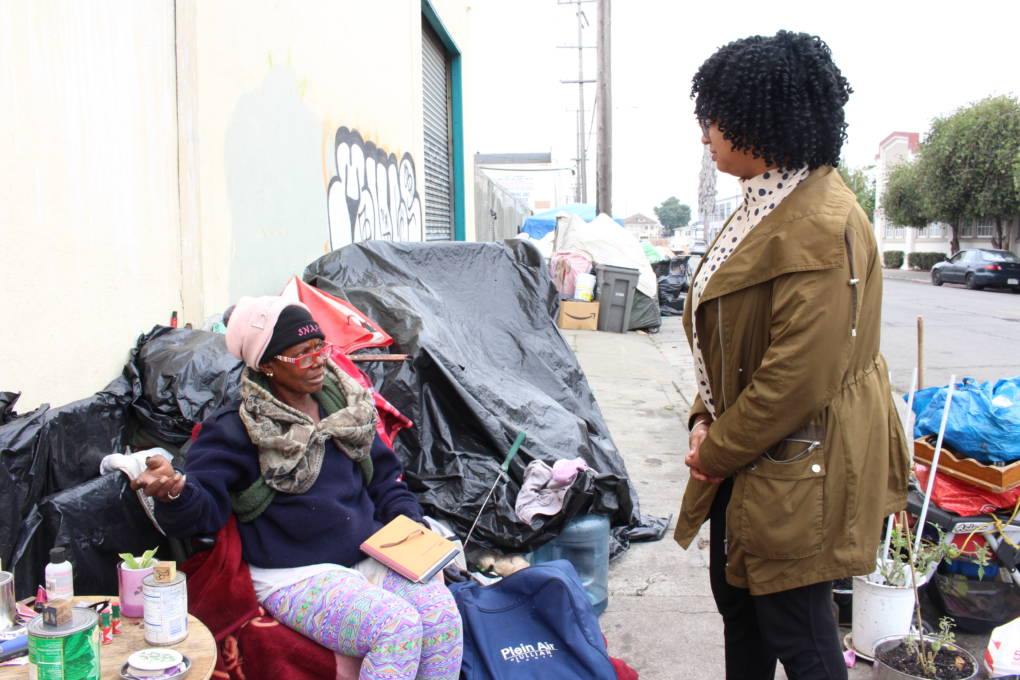
"caption": "Homeless advocate Candice Elder, 34, checks in with Dorothy Smith, 65, at an encampment in Oakland on Aug. 24, 2018. Smith, who raised her children in the city, said her disability benefits are not enough to afford housing. 'It just don’t support me,' she said.\n",
"description": null,
"title": "Photo 1",
"credit": "Farida Jhabvala Romero/KQED",
"status": "inherit",
"isLoading": false,
"fetchFailed": false
},
"news_11689581": {
"type": "attachments",
"id": "news_11689581",
"meta": {
"index": "attachments_1716263798",
"site": "news",
"id": "11689581",
"found": true
},
"parent": 11689446,
"imgSizes": {
"small": {
"file": "https://ww2.kqed.org/app/uploads/sites/10/2018/08/Kayode-520x390.jpg",
"width": 520,
"mimeType": "image/jpeg",
"height": 390
},
"twentyfourteen-full-width": {
"file": "https://ww2.kqed.org/app/uploads/sites/10/2018/08/Kayode-1038x576.jpg",
"width": 1038,
"mimeType": "image/jpeg",
"height": 576
},
"thumbnail": {
"file": "https://ww2.kqed.org/app/uploads/sites/10/2018/08/Kayode-160x120.jpg",
"width": 160,
"mimeType": "image/jpeg",
"height": 120
},
"fd-sm": {
"file": "https://ww2.kqed.org/app/uploads/sites/10/2018/08/Kayode-960x720.jpg",
"width": 960,
"mimeType": "image/jpeg",
"height": 720
},
"post-thumbnail": {
"file": "https://ww2.kqed.org/app/uploads/sites/10/2018/08/Kayode-672x372.jpg",
"width": 672,
"mimeType": "image/jpeg",
"height": 372
},
"xsmall": {
"file": "https://ww2.kqed.org/app/uploads/sites/10/2018/08/Kayode-375x281.jpg",
"width": 375,
"mimeType": "image/jpeg",
"height": 281
},
"kqedFullSize": {
"file": "https://ww2.kqed.org/app/uploads/sites/10/2018/08/Kayode.jpg",
"width": 1920,
"height": 1440
},
"large": {
"file": "https://ww2.kqed.org/app/uploads/sites/10/2018/08/Kayode-1020x765.jpg",
"width": 1020,
"mimeType": "image/jpeg",
"height": 765
},
"xlarge": {
"file": "https://ww2.kqed.org/app/uploads/sites/10/2018/08/Kayode-1180x885.jpg",
"width": 1180,
"mimeType": "image/jpeg",
"height": 885
},
"complete_open_graph": {
"file": "https://ww2.kqed.org/app/uploads/sites/10/2018/08/Kayode-1200x900.jpg",
"width": 1200,
"mimeType": "image/jpeg",
"height": 900
},
"guest-author-50": {
"file": "https://ww2.kqed.org/app/uploads/sites/10/2018/08/Kayode-50x50.jpg",
"width": 50,
"mimeType": "image/jpeg",
"height": 50
},
"guest-author-96": {
"file": "https://ww2.kqed.org/app/uploads/sites/10/2018/08/Kayode-96x96.jpg",
"width": 96,
"mimeType": "image/jpeg",
"height": 96
},
"medium": {
"file": "https://ww2.kqed.org/app/uploads/sites/10/2018/08/Kayode-800x600.jpg",
"width": 800,
"mimeType": "image/jpeg",
"height": 600
},
"guest-author-64": {
"file": "https://ww2.kqed.org/app/uploads/sites/10/2018/08/Kayode-64x64.jpg",
"width": 64,
"mimeType": "image/jpeg",
"height": 64
},
"guest-author-32": {
"file": "https://ww2.kqed.org/app/uploads/sites/10/2018/08/Kayode-32x32.jpg",
"width": 32,
"mimeType": "image/jpeg",
"height": 32
},
"fd-lrg": {
"file": "https://ww2.kqed.org/app/uploads/sites/10/2018/08/Kayode-1920x1440.jpg",
"width": 1920,
"mimeType": "image/jpeg",
"height": 1440
},
"fd-med": {
"file": "https://ww2.kqed.org/app/uploads/sites/10/2018/08/Kayode-1180x885.jpg",
"width": 1180,
"mimeType": "image/jpeg",
"height": 885
},
"full-width": {
"file": "https://ww2.kqed.org/app/uploads/sites/10/2018/08/Kayode-1920x1440.jpg",
"width": 1920,
"mimeType": "image/jpeg",
"height": 1440
},
"detail": {
"file": "https://ww2.kqed.org/app/uploads/sites/10/2018/08/Kayode-150x150.jpg",
"width": 150,
"mimeType": "image/jpeg",
"height": 150
},
"guest-author-128": {
"file": "https://ww2.kqed.org/app/uploads/sites/10/2018/08/Kayode-128x128.jpg",
"width": 128,
"mimeType": "image/jpeg",
"height": 128
},
"xxsmall": {
"file": "https://ww2.kqed.org/app/uploads/sites/10/2018/08/Kayode-240x180.jpg",
"width": 240,
"mimeType": "image/jpeg",
"height": 180
}
},
"publishDate": 1535665009,
"modified": 1535665078,
"caption": "Sean Kayode, at the Next Door homeless shelter in San Francisco on July 26, 2018. Kayode is suing the city, saying he lost his means of food-delivery employment and his home when his car was impounded in March — for having too many parking tickets.",
"description": "Sean Kayode, at the Next Door homeless shelter in San Francisco on July 26, 2018. Kayode is suing the city, saying he lost his means of food-delivery employment and his home when his car was impounded in March — for having too many parking tickets.",
"title": "Kayode",
"credit": "David Gorn/CALmatters",
"status": "inherit",
"isLoading": false,
"fetchFailed": false
},
"news_11689284": {
"type": "attachments",
"id": "news_11689284",
"meta": {
"index": "attachments_1716263798",
"site": "news",
"id": "11689284",
"found": true
},
"parent": 11689282,
"imgSizes": {
"small": {
"file": "https://ww2.kqed.org/app/uploads/sites/10/2018/08/IMG_1483-1000x750-520x390.jpg",
"width": 520,
"mimeType": "image/jpeg",
"height": 390
},
"twentyfourteen-full-width": {
"file": "https://ww2.kqed.org/app/uploads/sites/10/2018/08/IMG_1483-1000x750-1000x576.jpg",
"width": 1000,
"mimeType": "image/jpeg",
"height": 576
},
"thumbnail": {
"file": "https://ww2.kqed.org/app/uploads/sites/10/2018/08/IMG_1483-1000x750-160x120.jpg",
"width": 160,
"mimeType": "image/jpeg",
"height": 120
},
"fd-sm": {
"file": "https://ww2.kqed.org/app/uploads/sites/10/2018/08/IMG_1483-1000x750-960x720.jpg",
"width": 960,
"mimeType": "image/jpeg",
"height": 720
},
"post-thumbnail": {
"file": "https://ww2.kqed.org/app/uploads/sites/10/2018/08/IMG_1483-1000x750-672x372.jpg",
"width": 672,
"mimeType": "image/jpeg",
"height": 372
},
"xsmall": {
"file": "https://ww2.kqed.org/app/uploads/sites/10/2018/08/IMG_1483-1000x750-375x281.jpg",
"width": 375,
"mimeType": "image/jpeg",
"height": 281
},
"kqedFullSize": {
"file": "https://ww2.kqed.org/app/uploads/sites/10/2018/08/IMG_1483-1000x750.jpg",
"width": 1000,
"height": 750
},
"guest-author-50": {
"file": "https://ww2.kqed.org/app/uploads/sites/10/2018/08/IMG_1483-1000x750-50x50.jpg",
"width": 50,
"mimeType": "image/jpeg",
"height": 50
},
"guest-author-96": {
"file": "https://ww2.kqed.org/app/uploads/sites/10/2018/08/IMG_1483-1000x750-96x96.jpg",
"width": 96,
"mimeType": "image/jpeg",
"height": 96
},
"medium": {
"file": "https://ww2.kqed.org/app/uploads/sites/10/2018/08/IMG_1483-1000x750-800x600.jpg",
"width": 800,
"mimeType": "image/jpeg",
"height": 600
},
"guest-author-64": {
"file": "https://ww2.kqed.org/app/uploads/sites/10/2018/08/IMG_1483-1000x750-64x64.jpg",
"width": 64,
"mimeType": "image/jpeg",
"height": 64
},
"guest-author-32": {
"file": "https://ww2.kqed.org/app/uploads/sites/10/2018/08/IMG_1483-1000x750-32x32.jpg",
"width": 32,
"mimeType": "image/jpeg",
"height": 32
},
"detail": {
"file": "https://ww2.kqed.org/app/uploads/sites/10/2018/08/IMG_1483-1000x750-150x150.jpg",
"width": 150,
"mimeType": "image/jpeg",
"height": 150
},
"guest-author-128": {
"file": "https://ww2.kqed.org/app/uploads/sites/10/2018/08/IMG_1483-1000x750-128x128.jpg",
"width": 128,
"mimeType": "image/jpeg",
"height": 128
},
"xxsmall": {
"file": "https://ww2.kqed.org/app/uploads/sites/10/2018/08/IMG_1483-1000x750-240x180.jpg",
"width": 240,
"mimeType": "image/jpeg",
"height": 180
}
},
"publishDate": 1535559979,
"modified": 1535560007,
"caption": "Terry Williams, 71, lives in South Central Los Angeles and says his stomach dropped when he first got an eviction notice in July.",
"description": null,
"title": "IMG_1483-1000x750",
"credit": "David Gorn/CALmatters ",
"status": "inherit",
"isLoading": false,
"fetchFailed": false
},
"news_11689044": {
"type": "attachments",
"id": "news_11689044",
"meta": {
"index": "attachments_1716263798",
"site": "news",
"id": "11689044",
"found": true
},
"parent": 11689040,
"imgSizes": {
"small": {
"file": "https://ww2.kqed.org/app/uploads/sites/10/2018/08/SeniorWalking-520x311.jpg",
"width": 520,
"mimeType": "image/jpeg",
"height": 311
},
"twentyfourteen-full-width": {
"file": "https://ww2.kqed.org/app/uploads/sites/10/2018/08/SeniorWalking-1038x576.jpg",
"width": 1038,
"mimeType": "image/jpeg",
"height": 576
},
"thumbnail": {
"file": "https://ww2.kqed.org/app/uploads/sites/10/2018/08/SeniorWalking-160x96.jpg",
"width": 160,
"mimeType": "image/jpeg",
"height": 96
},
"fd-sm": {
"file": "https://ww2.kqed.org/app/uploads/sites/10/2018/08/SeniorWalking-960x574.jpg",
"width": 960,
"mimeType": "image/jpeg",
"height": 574
},
"post-thumbnail": {
"file": "https://ww2.kqed.org/app/uploads/sites/10/2018/08/SeniorWalking-672x372.jpg",
"width": 672,
"mimeType": "image/jpeg",
"height": 372
},
"xsmall": {
"file": "https://ww2.kqed.org/app/uploads/sites/10/2018/08/SeniorWalking-375x224.jpg",
"width": 375,
"mimeType": "image/jpeg",
"height": 224
},
"kqedFullSize": {
"file": "https://ww2.kqed.org/app/uploads/sites/10/2018/08/SeniorWalking.jpg",
"width": 1646,
"height": 985
},
"large": {
"file": "https://ww2.kqed.org/app/uploads/sites/10/2018/08/SeniorWalking-1020x610.jpg",
"width": 1020,
"mimeType": "image/jpeg",
"height": 610
},
"xlarge": {
"file": "https://ww2.kqed.org/app/uploads/sites/10/2018/08/SeniorWalking-1180x706.jpg",
"width": 1180,
"mimeType": "image/jpeg",
"height": 706
},
"complete_open_graph": {
"file": "https://ww2.kqed.org/app/uploads/sites/10/2018/08/SeniorWalking-1200x718.jpg",
"width": 1200,
"mimeType": "image/jpeg",
"height": 718
},
"guest-author-50": {
"file": "https://ww2.kqed.org/app/uploads/sites/10/2018/08/SeniorWalking-50x50.jpg",
"width": 50,
"mimeType": "image/jpeg",
"height": 50
},
"guest-author-96": {
"file": "https://ww2.kqed.org/app/uploads/sites/10/2018/08/SeniorWalking-96x96.jpg",
"width": 96,
"mimeType": "image/jpeg",
"height": 96
},
"medium": {
"file": "https://ww2.kqed.org/app/uploads/sites/10/2018/08/SeniorWalking-800x479.jpg",
"width": 800,
"mimeType": "image/jpeg",
"height": 479
},
"guest-author-64": {
"file": "https://ww2.kqed.org/app/uploads/sites/10/2018/08/SeniorWalking-64x64.jpg",
"width": 64,
"mimeType": "image/jpeg",
"height": 64
},
"guest-author-32": {
"file": "https://ww2.kqed.org/app/uploads/sites/10/2018/08/SeniorWalking-32x32.jpg",
"width": 32,
"mimeType": "image/jpeg",
"height": 32
},
"fd-med": {
"file": "https://ww2.kqed.org/app/uploads/sites/10/2018/08/SeniorWalking-1180x706.jpg",
"width": 1180,
"mimeType": "image/jpeg",
"height": 706
},
"detail": {
"file": "https://ww2.kqed.org/app/uploads/sites/10/2018/08/SeniorWalking-150x150.jpg",
"width": 150,
"mimeType": "image/jpeg",
"height": 150
},
"guest-author-128": {
"file": "https://ww2.kqed.org/app/uploads/sites/10/2018/08/SeniorWalking-128x128.jpg",
"width": 128,
"mimeType": "image/jpeg",
"height": 128
},
"xxsmall": {
"file": "https://ww2.kqed.org/app/uploads/sites/10/2018/08/SeniorWalking-240x144.jpg",
"width": 240,
"mimeType": "image/jpeg",
"height": 144
}
},
"publishDate": 1535407300,
"modified": 1535410199,
"caption": "Pierre Devillandry, a painter who has lived in Santa Monica 30 years, was accepted into the city's pilot program for a monthly subsidy. 'It was something that came down from heaven,' he said.",
"description": "Pierre Devillandry, a painter who has lived in Santa Monica for 30 years, was accepted into the city's pilot program for a monthly subsidy. 'It was something that came down from Heaven,' he said.",
"title": "SeniorWalking",
"credit": "KPBS/YouTube",
"status": "inherit",
"isLoading": false,
"fetchFailed": false
},
"news_11120420": {
"type": "attachments",
"id": "news_11120420",
"meta": {
"index": "attachments_1716263798",
"site": "news",
"id": "11120420",
"found": true
},
"parent": 11120258,
"imgSizes": {
"twentyfourteen-full-width": {
"file": "https://ww2.kqed.org/app/uploads/sites/10/2016/10/Florida-St-1038x576.jpg",
"width": 1038,
"mimeType": "image/jpeg",
"height": 576
},
"thumbnail": {
"file": "https://ww2.kqed.org/app/uploads/sites/10/2016/10/Florida-St-400x267.jpg",
"width": 400,
"mimeType": "image/jpeg",
"height": 267
},
"fd-sm": {
"file": "https://ww2.kqed.org/app/uploads/sites/10/2016/10/Florida-St-960x640.jpg",
"width": 960,
"mimeType": "image/jpeg",
"height": 640
},
"post-thumbnail": {
"file": "https://ww2.kqed.org/app/uploads/sites/10/2016/10/Florida-St-672x372.jpg",
"width": 672,
"mimeType": "image/jpeg",
"height": 372
},
"kqedFullSize": {
"file": "https://ww2.kqed.org/app/uploads/sites/10/2016/10/Florida-St.jpg",
"width": 1920,
"height": 1280
},
"large": {
"file": "https://ww2.kqed.org/app/uploads/sites/10/2016/10/Florida-St-1920x1280.jpg",
"width": 1920,
"mimeType": "image/jpeg",
"height": 1280
},
"guest-author-50": {
"file": "https://ww2.kqed.org/app/uploads/sites/10/2016/10/Florida-St-50x50.jpg",
"width": 50,
"mimeType": "image/jpeg",
"height": 50
},
"guest-author-96": {
"file": "https://ww2.kqed.org/app/uploads/sites/10/2016/10/Florida-St-96x96.jpg",
"width": 96,
"mimeType": "image/jpeg",
"height": 96
},
"medium": {
"file": "https://ww2.kqed.org/app/uploads/sites/10/2016/10/Florida-St-800x533.jpg",
"width": 800,
"mimeType": "image/jpeg",
"height": 533
},
"guest-author-64": {
"file": "https://ww2.kqed.org/app/uploads/sites/10/2016/10/Florida-St-64x64.jpg",
"width": 64,
"mimeType": "image/jpeg",
"height": 64
},
"guest-author-32": {
"file": "https://ww2.kqed.org/app/uploads/sites/10/2016/10/Florida-St-32x32.jpg",
"width": 32,
"mimeType": "image/jpeg",
"height": 32
},
"jmtc-small-thumb": {
"file": "https://ww2.kqed.org/app/uploads/sites/10/2016/10/Florida-St-280x150.jpg",
"width": 280,
"mimeType": "image/jpeg",
"height": 150
},
"fd-lrg": {
"file": "https://ww2.kqed.org/app/uploads/sites/10/2016/10/Florida-St-1920x1280.jpg",
"width": 1920,
"mimeType": "image/jpeg",
"height": 1280
},
"fd-med": {
"file": "https://ww2.kqed.org/app/uploads/sites/10/2016/10/Florida-St-1180x787.jpg",
"width": 1180,
"mimeType": "image/jpeg",
"height": 787
},
"detail": {
"file": "https://ww2.kqed.org/app/uploads/sites/10/2016/10/Florida-St-150x150.jpg",
"width": 150,
"mimeType": "image/jpeg",
"height": 150
},
"guest-author-128": {
"file": "https://ww2.kqed.org/app/uploads/sites/10/2016/10/Florida-St-128x128.jpg",
"width": 128,
"mimeType": "image/jpeg",
"height": 128
}
},
"publishDate": 1475884790,
"modified": 1475884850,
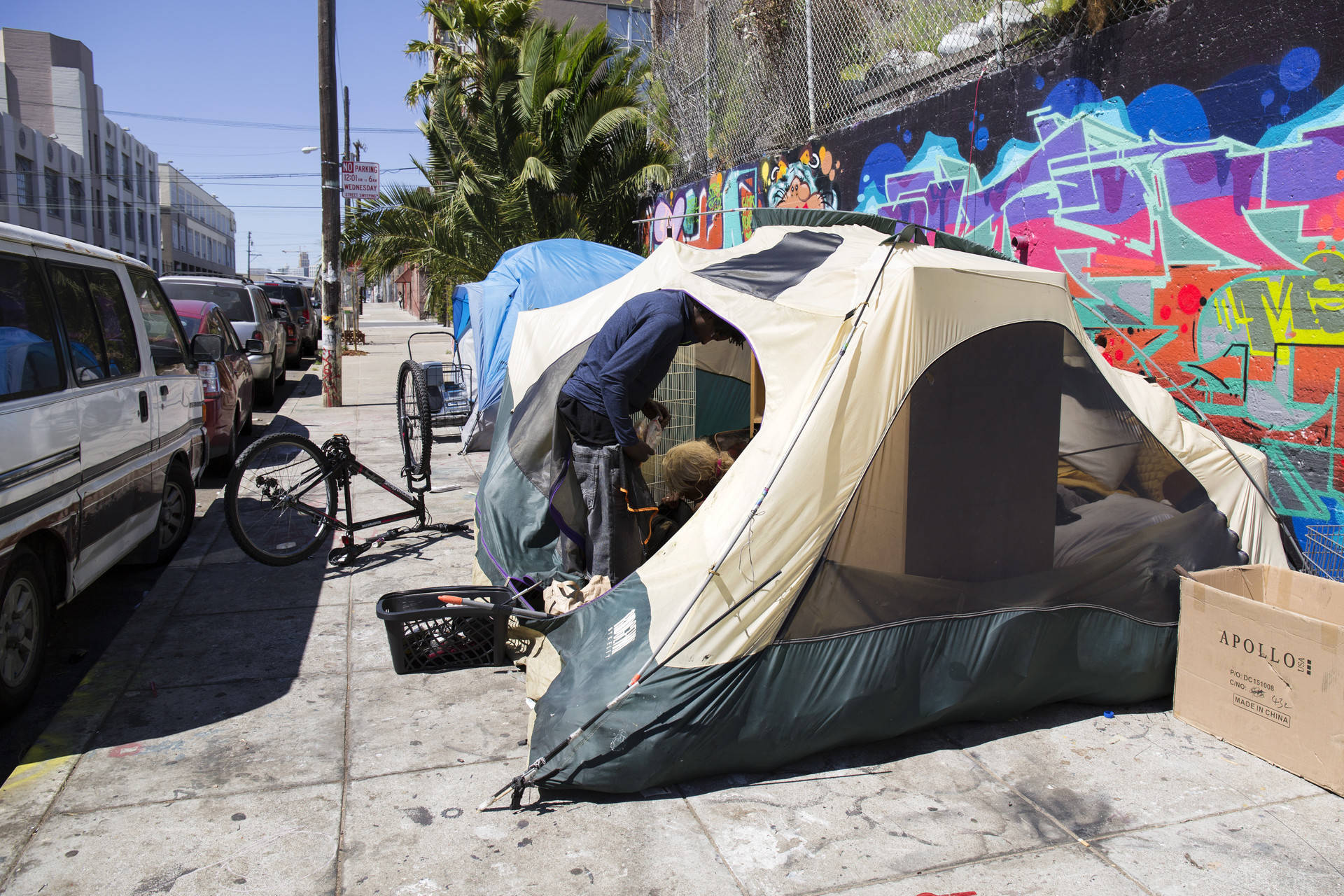
"caption": "An encampment on Florida Street in San Francisco's Mission District on June 23.",
"description": "A homeless encampment located on Florida St in the Mission District of San Francisco, Calif. on Thursday, June 23, 2016.",
"title": "Florida St",
"credit": "Brittany Hosea-Small/KQED",
"status": "inherit",
"isLoading": false,
"fetchFailed": false
},
"news_11675633": {
"type": "attachments",
"id": "news_11675633",
"meta": {
"index": "attachments_1716263798",
"site": "news",
"id": "11675633",
"found": true
},
"parent": 11670826,
"imgSizes": {
"small": {
"file": "https://ww2.kqed.org/app/uploads/sites/10/2018/05/RS31509_eddris-img-3-qut-520x693.jpg",
"width": 520,
"mimeType": "image/jpeg",
"height": 693
},
"twentyfourteen-full-width": {
"file": "https://ww2.kqed.org/app/uploads/sites/10/2018/05/RS31509_eddris-img-3-qut-1038x576.jpg",
"width": 1038,
"mimeType": "image/jpeg",
"height": 576
},
"thumbnail": {
"file": "https://ww2.kqed.org/app/uploads/sites/10/2018/05/RS31509_eddris-img-3-qut-160x213.jpg",
"width": 160,
"mimeType": "image/jpeg",
"height": 213
},
"fd-sm": {
"file": "https://ww2.kqed.org/app/uploads/sites/10/2018/05/RS31509_eddris-img-3-qut-960x1280.jpg",
"width": 960,
"mimeType": "image/jpeg",
"height": 1280
},
"post-thumbnail": {
"file": "https://ww2.kqed.org/app/uploads/sites/10/2018/05/RS31509_eddris-img-3-qut-672x372.jpg",
"width": 672,
"mimeType": "image/jpeg",
"height": 372
},
"xsmall": {
"file": "https://ww2.kqed.org/app/uploads/sites/10/2018/05/RS31509_eddris-img-3-qut-375x500.jpg",
"width": 375,
"mimeType": "image/jpeg",
"height": 500
},
"kqedFullSize": {
"file": "https://ww2.kqed.org/app/uploads/sites/10/2018/05/RS31509_eddris-img-3-qut.jpg",
"width": 1920,
"height": 2560
},
"large": {
"file": "https://ww2.kqed.org/app/uploads/sites/10/2018/05/RS31509_eddris-img-3-qut-1020x1360.jpg",
"width": 1020,
"mimeType": "image/jpeg",
"height": 1360
},
"xlarge": {
"file": "https://ww2.kqed.org/app/uploads/sites/10/2018/05/RS31509_eddris-img-3-qut-1180x1573.jpg",
"width": 1180,
"mimeType": "image/jpeg",
"height": 1573
},
"complete_open_graph": {
"file": "https://ww2.kqed.org/app/uploads/sites/10/2018/05/RS31509_eddris-img-3-qut-900x1200.jpg",
"width": 900,
"mimeType": "image/jpeg",
"height": 1200
},
"guest-author-50": {
"file": "https://ww2.kqed.org/app/uploads/sites/10/2018/05/RS31509_eddris-img-3-qut-50x50.jpg",
"width": 50,
"mimeType": "image/jpeg",
"height": 50
},
"guest-author-96": {
"file": "https://ww2.kqed.org/app/uploads/sites/10/2018/05/RS31509_eddris-img-3-qut-96x96.jpg",
"width": 96,
"mimeType": "image/jpeg",
"height": 96
},
"medium": {
"file": "https://ww2.kqed.org/app/uploads/sites/10/2018/05/RS31509_eddris-img-3-qut-800x1067.jpg",
"width": 800,
"mimeType": "image/jpeg",
"height": 1067
},
"guest-author-64": {
"file": "https://ww2.kqed.org/app/uploads/sites/10/2018/05/RS31509_eddris-img-3-qut-64x64.jpg",
"width": 64,
"mimeType": "image/jpeg",
"height": 64
},
"guest-author-32": {
"file": "https://ww2.kqed.org/app/uploads/sites/10/2018/05/RS31509_eddris-img-3-qut-32x32.jpg",
"width": 32,
"mimeType": "image/jpeg",
"height": 32
},
"fd-lrg": {
"file": "https://ww2.kqed.org/app/uploads/sites/10/2018/05/RS31509_eddris-img-3-qut-1920x2560.jpg",
"width": 1920,
"mimeType": "image/jpeg",
"height": 2560
},
"fd-med": {
"file": "https://ww2.kqed.org/app/uploads/sites/10/2018/05/RS31509_eddris-img-3-qut-1180x1573.jpg",
"width": 1180,
"mimeType": "image/jpeg",
"height": 1573
},
"full-width": {
"file": "https://ww2.kqed.org/app/uploads/sites/10/2018/05/RS31509_eddris-img-3-qut-1920x2560.jpg",
"width": 1920,
"mimeType": "image/jpeg",
"height": 2560
},
"detail": {
"file": "https://ww2.kqed.org/app/uploads/sites/10/2018/05/RS31509_eddris-img-3-qut-150x150.jpg",
"width": 150,
"mimeType": "image/jpeg",
"height": 150
},
"guest-author-128": {
"file": "https://ww2.kqed.org/app/uploads/sites/10/2018/05/RS31509_eddris-img-3-qut-128x128.jpg",
"width": 128,
"mimeType": "image/jpeg",
"height": 128
},
"xxsmall": {
"file": "https://ww2.kqed.org/app/uploads/sites/10/2018/05/RS31509_eddris-img-3-qut-240x320.jpg",
"width": 240,
"mimeType": "image/jpeg",
"height": 320
}
},
"publishDate": 1529354994,
"modified": 1529357993,
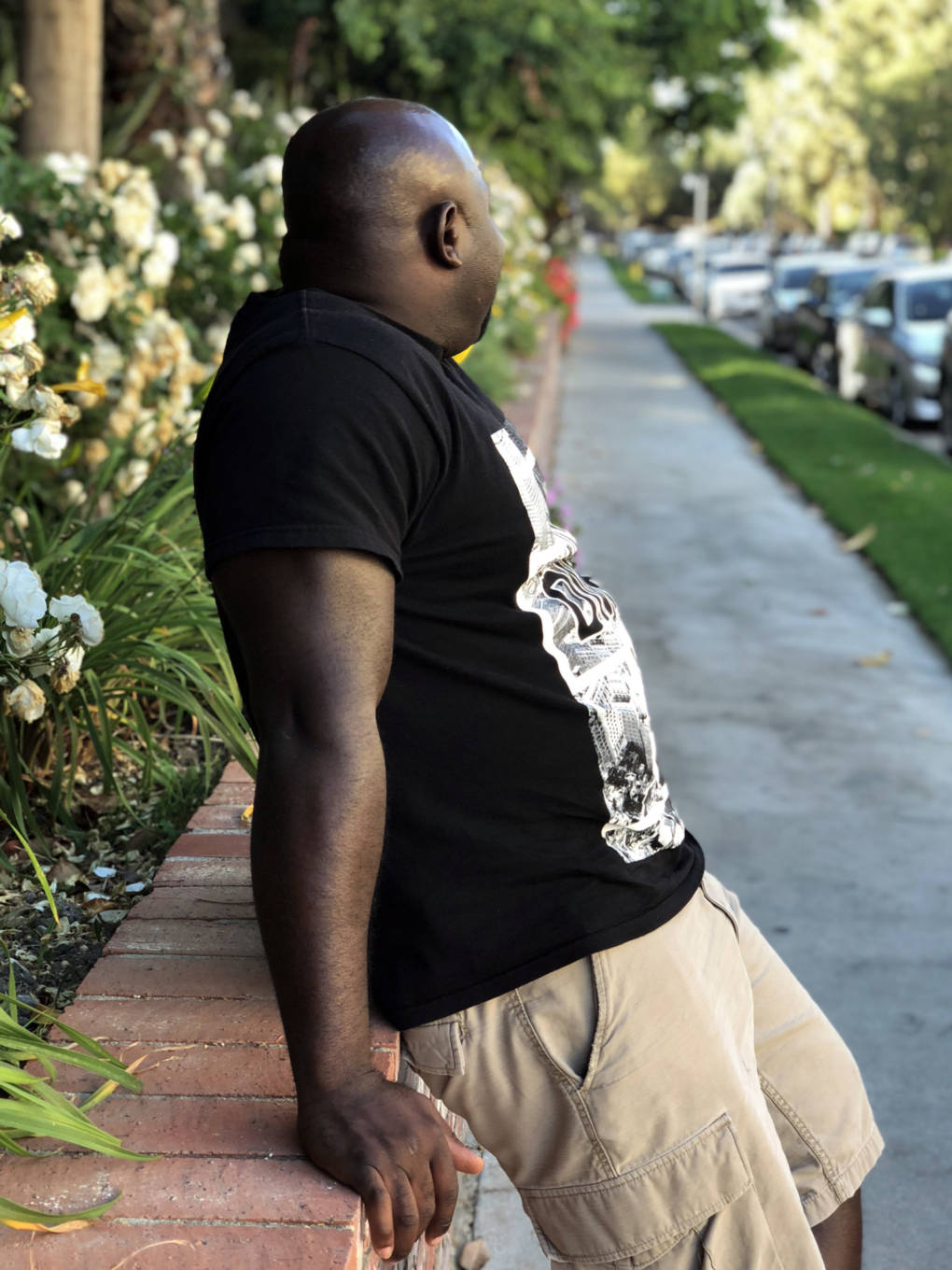
"caption": "Eddris Sseguya was imprisoned in Uganda for being gay. He is now living in his car in Los Angeles, where he is waiting to secure political asylum. For safety reasons, he did not want his face shown.",
"description": null,
"title": "RS31509_eddris-img-3-qut",
"credit": "Karina Saidi",
"status": "inherit",
"isLoading": false,
"fetchFailed": false
},
"news_11680976": {
"type": "attachments",
"id": "news_11680976",
"meta": {
"index": "attachments_1716263798",
"site": "news",
"id": "11680976",
"found": true
},
"parent": 11680975,
"imgSizes": {
"small": {
"file": "https://ww2.kqed.org/app/uploads/sites/10/2018/07/2721121-a_wide-ae8f7b4d3fce363c664006670668cf44e5fea877-520x292.jpg",
"width": 520,
"mimeType": "image/jpeg",
"height": 292
},
"twentyfourteen-full-width": {
"file": "https://ww2.kqed.org/app/uploads/sites/10/2018/07/2721121-a_wide-ae8f7b4d3fce363c664006670668cf44e5fea877-1038x576.jpg",
"width": 1038,
"mimeType": "image/jpeg",
"height": 576
},
"thumbnail": {
"file": "https://ww2.kqed.org/app/uploads/sites/10/2018/07/2721121-a_wide-ae8f7b4d3fce363c664006670668cf44e5fea877-160x90.jpg",
"width": 160,
"mimeType": "image/jpeg",
"height": 90
},
"fd-sm": {
"file": "https://ww2.kqed.org/app/uploads/sites/10/2018/07/2721121-a_wide-ae8f7b4d3fce363c664006670668cf44e5fea877-960x540.jpg",
"width": 960,
"mimeType": "image/jpeg",
"height": 540
},
"post-thumbnail": {
"file": "https://ww2.kqed.org/app/uploads/sites/10/2018/07/2721121-a_wide-ae8f7b4d3fce363c664006670668cf44e5fea877-672x372.jpg",
"width": 672,
"mimeType": "image/jpeg",
"height": 372
},
"xsmall": {
"file": "https://ww2.kqed.org/app/uploads/sites/10/2018/07/2721121-a_wide-ae8f7b4d3fce363c664006670668cf44e5fea877-375x211.jpg",
"width": 375,
"mimeType": "image/jpeg",
"height": 211
},
"kqedFullSize": {
"file": "https://ww2.kqed.org/app/uploads/sites/10/2018/07/2721121-a_wide-ae8f7b4d3fce363c664006670668cf44e5fea877-e1531856346996.jpg",
"width": 1920,
"height": 1080
},
"large": {
"file": "https://ww2.kqed.org/app/uploads/sites/10/2018/07/2721121-a_wide-ae8f7b4d3fce363c664006670668cf44e5fea877-1020x574.jpg",
"width": 1020,
"mimeType": "image/jpeg",
"height": 574
},
"xlarge": {
"file": "https://ww2.kqed.org/app/uploads/sites/10/2018/07/2721121-a_wide-ae8f7b4d3fce363c664006670668cf44e5fea877-1180x664.jpg",
"width": 1180,
"mimeType": "image/jpeg",
"height": 664
},
"complete_open_graph": {
"file": "https://ww2.kqed.org/app/uploads/sites/10/2018/07/2721121-a_wide-ae8f7b4d3fce363c664006670668cf44e5fea877-1200x675.jpg",
"width": 1200,
"mimeType": "image/jpeg",
"height": 675
},
"guest-author-50": {
"file": "https://ww2.kqed.org/app/uploads/sites/10/2018/07/2721121-a_wide-ae8f7b4d3fce363c664006670668cf44e5fea877-50x50.jpg",
"width": 50,
"mimeType": "image/jpeg",
"height": 50
},
"guest-author-96": {
"file": "https://ww2.kqed.org/app/uploads/sites/10/2018/07/2721121-a_wide-ae8f7b4d3fce363c664006670668cf44e5fea877-96x96.jpg",
"width": 96,
"mimeType": "image/jpeg",
"height": 96
},
"medium": {
"file": "https://ww2.kqed.org/app/uploads/sites/10/2018/07/2721121-a_wide-ae8f7b4d3fce363c664006670668cf44e5fea877-800x450.jpg",
"width": 800,
"mimeType": "image/jpeg",
"height": 450
},
"guest-author-64": {
"file": "https://ww2.kqed.org/app/uploads/sites/10/2018/07/2721121-a_wide-ae8f7b4d3fce363c664006670668cf44e5fea877-64x64.jpg",
"width": 64,
"mimeType": "image/jpeg",
"height": 64
},
"guest-author-32": {
"file": "https://ww2.kqed.org/app/uploads/sites/10/2018/07/2721121-a_wide-ae8f7b4d3fce363c664006670668cf44e5fea877-32x32.jpg",
"width": 32,
"mimeType": "image/jpeg",
"height": 32
},
"fd-lrg": {
"file": "https://ww2.kqed.org/app/uploads/sites/10/2018/07/2721121-a_wide-ae8f7b4d3fce363c664006670668cf44e5fea877-1920x1080.jpg",
"width": 1920,
"mimeType": "image/jpeg",
"height": 1080
},
"fd-med": {
"file": "https://ww2.kqed.org/app/uploads/sites/10/2018/07/2721121-a_wide-ae8f7b4d3fce363c664006670668cf44e5fea877-1180x664.jpg",
"width": 1180,
"mimeType": "image/jpeg",
"height": 664
},
"full-width": {
"file": "https://ww2.kqed.org/app/uploads/sites/10/2018/07/2721121-a_wide-ae8f7b4d3fce363c664006670668cf44e5fea877-1920x1080.jpg",
"width": 1920,
"mimeType": "image/jpeg",
"height": 1080
},
"detail": {
"file": "https://ww2.kqed.org/app/uploads/sites/10/2018/07/2721121-a_wide-ae8f7b4d3fce363c664006670668cf44e5fea877-150x150.jpg",
"width": 150,
"mimeType": "image/jpeg",
"height": 150
},
"guest-author-128": {
"file": "https://ww2.kqed.org/app/uploads/sites/10/2018/07/2721121-a_wide-ae8f7b4d3fce363c664006670668cf44e5fea877-128x128.jpg",
"width": 128,
"mimeType": "image/jpeg",
"height": 128
},
"xxsmall": {
"file": "https://ww2.kqed.org/app/uploads/sites/10/2018/07/2721121-a_wide-ae8f7b4d3fce363c664006670668cf44e5fea877-240x135.jpg",
"width": 240,
"mimeType": "image/jpeg",
"height": 135
}
},
"publishDate": 1531856014,
"modified": 1531865778,
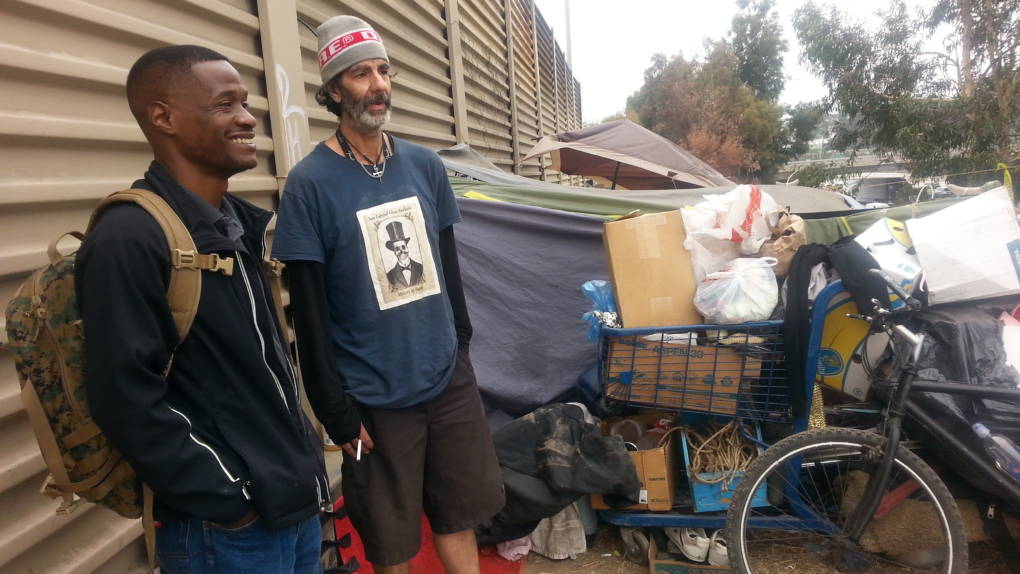
"caption": "Jesse Henderson (left), an Army veteran, walks Hollywood Boulevard in Los Angeles looking for homeless veterans. His job is to try and connect them with support resources, including transitional housing, offered by the nonprofit U.S.VETS.",
"description": "Jesse Henderson (left), an Army veteran, walks Hollywood Boulevard in Los Angeles looking for homeless veterans. His job is to try and connect them with support resources, including transitional housing, offered by the nonprofit U.S.Vets",
"title": "Jesse Henderson (left), an Army veteran, walks Hollywood Boulevard in Los Angeles looking for homeless veterans. His job is to try and connect them with support resources, including transitional housing, offered by the nonprofit U.S.Vets.",
"credit": "Gloria Hillard/NPR",
"status": "inherit",
"isLoading": false,
"fetchFailed": false
},
"news_11680928": {
"type": "attachments",
"id": "news_11680928",
"meta": {
"index": "attachments_1716263798",
"site": "news",
"id": "11680928",
"found": true
},
"parent": 11680925,
"imgSizes": {
"small": {
"file": "https://ww2.kqed.org/app/uploads/sites/10/2018/07/RS19958_160623_Florida-St-Encampment_bhs01-qut-520x347.jpg",
"width": 520,
"mimeType": "image/jpeg",
"height": 347
},
"twentyfourteen-full-width": {
"file": "https://ww2.kqed.org/app/uploads/sites/10/2018/07/RS19958_160623_Florida-St-Encampment_bhs01-qut-1038x576.jpg",
"width": 1038,
"mimeType": "image/jpeg",
"height": 576
},
"thumbnail": {
"file": "https://ww2.kqed.org/app/uploads/sites/10/2018/07/RS19958_160623_Florida-St-Encampment_bhs01-qut-160x107.jpg",
"width": 160,
"mimeType": "image/jpeg",
"height": 107
},
"fd-sm": {
"file": "https://ww2.kqed.org/app/uploads/sites/10/2018/07/RS19958_160623_Florida-St-Encampment_bhs01-qut-960x640.jpg",
"width": 960,
"mimeType": "image/jpeg",
"height": 640
},
"post-thumbnail": {
"file": "https://ww2.kqed.org/app/uploads/sites/10/2018/07/RS19958_160623_Florida-St-Encampment_bhs01-qut-672x372.jpg",
"width": 672,
"mimeType": "image/jpeg",
"height": 372
},
"xsmall": {
"file": "https://ww2.kqed.org/app/uploads/sites/10/2018/07/RS19958_160623_Florida-St-Encampment_bhs01-qut-375x250.jpg",
"width": 375,
"mimeType": "image/jpeg",
"height": 250
},
"kqedFullSize": {
"file": "https://ww2.kqed.org/app/uploads/sites/10/2018/07/RS19958_160623_Florida-St-Encampment_bhs01-qut.jpg",
"width": 1920,
"height": 1280
},
"large": {
"file": "https://ww2.kqed.org/app/uploads/sites/10/2018/07/RS19958_160623_Florida-St-Encampment_bhs01-qut-1020x680.jpg",
"width": 1020,
"mimeType": "image/jpeg",
"height": 680
},
"xlarge": {
"file": "https://ww2.kqed.org/app/uploads/sites/10/2018/07/RS19958_160623_Florida-St-Encampment_bhs01-qut-1180x787.jpg",
"width": 1180,
"mimeType": "image/jpeg",
"height": 787
},
"complete_open_graph": {
"file": "https://ww2.kqed.org/app/uploads/sites/10/2018/07/RS19958_160623_Florida-St-Encampment_bhs01-qut-1200x800.jpg",
"width": 1200,
"mimeType": "image/jpeg",
"height": 800
},
"guest-author-50": {
"file": "https://ww2.kqed.org/app/uploads/sites/10/2018/07/RS19958_160623_Florida-St-Encampment_bhs01-qut-50x50.jpg",
"width": 50,
"mimeType": "image/jpeg",
"height": 50
},
"guest-author-96": {
"file": "https://ww2.kqed.org/app/uploads/sites/10/2018/07/RS19958_160623_Florida-St-Encampment_bhs01-qut-96x96.jpg",
"width": 96,
"mimeType": "image/jpeg",
"height": 96
},
"medium": {
"file": "https://ww2.kqed.org/app/uploads/sites/10/2018/07/RS19958_160623_Florida-St-Encampment_bhs01-qut-800x533.jpg",
"width": 800,
"mimeType": "image/jpeg",
"height": 533
},
"guest-author-64": {
"file": "https://ww2.kqed.org/app/uploads/sites/10/2018/07/RS19958_160623_Florida-St-Encampment_bhs01-qut-64x64.jpg",
"width": 64,
"mimeType": "image/jpeg",
"height": 64
},
"guest-author-32": {
"file": "https://ww2.kqed.org/app/uploads/sites/10/2018/07/RS19958_160623_Florida-St-Encampment_bhs01-qut-32x32.jpg",
"width": 32,
"mimeType": "image/jpeg",
"height": 32
},
"fd-lrg": {
"file": "https://ww2.kqed.org/app/uploads/sites/10/2018/07/RS19958_160623_Florida-St-Encampment_bhs01-qut-1920x1280.jpg",
"width": 1920,
"mimeType": "image/jpeg",
"height": 1280
},
"fd-med": {
"file": "https://ww2.kqed.org/app/uploads/sites/10/2018/07/RS19958_160623_Florida-St-Encampment_bhs01-qut-1180x787.jpg",
"width": 1180,
"mimeType": "image/jpeg",
"height": 787
},
"full-width": {
"file": "https://ww2.kqed.org/app/uploads/sites/10/2018/07/RS19958_160623_Florida-St-Encampment_bhs01-qut-1920x1280.jpg",
"width": 1920,
"mimeType": "image/jpeg",
"height": 1280
},
"detail": {
"file": "https://ww2.kqed.org/app/uploads/sites/10/2018/07/RS19958_160623_Florida-St-Encampment_bhs01-qut-150x150.jpg",
"width": 150,
"mimeType": "image/jpeg",
"height": 150
},
"guest-author-128": {
"file": "https://ww2.kqed.org/app/uploads/sites/10/2018/07/RS19958_160623_Florida-St-Encampment_bhs01-qut-128x128.jpg",
"width": 128,
"mimeType": "image/jpeg",
"height": 128
},
"xxsmall": {
"file": "https://ww2.kqed.org/app/uploads/sites/10/2018/07/RS19958_160623_Florida-St-Encampment_bhs01-qut-240x160.jpg",
"width": 240,
"mimeType": "image/jpeg",
"height": 160
}
},
"publishDate": 1531843032,
"modified": 1531843081,
"caption": "A homeless encampment located on Florida Street in the Mission District of San Francisco on Thursday, June 23, 2016.",
"description": "A homeless encampment located on Florida Street in the Mission District of San Francisco on Thursday, June 23, 2016.",
"title": "RS19958_160623_Florida St Encampment_bhs01-qut",
"credit": "Brittany Hosea-Small/KQED",
"status": "inherit",
"isLoading": false,
"fetchFailed": false
},
"news_11680043": {
"type": "attachments",
"id": "news_11680043",
"meta": {
"index": "attachments_1716263798",
"site": "news",
"id": "11680043",
"found": true
},
"parent": 11680038,
"imgSizes": {
"small": {
"file": "https://ww2.kqed.org/app/uploads/sites/10/2018/07/breedinaug_071118-520x329.jpg",
"width": 520,
"mimeType": "image/jpeg",
"height": 329
},
"twentyfourteen-full-width": {
"file": "https://ww2.kqed.org/app/uploads/sites/10/2018/07/breedinaug_071118-1038x576.jpg",
"width": 1038,
"mimeType": "image/jpeg",
"height": 576
},
"thumbnail": {
"file": "https://ww2.kqed.org/app/uploads/sites/10/2018/07/breedinaug_071118-160x101.jpg",
"width": 160,
"mimeType": "image/jpeg",
"height": 101
},
"fd-sm": {
"file": "https://ww2.kqed.org/app/uploads/sites/10/2018/07/breedinaug_071118-960x608.jpg",
"width": 960,
"mimeType": "image/jpeg",
"height": 608
},
"post-thumbnail": {
"file": "https://ww2.kqed.org/app/uploads/sites/10/2018/07/breedinaug_071118-672x372.jpg",
"width": 672,
"mimeType": "image/jpeg",
"height": 372
},
"xsmall": {
"file": "https://ww2.kqed.org/app/uploads/sites/10/2018/07/breedinaug_071118-375x238.jpg",
"width": 375,
"mimeType": "image/jpeg",
"height": 238
},
"kqedFullSize": {
"file": "https://ww2.kqed.org/app/uploads/sites/10/2018/07/breedinaug_071118.jpg",
"width": 1920,
"height": 1216
},
"large": {
"file": "https://ww2.kqed.org/app/uploads/sites/10/2018/07/breedinaug_071118-1020x646.jpg",
"width": 1020,
"mimeType": "image/jpeg",
"height": 646
},
"xlarge": {
"file": "https://ww2.kqed.org/app/uploads/sites/10/2018/07/breedinaug_071118-1180x747.jpg",
"width": 1180,
"mimeType": "image/jpeg",
"height": 747
},
"complete_open_graph": {
"file": "https://ww2.kqed.org/app/uploads/sites/10/2018/07/breedinaug_071118-1200x760.jpg",
"width": 1200,
"mimeType": "image/jpeg",
"height": 760
},
"guest-author-50": {
"file": "https://ww2.kqed.org/app/uploads/sites/10/2018/07/breedinaug_071118-50x50.jpg",
"width": 50,
"mimeType": "image/jpeg",
"height": 50
},
"guest-author-96": {
"file": "https://ww2.kqed.org/app/uploads/sites/10/2018/07/breedinaug_071118-96x96.jpg",
"width": 96,
"mimeType": "image/jpeg",
"height": 96
},
"medium": {
"file": "https://ww2.kqed.org/app/uploads/sites/10/2018/07/breedinaug_071118-800x507.jpg",
"width": 800,
"mimeType": "image/jpeg",
"height": 507
},
"guest-author-64": {
"file": "https://ww2.kqed.org/app/uploads/sites/10/2018/07/breedinaug_071118-64x64.jpg",
"width": 64,
"mimeType": "image/jpeg",
"height": 64
},
"guest-author-32": {
"file": "https://ww2.kqed.org/app/uploads/sites/10/2018/07/breedinaug_071118-32x32.jpg",
"width": 32,
"mimeType": "image/jpeg",
"height": 32
},
"fd-lrg": {
"file": "https://ww2.kqed.org/app/uploads/sites/10/2018/07/breedinaug_071118-1920x1216.jpg",
"width": 1920,
"mimeType": "image/jpeg",
"height": 1216
},
"fd-med": {
"file": "https://ww2.kqed.org/app/uploads/sites/10/2018/07/breedinaug_071118-1180x747.jpg",
"width": 1180,
"mimeType": "image/jpeg",
"height": 747
},
"full-width": {
"file": "https://ww2.kqed.org/app/uploads/sites/10/2018/07/breedinaug_071118-1920x1216.jpg",
"width": 1920,
"mimeType": "image/jpeg",
"height": 1216
},
"detail": {
"file": "https://ww2.kqed.org/app/uploads/sites/10/2018/07/breedinaug_071118-150x150.jpg",
"width": 150,
"mimeType": "image/jpeg",
"height": 150
},
"guest-author-128": {
"file": "https://ww2.kqed.org/app/uploads/sites/10/2018/07/breedinaug_071118-128x128.jpg",
"width": 128,
"mimeType": "image/jpeg",
"height": 128
},
"xxsmall": {
"file": "https://ww2.kqed.org/app/uploads/sites/10/2018/07/breedinaug_071118-240x152.jpg",
"width": 240,
"mimeType": "image/jpeg",
"height": 152
}
},
"publishDate": 1531336889,
"modified": 1531336907,
"caption": null,
"description": null,
"title": "breedinaug_071118",
"credit": null,
"status": "inherit",
"isLoading": false,
"fetchFailed": false
},
"news_11679473": {
"type": "attachments",
"id": "news_11679473",
"meta": {
"index": "attachments_1716263798",
"site": "news",
"id": "11679473",
"found": true
},
"parent": 11679471,
"imgSizes": {
"small": {
"file": "https://ww2.kqed.org/app/uploads/sites/10/2018/07/RS27431_P1080480-qut-520x347.jpg",
"width": 520,
"mimeType": "image/jpeg",
"height": 347
},
"twentyfourteen-full-width": {
"file": "https://ww2.kqed.org/app/uploads/sites/10/2018/07/RS27431_P1080480-qut-1038x576.jpg",
"width": 1038,
"mimeType": "image/jpeg",
"height": 576
},
"thumbnail": {
"file": "https://ww2.kqed.org/app/uploads/sites/10/2018/07/RS27431_P1080480-qut-160x107.jpg",
"width": 160,
"mimeType": "image/jpeg",
"height": 107
},
"fd-sm": {
"file": "https://ww2.kqed.org/app/uploads/sites/10/2018/07/RS27431_P1080480-qut-960x640.jpg",
"width": 960,
"mimeType": "image/jpeg",
"height": 640
},
"post-thumbnail": {
"file": "https://ww2.kqed.org/app/uploads/sites/10/2018/07/RS27431_P1080480-qut-672x372.jpg",
"width": 672,
"mimeType": "image/jpeg",
"height": 372
},
"xsmall": {
"file": "https://ww2.kqed.org/app/uploads/sites/10/2018/07/RS27431_P1080480-qut-375x250.jpg",
"width": 375,
"mimeType": "image/jpeg",
"height": 250
},
"kqedFullSize": {
"file": "https://ww2.kqed.org/app/uploads/sites/10/2018/07/RS27431_P1080480-qut.jpg",
"width": 1920,
"height": 1280
},
"large": {
"file": "https://ww2.kqed.org/app/uploads/sites/10/2018/07/RS27431_P1080480-qut-1020x680.jpg",
"width": 1020,
"mimeType": "image/jpeg",
"height": 680
},
"xlarge": {
"file": "https://ww2.kqed.org/app/uploads/sites/10/2018/07/RS27431_P1080480-qut-1180x787.jpg",
"width": 1180,
"mimeType": "image/jpeg",
"height": 787
},
"complete_open_graph": {
"file": "https://ww2.kqed.org/app/uploads/sites/10/2018/07/RS27431_P1080480-qut-1200x800.jpg",
"width": 1200,
"mimeType": "image/jpeg",
"height": 800
},
"guest-author-50": {
"file": "https://ww2.kqed.org/app/uploads/sites/10/2018/07/RS27431_P1080480-qut-50x50.jpg",
"width": 50,
"mimeType": "image/jpeg",
"height": 50
},
"guest-author-96": {
"file": "https://ww2.kqed.org/app/uploads/sites/10/2018/07/RS27431_P1080480-qut-96x96.jpg",
"width": 96,
"mimeType": "image/jpeg",
"height": 96
},
"medium": {
"file": "https://ww2.kqed.org/app/uploads/sites/10/2018/07/RS27431_P1080480-qut-800x533.jpg",
"width": 800,
"mimeType": "image/jpeg",
"height": 533
},
"guest-author-64": {
"file": "https://ww2.kqed.org/app/uploads/sites/10/2018/07/RS27431_P1080480-qut-64x64.jpg",
"width": 64,
"mimeType": "image/jpeg",
"height": 64
},
"guest-author-32": {
"file": "https://ww2.kqed.org/app/uploads/sites/10/2018/07/RS27431_P1080480-qut-32x32.jpg",
"width": 32,
"mimeType": "image/jpeg",
"height": 32
},
"fd-lrg": {
"file": "https://ww2.kqed.org/app/uploads/sites/10/2018/07/RS27431_P1080480-qut-1920x1280.jpg",
"width": 1920,
"mimeType": "image/jpeg",
"height": 1280
},
"fd-med": {
"file": "https://ww2.kqed.org/app/uploads/sites/10/2018/07/RS27431_P1080480-qut-1180x787.jpg",
"width": 1180,
"mimeType": "image/jpeg",
"height": 787
},
"full-width": {
"file": "https://ww2.kqed.org/app/uploads/sites/10/2018/07/RS27431_P1080480-qut-1920x1280.jpg",
"width": 1920,
"mimeType": "image/jpeg",
"height": 1280
},
"detail": {
"file": "https://ww2.kqed.org/app/uploads/sites/10/2018/07/RS27431_P1080480-qut-150x150.jpg",
"width": 150,
"mimeType": "image/jpeg",
"height": 150
},
"guest-author-128": {
"file": "https://ww2.kqed.org/app/uploads/sites/10/2018/07/RS27431_P1080480-qut-128x128.jpg",
"width": 128,
"mimeType": "image/jpeg",
"height": 128
},
"xxsmall": {
"file": "https://ww2.kqed.org/app/uploads/sites/10/2018/07/RS27431_P1080480-qut-240x160.jpg",
"width": 240,
"mimeType": "image/jpeg",
"height": 160
}
},
"publishDate": 1531003087,
"modified": 1531003175,
"caption": "Firefighters douse embers and flames in Coffey Park neighborhood in Santa Rosa in October 2017.",
"description": null,
"title": "RS27431_P1080480-qut",
"credit": "Sheraz Sadiq/KQED",
"status": "inherit",
"isLoading": false,
"fetchFailed": false
},
"news_11678096": {
"type": "attachments",
"id": "news_11678096",
"meta": {
"index": "attachments_1716263798",
"site": "news",
"id": "11678096",
"found": true
},
"parent": 11667236,
"imgSizes": {
"small": {
"file": "https://ww2.kqed.org/app/uploads/sites/10/2018/06/Foster-Perry059-520x344.jpg",
"width": 520,
"mimeType": "image/jpeg",
"height": 344
},
"thumbnail": {
"file": "https://ww2.kqed.org/app/uploads/sites/10/2018/06/Foster-Perry059-160x106.jpg",
"width": 160,
"mimeType": "image/jpeg",
"height": 106
},
"post-thumbnail": {
"file": "https://ww2.kqed.org/app/uploads/sites/10/2018/06/Foster-Perry059-672x372.jpg",
"width": 672,
"mimeType": "image/jpeg",
"height": 372
},
"xsmall": {
"file": "https://ww2.kqed.org/app/uploads/sites/10/2018/06/Foster-Perry059-375x248.jpg",
"width": 375,
"mimeType": "image/jpeg",
"height": 248
},
"kqedFullSize": {
"file": "https://ww2.kqed.org/app/uploads/sites/10/2018/06/Foster-Perry059.jpg",
"width": 672,
"height": 444
},
"guest-author-50": {
"file": "https://ww2.kqed.org/app/uploads/sites/10/2018/06/Foster-Perry059-50x50.jpg",
"width": 50,
"mimeType": "image/jpeg",
"height": 50
},
"guest-author-96": {
"file": "https://ww2.kqed.org/app/uploads/sites/10/2018/06/Foster-Perry059-96x96.jpg",
"width": 96,
"mimeType": "image/jpeg",
"height": 96
},
"guest-author-64": {
"file": "https://ww2.kqed.org/app/uploads/sites/10/2018/06/Foster-Perry059-64x64.jpg",
"width": 64,
"mimeType": "image/jpeg",
"height": 64
},
"detail": {
"file": "https://ww2.kqed.org/app/uploads/sites/10/2018/06/Foster-Perry059-150x150.jpg",
"width": 150,
"mimeType": "image/jpeg",
"height": 150
},
"guest-author-32": {
"file": "https://ww2.kqed.org/app/uploads/sites/10/2018/06/Foster-Perry059-32x32.jpg",
"width": 32,
"mimeType": "image/jpeg",
"height": 32
},
"guest-author-128": {
"file": "https://ww2.kqed.org/app/uploads/sites/10/2018/06/Foster-Perry059-128x128.jpg",
"width": 128,
"mimeType": "image/jpeg",
"height": 128
},
"xxsmall": {
"file": "https://ww2.kqed.org/app/uploads/sites/10/2018/06/Foster-Perry059-240x159.jpg",
"width": 240,
"mimeType": "image/jpeg",
"height": 159
}
},
"publishDate": 1530247914,
"modified": 1530421968,
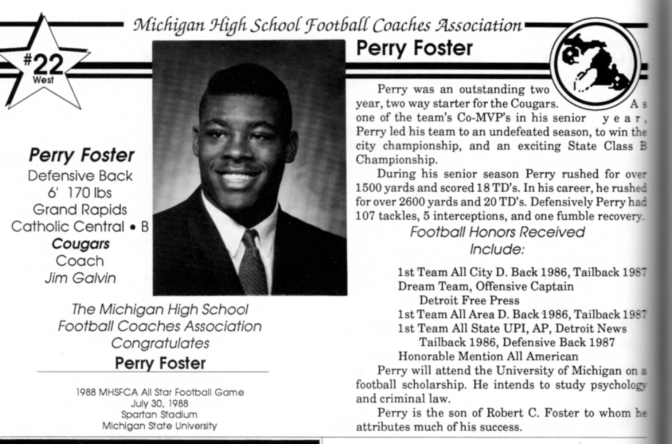
"caption": "Perry Foster's entry in the Michigan High School Football Coaches Hall of Fame directory. ",
"description": "Perry Foster's entry in the Michigan High School Football Coaches Hall of Fame directory. ",
"title": "Perry Foster-High School",
"credit": null,
"status": "inherit",
"isLoading": false,
"fetchFailed": false
}
},
"audioPlayerReducer": {
"postId": "stream_live",
"isPaused": true,
"isPlaying": false,
"pfsActive": false,
"pledgeModalIsOpen": true,
"playerDrawerIsOpen": false,
"liveAudioPlayStartedAt": 0,
"liveAudioPlayContext": ""
},
"authorsReducer": {
"byline_news_11690325": {
"type": "authors",
"id": "byline_news_11690325",
"meta": {
"override": true
},
"slug": "byline_news_11690325",
"name": "\u003cstrong>\u003ca href=\"https://www.scpr.org/about/people/staff/david-wagner\">David Wagner\u003c/a>\u003cbr />\u003ca href=\"https://www.scpr.org/\">KPCC\u003c/a>\u003c/strong>",
"isLoading": false
},
"byline_news_11689282": {
"type": "authors",
"id": "byline_news_11689282",
"meta": {
"override": true
},
"slug": "byline_news_11689282",
"name": "\u003cstrong>\u003ca href=\"https://calmatters.org/articles/author/david-gorn/\">David Gorn\u003c/a>\u003cbr />\u003ca href=\"https://calmatters.org/\">CALmatters\u003c/a>\u003c/strong>",
"isLoading": false
},
"byline_news_11689040": {
"type": "authors",
"id": "byline_news_11689040",
"meta": {
"override": true
},
"slug": "byline_news_11689040",
"name": "\u003cstrong>\u003ca href=\"https://www.kpbs.org/staff/amita-sharma/\">Amita Sharma\u003c/a>\u003c/strong>",
"isLoading": false
},
"byline_news_11689006": {
"type": "authors",
"id": "byline_news_11689006",
"meta": {
"override": true
},
"slug": "byline_news_11689006",
"name": "\u003cstrong>\u003ca href=\"https://calmatters.org/articles/author/adriene-hill/\">Adriene Hill\u003c/a>\u003c/strong>",
"isLoading": false
},
"byline_news_11670826": {
"type": "authors",
"id": "byline_news_11670826",
"meta": {
"override": true
},
"slug": "byline_news_11670826",
"name": "Karina Saidi",
"isLoading": false
},
"byline_news_11680975": {
"type": "authors",
"id": "byline_news_11680975",
"meta": {
"override": true
},
"slug": "byline_news_11680975",
"name": "\u003cstrong>Gloria Hillard\u003c/br>NPR\u003c/strong>",
"isLoading": false
},
"byline_news_11680925": {
"type": "authors",
"id": "byline_news_11680925",
"meta": {
"override": true
},
"slug": "byline_news_11680925",
"name": "\u003cstrong>Janie Har\u003c/br>Associated Press\u003c/strong>",
"isLoading": false
},
"markfiore": {
"type": "authors",
"id": "3236",
"meta": {
"index": "authors_1716337520",
"id": "3236",
"found": true
},
"name": "Mark Fiore",
"firstName": "Mark",
"lastName": "Fiore",
"slug": "markfiore",
"email": "mark@markfiore.com",
"display_author_email": false,
"staff_mastheads": [
"news"
],
"title": "KQED News Cartoonist",
"bio": "\u003ca href=\"http://www.MarkFiore.com\">MarkFiore.com\u003c/a> | \u003ca href=\"https://twitter.com/markfiore\">Follow on Twitter\u003c/a> | \u003ca href=\"https://www.facebook.com/pages/Mark-Fiore-Animated-Political-Cartoons/94451707396?ref=bookmarks\">Facebook\u003c/a> | \u003ca href=\"mailto:mark@markfiore.com\">email\u003c/a>\r\n\r\nPulitzer Prize-winner, Mark Fiore, who the Wall Street Journal has called “the undisputed guru of the form,” creates animated political cartoons in San Francisco, where his work has been featured regularly on the San Francisco Chronicle’s web site, SFGate.com. His work has appeared on Newsweek.com, Slate.com, CBSNews.com, MotherJones.com, DailyKos.com and NPR’s web site. Fiore’s political animation has appeared on CNN, Frontline, Bill Moyers Journal, Salon.com and cable and broadcast outlets across the globe.\r\n\r\nBeginning his professional life by drawing traditional political cartoons for newspapers, Fiore’s work appeared in publications ranging from the Washington Post to the Los Angeles Times. In the late 1990s, he began to experiment with animating political cartoons and, after a short stint at the San Jose Mercury News as their staff cartoonist, Fiore devoted all his energies to animation.\r\nGrowing up in California, Fiore also spent a good portion of his life in the backwoods of Idaho. It was this combination that shaped him politically. Mark majored in political science at Colorado College, where, in a perfect send-off for a cartoonist, he received his diploma in 1991 as commencement speaker Dick Cheney smiled approvingly.\r\nMark Fiore was awarded the Pulitzer Prize for political cartooning in 2010, a Robert F. Kennedy Journalism Award in 2004 and has twice received an Online Journalism Award for commentary from the Online News Association (2002, 2008). Fiore has received two awards for his work in new media from the National Cartoonists Society (2001, 2002), and in 2006 received The James Madison Freedom of Information Award from The Society of Professional Journalists.",
"avatar": "https://secure.gravatar.com/avatar/fc4e2a612b15b67bad0c6f0e1db4ca9b?s=600&d=blank&r=g",
"twitter": "MarkFiore",
"facebook": null,
"instagram": "https://www.instagram.com/markfiore/?hl=en",
"linkedin": null,
"sites": [
{
"site": "arts",
"roles": [
"contributor"
]
},
{
"site": "news",
"roles": [
"editor"
]
},
{
"site": "futureofyou",
"roles": [
"editor"
]
},
{
"site": "science",
"roles": [
"editor"
]
}
],
"headData": {
"title": "Mark Fiore | KQED",
"description": "KQED News Cartoonist",
"ogImgSrc": "https://secure.gravatar.com/avatar/fc4e2a612b15b67bad0c6f0e1db4ca9b?s=600&d=blank&r=g",
"twImgSrc": "https://secure.gravatar.com/avatar/fc4e2a612b15b67bad0c6f0e1db4ca9b?s=600&d=blank&r=g"
},
"isLoading": false,
"link": "/author/markfiore"
},
"dgorn": {
"type": "authors",
"id": "8656",
"meta": {
"index": "authors_1716337520",
"id": "8656",
"found": true
},
"name": "David Gorn",
"firstName": "David",
"lastName": "Gorn",
"slug": "dgorn",
"email": "dgorn+donotmail@sbcglobal.net",
"display_author_email": false,
"staff_mastheads": [],
"title": "KQED Contributor",
"bio": "David Gorn is the former Deputy News Director of KQED Radio. His public radio pieces have appeared on NPR, the World, Marketplace and the California Report.",
"avatar": "https://secure.gravatar.com/avatar/a6ad3e1eec1712e19b986b9395614010?s=600&d=blank&r=g",
"twitter": null,
"facebook": null,
"instagram": null,
"linkedin": null,
"sites": [
{
"site": "news",
"roles": [
"subscriber"
]
},
{
"site": "futureofyou",
"roles": [
"author"
]
},
{
"site": "science",
"roles": [
"author"
]
},
{
"site": "quest",
"roles": [
"editor"
]
}
],
"headData": {
"title": "David Gorn | KQED",
"description": "KQED Contributor",
"ogImgSrc": "https://secure.gravatar.com/avatar/a6ad3e1eec1712e19b986b9395614010?s=600&d=blank&r=g",
"twImgSrc": "https://secure.gravatar.com/avatar/a6ad3e1eec1712e19b986b9395614010?s=600&d=blank&r=g"
},
"isLoading": false,
"link": "/author/dgorn"
},
"fjhabvala": {
"type": "authors",
"id": "8659",
"meta": {
"index": "authors_1716337520",
"id": "8659",
"found": true
},
"name": "Farida Jhabvala Romero",
"firstName": "Farida",
"lastName": "Jhabvala Romero",
"slug": "fjhabvala",
"email": "fjhabvala@kqed.org",
"display_author_email": true,
"staff_mastheads": [
"news"
],
"title": "KQED Contributor",
"bio": "\u003cspan style=\"font-weight: 400;\">Farida Jhabvala Romero is a Labor Correspondent for KQED. She previously covered immigration. Farida was \u003ca href=\"https://www.ccnma.org/2022-most-influential-latina-journalists\">named\u003c/a> one of the 10 Most Influential Latina Journalists in California in 2022 by the California Chicano News Media Association. Her work has won awards from the Society of Professional Journalists (Northern California), as well as a national and regional Edward M. Murrow Award for the collaborative reporting projects “Dangerous Air” and “Graying California.” \u003c/span>\u003cspan style=\"font-weight: 400;\">Before joining KQED, Farida worked as a producer at Radio Bilingüe, a national public radio network. Farida earned her master’s degree in journalism from Stanford University.\u003c/span>",
"avatar": "https://secure.gravatar.com/avatar/c3ab27c5554b67b478f80971e515aa02?s=600&d=blank&r=g",
"twitter": "FaridaJhabvala",
"facebook": null,
"instagram": null,
"linkedin": "https://www.linkedin.com/in/faridajhabvala/",
"sites": [
{
"site": "news",
"roles": [
"editor"
]
},
{
"site": "stateofhealth",
"roles": [
"author"
]
}
],
"headData": {
"title": "Farida Jhabvala Romero | KQED",
"description": "KQED Contributor",
"ogImgSrc": "https://secure.gravatar.com/avatar/c3ab27c5554b67b478f80971e515aa02?s=600&d=blank&r=g",
"twImgSrc": "https://secure.gravatar.com/avatar/c3ab27c5554b67b478f80971e515aa02?s=600&d=blank&r=g"
},
"isLoading": false,
"link": "/author/fjhabvala"
},
"shutson": {
"type": "authors",
"id": "11216",
"meta": {
"index": "authors_1716337520",
"id": "11216",
"found": true
},
"name": "Sonja Hutson",
"firstName": "Sonja",
"lastName": "Hutson",
"slug": "shutson",
"email": "shutson@kqed.org",
"display_author_email": false,
"staff_mastheads": [],
"title": "KQED Contributor",
"bio": "Sonja Hutson is a former reporter for KQED's Silicon Valley desk and weekend newscasts. She primarily covers tech and housing. Sonja is a Bay Area native and now lives in San Francisco. When she's not working, you can find her camping, skiing, scuba diving, and struggling with the New York Times Crossword. Email: \u003ca href=\"mailto:shutson@kqed.org\">shutson@kqed.org. \u003c/a>Twitter: \u003ca href=\"https://twitter.com/SonjaHutson\">@SonjaHutson\u003c/a>",
"avatar": "https://secure.gravatar.com/avatar/7537c5e36818614e599b6c0f41d72b7a?s=600&d=blank&r=g",
"twitter": "SonjaHutson",
"facebook": null,
"instagram": null,
"linkedin": null,
"sites": [
{
"site": "arts",
"roles": [
"author"
]
},
{
"site": "news",
"roles": [
"subscriber"
]
}
],
"headData": {
"title": "Sonja Hutson | KQED",
"description": "KQED Contributor",
"ogImgSrc": "https://secure.gravatar.com/avatar/7537c5e36818614e599b6c0f41d72b7a?s=600&d=blank&r=g",
"twImgSrc": "https://secure.gravatar.com/avatar/7537c5e36818614e599b6c0f41d72b7a?s=600&d=blank&r=g"
},
"isLoading": false,
"link": "/author/shutson"
},
"rlevi": {
"type": "authors",
"id": "11260",
"meta": {
"index": "authors_1716337520",
"id": "11260",
"found": true
},
"name": "Ryan Levi",
"firstName": "Ryan",
"lastName": "Levi",
"slug": "rlevi",
"email": "rlevi@KQED.org",
"display_author_email": false,
"staff_mastheads": [],
"title": "KQED Contributor",
"bio": "Ryan Levi was a reporter and podcast producer at KQED News from 2016-2019. He worked on \u003ca href=\"https://www.kqed.org/news/series/baycurious\">Bay Curious\u003c/a>, \u003ca href=\"https://www.kqed.org/news/tag/the-bay/\">The Bay, \u003c/a>and \u003ca href=\"https://podcasts.apple.com/us/podcast/the-california-report-magazine/id1314750545\">The California Report Magazine\u003c/a>, as well as hosting and producing the weekly \u003ca href=\"https://www.kqed.org/news/program/qedup/\">Q'ed Up podcast. \u003c/a>He also helped inaugurate KQED's weekend news coverage in 2017 as one of two original digital producers. Ryan holds degrees in multimedia journalism and Spanish from the University of Missouri.",
"avatar": "https://secure.gravatar.com/avatar/4cb2ddd028ac8807d1adf09609c5555d?s=600&d=blank&r=g",
"twitter": "ryan_levi",
"facebook": null,
"instagram": null,
"linkedin": null,
"sites": [
{
"site": "arts",
"roles": [
"editor"
]
},
{
"site": "news",
"roles": [
"subscriber"
]
},
{
"site": "stateofhealth",
"roles": [
"editor"
]
},
{
"site": "science",
"roles": [
"editor"
]
},
{
"site": "forum",
"roles": [
"administrator"
]
},
{
"site": "perspectives",
"roles": [
"administrator"
]
}
],
"headData": {
"title": "Ryan Levi | KQED",
"description": "KQED Contributor",
"ogImgSrc": "https://secure.gravatar.com/avatar/4cb2ddd028ac8807d1adf09609c5555d?s=600&d=blank&r=g",
"twImgSrc": "https://secure.gravatar.com/avatar/4cb2ddd028ac8807d1adf09609c5555d?s=600&d=blank&r=g"
},
"isLoading": false,
"link": "/author/rlevi"
}
},
"pagesReducer": {
"news_tag_homelessness": {
"type": "terms",
"id": "news_4020",
"meta": {
"index": "terms_1716263798",
"site": "news",
"id": "4020",
"score": 8.555192
},
"name": "Homelessness",
"slug": "homelessness",
"taxonomy": "tag",
"description": null,
"featImg": null,
"headData": {
"title": "Homelessness | KQED News",
"description": null,
"ogTitle": null,
"ogDescription": null,
"ogImgId": null,
"twTitle": null,
"twDescription": null,
"twImgId": null,
"metaRobotsNoIndex": "index"
},
"ttid": 4039,
"isLoading": false,
"title": "Homelessness",
"pageMeta": {
"site": "news",
"WpPageTemplate": "page-topic-editorial",
"currentPage": 46
},
"blocks": [
{
"blockName": "kqed/post-list",
"attrs": {
"layout": "cardArticle2",
"query": "posts/news?tag=homelessness",
"seeMore": false,
"paginated": true,
"page": 46
}
},
{
"blockName": "kqed/ad"
}
]
}
},
"pfsSessionReducer": {},
"postsReducer": {
"stream_live": {
"type": "live",
"id": "stream_live",
"audioUrl": "https://streams.kqed.org/kqedradio",
"title": "Live Stream",
"excerpt": "Live Stream information currently unavailable.",
"link": "/radio",
"featImg": "",
"label": {
"name": "KQED Live",
"link": "/"
}
},
"stream_kqedNewscast": {
"type": "posts",
"id": "stream_kqedNewscast",
"audioUrl": "https://www.kqed.org/.stream/anon/radio/RDnews/newscast.mp3?_=1",
"title": "KQED Newscast",
"featImg": "",
"label": {
"name": "88.5 FM",
"link": "/"
}
},
"news_11690325": {
"type": "posts",
"id": "news_11690325",
"meta": {
"index": "posts_1716263798",
"site": "news",
"id": "11690325",
"score": null,
"sort": [
1536090238000
]
},
"parent": 0,
"labelTerm": {},
"blocks": [],
"publishDate": 1536090238,
"format": "standard",
"disqusTitle": "Thousands of Californians Are Working While Homeless, and Many Don't Want Their Boss to Know",
"title": "Thousands of Californians Are Working While Homeless, and Many Don't Want Their Boss to Know",
"headTitle": "The California Dream | The California Report | KQED News",
"content": "\u003cp>Often one of the first steps to helping people out of homelessness is getting them a steady job.\u003c/p>\n\u003cp>But what about the thousands of homeless Californians who are already working?\u003c/p>\n\u003cp>Pinning down exactly how many Californians are working while homeless is not easy. Many try to hide it. And it’s certainly true that most people without a place to live are out of work.\u003c/p>\n\u003cp>But recent estimates suggest that it’s not uncommon for homeless Californians to hold down jobs.\u003c/p>\n\u003cp>A \u003ca href=\"http://hsh.sfgov.org/wp-content/uploads/2017/06/2017-SF-Point-in-Time-Count-General-FINAL-6.21.17.pdf\" rel=\"noopener\" target=\"_blank\">2017 survey\u003c/a> of the homeless population in San Francisco found 13 percent of respondents reporting part or full-time employment. That’s in a city with an estimated 7,499 people experiencing homelessness.\u003c/p>\n\u003cp>[ad fullwidth]\u003c/p>\n\u003cp>This year, an estimated 10 percent of the 4,990 people living unsheltered in San Diego \u003ca href=\"https://www.rtfhsd.org/wp-content/uploads/2017/06/2018-WPoint-in-Time-Count-Annual-Report.pdf\" rel=\"noopener\" target=\"_blank\">said they were currently working\u003c/a>.\u003c/p>\n\u003cp>Los Angeles County has more than 50,000 residents who are homeless. Eight percent of adults surveyed in 2017 said they were working to some degree, mostly in part-time, seasonal or temporary work. Among homeless adults with children, 27 percent said they were working either part or full time. \u003c/p>\n\u003cp>\u003cstrong>‘You Don’t Have a Place to Go’\u003c/strong>\u003c/p>\n\u003cp>That includes parents like Nereida, a single mother of two young daughters who works full time at a Los Angeles optometrist’s office.\u003c/p>\n\u003cp>\"I do pre-testing,” said Nereida, who asked that her last name not be used in this story. “I take measurements of [patients’] eyes. After that, the doctor sees them.\"\u003c/p>\n\u003cp>Six days a week, she finishes her shift with a few appointment reminder calls. Then she turns off the display lights in the eyeglass cases. She sets the alarm, locks the doors and walks out to her car.\u003c/p>\n\u003cp>Some weeks, she hasn't had a place to go home to.\u003c/p>\n\u003cp>\"There's been several times where I just slept in my car,” she said. “I parked close to the gym, because that's where I get ready in the mornings.\" \u003c/p>\n\u003cp>Nereida moved to the Los Angeles area almost a year ago. She’s been able to rent rooms for a few months here and there. Lately, she’s been staying with a friend. Someone has always been willing to let her kids spend the night. But she never thought finding a place of her own would be this hard.\u003c/p>\n\u003cp>She admits her credit score is bad. And between car payments, gas and childcare costs, Nereida hasn’t been able to save for a deposit plus first and last month’s rent.\u003c/p>\n\u003cp>At $17 an hour, she earns more than minimum wage. But even if she did manage to find an apartment, the city’s median rent for a two-bedroom — \u003ca href=\"https://www.apartmentlist.com/rentonomics/national-rent-data/\" rel=\"noopener\" target=\"_blank\">estimated at $1,752\u003c/a> by listings website Apartment List — would claim more than half of her income.\u003c/p>\n\u003cp>\"You have to really focus on work when you're at work, and try to put on a face that everything's OK,” Nereida said. “Once you're done, you break down. Because you don't have a place to go.\"\u003c/p>\n\u003cp>\u003cstrong>Homeless Employees Lack Legal Protections at Work\u003c/strong>\u003c/p>\n\u003cp>Nereida hasn’t told her boss that she doesn’t have a stable place to live. She said she would be embarrassed. And she wonders if she would be treated differently.\u003c/p>\n\u003cp>\"I don't want him to have a different view of me, and to think that [it] is going to affect my work life,” she said. \u003c/p>\n\u003cp>Workers have protections on the job when it comes to factors like race and gender. But \u003ca href=\"https://wclp.org/staff/jessica-bartholow/\" rel=\"noopener\" target=\"_blank\">Jessica Bartholow\u003c/a>, a policy advocate with the Western Center on Law and Poverty, said, “There are no laws in California that protect you from being discriminated against based on your housing status.\"\u003c/p>\n\u003cp>Bartholow was one of the advocates pushing for a \u003ca href=\"https://leginfo.legislature.ca.gov/faces/billNavClient.xhtml?bill_id=201320140AB5\" rel=\"noopener\" target=\"_blank\">2012 California bill\u003c/a> that would have banned discrimination against homeless employees. Had it passed, California would have joined Rhode Island in defining homelessness as a protected class in the workplace.\u003c/p>\n\u003cp>The bill faced opposition from groups like the California Chamber of Commerce; it died in committee. Bartholow looks at California’s housing crisis today and wonders why legislators haven’t reconsidered it.\u003c/p>\n\u003cp>\"If we know that income is one of the best ways out of poverty, why wouldn't it be a best policy practice to make sure that people who are homeless and working are not at risk of losing their jobs or having reduced hours?” she asked.\u003c/p>\n\u003cp>\u003cstrong>How Employers Can Help\u003c/strong>\u003c/p>\n\u003cp>Some employers have succeeded at helping their workers pull themselves out of homelessness.\u003c/p>\n\u003cfigure id=\"attachment_11690341\" class=\"wp-caption aligncenter\" style=\"max-width: 800px\">\u003cimg src=\"https://ww2.kqed.org/news/wp-content/uploads/sites/10/2018/09/Kim-Wyard-800x600.jpg\" alt=\"\" width=\"800\" height=\"600\" class=\"size-medium wp-image-11690341\">\u003cfigcaption class=\"wp-caption-text\">Kim Wyard works in her office at a Northeast Valley Health Corporation office in San Fernando on Aug. 17, 2018. \u003ccite>(David Wagner/KPCC)\u003c/cite>\u003c/figcaption>\u003c/figure>\n\u003cp>\"We don't have the solution of being able to solve everything with money,” said \u003ca href=\"https://nevhc.org/our-team/kimberly-wyard/\" rel=\"noopener\" target=\"_blank\">Kim Wyard\u003c/a>, CEO of the Northeast Valley Health Corporation.\u003c/p>\n\u003cp>\"We're not a food bank. And we're not a housing organization. But we can certainly help make those connections,” she said.\u003c/p>\n\u003cp>Wyard’s organization provides health services to people who are low-income or homeless. It already has strong connections with the Los Angeles homeless support system.\u003c/p>\n\u003cp>In the rare cases when one of its employees has fallen into homelessness, Wyard said those connections were a huge help. Calls to the housing provider LA Family Housing recently helped one employee and her family get back on their feet.\u003c/p>\n\u003cp>Wyard’s advice to other employers worried about homelessness in their workforce is to know who to call for help.\u003c/p>\n\u003cp>\"I think that it may take a little bit of digging to put a homeless resource list together for your staff,” she said. “But those resources are there.\"\u003c/p>\n\u003cp>Of course, for that approach to work, employees would need to feel comfortable telling their bosses about their situation.\u003c/p>\n\u003cp>Nereida, the optometrist’s assistant, said her employer treats her well and pays her fairly.\u003c/p>\n\u003cp>She said when she looks for housing assistance, she feels people's image of homelessness works against her. She describes herself as a soccer mom, and she looks the part.\u003c/p>\n\u003cp>\"I've gotten comments like, ‘Sorry, but if I looked at you, I wouldn't assume that you're homeless,’” Nereida said. “Do I have to have ripped clothes? Dirty clothes? I have a job. So I can't come to work unpresentable or unprofessional.\"\u003c/p>\n\u003cp>Nereida is not sure how long her current housing situation at a friend's place will last. Her biggest fear is that she'll end up back in her car. But this time, with her kids in the back seat.\u003c/p>\n\u003cp>\u003cem>\u003ca href=\"https://www.kqed.org/news/series/californiadream/\" target=\"_blank\" rel=\"noopener\">The California Dream series\u003c/a> is a statewide media collaboration of CALmatters, KPBS, KPCC, KQED and Capital Public Radio with support from the Corporation for Public Broadcasting, the James Irvine Foundation and the College Futures Foundation.\u003c/em>\u003c/p>\n\u003cp>[ad floatright]\u003c/p>\n\u003cp>\u003cimg class=\"aligncenter size-full wp-image-11660142\" src=\"https://ww2.kqed.org/news/wp-content/uploads/sites/10/2018/04/CADreamBanner.jpg\" alt=\"\" width=\"1867\" height=\"512\" srcset=\"https://ww2.kqed.org/app/uploads/sites/10/2018/04/CADreamBanner.jpg 1867w, https://ww2.kqed.org/app/uploads/sites/10/2018/04/CADreamBanner-160x44.jpg 160w, https://ww2.kqed.org/app/uploads/sites/10/2018/04/CADreamBanner-800x219.jpg 800w, https://ww2.kqed.org/app/uploads/sites/10/2018/04/CADreamBanner-1020x280.jpg 1020w, https://ww2.kqed.org/app/uploads/sites/10/2018/04/CADreamBanner-1180x324.jpg 1180w, https://ww2.kqed.org/app/uploads/sites/10/2018/04/CADreamBanner-960x263.jpg 960w, https://ww2.kqed.org/app/uploads/sites/10/2018/04/CADreamBanner-240x66.jpg 240w, https://ww2.kqed.org/app/uploads/sites/10/2018/04/CADreamBanner-375x103.jpg 375w, https://ww2.kqed.org/app/uploads/sites/10/2018/04/CADreamBanner-520x143.jpg 520w\" sizes=\"(max-width: 1867px) 100vw, 1867px\">\u003c/p>\n\n",
"disqusIdentifier": "11690325 https://ww2.kqed.org/news/?p=11690325",
"disqusUrl": "https://ww2.kqed.org/news/2018/09/04/thousands-of-californians-are-working-while-homeless-and-many-dont-want-their-boss-to-know/",
"stats": {
"hasVideo": false,
"hasChartOrMap": false,
"hasAudio": false,
"hasPolis": false,
"wordCount": 1164,
"hasGoogleForm": false,
"hasGallery": false,
"hasHearkenModule": false,
"iframeSrcs": [],
"paragraphCount": 41
},
"modified": 1536090238,
"excerpt": "California doesn’t define homelessness as a protected class in the workplace. ",
"headData": {
"twImgId": "",
"twTitle": "",
"ogTitle": "",
"ogImgId": "",
"twDescription": "",
"description": "California doesn’t define homelessness as a protected class in the workplace. ",
"title": "Thousands of Californians Are Working While Homeless, and Many Don't Want Their Boss to Know | KQED",
"ogDescription": "",
"schema": {
"@context": "https://schema.org",
"@type": "NewsArticle",
"headline": "Thousands of Californians Are Working While Homeless, and Many Don't Want Their Boss to Know",
"datePublished": "2018-09-04T12:43:58-07:00",
"dateModified": "2018-09-04T12:43:58-07:00",
"image": "https://cdn.kqed.org/wp-content/uploads/2020/02/KQED-OG-Image@1x.png",
"isAccessibleForFree": "True",
"publisher": {
"@type": "NewsMediaOrganization",
"@id": "https://www.kqed.org/#organization",
"name": "KQED",
"logo": "https://cdn.kqed.org/wp-content/uploads/2020/02/KQED-OG-Image@1x.png",
"url": "https://www.kqed.org",
"sameAs": [
"https://www.facebook.com/KQED",
"https://twitter.com/KQED",
"https://www.instagram.com/kqed/",
"https://www.tiktok.com/@kqedofficial",
"https://www.linkedin.com/company/kqed",
"https://www.youtube.com/channel/UCeC0IOo7i1P_61zVUWbJ4nw"
]
}
}
},
"guestAuthors": [],
"slug": "thousands-of-californians-are-working-while-homeless-and-many-dont-want-their-boss-to-know",
"status": "publish",
"sourceUrl": "https://www.scpr.org/",
"nprByline": "\u003cstrong>\u003ca href=\"https://www.scpr.org/about/people/staff/david-wagner\">David Wagner\u003c/a>\u003cbr />\u003ca href=\"https://www.scpr.org/\">KPCC\u003c/a>\u003c/strong>",
"source": "KPCC",
"path": "/news/11690325/thousands-of-californians-are-working-while-homeless-and-many-dont-want-their-boss-to-know",
"audioTrackLength": null,
"parsedContent": [
{
"type": "contentString",
"content": "\u003cdiv class=\"post-body\">\u003cp>\u003cp>Often one of the first steps to helping people out of homelessness is getting them a steady job.\u003c/p>\n\u003cp>But what about the thousands of homeless Californians who are already working?\u003c/p>\n\u003cp>Pinning down exactly how many Californians are working while homeless is not easy. Many try to hide it. And it’s certainly true that most people without a place to live are out of work.\u003c/p>\n\u003cp>But recent estimates suggest that it’s not uncommon for homeless Californians to hold down jobs.\u003c/p>\n\u003cp>A \u003ca href=\"http://hsh.sfgov.org/wp-content/uploads/2017/06/2017-SF-Point-in-Time-Count-General-FINAL-6.21.17.pdf\" rel=\"noopener\" target=\"_blank\">2017 survey\u003c/a> of the homeless population in San Francisco found 13 percent of respondents reporting part or full-time employment. That’s in a city with an estimated 7,499 people experiencing homelessness.\u003c/p>\n\u003cp>\u003c/p>\u003c/div>",
"attributes": {
"named": {},
"numeric": []
}
},
{
"type": "component",
"content": "",
"name": "ad",
"attributes": {
"named": {
"label": "fullwidth"
},
"numeric": [
"fullwidth"
]
}
},
{
"type": "contentString",
"content": "\u003cdiv class=\"post-body\">\u003cp>\u003c/p>\n\u003cp>This year, an estimated 10 percent of the 4,990 people living unsheltered in San Diego \u003ca href=\"https://www.rtfhsd.org/wp-content/uploads/2017/06/2018-WPoint-in-Time-Count-Annual-Report.pdf\" rel=\"noopener\" target=\"_blank\">said they were currently working\u003c/a>.\u003c/p>\n\u003cp>Los Angeles County has more than 50,000 residents who are homeless. Eight percent of adults surveyed in 2017 said they were working to some degree, mostly in part-time, seasonal or temporary work. Among homeless adults with children, 27 percent said they were working either part or full time. \u003c/p>\n\u003cp>\u003cstrong>‘You Don’t Have a Place to Go’\u003c/strong>\u003c/p>\n\u003cp>That includes parents like Nereida, a single mother of two young daughters who works full time at a Los Angeles optometrist’s office.\u003c/p>\n\u003cp>\"I do pre-testing,” said Nereida, who asked that her last name not be used in this story. “I take measurements of [patients’] eyes. After that, the doctor sees them.\"\u003c/p>\n\u003cp>Six days a week, she finishes her shift with a few appointment reminder calls. Then she turns off the display lights in the eyeglass cases. She sets the alarm, locks the doors and walks out to her car.\u003c/p>\n\u003cp>Some weeks, she hasn't had a place to go home to.\u003c/p>\n\u003cp>\"There's been several times where I just slept in my car,” she said. “I parked close to the gym, because that's where I get ready in the mornings.\" \u003c/p>\n\u003cp>Nereida moved to the Los Angeles area almost a year ago. She’s been able to rent rooms for a few months here and there. Lately, she’s been staying with a friend. Someone has always been willing to let her kids spend the night. But she never thought finding a place of her own would be this hard.\u003c/p>\n\u003cp>She admits her credit score is bad. And between car payments, gas and childcare costs, Nereida hasn’t been able to save for a deposit plus first and last month’s rent.\u003c/p>\n\u003cp>At $17 an hour, she earns more than minimum wage. But even if she did manage to find an apartment, the city’s median rent for a two-bedroom — \u003ca href=\"https://www.apartmentlist.com/rentonomics/national-rent-data/\" rel=\"noopener\" target=\"_blank\">estimated at $1,752\u003c/a> by listings website Apartment List — would claim more than half of her income.\u003c/p>\n\u003cp>\"You have to really focus on work when you're at work, and try to put on a face that everything's OK,” Nereida said. “Once you're done, you break down. Because you don't have a place to go.\"\u003c/p>\n\u003cp>\u003cstrong>Homeless Employees Lack Legal Protections at Work\u003c/strong>\u003c/p>\n\u003cp>Nereida hasn’t told her boss that she doesn’t have a stable place to live. She said she would be embarrassed. And she wonders if she would be treated differently.\u003c/p>\n\u003cp>\"I don't want him to have a different view of me, and to think that [it] is going to affect my work life,” she said. \u003c/p>\n\u003cp>Workers have protections on the job when it comes to factors like race and gender. But \u003ca href=\"https://wclp.org/staff/jessica-bartholow/\" rel=\"noopener\" target=\"_blank\">Jessica Bartholow\u003c/a>, a policy advocate with the Western Center on Law and Poverty, said, “There are no laws in California that protect you from being discriminated against based on your housing status.\"\u003c/p>\n\u003cp>Bartholow was one of the advocates pushing for a \u003ca href=\"https://leginfo.legislature.ca.gov/faces/billNavClient.xhtml?bill_id=201320140AB5\" rel=\"noopener\" target=\"_blank\">2012 California bill\u003c/a> that would have banned discrimination against homeless employees. Had it passed, California would have joined Rhode Island in defining homelessness as a protected class in the workplace.\u003c/p>\n\u003cp>The bill faced opposition from groups like the California Chamber of Commerce; it died in committee. Bartholow looks at California’s housing crisis today and wonders why legislators haven’t reconsidered it.\u003c/p>\n\u003cp>\"If we know that income is one of the best ways out of poverty, why wouldn't it be a best policy practice to make sure that people who are homeless and working are not at risk of losing their jobs or having reduced hours?” she asked.\u003c/p>\n\u003cp>\u003cstrong>How Employers Can Help\u003c/strong>\u003c/p>\n\u003cp>Some employers have succeeded at helping their workers pull themselves out of homelessness.\u003c/p>\n\u003cfigure id=\"attachment_11690341\" class=\"wp-caption aligncenter\" style=\"max-width: 800px\">\u003cimg src=\"https://ww2.kqed.org/news/wp-content/uploads/sites/10/2018/09/Kim-Wyard-800x600.jpg\" alt=\"\" width=\"800\" height=\"600\" class=\"size-medium wp-image-11690341\">\u003cfigcaption class=\"wp-caption-text\">Kim Wyard works in her office at a Northeast Valley Health Corporation office in San Fernando on Aug. 17, 2018. \u003ccite>(David Wagner/KPCC)\u003c/cite>\u003c/figcaption>\u003c/figure>\n\u003cp>\"We don't have the solution of being able to solve everything with money,” said \u003ca href=\"https://nevhc.org/our-team/kimberly-wyard/\" rel=\"noopener\" target=\"_blank\">Kim Wyard\u003c/a>, CEO of the Northeast Valley Health Corporation.\u003c/p>\n\u003cp>\"We're not a food bank. And we're not a housing organization. But we can certainly help make those connections,” she said.\u003c/p>\n\u003cp>Wyard’s organization provides health services to people who are low-income or homeless. It already has strong connections with the Los Angeles homeless support system.\u003c/p>\n\u003cp>In the rare cases when one of its employees has fallen into homelessness, Wyard said those connections were a huge help. Calls to the housing provider LA Family Housing recently helped one employee and her family get back on their feet.\u003c/p>\n\u003cp>Wyard’s advice to other employers worried about homelessness in their workforce is to know who to call for help.\u003c/p>\n\u003cp>\"I think that it may take a little bit of digging to put a homeless resource list together for your staff,” she said. “But those resources are there.\"\u003c/p>\n\u003cp>Of course, for that approach to work, employees would need to feel comfortable telling their bosses about their situation.\u003c/p>\n\u003cp>Nereida, the optometrist’s assistant, said her employer treats her well and pays her fairly.\u003c/p>\n\u003cp>She said when she looks for housing assistance, she feels people's image of homelessness works against her. She describes herself as a soccer mom, and she looks the part.\u003c/p>\n\u003cp>\"I've gotten comments like, ‘Sorry, but if I looked at you, I wouldn't assume that you're homeless,’” Nereida said. “Do I have to have ripped clothes? Dirty clothes? I have a job. So I can't come to work unpresentable or unprofessional.\"\u003c/p>\n\u003cp>Nereida is not sure how long her current housing situation at a friend's place will last. Her biggest fear is that she'll end up back in her car. But this time, with her kids in the back seat.\u003c/p>\n\u003cp>\u003cem>\u003ca href=\"https://www.kqed.org/news/series/californiadream/\" target=\"_blank\" rel=\"noopener\">The California Dream series\u003c/a> is a statewide media collaboration of CALmatters, KPBS, KPCC, KQED and Capital Public Radio with support from the Corporation for Public Broadcasting, the James Irvine Foundation and the College Futures Foundation.\u003c/em>\u003c/p>\n\u003cp>\u003c/p>\u003c/div>",
"attributes": {
"named": {},
"numeric": []
}
},
{
"type": "component",
"content": "",
"name": "ad",
"attributes": {
"named": {
"label": "floatright"
},
"numeric": [
"floatright"
]
}
},
{
"type": "contentString",
"content": "\u003cdiv class=\"post-body\">\u003cp>\u003c/p>\n\u003cp>\u003cimg class=\"aligncenter size-full wp-image-11660142\" src=\"https://ww2.kqed.org/news/wp-content/uploads/sites/10/2018/04/CADreamBanner.jpg\" alt=\"\" width=\"1867\" height=\"512\" srcset=\"https://ww2.kqed.org/app/uploads/sites/10/2018/04/CADreamBanner.jpg 1867w, https://ww2.kqed.org/app/uploads/sites/10/2018/04/CADreamBanner-160x44.jpg 160w, https://ww2.kqed.org/app/uploads/sites/10/2018/04/CADreamBanner-800x219.jpg 800w, https://ww2.kqed.org/app/uploads/sites/10/2018/04/CADreamBanner-1020x280.jpg 1020w, https://ww2.kqed.org/app/uploads/sites/10/2018/04/CADreamBanner-1180x324.jpg 1180w, https://ww2.kqed.org/app/uploads/sites/10/2018/04/CADreamBanner-960x263.jpg 960w, https://ww2.kqed.org/app/uploads/sites/10/2018/04/CADreamBanner-240x66.jpg 240w, https://ww2.kqed.org/app/uploads/sites/10/2018/04/CADreamBanner-375x103.jpg 375w, https://ww2.kqed.org/app/uploads/sites/10/2018/04/CADreamBanner-520x143.jpg 520w\" sizes=\"(max-width: 1867px) 100vw, 1867px\">\u003c/p>\n\n\u003c/div>\u003c/p>",
"attributes": {
"named": {},
"numeric": []
}
}
],
"link": "/news/11690325/thousands-of-californians-are-working-while-homeless-and-many-dont-want-their-boss-to-know",
"authors": [
"byline_news_11690325"
],
"programs": [
"news_72"
],
"series": [
"news_21879"
],
"categories": [
"news_1758",
"news_6266",
"news_8"
],
"tags": [
"news_21840",
"news_4020"
],
"affiliates": [
"news_7055"
],
"featImg": "news_11690337",
"label": "source_news_11690325"
},
"news_11689739": {
"type": "posts",
"id": "news_11689739",
"meta": {
"index": "posts_1716263798",
"site": "news",
"id": "11689739",
"score": null,
"sort": [
1535822619000
]
},
"guestAuthors": [],
"slug": "oakland-wants-to-tax-vacant-properties-to-help-ease-homelessness",
"title": "Oakland Wants to Tax Vacant Properties to Help Ease Homelessness",
"publishDate": 1535822619,
"format": "image",
"headTitle": "Oakland Wants to Tax Vacant Properties to Help Ease Homelessness | KQED",
"labelTerm": {
"term": 72,
"site": "news"
},
"content": "\u003cp>Like many Oakland residents, Candice Elder, 34, is alarmed at the rapidly increasing number of people pitching tents on sidewalks and under freeways in the city.\u003c/p>\n\u003cp>Unlike most residents, Elder has worked at dozens of homeless encampments as part of a team providing “rapid response services on call 24-7,” including food, crisis management and medical assistance.\u003c/p>\n\u003cp>“The rate of homelessness has dramatically increased in the last few years. And you can correlate that to the affordability crisis,” said Elder, founder and director of \u003ca href=\"http://www.eastoaklandcollective.com/\" target=\"_blank\" rel=\"noopener\">The East Oakland Collective\u003c/a> nonprofit, as she visited a 65-year old woman sitting on a corner, surrounded by piles of belongings.\u003c/p>\n\u003cp>It could take years to build more affordable housing, but Elder sees a faster way to relieve homelessness in the city.\u003c/p>\n\u003cp>“There’s a lot of vacant properties that haven’t been used for years,” said Elder, as she pointed to a fenced, empty parcel next to the encampment she visited on a recent morning. “As a city and as a community, we need to take a look at these vacant public and private lands and see how we can use them.”\u003c/p>\n\u003cp>[ad fullwidth]\u003c/p>\n\u003cp>\u003cstrong>Voters To Decide on Taxing Owners of Vacant Properties\u003c/strong>\u003c/p>\n\u003cp>Oakland voters could approve the state’s first tax on privately-owned vacant properties in November. The city estimates the tax could raise as much as $10 million annually for homeless services, blight remediation and to stem illegal dumping. Tax revenue would also go toward new affordable housing.\u003c/p>\n\u003cfigure id=\"attachment_11689756\" class=\"wp-caption aligncenter\" style=\"max-width: 800px\">\u003cimg loading=\"lazy\" decoding=\"async\" class=\"size-medium wp-image-11689756\" src=\"https://ww2.kqed.org/news/wp-content/uploads/sites/10/2018/08/Photo-3-800x533.jpg\" alt=\"\" width=\"800\" height=\"533\">\u003cfigcaption class=\"wp-caption-text\">The belongings of people living on a sidewalk in East Oakland sprawl next to an empty lot on Aug. 24, 2018. Homeless advocate Candice Elder, 34, said vacant properties dot the area. “A lot of properties were vacant when I was growing up, and they are still vacant now,” said Elder, a native of the city. \u003ccite>(Farida Jhabvala Romero/KQED)\u003c/cite>\u003c/figcaption>\u003c/figure>\n\u003cp>Owners of properties in use fewer than 50 days per year would be taxed as much as $6,000 per parcel annually, if two-thirds of voters approve \u003ca href=\"https://www.documentcloud.org/documents/4801970-Vacant-Property-Tax-Measure-2018-07-24.html\" target=\"_blank\" rel=\"noopener\">the measure\u003c/a> in November.\u003c/p>\n\u003cp>Two weeks after the Oakland City Council voted 6-2 to place the tax on the ballot, officials in the neighboring city of Richmond greenlighted a similar proposal.\u003c/p>\n\u003cp>Owners of vacant properties would pay the same amount of additional tax, regardless of the size or worth of their property. Under California law, cities cannot legally tie a parcel tax to market values.\u003c/p>\n\u003cp>Critics worry the tax could disproportionately hurt small landowners, pushing some to sell their property to investors that can pay Oakland’s skyrocketing market values. But proponents praise the tax as a creative incentive to transform thousands of vacant lots and buildings into homes or businesses, and at the same time decrease blight.\u003c/p>\n\u003cp>“We are looking not only to get rid of the trash, the weeds, the types of problems you might see, but also to encourage people to do something that would be of benefit to the community,” said Councilwoman Rebecca Kaplan, who authored the measure.\u003c/p>\n\u003cp>In just two years, the city’s homeless population increased by 25 percent to nearly 2,800 people, according to the most \u003ca href=\"http://everyonehome.org/wp-content/uploads/2016/02/City-of-Oakland-ES.pdf\" target=\"_blank\" rel=\"noopener\">recent survey\u003c/a> of Alameda County. But some homeless advocates say that’s a severe undercount because many people who are couch surfing or sleeping in cars were not included.\u003c/p>\n\u003cp>\u003cstrong>Property Owner Sees Benefits, but Objects to Tax\u003c/strong>\u003c/p>\n\u003cp>Oakland resident Francisco Acosta agrees with the goal of encouraging more productive uses for vacant properties.\u003c/p>\n\u003cp>The father of three said an empty parcel next to his home attracts trash and drug use. A gunfight in the lot once sent a stray bullet through a bedroom in his house, he said.\u003c/p>\n\u003cfigure id=\"attachment_11689766\" class=\"wp-caption aligncenter\" style=\"max-width: 800px\">\u003cimg loading=\"lazy\" decoding=\"async\" class=\"size-medium wp-image-11689766\" src=\"https://ww2.kqed.org/news/wp-content/uploads/sites/10/2018/08/Photo4-800x533.jpg\" alt=\"\" width=\"800\" height=\"533\">\u003cfigcaption class=\"wp-caption-text\">Councilmember Rebecca Kaplan speaks with property owner Francisco Acosta in front of a vacant lot in West Oakland on Aug. 20, 2018. Kaplan authored a proposed tax on vacant properties to help ease homelessness in the city. \u003ccite>(Farida Jhabvala Romero/KQED)\u003c/cite>\u003c/figcaption>\u003c/figure>\n\u003cp>But Acosta, who also owns a lot labeled as vacant by the county assessor’s office, doubted the tax would encourage him to build the duplex he previously planned for his land. He was dismayed after learning city permits would cost about $35,000 and take a year to process.\u003c/p>\n\u003cp>“It doesn’t make sense to just try to penalize people with taxes for not having something built on their lot when they are making it difficult for everybody to build something,” said Acosta, who is growing potatoes, bell peppers and other vegetables on the plot instead.\u003c/p>\n\u003cp>He might not be subject to the tax if the city defines gardening as an active use of property. But Acosta contemplated that if he is faced with a new $6,000 tax assessment each year, he would likely sell.\u003c/p>\n\u003cp>“It’d be too much money to pay,” he said. “The tax will pressure people into selling or building, but most likely selling for those who don’t have time, money and energy to deal with the tax.”\u003c/p>\n\u003cp>Building new housing in Oakland is an expensive proposition. While construction costs can vary significantly based on the size and amenities of a project, the city estimates 1,000 square feet of new construction costs about $200,000.\u003c/p>\n\u003cp>Permitting fees for a three-bedroom home can total more than $25,000, according to Oakland’s planning and building department.\u003c/p>\n\u003cp>Councilwoman Kaplan said she understands small property owners face barriers to build housing the city desperately needs. Her tax measure would give them financial assistance to design and construct affordable units.\u003c/p>\n\u003cp>Nonprofits and low-income owners would be exempt from the tax, as well as others who can prove financial hardship.\u003c/p>\n\u003cp>Kaplan suspects the majority of vacant properties are being held by owners as a speculative investment in Oakland’s hot real estate market.\u003c/p>\n\u003cp>“People who may not have the connection and the motivation to do something with them, and especially a lot of big corporate speculators,” Kaplan said. “And so the vacant property tax will help us keep track of who owns them, what they’re doing with them.”\u003c/p>\n\u003cp>\u003cstrong>Measure Lacks Clarity, Critics Say\u003c/strong>\u003c/p>\n\u003cp>About 4,400 bare lots could be subject to the tax plus an unknown number of vacant residential, commercial and industrial buildings, according to \u003ca href=\"https://www.documentcloud.org/documents/4797561-View-Supplemental-Report-5-11-218.html\" target=\"_blank\" rel=\"noopener\">a report\u003c/a> by Katano Kasaine, Oakland’s finance director.\u003c/p>\n\u003cp>Critics decried that lack of clarity, arguing it’s unfair to ask voters to decide on the tax in November.\u003c/p>\n\u003cp>“It’d be great to have a list first before you went about taxing people on it,” said Kiran Shenoy, government affairs director for the \u003ca href=\"http://oaklandberkeleyaor.com/\" target=\"_blank\" rel=\"noopener\">Oakland Berkeley Association of Realtors\u003c/a>. “We don’t know whether or not this is going to end up disenfranchising a lot of small Oakland property owners.”\u003c/p>\n\u003cp>He stressed that although the measure has several exemptions, it will be up to the landowners to prove they qualify.\u003c/p>\n\u003cp>A recent \u003ca href=\"http://ternercenter.berkeley.edu/uploads/H.Raetz_Vacant_Parcels_Final.pdf\" target=\"_blank\" rel=\"noopener\">study\u003c/a> by the Terner Center for Housing Innovation at UC Berkeley found most vacant parcels in the city are small, fit for a single family house or duplex.\u003c/p>\n\u003cp>Author Hayley Raetz dug through county data that suggests 57 percent of vacant land owners in the city only hold one parcel. But she cautions that percentage is likely overblown in part because owners can create individual LLCs or limited liability companies for each property they buy.\u003c/p>\n\u003cp>“That’s where it gets tricky unfortunately. Sometimes you see lots that have owners with different first names and the same last name. But it’s hard to tell if that’s a family or if it’s just a common last name,” Raetz said.\u003c/p>\n\u003cp>\u003cstrong>Implementing Tax Measure Will Be Key\u003c/strong>\u003c/p>\n\u003cp>Land use experts and others following the debate said that while they support the concept of the tax, much of the proposal’s effectiveness depends on how the city would put it into action.\u003c/p>\n\u003cp>“We do have some concerns about how it will be implemented, starting with the definition of what constitutes vacancy,” said Sarah Karlinsky, senior policy adviser at SPUR, a think tank focused on urban planning in the San Francisco Bay Area. The organization sent \u003ca href=\"https://www.spur.org/publications/policy-letter/2018-05-07/spur-comments-vacant-parcel-tax-oakland\" target=\"_blank\" rel=\"noopener\">a letter\u003c/a> to city leaders recommending they clarify that definition.\u003c/p>\n\u003cp>A parcel that hosts a farmers market once a week would be considered active, said Councilwoman Kaplan. But Karlinsky said enforcement even in that scenario could prove difficult.\u003c/p>\n\u003cp>“Monitoring that from the public sector side is really tough,” she said. “Like, are they going to send people out every week to make sure Joe had his farmers market?”\u003c/p>\n\u003cp>Proponents for the tax point to other cities that have tried taxing empty homes and blighted properties, such as \u003ca href=\"https://vancouver.ca/home-property-development/empty-homes-tax.aspx\" target=\"_blank\" rel=\"noopener\">Vancouver, British Columbia\u003c/a> and \u003ca href=\"https://otr.cfo.dc.gov/page/otr-vacant-real-property\" target=\"_blank\" rel=\"noopener\">Washington, D.C.\u003c/a> as examples of efforts to make land more productive while funding city services.\u003c/p>\n\u003cp>“I think this vacant property tax is brilliant,” said Paula Hawthorn, adding that she is tired of walking by abandoned-looking storefronts near her Oakland home. “It’s a good way to stop people from holding on to their property for speculation.”\u003c/p>\n\u003cfigure id=\"attachment_11689759\" class=\"wp-caption aligncenter\" style=\"max-width: 800px\">\u003cimg loading=\"lazy\" decoding=\"async\" class=\"size-medium wp-image-11689759\" src=\"https://ww2.kqed.org/news/wp-content/uploads/sites/10/2018/08/Photo-5-800x533.jpg\" alt=\"\" width=\"800\" height=\"533\">\u003cfigcaption class=\"wp-caption-text\">James Vann, a retired architect who pushed for the proposed tax on vacant properties, near downtown Oakland on Aug. 23, 2018. “We’ve got to tackle homelessness now with whatever means we can,” he said. \u003ccite>(Farida Jhabvala Romero/KQED)\u003c/cite>\u003c/figcaption>\u003c/figure>\n\u003cp>For James Vann, a retired architect who pushed for the tax, the exemptions in Oakland’s measure, and the city’s promise to work out the details, are enough to move forward.\u003c/p>\n\u003cp>The tax would be in place no sooner than 2020, giving the city time to ramp up the effort and create a registry of properties.\u003c/p>\n\u003cp>Vann believes the measure, which would expire in 20 years, represents an opportunity to fund homeless services the city is struggling to afford.\u003c/p>\n\u003cp>“There’s just no money there in the budget,” said Vann, a member of the Homeless Advocacy Working Group. “The homelessness problem is one that we are facing now, that is critical. We can’t wait.”\u003c/p>\n\u003cp>\u003cem>\u003ca href=\"https://www.kqed.org/news/series/californiadream/\" target=\"_blank\" rel=\"noopener\">The California Dream series\u003c/a> is a statewide media collaboration of CALmatters, KPBS, KPCC, KQED and Capital Public Radio with support from the Corporation for Public Broadcasting, the James Irvine Foundation and the College Futures Foundation.\u003c/em>\u003c/p>\n\u003cp>[ad floatright]\u003c/p>\n\u003cp>\u003cimg loading=\"lazy\" decoding=\"async\" class=\"aligncenter size-full wp-image-11660142\" src=\"https://ww2.kqed.org/news/wp-content/uploads/sites/10/2018/04/CADreamBanner.jpg\" alt=\"\" width=\"1867\" height=\"512\" srcset=\"https://cdn.kqed.org/wp-content/uploads/sites/10/2018/04/CADreamBanner.jpg 1867w, https://cdn.kqed.org/wp-content/uploads/sites/10/2018/04/CADreamBanner-160x44.jpg 160w, https://cdn.kqed.org/wp-content/uploads/sites/10/2018/04/CADreamBanner-800x219.jpg 800w, https://cdn.kqed.org/wp-content/uploads/sites/10/2018/04/CADreamBanner-1020x280.jpg 1020w, https://cdn.kqed.org/wp-content/uploads/sites/10/2018/04/CADreamBanner-1180x324.jpg 1180w, https://cdn.kqed.org/wp-content/uploads/sites/10/2018/04/CADreamBanner-960x263.jpg 960w, https://cdn.kqed.org/wp-content/uploads/sites/10/2018/04/CADreamBanner-240x66.jpg 240w, https://cdn.kqed.org/wp-content/uploads/sites/10/2018/04/CADreamBanner-375x103.jpg 375w, https://cdn.kqed.org/wp-content/uploads/sites/10/2018/04/CADreamBanner-520x143.jpg 520w\" sizes=\"auto, (max-width: 1867px) 100vw, 1867px\">\u003c/p>\n\n",
"blocks": [],
"excerpt": "Oakland voters could approve the state’s first tax on privately owned vacant properties in November.",
"status": "publish",
"parent": 0,
"modified": 1740517619,
"stats": {
"hasAudio": false,
"hasVideo": false,
"hasChartOrMap": false,
"iframeSrcs": [],
"hasGoogleForm": false,
"hasGallery": false,
"hasHearkenModule": false,
"hasPolis": false,
"paragraphCount": 49,
"wordCount": 1750
},
"headData": {
"title": "Oakland Wants to Tax Vacant Properties to Help Ease Homelessness | KQED",
"description": "Oakland voters could approve the state’s first tax on privately owned vacant properties in November.",
"ogTitle": "",
"ogDescription": "",
"ogImgId": "",
"twTitle": "",
"twDescription": "",
"twImgId": "",
"schema": {
"@context": "https://schema.org",
"@type": "NewsArticle",
"headline": "Oakland Wants to Tax Vacant Properties to Help Ease Homelessness",
"datePublished": "2018-09-01T10:23:39-07:00",
"dateModified": "2025-02-25T13:06:59-08:00",
"image": "https://cdn.kqed.org/wp-content/uploads/2020/02/KQED-OG-Image@1x.png",
"isAccessibleForFree": "True",
"publisher": {
"@type": "NewsMediaOrganization",
"@id": "https://www.kqed.org/#organization",
"name": "KQED",
"logo": "https://cdn.kqed.org/wp-content/uploads/2020/02/KQED-OG-Image@1x.png",
"url": "https://www.kqed.org",
"sameAs": [
"https://www.facebook.com/KQED",
"https://twitter.com/KQED",
"https://www.instagram.com/kqed/",
"https://www.tiktok.com/@kqedofficial",
"https://www.linkedin.com/company/kqed",
"https://www.youtube.com/channel/UCeC0IOo7i1P_61zVUWbJ4nw"
]
}
}
},
"sticky": false,
"audioTrackLength": 256,
"path": "/news/11689739/oakland-wants-to-tax-vacant-properties-to-help-ease-homelessness",
"audioUrl": "https://www.kqed.org/.stream/anon/radio/RDnews/2018/09/RomeroOaklandVacantTax.mp3",
"audioDuration": 243000,
"parsedContent": [
{
"type": "contentString",
"content": "\u003cdiv class=\"post-body\">\u003cp>\u003cp>Like many Oakland residents, Candice Elder, 34, is alarmed at the rapidly increasing number of people pitching tents on sidewalks and under freeways in the city.\u003c/p>\n\u003cp>Unlike most residents, Elder has worked at dozens of homeless encampments as part of a team providing “rapid response services on call 24-7,” including food, crisis management and medical assistance.\u003c/p>\n\u003cp>“The rate of homelessness has dramatically increased in the last few years. And you can correlate that to the affordability crisis,” said Elder, founder and director of \u003ca href=\"http://www.eastoaklandcollective.com/\" target=\"_blank\" rel=\"noopener\">The East Oakland Collective\u003c/a> nonprofit, as she visited a 65-year old woman sitting on a corner, surrounded by piles of belongings.\u003c/p>\n\u003cp>It could take years to build more affordable housing, but Elder sees a faster way to relieve homelessness in the city.\u003c/p>\n\u003cp>“There’s a lot of vacant properties that haven’t been used for years,” said Elder, as she pointed to a fenced, empty parcel next to the encampment she visited on a recent morning. “As a city and as a community, we need to take a look at these vacant public and private lands and see how we can use them.”\u003c/p>\n\u003cp>\u003c/p>\u003c/div>",
"attributes": {
"named": {},
"numeric": []
}
},
{
"type": "component",
"content": "",
"name": "ad",
"attributes": {
"named": {
"label": "fullwidth"
},
"numeric": [
"fullwidth"
]
}
},
{
"type": "contentString",
"content": "\u003cdiv class=\"post-body\">\u003cp>\u003c/p>\n\u003cp>\u003cstrong>Voters To Decide on Taxing Owners of Vacant Properties\u003c/strong>\u003c/p>\n\u003cp>Oakland voters could approve the state’s first tax on privately-owned vacant properties in November. The city estimates the tax could raise as much as $10 million annually for homeless services, blight remediation and to stem illegal dumping. Tax revenue would also go toward new affordable housing.\u003c/p>\n\u003cfigure id=\"attachment_11689756\" class=\"wp-caption aligncenter\" style=\"max-width: 800px\">\u003cimg loading=\"lazy\" decoding=\"async\" class=\"size-medium wp-image-11689756\" src=\"https://ww2.kqed.org/news/wp-content/uploads/sites/10/2018/08/Photo-3-800x533.jpg\" alt=\"\" width=\"800\" height=\"533\">\u003cfigcaption class=\"wp-caption-text\">The belongings of people living on a sidewalk in East Oakland sprawl next to an empty lot on Aug. 24, 2018. Homeless advocate Candice Elder, 34, said vacant properties dot the area. “A lot of properties were vacant when I was growing up, and they are still vacant now,” said Elder, a native of the city. \u003ccite>(Farida Jhabvala Romero/KQED)\u003c/cite>\u003c/figcaption>\u003c/figure>\n\u003cp>Owners of properties in use fewer than 50 days per year would be taxed as much as $6,000 per parcel annually, if two-thirds of voters approve \u003ca href=\"https://www.documentcloud.org/documents/4801970-Vacant-Property-Tax-Measure-2018-07-24.html\" target=\"_blank\" rel=\"noopener\">the measure\u003c/a> in November.\u003c/p>\n\u003cp>Two weeks after the Oakland City Council voted 6-2 to place the tax on the ballot, officials in the neighboring city of Richmond greenlighted a similar proposal.\u003c/p>\n\u003cp>Owners of vacant properties would pay the same amount of additional tax, regardless of the size or worth of their property. Under California law, cities cannot legally tie a parcel tax to market values.\u003c/p>\n\u003cp>Critics worry the tax could disproportionately hurt small landowners, pushing some to sell their property to investors that can pay Oakland’s skyrocketing market values. But proponents praise the tax as a creative incentive to transform thousands of vacant lots and buildings into homes or businesses, and at the same time decrease blight.\u003c/p>\n\u003cp>“We are looking not only to get rid of the trash, the weeds, the types of problems you might see, but also to encourage people to do something that would be of benefit to the community,” said Councilwoman Rebecca Kaplan, who authored the measure.\u003c/p>\n\u003cp>In just two years, the city’s homeless population increased by 25 percent to nearly 2,800 people, according to the most \u003ca href=\"http://everyonehome.org/wp-content/uploads/2016/02/City-of-Oakland-ES.pdf\" target=\"_blank\" rel=\"noopener\">recent survey\u003c/a> of Alameda County. But some homeless advocates say that’s a severe undercount because many people who are couch surfing or sleeping in cars were not included.\u003c/p>\n\u003cp>\u003cstrong>Property Owner Sees Benefits, but Objects to Tax\u003c/strong>\u003c/p>\n\u003cp>Oakland resident Francisco Acosta agrees with the goal of encouraging more productive uses for vacant properties.\u003c/p>\n\u003cp>The father of three said an empty parcel next to his home attracts trash and drug use. A gunfight in the lot once sent a stray bullet through a bedroom in his house, he said.\u003c/p>\n\u003cfigure id=\"attachment_11689766\" class=\"wp-caption aligncenter\" style=\"max-width: 800px\">\u003cimg loading=\"lazy\" decoding=\"async\" class=\"size-medium wp-image-11689766\" src=\"https://ww2.kqed.org/news/wp-content/uploads/sites/10/2018/08/Photo4-800x533.jpg\" alt=\"\" width=\"800\" height=\"533\">\u003cfigcaption class=\"wp-caption-text\">Councilmember Rebecca Kaplan speaks with property owner Francisco Acosta in front of a vacant lot in West Oakland on Aug. 20, 2018. Kaplan authored a proposed tax on vacant properties to help ease homelessness in the city. \u003ccite>(Farida Jhabvala Romero/KQED)\u003c/cite>\u003c/figcaption>\u003c/figure>\n\u003cp>But Acosta, who also owns a lot labeled as vacant by the county assessor’s office, doubted the tax would encourage him to build the duplex he previously planned for his land. He was dismayed after learning city permits would cost about $35,000 and take a year to process.\u003c/p>\n\u003cp>“It doesn’t make sense to just try to penalize people with taxes for not having something built on their lot when they are making it difficult for everybody to build something,” said Acosta, who is growing potatoes, bell peppers and other vegetables on the plot instead.\u003c/p>\n\u003cp>He might not be subject to the tax if the city defines gardening as an active use of property. But Acosta contemplated that if he is faced with a new $6,000 tax assessment each year, he would likely sell.\u003c/p>\n\u003cp>“It’d be too much money to pay,” he said. “The tax will pressure people into selling or building, but most likely selling for those who don’t have time, money and energy to deal with the tax.”\u003c/p>\n\u003cp>Building new housing in Oakland is an expensive proposition. While construction costs can vary significantly based on the size and amenities of a project, the city estimates 1,000 square feet of new construction costs about $200,000.\u003c/p>\n\u003cp>Permitting fees for a three-bedroom home can total more than $25,000, according to Oakland’s planning and building department.\u003c/p>\n\u003cp>Councilwoman Kaplan said she understands small property owners face barriers to build housing the city desperately needs. Her tax measure would give them financial assistance to design and construct affordable units.\u003c/p>\n\u003cp>Nonprofits and low-income owners would be exempt from the tax, as well as others who can prove financial hardship.\u003c/p>\n\u003cp>Kaplan suspects the majority of vacant properties are being held by owners as a speculative investment in Oakland’s hot real estate market.\u003c/p>\n\u003cp>“People who may not have the connection and the motivation to do something with them, and especially a lot of big corporate speculators,” Kaplan said. “And so the vacant property tax will help us keep track of who owns them, what they’re doing with them.”\u003c/p>\n\u003cp>\u003cstrong>Measure Lacks Clarity, Critics Say\u003c/strong>\u003c/p>\n\u003cp>About 4,400 bare lots could be subject to the tax plus an unknown number of vacant residential, commercial and industrial buildings, according to \u003ca href=\"https://www.documentcloud.org/documents/4797561-View-Supplemental-Report-5-11-218.html\" target=\"_blank\" rel=\"noopener\">a report\u003c/a> by Katano Kasaine, Oakland’s finance director.\u003c/p>\n\u003cp>Critics decried that lack of clarity, arguing it’s unfair to ask voters to decide on the tax in November.\u003c/p>\n\u003cp>“It’d be great to have a list first before you went about taxing people on it,” said Kiran Shenoy, government affairs director for the \u003ca href=\"http://oaklandberkeleyaor.com/\" target=\"_blank\" rel=\"noopener\">Oakland Berkeley Association of Realtors\u003c/a>. “We don’t know whether or not this is going to end up disenfranchising a lot of small Oakland property owners.”\u003c/p>\n\u003cp>He stressed that although the measure has several exemptions, it will be up to the landowners to prove they qualify.\u003c/p>\n\u003cp>A recent \u003ca href=\"http://ternercenter.berkeley.edu/uploads/H.Raetz_Vacant_Parcels_Final.pdf\" target=\"_blank\" rel=\"noopener\">study\u003c/a> by the Terner Center for Housing Innovation at UC Berkeley found most vacant parcels in the city are small, fit for a single family house or duplex.\u003c/p>\n\u003cp>Author Hayley Raetz dug through county data that suggests 57 percent of vacant land owners in the city only hold one parcel. But she cautions that percentage is likely overblown in part because owners can create individual LLCs or limited liability companies for each property they buy.\u003c/p>\n\u003cp>“That’s where it gets tricky unfortunately. Sometimes you see lots that have owners with different first names and the same last name. But it’s hard to tell if that’s a family or if it’s just a common last name,” Raetz said.\u003c/p>\n\u003cp>\u003cstrong>Implementing Tax Measure Will Be Key\u003c/strong>\u003c/p>\n\u003cp>Land use experts and others following the debate said that while they support the concept of the tax, much of the proposal’s effectiveness depends on how the city would put it into action.\u003c/p>\n\u003cp>“We do have some concerns about how it will be implemented, starting with the definition of what constitutes vacancy,” said Sarah Karlinsky, senior policy adviser at SPUR, a think tank focused on urban planning in the San Francisco Bay Area. The organization sent \u003ca href=\"https://www.spur.org/publications/policy-letter/2018-05-07/spur-comments-vacant-parcel-tax-oakland\" target=\"_blank\" rel=\"noopener\">a letter\u003c/a> to city leaders recommending they clarify that definition.\u003c/p>\n\u003cp>A parcel that hosts a farmers market once a week would be considered active, said Councilwoman Kaplan. But Karlinsky said enforcement even in that scenario could prove difficult.\u003c/p>\n\u003cp>“Monitoring that from the public sector side is really tough,” she said. “Like, are they going to send people out every week to make sure Joe had his farmers market?”\u003c/p>\n\u003cp>Proponents for the tax point to other cities that have tried taxing empty homes and blighted properties, such as \u003ca href=\"https://vancouver.ca/home-property-development/empty-homes-tax.aspx\" target=\"_blank\" rel=\"noopener\">Vancouver, British Columbia\u003c/a> and \u003ca href=\"https://otr.cfo.dc.gov/page/otr-vacant-real-property\" target=\"_blank\" rel=\"noopener\">Washington, D.C.\u003c/a> as examples of efforts to make land more productive while funding city services.\u003c/p>\n\u003cp>“I think this vacant property tax is brilliant,” said Paula Hawthorn, adding that she is tired of walking by abandoned-looking storefronts near her Oakland home. “It’s a good way to stop people from holding on to their property for speculation.”\u003c/p>\n\u003cfigure id=\"attachment_11689759\" class=\"wp-caption aligncenter\" style=\"max-width: 800px\">\u003cimg loading=\"lazy\" decoding=\"async\" class=\"size-medium wp-image-11689759\" src=\"https://ww2.kqed.org/news/wp-content/uploads/sites/10/2018/08/Photo-5-800x533.jpg\" alt=\"\" width=\"800\" height=\"533\">\u003cfigcaption class=\"wp-caption-text\">James Vann, a retired architect who pushed for the proposed tax on vacant properties, near downtown Oakland on Aug. 23, 2018. “We’ve got to tackle homelessness now with whatever means we can,” he said. \u003ccite>(Farida Jhabvala Romero/KQED)\u003c/cite>\u003c/figcaption>\u003c/figure>\n\u003cp>For James Vann, a retired architect who pushed for the tax, the exemptions in Oakland’s measure, and the city’s promise to work out the details, are enough to move forward.\u003c/p>\n\u003cp>The tax would be in place no sooner than 2020, giving the city time to ramp up the effort and create a registry of properties.\u003c/p>\n\u003cp>Vann believes the measure, which would expire in 20 years, represents an opportunity to fund homeless services the city is struggling to afford.\u003c/p>\n\u003cp>“There’s just no money there in the budget,” said Vann, a member of the Homeless Advocacy Working Group. “The homelessness problem is one that we are facing now, that is critical. We can’t wait.”\u003c/p>\n\u003cp>\u003cem>\u003ca href=\"https://www.kqed.org/news/series/californiadream/\" target=\"_blank\" rel=\"noopener\">The California Dream series\u003c/a> is a statewide media collaboration of CALmatters, KPBS, KPCC, KQED and Capital Public Radio with support from the Corporation for Public Broadcasting, the James Irvine Foundation and the College Futures Foundation.\u003c/em>\u003c/p>\n\u003cp>\u003c/p>\u003c/div>",
"attributes": {
"named": {},
"numeric": []
}
},
{
"type": "component",
"content": "",
"name": "ad",
"attributes": {
"named": {
"label": "floatright"
},
"numeric": [
"floatright"
]
}
},
{
"type": "contentString",
"content": "\u003cdiv class=\"post-body\">\u003cp>\u003c/p>\n\u003cp>\u003cimg loading=\"lazy\" decoding=\"async\" class=\"aligncenter size-full wp-image-11660142\" src=\"https://ww2.kqed.org/news/wp-content/uploads/sites/10/2018/04/CADreamBanner.jpg\" alt=\"\" width=\"1867\" height=\"512\" srcset=\"https://cdn.kqed.org/wp-content/uploads/sites/10/2018/04/CADreamBanner.jpg 1867w, https://cdn.kqed.org/wp-content/uploads/sites/10/2018/04/CADreamBanner-160x44.jpg 160w, https://cdn.kqed.org/wp-content/uploads/sites/10/2018/04/CADreamBanner-800x219.jpg 800w, https://cdn.kqed.org/wp-content/uploads/sites/10/2018/04/CADreamBanner-1020x280.jpg 1020w, https://cdn.kqed.org/wp-content/uploads/sites/10/2018/04/CADreamBanner-1180x324.jpg 1180w, https://cdn.kqed.org/wp-content/uploads/sites/10/2018/04/CADreamBanner-960x263.jpg 960w, https://cdn.kqed.org/wp-content/uploads/sites/10/2018/04/CADreamBanner-240x66.jpg 240w, https://cdn.kqed.org/wp-content/uploads/sites/10/2018/04/CADreamBanner-375x103.jpg 375w, https://cdn.kqed.org/wp-content/uploads/sites/10/2018/04/CADreamBanner-520x143.jpg 520w\" sizes=\"auto, (max-width: 1867px) 100vw, 1867px\">\u003c/p>\n\n\u003c/div>\u003c/p>",
"attributes": {
"named": {},
"numeric": []
}
}
],
"link": "/news/11689739/oakland-wants-to-tax-vacant-properties-to-help-ease-homelessness",
"authors": [
"8659"
],
"programs": [
"news_72"
],
"series": [
"news_21879"
],
"categories": [
"news_1758",
"news_18540",
"news_6266",
"news_8",
"news_33520"
],
"tags": [
"news_20013",
"news_20191",
"news_19542",
"news_4020",
"news_1775",
"news_24446",
"news_2679",
"news_17041"
],
"featImg": "news_11689754",
"label": "news_72"
},
"news_11689446": {
"type": "posts",
"id": "news_11689446",
"meta": {
"index": "posts_1716263798",
"site": "news",
"id": "11689446",
"score": null,
"sort": [
1535675304000
]
},
"parent": 0,
"labelTerm": {},
"blocks": [],
"publishDate": 1535675304,
"format": "image",
"disqusTitle": "Thousands of Californians Live in Cars. Will This Man’s Lawsuit Stop Cities From Impounding Them?",
"title": "Thousands of Californians Live in Cars. Will This Man’s Lawsuit Stop Cities From Impounding Them?",
"headTitle": "The California Dream | The California Report | KQED News",
"content": "\u003cp>[dropcap]S[/dropcap]ean Kayode says he watched his whole world roll away from him at 3:00 a.m. Kayode had been living in his car in San Francisco for about two years. During the early morning of March 5, traffic police towed and impounded his black 2005 Mercedes Benz -- for having too many overdue parking tickets.\u003c/p>\n\u003cp>“I wake up at 3 o’clock in the morning and there was a guy behind me. And I’m like, ‘What are you doing behind my car?’” Kayode said while standing in the lobby of the Next Door homeless shelter in downtown San Francisco. “He says, ‘I'm just waiting for the tow truck to come get you.'\"\u003c/p>\n\u003cp>For Kayode, who now lives at Next Door, his car wasn’t just a place to sleep, it was how he earned a living, he said, delivering food through Uber Eats. He shakes his head in disbelief at where he was, and where he is now.\u003c/p>\n\u003cp>“I am a homeless guy that worked my way out of homelessness,” Kayode said. “Bought my own car. Now you've taken my car, taken my job and now you're giving me food stamps. It doesn't make sense.”\u003c/p>\n\u003ch3>Is it Unconstitutional to Impound a Car for Unpaid Tickets?\u003c/h3>\n\u003cp>An estimated half million cars a year in California are impounded, unclaimed and sold, according to Jude Pond of the Lawyers’ Committee for Civil Rights in San Francisco. He said many of those cars belonged to poor people living in them.\u003c/p>\n\u003cp>[ad fullwidth]\u003c/p>\n\u003cp>Pond helped file a lawsuit on Kayode's behalf to challenge the California law that allows cities to tow a car away if that car has five or more overdue parking tickets. Many cities follow that policy, and Pond said it’s unconstitutional in several ways.\u003c/p>\n\u003cp>The government should not be allowed to take someone’s property without any notice and without a warrant, he said. That’s doubly true because these vehicles weren’t used in a crime, but were towed simply for financial reasons -- just to collect fines.\u003c/p>\n\u003caside class=\"pullquote alignright\">'It makes absolutely no sense to take a homeless person's car, confiscating it, impounding it. If you take away their car, they’re going to be on the street. That’s not a benefit to society. Common sense has to be in play.'\u003ccite>Zev Yaroslavsky, UCLA\u003c/cite>\u003c/aside>\n\u003cp>Cities do not issue warnings, outside of the fine print on a parking ticket, that they’re coming to impound a vehicle. Parking officers just show up and take it away. And in the case of the homeless who live in their cars, city officials are taking their temporary home from them, which raises the stakes above the taking of a vehicle, Pond said.\u003c/p>\n\u003cp>\"We’re hoping that this case sets the precedent that the city should not take people’s only asset -- in this case their car -- for the purpose of satisfying a debt, based on just outstanding parking tickets,\" Pond said.\u003c/p>\n\u003cp>In San Francisco, officers towing a car with a homeless occupant will contact the police department and social services to help that person get services, according to Paul Rose, spokesman for the San Francisco Municipal Transportation Agency, who responded by email.\u003c/p>\n\u003cp>“There will be times when the [Homeless Outreach Team] will not be available to respond. If there is no urgency regarding the towing of the vehicle we will make an effort to delay the tow to allow services to respond,” Rose said. “We cannot completely avoid the removal of the vehicle as this would create an unintended exemption for vehicles that are in violation of city or state law.\"\u003c/p>\n\u003cfigure id=\"attachment_11689591\" class=\"wp-caption aligncenter\" style=\"max-width: 800px\">\u003cimg src=\"https://ww2.kqed.org/news/wp-content/uploads/sites/10/2018/08/KayodeSmoking-800x590.jpg\" alt=\"Sean Kayode, outside the Next Door homeless shelter in San Francisco on July 26, 2018. Kayode is suing the city, saying he lost his means of food-delivery employment and his home when his car was impounded in March — for having too many parking tickets.\" width=\"800\" height=\"590\" class=\"size-medium wp-image-11689591\" srcset=\"https://ww2.kqed.org/app/uploads/sites/10/2018/08/KayodeSmoking-800x590.jpg 800w, https://ww2.kqed.org/app/uploads/sites/10/2018/08/KayodeSmoking-160x118.jpg 160w, https://ww2.kqed.org/app/uploads/sites/10/2018/08/KayodeSmoking-1020x752.jpg 1020w, https://ww2.kqed.org/app/uploads/sites/10/2018/08/KayodeSmoking-1200x885.jpg 1200w, https://ww2.kqed.org/app/uploads/sites/10/2018/08/KayodeSmoking.jpg 1920w, https://ww2.kqed.org/app/uploads/sites/10/2018/08/KayodeSmoking-1180x870.jpg 1180w, https://ww2.kqed.org/app/uploads/sites/10/2018/08/KayodeSmoking-960x708.jpg 960w, https://ww2.kqed.org/app/uploads/sites/10/2018/08/KayodeSmoking-240x177.jpg 240w, https://ww2.kqed.org/app/uploads/sites/10/2018/08/KayodeSmoking-375x277.jpg 375w, https://ww2.kqed.org/app/uploads/sites/10/2018/08/KayodeSmoking-520x384.jpg 520w\" sizes=\"(max-width: 800px) 100vw, 800px\">\u003cfigcaption class=\"wp-caption-text\">Sean Kayode, outside the Next Door homeless shelter in San Francisco on July 26, 2018. Kayode is suing the city, saying he lost his means of food-delivery employment and his home when his car was impounded in March — for having too many parking tickets. \u003ccite>(David Gorn/CALmatters)\u003c/cite>\u003c/figcaption>\u003c/figure>\n\u003ch3>A Tipping Point Toward Homelessness\u003c/h3>\n\u003cp>Tens of thousands of Californians are living in their cars. Because losing those cars to impoundment can mean the loss of work and home, it can be a tipping point into a life on the streets.\u003c/p>\n\u003cp>For many people, having their car towed for overdue parking tickets is a major annoyance and life disruption. But for homeless people, it’s a permanent loss, because most of them cannot afford to recover their cars.\u003c/p>\n\u003cp>The costs escalate quickly. \u003c/p>\n\u003cp>Offenders must reimburse the tow charge, roughly $500. They also need to pay off their original tickets and the accrued fines on those tickets, which can be $1,000 or more. On top of all of that, it usually costs $71 for each day the car is stored at the tow yard.\u003c/p>\n\u003cp>In Kayode’s case, more than five months after his car was impounded, it would cost him more than $21,000 to get his car back.\u003c/p>\n\u003cp>That’s about $20,000 more than he paid for it.\u003c/p>\n\u003cp>Ostensibly, the city is towing the car to collect a debt, but in many cases where cars are unclaimed and eventually sold, the city doesn’t make much money on the sale, if anything. That’s because the tow yard has first dibs on any cash collected.\u003c/p>\n\u003cp>For the cities, though, it’s not about the money, according to UCLA political expert Zev Yaroslavsky.\u003c/p>\n\u003cp>“It's the credibility of the restrictions,” Yaroslavsky said. “If the restrictions were not enforced, then no one would comply with them. The reason you and I rush out to the parking meter when it’s about to expire, to put another quarter in there, is because we don’t want to pay $80 for the privilege of having overstayed our welcome by a minute.\"\u003c/p>\n\u003cfigure id=\"attachment_11689602\" class=\"wp-caption aligncenter\" style=\"max-width: 800px\">\u003cimg src=\"https://ww2.kqed.org/news/wp-content/uploads/sites/10/2018/08/PreppingToTow-800x533.jpg\" alt=\"The quickly escalating costs of having a vehicle impounded usually mean poor Californians can’t afford to get their cars back. Including original tickets, accrued fines and charges for towing and impounding, it would now cost Sean Kayode more than $21,000 to get his car back.\" width=\"800\" height=\"533\" class=\"size-medium wp-image-11689602\" srcset=\"https://ww2.kqed.org/app/uploads/sites/10/2018/08/PreppingToTow-800x533.jpg 800w, https://ww2.kqed.org/app/uploads/sites/10/2018/08/PreppingToTow-160x107.jpg 160w, https://ww2.kqed.org/app/uploads/sites/10/2018/08/PreppingToTow-1020x680.jpg 1020w, https://ww2.kqed.org/app/uploads/sites/10/2018/08/PreppingToTow-1200x800.jpg 1200w, https://ww2.kqed.org/app/uploads/sites/10/2018/08/PreppingToTow.jpg 1920w, https://ww2.kqed.org/app/uploads/sites/10/2018/08/PreppingToTow-1180x787.jpg 1180w, https://ww2.kqed.org/app/uploads/sites/10/2018/08/PreppingToTow-960x640.jpg 960w, https://ww2.kqed.org/app/uploads/sites/10/2018/08/PreppingToTow-240x160.jpg 240w, https://ww2.kqed.org/app/uploads/sites/10/2018/08/PreppingToTow-375x250.jpg 375w, https://ww2.kqed.org/app/uploads/sites/10/2018/08/PreppingToTow-520x347.jpg 520w\" sizes=\"(max-width: 800px) 100vw, 800px\">\u003cfigcaption class=\"wp-caption-text\">The quickly escalating costs of having a vehicle impounded usually mean poor Californians can’t afford to get their cars back. Including original tickets, accrued fines and charges for towing and impounding, it would now cost Sean Kayode more than $21,000 to get his car back. \u003ccite>(John Moore/Getty Images)\u003c/cite>\u003c/figcaption>\u003c/figure>\n\u003cp>Yaroslavsky spent four decades in local government in Los Angeles, most of it on the county Board of Supervisors. He said he understands why cities hold onto their impound power with both hands.\u003c/p>\n\u003cp>“As a local elected official I was never concerned about the revenue stream we were getting out of the parking,” Yaroslavsky said. “It was motivated by getting turnover in the limited parking spaces we had available at curbside.”\u003c/p>\n\u003cp>At the same time, he said, there has to be a middle ground when towing cars from the homeless.\u003c/p>\n\u003cp>“It makes absolutely no sense to take a homeless person's car, confiscating it, impounding it. If you take away their car, they’re going to be on the street. That’s not a benefit to society. Common sense has to be in play.”\u003c/p>\n\u003cp>At the moment, though, the middle ground is hard to find.\u003c/p>\n\u003cp>Homeless advocates say cities could make exceptions for extremely low-income citizens -- maybe let them hold onto the car, but pay off the tickets in installments.\u003c/p>\n\u003caside class=\"alignright\">\n\u003ch3>\u003ca href=\"https://www.kqed.org/news/11689507/how-a-transportation-safety-net-could-keep-more-people-off-the-streets\">How a Transportation Safety Net Could Keep More People Off the Streets\u003c/a>\u003c/h3>\n\u003cfigure>\u003ca href=\"https://www.kqed.org/news/11689507/how-a-transportation-safety-net-could-keep-more-people-off-the-streets\">\u003cimg src=\"https://ww2.kqed.org/news/wp-content/uploads/sites/10/2018/08/MetroGoldLine-1180x785.jpg\" alt=\"\">\u003c/a>\u003c/figure>\n\u003c/aside>\n\u003cp>Some cities, including San Francisco, have a payment-plan program -- but nothing in place to return cars to the homeless or restrict impoundment of those cars in the first place.\u003c/p>\n\u003cp>A federal district court judge in San Francisco is expected to hear Kayode’s motion in September for a preliminary injunction to get his car back. A hearing on his lawsuit would be scheduled after a ruling on the injunction.\u003c/p>\n\u003cp>Of course, if the preliminary injunction is granted and San Francisco has to return Kayode’s car, he will still technically owe that $21,000 in parking, towing and storage fees until the case is decided.\u003c/p>\n\u003cp>Kayode, who has been homeless for the past six years, looks back on the incident and its aftermath with a mixture of anger and despair.\u003c/p>\n\u003cp>“If I have my car, I have my phone. That's all I need. I can earn money,” Kayode said. “But right now, they are holding my car hostage. What I want to know is, does taking my car from me help the city budget in one way or another? Is my car going to make them or break them?\"\u003c/p>\n\u003cp>He stops a moment, looks around the crowded and chaotic lobby of the homeless shelter he now calls home.\u003c/p>\n\u003cp>“I am back in the same hole,” Kayode said. “And I don't have any way to get out.”\u003c/p>\n\u003cp>\u003cem>\u003ca href=\"https://www.kqed.org/news/series/californiadream/\" target=\"_blank\" rel=\"noopener\">The California Dream series\u003c/a> is a statewide media collaboration of CALmatters, KPBS, KPCC, KQED and Capital Public Radio with support from the Corporation for Public Broadcasting, the James Irvine Foundation and the College Futures Foundation.\u003c/em>\u003c/p>\n\u003cp>[ad floatright]\u003c/p>\n\u003cp>\u003cimg class=\"aligncenter size-full wp-image-11660142\" src=\"https://ww2.kqed.org/news/wp-content/uploads/sites/10/2018/04/CADreamBanner.jpg\" alt=\"\" width=\"1867\" height=\"512\" srcset=\"https://ww2.kqed.org/app/uploads/sites/10/2018/04/CADreamBanner.jpg 1867w, https://ww2.kqed.org/app/uploads/sites/10/2018/04/CADreamBanner-160x44.jpg 160w, https://ww2.kqed.org/app/uploads/sites/10/2018/04/CADreamBanner-800x219.jpg 800w, https://ww2.kqed.org/app/uploads/sites/10/2018/04/CADreamBanner-1020x280.jpg 1020w, https://ww2.kqed.org/app/uploads/sites/10/2018/04/CADreamBanner-1180x324.jpg 1180w, https://ww2.kqed.org/app/uploads/sites/10/2018/04/CADreamBanner-960x263.jpg 960w, https://ww2.kqed.org/app/uploads/sites/10/2018/04/CADreamBanner-240x66.jpg 240w, https://ww2.kqed.org/app/uploads/sites/10/2018/04/CADreamBanner-375x103.jpg 375w, https://ww2.kqed.org/app/uploads/sites/10/2018/04/CADreamBanner-520x143.jpg 520w\" sizes=\"(max-width: 1867px) 100vw, 1867px\">\u003c/p>\n\n",
"disqusIdentifier": "11689446 https://ww2.kqed.org/news/?p=11689446",
"disqusUrl": "https://ww2.kqed.org/news/2018/08/30/thousands-of-californians-live-in-cars-will-this-mans-lawsuit-stop-cities-from-impounding-them/",
"stats": {
"hasVideo": false,
"hasChartOrMap": false,
"hasAudio": false,
"hasPolis": false,
"wordCount": 1510,
"hasGoogleForm": false,
"hasGallery": false,
"hasHearkenModule": false,
"iframeSrcs": [],
"paragraphCount": 37
},
"modified": 1535675304,
"excerpt": "For Sean Kayode of San Francisco and thousands of other homeless people living in their cars across California, impoundment can be the tipping point into joblessness and a life on the streets.",
"headData": {
"twImgId": "",
"twTitle": "",
"ogTitle": "",
"ogImgId": "",
"twDescription": "",
"description": "For Sean Kayode of San Francisco and thousands of other homeless people living in their cars across California, impoundment can be the tipping point into joblessness and a life on the streets.",
"title": "Thousands of Californians Live in Cars. Will This Man’s Lawsuit Stop Cities From Impounding Them? | KQED",
"ogDescription": "",
"schema": {
"@context": "https://schema.org",
"@type": "NewsArticle",
"headline": "Thousands of Californians Live in Cars. Will This Man’s Lawsuit Stop Cities From Impounding Them?",
"datePublished": "2018-08-30T17:28:24-07:00",
"dateModified": "2018-08-30T17:28:24-07:00",
"image": "https://cdn.kqed.org/wp-content/uploads/2020/02/KQED-OG-Image@1x.png",
"isAccessibleForFree": "True",
"publisher": {
"@type": "NewsMediaOrganization",
"@id": "https://www.kqed.org/#organization",
"name": "KQED",
"logo": "https://cdn.kqed.org/wp-content/uploads/2020/02/KQED-OG-Image@1x.png",
"url": "https://www.kqed.org",
"sameAs": [
"https://www.facebook.com/KQED",
"https://twitter.com/KQED",
"https://www.instagram.com/kqed/",
"https://www.tiktok.com/@kqedofficial",
"https://www.linkedin.com/company/kqed",
"https://www.youtube.com/channel/UCeC0IOo7i1P_61zVUWbJ4nw"
]
}
}
},
"guestAuthors": [],
"slug": "thousands-of-californians-live-in-cars-will-this-mans-lawsuit-stop-cities-from-impounding-them",
"status": "publish",
"sourceUrl": "https://calmatters.org/",
"source": "CALmatters",
"path": "/news/11689446/thousands-of-californians-live-in-cars-will-this-mans-lawsuit-stop-cities-from-impounding-them",
"audioTrackLength": null,
"parsedContent": [
{
"type": "contentString",
"content": "\u003cdiv class=\"post-body\">\u003cp>\u003cp>\u003c/p>\u003cp>\u003cspan class=\"utils-parseShortcode-shortcodes-__dropcapShortcode__dropcap\">S\u003c/span>\u003c/p>\u003cp>ean Kayode says he watched his whole world roll away from him at 3:00 a.m. Kayode had been living in his car in San Francisco for about two years. During the early morning of March 5, traffic police towed and impounded his black 2005 Mercedes Benz -- for having too many overdue parking tickets.\u003c/p>\n\u003cp>“I wake up at 3 o’clock in the morning and there was a guy behind me. And I’m like, ‘What are you doing behind my car?’” Kayode said while standing in the lobby of the Next Door homeless shelter in downtown San Francisco. “He says, ‘I'm just waiting for the tow truck to come get you.'\"\u003c/p>\n\u003cp>For Kayode, who now lives at Next Door, his car wasn’t just a place to sleep, it was how he earned a living, he said, delivering food through Uber Eats. He shakes his head in disbelief at where he was, and where he is now.\u003c/p>\n\u003cp>“I am a homeless guy that worked my way out of homelessness,” Kayode said. “Bought my own car. Now you've taken my car, taken my job and now you're giving me food stamps. It doesn't make sense.”\u003c/p>\n\u003ch3>Is it Unconstitutional to Impound a Car for Unpaid Tickets?\u003c/h3>\n\u003cp>An estimated half million cars a year in California are impounded, unclaimed and sold, according to Jude Pond of the Lawyers’ Committee for Civil Rights in San Francisco. He said many of those cars belonged to poor people living in them.\u003c/p>\n\u003cp>\u003c/p>\u003c/div>",
"attributes": {
"named": {},
"numeric": []
}
},
{
"type": "component",
"content": "",
"name": "ad",
"attributes": {
"named": {
"label": "fullwidth"
},
"numeric": [
"fullwidth"
]
}
},
{
"type": "contentString",
"content": "\u003cdiv class=\"post-body\">\u003cp>\u003c/p>\n\u003cp>Pond helped file a lawsuit on Kayode's behalf to challenge the California law that allows cities to tow a car away if that car has five or more overdue parking tickets. Many cities follow that policy, and Pond said it’s unconstitutional in several ways.\u003c/p>\n\u003cp>The government should not be allowed to take someone’s property without any notice and without a warrant, he said. That’s doubly true because these vehicles weren’t used in a crime, but were towed simply for financial reasons -- just to collect fines.\u003c/p>\n\u003caside class=\"pullquote alignright\">'It makes absolutely no sense to take a homeless person's car, confiscating it, impounding it. If you take away their car, they’re going to be on the street. That’s not a benefit to society. Common sense has to be in play.'\u003ccite>Zev Yaroslavsky, UCLA\u003c/cite>\u003c/aside>\n\u003cp>Cities do not issue warnings, outside of the fine print on a parking ticket, that they’re coming to impound a vehicle. Parking officers just show up and take it away. And in the case of the homeless who live in their cars, city officials are taking their temporary home from them, which raises the stakes above the taking of a vehicle, Pond said.\u003c/p>\n\u003cp>\"We’re hoping that this case sets the precedent that the city should not take people’s only asset -- in this case their car -- for the purpose of satisfying a debt, based on just outstanding parking tickets,\" Pond said.\u003c/p>\n\u003cp>In San Francisco, officers towing a car with a homeless occupant will contact the police department and social services to help that person get services, according to Paul Rose, spokesman for the San Francisco Municipal Transportation Agency, who responded by email.\u003c/p>\n\u003cp>“There will be times when the [Homeless Outreach Team] will not be available to respond. If there is no urgency regarding the towing of the vehicle we will make an effort to delay the tow to allow services to respond,” Rose said. “We cannot completely avoid the removal of the vehicle as this would create an unintended exemption for vehicles that are in violation of city or state law.\"\u003c/p>\n\u003cfigure id=\"attachment_11689591\" class=\"wp-caption aligncenter\" style=\"max-width: 800px\">\u003cimg src=\"https://ww2.kqed.org/news/wp-content/uploads/sites/10/2018/08/KayodeSmoking-800x590.jpg\" alt=\"Sean Kayode, outside the Next Door homeless shelter in San Francisco on July 26, 2018. Kayode is suing the city, saying he lost his means of food-delivery employment and his home when his car was impounded in March — for having too many parking tickets.\" width=\"800\" height=\"590\" class=\"size-medium wp-image-11689591\" srcset=\"https://ww2.kqed.org/app/uploads/sites/10/2018/08/KayodeSmoking-800x590.jpg 800w, https://ww2.kqed.org/app/uploads/sites/10/2018/08/KayodeSmoking-160x118.jpg 160w, https://ww2.kqed.org/app/uploads/sites/10/2018/08/KayodeSmoking-1020x752.jpg 1020w, https://ww2.kqed.org/app/uploads/sites/10/2018/08/KayodeSmoking-1200x885.jpg 1200w, https://ww2.kqed.org/app/uploads/sites/10/2018/08/KayodeSmoking.jpg 1920w, https://ww2.kqed.org/app/uploads/sites/10/2018/08/KayodeSmoking-1180x870.jpg 1180w, https://ww2.kqed.org/app/uploads/sites/10/2018/08/KayodeSmoking-960x708.jpg 960w, https://ww2.kqed.org/app/uploads/sites/10/2018/08/KayodeSmoking-240x177.jpg 240w, https://ww2.kqed.org/app/uploads/sites/10/2018/08/KayodeSmoking-375x277.jpg 375w, https://ww2.kqed.org/app/uploads/sites/10/2018/08/KayodeSmoking-520x384.jpg 520w\" sizes=\"(max-width: 800px) 100vw, 800px\">\u003cfigcaption class=\"wp-caption-text\">Sean Kayode, outside the Next Door homeless shelter in San Francisco on July 26, 2018. Kayode is suing the city, saying he lost his means of food-delivery employment and his home when his car was impounded in March — for having too many parking tickets. \u003ccite>(David Gorn/CALmatters)\u003c/cite>\u003c/figcaption>\u003c/figure>\n\u003ch3>A Tipping Point Toward Homelessness\u003c/h3>\n\u003cp>Tens of thousands of Californians are living in their cars. Because losing those cars to impoundment can mean the loss of work and home, it can be a tipping point into a life on the streets.\u003c/p>\n\u003cp>For many people, having their car towed for overdue parking tickets is a major annoyance and life disruption. But for homeless people, it’s a permanent loss, because most of them cannot afford to recover their cars.\u003c/p>\n\u003cp>The costs escalate quickly. \u003c/p>\n\u003cp>Offenders must reimburse the tow charge, roughly $500. They also need to pay off their original tickets and the accrued fines on those tickets, which can be $1,000 or more. On top of all of that, it usually costs $71 for each day the car is stored at the tow yard.\u003c/p>\n\u003cp>In Kayode’s case, more than five months after his car was impounded, it would cost him more than $21,000 to get his car back.\u003c/p>\n\u003cp>That’s about $20,000 more than he paid for it.\u003c/p>\n\u003cp>Ostensibly, the city is towing the car to collect a debt, but in many cases where cars are unclaimed and eventually sold, the city doesn’t make much money on the sale, if anything. That’s because the tow yard has first dibs on any cash collected.\u003c/p>\n\u003cp>For the cities, though, it’s not about the money, according to UCLA political expert Zev Yaroslavsky.\u003c/p>\n\u003cp>“It's the credibility of the restrictions,” Yaroslavsky said. “If the restrictions were not enforced, then no one would comply with them. The reason you and I rush out to the parking meter when it’s about to expire, to put another quarter in there, is because we don’t want to pay $80 for the privilege of having overstayed our welcome by a minute.\"\u003c/p>\n\u003cfigure id=\"attachment_11689602\" class=\"wp-caption aligncenter\" style=\"max-width: 800px\">\u003cimg src=\"https://ww2.kqed.org/news/wp-content/uploads/sites/10/2018/08/PreppingToTow-800x533.jpg\" alt=\"The quickly escalating costs of having a vehicle impounded usually mean poor Californians can’t afford to get their cars back. Including original tickets, accrued fines and charges for towing and impounding, it would now cost Sean Kayode more than $21,000 to get his car back.\" width=\"800\" height=\"533\" class=\"size-medium wp-image-11689602\" srcset=\"https://ww2.kqed.org/app/uploads/sites/10/2018/08/PreppingToTow-800x533.jpg 800w, https://ww2.kqed.org/app/uploads/sites/10/2018/08/PreppingToTow-160x107.jpg 160w, https://ww2.kqed.org/app/uploads/sites/10/2018/08/PreppingToTow-1020x680.jpg 1020w, https://ww2.kqed.org/app/uploads/sites/10/2018/08/PreppingToTow-1200x800.jpg 1200w, https://ww2.kqed.org/app/uploads/sites/10/2018/08/PreppingToTow.jpg 1920w, https://ww2.kqed.org/app/uploads/sites/10/2018/08/PreppingToTow-1180x787.jpg 1180w, https://ww2.kqed.org/app/uploads/sites/10/2018/08/PreppingToTow-960x640.jpg 960w, https://ww2.kqed.org/app/uploads/sites/10/2018/08/PreppingToTow-240x160.jpg 240w, https://ww2.kqed.org/app/uploads/sites/10/2018/08/PreppingToTow-375x250.jpg 375w, https://ww2.kqed.org/app/uploads/sites/10/2018/08/PreppingToTow-520x347.jpg 520w\" sizes=\"(max-width: 800px) 100vw, 800px\">\u003cfigcaption class=\"wp-caption-text\">The quickly escalating costs of having a vehicle impounded usually mean poor Californians can’t afford to get their cars back. Including original tickets, accrued fines and charges for towing and impounding, it would now cost Sean Kayode more than $21,000 to get his car back. \u003ccite>(John Moore/Getty Images)\u003c/cite>\u003c/figcaption>\u003c/figure>\n\u003cp>Yaroslavsky spent four decades in local government in Los Angeles, most of it on the county Board of Supervisors. He said he understands why cities hold onto their impound power with both hands.\u003c/p>\n\u003cp>“As a local elected official I was never concerned about the revenue stream we were getting out of the parking,” Yaroslavsky said. “It was motivated by getting turnover in the limited parking spaces we had available at curbside.”\u003c/p>\n\u003cp>At the same time, he said, there has to be a middle ground when towing cars from the homeless.\u003c/p>\n\u003cp>“It makes absolutely no sense to take a homeless person's car, confiscating it, impounding it. If you take away their car, they’re going to be on the street. That’s not a benefit to society. Common sense has to be in play.”\u003c/p>\n\u003cp>At the moment, though, the middle ground is hard to find.\u003c/p>\n\u003cp>Homeless advocates say cities could make exceptions for extremely low-income citizens -- maybe let them hold onto the car, but pay off the tickets in installments.\u003c/p>\n\u003caside class=\"alignright\">\n\u003ch3>\u003ca href=\"https://www.kqed.org/news/11689507/how-a-transportation-safety-net-could-keep-more-people-off-the-streets\">How a Transportation Safety Net Could Keep More People Off the Streets\u003c/a>\u003c/h3>\n\u003cfigure>\u003ca href=\"https://www.kqed.org/news/11689507/how-a-transportation-safety-net-could-keep-more-people-off-the-streets\">\u003cimg src=\"https://ww2.kqed.org/news/wp-content/uploads/sites/10/2018/08/MetroGoldLine-1180x785.jpg\" alt=\"\">\u003c/a>\u003c/figure>\n\u003c/aside>\n\u003cp>Some cities, including San Francisco, have a payment-plan program -- but nothing in place to return cars to the homeless or restrict impoundment of those cars in the first place.\u003c/p>\n\u003cp>A federal district court judge in San Francisco is expected to hear Kayode’s motion in September for a preliminary injunction to get his car back. A hearing on his lawsuit would be scheduled after a ruling on the injunction.\u003c/p>\n\u003cp>Of course, if the preliminary injunction is granted and San Francisco has to return Kayode’s car, he will still technically owe that $21,000 in parking, towing and storage fees until the case is decided.\u003c/p>\n\u003cp>Kayode, who has been homeless for the past six years, looks back on the incident and its aftermath with a mixture of anger and despair.\u003c/p>\n\u003cp>“If I have my car, I have my phone. That's all I need. I can earn money,” Kayode said. “But right now, they are holding my car hostage. What I want to know is, does taking my car from me help the city budget in one way or another? Is my car going to make them or break them?\"\u003c/p>\n\u003cp>He stops a moment, looks around the crowded and chaotic lobby of the homeless shelter he now calls home.\u003c/p>\n\u003cp>“I am back in the same hole,” Kayode said. “And I don't have any way to get out.”\u003c/p>\n\u003cp>\u003cem>\u003ca href=\"https://www.kqed.org/news/series/californiadream/\" target=\"_blank\" rel=\"noopener\">The California Dream series\u003c/a> is a statewide media collaboration of CALmatters, KPBS, KPCC, KQED and Capital Public Radio with support from the Corporation for Public Broadcasting, the James Irvine Foundation and the College Futures Foundation.\u003c/em>\u003c/p>\n\u003cp>\u003c/p>\u003c/div>",
"attributes": {
"named": {},
"numeric": []
}
},
{
"type": "component",
"content": "",
"name": "ad",
"attributes": {
"named": {
"label": "floatright"
},
"numeric": [
"floatright"
]
}
},
{
"type": "contentString",
"content": "\u003cdiv class=\"post-body\">\u003cp>\u003c/p>\n\u003cp>\u003cimg class=\"aligncenter size-full wp-image-11660142\" src=\"https://ww2.kqed.org/news/wp-content/uploads/sites/10/2018/04/CADreamBanner.jpg\" alt=\"\" width=\"1867\" height=\"512\" srcset=\"https://ww2.kqed.org/app/uploads/sites/10/2018/04/CADreamBanner.jpg 1867w, https://ww2.kqed.org/app/uploads/sites/10/2018/04/CADreamBanner-160x44.jpg 160w, https://ww2.kqed.org/app/uploads/sites/10/2018/04/CADreamBanner-800x219.jpg 800w, https://ww2.kqed.org/app/uploads/sites/10/2018/04/CADreamBanner-1020x280.jpg 1020w, https://ww2.kqed.org/app/uploads/sites/10/2018/04/CADreamBanner-1180x324.jpg 1180w, https://ww2.kqed.org/app/uploads/sites/10/2018/04/CADreamBanner-960x263.jpg 960w, https://ww2.kqed.org/app/uploads/sites/10/2018/04/CADreamBanner-240x66.jpg 240w, https://ww2.kqed.org/app/uploads/sites/10/2018/04/CADreamBanner-375x103.jpg 375w, https://ww2.kqed.org/app/uploads/sites/10/2018/04/CADreamBanner-520x143.jpg 520w\" sizes=\"(max-width: 1867px) 100vw, 1867px\">\u003c/p>\n\n\u003c/div>\u003c/p>",
"attributes": {
"named": {},
"numeric": []
}
}
],
"link": "/news/11689446/thousands-of-californians-live-in-cars-will-this-mans-lawsuit-stop-cities-from-impounding-them",
"authors": [
"8656"
],
"programs": [
"news_72"
],
"series": [
"news_21879"
],
"categories": [
"news_1758",
"news_6266",
"news_8",
"news_1397"
],
"tags": [
"news_4020",
"news_19904",
"news_1585",
"news_38",
"news_18173"
],
"featImg": "news_11689581",
"label": "source_news_11689446"
},
"news_11689282": {
"type": "posts",
"id": "news_11689282",
"meta": {
"index": "posts_1716263798",
"site": "news",
"id": "11689282",
"score": null,
"sort": [
1535562435000
]
},
"parent": 0,
"labelTerm": {},
"blocks": [],
"publishDate": 1535562435,
"format": "standard",
"disqusTitle": "Californians Try to Avoid Homelessness by Short-Circuiting Eviction",
"title": "Californians Try to Avoid Homelessness by Short-Circuiting Eviction",
"headTitle": "The California Dream | The California Report | KQED News",
"content": "\u003cp>For the more than one-third of Californians living under or near the federal poverty level, eviction may be the first step toward homelessness.\u003c/p>\n\u003cp>Several projects have been launched in California to help people at the turning point of eviction, trying to short-circuit the cycle of deepening poverty by preventing \u003ca href=\"https://calmatters.org/articles/homelessness-data-housing-charts/\" rel=\"noopener\" target=\"_blank\">homelessness\u003c/a> before it starts.\u003c/p>\n\u003cp>And there’s one relatively small step that may have a huge impact for people facing eviction — getting an eviction lawyer.\u003c/p>\n\u003cp>“It’s definitely cheaper to keep someone in their house or to get them in a house quickly than it is to deal with all the services that come out of living on the street,” said Tai Glenn, chief counsel for the nonprofit Inner City Law Center in Los Angeles. The law center offers free legal help for those facing eviction.\u003c/p>\n\u003cp>The 4,000 people a year helped by the law center, though, are just a fraction of the people who have been ordered to vacate their homes. More than 50,000 households get eviction notices every year in Los Angeles County — and statewide, according to advocates, that number jumps to 140,000 households.\u003c/p>\n\u003cp>[ad fullwidth]\u003c/p>\n\u003cp>In San Francisco, voters took an unprecedented step in June, passing a ballot measure to offer legal counsel to anyone facing eviction. That is expected to cost the city an additional $5.6 million a year, but advocates say it saves money by keeping people from homelessness.\u003c/p>\n\u003cp>In Los Angeles, county officials have taken a different approach with a pilot project called Solid Ground, which uses an innovative whatever-it-takes approach — that includes legal advice — and concentrates on one community at highest risk for eviction.\u003c/p>\n\u003cp>The need for legal advice for people facing eviction becomes clear outside a small office, down a long corridor at the labyrinthine Stanley Mosk Courthouse in downtown Los Angeles. A dozen people perched on benches outside Room 115 on a recent Friday morning, all waiting for that door to open. By 11 a.m., more than 30 people had already been seen there — each one of them about to be kicked out of their home.\u003c/p>\n\u003cp>One of the people who came to the courthouse was Terry Williams. He’s 71 years old and lives in South Central L.A. with his wife. Williams said his stomach dropped when he got the eviction notice. His wife has dementia, and they are living on a fixed income.\u003c/p>\n\u003cp>“It disturbed me a lot,” Williams said. “Yeah, I was really upset.” He didn’t know what he was going to do, until he talked to a free lawyer.\u003c/p>\n\u003cp>“When I found out they could help me, a load just left me,” Williams said. “I feel I got a chance. And that feels real good, when you got a chance.”\u003c/p>\n\u003cp>Lawyers don’t always stop evictions, but sometimes they can broker an agreement between landlord and tenant, or arrange payment plans, according to Glenn. But the biggest benefit for people is time. Tenants need some breathing room to find a new place, Glenn said, especially now, given the astronomically high price of rental housing.\u003c/p>\n\u003cp>“Nowadays, if someone gets evicted from their unit, the odds that they’ll find another unit they can afford in the same part of town or in the same county, really, is extremely rare,” Glenn said. “So people end up leaving their communities or becoming homeless.”\u003c/p>\n\u003cp>Williams said he probably would have left his home, even without another place to live, because he had an eviction order to follow. Getting a few more weeks or months to work out a new living situation made a huge difference, he said.\u003c/p>\n\u003cp>Many people who don’t get legal advice and find themselves evicted take interim measures, homeless advocates said, such as staying with friends or relatives for awhile. When that welcome wears thin, they tend to bounce from place to place, their jobs and family support start to unravel. They might try sleeping in their car, if they have one, and eventually can end up living on the street.\u003c/p>\n\u003cp>That’s why San Francisco voters recently passed \u003ca href=\"https://ballotpedia.org/San_Francisco,_California,_Proposition_F,_City-Funded_Legal_Representation_for_Tenants_Facing_Eviction_(June_2018)\" rel=\"noopener\" target=\"_blank\">Proposition F\u003c/a>, which funds nonprofits to provide legal help for almost all tenants facing eviction. The cost of the measure depends on a number of factors, but the San Francisco controller pegged it between $4.2 and $5.6 million a year.\u003c/p>\n\u003cp>Charley Goss of the San Francisco Apartment Association says the city could spend those millions every year in better ways.\u003c/p>\n\u003cp>“They could provide homeless services, build affordable housing or do a number of things that could tackle the root cause,” Goss said, “which is that housing is not affordable in a lot of jurisdictions.”\u003c/p>\n\u003cp>Getting at the root cause of homelessness is a heavy lift. Even making sure renters know their rights and giving them some time to find a new place is quite a task in itself.\u003c/p>\n\u003cp>For the Solid Ground program, L.A. County analyzed what cities might be at higher risk for eviction, based on tenants’ incomes compared to rising rents and increasing property values. They also looked for places where the surrounding areas’ rent charges were similarly high — where it is more likely that, once evicted, people wouldn’t be able to relocate nearby, and might be at higher risk of homelessness. The number one city on the county’s list is Van Nuys in west L.A., and this month county officials began the first outreach stages of their project.\u003c/p>\n\u003cp>The pilot doesn’t just advise people on their legal rights. It also plans to try some unexpected and innovative approaches, Glenn said.\u003c/p>\n\u003cp>“Let’s say you ended up at your sister’s house,” she said, “but you’re all sleeping on the floor because you don’t have furniture, and that’s particularly bugging her. If (the family members) felt like going and buying some bunk beds would keep you there and keep you off the streets, they will make that deal happen.”\u003c/p>\n\u003cp>Sometimes when people have been evicted, relatives or friends may be reluctant to take even a token amount of rent money, so lawyers can broker small payments for a period of time — drafting, say, a six-month contract. That could provide stability for the people who were recently evicted, and make the arrangement more agreeable and relaxed for the relative or friend who’s helping them.\u003c/p>\n\u003cp>Los Angeles and San Francisco officials hope their experiments will be picked up in other communities throughout California. If successful, renters like Terry Williams, who are just scraping by, won’t one day find themselves on the sidewalk with nowhere to go.\u003c/p>\n\u003cp>\u003cem>\u003ca href=\"https://www.kqed.org/news/series/californiadream/\" target=\"_blank\" rel=\"noopener\">The California Dream series\u003c/a> is a statewide media collaboration of CALmatters, KPBS, KPCC, KQED and Capital Public Radio with support from the Corporation for Public Broadcasting, the James Irvine Foundation and the College Futures Foundation.\u003c/em>\u003c/p>\n\u003cp>[ad floatright]\u003c/p>\n\u003cp>\u003cimg class=\"aligncenter size-full wp-image-11660142\" src=\"https://ww2.kqed.org/news/wp-content/uploads/sites/10/2018/04/CADreamBanner.jpg\" alt=\"\" width=\"1867\" height=\"512\" srcset=\"https://ww2.kqed.org/app/uploads/sites/10/2018/04/CADreamBanner.jpg 1867w, https://ww2.kqed.org/app/uploads/sites/10/2018/04/CADreamBanner-160x44.jpg 160w, https://ww2.kqed.org/app/uploads/sites/10/2018/04/CADreamBanner-800x219.jpg 800w, https://ww2.kqed.org/app/uploads/sites/10/2018/04/CADreamBanner-1020x280.jpg 1020w, https://ww2.kqed.org/app/uploads/sites/10/2018/04/CADreamBanner-1180x324.jpg 1180w, https://ww2.kqed.org/app/uploads/sites/10/2018/04/CADreamBanner-960x263.jpg 960w, https://ww2.kqed.org/app/uploads/sites/10/2018/04/CADreamBanner-240x66.jpg 240w, https://ww2.kqed.org/app/uploads/sites/10/2018/04/CADreamBanner-375x103.jpg 375w, https://ww2.kqed.org/app/uploads/sites/10/2018/04/CADreamBanner-520x143.jpg 520w\" sizes=\"(max-width: 1867px) 100vw, 1867px\">\u003c/p>\n\n",
"disqusIdentifier": "11689282 https://ww2.kqed.org/news/?p=11689282",
"disqusUrl": "https://ww2.kqed.org/news/2018/08/29/californians-try-to-avoid-homelessness-by-short-circuiting-eviction/",
"stats": {
"hasVideo": false,
"hasChartOrMap": false,
"hasAudio": false,
"hasPolis": false,
"wordCount": 1187,
"hasGoogleForm": false,
"hasGallery": false,
"hasHearkenModule": false,
"iframeSrcs": [],
"paragraphCount": 28
},
"modified": 1535562435,
"excerpt": "There’s one relatively small step that may have a huge impact for people facing eviction — getting an eviction lawyer.",
"headData": {
"twImgId": "",
"twTitle": "",
"ogTitle": "",
"ogImgId": "",
"twDescription": "",
"description": "There’s one relatively small step that may have a huge impact for people facing eviction — getting an eviction lawyer.",
"title": "Californians Try to Avoid Homelessness by Short-Circuiting Eviction | KQED",
"ogDescription": "",
"schema": {
"@context": "https://schema.org",
"@type": "NewsArticle",
"headline": "Californians Try to Avoid Homelessness by Short-Circuiting Eviction",
"datePublished": "2018-08-29T10:07:15-07:00",
"dateModified": "2018-08-29T10:07:15-07:00",
"image": "https://cdn.kqed.org/wp-content/uploads/2020/02/KQED-OG-Image@1x.png",
"isAccessibleForFree": "True",
"publisher": {
"@type": "NewsMediaOrganization",
"@id": "https://www.kqed.org/#organization",
"name": "KQED",
"logo": "https://cdn.kqed.org/wp-content/uploads/2020/02/KQED-OG-Image@1x.png",
"url": "https://www.kqed.org",
"sameAs": [
"https://www.facebook.com/KQED",
"https://twitter.com/KQED",
"https://www.instagram.com/kqed/",
"https://www.tiktok.com/@kqedofficial",
"https://www.linkedin.com/company/kqed",
"https://www.youtube.com/channel/UCeC0IOo7i1P_61zVUWbJ4nw"
]
}
}
},
"guestAuthors": [],
"slug": "californians-try-to-avoid-homelessness-by-short-circuiting-eviction",
"status": "publish",
"sourceUrl": "https://calmatters.org/",
"nprByline": "\u003cstrong>\u003ca href=\"https://calmatters.org/articles/author/david-gorn/\">David Gorn\u003c/a>\u003cbr />\u003ca href=\"https://calmatters.org/\">CALmatters\u003c/a>\u003c/strong>",
"source": "CALmatters",
"path": "/news/11689282/californians-try-to-avoid-homelessness-by-short-circuiting-eviction",
"audioTrackLength": null,
"parsedContent": [
{
"type": "contentString",
"content": "\u003cdiv class=\"post-body\">\u003cp>\u003cp>For the more than one-third of Californians living under or near the federal poverty level, eviction may be the first step toward homelessness.\u003c/p>\n\u003cp>Several projects have been launched in California to help people at the turning point of eviction, trying to short-circuit the cycle of deepening poverty by preventing \u003ca href=\"https://calmatters.org/articles/homelessness-data-housing-charts/\" rel=\"noopener\" target=\"_blank\">homelessness\u003c/a> before it starts.\u003c/p>\n\u003cp>And there’s one relatively small step that may have a huge impact for people facing eviction — getting an eviction lawyer.\u003c/p>\n\u003cp>“It’s definitely cheaper to keep someone in their house or to get them in a house quickly than it is to deal with all the services that come out of living on the street,” said Tai Glenn, chief counsel for the nonprofit Inner City Law Center in Los Angeles. The law center offers free legal help for those facing eviction.\u003c/p>\n\u003cp>The 4,000 people a year helped by the law center, though, are just a fraction of the people who have been ordered to vacate their homes. More than 50,000 households get eviction notices every year in Los Angeles County — and statewide, according to advocates, that number jumps to 140,000 households.\u003c/p>\n\u003cp>\u003c/p>\u003c/div>",
"attributes": {
"named": {},
"numeric": []
}
},
{
"type": "component",
"content": "",
"name": "ad",
"attributes": {
"named": {
"label": "fullwidth"
},
"numeric": [
"fullwidth"
]
}
},
{
"type": "contentString",
"content": "\u003cdiv class=\"post-body\">\u003cp>\u003c/p>\n\u003cp>In San Francisco, voters took an unprecedented step in June, passing a ballot measure to offer legal counsel to anyone facing eviction. That is expected to cost the city an additional $5.6 million a year, but advocates say it saves money by keeping people from homelessness.\u003c/p>\n\u003cp>In Los Angeles, county officials have taken a different approach with a pilot project called Solid Ground, which uses an innovative whatever-it-takes approach — that includes legal advice — and concentrates on one community at highest risk for eviction.\u003c/p>\n\u003cp>The need for legal advice for people facing eviction becomes clear outside a small office, down a long corridor at the labyrinthine Stanley Mosk Courthouse in downtown Los Angeles. A dozen people perched on benches outside Room 115 on a recent Friday morning, all waiting for that door to open. By 11 a.m., more than 30 people had already been seen there — each one of them about to be kicked out of their home.\u003c/p>\n\u003cp>One of the people who came to the courthouse was Terry Williams. He’s 71 years old and lives in South Central L.A. with his wife. Williams said his stomach dropped when he got the eviction notice. His wife has dementia, and they are living on a fixed income.\u003c/p>\n\u003cp>“It disturbed me a lot,” Williams said. “Yeah, I was really upset.” He didn’t know what he was going to do, until he talked to a free lawyer.\u003c/p>\n\u003cp>“When I found out they could help me, a load just left me,” Williams said. “I feel I got a chance. And that feels real good, when you got a chance.”\u003c/p>\n\u003cp>Lawyers don’t always stop evictions, but sometimes they can broker an agreement between landlord and tenant, or arrange payment plans, according to Glenn. But the biggest benefit for people is time. Tenants need some breathing room to find a new place, Glenn said, especially now, given the astronomically high price of rental housing.\u003c/p>\n\u003cp>“Nowadays, if someone gets evicted from their unit, the odds that they’ll find another unit they can afford in the same part of town or in the same county, really, is extremely rare,” Glenn said. “So people end up leaving their communities or becoming homeless.”\u003c/p>\n\u003cp>Williams said he probably would have left his home, even without another place to live, because he had an eviction order to follow. Getting a few more weeks or months to work out a new living situation made a huge difference, he said.\u003c/p>\n\u003cp>Many people who don’t get legal advice and find themselves evicted take interim measures, homeless advocates said, such as staying with friends or relatives for awhile. When that welcome wears thin, they tend to bounce from place to place, their jobs and family support start to unravel. They might try sleeping in their car, if they have one, and eventually can end up living on the street.\u003c/p>\n\u003cp>That’s why San Francisco voters recently passed \u003ca href=\"https://ballotpedia.org/San_Francisco,_California,_Proposition_F,_City-Funded_Legal_Representation_for_Tenants_Facing_Eviction_(June_2018)\" rel=\"noopener\" target=\"_blank\">Proposition F\u003c/a>, which funds nonprofits to provide legal help for almost all tenants facing eviction. The cost of the measure depends on a number of factors, but the San Francisco controller pegged it between $4.2 and $5.6 million a year.\u003c/p>\n\u003cp>Charley Goss of the San Francisco Apartment Association says the city could spend those millions every year in better ways.\u003c/p>\n\u003cp>“They could provide homeless services, build affordable housing or do a number of things that could tackle the root cause,” Goss said, “which is that housing is not affordable in a lot of jurisdictions.”\u003c/p>\n\u003cp>Getting at the root cause of homelessness is a heavy lift. Even making sure renters know their rights and giving them some time to find a new place is quite a task in itself.\u003c/p>\n\u003cp>For the Solid Ground program, L.A. County analyzed what cities might be at higher risk for eviction, based on tenants’ incomes compared to rising rents and increasing property values. They also looked for places where the surrounding areas’ rent charges were similarly high — where it is more likely that, once evicted, people wouldn’t be able to relocate nearby, and might be at higher risk of homelessness. The number one city on the county’s list is Van Nuys in west L.A., and this month county officials began the first outreach stages of their project.\u003c/p>\n\u003cp>The pilot doesn’t just advise people on their legal rights. It also plans to try some unexpected and innovative approaches, Glenn said.\u003c/p>\n\u003cp>“Let’s say you ended up at your sister’s house,” she said, “but you’re all sleeping on the floor because you don’t have furniture, and that’s particularly bugging her. If (the family members) felt like going and buying some bunk beds would keep you there and keep you off the streets, they will make that deal happen.”\u003c/p>\n\u003cp>Sometimes when people have been evicted, relatives or friends may be reluctant to take even a token amount of rent money, so lawyers can broker small payments for a period of time — drafting, say, a six-month contract. That could provide stability for the people who were recently evicted, and make the arrangement more agreeable and relaxed for the relative or friend who’s helping them.\u003c/p>\n\u003cp>Los Angeles and San Francisco officials hope their experiments will be picked up in other communities throughout California. If successful, renters like Terry Williams, who are just scraping by, won’t one day find themselves on the sidewalk with nowhere to go.\u003c/p>\n\u003cp>\u003cem>\u003ca href=\"https://www.kqed.org/news/series/californiadream/\" target=\"_blank\" rel=\"noopener\">The California Dream series\u003c/a> is a statewide media collaboration of CALmatters, KPBS, KPCC, KQED and Capital Public Radio with support from the Corporation for Public Broadcasting, the James Irvine Foundation and the College Futures Foundation.\u003c/em>\u003c/p>\n\u003cp>\u003c/p>\u003c/div>",
"attributes": {
"named": {},
"numeric": []
}
},
{
"type": "component",
"content": "",
"name": "ad",
"attributes": {
"named": {
"label": "floatright"
},
"numeric": [
"floatright"
]
}
},
{
"type": "contentString",
"content": "\u003cdiv class=\"post-body\">\u003cp>\u003c/p>\n\u003cp>\u003cimg class=\"aligncenter size-full wp-image-11660142\" src=\"https://ww2.kqed.org/news/wp-content/uploads/sites/10/2018/04/CADreamBanner.jpg\" alt=\"\" width=\"1867\" height=\"512\" srcset=\"https://ww2.kqed.org/app/uploads/sites/10/2018/04/CADreamBanner.jpg 1867w, https://ww2.kqed.org/app/uploads/sites/10/2018/04/CADreamBanner-160x44.jpg 160w, https://ww2.kqed.org/app/uploads/sites/10/2018/04/CADreamBanner-800x219.jpg 800w, https://ww2.kqed.org/app/uploads/sites/10/2018/04/CADreamBanner-1020x280.jpg 1020w, https://ww2.kqed.org/app/uploads/sites/10/2018/04/CADreamBanner-1180x324.jpg 1180w, https://ww2.kqed.org/app/uploads/sites/10/2018/04/CADreamBanner-960x263.jpg 960w, https://ww2.kqed.org/app/uploads/sites/10/2018/04/CADreamBanner-240x66.jpg 240w, https://ww2.kqed.org/app/uploads/sites/10/2018/04/CADreamBanner-375x103.jpg 375w, https://ww2.kqed.org/app/uploads/sites/10/2018/04/CADreamBanner-520x143.jpg 520w\" sizes=\"(max-width: 1867px) 100vw, 1867px\">\u003c/p>\n\n\u003c/div>\u003c/p>",
"attributes": {
"named": {},
"numeric": []
}
}
],
"link": "/news/11689282/californians-try-to-avoid-homelessness-by-short-circuiting-eviction",
"authors": [
"byline_news_11689282"
],
"programs": [
"news_72"
],
"series": [
"news_21879"
],
"categories": [
"news_6266",
"news_8"
],
"tags": [
"news_21840",
"news_4020"
],
"affiliates": [
"news_18481"
],
"featImg": "news_11689284",
"label": "source_news_11689282"
},
"news_11689040": {
"type": "posts",
"id": "news_11689040",
"meta": {
"index": "posts_1716263798",
"site": "news",
"id": "11689040",
"score": null,
"sort": [
1535409067000
]
},
"parent": 0,
"labelTerm": {},
"blocks": [],
"publishDate": 1535409067,
"format": "standard",
"disqusTitle": "Santa Monica Offers Cash to Help Seniors Struggling With Rent",
"title": "Santa Monica Offers Cash to Help Seniors Struggling With Rent",
"headTitle": "The California Dream | The California Report | KQED News",
"content": "\u003cp>Rumors of seniors straining to pay their rent started making the rounds at Santa Monica City Hall two years ago, so officials surveyed elderly residents.\u003c/p>\n\u003cp>“We had one household where the participant was eating every other day,” said Lisa Varon, senior analyst with the city of Santa Monica.\u003c/p>\n\u003cp>“We had another household where the participant was trading her parking space for protein powder. We had people who were forgoing medical or dental care that they needed and making really difficult choices. They were all managing to hang on by a just a tiny thread and they were doing it with a lot of dignity in the last quarter of their lives,\" she said.\u003c/p>\n\u003cp>Aging in California is becoming less about cruises, the pursuit of hobbies and time with the grandchildren under the sun, and more about survival. One in five seniors in the state lives in poverty, according to the Kaiser Family Foundation. Half of the state’s single seniors don’t have enough money to cover basic expenses. And regions like Los Angeles County are seeing a spike in homelessness among seniors.\u003c/p>\n\u003cp>Santa Monica hopes to stem that trend.\u003c/p>\n\u003cp>[ad fullwidth]\u003c/p>\n\u003cp>In November, it launched a 14-month experiment by giving cash to nearly two dozen senior men and women struggling to pay their rent in a city that has rent control.\u003c/p>\n\u003cp>“You would think their rents would be low, but even the 3 to 5 percent increases allowed a year outstrip the increases in the cost of medical care and other costs, combined with the limited increases in Social Security,” said Steven Wallace, associate director of UCLA’s Center for Health Policy Research.\u003c/p>\n\u003cp>Before Kaye -- who only wanted her first name used -- was admitted into Santa Monica’s pilot program, she said she had to pay all her expenses from her $1,000 monthly Social Security check.\u003c/p>\n\u003caside class=\"pullquote alignright\">'If it weren’t for the city of Santa Monica helping me, I would probably by now have been evicted and on the street.'\u003ccite>Kaye\u003c/cite>\u003c/aside>\n\u003cp>“If I didn’t have money to eat after paying my monthly bills, I just didn’t eat,” Kaye said. “There was literally nothing for nothing.”\u003c/p>\n\u003cp>That meant no money for partial dentures.\u003c/p>\n\u003cp>“I had to have 12 teeth pulled out of my head in one day so that I could get dentures because they [Medi-Cal] wouldn’t pay for partials,” she said.\u003c/p>\n\u003cp>It also meant no money for gas for the 70-year-old’s car or any other transportation.\u003c/p>\n\u003cp>\"There were many times I would have to say to someone, 'I don’t even have money to take a bus to get to you,' \" she said.\u003c/p>\n\u003cp>Kaye said Santa Monica’s monthly subsidy has saved her.\u003c/p>\n\u003cp>\"If it weren’t for the city of Santa Monica helping me, I would probably by now have been evicted and on the street,\" she said.\u003c/p>\n\u003cfigure id=\"attachment_11689048\" class=\"wp-caption aligncenter\" style=\"max-width: 800px\">\u003cimg class=\"size-medium wp-image-11689048\" src=\"https://ww2.kqed.org/news/wp-content/uploads/sites/10/2018/08/SeniorHousing-800x600.jpg\" alt=\"Kaye, 70, receives a monthly rental subsidy from the City of Santa Monica as part of a pilot program to help seniors stay in their homes.\" width=\"800\" height=\"600\" srcset=\"https://ww2.kqed.org/app/uploads/sites/10/2018/08/SeniorHousing-800x600.jpg 800w, https://ww2.kqed.org/app/uploads/sites/10/2018/08/SeniorHousing-160x120.jpg 160w, https://ww2.kqed.org/app/uploads/sites/10/2018/08/SeniorHousing-1020x765.jpg 1020w, https://ww2.kqed.org/app/uploads/sites/10/2018/08/SeniorHousing-1200x900.jpg 1200w, https://ww2.kqed.org/app/uploads/sites/10/2018/08/SeniorHousing.jpg 1920w, https://ww2.kqed.org/app/uploads/sites/10/2018/08/SeniorHousing-1180x885.jpg 1180w, https://ww2.kqed.org/app/uploads/sites/10/2018/08/SeniorHousing-960x720.jpg 960w, https://ww2.kqed.org/app/uploads/sites/10/2018/08/SeniorHousing-240x180.jpg 240w, https://ww2.kqed.org/app/uploads/sites/10/2018/08/SeniorHousing-375x281.jpg 375w, https://ww2.kqed.org/app/uploads/sites/10/2018/08/SeniorHousing-520x390.jpg 520w\" sizes=\"(max-width: 800px) 100vw, 800px\">\u003cfigcaption class=\"wp-caption-text\">Kaye, 70, receives a monthly rental subsidy from Santa Monica as part of a pilot program to help seniors stay in their homes. \u003ccite>(Amita Sharma/KPBS)\u003c/cite>\u003c/figcaption>\u003c/figure>\n\u003cp>Outside of helping seniors remain in their homes, city officials say the goal is to preserve Santa Monica’s diverse population.\u003c/p>\n\u003cp>“This is not just the fancy shining city by the beach,” said Andy Agle, Santa Monica’s director of housing and economic development. “This is a city that is for everyone. It should be accessible to anyone. There are people living in $10 million houses here, but there are people living on Social Security, and all of that is part of Santa Monica.”\u003c/p>\n\u003cp>Officials said Santa Monica may be the first city in the United States to subsidize rent for seniors. Though other cities like Denver and Detroit are offering rental subsidies to low-income families. Stockton also plans to offer a basic monthly income of $500 to some of its neediest residents in the fall as part of an 18-month project.\u003c/p>\n\u003cp>\"We are human beings,\" said 70-year-old Pierre Devillandry. \"We have to help each other.\"\u003c/p>\n\u003caside class=\"alignright\">\n\u003ch3>\u003ca href=\"https://www.kqed.org/news/11689006/the-shrunken-california-dream-just-keeping-a-place-to-live\">The Shrunken California Dream: Just Keeping a Place to Live\u003c/a>\u003c/h3>\n\u003cfigure>\u003ca href=\"https://www.kqed.org/news/11689006/the-shrunken-california-dream-just-keeping-a-place-to-live\">\u003cimg src=\"https://ww2.kqed.org/wp-content/uploads/sites/10/2016/10/Florida-St-1920x1280.jpg\" alt=\"\">\u003c/a>\u003c/figure>\n\u003c/aside>\n\u003cp>The 30-year Santa Monica resident is a painter who laughs easily. But just one year ago, he was wracked with anxiety because he consistently fell short $500 each month on his bills. He was dogged by one thought: “How am I going to live tomorrow?”\u003c/p>\n\u003cp>Then came the letter from the city of Santa Monica informing the painter that he was accepted into the pilot program for a monthly subsidy.\u003c/p>\n\u003cp>“It was something that came down from heaven,” he said.\u003c/p>\n\u003cp>Wallace said single seniors like Devillandry are hurting the most.\u003c/p>\n\u003cp>“About half of them don’t have enough money to pay those basic expenses,” Wallace said. “And so, you don’t see people dying on the street but you do see people in dire circumstances and making do in various ways that I think none of us would consider adequate in a wealthy, civilized society like we’re in.”\u003c/p>\n\u003cp>https://www.youtube.com/watch?v=uKO8gN132EI\u003c/p>\n\u003cp>Wallace consulted on Santa Monica’s elderly subsidy program. He said the true test of its success will be if seniors in the pilot project stay in their homes longer than those who are not receiving help. Another indicator will be if the city saves money.\u003c/p>\n\u003cp>Santa Monica admitted seniors making $14,000 a year or less into the program. The city used UCLA’s Elder Index to calculate how much it costs for seniors to cover their basic expenses and has sought to raise the income of each of the participants to $22,098 annually.\u003c/p>\n\u003cp>Varon said Santa Monica has set aside $300,000 in general fund and sales tax money for the pilot project. She said the alternative could be even more expensive.\u003c/p>\n\u003cp>“When somebody becomes homeless, their expenses become astronomically higher because they’re on the street, and they are sick and possibly we are calling paramedics for them,” Varon said. “They are ending up at the hospital because they are so sick, so how can we afford not to keep them housed?”\u003c/p>\n\u003cp>Santa Monica’s Agle views the city’s subsidies as part of its social contract with seniors.\u003c/p>\n\u003cp>“In most of California, Social Security is barely going to pay your rent,” he said. “Are we as a state, as Californians, going to say, 'Let’s add everybody over 65 as homeless.' Is that really who we want to be as a country, as a state?”\u003c/p>\n\u003cp>\u003cem>\u003ca href=\"https://www.kqed.org/news/series/californiadream/\" target=\"_blank\" rel=\"noopener\">The California Dream series\u003c/a> is a statewide media collaboration of CALmatters, KPBS, KPCC, KQED and Capital Public Radio with support from the Corporation for Public Broadcasting, the James Irvine Foundation and the College Futures Foundation.\u003c/em>\u003c/p>\n\u003cp>\u003cimg class=\"aligncenter size-full wp-image-11660142\" src=\"https://ww2.kqed.org/news/wp-content/uploads/sites/10/2018/04/CADreamBanner.jpg\" alt=\"\" width=\"1867\" height=\"512\" srcset=\"https://ww2.kqed.org/app/uploads/sites/10/2018/04/CADreamBanner.jpg 1867w, https://ww2.kqed.org/app/uploads/sites/10/2018/04/CADreamBanner-160x44.jpg 160w, https://ww2.kqed.org/app/uploads/sites/10/2018/04/CADreamBanner-800x219.jpg 800w, https://ww2.kqed.org/app/uploads/sites/10/2018/04/CADreamBanner-1020x280.jpg 1020w, https://ww2.kqed.org/app/uploads/sites/10/2018/04/CADreamBanner-1180x324.jpg 1180w, https://ww2.kqed.org/app/uploads/sites/10/2018/04/CADreamBanner-960x263.jpg 960w, https://ww2.kqed.org/app/uploads/sites/10/2018/04/CADreamBanner-240x66.jpg 240w, https://ww2.kqed.org/app/uploads/sites/10/2018/04/CADreamBanner-375x103.jpg 375w, https://ww2.kqed.org/app/uploads/sites/10/2018/04/CADreamBanner-520x143.jpg 520w\" sizes=\"(max-width: 1867px) 100vw, 1867px\">\u003c/p>\n\u003cp>[ad floatright]\u003c/p>\n\u003cp>\u003cem>Correction: In an earlier version of this story, we misidentified \u003ca href=\"http://healthpolicy.ucla.edu/programs/health-disparities/elder-health/Pages/elder-index-2011.aspx\" rel=\"noopener\" target=\"_blank\">UCLA's Elder Index\u003c/a> as UCLA's Elderly Index. \u003c/em>\u003c/p>\n\n",
"disqusIdentifier": "11689040 https://ww2.kqed.org/news/?p=11689040",
"disqusUrl": "https://ww2.kqed.org/news/2018/08/27/santa-monica-offers-cash-to-help-seniors-struggling-with-rent/",
"stats": {
"hasVideo": true,
"hasChartOrMap": false,
"hasAudio": false,
"hasPolis": false,
"wordCount": 1182,
"hasGoogleForm": false,
"hasGallery": false,
"hasHearkenModule": false,
"iframeSrcs": [],
"paragraphCount": 35
},
"modified": 1535500123,
"excerpt": "As senior homelessness spikes in some parts of the state amid a shortage of affordable housing, Santa Monica is trying out rental subsidies to help keep its seniors off the streets.",
"headData": {
"twImgId": "",
"twTitle": "",
"ogTitle": "",
"ogImgId": "",
"twDescription": "",
"description": "As senior homelessness spikes in some parts of the state amid a shortage of affordable housing, Santa Monica is trying out rental subsidies to help keep its seniors off the streets.",
"title": "Santa Monica Offers Cash to Help Seniors Struggling With Rent | KQED",
"ogDescription": "",
"schema": {
"@context": "https://schema.org",
"@type": "NewsArticle",
"headline": "Santa Monica Offers Cash to Help Seniors Struggling With Rent",
"datePublished": "2018-08-27T15:31:07-07:00",
"dateModified": "2018-08-28T16:48:43-07:00",
"image": "https://cdn.kqed.org/wp-content/uploads/2020/02/KQED-OG-Image@1x.png",
"isAccessibleForFree": "True",
"publisher": {
"@type": "NewsMediaOrganization",
"@id": "https://www.kqed.org/#organization",
"name": "KQED",
"logo": "https://cdn.kqed.org/wp-content/uploads/2020/02/KQED-OG-Image@1x.png",
"url": "https://www.kqed.org",
"sameAs": [
"https://www.facebook.com/KQED",
"https://twitter.com/KQED",
"https://www.instagram.com/kqed/",
"https://www.tiktok.com/@kqedofficial",
"https://www.linkedin.com/company/kqed",
"https://www.youtube.com/channel/UCeC0IOo7i1P_61zVUWbJ4nw"
]
}
}
},
"guestAuthors": [],
"slug": "santa-monica-offers-cash-to-help-seniors-struggling-with-rent",
"status": "publish",
"sourceUrl": "https://www.kpbs.org/",
"nprByline": "\u003cstrong>\u003ca href=\"https://www.kpbs.org/staff/amita-sharma/\">Amita Sharma\u003c/a>\u003c/strong>",
"source": "KPBS",
"path": "/news/11689040/santa-monica-offers-cash-to-help-seniors-struggling-with-rent",
"audioTrackLength": null,
"parsedContent": [
{
"type": "contentString",
"content": "\u003cdiv class=\"post-body\">\u003cp>\u003cp>Rumors of seniors straining to pay their rent started making the rounds at Santa Monica City Hall two years ago, so officials surveyed elderly residents.\u003c/p>\n\u003cp>“We had one household where the participant was eating every other day,” said Lisa Varon, senior analyst with the city of Santa Monica.\u003c/p>\n\u003cp>“We had another household where the participant was trading her parking space for protein powder. We had people who were forgoing medical or dental care that they needed and making really difficult choices. They were all managing to hang on by a just a tiny thread and they were doing it with a lot of dignity in the last quarter of their lives,\" she said.\u003c/p>\n\u003cp>Aging in California is becoming less about cruises, the pursuit of hobbies and time with the grandchildren under the sun, and more about survival. One in five seniors in the state lives in poverty, according to the Kaiser Family Foundation. Half of the state’s single seniors don’t have enough money to cover basic expenses. And regions like Los Angeles County are seeing a spike in homelessness among seniors.\u003c/p>\n\u003cp>Santa Monica hopes to stem that trend.\u003c/p>\n\u003cp>\u003c/p>\u003c/div>",
"attributes": {
"named": {},
"numeric": []
}
},
{
"type": "component",
"content": "",
"name": "ad",
"attributes": {
"named": {
"label": "fullwidth"
},
"numeric": [
"fullwidth"
]
}
},
{
"type": "contentString",
"content": "\u003cdiv class=\"post-body\">\u003cp>\u003c/p>\n\u003cp>In November, it launched a 14-month experiment by giving cash to nearly two dozen senior men and women struggling to pay their rent in a city that has rent control.\u003c/p>\n\u003cp>“You would think their rents would be low, but even the 3 to 5 percent increases allowed a year outstrip the increases in the cost of medical care and other costs, combined with the limited increases in Social Security,” said Steven Wallace, associate director of UCLA’s Center for Health Policy Research.\u003c/p>\n\u003cp>Before Kaye -- who only wanted her first name used -- was admitted into Santa Monica’s pilot program, she said she had to pay all her expenses from her $1,000 monthly Social Security check.\u003c/p>\n\u003caside class=\"pullquote alignright\">'If it weren’t for the city of Santa Monica helping me, I would probably by now have been evicted and on the street.'\u003ccite>Kaye\u003c/cite>\u003c/aside>\n\u003cp>“If I didn’t have money to eat after paying my monthly bills, I just didn’t eat,” Kaye said. “There was literally nothing for nothing.”\u003c/p>\n\u003cp>That meant no money for partial dentures.\u003c/p>\n\u003cp>“I had to have 12 teeth pulled out of my head in one day so that I could get dentures because they [Medi-Cal] wouldn’t pay for partials,” she said.\u003c/p>\n\u003cp>It also meant no money for gas for the 70-year-old’s car or any other transportation.\u003c/p>\n\u003cp>\"There were many times I would have to say to someone, 'I don’t even have money to take a bus to get to you,' \" she said.\u003c/p>\n\u003cp>Kaye said Santa Monica’s monthly subsidy has saved her.\u003c/p>\n\u003cp>\"If it weren’t for the city of Santa Monica helping me, I would probably by now have been evicted and on the street,\" she said.\u003c/p>\n\u003cfigure id=\"attachment_11689048\" class=\"wp-caption aligncenter\" style=\"max-width: 800px\">\u003cimg class=\"size-medium wp-image-11689048\" src=\"https://ww2.kqed.org/news/wp-content/uploads/sites/10/2018/08/SeniorHousing-800x600.jpg\" alt=\"Kaye, 70, receives a monthly rental subsidy from the City of Santa Monica as part of a pilot program to help seniors stay in their homes.\" width=\"800\" height=\"600\" srcset=\"https://ww2.kqed.org/app/uploads/sites/10/2018/08/SeniorHousing-800x600.jpg 800w, https://ww2.kqed.org/app/uploads/sites/10/2018/08/SeniorHousing-160x120.jpg 160w, https://ww2.kqed.org/app/uploads/sites/10/2018/08/SeniorHousing-1020x765.jpg 1020w, https://ww2.kqed.org/app/uploads/sites/10/2018/08/SeniorHousing-1200x900.jpg 1200w, https://ww2.kqed.org/app/uploads/sites/10/2018/08/SeniorHousing.jpg 1920w, https://ww2.kqed.org/app/uploads/sites/10/2018/08/SeniorHousing-1180x885.jpg 1180w, https://ww2.kqed.org/app/uploads/sites/10/2018/08/SeniorHousing-960x720.jpg 960w, https://ww2.kqed.org/app/uploads/sites/10/2018/08/SeniorHousing-240x180.jpg 240w, https://ww2.kqed.org/app/uploads/sites/10/2018/08/SeniorHousing-375x281.jpg 375w, https://ww2.kqed.org/app/uploads/sites/10/2018/08/SeniorHousing-520x390.jpg 520w\" sizes=\"(max-width: 800px) 100vw, 800px\">\u003cfigcaption class=\"wp-caption-text\">Kaye, 70, receives a monthly rental subsidy from Santa Monica as part of a pilot program to help seniors stay in their homes. \u003ccite>(Amita Sharma/KPBS)\u003c/cite>\u003c/figcaption>\u003c/figure>\n\u003cp>Outside of helping seniors remain in their homes, city officials say the goal is to preserve Santa Monica’s diverse population.\u003c/p>\n\u003cp>“This is not just the fancy shining city by the beach,” said Andy Agle, Santa Monica’s director of housing and economic development. “This is a city that is for everyone. It should be accessible to anyone. There are people living in $10 million houses here, but there are people living on Social Security, and all of that is part of Santa Monica.”\u003c/p>\n\u003cp>Officials said Santa Monica may be the first city in the United States to subsidize rent for seniors. Though other cities like Denver and Detroit are offering rental subsidies to low-income families. Stockton also plans to offer a basic monthly income of $500 to some of its neediest residents in the fall as part of an 18-month project.\u003c/p>\n\u003cp>\"We are human beings,\" said 70-year-old Pierre Devillandry. \"We have to help each other.\"\u003c/p>\n\u003caside class=\"alignright\">\n\u003ch3>\u003ca href=\"https://www.kqed.org/news/11689006/the-shrunken-california-dream-just-keeping-a-place-to-live\">The Shrunken California Dream: Just Keeping a Place to Live\u003c/a>\u003c/h3>\n\u003cfigure>\u003ca href=\"https://www.kqed.org/news/11689006/the-shrunken-california-dream-just-keeping-a-place-to-live\">\u003cimg src=\"https://ww2.kqed.org/wp-content/uploads/sites/10/2016/10/Florida-St-1920x1280.jpg\" alt=\"\">\u003c/a>\u003c/figure>\n\u003c/aside>\n\u003cp>The 30-year Santa Monica resident is a painter who laughs easily. But just one year ago, he was wracked with anxiety because he consistently fell short $500 each month on his bills. He was dogged by one thought: “How am I going to live tomorrow?”\u003c/p>\n\u003cp>Then came the letter from the city of Santa Monica informing the painter that he was accepted into the pilot program for a monthly subsidy.\u003c/p>\n\u003cp>“It was something that came down from heaven,” he said.\u003c/p>\n\u003cp>Wallace said single seniors like Devillandry are hurting the most.\u003c/p>\n\u003cp>“About half of them don’t have enough money to pay those basic expenses,” Wallace said. “And so, you don’t see people dying on the street but you do see people in dire circumstances and making do in various ways that I think none of us would consider adequate in a wealthy, civilized society like we’re in.”\u003c/p>\u003c/p>\u003cp>\u003cspan class='utils-parseShortcode-shortcodes-__youtubeShortcode__embedYoutube'>\n \u003cspan class='utils-parseShortcode-shortcodes-__youtubeShortcode__embedYoutubeInside'>\n \u003ciframe\n loading='lazy'\n class='utils-parseShortcode-shortcodes-__youtubeShortcode__youtubePlayer'\n type='text/html'\n src='//www.youtube.com/embed/uKO8gN132EI'\n title='//www.youtube.com/embed/uKO8gN132EI'\n allowfullscreen='true'\n style='border:0;'>\u003c/iframe>\n \u003c/span>\n \u003c/span>\u003c/p>\u003cp>\u003cp>Wallace consulted on Santa Monica’s elderly subsidy program. He said the true test of its success will be if seniors in the pilot project stay in their homes longer than those who are not receiving help. Another indicator will be if the city saves money.\u003c/p>\n\u003cp>Santa Monica admitted seniors making $14,000 a year or less into the program. The city used UCLA’s Elder Index to calculate how much it costs for seniors to cover their basic expenses and has sought to raise the income of each of the participants to $22,098 annually.\u003c/p>\n\u003cp>Varon said Santa Monica has set aside $300,000 in general fund and sales tax money for the pilot project. She said the alternative could be even more expensive.\u003c/p>\n\u003cp>“When somebody becomes homeless, their expenses become astronomically higher because they’re on the street, and they are sick and possibly we are calling paramedics for them,” Varon said. “They are ending up at the hospital because they are so sick, so how can we afford not to keep them housed?”\u003c/p>\n\u003cp>Santa Monica’s Agle views the city’s subsidies as part of its social contract with seniors.\u003c/p>\n\u003cp>“In most of California, Social Security is barely going to pay your rent,” he said. “Are we as a state, as Californians, going to say, 'Let’s add everybody over 65 as homeless.' Is that really who we want to be as a country, as a state?”\u003c/p>\n\u003cp>\u003cem>\u003ca href=\"https://www.kqed.org/news/series/californiadream/\" target=\"_blank\" rel=\"noopener\">The California Dream series\u003c/a> is a statewide media collaboration of CALmatters, KPBS, KPCC, KQED and Capital Public Radio with support from the Corporation for Public Broadcasting, the James Irvine Foundation and the College Futures Foundation.\u003c/em>\u003c/p>\n\u003cp>\u003cimg class=\"aligncenter size-full wp-image-11660142\" src=\"https://ww2.kqed.org/news/wp-content/uploads/sites/10/2018/04/CADreamBanner.jpg\" alt=\"\" width=\"1867\" height=\"512\" srcset=\"https://ww2.kqed.org/app/uploads/sites/10/2018/04/CADreamBanner.jpg 1867w, https://ww2.kqed.org/app/uploads/sites/10/2018/04/CADreamBanner-160x44.jpg 160w, https://ww2.kqed.org/app/uploads/sites/10/2018/04/CADreamBanner-800x219.jpg 800w, https://ww2.kqed.org/app/uploads/sites/10/2018/04/CADreamBanner-1020x280.jpg 1020w, https://ww2.kqed.org/app/uploads/sites/10/2018/04/CADreamBanner-1180x324.jpg 1180w, https://ww2.kqed.org/app/uploads/sites/10/2018/04/CADreamBanner-960x263.jpg 960w, https://ww2.kqed.org/app/uploads/sites/10/2018/04/CADreamBanner-240x66.jpg 240w, https://ww2.kqed.org/app/uploads/sites/10/2018/04/CADreamBanner-375x103.jpg 375w, https://ww2.kqed.org/app/uploads/sites/10/2018/04/CADreamBanner-520x143.jpg 520w\" sizes=\"(max-width: 1867px) 100vw, 1867px\">\u003c/p>\n\u003cp>\u003c/p>\u003c/div>",
"attributes": {
"named": {},
"numeric": []
}
},
{
"type": "component",
"content": "",
"name": "ad",
"attributes": {
"named": {
"label": "floatright"
},
"numeric": [
"floatright"
]
}
},
{
"type": "contentString",
"content": "\u003cdiv class=\"post-body\">\u003cp>\u003c/p>\n\u003cp>\u003cem>Correction: In an earlier version of this story, we misidentified \u003ca href=\"http://healthpolicy.ucla.edu/programs/health-disparities/elder-health/Pages/elder-index-2011.aspx\" rel=\"noopener\" target=\"_blank\">UCLA's Elder Index\u003c/a> as UCLA's Elderly Index. \u003c/em>\u003c/p>\n\n\u003c/div>\u003c/p>",
"attributes": {
"named": {},
"numeric": []
}
}
],
"link": "/news/11689040/santa-monica-offers-cash-to-help-seniors-struggling-with-rent",
"authors": [
"byline_news_11689040"
],
"programs": [
"news_72"
],
"series": [
"news_21879"
],
"categories": [
"news_1758",
"news_6266",
"news_8"
],
"tags": [
"news_3921",
"news_4020",
"news_18226",
"news_2081"
],
"affiliates": [
"news_7054"
],
"featImg": "news_11689044",
"label": "source_news_11689040"
},
"news_11689006": {
"type": "posts",
"id": "news_11689006",
"meta": {
"index": "posts_1716263798",
"site": "news",
"id": "11689006",
"score": null,
"sort": [
1535396970000
]
},
"parent": 0,
"labelTerm": {},
"blocks": [],
"publishDate": 1535396970,
"format": "standard",
"disqusTitle": "The Shrunken California Dream: Just Keeping a Place to Live",
"title": "The Shrunken California Dream: Just Keeping a Place to Live",
"headTitle": "The California Dream | The California Report | KQED News",
"content": "\u003cp>On any given night in California there are about 134,000 people without a home, according to annual data from the U.S. Department of Housing and Urban Development. That’s nearly the equivalent of the population of Pasadena or Roseville, sleeping on the street, on a bench or in a shelter.\u003c/p>\n\u003cp>California’s homeless population jumped 13.7 percent between 2016 and 2017.\u003c/p>\n\u003cp>And those 134,000 Californians without a place to call home are the visible edge of a much larger, much deeper housing problem in the state. “We now know that there is a very close connection between housing costs and homelessness,” said Margot Kushel, director of the UCSF Center for Vulnerable Populations.\u003c/p>\n\u003cp>\u003ca href=\"https://calmatters.org/articles/digging-data-attainable-california-dream-today/\" target=\"_blank\" rel=\"noopener\">The sky-high costs of renting or buying a home\u003c/a> mean many residents are just getting by. People are being forced to choose between paying their rent and buying food. They are \u003ca href=\"https://www.kpbs.org/news/2018/jun/19/dimming-dream-retirement-california/\" target=\"_blank\" rel=\"noopener\">selling their belongings\u003c/a>, \u003ca href=\"https://calmatters.org/articles/refugees-housing-costs-california/\" target=\"_blank\" rel=\"noopener\">working seven days a week\u003c/a>, doing whatever it takes to keep their home.\u003c/p>\n\u003cp>Beginning Friday, Aug. 24, the California Dream media collaboration rolled out an exploration of why people fall into homelessness — and the innovative ways municipalities around the state are trying to help people keep their own place.\u003c/p>\n\u003cp>[ad fullwidth]\u003c/p>\n\u003cp>This much is clear: For many, the California Dream has been shrunk down to keeping a place to live.\u003c/p>\n\u003cp>According to analysis by the National Low Income Housing Coalition, California has only \u003ca href=\"http://nlihc.org/sites/default/files/SHP_CA.pdf\" target=\"_blank\" rel=\"noopener\">22 affordable and available rental homes\u003c/a> for every 100 extremely low-income households. Affordability in this case means total housing costs are at or below 30 percent of \u003ca href=\"https://www.hudexchange.info/faqs/843/how-is-area-median-income-calculated/\" target=\"_blank\" rel=\"noopener\">area median income\u003c/a>.\u003c/p>\n\u003cp>Put another way, the state is short more than a million rental units that are affordable and available to extremely low-income Californians. “That probably describes more than any other reason why we have a homelessness crisis in California,” Kushel said.\u003c/p>\n\u003cp>About 29 percent of California renters spend more than half their income on rent, according to a study from the Joint Center for Housing Studies of Harvard University. Paying more than about a third of income on housing can make it hard to afford basics like food, clothing, transportation and health care, according to the U.S. Department of Housing and Urban Development.\u003c/p>\n\u003cp>In Sacramento, households making half of the median income or less spend 62 percent of their income on rent according to the \u003ca href=\"https://calmatters.org/articles/shruken-california-dream-homelessness-housing-crisis/\" target=\"_blank\" rel=\"noopener\">California Housing Partnership Corp.\u003c/a>, an agency created by the state Legislature to help preserve affordable housing.\u003c/p>\n\u003cp>In \u003ca href=\"https://1p08d91kd0c03rlxhmhtydpr-wpengine.netdna-ssl.com/wp-content/uploads/2018/05/San-Diego-2018-HNR.pdf\" target=\"_blank\" rel=\"noopener\">San Diego\u003c/a>, that rises to 69 percent. In \u003ca href=\"https://1p08d91kd0c03rlxhmhtydpr-wpengine.netdna-ssl.com/wp-content/uploads/2018/05/Orange-2018-HNR.pdf\" target=\"_blank\" rel=\"noopener\">Orange County\u003c/a>, people making half of the median income or less spend 78 percent on housing.\u003c/p>\n\u003cp>For very low-income Californians, budgeting gets bleaker. In Los Angeles County, there are 600,000 Los Angeles County residents that spend 90 percent or more of their income on housing, according to \u003ca href=\"https://economicrt.org/publication/escape-routes/\" target=\"_blank\" rel=\"noopener\">an analysis by the nonprofit Economic Roundtable\u003c/a>. The group found similar rates of extreme rent burdens in Santa Clara County.\u003c/p>\n\u003cp>“These are areas where housing is expensive and incomes are polarized, and people at the bottom of the income distribution are having a really tough time keeping a roof over their heads,” said Daniel Flaming, president of the Economic Roundtable, a research group based in Los Angeles.\u003c/p>\n\u003cp>“They probably are on food stamps, they probably get Medicaid, they may get food from food banks as well,” Flaming said. “But it’s extremely difficult. Virtually all of the liquid resources of the family are going to pay for rent. And if a shoe drops, if someone gets sick or someone loses a job or if someone leaves the household that’s contributing to paying rent, then that family can easily find itself on the street.”\u003c/p>\n\u003cp>According to UCSF’s Kushel, many cities have had some successes getting people who are homeless into housing, but “what we’ve done much less of a good job is preventing new people from falling into homelessness.”\u003c/p>\n\u003cp>“The first and most important thing,” said Kushel, “is to act and act quickly and aggressively to create more housing that’s affordable.”\u003c/p>\n\u003cp>Building in California can be \u003ca href=\"https://www.scpr.org/news/2018/07/11/84603/is-california-s-ceqa-environmental-law-protecting/\" target=\"_blank\" rel=\"noopener\">a lengthy and expensive process\u003c/a>. According to the Terner Center for Housing Innovation at UC Berkeley, the cost of building \u003ca href=\"https://ternercenter.berkeley.edu/construction-costs-series\" target=\"_blank\" rel=\"noopener\">a 100-unit affordable housing project\u003c/a> in the state was almost $425,000 per unit in 2016. That’s up from $265,000 per unit in 2000.\u003c/p>\n\u003cp>At the same time the cost of building has jumped, redevelopment and state funding for affordable housing development shrunk. According to the \u003ca href=\"https://1p08d91kd0c03rlxhmhtydpr-wpengine.netdna-ssl.com/wp-content/uploads/2016/04/State-Housing-Need-2016.pdf\" target=\"_blank\" rel=\"noopener\">California Housing Partnership Corp.\u003c/a>, redevelopment and state funding declined by about $1.6 billion between 2008 and 2016.\u003c/p>\n\u003cp>So some California cities are trying innovative ways to prevent and curb homelessness. In June, San Francisco voters approved \u003ca href=\"https://ballotpedia.org/San_Francisco,_California,_Proposition_F,_City-Funded_Legal_Representation_for_Tenants_Facing_Eviction_(June_2018)\" target=\"_blank\" rel=\"noopener\">a proposition\u003c/a> to provide legal assistance to tenants facing eviction. There’s a pilot program underway in Los Angeles — also focused on keeping residents from eviction. Santa Monica is in the middle of a pilot program that provides rent assistance to low-income seniors. Oakland is considering \u003ca href=\"https://www.eastbaytimes.com/2018/03/06/oakland-council-to-consider-vacant-property-tax-ballot-measure/\" target=\"_blank\" rel=\"noopener\">taxing vacant properties\u003c/a> in an effort to help increase housing supply.\u003c/p>\n\u003cp>Much of the focus in the last decade has been on getting homeless people housed, according to Steve Berg from the National Alliance to End Homelessness. Today, “there’s a lot more interest in prevention,” Berg said. “More people are wanting to know what they can try out and what they can do.”\u003c/p>\n\u003cp>\u003cem>\u003ca href=\"https://www.kqed.org/news/series/californiadream/\" target=\"_blank\" rel=\"noopener\">The California Dream series\u003c/a> is a statewide media collaboration of CALmatters, KPBS, KPCC, KQED and Capital Public Radio with support from the Corporation for Public Broadcasting, the James Irvine Foundation and the College Futures Foundation.\u003c/em>\u003c/p>\n\u003cp>\u003c/p>\n\u003cp>\u003cimg class=\"aligncenter size-full wp-image-11660142\" src=\"https://ww2.kqed.org/news/wp-content/uploads/sites/10/2018/04/CADreamBanner.jpg\" alt=\"\" width=\"1867\" height=\"512\" srcset=\"https://ww2.kqed.org/app/uploads/sites/10/2018/04/CADreamBanner.jpg 1867w, https://ww2.kqed.org/app/uploads/sites/10/2018/04/CADreamBanner-160x44.jpg 160w, https://ww2.kqed.org/app/uploads/sites/10/2018/04/CADreamBanner-800x219.jpg 800w, https://ww2.kqed.org/app/uploads/sites/10/2018/04/CADreamBanner-1020x280.jpg 1020w, https://ww2.kqed.org/app/uploads/sites/10/2018/04/CADreamBanner-1180x324.jpg 1180w, https://ww2.kqed.org/app/uploads/sites/10/2018/04/CADreamBanner-960x263.jpg 960w, https://ww2.kqed.org/app/uploads/sites/10/2018/04/CADreamBanner-240x66.jpg 240w, https://ww2.kqed.org/app/uploads/sites/10/2018/04/CADreamBanner-375x103.jpg 375w, https://ww2.kqed.org/app/uploads/sites/10/2018/04/CADreamBanner-520x143.jpg 520w\" sizes=\"(max-width: 1867px) 100vw, 1867px\">\u003c/p>\n\n",
"disqusIdentifier": "11689006 https://ww2.kqed.org/news/?p=11689006",
"disqusUrl": "https://ww2.kqed.org/news/2018/08/27/the-shrunken-california-dream-just-keeping-a-place-to-live/",
"stats": {
"hasVideo": false,
"hasChartOrMap": false,
"hasAudio": false,
"hasPolis": false,
"wordCount": 958,
"hasGoogleForm": false,
"hasGallery": false,
"hasHearkenModule": false,
"iframeSrcs": [],
"paragraphCount": 24
},
"modified": 1535417066,
"excerpt": "“We now know that there is a very close connection between housing costs and homelessness,” said Margot Kushel, director of the UCSF Center for Vulnerable Populations.",
"headData": {
"twImgId": "",
"twTitle": "",
"ogTitle": "",
"ogImgId": "",
"twDescription": "",
"description": "“We now know that there is a very close connection between housing costs and homelessness,” said Margot Kushel, director of the UCSF Center for Vulnerable Populations.",
"title": "The Shrunken California Dream: Just Keeping a Place to Live | KQED",
"ogDescription": "",
"schema": {
"@context": "https://schema.org",
"@type": "NewsArticle",
"headline": "The Shrunken California Dream: Just Keeping a Place to Live",
"datePublished": "2018-08-27T12:09:30-07:00",
"dateModified": "2018-08-27T17:44:26-07:00",
"image": "https://cdn.kqed.org/wp-content/uploads/2020/02/KQED-OG-Image@1x.png",
"isAccessibleForFree": "True",
"publisher": {
"@type": "NewsMediaOrganization",
"@id": "https://www.kqed.org/#organization",
"name": "KQED",
"logo": "https://cdn.kqed.org/wp-content/uploads/2020/02/KQED-OG-Image@1x.png",
"url": "https://www.kqed.org",
"sameAs": [
"https://www.facebook.com/KQED",
"https://twitter.com/KQED",
"https://www.instagram.com/kqed/",
"https://www.tiktok.com/@kqedofficial",
"https://www.linkedin.com/company/kqed",
"https://www.youtube.com/channel/UCeC0IOo7i1P_61zVUWbJ4nw"
]
}
}
},
"guestAuthors": [],
"slug": "the-shrunken-california-dream-just-keeping-a-place-to-live",
"status": "publish",
"sourceUrl": "https://calmatters.org/",
"nprByline": "\u003cstrong>\u003ca href=\"https://calmatters.org/articles/author/adriene-hill/\">Adriene Hill\u003c/a>\u003c/strong>",
"source": "CALmatters",
"path": "/news/11689006/the-shrunken-california-dream-just-keeping-a-place-to-live",
"audioTrackLength": null,
"parsedContent": [
{
"type": "contentString",
"content": "\u003cdiv class=\"post-body\">\u003cp>\u003cp>On any given night in California there are about 134,000 people without a home, according to annual data from the U.S. Department of Housing and Urban Development. That’s nearly the equivalent of the population of Pasadena or Roseville, sleeping on the street, on a bench or in a shelter.\u003c/p>\n\u003cp>California’s homeless population jumped 13.7 percent between 2016 and 2017.\u003c/p>\n\u003cp>And those 134,000 Californians without a place to call home are the visible edge of a much larger, much deeper housing problem in the state. “We now know that there is a very close connection between housing costs and homelessness,” said Margot Kushel, director of the UCSF Center for Vulnerable Populations.\u003c/p>\n\u003cp>\u003ca href=\"https://calmatters.org/articles/digging-data-attainable-california-dream-today/\" target=\"_blank\" rel=\"noopener\">The sky-high costs of renting or buying a home\u003c/a> mean many residents are just getting by. People are being forced to choose between paying their rent and buying food. They are \u003ca href=\"https://www.kpbs.org/news/2018/jun/19/dimming-dream-retirement-california/\" target=\"_blank\" rel=\"noopener\">selling their belongings\u003c/a>, \u003ca href=\"https://calmatters.org/articles/refugees-housing-costs-california/\" target=\"_blank\" rel=\"noopener\">working seven days a week\u003c/a>, doing whatever it takes to keep their home.\u003c/p>\n\u003cp>Beginning Friday, Aug. 24, the California Dream media collaboration rolled out an exploration of why people fall into homelessness — and the innovative ways municipalities around the state are trying to help people keep their own place.\u003c/p>\n\u003cp>\u003c/p>\u003c/div>",
"attributes": {
"named": {},
"numeric": []
}
},
{
"type": "component",
"content": "",
"name": "ad",
"attributes": {
"named": {
"label": "fullwidth"
},
"numeric": [
"fullwidth"
]
}
},
{
"type": "contentString",
"content": "\u003cdiv class=\"post-body\">\u003cp>\u003c/p>\n\u003cp>This much is clear: For many, the California Dream has been shrunk down to keeping a place to live.\u003c/p>\n\u003cp>According to analysis by the National Low Income Housing Coalition, California has only \u003ca href=\"http://nlihc.org/sites/default/files/SHP_CA.pdf\" target=\"_blank\" rel=\"noopener\">22 affordable and available rental homes\u003c/a> for every 100 extremely low-income households. Affordability in this case means total housing costs are at or below 30 percent of \u003ca href=\"https://www.hudexchange.info/faqs/843/how-is-area-median-income-calculated/\" target=\"_blank\" rel=\"noopener\">area median income\u003c/a>.\u003c/p>\n\u003cp>Put another way, the state is short more than a million rental units that are affordable and available to extremely low-income Californians. “That probably describes more than any other reason why we have a homelessness crisis in California,” Kushel said.\u003c/p>\n\u003cp>About 29 percent of California renters spend more than half their income on rent, according to a study from the Joint Center for Housing Studies of Harvard University. Paying more than about a third of income on housing can make it hard to afford basics like food, clothing, transportation and health care, according to the U.S. Department of Housing and Urban Development.\u003c/p>\n\u003cp>In Sacramento, households making half of the median income or less spend 62 percent of their income on rent according to the \u003ca href=\"https://calmatters.org/articles/shruken-california-dream-homelessness-housing-crisis/\" target=\"_blank\" rel=\"noopener\">California Housing Partnership Corp.\u003c/a>, an agency created by the state Legislature to help preserve affordable housing.\u003c/p>\n\u003cp>In \u003ca href=\"https://1p08d91kd0c03rlxhmhtydpr-wpengine.netdna-ssl.com/wp-content/uploads/2018/05/San-Diego-2018-HNR.pdf\" target=\"_blank\" rel=\"noopener\">San Diego\u003c/a>, that rises to 69 percent. In \u003ca href=\"https://1p08d91kd0c03rlxhmhtydpr-wpengine.netdna-ssl.com/wp-content/uploads/2018/05/Orange-2018-HNR.pdf\" target=\"_blank\" rel=\"noopener\">Orange County\u003c/a>, people making half of the median income or less spend 78 percent on housing.\u003c/p>\n\u003cp>For very low-income Californians, budgeting gets bleaker. In Los Angeles County, there are 600,000 Los Angeles County residents that spend 90 percent or more of their income on housing, according to \u003ca href=\"https://economicrt.org/publication/escape-routes/\" target=\"_blank\" rel=\"noopener\">an analysis by the nonprofit Economic Roundtable\u003c/a>. The group found similar rates of extreme rent burdens in Santa Clara County.\u003c/p>\n\u003cp>“These are areas where housing is expensive and incomes are polarized, and people at the bottom of the income distribution are having a really tough time keeping a roof over their heads,” said Daniel Flaming, president of the Economic Roundtable, a research group based in Los Angeles.\u003c/p>\n\u003cp>“They probably are on food stamps, they probably get Medicaid, they may get food from food banks as well,” Flaming said. “But it’s extremely difficult. Virtually all of the liquid resources of the family are going to pay for rent. And if a shoe drops, if someone gets sick or someone loses a job or if someone leaves the household that’s contributing to paying rent, then that family can easily find itself on the street.”\u003c/p>\n\u003cp>According to UCSF’s Kushel, many cities have had some successes getting people who are homeless into housing, but “what we’ve done much less of a good job is preventing new people from falling into homelessness.”\u003c/p>\n\u003cp>“The first and most important thing,” said Kushel, “is to act and act quickly and aggressively to create more housing that’s affordable.”\u003c/p>\n\u003cp>Building in California can be \u003ca href=\"https://www.scpr.org/news/2018/07/11/84603/is-california-s-ceqa-environmental-law-protecting/\" target=\"_blank\" rel=\"noopener\">a lengthy and expensive process\u003c/a>. According to the Terner Center for Housing Innovation at UC Berkeley, the cost of building \u003ca href=\"https://ternercenter.berkeley.edu/construction-costs-series\" target=\"_blank\" rel=\"noopener\">a 100-unit affordable housing project\u003c/a> in the state was almost $425,000 per unit in 2016. That’s up from $265,000 per unit in 2000.\u003c/p>\n\u003cp>At the same time the cost of building has jumped, redevelopment and state funding for affordable housing development shrunk. According to the \u003ca href=\"https://1p08d91kd0c03rlxhmhtydpr-wpengine.netdna-ssl.com/wp-content/uploads/2016/04/State-Housing-Need-2016.pdf\" target=\"_blank\" rel=\"noopener\">California Housing Partnership Corp.\u003c/a>, redevelopment and state funding declined by about $1.6 billion between 2008 and 2016.\u003c/p>\n\u003cp>So some California cities are trying innovative ways to prevent and curb homelessness. In June, San Francisco voters approved \u003ca href=\"https://ballotpedia.org/San_Francisco,_California,_Proposition_F,_City-Funded_Legal_Representation_for_Tenants_Facing_Eviction_(June_2018)\" target=\"_blank\" rel=\"noopener\">a proposition\u003c/a> to provide legal assistance to tenants facing eviction. There’s a pilot program underway in Los Angeles — also focused on keeping residents from eviction. Santa Monica is in the middle of a pilot program that provides rent assistance to low-income seniors. Oakland is considering \u003ca href=\"https://www.eastbaytimes.com/2018/03/06/oakland-council-to-consider-vacant-property-tax-ballot-measure/\" target=\"_blank\" rel=\"noopener\">taxing vacant properties\u003c/a> in an effort to help increase housing supply.\u003c/p>\n\u003cp>Much of the focus in the last decade has been on getting homeless people housed, according to Steve Berg from the National Alliance to End Homelessness. Today, “there’s a lot more interest in prevention,” Berg said. “More people are wanting to know what they can try out and what they can do.”\u003c/p>\n\u003cp>\u003cem>\u003ca href=\"https://www.kqed.org/news/series/californiadream/\" target=\"_blank\" rel=\"noopener\">The California Dream series\u003c/a> is a statewide media collaboration of CALmatters, KPBS, KPCC, KQED and Capital Public Radio with support from the Corporation for Public Broadcasting, the James Irvine Foundation and the College Futures Foundation.\u003c/em>\u003c/p>\n\u003cp>\u003c/p>\n\u003cp>\u003cimg class=\"aligncenter size-full wp-image-11660142\" src=\"https://ww2.kqed.org/news/wp-content/uploads/sites/10/2018/04/CADreamBanner.jpg\" alt=\"\" width=\"1867\" height=\"512\" srcset=\"https://ww2.kqed.org/app/uploads/sites/10/2018/04/CADreamBanner.jpg 1867w, https://ww2.kqed.org/app/uploads/sites/10/2018/04/CADreamBanner-160x44.jpg 160w, https://ww2.kqed.org/app/uploads/sites/10/2018/04/CADreamBanner-800x219.jpg 800w, https://ww2.kqed.org/app/uploads/sites/10/2018/04/CADreamBanner-1020x280.jpg 1020w, https://ww2.kqed.org/app/uploads/sites/10/2018/04/CADreamBanner-1180x324.jpg 1180w, https://ww2.kqed.org/app/uploads/sites/10/2018/04/CADreamBanner-960x263.jpg 960w, https://ww2.kqed.org/app/uploads/sites/10/2018/04/CADreamBanner-240x66.jpg 240w, https://ww2.kqed.org/app/uploads/sites/10/2018/04/CADreamBanner-375x103.jpg 375w, https://ww2.kqed.org/app/uploads/sites/10/2018/04/CADreamBanner-520x143.jpg 520w\" sizes=\"(max-width: 1867px) 100vw, 1867px\">\u003c/p>\n\n\u003c/div>\u003c/p>",
"attributes": {
"named": {},
"numeric": []
}
}
],
"link": "/news/11689006/the-shrunken-california-dream-just-keeping-a-place-to-live",
"authors": [
"byline_news_11689006"
],
"programs": [
"news_72"
],
"series": [
"news_21879"
],
"categories": [
"news_1758",
"news_6266",
"news_8"
],
"tags": [
"news_21840",
"news_4020",
"news_1585",
"news_17041"
],
"affiliates": [
"news_18481"
],
"featImg": "news_11120420",
"label": "source_news_11689006"
},
"news_11670826": {
"type": "posts",
"id": "news_11670826",
"meta": {
"index": "posts_1716263798",
"site": "news",
"id": "11670826",
"score": null,
"sort": [
1533955344000
]
},
"guestAuthors": [],
"slug": "illegal-love-a-ugandan-refugees-california-dream",
"title": "Illegal Love: A Ugandan Refugee's California Dream",
"publishDate": 1533955344,
"format": "audio",
"headTitle": "Illegal Love: A Ugandan Refugee’s California Dream | KQED",
"labelTerm": {
"term": 72,
"site": "news"
},
"content": "\u003cp>Even though Eddris Sseguya blends in with Los Angeles’ diverse population, he is 10,000 miles away from home.\u003c/p>\n\u003cp>Sseguya, a 32-year-old Muslim from Kampala, the Ugandan capital in East Africa, is a refugee in the United States.\u003c/p>\n\u003cp>Back in Uganda, Sseguya seemed to have it all — a family, a construction business, a house, and a wife. But on the inside, he knew he was not being honest. He knew he was gay.\u003c/p>\n\u003cp>In 2012, that secret cost him everything.\u003c/p>\n\u003cp>One morning, Sseguya and his male partner were kissing in bed. They forgot to close the door, and a neighbor walked in on them.\u003c/p>\n\u003cp>[ad fullwidth]\u003c/p>\n\u003cp>“He started screaming, making noise, ‘You people! Why are you like this? Sseguya recalls.\u003c/p>\n\u003cp>While same-sex marriage is legal in California, 72 countries still criminalize people who are part of the LGBTQ community, according to a \u003cspan class=\"s1\">2017 report \u003c/span>by the \u003ca href=\"https://ilga.org/state-sponsored-homophobia-report\" target=\"_blank\" rel=\"noopener\">International Lesbian, Gay, Bisexual, Trans and Intersex Association\u003c/a>.\u003c/p>\n\u003cp>In Uganda, homosexuality is illegal and can lead to jail sentences, sometimes for life, for those found guilty.\u003cbr>\nSseguya knew what could happen for loving someone of the same sex. Just a year earlier, in 2011, David Kato, a teacher and one of Uganda’s most outspoken LGBTQ rights activists \u003ca href=\"https://www.theguardian.com/world/2011/jan/27/ugandan-gay-rights-activist-murdered\" target=\"_blank\" rel=\"noopener\">had been hammered to death\u003c/a>.\u003c/p>\n\u003cp>This same violent outrage met Sseguya when he was discovered by his neighbor.\u003c/p>\n\u003cp>“Because it was morning time, a lot of people came out of their homes. [They] were chanting, ‘Let us kill them, let us kill them!’” he recalls. “When we locked ourselves in the house, people wanted to burn down the house. They destroyed almost everything.”\u003c/p>\n\u003cp>The landlord begged protesters not to burn down the house, but to call the police instead. When the officers arrived, they arrested Sseguya and his partner and put them in a crowded jail cell.\u003c/p>\n\u003cp>The police then told the other inmates that the two men were gay.\u003c/p>\n\u003cp>“Immediately after closing, chaos erupted in the cell,” Sseguya remembers. \u003c/p>\n\u003cp>The inmates beat and threatened to kill both of them. When the officers came back a few minutes later, Sseguya was bleeding. This was the last time Sseguya saw his partner before they were separated.\u003c/p>\n\u003cp>Sseguya’s family never visited him in jail. “Most of them, they were happy that I [was] in jail, that’s why they didn’t come to see me,” he explains. “If you know somebody who is a gay and you don’t report, you are also taken as a criminal. Maybe that’s why they didn’t show up.”\u003c/p>\n\u003cp>After one month in jail, a colleague bailed him out. But Sseguya’s ordeal did not end there. He was required to report regularly to authorities. Additionally, he could not get his business license renewed because of his sexual orientation.\u003c/p>\n\u003cp>Eventually, life became so stressful for Sseguya that he decided to take a break and visit the U.S. It was there he learned that the Ugandan police issued a warrant for his arrest because he had failed to report to the authorities.\u003c/p>\n\u003cp>“My friend… he’s the one who told me, ‘You know what? Don’t come back,’” he recalls.\u003c/p>\n\u003cp>Fearing for his life, Sseguya decided to seek political asylum in California. But four years after his arrival in Los Angeles, he is still wary of revealing too much to strangers.\u003c/p>\n\u003cp>Even here in California, a state almost two times the size of Uganda, he has not escaped homophobia in the immigrant community.\u003c/p>\n\u003cp>“People they always want to know: ‘Why? Why? Why?’” he says. “At the end of the day, it’s none of their business. It’s your business.”\u003c/p>\n\u003cp>Persecution is not the only reason Sseguya is guarded. Not only did he lose his family, his partner, and his job, but here in Los Angeles, he is homeless.\u003c/p>\n\u003cp>“When I got here, I had some money,” he describes. “Then, the person I was living with kicked me out because I had no money.”\u003c/p>\n\u003cp>This explains why our interviews took place inside his friend’s battered old minivan. It took him a while to admit it, but this is where he lives.\u003c/p>\n\u003cp>To survive, Sseguya wakes up at the break of dawn every day, collects scrap, and backs up the van to the recycling bins at a swap meet in Van Nuys. He manages to scrape together around $300 each month.\u003c/p>\n\u003cp>Despite the circumstances, he does not complain. Instead, he is grateful to be alive.\u003c/p>\n\u003cp>“I wanted to live my life to the fullest, the way I wanted to be,” he said. “I chose what was best for me.”\u003c/p>\n\u003cp>While Sseguya now sets his sights on becoming a defense attorney to fight for people’s rights, he has a long journey ahead. First, he has to secure his political asylum by proving what happened to him in Uganda. In the meantime, he has to survive financially and try to get off the streets, in the hopes that one day he will be able to live openly as a gay man.\u003c/p>\n\u003cp>“Every day, I have hope,” he said. “As long as I’m still alive, I have hope that one day I can make it.”\u003c/p>\n\u003cp>Only then can he make his California dream a reality.\u003c/p>\n\u003cp>\u003c/p>\n\u003cp>\u003cem>This story was produced in collaboration with an advanced reporting class at the USC Annenberg School for Communication and Journalism. Students spent a semester examining what the California Dream means to Angelenos from different walks of life.\u003c/em>\u003c/p>\n\n",
"blocks": [],
"excerpt": "Eddris Sseguya can't go back home to Uganda because he is wanted by the police. His crime? Being gay.",
"status": "publish",
"parent": 0,
"modified": 1740517625,
"stats": {
"hasAudio": false,
"hasVideo": false,
"hasChartOrMap": false,
"iframeSrcs": [],
"hasGoogleForm": false,
"hasGallery": false,
"hasHearkenModule": false,
"hasPolis": false,
"paragraphCount": 33,
"wordCount": 961
},
"headData": {
"title": "Illegal Love: A Ugandan Refugee's California Dream | KQED",
"description": "Eddris Sseguya can't go back home to Uganda because he is wanted by the police. His crime? Being gay.",
"ogTitle": "",
"ogDescription": "",
"ogImgId": "",
"twTitle": "",
"twDescription": "",
"twImgId": "",
"schema": {
"@context": "https://schema.org",
"@type": "NewsArticle",
"headline": "Illegal Love: A Ugandan Refugee's California Dream",
"datePublished": "2018-08-10T19:42:24-07:00",
"dateModified": "2025-02-25T13:07:05-08:00",
"image": "https://cdn.kqed.org/wp-content/uploads/2020/02/KQED-OG-Image@1x.png",
"isAccessibleForFree": "True",
"publisher": {
"@type": "NewsMediaOrganization",
"@id": "https://www.kqed.org/#organization",
"name": "KQED",
"logo": "https://cdn.kqed.org/wp-content/uploads/2020/02/KQED-OG-Image@1x.png",
"url": "https://www.kqed.org",
"sameAs": [
"https://www.facebook.com/KQED",
"https://twitter.com/KQED",
"https://www.instagram.com/kqed/",
"https://www.tiktok.com/@kqedofficial",
"https://www.linkedin.com/company/kqed",
"https://www.youtube.com/channel/UCeC0IOo7i1P_61zVUWbJ4nw"
]
}
}
},
"audioUrl": "https://www.kqed.org/.stream/anon/radio/tcrmag/2018/08/SaidiIllegalLoveUganda.mp3",
"sticky": false,
"nprByline": "Karina Saidi",
"path": "/news/11670826/illegal-love-a-ugandan-refugees-california-dream",
"audioTrackLength": null,
"parsedContent": [
{
"type": "contentString",
"content": "\u003cdiv class=\"post-body\">\u003cp>\u003cp>Even though Eddris Sseguya blends in with Los Angeles’ diverse population, he is 10,000 miles away from home.\u003c/p>\n\u003cp>Sseguya, a 32-year-old Muslim from Kampala, the Ugandan capital in East Africa, is a refugee in the United States.\u003c/p>\n\u003cp>Back in Uganda, Sseguya seemed to have it all — a family, a construction business, a house, and a wife. But on the inside, he knew he was not being honest. He knew he was gay.\u003c/p>\n\u003cp>In 2012, that secret cost him everything.\u003c/p>\n\u003cp>One morning, Sseguya and his male partner were kissing in bed. They forgot to close the door, and a neighbor walked in on them.\u003c/p>\n\u003cp>\u003c/p>\u003c/div>",
"attributes": {
"named": {},
"numeric": []
}
},
{
"type": "component",
"content": "",
"name": "ad",
"attributes": {
"named": {
"label": "fullwidth"
},
"numeric": [
"fullwidth"
]
}
},
{
"type": "contentString",
"content": "\u003cdiv class=\"post-body\">\u003cp>\u003c/p>\n\u003cp>“He started screaming, making noise, ‘You people! Why are you like this? Sseguya recalls.\u003c/p>\n\u003cp>While same-sex marriage is legal in California, 72 countries still criminalize people who are part of the LGBTQ community, according to a \u003cspan class=\"s1\">2017 report \u003c/span>by the \u003ca href=\"https://ilga.org/state-sponsored-homophobia-report\" target=\"_blank\" rel=\"noopener\">International Lesbian, Gay, Bisexual, Trans and Intersex Association\u003c/a>.\u003c/p>\n\u003cp>In Uganda, homosexuality is illegal and can lead to jail sentences, sometimes for life, for those found guilty.\u003cbr>\nSseguya knew what could happen for loving someone of the same sex. Just a year earlier, in 2011, David Kato, a teacher and one of Uganda’s most outspoken LGBTQ rights activists \u003ca href=\"https://www.theguardian.com/world/2011/jan/27/ugandan-gay-rights-activist-murdered\" target=\"_blank\" rel=\"noopener\">had been hammered to death\u003c/a>.\u003c/p>\n\u003cp>This same violent outrage met Sseguya when he was discovered by his neighbor.\u003c/p>\n\u003cp>“Because it was morning time, a lot of people came out of their homes. [They] were chanting, ‘Let us kill them, let us kill them!’” he recalls. “When we locked ourselves in the house, people wanted to burn down the house. They destroyed almost everything.”\u003c/p>\n\u003cp>The landlord begged protesters not to burn down the house, but to call the police instead. When the officers arrived, they arrested Sseguya and his partner and put them in a crowded jail cell.\u003c/p>\n\u003cp>The police then told the other inmates that the two men were gay.\u003c/p>\n\u003cp>“Immediately after closing, chaos erupted in the cell,” Sseguya remembers. \u003c/p>\n\u003cp>The inmates beat and threatened to kill both of them. When the officers came back a few minutes later, Sseguya was bleeding. This was the last time Sseguya saw his partner before they were separated.\u003c/p>\n\u003cp>Sseguya’s family never visited him in jail. “Most of them, they were happy that I [was] in jail, that’s why they didn’t come to see me,” he explains. “If you know somebody who is a gay and you don’t report, you are also taken as a criminal. Maybe that’s why they didn’t show up.”\u003c/p>\n\u003cp>After one month in jail, a colleague bailed him out. But Sseguya’s ordeal did not end there. He was required to report regularly to authorities. Additionally, he could not get his business license renewed because of his sexual orientation.\u003c/p>\n\u003cp>Eventually, life became so stressful for Sseguya that he decided to take a break and visit the U.S. It was there he learned that the Ugandan police issued a warrant for his arrest because he had failed to report to the authorities.\u003c/p>\n\u003cp>“My friend… he’s the one who told me, ‘You know what? Don’t come back,’” he recalls.\u003c/p>\n\u003cp>Fearing for his life, Sseguya decided to seek political asylum in California. But four years after his arrival in Los Angeles, he is still wary of revealing too much to strangers.\u003c/p>\n\u003cp>Even here in California, a state almost two times the size of Uganda, he has not escaped homophobia in the immigrant community.\u003c/p>\n\u003cp>“People they always want to know: ‘Why? Why? Why?’” he says. “At the end of the day, it’s none of their business. It’s your business.”\u003c/p>\n\u003cp>Persecution is not the only reason Sseguya is guarded. Not only did he lose his family, his partner, and his job, but here in Los Angeles, he is homeless.\u003c/p>\n\u003cp>“When I got here, I had some money,” he describes. “Then, the person I was living with kicked me out because I had no money.”\u003c/p>\n\u003cp>This explains why our interviews took place inside his friend’s battered old minivan. It took him a while to admit it, but this is where he lives.\u003c/p>\n\u003cp>To survive, Sseguya wakes up at the break of dawn every day, collects scrap, and backs up the van to the recycling bins at a swap meet in Van Nuys. He manages to scrape together around $300 each month.\u003c/p>\n\u003cp>Despite the circumstances, he does not complain. Instead, he is grateful to be alive.\u003c/p>\n\u003cp>“I wanted to live my life to the fullest, the way I wanted to be,” he said. “I chose what was best for me.”\u003c/p>\n\u003cp>While Sseguya now sets his sights on becoming a defense attorney to fight for people’s rights, he has a long journey ahead. First, he has to secure his political asylum by proving what happened to him in Uganda. In the meantime, he has to survive financially and try to get off the streets, in the hopes that one day he will be able to live openly as a gay man.\u003c/p>\n\u003cp>“Every day, I have hope,” he said. “As long as I’m still alive, I have hope that one day I can make it.”\u003c/p>\n\u003cp>Only then can he make his California dream a reality.\u003c/p>\n\u003cp>\u003c/p>\n\u003cp>\u003cem>This story was produced in collaboration with an advanced reporting class at the USC Annenberg School for Communication and Journalism. Students spent a semester examining what the California Dream means to Angelenos from different walks of life.\u003c/em>\u003c/p>\n\n\u003c/div>\u003c/p>",
"attributes": {
"named": {},
"numeric": []
}
}
],
"link": "/news/11670826/illegal-love-a-ugandan-refugees-california-dream",
"authors": [
"byline_news_11670826"
],
"programs": [
"news_72"
],
"series": [
"news_19491",
"news_21879"
],
"categories": [
"news_1169",
"news_8",
"news_33520"
],
"tags": [
"news_4020",
"news_22681",
"news_2651",
"news_82",
"news_17896",
"news_4",
"news_20463"
],
"featImg": "news_11675633",
"label": "news_72"
},
"news_11680975": {
"type": "posts",
"id": "news_11680975",
"meta": {
"index": "posts_1716263798",
"site": "news",
"id": "11680975",
"score": null,
"sort": [
1531860915000
]
},
"guestAuthors": [],
"slug": "fewer-homeless-veterans-on-los-angeles-streets",
"title": "Fewer Homeless Veterans on Los Angeles Streets",
"publishDate": 1531860915,
"format": "standard",
"headTitle": "Fewer Homeless Veterans on Los Angeles Streets | KQED",
"labelTerm": {},
"content": "\u003cp>The lack of affordable housing is at the forefront of the homeless crisis in Los Angeles County. But the city’s \u003ca href=\"http://www.lahsa.org/homeless-count/home\" target=\"_blank\" rel=\"noopener\">annual Point-in-Time homeless count\u003c/a>, released on June 1, showed that the veteran homeless population had declined 18 percent.\u003c/p>\n\u003cp>On this particular morning, Jesse Henderson is canvassing Hollywood Boulevard in Los Angeles. He’s quick to point out this is not the stretch of the boulevard popular with tourists. Far from it. There’s a certain vigilance and purpose in his stride. Understandable when you learn that the 39-year-old Army veteran did two tours in Iraq and one in Afghanistan.\u003c/p>\n\u003cp>“Our basic job was to look for IEDs,” he says and, when on patrol they had a saying, “Sometimes we’ll find them, sometimes they’ll find us.”\u003c/p>\n\u003cp>Today, Henderson has found a new mission: from searching out improvised explosive devices to searching for homeless veterans on the streets of Los Angeles. He looks for clues — a tent that’s off by itself, a military blanket from the VA.\u003c/p>\n\u003cp>“Veterans usually have their stuff more in order,” he says.\u003c/p>\n\u003cp>[ad fullwidth]\u003c/p>\n\u003cp>As an outreach worker for \u003ca href=\"https://www.usvetsinc.org/\" target=\"_blank\" rel=\"noopener\">U.S.VETS\u003c/a>, his job is to try and connect homeless veterans with support resources, including transitional housing, offered by the nonprofit. He wears a camouflage backpack filled with bottles of water, hygiene items, gift cards and a pack of cigarettes.\u003c/p>\n\u003cp>Henderson approaches a row of low-slung tents. A homeless man tells him there’s a veteran living in the brown tent at the end of the street. Henderson peeks through the mesh screen and introduces himself. The voice inside the tent is hardly audible, but politely answers, “No, I’m not a veteran.”\u003c/p>\n\u003cp>Henderson smiles and says, “OK, sorry to bother you, brother.”\u003c/p>\n\u003cp>It’s not an uncommon response. Some veterans don’t want to be found. Maybe they’ve had a bad experience with the military or just a hard re-entry into civilian life.\u003c/p>\n\u003cp>It’s all about gaining trust, Henderson says. And he’s been there.\u003c/p>\n\u003cp>“There was a point where I didn’t have anything and someone helped me with my needs,” he says.\u003c/p>\n\u003cp>Another homeless man leaning up against a wall overhears the conversation and asks Henderson if he’s a veteran.\u003c/p>\n\u003cp>“Seven years Army,” Henderson replies. The man smiles and nods his head.\u003c/p>\n\u003cp>Navigating streets, alleys and underpasses three times a week, Henderson hears a lot of stories. And recently, more veterans are speaking of losing their housing.\u003c/p>\n\u003cp>“They’ve been living there for four or five years,” he says. “They get a new owner. The new owner comes in, everyone’s gone and they turn it into an Airbnb. I call it the Airbnb effect.”\u003c/p>\n\u003caside class=\"alignright\">\n\u003ch4 style=\"text-align: center\">\u003ca href=\"https://www.kqed.org/news/series/sf-homeless-project\" target=\"_blank\" rel=\"noopener\">\u003cspan style=\"color: #000000\">Read More of KQED’s Coverage for the SF Homeless Project\u003c/span>\u003c/a>\u003c/h4>\n\u003cfigure>\u003ca href=\"https://www.kqed.org/news/series/sf-homeless-project\" target=\"_blank\" rel=\"noopener\">\u003cimg decoding=\"async\" src=\"https://ww2.kqed.org/news/wp-content/uploads/sites/10/2016/06/SFHomeless_long_Horizontal-02-e1467163328567.png\" alt=\"\">\u003c/a>\u003c/figure>\n\u003c/aside>\n\u003cp>Still, this year’s annual count of the homeless showed a significant decline in the numbers of veterans on the street.\u003c/p>\n\u003cp>“This year’s Point-in-Time-count and the decrease really spoke to the hard work that was being done,” said Heidi Marston, director of Community Engagement and Reintegration at the West Los Angeles VA Medical Center.\u003c/p>\n\u003cp>Although the previous year’s veteran homeless count turned out to be not as high as initially reported, it did serve as a call to action for the VA.\u003c/p>\n\u003cp>“To kind of streamline our processes to get folks who are under the bridges and on the streets into housing,” Marston explained.\u003c/p>\n\u003cp>The VA also increased funding for a program that provides 90-day emergency housing for veterans like Air Force combat veteran Christopher Underwood. He suffers from PTSD and was facing imminent homelessness on the street. Underwood’s now staying at a U.S.VETS facility in Inglewood.\u003c/p>\n\u003cp>“And I’m thankful. Without this I’d probably be in a situation where you know … a little more desolate,” Underwood said.\u003c/p>\n\u003cp>Steve Peck, president of U.S.VETS, says the VA’s outreach and services accomplished a great deal, but he cautions that veteran homelessness is an ever-changing dynamic.\u003c/p>\n\u003cp>“There were more first-time homeless than ever before,” he says, adding that he’s seeing an increasing number of post-9/11 veterans seeking help.\u003c/p>\n\u003cp>“They’re hopping from bed to bed, relative to relative, they’re living in their cars,” he says. “Some of them don’t even consider themselves homeless because they’re not sleeping literally on the sidewalk. But they are … and they’re suffering.”\u003c/p>\n\u003cp>Across town, on the sprawling campus of the West L.A. Veterans Affairs, it’s early evening. Under flickering floodlights 63-year-old Marine veteran Robert Louis and his wife, Gail, are getting ready to bed down for the night in their car.\u003c/p>\n\u003cp>“It’s really rough, as you can see. It’s not a big car,” he said with a laugh. “There’s not a lot of room to sleep in.”\u003c/p>\n\u003cp>The VA recently partnered with the nonprofit Safe Parking L.A. to provide 10 parking spaces for homeless veterans. There’s a wash station and a portable bathroom. They have to leave in the morning. He turns and looks at his wife sitting next to him.\u003c/p>\n\u003cp>“But we make the best of it,” he said, as if reassuring her.\u003c/p>\n\u003cp>The story of how they got here can be summed up to a few wrong decisions and Gail’s diagnosis of cancer. Gail is wearing a blue sweatshirt and her hair is in a loose upsweep\u003cem>.\u003c/em>\u003c/p>\n\u003cp>“It’s been extremely depressing, but I’m alive to experience it so I am forever grateful,” she said.\u003c/p>\n\u003cp>One of the things they are grateful for is they still have their car. They drive by the homeless on the streets of L.A. every day. Robert slowly shakes his head.\u003c/p>\n\u003cp>“They have tents or are just huddled up in doorways,” he said. “We’re just thankful, and we say a prayer for them, too.”\u003c/p>\n\u003cp>The parking spaces are starting to fill up. There are new faces here every night. They all look out for each other, they say. By 9:30 p.m. the homeless veterans have retired to their cars for the night, the sounds of the city muffled in the distance.\u003c/p>\n\u003cp>[ad floatright]\u003c/p>\n\u003cp>Copyright 2018 NPR. To see more, visit http://www.npr.org/.\u003c/p>\n\n",
"blocks": [],
"excerpt": "The city's most recent homeless count showed that the veteran homeless population had declined 18 percent. But some advocates caution that veteran homelessness is an ever-changing dynamic.",
"status": "publish",
"parent": 0,
"modified": 1721117365,
"stats": {
"hasAudio": false,
"hasVideo": false,
"hasChartOrMap": false,
"iframeSrcs": [],
"hasGoogleForm": false,
"hasGallery": false,
"hasHearkenModule": false,
"hasPolis": false,
"paragraphCount": 36,
"wordCount": 1131
},
"headData": {
"title": "Fewer Homeless Veterans on Los Angeles Streets | KQED",
"description": "The city's most recent homeless count showed that the veteran homeless population had declined 18 percent. But some advocates caution that veteran homelessness is an ever-changing dynamic.",
"ogTitle": "",
"ogDescription": "",
"ogImgId": "",
"twTitle": "",
"twDescription": "",
"twImgId": "",
"schema": {
"@context": "https://schema.org",
"@type": "NewsArticle",
"headline": "Fewer Homeless Veterans on Los Angeles Streets",
"datePublished": "2018-07-17T13:55:15-07:00",
"dateModified": "2024-07-16T01:09:25-07:00",
"image": "https://cdn.kqed.org/wp-content/uploads/2020/02/KQED-OG-Image@1x.png",
"isAccessibleForFree": "True",
"publisher": {
"@type": "NewsMediaOrganization",
"@id": "https://www.kqed.org/#organization",
"name": "KQED",
"logo": "https://cdn.kqed.org/wp-content/uploads/2020/02/KQED-OG-Image@1x.png",
"url": "https://www.kqed.org",
"sameAs": [
"https://www.facebook.com/KQED",
"https://twitter.com/KQED",
"https://www.instagram.com/kqed/",
"https://www.tiktok.com/@kqedofficial",
"https://www.linkedin.com/company/kqed",
"https://www.youtube.com/channel/UCeC0IOo7i1P_61zVUWbJ4nw"
]
}
}
},
"source": "NPR",
"sourceUrl": "https://www.npr.org/",
"sticky": false,
"nprImageCredit": "Gloria Hillard",
"nprByline": "\u003cstrong>Gloria Hillard\u003c/br>NPR\u003c/strong>",
"nprImageAgency": "NPR",
"nprStoryId": "628907720",
"nprApiLink": "http://api.npr.org/query?id=628907720&apiKey=MDAxOTAwOTE4MDEyMTkxMDAzNjczZDljZA004",
"nprHtmlLink": "https://www.npr.org/2018/07/16/628907720/fewer-homeless-veterans-on-las-streets?ft=nprml&f=628907720",
"nprRetrievedStory": "1",
"nprPubDate": "Mon, 16 Jul 2018 12:56:00 -0400",
"nprStoryDate": "Mon, 16 Jul 2018 07:38:00 -0400",
"nprLastModifiedDate": "Mon, 16 Jul 2018 07:46:45 -0400",
"nprAudio": "https://ondemand.npr.org/anon.npr-mp3/npr/me/2018/07/20180716_me_la_homeless_vets.mp3?orgId=1&topicId=1003&d=300&p=3&story=628907720&ft=nprml&f=628907720",
"nprAudioM3u": "http://api.npr.org/m3u/1629381865-00b4b1.m3u?orgId=1&topicId=1003&d=300&p=3&story=628907720&ft=nprml&f=628907720",
"path": "/news/11680975/fewer-homeless-veterans-on-los-angeles-streets",
"audioUrl": "https://ondemand.npr.org/anon.npr-mp3/npr/me/2018/07/20180716_me_la_homeless_vets.mp3?orgId=1&topicId=1003&d=300&p=3&story=628907720&ft=nprml&f=628907720",
"audioTrackLength": null,
"parsedContent": [
{
"type": "contentString",
"content": "\u003cdiv class=\"post-body\">\u003cp>\u003cp>The lack of affordable housing is at the forefront of the homeless crisis in Los Angeles County. But the city’s \u003ca href=\"http://www.lahsa.org/homeless-count/home\" target=\"_blank\" rel=\"noopener\">annual Point-in-Time homeless count\u003c/a>, released on June 1, showed that the veteran homeless population had declined 18 percent.\u003c/p>\n\u003cp>On this particular morning, Jesse Henderson is canvassing Hollywood Boulevard in Los Angeles. He’s quick to point out this is not the stretch of the boulevard popular with tourists. Far from it. There’s a certain vigilance and purpose in his stride. Understandable when you learn that the 39-year-old Army veteran did two tours in Iraq and one in Afghanistan.\u003c/p>\n\u003cp>“Our basic job was to look for IEDs,” he says and, when on patrol they had a saying, “Sometimes we’ll find them, sometimes they’ll find us.”\u003c/p>\n\u003cp>Today, Henderson has found a new mission: from searching out improvised explosive devices to searching for homeless veterans on the streets of Los Angeles. He looks for clues — a tent that’s off by itself, a military blanket from the VA.\u003c/p>\n\u003cp>“Veterans usually have their stuff more in order,” he says.\u003c/p>\n\u003cp>\u003c/p>\u003c/div>",
"attributes": {
"named": {},
"numeric": []
}
},
{
"type": "component",
"content": "",
"name": "ad",
"attributes": {
"named": {
"label": "fullwidth"
},
"numeric": [
"fullwidth"
]
}
},
{
"type": "contentString",
"content": "\u003cdiv class=\"post-body\">\u003cp>\u003c/p>\n\u003cp>As an outreach worker for \u003ca href=\"https://www.usvetsinc.org/\" target=\"_blank\" rel=\"noopener\">U.S.VETS\u003c/a>, his job is to try and connect homeless veterans with support resources, including transitional housing, offered by the nonprofit. He wears a camouflage backpack filled with bottles of water, hygiene items, gift cards and a pack of cigarettes.\u003c/p>\n\u003cp>Henderson approaches a row of low-slung tents. A homeless man tells him there’s a veteran living in the brown tent at the end of the street. Henderson peeks through the mesh screen and introduces himself. The voice inside the tent is hardly audible, but politely answers, “No, I’m not a veteran.”\u003c/p>\n\u003cp>Henderson smiles and says, “OK, sorry to bother you, brother.”\u003c/p>\n\u003cp>It’s not an uncommon response. Some veterans don’t want to be found. Maybe they’ve had a bad experience with the military or just a hard re-entry into civilian life.\u003c/p>\n\u003cp>It’s all about gaining trust, Henderson says. And he’s been there.\u003c/p>\n\u003cp>“There was a point where I didn’t have anything and someone helped me with my needs,” he says.\u003c/p>\n\u003cp>Another homeless man leaning up against a wall overhears the conversation and asks Henderson if he’s a veteran.\u003c/p>\n\u003cp>“Seven years Army,” Henderson replies. The man smiles and nods his head.\u003c/p>\n\u003cp>Navigating streets, alleys and underpasses three times a week, Henderson hears a lot of stories. And recently, more veterans are speaking of losing their housing.\u003c/p>\n\u003cp>“They’ve been living there for four or five years,” he says. “They get a new owner. The new owner comes in, everyone’s gone and they turn it into an Airbnb. I call it the Airbnb effect.”\u003c/p>\n\u003caside class=\"alignright\">\n\u003ch4 style=\"text-align: center\">\u003ca href=\"https://www.kqed.org/news/series/sf-homeless-project\" target=\"_blank\" rel=\"noopener\">\u003cspan style=\"color: #000000\">Read More of KQED’s Coverage for the SF Homeless Project\u003c/span>\u003c/a>\u003c/h4>\n\u003cfigure>\u003ca href=\"https://www.kqed.org/news/series/sf-homeless-project\" target=\"_blank\" rel=\"noopener\">\u003cimg decoding=\"async\" src=\"https://ww2.kqed.org/news/wp-content/uploads/sites/10/2016/06/SFHomeless_long_Horizontal-02-e1467163328567.png\" alt=\"\">\u003c/a>\u003c/figure>\n\u003c/aside>\n\u003cp>Still, this year’s annual count of the homeless showed a significant decline in the numbers of veterans on the street.\u003c/p>\n\u003cp>“This year’s Point-in-Time-count and the decrease really spoke to the hard work that was being done,” said Heidi Marston, director of Community Engagement and Reintegration at the West Los Angeles VA Medical Center.\u003c/p>\n\u003cp>Although the previous year’s veteran homeless count turned out to be not as high as initially reported, it did serve as a call to action for the VA.\u003c/p>\n\u003cp>“To kind of streamline our processes to get folks who are under the bridges and on the streets into housing,” Marston explained.\u003c/p>\n\u003cp>The VA also increased funding for a program that provides 90-day emergency housing for veterans like Air Force combat veteran Christopher Underwood. He suffers from PTSD and was facing imminent homelessness on the street. Underwood’s now staying at a U.S.VETS facility in Inglewood.\u003c/p>\n\u003cp>“And I’m thankful. Without this I’d probably be in a situation where you know … a little more desolate,” Underwood said.\u003c/p>\n\u003cp>Steve Peck, president of U.S.VETS, says the VA’s outreach and services accomplished a great deal, but he cautions that veteran homelessness is an ever-changing dynamic.\u003c/p>\n\u003cp>“There were more first-time homeless than ever before,” he says, adding that he’s seeing an increasing number of post-9/11 veterans seeking help.\u003c/p>\n\u003cp>“They’re hopping from bed to bed, relative to relative, they’re living in their cars,” he says. “Some of them don’t even consider themselves homeless because they’re not sleeping literally on the sidewalk. But they are … and they’re suffering.”\u003c/p>\n\u003cp>Across town, on the sprawling campus of the West L.A. Veterans Affairs, it’s early evening. Under flickering floodlights 63-year-old Marine veteran Robert Louis and his wife, Gail, are getting ready to bed down for the night in their car.\u003c/p>\n\u003cp>“It’s really rough, as you can see. It’s not a big car,” he said with a laugh. “There’s not a lot of room to sleep in.”\u003c/p>\n\u003cp>The VA recently partnered with the nonprofit Safe Parking L.A. to provide 10 parking spaces for homeless veterans. There’s a wash station and a portable bathroom. They have to leave in the morning. He turns and looks at his wife sitting next to him.\u003c/p>\n\u003cp>“But we make the best of it,” he said, as if reassuring her.\u003c/p>\n\u003cp>The story of how they got here can be summed up to a few wrong decisions and Gail’s diagnosis of cancer. Gail is wearing a blue sweatshirt and her hair is in a loose upsweep\u003cem>.\u003c/em>\u003c/p>\n\u003cp>“It’s been extremely depressing, but I’m alive to experience it so I am forever grateful,” she said.\u003c/p>\n\u003cp>One of the things they are grateful for is they still have their car. They drive by the homeless on the streets of L.A. every day. Robert slowly shakes his head.\u003c/p>\n\u003cp>“They have tents or are just huddled up in doorways,” he said. “We’re just thankful, and we say a prayer for them, too.”\u003c/p>\n\u003cp>The parking spaces are starting to fill up. There are new faces here every night. They all look out for each other, they say. By 9:30 p.m. the homeless veterans have retired to their cars for the night, the sounds of the city muffled in the distance.\u003c/p>\n\u003cp>\u003c/p>\u003c/div>",
"attributes": {
"named": {},
"numeric": []
}
},
{
"type": "component",
"content": "",
"name": "ad",
"attributes": {
"named": {
"label": "floatright"
},
"numeric": [
"floatright"
]
}
},
{
"type": "contentString",
"content": "\u003cdiv class=\"post-body\">\u003cp>\u003c/p>\n\u003cp>Copyright 2018 NPR. To see more, visit http://www.npr.org/.\u003c/p>\n\n\u003c/div>\u003c/p>",
"attributes": {
"named": {},
"numeric": []
}
}
],
"link": "/news/11680975/fewer-homeless-veterans-on-los-angeles-streets",
"authors": [
"byline_news_11680975"
],
"programs": [
"news_72"
],
"categories": [
"news_6266",
"news_8"
],
"tags": [
"news_4020",
"news_237"
],
"affiliates": [
"news_253"
],
"featImg": "news_11680976",
"label": "source_news_11680975"
},
"news_11680925": {
"type": "posts",
"id": "news_11680925",
"meta": {
"index": "posts_1716263798",
"site": "news",
"id": "11680925",
"score": null,
"sort": [
1531843324000
]
},
"parent": 0,
"labelTerm": {},
"blocks": [],
"publishDate": 1531843324,
"format": "standard",
"disqusTitle": "San Francisco to Consider Tax on Companies to Help Homeless",
"title": "San Francisco to Consider Tax on Companies to Help Homeless",
"headTitle": "The California Report | KQED News",
"content": "\u003cp>San Francisco voters will decide in November whether to tax large businesses to pay for homeless and housing services, an issue that set off a battle in another West Coast city struggling with income inequality.\u003c/p>\n\u003cp>The city elections department verified Monday that supporters had collected enough signatures to get the measure on the ballot. It would raise about $300 million a year — doubling what San Francisco spends on \u003ca href=\"https://www.kqed.org/news/series/sf-homeless-project\" rel=\"noopener\" target=\"_blank\">homelessness\u003c/a> — for more shelter beds and housing for people who are homeless or at risk of becoming so.\u003c/p>\n\u003cp>The money would come from an average half-percent tax increase on companies' revenue above $50 million each year.\u003c/p>\n\u003cp>Homelessness is a \u003ca href=\"https://www.kqed.org/news/11671742/voters-plea-to-s-f-mayoral-candidates-fix-homelessness\" rel=\"noopener\" target=\"_blank\">major problem in San Francisco\u003c/a>, as well as other cities on the West Coast with growing numbers of high-paying tech jobs that price lower-income residents out of a shrinking housing supply. San Francisco's new mayor, London Breed, vowed to clear the streets of its tent camps within a year of taking office.\u003c/p>\n\u003cp>\"I think the city is really ready for this,\" said Christin Evans, a San Francisco small-business owner and one of three petitioners on the measure. \"We have a lot of momentum behind us, and more than a majority of the voting population is renters. We're polling very well.\"\u003c/p>\n\u003cp>[ad fullwidth]\u003c/p>\n\u003cp>Seattle leaders last month \u003ca href=\"https://www.npr.org/2018/06/13/619444956/seattle-repeals-tax-on-big-business-after-opposition-from-amazon-starbucks\" rel=\"noopener\" target=\"_blank\">repealed a tax\u003c/a> on large employers that was meant to fund homelessness services after Amazon pushed back.\u003c/p>\n\u003cp>But south of San Francisco, Mountain View's City Council got a measure on the November ballot asking voters to authorize a tax on \u003ca href=\"https://www.mv-voice.com/news/2018/06/27/google-tax-heads-to-voters-in-november\" rel=\"noopener\" target=\"_blank\">Google and other companies\u003c/a> with employees in the Silicon Valley city.\u003c/p>\n\u003cp>It's unclear which companies in San Francisco would be affected and how hard they would be hit by the additional tax on gross receipts. Jim Lazarus, senior vice president of public policy for the San Francisco Chamber of Commerce, estimates up to 1,000 businesses generate more than $50 million a year.\u003c/p>\n\u003caside class=\"alignright\">\n\u003ch4 style=\"text-align: center\">\u003ca href=\"https://www.kqed.org/news/series/sf-homeless-project\" target=\"_blank\" rel=\"noopener\">\u003cspan style=\"color: #000000\">Read More of KQED’s Coverage for the SF Homeless Project\u003c/span>\u003c/a>\u003c/h4>\n\u003cfigure>\u003ca href=\"https://www.kqed.org/news/series/sf-homeless-project\" target=\"_blank\" rel=\"noopener\">\u003cimg src=\"https://ww2.kqed.org/news/wp-content/uploads/sites/10/2016/06/SFHomeless_long_Horizontal-02-e1467163328567.png\" alt=\"\">\u003c/a>\u003c/figure>\n\u003c/aside>\n\u003cp>The companies could include Twitter, which declined to comment Monday. Other companies that could be affected, such as Uber, pharmaceutical distributor McKesson Corp., Google, Apple and Amazon did not respond to requests for comment.\u003c/p>\n\u003cp>Other businesses that could be affected include department stores, supermarkets, law firms and clothing makers such as Levi Strauss & Co., Lazarus said. The chamber will likely oppose the measure.\u003c/p>\n\u003cp>Marc Benioff, founder and chief executive of cloud-computing company Salesforce, has urged others in the tech community to help address the city's problems with homelessness.\u003c/p>\n\u003cp>The city's largest tech employer said in a statement that it has given more than $4 million to the cause and that it is \"evaluating the potential ballot measure to carefully assess its merits in addressing this important issue.\"\u003c/p>\n\u003cp>San Francisco voters last month failed to approve a 1.7 percent tax on commercial landlords to provide housing and services for the homeless. They did approve an increase in the gross receipts tax on commercial buildings and warehouses to fund universal child care.\u003c/p>\n\u003cp>The upcoming ballot measure is backed by a coalition that includes homelessness and gay rights groups. Up to half of the money raised would go toward permanent housing, from rental subsidies to new housing. Up to a quarter would go toward mental health services.\u003c/p>\n\u003cp>Jason McDaniel, a political science professor at San Francisco State University, says it is likely to pass unless political leaders band together to block it.\u003c/p>\n\u003cp>\u003c/p>\n\u003cp>\"I suspect that local companies don't have the same kind of relationship to the political establishment as they do in Seattle,\" he said. \"There's no Amazon here. It's not like a company town.\"\u003c/p>\n\n",
"disqusIdentifier": "11680925 https://ww2.kqed.org/news/?p=11680925",
"disqusUrl": "https://ww2.kqed.org/news/2018/07/17/san-francisco-to-consider-tax-on-companies-to-help-homeless/",
"stats": {
"hasVideo": false,
"hasChartOrMap": false,
"hasAudio": false,
"hasPolis": false,
"wordCount": 618,
"hasGoogleForm": false,
"hasGallery": false,
"hasHearkenModule": false,
"iframeSrcs": [],
"paragraphCount": 18
},
"modified": 1531856873,
"excerpt": "The new tax would raise about $300 million a year — doubling what San Francisco spends on homelessness — for more shelter beds and housing for people who are homeless or at risk of becoming so.",
"headData": {
"twImgId": "",
"twTitle": "",
"ogTitle": "",
"ogImgId": "",
"twDescription": "",
"description": "The new tax would raise about $300 million a year — doubling what San Francisco spends on homelessness — for more shelter beds and housing for people who are homeless or at risk of becoming so.",
"title": "San Francisco to Consider Tax on Companies to Help Homeless | KQED",
"ogDescription": "",
"schema": {
"@context": "https://schema.org",
"@type": "NewsArticle",
"headline": "San Francisco to Consider Tax on Companies to Help Homeless",
"datePublished": "2018-07-17T09:02:04-07:00",
"dateModified": "2018-07-17T12:47:53-07:00",
"image": "https://cdn.kqed.org/wp-content/uploads/2020/02/KQED-OG-Image@1x.png",
"isAccessibleForFree": "True",
"publisher": {
"@type": "NewsMediaOrganization",
"@id": "https://www.kqed.org/#organization",
"name": "KQED",
"logo": "https://cdn.kqed.org/wp-content/uploads/2020/02/KQED-OG-Image@1x.png",
"url": "https://www.kqed.org",
"sameAs": [
"https://www.facebook.com/KQED",
"https://twitter.com/KQED",
"https://www.instagram.com/kqed/",
"https://www.tiktok.com/@kqedofficial",
"https://www.linkedin.com/company/kqed",
"https://www.youtube.com/channel/UCeC0IOo7i1P_61zVUWbJ4nw"
]
}
}
},
"guestAuthors": [],
"slug": "san-francisco-to-consider-tax-on-companies-to-help-homeless",
"status": "publish",
"nprByline": "\u003cstrong>Janie Har\u003c/br>Associated Press\u003c/strong>",
"source": "Associated Press",
"path": "/news/11680925/san-francisco-to-consider-tax-on-companies-to-help-homeless",
"audioTrackLength": null,
"parsedContent": [
{
"type": "contentString",
"content": "\u003cdiv class=\"post-body\">\u003cp>\u003cp>San Francisco voters will decide in November whether to tax large businesses to pay for homeless and housing services, an issue that set off a battle in another West Coast city struggling with income inequality.\u003c/p>\n\u003cp>The city elections department verified Monday that supporters had collected enough signatures to get the measure on the ballot. It would raise about $300 million a year — doubling what San Francisco spends on \u003ca href=\"https://www.kqed.org/news/series/sf-homeless-project\" rel=\"noopener\" target=\"_blank\">homelessness\u003c/a> — for more shelter beds and housing for people who are homeless or at risk of becoming so.\u003c/p>\n\u003cp>The money would come from an average half-percent tax increase on companies' revenue above $50 million each year.\u003c/p>\n\u003cp>Homelessness is a \u003ca href=\"https://www.kqed.org/news/11671742/voters-plea-to-s-f-mayoral-candidates-fix-homelessness\" rel=\"noopener\" target=\"_blank\">major problem in San Francisco\u003c/a>, as well as other cities on the West Coast with growing numbers of high-paying tech jobs that price lower-income residents out of a shrinking housing supply. San Francisco's new mayor, London Breed, vowed to clear the streets of its tent camps within a year of taking office.\u003c/p>\n\u003cp>\"I think the city is really ready for this,\" said Christin Evans, a San Francisco small-business owner and one of three petitioners on the measure. \"We have a lot of momentum behind us, and more than a majority of the voting population is renters. We're polling very well.\"\u003c/p>\n\u003cp>\u003c/p>\u003c/div>",
"attributes": {
"named": {},
"numeric": []
}
},
{
"type": "component",
"content": "",
"name": "ad",
"attributes": {
"named": {
"label": "fullwidth"
},
"numeric": [
"fullwidth"
]
}
},
{
"type": "contentString",
"content": "\u003cdiv class=\"post-body\">\u003cp>\u003c/p>\n\u003cp>Seattle leaders last month \u003ca href=\"https://www.npr.org/2018/06/13/619444956/seattle-repeals-tax-on-big-business-after-opposition-from-amazon-starbucks\" rel=\"noopener\" target=\"_blank\">repealed a tax\u003c/a> on large employers that was meant to fund homelessness services after Amazon pushed back.\u003c/p>\n\u003cp>But south of San Francisco, Mountain View's City Council got a measure on the November ballot asking voters to authorize a tax on \u003ca href=\"https://www.mv-voice.com/news/2018/06/27/google-tax-heads-to-voters-in-november\" rel=\"noopener\" target=\"_blank\">Google and other companies\u003c/a> with employees in the Silicon Valley city.\u003c/p>\n\u003cp>It's unclear which companies in San Francisco would be affected and how hard they would be hit by the additional tax on gross receipts. Jim Lazarus, senior vice president of public policy for the San Francisco Chamber of Commerce, estimates up to 1,000 businesses generate more than $50 million a year.\u003c/p>\n\u003caside class=\"alignright\">\n\u003ch4 style=\"text-align: center\">\u003ca href=\"https://www.kqed.org/news/series/sf-homeless-project\" target=\"_blank\" rel=\"noopener\">\u003cspan style=\"color: #000000\">Read More of KQED’s Coverage for the SF Homeless Project\u003c/span>\u003c/a>\u003c/h4>\n\u003cfigure>\u003ca href=\"https://www.kqed.org/news/series/sf-homeless-project\" target=\"_blank\" rel=\"noopener\">\u003cimg src=\"https://ww2.kqed.org/news/wp-content/uploads/sites/10/2016/06/SFHomeless_long_Horizontal-02-e1467163328567.png\" alt=\"\">\u003c/a>\u003c/figure>\n\u003c/aside>\n\u003cp>The companies could include Twitter, which declined to comment Monday. Other companies that could be affected, such as Uber, pharmaceutical distributor McKesson Corp., Google, Apple and Amazon did not respond to requests for comment.\u003c/p>\n\u003cp>Other businesses that could be affected include department stores, supermarkets, law firms and clothing makers such as Levi Strauss & Co., Lazarus said. The chamber will likely oppose the measure.\u003c/p>\n\u003cp>Marc Benioff, founder and chief executive of cloud-computing company Salesforce, has urged others in the tech community to help address the city's problems with homelessness.\u003c/p>\n\u003cp>The city's largest tech employer said in a statement that it has given more than $4 million to the cause and that it is \"evaluating the potential ballot measure to carefully assess its merits in addressing this important issue.\"\u003c/p>\n\u003cp>San Francisco voters last month failed to approve a 1.7 percent tax on commercial landlords to provide housing and services for the homeless. They did approve an increase in the gross receipts tax on commercial buildings and warehouses to fund universal child care.\u003c/p>\n\u003cp>The upcoming ballot measure is backed by a coalition that includes homelessness and gay rights groups. Up to half of the money raised would go toward permanent housing, from rental subsidies to new housing. Up to a quarter would go toward mental health services.\u003c/p>\n\u003cp>Jason McDaniel, a political science professor at San Francisco State University, says it is likely to pass unless political leaders band together to block it.\u003c/p>\n\u003cp>\u003c/p>\n\u003cp>\"I suspect that local companies don't have the same kind of relationship to the political establishment as they do in Seattle,\" he said. \"There's no Amazon here. It's not like a company town.\"\u003c/p>\n\n\u003c/div>\u003c/p>",
"attributes": {
"named": {},
"numeric": []
}
}
],
"link": "/news/11680925/san-francisco-to-consider-tax-on-companies-to-help-homeless",
"authors": [
"byline_news_11680925"
],
"programs": [
"news_72"
],
"categories": [
"news_6266",
"news_8",
"news_13"
],
"tags": [
"news_20191",
"news_4020"
],
"featImg": "news_11680928",
"label": "source_news_11680925"
},
"news_11680038": {
"type": "posts",
"id": "news_11680038",
"meta": {
"index": "posts_1716263798",
"site": "news",
"id": "11680038",
"score": null,
"sort": [
1531341884000
]
},
"guestAuthors": [],
"slug": "a-new-mayor-for-san-francisco",
"title": "A New Mayor for San Francisco",
"publishDate": 1531341884,
"format": "standard",
"headTitle": "A New Mayor for San Francisco | KQED",
"labelTerm": {
"term": 18515,
"site": "news"
},
"content": "\u003cp>Mayor London Breed, who grew up in public housing just blocks from City Hall, \u003ca href=\"http://bit.ly/fiorebreedinaug\" target=\"_blank\" rel=\"noopener\">was sworn in\u003c/a> as San Francisco’s first African-American woman mayor.\u003c/p>\n\u003cp>The top two \u003ca href=\"https://www.kqed.org/news/11671742/voters-plea-to-s-f-mayoral-candidates-fix-homelessness\" target=\"_blank\" rel=\"noopener\">concerns among San Francisco voters\u003c/a> are the current housing affordability crisis and homelessness.\u003c/p>\n\u003cp>While calling for unity in San Francisco, Breed came out swinging against the Trump administration, saying, “In San Francisco we don’t put children in cages. We put them in classrooms.”\u003c/p>\n\u003cp>https://twitter.com/LondonBreed/status/1017120648139640832\u003c/p>\n\u003cp>[ad fullwidth]\u003c/p>\u003cp>\u003c/p>\n",
"blocks": [],
"excerpt": "Mayor London Breed, who grew up in public housing just blocks from City Hall, was sworn in as San Francisco's first African-American woman mayor. ",
"status": "publish",
"parent": 0,
"modified": 1723499505,
"stats": {
"hasAudio": false,
"hasVideo": false,
"hasChartOrMap": false,
"iframeSrcs": [],
"hasGoogleForm": false,
"hasGallery": false,
"hasHearkenModule": false,
"hasPolis": false,
"paragraphCount": 5,
"wordCount": 85
},
"headData": {
"title": "A New Mayor for San Francisco | KQED",
"description": "Mayor London Breed, who grew up in public housing just blocks from City Hall, was sworn in as San Francisco's first African-American woman mayor. ",
"ogTitle": "",
"ogDescription": "",
"ogImgId": "",
"twTitle": "",
"twDescription": "",
"twImgId": "",
"schema": {
"@context": "https://schema.org",
"@type": "NewsArticle",
"headline": "A New Mayor for San Francisco",
"datePublished": "2018-07-11T13:44:44-07:00",
"dateModified": "2024-08-12T14:51:45-07:00",
"image": "https://cdn.kqed.org/wp-content/uploads/2020/02/KQED-OG-Image@1x.png",
"isAccessibleForFree": "True",
"publisher": {
"@type": "NewsMediaOrganization",
"@id": "https://www.kqed.org/#organization",
"name": "KQED",
"logo": "https://cdn.kqed.org/wp-content/uploads/2020/02/KQED-OG-Image@1x.png",
"url": "https://www.kqed.org",
"sameAs": [
"https://www.facebook.com/KQED",
"https://twitter.com/KQED",
"https://www.instagram.com/kqed/",
"https://www.tiktok.com/@kqedofficial",
"https://www.linkedin.com/company/kqed",
"https://www.youtube.com/channel/UCeC0IOo7i1P_61zVUWbJ4nw"
]
}
}
},
"sticky": false,
"path": "/news/11680038/a-new-mayor-for-san-francisco",
"audioTrackLength": null,
"parsedContent": [
{
"type": "contentString",
"content": "\u003cdiv class=\"post-body\">\u003cp>\u003cp>Mayor London Breed, who grew up in public housing just blocks from City Hall, \u003ca href=\"http://bit.ly/fiorebreedinaug\" target=\"_blank\" rel=\"noopener\">was sworn in\u003c/a> as San Francisco’s first African-American woman mayor.\u003c/p>\n\u003cp>The top two \u003ca href=\"https://www.kqed.org/news/11671742/voters-plea-to-s-f-mayoral-candidates-fix-homelessness\" target=\"_blank\" rel=\"noopener\">concerns among San Francisco voters\u003c/a> are the current housing affordability crisis and homelessness.\u003c/p>\n\u003cp>While calling for unity in San Francisco, Breed came out swinging against the Trump administration, saying, “In San Francisco we don’t put children in cages. We put them in classrooms.”\u003c/p>\u003c/p>\u003c/div>",
"attributes": {
"named": {},
"numeric": []
}
},
{
"type": "component",
"content": "",
"name": "singleTwitterStatus",
"attributes": {
"named": {
"id": "1017120648139640832"
},
"numeric": []
}
},
{
"type": "contentString",
"content": "\u003cdiv class=\"post-body\">\u003cp>\n\u003cp>\u003c/p>\u003c/div>",
"attributes": {
"named": {},
"numeric": []
}
},
{
"type": "component",
"content": "",
"name": "ad",
"attributes": {
"named": {
"label": "fullwidth"
},
"numeric": [
"fullwidth"
]
}
},
{
"type": "contentString",
"content": "\u003cdiv class=\"post-body\">\u003cp>\u003c/p>\u003cp>\u003c/p>\n\u003c/div>\u003c/p>",
"attributes": {
"named": {},
"numeric": []
}
}
],
"link": "/news/11680038/a-new-mayor-for-san-francisco",
"authors": [
"3236"
],
"series": [
"news_18515"
],
"categories": [
"news_6266",
"news_8",
"news_13"
],
"tags": [
"news_3921",
"news_4020",
"news_6931",
"news_34371"
],
"featImg": "news_11680043",
"label": "news_18515"
},
"news_11679471": {
"type": "posts",
"id": "news_11679471",
"meta": {
"index": "posts_1716263798",
"site": "news",
"id": "11679471",
"score": null,
"sort": [
1531006440000
]
},
"guestAuthors": [],
"slug": "sonoma-county-homeless-population-up-due-to-north-bay-fires",
"title": "Sonoma County Homeless Population Up Due to North Bay Fires",
"publishDate": 1531006440,
"format": "standard",
"headTitle": "Sonoma County Homeless Population Up Due to North Bay Fires | KQED",
"labelTerm": {
"term": 72,
"site": "news"
},
"content": "\u003cp>The homeless population in Sonoma County has gone up for the first time since 2011, and last year’s North Bay fires are partially to blame, according to a \u003ca href=\"http://sonomacounty.ca.gov/CDC/News/2018-Homeless-Count-Report-Now-Available/\">Sonoma County Homeless Count Report\u003c/a> released Friday.\u003c/p>\n\u003cp>Sonoma County lost 5 percent of its housing stock during the wildfires, so county officials aren’t surprised that the latest homeless count conducted in February shows a 6 percent increase in the county’s homeless population. A separate telephone survey found that more than 10,000 people are in shaky living situations like couch surfing.\u003c/p>\n\u003cp>Many of those people are homeless or housing insecure for the first time.\u003c/p>\n\u003cp>“Just the confusion, the sense of not knowing where to even begin, it can feel very overwhelming,” said Jennielynn Holmes, Director of Shelter and Housing for Catholic Charities. “When you’re already dealing with losing everything, it’s a lot for a person to have to handle.”\u003c/p>\n\u003cp>The report predicts this is just the first wave of homelessness because of the fires and a second wave will sweep the county when others have used up social and financial resources.\u003c/p>\n\u003cp>[ad fullwidth]\u003c/p>\n\u003cp>County supervisors are calling for more housing to address the issue.\u003c/p>\n\u003cp>“We’re really in dire shape right now,” said Supervisor Shirlee Zane. “We really need to do everything we can to build units as fast as we can, and they need to be affordable.”\u003c/p>\n\u003cp>\u003c/p>\n\u003cp>The Board of Supervisors is set to vote on declaring a homeless state of emergency on Tuesday. County staff predicts that could bring in an additional $12 million over two years to build affordable housing and fund other services.\u003c/p>\n\n",
"blocks": [],
"excerpt": "For the first time since 2011, the homeless population in Sonoma County has gone up, and it's partially due to last year's North Bay fires. ",
"status": "publish",
"parent": 0,
"modified": 1722634552,
"stats": {
"hasAudio": false,
"hasVideo": false,
"hasChartOrMap": false,
"iframeSrcs": [],
"hasGoogleForm": false,
"hasGallery": false,
"hasHearkenModule": false,
"hasPolis": false,
"paragraphCount": 10,
"wordCount": 284
},
"headData": {
"title": "Sonoma County Homeless Population Up Due to North Bay Fires | KQED",
"description": "For the first time since 2011, the homeless population in Sonoma County has gone up, and it's partially due to last year's North Bay fires. ",
"ogTitle": "",
"ogDescription": "",
"ogImgId": "",
"twTitle": "",
"twDescription": "",
"twImgId": "",
"schema": {
"@context": "https://schema.org",
"@type": "NewsArticle",
"headline": "Sonoma County Homeless Population Up Due to North Bay Fires",
"datePublished": "2018-07-07T16:34:00-07:00",
"dateModified": "2024-08-02T14:35:52-07:00",
"image": "https://cdn.kqed.org/wp-content/uploads/2020/02/KQED-OG-Image@1x.png",
"isAccessibleForFree": "True",
"publisher": {
"@type": "NewsMediaOrganization",
"@id": "https://www.kqed.org/#organization",
"name": "KQED",
"logo": "https://cdn.kqed.org/wp-content/uploads/2020/02/KQED-OG-Image@1x.png",
"url": "https://www.kqed.org",
"sameAs": [
"https://www.facebook.com/KQED",
"https://twitter.com/KQED",
"https://www.instagram.com/kqed/",
"https://www.tiktok.com/@kqedofficial",
"https://www.linkedin.com/company/kqed",
"https://www.youtube.com/channel/UCeC0IOo7i1P_61zVUWbJ4nw"
]
}
}
},
"sticky": false,
"path": "/news/11679471/sonoma-county-homeless-population-up-due-to-north-bay-fires",
"audioTrackLength": null,
"parsedContent": [
{
"type": "contentString",
"content": "\u003cdiv class=\"post-body\">\u003cp>\u003cp>The homeless population in Sonoma County has gone up for the first time since 2011, and last year’s North Bay fires are partially to blame, according to a \u003ca href=\"http://sonomacounty.ca.gov/CDC/News/2018-Homeless-Count-Report-Now-Available/\">Sonoma County Homeless Count Report\u003c/a> released Friday.\u003c/p>\n\u003cp>Sonoma County lost 5 percent of its housing stock during the wildfires, so county officials aren’t surprised that the latest homeless count conducted in February shows a 6 percent increase in the county’s homeless population. A separate telephone survey found that more than 10,000 people are in shaky living situations like couch surfing.\u003c/p>\n\u003cp>Many of those people are homeless or housing insecure for the first time.\u003c/p>\n\u003cp>“Just the confusion, the sense of not knowing where to even begin, it can feel very overwhelming,” said Jennielynn Holmes, Director of Shelter and Housing for Catholic Charities. “When you’re already dealing with losing everything, it’s a lot for a person to have to handle.”\u003c/p>\n\u003cp>The report predicts this is just the first wave of homelessness because of the fires and a second wave will sweep the county when others have used up social and financial resources.\u003c/p>\n\u003cp>\u003c/p>\u003c/div>",
"attributes": {
"named": {},
"numeric": []
}
},
{
"type": "component",
"content": "",
"name": "ad",
"attributes": {
"named": {
"label": "fullwidth"
},
"numeric": [
"fullwidth"
]
}
},
{
"type": "contentString",
"content": "\u003cdiv class=\"post-body\">\u003cp>\u003c/p>\n\u003cp>County supervisors are calling for more housing to address the issue.\u003c/p>\n\u003cp>“We’re really in dire shape right now,” said Supervisor Shirlee Zane. “We really need to do everything we can to build units as fast as we can, and they need to be affordable.”\u003c/p>\n\u003cp>\u003c/p>\n\u003cp>The Board of Supervisors is set to vote on declaring a homeless state of emergency on Tuesday. County staff predicts that could bring in an additional $12 million over two years to build affordable housing and fund other services.\u003c/p>\n\n\u003c/div>\u003c/p>",
"attributes": {
"named": {},
"numeric": []
}
}
],
"link": "/news/11679471/sonoma-county-homeless-population-up-due-to-north-bay-fires",
"authors": [
"11216"
],
"programs": [
"news_72"
],
"categories": [
"news_6266",
"news_8"
],
"tags": [
"news_3921",
"news_4020",
"news_4463"
],
"featImg": "news_11679473",
"label": "news_72"
},
"news_11678478": {
"type": "posts",
"id": "news_11678478",
"meta": {
"index": "posts_1716263798",
"site": "news",
"id": "11678478",
"score": null,
"sort": [
1530439201000
]
},
"guestAuthors": [],
"slug": "from-a-football-star-in-michigan-to-dead-on-the-streets-of-san-francisco",
"title": "From a Football Star in Michigan to Dead on the Streets of San Francisco",
"publishDate": 1530439201,
"format": "audio",
"headTitle": "From a Football Star in Michigan to Dead on the Streets of San Francisco | KQED",
"labelTerm": {},
"content": "\u003cp>\u003cem>Stay caught up with the best of KQED’s reporting each week by subscribing to the \u003ca href=\"https://itunes.apple.com/us/podcast/qed-up/id1197721799?mt=2\" target=\"_blank\" rel=\"noopener\">Q’ed Up podcast\u003c/a>.\u003c/em>\u003c/p>\n\u003cp>It has been a long, sad week. Here are some stories you might’ve missed.\u003c/p>\n\u003ch2>1. \u003ca href=\"https://www.kqed.org/news/11667236/what-happened-to-perry-foster-michigan-san-francisco\" target=\"_blank\" rel=\"noopener\">There’s always more to the story\u003c/a>\u003c/h2>\n\u003cfigure id=\"attachment_11678485\" class=\"wp-caption aligncenter\" style=\"max-width: 800px\">\u003cimg loading=\"lazy\" decoding=\"async\" class=\"size-medium wp-image-11678485\" src=\"https://ww2.kqed.org/news/wp-content/uploads/sites/10/2018/06/perry-800x640.jpg\" alt=\"Perry Foster lived in early 2016 on Division Street between Harrison and Bryant streets. He was from Grand Rapids, Michigan, where he was still a legend among high school classmates as the football star who led his team to an undefeated season and a state championship. Foster died on April 11, 2018.\" width=\"800\" height=\"640\" srcset=\"https://cdn.kqed.org/wp-content/uploads/sites/10/2018/06/perry-800x640.jpg 800w, https://cdn.kqed.org/wp-content/uploads/sites/10/2018/06/perry-160x128.jpg 160w, https://cdn.kqed.org/wp-content/uploads/sites/10/2018/06/perry-1020x817.jpg 1020w, https://cdn.kqed.org/wp-content/uploads/sites/10/2018/06/perry-1200x961.jpg 1200w, https://cdn.kqed.org/wp-content/uploads/sites/10/2018/06/perry.jpg 1920w, https://cdn.kqed.org/wp-content/uploads/sites/10/2018/06/perry-1180x945.jpg 1180w, https://cdn.kqed.org/wp-content/uploads/sites/10/2018/06/perry-960x769.jpg 960w, https://cdn.kqed.org/wp-content/uploads/sites/10/2018/06/perry-240x192.jpg 240w, https://cdn.kqed.org/wp-content/uploads/sites/10/2018/06/perry-375x300.jpg 375w, https://cdn.kqed.org/wp-content/uploads/sites/10/2018/06/perry-520x416.jpg 520w\" sizes=\"(max-width: 800px) 100vw, 800px\">\u003cfigcaption class=\"wp-caption-text\">Perry Foster lived in early 2016 on Division Street between Harrison and Bryant streets. He was from Grand Rapids, Michigan, where he was still a legend among high school classmates as the football star who led his team to an undefeated season and a state championship. Foster died on April 11, 2018. \u003ccite>(Dan Brekke/KQED)\u003c/cite>\u003c/figcaption>\u003c/figure>\n\u003cp>When KQED’s Dan Brekke \u003ca href=\"https://www.kqed.org/news/10883192/life-on-division-street-i-never-thought-it-would-be-part-of-my-walk\" target=\"_blank\" rel=\"noopener\">first met Perry Foster\u003c/a>, Foster was living in a tent on San Francisco’s Division Street. His clothes caught Brekke’s eye, and his thoughtfulness and frankness about his situation impressed him.\u003c/p>\n\u003cp>Two years after that fleeting meeting, Brekke learned that Foster had died on the streets. This is also when he learned that the frank, thoughtful homeless man he talked to for 30 minutes in 2016 had once been a \u003ca href=\"https://www.kqed.org/news/11667236/what-happened-to-perry-foster-michigan-san-francisco\" target=\"_blank\" rel=\"noopener\">star football player\u003c/a> in Michigan.\u003c/p>\n\u003cp>Brekke ended up talking to friends and family who knew Foster when he led his high school football team in Grand Rapids to a state championship and starred for two seasons at Eastern Michigan. He learned that he struggled academically and ended up leaving school after two years — making stops in Atlanta, Chicago and Southern California before ending up in San Francisco in 2008.\u003c/p>\n\u003cp>[ad fullwidth]\u003c/p>\n\u003cp>He learned that Foster was gay, a fact which created distance between Foster and his father. He learned that in his 10 years in San Francisco, Foster was arrested several times, jailed, shot, stabbed, placed into transitional housing in Tenderloin hotels at least twice, evicted, beaten and hospitalized repeatedly.\u003c/p>\n\u003cp>And he heard the love and admiration that people had for Foster — people who knew him as the star football player and people who knew him as a frank and thoughtful homeless man.\u003c/p>\n\u003cp>Foster’s story is one of many KQED told this week as part of the \u003ca href=\"https://www.kqed.org/news/series/sf-homeless-project\" target=\"_blank\" rel=\"noopener\">SF Homeless Project\u003c/a>, a media collaboration focused on housing affordability, and I highly recommend reading and listening to the others.\u003c/p>\n\u003ch2>2. \u003ca href=\"https://www.kqed.org/news/11676014/letter-to-my-california-dreamer-finding-the-gay-mecca\" target=\"_blank\" rel=\"noopener\">Living the queer California Dream\u003c/a>\u003c/h2>\n\u003cfigure id=\"attachment_11678487\" class=\"wp-caption aligncenter\" style=\"max-width: 800px\">\u003cimg loading=\"lazy\" decoding=\"async\" class=\"size-medium wp-image-11678487\" src=\"https://ww2.kqed.org/news/wp-content/uploads/sites/10/2018/06/RS31631_PERDITA_Poland_3944_001-qut-e1530422757756-800x590.jpg\" alt=\"Felicia A. Elizondo at a hotel in Chicago in 1969.\" width=\"800\" height=\"590\" srcset=\"https://cdn.kqed.org/wp-content/uploads/sites/10/2018/06/RS31631_PERDITA_Poland_3944_001-qut-e1530422757756-800x590.jpg 800w, https://cdn.kqed.org/wp-content/uploads/sites/10/2018/06/RS31631_PERDITA_Poland_3944_001-qut-e1530422757756-160x118.jpg 160w, https://cdn.kqed.org/wp-content/uploads/sites/10/2018/06/RS31631_PERDITA_Poland_3944_001-qut-e1530422757756-1020x753.jpg 1020w, https://cdn.kqed.org/wp-content/uploads/sites/10/2018/06/RS31631_PERDITA_Poland_3944_001-qut-e1530422757756-1200x885.jpg 1200w, https://cdn.kqed.org/wp-content/uploads/sites/10/2018/06/RS31631_PERDITA_Poland_3944_001-qut-e1530422757756-1180x871.jpg 1180w, https://cdn.kqed.org/wp-content/uploads/sites/10/2018/06/RS31631_PERDITA_Poland_3944_001-qut-e1530422757756-960x708.jpg 960w, https://cdn.kqed.org/wp-content/uploads/sites/10/2018/06/RS31631_PERDITA_Poland_3944_001-qut-e1530422757756-240x177.jpg 240w, https://cdn.kqed.org/wp-content/uploads/sites/10/2018/06/RS31631_PERDITA_Poland_3944_001-qut-e1530422757756-375x277.jpg 375w, https://cdn.kqed.org/wp-content/uploads/sites/10/2018/06/RS31631_PERDITA_Poland_3944_001-qut-e1530422757756-520x384.jpg 520w, https://cdn.kqed.org/wp-content/uploads/sites/10/2018/06/RS31631_PERDITA_Poland_3944_001-qut-e1530422757756.jpg 1827w\" sizes=\"(max-width: 800px) 100vw, 800px\">\u003cfigcaption class=\"wp-caption-text\">Felicia A. Elizondo at a hotel in Chicago in 1969. \u003ccite>(Courtesy of Felicia A. Elizondo)\u003c/cite>\u003c/figcaption>\u003c/figure>\n\u003cp>Along with being an opportunity to party and celebrate our queerness, Pride Month, which just wrapped up, is also an important time to remember the people who struggled to create a more welcoming and accepting world for LGBTQ people.\u003c/p>\n\u003cp>Felicia A. Elizondo, aka \u003ca href=\"https://www.kqed.org/news/11676014/letter-to-my-california-dreamer-finding-the-gay-mecca\" target=\"_blank\" rel=\"noopener\">Felicia Flames\u003c/a>, is one of those people. She came to San Francisco’s Tenderloin in the early 1960s, when it was the center of the city’s gay scene. As she puts it:\u003c/p>\n\u003cblockquote>\u003cp>We were jotos, sissies, queens, queers, lesbians, male hustlers, female impersonators, intersex. We were lost souls trying to understand what future was in store for us. We were out when being queer was against the law.\u003c/p>\u003c/blockquote>\n\u003cp>Moving to San Francisco allowed Felicia to find her true self as a transgender woman, and she is part of the generation who helped pave the way for today’s LGBTQ community.\u003c/p>\n\u003ch2>3. \u003ca href=\"https://www.kqed.org/news/11678321/reporters-notebook-a-night-at-the-border\" target=\"_blank\" rel=\"noopener\">‘This is the real border’\u003c/a>\u003c/h2>\n\u003cfigure id=\"attachment_11678367\" class=\"wp-caption aligncenter\" style=\"max-width: 800px\">\u003cimg loading=\"lazy\" decoding=\"async\" class=\"size-medium wp-image-11678367\" src=\"https://ww2.kqed.org/news/wp-content/uploads/sites/10/2018/06/IMG_6208-800x533.jpg\" alt=\"Looking through the metal fence from the U.S. side into Tecate, Mexico on June 28, 2018, before sunrise. The metal fence does not divide the U.S. and Mexico all the way, barbed wire is used as well.\" width=\"800\" height=\"533\">\u003cfigcaption class=\"wp-caption-text\">Looking through the metal fence from the U.S. side into Tecate, Mexico on June 28, 2018, before sunrise. The metal fence does not divide the U.S. and Mexico all the way, barbed wire is used as well. \u003ccite>(Ariana Drehsler)\u003c/cite>\u003c/figcaption>\u003c/figure>\n\u003cp>All week long, several KQED reporters have been down at the California-Mexico border, reporting on the ongoing \u003ca href=\"https://www.kqed.org/news/tag/family-separation\" target=\"_blank\" rel=\"noopener\">family separation and detention\u003c/a> situation that has infuriated many in the state.\u003c/p>\n\u003cp>They’ve talked to people trying to cross the border, and they’ve talked to officials about how they’re enforcing the administration’s policies.\u003c/p>\n\u003cp>And for one night, they explored the border the same way so many people do: late at night, \u003ca href=\"https://www.kqed.org/news/11678321/reporters-notebook-a-night-at-the-border\" target=\"_blank\" rel=\"noopener\">under the cover of darkness\u003c/a>, with little knowledge of where they were going or what they would find. It’s truly powerful reporting.\u003c/p>\n\u003ch2>4. \u003ca href=\"https://www.kqed.org/news/11677374/here-are-the-12-statewide-measures-on-californias-november-ballot\" target=\"_blank\" rel=\"noopener\">Who’s ready to vote on some statewide ballot measures?!\u003c/a>\u003c/h2>\n\u003cfigure id=\"attachment_11678490\" class=\"wp-caption aligncenter\" style=\"max-width: 800px\">\u003cimg loading=\"lazy\" decoding=\"async\" class=\"size-medium wp-image-11678490\" src=\"https://ww2.kqed.org/news/wp-content/uploads/sites/10/2018/06/RS31652_GettyImages-967878464-qut-800x519.jpg\" alt=\"There will be 12 statewide measures on Californians' November ballots.\" width=\"800\" height=\"519\" srcset=\"https://cdn.kqed.org/wp-content/uploads/sites/10/2018/06/RS31652_GettyImages-967878464-qut-800x519.jpg 800w, https://cdn.kqed.org/wp-content/uploads/sites/10/2018/06/RS31652_GettyImages-967878464-qut-160x104.jpg 160w, https://cdn.kqed.org/wp-content/uploads/sites/10/2018/06/RS31652_GettyImages-967878464-qut-1020x662.jpg 1020w, https://cdn.kqed.org/wp-content/uploads/sites/10/2018/06/RS31652_GettyImages-967878464-qut-1200x779.jpg 1200w, https://cdn.kqed.org/wp-content/uploads/sites/10/2018/06/RS31652_GettyImages-967878464-qut.jpg 1920w, https://cdn.kqed.org/wp-content/uploads/sites/10/2018/06/RS31652_GettyImages-967878464-qut-1180x766.jpg 1180w, https://cdn.kqed.org/wp-content/uploads/sites/10/2018/06/RS31652_GettyImages-967878464-qut-960x623.jpg 960w, https://cdn.kqed.org/wp-content/uploads/sites/10/2018/06/RS31652_GettyImages-967878464-qut-240x156.jpg 240w, https://cdn.kqed.org/wp-content/uploads/sites/10/2018/06/RS31652_GettyImages-967878464-qut-375x243.jpg 375w, https://cdn.kqed.org/wp-content/uploads/sites/10/2018/06/RS31652_GettyImages-967878464-qut-520x337.jpg 520w\" sizes=\"(max-width: 800px) 100vw, 800px\">\u003cfigcaption class=\"wp-caption-text\">There will be 12 statewide measures on Californians’ November ballots. \u003ccite>(FREDERIC J. BROWN/AFP/Getty Images)\u003c/cite>\u003c/figcaption>\u003c/figure>\n\u003cp>With four months to go before Election Day, California voters now know what \u003ca href=\"https://www.kqed.org/news/11677374/here-are-the-12-statewide-measures-on-californias-november-ballot\" target=\"_blank\" rel=\"noopener\">statewide propositions\u003c/a> they’ll be voting on this November.\u003c/p>\n\u003cp>There are measures to raise funds for housing and homelessness, as well as to roll back limits on rent control. Voters will also get to decide if California should be split into three different states, if the state should observe daylight saving time year-round and if a 2017 gas tax should be repealed.\u003c/p>\n\u003cp>Measures on lead paint cleanup, local taxes and internet privacy won’t be on the ballot, following last-minute negotiations in Sacramento.\u003c/p>\n\u003ch2>5. \u003ca href=\"https://www.kqed.org/news/11677380/is-rent-control-working-and-should-we-have-more-or-less-of-it\" target=\"_blank\" rel=\"noopener\">Is rent control working and should we have more or less of it?\u003c/a>\u003c/h2>\n\u003cfigure id=\"attachment_11677399\" class=\"wp-caption aligncenter\" style=\"max-width: 800px\">\u003cimg loading=\"lazy\" decoding=\"async\" class=\"size-medium wp-image-11677399\" src=\"https://ww2.kqed.org/news/wp-content/uploads/sites/10/2018/06/25267941258_635ff7d26e_k-800x533.jpg\" alt=\"The Painted Ladies in San Francisco.\" width=\"800\" height=\"533\" srcset=\"https://cdn.kqed.org/wp-content/uploads/sites/10/2018/06/25267941258_635ff7d26e_k-800x533.jpg 800w, https://cdn.kqed.org/wp-content/uploads/sites/10/2018/06/25267941258_635ff7d26e_k-160x107.jpg 160w, https://cdn.kqed.org/wp-content/uploads/sites/10/2018/06/25267941258_635ff7d26e_k-1020x680.jpg 1020w, https://cdn.kqed.org/wp-content/uploads/sites/10/2018/06/25267941258_635ff7d26e_k-1200x800.jpg 1200w, https://cdn.kqed.org/wp-content/uploads/sites/10/2018/06/25267941258_635ff7d26e_k-1920x1280.jpg 1920w, https://cdn.kqed.org/wp-content/uploads/sites/10/2018/06/25267941258_635ff7d26e_k-1180x786.jpg 1180w, https://cdn.kqed.org/wp-content/uploads/sites/10/2018/06/25267941258_635ff7d26e_k-960x640.jpg 960w, https://cdn.kqed.org/wp-content/uploads/sites/10/2018/06/25267941258_635ff7d26e_k-240x160.jpg 240w, https://cdn.kqed.org/wp-content/uploads/sites/10/2018/06/25267941258_635ff7d26e_k-375x250.jpg 375w, https://cdn.kqed.org/wp-content/uploads/sites/10/2018/06/25267941258_635ff7d26e_k-520x347.jpg 520w, https://cdn.kqed.org/wp-content/uploads/sites/10/2018/06/25267941258_635ff7d26e_k.jpg 2048w\" sizes=\"(max-width: 800px) 100vw, 800px\">\u003cfigcaption class=\"wp-caption-text\">The Painted Ladies in San Francisco. \u003ccite>(soomness/flickr)\u003c/cite>\u003c/figcaption>\u003c/figure>\n\u003cp>One of those statewide measures appearing on the November ballot could remove limits on rent control that have been around for decades. But would that actually help solve the state’s affordable housing crisis?\u003c/p>\n\u003cp>\u003c/p>\n\u003cp>I’m going to be honest — I did not fully understand what rent control even was until \u003ca href=\"https://www.kqed.org/news/11677380/is-rent-control-working-and-should-we-have-more-or-less-of-it\" target=\"_blank\" rel=\"noopener\">this week’s Bay Curious\u003c/a> broke it down for me. It’s a complex issue that doesn’t have a clear right or wrong answer, which makes this explainer a great place to start your research.\u003c/p>\n\n",
"blocks": [],
"excerpt": "In 1987, Perry Foster led his high school football team in Michigan to a state championship. In 2018, he died on the streets of San Francisco.",
"status": "publish",
"parent": 0,
"modified": 1721109459,
"stats": {
"hasAudio": false,
"hasVideo": false,
"hasChartOrMap": false,
"iframeSrcs": [],
"hasGoogleForm": false,
"hasGallery": false,
"hasHearkenModule": false,
"hasPolis": false,
"paragraphCount": 22,
"wordCount": 934
},
"headData": {
"title": "From a Football Star in Michigan to Dead on the Streets of San Francisco | KQED",
"description": "In 1987, Perry Foster led his high school football team in Michigan to a state championship. In 2018, he died on the streets of San Francisco.",
"ogTitle": "",
"ogDescription": "",
"ogImgId": "",
"twTitle": "",
"twDescription": "",
"twImgId": "",
"schema": {
"@context": "https://schema.org",
"@type": "NewsArticle",
"headline": "From a Football Star in Michigan to Dead on the Streets of San Francisco",
"datePublished": "2018-07-01T03:00:01-07:00",
"dateModified": "2024-07-15T22:57:39-07:00",
"image": "https://cdn.kqed.org/wp-content/uploads/2020/02/KQED-OG-Image@1x.png",
"isAccessibleForFree": "True",
"publisher": {
"@type": "NewsMediaOrganization",
"@id": "https://www.kqed.org/#organization",
"name": "KQED",
"logo": "https://cdn.kqed.org/wp-content/uploads/2020/02/KQED-OG-Image@1x.png",
"url": "https://www.kqed.org",
"sameAs": [
"https://www.facebook.com/KQED",
"https://twitter.com/KQED",
"https://www.instagram.com/kqed/",
"https://www.tiktok.com/@kqedofficial",
"https://www.linkedin.com/company/kqed",
"https://www.youtube.com/channel/UCeC0IOo7i1P_61zVUWbJ4nw"
]
}
}
},
"source": "Q'ed Up",
"sourceUrl": "https://www.kqed.org/news/program/qedup/",
"audioUrl": "https://www.kqed.org/.stream/anon/radio/qed-up/2018/06/QEDUP180701FINAL.mp3",
"sticky": false,
"audioTrackLength": 396,
"path": "/news/11678478/from-a-football-star-in-michigan-to-dead-on-the-streets-of-san-francisco",
"audioDuration": 396000,
"parsedContent": [
{
"type": "contentString",
"content": "\u003cdiv class=\"post-body\">\u003cp>\u003cp>\u003cem>Stay caught up with the best of KQED’s reporting each week by subscribing to the \u003ca href=\"https://itunes.apple.com/us/podcast/qed-up/id1197721799?mt=2\" target=\"_blank\" rel=\"noopener\">Q’ed Up podcast\u003c/a>.\u003c/em>\u003c/p>\n\u003cp>It has been a long, sad week. Here are some stories you might’ve missed.\u003c/p>\n\u003ch2>1. \u003ca href=\"https://www.kqed.org/news/11667236/what-happened-to-perry-foster-michigan-san-francisco\" target=\"_blank\" rel=\"noopener\">There’s always more to the story\u003c/a>\u003c/h2>\n\u003cfigure id=\"attachment_11678485\" class=\"wp-caption aligncenter\" style=\"max-width: 800px\">\u003cimg loading=\"lazy\" decoding=\"async\" class=\"size-medium wp-image-11678485\" src=\"https://ww2.kqed.org/news/wp-content/uploads/sites/10/2018/06/perry-800x640.jpg\" alt=\"Perry Foster lived in early 2016 on Division Street between Harrison and Bryant streets. He was from Grand Rapids, Michigan, where he was still a legend among high school classmates as the football star who led his team to an undefeated season and a state championship. Foster died on April 11, 2018.\" width=\"800\" height=\"640\" srcset=\"https://cdn.kqed.org/wp-content/uploads/sites/10/2018/06/perry-800x640.jpg 800w, https://cdn.kqed.org/wp-content/uploads/sites/10/2018/06/perry-160x128.jpg 160w, https://cdn.kqed.org/wp-content/uploads/sites/10/2018/06/perry-1020x817.jpg 1020w, https://cdn.kqed.org/wp-content/uploads/sites/10/2018/06/perry-1200x961.jpg 1200w, https://cdn.kqed.org/wp-content/uploads/sites/10/2018/06/perry.jpg 1920w, https://cdn.kqed.org/wp-content/uploads/sites/10/2018/06/perry-1180x945.jpg 1180w, https://cdn.kqed.org/wp-content/uploads/sites/10/2018/06/perry-960x769.jpg 960w, https://cdn.kqed.org/wp-content/uploads/sites/10/2018/06/perry-240x192.jpg 240w, https://cdn.kqed.org/wp-content/uploads/sites/10/2018/06/perry-375x300.jpg 375w, https://cdn.kqed.org/wp-content/uploads/sites/10/2018/06/perry-520x416.jpg 520w\" sizes=\"(max-width: 800px) 100vw, 800px\">\u003cfigcaption class=\"wp-caption-text\">Perry Foster lived in early 2016 on Division Street between Harrison and Bryant streets. He was from Grand Rapids, Michigan, where he was still a legend among high school classmates as the football star who led his team to an undefeated season and a state championship. Foster died on April 11, 2018. \u003ccite>(Dan Brekke/KQED)\u003c/cite>\u003c/figcaption>\u003c/figure>\n\u003cp>When KQED’s Dan Brekke \u003ca href=\"https://www.kqed.org/news/10883192/life-on-division-street-i-never-thought-it-would-be-part-of-my-walk\" target=\"_blank\" rel=\"noopener\">first met Perry Foster\u003c/a>, Foster was living in a tent on San Francisco’s Division Street. His clothes caught Brekke’s eye, and his thoughtfulness and frankness about his situation impressed him.\u003c/p>\n\u003cp>Two years after that fleeting meeting, Brekke learned that Foster had died on the streets. This is also when he learned that the frank, thoughtful homeless man he talked to for 30 minutes in 2016 had once been a \u003ca href=\"https://www.kqed.org/news/11667236/what-happened-to-perry-foster-michigan-san-francisco\" target=\"_blank\" rel=\"noopener\">star football player\u003c/a> in Michigan.\u003c/p>\n\u003cp>Brekke ended up talking to friends and family who knew Foster when he led his high school football team in Grand Rapids to a state championship and starred for two seasons at Eastern Michigan. He learned that he struggled academically and ended up leaving school after two years — making stops in Atlanta, Chicago and Southern California before ending up in San Francisco in 2008.\u003c/p>\n\u003cp>\u003c/p>\u003c/div>",
"attributes": {
"named": {},
"numeric": []
}
},
{
"type": "component",
"content": "",
"name": "ad",
"attributes": {
"named": {
"label": "fullwidth"
},
"numeric": [
"fullwidth"
]
}
},
{
"type": "contentString",
"content": "\u003cdiv class=\"post-body\">\u003cp>\u003c/p>\n\u003cp>He learned that Foster was gay, a fact which created distance between Foster and his father. He learned that in his 10 years in San Francisco, Foster was arrested several times, jailed, shot, stabbed, placed into transitional housing in Tenderloin hotels at least twice, evicted, beaten and hospitalized repeatedly.\u003c/p>\n\u003cp>And he heard the love and admiration that people had for Foster — people who knew him as the star football player and people who knew him as a frank and thoughtful homeless man.\u003c/p>\n\u003cp>Foster’s story is one of many KQED told this week as part of the \u003ca href=\"https://www.kqed.org/news/series/sf-homeless-project\" target=\"_blank\" rel=\"noopener\">SF Homeless Project\u003c/a>, a media collaboration focused on housing affordability, and I highly recommend reading and listening to the others.\u003c/p>\n\u003ch2>2. \u003ca href=\"https://www.kqed.org/news/11676014/letter-to-my-california-dreamer-finding-the-gay-mecca\" target=\"_blank\" rel=\"noopener\">Living the queer California Dream\u003c/a>\u003c/h2>\n\u003cfigure id=\"attachment_11678487\" class=\"wp-caption aligncenter\" style=\"max-width: 800px\">\u003cimg loading=\"lazy\" decoding=\"async\" class=\"size-medium wp-image-11678487\" src=\"https://ww2.kqed.org/news/wp-content/uploads/sites/10/2018/06/RS31631_PERDITA_Poland_3944_001-qut-e1530422757756-800x590.jpg\" alt=\"Felicia A. Elizondo at a hotel in Chicago in 1969.\" width=\"800\" height=\"590\" srcset=\"https://cdn.kqed.org/wp-content/uploads/sites/10/2018/06/RS31631_PERDITA_Poland_3944_001-qut-e1530422757756-800x590.jpg 800w, https://cdn.kqed.org/wp-content/uploads/sites/10/2018/06/RS31631_PERDITA_Poland_3944_001-qut-e1530422757756-160x118.jpg 160w, https://cdn.kqed.org/wp-content/uploads/sites/10/2018/06/RS31631_PERDITA_Poland_3944_001-qut-e1530422757756-1020x753.jpg 1020w, https://cdn.kqed.org/wp-content/uploads/sites/10/2018/06/RS31631_PERDITA_Poland_3944_001-qut-e1530422757756-1200x885.jpg 1200w, https://cdn.kqed.org/wp-content/uploads/sites/10/2018/06/RS31631_PERDITA_Poland_3944_001-qut-e1530422757756-1180x871.jpg 1180w, https://cdn.kqed.org/wp-content/uploads/sites/10/2018/06/RS31631_PERDITA_Poland_3944_001-qut-e1530422757756-960x708.jpg 960w, https://cdn.kqed.org/wp-content/uploads/sites/10/2018/06/RS31631_PERDITA_Poland_3944_001-qut-e1530422757756-240x177.jpg 240w, https://cdn.kqed.org/wp-content/uploads/sites/10/2018/06/RS31631_PERDITA_Poland_3944_001-qut-e1530422757756-375x277.jpg 375w, https://cdn.kqed.org/wp-content/uploads/sites/10/2018/06/RS31631_PERDITA_Poland_3944_001-qut-e1530422757756-520x384.jpg 520w, https://cdn.kqed.org/wp-content/uploads/sites/10/2018/06/RS31631_PERDITA_Poland_3944_001-qut-e1530422757756.jpg 1827w\" sizes=\"(max-width: 800px) 100vw, 800px\">\u003cfigcaption class=\"wp-caption-text\">Felicia A. Elizondo at a hotel in Chicago in 1969. \u003ccite>(Courtesy of Felicia A. Elizondo)\u003c/cite>\u003c/figcaption>\u003c/figure>\n\u003cp>Along with being an opportunity to party and celebrate our queerness, Pride Month, which just wrapped up, is also an important time to remember the people who struggled to create a more welcoming and accepting world for LGBTQ people.\u003c/p>\n\u003cp>Felicia A. Elizondo, aka \u003ca href=\"https://www.kqed.org/news/11676014/letter-to-my-california-dreamer-finding-the-gay-mecca\" target=\"_blank\" rel=\"noopener\">Felicia Flames\u003c/a>, is one of those people. She came to San Francisco’s Tenderloin in the early 1960s, when it was the center of the city’s gay scene. As she puts it:\u003c/p>\n\u003cblockquote>\u003cp>We were jotos, sissies, queens, queers, lesbians, male hustlers, female impersonators, intersex. We were lost souls trying to understand what future was in store for us. We were out when being queer was against the law.\u003c/p>\u003c/blockquote>\n\u003cp>Moving to San Francisco allowed Felicia to find her true self as a transgender woman, and she is part of the generation who helped pave the way for today’s LGBTQ community.\u003c/p>\n\u003ch2>3. \u003ca href=\"https://www.kqed.org/news/11678321/reporters-notebook-a-night-at-the-border\" target=\"_blank\" rel=\"noopener\">‘This is the real border’\u003c/a>\u003c/h2>\n\u003cfigure id=\"attachment_11678367\" class=\"wp-caption aligncenter\" style=\"max-width: 800px\">\u003cimg loading=\"lazy\" decoding=\"async\" class=\"size-medium wp-image-11678367\" src=\"https://ww2.kqed.org/news/wp-content/uploads/sites/10/2018/06/IMG_6208-800x533.jpg\" alt=\"Looking through the metal fence from the U.S. side into Tecate, Mexico on June 28, 2018, before sunrise. The metal fence does not divide the U.S. and Mexico all the way, barbed wire is used as well.\" width=\"800\" height=\"533\">\u003cfigcaption class=\"wp-caption-text\">Looking through the metal fence from the U.S. side into Tecate, Mexico on June 28, 2018, before sunrise. The metal fence does not divide the U.S. and Mexico all the way, barbed wire is used as well. \u003ccite>(Ariana Drehsler)\u003c/cite>\u003c/figcaption>\u003c/figure>\n\u003cp>All week long, several KQED reporters have been down at the California-Mexico border, reporting on the ongoing \u003ca href=\"https://www.kqed.org/news/tag/family-separation\" target=\"_blank\" rel=\"noopener\">family separation and detention\u003c/a> situation that has infuriated many in the state.\u003c/p>\n\u003cp>They’ve talked to people trying to cross the border, and they’ve talked to officials about how they’re enforcing the administration’s policies.\u003c/p>\n\u003cp>And for one night, they explored the border the same way so many people do: late at night, \u003ca href=\"https://www.kqed.org/news/11678321/reporters-notebook-a-night-at-the-border\" target=\"_blank\" rel=\"noopener\">under the cover of darkness\u003c/a>, with little knowledge of where they were going or what they would find. It’s truly powerful reporting.\u003c/p>\n\u003ch2>4. \u003ca href=\"https://www.kqed.org/news/11677374/here-are-the-12-statewide-measures-on-californias-november-ballot\" target=\"_blank\" rel=\"noopener\">Who’s ready to vote on some statewide ballot measures?!\u003c/a>\u003c/h2>\n\u003cfigure id=\"attachment_11678490\" class=\"wp-caption aligncenter\" style=\"max-width: 800px\">\u003cimg loading=\"lazy\" decoding=\"async\" class=\"size-medium wp-image-11678490\" src=\"https://ww2.kqed.org/news/wp-content/uploads/sites/10/2018/06/RS31652_GettyImages-967878464-qut-800x519.jpg\" alt=\"There will be 12 statewide measures on Californians' November ballots.\" width=\"800\" height=\"519\" srcset=\"https://cdn.kqed.org/wp-content/uploads/sites/10/2018/06/RS31652_GettyImages-967878464-qut-800x519.jpg 800w, https://cdn.kqed.org/wp-content/uploads/sites/10/2018/06/RS31652_GettyImages-967878464-qut-160x104.jpg 160w, https://cdn.kqed.org/wp-content/uploads/sites/10/2018/06/RS31652_GettyImages-967878464-qut-1020x662.jpg 1020w, https://cdn.kqed.org/wp-content/uploads/sites/10/2018/06/RS31652_GettyImages-967878464-qut-1200x779.jpg 1200w, https://cdn.kqed.org/wp-content/uploads/sites/10/2018/06/RS31652_GettyImages-967878464-qut.jpg 1920w, https://cdn.kqed.org/wp-content/uploads/sites/10/2018/06/RS31652_GettyImages-967878464-qut-1180x766.jpg 1180w, https://cdn.kqed.org/wp-content/uploads/sites/10/2018/06/RS31652_GettyImages-967878464-qut-960x623.jpg 960w, https://cdn.kqed.org/wp-content/uploads/sites/10/2018/06/RS31652_GettyImages-967878464-qut-240x156.jpg 240w, https://cdn.kqed.org/wp-content/uploads/sites/10/2018/06/RS31652_GettyImages-967878464-qut-375x243.jpg 375w, https://cdn.kqed.org/wp-content/uploads/sites/10/2018/06/RS31652_GettyImages-967878464-qut-520x337.jpg 520w\" sizes=\"(max-width: 800px) 100vw, 800px\">\u003cfigcaption class=\"wp-caption-text\">There will be 12 statewide measures on Californians’ November ballots. \u003ccite>(FREDERIC J. BROWN/AFP/Getty Images)\u003c/cite>\u003c/figcaption>\u003c/figure>\n\u003cp>With four months to go before Election Day, California voters now know what \u003ca href=\"https://www.kqed.org/news/11677374/here-are-the-12-statewide-measures-on-californias-november-ballot\" target=\"_blank\" rel=\"noopener\">statewide propositions\u003c/a> they’ll be voting on this November.\u003c/p>\n\u003cp>There are measures to raise funds for housing and homelessness, as well as to roll back limits on rent control. Voters will also get to decide if California should be split into three different states, if the state should observe daylight saving time year-round and if a 2017 gas tax should be repealed.\u003c/p>\n\u003cp>Measures on lead paint cleanup, local taxes and internet privacy won’t be on the ballot, following last-minute negotiations in Sacramento.\u003c/p>\n\u003ch2>5. \u003ca href=\"https://www.kqed.org/news/11677380/is-rent-control-working-and-should-we-have-more-or-less-of-it\" target=\"_blank\" rel=\"noopener\">Is rent control working and should we have more or less of it?\u003c/a>\u003c/h2>\n\u003cfigure id=\"attachment_11677399\" class=\"wp-caption aligncenter\" style=\"max-width: 800px\">\u003cimg loading=\"lazy\" decoding=\"async\" class=\"size-medium wp-image-11677399\" src=\"https://ww2.kqed.org/news/wp-content/uploads/sites/10/2018/06/25267941258_635ff7d26e_k-800x533.jpg\" alt=\"The Painted Ladies in San Francisco.\" width=\"800\" height=\"533\" srcset=\"https://cdn.kqed.org/wp-content/uploads/sites/10/2018/06/25267941258_635ff7d26e_k-800x533.jpg 800w, https://cdn.kqed.org/wp-content/uploads/sites/10/2018/06/25267941258_635ff7d26e_k-160x107.jpg 160w, https://cdn.kqed.org/wp-content/uploads/sites/10/2018/06/25267941258_635ff7d26e_k-1020x680.jpg 1020w, https://cdn.kqed.org/wp-content/uploads/sites/10/2018/06/25267941258_635ff7d26e_k-1200x800.jpg 1200w, https://cdn.kqed.org/wp-content/uploads/sites/10/2018/06/25267941258_635ff7d26e_k-1920x1280.jpg 1920w, https://cdn.kqed.org/wp-content/uploads/sites/10/2018/06/25267941258_635ff7d26e_k-1180x786.jpg 1180w, https://cdn.kqed.org/wp-content/uploads/sites/10/2018/06/25267941258_635ff7d26e_k-960x640.jpg 960w, https://cdn.kqed.org/wp-content/uploads/sites/10/2018/06/25267941258_635ff7d26e_k-240x160.jpg 240w, https://cdn.kqed.org/wp-content/uploads/sites/10/2018/06/25267941258_635ff7d26e_k-375x250.jpg 375w, https://cdn.kqed.org/wp-content/uploads/sites/10/2018/06/25267941258_635ff7d26e_k-520x347.jpg 520w, https://cdn.kqed.org/wp-content/uploads/sites/10/2018/06/25267941258_635ff7d26e_k.jpg 2048w\" sizes=\"(max-width: 800px) 100vw, 800px\">\u003cfigcaption class=\"wp-caption-text\">The Painted Ladies in San Francisco. \u003ccite>(soomness/flickr)\u003c/cite>\u003c/figcaption>\u003c/figure>\n\u003cp>One of those statewide measures appearing on the November ballot could remove limits on rent control that have been around for decades. But would that actually help solve the state’s affordable housing crisis?\u003c/p>\n\u003cp>\u003c/p>\n\u003cp>I’m going to be honest — I did not fully understand what rent control even was until \u003ca href=\"https://www.kqed.org/news/11677380/is-rent-control-working-and-should-we-have-more-or-less-of-it\" target=\"_blank\" rel=\"noopener\">this week’s Bay Curious\u003c/a> broke it down for me. It’s a complex issue that doesn’t have a clear right or wrong answer, which makes this explainer a great place to start your research.\u003c/p>\n\n\u003c/div>\u003c/p>",
"attributes": {
"named": {},
"numeric": []
}
}
],
"link": "/news/11678478/from-a-football-star-in-michigan-to-dead-on-the-streets-of-san-francisco",
"authors": [
"11260"
],
"programs": [
"news_20407",
"news_72"
],
"series": [
"news_19491"
],
"categories": [
"news_6266",
"news_8"
],
"tags": [
"news_22586",
"news_19542",
"news_4020",
"news_20564"
],
"featImg": "news_11678096",
"label": "source_news_11678478"
}
},
"podcastsReducer": {
"isFetching": false,
"fetchFailed": false,
"hasFetched": false,
"podcasts": {}
},
"radioProgramsReducer": {
"isFetching": false,
"fetchFailed": false,
"hasFetched": false,
"radioPrograms": {}
},
"programsReducer": {
"all-things-considered": {
"id": "all-things-considered",
"title": "All Things Considered",
"info": "Every weekday, \u003cem>All Things Considered\u003c/em> hosts Robert Siegel, Audie Cornish, Ari Shapiro, and Kelly McEvers present the program's trademark mix of news, interviews, commentaries, reviews, and offbeat features. Michel Martin hosts on the weekends.",
"airtime": "MON-FRI 1pm-2pm, 4:30pm-6:30pm\u003cbr />SAT-SUN 5pm-6pm",
"imageSrc": "https://cdn.kqed.org/wp-content/uploads/2024/04/All-Things-Considered-Podcast-Tile-360x360-1.jpg",
"officialWebsiteLink": "https://www.npr.org/programs/all-things-considered/",
"meta": {
"site": "news",
"source": "npr"
},
"link": "/radio/program/all-things-considered"
},
"american-suburb-podcast": {
"id": "american-suburb-podcast",
"title": "American Suburb: The Podcast",
"tagline": "The flip side of gentrification, told through one town",
"info": "Gentrification is changing cities across America, forcing people from neighborhoods they have long called home. Call them the displaced. Now those priced out of the Bay Area are looking for a better life in an unlikely place. American Suburb follows this migration to one California town along the Delta, 45 miles from San Francisco. But is this once sleepy suburb ready for them?",
"imageSrc": "https://cdn.kqed.org/wp-content/uploads/2024/04/American-Suburb-Podcast-Tile-703x703-1.jpg",
"officialWebsiteLink": "/news/series/american-suburb-podcast",
"meta": {
"site": "news",
"source": "kqed",
"order": 19
},
"link": "/news/series/american-suburb-podcast/",
"subscribe": {
"npr": "https://rpb3r.app.goo.gl/RBrW",
"apple": "https://itunes.apple.com/WebObjects/MZStore.woa/wa/viewPodcast?mt=2&id=1287748328",
"tuneIn": "https://tunein.com/radio/American-Suburb-p1086805/",
"rss": "https://ww2.kqed.org/news/series/american-suburb-podcast/feed/podcast",
"google": "https://podcasts.google.com/feed/aHR0cHM6Ly9mZWVkcy5tZWdhcGhvbmUuZm0vS1FJTkMzMDExODgxNjA5"
}
},
"baycurious": {
"id": "baycurious",
"title": "Bay Curious",
"tagline": "Exploring the Bay Area, one question at a time",
"info": "KQED’s new podcast, Bay Curious, gets to the bottom of the mysteries — both profound and peculiar — that give the Bay Area its unique identity. And we’ll do it with your help! You ask the questions. You decide what Bay Curious investigates. And you join us on the journey to find the answers.",
"imageSrc": "https://cdn.kqed.org/wp-content/uploads/2024/04/Bay-Curious-Podcast-Tile-703x703-1.jpg",
"imageAlt": "KQED Bay Curious",
"officialWebsiteLink": "/news/series/baycurious",
"meta": {
"site": "news",
"source": "kqed",
"order": 3
},
"link": "/podcasts/baycurious",
"subscribe": {
"apple": "https://podcasts.apple.com/us/podcast/bay-curious/id1172473406",
"npr": "https://www.npr.org/podcasts/500557090/bay-curious",
"rss": "https://ww2.kqed.org/news/category/bay-curious-podcast/feed/podcast",
"amazon": "https://music.amazon.com/podcasts/9a90d476-aa04-455d-9a4c-0871ed6216d4/bay-curious",
"stitcher": "https://www.stitcher.com/podcast/kqed/bay-curious",
"spotify": "https://open.spotify.com/show/6O76IdmhixfijmhTZLIJ8k"
}
},
"bbc-world-service": {
"id": "bbc-world-service",
"title": "BBC World Service",
"info": "The day's top stories from BBC News compiled twice daily in the week, once at weekends.",
"airtime": "MON-FRI 9pm-10pm, TUE-FRI 1am-2am",
"imageSrc": "https://cdn.kqed.org/wp-content/uploads/2024/04/BBC-World-Service-Podcast-Tile-360x360-1.jpg",
"officialWebsiteLink": "https://www.bbc.co.uk/sounds/play/live:bbc_world_service",
"meta": {
"site": "news",
"source": "BBC World Service"
},
"link": "/radio/program/bbc-world-service",
"subscribe": {
"apple": "https://itunes.apple.com/us/podcast/global-news-podcast/id135067274?mt=2",
"tuneIn": "https://tunein.com/radio/BBC-World-Service-p455581/",
"rss": "https://podcasts.files.bbci.co.uk/p02nq0gn.rss"
}
},
"californiareport": {
"id": "californiareport",
"title": "The California Report",
"tagline": "California, day by day",
"info": "KQED’s statewide radio news program providing daily coverage of issues, trends and public policy decisions.",
"imageSrc": "https://cdn.kqed.org/wp-content/uploads/2024/04/The-California-Report-Podcast-Tile-703x703-1.jpg",
"imageAlt": "KQED The California Report",
"officialWebsiteLink": "/californiareport",
"meta": {
"site": "news",
"source": "kqed",
"order": 8
},
"link": "/californiareport",
"subscribe": {
"apple": "https://podcasts.apple.com/us/podcast/kqeds-the-california-report/id79681292",
"amazon": "https://music.amazon.com/podcasts/26099305-72af-4542-9dde-ac1807fe36d5/kqed-s-the-california-report",
"npr": "https://www.npr.org/podcasts/432285393/the-california-report",
"stitcher": "https://www.stitcher.com/podcast/kqedfm-kqeds-the-california-report-podcast-8838",
"rss": "https://ww2.kqed.org/news/tag/tcram/feed/podcast"
}
},
"californiareportmagazine": {
"id": "californiareportmagazine",
"title": "The California Report Magazine",
"tagline": "Your state, your stories",
"info": "Every week, The California Report Magazine takes you on a road trip for the ears: to visit the places and meet the people who make California unique. The in-depth storytelling podcast from the California Report.",
"airtime": "FRI 4:30pm-5pm, 6:30pm-7pm, 11pm-11:30pm",
"imageSrc": "https://cdn.kqed.org/wp-content/uploads/2024/04/The-California-Report-Magazine-Podcast-Tile-703x703-1.jpg",
"imageAlt": "KQED The California Report Magazine",
"officialWebsiteLink": "/californiareportmagazine",
"meta": {
"site": "news",
"source": "kqed",
"order": 10
},
"link": "/californiareportmagazine",
"subscribe": {
"apple": "https://podcasts.apple.com/us/podcast/the-california-report-magazine/id1314750545",
"google": "https://podcasts.google.com/feed/aHR0cHM6Ly9mZWVkcy5tZWdhcGhvbmUuZm0vS1FJTkM3NjkwNjk1OTAz",
"npr": "https://www.npr.org/podcasts/564733126/the-california-report-magazine",
"stitcher": "https://www.stitcher.com/podcast/kqed/the-california-report-magazine",
"rss": "https://ww2.kqed.org/news/tag/tcrmag/feed/podcast"
}
},
"city-arts": {
"id": "city-arts",
"title": "City Arts & Lectures",
"info": "A one-hour radio program to hear celebrated writers, artists and thinkers address contemporary ideas and values, often discussing the creative process. Please note: tapes or transcripts are not available",
"imageSrc": "https://ww2.kqed.org/radio/wp-content/uploads/sites/50/2018/05/cityartsandlecture-300x300.jpg",
"officialWebsiteLink": "https://www.cityarts.net/",
"airtime": "SUN 1pm-2pm, TUE 10pm, WED 1am",
"meta": {
"site": "news",
"source": "City Arts & Lectures"
},
"link": "https://www.cityarts.net",
"subscribe": {
"tuneIn": "https://tunein.com/radio/City-Arts-and-Lectures-p692/",
"rss": "https://www.cityarts.net/feed/"
}
},
"closealltabs": {
"id": "closealltabs",
"title": "Close All Tabs",
"tagline": "Your irreverent guide to the trends redefining our world",
"info": "Close All Tabs breaks down how digital culture shapes our world through thoughtful insights and irreverent humor.",
"imageSrc": "https://cdn.kqed.org/wp-content/uploads/2025/02/CAT_2_Tile-scaled.jpg",
"imageAlt": "KQED Close All Tabs",
"officialWebsiteLink": "/podcasts/closealltabs",
"meta": {
"site": "news",
"source": "kqed",
"order": 1
},
"link": "/podcasts/closealltabs",
"subscribe": {
"apple": "https://podcasts.apple.com/us/podcast/close-all-tabs/id214663465",
"rss": "https://feeds.megaphone.fm/KQINC6993880386",
"amazon": "https://music.amazon.com/podcasts/92d9d4ac-67a3-4eed-b10a-fb45d45b1ef2/close-all-tabs",
"spotify": "https://open.spotify.com/show/6LAJFHnGK1pYXYzv6SIol6?si=deb0cae19813417c"
}
},
"code-switch-life-kit": {
"id": "code-switch-life-kit",
"title": "Code Switch / Life Kit",
"info": "\u003cem>Code Switch\u003c/em>, which listeners will hear in the first part of the hour, has fearless and much-needed conversations about race. Hosted by journalists of color, the show tackles the subject of race head-on, exploring how it impacts every part of society — from politics and pop culture to history, sports and more.\u003cbr />\u003cbr />\u003cem>Life Kit\u003c/em>, which will be in the second part of the hour, guides you through spaces and feelings no one prepares you for — from finances to mental health, from workplace microaggressions to imposter syndrome, from relationships to parenting. The show features experts with real world experience and shares their knowledge. Because everyone needs a little help being human.\u003cbr />\u003cbr />\u003ca href=\"https://www.npr.org/podcasts/510312/codeswitch\">\u003cem>Code Switch\u003c/em> offical site and podcast\u003c/a>\u003cbr />\u003ca href=\"https://www.npr.org/lifekit\">\u003cem>Life Kit\u003c/em> offical site and podcast\u003c/a>\u003cbr />",
"airtime": "SUN 9pm-10pm",
"imageSrc": "https://cdn.kqed.org/wp-content/uploads/2024/04/Code-Switch-Life-Kit-Podcast-Tile-360x360-1.jpg",
"meta": {
"site": "radio",
"source": "npr"
},
"link": "/radio/program/code-switch-life-kit",
"subscribe": {
"apple": "https://podcasts.apple.com/podcast/1112190608?mt=2&at=11l79Y&ct=nprdirectory",
"google": "https://podcasts.google.com/feed/aHR0cHM6Ly93d3cubnByLm9yZy9yc3MvcG9kY2FzdC5waHA_aWQ9NTEwMzEy",
"spotify": "https://open.spotify.com/show/3bExJ9JQpkwNhoHvaIIuyV",
"rss": "https://feeds.npr.org/510312/podcast.xml"
}
},
"commonwealth-club": {
"id": "commonwealth-club",
"title": "Commonwealth Club of California Podcast",
"info": "The Commonwealth Club of California is the nation's oldest and largest public affairs forum. As a non-partisan forum, The Club brings to the public airwaves diverse viewpoints on important topics. The Club's weekly radio broadcast - the oldest in the U.S., dating back to 1924 - is carried across the nation on public radio stations and is now podcasting. Our website archive features audio of our recent programs, as well as selected speeches from our long and distinguished history. This podcast feed is usually updated twice a week and is always un-edited.",
"airtime": "THU 10pm, FRI 1am",
"imageSrc": "https://cdn.kqed.org/wp-content/uploads/2024/04/Commonwealth-Club-Podcast-Tile-360x360-1.jpg",
"officialWebsiteLink": "https://www.commonwealthclub.org/podcasts",
"meta": {
"site": "news",
"source": "Commonwealth Club of California"
},
"link": "/radio/program/commonwealth-club",
"subscribe": {
"apple": "https://itunes.apple.com/us/podcast/commonwealth-club-of-california-podcast/id976334034?mt=2",
"google": "https://podcasts.google.com/feed/aHR0cDovL3d3dy5jb21tb253ZWFsdGhjbHViLm9yZy9hdWRpby9wb2RjYXN0L3dlZWtseS54bWw",
"tuneIn": "https://tunein.com/radio/Commonwealth-Club-of-California-p1060/"
}
},
"forum": {
"id": "forum",
"title": "Forum",
"tagline": "The conversation starts here",
"info": "KQED’s live call-in program discussing local, state, national and international issues, as well as in-depth interviews.",
"airtime": "MON-FRI 9am-11am, 10pm-11pm",
"imageSrc": "https://cdn.kqed.org/wp-content/uploads/2024/04/Forum-Podcast-Tile-703x703-1.jpg",
"imageAlt": "KQED Forum with Mina Kim and Alexis Madrigal",
"officialWebsiteLink": "/forum",
"meta": {
"site": "news",
"source": "kqed",
"order": 9
},
"link": "/forum",
"subscribe": {
"apple": "https://podcasts.apple.com/us/podcast/kqeds-forum/id73329719",
"google": "https://podcasts.google.com/feed/aHR0cHM6Ly9mZWVkcy5tZWdhcGhvbmUuZm0vS1FJTkM5NTU3MzgxNjMz",
"npr": "https://www.npr.org/podcasts/432307980/forum",
"stitcher": "https://www.stitcher.com/podcast/kqedfm-kqeds-forum-podcast",
"rss": "https://feeds.megaphone.fm/KQINC9557381633"
}
},
"freakonomics-radio": {
"id": "freakonomics-radio",
"title": "Freakonomics Radio",
"info": "Freakonomics Radio is a one-hour award-winning podcast and public-radio project hosted by Stephen Dubner, with co-author Steve Levitt as a regular guest. It is produced in partnership with WNYC.",
"imageSrc": "https://ww2.kqed.org/news/wp-content/uploads/sites/10/2018/05/freakonomicsRadio.png",
"officialWebsiteLink": "http://freakonomics.com/",
"airtime": "SUN 1am-2am, SAT 3pm-4pm",
"meta": {
"site": "radio",
"source": "WNYC"
},
"link": "/radio/program/freakonomics-radio",
"subscribe": {
"npr": "https://rpb3r.app.goo.gl/4s8b",
"apple": "https://itunes.apple.com/us/podcast/freakonomics-radio/id354668519",
"tuneIn": "https://tunein.com/podcasts/WNYC-Podcasts/Freakonomics-Radio-p272293/",
"rss": "https://feeds.feedburner.com/freakonomicsradio"
}
},
"fresh-air": {
"id": "fresh-air",
"title": "Fresh Air",
"info": "Hosted by Terry Gross, \u003cem>Fresh Air from WHYY\u003c/em> is the Peabody Award-winning weekday magazine of contemporary arts and issues. One of public radio's most popular programs, Fresh Air features intimate conversations with today's biggest luminaries.",
"airtime": "MON-FRI 7pm-8pm",
"imageSrc": "https://cdn.kqed.org/wp-content/uploads/2024/04/Fresh-Air-Podcast-Tile-360x360-1.jpg",
"officialWebsiteLink": "https://www.npr.org/programs/fresh-air/",
"meta": {
"site": "radio",
"source": "npr"
},
"link": "/radio/program/fresh-air",
"subscribe": {
"npr": "https://rpb3r.app.goo.gl/4s8b",
"apple": "https://itunes.apple.com/WebObjects/MZStore.woa/wa/viewPodcast?s=143441&mt=2&id=214089682&at=11l79Y&ct=nprdirectory",
"tuneIn": "https://tunein.com/radio/Fresh-Air-p17/",
"rss": "https://feeds.npr.org/381444908/podcast.xml"
}
},
"here-and-now": {
"id": "here-and-now",
"title": "Here & Now",
"info": "A live production of NPR and WBUR Boston, in collaboration with stations across the country, Here & Now reflects the fluid world of news as it's happening in the middle of the day, with timely, in-depth news, interviews and conversation. Hosted by Robin Young, Jeremy Hobson and Tonya Mosley.",
"airtime": "MON-THU 11am-12pm",
"imageSrc": "https://cdn.kqed.org/wp-content/uploads/2024/04/Here-And-Now-Podcast-Tile-360x360-1.jpg",
"officialWebsiteLink": "http://www.wbur.org/hereandnow",
"meta": {
"site": "news",
"source": "npr"
},
"link": "/radio/program/here-and-now",
"subsdcribe": {
"apple": "https://itunes.apple.com/WebObjects/MZStore.woa/wa/viewPodcast?mt=2&id=426698661",
"tuneIn": "https://tunein.com/radio/Here--Now-p211/",
"rss": "https://feeds.npr.org/510051/podcast.xml"
}
},
"hidden-brain": {
"id": "hidden-brain",
"title": "Hidden Brain",
"info": "Shankar Vedantam uses science and storytelling to reveal the unconscious patterns that drive human behavior, shape our choices and direct our relationships.",
"imageSrc": "https://ww2.kqed.org/radio/wp-content/uploads/sites/50/2018/05/hiddenbrain.jpg",
"officialWebsiteLink": "https://www.npr.org/series/423302056/hidden-brain",
"airtime": "SUN 7pm-8pm",
"meta": {
"site": "news",
"source": "NPR"
},
"link": "/radio/program/hidden-brain",
"subscribe": {
"apple": "https://itunes.apple.com/us/podcast/hidden-brain/id1028908750?mt=2",
"tuneIn": "https://tunein.com/podcasts/Science-Podcasts/Hidden-Brain-p787503/",
"rss": "https://feeds.npr.org/510308/podcast.xml"
}
},
"how-i-built-this": {
"id": "how-i-built-this",
"title": "How I Built This with Guy Raz",
"info": "Guy Raz dives into the stories behind some of the world's best known companies. How I Built This weaves a narrative journey about innovators, entrepreneurs and idealists—and the movements they built.",
"imageSrc": "https://ww2.kqed.org/news/wp-content/uploads/sites/10/2018/05/howIBuiltThis.png",
"officialWebsiteLink": "https://www.npr.org/podcasts/510313/how-i-built-this",
"airtime": "SUN 7:30pm-8pm",
"meta": {
"site": "news",
"source": "npr"
},
"link": "/radio/program/how-i-built-this",
"subscribe": {
"npr": "https://rpb3r.app.goo.gl/3zxy",
"apple": "https://itunes.apple.com/us/podcast/how-i-built-this-with-guy-raz/id1150510297?mt=2",
"tuneIn": "https://tunein.com/podcasts/Arts--Culture-Podcasts/How-I-Built-This-p910896/",
"rss": "https://feeds.npr.org/510313/podcast.xml"
}
},
"hyphenacion": {
"id": "hyphenacion",
"title": "Hyphenación",
"tagline": "Where conversation and cultura meet",
"info": "What kind of no sabo word is Hyphenación? For us, it’s about living within a hyphenation. Like being a third-gen Mexican-American from the Texas border now living that Bay Area Chicano life. Like Xorje! Each week we bring together a couple of hyphenated Latinos to talk all about personal life choices: family, careers, relationships, belonging … everything is on the table. ",
"imageSrc": "https://cdn.kqed.org/wp-content/uploads/2025/03/Hyphenacion_FinalAssets_PodcastTile.png",
"imageAlt": "KQED Hyphenación",
"officialWebsiteLink": "/podcasts/hyphenacion",
"meta": {
"site": "news",
"source": "kqed",
"order": 15
},
"link": "/podcasts/hyphenacion",
"subscribe": {
"apple": "https://podcasts.apple.com/us/podcast/hyphenaci%C3%B3n/id1191591838",
"spotify": "https://open.spotify.com/show/2p3Fifq96nw9BPcmFdIq0o?si=39209f7b25774f38",
"youtube": "https://www.youtube.com/c/kqedarts",
"amazon": "https://music.amazon.com/podcasts/6c3dd23c-93fb-4aab-97ba-1725fa6315f1/hyphenaci%C3%B3n",
"rss": "https://feeds.megaphone.fm/KQINC2275451163"
}
},
"jerrybrown": {
"id": "jerrybrown",
"title": "The Political Mind of Jerry Brown",
"tagline": "Lessons from a lifetime in politics",
"info": "The Political Mind of Jerry Brown brings listeners the wisdom of the former Governor, Mayor, and presidential candidate. Scott Shafer interviewed Brown for more than 40 hours, covering the former governor's life and half-century in the political game – and Brown has some lessons he'd like to share. ",
"imageSrc": "https://cdn.kqed.org/wp-content/uploads/2024/04/The-Political-Mind-of-Jerry-Brown-Podcast-Tile-703x703-1.jpg",
"imageAlt": "KQED The Political Mind of Jerry Brown",
"officialWebsiteLink": "/podcasts/jerrybrown",
"meta": {
"site": "news",
"source": "kqed",
"order": 18
},
"link": "/podcasts/jerrybrown",
"subscribe": {
"npr": "https://www.npr.org/podcasts/790253322/the-political-mind-of-jerry-brown",
"apple": "https://itunes.apple.com/us/podcast/id1492194549",
"rss": "https://ww2.kqed.org/news/series/jerrybrown/feed/podcast/",
"tuneIn": "http://tun.in/pjGcK",
"stitcher": "https://www.stitcher.com/podcast/kqed/the-political-mind-of-jerry-brown",
"spotify": "https://open.spotify.com/show/54C1dmuyFyKMFttY6X2j6r?si=K8SgRCoISNK6ZbjpXrX5-w",
"amazon": "https://music.amazon.com/podcasts/44420f75-3b0e-4301-ab3b-16da6b09e543/the-political-mind-of-jerry-brown"
}
},
"latino-usa": {
"id": "latino-usa",
"title": "Latino USA",
"airtime": "MON 1am-2am, SUN 6pm-7pm",
"info": "Latino USA, the radio journal of news and culture, is the only national, English-language radio program produced from a Latino perspective.",
"imageSrc": "https://ww2.kqed.org/radio/wp-content/uploads/sites/50/2018/04/latinoUsa.jpg",
"officialWebsiteLink": "http://latinousa.org/",
"meta": {
"site": "news",
"source": "npr"
},
"link": "/radio/program/latino-usa",
"subscribe": {
"npr": "https://rpb3r.app.goo.gl/xtTd",
"apple": "https://itunes.apple.com/WebObjects/MZStore.woa/wa/viewPodcast?s=143441&mt=2&id=79681317&at=11l79Y&ct=nprdirectory",
"tuneIn": "https://tunein.com/radio/Latino-USA-p621/",
"rss": "https://feeds.npr.org/510016/podcast.xml"
}
},
"marketplace": {
"id": "marketplace",
"title": "Marketplace",
"info": "Our flagship program, helmed by Kai Ryssdal, examines what the day in money delivered, through stories, conversations, newsworthy numbers and more. Updated Monday through Friday at about 3:30 p.m. PT.",
"airtime": "MON-FRI 4pm-4:30pm, MON-WED 6:30pm-7pm",
"imageSrc": "https://cdn.kqed.org/wp-content/uploads/2024/04/Marketplace-Podcast-Tile-360x360-1.jpg",
"officialWebsiteLink": "https://www.marketplace.org/",
"meta": {
"site": "news",
"source": "American Public Media"
},
"link": "/radio/program/marketplace",
"subscribe": {
"apple": "https://itunes.apple.com/WebObjects/MZStore.woa/wa/viewPodcast?s=143441&mt=2&id=201853034&at=11l79Y&ct=nprdirectory",
"tuneIn": "https://tunein.com/radio/APM-Marketplace-p88/",
"rss": "https://feeds.publicradio.org/public_feeds/marketplace-pm/rss/rss"
}
},
"masters-of-scale": {
"id": "masters-of-scale",
"title": "Masters of Scale",
"info": "Masters of Scale is an original podcast in which LinkedIn co-founder and Greylock Partner Reid Hoffman sets out to describe and prove theories that explain how great entrepreneurs take their companies from zero to a gazillion in ingenious fashion.",
"airtime": "Every other Wednesday June 12 through October 16 at 8pm (repeats Thursdays at 2am)",
"imageSrc": "https://cdn.kqed.org/wp-content/uploads/2024/04/Masters-of-Scale-Podcast-Tile-360x360-1.jpg",
"officialWebsiteLink": "https://mastersofscale.com/",
"meta": {
"site": "radio",
"source": "WaitWhat"
},
"link": "/radio/program/masters-of-scale",
"subscribe": {
"apple": "http://mastersofscale.app.link/",
"rss": "https://rss.art19.com/masters-of-scale"
}
},
"mindshift": {
"id": "mindshift",
"title": "MindShift",
"tagline": "A podcast about the future of learning and how we raise our kids",
"info": "The MindShift podcast explores the innovations in education that are shaping how kids learn. Hosts Ki Sung and Katrina Schwartz introduce listeners to educators, researchers, parents and students who are developing effective ways to improve how kids learn. We cover topics like how fed-up administrators are developing surprising tactics to deal with classroom disruptions; how listening to podcasts are helping kids develop reading skills; the consequences of overparenting; and why interdisciplinary learning can engage students on all ends of the traditional achievement spectrum. This podcast is part of the MindShift education site, a division of KQED News. KQED is an NPR/PBS member station based in San Francisco. You can also visit the MindShift website for episodes and supplemental blog posts or tweet us \u003ca href=\"https://twitter.com/MindShiftKQED\">@MindShiftKQED\u003c/a> or visit us at \u003ca href=\"/mindshift\">MindShift.KQED.org\u003c/a>",
"imageSrc": "https://cdn.kqed.org/wp-content/uploads/2024/04/Mindshift-Podcast-Tile-703x703-1.jpg",
"imageAlt": "KQED MindShift: How We Will Learn",
"officialWebsiteLink": "/mindshift/",
"meta": {
"site": "news",
"source": "kqed",
"order": 12
},
"link": "/podcasts/mindshift",
"subscribe": {
"apple": "https://podcasts.apple.com/us/podcast/mindshift-podcast/id1078765985",
"google": "https://podcasts.google.com/feed/aHR0cHM6Ly9mZWVkcy5tZWdhcGhvbmUuZm0vS1FJTkM1NzY0NjAwNDI5",
"npr": "https://www.npr.org/podcasts/464615685/mind-shift-podcast",
"stitcher": "https://www.stitcher.com/podcast/kqed/stories-teachers-share",
"spotify": "https://open.spotify.com/show/0MxSpNYZKNprFLCl7eEtyx"
}
},
"morning-edition": {
"id": "morning-edition",
"title": "Morning Edition",
"info": "\u003cem>Morning Edition\u003c/em> takes listeners around the country and the world with multi-faceted stories and commentaries every weekday. Hosts Steve Inskeep, David Greene and Rachel Martin bring you the latest breaking news and features to prepare you for the day.",
"airtime": "MON-FRI 3am-9am",
"imageSrc": "https://cdn.kqed.org/wp-content/uploads/2024/04/Morning-Edition-Podcast-Tile-360x360-1.jpg",
"officialWebsiteLink": "https://www.npr.org/programs/morning-edition/",
"meta": {
"site": "news",
"source": "npr"
},
"link": "/radio/program/morning-edition"
},
"onourwatch": {
"id": "onourwatch",
"title": "On Our Watch",
"tagline": "Deeply-reported investigative journalism",
"info": "For decades, the process for how police police themselves has been inconsistent – if not opaque. In some states, like California, these proceedings were completely hidden. After a new police transparency law unsealed scores of internal affairs files, our reporters set out to examine these cases and the shadow world of police discipline. On Our Watch brings listeners into the rooms where officers are questioned and witnesses are interrogated to find out who this system is really protecting. Is it the officers, or the public they've sworn to serve?",
"imageSrc": "https://cdn.kqed.org/wp-content/uploads/2024/04/On-Our-Watch-Podcast-Tile-703x703-1.jpg",
"imageAlt": "On Our Watch from NPR and KQED",
"officialWebsiteLink": "/podcasts/onourwatch",
"meta": {
"site": "news",
"source": "kqed",
"order": 11
},
"link": "/podcasts/onourwatch",
"subscribe": {
"apple": "https://podcasts.apple.com/podcast/id1567098962",
"google": "https://podcasts.google.com/feed/aHR0cHM6Ly9mZWVkcy5ucHIub3JnLzUxMDM2MC9wb2RjYXN0LnhtbD9zYz1nb29nbGVwb2RjYXN0cw",
"npr": "https://rpb3r.app.goo.gl/onourwatch",
"spotify": "https://open.spotify.com/show/0OLWoyizopu6tY1XiuX70x",
"tuneIn": "https://tunein.com/radio/On-Our-Watch-p1436229/",
"stitcher": "https://www.stitcher.com/show/on-our-watch",
"rss": "https://feeds.npr.org/510360/podcast.xml"
}
},
"on-the-media": {
"id": "on-the-media",
"title": "On The Media",
"info": "Our weekly podcast explores how the media 'sausage' is made, casts an incisive eye on fluctuations in the marketplace of ideas, and examines threats to the freedom of information and expression in America and abroad. For one hour a week, the show tries to lift the veil from the process of \"making media,\" especially news media, because it's through that lens that we see the world and the world sees us",
"airtime": "SUN 2pm-3pm, MON 12am-1am",
"imageSrc": "https://ww2.kqed.org/radio/wp-content/uploads/sites/50/2018/04/onTheMedia.png",
"officialWebsiteLink": "https://www.wnycstudios.org/shows/otm",
"meta": {
"site": "news",
"source": "wnyc"
},
"link": "/radio/program/on-the-media",
"subscribe": {
"apple": "https://itunes.apple.com/us/podcast/on-the-media/id73330715?mt=2",
"tuneIn": "https://tunein.com/radio/On-the-Media-p69/",
"rss": "http://feeds.wnyc.org/onthemedia"
}
},
"pbs-newshour": {
"id": "pbs-newshour",
"title": "PBS NewsHour",
"info": "Analysis, background reports and updates from the PBS NewsHour putting today's news in context.",
"airtime": "MON-FRI 3pm-4pm",
"imageSrc": "https://cdn.kqed.org/wp-content/uploads/2024/04/PBS-News-Hour-Podcast-Tile-360x360-1.jpg",
"officialWebsiteLink": "https://www.pbs.org/newshour/",
"meta": {
"site": "news",
"source": "pbs"
},
"link": "/radio/program/pbs-newshour",
"subscribe": {
"apple": "https://itunes.apple.com/us/podcast/pbs-newshour-full-show/id394432287?mt=2",
"tuneIn": "https://tunein.com/radio/PBS-NewsHour---Full-Show-p425698/",
"rss": "https://www.pbs.org/newshour/feeds/rss/podcasts/show"
}
},
"perspectives": {
"id": "perspectives",
"title": "Perspectives",
"tagline": "KQED's series of daily listener commentaries since 1991",
"info": "KQED's series of daily listener commentaries since 1991.",
"imageSrc": "https://cdn.kqed.org/wp-content/uploads/2025/01/Perspectives_Tile_Final.jpg",
"imageAlt": "KQED Perspectives",
"officialWebsiteLink": "/perspectives/",
"meta": {
"site": "radio",
"source": "kqed",
"order": 14
},
"link": "/perspectives",
"subscribe": {
"apple": "https://podcasts.apple.com/us/podcast/id73801135",
"npr": "https://www.npr.org/podcasts/432309616/perspectives",
"rss": "https://ww2.kqed.org/perspectives/category/perspectives/feed/",
"google": "https://podcasts.google.com/feed/aHR0cHM6Ly93dzIua3FlZC5vcmcvcGVyc3BlY3RpdmVzL2NhdGVnb3J5L3BlcnNwZWN0aXZlcy9mZWVkLw"
}
},
"planet-money": {
"id": "planet-money",
"title": "Planet Money",
"info": "The economy explained. Imagine you could call up a friend and say, Meet me at the bar and tell me what's going on with the economy. Now imagine that's actually a fun evening.",
"airtime": "SUN 3pm-4pm",
"imageSrc": "https://ww2.kqed.org/radio/wp-content/uploads/sites/50/2018/04/planetmoney.jpg",
"officialWebsiteLink": "https://www.npr.org/sections/money/",
"meta": {
"site": "news",
"source": "npr"
},
"link": "/radio/program/planet-money",
"subscribe": {
"npr": "https://rpb3r.app.goo.gl/M4f5",
"apple": "https://itunes.apple.com/us/podcast/planet-money/id290783428?mt=2",
"tuneIn": "https://tunein.com/podcasts/Business--Economics-Podcasts/Planet-Money-p164680/",
"rss": "https://feeds.npr.org/510289/podcast.xml"
}
},
"politicalbreakdown": {
"id": "politicalbreakdown",
"title": "Political Breakdown",
"tagline": "Politics from a personal perspective",
"info": "Political Breakdown is a new series that explores the political intersection of California and the nation. Each week hosts Scott Shafer and Marisa Lagos are joined with a new special guest to unpack politics -- with personality — and offer an insider’s glimpse at how politics happens.",
"airtime": "THU 6:30pm-7pm",
"imageSrc": "https://cdn.kqed.org/wp-content/uploads/2024/04/Political-Breakdown-2024-Podcast-Tile-703x703-1.jpg",
"imageAlt": "KQED Political Breakdown",
"officialWebsiteLink": "/podcasts/politicalbreakdown",
"meta": {
"site": "radio",
"source": "kqed",
"order": 5
},
"link": "/podcasts/politicalbreakdown",
"subscribe": {
"apple": "https://podcasts.apple.com/us/podcast/political-breakdown/id1327641087",
"amazon": "https://music.amazon.com/podcasts/e0c2d153-ad36-4c8d-901d-f1da6a724824/political-breakdown",
"npr": "https://www.npr.org/podcasts/572155894/political-breakdown",
"stitcher": "https://www.stitcher.com/podcast/kqed/political-breakdown",
"spotify": "https://open.spotify.com/show/07RVyIjIdk2WDuVehvBMoN",
"rss": "https://ww2.kqed.org/news/tag/political-breakdown/feed/podcast"
}
},
"possible": {
"id": "possible",
"title": "Possible",
"info": "Possible is hosted by entrepreneur Reid Hoffman and writer Aria Finger. Together in Possible, Hoffman and Finger lead enlightening discussions about building a brighter collective future. The show features interviews with visionary guests like Trevor Noah, Sam Altman and Janette Sadik-Khan. Possible paints an optimistic portrait of the world we can create through science, policy, business, art and our shared humanity. It asks: What if everything goes right for once? How can we get there? Each episode also includes a short fiction story generated by advanced AI GPT-4, serving as a thought-provoking springboard to speculate how humanity could leverage technology for good.",
"airtime": "SUN 2pm",
"imageSrc": "https://cdn.kqed.org/wp-content/uploads/2024/04/Possible-Podcast-Tile-360x360-1.jpg",
"officialWebsiteLink": "https://www.possible.fm/",
"meta": {
"site": "news",
"source": "Possible"
},
"link": "/radio/program/possible",
"subscribe": {
"apple": "https://podcasts.apple.com/us/podcast/possible/id1677184070",
"spotify": "https://open.spotify.com/show/730YpdUSNlMyPQwNnyjp4k"
}
},
"pri-the-world": {
"id": "pri-the-world",
"title": "PRI's The World: Latest Edition",
"info": "Each weekday, host Marco Werman and his team of producers bring you the world's most interesting stories in an hour of radio that reminds us just how small our planet really is.",
"airtime": "MON-FRI 2pm-3pm",
"imageSrc": "https://cdn.kqed.org/wp-content/uploads/2024/04/The-World-Podcast-Tile-360x360-1.jpg",
"officialWebsiteLink": "https://www.pri.org/programs/the-world",
"meta": {
"site": "news",
"source": "PRI"
},
"link": "/radio/program/pri-the-world",
"subscribe": {
"apple": "https://itunes.apple.com/us/podcast/pris-the-world-latest-edition/id278196007?mt=2",
"tuneIn": "https://tunein.com/podcasts/News--Politics-Podcasts/PRIs-The-World-p24/",
"rss": "http://feeds.feedburner.com/pri/theworld"
}
},
"radiolab": {
"id": "radiolab",
"title": "Radiolab",
"info": "A two-time Peabody Award-winner, Radiolab is an investigation told through sounds and stories, and centered around one big idea. In the Radiolab world, information sounds like music and science and culture collide. Hosted by Jad Abumrad and Robert Krulwich, the show is designed for listeners who demand skepticism, but appreciate wonder. WNYC Studios is the producer of other leading podcasts including Freakonomics Radio, Death, Sex & Money, On the Media and many more.",
"airtime": "SUN 12am-1am, SAT 2pm-3pm",
"imageSrc": "https://ww2.kqed.org/radio/wp-content/uploads/sites/50/2018/04/radiolab1400.png",
"officialWebsiteLink": "https://www.wnycstudios.org/shows/radiolab/",
"meta": {
"site": "science",
"source": "WNYC"
},
"link": "/radio/program/radiolab",
"subscribe": {
"apple": "https://itunes.apple.com/us/podcast/radiolab/id152249110?mt=2",
"tuneIn": "https://tunein.com/radio/RadioLab-p68032/",
"rss": "https://feeds.wnyc.org/radiolab"
}
},
"reveal": {
"id": "reveal",
"title": "Reveal",
"info": "Created by The Center for Investigative Reporting and PRX, Reveal is public radios first one-hour weekly radio show and podcast dedicated to investigative reporting. Credible, fact based and without a partisan agenda, Reveal combines the power and artistry of driveway moment storytelling with data-rich reporting on critically important issues. The result is stories that inform and inspire, arming our listeners with information to right injustices, hold the powerful accountable and improve lives.Reveal is hosted by Al Letson and showcases the award-winning work of CIR and newsrooms large and small across the nation. In a radio and podcast market crowded with choices, Reveal focuses on important and often surprising stories that illuminate the world for our listeners.",
"airtime": "SAT 4pm-5pm",
"imageSrc": "https://ww2.kqed.org/radio/wp-content/uploads/sites/50/2018/04/reveal300px.png",
"officialWebsiteLink": "https://www.revealnews.org/episodes/",
"meta": {
"site": "news",
"source": "npr"
},
"link": "/radio/program/reveal",
"subscribe": {
"apple": "https://itunes.apple.com/us/podcast/reveal/id886009669",
"tuneIn": "https://tunein.com/radio/Reveal-p679597/",
"rss": "http://feeds.revealradio.org/revealpodcast"
}
},
"rightnowish": {
"id": "rightnowish",
"title": "Rightnowish",
"tagline": "Art is where you find it",
"info": "Rightnowish digs into life in the Bay Area right now… ish. Journalist Pendarvis Harshaw takes us to galleries painted on the sides of liquor stores in West Oakland. We'll dance in warehouses in the Bayview, make smoothies with kids in South Berkeley, and listen to classical music in a 1984 Cutlass Supreme in Richmond. Every week, Pen talks to movers and shakers about how the Bay Area shapes what they create, and how they shape the place we call home.",
"imageSrc": "https://cdn.kqed.org/wp-content/uploads/2024/04/Rightnowish-Podcast-Tile-500x500-1.jpg",
"imageAlt": "KQED Rightnowish with Pendarvis Harshaw",
"officialWebsiteLink": "/podcasts/rightnowish",
"meta": {
"site": "arts",
"source": "kqed",
"order": 16
},
"link": "/podcasts/rightnowish",
"subscribe": {
"npr": "https://www.npr.org/podcasts/721590300/rightnowish",
"rss": "https://ww2.kqed.org/arts/programs/rightnowish/feed/podcast",
"apple": "https://podcasts.apple.com/us/podcast/rightnowish/id1482187648",
"stitcher": "https://www.stitcher.com/podcast/kqed/rightnowish",
"google": "https://podcasts.google.com/feed/aHR0cHM6Ly9mZWVkcy5tZWdhcGhvbmUuZm0vS1FJTkMxMjU5MTY3NDc4",
"spotify": "https://open.spotify.com/show/7kEJuafTzTVan7B78ttz1I"
}
},
"science-friday": {
"id": "science-friday",
"title": "Science Friday",
"info": "Science Friday is a weekly science talk show, broadcast live over public radio stations nationwide. Each week, the show focuses on science topics that are in the news and tries to bring an educated, balanced discussion to bear on the scientific issues at hand. Panels of expert guests join host Ira Flatow, a veteran science journalist, to discuss science and to take questions from listeners during the call-in portion of the program.",
"airtime": "FRI 11am-1pm",
"imageSrc": "https://cdn.kqed.org/wp-content/uploads/2024/04/Science-Friday-Podcast-Tile-360x360-1.jpg",
"officialWebsiteLink": "https://www.wnycstudios.org/shows/science-friday",
"meta": {
"site": "news",
"source": "npr"
},
"link": "/radio/program/science-friday",
"subscribe": {
"apple": "https://itunes.apple.com/WebObjects/MZStore.woa/wa/viewPodcast?s=143441&mt=2&id=73329284&at=11l79Y&ct=nprdirectory",
"tuneIn": "https://tunein.com/radio/Science-Friday-p394/",
"rss": "http://feeds.wnyc.org/science-friday"
}
},
"snap-judgment": {
"id": "snap-judgment",
"title": "Snap Judgment",
"tagline": "Real stories with killer beats",
"info": "The Snap Judgment radio show and podcast mixes real stories with killer beats to produce cinematic, dramatic radio. Snap's musical brand of storytelling dares listeners to see the world through the eyes of another. This is storytelling... with a BEAT!! Snap first aired on public radio stations nationwide in July 2010. Today, Snap Judgment airs on over 450 public radio stations and is brought to the airwaves by KQED & PRX.",
"airtime": "SAT 1pm-2pm, 9pm-10pm",
"imageSrc": "https://cdn.kqed.org/wp-content/uploads/2024/05/Snap-Judgment-Podcast-Tile-703x703-1.jpg",
"imageAlt": "KQED Snap Judgment",
"officialWebsiteLink": "https://snapjudgment.org",
"meta": {
"site": "arts",
"source": "kqed",
"order": 4
},
"link": "https://snapjudgment.org",
"subscribe": {
"apple": "https://podcasts.apple.com/us/podcast/snap-judgment/id283657561",
"npr": "https://www.npr.org/podcasts/449018144/snap-judgment",
"stitcher": "https://www.pandora.com/podcast/snap-judgment/PC:241?source=stitcher-sunset",
"spotify": "https://open.spotify.com/show/3Cct7ZWmxHNAtLgBTqjC5v",
"rss": "https://snap.feed.snapjudgment.org/"
}
},
"soldout": {
"id": "soldout",
"title": "SOLD OUT: Rethinking Housing in America",
"tagline": "A new future for housing",
"info": "Sold Out: Rethinking Housing in America",
"imageSrc": "https://cdn.kqed.org/wp-content/uploads/2024/04/Sold-Out-Podcast-Tile-703x703-1.jpg",
"imageAlt": "KQED Sold Out: Rethinking Housing in America",
"officialWebsiteLink": "/podcasts/soldout",
"meta": {
"site": "news",
"source": "kqed",
"order": 13
},
"link": "/podcasts/soldout",
"subscribe": {
"npr": "https://www.npr.org/podcasts/911586047/s-o-l-d-o-u-t-a-new-future-for-housing",
"apple": "https://podcasts.apple.com/us/podcast/introducing-sold-out-rethinking-housing-in-america/id1531354937",
"rss": "https://feeds.megaphone.fm/soldout",
"spotify": "https://open.spotify.com/show/38dTBSk2ISFoPiyYNoKn1X",
"stitcher": "https://www.stitcher.com/podcast/kqed/sold-out-rethinking-housing-in-america",
"tunein": "https://tunein.com/radio/SOLD-OUT-Rethinking-Housing-in-America-p1365871/"
}
},
"spooked": {
"id": "spooked",
"title": "Spooked",
"tagline": "True-life supernatural stories",
"info": "",
"imageSrc": "https://cdn.kqed.org/wp-content/uploads/2024/10/Spooked-Podcast-Tile-703x703-1.jpg",
"imageAlt": "KQED Spooked",
"officialWebsiteLink": "https://spookedpodcast.org/",
"meta": {
"site": "news",
"source": "kqed",
"order": 7
},
"link": "https://spookedpodcast.org/",
"subscribe": {
"apple": "https://podcasts.apple.com/us/podcast/spooked/id1279361017",
"npr": "https://www.npr.org/podcasts/549547848/snap-judgment-presents-spooked",
"spotify": "https://open.spotify.com/show/76571Rfl3m7PLJQZKQIGCT",
"rss": "https://feeds.simplecast.com/TBotaapn"
}
},
"tech-nation": {
"id": "tech-nation",
"title": "Tech Nation Radio Podcast",
"info": "Tech Nation is a weekly public radio program, hosted by Dr. Moira Gunn. Founded in 1993, it has grown from a simple interview show to a multi-faceted production, featuring conversations with noted technology and science leaders, and a weekly science and technology-related commentary.",
"airtime": "FRI 10pm",
"imageSrc": "https://cdn.kqed.org/wp-content/uploads/2024/04/Tech-Nation-Radio-Podcast-Tile-360x360-1.jpg",
"officialWebsiteLink": "http://technation.podomatic.com/",
"meta": {
"site": "science",
"source": "Tech Nation Media"
},
"link": "/radio/program/tech-nation",
"subscribe": {
"rss": "https://technation.podomatic.com/rss2.xml"
}
},
"ted-radio-hour": {
"id": "ted-radio-hour",
"title": "TED Radio Hour",
"info": "The TED Radio Hour is a journey through fascinating ideas, astonishing inventions, fresh approaches to old problems, and new ways to think and create.",
"airtime": "SUN 3pm-4pm, SAT 10pm-11pm",
"imageSrc": "https://ww2.kqed.org/radio/wp-content/uploads/sites/50/2018/04/tedRadioHour.jpg",
"officialWebsiteLink": "https://www.npr.org/programs/ted-radio-hour/?showDate=2018-06-22",
"meta": {
"site": "news",
"source": "npr"
},
"link": "/radio/program/ted-radio-hour",
"subscribe": {
"npr": "https://rpb3r.app.goo.gl/8vsS",
"apple": "https://itunes.apple.com/WebObjects/MZStore.woa/wa/viewPodcast?s=143441&mt=2&id=523121474&at=11l79Y&ct=nprdirectory",
"tuneIn": "https://tunein.com/radio/TED-Radio-Hour-p418021/",
"rss": "https://feeds.npr.org/510298/podcast.xml"
}
},
"thebay": {
"id": "thebay",
"title": "The Bay",
"tagline": "Local news to keep you rooted",
"info": "Host Devin Katayama walks you through the biggest story of the day with reporters and newsmakers.",
"imageSrc": "https://cdn.kqed.org/wp-content/uploads/2024/04/The-Bay-Podcast-Tile-703x703-1.jpg",
"imageAlt": "KQED The Bay",
"officialWebsiteLink": "/podcasts/thebay",
"meta": {
"site": "radio",
"source": "kqed",
"order": 2
},
"link": "/podcasts/thebay",
"subscribe": {
"apple": "https://podcasts.apple.com/us/podcast/the-bay/id1350043452",
"amazon": "https://music.amazon.com/podcasts/d800ea4c-7a2c-42f2-b861-edaf78a5db0b/the-bay",
"npr": "https://www.npr.org/podcasts/586725995/the-bay",
"stitcher": "https://www.stitcher.com/podcast/kqed/the-bay",
"spotify": "https://open.spotify.com/show/4BIKBKIujizLHlIlBNaAqQ",
"rss": "https://feeds.megaphone.fm/KQINC8259786327"
}
},
"thelatest": {
"id": "thelatest",
"title": "The Latest",
"tagline": "Trusted local news in real time",
"info": "",
"imageSrc": "https://cdn.kqed.org/wp-content/uploads/2025/05/The-Latest-2025-Podcast-Tile-703x703-1.jpg",
"imageAlt": "KQED The Latest",
"officialWebsiteLink": "/thelatest",
"meta": {
"site": "news",
"source": "kqed",
"order": 6
},
"link": "/thelatest",
"subscribe": {
"apple": "https://podcasts.apple.com/us/podcast/the-latest-from-kqed/id1197721799",
"npr": "https://www.npr.org/podcasts/1257949365/the-latest-from-k-q-e-d",
"spotify": "https://open.spotify.com/show/5KIIXMgM9GTi5AepwOYvIZ?si=bd3053fec7244dba",
"rss": "https://feeds.megaphone.fm/KQINC9137121918"
}
},
"theleap": {
"id": "theleap",
"title": "The Leap",
"tagline": "What if you closed your eyes, and jumped?",
"info": "Stories about people making dramatic, risky changes, told by award-winning public radio reporter Judy Campbell.",
"imageSrc": "https://cdn.kqed.org/wp-content/uploads/2024/04/The-Leap-Podcast-Tile-703x703-1.jpg",
"imageAlt": "KQED The Leap",
"officialWebsiteLink": "/podcasts/theleap",
"meta": {
"site": "news",
"source": "kqed",
"order": 17
},
"link": "/podcasts/theleap",
"subscribe": {
"apple": "https://podcasts.apple.com/us/podcast/the-leap/id1046668171",
"npr": "https://www.npr.org/podcasts/447248267/the-leap",
"stitcher": "https://www.stitcher.com/podcast/kqed/the-leap",
"spotify": "https://open.spotify.com/show/3sSlVHHzU0ytLwuGs1SD1U",
"rss": "https://ww2.kqed.org/news/programs/the-leap/feed/podcast"
}
},
"the-moth-radio-hour": {
"id": "the-moth-radio-hour",
"title": "The Moth Radio Hour",
"info": "Since its launch in 1997, The Moth has presented thousands of true stories, told live and without notes, to standing-room-only crowds worldwide. Moth storytellers stand alone, under a spotlight, with only a microphone and a roomful of strangers. The storyteller and the audience embark on a high-wire act of shared experience which is both terrifying and exhilarating. Since 2008, The Moth podcast has featured many of our favorite stories told live on Moth stages around the country. For information on all of our programs and live events, visit themoth.org.",
"airtime": "SAT 8pm-9pm and SUN 11am-12pm",
"imageSrc": "https://ww2.kqed.org/radio/wp-content/uploads/sites/50/2018/04/theMoth.jpg",
"officialWebsiteLink": "https://themoth.org/",
"meta": {
"site": "arts",
"source": "prx"
},
"link": "/radio/program/the-moth-radio-hour",
"subscribe": {
"apple": "https://itunes.apple.com/us/podcast/the-moth-podcast/id275699983?mt=2",
"tuneIn": "https://tunein.com/radio/The-Moth-p273888/",
"rss": "http://feeds.themoth.org/themothpodcast"
}
},
"the-new-yorker-radio-hour": {
"id": "the-new-yorker-radio-hour",
"title": "The New Yorker Radio Hour",
"info": "The New Yorker Radio Hour is a weekly program presented by the magazine's editor, David Remnick, and produced by WNYC Studios and The New Yorker. Each episode features a diverse mix of interviews, profiles, storytelling, and an occasional burst of humor inspired by the magazine, and shaped by its writers, artists, and editors. This isn't a radio version of a magazine, but something all its own, reflecting the rich possibilities of audio storytelling and conversation. Theme music for the show was composed and performed by Merrill Garbus of tUnE-YArDs.",
"airtime": "SAT 10am-11am",
"imageSrc": "https://cdn.kqed.org/wp-content/uploads/2024/04/The-New-Yorker-Podcast-Tile-360x360-1.jpg",
"officialWebsiteLink": "https://www.wnycstudios.org/shows/tnyradiohour",
"meta": {
"site": "arts",
"source": "WNYC"
},
"link": "/radio/program/the-new-yorker-radio-hour",
"subscribe": {
"apple": "https://itunes.apple.com/us/podcast/id1050430296",
"tuneIn": "https://tunein.com/podcasts/WNYC-Podcasts/New-Yorker-Radio-Hour-p803804/",
"rss": "https://feeds.feedburner.com/newyorkerradiohour"
}
},
"the-sam-sanders-show": {
"id": "the-sam-sanders-show",
"title": "The Sam Sanders Show",
"info": "One of public radio's most dynamic voices, Sam Sanders helped launch The NPR Politics Podcast and hosted NPR's hit show It's Been A Minute. Now, the award-winning host returns with something brand new, The Sam Sanders Show. Every week, Sam Sanders and friends dig into the culture that shapes our lives: what's driving the biggest trends, how artists really think, and even the memes you can't stop scrolling past. Sam is beloved for his way of unpacking the world and bringing you up close to fresh currents and engaging conversations. The Sam Sanders Show is smart, funny and always a good time.",
"airtime": "FRI 12-1pm AND SAT 11am-12pm",
"imageSrc": "https://cdn.kqed.org/wp-content/uploads/2025/11/The-Sam-Sanders-Show-Podcast-Tile-400x400-1.jpg",
"officialWebsiteLink": "https://www.kcrw.com/shows/the-sam-sanders-show/latest",
"meta": {
"site": "arts",
"source": "KCRW"
},
"link": "https://www.kcrw.com/shows/the-sam-sanders-show/latest",
"subscribe": {
"rss": "https://feed.cdnstream1.com/zjb/feed/download/ac/28/59/ac28594c-e1d0-4231-8728-61865cdc80e8.xml"
}
},
"the-splendid-table": {
"id": "the-splendid-table",
"title": "The Splendid Table",
"info": "\u003cem>The Splendid Table\u003c/em> hosts our nation's conversations about cooking, sustainability and food culture.",
"imageSrc": "https://cdn.kqed.org/wp-content/uploads/2024/04/The-Splendid-Table-Podcast-Tile-360x360-1.jpg",
"officialWebsiteLink": "https://www.splendidtable.org/",
"airtime": "SUN 10-11 pm",
"meta": {
"site": "radio",
"source": "npr"
},
"link": "/radio/program/the-splendid-table"
},
"this-american-life": {
"id": "this-american-life",
"title": "This American Life",
"info": "This American Life is a weekly public radio show, heard by 2.2 million people on more than 500 stations. Another 2.5 million people download the weekly podcast. It is hosted by Ira Glass, produced in collaboration with Chicago Public Media, delivered to stations by PRX The Public Radio Exchange, and has won all of the major broadcasting awards.",
"airtime": "SAT 12pm-1pm, 7pm-8pm",
"imageSrc": "https://ww2.kqed.org/radio/wp-content/uploads/sites/50/2018/04/thisAmericanLife.png",
"officialWebsiteLink": "https://www.thisamericanlife.org/",
"meta": {
"site": "news",
"source": "wbez"
},
"link": "/radio/program/this-american-life",
"subscribe": {
"apple": "https://itunes.apple.com/WebObjects/MZStore.woa/wa/viewPodcast?s=143441&mt=2&id=201671138&at=11l79Y&ct=nprdirectory",
"rss": "https://www.thisamericanlife.org/podcast/rss.xml"
}
},
"tinydeskradio": {
"id": "tinydeskradio",
"title": "Tiny Desk Radio",
"info": "We're bringing the best of Tiny Desk to the airwaves, only on public radio.",
"airtime": "SUN 8pm and SAT 9pm",
"imageSrc": "https://cdn.kqed.org/wp-content/uploads/2025/04/300x300-For-Member-Station-Logo-Tiny-Desk-Radio-@2x.png",
"officialWebsiteLink": "https://www.npr.org/series/g-s1-52030/tiny-desk-radio",
"meta": {
"site": "news",
"source": "npr"
},
"link": "/radio/program/tinydeskradio",
"subscribe": {
"rss": "https://feeds.npr.org/g-s1-52030/rss.xml"
}
},
"wait-wait-dont-tell-me": {
"id": "wait-wait-dont-tell-me",
"title": "Wait Wait... Don't Tell Me!",
"info": "Peter Sagal and Bill Kurtis host the weekly NPR News quiz show alongside some of the best and brightest news and entertainment personalities.",
"airtime": "SUN 10am-11am, SAT 11am-12pm, SAT 6pm-7pm",
"imageSrc": "https://cdn.kqed.org/wp-content/uploads/2024/04/Wait-Wait-Podcast-Tile-300x300-1.jpg",
"officialWebsiteLink": "https://www.npr.org/programs/wait-wait-dont-tell-me/",
"meta": {
"site": "news",
"source": "npr"
},
"link": "/radio/program/wait-wait-dont-tell-me",
"subscribe": {
"npr": "https://rpb3r.app.goo.gl/Xogv",
"apple": "https://itunes.apple.com/WebObjects/MZStore.woa/wa/viewPodcast?s=143441&mt=2&id=121493804&at=11l79Y&ct=nprdirectory",
"tuneIn": "https://tunein.com/radio/Wait-Wait-Dont-Tell-Me-p46/",
"rss": "https://feeds.npr.org/344098539/podcast.xml"
}
},
"weekend-edition-saturday": {
"id": "weekend-edition-saturday",
"title": "Weekend Edition Saturday",
"info": "Weekend Edition Saturday wraps up the week's news and offers a mix of analysis and features on a wide range of topics, including arts, sports, entertainment, and human interest stories. The two-hour program is hosted by NPR's Peabody Award-winning Scott Simon.",
"airtime": "SAT 5am-10am",
"imageSrc": "https://cdn.kqed.org/wp-content/uploads/2024/04/Weekend-Edition-Podcast-Tile-360x360-1.jpg",
"officialWebsiteLink": "https://www.npr.org/programs/weekend-edition-saturday/",
"meta": {
"site": "news",
"source": "npr"
},
"link": "/radio/program/weekend-edition-saturday"
},
"weekend-edition-sunday": {
"id": "weekend-edition-sunday",
"title": "Weekend Edition Sunday",
"info": "Weekend Edition Sunday features interviews with newsmakers, artists, scientists, politicians, musicians, writers, theologians and historians. The program has covered news events from Nelson Mandela's 1990 release from a South African prison to the capture of Saddam Hussein.",
"airtime": "SUN 5am-10am",
"imageSrc": "https://cdn.kqed.org/wp-content/uploads/2024/04/Weekend-Edition-Podcast-Tile-360x360-1.jpg",
"officialWebsiteLink": "https://www.npr.org/programs/weekend-edition-sunday/",
"meta": {
"site": "news",
"source": "npr"
},
"link": "/radio/program/weekend-edition-sunday"
}
},
"racesReducer": {},
"racesGenElectionReducer": {},
"racesGenElection2026Reducer": {},
"radioSchedulesReducer": {},
"listsReducer": {
"posts/news?tag=homelessness": {
"isFetching": false,
"latestQuery": {
"from": 540,
"size": 12
},
"vitalsOnly": false,
"totalRequested": 12,
"isLoading": false,
"isLoadingMore": true,
"total": {
"value": 799,
"relation": "eq"
},
"items": [
"news_11690325",
"news_11689739",
"news_11689446",
"news_11689282",
"news_11689040",
"news_11689006",
"news_11670826",
"news_11680975",
"news_11680925",
"news_11680038",
"news_11679471",
"news_11678478"
],
"complete": true
}
},
"recallGuideReducer": {
"intros": {},
"policy": {},
"candidates": {}
},
"savedArticleReducer": {
"articles": [],
"status": {}
},
"newslettersReducer": {
"isFetching": false,
"fetchFailed": false,
"hasFetched": false,
"newsletters": {},
"isSubscribing": false,
"isUnsubscribing": false,
"subscribedNewsletters": {}
},
"termsReducer": {
"about": {
"name": "About",
"type": "terms",
"id": "about",
"slug": "about",
"link": "/about",
"taxonomy": "site"
},
"arts": {
"name": "Arts & Culture",
"grouping": [
"arts",
"pop",
"trulyca"
],
"description": "KQED Arts provides daily in-depth coverage of the Bay Area's music, art, film, performing arts, literature and arts news, as well as cultural commentary and criticism.",
"type": "terms",
"id": "arts",
"slug": "arts",
"link": "/arts",
"taxonomy": "site"
},
"artschool": {
"name": "Art School",
"parent": "arts",
"type": "terms",
"id": "artschool",
"slug": "artschool",
"link": "/artschool",
"taxonomy": "site"
},
"bayareabites": {
"name": "KQED food",
"grouping": [
"food",
"bayareabites",
"checkplease"
],
"parent": "food",
"type": "terms",
"id": "bayareabites",
"slug": "bayareabites",
"link": "/food",
"taxonomy": "site"
},
"bayareahiphop": {
"name": "Bay Area Hiphop",
"type": "terms",
"id": "bayareahiphop",
"slug": "bayareahiphop",
"link": "/bayareahiphop",
"taxonomy": "site"
},
"campaign21": {
"name": "Campaign 21",
"type": "terms",
"id": "campaign21",
"slug": "campaign21",
"link": "/campaign21",
"taxonomy": "site"
},
"careers": {
"name": "Careers",
"type": "terms",
"id": "careers",
"slug": "careers",
"link": "/careers",
"taxonomy": "site"
},
"checkplease": {
"name": "KQED food",
"grouping": [
"food",
"bayareabites",
"checkplease"
],
"parent": "food",
"type": "terms",
"id": "checkplease",
"slug": "checkplease",
"link": "/food",
"taxonomy": "site"
},
"education": {
"name": "Education",
"grouping": [
"education"
],
"type": "terms",
"id": "education",
"slug": "education",
"link": "/education",
"taxonomy": "site"
},
"elections": {
"name": "Elections",
"type": "terms",
"id": "elections",
"slug": "elections",
"link": "/elections",
"taxonomy": "site"
},
"events": {
"name": "Events",
"type": "terms",
"id": "events",
"slug": "events",
"link": "/events",
"taxonomy": "site"
},
"event": {
"name": "Event",
"alias": "events",
"type": "terms",
"id": "event",
"slug": "event",
"link": "/event",
"taxonomy": "site"
},
"filmschoolshorts": {
"name": "Film School Shorts",
"type": "terms",
"id": "filmschoolshorts",
"slug": "filmschoolshorts",
"link": "/filmschoolshorts",
"taxonomy": "site"
},
"food": {
"name": "KQED food",
"grouping": [
"food",
"bayareabites",
"checkplease"
],
"type": "terms",
"id": "food",
"slug": "food",
"link": "/food",
"taxonomy": "site"
},
"forum": {
"name": "Forum",
"relatedContentQuery": "posts/forum?",
"parent": "news",
"type": "terms",
"id": "forum",
"slug": "forum",
"link": "/forum",
"taxonomy": "site"
},
"futureofyou": {
"name": "Future of You",
"grouping": [
"science",
"futureofyou"
],
"parent": "science",
"type": "terms",
"id": "futureofyou",
"slug": "futureofyou",
"link": "/futureofyou",
"taxonomy": "site"
},
"jpepinheart": {
"name": "KQED food",
"relatedContentQuery": "posts/food,bayareabites,checkplease",
"parent": "food",
"type": "terms",
"id": "jpepinheart",
"slug": "jpepinheart",
"link": "/food",
"taxonomy": "site"
},
"liveblog": {
"name": "Live Blog",
"type": "terms",
"id": "liveblog",
"slug": "liveblog",
"link": "/liveblog",
"taxonomy": "site"
},
"livetv": {
"name": "Live TV",
"parent": "tv",
"type": "terms",
"id": "livetv",
"slug": "livetv",
"link": "/livetv",
"taxonomy": "site"
},
"lowdown": {
"name": "The Lowdown",
"relatedContentQuery": "posts/lowdown?",
"parent": "news",
"type": "terms",
"id": "lowdown",
"slug": "lowdown",
"link": "/lowdown",
"taxonomy": "site"
},
"mindshift": {
"name": "Mindshift",
"parent": "news",
"description": "MindShift explores the future of education by highlighting the innovative – and sometimes counterintuitive – ways educators and parents are helping all children succeed.",
"type": "terms",
"id": "mindshift",
"slug": "mindshift",
"link": "/mindshift",
"taxonomy": "site"
},
"news": {
"name": "News",
"grouping": [
"news",
"forum"
],
"type": "terms",
"id": "news",
"slug": "news",
"link": "/news",
"taxonomy": "site"
},
"newsletters": {
"name": "newsletters",
"type": "terms",
"id": "newsletters",
"slug": "newsletters",
"link": "/newsletters",
"taxonomy": "site"
},
"perspectives": {
"name": "Perspectives",
"parent": "radio",
"type": "terms",
"id": "perspectives",
"slug": "perspectives",
"link": "/perspectives",
"taxonomy": "site"
},
"podcasts": {
"name": "Podcasts",
"type": "terms",
"id": "podcasts",
"slug": "podcasts",
"link": "/podcasts",
"taxonomy": "site"
},
"pop": {
"name": "Pop",
"parent": "arts",
"type": "terms",
"id": "pop",
"slug": "pop",
"link": "/pop",
"taxonomy": "site"
},
"pressroom": {
"name": "Pressroom",
"type": "terms",
"id": "pressroom",
"slug": "pressroom",
"link": "/pressroom",
"taxonomy": "site"
},
"quest": {
"name": "Quest",
"parent": "science",
"type": "terms",
"id": "quest",
"slug": "quest",
"link": "/quest",
"taxonomy": "site"
},
"radio": {
"name": "Radio",
"grouping": [
"forum",
"perspectives"
],
"description": "Listen to KQED Public Radio – home of Forum and The California Report – on 88.5 FM in San Francisco, 89.3 FM in Sacramento, 88.3 FM in Santa Rosa and 88.1 FM in Martinez.",
"type": "terms",
"id": "radio",
"slug": "radio",
"link": "/radio",
"taxonomy": "site"
},
"root": {
"name": "KQED",
"image": "https://ww2.kqed.org/app/uploads/2020/02/KQED-OG-Image@1x.png",
"imageWidth": 1200,
"imageHeight": 630,
"headData": {
"title": "KQED | News, Radio, Podcasts, TV | Public Media for Northern California",
"description": "KQED provides public radio, television, and independent reporting on issues that matter to the Bay Area. We’re the NPR and PBS member station for Northern California."
},
"type": "terms",
"id": "root",
"slug": "root",
"link": "/root",
"taxonomy": "site"
},
"science": {
"name": "Science",
"grouping": [
"science",
"futureofyou"
],
"description": "KQED Science brings you award-winning science and environment coverage from the Bay Area and beyond.",
"type": "terms",
"id": "science",
"slug": "science",
"link": "/science",
"taxonomy": "site"
},
"stateofhealth": {
"name": "State of Health",
"parent": "science",
"type": "terms",
"id": "stateofhealth",
"slug": "stateofhealth",
"link": "/stateofhealth",
"taxonomy": "site"
},
"support": {
"name": "Support",
"type": "terms",
"id": "support",
"slug": "support",
"link": "/support",
"taxonomy": "site"
},
"thedolist": {
"name": "The Do List",
"parent": "arts",
"type": "terms",
"id": "thedolist",
"slug": "thedolist",
"link": "/thedolist",
"taxonomy": "site"
},
"trulyca": {
"name": "Truly CA",
"grouping": [
"arts",
"pop",
"trulyca"
],
"parent": "arts",
"type": "terms",
"id": "trulyca",
"slug": "trulyca",
"link": "/trulyca",
"taxonomy": "site"
},
"tv": {
"name": "TV",
"type": "terms",
"id": "tv",
"slug": "tv",
"link": "/tv",
"taxonomy": "site"
},
"voterguide": {
"name": "Voter Guide",
"parent": "elections",
"alias": "elections",
"type": "terms",
"id": "voterguide",
"slug": "voterguide",
"link": "/voterguide",
"taxonomy": "site"
},
"guiaelectoral": {
"name": "Guia Electoral",
"parent": "elections",
"alias": "elections",
"type": "terms",
"id": "guiaelectoral",
"slug": "guiaelectoral",
"link": "/guiaelectoral",
"taxonomy": "site"
},
"news_tag_homelessness": {
"isLoading": true
},
"news_4020": {
"type": "terms",
"id": "news_4020",
"meta": {
"index": "terms_1716263798",
"site": "news",
"id": "4020",
"found": true
},
"relationships": {},
"name": "Homelessness",
"slug": "homelessness",
"taxonomy": "tag",
"description": null,
"featImg": null,
"headData": {
"title": "Homelessness | KQED News",
"description": null,
"ogTitle": null,
"ogDescription": null,
"ogImgId": null,
"twTitle": null,
"twDescription": null,
"twImgId": null,
"metaRobotsNoIndex": "index"
},
"ttid": 4039,
"isLoading": false,
"link": "/news/tag/homelessness"
},
"source_news_11690325": {
"type": "terms",
"id": "source_news_11690325",
"meta": {
"override": true
},
"name": "KPCC",
"link": "https://www.scpr.org/",
"isLoading": false
},
"source_news_11689446": {
"type": "terms",
"id": "source_news_11689446",
"meta": {
"override": true
},
"name": "CALmatters",
"link": "https://calmatters.org/",
"isLoading": false
},
"source_news_11689282": {
"type": "terms",
"id": "source_news_11689282",
"meta": {
"override": true
},
"name": "CALmatters",
"link": "https://calmatters.org/",
"isLoading": false
},
"source_news_11689040": {
"type": "terms",
"id": "source_news_11689040",
"meta": {
"override": true
},
"name": "KPBS",
"link": "https://www.kpbs.org/",
"isLoading": false
},
"source_news_11689006": {
"type": "terms",
"id": "source_news_11689006",
"meta": {
"override": true
},
"name": "CALmatters",
"link": "https://calmatters.org/",
"isLoading": false
},
"source_news_11680975": {
"type": "terms",
"id": "source_news_11680975",
"meta": {
"override": true
},
"name": "NPR",
"link": "https://www.npr.org/",
"isLoading": false
},
"source_news_11680925": {
"type": "terms",
"id": "source_news_11680925",
"meta": {
"override": true
},
"name": "Associated Press",
"isLoading": false
},
"source_news_11678478": {
"type": "terms",
"id": "source_news_11678478",
"meta": {
"override": true
},
"name": "Q'ed Up",
"link": "https://www.kqed.org/news/program/qedup/",
"isLoading": false
},
"news_72": {
"type": "terms",
"id": "news_72",
"meta": {
"index": "terms_1716263798",
"site": "news",
"id": "72",
"found": true
},
"relationships": {},
"featImg": "https://ww2.kqed.org/app/uploads/sites/10/2014/10/TCR-2-Logo-Web-Banners-03.png",
"name": "The California Report",
"description": null,
"taxonomy": "program",
"headData": {
"twImgId": null,
"twTitle": null,
"ogTitle": null,
"ogImgId": null,
"twDescription": null,
"description": null,
"title": "The California Report Archives | KQED News",
"ogDescription": null
},
"ttid": 6969,
"slug": "the-california-report",
"isLoading": false,
"link": "/news/program/the-california-report"
},
"news_21879": {
"type": "terms",
"id": "news_21879",
"meta": {
"index": "terms_1716263798",
"site": "news",
"id": "21879",
"found": true
},
"relationships": {},
"featImg": "https://ww2.kqed.org/app/uploads/sites/10/2017/10/interstate-1920x1080-tight-crop.jpg",
"name": "The California Dream",
"description": "\u003ch1>The California Dream\u003c/h1>\r\nYou became a Californian because someone in your family believed in a dream. A strong public education. The promise of a job. The weather. (Ahhh, the weather.) In its long history, the California Dream has meant different things to different people. Today, the state’s identity is in marked contrast to the rest of the country. The dream may still be alive, but it’s challenged at every corner.\r\n\r\nWhat does it mean today?\r\n\r\nKQED and mission-driven media organizations around the state will explore the California Dream starting this year. Reporters and producers will tell the personal stories and discuss the ideas that make up the history, future and current state of the California Dream.\r\n\r\nIs the dream still attainable for most people who live here? \u003ca href=\"https://www.kqed.org/news/11671006/what-was-your-familys-california-dream\">\u003cstrong>Tell us your California Dream story\u003c/strong>\u003c/a>.\r\n\r\n\u003ca href=\"https://www.kqed.org/news/11671006/what-was-your-familys-california-dream\">\u003cimg class=\"aligncenter size-medium wp-image-11660152\" src=\"https://ww2.kqed.org/news/wp-content/uploads/sites/10/2018/04/CADreamBanner-1-800x219.jpg\" alt=\"\" width=\"800\" height=\"219\" />\u003c/a>",
"taxonomy": "series",
"headData": {
"twImgId": null,
"twTitle": null,
"ogTitle": null,
"ogImgId": null,
"twDescription": null,
"description": "The California Dream You became a Californian because someone in your family believed in a dream. A strong public education. The promise of a job. The weather. (Ahhh, the weather.) In its long history, the California Dream has meant different things to different people. Today, the state’s identity is in marked contrast to the rest of the country. The dream may still be alive, but it’s challenged at every corner. What does it mean today? KQED and mission-driven media organizations around the state will explore the California Dream starting this year. Reporters and producers will tell the personal stories and discuss the ideas that make up the history, future and current state of the California Dream. Is the dream still attainable for most people who live here? Tell us your California Dream story.",
"title": "The California Dream Archives | KQED News",
"ogDescription": null
},
"ttid": 21896,
"slug": "californiadream",
"isLoading": false,
"link": "/news/series/californiadream"
},
"news_1758": {
"type": "terms",
"id": "news_1758",
"meta": {
"index": "terms_1716263798",
"site": "news",
"id": "1758",
"found": true
},
"relationships": {},
"featImg": null,
"name": "Economy",
"description": null,
"taxonomy": "category",
"headData": {
"twImgId": null,
"twTitle": null,
"ogTitle": null,
"ogImgId": null,
"twDescription": null,
"description": "Full coverage of the economy",
"title": "Economy Archives | KQED News",
"ogDescription": null
},
"ttid": 2648,
"slug": "economy",
"isLoading": false,
"link": "/news/category/economy"
},
"news_6266": {
"type": "terms",
"id": "news_6266",
"meta": {
"index": "terms_1716263798",
"site": "news",
"id": "6266",
"found": true
},
"relationships": {},
"featImg": null,
"name": "Housing",
"description": null,
"taxonomy": "category",
"headData": {
"twImgId": null,
"twTitle": null,
"ogTitle": null,
"ogImgId": null,
"twDescription": null,
"description": null,
"title": "Housing Archives | KQED News",
"ogDescription": null
},
"ttid": 6290,
"slug": "housing",
"isLoading": false,
"link": "/news/category/housing"
},
"news_8": {
"type": "terms",
"id": "news_8",
"meta": {
"index": "terms_1716263798",
"site": "news",
"id": "8",
"found": true
},
"relationships": {},
"featImg": null,
"name": "News",
"description": null,
"taxonomy": "category",
"headData": {
"twImgId": null,
"twTitle": null,
"ogTitle": null,
"ogImgId": null,
"twDescription": null,
"description": null,
"title": "News Archives | KQED News",
"ogDescription": null
},
"ttid": 8,
"slug": "news",
"isLoading": false,
"link": "/news/category/news"
},
"news_21840": {
"type": "terms",
"id": "news_21840",
"meta": {
"index": "terms_1716263798",
"site": "news",
"id": "21840",
"found": true
},
"relationships": {},
"featImg": null,
"name": "California Dream",
"description": null,
"taxonomy": "tag",
"headData": {
"twImgId": null,
"twTitle": null,
"ogTitle": null,
"ogImgId": null,
"twDescription": null,
"description": null,
"title": "California Dream Archives | KQED News",
"ogDescription": null
},
"ttid": 21857,
"slug": "california-dream",
"isLoading": false,
"link": "/news/tag/california-dream"
},
"news_7055": {
"type": "terms",
"id": "news_7055",
"meta": {
"index": "terms_1716263798",
"site": "news",
"id": "7055",
"found": true
},
"relationships": {},
"featImg": null,
"name": "KPCC",
"description": null,
"taxonomy": "affiliate",
"headData": {
"twImgId": null,
"twTitle": null,
"ogTitle": null,
"ogImgId": null,
"twDescription": null,
"description": null,
"title": "KPCC Archives | KQED Arts",
"ogDescription": null
},
"ttid": 7082,
"slug": "kpcc",
"isLoading": false,
"link": "/news/affiliate/kpcc"
},
"news_18540": {
"type": "terms",
"id": "news_18540",
"meta": {
"index": "terms_1716263798",
"site": "news",
"id": "18540",
"found": true
},
"relationships": {},
"featImg": null,
"name": "Education",
"description": null,
"taxonomy": "category",
"headData": {
"twImgId": null,
"twTitle": null,
"ogTitle": null,
"ogImgId": null,
"twDescription": null,
"description": null,
"title": "Education Archives | KQED News",
"ogDescription": null
},
"ttid": 2595,
"slug": "education",
"isLoading": false,
"link": "/news/category/education"
},
"news_33520": {
"type": "terms",
"id": "news_33520",
"meta": {
"index": "terms_1716263798",
"site": "news",
"id": "33520",
"found": true
},
"relationships": {},
"featImg": null,
"name": "Podcast",
"description": null,
"taxonomy": "category",
"headData": {
"twImgId": null,
"twTitle": null,
"ogTitle": null,
"ogImgId": null,
"twDescription": null,
"description": null,
"title": "Podcast Archives | KQED News",
"ogDescription": null
},
"ttid": 33537,
"slug": "podcast",
"isLoading": false,
"link": "/news/category/podcast"
},
"news_20013": {
"type": "terms",
"id": "news_20013",
"meta": {
"index": "terms_1716263798",
"site": "news",
"id": "20013",
"found": true
},
"relationships": {},
"featImg": null,
"name": "education",
"description": null,
"taxonomy": "tag",
"headData": {
"twImgId": null,
"twTitle": null,
"ogTitle": null,
"ogImgId": null,
"twDescription": null,
"description": null,
"title": "education Archives | KQED News",
"ogDescription": null
},
"ttid": 20030,
"slug": "education",
"isLoading": false,
"link": "/news/tag/education"
},
"news_20191": {
"type": "terms",
"id": "news_20191",
"meta": {
"index": "terms_1716263798",
"site": "news",
"id": "20191",
"found": true
},
"relationships": {},
"featImg": null,
"name": "election 2018",
"description": null,
"taxonomy": "tag",
"headData": {
"twImgId": null,
"twTitle": null,
"ogTitle": null,
"ogImgId": null,
"twDescription": null,
"description": null,
"title": "election 2018 Archives | KQED News",
"ogDescription": null
},
"ttid": 20208,
"slug": "election-2018",
"isLoading": false,
"link": "/news/tag/election-2018"
},
"news_19542": {
"type": "terms",
"id": "news_19542",
"meta": {
"index": "terms_1716263798",
"site": "news",
"id": "19542",
"found": true
},
"relationships": {},
"featImg": null,
"name": "featured",
"description": null,
"taxonomy": "tag",
"headData": {
"twImgId": null,
"twTitle": null,
"ogTitle": null,
"ogImgId": null,
"twDescription": null,
"description": null,
"title": "featured Archives | KQED News",
"ogDescription": null
},
"ttid": 19559,
"slug": "featured",
"isLoading": false,
"link": "/news/tag/featured"
},
"news_1775": {
"type": "terms",
"id": "news_1775",
"meta": {
"index": "terms_1716263798",
"site": "news",
"id": "1775",
"found": true
},
"relationships": {},
"featImg": null,
"name": "housing",
"description": null,
"taxonomy": "tag",
"headData": {
"twImgId": null,
"twTitle": null,
"ogTitle": null,
"ogImgId": null,
"twDescription": null,
"description": null,
"title": "housing Archives | KQED News",
"ogDescription": null
},
"ttid": 1790,
"slug": "housing",
"isLoading": false,
"link": "/news/tag/housing"
},
"news_24446": {
"type": "terms",
"id": "news_24446",
"meta": {
"index": "terms_1716263798",
"site": "news",
"id": "24446",
"found": true
},
"relationships": {},
"featImg": null,
"name": "local 2018",
"description": null,
"taxonomy": "tag",
"headData": {
"twImgId": null,
"twTitle": null,
"ogTitle": null,
"ogImgId": null,
"twDescription": null,
"description": null,
"title": "local 2018 Archives | KQED News",
"ogDescription": null
},
"ttid": 24463,
"slug": "local-2018",
"isLoading": false,
"link": "/news/tag/local-2018"
},
"news_2679": {
"type": "terms",
"id": "news_2679",
"meta": {
"index": "terms_1716263798",
"site": "news",
"id": "2679",
"found": true
},
"relationships": {},
"featImg": null,
"name": "tax",
"description": null,
"taxonomy": "tag",
"headData": {
"twImgId": null,
"twTitle": null,
"ogTitle": null,
"ogImgId": null,
"twDescription": null,
"description": null,
"title": "tax Archives | KQED News",
"ogDescription": null
},
"ttid": 2696,
"slug": "tax",
"isLoading": false,
"link": "/news/tag/tax"
},
"news_17041": {
"type": "terms",
"id": "news_17041",
"meta": {
"index": "terms_1716263798",
"site": "news",
"id": "17041",
"found": true
},
"relationships": {},
"featImg": null,
"name": "the-california-report-featured",
"description": null,
"taxonomy": "tag",
"headData": {
"twImgId": null,
"twTitle": null,
"ogTitle": null,
"ogImgId": null,
"twDescription": null,
"description": null,
"title": "the-california-report-featured Archives | KQED News",
"ogDescription": null
},
"ttid": 17067,
"slug": "the-california-report-featured",
"isLoading": false,
"link": "/news/tag/the-california-report-featured"
},
"news_1397": {
"type": "terms",
"id": "news_1397",
"meta": {
"index": "terms_1716263798",
"site": "news",
"id": "1397",
"found": true
},
"relationships": {},
"featImg": null,
"name": "Transportation",
"description": null,
"taxonomy": "category",
"headData": {
"twImgId": null,
"twTitle": null,
"ogTitle": null,
"ogImgId": null,
"twDescription": null,
"description": null,
"title": "Transportation Archives | KQED News",
"ogDescription": null
},
"ttid": 1409,
"slug": "transportation",
"isLoading": false,
"link": "/news/category/transportation"
},
"news_19904": {
"type": "terms",
"id": "news_19904",
"meta": {
"index": "terms_1716263798",
"site": "news",
"id": "19904",
"found": true
},
"relationships": {},
"name": "Labor",
"slug": "labor",
"taxonomy": "tag",
"description": null,
"featImg": null,
"headData": {
"title": "Labor | KQED News",
"description": null,
"ogTitle": null,
"ogDescription": null,
"ogImgId": null,
"twTitle": null,
"twDescription": null,
"twImgId": null
},
"ttid": 19921,
"isLoading": false,
"link": "/news/tag/labor"
},
"news_1585": {
"type": "terms",
"id": "news_1585",
"meta": {
"index": "terms_1716263798",
"site": "news",
"id": "1585",
"found": true
},
"relationships": {},
"featImg": null,
"name": "poverty",
"description": null,
"taxonomy": "tag",
"headData": {
"twImgId": null,
"twTitle": null,
"ogTitle": null,
"ogImgId": null,
"twDescription": null,
"description": null,
"title": "poverty Archives | KQED News",
"ogDescription": null
},
"ttid": 1597,
"slug": "poverty",
"isLoading": false,
"link": "/news/tag/poverty"
},
"news_38": {
"type": "terms",
"id": "news_38",
"meta": {
"index": "terms_1716263798",
"site": "news",
"id": "38",
"found": true
},
"relationships": {},
"featImg": null,
"name": "San Francisco",
"description": null,
"taxonomy": "tag",
"headData": {
"twImgId": null,
"twTitle": null,
"ogTitle": null,
"ogImgId": null,
"twDescription": null,
"description": null,
"title": "San Francisco Archives | KQED News",
"ogDescription": null
},
"ttid": 58,
"slug": "san-francisco",
"isLoading": false,
"link": "/news/tag/san-francisco"
},
"news_18173": {
"type": "terms",
"id": "news_18173",
"meta": {
"index": "terms_1716263798",
"site": "news",
"id": "18173",
"found": true
},
"relationships": {},
"featImg": null,
"name": "towing",
"description": null,
"taxonomy": "tag",
"headData": {
"twImgId": null,
"twTitle": null,
"ogTitle": null,
"ogImgId": null,
"twDescription": null,
"description": null,
"title": "towing Archives | KQED News",
"ogDescription": null
},
"ttid": 18207,
"slug": "towing",
"isLoading": false,
"link": "/news/tag/towing"
},
"news_18481": {
"type": "terms",
"id": "news_18481",
"meta": {
"index": "terms_1716263798",
"site": "news",
"id": "18481",
"found": true
},
"relationships": {},
"featImg": null,
"name": "CALmatters",
"description": null,
"taxonomy": "affiliate",
"headData": {
"twImgId": null,
"twTitle": null,
"ogTitle": null,
"ogImgId": null,
"twDescription": null,
"description": null,
"title": "CALmatters Archives | KQED Arts",
"ogDescription": null
},
"ttid": 18515,
"slug": "calmatters",
"isLoading": false,
"link": "/news/affiliate/calmatters"
},
"news_3921": {
"type": "terms",
"id": "news_3921",
"meta": {
"index": "terms_1716263798",
"site": "news",
"id": "3921",
"found": true
},
"relationships": {},
"featImg": null,
"name": "affordable housing",
"description": null,
"taxonomy": "tag",
"headData": {
"twImgId": null,
"twTitle": null,
"ogTitle": null,
"ogImgId": null,
"twDescription": null,
"description": null,
"title": "affordable housing Archives | KQED News",
"ogDescription": null
},
"ttid": 3940,
"slug": "affordable-housing",
"isLoading": false,
"link": "/news/tag/affordable-housing"
},
"news_18226": {
"type": "terms",
"id": "news_18226",
"meta": {
"index": "terms_1716263798",
"site": "news",
"id": "18226",
"found": true
},
"relationships": {},
"featImg": null,
"name": "Santa Monica",
"description": null,
"taxonomy": "tag",
"headData": {
"twImgId": null,
"twTitle": null,
"ogTitle": null,
"ogImgId": null,
"twDescription": null,
"description": null,
"title": "Santa Monica Archives | KQED News",
"ogDescription": null
},
"ttid": 18260,
"slug": "santa-monica",
"isLoading": false,
"link": "/news/tag/santa-monica"
},
"news_2081": {
"type": "terms",
"id": "news_2081",
"meta": {
"index": "terms_1716263798",
"site": "news",
"id": "2081",
"found": true
},
"relationships": {},
"featImg": null,
"name": "Seniors",
"description": null,
"taxonomy": "tag",
"headData": {
"twImgId": null,
"twTitle": null,
"ogTitle": null,
"ogImgId": null,
"twDescription": null,
"description": null,
"title": "Seniors Archives | KQED News",
"ogDescription": null
},
"ttid": 2096,
"slug": "seniors",
"isLoading": false,
"link": "/news/tag/seniors"
},
"news_7054": {
"type": "terms",
"id": "news_7054",
"meta": {
"index": "terms_1716263798",
"site": "news",
"id": "7054",
"found": true
},
"relationships": {},
"featImg": null,
"name": "KPBS",
"description": null,
"taxonomy": "affiliate",
"headData": {
"twImgId": null,
"twTitle": null,
"ogTitle": null,
"ogImgId": null,
"twDescription": null,
"description": null,
"title": "KPBS Archives | KQED Arts",
"ogDescription": null
},
"ttid": 7081,
"slug": "kpbs",
"isLoading": false,
"link": "/news/affiliate/kpbs"
},
"news_19491": {
"type": "terms",
"id": "news_19491",
"meta": {
"index": "terms_1716263798",
"site": "news",
"id": "19491",
"found": true
},
"relationships": {},
"featImg": "https://ww2.kqed.org/app/uploads/sites/10/2016/06/SFHomeless_long_Horizontal-02-e1467163328567.png",
"name": "SF Homeless Project",
"description": "Thousands of people are homeless in San Francisco, and even more throughout the Bay Area. Despite years of concern and millions of dollars of investment, the problem persists.\r\n\r\nWho are the people who live on the streets and on the edge of homelessness? Why have we failed to create lasting change? And are there solutions that offer hope for the future? \u003cstrong>As part of a collaboration with dozens of Bay Area news organizations, KQED is exploring these questions, and more.\u003c/strong>",
"taxonomy": "series",
"headData": {
"twImgId": null,
"twTitle": null,
"ogTitle": null,
"ogImgId": null,
"twDescription": null,
"description": "KQED's SF Homeless Project is an in-depth look at homelessness in SF. We explore the causes, the challenges, and the efforts being made to address this crisis.",
"title": "SF Homeless Project: Diving into Homelessness in SF | KQED",
"ogDescription": null
},
"ttid": 19508,
"slug": "sf-homeless-project",
"isLoading": false,
"link": "/news/series/sf-homeless-project"
},
"news_1169": {
"type": "terms",
"id": "news_1169",
"meta": {
"index": "terms_1716263798",
"site": "news",
"id": "1169",
"found": true
},
"relationships": {},
"featImg": null,
"name": "Immigration",
"description": null,
"taxonomy": "category",
"headData": {
"twImgId": null,
"twTitle": null,
"ogTitle": null,
"ogImgId": null,
"twDescription": null,
"description": null,
"title": "Immigration Archives | KQED News",
"ogDescription": null
},
"ttid": 1180,
"slug": "immigration",
"isLoading": false,
"link": "/news/category/immigration"
},
"news_22681": {
"type": "terms",
"id": "news_22681",
"meta": {
"index": "terms_1716263798",
"site": "news",
"id": "22681",
"found": true
},
"relationships": {},
"featImg": null,
"name": "homophobia",
"description": null,
"taxonomy": "tag",
"headData": {
"twImgId": null,
"twTitle": null,
"ogTitle": null,
"ogImgId": null,
"twDescription": null,
"description": null,
"title": "homophobia Archives | KQED News",
"ogDescription": null
},
"ttid": 22698,
"slug": "homophobia",
"isLoading": false,
"link": "/news/tag/homophobia"
},
"news_2651": {
"type": "terms",
"id": "news_2651",
"meta": {
"index": "terms_1716263798",
"site": "news",
"id": "2651",
"found": true
},
"relationships": {},
"featImg": null,
"name": "homosexuality",
"description": null,
"taxonomy": "tag",
"headData": {
"twImgId": null,
"twTitle": null,
"ogTitle": null,
"ogImgId": null,
"twDescription": null,
"description": null,
"title": "homosexuality Archives | KQED News",
"ogDescription": null
},
"ttid": 2668,
"slug": "homosexuality",
"isLoading": false,
"link": "/news/tag/homosexuality"
},
"news_82": {
"type": "terms",
"id": "news_82",
"meta": {
"index": "terms_1716263798",
"site": "news",
"id": "82",
"found": true
},
"relationships": {},
"featImg": null,
"name": "LGBT",
"description": null,
"taxonomy": "tag",
"headData": {
"twImgId": null,
"twTitle": null,
"ogTitle": null,
"ogImgId": null,
"twDescription": null,
"description": null,
"title": "LGBT Archives | KQED News",
"ogDescription": null
},
"ttid": 83,
"slug": "lgbt",
"isLoading": false,
"link": "/news/tag/lgbt"
},
"news_17896": {
"type": "terms",
"id": "news_17896",
"meta": {
"index": "terms_1716263798",
"site": "news",
"id": "17896",
"found": true
},
"relationships": {},
"featImg": null,
"name": "LGBT rights",
"description": null,
"taxonomy": "tag",
"headData": {
"twImgId": null,
"twTitle": null,
"ogTitle": null,
"ogImgId": null,
"twDescription": null,
"description": null,
"title": "LGBT rights Archives | KQED News",
"ogDescription": null
},
"ttid": 17930,
"slug": "lgbt-rights",
"isLoading": false,
"link": "/news/tag/lgbt-rights"
},
"news_4": {
"type": "terms",
"id": "news_4",
"meta": {
"index": "terms_1716263798",
"site": "news",
"id": "4",
"found": true
},
"relationships": {},
"featImg": null,
"name": "los angeles",
"description": null,
"taxonomy": "tag",
"headData": {
"twImgId": null,
"twTitle": null,
"ogTitle": null,
"ogImgId": null,
"twDescription": null,
"description": null,
"title": "los angeles Archives | KQED News",
"ogDescription": null
},
"ttid": 4,
"slug": "los-angeles",
"isLoading": false,
"link": "/news/tag/los-angeles"
},
"news_20463": {
"type": "terms",
"id": "news_20463",
"meta": {
"index": "terms_1716263798",
"site": "news",
"id": "20463",
"found": true
},
"relationships": {},
"featImg": null,
"name": "refugee",
"description": null,
"taxonomy": "tag",
"headData": {
"twImgId": null,
"twTitle": null,
"ogTitle": null,
"ogImgId": null,
"twDescription": null,
"description": null,
"title": "refugee Archives | KQED News",
"ogDescription": null
},
"ttid": 20480,
"slug": "refugee",
"isLoading": false,
"link": "/news/tag/refugee"
},
"news_237": {
"type": "terms",
"id": "news_237",
"meta": {
"index": "terms_1716263798",
"site": "news",
"id": "237",
"found": true
},
"relationships": {},
"featImg": null,
"name": "veterans",
"description": null,
"taxonomy": "tag",
"headData": {
"twImgId": null,
"twTitle": null,
"ogTitle": null,
"ogImgId": null,
"twDescription": null,
"description": null,
"title": "veterans Archives | KQED News",
"ogDescription": null
},
"ttid": 245,
"slug": "veterans",
"isLoading": false,
"link": "/news/tag/veterans"
},
"news_253": {
"type": "terms",
"id": "news_253",
"meta": {
"index": "terms_1716263798",
"site": "news",
"id": "253",
"found": true
},
"relationships": {},
"featImg": null,
"name": "NPR",
"description": null,
"taxonomy": "affiliate",
"headData": {
"twImgId": null,
"twTitle": null,
"ogTitle": null,
"ogImgId": null,
"twDescription": null,
"description": "KQED is the NPR station for the Bay Area, providing award-winning news, programming, and community engagement.",
"title": "NPR Archives - Get the Latest News and Reports from California | KQED",
"ogDescription": null
},
"ttid": 7083,
"slug": "npr",
"isLoading": false,
"link": "/news/affiliate/npr"
},
"news_13": {
"type": "terms",
"id": "news_13",
"meta": {
"index": "terms_1716263798",
"site": "news",
"id": "13",
"found": true
},
"relationships": {},
"name": "Politics",
"slug": "politics",
"taxonomy": "category",
"description": null,
"featImg": null,
"headData": {
"title": "Politics | KQED News",
"description": null,
"ogTitle": null,
"ogDescription": null,
"ogImgId": null,
"twTitle": null,
"twDescription": null,
"twImgId": null
},
"ttid": 13,
"isLoading": false,
"link": "/news/category/politics"
},
"news_18515": {
"type": "terms",
"id": "news_18515",
"meta": {
"index": "terms_1716263798",
"site": "news",
"id": "18515",
"found": true
},
"relationships": {},
"featImg": "https://ww2.kqed.org/app/uploads/sites/10/2015/09/DrawnBayHeader.jpg",
"name": "Mark Fiore: Drawn to the Bay",
"description": "\"Mark Fiore: Drawn to the Bay\" is a look at the Bay Area through the eyes of a longtime local cartoonist. Sometimes current, sometimes quirky, always interesting and engaging, you can find Drawn to the Bay here and on KQED’s Facebook, Twitter and Instagram feeds Monday through Friday. Mark Fiore is a Pulitzer Prize-winning political animator and cartoonist who hatched in California before the Intertubes were even invented.\r\n",
"taxonomy": "series",
"headData": {
"twImgId": null,
"twTitle": null,
"ogTitle": null,
"ogImgId": null,
"twDescription": null,
"description": "\"Mark Fiore: Drawn to the Bay\" is a look at the Bay Area through the eyes of a longtime local cartoonist. Sometimes current, sometimes quirky, always interesting and engaging, you can find Drawn to the Bay here and on KQED’s Facebook, Twitter and Instagram feeds Monday through Friday. Mark Fiore is a Pulitzer Prize-winning political animator and cartoonist who hatched in California before the Intertubes were even invented.",
"title": "Mark Fiore: Drawn to the Bay Archives | KQED News",
"ogDescription": null
},
"ttid": 18549,
"slug": "mark-fiore-drawn-to-the-bay",
"isLoading": false,
"link": "/news/series/mark-fiore-drawn-to-the-bay"
},
"news_6931": {
"type": "terms",
"id": "news_6931",
"meta": {
"index": "terms_1716263798",
"site": "news",
"id": "6931",
"found": true
},
"relationships": {},
"featImg": null,
"name": "London Breed",
"description": null,
"taxonomy": "tag",
"headData": {
"twImgId": null,
"twTitle": null,
"ogTitle": null,
"ogImgId": null,
"twDescription": null,
"description": null,
"title": "London Breed Archives | KQED News",
"ogDescription": null
},
"ttid": 6955,
"slug": "london-breed",
"isLoading": false,
"link": "/news/tag/london-breed"
},
"news_34371": {
"type": "terms",
"id": "news_34371",
"meta": {
"index": "terms_1716263798",
"site": "news",
"id": "34371",
"found": true
},
"relationships": {},
"name": "San Francisco Mayor Election",
"slug": "san-francisco-mayor-election",
"taxonomy": "tag",
"description": null,
"featImg": null,
"headData": {
"title": "San Francisco Mayor Election Archives | KQED News",
"description": null,
"ogTitle": null,
"ogDescription": null,
"ogImgId": null,
"twTitle": null,
"twDescription": null,
"twImgId": null
},
"ttid": 34388,
"isLoading": false,
"link": "/news/tag/san-francisco-mayor-election"
},
"news_4463": {
"type": "terms",
"id": "news_4463",
"meta": {
"index": "terms_1716263798",
"site": "news",
"id": "4463",
"found": true
},
"relationships": {},
"featImg": null,
"name": "wildfires",
"description": null,
"taxonomy": "tag",
"headData": {
"twImgId": null,
"twTitle": null,
"ogTitle": null,
"ogImgId": null,
"twDescription": null,
"description": null,
"title": "wildfires Archives | KQED News",
"ogDescription": null
},
"ttid": 4482,
"slug": "wildfires",
"isLoading": false,
"link": "/news/tag/wildfires"
},
"news_20407": {
"type": "terms",
"id": "news_20407",
"meta": {
"index": "terms_1716263798",
"site": "news",
"id": "20407",
"found": true
},
"relationships": {},
"featImg": "https://ww2.kqed.org/app/uploads/sites/10/2017/01/QedUp_HorizontalEdit_014.png",
"name": "Q'ed Up",
"description": "\u003caside>\r\n\u003cdiv style=\"width: 100%;padding-right: 20px\">\r\n\r\nQ’ed Up is a weekly podcast that delivers the best local news stories from KQED News directly to your ears. There’s a lot of news happening, and it can be easy to tune out or miss what’s going on outside of Washington D.C. Make sure you don’t miss the voices and stories that are important to your community by listening to Q’ed Up every week.\r\n\r\n\u003cspan class=\"alignleft\">\u003ca href=\"https://itunes.apple.com/us/podcast/id1197721799\">\u003cimg src=\"https://ww2.kqed.org/news/wp-content/uploads/sites/10/2016/11/DownloadOniTunes_100x100.png\" width=\"75px\" />\u003c/a> \u003ca href=\"https://play.google.com/music/m/Izrkn6uu75zcpstnzechu2pnqzu?t=Qed_Up\">\u003cimg src=\"https://ww2.kqed.org/news/wp-content/uploads/sites/10/2016/11/Google_Play_100x100.png\" width=\"75px\" />\u003c/a>\u003c/span>\r\n\r\n\u003c/div>\r\n\u003c/aside>",
"taxonomy": "program",
"headData": {
"twImgId": null,
"twTitle": null,
"ogTitle": null,
"ogImgId": null,
"twDescription": null,
"description": "Q'ed Up is a weekly podcast that delivers a comprehensive look at the week's local news and provides insights to break down what's happening in your community.",
"title": "Q'ed Up - Bay Area's Most Important Issues | KQED",
"ogDescription": null
},
"ttid": 20424,
"slug": "qedup",
"isLoading": false,
"link": "/news/program/qedup"
},
"news_22586": {
"type": "terms",
"id": "news_22586",
"meta": {
"index": "terms_1716263798",
"site": "news",
"id": "22586",
"found": true
},
"relationships": {},
"name": "_2018_lp",
"slug": "_2018_lp",
"taxonomy": "tag",
"description": null,
"featImg": null,
"headData": {
"title": "_2018_lp | KQED News",
"description": null,
"ogTitle": null,
"ogDescription": null,
"ogImgId": null,
"twTitle": null,
"twDescription": null,
"twImgId": null,
"metaRobotsNoIndex": "noindex"
},
"ttid": 22603,
"isLoading": false,
"link": "/news/tag/_2018_lp"
},
"news_20564": {
"type": "terms",
"id": "news_20564",
"meta": {
"index": "terms_1716263798",
"site": "news",
"id": "20564",
"found": true
},
"relationships": {},
"featImg": null,
"name": "Q'ed Up",
"description": null,
"taxonomy": "tag",
"headData": {
"twImgId": null,
"twTitle": null,
"ogTitle": null,
"ogImgId": null,
"twDescription": null,
"description": null,
"title": "Q'ed Up Archives | KQED News",
"ogDescription": null
},
"ttid": 20581,
"slug": "qed-up",
"isLoading": false,
"link": "/news/tag/qed-up"
}
},
"userPermissionsReducer": {
"wpLoggedIn": false
},
"eventsReducer": {},
"fssReducer": {},
"tvDailyScheduleReducer": {},
"tvWeeklyScheduleReducer": {},
"tvPrimetimeScheduleReducer": {},
"tvMonthlyScheduleReducer": {},
"userAccountReducer": {
"user": {
"email": null,
"emailStatus": "EMAIL_UNVALIDATED",
"loggedStatus": "LOGGED_OUT",
"loggingChecked": false,
"articles": [],
"firstName": null,
"lastName": null,
"phoneNumber": null,
"fetchingMembership": false,
"membershipError": false,
"memberships": [
{
"id": null,
"startDate": null,
"firstName": null,
"lastName": null,
"familyNumber": null,
"memberNumber": null,
"memberSince": null,
"expirationDate": null,
"pfsEligible": false,
"isSustaining": false,
"membershipLevel": "Prospect",
"membershipStatus": "Non Member",
"lastGiftDate": null,
"renewalDate": null,
"lastDonationAmount": null
}
]
},
"authModal": {
"isOpen": false,
"view": "LANDING_VIEW"
},
"error": null
},
"youthMediaReducer": {},
"checkPleaseReducer": {
"filterData": {
"region": {
"key": "Restaurant Region",
"filters": [
"Any Region"
]
},
"cuisine": {
"key": "Restaurant Cuisine",
"filters": [
"Any Cuisine"
]
}
},
"restaurantDataById": {},
"restaurantIdsSorted": [],
"error": null
},
"userAgentReducer": {
"userAgent": "Mozilla/5.0 AppleWebKit/537.36 (KHTML, like Gecko; compatible; ClaudeBot/1.0; +claudebot@anthropic.com)",
"isBot": true
}
}