window.__IS_SSR__=true
window.__INITIAL_STATE__={
"attachmentsReducer": {
"audio_0": {
"type": "attachments",
"id": "audio_0",
"imgSizes": {
"kqedFullSize": {
"file": "https://ww2.kqed.org/news/wp-content/themes/KQED-unified/img/audio_bgs/background0.jpg"
}
}
},
"audio_1": {
"type": "attachments",
"id": "audio_1",
"imgSizes": {
"kqedFullSize": {
"file": "https://ww2.kqed.org/news/wp-content/themes/KQED-unified/img/audio_bgs/background1.jpg"
}
}
},
"audio_2": {
"type": "attachments",
"id": "audio_2",
"imgSizes": {
"kqedFullSize": {
"file": "https://ww2.kqed.org/news/wp-content/themes/KQED-unified/img/audio_bgs/background2.jpg"
}
}
},
"audio_3": {
"type": "attachments",
"id": "audio_3",
"imgSizes": {
"kqedFullSize": {
"file": "https://ww2.kqed.org/news/wp-content/themes/KQED-unified/img/audio_bgs/background3.jpg"
}
}
},
"audio_4": {
"type": "attachments",
"id": "audio_4",
"imgSizes": {
"kqedFullSize": {
"file": "https://ww2.kqed.org/news/wp-content/themes/KQED-unified/img/audio_bgs/background4.jpg"
}
}
},
"placeholder": {
"type": "attachments",
"id": "placeholder",
"imgSizes": {
"thumbnail": {
"file": "https://cdn.kqed.org/wp-content/uploads/2024/12/KQED-Default-Image-816638274-2000x1333-1-160x107.jpg",
"width": 160,
"height": 107,
"mimeType": "image/jpeg"
},
"medium": {
"file": "https://cdn.kqed.org/wp-content/uploads/2024/12/KQED-Default-Image-816638274-2000x1333-1-800x533.jpg",
"width": 800,
"height": 533,
"mimeType": "image/jpeg"
},
"medium_large": {
"file": "https://cdn.kqed.org/wp-content/uploads/2024/12/KQED-Default-Image-816638274-2000x1333-1-768x512.jpg",
"width": 768,
"height": 512,
"mimeType": "image/jpeg"
},
"large": {
"file": "https://cdn.kqed.org/wp-content/uploads/2024/12/KQED-Default-Image-816638274-2000x1333-1-1020x680.jpg",
"width": 1020,
"height": 680,
"mimeType": "image/jpeg"
},
"1536x1536": {
"file": "https://cdn.kqed.org/wp-content/uploads/2024/12/KQED-Default-Image-816638274-2000x1333-1-1536x1024.jpg",
"width": 1536,
"height": 1024,
"mimeType": "image/jpeg"
},
"fd-lrg": {
"file": "https://cdn.kqed.org/wp-content/uploads/2024/12/KQED-Default-Image-816638274-2000x1333-1-1536x1024.jpg",
"width": 1536,
"height": 1024,
"mimeType": "image/jpeg"
},
"fd-med": {
"file": "https://cdn.kqed.org/wp-content/uploads/2024/12/KQED-Default-Image-816638274-2000x1333-1-1020x680.jpg",
"width": 1020,
"height": 680,
"mimeType": "image/jpeg"
},
"fd-sm": {
"file": "https://cdn.kqed.org/wp-content/uploads/2024/12/KQED-Default-Image-816638274-2000x1333-1-800x533.jpg",
"width": 800,
"height": 533,
"mimeType": "image/jpeg"
},
"post-thumbnail": {
"file": "https://cdn.kqed.org/wp-content/uploads/2024/12/KQED-Default-Image-816638274-2000x1333-1-672x372.jpg",
"width": 672,
"height": 372,
"mimeType": "image/jpeg"
},
"twentyfourteen-full-width": {
"file": "https://cdn.kqed.org/wp-content/uploads/2024/12/KQED-Default-Image-816638274-2000x1333-1-1038x576.jpg",
"width": 1038,
"height": 576,
"mimeType": "image/jpeg"
},
"xxsmall": {
"file": "https://cdn.kqed.org/wp-content/uploads/2024/12/KQED-Default-Image-816638274-2000x1333-1-160x107.jpg",
"width": 160,
"height": 107,
"mimeType": "image/jpeg"
},
"xsmall": {
"file": "https://cdn.kqed.org/wp-content/uploads/2024/12/KQED-Default-Image-816638274-2000x1333-1-672x372.jpg",
"width": 672,
"height": 372,
"mimeType": "image/jpeg"
},
"small": {
"file": "https://cdn.kqed.org/wp-content/uploads/2024/12/KQED-Default-Image-816638274-2000x1333-1-672x372.jpg",
"width": 672,
"height": 372,
"mimeType": "image/jpeg"
},
"xlarge": {
"file": "https://cdn.kqed.org/wp-content/uploads/2024/12/KQED-Default-Image-816638274-2000x1333-1-1020x680.jpg",
"width": 1020,
"height": 680,
"mimeType": "image/jpeg"
},
"full-width": {
"file": "https://cdn.kqed.org/wp-content/uploads/2024/12/KQED-Default-Image-816638274-2000x1333-1-1920x1280.jpg",
"width": 1920,
"height": 1280,
"mimeType": "image/jpeg"
},
"guest-author-32": {
"file": "https://cdn.kqed.org/wp-content/uploads/2025/01/KQED-Default-Image-816638274-1333x1333-1-160x160.jpg",
"width": 32,
"height": 32,
"mimeType": "image/jpeg"
},
"guest-author-50": {
"file": "https://cdn.kqed.org/wp-content/uploads/2025/01/KQED-Default-Image-816638274-1333x1333-1-160x160.jpg",
"width": 50,
"height": 50,
"mimeType": "image/jpeg"
},
"guest-author-64": {
"file": "https://cdn.kqed.org/wp-content/uploads/2025/01/KQED-Default-Image-816638274-1333x1333-1-160x160.jpg",
"width": 64,
"height": 64,
"mimeType": "image/jpeg"
},
"guest-author-96": {
"file": "https://cdn.kqed.org/wp-content/uploads/2025/01/KQED-Default-Image-816638274-1333x1333-1-160x160.jpg",
"width": 96,
"height": 96,
"mimeType": "image/jpeg"
},
"guest-author-128": {
"file": "https://cdn.kqed.org/wp-content/uploads/2025/01/KQED-Default-Image-816638274-1333x1333-1-160x160.jpg",
"width": 128,
"height": 128,
"mimeType": "image/jpeg"
},
"detail": {
"file": "https://cdn.kqed.org/wp-content/uploads/2025/01/KQED-Default-Image-816638274-1333x1333-1-160x160.jpg",
"width": 160,
"height": 160,
"mimeType": "image/jpeg"
},
"kqedFullSize": {
"file": "https://cdn.kqed.org/wp-content/uploads/2024/12/KQED-Default-Image-816638274-2000x1333-1.jpg",
"width": 2000,
"height": 1333
}
}
},
"news_11904436": {
"type": "attachments",
"id": "news_11904436",
"meta": {
"index": "attachments_1716263798",
"site": "news",
"id": "11904436",
"found": true
},
"parent": 11904356,
"imgSizes": {
"twentyfourteen-full-width": {
"file": "https://ww2.kqed.org/app/uploads/sites/10/2022/02/GettyImages-1236267426-1038x576.jpg",
"width": 1038,
"mimeType": "image/jpeg",
"height": 576
},
"thumbnail": {
"file": "https://ww2.kqed.org/app/uploads/sites/10/2022/02/GettyImages-1236267426-160x107.jpg",
"width": 160,
"mimeType": "image/jpeg",
"height": 107
},
"post-thumbnail": {
"file": "https://ww2.kqed.org/app/uploads/sites/10/2022/02/GettyImages-1236267426-672x372.jpg",
"width": 672,
"mimeType": "image/jpeg",
"height": 372
},
"kqedFullSize": {
"file": "https://ww2.kqed.org/app/uploads/sites/10/2022/02/GettyImages-1236267426-scaled-e1652820336498.jpg",
"width": 1920,
"height": 1280
},
"2048x2048": {
"file": "https://ww2.kqed.org/app/uploads/sites/10/2022/02/GettyImages-1236267426-2048x1365.jpg",
"width": 2048,
"mimeType": "image/jpeg",
"height": 1365
},
"large": {
"file": "https://ww2.kqed.org/app/uploads/sites/10/2022/02/GettyImages-1236267426-1020x680.jpg",
"width": 1020,
"mimeType": "image/jpeg",
"height": 680
},
"1536x1536": {
"file": "https://ww2.kqed.org/app/uploads/sites/10/2022/02/GettyImages-1236267426-1536x1024.jpg",
"width": 1536,
"mimeType": "image/jpeg",
"height": 1024
},
"full-width": {
"file": "https://ww2.kqed.org/app/uploads/sites/10/2022/02/GettyImages-1236267426-1920x1280.jpg",
"width": 1920,
"mimeType": "image/jpeg",
"height": 1280
},
"medium": {
"file": "https://ww2.kqed.org/app/uploads/sites/10/2022/02/GettyImages-1236267426-800x533.jpg",
"width": 800,
"mimeType": "image/jpeg",
"height": 533
}
},
"publishDate": 1644288136,
"modified": 1671482744,
"caption": "An encampment of unhoused people on the streets of the Tenderloin in San Francisco on Oct. 30, 2021. The Biden administration has announced a new federal initiative to combat homelessness.",
"description": "An encampment of unhoused people on the streets of the Tenderloin in San Francisco on October 30, 2021.",
"title": "Homelessness in San Francisco",
"credit": "Tayfun Coskun/Anadolu Agency via Getty Images",
"status": "inherit",
"altTag": "A blue tent has been set up along the wall of a building on a rainy sidewalk on a busy city street. The parking spaces nearest the tent are filled with trash – plastic bags, open takeout containers full of food, a paper cup – and additional trash is piled at the base of a tree next to the tent. In the background, a person in a green jacket walks away down the street.",
"isLoading": false,
"fetchFailed": false
},
"news_11837953": {
"type": "attachments",
"id": "news_11837953",
"meta": {
"index": "attachments_1716263798",
"site": "news",
"id": "11837953",
"found": true
},
"parent": 11837939,
"imgSizes": {
"apple_news_ca_square_4_0": {
"file": "https://ww2.kqed.org/app/uploads/sites/10/2020/09/RS44904_SOLD-OUT-Web-Banners__Tune-In_656x336-sfi-470x328.jpg",
"width": 470,
"mimeType": "image/jpeg",
"height": 328
},
"thumbnail": {
"file": "https://ww2.kqed.org/app/uploads/sites/10/2020/09/RS44904_SOLD-OUT-Web-Banners__Tune-In_656x336-sfi-160x82.jpg",
"width": 160,
"mimeType": "image/jpeg",
"height": 82
},
"kqedFullSize": {
"file": "https://ww2.kqed.org/app/uploads/sites/10/2020/09/RS44904_SOLD-OUT-Web-Banners__Tune-In_656x336-sfi.jpg",
"width": 640,
"height": 328
},
"apple_news_ca_landscape_4_7": {
"file": "https://ww2.kqed.org/app/uploads/sites/10/2020/09/RS44904_SOLD-OUT-Web-Banners__Tune-In_656x336-sfi-632x328.jpg",
"width": 632,
"mimeType": "image/jpeg",
"height": 328
},
"apple_news_ca_portrait_4_7": {
"file": "https://ww2.kqed.org/app/uploads/sites/10/2020/09/RS44904_SOLD-OUT-Web-Banners__Tune-In_656x336-sfi-414x328.jpg",
"width": 414,
"mimeType": "image/jpeg",
"height": 328
},
"apple_news_ca_square_4_7": {
"file": "https://ww2.kqed.org/app/uploads/sites/10/2020/09/RS44904_SOLD-OUT-Web-Banners__Tune-In_656x336-sfi-550x328.jpg",
"width": 550,
"mimeType": "image/jpeg",
"height": 328
},
"apple_news_ca_landscape_4_0": {
"file": "https://ww2.kqed.org/app/uploads/sites/10/2020/09/RS44904_SOLD-OUT-Web-Banners__Tune-In_656x336-sfi-536x328.jpg",
"width": 536,
"mimeType": "image/jpeg",
"height": 328
},
"apple_news_ca_portrait_4_0": {
"file": "https://ww2.kqed.org/app/uploads/sites/10/2020/09/RS44904_SOLD-OUT-Web-Banners__Tune-In_656x336-sfi-354x328.jpg",
"width": 354,
"mimeType": "image/jpeg",
"height": 328
}
},
"publishDate": 1600132494,
"modified": 1600132530,
"caption": null,
"description": "This is the podcast banner for SOLD OUT from KQED. ",
"title": "RS44904_SOLD-OUT-Web-Banners__Tune-In_656x336-sfi",
"credit": "KQED",
"status": "inherit",
"isLoading": false,
"fetchFailed": false
},
"news_11910682": {
"type": "attachments",
"id": "news_11910682",
"meta": {
"index": "attachments_1716263798",
"site": "news",
"id": "11910682",
"found": true
},
"parent": 11909484,
"imgSizes": {
"twentyfourteen-full-width": {
"file": "https://ww2.kqed.org/app/uploads/sites/10/2022/04/001_SanFranciscoTenderloinLinkageCenter_02082022-1038x576.jpg",
"width": 1038,
"mimeType": "image/jpeg",
"height": 576
},
"thumbnail": {
"file": "https://ww2.kqed.org/app/uploads/sites/10/2022/04/001_SanFranciscoTenderloinLinkageCenter_02082022-160x107.jpg",
"width": 160,
"mimeType": "image/jpeg",
"height": 107
},
"post-thumbnail": {
"file": "https://ww2.kqed.org/app/uploads/sites/10/2022/04/001_SanFranciscoTenderloinLinkageCenter_02082022-672x372.jpg",
"width": 672,
"mimeType": "image/jpeg",
"height": 372
},
"kqedFullSize": {
"file": "https://ww2.kqed.org/app/uploads/sites/10/2022/04/001_SanFranciscoTenderloinLinkageCenter_02082022.jpg",
"width": 1920,
"height": 1280
},
"large": {
"file": "https://ww2.kqed.org/app/uploads/sites/10/2022/04/001_SanFranciscoTenderloinLinkageCenter_02082022-1020x680.jpg",
"width": 1020,
"mimeType": "image/jpeg",
"height": 680
},
"1536x1536": {
"file": "https://ww2.kqed.org/app/uploads/sites/10/2022/04/001_SanFranciscoTenderloinLinkageCenter_02082022-1536x1024.jpg",
"width": 1536,
"mimeType": "image/jpeg",
"height": 1024
},
"medium": {
"file": "https://ww2.kqed.org/app/uploads/sites/10/2022/04/001_SanFranciscoTenderloinLinkageCenter_02082022-800x533.jpg",
"width": 800,
"mimeType": "image/jpeg",
"height": 533
}
},
"publishDate": 1649453329,
"modified": 1670625301,
"caption": "Keith Thompson waits to get into the Tenderloin Center in San Francisco on Feb. 8, 2022. After 11 months of service, the center closed on Dec. 4.",
"description": null,
"title": "001_SanFranciscoTenderloinLinkageCenter_02082022",
"credit": "Beth LaBerge/KQED",
"status": "inherit",
"altTag": "A man wearing a hat and a face mask stands in a line outside on the street.",
"isLoading": false,
"fetchFailed": false
},
"news_11907130": {
"type": "attachments",
"id": "news_11907130",
"meta": {
"index": "attachments_1716263798",
"site": "news",
"id": "11907130",
"found": true
},
"parent": 11907115,
"imgSizes": {
"twentyfourteen-full-width": {
"file": "https://ww2.kqed.org/app/uploads/sites/10/2022/03/GettyImages-1336948641-1-1024x576.jpg",
"width": 1024,
"mimeType": "image/jpeg",
"height": 576
},
"thumbnail": {
"file": "https://ww2.kqed.org/app/uploads/sites/10/2022/03/GettyImages-1336948641-1-160x107.jpg",
"width": 160,
"mimeType": "image/jpeg",
"height": 107
},
"post-thumbnail": {
"file": "https://ww2.kqed.org/app/uploads/sites/10/2022/03/GettyImages-1336948641-1-672x372.jpg",
"width": 672,
"mimeType": "image/jpeg",
"height": 372
},
"kqedFullSize": {
"file": "https://ww2.kqed.org/app/uploads/sites/10/2022/03/GettyImages-1336948641-1.jpg",
"width": 1024,
"height": 683
},
"large": {
"file": "https://ww2.kqed.org/app/uploads/sites/10/2022/03/GettyImages-1336948641-1-1020x680.jpg",
"width": 1020,
"mimeType": "image/jpeg",
"height": 680
},
"medium": {
"file": "https://ww2.kqed.org/app/uploads/sites/10/2022/03/GettyImages-1336948641-1-800x534.jpg",
"width": 800,
"mimeType": "image/jpeg",
"height": 534
}
},
"publishDate": 1646348736,
"modified": 1646354653,
"caption": "Gov. Gavin Newsom (center) works with members of the SF Department of Public Works hot spot team as they clean around a homeless encampment on 19th Street in San Francisco, on Aug. 27, 2021. ",
"description": null,
"title": "SFChronicleNewsom",
"credit": "Lea Suzuki/San Francisco Chronicle via Getty Images",
"status": "inherit",
"altTag": "Gavin Newsom sweeps a street in front of a tent.",
"isLoading": false,
"fetchFailed": false
},
"news_11906842": {
"type": "attachments",
"id": "news_11906842",
"meta": {
"index": "attachments_1716263798",
"site": "news",
"id": "11906842",
"found": true
},
"parent": 11906661,
"imgSizes": {
"twentyfourteen-full-width": {
"file": "https://ww2.kqed.org/app/uploads/sites/10/2022/02/img_7931-1038x576.jpg",
"width": 1038,
"mimeType": "image/jpeg",
"height": 576
},
"thumbnail": {
"file": "https://ww2.kqed.org/app/uploads/sites/10/2022/02/img_7931-160x120.jpg",
"width": 160,
"mimeType": "image/jpeg",
"height": 120
},
"post-thumbnail": {
"file": "https://ww2.kqed.org/app/uploads/sites/10/2022/02/img_7931-672x372.jpg",
"width": 672,
"mimeType": "image/jpeg",
"height": 372
},
"kqedFullSize": {
"file": "https://ww2.kqed.org/app/uploads/sites/10/2022/02/img_7931-scaled-e1646098787551.jpg",
"width": 1920,
"height": 1440
},
"2048x2048": {
"file": "https://ww2.kqed.org/app/uploads/sites/10/2022/02/img_7931-2048x1536.jpg",
"width": 2048,
"mimeType": "image/jpeg",
"height": 1536
},
"large": {
"file": "https://ww2.kqed.org/app/uploads/sites/10/2022/02/img_7931-1020x765.jpg",
"width": 1020,
"mimeType": "image/jpeg",
"height": 765
},
"1536x1536": {
"file": "https://ww2.kqed.org/app/uploads/sites/10/2022/02/img_7931-1536x1152.jpg",
"width": 1536,
"mimeType": "image/jpeg",
"height": 1152
},
"full-width": {
"file": "https://ww2.kqed.org/app/uploads/sites/10/2022/02/img_7931-1920x1440.jpg",
"width": 1920,
"mimeType": "image/jpeg",
"height": 1440
},
"medium": {
"file": "https://ww2.kqed.org/app/uploads/sites/10/2022/02/img_7931-800x600.jpg",
"width": 800,
"mimeType": "image/jpeg",
"height": 600
}
},
"publishDate": 1646098767,
"modified": 1646163845,
"caption": "Jesse Montgomery sits under an overpass in San Francisco's Glen Park neighborhood, etching a drawing of Zarina Pimshin's name, on Feb. 25, 2022. Pimshin was sleeping in an encampment here with Montgomery and others when a fire broke out last Wednesday morning, killing her.",
"description": null,
"title": "img_7931",
"credit": "Annelise Finney/KQED",
"status": "inherit",
"altTag": "A man surrounded by debris draws the name 'Zarina' in block letters on a piece of paper.",
"isLoading": false,
"fetchFailed": false
},
"news_11819809": {
"type": "attachments",
"id": "news_11819809",
"meta": {
"index": "attachments_1716263798",
"site": "news",
"id": "11819809",
"found": true
},
"parent": 11819691,
"imgSizes": {
"apple_news_ca_landscape_5_5": {
"file": "https://ww2.kqed.org/app/uploads/sites/10/2020/05/RS43039_009_KQED_SanFrancisco_TentEncampments_05052020-qut-1-1044x783.jpg",
"width": 1044,
"mimeType": "image/jpeg",
"height": 783
},
"apple_news_ca_square_4_0": {
"file": "https://ww2.kqed.org/app/uploads/sites/10/2020/05/RS43039_009_KQED_SanFrancisco_TentEncampments_05052020-qut-1-470x470.jpg",
"width": 470,
"mimeType": "image/jpeg",
"height": 470
},
"twentyfourteen-full-width": {
"file": "https://ww2.kqed.org/app/uploads/sites/10/2020/05/RS43039_009_KQED_SanFrancisco_TentEncampments_05052020-qut-1-1038x576.jpg",
"width": 1038,
"mimeType": "image/jpeg",
"height": 576
},
"thumbnail": {
"file": "https://ww2.kqed.org/app/uploads/sites/10/2020/05/RS43039_009_KQED_SanFrancisco_TentEncampments_05052020-qut-1-160x107.jpg",
"width": 160,
"mimeType": "image/jpeg",
"height": 107
},
"post-thumbnail": {
"file": "https://ww2.kqed.org/app/uploads/sites/10/2020/05/RS43039_009_KQED_SanFrancisco_TentEncampments_05052020-qut-1-672x372.jpg",
"width": 672,
"mimeType": "image/jpeg",
"height": 372
},
"kqedFullSize": {
"file": "https://ww2.kqed.org/app/uploads/sites/10/2020/05/RS43039_009_KQED_SanFrancisco_TentEncampments_05052020-qut-1.jpg",
"width": 1920,
"height": 1280
},
"apple_news_ca_landscape_4_7": {
"file": "https://ww2.kqed.org/app/uploads/sites/10/2020/05/RS43039_009_KQED_SanFrancisco_TentEncampments_05052020-qut-1-632x474.jpg",
"width": 632,
"mimeType": "image/jpeg",
"height": 474
},
"large": {
"file": "https://ww2.kqed.org/app/uploads/sites/10/2020/05/RS43039_009_KQED_SanFrancisco_TentEncampments_05052020-qut-1-1020x680.jpg",
"width": 1020,
"mimeType": "image/jpeg",
"height": 680
},
"apple_news_ca_landscape_4_0": {
"file": "https://ww2.kqed.org/app/uploads/sites/10/2020/05/RS43039_009_KQED_SanFrancisco_TentEncampments_05052020-qut-1-536x402.jpg",
"width": 536,
"mimeType": "image/jpeg",
"height": 402
},
"apple_news_ca_portrait_12_9": {
"file": "https://ww2.kqed.org/app/uploads/sites/10/2020/05/RS43039_009_KQED_SanFrancisco_TentEncampments_05052020-qut-1-1122x1280.jpg",
"width": 1122,
"mimeType": "image/jpeg",
"height": 1280
},
"medium": {
"file": "https://ww2.kqed.org/app/uploads/sites/10/2020/05/RS43039_009_KQED_SanFrancisco_TentEncampments_05052020-qut-1-800x533.jpg",
"width": 800,
"mimeType": "image/jpeg",
"height": 533
},
"apple_news_ca_portrait_4_0": {
"file": "https://ww2.kqed.org/app/uploads/sites/10/2020/05/RS43039_009_KQED_SanFrancisco_TentEncampments_05052020-qut-1-354x472.jpg",
"width": 354,
"mimeType": "image/jpeg",
"height": 472
},
"apple_news_ca_portrait_9_7": {
"file": "https://ww2.kqed.org/app/uploads/sites/10/2020/05/RS43039_009_KQED_SanFrancisco_TentEncampments_05052020-qut-1-840x1120.jpg",
"width": 840,
"mimeType": "image/jpeg",
"height": 1120
},
"apple_news_ca_landscape_12_9": {
"file": "https://ww2.kqed.org/app/uploads/sites/10/2020/05/RS43039_009_KQED_SanFrancisco_TentEncampments_05052020-qut-1-1832x1280.jpg",
"width": 1832,
"mimeType": "image/jpeg",
"height": 1280
},
"apple_news_ca_square_9_7": {
"file": "https://ww2.kqed.org/app/uploads/sites/10/2020/05/RS43039_009_KQED_SanFrancisco_TentEncampments_05052020-qut-1-1104x1104.jpg",
"width": 1104,
"mimeType": "image/jpeg",
"height": 1104
},
"apple_news_ca_portrait_4_7": {
"file": "https://ww2.kqed.org/app/uploads/sites/10/2020/05/RS43039_009_KQED_SanFrancisco_TentEncampments_05052020-qut-1-414x552.jpg",
"width": 414,
"mimeType": "image/jpeg",
"height": 552
},
"apple_news_ca_square_12_9": {
"file": "https://ww2.kqed.org/app/uploads/sites/10/2020/05/RS43039_009_KQED_SanFrancisco_TentEncampments_05052020-qut-1-1472x1280.jpg",
"width": 1472,
"mimeType": "image/jpeg",
"height": 1280
},
"apple_news_ca_portrait_5_5": {
"file": "https://ww2.kqed.org/app/uploads/sites/10/2020/05/RS43039_009_KQED_SanFrancisco_TentEncampments_05052020-qut-1-687x916.jpg",
"width": 687,
"mimeType": "image/jpeg",
"height": 916
},
"full-width": {
"file": "https://ww2.kqed.org/app/uploads/sites/10/2020/05/RS43039_009_KQED_SanFrancisco_TentEncampments_05052020-qut-1-1920x1280.jpg",
"width": 1920,
"mimeType": "image/jpeg",
"height": 1280
},
"apple_news_ca_square_4_7": {
"file": "https://ww2.kqed.org/app/uploads/sites/10/2020/05/RS43039_009_KQED_SanFrancisco_TentEncampments_05052020-qut-1-550x550.jpg",
"width": 550,
"mimeType": "image/jpeg",
"height": 550
},
"apple_news_ca_landscape_9_7": {
"file": "https://ww2.kqed.org/app/uploads/sites/10/2020/05/RS43039_009_KQED_SanFrancisco_TentEncampments_05052020-qut-1-1376x1032.jpg",
"width": 1376,
"mimeType": "image/jpeg",
"height": 1032
},
"apple_news_ca_square_5_5": {
"file": "https://ww2.kqed.org/app/uploads/sites/10/2020/05/RS43039_009_KQED_SanFrancisco_TentEncampments_05052020-qut-1-912x912.jpg",
"width": 912,
"mimeType": "image/jpeg",
"height": 912
}
},
"publishDate": 1590020750,
"modified": 1645913007,
"caption": "Tents line Fulton Street near San Francisco City Hall on May 5, 2020.",
"description": null,
"title": "Tents line Fulton Street near City Hall on May 5, 2020.",
"credit": "Beth LaBerge/KQED",
"status": "inherit",
"altTag": "Tents are seen on a lot bordered by sidewalks in the foreground under a tree, with City Hall in the background.",
"isLoading": false,
"fetchFailed": false
},
"news_11905660": {
"type": "attachments",
"id": "news_11905660",
"meta": {
"index": "attachments_1716263798",
"site": "news",
"id": "11905660",
"found": true
},
"parent": 11905645,
"imgSizes": {
"twentyfourteen-full-width": {
"file": "https://ww2.kqed.org/app/uploads/sites/10/2022/02/RS53774_nimby-illustration-v04-1-qut-1038x576.jpg",
"width": 1038,
"mimeType": "image/jpeg",
"height": 576
},
"thumbnail": {
"file": "https://ww2.kqed.org/app/uploads/sites/10/2022/02/RS53774_nimby-illustration-v04-1-qut-160x108.jpg",
"width": 160,
"mimeType": "image/jpeg",
"height": 108
},
"post-thumbnail": {
"file": "https://ww2.kqed.org/app/uploads/sites/10/2022/02/RS53774_nimby-illustration-v04-1-qut-672x372.jpg",
"width": 672,
"mimeType": "image/jpeg",
"height": 372
},
"kqedFullSize": {
"file": "https://ww2.kqed.org/app/uploads/sites/10/2022/02/RS53774_nimby-illustration-v04-1-qut.jpg",
"width": 1920,
"height": 1294
},
"large": {
"file": "https://ww2.kqed.org/app/uploads/sites/10/2022/02/RS53774_nimby-illustration-v04-1-qut-1020x687.jpg",
"width": 1020,
"mimeType": "image/jpeg",
"height": 687
},
"1536x1536": {
"file": "https://ww2.kqed.org/app/uploads/sites/10/2022/02/RS53774_nimby-illustration-v04-1-qut-1536x1035.jpg",
"width": 1536,
"mimeType": "image/jpeg",
"height": 1035
},
"medium": {
"file": "https://ww2.kqed.org/app/uploads/sites/10/2022/02/RS53774_nimby-illustration-v04-1-qut-800x539.jpg",
"width": 800,
"mimeType": "image/jpeg",
"height": 539
}
},
"publishDate": 1645143874,
"modified": 1645238318,
"caption": null,
"description": null,
"title": "RS53774_nimby-illustration-v04 (1)-qut",
"credit": "Alborz Kamalizad for LAist",
"status": "inherit",
"altTag": null,
"isLoading": false,
"fetchFailed": false
},
"news_11905187": {
"type": "attachments",
"id": "news_11905187",
"meta": {
"index": "attachments_1716263798",
"site": "news",
"id": "11905187",
"found": true
},
"parent": 11905181,
"imgSizes": {
"twentyfourteen-full-width": {
"file": "https://ww2.kqed.org/app/uploads/sites/10/2022/02/020922-CALAIM-MHN-16-CM-1024x576.jpg",
"width": 1024,
"mimeType": "image/jpeg",
"height": 576
},
"thumbnail": {
"file": "https://ww2.kqed.org/app/uploads/sites/10/2022/02/020922-CALAIM-MHN-16-CM-160x107.jpg",
"width": 160,
"mimeType": "image/jpeg",
"height": 107
},
"post-thumbnail": {
"file": "https://ww2.kqed.org/app/uploads/sites/10/2022/02/020922-CALAIM-MHN-16-CM-672x372.jpg",
"width": 672,
"mimeType": "image/jpeg",
"height": 372
},
"kqedFullSize": {
"file": "https://ww2.kqed.org/app/uploads/sites/10/2022/02/020922-CALAIM-MHN-16-CM.jpg",
"width": 1024,
"height": 682
},
"large": {
"file": "https://ww2.kqed.org/app/uploads/sites/10/2022/02/020922-CALAIM-MHN-16-CM-1020x679.jpg",
"width": 1020,
"mimeType": "image/jpeg",
"height": 679
},
"medium": {
"file": "https://ww2.kqed.org/app/uploads/sites/10/2022/02/020922-CALAIM-MHN-16-CM-800x533.jpg",
"width": 800,
"mimeType": "image/jpeg",
"height": 533
}
},
"publishDate": 1644894131,
"modified": 1644966301,
"caption": "Terry Harper (left) and Frank Scott deliver meals to occupants at the Radisson Hotel in Oakland. Edward El has stayed at this hotel as part of a Project Roomkey shelter but will soon be moving into his own apartment after spending much of the past 16 years unhoused.",
"description": "Terry Harper (left) and Frank Scott deliver meals to occupants at the Radisson Hotel in Oakland.",
"title": "020922-CALAIM-MHN-16-CM",
"credit": "Martin do Nascimento/CalMatters",
"status": "inherit",
"altTag": "Two people push carts down a hotel hallway. The carts are full of food and bags and the people pushing the carts are wearing masks.",
"isLoading": false,
"fetchFailed": false
},
"news_11903132": {
"type": "attachments",
"id": "news_11903132",
"meta": {
"index": "attachments_1716263798",
"site": "news",
"id": "11903132",
"found": true
},
"parent": 11902904,
"imgSizes": {
"twentyfourteen-full-width": {
"file": "https://ww2.kqed.org/app/uploads/sites/10/2022/01/01262022-HOMELESS-SERVICES-RN02-1038x576.jpg",
"width": 1038,
"mimeType": "image/jpeg",
"height": 576
},
"thumbnail": {
"file": "https://ww2.kqed.org/app/uploads/sites/10/2022/01/01262022-HOMELESS-SERVICES-RN02-160x109.jpg",
"width": 160,
"mimeType": "image/jpeg",
"height": 109
},
"post-thumbnail": {
"file": "https://ww2.kqed.org/app/uploads/sites/10/2022/01/01262022-HOMELESS-SERVICES-RN02-672x372.jpg",
"width": 672,
"mimeType": "image/jpeg",
"height": 372
},
"kqedFullSize": {
"file": "https://ww2.kqed.org/app/uploads/sites/10/2022/01/01262022-HOMELESS-SERVICES-RN02.jpg",
"width": 1200,
"height": 818
},
"large": {
"file": "https://ww2.kqed.org/app/uploads/sites/10/2022/01/01262022-HOMELESS-SERVICES-RN02-1020x695.jpg",
"width": 1020,
"mimeType": "image/jpeg",
"height": 695
},
"medium": {
"file": "https://ww2.kqed.org/app/uploads/sites/10/2022/01/01262022-HOMELESS-SERVICES-RN02-800x545.jpg",
"width": 800,
"mimeType": "image/jpeg",
"height": 545
}
},
"publishDate": 1643395028,
"modified": 1643652903,
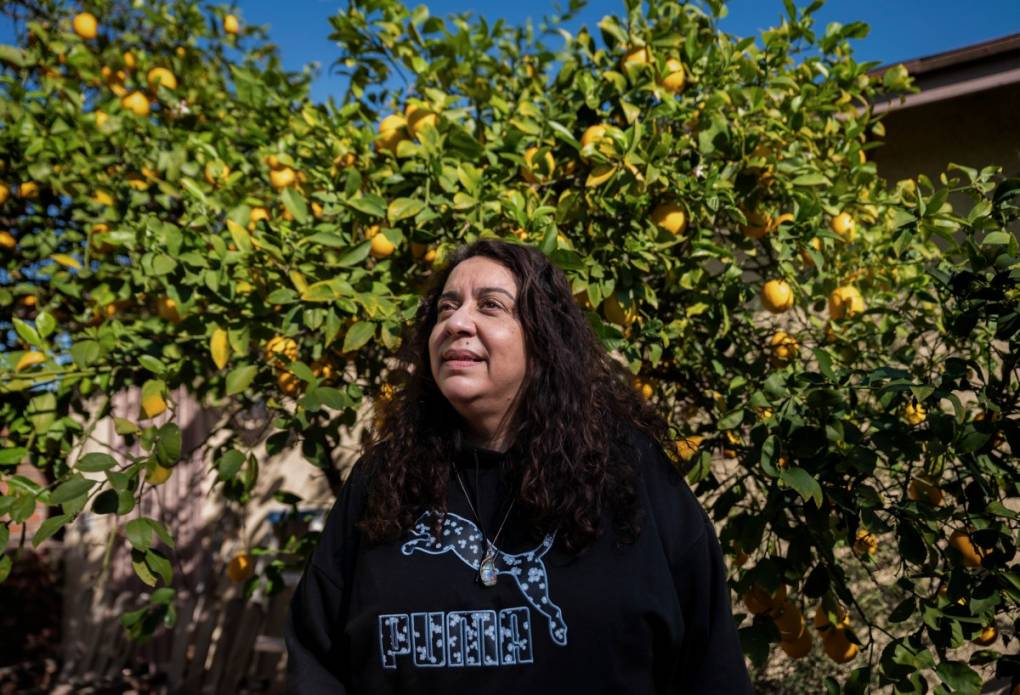
"caption": "Denise Velazquez in front of the lemon tree her grandmother planted in their family garden in Monterey Park. Velazquez left her position as an outreach worker with the Los Angeles Homeless Services Authority as her health worsened.",
"description": "Denise Velazquez in front of the lemon tree her grandmother planted in their family garden in Monterey Park.",
"title": "01262022-HOMELESS-SERVICES-RN02",
"credit": "Raquel Natalicchio/CalMatters",
"status": "inherit",
"altTag": "A person stands outside, in front of a lemon tree. They look away from the camera.",
"isLoading": false,
"fetchFailed": false
},
"news_11901510": {
"type": "attachments",
"id": "news_11901510",
"meta": {
"index": "attachments_1716263798",
"site": "news",
"id": "11901510",
"found": true
},
"parent": 11901506,
"imgSizes": {
"twentyfourteen-full-width": {
"file": "https://ww2.kqed.org/app/uploads/sites/10/2022/01/011022_Unhoused__MG_01-1038x576.jpeg",
"width": 1038,
"mimeType": "image/jpeg",
"height": 576
},
"thumbnail": {
"file": "https://ww2.kqed.org/app/uploads/sites/10/2022/01/011022_Unhoused__MG_01-160x107.jpeg",
"width": 160,
"mimeType": "image/jpeg",
"height": 107
},
"post-thumbnail": {
"file": "https://ww2.kqed.org/app/uploads/sites/10/2022/01/011022_Unhoused__MG_01-672x372.jpeg",
"width": 672,
"mimeType": "image/jpeg",
"height": 372
},
"kqedFullSize": {
"file": "https://ww2.kqed.org/app/uploads/sites/10/2022/01/011022_Unhoused__MG_01-e1642021349884.jpeg",
"width": 1920,
"height": 1280
},
"large": {
"file": "https://ww2.kqed.org/app/uploads/sites/10/2022/01/011022_Unhoused__MG_01-1020x680.jpeg",
"width": 1020,
"mimeType": "image/jpeg",
"height": 680
},
"1536x1536": {
"file": "https://ww2.kqed.org/app/uploads/sites/10/2022/01/011022_Unhoused__MG_01-1536x1024.jpeg",
"width": 1536,
"mimeType": "image/jpeg",
"height": 1024
},
"full-width": {
"file": "https://ww2.kqed.org/app/uploads/sites/10/2022/01/011022_Unhoused__MG_01-1920x1280.jpeg",
"width": 1920,
"mimeType": "image/jpeg",
"height": 1280
},
"medium": {
"file": "https://ww2.kqed.org/app/uploads/sites/10/2022/01/011022_Unhoused__MG_01-800x533.jpeg",
"width": 800,
"mimeType": "image/jpeg",
"height": 533
}
},
"publishDate": 1642021273,
"modified": 1642036076,
"caption": "Tents line the curb in the Rampart Village neighborhood of Los Angeles on Nov. 17, 2021. ",
"description": null,
"title": "011022_Unhoused__MG_01",
"credit": "Miguel Gutierrez Jr./CalMatters",
"status": "inherit",
"altTag": "Tarp-covered tents line a city sidewalk.",
"isLoading": false,
"fetchFailed": false
},
"news_11888568": {
"type": "attachments",
"id": "news_11888568",
"meta": {
"index": "attachments_1716263798",
"site": "news",
"id": "11888568",
"found": true
},
"parent": 11888259,
"imgSizes": {
"twentyfourteen-full-width": {
"file": "https://ww2.kqed.org/app/uploads/sites/10/2021/09/021_SanFrancisco_NewsomRecallEvent_09142021-1038x576.jpg",
"width": 1038,
"mimeType": "image/jpeg",
"height": 576
},
"thumbnail": {
"file": "https://ww2.kqed.org/app/uploads/sites/10/2021/09/021_SanFrancisco_NewsomRecallEvent_09142021-160x107.jpg",
"width": 160,
"mimeType": "image/jpeg",
"height": 107
},
"post-thumbnail": {
"file": "https://ww2.kqed.org/app/uploads/sites/10/2021/09/021_SanFrancisco_NewsomRecallEvent_09142021-672x372.jpg",
"width": 672,
"mimeType": "image/jpeg",
"height": 372
},
"kqedFullSize": {
"file": "https://ww2.kqed.org/app/uploads/sites/10/2021/09/021_SanFrancisco_NewsomRecallEvent_09142021.jpg",
"width": 1920,
"height": 1280
},
"large": {
"file": "https://ww2.kqed.org/app/uploads/sites/10/2021/09/021_SanFrancisco_NewsomRecallEvent_09142021-1020x680.jpg",
"width": 1020,
"mimeType": "image/jpeg",
"height": 680
},
"1536x1536": {
"file": "https://ww2.kqed.org/app/uploads/sites/10/2021/09/021_SanFrancisco_NewsomRecallEvent_09142021-1536x1024.jpg",
"width": 1536,
"mimeType": "image/jpeg",
"height": 1024
},
"medium": {
"file": "https://ww2.kqed.org/app/uploads/sites/10/2021/09/021_SanFrancisco_NewsomRecallEvent_09142021-800x533.jpg",
"width": 800,
"mimeType": "image/jpeg",
"height": 533
}
},
"publishDate": 1631661700,
"modified": 1631726554,
"caption": "Gov. Gavin Newsom speaks with union members and volunteers at the International Brotherhood of Electrical Workers Local 6 union hall in San Francisco on Sept. 14, 2021, just hours before polls closed in the state's second-ever gubernatorial recall election.",
"description": null,
"title": "021_SanFrancisco_NewsomRecallEvent_09142021",
"credit": "Beth LaBerge/KQED",
"status": "inherit",
"altTag": "Gov. Newsom speaks flexing his right fist in front of an IBEW union symbol.",
"isLoading": false,
"fetchFailed": false
},
"news_11900203": {
"type": "attachments",
"id": "news_11900203",
"meta": {
"index": "attachments_1716263798",
"site": "news",
"id": "11900203",
"found": true
},
"parent": 11900195,
"imgSizes": {
"twentyfourteen-full-width": {
"file": "https://ww2.kqed.org/app/uploads/sites/10/2021/12/NPR-fentanyl-5-1038x576.jpg",
"width": 1038,
"mimeType": "image/jpeg",
"height": 576
},
"thumbnail": {
"file": "https://ww2.kqed.org/app/uploads/sites/10/2021/12/NPR-fentanyl-5-160x107.jpg",
"width": 160,
"mimeType": "image/jpeg",
"height": 107
},
"post-thumbnail": {
"file": "https://ww2.kqed.org/app/uploads/sites/10/2021/12/NPR-fentanyl-5-672x372.jpg",
"width": 672,
"mimeType": "image/jpeg",
"height": 372
},
"kqedFullSize": {
"file": "https://ww2.kqed.org/app/uploads/sites/10/2021/12/NPR-fentanyl-5.jpg",
"width": 1224,
"height": 816
},
"large": {
"file": "https://ww2.kqed.org/app/uploads/sites/10/2021/12/NPR-fentanyl-5-1020x680.jpg",
"width": 1020,
"mimeType": "image/jpeg",
"height": 680
},
"medium": {
"file": "https://ww2.kqed.org/app/uploads/sites/10/2021/12/NPR-fentanyl-5-800x533.jpg",
"width": 800,
"mimeType": "image/jpeg",
"height": 533
}
},
"publishDate": 1640299388,
"modified": 1661260992,
"caption": null,
"description": "People live in tents that line a side street in the Tenderloin District. More than 40% of all drug overdoses are in the Tenderloin and neighboring SoMa districts, according to city data.",
"title": "NPR-fentanyl-5",
"credit": "Rachel Bujalski for NPR",
"status": "inherit",
"altTag": "A person stands in the middle of the street and looks down the sidewalk where there are dozens of tents lined up",
"isLoading": false,
"fetchFailed": false
}
},
"audioPlayerReducer": {
"postId": "stream_live",
"isPaused": true,
"isPlaying": false,
"pfsActive": false,
"pledgeModalIsOpen": true,
"playerDrawerIsOpen": false,
"liveAudioPlayStartedAt": 0,
"liveAudioPlayContext": ""
},
"authorsReducer": {
"byline_news_11907115": {
"type": "authors",
"id": "byline_news_11907115",
"meta": {
"override": true
},
"slug": "byline_news_11907115",
"name": "Don Thompson and Janie Har\u003cbr>Associated Press",
"isLoading": false
},
"byline_news_11906631": {
"type": "authors",
"id": "byline_news_11906631",
"meta": {
"override": true
},
"slug": "byline_news_11906631",
"name": "\u003ca href=\"https://www.sfpublicpress.org/author/nuala-bishari/\">Nuala Bishari\u003c/a>\u003cbr>\u003ca href=\"https://www.sfpublicpress.org/\">San Francisco Public Press\u003c/a>",
"isLoading": false
},
"byline_news_11905181": {
"type": "authors",
"id": "byline_news_11905181",
"meta": {
"override": true
},
"slug": "byline_news_11905181",
"name": "\u003ca href=\"https://calmatters.org/author/kristen-hwang/\">Kristen Hwang\u003c/a>",
"isLoading": false
},
"byline_news_11902904": {
"type": "authors",
"id": "byline_news_11902904",
"meta": {
"override": true
},
"slug": "byline_news_11902904",
"name": "\u003ca href=\"https://calmatters.org/author/manuela-tobias/\">Manuela Tobias\u003c/a>",
"isLoading": false
},
"byline_news_11901506": {
"type": "authors",
"id": "byline_news_11901506",
"meta": {
"override": true
},
"slug": "byline_news_11901506",
"name": "\u003ca href=\"https://calmatters.org/author/manuela-tobias/\">Manuela Tobias\u003c/a>",
"isLoading": false
},
"kqed": {
"type": "authors",
"id": "236",
"meta": {
"index": "authors_1716337520",
"id": "236",
"found": true
},
"name": "KQED News Staff",
"firstName": "KQED News Staff",
"lastName": null,
"slug": "kqed",
"email": "faq@kqed.org",
"display_author_email": false,
"staff_mastheads": [],
"title": null,
"bio": null,
"avatar": "https://secure.gravatar.com/avatar/ef0e801a68c4c54afa9180db14084167?s=600&d=blank&r=g",
"twitter": null,
"facebook": null,
"instagram": null,
"linkedin": null,
"sites": [
{
"site": "arts",
"roles": [
"contributor"
]
},
{
"site": "news",
"roles": [
"editor"
]
},
{
"site": "futureofyou",
"roles": [
"author"
]
}
],
"headData": {
"title": "KQED News Staff | KQED",
"description": null,
"ogImgSrc": "https://secure.gravatar.com/avatar/ef0e801a68c4c54afa9180db14084167?s=600&d=blank&r=g",
"twImgSrc": "https://secure.gravatar.com/avatar/ef0e801a68c4c54afa9180db14084167?s=600&d=blank&r=g"
},
"isLoading": false,
"link": "/author/kqed"
},
"matthewgreen": {
"type": "authors",
"id": "1263",
"meta": {
"index": "authors_1716337520",
"id": "1263",
"found": true
},
"name": "Matthew Green",
"firstName": "Matthew",
"lastName": "Green",
"slug": "matthewgreen",
"email": "mgreen@kqed.org",
"display_author_email": false,
"staff_mastheads": [],
"title": "KQED Editor/Reporter",
"bio": "Matthew Green is a digital media producer for KQED News. He previously produced \u003ca href=\"http://www.kqed.org/lowdown\">The Lowdown\u003c/a>, KQED’s multimedia news education blog. Matthew's written for numerous Bay Area publications, including the Oakland Tribune and San Francisco Chronicle. He also taught journalism classes at Fremont High School in East Oakland.\r\n\r\nEmail: mgreen@kqed.org; Twitter: @MGreenKQED",
"avatar": "https://secure.gravatar.com/avatar/3bf498d1267ca02c8494f33d8cfc575e?s=600&d=blank&r=g",
"twitter": "MGreenKQED",
"facebook": null,
"instagram": null,
"linkedin": null,
"sites": [
{
"site": "news",
"roles": []
},
{
"site": "lowdown",
"roles": []
},
{
"site": "science",
"roles": []
},
{
"site": "education",
"roles": []
},
{
"site": "quest",
"roles": []
},
{
"site": "liveblog",
"roles": []
}
],
"headData": {
"title": "Matthew Green | KQED",
"description": "KQED Editor/Reporter",
"ogImgSrc": "https://secure.gravatar.com/avatar/3bf498d1267ca02c8494f33d8cfc575e?s=600&d=blank&r=g",
"twImgSrc": "https://secure.gravatar.com/avatar/3bf498d1267ca02c8494f33d8cfc575e?s=600&d=blank&r=g"
},
"isLoading": false,
"link": "/author/matthewgreen"
},
"ekelly": {
"type": "authors",
"id": "3211",
"meta": {
"index": "authors_1716337520",
"id": "3211",
"found": true
},
"name": "Erika Kelly",
"firstName": "Erika",
"lastName": "Kelly",
"slug": "ekelly",
"email": "ekelly@KQED.org",
"display_author_email": true,
"staff_mastheads": [
"news"
],
"title": "Deputy Managing Editor",
"bio": "Erika Kelly is deputy managing editor of KQED's newsroom, working with teams covering housing, climate, health, labor and the arts. Previously, she was the senior editor of KQED’s housing affordability desk, leading the team that produced the award winning podcast Sold Out: Rethinking Housing in America. She is a graduate of the Medill School of Journalism and a native of the Greater Chicagoland Area.",
"avatar": "https://secure.gravatar.com/avatar/3653973f475e2af06d52444628a0023a48f83905a9d7ce3a4e45e5ecebcb4230?s=600&d=blank&r=g",
"twitter": null,
"bluesky": null,
"facebook": null,
"instagram": null,
"linkedin": null,
"sites": [
{
"site": "",
"roles": [
"editor"
]
},
{
"site": "arts",
"roles": [
"administrator"
]
},
{
"site": "news",
"roles": [
"administrator"
]
},
{
"site": "science",
"roles": [
"administrator"
]
},
{
"site": "liveblog",
"roles": [
"administrator"
]
}
],
"headData": {
"title": "Erika Kelly | KQED",
"description": "Deputy Managing Editor",
"ogImgSrc": "https://secure.gravatar.com/avatar/3653973f475e2af06d52444628a0023a48f83905a9d7ce3a4e45e5ecebcb4230?s=600&d=blank&r=g",
"twImgSrc": "https://secure.gravatar.com/avatar/3653973f475e2af06d52444628a0023a48f83905a9d7ce3a4e45e5ecebcb4230?s=600&d=blank&r=g"
},
"isLoading": false,
"link": "/author/ekelly"
},
"mlagos": {
"type": "authors",
"id": "3239",
"meta": {
"index": "authors_1716337520",
"id": "3239",
"found": true
},
"name": "Marisa Lagos",
"firstName": "Marisa",
"lastName": "Lagos",
"slug": "mlagos",
"email": "mlagos@kqed.org",
"display_author_email": false,
"staff_mastheads": [
"news"
],
"title": "KQED Contributor",
"bio": "Marisa Lagos is a correspondent for KQED’s California Politics and Government Desk and co-hosts the award-winning show and podcast, Political Breakdown. At KQED, Lagos also conducts reporting, analysis and investigations into state, local and national politics for radio, TV, online and onstage. In 2022, she and co-host, Scott Shafer, moderated the only gubernatorial debate in California. In 2020, the \u003ci>Washington Post\u003c/i> named her one of the top political journalists in California; she was nominated for a Peabody and won several other awards for her work investigating the 2017 California wildfires. She has worked at the \u003ci>San Francisco Chronicle\u003c/i>, \u003ci>San Francisco Examiner\u003c/i> and \u003ci>Los Angeles Times\u003c/i>. A UC Santa Barbara graduate, she lives in San Francisco with her two sons and husband.",
"avatar": "https://secure.gravatar.com/avatar/a261a0d3696fc066871ef96b85b5e7d2?s=600&d=blank&r=g",
"twitter": "@mlagos",
"facebook": null,
"instagram": null,
"linkedin": null,
"sites": [
{
"site": "arts",
"roles": [
"author"
]
},
{
"site": "news",
"roles": [
"editor"
]
},
{
"site": "science",
"roles": [
"editor"
]
},
{
"site": "forum",
"roles": [
"author"
]
},
{
"site": "liveblog",
"roles": [
"author"
]
}
],
"headData": {
"title": "Marisa Lagos | KQED",
"description": "KQED Contributor",
"ogImgSrc": "https://secure.gravatar.com/avatar/a261a0d3696fc066871ef96b85b5e7d2?s=600&d=blank&r=g",
"twImgSrc": "https://secure.gravatar.com/avatar/a261a0d3696fc066871ef96b85b5e7d2?s=600&d=blank&r=g"
},
"isLoading": false,
"link": "/author/mlagos"
},
"hmcdede": {
"type": "authors",
"id": "11635",
"meta": {
"index": "authors_1716337520",
"id": "11635",
"found": true
},
"name": "Holly McDede",
"firstName": "Holly",
"lastName": "McDede",
"slug": "hmcdede",
"email": "hmcdede@KQED.org",
"display_author_email": false,
"staff_mastheads": [],
"title": "KQED Contributor",
"bio": null,
"avatar": "https://secure.gravatar.com/avatar/999d9bf31bb3a2f0511932d99526cb3e?s=600&d=blank&r=g",
"twitter": null,
"facebook": null,
"instagram": null,
"linkedin": null,
"sites": [
{
"site": "arts",
"roles": [
"editor"
]
},
{
"site": "news",
"roles": [
"edit_others_posts",
"editor"
]
},
{
"site": "science",
"roles": [
"editor"
]
},
{
"site": "forum",
"roles": [
"editor"
]
},
{
"site": "perspectives",
"roles": [
"administrator"
]
}
],
"headData": {
"title": "Holly McDede | KQED",
"description": "KQED Contributor",
"ogImgSrc": "https://secure.gravatar.com/avatar/999d9bf31bb3a2f0511932d99526cb3e?s=600&d=blank&r=g",
"twImgSrc": "https://secure.gravatar.com/avatar/999d9bf31bb3a2f0511932d99526cb3e?s=600&d=blank&r=g"
},
"isLoading": false,
"link": "/author/hmcdede"
},
"kmoghadam": {
"type": "authors",
"id": "11637",
"meta": {
"index": "authors_1716337520",
"id": "11637",
"found": true
},
"name": "Kyana Moghadam",
"firstName": "Kyana",
"lastName": "Moghadam",
"slug": "kmoghadam",
"email": "kmoghadam@kqed.org",
"display_author_email": false,
"staff_mastheads": [
"news"
],
"title": "Senior Producer ",
"bio": "Kyana Moghadam is a senior producer at KQED. Prior to joining KQED, she was an audio producer and editor with Al Jazeera, Jetty Studios, VOX Media, Democracy Now!, and Global Press.",
"avatar": "https://secure.gravatar.com/avatar/cdbd6cb0b9e99deaa9eb618abdba56f265d374a2c614710aebeb4e58decbc5f0?s=600&d=blank&r=g",
"twitter": null,
"bluesky": null,
"facebook": null,
"instagram": null,
"linkedin": "https://www.linkedin.com/in/kyanamoghadam/",
"sites": [
{
"site": "",
"roles": [
"editor"
]
},
{
"site": "arts",
"roles": [
"editor"
]
},
{
"site": "news",
"roles": [
"administrator"
]
},
{
"site": "pop",
"roles": [
"editor"
]
},
{
"site": "about",
"roles": [
"editor"
]
},
{
"site": "forum",
"roles": [
"editor"
]
},
{
"site": "perspectives",
"roles": [
"editor"
]
},
{
"site": "podcasts",
"roles": [
"administrator"
]
}
],
"headData": {
"title": "Kyana Moghadam | KQED",
"description": "Senior Producer ",
"ogImgSrc": "https://secure.gravatar.com/avatar/cdbd6cb0b9e99deaa9eb618abdba56f265d374a2c614710aebeb4e58decbc5f0?s=600&d=blank&r=g",
"twImgSrc": "https://secure.gravatar.com/avatar/cdbd6cb0b9e99deaa9eb618abdba56f265d374a2c614710aebeb4e58decbc5f0?s=600&d=blank&r=g"
},
"isLoading": false,
"link": "/author/kmoghadam"
},
"jrodriguez": {
"type": "authors",
"id": "11690",
"meta": {
"index": "authors_1716337520",
"id": "11690",
"found": true
},
"name": "Joe Fitzgerald Rodriguez",
"firstName": "Joe",
"lastName": "Fitzgerald Rodriguez",
"slug": "jrodriguez",
"email": "jrodriguez@kqed.org",
"display_author_email": true,
"staff_mastheads": [
"news"
],
"title": "Reporter and Producer",
"bio": "Joe Fitzgerald Rodriguez is a reporter and digital producer for KQED covering politics. Joe most recently wrote for the \u003cem>San Francisco Examiner\u003c/em> as a political columnist covering The City. He was raised in San Francisco and has spent his reporting career in his beloved, foggy, city by the bay. Joe was 12-years-old when he conducted his first interview in journalism, grilling former San Francisco Mayor Willie Brown for the Marina Middle School newspaper, \u003cem>The Penguin Press, \u003c/em>and he continues to report on the San Francisco Bay Area to this day.",
"avatar": "https://secure.gravatar.com/avatar/2247beb0564c1e9c62228d5649d2edac?s=600&d=blank&r=g",
"twitter": "FitztheReporter",
"facebook": null,
"instagram": "https://www.instagram.com/fitzthereporter/",
"linkedin": null,
"sites": [
{
"site": "",
"roles": [
"editor"
]
},
{
"site": "arts",
"roles": [
"editor"
]
},
{
"site": "news",
"roles": [
"editor"
]
},
{
"site": "science",
"roles": [
"editor"
]
},
{
"site": "elections",
"roles": [
"editor"
]
},
{
"site": "liveblog",
"roles": [
"editor"
]
}
],
"headData": {
"title": "Joe Fitzgerald Rodriguez | KQED",
"description": "Reporter and Producer",
"ogImgSrc": "https://secure.gravatar.com/avatar/2247beb0564c1e9c62228d5649d2edac?s=600&d=blank&r=g",
"twImgSrc": "https://secure.gravatar.com/avatar/2247beb0564c1e9c62228d5649d2edac?s=600&d=blank&r=g"
},
"isLoading": false,
"link": "/author/jrodriguez"
},
"afinney": {
"type": "authors",
"id": "11772",
"meta": {
"index": "authors_1716337520",
"id": "11772",
"found": true
},
"name": "Annelise Finney",
"firstName": "Annelise",
"lastName": "Finney",
"slug": "afinney",
"email": "afinney@kqed.org",
"display_author_email": true,
"staff_mastheads": [
"news"
],
"title": "Reporter",
"bio": "Annelise reports on reparations in California and East Bay politics. She co-produced the Sunday Music Drop, a limited-term radio series featuring Bay Area musicians that aired between Sept 2022 and Oct 2024. She joined KQED in 2021 as a general assignment reporter and is an alumna of KALW's Audio Academy. She was born and raised in the East Bay. She is currently away from KQED completing a year-long reporting project in Berlin, Germany as a Alexander Von Humboldt German Chancellor Fellow.",
"avatar": "https://secure.gravatar.com/avatar/5fded66cae47704cdfc5021cde0f3aa4?s=600&d=blank&r=g",
"twitter": null,
"facebook": null,
"instagram": null,
"linkedin": null,
"sites": [
{
"site": "news",
"roles": [
"editor"
]
},
{
"site": "liveblog",
"roles": [
"author"
]
}
],
"headData": {
"title": "Annelise Finney | KQED",
"description": "Reporter",
"ogImgSrc": "https://secure.gravatar.com/avatar/5fded66cae47704cdfc5021cde0f3aa4?s=600&d=blank&r=g",
"twImgSrc": "https://secure.gravatar.com/avatar/5fded66cae47704cdfc5021cde0f3aa4?s=600&d=blank&r=g"
},
"isLoading": false,
"link": "/author/afinney"
},
"naldana": {
"type": "authors",
"id": "11793",
"meta": {
"index": "authors_1716337520",
"id": "11793",
"found": true
},
"name": "Natalia Aldana",
"firstName": "Natalia",
"lastName": "Aldana",
"slug": "naldana",
"email": "naldana@kqed.org",
"display_author_email": false,
"staff_mastheads": [],
"title": "KQED Producer",
"bio": "Natalia Aldana is the senior engagement producer for KQED podcasts.",
"avatar": "https://secure.gravatar.com/avatar/c784d8a94359b38cc84991c1a7a565b2?s=600&d=blank&r=g",
"twitter": null,
"facebook": null,
"instagram": null,
"linkedin": null,
"sites": [
{
"site": "news",
"roles": [
"editor"
]
}
],
"headData": {
"title": "Natalia Aldana | KQED",
"description": "KQED Producer",
"ogImgSrc": "https://secure.gravatar.com/avatar/c784d8a94359b38cc84991c1a7a565b2?s=600&d=blank&r=g",
"twImgSrc": "https://secure.gravatar.com/avatar/c784d8a94359b38cc84991c1a7a565b2?s=600&d=blank&r=g"
},
"isLoading": false,
"link": "/author/naldana"
}
},
"pagesReducer": {
"news_tag_homelessness": {
"type": "terms",
"id": "news_4020",
"meta": {
"index": "terms_1716263798",
"site": "news",
"id": "4020",
"score": 8.555192
},
"name": "Homelessness",
"slug": "homelessness",
"taxonomy": "tag",
"description": null,
"featImg": null,
"headData": {
"title": "Homelessness | KQED News",
"description": null,
"ogTitle": null,
"ogDescription": null,
"ogImgId": null,
"twTitle": null,
"twDescription": null,
"twImgId": null,
"metaRobotsNoIndex": "index"
},
"ttid": 4039,
"isLoading": false,
"title": "Homelessness",
"pageMeta": {
"site": "news",
"WpPageTemplate": "page-topic-editorial",
"currentPage": 27
},
"blocks": [
{
"blockName": "kqed/post-list",
"attrs": {
"layout": "cardArticle2",
"query": "posts/news?tag=homelessness",
"seeMore": false,
"paginated": true,
"page": 27
}
},
{
"blockName": "kqed/ad"
}
]
}
},
"pfsSessionReducer": {},
"postsReducer": {
"stream_live": {
"type": "live",
"id": "stream_live",
"audioUrl": "https://streams.kqed.org/kqedradio",
"title": "Live Stream",
"excerpt": "Live Stream information currently unavailable.",
"link": "/radio",
"featImg": "",
"label": {
"name": "KQED Live",
"link": "/"
}
},
"stream_kqedNewscast": {
"type": "posts",
"id": "stream_kqedNewscast",
"audioUrl": "https://www.kqed.org/.stream/anon/radio/RDnews/newscast.mp3?_=1",
"title": "KQED Newscast",
"featImg": "",
"label": {
"name": "88.5 FM",
"link": "/"
}
},
"news_11914346": {
"type": "posts",
"id": "news_11914346",
"meta": {
"index": "posts_1716263798",
"site": "news",
"id": "11914346",
"score": null,
"sort": [
1652832542000
]
},
"guestAuthors": [],
"slug": "more-people-became-unhoused-across-the-bay-area-over-last-3-years-except-in-sf",
"title": "More People Became Unhoused Across the Bay Area Over Last 3 Years — Except in SF",
"publishDate": 1652832542,
"format": "standard",
"headTitle": "More People Became Unhoused Across the Bay Area Over Last 3 Years — Except in SF | KQED",
"labelTerm": {
"site": "news"
},
"content": "\u003cp>\u003cem>Updated 12:30 p.m. Friday\u003c/em>\u003c/p>\n\u003cp>Despite a flood of federal and state dollars spent to keep people off the streets during the coronavirus pandemic, homelessness in the Bay Area continued to increase in the last three years — although not by as much as many had feared.\u003c/p>\n\u003cp>The population of housed and unhoused people increased by a total of almost 9% — to more than 35,000 people — across the seven Bay Area counties that reported preliminary data on Monday.\u003c/p>\n\u003cp>Among them, only San Francisco reported a slight decrease, of about 3.5%, even as the city still counted more than 7,700 unhoused people. The city’s unsheltered population — people sleeping outside and in vehicles — dropped by 15%, while those living in shelters and transitional housing grew by 18%.\u003c/p>\n\u003cp>“We have a lot of work to do, but this shows that we are moving in the right direction,” Mayor London Breed said in a statement. “The investments we have made and will continue to make, as well as our improvements in strategy around outreach and connecting people to resources are all working together to help get more people off the street.”\u003c/p>\n\u003cp>\u003c!-- iframe plugin v.4.3 wordpress.org/plugins/iframe/ -->\u003cbr>\n\u003ciframe loading=\"lazy\" title=\"Percent Change in Unhoused Population from 2019 to 2022\" aria-label=\"Grouped Bars\" id=\"datawrapper-chart-q3arM\" src=\"https://datawrapper.dwcdn.net/q3arM/1/\" scrolling=\"no\" frameborder=\"0\" style=\"border: none;\" width=\"800\" height=\"400\" class=\"iframe-class\">\u003c/iframe>\u003c/p>\n\u003cp>Contra Costa County saw the region’s steepest spike since the 2019 count, with the number of unhoused people up nearly 35% (to almost 3,100). In neighboring Alameda County, homelessness jumped nearly 22% (to more than 9,700), including a 24% increase in Oakland.\u003c/p>\n\u003cp>Meanwhile, Santa Clara County, the largest county in the region, reported a more than 3% uptick, with an 11% jump in the city of San José.\u003c/p>\n\u003cp>In the North Bay, Marin reported an 8.4% increase over 2019 rates, while Sonoma and Napa counties saw 5% and 6.5% increases, respectively, over their last counts in early 2020.\u003c/p>\n\u003cp>In San Mateo County, where officials have said they are seeking to “functionally” end homelessness by 2023, the number of unhoused people increased by nearly 20% since the 2019 county, topping 1,800, the county reported on Friday.\u003c/p>\n\u003cp>Solano County is expected to report its preliminary numbers later this summer.\u003c/p>\n\u003cp>\u003c!-- iframe plugin v.4.3 wordpress.org/plugins/iframe/ -->\u003cbr>\n\u003ciframe loading=\"lazy\" title=\"Total Point-in-Time Counts of Unhoused People in Each County \" aria-label=\"Grouped Bars\" id=\"datawrapper-chart-AywKB\" src=\"https://datawrapper.dwcdn.net/AywKB/5/\" scrolling=\"no\" frameborder=\"0\" style=\"border: none;\" width=\"800\" height=\"900\" class=\"iframe-class\">\u003c/iframe>\u003c/p>\n\u003cp>The numbers — which are generally considered a pretty significant undercount of the actual unhoused population — come from tallies of people sleeping on streets, in vehicles and in shelters on a single night in February. Counties must complete the count every two years to determine funding for homelessness programs (the 2021 count was postponed due to the pandemic).\u003c/p>\n\u003cp>More detailed information about each county’s unhoused populations, including age and racial demographics, is expected to come out this summer.\u003c/p>\n\u003cp>[aside label=\"related coverage\" tag=\"homelessness\"]“I’m saddened that more people are homeless and a lot of that can be attributed to the pandemic,” said Contra Costa County Supervisor Karen Mitchoff, emphasizing the need for substantially more affordable housing. “I’m not surprised because I see them … I see people camping out there. I see people in the underpasses. I hear from constituents. So we know it’s a big problem. But, you know, it’s not just Contra Costa County. It’s everywhere.”\u003c/p>\n\u003cp>Yet, many local officials and advocates for the unhoused said the numbers could have been much worse if not for the emergency programs implemented during the pandemic. And while the number of unhoused people in the region did grow, the rate of increase was considerably lower than the nearly 26% jump between 2017 and 2019.\u003c/p>\n\u003cp>The Bay Area “staved off a catastrophic increase in homelessness” over the last three years, said Tomiquia Moss, CEO of All Home, a regional housing and anti-poverty group that helped coordinate the counts. “Bay Area governments and nonprofits played deep defense on homelessness during the pandemic and we have more or less held the line — but now we need to go on offense and end the suffering on our streets.”\u003c/p>\n\u003cp>Moss credited an array of local and state efforts, including eviction moratoriums, emergency rental assistance and Gov. Gavin Newsom’s \u003ca href=\"https://www.cdss.ca.gov/inforesources/cdss-programs/housing-programs/project-roomkey\">Roomkey and Homekey programs\u003c/a>, which have allowed thousands of unhoused people to temporarily live in hotel and motel rooms, with some units being converted into permanent housing.\u003c/p>\n\u003cp>“Those types of solutions are happening all across our region and we believe help to minimize how many more folks were experiencing this challenge during this period of time,” she said.\u003c/p>\n\u003cp>\u003c!-- iframe plugin v.4.3 wordpress.org/plugins/iframe/ -->\u003cbr>\n\u003ciframe loading=\"lazy\" title=\"Sheltered/Unsheltered Unhoused Populations, 2019/20 & 2022\" aria-label=\"Stacked Bars\" id=\"datawrapper-chart-Z0UKH\" src=\"https://datawrapper.dwcdn.net/Z0UKH/1/\" scrolling=\"no\" frameborder=\"0\" style=\"border: none;\" width=\"800\" height=\"890\" class=\"iframe-class\">\u003c/iframe>\u003c/p>\n\u003cp>But advocates and local officials fear that funding for many pandemic aid programs that have helped get people off the streets will soon dry up, and are imploring state leaders to continue supporting them.\u003c/p>\n\u003cp>Moss also stressed the need to focus on the deep roots of the region’s homelessness crisis, and address the structural racism and severe lack of affordable housing that have fueled it.\u003c/p>\n\u003cp>“Although the numbers in the point-in-time count are better than we anticipated, homelessness still continues to be our region’s and our state’s biggest challenge,” she said. “We have much work to do.”\u003c/p>\n\u003cp>[ad fullwidth]\u003c/p>\n\u003cp>\u003c/p>\n",
"blocks": [],
"excerpt": "The population of unhoused people in most of the Bay Area increased by a total of almost 9% in the last three years — to more than 35,000 people. San Francisco was the only county in the region to report a slight decline.",
"status": "publish",
"parent": 0,
"modified": 1740516742,
"stats": {
"hasAudio": false,
"hasVideo": false,
"hasChartOrMap": true,
"iframeSrcs": [
"https://datawrapper.dwcdn.net/q3arM/1/",
"https://datawrapper.dwcdn.net/AywKB/5/",
"https://datawrapper.dwcdn.net/Z0UKH/1/"
],
"hasGoogleForm": false,
"hasGallery": false,
"hasHearkenModule": false,
"hasPolis": false,
"paragraphCount": 25,
"wordCount": 860
},
"headData": {
"title": "More People Became Unhoused Across the Bay Area Over Last 3 Years — Except in SF | KQED",
"description": "The population of unhoused people in most of the Bay Area increased by a total of almost 9% in the last three years — to more than 35,000 people. San Francisco was the only county in the region to report a slight decline.",
"ogTitle": "",
"ogDescription": "",
"ogImgId": "",
"twTitle": "",
"twDescription": "",
"twImgId": "",
"schema": {
"@context": "https://schema.org",
"@type": "NewsArticle",
"headline": "More People Became Unhoused Across the Bay Area Over Last 3 Years — Except in SF",
"datePublished": "2022-05-17T17:09:02-07:00",
"dateModified": "2025-02-25T12:52:22-08:00",
"image": "https://cdn.kqed.org/wp-content/uploads/2020/02/KQED-OG-Image@1x.png",
"isAccessibleForFree": "True",
"publisher": {
"@type": "NewsMediaOrganization",
"@id": "https://www.kqed.org/#organization",
"name": "KQED",
"logo": "https://cdn.kqed.org/wp-content/uploads/2020/02/KQED-OG-Image@1x.png",
"url": "https://www.kqed.org",
"sameAs": [
"https://www.facebook.com/KQED",
"https://twitter.com/KQED",
"https://www.instagram.com/kqed/",
"https://www.tiktok.com/@kqedofficial",
"https://www.linkedin.com/company/kqed",
"https://www.youtube.com/channel/UCeC0IOo7i1P_61zVUWbJ4nw"
]
}
}
},
"sticky": false,
"excludeFromSiteSearch": "Include",
"path": "/news/11914346/more-people-became-unhoused-across-the-bay-area-over-last-3-years-except-in-sf",
"audioTrackLength": null,
"parsedContent": [
{
"type": "contentString",
"content": "\u003cdiv class=\"post-body\">\u003cp>\u003cp>\u003cem>Updated 12:30 p.m. Friday\u003c/em>\u003c/p>\n\u003cp>Despite a flood of federal and state dollars spent to keep people off the streets during the coronavirus pandemic, homelessness in the Bay Area continued to increase in the last three years — although not by as much as many had feared.\u003c/p>\n\u003cp>The population of housed and unhoused people increased by a total of almost 9% — to more than 35,000 people — across the seven Bay Area counties that reported preliminary data on Monday.\u003c/p>\n\u003cp>Among them, only San Francisco reported a slight decrease, of about 3.5%, even as the city still counted more than 7,700 unhoused people. The city’s unsheltered population — people sleeping outside and in vehicles — dropped by 15%, while those living in shelters and transitional housing grew by 18%.\u003c/p>\n\u003cp>“We have a lot of work to do, but this shows that we are moving in the right direction,” Mayor London Breed said in a statement. “The investments we have made and will continue to make, as well as our improvements in strategy around outreach and connecting people to resources are all working together to help get more people off the street.”\u003c/p>\n\u003cp>\u003c!-- iframe plugin v.4.3 wordpress.org/plugins/iframe/ -->\u003cbr>\n\u003ciframe loading=\"lazy\" title=\"Percent Change in Unhoused Population from 2019 to 2022\" aria-label=\"Grouped Bars\" id=\"datawrapper-chart-q3arM\" src=\"https://datawrapper.dwcdn.net/q3arM/1/\" scrolling=\"no\" frameborder=\"0\" style=\"border: none;\" width=\"800\" height=\"400\" class=\"iframe-class\">\u003c/iframe>\u003c/p>\n\u003cp>Contra Costa County saw the region’s steepest spike since the 2019 count, with the number of unhoused people up nearly 35% (to almost 3,100). In neighboring Alameda County, homelessness jumped nearly 22% (to more than 9,700), including a 24% increase in Oakland.\u003c/p>\n\u003cp>Meanwhile, Santa Clara County, the largest county in the region, reported a more than 3% uptick, with an 11% jump in the city of San José.\u003c/p>\n\u003cp>In the North Bay, Marin reported an 8.4% increase over 2019 rates, while Sonoma and Napa counties saw 5% and 6.5% increases, respectively, over their last counts in early 2020.\u003c/p>\n\u003cp>In San Mateo County, where officials have said they are seeking to “functionally” end homelessness by 2023, the number of unhoused people increased by nearly 20% since the 2019 county, topping 1,800, the county reported on Friday.\u003c/p>\n\u003cp>Solano County is expected to report its preliminary numbers later this summer.\u003c/p>\n\u003cp>\u003c!-- iframe plugin v.4.3 wordpress.org/plugins/iframe/ -->\u003cbr>\n\u003ciframe loading=\"lazy\" title=\"Total Point-in-Time Counts of Unhoused People in Each County \" aria-label=\"Grouped Bars\" id=\"datawrapper-chart-AywKB\" src=\"https://datawrapper.dwcdn.net/AywKB/5/\" scrolling=\"no\" frameborder=\"0\" style=\"border: none;\" width=\"800\" height=\"900\" class=\"iframe-class\">\u003c/iframe>\u003c/p>\n\u003cp>The numbers — which are generally considered a pretty significant undercount of the actual unhoused population — come from tallies of people sleeping on streets, in vehicles and in shelters on a single night in February. Counties must complete the count every two years to determine funding for homelessness programs (the 2021 count was postponed due to the pandemic).\u003c/p>\n\u003cp>More detailed information about each county’s unhoused populations, including age and racial demographics, is expected to come out this summer.\u003c/p>\n\u003cp>\u003c/p>\u003c/div>",
"attributes": {
"named": {},
"numeric": []
}
},
{
"type": "component",
"content": "",
"name": "aside",
"attributes": {
"named": {
"label": "related coverage ",
"tag": "homelessness"
},
"numeric": []
}
},
{
"type": "contentString",
"content": "\u003cdiv class=\"post-body\">\u003cp>“I’m saddened that more people are homeless and a lot of that can be attributed to the pandemic,” said Contra Costa County Supervisor Karen Mitchoff, emphasizing the need for substantially more affordable housing. “I’m not surprised because I see them … I see people camping out there. I see people in the underpasses. I hear from constituents. So we know it’s a big problem. But, you know, it’s not just Contra Costa County. It’s everywhere.”\u003c/p>\n\u003cp>Yet, many local officials and advocates for the unhoused said the numbers could have been much worse if not for the emergency programs implemented during the pandemic. And while the number of unhoused people in the region did grow, the rate of increase was considerably lower than the nearly 26% jump between 2017 and 2019.\u003c/p>\n\u003cp>The Bay Area “staved off a catastrophic increase in homelessness” over the last three years, said Tomiquia Moss, CEO of All Home, a regional housing and anti-poverty group that helped coordinate the counts. “Bay Area governments and nonprofits played deep defense on homelessness during the pandemic and we have more or less held the line — but now we need to go on offense and end the suffering on our streets.”\u003c/p>\n\u003cp>Moss credited an array of local and state efforts, including eviction moratoriums, emergency rental assistance and Gov. Gavin Newsom’s \u003ca href=\"https://www.cdss.ca.gov/inforesources/cdss-programs/housing-programs/project-roomkey\">Roomkey and Homekey programs\u003c/a>, which have allowed thousands of unhoused people to temporarily live in hotel and motel rooms, with some units being converted into permanent housing.\u003c/p>\n\u003cp>“Those types of solutions are happening all across our region and we believe help to minimize how many more folks were experiencing this challenge during this period of time,” she said.\u003c/p>\n\u003cp>\u003c!-- iframe plugin v.4.3 wordpress.org/plugins/iframe/ -->\u003cbr>\n\u003ciframe loading=\"lazy\" title=\"Sheltered/Unsheltered Unhoused Populations, 2019/20 & 2022\" aria-label=\"Stacked Bars\" id=\"datawrapper-chart-Z0UKH\" src=\"https://datawrapper.dwcdn.net/Z0UKH/1/\" scrolling=\"no\" frameborder=\"0\" style=\"border: none;\" width=\"800\" height=\"890\" class=\"iframe-class\">\u003c/iframe>\u003c/p>\n\u003cp>But advocates and local officials fear that funding for many pandemic aid programs that have helped get people off the streets will soon dry up, and are imploring state leaders to continue supporting them.\u003c/p>\n\u003cp>Moss also stressed the need to focus on the deep roots of the region’s homelessness crisis, and address the structural racism and severe lack of affordable housing that have fueled it.\u003c/p>\n\u003cp>“Although the numbers in the point-in-time count are better than we anticipated, homelessness still continues to be our region’s and our state’s biggest challenge,” she said. “We have much work to do.”\u003c/p>\n\u003cp>\u003c/p>\u003c/div>",
"attributes": {
"named": {},
"numeric": []
}
},
{
"type": "component",
"content": "",
"name": "ad",
"attributes": {
"named": {
"label": "fullwidth"
},
"numeric": [
"fullwidth"
]
}
},
{
"type": "contentString",
"content": "\u003cdiv class=\"post-body\">\u003cp>\u003c/p>\n\u003cp>\u003c/p>\n\u003c/div>\u003c/p>",
"attributes": {
"named": {},
"numeric": []
}
}
],
"link": "/news/11914346/more-people-became-unhoused-across-the-bay-area-over-last-3-years-except-in-sf",
"authors": [
"1263",
"3211"
],
"categories": [
"news_6266",
"news_8"
],
"tags": [
"news_3921",
"news_27626",
"news_4020",
"news_1775",
"news_27208",
"news_29607"
],
"featImg": "news_11904436",
"label": "news"
},
"news_11911130": {
"type": "posts",
"id": "news_11911130",
"meta": {
"index": "posts_1716263798",
"site": "news",
"id": "11911130",
"score": null,
"sort": [
1650915313000
]
},
"guestAuthors": [],
"slug": "bonus-your-stories-and-solutions-for-the-housing-crisis",
"title": "Bonus: Your Stories and Solutions for the Housing Crisis",
"publishDate": 1650915313,
"format": "audio",
"headTitle": "Bonus: Your Stories and Solutions for the Housing Crisis | KQED",
"labelTerm": {},
"content": "\u003cp>\u003cspan style=\"font-weight: 400\">What are your biggest ideas on how to solve the housing crisis? How has housing shaped your life?\u003c/span>\u003c/p>\n\u003cp>\u003cspan style=\"font-weight: 400\">Throughout this season, we wanted to hear from you — the Sold Out audience. We asked you to get in touch, and you came through!\u003c/span>\u003c/p>\n\u003cp>\u003cspan style=\"font-weight: 400\">From voice memos to emails and social media, dozens of listeners reached out and shared stories of housing insecurity and loss, advocacy work, and visions for an equitable housing future.\u003c/span>\u003c/p>\n\u003cp>\u003cspan style=\"font-weight: 400\">In this bonus episode, hear from seven people for whom housing is at the center of everything. \u003c/span>\u003c/p>\n\u003ch5 id=\"embed-code\" class=\"inconsolata\">\n\u003c!-- iframe plugin v.4.3 wordpress.org/plugins/iframe/ -->\u003cbr>\n\u003ciframe loading=\"lazy\" frameborder=\"0\" height=\"200\" scrolling=\"no\" src=\"https://playlist.megaphone.fm?e=KQINC9285725518&light=true\" width=\"100%\" class=\"iframe-class\">\u003c/iframe>\u003cbr>\n\u003c/h5>\n\u003chr>\n\u003cp>\u003cb>[TRANSCRIPT]\u003c/b>\u003c/p>\n\u003cp>\u003cstrong>MOLLY SOLOMON: \u003c/strong>Hi! I’m Molly Solomon.\u003c/p>\n\u003cp>[ad fullwidth]\u003c/p>\n\u003cp>\u003cstrong>ERIN BALDASSARI: \u003c/strong>\u003cspan style=\"font-weight: 400\">And I’m Erin Baldassari. You’re listening to Sold Out: Rethinking Housing in America, and today we’ve got something special for you from producer Natalia Aldana.\u003c/span>\u003c/p>\n\u003cp>\u003cspan style=\"font-weight: 400\">Take it away, Natalia.\u003c/span>\u003c/p>\n\u003cp>\u003cb>[SOLD OUT THEME MUSIC BEGINS]\u003c/b>\u003c/p>\n\u003cfigure id=\"attachment_11841421\" class=\"wp-caption aligncenter\" style=\"max-width: 451px\">\u003cimg loading=\"lazy\" decoding=\"async\" class=\" wp-image-11841421\" src=\"https://ww2.kqed.org/app/uploads/sites/10/2020/10/RS16247_GettyImages-150582090-qut-800x530.jpg\" alt=\"\" width=\"451\" height=\"299\" srcset=\"https://cdn.kqed.org/wp-content/uploads/sites/10/2020/10/RS16247_GettyImages-150582090-qut-800x530.jpg 800w, https://cdn.kqed.org/wp-content/uploads/sites/10/2020/10/RS16247_GettyImages-150582090-qut-1020x676.jpg 1020w, https://cdn.kqed.org/wp-content/uploads/sites/10/2020/10/RS16247_GettyImages-150582090-qut-160x106.jpg 160w, https://cdn.kqed.org/wp-content/uploads/sites/10/2020/10/RS16247_GettyImages-150582090-qut-1536x1018.jpg 1536w, https://cdn.kqed.org/wp-content/uploads/sites/10/2020/10/RS16247_GettyImages-150582090-qut.jpg 1920w\" sizes=\"auto, (max-width: 451px) 100vw, 451px\">\u003cfigcaption class=\"wp-caption-text\">A red for sale sign outside a home with a “sold pending” sticker posted across the front. \u003ccite>(Justin Sullivan/KQED)\u003c/cite>\u003c/figcaption>\u003c/figure>\n\u003cp>\u003cb>NATALIA ALDANA:\u003c/b>\u003cspan style=\"font-weight: 400\"> When it comes to the housing crisis, every Californian has something to say about it.\u003c/span>\u003c/p>\n\u003cp>\u003cb>MARGOT RINALDO: \u003c/b>\u003cspan style=\"font-weight: 400\">Man, it’s like — it’s like the air we breathe. It is literally, like, a fact of life if you live in California.\u003c/span>\u003c/p>\n\u003cp>\u003cspan style=\"font-weight: 400\">\u003cstrong>NATALIA: \u003c/strong>We can all point to how it’s impacted us — affected our families, our neighborhoods, and our livelihoods.\u003c/span>\u003c/p>\n\u003cp>\u003cspan style=\"font-weight: 400\">Throughout this season of Sold Out, we’ve been asking for your thoughts and experiences when it comes to housing. \u003c/span>\u003c/p>\n\u003cp>\u003cspan style=\"font-weight: 400\">So many of you got in touch. And today, you’ll hear from seven people whose stories might challenge you, empathize with you, and hopefully, inspire you.\u003c/span>\u003c/p>\n\u003cp>\u003cb>[MUSIC – DECK LOFI]\u003c/b>\u003c/p>\n\u003cp>\u003cspan style=\"font-weight: 400\">First up, we have a listener who wants us to rethink how we live — literally\u003c/span> \u003cspan style=\"font-weight: 400\">who we share a roof with, and how the \u003c/span>\u003cspan style=\"font-weight: 400\">way \u003c/span>\u003cspan style=\"font-weight: 400\">we understand family impacts our housing.\u003c/span>\u003c/p>\n\u003cp>\u003cspan style=\"font-weight: 400\">Cam Coulter rents an apartment with his partner in San Jose. And Cam thinks the housing system favors homeowners. \u003c/span>\u003c/p>\n\u003cp>\u003cb>CAM COULTER: \u003c/b>\u003cspan style=\"font-weight: 400\">This is probably a little hot-take, but I wish I could write off my rent payments as tax-deductible.\u003c/span>\u003c/p>\n\u003cp>\u003cb>NATALIA: \u003c/b>\u003cspan style=\"font-weight: 400\">Cam recognizes that tax incentives are meant to motivate homeownership. \u003c/span>\u003c/p>\n\u003cp>\u003cb>CAM:\u003c/b>\u003cspan style=\"font-weight: 400\"> And that might work in other parts of the country. But here I feel like it really just punishes the people who can’t afford to buy a home.\u003c/span>\u003c/p>\n\u003cp>\u003cb>NATALIA: \u003c/b>\u003cspan style=\"font-weight: 400\">Although rent is not tax-deductible in California — the state does award a $60 renters tax credit for qualifying single filers who earn less than $43,533 a year. Since Cam and I last spoke, \u003ca href=\"https://www.msn.com/en-us/news/us/californias-renter-tax-credit-has-remained-unchanged-for-43-years-it-could-soon-increase/ar-AAW402s\">a state bill has been proposed that could potentially increase that credit to $500.\u003c/a>\u003c/span>\u003c/p>\n\u003cp>\u003cb>[MUSIC OUT – DECK LOFI OUT]\u003c/b>\u003c/p>\n\u003cp>\u003cspan style=\"font-weight: 400\">While Cam\u003c/span>\u003cspan style=\"font-weight: 400\"> doesn’t really want to buy a h\u003c/span>\u003cspan style=\"font-weight: 400\">ome, they do want to build equity.\u003c/span>\u003c/p>\n\u003cp>\u003cb>CAM: \u003c/b>\u003cspan style=\"font-weight: 400\">So I see the way that the desire to own a home is sort of constructed by the fact that it’s a great way to build wealth and have long-term stability. But I wish there were other ways to achieve that.\u003c/span>\u003c/p>\n\u003cfigure id=\"attachment_11911686\" class=\"wp-caption alignright\" style=\"max-width: 334px\">\u003cimg loading=\"lazy\" decoding=\"async\" class=\" wp-image-11911686\" src=\"https://ww2.kqed.org/app/uploads/sites/10/2022/04/Cam-Coulter-800x800.jpeg\" alt=\"A person sits on the grass.\" width=\"334\" height=\"334\" srcset=\"https://cdn.kqed.org/wp-content/uploads/sites/10/2022/04/Cam-Coulter-800x800.jpeg 800w, https://cdn.kqed.org/wp-content/uploads/sites/10/2022/04/Cam-Coulter-1020x1020.jpeg 1020w, https://cdn.kqed.org/wp-content/uploads/sites/10/2022/04/Cam-Coulter-160x160.jpeg 160w, https://cdn.kqed.org/wp-content/uploads/sites/10/2022/04/Cam-Coulter-1536x1536.jpeg 1536w, https://cdn.kqed.org/wp-content/uploads/sites/10/2022/04/Cam-Coulter-1920x1920.jpeg 1920w, https://cdn.kqed.org/wp-content/uploads/sites/10/2022/04/Cam-Coulter.jpeg 2048w\" sizes=\"auto, (max-width: 334px) 100vw, 334px\">\u003cfigcaption class=\"wp-caption-text\">Cam Coulter wants KQED listeners to reimagine who we consider family, and how that might improve the housing crisis. \u003ccite>(Courtesy of Cam Coulter)\u003c/cite>\u003c/figcaption>\u003c/figure>\n\u003cp>\u003cb>NATALIA:\u003c/b>\u003cspan style=\"font-weight: 400\"> As for their other pie in the sky: Cam wants more \u003c/span>\u003ca href=\"https://www.ic.org/what-is-an-intentional-community-30th-birthday-day-13/\">\u003cspan style=\"font-weight: 400\">intentional housing or co-housing communities\u003c/span>\u003c/a>\u003cspan style=\"font-weight: 400\">.\u003c/span>\u003c/p>\n\u003cp>\u003cspan style=\"font-weight: 400\"> \u003c/span>\u003cb>CAM: \u003c/b>\u003cspan style=\"font-weight: 400\">When I stop and dream about what, like, a beautiful, sustainable, healthy future would look like, I see housing that looks more like this.\u003c/span>\u003c/p>\n\u003cp>\u003cspan style=\"font-weight: 400\">I’ve lived in intentional community before, and I’d like to do that again in the future.\u003c/span>\u003c/p>\n\u003cp>\u003cb>[MUSIC IN – \u003c/b>\u003cb>SUNKISSED]\u003c/b>\u003c/p>\n\u003cp>\u003cspan style=\"font-weight: 400\">Live not just with my own, how to say, like, nuclear family, but with other people, and to share space with them, share grocery budgets, do communal activities.\u003c/span>\u003c/p>\n\u003cp>\u003cspan style=\"font-weight: 400\">I would love to live in a co-housing community where my partner and I could have some of our own space but also share common spaces with community. I would love to live in, like, a larger, multi-family home where maybe four to 10 adults, or kids, could comfortably live together without overcrowding.\u003c/span>\u003c/p>\n\u003cp>\u003cspan style=\"font-weight: 400\">And this could benefit a lot of multi-generational families who I know are already overcrowded in their small single-family home. I think we have too few of those options.\u003c/span>\u003c/p>\n\u003cp>\u003cb>[MUSIC OUT – \u003c/b>\u003cb>SUNKISSED]\u003c/b>\u003c/p>\n\u003cp>\u003cb>NATALIA: \u003c/b>\u003cspan style=\"font-weight: 400\">Cam is nonbinary, and says the connection between queer and trans folks living in found families has probably influenced this perspective.\u003c/span>\u003c/p>\n\u003cp>\u003cb>CAM: \u003c/b>\u003cspan style=\"font-weight: 400\">One thing that makes me frustrated is that so many of the housing units we have are designed for a nuclear family. Or perhaps, you know, you can have maybe grandparents or something, but they’re really designed as like single-family homes or small apartments, or just one or a couple of people. But that’s not really what I want.\u003c/span>\u003c/p>\n\u003cp>\u003cb>NATALIA: \u003c/b>\u003cspan style=\"font-weight: 400\">One of the largest barriers to\u003c/span> \u003cspan style=\"font-weight: 400\">building more co-housing is, no surprise, money. But,\u003c/span> \u003cspan style=\"font-weight: 400\">Cam is cheering on organizations like the \u003c/span>\u003ca href=\"https://southbayclt.org/\">\u003cspan style=\"font-weight: 400\">South Bay Community Land Trust\u003c/span>\u003c/a>\u003cspan style=\"font-weight: 400\">, which is working on acquiring their \u003c/span>\u003ca href=\"https://southbayclt.org/capital-campaign-reed-st-acquisition/\">\u003cspan style=\"font-weight: 400\">first community-owned house in San Jose\u003c/span>\u003c/a>\u003cspan style=\"font-weight: 400\">.\u003c/span>\u003c/p>\n\u003cp>\u003cspan style=\"font-weight: 400\">Cam believes co-housing can have additional benefits, like boosting our social health.\u003c/span>\u003c/p>\n\u003cp>\u003cb>CAM: \u003c/b>\u003cspan style=\"font-weight: 400\">That’s like a really big issue these days, is that so many people are isolated. And when I lived in community before, I really loved just constantly having people around. \u003c/span>\u003c/p>\n\u003cp>\u003cspan style=\"font-weight: 400\">It did a lot of good for me.\u003c/span>\u003c/p>\n\u003cp>\u003cb>[MUSIC IN – SEARCHING FOR TREASURE]\u003c/b>\u003c/p>\n\u003cp>\u003cb>NATALIA: \u003c/b>\u003cspan style=\"font-weight: 400\">Our next listener knows that\u003c/span> \u003cspan style=\"font-weight: 400\">the housing crisis should be attacked on every single front. So Santa Cruz renter Ernesto Anguiano is setting his sights on a culprit that some might consider a friend.\u003c/span>\u003c/p>\n\u003cp>\u003cspan style=\"font-weight: 400\">You see… Ernesto wants to see cities change their zoning laws to allow for more multi-family housing. And he wants to see Bay Area cities built denser. He thinks one way to achieve that is by rethinking parking.\u003c/span>\u003c/p>\n\u003cfigure id=\"attachment_11911347\" class=\"wp-caption alignleft\" style=\"max-width: 536px\">\u003cimg loading=\"lazy\" decoding=\"async\" class=\"wp-image-11911347 \" src=\"https://ww2.kqed.org/app/uploads/sites/10/2022/04/ErnestoA-1020x689.jpg\" alt=\"A man stands on a mountainside with a board.\" width=\"536\" height=\"362\" srcset=\"https://cdn.kqed.org/wp-content/uploads/sites/10/2022/04/ErnestoA-1020x689.jpg 1020w, https://cdn.kqed.org/wp-content/uploads/sites/10/2022/04/ErnestoA-800x540.jpg 800w, https://cdn.kqed.org/wp-content/uploads/sites/10/2022/04/ErnestoA-160x108.jpg 160w, https://cdn.kqed.org/wp-content/uploads/sites/10/2022/04/ErnestoA-1536x1038.jpg 1536w, https://cdn.kqed.org/wp-content/uploads/sites/10/2022/04/ErnestoA.jpg 1818w\" sizes=\"auto, (max-width: 536px) 100vw, 536px\">\u003cfigcaption class=\"wp-caption-text\">Ernesto Anguiano rents in Santa Cruz and wants listeners to consider how their car might impact the housing crisis. \u003ccite>(Courtesy of Ernesto Anguiano)\u003c/cite>\u003c/figcaption>\u003c/figure>\n\u003cp>\u003cb>[MUSIC OUT – SEARCHING FOR TREASURE]\u003c/b>\u003c/p>\n\u003cp>\u003cb>ERNESTO: \u003c/b>\u003cspan style=\"font-weight: 400\">There’s a lot of things that affect your ability to purchase a home. And the parking one was a unique aspect on it\u003c/span>\u003ci>\u003cspan style=\"font-weight: 400\">.\u003c/span>\u003c/i>\u003c/p>\n\u003cp>\u003cb>NATALIA: \u003c/b>\u003cspan style=\"font-weight: 400\">When there are parking minimums for housing developments\u003c/span>\u003cspan style=\"font-weight: 400\">, spaces for cars eat up what could be spaces for housing.\u003c/span>\u003c/p>\n\u003cp>\u003cb>ERNESTO: \u003c/b>\u003cspan style=\"font-weight: 400\">So you’re essentially subsidizing that parking space that you could be building valuable housing in.\u003c/span>\u003c/p>\n\u003cp>\u003cb>NATALIA: \u003c/b>\u003cspan style=\"font-weight: 400\">As Ernesto sees it, denser cities create more transit options, so reducing a dependency on cars can help the environment, \u003c/span>\u003cspan style=\"font-weight: 400\">and makes it possible to afford a home. \u003c/span>\u003c/p>\n\u003cp>\u003cspan style=\"font-weight: 400\">All of these changes can help the housing crisis.\u003c/span>\u003cspan style=\"font-weight: 400\"> \u003c/span>\u003c/p>\n\u003cp>\u003cb>ERNESTO: \u003c/b>\u003cspan style=\"font-weight: 400\">You know, everybody should have the opportunity and the ability to live where they want to live. \u003c/span>\u003c/p>\n\u003cp>\u003cspan style=\"font-weight: 400\">And if you want to have, you know, your single-family home, or your single-family neighborhood, you know, I can respect that. But at the same time, you have to give others the opportunity to live in that same neighborhood.\u003c/span>\u003c/p>\n\u003cp>\u003cb>[MUSIC IN: WURLY REGGAETON]\u003c/b>\u003c/p>\n\u003cp>\u003cb>NATALIA: \u003c/b>\u003cspan style=\"font-weight: 400\">Ernesto knows folks have a reliance on cars, but he hopes he’s planted the seed for more conversations in the future.\u003c/span>\u003c/p>\n\u003cp>\u003cspan style=\"font-weight: 400\">Next, we turn to Eva Hopkins who has a vision for Oakland, her hometown. She has big thoughts on gentrification and ways to address it.\u003c/span>\u003c/p>\n\u003cp>\u003cb>EVA HOPKINS:\u003c/b>\u003cspan style=\"font-weight: 400\"> You have to at least have one point something million dollars to get a good house, in a good area, in Oakland. And I essentially got priced out of Oakland.\u003c/span>\u003c/p>\n\u003cp>\u003cb>NATALIA: \u003c/b>\u003cspan style=\"font-weight: 400\">When we spoke Eva had just sold her condo in Emeryville and was preparing to move into her new home in Hercules. \u003c/span>\u003c/p>\n\u003cp>\u003cb>[MUSIC OUT: WURLY REGGAETON]\u003c/b>\u003c/p>\n\u003cp>\u003cspan style=\"font-weight: 400\">She sees how Oakland has changed. \u003c/span>\u003c/p>\n\u003cfigure id=\"attachment_11830938\" class=\"wp-caption aligncenter\" style=\"max-width: 800px\">\u003cimg loading=\"lazy\" decoding=\"async\" class=\"size-medium wp-image-11830938\" src=\"https://ww2.kqed.org/app/uploads/sites/10/2020/07/RS41536_009_KQED_Housing_Oakland_02212020_3511-qut-800x533.jpg\" alt=\"\" width=\"800\" height=\"533\" srcset=\"https://cdn.kqed.org/wp-content/uploads/sites/10/2020/07/RS41536_009_KQED_Housing_Oakland_02212020_3511-qut-800x533.jpg 800w, https://cdn.kqed.org/wp-content/uploads/sites/10/2020/07/RS41536_009_KQED_Housing_Oakland_02212020_3511-qut-1020x680.jpg 1020w, https://cdn.kqed.org/wp-content/uploads/sites/10/2020/07/RS41536_009_KQED_Housing_Oakland_02212020_3511-qut-160x107.jpg 160w, https://cdn.kqed.org/wp-content/uploads/sites/10/2020/07/RS41536_009_KQED_Housing_Oakland_02212020_3511-qut-1536x1024.jpg 1536w, https://cdn.kqed.org/wp-content/uploads/sites/10/2020/07/RS41536_009_KQED_Housing_Oakland_02212020_3511-qut.jpg 1920w\" sizes=\"auto, (max-width: 800px) 100vw, 800px\">\u003cfigcaption class=\"wp-caption-text\">Single-family homes near MacArthur BART station in Oakland, on Feb. 21, 2020. \u003ccite>(Beth LaBerge/KQED)\u003c/cite>\u003c/figcaption>\u003c/figure>\n\u003cp>\u003cb>EVA: \u003c/b>\u003cspan style=\"font-weight: 400\">All these developers coming in, and I’m going to say, white developers, coming in and kicking us all out, rebuilding stuff, and making it unaffordable for the people that were there before. \u003c/span>\u003c/p>\n\u003cp>\u003cspan style=\"font-weight: 400\">Where you could have been paying $1,000 for rent, now you’re paying $4,000 for rent.\u003c/span>\u003c/p>\n\u003cp>\u003cb>[MUSIC IN: DIZZY]\u003c/b>\u003c/p>\n\u003cp>\u003cspan style=\"font-weight: 400\">Because if you talk about poverty, and stuff like that, you’re pushing us into poverty because we can’t afford this, and people don’t have anywhere to go. So where does that push them? When you push them out, that pushes them on the streets, and there’s poverty right there, right? So it’s basically keeping us from rising on top, and pushing us straight to the bottom.\u003c/span>\u003c/p>\n\u003cp>\u003cspan style=\"font-weight: 400\">It’s really important that when there are major developers coming in and redeveloping places, that they are community-driven. Get those construction companies that are in the community that you’re building in and get those residents working somehow, someway on this project so that they can live in the places that they build.\u003c/span>\u003c/p>\n\u003cp>\u003cb>NATALIA: \u003c/b>\u003cspan style=\"font-weight: 400\">And it’s not just Oakland\u003c/span>\u003cb> — \u003c/b>\u003cspan style=\"font-weight: 400\">Eva works at a non-profit in San Francisco, and points to the \u003c/span>\u003ca href=\"https://sf-hrc.org/sites/default/files/Dream%20Keeper%20Initiative_One%20Pager.pdf\">\u003cspan style=\"font-weight: 400\">Dream Keeper Initiative\u003c/span>\u003c/a>\u003cspan style=\"font-weight: 400\"> as one tool to address gentrification there.\u003c/span>\u003c/p>\n\u003cp>\u003cb>[MUSIC OUT: DIZZY]\u003c/b>\u003c/p>\n\u003cp>\u003cspan style=\"font-weight: 400\">It’s a city-wide effort to reinvest $120 million from law enforcement into San Francisco’s Black community. $10 million is allocated for housing and homeownership.\u003c/span>\u003c/p>\n\u003cp>\u003cspan style=\"font-weight: 400\">As Eva navigated the buyer and seller’s market these past few months, she said similar programs and initiatives really helped her, and she hopes prospective home buyers will take advantage of resources out there.\u003c/span>\u003c/p>\n\u003cp>\u003cb>EVA: \u003c/b>\u003cspan style=\"font-weight: 400\">They are making it possible for people of color, and you know us, to buy homes, so take advantage of it.\u003c/span>\u003c/p>\n\u003cp>\u003cb>NATALIA: \u003c/b>\u003cspan style=\"font-weight: 400\">Taking advantage of programs is just one way to stabilize communities. But while that may not have been enough to help Eva own in Oakland, she said she’s proud to live in a Bay Area city and remain near her mom and brother.\u003c/span>\u003c/p>\n\u003cp>\u003cb>[MUSIC TRANSITION]\u003c/b>\u003c/p>\n\u003cp>\u003cb>NATALIA:\u003c/b>\u003cspan style=\"font-weight: 400\"> We’re going to take a quick break. Coming up, one listener points to some legislation they think could make waves in affordability, a landlord who considered leaving the business, and someone who shows us the devastating effects of displacement.\u003c/span>\u003c/p>\n\u003cp>\u003cb>[MIDROLL – ADVERTISEMENT]\u003c/b>\u003c/p>\n\u003cp>\u003cb>NATALIA: \u003c/b>\u003cspan style=\"font-weight: 400\">Sean Ripley emailed us wanting to talk about a controversial policy in his city. \u003c/span>\u003c/p>\n\u003cp>\u003cspan style=\"font-weight: 400\">The Opportunity to Purchase Act, or OPA, would give current tenants, as well as qualifying nonprofits, the first shot at buying certain residential properties.\u003c/span>\u003c/p>\n\u003cp>\u003cb>SEAN RIPLEY: \u003c/b>\u003cspan style=\"font-weight: 400\">The hope is that this will create housing that has a permanent affordability to it, like the housing preservation that will happen over time.\u003c/span>\u003c/p>\n\u003cp>\u003cb>NATALIA: \u003c/b>\u003cspan style=\"font-weight: 400\">Although OPA has been discussed in the city since \u003c/span>\u003ca href=\"https://www.cityofepa.org/sites/default/files/fileattachments/housing/page/20967/2021.10.05_ppt_epa_opportunity_to_purchase_act_final.pdf\">\u003cspan style=\"font-weight: 400\">2018\u003c/span>\u003c/a>\u003cspan style=\"font-weight: 400\">, it was first formally considered by the East Palo Alto City Council in \u003c/span>\u003ca href=\"https://www.cityofepa.org/sites/default/files/fileattachments/housing/page/20967/2021.10.05_ppt_epa_opportunity_to_purchase_act_final.pdf\">\u003cspan style=\"font-weight: 400\">October 2021\u003c/span>\u003c/a>\u003cspan style=\"font-weight: 400\"> — and the disagreements soon followed, through Facebook forums and city protests.\u003c/span>\u003c/p>\n\u003cp>\u003cspan style=\"font-weight: 400\">According to the \u003c/span>\u003ca href=\"https://www.noepaopa.com/home\">\u003cspan style=\"font-weight: 400\">NO to EPA OPA\u003c/span>\u003c/a>\u003cspan style=\"font-weight: 400\"> website, one of the arguments against this ordinance is that it could damage the single-family housing market and property values.\u003c/span>\u003c/p>\n\u003cfigure id=\"attachment_11911350\" class=\"wp-caption alignright\" style=\"max-width: 332px\">\u003cimg loading=\"lazy\" decoding=\"async\" class=\"wp-image-11911350 \" src=\"https://ww2.kqed.org/app/uploads/sites/10/2022/04/Sean-Ripley-Day-of-Love-1020x1530.jpeg\" alt=\"A man smiles at the camera while wearing a bright red jacket, in front of a wall of bright red flowers.\" width=\"332\" height=\"498\" srcset=\"https://cdn.kqed.org/wp-content/uploads/sites/10/2022/04/Sean-Ripley-Day-of-Love-1020x1530.jpeg 1020w, https://cdn.kqed.org/wp-content/uploads/sites/10/2022/04/Sean-Ripley-Day-of-Love-800x1200.jpeg 800w, https://cdn.kqed.org/wp-content/uploads/sites/10/2022/04/Sean-Ripley-Day-of-Love-160x240.jpeg 160w, https://cdn.kqed.org/wp-content/uploads/sites/10/2022/04/Sean-Ripley-Day-of-Love-1024x1536.jpeg 1024w, https://cdn.kqed.org/wp-content/uploads/sites/10/2022/04/Sean-Ripley-Day-of-Love.jpeg 1365w\" sizes=\"auto, (max-width: 332px) 100vw, 332px\">\u003cfigcaption class=\"wp-caption-text\">Sean Ripley, seen here posing for a local event, wants KQED listeners to know what’s happening in his city of East Palo Alto. \u003ccite>(Jerry Chang, courtesy of Sean Ripley)\u003c/cite>\u003c/figcaption>\u003c/figure>\n\u003cp>\u003cb>SEAN: \u003c/b>\u003cspan style=\"font-weight: 400\">It’s kind of that part of the conversation, the financial argument on one side, against the kind of, housing and restorative justice aspect on the other side.\u003c/span>\u003c/p>\n\u003cp>\u003cb>NATALIA: \u003c/b>\u003cspan style=\"font-weight: 400\">Sean and his wife own a single-family home in East Palo Alto. As a homeowner, he recognizes that his property value could fall, but in the end, he says he wants to see everyone in his community have an equitable opportunity to grow and thrive.\u003c/span>\u003c/p>\n\u003cp>\u003cb>SEAN: \u003c/b>\u003cspan style=\"font-weight: 400\">I do care about the value of my house. But I would be willing to take a hit to that value if I knew that the neighbors around me would be able to be uplifted.\u003c/span>\u003c/p>\n\u003cp>\u003cb>[MUSIC IN: ALWAYS ON THE UP HIP HOP]\u003c/b>\u003c/p>\n\u003cp>\u003cspan style=\"font-weight: 400\">Because I know that them being uplifted raises everything, including myself. I don’t have to just focus on my property, in my silo, in my small piece of the world — I live in something bigger. \u003c/span>\u003cspan style=\"font-weight: 400\"> \u003c/span>\u003c/p>\n\u003cp>\u003cb>NATALIA: \u003c/b>\u003cspan style=\"font-weight: 400\">When I spoke to Sean in February, a vote was expected on OPA on March 1st, \u003c/span>\u003ca href=\"https://www.mercurynews.com/2022/03/02/east-palo-alto-tables-considers-diluting-controversial-tenants-rights-ordinance/\">\u003cspan style=\"font-weight: 400\">but it’s since been postponed, likely, for up to 10 months.\u003c/span>\u003c/a>\u003cspan style=\"font-weight: 400\"> \u003c/span>\u003c/p>\n\u003cp>\u003cspan style=\"font-weight: 400\">This season of Sold Out talked about the loss of small landlords, and how the rise of corporate landlords has led to more evictions. But what makes a small landlord want to stop being a landlord?\u003c/span>\u003c/p>\n\u003cp>\u003cspan style=\"font-weight: 400\">Jenny Johnston says so much of being a landlord has changed, and recently, she considered leaving the business.\u003c/span>\u003c/p>\n\u003cp>\u003cspan style=\"font-weight: 400\">Jenny lives in a Berkeley duplex she and her husband purchased in 2003, and they started renting it out to help pay their mortgage.\u003c/span>\u003c/p>\n\u003cp>\u003cspan style=\"font-weight: 400\">Back then, she says identifying a tenant was a lot easier. \u003c/span>\u003c/p>\n\u003cp>\u003cb>[MUSIC OUT: ALWAYS ON THE UP HIP HOP]\u003c/b>\u003c/p>\n\u003cp>\u003cb>JENNY JOHNSTON: \u003c/b>\u003cspan style=\"font-weight: 400\">And at that time, we interviewed people and we did a background check, and we checked and saw what they were earning. We kind of basically just said, “Well, I don’t know, did you get a good feeling from those people or not?”\u003c/span>\u003c/p>\n\u003cp>\u003cb>NATALIA: \u003c/b>\u003cspan style=\"font-weight: 400\">But now, she says the pandemic’s impacts on the economy, plus the eviction moratorium have made it much more challenging to be a landlord.\u003c/span>\u003c/p>\n\u003cfigure id=\"attachment_11809882\" class=\"wp-caption aligncenter\" style=\"max-width: 800px\">\u003cimg loading=\"lazy\" decoding=\"async\" class=\"size-medium wp-image-11809882\" src=\"https://ww2.kqed.org/app/uploads/sites/10/2020/04/RS612_foreclosure20120511-800x523.jpg\" alt=\"Two houses, side by side, one with boarded-up windows.\" width=\"800\" height=\"523\" srcset=\"https://cdn.kqed.org/wp-content/uploads/sites/10/2020/04/RS612_foreclosure20120511-800x523.jpg 800w, https://cdn.kqed.org/wp-content/uploads/sites/10/2020/04/RS612_foreclosure20120511-160x105.jpg 160w, https://cdn.kqed.org/wp-content/uploads/sites/10/2020/04/RS612_foreclosure20120511-1020x666.jpg 1020w, https://cdn.kqed.org/wp-content/uploads/sites/10/2020/04/RS612_foreclosure20120511-1920x1254.jpg 1920w\" sizes=\"auto, (max-width: 800px) 100vw, 800px\">\u003cfigcaption class=\"wp-caption-text\">Gov. Gavin Newsom’s moratorium on evictions came after advocacy organizations and some state lawmakers made repeated calls to the governor to provide protection to renters when residents were told to shelter in place. \u003ccite>(Justin Sullivan/Getty Images)\u003c/cite>\u003c/figcaption>\u003c/figure>\n\u003cp>\u003cb>JENNY: \u003c/b>\u003cspan style=\"font-weight: 400\">The criteria have gotten stricter. I needed to make sure that people had almost like an extra cushion, that they would be able to, you know — and maybe I’m very careful — like, you know, what if somebody was working for a restaurant or a bakery? Well, you know, it could shut down if business wasn’t good, right?\u003c/span>\u003c/p>\n\u003cp>\u003cb>NATALIA:\u003c/b>\u003cspan style=\"font-weight: 400\"> It even made Jenny question whether this was still a sustainable source of income.\u003c/span>\u003c/p>\n\u003cp>\u003cb>JENNY: \u003c/b>\u003cspan style=\"font-weight: 400\">If I look back that far and I say, hey, if I had gotten out of this and just put the money into some mutual fund in the stock market or something, I would have actually done better.\u003c/span>\u003c/p>\n\u003cp>\u003cb>[MUSIC IN: PASTIME]\u003c/b>\u003c/p>\n\u003cp>\u003cspan style=\"font-weight: 400\"> \u003c/span>\u003cb>NATALIA: \u003c/b>\u003cspan style=\"font-weight: 400\">Today, companies own at least two-thirds of apartment buildings nationwide — a big change from the late 80’s when a majority of landlords were considered “mom and pop” shops.\u003c/span>\u003c/p>\n\u003cp>\u003cspan style=\"font-weight: 400\">Jenny says she knows of other property owners who have stopped renting because the process has become too difficult to manage.\u003c/span>\u003c/p>\n\u003cp>\u003cb>JENNY:\u003c/b>\u003cspan style=\"font-weight: 400\"> I mean, I understand that during the pandemic the government didn’t want people to be kicked out of their housing because of the lack of rent, but I’ve heard of several cases of other friends of mine who have units who just stopped renting them because they didn’t want to rent out without knowing that they had some control over what was happening on their property.\u003c/span>\u003c/p>\n\u003cp>\u003cb>NATALIA: \u003c/b>\u003cspan style=\"font-weight: 400\">Jenny says regulations like eviction protections and rent payment postponement, have made renting more labor-intensive, and financially riskier for her.\u003c/span>\u003c/p>\n\u003cp>\u003cb>[MUSIC OUT: PASTIME]\u003c/b>\u003c/p>\n\u003cp>\u003cspan style=\"font-weight: 400\">She believes a way out of the crisis is to build more housing, rather than placing more restrictions on the limited housing available.\u003c/span>\u003c/p>\n\u003cp>\u003cb>JENNY:\u003c/b>\u003cspan style=\"font-weight: 400\"> If you take a number of places that already exist and start to make a lot of rules about how people can offer those, it doesn’t make more places for people to live, it actually makes it harder.\u003c/span>\u003c/p>\n\u003cp>\u003cspan style=\"font-weight: 400\">I don’t hear that point of view very often. And I know that, you know, different people see this in different ways and that, you know, some protections are important, but just trying to make people offer their units in a certain way is not going to create new units or places for people to live.\u003c/span>\u003c/p>\n\u003cp>\u003cb>NATALIA: \u003c/b>\u003cspan style=\"font-weight: 400\">Jenny continues to rent out her place in Berkeley, and says seeing more houses built in her East Bay community gives her hope.\u003c/span>\u003c/p>\n\u003cp>\u003cb>[MUSIC IN: Lo Fi Fun Rap]\u003c/b>\u003c/p>\n\u003cp>\u003cb>NATALIA: \u003c/b>\u003cspan style=\"font-weight: 400\">Next, we’ll hear from two organizers — the experiences that brought them to this work, and the issues they’re determined to solve.\u003c/span>\u003c/p>\n\u003cp>\u003cb>ALEX MELENDREZ: \u003c/b>\u003cspan style=\"font-weight: 400\">Housing is a human right.\u003c/span>\u003c/p>\n\u003cp>\u003cb>NATALIA: \u003c/b>\u003cspan style=\"font-weight: 400\">Alex Melendrez lives with his parents in San Bruno, where he pays rent.\u003c/span>\u003c/p>\n\u003cp>\u003cspan style=\"font-weight: 400\">And he has a guiding principle for his work.\u003c/span>\u003c/p>\n\u003cp>\u003cspan style=\"font-weight: 400\"> \u003c/span>\u003cb>ALEX: \u003c/b>\u003cspan style=\"font-weight: 400\">Everyone deserves a stable home.\u003c/span>\u003c/p>\n\u003cp>\u003cb>[MUSIC OUT: Lo Fi Fun Rap]\u003c/b>\u003cb>\u003cbr>\n\u003c/b>\u003c/p>\n\u003cp>\u003cb>NATALIA: \u003c/b>\u003cspan style=\"font-weight: 400\">As the son of Mexican and Afghan immigrants, Alex is concerned with how the housing crisis has led to overcrowding in immigrant and refugee communities.\u003c/span>\u003c/p>\n\u003cp>\u003cb>ALEX: \u003c/b>\u003cspan style=\"font-weight: 400\">Many of them will tell you finding permanently affordable housing is the biggest challenge to stabilizing community members who already face large barriers and cultural changes that make adjusting difficult.\u003c/span>\u003c/p>\n\u003cp>\u003cspan style=\"font-weight: 400\">It’s not a recipe for success if you do not have a stable home.\u003c/span>\u003cb>\u003cbr>\n\u003c/b>\u003c/p>\n\u003cfigure id=\"attachment_11911688\" class=\"wp-caption alignleft\" style=\"max-width: 372px\">\u003cimg loading=\"lazy\" decoding=\"async\" class=\" wp-image-11911688\" src=\"https://ww2.kqed.org/app/uploads/sites/10/2022/04/Alex-Melendrez-800x1000.jpg\" alt=\"A young man stands in the snow.\" width=\"372\" height=\"465\" srcset=\"https://cdn.kqed.org/wp-content/uploads/sites/10/2022/04/Alex-Melendrez-800x1000.jpg 800w, https://cdn.kqed.org/wp-content/uploads/sites/10/2022/04/Alex-Melendrez-1020x1275.jpg 1020w, https://cdn.kqed.org/wp-content/uploads/sites/10/2022/04/Alex-Melendrez-160x200.jpg 160w, https://cdn.kqed.org/wp-content/uploads/sites/10/2022/04/Alex-Melendrez-1229x1536.jpg 1229w, https://cdn.kqed.org/wp-content/uploads/sites/10/2022/04/Alex-Melendrez.jpg 1440w\" sizes=\"auto, (max-width: 372px) 100vw, 372px\">\u003cfigcaption class=\"wp-caption-text\">Alex Melendrez wrote to KQED wanting to talk about the effects the housing crisis has had on refugee communities. \u003ccite>(Courtesy of Alex Melendrez)\u003c/cite>\u003c/figcaption>\u003c/figure>\n\u003cp>\u003cb>NATALIA:\u003c/b>\u003cspan style=\"font-weight: 400\"> Despite all the challenges surrounding the housing crisis, Alex remains hopeful.\u003c/span>\u003c/p>\n\u003cp>\u003cb>[MUSIC IN: PEACEFUL WONDER]\u003c/b>\u003c/p>\n\u003cp>\u003cb>ALEX: \u003c/b>\u003cspan style=\"font-weight: 400\">As cheesy as it sounds, never underestimate your power to be part of the solution. Sending an email, making public comments, participating in an upcoming housing discussion.\u003c/span>\u003c/p>\n\u003cp>\u003cspan style=\"font-weight: 400\">I like to say any good organizer who loves policies or the debates around these conversations knows that policy isn’t what organizes people — it’s stories and impact.\u003c/span>\u003c/p>\n\u003cp>\u003cb>NATALIA\u003c/b>\u003cspan style=\"font-weight: 400\">: With that, we turn to our final conversation with someone who has experienced eviction very young — Margot Rinaldo.\u003c/span>\u003c/p>\n\u003cp>\u003cspan style=\"font-weight: 400\">Knowing its effects firsthand has been a huge motivation in Margot’s work today, and it gives her a unique perspective on politics.\u003c/span>\u003c/p>\n\u003cp>\u003cspan style=\"font-weight: 400\">Her story starts in San Jose — the place where she last felt stability during her childhood.\u003c/span>\u003c/p>\n\u003cp>\u003cb>MARGOT RINALDO: \u003c/b>\u003cspan style=\"font-weight: 400\">It was a two-story house. It was like a white building with, like, blue roofs.\u003c/span>\u003c/p>\n\u003cp>\u003cspan style=\"font-weight: 400\">I lived in that house until I was 11. What I really remember about that home was like, it was ours, like, it was ours.\u003c/span>\u003c/p>\n\u003cp>\u003cspan style=\"font-weight: 400\">All of that started changing around 2007, which is when my dad started receiving lots of calls from the bank.\u003c/span>\u003c/p>\n\u003cp>\u003cb>[MUSIC OUT: PEACEFUL WONDER]\u003c/b>\u003c/p>\n\u003cp>\u003cspan style=\"font-weight: 400\">And then finally, in like 2008, I remember one day my dad telling us, we’re going to lose the house.\u003c/span>\u003c/p>\n\u003cp>\u003cb>NATALIA: \u003c/b>\u003cspan style=\"font-weight: 400\">This was during the Great Recession. Without an immediate place to go, her dad put their belongings in a storage unit.\u003c/span>\u003cspan style=\"font-weight: 400\">\u003cbr>\n\u003c/span>\u003cspan style=\"font-weight: 400\">\u003cbr>\n\u003c/span>\u003cb>MARGOT:\u003c/b>\u003cspan style=\"font-weight: 400\"> And I remember, like, just staring at a pile of my toys and thinking to myself, like, I’m not going to be able to take all of these with me.\u003c/span>\u003c/p>\n\u003cp>\u003cb>NATALIA: \u003c/b>\u003cspan style=\"font-weight: 400\">As a child, Margot says she didn’t understand the foreclosure crisis, or why the things that comforted her were now going away.\u003c/span>\u003c/p>\n\u003cp>\u003cspan style=\"font-weight: 400\">She has a strong memory of sitting in her dad’s car.\u003c/span>\u003c/p>\n\u003cp>\u003cb>MARGOT: \u003c/b>\u003cspan style=\"font-weight: 400\">And like looking up at the sky and being like, I hope to God he finds a house soon. Like, that we can be a family again.\u003c/span>\u003c/p>\n\u003cp>\u003cb>NATALIA: \u003c/b>\u003cspan style=\"font-weight: 400\">Margot moved around a lot over the next few years — 4 different cities, 3 different high schools, and many different homes.\u003c/span>\u003c/p>\n\u003cp>\u003cspan style=\"font-weight: 400\">She told me about the place they moved into after losing her childhood home.\u003c/span>\u003c/p>\n\u003cp>\u003cb>MARGOT:\u003c/b>\u003cspan style=\"font-weight: 400\"> The only house we could get was not equipped for people to be living in.\u003c/span>\u003c/p>\n\u003cp>\u003cspan style=\"font-weight: 400\">I just remember like constantly, like, scratching at my ankles, and like these open sores would be on my ankles for, like, days because of all the flea bites. And we also didn’t have any furniture in that house.\u003c/span>\u003c/p>\n\u003cp>\u003cb>NATALIA:\u003c/b>\u003cspan style=\"font-weight: 400\"> Margot says housing instability dominoed into every part of her life.\u003c/span>\u003c/p>\n\u003cp>\u003cb>MARGOT: \u003c/b>\u003cspan style=\"font-weight: 400\">It’s largely like a lack of security, a lack of the ability to feel calm, a lack of the ability to relax or, you know, feel confident in your future.\u003c/span>\u003c/p>\n\u003cp>\u003cb>NATALIA: \u003c/b>\u003cspan style=\"font-weight: 400\">That lack of security affected\u003c/span> \u003cspan style=\"font-weight: 400\">Margot’s grades and social life. She remembers getting a D in Spanish class, despite being a native speaker.\u003c/span>\u003c/p>\n\u003cp>\u003cb>MARGOT: \u003c/b>\u003cspan style=\"font-weight: 400\">I remember sitting at the Caltrain and, like, thinking, like, there’s no future for me to go to college or anything like that.\u003c/span>\u003c/p>\n\u003cp>\u003cb>NATALIA: \u003c/b>\u003cspan style=\"font-weight: 400\">But Margot remained determined to continue her education.\u003c/span> \u003cspan style=\"font-weight: 400\">In her senior year of high school, she worked 40 hours a week to save enough money for the first few months of rent in the college dorms.\u003c/span>\u003c/p>\n\u003cp>\u003cb>MARGOT: \u003c/b>\u003cspan style=\"font-weight: 400\">Then for my 18th birthday present, my dad bought me a chance to take the S.A.T. and so that was my — I remember that was my 18th birthday present.\u003c/span>\u003c/p>\n\u003cp>\u003cb>NATALIA: \u003c/b>\u003cspan style=\"font-weight: 400\">Margot’s experiences with the housing crisis set her on her life path.\u003c/span>\u003c/p>\n\u003cfigure id=\"attachment_11911349\" class=\"wp-caption alignright\" style=\"max-width: 342px\">\u003cimg loading=\"lazy\" decoding=\"async\" class=\"wp-image-11911349 \" src=\"https://ww2.kqed.org/app/uploads/sites/10/2022/04/IMG_5823-1020x1360.jpeg\" alt=\"A young woman with red glasses takes a selfie while in a room decorated with books.\" width=\"342\" height=\"456\" srcset=\"https://cdn.kqed.org/wp-content/uploads/sites/10/2022/04/IMG_5823-1020x1360.jpeg 1020w, https://cdn.kqed.org/wp-content/uploads/sites/10/2022/04/IMG_5823-800x1067.jpeg 800w, https://cdn.kqed.org/wp-content/uploads/sites/10/2022/04/IMG_5823-160x213.jpeg 160w, https://cdn.kqed.org/wp-content/uploads/sites/10/2022/04/IMG_5823-1152x1536.jpeg 1152w, https://cdn.kqed.org/wp-content/uploads/sites/10/2022/04/IMG_5823-1536x2048.jpeg 1536w, https://cdn.kqed.org/wp-content/uploads/sites/10/2022/04/IMG_5823-scaled.jpeg 1920w\" sizes=\"auto, (max-width: 342px) 100vw, 342px\">\u003cfigcaption class=\"wp-caption-text\">Margot Rinaldo wrote to KQED wanting to share how her childhood shaped her views on housing issues. \u003ccite>(Courtesy of Margot Rinaldo)\u003c/cite>\u003c/figcaption>\u003c/figure>\n\u003cp>\u003cb>[MUSIC IN: NEW INQUIRY]\u003c/b>\u003c/p>\n\u003cp>\u003cspan style=\"font-weight: 400\">She graduated from Sacramento State in December 2021 with a degree in political science. She now lives in Sacramento and is a community organizer.\u003c/span>\u003c/p>\n\u003cp>\u003cspan style=\"font-weight: 400\">She’s \u003c/span>\u003cspan style=\"font-weight: 400\">also\u003c/span>\u003cspan style=\"font-weight: 400\"> a regular at City Council meetings.\u003c/span>\u003c/p>\n\u003cp>\u003cb>MARGOT: \u003c/b>\u003cspan style=\"font-weight: 400\">If you’re a homeowner, you’re listened to when you call into the City Council meetings and you tell them you don’t like the look of unhoused people living near your neighborhood. They’ll go and sweep those people because you’re a homeowner, like, you matter.\u003c/span>\u003c/p>\n\u003cp>\u003cspan style=\"font-weight: 400\">What’s clear to me is, like, certain people’s housing is a priority.\u003c/span>\u003c/p>\n\u003cp>\u003cb>[MUSIC OUT: NEW INQUIRY]\u003c/b>\u003c/p>\n\u003cp>\u003cb>NATALIA:\u003c/b>\u003cspan style=\"font-weight: 400\"> \u003c/span>\u003cspan style=\"font-weight: 400\">What Margot has learned throughout her childhood, her studies and her involvement in the community is that housing instability and displacement is not a failure of individuals.\u003c/span>\u003c/p>\n\u003cp>\u003cb>MARGOT: \u003c/b>\u003cspan style=\"font-weight: 400\">It’s a collective failure of our society. Especially for folks who have gone through so much housing insecurity like it’s really important to like, reclaim your sense of self.\u003c/span>\u003c/p>\n\u003cp>\u003cb>NATALIA: \u003c/b>\u003cspan style=\"font-weight: 400\">As for solutions, Margot has a lot of ideas on how we can begin to chip away at the housing crisis, starting with more action from government leaders.\u003c/span>\u003c/p>\n\u003cp>\u003cb>MARGOT: \u003c/b>You know, o\u003cspan style=\"font-weight: 400\">ur local representatives need to start advocating at the state level. If they are being burdened by state policies that are not allowing them to move quickly enough for renters or for unhoused people, like, they need to start advocating at the state level. \u003c/span>\u003c/p>\n\u003cp>\u003cb>NATALIA: \u003c/b>\u003cspan style=\"font-weight: 400\">And she’s got some advice on how to get started.\u003c/span>\u003c/p>\n\u003cp>\u003cb>MARGOT: \u003c/b>\u003cspan style=\"font-weight: 400\">I hope if any young people are listening like you have power — you do have power. It takes a bit to organize and to, like, get to know where your supporters are in your community, but they’re there.\u003c/span>\u003c/p>\n\u003cp>\u003cspan style=\"font-weight: 400\">Not only should you join an organization, but you should also be, like, reevaluating possibly how your individual circumstances are connected to the larger community around you.\u003c/span>\u003c/p>\n\u003cp>\u003cb>[MUSIC IN: LEAVING THE CITY]\u003c/b>\u003cspan style=\"font-weight: 400\">\u003cbr>\n\u003c/span>\u003c/p>\n\u003cp>\u003cb>MARGOT:\u003c/b>\u003cspan style=\"font-weight: 400\"> When I think of home, I think about how every time I go to the Bay now, I take the Amtrak. When I get off the Amtrak, the bus transfer is right in front of the biggest Chase Bank building you’ve ever seen. When I sit across the street from that building, I wonder who is allowed in the highest levels of that building?\u003c/span>\u003c/p>\n\u003cp>\u003cspan style=\"font-weight: 400\">I know that my view of San Francisco is really different than theirs. And so in those moments, I’m really overcome with, like, bittersweet homesickness. That reminds me of when I was growing up there.\u003c/span>\u003c/p>\n\u003cp>\u003cspan style=\"font-weight: 400\">I feel like the Bay Area for me has always been an art gallery, where the paintings are placed really high so only the tallest people are ever able to see them. And then as I’ve gotten older, I’ve been able to identify that the place that I’ve always considered home has always seemed to reject me.\u003c/span>\u003c/p>\n\u003cp>\u003cb>NATALIA: \u003c/b>\u003cspan style=\"font-weight: 400\">Margot has been dedicating her energy on political education, by organizing teach-ins on Sacramento’s history of housing segregation, how housing policies work, and how to inspire greater local advocacy.\u003c/span>\u003c/p>\n\u003cp>\u003cspan style=\"font-weight: 400\">Thank you to everyone who shared their stories with me. That’s Cam Coulter, Ernesto Anguiano, Eva Hopkins, and Sean Ripley, Jenny Johnston, Alex Melendrez, and Margot Rinaldo.\u003c/span>\u003c/p>\n\u003cp>\u003cb>[MUSIC OUT: LEAVING THE CITY]\u003c/b>\u003c/p>\n\u003cp>\u003cspan style=\"font-weight: 400\">And to the many others who shared their housing experiences — thank you.\u003c/span>\u003c/p>\n\u003cp>\u003cb>[THEME MUSIC IN] \u003c/b>\u003c/p>\n\u003cp>\u003cspan style=\"font-weight: 400\">For those of you who haven’t gotten in touch — and still want to — we’re here! Send us an email at \u003ca href=\"mailto:housing@kqed.org\">housing@kqed.org\u003c/a>\u003c/span>\u003c/p>\n\u003cp>\u003cspan style=\"font-weight: 400\">We always want to hear your experiences and your biggest, boldest and wildest idea for the future of housing.\u003c/span>\u003c/p>\n\u003cp>\u003cb>ERIN: \u003c/b>\u003cspan style=\"font-weight: 400\">That was Sold Out producer Natalia Aldana.\u003c/span>\u003cspan style=\"font-weight: 400\"> \u003c/span>\u003c/p>\n\u003cp>\u003cspan style=\"font-weight: 400\">Thank you to everyone who shared a tweet, Instagram post, or called and emailed us.\u003c/span>\u003c/p>\n\u003cp>\u003cspan style=\"font-weight: 400\">Sold Out is a production of KQED. Natalia Aldana reported and produced this story. Editing by Kyana Moghadam and Jessica Placzek. Additional support came from Erika Kelly, Molly Solomon, and me, Erin Baldassari.\u003c/span>\u003c/p>\n\u003cp>\u003cspan style=\"font-weight: 400\">\u003cstrong>MOLLY: \u003c/strong>Brendan Willard is our sound engineer. And Rob Speight wrote our theme song. Gerald Fermin is our engagement intern.\u003c/span>\u003c/p>\n\u003cp>\u003cspan style=\"font-weight: 400\">We couldn’t have made this season without Ethan Toven-Lindsey, Holly Kernan, Erika Aguilar and Vinnee Tong.\u003c/span>\u003c/p>\n\u003cp>\u003cspan style=\"font-weight: 400\">\u003cstrong>ERIN: \u003c/strong>Thanks so much for listening. That’s a wrap!\u003c/span>\u003c/p>\n\u003cp>[ad floatright]\u003c/p>\n\u003cp>\u003cb>[THEME MUSIC OUT]\u003c/b>\u003c/p>\n\n",
"blocks": [],
"excerpt": null,
"status": "publish",
"parent": 0,
"modified": 1739919820,
"stats": {
"hasAudio": true,
"hasVideo": false,
"hasChartOrMap": false,
"iframeSrcs": [],
"hasGoogleForm": false,
"hasGallery": false,
"hasHearkenModule": false,
"hasPolis": false,
"paragraphCount": 168,
"wordCount": 4285
},
"headData": {
"title": "Bonus: Your Stories and Solutions for the Housing Crisis | KQED",
"description": "What are your biggest ideas on how to solve the housing crisis? How has housing shaped your life? Throughout this season, we wanted to hear from you — the Sold Out audience. We asked you to get in touch, and you came through! From voice memos to emails and social media, dozens of listeners reached out and shared stories of housing insecurity and loss, advocacy work, and visions for an equitable housing future. In this bonus episode, hear from seven people for whom housing is at the center of everything. MOLLY SOLOMON: Hi! I’m Molly Solomon. ERIN BALDASSARI: And",
"ogTitle": "",
"ogDescription": "",
"ogImgId": "",
"twTitle": "",
"twDescription": "",
"twImgId": "",
"schema": {
"@context": "https://schema.org",
"@type": "NewsArticle",
"headline": "Bonus: Your Stories and Solutions for the Housing Crisis",
"datePublished": "2022-04-25T12:35:13-07:00",
"dateModified": "2025-02-18T15:03:40-08:00",
"image": "https://cdn.kqed.org/wp-content/uploads/2020/02/KQED-OG-Image@1x.png",
"isAccessibleForFree": "True",
"publisher": {
"@type": "NewsMediaOrganization",
"@id": "https://www.kqed.org/#organization",
"name": "KQED",
"logo": "https://cdn.kqed.org/wp-content/uploads/2020/02/KQED-OG-Image@1x.png",
"url": "https://www.kqed.org",
"sameAs": [
"https://www.facebook.com/KQED",
"https://twitter.com/KQED",
"https://www.instagram.com/kqed/",
"https://www.tiktok.com/@kqedofficial",
"https://www.linkedin.com/company/kqed",
"https://www.youtube.com/channel/UCeC0IOo7i1P_61zVUWbJ4nw"
]
}
}
},
"source": "SOLD OUT",
"sourceUrl": "https://www.kqed.org/podcasts/soldout",
"audioUrl": "https://www.podtrac.com/pts/redirect.mp3/traffic.megaphone.fm/KQINC9285725518.mp3?updated=1650648347",
"sticky": false,
"excludeFromSiteSearch": "Include",
"path": "/news/11911130/bonus-your-stories-and-solutions-for-the-housing-crisis",
"audioTrackLength": null,
"parsedContent": [
{
"type": "contentString",
"content": "\u003cdiv class=\"post-body\">\u003cp>\u003cp>\u003cspan style=\"font-weight: 400\">What are your biggest ideas on how to solve the housing crisis? How has housing shaped your life?\u003c/span>\u003c/p>\n\u003cp>\u003cspan style=\"font-weight: 400\">Throughout this season, we wanted to hear from you — the Sold Out audience. We asked you to get in touch, and you came through!\u003c/span>\u003c/p>\n\u003cp>\u003cspan style=\"font-weight: 400\">From voice memos to emails and social media, dozens of listeners reached out and shared stories of housing insecurity and loss, advocacy work, and visions for an equitable housing future.\u003c/span>\u003c/p>\n\u003cp>\u003cspan style=\"font-weight: 400\">In this bonus episode, hear from seven people for whom housing is at the center of everything. \u003c/span>\u003c/p>\n\u003ch5 id=\"embed-code\" class=\"inconsolata\">\n\u003c!-- iframe plugin v.4.3 wordpress.org/plugins/iframe/ -->\u003cbr>\n\u003ciframe loading=\"lazy\" frameborder=\"0\" height=\"200\" scrolling=\"no\" src=\"https://playlist.megaphone.fm?e=KQINC9285725518&light=true\" width=\"100%\" class=\"iframe-class\">\u003c/iframe>\u003cbr>\n\u003c/h5>\n\u003chr>\n\u003cp>\u003cb>[TRANSCRIPT]\u003c/b>\u003c/p>\n\u003cp>\u003cstrong>MOLLY SOLOMON: \u003c/strong>Hi! I’m Molly Solomon.\u003c/p>\n\u003cp>\u003c/p>\u003c/div>",
"attributes": {
"named": {},
"numeric": []
}
},
{
"type": "component",
"content": "",
"name": "ad",
"attributes": {
"named": {
"label": "fullwidth"
},
"numeric": [
"fullwidth"
]
}
},
{
"type": "contentString",
"content": "\u003cdiv class=\"post-body\">\u003cp>\u003c/p>\n\u003cp>\u003cstrong>ERIN BALDASSARI: \u003c/strong>\u003cspan style=\"font-weight: 400\">And I’m Erin Baldassari. You’re listening to Sold Out: Rethinking Housing in America, and today we’ve got something special for you from producer Natalia Aldana.\u003c/span>\u003c/p>\n\u003cp>\u003cspan style=\"font-weight: 400\">Take it away, Natalia.\u003c/span>\u003c/p>\n\u003cp>\u003cb>[SOLD OUT THEME MUSIC BEGINS]\u003c/b>\u003c/p>\n\u003cfigure id=\"attachment_11841421\" class=\"wp-caption aligncenter\" style=\"max-width: 451px\">\u003cimg loading=\"lazy\" decoding=\"async\" class=\" wp-image-11841421\" src=\"https://ww2.kqed.org/app/uploads/sites/10/2020/10/RS16247_GettyImages-150582090-qut-800x530.jpg\" alt=\"\" width=\"451\" height=\"299\" srcset=\"https://cdn.kqed.org/wp-content/uploads/sites/10/2020/10/RS16247_GettyImages-150582090-qut-800x530.jpg 800w, https://cdn.kqed.org/wp-content/uploads/sites/10/2020/10/RS16247_GettyImages-150582090-qut-1020x676.jpg 1020w, https://cdn.kqed.org/wp-content/uploads/sites/10/2020/10/RS16247_GettyImages-150582090-qut-160x106.jpg 160w, https://cdn.kqed.org/wp-content/uploads/sites/10/2020/10/RS16247_GettyImages-150582090-qut-1536x1018.jpg 1536w, https://cdn.kqed.org/wp-content/uploads/sites/10/2020/10/RS16247_GettyImages-150582090-qut.jpg 1920w\" sizes=\"auto, (max-width: 451px) 100vw, 451px\">\u003cfigcaption class=\"wp-caption-text\">A red for sale sign outside a home with a “sold pending” sticker posted across the front. \u003ccite>(Justin Sullivan/KQED)\u003c/cite>\u003c/figcaption>\u003c/figure>\n\u003cp>\u003cb>NATALIA ALDANA:\u003c/b>\u003cspan style=\"font-weight: 400\"> When it comes to the housing crisis, every Californian has something to say about it.\u003c/span>\u003c/p>\n\u003cp>\u003cb>MARGOT RINALDO: \u003c/b>\u003cspan style=\"font-weight: 400\">Man, it’s like — it’s like the air we breathe. It is literally, like, a fact of life if you live in California.\u003c/span>\u003c/p>\n\u003cp>\u003cspan style=\"font-weight: 400\">\u003cstrong>NATALIA: \u003c/strong>We can all point to how it’s impacted us — affected our families, our neighborhoods, and our livelihoods.\u003c/span>\u003c/p>\n\u003cp>\u003cspan style=\"font-weight: 400\">Throughout this season of Sold Out, we’ve been asking for your thoughts and experiences when it comes to housing. \u003c/span>\u003c/p>\n\u003cp>\u003cspan style=\"font-weight: 400\">So many of you got in touch. And today, you’ll hear from seven people whose stories might challenge you, empathize with you, and hopefully, inspire you.\u003c/span>\u003c/p>\n\u003cp>\u003cb>[MUSIC – DECK LOFI]\u003c/b>\u003c/p>\n\u003cp>\u003cspan style=\"font-weight: 400\">First up, we have a listener who wants us to rethink how we live — literally\u003c/span> \u003cspan style=\"font-weight: 400\">who we share a roof with, and how the \u003c/span>\u003cspan style=\"font-weight: 400\">way \u003c/span>\u003cspan style=\"font-weight: 400\">we understand family impacts our housing.\u003c/span>\u003c/p>\n\u003cp>\u003cspan style=\"font-weight: 400\">Cam Coulter rents an apartment with his partner in San Jose. And Cam thinks the housing system favors homeowners. \u003c/span>\u003c/p>\n\u003cp>\u003cb>CAM COULTER: \u003c/b>\u003cspan style=\"font-weight: 400\">This is probably a little hot-take, but I wish I could write off my rent payments as tax-deductible.\u003c/span>\u003c/p>\n\u003cp>\u003cb>NATALIA: \u003c/b>\u003cspan style=\"font-weight: 400\">Cam recognizes that tax incentives are meant to motivate homeownership. \u003c/span>\u003c/p>\n\u003cp>\u003cb>CAM:\u003c/b>\u003cspan style=\"font-weight: 400\"> And that might work in other parts of the country. But here I feel like it really just punishes the people who can’t afford to buy a home.\u003c/span>\u003c/p>\n\u003cp>\u003cb>NATALIA: \u003c/b>\u003cspan style=\"font-weight: 400\">Although rent is not tax-deductible in California — the state does award a $60 renters tax credit for qualifying single filers who earn less than $43,533 a year. Since Cam and I last spoke, \u003ca href=\"https://www.msn.com/en-us/news/us/californias-renter-tax-credit-has-remained-unchanged-for-43-years-it-could-soon-increase/ar-AAW402s\">a state bill has been proposed that could potentially increase that credit to $500.\u003c/a>\u003c/span>\u003c/p>\n\u003cp>\u003cb>[MUSIC OUT – DECK LOFI OUT]\u003c/b>\u003c/p>\n\u003cp>\u003cspan style=\"font-weight: 400\">While Cam\u003c/span>\u003cspan style=\"font-weight: 400\"> doesn’t really want to buy a h\u003c/span>\u003cspan style=\"font-weight: 400\">ome, they do want to build equity.\u003c/span>\u003c/p>\n\u003cp>\u003cb>CAM: \u003c/b>\u003cspan style=\"font-weight: 400\">So I see the way that the desire to own a home is sort of constructed by the fact that it’s a great way to build wealth and have long-term stability. But I wish there were other ways to achieve that.\u003c/span>\u003c/p>\n\u003cfigure id=\"attachment_11911686\" class=\"wp-caption alignright\" style=\"max-width: 334px\">\u003cimg loading=\"lazy\" decoding=\"async\" class=\" wp-image-11911686\" src=\"https://ww2.kqed.org/app/uploads/sites/10/2022/04/Cam-Coulter-800x800.jpeg\" alt=\"A person sits on the grass.\" width=\"334\" height=\"334\" srcset=\"https://cdn.kqed.org/wp-content/uploads/sites/10/2022/04/Cam-Coulter-800x800.jpeg 800w, https://cdn.kqed.org/wp-content/uploads/sites/10/2022/04/Cam-Coulter-1020x1020.jpeg 1020w, https://cdn.kqed.org/wp-content/uploads/sites/10/2022/04/Cam-Coulter-160x160.jpeg 160w, https://cdn.kqed.org/wp-content/uploads/sites/10/2022/04/Cam-Coulter-1536x1536.jpeg 1536w, https://cdn.kqed.org/wp-content/uploads/sites/10/2022/04/Cam-Coulter-1920x1920.jpeg 1920w, https://cdn.kqed.org/wp-content/uploads/sites/10/2022/04/Cam-Coulter.jpeg 2048w\" sizes=\"auto, (max-width: 334px) 100vw, 334px\">\u003cfigcaption class=\"wp-caption-text\">Cam Coulter wants KQED listeners to reimagine who we consider family, and how that might improve the housing crisis. \u003ccite>(Courtesy of Cam Coulter)\u003c/cite>\u003c/figcaption>\u003c/figure>\n\u003cp>\u003cb>NATALIA:\u003c/b>\u003cspan style=\"font-weight: 400\"> As for their other pie in the sky: Cam wants more \u003c/span>\u003ca href=\"https://www.ic.org/what-is-an-intentional-community-30th-birthday-day-13/\">\u003cspan style=\"font-weight: 400\">intentional housing or co-housing communities\u003c/span>\u003c/a>\u003cspan style=\"font-weight: 400\">.\u003c/span>\u003c/p>\n\u003cp>\u003cspan style=\"font-weight: 400\"> \u003c/span>\u003cb>CAM: \u003c/b>\u003cspan style=\"font-weight: 400\">When I stop and dream about what, like, a beautiful, sustainable, healthy future would look like, I see housing that looks more like this.\u003c/span>\u003c/p>\n\u003cp>\u003cspan style=\"font-weight: 400\">I’ve lived in intentional community before, and I’d like to do that again in the future.\u003c/span>\u003c/p>\n\u003cp>\u003cb>[MUSIC IN – \u003c/b>\u003cb>SUNKISSED]\u003c/b>\u003c/p>\n\u003cp>\u003cspan style=\"font-weight: 400\">Live not just with my own, how to say, like, nuclear family, but with other people, and to share space with them, share grocery budgets, do communal activities.\u003c/span>\u003c/p>\n\u003cp>\u003cspan style=\"font-weight: 400\">I would love to live in a co-housing community where my partner and I could have some of our own space but also share common spaces with community. I would love to live in, like, a larger, multi-family home where maybe four to 10 adults, or kids, could comfortably live together without overcrowding.\u003c/span>\u003c/p>\n\u003cp>\u003cspan style=\"font-weight: 400\">And this could benefit a lot of multi-generational families who I know are already overcrowded in their small single-family home. I think we have too few of those options.\u003c/span>\u003c/p>\n\u003cp>\u003cb>[MUSIC OUT – \u003c/b>\u003cb>SUNKISSED]\u003c/b>\u003c/p>\n\u003cp>\u003cb>NATALIA: \u003c/b>\u003cspan style=\"font-weight: 400\">Cam is nonbinary, and says the connection between queer and trans folks living in found families has probably influenced this perspective.\u003c/span>\u003c/p>\n\u003cp>\u003cb>CAM: \u003c/b>\u003cspan style=\"font-weight: 400\">One thing that makes me frustrated is that so many of the housing units we have are designed for a nuclear family. Or perhaps, you know, you can have maybe grandparents or something, but they’re really designed as like single-family homes or small apartments, or just one or a couple of people. But that’s not really what I want.\u003c/span>\u003c/p>\n\u003cp>\u003cb>NATALIA: \u003c/b>\u003cspan style=\"font-weight: 400\">One of the largest barriers to\u003c/span> \u003cspan style=\"font-weight: 400\">building more co-housing is, no surprise, money. But,\u003c/span> \u003cspan style=\"font-weight: 400\">Cam is cheering on organizations like the \u003c/span>\u003ca href=\"https://southbayclt.org/\">\u003cspan style=\"font-weight: 400\">South Bay Community Land Trust\u003c/span>\u003c/a>\u003cspan style=\"font-weight: 400\">, which is working on acquiring their \u003c/span>\u003ca href=\"https://southbayclt.org/capital-campaign-reed-st-acquisition/\">\u003cspan style=\"font-weight: 400\">first community-owned house in San Jose\u003c/span>\u003c/a>\u003cspan style=\"font-weight: 400\">.\u003c/span>\u003c/p>\n\u003cp>\u003cspan style=\"font-weight: 400\">Cam believes co-housing can have additional benefits, like boosting our social health.\u003c/span>\u003c/p>\n\u003cp>\u003cb>CAM: \u003c/b>\u003cspan style=\"font-weight: 400\">That’s like a really big issue these days, is that so many people are isolated. And when I lived in community before, I really loved just constantly having people around. \u003c/span>\u003c/p>\n\u003cp>\u003cspan style=\"font-weight: 400\">It did a lot of good for me.\u003c/span>\u003c/p>\n\u003cp>\u003cb>[MUSIC IN – SEARCHING FOR TREASURE]\u003c/b>\u003c/p>\n\u003cp>\u003cb>NATALIA: \u003c/b>\u003cspan style=\"font-weight: 400\">Our next listener knows that\u003c/span> \u003cspan style=\"font-weight: 400\">the housing crisis should be attacked on every single front. So Santa Cruz renter Ernesto Anguiano is setting his sights on a culprit that some might consider a friend.\u003c/span>\u003c/p>\n\u003cp>\u003cspan style=\"font-weight: 400\">You see… Ernesto wants to see cities change their zoning laws to allow for more multi-family housing. And he wants to see Bay Area cities built denser. He thinks one way to achieve that is by rethinking parking.\u003c/span>\u003c/p>\n\u003cfigure id=\"attachment_11911347\" class=\"wp-caption alignleft\" style=\"max-width: 536px\">\u003cimg loading=\"lazy\" decoding=\"async\" class=\"wp-image-11911347 \" src=\"https://ww2.kqed.org/app/uploads/sites/10/2022/04/ErnestoA-1020x689.jpg\" alt=\"A man stands on a mountainside with a board.\" width=\"536\" height=\"362\" srcset=\"https://cdn.kqed.org/wp-content/uploads/sites/10/2022/04/ErnestoA-1020x689.jpg 1020w, https://cdn.kqed.org/wp-content/uploads/sites/10/2022/04/ErnestoA-800x540.jpg 800w, https://cdn.kqed.org/wp-content/uploads/sites/10/2022/04/ErnestoA-160x108.jpg 160w, https://cdn.kqed.org/wp-content/uploads/sites/10/2022/04/ErnestoA-1536x1038.jpg 1536w, https://cdn.kqed.org/wp-content/uploads/sites/10/2022/04/ErnestoA.jpg 1818w\" sizes=\"auto, (max-width: 536px) 100vw, 536px\">\u003cfigcaption class=\"wp-caption-text\">Ernesto Anguiano rents in Santa Cruz and wants listeners to consider how their car might impact the housing crisis. \u003ccite>(Courtesy of Ernesto Anguiano)\u003c/cite>\u003c/figcaption>\u003c/figure>\n\u003cp>\u003cb>[MUSIC OUT – SEARCHING FOR TREASURE]\u003c/b>\u003c/p>\n\u003cp>\u003cb>ERNESTO: \u003c/b>\u003cspan style=\"font-weight: 400\">There’s a lot of things that affect your ability to purchase a home. And the parking one was a unique aspect on it\u003c/span>\u003ci>\u003cspan style=\"font-weight: 400\">.\u003c/span>\u003c/i>\u003c/p>\n\u003cp>\u003cb>NATALIA: \u003c/b>\u003cspan style=\"font-weight: 400\">When there are parking minimums for housing developments\u003c/span>\u003cspan style=\"font-weight: 400\">, spaces for cars eat up what could be spaces for housing.\u003c/span>\u003c/p>\n\u003cp>\u003cb>ERNESTO: \u003c/b>\u003cspan style=\"font-weight: 400\">So you’re essentially subsidizing that parking space that you could be building valuable housing in.\u003c/span>\u003c/p>\n\u003cp>\u003cb>NATALIA: \u003c/b>\u003cspan style=\"font-weight: 400\">As Ernesto sees it, denser cities create more transit options, so reducing a dependency on cars can help the environment, \u003c/span>\u003cspan style=\"font-weight: 400\">and makes it possible to afford a home. \u003c/span>\u003c/p>\n\u003cp>\u003cspan style=\"font-weight: 400\">All of these changes can help the housing crisis.\u003c/span>\u003cspan style=\"font-weight: 400\"> \u003c/span>\u003c/p>\n\u003cp>\u003cb>ERNESTO: \u003c/b>\u003cspan style=\"font-weight: 400\">You know, everybody should have the opportunity and the ability to live where they want to live. \u003c/span>\u003c/p>\n\u003cp>\u003cspan style=\"font-weight: 400\">And if you want to have, you know, your single-family home, or your single-family neighborhood, you know, I can respect that. But at the same time, you have to give others the opportunity to live in that same neighborhood.\u003c/span>\u003c/p>\n\u003cp>\u003cb>[MUSIC IN: WURLY REGGAETON]\u003c/b>\u003c/p>\n\u003cp>\u003cb>NATALIA: \u003c/b>\u003cspan style=\"font-weight: 400\">Ernesto knows folks have a reliance on cars, but he hopes he’s planted the seed for more conversations in the future.\u003c/span>\u003c/p>\n\u003cp>\u003cspan style=\"font-weight: 400\">Next, we turn to Eva Hopkins who has a vision for Oakland, her hometown. She has big thoughts on gentrification and ways to address it.\u003c/span>\u003c/p>\n\u003cp>\u003cb>EVA HOPKINS:\u003c/b>\u003cspan style=\"font-weight: 400\"> You have to at least have one point something million dollars to get a good house, in a good area, in Oakland. And I essentially got priced out of Oakland.\u003c/span>\u003c/p>\n\u003cp>\u003cb>NATALIA: \u003c/b>\u003cspan style=\"font-weight: 400\">When we spoke Eva had just sold her condo in Emeryville and was preparing to move into her new home in Hercules. \u003c/span>\u003c/p>\n\u003cp>\u003cb>[MUSIC OUT: WURLY REGGAETON]\u003c/b>\u003c/p>\n\u003cp>\u003cspan style=\"font-weight: 400\">She sees how Oakland has changed. \u003c/span>\u003c/p>\n\u003cfigure id=\"attachment_11830938\" class=\"wp-caption aligncenter\" style=\"max-width: 800px\">\u003cimg loading=\"lazy\" decoding=\"async\" class=\"size-medium wp-image-11830938\" src=\"https://ww2.kqed.org/app/uploads/sites/10/2020/07/RS41536_009_KQED_Housing_Oakland_02212020_3511-qut-800x533.jpg\" alt=\"\" width=\"800\" height=\"533\" srcset=\"https://cdn.kqed.org/wp-content/uploads/sites/10/2020/07/RS41536_009_KQED_Housing_Oakland_02212020_3511-qut-800x533.jpg 800w, https://cdn.kqed.org/wp-content/uploads/sites/10/2020/07/RS41536_009_KQED_Housing_Oakland_02212020_3511-qut-1020x680.jpg 1020w, https://cdn.kqed.org/wp-content/uploads/sites/10/2020/07/RS41536_009_KQED_Housing_Oakland_02212020_3511-qut-160x107.jpg 160w, https://cdn.kqed.org/wp-content/uploads/sites/10/2020/07/RS41536_009_KQED_Housing_Oakland_02212020_3511-qut-1536x1024.jpg 1536w, https://cdn.kqed.org/wp-content/uploads/sites/10/2020/07/RS41536_009_KQED_Housing_Oakland_02212020_3511-qut.jpg 1920w\" sizes=\"auto, (max-width: 800px) 100vw, 800px\">\u003cfigcaption class=\"wp-caption-text\">Single-family homes near MacArthur BART station in Oakland, on Feb. 21, 2020. \u003ccite>(Beth LaBerge/KQED)\u003c/cite>\u003c/figcaption>\u003c/figure>\n\u003cp>\u003cb>EVA: \u003c/b>\u003cspan style=\"font-weight: 400\">All these developers coming in, and I’m going to say, white developers, coming in and kicking us all out, rebuilding stuff, and making it unaffordable for the people that were there before. \u003c/span>\u003c/p>\n\u003cp>\u003cspan style=\"font-weight: 400\">Where you could have been paying $1,000 for rent, now you’re paying $4,000 for rent.\u003c/span>\u003c/p>\n\u003cp>\u003cb>[MUSIC IN: DIZZY]\u003c/b>\u003c/p>\n\u003cp>\u003cspan style=\"font-weight: 400\">Because if you talk about poverty, and stuff like that, you’re pushing us into poverty because we can’t afford this, and people don’t have anywhere to go. So where does that push them? When you push them out, that pushes them on the streets, and there’s poverty right there, right? So it’s basically keeping us from rising on top, and pushing us straight to the bottom.\u003c/span>\u003c/p>\n\u003cp>\u003cspan style=\"font-weight: 400\">It’s really important that when there are major developers coming in and redeveloping places, that they are community-driven. Get those construction companies that are in the community that you’re building in and get those residents working somehow, someway on this project so that they can live in the places that they build.\u003c/span>\u003c/p>\n\u003cp>\u003cb>NATALIA: \u003c/b>\u003cspan style=\"font-weight: 400\">And it’s not just Oakland\u003c/span>\u003cb> — \u003c/b>\u003cspan style=\"font-weight: 400\">Eva works at a non-profit in San Francisco, and points to the \u003c/span>\u003ca href=\"https://sf-hrc.org/sites/default/files/Dream%20Keeper%20Initiative_One%20Pager.pdf\">\u003cspan style=\"font-weight: 400\">Dream Keeper Initiative\u003c/span>\u003c/a>\u003cspan style=\"font-weight: 400\"> as one tool to address gentrification there.\u003c/span>\u003c/p>\n\u003cp>\u003cb>[MUSIC OUT: DIZZY]\u003c/b>\u003c/p>\n\u003cp>\u003cspan style=\"font-weight: 400\">It’s a city-wide effort to reinvest $120 million from law enforcement into San Francisco’s Black community. $10 million is allocated for housing and homeownership.\u003c/span>\u003c/p>\n\u003cp>\u003cspan style=\"font-weight: 400\">As Eva navigated the buyer and seller’s market these past few months, she said similar programs and initiatives really helped her, and she hopes prospective home buyers will take advantage of resources out there.\u003c/span>\u003c/p>\n\u003cp>\u003cb>EVA: \u003c/b>\u003cspan style=\"font-weight: 400\">They are making it possible for people of color, and you know us, to buy homes, so take advantage of it.\u003c/span>\u003c/p>\n\u003cp>\u003cb>NATALIA: \u003c/b>\u003cspan style=\"font-weight: 400\">Taking advantage of programs is just one way to stabilize communities. But while that may not have been enough to help Eva own in Oakland, she said she’s proud to live in a Bay Area city and remain near her mom and brother.\u003c/span>\u003c/p>\n\u003cp>\u003cb>[MUSIC TRANSITION]\u003c/b>\u003c/p>\n\u003cp>\u003cb>NATALIA:\u003c/b>\u003cspan style=\"font-weight: 400\"> We’re going to take a quick break. Coming up, one listener points to some legislation they think could make waves in affordability, a landlord who considered leaving the business, and someone who shows us the devastating effects of displacement.\u003c/span>\u003c/p>\n\u003cp>\u003cb>[MIDROLL – ADVERTISEMENT]\u003c/b>\u003c/p>\n\u003cp>\u003cb>NATALIA: \u003c/b>\u003cspan style=\"font-weight: 400\">Sean Ripley emailed us wanting to talk about a controversial policy in his city. \u003c/span>\u003c/p>\n\u003cp>\u003cspan style=\"font-weight: 400\">The Opportunity to Purchase Act, or OPA, would give current tenants, as well as qualifying nonprofits, the first shot at buying certain residential properties.\u003c/span>\u003c/p>\n\u003cp>\u003cb>SEAN RIPLEY: \u003c/b>\u003cspan style=\"font-weight: 400\">The hope is that this will create housing that has a permanent affordability to it, like the housing preservation that will happen over time.\u003c/span>\u003c/p>\n\u003cp>\u003cb>NATALIA: \u003c/b>\u003cspan style=\"font-weight: 400\">Although OPA has been discussed in the city since \u003c/span>\u003ca href=\"https://www.cityofepa.org/sites/default/files/fileattachments/housing/page/20967/2021.10.05_ppt_epa_opportunity_to_purchase_act_final.pdf\">\u003cspan style=\"font-weight: 400\">2018\u003c/span>\u003c/a>\u003cspan style=\"font-weight: 400\">, it was first formally considered by the East Palo Alto City Council in \u003c/span>\u003ca href=\"https://www.cityofepa.org/sites/default/files/fileattachments/housing/page/20967/2021.10.05_ppt_epa_opportunity_to_purchase_act_final.pdf\">\u003cspan style=\"font-weight: 400\">October 2021\u003c/span>\u003c/a>\u003cspan style=\"font-weight: 400\"> — and the disagreements soon followed, through Facebook forums and city protests.\u003c/span>\u003c/p>\n\u003cp>\u003cspan style=\"font-weight: 400\">According to the \u003c/span>\u003ca href=\"https://www.noepaopa.com/home\">\u003cspan style=\"font-weight: 400\">NO to EPA OPA\u003c/span>\u003c/a>\u003cspan style=\"font-weight: 400\"> website, one of the arguments against this ordinance is that it could damage the single-family housing market and property values.\u003c/span>\u003c/p>\n\u003cfigure id=\"attachment_11911350\" class=\"wp-caption alignright\" style=\"max-width: 332px\">\u003cimg loading=\"lazy\" decoding=\"async\" class=\"wp-image-11911350 \" src=\"https://ww2.kqed.org/app/uploads/sites/10/2022/04/Sean-Ripley-Day-of-Love-1020x1530.jpeg\" alt=\"A man smiles at the camera while wearing a bright red jacket, in front of a wall of bright red flowers.\" width=\"332\" height=\"498\" srcset=\"https://cdn.kqed.org/wp-content/uploads/sites/10/2022/04/Sean-Ripley-Day-of-Love-1020x1530.jpeg 1020w, https://cdn.kqed.org/wp-content/uploads/sites/10/2022/04/Sean-Ripley-Day-of-Love-800x1200.jpeg 800w, https://cdn.kqed.org/wp-content/uploads/sites/10/2022/04/Sean-Ripley-Day-of-Love-160x240.jpeg 160w, https://cdn.kqed.org/wp-content/uploads/sites/10/2022/04/Sean-Ripley-Day-of-Love-1024x1536.jpeg 1024w, https://cdn.kqed.org/wp-content/uploads/sites/10/2022/04/Sean-Ripley-Day-of-Love.jpeg 1365w\" sizes=\"auto, (max-width: 332px) 100vw, 332px\">\u003cfigcaption class=\"wp-caption-text\">Sean Ripley, seen here posing for a local event, wants KQED listeners to know what’s happening in his city of East Palo Alto. \u003ccite>(Jerry Chang, courtesy of Sean Ripley)\u003c/cite>\u003c/figcaption>\u003c/figure>\n\u003cp>\u003cb>SEAN: \u003c/b>\u003cspan style=\"font-weight: 400\">It’s kind of that part of the conversation, the financial argument on one side, against the kind of, housing and restorative justice aspect on the other side.\u003c/span>\u003c/p>\n\u003cp>\u003cb>NATALIA: \u003c/b>\u003cspan style=\"font-weight: 400\">Sean and his wife own a single-family home in East Palo Alto. As a homeowner, he recognizes that his property value could fall, but in the end, he says he wants to see everyone in his community have an equitable opportunity to grow and thrive.\u003c/span>\u003c/p>\n\u003cp>\u003cb>SEAN: \u003c/b>\u003cspan style=\"font-weight: 400\">I do care about the value of my house. But I would be willing to take a hit to that value if I knew that the neighbors around me would be able to be uplifted.\u003c/span>\u003c/p>\n\u003cp>\u003cb>[MUSIC IN: ALWAYS ON THE UP HIP HOP]\u003c/b>\u003c/p>\n\u003cp>\u003cspan style=\"font-weight: 400\">Because I know that them being uplifted raises everything, including myself. I don’t have to just focus on my property, in my silo, in my small piece of the world — I live in something bigger. \u003c/span>\u003cspan style=\"font-weight: 400\"> \u003c/span>\u003c/p>\n\u003cp>\u003cb>NATALIA: \u003c/b>\u003cspan style=\"font-weight: 400\">When I spoke to Sean in February, a vote was expected on OPA on March 1st, \u003c/span>\u003ca href=\"https://www.mercurynews.com/2022/03/02/east-palo-alto-tables-considers-diluting-controversial-tenants-rights-ordinance/\">\u003cspan style=\"font-weight: 400\">but it’s since been postponed, likely, for up to 10 months.\u003c/span>\u003c/a>\u003cspan style=\"font-weight: 400\"> \u003c/span>\u003c/p>\n\u003cp>\u003cspan style=\"font-weight: 400\">This season of Sold Out talked about the loss of small landlords, and how the rise of corporate landlords has led to more evictions. But what makes a small landlord want to stop being a landlord?\u003c/span>\u003c/p>\n\u003cp>\u003cspan style=\"font-weight: 400\">Jenny Johnston says so much of being a landlord has changed, and recently, she considered leaving the business.\u003c/span>\u003c/p>\n\u003cp>\u003cspan style=\"font-weight: 400\">Jenny lives in a Berkeley duplex she and her husband purchased in 2003, and they started renting it out to help pay their mortgage.\u003c/span>\u003c/p>\n\u003cp>\u003cspan style=\"font-weight: 400\">Back then, she says identifying a tenant was a lot easier. \u003c/span>\u003c/p>\n\u003cp>\u003cb>[MUSIC OUT: ALWAYS ON THE UP HIP HOP]\u003c/b>\u003c/p>\n\u003cp>\u003cb>JENNY JOHNSTON: \u003c/b>\u003cspan style=\"font-weight: 400\">And at that time, we interviewed people and we did a background check, and we checked and saw what they were earning. We kind of basically just said, “Well, I don’t know, did you get a good feeling from those people or not?”\u003c/span>\u003c/p>\n\u003cp>\u003cb>NATALIA: \u003c/b>\u003cspan style=\"font-weight: 400\">But now, she says the pandemic’s impacts on the economy, plus the eviction moratorium have made it much more challenging to be a landlord.\u003c/span>\u003c/p>\n\u003cfigure id=\"attachment_11809882\" class=\"wp-caption aligncenter\" style=\"max-width: 800px\">\u003cimg loading=\"lazy\" decoding=\"async\" class=\"size-medium wp-image-11809882\" src=\"https://ww2.kqed.org/app/uploads/sites/10/2020/04/RS612_foreclosure20120511-800x523.jpg\" alt=\"Two houses, side by side, one with boarded-up windows.\" width=\"800\" height=\"523\" srcset=\"https://cdn.kqed.org/wp-content/uploads/sites/10/2020/04/RS612_foreclosure20120511-800x523.jpg 800w, https://cdn.kqed.org/wp-content/uploads/sites/10/2020/04/RS612_foreclosure20120511-160x105.jpg 160w, https://cdn.kqed.org/wp-content/uploads/sites/10/2020/04/RS612_foreclosure20120511-1020x666.jpg 1020w, https://cdn.kqed.org/wp-content/uploads/sites/10/2020/04/RS612_foreclosure20120511-1920x1254.jpg 1920w\" sizes=\"auto, (max-width: 800px) 100vw, 800px\">\u003cfigcaption class=\"wp-caption-text\">Gov. Gavin Newsom’s moratorium on evictions came after advocacy organizations and some state lawmakers made repeated calls to the governor to provide protection to renters when residents were told to shelter in place. \u003ccite>(Justin Sullivan/Getty Images)\u003c/cite>\u003c/figcaption>\u003c/figure>\n\u003cp>\u003cb>JENNY: \u003c/b>\u003cspan style=\"font-weight: 400\">The criteria have gotten stricter. I needed to make sure that people had almost like an extra cushion, that they would be able to, you know — and maybe I’m very careful — like, you know, what if somebody was working for a restaurant or a bakery? Well, you know, it could shut down if business wasn’t good, right?\u003c/span>\u003c/p>\n\u003cp>\u003cb>NATALIA:\u003c/b>\u003cspan style=\"font-weight: 400\"> It even made Jenny question whether this was still a sustainable source of income.\u003c/span>\u003c/p>\n\u003cp>\u003cb>JENNY: \u003c/b>\u003cspan style=\"font-weight: 400\">If I look back that far and I say, hey, if I had gotten out of this and just put the money into some mutual fund in the stock market or something, I would have actually done better.\u003c/span>\u003c/p>\n\u003cp>\u003cb>[MUSIC IN: PASTIME]\u003c/b>\u003c/p>\n\u003cp>\u003cspan style=\"font-weight: 400\"> \u003c/span>\u003cb>NATALIA: \u003c/b>\u003cspan style=\"font-weight: 400\">Today, companies own at least two-thirds of apartment buildings nationwide — a big change from the late 80’s when a majority of landlords were considered “mom and pop” shops.\u003c/span>\u003c/p>\n\u003cp>\u003cspan style=\"font-weight: 400\">Jenny says she knows of other property owners who have stopped renting because the process has become too difficult to manage.\u003c/span>\u003c/p>\n\u003cp>\u003cb>JENNY:\u003c/b>\u003cspan style=\"font-weight: 400\"> I mean, I understand that during the pandemic the government didn’t want people to be kicked out of their housing because of the lack of rent, but I’ve heard of several cases of other friends of mine who have units who just stopped renting them because they didn’t want to rent out without knowing that they had some control over what was happening on their property.\u003c/span>\u003c/p>\n\u003cp>\u003cb>NATALIA: \u003c/b>\u003cspan style=\"font-weight: 400\">Jenny says regulations like eviction protections and rent payment postponement, have made renting more labor-intensive, and financially riskier for her.\u003c/span>\u003c/p>\n\u003cp>\u003cb>[MUSIC OUT: PASTIME]\u003c/b>\u003c/p>\n\u003cp>\u003cspan style=\"font-weight: 400\">She believes a way out of the crisis is to build more housing, rather than placing more restrictions on the limited housing available.\u003c/span>\u003c/p>\n\u003cp>\u003cb>JENNY:\u003c/b>\u003cspan style=\"font-weight: 400\"> If you take a number of places that already exist and start to make a lot of rules about how people can offer those, it doesn’t make more places for people to live, it actually makes it harder.\u003c/span>\u003c/p>\n\u003cp>\u003cspan style=\"font-weight: 400\">I don’t hear that point of view very often. And I know that, you know, different people see this in different ways and that, you know, some protections are important, but just trying to make people offer their units in a certain way is not going to create new units or places for people to live.\u003c/span>\u003c/p>\n\u003cp>\u003cb>NATALIA: \u003c/b>\u003cspan style=\"font-weight: 400\">Jenny continues to rent out her place in Berkeley, and says seeing more houses built in her East Bay community gives her hope.\u003c/span>\u003c/p>\n\u003cp>\u003cb>[MUSIC IN: Lo Fi Fun Rap]\u003c/b>\u003c/p>\n\u003cp>\u003cb>NATALIA: \u003c/b>\u003cspan style=\"font-weight: 400\">Next, we’ll hear from two organizers — the experiences that brought them to this work, and the issues they’re determined to solve.\u003c/span>\u003c/p>\n\u003cp>\u003cb>ALEX MELENDREZ: \u003c/b>\u003cspan style=\"font-weight: 400\">Housing is a human right.\u003c/span>\u003c/p>\n\u003cp>\u003cb>NATALIA: \u003c/b>\u003cspan style=\"font-weight: 400\">Alex Melendrez lives with his parents in San Bruno, where he pays rent.\u003c/span>\u003c/p>\n\u003cp>\u003cspan style=\"font-weight: 400\">And he has a guiding principle for his work.\u003c/span>\u003c/p>\n\u003cp>\u003cspan style=\"font-weight: 400\"> \u003c/span>\u003cb>ALEX: \u003c/b>\u003cspan style=\"font-weight: 400\">Everyone deserves a stable home.\u003c/span>\u003c/p>\n\u003cp>\u003cb>[MUSIC OUT: Lo Fi Fun Rap]\u003c/b>\u003cb>\u003cbr>\n\u003c/b>\u003c/p>\n\u003cp>\u003cb>NATALIA: \u003c/b>\u003cspan style=\"font-weight: 400\">As the son of Mexican and Afghan immigrants, Alex is concerned with how the housing crisis has led to overcrowding in immigrant and refugee communities.\u003c/span>\u003c/p>\n\u003cp>\u003cb>ALEX: \u003c/b>\u003cspan style=\"font-weight: 400\">Many of them will tell you finding permanently affordable housing is the biggest challenge to stabilizing community members who already face large barriers and cultural changes that make adjusting difficult.\u003c/span>\u003c/p>\n\u003cp>\u003cspan style=\"font-weight: 400\">It’s not a recipe for success if you do not have a stable home.\u003c/span>\u003cb>\u003cbr>\n\u003c/b>\u003c/p>\n\u003cfigure id=\"attachment_11911688\" class=\"wp-caption alignleft\" style=\"max-width: 372px\">\u003cimg loading=\"lazy\" decoding=\"async\" class=\" wp-image-11911688\" src=\"https://ww2.kqed.org/app/uploads/sites/10/2022/04/Alex-Melendrez-800x1000.jpg\" alt=\"A young man stands in the snow.\" width=\"372\" height=\"465\" srcset=\"https://cdn.kqed.org/wp-content/uploads/sites/10/2022/04/Alex-Melendrez-800x1000.jpg 800w, https://cdn.kqed.org/wp-content/uploads/sites/10/2022/04/Alex-Melendrez-1020x1275.jpg 1020w, https://cdn.kqed.org/wp-content/uploads/sites/10/2022/04/Alex-Melendrez-160x200.jpg 160w, https://cdn.kqed.org/wp-content/uploads/sites/10/2022/04/Alex-Melendrez-1229x1536.jpg 1229w, https://cdn.kqed.org/wp-content/uploads/sites/10/2022/04/Alex-Melendrez.jpg 1440w\" sizes=\"auto, (max-width: 372px) 100vw, 372px\">\u003cfigcaption class=\"wp-caption-text\">Alex Melendrez wrote to KQED wanting to talk about the effects the housing crisis has had on refugee communities. \u003ccite>(Courtesy of Alex Melendrez)\u003c/cite>\u003c/figcaption>\u003c/figure>\n\u003cp>\u003cb>NATALIA:\u003c/b>\u003cspan style=\"font-weight: 400\"> Despite all the challenges surrounding the housing crisis, Alex remains hopeful.\u003c/span>\u003c/p>\n\u003cp>\u003cb>[MUSIC IN: PEACEFUL WONDER]\u003c/b>\u003c/p>\n\u003cp>\u003cb>ALEX: \u003c/b>\u003cspan style=\"font-weight: 400\">As cheesy as it sounds, never underestimate your power to be part of the solution. Sending an email, making public comments, participating in an upcoming housing discussion.\u003c/span>\u003c/p>\n\u003cp>\u003cspan style=\"font-weight: 400\">I like to say any good organizer who loves policies or the debates around these conversations knows that policy isn’t what organizes people — it’s stories and impact.\u003c/span>\u003c/p>\n\u003cp>\u003cb>NATALIA\u003c/b>\u003cspan style=\"font-weight: 400\">: With that, we turn to our final conversation with someone who has experienced eviction very young — Margot Rinaldo.\u003c/span>\u003c/p>\n\u003cp>\u003cspan style=\"font-weight: 400\">Knowing its effects firsthand has been a huge motivation in Margot’s work today, and it gives her a unique perspective on politics.\u003c/span>\u003c/p>\n\u003cp>\u003cspan style=\"font-weight: 400\">Her story starts in San Jose — the place where she last felt stability during her childhood.\u003c/span>\u003c/p>\n\u003cp>\u003cb>MARGOT RINALDO: \u003c/b>\u003cspan style=\"font-weight: 400\">It was a two-story house. It was like a white building with, like, blue roofs.\u003c/span>\u003c/p>\n\u003cp>\u003cspan style=\"font-weight: 400\">I lived in that house until I was 11. What I really remember about that home was like, it was ours, like, it was ours.\u003c/span>\u003c/p>\n\u003cp>\u003cspan style=\"font-weight: 400\">All of that started changing around 2007, which is when my dad started receiving lots of calls from the bank.\u003c/span>\u003c/p>\n\u003cp>\u003cb>[MUSIC OUT: PEACEFUL WONDER]\u003c/b>\u003c/p>\n\u003cp>\u003cspan style=\"font-weight: 400\">And then finally, in like 2008, I remember one day my dad telling us, we’re going to lose the house.\u003c/span>\u003c/p>\n\u003cp>\u003cb>NATALIA: \u003c/b>\u003cspan style=\"font-weight: 400\">This was during the Great Recession. Without an immediate place to go, her dad put their belongings in a storage unit.\u003c/span>\u003cspan style=\"font-weight: 400\">\u003cbr>\n\u003c/span>\u003cspan style=\"font-weight: 400\">\u003cbr>\n\u003c/span>\u003cb>MARGOT:\u003c/b>\u003cspan style=\"font-weight: 400\"> And I remember, like, just staring at a pile of my toys and thinking to myself, like, I’m not going to be able to take all of these with me.\u003c/span>\u003c/p>\n\u003cp>\u003cb>NATALIA: \u003c/b>\u003cspan style=\"font-weight: 400\">As a child, Margot says she didn’t understand the foreclosure crisis, or why the things that comforted her were now going away.\u003c/span>\u003c/p>\n\u003cp>\u003cspan style=\"font-weight: 400\">She has a strong memory of sitting in her dad’s car.\u003c/span>\u003c/p>\n\u003cp>\u003cb>MARGOT: \u003c/b>\u003cspan style=\"font-weight: 400\">And like looking up at the sky and being like, I hope to God he finds a house soon. Like, that we can be a family again.\u003c/span>\u003c/p>\n\u003cp>\u003cb>NATALIA: \u003c/b>\u003cspan style=\"font-weight: 400\">Margot moved around a lot over the next few years — 4 different cities, 3 different high schools, and many different homes.\u003c/span>\u003c/p>\n\u003cp>\u003cspan style=\"font-weight: 400\">She told me about the place they moved into after losing her childhood home.\u003c/span>\u003c/p>\n\u003cp>\u003cb>MARGOT:\u003c/b>\u003cspan style=\"font-weight: 400\"> The only house we could get was not equipped for people to be living in.\u003c/span>\u003c/p>\n\u003cp>\u003cspan style=\"font-weight: 400\">I just remember like constantly, like, scratching at my ankles, and like these open sores would be on my ankles for, like, days because of all the flea bites. And we also didn’t have any furniture in that house.\u003c/span>\u003c/p>\n\u003cp>\u003cb>NATALIA:\u003c/b>\u003cspan style=\"font-weight: 400\"> Margot says housing instability dominoed into every part of her life.\u003c/span>\u003c/p>\n\u003cp>\u003cb>MARGOT: \u003c/b>\u003cspan style=\"font-weight: 400\">It’s largely like a lack of security, a lack of the ability to feel calm, a lack of the ability to relax or, you know, feel confident in your future.\u003c/span>\u003c/p>\n\u003cp>\u003cb>NATALIA: \u003c/b>\u003cspan style=\"font-weight: 400\">That lack of security affected\u003c/span> \u003cspan style=\"font-weight: 400\">Margot’s grades and social life. She remembers getting a D in Spanish class, despite being a native speaker.\u003c/span>\u003c/p>\n\u003cp>\u003cb>MARGOT: \u003c/b>\u003cspan style=\"font-weight: 400\">I remember sitting at the Caltrain and, like, thinking, like, there’s no future for me to go to college or anything like that.\u003c/span>\u003c/p>\n\u003cp>\u003cb>NATALIA: \u003c/b>\u003cspan style=\"font-weight: 400\">But Margot remained determined to continue her education.\u003c/span> \u003cspan style=\"font-weight: 400\">In her senior year of high school, she worked 40 hours a week to save enough money for the first few months of rent in the college dorms.\u003c/span>\u003c/p>\n\u003cp>\u003cb>MARGOT: \u003c/b>\u003cspan style=\"font-weight: 400\">Then for my 18th birthday present, my dad bought me a chance to take the S.A.T. and so that was my — I remember that was my 18th birthday present.\u003c/span>\u003c/p>\n\u003cp>\u003cb>NATALIA: \u003c/b>\u003cspan style=\"font-weight: 400\">Margot’s experiences with the housing crisis set her on her life path.\u003c/span>\u003c/p>\n\u003cfigure id=\"attachment_11911349\" class=\"wp-caption alignright\" style=\"max-width: 342px\">\u003cimg loading=\"lazy\" decoding=\"async\" class=\"wp-image-11911349 \" src=\"https://ww2.kqed.org/app/uploads/sites/10/2022/04/IMG_5823-1020x1360.jpeg\" alt=\"A young woman with red glasses takes a selfie while in a room decorated with books.\" width=\"342\" height=\"456\" srcset=\"https://cdn.kqed.org/wp-content/uploads/sites/10/2022/04/IMG_5823-1020x1360.jpeg 1020w, https://cdn.kqed.org/wp-content/uploads/sites/10/2022/04/IMG_5823-800x1067.jpeg 800w, https://cdn.kqed.org/wp-content/uploads/sites/10/2022/04/IMG_5823-160x213.jpeg 160w, https://cdn.kqed.org/wp-content/uploads/sites/10/2022/04/IMG_5823-1152x1536.jpeg 1152w, https://cdn.kqed.org/wp-content/uploads/sites/10/2022/04/IMG_5823-1536x2048.jpeg 1536w, https://cdn.kqed.org/wp-content/uploads/sites/10/2022/04/IMG_5823-scaled.jpeg 1920w\" sizes=\"auto, (max-width: 342px) 100vw, 342px\">\u003cfigcaption class=\"wp-caption-text\">Margot Rinaldo wrote to KQED wanting to share how her childhood shaped her views on housing issues. \u003ccite>(Courtesy of Margot Rinaldo)\u003c/cite>\u003c/figcaption>\u003c/figure>\n\u003cp>\u003cb>[MUSIC IN: NEW INQUIRY]\u003c/b>\u003c/p>\n\u003cp>\u003cspan style=\"font-weight: 400\">She graduated from Sacramento State in December 2021 with a degree in political science. She now lives in Sacramento and is a community organizer.\u003c/span>\u003c/p>\n\u003cp>\u003cspan style=\"font-weight: 400\">She’s \u003c/span>\u003cspan style=\"font-weight: 400\">also\u003c/span>\u003cspan style=\"font-weight: 400\"> a regular at City Council meetings.\u003c/span>\u003c/p>\n\u003cp>\u003cb>MARGOT: \u003c/b>\u003cspan style=\"font-weight: 400\">If you’re a homeowner, you’re listened to when you call into the City Council meetings and you tell them you don’t like the look of unhoused people living near your neighborhood. They’ll go and sweep those people because you’re a homeowner, like, you matter.\u003c/span>\u003c/p>\n\u003cp>\u003cspan style=\"font-weight: 400\">What’s clear to me is, like, certain people’s housing is a priority.\u003c/span>\u003c/p>\n\u003cp>\u003cb>[MUSIC OUT: NEW INQUIRY]\u003c/b>\u003c/p>\n\u003cp>\u003cb>NATALIA:\u003c/b>\u003cspan style=\"font-weight: 400\"> \u003c/span>\u003cspan style=\"font-weight: 400\">What Margot has learned throughout her childhood, her studies and her involvement in the community is that housing instability and displacement is not a failure of individuals.\u003c/span>\u003c/p>\n\u003cp>\u003cb>MARGOT: \u003c/b>\u003cspan style=\"font-weight: 400\">It’s a collective failure of our society. Especially for folks who have gone through so much housing insecurity like it’s really important to like, reclaim your sense of self.\u003c/span>\u003c/p>\n\u003cp>\u003cb>NATALIA: \u003c/b>\u003cspan style=\"font-weight: 400\">As for solutions, Margot has a lot of ideas on how we can begin to chip away at the housing crisis, starting with more action from government leaders.\u003c/span>\u003c/p>\n\u003cp>\u003cb>MARGOT: \u003c/b>You know, o\u003cspan style=\"font-weight: 400\">ur local representatives need to start advocating at the state level. If they are being burdened by state policies that are not allowing them to move quickly enough for renters or for unhoused people, like, they need to start advocating at the state level. \u003c/span>\u003c/p>\n\u003cp>\u003cb>NATALIA: \u003c/b>\u003cspan style=\"font-weight: 400\">And she’s got some advice on how to get started.\u003c/span>\u003c/p>\n\u003cp>\u003cb>MARGOT: \u003c/b>\u003cspan style=\"font-weight: 400\">I hope if any young people are listening like you have power — you do have power. It takes a bit to organize and to, like, get to know where your supporters are in your community, but they’re there.\u003c/span>\u003c/p>\n\u003cp>\u003cspan style=\"font-weight: 400\">Not only should you join an organization, but you should also be, like, reevaluating possibly how your individual circumstances are connected to the larger community around you.\u003c/span>\u003c/p>\n\u003cp>\u003cb>[MUSIC IN: LEAVING THE CITY]\u003c/b>\u003cspan style=\"font-weight: 400\">\u003cbr>\n\u003c/span>\u003c/p>\n\u003cp>\u003cb>MARGOT:\u003c/b>\u003cspan style=\"font-weight: 400\"> When I think of home, I think about how every time I go to the Bay now, I take the Amtrak. When I get off the Amtrak, the bus transfer is right in front of the biggest Chase Bank building you’ve ever seen. When I sit across the street from that building, I wonder who is allowed in the highest levels of that building?\u003c/span>\u003c/p>\n\u003cp>\u003cspan style=\"font-weight: 400\">I know that my view of San Francisco is really different than theirs. And so in those moments, I’m really overcome with, like, bittersweet homesickness. That reminds me of when I was growing up there.\u003c/span>\u003c/p>\n\u003cp>\u003cspan style=\"font-weight: 400\">I feel like the Bay Area for me has always been an art gallery, where the paintings are placed really high so only the tallest people are ever able to see them. And then as I’ve gotten older, I’ve been able to identify that the place that I’ve always considered home has always seemed to reject me.\u003c/span>\u003c/p>\n\u003cp>\u003cb>NATALIA: \u003c/b>\u003cspan style=\"font-weight: 400\">Margot has been dedicating her energy on political education, by organizing teach-ins on Sacramento’s history of housing segregation, how housing policies work, and how to inspire greater local advocacy.\u003c/span>\u003c/p>\n\u003cp>\u003cspan style=\"font-weight: 400\">Thank you to everyone who shared their stories with me. That’s Cam Coulter, Ernesto Anguiano, Eva Hopkins, and Sean Ripley, Jenny Johnston, Alex Melendrez, and Margot Rinaldo.\u003c/span>\u003c/p>\n\u003cp>\u003cb>[MUSIC OUT: LEAVING THE CITY]\u003c/b>\u003c/p>\n\u003cp>\u003cspan style=\"font-weight: 400\">And to the many others who shared their housing experiences — thank you.\u003c/span>\u003c/p>\n\u003cp>\u003cb>[THEME MUSIC IN] \u003c/b>\u003c/p>\n\u003cp>\u003cspan style=\"font-weight: 400\">For those of you who haven’t gotten in touch — and still want to — we’re here! Send us an email at \u003ca href=\"mailto:housing@kqed.org\">housing@kqed.org\u003c/a>\u003c/span>\u003c/p>\n\u003cp>\u003cspan style=\"font-weight: 400\">We always want to hear your experiences and your biggest, boldest and wildest idea for the future of housing.\u003c/span>\u003c/p>\n\u003cp>\u003cb>ERIN: \u003c/b>\u003cspan style=\"font-weight: 400\">That was Sold Out producer Natalia Aldana.\u003c/span>\u003cspan style=\"font-weight: 400\"> \u003c/span>\u003c/p>\n\u003cp>\u003cspan style=\"font-weight: 400\">Thank you to everyone who shared a tweet, Instagram post, or called and emailed us.\u003c/span>\u003c/p>\n\u003cp>\u003cspan style=\"font-weight: 400\">Sold Out is a production of KQED. Natalia Aldana reported and produced this story. Editing by Kyana Moghadam and Jessica Placzek. Additional support came from Erika Kelly, Molly Solomon, and me, Erin Baldassari.\u003c/span>\u003c/p>\n\u003cp>\u003cspan style=\"font-weight: 400\">\u003cstrong>MOLLY: \u003c/strong>Brendan Willard is our sound engineer. And Rob Speight wrote our theme song. Gerald Fermin is our engagement intern.\u003c/span>\u003c/p>\n\u003cp>\u003cspan style=\"font-weight: 400\">We couldn’t have made this season without Ethan Toven-Lindsey, Holly Kernan, Erika Aguilar and Vinnee Tong.\u003c/span>\u003c/p>\n\u003cp>\u003cspan style=\"font-weight: 400\">\u003cstrong>ERIN: \u003c/strong>Thanks so much for listening. That’s a wrap!\u003c/span>\u003c/p>\n\u003cp>\u003c/p>\u003c/div>",
"attributes": {
"named": {},
"numeric": []
}
},
{
"type": "component",
"content": "",
"name": "ad",
"attributes": {
"named": {
"label": "floatright"
},
"numeric": [
"floatright"
]
}
},
{
"type": "contentString",
"content": "\u003cdiv class=\"post-body\">\u003cp>\u003c/p>\n\u003cp>\u003cb>[THEME MUSIC OUT]\u003c/b>\u003c/p>\n\n\u003c/div>\u003c/p>",
"attributes": {
"named": {},
"numeric": []
}
}
],
"link": "/news/11911130/bonus-your-stories-and-solutions-for-the-housing-crisis",
"authors": [
"11793",
"11637"
],
"programs": [
"news_33522"
],
"categories": [
"news_18540",
"news_6266",
"news_8",
"news_33520"
],
"tags": [
"news_3921",
"news_129",
"news_18538",
"news_22960",
"news_4612",
"news_20013",
"news_19542",
"news_27626",
"news_4020",
"news_1775",
"news_21358",
"news_28082",
"news_28426",
"news_20967",
"news_95",
"news_38",
"news_18541",
"news_28541",
"news_21285",
"news_423"
],
"featImg": "news_11837953",
"label": "source_news_11911130"
},
"news_11909484": {
"type": "posts",
"id": "news_11909484",
"meta": {
"index": "posts_1716263798",
"site": "news",
"id": "11909484",
"score": null,
"sort": [
1649446216000
]
},
"guestAuthors": [],
"slug": "new-tenderloin-site-highlights-challenge-of-connecting-people-to-drug-treatment-and-housing-services",
"title": "New Tenderloin Site Highlights Challenge of Connecting People to Drug Treatment and Housing Services",
"publishDate": 1649446216,
"format": "standard",
"headTitle": "New Tenderloin Site Highlights Challenge of Connecting People to Drug Treatment and Housing Services | KQED",
"labelTerm": {
"site": "news"
},
"content": "\u003cp>Most mornings, around 8 a.m., dozens of people line up in San Francisco’s Civic Center Plaza outside the city’s new one-stop social service site — called the \u003ca href=\"https://sf.gov/location/tenderloin-linkage-center\">Tenderloin Linkage Center\u003c/a> — where food and showers are offered, along with referrals for housing, jobs, drug treatment and a range of other services.\u003c/p>\n\u003cp>On one recent morning, Christopher, who is unhoused and lives on the streets, was among those waiting outside the site, clinging to his bicycle. He said he comes here to use fentanyl in a safe environment where people don’t harass him.[pullquote align=\"right\" size=\"medium\" citation=\"Vitka Eisen, CEO, HealthRIGHT 360\"]‘It really takes a fair amount of time for people to build a relationship, and take positive steps towards their health. … It doesn’t happen because all of a sudden there’s a nice person here who says, ‘Hey, I can get you into treatment today if you want that.’ That’s not how that works.’[/pullquote]\u003c/p>\n\u003cp>KQED is using only Christopher’s first name because of safety concerns he has.\u003c/p>\n\u003cp>A long-time fentanyl user, Christopher comes here as often as he can, and is hoping this morning to finally get an appointment for a housing placement.\u003c/p>\n\u003cp>“I’ve been waiting a long time, a very long time,” he said. “I have faith that they will make it happen. It’s just that I need to make it happen.”\u003c/p>\n\u003cp>Christopher said he previously had a housing appointment set up by staff at the site, but overslept because he normally stays awake all night, and is ready to try again.\u003c/p>\n\u003cp>“This is not a life for me,” he said. “This [drug] has torn me down mentally and physically and in ways I can’t describe.”\u003c/p>\n\u003cp>San Francisco launched the linkage center in January as part of Mayor London Breed’s \u003ca href=\"https://www.kqed.org/news/11899726/sf-mayor-breed-declares-state-of-emergency-in-tenderloin\">state of emergency declaration\u003c/a> for the beleaguered Tenderloin neighborhood — “an effort to more quickly and directly connect people to services,” she said in a statement at the time. “We’ve made a commitment to this neighborhood and its residents and businesses, and we will follow through.”\u003c/p>\n\u003cp>The new site opened amid mounting pressure on city leaders to reduce open-air drug use and skyrocketing overdose deaths in the neighborhood.\u003c/p>\n\u003cp>But how well the site is working is still unclear. The latest data from the city shows that only a tiny percentage of visits have thus far actually resulted in drug treatment.\u003c/p>\n\u003cfigure id=\"attachment_11910684\" class=\"wp-caption aligncenter\" style=\"max-width: 1920px\">\u003ca href=\"https://ww2.kqed.org/app/uploads/sites/10/2022/04/003_SanFranciscoTenderloinLinkageCenter_02082022.jpg\">\u003cimg loading=\"lazy\" decoding=\"async\" class=\"size-full wp-image-11910684\" src=\"https://ww2.kqed.org/app/uploads/sites/10/2022/04/003_SanFranciscoTenderloinLinkageCenter_02082022.jpg\" alt=\"A man in a large overcoat stands on a street next to a bicycle.\" width=\"1920\" height=\"1280\" srcset=\"https://cdn.kqed.org/wp-content/uploads/sites/10/2022/04/003_SanFranciscoTenderloinLinkageCenter_02082022.jpg 1920w, https://cdn.kqed.org/wp-content/uploads/sites/10/2022/04/003_SanFranciscoTenderloinLinkageCenter_02082022-800x533.jpg 800w, https://cdn.kqed.org/wp-content/uploads/sites/10/2022/04/003_SanFranciscoTenderloinLinkageCenter_02082022-1020x680.jpg 1020w, https://cdn.kqed.org/wp-content/uploads/sites/10/2022/04/003_SanFranciscoTenderloinLinkageCenter_02082022-160x107.jpg 160w, https://cdn.kqed.org/wp-content/uploads/sites/10/2022/04/003_SanFranciscoTenderloinLinkageCenter_02082022-1536x1024.jpg 1536w\" sizes=\"auto, (max-width: 1920px) 100vw, 1920px\">\u003c/a>\u003cfigcaption class=\"wp-caption-text\">Christopher waits in line to get in to the Tenderloin Linkage Center in San Francisco on Feb. 8, 2022. \u003ccite>(Beth LaBerge/KQED)\u003c/cite>\u003c/figcaption>\u003c/figure>\n\u003cp>Between Jan. 31 and March 27, the center had more than 20,100 visits from people seeking everything from drug treatment and housing placement to job and mental health counseling. Fewer than 15 of those visits resulted in “completed linkages” for drug treatment services, in which placements were confirmed.\u003c/p>\n\u003cp>Meanwhile, the number of referrals for drug treatment — in which a person is told where they can access services and shows a willingness to do so — was higher, at nearly 110, but still made up a very small percentage of total visits.\u003c/p>\n\u003cp>Note that while many of those who visit the center experience substance use disorder, the exact percentage of visitors in this category is unclear.\u003c/p>\n\u003cp>KQED tabulated these figures using data from \u003ca href=\"https://sf.gov/information/learn-about-tenderloin-emergency-initiative\">weekly operations reports\u003c/a> published by the city’s Public Health Department, and its \u003ca href=\"https://sf.gov/data/reducing-fatal-and-non-fatal-overdoses-tenderloin\">dashboard on overdose deaths and reversals\u003c/a>. Drug treatment placements include those for outpatient, detox and residential services, as well as medication-assisted treatment.\u003c/p>\n\u003cp>[aside label=\"Related Stories\" postID=\"news_11904277,news_11900195,news_11899726\"]Despite the low rate of completed linkages for treatment or referrals, some harm reduction advocates and city officials say the center holds promise because people who would otherwise be hard to reach are now showing up.\u003c/p>\n\u003cp>The San Francisco Department of Public Health said measuring success is more complicated than just reviewing the number of linkages.\u003c/p>\n\u003cp>“Achieving a basic level of safety and security is a necessary first step toward potentially being open to treatment, and making progress takes time,” the department said in an email. “By providing a safe space, we build relationships and work with guests to find ways to improve their health, including treatment for substance-use disorders, mental health, and other medical care.”\u003c/p>\n\u003cp>Vitka Eisen, CEO of HealthRIGHT 360, a nonprofit health provider that offers harm-reduction services at the linkage center, said it’s unrealistic to assume people who use drugs will suddenly walk in seeking treatment.\u003c/p>\n\u003cp>“It really takes a fair amount of time for people to build a relationship, and take positive steps towards their health,” she said. “That takes a minute. It doesn’t happen because all of a sudden there’s a nice person here who says, ‘Hey, I can get you into treatment today if you want that.’ That’s not how that works.”\u003c/p>\n\u003cp>And even if it did, Eisen said, people would still likely have to wait for those services because the county and the state are in the midst of a staffing crisis.\u003c/p>\n\u003cp>“We’re one of the largest providers of substance-use treatment in San Francisco, and we do not have enough staff to be able to complete the assessment to put people into treatment rapidly,” she said. “And once they get into treatment, we don’t have enough staff to prepare the treatment plan. A bed is just a bed if you can’t staff it.”\u003c/p>\n\u003cp>City officials also emphasize that one of the site’s goals is to prevent overdose deaths, and say staff there already have overseen more than 50 overdose reversals using the medication naloxone.\u003c/p>\n\u003cp>Dr. Daniel Ciccarone, an addiction and drug researcher at UCSF, said those reversal numbers are good news.\u003c/p>\n\u003cp>“The one shining star, check mark that I see is there’s no deaths on site, despite the fact that they’re engaging with active fentanyl users,” said Ciccarone, referring to data posted through the end of February.\u003c/p>\n\u003cp>Despite that achievement, he said, too few people who visit the linkage center have been connected to permanent, supportive housing. He worries that the root causes of addiction, like poverty and homelessness, are still not being adequately addressed.\u003c/p>\n\u003cp>Evidence shows that housing — particularly housing that includes case management and other wraparound services — often leads to positive health outcomes for people who use drugs, Ciccarone noted.\u003c/p>\n\u003cp>“We have done things like this before. We’ve put fences around the park, we’ve tried to cajole people into treatment, and the ER has their case management for frequent fliers [repeat visitors to the ER] and all that stuff, but yet generation by generation the problem gets worse,” he said. “We live in a wealthy city with a huge income disparity, and we simply don’t have enough resources for our poorest and most marginalized citizens.”\u003c/p>\n\u003cp>Last year, 645 people in the city died from drug overdoses, nearly a quarter of whom were unhoused or did not have a fixed address, according to the medical examiner’s office.\u003c/p>\n\u003cp>And in just the first two months of this year, 98 people in San Francisco already have died from drug overdoses — nearly a quarter of them in the Tenderloin.\u003c/p>\n\u003cfigure id=\"attachment_11910653\" class=\"wp-caption aligncenter\" style=\"max-width: 1920px\">\u003ca href=\"https://ww2.kqed.org/app/uploads/sites/10/2022/04/RS53605_010_SanFrancisco_TLLinkageCenter_02082022-qut.jpg\">\u003cimg loading=\"lazy\" decoding=\"async\" class=\"size-full wp-image-11910653\" src=\"https://ww2.kqed.org/app/uploads/sites/10/2022/04/RS53605_010_SanFrancisco_TLLinkageCenter_02082022-qut.jpg\" alt=\"A sandwich board sign on the street that says 'Tenderloin Linkage Center Entrance'\" width=\"1920\" height=\"1280\" srcset=\"https://cdn.kqed.org/wp-content/uploads/sites/10/2022/04/RS53605_010_SanFrancisco_TLLinkageCenter_02082022-qut.jpg 1920w, https://cdn.kqed.org/wp-content/uploads/sites/10/2022/04/RS53605_010_SanFrancisco_TLLinkageCenter_02082022-qut-800x533.jpg 800w, https://cdn.kqed.org/wp-content/uploads/sites/10/2022/04/RS53605_010_SanFrancisco_TLLinkageCenter_02082022-qut-1020x680.jpg 1020w, https://cdn.kqed.org/wp-content/uploads/sites/10/2022/04/RS53605_010_SanFrancisco_TLLinkageCenter_02082022-qut-160x107.jpg 160w, https://cdn.kqed.org/wp-content/uploads/sites/10/2022/04/RS53605_010_SanFrancisco_TLLinkageCenter_02082022-qut-1536x1024.jpg 1536w\" sizes=\"auto, (max-width: 1920px) 100vw, 1920px\">\u003c/a>\u003cfigcaption class=\"wp-caption-text\">People wait in line to get in to the Tenderloin Linkage Center in San Francisco on Feb. 8, 2022. \u003ccite>(Beth LaBerge/KQED)\u003c/cite>\u003c/figcaption>\u003c/figure>\n\u003cp>Yet, as of February, even as some 1,600 unhoused people in the city had been approved for supportive housing and were awaiting their turn to move in, nearly 900 units sat vacant, due largely to bureaucratic delays, according to a \u003ca href=\"https://www.kqed.org/news/11906631/in-san-francisco-hundreds-of-homes-for-the-homeless-sit-vacant\">recent San Francisco Public Press/ProPublica investigation\u003c/a>. Filling those empty rooms would cut the waiting list by more than half, and house roughly one in every eight unhoused people in the city.\u003c/p>\n\u003cp>Jacqui Berlinn, co-founder of the group Mothers Against Drug Deaths, said her son Corey, who is addicted to fentanyl, recently came to the linkage center looking for housing.\u003c/p>\n\u003cp>“He was told the first time there was nothing available and he had to come back, and he went back a second time and he was told the same thing,” she said. “It’s incredibly frustrating. It makes me really angry because I feel like that would be a start to him getting well.”\u003c/p>\n\u003cp>Berlinn and several other mothers \u003ca href=\"https://www.kqed.org/news/11904277/whats-the-end-goal-a-group-of-mothers-protest-drug-use-at-the-tenderloin-linkage-center\">held a demonstration outside\u003c/a> the center in February, protesting its policy of allowing people to use illicit drugs in a fenced-off outdoor area attached to the building — an approach, they argue, that deters treatment.\u003c/p>\n\u003cp>DPH said in a statement that officials are working to eliminate barriers to care by having on-site staff trained to facilitate connections, and are working with behavioral-health providers to quickly accept referrals. The agency also defended the sanctioned drug use at the facility, noting that “the site design, staffing, and setup allow guests to be observed for safety at all times while respecting guest privacy.”\u003c/p>\n\u003cp>There also are plans, it said, to open a drug-free “sober living room” at the linkage center for those who want it.\u003c/p>\n\u003cp>Berlinn, though, said she has given up on waiting for the linkage center to help her son with housing or connections to long-term services. She said there are still too many systematic barriers when people seek assistance.\u003c/p>\n\u003cp>“They need treatment on demand,” said Berlinn, who is now researching treatment options outside of San Francisco. “It’s this whole ‘come back tomorrow’ that people are faced with, that makes them feel hopeless. It needs to be, ‘Let’s go, let’s do this, here’s your support, here’s what we’re going to do.”\u003c/p>\n\u003cp>\u003cem>This article was produced as a project for the USC Annenberg Center for Health Journalism’s 2021 Data Fellowship. KQED’s Kate Wolffe contributed reporting for this story. \u003c/em>\u003c/p>\n\u003cp>[ad fullwidth]\u003c/p>\n\u003cp>[ad floatright]\u003c/p>\n",
"blocks": [],
"excerpt": "While there already have been more than 20,000 visits to the Tenderloin Linkage Center since it opened in January, only a tiny number have actually resulted in drug-treatment placements.",
"status": "publish",
"parent": 0,
"modified": 1740520904,
"stats": {
"hasAudio": false,
"hasVideo": false,
"hasChartOrMap": false,
"iframeSrcs": [],
"hasGoogleForm": false,
"hasGallery": false,
"hasHearkenModule": false,
"hasPolis": false,
"paragraphCount": 40,
"wordCount": 1731
},
"headData": {
"title": "New Tenderloin Site Highlights Challenge of Connecting People to Drug Treatment and Housing Services | KQED",
"description": "While there already have been more than 20,000 visits to the Tenderloin Linkage Center since it opened in January, only a tiny number have actually resulted in drug-treatment placements.",
"ogTitle": "",
"ogDescription": "",
"ogImgId": "",
"twTitle": "",
"twDescription": "",
"twImgId": "",
"schema": {
"@context": "https://schema.org",
"@type": "NewsArticle",
"headline": "New Tenderloin Site Highlights Challenge of Connecting People to Drug Treatment and Housing Services",
"datePublished": "2022-04-08T12:30:16-07:00",
"dateModified": "2025-02-25T14:01:44-08:00",
"image": "https://cdn.kqed.org/wp-content/uploads/2020/02/KQED-OG-Image@1x.png",
"isAccessibleForFree": "True",
"publisher": {
"@type": "NewsMediaOrganization",
"@id": "https://www.kqed.org/#organization",
"name": "KQED",
"logo": "https://cdn.kqed.org/wp-content/uploads/2020/02/KQED-OG-Image@1x.png",
"url": "https://www.kqed.org",
"sameAs": [
"https://www.facebook.com/KQED",
"https://twitter.com/KQED",
"https://www.instagram.com/kqed/",
"https://www.tiktok.com/@kqedofficial",
"https://www.linkedin.com/company/kqed",
"https://www.youtube.com/channel/UCeC0IOo7i1P_61zVUWbJ4nw"
]
}
}
},
"sticky": false,
"excludeFromSiteSearch": "Include",
"path": "/news/11909484/new-tenderloin-site-highlights-challenge-of-connecting-people-to-drug-treatment-and-housing-services",
"audioTrackLength": null,
"parsedContent": [
{
"type": "contentString",
"content": "\u003cdiv class=\"post-body\">\u003cp>\u003cp>Most mornings, around 8 a.m., dozens of people line up in San Francisco’s Civic Center Plaza outside the city’s new one-stop social service site — called the \u003ca href=\"https://sf.gov/location/tenderloin-linkage-center\">Tenderloin Linkage Center\u003c/a> — where food and showers are offered, along with referrals for housing, jobs, drug treatment and a range of other services.\u003c/p>\n\u003cp>On one recent morning, Christopher, who is unhoused and lives on the streets, was among those waiting outside the site, clinging to his bicycle. He said he comes here to use fentanyl in a safe environment where people don’t harass him.\u003c/p>\u003c/div>",
"attributes": {
"named": {},
"numeric": []
}
},
{
"type": "component",
"content": "‘It really takes a fair amount of time for people to build a relationship, and take positive steps towards their health. … It doesn’t happen because all of a sudden there’s a nice person here who says, ‘Hey, I can get you into treatment today if you want that.’ That’s not how that works.’",
"name": "pullquote",
"attributes": {
"named": {
"align": "right",
"size": "medium",
"citation": "Vitka Eisen, CEO, HealthRIGHT 360",
"label": ""
},
"numeric": []
}
},
{
"type": "contentString",
"content": "\u003cdiv class=\"post-body\">\u003cp>\u003c/p>\n\u003cp>KQED is using only Christopher’s first name because of safety concerns he has.\u003c/p>\n\u003cp>A long-time fentanyl user, Christopher comes here as often as he can, and is hoping this morning to finally get an appointment for a housing placement.\u003c/p>\n\u003cp>“I’ve been waiting a long time, a very long time,” he said. “I have faith that they will make it happen. It’s just that I need to make it happen.”\u003c/p>\n\u003cp>Christopher said he previously had a housing appointment set up by staff at the site, but overslept because he normally stays awake all night, and is ready to try again.\u003c/p>\n\u003cp>“This is not a life for me,” he said. “This [drug] has torn me down mentally and physically and in ways I can’t describe.”\u003c/p>\n\u003cp>San Francisco launched the linkage center in January as part of Mayor London Breed’s \u003ca href=\"https://www.kqed.org/news/11899726/sf-mayor-breed-declares-state-of-emergency-in-tenderloin\">state of emergency declaration\u003c/a> for the beleaguered Tenderloin neighborhood — “an effort to more quickly and directly connect people to services,” she said in a statement at the time. “We’ve made a commitment to this neighborhood and its residents and businesses, and we will follow through.”\u003c/p>\n\u003cp>The new site opened amid mounting pressure on city leaders to reduce open-air drug use and skyrocketing overdose deaths in the neighborhood.\u003c/p>\n\u003cp>But how well the site is working is still unclear. The latest data from the city shows that only a tiny percentage of visits have thus far actually resulted in drug treatment.\u003c/p>\n\u003cfigure id=\"attachment_11910684\" class=\"wp-caption aligncenter\" style=\"max-width: 1920px\">\u003ca href=\"https://ww2.kqed.org/app/uploads/sites/10/2022/04/003_SanFranciscoTenderloinLinkageCenter_02082022.jpg\">\u003cimg loading=\"lazy\" decoding=\"async\" class=\"size-full wp-image-11910684\" src=\"https://ww2.kqed.org/app/uploads/sites/10/2022/04/003_SanFranciscoTenderloinLinkageCenter_02082022.jpg\" alt=\"A man in a large overcoat stands on a street next to a bicycle.\" width=\"1920\" height=\"1280\" srcset=\"https://cdn.kqed.org/wp-content/uploads/sites/10/2022/04/003_SanFranciscoTenderloinLinkageCenter_02082022.jpg 1920w, https://cdn.kqed.org/wp-content/uploads/sites/10/2022/04/003_SanFranciscoTenderloinLinkageCenter_02082022-800x533.jpg 800w, https://cdn.kqed.org/wp-content/uploads/sites/10/2022/04/003_SanFranciscoTenderloinLinkageCenter_02082022-1020x680.jpg 1020w, https://cdn.kqed.org/wp-content/uploads/sites/10/2022/04/003_SanFranciscoTenderloinLinkageCenter_02082022-160x107.jpg 160w, https://cdn.kqed.org/wp-content/uploads/sites/10/2022/04/003_SanFranciscoTenderloinLinkageCenter_02082022-1536x1024.jpg 1536w\" sizes=\"auto, (max-width: 1920px) 100vw, 1920px\">\u003c/a>\u003cfigcaption class=\"wp-caption-text\">Christopher waits in line to get in to the Tenderloin Linkage Center in San Francisco on Feb. 8, 2022. \u003ccite>(Beth LaBerge/KQED)\u003c/cite>\u003c/figcaption>\u003c/figure>\n\u003cp>Between Jan. 31 and March 27, the center had more than 20,100 visits from people seeking everything from drug treatment and housing placement to job and mental health counseling. Fewer than 15 of those visits resulted in “completed linkages” for drug treatment services, in which placements were confirmed.\u003c/p>\n\u003cp>Meanwhile, the number of referrals for drug treatment — in which a person is told where they can access services and shows a willingness to do so — was higher, at nearly 110, but still made up a very small percentage of total visits.\u003c/p>\n\u003cp>Note that while many of those who visit the center experience substance use disorder, the exact percentage of visitors in this category is unclear.\u003c/p>\n\u003cp>KQED tabulated these figures using data from \u003ca href=\"https://sf.gov/information/learn-about-tenderloin-emergency-initiative\">weekly operations reports\u003c/a> published by the city’s Public Health Department, and its \u003ca href=\"https://sf.gov/data/reducing-fatal-and-non-fatal-overdoses-tenderloin\">dashboard on overdose deaths and reversals\u003c/a>. Drug treatment placements include those for outpatient, detox and residential services, as well as medication-assisted treatment.\u003c/p>\n\u003cp>\u003c/p>\u003c/div>",
"attributes": {
"named": {},
"numeric": []
}
},
{
"type": "component",
"content": "",
"name": "aside",
"attributes": {
"named": {
"label": "Related Stories ",
"postid": "news_11904277,news_11900195,news_11899726"
},
"numeric": []
}
},
{
"type": "contentString",
"content": "\u003cdiv class=\"post-body\">\u003cp>Despite the low rate of completed linkages for treatment or referrals, some harm reduction advocates and city officials say the center holds promise because people who would otherwise be hard to reach are now showing up.\u003c/p>\n\u003cp>The San Francisco Department of Public Health said measuring success is more complicated than just reviewing the number of linkages.\u003c/p>\n\u003cp>“Achieving a basic level of safety and security is a necessary first step toward potentially being open to treatment, and making progress takes time,” the department said in an email. “By providing a safe space, we build relationships and work with guests to find ways to improve their health, including treatment for substance-use disorders, mental health, and other medical care.”\u003c/p>\n\u003cp>Vitka Eisen, CEO of HealthRIGHT 360, a nonprofit health provider that offers harm-reduction services at the linkage center, said it’s unrealistic to assume people who use drugs will suddenly walk in seeking treatment.\u003c/p>\n\u003cp>“It really takes a fair amount of time for people to build a relationship, and take positive steps towards their health,” she said. “That takes a minute. It doesn’t happen because all of a sudden there’s a nice person here who says, ‘Hey, I can get you into treatment today if you want that.’ That’s not how that works.”\u003c/p>\n\u003cp>And even if it did, Eisen said, people would still likely have to wait for those services because the county and the state are in the midst of a staffing crisis.\u003c/p>\n\u003cp>“We’re one of the largest providers of substance-use treatment in San Francisco, and we do not have enough staff to be able to complete the assessment to put people into treatment rapidly,” she said. “And once they get into treatment, we don’t have enough staff to prepare the treatment plan. A bed is just a bed if you can’t staff it.”\u003c/p>\n\u003cp>City officials also emphasize that one of the site’s goals is to prevent overdose deaths, and say staff there already have overseen more than 50 overdose reversals using the medication naloxone.\u003c/p>\n\u003cp>Dr. Daniel Ciccarone, an addiction and drug researcher at UCSF, said those reversal numbers are good news.\u003c/p>\n\u003cp>“The one shining star, check mark that I see is there’s no deaths on site, despite the fact that they’re engaging with active fentanyl users,” said Ciccarone, referring to data posted through the end of February.\u003c/p>\n\u003cp>Despite that achievement, he said, too few people who visit the linkage center have been connected to permanent, supportive housing. He worries that the root causes of addiction, like poverty and homelessness, are still not being adequately addressed.\u003c/p>\n\u003cp>Evidence shows that housing — particularly housing that includes case management and other wraparound services — often leads to positive health outcomes for people who use drugs, Ciccarone noted.\u003c/p>\n\u003cp>“We have done things like this before. We’ve put fences around the park, we’ve tried to cajole people into treatment, and the ER has their case management for frequent fliers [repeat visitors to the ER] and all that stuff, but yet generation by generation the problem gets worse,” he said. “We live in a wealthy city with a huge income disparity, and we simply don’t have enough resources for our poorest and most marginalized citizens.”\u003c/p>\n\u003cp>Last year, 645 people in the city died from drug overdoses, nearly a quarter of whom were unhoused or did not have a fixed address, according to the medical examiner’s office.\u003c/p>\n\u003cp>And in just the first two months of this year, 98 people in San Francisco already have died from drug overdoses — nearly a quarter of them in the Tenderloin.\u003c/p>\n\u003cfigure id=\"attachment_11910653\" class=\"wp-caption aligncenter\" style=\"max-width: 1920px\">\u003ca href=\"https://ww2.kqed.org/app/uploads/sites/10/2022/04/RS53605_010_SanFrancisco_TLLinkageCenter_02082022-qut.jpg\">\u003cimg loading=\"lazy\" decoding=\"async\" class=\"size-full wp-image-11910653\" src=\"https://ww2.kqed.org/app/uploads/sites/10/2022/04/RS53605_010_SanFrancisco_TLLinkageCenter_02082022-qut.jpg\" alt=\"A sandwich board sign on the street that says 'Tenderloin Linkage Center Entrance'\" width=\"1920\" height=\"1280\" srcset=\"https://cdn.kqed.org/wp-content/uploads/sites/10/2022/04/RS53605_010_SanFrancisco_TLLinkageCenter_02082022-qut.jpg 1920w, https://cdn.kqed.org/wp-content/uploads/sites/10/2022/04/RS53605_010_SanFrancisco_TLLinkageCenter_02082022-qut-800x533.jpg 800w, https://cdn.kqed.org/wp-content/uploads/sites/10/2022/04/RS53605_010_SanFrancisco_TLLinkageCenter_02082022-qut-1020x680.jpg 1020w, https://cdn.kqed.org/wp-content/uploads/sites/10/2022/04/RS53605_010_SanFrancisco_TLLinkageCenter_02082022-qut-160x107.jpg 160w, https://cdn.kqed.org/wp-content/uploads/sites/10/2022/04/RS53605_010_SanFrancisco_TLLinkageCenter_02082022-qut-1536x1024.jpg 1536w\" sizes=\"auto, (max-width: 1920px) 100vw, 1920px\">\u003c/a>\u003cfigcaption class=\"wp-caption-text\">People wait in line to get in to the Tenderloin Linkage Center in San Francisco on Feb. 8, 2022. \u003ccite>(Beth LaBerge/KQED)\u003c/cite>\u003c/figcaption>\u003c/figure>\n\u003cp>Yet, as of February, even as some 1,600 unhoused people in the city had been approved for supportive housing and were awaiting their turn to move in, nearly 900 units sat vacant, due largely to bureaucratic delays, according to a \u003ca href=\"https://www.kqed.org/news/11906631/in-san-francisco-hundreds-of-homes-for-the-homeless-sit-vacant\">recent San Francisco Public Press/ProPublica investigation\u003c/a>. Filling those empty rooms would cut the waiting list by more than half, and house roughly one in every eight unhoused people in the city.\u003c/p>\n\u003cp>Jacqui Berlinn, co-founder of the group Mothers Against Drug Deaths, said her son Corey, who is addicted to fentanyl, recently came to the linkage center looking for housing.\u003c/p>\n\u003cp>“He was told the first time there was nothing available and he had to come back, and he went back a second time and he was told the same thing,” she said. “It’s incredibly frustrating. It makes me really angry because I feel like that would be a start to him getting well.”\u003c/p>\n\u003cp>Berlinn and several other mothers \u003ca href=\"https://www.kqed.org/news/11904277/whats-the-end-goal-a-group-of-mothers-protest-drug-use-at-the-tenderloin-linkage-center\">held a demonstration outside\u003c/a> the center in February, protesting its policy of allowing people to use illicit drugs in a fenced-off outdoor area attached to the building — an approach, they argue, that deters treatment.\u003c/p>\n\u003cp>DPH said in a statement that officials are working to eliminate barriers to care by having on-site staff trained to facilitate connections, and are working with behavioral-health providers to quickly accept referrals. The agency also defended the sanctioned drug use at the facility, noting that “the site design, staffing, and setup allow guests to be observed for safety at all times while respecting guest privacy.”\u003c/p>\n\u003cp>There also are plans, it said, to open a drug-free “sober living room” at the linkage center for those who want it.\u003c/p>\n\u003cp>Berlinn, though, said she has given up on waiting for the linkage center to help her son with housing or connections to long-term services. She said there are still too many systematic barriers when people seek assistance.\u003c/p>\n\u003cp>“They need treatment on demand,” said Berlinn, who is now researching treatment options outside of San Francisco. “It’s this whole ‘come back tomorrow’ that people are faced with, that makes them feel hopeless. It needs to be, ‘Let’s go, let’s do this, here’s your support, here’s what we’re going to do.”\u003c/p>\n\u003cp>\u003cem>This article was produced as a project for the USC Annenberg Center for Health Journalism’s 2021 Data Fellowship. KQED’s Kate Wolffe contributed reporting for this story. \u003c/em>\u003c/p>\n\u003cp>\u003c/p>\u003c/div>",
"attributes": {
"named": {},
"numeric": []
}
},
{
"type": "component",
"content": "",
"name": "ad",
"attributes": {
"named": {
"label": "fullwidth"
},
"numeric": [
"fullwidth"
]
}
},
{
"type": "contentString",
"content": "\u003cdiv class=\"post-body\">\u003cp>\u003c/p>\n\u003cp>\u003c/p>\u003c/div>",
"attributes": {
"named": {},
"numeric": []
}
},
{
"type": "component",
"content": "",
"name": "ad",
"attributes": {
"named": {
"label": "floatright"
},
"numeric": [
"floatright"
]
}
},
{
"type": "contentString",
"content": "\u003cdiv class=\"post-body\">\u003cp>\u003c/p>\n\u003c/div>\u003c/p>",
"attributes": {
"named": {},
"numeric": []
}
}
],
"link": "/news/11909484/new-tenderloin-site-highlights-challenge-of-connecting-people-to-drug-treatment-and-housing-services",
"authors": [
"11635"
],
"categories": [
"news_457",
"news_8"
],
"tags": [
"news_25959",
"news_27626",
"news_18543",
"news_4020",
"news_38",
"news_3181"
],
"featImg": "news_11910682",
"label": "news"
},
"news_11907115": {
"type": "posts",
"id": "news_11907115",
"meta": {
"index": "posts_1716263798",
"site": "news",
"id": "11907115",
"score": null,
"sort": [
1646351455000
]
},
"guestAuthors": [],
"slug": "newsom-proposes-offering-more-treatment-services-for-unhoused-people-and-forcing-some-to-participate",
"title": "Newsom Proposes Offering More Treatment Services for Unhoused People — and Forcing Some to Participate",
"publishDate": 1646351455,
"format": "standard",
"headTitle": "Newsom Proposes Offering More Treatment Services for Unhoused People — and Forcing Some to Participate | KQED",
"labelTerm": {
"site": "news"
},
"content": "\u003cp>Gov. Gavin Newsom proposed a plan Thursday to offer more services to unhoused people who have severe mental health and substance use disorders, even if that means forcing some to receive that care, a move many advocates of the unhoused consider a blatant violation of civil rights.\u003c/p>\n\u003cp>The governor said at a press conference that he has no intention of rounding people up and locking them away. Instead, he said his plan would offer a way for people to get court-ordered psychiatric treatment, medication and housing, preferably before they are arrested.\u003c/p>\n\u003cp>[pullquote align=\"right\" size=\"medium\" citation=\"Gov. Gavin Newsom\"]‘There’s no compassion stepping over people in the streets and sidewalks. We could hold hands, have a candlelight vigil, talk about the way the world should be, or we could take some damn responsibility to implement our ideals, and that’s what we’re doing differently here.’[/pullquote]Under the plan, which requires approval by the Legislature, all counties would have to set up a mental health branch in civil court and provide comprehensive and community-based treatment to those suffering from debilitating psychosis. People need not be homeless to be evaluated by a court.\u003c/p>\n\u003cp>But if approved, unhoused people facing criminal charges would be obligated to accept the care or risk adjudication. Those not facing charges, but deemed in need of care, would be potentially forced into psychiatric programs or lengthier conservatorships, in which a court authorizes other adults to make health and legal decisions for them.\u003c/p>\n\u003cp>“There’s no compassion stepping over people in the streets and sidewalks,” Newsom told reporters during the briefing, staged at a mental health treatment facility in San José. “We could hold hands, have a candlelight vigil, talk about the way the world should be, or we could take some damn responsibility to implement our ideals, and that’s what we’re doing differently here.”\u003c/p>\n\u003cp>[ad fullwidth]\u003c/p>\n\u003cp>Newsom, the former mayor of San Francisco, has made homelessness and housing a focus of his administration. Last year, the Legislature approved $12 billion for new housing and treatment beds for the unhoused, and this year Newsom has proposed an additional $2 billion primarily to shelter people suffering from psychosis, schizophrenia and behavioral health disorders.\u003c/p>\n\u003cp>The governor’s office plans to boost the program with more money for psychologists, treatment beds and services, although officials did not provide an estimate of how much it might cost.\u003c/p>\n\u003cp>Newsom has frequently referred to distressing behavior that’s become increasingly common on the streets in some California cities, calling it heartbreaking and maddening and saying residents are right to complain that government is not doing enough.\u003c/p>\n\u003cp>People with addiction issues or mental health disorders \u003ca href=\"https://apnews.com/article/lifestyle-health-arrests-only-on-ap-81d7a75c445a73709ff31e12d99583ce\">often pinball among various\u003c/a> public agencies, namely hospitals, courts and jails. There is rarely one single place that manages someone’s health and offers steady and safe housing, combined with resource-intensive care.\u003c/p>\n\u003cp>California, like the rest of the country, suffers from a severe shortage of treatment beds.\u003c/p>\n\u003cp>“One of the most heartbreaking, heart-wrenching and yet curable challenges that we face … is how do we serve the needs of individuals who are the sickest of the sick?” Dr. Mark Ghaly, secretary of the California Health and Human Services Agency, said in advance of Newsom’s announcement.\u003c/p>\n\u003cp>Ghaly said he expects the program, called Care Court, to apply to as many as 12,000 people in California, not all of whom need to be unhoused.\u003c/p>\n\u003cp>Compare that to just over 200 people forced into court-ordered treatment last year under Laura’s Law, a state program for people with severe and persistent mental illness who may pose a risk to themselves or others, he said. The program is optional, and just over half of California’s 58 counties participate.\u003c/p>\n\u003cp>The governor said that, under his proposal, those in need would have a say in their treatment plan and have a public defender to represent them. Most importantly, the proposal allows a broader array of people, including family members, outreach workers and first responders, to refer the person for help, he said. Care could last up to 24 months.[aside label=\"Related Coverage\" tag=\"homelessness\"]But the idea of forcing people into treatment rattled some civil rights defenders and advocates of the unhoused. Meanwhile, the California State Association of Counties quickly objected to the requirements, citing the burden it would place on individual counties.\u003c/p>\n\u003cp>“At this point there are a million questions and a million things that could go horribly wrong,” said Kevin Baker, director of government relations for ACLU California Action, in an email. He said homelessness is caused by skyrocketing housing costs “and we won’t solve homelessness, mental health, or substance abuse problems by locking people up and drugging them against their will.”\u003c/p>\n\u003cp>The Western Center on Law and Poverty pointed to a 2020 state audit that found many people put under conservatorship wound up with limited treatment and follow-up.\u003c/p>\n\u003cp>“Forcing people into temporary hospitalization will not help individuals move out of homelessness when there are not enough services or housing units to begin with,” it said in a statement.\u003c/p>\n\u003cp>Still, others contend that mandated treatment is necessary for some who are too sick to realize they need care.\u003c/p>\n\u003cp>In San Francisco, a state law designed to get more people into conservatorships has resulted in just two people being forced into care, said Rafael Mandelman, a city supervisor, describing how he has watched helplessly as unhoused residents languish outdoors.\u003c/p>\n\u003cp>Mandelman says he would welcome more money for emergency psychiatric treatment beds and staffing. But he says there also needs to be a major change in both the deployment of resources and in the way judges think.\u003c/p>\n\u003cp>\u003c/p>\n\u003cp>“We also clearly need better systems that are able to respond to the needs of this population much better,” he said, “and we need laws that are clear to judges, and that reflect the expectations of the community.”\u003c/p>\n\n",
"blocks": [],
"excerpt": "The plan would offer more services to unhoused people who have severe mental health and substance use disorders, but could also compel certain individuals to receive that care, a move some advocates consider a civil rights violation.\r\n",
"status": "publish",
"parent": 0,
"modified": 1740520240,
"stats": {
"hasAudio": false,
"hasVideo": false,
"hasChartOrMap": false,
"iframeSrcs": [],
"hasGoogleForm": false,
"hasGallery": false,
"hasHearkenModule": false,
"hasPolis": false,
"paragraphCount": 23,
"wordCount": 1018
},
"headData": {
"title": "Newsom Proposes Offering More Treatment Services for Unhoused People — and Forcing Some to Participate | KQED",
"description": "The plan would offer more services to unhoused people who have severe mental health and substance use disorders, but could also compel certain individuals to receive that care, a move some advocates consider a civil rights violation.\r\n",
"ogTitle": "",
"ogDescription": "",
"ogImgId": "",
"twTitle": "",
"twDescription": "",
"twImgId": "",
"schema": {
"@context": "https://schema.org",
"@type": "NewsArticle",
"headline": "Newsom Proposes Offering More Treatment Services for Unhoused People — and Forcing Some to Participate",
"datePublished": "2022-03-03T15:50:55-08:00",
"dateModified": "2025-02-25T13:50:40-08:00",
"image": "https://cdn.kqed.org/wp-content/uploads/2020/02/KQED-OG-Image@1x.png",
"isAccessibleForFree": "True",
"publisher": {
"@type": "NewsMediaOrganization",
"@id": "https://www.kqed.org/#organization",
"name": "KQED",
"logo": "https://cdn.kqed.org/wp-content/uploads/2020/02/KQED-OG-Image@1x.png",
"url": "https://www.kqed.org",
"sameAs": [
"https://www.facebook.com/KQED",
"https://twitter.com/KQED",
"https://www.instagram.com/kqed/",
"https://www.tiktok.com/@kqedofficial",
"https://www.linkedin.com/company/kqed",
"https://www.youtube.com/channel/UCeC0IOo7i1P_61zVUWbJ4nw"
]
}
}
},
"sticky": false,
"nprByline": "Don Thompson and Janie Har\u003cbr>Associated Press",
"excludeFromSiteSearch": "Include",
"showOnAuthorArchivePages": "No",
"path": "/news/11907115/newsom-proposes-offering-more-treatment-services-for-unhoused-people-and-forcing-some-to-participate",
"audioTrackLength": null,
"parsedContent": [
{
"type": "contentString",
"content": "\u003cdiv class=\"post-body\">\u003cp>\u003cp>Gov. Gavin Newsom proposed a plan Thursday to offer more services to unhoused people who have severe mental health and substance use disorders, even if that means forcing some to receive that care, a move many advocates of the unhoused consider a blatant violation of civil rights.\u003c/p>\n\u003cp>The governor said at a press conference that he has no intention of rounding people up and locking them away. Instead, he said his plan would offer a way for people to get court-ordered psychiatric treatment, medication and housing, preferably before they are arrested.\u003c/p>\n\u003cp>\u003c/p>\u003c/div>",
"attributes": {
"named": {},
"numeric": []
}
},
{
"type": "component",
"content": "‘There’s no compassion stepping over people in the streets and sidewalks. We could hold hands, have a candlelight vigil, talk about the way the world should be, or we could take some damn responsibility to implement our ideals, and that’s what we’re doing differently here.’",
"name": "pullquote",
"attributes": {
"named": {
"align": "right",
"size": "medium",
"citation": "Gov. Gavin Newsom",
"label": ""
},
"numeric": []
}
},
{
"type": "contentString",
"content": "\u003cdiv class=\"post-body\">\u003cp>Under the plan, which requires approval by the Legislature, all counties would have to set up a mental health branch in civil court and provide comprehensive and community-based treatment to those suffering from debilitating psychosis. People need not be homeless to be evaluated by a court.\u003c/p>\n\u003cp>But if approved, unhoused people facing criminal charges would be obligated to accept the care or risk adjudication. Those not facing charges, but deemed in need of care, would be potentially forced into psychiatric programs or lengthier conservatorships, in which a court authorizes other adults to make health and legal decisions for them.\u003c/p>\n\u003cp>“There’s no compassion stepping over people in the streets and sidewalks,” Newsom told reporters during the briefing, staged at a mental health treatment facility in San José. “We could hold hands, have a candlelight vigil, talk about the way the world should be, or we could take some damn responsibility to implement our ideals, and that’s what we’re doing differently here.”\u003c/p>\n\u003cp>\u003c/p>\u003c/div>",
"attributes": {
"named": {},
"numeric": []
}
},
{
"type": "component",
"content": "",
"name": "ad",
"attributes": {
"named": {
"label": "fullwidth"
},
"numeric": [
"fullwidth"
]
}
},
{
"type": "contentString",
"content": "\u003cdiv class=\"post-body\">\u003cp>\u003c/p>\n\u003cp>Newsom, the former mayor of San Francisco, has made homelessness and housing a focus of his administration. Last year, the Legislature approved $12 billion for new housing and treatment beds for the unhoused, and this year Newsom has proposed an additional $2 billion primarily to shelter people suffering from psychosis, schizophrenia and behavioral health disorders.\u003c/p>\n\u003cp>The governor’s office plans to boost the program with more money for psychologists, treatment beds and services, although officials did not provide an estimate of how much it might cost.\u003c/p>\n\u003cp>Newsom has frequently referred to distressing behavior that’s become increasingly common on the streets in some California cities, calling it heartbreaking and maddening and saying residents are right to complain that government is not doing enough.\u003c/p>\n\u003cp>People with addiction issues or mental health disorders \u003ca href=\"https://apnews.com/article/lifestyle-health-arrests-only-on-ap-81d7a75c445a73709ff31e12d99583ce\">often pinball among various\u003c/a> public agencies, namely hospitals, courts and jails. There is rarely one single place that manages someone’s health and offers steady and safe housing, combined with resource-intensive care.\u003c/p>\n\u003cp>California, like the rest of the country, suffers from a severe shortage of treatment beds.\u003c/p>\n\u003cp>“One of the most heartbreaking, heart-wrenching and yet curable challenges that we face … is how do we serve the needs of individuals who are the sickest of the sick?” Dr. Mark Ghaly, secretary of the California Health and Human Services Agency, said in advance of Newsom’s announcement.\u003c/p>\n\u003cp>Ghaly said he expects the program, called Care Court, to apply to as many as 12,000 people in California, not all of whom need to be unhoused.\u003c/p>\n\u003cp>Compare that to just over 200 people forced into court-ordered treatment last year under Laura’s Law, a state program for people with severe and persistent mental illness who may pose a risk to themselves or others, he said. The program is optional, and just over half of California’s 58 counties participate.\u003c/p>\n\u003cp>The governor said that, under his proposal, those in need would have a say in their treatment plan and have a public defender to represent them. Most importantly, the proposal allows a broader array of people, including family members, outreach workers and first responders, to refer the person for help, he said. Care could last up to 24 months.\u003c/p>\u003c/div>",
"attributes": {
"named": {},
"numeric": []
}
},
{
"type": "component",
"content": "",
"name": "aside",
"attributes": {
"named": {
"label": "Related Coverage ",
"tag": "homelessness"
},
"numeric": []
}
},
{
"type": "contentString",
"content": "\u003cdiv class=\"post-body\">\u003cp>But the idea of forcing people into treatment rattled some civil rights defenders and advocates of the unhoused. Meanwhile, the California State Association of Counties quickly objected to the requirements, citing the burden it would place on individual counties.\u003c/p>\n\u003cp>“At this point there are a million questions and a million things that could go horribly wrong,” said Kevin Baker, director of government relations for ACLU California Action, in an email. He said homelessness is caused by skyrocketing housing costs “and we won’t solve homelessness, mental health, or substance abuse problems by locking people up and drugging them against their will.”\u003c/p>\n\u003cp>The Western Center on Law and Poverty pointed to a 2020 state audit that found many people put under conservatorship wound up with limited treatment and follow-up.\u003c/p>\n\u003cp>“Forcing people into temporary hospitalization will not help individuals move out of homelessness when there are not enough services or housing units to begin with,” it said in a statement.\u003c/p>\n\u003cp>Still, others contend that mandated treatment is necessary for some who are too sick to realize they need care.\u003c/p>\n\u003cp>In San Francisco, a state law designed to get more people into conservatorships has resulted in just two people being forced into care, said Rafael Mandelman, a city supervisor, describing how he has watched helplessly as unhoused residents languish outdoors.\u003c/p>\n\u003cp>Mandelman says he would welcome more money for emergency psychiatric treatment beds and staffing. But he says there also needs to be a major change in both the deployment of resources and in the way judges think.\u003c/p>\n\u003cp>\u003c/p>\n\u003cp>“We also clearly need better systems that are able to respond to the needs of this population much better,” he said, “and we need laws that are clear to judges, and that reflect the expectations of the community.”\u003c/p>\n\n\u003c/div>\u003c/p>",
"attributes": {
"named": {},
"numeric": []
}
}
],
"link": "/news/11907115/newsom-proposes-offering-more-treatment-services-for-unhoused-people-and-forcing-some-to-participate",
"authors": [
"byline_news_11907115"
],
"categories": [
"news_457",
"news_6266",
"news_8"
],
"tags": [
"news_28991",
"news_18543",
"news_4020",
"news_2109"
],
"featImg": "news_11907130",
"label": "news"
},
"news_11906661": {
"type": "posts",
"id": "news_11906661",
"meta": {
"index": "posts_1716263798",
"site": "news",
"id": "11906661",
"score": null,
"sort": [
1646143248000
]
},
"guestAuthors": [],
"slug": "woman-who-died-in-homeless-encampment-fire-idd-as-sf-mother-of-3-who-was-evicted-in-2018",
"title": "Woman Who Died in SF Homeless Encampment Fire Was Mother of 3 and Had Been Evicted",
"publishDate": 1646143248,
"format": "standard",
"headTitle": "Woman Who Died in SF Homeless Encampment Fire Was Mother of 3 and Had Been Evicted | KQED",
"labelTerm": {
"site": "news"
},
"content": "\u003cp>A San Francisco woman who was killed last week in a homeless encampment fire had been evicted more than three years earlier from her Richmond District apartment.\u003c/p>\n\u003cp>Zarina Pimshin, 40, has been identified by officials as the woman killed in a fire that broke out early Wednesday morning. The blaze also left three other people in critical condition as they sheltered under an Interstate 280 on-ramp in Glen Park while temperatures dropped into the 40s.\u003c/p>\n\u003cp>Pimshin was evicted from her home on 21st Avenue and Lake Street in August 2018 after failing to pay her rent, according to court records, which say she owed $2,452.80.[pullquote align=\"right\" size=\"medium\" citation=\"Sergei Fyodorov, a friend\"]‘She was very kindhearted. Very genuine. It’s hard, because she had her whole life ahead of her. And she loved her kids.’[/pullquote]“As for the eviction … Where did you plan I would be sleeping today?” Pimshin wrote in a Facebook post, shortly after records show she was notified that sheriff’s deputies would soon come to remove her from the property.\u003c/p>\n\u003cp>Her former landlord declined to comment on details about the case, but confirmed that Pimshin was her tenant and that she had been evicted.\u003c/p>\n\u003cp>Pimshin’s ex-husband, Nick Pimshin, told KQED they met in 2012, but divorced over a year before her eviction, and he had since fallen out of touch with her.\u003c/p>\n\u003cp>[ad fullwidth]\u003c/p>\n\u003cp>Zarina leaves behind an 8-year-old daughter, who remains in the custody of Nick Pimshin, her father. She also leaves behind two sons, age 18 and 20.\u003c/p>\n\u003cp>When times were good, “she was really cheerful, and a fun person,” Nick said, recalling how Zarina would try her best to make those around her laugh. Originally from Russia, she held a master’s degree in mathematics and computer science from Moscow State University, he said, and during their time together served as a project manager at the tech firm QuinStreet.\u003c/p>\n\u003cp>“The little one, her daughter, misses her so much,” Nick said.\u003c/p>\n\u003cp>One of Pimshin’s friends, Sergei Fyodorov, who also had lost touch with her in recent years, said she enjoyed dancing, was well read, and loved her three children tremendously.\u003c/p>\n\u003cp>“She was very kindhearted. Very genuine,” Fyodorov said. “It’s hard, because she had her whole life ahead of her. And she loved her kids.”\u003c/p>\n\u003cp>But while she could “shine positive,” Fyodorov said, Pimshin also struggled with dark moods, and he had advised her to seek psychiatric care. She had also once asked him for financial help, which he was unable to provide.\u003c/p>\n\u003cp>Around that time, Nick said, Zarina began using drugs heavily. “We were fighting hard to get her out of that addiction,” he said. “That’s what she gave up her life for.”\u003c/p>\n\u003cp>Just seven days after being served her eviction notice, Pimshin wrote a plea on her Facebook profile page seeking funds for housing: “By the way, sheriff services, where I, how I can request your services?” She tagged the post “#400McA,” which may have been an abbreviation for 400 McAllister St., the address of San Francisco Superior Court.\u003c/p>\n\u003cp>Fyodorov and her ex-husband both said they were uncertain whether she had ever found another place to live after her 2018 eviction.\u003c/p>\n\u003cp>Pimshin had only recently come to the Glen Park overpass site, and had slept for several days in a concrete chamber in the structure, according to other people living there.\u003c/p>\n\u003cp>The fire’s cause is still under investigation, officials said.\u003c/p>\n\u003cp>The fire exploded out of control shortly after midnight in an area under the freeway that is largely overgrown. It was only after firefighters began battling the blaze that they learned there were people inside the overpass, officials said. San Francisco Fire Department video showed firefighters using ladders to climb into the overpass crawlspace. It took them about two hours to reach Pimshin and the three other people trapped inside.\u003c/p>\n\u003cfigure id=\"attachment_11906841\" class=\"wp-caption aligncenter\" style=\"max-width: 1920px\">\u003ca href=\"https://ww2.kqed.org/app/uploads/sites/10/2022/02/img_7930-scaled-e1646099558984.jpg\">\u003cimg loading=\"lazy\" decoding=\"async\" class=\"wp-image-11906841 size-full\" src=\"https://ww2.kqed.org/app/uploads/sites/10/2022/02/img_7930-scaled-e1646099558984.jpg\" alt=\"A drawing of 3 hearts on a burned cement wall, that says: 'DON'T HOLD BACK. LIVE, LOVE, LAUGH. LIFE IS TOO SHORT.\" width=\"1920\" height=\"1440\">\u003c/a>\u003cfigcaption class=\"wp-caption-text\">Three hearts and a message are spray-painted on a burnt cement wall under an overpass in San Francisco’s Glen Park neighborhood, in memory of Zarina Pimshin, who died in a fire that broke out at the site last week, \u003ccite>(Annelise Finney/KQED)\u003c/cite>\u003c/figcaption>\u003c/figure>\n\u003cp>Before Pimshin was identified by name, news of the death of an unhoused woman seeking shelter on a near-freezing night \u003ca href=\"https://www.sfchronicle.com/sf/article/Encampment-fire-near-San-Francisco-s-Glen-Park-16940850.php\">resonated across the state\u003c/a>, a painful reminder of the hazards routinely faced by California’s massive unhoused population. Gov. Gavin Newsom\u003ca href=\"https://www.gov.ca.gov/2022/02/23/governor-newsom-statement-on-woman-killed-in-san-francisco-encampment-fire/\"> issued a statement\u003c/a> condemning the systemic failures that force people to sleep in dangerous conditions.\u003c/p>\n\u003cp>If society doesn’t interrupt the patterns that lead to people staying homeless, “they’re just quite literally going to die,” Newsom told KQED on Wednesday, as he helped Caltrans officials dismantle an encampment in Redwood City. “You saw it just today — a death of someone in a fire under 280. There’s no compassion in this. There’s nothing just about people living in conditions like this. This is an abomination. This is unacceptable.”\u003c/p>\n\u003cp>While California has an “ethical responsibility” to help people, he said, “people have to meet us halfway. And if they can’t, we’re going to do more to increase our efforts and outreach.”\u003c/p>\n\u003cp>And to those who refuse services, “we recognize we have work to do on conservatorships,” Newsom added, referring to the legal process in which a person or organization is given decision-making authority over another adult who is deemed incapable of making responsible decisions.\u003c/p>\n\u003cp>Newsom said he’s about to announce a “new approach” to conservatorships that he called “novel.”\u003c/p>\n\u003cp>Even as San Francisco’s Department of Homelessness and Supportive Housing tackles a backlog of 1,633 applicants who are eligible to receive housing, there were nearly 900 units of permanent supportive housing that remained vacant as of Feb. 22 due to bureaucratic hurdles, according to \u003ca href=\"https://www.propublica.org/article/in-san-francisco-hundreds-of-homes-for-the-homeless-sit-vacant\">a recent San Francisco Public Press/ProPublica investigation\u003c/a>.\u003c/p>\n\u003cp>Meanwhile, out-of-control fire incidents at homeless encampments in San Francisco have been rising, according to Fire Department figures \u003ca href=\"https://www.sfchronicle.com/news/article/San-Francisco-homeless-camp-fire-leaves-1-dead-3-16942568.php#:~:text=Fires%20at%20homeless%20encampments%20have,and%20just%20457%20in%202019.\">cited by The San Francisco Chronicle\u003c/a>. There were more than 700 encampment fires reported in both 2021 and 2020, up from 457 in 2019, records show.\u003c/p>\n\u003cp>“It’s devastating that people are living in conditions where they are up inside of a freeway to stay warm. The humanity of it is just heartbreaking,” Lydia Bransten, executive director of The Gubbio Project, which provides daytime shelter to people at the Episcopal Church of St. John the Evangelist in the Mission District, told KGO radio. “We all think here’s the problem, here’s the solution,” she said. “But we are talking about thousands of people and we are talking about hundreds of beds.”\u003c/p>\n\u003cp>Paul Durden, who had been sleeping at the site last week and was rescued after the fire started, said the city should be offering more services to unhoused people in need.[aside label=\"Related Coverage\" tag=\"homelessness\"]“Maybe better housing for people that are struggling to try to get out of the cold, that are forced to go under the f—— freeway where it’s dangerous to live if a fire happens,” Durden said on Friday, while surveying the charred remains of the site. “Or just a better situation for people that are actually just trying to make it and not be a nuisance in the community, that don’t have the resources like everyone else.”\u003c/p>\n\u003cp>Durden remembered Pimshin as having “good positive vibes.”\u003c/p>\n\u003cp>“I just liked being around her. She was taken care of here and looked after,” he said. “I tried to keep [her] safe. She said she felt safe here. And then this happened. Now I got to live with that.”\u003c/p>\n\u003cp>Durden’s friend, Jesse Montgomery, 42, was also living under the Glen Park freeway ramp, and said he had briefly known Pimshin in the days before her death.\u003c/p>\n\u003cp>“I dug this place out of nothing. It’s my home,” he said of the burnt-out encampment.\u003c/p>\n\u003cp>In the days leading up to the fire, the three of them had smoked meth together, at which point Pimshin had started behaving erratically, Montgomery said. After getting high, she would do “out-of-pocket stuff,” he said, like mixing their beer with paint.\u003c/p>\n\u003cp>At that point, Montgomery said he asked her to leave the encampment, although he didn’t recall any bitterness in the exchange. She then returned a few days later, and he said he didn’t have the heart to kick her out again.\u003c/p>\n\u003cp>“It was getting cold,” Montgomery remembered. “I wanted her to leave, I wanted to hate her, almost, but I couldn’t. She’s human.”\u003c/p>\n\u003cp>When she returned, Pimshin climbed into the alcove and slept there for a few days straight, he said. Then the fire came.\u003c/p>\n\u003cp>Montgomery was taken to a nearby hospital and treated for smoke inhalation, at which point he was told of Pimshin’s death.\u003c/p>\n\u003cp>Montgomery and Durden said they want to commemorate the woman they only knew in her final days alive, and hope to craft a chrome heart sculpture and install it under the overpass in her honor.\u003c/p>\n\u003cp>For now, Montgomery has painted three red-and-white hearts, visible on the charred concrete pylons near where her body was discovered. Beneath them it says, “DON’T HOLD BACK. LIVE, LOVE, LAUGH. LIFE IS TOO SHORT.”\u003c/p>\n\u003cp>[ad floatright]\u003c/p>\n\u003cp>\u003cem>This post includes additional reporting from KQED’s Kate Wolffe and The Associated Press. \u003c/em>\u003c/p>\n\n",
"blocks": [],
"excerpt": "Zarina Pimshin, 40, had been evicted in 2018 from her apartment on the edge of the Richmond District. The blaze also left three other people in critical condition as they sheltered under an Interstate 280 on-ramp in Glen Park during near-freezing temperatures.",
"status": "publish",
"parent": 0,
"modified": 1740520911,
"stats": {
"hasAudio": false,
"hasVideo": false,
"hasChartOrMap": false,
"iframeSrcs": [],
"hasGoogleForm": false,
"hasGallery": false,
"hasHearkenModule": false,
"hasPolis": false,
"paragraphCount": 40,
"wordCount": 1663
},
"headData": {
"title": "Woman Who Died in SF Homeless Encampment Fire Was Mother of 3 and Had Been Evicted | KQED",
"description": "Zarina Pimshin, 40, had been evicted in 2018 from her apartment on the edge of the Richmond District. The blaze also left three other people in critical condition as they sheltered under an Interstate 280 on-ramp in Glen Park during near-freezing temperatures.",
"ogTitle": "",
"ogDescription": "",
"ogImgId": "",
"twTitle": "",
"twDescription": "",
"twImgId": "",
"schema": {
"@context": "https://schema.org",
"@type": "NewsArticle",
"headline": "Woman Who Died in SF Homeless Encampment Fire Was Mother of 3 and Had Been Evicted",
"datePublished": "2022-03-01T06:00:48-08:00",
"dateModified": "2025-02-25T14:01:51-08:00",
"image": "https://cdn.kqed.org/wp-content/uploads/2020/02/KQED-OG-Image@1x.png",
"isAccessibleForFree": "True",
"publisher": {
"@type": "NewsMediaOrganization",
"@id": "https://www.kqed.org/#organization",
"name": "KQED",
"logo": "https://cdn.kqed.org/wp-content/uploads/2020/02/KQED-OG-Image@1x.png",
"url": "https://www.kqed.org",
"sameAs": [
"https://www.facebook.com/KQED",
"https://twitter.com/KQED",
"https://www.instagram.com/kqed/",
"https://www.tiktok.com/@kqedofficial",
"https://www.linkedin.com/company/kqed",
"https://www.youtube.com/channel/UCeC0IOo7i1P_61zVUWbJ4nw"
]
}
}
},
"audioUrl": "https://traffic.omny.fm/d/clips/0af137ef-751e-4b19-a055-aaef00d2d578/ffca7e9f-6831-41c5-bcaf-aaef00f5a073/37cb2f65-8f44-4649-9d96-ae4a0158d82b/audio.mp3",
"sticky": false,
"excludeFromSiteSearch": "Include",
"path": "/news/11906661/woman-who-died-in-homeless-encampment-fire-idd-as-sf-mother-of-3-who-was-evicted-in-2018",
"audioTrackLength": null,
"parsedContent": [
{
"type": "contentString",
"content": "\u003cdiv class=\"post-body\">\u003cp>\u003cp>A San Francisco woman who was killed last week in a homeless encampment fire had been evicted more than three years earlier from her Richmond District apartment.\u003c/p>\n\u003cp>Zarina Pimshin, 40, has been identified by officials as the woman killed in a fire that broke out early Wednesday morning. The blaze also left three other people in critical condition as they sheltered under an Interstate 280 on-ramp in Glen Park while temperatures dropped into the 40s.\u003c/p>\n\u003cp>Pimshin was evicted from her home on 21st Avenue and Lake Street in August 2018 after failing to pay her rent, according to court records, which say she owed $2,452.80.\u003c/p>\u003c/div>",
"attributes": {
"named": {},
"numeric": []
}
},
{
"type": "component",
"content": "‘She was very kindhearted. Very genuine. It’s hard, because she had her whole life ahead of her. And she loved her kids.’",
"name": "pullquote",
"attributes": {
"named": {
"align": "right",
"size": "medium",
"citation": "Sergei Fyodorov, a friend",
"label": ""
},
"numeric": []
}
},
{
"type": "contentString",
"content": "\u003cdiv class=\"post-body\">\u003cp>“As for the eviction … Where did you plan I would be sleeping today?” Pimshin wrote in a Facebook post, shortly after records show she was notified that sheriff’s deputies would soon come to remove her from the property.\u003c/p>\n\u003cp>Her former landlord declined to comment on details about the case, but confirmed that Pimshin was her tenant and that she had been evicted.\u003c/p>\n\u003cp>Pimshin’s ex-husband, Nick Pimshin, told KQED they met in 2012, but divorced over a year before her eviction, and he had since fallen out of touch with her.\u003c/p>\n\u003cp>\u003c/p>\u003c/div>",
"attributes": {
"named": {},
"numeric": []
}
},
{
"type": "component",
"content": "",
"name": "ad",
"attributes": {
"named": {
"label": "fullwidth"
},
"numeric": [
"fullwidth"
]
}
},
{
"type": "contentString",
"content": "\u003cdiv class=\"post-body\">\u003cp>\u003c/p>\n\u003cp>Zarina leaves behind an 8-year-old daughter, who remains in the custody of Nick Pimshin, her father. She also leaves behind two sons, age 18 and 20.\u003c/p>\n\u003cp>When times were good, “she was really cheerful, and a fun person,” Nick said, recalling how Zarina would try her best to make those around her laugh. Originally from Russia, she held a master’s degree in mathematics and computer science from Moscow State University, he said, and during their time together served as a project manager at the tech firm QuinStreet.\u003c/p>\n\u003cp>“The little one, her daughter, misses her so much,” Nick said.\u003c/p>\n\u003cp>One of Pimshin’s friends, Sergei Fyodorov, who also had lost touch with her in recent years, said she enjoyed dancing, was well read, and loved her three children tremendously.\u003c/p>\n\u003cp>“She was very kindhearted. Very genuine,” Fyodorov said. “It’s hard, because she had her whole life ahead of her. And she loved her kids.”\u003c/p>\n\u003cp>But while she could “shine positive,” Fyodorov said, Pimshin also struggled with dark moods, and he had advised her to seek psychiatric care. She had also once asked him for financial help, which he was unable to provide.\u003c/p>\n\u003cp>Around that time, Nick said, Zarina began using drugs heavily. “We were fighting hard to get her out of that addiction,” he said. “That’s what she gave up her life for.”\u003c/p>\n\u003cp>Just seven days after being served her eviction notice, Pimshin wrote a plea on her Facebook profile page seeking funds for housing: “By the way, sheriff services, where I, how I can request your services?” She tagged the post “#400McA,” which may have been an abbreviation for 400 McAllister St., the address of San Francisco Superior Court.\u003c/p>\n\u003cp>Fyodorov and her ex-husband both said they were uncertain whether she had ever found another place to live after her 2018 eviction.\u003c/p>\n\u003cp>Pimshin had only recently come to the Glen Park overpass site, and had slept for several days in a concrete chamber in the structure, according to other people living there.\u003c/p>\n\u003cp>The fire’s cause is still under investigation, officials said.\u003c/p>\n\u003cp>The fire exploded out of control shortly after midnight in an area under the freeway that is largely overgrown. It was only after firefighters began battling the blaze that they learned there were people inside the overpass, officials said. San Francisco Fire Department video showed firefighters using ladders to climb into the overpass crawlspace. It took them about two hours to reach Pimshin and the three other people trapped inside.\u003c/p>\n\u003cfigure id=\"attachment_11906841\" class=\"wp-caption aligncenter\" style=\"max-width: 1920px\">\u003ca href=\"https://ww2.kqed.org/app/uploads/sites/10/2022/02/img_7930-scaled-e1646099558984.jpg\">\u003cimg loading=\"lazy\" decoding=\"async\" class=\"wp-image-11906841 size-full\" src=\"https://ww2.kqed.org/app/uploads/sites/10/2022/02/img_7930-scaled-e1646099558984.jpg\" alt=\"A drawing of 3 hearts on a burned cement wall, that says: 'DON'T HOLD BACK. LIVE, LOVE, LAUGH. LIFE IS TOO SHORT.\" width=\"1920\" height=\"1440\">\u003c/a>\u003cfigcaption class=\"wp-caption-text\">Three hearts and a message are spray-painted on a burnt cement wall under an overpass in San Francisco’s Glen Park neighborhood, in memory of Zarina Pimshin, who died in a fire that broke out at the site last week, \u003ccite>(Annelise Finney/KQED)\u003c/cite>\u003c/figcaption>\u003c/figure>\n\u003cp>Before Pimshin was identified by name, news of the death of an unhoused woman seeking shelter on a near-freezing night \u003ca href=\"https://www.sfchronicle.com/sf/article/Encampment-fire-near-San-Francisco-s-Glen-Park-16940850.php\">resonated across the state\u003c/a>, a painful reminder of the hazards routinely faced by California’s massive unhoused population. Gov. Gavin Newsom\u003ca href=\"https://www.gov.ca.gov/2022/02/23/governor-newsom-statement-on-woman-killed-in-san-francisco-encampment-fire/\"> issued a statement\u003c/a> condemning the systemic failures that force people to sleep in dangerous conditions.\u003c/p>\n\u003cp>If society doesn’t interrupt the patterns that lead to people staying homeless, “they’re just quite literally going to die,” Newsom told KQED on Wednesday, as he helped Caltrans officials dismantle an encampment in Redwood City. “You saw it just today — a death of someone in a fire under 280. There’s no compassion in this. There’s nothing just about people living in conditions like this. This is an abomination. This is unacceptable.”\u003c/p>\n\u003cp>While California has an “ethical responsibility” to help people, he said, “people have to meet us halfway. And if they can’t, we’re going to do more to increase our efforts and outreach.”\u003c/p>\n\u003cp>And to those who refuse services, “we recognize we have work to do on conservatorships,” Newsom added, referring to the legal process in which a person or organization is given decision-making authority over another adult who is deemed incapable of making responsible decisions.\u003c/p>\n\u003cp>Newsom said he’s about to announce a “new approach” to conservatorships that he called “novel.”\u003c/p>\n\u003cp>Even as San Francisco’s Department of Homelessness and Supportive Housing tackles a backlog of 1,633 applicants who are eligible to receive housing, there were nearly 900 units of permanent supportive housing that remained vacant as of Feb. 22 due to bureaucratic hurdles, according to \u003ca href=\"https://www.propublica.org/article/in-san-francisco-hundreds-of-homes-for-the-homeless-sit-vacant\">a recent San Francisco Public Press/ProPublica investigation\u003c/a>.\u003c/p>\n\u003cp>Meanwhile, out-of-control fire incidents at homeless encampments in San Francisco have been rising, according to Fire Department figures \u003ca href=\"https://www.sfchronicle.com/news/article/San-Francisco-homeless-camp-fire-leaves-1-dead-3-16942568.php#:~:text=Fires%20at%20homeless%20encampments%20have,and%20just%20457%20in%202019.\">cited by The San Francisco Chronicle\u003c/a>. There were more than 700 encampment fires reported in both 2021 and 2020, up from 457 in 2019, records show.\u003c/p>\n\u003cp>“It’s devastating that people are living in conditions where they are up inside of a freeway to stay warm. The humanity of it is just heartbreaking,” Lydia Bransten, executive director of The Gubbio Project, which provides daytime shelter to people at the Episcopal Church of St. John the Evangelist in the Mission District, told KGO radio. “We all think here’s the problem, here’s the solution,” she said. “But we are talking about thousands of people and we are talking about hundreds of beds.”\u003c/p>\n\u003cp>Paul Durden, who had been sleeping at the site last week and was rescued after the fire started, said the city should be offering more services to unhoused people in need.\u003c/p>\u003c/div>",
"attributes": {
"named": {},
"numeric": []
}
},
{
"type": "component",
"content": "",
"name": "aside",
"attributes": {
"named": {
"label": "Related Coverage ",
"tag": "homelessness"
},
"numeric": []
}
},
{
"type": "contentString",
"content": "\u003cdiv class=\"post-body\">\u003cp>“Maybe better housing for people that are struggling to try to get out of the cold, that are forced to go under the f—— freeway where it’s dangerous to live if a fire happens,” Durden said on Friday, while surveying the charred remains of the site. “Or just a better situation for people that are actually just trying to make it and not be a nuisance in the community, that don’t have the resources like everyone else.”\u003c/p>\n\u003cp>Durden remembered Pimshin as having “good positive vibes.”\u003c/p>\n\u003cp>“I just liked being around her. She was taken care of here and looked after,” he said. “I tried to keep [her] safe. She said she felt safe here. And then this happened. Now I got to live with that.”\u003c/p>\n\u003cp>Durden’s friend, Jesse Montgomery, 42, was also living under the Glen Park freeway ramp, and said he had briefly known Pimshin in the days before her death.\u003c/p>\n\u003cp>“I dug this place out of nothing. It’s my home,” he said of the burnt-out encampment.\u003c/p>\n\u003cp>In the days leading up to the fire, the three of them had smoked meth together, at which point Pimshin had started behaving erratically, Montgomery said. After getting high, she would do “out-of-pocket stuff,” he said, like mixing their beer with paint.\u003c/p>\n\u003cp>At that point, Montgomery said he asked her to leave the encampment, although he didn’t recall any bitterness in the exchange. She then returned a few days later, and he said he didn’t have the heart to kick her out again.\u003c/p>\n\u003cp>“It was getting cold,” Montgomery remembered. “I wanted her to leave, I wanted to hate her, almost, but I couldn’t. She’s human.”\u003c/p>\n\u003cp>When she returned, Pimshin climbed into the alcove and slept there for a few days straight, he said. Then the fire came.\u003c/p>\n\u003cp>Montgomery was taken to a nearby hospital and treated for smoke inhalation, at which point he was told of Pimshin’s death.\u003c/p>\n\u003cp>Montgomery and Durden said they want to commemorate the woman they only knew in her final days alive, and hope to craft a chrome heart sculpture and install it under the overpass in her honor.\u003c/p>\n\u003cp>For now, Montgomery has painted three red-and-white hearts, visible on the charred concrete pylons near where her body was discovered. Beneath them it says, “DON’T HOLD BACK. LIVE, LOVE, LAUGH. LIFE IS TOO SHORT.”\u003c/p>\n\u003cp>\u003c/p>\u003c/div>",
"attributes": {
"named": {},
"numeric": []
}
},
{
"type": "component",
"content": "",
"name": "ad",
"attributes": {
"named": {
"label": "floatright"
},
"numeric": [
"floatright"
]
}
},
{
"type": "contentString",
"content": "\u003cdiv class=\"post-body\">\u003cp>\u003c/p>\n\u003cp>\u003cem>This post includes additional reporting from KQED’s Kate Wolffe and The Associated Press. \u003c/em>\u003c/p>\n\n\u003c/div>\u003c/p>",
"attributes": {
"named": {},
"numeric": []
}
}
],
"link": "/news/11906661/woman-who-died-in-homeless-encampment-fire-idd-as-sf-mother-of-3-who-was-evicted-in-2018",
"authors": [
"11690",
"11772"
],
"categories": [
"news_6266",
"news_8"
],
"tags": [
"news_4020"
],
"featImg": "news_11906842",
"label": "news"
},
"news_11906631": {
"type": "posts",
"id": "news_11906631",
"meta": {
"index": "posts_1716263798",
"site": "news",
"id": "11906631",
"score": null,
"sort": [
1646095378000
]
},
"guestAuthors": [],
"slug": "in-san-francisco-hundreds-of-homes-for-the-homeless-sit-vacant",
"title": "In San Francisco, Hundreds of Homes for Unhoused People Sit Vacant",
"publishDate": 1646095378,
"format": "standard",
"headTitle": "In San Francisco, Hundreds of Homes for Unhoused People Sit Vacant | KQED",
"labelTerm": {
"site": "news"
},
"content": "\u003cp>\u003cem>This story was co-published by \u003ca href=\"https://www.sfpublicpress.org/\">the San Francisco Public Press\u003c/a>, a local nonprofit public-interest news organization, and \u003ca href=\"https://www.propublica.org/article/in-san-francisco-hundreds-of-homes-for-the-homeless-sit-vacant\">ProPublica\u003c/a>, a Pulitzer Prize-winning investigative newsroom. Sign up for \u003ca href=\"https://pico.link/sanfranciscopublicpress/login/enter-email?id=LoginWizard_sanfranciscopublicpress&short_code=meqdnxdz\">the Public Press’ newsletter\u003c/a> and \u003ca href=\"https://www.propublica.org/newsletters/dispatches\">ProPublica’s Dispatches\u003c/a> to get stories like this one as soon as they are published.\u003c/em>\u003c/p>\n\u003cp>[dropcap]A[/dropcap]t a bustling makeshift flea market on a street corner in San Francisco’s Mission District, Ladybird sells her wares. One afternoon in December, wearing a black hoodie, faded black jeans embroidered with roses and carefully applied makeup, she biked three blocks from the city-sanctioned tent encampment where she lives, carrying a bag with a still-sealed Minnie Mouse stationery kit and a brand-new pair of brown high heels. Almost immediately, she was approached by a man interested in buying the stationery kit to give to his daughter for Christmas. “Eight dollars,” she said. He talked her down to five, and a deal was made.\u003c/p>\n\u003cp>During a pause in bartering, a text message appeared on her phone. “I’ve been assigned a case manager! It happened this morning,” she exclaimed, calling over her friend Johnny to tell him the news. “I’m going to be moving indoors in the next couple weeks.”\u003c/p>\n\u003cp>Ladybird said she hasn’t lived indoors in seven years. This winter, she said, she finally got approved for a permanent supportive housing unit — a subsidized room with health, employment and social services, paid for by the city and federal government. But despite her optimism, that didn’t mean the end of her wait. In San Francisco, the path from homelessness to housing can take as long as two years, and that’s for someone lucky enough to make it onto the waitlist.\u003c/p>\n\u003cp>San Francisco’s struggle with housing its unhoused population is notorious across the nation. Multiple mayors have promised to get the crisis under control. The city’s dedicated homelessness department, created in 2016, has an annual budget of $598 million — a sum that has more than tripled in its short existence.\u003c/p>\n\u003cp>Nonetheless, as of early February, the city’s Department of Homelessness and Supportive Housing reported 1,633 homeless people like Ladybird — approved for housing and awaiting their turn to move in. Yet records provided by the department show 888 vacancies in its permanent supportive housing stock as of Feb. 22. Filling those empty rooms would not just cut the waiting list by more than half. It would be enough to house roughly 1 in 8 eight homeless people in the city. The homelessness department said it cannot talk about individual cases, but officials acknowledged that at least 400 people have been waiting more than a year, far beyond the department’s professed goal of placing applicants into housing 30 to 45 days after they’re approved.\u003c/p>\n\u003cp>These persistent vacancy numbers stem largely from two new bureaucratic problems. First, the homelessness department created a policy that bumped hundreds of people who had previously been approved for housing to the bottom of a new list. In December 2020, the department rolled out a plan that reserved all available permanent supportive housing units for residents of shelter-in-place hotels, which had been opened during the pandemic to keep people who had been living on the streets safe from COVID-19.\u003c/p>\n\u003cp>This led to a spike in vacancies as many hotel-dwellers opted to stay in place rather than accept a more permanent option. It also meant that everyone else — people on the streets, in shelters, in navigation centers and in city-sanctioned tent sites — was out of luck, simply based on where they slept at night.\u003c/p>\n\u003cp>It’s into this void that Ladybird fell. A resident of a tent site, she was behind an even larger number of people on an already-massive list.\u003c/p>\n\u003cp>Second, even when someone is approved to move in, the city is slow to send the paperwork — what’s called a “referral” — over to the private nonprofit organizations contracted by the city to manage housing units. Over the course of the pandemic, this problem has grown steadily worse.[pullquote size=\"medium\" align=\"right\" citation=\"Doug Gary, co-founder and co-director, Delivering Innovation in Supportive Housing, or DISH\"]‘There are going to be 38 people stuck on the street tonight, and they could be in DISH housing.’[/pullquote]\u003c/p>\n\u003cp>Doug Gary recently retired from one of those organizations, Delivering Innovations in Supportive Housing, or DISH. A year ago, he reported that the organization had 38 vacant units, with no referrals. Gary remembered passing people sleeping on the sidewalk as he walked to work, knowing he had empty units languishing in his buildings.\u003c/p>\n\u003cp>“There are going to be 38 people stuck on the street tonight, and they could be in DISH housing,” he recalled thinking. “And that’s been true for months.”\u003c/p>\n\u003cp>The last count of San Francisco’s unhoused population numbered more than 8,000. There is not enough housing for all of them. To try to help, the city’s mayor, London Breed, is pursuing a new goal: She has allocated hundreds of millions of dollars to procure 1,500 new units by the end of 2022. The city is on track to hit Mayor Breed’s goal, and may even exceed it.\u003c/p>\n\u003cp>But with so many units of housing already sitting vacant — a number that according to the department has roughly doubled during the pandemic — a critical question arises: Will the city be able to fill them?\u003c/p>\n\u003ch2>A deprioritized population struggles to get indoors\u003c/h2>\n\u003cp>Funding for permanent supportive housing constitutes the largest piece of San Francisco’s budget for the unhoused, and the supply of housing is growing rapidly. It consists mostly of older hotels converted into single-room-occupancy residences. The city contracts with a dozen nonprofit organizations to run the nearly 150 buildings and manage social services, such as moving people in and out of units, maintaining the properties and managing individual cases, including everything from connecting people to treatment for substance use disorder to helping someone apply for food stamps. Residents pay 30% of their income, including Social Security benefits, toward rent, and the city subsidizes the rest.\u003c/p>\n\u003cp>All of the 1,633 people in line for a permanent supportive housing unit had to answer a series of questions to determine who is most vulnerable and therefore most in need of housing. Every year, more than 3,000 people take this assessment, called “coordinated entry,” which takes into consideration, among other things, how long they’ve been homeless, if they have any mental or physical disabilities and if they’re addicted to drugs. Those who score highly by the city’s complex algorithm — in theory, the most vulnerable — are marked “housing priority status,” and are then put on a waitlist for permanent supportive housing.[aside postID=news_11905645 label='More on Housing']But actually getting off the waitlist and into those units isn’t easy. The city’s software to track vacant units is error-prone, unit maintenance problems take a long time to resolve, case managers quit and it can be impossible for people who have been living on the street to meet document requirements. (The homelessness department said that the city is currently working on the software and documentation issues, and has put a raise for case managers into its budget request for next year.)\u003c/p>\n\u003cp>On top of all that, the city’s response to the COVID-19 pandemic made getting housed harder by creating a system that gave top priority to those least likely to want to move in: those who suddenly found themselves living for free in shelter-in-place hotel rooms.\u003c/p>\n\u003cp>In spring 2020, as the city locked down and its housed residents stayed indoors, advocates raised concern for the thousands of unhoused people living outside and in temporary shelters, many of whom had health conditions that increased their risk for severe COVID-19. Those fears were realized when 92 residents of a large one-room shelter contracted the illness just one month after the city shut down.\u003c/p>\n\u003cp>In response, San Francisco leased hotel rooms to help people experiencing homelessness quarantine indoors. It was always meant to be a temporary measure, and as the pandemic dragged on, the homelessness department strategized on how to wind the program down. The optics of sending anyone back to the street were not great, and the city created a policy of prioritizing residents of the shelter-in-place hotels for housing.[pullquote size=\"medium\" align=\"right\" citation=\"Abigail Stewart-Kahn, former director, San Francisco Department of Homelessness and Supportive Housing\"]‘It is both one of the biggest opportunities and one of the biggest challenges our city has faced in our homelessness space.’[/pullquote]“I will be candid: It is both one of the biggest opportunities and one of the biggest challenges our city has faced in our homelessness space,” said Abigail Stewart-Kahn, then director of the homelessness department, during a Nov. 10, 2020, Board of Supervisors meeting at City Hall, where she justified the new policy. She added that the department would keep an eye on the data, and would “course-correct” to ensure the process was successful. In subsequent interviews and email exchanges, the department did not respond to additional questions about why that policy was created and pursued.\u003c/p>\n\u003cp>The data over the past 15 months shows a gradually increasing crisis: In October 2020 there were 544 vacant units. A year later, vacancies had nearly doubled to 1,064. While units sat vacant, people living outdoors were waiting to get indoors. Any course correction has been slow to come.\u003c/p>\n\u003cp>From the get-go, the policy of reserving housing for people in hotels was difficult to implement. Although residents knew the hotels were temporary and could close at any time, many were reluctant to move from free, modern rooms with private bathrooms into small, older units with bathrooms down the hall, at a cost of 30% of their income. All of a sudden, one housing provider said, three applicants for housing had to be referred in order to fill one vacant room.\u003c/p>\n\u003cp>In the first seven months after the policy was implemented, supportive housing vacancies jumped 61%, from 600 units in November 2020 to 964 in June 2021, a period when the city was also adding new units. In February 2021, the homelessness department reported that 70% of shelter-in-place hotel residents who were offered a spot in the Granada Hotel, a newly purchased permanent supportive housing building, had rejected the placement.\u003c/p>\n\u003cp>When someone turned down an available housing unit, it sat vacant until a new referral appeared. Providers found themselves in a new position: having to offer incentives to persuade potential tenants to move in.\u003c/p>\n\u003cp>Georgetta Lovett, a property supervisor at DISH, oversees more than 300 units of permanent supportive housing. She said the organization now provides move-in benefits: free rent for the first month, free meals for three months and a free Muni transit pass.\u003c/p>\n\u003cp>Resistance to moving into permanent housing is not something Lovett experienced when showing units to people who had been living outside.[aside postID=news_11904495 label=\"KQED's 'Sold Out' Podcast\"]“People coming directly off the streets would take the place immediately,” she said. “We would be able to show them a room, they’d say, ‘Oh, this is nice.’ Most of them don’t come with a lot of stuff, and they were like, ‘I can move in today, or I can move in tomorrow.’ And normally we can make that happen right away.”\u003c/p>\n\u003cp>A Feb. 24, 2021, a budget hearing at City Hall on shelter-in-place hotels showed the homelessness department was aware early on that the policy was adding to the vacancy crisis in permanent supportive housing.\u003c/p>\n\u003cp>“We are noting that people who are not in shelter-in-place hotels are more eager to take permanent supportive housing placements,” Stewart-Kahn said, adding that it was “putting pressure on our system.” She said that the department was “reevaluating” the policy.\u003c/p>\n\u003cp>Three weeks later, Stewart-Kahn resigned, moving to a new role as an adviser to the city’s Department of Children, Youth and Their Families. That same month, the city established an 18-person shelter-in-place hotel housing team. Their task: to more efficiently implement the policy and move everyone qualified for housing from shelter-in-place hotels into vacant units. As a result of the change, move-ins did increase. In the six months before the housing team was established, the city moved 325 people into permanent supportive housing. In the six months after its creation, that number grew to 488.\u003c/p>\n\u003cp>In an email exchange with the San Francisco Public Press and ProPublica in February, Megan Owens, who oversees much of the housing process of the city’s homelessness department, acknowledged that the policy “caused a huge delay” for adults living outside the hotels.\u003c/p>\n\u003cp>In June, the department told the news organizations that it planned to open up a portion of permanent supportive housing vacancies to unhoused people living outside shelter-in-place hotels. But the department offered no transparency about how units were being allocated.\u003c/p>\n\u003cp>Neither effort did enough to catch up to the growing supply. By September 2021, vacancies were at their height, with 1,064 permanent supportive housing units empty.\u003c/p>\n\u003cp>The delay in access to housing has been rough for people living outdoors. According to the official numbers, the current median wait time for a unit is 82 days.\u003c/p>\n\u003cp>But Owens admitted that the software the city uses doesn’t accurately track the time between being approved for housing and moving indoors. The city and federal government spent $8.5 million for that system over the past five years, but information on people trying to get indoors still isn’t recorded accurately.\u003c/p>\n\u003cp>For example, if someone doesn’t contact their case manager for 90 days, their spot on the waitlist expires. In acknowledgment of the long delays, at the start of 2021 the city automatically reinstated those applications, but the software then started the timeline over from scratch.\u003c/p>\n\u003cp>“The 300 people that expired off the queue and were reinstated in December and January are now listed as having waited 20 to 45 days, depending when they were reinstated, but their experience is that they’ve been waiting for months,” Owens explained.\u003c/p>\n\u003cp>That lack of clear data worries Nan Roman, president and CEO of the National Alliance to End Homelessness. People who are unsheltered “have very high needs, and they need to get into permanent supportive housing,” she said. “If you don’t keep good administrative data, you can’t track them. You can’t support them. You can’t find them. You can’t know what their situation is. It’s very important to have good data to make these programs work properly.”\u003c/p>\n\u003cp>Many of those who are waiting are living in city-sanctioned tent encampments in empty parking lots around the city.\u003c/p>\n\u003cp>That’s where Ladybird, ineligible for housing under the policy that prioritizes hotel dwellers, lived for 15 months. (She requested the use of her nickname for this story due to complicated family matters; her identity was confirmed by a member of the city’s health department.)\u003c/p>\n\u003cp>After years on the streets, Ladybird committed herself to finding a home. She said she took the coordinated entry assessment for housing three times — going through a mandatory six-month wait between attempts. She was finally approved in November.\u003c/p>\n\u003cp>“Six months is a long time,” she said about the time between applications. “You basically have to be sitting out here waiting to be raped every night.” (A University of California San Francisco study found that 32% of women living outdoors reported instances of sexual or physical assault.)\u003c/p>\n\u003cp>Research backs up Ladybird’s experience. “The impact of waiting weeks, months or years in a shelter or outside rather than a home has devastating consequences for a person,” said Chris Herring, an assistant professor of sociology at the University of California, Los Angeles. “Homelessness for even short periods of time has negative impacts on people’s physical, behavioral and mental health, can strain familial and social relations, have lasting impacts on future employment opportunities, and can entangle people in the criminal justice system.”\u003c/p>\n\u003cp>In the city-owned parking lot where Ladybird lived during the last year, her cheap camping tent, which rested on a wooden platform in a parking lot, got moldy during a wet winter. She developed pneumonia, and said rats would run around at night, hiding under the pallet she slept on.[pullquote size=\"medium\" align=\"right\" citation=\"Ladybird, unhoused resident of San Francisco\"]‘Your body goes through a lot being homeless. I’ve had pneumonia for two months now, from black mold on my tent. My tent is literally killing me.’[/pullquote]“I can’t be there anymore,” she said when interviewed in December. “Your body goes through a lot being homeless. I’ve had pneumonia for two months now, from black mold on my tent. My tent is literally killing me.”\u003c/p>\n\u003cp>While the city said it is taking steps to mitigate delays, months of living in a wet tent site took its toll on residents. In text messages sent late one night, Ladybird described the chaos that had ensued as one of her neighbors had a mental breakdown. “This situation is getting worse by the day, it’s more twisted than anything I’ve seen in my decade out here,” she said. “I would be better off on the streets.”\u003c/p>\n\u003cp>The situation felt hopeless. “This site hasn’t placed anybody,” Ladybird said. “Anybody who’s getting out of there is doing it on their own. There’s no social worker. It’s just a dead end.”\u003c/p>\n\u003ch2>Paperwork bottlenecks stall the process of moving people indoors\u003c/h2>\n\u003cp>While the policies of the last two years left people like Ladybird living outdoors, those living in shelter-in-place hotels haven’t always fared better, with some of them waiting more than a year to be connected to a home.\u003c/p>\n\u003cp>Marquita Stroud is one of those. She said that she has been homeless for 15 years, but that about a month before the COVID-19 outbreak began in earnest, she was approved for permanent supportive housing. “God was on my side!” she said when interviewed in December.\u003c/p>\n\u003cp>In April 2020, she was relocated to the Hotel Whitcomb, a historic tourist hotel repurposed to allow people experiencing homelessness to quarantine safely. Stroud was one of 500 unhoused people the city moved from large, warehouse-style shelters into 25 hotels around town.\u003c/p>\n\u003cp>Stroud is an optimist, high-energy and cheerful, who wears her hair tied up neatly in a scarf. “It’s wet!” she exclaimed on a rainy morning, as she strode confidently down Market Street with an umbrella in one hand, pushing a cart containing her small, fluffy dog, Blue, with the other. She headed straight to a corner of the public library, a place she knows well.\u003c/p>\n\u003cp>Under COVID-19-era rules, Stroud isn’t allowed visitors where she lives, so she meets people at their apartments, outside or in public places. The prohibition on guests didn’t bother Stroud too much when she first moved in. But she felt isolated and, as the months dragged on, no one contacted her about moving into her own place. Stroud watched her friends and neighbors — many of whom arrived in the hotel the same day she did — move into permanent housing. Her turn never came.\u003c/p>\n\u003cp>In large part, that’s because the homelessness department’s process for reviewing and selecting unhoused people for referral is slow. And in the period when Stroud was waiting, things were markedly worse. In October 2020, 32% of vacant units had no pending referrals for a resident. In January, that ratio had more than doubled, to 66% of available units, according to the city’s own data. The department did not respond to questions about why this might be.\u003c/p>\n\u003cp>Gary ran eight buildings through DISH. In February 2021, before he stepped down, he said the problem wasn’t new, but it was getting worse.\u003c/p>\n\u003cp>“Somewhere there is a bottleneck where the city is not sending us the housing application — that is, the documented representation of that person that we can process,” he said. “We report the vacancy to the city, and those vacancies languish for weeks to months without a referral of a real live human being who can be housed.”\u003c/p>\n\u003cp>At least part of the problem is a shortage of case managers, who are the crucial link between vacant units and the hundreds of people approved for housing. There is frequent turnover in the high-stress positions, and nonprofits struggle to fill new job openings.\u003c/p>\n\u003cp>Stroud said she has been assigned six case managers in two years. To figure out who is assigned to her, she regularly checks a piece of paper taped to a wall in her hotel, which lists the name of the case manager assigned to each floor. She describes calling her case manager repeatedly to set up an appointment and not getting through.\u003c/p>\n\u003cp>“They pretty much don’t go knocking on your door,” Stroud said. “You got to ask for them. If I see one in the hallway — like if I see a worker talking to a client in the hallway — I always ask, ‘Are you a counselor? Are you my counselor?’ Because they don’t tell you.”\u003c/p>\n\u003cp>Nearly two years after being approved for a housing unit, Stroud is still at the Hotel Whitcomb. Although she dreams of going back to school, publishing her journals and giving back to the homeless community, her reality is much different. She’s had items stolen from her room, and the building has fallen into disrepair. “When we first got to this hotel, it was so cute,” she said. “Now they got the bedbugs, the roaches, the mice. Every other day, the pipes are messing up.”\u003c/p>\n\u003cp>Recently she met a woman who had recently moved into the Whitcomb, but was already on her way out: She’d been assigned a housing unit.\u003c/p>\n\u003cp>“I was asking her, what did she do to get her housing that quick? And she said her counselor just came knocking on her door like, ‘You ready to go?’” Stroud said, clearly frustrated. “I haven’t talked to anyone about housing,” she said this month, as she approaches her two-year anniversary at the hotel. “I’m still here just waiting.”\u003c/p>\n\u003cp>As for Ladybird, she was approved for housing in November, but three months later, she is still without a home. In January, she left the tent encampment for a short-term residential hotel, but it comes with a time limit. “After 28 days, we get put out.”\u003c/p>\n\u003cp>\u003cem>Are you currently unhoused in San Francisco, and trying to get housing? Do you have experience with the city’s housing process? Email the author at nuala@sfpublicpress.org.\u003c/em>\u003c/p>\n\u003cp>[ad fullwidth]\u003c/p>\n\u003cp>[ad floatright]\u003c/p>\n",
"blocks": [],
"excerpt": "As of early February, San Francisco's Department of Homelessness and Supportive Housing reported 1,633 unhoused people approved for supportive housing and awaiting their turn to move in — despite 888 vacancies in its permanent supportive housing stock as of Feb. 22. Filling those empty rooms would cut the waiting list by more than half, and house roughly 1 in every 8 homeless people in the city. ",
"status": "publish",
"parent": 0,
"modified": 1740520918,
"stats": {
"hasAudio": false,
"hasVideo": false,
"hasChartOrMap": false,
"iframeSrcs": [],
"hasGoogleForm": false,
"hasGallery": false,
"hasHearkenModule": false,
"hasPolis": false,
"paragraphCount": 62,
"wordCount": 4001
},
"headData": {
"title": "In San Francisco, Hundreds of Homes for Unhoused People Sit Vacant | KQED",
"description": "As of early February, San Francisco's Department of Homelessness and Supportive Housing reported 1,633 unhoused people approved for supportive housing and awaiting their turn to move in — despite 888 vacancies in its permanent supportive housing stock as of Feb. 22. Filling those empty rooms would cut the waiting list by more than half, and house roughly 1 in every 8 homeless people in the city. ",
"ogTitle": "",
"ogDescription": "",
"ogImgId": "",
"twTitle": "",
"twDescription": "",
"twImgId": "",
"canonicalUrl": "https://www.sfpublicpress.org/in-san-francisco-hundreds-of-homes-for-the-homeless-sit-vacant/",
"schema": {
"@context": "https://schema.org",
"@type": "NewsArticle",
"headline": "In San Francisco, Hundreds of Homes for Unhoused People Sit Vacant",
"datePublished": "2022-02-28T16:42:58-08:00",
"dateModified": "2025-02-25T14:01:58-08:00",
"image": "https://cdn.kqed.org/wp-content/uploads/2020/02/KQED-OG-Image@1x.png",
"isAccessibleForFree": "True",
"publisher": {
"@type": "NewsMediaOrganization",
"@id": "https://www.kqed.org/#organization",
"name": "KQED",
"logo": "https://cdn.kqed.org/wp-content/uploads/2020/02/KQED-OG-Image@1x.png",
"url": "https://www.kqed.org",
"sameAs": [
"https://www.facebook.com/KQED",
"https://twitter.com/KQED",
"https://www.instagram.com/kqed/",
"https://www.tiktok.com/@kqedofficial",
"https://www.linkedin.com/company/kqed",
"https://www.youtube.com/channel/UCeC0IOo7i1P_61zVUWbJ4nw"
]
}
}
},
"sticky": false,
"nprByline": "\u003ca href=\"https://www.sfpublicpress.org/author/nuala-bishari/\">Nuala Bishari\u003c/a>\u003cbr>\u003ca href=\"https://www.sfpublicpress.org/\">San Francisco Public Press\u003c/a>",
"excludeFromSiteSearch": "Include",
"showOnAuthorArchivePages": "No",
"path": "https://www.sfpublicpress.org/in-san-francisco-hundreds-of-homes-for-the-homeless-sit-vacant/",
"redirect": {
"type": "external",
"url": "https://www.sfpublicpress.org/in-san-francisco-hundreds-of-homes-for-the-homeless-sit-vacant/"
},
"audioTrackLength": null,
"parsedContent": [
{
"type": "contentString",
"content": "\u003cdiv class=\"post-body\">\u003cp>\u003cp>\u003cem>This story was co-published by \u003ca href=\"https://www.sfpublicpress.org/\">the San Francisco Public Press\u003c/a>, a local nonprofit public-interest news organization, and \u003ca href=\"https://www.propublica.org/article/in-san-francisco-hundreds-of-homes-for-the-homeless-sit-vacant\">ProPublica\u003c/a>, a Pulitzer Prize-winning investigative newsroom. Sign up for \u003ca href=\"https://pico.link/sanfranciscopublicpress/login/enter-email?id=LoginWizard_sanfranciscopublicpress&short_code=meqdnxdz\">the Public Press’ newsletter\u003c/a> and \u003ca href=\"https://www.propublica.org/newsletters/dispatches\">ProPublica’s Dispatches\u003c/a> to get stories like this one as soon as they are published.\u003c/em>\u003c/p>\n\u003cp>\u003c/p>\u003cp>\u003cspan class=\"utils-parseShortcode-shortcodes-__dropcapShortcode__dropcap\">A\u003c/span>\u003c/p>\u003cp>t a bustling makeshift flea market on a street corner in San Francisco’s Mission District, Ladybird sells her wares. One afternoon in December, wearing a black hoodie, faded black jeans embroidered with roses and carefully applied makeup, she biked three blocks from the city-sanctioned tent encampment where she lives, carrying a bag with a still-sealed Minnie Mouse stationery kit and a brand-new pair of brown high heels. Almost immediately, she was approached by a man interested in buying the stationery kit to give to his daughter for Christmas. “Eight dollars,” she said. He talked her down to five, and a deal was made.\u003c/p>\n\u003cp>During a pause in bartering, a text message appeared on her phone. “I’ve been assigned a case manager! It happened this morning,” she exclaimed, calling over her friend Johnny to tell him the news. “I’m going to be moving indoors in the next couple weeks.”\u003c/p>\n\u003cp>Ladybird said she hasn’t lived indoors in seven years. This winter, she said, she finally got approved for a permanent supportive housing unit — a subsidized room with health, employment and social services, paid for by the city and federal government. But despite her optimism, that didn’t mean the end of her wait. In San Francisco, the path from homelessness to housing can take as long as two years, and that’s for someone lucky enough to make it onto the waitlist.\u003c/p>\n\u003cp>San Francisco’s struggle with housing its unhoused population is notorious across the nation. Multiple mayors have promised to get the crisis under control. The city’s dedicated homelessness department, created in 2016, has an annual budget of $598 million — a sum that has more than tripled in its short existence.\u003c/p>\n\u003cp>Nonetheless, as of early February, the city’s Department of Homelessness and Supportive Housing reported 1,633 homeless people like Ladybird — approved for housing and awaiting their turn to move in. Yet records provided by the department show 888 vacancies in its permanent supportive housing stock as of Feb. 22. Filling those empty rooms would not just cut the waiting list by more than half. It would be enough to house roughly 1 in 8 eight homeless people in the city. The homelessness department said it cannot talk about individual cases, but officials acknowledged that at least 400 people have been waiting more than a year, far beyond the department’s professed goal of placing applicants into housing 30 to 45 days after they’re approved.\u003c/p>\n\u003cp>These persistent vacancy numbers stem largely from two new bureaucratic problems. First, the homelessness department created a policy that bumped hundreds of people who had previously been approved for housing to the bottom of a new list. In December 2020, the department rolled out a plan that reserved all available permanent supportive housing units for residents of shelter-in-place hotels, which had been opened during the pandemic to keep people who had been living on the streets safe from COVID-19.\u003c/p>\n\u003cp>This led to a spike in vacancies as many hotel-dwellers opted to stay in place rather than accept a more permanent option. It also meant that everyone else — people on the streets, in shelters, in navigation centers and in city-sanctioned tent sites — was out of luck, simply based on where they slept at night.\u003c/p>\n\u003cp>It’s into this void that Ladybird fell. A resident of a tent site, she was behind an even larger number of people on an already-massive list.\u003c/p>\n\u003cp>Second, even when someone is approved to move in, the city is slow to send the paperwork — what’s called a “referral” — over to the private nonprofit organizations contracted by the city to manage housing units. Over the course of the pandemic, this problem has grown steadily worse.\u003c/p>\u003c/div>",
"attributes": {
"named": {},
"numeric": []
}
},
{
"type": "component",
"content": "‘There are going to be 38 people stuck on the street tonight, and they could be in DISH housing.’",
"name": "pullquote",
"attributes": {
"named": {
"size": "medium",
"align": "right",
"citation": "Doug Gary, co-founder and co-director, Delivering Innovation in Supportive Housing, or DISH",
"label": ""
},
"numeric": []
}
},
{
"type": "contentString",
"content": "\u003cdiv class=\"post-body\">\u003cp>\u003c/p>\n\u003cp>Doug Gary recently retired from one of those organizations, Delivering Innovations in Supportive Housing, or DISH. A year ago, he reported that the organization had 38 vacant units, with no referrals. Gary remembered passing people sleeping on the sidewalk as he walked to work, knowing he had empty units languishing in his buildings.\u003c/p>\n\u003cp>“There are going to be 38 people stuck on the street tonight, and they could be in DISH housing,” he recalled thinking. “And that’s been true for months.”\u003c/p>\n\u003cp>The last count of San Francisco’s unhoused population numbered more than 8,000. There is not enough housing for all of them. To try to help, the city’s mayor, London Breed, is pursuing a new goal: She has allocated hundreds of millions of dollars to procure 1,500 new units by the end of 2022. The city is on track to hit Mayor Breed’s goal, and may even exceed it.\u003c/p>\n\u003cp>But with so many units of housing already sitting vacant — a number that according to the department has roughly doubled during the pandemic — a critical question arises: Will the city be able to fill them?\u003c/p>\n\u003ch2>A deprioritized population struggles to get indoors\u003c/h2>\n\u003cp>Funding for permanent supportive housing constitutes the largest piece of San Francisco’s budget for the unhoused, and the supply of housing is growing rapidly. It consists mostly of older hotels converted into single-room-occupancy residences. The city contracts with a dozen nonprofit organizations to run the nearly 150 buildings and manage social services, such as moving people in and out of units, maintaining the properties and managing individual cases, including everything from connecting people to treatment for substance use disorder to helping someone apply for food stamps. Residents pay 30% of their income, including Social Security benefits, toward rent, and the city subsidizes the rest.\u003c/p>\n\u003cp>All of the 1,633 people in line for a permanent supportive housing unit had to answer a series of questions to determine who is most vulnerable and therefore most in need of housing. Every year, more than 3,000 people take this assessment, called “coordinated entry,” which takes into consideration, among other things, how long they’ve been homeless, if they have any mental or physical disabilities and if they’re addicted to drugs. Those who score highly by the city’s complex algorithm — in theory, the most vulnerable — are marked “housing priority status,” and are then put on a waitlist for permanent supportive housing.\u003c/p>\u003c/div>",
"attributes": {
"named": {},
"numeric": []
}
},
{
"type": "component",
"content": "",
"name": "aside",
"attributes": {
"named": {
"postid": "news_11905645",
"label": "More on Housing "
},
"numeric": []
}
},
{
"type": "contentString",
"content": "\u003cdiv class=\"post-body\">\u003cp>But actually getting off the waitlist and into those units isn’t easy. The city’s software to track vacant units is error-prone, unit maintenance problems take a long time to resolve, case managers quit and it can be impossible for people who have been living on the street to meet document requirements. (The homelessness department said that the city is currently working on the software and documentation issues, and has put a raise for case managers into its budget request for next year.)\u003c/p>\n\u003cp>On top of all that, the city’s response to the COVID-19 pandemic made getting housed harder by creating a system that gave top priority to those least likely to want to move in: those who suddenly found themselves living for free in shelter-in-place hotel rooms.\u003c/p>\n\u003cp>In spring 2020, as the city locked down and its housed residents stayed indoors, advocates raised concern for the thousands of unhoused people living outside and in temporary shelters, many of whom had health conditions that increased their risk for severe COVID-19. Those fears were realized when 92 residents of a large one-room shelter contracted the illness just one month after the city shut down.\u003c/p>\n\u003cp>In response, San Francisco leased hotel rooms to help people experiencing homelessness quarantine indoors. It was always meant to be a temporary measure, and as the pandemic dragged on, the homelessness department strategized on how to wind the program down. The optics of sending anyone back to the street were not great, and the city created a policy of prioritizing residents of the shelter-in-place hotels for housing.\u003c/p>\u003c/div>",
"attributes": {
"named": {},
"numeric": []
}
},
{
"type": "component",
"content": "‘It is both one of the biggest opportunities and one of the biggest challenges our city has faced in our homelessness space.’",
"name": "pullquote",
"attributes": {
"named": {
"size": "medium",
"align": "right",
"citation": "Abigail Stewart-Kahn, former director, San Francisco Department of Homelessness and Supportive Housing",
"label": ""
},
"numeric": []
}
},
{
"type": "contentString",
"content": "\u003cdiv class=\"post-body\">\u003cp>“I will be candid: It is both one of the biggest opportunities and one of the biggest challenges our city has faced in our homelessness space,” said Abigail Stewart-Kahn, then director of the homelessness department, during a Nov. 10, 2020, Board of Supervisors meeting at City Hall, where she justified the new policy. She added that the department would keep an eye on the data, and would “course-correct” to ensure the process was successful. In subsequent interviews and email exchanges, the department did not respond to additional questions about why that policy was created and pursued.\u003c/p>\n\u003cp>The data over the past 15 months shows a gradually increasing crisis: In October 2020 there were 544 vacant units. A year later, vacancies had nearly doubled to 1,064. While units sat vacant, people living outdoors were waiting to get indoors. Any course correction has been slow to come.\u003c/p>\n\u003cp>From the get-go, the policy of reserving housing for people in hotels was difficult to implement. Although residents knew the hotels were temporary and could close at any time, many were reluctant to move from free, modern rooms with private bathrooms into small, older units with bathrooms down the hall, at a cost of 30% of their income. All of a sudden, one housing provider said, three applicants for housing had to be referred in order to fill one vacant room.\u003c/p>\n\u003cp>In the first seven months after the policy was implemented, supportive housing vacancies jumped 61%, from 600 units in November 2020 to 964 in June 2021, a period when the city was also adding new units. In February 2021, the homelessness department reported that 70% of shelter-in-place hotel residents who were offered a spot in the Granada Hotel, a newly purchased permanent supportive housing building, had rejected the placement.\u003c/p>\n\u003cp>When someone turned down an available housing unit, it sat vacant until a new referral appeared. Providers found themselves in a new position: having to offer incentives to persuade potential tenants to move in.\u003c/p>\n\u003cp>Georgetta Lovett, a property supervisor at DISH, oversees more than 300 units of permanent supportive housing. She said the organization now provides move-in benefits: free rent for the first month, free meals for three months and a free Muni transit pass.\u003c/p>\n\u003cp>Resistance to moving into permanent housing is not something Lovett experienced when showing units to people who had been living outside.\u003c/p>\u003c/div>",
"attributes": {
"named": {},
"numeric": []
}
},
{
"type": "component",
"content": "",
"name": "aside",
"attributes": {
"named": {
"postid": "news_11904495",
"label": "KQED's 'Sold Out' Podcast "
},
"numeric": []
}
},
{
"type": "contentString",
"content": "\u003cdiv class=\"post-body\">\u003cp>“People coming directly off the streets would take the place immediately,” she said. “We would be able to show them a room, they’d say, ‘Oh, this is nice.’ Most of them don’t come with a lot of stuff, and they were like, ‘I can move in today, or I can move in tomorrow.’ And normally we can make that happen right away.”\u003c/p>\n\u003cp>A Feb. 24, 2021, a budget hearing at City Hall on shelter-in-place hotels showed the homelessness department was aware early on that the policy was adding to the vacancy crisis in permanent supportive housing.\u003c/p>\n\u003cp>“We are noting that people who are not in shelter-in-place hotels are more eager to take permanent supportive housing placements,” Stewart-Kahn said, adding that it was “putting pressure on our system.” She said that the department was “reevaluating” the policy.\u003c/p>\n\u003cp>Three weeks later, Stewart-Kahn resigned, moving to a new role as an adviser to the city’s Department of Children, Youth and Their Families. That same month, the city established an 18-person shelter-in-place hotel housing team. Their task: to more efficiently implement the policy and move everyone qualified for housing from shelter-in-place hotels into vacant units. As a result of the change, move-ins did increase. In the six months before the housing team was established, the city moved 325 people into permanent supportive housing. In the six months after its creation, that number grew to 488.\u003c/p>\n\u003cp>In an email exchange with the San Francisco Public Press and ProPublica in February, Megan Owens, who oversees much of the housing process of the city’s homelessness department, acknowledged that the policy “caused a huge delay” for adults living outside the hotels.\u003c/p>\n\u003cp>In June, the department told the news organizations that it planned to open up a portion of permanent supportive housing vacancies to unhoused people living outside shelter-in-place hotels. But the department offered no transparency about how units were being allocated.\u003c/p>\n\u003cp>Neither effort did enough to catch up to the growing supply. By September 2021, vacancies were at their height, with 1,064 permanent supportive housing units empty.\u003c/p>\n\u003cp>The delay in access to housing has been rough for people living outdoors. According to the official numbers, the current median wait time for a unit is 82 days.\u003c/p>\n\u003cp>But Owens admitted that the software the city uses doesn’t accurately track the time between being approved for housing and moving indoors. The city and federal government spent $8.5 million for that system over the past five years, but information on people trying to get indoors still isn’t recorded accurately.\u003c/p>\n\u003cp>For example, if someone doesn’t contact their case manager for 90 days, their spot on the waitlist expires. In acknowledgment of the long delays, at the start of 2021 the city automatically reinstated those applications, but the software then started the timeline over from scratch.\u003c/p>\n\u003cp>“The 300 people that expired off the queue and were reinstated in December and January are now listed as having waited 20 to 45 days, depending when they were reinstated, but their experience is that they’ve been waiting for months,” Owens explained.\u003c/p>\n\u003cp>That lack of clear data worries Nan Roman, president and CEO of the National Alliance to End Homelessness. People who are unsheltered “have very high needs, and they need to get into permanent supportive housing,” she said. “If you don’t keep good administrative data, you can’t track them. You can’t support them. You can’t find them. You can’t know what their situation is. It’s very important to have good data to make these programs work properly.”\u003c/p>\n\u003cp>Many of those who are waiting are living in city-sanctioned tent encampments in empty parking lots around the city.\u003c/p>\n\u003cp>That’s where Ladybird, ineligible for housing under the policy that prioritizes hotel dwellers, lived for 15 months. (She requested the use of her nickname for this story due to complicated family matters; her identity was confirmed by a member of the city’s health department.)\u003c/p>\n\u003cp>After years on the streets, Ladybird committed herself to finding a home. She said she took the coordinated entry assessment for housing three times — going through a mandatory six-month wait between attempts. She was finally approved in November.\u003c/p>\n\u003cp>“Six months is a long time,” she said about the time between applications. “You basically have to be sitting out here waiting to be raped every night.” (A University of California San Francisco study found that 32% of women living outdoors reported instances of sexual or physical assault.)\u003c/p>\n\u003cp>Research backs up Ladybird’s experience. “The impact of waiting weeks, months or years in a shelter or outside rather than a home has devastating consequences for a person,” said Chris Herring, an assistant professor of sociology at the University of California, Los Angeles. “Homelessness for even short periods of time has negative impacts on people’s physical, behavioral and mental health, can strain familial and social relations, have lasting impacts on future employment opportunities, and can entangle people in the criminal justice system.”\u003c/p>\n\u003cp>In the city-owned parking lot where Ladybird lived during the last year, her cheap camping tent, which rested on a wooden platform in a parking lot, got moldy during a wet winter. She developed pneumonia, and said rats would run around at night, hiding under the pallet she slept on.\u003c/p>\u003c/div>",
"attributes": {
"named": {},
"numeric": []
}
},
{
"type": "component",
"content": "‘Your body goes through a lot being homeless. I’ve had pneumonia for two months now, from black mold on my tent. My tent is literally killing me.’",
"name": "pullquote",
"attributes": {
"named": {
"size": "medium",
"align": "right",
"citation": "Ladybird, unhoused resident of San Francisco",
"label": ""
},
"numeric": []
}
},
{
"type": "contentString",
"content": "\u003cdiv class=\"post-body\">\u003cp>“I can’t be there anymore,” she said when interviewed in December. “Your body goes through a lot being homeless. I’ve had pneumonia for two months now, from black mold on my tent. My tent is literally killing me.”\u003c/p>\n\u003cp>While the city said it is taking steps to mitigate delays, months of living in a wet tent site took its toll on residents. In text messages sent late one night, Ladybird described the chaos that had ensued as one of her neighbors had a mental breakdown. “This situation is getting worse by the day, it’s more twisted than anything I’ve seen in my decade out here,” she said. “I would be better off on the streets.”\u003c/p>\n\u003cp>The situation felt hopeless. “This site hasn’t placed anybody,” Ladybird said. “Anybody who’s getting out of there is doing it on their own. There’s no social worker. It’s just a dead end.”\u003c/p>\n\u003ch2>Paperwork bottlenecks stall the process of moving people indoors\u003c/h2>\n\u003cp>While the policies of the last two years left people like Ladybird living outdoors, those living in shelter-in-place hotels haven’t always fared better, with some of them waiting more than a year to be connected to a home.\u003c/p>\n\u003cp>Marquita Stroud is one of those. She said that she has been homeless for 15 years, but that about a month before the COVID-19 outbreak began in earnest, she was approved for permanent supportive housing. “God was on my side!” she said when interviewed in December.\u003c/p>\n\u003cp>In April 2020, she was relocated to the Hotel Whitcomb, a historic tourist hotel repurposed to allow people experiencing homelessness to quarantine safely. Stroud was one of 500 unhoused people the city moved from large, warehouse-style shelters into 25 hotels around town.\u003c/p>\n\u003cp>Stroud is an optimist, high-energy and cheerful, who wears her hair tied up neatly in a scarf. “It’s wet!” she exclaimed on a rainy morning, as she strode confidently down Market Street with an umbrella in one hand, pushing a cart containing her small, fluffy dog, Blue, with the other. She headed straight to a corner of the public library, a place she knows well.\u003c/p>\n\u003cp>Under COVID-19-era rules, Stroud isn’t allowed visitors where she lives, so she meets people at their apartments, outside or in public places. The prohibition on guests didn’t bother Stroud too much when she first moved in. But she felt isolated and, as the months dragged on, no one contacted her about moving into her own place. Stroud watched her friends and neighbors — many of whom arrived in the hotel the same day she did — move into permanent housing. Her turn never came.\u003c/p>\n\u003cp>In large part, that’s because the homelessness department’s process for reviewing and selecting unhoused people for referral is slow. And in the period when Stroud was waiting, things were markedly worse. In October 2020, 32% of vacant units had no pending referrals for a resident. In January, that ratio had more than doubled, to 66% of available units, according to the city’s own data. The department did not respond to questions about why this might be.\u003c/p>\n\u003cp>Gary ran eight buildings through DISH. In February 2021, before he stepped down, he said the problem wasn’t new, but it was getting worse.\u003c/p>\n\u003cp>“Somewhere there is a bottleneck where the city is not sending us the housing application — that is, the documented representation of that person that we can process,” he said. “We report the vacancy to the city, and those vacancies languish for weeks to months without a referral of a real live human being who can be housed.”\u003c/p>\n\u003cp>At least part of the problem is a shortage of case managers, who are the crucial link between vacant units and the hundreds of people approved for housing. There is frequent turnover in the high-stress positions, and nonprofits struggle to fill new job openings.\u003c/p>\n\u003cp>Stroud said she has been assigned six case managers in two years. To figure out who is assigned to her, she regularly checks a piece of paper taped to a wall in her hotel, which lists the name of the case manager assigned to each floor. She describes calling her case manager repeatedly to set up an appointment and not getting through.\u003c/p>\n\u003cp>“They pretty much don’t go knocking on your door,” Stroud said. “You got to ask for them. If I see one in the hallway — like if I see a worker talking to a client in the hallway — I always ask, ‘Are you a counselor? Are you my counselor?’ Because they don’t tell you.”\u003c/p>\n\u003cp>Nearly two years after being approved for a housing unit, Stroud is still at the Hotel Whitcomb. Although she dreams of going back to school, publishing her journals and giving back to the homeless community, her reality is much different. She’s had items stolen from her room, and the building has fallen into disrepair. “When we first got to this hotel, it was so cute,” she said. “Now they got the bedbugs, the roaches, the mice. Every other day, the pipes are messing up.”\u003c/p>\n\u003cp>Recently she met a woman who had recently moved into the Whitcomb, but was already on her way out: She’d been assigned a housing unit.\u003c/p>\n\u003cp>“I was asking her, what did she do to get her housing that quick? And she said her counselor just came knocking on her door like, ‘You ready to go?’” Stroud said, clearly frustrated. “I haven’t talked to anyone about housing,” she said this month, as she approaches her two-year anniversary at the hotel. “I’m still here just waiting.”\u003c/p>\n\u003cp>As for Ladybird, she was approved for housing in November, but three months later, she is still without a home. In January, she left the tent encampment for a short-term residential hotel, but it comes with a time limit. “After 28 days, we get put out.”\u003c/p>\n\u003cp>\u003cem>Are you currently unhoused in San Francisco, and trying to get housing? Do you have experience with the city’s housing process? Email the author at nuala@sfpublicpress.org.\u003c/em>\u003c/p>\n\u003cp>\u003c/p>\u003c/div>",
"attributes": {
"named": {},
"numeric": []
}
},
{
"type": "component",
"content": "",
"name": "ad",
"attributes": {
"named": {
"label": "fullwidth"
},
"numeric": [
"fullwidth"
]
}
},
{
"type": "contentString",
"content": "\u003cdiv class=\"post-body\">\u003cp>\u003c/p>\n\u003cp>\u003c/p>\u003c/div>",
"attributes": {
"named": {},
"numeric": []
}
},
{
"type": "component",
"content": "",
"name": "ad",
"attributes": {
"named": {
"label": "floatright"
},
"numeric": [
"floatright"
]
}
},
{
"type": "contentString",
"content": "\u003cdiv class=\"post-body\">\u003cp>\u003c/p>\n\u003c/div>\u003c/p>",
"attributes": {
"named": {},
"numeric": []
}
}
],
"link": "https://www.sfpublicpress.org/in-san-francisco-hundreds-of-homes-for-the-homeless-sit-vacant/",
"authors": [
"byline_news_11906631"
],
"categories": [
"news_6266",
"news_8"
],
"tags": [
"news_4020",
"news_1775",
"news_38"
],
"featImg": "news_11819809",
"label": "news"
},
"news_11905645": {
"type": "posts",
"id": "news_11905645",
"meta": {
"index": "posts_1716263798",
"site": "news",
"id": "11905645",
"score": null,
"sort": [
1645229852000
]
},
"guestAuthors": [],
"slug": "imperfect-paradise-when-neighbors-shout-down-an-apartment-complex-for-unhoused-people",
"title": "'Imperfect Paradise': When Neighbors Shout Down an Apartment Complex for Unhoused People",
"publishDate": 1645229852,
"format": "standard",
"headTitle": "‘Imperfect Paradise’: When Neighbors Shout Down an Apartment Complex for Unhoused People | KQED",
"labelTerm": {},
"content": "\u003cp>\u003cem>This week’s \u003ca href=\"https://www.kqed.org/news/tag/tcrmag/\">California Report Magazine\u003c/a> features a conversation with KPCC reporter Jill Replogle, whose three-part series “Home Is Life” is the opening season of the new LAist podcast \u003ca href=\"https://laist.com/podcasts/imperfectparadise\">Imperfect Paradise\u003c/a>. We hear excerpts from Episode 2, which explores the \u003ca href=\"https://laist.com/news/housing-homelessness/fullerton-homelessness-nimby-supportive-housing-imperfect-paradise\">battle in Fullerton over an effort to build a new apartment complex\u003c/a> to get unhoused people off the street.\u003c/em>\u003c/p>\n\u003cp>How to get unhoused people into stable housing is a question cities across California are grappling with. But the problem isn’t always finding land or money to build permanent supportive housing — often, it’s the neighbors.\u003c/p>\n\u003cp>David Gillanders runs an organization called \u003ca href=\"https://www.pohoc.org/staff/\">Pathways of Hope\u003c/a>, which works to end homelessness and hunger in Orange County. He was frustrated with the limits of services for unhoused people, which tend to go not much beyond things like church soup kitchens and clothing drives.\u003c/p>\n\u003cfigure id=\"attachment_11905657\" class=\"wp-caption aligncenter\" style=\"max-width: 800px\">\u003cimg loading=\"lazy\" decoding=\"async\" class=\"size-medium wp-image-11905657\" src=\"https://ww2.kqed.org/app/uploads/sites/10/2022/02/RS53771_David-Gillanders-qut-800x600.jpg\" alt=\"\" width=\"800\" height=\"600\" srcset=\"https://cdn.kqed.org/wp-content/uploads/sites/10/2022/02/RS53771_David-Gillanders-qut-800x600.jpg 800w, https://cdn.kqed.org/wp-content/uploads/sites/10/2022/02/RS53771_David-Gillanders-qut-1020x765.jpg 1020w, https://cdn.kqed.org/wp-content/uploads/sites/10/2022/02/RS53771_David-Gillanders-qut-160x120.jpg 160w, https://cdn.kqed.org/wp-content/uploads/sites/10/2022/02/RS53771_David-Gillanders-qut-1536x1152.jpg 1536w, https://cdn.kqed.org/wp-content/uploads/sites/10/2022/02/RS53771_David-Gillanders-qut.jpg 1920w\" sizes=\"auto, (max-width: 800px) 100vw, 800px\">\u003cfigcaption class=\"wp-caption-text\">David Gillanders, executive director of Pathways of Hope, at the proposed site of an apartment complex for chronically unhoused people in Fullerton. \u003ccite>(Jill Replogle / KPCC)\u003c/cite>\u003c/figcaption>\u003c/figure>\n\u003cp>“Yes, handing out toys to families matters. Yes, everyone’s got to eat,” Gillanders said.\u003c/p>\n\u003cp>“But it’s literally homelessness. It’s not souplessness, you know what I mean? It’s not clotheslessness. It’s not showerlessness. It’s homelessness. Demonstrate for me how homelessness is ended with anything other than a set of keys, a lease and a place to call home.”\u003c/p>\n\u003cfigure id=\"attachment_11905658\" class=\"wp-caption aligncenter\" style=\"max-width: 800px\">\u003cimg loading=\"lazy\" decoding=\"async\" class=\"size-medium wp-image-11905658\" src=\"https://ww2.kqed.org/app/uploads/sites/10/2022/02/RS53772_Curtis-Gamble-qut-800x533.jpg\" alt=\"\" width=\"800\" height=\"533\" srcset=\"https://cdn.kqed.org/wp-content/uploads/sites/10/2022/02/RS53772_Curtis-Gamble-qut-800x533.jpg 800w, https://cdn.kqed.org/wp-content/uploads/sites/10/2022/02/RS53772_Curtis-Gamble-qut-1020x680.jpg 1020w, https://cdn.kqed.org/wp-content/uploads/sites/10/2022/02/RS53772_Curtis-Gamble-qut-160x107.jpg 160w, https://cdn.kqed.org/wp-content/uploads/sites/10/2022/02/RS53772_Curtis-Gamble-qut-1536x1024.jpg 1536w, https://cdn.kqed.org/wp-content/uploads/sites/10/2022/02/RS53772_Curtis-Gamble-qut.jpg 1920w\" sizes=\"auto, (max-width: 800px) 100vw, 800px\">\u003cfigcaption class=\"wp-caption-text\">Curtis Gamble in his studio apartment in downtown Fullerton. Gamble was homeless in Fullerton for eight years. He was able to rent the apartment with the money he got from a settlement with the city of Fullerton over the city’s failure to zone for homeless shelters. \u003ccite>(Kyle Grillot/KPCC)\u003c/cite>\u003c/figcaption>\u003c/figure>\n\u003cp>Gillanders led an initiative to build an apartment building in Fullerton to house 60 to 80 people who are chronically unhoused and have a disability, which could include mental illness or a substance abuse disorder.\u003c/p>\n\u003cp>In order to get it approved, the Fullerton City Council told Gillanders he’d have to convince the neighbors. But that proved harder than he thought.\u003c/p>\n\u003cp>“We spent a lot of money to buy homes and to get our kids to school and, you know, just to live the American dream,” said neighbor Stephanie Bromley. “We feel like our safety and our well-being is being compromised and no one’s thinking about us.”\u003c/p>\n\u003cp>Bromley ran a Facebook group that became a forum for complaints about people experiencing homelessness in the neighborhood. Bromley said she felt compassion for unhoused people, handing out McDonald’s gift cards to people she encounters around town asking for money. But she didn’t support the idea of formerly unhoused people living in an apartment building in her neighborhood.\u003c/p>\n\u003cp>“I’m concerned that we’re going to attract people from other cities and then they’re going to become our responsibility,” Bromley said.\u003c/p>\n\u003cp>Some Fullerton residents express more vicious takes on their unhoused neighbors.\u003c/p>\n\u003cp>[ad fullwidth]\u003c/p>\n\u003cp>Catherine Reese generated a local following in Fullerton by \u003ca href=\"https://www.youtube.com/channel/UCIAEfZIjiPmYnq9ZFHdtqzA\">posting videos of her “interviewing” people\u003c/a> she presumes to be unhoused. Some videos feature her asking her subjects if they want help and then berating them if they refuse or waver. Others feature her disparaging commentaries, as she films unhoused people from a distance.\u003c/p>\n\u003cp>The Imperfect Paradise podcast follows Reese and a group of neighbors as they tour other permanent supportive housing for chronically unhoused people in Orange County. Fullerton City Council members and proponents of the Pathways project suggested it might be illuminating for residents to see some existing developments.\u003c/p>\n\u003cp>[aside label='Related Coverage' tag='homelessness']But the tour seemed to backfire. Fullerton neighbors got particularly upset when the tour stopped at an apartment complex in the city of Irvine.\u003c/p>\n\u003cp>“We know permanent supportive housing is what experts say is the best way to keep people off the street,” said Bromley. “But it bothers me that our taxpayer dollars are paying for these people to live with amenities like a pool, stainless steel appliances, granite countertops, walk-in closets, movie night, etcetera. And they never have to work. You know, it makes me wonder why I work so hard, you know, and tell my kids they need to go to school and do well for themselves and everybody getting all these things for free. It’s frustrating.”\u003c/p>\n\u003cp>Actually, tenants do pay rent: 30% of their income, which could come from employment or disability insurance.\u003c/p>\n\u003cp>But that information didn’t convince the Fullerton neighbors skeptical of the Pathways project. When the tour stopped at another permanent supportive housing project, the Rockwood apartments in Anaheim, Reese jumped in.\u003c/p>\n\u003cp>“Can I get this kind of assistance and not have to work?” she asked.\u003c/p>\n\u003cp>“If you’re homeless, if you go live on the street for a year, stop working, then you would qualify,” responded Danielle Ball, whose job is to help tenants at Rockwood.\u003c/p>\n\u003cp>“If you went out and if you decided you don’t want your house, you don’t want your car. You don’t want any single asset that you own and sell everything and go out on the street and lose it all … [and] after being on the street, most likely you will get a mental health diagnosis because it’s pretty bad out there … then you could qualify, 100%.”\u003c/p>\n\u003cp>\u003ci>\u003ca href=\"https://laist.com/podcasts/imperfectparadise\">Listen to the Imperfect Paradise podcast\u003c/a> from LAist studios to learn more about the battle over permanent supportive housing in Fullerton, and \u003ca href=\"https://laist.com/news/housing-homelessness/fullerton-homelessness-nimby-supportive-housing-imperfect-paradise\">read LAist’s full story\u003c/a>, going back to 2018.\u003c/i>\u003c/p>\n\u003cp>\u003c/p>\n",
"blocks": [],
"excerpt": "Many California cities are struggling with how to get unhoused people into stable housing. The problem isn't always land or money — often, it's the neighbors.",
"status": "publish",
"parent": 0,
"modified": 1740516748,
"stats": {
"hasAudio": false,
"hasVideo": false,
"hasChartOrMap": false,
"iframeSrcs": [],
"hasGoogleForm": false,
"hasGallery": false,
"hasHearkenModule": false,
"hasPolis": false,
"paragraphCount": 23,
"wordCount": 961
},
"headData": {
"title": "'Imperfect Paradise': When Neighbors Shout Down an Apartment Complex for Unhoused People | KQED",
"description": "Many California cities are struggling with how to get unhoused people into stable housing. The problem isn't always land or money — often, it's the neighbors.",
"ogTitle": "",
"ogDescription": "",
"ogImgId": "",
"twTitle": "",
"twDescription": "",
"twImgId": "",
"schema": {
"@context": "https://schema.org",
"@type": "NewsArticle",
"headline": "'Imperfect Paradise': When Neighbors Shout Down an Apartment Complex for Unhoused People",
"datePublished": "2022-02-18T16:17:32-08:00",
"dateModified": "2025-02-25T12:52:28-08:00",
"image": "https://cdn.kqed.org/wp-content/uploads/2020/02/KQED-OG-Image@1x.png",
"isAccessibleForFree": "True",
"publisher": {
"@type": "NewsMediaOrganization",
"@id": "https://www.kqed.org/#organization",
"name": "KQED",
"logo": "https://cdn.kqed.org/wp-content/uploads/2020/02/KQED-OG-Image@1x.png",
"url": "https://www.kqed.org",
"sameAs": [
"https://www.facebook.com/KQED",
"https://twitter.com/KQED",
"https://www.instagram.com/kqed/",
"https://www.tiktok.com/@kqedofficial",
"https://www.linkedin.com/company/kqed",
"https://www.youtube.com/channel/UCeC0IOo7i1P_61zVUWbJ4nw"
]
}
}
},
"source": "The California Report Magazine",
"sourceUrl": "https://www.kqed.org/news/tag/tcrmag/",
"audioUrl": "https://www.podtrac.com/pts/redirect.mp3/traffic.megaphone.fm/KQINC2548805720.mp3?updated=1645210593",
"sticky": false,
"excludeFromSiteSearch": "Include",
"path": "/news/11905645/imperfect-paradise-when-neighbors-shout-down-an-apartment-complex-for-unhoused-people",
"audioTrackLength": null,
"parsedContent": [
{
"type": "contentString",
"content": "\u003cdiv class=\"post-body\">\u003cp>\u003cp>\u003cem>This week’s \u003ca href=\"https://www.kqed.org/news/tag/tcrmag/\">California Report Magazine\u003c/a> features a conversation with KPCC reporter Jill Replogle, whose three-part series “Home Is Life” is the opening season of the new LAist podcast \u003ca href=\"https://laist.com/podcasts/imperfectparadise\">Imperfect Paradise\u003c/a>. We hear excerpts from Episode 2, which explores the \u003ca href=\"https://laist.com/news/housing-homelessness/fullerton-homelessness-nimby-supportive-housing-imperfect-paradise\">battle in Fullerton over an effort to build a new apartment complex\u003c/a> to get unhoused people off the street.\u003c/em>\u003c/p>\n\u003cp>How to get unhoused people into stable housing is a question cities across California are grappling with. But the problem isn’t always finding land or money to build permanent supportive housing — often, it’s the neighbors.\u003c/p>\n\u003cp>David Gillanders runs an organization called \u003ca href=\"https://www.pohoc.org/staff/\">Pathways of Hope\u003c/a>, which works to end homelessness and hunger in Orange County. He was frustrated with the limits of services for unhoused people, which tend to go not much beyond things like church soup kitchens and clothing drives.\u003c/p>\n\u003cfigure id=\"attachment_11905657\" class=\"wp-caption aligncenter\" style=\"max-width: 800px\">\u003cimg loading=\"lazy\" decoding=\"async\" class=\"size-medium wp-image-11905657\" src=\"https://ww2.kqed.org/app/uploads/sites/10/2022/02/RS53771_David-Gillanders-qut-800x600.jpg\" alt=\"\" width=\"800\" height=\"600\" srcset=\"https://cdn.kqed.org/wp-content/uploads/sites/10/2022/02/RS53771_David-Gillanders-qut-800x600.jpg 800w, https://cdn.kqed.org/wp-content/uploads/sites/10/2022/02/RS53771_David-Gillanders-qut-1020x765.jpg 1020w, https://cdn.kqed.org/wp-content/uploads/sites/10/2022/02/RS53771_David-Gillanders-qut-160x120.jpg 160w, https://cdn.kqed.org/wp-content/uploads/sites/10/2022/02/RS53771_David-Gillanders-qut-1536x1152.jpg 1536w, https://cdn.kqed.org/wp-content/uploads/sites/10/2022/02/RS53771_David-Gillanders-qut.jpg 1920w\" sizes=\"auto, (max-width: 800px) 100vw, 800px\">\u003cfigcaption class=\"wp-caption-text\">David Gillanders, executive director of Pathways of Hope, at the proposed site of an apartment complex for chronically unhoused people in Fullerton. \u003ccite>(Jill Replogle / KPCC)\u003c/cite>\u003c/figcaption>\u003c/figure>\n\u003cp>“Yes, handing out toys to families matters. Yes, everyone’s got to eat,” Gillanders said.\u003c/p>\n\u003cp>“But it’s literally homelessness. It’s not souplessness, you know what I mean? It’s not clotheslessness. It’s not showerlessness. It’s homelessness. Demonstrate for me how homelessness is ended with anything other than a set of keys, a lease and a place to call home.”\u003c/p>\n\u003cfigure id=\"attachment_11905658\" class=\"wp-caption aligncenter\" style=\"max-width: 800px\">\u003cimg loading=\"lazy\" decoding=\"async\" class=\"size-medium wp-image-11905658\" src=\"https://ww2.kqed.org/app/uploads/sites/10/2022/02/RS53772_Curtis-Gamble-qut-800x533.jpg\" alt=\"\" width=\"800\" height=\"533\" srcset=\"https://cdn.kqed.org/wp-content/uploads/sites/10/2022/02/RS53772_Curtis-Gamble-qut-800x533.jpg 800w, https://cdn.kqed.org/wp-content/uploads/sites/10/2022/02/RS53772_Curtis-Gamble-qut-1020x680.jpg 1020w, https://cdn.kqed.org/wp-content/uploads/sites/10/2022/02/RS53772_Curtis-Gamble-qut-160x107.jpg 160w, https://cdn.kqed.org/wp-content/uploads/sites/10/2022/02/RS53772_Curtis-Gamble-qut-1536x1024.jpg 1536w, https://cdn.kqed.org/wp-content/uploads/sites/10/2022/02/RS53772_Curtis-Gamble-qut.jpg 1920w\" sizes=\"auto, (max-width: 800px) 100vw, 800px\">\u003cfigcaption class=\"wp-caption-text\">Curtis Gamble in his studio apartment in downtown Fullerton. Gamble was homeless in Fullerton for eight years. He was able to rent the apartment with the money he got from a settlement with the city of Fullerton over the city’s failure to zone for homeless shelters. \u003ccite>(Kyle Grillot/KPCC)\u003c/cite>\u003c/figcaption>\u003c/figure>\n\u003cp>Gillanders led an initiative to build an apartment building in Fullerton to house 60 to 80 people who are chronically unhoused and have a disability, which could include mental illness or a substance abuse disorder.\u003c/p>\n\u003cp>In order to get it approved, the Fullerton City Council told Gillanders he’d have to convince the neighbors. But that proved harder than he thought.\u003c/p>\n\u003cp>“We spent a lot of money to buy homes and to get our kids to school and, you know, just to live the American dream,” said neighbor Stephanie Bromley. “We feel like our safety and our well-being is being compromised and no one’s thinking about us.”\u003c/p>\n\u003cp>Bromley ran a Facebook group that became a forum for complaints about people experiencing homelessness in the neighborhood. Bromley said she felt compassion for unhoused people, handing out McDonald’s gift cards to people she encounters around town asking for money. But she didn’t support the idea of formerly unhoused people living in an apartment building in her neighborhood.\u003c/p>\n\u003cp>“I’m concerned that we’re going to attract people from other cities and then they’re going to become our responsibility,” Bromley said.\u003c/p>\n\u003cp>Some Fullerton residents express more vicious takes on their unhoused neighbors.\u003c/p>\n\u003cp>\u003c/p>\u003c/div>",
"attributes": {
"named": {},
"numeric": []
}
},
{
"type": "component",
"content": "",
"name": "ad",
"attributes": {
"named": {
"label": "fullwidth"
},
"numeric": [
"fullwidth"
]
}
},
{
"type": "contentString",
"content": "\u003cdiv class=\"post-body\">\u003cp>\u003c/p>\n\u003cp>Catherine Reese generated a local following in Fullerton by \u003ca href=\"https://www.youtube.com/channel/UCIAEfZIjiPmYnq9ZFHdtqzA\">posting videos of her “interviewing” people\u003c/a> she presumes to be unhoused. Some videos feature her asking her subjects if they want help and then berating them if they refuse or waver. Others feature her disparaging commentaries, as she films unhoused people from a distance.\u003c/p>\n\u003cp>The Imperfect Paradise podcast follows Reese and a group of neighbors as they tour other permanent supportive housing for chronically unhoused people in Orange County. Fullerton City Council members and proponents of the Pathways project suggested it might be illuminating for residents to see some existing developments.\u003c/p>\n\u003cp>\u003c/p>\u003c/div>",
"attributes": {
"named": {},
"numeric": []
}
},
{
"type": "component",
"content": "",
"name": "aside",
"attributes": {
"named": {
"label": "Related Coverage ",
"tag": "homelessness"
},
"numeric": []
}
},
{
"type": "contentString",
"content": "\u003cdiv class=\"post-body\">\u003cp>But the tour seemed to backfire. Fullerton neighbors got particularly upset when the tour stopped at an apartment complex in the city of Irvine.\u003c/p>\n\u003cp>“We know permanent supportive housing is what experts say is the best way to keep people off the street,” said Bromley. “But it bothers me that our taxpayer dollars are paying for these people to live with amenities like a pool, stainless steel appliances, granite countertops, walk-in closets, movie night, etcetera. And they never have to work. You know, it makes me wonder why I work so hard, you know, and tell my kids they need to go to school and do well for themselves and everybody getting all these things for free. It’s frustrating.”\u003c/p>\n\u003cp>Actually, tenants do pay rent: 30% of their income, which could come from employment or disability insurance.\u003c/p>\n\u003cp>But that information didn’t convince the Fullerton neighbors skeptical of the Pathways project. When the tour stopped at another permanent supportive housing project, the Rockwood apartments in Anaheim, Reese jumped in.\u003c/p>\n\u003cp>“Can I get this kind of assistance and not have to work?” she asked.\u003c/p>\n\u003cp>“If you’re homeless, if you go live on the street for a year, stop working, then you would qualify,” responded Danielle Ball, whose job is to help tenants at Rockwood.\u003c/p>\n\u003cp>“If you went out and if you decided you don’t want your house, you don’t want your car. You don’t want any single asset that you own and sell everything and go out on the street and lose it all … [and] after being on the street, most likely you will get a mental health diagnosis because it’s pretty bad out there … then you could qualify, 100%.”\u003c/p>\n\u003cp>\u003ci>\u003ca href=\"https://laist.com/podcasts/imperfectparadise\">Listen to the Imperfect Paradise podcast\u003c/a> from LAist studios to learn more about the battle over permanent supportive housing in Fullerton, and \u003ca href=\"https://laist.com/news/housing-homelessness/fullerton-homelessness-nimby-supportive-housing-imperfect-paradise\">read LAist’s full story\u003c/a>, going back to 2018.\u003c/i>\u003c/p>\n\u003cp>\u003c/p>\n\u003c/div>\u003c/p>",
"attributes": {
"named": {},
"numeric": []
}
}
],
"link": "/news/11905645/imperfect-paradise-when-neighbors-shout-down-an-apartment-complex-for-unhoused-people",
"authors": [
"236"
],
"programs": [
"news_26731"
],
"categories": [
"news_6266",
"news_8"
],
"tags": [
"news_18538",
"news_4020",
"news_1775",
"news_18371",
"news_18355",
"news_29607"
],
"affiliates": [
"news_24117"
],
"featImg": "news_11905660",
"label": "source_news_11905645"
},
"news_11905181": {
"type": "posts",
"id": "news_11905181",
"meta": {
"index": "posts_1716263798",
"site": "news",
"id": "11905181",
"score": null,
"sort": [
1644955258000
]
},
"guestAuthors": [],
"slug": "california-reformed-medi-cal-to-include-whole-person-care-is-it-working",
"title": "California Reformed Medi-Cal to Include 'Whole Person Care' — Is It Working?",
"publishDate": 1644955258,
"format": "standard",
"headTitle": "California Reformed Medi-Cal to Include ‘Whole Person Care’ — Is It Working? | KQED",
"labelTerm": {
"term": 18481,
"site": "news"
},
"content": "\u003cp>At 66, Edward El has a new lease on life — literally. In two weeks, he’ll move into his own apartment in Berkeley after spending the better part of the past 16 years unhoused.\u003c/p>\n\u003cp>Years ago, a back injury and pinched nerves in his legs made standing and walking painful, and he was laid off from his construction job. He ended up in “shelter after shelter after shelter.”\u003c/p>\n\u003cp>But nine months ago, El moved into one of 12 Project Roomkey shelters in Alameda County designed to reduce COVID-19 among the unhoused population. He was connected with a housing navigator, a counselor and medical staff. They helped El apply for affordable housing and rental assistance vouchers, and coordinated with landlords who would give unhoused renters a chance.\u003c/p>\n\u003cfigure id=\"attachment_11905186\" class=\"wp-caption alignnone\" style=\"max-width: 1536px\">\u003cimg loading=\"lazy\" decoding=\"async\" class=\"size-full wp-image-11905186\" src=\"https://ww2.kqed.org/app/uploads/sites/10/2022/02/020922-CALAIM-MHN-14-CM.jpg\" alt=\"A man, wearing a hoodie, beanie and a face mask, sits on a chair in an indoor space. He looks to the side, a bit away from the camera.\" width=\"1536\" height=\"1025\" srcset=\"https://cdn.kqed.org/wp-content/uploads/sites/10/2022/02/020922-CALAIM-MHN-14-CM.jpg 1536w, https://cdn.kqed.org/wp-content/uploads/sites/10/2022/02/020922-CALAIM-MHN-14-CM-800x534.jpg 800w, https://cdn.kqed.org/wp-content/uploads/sites/10/2022/02/020922-CALAIM-MHN-14-CM-1020x681.jpg 1020w, https://cdn.kqed.org/wp-content/uploads/sites/10/2022/02/020922-CALAIM-MHN-14-CM-160x107.jpg 160w\" sizes=\"auto, (max-width: 1536px) 100vw, 1536px\">\u003cfigcaption class=\"wp-caption-text\">As Edward El prepares to move to a permanent home, he has enrolled in Medi-Cal. He said he couldn’t have navigated the array of complex systems if it weren’t for his new case management team. ‘I’m happy. They knew about programs that I didn’t know about that allowed me to get a place,’ he said. \u003ccite>(Martin do Nascimento/CalMatters)\u003c/cite>\u003c/figcaption>\u003c/figure>\n\u003cp>Now El will pay a fraction of the cost to live in an area where one-bedroom apartments often exceed $3,000 per month.\u003c/p>\n\u003cp>The team also made sure that El was enrolled in Medi-Cal and had transportation to his doctor’s appointments. He said he couldn’t have navigated the array of complex systems if it weren’t for his new case management team. “I’m happy. They knew about programs that I didn’t know about that allowed me to get a place,” he said.\u003c/p>\n\u003cp>Intensive case management like this is an example of the ambitious, sweeping changes California made to Medi-Cal beginning in January under an initiative it’s calling CalAIM, or California Advancing and Innovating Medi-Cal.\u003c/p>\n\u003cp>Medi-Cal \u003ca href=\"https://www.chcf.org/publication/2021-edition-medi-cal-facts-figures/\">offers medical insurance to lower-income Californians\u003c/a>, serving as a lifeline for nearly half the state’s children, 1 in 5 adults and 2 million seniors and people with disabilities. But the program is inefficient: More than half of Medi-Cal’s \u003ca href=\"https://calmatters.org/health/coronavirus/2021/07/medi-cal-covid-vaccinations/\">roughly $133 billion annual budget is spent on just 5% of the program’s highest-needs individuals\u003c/a> — people with multiple complex health problems compounded by homelessness, poverty, substance abuse, mental illness or incarceration, \u003ca href=\"https://www.dhcs.ca.gov/CalAIM/Documents/CalAIM-ECM-a11y.pdf\">according the Department of Health Care Services\u003c/a>.\u003c/p>\n\u003cp>[pullquote align=\"right\" size=\"medium\" citation=\"Edward El, CalAIM beneficiary\"]‘I’m happy. They knew about programs that I didn’t know about that allowed me to get a place.’[/pullquote]Over the next five years, CalAIM will seek to address the upstream drivers of deteriorating health — things like food insecurity and housing instability — in an effort to reduce costly emergency department visits, hospitalizations and nursing home stays. The program redesign is based on “whole person care” principles, which help people avoid situations that worsen their physical and mental health.\u003c/p>\n\u003cp>“This was designed at the county level to identify very high-risk populations — oftentimes people who were coming to the emergency room five to 10 times a month.” said Erica Murray, president and CEO of the California Association of Public Hospitals and Health Systems.\u003c/p>\n\u003cp>In his January budget, \u003ca href=\"https://www.ebudget.ca.gov/2022-23/pdf/GovernorsBudget/4000.pdf\">Gov. Gavin Newsom proposed $8 billion over five years to implement the program\u003c/a>, about 6% of Medi-Cal’s total budget. Included are temporary payments to managed care plans to offer enhanced case management and other services.\u003c/p>\n\u003cp>These so-called social determinants of health have not been historically covered by health insurance like Medi-Cal. Yet they have an outsized impact on people who often struggle with economic instability, poor nutrition, discrimination, violence and disproportionate exposure to polluted air and water.\u003c/p>\n\u003cp>“One of my patients calls it social deterrents to health,” said Alameda County Medical Director Dr. Kathleen Clanon.\u003c/p>\n\u003cp>No other state has mounted such a comprehensive program that wraps in so many elements. The scale is unprecedented, too: Medi-Cal provides health insurance for more than 13 million people.\u003c/p>\n\u003cp>[aside postID=\"news_11887815\" hero=\"https://ww2.kqed.org/app/uploads/sites/10/2021/09/GettyImages-1233456190-1020x680.jpg\"]“This is a big deal. Not only is California taking the lead but also setting a precedent for potentially other states to follow it,” said Anthony Wright, executive director of Health Access California, a consumer advocate group.\u003c/p>\n\u003cp>Pilot programs in 25 counties helped get CalAIM off the ground. Roughly \u003ca href=\"https://healthpolicy.ucla.edu/publications/Documents/PDF/2020/wholepersoncare-report-jan2020.pdf\">108,000 Medi-Cal patients were enrolled in county pilots\u003c/a> and \u003ca href=\"https://healthpolicy.ucla.edu/publications/Documents/PDF/2020/First-Interim-Evaluation-CA-HHP-Report-sep2020.pdf\">15,000 in managed care pilots during a two-year period\u003c/a>, according to an early analysis by UCLA researchers. As a result of the success, federal officials granted a waiver allowing CalAIM to move forward for the next five years.\u003c/p>\n\u003cp>In Placer County, David Norris, 67, was one of the patients who benefited from the experimental programs.\u003c/p>\n\u003cp>Norris ended up in a homeless shelter after his mother, for whom he was a long-term caregiver, died. He earns $900 a month in Social Security and retirement, but it’s not enough for rent and living expenses. In April, an infected foot wound spread to the bone and cost Norris his left leg. Another infection resulted in more trips to the ER and subsequent surgeries. Several months later, a fight at the shelter ended in a shove, a fall and a broken right leg.\u003c/p>\n\u003cp>His caseworker, Todd Perbetsky, helped him enroll in Medi-Cal, find a nursing home where he could recuperate and apply for a housing voucher. He’s now helping Norris find permanent housing after leaving the nursing home.\u003c/p>\n\u003cp>“These are definitely people that are falling through the cracks,” Perbetsky said. “They may not meet the criteria of some programs. They may need linkage to services. They can have tons of barriers to even getting their CalFresh turned on or other benefits they qualify for.”\u003c/p>\n\u003cp>Norris called Perbetsky a “hell of a godsend. If you don’t know the ins and outs, you just get spit out. You get absolutely no help at all. That’s where Todd … helps me and people like me navigate the waters and get all squared away.”\u003c/p>\n\u003cp>[ad fullwidth]\u003c/p>\n\u003ch2>\u003cstrong>Creating a one-stop shop\u003c/strong>\u003c/h2>\n\u003cp>Wraparound services aren’t new, but they haven’t always been easy to access, nor have they been directly connected to medical care. Walk through the wrong door and you might not get any help at all.\u003c/p>\n\u003cp>An unhoused patient who suffers from addiction and mental health issues and has diabetes would have to approach three different county departments and a doctor to get all their needs addressed, and even then they’re likely to get lost in the system.\u003c/p>\n\u003cp>“It’s a little bit like if you needed to get ingredients for a meal and instead of just going to the supermarket, you had to go to different stores to get your proteins and your fruits and your grains and your vegetables. And at those stores, you had to pay with different cards and navigate different rules about what you could buy,” said Melora Simon, a senior strategist at the California Health Care Foundation.\u003c/p>\n\u003cp>[aside postID=\"news_11894981\" hero=\"https://ww2.kqed.org/app/uploads/sites/10/2021/11/NPR-fentanyl-1-1020x766.jpg\"]This fragmentation frequently causes barriers to health care and is one of the primary reasons the Department of Health Care Services is focused on reforming Medi-Cal under CalAIM.\u003c/p>\n\u003cp>One such barrier is making sure patients don’t get lost between systems that don’t traditionally talk to one another.\u003c/p>\n\u003cp>Clanon, who also works as a physician in Alameda County, said a few years ago a pregnant, HIV-positive patient needed to begin HIV treatment but had left the usual encampment she stayed in and couldn’t be found. A nurse spent more than an hour calling local emergency departments, homeless shelters and case managers to see whether anyone had seen the patient, with no luck.\u003c/p>\n\u003cp>Had the system been integrated, Clanon’s patient would have been flagged as needing critical medical care any time she entered a homeless shelter, emergency department, substance abuse center or mental health facility.\u003c/p>\n\u003cp>“CalAIM is trying to fix the problem of disparate systems of care both among and between different counties and among and between different parts of the health care system,” said Diana Douglas, a health policy expert with Health Access California.\u003c/p>\n\u003ch2>\u003cstrong>Accountability and missing pieces\u003c/strong>\u003c/h2>\n\u003cp>Since 2016, California has dedicated more than $3 billion in state and federal funds to experiment with doing just that.\u003c/p>\n\u003cp>Four years after launch, the pilots demonstrated “substantial evidence” of improved follow-up after hospitalization for mental illness, increased participation in substance abuse treatment and decreased use of emergency services, among other metrics, \u003ca href=\"https://healthpolicy.ucla.edu/publications/Documents/PDF/2020/First-Interim-Evaluation-CA-HHP-Report-sep2020.pdf\">according to the UCLA analysis\u003c/a>.\u003c/p>\n\u003cp>In Contra Costa County, more than 12,000 patients were enrolled in the pilot annually, and the county health department hired more than 100 public health nurses, mental health specialists, community health workers, homeless service specialists, substance abuse specialists and social workers to provide coordinated case management.\u003c/p>\n\u003cp>“Most of them were types of positions that existed in the county before, but they were very siloed,” said Emily Parmenter, the pilot’s program manager at Contra Costa County Health Services. “So we brought them all together in these multidisciplinary teams where they had a wealth of experience … and were able to provide case consultations across divisions.”\u003c/p>\n\u003cp>Medi-Cal patients who enrolled in the Contra Costa pilot experienced medical emergencies less frequently than nonenrolled patients.\u003c/p>\n\u003cp>“We found that after being involved in the program for a year, our hospital admission rates decreased by 25% … and our [emergency department] rates were 14% lower compared to the control group,” Parmenter said.\u003c/p>\n\u003cp>[pullquote align=\"right\" size=\"medium\" citation=\"Emily Parmenter, Contra Costa Health Services\"]‘We found that after being involved in the program for a year, our hospital admission rates decreased by 25%.’[/pullquote]UCLA researcher Nadereh Pourat, who conducted the pilot evaluation, said her team has just begun to analyze the impact on specific health conditions, such as blood pressure and congestive heart failure, as well as cost-effectiveness.\u003c/p>\n\u003cp>Despite their promise — or perhaps because of it — advocates say the transition from pilot programs to CalAIM will need to be watched carefully.\u003c/p>\n\u003cp>Responsibility has now shifted from county health departments to health care plans, which don’t always meet quality benchmarks. And health care plans in the 33 counties that did not have pilots are starting from scratch.\u003c/p>\n\u003cp>“There are serious concerns about Medi-Cal [health care] plans on the ground being able to implement some of the work necessary for CalAIM to really be effective and live up to its potential,” health policy expert Douglas said.\u003c/p>\n\u003cp>“In some cases, plans struggle to deliver quality care across what we think of as very basic measures: childhood immunizations, are people getting mammograms on time, just very basic preventive care and chronic disease management,” she said.\u003c/p>\n\u003cfigure id=\"attachment_11905185\" class=\"wp-caption alignnone\" style=\"max-width: 1024px\">\u003cimg loading=\"lazy\" decoding=\"async\" class=\"size-full wp-image-11905185\" src=\"https://ww2.kqed.org/app/uploads/sites/10/2022/02/020922-CALAIM-MHN-10-CM_11.jpg\" alt=\"Two people sit at a table, handling paperwork. One person has their backed to the camera, the other one sits across from them.\" width=\"1024\" height=\"682\" srcset=\"https://cdn.kqed.org/wp-content/uploads/sites/10/2022/02/020922-CALAIM-MHN-10-CM_11.jpg 1024w, https://cdn.kqed.org/wp-content/uploads/sites/10/2022/02/020922-CALAIM-MHN-10-CM_11-800x533.jpg 800w, https://cdn.kqed.org/wp-content/uploads/sites/10/2022/02/020922-CALAIM-MHN-10-CM_11-1020x679.jpg 1020w, https://cdn.kqed.org/wp-content/uploads/sites/10/2022/02/020922-CALAIM-MHN-10-CM_11-160x107.jpg 160w\" sizes=\"auto, (max-width: 1024px) 100vw, 1024px\">\u003cfigcaption class=\"wp-caption-text\">Alameda County intake specialist Annie Wyley meets with a Medi-Cal patient in the repurposed dining room at the Radisson Hotel in Oakland. \u003ccite>(Martin do Nascimento/CalMatters)\u003c/cite>\u003c/figcaption>\u003c/figure>\n\u003cp>Accountability is especially important for improving equity among communities of color, advocates say.\u003c/p>\n\u003cp>“Communities of color are disproportionately impacted by these same factors: lack of housing, lack of income, lack of food security,” said Cary Sanders, senior policy director for the California Pan-Ethnic Health Network.\u003c/p>\n\u003cp>Health plans need to provide services that are “linguistically and culturally appropriate,” Sanders said.\u003c/p>\n\u003cp>One critical piece of the pilot programs that was left out of CalAIM is legal aid. In counties that funded legal aid during the pilot programs, lawyers and paralegals were stationed in medical clinics to assist patients who needed help with benefit denials, eviction notices, immigration issues or domestic abuse cases.\u003c/p>\n\u003cp>Frequently patients and even their doctors don’t realize that their issue could use the help of a lawyer, said Daniel Nesbit, managing attorney for medical legal partnerships with California Rural Legal Assistance. Nesbit said that during the pilot program in Monterey County his team helped 700 clients with more than 1,000 cases.\u003c/p>\n\u003cp>“A really good example is someone struggling with some sort of medical condition, and it’s making it hard for them to go to work every day and do their job to the full extent,” Nesbit said. “They might not know, for example, that they have a possible right to a reasonable accommodation under the Americans with Disabilities Act.”\u003c/p>\n\u003cp>Alameda and Contra Costa counties, which contracted with Bay Area Legal Aid to participate in the pilot, hired five additional attorneys dedicated to assisting Medi-Cal patients. The partnership helped reach people who ordinarily wouldn’t be able to access legal aid because their disability prevented them from attending an appointment or they didn’t have a phone number or an address. Case managers were able to link people to the attorneys, accounting for 300 referrals a year.\u003c/p>\n\u003cp>But when the pilot ended in December and state funding dried up, attorneys were reassigned and are no longer able to focus on Medi-Cal patients.\u003c/p>\n\u003cp>[pullquote align=\"right\" size=\"medium\" citation=\"Diana Douglas, Health Access California\"]‘There are serious concerns about Medi-Cal [health care] … being able to implement some of the work necessary for CalAIM to really be effective.’[/pullquote]“I’m still getting emails and phone calls from the case managers I worked with who I think are now kind of scrambling to figure out how to help,” said Abby Khodayari, an attorney who worked in Contra Costa County’s program. “Case managers are hoping to get help analyzing eviction notices and figuring out the validity of them. It’s hard not having dedicated time to be able to spend working on those issues.”\u003c/p>\n\u003cp>While legal services aren’t explicitly named as one of 14 preapproved services under CalAIM, the Department of Health Care Services said health care plans could integrate them as part of supportive housing services, which are covered.\u003c/p>\n\u003cp>But attorneys say it’s unlikely to happen unless plans get specific guarantees that CalAIM will cover the cost. They hope that subsequent phases of CalAIM will include legal aid.\u003c/p>\n\u003cp>“There hasn’t been a health plan here in LA who’s come forward and said we want to offer these legal services,” said Gerson Sorto, a managing attorney with Neighborhood Legal Services of Los Angeles County.\u003c/p>\n\u003cp>Los Angeles County has continued funding their partnership through the summer, but there’s no permanent money in sight. “As of today, there is no funding secured or confirmed beyond June 30,” Sorto said.\u003c/p>\n\u003ch2>\u003cstrong>Life under ‘whole person care’\u003c/strong>\u003c/h2>\n\u003cp>Back at the Radisson Hotel in Oakland, the shelter where El is waiting patiently to move into his new apartment, he watches a home renovation show on the television. He likes to see how the hosts redesign the interior and gets ideas for his own future home.\u003c/p>\n\u003cp>Before losing his job, El lived in an apartment near Lake Merritt but hasn’t had a place to call his own in years. After he enrolled in Alameda County’s pilot program, things started turning around for him.\u003c/p>\n\u003cp>“These people really respect you and help if you ask for it,” El said.\u003c/p>\n\u003cp>Part of the program is connecting Medi-Cal patients to peers with similar backgrounds.\u003c/p>\n\u003cp>[aside label='More Housing Coverage' tag='housing']“You can’t tell them ‘do this and do that.’ You walk alongside someone and support whatever they’ve got going on,” said Michael Webb, a CalAIM peer support navigator who experienced addiction and homelessness. “Most importantly,” he said, “[is] someone to listen. I might not have any answer at all but there’s power in listening.”\u003c/p>\n\u003cp>Down the hall from El’s room, shelter monitors are delivering lunch to residents who can’t make it to the dining room. Lunch is a chicken sandwich, banana, salad and a soda, but those with dietary restrictions or certain medical conditions like diabetes get tailored meals.\u003c/p>\n\u003cp>As part of the CalAIM program, caretakers perform wellness checks on shelter residents with disabilities, helping them clean, bathe and use the restroom.\u003c/p>\n\u003cp>In the lobby, an intake worker asks a new guest about his seizure disorder and works to link him to his CalAIM team of health care providers, case workers and housing navigators. As the program grows, millions more Californians may benefit. On this day alone, the Oakland team expects to sign up eight new people.\u003cbr>\n[ad fullwidth]\u003c/p>\n\u003cp>[ad floatright]\u003c/p>\n",
"blocks": [],
"excerpt": "California's first-of-its-kind Medi-Cal reform aims to help lower-income patients navigate problems like homelessness, poverty and substance abuse that can harm health.",
"status": "publish",
"parent": 0,
"modified": 1740521061,
"stats": {
"hasAudio": false,
"hasVideo": false,
"hasChartOrMap": false,
"iframeSrcs": [],
"hasGoogleForm": false,
"hasGallery": false,
"hasHearkenModule": false,
"hasPolis": false,
"paragraphCount": 62,
"wordCount": 2856
},
"headData": {
"title": "California Reformed Medi-Cal to Include 'Whole Person Care' — Is It Working? | KQED",
"description": "California's first-of-its-kind Medi-Cal reform aims to help lower-income patients navigate problems like homelessness, poverty and substance abuse that can harm health.",
"ogTitle": "",
"ogDescription": "",
"ogImgId": "",
"twTitle": "",
"twDescription": "",
"twImgId": "",
"schema": {
"@context": "https://schema.org",
"@type": "NewsArticle",
"headline": "California Reformed Medi-Cal to Include 'Whole Person Care' — Is It Working?",
"datePublished": "2022-02-15T12:00:58-08:00",
"dateModified": "2025-02-25T14:04:21-08:00",
"image": "https://cdn.kqed.org/wp-content/uploads/2020/02/KQED-OG-Image@1x.png",
"isAccessibleForFree": "True",
"publisher": {
"@type": "NewsMediaOrganization",
"@id": "https://www.kqed.org/#organization",
"name": "KQED",
"logo": "https://cdn.kqed.org/wp-content/uploads/2020/02/KQED-OG-Image@1x.png",
"url": "https://www.kqed.org",
"sameAs": [
"https://www.facebook.com/KQED",
"https://twitter.com/KQED",
"https://www.instagram.com/kqed/",
"https://www.tiktok.com/@kqedofficial",
"https://www.linkedin.com/company/kqed",
"https://www.youtube.com/channel/UCeC0IOo7i1P_61zVUWbJ4nw"
]
}
}
},
"sticky": false,
"nprByline": "\u003ca href=\"https://calmatters.org/author/kristen-hwang/\">Kristen Hwang\u003c/a>",
"excludeFromSiteSearch": "Include",
"showOnAuthorArchivePages": "No",
"path": "/news/11905181/california-reformed-medi-cal-to-include-whole-person-care-is-it-working",
"audioTrackLength": null,
"parsedContent": [
{
"type": "contentString",
"content": "\u003cdiv class=\"post-body\">\u003cp>\u003cp>At 66, Edward El has a new lease on life — literally. In two weeks, he’ll move into his own apartment in Berkeley after spending the better part of the past 16 years unhoused.\u003c/p>\n\u003cp>Years ago, a back injury and pinched nerves in his legs made standing and walking painful, and he was laid off from his construction job. He ended up in “shelter after shelter after shelter.”\u003c/p>\n\u003cp>But nine months ago, El moved into one of 12 Project Roomkey shelters in Alameda County designed to reduce COVID-19 among the unhoused population. He was connected with a housing navigator, a counselor and medical staff. They helped El apply for affordable housing and rental assistance vouchers, and coordinated with landlords who would give unhoused renters a chance.\u003c/p>\n\u003cfigure id=\"attachment_11905186\" class=\"wp-caption alignnone\" style=\"max-width: 1536px\">\u003cimg loading=\"lazy\" decoding=\"async\" class=\"size-full wp-image-11905186\" src=\"https://ww2.kqed.org/app/uploads/sites/10/2022/02/020922-CALAIM-MHN-14-CM.jpg\" alt=\"A man, wearing a hoodie, beanie and a face mask, sits on a chair in an indoor space. He looks to the side, a bit away from the camera.\" width=\"1536\" height=\"1025\" srcset=\"https://cdn.kqed.org/wp-content/uploads/sites/10/2022/02/020922-CALAIM-MHN-14-CM.jpg 1536w, https://cdn.kqed.org/wp-content/uploads/sites/10/2022/02/020922-CALAIM-MHN-14-CM-800x534.jpg 800w, https://cdn.kqed.org/wp-content/uploads/sites/10/2022/02/020922-CALAIM-MHN-14-CM-1020x681.jpg 1020w, https://cdn.kqed.org/wp-content/uploads/sites/10/2022/02/020922-CALAIM-MHN-14-CM-160x107.jpg 160w\" sizes=\"auto, (max-width: 1536px) 100vw, 1536px\">\u003cfigcaption class=\"wp-caption-text\">As Edward El prepares to move to a permanent home, he has enrolled in Medi-Cal. He said he couldn’t have navigated the array of complex systems if it weren’t for his new case management team. ‘I’m happy. They knew about programs that I didn’t know about that allowed me to get a place,’ he said. \u003ccite>(Martin do Nascimento/CalMatters)\u003c/cite>\u003c/figcaption>\u003c/figure>\n\u003cp>Now El will pay a fraction of the cost to live in an area where one-bedroom apartments often exceed $3,000 per month.\u003c/p>\n\u003cp>The team also made sure that El was enrolled in Medi-Cal and had transportation to his doctor’s appointments. He said he couldn’t have navigated the array of complex systems if it weren’t for his new case management team. “I’m happy. They knew about programs that I didn’t know about that allowed me to get a place,” he said.\u003c/p>\n\u003cp>Intensive case management like this is an example of the ambitious, sweeping changes California made to Medi-Cal beginning in January under an initiative it’s calling CalAIM, or California Advancing and Innovating Medi-Cal.\u003c/p>\n\u003cp>Medi-Cal \u003ca href=\"https://www.chcf.org/publication/2021-edition-medi-cal-facts-figures/\">offers medical insurance to lower-income Californians\u003c/a>, serving as a lifeline for nearly half the state’s children, 1 in 5 adults and 2 million seniors and people with disabilities. But the program is inefficient: More than half of Medi-Cal’s \u003ca href=\"https://calmatters.org/health/coronavirus/2021/07/medi-cal-covid-vaccinations/\">roughly $133 billion annual budget is spent on just 5% of the program’s highest-needs individuals\u003c/a> — people with multiple complex health problems compounded by homelessness, poverty, substance abuse, mental illness or incarceration, \u003ca href=\"https://www.dhcs.ca.gov/CalAIM/Documents/CalAIM-ECM-a11y.pdf\">according the Department of Health Care Services\u003c/a>.\u003c/p>\n\u003cp>\u003c/p>\u003c/div>",
"attributes": {
"named": {},
"numeric": []
}
},
{
"type": "component",
"content": "‘I’m happy. They knew about programs that I didn’t know about that allowed me to get a place.’",
"name": "pullquote",
"attributes": {
"named": {
"align": "right",
"size": "medium",
"citation": "Edward El, CalAIM beneficiary",
"label": ""
},
"numeric": []
}
},
{
"type": "contentString",
"content": "\u003cdiv class=\"post-body\">\u003cp>Over the next five years, CalAIM will seek to address the upstream drivers of deteriorating health — things like food insecurity and housing instability — in an effort to reduce costly emergency department visits, hospitalizations and nursing home stays. The program redesign is based on “whole person care” principles, which help people avoid situations that worsen their physical and mental health.\u003c/p>\n\u003cp>“This was designed at the county level to identify very high-risk populations — oftentimes people who were coming to the emergency room five to 10 times a month.” said Erica Murray, president and CEO of the California Association of Public Hospitals and Health Systems.\u003c/p>\n\u003cp>In his January budget, \u003ca href=\"https://www.ebudget.ca.gov/2022-23/pdf/GovernorsBudget/4000.pdf\">Gov. Gavin Newsom proposed $8 billion over five years to implement the program\u003c/a>, about 6% of Medi-Cal’s total budget. Included are temporary payments to managed care plans to offer enhanced case management and other services.\u003c/p>\n\u003cp>These so-called social determinants of health have not been historically covered by health insurance like Medi-Cal. Yet they have an outsized impact on people who often struggle with economic instability, poor nutrition, discrimination, violence and disproportionate exposure to polluted air and water.\u003c/p>\n\u003cp>“One of my patients calls it social deterrents to health,” said Alameda County Medical Director Dr. Kathleen Clanon.\u003c/p>\n\u003cp>No other state has mounted such a comprehensive program that wraps in so many elements. The scale is unprecedented, too: Medi-Cal provides health insurance for more than 13 million people.\u003c/p>\n\u003cp>\u003c/p>\u003c/div>",
"attributes": {
"named": {},
"numeric": []
}
},
{
"type": "component",
"content": "",
"name": "aside",
"attributes": {
"named": {
"postid": "news_11887815",
"hero": "https://ww2.kqed.org/app/uploads/sites/10/2021/09/GettyImages-1233456190-1020x680.jpg",
"label": ""
},
"numeric": []
}
},
{
"type": "contentString",
"content": "\u003cdiv class=\"post-body\">\u003cp>“This is a big deal. Not only is California taking the lead but also setting a precedent for potentially other states to follow it,” said Anthony Wright, executive director of Health Access California, a consumer advocate group.\u003c/p>\n\u003cp>Pilot programs in 25 counties helped get CalAIM off the ground. Roughly \u003ca href=\"https://healthpolicy.ucla.edu/publications/Documents/PDF/2020/wholepersoncare-report-jan2020.pdf\">108,000 Medi-Cal patients were enrolled in county pilots\u003c/a> and \u003ca href=\"https://healthpolicy.ucla.edu/publications/Documents/PDF/2020/First-Interim-Evaluation-CA-HHP-Report-sep2020.pdf\">15,000 in managed care pilots during a two-year period\u003c/a>, according to an early analysis by UCLA researchers. As a result of the success, federal officials granted a waiver allowing CalAIM to move forward for the next five years.\u003c/p>\n\u003cp>In Placer County, David Norris, 67, was one of the patients who benefited from the experimental programs.\u003c/p>\n\u003cp>Norris ended up in a homeless shelter after his mother, for whom he was a long-term caregiver, died. He earns $900 a month in Social Security and retirement, but it’s not enough for rent and living expenses. In April, an infected foot wound spread to the bone and cost Norris his left leg. Another infection resulted in more trips to the ER and subsequent surgeries. Several months later, a fight at the shelter ended in a shove, a fall and a broken right leg.\u003c/p>\n\u003cp>His caseworker, Todd Perbetsky, helped him enroll in Medi-Cal, find a nursing home where he could recuperate and apply for a housing voucher. He’s now helping Norris find permanent housing after leaving the nursing home.\u003c/p>\n\u003cp>“These are definitely people that are falling through the cracks,” Perbetsky said. “They may not meet the criteria of some programs. They may need linkage to services. They can have tons of barriers to even getting their CalFresh turned on or other benefits they qualify for.”\u003c/p>\n\u003cp>Norris called Perbetsky a “hell of a godsend. If you don’t know the ins and outs, you just get spit out. You get absolutely no help at all. That’s where Todd … helps me and people like me navigate the waters and get all squared away.”\u003c/p>\n\u003cp>\u003c/p>\u003c/div>",
"attributes": {
"named": {},
"numeric": []
}
},
{
"type": "component",
"content": "",
"name": "ad",
"attributes": {
"named": {
"label": "fullwidth"
},
"numeric": [
"fullwidth"
]
}
},
{
"type": "contentString",
"content": "\u003cdiv class=\"post-body\">\u003cp>\u003c/p>\n\u003ch2>\u003cstrong>Creating a one-stop shop\u003c/strong>\u003c/h2>\n\u003cp>Wraparound services aren’t new, but they haven’t always been easy to access, nor have they been directly connected to medical care. Walk through the wrong door and you might not get any help at all.\u003c/p>\n\u003cp>An unhoused patient who suffers from addiction and mental health issues and has diabetes would have to approach three different county departments and a doctor to get all their needs addressed, and even then they’re likely to get lost in the system.\u003c/p>\n\u003cp>“It’s a little bit like if you needed to get ingredients for a meal and instead of just going to the supermarket, you had to go to different stores to get your proteins and your fruits and your grains and your vegetables. And at those stores, you had to pay with different cards and navigate different rules about what you could buy,” said Melora Simon, a senior strategist at the California Health Care Foundation.\u003c/p>\n\u003cp>\u003c/p>\u003c/div>",
"attributes": {
"named": {},
"numeric": []
}
},
{
"type": "component",
"content": "",
"name": "aside",
"attributes": {
"named": {
"postid": "news_11894981",
"hero": "https://ww2.kqed.org/app/uploads/sites/10/2021/11/NPR-fentanyl-1-1020x766.jpg",
"label": ""
},
"numeric": []
}
},
{
"type": "contentString",
"content": "\u003cdiv class=\"post-body\">\u003cp>This fragmentation frequently causes barriers to health care and is one of the primary reasons the Department of Health Care Services is focused on reforming Medi-Cal under CalAIM.\u003c/p>\n\u003cp>One such barrier is making sure patients don’t get lost between systems that don’t traditionally talk to one another.\u003c/p>\n\u003cp>Clanon, who also works as a physician in Alameda County, said a few years ago a pregnant, HIV-positive patient needed to begin HIV treatment but had left the usual encampment she stayed in and couldn’t be found. A nurse spent more than an hour calling local emergency departments, homeless shelters and case managers to see whether anyone had seen the patient, with no luck.\u003c/p>\n\u003cp>Had the system been integrated, Clanon’s patient would have been flagged as needing critical medical care any time she entered a homeless shelter, emergency department, substance abuse center or mental health facility.\u003c/p>\n\u003cp>“CalAIM is trying to fix the problem of disparate systems of care both among and between different counties and among and between different parts of the health care system,” said Diana Douglas, a health policy expert with Health Access California.\u003c/p>\n\u003ch2>\u003cstrong>Accountability and missing pieces\u003c/strong>\u003c/h2>\n\u003cp>Since 2016, California has dedicated more than $3 billion in state and federal funds to experiment with doing just that.\u003c/p>\n\u003cp>Four years after launch, the pilots demonstrated “substantial evidence” of improved follow-up after hospitalization for mental illness, increased participation in substance abuse treatment and decreased use of emergency services, among other metrics, \u003ca href=\"https://healthpolicy.ucla.edu/publications/Documents/PDF/2020/First-Interim-Evaluation-CA-HHP-Report-sep2020.pdf\">according to the UCLA analysis\u003c/a>.\u003c/p>\n\u003cp>In Contra Costa County, more than 12,000 patients were enrolled in the pilot annually, and the county health department hired more than 100 public health nurses, mental health specialists, community health workers, homeless service specialists, substance abuse specialists and social workers to provide coordinated case management.\u003c/p>\n\u003cp>“Most of them were types of positions that existed in the county before, but they were very siloed,” said Emily Parmenter, the pilot’s program manager at Contra Costa County Health Services. “So we brought them all together in these multidisciplinary teams where they had a wealth of experience … and were able to provide case consultations across divisions.”\u003c/p>\n\u003cp>Medi-Cal patients who enrolled in the Contra Costa pilot experienced medical emergencies less frequently than nonenrolled patients.\u003c/p>\n\u003cp>“We found that after being involved in the program for a year, our hospital admission rates decreased by 25% … and our [emergency department] rates were 14% lower compared to the control group,” Parmenter said.\u003c/p>\n\u003cp>\u003c/p>\u003c/div>",
"attributes": {
"named": {},
"numeric": []
}
},
{
"type": "component",
"content": "‘We found that after being involved in the program for a year, our hospital admission rates decreased by 25%.’",
"name": "pullquote",
"attributes": {
"named": {
"align": "right",
"size": "medium",
"citation": "Emily Parmenter, Contra Costa Health Services",
"label": ""
},
"numeric": []
}
},
{
"type": "contentString",
"content": "\u003cdiv class=\"post-body\">\u003cp>UCLA researcher Nadereh Pourat, who conducted the pilot evaluation, said her team has just begun to analyze the impact on specific health conditions, such as blood pressure and congestive heart failure, as well as cost-effectiveness.\u003c/p>\n\u003cp>Despite their promise — or perhaps because of it — advocates say the transition from pilot programs to CalAIM will need to be watched carefully.\u003c/p>\n\u003cp>Responsibility has now shifted from county health departments to health care plans, which don’t always meet quality benchmarks. And health care plans in the 33 counties that did not have pilots are starting from scratch.\u003c/p>\n\u003cp>“There are serious concerns about Medi-Cal [health care] plans on the ground being able to implement some of the work necessary for CalAIM to really be effective and live up to its potential,” health policy expert Douglas said.\u003c/p>\n\u003cp>“In some cases, plans struggle to deliver quality care across what we think of as very basic measures: childhood immunizations, are people getting mammograms on time, just very basic preventive care and chronic disease management,” she said.\u003c/p>\n\u003cfigure id=\"attachment_11905185\" class=\"wp-caption alignnone\" style=\"max-width: 1024px\">\u003cimg loading=\"lazy\" decoding=\"async\" class=\"size-full wp-image-11905185\" src=\"https://ww2.kqed.org/app/uploads/sites/10/2022/02/020922-CALAIM-MHN-10-CM_11.jpg\" alt=\"Two people sit at a table, handling paperwork. One person has their backed to the camera, the other one sits across from them.\" width=\"1024\" height=\"682\" srcset=\"https://cdn.kqed.org/wp-content/uploads/sites/10/2022/02/020922-CALAIM-MHN-10-CM_11.jpg 1024w, https://cdn.kqed.org/wp-content/uploads/sites/10/2022/02/020922-CALAIM-MHN-10-CM_11-800x533.jpg 800w, https://cdn.kqed.org/wp-content/uploads/sites/10/2022/02/020922-CALAIM-MHN-10-CM_11-1020x679.jpg 1020w, https://cdn.kqed.org/wp-content/uploads/sites/10/2022/02/020922-CALAIM-MHN-10-CM_11-160x107.jpg 160w\" sizes=\"auto, (max-width: 1024px) 100vw, 1024px\">\u003cfigcaption class=\"wp-caption-text\">Alameda County intake specialist Annie Wyley meets with a Medi-Cal patient in the repurposed dining room at the Radisson Hotel in Oakland. \u003ccite>(Martin do Nascimento/CalMatters)\u003c/cite>\u003c/figcaption>\u003c/figure>\n\u003cp>Accountability is especially important for improving equity among communities of color, advocates say.\u003c/p>\n\u003cp>“Communities of color are disproportionately impacted by these same factors: lack of housing, lack of income, lack of food security,” said Cary Sanders, senior policy director for the California Pan-Ethnic Health Network.\u003c/p>\n\u003cp>Health plans need to provide services that are “linguistically and culturally appropriate,” Sanders said.\u003c/p>\n\u003cp>One critical piece of the pilot programs that was left out of CalAIM is legal aid. In counties that funded legal aid during the pilot programs, lawyers and paralegals were stationed in medical clinics to assist patients who needed help with benefit denials, eviction notices, immigration issues or domestic abuse cases.\u003c/p>\n\u003cp>Frequently patients and even their doctors don’t realize that their issue could use the help of a lawyer, said Daniel Nesbit, managing attorney for medical legal partnerships with California Rural Legal Assistance. Nesbit said that during the pilot program in Monterey County his team helped 700 clients with more than 1,000 cases.\u003c/p>\n\u003cp>“A really good example is someone struggling with some sort of medical condition, and it’s making it hard for them to go to work every day and do their job to the full extent,” Nesbit said. “They might not know, for example, that they have a possible right to a reasonable accommodation under the Americans with Disabilities Act.”\u003c/p>\n\u003cp>Alameda and Contra Costa counties, which contracted with Bay Area Legal Aid to participate in the pilot, hired five additional attorneys dedicated to assisting Medi-Cal patients. The partnership helped reach people who ordinarily wouldn’t be able to access legal aid because their disability prevented them from attending an appointment or they didn’t have a phone number or an address. Case managers were able to link people to the attorneys, accounting for 300 referrals a year.\u003c/p>\n\u003cp>But when the pilot ended in December and state funding dried up, attorneys were reassigned and are no longer able to focus on Medi-Cal patients.\u003c/p>\n\u003cp>\u003c/p>\u003c/div>",
"attributes": {
"named": {},
"numeric": []
}
},
{
"type": "component",
"content": "‘There are serious concerns about Medi-Cal [health care] … being able to implement some of the work necessary for CalAIM to really be effective.’",
"name": "pullquote",
"attributes": {
"named": {
"align": "right",
"size": "medium",
"citation": "Diana Douglas, Health Access California",
"label": ""
},
"numeric": []
}
},
{
"type": "contentString",
"content": "\u003cdiv class=\"post-body\">\u003cp>“I’m still getting emails and phone calls from the case managers I worked with who I think are now kind of scrambling to figure out how to help,” said Abby Khodayari, an attorney who worked in Contra Costa County’s program. “Case managers are hoping to get help analyzing eviction notices and figuring out the validity of them. It’s hard not having dedicated time to be able to spend working on those issues.”\u003c/p>\n\u003cp>While legal services aren’t explicitly named as one of 14 preapproved services under CalAIM, the Department of Health Care Services said health care plans could integrate them as part of supportive housing services, which are covered.\u003c/p>\n\u003cp>But attorneys say it’s unlikely to happen unless plans get specific guarantees that CalAIM will cover the cost. They hope that subsequent phases of CalAIM will include legal aid.\u003c/p>\n\u003cp>“There hasn’t been a health plan here in LA who’s come forward and said we want to offer these legal services,” said Gerson Sorto, a managing attorney with Neighborhood Legal Services of Los Angeles County.\u003c/p>\n\u003cp>Los Angeles County has continued funding their partnership through the summer, but there’s no permanent money in sight. “As of today, there is no funding secured or confirmed beyond June 30,” Sorto said.\u003c/p>\n\u003ch2>\u003cstrong>Life under ‘whole person care’\u003c/strong>\u003c/h2>\n\u003cp>Back at the Radisson Hotel in Oakland, the shelter where El is waiting patiently to move into his new apartment, he watches a home renovation show on the television. He likes to see how the hosts redesign the interior and gets ideas for his own future home.\u003c/p>\n\u003cp>Before losing his job, El lived in an apartment near Lake Merritt but hasn’t had a place to call his own in years. After he enrolled in Alameda County’s pilot program, things started turning around for him.\u003c/p>\n\u003cp>“These people really respect you and help if you ask for it,” El said.\u003c/p>\n\u003cp>Part of the program is connecting Medi-Cal patients to peers with similar backgrounds.\u003c/p>\n\u003cp>\u003c/p>\u003c/div>",
"attributes": {
"named": {},
"numeric": []
}
},
{
"type": "component",
"content": "",
"name": "aside",
"attributes": {
"named": {
"label": "More Housing Coverage ",
"tag": "housing"
},
"numeric": []
}
},
{
"type": "contentString",
"content": "\u003cdiv class=\"post-body\">\u003cp>“You can’t tell them ‘do this and do that.’ You walk alongside someone and support whatever they’ve got going on,” said Michael Webb, a CalAIM peer support navigator who experienced addiction and homelessness. “Most importantly,” he said, “[is] someone to listen. I might not have any answer at all but there’s power in listening.”\u003c/p>\n\u003cp>Down the hall from El’s room, shelter monitors are delivering lunch to residents who can’t make it to the dining room. Lunch is a chicken sandwich, banana, salad and a soda, but those with dietary restrictions or certain medical conditions like diabetes get tailored meals.\u003c/p>\n\u003cp>As part of the CalAIM program, caretakers perform wellness checks on shelter residents with disabilities, helping them clean, bathe and use the restroom.\u003c/p>\n\u003cp>In the lobby, an intake worker asks a new guest about his seizure disorder and works to link him to his CalAIM team of health care providers, case workers and housing navigators. As the program grows, millions more Californians may benefit. On this day alone, the Oakland team expects to sign up eight new people.\u003cbr>\n\u003c/p>\u003c/div>",
"attributes": {
"named": {},
"numeric": []
}
},
{
"type": "component",
"content": "",
"name": "ad",
"attributes": {
"named": {
"label": "fullwidth"
},
"numeric": [
"fullwidth"
]
}
},
{
"type": "contentString",
"content": "\u003cdiv class=\"post-body\">\u003cp>\u003c/p>\n\u003cp>\u003c/p>\u003c/div>",
"attributes": {
"named": {},
"numeric": []
}
},
{
"type": "component",
"content": "",
"name": "ad",
"attributes": {
"named": {
"label": "floatright"
},
"numeric": [
"floatright"
]
}
},
{
"type": "contentString",
"content": "\u003cdiv class=\"post-body\">\u003cp>\u003c/p>\n\u003c/div>\u003c/p>",
"attributes": {
"named": {},
"numeric": []
}
}
],
"link": "/news/11905181/california-reformed-medi-cal-to-include-whole-person-care-is-it-working",
"authors": [
"byline_news_11905181"
],
"categories": [
"news_457",
"news_6266",
"news_8"
],
"tags": [
"news_260",
"news_1467",
"news_16",
"news_18543",
"news_4020",
"news_1775",
"news_2605",
"news_28146"
],
"affiliates": [
"news_18481"
],
"featImg": "news_11905187",
"label": "news_18481"
},
"news_11902904": {
"type": "posts",
"id": "news_11902904",
"meta": {
"index": "posts_1716263798",
"site": "news",
"id": "11902904",
"score": null,
"sort": [
1643464835000
]
},
"guestAuthors": [],
"slug": "underpaid-and-burned-out-many-outreach-workers-for-unhoused-californians-are-leaving-their-jobs",
"title": "Underpaid and Burned Out: Many Outreach Workers for Unhoused Californians Are Leaving Their Jobs",
"publishDate": 1643464835,
"format": "standard",
"headTitle": "Underpaid and Burned Out: Many Outreach Workers for Unhoused Californians Are Leaving Their Jobs | KQED",
"labelTerm": {
"term": 18481,
"site": "news"
},
"content": "\u003cp>\u003ca href=\"https://calmatters.org/calmatters-en-espanol/2022/01/la-escasez-de-trabajadores-sociales-podria-bloquear-la-estrategia-para-indigentes-en-california/\">\u003cem>Leer en español.\u003c/em>\u003c/a>\u003c/p>\n\u003cp>In the middle of March last year,\u003ca href=\"https://www.latimes.com/homeless-housing/story/2021-03-13/echo-park-encampment-exposes-bigger-la-homeless-issues\"> Los Angeles officials were gearing up to clear an encampment of 200 unhoused persons\u003c/a> at Echo Park Lake.\u003c/p>\n\u003cp>For Denise Velazquez, 53, then an outreach worker with the Los Angeles Homeless Services Authority, her task was clear: Get 10 people indoors.\u003c/p>\n\u003cp>She helped her clients — who were cold, tired and desperate to shower — pack their bags and sign intake forms. She gave them hope that warmth was around the corner: hotel rooms under \u003ca href=\"https://calmatters.org/california-divide/2022/01/california-homeless-permanent-supportive-housing/\">Project Roomkey, the state’s program to shelter unhoused people most at risk of catching COVID-19\u003c/a>.\u003c/p>\n\u003cp>But orders changed overnight. Her agency had access to only three beds, and when she told her clients, they yelled, spit and lunged at her partner. Velazquez says she broke their trust — and that broke her heart.\u003c/p>\n\u003cp>“My stomach is feeling so uncomfortable and heart broken,” Velazquez wrote in an email to her supervisor on March 18, 2021.\u003c/p>\n\u003cp>LAHSA spokesperson Ahmad Chapman said various local service providers placed 176 of those at the Echo Park encampment in interim housing programs.\u003c/p>\n\u003cp>In the weeks that followed, Velazquez said her health deteriorated. Her blood pressure spiked, her diabetes worsened, and her anxiety and depression spiraled. Her employer granted her a medical leave of absence, but therapy revealed that the only way to heal, she said, was to quit. Abandoning her clients broke her heart all over again.\u003c/p>\n\u003cfigure id=\"attachment_11903130\" class=\"wp-caption alignnone\" style=\"max-width: 1200px\">\u003cimg loading=\"lazy\" decoding=\"async\" class=\"size-full wp-image-11903130\" src=\"https://ww2.kqed.org/app/uploads/sites/10/2022/01/01262022-HOMELESS-SERVICES-RN03.jpg\" alt=\"Two hands hold up a pair of boots. The boots are very worn out and stained with dirt and water.\" width=\"1200\" height=\"799\" srcset=\"https://cdn.kqed.org/wp-content/uploads/sites/10/2022/01/01262022-HOMELESS-SERVICES-RN03.jpg 1200w, https://cdn.kqed.org/wp-content/uploads/sites/10/2022/01/01262022-HOMELESS-SERVICES-RN03-800x533.jpg 800w, https://cdn.kqed.org/wp-content/uploads/sites/10/2022/01/01262022-HOMELESS-SERVICES-RN03-1020x679.jpg 1020w, https://cdn.kqed.org/wp-content/uploads/sites/10/2022/01/01262022-HOMELESS-SERVICES-RN03-160x107.jpg 160w\" sizes=\"auto, (max-width: 1200px) 100vw, 1200px\">\u003cfigcaption class=\"wp-caption-text\">Denise Velazquez holds the boots she got when she started working in homelessness outreach. \u003ccite>(Raquel Natalicchio/CalMatters)\u003c/cite>\u003c/figcaption>\u003c/figure>\n\u003cp>Turnover has long plagued the homeless services field. COVID-19 has only made the problem worse as \u003ca href=\"https://calmatters.org/series/california-workers-covid/\">the omicron surge causes worker shortages across California’s economy\u003c/a>. And without enough service workers, the state’s ambitious, multibillion-dollar strategy for reducing homelessness is unlikely to work.\u003c/p>\n\u003cp>Most people who enter social work know to expect small paychecks; they’re driven by compassion and a desire for positive change. But caring too much can be crushing when \u003ca href=\"https://calmatters.org/housing/homeless/2021/11/california-homeless-camps-clearing-plan/\">housing is elusive\u003c/a>, \u003ca href=\"https://calmatters.org/projects/mentally-ill-forced-treatment-conservatorship-california-debate/\">mental health services scant\u003c/a>, and communication splintered among the myriad entities who decide the fate of the unhoused.\u003c/p>\n\u003cp>“We’re paying these folks pennies on the dollar to burn themselves out completely,” said Tami McVay, assistant program director at \u003ca href=\"https://www.selfhelpenterprises.org/\">Self-Help Enterprises\u003c/a>, which serves lower-income communities in the San Joaquin Valley.\u003c/p>\n\u003cp>[aside postID=\"news_11901253\" hero=\"https://ww2.kqed.org/app/uploads/sites/10/2021/09/021_SanFrancisco_NewsomRecallEvent_09142021-1020x680.jpg\"]When you bring up staff turnover or vacancies with any provider or advocate, they nod vigorously. The mostly government-contracted private organizations serving people experiencing homelessness have waged an uphill battle to recruit and retain workers into their fast-growing workforce, including some formerly homeless individuals.\u003c/p>\n\u003cp>LA-based \u003ca href=\"https://epath.org/\">People Assisting the Homeless\u003c/a>, or PATH, which serves about a fifth of the state’s unhoused population, has hired seven recruiters to help fill 340 vacancies, out of 1,100 jobs, said CEO Jennifer Hark Dietz. It’s now taking an average of four months to fill any given spot.\u003c/p>\n\u003cp>And that’s before the latest homelessness budget, approved last summer by Gov. Gavin Newsom and the Legislature, \u003ca href=\"https://calmatters.org/explainers/californias-homelessness-crisis-explained/#a5795160-28e3-11ea-963d-8304ae9d247c\">floods providers with $12 billion over the next two years\u003c/a>. The state says the funding will require thousands of new positions in the homeless response system.\u003c/p>\n\u003cp>“We have all this money,” said Farrah McDaid Ting, a senior legislative representative with the California State Association of Counties. “Can we really do this if we don’t have the people? I think there could be a real limitation.”\u003c/p>\n\u003cfigure id=\"attachment_11903126\" class=\"wp-caption alignnone\" style=\"max-width: 1200px\">\u003cimg loading=\"lazy\" decoding=\"async\" class=\"size-full wp-image-11903126\" src=\"https://ww2.kqed.org/app/uploads/sites/10/2022/01/01262022-HOMELESS-SERVICES-RN05.jpg\" alt=\"Mel Tillekeratne stands against one of the walls of a Shower of Hope facility.\" width=\"1200\" height=\"799\" srcset=\"https://cdn.kqed.org/wp-content/uploads/sites/10/2022/01/01262022-HOMELESS-SERVICES-RN05.jpg 1200w, https://cdn.kqed.org/wp-content/uploads/sites/10/2022/01/01262022-HOMELESS-SERVICES-RN05-800x533.jpg 800w, https://cdn.kqed.org/wp-content/uploads/sites/10/2022/01/01262022-HOMELESS-SERVICES-RN05-1020x679.jpg 1020w, https://cdn.kqed.org/wp-content/uploads/sites/10/2022/01/01262022-HOMELESS-SERVICES-RN05-160x107.jpg 160w\" sizes=\"auto, (max-width: 1200px) 100vw, 1200px\">\u003cfigcaption class=\"wp-caption-text\">Mel Tillekeratne, executive director of The Shower of Hope. \u003ccite>(Raquel Natalicchio/CalMatters)\u003c/cite>\u003c/figcaption>\u003c/figure>\n\u003ch3>Good jobs wanted\u003c/h3>\n\u003cp>At the root of the worker shortage — which advocates say is really a shortage of good jobs — is low wages. Most homeless services organizations CalMatters spoke with pay starting frontline workers between $16 and $18 an hour, barely higher than minimum wage. They openly admit it’s far too little for the grueling labor, and often isn’t enough to live in expensive California cities.\u003c/p>\n\u003cp>“In the homeless services sector, it’s like: You didn’t get this paperwork in on time, I lost my housing, or my legs are hurting, I think I might have a blood clot,” said Mel Tillekeratne, executive director of \u003ca href=\"http://theshowerofhope.org/\">The Shower of Hope, which runs 22 mobile shower sites across Los Angeles County\u003c/a>. “It’s an unbelievably high amount of stress. I’ve seen so many outreach workers completely checked out.”\u003c/p>\n\u003cp>According to the U.S. Bureau of Labor Statistics, people employed in emergency and other relief services — including homeless service providers — \u003ca href=\"https://data.bls.gov/PDQWeb/en\">made an average annual salary of $49,616 in 2020\u003c/a>.\u003c/p>\n\u003cp>[pullquote align=\"right\" size=\"medium\" citation=\"Earl Edwards, doctoral candidate at UCLA\"]‘A lot of individuals didn’t see a pathway for them to stay doing this work.’[/pullquote]Why not pay more? Tillekeratne says government contracts usually cap personnel costs. He had to raise money privately, for example, to offer hazard pay at the start of the pandemic. Federal and state grants usually come in bursts and have short timelines, forcing organizations to fill temporary positions before they expire.\u003c/p>\n\u003cp>If they don’t leave homeless services completely, workers will switch jobs for $1 or $2 more an hour. Or, if they get promoted, they often lose direct contact with clients, adding to a sense that frontline work is undervalued, said Earl Edwards, a doctoral candidate at the University of California, Los Angeles \u003ca href=\"https://www.capolicylab.org/wp-content/uploads/2021/10/Inequity-in-the-PSH-System-in-Los-Angeles.pdf\">who interviewed 11 case managers\u003c/a>.\u003c/p>\n\u003cp>“A lot of individuals didn’t see a pathway for them to stay doing this work,” Edwards said.\u003c/p>\n\u003cp>Most organizations that serve unhoused individuals often hire people who are just exiting homelessness themselves: “That also adds an additional level of trauma,” he said. Shelter workers in Fresno constantly reach out about “unstable living arrangements of their own, asking for housing,” said Katie Wilbur, executive director of \u003ca href=\"https://www.rhcommunitybuilders.com/\">RH Community Builders\u003c/a>.\u003c/p>\n\u003cfigure id=\"attachment_11903133\" class=\"wp-caption alignnone\" style=\"max-width: 2000px\">\u003cimg loading=\"lazy\" decoding=\"async\" class=\"size-full wp-image-11903133\" src=\"https://ww2.kqed.org/app/uploads/sites/10/2022/01/012622-Homeless-Services-RN-CM-11.jpg\" alt=\"A person receives a haircut outdoors. The barber touches the hair of the person receiving the haircut.\" width=\"2000\" height=\"1331\" srcset=\"https://cdn.kqed.org/wp-content/uploads/sites/10/2022/01/012622-Homeless-Services-RN-CM-11.jpg 2000w, https://cdn.kqed.org/wp-content/uploads/sites/10/2022/01/012622-Homeless-Services-RN-CM-11-800x532.jpg 800w, https://cdn.kqed.org/wp-content/uploads/sites/10/2022/01/012622-Homeless-Services-RN-CM-11-1020x679.jpg 1020w, https://cdn.kqed.org/wp-content/uploads/sites/10/2022/01/012622-Homeless-Services-RN-CM-11-160x106.jpg 160w, https://cdn.kqed.org/wp-content/uploads/sites/10/2022/01/012622-Homeless-Services-RN-CM-11-1536x1022.jpg 1536w, https://cdn.kqed.org/wp-content/uploads/sites/10/2022/01/012622-Homeless-Services-RN-CM-11-1920x1278.jpg 1920w\" sizes=\"auto, (max-width: 2000px) 100vw, 2000px\">\u003cfigcaption class=\"wp-caption-text\">A volunteer barber cuts an unhoused person’s hair at Trinity Church in Riverside. Those who are unhoused come once a week to the church where they are offered haircuts, clothes, food and a shower. \u003ccite>(Raquel Natalicchio/CalMatters)\u003c/cite>\u003c/figcaption>\u003c/figure>\n\u003cp>The fewer employees with master’s degrees in social work often earn higher salaries, but even those aren’t high enough to keep them from more lucrative jobs, explains \u003ca href=\"https://www.apu.edu/bas/faculty/dgallup/\">Donna Gallup\u003c/a>, an assistant professor at Azusa Pacific’s Department of Social Work, who runs a pilot program to recruit more students into the homeless services field.\u003c/p>\n\u003cp>“If you have an opportunity as a graduate student, with student debt, you may select a school, a hospital or another nonprofit where you are not having to work with a stigmatized population that is very demanding, and the work conditions, especially with COVID,” Gallup said. “It has been a challenge.”\u003c/p>\n\u003cp>[aside postID=\"news_11877585\" hero=\"https://ww2.kqed.org/app/uploads/sites/10/2021/06/RS49286_002_LakeCounty_ProjectHomekey_05142021-qut-1020x680.jpg\"]Newsom’s \u003ca href=\"https://calmatters.org/politics/2022/01/california-budget-newsom/\">proposed 2022 budget, which still has to be negotiated with the Legislature\u003c/a>, includes $1.7 billion over three years to expand the state’s health and human services workforce “with improved diversity, wages and health equity outcomes,” said Rodger Butler, a spokesperson for the \u003ca href=\"https://www.chhs.ca.gov/\">California Health and Human Services Agency\u003c/a>. But even that may not be enough.\u003c/p>\n\u003cp>“Until … funding is commensurate to offer living wages across positions in the sector, it’ll be hard to train our way out of this crisis,” said Mari Castaldi, senior legislative advocate on homelessness at \u003ca href=\"https://www.housingca.org/\">Housing California\u003c/a>.\u003c/p>\n\u003cp>To increase the wages of the lowest-paid workers, the nonprofit is calling for a supplemental appropriation — \u003ca href=\"https://calmatters.org/explainers/californias-homelessness-crisis-explained/#a5795160-28e3-11ea-963d-8304ae9d247c\">on top of $2 billion over two years in flexible spending in last year’s budget\u003c/a> that cities and counties will use to pay nonprofit partners to run most of these homelessness programs.\u003c/p>\n\u003cp>“We don’t think it makes sense to say to service providers, ‘You get to choose between serving the number of clients that you set forth to serve, or increasing wages,’” Castaldi said.\u003c/p>\n\u003cp>\u003cimg loading=\"lazy\" decoding=\"async\" class=\"alignnone size-full wp-image-11903124\" src=\"https://ww2.kqed.org/app/uploads/sites/10/2022/01/01262022-HOMELESS-SERVICES-RN12.jpg\" alt=\"\" width=\"1200\" height=\"799\" srcset=\"https://cdn.kqed.org/wp-content/uploads/sites/10/2022/01/01262022-HOMELESS-SERVICES-RN12.jpg 1200w, https://cdn.kqed.org/wp-content/uploads/sites/10/2022/01/01262022-HOMELESS-SERVICES-RN12-800x533.jpg 800w, https://cdn.kqed.org/wp-content/uploads/sites/10/2022/01/01262022-HOMELESS-SERVICES-RN12-1020x679.jpg 1020w, https://cdn.kqed.org/wp-content/uploads/sites/10/2022/01/01262022-HOMELESS-SERVICES-RN12-160x107.jpg 160w\" sizes=\"auto, (max-width: 1200px) 100vw, 1200px\">\u003c/p>\n\u003ch3>\u003cstrong>Underpaid and burned out\u003c/strong>\u003c/h3>\n\u003cp>But pay is only one part of the problem, says Deborah Son, executive director of the National Association of Social Workers’ California chapter. She represents 9,000 of the state’s roughly 75,000 certified social workers — and says all of them are affected by\u003ca href=\"https://calmatters.org/explainers/housing-costs-high-california/\"> the severe shortage of affordable housing in California\u003c/a>.\u003c/p>\n\u003cp>“We can bulk up the workforce and get people jobs and create jobs,” she said, “but if we don’t create the housing structures that are necessary, and we’re talking about the intricate systems necessary, your efforts become moot.”\u003c/p>\n\u003cp>Following her stint at LAHSA, Velazquez found a new job at homeless services nonprofit \u003ca href=\"https://unionstationhs.org/\">Union Station Homeless Services\u003c/a> as a care coordinator, earning $24 an hour. Half of her 20 clients are in housing, and her job is to keep them there. Her other clients are trying — unsuccessfully since September — \u003ca href=\"https://calmatters.org/california-divide/2019/08/section-8-voucher-discrimination-california-housing-crisis/\">to get into a place using housing vouchers, which cover two-thirds of the rent\u003c/a>.\u003c/p>\n\u003cp>[aside postID=\"news_11870625\" hero=\"https://ww2.kqed.org/app/uploads/sites/10/2021/04/RS43040_011_KQED_SanFrancisco_TentEncampments_05052020-qut-1020x680.jpg\"]“There’s not enough apartments, and landlords don’t want them,” she said. “Legally [landlords] can’t say, ‘No, I’m not going to take a voucher.’ But they can say, ‘Oh, but your client has to have 650 credit score, and no evictions, and no criminal record.’”\u003c/p>\n\u003cp>“This is where the burnout comes,” she added. “It’s like, a case manager can do and do and do and we still feel we’re not doing it.”\u003c/p>\n\u003cp>In her new job, Velazquez said she feels heard when she brings up concerns. She gets a day off every two weeks to unwind, checks in with her supervisor regularly and participates in training and meditation.\u003c/p>\n\u003cp>Her own self-care is essential, too, she explains, holding up an angel aura quartz around her neck, which she uses to steel herself for difficult encounters. “This is like my sanctuary, away from everything,” she said, gesturing around her two-bedroom in Monterey Park. “When I sit in that chair, I feel like I’m getting a hug from my grandpa.”\u003c/p>\n\u003cp>\u003cimg loading=\"lazy\" decoding=\"async\" class=\"alignnone size-full wp-image-11903128\" src=\"https://ww2.kqed.org/app/uploads/sites/10/2022/01/01262022-HOMELESS-SERVICES-RN11.jpg\" alt=\"\" width=\"1200\" height=\"804\" srcset=\"https://cdn.kqed.org/wp-content/uploads/sites/10/2022/01/01262022-HOMELESS-SERVICES-RN11.jpg 1200w, https://cdn.kqed.org/wp-content/uploads/sites/10/2022/01/01262022-HOMELESS-SERVICES-RN11-800x536.jpg 800w, https://cdn.kqed.org/wp-content/uploads/sites/10/2022/01/01262022-HOMELESS-SERVICES-RN11-1020x683.jpg 1020w, https://cdn.kqed.org/wp-content/uploads/sites/10/2022/01/01262022-HOMELESS-SERVICES-RN11-160x107.jpg 160w\" sizes=\"auto, (max-width: 1200px) 100vw, 1200px\">\u003c/p>\n\u003ch3>\u003cstrong>The impact on clients\u003c/strong>\u003c/h3>\n\u003cp>Clients feel the brunt of turnover just as acutely.\u003c/p>\n\u003cp>A recent study found that in the last decade, \u003ca href=\"https://www.capolicylab.org/inequity-in-the-psh-system-in-los-angeles/\">more than a fifth of the 16,026 people in Los Angeles placed in permanent supportive housing\u003c/a> — which pairs rental assistance with case management, substance use programs and mental health treatment — plunged back into homelessness. Black tenants were the most likely to return to the streets or a shelter, and they cited high case-manager turnover as one of several factors.\u003c/p>\n\u003cp>“When you have a case manager who is trying to help you create long-term goals, but they’re only staying for three to six months, it prevents you from actually being able to follow through,” said Edwards of UCLA, a co-author of the study.\u003c/p>\n\u003cp>[aside label ='Related Coverage' tag='housing']Some tenants he spoke with were already on their sixth or seventh case manager while in permanent housing. In turn, some clients didn’t bother to learn their case manager’s names for a couple of months, making their jobs that much harder.\u003c/p>\n\u003cp>“Once you have one you can actually work with, next thing you know, you get a notice on your door, ‘Oh, well, hi, this will be my last week.’ And you’re like, ‘Damn. You just got here,’” said Theresa Winkler, who lives with her husband in permanent supportive housing in downtown LA’s Skid Row neighborhood.\u003c/p>\n\u003cp>Winkler, 58, said she has been living in permanent supportive housing for about a decade and was unhoused for about half her life before that. She said she has been clean from crack, heroin and alcohol for 15 years, and continues to seek help for post-traumatic stress disorder, anxiety and depression. But cycling through caseworker after caseworker — at least three in the last two years — is “straight frustrating.”\u003c/p>\n\u003cfigure id=\"attachment_11903122\" class=\"wp-caption alignnone\" style=\"max-width: 1200px\">\u003cimg loading=\"lazy\" decoding=\"async\" class=\"size-full wp-image-11903122\" src=\"https://ww2.kqed.org/app/uploads/sites/10/2022/01/01262022-HOMELESS-SERVICES-RN09.jpg\" alt=\"A wide shot of a multi-story residential structure.\" width=\"1200\" height=\"799\" srcset=\"https://cdn.kqed.org/wp-content/uploads/sites/10/2022/01/01262022-HOMELESS-SERVICES-RN09.jpg 1200w, https://cdn.kqed.org/wp-content/uploads/sites/10/2022/01/01262022-HOMELESS-SERVICES-RN09-800x533.jpg 800w, https://cdn.kqed.org/wp-content/uploads/sites/10/2022/01/01262022-HOMELESS-SERVICES-RN09-1020x679.jpg 1020w, https://cdn.kqed.org/wp-content/uploads/sites/10/2022/01/01262022-HOMELESS-SERVICES-RN09-160x107.jpg 160w\" sizes=\"auto, (max-width: 1200px) 100vw, 1200px\">\u003cfigcaption class=\"wp-caption-text\">Residences in the Skid Row Housing Trust in Skid Row in Los Angeles. \u003ccite>(Raquel Natalicchio/CalMatters)\u003c/cite>\u003c/figcaption>\u003c/figure>\n\u003cp>“With addiction, a relapse happens weeks before you pick up,” she explained. “If you know yourself and you see it coming, you’re able to go downstairs, talk to your caseworker, and tell her, ‘Hey, look, can I talk to you for a few minutes?’ But if you don’t have anybody you can trust to go in and talk to — because that’s the biggest word right there, trust — then hey, I’m back out there doing what I was doing in the beginning.”\u003c/p>\n\u003cp>Her husband, her doctors and her 12-step recovery program have helped her stay on track and find solace. So has reflecting on her progress.\u003c/p>\n\u003cp>“It’s nice for me to finally say, ‘You know what? I finally found peace,’” she said. “Because it’s hard to find peace. Look at where I’m at. I’m in the pits of hell.”\u003cbr>\n[ad fullwidth]\u003c/p>\n\u003cp>[ad floatright]\u003c/p>\n",
"blocks": [],
"excerpt": "Burnout and COVID are causing service workers for unhoused Californians to leave. Low pay makes it difficult to recruit new workers — but they're essential to the state's plans to reduce homelessness.",
"status": "publish",
"parent": 0,
"modified": 1740530034,
"stats": {
"hasAudio": false,
"hasVideo": false,
"hasChartOrMap": false,
"iframeSrcs": [],
"hasGoogleForm": false,
"hasGallery": false,
"hasHearkenModule": false,
"hasPolis": false,
"paragraphCount": 47,
"wordCount": 2285
},
"headData": {
"title": "Underpaid and Burned Out: Many Outreach Workers for Unhoused Californians Are Leaving Their Jobs | KQED",
"description": "Burnout and COVID are causing service workers for unhoused Californians to leave. Low pay makes it difficult to recruit new workers — but they're essential to the state's plans to reduce homelessness.",
"ogTitle": "",
"ogDescription": "",
"ogImgId": "",
"twTitle": "",
"twDescription": "",
"twImgId": "",
"schema": {
"@context": "https://schema.org",
"@type": "NewsArticle",
"headline": "Underpaid and Burned Out: Many Outreach Workers for Unhoused Californians Are Leaving Their Jobs",
"datePublished": "2022-01-29T06:00:35-08:00",
"dateModified": "2025-02-25T16:33:54-08:00",
"image": "https://cdn.kqed.org/wp-content/uploads/2020/02/KQED-OG-Image@1x.png",
"isAccessibleForFree": "True",
"publisher": {
"@type": "NewsMediaOrganization",
"@id": "https://www.kqed.org/#organization",
"name": "KQED",
"logo": "https://cdn.kqed.org/wp-content/uploads/2020/02/KQED-OG-Image@1x.png",
"url": "https://www.kqed.org",
"sameAs": [
"https://www.facebook.com/KQED",
"https://twitter.com/KQED",
"https://www.instagram.com/kqed/",
"https://www.tiktok.com/@kqedofficial",
"https://www.linkedin.com/company/kqed",
"https://www.youtube.com/channel/UCeC0IOo7i1P_61zVUWbJ4nw"
]
}
}
},
"sticky": false,
"nprByline": "\u003ca href=\"https://calmatters.org/author/manuela-tobias/\">Manuela Tobias\u003c/a>",
"excludeFromSiteSearch": "Include",
"showOnAuthorArchivePages": "No",
"path": "/news/11902904/underpaid-and-burned-out-many-outreach-workers-for-unhoused-californians-are-leaving-their-jobs",
"audioTrackLength": null,
"parsedContent": [
{
"type": "contentString",
"content": "\u003cdiv class=\"post-body\">\u003cp>\u003cp>\u003ca href=\"https://calmatters.org/calmatters-en-espanol/2022/01/la-escasez-de-trabajadores-sociales-podria-bloquear-la-estrategia-para-indigentes-en-california/\">\u003cem>Leer en español.\u003c/em>\u003c/a>\u003c/p>\n\u003cp>In the middle of March last year,\u003ca href=\"https://www.latimes.com/homeless-housing/story/2021-03-13/echo-park-encampment-exposes-bigger-la-homeless-issues\"> Los Angeles officials were gearing up to clear an encampment of 200 unhoused persons\u003c/a> at Echo Park Lake.\u003c/p>\n\u003cp>For Denise Velazquez, 53, then an outreach worker with the Los Angeles Homeless Services Authority, her task was clear: Get 10 people indoors.\u003c/p>\n\u003cp>She helped her clients — who were cold, tired and desperate to shower — pack their bags and sign intake forms. She gave them hope that warmth was around the corner: hotel rooms under \u003ca href=\"https://calmatters.org/california-divide/2022/01/california-homeless-permanent-supportive-housing/\">Project Roomkey, the state’s program to shelter unhoused people most at risk of catching COVID-19\u003c/a>.\u003c/p>\n\u003cp>But orders changed overnight. Her agency had access to only three beds, and when she told her clients, they yelled, spit and lunged at her partner. Velazquez says she broke their trust — and that broke her heart.\u003c/p>\n\u003cp>“My stomach is feeling so uncomfortable and heart broken,” Velazquez wrote in an email to her supervisor on March 18, 2021.\u003c/p>\n\u003cp>LAHSA spokesperson Ahmad Chapman said various local service providers placed 176 of those at the Echo Park encampment in interim housing programs.\u003c/p>\n\u003cp>In the weeks that followed, Velazquez said her health deteriorated. Her blood pressure spiked, her diabetes worsened, and her anxiety and depression spiraled. Her employer granted her a medical leave of absence, but therapy revealed that the only way to heal, she said, was to quit. Abandoning her clients broke her heart all over again.\u003c/p>\n\u003cfigure id=\"attachment_11903130\" class=\"wp-caption alignnone\" style=\"max-width: 1200px\">\u003cimg loading=\"lazy\" decoding=\"async\" class=\"size-full wp-image-11903130\" src=\"https://ww2.kqed.org/app/uploads/sites/10/2022/01/01262022-HOMELESS-SERVICES-RN03.jpg\" alt=\"Two hands hold up a pair of boots. The boots are very worn out and stained with dirt and water.\" width=\"1200\" height=\"799\" srcset=\"https://cdn.kqed.org/wp-content/uploads/sites/10/2022/01/01262022-HOMELESS-SERVICES-RN03.jpg 1200w, https://cdn.kqed.org/wp-content/uploads/sites/10/2022/01/01262022-HOMELESS-SERVICES-RN03-800x533.jpg 800w, https://cdn.kqed.org/wp-content/uploads/sites/10/2022/01/01262022-HOMELESS-SERVICES-RN03-1020x679.jpg 1020w, https://cdn.kqed.org/wp-content/uploads/sites/10/2022/01/01262022-HOMELESS-SERVICES-RN03-160x107.jpg 160w\" sizes=\"auto, (max-width: 1200px) 100vw, 1200px\">\u003cfigcaption class=\"wp-caption-text\">Denise Velazquez holds the boots she got when she started working in homelessness outreach. \u003ccite>(Raquel Natalicchio/CalMatters)\u003c/cite>\u003c/figcaption>\u003c/figure>\n\u003cp>Turnover has long plagued the homeless services field. COVID-19 has only made the problem worse as \u003ca href=\"https://calmatters.org/series/california-workers-covid/\">the omicron surge causes worker shortages across California’s economy\u003c/a>. And without enough service workers, the state’s ambitious, multibillion-dollar strategy for reducing homelessness is unlikely to work.\u003c/p>\n\u003cp>Most people who enter social work know to expect small paychecks; they’re driven by compassion and a desire for positive change. But caring too much can be crushing when \u003ca href=\"https://calmatters.org/housing/homeless/2021/11/california-homeless-camps-clearing-plan/\">housing is elusive\u003c/a>, \u003ca href=\"https://calmatters.org/projects/mentally-ill-forced-treatment-conservatorship-california-debate/\">mental health services scant\u003c/a>, and communication splintered among the myriad entities who decide the fate of the unhoused.\u003c/p>\n\u003cp>“We’re paying these folks pennies on the dollar to burn themselves out completely,” said Tami McVay, assistant program director at \u003ca href=\"https://www.selfhelpenterprises.org/\">Self-Help Enterprises\u003c/a>, which serves lower-income communities in the San Joaquin Valley.\u003c/p>\n\u003cp>\u003c/p>\u003c/div>",
"attributes": {
"named": {},
"numeric": []
}
},
{
"type": "component",
"content": "",
"name": "aside",
"attributes": {
"named": {
"postid": "news_11901253",
"hero": "https://ww2.kqed.org/app/uploads/sites/10/2021/09/021_SanFrancisco_NewsomRecallEvent_09142021-1020x680.jpg",
"label": ""
},
"numeric": []
}
},
{
"type": "contentString",
"content": "\u003cdiv class=\"post-body\">\u003cp>When you bring up staff turnover or vacancies with any provider or advocate, they nod vigorously. The mostly government-contracted private organizations serving people experiencing homelessness have waged an uphill battle to recruit and retain workers into their fast-growing workforce, including some formerly homeless individuals.\u003c/p>\n\u003cp>LA-based \u003ca href=\"https://epath.org/\">People Assisting the Homeless\u003c/a>, or PATH, which serves about a fifth of the state’s unhoused population, has hired seven recruiters to help fill 340 vacancies, out of 1,100 jobs, said CEO Jennifer Hark Dietz. It’s now taking an average of four months to fill any given spot.\u003c/p>\n\u003cp>And that’s before the latest homelessness budget, approved last summer by Gov. Gavin Newsom and the Legislature, \u003ca href=\"https://calmatters.org/explainers/californias-homelessness-crisis-explained/#a5795160-28e3-11ea-963d-8304ae9d247c\">floods providers with $12 billion over the next two years\u003c/a>. The state says the funding will require thousands of new positions in the homeless response system.\u003c/p>\n\u003cp>“We have all this money,” said Farrah McDaid Ting, a senior legislative representative with the California State Association of Counties. “Can we really do this if we don’t have the people? I think there could be a real limitation.”\u003c/p>\n\u003cfigure id=\"attachment_11903126\" class=\"wp-caption alignnone\" style=\"max-width: 1200px\">\u003cimg loading=\"lazy\" decoding=\"async\" class=\"size-full wp-image-11903126\" src=\"https://ww2.kqed.org/app/uploads/sites/10/2022/01/01262022-HOMELESS-SERVICES-RN05.jpg\" alt=\"Mel Tillekeratne stands against one of the walls of a Shower of Hope facility.\" width=\"1200\" height=\"799\" srcset=\"https://cdn.kqed.org/wp-content/uploads/sites/10/2022/01/01262022-HOMELESS-SERVICES-RN05.jpg 1200w, https://cdn.kqed.org/wp-content/uploads/sites/10/2022/01/01262022-HOMELESS-SERVICES-RN05-800x533.jpg 800w, https://cdn.kqed.org/wp-content/uploads/sites/10/2022/01/01262022-HOMELESS-SERVICES-RN05-1020x679.jpg 1020w, https://cdn.kqed.org/wp-content/uploads/sites/10/2022/01/01262022-HOMELESS-SERVICES-RN05-160x107.jpg 160w\" sizes=\"auto, (max-width: 1200px) 100vw, 1200px\">\u003cfigcaption class=\"wp-caption-text\">Mel Tillekeratne, executive director of The Shower of Hope. \u003ccite>(Raquel Natalicchio/CalMatters)\u003c/cite>\u003c/figcaption>\u003c/figure>\n\u003ch3>Good jobs wanted\u003c/h3>\n\u003cp>At the root of the worker shortage — which advocates say is really a shortage of good jobs — is low wages. Most homeless services organizations CalMatters spoke with pay starting frontline workers between $16 and $18 an hour, barely higher than minimum wage. They openly admit it’s far too little for the grueling labor, and often isn’t enough to live in expensive California cities.\u003c/p>\n\u003cp>“In the homeless services sector, it’s like: You didn’t get this paperwork in on time, I lost my housing, or my legs are hurting, I think I might have a blood clot,” said Mel Tillekeratne, executive director of \u003ca href=\"http://theshowerofhope.org/\">The Shower of Hope, which runs 22 mobile shower sites across Los Angeles County\u003c/a>. “It’s an unbelievably high amount of stress. I’ve seen so many outreach workers completely checked out.”\u003c/p>\n\u003cp>According to the U.S. Bureau of Labor Statistics, people employed in emergency and other relief services — including homeless service providers — \u003ca href=\"https://data.bls.gov/PDQWeb/en\">made an average annual salary of $49,616 in 2020\u003c/a>.\u003c/p>\n\u003cp>\u003c/p>\u003c/div>",
"attributes": {
"named": {},
"numeric": []
}
},
{
"type": "component",
"content": "‘A lot of individuals didn’t see a pathway for them to stay doing this work.’",
"name": "pullquote",
"attributes": {
"named": {
"align": "right",
"size": "medium",
"citation": "Earl Edwards, doctoral candidate at UCLA",
"label": ""
},
"numeric": []
}
},
{
"type": "contentString",
"content": "\u003cdiv class=\"post-body\">\u003cp>Why not pay more? Tillekeratne says government contracts usually cap personnel costs. He had to raise money privately, for example, to offer hazard pay at the start of the pandemic. Federal and state grants usually come in bursts and have short timelines, forcing organizations to fill temporary positions before they expire.\u003c/p>\n\u003cp>If they don’t leave homeless services completely, workers will switch jobs for $1 or $2 more an hour. Or, if they get promoted, they often lose direct contact with clients, adding to a sense that frontline work is undervalued, said Earl Edwards, a doctoral candidate at the University of California, Los Angeles \u003ca href=\"https://www.capolicylab.org/wp-content/uploads/2021/10/Inequity-in-the-PSH-System-in-Los-Angeles.pdf\">who interviewed 11 case managers\u003c/a>.\u003c/p>\n\u003cp>“A lot of individuals didn’t see a pathway for them to stay doing this work,” Edwards said.\u003c/p>\n\u003cp>Most organizations that serve unhoused individuals often hire people who are just exiting homelessness themselves: “That also adds an additional level of trauma,” he said. Shelter workers in Fresno constantly reach out about “unstable living arrangements of their own, asking for housing,” said Katie Wilbur, executive director of \u003ca href=\"https://www.rhcommunitybuilders.com/\">RH Community Builders\u003c/a>.\u003c/p>\n\u003cfigure id=\"attachment_11903133\" class=\"wp-caption alignnone\" style=\"max-width: 2000px\">\u003cimg loading=\"lazy\" decoding=\"async\" class=\"size-full wp-image-11903133\" src=\"https://ww2.kqed.org/app/uploads/sites/10/2022/01/012622-Homeless-Services-RN-CM-11.jpg\" alt=\"A person receives a haircut outdoors. The barber touches the hair of the person receiving the haircut.\" width=\"2000\" height=\"1331\" srcset=\"https://cdn.kqed.org/wp-content/uploads/sites/10/2022/01/012622-Homeless-Services-RN-CM-11.jpg 2000w, https://cdn.kqed.org/wp-content/uploads/sites/10/2022/01/012622-Homeless-Services-RN-CM-11-800x532.jpg 800w, https://cdn.kqed.org/wp-content/uploads/sites/10/2022/01/012622-Homeless-Services-RN-CM-11-1020x679.jpg 1020w, https://cdn.kqed.org/wp-content/uploads/sites/10/2022/01/012622-Homeless-Services-RN-CM-11-160x106.jpg 160w, https://cdn.kqed.org/wp-content/uploads/sites/10/2022/01/012622-Homeless-Services-RN-CM-11-1536x1022.jpg 1536w, https://cdn.kqed.org/wp-content/uploads/sites/10/2022/01/012622-Homeless-Services-RN-CM-11-1920x1278.jpg 1920w\" sizes=\"auto, (max-width: 2000px) 100vw, 2000px\">\u003cfigcaption class=\"wp-caption-text\">A volunteer barber cuts an unhoused person’s hair at Trinity Church in Riverside. Those who are unhoused come once a week to the church where they are offered haircuts, clothes, food and a shower. \u003ccite>(Raquel Natalicchio/CalMatters)\u003c/cite>\u003c/figcaption>\u003c/figure>\n\u003cp>The fewer employees with master’s degrees in social work often earn higher salaries, but even those aren’t high enough to keep them from more lucrative jobs, explains \u003ca href=\"https://www.apu.edu/bas/faculty/dgallup/\">Donna Gallup\u003c/a>, an assistant professor at Azusa Pacific’s Department of Social Work, who runs a pilot program to recruit more students into the homeless services field.\u003c/p>\n\u003cp>“If you have an opportunity as a graduate student, with student debt, you may select a school, a hospital or another nonprofit where you are not having to work with a stigmatized population that is very demanding, and the work conditions, especially with COVID,” Gallup said. “It has been a challenge.”\u003c/p>\n\u003cp>\u003c/p>\u003c/div>",
"attributes": {
"named": {},
"numeric": []
}
},
{
"type": "component",
"content": "",
"name": "aside",
"attributes": {
"named": {
"postid": "news_11877585",
"hero": "https://ww2.kqed.org/app/uploads/sites/10/2021/06/RS49286_002_LakeCounty_ProjectHomekey_05142021-qut-1020x680.jpg",
"label": ""
},
"numeric": []
}
},
{
"type": "contentString",
"content": "\u003cdiv class=\"post-body\">\u003cp>Newsom’s \u003ca href=\"https://calmatters.org/politics/2022/01/california-budget-newsom/\">proposed 2022 budget, which still has to be negotiated with the Legislature\u003c/a>, includes $1.7 billion over three years to expand the state’s health and human services workforce “with improved diversity, wages and health equity outcomes,” said Rodger Butler, a spokesperson for the \u003ca href=\"https://www.chhs.ca.gov/\">California Health and Human Services Agency\u003c/a>. But even that may not be enough.\u003c/p>\n\u003cp>“Until … funding is commensurate to offer living wages across positions in the sector, it’ll be hard to train our way out of this crisis,” said Mari Castaldi, senior legislative advocate on homelessness at \u003ca href=\"https://www.housingca.org/\">Housing California\u003c/a>.\u003c/p>\n\u003cp>To increase the wages of the lowest-paid workers, the nonprofit is calling for a supplemental appropriation — \u003ca href=\"https://calmatters.org/explainers/californias-homelessness-crisis-explained/#a5795160-28e3-11ea-963d-8304ae9d247c\">on top of $2 billion over two years in flexible spending in last year’s budget\u003c/a> that cities and counties will use to pay nonprofit partners to run most of these homelessness programs.\u003c/p>\n\u003cp>“We don’t think it makes sense to say to service providers, ‘You get to choose between serving the number of clients that you set forth to serve, or increasing wages,’” Castaldi said.\u003c/p>\n\u003cp>\u003cimg loading=\"lazy\" decoding=\"async\" class=\"alignnone size-full wp-image-11903124\" src=\"https://ww2.kqed.org/app/uploads/sites/10/2022/01/01262022-HOMELESS-SERVICES-RN12.jpg\" alt=\"\" width=\"1200\" height=\"799\" srcset=\"https://cdn.kqed.org/wp-content/uploads/sites/10/2022/01/01262022-HOMELESS-SERVICES-RN12.jpg 1200w, https://cdn.kqed.org/wp-content/uploads/sites/10/2022/01/01262022-HOMELESS-SERVICES-RN12-800x533.jpg 800w, https://cdn.kqed.org/wp-content/uploads/sites/10/2022/01/01262022-HOMELESS-SERVICES-RN12-1020x679.jpg 1020w, https://cdn.kqed.org/wp-content/uploads/sites/10/2022/01/01262022-HOMELESS-SERVICES-RN12-160x107.jpg 160w\" sizes=\"auto, (max-width: 1200px) 100vw, 1200px\">\u003c/p>\n\u003ch3>\u003cstrong>Underpaid and burned out\u003c/strong>\u003c/h3>\n\u003cp>But pay is only one part of the problem, says Deborah Son, executive director of the National Association of Social Workers’ California chapter. She represents 9,000 of the state’s roughly 75,000 certified social workers — and says all of them are affected by\u003ca href=\"https://calmatters.org/explainers/housing-costs-high-california/\"> the severe shortage of affordable housing in California\u003c/a>.\u003c/p>\n\u003cp>“We can bulk up the workforce and get people jobs and create jobs,” she said, “but if we don’t create the housing structures that are necessary, and we’re talking about the intricate systems necessary, your efforts become moot.”\u003c/p>\n\u003cp>Following her stint at LAHSA, Velazquez found a new job at homeless services nonprofit \u003ca href=\"https://unionstationhs.org/\">Union Station Homeless Services\u003c/a> as a care coordinator, earning $24 an hour. Half of her 20 clients are in housing, and her job is to keep them there. Her other clients are trying — unsuccessfully since September — \u003ca href=\"https://calmatters.org/california-divide/2019/08/section-8-voucher-discrimination-california-housing-crisis/\">to get into a place using housing vouchers, which cover two-thirds of the rent\u003c/a>.\u003c/p>\n\u003cp>\u003c/p>\u003c/div>",
"attributes": {
"named": {},
"numeric": []
}
},
{
"type": "component",
"content": "",
"name": "aside",
"attributes": {
"named": {
"postid": "news_11870625",
"hero": "https://ww2.kqed.org/app/uploads/sites/10/2021/04/RS43040_011_KQED_SanFrancisco_TentEncampments_05052020-qut-1020x680.jpg",
"label": ""
},
"numeric": []
}
},
{
"type": "contentString",
"content": "\u003cdiv class=\"post-body\">\u003cp>“There’s not enough apartments, and landlords don’t want them,” she said. “Legally [landlords] can’t say, ‘No, I’m not going to take a voucher.’ But they can say, ‘Oh, but your client has to have 650 credit score, and no evictions, and no criminal record.’”\u003c/p>\n\u003cp>“This is where the burnout comes,” she added. “It’s like, a case manager can do and do and do and we still feel we’re not doing it.”\u003c/p>\n\u003cp>In her new job, Velazquez said she feels heard when she brings up concerns. She gets a day off every two weeks to unwind, checks in with her supervisor regularly and participates in training and meditation.\u003c/p>\n\u003cp>Her own self-care is essential, too, she explains, holding up an angel aura quartz around her neck, which she uses to steel herself for difficult encounters. “This is like my sanctuary, away from everything,” she said, gesturing around her two-bedroom in Monterey Park. “When I sit in that chair, I feel like I’m getting a hug from my grandpa.”\u003c/p>\n\u003cp>\u003cimg loading=\"lazy\" decoding=\"async\" class=\"alignnone size-full wp-image-11903128\" src=\"https://ww2.kqed.org/app/uploads/sites/10/2022/01/01262022-HOMELESS-SERVICES-RN11.jpg\" alt=\"\" width=\"1200\" height=\"804\" srcset=\"https://cdn.kqed.org/wp-content/uploads/sites/10/2022/01/01262022-HOMELESS-SERVICES-RN11.jpg 1200w, https://cdn.kqed.org/wp-content/uploads/sites/10/2022/01/01262022-HOMELESS-SERVICES-RN11-800x536.jpg 800w, https://cdn.kqed.org/wp-content/uploads/sites/10/2022/01/01262022-HOMELESS-SERVICES-RN11-1020x683.jpg 1020w, https://cdn.kqed.org/wp-content/uploads/sites/10/2022/01/01262022-HOMELESS-SERVICES-RN11-160x107.jpg 160w\" sizes=\"auto, (max-width: 1200px) 100vw, 1200px\">\u003c/p>\n\u003ch3>\u003cstrong>The impact on clients\u003c/strong>\u003c/h3>\n\u003cp>Clients feel the brunt of turnover just as acutely.\u003c/p>\n\u003cp>A recent study found that in the last decade, \u003ca href=\"https://www.capolicylab.org/inequity-in-the-psh-system-in-los-angeles/\">more than a fifth of the 16,026 people in Los Angeles placed in permanent supportive housing\u003c/a> — which pairs rental assistance with case management, substance use programs and mental health treatment — plunged back into homelessness. Black tenants were the most likely to return to the streets or a shelter, and they cited high case-manager turnover as one of several factors.\u003c/p>\n\u003cp>“When you have a case manager who is trying to help you create long-term goals, but they’re only staying for three to six months, it prevents you from actually being able to follow through,” said Edwards of UCLA, a co-author of the study.\u003c/p>\n\u003cp>\u003c/p>\u003c/div>",
"attributes": {
"named": {},
"numeric": []
}
},
{
"type": "component",
"content": "",
"name": "aside",
"attributes": {
"named": {
"label": "Related Coverage ",
"tag": "housing"
},
"numeric": []
}
},
{
"type": "contentString",
"content": "\u003cdiv class=\"post-body\">\u003cp>Some tenants he spoke with were already on their sixth or seventh case manager while in permanent housing. In turn, some clients didn’t bother to learn their case manager’s names for a couple of months, making their jobs that much harder.\u003c/p>\n\u003cp>“Once you have one you can actually work with, next thing you know, you get a notice on your door, ‘Oh, well, hi, this will be my last week.’ And you’re like, ‘Damn. You just got here,’” said Theresa Winkler, who lives with her husband in permanent supportive housing in downtown LA’s Skid Row neighborhood.\u003c/p>\n\u003cp>Winkler, 58, said she has been living in permanent supportive housing for about a decade and was unhoused for about half her life before that. She said she has been clean from crack, heroin and alcohol for 15 years, and continues to seek help for post-traumatic stress disorder, anxiety and depression. But cycling through caseworker after caseworker — at least three in the last two years — is “straight frustrating.”\u003c/p>\n\u003cfigure id=\"attachment_11903122\" class=\"wp-caption alignnone\" style=\"max-width: 1200px\">\u003cimg loading=\"lazy\" decoding=\"async\" class=\"size-full wp-image-11903122\" src=\"https://ww2.kqed.org/app/uploads/sites/10/2022/01/01262022-HOMELESS-SERVICES-RN09.jpg\" alt=\"A wide shot of a multi-story residential structure.\" width=\"1200\" height=\"799\" srcset=\"https://cdn.kqed.org/wp-content/uploads/sites/10/2022/01/01262022-HOMELESS-SERVICES-RN09.jpg 1200w, https://cdn.kqed.org/wp-content/uploads/sites/10/2022/01/01262022-HOMELESS-SERVICES-RN09-800x533.jpg 800w, https://cdn.kqed.org/wp-content/uploads/sites/10/2022/01/01262022-HOMELESS-SERVICES-RN09-1020x679.jpg 1020w, https://cdn.kqed.org/wp-content/uploads/sites/10/2022/01/01262022-HOMELESS-SERVICES-RN09-160x107.jpg 160w\" sizes=\"auto, (max-width: 1200px) 100vw, 1200px\">\u003cfigcaption class=\"wp-caption-text\">Residences in the Skid Row Housing Trust in Skid Row in Los Angeles. \u003ccite>(Raquel Natalicchio/CalMatters)\u003c/cite>\u003c/figcaption>\u003c/figure>\n\u003cp>“With addiction, a relapse happens weeks before you pick up,” she explained. “If you know yourself and you see it coming, you’re able to go downstairs, talk to your caseworker, and tell her, ‘Hey, look, can I talk to you for a few minutes?’ But if you don’t have anybody you can trust to go in and talk to — because that’s the biggest word right there, trust — then hey, I’m back out there doing what I was doing in the beginning.”\u003c/p>\n\u003cp>Her husband, her doctors and her 12-step recovery program have helped her stay on track and find solace. So has reflecting on her progress.\u003c/p>\n\u003cp>“It’s nice for me to finally say, ‘You know what? I finally found peace,’” she said. “Because it’s hard to find peace. Look at where I’m at. I’m in the pits of hell.”\u003cbr>\n\u003c/p>\u003c/div>",
"attributes": {
"named": {},
"numeric": []
}
},
{
"type": "component",
"content": "",
"name": "ad",
"attributes": {
"named": {
"label": "fullwidth"
},
"numeric": [
"fullwidth"
]
}
},
{
"type": "contentString",
"content": "\u003cdiv class=\"post-body\">\u003cp>\u003c/p>\n\u003cp>\u003c/p>\u003c/div>",
"attributes": {
"named": {},
"numeric": []
}
},
{
"type": "component",
"content": "",
"name": "ad",
"attributes": {
"named": {
"label": "floatright"
},
"numeric": [
"floatright"
]
}
},
{
"type": "contentString",
"content": "\u003cdiv class=\"post-body\">\u003cp>\u003c/p>\n\u003c/div>\u003c/p>",
"attributes": {
"named": {},
"numeric": []
}
}
],
"link": "/news/11902904/underpaid-and-burned-out-many-outreach-workers-for-unhoused-californians-are-leaving-their-jobs",
"authors": [
"byline_news_11902904"
],
"categories": [
"news_6266",
"news_8"
],
"tags": [
"news_18538",
"news_21214",
"news_4020",
"news_4",
"news_2109",
"news_17954",
"news_29607"
],
"affiliates": [
"news_18481"
],
"featImg": "news_11903132",
"label": "news_18481"
},
"news_11901506": {
"type": "posts",
"id": "news_11901506",
"meta": {
"index": "posts_1716263798",
"site": "news",
"id": "11901506",
"score": null,
"sort": [
1642024974000
]
},
"parent": 0,
"labelTerm": {},
"blocks": [],
"publishDate": 1642024974,
"format": "standard",
"disqusTitle": "'Nothing Compassionate About Someone Dying in the Streets': Newsom Proposes $2 Billion to Address Homelessness",
"title": "'Nothing Compassionate About Someone Dying in the Streets': Newsom Proposes $2 Billion to Address Homelessness",
"headTitle": "KQED News",
"content": "\u003cp>\u003cem>Lea este artículo en \u003c/em>\u003ca href=\"https://calmatters.org/calmatters-en-espanol/2022/01/newsom-sobre-la-falta-de-vivienda-tenemos-que-limpiar-esos-campamentos/\">\u003cem>español\u003c/em>\u003c/a>\u003cem>.\u003c/em>\u003c/p>\n\u003cp>In his January budget proposal to the state Legislature, Gov. Gavin Newsom delivered a clear message: California needs to move people off the streets.\u003c/p>\n\u003cp>“I don’t want to see any more people die in the streets and call that compassion,” Newsom said Monday, detailing \u003ca href=\"https://www.gov.ca.gov/wp-content/uploads/2022/01/Governors-California-Blueprint-Fact-Sheet.pdf\">his $286.4 billion blueprint\u003c/a>. “There is nothing compassionate about someone dying in the streets or stepping over someone on the streets or sidewalks.”\u003c/p>\n\u003cp>Newsom \u003ca href=\"https://www.gov.ca.gov/wp-content/uploads/2022/01/Confronting-Homelessness-Fact-Sheet.pdf\">proposed $2 billion to address California's homelessness crisis\u003c/a> — including $1.5 billion to buy and set up “tiny homes” and other temporary shelter options, which \u003ca href=\"https://calmatters.org/housing/homeless/2021/11/california-homeless-camps-clearing-plan/\">often fall far short of need\u003c/a> and which he conceded would only be a “bridge” to permanent housing with services.\u003c/p>\n\u003cp>While substantial, the governor’s request pales in comparison to the funding he and the Legislature approved last year — \u003ca href=\"https://calmatters.org/explainers/californias-homelessness-crisis-explained/\">$12 billion\u003c/a> to create supportive housing facilities and help fund green-lit affordable housing projects.\u003c/p>\n\u003cp>[ad fullwidth]\u003c/p>\n\u003cp>“What we’re offering this year is additional money to find a bridge to the permanent supportive housing, and that’s tiny homes, that’s procuring treatment, that’s house slots and shelter slots in the interim,” Newsom said.\u003c/p>\n\u003cp>The governor projected that the funding would yield another 11,000 beds for \u003ca href=\"https://calmatters.org/explainers/californias-homelessness-crisis-explained/\">unhoused people\u003c/a>, in addition to the estimated 44,000 that will be created with money earmarked from last year’s budget.\u003c/p>\n\u003cp>The remaining $500 million would go toward grants, to be distributed next summer, to local governments to help relocate \u003ca href=\"https://calmatters.org/housing/homeless/2021/11/california-homeless-camps-clearing-plan/\">people living in encampments\u003c/a> — a 10-fold increase from the grant funding available in 2021.\u003c/p>\n\u003cp>Demand for such grants has, to date, far outpaced supply, according to the agency in charge of reviewing grant applications: The state’s Business, Consumer Services and Housing Agency (BCSH) reported it had \u003ca href=\"https://twitter.com/CAbcsh/status/1479149572798574593\">received an \"overwhelming\" number of grant applications on Dec. 31 \u003c/a>— from 26 cities and 10 counties — requesting a total of $120 million, which was $72 million more than it had to give.[aside label=\"related coverage\" tag=\"housing\"]But despite the proposed increase in grant funding, Christopher Martin, policy director for \u003ca href=\"https://www.housingca.org/\">Housing California\u003c/a>, lamented the lack of funds to quickly move unhoused people into existing housing.\u003c/p>\n\u003cp>“There’s not a dime in here that is going towards rental assistance or permanent housing,” he said. “Building shelter and treatment beds, that takes time. That’s going to take years. These people are dealing with the elements today.”\u003c/p>\n\u003cp>Rental assistance for people with housing but who are at risk of being evicted also is running out. The state has so far \u003ca href=\"https://housing.ca.gov/covid_rr/dashboard.html\">received relief application requests totaling more than $6.8 billion, according to BCSH's dashboard\u003c/a>. That's well over the $5.2 billion it has gotten from the federal government, about half of which is administered by local jurisdictions.\u003c/p>\n\u003cp>The agency previously expressed confidence that the need would be filled by another round of federal funding, but in response to California’s recent $1.9 billion request to the U.S. Treasury Department, the state only received $62 million on Friday, Newsom said.\u003c/p>\n\u003cp>“And so for the purposes of this budget, we are looking to continue to engage directly with Treasury, the Biden administration, as we have been, and directly with legislative leaders,” he added.\u003c/p>\n\u003cp>Newsom’s blueprint to tackle \u003ca href=\"https://calmatters.org/explainers/housing-costs-high-california/\">California’s housing crisis\u003c/a> totals another $2 billion and prioritizes the state’s climate goals.\u003c/p>\n\u003cp>“I just want to reinforce, to some extent … moving away from investments in housing that don’t focus on climate, health, integrating downtown schools, jobs, parks and restaurants,” Newsom said.\u003c/p>\n\u003cp>That includes about $800 million in grants to develop housing units and the infrastructure around them in mostly downtown areas, “in that space away from the sprawl,” he said. The idea is to avoid building in areas prone to wildfires, and to prevent the greenhouse gas emissions that result from long commutes.\u003c/p>\n\u003cp>Of that money, Newsom wants to set aside $100 million to help offset the high costs that can make it prohibitively expensive to \u003ca href=\"https://ternercenter.berkeley.edu/research-and-policy/commercial-residential-conversions/\">convert old offices and other buildings into apartments\u003c/a> — a practice that UC Berkeley’s Terner Center for Housing Innovation found is most common in Los Angeles.\u003c/p>\n\u003cp>Besides prioritizing housing in downtown areas, the grant also would help meet the state’s climate goals by \u003ca href=\"https://laist.com/news/housing-homelessness/los-angeles-conversions-housing-vacant-offices-remote-work-adaptive-reuse-element-omgivning-downtown?mc_cid=607e273f5a&mc_eid=cef0c46a71\">slashing the main culprit of construction waste: demolition\u003c/a>. The remaining $100 million would go toward affordable housing on vacant state-owned land.\u003c/p>\n\u003cp>The other $1 billion in Newsom’s housing budget is focused largely on creating more affordable housing for the state's lowest earners, with $500 million going toward the Low-Income Housing Tax Credit, the largest funding source for building subsidized housing. The other $500 million would be used to preserve deteriorating affordable housing in downtown areas and rehabilitate mobile home parks, among other initiatives.\u003c/p>\n\u003cp>Matt Schwartz, president and CEO of the nonprofit California Housing Partnership, said while he applauds the new “short-term investments,” the money won’t come close to building the 1.2 million homes his group estimates the state needs by 2030.\u003c/p>\n\u003cp>“It’s time for the governor and state leaders to go beyond proposing another year of short-term assistance and instead commit to a long-term plan with sustained investments at the scale needed to solve the homeless and housing affordability crises and address climate change,” he said.\u003c/p>\n\u003cp>The League of California Cities, however, responded more positively to Newsom’s blueprint.\u003c/p>\n\u003cp>\u003c/p>\n\u003cp>“The proposal makes good on last year’s promises by the state to continue investing in housing production, as well as housing coupled with mental health services for those experiencing homelessness,” Carolyn Coleman, the league’s CEO, said in a statement. “These proposed investments are a critical down payment by the state on the long-term funding needed to solve a decades-in-the-making crisis.”\u003c/p>\n\n",
"disqusIdentifier": "11901506 https://ww2.kqed.org/news/?p=11901506",
"disqusUrl": "https://ww2.kqed.org/news/2022/01/12/nothing-compassionate-about-dying-in-the-streets-newsom-proposes-2-billion-to-address-homelessness/",
"stats": {
"hasVideo": false,
"hasChartOrMap": false,
"hasAudio": false,
"hasPolis": false,
"wordCount": 1033,
"hasGoogleForm": false,
"hasGallery": false,
"hasHearkenModule": false,
"iframeSrcs": [],
"paragraphCount": 25
},
"modified": 1642036968,
"excerpt": "In his state budget proposal announced this week, Gov. Gavin Newsom said he supported local efforts to remove street encampments, while stressing the need for permanent housing.",
"headData": {
"twImgId": "",
"twTitle": "",
"ogTitle": "",
"ogImgId": "",
"twDescription": "",
"description": "In his state budget proposal announced this week, Gov. Gavin Newsom said he supported local efforts to remove street encampments, while stressing the need for permanent housing.",
"title": "'Nothing Compassionate About Someone Dying in the Streets': Newsom Proposes $2 Billion to Address Homelessness | KQED",
"ogDescription": "",
"schema": {
"@context": "https://schema.org",
"@type": "NewsArticle",
"headline": "'Nothing Compassionate About Someone Dying in the Streets': Newsom Proposes $2 Billion to Address Homelessness",
"datePublished": "2022-01-12T14:02:54-08:00",
"dateModified": "2022-01-12T17:22:48-08:00",
"image": "https://cdn.kqed.org/wp-content/uploads/2020/02/KQED-OG-Image@1x.png",
"isAccessibleForFree": "True",
"publisher": {
"@type": "NewsMediaOrganization",
"@id": "https://www.kqed.org/#organization",
"name": "KQED",
"logo": "https://cdn.kqed.org/wp-content/uploads/2020/02/KQED-OG-Image@1x.png",
"url": "https://www.kqed.org",
"sameAs": [
"https://www.facebook.com/KQED",
"https://twitter.com/KQED",
"https://www.instagram.com/kqed/",
"https://www.tiktok.com/@kqedofficial",
"https://www.linkedin.com/company/kqed",
"https://www.youtube.com/channel/UCeC0IOo7i1P_61zVUWbJ4nw"
]
}
}
},
"guestAuthors": [],
"slug": "nothing-compassionate-about-dying-in-the-streets-newsom-proposes-2-billion-to-address-homelessness",
"status": "publish",
"sourceUrl": "https://calmatters.org/",
"nprByline": "\u003ca href=\"https://calmatters.org/author/manuela-tobias/\">Manuela Tobias\u003c/a>",
"excludeFromSiteSearch": "Include",
"source": "CalMatters",
"showOnAuthorArchivePages": "No",
"path": "/news/11901506/nothing-compassionate-about-dying-in-the-streets-newsom-proposes-2-billion-to-address-homelessness",
"audioTrackLength": null,
"parsedContent": [
{
"type": "contentString",
"content": "\u003cdiv class=\"post-body\">\u003cp>\u003cp>\u003cem>Lea este artículo en \u003c/em>\u003ca href=\"https://calmatters.org/calmatters-en-espanol/2022/01/newsom-sobre-la-falta-de-vivienda-tenemos-que-limpiar-esos-campamentos/\">\u003cem>español\u003c/em>\u003c/a>\u003cem>.\u003c/em>\u003c/p>\n\u003cp>In his January budget proposal to the state Legislature, Gov. Gavin Newsom delivered a clear message: California needs to move people off the streets.\u003c/p>\n\u003cp>“I don’t want to see any more people die in the streets and call that compassion,” Newsom said Monday, detailing \u003ca href=\"https://www.gov.ca.gov/wp-content/uploads/2022/01/Governors-California-Blueprint-Fact-Sheet.pdf\">his $286.4 billion blueprint\u003c/a>. “There is nothing compassionate about someone dying in the streets or stepping over someone on the streets or sidewalks.”\u003c/p>\n\u003cp>Newsom \u003ca href=\"https://www.gov.ca.gov/wp-content/uploads/2022/01/Confronting-Homelessness-Fact-Sheet.pdf\">proposed $2 billion to address California's homelessness crisis\u003c/a> — including $1.5 billion to buy and set up “tiny homes” and other temporary shelter options, which \u003ca href=\"https://calmatters.org/housing/homeless/2021/11/california-homeless-camps-clearing-plan/\">often fall far short of need\u003c/a> and which he conceded would only be a “bridge” to permanent housing with services.\u003c/p>\n\u003cp>While substantial, the governor’s request pales in comparison to the funding he and the Legislature approved last year — \u003ca href=\"https://calmatters.org/explainers/californias-homelessness-crisis-explained/\">$12 billion\u003c/a> to create supportive housing facilities and help fund green-lit affordable housing projects.\u003c/p>\n\u003cp>\u003c/p>\u003c/div>",
"attributes": {
"named": {},
"numeric": []
}
},
{
"type": "component",
"content": "",
"name": "ad",
"attributes": {
"named": {
"label": "fullwidth"
},
"numeric": [
"fullwidth"
]
}
},
{
"type": "contentString",
"content": "\u003cdiv class=\"post-body\">\u003cp>\u003c/p>\n\u003cp>“What we’re offering this year is additional money to find a bridge to the permanent supportive housing, and that’s tiny homes, that’s procuring treatment, that’s house slots and shelter slots in the interim,” Newsom said.\u003c/p>\n\u003cp>The governor projected that the funding would yield another 11,000 beds for \u003ca href=\"https://calmatters.org/explainers/californias-homelessness-crisis-explained/\">unhoused people\u003c/a>, in addition to the estimated 44,000 that will be created with money earmarked from last year’s budget.\u003c/p>\n\u003cp>The remaining $500 million would go toward grants, to be distributed next summer, to local governments to help relocate \u003ca href=\"https://calmatters.org/housing/homeless/2021/11/california-homeless-camps-clearing-plan/\">people living in encampments\u003c/a> — a 10-fold increase from the grant funding available in 2021.\u003c/p>\n\u003cp>Demand for such grants has, to date, far outpaced supply, according to the agency in charge of reviewing grant applications: The state’s Business, Consumer Services and Housing Agency (BCSH) reported it had \u003ca href=\"https://twitter.com/CAbcsh/status/1479149572798574593\">received an \"overwhelming\" number of grant applications on Dec. 31 \u003c/a>— from 26 cities and 10 counties — requesting a total of $120 million, which was $72 million more than it had to give.\u003c/p>\u003c/div>",
"attributes": {
"named": {},
"numeric": []
}
},
{
"type": "component",
"content": "",
"name": "aside",
"attributes": {
"named": {
"label": "related coverage ",
"tag": "housing"
},
"numeric": []
}
},
{
"type": "contentString",
"content": "\u003cdiv class=\"post-body\">\u003cp>But despite the proposed increase in grant funding, Christopher Martin, policy director for \u003ca href=\"https://www.housingca.org/\">Housing California\u003c/a>, lamented the lack of funds to quickly move unhoused people into existing housing.\u003c/p>\n\u003cp>“There’s not a dime in here that is going towards rental assistance or permanent housing,” he said. “Building shelter and treatment beds, that takes time. That’s going to take years. These people are dealing with the elements today.”\u003c/p>\n\u003cp>Rental assistance for people with housing but who are at risk of being evicted also is running out. The state has so far \u003ca href=\"https://housing.ca.gov/covid_rr/dashboard.html\">received relief application requests totaling more than $6.8 billion, according to BCSH's dashboard\u003c/a>. That's well over the $5.2 billion it has gotten from the federal government, about half of which is administered by local jurisdictions.\u003c/p>\n\u003cp>The agency previously expressed confidence that the need would be filled by another round of federal funding, but in response to California’s recent $1.9 billion request to the U.S. Treasury Department, the state only received $62 million on Friday, Newsom said.\u003c/p>\n\u003cp>“And so for the purposes of this budget, we are looking to continue to engage directly with Treasury, the Biden administration, as we have been, and directly with legislative leaders,” he added.\u003c/p>\n\u003cp>Newsom’s blueprint to tackle \u003ca href=\"https://calmatters.org/explainers/housing-costs-high-california/\">California’s housing crisis\u003c/a> totals another $2 billion and prioritizes the state’s climate goals.\u003c/p>\n\u003cp>“I just want to reinforce, to some extent … moving away from investments in housing that don’t focus on climate, health, integrating downtown schools, jobs, parks and restaurants,” Newsom said.\u003c/p>\n\u003cp>That includes about $800 million in grants to develop housing units and the infrastructure around them in mostly downtown areas, “in that space away from the sprawl,” he said. The idea is to avoid building in areas prone to wildfires, and to prevent the greenhouse gas emissions that result from long commutes.\u003c/p>\n\u003cp>Of that money, Newsom wants to set aside $100 million to help offset the high costs that can make it prohibitively expensive to \u003ca href=\"https://ternercenter.berkeley.edu/research-and-policy/commercial-residential-conversions/\">convert old offices and other buildings into apartments\u003c/a> — a practice that UC Berkeley’s Terner Center for Housing Innovation found is most common in Los Angeles.\u003c/p>\n\u003cp>Besides prioritizing housing in downtown areas, the grant also would help meet the state’s climate goals by \u003ca href=\"https://laist.com/news/housing-homelessness/los-angeles-conversions-housing-vacant-offices-remote-work-adaptive-reuse-element-omgivning-downtown?mc_cid=607e273f5a&mc_eid=cef0c46a71\">slashing the main culprit of construction waste: demolition\u003c/a>. The remaining $100 million would go toward affordable housing on vacant state-owned land.\u003c/p>\n\u003cp>The other $1 billion in Newsom’s housing budget is focused largely on creating more affordable housing for the state's lowest earners, with $500 million going toward the Low-Income Housing Tax Credit, the largest funding source for building subsidized housing. The other $500 million would be used to preserve deteriorating affordable housing in downtown areas and rehabilitate mobile home parks, among other initiatives.\u003c/p>\n\u003cp>Matt Schwartz, president and CEO of the nonprofit California Housing Partnership, said while he applauds the new “short-term investments,” the money won’t come close to building the 1.2 million homes his group estimates the state needs by 2030.\u003c/p>\n\u003cp>“It’s time for the governor and state leaders to go beyond proposing another year of short-term assistance and instead commit to a long-term plan with sustained investments at the scale needed to solve the homeless and housing affordability crises and address climate change,” he said.\u003c/p>\n\u003cp>The League of California Cities, however, responded more positively to Newsom’s blueprint.\u003c/p>\n\u003cp>\u003c/p>\n\u003cp>“The proposal makes good on last year’s promises by the state to continue investing in housing production, as well as housing coupled with mental health services for those experiencing homelessness,” Carolyn Coleman, the league’s CEO, said in a statement. “These proposed investments are a critical down payment by the state on the long-term funding needed to solve a decades-in-the-making crisis.”\u003c/p>\n\n\u003c/div>\u003c/p>",
"attributes": {
"named": {},
"numeric": []
}
}
],
"link": "/news/11901506/nothing-compassionate-about-dying-in-the-streets-newsom-proposes-2-billion-to-address-homelessness",
"authors": [
"byline_news_11901506"
],
"categories": [
"news_6266",
"news_8"
],
"tags": [
"news_16",
"news_4020",
"news_1775",
"news_70"
],
"featImg": "news_11901510",
"label": "source_news_11901506"
},
"news_11901253": {
"type": "posts",
"id": "news_11901253",
"meta": {
"index": "posts_1716263798",
"site": "news",
"id": "11901253",
"score": null,
"sort": [
1641848596000
]
},
"guestAuthors": [],
"slug": "flush-with-cash-governor-newsom-wants-to-invest-in-pandemic-response-universal-health-access-fighting-inequality",
"title": "Flush With Cash, Governor Newsom Wants to Invest in Pandemic Response, Universal Health Access, Fighting Inequality",
"publishDate": 1641848596,
"format": "standard",
"headTitle": "Flush With Cash, Governor Newsom Wants to Invest in Pandemic Response, Universal Health Access, Fighting Inequality | KQED",
"labelTerm": {
"site": "news"
},
"content": "\u003cp>With California expecting another year of record state revenues, Gov. Gavin Newsom on Monday unveiled a spending plan that would make deep investments into containing the current COVID-19 surge, expanding health care access, shoring up drought response and \u003ca href=\"https://www.kqed.org/news/11899691/gov-newsom-boosts-efforts-to-combat-organized-retail-theft-in-california\">fighting organized retail crime\u003c/a>.\u003c/p>\n\u003cp>The $286.4 billion proposal is aimed at tackling what Newsom’s administration deems California’s “most existential threats”: COVID-19, climate change, homelessness, inequality and public safety. With midterm elections and the governor’s reelection campaign looming this fall, however, those challenges also pose clear political threats to the national Democratic establishment.\u003c/p>\n\u003cp>[pullquote align=\"right\" size=\"medium\" citation=\"Gov. Gavin Newsom\"]‘[We] continue to do what we can to fight this latest surge.’[/pullquote]His budget seems aimed at getting ahead of some of that. Newsom is asking lawmakers to spend an extra $1.4 billion immediately on pandemic response measures — a proposal that comes as the state faces down its third year of addressing the pandemic even as COVID-19 cases surge to record levels, causing major disruptions in schools and hospitals.\u003c/p>\n\u003cp>The governor wants the state to earmark $2.7 billion in additional money over the next 18 months \u003ca href=\"https://www.gov.ca.gov/2022/01/08/governor-newsom-announces-new-2-7-billion-covid-19-emergency-response-package/\">for increased testing, vaccination campaigns and support for hospitals and health care workers\u003c/a>.\u003c/p>\n\u003cp>“The goal this year is to do more in testing and those vaccine boosters,” he said. “[We] continue to do what we can to fight this latest surge, in issues related to staffing of frontline workers in our hospitals, and dealing with this incredible stress and strain that so many in our system are facing.”\u003c/p>\n\u003cp>Newsom also praised “the individuals that show up every single day for work against just extraordinary, extraordinary circumstances.”\u003c/p>\n\u003cp>With at least $45 billion more in expected revenue than had been forecast by state officials last year — a number that could climb even higher over the coming months — Newsom also wants to expand health care access to all Californians, regardless of immigration status. If his proposal to make Medi-Cal available to all undocumented immigrants is approved, California would become the first state in the nation to do so.\u003c/p>\n\u003cp>[aside postID=\"news_11879724\" hero=\"https://ww2.kqed.org/app/uploads/sites/10/2021/06/RS50190_GettyImages-1310021506-qut-1020x668.jpg\"]Not all of that $45 billion in extra money is unspoken for. Newsom noted that $16 billion of it will automatically go to schools, and $9 billion will be put in state reserves or used to pay down debt.\u003c/p>\n\u003cp>In all, California leaders will have about $20 billion extra to spend — cash Newsom said he wants to spend largely on one-time investments. It’s still unclear, the governor said, whether the state will have to refund any money to taxpayers under a 1979 law that places limits on state spending.\u003cbr>\n[ad fullwidth]\u003c/p>\n\u003ch3>\u003cstrong>Schools and COVID-19\u003c/strong>\u003c/h3>\n\u003cp>With the pandemic still top of mind for many Californians, Newsom is including a proposed $1.2 billion to help expand hours and capacity at testing sites as well as distribute millions of antigen tests to schools, local governments and clinics. The lack of access to testing has become a huge problem for schools in particular as the omicron variant drives cases to unprecedented levels, prompting staffing shortages and posing political challenges for Newsom and other state leaders.\u003c/p>\n\u003cp>In addition to testing, the governor wants to pump another $583 million into efforts to get more Californians vaccinated and boosted. That money would fund not only in-home vaccination and testing programs and free transportation to vaccine appointments, but also a public education campaign aimed at combating vaccine misinformation.\u003c/p>\n\u003cp>The governor also wants to invest billions more into behavioral health services — including for young people who have been hit hard by mental health issues during the pandemic. And, he’s proposing to continue offering two free meals a day to all public schoolchildren, not just those from families with incomes deemed low enough to qualify.\u003c/p>\n\u003cp>And, to address concerns about how declining public school enrollment could hurt schools already struggling to survive the pandemic, Newsom is proposing a new way to calculate how much money school districts receive. Instead of basing budget figures on a district’s average daily attendance over one school year, the budget proposes allowing them to consider an average of three years of attendance figures.\u003c/p>\n\u003ch3>\u003cstrong>Climate investments\u003c/strong>\u003c/h3>\n\u003cp>Despite wet weather in recent weeks, California is still facing a historic drought. Last year, lawmakers and the governor approved a $5.2 billion water package that will fund infrastructure projects around the state to make water more reliable and safer. In this year’s plan, Newsom proposes spending an additional $750 million to help residents, farmers and wildlife.\u003c/p>\n\u003cp>“We are mindful of our need to do better to prepare not only for short-term, medium- and long-term realities of a world that’s being replumbed both literally and figuratively as it comes to weather,” Newsom said, adding that in addition to investments in storage and infrastructure, “we have got to do more, all of us including my family, on water conservation.”\u003c/p>\n\u003cp>[aside postID=\"news_11900750\" hero=\"https://ww2.kqed.org/app/uploads/sites/10/2022/01/GettyImages-1323577332-1-1020x676.jpg\"]The governor is also including $1.2 billion in new spending on initiatives like forest thinning, prescribed burns, grazing, reforestation, fuel breaks and new technology to detect wildfires early. And he wants to direct nearly $650 million in new funds to support firefighting efforts — including $400 million for CalFire firefighters directly.\u003c/p>\n\u003cp>“They are overwhelmed, they are stressed,” Newsom said of the CalFire workforce. “We have gotten staffing up [in recent years] but the workload is still profound.”\u003c/p>\n\u003cp>Newsom wants to reduce the state’s reliance on fossil fuels in part by investing a total of $10 billion to encourage the switch to electric vehicles, including nearly $4 billion for trucks, buses and heavy-duty vehicles. And he’s proposing over $1 billion over the next three years in new tax credits for businesses that create “cutting-edge climate solutions” and “develop green energy technologies and agree to share profits.”\u003c/p>\n\u003ch3>\u003cstrong>Targeting inequality\u003c/strong>\u003c/h3>\n\u003cp>The governor also is prioritizing the state’s high cost of living, saying he wants to help blunt the rising costs of health care, housing and child care — and help small businesses stay open.\u003c/p>\n\u003cp>Among his initiatives:\u003c/p>\n\u003cul>\n\u003cli>Expanding Medi-Cal health coverage to undocumented immigrants who are between age 26 and 50. In recent years, the state has slowly increased access to the health care insurance program for Californians with lower incomes — first by expanding it to young people up to age 26 in 2019, \u003ca href=\"https://www.kqed.org/news//so-thankful-california-to-offer-medi-cal-to-235000-undocumented-californians\">and then last year by including an estimated 235,000 undocumented people over the age of 50\u003c/a>. Under this year’s proposal — which is likely to be embraced by the Democrat-led Legislature, another 764,000 people would be covered by January of 2024.\u003c/li>\n\u003cli>Investing in child care and education programs by adding thousands of new child care slots for lower-income families and increasing access to before-, after- and summer-school programs. He’s also proposing $4 billion in spending over the next several years to create universal preschool in California.\u003c/li>\n\u003cli>Earmarking $2 billion for grants and tax credits aimed at increasing housing production in California.\u003c/li>\n\u003cli>Providing hundreds of millions of dollars in grants and tax breaks to small businesses as well as waiving fees. Newsom, a business owner himself, noted the challenges small businesses have faced during this pandemic.\u003c/li>\n\u003cli>$182 million to fight the opioid epidemic, particularly the fentanyl crisis, including for overdose prevention and medication-assisted treatment.\u003c/li>\n\u003c/ul>\n\u003cp>And, the governor said the state will be experimenting with a way to bring down the cost of prescription drugs by entering into agreements to produce its own insulin.\u003c/p>\n\u003cp>“Insulin epitomizes the failures in the pharmaceutical industry,” he said, adding that more details will be released in the coming months but that he hopes the pilot program could be a model for other pharmaceutical products.\u003c/p>\n\u003ch3>\u003cstrong>Reducing homelessness\u003c/strong>\u003c/h3>\n\u003cp>In addition to $12 billion authorized last year, Newsom is proposing another $2 billion in spending this year aimed at getting people off the street and into shelters that have behavioral health support. He noted that the state has housed more than 50,000 people since the pandemic began, through its Project Roomkey program, but said more needs to be done.\u003c/p>\n\u003cp>Most strikingly, the governor indicated he intends to double down on one of the state’s most controversial strategies for getting people into housing: conservatorship laws, which allow counties to force residents deemed mentally incompetent by a court into treatment.\u003c/p>\n\u003cp>[aside postID=\"news_11887815\" hero=\"https://ww2.kqed.org/app/uploads/sites/10/2021/09/GettyImages-1233456190-1020x680.jpg\"]Conservatorship laws have been vociferously opposed by some advocates for unhoused people and by civil libertarians, but the governor promised to overhaul the state’s laws this year, with more details in the coming weeks for what is sure to be a controversial proposal.\u003c/p>\n\u003cp>“Look, we recognize our responsibility to do more and better,” he said.\u003c/p>\n\u003cp>Among his budget proposals: $1.4 billion for mobile crisis services, so that Medi-Cal providers can provide behavioral health care to unhoused residents where they are.\u003c/p>\n\u003ch3>\u003cstrong>Public safety\u003c/strong>\u003c/h3>\n\u003cp>Newsom also is trying to get ahead of concerns about public safety. His proposal includes $255 million in grants to help local law enforcement combat organized retail crime — including by increasing police presence at stores. He’s piloting a new grant program to help small businesses that have been the victims of smash-and-grab theft.\u003c/p>\n\u003cp>Newsom also wants to make permanent a “smash and grab” division at the California Highway Patrol dedicated to assisting police agencies in the Bay Area, Sacramento, San Joaquin Valley, Los Angeles and San Diego regions combat retail, auto and rail theft.\u003c/p>\n\u003cp>[aside label ='Related Coverage' tag='politics']The budget also calls for nearly $50 million to help both state and local prosecutors in theft-related cases — including to prosecute large retail theft rings.\u003c/p>\n\u003cp>Newsom said he understands that mayors and local police and prosecutors need support to tackle, in particular, organized theft.\u003c/p>\n\u003cp>“It’s wrong and you have to be held to account,” he said, noting that those crimes threaten “our sense of safety,” which he called “foundational to any thriving society.”\u003cbr>\n[ad fullwidth]\u003c/p>\n\u003cp>[ad floatright]\u003c/p>\n",
"blocks": [],
"excerpt": "Governor Gavin Newsom's $286 billion spending plan would invest in testing and vaccines, expand health care access to undocumented immigrants and provide law enforcement with money to fight organized retail theft. ",
"status": "publish",
"parent": 0,
"modified": 1740615340,
"stats": {
"hasAudio": false,
"hasVideo": false,
"hasChartOrMap": false,
"iframeSrcs": [],
"hasGoogleForm": false,
"hasGallery": false,
"hasHearkenModule": false,
"hasPolis": false,
"paragraphCount": 33,
"wordCount": 1770
},
"headData": {
"title": "Flush With Cash, Governor Newsom Wants to Invest in Pandemic Response, Universal Health Access, Fighting Inequality | KQED",
"description": "Governor Gavin Newsom's $286 billion spending plan would invest in testing and vaccines, expand health care access to undocumented immigrants and provide law enforcement with money to fight organized retail theft. ",
"ogTitle": "",
"ogDescription": "",
"ogImgId": "",
"twTitle": "",
"twDescription": "",
"twImgId": "",
"schema": {
"@context": "https://schema.org",
"@type": "NewsArticle",
"headline": "Flush With Cash, Governor Newsom Wants to Invest in Pandemic Response, Universal Health Access, Fighting Inequality",
"datePublished": "2022-01-10T13:03:16-08:00",
"dateModified": "2025-02-26T16:15:40-08:00",
"image": "https://cdn.kqed.org/wp-content/uploads/2020/02/KQED-OG-Image@1x.png",
"isAccessibleForFree": "True",
"publisher": {
"@type": "NewsMediaOrganization",
"@id": "https://www.kqed.org/#organization",
"name": "KQED",
"logo": "https://cdn.kqed.org/wp-content/uploads/2020/02/KQED-OG-Image@1x.png",
"url": "https://www.kqed.org",
"sameAs": [
"https://www.facebook.com/KQED",
"https://twitter.com/KQED",
"https://www.instagram.com/kqed/",
"https://www.tiktok.com/@kqedofficial",
"https://www.linkedin.com/company/kqed",
"https://www.youtube.com/channel/UCeC0IOo7i1P_61zVUWbJ4nw"
]
}
}
},
"sticky": false,
"excludeFromSiteSearch": "Include",
"path": "/news/11901253/flush-with-cash-governor-newsom-wants-to-invest-in-pandemic-response-universal-health-access-fighting-inequality",
"audioTrackLength": null,
"parsedContent": [
{
"type": "contentString",
"content": "\u003cdiv class=\"post-body\">\u003cp>\u003cp>With California expecting another year of record state revenues, Gov. Gavin Newsom on Monday unveiled a spending plan that would make deep investments into containing the current COVID-19 surge, expanding health care access, shoring up drought response and \u003ca href=\"https://www.kqed.org/news/11899691/gov-newsom-boosts-efforts-to-combat-organized-retail-theft-in-california\">fighting organized retail crime\u003c/a>.\u003c/p>\n\u003cp>The $286.4 billion proposal is aimed at tackling what Newsom’s administration deems California’s “most existential threats”: COVID-19, climate change, homelessness, inequality and public safety. With midterm elections and the governor’s reelection campaign looming this fall, however, those challenges also pose clear political threats to the national Democratic establishment.\u003c/p>\n\u003cp>\u003c/p>\u003c/div>",
"attributes": {
"named": {},
"numeric": []
}
},
{
"type": "component",
"content": "‘[We] continue to do what we can to fight this latest surge.’",
"name": "pullquote",
"attributes": {
"named": {
"align": "right",
"size": "medium",
"citation": "Gov. Gavin Newsom",
"label": ""
},
"numeric": []
}
},
{
"type": "contentString",
"content": "\u003cdiv class=\"post-body\">\u003cp>His budget seems aimed at getting ahead of some of that. Newsom is asking lawmakers to spend an extra $1.4 billion immediately on pandemic response measures — a proposal that comes as the state faces down its third year of addressing the pandemic even as COVID-19 cases surge to record levels, causing major disruptions in schools and hospitals.\u003c/p>\n\u003cp>The governor wants the state to earmark $2.7 billion in additional money over the next 18 months \u003ca href=\"https://www.gov.ca.gov/2022/01/08/governor-newsom-announces-new-2-7-billion-covid-19-emergency-response-package/\">for increased testing, vaccination campaigns and support for hospitals and health care workers\u003c/a>.\u003c/p>\n\u003cp>“The goal this year is to do more in testing and those vaccine boosters,” he said. “[We] continue to do what we can to fight this latest surge, in issues related to staffing of frontline workers in our hospitals, and dealing with this incredible stress and strain that so many in our system are facing.”\u003c/p>\n\u003cp>Newsom also praised “the individuals that show up every single day for work against just extraordinary, extraordinary circumstances.”\u003c/p>\n\u003cp>With at least $45 billion more in expected revenue than had been forecast by state officials last year — a number that could climb even higher over the coming months — Newsom also wants to expand health care access to all Californians, regardless of immigration status. If his proposal to make Medi-Cal available to all undocumented immigrants is approved, California would become the first state in the nation to do so.\u003c/p>\n\u003cp>\u003c/p>\u003c/div>",
"attributes": {
"named": {},
"numeric": []
}
},
{
"type": "component",
"content": "",
"name": "aside",
"attributes": {
"named": {
"postid": "news_11879724",
"hero": "https://ww2.kqed.org/app/uploads/sites/10/2021/06/RS50190_GettyImages-1310021506-qut-1020x668.jpg",
"label": ""
},
"numeric": []
}
},
{
"type": "contentString",
"content": "\u003cdiv class=\"post-body\">\u003cp>Not all of that $45 billion in extra money is unspoken for. Newsom noted that $16 billion of it will automatically go to schools, and $9 billion will be put in state reserves or used to pay down debt.\u003c/p>\n\u003cp>In all, California leaders will have about $20 billion extra to spend — cash Newsom said he wants to spend largely on one-time investments. It’s still unclear, the governor said, whether the state will have to refund any money to taxpayers under a 1979 law that places limits on state spending.\u003cbr>\n\u003c/p>\u003c/div>",
"attributes": {
"named": {},
"numeric": []
}
},
{
"type": "component",
"content": "",
"name": "ad",
"attributes": {
"named": {
"label": "fullwidth"
},
"numeric": [
"fullwidth"
]
}
},
{
"type": "contentString",
"content": "\u003cdiv class=\"post-body\">\u003cp>\u003c/p>\n\u003ch3>\u003cstrong>Schools and COVID-19\u003c/strong>\u003c/h3>\n\u003cp>With the pandemic still top of mind for many Californians, Newsom is including a proposed $1.2 billion to help expand hours and capacity at testing sites as well as distribute millions of antigen tests to schools, local governments and clinics. The lack of access to testing has become a huge problem for schools in particular as the omicron variant drives cases to unprecedented levels, prompting staffing shortages and posing political challenges for Newsom and other state leaders.\u003c/p>\n\u003cp>In addition to testing, the governor wants to pump another $583 million into efforts to get more Californians vaccinated and boosted. That money would fund not only in-home vaccination and testing programs and free transportation to vaccine appointments, but also a public education campaign aimed at combating vaccine misinformation.\u003c/p>\n\u003cp>The governor also wants to invest billions more into behavioral health services — including for young people who have been hit hard by mental health issues during the pandemic. And, he’s proposing to continue offering two free meals a day to all public schoolchildren, not just those from families with incomes deemed low enough to qualify.\u003c/p>\n\u003cp>And, to address concerns about how declining public school enrollment could hurt schools already struggling to survive the pandemic, Newsom is proposing a new way to calculate how much money school districts receive. Instead of basing budget figures on a district’s average daily attendance over one school year, the budget proposes allowing them to consider an average of three years of attendance figures.\u003c/p>\n\u003ch3>\u003cstrong>Climate investments\u003c/strong>\u003c/h3>\n\u003cp>Despite wet weather in recent weeks, California is still facing a historic drought. Last year, lawmakers and the governor approved a $5.2 billion water package that will fund infrastructure projects around the state to make water more reliable and safer. In this year’s plan, Newsom proposes spending an additional $750 million to help residents, farmers and wildlife.\u003c/p>\n\u003cp>“We are mindful of our need to do better to prepare not only for short-term, medium- and long-term realities of a world that’s being replumbed both literally and figuratively as it comes to weather,” Newsom said, adding that in addition to investments in storage and infrastructure, “we have got to do more, all of us including my family, on water conservation.”\u003c/p>\n\u003cp>\u003c/p>\u003c/div>",
"attributes": {
"named": {},
"numeric": []
}
},
{
"type": "component",
"content": "",
"name": "aside",
"attributes": {
"named": {
"postid": "news_11900750",
"hero": "https://ww2.kqed.org/app/uploads/sites/10/2022/01/GettyImages-1323577332-1-1020x676.jpg",
"label": ""
},
"numeric": []
}
},
{
"type": "contentString",
"content": "\u003cdiv class=\"post-body\">\u003cp>The governor is also including $1.2 billion in new spending on initiatives like forest thinning, prescribed burns, grazing, reforestation, fuel breaks and new technology to detect wildfires early. And he wants to direct nearly $650 million in new funds to support firefighting efforts — including $400 million for CalFire firefighters directly.\u003c/p>\n\u003cp>“They are overwhelmed, they are stressed,” Newsom said of the CalFire workforce. “We have gotten staffing up [in recent years] but the workload is still profound.”\u003c/p>\n\u003cp>Newsom wants to reduce the state’s reliance on fossil fuels in part by investing a total of $10 billion to encourage the switch to electric vehicles, including nearly $4 billion for trucks, buses and heavy-duty vehicles. And he’s proposing over $1 billion over the next three years in new tax credits for businesses that create “cutting-edge climate solutions” and “develop green energy technologies and agree to share profits.”\u003c/p>\n\u003ch3>\u003cstrong>Targeting inequality\u003c/strong>\u003c/h3>\n\u003cp>The governor also is prioritizing the state’s high cost of living, saying he wants to help blunt the rising costs of health care, housing and child care — and help small businesses stay open.\u003c/p>\n\u003cp>Among his initiatives:\u003c/p>\n\u003cul>\n\u003cli>Expanding Medi-Cal health coverage to undocumented immigrants who are between age 26 and 50. In recent years, the state has slowly increased access to the health care insurance program for Californians with lower incomes — first by expanding it to young people up to age 26 in 2019, \u003ca href=\"https://www.kqed.org/news//so-thankful-california-to-offer-medi-cal-to-235000-undocumented-californians\">and then last year by including an estimated 235,000 undocumented people over the age of 50\u003c/a>. Under this year’s proposal — which is likely to be embraced by the Democrat-led Legislature, another 764,000 people would be covered by January of 2024.\u003c/li>\n\u003cli>Investing in child care and education programs by adding thousands of new child care slots for lower-income families and increasing access to before-, after- and summer-school programs. He’s also proposing $4 billion in spending over the next several years to create universal preschool in California.\u003c/li>\n\u003cli>Earmarking $2 billion for grants and tax credits aimed at increasing housing production in California.\u003c/li>\n\u003cli>Providing hundreds of millions of dollars in grants and tax breaks to small businesses as well as waiving fees. Newsom, a business owner himself, noted the challenges small businesses have faced during this pandemic.\u003c/li>\n\u003cli>$182 million to fight the opioid epidemic, particularly the fentanyl crisis, including for overdose prevention and medication-assisted treatment.\u003c/li>\n\u003c/ul>\n\u003cp>And, the governor said the state will be experimenting with a way to bring down the cost of prescription drugs by entering into agreements to produce its own insulin.\u003c/p>\n\u003cp>“Insulin epitomizes the failures in the pharmaceutical industry,” he said, adding that more details will be released in the coming months but that he hopes the pilot program could be a model for other pharmaceutical products.\u003c/p>\n\u003ch3>\u003cstrong>Reducing homelessness\u003c/strong>\u003c/h3>\n\u003cp>In addition to $12 billion authorized last year, Newsom is proposing another $2 billion in spending this year aimed at getting people off the street and into shelters that have behavioral health support. He noted that the state has housed more than 50,000 people since the pandemic began, through its Project Roomkey program, but said more needs to be done.\u003c/p>\n\u003cp>Most strikingly, the governor indicated he intends to double down on one of the state’s most controversial strategies for getting people into housing: conservatorship laws, which allow counties to force residents deemed mentally incompetent by a court into treatment.\u003c/p>\n\u003cp>\u003c/p>\u003c/div>",
"attributes": {
"named": {},
"numeric": []
}
},
{
"type": "component",
"content": "",
"name": "aside",
"attributes": {
"named": {
"postid": "news_11887815",
"hero": "https://ww2.kqed.org/app/uploads/sites/10/2021/09/GettyImages-1233456190-1020x680.jpg",
"label": ""
},
"numeric": []
}
},
{
"type": "contentString",
"content": "\u003cdiv class=\"post-body\">\u003cp>Conservatorship laws have been vociferously opposed by some advocates for unhoused people and by civil libertarians, but the governor promised to overhaul the state’s laws this year, with more details in the coming weeks for what is sure to be a controversial proposal.\u003c/p>\n\u003cp>“Look, we recognize our responsibility to do more and better,” he said.\u003c/p>\n\u003cp>Among his budget proposals: $1.4 billion for mobile crisis services, so that Medi-Cal providers can provide behavioral health care to unhoused residents where they are.\u003c/p>\n\u003ch3>\u003cstrong>Public safety\u003c/strong>\u003c/h3>\n\u003cp>Newsom also is trying to get ahead of concerns about public safety. His proposal includes $255 million in grants to help local law enforcement combat organized retail crime — including by increasing police presence at stores. He’s piloting a new grant program to help small businesses that have been the victims of smash-and-grab theft.\u003c/p>\n\u003cp>Newsom also wants to make permanent a “smash and grab” division at the California Highway Patrol dedicated to assisting police agencies in the Bay Area, Sacramento, San Joaquin Valley, Los Angeles and San Diego regions combat retail, auto and rail theft.\u003c/p>\n\u003cp>\u003c/p>\u003c/div>",
"attributes": {
"named": {},
"numeric": []
}
},
{
"type": "component",
"content": "",
"name": "aside",
"attributes": {
"named": {
"label": "Related Coverage ",
"tag": "politics"
},
"numeric": []
}
},
{
"type": "contentString",
"content": "\u003cdiv class=\"post-body\">\u003cp>The budget also calls for nearly $50 million to help both state and local prosecutors in theft-related cases — including to prosecute large retail theft rings.\u003c/p>\n\u003cp>Newsom said he understands that mayors and local police and prosecutors need support to tackle, in particular, organized theft.\u003c/p>\n\u003cp>“It’s wrong and you have to be held to account,” he said, noting that those crimes threaten “our sense of safety,” which he called “foundational to any thriving society.”\u003cbr>\n\u003c/p>\u003c/div>",
"attributes": {
"named": {},
"numeric": []
}
},
{
"type": "component",
"content": "",
"name": "ad",
"attributes": {
"named": {
"label": "fullwidth"
},
"numeric": [
"fullwidth"
]
}
},
{
"type": "contentString",
"content": "\u003cdiv class=\"post-body\">\u003cp>\u003c/p>\n\u003cp>\u003c/p>\u003c/div>",
"attributes": {
"named": {},
"numeric": []
}
},
{
"type": "component",
"content": "",
"name": "ad",
"attributes": {
"named": {
"label": "floatright"
},
"numeric": [
"floatright"
]
}
},
{
"type": "contentString",
"content": "\u003cdiv class=\"post-body\">\u003cp>\u003c/p>\n\u003c/div>\u003c/p>",
"attributes": {
"named": {},
"numeric": []
}
}
],
"link": "/news/11901253/flush-with-cash-governor-newsom-wants-to-invest-in-pandemic-response-universal-health-access-fighting-inequality",
"authors": [
"3239"
],
"categories": [
"news_1758",
"news_18540",
"news_6266",
"news_8",
"news_13",
"news_356",
"news_1397"
],
"tags": [
"news_402",
"news_28801",
"news_27626",
"news_16",
"news_4020",
"news_27660",
"news_17968",
"news_20516"
],
"featImg": "news_11888568",
"label": "news"
},
"news_11900195": {
"type": "posts",
"id": "news_11900195",
"meta": {
"index": "posts_1716263798",
"site": "news",
"id": "11900195",
"score": null,
"sort": [
1640299764000
]
},
"guestAuthors": [],
"slug": "sf-supervisors-to-vote-on-mayor-breeds-state-of-emergency-declaration-in-the-tenderloin",
"title": "SF Supervisors Approve Mayor Breed's State of Emergency Declaration for the Tenderloin",
"publishDate": 1640299764,
"format": "standard",
"headTitle": "SF Supervisors Approve Mayor Breed’s State of Emergency Declaration for the Tenderloin | KQED",
"labelTerm": {
"site": "news"
},
"content": "\u003cp>San Francisco’s Tenderloin neighborhood is officially in a state of emergency.\u003c/p>\n\u003cp>The San Francisco Board of Supervisors voted Thursday night to approve \u003ca href=\"https://sfmayor.org/sites/default/files/Emergency%20Declaration%20-%20Tenderloin.pdf\">Mayor London Breed’s order to declare a state of emergency\u003c/a> in the long-beleaguered city neighborhood, where the needs of people suffering and dying from poverty and substance use disorders have clashed with the needs of nearby families, who are demanding relief from the psychological toll of continuous open-air drug markets and unregulated use.\u003c/p>\n\u003cp>Some of the supervisors who voted to approve the declaration still expressed their concerns that the ordinance may condone the criminalization of those experiencing substance use disorders in the Tenderloin.\u003c/p>\n\u003cp>[aside postID=\"news_11899726\" hero=\"https://ww2.kqed.org/app/uploads/sites/10/2019/11/IMG_20191127_153031-e1574905962967-1020x802.jpg\"]“I will note, the mayor can crack down on the Tenderloin today no matter what we do,” said Supervisor Hillary Ronen, who represents the Mission and other neighborhoods.\u003c/p>\n\u003cp>However, during the meeting, the mayor’s staff promised not to use the emergency powers to boost police funding, but instead to enable more services to help people with substance use disorders.\u003c/p>\n\u003cp>“Between now and January, if they use a cent to increase [the San Francisco Police Department budget], we can cancel this order on the spot,” Ronen said. “I’m going to vote to approve this order today, but I’m going to watch this thing like a hawk.”\u003c/p>\n\u003cp>The supervisors had seven days to approve Breed’s emergency declaration for the Tenderloin, which will last 90 days. Eight supervisors voted to approve the order, with Supervisors Dean Preston and Shamann Walton voting no, and Supervisor Aaron Peskin absent.\u003c/p>\n\u003cp>[pullquote align=\"right\" size=\"medium\" citation=\"Supervisor Hillary Ronen, District 9\"]‘Between now and January, if they use a cent to increase [the SFPD budget], we can cancel this order on the spot.’[/pullquote]In their vote to approve the measure, some members of the board cited a longstanding informal policy of voting alongside a supervisor on issues that affect the neighborhood that supervisor represents. Since Supervisor Matt Haney, who is running for State Assembly and represents the Tenderloin, backed the emergency order, other supervisors were swayed to join him.\u003c/p>\n\u003cp>Still, they did so amid publicly aired concerns. Breed spurred fears she would criminalize drug use when she announced earlier this month \u003ca href=\"https://www.kqed.org/news/11899060/vowing-to-end-reign-of-criminals-destroying-our-city-sf-mayor-breed-announces-latest-tenderloin-crackdown\">a new public safety strategy in the Tenderloin\u003c/a>, calling for a “tough love” approach that would have more cops on the ground.\u003c/p>\n\u003cp>In her remarks, she said San Franciscans should be “less tolerant of all the bull— that has destroyed our city,” and suggested that people who did not accept services would be jailed.\u003c/p>\n\u003cp>Those words, \u003ca href=\"https://missionlocal.org/2021/12/san-francisco-tenderloin-matrix-declaration-of-emergency-london-breed/\">and others from Breed\u003c/a>, hung over the more than 10-hour-long meeting, as some of the supervisors argued people using drugs need care, not jail, to find healthier lives.\u003c/p>\n\u003cp>Ultimately, city staff delivered a softened version of Breed’s message to the supervisors.\u003c/p>\n\u003cp>[aside postID=\"news_11899060\" hero=\"https://ww2.kqed.org/app/uploads/sites/10/2021/12/20211214_115252-1020x771.jpg\"]“I can say unequivocally our office will not use authority in the emergency order to provide appropriations [of funding] to the police department,” Mayor’s Office Deputy Chief of Staff Andres Power told the board Thursday night.\u003c/p>\n\u003cp>Instead, Power and other staff said, the state of emergency would cut red tape and enable San Francisco agencies to lease a location near the Tenderloin to establish a “linkage site” to help connect people who use drugs to health services and resources, staffed by social workers.\u003c/p>\n\u003cp>Without the emergency order, it would take months, perhaps a year, to create such a site in the Tenderloin, city staff said at the meeting.\u003c/p>\n\u003cp>The order also would allow the city to more quickly hire 250 behavioral health staffers to help people with substance use disorders heal from their illnesses by blazing through “byzantine” civil-service rules, city staff said.\u003c/p>\n\u003cp>“Those are things that can absolutely save lives,” Haney said.\u003c/p>\n\u003cp>Despite those assurances, other supervisors said they were disappointed Breed didn’t attend the meeting herself to tell them how much, or how little, the police would be involved in her plan.\u003c/p>\n\u003cp>Supervisor Dean Preston, who represents Haight-Ashbury, the Fillmore and Japantown, among other neighborhoods, was openly critical of the emergency order, calling it a “publicity stunt.”\u003c/p>\n\u003cp>Supervisor Connie Chan, who represents the Richmond neighborhood, also questioned the political nature of the declaration and asked why the mayor hadn’t taken similar action earlier.\u003c/p>\n\u003cp>“If this declaration was truly about tackling the fentanyl crisis, where was this declaration when we voted to urge the mayor to do so in September of this year?” Chan said, referencing a resolution introduced by Haney.\u003c/p>\n\u003cp>Some supervisors worried approving the emergency order would tacitly endorse Breed’s law-and-order messaging.\u003c/p>\n\u003cp>At a community market opening in the Tenderloin in mid-December,\u003ca href=\"https://twitter.com/FitzTheReporter/status/1474166266797518888\"> Breed was recorded on video saying\u003c/a>, “We are going to make people who are dealing drugs, who are using drugs out in the open with no regard for the community, people who are assaulting and spitting on and stabbing and shooting and destroying this community, we are going to make life hell for them.”\u003c/p>\n\u003cp>Preston called out those words in the meeting — making “life hell” for those who use drugs — when \u003ca href=\"https://health.ucdavis.edu/newsroom/news/headlines/its-time-to-treat-substance-abuse-like-a-chronic-disease/2021/12\">public health experts consider substance use disorder to be a disease that can be treated\u003c/a>.\u003c/p>\n\u003cp>At the meeting, SFPD Chief Bill Scott expressed frustration at the position his officers are placed in when addressing the sale and consumption of drugs in the Tenderloin.\u003c/p>\n\u003cp>“We’re in this ‘no-person’s-land’ where they’re being asked not to arrest, and they’re seeing people smoking fentanyl out on the streets,” Scott said. “What tools do they have to address this, if they’re not going to be arresting?”\u003c/p>\n\u003cp>https://twitter.com/FitzTheReporter/status/1474177258323546120\u003c/p>\n\u003cp>In other critiques, Supervisor Shamann Walton questioned why there wasn’t an emergency order when homicides rose in the southeast of the city, which he represents, and Chan questioned why the mayor didn’t have similar urgency around attacks against the Asian American and Pacific Islander community.\u003c/p>\n\u003cp>Hundreds of people called in to comment on the vote during the public meeting. Those supporting Breed’s emergency order ran the gamut: Some lauded Breed’s plan as compassionate for boosting access to services, while others embraced more police action, even going so far as to suggest jailing drug dealers on Alcatraz, or encouraging the police to commit violence against drug users and dealers alike. Callers often called the Tenderloin a “dystopia,” and called for “order.”\u003c/p>\n\u003cp>Other callers lived with their families in the Tenderloin, and were calling for help.\u003c/p>\n\u003cp>“Don’t forget that children and young people are affected in their mental health directly. It’s a day-to-day situation where they’re offered drugs and are afraid of being shot,” said Norma Carrera, a 26-year Tenderloin resident who spoke in Spanish with the aid of an interpreter.\u003c/p>\n\u003cp>Thomas Wolf, who previously struggled with substance abuse \u003ca href=\"https://www.nytimes.com/2021/04/26/us/san-francisco-drug-crisis.html\">and became notable in San Francisco for going sober after his arrest by city police\u003c/a>, told the board, “I’m alive today, and in recovery, because I was held accountable when I broke the law to support my addiction. Accountability is the cornerstone of recovery.”\u003c/p>\n\u003cp>People speaking publicly against Breed’s emergency order sometimes characterized it as police overreach, even though the mayor’s office pledged in the meeting not to add funding to policing by using the order.\u003c/p>\n\u003cp>Callers repeatedly described fear of the police, citing the police killings of \u003ca href=\"https://www.npr.org/series/1000988747/george-floyds-murder-one-year-later\">George Floyd\u003c/a> and\u003ca href=\"https://www.theguardian.com/us-news/2016/mar/21/death-by-gentrification-the-killing-that-shamed-san-francisco\"> Alex Nieto\u003c/a>. They also often suggested officials boost funding for the Community Alternative Response Team (CART), a citywide program designed to connect unhoused people with community workers, as opposed to police.\u003c/p>\n\u003cp>Jessica Hernandez, an 18-year-old who said they were unhoused, said “instead of a police crackdown,” Breed should increase funding for housing initiatives to aid those living on the streets.\u003c/p>\n\u003cp>“I don’t want to live in fear,” they said.\u003c/p>\n\u003cp>Peter Murphy, a Tenderloin resident who works at the Mental Health Association of San Francisco, said his agency opposes the emergency order and any measure that would criminalize substance use disorders.\u003c/p>\n\u003cp>“I identify as an addict and an alcoholic. The only thing that’s worked for me is voluntary treatment,” he said, and suggested the city fund CART. “This is not the time to repeat the mistakes of the past, with over-policing the Tenderloin.”\u003c/p>\n\u003cp>Deaths attributable to drug overdoses have increased more than 200% in San Francisco since 2018, and last year, more than 700 people died from drug overdoses in the city, more than the number who died from COVID-19, according to \u003ca href=\"https://sfmayor.org/sites/default/files/Emergency%20Declaration%20-%20Tenderloin.pdf\">Breed’s proclamation of a local emergency\u003c/a>.\u003c/p>\n\u003cp>[aside postID=\"news_11894981\" hero=\"https://ww2.kqed.org/app/uploads/sites/10/2021/11/NPR-fentanyl-1-1020x766.jpg\"]Nearly 600 people have died of drug overdoses through November of this year, with nearly half the deaths occurring in the Tenderloin and the neighboring South of Market neighborhood, the proclamation said. These areas make up 7% of San Francisco’s population.\u003c/p>\n\u003cp>San Francisco District Attorney Chesa Boudin joined the city’s public defender Mano Raju at a news conference on Monday to denounce the mayor’s plan, saying that jailing people experiencing substance use disorders, mental health issues and homelessness would not work.\u003c/p>\n\u003cp>“If arrests and prosecutions alone could solve the drug crisis in this country or in this city, it would have been solved long ago,” Boudin said. “We’ve invested over a trillion dollars in fighting the so-called war on drugs, and where has it gotten us?”\u003c/p>\n\u003cp>https://twitter.com/LondonBreed/status/1473064841568940034\u003c/p>\n\u003cp>Boudin said the “raw human suffering” he sees in the neighborhood outrages him. But using outdated methods won’t make people any safer, and the city has other options, said Boudin, who worked in the public defender’s office before becoming DA.\u003c/p>\n\u003cp>Among local community activists, reaction to Breed’s declaration has been mixed, at best.\u003c/p>\n\u003cp>Jennifer Friedenbach, executive director of the Coalition on Homelessness, last week slammed the mayor’s strategy.\u003c/p>\n\u003cp>“It’s really clear that Mayor Breed is vilifying and degrading people who are living in poverty,” she said, calling it a shortsighted political response to the “misleading flood of media hysteria around crime.”\u003c/p>\n\u003cp>Pointing to Proposition C, the 2018 voter-approved measure that directs hundreds of millions of dollars a year to pay for services for unhoused people in the city, Friedenbach said Breed was already “sitting on very carefully crafted solutions to these issues that the community has been calling for, with feedback and expertise from unhoused community members themselves.”\u003c/p>\n\u003cp>Chan, the supervisor representing the Richmond, said at the meeting that San Francisco has seen police-focused plans to address drug use and homelessness in the past, and they haven’t succeeded — because the problem still lingers.\u003c/p>\n\u003cp>“I’ve been in city government for almost two decades, serving under four different mayors. We’ve seen this all before. It’s why we know it’s not going to work. From \u003ca href=\"https://www.latimes.com/politics/la-pol-ca-gavin-newsom-homelessness-san-francisco-20181023-story.html\">Care Not Cash\u003c/a>, to the \u003ca href=\"https://www.sfchronicle.com/crime/article/The-Scanner-SF-police-have-backed-off-13322561.php\">sit-lie ordinance\u003c/a>, to the \u003ca href=\"https://sf.curbed.com/2016/11/10/13576508/san-francisco-homeless-tents-election\">[Proposition] Q tent prohibition\u003c/a>. Different slogans, but the same tactics of criminalizing the poor and the unhoused. Different players, same game, and we know they don’t work, because we’re suffering from these measures’ cumulative impact on our streets right now,” Chan said.\u003c/p>\n\u003cp>She added, “We know the solution, colleagues, and that work is hard, to implement policy solutions that may not garner news attention. Work that includes meaningful investment in the health care system, public education, workforce development and housing security not just for the homeless, but working families to stop them from becoming homeless in the first place.”\u003c/p>\n\u003cp>\u003cem>This post includes reporting from The Associated Press and KQED’s Kate Wolffe, Carlos Cabrera-Lomelí, Matthew Green and David Marks.\u003c/em>\u003cbr>\n[ad fullwidth]\u003c/p>\n\u003cp>[ad floatright]\u003c/p>\n",
"blocks": [],
"excerpt": "Supervisors voted to authorize the mayor's state of emergency declaration for the Tenderloin, allowing the city to 'waive certain laws' to move people off the streets and into treatment programs.",
"status": "publish",
"parent": 0,
"modified": 1725922711,
"stats": {
"hasAudio": false,
"hasVideo": false,
"hasChartOrMap": false,
"iframeSrcs": [],
"hasGoogleForm": false,
"hasGallery": false,
"hasHearkenModule": false,
"hasPolis": false,
"paragraphCount": 51,
"wordCount": 2102
},
"headData": {
"title": "SF Supervisors Approve Mayor Breed's State of Emergency Declaration for the Tenderloin | KQED",
"description": "Supervisors voted to authorize the mayor's state of emergency declaration for the Tenderloin, allowing the city to 'waive certain laws' to move people off the streets and into treatment programs.",
"ogTitle": "",
"ogDescription": "",
"ogImgId": "",
"twTitle": "",
"twDescription": "",
"twImgId": "",
"schema": {
"@context": "https://schema.org",
"@type": "NewsArticle",
"headline": "SF Supervisors Approve Mayor Breed's State of Emergency Declaration for the Tenderloin",
"datePublished": "2021-12-23T14:49:24-08:00",
"dateModified": "2024-09-09T15:58:31-07:00",
"image": "https://cdn.kqed.org/wp-content/uploads/2020/02/KQED-OG-Image@1x.png",
"isAccessibleForFree": "True",
"publisher": {
"@type": "NewsMediaOrganization",
"@id": "https://www.kqed.org/#organization",
"name": "KQED",
"logo": "https://cdn.kqed.org/wp-content/uploads/2020/02/KQED-OG-Image@1x.png",
"url": "https://www.kqed.org",
"sameAs": [
"https://www.facebook.com/KQED",
"https://twitter.com/KQED",
"https://www.instagram.com/kqed/",
"https://www.tiktok.com/@kqedofficial",
"https://www.linkedin.com/company/kqed",
"https://www.youtube.com/channel/UCeC0IOo7i1P_61zVUWbJ4nw"
]
}
}
},
"sticky": false,
"excludeFromSiteSearch": "Include",
"path": "/news/11900195/sf-supervisors-to-vote-on-mayor-breeds-state-of-emergency-declaration-in-the-tenderloin",
"audioTrackLength": null,
"parsedContent": [
{
"type": "contentString",
"content": "\u003cdiv class=\"post-body\">\u003cp>\u003cp>San Francisco’s Tenderloin neighborhood is officially in a state of emergency.\u003c/p>\n\u003cp>The San Francisco Board of Supervisors voted Thursday night to approve \u003ca href=\"https://sfmayor.org/sites/default/files/Emergency%20Declaration%20-%20Tenderloin.pdf\">Mayor London Breed’s order to declare a state of emergency\u003c/a> in the long-beleaguered city neighborhood, where the needs of people suffering and dying from poverty and substance use disorders have clashed with the needs of nearby families, who are demanding relief from the psychological toll of continuous open-air drug markets and unregulated use.\u003c/p>\n\u003cp>Some of the supervisors who voted to approve the declaration still expressed their concerns that the ordinance may condone the criminalization of those experiencing substance use disorders in the Tenderloin.\u003c/p>\n\u003cp>\u003c/p>\u003c/div>",
"attributes": {
"named": {},
"numeric": []
}
},
{
"type": "component",
"content": "",
"name": "aside",
"attributes": {
"named": {
"postid": "news_11899726",
"hero": "https://ww2.kqed.org/app/uploads/sites/10/2019/11/IMG_20191127_153031-e1574905962967-1020x802.jpg",
"label": ""
},
"numeric": []
}
},
{
"type": "contentString",
"content": "\u003cdiv class=\"post-body\">\u003cp>“I will note, the mayor can crack down on the Tenderloin today no matter what we do,” said Supervisor Hillary Ronen, who represents the Mission and other neighborhoods.\u003c/p>\n\u003cp>However, during the meeting, the mayor’s staff promised not to use the emergency powers to boost police funding, but instead to enable more services to help people with substance use disorders.\u003c/p>\n\u003cp>“Between now and January, if they use a cent to increase [the San Francisco Police Department budget], we can cancel this order on the spot,” Ronen said. “I’m going to vote to approve this order today, but I’m going to watch this thing like a hawk.”\u003c/p>\n\u003cp>The supervisors had seven days to approve Breed’s emergency declaration for the Tenderloin, which will last 90 days. Eight supervisors voted to approve the order, with Supervisors Dean Preston and Shamann Walton voting no, and Supervisor Aaron Peskin absent.\u003c/p>\n\u003cp>\u003c/p>\u003c/div>",
"attributes": {
"named": {},
"numeric": []
}
},
{
"type": "component",
"content": "‘Between now and January, if they use a cent to increase [the SFPD budget], we can cancel this order on the spot.’",
"name": "pullquote",
"attributes": {
"named": {
"align": "right",
"size": "medium",
"citation": "Supervisor Hillary Ronen, District 9",
"label": ""
},
"numeric": []
}
},
{
"type": "contentString",
"content": "\u003cdiv class=\"post-body\">\u003cp>In their vote to approve the measure, some members of the board cited a longstanding informal policy of voting alongside a supervisor on issues that affect the neighborhood that supervisor represents. Since Supervisor Matt Haney, who is running for State Assembly and represents the Tenderloin, backed the emergency order, other supervisors were swayed to join him.\u003c/p>\n\u003cp>Still, they did so amid publicly aired concerns. Breed spurred fears she would criminalize drug use when she announced earlier this month \u003ca href=\"https://www.kqed.org/news/11899060/vowing-to-end-reign-of-criminals-destroying-our-city-sf-mayor-breed-announces-latest-tenderloin-crackdown\">a new public safety strategy in the Tenderloin\u003c/a>, calling for a “tough love” approach that would have more cops on the ground.\u003c/p>\n\u003cp>In her remarks, she said San Franciscans should be “less tolerant of all the bull— that has destroyed our city,” and suggested that people who did not accept services would be jailed.\u003c/p>\n\u003cp>Those words, \u003ca href=\"https://missionlocal.org/2021/12/san-francisco-tenderloin-matrix-declaration-of-emergency-london-breed/\">and others from Breed\u003c/a>, hung over the more than 10-hour-long meeting, as some of the supervisors argued people using drugs need care, not jail, to find healthier lives.\u003c/p>\n\u003cp>Ultimately, city staff delivered a softened version of Breed’s message to the supervisors.\u003c/p>\n\u003cp>\u003c/p>\u003c/div>",
"attributes": {
"named": {},
"numeric": []
}
},
{
"type": "component",
"content": "",
"name": "aside",
"attributes": {
"named": {
"postid": "news_11899060",
"hero": "https://ww2.kqed.org/app/uploads/sites/10/2021/12/20211214_115252-1020x771.jpg",
"label": ""
},
"numeric": []
}
},
{
"type": "contentString",
"content": "\u003cdiv class=\"post-body\">\u003cp>“I can say unequivocally our office will not use authority in the emergency order to provide appropriations [of funding] to the police department,” Mayor’s Office Deputy Chief of Staff Andres Power told the board Thursday night.\u003c/p>\n\u003cp>Instead, Power and other staff said, the state of emergency would cut red tape and enable San Francisco agencies to lease a location near the Tenderloin to establish a “linkage site” to help connect people who use drugs to health services and resources, staffed by social workers.\u003c/p>\n\u003cp>Without the emergency order, it would take months, perhaps a year, to create such a site in the Tenderloin, city staff said at the meeting.\u003c/p>\n\u003cp>The order also would allow the city to more quickly hire 250 behavioral health staffers to help people with substance use disorders heal from their illnesses by blazing through “byzantine” civil-service rules, city staff said.\u003c/p>\n\u003cp>“Those are things that can absolutely save lives,” Haney said.\u003c/p>\n\u003cp>Despite those assurances, other supervisors said they were disappointed Breed didn’t attend the meeting herself to tell them how much, or how little, the police would be involved in her plan.\u003c/p>\n\u003cp>Supervisor Dean Preston, who represents Haight-Ashbury, the Fillmore and Japantown, among other neighborhoods, was openly critical of the emergency order, calling it a “publicity stunt.”\u003c/p>\n\u003cp>Supervisor Connie Chan, who represents the Richmond neighborhood, also questioned the political nature of the declaration and asked why the mayor hadn’t taken similar action earlier.\u003c/p>\n\u003cp>“If this declaration was truly about tackling the fentanyl crisis, where was this declaration when we voted to urge the mayor to do so in September of this year?” Chan said, referencing a resolution introduced by Haney.\u003c/p>\n\u003cp>Some supervisors worried approving the emergency order would tacitly endorse Breed’s law-and-order messaging.\u003c/p>\n\u003cp>At a community market opening in the Tenderloin in mid-December,\u003ca href=\"https://twitter.com/FitzTheReporter/status/1474166266797518888\"> Breed was recorded on video saying\u003c/a>, “We are going to make people who are dealing drugs, who are using drugs out in the open with no regard for the community, people who are assaulting and spitting on and stabbing and shooting and destroying this community, we are going to make life hell for them.”\u003c/p>\n\u003cp>Preston called out those words in the meeting — making “life hell” for those who use drugs — when \u003ca href=\"https://health.ucdavis.edu/newsroom/news/headlines/its-time-to-treat-substance-abuse-like-a-chronic-disease/2021/12\">public health experts consider substance use disorder to be a disease that can be treated\u003c/a>.\u003c/p>\n\u003cp>At the meeting, SFPD Chief Bill Scott expressed frustration at the position his officers are placed in when addressing the sale and consumption of drugs in the Tenderloin.\u003c/p>\n\u003cp>“We’re in this ‘no-person’s-land’ where they’re being asked not to arrest, and they’re seeing people smoking fentanyl out on the streets,” Scott said. “What tools do they have to address this, if they’re not going to be arresting?”\u003c/p>\u003c/p>\u003c/div>",
"attributes": {
"named": {},
"numeric": []
}
},
{
"type": "component",
"content": "",
"name": "singleTwitterStatus",
"attributes": {
"named": {
"id": "1474177258323546120"
},
"numeric": []
}
},
{
"type": "contentString",
"content": "\u003cdiv class=\"post-body\">\u003cp>\n\u003cp>In other critiques, Supervisor Shamann Walton questioned why there wasn’t an emergency order when homicides rose in the southeast of the city, which he represents, and Chan questioned why the mayor didn’t have similar urgency around attacks against the Asian American and Pacific Islander community.\u003c/p>\n\u003cp>Hundreds of people called in to comment on the vote during the public meeting. Those supporting Breed’s emergency order ran the gamut: Some lauded Breed’s plan as compassionate for boosting access to services, while others embraced more police action, even going so far as to suggest jailing drug dealers on Alcatraz, or encouraging the police to commit violence against drug users and dealers alike. Callers often called the Tenderloin a “dystopia,” and called for “order.”\u003c/p>\n\u003cp>Other callers lived with their families in the Tenderloin, and were calling for help.\u003c/p>\n\u003cp>“Don’t forget that children and young people are affected in their mental health directly. It’s a day-to-day situation where they’re offered drugs and are afraid of being shot,” said Norma Carrera, a 26-year Tenderloin resident who spoke in Spanish with the aid of an interpreter.\u003c/p>\n\u003cp>Thomas Wolf, who previously struggled with substance abuse \u003ca href=\"https://www.nytimes.com/2021/04/26/us/san-francisco-drug-crisis.html\">and became notable in San Francisco for going sober after his arrest by city police\u003c/a>, told the board, “I’m alive today, and in recovery, because I was held accountable when I broke the law to support my addiction. Accountability is the cornerstone of recovery.”\u003c/p>\n\u003cp>People speaking publicly against Breed’s emergency order sometimes characterized it as police overreach, even though the mayor’s office pledged in the meeting not to add funding to policing by using the order.\u003c/p>\n\u003cp>Callers repeatedly described fear of the police, citing the police killings of \u003ca href=\"https://www.npr.org/series/1000988747/george-floyds-murder-one-year-later\">George Floyd\u003c/a> and\u003ca href=\"https://www.theguardian.com/us-news/2016/mar/21/death-by-gentrification-the-killing-that-shamed-san-francisco\"> Alex Nieto\u003c/a>. They also often suggested officials boost funding for the Community Alternative Response Team (CART), a citywide program designed to connect unhoused people with community workers, as opposed to police.\u003c/p>\n\u003cp>Jessica Hernandez, an 18-year-old who said they were unhoused, said “instead of a police crackdown,” Breed should increase funding for housing initiatives to aid those living on the streets.\u003c/p>\n\u003cp>“I don’t want to live in fear,” they said.\u003c/p>\n\u003cp>Peter Murphy, a Tenderloin resident who works at the Mental Health Association of San Francisco, said his agency opposes the emergency order and any measure that would criminalize substance use disorders.\u003c/p>\n\u003cp>“I identify as an addict and an alcoholic. The only thing that’s worked for me is voluntary treatment,” he said, and suggested the city fund CART. “This is not the time to repeat the mistakes of the past, with over-policing the Tenderloin.”\u003c/p>\n\u003cp>Deaths attributable to drug overdoses have increased more than 200% in San Francisco since 2018, and last year, more than 700 people died from drug overdoses in the city, more than the number who died from COVID-19, according to \u003ca href=\"https://sfmayor.org/sites/default/files/Emergency%20Declaration%20-%20Tenderloin.pdf\">Breed’s proclamation of a local emergency\u003c/a>.\u003c/p>\n\u003cp>\u003c/p>\u003c/div>",
"attributes": {
"named": {},
"numeric": []
}
},
{
"type": "component",
"content": "",
"name": "aside",
"attributes": {
"named": {
"postid": "news_11894981",
"hero": "https://ww2.kqed.org/app/uploads/sites/10/2021/11/NPR-fentanyl-1-1020x766.jpg",
"label": ""
},
"numeric": []
}
},
{
"type": "contentString",
"content": "\u003cdiv class=\"post-body\">\u003cp>Nearly 600 people have died of drug overdoses through November of this year, with nearly half the deaths occurring in the Tenderloin and the neighboring South of Market neighborhood, the proclamation said. These areas make up 7% of San Francisco’s population.\u003c/p>\n\u003cp>San Francisco District Attorney Chesa Boudin joined the city’s public defender Mano Raju at a news conference on Monday to denounce the mayor’s plan, saying that jailing people experiencing substance use disorders, mental health issues and homelessness would not work.\u003c/p>\n\u003cp>“If arrests and prosecutions alone could solve the drug crisis in this country or in this city, it would have been solved long ago,” Boudin said. “We’ve invested over a trillion dollars in fighting the so-called war on drugs, and where has it gotten us?”\u003c/p>\u003c/p>\u003c/div>",
"attributes": {
"named": {},
"numeric": []
}
},
{
"type": "component",
"content": "",
"name": "singleTwitterStatus",
"attributes": {
"named": {
"id": "1473064841568940034"
},
"numeric": []
}
},
{
"type": "contentString",
"content": "\u003cdiv class=\"post-body\">\u003cp>\n\u003cp>Boudin said the “raw human suffering” he sees in the neighborhood outrages him. But using outdated methods won’t make people any safer, and the city has other options, said Boudin, who worked in the public defender’s office before becoming DA.\u003c/p>\n\u003cp>Among local community activists, reaction to Breed’s declaration has been mixed, at best.\u003c/p>\n\u003cp>Jennifer Friedenbach, executive director of the Coalition on Homelessness, last week slammed the mayor’s strategy.\u003c/p>\n\u003cp>“It’s really clear that Mayor Breed is vilifying and degrading people who are living in poverty,” she said, calling it a shortsighted political response to the “misleading flood of media hysteria around crime.”\u003c/p>\n\u003cp>Pointing to Proposition C, the 2018 voter-approved measure that directs hundreds of millions of dollars a year to pay for services for unhoused people in the city, Friedenbach said Breed was already “sitting on very carefully crafted solutions to these issues that the community has been calling for, with feedback and expertise from unhoused community members themselves.”\u003c/p>\n\u003cp>Chan, the supervisor representing the Richmond, said at the meeting that San Francisco has seen police-focused plans to address drug use and homelessness in the past, and they haven’t succeeded — because the problem still lingers.\u003c/p>\n\u003cp>“I’ve been in city government for almost two decades, serving under four different mayors. We’ve seen this all before. It’s why we know it’s not going to work. From \u003ca href=\"https://www.latimes.com/politics/la-pol-ca-gavin-newsom-homelessness-san-francisco-20181023-story.html\">Care Not Cash\u003c/a>, to the \u003ca href=\"https://www.sfchronicle.com/crime/article/The-Scanner-SF-police-have-backed-off-13322561.php\">sit-lie ordinance\u003c/a>, to the \u003ca href=\"https://sf.curbed.com/2016/11/10/13576508/san-francisco-homeless-tents-election\">[Proposition] Q tent prohibition\u003c/a>. Different slogans, but the same tactics of criminalizing the poor and the unhoused. Different players, same game, and we know they don’t work, because we’re suffering from these measures’ cumulative impact on our streets right now,” Chan said.\u003c/p>\n\u003cp>She added, “We know the solution, colleagues, and that work is hard, to implement policy solutions that may not garner news attention. Work that includes meaningful investment in the health care system, public education, workforce development and housing security not just for the homeless, but working families to stop them from becoming homeless in the first place.”\u003c/p>\n\u003cp>\u003cem>This post includes reporting from The Associated Press and KQED’s Kate Wolffe, Carlos Cabrera-Lomelí, Matthew Green and David Marks.\u003c/em>\u003cbr>\n\u003c/p>\u003c/div>",
"attributes": {
"named": {},
"numeric": []
}
},
{
"type": "component",
"content": "",
"name": "ad",
"attributes": {
"named": {
"label": "fullwidth"
},
"numeric": [
"fullwidth"
]
}
},
{
"type": "contentString",
"content": "\u003cdiv class=\"post-body\">\u003cp>\u003c/p>\n\u003cp>\u003c/p>\u003c/div>",
"attributes": {
"named": {},
"numeric": []
}
},
{
"type": "component",
"content": "",
"name": "ad",
"attributes": {
"named": {
"label": "floatright"
},
"numeric": [
"floatright"
]
}
},
{
"type": "contentString",
"content": "\u003cdiv class=\"post-body\">\u003cp>\u003c/p>\n\u003c/div>\u003c/p>",
"attributes": {
"named": {},
"numeric": []
}
}
],
"link": "/news/11900195/sf-supervisors-to-vote-on-mayor-breeds-state-of-emergency-declaration-in-the-tenderloin",
"authors": [
"11690"
],
"categories": [
"news_6266",
"news_28250",
"news_8"
],
"tags": [
"news_24162",
"news_27045",
"news_27626",
"news_4020",
"news_1775",
"news_6931",
"news_25468",
"news_29747",
"news_38",
"news_196",
"news_3181"
],
"featImg": "news_11900203",
"label": "news"
}
},
"podcastsReducer": {
"isFetching": false,
"fetchFailed": false,
"hasFetched": false,
"podcasts": {}
},
"radioProgramsReducer": {
"isFetching": false,
"fetchFailed": false,
"hasFetched": false,
"radioPrograms": {}
},
"programsReducer": {
"all-things-considered": {
"id": "all-things-considered",
"title": "All Things Considered",
"info": "Every weekday, \u003cem>All Things Considered\u003c/em> hosts Robert Siegel, Audie Cornish, Ari Shapiro, and Kelly McEvers present the program's trademark mix of news, interviews, commentaries, reviews, and offbeat features. Michel Martin hosts on the weekends.",
"airtime": "MON-FRI 1pm-2pm, 4:30pm-6:30pm\u003cbr />SAT-SUN 5pm-6pm",
"imageSrc": "https://cdn.kqed.org/wp-content/uploads/2024/04/All-Things-Considered-Podcast-Tile-360x360-1.jpg",
"officialWebsiteLink": "https://www.npr.org/programs/all-things-considered/",
"meta": {
"site": "news",
"source": "npr"
},
"link": "/radio/program/all-things-considered"
},
"american-suburb-podcast": {
"id": "american-suburb-podcast",
"title": "American Suburb: The Podcast",
"tagline": "The flip side of gentrification, told through one town",
"info": "Gentrification is changing cities across America, forcing people from neighborhoods they have long called home. Call them the displaced. Now those priced out of the Bay Area are looking for a better life in an unlikely place. American Suburb follows this migration to one California town along the Delta, 45 miles from San Francisco. But is this once sleepy suburb ready for them?",
"imageSrc": "https://cdn.kqed.org/wp-content/uploads/2024/04/American-Suburb-Podcast-Tile-703x703-1.jpg",
"officialWebsiteLink": "/news/series/american-suburb-podcast",
"meta": {
"site": "news",
"source": "kqed",
"order": 19
},
"link": "/news/series/american-suburb-podcast/",
"subscribe": {
"npr": "https://rpb3r.app.goo.gl/RBrW",
"apple": "https://itunes.apple.com/WebObjects/MZStore.woa/wa/viewPodcast?mt=2&id=1287748328",
"tuneIn": "https://tunein.com/radio/American-Suburb-p1086805/",
"rss": "https://ww2.kqed.org/news/series/american-suburb-podcast/feed/podcast",
"google": "https://podcasts.google.com/feed/aHR0cHM6Ly9mZWVkcy5tZWdhcGhvbmUuZm0vS1FJTkMzMDExODgxNjA5"
}
},
"baycurious": {
"id": "baycurious",
"title": "Bay Curious",
"tagline": "Exploring the Bay Area, one question at a time",
"info": "KQED’s new podcast, Bay Curious, gets to the bottom of the mysteries — both profound and peculiar — that give the Bay Area its unique identity. And we’ll do it with your help! You ask the questions. You decide what Bay Curious investigates. And you join us on the journey to find the answers.",
"imageSrc": "https://cdn.kqed.org/wp-content/uploads/2024/04/Bay-Curious-Podcast-Tile-703x703-1.jpg",
"imageAlt": "KQED Bay Curious",
"officialWebsiteLink": "/news/series/baycurious",
"meta": {
"site": "news",
"source": "kqed",
"order": 3
},
"link": "/podcasts/baycurious",
"subscribe": {
"apple": "https://podcasts.apple.com/us/podcast/bay-curious/id1172473406",
"npr": "https://www.npr.org/podcasts/500557090/bay-curious",
"rss": "https://ww2.kqed.org/news/category/bay-curious-podcast/feed/podcast",
"amazon": "https://music.amazon.com/podcasts/9a90d476-aa04-455d-9a4c-0871ed6216d4/bay-curious",
"stitcher": "https://www.stitcher.com/podcast/kqed/bay-curious",
"spotify": "https://open.spotify.com/show/6O76IdmhixfijmhTZLIJ8k"
}
},
"bbc-world-service": {
"id": "bbc-world-service",
"title": "BBC World Service",
"info": "The day's top stories from BBC News compiled twice daily in the week, once at weekends.",
"airtime": "MON-FRI 9pm-10pm, TUE-FRI 1am-2am",
"imageSrc": "https://cdn.kqed.org/wp-content/uploads/2024/04/BBC-World-Service-Podcast-Tile-360x360-1.jpg",
"officialWebsiteLink": "https://www.bbc.co.uk/sounds/play/live:bbc_world_service",
"meta": {
"site": "news",
"source": "BBC World Service"
},
"link": "/radio/program/bbc-world-service",
"subscribe": {
"apple": "https://itunes.apple.com/us/podcast/global-news-podcast/id135067274?mt=2",
"tuneIn": "https://tunein.com/radio/BBC-World-Service-p455581/",
"rss": "https://podcasts.files.bbci.co.uk/p02nq0gn.rss"
}
},
"californiareport": {
"id": "californiareport",
"title": "The California Report",
"tagline": "California, day by day",
"info": "KQED’s statewide radio news program providing daily coverage of issues, trends and public policy decisions.",
"imageSrc": "https://cdn.kqed.org/wp-content/uploads/2024/04/The-California-Report-Podcast-Tile-703x703-1.jpg",
"imageAlt": "KQED The California Report",
"officialWebsiteLink": "/californiareport",
"meta": {
"site": "news",
"source": "kqed",
"order": 8
},
"link": "/californiareport",
"subscribe": {
"apple": "https://podcasts.apple.com/us/podcast/kqeds-the-california-report/id79681292",
"amazon": "https://music.amazon.com/podcasts/26099305-72af-4542-9dde-ac1807fe36d5/kqed-s-the-california-report",
"npr": "https://www.npr.org/podcasts/432285393/the-california-report",
"stitcher": "https://www.stitcher.com/podcast/kqedfm-kqeds-the-california-report-podcast-8838",
"rss": "https://ww2.kqed.org/news/tag/tcram/feed/podcast"
}
},
"californiareportmagazine": {
"id": "californiareportmagazine",
"title": "The California Report Magazine",
"tagline": "Your state, your stories",
"info": "Every week, The California Report Magazine takes you on a road trip for the ears: to visit the places and meet the people who make California unique. The in-depth storytelling podcast from the California Report.",
"airtime": "FRI 4:30pm-5pm, 6:30pm-7pm, 11pm-11:30pm",
"imageSrc": "https://cdn.kqed.org/wp-content/uploads/2024/04/The-California-Report-Magazine-Podcast-Tile-703x703-1.jpg",
"imageAlt": "KQED The California Report Magazine",
"officialWebsiteLink": "/californiareportmagazine",
"meta": {
"site": "news",
"source": "kqed",
"order": 10
},
"link": "/californiareportmagazine",
"subscribe": {
"apple": "https://podcasts.apple.com/us/podcast/the-california-report-magazine/id1314750545",
"google": "https://podcasts.google.com/feed/aHR0cHM6Ly9mZWVkcy5tZWdhcGhvbmUuZm0vS1FJTkM3NjkwNjk1OTAz",
"npr": "https://www.npr.org/podcasts/564733126/the-california-report-magazine",
"stitcher": "https://www.stitcher.com/podcast/kqed/the-california-report-magazine",
"rss": "https://ww2.kqed.org/news/tag/tcrmag/feed/podcast"
}
},
"city-arts": {
"id": "city-arts",
"title": "City Arts & Lectures",
"info": "A one-hour radio program to hear celebrated writers, artists and thinkers address contemporary ideas and values, often discussing the creative process. Please note: tapes or transcripts are not available",
"imageSrc": "https://ww2.kqed.org/radio/wp-content/uploads/sites/50/2018/05/cityartsandlecture-300x300.jpg",
"officialWebsiteLink": "https://www.cityarts.net/",
"airtime": "SUN 1pm-2pm, TUE 10pm, WED 1am",
"meta": {
"site": "news",
"source": "City Arts & Lectures"
},
"link": "https://www.cityarts.net",
"subscribe": {
"tuneIn": "https://tunein.com/radio/City-Arts-and-Lectures-p692/",
"rss": "https://www.cityarts.net/feed/"
}
},
"closealltabs": {
"id": "closealltabs",
"title": "Close All Tabs",
"tagline": "Your irreverent guide to the trends redefining our world",
"info": "Close All Tabs breaks down how digital culture shapes our world through thoughtful insights and irreverent humor.",
"imageSrc": "https://cdn.kqed.org/wp-content/uploads/2025/02/CAT_2_Tile-scaled.jpg",
"imageAlt": "KQED Close All Tabs",
"officialWebsiteLink": "/podcasts/closealltabs",
"meta": {
"site": "news",
"source": "kqed",
"order": 1
},
"link": "/podcasts/closealltabs",
"subscribe": {
"apple": "https://podcasts.apple.com/us/podcast/close-all-tabs/id214663465",
"rss": "https://feeds.megaphone.fm/KQINC6993880386",
"amazon": "https://music.amazon.com/podcasts/92d9d4ac-67a3-4eed-b10a-fb45d45b1ef2/close-all-tabs",
"spotify": "https://open.spotify.com/show/6LAJFHnGK1pYXYzv6SIol6?si=deb0cae19813417c"
}
},
"code-switch-life-kit": {
"id": "code-switch-life-kit",
"title": "Code Switch / Life Kit",
"info": "\u003cem>Code Switch\u003c/em>, which listeners will hear in the first part of the hour, has fearless and much-needed conversations about race. Hosted by journalists of color, the show tackles the subject of race head-on, exploring how it impacts every part of society — from politics and pop culture to history, sports and more.\u003cbr />\u003cbr />\u003cem>Life Kit\u003c/em>, which will be in the second part of the hour, guides you through spaces and feelings no one prepares you for — from finances to mental health, from workplace microaggressions to imposter syndrome, from relationships to parenting. The show features experts with real world experience and shares their knowledge. Because everyone needs a little help being human.\u003cbr />\u003cbr />\u003ca href=\"https://www.npr.org/podcasts/510312/codeswitch\">\u003cem>Code Switch\u003c/em> offical site and podcast\u003c/a>\u003cbr />\u003ca href=\"https://www.npr.org/lifekit\">\u003cem>Life Kit\u003c/em> offical site and podcast\u003c/a>\u003cbr />",
"airtime": "SUN 9pm-10pm",
"imageSrc": "https://cdn.kqed.org/wp-content/uploads/2024/04/Code-Switch-Life-Kit-Podcast-Tile-360x360-1.jpg",
"meta": {
"site": "radio",
"source": "npr"
},
"link": "/radio/program/code-switch-life-kit",
"subscribe": {
"apple": "https://podcasts.apple.com/podcast/1112190608?mt=2&at=11l79Y&ct=nprdirectory",
"google": "https://podcasts.google.com/feed/aHR0cHM6Ly93d3cubnByLm9yZy9yc3MvcG9kY2FzdC5waHA_aWQ9NTEwMzEy",
"spotify": "https://open.spotify.com/show/3bExJ9JQpkwNhoHvaIIuyV",
"rss": "https://feeds.npr.org/510312/podcast.xml"
}
},
"commonwealth-club": {
"id": "commonwealth-club",
"title": "Commonwealth Club of California Podcast",
"info": "The Commonwealth Club of California is the nation's oldest and largest public affairs forum. As a non-partisan forum, The Club brings to the public airwaves diverse viewpoints on important topics. The Club's weekly radio broadcast - the oldest in the U.S., dating back to 1924 - is carried across the nation on public radio stations and is now podcasting. Our website archive features audio of our recent programs, as well as selected speeches from our long and distinguished history. This podcast feed is usually updated twice a week and is always un-edited.",
"airtime": "THU 10pm, FRI 1am",
"imageSrc": "https://cdn.kqed.org/wp-content/uploads/2024/04/Commonwealth-Club-Podcast-Tile-360x360-1.jpg",
"officialWebsiteLink": "https://www.commonwealthclub.org/podcasts",
"meta": {
"site": "news",
"source": "Commonwealth Club of California"
},
"link": "/radio/program/commonwealth-club",
"subscribe": {
"apple": "https://itunes.apple.com/us/podcast/commonwealth-club-of-california-podcast/id976334034?mt=2",
"google": "https://podcasts.google.com/feed/aHR0cDovL3d3dy5jb21tb253ZWFsdGhjbHViLm9yZy9hdWRpby9wb2RjYXN0L3dlZWtseS54bWw",
"tuneIn": "https://tunein.com/radio/Commonwealth-Club-of-California-p1060/"
}
},
"forum": {
"id": "forum",
"title": "Forum",
"tagline": "The conversation starts here",
"info": "KQED’s live call-in program discussing local, state, national and international issues, as well as in-depth interviews.",
"airtime": "MON-FRI 9am-11am, 10pm-11pm",
"imageSrc": "https://cdn.kqed.org/wp-content/uploads/2024/04/Forum-Podcast-Tile-703x703-1.jpg",
"imageAlt": "KQED Forum with Mina Kim and Alexis Madrigal",
"officialWebsiteLink": "/forum",
"meta": {
"site": "news",
"source": "kqed",
"order": 9
},
"link": "/forum",
"subscribe": {
"apple": "https://podcasts.apple.com/us/podcast/kqeds-forum/id73329719",
"google": "https://podcasts.google.com/feed/aHR0cHM6Ly9mZWVkcy5tZWdhcGhvbmUuZm0vS1FJTkM5NTU3MzgxNjMz",
"npr": "https://www.npr.org/podcasts/432307980/forum",
"stitcher": "https://www.stitcher.com/podcast/kqedfm-kqeds-forum-podcast",
"rss": "https://feeds.megaphone.fm/KQINC9557381633"
}
},
"freakonomics-radio": {
"id": "freakonomics-radio",
"title": "Freakonomics Radio",
"info": "Freakonomics Radio is a one-hour award-winning podcast and public-radio project hosted by Stephen Dubner, with co-author Steve Levitt as a regular guest. It is produced in partnership with WNYC.",
"imageSrc": "https://ww2.kqed.org/news/wp-content/uploads/sites/10/2018/05/freakonomicsRadio.png",
"officialWebsiteLink": "http://freakonomics.com/",
"airtime": "SUN 1am-2am, SAT 3pm-4pm",
"meta": {
"site": "radio",
"source": "WNYC"
},
"link": "/radio/program/freakonomics-radio",
"subscribe": {
"npr": "https://rpb3r.app.goo.gl/4s8b",
"apple": "https://itunes.apple.com/us/podcast/freakonomics-radio/id354668519",
"tuneIn": "https://tunein.com/podcasts/WNYC-Podcasts/Freakonomics-Radio-p272293/",
"rss": "https://feeds.feedburner.com/freakonomicsradio"
}
},
"fresh-air": {
"id": "fresh-air",
"title": "Fresh Air",
"info": "Hosted by Terry Gross, \u003cem>Fresh Air from WHYY\u003c/em> is the Peabody Award-winning weekday magazine of contemporary arts and issues. One of public radio's most popular programs, Fresh Air features intimate conversations with today's biggest luminaries.",
"airtime": "MON-FRI 7pm-8pm",
"imageSrc": "https://cdn.kqed.org/wp-content/uploads/2024/04/Fresh-Air-Podcast-Tile-360x360-1.jpg",
"officialWebsiteLink": "https://www.npr.org/programs/fresh-air/",
"meta": {
"site": "radio",
"source": "npr"
},
"link": "/radio/program/fresh-air",
"subscribe": {
"npr": "https://rpb3r.app.goo.gl/4s8b",
"apple": "https://itunes.apple.com/WebObjects/MZStore.woa/wa/viewPodcast?s=143441&mt=2&id=214089682&at=11l79Y&ct=nprdirectory",
"tuneIn": "https://tunein.com/radio/Fresh-Air-p17/",
"rss": "https://feeds.npr.org/381444908/podcast.xml"
}
},
"here-and-now": {
"id": "here-and-now",
"title": "Here & Now",
"info": "A live production of NPR and WBUR Boston, in collaboration with stations across the country, Here & Now reflects the fluid world of news as it's happening in the middle of the day, with timely, in-depth news, interviews and conversation. Hosted by Robin Young, Jeremy Hobson and Tonya Mosley.",
"airtime": "MON-THU 11am-12pm",
"imageSrc": "https://cdn.kqed.org/wp-content/uploads/2024/04/Here-And-Now-Podcast-Tile-360x360-1.jpg",
"officialWebsiteLink": "http://www.wbur.org/hereandnow",
"meta": {
"site": "news",
"source": "npr"
},
"link": "/radio/program/here-and-now",
"subsdcribe": {
"apple": "https://itunes.apple.com/WebObjects/MZStore.woa/wa/viewPodcast?mt=2&id=426698661",
"tuneIn": "https://tunein.com/radio/Here--Now-p211/",
"rss": "https://feeds.npr.org/510051/podcast.xml"
}
},
"hidden-brain": {
"id": "hidden-brain",
"title": "Hidden Brain",
"info": "Shankar Vedantam uses science and storytelling to reveal the unconscious patterns that drive human behavior, shape our choices and direct our relationships.",
"imageSrc": "https://ww2.kqed.org/radio/wp-content/uploads/sites/50/2018/05/hiddenbrain.jpg",
"officialWebsiteLink": "https://www.npr.org/series/423302056/hidden-brain",
"airtime": "SUN 7pm-8pm",
"meta": {
"site": "news",
"source": "NPR"
},
"link": "/radio/program/hidden-brain",
"subscribe": {
"apple": "https://itunes.apple.com/us/podcast/hidden-brain/id1028908750?mt=2",
"tuneIn": "https://tunein.com/podcasts/Science-Podcasts/Hidden-Brain-p787503/",
"rss": "https://feeds.npr.org/510308/podcast.xml"
}
},
"how-i-built-this": {
"id": "how-i-built-this",
"title": "How I Built This with Guy Raz",
"info": "Guy Raz dives into the stories behind some of the world's best known companies. How I Built This weaves a narrative journey about innovators, entrepreneurs and idealists—and the movements they built.",
"imageSrc": "https://ww2.kqed.org/news/wp-content/uploads/sites/10/2018/05/howIBuiltThis.png",
"officialWebsiteLink": "https://www.npr.org/podcasts/510313/how-i-built-this",
"airtime": "SUN 7:30pm-8pm",
"meta": {
"site": "news",
"source": "npr"
},
"link": "/radio/program/how-i-built-this",
"subscribe": {
"npr": "https://rpb3r.app.goo.gl/3zxy",
"apple": "https://itunes.apple.com/us/podcast/how-i-built-this-with-guy-raz/id1150510297?mt=2",
"tuneIn": "https://tunein.com/podcasts/Arts--Culture-Podcasts/How-I-Built-This-p910896/",
"rss": "https://feeds.npr.org/510313/podcast.xml"
}
},
"hyphenacion": {
"id": "hyphenacion",
"title": "Hyphenación",
"tagline": "Where conversation and cultura meet",
"info": "What kind of no sabo word is Hyphenación? For us, it’s about living within a hyphenation. Like being a third-gen Mexican-American from the Texas border now living that Bay Area Chicano life. Like Xorje! Each week we bring together a couple of hyphenated Latinos to talk all about personal life choices: family, careers, relationships, belonging … everything is on the table. ",
"imageSrc": "https://cdn.kqed.org/wp-content/uploads/2025/03/Hyphenacion_FinalAssets_PodcastTile.png",
"imageAlt": "KQED Hyphenación",
"officialWebsiteLink": "/podcasts/hyphenacion",
"meta": {
"site": "news",
"source": "kqed",
"order": 15
},
"link": "/podcasts/hyphenacion",
"subscribe": {
"apple": "https://podcasts.apple.com/us/podcast/hyphenaci%C3%B3n/id1191591838",
"spotify": "https://open.spotify.com/show/2p3Fifq96nw9BPcmFdIq0o?si=39209f7b25774f38",
"youtube": "https://www.youtube.com/c/kqedarts",
"amazon": "https://music.amazon.com/podcasts/6c3dd23c-93fb-4aab-97ba-1725fa6315f1/hyphenaci%C3%B3n",
"rss": "https://feeds.megaphone.fm/KQINC2275451163"
}
},
"jerrybrown": {
"id": "jerrybrown",
"title": "The Political Mind of Jerry Brown",
"tagline": "Lessons from a lifetime in politics",
"info": "The Political Mind of Jerry Brown brings listeners the wisdom of the former Governor, Mayor, and presidential candidate. Scott Shafer interviewed Brown for more than 40 hours, covering the former governor's life and half-century in the political game – and Brown has some lessons he'd like to share. ",
"imageSrc": "https://cdn.kqed.org/wp-content/uploads/2024/04/The-Political-Mind-of-Jerry-Brown-Podcast-Tile-703x703-1.jpg",
"imageAlt": "KQED The Political Mind of Jerry Brown",
"officialWebsiteLink": "/podcasts/jerrybrown",
"meta": {
"site": "news",
"source": "kqed",
"order": 18
},
"link": "/podcasts/jerrybrown",
"subscribe": {
"npr": "https://www.npr.org/podcasts/790253322/the-political-mind-of-jerry-brown",
"apple": "https://itunes.apple.com/us/podcast/id1492194549",
"rss": "https://ww2.kqed.org/news/series/jerrybrown/feed/podcast/",
"tuneIn": "http://tun.in/pjGcK",
"stitcher": "https://www.stitcher.com/podcast/kqed/the-political-mind-of-jerry-brown",
"spotify": "https://open.spotify.com/show/54C1dmuyFyKMFttY6X2j6r?si=K8SgRCoISNK6ZbjpXrX5-w",
"amazon": "https://music.amazon.com/podcasts/44420f75-3b0e-4301-ab3b-16da6b09e543/the-political-mind-of-jerry-brown"
}
},
"latino-usa": {
"id": "latino-usa",
"title": "Latino USA",
"airtime": "MON 1am-2am, SUN 6pm-7pm",
"info": "Latino USA, the radio journal of news and culture, is the only national, English-language radio program produced from a Latino perspective.",
"imageSrc": "https://ww2.kqed.org/radio/wp-content/uploads/sites/50/2018/04/latinoUsa.jpg",
"officialWebsiteLink": "http://latinousa.org/",
"meta": {
"site": "news",
"source": "npr"
},
"link": "/radio/program/latino-usa",
"subscribe": {
"npr": "https://rpb3r.app.goo.gl/xtTd",
"apple": "https://itunes.apple.com/WebObjects/MZStore.woa/wa/viewPodcast?s=143441&mt=2&id=79681317&at=11l79Y&ct=nprdirectory",
"tuneIn": "https://tunein.com/radio/Latino-USA-p621/",
"rss": "https://feeds.npr.org/510016/podcast.xml"
}
},
"marketplace": {
"id": "marketplace",
"title": "Marketplace",
"info": "Our flagship program, helmed by Kai Ryssdal, examines what the day in money delivered, through stories, conversations, newsworthy numbers and more. Updated Monday through Friday at about 3:30 p.m. PT.",
"airtime": "MON-FRI 4pm-4:30pm, MON-WED 6:30pm-7pm",
"imageSrc": "https://cdn.kqed.org/wp-content/uploads/2024/04/Marketplace-Podcast-Tile-360x360-1.jpg",
"officialWebsiteLink": "https://www.marketplace.org/",
"meta": {
"site": "news",
"source": "American Public Media"
},
"link": "/radio/program/marketplace",
"subscribe": {
"apple": "https://itunes.apple.com/WebObjects/MZStore.woa/wa/viewPodcast?s=143441&mt=2&id=201853034&at=11l79Y&ct=nprdirectory",
"tuneIn": "https://tunein.com/radio/APM-Marketplace-p88/",
"rss": "https://feeds.publicradio.org/public_feeds/marketplace-pm/rss/rss"
}
},
"masters-of-scale": {
"id": "masters-of-scale",
"title": "Masters of Scale",
"info": "Masters of Scale is an original podcast in which LinkedIn co-founder and Greylock Partner Reid Hoffman sets out to describe and prove theories that explain how great entrepreneurs take their companies from zero to a gazillion in ingenious fashion.",
"airtime": "Every other Wednesday June 12 through October 16 at 8pm (repeats Thursdays at 2am)",
"imageSrc": "https://cdn.kqed.org/wp-content/uploads/2024/04/Masters-of-Scale-Podcast-Tile-360x360-1.jpg",
"officialWebsiteLink": "https://mastersofscale.com/",
"meta": {
"site": "radio",
"source": "WaitWhat"
},
"link": "/radio/program/masters-of-scale",
"subscribe": {
"apple": "http://mastersofscale.app.link/",
"rss": "https://rss.art19.com/masters-of-scale"
}
},
"mindshift": {
"id": "mindshift",
"title": "MindShift",
"tagline": "A podcast about the future of learning and how we raise our kids",
"info": "The MindShift podcast explores the innovations in education that are shaping how kids learn. Hosts Ki Sung and Katrina Schwartz introduce listeners to educators, researchers, parents and students who are developing effective ways to improve how kids learn. We cover topics like how fed-up administrators are developing surprising tactics to deal with classroom disruptions; how listening to podcasts are helping kids develop reading skills; the consequences of overparenting; and why interdisciplinary learning can engage students on all ends of the traditional achievement spectrum. This podcast is part of the MindShift education site, a division of KQED News. KQED is an NPR/PBS member station based in San Francisco. You can also visit the MindShift website for episodes and supplemental blog posts or tweet us \u003ca href=\"https://twitter.com/MindShiftKQED\">@MindShiftKQED\u003c/a> or visit us at \u003ca href=\"/mindshift\">MindShift.KQED.org\u003c/a>",
"imageSrc": "https://cdn.kqed.org/wp-content/uploads/2024/04/Mindshift-Podcast-Tile-703x703-1.jpg",
"imageAlt": "KQED MindShift: How We Will Learn",
"officialWebsiteLink": "/mindshift/",
"meta": {
"site": "news",
"source": "kqed",
"order": 12
},
"link": "/podcasts/mindshift",
"subscribe": {
"apple": "https://podcasts.apple.com/us/podcast/mindshift-podcast/id1078765985",
"google": "https://podcasts.google.com/feed/aHR0cHM6Ly9mZWVkcy5tZWdhcGhvbmUuZm0vS1FJTkM1NzY0NjAwNDI5",
"npr": "https://www.npr.org/podcasts/464615685/mind-shift-podcast",
"stitcher": "https://www.stitcher.com/podcast/kqed/stories-teachers-share",
"spotify": "https://open.spotify.com/show/0MxSpNYZKNprFLCl7eEtyx"
}
},
"morning-edition": {
"id": "morning-edition",
"title": "Morning Edition",
"info": "\u003cem>Morning Edition\u003c/em> takes listeners around the country and the world with multi-faceted stories and commentaries every weekday. Hosts Steve Inskeep, David Greene and Rachel Martin bring you the latest breaking news and features to prepare you for the day.",
"airtime": "MON-FRI 3am-9am",
"imageSrc": "https://cdn.kqed.org/wp-content/uploads/2024/04/Morning-Edition-Podcast-Tile-360x360-1.jpg",
"officialWebsiteLink": "https://www.npr.org/programs/morning-edition/",
"meta": {
"site": "news",
"source": "npr"
},
"link": "/radio/program/morning-edition"
},
"onourwatch": {
"id": "onourwatch",
"title": "On Our Watch",
"tagline": "Deeply-reported investigative journalism",
"info": "For decades, the process for how police police themselves has been inconsistent – if not opaque. In some states, like California, these proceedings were completely hidden. After a new police transparency law unsealed scores of internal affairs files, our reporters set out to examine these cases and the shadow world of police discipline. On Our Watch brings listeners into the rooms where officers are questioned and witnesses are interrogated to find out who this system is really protecting. Is it the officers, or the public they've sworn to serve?",
"imageSrc": "https://cdn.kqed.org/wp-content/uploads/2024/04/On-Our-Watch-Podcast-Tile-703x703-1.jpg",
"imageAlt": "On Our Watch from NPR and KQED",
"officialWebsiteLink": "/podcasts/onourwatch",
"meta": {
"site": "news",
"source": "kqed",
"order": 11
},
"link": "/podcasts/onourwatch",
"subscribe": {
"apple": "https://podcasts.apple.com/podcast/id1567098962",
"google": "https://podcasts.google.com/feed/aHR0cHM6Ly9mZWVkcy5ucHIub3JnLzUxMDM2MC9wb2RjYXN0LnhtbD9zYz1nb29nbGVwb2RjYXN0cw",
"npr": "https://rpb3r.app.goo.gl/onourwatch",
"spotify": "https://open.spotify.com/show/0OLWoyizopu6tY1XiuX70x",
"tuneIn": "https://tunein.com/radio/On-Our-Watch-p1436229/",
"stitcher": "https://www.stitcher.com/show/on-our-watch",
"rss": "https://feeds.npr.org/510360/podcast.xml"
}
},
"on-the-media": {
"id": "on-the-media",
"title": "On The Media",
"info": "Our weekly podcast explores how the media 'sausage' is made, casts an incisive eye on fluctuations in the marketplace of ideas, and examines threats to the freedom of information and expression in America and abroad. For one hour a week, the show tries to lift the veil from the process of \"making media,\" especially news media, because it's through that lens that we see the world and the world sees us",
"airtime": "SUN 2pm-3pm, MON 12am-1am",
"imageSrc": "https://ww2.kqed.org/radio/wp-content/uploads/sites/50/2018/04/onTheMedia.png",
"officialWebsiteLink": "https://www.wnycstudios.org/shows/otm",
"meta": {
"site": "news",
"source": "wnyc"
},
"link": "/radio/program/on-the-media",
"subscribe": {
"apple": "https://itunes.apple.com/us/podcast/on-the-media/id73330715?mt=2",
"tuneIn": "https://tunein.com/radio/On-the-Media-p69/",
"rss": "http://feeds.wnyc.org/onthemedia"
}
},
"pbs-newshour": {
"id": "pbs-newshour",
"title": "PBS NewsHour",
"info": "Analysis, background reports and updates from the PBS NewsHour putting today's news in context.",
"airtime": "MON-FRI 3pm-4pm",
"imageSrc": "https://cdn.kqed.org/wp-content/uploads/2024/04/PBS-News-Hour-Podcast-Tile-360x360-1.jpg",
"officialWebsiteLink": "https://www.pbs.org/newshour/",
"meta": {
"site": "news",
"source": "pbs"
},
"link": "/radio/program/pbs-newshour",
"subscribe": {
"apple": "https://itunes.apple.com/us/podcast/pbs-newshour-full-show/id394432287?mt=2",
"tuneIn": "https://tunein.com/radio/PBS-NewsHour---Full-Show-p425698/",
"rss": "https://www.pbs.org/newshour/feeds/rss/podcasts/show"
}
},
"perspectives": {
"id": "perspectives",
"title": "Perspectives",
"tagline": "KQED's series of daily listener commentaries since 1991",
"info": "KQED's series of daily listener commentaries since 1991.",
"imageSrc": "https://cdn.kqed.org/wp-content/uploads/2025/01/Perspectives_Tile_Final.jpg",
"imageAlt": "KQED Perspectives",
"officialWebsiteLink": "/perspectives/",
"meta": {
"site": "radio",
"source": "kqed",
"order": 14
},
"link": "/perspectives",
"subscribe": {
"apple": "https://podcasts.apple.com/us/podcast/id73801135",
"npr": "https://www.npr.org/podcasts/432309616/perspectives",
"rss": "https://ww2.kqed.org/perspectives/category/perspectives/feed/",
"google": "https://podcasts.google.com/feed/aHR0cHM6Ly93dzIua3FlZC5vcmcvcGVyc3BlY3RpdmVzL2NhdGVnb3J5L3BlcnNwZWN0aXZlcy9mZWVkLw"
}
},
"planet-money": {
"id": "planet-money",
"title": "Planet Money",
"info": "The economy explained. Imagine you could call up a friend and say, Meet me at the bar and tell me what's going on with the economy. Now imagine that's actually a fun evening.",
"airtime": "SUN 3pm-4pm",
"imageSrc": "https://ww2.kqed.org/radio/wp-content/uploads/sites/50/2018/04/planetmoney.jpg",
"officialWebsiteLink": "https://www.npr.org/sections/money/",
"meta": {
"site": "news",
"source": "npr"
},
"link": "/radio/program/planet-money",
"subscribe": {
"npr": "https://rpb3r.app.goo.gl/M4f5",
"apple": "https://itunes.apple.com/us/podcast/planet-money/id290783428?mt=2",
"tuneIn": "https://tunein.com/podcasts/Business--Economics-Podcasts/Planet-Money-p164680/",
"rss": "https://feeds.npr.org/510289/podcast.xml"
}
},
"politicalbreakdown": {
"id": "politicalbreakdown",
"title": "Political Breakdown",
"tagline": "Politics from a personal perspective",
"info": "Political Breakdown is a new series that explores the political intersection of California and the nation. Each week hosts Scott Shafer and Marisa Lagos are joined with a new special guest to unpack politics -- with personality — and offer an insider’s glimpse at how politics happens.",
"airtime": "THU 6:30pm-7pm",
"imageSrc": "https://cdn.kqed.org/wp-content/uploads/2024/04/Political-Breakdown-2024-Podcast-Tile-703x703-1.jpg",
"imageAlt": "KQED Political Breakdown",
"officialWebsiteLink": "/podcasts/politicalbreakdown",
"meta": {
"site": "radio",
"source": "kqed",
"order": 5
},
"link": "/podcasts/politicalbreakdown",
"subscribe": {
"apple": "https://podcasts.apple.com/us/podcast/political-breakdown/id1327641087",
"amazon": "https://music.amazon.com/podcasts/e0c2d153-ad36-4c8d-901d-f1da6a724824/political-breakdown",
"npr": "https://www.npr.org/podcasts/572155894/political-breakdown",
"stitcher": "https://www.stitcher.com/podcast/kqed/political-breakdown",
"spotify": "https://open.spotify.com/show/07RVyIjIdk2WDuVehvBMoN",
"rss": "https://ww2.kqed.org/news/tag/political-breakdown/feed/podcast"
}
},
"possible": {
"id": "possible",
"title": "Possible",
"info": "Possible is hosted by entrepreneur Reid Hoffman and writer Aria Finger. Together in Possible, Hoffman and Finger lead enlightening discussions about building a brighter collective future. The show features interviews with visionary guests like Trevor Noah, Sam Altman and Janette Sadik-Khan. Possible paints an optimistic portrait of the world we can create through science, policy, business, art and our shared humanity. It asks: What if everything goes right for once? How can we get there? Each episode also includes a short fiction story generated by advanced AI GPT-4, serving as a thought-provoking springboard to speculate how humanity could leverage technology for good.",
"airtime": "SUN 2pm",
"imageSrc": "https://cdn.kqed.org/wp-content/uploads/2024/04/Possible-Podcast-Tile-360x360-1.jpg",
"officialWebsiteLink": "https://www.possible.fm/",
"meta": {
"site": "news",
"source": "Possible"
},
"link": "/radio/program/possible",
"subscribe": {
"apple": "https://podcasts.apple.com/us/podcast/possible/id1677184070",
"spotify": "https://open.spotify.com/show/730YpdUSNlMyPQwNnyjp4k"
}
},
"pri-the-world": {
"id": "pri-the-world",
"title": "PRI's The World: Latest Edition",
"info": "Each weekday, host Marco Werman and his team of producers bring you the world's most interesting stories in an hour of radio that reminds us just how small our planet really is.",
"airtime": "MON-FRI 2pm-3pm",
"imageSrc": "https://cdn.kqed.org/wp-content/uploads/2024/04/The-World-Podcast-Tile-360x360-1.jpg",
"officialWebsiteLink": "https://www.pri.org/programs/the-world",
"meta": {
"site": "news",
"source": "PRI"
},
"link": "/radio/program/pri-the-world",
"subscribe": {
"apple": "https://itunes.apple.com/us/podcast/pris-the-world-latest-edition/id278196007?mt=2",
"tuneIn": "https://tunein.com/podcasts/News--Politics-Podcasts/PRIs-The-World-p24/",
"rss": "http://feeds.feedburner.com/pri/theworld"
}
},
"radiolab": {
"id": "radiolab",
"title": "Radiolab",
"info": "A two-time Peabody Award-winner, Radiolab is an investigation told through sounds and stories, and centered around one big idea. In the Radiolab world, information sounds like music and science and culture collide. Hosted by Jad Abumrad and Robert Krulwich, the show is designed for listeners who demand skepticism, but appreciate wonder. WNYC Studios is the producer of other leading podcasts including Freakonomics Radio, Death, Sex & Money, On the Media and many more.",
"airtime": "SUN 12am-1am, SAT 2pm-3pm",
"imageSrc": "https://ww2.kqed.org/radio/wp-content/uploads/sites/50/2018/04/radiolab1400.png",
"officialWebsiteLink": "https://www.wnycstudios.org/shows/radiolab/",
"meta": {
"site": "science",
"source": "WNYC"
},
"link": "/radio/program/radiolab",
"subscribe": {
"apple": "https://itunes.apple.com/us/podcast/radiolab/id152249110?mt=2",
"tuneIn": "https://tunein.com/radio/RadioLab-p68032/",
"rss": "https://feeds.wnyc.org/radiolab"
}
},
"reveal": {
"id": "reveal",
"title": "Reveal",
"info": "Created by The Center for Investigative Reporting and PRX, Reveal is public radios first one-hour weekly radio show and podcast dedicated to investigative reporting. Credible, fact based and without a partisan agenda, Reveal combines the power and artistry of driveway moment storytelling with data-rich reporting on critically important issues. The result is stories that inform and inspire, arming our listeners with information to right injustices, hold the powerful accountable and improve lives.Reveal is hosted by Al Letson and showcases the award-winning work of CIR and newsrooms large and small across the nation. In a radio and podcast market crowded with choices, Reveal focuses on important and often surprising stories that illuminate the world for our listeners.",
"airtime": "SAT 4pm-5pm",
"imageSrc": "https://ww2.kqed.org/radio/wp-content/uploads/sites/50/2018/04/reveal300px.png",
"officialWebsiteLink": "https://www.revealnews.org/episodes/",
"meta": {
"site": "news",
"source": "npr"
},
"link": "/radio/program/reveal",
"subscribe": {
"apple": "https://itunes.apple.com/us/podcast/reveal/id886009669",
"tuneIn": "https://tunein.com/radio/Reveal-p679597/",
"rss": "http://feeds.revealradio.org/revealpodcast"
}
},
"rightnowish": {
"id": "rightnowish",
"title": "Rightnowish",
"tagline": "Art is where you find it",
"info": "Rightnowish digs into life in the Bay Area right now… ish. Journalist Pendarvis Harshaw takes us to galleries painted on the sides of liquor stores in West Oakland. We'll dance in warehouses in the Bayview, make smoothies with kids in South Berkeley, and listen to classical music in a 1984 Cutlass Supreme in Richmond. Every week, Pen talks to movers and shakers about how the Bay Area shapes what they create, and how they shape the place we call home.",
"imageSrc": "https://cdn.kqed.org/wp-content/uploads/2024/04/Rightnowish-Podcast-Tile-500x500-1.jpg",
"imageAlt": "KQED Rightnowish with Pendarvis Harshaw",
"officialWebsiteLink": "/podcasts/rightnowish",
"meta": {
"site": "arts",
"source": "kqed",
"order": 16
},
"link": "/podcasts/rightnowish",
"subscribe": {
"npr": "https://www.npr.org/podcasts/721590300/rightnowish",
"rss": "https://ww2.kqed.org/arts/programs/rightnowish/feed/podcast",
"apple": "https://podcasts.apple.com/us/podcast/rightnowish/id1482187648",
"stitcher": "https://www.stitcher.com/podcast/kqed/rightnowish",
"google": "https://podcasts.google.com/feed/aHR0cHM6Ly9mZWVkcy5tZWdhcGhvbmUuZm0vS1FJTkMxMjU5MTY3NDc4",
"spotify": "https://open.spotify.com/show/7kEJuafTzTVan7B78ttz1I"
}
},
"science-friday": {
"id": "science-friday",
"title": "Science Friday",
"info": "Science Friday is a weekly science talk show, broadcast live over public radio stations nationwide. Each week, the show focuses on science topics that are in the news and tries to bring an educated, balanced discussion to bear on the scientific issues at hand. Panels of expert guests join host Ira Flatow, a veteran science journalist, to discuss science and to take questions from listeners during the call-in portion of the program.",
"airtime": "FRI 11am-1pm",
"imageSrc": "https://cdn.kqed.org/wp-content/uploads/2024/04/Science-Friday-Podcast-Tile-360x360-1.jpg",
"officialWebsiteLink": "https://www.wnycstudios.org/shows/science-friday",
"meta": {
"site": "news",
"source": "npr"
},
"link": "/radio/program/science-friday",
"subscribe": {
"apple": "https://itunes.apple.com/WebObjects/MZStore.woa/wa/viewPodcast?s=143441&mt=2&id=73329284&at=11l79Y&ct=nprdirectory",
"tuneIn": "https://tunein.com/radio/Science-Friday-p394/",
"rss": "http://feeds.wnyc.org/science-friday"
}
},
"snap-judgment": {
"id": "snap-judgment",
"title": "Snap Judgment",
"tagline": "Real stories with killer beats",
"info": "The Snap Judgment radio show and podcast mixes real stories with killer beats to produce cinematic, dramatic radio. Snap's musical brand of storytelling dares listeners to see the world through the eyes of another. This is storytelling... with a BEAT!! Snap first aired on public radio stations nationwide in July 2010. Today, Snap Judgment airs on over 450 public radio stations and is brought to the airwaves by KQED & PRX.",
"airtime": "SAT 1pm-2pm, 9pm-10pm",
"imageSrc": "https://cdn.kqed.org/wp-content/uploads/2024/05/Snap-Judgment-Podcast-Tile-703x703-1.jpg",
"imageAlt": "KQED Snap Judgment",
"officialWebsiteLink": "https://snapjudgment.org",
"meta": {
"site": "arts",
"source": "kqed",
"order": 4
},
"link": "https://snapjudgment.org",
"subscribe": {
"apple": "https://podcasts.apple.com/us/podcast/snap-judgment/id283657561",
"npr": "https://www.npr.org/podcasts/449018144/snap-judgment",
"stitcher": "https://www.pandora.com/podcast/snap-judgment/PC:241?source=stitcher-sunset",
"spotify": "https://open.spotify.com/show/3Cct7ZWmxHNAtLgBTqjC5v",
"rss": "https://snap.feed.snapjudgment.org/"
}
},
"soldout": {
"id": "soldout",
"title": "SOLD OUT: Rethinking Housing in America",
"tagline": "A new future for housing",
"info": "Sold Out: Rethinking Housing in America",
"imageSrc": "https://cdn.kqed.org/wp-content/uploads/2024/04/Sold-Out-Podcast-Tile-703x703-1.jpg",
"imageAlt": "KQED Sold Out: Rethinking Housing in America",
"officialWebsiteLink": "/podcasts/soldout",
"meta": {
"site": "news",
"source": "kqed",
"order": 13
},
"link": "/podcasts/soldout",
"subscribe": {
"npr": "https://www.npr.org/podcasts/911586047/s-o-l-d-o-u-t-a-new-future-for-housing",
"apple": "https://podcasts.apple.com/us/podcast/introducing-sold-out-rethinking-housing-in-america/id1531354937",
"rss": "https://feeds.megaphone.fm/soldout",
"spotify": "https://open.spotify.com/show/38dTBSk2ISFoPiyYNoKn1X",
"stitcher": "https://www.stitcher.com/podcast/kqed/sold-out-rethinking-housing-in-america",
"tunein": "https://tunein.com/radio/SOLD-OUT-Rethinking-Housing-in-America-p1365871/"
}
},
"spooked": {
"id": "spooked",
"title": "Spooked",
"tagline": "True-life supernatural stories",
"info": "",
"imageSrc": "https://cdn.kqed.org/wp-content/uploads/2024/10/Spooked-Podcast-Tile-703x703-1.jpg",
"imageAlt": "KQED Spooked",
"officialWebsiteLink": "https://spookedpodcast.org/",
"meta": {
"site": "news",
"source": "kqed",
"order": 7
},
"link": "https://spookedpodcast.org/",
"subscribe": {
"apple": "https://podcasts.apple.com/us/podcast/spooked/id1279361017",
"npr": "https://www.npr.org/podcasts/549547848/snap-judgment-presents-spooked",
"spotify": "https://open.spotify.com/show/76571Rfl3m7PLJQZKQIGCT",
"rss": "https://feeds.simplecast.com/TBotaapn"
}
},
"tech-nation": {
"id": "tech-nation",
"title": "Tech Nation Radio Podcast",
"info": "Tech Nation is a weekly public radio program, hosted by Dr. Moira Gunn. Founded in 1993, it has grown from a simple interview show to a multi-faceted production, featuring conversations with noted technology and science leaders, and a weekly science and technology-related commentary.",
"airtime": "FRI 10pm",
"imageSrc": "https://cdn.kqed.org/wp-content/uploads/2024/04/Tech-Nation-Radio-Podcast-Tile-360x360-1.jpg",
"officialWebsiteLink": "http://technation.podomatic.com/",
"meta": {
"site": "science",
"source": "Tech Nation Media"
},
"link": "/radio/program/tech-nation",
"subscribe": {
"rss": "https://technation.podomatic.com/rss2.xml"
}
},
"ted-radio-hour": {
"id": "ted-radio-hour",
"title": "TED Radio Hour",
"info": "The TED Radio Hour is a journey through fascinating ideas, astonishing inventions, fresh approaches to old problems, and new ways to think and create.",
"airtime": "SUN 3pm-4pm, SAT 10pm-11pm",
"imageSrc": "https://ww2.kqed.org/radio/wp-content/uploads/sites/50/2018/04/tedRadioHour.jpg",
"officialWebsiteLink": "https://www.npr.org/programs/ted-radio-hour/?showDate=2018-06-22",
"meta": {
"site": "news",
"source": "npr"
},
"link": "/radio/program/ted-radio-hour",
"subscribe": {
"npr": "https://rpb3r.app.goo.gl/8vsS",
"apple": "https://itunes.apple.com/WebObjects/MZStore.woa/wa/viewPodcast?s=143441&mt=2&id=523121474&at=11l79Y&ct=nprdirectory",
"tuneIn": "https://tunein.com/radio/TED-Radio-Hour-p418021/",
"rss": "https://feeds.npr.org/510298/podcast.xml"
}
},
"thebay": {
"id": "thebay",
"title": "The Bay",
"tagline": "Local news to keep you rooted",
"info": "Host Devin Katayama walks you through the biggest story of the day with reporters and newsmakers.",
"imageSrc": "https://cdn.kqed.org/wp-content/uploads/2024/04/The-Bay-Podcast-Tile-703x703-1.jpg",
"imageAlt": "KQED The Bay",
"officialWebsiteLink": "/podcasts/thebay",
"meta": {
"site": "radio",
"source": "kqed",
"order": 2
},
"link": "/podcasts/thebay",
"subscribe": {
"apple": "https://podcasts.apple.com/us/podcast/the-bay/id1350043452",
"amazon": "https://music.amazon.com/podcasts/d800ea4c-7a2c-42f2-b861-edaf78a5db0b/the-bay",
"npr": "https://www.npr.org/podcasts/586725995/the-bay",
"stitcher": "https://www.stitcher.com/podcast/kqed/the-bay",
"spotify": "https://open.spotify.com/show/4BIKBKIujizLHlIlBNaAqQ",
"rss": "https://feeds.megaphone.fm/KQINC8259786327"
}
},
"thelatest": {
"id": "thelatest",
"title": "The Latest",
"tagline": "Trusted local news in real time",
"info": "",
"imageSrc": "https://cdn.kqed.org/wp-content/uploads/2025/05/The-Latest-2025-Podcast-Tile-703x703-1.jpg",
"imageAlt": "KQED The Latest",
"officialWebsiteLink": "/thelatest",
"meta": {
"site": "news",
"source": "kqed",
"order": 6
},
"link": "/thelatest",
"subscribe": {
"apple": "https://podcasts.apple.com/us/podcast/the-latest-from-kqed/id1197721799",
"npr": "https://www.npr.org/podcasts/1257949365/the-latest-from-k-q-e-d",
"spotify": "https://open.spotify.com/show/5KIIXMgM9GTi5AepwOYvIZ?si=bd3053fec7244dba",
"rss": "https://feeds.megaphone.fm/KQINC9137121918"
}
},
"theleap": {
"id": "theleap",
"title": "The Leap",
"tagline": "What if you closed your eyes, and jumped?",
"info": "Stories about people making dramatic, risky changes, told by award-winning public radio reporter Judy Campbell.",
"imageSrc": "https://cdn.kqed.org/wp-content/uploads/2024/04/The-Leap-Podcast-Tile-703x703-1.jpg",
"imageAlt": "KQED The Leap",
"officialWebsiteLink": "/podcasts/theleap",
"meta": {
"site": "news",
"source": "kqed",
"order": 17
},
"link": "/podcasts/theleap",
"subscribe": {
"apple": "https://podcasts.apple.com/us/podcast/the-leap/id1046668171",
"npr": "https://www.npr.org/podcasts/447248267/the-leap",
"stitcher": "https://www.stitcher.com/podcast/kqed/the-leap",
"spotify": "https://open.spotify.com/show/3sSlVHHzU0ytLwuGs1SD1U",
"rss": "https://ww2.kqed.org/news/programs/the-leap/feed/podcast"
}
},
"the-moth-radio-hour": {
"id": "the-moth-radio-hour",
"title": "The Moth Radio Hour",
"info": "Since its launch in 1997, The Moth has presented thousands of true stories, told live and without notes, to standing-room-only crowds worldwide. Moth storytellers stand alone, under a spotlight, with only a microphone and a roomful of strangers. The storyteller and the audience embark on a high-wire act of shared experience which is both terrifying and exhilarating. Since 2008, The Moth podcast has featured many of our favorite stories told live on Moth stages around the country. For information on all of our programs and live events, visit themoth.org.",
"airtime": "SAT 8pm-9pm and SUN 11am-12pm",
"imageSrc": "https://ww2.kqed.org/radio/wp-content/uploads/sites/50/2018/04/theMoth.jpg",
"officialWebsiteLink": "https://themoth.org/",
"meta": {
"site": "arts",
"source": "prx"
},
"link": "/radio/program/the-moth-radio-hour",
"subscribe": {
"apple": "https://itunes.apple.com/us/podcast/the-moth-podcast/id275699983?mt=2",
"tuneIn": "https://tunein.com/radio/The-Moth-p273888/",
"rss": "http://feeds.themoth.org/themothpodcast"
}
},
"the-new-yorker-radio-hour": {
"id": "the-new-yorker-radio-hour",
"title": "The New Yorker Radio Hour",
"info": "The New Yorker Radio Hour is a weekly program presented by the magazine's editor, David Remnick, and produced by WNYC Studios and The New Yorker. Each episode features a diverse mix of interviews, profiles, storytelling, and an occasional burst of humor inspired by the magazine, and shaped by its writers, artists, and editors. This isn't a radio version of a magazine, but something all its own, reflecting the rich possibilities of audio storytelling and conversation. Theme music for the show was composed and performed by Merrill Garbus of tUnE-YArDs.",
"airtime": "SAT 10am-11am",
"imageSrc": "https://cdn.kqed.org/wp-content/uploads/2024/04/The-New-Yorker-Podcast-Tile-360x360-1.jpg",
"officialWebsiteLink": "https://www.wnycstudios.org/shows/tnyradiohour",
"meta": {
"site": "arts",
"source": "WNYC"
},
"link": "/radio/program/the-new-yorker-radio-hour",
"subscribe": {
"apple": "https://itunes.apple.com/us/podcast/id1050430296",
"tuneIn": "https://tunein.com/podcasts/WNYC-Podcasts/New-Yorker-Radio-Hour-p803804/",
"rss": "https://feeds.feedburner.com/newyorkerradiohour"
}
},
"the-sam-sanders-show": {
"id": "the-sam-sanders-show",
"title": "The Sam Sanders Show",
"info": "One of public radio's most dynamic voices, Sam Sanders helped launch The NPR Politics Podcast and hosted NPR's hit show It's Been A Minute. Now, the award-winning host returns with something brand new, The Sam Sanders Show. Every week, Sam Sanders and friends dig into the culture that shapes our lives: what's driving the biggest trends, how artists really think, and even the memes you can't stop scrolling past. Sam is beloved for his way of unpacking the world and bringing you up close to fresh currents and engaging conversations. The Sam Sanders Show is smart, funny and always a good time.",
"airtime": "FRI 12-1pm AND SAT 11am-12pm",
"imageSrc": "https://cdn.kqed.org/wp-content/uploads/2025/11/The-Sam-Sanders-Show-Podcast-Tile-400x400-1.jpg",
"officialWebsiteLink": "https://www.kcrw.com/shows/the-sam-sanders-show/latest",
"meta": {
"site": "arts",
"source": "KCRW"
},
"link": "https://www.kcrw.com/shows/the-sam-sanders-show/latest",
"subscribe": {
"rss": "https://feed.cdnstream1.com/zjb/feed/download/ac/28/59/ac28594c-e1d0-4231-8728-61865cdc80e8.xml"
}
},
"the-splendid-table": {
"id": "the-splendid-table",
"title": "The Splendid Table",
"info": "\u003cem>The Splendid Table\u003c/em> hosts our nation's conversations about cooking, sustainability and food culture.",
"imageSrc": "https://cdn.kqed.org/wp-content/uploads/2024/04/The-Splendid-Table-Podcast-Tile-360x360-1.jpg",
"officialWebsiteLink": "https://www.splendidtable.org/",
"airtime": "SUN 10-11 pm",
"meta": {
"site": "radio",
"source": "npr"
},
"link": "/radio/program/the-splendid-table"
},
"this-american-life": {
"id": "this-american-life",
"title": "This American Life",
"info": "This American Life is a weekly public radio show, heard by 2.2 million people on more than 500 stations. Another 2.5 million people download the weekly podcast. It is hosted by Ira Glass, produced in collaboration with Chicago Public Media, delivered to stations by PRX The Public Radio Exchange, and has won all of the major broadcasting awards.",
"airtime": "SAT 12pm-1pm, 7pm-8pm",
"imageSrc": "https://ww2.kqed.org/radio/wp-content/uploads/sites/50/2018/04/thisAmericanLife.png",
"officialWebsiteLink": "https://www.thisamericanlife.org/",
"meta": {
"site": "news",
"source": "wbez"
},
"link": "/radio/program/this-american-life",
"subscribe": {
"apple": "https://itunes.apple.com/WebObjects/MZStore.woa/wa/viewPodcast?s=143441&mt=2&id=201671138&at=11l79Y&ct=nprdirectory",
"rss": "https://www.thisamericanlife.org/podcast/rss.xml"
}
},
"tinydeskradio": {
"id": "tinydeskradio",
"title": "Tiny Desk Radio",
"info": "We're bringing the best of Tiny Desk to the airwaves, only on public radio.",
"airtime": "SUN 8pm and SAT 9pm",
"imageSrc": "https://cdn.kqed.org/wp-content/uploads/2025/04/300x300-For-Member-Station-Logo-Tiny-Desk-Radio-@2x.png",
"officialWebsiteLink": "https://www.npr.org/series/g-s1-52030/tiny-desk-radio",
"meta": {
"site": "news",
"source": "npr"
},
"link": "/radio/program/tinydeskradio",
"subscribe": {
"rss": "https://feeds.npr.org/g-s1-52030/rss.xml"
}
},
"wait-wait-dont-tell-me": {
"id": "wait-wait-dont-tell-me",
"title": "Wait Wait... Don't Tell Me!",
"info": "Peter Sagal and Bill Kurtis host the weekly NPR News quiz show alongside some of the best and brightest news and entertainment personalities.",
"airtime": "SUN 10am-11am, SAT 11am-12pm, SAT 6pm-7pm",
"imageSrc": "https://cdn.kqed.org/wp-content/uploads/2024/04/Wait-Wait-Podcast-Tile-300x300-1.jpg",
"officialWebsiteLink": "https://www.npr.org/programs/wait-wait-dont-tell-me/",
"meta": {
"site": "news",
"source": "npr"
},
"link": "/radio/program/wait-wait-dont-tell-me",
"subscribe": {
"npr": "https://rpb3r.app.goo.gl/Xogv",
"apple": "https://itunes.apple.com/WebObjects/MZStore.woa/wa/viewPodcast?s=143441&mt=2&id=121493804&at=11l79Y&ct=nprdirectory",
"tuneIn": "https://tunein.com/radio/Wait-Wait-Dont-Tell-Me-p46/",
"rss": "https://feeds.npr.org/344098539/podcast.xml"
}
},
"weekend-edition-saturday": {
"id": "weekend-edition-saturday",
"title": "Weekend Edition Saturday",
"info": "Weekend Edition Saturday wraps up the week's news and offers a mix of analysis and features on a wide range of topics, including arts, sports, entertainment, and human interest stories. The two-hour program is hosted by NPR's Peabody Award-winning Scott Simon.",
"airtime": "SAT 5am-10am",
"imageSrc": "https://cdn.kqed.org/wp-content/uploads/2024/04/Weekend-Edition-Podcast-Tile-360x360-1.jpg",
"officialWebsiteLink": "https://www.npr.org/programs/weekend-edition-saturday/",
"meta": {
"site": "news",
"source": "npr"
},
"link": "/radio/program/weekend-edition-saturday"
},
"weekend-edition-sunday": {
"id": "weekend-edition-sunday",
"title": "Weekend Edition Sunday",
"info": "Weekend Edition Sunday features interviews with newsmakers, artists, scientists, politicians, musicians, writers, theologians and historians. The program has covered news events from Nelson Mandela's 1990 release from a South African prison to the capture of Saddam Hussein.",
"airtime": "SUN 5am-10am",
"imageSrc": "https://cdn.kqed.org/wp-content/uploads/2024/04/Weekend-Edition-Podcast-Tile-360x360-1.jpg",
"officialWebsiteLink": "https://www.npr.org/programs/weekend-edition-sunday/",
"meta": {
"site": "news",
"source": "npr"
},
"link": "/radio/program/weekend-edition-sunday"
}
},
"racesReducer": {},
"racesGenElectionReducer": {},
"racesGenElection2026Reducer": {},
"radioSchedulesReducer": {},
"listsReducer": {
"posts/news?tag=homelessness": {
"isFetching": false,
"latestQuery": {
"from": 312,
"size": 12
},
"vitalsOnly": false,
"totalRequested": 12,
"isLoading": false,
"isLoadingMore": true,
"total": {
"value": 799,
"relation": "eq"
},
"items": [
"news_11914346",
"news_11911130",
"news_11909484",
"news_11907115",
"news_11906661",
"news_11906631",
"news_11905645",
"news_11905181",
"news_11902904",
"news_11901506",
"news_11901253",
"news_11900195"
],
"complete": true
}
},
"recallGuideReducer": {
"intros": {},
"policy": {},
"candidates": {}
},
"savedArticleReducer": {
"articles": [],
"status": {}
},
"newslettersReducer": {
"isFetching": false,
"fetchFailed": false,
"hasFetched": false,
"newsletters": {},
"isSubscribing": false,
"isUnsubscribing": false,
"subscribedNewsletters": {}
},
"termsReducer": {
"about": {
"name": "About",
"type": "terms",
"id": "about",
"slug": "about",
"link": "/about",
"taxonomy": "site"
},
"arts": {
"name": "Arts & Culture",
"grouping": [
"arts",
"pop",
"trulyca"
],
"description": "KQED Arts provides daily in-depth coverage of the Bay Area's music, art, film, performing arts, literature and arts news, as well as cultural commentary and criticism.",
"type": "terms",
"id": "arts",
"slug": "arts",
"link": "/arts",
"taxonomy": "site"
},
"artschool": {
"name": "Art School",
"parent": "arts",
"type": "terms",
"id": "artschool",
"slug": "artschool",
"link": "/artschool",
"taxonomy": "site"
},
"bayareabites": {
"name": "KQED food",
"grouping": [
"food",
"bayareabites",
"checkplease"
],
"parent": "food",
"type": "terms",
"id": "bayareabites",
"slug": "bayareabites",
"link": "/food",
"taxonomy": "site"
},
"bayareahiphop": {
"name": "Bay Area Hiphop",
"type": "terms",
"id": "bayareahiphop",
"slug": "bayareahiphop",
"link": "/bayareahiphop",
"taxonomy": "site"
},
"campaign21": {
"name": "Campaign 21",
"type": "terms",
"id": "campaign21",
"slug": "campaign21",
"link": "/campaign21",
"taxonomy": "site"
},
"careers": {
"name": "Careers",
"type": "terms",
"id": "careers",
"slug": "careers",
"link": "/careers",
"taxonomy": "site"
},
"checkplease": {
"name": "KQED food",
"grouping": [
"food",
"bayareabites",
"checkplease"
],
"parent": "food",
"type": "terms",
"id": "checkplease",
"slug": "checkplease",
"link": "/food",
"taxonomy": "site"
},
"education": {
"name": "Education",
"grouping": [
"education"
],
"type": "terms",
"id": "education",
"slug": "education",
"link": "/education",
"taxonomy": "site"
},
"elections": {
"name": "Elections",
"type": "terms",
"id": "elections",
"slug": "elections",
"link": "/elections",
"taxonomy": "site"
},
"events": {
"name": "Events",
"type": "terms",
"id": "events",
"slug": "events",
"link": "/events",
"taxonomy": "site"
},
"event": {
"name": "Event",
"alias": "events",
"type": "terms",
"id": "event",
"slug": "event",
"link": "/event",
"taxonomy": "site"
},
"filmschoolshorts": {
"name": "Film School Shorts",
"type": "terms",
"id": "filmschoolshorts",
"slug": "filmschoolshorts",
"link": "/filmschoolshorts",
"taxonomy": "site"
},
"food": {
"name": "KQED food",
"grouping": [
"food",
"bayareabites",
"checkplease"
],
"type": "terms",
"id": "food",
"slug": "food",
"link": "/food",
"taxonomy": "site"
},
"forum": {
"name": "Forum",
"relatedContentQuery": "posts/forum?",
"parent": "news",
"type": "terms",
"id": "forum",
"slug": "forum",
"link": "/forum",
"taxonomy": "site"
},
"futureofyou": {
"name": "Future of You",
"grouping": [
"science",
"futureofyou"
],
"parent": "science",
"type": "terms",
"id": "futureofyou",
"slug": "futureofyou",
"link": "/futureofyou",
"taxonomy": "site"
},
"jpepinheart": {
"name": "KQED food",
"relatedContentQuery": "posts/food,bayareabites,checkplease",
"parent": "food",
"type": "terms",
"id": "jpepinheart",
"slug": "jpepinheart",
"link": "/food",
"taxonomy": "site"
},
"liveblog": {
"name": "Live Blog",
"type": "terms",
"id": "liveblog",
"slug": "liveblog",
"link": "/liveblog",
"taxonomy": "site"
},
"livetv": {
"name": "Live TV",
"parent": "tv",
"type": "terms",
"id": "livetv",
"slug": "livetv",
"link": "/livetv",
"taxonomy": "site"
},
"lowdown": {
"name": "The Lowdown",
"relatedContentQuery": "posts/lowdown?",
"parent": "news",
"type": "terms",
"id": "lowdown",
"slug": "lowdown",
"link": "/lowdown",
"taxonomy": "site"
},
"mindshift": {
"name": "Mindshift",
"parent": "news",
"description": "MindShift explores the future of education by highlighting the innovative – and sometimes counterintuitive – ways educators and parents are helping all children succeed.",
"type": "terms",
"id": "mindshift",
"slug": "mindshift",
"link": "/mindshift",
"taxonomy": "site"
},
"news": {
"name": "News",
"grouping": [
"news",
"forum"
],
"type": "terms",
"id": "news",
"slug": "news",
"link": "/news",
"taxonomy": "site"
},
"newsletters": {
"name": "newsletters",
"type": "terms",
"id": "newsletters",
"slug": "newsletters",
"link": "/newsletters",
"taxonomy": "site"
},
"perspectives": {
"name": "Perspectives",
"parent": "radio",
"type": "terms",
"id": "perspectives",
"slug": "perspectives",
"link": "/perspectives",
"taxonomy": "site"
},
"podcasts": {
"name": "Podcasts",
"type": "terms",
"id": "podcasts",
"slug": "podcasts",
"link": "/podcasts",
"taxonomy": "site"
},
"pop": {
"name": "Pop",
"parent": "arts",
"type": "terms",
"id": "pop",
"slug": "pop",
"link": "/pop",
"taxonomy": "site"
},
"pressroom": {
"name": "Pressroom",
"type": "terms",
"id": "pressroom",
"slug": "pressroom",
"link": "/pressroom",
"taxonomy": "site"
},
"quest": {
"name": "Quest",
"parent": "science",
"type": "terms",
"id": "quest",
"slug": "quest",
"link": "/quest",
"taxonomy": "site"
},
"radio": {
"name": "Radio",
"grouping": [
"forum",
"perspectives"
],
"description": "Listen to KQED Public Radio – home of Forum and The California Report – on 88.5 FM in San Francisco, 89.3 FM in Sacramento, 88.3 FM in Santa Rosa and 88.1 FM in Martinez.",
"type": "terms",
"id": "radio",
"slug": "radio",
"link": "/radio",
"taxonomy": "site"
},
"root": {
"name": "KQED",
"image": "https://ww2.kqed.org/app/uploads/2020/02/KQED-OG-Image@1x.png",
"imageWidth": 1200,
"imageHeight": 630,
"headData": {
"title": "KQED | News, Radio, Podcasts, TV | Public Media for Northern California",
"description": "KQED provides public radio, television, and independent reporting on issues that matter to the Bay Area. We’re the NPR and PBS member station for Northern California."
},
"type": "terms",
"id": "root",
"slug": "root",
"link": "/root",
"taxonomy": "site"
},
"science": {
"name": "Science",
"grouping": [
"science",
"futureofyou"
],
"description": "KQED Science brings you award-winning science and environment coverage from the Bay Area and beyond.",
"type": "terms",
"id": "science",
"slug": "science",
"link": "/science",
"taxonomy": "site"
},
"stateofhealth": {
"name": "State of Health",
"parent": "science",
"type": "terms",
"id": "stateofhealth",
"slug": "stateofhealth",
"link": "/stateofhealth",
"taxonomy": "site"
},
"support": {
"name": "Support",
"type": "terms",
"id": "support",
"slug": "support",
"link": "/support",
"taxonomy": "site"
},
"thedolist": {
"name": "The Do List",
"parent": "arts",
"type": "terms",
"id": "thedolist",
"slug": "thedolist",
"link": "/thedolist",
"taxonomy": "site"
},
"trulyca": {
"name": "Truly CA",
"grouping": [
"arts",
"pop",
"trulyca"
],
"parent": "arts",
"type": "terms",
"id": "trulyca",
"slug": "trulyca",
"link": "/trulyca",
"taxonomy": "site"
},
"tv": {
"name": "TV",
"type": "terms",
"id": "tv",
"slug": "tv",
"link": "/tv",
"taxonomy": "site"
},
"voterguide": {
"name": "Voter Guide",
"parent": "elections",
"alias": "elections",
"type": "terms",
"id": "voterguide",
"slug": "voterguide",
"link": "/voterguide",
"taxonomy": "site"
},
"guiaelectoral": {
"name": "Guia Electoral",
"parent": "elections",
"alias": "elections",
"type": "terms",
"id": "guiaelectoral",
"slug": "guiaelectoral",
"link": "/guiaelectoral",
"taxonomy": "site"
},
"news_tag_homelessness": {
"isLoading": true
},
"news_4020": {
"type": "terms",
"id": "news_4020",
"meta": {
"index": "terms_1716263798",
"site": "news",
"id": "4020",
"found": true
},
"relationships": {},
"name": "Homelessness",
"slug": "homelessness",
"taxonomy": "tag",
"description": null,
"featImg": null,
"headData": {
"title": "Homelessness | KQED News",
"description": null,
"ogTitle": null,
"ogDescription": null,
"ogImgId": null,
"twTitle": null,
"twDescription": null,
"twImgId": null,
"metaRobotsNoIndex": "index"
},
"ttid": 4039,
"isLoading": false,
"link": "/news/tag/homelessness"
},
"source_news_11911130": {
"type": "terms",
"id": "source_news_11911130",
"meta": {
"override": true
},
"name": "SOLD OUT",
"link": "https://www.kqed.org/podcasts/soldout",
"isLoading": false
},
"source_news_11905645": {
"type": "terms",
"id": "source_news_11905645",
"meta": {
"override": true
},
"name": "The California Report Magazine",
"link": "https://www.kqed.org/news/tag/tcrmag/",
"isLoading": false
},
"source_news_11901506": {
"type": "terms",
"id": "source_news_11901506",
"meta": {
"override": true
},
"name": "CalMatters",
"link": "https://calmatters.org/",
"isLoading": false
},
"news_6266": {
"type": "terms",
"id": "news_6266",
"meta": {
"index": "terms_1716263798",
"site": "news",
"id": "6266",
"found": true
},
"relationships": {},
"featImg": null,
"name": "Housing",
"description": null,
"taxonomy": "category",
"headData": {
"twImgId": null,
"twTitle": null,
"ogTitle": null,
"ogImgId": null,
"twDescription": null,
"description": null,
"title": "Housing Archives | KQED News",
"ogDescription": null
},
"ttid": 6290,
"slug": "housing",
"isLoading": false,
"link": "/news/category/housing"
},
"news_8": {
"type": "terms",
"id": "news_8",
"meta": {
"index": "terms_1716263798",
"site": "news",
"id": "8",
"found": true
},
"relationships": {},
"featImg": null,
"name": "News",
"description": null,
"taxonomy": "category",
"headData": {
"twImgId": null,
"twTitle": null,
"ogTitle": null,
"ogImgId": null,
"twDescription": null,
"description": null,
"title": "News Archives | KQED News",
"ogDescription": null
},
"ttid": 8,
"slug": "news",
"isLoading": false,
"link": "/news/category/news"
},
"news_3921": {
"type": "terms",
"id": "news_3921",
"meta": {
"index": "terms_1716263798",
"site": "news",
"id": "3921",
"found": true
},
"relationships": {},
"featImg": null,
"name": "affordable housing",
"description": null,
"taxonomy": "tag",
"headData": {
"twImgId": null,
"twTitle": null,
"ogTitle": null,
"ogImgId": null,
"twDescription": null,
"description": null,
"title": "affordable housing Archives | KQED News",
"ogDescription": null
},
"ttid": 3940,
"slug": "affordable-housing",
"isLoading": false,
"link": "/news/tag/affordable-housing"
},
"news_27626": {
"type": "terms",
"id": "news_27626",
"meta": {
"index": "terms_1716263798",
"site": "news",
"id": "27626",
"found": true
},
"relationships": {},
"featImg": null,
"name": "featured-news",
"description": null,
"taxonomy": "tag",
"headData": {
"twImgId": null,
"twTitle": null,
"ogTitle": null,
"ogImgId": null,
"twDescription": null,
"description": null,
"title": "featured-news Archives | KQED News",
"ogDescription": null
},
"ttid": 27643,
"slug": "featured-news",
"isLoading": false,
"link": "/news/tag/featured-news"
},
"news_1775": {
"type": "terms",
"id": "news_1775",
"meta": {
"index": "terms_1716263798",
"site": "news",
"id": "1775",
"found": true
},
"relationships": {},
"featImg": null,
"name": "housing",
"description": null,
"taxonomy": "tag",
"headData": {
"twImgId": null,
"twTitle": null,
"ogTitle": null,
"ogImgId": null,
"twDescription": null,
"description": null,
"title": "housing Archives | KQED News",
"ogDescription": null
},
"ttid": 1790,
"slug": "housing",
"isLoading": false,
"link": "/news/tag/housing"
},
"news_27208": {
"type": "terms",
"id": "news_27208",
"meta": {
"index": "terms_1716263798",
"site": "news",
"id": "27208",
"found": true
},
"relationships": {},
"featImg": null,
"name": "housing affordability",
"description": null,
"taxonomy": "tag",
"headData": {
"twImgId": null,
"twTitle": null,
"ogTitle": null,
"ogImgId": null,
"twDescription": null,
"description": null,
"title": "housing affordability Archives | KQED News",
"ogDescription": null
},
"ttid": 27225,
"slug": "housing-affordability",
"isLoading": false,
"link": "/news/tag/housing-affordability"
},
"news_29607": {
"type": "terms",
"id": "news_29607",
"meta": {
"index": "terms_1716263798",
"site": "news",
"id": "29607",
"found": true
},
"relationships": {},
"featImg": null,
"name": "unhoused",
"description": null,
"taxonomy": "tag",
"headData": {
"twImgId": null,
"twTitle": null,
"ogTitle": null,
"ogImgId": null,
"twDescription": null,
"description": null,
"title": "unhoused Archives | KQED News",
"ogDescription": null
},
"ttid": 29624,
"slug": "unhoused",
"isLoading": false,
"link": "/news/tag/unhoused"
},
"news_33522": {
"type": "terms",
"id": "news_33522",
"meta": {
"index": "terms_1716263798",
"site": "news",
"id": "33522",
"found": true
},
"relationships": {},
"featImg": null,
"name": "SOLD OUT",
"description": null,
"taxonomy": "program",
"headData": {
"twImgId": null,
"twTitle": null,
"ogTitle": null,
"ogImgId": null,
"twDescription": null,
"description": null,
"title": "SOLD OUT Archives | KQED News",
"ogDescription": null
},
"ttid": 33539,
"slug": "sold-out",
"isLoading": false,
"link": "/news/program/sold-out"
},
"news_18540": {
"type": "terms",
"id": "news_18540",
"meta": {
"index": "terms_1716263798",
"site": "news",
"id": "18540",
"found": true
},
"relationships": {},
"featImg": null,
"name": "Education",
"description": null,
"taxonomy": "category",
"headData": {
"twImgId": null,
"twTitle": null,
"ogTitle": null,
"ogImgId": null,
"twDescription": null,
"description": null,
"title": "Education Archives | KQED News",
"ogDescription": null
},
"ttid": 2595,
"slug": "education",
"isLoading": false,
"link": "/news/category/education"
},
"news_33520": {
"type": "terms",
"id": "news_33520",
"meta": {
"index": "terms_1716263798",
"site": "news",
"id": "33520",
"found": true
},
"relationships": {},
"featImg": null,
"name": "Podcast",
"description": null,
"taxonomy": "category",
"headData": {
"twImgId": null,
"twTitle": null,
"ogTitle": null,
"ogImgId": null,
"twDescription": null,
"description": null,
"title": "Podcast Archives | KQED News",
"ogDescription": null
},
"ttid": 33537,
"slug": "podcast",
"isLoading": false,
"link": "/news/category/podcast"
},
"news_129": {
"type": "terms",
"id": "news_129",
"meta": {
"index": "terms_1716263798",
"site": "news",
"id": "129",
"found": true
},
"relationships": {},
"featImg": null,
"name": "Berkeley",
"description": null,
"taxonomy": "tag",
"headData": {
"twImgId": null,
"twTitle": null,
"ogTitle": null,
"ogImgId": null,
"twDescription": null,
"description": null,
"title": "Berkeley Archives | KQED News",
"ogDescription": null
},
"ttid": 133,
"slug": "berkeley",
"isLoading": false,
"link": "/news/tag/berkeley"
},
"news_18538": {
"type": "terms",
"id": "news_18538",
"meta": {
"index": "terms_1716263798",
"site": "news",
"id": "18538",
"found": true
},
"relationships": {},
"featImg": null,
"name": "California",
"description": null,
"taxonomy": "tag",
"headData": {
"twImgId": null,
"twTitle": null,
"ogTitle": null,
"ogImgId": null,
"twDescription": null,
"description": null,
"title": "California Archives | KQED News",
"ogDescription": null
},
"ttid": 31,
"slug": "california",
"isLoading": false,
"link": "/news/tag/california"
},
"news_22960": {
"type": "terms",
"id": "news_22960",
"meta": {
"index": "terms_1716263798",
"site": "news",
"id": "22960",
"found": true
},
"relationships": {},
"featImg": null,
"name": "community",
"description": null,
"taxonomy": "tag",
"headData": {
"twImgId": null,
"twTitle": null,
"ogTitle": null,
"ogImgId": null,
"twDescription": null,
"description": null,
"title": "community Archives | KQED News",
"ogDescription": null
},
"ttid": 22977,
"slug": "community",
"isLoading": false,
"link": "/news/tag/community"
},
"news_4612": {
"type": "terms",
"id": "news_4612",
"meta": {
"index": "terms_1716263798",
"site": "news",
"id": "4612",
"found": true
},
"relationships": {},
"featImg": null,
"name": "East Palo Alto",
"description": null,
"taxonomy": "tag",
"headData": {
"twImgId": null,
"twTitle": null,
"ogTitle": null,
"ogImgId": null,
"twDescription": null,
"description": null,
"title": "East Palo Alto Archives | KQED News",
"ogDescription": null
},
"ttid": 4631,
"slug": "east-palo-alto",
"isLoading": false,
"link": "/news/tag/east-palo-alto"
},
"news_20013": {
"type": "terms",
"id": "news_20013",
"meta": {
"index": "terms_1716263798",
"site": "news",
"id": "20013",
"found": true
},
"relationships": {},
"featImg": null,
"name": "education",
"description": null,
"taxonomy": "tag",
"headData": {
"twImgId": null,
"twTitle": null,
"ogTitle": null,
"ogImgId": null,
"twDescription": null,
"description": null,
"title": "education Archives | KQED News",
"ogDescription": null
},
"ttid": 20030,
"slug": "education",
"isLoading": false,
"link": "/news/tag/education"
},
"news_19542": {
"type": "terms",
"id": "news_19542",
"meta": {
"index": "terms_1716263798",
"site": "news",
"id": "19542",
"found": true
},
"relationships": {},
"featImg": null,
"name": "featured",
"description": null,
"taxonomy": "tag",
"headData": {
"twImgId": null,
"twTitle": null,
"ogTitle": null,
"ogImgId": null,
"twDescription": null,
"description": null,
"title": "featured Archives | KQED News",
"ogDescription": null
},
"ttid": 19559,
"slug": "featured",
"isLoading": false,
"link": "/news/tag/featured"
},
"news_21358": {
"type": "terms",
"id": "news_21358",
"meta": {
"index": "terms_1716263798",
"site": "news",
"id": "21358",
"found": true
},
"relationships": {},
"featImg": null,
"name": "housing crisis",
"description": null,
"taxonomy": "tag",
"headData": {
"twImgId": null,
"twTitle": null,
"ogTitle": null,
"ogImgId": null,
"twDescription": null,
"description": null,
"title": "housing crisis Archives | KQED News",
"ogDescription": null
},
"ttid": 21375,
"slug": "housing-crisis",
"isLoading": false,
"link": "/news/tag/housing-crisis"
},
"news_28082": {
"type": "terms",
"id": "news_28082",
"meta": {
"index": "terms_1716263798",
"site": "news",
"id": "28082",
"found": true
},
"relationships": {},
"featImg": null,
"name": "landlord",
"description": null,
"taxonomy": "tag",
"headData": {
"twImgId": null,
"twTitle": null,
"ogTitle": null,
"ogImgId": null,
"twDescription": null,
"description": null,
"title": "landlord Archives | KQED News",
"ogDescription": null
},
"ttid": 28099,
"slug": "landlord",
"isLoading": false,
"link": "/news/tag/landlord"
},
"news_28426": {
"type": "terms",
"id": "news_28426",
"meta": {
"index": "terms_1716263798",
"site": "news",
"id": "28426",
"found": true
},
"relationships": {},
"featImg": null,
"name": "podcast",
"description": null,
"taxonomy": "tag",
"headData": {
"twImgId": null,
"twTitle": null,
"ogTitle": null,
"ogImgId": null,
"twDescription": null,
"description": null,
"title": "podcast Archives | KQED News",
"ogDescription": null
},
"ttid": 28443,
"slug": "podcast",
"isLoading": false,
"link": "/news/tag/podcast"
},
"news_20967": {
"type": "terms",
"id": "news_20967",
"meta": {
"index": "terms_1716263798",
"site": "news",
"id": "20967",
"found": true
},
"relationships": {},
"featImg": null,
"name": "Rent",
"description": null,
"taxonomy": "tag",
"headData": {
"twImgId": null,
"twTitle": null,
"ogTitle": null,
"ogImgId": null,
"twDescription": null,
"description": null,
"title": "Rent Archives | KQED News",
"ogDescription": null
},
"ttid": 20984,
"slug": "rent",
"isLoading": false,
"link": "/news/tag/rent"
},
"news_95": {
"type": "terms",
"id": "news_95",
"meta": {
"index": "terms_1716263798",
"site": "news",
"id": "95",
"found": true
},
"relationships": {},
"featImg": null,
"name": "Sacramento",
"description": null,
"taxonomy": "tag",
"headData": {
"twImgId": null,
"twTitle": null,
"ogTitle": null,
"ogImgId": null,
"twDescription": null,
"description": null,
"title": "Sacramento Archives | KQED News",
"ogDescription": null
},
"ttid": 411,
"slug": "sacramento",
"isLoading": false,
"link": "/news/tag/sacramento"
},
"news_38": {
"type": "terms",
"id": "news_38",
"meta": {
"index": "terms_1716263798",
"site": "news",
"id": "38",
"found": true
},
"relationships": {},
"featImg": null,
"name": "San Francisco",
"description": null,
"taxonomy": "tag",
"headData": {
"twImgId": null,
"twTitle": null,
"ogTitle": null,
"ogImgId": null,
"twDescription": null,
"description": null,
"title": "San Francisco Archives | KQED News",
"ogDescription": null
},
"ttid": 58,
"slug": "san-francisco",
"isLoading": false,
"link": "/news/tag/san-francisco"
},
"news_18541": {
"type": "terms",
"id": "news_18541",
"meta": {
"index": "terms_1716263798",
"site": "news",
"id": "18541",
"found": true
},
"relationships": {},
"featImg": null,
"name": "San Jose",
"description": null,
"taxonomy": "tag",
"headData": {
"twImgId": null,
"twTitle": null,
"ogTitle": null,
"ogImgId": null,
"twDescription": null,
"description": null,
"title": "San Jose Archives | KQED News",
"ogDescription": null
},
"ttid": 91,
"slug": "san-jose",
"isLoading": false,
"link": "/news/tag/san-jose"
},
"news_28541": {
"type": "terms",
"id": "news_28541",
"meta": {
"index": "terms_1716263798",
"site": "news",
"id": "28541",
"found": true
},
"relationships": {},
"featImg": null,
"name": "sold out",
"description": null,
"taxonomy": "tag",
"headData": {
"twImgId": null,
"twTitle": null,
"ogTitle": null,
"ogImgId": null,
"twDescription": null,
"description": null,
"title": "sold out Archives | KQED News",
"ogDescription": null
},
"ttid": 28558,
"slug": "sold-out",
"isLoading": false,
"link": "/news/tag/sold-out"
},
"news_21285": {
"type": "terms",
"id": "news_21285",
"meta": {
"index": "terms_1716263798",
"site": "news",
"id": "21285",
"found": true
},
"relationships": {},
"featImg": null,
"name": "South Bay",
"description": null,
"taxonomy": "tag",
"headData": {
"twImgId": null,
"twTitle": null,
"ogTitle": null,
"ogImgId": null,
"twDescription": null,
"description": null,
"title": "South Bay Archives | KQED News",
"ogDescription": null
},
"ttid": 21302,
"slug": "south-bay",
"isLoading": false,
"link": "/news/tag/south-bay"
},
"news_423": {
"type": "terms",
"id": "news_423",
"meta": {
"index": "terms_1716263798",
"site": "news",
"id": "423",
"found": true
},
"relationships": {},
"featImg": null,
"name": "taxes",
"description": null,
"taxonomy": "tag",
"headData": {
"twImgId": null,
"twTitle": null,
"ogTitle": null,
"ogImgId": null,
"twDescription": null,
"description": null,
"title": "taxes Archives | KQED News",
"ogDescription": null
},
"ttid": 432,
"slug": "taxes",
"isLoading": false,
"link": "/news/tag/taxes"
},
"news_457": {
"type": "terms",
"id": "news_457",
"meta": {
"index": "terms_1716263798",
"site": "news",
"id": "457",
"found": true
},
"relationships": {},
"featImg": null,
"name": "Health",
"description": null,
"taxonomy": "category",
"headData": {
"twImgId": null,
"twTitle": null,
"ogTitle": null,
"ogImgId": null,
"twDescription": null,
"description": null,
"title": "Health Archives | KQED News",
"ogDescription": null
},
"ttid": 16998,
"slug": "health",
"isLoading": false,
"link": "/news/category/health"
},
"news_25959": {
"type": "terms",
"id": "news_25959",
"meta": {
"index": "terms_1716263798",
"site": "news",
"id": "25959",
"found": true
},
"relationships": {},
"featImg": null,
"name": "drug treatment",
"description": null,
"taxonomy": "tag",
"headData": {
"twImgId": null,
"twTitle": null,
"ogTitle": null,
"ogImgId": null,
"twDescription": null,
"description": null,
"title": "drug treatment Archives | KQED News",
"ogDescription": null
},
"ttid": 25976,
"slug": "drug-treatment",
"isLoading": false,
"link": "/news/tag/drug-treatment"
},
"news_18543": {
"type": "terms",
"id": "news_18543",
"meta": {
"index": "terms_1716263798",
"site": "news",
"id": "18543",
"found": true
},
"relationships": {},
"featImg": null,
"name": "Health",
"description": null,
"taxonomy": "tag",
"headData": {
"twImgId": null,
"twTitle": null,
"ogTitle": null,
"ogImgId": null,
"twDescription": null,
"description": null,
"title": "Health Archives | KQED News",
"ogDescription": null
},
"ttid": 466,
"slug": "health",
"isLoading": false,
"link": "/news/tag/health"
},
"news_3181": {
"type": "terms",
"id": "news_3181",
"meta": {
"index": "terms_1716263798",
"site": "news",
"id": "3181",
"found": true
},
"relationships": {},
"featImg": null,
"name": "Tenderloin",
"description": null,
"taxonomy": "tag",
"headData": {
"twImgId": null,
"twTitle": null,
"ogTitle": null,
"ogImgId": null,
"twDescription": null,
"description": null,
"title": "Tenderloin Archives | KQED News",
"ogDescription": null
},
"ttid": 3199,
"slug": "tenderloin",
"isLoading": false,
"link": "/news/tag/tenderloin"
},
"news_28991": {
"type": "terms",
"id": "news_28991",
"meta": {
"index": "terms_1716263798",
"site": "news",
"id": "28991",
"found": true
},
"relationships": {},
"featImg": null,
"name": "addiction treatment",
"description": null,
"taxonomy": "tag",
"headData": {
"twImgId": null,
"twTitle": null,
"ogTitle": null,
"ogImgId": null,
"twDescription": null,
"description": null,
"title": "addiction treatment Archives | KQED News",
"ogDescription": null
},
"ttid": 29008,
"slug": "addiction-treatment",
"isLoading": false,
"link": "/news/tag/addiction-treatment"
},
"news_2109": {
"type": "terms",
"id": "news_2109",
"meta": {
"index": "terms_1716263798",
"site": "news",
"id": "2109",
"found": true
},
"relationships": {},
"featImg": null,
"name": "mental health",
"description": null,
"taxonomy": "tag",
"headData": {
"twImgId": null,
"twTitle": null,
"ogTitle": null,
"ogImgId": null,
"twDescription": null,
"description": null,
"title": "mental health Archives | KQED News",
"ogDescription": null
},
"ttid": 2124,
"slug": "mental-health",
"isLoading": false,
"link": "/news/tag/mental-health"
},
"news_26731": {
"type": "terms",
"id": "news_26731",
"meta": {
"index": "terms_1716263798",
"site": "news",
"id": "26731",
"found": true
},
"relationships": {},
"featImg": null,
"name": "The California Report Magazine",
"description": null,
"taxonomy": "program",
"headData": {
"twImgId": null,
"twTitle": null,
"ogTitle": null,
"ogImgId": null,
"twDescription": null,
"description": null,
"title": "The California Report Magazine Archives | KQED News",
"ogDescription": null
},
"ttid": 26748,
"slug": "the-california-report-magazine",
"isLoading": false,
"link": "/news/program/the-california-report-magazine"
},
"news_18371": {
"type": "terms",
"id": "news_18371",
"meta": {
"index": "terms_1716263798",
"site": "news",
"id": "18371",
"found": true
},
"relationships": {},
"featImg": null,
"name": "orange county",
"description": null,
"taxonomy": "tag",
"headData": {
"twImgId": null,
"twTitle": null,
"ogTitle": null,
"ogImgId": null,
"twDescription": null,
"description": null,
"title": "orange county Archives | KQED News",
"ogDescription": null
},
"ttid": 18405,
"slug": "orange-county",
"isLoading": false,
"link": "/news/tag/orange-county"
},
"news_18355": {
"type": "terms",
"id": "news_18355",
"meta": {
"index": "terms_1716263798",
"site": "news",
"id": "18355",
"found": true
},
"relationships": {},
"featImg": null,
"name": "Southern California",
"description": null,
"taxonomy": "tag",
"headData": {
"twImgId": null,
"twTitle": null,
"ogTitle": null,
"ogImgId": null,
"twDescription": null,
"description": null,
"title": "Southern California Archives | KQED News",
"ogDescription": null
},
"ttid": 18389,
"slug": "southern-california",
"isLoading": false,
"link": "/news/tag/southern-california"
},
"news_24117": {
"type": "terms",
"id": "news_24117",
"meta": {
"index": "terms_1716263798",
"site": "news",
"id": "24117",
"found": true
},
"relationships": {},
"featImg": null,
"name": "LAist",
"description": null,
"taxonomy": "affiliate",
"headData": {
"twImgId": null,
"twTitle": null,
"ogTitle": null,
"ogImgId": null,
"twDescription": null,
"description": null,
"title": "LAist Archives | KQED Arts",
"ogDescription": null
},
"ttid": 24134,
"slug": "laist",
"isLoading": false,
"link": "/news/affiliate/laist"
},
"news_260": {
"type": "terms",
"id": "news_260",
"meta": {
"index": "terms_1716263798",
"site": "news",
"id": "260",
"found": true
},
"relationships": {},
"featImg": null,
"name": "Alameda County",
"description": null,
"taxonomy": "tag",
"headData": {
"twImgId": null,
"twTitle": null,
"ogTitle": null,
"ogImgId": null,
"twDescription": null,
"description": null,
"title": "Alameda County Archives | KQED News",
"ogDescription": null
},
"ttid": 268,
"slug": "alameda-county",
"isLoading": false,
"link": "/news/tag/alameda-county"
},
"news_1467": {
"type": "terms",
"id": "news_1467",
"meta": {
"index": "terms_1716263798",
"site": "news",
"id": "1467",
"found": true
},
"relationships": {},
"featImg": null,
"name": "Contra Costa County",
"description": null,
"taxonomy": "tag",
"headData": {
"twImgId": null,
"twTitle": null,
"ogTitle": null,
"ogImgId": null,
"twDescription": null,
"description": null,
"title": "Contra Costa County Archives | KQED News",
"ogDescription": null
},
"ttid": 1479,
"slug": "contra-costa-county",
"isLoading": false,
"link": "/news/tag/contra-costa-county"
},
"news_16": {
"type": "terms",
"id": "news_16",
"meta": {
"index": "terms_1716263798",
"site": "news",
"id": "16",
"found": true
},
"relationships": {},
"featImg": null,
"name": "Gavin Newsom",
"description": null,
"taxonomy": "tag",
"headData": {
"twImgId": null,
"twTitle": null,
"ogTitle": null,
"ogImgId": null,
"twDescription": null,
"description": null,
"title": "Gavin Newsom Archives | KQED News",
"ogDescription": null
},
"ttid": 16,
"slug": "gavin-newsom",
"isLoading": false,
"link": "/news/tag/gavin-newsom"
},
"news_2605": {
"type": "terms",
"id": "news_2605",
"meta": {
"index": "terms_1716263798",
"site": "news",
"id": "2605",
"found": true
},
"relationships": {},
"featImg": null,
"name": "Medi-Cal",
"description": null,
"taxonomy": "tag",
"headData": {
"twImgId": null,
"twTitle": null,
"ogTitle": null,
"ogImgId": null,
"twDescription": null,
"description": null,
"title": "Medi-Cal Archives | KQED News",
"ogDescription": null
},
"ttid": 2621,
"slug": "medi-cal",
"isLoading": false,
"link": "/news/tag/medi-cal"
},
"news_28146": {
"type": "terms",
"id": "news_28146",
"meta": {
"index": "terms_1716263798",
"site": "news",
"id": "28146",
"found": true
},
"relationships": {},
"featImg": null,
"name": "project roomkey",
"description": null,
"taxonomy": "tag",
"headData": {
"twImgId": null,
"twTitle": null,
"ogTitle": null,
"ogImgId": null,
"twDescription": null,
"description": null,
"title": "project roomkey Archives | KQED News",
"ogDescription": null
},
"ttid": 28163,
"slug": "project-roomkey",
"isLoading": false,
"link": "/news/tag/project-roomkey"
},
"news_18481": {
"type": "terms",
"id": "news_18481",
"meta": {
"index": "terms_1716263798",
"site": "news",
"id": "18481",
"found": true
},
"relationships": {},
"featImg": null,
"name": "CALmatters",
"description": null,
"taxonomy": "affiliate",
"headData": {
"twImgId": null,
"twTitle": null,
"ogTitle": null,
"ogImgId": null,
"twDescription": null,
"description": null,
"title": "CALmatters Archives | KQED Arts",
"ogDescription": null
},
"ttid": 18515,
"slug": "calmatters",
"isLoading": false,
"link": "/news/affiliate/calmatters"
},
"news_21214": {
"type": "terms",
"id": "news_21214",
"meta": {
"index": "terms_1716263798",
"site": "news",
"id": "21214",
"found": true
},
"relationships": {},
"featImg": null,
"name": "homeless encampments",
"description": null,
"taxonomy": "tag",
"headData": {
"twImgId": null,
"twTitle": null,
"ogTitle": null,
"ogImgId": null,
"twDescription": null,
"description": null,
"title": "homeless encampments Archives | KQED News",
"ogDescription": null
},
"ttid": 21231,
"slug": "homeless-encampments",
"isLoading": false,
"link": "/news/tag/homeless-encampments"
},
"news_4": {
"type": "terms",
"id": "news_4",
"meta": {
"index": "terms_1716263798",
"site": "news",
"id": "4",
"found": true
},
"relationships": {},
"featImg": null,
"name": "los angeles",
"description": null,
"taxonomy": "tag",
"headData": {
"twImgId": null,
"twTitle": null,
"ogTitle": null,
"ogImgId": null,
"twDescription": null,
"description": null,
"title": "los angeles Archives | KQED News",
"ogDescription": null
},
"ttid": 4,
"slug": "los-angeles",
"isLoading": false,
"link": "/news/tag/los-angeles"
},
"news_17954": {
"type": "terms",
"id": "news_17954",
"meta": {
"index": "terms_1716263798",
"site": "news",
"id": "17954",
"found": true
},
"relationships": {},
"featImg": null,
"name": "Skid Row",
"description": null,
"taxonomy": "tag",
"headData": {
"twImgId": null,
"twTitle": null,
"ogTitle": null,
"ogImgId": null,
"twDescription": null,
"description": null,
"title": "Skid Row Archives | KQED News",
"ogDescription": null
},
"ttid": 17988,
"slug": "skid-row",
"isLoading": false,
"link": "/news/tag/skid-row"
},
"news_70": {
"type": "terms",
"id": "news_70",
"meta": {
"index": "terms_1716263798",
"site": "news",
"id": "70",
"found": true
},
"relationships": {},
"featImg": null,
"name": "state budget",
"description": null,
"taxonomy": "tag",
"headData": {
"twImgId": null,
"twTitle": null,
"ogTitle": null,
"ogImgId": null,
"twDescription": null,
"description": null,
"title": "state budget Archives | KQED News",
"ogDescription": null
},
"ttid": 71,
"slug": "state-budget",
"isLoading": false,
"link": "/news/tag/state-budget"
},
"news_1758": {
"type": "terms",
"id": "news_1758",
"meta": {
"index": "terms_1716263798",
"site": "news",
"id": "1758",
"found": true
},
"relationships": {},
"featImg": null,
"name": "Economy",
"description": null,
"taxonomy": "category",
"headData": {
"twImgId": null,
"twTitle": null,
"ogTitle": null,
"ogImgId": null,
"twDescription": null,
"description": "Full coverage of the economy",
"title": "Economy Archives | KQED News",
"ogDescription": null
},
"ttid": 2648,
"slug": "economy",
"isLoading": false,
"link": "/news/category/economy"
},
"news_13": {
"type": "terms",
"id": "news_13",
"meta": {
"index": "terms_1716263798",
"site": "news",
"id": "13",
"found": true
},
"relationships": {},
"name": "Politics",
"slug": "politics",
"taxonomy": "category",
"description": null,
"featImg": null,
"headData": {
"title": "Politics | KQED News",
"description": null,
"ogTitle": null,
"ogDescription": null,
"ogImgId": null,
"twTitle": null,
"twDescription": null,
"twImgId": null
},
"ttid": 13,
"isLoading": false,
"link": "/news/category/politics"
},
"news_356": {
"type": "terms",
"id": "news_356",
"meta": {
"index": "terms_1716263798",
"site": "news",
"id": "356",
"found": true
},
"relationships": {},
"featImg": null,
"name": "Science",
"description": null,
"taxonomy": "category",
"headData": {
"twImgId": null,
"twTitle": null,
"ogTitle": null,
"ogImgId": null,
"twDescription": null,
"description": null,
"title": "Science Archives | KQED News",
"ogDescription": null
},
"ttid": 364,
"slug": "science",
"isLoading": false,
"link": "/news/category/science"
},
"news_1397": {
"type": "terms",
"id": "news_1397",
"meta": {
"index": "terms_1716263798",
"site": "news",
"id": "1397",
"found": true
},
"relationships": {},
"featImg": null,
"name": "Transportation",
"description": null,
"taxonomy": "category",
"headData": {
"twImgId": null,
"twTitle": null,
"ogTitle": null,
"ogImgId": null,
"twDescription": null,
"description": null,
"title": "Transportation Archives | KQED News",
"ogDescription": null
},
"ttid": 1409,
"slug": "transportation",
"isLoading": false,
"link": "/news/category/transportation"
},
"news_402": {
"type": "terms",
"id": "news_402",
"meta": {
"index": "terms_1716263798",
"site": "news",
"id": "402",
"found": true
},
"relationships": {},
"featImg": null,
"name": "California budget",
"description": null,
"taxonomy": "tag",
"headData": {
"twImgId": null,
"twTitle": null,
"ogTitle": null,
"ogImgId": null,
"twDescription": null,
"description": null,
"title": "California budget Archives | KQED News",
"ogDescription": null
},
"ttid": 410,
"slug": "california-budget",
"isLoading": false,
"link": "/news/tag/california-budget"
},
"news_28801": {
"type": "terms",
"id": "news_28801",
"meta": {
"index": "terms_1716263798",
"site": "news",
"id": "28801",
"found": true
},
"relationships": {},
"name": "COVID vaccines",
"slug": "covid-vaccines",
"taxonomy": "tag",
"description": null,
"featImg": null,
"headData": {
"title": "COVID vaccines | KQED News",
"description": null,
"ogTitle": null,
"ogDescription": null,
"ogImgId": null,
"twTitle": null,
"twDescription": null,
"twImgId": null
},
"ttid": 28818,
"isLoading": false,
"link": "/news/tag/covid-vaccines"
},
"news_27660": {
"type": "terms",
"id": "news_27660",
"meta": {
"index": "terms_1716263798",
"site": "news",
"id": "27660",
"found": true
},
"relationships": {},
"featImg": null,
"name": "pandemic",
"description": null,
"taxonomy": "tag",
"headData": {
"twImgId": null,
"twTitle": null,
"ogTitle": null,
"ogImgId": null,
"twDescription": null,
"description": null,
"title": "pandemic Archives | KQED News",
"ogDescription": null
},
"ttid": 27677,
"slug": "pandemic",
"isLoading": false,
"link": "/news/tag/pandemic"
},
"news_17968": {
"type": "terms",
"id": "news_17968",
"meta": {
"index": "terms_1716263798",
"site": "news",
"id": "17968",
"found": true
},
"relationships": {},
"name": "Politics",
"slug": "politics",
"taxonomy": "tag",
"description": null,
"featImg": null,
"headData": {
"title": "Politics | KQED News",
"description": null,
"ogTitle": null,
"ogDescription": null,
"ogImgId": null,
"twTitle": null,
"twDescription": null,
"twImgId": null
},
"ttid": 18002,
"isLoading": false,
"link": "/news/tag/politics"
},
"news_20516": {
"type": "terms",
"id": "news_20516",
"meta": {
"index": "terms_1716263798",
"site": "news",
"id": "20516",
"found": true
},
"relationships": {},
"featImg": null,
"name": "public schools",
"description": null,
"taxonomy": "tag",
"headData": {
"twImgId": null,
"twTitle": null,
"ogTitle": null,
"ogImgId": null,
"twDescription": null,
"description": null,
"title": "public schools Archives | KQED News",
"ogDescription": null
},
"ttid": 20533,
"slug": "public-schools",
"isLoading": false,
"link": "/news/tag/public-schools"
},
"news_28250": {
"type": "terms",
"id": "news_28250",
"meta": {
"index": "terms_1716263798",
"site": "news",
"id": "28250",
"found": true
},
"relationships": {},
"featImg": null,
"name": "Local",
"description": null,
"taxonomy": "category",
"headData": {
"twImgId": null,
"twTitle": null,
"ogTitle": null,
"ogImgId": null,
"twDescription": null,
"description": null,
"title": "Local Archives | KQED News",
"ogDescription": null
},
"ttid": 28267,
"slug": "local",
"isLoading": false,
"link": "/news/category/local"
},
"news_24162": {
"type": "terms",
"id": "news_24162",
"meta": {
"index": "terms_1716263798",
"site": "news",
"id": "24162",
"found": true
},
"relationships": {},
"featImg": null,
"name": "Chesa Boudin",
"description": null,
"taxonomy": "tag",
"headData": {
"twImgId": null,
"twTitle": null,
"ogTitle": null,
"ogImgId": null,
"twDescription": null,
"description": null,
"title": "Chesa Boudin Archives | KQED News",
"ogDescription": null
},
"ttid": 24179,
"slug": "chesa-boudin",
"isLoading": false,
"link": "/news/tag/chesa-boudin"
},
"news_27045": {
"type": "terms",
"id": "news_27045",
"meta": {
"index": "terms_1716263798",
"site": "news",
"id": "27045",
"found": true
},
"relationships": {},
"featImg": null,
"name": "Dean Preston",
"description": null,
"taxonomy": "tag",
"headData": {
"twImgId": null,
"twTitle": null,
"ogTitle": null,
"ogImgId": null,
"twDescription": null,
"description": null,
"title": "Dean Preston Archives | KQED News",
"ogDescription": null
},
"ttid": 27062,
"slug": "dean-preston",
"isLoading": false,
"link": "/news/tag/dean-preston"
},
"news_6931": {
"type": "terms",
"id": "news_6931",
"meta": {
"index": "terms_1716263798",
"site": "news",
"id": "6931",
"found": true
},
"relationships": {},
"featImg": null,
"name": "London Breed",
"description": null,
"taxonomy": "tag",
"headData": {
"twImgId": null,
"twTitle": null,
"ogTitle": null,
"ogImgId": null,
"twDescription": null,
"description": null,
"title": "London Breed Archives | KQED News",
"ogDescription": null
},
"ttid": 6955,
"slug": "london-breed",
"isLoading": false,
"link": "/news/tag/london-breed"
},
"news_25468": {
"type": "terms",
"id": "news_25468",
"meta": {
"index": "terms_1716263798",
"site": "news",
"id": "25468",
"found": true
},
"relationships": {},
"featImg": null,
"name": "Matt Haney",
"description": null,
"taxonomy": "tag",
"headData": {
"twImgId": null,
"twTitle": null,
"ogTitle": null,
"ogImgId": null,
"twDescription": null,
"description": null,
"title": "Matt Haney Archives | KQED News",
"ogDescription": null
},
"ttid": 25485,
"slug": "matt-haney",
"isLoading": false,
"link": "/news/tag/matt-haney"
},
"news_29747": {
"type": "terms",
"id": "news_29747",
"meta": {
"index": "terms_1716263798",
"site": "news",
"id": "29747",
"found": true
},
"relationships": {},
"featImg": null,
"name": "overdose deaths",
"description": null,
"taxonomy": "tag",
"headData": {
"twImgId": null,
"twTitle": null,
"ogTitle": null,
"ogImgId": null,
"twDescription": null,
"description": null,
"title": "overdose deaths Archives | KQED News",
"ogDescription": null
},
"ttid": 29764,
"slug": "overdose-deaths",
"isLoading": false,
"link": "/news/tag/overdose-deaths"
},
"news_196": {
"type": "terms",
"id": "news_196",
"meta": {
"index": "terms_1716263798",
"site": "news",
"id": "196",
"found": true
},
"relationships": {},
"featImg": null,
"name": "San Francisco Board of Supervisors",
"description": null,
"taxonomy": "tag",
"headData": {
"twImgId": null,
"twTitle": null,
"ogTitle": null,
"ogImgId": null,
"twDescription": null,
"description": null,
"title": "San Francisco Board of Supervisors Archives | KQED News",
"ogDescription": null
},
"ttid": 204,
"slug": "san-francisco-board-of-supervisors",
"isLoading": false,
"link": "/news/tag/san-francisco-board-of-supervisors"
}
},
"userPermissionsReducer": {
"wpLoggedIn": false
},
"eventsReducer": {},
"fssReducer": {},
"tvDailyScheduleReducer": {},
"tvWeeklyScheduleReducer": {},
"tvPrimetimeScheduleReducer": {},
"tvMonthlyScheduleReducer": {},
"userAccountReducer": {
"user": {
"email": null,
"emailStatus": "EMAIL_UNVALIDATED",
"loggedStatus": "LOGGED_OUT",
"loggingChecked": false,
"articles": [],
"firstName": null,
"lastName": null,
"phoneNumber": null,
"fetchingMembership": false,
"membershipError": false,
"memberships": [
{
"id": null,
"startDate": null,
"firstName": null,
"lastName": null,
"familyNumber": null,
"memberNumber": null,
"memberSince": null,
"expirationDate": null,
"pfsEligible": false,
"isSustaining": false,
"membershipLevel": "Prospect",
"membershipStatus": "Non Member",
"lastGiftDate": null,
"renewalDate": null,
"lastDonationAmount": null
}
]
},
"authModal": {
"isOpen": false,
"view": "LANDING_VIEW"
},
"error": null
},
"youthMediaReducer": {},
"checkPleaseReducer": {
"filterData": {
"region": {
"key": "Restaurant Region",
"filters": [
"Any Region"
]
},
"cuisine": {
"key": "Restaurant Cuisine",
"filters": [
"Any Cuisine"
]
}
},
"restaurantDataById": {},
"restaurantIdsSorted": [],
"error": null
},
"userAgentReducer": {
"userAgent": "Mozilla/5.0 AppleWebKit/537.36 (KHTML, like Gecko; compatible; ClaudeBot/1.0; +claudebot@anthropic.com)",
"isBot": true
}
}