window.__IS_SSR__=true
window.__INITIAL_STATE__={
"attachmentsReducer": {
"audio_0": {
"type": "attachments",
"id": "audio_0",
"imgSizes": {
"kqedFullSize": {
"file": "https://ww2.kqed.org/news/wp-content/themes/KQED-unified/img/audio_bgs/background0.jpg"
}
}
},
"audio_1": {
"type": "attachments",
"id": "audio_1",
"imgSizes": {
"kqedFullSize": {
"file": "https://ww2.kqed.org/news/wp-content/themes/KQED-unified/img/audio_bgs/background1.jpg"
}
}
},
"audio_2": {
"type": "attachments",
"id": "audio_2",
"imgSizes": {
"kqedFullSize": {
"file": "https://ww2.kqed.org/news/wp-content/themes/KQED-unified/img/audio_bgs/background2.jpg"
}
}
},
"audio_3": {
"type": "attachments",
"id": "audio_3",
"imgSizes": {
"kqedFullSize": {
"file": "https://ww2.kqed.org/news/wp-content/themes/KQED-unified/img/audio_bgs/background3.jpg"
}
}
},
"audio_4": {
"type": "attachments",
"id": "audio_4",
"imgSizes": {
"kqedFullSize": {
"file": "https://ww2.kqed.org/news/wp-content/themes/KQED-unified/img/audio_bgs/background4.jpg"
}
}
},
"placeholder": {
"type": "attachments",
"id": "placeholder",
"imgSizes": {
"thumbnail": {
"file": "https://cdn.kqed.org/wp-content/uploads/2024/12/KQED-Default-Image-816638274-2000x1333-1-160x107.jpg",
"width": 160,
"height": 107,
"mimeType": "image/jpeg"
},
"medium": {
"file": "https://cdn.kqed.org/wp-content/uploads/2024/12/KQED-Default-Image-816638274-2000x1333-1-800x533.jpg",
"width": 800,
"height": 533,
"mimeType": "image/jpeg"
},
"medium_large": {
"file": "https://cdn.kqed.org/wp-content/uploads/2024/12/KQED-Default-Image-816638274-2000x1333-1-768x512.jpg",
"width": 768,
"height": 512,
"mimeType": "image/jpeg"
},
"large": {
"file": "https://cdn.kqed.org/wp-content/uploads/2024/12/KQED-Default-Image-816638274-2000x1333-1-1020x680.jpg",
"width": 1020,
"height": 680,
"mimeType": "image/jpeg"
},
"1536x1536": {
"file": "https://cdn.kqed.org/wp-content/uploads/2024/12/KQED-Default-Image-816638274-2000x1333-1-1536x1024.jpg",
"width": 1536,
"height": 1024,
"mimeType": "image/jpeg"
},
"fd-lrg": {
"file": "https://cdn.kqed.org/wp-content/uploads/2024/12/KQED-Default-Image-816638274-2000x1333-1-1536x1024.jpg",
"width": 1536,
"height": 1024,
"mimeType": "image/jpeg"
},
"fd-med": {
"file": "https://cdn.kqed.org/wp-content/uploads/2024/12/KQED-Default-Image-816638274-2000x1333-1-1020x680.jpg",
"width": 1020,
"height": 680,
"mimeType": "image/jpeg"
},
"fd-sm": {
"file": "https://cdn.kqed.org/wp-content/uploads/2024/12/KQED-Default-Image-816638274-2000x1333-1-800x533.jpg",
"width": 800,
"height": 533,
"mimeType": "image/jpeg"
},
"post-thumbnail": {
"file": "https://cdn.kqed.org/wp-content/uploads/2024/12/KQED-Default-Image-816638274-2000x1333-1-672x372.jpg",
"width": 672,
"height": 372,
"mimeType": "image/jpeg"
},
"twentyfourteen-full-width": {
"file": "https://cdn.kqed.org/wp-content/uploads/2024/12/KQED-Default-Image-816638274-2000x1333-1-1038x576.jpg",
"width": 1038,
"height": 576,
"mimeType": "image/jpeg"
},
"xxsmall": {
"file": "https://cdn.kqed.org/wp-content/uploads/2024/12/KQED-Default-Image-816638274-2000x1333-1-160x107.jpg",
"width": 160,
"height": 107,
"mimeType": "image/jpeg"
},
"xsmall": {
"file": "https://cdn.kqed.org/wp-content/uploads/2024/12/KQED-Default-Image-816638274-2000x1333-1-672x372.jpg",
"width": 672,
"height": 372,
"mimeType": "image/jpeg"
},
"small": {
"file": "https://cdn.kqed.org/wp-content/uploads/2024/12/KQED-Default-Image-816638274-2000x1333-1-672x372.jpg",
"width": 672,
"height": 372,
"mimeType": "image/jpeg"
},
"xlarge": {
"file": "https://cdn.kqed.org/wp-content/uploads/2024/12/KQED-Default-Image-816638274-2000x1333-1-1020x680.jpg",
"width": 1020,
"height": 680,
"mimeType": "image/jpeg"
},
"full-width": {
"file": "https://cdn.kqed.org/wp-content/uploads/2024/12/KQED-Default-Image-816638274-2000x1333-1-1920x1280.jpg",
"width": 1920,
"height": 1280,
"mimeType": "image/jpeg"
},
"guest-author-32": {
"file": "https://cdn.kqed.org/wp-content/uploads/2025/01/KQED-Default-Image-816638274-1333x1333-1-160x160.jpg",
"width": 32,
"height": 32,
"mimeType": "image/jpeg"
},
"guest-author-50": {
"file": "https://cdn.kqed.org/wp-content/uploads/2025/01/KQED-Default-Image-816638274-1333x1333-1-160x160.jpg",
"width": 50,
"height": 50,
"mimeType": "image/jpeg"
},
"guest-author-64": {
"file": "https://cdn.kqed.org/wp-content/uploads/2025/01/KQED-Default-Image-816638274-1333x1333-1-160x160.jpg",
"width": 64,
"height": 64,
"mimeType": "image/jpeg"
},
"guest-author-96": {
"file": "https://cdn.kqed.org/wp-content/uploads/2025/01/KQED-Default-Image-816638274-1333x1333-1-160x160.jpg",
"width": 96,
"height": 96,
"mimeType": "image/jpeg"
},
"guest-author-128": {
"file": "https://cdn.kqed.org/wp-content/uploads/2025/01/KQED-Default-Image-816638274-1333x1333-1-160x160.jpg",
"width": 128,
"height": 128,
"mimeType": "image/jpeg"
},
"detail": {
"file": "https://cdn.kqed.org/wp-content/uploads/2025/01/KQED-Default-Image-816638274-1333x1333-1-160x160.jpg",
"width": 160,
"height": 160,
"mimeType": "image/jpeg"
},
"kqedFullSize": {
"file": "https://cdn.kqed.org/wp-content/uploads/2024/12/KQED-Default-Image-816638274-2000x1333-1.jpg",
"width": 2000,
"height": 1333
}
}
},
"news_11969941": {
"type": "attachments",
"id": "news_11969941",
"meta": {
"index": "attachments_1716263798",
"site": "news",
"id": "11969941",
"found": true
},
"parent": 0,
"imgSizes": {
"twentyfourteen-full-width": {
"file": "https://cdn.kqed.org/wp-content/uploads/sites/10/2023/12/231214-SF-OVERDOSE-GETTY-SS-KQED-1038x576.jpg",
"width": 1038,
"mimeType": "image/jpeg",
"height": 576
},
"thumbnail": {
"file": "https://cdn.kqed.org/wp-content/uploads/sites/10/2023/12/231214-SF-OVERDOSE-GETTY-SS-KQED-160x107.jpg",
"width": 160,
"mimeType": "image/jpeg",
"height": 107
},
"post-thumbnail": {
"file": "https://cdn.kqed.org/wp-content/uploads/sites/10/2023/12/231214-SF-OVERDOSE-GETTY-SS-KQED-672x372.jpg",
"width": 672,
"mimeType": "image/jpeg",
"height": 372
},
"kqedFullSize": {
"file": "https://cdn.kqed.org/wp-content/uploads/sites/10/2023/12/231214-SF-OVERDOSE-GETTY-SS-KQED.jpg",
"width": 2000,
"height": 1334
},
"large": {
"file": "https://cdn.kqed.org/wp-content/uploads/sites/10/2023/12/231214-SF-OVERDOSE-GETTY-SS-KQED-1020x680.jpg",
"width": 1020,
"mimeType": "image/jpeg",
"height": 680
},
"1536x1536": {
"file": "https://cdn.kqed.org/wp-content/uploads/sites/10/2023/12/231214-SF-OVERDOSE-GETTY-SS-KQED-1536x1025.jpg",
"width": 1536,
"mimeType": "image/jpeg",
"height": 1025
},
"full-width": {
"file": "https://cdn.kqed.org/wp-content/uploads/sites/10/2023/12/231214-SF-OVERDOSE-GETTY-SS-KQED-1920x1281.jpg",
"width": 1920,
"mimeType": "image/jpeg",
"height": 1281
},
"medium": {
"file": "https://cdn.kqed.org/wp-content/uploads/sites/10/2023/12/231214-SF-OVERDOSE-GETTY-SS-KQED-800x534.jpg",
"width": 800,
"mimeType": "image/jpeg",
"height": 534
}
},
"publishDate": 1702603508,
"modified": 1710287802,
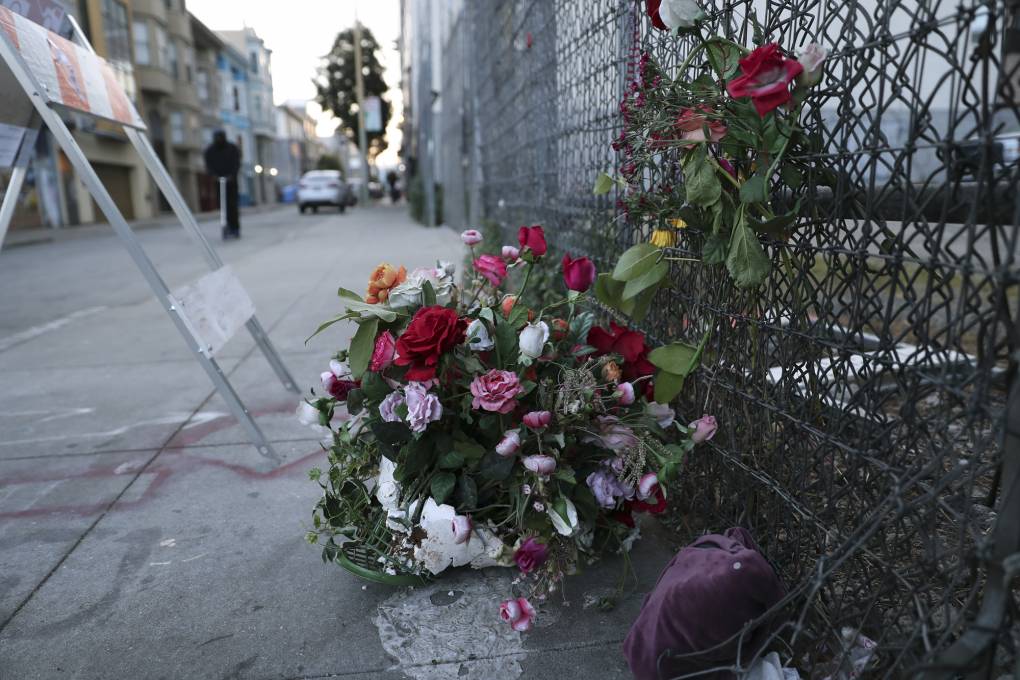
"caption": "Flowers lay on the sidewalk where a 16-year-old girl died from a possible overdose in the SoMa neighborhood of San Francisco on Feb. 20, 2022.",
"description": null,
"title": "teendeath0220",
"credit": "Scott Strazzante/San Francisco Chronicle via Getty Images",
"status": "inherit",
"altTag": "A bouquet of flowers lays on the sidewalk beside a chainlink fence in an urban setting.",
"isLoading": false,
"fetchFailed": false
},
"news_11969878": {
"type": "attachments",
"id": "news_11969878",
"meta": {
"index": "attachments_1716263798",
"site": "news",
"id": "11969878",
"found": true
},
"parent": 11969846,
"imgSizes": {
"twentyfourteen-full-width": {
"file": "https://cdn.kqed.org/wp-content/uploads/sites/10/2023/12/231017-StonecutterSilicosis-002-BL-qut-1038x576.jpg",
"width": 1038,
"mimeType": "image/jpeg",
"height": 576
},
"thumbnail": {
"file": "https://cdn.kqed.org/wp-content/uploads/sites/10/2023/12/231017-StonecutterSilicosis-002-BL-qut-160x107.jpg",
"width": 160,
"mimeType": "image/jpeg",
"height": 107
},
"post-thumbnail": {
"file": "https://cdn.kqed.org/wp-content/uploads/sites/10/2023/12/231017-StonecutterSilicosis-002-BL-qut-672x372.jpg",
"width": 672,
"mimeType": "image/jpeg",
"height": 372
},
"kqedFullSize": {
"file": "https://cdn.kqed.org/wp-content/uploads/sites/10/2023/12/231017-StonecutterSilicosis-002-BL-qut.jpg",
"width": 1920,
"height": 1280
},
"large": {
"file": "https://cdn.kqed.org/wp-content/uploads/sites/10/2023/12/231017-StonecutterSilicosis-002-BL-qut-1020x680.jpg",
"width": 1020,
"mimeType": "image/jpeg",
"height": 680
},
"1536x1536": {
"file": "https://cdn.kqed.org/wp-content/uploads/sites/10/2023/12/231017-StonecutterSilicosis-002-BL-qut-1536x1024.jpg",
"width": 1536,
"mimeType": "image/jpeg",
"height": 1024
},
"medium": {
"file": "https://cdn.kqed.org/wp-content/uploads/sites/10/2023/12/231017-StonecutterSilicosis-002-BL-qut-800x533.jpg",
"width": 800,
"mimeType": "image/jpeg",
"height": 533
}
},
"publishDate": 1702589130,
"modified": 1702589197,
"caption": "Jorge Moreno places his hand on a table that he cut at his home in San Francisco on Oct. 17, 2023.",
"description": null,
"title": "231017-StonecutterSilicosis-002-BL-qut",
"credit": "Beth LaBerge/KQED",
"status": "inherit",
"altTag": "A man's hand is seen resting on a table.",
"isLoading": false,
"fetchFailed": false
},
"news_11965506": {
"type": "attachments",
"id": "news_11965506",
"meta": {
"index": "attachments_1716263798",
"site": "news",
"id": "11965506",
"found": true
},
"parent": 0,
"imgSizes": {
"twentyfourteen-full-width": {
"file": "https://cdn.kqed.org/wp-content/uploads/sites/10/2023/10/231023-DisabilityCareHomes-026-BL-KQED-1038x576.jpg",
"width": 1038,
"mimeType": "image/jpeg",
"height": 576
},
"thumbnail": {
"file": "https://cdn.kqed.org/wp-content/uploads/sites/10/2023/10/231023-DisabilityCareHomes-026-BL-KQED-160x107.jpg",
"width": 160,
"mimeType": "image/jpeg",
"height": 107
},
"post-thumbnail": {
"file": "https://cdn.kqed.org/wp-content/uploads/sites/10/2023/10/231023-DisabilityCareHomes-026-BL-KQED-672x372.jpg",
"width": 672,
"mimeType": "image/jpeg",
"height": 372
},
"kqedFullSize": {
"file": "https://cdn.kqed.org/wp-content/uploads/sites/10/2023/10/231023-DisabilityCareHomes-026-BL-KQED.jpg",
"width": 2000,
"height": 1333
},
"large": {
"file": "https://cdn.kqed.org/wp-content/uploads/sites/10/2023/10/231023-DisabilityCareHomes-026-BL-KQED-1020x680.jpg",
"width": 1020,
"mimeType": "image/jpeg",
"height": 680
},
"1536x1536": {
"file": "https://cdn.kqed.org/wp-content/uploads/sites/10/2023/10/231023-DisabilityCareHomes-026-BL-KQED-1536x1024.jpg",
"width": 1536,
"mimeType": "image/jpeg",
"height": 1024
},
"full-width": {
"file": "https://cdn.kqed.org/wp-content/uploads/sites/10/2023/10/231023-DisabilityCareHomes-026-BL-KQED-1920x1280.jpg",
"width": 1920,
"mimeType": "image/jpeg",
"height": 1280
},
"medium": {
"file": "https://cdn.kqed.org/wp-content/uploads/sites/10/2023/10/231023-DisabilityCareHomes-026-BL-KQED-800x533.jpg",
"width": 800,
"mimeType": "image/jpeg",
"height": 533
}
},
"publishDate": 1698194840,
"modified": 1702336665,
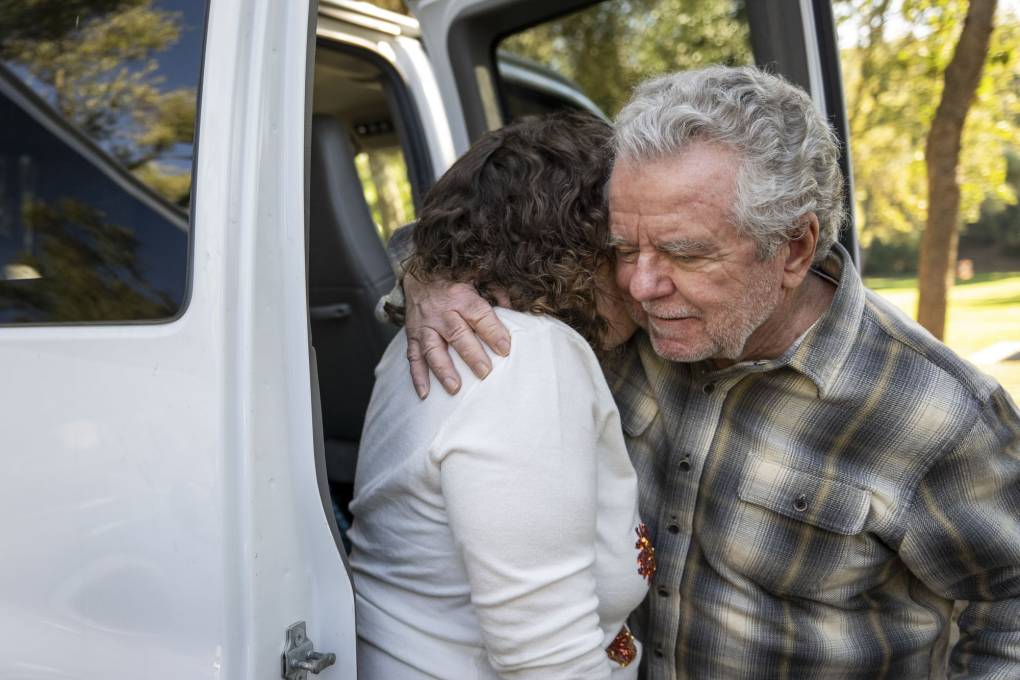
"caption": "Pat Turner hugs his daughter Katrina Turner, who is developmentally disabled and nonverbal, during an outing provided by the care home where she resides near Sacramento, Calif., on Oct. 23, 2023.",
"description": null,
"title": "231023-DisabilityCareHomes-026-BL-KQED",
"credit": "Beth LaBerge/KQED",
"status": "inherit",
"altTag": "Two people hug beside a vehicle.",
"isLoading": false,
"fetchFailed": false
},
"news_11964921": {
"type": "attachments",
"id": "news_11964921",
"meta": {
"index": "attachments_1716263798",
"site": "news",
"id": "11964921",
"found": true
},
"parent": 0,
"imgSizes": {
"twentyfourteen-full-width": {
"file": "https://ww2.kqed.org/app/uploads/sites/10/2023/10/231017-StonecutterSilicosis-016-BL-KQED-1038x576.jpg",
"width": 1038,
"mimeType": "image/jpeg",
"height": 576
},
"thumbnail": {
"file": "https://ww2.kqed.org/app/uploads/sites/10/2023/10/231017-StonecutterSilicosis-016-BL-KQED-160x107.jpg",
"width": 160,
"mimeType": "image/jpeg",
"height": 107
},
"post-thumbnail": {
"file": "https://ww2.kqed.org/app/uploads/sites/10/2023/10/231017-StonecutterSilicosis-016-BL-KQED-672x372.jpg",
"width": 672,
"mimeType": "image/jpeg",
"height": 372
},
"kqedFullSize": {
"file": "https://ww2.kqed.org/app/uploads/sites/10/2023/10/231017-StonecutterSilicosis-016-BL-KQED.jpg",
"width": 2000,
"height": 1333
},
"large": {
"file": "https://ww2.kqed.org/app/uploads/sites/10/2023/10/231017-StonecutterSilicosis-016-BL-KQED-1020x680.jpg",
"width": 1020,
"mimeType": "image/jpeg",
"height": 680
},
"1536x1536": {
"file": "https://ww2.kqed.org/app/uploads/sites/10/2023/10/231017-StonecutterSilicosis-016-BL-KQED-1536x1024.jpg",
"width": 1536,
"mimeType": "image/jpeg",
"height": 1024
},
"full-width": {
"file": "https://ww2.kqed.org/app/uploads/sites/10/2023/10/231017-StonecutterSilicosis-016-BL-KQED-1920x1280.jpg",
"width": 1920,
"mimeType": "image/jpeg",
"height": 1280
},
"medium": {
"file": "https://ww2.kqed.org/app/uploads/sites/10/2023/10/231017-StonecutterSilicosis-016-BL-KQED-800x533.jpg",
"width": 800,
"mimeType": "image/jpeg",
"height": 533
}
},
"publishDate": 1697674642,
"modified": 1697674789,
"caption": "Jorge Moreno sits in his bedroom at his home in San Francisco on Oct. 17, 2023.",
"description": null,
"title": "Jorge Moreno sits in his bedroom at his home in San Francisco on Oct. 17, 2023.",
"credit": "Beth LaBerge/KQED",
"status": "inherit",
"altTag": "A person in a baseball cap sits on a bed in an indoor setting.",
"isLoading": false,
"fetchFailed": false
},
"news_11968843": {
"type": "attachments",
"id": "news_11968843",
"meta": {
"index": "attachments_1716263798",
"site": "news",
"id": "11968843",
"found": true
},
"parent": 11968835,
"imgSizes": {
"twentyfourteen-full-width": {
"file": "https://ww2.kqed.org/app/uploads/sites/10/2023/12/20231108-Alameda-Black-Maternal-Health-021-JY-qut-1038x576.jpg",
"width": 1038,
"mimeType": "image/jpeg",
"height": 576
},
"thumbnail": {
"file": "https://ww2.kqed.org/app/uploads/sites/10/2023/12/20231108-Alameda-Black-Maternal-Health-021-JY-qut-160x107.jpg",
"width": 160,
"mimeType": "image/jpeg",
"height": 107
},
"post-thumbnail": {
"file": "https://ww2.kqed.org/app/uploads/sites/10/2023/12/20231108-Alameda-Black-Maternal-Health-021-JY-qut-672x372.jpg",
"width": 672,
"mimeType": "image/jpeg",
"height": 372
},
"kqedFullSize": {
"file": "https://ww2.kqed.org/app/uploads/sites/10/2023/12/20231108-Alameda-Black-Maternal-Health-021-JY-qut.jpg",
"width": 1920,
"height": 1280
},
"large": {
"file": "https://ww2.kqed.org/app/uploads/sites/10/2023/12/20231108-Alameda-Black-Maternal-Health-021-JY-qut-1020x680.jpg",
"width": 1020,
"mimeType": "image/jpeg",
"height": 680
},
"1536x1536": {
"file": "https://ww2.kqed.org/app/uploads/sites/10/2023/12/20231108-Alameda-Black-Maternal-Health-021-JY-qut-1536x1024.jpg",
"width": 1536,
"mimeType": "image/jpeg",
"height": 1024
},
"medium": {
"file": "https://ww2.kqed.org/app/uploads/sites/10/2023/12/20231108-Alameda-Black-Maternal-Health-021-JY-qut-800x533.jpg",
"width": 800,
"mimeType": "image/jpeg",
"height": 533
}
},
"publishDate": 1701471837,
"modified": 1701471958,
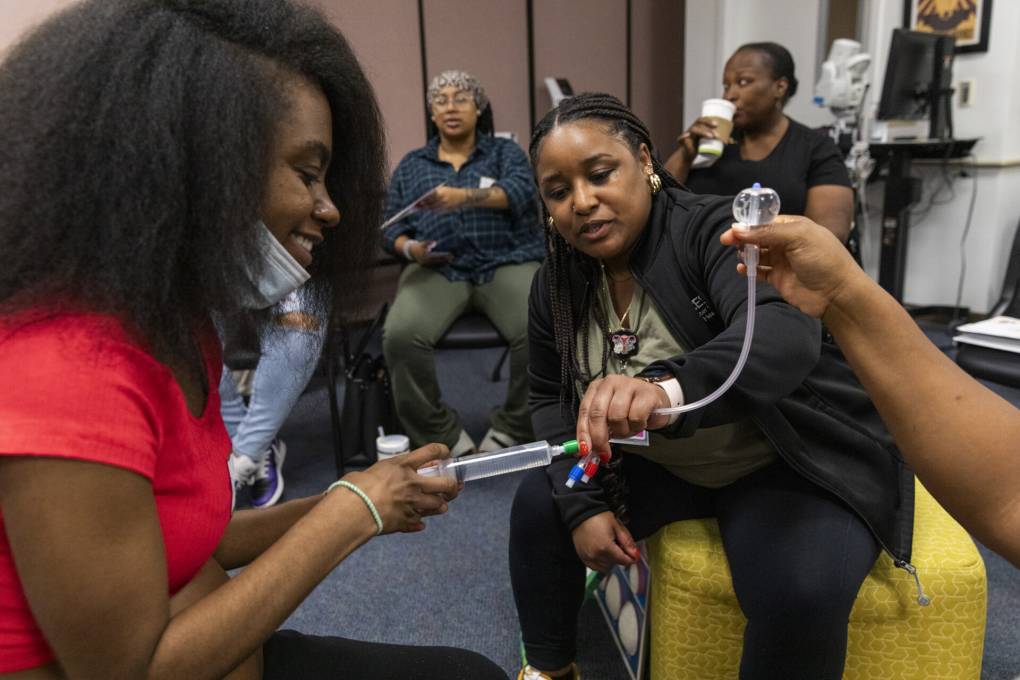
"caption": "Midwife Chantal Davis (right) helps DeAnna Jones (left) fill a balloon catheter with water during a BElovedBIRTH Black Centering group care session for expectant Black mothers at the Alameda Wellness Center in Oakland on Wednesday, Nov. 8, 2023. BElovedBIRTH Black Centering provides group perinatal and postnatal care for Black people from an all-Black health care team, where they get private checkups with a midwife and interactive group activities and discussions.",
"description": null,
"title": "Alameda Black Maternal Health",
"credit": "Juliana Yamada/KQED",
"status": "inherit",
"altTag": "Two African American women in a clinic during a procedure with others looking on in the background.",
"isLoading": false,
"fetchFailed": false
},
"news_11968752": {
"type": "attachments",
"id": "news_11968752",
"meta": {
"index": "attachments_1716263798",
"site": "news",
"id": "11968752",
"found": true
},
"parent": 11968709,
"imgSizes": {
"twentyfourteen-full-width": {
"file": "https://ww2.kqed.org/app/uploads/sites/10/2023/11/GettyImages-1447896208-1038x576.jpg",
"width": 1038,
"mimeType": "image/jpeg",
"height": 576
},
"thumbnail": {
"file": "https://ww2.kqed.org/app/uploads/sites/10/2023/11/GettyImages-1447896208-160x107.jpg",
"width": 160,
"mimeType": "image/jpeg",
"height": 107
},
"post-thumbnail": {
"file": "https://ww2.kqed.org/app/uploads/sites/10/2023/11/GettyImages-1447896208-672x372.jpg",
"width": 672,
"mimeType": "image/jpeg",
"height": 372
},
"kqedFullSize": {
"file": "https://ww2.kqed.org/app/uploads/sites/10/2023/11/GettyImages-1447896208.jpg",
"width": 2121,
"height": 1414
},
"2048x2048": {
"file": "https://ww2.kqed.org/app/uploads/sites/10/2023/11/GettyImages-1447896208-2048x1365.jpg",
"width": 2048,
"mimeType": "image/jpeg",
"height": 1365
},
"large": {
"file": "https://ww2.kqed.org/app/uploads/sites/10/2023/11/GettyImages-1447896208-1020x680.jpg",
"width": 1020,
"mimeType": "image/jpeg",
"height": 680
},
"1536x1536": {
"file": "https://ww2.kqed.org/app/uploads/sites/10/2023/11/GettyImages-1447896208-1536x1024.jpg",
"width": 1536,
"mimeType": "image/jpeg",
"height": 1024
},
"full-width": {
"file": "https://ww2.kqed.org/app/uploads/sites/10/2023/11/GettyImages-1447896208-1920x1280.jpg",
"width": 1920,
"mimeType": "image/jpeg",
"height": 1280
},
"medium": {
"file": "https://ww2.kqed.org/app/uploads/sites/10/2023/11/GettyImages-1447896208-800x533.jpg",
"width": 800,
"mimeType": "image/jpeg",
"height": 533
}
},
"publishDate": 1701391869,
"modified": 1701458942,
"caption": "Bottles of vaccine for influenza, Respiratory Syncytial Virus (RSV) and COVID-19.",
"description": null,
"title": "Flu, RSV and Sars-cov-2 Coronavirus vaccine vials in the medical clinic over Radiography pulmonar",
"credit": "Getty Images",
"status": "inherit",
"altTag": "Three vaccine bottles - labeled 'RSV,' 'COVID-19' and 'Flu' sit next to a syringe and stethoscope on a medical table.",
"isLoading": false,
"fetchFailed": false
},
"news_11967664": {
"type": "attachments",
"id": "news_11967664",
"meta": {
"index": "attachments_1716263798",
"site": "news",
"id": "11967664",
"found": true
},
"parent": 0,
"imgSizes": {
"twentyfourteen-full-width": {
"file": "https://cdn.kqed.org/wp-content/uploads/sites/10/2023/11/230831-SAFE-USE-POP-UP-MD-06-qut-1038x576.jpg",
"width": 1038,
"mimeType": "image/jpeg",
"height": 576
},
"thumbnail": {
"file": "https://cdn.kqed.org/wp-content/uploads/sites/10/2023/11/230831-SAFE-USE-POP-UP-MD-06-qut-160x107.jpg",
"width": 160,
"mimeType": "image/jpeg",
"height": 107
},
"post-thumbnail": {
"file": "https://cdn.kqed.org/wp-content/uploads/sites/10/2023/11/230831-SAFE-USE-POP-UP-MD-06-qut-672x372.jpg",
"width": 672,
"mimeType": "image/jpeg",
"height": 372
},
"kqedFullSize": {
"file": "https://cdn.kqed.org/wp-content/uploads/sites/10/2023/11/230831-SAFE-USE-POP-UP-MD-06-qut.jpg",
"width": 1920,
"height": 1280
},
"large": {
"file": "https://cdn.kqed.org/wp-content/uploads/sites/10/2023/11/230831-SAFE-USE-POP-UP-MD-06-qut-1020x680.jpg",
"width": 1020,
"mimeType": "image/jpeg",
"height": 680
},
"1536x1536": {
"file": "https://cdn.kqed.org/wp-content/uploads/sites/10/2023/11/230831-SAFE-USE-POP-UP-MD-06-qut-1536x1024.jpg",
"width": 1536,
"mimeType": "image/jpeg",
"height": 1024
},
"medium": {
"file": "https://cdn.kqed.org/wp-content/uploads/sites/10/2023/11/230831-SAFE-USE-POP-UP-MD-06-qut-800x533.jpg",
"width": 800,
"mimeType": "image/jpeg",
"height": 533
}
},
"publishDate": 1700169861,
"modified": 1705541658,
"caption": "A street memorial for people who recently died of drug overdoses is displayed outside of a supervised drug use pop-up site in San Francisco on Aug. 31, 2023.",
"description": null,
"title": "230831-SAFE USE POP UP-MD-06-qut",
"credit": "Martin do Nascimento/KQED",
"status": "inherit",
"altTag": "Names written in chalk appear on the sidewalk in memorial. Candles are also placed on a mat. Packs of chalk are scattered on the ground. The names \"Bobby,\" Connor,\" and \"Steven\" can be seen.",
"isLoading": false,
"fetchFailed": false
},
"news_11967147": {
"type": "attachments",
"id": "news_11967147",
"meta": {
"index": "attachments_1716263798",
"site": "news",
"id": "11967147",
"found": true
},
"parent": 11967144,
"imgSizes": {
"twentyfourteen-full-width": {
"file": "https://ww2.kqed.org/app/uploads/sites/10/2023/11/103123-UC-Davis-Health-Sacramento-MG-CM-01-1038x576.jpeg",
"width": 1038,
"mimeType": "image/jpeg",
"height": 576
},
"thumbnail": {
"file": "https://ww2.kqed.org/app/uploads/sites/10/2023/11/103123-UC-Davis-Health-Sacramento-MG-CM-01-160x107.jpeg",
"width": 160,
"mimeType": "image/jpeg",
"height": 107
},
"post-thumbnail": {
"file": "https://ww2.kqed.org/app/uploads/sites/10/2023/11/103123-UC-Davis-Health-Sacramento-MG-CM-01-672x372.jpeg",
"width": 672,
"mimeType": "image/jpeg",
"height": 372
},
"kqedFullSize": {
"file": "https://ww2.kqed.org/app/uploads/sites/10/2023/11/103123-UC-Davis-Health-Sacramento-MG-CM-01.jpeg",
"width": 2000,
"height": 1333
},
"large": {
"file": "https://ww2.kqed.org/app/uploads/sites/10/2023/11/103123-UC-Davis-Health-Sacramento-MG-CM-01-1020x680.jpeg",
"width": 1020,
"mimeType": "image/jpeg",
"height": 680
},
"1536x1536": {
"file": "https://ww2.kqed.org/app/uploads/sites/10/2023/11/103123-UC-Davis-Health-Sacramento-MG-CM-01-1536x1024.jpeg",
"width": 1536,
"mimeType": "image/jpeg",
"height": 1024
},
"full-width": {
"file": "https://ww2.kqed.org/app/uploads/sites/10/2023/11/103123-UC-Davis-Health-Sacramento-MG-CM-01-1920x1280.jpeg",
"width": 1920,
"mimeType": "image/jpeg",
"height": 1280
},
"medium": {
"file": "https://ww2.kqed.org/app/uploads/sites/10/2023/11/103123-UC-Davis-Health-Sacramento-MG-CM-01-800x533.jpeg",
"width": 800,
"mimeType": "image/jpeg",
"height": 533
}
},
"publishDate": 1699905756,
"modified": 1699905832,
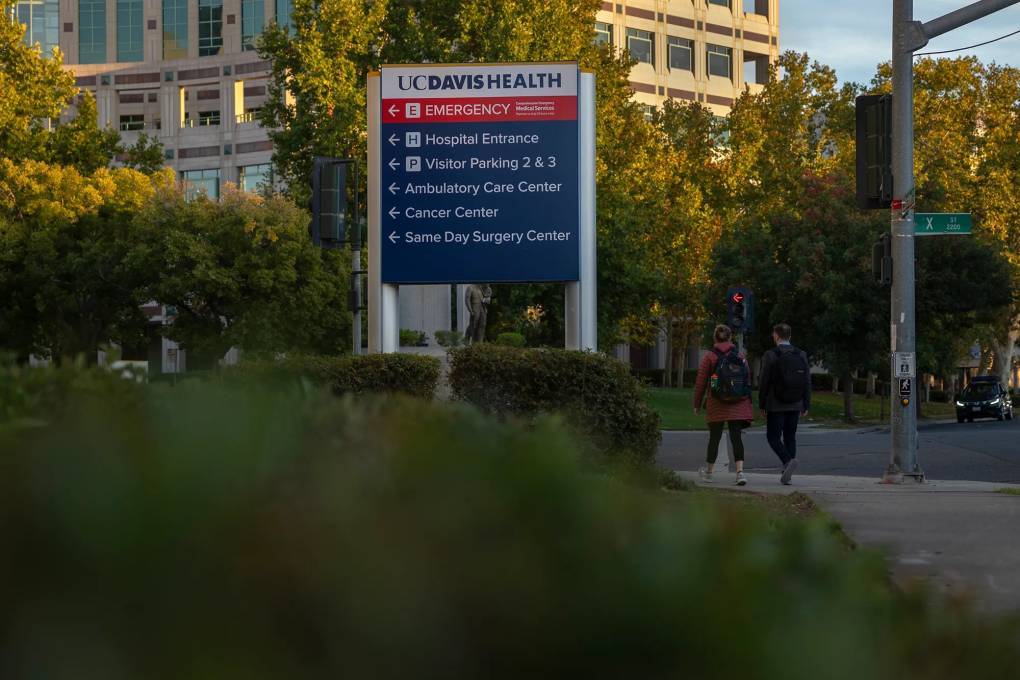
"caption": "The UC Davis Health campus in Sacramento on Oct. 13, 2023.",
"description": null,
"title": "103123-UC-Davis-Health-Sacramento-MG-CM-01",
"credit": "Miguel Gutierrez Jr./CalMatters",
"status": "inherit",
"altTag": "Two people walk past a sign that says 'UC Davis Health' - with a large hospital in the background.",
"isLoading": false,
"fetchFailed": false
},
"news_11966640": {
"type": "attachments",
"id": "news_11966640",
"meta": {
"index": "attachments_1716263798",
"site": "news",
"id": "11966640",
"found": true
},
"title": "Los Angeles Department of Public Health, The People Concern, vaccination clinic.",
"publishDate": 1699385423,
"status": "inherit",
"parent": 11966587,
"modified": 1723747487,
"caption": "A registered nurse with the Los Angeles Department of Public Health administers a COVID-19 vaccination at the Village Mental Health Services in Los Angeles in August 2022. ",
"credit": "Christina House/Los Angeles Times via Getty Images",
"altTag": "A person wearing a mask and latex gloves administers a shot in another person's arm.",
"description": null,
"imgSizes": {
"medium": {
"file": "https://cdn.kqed.org/wp-content/uploads/sites/10/2023/11/GettyImages-1242749971-qut-800x531.jpg",
"width": 800,
"height": 531,
"mimeType": "image/jpeg"
},
"large": {
"file": "https://cdn.kqed.org/wp-content/uploads/sites/10/2023/11/GettyImages-1242749971-qut-1020x677.jpg",
"width": 1020,
"height": 677,
"mimeType": "image/jpeg"
},
"thumbnail": {
"file": "https://cdn.kqed.org/wp-content/uploads/sites/10/2023/11/GettyImages-1242749971-qut-160x106.jpg",
"width": 160,
"height": 106,
"mimeType": "image/jpeg"
},
"1536x1536": {
"file": "https://cdn.kqed.org/wp-content/uploads/sites/10/2023/11/GettyImages-1242749971-qut-1536x1019.jpg",
"width": 1536,
"height": 1019,
"mimeType": "image/jpeg"
},
"post-thumbnail": {
"file": "https://cdn.kqed.org/wp-content/uploads/sites/10/2023/11/GettyImages-1242749971-qut-672x372.jpg",
"width": 672,
"height": 372,
"mimeType": "image/jpeg"
},
"twentyfourteen-full-width": {
"file": "https://cdn.kqed.org/wp-content/uploads/sites/10/2023/11/GettyImages-1242749971-qut-1038x576.jpg",
"width": 1038,
"height": 576,
"mimeType": "image/jpeg"
},
"kqedFullSize": {
"file": "https://cdn.kqed.org/wp-content/uploads/sites/10/2023/11/GettyImages-1242749971-qut.jpg",
"width": 1920,
"height": 1274
}
},
"isLoading": false,
"fetchFailed": false
},
"news_11966539": {
"type": "attachments",
"id": "news_11966539",
"meta": {
"index": "attachments_1716263798",
"site": "news",
"id": "11966539",
"found": true
},
"parent": 0,
"imgSizes": {
"twentyfourteen-full-width": {
"file": "https://ww2.kqed.org/app/uploads/sites/10/2023/11/CM01-1038x576.jpg",
"width": 1038,
"mimeType": "image/jpeg",
"height": 576
},
"thumbnail": {
"file": "https://ww2.kqed.org/app/uploads/sites/10/2023/11/CM01-160x107.jpg",
"width": 160,
"mimeType": "image/jpeg",
"height": 107
},
"post-thumbnail": {
"file": "https://ww2.kqed.org/app/uploads/sites/10/2023/11/CM01-672x372.jpg",
"width": 672,
"mimeType": "image/jpeg",
"height": 372
},
"kqedFullSize": {
"file": "https://ww2.kqed.org/app/uploads/sites/10/2023/11/CM01.jpg",
"width": 2000,
"height": 1334
},
"large": {
"file": "https://ww2.kqed.org/app/uploads/sites/10/2023/11/CM01-1020x680.jpg",
"width": 1020,
"mimeType": "image/jpeg",
"height": 680
},
"1536x1536": {
"file": "https://ww2.kqed.org/app/uploads/sites/10/2023/11/CM01-1536x1025.jpg",
"width": 1536,
"mimeType": "image/jpeg",
"height": 1025
},
"full-width": {
"file": "https://ww2.kqed.org/app/uploads/sites/10/2023/11/CM01-1920x1281.jpg",
"width": 1920,
"mimeType": "image/jpeg",
"height": 1281
},
"medium": {
"file": "https://ww2.kqed.org/app/uploads/sites/10/2023/11/CM01-800x534.jpg",
"width": 800,
"mimeType": "image/jpeg",
"height": 534
}
},
"publishDate": 1699298870,
"modified": 1699303597,
"caption": "Army veteran Latoya White at her home on Treasure Island in San Francisco on Oct. 24, 2023. A third of the nation’s homeless veterans live in California, where the state has spent several billion dollars creating more housing specifically for former military service members since 9/11.",
"description": null,
"title": "CM01",
"credit": "Loren Elliott/CalMatters",
"status": "inherit",
"altTag": "A woman stands near a cement walk, looking serious. She wears a gray, zip-up jacket that says the word, \"Army.\" Trees are behind her and a parking lot.",
"isLoading": false,
"fetchFailed": false
},
"news_11903117": {
"type": "attachments",
"id": "news_11903117",
"meta": {
"index": "attachments_1716263798",
"site": "news",
"id": "11903117",
"found": true
},
"parent": 11902998,
"imgSizes": {
"twentyfourteen-full-width": {
"file": "https://ww2.kqed.org/app/uploads/sites/10/2022/01/194146336_326107285562520_8338172634866005523_n-1038x576.jpg",
"width": 1038,
"mimeType": "image/jpeg",
"height": 576
},
"thumbnail": {
"file": "https://ww2.kqed.org/app/uploads/sites/10/2022/01/194146336_326107285562520_8338172634866005523_n-160x120.jpg",
"width": 160,
"mimeType": "image/jpeg",
"height": 120
},
"post-thumbnail": {
"file": "https://ww2.kqed.org/app/uploads/sites/10/2022/01/194146336_326107285562520_8338172634866005523_n-672x372.jpg",
"width": 672,
"mimeType": "image/jpeg",
"height": 372
},
"kqedFullSize": {
"file": "https://ww2.kqed.org/app/uploads/sites/10/2022/01/194146336_326107285562520_8338172634866005523_n-scaled.jpg",
"width": 2560,
"height": 1920
},
"2048x2048": {
"file": "https://ww2.kqed.org/app/uploads/sites/10/2022/01/194146336_326107285562520_8338172634866005523_n-2048x1536.jpg",
"width": 2048,
"mimeType": "image/jpeg",
"height": 1536
},
"large": {
"file": "https://ww2.kqed.org/app/uploads/sites/10/2022/01/194146336_326107285562520_8338172634866005523_n-1020x765.jpg",
"width": 1020,
"mimeType": "image/jpeg",
"height": 765
},
"1536x1536": {
"file": "https://ww2.kqed.org/app/uploads/sites/10/2022/01/194146336_326107285562520_8338172634866005523_n-1536x1152.jpg",
"width": 1536,
"mimeType": "image/jpeg",
"height": 1152
},
"full-width": {
"file": "https://ww2.kqed.org/app/uploads/sites/10/2022/01/194146336_326107285562520_8338172634866005523_n-1920x1440.jpg",
"width": 1920,
"mimeType": "image/jpeg",
"height": 1440
},
"medium": {
"file": "https://ww2.kqed.org/app/uploads/sites/10/2022/01/194146336_326107285562520_8338172634866005523_n-800x600.jpg",
"width": 800,
"mimeType": "image/jpeg",
"height": 600
}
},
"publishDate": 1643394827,
"modified": 1643403729,
"caption": "Rev. Jim Mitulski at Lake Merritt in Oakland in 2021.",
"description": null,
"title": "194146336_326107285562520_8338172634866005523_n",
"credit": "Courtesy of Todd Atkins-Whitley",
"status": "inherit",
"altTag": "A man sitting outside on a chair by a lake.",
"isLoading": false,
"fetchFailed": false
},
"news_11965426": {
"type": "attachments",
"id": "news_11965426",
"meta": {
"index": "attachments_1716263798",
"site": "news",
"id": "11965426",
"found": true
},
"title": "231022-AIDSMemorialGrove-034-BL-KQED",
"publishDate": 1698176040,
"status": "inherit",
"parent": 12043893,
"modified": 1749752323,
"caption": "Catalina O'Connor and Zoe Huey rehearse for the Bay Curious National AIDS Memorial Walking Tour in the National AIDS Memorial Grove in Golden Gate Park in San Francisco on Oct. 22, 2023.",
"credit": "Beth LaBerge/KQED",
"altTag": "Two people hold each other, appearing to be dancing, in a wooded area.",
"description": null,
"imgSizes": {
"medium": {
"file": "https://cdn.kqed.org/wp-content/uploads/sites/10/2023/10/231022-AIDSMemorialGrove-034-BL-KQED-800x533.jpg",
"width": 800,
"height": 533,
"mimeType": "image/jpeg"
},
"large": {
"file": "https://cdn.kqed.org/wp-content/uploads/sites/10/2023/10/231022-AIDSMemorialGrove-034-BL-KQED-1020x680.jpg",
"width": 1020,
"height": 680,
"mimeType": "image/jpeg"
},
"thumbnail": {
"file": "https://cdn.kqed.org/wp-content/uploads/sites/10/2023/10/231022-AIDSMemorialGrove-034-BL-KQED-160x107.jpg",
"width": 160,
"height": 107,
"mimeType": "image/jpeg"
},
"1536x1536": {
"file": "https://cdn.kqed.org/wp-content/uploads/sites/10/2023/10/231022-AIDSMemorialGrove-034-BL-KQED-1536x1024.jpg",
"width": 1536,
"height": 1024,
"mimeType": "image/jpeg"
},
"post-thumbnail": {
"file": "https://cdn.kqed.org/wp-content/uploads/sites/10/2023/10/231022-AIDSMemorialGrove-034-BL-KQED-672x372.jpg",
"width": 672,
"height": 372,
"mimeType": "image/jpeg"
},
"twentyfourteen-full-width": {
"file": "https://cdn.kqed.org/wp-content/uploads/sites/10/2023/10/231022-AIDSMemorialGrove-034-BL-KQED-1038x576.jpg",
"width": 1038,
"height": 576,
"mimeType": "image/jpeg"
},
"full-width": {
"file": "https://cdn.kqed.org/wp-content/uploads/sites/10/2023/10/231022-AIDSMemorialGrove-034-BL-KQED-1920x1280.jpg",
"width": 1920,
"height": 1280,
"mimeType": "image/jpeg"
},
"kqedFullSize": {
"file": "https://cdn.kqed.org/wp-content/uploads/sites/10/2023/10/231022-AIDSMemorialGrove-034-BL-KQED.jpg",
"width": 2000,
"height": 1333
}
},
"isLoading": false,
"fetchFailed": false
}
},
"audioPlayerReducer": {
"postId": "stream_live",
"isPaused": true,
"isPlaying": false,
"pfsActive": false,
"pledgeModalIsOpen": true,
"playerDrawerIsOpen": false,
"liveAudioPlayStartedAt": 0,
"liveAudioPlayContext": ""
},
"authorsReducer": {
"byline_news_11967144": {
"type": "authors",
"id": "byline_news_11967144",
"meta": {
"override": true
},
"slug": "byline_news_11967144",
"name": "\u003ca href=\"https://calmatters.org/author/shreya-agrawal/\">Shreya Agrawal\u003c/a>",
"isLoading": false
},
"byline_news_11966533": {
"type": "authors",
"id": "byline_news_11966533",
"meta": {
"override": true
},
"slug": "byline_news_11966533",
"name": "\u003ca href=\"https://calmatters.org/author/shreya-agrawal/\">Shreya Agrawal\u003c/a>",
"isLoading": false
},
"byline_news_11965937": {
"type": "authors",
"id": "byline_news_11965937",
"meta": {
"override": true
},
"slug": "byline_news_11965937",
"name": "María Fernanda Bernal",
"isLoading": false
},
"carlysevern": {
"type": "authors",
"id": "3243",
"meta": {
"index": "authors_1716337520",
"id": "3243",
"found": true
},
"name": "Carly Severn",
"firstName": "Carly",
"lastName": "Severn",
"slug": "carlysevern",
"email": "csevern@kqed.org",
"display_author_email": false,
"staff_mastheads": [
"news"
],
"title": "Senior Editor, Audience News ",
"bio": "Carly is KQED's Senior Editor of Audience News on the Digital News team, and has reported for the California Report Magazine, Bay Curious and KQED Arts. She's formerly the host of \u003ca href=\"http://ww2.kqed.org/pop/category/the-cooler/\" rel=\"noopener noreferrer\">The Cooler\u003c/a> podcast.",
"avatar": "https://secure.gravatar.com/avatar/54037bf5c128fe678f0ef26cec97a93f2e7f220a22d7285703328f12c42c1b1d?s=600&d=blank&r=g",
"twitter": "teacupinthebay",
"bluesky": null,
"facebook": null,
"instagram": null,
"linkedin": null,
"sites": [
{
"site": "",
"roles": [
"editor"
]
},
{
"site": "arts",
"roles": [
"editor"
]
},
{
"site": "news",
"roles": [
"administrator"
]
},
{
"site": "pop",
"roles": [
"editor"
]
},
{
"site": "futureofyou",
"roles": [
"editor"
]
},
{
"site": "about",
"roles": [
"administrator"
]
},
{
"site": "mindshift",
"roles": [
"editor"
]
},
{
"site": "bayareabites",
"roles": [
"editor"
]
},
{
"site": "stateofhealth",
"roles": [
"editor"
]
},
{
"site": "science",
"roles": [
"editor"
]
},
{
"site": "food",
"roles": [
"contributor"
]
},
{
"site": "forum",
"roles": [
"editor"
]
},
{
"site": "perspectives",
"roles": [
"administrator"
]
},
{
"site": "liveblog",
"roles": [
"editor"
]
}
],
"headData": {
"title": "Carly Severn | KQED",
"description": "Senior Editor, Audience News ",
"ogImgSrc": "https://secure.gravatar.com/avatar/54037bf5c128fe678f0ef26cec97a93f2e7f220a22d7285703328f12c42c1b1d?s=600&d=blank&r=g",
"twImgSrc": "https://secure.gravatar.com/avatar/54037bf5c128fe678f0ef26cec97a93f2e7f220a22d7285703328f12c42c1b1d?s=600&d=blank&r=g"
},
"isLoading": false,
"link": "/author/carlysevern"
},
"afont": {
"type": "authors",
"id": "8637",
"meta": {
"index": "authors_1716337520",
"id": "8637",
"found": true
},
"name": "Amanda Font",
"firstName": "Amanda",
"lastName": "Font",
"slug": "afont",
"email": "afont@kqed.org",
"display_author_email": false,
"staff_mastheads": [],
"title": "KQED Contributor",
"bio": "Amanda Font is a producer on \u003cem>The Latest\u003c/em> podcast, and the host and co-producer of the series \u003cem>Audible Cosmos\u003c/em>. She has previously worked as a producer and reporter on the \u003cem>Bay Curious\u003c/em> podcast, and director of \u003cem>The California Report Magazine\u003c/em>. She grew up in the deserts of Southern California and moved north for the trees. Amanda earned a B.A. from the BECA program at San Francisco State, where she worked in the university's radio station. Amanda Font is represented by SAG-AFTRA.",
"avatar": "https://secure.gravatar.com/avatar/d9e81cf0117d5849b9cfb7ab4b1422f1?s=600&d=blank&r=g",
"twitter": null,
"facebook": null,
"instagram": null,
"linkedin": null,
"sites": [
{
"site": "news",
"roles": [
"add_users",
"create_users"
]
},
{
"site": "science",
"roles": []
},
{
"site": "forum",
"roles": [
"administrator"
]
},
{
"site": "perspectives",
"roles": [
"administrator"
]
},
{
"site": "radio",
"roles": [
"administrator"
]
}
],
"headData": {
"title": "Amanda Font | KQED",
"description": "KQED Contributor",
"ogImgSrc": "https://secure.gravatar.com/avatar/d9e81cf0117d5849b9cfb7ab4b1422f1?s=600&d=blank&r=g",
"twImgSrc": "https://secure.gravatar.com/avatar/d9e81cf0117d5849b9cfb7ab4b1422f1?s=600&d=blank&r=g"
},
"isLoading": false,
"link": "/author/afont"
},
"fjhabvala": {
"type": "authors",
"id": "8659",
"meta": {
"index": "authors_1716337520",
"id": "8659",
"found": true
},
"name": "Farida Jhabvala Romero",
"firstName": "Farida",
"lastName": "Jhabvala Romero",
"slug": "fjhabvala",
"email": "fjhabvala@kqed.org",
"display_author_email": true,
"staff_mastheads": [
"news"
],
"title": "KQED Contributor",
"bio": "Farida Jhabvala Romero is a Labor Correspondent for KQED. She previously covered immigration. Farida was \u003ca href=\"https://www.ccnma.org/2022-most-influential-latina-journalists\">named\u003c/a> one of the 10 Most Influential Latina Journalists in California in 2022 by the California Chicano News Media Association. Her work has won awards from the Society of Professional Journalists (Northern California), as well as a national and regional Edward M. Murrow Award for the collaborative reporting projects “Dangerous Air” and “Graying California.” Before joining KQED, Farida worked as a producer at Radio Bilingüe, a national public radio network. Farida earned her master’s degree in journalism from Stanford University.",
"avatar": "https://secure.gravatar.com/avatar/f9f022d4e2609741874222a1e9d41f48fea74011aa7c615eef91d9a50c944ebe?s=600&d=blank&r=g",
"twitter": "FaridaJhabvala",
"bluesky": null,
"facebook": null,
"instagram": null,
"linkedin": "https://www.linkedin.com/in/faridajhabvala/",
"sites": [
{
"site": "news",
"roles": [
"editor"
]
},
{
"site": "stateofhealth",
"roles": [
"author"
]
},
{
"site": "liveblog",
"roles": [
"author"
]
}
],
"headData": {
"title": "Farida Jhabvala Romero | KQED",
"description": "KQED Contributor",
"ogImgSrc": "https://secure.gravatar.com/avatar/f9f022d4e2609741874222a1e9d41f48fea74011aa7c615eef91d9a50c944ebe?s=600&d=blank&r=g",
"twImgSrc": "https://secure.gravatar.com/avatar/f9f022d4e2609741874222a1e9d41f48fea74011aa7c615eef91d9a50c944ebe?s=600&d=blank&r=g"
},
"isLoading": false,
"link": "/author/fjhabvala"
},
"daisynguyen": {
"type": "authors",
"id": "11829",
"meta": {
"index": "authors_1716337520",
"id": "11829",
"found": true
},
"name": "Daisy Nguyen",
"firstName": "Daisy",
"lastName": "Nguyen",
"slug": "daisynguyen",
"email": "daisynguyen@kqed.org",
"display_author_email": true,
"staff_mastheads": [
"news"
],
"title": "KQED Contributor",
"bio": "I have covered early childhood education and child care for KQED since 2022. I focus on policies aimed at increasing access to early care and education and how they shape individual lives. I've been a journalist for more than two decades, with most of that time devoted to covering breaking news throughout California for The Associated Press. I grew up in San Francisco and studied at UC Davis and Columbia University's Graduate School of Journalism. I live in Oakland with my husband and two kids.",
"avatar": "https://secure.gravatar.com/avatar/2da2127c27f7143b53ebd419800fd55f?s=600&d=blank&r=g",
"twitter": null,
"facebook": null,
"instagram": null,
"linkedin": "https://www.linkedin.com/in/daisynguyen/",
"sites": [
{
"site": "news",
"roles": [
"author"
]
},
{
"site": "liveblog",
"roles": [
"author"
]
}
],
"headData": {
"title": "Daisy Nguyen | KQED",
"description": "KQED Contributor",
"ogImgSrc": "https://secure.gravatar.com/avatar/2da2127c27f7143b53ebd419800fd55f?s=600&d=blank&r=g",
"twImgSrc": "https://secure.gravatar.com/avatar/2da2127c27f7143b53ebd419800fd55f?s=600&d=blank&r=g"
},
"isLoading": false,
"link": "/author/daisynguyen"
},
"sjohnson": {
"type": "authors",
"id": "11840",
"meta": {
"index": "authors_1716337520",
"id": "11840",
"found": true
},
"name": "Sydney Johnson",
"firstName": "Sydney",
"lastName": "Johnson",
"slug": "sjohnson",
"email": "sjohnson@kqed.org",
"display_author_email": false,
"staff_mastheads": [
"news"
],
"title": "KQED Reporter",
"bio": "Sydney Johnson is a general assignment reporter at KQED. She previously reported on public health and city government at the San Francisco Examiner, and before that, she covered statewide education policy for EdSource. Her reporting has won multiple local, state and national awards. Sydney is a graduate of the University of California, Berkeley and lives in San Francisco.",
"avatar": "https://secure.gravatar.com/avatar/97855f2719b72ad6190b7c535fe642c8?s=600&d=blank&r=g",
"twitter": "sydneyfjohnson",
"facebook": null,
"instagram": null,
"linkedin": null,
"sites": [
{
"site": "news",
"roles": [
"editor"
]
}
],
"headData": {
"title": "Sydney Johnson | KQED",
"description": "KQED Reporter",
"ogImgSrc": "https://secure.gravatar.com/avatar/97855f2719b72ad6190b7c535fe642c8?s=600&d=blank&r=g",
"twImgSrc": "https://secure.gravatar.com/avatar/97855f2719b72ad6190b7c535fe642c8?s=600&d=blank&r=g"
},
"isLoading": false,
"link": "/author/sjohnson"
},
"cegusa": {
"type": "authors",
"id": "11869",
"meta": {
"index": "authors_1716337520",
"id": "11869",
"found": true
},
"name": "Chris Egusa",
"firstName": "Chris",
"lastName": "Egusa",
"slug": "cegusa",
"email": "cegusa@kqed.org",
"display_author_email": false,
"staff_mastheads": [],
"title": "KQED Contributor",
"bio": null,
"avatar": "https://secure.gravatar.com/avatar/3562ed52747313a4c94017da88ea89f9e85cd901f63ebc056a7d5e0adf4a03da?s=600&d=blank&r=g",
"twitter": null,
"bluesky": null,
"facebook": null,
"instagram": null,
"linkedin": null,
"sites": [
{
"site": "arts",
"roles": [
"editor"
]
},
{
"site": "news",
"roles": [
"editor"
]
}
],
"headData": {
"title": "Chris Egusa | KQED",
"description": "KQED Contributor",
"ogImgSrc": "https://secure.gravatar.com/avatar/3562ed52747313a4c94017da88ea89f9e85cd901f63ebc056a7d5e0adf4a03da?s=600&d=blank&r=g",
"twImgSrc": "https://secure.gravatar.com/avatar/3562ed52747313a4c94017da88ea89f9e85cd901f63ebc056a7d5e0adf4a03da?s=600&d=blank&r=g"
},
"isLoading": false,
"link": "/author/cegusa"
}
},
"pagesReducer": {
"news_tag_health": {
"type": "terms",
"id": "news_18543",
"meta": {
"index": "terms_1716263798",
"site": "news",
"id": "18543",
"score": 6.886659
},
"featImg": null,
"name": "Health",
"description": null,
"taxonomy": "tag",
"headData": {
"twImgId": null,
"twTitle": null,
"ogTitle": null,
"ogImgId": null,
"twDescription": null,
"description": null,
"title": "Health Archives | KQED News",
"ogDescription": null
},
"ttid": 466,
"slug": "health",
"isLoading": false,
"title": "Health",
"pageMeta": {
"site": "news",
"WpPageTemplate": "page-topic-editorial",
"currentPage": 40
},
"blocks": [
{
"blockName": "kqed/post-list",
"attrs": {
"layout": "cardArticle2",
"query": "posts/news?tag=health",
"seeMore": false,
"paginated": true,
"page": 40
}
},
{
"blockName": "kqed/ad"
}
]
}
},
"pfsSessionReducer": {},
"postsReducer": {
"stream_live": {
"type": "live",
"id": "stream_live",
"audioUrl": "https://streams.kqed.org/kqedradio",
"title": "Live Stream",
"excerpt": "Live Stream information currently unavailable.",
"link": "/radio",
"featImg": "",
"label": {
"name": "KQED Live",
"link": "/"
}
},
"stream_kqedNewscast": {
"type": "posts",
"id": "stream_kqedNewscast",
"audioUrl": "https://www.kqed.org/.stream/anon/radio/RDnews/newscast.mp3?_=1",
"title": "KQED Newscast",
"featImg": "",
"label": {
"name": "88.5 FM",
"link": "/"
}
},
"news_11969903": {
"type": "posts",
"id": "news_11969903",
"meta": {
"index": "posts_1716263798",
"site": "news",
"id": "11969903",
"score": null,
"sort": [
1702648816000
]
},
"guestAuthors": [],
"slug": "overdose-deaths-in-san-francisco-eclipse-grim-pandemic-milestone",
"title": "Overdose Deaths in San Francisco Eclipse Grim Pandemic Milestone",
"publishDate": 1702648816,
"format": "standard",
"headTitle": "Overdose Deaths in San Francisco Eclipse Grim Pandemic Milestone | KQED",
"labelTerm": {
"site": "news"
},
"content": "\u003cp>As the number of overdose deaths in San Francisco \u003ca href=\"https://www.kqed.org/news/11967618/san-francisco-projected-to-reach-highest-overdose-death-toll-in-2023\">surpasses previous years\u003c/a>, city officials are expanding wastewater testing for fentanyl and other substances to better inform public health responses.\u003c/p>\n\u003cp>The Department of Public Health on Thursday announced its wastewater analysis plan, the same day that the Office of the Medical Examiner released its latest dataset showing that there have been more overdose deaths in San Francisco this year than in previous years. [pullquote size=\"medium\" align=\"right\" citation=\"Dr. Hillary Kunins, director of behavioral health services, San Francisco Department of Public Health\"]‘Data from wastewater testing will help provide information about the presence of risky substances in San Francisco and prompt more strategic interventions aimed at saving lives.’[/pullquote]There were 752 overdose deaths in San Francisco from January to November 2023, preliminary data from the medical examiner shows. In 2020, the worst year on record previously, there were 726 overdose deaths.\u003c/p>\n\u003cp>“We need all the tools available to identify the presence of substances that may be used to halt and reverse this deadly epidemic,” said Dr. Hillary Kunins, director of behavioral health services at SFDPH. “Data from wastewater testing will help provide information about the presence of risky substances in San Francisco and prompt more strategic interventions aimed at saving lives.”\u003c/p>\n\u003cp>Fentanyl, an opioid about 50 times stronger than heroin, is the most common substance associated with the recent spike in overdose deaths in San Francisco and across other major West Coast cities. It is commonly used in surgical settings under medical supervision.\u003c/p>\n\u003cp>[ad fullwidth]\u003c/p>\n\u003cp>The city will also be monitoring wastewater for levels of methamphetamine, amphetamine, cocaine and xylazine, which have been used in combination with fentanyl in some overdoses and also naloxone, a fast-acting opioid overdose reversal medicine.\u003c/p>\n\u003cp>San Francisco is among 70 different U.S. regions working with the National Institute on Drug Abuse to measure the presence of the substances through wastewater testing. [pullquote size=\"medium\" align=\"right\" citation=\"Jeffrey Hom, director of population behavioral health, San Francisco\"]‘Elevated levels of drugs and drug metabolites could be used to predict higher risk periods of overdose and could prompt interventions by the city.’[/pullquote]The idea is to have better foresight into what substances are present in the illicit drug supply and to direct public health resources in response.\u003c/p>\n\u003cp>“There is no other way for us to understand, at a population level, what all the different drugs being consumed are,” said Jeffrey Hom, director of population behavioral health for San Francisco, at a press conference on Thursday. “Elevated levels of drugs and drug metabolites could be used to predict higher risk periods of overdose and could prompt interventions by the city.”\u003c/p>\n\u003cp>Research from other jurisdictions already monitoring wastewater for opioids and other substances has shown some correlation between rising levels of risky substances and increased overdose deaths as well as calls to 911 for overdose response. [aside postID=news_11965813 hero='https://ww2.kqed.org/app/uploads/sites/10/2023/10/GettyImages-53134889-1020x680.jpg']“This can help us explain other trends we are seeing and that can help guide our response,” Hom said.\u003c/p>\n\u003cp>Today’s grim milestone was projected months ago by experts tracking the evolution of the opioid crisis across the country. Before fentanyl arrived in California’s illicit drug supply, roughly around 2019, several East Coast cities saw overdoses skyrocket just a few years earlier, also largely due to fentanyl.\u003c/p>\n\u003cp>In San Francisco, overdose deaths are concentrated in the Tenderloin and South of Market neighborhoods, medical examiner data shows. The majority of overdose deaths in 2023 were among white San Franciscans. However, rates among Black and Latinx residents are increasing much faster than for white residents.\u003c/p>\n\u003cp>At Thursday’s press conference, health officials called on the federal government to fund more public health responses to the crisis.\u003c/p>\n\u003cp>“The fentanyl crisis is a national one, and it’s affecting cities like San Francisco,” Kunins said. “We need the support and resources of the federal government, and this program is an example.”\u003c/p>\n\u003cp>\u003c/p>\n",
"blocks": [],
"excerpt": "San Francisco will expand wastewater testing for substances, including fentanyl, xylazine, methamphetamine and cocaine.",
"status": "publish",
"parent": 0,
"modified": 1738095669,
"stats": {
"hasAudio": false,
"hasVideo": false,
"hasChartOrMap": false,
"iframeSrcs": [],
"hasGoogleForm": false,
"hasGallery": false,
"hasHearkenModule": false,
"hasPolis": false,
"paragraphCount": 14,
"wordCount": 689
},
"headData": {
"title": "Overdose Deaths in San Francisco Eclipse Grim Pandemic Milestone | KQED",
"description": "San Francisco will expand wastewater testing for substances, including fentanyl, xylazine, methamphetamine and cocaine.",
"ogTitle": "",
"ogDescription": "",
"ogImgId": "",
"twTitle": "",
"twDescription": "",
"twImgId": "",
"schema": {
"@context": "https://schema.org",
"@type": "NewsArticle",
"headline": "Overdose Deaths in San Francisco Eclipse Grim Pandemic Milestone",
"datePublished": "2023-12-15T06:00:16-08:00",
"dateModified": "2025-01-28T12:21:09-08:00",
"image": "https://cdn.kqed.org/wp-content/uploads/2020/02/KQED-OG-Image@1x.png",
"isAccessibleForFree": "True",
"publisher": {
"@type": "NewsMediaOrganization",
"@id": "https://www.kqed.org/#organization",
"name": "KQED",
"logo": "https://cdn.kqed.org/wp-content/uploads/2020/02/KQED-OG-Image@1x.png",
"url": "https://www.kqed.org",
"sameAs": [
"https://www.facebook.com/KQED",
"https://twitter.com/KQED",
"https://www.instagram.com/kqed/",
"https://www.tiktok.com/@kqedofficial",
"https://www.linkedin.com/company/kqed",
"https://www.youtube.com/channel/UCeC0IOo7i1P_61zVUWbJ4nw"
]
}
}
},
"sticky": false,
"excludeFromSiteSearch": "Include",
"articleAge": "0",
"path": "/news/11969903/overdose-deaths-in-san-francisco-eclipse-grim-pandemic-milestone",
"audioTrackLength": null,
"parsedContent": [
{
"type": "contentString",
"content": "\u003cdiv class=\"post-body\">\u003cp>\u003cp>As the number of overdose deaths in San Francisco \u003ca href=\"https://www.kqed.org/news/11967618/san-francisco-projected-to-reach-highest-overdose-death-toll-in-2023\">surpasses previous years\u003c/a>, city officials are expanding wastewater testing for fentanyl and other substances to better inform public health responses.\u003c/p>\n\u003cp>The Department of Public Health on Thursday announced its wastewater analysis plan, the same day that the Office of the Medical Examiner released its latest dataset showing that there have been more overdose deaths in San Francisco this year than in previous years. \u003c/p>\u003c/div>",
"attributes": {
"named": {},
"numeric": []
}
},
{
"type": "component",
"content": "‘Data from wastewater testing will help provide information about the presence of risky substances in San Francisco and prompt more strategic interventions aimed at saving lives.’",
"name": "pullquote",
"attributes": {
"named": {
"size": "medium",
"align": "right",
"citation": "Dr. Hillary Kunins, director of behavioral health services, San Francisco Department of Public Health",
"label": ""
},
"numeric": []
}
},
{
"type": "contentString",
"content": "\u003cdiv class=\"post-body\">\u003cp>There were 752 overdose deaths in San Francisco from January to November 2023, preliminary data from the medical examiner shows. In 2020, the worst year on record previously, there were 726 overdose deaths.\u003c/p>\n\u003cp>“We need all the tools available to identify the presence of substances that may be used to halt and reverse this deadly epidemic,” said Dr. Hillary Kunins, director of behavioral health services at SFDPH. “Data from wastewater testing will help provide information about the presence of risky substances in San Francisco and prompt more strategic interventions aimed at saving lives.”\u003c/p>\n\u003cp>Fentanyl, an opioid about 50 times stronger than heroin, is the most common substance associated with the recent spike in overdose deaths in San Francisco and across other major West Coast cities. It is commonly used in surgical settings under medical supervision.\u003c/p>\n\u003cp>\u003c/p>\u003c/div>",
"attributes": {
"named": {},
"numeric": []
}
},
{
"type": "component",
"content": "",
"name": "ad",
"attributes": {
"named": {
"label": "fullwidth"
},
"numeric": [
"fullwidth"
]
}
},
{
"type": "contentString",
"content": "\u003cdiv class=\"post-body\">\u003cp>\u003c/p>\n\u003cp>The city will also be monitoring wastewater for levels of methamphetamine, amphetamine, cocaine and xylazine, which have been used in combination with fentanyl in some overdoses and also naloxone, a fast-acting opioid overdose reversal medicine.\u003c/p>\n\u003cp>San Francisco is among 70 different U.S. regions working with the National Institute on Drug Abuse to measure the presence of the substances through wastewater testing. \u003c/p>\u003c/div>",
"attributes": {
"named": {},
"numeric": []
}
},
{
"type": "component",
"content": "‘Elevated levels of drugs and drug metabolites could be used to predict higher risk periods of overdose and could prompt interventions by the city.’",
"name": "pullquote",
"attributes": {
"named": {
"size": "medium",
"align": "right",
"citation": "Jeffrey Hom, director of population behavioral health, San Francisco",
"label": ""
},
"numeric": []
}
},
{
"type": "contentString",
"content": "\u003cdiv class=\"post-body\">\u003cp>The idea is to have better foresight into what substances are present in the illicit drug supply and to direct public health resources in response.\u003c/p>\n\u003cp>“There is no other way for us to understand, at a population level, what all the different drugs being consumed are,” said Jeffrey Hom, director of population behavioral health for San Francisco, at a press conference on Thursday. “Elevated levels of drugs and drug metabolites could be used to predict higher risk periods of overdose and could prompt interventions by the city.”\u003c/p>\n\u003cp>Research from other jurisdictions already monitoring wastewater for opioids and other substances has shown some correlation between rising levels of risky substances and increased overdose deaths as well as calls to 911 for overdose response. \u003c/p>\u003c/div>",
"attributes": {
"named": {},
"numeric": []
}
},
{
"type": "component",
"content": "",
"name": "aside",
"attributes": {
"named": {
"postid": "news_11965813",
"hero": "https://ww2.kqed.org/app/uploads/sites/10/2023/10/GettyImages-53134889-1020x680.jpg",
"label": ""
},
"numeric": []
}
},
{
"type": "contentString",
"content": "\u003cdiv class=\"post-body\">\u003cp>“This can help us explain other trends we are seeing and that can help guide our response,” Hom said.\u003c/p>\n\u003cp>Today’s grim milestone was projected months ago by experts tracking the evolution of the opioid crisis across the country. Before fentanyl arrived in California’s illicit drug supply, roughly around 2019, several East Coast cities saw overdoses skyrocket just a few years earlier, also largely due to fentanyl.\u003c/p>\n\u003cp>In San Francisco, overdose deaths are concentrated in the Tenderloin and South of Market neighborhoods, medical examiner data shows. The majority of overdose deaths in 2023 were among white San Franciscans. However, rates among Black and Latinx residents are increasing much faster than for white residents.\u003c/p>\n\u003cp>At Thursday’s press conference, health officials called on the federal government to fund more public health responses to the crisis.\u003c/p>\n\u003cp>“The fentanyl crisis is a national one, and it’s affecting cities like San Francisco,” Kunins said. “We need the support and resources of the federal government, and this program is an example.”\u003c/p>\n\u003cp>\u003c/p>\n\u003c/div>\u003c/p>",
"attributes": {
"named": {},
"numeric": []
}
}
],
"link": "/news/11969903/overdose-deaths-in-san-francisco-eclipse-grim-pandemic-milestone",
"authors": [
"11840"
],
"categories": [
"news_457",
"news_8"
],
"tags": [
"news_31834",
"news_25968",
"news_30249",
"news_27626",
"news_23051",
"news_18543",
"news_23278",
"news_24982",
"news_22774",
"news_29747",
"news_38"
],
"featImg": "news_11969941",
"label": "news"
},
"news_11969846": {
"type": "posts",
"id": "news_11969846",
"meta": {
"index": "posts_1716263798",
"site": "news",
"id": "11969846",
"score": null,
"sort": [
1702602879000
]
},
"guestAuthors": [],
"slug": "california-regulators-approve-emergency-rules-to-protect-stonecutters-from-deadly-disease",
"title": "California Regulators Approve Emergency Rules to Protect Stonecutters From Deadly Disease ",
"publishDate": 1702602879,
"format": "standard",
"headTitle": "California Regulators Approve Emergency Rules to Protect Stonecutters From Deadly Disease | KQED",
"labelTerm": {
"site": "news"
},
"content": "\u003cp>A state occupational safety board on Thursday approved new temporary emergency regulations to stall a surge of silicosis, an irreversible lung disease disabling and killing countertop fabrication workers who handle engineered stone.\u003c/p>\n\u003cp>The factory-made material, commonly used to make kitchen countertops, is \u003ca href=\"https://www.kqed.org/news/11969381/california-regulators-to-vote-on-emergency-rules-for-stonecutters-safety\">uniquely hazardous to workers\u003c/a> because of the toxic silica dust it releases when cut or drilled.\u003c/p>\n\u003cp>The state \u003ca href=\"https://www.dir.ca.gov/oshsb/oshsb.html\">Occupational Safety & Health Standards Board\u003c/a>, a seven-member body appointed by Gov. Gavin Newsom, voted to simplify and strengthen current protections in the industry.\u003c/p>\n\u003cp>“Clearly, this is a seriously hazardous material similar to what asbestos is,” said Laura Stock, a board member who supported the regulation changes. “Can we, in fact, create a circumstance where we use this hazardous material, but workers are protected? That’s what we can learn.”\u003c/p>\n\u003cp>The vote came a day after Australia announced it \u003ca href=\"https://www.theguardian.com/australia-news/2023/dec/13/engineered-stone-bench-top-ban-confirmed-begin-2024-when\">would ban\u003c/a> the use and imports of all engineered stone products starting next year.\u003c/p>\n\u003cp>[ad fullwidth]\u003c/p>\n\u003cp>Inhaling tiny, airborne silica particles has led to silicosis among builders, miners and stonemasons for centuries. But cutting engineered stone is linked to an accelerated and more aggressive form of the disease because it may contain more than 93% silica, much more than natural stones.\u003c/p>\n\u003cp>No silicosis cases were associated with artificial stone recorded before 2010 in California, according to the state’s Department of Public Health. The agency has now identified 100 stonecutters who contracted the disease in the last five years. At least 10 have died.\u003c/p>\n\u003cp>[aside label=\"more on silicosis\" tag=\"silicosis\"]Nearly all of the workers are young to middle-aged Latino immigrants. Some must rely on oxygen machines to breathe while they await lung transplants, including a \u003ca href=\"https://www.kqed.org/news/11956246/california-fast-tracks-rules-to-protect-stonecutters-from-horrible-deaths\">27-year-old man profiled by KQED\u003c/a>.\u003c/p>\n\u003cp>“No amount of business is worth the lives lost and the suffering this is generating,” Dr. Jane Fazio, a pulmonologist at Olive View-UCLA Medical Center who has diagnosed and treated dozens of silicosis patients, said during public comment. “Almost weekly, I have to sit down with able-bodied men in my clinic, and give them a death sentence.”\u003c/p>\n\u003cp>“I take away their livelihoods, and I watch as their wives and children try to understand that they will lose their loved one,” she said.\u003c/p>\n\u003cp>Hundreds more cases are expected if harmful exposure continues, according to officials with the California Division of Occupational Safety and Health, known as Cal/OSHA.\u003c/p>\n\u003cp>The agency estimates that most of the roughly 800 stone fabrication shops in the state don’t comply with current safety rules, which require employers to monitor permissible silica levels before taking protective steps.\u003c/p>\n\u003cp>The \u003ca href=\"https://www.dir.ca.gov/OSHSB/Respirable-Crystalline-Silica-Emergency.html\">new emergency regulations\u003c/a> effectively prohibit the dry cutting of engineered stone with 0.1% or more silica or natural stone with 10% or more. High-risk tasks such as drilling and polishing require wet-cutting saws or other tools that spread water on the material to suppress dust.\u003c/p>\n\u003cp>Some industry representatives urged the board to postpone its vote and said the new requirements would be too costly and drive businesses out of state. But several medical professionals countered that California could not afford to wait.\u003c/p>\n\u003cp>Cal/OSHA officials said they plan to conduct proactive inspections of stone fabrication shops and will also gain new enforcement tools. Inspectors who observe the dry cutting of engineered stone must issue an \u003ca href=\"https://www.dir.ca.gov/DOSHPol/P&PC-8.pdf\">order prohibiting the use\u003c/a> of employees’ labor until the hazards are fixed.\u003c/p>\n\u003cp>“Adoption of the silica emergency temporary standard will absolutely save lives,” Cal/OSHA Chief Jeff Killip told board members.\u003c/p>\n\u003cp>\u003c/p>\n\u003cp>The standard goes into effect on Dec. 29 and lasts for one year. Cal/OSHA officials said they will work to craft permanent silica regulations.\u003c/p>\n\n",
"blocks": [],
"excerpt": "The new temporary emergency regulations are intended to stem the recent surge of silicosis, an irreversible lung disease that has disabled and killed countertop fabrication workers who handle engineered stone.",
"status": "publish",
"parent": 0,
"modified": 1726004450,
"stats": {
"hasAudio": false,
"hasVideo": false,
"hasChartOrMap": false,
"iframeSrcs": [],
"hasGoogleForm": false,
"hasGallery": false,
"hasHearkenModule": false,
"hasPolis": false,
"paragraphCount": 19,
"wordCount": 619
},
"headData": {
"title": "California Regulators Approve Emergency Rules to Protect Stonecutters From Deadly Disease | KQED",
"description": "The new temporary emergency regulations are intended to stem the recent surge of silicosis, an irreversible lung disease that has disabled and killed countertop fabrication workers who handle engineered stone.",
"ogTitle": "",
"ogDescription": "",
"ogImgId": "",
"twTitle": "",
"twDescription": "",
"twImgId": "",
"schema": {
"@context": "https://schema.org",
"@type": "NewsArticle",
"headline": "California Regulators Approve Emergency Rules to Protect Stonecutters From Deadly Disease ",
"datePublished": "2023-12-14T17:14:39-08:00",
"dateModified": "2024-09-10T14:40:50-07:00",
"image": "https://cdn.kqed.org/wp-content/uploads/2020/02/KQED-OG-Image@1x.png",
"isAccessibleForFree": "True",
"publisher": {
"@type": "NewsMediaOrganization",
"@id": "https://www.kqed.org/#organization",
"name": "KQED",
"logo": "https://cdn.kqed.org/wp-content/uploads/2020/02/KQED-OG-Image@1x.png",
"url": "https://www.kqed.org",
"sameAs": [
"https://www.facebook.com/KQED",
"https://twitter.com/KQED",
"https://www.instagram.com/kqed/",
"https://www.tiktok.com/@kqedofficial",
"https://www.linkedin.com/company/kqed",
"https://www.youtube.com/channel/UCeC0IOo7i1P_61zVUWbJ4nw"
]
}
}
},
"sticky": false,
"excludeFromSiteSearch": "Include",
"articleAge": "0",
"path": "/news/11969846/california-regulators-approve-emergency-rules-to-protect-stonecutters-from-deadly-disease",
"audioTrackLength": null,
"parsedContent": [
{
"type": "contentString",
"content": "\u003cdiv class=\"post-body\">\u003cp>\u003cp>A state occupational safety board on Thursday approved new temporary emergency regulations to stall a surge of silicosis, an irreversible lung disease disabling and killing countertop fabrication workers who handle engineered stone.\u003c/p>\n\u003cp>The factory-made material, commonly used to make kitchen countertops, is \u003ca href=\"https://www.kqed.org/news/11969381/california-regulators-to-vote-on-emergency-rules-for-stonecutters-safety\">uniquely hazardous to workers\u003c/a> because of the toxic silica dust it releases when cut or drilled.\u003c/p>\n\u003cp>The state \u003ca href=\"https://www.dir.ca.gov/oshsb/oshsb.html\">Occupational Safety & Health Standards Board\u003c/a>, a seven-member body appointed by Gov. Gavin Newsom, voted to simplify and strengthen current protections in the industry.\u003c/p>\n\u003cp>“Clearly, this is a seriously hazardous material similar to what asbestos is,” said Laura Stock, a board member who supported the regulation changes. “Can we, in fact, create a circumstance where we use this hazardous material, but workers are protected? That’s what we can learn.”\u003c/p>\n\u003cp>The vote came a day after Australia announced it \u003ca href=\"https://www.theguardian.com/australia-news/2023/dec/13/engineered-stone-bench-top-ban-confirmed-begin-2024-when\">would ban\u003c/a> the use and imports of all engineered stone products starting next year.\u003c/p>\n\u003cp>\u003c/p>\u003c/div>",
"attributes": {
"named": {},
"numeric": []
}
},
{
"type": "component",
"content": "",
"name": "ad",
"attributes": {
"named": {
"label": "fullwidth"
},
"numeric": [
"fullwidth"
]
}
},
{
"type": "contentString",
"content": "\u003cdiv class=\"post-body\">\u003cp>\u003c/p>\n\u003cp>Inhaling tiny, airborne silica particles has led to silicosis among builders, miners and stonemasons for centuries. But cutting engineered stone is linked to an accelerated and more aggressive form of the disease because it may contain more than 93% silica, much more than natural stones.\u003c/p>\n\u003cp>No silicosis cases were associated with artificial stone recorded before 2010 in California, according to the state’s Department of Public Health. The agency has now identified 100 stonecutters who contracted the disease in the last five years. At least 10 have died.\u003c/p>\n\u003cp>\u003c/p>\u003c/div>",
"attributes": {
"named": {},
"numeric": []
}
},
{
"type": "component",
"content": "",
"name": "aside",
"attributes": {
"named": {
"label": "more on silicosis ",
"tag": "silicosis"
},
"numeric": []
}
},
{
"type": "contentString",
"content": "\u003cdiv class=\"post-body\">\u003cp>Nearly all of the workers are young to middle-aged Latino immigrants. Some must rely on oxygen machines to breathe while they await lung transplants, including a \u003ca href=\"https://www.kqed.org/news/11956246/california-fast-tracks-rules-to-protect-stonecutters-from-horrible-deaths\">27-year-old man profiled by KQED\u003c/a>.\u003c/p>\n\u003cp>“No amount of business is worth the lives lost and the suffering this is generating,” Dr. Jane Fazio, a pulmonologist at Olive View-UCLA Medical Center who has diagnosed and treated dozens of silicosis patients, said during public comment. “Almost weekly, I have to sit down with able-bodied men in my clinic, and give them a death sentence.”\u003c/p>\n\u003cp>“I take away their livelihoods, and I watch as their wives and children try to understand that they will lose their loved one,” she said.\u003c/p>\n\u003cp>Hundreds more cases are expected if harmful exposure continues, according to officials with the California Division of Occupational Safety and Health, known as Cal/OSHA.\u003c/p>\n\u003cp>The agency estimates that most of the roughly 800 stone fabrication shops in the state don’t comply with current safety rules, which require employers to monitor permissible silica levels before taking protective steps.\u003c/p>\n\u003cp>The \u003ca href=\"https://www.dir.ca.gov/OSHSB/Respirable-Crystalline-Silica-Emergency.html\">new emergency regulations\u003c/a> effectively prohibit the dry cutting of engineered stone with 0.1% or more silica or natural stone with 10% or more. High-risk tasks such as drilling and polishing require wet-cutting saws or other tools that spread water on the material to suppress dust.\u003c/p>\n\u003cp>Some industry representatives urged the board to postpone its vote and said the new requirements would be too costly and drive businesses out of state. But several medical professionals countered that California could not afford to wait.\u003c/p>\n\u003cp>Cal/OSHA officials said they plan to conduct proactive inspections of stone fabrication shops and will also gain new enforcement tools. Inspectors who observe the dry cutting of engineered stone must issue an \u003ca href=\"https://www.dir.ca.gov/DOSHPol/P&PC-8.pdf\">order prohibiting the use\u003c/a> of employees’ labor until the hazards are fixed.\u003c/p>\n\u003cp>“Adoption of the silica emergency temporary standard will absolutely save lives,” Cal/OSHA Chief Jeff Killip told board members.\u003c/p>\n\u003cp>\u003c/p>\n\u003cp>The standard goes into effect on Dec. 29 and lasts for one year. Cal/OSHA officials said they will work to craft permanent silica regulations.\u003c/p>\n\n\u003c/div>\u003c/p>",
"attributes": {
"named": {},
"numeric": []
}
}
],
"link": "/news/11969846/california-regulators-approve-emergency-rules-to-protect-stonecutters-from-deadly-disease",
"authors": [
"8659"
],
"categories": [
"news_457",
"news_8"
],
"tags": [
"news_1153",
"news_27626",
"news_18543",
"news_20202",
"news_38",
"news_32943"
],
"featImg": "news_11969878",
"label": "news"
},
"news_11969597": {
"type": "posts",
"id": "news_11969597",
"meta": {
"index": "posts_1716263798",
"site": "news",
"id": "11969597",
"score": null,
"sort": [
1702418453000
]
},
"guestAuthors": [],
"slug": "whistleblowers-call-out-california-group-home-for-abuse-against-disabled-residents",
"title": "Whistleblowers Call Out California Group Home for Abuse Against Disabled Residents",
"publishDate": 1702418453,
"format": "standard",
"headTitle": "Whistleblowers Call Out California Group Home for Abuse Against Disabled Residents | KQED",
"labelTerm": {},
"content": "\u003cp>[dropcap]K[/dropcap]atrina Turner’s eyes lit up when her father, Pat Turner, and his fiancée, Elaine Sheffer, walked through the door of the beige stucco house in the Sacramento County community of Fair Oaks, where she lives. She made soft moaning sounds as her parents embraced her. Katrina is 43 years old, developmentally disabled and nonverbal, but she has her own ways of communicating.\u003c/p>\n\u003cp>Katrina’s family has been worried about her. Just a few months after she moved to this group home for people with disabilities who need 24-hour care, known as an Enhanced Behavioral Supports Home (EBSH), mysterious injuries started appearing on her body. There were holes in her walls, and Katrina had become less responsive.\u003c/p>\n\u003cp>Turner and Sheffer were used to facilities letting Katrina down. Children with disabilities are \u003ca href=\"https://www.npr.org/sections/goatsandsoda/2022/04/12/1091679303/a-report-on-violence-against-kids-with-disabilities-is-sobering-if-not-surprisin\">far more likely to experience abuse\u003c/a>, and they said Katrina is no exception. Scars from past placements mark her skin, they said, and although she’s barely middle-aged, Katrina walks with the stooped shuffle of someone much older. But her family had hoped that here, at the Illinois Home — an EBSH named for the street where it’s located — Katrina had finally found a place where she’d get the 24\u003cspan style=\"font-weight: 400;\">– \u003c/span>7 care she needed.\u003c/p>\n\u003cp>Instead, Turner and Sheffer’s concerns have turned into a full-fledged investigation of the management and practices at the Illinois Home.\u003c/p>\n\u003cp>[ad fullwidth]\u003c/p>\n\u003cp>EBSHs are supposed to be more tightly regulated than any other type of group home in the state. However, a KQED investigation into the Illinois Home and the company that operated it until June 2023 has revealed that staff were not meeting even minimum standards of care. Allegations of mistreatment are difficult to prove because the main victim, Katrina, is nonverbal. However, investigation records, state reports, and testimony from whistleblowers suggest that she suffered abuse and neglect for months at the hands of staffers, and state regulators failed to act promptly.\u003c/p>\n\u003ch2>As small group homes proliferate, so do oversight concerns\u003c/h2>\n\u003cp>The Department of Developmental Services (DDS) is the state agency charged with supporting the roughly 400,000 people in California who live with developmental disabilities like autism, cerebral palsy, or Down syndrome. DDS \u003ca href=\"https://www.dds.ca.gov/wp-content/uploads/2023/05/2023-May-Revision-Master-for-Internet-Linked.pdf\">oversees a budget of more than $14 billion\u003c/a>, nearly as much as the state’s correctional system. The agency funds thousands of organizations that provide services — like day programs, behavioral therapy, and group homes like the Illinois Home, where Katrina lives. Only four residents live in each home, a system designed to meet the high needs of the residents. These homes, often just converted houses in residential neighborhoods, replaced the large state-run institutions that state lawmakers voted to move away from in 2012. Advocates had high hopes that in these smaller settings, disabled Californians like Katrina would finally get the care promised to them by law.\u003c/p>\n\u003cp>“We’re concerned that in practice, some of these homes are at risk of turning into the very types of institutional placements they’ve been designed to prevent, just on a smaller scale,” said Will Leiner, managing attorney at \u003ca href=\"https://www.disabilityrightsca.org/\">Disability Rights California\u003c/a>, a nonprofit that advocates for the rights of disabled Californians.\u003c/p>\n\u003cp>[pullquote size=\"medium\" align=\"right\" citation=\"Elaine Sheffer\"]‘We were hopeful because an EBSH home is overseen by the state. We were hopeful that this would mean there wouldn’t be such an opportunity for neglect or abuse… We thought everything was gonna be OK. But it’s not. It’s horrible.’[/pullquote]Leiner is also concerned by what he said is a staggering growth in the number of EBSHs.The first one opened in 2017, and now, just six years later, nearly 70 licensed EBSHs operate in California. And while they are smaller than the institutions that came before, they aren’t always well regulated. In 2022, the \u003ca href=\"https://www.auditor.ca.gov/pdfs/reports/2021-107.pdf\">California State Auditor found that DDS had failed to ensure residential facilities like EBSHs received the inspections and oversight\u003c/a> that state law requires. Furthermore, the State Auditor noted the same issue in a 2016 audit and “recommended then that DDS require the regional centers to address the issue. However, DDS has yet to take adequate action to ensure that the regional centers perform these reviews.”\u003c/p>\n\u003ch2>Katrina’s life in group home care\u003c/h2>\n\u003cp>Since she was a child, Katrina Turner has lived in group care facilities. She was often destructive, sometimes hurting herself or others, which made finding a stable living situation difficult. She bounced from one home to another, frequently experiencing mistreatment, according to her family. At one point, she spent over six months in a hospital room because the state wasn’t able to find a suitable placement for her.\u003c/p>\n\u003cp>Her family was determined to get her somewhere safe. So when they heard about an opening at an EBSH near their home in Sacramento, they were excited.\u003c/p>\n\u003cp>“We were hopeful because an EBSH home is overseen by the state,” Sheffer said. “We were hopeful that this would mean there wouldn’t be such an opportunity for neglect or abuse. She moved to the home, and we thought everything was gonna be OK. But it’s not. It’s horrible.”\u003c/p>\n\u003cfigure id=\"attachment_11965507\" class=\"wp-caption aligncenter\" style=\"max-width: 2000px\">\u003cimg loading=\"lazy\" decoding=\"async\" class=\"size-full wp-image-11965507\" src=\"https://cdn.kqed.org/wp-content/uploads/sites/10/2023/10/231023-DisabilityCareHomes-030-BL-KQED.jpg\" alt=\"A person with long hair looks through stacks of paperwork.\" width=\"2000\" height=\"1333\" srcset=\"https://cdn.kqed.org/wp-content/uploads/sites/10/2023/10/231023-DisabilityCareHomes-030-BL-KQED.jpg 2000w, https://cdn.kqed.org/wp-content/uploads/sites/10/2023/10/231023-DisabilityCareHomes-030-BL-KQED-800x533.jpg 800w, https://cdn.kqed.org/wp-content/uploads/sites/10/2023/10/231023-DisabilityCareHomes-030-BL-KQED-1020x680.jpg 1020w, https://cdn.kqed.org/wp-content/uploads/sites/10/2023/10/231023-DisabilityCareHomes-030-BL-KQED-160x107.jpg 160w, https://cdn.kqed.org/wp-content/uploads/sites/10/2023/10/231023-DisabilityCareHomes-030-BL-KQED-1536x1024.jpg 1536w, https://cdn.kqed.org/wp-content/uploads/sites/10/2023/10/231023-DisabilityCareHomes-030-BL-KQED-1920x1280.jpg 1920w\" sizes=\"(max-width: 2000px) 100vw, 2000px\">\u003cfigcaption class=\"wp-caption-text\">Elaine Sheffer goes through paperwork related to her stepdaughter Katrina Turner at home in Sacramento. Investigation records, state reports and testimony from whistleblowers suggest that Turner suffered abuse and neglect for months at the hands of staffers at the Illinois Home. \u003ccite>(Beth LaBerge/KQED)\u003c/cite>\u003c/figcaption>\u003c/figure>\n\u003cp>Katrina moved into the Illinois Home in March 2021. The facility was under investigation by the state at the time, something Turner said they knew nothing about.\u003c/p>\n\u003cp>Just a few months into her stay, a new company, Sevita Health, took over its operation. Sevita is one of the country’s largest operators of group homes and care facilities. Turner and Sheffer didn’t question the acquisition at the time, but about a year into Katrina’s residency there, her family began to suspect something wasn’t right.\u003c/p>\n\u003ch2>Abuse and mistreatment\u003c/h2>\n\u003cp>In February 2022, Elaine Sheffer received a surprising text and then an email from a Sevita staff member, Kylie LeBlanc.\u003c/p>\n\u003cp>A copy of the email obtained by KQED described a series of abusive incidents involving Katrina. Attached photos showed Katrina looking mournfully at the camera, with a deep, raised purple blotch spreading below her eye.\u003c/p>\n\u003cp>“When I walked in, Katrina had a black eye, and I was like, ‘Oh my God,’” LeBlanc said. “And my coworker said, ‘Kylie, it’s not even the worst part.’”\u003c/p>\n\u003cp>Along the walls of Katrina’s room, exactly at the height of her head, was a row of holes. LeBlanc believed they were caused by Katrina banging her head against the wall.\u003c/p>\n\u003cp>According to LeBlanc, the coworker told her, “‘I know people are locking her in the room. They’re closing the door and holding it shut while sitting in a chair.’”\u003c/p>\n\u003cp>Because of her history of self-injury, Katrina is supposed to be monitored at all times. Being locked in her room would have been confusing and frightening for her, LeBlanc said, and she may have resorted to self-injury.\u003c/p>\n\u003cp>\u003ca href=\"https://s3.documentcloud.org/documents/24214201/katrina-turner-combined-shift-notes_redacted.pdf\">Shift notes\u003c/a> provided by \u003cspan style=\"font-weight: 400;\">Katrina’s family and \u003c/span>another former Sevita employee showed that Katrina had repeatedly suffered injuries during night shifts in the weeks leading up to the black eye, including bruises.\u003c/p>\n\u003cp>Turner and Sheffer said they weren’t notified about the black eye by Sevita Health, as is required. They believed that, had LeBlanc not reached out, the family would have been kept in the dark. They also believed Katrina had suffered a concussion from the incident.\u003c/p>\n\u003cp>“She was also at that point having issues with throwing up and losing control of her bowels,” LeBlanc said. “Which is another sign of some kind of head injury or a concussion.”\u003c/p>\n\u003ch2>Inaction from regulators and Sevita Health\u003c/h2>\n\u003cp>LeBlanc said that she submitted complaints about the treatment of residents to Sevita Health’s HR department but that the company did not take action. So, she took her concerns directly to \u003ca href=\"https://www.altaregional.org/\">Alta Regional Center\u003c/a>, a state-funded nonprofit conducting safety checks, and \u003ca href=\"https://www.cdss.ca.gov/inforesources/community-care-licensing\">Community Care Licensing\u003c/a>, a state regulator investigating complaints. She sent documents describing the concussion incident, as well as evidence that staff had been mismanaging residents’ medications. \u003ca href=\"https://www.documentcloud.org/documents/24214193-pra-rem-ca-consolidated_redacted_v3#document/p25\">Documents KQED obtained from Community Care Licensing\u003c/a> corroborate LeBlanc’s claims.\u003c/p>\n\u003cp>Additional shift notes show Katrina was repeatedly \u003ca href=\"https://s3.documentcloud.org/documents/24214201/katrina-turner-combined-shift-notes_redacted.pdf\">found drinking from a toilet\u003c/a> and a sprinkler head outside. These reports suggested to Katrina’s family that she was not receiving enough water, indicating serious neglect.\u003c/p>\n\u003cp>After an initial meeting with representatives from the regulating agencies, LeBlanc was hopeful that change was coming to the Illinois Home.\u003c/p>\n\u003cp>“They said they were gonna do things to fix it,” she said. “And absolutely nothing happened.”\u003c/p>\n\u003cp>Alta Regional Center \u003ca href=\"https://s3.documentcloud.org/documents/24214342/acrcs-kqed-response-7-28-23.pdf\">said it did take action\u003c/a>. In response to KQED’s questions, Alta wrote that between March 2022 and June 2023, the Illinois Home was “required to develop a corrective action plan and the Regional Center stopped referring new individuals for placement there.” This practice is known as “sanctioning” and is a way to blacklist a facility. But, though the Illinois Home was prevented from taking in new clients, Katrina and the other residents remained.\u003c/p>\n\u003ch2>‘Absolutely no oversight’\u003c/h2>\n\u003cp>Around the same time LeBlanc was blowing the whistle on practices at the Illinois Home, Sevita hired a new administrator named Ileya Silva to oversee it. She’d worked in group homes for 20 years and had developed a reputation for doing things by the book.\u003c/p>\n\u003cp>Silva was shocked by what she found at the Illinois Home. It appeared to her that during the eight months between Sevita’s acquisition of the home in July 2021 and her hiring, there had been “absolutely no oversight.” A \u003ca href=\"https://s3.documentcloud.org/documents/24214200/acrc-faclity-action-report-tech-log_redacted.pdf\">facility report from Alta Regional Center\u003c/a> reinforces Silva’s account.\u003c/p>\n\u003cp>That means Sevita was not doing the \u003ca href=\"https://www.cdss.ca.gov/portals/9/regs/ebshman2.pdf?ver=2017-03-22-093058-240\">typical things required to operate an EBSH\u003c/a>, including internal audits, check-ins and inspections. Silva said employees were severely undertrained and lacked even the most basic knowledge of the regulations.\u003c/p>\n\u003cp>[pullquote size=\"medium\" align=\"right\" citation=\"Ileya Silva\"]‘I don’t want this to be the situation where I turn on the news one day and one of the clients has died. I just can’t have that on my conscience — that I didn’t say something, I didn’t do something.’[/pullquote]The Alta Regional facility report shows that staff members at all levels were behind on training and missing certifications. Some staff didn’t even have the required experience to work at an EBSH.\u003c/p>\n\u003cp>To compound the problems, the home was chronically under-staffed and employees worked long hours — sometimes 16 or even 24-hour shifts, according to Silva and LeBlanc.\u003c/p>\n\u003cp>And the Illinois Home wasn’t an isolated case, Silva said. Sevita operated two other group homes nearby and at least 20 other homes throughout California.\u003c/p>\n\u003cp>“It was very systemic,” Silva said. “They would send staff from other facilities, and they were at the same deficit. They didn’t have the understanding. They didn’t know the [regulations].”\u003c/p>\n\u003cfigure id=\"attachment_11965511\" class=\"wp-caption aligncenter\" style=\"max-width: 2000px\">\u003cimg loading=\"lazy\" decoding=\"async\" class=\"size-full wp-image-11965511\" src=\"https://cdn.kqed.org/wp-content/uploads/sites/10/2023/10/231023-DisabilityCareHomes-050-BL-KQED.jpg\" alt=\"A person with long hair stands beside a tree outside and looks at the camera.\" width=\"2000\" height=\"1333\" srcset=\"https://cdn.kqed.org/wp-content/uploads/sites/10/2023/10/231023-DisabilityCareHomes-050-BL-KQED.jpg 2000w, https://cdn.kqed.org/wp-content/uploads/sites/10/2023/10/231023-DisabilityCareHomes-050-BL-KQED-800x533.jpg 800w, https://cdn.kqed.org/wp-content/uploads/sites/10/2023/10/231023-DisabilityCareHomes-050-BL-KQED-1020x680.jpg 1020w, https://cdn.kqed.org/wp-content/uploads/sites/10/2023/10/231023-DisabilityCareHomes-050-BL-KQED-160x107.jpg 160w, https://cdn.kqed.org/wp-content/uploads/sites/10/2023/10/231023-DisabilityCareHomes-050-BL-KQED-1536x1024.jpg 1536w, https://cdn.kqed.org/wp-content/uploads/sites/10/2023/10/231023-DisabilityCareHomes-050-BL-KQED-1920x1280.jpg 1920w\" sizes=\"(max-width: 2000px) 100vw, 2000px\">\u003cfigcaption class=\"wp-caption-text\">Ileya Silva, a former group home administrator at the home where Katrina Turner lived, stands outside her home in Sacramento. \u003ccite>(Beth LaBerge/KQED)\u003c/cite>\u003c/figcaption>\u003c/figure>\n\u003cp>KQED provided Sevita Health with a detailed list of allegations and questions. The company declined to comment on specifics, citing the privacy of their residents, \u003ca href=\"https://s3.documentcloud.org/documents/24214218/sevita-statement_california-mentor_kalw.pdf\">but did provide a general statement\u003c/a>: “Sevita promotes ethical practices at all levels of the organization, and we remain committed to our core values of integrity, respect, inclusion, and growth.”\u003c/p>\n\u003ch2>Medication mismanagement\u003c/h2>\n\u003cp>One of the clearest examples of just how bad things were at the Illinois Home was how staff handled medications. Every dose of every medication in an EBSH is supposed to be documented, both for the safety of residents and to prevent misuse.\u003c/p>\n\u003cp>“In this field, staff do steal medications,” Silva said. “It’s why there are so many checks and balances.”\u003c/p>\n\u003cp>Silva said the standard protocol was to destroy unused medications at the end of each month. At the Illinois Home, however, “they had a year’s worth of backed-up meds that had not been destroyed.\u003c/p>\n\u003cp>“I have photos of a giant, gallon freezer bag that had maybe 150 pills in it,” Silva said. “Didn’t state what the medications were, didn’t state who the medications belonged to.”\u003c/p>\n\u003cp>Silva also noticed that all of the residents were on multiple strong medications at extremely high dosages. Katrina, for example, was on anti-psychotics, sedatives, and other powerful medications.\u003c/p>\n\u003cp>“It’s not very often that you’re gonna see all of the meds, and so many of them, prescribed at the maxed-out level,” she said.\u003c/p>\n\u003cfigure id=\"attachment_11965510\" class=\"wp-caption aligncenter\" style=\"max-width: 2000px\">\u003cimg loading=\"lazy\" decoding=\"async\" class=\"size-full wp-image-11965510\" src=\"https://cdn.kqed.org/wp-content/uploads/sites/10/2023/10/231023-DisabilityCareHomes-043-BL-KQED.jpg\" alt=\"A sheet of paper with sections crossed out.\" width=\"2000\" height=\"1333\" srcset=\"https://cdn.kqed.org/wp-content/uploads/sites/10/2023/10/231023-DisabilityCareHomes-043-BL-KQED.jpg 2000w, https://cdn.kqed.org/wp-content/uploads/sites/10/2023/10/231023-DisabilityCareHomes-043-BL-KQED-800x533.jpg 800w, https://cdn.kqed.org/wp-content/uploads/sites/10/2023/10/231023-DisabilityCareHomes-043-BL-KQED-1020x680.jpg 1020w, https://cdn.kqed.org/wp-content/uploads/sites/10/2023/10/231023-DisabilityCareHomes-043-BL-KQED-160x107.jpg 160w, https://cdn.kqed.org/wp-content/uploads/sites/10/2023/10/231023-DisabilityCareHomes-043-BL-KQED-1536x1024.jpg 1536w, https://cdn.kqed.org/wp-content/uploads/sites/10/2023/10/231023-DisabilityCareHomes-043-BL-KQED-1920x1280.jpg 1920w\" sizes=\"(max-width: 2000px) 100vw, 2000px\">\u003cfigcaption class=\"wp-caption-text\">Ileya Silva goes through paperwork related to Katrina Turner’s treatment at the Illinois Home. \u003ccite>(Beth LaBerge/KQED)\u003c/cite>\u003c/figcaption>\u003c/figure>\n\u003cp>California welfare code \u003ca href=\"https://codes.findlaw.com/ca/welfare-and-institutions-code/wic-sect-4502.html\">says that people with developmental disabilities have a right to be free from harm\u003c/a>, including “excessive medication.” When medications are used to sedate a resident or make them more compliant, that’s \u003ca href=\"https://www.law.cornell.edu/regulations/california/22-CCR-72018#:~:text=Chemical%20restraint%20means%20a%20drug,treat%20the%20patient%27s%20medical%20symptoms\">considered chemical restraint by the state\u003c/a> and is only permitted in very limited circumstances. Silva was concerned that all the residents in the home were being chemically restrained. It was a concern shared by Katrina’s family.\u003c/p>\n\u003cp>“She’s walking hunched over, and she walks like a little old lady,” Sheffer said. “And her mouth is open, and she’s drooling. And we’re like, this is not Katrina.”\u003c/p>\n\u003ch2>Van ride violence\u003c/h2>\n\u003cp>One of the most shocking instances of abuse came in June 2022. Illinois Home staff often transported residents to appointments and activities in a van. Katrina sometimes took her seatbelt off and attempted to stand up while the van was moving. Reports show that several staff members would slam on the brakes rather than gently helping her back to her seat, causing her to fly across the van.\u003c/p>\n\u003cp>“So that explains a lot of the bruises that she had on her lower back and the front of her legs,” Sheffer said.\u003c/p>\n\u003cp>\u003ca href=\"https://www.documentcloud.org/documents/24214193-pra-rem-ca-consolidated_redacted_v3#document/p19\">Reports from a Community Care Licensing investigation\u003c/a> indicate that three different staff members were “brake checking” residents over several months. One staffer \u003ca href=\"https://www.documentcloud.org/documents/24214193-pra-rem-ca-consolidated_redacted_v3#document/p65\">is quoted as saying\u003c/a> that the driver of the van “Will brake check two to three times. Then she was laughing like it’s a joke. Happens all the time.”\u003c/p>\n\u003cp>Silva suspended the three employees accused of brake-checking Katrina and the other residents. Shortly after that, one of the employees quit, and \u003ca href=\"https://www.documentcloud.org/documents/24214193-pra-rem-ca-consolidated_redacted_v3#document/p81\">the other two were terminated\u003c/a>.\u003c/p>\n\u003cp>“I don’t want this to be the situation where I turn on the news one day, and one of the clients has died,” Silva said. “And I just can’t have that on my conscience — that I didn’t say something, I didn’t do something.”\u003c/p>\n\u003cp>In response to the incidents, \u003ca href=\"https://s3.documentcloud.org/documents/24214344/dds-kqed-response-7-28-23.pdf\">regulators increased pressure on Sevita to improve conditions\u003c/a>, but the company would continue operating the home for another year. Community Care Licensing issued citations, but documents show the penalties were relatively low. As of August 2023, The Illinois Home had been fined just over $1,500. That’s in contrast to the home’s \u003ca href=\"https://s3.documentcloud.org/documents/24214344/dds-kqed-response-7-28-23.pdf\">yearly revenue of over $1.5 million\u003c/a>.\u003c/p>\n\u003cp>In response to KQED’s questions about the Illinois Home and the abuse Katrina Turner suffered, Community Care Licensing wrote, “The Department licenses facilities in accordance with state law.”\u003c/p>\n\u003cp>In a separate response, \u003ca href=\"https://s3.documentcloud.org/documents/24214344/dds-kqed-response-7-28-23.pdf\">DDS wrote\u003c/a>, “The actions described in these claims are inexcusable. They not only are inconsistent with the Department of Developmental Services’ (DDS’) expectations for care, but they also are entirely counter to what we stand for and what we expect in the care and support for the individuals who receive regional center services.”\u003c/p>\n\u003ch2>Private equity firms reap profits amid a track record of abuse\u003c/h2>\n\u003cp>Regulators may have responded slowly and with too little force, but Illeya Silva reserves the bulk of her anger for Sevita Health management, who she said could have taken it upon themselves to respond to allegations of abuse and mismanagement. Instead, she said management ignored regulations, failed to follow up on complaints, and fostered a culture of negligence.\u003c/p>\n\u003cp>Again, Sevita would not respond to specific allegations.\u003c/p>\n\u003cp>Sevita Health is part of a growing trend of private equity investment in the health care industry. The company is owned by two private equity firms: \u003ca href=\"https://www.centerbridge.com/\">Centerbridge Partners\u003c/a> and \u003ca href=\"https://vistria.com/\">The Vistria Group\u003c/a>. Private equity firms use money from investors to purchase private companies and then seek to increase their profitability, often by cutting costs. In health care fields, this can include reducing expenditures on staffing, training, and overhead.\u003c/p>\n\u003cp>In fact, the name Sevita Health only goes back to 2021, \u003ca href=\"https://www.prnewswire.com/news-releases/nations-leader-in-specialized-health-care-moves-forward-under-a-new-brand-301381984.html\">when the company rebranded itself\u003c/a>. The company’s previous name, The Mentor Network, had developed a strong negative reputation.\u003c/p>\n\u003cp>“It has had a host of allegations of abuse, neglect, mistreatment of people under Mentor Network’s care,” said Eileen O’Grady, a lead researcher at the \u003ca href=\"https://pestakeholder.org/\">Private Equity Stakeholder Project\u003c/a>, a nonprofit that researches private equity’s impact on communities and industries, including group homes. In 2022, she \u003ca href=\"https://pestakeholder.org/wp-content/uploads/2022/02/PESP_Youth_BH_Report_2022.pdf\">authored a report\u003c/a> that digs into the allegations that have swirled around the company.\u003c/p>\n\u003cp>[aside label='Related Coverage' tag='disability-community']One of The Mentor Network/Sevita’s major lines of business is running youth foster homes. In 2017, \u003ca href=\"https://www.documentcloud.org/documents/4111642-An-Examination-of-Foster-Care-in-the-United.html#document/p10/a382165\">a U.S. Senate investigation found that, over a decade, at least 86 children died at homes run by the company\u003c/a>, many more than the national average. And the committee found that the company only conducted internal investigations in 13 of those deaths.\u003c/p>\n\u003cp>That Senate investigation was partly prompted by a sweeping \u003ca href=\"https://www.buzzfeednews.com/article/aramroston/fostering-profits\">2015 investigation by Buzzfeed News\u003c/a>. In one article, Buzzfeed “identified deaths, sex abuse, and blunders in screening, training, and overseeing foster parents at the nation’s largest for-profit foster care company.”\u003c/p>\n\u003cp>In 2020, the U.S. Senate investigated Sevita subsidiaries in Oregon and Iowa that ran homes for disabled adults. \u003ca href=\"https://www.finance.senate.gov/imo/media/doc/120220%20Life%20at%20Cypress%20House%20-%20An%20Examination%20of%20Care%20Provided%20by%20MENTOR%20Oregon.pdf\">It found residents were subjected to abuse\u003c/a>, including sexual abuse, substandard care, lack of training, and extreme neglect. In one 2017 case in Oregon, a resident’s bed sores became so severe after months of neglect they had to be relocated to a hospital over 200 miles away for treatment.\u003c/p>\n\u003cp>In 2018, a Sevita program supervisor in Iowa \u003ca href=\"https://www.finance.senate.gov/imo/media/doc/2020-12-03%20FINAL%20Investigative%20Report%20(REM%20Iowa).pdf\">groomed a developmentally disabled resident for months\u003c/a> before sexually abusing them. The supervisor was eventually arrested and pleaded guilty.\u003c/p>\n\u003cp>Throughout that time, The Mentor Network/Sevita was also highly profitable.\u003c/p>\n\u003cp>“The last two private equity firms that bought it in March 2019, CenterBridge Partners and the Vistria Group, have piled debt onto [Sevita Health] and used the proceeds of that debt to pay themselves hundreds of millions of dollars,” O’Grady said. “It’s unconscionable that they should be making profits hand over fist while the company is continuing to mistreat the people under its care.”\u003c/p>\n\u003ch2>A dysfunctional cycle\u003c/h2>\n\u003cp>Through the fall of 2022, Ileya Silva continued to push for more transparency and accountability within the company, which she said strained her relationships with her superiors.\u003c/p>\n\u003cp>“I was seen as a problem because I wasn’t moving in the manner of ‘we’re protecting company over all else,’” she said.\u003c/p>\n\u003cp>Eventually, Silva was suspended from her job.\u003c/p>\n\u003cp>On June 30, 2023, \u003ca href=\"https://s3.documentcloud.org/documents/24214344/dds-kqed-response-7-28-23.pdf\">Sevita Health voluntarily gave up the operation of the Illinois Home\u003c/a> after increased pressure from regulators — nearly a year and a half after Katrina’s black eye and concussion incident. According to the Department of Developmental Services, Sevita Health no longer operates any EBSHs in California. However, it continues to run 24 residential facilities and a number of day programs for adults with developmental disabilities in California.\u003c/p>\n\u003cfigure id=\"attachment_11965505\" class=\"wp-caption aligncenter\" style=\"max-width: 2000px\">\u003cimg loading=\"lazy\" decoding=\"async\" class=\"size-full wp-image-11965505\" src=\"https://cdn.kqed.org/wp-content/uploads/sites/10/2023/10/231023-DisabilityCareHomes-020-BL-KQED.jpg\" alt=\"Three people sit at a picnic table in a park.\" width=\"2000\" height=\"1333\" srcset=\"https://cdn.kqed.org/wp-content/uploads/sites/10/2023/10/231023-DisabilityCareHomes-020-BL-KQED.jpg 2000w, https://cdn.kqed.org/wp-content/uploads/sites/10/2023/10/231023-DisabilityCareHomes-020-BL-KQED-800x533.jpg 800w, https://cdn.kqed.org/wp-content/uploads/sites/10/2023/10/231023-DisabilityCareHomes-020-BL-KQED-1020x680.jpg 1020w, https://cdn.kqed.org/wp-content/uploads/sites/10/2023/10/231023-DisabilityCareHomes-020-BL-KQED-160x107.jpg 160w, https://cdn.kqed.org/wp-content/uploads/sites/10/2023/10/231023-DisabilityCareHomes-020-BL-KQED-1536x1024.jpg 1536w, https://cdn.kqed.org/wp-content/uploads/sites/10/2023/10/231023-DisabilityCareHomes-020-BL-KQED-1920x1280.jpg 1920w\" sizes=\"(max-width: 2000px) 100vw, 2000px\">\u003cfigcaption class=\"wp-caption-text\">Elaine Sheffer and Pat Turner spend time with Katrina Turner at Miller Park in the suburbs of Sacramento on Oct. 23. \u003ccite>(Beth LaBerge/KQED)\u003c/cite>\u003c/figcaption>\u003c/figure>\n\u003cp>Katrina Turner’s family said they’ve met with the new home operators, and their impressions were positive. But, due to the trauma of the past year and a half, they remain unconvinced that the system will protect Katrina if things go south again.\u003c/p>\n\u003cp>One potential bright spot for Katrina’s family is a bill slowly making its way through the state Legislature over the past year. \u003ca href=\"https://leginfo.legislature.ca.gov/faces/billTextClient.xhtml?bill_id=202320240AB1147\">Assembly Bill 1147\u003c/a>, or The Disability Equity and Accountability Act, aims to address some of the systemic issues facing California’s developmental disability system. Among other changes, the bill would force regional centers and private nonprofits that contract with DDS, such as Alta Regional, to be more transparent by subjecting them to the state’s Public Records Act. It would also strengthen DDS’s ability to hold regional centers and service providers like Sevita accountable for failing to meet standards of care. However, regional centers have succeeded in removing key components of the bill and \u003ca href=\"https://www.sacbee.com/news/politics-government/capitol-alert/article278312728.html\">remain strongly opposed\u003c/a>.\u003c/p>\n\u003cp>\u003cem>This story was produced as a part of the USC Annenberg Center for Health Journalism’s 2022 Data Journalism Fellowship.\u003c/em>\u003c/p>\n\u003cp>\u003cem>A \u003ca href=\"https://www.kalw.org/withoutavoice\">series of stories\u003c/a> about this investigation first aired on KALW.\u003c/em>\u003c/p>\n\u003cp>[ad floatright]\u003c/p>\n",
"blocks": [],
"excerpt": "Investigation records, state reports, family and whistleblower testimony suggest Katrina Turner suffered abuse and neglect for months at a group home near Sacramento — and state regulators failed to act promptly.",
"status": "publish",
"parent": 0,
"modified": 1721126684,
"stats": {
"hasAudio": false,
"hasVideo": false,
"hasChartOrMap": false,
"iframeSrcs": [],
"hasGoogleForm": false,
"hasGallery": false,
"hasHearkenModule": false,
"hasPolis": false,
"paragraphCount": 72,
"wordCount": 3648
},
"headData": {
"title": "Whistleblowers Call Out California Group Home for Abuse Against Disabled Residents | KQED",
"description": "Investigation records, state reports, family and whistleblower testimony suggest Katrina Turner suffered abuse and neglect for months at a group home near Sacramento — and state regulators failed to act promptly.",
"ogTitle": "",
"ogDescription": "",
"ogImgId": "",
"twTitle": "",
"twDescription": "",
"twImgId": "",
"schema": {
"@context": "https://schema.org",
"@type": "NewsArticle",
"headline": "Whistleblowers Call Out California Group Home for Abuse Against Disabled Residents",
"datePublished": "2023-12-12T14:00:53-08:00",
"dateModified": "2024-07-16T03:44:44-07:00",
"image": "https://cdn.kqed.org/wp-content/uploads/2020/02/KQED-OG-Image@1x.png",
"isAccessibleForFree": "True",
"publisher": {
"@type": "NewsMediaOrganization",
"@id": "https://www.kqed.org/#organization",
"name": "KQED",
"logo": "https://cdn.kqed.org/wp-content/uploads/2020/02/KQED-OG-Image@1x.png",
"url": "https://www.kqed.org",
"sameAs": [
"https://www.facebook.com/KQED",
"https://twitter.com/KQED",
"https://www.instagram.com/kqed/",
"https://www.tiktok.com/@kqedofficial",
"https://www.linkedin.com/company/kqed",
"https://www.youtube.com/channel/UCeC0IOo7i1P_61zVUWbJ4nw"
]
}
}
},
"source": "The California Report Magazine",
"sourceUrl": "https://www.kqed.org/californiareportmagazine",
"audioUrl": "https://traffic.omny.fm/d/clips/0af137ef-751e-4b19-a055-aaef00d2d578/ffca7e9f-6831-41c5-bcaf-aaef00f5a073/b67c9b23-cf54-4b78-8151-b0d60128d3c7/audio.mp3",
"sticky": false,
"excludeFromSiteSearch": "Include",
"articleAge": "0",
"path": "/news/11969597/whistleblowers-call-out-california-group-home-for-abuse-against-disabled-residents",
"audioTrackLength": null,
"parsedContent": [
{
"type": "contentString",
"content": "\u003cdiv class=\"post-body\">\u003cp>\u003cp>\u003c/p>\u003cp>\u003cspan class=\"utils-parseShortcode-shortcodes-__dropcapShortcode__dropcap\">K\u003c/span>\u003c/p>\u003cp>atrina Turner’s eyes lit up when her father, Pat Turner, and his fiancée, Elaine Sheffer, walked through the door of the beige stucco house in the Sacramento County community of Fair Oaks, where she lives. She made soft moaning sounds as her parents embraced her. Katrina is 43 years old, developmentally disabled and nonverbal, but she has her own ways of communicating.\u003c/p>\n\u003cp>Katrina’s family has been worried about her. Just a few months after she moved to this group home for people with disabilities who need 24-hour care, known as an Enhanced Behavioral Supports Home (EBSH), mysterious injuries started appearing on her body. There were holes in her walls, and Katrina had become less responsive.\u003c/p>\n\u003cp>Turner and Sheffer were used to facilities letting Katrina down. Children with disabilities are \u003ca href=\"https://www.npr.org/sections/goatsandsoda/2022/04/12/1091679303/a-report-on-violence-against-kids-with-disabilities-is-sobering-if-not-surprisin\">far more likely to experience abuse\u003c/a>, and they said Katrina is no exception. Scars from past placements mark her skin, they said, and although she’s barely middle-aged, Katrina walks with the stooped shuffle of someone much older. But her family had hoped that here, at the Illinois Home — an EBSH named for the street where it’s located — Katrina had finally found a place where she’d get the 24\u003cspan style=\"font-weight: 400;\">– \u003c/span>7 care she needed.\u003c/p>\n\u003cp>Instead, Turner and Sheffer’s concerns have turned into a full-fledged investigation of the management and practices at the Illinois Home.\u003c/p>\n\u003cp>\u003c/p>\u003c/div>",
"attributes": {
"named": {},
"numeric": []
}
},
{
"type": "component",
"content": "",
"name": "ad",
"attributes": {
"named": {
"label": "fullwidth"
},
"numeric": [
"fullwidth"
]
}
},
{
"type": "contentString",
"content": "\u003cdiv class=\"post-body\">\u003cp>\u003c/p>\n\u003cp>EBSHs are supposed to be more tightly regulated than any other type of group home in the state. However, a KQED investigation into the Illinois Home and the company that operated it until June 2023 has revealed that staff were not meeting even minimum standards of care. Allegations of mistreatment are difficult to prove because the main victim, Katrina, is nonverbal. However, investigation records, state reports, and testimony from whistleblowers suggest that she suffered abuse and neglect for months at the hands of staffers, and state regulators failed to act promptly.\u003c/p>\n\u003ch2>As small group homes proliferate, so do oversight concerns\u003c/h2>\n\u003cp>The Department of Developmental Services (DDS) is the state agency charged with supporting the roughly 400,000 people in California who live with developmental disabilities like autism, cerebral palsy, or Down syndrome. DDS \u003ca href=\"https://www.dds.ca.gov/wp-content/uploads/2023/05/2023-May-Revision-Master-for-Internet-Linked.pdf\">oversees a budget of more than $14 billion\u003c/a>, nearly as much as the state’s correctional system. The agency funds thousands of organizations that provide services — like day programs, behavioral therapy, and group homes like the Illinois Home, where Katrina lives. Only four residents live in each home, a system designed to meet the high needs of the residents. These homes, often just converted houses in residential neighborhoods, replaced the large state-run institutions that state lawmakers voted to move away from in 2012. Advocates had high hopes that in these smaller settings, disabled Californians like Katrina would finally get the care promised to them by law.\u003c/p>\n\u003cp>“We’re concerned that in practice, some of these homes are at risk of turning into the very types of institutional placements they’ve been designed to prevent, just on a smaller scale,” said Will Leiner, managing attorney at \u003ca href=\"https://www.disabilityrightsca.org/\">Disability Rights California\u003c/a>, a nonprofit that advocates for the rights of disabled Californians.\u003c/p>\n\u003cp>\u003c/p>\u003c/div>",
"attributes": {
"named": {},
"numeric": []
}
},
{
"type": "component",
"content": "‘We were hopeful because an EBSH home is overseen by the state. We were hopeful that this would mean there wouldn’t be such an opportunity for neglect or abuse… We thought everything was gonna be OK. But it’s not. It’s horrible.’",
"name": "pullquote",
"attributes": {
"named": {
"size": "medium",
"align": "right",
"citation": "Elaine Sheffer",
"label": ""
},
"numeric": []
}
},
{
"type": "contentString",
"content": "\u003cdiv class=\"post-body\">\u003cp>Leiner is also concerned by what he said is a staggering growth in the number of EBSHs.The first one opened in 2017, and now, just six years later, nearly 70 licensed EBSHs operate in California. And while they are smaller than the institutions that came before, they aren’t always well regulated. In 2022, the \u003ca href=\"https://www.auditor.ca.gov/pdfs/reports/2021-107.pdf\">California State Auditor found that DDS had failed to ensure residential facilities like EBSHs received the inspections and oversight\u003c/a> that state law requires. Furthermore, the State Auditor noted the same issue in a 2016 audit and “recommended then that DDS require the regional centers to address the issue. However, DDS has yet to take adequate action to ensure that the regional centers perform these reviews.”\u003c/p>\n\u003ch2>Katrina’s life in group home care\u003c/h2>\n\u003cp>Since she was a child, Katrina Turner has lived in group care facilities. She was often destructive, sometimes hurting herself or others, which made finding a stable living situation difficult. She bounced from one home to another, frequently experiencing mistreatment, according to her family. At one point, she spent over six months in a hospital room because the state wasn’t able to find a suitable placement for her.\u003c/p>\n\u003cp>Her family was determined to get her somewhere safe. So when they heard about an opening at an EBSH near their home in Sacramento, they were excited.\u003c/p>\n\u003cp>“We were hopeful because an EBSH home is overseen by the state,” Sheffer said. “We were hopeful that this would mean there wouldn’t be such an opportunity for neglect or abuse. She moved to the home, and we thought everything was gonna be OK. But it’s not. It’s horrible.”\u003c/p>\n\u003cfigure id=\"attachment_11965507\" class=\"wp-caption aligncenter\" style=\"max-width: 2000px\">\u003cimg loading=\"lazy\" decoding=\"async\" class=\"size-full wp-image-11965507\" src=\"https://cdn.kqed.org/wp-content/uploads/sites/10/2023/10/231023-DisabilityCareHomes-030-BL-KQED.jpg\" alt=\"A person with long hair looks through stacks of paperwork.\" width=\"2000\" height=\"1333\" srcset=\"https://cdn.kqed.org/wp-content/uploads/sites/10/2023/10/231023-DisabilityCareHomes-030-BL-KQED.jpg 2000w, https://cdn.kqed.org/wp-content/uploads/sites/10/2023/10/231023-DisabilityCareHomes-030-BL-KQED-800x533.jpg 800w, https://cdn.kqed.org/wp-content/uploads/sites/10/2023/10/231023-DisabilityCareHomes-030-BL-KQED-1020x680.jpg 1020w, https://cdn.kqed.org/wp-content/uploads/sites/10/2023/10/231023-DisabilityCareHomes-030-BL-KQED-160x107.jpg 160w, https://cdn.kqed.org/wp-content/uploads/sites/10/2023/10/231023-DisabilityCareHomes-030-BL-KQED-1536x1024.jpg 1536w, https://cdn.kqed.org/wp-content/uploads/sites/10/2023/10/231023-DisabilityCareHomes-030-BL-KQED-1920x1280.jpg 1920w\" sizes=\"(max-width: 2000px) 100vw, 2000px\">\u003cfigcaption class=\"wp-caption-text\">Elaine Sheffer goes through paperwork related to her stepdaughter Katrina Turner at home in Sacramento. Investigation records, state reports and testimony from whistleblowers suggest that Turner suffered abuse and neglect for months at the hands of staffers at the Illinois Home. \u003ccite>(Beth LaBerge/KQED)\u003c/cite>\u003c/figcaption>\u003c/figure>\n\u003cp>Katrina moved into the Illinois Home in March 2021. The facility was under investigation by the state at the time, something Turner said they knew nothing about.\u003c/p>\n\u003cp>Just a few months into her stay, a new company, Sevita Health, took over its operation. Sevita is one of the country’s largest operators of group homes and care facilities. Turner and Sheffer didn’t question the acquisition at the time, but about a year into Katrina’s residency there, her family began to suspect something wasn’t right.\u003c/p>\n\u003ch2>Abuse and mistreatment\u003c/h2>\n\u003cp>In February 2022, Elaine Sheffer received a surprising text and then an email from a Sevita staff member, Kylie LeBlanc.\u003c/p>\n\u003cp>A copy of the email obtained by KQED described a series of abusive incidents involving Katrina. Attached photos showed Katrina looking mournfully at the camera, with a deep, raised purple blotch spreading below her eye.\u003c/p>\n\u003cp>“When I walked in, Katrina had a black eye, and I was like, ‘Oh my God,’” LeBlanc said. “And my coworker said, ‘Kylie, it’s not even the worst part.’”\u003c/p>\n\u003cp>Along the walls of Katrina’s room, exactly at the height of her head, was a row of holes. LeBlanc believed they were caused by Katrina banging her head against the wall.\u003c/p>\n\u003cp>According to LeBlanc, the coworker told her, “‘I know people are locking her in the room. They’re closing the door and holding it shut while sitting in a chair.’”\u003c/p>\n\u003cp>Because of her history of self-injury, Katrina is supposed to be monitored at all times. Being locked in her room would have been confusing and frightening for her, LeBlanc said, and she may have resorted to self-injury.\u003c/p>\n\u003cp>\u003ca href=\"https://s3.documentcloud.org/documents/24214201/katrina-turner-combined-shift-notes_redacted.pdf\">Shift notes\u003c/a> provided by \u003cspan style=\"font-weight: 400;\">Katrina’s family and \u003c/span>another former Sevita employee showed that Katrina had repeatedly suffered injuries during night shifts in the weeks leading up to the black eye, including bruises.\u003c/p>\n\u003cp>Turner and Sheffer said they weren’t notified about the black eye by Sevita Health, as is required. They believed that, had LeBlanc not reached out, the family would have been kept in the dark. They also believed Katrina had suffered a concussion from the incident.\u003c/p>\n\u003cp>“She was also at that point having issues with throwing up and losing control of her bowels,” LeBlanc said. “Which is another sign of some kind of head injury or a concussion.”\u003c/p>\n\u003ch2>Inaction from regulators and Sevita Health\u003c/h2>\n\u003cp>LeBlanc said that she submitted complaints about the treatment of residents to Sevita Health’s HR department but that the company did not take action. So, she took her concerns directly to \u003ca href=\"https://www.altaregional.org/\">Alta Regional Center\u003c/a>, a state-funded nonprofit conducting safety checks, and \u003ca href=\"https://www.cdss.ca.gov/inforesources/community-care-licensing\">Community Care Licensing\u003c/a>, a state regulator investigating complaints. She sent documents describing the concussion incident, as well as evidence that staff had been mismanaging residents’ medications. \u003ca href=\"https://www.documentcloud.org/documents/24214193-pra-rem-ca-consolidated_redacted_v3#document/p25\">Documents KQED obtained from Community Care Licensing\u003c/a> corroborate LeBlanc’s claims.\u003c/p>\n\u003cp>Additional shift notes show Katrina was repeatedly \u003ca href=\"https://s3.documentcloud.org/documents/24214201/katrina-turner-combined-shift-notes_redacted.pdf\">found drinking from a toilet\u003c/a> and a sprinkler head outside. These reports suggested to Katrina’s family that she was not receiving enough water, indicating serious neglect.\u003c/p>\n\u003cp>After an initial meeting with representatives from the regulating agencies, LeBlanc was hopeful that change was coming to the Illinois Home.\u003c/p>\n\u003cp>“They said they were gonna do things to fix it,” she said. “And absolutely nothing happened.”\u003c/p>\n\u003cp>Alta Regional Center \u003ca href=\"https://s3.documentcloud.org/documents/24214342/acrcs-kqed-response-7-28-23.pdf\">said it did take action\u003c/a>. In response to KQED’s questions, Alta wrote that between March 2022 and June 2023, the Illinois Home was “required to develop a corrective action plan and the Regional Center stopped referring new individuals for placement there.” This practice is known as “sanctioning” and is a way to blacklist a facility. But, though the Illinois Home was prevented from taking in new clients, Katrina and the other residents remained.\u003c/p>\n\u003ch2>‘Absolutely no oversight’\u003c/h2>\n\u003cp>Around the same time LeBlanc was blowing the whistle on practices at the Illinois Home, Sevita hired a new administrator named Ileya Silva to oversee it. She’d worked in group homes for 20 years and had developed a reputation for doing things by the book.\u003c/p>\n\u003cp>Silva was shocked by what she found at the Illinois Home. It appeared to her that during the eight months between Sevita’s acquisition of the home in July 2021 and her hiring, there had been “absolutely no oversight.” A \u003ca href=\"https://s3.documentcloud.org/documents/24214200/acrc-faclity-action-report-tech-log_redacted.pdf\">facility report from Alta Regional Center\u003c/a> reinforces Silva’s account.\u003c/p>\n\u003cp>That means Sevita was not doing the \u003ca href=\"https://www.cdss.ca.gov/portals/9/regs/ebshman2.pdf?ver=2017-03-22-093058-240\">typical things required to operate an EBSH\u003c/a>, including internal audits, check-ins and inspections. Silva said employees were severely undertrained and lacked even the most basic knowledge of the regulations.\u003c/p>\n\u003cp>\u003c/p>\u003c/div>",
"attributes": {
"named": {},
"numeric": []
}
},
{
"type": "component",
"content": "‘I don’t want this to be the situation where I turn on the news one day and one of the clients has died. I just can’t have that on my conscience — that I didn’t say something, I didn’t do something.’",
"name": "pullquote",
"attributes": {
"named": {
"size": "medium",
"align": "right",
"citation": "Ileya Silva",
"label": ""
},
"numeric": []
}
},
{
"type": "contentString",
"content": "\u003cdiv class=\"post-body\">\u003cp>The Alta Regional facility report shows that staff members at all levels were behind on training and missing certifications. Some staff didn’t even have the required experience to work at an EBSH.\u003c/p>\n\u003cp>To compound the problems, the home was chronically under-staffed and employees worked long hours — sometimes 16 or even 24-hour shifts, according to Silva and LeBlanc.\u003c/p>\n\u003cp>And the Illinois Home wasn’t an isolated case, Silva said. Sevita operated two other group homes nearby and at least 20 other homes throughout California.\u003c/p>\n\u003cp>“It was very systemic,” Silva said. “They would send staff from other facilities, and they were at the same deficit. They didn’t have the understanding. They didn’t know the [regulations].”\u003c/p>\n\u003cfigure id=\"attachment_11965511\" class=\"wp-caption aligncenter\" style=\"max-width: 2000px\">\u003cimg loading=\"lazy\" decoding=\"async\" class=\"size-full wp-image-11965511\" src=\"https://cdn.kqed.org/wp-content/uploads/sites/10/2023/10/231023-DisabilityCareHomes-050-BL-KQED.jpg\" alt=\"A person with long hair stands beside a tree outside and looks at the camera.\" width=\"2000\" height=\"1333\" srcset=\"https://cdn.kqed.org/wp-content/uploads/sites/10/2023/10/231023-DisabilityCareHomes-050-BL-KQED.jpg 2000w, https://cdn.kqed.org/wp-content/uploads/sites/10/2023/10/231023-DisabilityCareHomes-050-BL-KQED-800x533.jpg 800w, https://cdn.kqed.org/wp-content/uploads/sites/10/2023/10/231023-DisabilityCareHomes-050-BL-KQED-1020x680.jpg 1020w, https://cdn.kqed.org/wp-content/uploads/sites/10/2023/10/231023-DisabilityCareHomes-050-BL-KQED-160x107.jpg 160w, https://cdn.kqed.org/wp-content/uploads/sites/10/2023/10/231023-DisabilityCareHomes-050-BL-KQED-1536x1024.jpg 1536w, https://cdn.kqed.org/wp-content/uploads/sites/10/2023/10/231023-DisabilityCareHomes-050-BL-KQED-1920x1280.jpg 1920w\" sizes=\"(max-width: 2000px) 100vw, 2000px\">\u003cfigcaption class=\"wp-caption-text\">Ileya Silva, a former group home administrator at the home where Katrina Turner lived, stands outside her home in Sacramento. \u003ccite>(Beth LaBerge/KQED)\u003c/cite>\u003c/figcaption>\u003c/figure>\n\u003cp>KQED provided Sevita Health with a detailed list of allegations and questions. The company declined to comment on specifics, citing the privacy of their residents, \u003ca href=\"https://s3.documentcloud.org/documents/24214218/sevita-statement_california-mentor_kalw.pdf\">but did provide a general statement\u003c/a>: “Sevita promotes ethical practices at all levels of the organization, and we remain committed to our core values of integrity, respect, inclusion, and growth.”\u003c/p>\n\u003ch2>Medication mismanagement\u003c/h2>\n\u003cp>One of the clearest examples of just how bad things were at the Illinois Home was how staff handled medications. Every dose of every medication in an EBSH is supposed to be documented, both for the safety of residents and to prevent misuse.\u003c/p>\n\u003cp>“In this field, staff do steal medications,” Silva said. “It’s why there are so many checks and balances.”\u003c/p>\n\u003cp>Silva said the standard protocol was to destroy unused medications at the end of each month. At the Illinois Home, however, “they had a year’s worth of backed-up meds that had not been destroyed.\u003c/p>\n\u003cp>“I have photos of a giant, gallon freezer bag that had maybe 150 pills in it,” Silva said. “Didn’t state what the medications were, didn’t state who the medications belonged to.”\u003c/p>\n\u003cp>Silva also noticed that all of the residents were on multiple strong medications at extremely high dosages. Katrina, for example, was on anti-psychotics, sedatives, and other powerful medications.\u003c/p>\n\u003cp>“It’s not very often that you’re gonna see all of the meds, and so many of them, prescribed at the maxed-out level,” she said.\u003c/p>\n\u003cfigure id=\"attachment_11965510\" class=\"wp-caption aligncenter\" style=\"max-width: 2000px\">\u003cimg loading=\"lazy\" decoding=\"async\" class=\"size-full wp-image-11965510\" src=\"https://cdn.kqed.org/wp-content/uploads/sites/10/2023/10/231023-DisabilityCareHomes-043-BL-KQED.jpg\" alt=\"A sheet of paper with sections crossed out.\" width=\"2000\" height=\"1333\" srcset=\"https://cdn.kqed.org/wp-content/uploads/sites/10/2023/10/231023-DisabilityCareHomes-043-BL-KQED.jpg 2000w, https://cdn.kqed.org/wp-content/uploads/sites/10/2023/10/231023-DisabilityCareHomes-043-BL-KQED-800x533.jpg 800w, https://cdn.kqed.org/wp-content/uploads/sites/10/2023/10/231023-DisabilityCareHomes-043-BL-KQED-1020x680.jpg 1020w, https://cdn.kqed.org/wp-content/uploads/sites/10/2023/10/231023-DisabilityCareHomes-043-BL-KQED-160x107.jpg 160w, https://cdn.kqed.org/wp-content/uploads/sites/10/2023/10/231023-DisabilityCareHomes-043-BL-KQED-1536x1024.jpg 1536w, https://cdn.kqed.org/wp-content/uploads/sites/10/2023/10/231023-DisabilityCareHomes-043-BL-KQED-1920x1280.jpg 1920w\" sizes=\"(max-width: 2000px) 100vw, 2000px\">\u003cfigcaption class=\"wp-caption-text\">Ileya Silva goes through paperwork related to Katrina Turner’s treatment at the Illinois Home. \u003ccite>(Beth LaBerge/KQED)\u003c/cite>\u003c/figcaption>\u003c/figure>\n\u003cp>California welfare code \u003ca href=\"https://codes.findlaw.com/ca/welfare-and-institutions-code/wic-sect-4502.html\">says that people with developmental disabilities have a right to be free from harm\u003c/a>, including “excessive medication.” When medications are used to sedate a resident or make them more compliant, that’s \u003ca href=\"https://www.law.cornell.edu/regulations/california/22-CCR-72018#:~:text=Chemical%20restraint%20means%20a%20drug,treat%20the%20patient%27s%20medical%20symptoms\">considered chemical restraint by the state\u003c/a> and is only permitted in very limited circumstances. Silva was concerned that all the residents in the home were being chemically restrained. It was a concern shared by Katrina’s family.\u003c/p>\n\u003cp>“She’s walking hunched over, and she walks like a little old lady,” Sheffer said. “And her mouth is open, and she’s drooling. And we’re like, this is not Katrina.”\u003c/p>\n\u003ch2>Van ride violence\u003c/h2>\n\u003cp>One of the most shocking instances of abuse came in June 2022. Illinois Home staff often transported residents to appointments and activities in a van. Katrina sometimes took her seatbelt off and attempted to stand up while the van was moving. Reports show that several staff members would slam on the brakes rather than gently helping her back to her seat, causing her to fly across the van.\u003c/p>\n\u003cp>“So that explains a lot of the bruises that she had on her lower back and the front of her legs,” Sheffer said.\u003c/p>\n\u003cp>\u003ca href=\"https://www.documentcloud.org/documents/24214193-pra-rem-ca-consolidated_redacted_v3#document/p19\">Reports from a Community Care Licensing investigation\u003c/a> indicate that three different staff members were “brake checking” residents over several months. One staffer \u003ca href=\"https://www.documentcloud.org/documents/24214193-pra-rem-ca-consolidated_redacted_v3#document/p65\">is quoted as saying\u003c/a> that the driver of the van “Will brake check two to three times. Then she was laughing like it’s a joke. Happens all the time.”\u003c/p>\n\u003cp>Silva suspended the three employees accused of brake-checking Katrina and the other residents. Shortly after that, one of the employees quit, and \u003ca href=\"https://www.documentcloud.org/documents/24214193-pra-rem-ca-consolidated_redacted_v3#document/p81\">the other two were terminated\u003c/a>.\u003c/p>\n\u003cp>“I don’t want this to be the situation where I turn on the news one day, and one of the clients has died,” Silva said. “And I just can’t have that on my conscience — that I didn’t say something, I didn’t do something.”\u003c/p>\n\u003cp>In response to the incidents, \u003ca href=\"https://s3.documentcloud.org/documents/24214344/dds-kqed-response-7-28-23.pdf\">regulators increased pressure on Sevita to improve conditions\u003c/a>, but the company would continue operating the home for another year. Community Care Licensing issued citations, but documents show the penalties were relatively low. As of August 2023, The Illinois Home had been fined just over $1,500. That’s in contrast to the home’s \u003ca href=\"https://s3.documentcloud.org/documents/24214344/dds-kqed-response-7-28-23.pdf\">yearly revenue of over $1.5 million\u003c/a>.\u003c/p>\n\u003cp>In response to KQED’s questions about the Illinois Home and the abuse Katrina Turner suffered, Community Care Licensing wrote, “The Department licenses facilities in accordance with state law.”\u003c/p>\n\u003cp>In a separate response, \u003ca href=\"https://s3.documentcloud.org/documents/24214344/dds-kqed-response-7-28-23.pdf\">DDS wrote\u003c/a>, “The actions described in these claims are inexcusable. They not only are inconsistent with the Department of Developmental Services’ (DDS’) expectations for care, but they also are entirely counter to what we stand for and what we expect in the care and support for the individuals who receive regional center services.”\u003c/p>\n\u003ch2>Private equity firms reap profits amid a track record of abuse\u003c/h2>\n\u003cp>Regulators may have responded slowly and with too little force, but Illeya Silva reserves the bulk of her anger for Sevita Health management, who she said could have taken it upon themselves to respond to allegations of abuse and mismanagement. Instead, she said management ignored regulations, failed to follow up on complaints, and fostered a culture of negligence.\u003c/p>\n\u003cp>Again, Sevita would not respond to specific allegations.\u003c/p>\n\u003cp>Sevita Health is part of a growing trend of private equity investment in the health care industry. The company is owned by two private equity firms: \u003ca href=\"https://www.centerbridge.com/\">Centerbridge Partners\u003c/a> and \u003ca href=\"https://vistria.com/\">The Vistria Group\u003c/a>. Private equity firms use money from investors to purchase private companies and then seek to increase their profitability, often by cutting costs. In health care fields, this can include reducing expenditures on staffing, training, and overhead.\u003c/p>\n\u003cp>In fact, the name Sevita Health only goes back to 2021, \u003ca href=\"https://www.prnewswire.com/news-releases/nations-leader-in-specialized-health-care-moves-forward-under-a-new-brand-301381984.html\">when the company rebranded itself\u003c/a>. The company’s previous name, The Mentor Network, had developed a strong negative reputation.\u003c/p>\n\u003cp>“It has had a host of allegations of abuse, neglect, mistreatment of people under Mentor Network’s care,” said Eileen O’Grady, a lead researcher at the \u003ca href=\"https://pestakeholder.org/\">Private Equity Stakeholder Project\u003c/a>, a nonprofit that researches private equity’s impact on communities and industries, including group homes. In 2022, she \u003ca href=\"https://pestakeholder.org/wp-content/uploads/2022/02/PESP_Youth_BH_Report_2022.pdf\">authored a report\u003c/a> that digs into the allegations that have swirled around the company.\u003c/p>\n\u003cp>\u003c/p>\u003c/div>",
"attributes": {
"named": {},
"numeric": []
}
},
{
"type": "component",
"content": "",
"name": "aside",
"attributes": {
"named": {
"label": "Related Coverage ",
"tag": "disability-community"
},
"numeric": []
}
},
{
"type": "contentString",
"content": "\u003cdiv class=\"post-body\">\u003cp>One of The Mentor Network/Sevita’s major lines of business is running youth foster homes. In 2017, \u003ca href=\"https://www.documentcloud.org/documents/4111642-An-Examination-of-Foster-Care-in-the-United.html#document/p10/a382165\">a U.S. Senate investigation found that, over a decade, at least 86 children died at homes run by the company\u003c/a>, many more than the national average. And the committee found that the company only conducted internal investigations in 13 of those deaths.\u003c/p>\n\u003cp>That Senate investigation was partly prompted by a sweeping \u003ca href=\"https://www.buzzfeednews.com/article/aramroston/fostering-profits\">2015 investigation by Buzzfeed News\u003c/a>. In one article, Buzzfeed “identified deaths, sex abuse, and blunders in screening, training, and overseeing foster parents at the nation’s largest for-profit foster care company.”\u003c/p>\n\u003cp>In 2020, the U.S. Senate investigated Sevita subsidiaries in Oregon and Iowa that ran homes for disabled adults. \u003ca href=\"https://www.finance.senate.gov/imo/media/doc/120220%20Life%20at%20Cypress%20House%20-%20An%20Examination%20of%20Care%20Provided%20by%20MENTOR%20Oregon.pdf\">It found residents were subjected to abuse\u003c/a>, including sexual abuse, substandard care, lack of training, and extreme neglect. In one 2017 case in Oregon, a resident’s bed sores became so severe after months of neglect they had to be relocated to a hospital over 200 miles away for treatment.\u003c/p>\n\u003cp>In 2018, a Sevita program supervisor in Iowa \u003ca href=\"https://www.finance.senate.gov/imo/media/doc/2020-12-03%20FINAL%20Investigative%20Report%20(REM%20Iowa).pdf\">groomed a developmentally disabled resident for months\u003c/a> before sexually abusing them. The supervisor was eventually arrested and pleaded guilty.\u003c/p>\n\u003cp>Throughout that time, The Mentor Network/Sevita was also highly profitable.\u003c/p>\n\u003cp>“The last two private equity firms that bought it in March 2019, CenterBridge Partners and the Vistria Group, have piled debt onto [Sevita Health] and used the proceeds of that debt to pay themselves hundreds of millions of dollars,” O’Grady said. “It’s unconscionable that they should be making profits hand over fist while the company is continuing to mistreat the people under its care.”\u003c/p>\n\u003ch2>A dysfunctional cycle\u003c/h2>\n\u003cp>Through the fall of 2022, Ileya Silva continued to push for more transparency and accountability within the company, which she said strained her relationships with her superiors.\u003c/p>\n\u003cp>“I was seen as a problem because I wasn’t moving in the manner of ‘we’re protecting company over all else,’” she said.\u003c/p>\n\u003cp>Eventually, Silva was suspended from her job.\u003c/p>\n\u003cp>On June 30, 2023, \u003ca href=\"https://s3.documentcloud.org/documents/24214344/dds-kqed-response-7-28-23.pdf\">Sevita Health voluntarily gave up the operation of the Illinois Home\u003c/a> after increased pressure from regulators — nearly a year and a half after Katrina’s black eye and concussion incident. According to the Department of Developmental Services, Sevita Health no longer operates any EBSHs in California. However, it continues to run 24 residential facilities and a number of day programs for adults with developmental disabilities in California.\u003c/p>\n\u003cfigure id=\"attachment_11965505\" class=\"wp-caption aligncenter\" style=\"max-width: 2000px\">\u003cimg loading=\"lazy\" decoding=\"async\" class=\"size-full wp-image-11965505\" src=\"https://cdn.kqed.org/wp-content/uploads/sites/10/2023/10/231023-DisabilityCareHomes-020-BL-KQED.jpg\" alt=\"Three people sit at a picnic table in a park.\" width=\"2000\" height=\"1333\" srcset=\"https://cdn.kqed.org/wp-content/uploads/sites/10/2023/10/231023-DisabilityCareHomes-020-BL-KQED.jpg 2000w, https://cdn.kqed.org/wp-content/uploads/sites/10/2023/10/231023-DisabilityCareHomes-020-BL-KQED-800x533.jpg 800w, https://cdn.kqed.org/wp-content/uploads/sites/10/2023/10/231023-DisabilityCareHomes-020-BL-KQED-1020x680.jpg 1020w, https://cdn.kqed.org/wp-content/uploads/sites/10/2023/10/231023-DisabilityCareHomes-020-BL-KQED-160x107.jpg 160w, https://cdn.kqed.org/wp-content/uploads/sites/10/2023/10/231023-DisabilityCareHomes-020-BL-KQED-1536x1024.jpg 1536w, https://cdn.kqed.org/wp-content/uploads/sites/10/2023/10/231023-DisabilityCareHomes-020-BL-KQED-1920x1280.jpg 1920w\" sizes=\"(max-width: 2000px) 100vw, 2000px\">\u003cfigcaption class=\"wp-caption-text\">Elaine Sheffer and Pat Turner spend time with Katrina Turner at Miller Park in the suburbs of Sacramento on Oct. 23. \u003ccite>(Beth LaBerge/KQED)\u003c/cite>\u003c/figcaption>\u003c/figure>\n\u003cp>Katrina Turner’s family said they’ve met with the new home operators, and their impressions were positive. But, due to the trauma of the past year and a half, they remain unconvinced that the system will protect Katrina if things go south again.\u003c/p>\n\u003cp>One potential bright spot for Katrina’s family is a bill slowly making its way through the state Legislature over the past year. \u003ca href=\"https://leginfo.legislature.ca.gov/faces/billTextClient.xhtml?bill_id=202320240AB1147\">Assembly Bill 1147\u003c/a>, or The Disability Equity and Accountability Act, aims to address some of the systemic issues facing California’s developmental disability system. Among other changes, the bill would force regional centers and private nonprofits that contract with DDS, such as Alta Regional, to be more transparent by subjecting them to the state’s Public Records Act. It would also strengthen DDS’s ability to hold regional centers and service providers like Sevita accountable for failing to meet standards of care. However, regional centers have succeeded in removing key components of the bill and \u003ca href=\"https://www.sacbee.com/news/politics-government/capitol-alert/article278312728.html\">remain strongly opposed\u003c/a>.\u003c/p>\n\u003cp>\u003cem>This story was produced as a part of the USC Annenberg Center for Health Journalism’s 2022 Data Journalism Fellowship.\u003c/em>\u003c/p>\n\u003cp>\u003cem>A \u003ca href=\"https://www.kalw.org/withoutavoice\">series of stories\u003c/a> about this investigation first aired on KALW.\u003c/em>\u003c/p>\n\u003cp>\u003c/p>\u003c/div>",
"attributes": {
"named": {},
"numeric": []
}
},
{
"type": "component",
"content": "",
"name": "ad",
"attributes": {
"named": {
"label": "floatright"
},
"numeric": [
"floatright"
]
}
},
{
"type": "contentString",
"content": "\u003cdiv class=\"post-body\">\u003cp>\u003c/p>\n\u003c/div>\u003c/p>",
"attributes": {
"named": {},
"numeric": []
}
}
],
"link": "/news/11969597/whistleblowers-call-out-california-group-home-for-abuse-against-disabled-residents",
"authors": [
"11869"
],
"programs": [
"news_72",
"news_26731"
],
"categories": [
"news_457",
"news_8"
],
"tags": [
"news_17725",
"news_29228",
"news_27626",
"news_18543"
],
"featImg": "news_11965506",
"label": "source_news_11969597"
},
"news_11969381": {
"type": "posts",
"id": "news_11969381",
"meta": {
"index": "posts_1716263798",
"site": "news",
"id": "11969381",
"score": null,
"sort": [
1702296033000
]
},
"guestAuthors": [],
"slug": "california-regulators-to-vote-on-emergency-rules-for-stonecutters-safety",
"title": "California Regulators to Vote on Emergency Rules for Stonecutters' Safety",
"publishDate": 1702296033,
"format": "standard",
"headTitle": "California Regulators to Vote on Emergency Rules for Stonecutters’ Safety | KQED",
"labelTerm": {
"site": "news"
},
"content": "\u003cp>Jorge Estrella Moreno remembers the day he arrived at the studio apartment he shares with his wife and collapsed on the bed, weighed down by sadness and worry.\u003c/p>\n\u003cp>His wife asked him what was wrong. “I have bad news,” he recalled telling her as he cried.\u003c/p>\n\u003cp>That day nearly a year ago, a doctor had diagnosed him with silicosis, an often fatal lung disease. Estrella Moreno, who lives in San Francisco, had unknowingly inhaled toxic silica dust for years while power-cutting slabs of engineered stone to make kitchen countertops and floor panelings. [pullquote size=\"medium\" align=\"right\" citation=\"Jorge Estrella Moreno, stonecutter, San Francisco\"]‘It felt like my world fell apart. It’s very sad to live with this disease because I’m alive today, but tomorrow, who knows? And my family still needs me.’[/pullquote]His lungs were irreversibly damaged, he remembers the doctor saying. There was no cure.\u003c/p>\n\u003cp>“It felt like my world fell apart,” the 48-year-old father of three told KQED in Spanish. “It’s very sad to live with this disease because I’m alive today, but tomorrow, who knows? And my family still needs me.”\u003c/p>\n\u003cp>On Thursday, a California occupational safety board is \u003ca href=\"https://www.dir.ca.gov/OSHSB/Respirable-Crystalline-Silica-Emergency.html\">set to vote\u003c/a> on approving new emergency regulations to protect countertop fabrication workers handling engineered stone, a factory-made product that can have a much higher silica content than natural stone. The material has been linked to an accelerated and more aggressive form of silicosis with a \u003ca href=\"https://www.dir.ca.gov/OSHSB/documents/Respirable-Crystalline-Silica-Emergency-FOE.pdf\">fatality rate of 19%\u003c/a> in the industry, according to state workplace regulators.\u003c/p>\n\u003cp>Medical professionals have known the health risks of inhaling silica dust for centuries. Silica is a mineral found in the earth’s crust. Cutting granite, sandstone and other stones releases \u003ca href=\"https://depts.washington.edu/silica/silica.html#:~:text=The%20most%20common%20form%20of,%2C%20silicon%20carbide%2C%20and%20silicone.\">crystalline silica\u003c/a> into the air. When inhaled, tiny particles can get lodged in the lungs and, over decades, lead to scarring and difficulty breathing.\u003c/p>\n\u003cp>[ad fullwidth]\u003c/p>\n\u003cp>But artificial stone, a popular and relatively new material in the U.S. market, is \u003ca href=\"https://www.dir.ca.gov/oshsb/documents/petition-597-CalOSHAeval.pdf\">uniquely hazardous\u003c/a> to stonecutters because it may contain more than 93% silica, according to officials with the California Division of Occupational Safety and Health, or Cal/OSHA.\u003c/p>\n\u003cp>Dozens of young to middle-aged countertop fabrication workers in California, overwhelmingly Latino immigrants, have been disabled or killed by the disease in recent years. Some died while awaiting lung transplants. Others must rely on oxygen machines, including a \u003ca href=\"https://www.kqed.org/news/11956246/california-fast-tracks-rules-to-protect-stonecutters-from-horrible-deaths\">27-year-old man\u003c/a> featured in a KQED story in July.\u003c/p>\n\u003cp>Nationwide, 165 people died from silicosis between 2018 and 2021, said Nick Spinelli, a spokesperson for the Centers for Disease Control and Prevention, though the data is not specific to the countertop fabrication industry. [pullquote size=\"medium\" align=\"right\" citation=\"Dr. Sheiphali Gandhi, occupational pulmonologist, UCSF\"]‘It’s a public health disaster. We will keep seeing patients because a lot of people have already been exposed. So I think that, really, we are looking to improve things like five to 10 years down the road.’[/pullquote]There were no silicosis cases associated with artificial stone recorded before 2010 in California, according to the state’s Department of Public Health. However, the agency identified 93 stone workers who had contracted the disease in the last five years. As of Nov. 30, at least 10 had died.\u003c/p>\n\u003cp>Hundreds more are expected to be diagnosed with silicosis if harmful exposures continue. That’s partly because most of the roughly 800 stone fabrication shops in California are small and often don’t have the capacity to comply with existing safety regulations, Cal/OSHA officials said. The agency is now working to streamline and strengthen rules to stall the risk of silica exposure, which can also cause lung cancer.\u003c/p>\n\u003cp>“It’s a public health disaster,” said Dr. Sheiphali Gandhi, an occupational pulmonologist at UCSF who participated in a Cal/OSHA advisory committee to bolster existing silica standards. “We will keep seeing patients because a lot of people have already been exposed. So I think that, really, we are looking to improve things like five to 10 years down the road.”\u003c/p>\n\u003cp>The \u003ca href=\"https://www.dir.ca.gov/OSHSB/Respirable-Crystalline-Silica-Emergency.html\">emergency regulations\u003c/a>, if approved by the Occupational Safety and Health Standards Board, would restrict the dry cutting of artificial stone with more than 0.1% crystalline silica and natural stone that contains more than 10%. Tasks such as power cutting or drilling would require the use of wet-cutting saws or other tools that cover a material’s surface with water to suppress the dust. Employers would also be required to provide workers with powered air-purifying respirators or other highly protective masks.\u003c/p>\n\u003cp>Current \u003ca href=\"https://www.dir.ca.gov/title8/1532_3.html#:~:text=(1)%20Permissible%20exposure%20limit%20(,as%20an%208%2Dhour%20TWA.\">rules\u003c/a> say employers must first complete sophisticated air monitoring of permissible silica levels before determining required protective steps.\u003c/p>\n\u003cp>“The fact that we’re actually defining high risk based on the type of work rather than the air monitoring is a huge step in the right direction,” said Gandhi, who has diagnosed several silicosis patients, including Estrella Moreno. “Ideally, the best thing is to eliminate the toxic substance altogether. But if we are working with it, how can we do it safely?”\u003c/p>\n\u003cp>Estrella Moreno began working as a stonecutter in San Francisco shortly after immigrating from Mexico more than two decades ago. He liked using his hands to carve stone and install projects in kitchens and living rooms.\u003c/p>\n\u003cfigure id=\"attachment_11964918\" class=\"wp-caption aligncenter\" style=\"max-width: 2000px\">\u003cimg loading=\"lazy\" decoding=\"async\" class=\"size-full wp-image-11964918\" src=\"https://cdn.kqed.org/wp-content/uploads/sites/10/2023/10/231017-StonecutterSilicosis-003-BL-KQED.jpg\" alt=\"A hand holds a phone showing the photo of a stone fireplace.\" width=\"2000\" height=\"1333\" srcset=\"https://cdn.kqed.org/wp-content/uploads/sites/10/2023/10/231017-StonecutterSilicosis-003-BL-KQED.jpg 2000w, https://cdn.kqed.org/wp-content/uploads/sites/10/2023/10/231017-StonecutterSilicosis-003-BL-KQED-800x533.jpg 800w, https://cdn.kqed.org/wp-content/uploads/sites/10/2023/10/231017-StonecutterSilicosis-003-BL-KQED-1020x680.jpg 1020w, https://cdn.kqed.org/wp-content/uploads/sites/10/2023/10/231017-StonecutterSilicosis-003-BL-KQED-160x107.jpg 160w, https://cdn.kqed.org/wp-content/uploads/sites/10/2023/10/231017-StonecutterSilicosis-003-BL-KQED-1536x1024.jpg 1536w, https://cdn.kqed.org/wp-content/uploads/sites/10/2023/10/231017-StonecutterSilicosis-003-BL-KQED-1920x1280.jpg 1920w\" sizes=\"(max-width: 2000px) 100vw, 2000px\">\u003cfigcaption class=\"wp-caption-text\">Jorge Moreno holds a photo on his phone of stonecutting work from his job at his home in San Francisco on Oct. 17, 2023. \u003ccite>(Beth LaBerge/KQED)\u003c/cite>\u003c/figcaption>\u003c/figure>\n\u003cp>At his home in the Lower Nob Hill neighborhood, Estrella Moreno’s eyes lit up as he pointed to the smooth stone tables he had made. He proudly pulled up photographs on his phone of modern chimney panels and kitchen countertops he had also crafted.\u003c/p>\n\u003cp>It’s an “honest job” that allowed him to raise his three kids in the U.S., he said, even though he doesn’t know how to read and write. His parents never sent him to school as a child. Even before Estrella Moreno was orphaned by age 11, he worked in agricultural fields sowing corn and other crops in Michoacan. He’s provided for himself ever since. [pullquote size=\"medium\" align=\"right\" citation=\"Jorge Estrella Moreno, stonecutter, San Francisco\"]‘One comes to this country to support one’s family, to get ahead. Unfortunately, this turned out to be a dangerous job.’[/pullquote]“One comes to this country to support one’s family, to get ahead. Unfortunately, this turned out to be a dangerous job,” Estrella Moreno said before burying his head in his hands.\u003c/p>\n\u003cp>Silicosis makes him feel like he’s asphyxiating when walking uphill. Talking requires loud breaths in between words. Exertion can make him dizzy, Estrella Moreno said. His family has been warned that he might need an oxygen machine or a lung transplant as the disease progresses.\u003c/p>\n\u003cp>Yet, Estrella Moreno has refused to quit his job as a stonecutter, where he earns about $28 an hour.\u003c/p>\n\u003cp>“I have no other option. I have to work to support my family and pay rent,” said Estrella Moreno, adding that one of his sons is struggling with mental illness and can’t work. He needs money to pay for his son’s care.\u003c/p>\n\u003cfigure id=\"attachment_11964920\" class=\"wp-caption aligncenter\" style=\"max-width: 2000px\">\u003cimg loading=\"lazy\" decoding=\"async\" class=\"size-full wp-image-11964920\" src=\"https://cdn.kqed.org/wp-content/uploads/sites/10/2023/10/231017-StonecutterSilicosis-012-BL-KQED.jpg\" alt=\"A hand holds a photo of an adult with three children.\" width=\"2000\" height=\"1333\" srcset=\"https://cdn.kqed.org/wp-content/uploads/sites/10/2023/10/231017-StonecutterSilicosis-012-BL-KQED.jpg 2000w, https://cdn.kqed.org/wp-content/uploads/sites/10/2023/10/231017-StonecutterSilicosis-012-BL-KQED-800x533.jpg 800w, https://cdn.kqed.org/wp-content/uploads/sites/10/2023/10/231017-StonecutterSilicosis-012-BL-KQED-1020x680.jpg 1020w, https://cdn.kqed.org/wp-content/uploads/sites/10/2023/10/231017-StonecutterSilicosis-012-BL-KQED-160x107.jpg 160w, https://cdn.kqed.org/wp-content/uploads/sites/10/2023/10/231017-StonecutterSilicosis-012-BL-KQED-1536x1024.jpg 1536w, https://cdn.kqed.org/wp-content/uploads/sites/10/2023/10/231017-StonecutterSilicosis-012-BL-KQED-1920x1280.jpg 1920w\" sizes=\"(max-width: 2000px) 100vw, 2000px\">\u003cfigcaption class=\"wp-caption-text\">Jorge Moreno holds a photo of his family when his kids were younger at their home in San Francisco on Oct. 17, 2023. \u003ccite>(Beth LaBerge/KQED)\u003c/cite>\u003c/figcaption>\u003c/figure>\n\u003cp>Estrella Moreno’s eldest daughter, Rosa Estrella, told KQED she has pleaded with her father to stop working. A medical assistant, she said she has watched in anguish as her dad can no longer do things they enjoyed together, like a carefree walk in the park.\u003c/p>\n\u003cp>She said she wanted to save money to pay for college and eventually become a nurse. Instead, she is looking for a second job to help her parents.\u003c/p>\n\u003cp>“I have to think of them first,” Rosa Estrella, 29, said. “It’s so hard to be in this situation and watch my dad go through this and struggle so much.” [pullquote size=\"medium\" align=\"right\" citation=\"Rosa Estrella, daughter of Jorge Estrella Moreno\"]‘It’s so hard to be in this situation and watch my dad go through this and struggle so much.’[/pullquote]Artificial stone workers in Israel, Spain, Australia and other countries have contracted a rapid onset of silicosis, which \u003ca href=\"https://www.cdc.gov/niosh/topics/silica/risks.html#:~:text=The%20type%20with%20the%20quickest,causing%20severe%20illness%20or%20death.\">can start developing\u003c/a> after only a few months of very high exposure.\u003c/p>\n\u003cp>In Australia, occupational safety authorities recently \u003ca href=\"https://www.safeworkaustralia.gov.au/sites/default/files/2023-10/decision_ris_-_prohibition_on_the_use_of_engineered_stone_-_27_october_2023.pdf\">recommended\u003c/a> a national ban on using all engineered stone, including newer products manufacturers have developed with 50% or less silica content.\u003c/p>\n\u003cp>Cal/OSHA officials \u003ca href=\"https://www.dir.ca.gov/oshsb/documents/petition-597-CalOSHAeval.pdf\">warned\u003c/a> that if widespread non-compliance with safety rules continues, the state should also develop plans to prohibit the use of engineered stone products, something major manufacturers and distributors vehemently oppose.\u003c/p>\n\u003cp>Public health officials in Los Angeles County, the state’s silicosis epicenter, recently \u003ca href=\"https://file.lacounty.gov/SDSInter/bos/bc/1150183_SilicosisPreventionandCareItem10BoardAgendaof6.6.2023.pdf\">concluded\u003c/a> that a local ban, which would only apply to the county’s unincorporated areas, could help protect workers and encourage safer alternatives.\u003c/p>\n\u003cp>Major artificial stone manufacturers maintain the material is being handled safely when appropriate measures, such as wet cutting and ventilation, are followed and that a ban would unnecessarily kill jobs.\u003c/p>\n\u003cfigure id=\"attachment_11964919\" class=\"wp-caption aligncenter\" style=\"max-width: 2000px\">\u003cimg loading=\"lazy\" decoding=\"async\" class=\"wp-image-11964919 size-full\" src=\"https://cdn.kqed.org/wp-content/uploads/sites/10/2023/10/231017-StonecutterSilicosis-009-BL-KQED.jpg\" alt=\"A person wearing a baseball cap lies down on a bed.\" width=\"2000\" height=\"1333\" srcset=\"https://cdn.kqed.org/wp-content/uploads/sites/10/2023/10/231017-StonecutterSilicosis-009-BL-KQED.jpg 2000w, https://cdn.kqed.org/wp-content/uploads/sites/10/2023/10/231017-StonecutterSilicosis-009-BL-KQED-800x533.jpg 800w, https://cdn.kqed.org/wp-content/uploads/sites/10/2023/10/231017-StonecutterSilicosis-009-BL-KQED-1020x680.jpg 1020w, https://cdn.kqed.org/wp-content/uploads/sites/10/2023/10/231017-StonecutterSilicosis-009-BL-KQED-160x107.jpg 160w, https://cdn.kqed.org/wp-content/uploads/sites/10/2023/10/231017-StonecutterSilicosis-009-BL-KQED-1536x1024.jpg 1536w, https://cdn.kqed.org/wp-content/uploads/sites/10/2023/10/231017-StonecutterSilicosis-009-BL-KQED-1920x1280.jpg 1920w\" sizes=\"(max-width: 2000px) 100vw, 2000px\">\u003cfigcaption class=\"wp-caption-text\">Jorge Estrella Moreno rests while his wife Maria Valencia reads the bible at their home in San Francisco on Oct. 17, 2023. \u003ccite>(Beth LaBerge/KQED)\u003c/cite>\u003c/figcaption>\u003c/figure>\n\u003cp>“Silicosis is entirely preventable,” said Eric Rose, a spokesman with the Stone Coalition, which represents manufacturers, distributors and fabricators. “Any contractor that follows Cal/OSHA’s guidelines ensures that any product cutting is done safely and with little risk to workers. Almost all experts agree that what is being cut matters less than how the stone is cut.”\u003c/p>\n\u003cp>Top manufacturers, such as Cosentino, a company based in Spain, and the Israel-based Caesarstone, have told California regulators that they support creating a licensing program to sell engineered stone slabs only to fabrication businesses equipped to handle them safely.\u003c/p>\n\u003cp>Engineered stone, also known as quartz, is made of crushed stone bonded with adhesives and resins compacted into slabs in factories. Demand for it \u003ca href=\"https://www.freedoniagroup.com/industry-study/engineered-stone-countertops-4395.htm\">skyrocketed\u003c/a> in the U.S. over the last decade, becoming the top countertop material with a market size of \u003ca href=\"https://www.dir.ca.gov/OSHSB/documents/Respirable-Crystalline-Silica-Emergency-FOE.pdf\">$17.7 billion\u003c/a>, according to a Cal/OSHA review.\u003c/p>\n\u003cp>Consumers prefer it because it’s usually cheaper than natural stones such as marble. Its nonporous surface makes it easy to clean and difficult to stain, and it comes in a variety of colors and patterns. [pullquote size=\"medium\" align=\"right\" citation=\"James Nevin, attorney for Jorge Estrella Moreno and other plaintiffs\"]‘These companies knew they were selling a deadly product that was going to kill workers who have to fabricate it before it gets to the consumer.’[/pullquote]Estrella Moreno said he first cut engineered stone slabs in 2007. But he said he didn’t know until his diagnosis about the risk of inhaling the fine dust clouds as he worked. He said he wore an N95 mask, but those are less efficient at filtering silica particles than other respirators.\u003c/p>\n\u003cp>Estrella Moreno blames the manufacturers and suppliers of engineered stone that he and his wife have sued for damages. Almost 60 fabrication workers with silicosis in California are also suing, according to James Nevin, an attorney for Estrella Moreno and other plaintiffs.\u003c/p>\n\u003cp>The lawsuits allege that the largest manufacturers — Caesarstone, Cosentino and Cambria, which is based in the U.S. — failed to adequately label and warn of the hazards of their products and didn’t issue effective instructions on how to use them safely.\u003c/p>\n\u003cp>“These companies knew they were selling a deadly product that was going to kill workers who have to fabricate it before it gets to the consumer,” Nevin said. “If there’s not a more clear case for a lawsuit, I don’t know what is.”\u003c/p>\n\u003cp>Maria Valencia, Estrella Moreno’s wife, said she and her husband hope that by speaking up, they help prevent others from going through the suffering their family is experiencing.\u003c/p>\n\u003cp>“The companies that are producing those materials that are so toxic, that have so much silica, they just want to enrich themselves at the expense of so many people they are going to kill,” said Valencia, 49, who works as a manager at a fast food restaurant. “For me, it’s an injustice that they are putting people in that risk. It’s inhumane.”\u003c/p>\n\u003cp>Caesarstone, Cosentino and Cambria declined to comment on the lawsuits.\u003c/p>\n\u003cp>Earlier this year, the owner of Cosentino \u003ca href=\"https://www.reuters.com/business/owner-spains-cosentino-admits-concealing-cause-silicosis-1900-workers-2023-02-07/\">admitted negligence\u003c/a> in a Spanish court for hiding the health risks of one of its best-selling artificial stone products, which allegedly led to nearly 1,900 workers developing silicosis. He agreed to pay 1.1 million euros to five stonemasons, one of whom had died and was given a six-month suspended sentence as part of a plea deal.\u003c/p>\n\u003cp>In the Bay Area, the father and son duo, who run a well-established stone fabrication facility in Santa Clara, are also calling for solutions, including a more regulated distribution market, stricter enforcement, and the sale of engineered stone products developed with a lower silica content. [aside label='More Stories on Workers’ Rights' tag='workers-rights']Manny De Oliveira, who founded United Marble & Granite Inc. in 1998, and his son, Shawn, lamented what they described as a proliferation of slab yards and stone distributors along nearby highways that sell engineered stone to “anyone with a credit card.” That’s led to “poor guys that don’t even speak English that get taken advantage of” laboring in the back of a truck or store “with just a T-shirt pulled up to cover their nose,” said De Oliveira, 67.\u003c/p>\n\u003cp>The De Oliveiras estimate that a small fabrication shop, with just two or three workers, would need to invest hundreds of thousands of dollars in basic equipment and other measures to keep workers safe.\u003c/p>\n\u003cp>On a recent visit to the company’s cavernous workspace, a KQED reporter observed employees in hardhats operating large robotic saws neatly slicing stone slabs layered in water from a computer screen. Others held smaller tools, releasing a water flow as they cut pieces. And in a blocked-off area, two workers wearing white industrial coveralls and powered air-purifying respirators finished the edges of a countertop as a ventilation system sucked dust into a duct with a running water curtain.\u003c/p>\n\u003cp>“If you go to a lot of other shops, you’ll see this activity without the machines, without the suit. That’s the problem — guys are working dry without engineering controls, the equipment or protection,” Shawn De Oliveira, 42, said. “Everybody wants to be a fabricator, but nobody wants to do the safety part because it’s expensive. And the customer doesn’t even know what’s going on.”\u003c/p>\n\u003cp>[ad floatright]\u003c/p>\n",
"blocks": [],
"excerpt": "CalOSHA to vote on emergency rules for workers facing deadly silicosis from toxic silica dust in engineered stone, revealing a 19% industry fatality rate.",
"status": "publish",
"parent": 0,
"modified": 1726004452,
"stats": {
"hasAudio": false,
"hasVideo": false,
"hasChartOrMap": false,
"iframeSrcs": [],
"hasGoogleForm": false,
"hasGallery": false,
"hasHearkenModule": false,
"hasPolis": false,
"paragraphCount": 44,
"wordCount": 2545
},
"headData": {
"title": "California Regulators to Vote on Emergency Rules for Stonecutters' Safety | KQED",
"description": "CalOSHA to vote on emergency rules for workers facing deadly silicosis from toxic silica dust in engineered stone, revealing a 19% industry fatality rate.",
"ogTitle": "",
"ogDescription": "",
"ogImgId": "",
"twTitle": "",
"twDescription": "",
"twImgId": "",
"schema": {
"@context": "https://schema.org",
"@type": "NewsArticle",
"headline": "California Regulators to Vote on Emergency Rules for Stonecutters' Safety",
"datePublished": "2023-12-11T04:00:33-08:00",
"dateModified": "2024-09-10T14:40:52-07:00",
"image": "https://cdn.kqed.org/wp-content/uploads/2020/02/KQED-OG-Image@1x.png",
"isAccessibleForFree": "True",
"publisher": {
"@type": "NewsMediaOrganization",
"@id": "https://www.kqed.org/#organization",
"name": "KQED",
"logo": "https://cdn.kqed.org/wp-content/uploads/2020/02/KQED-OG-Image@1x.png",
"url": "https://www.kqed.org",
"sameAs": [
"https://www.facebook.com/KQED",
"https://twitter.com/KQED",
"https://www.instagram.com/kqed/",
"https://www.tiktok.com/@kqedofficial",
"https://www.linkedin.com/company/kqed",
"https://www.youtube.com/channel/UCeC0IOo7i1P_61zVUWbJ4nw"
]
}
}
},
"audioUrl": "https://traffic.omny.fm/d/clips/0af137ef-751e-4b19-a055-aaef00d2d578/ffca7e9f-6831-41c5-bcaf-aaef00f5a073/edb7b8d0-2173-4e91-a1d3-b0d501140d19/audio.mp3",
"sticky": false,
"excludeFromSiteSearch": "Include",
"articleAge": "0",
"path": "/news/11969381/california-regulators-to-vote-on-emergency-rules-for-stonecutters-safety",
"audioTrackLength": null,
"parsedContent": [
{
"type": "contentString",
"content": "\u003cdiv class=\"post-body\">\u003cp>\u003cp>Jorge Estrella Moreno remembers the day he arrived at the studio apartment he shares with his wife and collapsed on the bed, weighed down by sadness and worry.\u003c/p>\n\u003cp>His wife asked him what was wrong. “I have bad news,” he recalled telling her as he cried.\u003c/p>\n\u003cp>That day nearly a year ago, a doctor had diagnosed him with silicosis, an often fatal lung disease. Estrella Moreno, who lives in San Francisco, had unknowingly inhaled toxic silica dust for years while power-cutting slabs of engineered stone to make kitchen countertops and floor panelings. \u003c/p>\u003c/div>",
"attributes": {
"named": {},
"numeric": []
}
},
{
"type": "component",
"content": "‘It felt like my world fell apart. It’s very sad to live with this disease because I’m alive today, but tomorrow, who knows? And my family still needs me.’",
"name": "pullquote",
"attributes": {
"named": {
"size": "medium",
"align": "right",
"citation": "Jorge Estrella Moreno, stonecutter, San Francisco",
"label": ""
},
"numeric": []
}
},
{
"type": "contentString",
"content": "\u003cdiv class=\"post-body\">\u003cp>His lungs were irreversibly damaged, he remembers the doctor saying. There was no cure.\u003c/p>\n\u003cp>“It felt like my world fell apart,” the 48-year-old father of three told KQED in Spanish. “It’s very sad to live with this disease because I’m alive today, but tomorrow, who knows? And my family still needs me.”\u003c/p>\n\u003cp>On Thursday, a California occupational safety board is \u003ca href=\"https://www.dir.ca.gov/OSHSB/Respirable-Crystalline-Silica-Emergency.html\">set to vote\u003c/a> on approving new emergency regulations to protect countertop fabrication workers handling engineered stone, a factory-made product that can have a much higher silica content than natural stone. The material has been linked to an accelerated and more aggressive form of silicosis with a \u003ca href=\"https://www.dir.ca.gov/OSHSB/documents/Respirable-Crystalline-Silica-Emergency-FOE.pdf\">fatality rate of 19%\u003c/a> in the industry, according to state workplace regulators.\u003c/p>\n\u003cp>Medical professionals have known the health risks of inhaling silica dust for centuries. Silica is a mineral found in the earth’s crust. Cutting granite, sandstone and other stones releases \u003ca href=\"https://depts.washington.edu/silica/silica.html#:~:text=The%20most%20common%20form%20of,%2C%20silicon%20carbide%2C%20and%20silicone.\">crystalline silica\u003c/a> into the air. When inhaled, tiny particles can get lodged in the lungs and, over decades, lead to scarring and difficulty breathing.\u003c/p>\n\u003cp>\u003c/p>\u003c/div>",
"attributes": {
"named": {},
"numeric": []
}
},
{
"type": "component",
"content": "",
"name": "ad",
"attributes": {
"named": {
"label": "fullwidth"
},
"numeric": [
"fullwidth"
]
}
},
{
"type": "contentString",
"content": "\u003cdiv class=\"post-body\">\u003cp>\u003c/p>\n\u003cp>But artificial stone, a popular and relatively new material in the U.S. market, is \u003ca href=\"https://www.dir.ca.gov/oshsb/documents/petition-597-CalOSHAeval.pdf\">uniquely hazardous\u003c/a> to stonecutters because it may contain more than 93% silica, according to officials with the California Division of Occupational Safety and Health, or Cal/OSHA.\u003c/p>\n\u003cp>Dozens of young to middle-aged countertop fabrication workers in California, overwhelmingly Latino immigrants, have been disabled or killed by the disease in recent years. Some died while awaiting lung transplants. Others must rely on oxygen machines, including a \u003ca href=\"https://www.kqed.org/news/11956246/california-fast-tracks-rules-to-protect-stonecutters-from-horrible-deaths\">27-year-old man\u003c/a> featured in a KQED story in July.\u003c/p>\n\u003cp>Nationwide, 165 people died from silicosis between 2018 and 2021, said Nick Spinelli, a spokesperson for the Centers for Disease Control and Prevention, though the data is not specific to the countertop fabrication industry. \u003c/p>\u003c/div>",
"attributes": {
"named": {},
"numeric": []
}
},
{
"type": "component",
"content": "‘It’s a public health disaster. We will keep seeing patients because a lot of people have already been exposed. So I think that, really, we are looking to improve things like five to 10 years down the road.’",
"name": "pullquote",
"attributes": {
"named": {
"size": "medium",
"align": "right",
"citation": "Dr. Sheiphali Gandhi, occupational pulmonologist, UCSF",
"label": ""
},
"numeric": []
}
},
{
"type": "contentString",
"content": "\u003cdiv class=\"post-body\">\u003cp>There were no silicosis cases associated with artificial stone recorded before 2010 in California, according to the state’s Department of Public Health. However, the agency identified 93 stone workers who had contracted the disease in the last five years. As of Nov. 30, at least 10 had died.\u003c/p>\n\u003cp>Hundreds more are expected to be diagnosed with silicosis if harmful exposures continue. That’s partly because most of the roughly 800 stone fabrication shops in California are small and often don’t have the capacity to comply with existing safety regulations, Cal/OSHA officials said. The agency is now working to streamline and strengthen rules to stall the risk of silica exposure, which can also cause lung cancer.\u003c/p>\n\u003cp>“It’s a public health disaster,” said Dr. Sheiphali Gandhi, an occupational pulmonologist at UCSF who participated in a Cal/OSHA advisory committee to bolster existing silica standards. “We will keep seeing patients because a lot of people have already been exposed. So I think that, really, we are looking to improve things like five to 10 years down the road.”\u003c/p>\n\u003cp>The \u003ca href=\"https://www.dir.ca.gov/OSHSB/Respirable-Crystalline-Silica-Emergency.html\">emergency regulations\u003c/a>, if approved by the Occupational Safety and Health Standards Board, would restrict the dry cutting of artificial stone with more than 0.1% crystalline silica and natural stone that contains more than 10%. Tasks such as power cutting or drilling would require the use of wet-cutting saws or other tools that cover a material’s surface with water to suppress the dust. Employers would also be required to provide workers with powered air-purifying respirators or other highly protective masks.\u003c/p>\n\u003cp>Current \u003ca href=\"https://www.dir.ca.gov/title8/1532_3.html#:~:text=(1)%20Permissible%20exposure%20limit%20(,as%20an%208%2Dhour%20TWA.\">rules\u003c/a> say employers must first complete sophisticated air monitoring of permissible silica levels before determining required protective steps.\u003c/p>\n\u003cp>“The fact that we’re actually defining high risk based on the type of work rather than the air monitoring is a huge step in the right direction,” said Gandhi, who has diagnosed several silicosis patients, including Estrella Moreno. “Ideally, the best thing is to eliminate the toxic substance altogether. But if we are working with it, how can we do it safely?”\u003c/p>\n\u003cp>Estrella Moreno began working as a stonecutter in San Francisco shortly after immigrating from Mexico more than two decades ago. He liked using his hands to carve stone and install projects in kitchens and living rooms.\u003c/p>\n\u003cfigure id=\"attachment_11964918\" class=\"wp-caption aligncenter\" style=\"max-width: 2000px\">\u003cimg loading=\"lazy\" decoding=\"async\" class=\"size-full wp-image-11964918\" src=\"https://cdn.kqed.org/wp-content/uploads/sites/10/2023/10/231017-StonecutterSilicosis-003-BL-KQED.jpg\" alt=\"A hand holds a phone showing the photo of a stone fireplace.\" width=\"2000\" height=\"1333\" srcset=\"https://cdn.kqed.org/wp-content/uploads/sites/10/2023/10/231017-StonecutterSilicosis-003-BL-KQED.jpg 2000w, https://cdn.kqed.org/wp-content/uploads/sites/10/2023/10/231017-StonecutterSilicosis-003-BL-KQED-800x533.jpg 800w, https://cdn.kqed.org/wp-content/uploads/sites/10/2023/10/231017-StonecutterSilicosis-003-BL-KQED-1020x680.jpg 1020w, https://cdn.kqed.org/wp-content/uploads/sites/10/2023/10/231017-StonecutterSilicosis-003-BL-KQED-160x107.jpg 160w, https://cdn.kqed.org/wp-content/uploads/sites/10/2023/10/231017-StonecutterSilicosis-003-BL-KQED-1536x1024.jpg 1536w, https://cdn.kqed.org/wp-content/uploads/sites/10/2023/10/231017-StonecutterSilicosis-003-BL-KQED-1920x1280.jpg 1920w\" sizes=\"(max-width: 2000px) 100vw, 2000px\">\u003cfigcaption class=\"wp-caption-text\">Jorge Moreno holds a photo on his phone of stonecutting work from his job at his home in San Francisco on Oct. 17, 2023. \u003ccite>(Beth LaBerge/KQED)\u003c/cite>\u003c/figcaption>\u003c/figure>\n\u003cp>At his home in the Lower Nob Hill neighborhood, Estrella Moreno’s eyes lit up as he pointed to the smooth stone tables he had made. He proudly pulled up photographs on his phone of modern chimney panels and kitchen countertops he had also crafted.\u003c/p>\n\u003cp>It’s an “honest job” that allowed him to raise his three kids in the U.S., he said, even though he doesn’t know how to read and write. His parents never sent him to school as a child. Even before Estrella Moreno was orphaned by age 11, he worked in agricultural fields sowing corn and other crops in Michoacan. He’s provided for himself ever since. \u003c/p>\u003c/div>",
"attributes": {
"named": {},
"numeric": []
}
},
{
"type": "component",
"content": "‘One comes to this country to support one’s family, to get ahead. Unfortunately, this turned out to be a dangerous job.’",
"name": "pullquote",
"attributes": {
"named": {
"size": "medium",
"align": "right",
"citation": "Jorge Estrella Moreno, stonecutter, San Francisco",
"label": ""
},
"numeric": []
}
},
{
"type": "contentString",
"content": "\u003cdiv class=\"post-body\">\u003cp>“One comes to this country to support one’s family, to get ahead. Unfortunately, this turned out to be a dangerous job,” Estrella Moreno said before burying his head in his hands.\u003c/p>\n\u003cp>Silicosis makes him feel like he’s asphyxiating when walking uphill. Talking requires loud breaths in between words. Exertion can make him dizzy, Estrella Moreno said. His family has been warned that he might need an oxygen machine or a lung transplant as the disease progresses.\u003c/p>\n\u003cp>Yet, Estrella Moreno has refused to quit his job as a stonecutter, where he earns about $28 an hour.\u003c/p>\n\u003cp>“I have no other option. I have to work to support my family and pay rent,” said Estrella Moreno, adding that one of his sons is struggling with mental illness and can’t work. He needs money to pay for his son’s care.\u003c/p>\n\u003cfigure id=\"attachment_11964920\" class=\"wp-caption aligncenter\" style=\"max-width: 2000px\">\u003cimg loading=\"lazy\" decoding=\"async\" class=\"size-full wp-image-11964920\" src=\"https://cdn.kqed.org/wp-content/uploads/sites/10/2023/10/231017-StonecutterSilicosis-012-BL-KQED.jpg\" alt=\"A hand holds a photo of an adult with three children.\" width=\"2000\" height=\"1333\" srcset=\"https://cdn.kqed.org/wp-content/uploads/sites/10/2023/10/231017-StonecutterSilicosis-012-BL-KQED.jpg 2000w, https://cdn.kqed.org/wp-content/uploads/sites/10/2023/10/231017-StonecutterSilicosis-012-BL-KQED-800x533.jpg 800w, https://cdn.kqed.org/wp-content/uploads/sites/10/2023/10/231017-StonecutterSilicosis-012-BL-KQED-1020x680.jpg 1020w, https://cdn.kqed.org/wp-content/uploads/sites/10/2023/10/231017-StonecutterSilicosis-012-BL-KQED-160x107.jpg 160w, https://cdn.kqed.org/wp-content/uploads/sites/10/2023/10/231017-StonecutterSilicosis-012-BL-KQED-1536x1024.jpg 1536w, https://cdn.kqed.org/wp-content/uploads/sites/10/2023/10/231017-StonecutterSilicosis-012-BL-KQED-1920x1280.jpg 1920w\" sizes=\"(max-width: 2000px) 100vw, 2000px\">\u003cfigcaption class=\"wp-caption-text\">Jorge Moreno holds a photo of his family when his kids were younger at their home in San Francisco on Oct. 17, 2023. \u003ccite>(Beth LaBerge/KQED)\u003c/cite>\u003c/figcaption>\u003c/figure>\n\u003cp>Estrella Moreno’s eldest daughter, Rosa Estrella, told KQED she has pleaded with her father to stop working. A medical assistant, she said she has watched in anguish as her dad can no longer do things they enjoyed together, like a carefree walk in the park.\u003c/p>\n\u003cp>She said she wanted to save money to pay for college and eventually become a nurse. Instead, she is looking for a second job to help her parents.\u003c/p>\n\u003cp>“I have to think of them first,” Rosa Estrella, 29, said. “It’s so hard to be in this situation and watch my dad go through this and struggle so much.” \u003c/p>\u003c/div>",
"attributes": {
"named": {},
"numeric": []
}
},
{
"type": "component",
"content": "‘It’s so hard to be in this situation and watch my dad go through this and struggle so much.’",
"name": "pullquote",
"attributes": {
"named": {
"size": "medium",
"align": "right",
"citation": "Rosa Estrella, daughter of Jorge Estrella Moreno",
"label": ""
},
"numeric": []
}
},
{
"type": "contentString",
"content": "\u003cdiv class=\"post-body\">\u003cp>Artificial stone workers in Israel, Spain, Australia and other countries have contracted a rapid onset of silicosis, which \u003ca href=\"https://www.cdc.gov/niosh/topics/silica/risks.html#:~:text=The%20type%20with%20the%20quickest,causing%20severe%20illness%20or%20death.\">can start developing\u003c/a> after only a few months of very high exposure.\u003c/p>\n\u003cp>In Australia, occupational safety authorities recently \u003ca href=\"https://www.safeworkaustralia.gov.au/sites/default/files/2023-10/decision_ris_-_prohibition_on_the_use_of_engineered_stone_-_27_october_2023.pdf\">recommended\u003c/a> a national ban on using all engineered stone, including newer products manufacturers have developed with 50% or less silica content.\u003c/p>\n\u003cp>Cal/OSHA officials \u003ca href=\"https://www.dir.ca.gov/oshsb/documents/petition-597-CalOSHAeval.pdf\">warned\u003c/a> that if widespread non-compliance with safety rules continues, the state should also develop plans to prohibit the use of engineered stone products, something major manufacturers and distributors vehemently oppose.\u003c/p>\n\u003cp>Public health officials in Los Angeles County, the state’s silicosis epicenter, recently \u003ca href=\"https://file.lacounty.gov/SDSInter/bos/bc/1150183_SilicosisPreventionandCareItem10BoardAgendaof6.6.2023.pdf\">concluded\u003c/a> that a local ban, which would only apply to the county’s unincorporated areas, could help protect workers and encourage safer alternatives.\u003c/p>\n\u003cp>Major artificial stone manufacturers maintain the material is being handled safely when appropriate measures, such as wet cutting and ventilation, are followed and that a ban would unnecessarily kill jobs.\u003c/p>\n\u003cfigure id=\"attachment_11964919\" class=\"wp-caption aligncenter\" style=\"max-width: 2000px\">\u003cimg loading=\"lazy\" decoding=\"async\" class=\"wp-image-11964919 size-full\" src=\"https://cdn.kqed.org/wp-content/uploads/sites/10/2023/10/231017-StonecutterSilicosis-009-BL-KQED.jpg\" alt=\"A person wearing a baseball cap lies down on a bed.\" width=\"2000\" height=\"1333\" srcset=\"https://cdn.kqed.org/wp-content/uploads/sites/10/2023/10/231017-StonecutterSilicosis-009-BL-KQED.jpg 2000w, https://cdn.kqed.org/wp-content/uploads/sites/10/2023/10/231017-StonecutterSilicosis-009-BL-KQED-800x533.jpg 800w, https://cdn.kqed.org/wp-content/uploads/sites/10/2023/10/231017-StonecutterSilicosis-009-BL-KQED-1020x680.jpg 1020w, https://cdn.kqed.org/wp-content/uploads/sites/10/2023/10/231017-StonecutterSilicosis-009-BL-KQED-160x107.jpg 160w, https://cdn.kqed.org/wp-content/uploads/sites/10/2023/10/231017-StonecutterSilicosis-009-BL-KQED-1536x1024.jpg 1536w, https://cdn.kqed.org/wp-content/uploads/sites/10/2023/10/231017-StonecutterSilicosis-009-BL-KQED-1920x1280.jpg 1920w\" sizes=\"(max-width: 2000px) 100vw, 2000px\">\u003cfigcaption class=\"wp-caption-text\">Jorge Estrella Moreno rests while his wife Maria Valencia reads the bible at their home in San Francisco on Oct. 17, 2023. \u003ccite>(Beth LaBerge/KQED)\u003c/cite>\u003c/figcaption>\u003c/figure>\n\u003cp>“Silicosis is entirely preventable,” said Eric Rose, a spokesman with the Stone Coalition, which represents manufacturers, distributors and fabricators. “Any contractor that follows Cal/OSHA’s guidelines ensures that any product cutting is done safely and with little risk to workers. Almost all experts agree that what is being cut matters less than how the stone is cut.”\u003c/p>\n\u003cp>Top manufacturers, such as Cosentino, a company based in Spain, and the Israel-based Caesarstone, have told California regulators that they support creating a licensing program to sell engineered stone slabs only to fabrication businesses equipped to handle them safely.\u003c/p>\n\u003cp>Engineered stone, also known as quartz, is made of crushed stone bonded with adhesives and resins compacted into slabs in factories. Demand for it \u003ca href=\"https://www.freedoniagroup.com/industry-study/engineered-stone-countertops-4395.htm\">skyrocketed\u003c/a> in the U.S. over the last decade, becoming the top countertop material with a market size of \u003ca href=\"https://www.dir.ca.gov/OSHSB/documents/Respirable-Crystalline-Silica-Emergency-FOE.pdf\">$17.7 billion\u003c/a>, according to a Cal/OSHA review.\u003c/p>\n\u003cp>Consumers prefer it because it’s usually cheaper than natural stones such as marble. Its nonporous surface makes it easy to clean and difficult to stain, and it comes in a variety of colors and patterns. \u003c/p>\u003c/div>",
"attributes": {
"named": {},
"numeric": []
}
},
{
"type": "component",
"content": "‘These companies knew they were selling a deadly product that was going to kill workers who have to fabricate it before it gets to the consumer.’",
"name": "pullquote",
"attributes": {
"named": {
"size": "medium",
"align": "right",
"citation": "James Nevin, attorney for Jorge Estrella Moreno and other plaintiffs",
"label": ""
},
"numeric": []
}
},
{
"type": "contentString",
"content": "\u003cdiv class=\"post-body\">\u003cp>Estrella Moreno said he first cut engineered stone slabs in 2007. But he said he didn’t know until his diagnosis about the risk of inhaling the fine dust clouds as he worked. He said he wore an N95 mask, but those are less efficient at filtering silica particles than other respirators.\u003c/p>\n\u003cp>Estrella Moreno blames the manufacturers and suppliers of engineered stone that he and his wife have sued for damages. Almost 60 fabrication workers with silicosis in California are also suing, according to James Nevin, an attorney for Estrella Moreno and other plaintiffs.\u003c/p>\n\u003cp>The lawsuits allege that the largest manufacturers — Caesarstone, Cosentino and Cambria, which is based in the U.S. — failed to adequately label and warn of the hazards of their products and didn’t issue effective instructions on how to use them safely.\u003c/p>\n\u003cp>“These companies knew they were selling a deadly product that was going to kill workers who have to fabricate it before it gets to the consumer,” Nevin said. “If there’s not a more clear case for a lawsuit, I don’t know what is.”\u003c/p>\n\u003cp>Maria Valencia, Estrella Moreno’s wife, said she and her husband hope that by speaking up, they help prevent others from going through the suffering their family is experiencing.\u003c/p>\n\u003cp>“The companies that are producing those materials that are so toxic, that have so much silica, they just want to enrich themselves at the expense of so many people they are going to kill,” said Valencia, 49, who works as a manager at a fast food restaurant. “For me, it’s an injustice that they are putting people in that risk. It’s inhumane.”\u003c/p>\n\u003cp>Caesarstone, Cosentino and Cambria declined to comment on the lawsuits.\u003c/p>\n\u003cp>Earlier this year, the owner of Cosentino \u003ca href=\"https://www.reuters.com/business/owner-spains-cosentino-admits-concealing-cause-silicosis-1900-workers-2023-02-07/\">admitted negligence\u003c/a> in a Spanish court for hiding the health risks of one of its best-selling artificial stone products, which allegedly led to nearly 1,900 workers developing silicosis. He agreed to pay 1.1 million euros to five stonemasons, one of whom had died and was given a six-month suspended sentence as part of a plea deal.\u003c/p>\n\u003cp>In the Bay Area, the father and son duo, who run a well-established stone fabrication facility in Santa Clara, are also calling for solutions, including a more regulated distribution market, stricter enforcement, and the sale of engineered stone products developed with a lower silica content. \u003c/p>\u003c/div>",
"attributes": {
"named": {},
"numeric": []
}
},
{
"type": "component",
"content": "",
"name": "aside",
"attributes": {
"named": {
"label": "More Stories on Workers Rights ",
"tag": "workers-rights"
},
"numeric": []
}
},
{
"type": "contentString",
"content": "\u003cdiv class=\"post-body\">\u003cp>Manny De Oliveira, who founded United Marble & Granite Inc. in 1998, and his son, Shawn, lamented what they described as a proliferation of slab yards and stone distributors along nearby highways that sell engineered stone to “anyone with a credit card.” That’s led to “poor guys that don’t even speak English that get taken advantage of” laboring in the back of a truck or store “with just a T-shirt pulled up to cover their nose,” said De Oliveira, 67.\u003c/p>\n\u003cp>The De Oliveiras estimate that a small fabrication shop, with just two or three workers, would need to invest hundreds of thousands of dollars in basic equipment and other measures to keep workers safe.\u003c/p>\n\u003cp>On a recent visit to the company’s cavernous workspace, a KQED reporter observed employees in hardhats operating large robotic saws neatly slicing stone slabs layered in water from a computer screen. Others held smaller tools, releasing a water flow as they cut pieces. And in a blocked-off area, two workers wearing white industrial coveralls and powered air-purifying respirators finished the edges of a countertop as a ventilation system sucked dust into a duct with a running water curtain.\u003c/p>\n\u003cp>“If you go to a lot of other shops, you’ll see this activity without the machines, without the suit. That’s the problem — guys are working dry without engineering controls, the equipment or protection,” Shawn De Oliveira, 42, said. “Everybody wants to be a fabricator, but nobody wants to do the safety part because it’s expensive. And the customer doesn’t even know what’s going on.”\u003c/p>\n\u003cp>\u003c/p>\u003c/div>",
"attributes": {
"named": {},
"numeric": []
}
},
{
"type": "component",
"content": "",
"name": "ad",
"attributes": {
"named": {
"label": "floatright"
},
"numeric": [
"floatright"
]
}
},
{
"type": "contentString",
"content": "\u003cdiv class=\"post-body\">\u003cp>\u003c/p>\n\u003c/div>\u003c/p>",
"attributes": {
"named": {},
"numeric": []
}
}
],
"link": "/news/11969381/california-regulators-to-vote-on-emergency-rules-for-stonecutters-safety",
"authors": [
"8659"
],
"categories": [
"news_457",
"news_8"
],
"tags": [
"news_32132",
"news_18543",
"news_20202",
"news_32943"
],
"featImg": "news_11964921",
"label": "news"
},
"news_11968835": {
"type": "posts",
"id": "news_11968835",
"meta": {
"index": "posts_1716263798",
"site": "news",
"id": "11968835",
"score": null,
"sort": [
1701703845000
]
},
"guestAuthors": [],
"slug": "maternity-group-care-for-and-by-black-people-is-improving-outcomes-in-oakland",
"title": "Maternity Group Care for and by Black People Is Improving Outcomes in Oakland",
"publishDate": 1701703845,
"format": "standard",
"headTitle": "Maternity Group Care for and by Black People Is Improving Outcomes in Oakland | KQED",
"labelTerm": {
"site": "news"
},
"content": "\u003cp>Things didn’t go as planned when DeAnna Jones, 31, delivered her first child in Oakland three years ago.\u003c/p>\n\u003cp>She wanted to have a natural birth, but early contractions led doctors to medically induce her labor a week earlier than her due date. Her daughter’s birth turned out well, but she wished she had known more going into the experience.\u003c/p>\n\u003cp>“I did have a birth plan, and getting induced was not part of that,” Jones said. “So when it came at 39 weeks to be induced, I was like, okay … but I didn’t necessarily say why or can I wait until I’m actually 40 weeks or things that I probably should have asked.”\u003c/p>\n\u003cfigure id=\"attachment_11968844\" class=\"wp-caption alignnone\" style=\"max-width: 1920px\">\u003cimg loading=\"lazy\" decoding=\"async\" class=\"size-full wp-image-11968844\" src=\"https://ww2.kqed.org/app/uploads/sites/10/2023/12/20231108-Alameda-Black-Maternal-Health-023-JY-qut.jpg\" alt=\"Two African American women smiles as they go over a chart.\" width=\"1920\" height=\"1280\" srcset=\"https://cdn.kqed.org/wp-content/uploads/sites/10/2023/12/20231108-Alameda-Black-Maternal-Health-023-JY-qut.jpg 1920w, https://cdn.kqed.org/wp-content/uploads/sites/10/2023/12/20231108-Alameda-Black-Maternal-Health-023-JY-qut-800x533.jpg 800w, https://cdn.kqed.org/wp-content/uploads/sites/10/2023/12/20231108-Alameda-Black-Maternal-Health-023-JY-qut-1020x680.jpg 1020w, https://cdn.kqed.org/wp-content/uploads/sites/10/2023/12/20231108-Alameda-Black-Maternal-Health-023-JY-qut-160x107.jpg 160w, https://cdn.kqed.org/wp-content/uploads/sites/10/2023/12/20231108-Alameda-Black-Maternal-Health-023-JY-qut-1536x1024.jpg 1536w\" sizes=\"auto, (max-width: 1920px) 100vw, 1920px\">\u003cfigcaption class=\"wp-caption-text\">BElovedBIRTH Black Centering midwife Chantal Davis (left) holds up an infographic on decision making alongside program director Jyesha Wren (right) during a group care session for expectant Black mothers at the Alameda Wellness Center in Oakland on Wednesday, Nov. 8, 2023. \u003ccite>(Juliana Yamada/KQED)\u003c/cite>\u003c/figcaption>\u003c/figure>\n\u003cp>Jones didn’t feel mistreated during her experience at the Wilma Chan Highland Hospital Campus, but it gave her pause when she became pregnant again.\u003c/p>\n\u003cp>So Jones was excited when, around eight weeks into her second pregnancy, she was invited to participate in a group perinatal care program that’s trying to improve the patient experience for Black women like her who live in Alameda County. The program, called BElovedBIRTH Black Centering, is resulting in healthier births and prompting state officials to look into expanding it to other public hospitals in California.\u003c/p>\n\u003cp>The program groups up to a dozen Black women in similar stages of pregnancy and offers them care from a team of Black doctors, midwives, doulas, nutritionists, breastfeeding experts and other wellness professionals. Participants receive a range of services before, during and after giving birth — from childbirth education to mental health support and social services.\u003c/p>\n\u003cfigure id=\"attachment_11968845\" class=\"wp-caption alignnone\" style=\"max-width: 1920px\">\u003cimg loading=\"lazy\" decoding=\"async\" class=\"size-full wp-image-11968845\" src=\"https://ww2.kqed.org/app/uploads/sites/10/2023/12/20231108-Alameda-Black-Maternal-Health-014-JY-qut.jpg\" alt=\"African American women smile as they sit in a circle and listen to one of them speak.\" width=\"1920\" height=\"1280\" srcset=\"https://cdn.kqed.org/wp-content/uploads/sites/10/2023/12/20231108-Alameda-Black-Maternal-Health-014-JY-qut.jpg 1920w, https://cdn.kqed.org/wp-content/uploads/sites/10/2023/12/20231108-Alameda-Black-Maternal-Health-014-JY-qut-800x533.jpg 800w, https://cdn.kqed.org/wp-content/uploads/sites/10/2023/12/20231108-Alameda-Black-Maternal-Health-014-JY-qut-1020x680.jpg 1020w, https://cdn.kqed.org/wp-content/uploads/sites/10/2023/12/20231108-Alameda-Black-Maternal-Health-014-JY-qut-160x107.jpg 160w, https://cdn.kqed.org/wp-content/uploads/sites/10/2023/12/20231108-Alameda-Black-Maternal-Health-014-JY-qut-1536x1024.jpg 1536w\" sizes=\"auto, (max-width: 1920px) 100vw, 1920px\">\u003cfigcaption class=\"wp-caption-text\">Latasha Dixon (center) acts out a decision-making scenario during a BElovedBIRTH Black Centering group care session for expectant Black mothers at the Alameda Wellness Center. \u003ccite>(Juliana Yamada/KQED)\u003c/cite>\u003c/figcaption>\u003c/figure>\n\u003cp>The program also harnesses donations from the community to give away fresh produce, baby supplies, postpartum meal deliveries and pregnancy portraits with a professional photographer.\u003c/p>\n\u003cp>“We have really adopted the ‘it takes a village’ mindset and the commitment to say, okay, if we know better, we have to do better,” said Jyesha Wren, a midwife and director of the program.\u003c/p>\n\u003cp>[pullquote align=\"right\" size=\"medium\" citation=\"Jyesha Wren, director, BElovedBIRTH Black Centering\"]‘We have really adopted the ‘it takes a village’ mindset and the commitment to say, okay, if we know better, we have to do better.’[/pullquote]Wren, along with the Alameda Health System, which operates Highland Hospital and other community health centers, and the Alameda County Public Health Department, launched the program in 2020 to address the alarming rate of pregnancy-related deaths and complications affecting Black women. So far, the $3.5 million public-private initiative has served more than 200 patients who qualify for Medi-Cal because of their low income.\u003c/p>\n\u003cp>American women are dying during pregnancy or in the year after \u003ca href=\"https://www.commonwealthfund.org/blog/2022/us-maternal-mortality-crisis-continues-worsen-international-comparison\">at a far higher rate than in other wealthy nations\u003c/a>, and \u003ca href=\"https://www.cdc.gov/healthequity/features/maternal-mortality/index.html\">Black women are three times as likely to die\u003c/a> from giving birth as white mothers.\u003c/p>\n\u003cp>While California’s maternal mortality rate has been \u003ca href=\"https://www.cmqcc.org/research/maternal-mortality-review-ca-pamr/ca-pamr-recent-data\">lower than the rest of the \u003c/a>country in the last decade, \u003ca href=\"https://www.nber.org/system/files/working_papers/w30693/w30693.pdf\">a landmark study of babies born in the state (PDF)\u003c/a> between 2007 and 2016 found that childbirth is riskier for Black women, regardless of their socioeconomic status. The study, which examines birth, death and hospitalization records with income tax and demographic data, found that high-income Black mothers have the same risk of dying in the first year after giving birth as the poorest white mothers.\u003c/p>\n\u003cp>“There are many factors that may be driving this, but the primary factor behind all of that is racism in all of its forms, whether that’s structural or institutional or interpersonal racism,” said Kim Harley, a researcher at UC Berkeley’s School of Public Health. “We see that impacting the whole life course of Black birthing people, and it’s shown in the outcomes that they have during pregnancy.”\u003c/p>\n\u003cfigure id=\"attachment_11968851\" class=\"wp-caption alignnone\" style=\"max-width: 1920px\">\u003cimg loading=\"lazy\" decoding=\"async\" class=\"size-full wp-image-11968851\" src=\"https://ww2.kqed.org/app/uploads/sites/10/2023/12/20231108-Alameda-Black-Maternal-Health-019-JY-qut.jpg\" alt=\"A pregnant African American woman looks on as someone handles a catheter in a room with chairs.\" width=\"1920\" height=\"1280\" srcset=\"https://cdn.kqed.org/wp-content/uploads/sites/10/2023/12/20231108-Alameda-Black-Maternal-Health-019-JY-qut.jpg 1920w, https://cdn.kqed.org/wp-content/uploads/sites/10/2023/12/20231108-Alameda-Black-Maternal-Health-019-JY-qut-800x533.jpg 800w, https://cdn.kqed.org/wp-content/uploads/sites/10/2023/12/20231108-Alameda-Black-Maternal-Health-019-JY-qut-1020x680.jpg 1020w, https://cdn.kqed.org/wp-content/uploads/sites/10/2023/12/20231108-Alameda-Black-Maternal-Health-019-JY-qut-160x107.jpg 160w, https://cdn.kqed.org/wp-content/uploads/sites/10/2023/12/20231108-Alameda-Black-Maternal-Health-019-JY-qut-1536x1024.jpg 1536w\" sizes=\"auto, (max-width: 1920px) 100vw, 1920px\">\u003cfigcaption class=\"wp-caption-text\">DeAnna Jones watches as BElovedBIRTH Black Centering team members demonstrate a balloon catheter procedure during birth at a group care session for expectant Black mothers at the Alameda Wellness Center. \u003ccite>(Juliana Yamada/KQED)\u003c/cite>\u003c/figcaption>\u003c/figure>\n\u003cp>More recently, a survey of 2,400 mothers by the U.S. Centers for Disease Control and Prevention found that \u003ca href=\"https://www.cdc.gov/vitalsigns/respectful-maternity-care/index.html\">one in five women said they had been mistreated \u003c/a>while receiving maternity care. Mistreatment was reported most often by Black, Hispanic and multiracial moms and those with public or no insurance. What’s more, almost half of the women surveyed said they held back in asking questions or sharing concerns with their providers because they didn’t want to “make a big deal” or not feeling confident that they knew what they were talking about.\u003c/p>\n\u003ch2>A unique model of care\u003c/h2>\n\u003cp>BElovedBIRTH combines several strategies, such as having a doula provide nonmedical support during a birth, that \u003ca href=\"https://www.ncbi.nlm.nih.gov/pmc/articles/PMC10292163/\">has been shown to improve outcomes\u003c/a> for Black mothers and their babies.\u003c/p>\n\u003cp>While typical prenatal checkups last about 15 minutes and can leave parents feeling rushed and overwhelmed, BElovedBIRTH takes a different approach. Participants partake in group prenatal care, also known as centering, where they get two hours to learn about what’s happening to their bodies and ask questions.\u003c/p>\n\u003cfigure id=\"attachment_11968848\" class=\"wp-caption alignnone\" style=\"max-width: 1920px\">\u003cimg loading=\"lazy\" decoding=\"async\" class=\"size-full wp-image-11968848\" src=\"https://ww2.kqed.org/app/uploads/sites/10/2023/12/20231108-Alameda-Black-Maternal-Health-028-JY-qut.jpg\" alt=\"A pregnant woman is laying down and receiving prenatal care from another woman.\" width=\"1920\" height=\"1280\" srcset=\"https://cdn.kqed.org/wp-content/uploads/sites/10/2023/12/20231108-Alameda-Black-Maternal-Health-028-JY-qut.jpg 1920w, https://cdn.kqed.org/wp-content/uploads/sites/10/2023/12/20231108-Alameda-Black-Maternal-Health-028-JY-qut-800x533.jpg 800w, https://cdn.kqed.org/wp-content/uploads/sites/10/2023/12/20231108-Alameda-Black-Maternal-Health-028-JY-qut-1020x680.jpg 1020w, https://cdn.kqed.org/wp-content/uploads/sites/10/2023/12/20231108-Alameda-Black-Maternal-Health-028-JY-qut-160x107.jpg 160w, https://cdn.kqed.org/wp-content/uploads/sites/10/2023/12/20231108-Alameda-Black-Maternal-Health-028-JY-qut-1536x1024.jpg 1536w\" sizes=\"auto, (max-width: 1920px) 100vw, 1920px\">\u003cfigcaption class=\"wp-caption-text\">Midwife Chantal Davis finishes checking Taj’ae Harris’ baby’s heartbeat during a checkup at BElovedBIRTH Black Centering’s group care session for expectant Black mothers at the Alameda Wellness Center. \u003ccite>(Juliana Yamada/KQED)\u003c/cite>\u003c/figcaption>\u003c/figure>\n\u003cp>BElovedBIRTH participants meet twice a month at a clinic located in a former shopping mall in East Oakland, but the setting feels nothing like a medical office. Portraits of pregnant Black people hang on the wall and mellow Afrobeat music plays in the background. There’s a lounge filled with books where women sip tea and chat with each other.\u003c/p>\n\u003cp>[aside label=\"Related Stories\" postID=\"news_11965919,news_11943821,news_11958841\"]During a recent visit, six women, including DeAnna Jones, took turns going behind a room divider where a nurse measured their blood pressure and their baby’s heartbeat.\u003c/p>\n\u003cp>Then, they formed a circle to learn from a team of Black midwives and doulas about different methods for speeding up labor and the pros and cons of each one. They also role-played what it might be like if their deliveries don’t go as planned.\u003c/p>\n\u003cp>Dressed in a T-shirt that exposed her full belly, Jones went over a scenario where she was admitted to the hospital with high blood pressure. A midwife suggested speeding up contractions with medication or a balloon-like device to widen her cervix.\u003c/p>\n\u003cp>Jones weighed the risks and benefits of using either method or doing nothing at all and asked: “Is there a possibility that I can wait a little bit?” A doula stepped in and asked if she needed more time to discuss the options.\u003c/p>\n\u003cp>Jones said, “Yes,” seemingly relieved to have that choice.\u003c/p>\n\u003cfigure id=\"attachment_11968849\" class=\"wp-caption alignnone\" style=\"max-width: 1920px\">\u003cimg loading=\"lazy\" decoding=\"async\" class=\"size-full wp-image-11968849\" src=\"https://ww2.kqed.org/app/uploads/sites/10/2023/12/20231108-Alameda-Black-Maternal-Health-016-JY-qut.jpg\" alt=\"An African American woman holds a natal chart in front of a class.\" width=\"1920\" height=\"1280\" srcset=\"https://cdn.kqed.org/wp-content/uploads/sites/10/2023/12/20231108-Alameda-Black-Maternal-Health-016-JY-qut.jpg 1920w, https://cdn.kqed.org/wp-content/uploads/sites/10/2023/12/20231108-Alameda-Black-Maternal-Health-016-JY-qut-800x533.jpg 800w, https://cdn.kqed.org/wp-content/uploads/sites/10/2023/12/20231108-Alameda-Black-Maternal-Health-016-JY-qut-1020x680.jpg 1020w, https://cdn.kqed.org/wp-content/uploads/sites/10/2023/12/20231108-Alameda-Black-Maternal-Health-016-JY-qut-160x107.jpg 160w, https://cdn.kqed.org/wp-content/uploads/sites/10/2023/12/20231108-Alameda-Black-Maternal-Health-016-JY-qut-1536x1024.jpg 1536w\" sizes=\"auto, (max-width: 1920px) 100vw, 1920px\">\u003cfigcaption class=\"wp-caption-text\">Doula Mysti Dyse holds up a chart displaying cervix dilation during a BElovedBIRTH Black Centering group care session for expectant Black mothers at the Alameda Wellness Center. \u003ccite>(Juliana Yamada/KQED)\u003c/cite>\u003c/figcaption>\u003c/figure>\n\u003cp>The purpose of the exercise was to empower patients to make informed decisions.\u003c/p>\n\u003cp>“These things may seem kind of simple and basic, but the sad reality is that in most medicalized health care, they’re not happening,” Wren said.\u003c/p>\n\u003cp>“There’s no time for them to get information. There’s no time for them to be actually taking charge of their health care in that way and knowing what’s going on with their bodies and making their decisions and having them respected.”\u003c/p>\n\u003cfigure id=\"attachment_11968850\" class=\"wp-caption alignnone\" style=\"max-width: 1920px\">\u003cimg loading=\"lazy\" decoding=\"async\" class=\"size-full wp-image-11968850\" src=\"https://ww2.kqed.org/app/uploads/sites/10/2023/12/20231108-Alameda-Black-Maternal-Health-007-JY-qut.jpg\" alt=\"An African American woman smiles as she sits in front of a whiteboard with writing on it.\" width=\"1920\" height=\"1280\" srcset=\"https://cdn.kqed.org/wp-content/uploads/sites/10/2023/12/20231108-Alameda-Black-Maternal-Health-007-JY-qut.jpg 1920w, https://cdn.kqed.org/wp-content/uploads/sites/10/2023/12/20231108-Alameda-Black-Maternal-Health-007-JY-qut-800x533.jpg 800w, https://cdn.kqed.org/wp-content/uploads/sites/10/2023/12/20231108-Alameda-Black-Maternal-Health-007-JY-qut-1020x680.jpg 1020w, https://cdn.kqed.org/wp-content/uploads/sites/10/2023/12/20231108-Alameda-Black-Maternal-Health-007-JY-qut-160x107.jpg 160w, https://cdn.kqed.org/wp-content/uploads/sites/10/2023/12/20231108-Alameda-Black-Maternal-Health-007-JY-qut-1536x1024.jpg 1536w\" sizes=\"auto, (max-width: 1920px) 100vw, 1920px\">\u003cfigcaption class=\"wp-caption-text\">BElovedBIRTH Black Centering Program Director Jyesha Wren holds a group care session for expectant Black mothers at the Alameda Wellness Center. \u003ccite>(Juliana Yamada/KQED)\u003c/cite>\u003c/figcaption>\u003c/figure>\n\u003cp>In an independent survey of Black moms who participated in the program, the majority said they felt less stressed during pregnancy and more prepared to advocate for themselves.\u003c/p>\n\u003cp>Taj’ae Harris, 20, said before coming here, much of what she knew about childbirth came from TikTok and YouTube.\u003c/p>\n\u003cp>[pullquote align=\"right\" size=\"medium\" citation=\"Taj’ae Harris, program participant\"]‘I’ve been learning a lot of things, like the steps, like coping during labor, different tools being used, different things to ask the doctors, different things to make you feel safe.’[/pullquote]“But then actually coming in here and learning even more stuff, it all, like, pieced together,” she said. “So I’ve been learning a lot of things, like the steps, like coping during labor, different tools being used, different things to ask the doctors, different things to make you feel safe.”\u003c/p>\n\u003cp>Meanwhile, Jones said she feels more confident as she prepares for her second delivery.\u003c/p>\n\u003cp>“I wish I had this program then, but now that I’m in it, I’m excited and ready to go,” she said.\u003c/p>\n\u003cp>An ongoing study led by Harley, the reproductive epidemiologist at UC Berkeley, found that the BElovedBIRTH participants’ babies had a higher rate of being born at full term and with a healthy birth weight than other Black babies born at Highland, which is Alameda County’s main public hospital.\u003c/p>\n\u003cp>[ad fullwidth]\u003c/p>\n\u003cp>The California Department of Health Care Services, which administers Medi-Cal, is exploring ways to make a program like BElovedBIRTH financially sustainable so it can be implemented in other public health systems.\u003c/p>\n\u003cp>The program would expand the state’s recent efforts to\u003ca href=\"https://www.cdph.ca.gov/Programs/CFH/DMCAH/PEI/Pages/default.aspx\"> improve health equity for new parents and babies\u003c/a>. The state already expanded postpartum care and access to doulas for Medi-Cal patients. It’s starting to offer unconditional cash, ranging from $600 to $1000 per month, to pregnant people in certain communities who are at high risk for preterm birth or postpartum complications. The state’s pilot project is an expansion of \u003ca href=\"https://pretermbirthca.ucsf.edu/expecting-justice\">a San Francisco experiment that provides extra cash and doula care for Black and Pacific Islander pregnant people\u003c/a> — two groups that have the highest preterm birth rate in the city.\u003c/p>\n\u003cp>The state is also putting pressure on perinatal care providers to comply with a law requiring that their workers undergo unconscious bias training.\u003c/p>\n\u003cfigure id=\"attachment_11968854\" class=\"wp-caption alignnone\" style=\"max-width: 1920px\">\u003cimg loading=\"lazy\" decoding=\"async\" class=\"size-full wp-image-11968854\" src=\"https://ww2.kqed.org/app/uploads/sites/10/2023/12/20231108-Alameda-Black-Maternal-Health-025-JY-qut.jpg\" alt=\"Five African American women sit in a room, smiling and conversing.\" width=\"1920\" height=\"1280\" srcset=\"https://cdn.kqed.org/wp-content/uploads/sites/10/2023/12/20231108-Alameda-Black-Maternal-Health-025-JY-qut.jpg 1920w, https://cdn.kqed.org/wp-content/uploads/sites/10/2023/12/20231108-Alameda-Black-Maternal-Health-025-JY-qut-800x533.jpg 800w, https://cdn.kqed.org/wp-content/uploads/sites/10/2023/12/20231108-Alameda-Black-Maternal-Health-025-JY-qut-1020x680.jpg 1020w, https://cdn.kqed.org/wp-content/uploads/sites/10/2023/12/20231108-Alameda-Black-Maternal-Health-025-JY-qut-160x107.jpg 160w, https://cdn.kqed.org/wp-content/uploads/sites/10/2023/12/20231108-Alameda-Black-Maternal-Health-025-JY-qut-1536x1024.jpg 1536w\" sizes=\"auto, (max-width: 1920px) 100vw, 1920px\">\u003cfigcaption class=\"wp-caption-text\">From left to right: Monique Gomez, Taj’ae Harris, and Latasha Dixon attend a BElovedBIRTH Black Centering group care session for expectant Black mothers alongside midwife Chantal Davis and doula Mystic Dyse at the Alameda Wellness Center. \u003ccite>(Juliana Yamada/KQED)\u003c/cite>\u003c/figcaption>\u003c/figure>\n\u003cp>But two years after that law took effect, \u003ca href=\"https://www.kqed.org/news/11965919/california-hospitals-ignored-bias-training-despite-high-black-maternal-death-rate\">an investigation by the state Department of Justice\u003c/a> found only 17% of those providers began training their employees.\u003c/p>\n\u003cp>Wren said mandating unconscious bias training is a step in the right direction, but she thinks advancing health equity will also require empowering pregnant Black people so that they can demand a higher standard of care and holding health care providers accountable.\u003c/p>\n\u003cp>“It really is a matter of life and death for our health system to do things differently because we know that if we continue to deliver health care in the way that we have, we’ll continue to have preventable morbidity and mortality,” she said.\u003c/p>\n\u003ch2>A legacy of fighting for health equity\u003c/h2>\n\u003cp>Wren says the BElovedBIRTH Black Centering is thriving because of grassroots support in a community with a tradition of activism. It draws inspiration from the Black Panthers Party, which operated more than a dozen free medical clinics for Black communities in Oakland and elsewhere in the 1960s and 70s.\u003c/p>\n\u003cp>[pullquote align=\"right\" size=\"medium\" citation=\"Jyesha Wren, director, BElovedBIRTH Black Centering\"]‘It really is a matter of life and death for our health system to do things differently because we know that if we continue to deliver health care in the way that we have, we’ll continue to have preventable morbidity and mortality.’[/pullquote]They “really recognized the health impacts of racism in all of its forms and the need to do community-centered health care work that was by and for us,” she said.\u003c/p>\n\u003cp>The Oakland area also benefits from having a larger than usual pool of Black midwives, doulas and maternity care providers.\u003c/p>\n\u003cp>Wren credits the former head of Highland Hospital’s Maternal and Child Health department for taking the unusual step in the 1980s of including midwives in the labor and delivery room. That wasn’t common practice then but has since been shown to lower birth complications. The move created a robust midwife department, and some of its staff members are now supporting BElovedBIRTH participants.\u003c/p>\n\u003cfigure id=\"attachment_11968855\" class=\"wp-caption alignnone\" style=\"max-width: 1920px\">\u003cimg loading=\"lazy\" decoding=\"async\" class=\"size-full wp-image-11968855\" src=\"https://ww2.kqed.org/app/uploads/sites/10/2023/12/20231108-Alameda-Black-Maternal-Health-003-JY-qut.jpg\" alt=\"A wall full of photos, cards, messages.\" width=\"1920\" height=\"1280\" srcset=\"https://cdn.kqed.org/wp-content/uploads/sites/10/2023/12/20231108-Alameda-Black-Maternal-Health-003-JY-qut.jpg 1920w, https://cdn.kqed.org/wp-content/uploads/sites/10/2023/12/20231108-Alameda-Black-Maternal-Health-003-JY-qut-800x533.jpg 800w, https://cdn.kqed.org/wp-content/uploads/sites/10/2023/12/20231108-Alameda-Black-Maternal-Health-003-JY-qut-1020x680.jpg 1020w, https://cdn.kqed.org/wp-content/uploads/sites/10/2023/12/20231108-Alameda-Black-Maternal-Health-003-JY-qut-160x107.jpg 160w, https://cdn.kqed.org/wp-content/uploads/sites/10/2023/12/20231108-Alameda-Black-Maternal-Health-003-JY-qut-1536x1024.jpg 1536w\" sizes=\"auto, (max-width: 1920px) 100vw, 1920px\">\u003cfigcaption class=\"wp-caption-text\">Pregnancy portraits fill the walls of BElovedBIRTH Black Centering at the Alameda Wellness Center. \u003ccite>(Juliana Yamada/KQED)\u003c/cite>\u003c/figcaption>\u003c/figure>\n\u003cp>The doctor who advocated for midwives was James Jackson. His son, James E.T. Jackson, is now CEO of Alameda Health System.\u003c/p>\n\u003cp>“He understood their value, and what the Beloved program has shown is that the cohort model and working with midwives and doulas create a safe space for these mothers that they did not have before,” he said.\u003c/p>\n\u003cp>Alameda Health System is encouraged by the outcomes, the younger Jackson said and is looking to expand the program to other ethnic groups experiencing disproportionate rates of maternal and infant mortality.\u003c/p>\n\u003cp>[ad floatright]\u003c/p>\n",
"blocks": [],
"excerpt": "A new group prenatal care program called BElovedBIRTH Black Centering is resulting in healthier births and prompting state officials to look into expanding it to other public hospitals in California.",
"status": "publish",
"parent": 0,
"modified": 1738185646,
"stats": {
"hasAudio": false,
"hasVideo": false,
"hasChartOrMap": false,
"iframeSrcs": [],
"hasGoogleForm": false,
"hasGallery": false,
"hasHearkenModule": false,
"hasPolis": false,
"paragraphCount": 45,
"wordCount": 2273
},
"headData": {
"title": "Maternity Group Care for and by Black People Is Improving Outcomes in Oakland | KQED",
"description": "A new group prenatal care program called BElovedBIRTH Black Centering is resulting in healthier births and prompting state officials to look into expanding it to other public hospitals in California.",
"ogTitle": "",
"ogDescription": "",
"ogImgId": "",
"twTitle": "",
"twDescription": "",
"twImgId": "",
"schema": {
"@context": "https://schema.org",
"@type": "NewsArticle",
"headline": "Maternity Group Care for and by Black People Is Improving Outcomes in Oakland",
"datePublished": "2023-12-04T07:30:45-08:00",
"dateModified": "2025-01-29T13:20:46-08:00",
"image": "https://cdn.kqed.org/wp-content/uploads/2020/02/KQED-OG-Image@1x.png",
"isAccessibleForFree": "True",
"publisher": {
"@type": "NewsMediaOrganization",
"@id": "https://www.kqed.org/#organization",
"name": "KQED",
"logo": "https://cdn.kqed.org/wp-content/uploads/2020/02/KQED-OG-Image@1x.png",
"url": "https://www.kqed.org",
"sameAs": [
"https://www.facebook.com/KQED",
"https://twitter.com/KQED",
"https://www.instagram.com/kqed/",
"https://www.tiktok.com/@kqedofficial",
"https://www.linkedin.com/company/kqed",
"https://www.youtube.com/channel/UCeC0IOo7i1P_61zVUWbJ4nw"
]
}
}
},
"audioUrl": "https://traffic.omny.fm/d/clips/0af137ef-751e-4b19-a055-aaef00d2d578/ffca7e9f-6831-41c5-bcaf-aaef00f5a073/88bc4eaa-6bfe-46ec-b9ca-b0c901106cce/audio.mp3",
"sticky": false,
"excludeFromSiteSearch": "Include",
"articleAge": "0",
"path": "/news/11968835/maternity-group-care-for-and-by-black-people-is-improving-outcomes-in-oakland",
"audioTrackLength": null,
"parsedContent": [
{
"type": "contentString",
"content": "\u003cdiv class=\"post-body\">\u003cp>\u003cp>Things didn’t go as planned when DeAnna Jones, 31, delivered her first child in Oakland three years ago.\u003c/p>\n\u003cp>She wanted to have a natural birth, but early contractions led doctors to medically induce her labor a week earlier than her due date. Her daughter’s birth turned out well, but she wished she had known more going into the experience.\u003c/p>\n\u003cp>“I did have a birth plan, and getting induced was not part of that,” Jones said. “So when it came at 39 weeks to be induced, I was like, okay … but I didn’t necessarily say why or can I wait until I’m actually 40 weeks or things that I probably should have asked.”\u003c/p>\n\u003cfigure id=\"attachment_11968844\" class=\"wp-caption alignnone\" style=\"max-width: 1920px\">\u003cimg loading=\"lazy\" decoding=\"async\" class=\"size-full wp-image-11968844\" src=\"https://ww2.kqed.org/app/uploads/sites/10/2023/12/20231108-Alameda-Black-Maternal-Health-023-JY-qut.jpg\" alt=\"Two African American women smiles as they go over a chart.\" width=\"1920\" height=\"1280\" srcset=\"https://cdn.kqed.org/wp-content/uploads/sites/10/2023/12/20231108-Alameda-Black-Maternal-Health-023-JY-qut.jpg 1920w, https://cdn.kqed.org/wp-content/uploads/sites/10/2023/12/20231108-Alameda-Black-Maternal-Health-023-JY-qut-800x533.jpg 800w, https://cdn.kqed.org/wp-content/uploads/sites/10/2023/12/20231108-Alameda-Black-Maternal-Health-023-JY-qut-1020x680.jpg 1020w, https://cdn.kqed.org/wp-content/uploads/sites/10/2023/12/20231108-Alameda-Black-Maternal-Health-023-JY-qut-160x107.jpg 160w, https://cdn.kqed.org/wp-content/uploads/sites/10/2023/12/20231108-Alameda-Black-Maternal-Health-023-JY-qut-1536x1024.jpg 1536w\" sizes=\"auto, (max-width: 1920px) 100vw, 1920px\">\u003cfigcaption class=\"wp-caption-text\">BElovedBIRTH Black Centering midwife Chantal Davis (left) holds up an infographic on decision making alongside program director Jyesha Wren (right) during a group care session for expectant Black mothers at the Alameda Wellness Center in Oakland on Wednesday, Nov. 8, 2023. \u003ccite>(Juliana Yamada/KQED)\u003c/cite>\u003c/figcaption>\u003c/figure>\n\u003cp>Jones didn’t feel mistreated during her experience at the Wilma Chan Highland Hospital Campus, but it gave her pause when she became pregnant again.\u003c/p>\n\u003cp>So Jones was excited when, around eight weeks into her second pregnancy, she was invited to participate in a group perinatal care program that’s trying to improve the patient experience for Black women like her who live in Alameda County. The program, called BElovedBIRTH Black Centering, is resulting in healthier births and prompting state officials to look into expanding it to other public hospitals in California.\u003c/p>\n\u003cp>The program groups up to a dozen Black women in similar stages of pregnancy and offers them care from a team of Black doctors, midwives, doulas, nutritionists, breastfeeding experts and other wellness professionals. Participants receive a range of services before, during and after giving birth — from childbirth education to mental health support and social services.\u003c/p>\n\u003cfigure id=\"attachment_11968845\" class=\"wp-caption alignnone\" style=\"max-width: 1920px\">\u003cimg loading=\"lazy\" decoding=\"async\" class=\"size-full wp-image-11968845\" src=\"https://ww2.kqed.org/app/uploads/sites/10/2023/12/20231108-Alameda-Black-Maternal-Health-014-JY-qut.jpg\" alt=\"African American women smile as they sit in a circle and listen to one of them speak.\" width=\"1920\" height=\"1280\" srcset=\"https://cdn.kqed.org/wp-content/uploads/sites/10/2023/12/20231108-Alameda-Black-Maternal-Health-014-JY-qut.jpg 1920w, https://cdn.kqed.org/wp-content/uploads/sites/10/2023/12/20231108-Alameda-Black-Maternal-Health-014-JY-qut-800x533.jpg 800w, https://cdn.kqed.org/wp-content/uploads/sites/10/2023/12/20231108-Alameda-Black-Maternal-Health-014-JY-qut-1020x680.jpg 1020w, https://cdn.kqed.org/wp-content/uploads/sites/10/2023/12/20231108-Alameda-Black-Maternal-Health-014-JY-qut-160x107.jpg 160w, https://cdn.kqed.org/wp-content/uploads/sites/10/2023/12/20231108-Alameda-Black-Maternal-Health-014-JY-qut-1536x1024.jpg 1536w\" sizes=\"auto, (max-width: 1920px) 100vw, 1920px\">\u003cfigcaption class=\"wp-caption-text\">Latasha Dixon (center) acts out a decision-making scenario during a BElovedBIRTH Black Centering group care session for expectant Black mothers at the Alameda Wellness Center. \u003ccite>(Juliana Yamada/KQED)\u003c/cite>\u003c/figcaption>\u003c/figure>\n\u003cp>The program also harnesses donations from the community to give away fresh produce, baby supplies, postpartum meal deliveries and pregnancy portraits with a professional photographer.\u003c/p>\n\u003cp>“We have really adopted the ‘it takes a village’ mindset and the commitment to say, okay, if we know better, we have to do better,” said Jyesha Wren, a midwife and director of the program.\u003c/p>\n\u003cp>\u003c/p>\u003c/div>",
"attributes": {
"named": {},
"numeric": []
}
},
{
"type": "component",
"content": "‘We have really adopted the ‘it takes a village’ mindset and the commitment to say, okay, if we know better, we have to do better.’",
"name": "pullquote",
"attributes": {
"named": {
"align": "right",
"size": "medium",
"citation": "Jyesha Wren, director, BElovedBIRTH Black Centering",
"label": ""
},
"numeric": []
}
},
{
"type": "contentString",
"content": "\u003cdiv class=\"post-body\">\u003cp>Wren, along with the Alameda Health System, which operates Highland Hospital and other community health centers, and the Alameda County Public Health Department, launched the program in 2020 to address the alarming rate of pregnancy-related deaths and complications affecting Black women. So far, the $3.5 million public-private initiative has served more than 200 patients who qualify for Medi-Cal because of their low income.\u003c/p>\n\u003cp>American women are dying during pregnancy or in the year after \u003ca href=\"https://www.commonwealthfund.org/blog/2022/us-maternal-mortality-crisis-continues-worsen-international-comparison\">at a far higher rate than in other wealthy nations\u003c/a>, and \u003ca href=\"https://www.cdc.gov/healthequity/features/maternal-mortality/index.html\">Black women are three times as likely to die\u003c/a> from giving birth as white mothers.\u003c/p>\n\u003cp>While California’s maternal mortality rate has been \u003ca href=\"https://www.cmqcc.org/research/maternal-mortality-review-ca-pamr/ca-pamr-recent-data\">lower than the rest of the \u003c/a>country in the last decade, \u003ca href=\"https://www.nber.org/system/files/working_papers/w30693/w30693.pdf\">a landmark study of babies born in the state (PDF)\u003c/a> between 2007 and 2016 found that childbirth is riskier for Black women, regardless of their socioeconomic status. The study, which examines birth, death and hospitalization records with income tax and demographic data, found that high-income Black mothers have the same risk of dying in the first year after giving birth as the poorest white mothers.\u003c/p>\n\u003cp>“There are many factors that may be driving this, but the primary factor behind all of that is racism in all of its forms, whether that’s structural or institutional or interpersonal racism,” said Kim Harley, a researcher at UC Berkeley’s School of Public Health. “We see that impacting the whole life course of Black birthing people, and it’s shown in the outcomes that they have during pregnancy.”\u003c/p>\n\u003cfigure id=\"attachment_11968851\" class=\"wp-caption alignnone\" style=\"max-width: 1920px\">\u003cimg loading=\"lazy\" decoding=\"async\" class=\"size-full wp-image-11968851\" src=\"https://ww2.kqed.org/app/uploads/sites/10/2023/12/20231108-Alameda-Black-Maternal-Health-019-JY-qut.jpg\" alt=\"A pregnant African American woman looks on as someone handles a catheter in a room with chairs.\" width=\"1920\" height=\"1280\" srcset=\"https://cdn.kqed.org/wp-content/uploads/sites/10/2023/12/20231108-Alameda-Black-Maternal-Health-019-JY-qut.jpg 1920w, https://cdn.kqed.org/wp-content/uploads/sites/10/2023/12/20231108-Alameda-Black-Maternal-Health-019-JY-qut-800x533.jpg 800w, https://cdn.kqed.org/wp-content/uploads/sites/10/2023/12/20231108-Alameda-Black-Maternal-Health-019-JY-qut-1020x680.jpg 1020w, https://cdn.kqed.org/wp-content/uploads/sites/10/2023/12/20231108-Alameda-Black-Maternal-Health-019-JY-qut-160x107.jpg 160w, https://cdn.kqed.org/wp-content/uploads/sites/10/2023/12/20231108-Alameda-Black-Maternal-Health-019-JY-qut-1536x1024.jpg 1536w\" sizes=\"auto, (max-width: 1920px) 100vw, 1920px\">\u003cfigcaption class=\"wp-caption-text\">DeAnna Jones watches as BElovedBIRTH Black Centering team members demonstrate a balloon catheter procedure during birth at a group care session for expectant Black mothers at the Alameda Wellness Center. \u003ccite>(Juliana Yamada/KQED)\u003c/cite>\u003c/figcaption>\u003c/figure>\n\u003cp>More recently, a survey of 2,400 mothers by the U.S. Centers for Disease Control and Prevention found that \u003ca href=\"https://www.cdc.gov/vitalsigns/respectful-maternity-care/index.html\">one in five women said they had been mistreated \u003c/a>while receiving maternity care. Mistreatment was reported most often by Black, Hispanic and multiracial moms and those with public or no insurance. What’s more, almost half of the women surveyed said they held back in asking questions or sharing concerns with their providers because they didn’t want to “make a big deal” or not feeling confident that they knew what they were talking about.\u003c/p>\n\u003ch2>A unique model of care\u003c/h2>\n\u003cp>BElovedBIRTH combines several strategies, such as having a doula provide nonmedical support during a birth, that \u003ca href=\"https://www.ncbi.nlm.nih.gov/pmc/articles/PMC10292163/\">has been shown to improve outcomes\u003c/a> for Black mothers and their babies.\u003c/p>\n\u003cp>While typical prenatal checkups last about 15 minutes and can leave parents feeling rushed and overwhelmed, BElovedBIRTH takes a different approach. Participants partake in group prenatal care, also known as centering, where they get two hours to learn about what’s happening to their bodies and ask questions.\u003c/p>\n\u003cfigure id=\"attachment_11968848\" class=\"wp-caption alignnone\" style=\"max-width: 1920px\">\u003cimg loading=\"lazy\" decoding=\"async\" class=\"size-full wp-image-11968848\" src=\"https://ww2.kqed.org/app/uploads/sites/10/2023/12/20231108-Alameda-Black-Maternal-Health-028-JY-qut.jpg\" alt=\"A pregnant woman is laying down and receiving prenatal care from another woman.\" width=\"1920\" height=\"1280\" srcset=\"https://cdn.kqed.org/wp-content/uploads/sites/10/2023/12/20231108-Alameda-Black-Maternal-Health-028-JY-qut.jpg 1920w, https://cdn.kqed.org/wp-content/uploads/sites/10/2023/12/20231108-Alameda-Black-Maternal-Health-028-JY-qut-800x533.jpg 800w, https://cdn.kqed.org/wp-content/uploads/sites/10/2023/12/20231108-Alameda-Black-Maternal-Health-028-JY-qut-1020x680.jpg 1020w, https://cdn.kqed.org/wp-content/uploads/sites/10/2023/12/20231108-Alameda-Black-Maternal-Health-028-JY-qut-160x107.jpg 160w, https://cdn.kqed.org/wp-content/uploads/sites/10/2023/12/20231108-Alameda-Black-Maternal-Health-028-JY-qut-1536x1024.jpg 1536w\" sizes=\"auto, (max-width: 1920px) 100vw, 1920px\">\u003cfigcaption class=\"wp-caption-text\">Midwife Chantal Davis finishes checking Taj’ae Harris’ baby’s heartbeat during a checkup at BElovedBIRTH Black Centering’s group care session for expectant Black mothers at the Alameda Wellness Center. \u003ccite>(Juliana Yamada/KQED)\u003c/cite>\u003c/figcaption>\u003c/figure>\n\u003cp>BElovedBIRTH participants meet twice a month at a clinic located in a former shopping mall in East Oakland, but the setting feels nothing like a medical office. Portraits of pregnant Black people hang on the wall and mellow Afrobeat music plays in the background. There’s a lounge filled with books where women sip tea and chat with each other.\u003c/p>\n\u003cp>\u003c/p>\u003c/div>",
"attributes": {
"named": {},
"numeric": []
}
},
{
"type": "component",
"content": "",
"name": "aside",
"attributes": {
"named": {
"label": "Related Stories ",
"postid": "news_11965919,news_11943821,news_11958841"
},
"numeric": []
}
},
{
"type": "contentString",
"content": "\u003cdiv class=\"post-body\">\u003cp>During a recent visit, six women, including DeAnna Jones, took turns going behind a room divider where a nurse measured their blood pressure and their baby’s heartbeat.\u003c/p>\n\u003cp>Then, they formed a circle to learn from a team of Black midwives and doulas about different methods for speeding up labor and the pros and cons of each one. They also role-played what it might be like if their deliveries don’t go as planned.\u003c/p>\n\u003cp>Dressed in a T-shirt that exposed her full belly, Jones went over a scenario where she was admitted to the hospital with high blood pressure. A midwife suggested speeding up contractions with medication or a balloon-like device to widen her cervix.\u003c/p>\n\u003cp>Jones weighed the risks and benefits of using either method or doing nothing at all and asked: “Is there a possibility that I can wait a little bit?” A doula stepped in and asked if she needed more time to discuss the options.\u003c/p>\n\u003cp>Jones said, “Yes,” seemingly relieved to have that choice.\u003c/p>\n\u003cfigure id=\"attachment_11968849\" class=\"wp-caption alignnone\" style=\"max-width: 1920px\">\u003cimg loading=\"lazy\" decoding=\"async\" class=\"size-full wp-image-11968849\" src=\"https://ww2.kqed.org/app/uploads/sites/10/2023/12/20231108-Alameda-Black-Maternal-Health-016-JY-qut.jpg\" alt=\"An African American woman holds a natal chart in front of a class.\" width=\"1920\" height=\"1280\" srcset=\"https://cdn.kqed.org/wp-content/uploads/sites/10/2023/12/20231108-Alameda-Black-Maternal-Health-016-JY-qut.jpg 1920w, https://cdn.kqed.org/wp-content/uploads/sites/10/2023/12/20231108-Alameda-Black-Maternal-Health-016-JY-qut-800x533.jpg 800w, https://cdn.kqed.org/wp-content/uploads/sites/10/2023/12/20231108-Alameda-Black-Maternal-Health-016-JY-qut-1020x680.jpg 1020w, https://cdn.kqed.org/wp-content/uploads/sites/10/2023/12/20231108-Alameda-Black-Maternal-Health-016-JY-qut-160x107.jpg 160w, https://cdn.kqed.org/wp-content/uploads/sites/10/2023/12/20231108-Alameda-Black-Maternal-Health-016-JY-qut-1536x1024.jpg 1536w\" sizes=\"auto, (max-width: 1920px) 100vw, 1920px\">\u003cfigcaption class=\"wp-caption-text\">Doula Mysti Dyse holds up a chart displaying cervix dilation during a BElovedBIRTH Black Centering group care session for expectant Black mothers at the Alameda Wellness Center. \u003ccite>(Juliana Yamada/KQED)\u003c/cite>\u003c/figcaption>\u003c/figure>\n\u003cp>The purpose of the exercise was to empower patients to make informed decisions.\u003c/p>\n\u003cp>“These things may seem kind of simple and basic, but the sad reality is that in most medicalized health care, they’re not happening,” Wren said.\u003c/p>\n\u003cp>“There’s no time for them to get information. There’s no time for them to be actually taking charge of their health care in that way and knowing what’s going on with their bodies and making their decisions and having them respected.”\u003c/p>\n\u003cfigure id=\"attachment_11968850\" class=\"wp-caption alignnone\" style=\"max-width: 1920px\">\u003cimg loading=\"lazy\" decoding=\"async\" class=\"size-full wp-image-11968850\" src=\"https://ww2.kqed.org/app/uploads/sites/10/2023/12/20231108-Alameda-Black-Maternal-Health-007-JY-qut.jpg\" alt=\"An African American woman smiles as she sits in front of a whiteboard with writing on it.\" width=\"1920\" height=\"1280\" srcset=\"https://cdn.kqed.org/wp-content/uploads/sites/10/2023/12/20231108-Alameda-Black-Maternal-Health-007-JY-qut.jpg 1920w, https://cdn.kqed.org/wp-content/uploads/sites/10/2023/12/20231108-Alameda-Black-Maternal-Health-007-JY-qut-800x533.jpg 800w, https://cdn.kqed.org/wp-content/uploads/sites/10/2023/12/20231108-Alameda-Black-Maternal-Health-007-JY-qut-1020x680.jpg 1020w, https://cdn.kqed.org/wp-content/uploads/sites/10/2023/12/20231108-Alameda-Black-Maternal-Health-007-JY-qut-160x107.jpg 160w, https://cdn.kqed.org/wp-content/uploads/sites/10/2023/12/20231108-Alameda-Black-Maternal-Health-007-JY-qut-1536x1024.jpg 1536w\" sizes=\"auto, (max-width: 1920px) 100vw, 1920px\">\u003cfigcaption class=\"wp-caption-text\">BElovedBIRTH Black Centering Program Director Jyesha Wren holds a group care session for expectant Black mothers at the Alameda Wellness Center. \u003ccite>(Juliana Yamada/KQED)\u003c/cite>\u003c/figcaption>\u003c/figure>\n\u003cp>In an independent survey of Black moms who participated in the program, the majority said they felt less stressed during pregnancy and more prepared to advocate for themselves.\u003c/p>\n\u003cp>Taj’ae Harris, 20, said before coming here, much of what she knew about childbirth came from TikTok and YouTube.\u003c/p>\n\u003cp>\u003c/p>\u003c/div>",
"attributes": {
"named": {},
"numeric": []
}
},
{
"type": "component",
"content": "‘I’ve been learning a lot of things, like the steps, like coping during labor, different tools being used, different things to ask the doctors, different things to make you feel safe.’",
"name": "pullquote",
"attributes": {
"named": {
"align": "right",
"size": "medium",
"citation": "Taj’ae Harris, program participant",
"label": ""
},
"numeric": []
}
},
{
"type": "contentString",
"content": "\u003cdiv class=\"post-body\">\u003cp>“But then actually coming in here and learning even more stuff, it all, like, pieced together,” she said. “So I’ve been learning a lot of things, like the steps, like coping during labor, different tools being used, different things to ask the doctors, different things to make you feel safe.”\u003c/p>\n\u003cp>Meanwhile, Jones said she feels more confident as she prepares for her second delivery.\u003c/p>\n\u003cp>“I wish I had this program then, but now that I’m in it, I’m excited and ready to go,” she said.\u003c/p>\n\u003cp>An ongoing study led by Harley, the reproductive epidemiologist at UC Berkeley, found that the BElovedBIRTH participants’ babies had a higher rate of being born at full term and with a healthy birth weight than other Black babies born at Highland, which is Alameda County’s main public hospital.\u003c/p>\n\u003cp>\u003c/p>\u003c/div>",
"attributes": {
"named": {},
"numeric": []
}
},
{
"type": "component",
"content": "",
"name": "ad",
"attributes": {
"named": {
"label": "fullwidth"
},
"numeric": [
"fullwidth"
]
}
},
{
"type": "contentString",
"content": "\u003cdiv class=\"post-body\">\u003cp>\u003c/p>\n\u003cp>The California Department of Health Care Services, which administers Medi-Cal, is exploring ways to make a program like BElovedBIRTH financially sustainable so it can be implemented in other public health systems.\u003c/p>\n\u003cp>The program would expand the state’s recent efforts to\u003ca href=\"https://www.cdph.ca.gov/Programs/CFH/DMCAH/PEI/Pages/default.aspx\"> improve health equity for new parents and babies\u003c/a>. The state already expanded postpartum care and access to doulas for Medi-Cal patients. It’s starting to offer unconditional cash, ranging from $600 to $1000 per month, to pregnant people in certain communities who are at high risk for preterm birth or postpartum complications. The state’s pilot project is an expansion of \u003ca href=\"https://pretermbirthca.ucsf.edu/expecting-justice\">a San Francisco experiment that provides extra cash and doula care for Black and Pacific Islander pregnant people\u003c/a> — two groups that have the highest preterm birth rate in the city.\u003c/p>\n\u003cp>The state is also putting pressure on perinatal care providers to comply with a law requiring that their workers undergo unconscious bias training.\u003c/p>\n\u003cfigure id=\"attachment_11968854\" class=\"wp-caption alignnone\" style=\"max-width: 1920px\">\u003cimg loading=\"lazy\" decoding=\"async\" class=\"size-full wp-image-11968854\" src=\"https://ww2.kqed.org/app/uploads/sites/10/2023/12/20231108-Alameda-Black-Maternal-Health-025-JY-qut.jpg\" alt=\"Five African American women sit in a room, smiling and conversing.\" width=\"1920\" height=\"1280\" srcset=\"https://cdn.kqed.org/wp-content/uploads/sites/10/2023/12/20231108-Alameda-Black-Maternal-Health-025-JY-qut.jpg 1920w, https://cdn.kqed.org/wp-content/uploads/sites/10/2023/12/20231108-Alameda-Black-Maternal-Health-025-JY-qut-800x533.jpg 800w, https://cdn.kqed.org/wp-content/uploads/sites/10/2023/12/20231108-Alameda-Black-Maternal-Health-025-JY-qut-1020x680.jpg 1020w, https://cdn.kqed.org/wp-content/uploads/sites/10/2023/12/20231108-Alameda-Black-Maternal-Health-025-JY-qut-160x107.jpg 160w, https://cdn.kqed.org/wp-content/uploads/sites/10/2023/12/20231108-Alameda-Black-Maternal-Health-025-JY-qut-1536x1024.jpg 1536w\" sizes=\"auto, (max-width: 1920px) 100vw, 1920px\">\u003cfigcaption class=\"wp-caption-text\">From left to right: Monique Gomez, Taj’ae Harris, and Latasha Dixon attend a BElovedBIRTH Black Centering group care session for expectant Black mothers alongside midwife Chantal Davis and doula Mystic Dyse at the Alameda Wellness Center. \u003ccite>(Juliana Yamada/KQED)\u003c/cite>\u003c/figcaption>\u003c/figure>\n\u003cp>But two years after that law took effect, \u003ca href=\"https://www.kqed.org/news/11965919/california-hospitals-ignored-bias-training-despite-high-black-maternal-death-rate\">an investigation by the state Department of Justice\u003c/a> found only 17% of those providers began training their employees.\u003c/p>\n\u003cp>Wren said mandating unconscious bias training is a step in the right direction, but she thinks advancing health equity will also require empowering pregnant Black people so that they can demand a higher standard of care and holding health care providers accountable.\u003c/p>\n\u003cp>“It really is a matter of life and death for our health system to do things differently because we know that if we continue to deliver health care in the way that we have, we’ll continue to have preventable morbidity and mortality,” she said.\u003c/p>\n\u003ch2>A legacy of fighting for health equity\u003c/h2>\n\u003cp>Wren says the BElovedBIRTH Black Centering is thriving because of grassroots support in a community with a tradition of activism. It draws inspiration from the Black Panthers Party, which operated more than a dozen free medical clinics for Black communities in Oakland and elsewhere in the 1960s and 70s.\u003c/p>\n\u003cp>\u003c/p>\u003c/div>",
"attributes": {
"named": {},
"numeric": []
}
},
{
"type": "component",
"content": "‘It really is a matter of life and death for our health system to do things differently because we know that if we continue to deliver health care in the way that we have, we’ll continue to have preventable morbidity and mortality.’",
"name": "pullquote",
"attributes": {
"named": {
"align": "right",
"size": "medium",
"citation": "Jyesha Wren, director, BElovedBIRTH Black Centering",
"label": ""
},
"numeric": []
}
},
{
"type": "contentString",
"content": "\u003cdiv class=\"post-body\">\u003cp>They “really recognized the health impacts of racism in all of its forms and the need to do community-centered health care work that was by and for us,” she said.\u003c/p>\n\u003cp>The Oakland area also benefits from having a larger than usual pool of Black midwives, doulas and maternity care providers.\u003c/p>\n\u003cp>Wren credits the former head of Highland Hospital’s Maternal and Child Health department for taking the unusual step in the 1980s of including midwives in the labor and delivery room. That wasn’t common practice then but has since been shown to lower birth complications. The move created a robust midwife department, and some of its staff members are now supporting BElovedBIRTH participants.\u003c/p>\n\u003cfigure id=\"attachment_11968855\" class=\"wp-caption alignnone\" style=\"max-width: 1920px\">\u003cimg loading=\"lazy\" decoding=\"async\" class=\"size-full wp-image-11968855\" src=\"https://ww2.kqed.org/app/uploads/sites/10/2023/12/20231108-Alameda-Black-Maternal-Health-003-JY-qut.jpg\" alt=\"A wall full of photos, cards, messages.\" width=\"1920\" height=\"1280\" srcset=\"https://cdn.kqed.org/wp-content/uploads/sites/10/2023/12/20231108-Alameda-Black-Maternal-Health-003-JY-qut.jpg 1920w, https://cdn.kqed.org/wp-content/uploads/sites/10/2023/12/20231108-Alameda-Black-Maternal-Health-003-JY-qut-800x533.jpg 800w, https://cdn.kqed.org/wp-content/uploads/sites/10/2023/12/20231108-Alameda-Black-Maternal-Health-003-JY-qut-1020x680.jpg 1020w, https://cdn.kqed.org/wp-content/uploads/sites/10/2023/12/20231108-Alameda-Black-Maternal-Health-003-JY-qut-160x107.jpg 160w, https://cdn.kqed.org/wp-content/uploads/sites/10/2023/12/20231108-Alameda-Black-Maternal-Health-003-JY-qut-1536x1024.jpg 1536w\" sizes=\"auto, (max-width: 1920px) 100vw, 1920px\">\u003cfigcaption class=\"wp-caption-text\">Pregnancy portraits fill the walls of BElovedBIRTH Black Centering at the Alameda Wellness Center. \u003ccite>(Juliana Yamada/KQED)\u003c/cite>\u003c/figcaption>\u003c/figure>\n\u003cp>The doctor who advocated for midwives was James Jackson. His son, James E.T. Jackson, is now CEO of Alameda Health System.\u003c/p>\n\u003cp>“He understood their value, and what the Beloved program has shown is that the cohort model and working with midwives and doulas create a safe space for these mothers that they did not have before,” he said.\u003c/p>\n\u003cp>Alameda Health System is encouraged by the outcomes, the younger Jackson said and is looking to expand the program to other ethnic groups experiencing disproportionate rates of maternal and infant mortality.\u003c/p>\n\u003cp>\u003c/p>\u003c/div>",
"attributes": {
"named": {},
"numeric": []
}
},
{
"type": "component",
"content": "",
"name": "ad",
"attributes": {
"named": {
"label": "floatright"
},
"numeric": [
"floatright"
]
}
},
{
"type": "contentString",
"content": "\u003cdiv class=\"post-body\">\u003cp>\u003c/p>\n\u003c/div>\u003c/p>",
"attributes": {
"named": {},
"numeric": []
}
}
],
"link": "/news/11968835/maternity-group-care-for-and-by-black-people-is-improving-outcomes-in-oakland",
"authors": [
"11829"
],
"categories": [
"news_457",
"news_8"
],
"tags": [
"news_32102",
"news_27626",
"news_18543",
"news_23654",
"news_33578",
"news_21771",
"news_33583"
],
"featImg": "news_11968843",
"label": "news"
},
"news_11968709": {
"type": "posts",
"id": "news_11968709",
"meta": {
"index": "posts_1716263798",
"site": "news",
"id": "11968709",
"score": null,
"sort": [
1701460819000
]
},
"guestAuthors": [],
"slug": "cold-flu-or-rsv-how-to-tell-which-virus-you-might-have-from-testing-to-symptoms",
"title": "Cold, Flu, or RSV? How to Identify Your Illness",
"publishDate": 1701460819,
"format": "link",
"headTitle": "Cold, Flu, or RSV? How to Identify Your Illness | KQED",
"labelTerm": {
"site": "news"
},
"content": "\u003cp>\u003cem>Updated 11:15 a.m., December 13\u003c/em>\u003c/p>\n\u003cp>The 2023-2024 winter respiratory virus season is here. And alongside \u003ca href=\"https://www.kqed.org/news/11957790/the-new-covid-eris-variant-and-rising-cases-what-you-need-to-know\">the latest COVID-19 variant \u003c/a>and\u003ca href=\"https://www.kqed.org/news/11961649/when-should-i-get-2023-flu-shot-safe-with-new-covid-vaccine-rsv\"> the return of flu season\u003c/a>, RSV is once again on the rise around the Bay Area.\u003c/p>\n\u003cp>RSV — which stands for Respiratory Syncytial (\u003ca href=\"https://www.cdc.gov/rsv/index.html\">pronounced “sin-SISH-uhl”\u003c/a>) Virus — usually causes “mild, cold-like symptoms,” according to the U.S. Centers for Disease Control and Prevention. But in infants, young children and adults over 60, this respiratory virus can attack a weakened immune system to cause severe sickness, leading to hospitalization and even — in serious cases — death.\u003c/p>\n\u003cp>People in these age groups and the people who care for them are often warned by their health care providers about the dangers of RSV transmission and offered vaccination against the virus. However, there are a lot of people who may not even know RSV exists, let alone how dangerous it can be to spread it to others accidentally — even if getting infected themselves only means mild symptoms.\u003c/p>\n\u003cp>Keep reading for what to know about RSV testing, how to spot an RSV infection, incubation periods, and who’s eligible for the new RSV vaccine.\u003c/p>\n\u003cp>\u003cstrong>Jump straight to:\u003c/strong>\u003c/p>\n\u003cul>\n\u003cli>\u003cstrong>\u003ca href=\"#anchor1\">How bad is RSV in the Bay Area now?\u003c/a>\u003c/strong>\u003c/li>\n\u003cli>\u003cstrong>\u003ca href=\"#anchor2\">Can I get tested?\u003c/a>\u003c/strong>\u003c/li>\n\u003cli>\u003cstrong>\u003ca href=\"#anchor3\">How do I know if my “cold” is actually RSV?\u003c/a>\u003c/strong>\u003c/li>\n\u003cli>\u003cstrong>\u003ca href=\"#anchor4\">If I get infected but I’m not high risk, what should I do?\u003c/a>\u003c/strong>\u003c/li>\n\u003cli>\u003cstrong>\u003ca href=\"#anchor5\">Why are younger and older people more at risk, and when is it time to seek medical attention?\u003c/a>\u003c/strong>\u003c/li>\n\u003cli>\u003cstrong>\u003ca href=\"#anchor6\">Who can get the RSV vaccine?\u003c/a>\u003c/strong>\u003c/li>\n\u003c/ul>\n\u003ch2>\u003ca id=\"anchor1\">\u003c/a>How bad is RSV around the Bay Area right now?\u003c/h2>\n\u003cp>In its weekly report, on Dec. 8, the CDC said that \u003ca href=\"https://www.cdc.gov/respiratory-viruses/data-research/dashboard/snapshot.html\">the U.S. is “experiencing elevated RSV activity, particularly among young children\u003c/a>” — and that there is currently \u003ca href=\"https://www.cdc.gov/respiratory-viruses/index.html\">“high overall respiratory illness activity” in California.\u003c/a>\u003c/p>\n\u003cp>The impacts on the state’s hospital capacity are already being felt, and \u003ca href=\"https://www.kqed.org/science/1985786/bay-area-covid-flu-cases-on-the-rise-but-not-surging-like-last-year\">three-quarters of intensive care beds around California are full\u003c/a>, according to the CDC.\u003c/p>\n\u003cp>\u003ca href=\"https://www.wastewaterscan.org/en/about\">The WastewaterSCAN project\u003c/a> monitors the presence of viruses — including RSV, COVID-19 and the flu — in wastewater across the U.S. Alexandria Boehm, a Stanford professor of civil and environmental engineering, who helps lead the project, provided KQED with the latest snapshot data on Nov. 30, that found RSV “levels are trending up and high,” and that “all sites in the Bay Area are categorized as in the high wastewater category” for the virus. This upward trend indicates that the Bay Area is “headed towards \u003ca href=\"https://www.ncbi.nlm.nih.gov/pmc/articles/PMC9844019/\">the levels we saw last year”\u003c/a>. \u003ca href=\"https://www.kqed.org/science/1985786/bay-area-covid-flu-cases-on-the-rise-but-not-surging-like-last-year\">Levels of flu and COVID are also increasing in local wastewater, said Boehm\u003c/a>. [pullquote align=\"right\" size=\"medium\" citation=\"Dr.Peter Chin-Hong, UCSF infectious disease specialist\"]‘If you don’t feel like your whole body is on fire, and it feels like a cold — these days, chances are that it’s going to be RSV.’[/pullquote]\u003c/p>\n\u003cp>In Santa Clara County, health officials recently warned of a dramatic increase in winter viruses in the county’s wastewater — and an especially sharp rise in RSV levels, which the county’s Deputy Health Officer Dr. Sarah Rudman said had doubled in the month leading up to Thanksgiving.\u003c/p>\n\u003cp>“That worries me,” Rudman told KQED on Monday, “that especially after this holiday weekend with everyone’s travel and gathering there, we’re going to see even higher levels [afterward].”\u003c/p>\n\u003cp>Dr. Peter Chin-Hong, an infectious disease specialist at UCSF, said that when it comes to lab testing at his hospital right now, more tests are coming back positive for RSV than for the flu or COVID-19.\u003c/p>\n\u003ch2>\u003ca id=\"anchor2\">\u003c/a>What about testing for RSV?\u003c/h2>\n\u003cp>At-home testing for RSV isn’t available in the way it is for COVID-19. The only places you’d typically have access to a formal RSV test are at an urgent care center, the emergency room, or elsewhere in a hospital, Chin-Hong said.\u003c/p>\n\u003cp>“I think in the future it’d be great to have a home test for COVID, flu and RSV,” he said. “But right now, we just have COVID [testing] at home.”\u003c/p>\n\u003cp>Chin-Hong acknowledges the downsides of being unable to access an RSV test outside of these clinical settings. “It’s good to know so that you don’t infect the very young and very old, who can have more serious consequences,” he said.\u003c/p>\n\u003cp>And on that note …\u003c/p>\n\u003ch2>\u003ca id=\"anchor3\">\u003c/a>So, what are RSV symptoms? How are they different from COVID-19 or the flu?\u003c/h2>\n\u003cp>RSV, Chin-Hong said, “seems like a cold for most people. But that ‘cold’ infecting somebody under two, or older than 60, can land them in the hospital.”\u003c/p>\n\u003cp>According to the CDC,\u003ca href=\"https://www.cdc.gov/rsv/about/symptoms.html\"> the symptoms of RSV infection\u003c/a> “usually appear in stages and not all at once,” and can include:\u003c/p>\n\u003cul>\n\u003cli>Runny nose\u003c/li>\n\u003cli>Decrease in appetite\u003c/li>\n\u003cli>Coughing\u003c/li>\n\u003cli>Sneezing\u003c/li>\n\u003cli>Fever\u003c/li>\n\u003cli>Wheezing\u003c/li>\n\u003c/ul>\n\u003cp>One big exception to this list: In some very young infants with RSV, the CDC said that “the only symptoms may be irritability, decreased activity, and breathing difficulties.”\u003c/p>\n\u003cp>Wheezing could be the particular symptom that might indicate you’ve got RSV rather than another respiratory virus, Chin-Hong said — although wheezing can still be a symptom of those other viruses, too.\u003c/p>\n\u003cp>So, if you’re unlikely to get access to an RSV test, how can you tell if what feels like a bad cold is actually RSV — or the flu? Chin-Hong said there are a few things that might help you tell the difference:\u003c/p>\n\u003cp>\u003cb>The speed and severity of symptoms\u003c/b>\u003c/p>\n\u003cp>Chin-Hong said the onset of symptoms for the flu will be sudden and severe, with fever and muscle pain. “You feel like a garbage truck hits you very suddenly,” he said.\u003c/p>\n\u003cp>Influenza, which, like RSV (and COVID-19), is already spreading throughout the Bay Area this winter, can cause serious problems even in healthy people of any age. \u003ca href=\"https://www.kqed.org/news/11961649/when-should-i-get-2023-flu-shot-safe-with-new-covid-vaccine-rsv\">Some people are also at higher risk of developing serious flu-related complications if they get sick\u003c/a>, including those aged 65 years and older, people of any age with certain chronic medical conditions (such as asthma, diabetes, or heart disease), pregnant people and children younger than 5 years.\u003c/p>\n\u003cp>The CDC estimates that\u003ca href=\"https://www.cdc.gov/flu/about/burden/preliminary-in-season-estimates.htm\"> last year’s flu season resulted in as many as 58,000 deaths from flu\u003c/a> and up to 650,000 flu hospitalizations. WastewaterSCAN’s Boehm noted, in her team’s latest snapshot, that wastewater levels for influenza are “starting to trend up, which suggests influenza infections are starting to rise in our region,” and that based on last year’s records, “we fully expect the levels to keep increasing.”\u003c/p>\n\u003cp>If you haven’t already, \u003ca href=\"https://www.kqed.org/news/11961649/when-should-i-get-2023-flu-shot-safe-with-new-covid-vaccine-rsv\">consider getting your flu shot as soon as possible\u003c/a>. \u003ca href=\"https://www.cdc.gov/flu/treatment/treatment.htm\">Read more from the CDC about what to do if you get the flu.\u003c/a>\u003c/p>\n\u003cp>If your cold symptoms are more progressive, but you’re repeatedly testing negative for COVID-19, seriously consider the possibility that you have RSV.\u003c/p>\n\u003cp>Or, as Chin-Hong puts it: “If you don’t feel like your whole body is on fire, and it feels like a cold — these days, chances are that it’s going to be RSV.”\u003c/p>\n\u003cp>\u003cb>The incubation period\u003c/b>\u003c/p>\n\u003cp>RSV has a longer incubation period than COVID-19 or a cold — the amount of time between exposure to the virus and getting sick.\u003c/p>\n\u003cp>Right now, the latest COVID-19 subvariants have an incubation period of three to five days, and a cold will take 24 to 72 hours to incubate after exposure. But RSV has a longer incubation period of “four to six days,” Chin-Hong said. So, if you know you’ve been exposed to RSV but haven’t gotten sick after a few days, unfortunately, it’s unwise to presume you’ve escaped infection.\u003cbr>\n[ad fullwidth]\u003cbr>\nWhile people infected with RSV are usually contagious for “3 to 8 days,” according to the CDC, \u003ca href=\"https://www.cdc.gov/rsv/about/transmission.html\">they can also “become contagious a day or two before they start showing signs of illness”\u003c/a> — similar to those infected with COVID-19.\u003c/p>\n\u003ch2>\u003ca id=\"anchor4\">\u003c/a>What should I do if I have RSV but I’m not at higher risk?\u003c/h2>\n\u003cp>If you’re not at higher risk for severe RSV but you’re pretty sure you’ve got it, what now?\u003c/p>\n\u003cp>\u003cb>Manage your symptoms\u003c/b>\u003c/p>\n\u003cp>The CDC said that antiviral medication is “not routinely recommended” to fight an RSV infection — in contrast to COVID-19, for which \u003ca href=\"https://www.kqed.org/news/11966797/paxlovid-free-eligibility-california-2023\">the antiviral drug Paxlovid is often prescribed\u003c/a>, or for the flu, for which \u003ca href=\"https://www.cdc.gov/flu/treatment/whatyoushould.htm\">antiviral drugs like Tamiflu can be taken\u003c/a>.[aside label=\"more virus-related coverage\" tag=\"coronavirus-resources-and-explainers\"]Most RSV infections, the agency said, “go away on their own in a week or two.”\u003c/p>\n\u003cp>So, if you’re an adult who’s not at higher risk for severe RSV, \u003ca href=\"https://www.cdc.gov/rsv/about/symptoms.html\">the CDC recommends managing fever and pain symptoms \u003c/a>with over-the-counter fever reducers and pain relievers, such as acetaminophen or ibuprofen. It’s also important to drink fluids to prevent getting dehydrated.\u003c/p>\n\u003cp>\u003cb>Stay home as much as you can\u003c/b>\u003c/p>\n\u003cp>Remember, the big difference between having “just” a cold and having RSV is that if you spread RSV, you’re potentially endangering infants and older people who are at much higher risk from it. The best thing to do is keep away from others as much as possible while you’re sick — especially infants and people aged 60 and older. And “definitely don’t go out if you have a fever,” Chin-Hong said — “that’s probably the highest risk.”\u003c/p>\n\u003cp>What if you really can’t stay indoors away from others? Then it’s time to wear a well-fitted face covering like an N95 or KN95 mask, Chin-Hong said. By masking, you’ll reduce the risks of spreading the virus to those around you.\u003c/p>\n\u003ch2>\u003ca id=\"anchor5\">\u003c/a>Why are younger and older people more at risk from RSV?\u003c/h2>\n\u003cp>There are two age groups at the highest risk for severe disease, hospitalization and death from RSV:\u003c/p>\n\u003cp>\u003cb>Infants and young children\u003c/b>\u003c/p>\n\u003cp>Every year, as many as \u003ca href=\"https://www.cdc.gov/rsv/high-risk/infants-young-children.html\">80,000 children under 5 years old are hospitalized in the U.S. because of RSV\u003c/a>, according to an estimate from the CDC. Children at the greatest risk from RSV include:\u003c/p>\n\u003cul>\n\u003cli>Premature infants\u003c/li>\n\u003cli>Infants up to 12 months, especially (6 months and younger)\u003c/li>\n\u003cli>Children younger than 2 years with chronic lung disease or congenital (present from birth) heart disease\u003c/li>\n\u003cli>Children with weakened immune systems\u003c/li>\n\u003cli>Children with neuromuscular disorders.\u003c/li>\n\u003c/ul>\n\u003cp>Part of the danger of RSV is how it can bring on more severe infections, including:\u003c/p>\n\u003cul>\n\u003cli>Bronchiolitis: when the small airways in the lungs are inflamed\u003c/li>\n\u003cli>Pneumonia: when the lungs are infected.\u003c/li>\n\u003c/ul>\n\u003cp>The CDC said that RSV is “the most common cause of bronchiolitis and pneumonia in children younger than 1 year of age.”\u003c/p>\n\u003cp>These statistics can seem scary — and RSV does undoubtedly pose a threat to many younger children. But for context, the CDC notes that\u003ca href=\"https://www.cdc.gov/rsv/high-risk/infants-young-children.html\"> “almost all children will have had an RSV infection by their second birthday.”\u003c/a>\u003c/p>\n\u003cp>If an infant or young child gets infected with RSV, parents and caregivers can always call their provider’s advice line, added Chin-Hong, who said to watch for red flags, including when a young child is having difficulty feeding or breathing, or is wheezing and lethargic. “Infants with quote-unquote ‘colds’ who have any of those [symptoms] should be brought into the hospital or urgent care or the emergency room for advice,” he said.\u003c/p>\n\u003cp>\u003cb>People age 60 and older\u003c/b>\u003c/p>\n\u003cp>RSV poses a particular risk to older people because of how our immune systems weaken with age. Every year, between \u003ca href=\"https://www.cdc.gov/rsv/high-risk/older-adults.html\">60,000 and 160,000 older adults in the U.S. are hospitalized with RSV, \u003c/a>and as many as 10,000 die from it, The CDC estimates.\u003c/p>\n\u003cp>In addition to causing more severe infections like bronchiolitis and pneumonia, the virus can also exacerbate existing health conditions — including asthma, chronic obstructive pulmonary disease and congestive heart failure.\u003c/p>\n\u003cp>\u003ca href=\"https://www.cdc.gov/rsv/high-risk/older-adults.html\">Some younger adults are also at higher risk from RSV\u003c/a>. These groups include folks with chronic heart or lung disease, weakened immune systems or certain other underlying medical conditions.\u003c/p>\n\u003cp>When should older adults — or their caregivers — seek medical attention due to a potential RSV infection? Chin-Hong said that one of the main concerns for this age group is developing pneumonia, of which a new shortness of breath can be a symptom. Oxygen levels can also be monitored with an at-home pulse oximeter — if a person’s levels drop below 93%, Chin-Hong said that’s a sign to head to the emergency room.\u003c/p>\n\u003ch2>\u003cb>When RSV means being hospitalized\u003c/b>\u003c/h2>\n\u003cp>What does hospitalization actually mean for infants and older adults with severe RSV?\u003c/p>\n\u003cp>Hospitalization often occurs if the patient is having trouble breathing or has become dehydrated — and once in the hospital, they may require extra oxygen or fluids given through an IV if they can’t eat or drink enough on their own.\u003c/p>\n\u003cp>A patient might also need to be intubated with a breathing tube inserted through the mouth, and be given mechanical ventilation to help them breathe again. While this sounds scary, hospitalization usually lasts for only a few days “in most of these cases,” according to the CDC.\u003c/p>\n\u003ch2>\u003ca id=\"anchor6\">\u003c/a>Who can get the RSV vaccine?\u003c/h2>\n\u003cp>In addition to the general benefits of vaccination against the virus, Chin-Hong notes that “there isn’t any good therapy for RSV” currently — making a preventative vaccine even more important.\u003c/p>\n\u003cp>In May, the U.S. Food and Drug Administration \u003ca href=\"https://www.fda.gov/news-events/press-announcements/fda-approves-first-respiratory-syncytial-virus-rsv-vaccine\">approved the first RSV vaccine for older adults\u003c/a>, and, several months later, \u003ca href=\"https://www.fda.gov/news-events/press-announcements/fda-approves-first-vaccine-pregnant-individuals-prevent-rsv-infants\">approved another one for pregnant people\u003c/a>, as well as a separate preventative antibody treatment for infants.\u003c/p>\n\u003cp>RSV vaccines for these groups are available through health care providers and pharmacies, with the shots covered partly or fully by most health insurance plans.\u003c/p>\n\u003cp>\u003cb>Adults age 60 and older\u003c/b>\u003c/p>\n\u003cp>The CDC recommends this group “should talk with their health care provider about whether RSV vaccination is right for them.” There is no upper age limit for getting an RSV vaccination, which is given as a single shot. \u003ca href=\"https://www.cdc.gov/vaccines/vpd/rsv/public/older-adults.html\">Read more about older adults and the RSV vaccine\u003c/a>, and about \u003ca href=\"https://www.cdc.gov/respiratory-viruses/whats-new/how-to-get-your-vaccines.html\">health insurance coverage for this vaccine.\u003c/a>\u003c/p>\n\u003cp>\u003cb>People between 32 and 36 weeks of pregnancy\u003c/b>\u003c/p>\n\u003cp>Vaccinations for pregnant people are one of two ways that infants can be immunized against RSV — in this case, to pass on the benefits to the fetus. The CDC said that a baby born to a mother who got the RSV vaccine “at least two weeks before delivery” will have protection — and “in most cases,” that baby then won’t require a later RSV immunization. \u003ca href=\"https://www.cdc.gov/vaccines/vpd/rsv/public/pregnancy.html\">Read more about pregnant people and the RSV vaccine\u003c/a>, and about\u003ca href=\"https://www.cdc.gov/vaccines/vpd/rsv/public/pregnancy.html\"> health insurance coverage for this maternal vaccine\u003c/a>.\u003c/p>\n\u003cp>\u003cb>Infants\u003c/b>\u003c/p>\n\u003cp>A preventive antibody — not a vaccine — can also be given directly to a baby after birth if a maternal vaccine isn’t an option. This form of immunization is recommended for children younger than 8 months of age during their first RSV season. In some cases, this immunization is extended to children under 24 months of age “with certain conditions that place them at increased risk for severe RSV disease,” the CDC said. \u003ca href=\"https://www.cdc.gov/vaccines/vpd/rsv/public/child.html\">Read more about RSV immunization for infants and young children\u003c/a> and about \u003ca href=\"https://www.cdc.gov/respiratory-viruses/whats-new/how-to-get-your-vaccines.html\">health insurance coverage for this immunization.\u003c/a>\u003c/p>\n\u003cp>\u003ci>KQED’s Sara Hossaini and Lesley McClurg contributed reporting to this story.\u003c/i>\u003c/p>\n\u003cp>[ad floatright]\u003c/p>\n",
"blocks": [],
"excerpt": "What to know about RSV testing, distinguishing RSV from the flu or COVID-19, incubation periods, and who’s eligible for an RSV vaccine.",
"status": "publish",
"parent": 0,
"modified": 1747757360,
"stats": {
"hasAudio": false,
"hasVideo": false,
"hasChartOrMap": false,
"iframeSrcs": [],
"hasGoogleForm": false,
"hasGallery": false,
"hasHearkenModule": false,
"hasPolis": false,
"paragraphCount": 64,
"wordCount": 2683
},
"headData": {
"title": "Cold vs. Flu vs. RSV: Know What You Have | KQED",
"description": "Discover the differences between a cold, the flu, COVID-19, and RSV. Learn about symptoms, testing options, prevention tips, and when to seek medical care.",
"ogTitle": "",
"ogDescription": "",
"ogImgId": "",
"twTitle": "",
"twDescription": "",
"twImgId": "",
"socialTitle": "Cold vs. Flu vs. RSV: Know What You Have | KQED",
"socialDescription": "Discover the differences between a cold, the flu, COVID-19, and RSV. Learn about symptoms, testing options, prevention tips, and when to seek medical care.",
"schema": {
"@context": "https://schema.org",
"@type": "NewsArticle",
"headline": "Cold, Flu, or RSV? How to Identify Your Illness",
"datePublished": "2023-12-01T12:00:19-08:00",
"dateModified": "2025-05-20T09:09:20-07:00",
"image": "https://cdn.kqed.org/wp-content/uploads/2020/02/KQED-OG-Image@1x.png",
"isAccessibleForFree": "True",
"publisher": {
"@type": "NewsMediaOrganization",
"@id": "https://www.kqed.org/#organization",
"name": "KQED",
"logo": "https://cdn.kqed.org/wp-content/uploads/2020/02/KQED-OG-Image@1x.png",
"url": "https://www.kqed.org",
"sameAs": [
"https://www.facebook.com/KQED",
"https://twitter.com/KQED",
"https://www.instagram.com/kqed/",
"https://www.tiktok.com/@kqedofficial",
"https://www.linkedin.com/company/kqed",
"https://www.youtube.com/channel/UCeC0IOo7i1P_61zVUWbJ4nw"
]
}
}
},
"sticky": false,
"templateType": "standard",
"featuredImageType": "standard",
"excludeFromSiteSearch": "Include",
"articleAge": "0",
"path": "/news/11968709/cold-flu-or-rsv-how-to-tell-which-virus-you-might-have-from-testing-to-symptoms",
"audioTrackLength": null,
"parsedContent": [
{
"type": "contentString",
"content": "\u003cdiv class=\"post-body\">\u003cp>\u003cp>\u003cem>Updated 11:15 a.m., December 13\u003c/em>\u003c/p>\n\u003cp>The 2023-2024 winter respiratory virus season is here. And alongside \u003ca href=\"https://www.kqed.org/news/11957790/the-new-covid-eris-variant-and-rising-cases-what-you-need-to-know\">the latest COVID-19 variant \u003c/a>and\u003ca href=\"https://www.kqed.org/news/11961649/when-should-i-get-2023-flu-shot-safe-with-new-covid-vaccine-rsv\"> the return of flu season\u003c/a>, RSV is once again on the rise around the Bay Area.\u003c/p>\n\u003cp>RSV — which stands for Respiratory Syncytial (\u003ca href=\"https://www.cdc.gov/rsv/index.html\">pronounced “sin-SISH-uhl”\u003c/a>) Virus — usually causes “mild, cold-like symptoms,” according to the U.S. Centers for Disease Control and Prevention. But in infants, young children and adults over 60, this respiratory virus can attack a weakened immune system to cause severe sickness, leading to hospitalization and even — in serious cases — death.\u003c/p>\n\u003cp>People in these age groups and the people who care for them are often warned by their health care providers about the dangers of RSV transmission and offered vaccination against the virus. However, there are a lot of people who may not even know RSV exists, let alone how dangerous it can be to spread it to others accidentally — even if getting infected themselves only means mild symptoms.\u003c/p>\n\u003cp>Keep reading for what to know about RSV testing, how to spot an RSV infection, incubation periods, and who’s eligible for the new RSV vaccine.\u003c/p>\n\u003cp>\u003cstrong>Jump straight to:\u003c/strong>\u003c/p>\n\u003cul>\n\u003cli>\u003cstrong>\u003ca href=\"#anchor1\">How bad is RSV in the Bay Area now?\u003c/a>\u003c/strong>\u003c/li>\n\u003cli>\u003cstrong>\u003ca href=\"#anchor2\">Can I get tested?\u003c/a>\u003c/strong>\u003c/li>\n\u003cli>\u003cstrong>\u003ca href=\"#anchor3\">How do I know if my “cold” is actually RSV?\u003c/a>\u003c/strong>\u003c/li>\n\u003cli>\u003cstrong>\u003ca href=\"#anchor4\">If I get infected but I’m not high risk, what should I do?\u003c/a>\u003c/strong>\u003c/li>\n\u003cli>\u003cstrong>\u003ca href=\"#anchor5\">Why are younger and older people more at risk, and when is it time to seek medical attention?\u003c/a>\u003c/strong>\u003c/li>\n\u003cli>\u003cstrong>\u003ca href=\"#anchor6\">Who can get the RSV vaccine?\u003c/a>\u003c/strong>\u003c/li>\n\u003c/ul>\n\u003ch2>\u003ca id=\"anchor1\">\u003c/a>How bad is RSV around the Bay Area right now?\u003c/h2>\n\u003cp>In its weekly report, on Dec. 8, the CDC said that \u003ca href=\"https://www.cdc.gov/respiratory-viruses/data-research/dashboard/snapshot.html\">the U.S. is “experiencing elevated RSV activity, particularly among young children\u003c/a>” — and that there is currently \u003ca href=\"https://www.cdc.gov/respiratory-viruses/index.html\">“high overall respiratory illness activity” in California.\u003c/a>\u003c/p>\n\u003cp>The impacts on the state’s hospital capacity are already being felt, and \u003ca href=\"https://www.kqed.org/science/1985786/bay-area-covid-flu-cases-on-the-rise-but-not-surging-like-last-year\">three-quarters of intensive care beds around California are full\u003c/a>, according to the CDC.\u003c/p>\n\u003cp>\u003ca href=\"https://www.wastewaterscan.org/en/about\">The WastewaterSCAN project\u003c/a> monitors the presence of viruses — including RSV, COVID-19 and the flu — in wastewater across the U.S. Alexandria Boehm, a Stanford professor of civil and environmental engineering, who helps lead the project, provided KQED with the latest snapshot data on Nov. 30, that found RSV “levels are trending up and high,” and that “all sites in the Bay Area are categorized as in the high wastewater category” for the virus. This upward trend indicates that the Bay Area is “headed towards \u003ca href=\"https://www.ncbi.nlm.nih.gov/pmc/articles/PMC9844019/\">the levels we saw last year”\u003c/a>. \u003ca href=\"https://www.kqed.org/science/1985786/bay-area-covid-flu-cases-on-the-rise-but-not-surging-like-last-year\">Levels of flu and COVID are also increasing in local wastewater, said Boehm\u003c/a>. \u003c/p>\u003c/div>",
"attributes": {
"named": {},
"numeric": []
}
},
{
"type": "component",
"content": "‘If you don’t feel like your whole body is on fire, and it feels like a cold — these days, chances are that it’s going to be RSV.’",
"name": "pullquote",
"attributes": {
"named": {
"align": "right",
"size": "medium",
"citation": "Dr.Peter Chin-Hong, UCSF infectious disease specialist",
"label": ""
},
"numeric": []
}
},
{
"type": "contentString",
"content": "\u003cdiv class=\"post-body\">\u003cp>\u003c/p>\n\u003cp>In Santa Clara County, health officials recently warned of a dramatic increase in winter viruses in the county’s wastewater — and an especially sharp rise in RSV levels, which the county’s Deputy Health Officer Dr. Sarah Rudman said had doubled in the month leading up to Thanksgiving.\u003c/p>\n\u003cp>“That worries me,” Rudman told KQED on Monday, “that especially after this holiday weekend with everyone’s travel and gathering there, we’re going to see even higher levels [afterward].”\u003c/p>\n\u003cp>Dr. Peter Chin-Hong, an infectious disease specialist at UCSF, said that when it comes to lab testing at his hospital right now, more tests are coming back positive for RSV than for the flu or COVID-19.\u003c/p>\n\u003ch2>\u003ca id=\"anchor2\">\u003c/a>What about testing for RSV?\u003c/h2>\n\u003cp>At-home testing for RSV isn’t available in the way it is for COVID-19. The only places you’d typically have access to a formal RSV test are at an urgent care center, the emergency room, or elsewhere in a hospital, Chin-Hong said.\u003c/p>\n\u003cp>“I think in the future it’d be great to have a home test for COVID, flu and RSV,” he said. “But right now, we just have COVID [testing] at home.”\u003c/p>\n\u003cp>Chin-Hong acknowledges the downsides of being unable to access an RSV test outside of these clinical settings. “It’s good to know so that you don’t infect the very young and very old, who can have more serious consequences,” he said.\u003c/p>\n\u003cp>And on that note …\u003c/p>\n\u003ch2>\u003ca id=\"anchor3\">\u003c/a>So, what are RSV symptoms? How are they different from COVID-19 or the flu?\u003c/h2>\n\u003cp>RSV, Chin-Hong said, “seems like a cold for most people. But that ‘cold’ infecting somebody under two, or older than 60, can land them in the hospital.”\u003c/p>\n\u003cp>According to the CDC,\u003ca href=\"https://www.cdc.gov/rsv/about/symptoms.html\"> the symptoms of RSV infection\u003c/a> “usually appear in stages and not all at once,” and can include:\u003c/p>\n\u003cul>\n\u003cli>Runny nose\u003c/li>\n\u003cli>Decrease in appetite\u003c/li>\n\u003cli>Coughing\u003c/li>\n\u003cli>Sneezing\u003c/li>\n\u003cli>Fever\u003c/li>\n\u003cli>Wheezing\u003c/li>\n\u003c/ul>\n\u003cp>One big exception to this list: In some very young infants with RSV, the CDC said that “the only symptoms may be irritability, decreased activity, and breathing difficulties.”\u003c/p>\n\u003cp>Wheezing could be the particular symptom that might indicate you’ve got RSV rather than another respiratory virus, Chin-Hong said — although wheezing can still be a symptom of those other viruses, too.\u003c/p>\n\u003cp>So, if you’re unlikely to get access to an RSV test, how can you tell if what feels like a bad cold is actually RSV — or the flu? Chin-Hong said there are a few things that might help you tell the difference:\u003c/p>\n\u003cp>\u003cb>The speed and severity of symptoms\u003c/b>\u003c/p>\n\u003cp>Chin-Hong said the onset of symptoms for the flu will be sudden and severe, with fever and muscle pain. “You feel like a garbage truck hits you very suddenly,” he said.\u003c/p>\n\u003cp>Influenza, which, like RSV (and COVID-19), is already spreading throughout the Bay Area this winter, can cause serious problems even in healthy people of any age. \u003ca href=\"https://www.kqed.org/news/11961649/when-should-i-get-2023-flu-shot-safe-with-new-covid-vaccine-rsv\">Some people are also at higher risk of developing serious flu-related complications if they get sick\u003c/a>, including those aged 65 years and older, people of any age with certain chronic medical conditions (such as asthma, diabetes, or heart disease), pregnant people and children younger than 5 years.\u003c/p>\n\u003cp>The CDC estimates that\u003ca href=\"https://www.cdc.gov/flu/about/burden/preliminary-in-season-estimates.htm\"> last year’s flu season resulted in as many as 58,000 deaths from flu\u003c/a> and up to 650,000 flu hospitalizations. WastewaterSCAN’s Boehm noted, in her team’s latest snapshot, that wastewater levels for influenza are “starting to trend up, which suggests influenza infections are starting to rise in our region,” and that based on last year’s records, “we fully expect the levels to keep increasing.”\u003c/p>\n\u003cp>If you haven’t already, \u003ca href=\"https://www.kqed.org/news/11961649/when-should-i-get-2023-flu-shot-safe-with-new-covid-vaccine-rsv\">consider getting your flu shot as soon as possible\u003c/a>. \u003ca href=\"https://www.cdc.gov/flu/treatment/treatment.htm\">Read more from the CDC about what to do if you get the flu.\u003c/a>\u003c/p>\n\u003cp>If your cold symptoms are more progressive, but you’re repeatedly testing negative for COVID-19, seriously consider the possibility that you have RSV.\u003c/p>\n\u003cp>Or, as Chin-Hong puts it: “If you don’t feel like your whole body is on fire, and it feels like a cold — these days, chances are that it’s going to be RSV.”\u003c/p>\n\u003cp>\u003cb>The incubation period\u003c/b>\u003c/p>\n\u003cp>RSV has a longer incubation period than COVID-19 or a cold — the amount of time between exposure to the virus and getting sick.\u003c/p>\n\u003cp>Right now, the latest COVID-19 subvariants have an incubation period of three to five days, and a cold will take 24 to 72 hours to incubate after exposure. But RSV has a longer incubation period of “four to six days,” Chin-Hong said. So, if you know you’ve been exposed to RSV but haven’t gotten sick after a few days, unfortunately, it’s unwise to presume you’ve escaped infection.\u003cbr>\n\u003c/p>\u003c/div>",
"attributes": {
"named": {},
"numeric": []
}
},
{
"type": "component",
"content": "",
"name": "ad",
"attributes": {
"named": {
"label": "fullwidth"
},
"numeric": [
"fullwidth"
]
}
},
{
"type": "contentString",
"content": "\u003cdiv class=\"post-body\">\u003cp>\u003cbr>\nWhile people infected with RSV are usually contagious for “3 to 8 days,” according to the CDC, \u003ca href=\"https://www.cdc.gov/rsv/about/transmission.html\">they can also “become contagious a day or two before they start showing signs of illness”\u003c/a> — similar to those infected with COVID-19.\u003c/p>\n\u003ch2>\u003ca id=\"anchor4\">\u003c/a>What should I do if I have RSV but I’m not at higher risk?\u003c/h2>\n\u003cp>If you’re not at higher risk for severe RSV but you’re pretty sure you’ve got it, what now?\u003c/p>\n\u003cp>\u003cb>Manage your symptoms\u003c/b>\u003c/p>\n\u003cp>The CDC said that antiviral medication is “not routinely recommended” to fight an RSV infection — in contrast to COVID-19, for which \u003ca href=\"https://www.kqed.org/news/11966797/paxlovid-free-eligibility-california-2023\">the antiviral drug Paxlovid is often prescribed\u003c/a>, or for the flu, for which \u003ca href=\"https://www.cdc.gov/flu/treatment/whatyoushould.htm\">antiviral drugs like Tamiflu can be taken\u003c/a>.\u003c/p>\u003c/div>",
"attributes": {
"named": {},
"numeric": []
}
},
{
"type": "component",
"content": "",
"name": "aside",
"attributes": {
"named": {
"label": "more virus-related coverage ",
"tag": "coronavirus-resources-and-explainers"
},
"numeric": []
}
},
{
"type": "contentString",
"content": "\u003cdiv class=\"post-body\">\u003cp>Most RSV infections, the agency said, “go away on their own in a week or two.”\u003c/p>\n\u003cp>So, if you’re an adult who’s not at higher risk for severe RSV, \u003ca href=\"https://www.cdc.gov/rsv/about/symptoms.html\">the CDC recommends managing fever and pain symptoms \u003c/a>with over-the-counter fever reducers and pain relievers, such as acetaminophen or ibuprofen. It’s also important to drink fluids to prevent getting dehydrated.\u003c/p>\n\u003cp>\u003cb>Stay home as much as you can\u003c/b>\u003c/p>\n\u003cp>Remember, the big difference between having “just” a cold and having RSV is that if you spread RSV, you’re potentially endangering infants and older people who are at much higher risk from it. The best thing to do is keep away from others as much as possible while you’re sick — especially infants and people aged 60 and older. And “definitely don’t go out if you have a fever,” Chin-Hong said — “that’s probably the highest risk.”\u003c/p>\n\u003cp>What if you really can’t stay indoors away from others? Then it’s time to wear a well-fitted face covering like an N95 or KN95 mask, Chin-Hong said. By masking, you’ll reduce the risks of spreading the virus to those around you.\u003c/p>\n\u003ch2>\u003ca id=\"anchor5\">\u003c/a>Why are younger and older people more at risk from RSV?\u003c/h2>\n\u003cp>There are two age groups at the highest risk for severe disease, hospitalization and death from RSV:\u003c/p>\n\u003cp>\u003cb>Infants and young children\u003c/b>\u003c/p>\n\u003cp>Every year, as many as \u003ca href=\"https://www.cdc.gov/rsv/high-risk/infants-young-children.html\">80,000 children under 5 years old are hospitalized in the U.S. because of RSV\u003c/a>, according to an estimate from the CDC. Children at the greatest risk from RSV include:\u003c/p>\n\u003cul>\n\u003cli>Premature infants\u003c/li>\n\u003cli>Infants up to 12 months, especially (6 months and younger)\u003c/li>\n\u003cli>Children younger than 2 years with chronic lung disease or congenital (present from birth) heart disease\u003c/li>\n\u003cli>Children with weakened immune systems\u003c/li>\n\u003cli>Children with neuromuscular disorders.\u003c/li>\n\u003c/ul>\n\u003cp>Part of the danger of RSV is how it can bring on more severe infections, including:\u003c/p>\n\u003cul>\n\u003cli>Bronchiolitis: when the small airways in the lungs are inflamed\u003c/li>\n\u003cli>Pneumonia: when the lungs are infected.\u003c/li>\n\u003c/ul>\n\u003cp>The CDC said that RSV is “the most common cause of bronchiolitis and pneumonia in children younger than 1 year of age.”\u003c/p>\n\u003cp>These statistics can seem scary — and RSV does undoubtedly pose a threat to many younger children. But for context, the CDC notes that\u003ca href=\"https://www.cdc.gov/rsv/high-risk/infants-young-children.html\"> “almost all children will have had an RSV infection by their second birthday.”\u003c/a>\u003c/p>\n\u003cp>If an infant or young child gets infected with RSV, parents and caregivers can always call their provider’s advice line, added Chin-Hong, who said to watch for red flags, including when a young child is having difficulty feeding or breathing, or is wheezing and lethargic. “Infants with quote-unquote ‘colds’ who have any of those [symptoms] should be brought into the hospital or urgent care or the emergency room for advice,” he said.\u003c/p>\n\u003cp>\u003cb>People age 60 and older\u003c/b>\u003c/p>\n\u003cp>RSV poses a particular risk to older people because of how our immune systems weaken with age. Every year, between \u003ca href=\"https://www.cdc.gov/rsv/high-risk/older-adults.html\">60,000 and 160,000 older adults in the U.S. are hospitalized with RSV, \u003c/a>and as many as 10,000 die from it, The CDC estimates.\u003c/p>\n\u003cp>In addition to causing more severe infections like bronchiolitis and pneumonia, the virus can also exacerbate existing health conditions — including asthma, chronic obstructive pulmonary disease and congestive heart failure.\u003c/p>\n\u003cp>\u003ca href=\"https://www.cdc.gov/rsv/high-risk/older-adults.html\">Some younger adults are also at higher risk from RSV\u003c/a>. These groups include folks with chronic heart or lung disease, weakened immune systems or certain other underlying medical conditions.\u003c/p>\n\u003cp>When should older adults — or their caregivers — seek medical attention due to a potential RSV infection? Chin-Hong said that one of the main concerns for this age group is developing pneumonia, of which a new shortness of breath can be a symptom. Oxygen levels can also be monitored with an at-home pulse oximeter — if a person’s levels drop below 93%, Chin-Hong said that’s a sign to head to the emergency room.\u003c/p>\n\u003ch2>\u003cb>When RSV means being hospitalized\u003c/b>\u003c/h2>\n\u003cp>What does hospitalization actually mean for infants and older adults with severe RSV?\u003c/p>\n\u003cp>Hospitalization often occurs if the patient is having trouble breathing or has become dehydrated — and once in the hospital, they may require extra oxygen or fluids given through an IV if they can’t eat or drink enough on their own.\u003c/p>\n\u003cp>A patient might also need to be intubated with a breathing tube inserted through the mouth, and be given mechanical ventilation to help them breathe again. While this sounds scary, hospitalization usually lasts for only a few days “in most of these cases,” according to the CDC.\u003c/p>\n\u003ch2>\u003ca id=\"anchor6\">\u003c/a>Who can get the RSV vaccine?\u003c/h2>\n\u003cp>In addition to the general benefits of vaccination against the virus, Chin-Hong notes that “there isn’t any good therapy for RSV” currently — making a preventative vaccine even more important.\u003c/p>\n\u003cp>In May, the U.S. Food and Drug Administration \u003ca href=\"https://www.fda.gov/news-events/press-announcements/fda-approves-first-respiratory-syncytial-virus-rsv-vaccine\">approved the first RSV vaccine for older adults\u003c/a>, and, several months later, \u003ca href=\"https://www.fda.gov/news-events/press-announcements/fda-approves-first-vaccine-pregnant-individuals-prevent-rsv-infants\">approved another one for pregnant people\u003c/a>, as well as a separate preventative antibody treatment for infants.\u003c/p>\n\u003cp>RSV vaccines for these groups are available through health care providers and pharmacies, with the shots covered partly or fully by most health insurance plans.\u003c/p>\n\u003cp>\u003cb>Adults age 60 and older\u003c/b>\u003c/p>\n\u003cp>The CDC recommends this group “should talk with their health care provider about whether RSV vaccination is right for them.” There is no upper age limit for getting an RSV vaccination, which is given as a single shot. \u003ca href=\"https://www.cdc.gov/vaccines/vpd/rsv/public/older-adults.html\">Read more about older adults and the RSV vaccine\u003c/a>, and about \u003ca href=\"https://www.cdc.gov/respiratory-viruses/whats-new/how-to-get-your-vaccines.html\">health insurance coverage for this vaccine.\u003c/a>\u003c/p>\n\u003cp>\u003cb>People between 32 and 36 weeks of pregnancy\u003c/b>\u003c/p>\n\u003cp>Vaccinations for pregnant people are one of two ways that infants can be immunized against RSV — in this case, to pass on the benefits to the fetus. The CDC said that a baby born to a mother who got the RSV vaccine “at least two weeks before delivery” will have protection — and “in most cases,” that baby then won’t require a later RSV immunization. \u003ca href=\"https://www.cdc.gov/vaccines/vpd/rsv/public/pregnancy.html\">Read more about pregnant people and the RSV vaccine\u003c/a>, and about\u003ca href=\"https://www.cdc.gov/vaccines/vpd/rsv/public/pregnancy.html\"> health insurance coverage for this maternal vaccine\u003c/a>.\u003c/p>\n\u003cp>\u003cb>Infants\u003c/b>\u003c/p>\n\u003cp>A preventive antibody — not a vaccine — can also be given directly to a baby after birth if a maternal vaccine isn’t an option. This form of immunization is recommended for children younger than 8 months of age during their first RSV season. In some cases, this immunization is extended to children under 24 months of age “with certain conditions that place them at increased risk for severe RSV disease,” the CDC said. \u003ca href=\"https://www.cdc.gov/vaccines/vpd/rsv/public/child.html\">Read more about RSV immunization for infants and young children\u003c/a> and about \u003ca href=\"https://www.cdc.gov/respiratory-viruses/whats-new/how-to-get-your-vaccines.html\">health insurance coverage for this immunization.\u003c/a>\u003c/p>\n\u003cp>\u003ci>KQED’s Sara Hossaini and Lesley McClurg contributed reporting to this story.\u003c/i>\u003c/p>\n\u003cp>\u003c/p>\u003c/div>",
"attributes": {
"named": {},
"numeric": []
}
},
{
"type": "component",
"content": "",
"name": "ad",
"attributes": {
"named": {
"label": "floatright"
},
"numeric": [
"floatright"
]
}
},
{
"type": "contentString",
"content": "\u003cdiv class=\"post-body\">\u003cp>\u003c/p>\n\u003c/div>\u003c/p>",
"attributes": {
"named": {},
"numeric": []
}
}
],
"link": "/news/11968709/cold-flu-or-rsv-how-to-tell-which-virus-you-might-have-from-testing-to-symptoms",
"authors": [
"3243"
],
"categories": [
"news_457",
"news_8"
],
"tags": [
"news_32707",
"news_33205",
"news_29029",
"news_27504",
"news_27626",
"news_22326",
"news_18543",
"news_22327"
],
"featImg": "news_11968752",
"label": "news"
},
"news_11967618": {
"type": "posts",
"id": "news_11967618",
"meta": {
"index": "posts_1716263798",
"site": "news",
"id": "11967618",
"score": null,
"sort": [
1700222414000
]
},
"guestAuthors": [],
"slug": "san-francisco-projected-to-reach-highest-overdose-death-toll-in-2023",
"title": "San Francisco Projected to Reach Highest Overdose Death Toll in 2023",
"publishDate": 1700222414,
"format": "standard",
"headTitle": "San Francisco Projected to Reach Highest Overdose Death Toll in 2023 | KQED",
"labelTerm": {
"site": "news"
},
"content": "\u003cp>San Francisco is on track to hit a tragic milestone by the end of the year — with more fatal overdoses projected in 2023 than any on record.\u003c/p>\n\u003cp>“It is absolutely bleak, but it is not unexpected,” said Alex Kral, an epidemiologist at the independent nonprofit research institute RTI International. “Absent any new huge impactful interventions, I would continue to expect us to get worse for a couple of years until it would stabilize. But stabilized still means bad.” [pullquote size=\"medium\" align=\"right\" citation=\"Alex Kral, epidemiologist, RTI International\"]‘It is absolutely bleak, but it is not unexpected.’[/pullquote]There were 692 accidental overdose deaths from January to October of this year, with 65 occurring in October, according to the latest \u003ca href=\"https://sf.gov/sites/default/files/2023-11/2023%2011_OCME%20Overdose%20Report.pdf\">medical examiner data\u003c/a> released Wednesday.\u003c/p>\n\u003cp>The new data supports projections made months ago that the city could eclipse its tragic milestone from 2020, when a total of 726 overdose deaths occurred.\u003c/p>\n\u003cp>Kral has studied drug use and overdoses in San Francisco for nearly 30 years. His estimation that overdose deaths may continue to rise is based on patterns in the East Coast, where fentanyl became more common in the illicit drug supply about 10 years ago, before hitting the West Coast.\u003c/p>\n\u003cp>[ad fullwidth]\u003c/p>\n\u003cp>On top of a deadlier drug supply, Kral says widening economic inequality, coupled with the region’s severe lack of affordable housing and out-of-reach treatment options, have fueled overdose deaths.\u003c/p>\n\u003cp>“We have seen on the East Coast that it really took about five years or so for things to continue to skyrocket before leveling off,” Kral said. “In San Francisco, fentanyl didn’t really show up in a large way until 2019, so we are still in year three or four of that huge increase.”\u003c/p>\n\u003cp>The majority of overdose deaths occurring in San Francisco — and elsewhere across the West Coast — involve fentanyl, an opioid about 50 times stronger than heroin. Many overdose deaths in the report involved combinations of substances with fentanyl, including methamphetamine and cocaine.\u003c/p>\n\u003cp>In response to rising overdoses, local public health officials have dramatically expanded the availability of \u003ca href=\"https://www.kqed.org/news/11945418/san-francisco-has-doubled-participants-of-this-opioid-treatment-heres-why\">buprenorphine\u003c/a> and \u003ca href=\"https://www.kqed.org/news/11941618/sfs-mobile-clinics-made-opioid-treatment-more-accessible-during-the-pandemic-but-will-they-stay\">methadone\u003c/a>, medications that can curb opioid cravings and withdrawal and \u003ca href=\"https://www.kqed.org/news/11959733/san-franciscans-want-you-to-know-recovery-is-possible\">help with recovery\u003c/a>.\u003c/p>\n\u003cfigure id=\"attachment_11967667\" class=\"wp-caption aligncenter\" style=\"max-width: 1920px\">\u003cimg loading=\"lazy\" decoding=\"async\" class=\"wp-image-11967667 size-full\" src=\"https://ww2.kqed.org/app/uploads/sites/10/2023/11/230831-SAFE-USE-POP-UP-MD-05-qut.jpg\" alt=\"Boxes of Narcan are on a table.\" width=\"1920\" height=\"1280\" srcset=\"https://cdn.kqed.org/wp-content/uploads/sites/10/2023/11/230831-SAFE-USE-POP-UP-MD-05-qut.jpg 1920w, https://cdn.kqed.org/wp-content/uploads/sites/10/2023/11/230831-SAFE-USE-POP-UP-MD-05-qut-800x533.jpg 800w, https://cdn.kqed.org/wp-content/uploads/sites/10/2023/11/230831-SAFE-USE-POP-UP-MD-05-qut-1020x680.jpg 1020w, https://cdn.kqed.org/wp-content/uploads/sites/10/2023/11/230831-SAFE-USE-POP-UP-MD-05-qut-160x107.jpg 160w, https://cdn.kqed.org/wp-content/uploads/sites/10/2023/11/230831-SAFE-USE-POP-UP-MD-05-qut-1536x1024.jpg 1536w\" sizes=\"(max-width: 1920px) 100vw, 1920px\">\u003cfigcaption class=\"wp-caption-text\">Boxes of Narcan, the overdose prevention drug, at a safe drug use pop-up site created by volunteers with Concerned Public Response in San Francisco on Aug. 31, 2023. \u003ccite>(Martin do Nascimento/KQED)\u003c/cite>\u003c/figcaption>\u003c/figure>\n\u003cp>In addition, the \u003ca href=\"https://www.kqed.org/news/11947448/there-to-save-a-life-san-francisco-bars-fight-fentanyl-overdoses-with-narcan\">widespread distribution of Narcan\u003c/a>, a fast-acting medicine that can reverse an opioid overdose, has saved countless lives. The city also plans to add new residential treatment beds in 2024 to its current total of 2,550.\u003c/p>\n\u003cp>“We must remain nimble in our overdose prevention efforts, including getting more people who use drugs into treatment with medications for opioid use disorder in outpatient and residential treatment settings,” reads a press statement from the Department of Public Health, released after the data was published. [pullquote size=\"medium\" align=\"right\" citation=\"San Francisco Mayor London Breed\"]‘Fentanyl is devastating communities in cities all across our country like no other drug we’ve ever experienced before and this crisis demands additional urgent intervention efforts.’[/pullquote]While these public health resources have been growing, Mayor London Breed has also charged local and \u003ca href=\"https://www.kqed.org/news/11948062/newsom-taps-chp-national-guard-to-fight-san-franciscos-fentanyl-crisis\">state law enforcement\u003c/a> to crack down harder on drug trafficking as well as increase \u003ca href=\"https://www.kqed.org/news/11950520/compassion-is-killing-people-london-breed-pushes-for-more-arrests-to-tackle-sfs-drug-crisis\">arrests for public drug use and dealing\u003c/a>.\u003c/p>\n\u003cp>That included bringing in the CalGuard and California Highway Patrol to work with San Francisco police, and this week, she joined 36 other U.S. mayors in asking President Joe Biden for additional support to tackle the drug supply.\u003c/p>\n\u003cp>“Fentanyl is devastating communities in cities all across our country like no other drug we’ve ever experienced before and this crisis demands additional urgent intervention efforts,” said Mayor Breed in a press statement announcing the federal funding request. “President Biden’s funding request gets at the heart of what we need — more funding for treatment to help those struggling with addiction and to prevent overdoses, and support for public safety and enforcement efforts to hold those accountable who are profiting off this deadly drug.”\u003c/p>\n\u003cp>Meanwhile, public health advocates have been pushing the city for years to open a supervised consumption site where people can use drugs in a medically supervised setting, and doctors can be available to reverse overdoses and connect users to other social or health services.\u003c/p>\n\u003cp>More than 200 such facilities operate globally, including in New York City. Rhode Island also plans to open up an overdose prevention center with funding it won from lawsuits against opioid manufacturers.\u003c/p>\n\u003cfigure id=\"attachment_11967676\" class=\"wp-caption aligncenter\" style=\"max-width: 1920px\">\u003cimg loading=\"lazy\" decoding=\"async\" class=\"wp-image-11967676 size-full\" src=\"https://ww2.kqed.org/app/uploads/sites/10/2023/11/015_KQED_GubbioProjectLydiaBransten_03092023-qut.jpg\" alt=\"A sign that reads the Gubbio Project in San Francisco.\" width=\"1920\" height=\"1280\" srcset=\"https://cdn.kqed.org/wp-content/uploads/sites/10/2023/11/015_KQED_GubbioProjectLydiaBransten_03092023-qut.jpg 1920w, https://cdn.kqed.org/wp-content/uploads/sites/10/2023/11/015_KQED_GubbioProjectLydiaBransten_03092023-qut-800x533.jpg 800w, https://cdn.kqed.org/wp-content/uploads/sites/10/2023/11/015_KQED_GubbioProjectLydiaBransten_03092023-qut-1020x680.jpg 1020w, https://cdn.kqed.org/wp-content/uploads/sites/10/2023/11/015_KQED_GubbioProjectLydiaBransten_03092023-qut-160x107.jpg 160w, https://cdn.kqed.org/wp-content/uploads/sites/10/2023/11/015_KQED_GubbioProjectLydiaBransten_03092023-qut-1536x1024.jpg 1536w\" sizes=\"(max-width: 1920px) 100vw, 1920px\">\u003cfigcaption class=\"wp-caption-text\">A sign for the Gubbio Project, a nonprofit offering services for unhoused people, hangs on the front gate in San Francisco on March 9, 2023. \u003ccite>(Beth LaBerge/KQED)\u003c/cite>\u003c/figcaption>\u003c/figure>\n\u003cp>San Francisco ran a safe consumption site in 2022, a year when overdose deaths dipped. There were 333 overdoses reversed at the facility, and no deaths took place. The site drew in hundreds of people a day for meals, showers and overdose prevention help but closed down after 11 months of operation. The city has not reopened a similar site since. [pullquote size=\"medium\" align=\"right\" citation=\"Lydia Bransten, executive director, Gubbio Project\"]‘There are a lot of words to run [supervised consumption sites], but nothing to say we will be there for you if something happens legally. That has really put people in a position where they don’t feel safe to be able to do it.’[/pullquote]Supervised consumption sites are one aspect of local drug response, along with residential treatment, medication-assisted treatment, abstinence, law enforcement coordination and better access to housing and health care. But they have been hard to open in San Francisco since \u003ca href=\"https://www.kqed.org/news/11923303/sf-health-groups-determined-to-forge-ahead-with-safe-consumption-site-despite-newsoms-veto\">Gov. Gavin Newsom vetoed a bill\u003c/a> allowing the city to pilot them.\u003c/p>\n\u003cp>Supporters like Lydia Bransten, executive director of the Gubbio Project, said supervised consumption sites could make a significant difference in simply saving lives and slowing the uptick in overdose deaths.\u003c/p>\n\u003cp>She was one of about a dozen volunteers who ran a \u003ca href=\"https://www.kqed.org/news/11959803/in-act-of-civil-disobedience-activists-set-up-safe-drug-consumption-site-in-san-francisco\">pop-up overdose prevention center\u003c/a> in August, where two lives were saved from overdoses during the civil disobedience act.\u003c/p>\n\u003cp>Gubbio Project was also one nonprofit that the city had pegged to privately run safe consumption services last year when the city announced a plan to open so-called “wellness hubs” with various overdose prevention services.\u003c/p>\n\u003cp>But after months of dragging the idea along with no progress, Bransten said the plan is at a “dead end.” [aside label='More Stories on Health' tag='health']“There are a lot of words to run [supervised consumption sites], but nothing to say we will be there for you if something happens legally. That has really put people in a position where they don’t feel safe to be able to do it,” Bransten said.\u003c/p>\n\u003cp>Her organization offers a space to sleep and gives away hygiene kits to people experiencing homelessness. It also provides wellness services like massages and interfaith chaplains for people who come through its doors in the Mission neighborhood.\u003c/p>\n\u003cp>Many people who rely on Gubbio’s basic needs services also use drugs, Bransten said. The rising overdose toll has hit the community hard.\u003c/p>\n\u003cp>“We lost two people in our direct community last month, both of whom had been using drugs for decades and have been in and out of treatment multiple times,” Bransten told KQED. “This is a tragedy that is hitting not only San Francisco but cities around the country, and it will take a federal response to be able to take down some of the barriers to help us be able to curb these overdose deaths.”\u003c/p>\n\u003cp>[ad floatright]\u003c/p>\n",
"blocks": [],
"excerpt": "New data shows there were 692 accidental overdose deaths in San Francisco from January to October of this year, surpassing the city’s prior records.",
"status": "publish",
"parent": 0,
"modified": 1726004804,
"stats": {
"hasAudio": false,
"hasVideo": false,
"hasChartOrMap": false,
"iframeSrcs": [],
"hasGoogleForm": false,
"hasGallery": false,
"hasHearkenModule": false,
"hasPolis": false,
"paragraphCount": 24,
"wordCount": 1307
},
"headData": {
"title": "San Francisco Projected to Reach Highest Overdose Death Toll in 2023 | KQED",
"description": "New data shows there were 692 accidental overdose deaths in San Francisco from January to October of this year, surpassing the city’s prior records.",
"ogTitle": "",
"ogDescription": "",
"ogImgId": "",
"twTitle": "",
"twDescription": "",
"twImgId": "",
"schema": {
"@context": "https://schema.org",
"@type": "NewsArticle",
"headline": "San Francisco Projected to Reach Highest Overdose Death Toll in 2023",
"datePublished": "2023-11-17T04:00:14-08:00",
"dateModified": "2024-09-10T14:46:44-07:00",
"image": "https://cdn.kqed.org/wp-content/uploads/2020/02/KQED-OG-Image@1x.png",
"isAccessibleForFree": "True",
"publisher": {
"@type": "NewsMediaOrganization",
"@id": "https://www.kqed.org/#organization",
"name": "KQED",
"logo": "https://cdn.kqed.org/wp-content/uploads/2020/02/KQED-OG-Image@1x.png",
"url": "https://www.kqed.org",
"sameAs": [
"https://www.facebook.com/KQED",
"https://twitter.com/KQED",
"https://www.instagram.com/kqed/",
"https://www.tiktok.com/@kqedofficial",
"https://www.linkedin.com/company/kqed",
"https://www.youtube.com/channel/UCeC0IOo7i1P_61zVUWbJ4nw"
]
}
}
},
"sticky": false,
"excludeFromSiteSearch": "Include",
"articleAge": "0",
"path": "/news/11967618/san-francisco-projected-to-reach-highest-overdose-death-toll-in-2023",
"audioTrackLength": null,
"parsedContent": [
{
"type": "contentString",
"content": "\u003cdiv class=\"post-body\">\u003cp>\u003cp>San Francisco is on track to hit a tragic milestone by the end of the year — with more fatal overdoses projected in 2023 than any on record.\u003c/p>\n\u003cp>“It is absolutely bleak, but it is not unexpected,” said Alex Kral, an epidemiologist at the independent nonprofit research institute RTI International. “Absent any new huge impactful interventions, I would continue to expect us to get worse for a couple of years until it would stabilize. But stabilized still means bad.” \u003c/p>\u003c/div>",
"attributes": {
"named": {},
"numeric": []
}
},
{
"type": "component",
"content": "‘It is absolutely bleak, but it is not unexpected.’",
"name": "pullquote",
"attributes": {
"named": {
"size": "medium",
"align": "right",
"citation": "Alex Kral, epidemiologist, RTI International",
"label": ""
},
"numeric": []
}
},
{
"type": "contentString",
"content": "\u003cdiv class=\"post-body\">\u003cp>There were 692 accidental overdose deaths from January to October of this year, with 65 occurring in October, according to the latest \u003ca href=\"https://sf.gov/sites/default/files/2023-11/2023%2011_OCME%20Overdose%20Report.pdf\">medical examiner data\u003c/a> released Wednesday.\u003c/p>\n\u003cp>The new data supports projections made months ago that the city could eclipse its tragic milestone from 2020, when a total of 726 overdose deaths occurred.\u003c/p>\n\u003cp>Kral has studied drug use and overdoses in San Francisco for nearly 30 years. His estimation that overdose deaths may continue to rise is based on patterns in the East Coast, where fentanyl became more common in the illicit drug supply about 10 years ago, before hitting the West Coast.\u003c/p>\n\u003cp>\u003c/p>\u003c/div>",
"attributes": {
"named": {},
"numeric": []
}
},
{
"type": "component",
"content": "",
"name": "ad",
"attributes": {
"named": {
"label": "fullwidth"
},
"numeric": [
"fullwidth"
]
}
},
{
"type": "contentString",
"content": "\u003cdiv class=\"post-body\">\u003cp>\u003c/p>\n\u003cp>On top of a deadlier drug supply, Kral says widening economic inequality, coupled with the region’s severe lack of affordable housing and out-of-reach treatment options, have fueled overdose deaths.\u003c/p>\n\u003cp>“We have seen on the East Coast that it really took about five years or so for things to continue to skyrocket before leveling off,” Kral said. “In San Francisco, fentanyl didn’t really show up in a large way until 2019, so we are still in year three or four of that huge increase.”\u003c/p>\n\u003cp>The majority of overdose deaths occurring in San Francisco — and elsewhere across the West Coast — involve fentanyl, an opioid about 50 times stronger than heroin. Many overdose deaths in the report involved combinations of substances with fentanyl, including methamphetamine and cocaine.\u003c/p>\n\u003cp>In response to rising overdoses, local public health officials have dramatically expanded the availability of \u003ca href=\"https://www.kqed.org/news/11945418/san-francisco-has-doubled-participants-of-this-opioid-treatment-heres-why\">buprenorphine\u003c/a> and \u003ca href=\"https://www.kqed.org/news/11941618/sfs-mobile-clinics-made-opioid-treatment-more-accessible-during-the-pandemic-but-will-they-stay\">methadone\u003c/a>, medications that can curb opioid cravings and withdrawal and \u003ca href=\"https://www.kqed.org/news/11959733/san-franciscans-want-you-to-know-recovery-is-possible\">help with recovery\u003c/a>.\u003c/p>\n\u003cfigure id=\"attachment_11967667\" class=\"wp-caption aligncenter\" style=\"max-width: 1920px\">\u003cimg loading=\"lazy\" decoding=\"async\" class=\"wp-image-11967667 size-full\" src=\"https://ww2.kqed.org/app/uploads/sites/10/2023/11/230831-SAFE-USE-POP-UP-MD-05-qut.jpg\" alt=\"Boxes of Narcan are on a table.\" width=\"1920\" height=\"1280\" srcset=\"https://cdn.kqed.org/wp-content/uploads/sites/10/2023/11/230831-SAFE-USE-POP-UP-MD-05-qut.jpg 1920w, https://cdn.kqed.org/wp-content/uploads/sites/10/2023/11/230831-SAFE-USE-POP-UP-MD-05-qut-800x533.jpg 800w, https://cdn.kqed.org/wp-content/uploads/sites/10/2023/11/230831-SAFE-USE-POP-UP-MD-05-qut-1020x680.jpg 1020w, https://cdn.kqed.org/wp-content/uploads/sites/10/2023/11/230831-SAFE-USE-POP-UP-MD-05-qut-160x107.jpg 160w, https://cdn.kqed.org/wp-content/uploads/sites/10/2023/11/230831-SAFE-USE-POP-UP-MD-05-qut-1536x1024.jpg 1536w\" sizes=\"(max-width: 1920px) 100vw, 1920px\">\u003cfigcaption class=\"wp-caption-text\">Boxes of Narcan, the overdose prevention drug, at a safe drug use pop-up site created by volunteers with Concerned Public Response in San Francisco on Aug. 31, 2023. \u003ccite>(Martin do Nascimento/KQED)\u003c/cite>\u003c/figcaption>\u003c/figure>\n\u003cp>In addition, the \u003ca href=\"https://www.kqed.org/news/11947448/there-to-save-a-life-san-francisco-bars-fight-fentanyl-overdoses-with-narcan\">widespread distribution of Narcan\u003c/a>, a fast-acting medicine that can reverse an opioid overdose, has saved countless lives. The city also plans to add new residential treatment beds in 2024 to its current total of 2,550.\u003c/p>\n\u003cp>“We must remain nimble in our overdose prevention efforts, including getting more people who use drugs into treatment with medications for opioid use disorder in outpatient and residential treatment settings,” reads a press statement from the Department of Public Health, released after the data was published. \u003c/p>\u003c/div>",
"attributes": {
"named": {},
"numeric": []
}
},
{
"type": "component",
"content": "‘Fentanyl is devastating communities in cities all across our country like no other drug we’ve ever experienced before and this crisis demands additional urgent intervention efforts.’",
"name": "pullquote",
"attributes": {
"named": {
"size": "medium",
"align": "right",
"citation": "San Francisco Mayor London Breed",
"label": ""
},
"numeric": []
}
},
{
"type": "contentString",
"content": "\u003cdiv class=\"post-body\">\u003cp>While these public health resources have been growing, Mayor London Breed has also charged local and \u003ca href=\"https://www.kqed.org/news/11948062/newsom-taps-chp-national-guard-to-fight-san-franciscos-fentanyl-crisis\">state law enforcement\u003c/a> to crack down harder on drug trafficking as well as increase \u003ca href=\"https://www.kqed.org/news/11950520/compassion-is-killing-people-london-breed-pushes-for-more-arrests-to-tackle-sfs-drug-crisis\">arrests for public drug use and dealing\u003c/a>.\u003c/p>\n\u003cp>That included bringing in the CalGuard and California Highway Patrol to work with San Francisco police, and this week, she joined 36 other U.S. mayors in asking President Joe Biden for additional support to tackle the drug supply.\u003c/p>\n\u003cp>“Fentanyl is devastating communities in cities all across our country like no other drug we’ve ever experienced before and this crisis demands additional urgent intervention efforts,” said Mayor Breed in a press statement announcing the federal funding request. “President Biden’s funding request gets at the heart of what we need — more funding for treatment to help those struggling with addiction and to prevent overdoses, and support for public safety and enforcement efforts to hold those accountable who are profiting off this deadly drug.”\u003c/p>\n\u003cp>Meanwhile, public health advocates have been pushing the city for years to open a supervised consumption site where people can use drugs in a medically supervised setting, and doctors can be available to reverse overdoses and connect users to other social or health services.\u003c/p>\n\u003cp>More than 200 such facilities operate globally, including in New York City. Rhode Island also plans to open up an overdose prevention center with funding it won from lawsuits against opioid manufacturers.\u003c/p>\n\u003cfigure id=\"attachment_11967676\" class=\"wp-caption aligncenter\" style=\"max-width: 1920px\">\u003cimg loading=\"lazy\" decoding=\"async\" class=\"wp-image-11967676 size-full\" src=\"https://ww2.kqed.org/app/uploads/sites/10/2023/11/015_KQED_GubbioProjectLydiaBransten_03092023-qut.jpg\" alt=\"A sign that reads the Gubbio Project in San Francisco.\" width=\"1920\" height=\"1280\" srcset=\"https://cdn.kqed.org/wp-content/uploads/sites/10/2023/11/015_KQED_GubbioProjectLydiaBransten_03092023-qut.jpg 1920w, https://cdn.kqed.org/wp-content/uploads/sites/10/2023/11/015_KQED_GubbioProjectLydiaBransten_03092023-qut-800x533.jpg 800w, https://cdn.kqed.org/wp-content/uploads/sites/10/2023/11/015_KQED_GubbioProjectLydiaBransten_03092023-qut-1020x680.jpg 1020w, https://cdn.kqed.org/wp-content/uploads/sites/10/2023/11/015_KQED_GubbioProjectLydiaBransten_03092023-qut-160x107.jpg 160w, https://cdn.kqed.org/wp-content/uploads/sites/10/2023/11/015_KQED_GubbioProjectLydiaBransten_03092023-qut-1536x1024.jpg 1536w\" sizes=\"(max-width: 1920px) 100vw, 1920px\">\u003cfigcaption class=\"wp-caption-text\">A sign for the Gubbio Project, a nonprofit offering services for unhoused people, hangs on the front gate in San Francisco on March 9, 2023. \u003ccite>(Beth LaBerge/KQED)\u003c/cite>\u003c/figcaption>\u003c/figure>\n\u003cp>San Francisco ran a safe consumption site in 2022, a year when overdose deaths dipped. There were 333 overdoses reversed at the facility, and no deaths took place. The site drew in hundreds of people a day for meals, showers and overdose prevention help but closed down after 11 months of operation. The city has not reopened a similar site since. \u003c/p>\u003c/div>",
"attributes": {
"named": {},
"numeric": []
}
},
{
"type": "component",
"content": "‘There are a lot of words to run [supervised consumption sites], but nothing to say we will be there for you if something happens legally. That has really put people in a position where they don’t feel safe to be able to do it.’",
"name": "pullquote",
"attributes": {
"named": {
"size": "medium",
"align": "right",
"citation": "Lydia Bransten, executive director, Gubbio Project",
"label": ""
},
"numeric": []
}
},
{
"type": "contentString",
"content": "\u003cdiv class=\"post-body\">\u003cp>Supervised consumption sites are one aspect of local drug response, along with residential treatment, medication-assisted treatment, abstinence, law enforcement coordination and better access to housing and health care. But they have been hard to open in San Francisco since \u003ca href=\"https://www.kqed.org/news/11923303/sf-health-groups-determined-to-forge-ahead-with-safe-consumption-site-despite-newsoms-veto\">Gov. Gavin Newsom vetoed a bill\u003c/a> allowing the city to pilot them.\u003c/p>\n\u003cp>Supporters like Lydia Bransten, executive director of the Gubbio Project, said supervised consumption sites could make a significant difference in simply saving lives and slowing the uptick in overdose deaths.\u003c/p>\n\u003cp>She was one of about a dozen volunteers who ran a \u003ca href=\"https://www.kqed.org/news/11959803/in-act-of-civil-disobedience-activists-set-up-safe-drug-consumption-site-in-san-francisco\">pop-up overdose prevention center\u003c/a> in August, where two lives were saved from overdoses during the civil disobedience act.\u003c/p>\n\u003cp>Gubbio Project was also one nonprofit that the city had pegged to privately run safe consumption services last year when the city announced a plan to open so-called “wellness hubs” with various overdose prevention services.\u003c/p>\n\u003cp>But after months of dragging the idea along with no progress, Bransten said the plan is at a “dead end.” \u003c/p>\u003c/div>",
"attributes": {
"named": {},
"numeric": []
}
},
{
"type": "component",
"content": "",
"name": "aside",
"attributes": {
"named": {
"label": "More Stories on Health ",
"tag": "health"
},
"numeric": []
}
},
{
"type": "contentString",
"content": "\u003cdiv class=\"post-body\">\u003cp>“There are a lot of words to run [supervised consumption sites], but nothing to say we will be there for you if something happens legally. That has really put people in a position where they don’t feel safe to be able to do it,” Bransten said.\u003c/p>\n\u003cp>Her organization offers a space to sleep and gives away hygiene kits to people experiencing homelessness. It also provides wellness services like massages and interfaith chaplains for people who come through its doors in the Mission neighborhood.\u003c/p>\n\u003cp>Many people who rely on Gubbio’s basic needs services also use drugs, Bransten said. The rising overdose toll has hit the community hard.\u003c/p>\n\u003cp>“We lost two people in our direct community last month, both of whom had been using drugs for decades and have been in and out of treatment multiple times,” Bransten told KQED. “This is a tragedy that is hitting not only San Francisco but cities around the country, and it will take a federal response to be able to take down some of the barriers to help us be able to curb these overdose deaths.”\u003c/p>\n\u003cp>\u003c/p>\u003c/div>",
"attributes": {
"named": {},
"numeric": []
}
},
{
"type": "component",
"content": "",
"name": "ad",
"attributes": {
"named": {
"label": "floatright"
},
"numeric": [
"floatright"
]
}
},
{
"type": "contentString",
"content": "\u003cdiv class=\"post-body\">\u003cp>\u003c/p>\n\u003c/div>\u003c/p>",
"attributes": {
"named": {},
"numeric": []
}
}
],
"link": "/news/11967618/san-francisco-projected-to-reach-highest-overdose-death-toll-in-2023",
"authors": [
"11840"
],
"categories": [
"news_457",
"news_8"
],
"tags": [
"news_26003",
"news_18543",
"news_29747",
"news_38"
],
"featImg": "news_11967664",
"label": "news"
},
"news_11967144": {
"type": "posts",
"id": "news_11967144",
"meta": {
"index": "posts_1716263798",
"site": "news",
"id": "11967144",
"score": null,
"sort": [
1699909238000
]
},
"guestAuthors": [],
"slug": "minimum-wage-hike-for-california-health-workers-will-cost-billions-workers-say-they-need-it",
"title": "Minimum Wage Hike for California Health Care Workers Could Cost the State Billions",
"publishDate": 1699909238,
"format": "standard",
"headTitle": "Minimum Wage Hike for California Health Care Workers Could Cost the State Billions | KQED",
"labelTerm": {
"term": 18481,
"site": "news"
},
"content": "\u003cp>Alvin Mauricio Medina works three jobs, six days a week, to support his family as the sole provider for their Los Angeles household. He’s a certified nursing assistant who dreams of moving up to a higher-paying health care position.\u003c/p>\n\u003cp>“I’m trying to better myself, I’m trying to move on to being a registered nurse. But here in California, with the low wages that we have, either you work or you’re going to school,” he said.\u003c/p>\n\u003cp>Medina, 45, has worked in health care for over 20 years and makes less than $22 an hour. While his main job is at a hospital in Hollywood, he picks up shifts as a nurse assistant at other hospitals to provide for his husband, who is unable to work and two kids.\u003c/p>\n\u003cp>He’s expecting to get a break come January, thanks to a law Gov. Gavin Newsom signed last month that gradually raises the\u003ca href=\"https://calmatters.org/health/2023/10/california-minimum-wage-health-care-law/\"> minimum wage for health care industry workers\u003c/a> to $25 an hour. The measure, expected to boost pay for roughly 500,000 Californians, had support from both unions and the lobbying group representing California hospitals. But lawmakers passed the bill — and Newsom signed it — without providing a cost estimate.[aside label=\"related coverage\" tag=\"health-care-workers\"]Now, the Newsom administration is projecting the wage hike will add at least $4 billion in costs to the government agencies that provide health care to Californians. About half of that will come from the state’s general fund and the other half from the federal government.\u003c/p>\n\u003cp>The unions and lawmakers who advocated for the wage increase say it is necessary to improve the lives of overworked and underpaid health care workers, many of whom have quit their jobs in recent years, leaving health care systems severely understaffed.\u003c/p>\n\u003cp>“These are everyday people doing their jobs, struggling to make ends meet, struggling to pay rent,” said Todd Stenhouse, a \u003ca href=\"https://afscme3299.org/\">spokesperson for AFSCME 3299\u003c/a>, the union representing blue-collar workers in the University of California health system. “They deserve stability, security. Their work deserves value.”\u003c/p>\n\u003cp>The new cost estimates are unsurprising to Republican lawmakers who opposed the wage increase. Democratic lawmakers passed the measure despite the state’s\u003ca href=\"https://calmatters.org/politics/2023/05/california-budget-deficit-newsom/\"> projected $31 billion budget deficit\u003c/a>.\u003c/p>\n\u003cp>“This bill places astronomical labor costs on health care providers when hospitals across the state deal with financial losses,” said Republican Assemblymember \u003ca href=\"https://calmatters.org/legislator-tracker/vince-fong-1979/\">Vince Fong\u003c/a> of Bakersfield. “We were concerned that this bill will lead to reduced services, increased premiums, more hospital closures, reduced job opportunities.”\u003c/p>\n\u003ch2 id=\"h-what-minimum-wage-hike-means-for-payroll\" class=\"wp-block-heading\">\u003cstrong>What wage hike means for payroll\u003c/strong>\u003c/h2>\n\u003cp>Lawmakers did not have cost estimates when they voted on the wage increase in part because the final bill reflected a last-minute deal between \u003ca href=\"https://calmatters.org/health/2023/09/california-minimum-wage-health-care-workers/\">major health care employers \u003c/a>represented by the California Hospital Association and the Service Employees International Union. Their agreement replaced an earlier version that would have raised pay faster for workers.\u003c/p>\n\u003cp>While the original bill would have immediately raised wages to $25, the signed version will gradually increase wages. Most workers are expected to reach $25 an hour by 2027 or 2028, although it will come sooner to workers in certain facilities, like dialysis clinics and large health systems with more than 10,000 employees.\u003c/p>\n\u003cp>Some of the workers are employed by the state, either at the UC health system or in agencies such as the Department of State Hospitals.\u003c/p>\n\u003cp>In the private sector, a consultant working for a coalition of health care providers estimated the original bill with the immediate wage increase to $25 an hour would have cost the industry $8 billion. The California Hospital Association did not have a new estimate of projected costs when CalMatters requested one.\u003c/p>\n\u003cp>\u003ca href=\"https://seiuca.org/\">SEIU California Executive Director Tia Orr, \u003c/a>in a written statement, said that most health care employers supported the wage increase. She said the union “has committed to working with the administration and the Legislature to ensure safeguards are in place to guarantee that this critical measure is taken to preserve California’s fiscal health, just as we did when negotiating the last statewide minimum wage increase. This is how you make progress — through flexibility and compromise in achieving shared goals.”\u003c/p>\n\u003ch2 id=\"h-health-care-workers-on-public-assistance\" class=\"wp-block-heading\">\u003cstrong>Health care workers on public assistance\u003c/strong>\u003c/h2>\n\u003cp>Newsom did not comment on the law when he signed it. In contrast, he attended an event hosted by SEIU when he signed a similar law that creates a \u003ca href=\"https://calmatters.org/california-divide/2023/09/minimum-wage-california/\">$20 minimum wage in the fast-food industry\u003c/a>.\u003c/p>\n\u003cp>[ad fullwidth]\u003c/p>\n\u003cp>Sen. \u003ca href=\"https://calmatters.org/legislator-tracker/maria-elena-durazo-1953/\">María Elena Durazo\u003c/a>, the Los Angeles Democrat who wrote the original health care wage increase, pointed to a different cost estimate for the law provided by the UC Berkeley Labor Center. \u003ca href=\"https://laborcenter.berkeley.edu/release-health-care-minimum-wage-state-budget/\">It projected the new law\u003c/a> could save the state money by ensuring workers earn enough to avoid using public assistance.\u003c/p>\n\u003cp>Hundreds of thousands of Californians will see their wages increase, which means money in the pockets of healthcare workers to help support their families,” she said in a statement, calling it a “historic investment.”\u003c/p>\n\u003cp>Gabriela Guevara, a medical receptionist at Clinica Sierra Vista in Fresno, believes the law will ease staffing challenges in her industry.\u003c/p>\n\u003cp>“It is going to better serve all the patients. The more staff we have, we are going to be able to give that quality of care for all the patients that are coming in,” she said.\u003c/p>\n\u003cp>Medina, the certified nursing assistant in Los Angeles, hopes the new law will allow him to quit one of his jobs when it takes effect.\u003c/p>\n\u003cp>“It is definitely going to let me spend more time with my kids,” Medina said. “It will let me go to school. And I don’t have to worry about being late to my third job or my second job. I can just focus on one.”\u003c/p>\n\u003cp>\u003cem>Supported by the California Health Care Foundation (CHCF), which works to ensure that people have access to the care they need, when they need it, at a price they can afford. Visit \u003c/em>\u003ca href=\"http://www.chcf.org/\">\u003cem>www.chcf.org\u003c/em>\u003c/a>\u003cem> to learn more.\u003c/em>\u003c/p>\n\u003cp>\u003c/p>\n",
"blocks": [],
"excerpt": "About half a million California health care workers are expected to see a pay increase in January — with wages eventually reaching $25 an hour — thanks to a law hiking the minimum wage for their industry.",
"status": "publish",
"parent": 0,
"modified": 1726004806,
"stats": {
"hasAudio": false,
"hasVideo": false,
"hasChartOrMap": false,
"iframeSrcs": [],
"hasGoogleForm": false,
"hasGallery": false,
"hasHearkenModule": false,
"hasPolis": false,
"paragraphCount": 23,
"wordCount": 1020
},
"headData": {
"title": "Minimum Wage Hike for California Health Care Workers Could Cost the State Billions | KQED",
"description": "About half a million California health care workers are expected to see a pay increase in January — with wages eventually reaching $25 an hour — thanks to a law hiking the minimum wage for their industry.",
"ogTitle": "",
"ogDescription": "",
"ogImgId": "",
"twTitle": "",
"twDescription": "",
"twImgId": "",
"schema": {
"@context": "https://schema.org",
"@type": "NewsArticle",
"headline": "Minimum Wage Hike for California Health Care Workers Could Cost the State Billions",
"datePublished": "2023-11-13T13:00:38-08:00",
"dateModified": "2024-09-10T14:46:46-07:00",
"image": "https://cdn.kqed.org/wp-content/uploads/2020/02/KQED-OG-Image@1x.png",
"isAccessibleForFree": "True",
"publisher": {
"@type": "NewsMediaOrganization",
"@id": "https://www.kqed.org/#organization",
"name": "KQED",
"logo": "https://cdn.kqed.org/wp-content/uploads/2020/02/KQED-OG-Image@1x.png",
"url": "https://www.kqed.org",
"sameAs": [
"https://www.facebook.com/KQED",
"https://twitter.com/KQED",
"https://www.instagram.com/kqed/",
"https://www.tiktok.com/@kqedofficial",
"https://www.linkedin.com/company/kqed",
"https://www.youtube.com/channel/UCeC0IOo7i1P_61zVUWbJ4nw"
]
}
}
},
"sticky": false,
"nprByline": "\u003ca href=\"https://calmatters.org/author/shreya-agrawal/\">Shreya Agrawal\u003c/a>",
"excludeFromSiteSearch": "Include",
"showOnAuthorArchivePages": "No",
"articleAge": "0",
"path": "/news/11967144/minimum-wage-hike-for-california-health-workers-will-cost-billions-workers-say-they-need-it",
"audioTrackLength": null,
"parsedContent": [
{
"type": "contentString",
"content": "\u003cdiv class=\"post-body\">\u003cp>\u003cp>Alvin Mauricio Medina works three jobs, six days a week, to support his family as the sole provider for their Los Angeles household. He’s a certified nursing assistant who dreams of moving up to a higher-paying health care position.\u003c/p>\n\u003cp>“I’m trying to better myself, I’m trying to move on to being a registered nurse. But here in California, with the low wages that we have, either you work or you’re going to school,” he said.\u003c/p>\n\u003cp>Medina, 45, has worked in health care for over 20 years and makes less than $22 an hour. While his main job is at a hospital in Hollywood, he picks up shifts as a nurse assistant at other hospitals to provide for his husband, who is unable to work and two kids.\u003c/p>\n\u003cp>He’s expecting to get a break come January, thanks to a law Gov. Gavin Newsom signed last month that gradually raises the\u003ca href=\"https://calmatters.org/health/2023/10/california-minimum-wage-health-care-law/\"> minimum wage for health care industry workers\u003c/a> to $25 an hour. The measure, expected to boost pay for roughly 500,000 Californians, had support from both unions and the lobbying group representing California hospitals. But lawmakers passed the bill — and Newsom signed it — without providing a cost estimate.\u003c/p>\u003c/div>",
"attributes": {
"named": {},
"numeric": []
}
},
{
"type": "component",
"content": "",
"name": "aside",
"attributes": {
"named": {
"label": "related coverage ",
"tag": "health-care-workers"
},
"numeric": []
}
},
{
"type": "contentString",
"content": "\u003cdiv class=\"post-body\">\u003cp>Now, the Newsom administration is projecting the wage hike will add at least $4 billion in costs to the government agencies that provide health care to Californians. About half of that will come from the state’s general fund and the other half from the federal government.\u003c/p>\n\u003cp>The unions and lawmakers who advocated for the wage increase say it is necessary to improve the lives of overworked and underpaid health care workers, many of whom have quit their jobs in recent years, leaving health care systems severely understaffed.\u003c/p>\n\u003cp>“These are everyday people doing their jobs, struggling to make ends meet, struggling to pay rent,” said Todd Stenhouse, a \u003ca href=\"https://afscme3299.org/\">spokesperson for AFSCME 3299\u003c/a>, the union representing blue-collar workers in the University of California health system. “They deserve stability, security. Their work deserves value.”\u003c/p>\n\u003cp>The new cost estimates are unsurprising to Republican lawmakers who opposed the wage increase. Democratic lawmakers passed the measure despite the state’s\u003ca href=\"https://calmatters.org/politics/2023/05/california-budget-deficit-newsom/\"> projected $31 billion budget deficit\u003c/a>.\u003c/p>\n\u003cp>“This bill places astronomical labor costs on health care providers when hospitals across the state deal with financial losses,” said Republican Assemblymember \u003ca href=\"https://calmatters.org/legislator-tracker/vince-fong-1979/\">Vince Fong\u003c/a> of Bakersfield. “We were concerned that this bill will lead to reduced services, increased premiums, more hospital closures, reduced job opportunities.”\u003c/p>\n\u003ch2 id=\"h-what-minimum-wage-hike-means-for-payroll\" class=\"wp-block-heading\">\u003cstrong>What wage hike means for payroll\u003c/strong>\u003c/h2>\n\u003cp>Lawmakers did not have cost estimates when they voted on the wage increase in part because the final bill reflected a last-minute deal between \u003ca href=\"https://calmatters.org/health/2023/09/california-minimum-wage-health-care-workers/\">major health care employers \u003c/a>represented by the California Hospital Association and the Service Employees International Union. Their agreement replaced an earlier version that would have raised pay faster for workers.\u003c/p>\n\u003cp>While the original bill would have immediately raised wages to $25, the signed version will gradually increase wages. Most workers are expected to reach $25 an hour by 2027 or 2028, although it will come sooner to workers in certain facilities, like dialysis clinics and large health systems with more than 10,000 employees.\u003c/p>\n\u003cp>Some of the workers are employed by the state, either at the UC health system or in agencies such as the Department of State Hospitals.\u003c/p>\n\u003cp>In the private sector, a consultant working for a coalition of health care providers estimated the original bill with the immediate wage increase to $25 an hour would have cost the industry $8 billion. The California Hospital Association did not have a new estimate of projected costs when CalMatters requested one.\u003c/p>\n\u003cp>\u003ca href=\"https://seiuca.org/\">SEIU California Executive Director Tia Orr, \u003c/a>in a written statement, said that most health care employers supported the wage increase. She said the union “has committed to working with the administration and the Legislature to ensure safeguards are in place to guarantee that this critical measure is taken to preserve California’s fiscal health, just as we did when negotiating the last statewide minimum wage increase. This is how you make progress — through flexibility and compromise in achieving shared goals.”\u003c/p>\n\u003ch2 id=\"h-health-care-workers-on-public-assistance\" class=\"wp-block-heading\">\u003cstrong>Health care workers on public assistance\u003c/strong>\u003c/h2>\n\u003cp>Newsom did not comment on the law when he signed it. In contrast, he attended an event hosted by SEIU when he signed a similar law that creates a \u003ca href=\"https://calmatters.org/california-divide/2023/09/minimum-wage-california/\">$20 minimum wage in the fast-food industry\u003c/a>.\u003c/p>\n\u003cp>\u003c/p>\u003c/div>",
"attributes": {
"named": {},
"numeric": []
}
},
{
"type": "component",
"content": "",
"name": "ad",
"attributes": {
"named": {
"label": "fullwidth"
},
"numeric": [
"fullwidth"
]
}
},
{
"type": "contentString",
"content": "\u003cdiv class=\"post-body\">\u003cp>\u003c/p>\n\u003cp>Sen. \u003ca href=\"https://calmatters.org/legislator-tracker/maria-elena-durazo-1953/\">María Elena Durazo\u003c/a>, the Los Angeles Democrat who wrote the original health care wage increase, pointed to a different cost estimate for the law provided by the UC Berkeley Labor Center. \u003ca href=\"https://laborcenter.berkeley.edu/release-health-care-minimum-wage-state-budget/\">It projected the new law\u003c/a> could save the state money by ensuring workers earn enough to avoid using public assistance.\u003c/p>\n\u003cp>Hundreds of thousands of Californians will see their wages increase, which means money in the pockets of healthcare workers to help support their families,” she said in a statement, calling it a “historic investment.”\u003c/p>\n\u003cp>Gabriela Guevara, a medical receptionist at Clinica Sierra Vista in Fresno, believes the law will ease staffing challenges in her industry.\u003c/p>\n\u003cp>“It is going to better serve all the patients. The more staff we have, we are going to be able to give that quality of care for all the patients that are coming in,” she said.\u003c/p>\n\u003cp>Medina, the certified nursing assistant in Los Angeles, hopes the new law will allow him to quit one of his jobs when it takes effect.\u003c/p>\n\u003cp>“It is definitely going to let me spend more time with my kids,” Medina said. “It will let me go to school. And I don’t have to worry about being late to my third job or my second job. I can just focus on one.”\u003c/p>\n\u003cp>\u003cem>Supported by the California Health Care Foundation (CHCF), which works to ensure that people have access to the care they need, when they need it, at a price they can afford. Visit \u003c/em>\u003ca href=\"http://www.chcf.org/\">\u003cem>www.chcf.org\u003c/em>\u003c/a>\u003cem> to learn more.\u003c/em>\u003c/p>\n\u003cp>\u003c/p>\n\u003c/div>\u003c/p>",
"attributes": {
"named": {},
"numeric": []
}
}
],
"link": "/news/11967144/minimum-wage-hike-for-california-health-workers-will-cost-billions-workers-say-they-need-it",
"authors": [
"byline_news_11967144"
],
"categories": [
"news_457",
"news_8"
],
"tags": [
"news_18543",
"news_24939",
"news_2141"
],
"affiliates": [
"news_18481"
],
"featImg": "news_11967147",
"label": "news_18481"
},
"news_11966587": {
"type": "posts",
"id": "news_11966587",
"meta": {
"index": "posts_1716263798",
"site": "news",
"id": "11966587",
"score": null,
"sort": [
1699388730000
]
},
"guestAuthors": [],
"slug": "mpox-monkeypox-2023-bay-area-vaccine",
"title": "Where to Get the Mpox Vaccine as Cases Rise in California",
"publishDate": 1699388730,
"format": "standard",
"headTitle": "Where to Get the Mpox Vaccine as Cases Rise in California | KQED",
"labelTerm": {
"site": "news"
},
"content": "\u003cp>After a summer of very low case rates, public health officials are warning that \u003ca href=\"https://www.kqed.org/news/11919070/monkeypox-in-the-bay-area-from-symptoms-to-how-to-find-a-vaccine-heres-what-we-know\">cases of mpox \u003c/a>— \u003ca href=\"https://www.who.int/news/item/28-11-2022-who-recommends-new-name-for-monkeypox-disease\">formerly known as monkeypox\u003c/a> — are rising around California, including in the Bay Area.\u003c/p>\n\u003cp>The initial outbreak of the virus hit the United States in the summer and fall of 2022, particularly affecting gay and bisexual men as well as trans and nonbinary people who have sex with men. After \u003ca href=\"https://www.kqed.org/news/11939819/when-mpox-hit-community-clinics-stepped-in-why-hasnt-the-government-paid-them-back-yet\">a mass vaccination effort led by organizers from the LGBTQ+ community\u003c/a> and public health officials, the rate of mpox infections dropped to virtually zero in California — but now, the average number of cases reported every week around the state has more than doubled from the summer months.\u003c/p>\n\u003cp>Keep reading for what we know about the recent rise in mpox cases in the Bay Area and across the state, recommendations from local public health officials, and where you can find an mpox vaccine in the Bay Area.\u003c/p>\n\u003cp>\u003cstrong>Jump straight to:\u003c/strong>\u003c/p>\n\u003cul>\n\u003cli>\u003cstrong>\u003ca href=\"#mpoxvaccinenearme\">Where can I find an mpox vaccine?\u003c/a>\u003c/strong>\u003c/li>\n\u003cli>\u003cstrong>\u003ca href=\"#mpoxsymptoms\">How does mpox spread, and what are the symptoms?\u003c/a>\u003c/strong>\u003c/li>\n\u003c/ul>\n\u003ch2>What are mpox cases like around the state and in the Bay Area right now?\u003c/h2>\n\u003cp>\u003ca href=\"https://www.kqed.org/news/11949180/mpox-and-the-bay-area-why-health-officials-are-again-urging-vigilance-and-vaccines\">Bay Area health officials had originally been concerned about the potential for a resurgence of mpox\u003c/a>, a viral disease which spreads mainly from close physical contact, much earlier this year ahead of Pride festivities in June. Fears of a 2022-style outbreak did not materialize, and case counts stayed very low: From February to August 2023, the average weekly case number across California was approximately 1 to 7 cases, according to data from the California Department of Public Health (CDPH).\u003c/p>\n\u003cp>But on Oct. 31, CDPH Director Dr. Tomás J. Aragón announced that \u003ca href=\"https://www.cdph.ca.gov/Programs/OPA/Pages/NR23-031.aspx\">the agency was now “beginning to see an uptick in mpox cases across the state.”\u003c/a>\u003c/p>\n\u003cp>According to CDPH data, the number of mpox cases in California has “significantly increased,” up from this summer’s low to “approximately 17 cases per week in the most recent three-week period” (with available data being from Sept. 20 to Oct. 10).\u003c/p>\n\u003cp>CDPH also noted a rise in the number of California counties reporting mpox cases: 15 counties in that most recent three-week period, compared to 11 counties in the three weeks before that. Similar increases, said the agency, are also being seen nationwide in states “including \u003ca href=\"https://kingcounty.gov/en/legacy/depts/health/communicable-diseases/health-care-providers/advisories/2023/11-oct\">Washington\u003c/a>, \u003ca href=\"https://www.ncdhhs.gov/news/press-releases/2023/10/17/ncdhhs-encourages-mpox-vaccination-those-higher-risk-after-recent-cases-reported\">North Carolina\u003c/a> and \u003ca href=\"https://health.hawaii.gov/news/newsroom/doh-reports-two-additional-mpox-cases/\">Hawaii\u003c/a>.”\u003c/p>\n\u003cp>What about the Bay Area? In a statement, the San Francisco Department of Public Health (SFDPH) said that \u003ca href=\"https://sf.gov/data/mpox-case-counts\">mpox cases in the city have risen too\u003c/a>, from only 7 cases in August to 20 cases in September and at least 20 cases in October. SFDPH noted that “some Bay Area counties have seen increased incidence rates in the last several months,” too, as had other large cities around the United States, albeit at slightly different times compared to San Francisco’s rise. Los Angeles said SFDPH saw its mpox increase in June, and \u003ca href=\"https://www.chicagohan.org/alert-detail/-/alert-details/46678186\">mpox cases increased in Chicago in May\u003c/a>. The latter was \u003ca href=\"https://www.kqed.org/news/11949180/mpox-and-the-bay-area-why-health-officials-are-again-urging-vigilance-and-vaccines\">the outbreak that initially prompted Bay Area health officials to urge renewed vigilance against mpox\u003c/a> ahead of Pride.\u003c/p>\n\u003ch2>How much should I worry about this rise in mpox cases?\u003c/h2>\n\u003cp>“While the average number of weekly cases remains low compared with last year at this time, mpox continues to circulate in California, and recent data indicate that transmission levels are increasing,” CDPH said. SFDPH also stresses that their count of October cases is still being completed, and this number may rise further.\u003c/p>\n\u003cp>CDPH noted two important things about this latest rise in mpox case numbers. The first: This latest increase appears to be fueled more by “ongoing transmission within sexual networks” than by people traveling to or from specific areas.\u003c/p>\n\u003cp>“Importantly, most cases did not report travel or attending any specific event,” CDPH said.\u003c/p>\n\u003cp>SFDPH has been more open to the notion that travel and event attendance could have played at least some role in this latest mpox rise, noting that during this outbreak, transmission “is primarily related to intimate contact during oral or anal sex” and that “when people are connecting more frequently or with new sexual partners, there are more opportunities for mpox to spread.”\u003c/p>\n\u003cp>“Things like late summer travel, gatherings, and events may be associated with changes in sexual practices that can lead to increases in cases,” SFDPH said.\u003c/p>\n\u003cp>[pullquote size=\"medium\" align=\"right\" citation=\"Joe Hawkins, CEO and co-founder of the Oakland LGBTQ Community Center\"]‘People are still contracting mpox, and this will continue. Because where there’s smoke, there’s fire, and the opportunity to spread mpox is still very high.’[/pullquote]The second highlight from CDPH was the role of the two-dose mpox vaccine and what it does (and doesn’t) do.\u003c/p>\n\u003cp>CPDPH said that since early September, over 40% of people with a documented case of mpox had at least one dose of the vaccine. A lower proportion of people, 31%, had two doses. This, said CDPH, highlights that “while mpox vaccine is effective at reducing infections and disease severity, infections after vaccination are possible and testing is warranted among vaccinated persons.”\u003c/p>\n\u003cp>“With this, we are reminding and encouraging all Californians to be aware of the signs and symptoms of mpox and to take preventive measures, including vaccination, to protect against severe illness,” Aragón said.\u003c/p>\n\u003cp>SFDPH said that more than 50,000 doses of the mpox vaccine had been administered to date, but “more than 40% of those who received their first dose” are due for their second dose. If case rates are lower in people with two shots of the mpox vaccine than those with one shot, is there a reason people are not seeking out that second shot?\u003c/p>\n\u003cp>Joe Hawkins, CEO and co-founder of the\u003ca href=\"https://www.oaklandlgbtqcenter.org/clinic\"> Oakland LGBTQ Community Center, which offers mpox shots at its clinic\u003c/a>, said that the “huge number of people out there who received their first dose and who never came back for the second dose” might have something to do with this summer’s low case rates — which stayed low at least in part \u003cem>because\u003c/em> of vaccinations.\u003c/p>\n\u003cp>“I think that when people see that the news reports show that the cases have dropped dramatically, I just think … and this is obviously me just assuming, that people don’t feel that the risk is still out there,” Hawkins said.\u003c/p>\n\u003cp>“But people are still contracting mpox, and this will continue,” he stressed. “Because where there’s smoke, there’s fire, and the opportunity to spread mpox is still very high.”\u003c/p>\n\u003cp>\u003cstrong>How mpox cases are tracked around the country:\u003c/strong>\u003c/p>\n\u003cul>\n\u003cli>\u003ca href=\"https://www.cdph.ca.gov/Programs/CID/DCDC/Pages/Mpox-Data.aspx\">Mpox case data for California\u003c/a> via the California Department of Public Health (CDPH)\u003c/li>\n\u003cli>\u003ca href=\"https://sf.gov/information/monkeypox-cases\">Mpox case data for San Francisco\u003c/a> via SFDPH\u003c/li>\n\u003cli>\u003ca href=\"https://www.cdc.gov/poxvirus/monkeypox/response/2022/us-map.html\">Mpox case data for the United States\u003c/a> via the Centers for Disease Control and Prevention (CDC)\u003c/li>\n\u003c/ul>\n\u003cp>[ad fullwidth]\u003c/p>\n\u003cul>\n\u003cli>\u003cstrong>\u003ca href=\"#tellus\">Tell us: What else do you need to know about right now?\u003c/a>\u003c/strong>\u003c/li>\n\u003c/ul>\n\u003ch2>Who is most at risk from mpox?\u003c/h2>\n\u003cp>Anyone can get mpox, but SFDPH said that the 2022 mpox outbreak predominantly affected communities of gay and bisexual men and men who have sex with men (MSM), as well as trans and nonbinary people who have sex with men.\u003c/p>\n\u003cp>This 2022 outbreak was “unique compared to what had been known about mpox previously,” \u003ca href=\"https://www.kqed.org/news/11949180/mpox-and-the-bay-area-why-health-officials-are-again-urging-vigilance-and-vaccines\">Dr. Stephanie Cohen, director of HIV prevention for the Population Health Division at SFDPH, told KQED earlier this year.\u003c/a> That’s because the virus “really seemed to spread through sexual transmission and [was] associated with sexual activities,” she said. \u003ca href=\"#mpoxsymptoms\">Read more about how mpox spreads. \u003c/a>\u003c/p>\n\u003cp>“When you look at our national data [from 2022], almost 97% of cases in the U.S. were in people who are cis men,” Cohen said. “There were very, very few cases in cisgender women and also very few cases — about 0.08% — in children under the age of 16.”\u003c/p>\n\u003ch2>Should I get the mpox vaccine?\u003c/h2>\n\u003cp>The mpox vaccine is a two-dose series, with roughly a month between doses, and public health officials are urging people to seek vaccination in light of this most recent rise in cases. So …\u003c/p>\n\u003cp>\u003cstrong>If you got both doses of the mpox vaccine in 2022:\u003c/strong>\u003c/p>\n\u003cp>You’re all up to date — and you don’t need to get another mpox vaccine in 2023. There’s no recommendation at this time to get an mpox booster, SFDPH’s Cohen said.\u003c/p>\n\u003cp>\u003cstrong>If you \u003cem>didn’t\u003c/em> get the mpox vaccine in 2022:\u003c/strong>\u003c/p>\n\u003cp>Go ahead and get your first dose as soon as possible, and get your second dose around 28 days later.\u003c/p>\n\u003cp>\u003cstrong>If you got \u003cem>only your first dose\u003c/em> of the mpox vaccine in 2022, or more than 28 days ago:\u003c/strong>\u003c/p>\n\u003cp>Get your second dose as soon as possible, Cohen said. “Getting both doses of the vaccine is very critical for protection,” she said.\u003c/p>\n\u003cp>\u003cstrong>Reminder: The mpox vaccine is available for everyone.\u003c/strong>\u003c/p>\n\u003cp>In 2022, public health officials were initially only offering vaccines to people exposed to mpox or were categorized as being in a specific group more at risk from mpox. \u003cstrong>Those eligibility criteria are no longer in effect, and \u003ca href=\"https://sf.gov/information/mpox-vaccine\">anyone who wants an mpox vaccine can get one in San Francisco\u003c/a> and in many other areas of California.\u003c/strong>\u003c/p>\n\u003cp>“There is no shortage of mpox vaccine now,” the SFDPH website said, and there is “no need to prove eligibility for the vaccine.”\u003c/p>\n\u003cp>Remember, getting your mpox vaccine won’t 100% prevent you from getting mpox, as the CDPH data show. But being vaccinated could also help reduce your symptoms — which can be painful — if you do get infected, SFDPH’s Cohen said.\u003c/p>\n\u003cp>“That’s, of course, really a good outcome of the vaccine — because we did see some pretty severe cases of mpox last summer in unvaccinated individuals,” Cohen said. “And we really don’t want people to experience the distressing and painful symptoms that occurred at the same time.”\u003c/p>\n\u003cfigure id=\"attachment_11966643\" class=\"wp-caption aligncenter\" style=\"max-width: 1920px\">\u003cimg loading=\"lazy\" decoding=\"async\" class=\"size-full wp-image-11966643\" src=\"https://ww2.kqed.org/app/uploads/sites/10/2023/11/GettyImages-1408879341-qut.jpg\" alt=\"close-up photo of fingers holding a tiny vial which reads 'monkeypox vaccine'\" width=\"1920\" height=\"1440\" srcset=\"https://cdn.kqed.org/wp-content/uploads/sites/10/2023/11/GettyImages-1408879341-qut.jpg 1920w, https://cdn.kqed.org/wp-content/uploads/sites/10/2023/11/GettyImages-1408879341-qut-800x600.jpg 800w, https://cdn.kqed.org/wp-content/uploads/sites/10/2023/11/GettyImages-1408879341-qut-1020x765.jpg 1020w, https://cdn.kqed.org/wp-content/uploads/sites/10/2023/11/GettyImages-1408879341-qut-160x120.jpg 160w, https://cdn.kqed.org/wp-content/uploads/sites/10/2023/11/GettyImages-1408879341-qut-1536x1152.jpg 1536w\" sizes=\"auto, (max-width: 1920px) 100vw, 1920px\">\u003cfigcaption class=\"wp-caption-text\">A vial of the mpox vaccine displayed by a medical professional at a vaccination site in July 2022. \u003ccite>(James Carbone/Newsday RM via Getty Images)\u003c/cite>\u003c/figcaption>\u003c/figure>\n\u003ch2>\u003ca id=\"mpoxvaccinenearme\">\u003c/a>Where can I find the mpox vaccine?\u003c/h2>\n\u003cp>Your mpox vaccine will be 100% free, and you don’t need health insurance to receive one. As with the COVID vaccine, receiving an mpox vaccine won’t make you a public charge or affect any future immigration processes you may enter into, and you won’t be asked about your immigration status to receive the mpox vaccine.\u003c/p>\n\u003cp>You can schedule an appointment for an mpox vaccine, or choose a walk-in clinic.\u003c/p>\n\u003cp>\u003cstrong>If you live in or near San Francisco:\u003c/strong>\u003c/p>\n\u003cp>See \u003ca href=\"https://sf.gov/information/mpox-vaccine\">a full list of mpox vaccine sites near you in San Francisco\u003c/a>. SFDPH’s Stephanie Cohen confirmed that you don’t have to be a city resident to get vaccinated for mpox in San Francisco.\u003c/p>\n\u003cp>\u003cstrong>Mpox vaccination sites elsewhere in the Bay Area and California:\u003c/strong>\u003c/p>\n\u003cul>\n\u003cli>Find an mpox vaccine clinic near you using \u003ca href=\"https://npin.cdc.gov/DynWidgets/index.html?chost=www.cdc.gov&cpath=/lgbthealth/summer/index.html&csearch=&chash=&ctitle=Get%20Healthy%20and%20Ready%20for%20Summer%20%7C%20LGBT%20Health%20%7C%20CDC&wn=DynWidgets&wf=/DynWidgets/&wid=DynWidgets1&mMode=widget&mPage=&mChannel=&componentName=MpoxLocator#/\">the CDC’s Vaccine Locator\u003c/a>.\u003c/li>\n\u003cli>Find an mpox vaccine clinic near you using \u003ca href=\"https://myturn.ca.gov/\">the state’s myturn.ca.gov site\u003c/a>.\u003c/li>\n\u003c/ul>\n\u003ch2>\u003ca id=\"mpoxsymptoms\">\u003c/a>What you need to know about mpox\u003c/h2>\n\u003cp>\u003cstrong>How does mpox spread?\u003c/strong>\u003c/p>\n\u003cp>\u003ca href=\"https://sf.gov/information/monkeypox\">Mpox is a disease that is caused when a person is infected with the mpox virus.\u003c/a> As the name might suggest, the virus is related to the smallpox virus but is generally less severe and “much less contagious” than smallpox, according to CDPH.\u003c/p>\n\u003cp>\u003ca href=\"https://sf.gov/information/mpox\">Mpox spreads through “prolonged skin-to-skin contact,”\u003c/a> said SFDPH, which notes that transmission during this latest 2023 rise in cases “\u003cspan class=\"normaltextrun\">is primarily related to intimate contact during oral or anal sex”. It can also spread through kissing and sharing bedding or clothing. \u003c/span>\u003c/p>\n\u003cp>\u003cstrong>What are the symptoms of mpox?\u003c/strong>\u003c/p>\n\u003cp>The symptoms of mpox often start as flu-like symptoms, said SFPDH, but the virus also appears as a rash or sores or spots that can resemble pimples or blisters on the skin anywhere on the body, especially around your genitals. These spot often start as “red, flat spots, and then become bumps,” said SFDPH, before the bumps become filled with pus, and turn into scabs when they break. \u003ca href=\"https://sf.gov/information/mpox\">See the full list of mpox symptoms from SFDPH.\u003c/a>\u003c/p>\n\u003cp>[aside label='More Guides from KQED' tag='kqed-guides']“It’s really important that if someone develops a rash that they think might be related to pox, even if it’s subtle, to come in and see their doctor and get checked out and get tested,” urged Cohen. “And that can help us prevent the spread of transmission in the community.” \u003ca href=\"https://sf.gov/information/mpox\">See more on what to do if you suspect you have mpox.\u003c/a>\u003c/p>\n\u003cp>\u003cstrong>Is mpox the same as monkeypox?\u003c/strong>\u003c/p>\n\u003cp>Yes. In 2022, the World Health Organization \u003ca href=\"https://www.ems1.com/infectious-diseases/articles/monkeypox-gets-new-name-after-racist-and-stigmatizing-language-health-officials-say-i1djjhzOPR7VCJrC/#:~:text=%E2%80%9CWhen%20the%20outbreak%20of%20monkeypox,monkeypox%20worldwide%20as%20of%20Nov.\">announced it would adopt the new, preferred term “mpox” as a synonym for monkeypox\u003c/a>, in the light of the “racist and stigmatizing language online, in other settings and in some communities” that the agency said it had observed during the outbreak earlier that year.\u003c/p>\n\u003cp>You may have also seen the virus referred to as MPX, which was the name originally adopted by SFDPH.\u003c/p>\n\u003cp>\u003cem>KQED’s Carlos Cabrera-Lomelí contributed to this story.\u003c/em>\u003c/p>\n\u003ch2>\u003ca id=\"tellus\">\u003c/a>Tell us: What else do you need information about?\u003c/h2>\n\u003cp>At KQED News, we know that it can sometimes be hard to track down the answers to navigate life in the Bay Area in 2023. We’ve published \u003ca href=\"https://www.kqed.org/news/tag/coronavirus-resources-and-explainers\">clear, practical explainers and guides about COVID\u003c/a>, \u003ca href=\"https://www.kqed.org/news/11936674/how-to-prepare-for-this-weeks-atmospheric-river-storm-sandbags-emergency-kits-and-more\">how to cope with intense winter weather\u003c/a> and \u003ca href=\"https://www.kqed.org/news/11821950/how-to-safely-attend-a-protest-in-the-bay-area\">how to exercise your right to protest safely\u003c/a>.\u003c/p>\n\u003cp>So tell us: What do you need to know more about? Tell us, and you could see your question answered online or on social media. What you submit will make our reporting stronger, and help us decide what to cover here on our site, and on KQED Public Radio, too.\u003c/p>\n\u003cp>[hearken id=\"10483\" src=\"https://modules.wearehearken.com/kqed/embed/10483.js\"]\u003c/p>\n\u003cp>[ad floatright]\u003c/p>\n",
"blocks": [],
"excerpt": "With cases of the disease formerly known as monkeypox increasing again, here's what to know about mpox symptoms and why you should get two doses of the vaccine.",
"status": "publish",
"parent": 0,
"modified": 1747677094,
"stats": {
"hasAudio": false,
"hasVideo": false,
"hasChartOrMap": false,
"iframeSrcs": [],
"hasGoogleForm": false,
"hasGallery": false,
"hasHearkenModule": true,
"hasPolis": false,
"paragraphCount": 57,
"wordCount": 2401
},
"headData": {
"title": "Mpox Cases Rise in California: Where to Get Vaccinated | KQED",
"description": "With Mpox infections rising across California, including the Bay Area, explore where vaccines are available and the key steps you can take to stay safe.",
"ogTitle": "",
"ogDescription": "",
"ogImgId": "",
"twTitle": "",
"twDescription": "",
"twImgId": "",
"socialTitle": "Mpox Cases Rise in California: Where to Get Vaccinated | KQED",
"socialDescription": "With Mpox infections rising across California, including the Bay Area, explore where vaccines are available and the key steps you can take to stay safe.",
"schema": {
"@context": "https://schema.org",
"@type": "NewsArticle",
"headline": "Where to Get the Mpox Vaccine as Cases Rise in California",
"datePublished": "2023-11-07T12:25:30-08:00",
"dateModified": "2025-05-19T10:51:34-07:00",
"image": "https://cdn.kqed.org/wp-content/uploads/2020/02/KQED-OG-Image@1x.png",
"isAccessibleForFree": "True",
"publisher": {
"@type": "NewsMediaOrganization",
"@id": "https://www.kqed.org/#organization",
"name": "KQED",
"logo": "https://cdn.kqed.org/wp-content/uploads/2020/02/KQED-OG-Image@1x.png",
"url": "https://www.kqed.org",
"sameAs": [
"https://www.facebook.com/KQED",
"https://twitter.com/KQED",
"https://www.instagram.com/kqed/",
"https://www.tiktok.com/@kqedofficial",
"https://www.linkedin.com/company/kqed",
"https://www.youtube.com/channel/UCeC0IOo7i1P_61zVUWbJ4nw"
]
}
}
},
"sticky": false,
"templateType": "standard",
"featuredImageType": "standard",
"excludeFromSiteSearch": "Include",
"articleAge": "0",
"path": "/news/11966587/mpox-monkeypox-2023-bay-area-vaccine",
"audioTrackLength": null,
"parsedContent": [
{
"type": "contentString",
"content": "\u003cdiv class=\"post-body\">\u003cp>\u003cp>After a summer of very low case rates, public health officials are warning that \u003ca href=\"https://www.kqed.org/news/11919070/monkeypox-in-the-bay-area-from-symptoms-to-how-to-find-a-vaccine-heres-what-we-know\">cases of mpox \u003c/a>— \u003ca href=\"https://www.who.int/news/item/28-11-2022-who-recommends-new-name-for-monkeypox-disease\">formerly known as monkeypox\u003c/a> — are rising around California, including in the Bay Area.\u003c/p>\n\u003cp>The initial outbreak of the virus hit the United States in the summer and fall of 2022, particularly affecting gay and bisexual men as well as trans and nonbinary people who have sex with men. After \u003ca href=\"https://www.kqed.org/news/11939819/when-mpox-hit-community-clinics-stepped-in-why-hasnt-the-government-paid-them-back-yet\">a mass vaccination effort led by organizers from the LGBTQ+ community\u003c/a> and public health officials, the rate of mpox infections dropped to virtually zero in California — but now, the average number of cases reported every week around the state has more than doubled from the summer months.\u003c/p>\n\u003cp>Keep reading for what we know about the recent rise in mpox cases in the Bay Area and across the state, recommendations from local public health officials, and where you can find an mpox vaccine in the Bay Area.\u003c/p>\n\u003cp>\u003cstrong>Jump straight to:\u003c/strong>\u003c/p>\n\u003cul>\n\u003cli>\u003cstrong>\u003ca href=\"#mpoxvaccinenearme\">Where can I find an mpox vaccine?\u003c/a>\u003c/strong>\u003c/li>\n\u003cli>\u003cstrong>\u003ca href=\"#mpoxsymptoms\">How does mpox spread, and what are the symptoms?\u003c/a>\u003c/strong>\u003c/li>\n\u003c/ul>\n\u003ch2>What are mpox cases like around the state and in the Bay Area right now?\u003c/h2>\n\u003cp>\u003ca href=\"https://www.kqed.org/news/11949180/mpox-and-the-bay-area-why-health-officials-are-again-urging-vigilance-and-vaccines\">Bay Area health officials had originally been concerned about the potential for a resurgence of mpox\u003c/a>, a viral disease which spreads mainly from close physical contact, much earlier this year ahead of Pride festivities in June. Fears of a 2022-style outbreak did not materialize, and case counts stayed very low: From February to August 2023, the average weekly case number across California was approximately 1 to 7 cases, according to data from the California Department of Public Health (CDPH).\u003c/p>\n\u003cp>But on Oct. 31, CDPH Director Dr. Tomás J. Aragón announced that \u003ca href=\"https://www.cdph.ca.gov/Programs/OPA/Pages/NR23-031.aspx\">the agency was now “beginning to see an uptick in mpox cases across the state.”\u003c/a>\u003c/p>\n\u003cp>According to CDPH data, the number of mpox cases in California has “significantly increased,” up from this summer’s low to “approximately 17 cases per week in the most recent three-week period” (with available data being from Sept. 20 to Oct. 10).\u003c/p>\n\u003cp>CDPH also noted a rise in the number of California counties reporting mpox cases: 15 counties in that most recent three-week period, compared to 11 counties in the three weeks before that. Similar increases, said the agency, are also being seen nationwide in states “including \u003ca href=\"https://kingcounty.gov/en/legacy/depts/health/communicable-diseases/health-care-providers/advisories/2023/11-oct\">Washington\u003c/a>, \u003ca href=\"https://www.ncdhhs.gov/news/press-releases/2023/10/17/ncdhhs-encourages-mpox-vaccination-those-higher-risk-after-recent-cases-reported\">North Carolina\u003c/a> and \u003ca href=\"https://health.hawaii.gov/news/newsroom/doh-reports-two-additional-mpox-cases/\">Hawaii\u003c/a>.”\u003c/p>\n\u003cp>What about the Bay Area? In a statement, the San Francisco Department of Public Health (SFDPH) said that \u003ca href=\"https://sf.gov/data/mpox-case-counts\">mpox cases in the city have risen too\u003c/a>, from only 7 cases in August to 20 cases in September and at least 20 cases in October. SFDPH noted that “some Bay Area counties have seen increased incidence rates in the last several months,” too, as had other large cities around the United States, albeit at slightly different times compared to San Francisco’s rise. Los Angeles said SFDPH saw its mpox increase in June, and \u003ca href=\"https://www.chicagohan.org/alert-detail/-/alert-details/46678186\">mpox cases increased in Chicago in May\u003c/a>. The latter was \u003ca href=\"https://www.kqed.org/news/11949180/mpox-and-the-bay-area-why-health-officials-are-again-urging-vigilance-and-vaccines\">the outbreak that initially prompted Bay Area health officials to urge renewed vigilance against mpox\u003c/a> ahead of Pride.\u003c/p>\n\u003ch2>How much should I worry about this rise in mpox cases?\u003c/h2>\n\u003cp>“While the average number of weekly cases remains low compared with last year at this time, mpox continues to circulate in California, and recent data indicate that transmission levels are increasing,” CDPH said. SFDPH also stresses that their count of October cases is still being completed, and this number may rise further.\u003c/p>\n\u003cp>CDPH noted two important things about this latest rise in mpox case numbers. The first: This latest increase appears to be fueled more by “ongoing transmission within sexual networks” than by people traveling to or from specific areas.\u003c/p>\n\u003cp>“Importantly, most cases did not report travel or attending any specific event,” CDPH said.\u003c/p>\n\u003cp>SFDPH has been more open to the notion that travel and event attendance could have played at least some role in this latest mpox rise, noting that during this outbreak, transmission “is primarily related to intimate contact during oral or anal sex” and that “when people are connecting more frequently or with new sexual partners, there are more opportunities for mpox to spread.”\u003c/p>\n\u003cp>“Things like late summer travel, gatherings, and events may be associated with changes in sexual practices that can lead to increases in cases,” SFDPH said.\u003c/p>\n\u003cp>\u003c/p>\u003c/div>",
"attributes": {
"named": {},
"numeric": []
}
},
{
"type": "component",
"content": "‘People are still contracting mpox, and this will continue. Because where there’s smoke, there’s fire, and the opportunity to spread mpox is still very high.’",
"name": "pullquote",
"attributes": {
"named": {
"size": "medium",
"align": "right",
"citation": "Joe Hawkins, CEO and co-founder of the Oakland LGBTQ Community Center",
"label": ""
},
"numeric": []
}
},
{
"type": "contentString",
"content": "\u003cdiv class=\"post-body\">\u003cp>The second highlight from CDPH was the role of the two-dose mpox vaccine and what it does (and doesn’t) do.\u003c/p>\n\u003cp>CPDPH said that since early September, over 40% of people with a documented case of mpox had at least one dose of the vaccine. A lower proportion of people, 31%, had two doses. This, said CDPH, highlights that “while mpox vaccine is effective at reducing infections and disease severity, infections after vaccination are possible and testing is warranted among vaccinated persons.”\u003c/p>\n\u003cp>“With this, we are reminding and encouraging all Californians to be aware of the signs and symptoms of mpox and to take preventive measures, including vaccination, to protect against severe illness,” Aragón said.\u003c/p>\n\u003cp>SFDPH said that more than 50,000 doses of the mpox vaccine had been administered to date, but “more than 40% of those who received their first dose” are due for their second dose. If case rates are lower in people with two shots of the mpox vaccine than those with one shot, is there a reason people are not seeking out that second shot?\u003c/p>\n\u003cp>Joe Hawkins, CEO and co-founder of the\u003ca href=\"https://www.oaklandlgbtqcenter.org/clinic\"> Oakland LGBTQ Community Center, which offers mpox shots at its clinic\u003c/a>, said that the “huge number of people out there who received their first dose and who never came back for the second dose” might have something to do with this summer’s low case rates — which stayed low at least in part \u003cem>because\u003c/em> of vaccinations.\u003c/p>\n\u003cp>“I think that when people see that the news reports show that the cases have dropped dramatically, I just think … and this is obviously me just assuming, that people don’t feel that the risk is still out there,” Hawkins said.\u003c/p>\n\u003cp>“But people are still contracting mpox, and this will continue,” he stressed. “Because where there’s smoke, there’s fire, and the opportunity to spread mpox is still very high.”\u003c/p>\n\u003cp>\u003cstrong>How mpox cases are tracked around the country:\u003c/strong>\u003c/p>\n\u003cul>\n\u003cli>\u003ca href=\"https://www.cdph.ca.gov/Programs/CID/DCDC/Pages/Mpox-Data.aspx\">Mpox case data for California\u003c/a> via the California Department of Public Health (CDPH)\u003c/li>\n\u003cli>\u003ca href=\"https://sf.gov/information/monkeypox-cases\">Mpox case data for San Francisco\u003c/a> via SFDPH\u003c/li>\n\u003cli>\u003ca href=\"https://www.cdc.gov/poxvirus/monkeypox/response/2022/us-map.html\">Mpox case data for the United States\u003c/a> via the Centers for Disease Control and Prevention (CDC)\u003c/li>\n\u003c/ul>\n\u003cp>\u003c/p>\u003c/div>",
"attributes": {
"named": {},
"numeric": []
}
},
{
"type": "component",
"content": "",
"name": "ad",
"attributes": {
"named": {
"label": "fullwidth"
},
"numeric": [
"fullwidth"
]
}
},
{
"type": "contentString",
"content": "\u003cdiv class=\"post-body\">\u003cp>\u003c/p>\n\u003cul>\n\u003cli>\u003cstrong>\u003ca href=\"#tellus\">Tell us: What else do you need to know about right now?\u003c/a>\u003c/strong>\u003c/li>\n\u003c/ul>\n\u003ch2>Who is most at risk from mpox?\u003c/h2>\n\u003cp>Anyone can get mpox, but SFDPH said that the 2022 mpox outbreak predominantly affected communities of gay and bisexual men and men who have sex with men (MSM), as well as trans and nonbinary people who have sex with men.\u003c/p>\n\u003cp>This 2022 outbreak was “unique compared to what had been known about mpox previously,” \u003ca href=\"https://www.kqed.org/news/11949180/mpox-and-the-bay-area-why-health-officials-are-again-urging-vigilance-and-vaccines\">Dr. Stephanie Cohen, director of HIV prevention for the Population Health Division at SFDPH, told KQED earlier this year.\u003c/a> That’s because the virus “really seemed to spread through sexual transmission and [was] associated with sexual activities,” she said. \u003ca href=\"#mpoxsymptoms\">Read more about how mpox spreads. \u003c/a>\u003c/p>\n\u003cp>“When you look at our national data [from 2022], almost 97% of cases in the U.S. were in people who are cis men,” Cohen said. “There were very, very few cases in cisgender women and also very few cases — about 0.08% — in children under the age of 16.”\u003c/p>\n\u003ch2>Should I get the mpox vaccine?\u003c/h2>\n\u003cp>The mpox vaccine is a two-dose series, with roughly a month between doses, and public health officials are urging people to seek vaccination in light of this most recent rise in cases. So …\u003c/p>\n\u003cp>\u003cstrong>If you got both doses of the mpox vaccine in 2022:\u003c/strong>\u003c/p>\n\u003cp>You’re all up to date — and you don’t need to get another mpox vaccine in 2023. There’s no recommendation at this time to get an mpox booster, SFDPH’s Cohen said.\u003c/p>\n\u003cp>\u003cstrong>If you \u003cem>didn’t\u003c/em> get the mpox vaccine in 2022:\u003c/strong>\u003c/p>\n\u003cp>Go ahead and get your first dose as soon as possible, and get your second dose around 28 days later.\u003c/p>\n\u003cp>\u003cstrong>If you got \u003cem>only your first dose\u003c/em> of the mpox vaccine in 2022, or more than 28 days ago:\u003c/strong>\u003c/p>\n\u003cp>Get your second dose as soon as possible, Cohen said. “Getting both doses of the vaccine is very critical for protection,” she said.\u003c/p>\n\u003cp>\u003cstrong>Reminder: The mpox vaccine is available for everyone.\u003c/strong>\u003c/p>\n\u003cp>In 2022, public health officials were initially only offering vaccines to people exposed to mpox or were categorized as being in a specific group more at risk from mpox. \u003cstrong>Those eligibility criteria are no longer in effect, and \u003ca href=\"https://sf.gov/information/mpox-vaccine\">anyone who wants an mpox vaccine can get one in San Francisco\u003c/a> and in many other areas of California.\u003c/strong>\u003c/p>\n\u003cp>“There is no shortage of mpox vaccine now,” the SFDPH website said, and there is “no need to prove eligibility for the vaccine.”\u003c/p>\n\u003cp>Remember, getting your mpox vaccine won’t 100% prevent you from getting mpox, as the CDPH data show. But being vaccinated could also help reduce your symptoms — which can be painful — if you do get infected, SFDPH’s Cohen said.\u003c/p>\n\u003cp>“That’s, of course, really a good outcome of the vaccine — because we did see some pretty severe cases of mpox last summer in unvaccinated individuals,” Cohen said. “And we really don’t want people to experience the distressing and painful symptoms that occurred at the same time.”\u003c/p>\n\u003cfigure id=\"attachment_11966643\" class=\"wp-caption aligncenter\" style=\"max-width: 1920px\">\u003cimg loading=\"lazy\" decoding=\"async\" class=\"size-full wp-image-11966643\" src=\"https://ww2.kqed.org/app/uploads/sites/10/2023/11/GettyImages-1408879341-qut.jpg\" alt=\"close-up photo of fingers holding a tiny vial which reads 'monkeypox vaccine'\" width=\"1920\" height=\"1440\" srcset=\"https://cdn.kqed.org/wp-content/uploads/sites/10/2023/11/GettyImages-1408879341-qut.jpg 1920w, https://cdn.kqed.org/wp-content/uploads/sites/10/2023/11/GettyImages-1408879341-qut-800x600.jpg 800w, https://cdn.kqed.org/wp-content/uploads/sites/10/2023/11/GettyImages-1408879341-qut-1020x765.jpg 1020w, https://cdn.kqed.org/wp-content/uploads/sites/10/2023/11/GettyImages-1408879341-qut-160x120.jpg 160w, https://cdn.kqed.org/wp-content/uploads/sites/10/2023/11/GettyImages-1408879341-qut-1536x1152.jpg 1536w\" sizes=\"auto, (max-width: 1920px) 100vw, 1920px\">\u003cfigcaption class=\"wp-caption-text\">A vial of the mpox vaccine displayed by a medical professional at a vaccination site in July 2022. \u003ccite>(James Carbone/Newsday RM via Getty Images)\u003c/cite>\u003c/figcaption>\u003c/figure>\n\u003ch2>\u003ca id=\"mpoxvaccinenearme\">\u003c/a>Where can I find the mpox vaccine?\u003c/h2>\n\u003cp>Your mpox vaccine will be 100% free, and you don’t need health insurance to receive one. As with the COVID vaccine, receiving an mpox vaccine won’t make you a public charge or affect any future immigration processes you may enter into, and you won’t be asked about your immigration status to receive the mpox vaccine.\u003c/p>\n\u003cp>You can schedule an appointment for an mpox vaccine, or choose a walk-in clinic.\u003c/p>\n\u003cp>\u003cstrong>If you live in or near San Francisco:\u003c/strong>\u003c/p>\n\u003cp>See \u003ca href=\"https://sf.gov/information/mpox-vaccine\">a full list of mpox vaccine sites near you in San Francisco\u003c/a>. SFDPH’s Stephanie Cohen confirmed that you don’t have to be a city resident to get vaccinated for mpox in San Francisco.\u003c/p>\n\u003cp>\u003cstrong>Mpox vaccination sites elsewhere in the Bay Area and California:\u003c/strong>\u003c/p>\n\u003cul>\n\u003cli>Find an mpox vaccine clinic near you using \u003ca href=\"https://npin.cdc.gov/DynWidgets/index.html?chost=www.cdc.gov&cpath=/lgbthealth/summer/index.html&csearch=&chash=&ctitle=Get%20Healthy%20and%20Ready%20for%20Summer%20%7C%20LGBT%20Health%20%7C%20CDC&wn=DynWidgets&wf=/DynWidgets/&wid=DynWidgets1&mMode=widget&mPage=&mChannel=&componentName=MpoxLocator#/\">the CDC’s Vaccine Locator\u003c/a>.\u003c/li>\n\u003cli>Find an mpox vaccine clinic near you using \u003ca href=\"https://myturn.ca.gov/\">the state’s myturn.ca.gov site\u003c/a>.\u003c/li>\n\u003c/ul>\n\u003ch2>\u003ca id=\"mpoxsymptoms\">\u003c/a>What you need to know about mpox\u003c/h2>\n\u003cp>\u003cstrong>How does mpox spread?\u003c/strong>\u003c/p>\n\u003cp>\u003ca href=\"https://sf.gov/information/monkeypox\">Mpox is a disease that is caused when a person is infected with the mpox virus.\u003c/a> As the name might suggest, the virus is related to the smallpox virus but is generally less severe and “much less contagious” than smallpox, according to CDPH.\u003c/p>\n\u003cp>\u003ca href=\"https://sf.gov/information/mpox\">Mpox spreads through “prolonged skin-to-skin contact,”\u003c/a> said SFDPH, which notes that transmission during this latest 2023 rise in cases “\u003cspan class=\"normaltextrun\">is primarily related to intimate contact during oral or anal sex”. It can also spread through kissing and sharing bedding or clothing. \u003c/span>\u003c/p>\n\u003cp>\u003cstrong>What are the symptoms of mpox?\u003c/strong>\u003c/p>\n\u003cp>The symptoms of mpox often start as flu-like symptoms, said SFPDH, but the virus also appears as a rash or sores or spots that can resemble pimples or blisters on the skin anywhere on the body, especially around your genitals. These spot often start as “red, flat spots, and then become bumps,” said SFDPH, before the bumps become filled with pus, and turn into scabs when they break. \u003ca href=\"https://sf.gov/information/mpox\">See the full list of mpox symptoms from SFDPH.\u003c/a>\u003c/p>\n\u003cp>\u003c/p>\u003c/div>",
"attributes": {
"named": {},
"numeric": []
}
},
{
"type": "component",
"content": "",
"name": "aside",
"attributes": {
"named": {
"label": "More Guides from KQED ",
"tag": "kqed-guides"
},
"numeric": []
}
},
{
"type": "contentString",
"content": "\u003cdiv class=\"post-body\">\u003cp>“It’s really important that if someone develops a rash that they think might be related to pox, even if it’s subtle, to come in and see their doctor and get checked out and get tested,” urged Cohen. “And that can help us prevent the spread of transmission in the community.” \u003ca href=\"https://sf.gov/information/mpox\">See more on what to do if you suspect you have mpox.\u003c/a>\u003c/p>\n\u003cp>\u003cstrong>Is mpox the same as monkeypox?\u003c/strong>\u003c/p>\n\u003cp>Yes. In 2022, the World Health Organization \u003ca href=\"https://www.ems1.com/infectious-diseases/articles/monkeypox-gets-new-name-after-racist-and-stigmatizing-language-health-officials-say-i1djjhzOPR7VCJrC/#:~:text=%E2%80%9CWhen%20the%20outbreak%20of%20monkeypox,monkeypox%20worldwide%20as%20of%20Nov.\">announced it would adopt the new, preferred term “mpox” as a synonym for monkeypox\u003c/a>, in the light of the “racist and stigmatizing language online, in other settings and in some communities” that the agency said it had observed during the outbreak earlier that year.\u003c/p>\n\u003cp>You may have also seen the virus referred to as MPX, which was the name originally adopted by SFDPH.\u003c/p>\n\u003cp>\u003cem>KQED’s Carlos Cabrera-Lomelí contributed to this story.\u003c/em>\u003c/p>\n\u003ch2>\u003ca id=\"tellus\">\u003c/a>Tell us: What else do you need information about?\u003c/h2>\n\u003cp>At KQED News, we know that it can sometimes be hard to track down the answers to navigate life in the Bay Area in 2023. We’ve published \u003ca href=\"https://www.kqed.org/news/tag/coronavirus-resources-and-explainers\">clear, practical explainers and guides about COVID\u003c/a>, \u003ca href=\"https://www.kqed.org/news/11936674/how-to-prepare-for-this-weeks-atmospheric-river-storm-sandbags-emergency-kits-and-more\">how to cope with intense winter weather\u003c/a> and \u003ca href=\"https://www.kqed.org/news/11821950/how-to-safely-attend-a-protest-in-the-bay-area\">how to exercise your right to protest safely\u003c/a>.\u003c/p>\n\u003cp>So tell us: What do you need to know more about? Tell us, and you could see your question answered online or on social media. What you submit will make our reporting stronger, and help us decide what to cover here on our site, and on KQED Public Radio, too.\u003c/p>\n\u003cp>\u003c/p>\u003c/div>",
"attributes": {
"named": {},
"numeric": []
}
},
{
"type": "component",
"content": "",
"name": "hearken",
"attributes": {
"named": {
"id": "10483",
"src": "https://modules.wearehearken.com/kqed/embed/10483.js",
"label": ""
},
"numeric": []
}
},
{
"type": "contentString",
"content": "\u003cdiv class=\"post-body\">\u003cp>\u003c/p>\n\u003cp>\u003c/p>\u003c/div>",
"attributes": {
"named": {},
"numeric": []
}
},
{
"type": "component",
"content": "",
"name": "ad",
"attributes": {
"named": {
"label": "floatright"
},
"numeric": [
"floatright"
]
}
},
{
"type": "contentString",
"content": "\u003cdiv class=\"post-body\">\u003cp>\u003c/p>\n\u003c/div>\u003c/p>",
"attributes": {
"named": {},
"numeric": []
}
}
],
"link": "/news/11966587/mpox-monkeypox-2023-bay-area-vaccine",
"authors": [
"3243"
],
"categories": [
"news_457",
"news_8"
],
"tags": [
"news_32707",
"news_18543",
"news_31133",
"news_31382",
"news_32353"
],
"featImg": "news_11966640",
"label": "news"
},
"news_11966533": {
"type": "posts",
"id": "news_11966533",
"meta": {
"index": "posts_1716263798",
"site": "news",
"id": "11966533",
"score": null,
"sort": [
1699304389000
]
},
"guestAuthors": [],
"slug": "californias-unhoused-crisis-hits-veterans-hard-despite-funding-efforts",
"title": "California's Unhoused Crisis Hits Veterans Hard, Despite Funding Efforts",
"publishDate": 1699304389,
"format": "standard",
"headTitle": "California’s Unhoused Crisis Hits Veterans Hard, Despite Funding Efforts | KQED",
"labelTerm": {},
"content": "\u003cp>California has poured billions of dollars into finding homes for unhoused veterans, but the number of former military service members living on the street has held steady for almost a decade. Today, a third of the nation’s unhoused veterans are in California.\u003c/p>\n\u003cp>Tori Gibson of San Francisco is one of them. She’s been looking for a stable place to live since she left the Navy seven years ago, and it hasn’t been easy for her. She left the service in part because of health issues that continue to debilitate her. [pullquote size=\"medium\" align=\"right\" citation=\"Tori Gibson, Navy veteran, San Francisco\"]‘It was just a really bad spiral of just more disability and then less money and no support.’[/pullquote]Now 32 and undergoing a gender transition, she’s struggling to make ends meet.\u003c/p>\n\u003cp>“It was just a really bad spiral of just more disability and then less money and no support,” she said.\u003c/p>\n\u003cp>She’s searching for a new start as Gov. Gavin Newsom proposes a significant change in the state’s strategy for ending veteran homelessness. His plan, included in a \u003ca href=\"https://calmatters.org/health/mental-health/2023/09/gavin-newsom-mental-health-2024-election/\">$6.4 billion mental health bond\u003c/a> he’s sending to voters in the March primary election, would set aside funding specifically for veterans with serious behavioral health conditions.\u003c/p>\n\u003cp>That’s a shift from California’s last two major efforts to fund housing for veterans, which created units for a general population of former military service members.\u003c/p>\n\u003cp>[ad fullwidth]\u003c/p>\n\u003cp>The first effort began in the late 1990s when the state built seven new veterans’ homes over 17 years. Today, those veterans’ homes are underused. They \u003ca href=\"https://www.calvet.ca.gov/Documents/Master%20Plan%202020.pdf\">were built to house about 2,400 people\u003c/a>, but only 1,575 veterans live there. \u003ca href=\"https://www.sacbee.com/news/politics-government/the-state-worker/article242868816.html\">The 300-unit veterans home in Barstow\u003c/a> was so underutilized in 2020 that Newsom moved to close it as he braced for a pandemic recession, although \u003ca href=\"https://abc7.com/save-veterans-home-barstow-veterans-state-cuts-threaten-to-close-shut-down/6249524/\">lawmakers blocked him from shutting the site\u003c/a>.\u003c/p>\n\u003cp>The second push centered on a pair of ballot measures voters approved in \u003ca href=\"https://ballotpedia.org/California_Proposition_41,_Veterans_Housing_and_Homeless_Prevention_Bond_(June_2014)\">2014\u003c/a> and in \u003ca href=\"https://ballotpedia.org/California_Proposition_1,_Housing_Programs_and_Veterans%27_Loans_Bond_(2018)\">2018\u003c/a> that allocated $4.6 billion to build housing specifically for former military service members. The money created the \u003ca href=\"https://www.hcd.ca.gov/grants-and-funding/programs-active/veterans-housing-and-homelessness-prevention\">Veterans Housing and Homelessness Prevention Program\u003c/a>, which has supported the construction of about 3,250 housing units for veterans to date.\u003c/p>\n\u003cp>Veterans advocates and state officials view the programs — along with federal efforts led by the \u003ca href=\"https://www.hud.gov/program_offices/public_indian_housing/programs/hcv/vash\">Department of Veterans Affairs\u003c/a> — as successful in reducing homelessness among former military service members. In the last 12 years, veteran homelessness in California has decreased by more than 30%.\u003c/p>\n\u003cp>But the trend in California mostly accounts for gains made during the Obama administration, when veteran homelessness peaked nationwide, and the Department of Veterans Affairs moved aggressively to place former troops in housing. Since 2014, the number of homeless veterans in California has mostly plateaued around 10,000 to 12,000 people, according to annual counts released by the Department of Housing and Urban Development.\u003c/p>\n\u003cp>\u003c!-- iframe plugin v.4.3 wordpress.org/plugins/iframe/ -->\u003cbr>\n\u003ciframe loading=\"lazy\" title=\"The number of homeless veterans in California has fallen by more than 4,000 people since data collection began\" aria-label=\"Column Chart\" id=\"datawrapper-chart-Z2Fqo\" src=\"https://datawrapper.dwcdn.net/Z2Fqo/4/\" scrolling=\"no\" frameborder=\"0\" height=\"400\" data-external=\"1\" width=\"100%\" class=\"iframe-class\">\u003c/iframe>\u003c/p>\n\u003cp>Alex Visotzky, senior California policy fellow at the National Alliance to End Homelessness, said the high numbers of veteran homelessness result from the challenges veterans face on returning home in California’s \u003ca href=\"https://calmatters.org/housing/2023/06/california-homeless-growth-report/\">competitive housing market\u003c/a>.\u003c/p>\n\u003cp>“When housing markets are unaffordable and incredibly competitive, those with the greatest needs are going to be more likely to fall out,” he said. [pullquote size=\"medium\" align=\"right\" citation=\"Alex Visotzky, senior California policy fellow, National Alliance to End Homelessness\"]‘When housing markets are unaffordable and incredibly competitive, those with the greatest needs are going to be more likely to fall out.’[/pullquote]Newsom’s new strategy in the mental health bond, advocates say, should help those most in need. The California Department of Veterans Affairs estimates that half of the state’s unhoused veterans suffer from some behavioral health issue.\u003c/p>\n\u003cp>The money in the bond would go to the state’s Department of Housing and Community Development, which would work with CalVet “to focus specifically on housing veterans experiencing behavioral health challenges,” said Assemblymember Jacqui Irwin, the Thousand Oaks Democrat who wrote the bill that ultimately put the bond on the ballot.\u003c/p>\n\u003cp>Studies have shown veterans are \u003ca href=\"https://www.research.va.gov/topics/homelessness.cfm\">overrepresented in the nation’s homeless population\u003c/a>. They may experience personal challenges, such as post-traumatic stress disorders or other mental health issues, as well as disabilities related to their military service.\u003c/p>\n\u003cp>“Transitioning from that very specific culture and society to civilian life is a lifelong process,” said Amy Fairweather, director of policy at the veterans advocacy group Swords to Plowshares. “If you do have any physical or mental disabilities, dealing with those and trying to re-enter civilian life can be very difficult.”\u003c/p>\n\u003ch2>California’s veterans’ homes\u003c/h2>\n\u003cp>California’s long history of providing housing to former military service members dates to 1884 when it opened an estate in \u003ca href=\"https://www.calvet.ca.gov/VetHomes/Pages/Yountville.aspx\">Napa County as the state’s first veterans home\u003c/a>. That site is still in operation, housing around 600 veterans on a picturesque property in wine country.\u003c/p>\n\u003cp>Altogether, the state now has eight veterans homes. The two largest homes are in fairly remote communities — one is in Napa County’s Yountville, and the second is in Barstow in the Mojave Deserts. Moving to them can mean living far from a veteran’s family. That geography somewhat limits interest in the homes.\u003c/p>\n\u003cp>The homes account for the lion’s share of CalVet’s $650 million annual budget. Some advocates have called on the state to put money into programs that would benefit people who don’t necessarily want to live in a veterans’ home.\u003c/p>\n\u003cp>\u003c!-- iframe plugin v.4.3 wordpress.org/plugins/iframe/ -->\u003cbr>\n\u003ciframe loading=\"lazy\" title=\"California's veterans homes\" aria-label=\"Locator maps\" id=\"datawrapper-chart-wYJ4R\" src=\"https://datawrapper.dwcdn.net/wYJ4R/1/\" scrolling=\"no\" frameborder=\"0\" style=\"width: 0; min-width: 100% !important; border: none;\" height=\"599\" data-external=\"1\" width=\"100%\" class=\"iframe-class\">\u003c/iframe>\u003c/p>\n\u003cp>\u003cem>Map: Liliana MichelenaSource: \u003ca href=\"https://www.calvet.ca.gov/calvet-programs/veteran-homes\">California Department of Veteran Affairs\u003c/a> Created with \u003ca href=\"https://www.datawrapper.de/_/wYJ4R/\">Datawrapper\u003c/a>\u003c/em>\u003c/p>\n\u003cp>“The state should keep its promises to the current home residents, but as things change, the program needs to be less structured on just providing room and board for a minimal number of people and more structured on providing skilled nursing facility care for those who need it,” said Ethan Rarick, executive director at Little Hoover Commission, which published \u003ca href=\"https://lhc.ca.gov/sites/lhc.ca.gov/files/Reports/237/Report237.pdf\">a report on the veterans’ homes in 2017\u003c/a>.\u003c/p>\n\u003cp>Outside of the veterans homes, California approved a series of bonds meant to help military service members find housing beginning in 2008. The Veterans Bond Act, passed that year, provided $900 million to veterans through the CalVet Home Loans Program.\u003c/p>\n\u003cp>In 2014, California passed an initiative creating the Veterans Housing and Homelessness Program, which put $600 million toward building multi-family homes for veterans. A second ballot initiative in 2018 gave another $4 billion to the program.\u003c/p>\n\u003cp>The federal Department of Veterans Affairs, meanwhile, has kept up steady funding for housing vouchers that can provide a place to live for former troops. The Veterans Affairs Supportive Housing program, \u003ca href=\"https://www.va.gov/homeless/hud-vash.asp\">commonly known as HUD-VASH\u003c/a>, was a centerpiece of the Bush and Obama administration’s efforts to curb veterans’ homelessness. It provides rental assistance to over 100,000 veterans nationally.\u003c/p>\n\u003ch2>A steep drop in veteran homelessness\u003c/h2>\n\u003cp>The number of \u003ca href=\"https://news.va.gov/press-room/ranks-of-homeless-veterans-drop-18-percent/\">unhoused veterans in the U.S. peaked during the Great Recession\u003c/a> when the VA in 2007 reported some 154,000 former troops were homeless.\u003c/p>\n\u003cp>At that time, Fairweather of Swords to Plowshares said many of those deployed in the Iraq and Afghanistan wars were starting to come back home “to a society that wasn’t prepared for it.”\u003c/p>\n\u003cp>On top of that, they and older veterans struggled in the economic downturn, which led to more unemployment and homelessness. [pullquote size=\"medium\" align=\"right\" citation=\"Amy Fairweather, director of policy, Swords to Plowshares, a veterans advocacy group\"]‘It all came together in a way that was really disadvantageous to the veterans.’[/pullquote]“It all came together in a way that was really disadvantageous to the veterans,” Fairweather said.\u003c/p>\n\u003cp>Last year, the VA estimated about \u003ca href=\"https://www.va.gov/homeless/pit_count.asp\">33,000 veterans were homeless\u003c/a> nationwide. According to the 2021 annual homelessness assessment report by the federal Department of Housing and Urban Development, more than half are over age 55. The data also shows that Black veterans are more likely to be homeless than veterans belonging to other races.\u003c/p>\n\u003cp>Advocates say veterans can be reluctant to ask for help.\u003c/p>\n\u003cp>“When veterans ultimately fall down that hole into homelessness, what is happening along with that is that they’re losing connection with friends and family because they’re ashamed that their life is falling apart and it’s hard for them to ask for help,” said Stephen Peck, \u003ca href=\"https://usvets.org/\">president of the veterans support organization U.S. Vets\u003c/a>.\u003c/p>\n\u003cfigure id=\"attachment_11966540\" class=\"wp-caption aligncenter\" style=\"max-width: 2000px\">\u003cimg loading=\"lazy\" decoding=\"async\" class=\"size-full wp-image-11966540\" src=\"https://ww2.kqed.org/app/uploads/sites/10/2023/11/CM02.jpg\" alt=\"A person stands in front of an apartment building. They wear a face mask and have glasses.\" width=\"2000\" height=\"1333\" srcset=\"https://cdn.kqed.org/wp-content/uploads/sites/10/2023/11/CM02.jpg 2000w, https://cdn.kqed.org/wp-content/uploads/sites/10/2023/11/CM02-800x533.jpg 800w, https://cdn.kqed.org/wp-content/uploads/sites/10/2023/11/CM02-1020x680.jpg 1020w, https://cdn.kqed.org/wp-content/uploads/sites/10/2023/11/CM02-160x107.jpg 160w, https://cdn.kqed.org/wp-content/uploads/sites/10/2023/11/CM02-1536x1024.jpg 1536w, https://cdn.kqed.org/wp-content/uploads/sites/10/2023/11/CM02-1920x1280.jpg 1920w\" sizes=\"(max-width: 2000px) 100vw, 2000px\">\u003cfigcaption class=\"wp-caption-text\">Tory Gibson, a veteran who has experienced homelessness, in San Francisco on Oct. 31, 2023. \u003ccite>( Felix Uribe/CalMatters)\u003c/cite>\u003c/figcaption>\u003c/figure>\n\u003cp>San Francisco native and Army veteran Latoya White has struggled to stay housed in the dozen years since she left the service. She has found it difficult to afford rent even though she was able to keep decent jobs at a grocery store, the San Francisco airport and now as a city bus driver.\u003c/p>\n\u003cp>She was unfamiliar with the resources the VA offered to veterans, like housing vouchers.\u003c/p>\n\u003cp>“I’ve always had benefits through my job. I don’t think that then the VA had as many resources as they have now. I did go to the VA and they’re so limited on what they could help me with. So, you know, I just went and got a job and I just was really self-sufficient,” she said.\u003c/p>\n\u003cp>After sleeping in her car and couch surfing for several years, White reached out for help from the advocacy group Swords to Plowshares. That led her to transitional housing, and then to an apartment in San Francisco this June through the HUD-VASH program.\u003c/p>\n\u003cp>“A lot of us didn’t even know anything about the HUD-VASH program,” White, 34, said. “A lot of veterans don’t even know that there is assistance out there for them.”\u003c/p>\n\u003ch2>What does Newsom want to do?\u003c/h2>\n\u003cp>Putting the money into the mental health bond comes with a tradeoff.\u003c/p>\n\u003cp>In advancing Newsom’s mental health plan, lawmakers amended an early version of Assemblymember Irwin’s veterans’ housing bill that would have issued more bonds for\u003ca href=\"https://leginfo.legislature.ca.gov/faces/billVersionsCompareClient.xhtml?bill_id=202320240AB531&cversion=20230AB53199INT\"> the existing veterans’ housing program\u003c/a>. Without new funding, the program that supports the construction of multi-unit veterans’ housing is expected to run out of money in 2024.\u003c/p>\n\u003cp>Still,\u003ca href=\"https://treatmentnottents.com/?gclid=CjwKCAjw15eqBhBZEiwAbDomEmjiLODon4xwymj3drkdEFkEUL9z2Ico7Vj0NhjH04C0RWZuaj8v4RoCphcQAvD_BwE\"> representatives for Newsom’s ballot measure\u003c/a> in a written statement said the bond would create more capacity to help former troops.\u003c/p>\n\u003cp>“Proposition 1 adds new money for California’s most vulnerable veterans without any redirection or reprioritization from the current program. Without Proposition 1, there would be zero funding for homeless veteran housing moving forward, which is why the measure is so critically needed,” the statement read.\u003c/p>\n\u003cp>Altogether, the ballot measure going to voters includes $6.4 billion to fund projects for behavioral health issues and those at risk of homelessness. It also includes a proposal to adjust how the state spends money it collects for mental health services from a tax on personal income over $1 million, aiming to direct more of the funds to housing. [aside label='More Stories on the Unhoused Community' tag='homeless']The $1 billion for veterans housing will be distributed through loans and grants by the Department of Housing and Community Development.\u003c/p>\n\u003cp>Representatives from veterans’ groups say the program’s success could hinge on getting the word out and providing services that provide a path out of homelessness.\u003c/p>\n\u003cp>At U.S. Vets, Peck said the nonprofit strives to create a community where veterans help veterans.\u003c/p>\n\u003cp>“Building that community is really important,” he said. “A federal veteran who’s been through the process already is probably more effective than we are as social workers.”\u003c/p>\n\u003cp>Gibson, who currently lives in transitional housing provided by Swords to Plowshares, has started to find that community through the nonprofit.\u003c/p>\n\u003cp>“I talked to them about how I’m struggling with some issues and they are pretty open and supportive about it,” she said.\u003c/p>\n\u003cp>Gibson hopes that federal and state services fund more community-oriented programs like hers, so more veterans can feel at home.\u003c/p>\n\u003cp>[ad floatright]\u003c/p>\n",
"blocks": [],
"excerpt": "Despite significant spending on housing, California's unhoused veteran population remains stagnant. Gov. Gavin Newsom aims to redirect resources toward veterans with severe mental health conditions. ",
"status": "publish",
"parent": 0,
"modified": 1726004812,
"stats": {
"hasAudio": false,
"hasVideo": false,
"hasChartOrMap": true,
"iframeSrcs": [
"https://datawrapper.dwcdn.net/Z2Fqo/4/",
"https://datawrapper.dwcdn.net/wYJ4R/1/"
],
"hasGoogleForm": false,
"hasGallery": false,
"hasHearkenModule": false,
"hasPolis": false,
"paragraphCount": 48,
"wordCount": 2085
},
"headData": {
"title": "California's Unhoused Crisis Hits Veterans Hard, Despite Funding Efforts | KQED",
"description": "Despite significant spending on housing, California's unhoused veteran population remains stagnant. Gov. Gavin Newsom aims to redirect resources toward veterans with severe mental health conditions. ",
"ogTitle": "",
"ogDescription": "",
"ogImgId": "",
"twTitle": "",
"twDescription": "",
"twImgId": "",
"schema": {
"@context": "https://schema.org",
"@type": "NewsArticle",
"headline": "California's Unhoused Crisis Hits Veterans Hard, Despite Funding Efforts",
"datePublished": "2023-11-06T12:59:49-08:00",
"dateModified": "2024-09-10T14:46:52-07:00",
"image": "https://cdn.kqed.org/wp-content/uploads/2020/02/KQED-OG-Image@1x.png",
"isAccessibleForFree": "True",
"publisher": {
"@type": "NewsMediaOrganization",
"@id": "https://www.kqed.org/#organization",
"name": "KQED",
"logo": "https://cdn.kqed.org/wp-content/uploads/2020/02/KQED-OG-Image@1x.png",
"url": "https://www.kqed.org",
"sameAs": [
"https://www.facebook.com/KQED",
"https://twitter.com/KQED",
"https://www.instagram.com/kqed/",
"https://www.tiktok.com/@kqedofficial",
"https://www.linkedin.com/company/kqed",
"https://www.youtube.com/channel/UCeC0IOo7i1P_61zVUWbJ4nw"
]
}
}
},
"source": "CalMatters",
"sourceUrl": "https://calmatters.org/",
"sticky": false,
"nprByline": "\u003ca href=\"https://calmatters.org/author/shreya-agrawal/\">Shreya Agrawal\u003c/a>",
"excludeFromSiteSearch": "Include",
"showOnAuthorArchivePages": "No",
"articleAge": "0",
"path": "/news/11966533/californias-unhoused-crisis-hits-veterans-hard-despite-funding-efforts",
"audioTrackLength": null,
"parsedContent": [
{
"type": "contentString",
"content": "\u003cdiv class=\"post-body\">\u003cp>\u003cp>California has poured billions of dollars into finding homes for unhoused veterans, but the number of former military service members living on the street has held steady for almost a decade. Today, a third of the nation’s unhoused veterans are in California.\u003c/p>\n\u003cp>Tori Gibson of San Francisco is one of them. She’s been looking for a stable place to live since she left the Navy seven years ago, and it hasn’t been easy for her. She left the service in part because of health issues that continue to debilitate her. \u003c/p>\u003c/div>",
"attributes": {
"named": {},
"numeric": []
}
},
{
"type": "component",
"content": "‘It was just a really bad spiral of just more disability and then less money and no support.’",
"name": "pullquote",
"attributes": {
"named": {
"size": "medium",
"align": "right",
"citation": "Tori Gibson, Navy veteran, San Francisco",
"label": ""
},
"numeric": []
}
},
{
"type": "contentString",
"content": "\u003cdiv class=\"post-body\">\u003cp>Now 32 and undergoing a gender transition, she’s struggling to make ends meet.\u003c/p>\n\u003cp>“It was just a really bad spiral of just more disability and then less money and no support,” she said.\u003c/p>\n\u003cp>She’s searching for a new start as Gov. Gavin Newsom proposes a significant change in the state’s strategy for ending veteran homelessness. His plan, included in a \u003ca href=\"https://calmatters.org/health/mental-health/2023/09/gavin-newsom-mental-health-2024-election/\">$6.4 billion mental health bond\u003c/a> he’s sending to voters in the March primary election, would set aside funding specifically for veterans with serious behavioral health conditions.\u003c/p>\n\u003cp>That’s a shift from California’s last two major efforts to fund housing for veterans, which created units for a general population of former military service members.\u003c/p>\n\u003cp>\u003c/p>\u003c/div>",
"attributes": {
"named": {},
"numeric": []
}
},
{
"type": "component",
"content": "",
"name": "ad",
"attributes": {
"named": {
"label": "fullwidth"
},
"numeric": [
"fullwidth"
]
}
},
{
"type": "contentString",
"content": "\u003cdiv class=\"post-body\">\u003cp>\u003c/p>\n\u003cp>The first effort began in the late 1990s when the state built seven new veterans’ homes over 17 years. Today, those veterans’ homes are underused. They \u003ca href=\"https://www.calvet.ca.gov/Documents/Master%20Plan%202020.pdf\">were built to house about 2,400 people\u003c/a>, but only 1,575 veterans live there. \u003ca href=\"https://www.sacbee.com/news/politics-government/the-state-worker/article242868816.html\">The 300-unit veterans home in Barstow\u003c/a> was so underutilized in 2020 that Newsom moved to close it as he braced for a pandemic recession, although \u003ca href=\"https://abc7.com/save-veterans-home-barstow-veterans-state-cuts-threaten-to-close-shut-down/6249524/\">lawmakers blocked him from shutting the site\u003c/a>.\u003c/p>\n\u003cp>The second push centered on a pair of ballot measures voters approved in \u003ca href=\"https://ballotpedia.org/California_Proposition_41,_Veterans_Housing_and_Homeless_Prevention_Bond_(June_2014)\">2014\u003c/a> and in \u003ca href=\"https://ballotpedia.org/California_Proposition_1,_Housing_Programs_and_Veterans%27_Loans_Bond_(2018)\">2018\u003c/a> that allocated $4.6 billion to build housing specifically for former military service members. The money created the \u003ca href=\"https://www.hcd.ca.gov/grants-and-funding/programs-active/veterans-housing-and-homelessness-prevention\">Veterans Housing and Homelessness Prevention Program\u003c/a>, which has supported the construction of about 3,250 housing units for veterans to date.\u003c/p>\n\u003cp>Veterans advocates and state officials view the programs — along with federal efforts led by the \u003ca href=\"https://www.hud.gov/program_offices/public_indian_housing/programs/hcv/vash\">Department of Veterans Affairs\u003c/a> — as successful in reducing homelessness among former military service members. In the last 12 years, veteran homelessness in California has decreased by more than 30%.\u003c/p>\n\u003cp>But the trend in California mostly accounts for gains made during the Obama administration, when veteran homelessness peaked nationwide, and the Department of Veterans Affairs moved aggressively to place former troops in housing. Since 2014, the number of homeless veterans in California has mostly plateaued around 10,000 to 12,000 people, according to annual counts released by the Department of Housing and Urban Development.\u003c/p>\n\u003cp>\u003c!-- iframe plugin v.4.3 wordpress.org/plugins/iframe/ -->\u003cbr>\n\u003ciframe loading=\"lazy\" title=\"The number of homeless veterans in California has fallen by more than 4,000 people since data collection began\" aria-label=\"Column Chart\" id=\"datawrapper-chart-Z2Fqo\" src=\"https://datawrapper.dwcdn.net/Z2Fqo/4/\" scrolling=\"no\" frameborder=\"0\" height=\"400\" data-external=\"1\" width=\"100%\" class=\"iframe-class\">\u003c/iframe>\u003c/p>\n\u003cp>Alex Visotzky, senior California policy fellow at the National Alliance to End Homelessness, said the high numbers of veteran homelessness result from the challenges veterans face on returning home in California’s \u003ca href=\"https://calmatters.org/housing/2023/06/california-homeless-growth-report/\">competitive housing market\u003c/a>.\u003c/p>\n\u003cp>“When housing markets are unaffordable and incredibly competitive, those with the greatest needs are going to be more likely to fall out,” he said. \u003c/p>\u003c/div>",
"attributes": {
"named": {},
"numeric": []
}
},
{
"type": "component",
"content": "‘When housing markets are unaffordable and incredibly competitive, those with the greatest needs are going to be more likely to fall out.’",
"name": "pullquote",
"attributes": {
"named": {
"size": "medium",
"align": "right",
"citation": "Alex Visotzky, senior California policy fellow, National Alliance to End Homelessness",
"label": ""
},
"numeric": []
}
},
{
"type": "contentString",
"content": "\u003cdiv class=\"post-body\">\u003cp>Newsom’s new strategy in the mental health bond, advocates say, should help those most in need. The California Department of Veterans Affairs estimates that half of the state’s unhoused veterans suffer from some behavioral health issue.\u003c/p>\n\u003cp>The money in the bond would go to the state’s Department of Housing and Community Development, which would work with CalVet “to focus specifically on housing veterans experiencing behavioral health challenges,” said Assemblymember Jacqui Irwin, the Thousand Oaks Democrat who wrote the bill that ultimately put the bond on the ballot.\u003c/p>\n\u003cp>Studies have shown veterans are \u003ca href=\"https://www.research.va.gov/topics/homelessness.cfm\">overrepresented in the nation’s homeless population\u003c/a>. They may experience personal challenges, such as post-traumatic stress disorders or other mental health issues, as well as disabilities related to their military service.\u003c/p>\n\u003cp>“Transitioning from that very specific culture and society to civilian life is a lifelong process,” said Amy Fairweather, director of policy at the veterans advocacy group Swords to Plowshares. “If you do have any physical or mental disabilities, dealing with those and trying to re-enter civilian life can be very difficult.”\u003c/p>\n\u003ch2>California’s veterans’ homes\u003c/h2>\n\u003cp>California’s long history of providing housing to former military service members dates to 1884 when it opened an estate in \u003ca href=\"https://www.calvet.ca.gov/VetHomes/Pages/Yountville.aspx\">Napa County as the state’s first veterans home\u003c/a>. That site is still in operation, housing around 600 veterans on a picturesque property in wine country.\u003c/p>\n\u003cp>Altogether, the state now has eight veterans homes. The two largest homes are in fairly remote communities — one is in Napa County’s Yountville, and the second is in Barstow in the Mojave Deserts. Moving to them can mean living far from a veteran’s family. That geography somewhat limits interest in the homes.\u003c/p>\n\u003cp>The homes account for the lion’s share of CalVet’s $650 million annual budget. Some advocates have called on the state to put money into programs that would benefit people who don’t necessarily want to live in a veterans’ home.\u003c/p>\n\u003cp>\u003c!-- iframe plugin v.4.3 wordpress.org/plugins/iframe/ -->\u003cbr>\n\u003ciframe loading=\"lazy\" title=\"California's veterans homes\" aria-label=\"Locator maps\" id=\"datawrapper-chart-wYJ4R\" src=\"https://datawrapper.dwcdn.net/wYJ4R/1/\" scrolling=\"no\" frameborder=\"0\" style=\"width: 0; min-width: 100% !important; border: none;\" height=\"599\" data-external=\"1\" width=\"100%\" class=\"iframe-class\">\u003c/iframe>\u003c/p>\n\u003cp>\u003cem>Map: Liliana MichelenaSource: \u003ca href=\"https://www.calvet.ca.gov/calvet-programs/veteran-homes\">California Department of Veteran Affairs\u003c/a> Created with \u003ca href=\"https://www.datawrapper.de/_/wYJ4R/\">Datawrapper\u003c/a>\u003c/em>\u003c/p>\n\u003cp>“The state should keep its promises to the current home residents, but as things change, the program needs to be less structured on just providing room and board for a minimal number of people and more structured on providing skilled nursing facility care for those who need it,” said Ethan Rarick, executive director at Little Hoover Commission, which published \u003ca href=\"https://lhc.ca.gov/sites/lhc.ca.gov/files/Reports/237/Report237.pdf\">a report on the veterans’ homes in 2017\u003c/a>.\u003c/p>\n\u003cp>Outside of the veterans homes, California approved a series of bonds meant to help military service members find housing beginning in 2008. The Veterans Bond Act, passed that year, provided $900 million to veterans through the CalVet Home Loans Program.\u003c/p>\n\u003cp>In 2014, California passed an initiative creating the Veterans Housing and Homelessness Program, which put $600 million toward building multi-family homes for veterans. A second ballot initiative in 2018 gave another $4 billion to the program.\u003c/p>\n\u003cp>The federal Department of Veterans Affairs, meanwhile, has kept up steady funding for housing vouchers that can provide a place to live for former troops. The Veterans Affairs Supportive Housing program, \u003ca href=\"https://www.va.gov/homeless/hud-vash.asp\">commonly known as HUD-VASH\u003c/a>, was a centerpiece of the Bush and Obama administration’s efforts to curb veterans’ homelessness. It provides rental assistance to over 100,000 veterans nationally.\u003c/p>\n\u003ch2>A steep drop in veteran homelessness\u003c/h2>\n\u003cp>The number of \u003ca href=\"https://news.va.gov/press-room/ranks-of-homeless-veterans-drop-18-percent/\">unhoused veterans in the U.S. peaked during the Great Recession\u003c/a> when the VA in 2007 reported some 154,000 former troops were homeless.\u003c/p>\n\u003cp>At that time, Fairweather of Swords to Plowshares said many of those deployed in the Iraq and Afghanistan wars were starting to come back home “to a society that wasn’t prepared for it.”\u003c/p>\n\u003cp>On top of that, they and older veterans struggled in the economic downturn, which led to more unemployment and homelessness. \u003c/p>\u003c/div>",
"attributes": {
"named": {},
"numeric": []
}
},
{
"type": "component",
"content": "‘It all came together in a way that was really disadvantageous to the veterans.’",
"name": "pullquote",
"attributes": {
"named": {
"size": "medium",
"align": "right",
"citation": "Amy Fairweather, director of policy, Swords to Plowshares, a veterans advocacy group",
"label": ""
},
"numeric": []
}
},
{
"type": "contentString",
"content": "\u003cdiv class=\"post-body\">\u003cp>“It all came together in a way that was really disadvantageous to the veterans,” Fairweather said.\u003c/p>\n\u003cp>Last year, the VA estimated about \u003ca href=\"https://www.va.gov/homeless/pit_count.asp\">33,000 veterans were homeless\u003c/a> nationwide. According to the 2021 annual homelessness assessment report by the federal Department of Housing and Urban Development, more than half are over age 55. The data also shows that Black veterans are more likely to be homeless than veterans belonging to other races.\u003c/p>\n\u003cp>Advocates say veterans can be reluctant to ask for help.\u003c/p>\n\u003cp>“When veterans ultimately fall down that hole into homelessness, what is happening along with that is that they’re losing connection with friends and family because they’re ashamed that their life is falling apart and it’s hard for them to ask for help,” said Stephen Peck, \u003ca href=\"https://usvets.org/\">president of the veterans support organization U.S. Vets\u003c/a>.\u003c/p>\n\u003cfigure id=\"attachment_11966540\" class=\"wp-caption aligncenter\" style=\"max-width: 2000px\">\u003cimg loading=\"lazy\" decoding=\"async\" class=\"size-full wp-image-11966540\" src=\"https://ww2.kqed.org/app/uploads/sites/10/2023/11/CM02.jpg\" alt=\"A person stands in front of an apartment building. They wear a face mask and have glasses.\" width=\"2000\" height=\"1333\" srcset=\"https://cdn.kqed.org/wp-content/uploads/sites/10/2023/11/CM02.jpg 2000w, https://cdn.kqed.org/wp-content/uploads/sites/10/2023/11/CM02-800x533.jpg 800w, https://cdn.kqed.org/wp-content/uploads/sites/10/2023/11/CM02-1020x680.jpg 1020w, https://cdn.kqed.org/wp-content/uploads/sites/10/2023/11/CM02-160x107.jpg 160w, https://cdn.kqed.org/wp-content/uploads/sites/10/2023/11/CM02-1536x1024.jpg 1536w, https://cdn.kqed.org/wp-content/uploads/sites/10/2023/11/CM02-1920x1280.jpg 1920w\" sizes=\"(max-width: 2000px) 100vw, 2000px\">\u003cfigcaption class=\"wp-caption-text\">Tory Gibson, a veteran who has experienced homelessness, in San Francisco on Oct. 31, 2023. \u003ccite>( Felix Uribe/CalMatters)\u003c/cite>\u003c/figcaption>\u003c/figure>\n\u003cp>San Francisco native and Army veteran Latoya White has struggled to stay housed in the dozen years since she left the service. She has found it difficult to afford rent even though she was able to keep decent jobs at a grocery store, the San Francisco airport and now as a city bus driver.\u003c/p>\n\u003cp>She was unfamiliar with the resources the VA offered to veterans, like housing vouchers.\u003c/p>\n\u003cp>“I’ve always had benefits through my job. I don’t think that then the VA had as many resources as they have now. I did go to the VA and they’re so limited on what they could help me with. So, you know, I just went and got a job and I just was really self-sufficient,” she said.\u003c/p>\n\u003cp>After sleeping in her car and couch surfing for several years, White reached out for help from the advocacy group Swords to Plowshares. That led her to transitional housing, and then to an apartment in San Francisco this June through the HUD-VASH program.\u003c/p>\n\u003cp>“A lot of us didn’t even know anything about the HUD-VASH program,” White, 34, said. “A lot of veterans don’t even know that there is assistance out there for them.”\u003c/p>\n\u003ch2>What does Newsom want to do?\u003c/h2>\n\u003cp>Putting the money into the mental health bond comes with a tradeoff.\u003c/p>\n\u003cp>In advancing Newsom’s mental health plan, lawmakers amended an early version of Assemblymember Irwin’s veterans’ housing bill that would have issued more bonds for\u003ca href=\"https://leginfo.legislature.ca.gov/faces/billVersionsCompareClient.xhtml?bill_id=202320240AB531&cversion=20230AB53199INT\"> the existing veterans’ housing program\u003c/a>. Without new funding, the program that supports the construction of multi-unit veterans’ housing is expected to run out of money in 2024.\u003c/p>\n\u003cp>Still,\u003ca href=\"https://treatmentnottents.com/?gclid=CjwKCAjw15eqBhBZEiwAbDomEmjiLODon4xwymj3drkdEFkEUL9z2Ico7Vj0NhjH04C0RWZuaj8v4RoCphcQAvD_BwE\"> representatives for Newsom’s ballot measure\u003c/a> in a written statement said the bond would create more capacity to help former troops.\u003c/p>\n\u003cp>“Proposition 1 adds new money for California’s most vulnerable veterans without any redirection or reprioritization from the current program. Without Proposition 1, there would be zero funding for homeless veteran housing moving forward, which is why the measure is so critically needed,” the statement read.\u003c/p>\n\u003cp>Altogether, the ballot measure going to voters includes $6.4 billion to fund projects for behavioral health issues and those at risk of homelessness. It also includes a proposal to adjust how the state spends money it collects for mental health services from a tax on personal income over $1 million, aiming to direct more of the funds to housing. \u003c/p>\u003c/div>",
"attributes": {
"named": {},
"numeric": []
}
},
{
"type": "component",
"content": "",
"name": "aside",
"attributes": {
"named": {
"label": "More Stories on the Unhoused Community ",
"tag": "homeless"
},
"numeric": []
}
},
{
"type": "contentString",
"content": "\u003cdiv class=\"post-body\">\u003cp>The $1 billion for veterans housing will be distributed through loans and grants by the Department of Housing and Community Development.\u003c/p>\n\u003cp>Representatives from veterans’ groups say the program’s success could hinge on getting the word out and providing services that provide a path out of homelessness.\u003c/p>\n\u003cp>At U.S. Vets, Peck said the nonprofit strives to create a community where veterans help veterans.\u003c/p>\n\u003cp>“Building that community is really important,” he said. “A federal veteran who’s been through the process already is probably more effective than we are as social workers.”\u003c/p>\n\u003cp>Gibson, who currently lives in transitional housing provided by Swords to Plowshares, has started to find that community through the nonprofit.\u003c/p>\n\u003cp>“I talked to them about how I’m struggling with some issues and they are pretty open and supportive about it,” she said.\u003c/p>\n\u003cp>Gibson hopes that federal and state services fund more community-oriented programs like hers, so more veterans can feel at home.\u003c/p>\n\u003cp>\u003c/p>\u003c/div>",
"attributes": {
"named": {},
"numeric": []
}
},
{
"type": "component",
"content": "",
"name": "ad",
"attributes": {
"named": {
"label": "floatright"
},
"numeric": [
"floatright"
]
}
},
{
"type": "contentString",
"content": "\u003cdiv class=\"post-body\">\u003cp>\u003c/p>\n\u003c/div>\u003c/p>",
"attributes": {
"named": {},
"numeric": []
}
}
],
"link": "/news/11966533/californias-unhoused-crisis-hits-veterans-hard-despite-funding-efforts",
"authors": [
"byline_news_11966533"
],
"categories": [
"news_457",
"news_8"
],
"tags": [
"news_18538",
"news_1416",
"news_27626",
"news_16",
"news_18543",
"news_2109",
"news_237",
"news_827"
],
"featImg": "news_11966539",
"label": "source_news_11966533"
},
"news_11966125": {
"type": "posts",
"id": "news_11966125",
"meta": {
"index": "posts_1716263798",
"site": "news",
"id": "11966125",
"score": null,
"sort": [
1698919241000
]
},
"guestAuthors": [],
"slug": "marijuana-minister-of-the-castro",
"title": "The Marijuana Minister of the Castro",
"publishDate": 1698919241,
"format": "standard",
"headTitle": "The Marijuana Minister of the Castro | KQED",
"labelTerm": {
"term": 33523,
"site": "news"
},
"content": "\u003cp>\u003cspan style=\"font-weight: 400;\">When people talk about San Francisco’s Castro neighborhood in the late 1970s, they describe it as a place of freedom for gay people. A place where you could be who you were in public and feel safe. Where love bloomed for many who thought they might never find it.\u003c/span>\u003c/p>\n\u003cp>\u003cspan style=\"font-weight: 400;\">But by the early 80s, death started to move in to that joyful space. During the height of the AIDS epidemic in San Francisco, in a small church a few blocks from the heart of the Castro, one pastor changed the experience of communion and committed felonies to comfort his flock. Reporter Christopher Beale brings us this story, which he originally produced for his podcast “Stereotypes: Straight Talk from Queer Voices,” and later aired on \u003ca href=\"https://www.kqed.org/news/11902998/the-marijuana-minister-of-the-castro\">The California Report Magazine.\u003c/a>\u003c/span>\u003c/p>\n\u003ch2 id=\"episode-transcript\">Episode Transcript\u003c/h2>\n\u003cp>\u003ci>This is a computer-generated transcript. While our team has reviewed it, there may be errors.\u003c/i>\u003c/p>\n\u003cp>\u003cstrong>Olivia Allen-Price:\u003c/strong> When people talk about San Francisco’s Castro neighborhood in the late 1970s, they describe it as a place of freedom for gay people. A place where you could be who you were in public and feel safe. Where love bloomed for many who thought they might never find it.\u003c/p>\n\u003cp>But by the early 80s, death started to move in to that joyful space. San Francisco’s gay community was hit early and hard by HIV and AIDS. People watched friends turn from vibrant to emaciated in a matter of weeks. At the height of the AIDS crisis, close to half the city’s gay men were dying.\u003c/p>\n\u003cp>[ad fullwidth]\u003c/p>\n\u003cp>This was a time before the treatments we have today, of course. and for some, the one thing that helped ease their pain – was marijuana.\u003c/p>\n\u003cp>But pot either medical or recreational, wasn’t legal back then, and state politicians were beginning to crack down on it’s use.\u003c/p>\n\u003cp>\u003cstrong>Jim Mitulski:\u003c/strong> At the expense of people with HIV\u003c/p>\n\u003cp>\u003cstrong>Olivia Allen-Price: \u003c/strong>I’m Olivia Allen-Price. This week on Bay Curious: how a San Francisco pastor changed the experience of communion, and committed felonies to comfort his flock…\u003c/p>\n\u003cp>\u003cstrong>Jim Mitulski:\u003c/strong> I took a risk. I used my body. I acted on a belief that was motivated by my desire to provide healing and comfort for my friends. And I didn’t know what else to do, that I could do. But this was something I could do. And I did it.\u003c/p>\n\u003cp>\u003cstrong>Olivia Allen-Price: \u003c/strong>This story was first produced by KQED’s Christopher Beale for his podcast Stereotypes: Straight Talk from Queer Voices … and later aired on The California Report Magazine.\u003c/p>\n\u003cp>We’re sharing it this week ahead of our theatrical walking tours of the AIDS Memorial Grove in San Francisco .. taking place Nov. 4 and 5. I was just at rehearsals last week and trust me, you don’t want to miss these tours. They feature live music from cellist, El Beh. Very moving dance performances and a ritual with the Sisters of Perpetual indulgence. I’ll be kicking off each tour and I hope to see you. We’ll put a link in the show notes, or you can find your way to KQED.org/live for details.\u003c/p>\n\u003cp>After this quick break, we return with the Marijuana Minister. I’m Olivia Allen-Price.\u003c/p>\n\u003cp>\u003cstrong>Olivia Allen-Price: \u003c/strong>Before we get started: just a heads up this story includes frank discussions of death, sex, religion and drugs. KQED’s Christopher Beale takes it from here…\u003c/p>\n\u003cp>STORY\u003c/p>\n\u003cp>\u003cstrong>Christopher Beale:\u003c/strong> Cities all across America have gay neighborhoods, I like to call them “gayborhoods.” In San Francisco, ours is called the Castro.\u003c/p>\n\u003cp>I’m a few blocks away from the rainbow crosswalk, and the gay bars of The Castro, here on Eureka Street.\u003c/p>\n\u003cp>I’m surrounded by row houses and fourplexes. This block is mostly residential and quiet. The uniformity broken only by this boarded up church building with a lavender sign. It says “a house of prayer for all people.”\u003c/p>\n\u003cp>This was the home of the Castro’s gay church. Where LGBTQIA people came to celebrate their faith, and pray for hope.\u003cbr>\nIt was this amazing energy place.\u003c/p>\n\u003cp>The man at the pulpit in the 80s and 90s…was a gay pastor named Jim Mitulski.\u003c/p>\n\u003cp>\u003cstrong>Jim Mitulski:\u003c/strong> I did always love going to church. And, that was the place that it was quiet. It was pretty, people were nice to each other,\u003c/p>\n\u003cp>\u003cstrong>Christopher Beale:\u003c/strong> Jim grew up in a little town northwest of Detroit called Royal Oak, Michigan.\u003c/p>\n\u003cp>\u003cstrong>Jim Mitulski: \u003c/strong>My family life was rather unhappy, and it was a respite, frankly. And I looked forward to it every week.\u003c/p>\n\u003cp>\u003cstrong>Christopher Beale:\u003c/strong> Can you recall the first time you actually felt the presence of God?\u003c/p>\n\u003cp>\u003cstrong>Jim Mitulski:\u003c/strong> Uh, it definitely happened for me during music in church. my earliest survival skill in church was don’t listen, if they’re talking, just pay attention when they’re singing.\u003c/p>\n\u003cp>I don’t think I’ve ever met a piece of music. I didn’t like and especially in a religious setting. It wasn’t until later that I came to understand that you could actually use the pulpit part for something positive or useful. That didn’t come till college.\u003c/p>\n\u003cp>\u003cstrong>Christopher Beale: \u003c/strong>Jim went to Columbia.\u003c/p>\n\u003cp>\u003cstrong>Jim Mitulski:\u003c/strong> It was a men’s college at that time in New York City. So who do you think goes to a men’s college in New York? In the seventies? Gay guys.\u003c/p>\n\u003cp>\u003cstrong>Christopher Beale:\u003c/strong> Did that ring out to be true?\u003c/p>\n\u003cp>\u003cstrong>Jim Mitulski:\u003c/strong> It turned out to be totally true.\u003c/p>\n\u003cp>[Music} \u003cstrong>Christopher Beale: \u003c/strong>Jim had come out in high school, and even dated a little. In 1970s New York he discovered a love of queer activism. \u003cstrong>Jim Mitulski: \u003c/strong>I was a political gay and I was very involved in gay politics and by politics, I mean in the streets politics. And my grades reflected it by the way, I was a terrible student. I found myself in those activities. I found my voice. I found my vocation. I found my sense of self, my identity. I found my friends. I found my sexuality, You know, the people you’ve protested with in addition to being friends, we were all lovers. And that was a word we used by the way, an army of lovers can not be defeated, which is a classical phrase but we meant it. I probably had sexual adventures every day. From the time I was 18 until I was 25, with different people. And I wasn’t particularly more promiscuous than anyone in my peer group. It was several thousand people. And I know these numbers are horrifying to the post AIDS person. \u003cstrong>Christopher Beale: \u003c/strong>By 1979 – Jim had dropped out of college. \u003cstrong>Jim Mitulski:\u003c/strong> This was not unusual in my class, as it turns out \u003cstrong>Christopher Beale: \u003c/strong>And it was around this time Jim discovered a gay church in Greenwich Village. The MCC, or Metropolitan Community Church had been founded just a year earlier on the west coast by a Gay Reverend named Troy Perry. The “denomination” was hardly even that at this stage, but it was designed by Gay Christians, for Gay Christians. \u003cstrong>Jim Mitulski:\u003c/strong> It was church, not like church. We were anti-church. We were deconstructing Christianity church. We were out in the streets protesting church. We were wear t-shirts not wear vestments church. We wore ragged jeans and pink triangles on our shirts church and it was magical. \u003cstrong>Christopher Beale: \u003c/strong>One day Jim had this kind of epiphany. \u003cstrong>Jim Mitulski:\u003c/strong> I didn’t occur to me that you could be gay and be a priest. Now, this was hilarious to the gay priests that I met eventually. \u003cstrong>Christopher Beale: \u003c/strong>Jim went back to school to become a pastor, and after serving at the MCC in New York for a few years he got his first senior pastor job offer in San Francisco. \u003cstrong>Jim Mitulski:\u003c/strong> I got off the plane just to interview, even. It was like, are you kidding me? It’s beautiful here. It’s so much lighter here. It’s so much brighter. The quality of the sun was something I noticed and people are happier here. And, they’re friendlier, you know, New Yorkers will cut, you dead if you say hello or smile or something, you know, the Castro was hi. Hi. \u003cstrong>Christopher Beale: \u003c/strong>So Jim, now in his twenties, packed up and moved to San Francisco. \u003cstrong>Jim Mitulski:\u003c/strong> Gay heaven. It was was so gay (gay gay gay) we had a gay bank (gay gay gay), we had a gay church (gay gay gay) or gay drug store. We had a gay supermarket, you know, everything was gay, gay, gay. We loved it. And it was a protest every Friday night, which turned into a dance party. you know, we got our news from the BAR \u003cstrong>Christopher Beale: \u003c/strong>The Bay Area Reporter, still active in San Francisco today. \u003cstrong>Jim Mitulski: \u003c/strong>And we did read the Chronicle and the examiner, but mostly, to get the latest installment of the Armistead Maupin column. \u003cstrong>Christopher Beale: \u003c/strong>You might know that column, it spawned several books and a few TV series, it’s called “Tales of the City.” \u003cstrong>Jim Mitulski:\u003c/strong> And that was the mood, that was the feel, that was the San Francisco I came to. And it was a great community in the midst of a terrible tragedy unfolding. And that was evident, but still it was a cool place to be. It was still happy. (gay gay gay) \u003cstrong>Christopher Beale: \u003c/strong>Jim began hosting Sunday services at the little Metropolitan Community Church on Eureka St in 1986. And immediately the congregation began to grow. The community was in need, and eventually the church added a second, and then a third service to accommodate all of the people. [beeping sound]\u003c/p>\n\u003cp>\u003cstrong>Christopher Beale: \u003c/strong>A lot of those parishioners were visibly dying of AIDS and they were on delicately timed medications…\u003c/p>\n\u003cp>\u003cstrong>Jim Mitulski:\u003c/strong> They had to take it every four hours and people had timers. like if you were in church, you’d hear, ‘ding ding’ all the time or anywhere, if you’re at a restaurant anywhere, you kept, always heard the ding ding go off. It became a sound like crickets all the time chirping, which is a weird soundtrack in the background.\u003c/p>\n\u003cp>\u003cstrong>Christopher Beale: \u003c/strong>Over the next few years the MCC in the Castro became the de facto LGBTQIA community center, the doors were pretty much always open. Church services, community meetings…weddings…and an ever-increasing number of funerals took place there.\u003c/p>\n\u003cp>\u003cstrong>Jim Mitulski:\u003c/strong> I just was not equipped for the sheer numbers of it. Now the part of me that is good in crises, just dug right in and did it. I found that I’ll listen to anybody and nothing freaks me out. In fact I found that I was good at going with someone to a difficult topic. I could be with dying people.\u003c/p>\n\u003cp>\u003cstrong>Christopher Beale: \u003c/strong>After a while, hospital visits just became a normal part of the week.\u003c/p>\n\u003cp>\u003cstrong>Jim Mitulski:\u003c/strong> The people that I saw were emaciated. They were dying and in great pain. And in some instances, barely able to talk.\u003c/p>\n\u003cp>Each and every person I talked to was convinced they had brought this on themselves. They were worried about going to hell. Many of them were experiencing rejection from friends, family, and loved ones, including gay friends.\u003c/p>\n\u003cp>\u003cstrong>Christopher Beale: \u003c/strong>The LA Times wrote, in 1988, that about 4% of San Francisco’s population, including an astonishing half of the cities estimated 60+ thousand gay men had AIDS. Without an effective cure, most of those men would die within the next 10 years.\u003c/p>\n\u003cp>\u003cstrong>Jim Mitulski:\u003c/strong> Here’s what I remember of this guy who said, “Will you hold my hand and pray with me?” Which of course I did. And he said that the only person who would hold his hand and pray with him was that one of the nurses on the night shift who always prayed that he would be delivered of his sin of homosexuality before he died.\u003c/p>\n\u003cp>I do honestly believe she meant what she was praying. She wanted him to be saved. He was so alone there. That’s what really shook me to my core. This is why we have a gay church. This is why we do this because people should not have to be in this circumstance. And the only person who will pray with them as someone who also wants them to be cured of homosexuality. That made me angry, that’s how I became an activist, the anger part, it wasn’t the sad part that became the activist. It was the angry part.\u003c/p>\n\u003cp>\u003cstrong>Christopher Beale: \u003c/strong>Jim’s work was taking a physical and emotional toll on him. He gained 80 pounds, then started working out furiously to lose it. He got a therapist.\u003c/p>\n\u003cp>\u003cstrong>Jim Mitulski:\u003c/strong> There was a group of us who connected that summer.\u003c/p>\n\u003cp>\u003cstrong>Christopher Beale: \u003c/strong>He made some new friends. Started going out more.\u003c/p>\n\u003cp>\u003cstrong>Jim Mitulski:\u003c/strong> We used to call ourselves class of 95.\u003c/p>\n\u003cp>[Music]\u003c/p>\n\u003cp>\u003cstrong>Jim Mitulski:\u003c/strong> We might’ve known each other from around. I mean The Castro’s a small town. We found ourselves dancing on Sunday nights at the pleasure dome. And most of us had been pretty good boys until then. And after a while, a lot of people had slept with a lot of people. And I don’t mean that in a disdainful way. I mean, that respectfully it was part of how we connected. It was part of how we were with each other.\u003c/p>\n\u003cp>By the time anyone realized AIDS was sexually transmitted the damage was widespread. The disease could strike a fit, healthy, young guy, and he’d be dead in months.\u003c/p>\n\u003cp>Our moods became darker, our hope dissipated. And I became kind of nihilistic. My capacity to sustain an interior sense of self-preservation waned. And I became less protective of my own sexual behavior. I didn’t care. I didn’t care.\u003c/p>\n\u003cp>We felt like our world was dying and this is impossible to communicate to people who weren’t there. But you asked and I’m going to tell you, we just didn’t care. We did care about our friends. We did care about those who are dying. We didn’t remember what it meant to care anymore, necessarily about not becoming part of this.\u003c/p>\n\u003cp>And that was the summer. We discovered separately, individually that we were not that we were no longer HIV negative.\u003c/p>\n\u003cp>And we started, doing the things that good boys never did…dancing all night, doing recreational drugs that were related to that activity. Using our bodies we felt like we belonged. We were in something together. And we had regrets, but we also weren’t, we weren’t gonna just give up on our lives either.\u003c/p>\n\u003cp>That’s the truth. I’m telling you the truth, because I think my story is different from others, but my story is not unusual.\u003c/p>\n\u003cp>MUSIC FADES\u003c/p>\n\u003cp>\u003cstrong>Christopher Beale: \u003c/strong>Today there are medications that make it possible to live with HIV, but in 1995 everything that seemed to work was experimental…Jim says he tried a drug called Crixivan.\u003c/p>\n\u003cp>\u003cstrong>Jim Mitulski:\u003c/strong> 36 pills a day. Uh, 36? Yeah. Big pills.\u003c/p>\n\u003cp>\u003cstrong>Christopher Beale: \u003c/strong> Can I ask you to compare that to your pill regimen for HIV today?\u003c/p>\n\u003cp>\u003cstrong>Jim Mitulski:\u003c/strong> My, uh, for just, just treating HIV? One.\u003c/p>\n\u003cp>\u003cstrong>Christopher Beale: \u003c/strong>In the 90s those early medications managed to prolong lives, but they could make AIDS patients desperately ill. Those patients quickly discovered that cannabis, or marijuana actually helped with the symptoms.\u003c/p>\n\u003cp>\u003cstrong>Jim Mitulski:\u003c/strong> It did two things. One, it suppressed nausea, so people would eat and they wouldn’t eat otherwise because they just felt sick all the time. And the other thing is it took the pain away or enough away.\u003c/p>\n\u003cp>\u003cstrong>Christopher Beale: \u003c/strong>In the 80s and 90s San Francisco was pretty progressive on marijuana when compared to the rest of the country, even the rest of the state. That had a lot to do with the city’s dying gay population.\u003c/p>\n\u003cp>Medical Marijuana clubs, kind of the 90s equivalent of a dispensary, were where patients got their pot, the government looked the other way and everything was fine. That is until politicians got involved.\u003c/p>\n\u003cp>\u003cstrong>Jim Mitulski:\u003c/strong> Dan Lungren who was running for attorney general. No he was attorney general, he wanted to run for governor, saw this as an issue that he thought could be a popular enforcement issue as a law and order guy. And without consulting with city officials, exercised his authority as a state official, probably with the support of the federal government to one day overnight, crack down on and close without warning, all of the marijuana outlets and distributors in San Francisco. At the expense of people with HIV.\u003c/p>\n\u003cp>\u003cstrong>Christopher Beale: \u003c/strong>One day a friend named Allen White approached Jim…\u003c/p>\n\u003cp>\u003cstrong>Jim Mitulski:\u003c/strong> And he was a character no other word for it, but he was the journalist of the gay community in the seventies, eighties, nineties.\u003c/p>\n\u003cp>\u003cstrong>Christopher Beale: \u003c/strong>White had been talking with a few politicians and had an idea of how to help those AIDS patients get their much-needed medication.\u003c/p>\n\u003cp>\u003cstrong>Jim Mitulski:\u003c/strong> They wondered who could they get to distribute marijuana that the government would think twice about arresting. The risk was high because at that time, the government could seize your asset. They came to me though and said, ‘We want you to do a public distribution of marijuana from the church building to people with HIV.’ So it was a little loosey goosey, but, you know, In a general way. I understood what was at stake.\u003c/p>\n\u003cp>\u003cstrong>Christopher Beale: \u003c/strong>Jim thought about if for a bit, then reached out to his friend Phyllis Nelson.\u003c/p>\n\u003cp>\u003cstrong>Jim Mitulski:\u003c/strong> She shared my heart for social justice and also she kind of ran the church administratively.\u003c/p>\n\u003cp>\u003cstrong>Christopher Beale: \u003c/strong>She came to the church for a variety of reasons. She and her husband, they wanted a place where he could come out. We didn’t know he was gay at first. Also they had a gay son who, uh, had AIDS, so they needed a community of support.\u003c/p>\n\u003cp>Their son’s name was Glenn. Jim officiated his wedding to a man named Rob.\u003c/p>\n\u003cp>\u003cstrong>Jim Mitulski:\u003c/strong> Then sadly, Glenn dies, then Rob dies. And until scenario through all this together, we were standing outside together, I still remember Saturday afternoon after Rob’s funeral sometimes you don’t need words, but we were definitely bonded.\u003c/p>\n\u003cp>\u003cstrong>Christopher Beale: \u003c/strong>After being approached by Allen White about distributing medical marijuana at church, Jim called Phyllis and said…\u003c/p>\n\u003cp>\u003cstrong>Jim Mitulski:\u003c/strong> It’s not without risks. And I don’t know if I should or not. And, um, she said to me, of course he will. And I’ll stand right next to you if you do it because, how can you not?\u003c/p>\n\u003cp>And I knew what she was referring to that moment when we had stood outside. It’s the sunset, uh, just sort of being in that, uh, kind of painful silence, um, after her son and son-in-law had died.\u003c/p>\n\u003cp>This was after my own diagnosis. This was a change in me facing my own mortality made me realize we’re only here as long as we’re here. What are you, what are you being so cautious about? My ministry changed right after that.\u003c/p>\n\u003cp>\u003cstrong>Christopher Beale: \u003c/strong>Do you have a lighter? Cuz I don’t know if I have one. \u003cem>[sound of someone lighting a joint]\u003c/em> In your experience, when someone experiencing, HIV or AIDS would smoke a joint, what do you think was happening for those AIDS patients that was so medically necessary?\u003c/p>\n\u003cp>\u003cstrong>Jim Mitulski:\u003c/strong> AIDS is in itself a disease, right? It’s a— it’s a susceptibility to any number of physical symptoms, including those which are painful to the stomach or to your skin or other kinds of nerve damage. I saw this happen. They would actually feel pain relief and your whole body would just, you know, then it also, and this is something that is something I have experienced the stress around worrying about mortality or about, uh, your circumstances and whether or not you’re going to get everything done that you want to get done while you still can do it.\u003c/p>\n\u003cp>And things like that becomes so overwhelming that it’s all you can think about. just, uh, a period of release from that. And fortunately with this, uh, it’s, it lasts for half an hour, an hour or whatever, not all day, not all night. Um, right. But sometimes the freedom from the omnipresent anxiety, uh, is, is important…it’s welcome.\u003c/p>\n\u003cp>\u003cstrong>Christopher Beale: \u003c/strong>Alright, it’s the summer of 1996, and Jim is getting ready to begin giving out pot to AIDS patients in church.\u003c/p>\n\u003cp>\u003cstrong>Jim Mitulski:\u003c/strong> We had rules, no money could be exchanged. The pot had to be donated. People had to provide a note. We did have security and we were promised by the supervisors and the health department that the city would protect us as much as they could. There would be no city prosecution, and they would try to protect us from any state or federal prosecution, which they couldn’t guarantee wouldn’t happen.\u003c/p>\n\u003cp>\u003cstrong>Christopher Beale: \u003c/strong>That first Sunday, it seemed like everyone was watching. The media was there in the back row.\u003c/p>\n\u003cp>\u003cstrong>Jim Mitulski:\u003c/strong> I preached on, if you want to have an increase in your spiritual growth or spiritual life, act on your conscience. That was my sermon. I took a risk. I used my body. I acted on a belief that was motivated by my desire to provide healing and comfort for my friends. And I didn’t know what else to do that I could do, but this was something I could do. And I did it. When you talk about did you experience God? I experienced God then.\u003c/p>\n\u003cp>MUSIC UP\u003c/p>\n\u003cp>\u003cstrong>Jim Mitulski:\u003c/strong> And the risk was real and the spiritual intensity was real. And the tangible relief for the people who, who used it was real.\u003c/p>\n\u003cp>And here’s what Phyllis said that I still remember.\u003c/p>\n\u003cp>She said, “If the attorney general had to spend a whole morning trying to get his son to eat a half a bowl of cereal, like I did, \u003cem>[tearing up]\u003c/em> he would understand what we’re doing right now.”\u003c/p>\n\u003cp>After church patients would come forward, presented their notes, and left with a small baggie of marijuana. And that first Sunday the police and officials, the they all stayed away. In fact the entire length of the ministry there were no arrests, and no harassment.\u003c/p>\n\u003cp>I swear angels protected us I still believe that and many people were praying for us. They could have arrested us. They could have, but they didn’t. And whether it was optics or whether it was, I think that a lot of people knew we were doing the right thing.\u003c/p>\n\u003cp>This was in the summer and by the fall, there was a proposition on the state ballot.\u003c/p>\n\u003cp>\u003cstrong>Christopher Beale: \u003c/strong>Proposition 215, which permitted the use of medical cannabis in California was passed by voters on November 5, 1996.\u003c/p>\n\u003cp>\u003cstrong>Jim Mitulski:\u003c/strong> Yup. And then we just stopped.\u003c/p>\n\u003cp>\u003cstrong>Christopher Beale: \u003c/strong> How many people would you say you reached with that ministry\u003c/p>\n\u003cp>\u003cstrong>Jim Mitulski: \u003c/strong> Oh, a couple of thousand, probably. Not all of them, gay or people with AIDS, but many of them were, but other people too, that was interesting to me that there was this whole other kind of community that had been that benefited from the gay community’s model of using community, organizing around HIV to achieve a shift in policy around health.\u003c/p>\n\u003cp>[music]\u003c/p>\n\u003cp>\u003cstrong>Jim Mitulski:\u003c/strong> What’s my regret? That we did all that activism on health care on AIDS healthcare on AIDS care in the eighties and nineties, and somehow did not end up with universal healthcare. Crazy.\u003c/p>\n\u003cp>\u003cstrong>Christopher Beale: \u003c/strong>A few months ago I took Jim back to Eureka St.\u003c/p>\n\u003cp>While the caretaker unlocked the now abandoned church Jim walked down the sidewalk examining these memorial plaques honoring church members, and other allies in the community…many of whom have died.\u003c/p>\n\u003cp>Can you read some of them to me?\u003c/p>\n\u003cp>\u003cstrong>Jim Mitulski:\u003c/strong> In a minute… \u003cem>[sounds of crying]\u003c/em> I remember all these people. Good Lord. People whose both weddings and funerals I did. Good God.\u003c/p>\n\u003cp>\u003cstrong>Christopher Beale: \u003c/strong>There’s your name on this plaque of senior pastors…\u003c/p>\n\u003cp>\u003cstrong>Jim Mitulski:\u003c/strong> Yeah, I still rode that horse longer than anybody else.\u003c/p>\n\u003cp>\u003cstrong>Christopher Beale: \u003c/strong>So can we go in?\u003c/p>\n\u003cp>\u003cstrong>Jim Mitulski:\u003c/strong> Let me get the other door.\u003c/p>\n\u003cp>\u003cstrong>Christopher Beale: \u003c/strong>Jim left the Metropolitan Community Church in the Castro in 2000, and hasn’t been back in the church in over a decade..\u003c/p>\n\u003cp>\u003cstrong>Jim Mitulski:\u003c/strong> So of course in my mind, this was the size of grace cathedral but I can see now it really isn’t very big is it? But it seemed bigger and I will say, we used every square inch of it.\u003c/p>\n\u003cp>Sunday nights in the Castro was a thing. Seven o’clock this room filled, it sometimes filled early. And it was all about singing, we sang gospel music. Sometimes for two hours, two-and-a-half hours. It started and it built. And you know there was the sermon and there was communion and then it just kept going.\u003c/p>\n\u003cp>We’d try and end the service and people wouldn’t stop because it was just a release of energy that we had to have. But to see it now you can’t tell maybe but it was this amazing energy place!\u003c/p>\n\u003cp>\u003cstrong>Christopher Beale: \u003c/strong>I asked Jim what he learned from his time as the Marijuana Minister?\u003c/p>\n\u003cp>\u003cstrong>Jim Mitulski:\u003c/strong> Let you let your acts of love guide you, even if it means great risk, the greater love, the greater the risk, and you will never regret acts of great love.\u003c/p>\n\u003cp>HOST OUTRO\u003c/p>\n\u003cp>\u003cstrong>Olivia Allen-Price: \u003c/strong>That was reporter, producer and Bay Curious sound engineer Christopher Beale. He also hosts Stereotypes, the podcast where he first aired this documentary.\u003c/p>\n\u003cp>Special thanks to Reverend Jim Mitulski, Todd and Miguel Atkins Whitley, the Castro Patrol, Kyana Moghadam and Josh Taylor.\u003c/p>\n\u003cp>Bay Curious is made in San Francisco at member-supported KQED. Our show is produced by Amanda Font, Christopher Beale and me, Olivia Allen-Price. With support from Jen Chien, Katie Sprenger, Cesar Saldana, Maha Sanad, Holly Kernan and the whole KQED family.\u003c/p>\n\u003cp>I hope to see you at our AIDS Memorial Grove Walking Tours this weekend. Again, find details and tickets at KQED.org/LIVE.\u003c/p>\n\u003cp>I’m Olivia Allen-Price. Have a great week.\u003c/p>\n\u003cp>[ad floatright]\u003c/p>\n\u003cp>[baycuriousquestion]\u003c/p>\n\n",
"blocks": [],
"excerpt": "In a small church a few blocks away from the Castro — during the height of the AIDS epidemic — one pastor fought to provide comfort to his dying congregation.",
"status": "publish",
"parent": 0,
"modified": 1726004815,
"stats": {
"hasAudio": false,
"hasVideo": false,
"hasChartOrMap": false,
"iframeSrcs": [],
"hasGoogleForm": false,
"hasGallery": false,
"hasHearkenModule": true,
"hasPolis": false,
"paragraphCount": 119,
"wordCount": 4597
},
"headData": {
"title": "The Marijuana Minister of the Castro | KQED",
"description": "In a small church a few blocks away from the Castro — during the height of the AIDS epidemic — one pastor fought to provide comfort to his dying congregation.",
"ogTitle": "",
"ogDescription": "",
"ogImgId": "",
"twTitle": "",
"twDescription": "",
"twImgId": "",
"schema": {
"@context": "https://schema.org",
"@type": "NewsArticle",
"headline": "The Marijuana Minister of the Castro",
"datePublished": "2023-11-02T03:00:41-07:00",
"dateModified": "2024-09-10T14:46:55-07:00",
"image": "https://cdn.kqed.org/wp-content/uploads/2020/02/KQED-OG-Image@1x.png",
"isAccessibleForFree": "True",
"publisher": {
"@type": "NewsMediaOrganization",
"@id": "https://www.kqed.org/#organization",
"name": "KQED",
"logo": "https://cdn.kqed.org/wp-content/uploads/2020/02/KQED-OG-Image@1x.png",
"url": "https://www.kqed.org",
"sameAs": [
"https://www.facebook.com/KQED",
"https://twitter.com/KQED",
"https://www.instagram.com/kqed/",
"https://www.tiktok.com/@kqedofficial",
"https://www.linkedin.com/company/kqed",
"https://www.youtube.com/channel/UCeC0IOo7i1P_61zVUWbJ4nw"
]
}
}
},
"audioUrl": "https://www.podtrac.com/pts/redirect.mp3/pdst.fm/e/chrt.fm/track/G6C7C3/traffic.megaphone.fm/KQINC7361009986.mp3?updated=1698881142",
"sticky": false,
"excludeFromSiteSearch": "Include",
"articleAge": "0",
"path": "/news/11966125/marijuana-minister-of-the-castro",
"audioTrackLength": null,
"parsedContent": [
{
"type": "contentString",
"content": "\u003cdiv class=\"post-body\">\u003cp>\u003cp>\u003cspan style=\"font-weight: 400;\">When people talk about San Francisco’s Castro neighborhood in the late 1970s, they describe it as a place of freedom for gay people. A place where you could be who you were in public and feel safe. Where love bloomed for many who thought they might never find it.\u003c/span>\u003c/p>\n\u003cp>\u003cspan style=\"font-weight: 400;\">But by the early 80s, death started to move in to that joyful space. During the height of the AIDS epidemic in San Francisco, in a small church a few blocks from the heart of the Castro, one pastor changed the experience of communion and committed felonies to comfort his flock. Reporter Christopher Beale brings us this story, which he originally produced for his podcast “Stereotypes: Straight Talk from Queer Voices,” and later aired on \u003ca href=\"https://www.kqed.org/news/11902998/the-marijuana-minister-of-the-castro\">The California Report Magazine.\u003c/a>\u003c/span>\u003c/div>",
"attributes": {
"named": {},
"numeric": []
}
},
{
"type": "contentString",
"content": "\u003cdiv class=\"post-content post-body\">\u003ch2 id=\"episode-transcript\">Episode Transcript\u003c/h2>\n\u003cp>\u003ci>This is a computer-generated transcript. While our team has reviewed it, there may be errors.\u003c/i>\u003c/p>\n\u003cp>\u003cstrong>Olivia Allen-Price:\u003c/strong> When people talk about San Francisco’s Castro neighborhood in the late 1970s, they describe it as a place of freedom for gay people. A place where you could be who you were in public and feel safe. Where love bloomed for many who thought they might never find it.\u003c/p>\n\u003cp>But by the early 80s, death started to move in to that joyful space. San Francisco’s gay community was hit early and hard by HIV and AIDS. People watched friends turn from vibrant to emaciated in a matter of weeks. At the height of the AIDS crisis, close to half the city’s gay men were dying.\u003c/p>\n\u003cp>\u003c/p>\n\u003cp>This was a time before the treatments we have today, of course. and for some, the one thing that helped ease their pain – was marijuana.\u003c/p>\n\u003cp>But pot either medical or recreational, wasn’t legal back then, and state politicians were beginning to crack down on it’s use.\u003c/p>\n\u003cp>\u003cstrong>Jim Mitulski:\u003c/strong> At the expense of people with HIV\u003c/p>\n\u003cp>\u003cstrong>Olivia Allen-Price: \u003c/strong>I’m Olivia Allen-Price. This week on Bay Curious: how a San Francisco pastor changed the experience of communion, and committed felonies to comfort his flock…\u003c/p>\n\u003cp>\u003cstrong>Jim Mitulski:\u003c/strong> I took a risk. I used my body. I acted on a belief that was motivated by my desire to provide healing and comfort for my friends. And I didn’t know what else to do, that I could do. But this was something I could do. And I did it.\u003c/p>\n\u003cp>\u003cstrong>Olivia Allen-Price: \u003c/strong>This story was first produced by KQED’s Christopher Beale for his podcast Stereotypes: Straight Talk from Queer Voices … and later aired on The California Report Magazine.\u003c/p>\n\u003cp>We’re sharing it this week ahead of our theatrical walking tours of the AIDS Memorial Grove in San Francisco .. taking place Nov. 4 and 5. I was just at rehearsals last week and trust me, you don’t want to miss these tours. They feature live music from cellist, El Beh. Very moving dance performances and a ritual with the Sisters of Perpetual indulgence. I’ll be kicking off each tour and I hope to see you. We’ll put a link in the show notes, or you can find your way to KQED.org/live for details.\u003c/p>\n\u003cp>After this quick break, we return with the Marijuana Minister. I’m Olivia Allen-Price.\u003c/p>\n\u003cp>\u003cstrong>Olivia Allen-Price: \u003c/strong>Before we get started: just a heads up this story includes frank discussions of death, sex, religion and drugs. KQED’s Christopher Beale takes it from here…\u003c/p>\n\u003cp>STORY\u003c/p>\n\u003cp>\u003cstrong>Christopher Beale:\u003c/strong> Cities all across America have gay neighborhoods, I like to call them “gayborhoods.” In San Francisco, ours is called the Castro.\u003c/p>\n\u003cp>I’m a few blocks away from the rainbow crosswalk, and the gay bars of The Castro, here on Eureka Street.\u003c/p>\n\u003cp>I’m surrounded by row houses and fourplexes. This block is mostly residential and quiet. The uniformity broken only by this boarded up church building with a lavender sign. It says “a house of prayer for all people.”\u003c/p>\n\u003cp>This was the home of the Castro’s gay church. Where LGBTQIA people came to celebrate their faith, and pray for hope.\u003cbr>\nIt was this amazing energy place.\u003c/p>\n\u003cp>The man at the pulpit in the 80s and 90s…was a gay pastor named Jim Mitulski.\u003c/p>\n\u003cp>\u003cstrong>Jim Mitulski:\u003c/strong> I did always love going to church. And, that was the place that it was quiet. It was pretty, people were nice to each other,\u003c/p>\n\u003cp>\u003cstrong>Christopher Beale:\u003c/strong> Jim grew up in a little town northwest of Detroit called Royal Oak, Michigan.\u003c/p>\n\u003cp>\u003cstrong>Jim Mitulski: \u003c/strong>My family life was rather unhappy, and it was a respite, frankly. And I looked forward to it every week.\u003c/p>\n\u003cp>\u003cstrong>Christopher Beale:\u003c/strong> Can you recall the first time you actually felt the presence of God?\u003c/p>\n\u003cp>\u003cstrong>Jim Mitulski:\u003c/strong> Uh, it definitely happened for me during music in church. my earliest survival skill in church was don’t listen, if they’re talking, just pay attention when they’re singing.\u003c/p>\n\u003cp>I don’t think I’ve ever met a piece of music. I didn’t like and especially in a religious setting. It wasn’t until later that I came to understand that you could actually use the pulpit part for something positive or useful. That didn’t come till college.\u003c/p>\n\u003cp>\u003cstrong>Christopher Beale: \u003c/strong>Jim went to Columbia.\u003c/p>\n\u003cp>\u003cstrong>Jim Mitulski:\u003c/strong> It was a men’s college at that time in New York City. So who do you think goes to a men’s college in New York? In the seventies? Gay guys.\u003c/p>\n\u003cp>\u003cstrong>Christopher Beale:\u003c/strong> Did that ring out to be true?\u003c/p>\n\u003cp>\u003cstrong>Jim Mitulski:\u003c/strong> It turned out to be totally true.\u003c/p>\n\u003cp>[Music} \u003cstrong>Christopher Beale: \u003c/strong>Jim had come out in high school, and even dated a little. In 1970s New York he discovered a love of queer activism. \u003cstrong>Jim Mitulski: \u003c/strong>I was a political gay and I was very involved in gay politics and by politics, I mean in the streets politics. And my grades reflected it by the way, I was a terrible student. I found myself in those activities. I found my voice. I found my vocation. I found my sense of self, my identity. I found my friends. I found my sexuality, You know, the people you’ve protested with in addition to being friends, we were all lovers. And that was a word we used by the way, an army of lovers can not be defeated, which is a classical phrase but we meant it. I probably had sexual adventures every day. From the time I was 18 until I was 25, with different people. And I wasn’t particularly more promiscuous than anyone in my peer group. It was several thousand people. And I know these numbers are horrifying to the post AIDS person. \u003cstrong>Christopher Beale: \u003c/strong>By 1979 – Jim had dropped out of college. \u003cstrong>Jim Mitulski:\u003c/strong> This was not unusual in my class, as it turns out \u003cstrong>Christopher Beale: \u003c/strong>And it was around this time Jim discovered a gay church in Greenwich Village. The MCC, or Metropolitan Community Church had been founded just a year earlier on the west coast by a Gay Reverend named Troy Perry. The “denomination” was hardly even that at this stage, but it was designed by Gay Christians, for Gay Christians. \u003cstrong>Jim Mitulski:\u003c/strong> It was church, not like church. We were anti-church. We were deconstructing Christianity church. We were out in the streets protesting church. We were wear t-shirts not wear vestments church. We wore ragged jeans and pink triangles on our shirts church and it was magical. \u003cstrong>Christopher Beale: \u003c/strong>One day Jim had this kind of epiphany. \u003cstrong>Jim Mitulski:\u003c/strong> I didn’t occur to me that you could be gay and be a priest. Now, this was hilarious to the gay priests that I met eventually. \u003cstrong>Christopher Beale: \u003c/strong>Jim went back to school to become a pastor, and after serving at the MCC in New York for a few years he got his first senior pastor job offer in San Francisco. \u003cstrong>Jim Mitulski:\u003c/strong> I got off the plane just to interview, even. It was like, are you kidding me? It’s beautiful here. It’s so much lighter here. It’s so much brighter. The quality of the sun was something I noticed and people are happier here. And, they’re friendlier, you know, New Yorkers will cut, you dead if you say hello or smile or something, you know, the Castro was hi. Hi. \u003cstrong>Christopher Beale: \u003c/strong>So Jim, now in his twenties, packed up and moved to San Francisco. \u003cstrong>Jim Mitulski:\u003c/strong> Gay heaven. It was was so gay (gay gay gay) we had a gay bank (gay gay gay), we had a gay church (gay gay gay) or gay drug store. We had a gay supermarket, you know, everything was gay, gay, gay. We loved it. And it was a protest every Friday night, which turned into a dance party. you know, we got our news from the BAR \u003cstrong>Christopher Beale: \u003c/strong>The Bay Area Reporter, still active in San Francisco today. \u003cstrong>Jim Mitulski: \u003c/strong>And we did read the Chronicle and the examiner, but mostly, to get the latest installment of the Armistead Maupin column. \u003cstrong>Christopher Beale: \u003c/strong>You might know that column, it spawned several books and a few TV series, it’s called “Tales of the City.” \u003cstrong>Jim Mitulski:\u003c/strong> And that was the mood, that was the feel, that was the San Francisco I came to. And it was a great community in the midst of a terrible tragedy unfolding. And that was evident, but still it was a cool place to be. It was still happy. (gay gay gay) \u003cstrong>Christopher Beale: \u003c/strong>Jim began hosting Sunday services at the little Metropolitan Community Church on Eureka St in 1986. And immediately the congregation began to grow. The community was in need, and eventually the church added a second, and then a third service to accommodate all of the people. [beeping sound]\u003c/p>\n\u003cp>\u003cstrong>Christopher Beale: \u003c/strong>A lot of those parishioners were visibly dying of AIDS and they were on delicately timed medications…\u003c/p>\n\u003cp>\u003cstrong>Jim Mitulski:\u003c/strong> They had to take it every four hours and people had timers. like if you were in church, you’d hear, ‘ding ding’ all the time or anywhere, if you’re at a restaurant anywhere, you kept, always heard the ding ding go off. It became a sound like crickets all the time chirping, which is a weird soundtrack in the background.\u003c/p>\n\u003cp>\u003cstrong>Christopher Beale: \u003c/strong>Over the next few years the MCC in the Castro became the de facto LGBTQIA community center, the doors were pretty much always open. Church services, community meetings…weddings…and an ever-increasing number of funerals took place there.\u003c/p>\n\u003cp>\u003cstrong>Jim Mitulski:\u003c/strong> I just was not equipped for the sheer numbers of it. Now the part of me that is good in crises, just dug right in and did it. I found that I’ll listen to anybody and nothing freaks me out. In fact I found that I was good at going with someone to a difficult topic. I could be with dying people.\u003c/p>\n\u003cp>\u003cstrong>Christopher Beale: \u003c/strong>After a while, hospital visits just became a normal part of the week.\u003c/p>\n\u003cp>\u003cstrong>Jim Mitulski:\u003c/strong> The people that I saw were emaciated. They were dying and in great pain. And in some instances, barely able to talk.\u003c/p>\n\u003cp>Each and every person I talked to was convinced they had brought this on themselves. They were worried about going to hell. Many of them were experiencing rejection from friends, family, and loved ones, including gay friends.\u003c/p>\n\u003cp>\u003cstrong>Christopher Beale: \u003c/strong>The LA Times wrote, in 1988, that about 4% of San Francisco’s population, including an astonishing half of the cities estimated 60+ thousand gay men had AIDS. Without an effective cure, most of those men would die within the next 10 years.\u003c/p>\n\u003cp>\u003cstrong>Jim Mitulski:\u003c/strong> Here’s what I remember of this guy who said, “Will you hold my hand and pray with me?” Which of course I did. And he said that the only person who would hold his hand and pray with him was that one of the nurses on the night shift who always prayed that he would be delivered of his sin of homosexuality before he died.\u003c/p>\n\u003cp>I do honestly believe she meant what she was praying. She wanted him to be saved. He was so alone there. That’s what really shook me to my core. This is why we have a gay church. This is why we do this because people should not have to be in this circumstance. And the only person who will pray with them as someone who also wants them to be cured of homosexuality. That made me angry, that’s how I became an activist, the anger part, it wasn’t the sad part that became the activist. It was the angry part.\u003c/p>\n\u003cp>\u003cstrong>Christopher Beale: \u003c/strong>Jim’s work was taking a physical and emotional toll on him. He gained 80 pounds, then started working out furiously to lose it. He got a therapist.\u003c/p>\n\u003cp>\u003cstrong>Jim Mitulski:\u003c/strong> There was a group of us who connected that summer.\u003c/p>\n\u003cp>\u003cstrong>Christopher Beale: \u003c/strong>He made some new friends. Started going out more.\u003c/p>\n\u003cp>\u003cstrong>Jim Mitulski:\u003c/strong> We used to call ourselves class of 95.\u003c/p>\n\u003cp>[Music]\u003c/p>\n\u003cp>\u003cstrong>Jim Mitulski:\u003c/strong> We might’ve known each other from around. I mean The Castro’s a small town. We found ourselves dancing on Sunday nights at the pleasure dome. And most of us had been pretty good boys until then. And after a while, a lot of people had slept with a lot of people. And I don’t mean that in a disdainful way. I mean, that respectfully it was part of how we connected. It was part of how we were with each other.\u003c/p>\n\u003cp>By the time anyone realized AIDS was sexually transmitted the damage was widespread. The disease could strike a fit, healthy, young guy, and he’d be dead in months.\u003c/p>\n\u003cp>Our moods became darker, our hope dissipated. And I became kind of nihilistic. My capacity to sustain an interior sense of self-preservation waned. And I became less protective of my own sexual behavior. I didn’t care. I didn’t care.\u003c/p>\n\u003cp>We felt like our world was dying and this is impossible to communicate to people who weren’t there. But you asked and I’m going to tell you, we just didn’t care. We did care about our friends. We did care about those who are dying. We didn’t remember what it meant to care anymore, necessarily about not becoming part of this.\u003c/p>\n\u003cp>And that was the summer. We discovered separately, individually that we were not that we were no longer HIV negative.\u003c/p>\n\u003cp>And we started, doing the things that good boys never did…dancing all night, doing recreational drugs that were related to that activity. Using our bodies we felt like we belonged. We were in something together. And we had regrets, but we also weren’t, we weren’t gonna just give up on our lives either.\u003c/p>\n\u003cp>That’s the truth. I’m telling you the truth, because I think my story is different from others, but my story is not unusual.\u003c/p>\n\u003cp>MUSIC FADES\u003c/p>\n\u003cp>\u003cstrong>Christopher Beale: \u003c/strong>Today there are medications that make it possible to live with HIV, but in 1995 everything that seemed to work was experimental…Jim says he tried a drug called Crixivan.\u003c/p>\n\u003cp>\u003cstrong>Jim Mitulski:\u003c/strong> 36 pills a day. Uh, 36? Yeah. Big pills.\u003c/p>\n\u003cp>\u003cstrong>Christopher Beale: \u003c/strong> Can I ask you to compare that to your pill regimen for HIV today?\u003c/p>\n\u003cp>\u003cstrong>Jim Mitulski:\u003c/strong> My, uh, for just, just treating HIV? One.\u003c/p>\n\u003cp>\u003cstrong>Christopher Beale: \u003c/strong>In the 90s those early medications managed to prolong lives, but they could make AIDS patients desperately ill. Those patients quickly discovered that cannabis, or marijuana actually helped with the symptoms.\u003c/p>\n\u003cp>\u003cstrong>Jim Mitulski:\u003c/strong> It did two things. One, it suppressed nausea, so people would eat and they wouldn’t eat otherwise because they just felt sick all the time. And the other thing is it took the pain away or enough away.\u003c/p>\n\u003cp>\u003cstrong>Christopher Beale: \u003c/strong>In the 80s and 90s San Francisco was pretty progressive on marijuana when compared to the rest of the country, even the rest of the state. That had a lot to do with the city’s dying gay population.\u003c/p>\n\u003cp>Medical Marijuana clubs, kind of the 90s equivalent of a dispensary, were where patients got their pot, the government looked the other way and everything was fine. That is until politicians got involved.\u003c/p>\n\u003cp>\u003cstrong>Jim Mitulski:\u003c/strong> Dan Lungren who was running for attorney general. No he was attorney general, he wanted to run for governor, saw this as an issue that he thought could be a popular enforcement issue as a law and order guy. And without consulting with city officials, exercised his authority as a state official, probably with the support of the federal government to one day overnight, crack down on and close without warning, all of the marijuana outlets and distributors in San Francisco. At the expense of people with HIV.\u003c/p>\n\u003cp>\u003cstrong>Christopher Beale: \u003c/strong>One day a friend named Allen White approached Jim…\u003c/p>\n\u003cp>\u003cstrong>Jim Mitulski:\u003c/strong> And he was a character no other word for it, but he was the journalist of the gay community in the seventies, eighties, nineties.\u003c/p>\n\u003cp>\u003cstrong>Christopher Beale: \u003c/strong>White had been talking with a few politicians and had an idea of how to help those AIDS patients get their much-needed medication.\u003c/p>\n\u003cp>\u003cstrong>Jim Mitulski:\u003c/strong> They wondered who could they get to distribute marijuana that the government would think twice about arresting. The risk was high because at that time, the government could seize your asset. They came to me though and said, ‘We want you to do a public distribution of marijuana from the church building to people with HIV.’ So it was a little loosey goosey, but, you know, In a general way. I understood what was at stake.\u003c/p>\n\u003cp>\u003cstrong>Christopher Beale: \u003c/strong>Jim thought about if for a bit, then reached out to his friend Phyllis Nelson.\u003c/p>\n\u003cp>\u003cstrong>Jim Mitulski:\u003c/strong> She shared my heart for social justice and also she kind of ran the church administratively.\u003c/p>\n\u003cp>\u003cstrong>Christopher Beale: \u003c/strong>She came to the church for a variety of reasons. She and her husband, they wanted a place where he could come out. We didn’t know he was gay at first. Also they had a gay son who, uh, had AIDS, so they needed a community of support.\u003c/p>\n\u003cp>Their son’s name was Glenn. Jim officiated his wedding to a man named Rob.\u003c/p>\n\u003cp>\u003cstrong>Jim Mitulski:\u003c/strong> Then sadly, Glenn dies, then Rob dies. And until scenario through all this together, we were standing outside together, I still remember Saturday afternoon after Rob’s funeral sometimes you don’t need words, but we were definitely bonded.\u003c/p>\n\u003cp>\u003cstrong>Christopher Beale: \u003c/strong>After being approached by Allen White about distributing medical marijuana at church, Jim called Phyllis and said…\u003c/p>\n\u003cp>\u003cstrong>Jim Mitulski:\u003c/strong> It’s not without risks. And I don’t know if I should or not. And, um, she said to me, of course he will. And I’ll stand right next to you if you do it because, how can you not?\u003c/p>\n\u003cp>And I knew what she was referring to that moment when we had stood outside. It’s the sunset, uh, just sort of being in that, uh, kind of painful silence, um, after her son and son-in-law had died.\u003c/p>\n\u003cp>This was after my own diagnosis. This was a change in me facing my own mortality made me realize we’re only here as long as we’re here. What are you, what are you being so cautious about? My ministry changed right after that.\u003c/p>\n\u003cp>\u003cstrong>Christopher Beale: \u003c/strong>Do you have a lighter? Cuz I don’t know if I have one. \u003cem>[sound of someone lighting a joint]\u003c/em> In your experience, when someone experiencing, HIV or AIDS would smoke a joint, what do you think was happening for those AIDS patients that was so medically necessary?\u003c/p>\n\u003cp>\u003cstrong>Jim Mitulski:\u003c/strong> AIDS is in itself a disease, right? It’s a— it’s a susceptibility to any number of physical symptoms, including those which are painful to the stomach or to your skin or other kinds of nerve damage. I saw this happen. They would actually feel pain relief and your whole body would just, you know, then it also, and this is something that is something I have experienced the stress around worrying about mortality or about, uh, your circumstances and whether or not you’re going to get everything done that you want to get done while you still can do it.\u003c/p>\n\u003cp>And things like that becomes so overwhelming that it’s all you can think about. just, uh, a period of release from that. And fortunately with this, uh, it’s, it lasts for half an hour, an hour or whatever, not all day, not all night. Um, right. But sometimes the freedom from the omnipresent anxiety, uh, is, is important…it’s welcome.\u003c/p>\n\u003cp>\u003cstrong>Christopher Beale: \u003c/strong>Alright, it’s the summer of 1996, and Jim is getting ready to begin giving out pot to AIDS patients in church.\u003c/p>\n\u003cp>\u003cstrong>Jim Mitulski:\u003c/strong> We had rules, no money could be exchanged. The pot had to be donated. People had to provide a note. We did have security and we were promised by the supervisors and the health department that the city would protect us as much as they could. There would be no city prosecution, and they would try to protect us from any state or federal prosecution, which they couldn’t guarantee wouldn’t happen.\u003c/p>\n\u003cp>\u003cstrong>Christopher Beale: \u003c/strong>That first Sunday, it seemed like everyone was watching. The media was there in the back row.\u003c/p>\n\u003cp>\u003cstrong>Jim Mitulski:\u003c/strong> I preached on, if you want to have an increase in your spiritual growth or spiritual life, act on your conscience. That was my sermon. I took a risk. I used my body. I acted on a belief that was motivated by my desire to provide healing and comfort for my friends. And I didn’t know what else to do that I could do, but this was something I could do. And I did it. When you talk about did you experience God? I experienced God then.\u003c/p>\n\u003cp>MUSIC UP\u003c/p>\n\u003cp>\u003cstrong>Jim Mitulski:\u003c/strong> And the risk was real and the spiritual intensity was real. And the tangible relief for the people who, who used it was real.\u003c/p>\n\u003cp>And here’s what Phyllis said that I still remember.\u003c/p>\n\u003cp>She said, “If the attorney general had to spend a whole morning trying to get his son to eat a half a bowl of cereal, like I did, \u003cem>[tearing up]\u003c/em> he would understand what we’re doing right now.”\u003c/p>\n\u003cp>After church patients would come forward, presented their notes, and left with a small baggie of marijuana. And that first Sunday the police and officials, the they all stayed away. In fact the entire length of the ministry there were no arrests, and no harassment.\u003c/p>\n\u003cp>I swear angels protected us I still believe that and many people were praying for us. They could have arrested us. They could have, but they didn’t. And whether it was optics or whether it was, I think that a lot of people knew we were doing the right thing.\u003c/p>\n\u003cp>This was in the summer and by the fall, there was a proposition on the state ballot.\u003c/p>\n\u003cp>\u003cstrong>Christopher Beale: \u003c/strong>Proposition 215, which permitted the use of medical cannabis in California was passed by voters on November 5, 1996.\u003c/p>\n\u003cp>\u003cstrong>Jim Mitulski:\u003c/strong> Yup. And then we just stopped.\u003c/p>\n\u003cp>\u003cstrong>Christopher Beale: \u003c/strong> How many people would you say you reached with that ministry\u003c/p>\n\u003cp>\u003cstrong>Jim Mitulski: \u003c/strong> Oh, a couple of thousand, probably. Not all of them, gay or people with AIDS, but many of them were, but other people too, that was interesting to me that there was this whole other kind of community that had been that benefited from the gay community’s model of using community, organizing around HIV to achieve a shift in policy around health.\u003c/p>\n\u003cp>[music]\u003c/p>\n\u003cp>\u003cstrong>Jim Mitulski:\u003c/strong> What’s my regret? That we did all that activism on health care on AIDS healthcare on AIDS care in the eighties and nineties, and somehow did not end up with universal healthcare. Crazy.\u003c/p>\n\u003cp>\u003cstrong>Christopher Beale: \u003c/strong>A few months ago I took Jim back to Eureka St.\u003c/p>\n\u003cp>While the caretaker unlocked the now abandoned church Jim walked down the sidewalk examining these memorial plaques honoring church members, and other allies in the community…many of whom have died.\u003c/p>\n\u003cp>Can you read some of them to me?\u003c/p>\n\u003cp>\u003cstrong>Jim Mitulski:\u003c/strong> In a minute… \u003cem>[sounds of crying]\u003c/em> I remember all these people. Good Lord. People whose both weddings and funerals I did. Good God.\u003c/p>\n\u003cp>\u003cstrong>Christopher Beale: \u003c/strong>There’s your name on this plaque of senior pastors…\u003c/p>\n\u003cp>\u003cstrong>Jim Mitulski:\u003c/strong> Yeah, I still rode that horse longer than anybody else.\u003c/p>\n\u003cp>\u003cstrong>Christopher Beale: \u003c/strong>So can we go in?\u003c/p>\n\u003cp>\u003cstrong>Jim Mitulski:\u003c/strong> Let me get the other door.\u003c/p>\n\u003cp>\u003cstrong>Christopher Beale: \u003c/strong>Jim left the Metropolitan Community Church in the Castro in 2000, and hasn’t been back in the church in over a decade..\u003c/p>\n\u003cp>\u003cstrong>Jim Mitulski:\u003c/strong> So of course in my mind, this was the size of grace cathedral but I can see now it really isn’t very big is it? But it seemed bigger and I will say, we used every square inch of it.\u003c/p>\n\u003cp>Sunday nights in the Castro was a thing. Seven o’clock this room filled, it sometimes filled early. And it was all about singing, we sang gospel music. Sometimes for two hours, two-and-a-half hours. It started and it built. And you know there was the sermon and there was communion and then it just kept going.\u003c/p>\n\u003cp>We’d try and end the service and people wouldn’t stop because it was just a release of energy that we had to have. But to see it now you can’t tell maybe but it was this amazing energy place!\u003c/p>\n\u003cp>\u003cstrong>Christopher Beale: \u003c/strong>I asked Jim what he learned from his time as the Marijuana Minister?\u003c/p>\n\u003cp>\u003cstrong>Jim Mitulski:\u003c/strong> Let you let your acts of love guide you, even if it means great risk, the greater love, the greater the risk, and you will never regret acts of great love.\u003c/p>\n\u003cp>HOST OUTRO\u003c/p>\n\u003cp>\u003cstrong>Olivia Allen-Price: \u003c/strong>That was reporter, producer and Bay Curious sound engineer Christopher Beale. He also hosts Stereotypes, the podcast where he first aired this documentary.\u003c/p>\n\u003cp>Special thanks to Reverend Jim Mitulski, Todd and Miguel Atkins Whitley, the Castro Patrol, Kyana Moghadam and Josh Taylor.\u003c/p>\n\u003cp>Bay Curious is made in San Francisco at member-supported KQED. Our show is produced by Amanda Font, Christopher Beale and me, Olivia Allen-Price. With support from Jen Chien, Katie Sprenger, Cesar Saldana, Maha Sanad, Holly Kernan and the whole KQED family.\u003c/p>\n\u003cp>I hope to see you at our AIDS Memorial Grove Walking Tours this weekend. Again, find details and tickets at KQED.org/LIVE.\u003c/p>\n\u003cp>I’m Olivia Allen-Price. Have a great week.\u003c/p>\n\u003cp>\u003c/p>\n\u003cp>\u003c/p>\n\n\u003c/div>\u003c/div>"
},
{
"type": "component",
"content": "",
"name": "baycuriousquestion",
"attributes": {
"named": {
"label": ""
},
"numeric": []
}
}
],
"link": "/news/11966125/marijuana-minister-of-the-castro",
"authors": [
"8637"
],
"programs": [
"news_33523"
],
"series": [
"news_17986"
],
"categories": [
"news_457",
"news_8",
"news_33520"
],
"tags": [
"news_21534",
"news_18543",
"news_29548",
"news_102"
],
"featImg": "news_11903117",
"label": "news_33523"
},
"news_11965937": {
"type": "posts",
"id": "news_11965937",
"meta": {
"index": "posts_1716263798",
"site": "news",
"id": "11965937",
"score": null,
"sort": [
1698768039000
]
},
"guestAuthors": [],
"slug": "as-hiv-rates-fall-nationally-latinx-communities-remain-disproportionately-impacted-why",
"title": "As HIV Rates Fall Nationally, Latinx Communities Remain Disproportionately Impacted. Why?",
"publishDate": 1698768039,
"format": "standard",
"headTitle": "As HIV Rates Fall Nationally, Latinx Communities Remain Disproportionately Impacted. Why? | KQED",
"labelTerm": {
"site": "news"
},
"content": "\u003cp>Bay Curious, KQED’s podcast that explores the Bay Area’s unique local legends, interesting landmarks and uncovered histories, is inviting listeners to take off their headphones and take a walk in a park.\u003c/p>\n\u003cp>On Nov. 4 and 5, our journalists will take small groups on guided tours of the \u003ca href=\"https://www.aidsmemorial.org/\">National AIDS Memorial Grove in Golden Gate Park\u003c/a>, where they’ll tell stories about the formation of the memorial, known as The Grove. Along the way, there will be performances reflecting on the people who are remembered in the space.\u003c/p>\n\u003cp>Overall, according to the Centers for Disease Control and Prevention, human immunodeficiency virus, or HIV, has declined in the United States by 6% since 2010. But there’s been an escalation of new infections — 14% — in the Latinx community, particularly among gay and bisexual men. According to 2019 data from the CDC, Hispanic Americans \u003ca href=\"https://minorityhealth.hhs.gov/hivaids-and-hispanic-americans#:~:text=Hispanic%20Americans%20accounted%20for%20almost,as%20compared%20to%20white%20males.\">accounted for almost 30% of new HIV infections\u003c/a> while making up only about 18% of the country’s population.[pullquote align=\"right\" size=\"medium\" citation=\"Francisco Buchting, Horizons Foundation\"]‘When HIV first started, it was the ‘gay cancer,’ Even in the present, it continues — homophobia — in parts of our community.’[/pullquote]In California, about 40% of residents identify as Hispanic or Latino, according to \u003ca href=\"https://www.census.gov/quickfacts/fact/table/CA/PST045222\">U.S. Census Bureau data\u003c/a>.\u003c/p>\n\u003cp>Francisco Buchting, vice president of grants, programs and communications at Horizons Foundation, which invests in LGBTQ nonprofits, told KQED there is a stigma about HIV in the Latinx community.\u003c/p>\n\u003cp>“When HIV first started, it was the ‘gay cancer,’” he said. “Even in the present, it continues — homophobia — in parts of our community.”\u003c/p>\n\u003cp>In the 1980s, the face of the HIV movement was white, gay men. That, consequently, often left minorities absent from research literature, outreach initiatives and early treatment. In addition to homophobia, the entrenched religious beliefs in the Latinx diaspora contributed to the stigmatization of HIV.\u003c/p>\n\u003cp>Moral judgments about male same-gender relationships and fears of contagion dominated the public religious response during the first five or six years of the HIV epidemic, according to the National Center for Biotechnology Information. Additionally, the cultural value of machismo \u003ca href=\"https://www.cdc.gov/nchhstp/newsroom/docs/factsheets/cdc-hiv-latinos-508.pdf\">may create reluctance to acknowledge risky behaviors\u003c/a> such as male-to-male sexual contact or substance misuse, according to the CDC.\u003c/p>\n\u003cp>Esperanza Macias, policy and communications director with the Instituto Familiar de La Raza, a San Francisco organization that promotes health in the Latino community, said gay Latin men often had to combat living outside of the stereotypes of being a dominant alpha male because they would face harassment and assault.\u003c/p>\n\u003cp>“A lot of men met in areas that ended up not being safe. That was the only way that they were able to explore their sexuality,” Macias said. “And, unfortunately, it was an unsafe way. And because they weren’t able to share that with their partners, oftentimes, their partners would also get HIV.”\u003c/p>\n\u003cp>[ad fullwidth]The 2019 CDC data found that both Hispanic men and women were four times as likely to have AIDS — the condition caused by HIV — as compared to white men and women. It also found that Hispanic men were twice as likely to die of HIV infection than non-Hispanic white men, while Hispanic women were three times as likely to die than non-Hispanic white women.\u003c/p>\n\u003cp>Buchting told KQED that a growing shift in recent decades to abstinence-only sex education in the U.S. and Latin America, fueled by conservatism and religion, complicated HIV prevention efforts.\u003c/p>\n\u003cp>“I think within the religion piece, especially in the space that I fund internationally, we look at religious fundamentalism as one of the driving forces for this — [the] safe, secure, legal access to comprehensive reproductive rights, including abortion or LGBTI rights,” he added.\u003c/p>\n\u003cp>Macias, who has worked to teach youth of color about sexually transmitted diseases like HIV, said the push for abstinence messaging wasn’t good for the health of young people who have hormones and are naturally curious.[aside label=\"related coverage\" tag=\"aids\"]“It was a matter of exposing people to the concepts and to the importance and recognizing that it was much more a health issue than an issue of religion,” Macias said, referring to sex education. “It was not a tradeoff between promiscuity and other negative characteristics associated with sex education. It was really a matter of being a critical health issue — that it was important for young men and young women.”\u003c/p>\n\u003cp>Social and economic factors, like poverty, racial discrimination and lack of access to health care, can increase the risks of HIV, according to the CDC. But language barriers, low academic achievement and mistrust of the health care system may also affect the quality of HIV care many Latinos receive.\u003c/p>\n\u003cp>There are also several studies that indicate HIV-infected undocumented immigrants enter care at a more advanced stage than others.\u003c/p>\n\u003cp>“If you’re undocumented, you may not be as comfortable responding to surveys for a host of reasons,” Buchting said. “When I was working in HIV in LA, especially a lot of the Latino patients that I saw, they were accessing services much later, compared to the non-Latino patients. And their HIV had progressed to the point that sometimes the first encounter with them was already an AIDS diagnosis as opposed to an HIV infection.”\u003c/p>\n\u003cp>Undocumented people also face unique barriers to receiving necessary care, including stigmatization, high levels of acculturation stress, and fear of deportation, according to the National Institutes of Health. Many also have very limited access to health care coverage and are ineligible to enroll in federally-funded health care programs like Medicaid and Medicare.\u003c/p>\n\u003cp>But Buchting said that compared to decades ago, there are now many more treatment options for HIV, which is currently viewed as a chronic medical illness that can be managed. Research on HIV has progressed significantly since the 1980s, he noted, including HIV prevention medication like pre-exposure prophylaxis, commonly known as PrEP, which reduces the risk of HIV from sex by 99%.\u003c/p>\n\u003cp>“Now, as HIV is evolving and less at the forefront, we’re looking at what other ways [we can] partner,” Macias said about Instituto Familiar de La Raza. “Then, if our focus is not so much on saving the LGBT Latino community from a fatal disease, what can we do to support their wellness now? And I feel like that’s a wonderful thing to witness.”\u003c/p>\n\u003cp>More than 100,000 Latinos have died since the start of the HIV/AIDS epidemic, according to a 2016 CDC report. Buchting says the work being done at the organizational level is made to honor those who passed.\u003c/p>\n\u003cp>“We know that, hopefully, one day, there’ll be a cure, but until then, continue to work to help those infected and those that are living with it,” he said. “And try to do as much prevention as we can.”\u003c/p>\n\u003cp>\u003ci>Guided tours of the National AIDS Memorial Grove in Golden Gate Park are from 1–3 p.m. Nov. 4 and 5. Space is limited. Tickets cost $25. For more information and to register, visit \u003c/i>\u003ca href=\"https://www.kqed.org/event/3582\">\u003ci>kqed.org\u003c/i>\u003c/a>\u003ci>. \u003c/i>\u003c/p>\n\u003cp>[ad floatright]\u003c/p>\n",
"blocks": [],
"excerpt": "Despite a national decline in HIV cases since 2010, infection rates have increased markedly in the Latinx community, especially among gay and bisexual men.",
"status": "publish",
"parent": 0,
"modified": 1726004818,
"stats": {
"hasAudio": false,
"hasVideo": false,
"hasChartOrMap": false,
"iframeSrcs": [],
"hasGoogleForm": false,
"hasGallery": false,
"hasHearkenModule": false,
"hasPolis": false,
"paragraphCount": 23,
"wordCount": 1231
},
"headData": {
"title": "As HIV Rates Fall Nationally, Latinx Communities Remain Disproportionately Impacted. Why? | KQED",
"description": "Despite a national decline in HIV cases since 2010, infection rates have increased markedly in the Latinx community, especially among gay and bisexual men.",
"ogTitle": "",
"ogDescription": "",
"ogImgId": "",
"twTitle": "",
"twDescription": "",
"twImgId": "",
"schema": {
"@context": "https://schema.org",
"@type": "NewsArticle",
"headline": "As HIV Rates Fall Nationally, Latinx Communities Remain Disproportionately Impacted. Why?",
"datePublished": "2023-10-31T09:00:39-07:00",
"dateModified": "2024-09-10T14:46:58-07:00",
"image": "https://cdn.kqed.org/wp-content/uploads/2020/02/KQED-OG-Image@1x.png",
"isAccessibleForFree": "True",
"publisher": {
"@type": "NewsMediaOrganization",
"@id": "https://www.kqed.org/#organization",
"name": "KQED",
"logo": "https://cdn.kqed.org/wp-content/uploads/2020/02/KQED-OG-Image@1x.png",
"url": "https://www.kqed.org",
"sameAs": [
"https://www.facebook.com/KQED",
"https://twitter.com/KQED",
"https://www.instagram.com/kqed/",
"https://www.tiktok.com/@kqedofficial",
"https://www.linkedin.com/company/kqed",
"https://www.youtube.com/channel/UCeC0IOo7i1P_61zVUWbJ4nw"
]
}
}
},
"sticky": false,
"nprByline": "María Fernanda Bernal",
"excludeFromSiteSearch": "Include",
"showOnAuthorArchivePages": "No",
"articleAge": "0",
"path": "/news/11965937/as-hiv-rates-fall-nationally-latinx-communities-remain-disproportionately-impacted-why",
"audioTrackLength": null,
"parsedContent": [
{
"type": "contentString",
"content": "\u003cdiv class=\"post-body\">\u003cp>\u003cp>Bay Curious, KQED’s podcast that explores the Bay Area’s unique local legends, interesting landmarks and uncovered histories, is inviting listeners to take off their headphones and take a walk in a park.\u003c/p>\n\u003cp>On Nov. 4 and 5, our journalists will take small groups on guided tours of the \u003ca href=\"https://www.aidsmemorial.org/\">National AIDS Memorial Grove in Golden Gate Park\u003c/a>, where they’ll tell stories about the formation of the memorial, known as The Grove. Along the way, there will be performances reflecting on the people who are remembered in the space.\u003c/p>\n\u003cp>Overall, according to the Centers for Disease Control and Prevention, human immunodeficiency virus, or HIV, has declined in the United States by 6% since 2010. But there’s been an escalation of new infections — 14% — in the Latinx community, particularly among gay and bisexual men. According to 2019 data from the CDC, Hispanic Americans \u003ca href=\"https://minorityhealth.hhs.gov/hivaids-and-hispanic-americans#:~:text=Hispanic%20Americans%20accounted%20for%20almost,as%20compared%20to%20white%20males.\">accounted for almost 30% of new HIV infections\u003c/a> while making up only about 18% of the country’s population.\u003c/p>\u003c/div>",
"attributes": {
"named": {},
"numeric": []
}
},
{
"type": "component",
"content": "‘When HIV first started, it was the ‘gay cancer,’ Even in the present, it continues — homophobia — in parts of our community.’",
"name": "pullquote",
"attributes": {
"named": {
"align": "right",
"size": "medium",
"citation": "Francisco Buchting, Horizons Foundation",
"label": ""
},
"numeric": []
}
},
{
"type": "contentString",
"content": "\u003cdiv class=\"post-body\">\u003cp>In California, about 40% of residents identify as Hispanic or Latino, according to \u003ca href=\"https://www.census.gov/quickfacts/fact/table/CA/PST045222\">U.S. Census Bureau data\u003c/a>.\u003c/p>\n\u003cp>Francisco Buchting, vice president of grants, programs and communications at Horizons Foundation, which invests in LGBTQ nonprofits, told KQED there is a stigma about HIV in the Latinx community.\u003c/p>\n\u003cp>“When HIV first started, it was the ‘gay cancer,’” he said. “Even in the present, it continues — homophobia — in parts of our community.”\u003c/p>\n\u003cp>In the 1980s, the face of the HIV movement was white, gay men. That, consequently, often left minorities absent from research literature, outreach initiatives and early treatment. In addition to homophobia, the entrenched religious beliefs in the Latinx diaspora contributed to the stigmatization of HIV.\u003c/p>\n\u003cp>Moral judgments about male same-gender relationships and fears of contagion dominated the public religious response during the first five or six years of the HIV epidemic, according to the National Center for Biotechnology Information. Additionally, the cultural value of machismo \u003ca href=\"https://www.cdc.gov/nchhstp/newsroom/docs/factsheets/cdc-hiv-latinos-508.pdf\">may create reluctance to acknowledge risky behaviors\u003c/a> such as male-to-male sexual contact or substance misuse, according to the CDC.\u003c/p>\n\u003cp>Esperanza Macias, policy and communications director with the Instituto Familiar de La Raza, a San Francisco organization that promotes health in the Latino community, said gay Latin men often had to combat living outside of the stereotypes of being a dominant alpha male because they would face harassment and assault.\u003c/p>\n\u003cp>“A lot of men met in areas that ended up not being safe. That was the only way that they were able to explore their sexuality,” Macias said. “And, unfortunately, it was an unsafe way. And because they weren’t able to share that with their partners, oftentimes, their partners would also get HIV.”\u003c/p>\n\u003cp>\u003c/p>\u003c/div>",
"attributes": {
"named": {},
"numeric": []
}
},
{
"type": "component",
"content": "",
"name": "ad",
"attributes": {
"named": {
"label": "fullwidth"
},
"numeric": [
"fullwidth"
]
}
},
{
"type": "contentString",
"content": "\u003cdiv class=\"post-body\">\u003cp>The 2019 CDC data found that both Hispanic men and women were four times as likely to have AIDS — the condition caused by HIV — as compared to white men and women. It also found that Hispanic men were twice as likely to die of HIV infection than non-Hispanic white men, while Hispanic women were three times as likely to die than non-Hispanic white women.\u003c/p>\n\u003cp>Buchting told KQED that a growing shift in recent decades to abstinence-only sex education in the U.S. and Latin America, fueled by conservatism and religion, complicated HIV prevention efforts.\u003c/p>\n\u003cp>“I think within the religion piece, especially in the space that I fund internationally, we look at religious fundamentalism as one of the driving forces for this — [the] safe, secure, legal access to comprehensive reproductive rights, including abortion or LGBTI rights,” he added.\u003c/p>\n\u003cp>Macias, who has worked to teach youth of color about sexually transmitted diseases like HIV, said the push for abstinence messaging wasn’t good for the health of young people who have hormones and are naturally curious.\u003c/p>\u003c/div>",
"attributes": {
"named": {},
"numeric": []
}
},
{
"type": "component",
"content": "",
"name": "aside",
"attributes": {
"named": {
"label": "related coverage ",
"tag": "aids"
},
"numeric": []
}
},
{
"type": "contentString",
"content": "\u003cdiv class=\"post-body\">\u003cp>“It was a matter of exposing people to the concepts and to the importance and recognizing that it was much more a health issue than an issue of religion,” Macias said, referring to sex education. “It was not a tradeoff between promiscuity and other negative characteristics associated with sex education. It was really a matter of being a critical health issue — that it was important for young men and young women.”\u003c/p>\n\u003cp>Social and economic factors, like poverty, racial discrimination and lack of access to health care, can increase the risks of HIV, according to the CDC. But language barriers, low academic achievement and mistrust of the health care system may also affect the quality of HIV care many Latinos receive.\u003c/p>\n\u003cp>There are also several studies that indicate HIV-infected undocumented immigrants enter care at a more advanced stage than others.\u003c/p>\n\u003cp>“If you’re undocumented, you may not be as comfortable responding to surveys for a host of reasons,” Buchting said. “When I was working in HIV in LA, especially a lot of the Latino patients that I saw, they were accessing services much later, compared to the non-Latino patients. And their HIV had progressed to the point that sometimes the first encounter with them was already an AIDS diagnosis as opposed to an HIV infection.”\u003c/p>\n\u003cp>Undocumented people also face unique barriers to receiving necessary care, including stigmatization, high levels of acculturation stress, and fear of deportation, according to the National Institutes of Health. Many also have very limited access to health care coverage and are ineligible to enroll in federally-funded health care programs like Medicaid and Medicare.\u003c/p>\n\u003cp>But Buchting said that compared to decades ago, there are now many more treatment options for HIV, which is currently viewed as a chronic medical illness that can be managed. Research on HIV has progressed significantly since the 1980s, he noted, including HIV prevention medication like pre-exposure prophylaxis, commonly known as PrEP, which reduces the risk of HIV from sex by 99%.\u003c/p>\n\u003cp>“Now, as HIV is evolving and less at the forefront, we’re looking at what other ways [we can] partner,” Macias said about Instituto Familiar de La Raza. “Then, if our focus is not so much on saving the LGBT Latino community from a fatal disease, what can we do to support their wellness now? And I feel like that’s a wonderful thing to witness.”\u003c/p>\n\u003cp>More than 100,000 Latinos have died since the start of the HIV/AIDS epidemic, according to a 2016 CDC report. Buchting says the work being done at the organizational level is made to honor those who passed.\u003c/p>\n\u003cp>“We know that, hopefully, one day, there’ll be a cure, but until then, continue to work to help those infected and those that are living with it,” he said. “And try to do as much prevention as we can.”\u003c/p>\n\u003cp>\u003ci>Guided tours of the National AIDS Memorial Grove in Golden Gate Park are from 1–3 p.m. Nov. 4 and 5. Space is limited. Tickets cost $25. For more information and to register, visit \u003c/i>\u003ca href=\"https://www.kqed.org/event/3582\">\u003ci>kqed.org\u003c/i>\u003c/a>\u003ci>. \u003c/i>\u003c/p>\n\u003cp>\u003c/p>\u003c/div>",
"attributes": {
"named": {},
"numeric": []
}
},
{
"type": "component",
"content": "",
"name": "ad",
"attributes": {
"named": {
"label": "floatright"
},
"numeric": [
"floatright"
]
}
},
{
"type": "contentString",
"content": "\u003cdiv class=\"post-body\">\u003cp>\u003c/p>\n\u003c/div>\u003c/p>",
"attributes": {
"named": {},
"numeric": []
}
}
],
"link": "/news/11965937/as-hiv-rates-fall-nationally-latinx-communities-remain-disproportionately-impacted-why",
"authors": [
"byline_news_11965937"
],
"categories": [
"news_457",
"news_8"
],
"tags": [
"news_1510",
"news_18426",
"news_18543"
],
"featImg": "news_11965426",
"label": "news"
}
},
"podcastsReducer": {
"isFetching": false,
"fetchFailed": false,
"hasFetched": false,
"podcasts": {}
},
"radioProgramsReducer": {
"isFetching": false,
"fetchFailed": false,
"hasFetched": false,
"radioPrograms": {}
},
"radioSearchSegmentsReducer": {},
"programsReducer": {
"all-things-considered": {
"id": "all-things-considered",
"title": "All Things Considered",
"info": "Every weekday, \u003cem>All Things Considered\u003c/em> hosts Robert Siegel, Audie Cornish, Ari Shapiro, and Kelly McEvers present the program's trademark mix of news, interviews, commentaries, reviews, and offbeat features. Michel Martin hosts on the weekends.",
"airtime": "MON-FRI 1pm-2pm, 4:30pm-6:30pm\u003cbr />SAT-SUN 5pm-6pm",
"imageSrc": "https://cdn.kqed.org/wp-content/uploads/2024/04/All-Things-Considered-Podcast-Tile-360x360-1.jpg",
"officialWebsiteLink": "https://www.npr.org/programs/all-things-considered/",
"meta": {
"site": "news",
"source": "npr"
},
"link": "/radio/program/all-things-considered"
},
"american-suburb-podcast": {
"id": "american-suburb-podcast",
"title": "American Suburb: The Podcast",
"tagline": "The flip side of gentrification, told through one town",
"info": "Gentrification is changing cities across America, forcing people from neighborhoods they have long called home. Call them the displaced. Now those priced out of the Bay Area are looking for a better life in an unlikely place. American Suburb follows this migration to one California town along the Delta, 45 miles from San Francisco. But is this once sleepy suburb ready for them?",
"imageSrc": "https://cdn.kqed.org/wp-content/uploads/2024/04/American-Suburb-Podcast-Tile-703x703-1.jpg",
"officialWebsiteLink": "/news/series/american-suburb-podcast",
"meta": {
"site": "news",
"source": "kqed",
"order": 19
},
"link": "/news/series/american-suburb-podcast/",
"subscribe": {
"npr": "https://rpb3r.app.goo.gl/RBrW",
"apple": "https://itunes.apple.com/WebObjects/MZStore.woa/wa/viewPodcast?mt=2&id=1287748328",
"tuneIn": "https://tunein.com/radio/American-Suburb-p1086805/",
"rss": "https://ww2.kqed.org/news/series/american-suburb-podcast/feed/podcast",
"google": "https://podcasts.google.com/feed/aHR0cHM6Ly9mZWVkcy5tZWdhcGhvbmUuZm0vS1FJTkMzMDExODgxNjA5"
}
},
"baycurious": {
"id": "baycurious",
"title": "Bay Curious",
"tagline": "Exploring the Bay Area, one question at a time",
"info": "KQED’s new podcast, Bay Curious, gets to the bottom of the mysteries — both profound and peculiar — that give the Bay Area its unique identity. And we’ll do it with your help! You ask the questions. You decide what Bay Curious investigates. And you join us on the journey to find the answers.",
"imageSrc": "https://cdn.kqed.org/wp-content/uploads/2024/04/Bay-Curious-Podcast-Tile-703x703-1.jpg",
"imageAlt": "KQED Bay Curious",
"officialWebsiteLink": "/news/series/baycurious",
"meta": {
"site": "news",
"source": "kqed",
"order": 3
},
"link": "/podcasts/baycurious",
"subscribe": {
"apple": "https://podcasts.apple.com/us/podcast/bay-curious/id1172473406",
"npr": "https://www.npr.org/podcasts/500557090/bay-curious",
"rss": "https://ww2.kqed.org/news/category/bay-curious-podcast/feed/podcast",
"amazon": "https://music.amazon.com/podcasts/9a90d476-aa04-455d-9a4c-0871ed6216d4/bay-curious",
"stitcher": "https://www.stitcher.com/podcast/kqed/bay-curious",
"spotify": "https://open.spotify.com/show/6O76IdmhixfijmhTZLIJ8k"
}
},
"bbc-world-service": {
"id": "bbc-world-service",
"title": "BBC World Service",
"info": "The day's top stories from BBC News compiled twice daily in the week, once at weekends.",
"airtime": "MON-FRI 9pm-10pm, TUE-FRI 1am-2am",
"imageSrc": "https://cdn.kqed.org/wp-content/uploads/2024/04/BBC-World-Service-Podcast-Tile-360x360-1.jpg",
"officialWebsiteLink": "https://www.bbc.co.uk/sounds/play/live:bbc_world_service",
"meta": {
"site": "news",
"source": "BBC World Service"
},
"link": "/radio/program/bbc-world-service",
"subscribe": {
"apple": "https://itunes.apple.com/us/podcast/global-news-podcast/id135067274?mt=2",
"tuneIn": "https://tunein.com/radio/BBC-World-Service-p455581/",
"rss": "https://podcasts.files.bbci.co.uk/p02nq0gn.rss"
}
},
"californiareport": {
"id": "californiareport",
"title": "The California Report",
"tagline": "California, day by day",
"info": "KQED’s statewide radio news program providing daily coverage of issues, trends and public policy decisions.",
"imageSrc": "https://cdn.kqed.org/wp-content/uploads/2024/04/The-California-Report-Podcast-Tile-703x703-1.jpg",
"imageAlt": "KQED The California Report",
"officialWebsiteLink": "/californiareport",
"meta": {
"site": "news",
"source": "kqed",
"order": 8
},
"link": "/californiareport",
"subscribe": {
"apple": "https://podcasts.apple.com/us/podcast/kqeds-the-california-report/id79681292",
"amazon": "https://music.amazon.com/podcasts/26099305-72af-4542-9dde-ac1807fe36d5/kqed-s-the-california-report",
"npr": "https://www.npr.org/podcasts/432285393/the-california-report",
"stitcher": "https://www.stitcher.com/podcast/kqedfm-kqeds-the-california-report-podcast-8838",
"rss": "https://ww2.kqed.org/news/tag/tcram/feed/podcast"
}
},
"californiareportmagazine": {
"id": "californiareportmagazine",
"title": "The California Report Magazine",
"tagline": "Your state, your stories",
"info": "Every week, The California Report Magazine takes you on a road trip for the ears: to visit the places and meet the people who make California unique. The in-depth storytelling podcast from the California Report.",
"airtime": "FRI 4:30pm-5pm, 6:30pm-7pm, 11pm-11:30pm",
"imageSrc": "https://cdn.kqed.org/wp-content/uploads/2024/04/The-California-Report-Magazine-Podcast-Tile-703x703-1.jpg",
"imageAlt": "KQED The California Report Magazine",
"officialWebsiteLink": "/californiareportmagazine",
"meta": {
"site": "news",
"source": "kqed",
"order": 10
},
"link": "/californiareportmagazine",
"subscribe": {
"apple": "https://podcasts.apple.com/us/podcast/the-california-report-magazine/id1314750545",
"google": "https://podcasts.google.com/feed/aHR0cHM6Ly9mZWVkcy5tZWdhcGhvbmUuZm0vS1FJTkM3NjkwNjk1OTAz",
"npr": "https://www.npr.org/podcasts/564733126/the-california-report-magazine",
"stitcher": "https://www.stitcher.com/podcast/kqed/the-california-report-magazine",
"rss": "https://ww2.kqed.org/news/tag/tcrmag/feed/podcast"
}
},
"city-arts": {
"id": "city-arts",
"title": "City Arts & Lectures",
"info": "A one-hour radio program to hear celebrated writers, artists and thinkers address contemporary ideas and values, often discussing the creative process. Please note: tapes or transcripts are not available",
"imageSrc": "https://ww2.kqed.org/radio/wp-content/uploads/sites/50/2018/05/cityartsandlecture-300x300.jpg",
"officialWebsiteLink": "https://www.cityarts.net/",
"airtime": "SUN 1pm-2pm, TUE 10pm, WED 1am",
"meta": {
"site": "news",
"source": "City Arts & Lectures"
},
"link": "https://www.cityarts.net",
"subscribe": {
"tuneIn": "https://tunein.com/radio/City-Arts-and-Lectures-p692/",
"rss": "https://www.cityarts.net/feed/"
}
},
"closealltabs": {
"id": "closealltabs",
"title": "Close All Tabs",
"tagline": "Your irreverent guide to the trends redefining our world",
"info": "Close All Tabs breaks down how digital culture shapes our world through thoughtful insights and irreverent humor.",
"imageSrc": "https://cdn.kqed.org/wp-content/uploads/2025/02/CAT_2_Tile-scaled.jpg",
"imageAlt": "KQED Close All Tabs",
"officialWebsiteLink": "/podcasts/closealltabs",
"meta": {
"site": "news",
"source": "kqed",
"order": 1
},
"link": "/podcasts/closealltabs",
"subscribe": {
"apple": "https://podcasts.apple.com/us/podcast/close-all-tabs/id214663465",
"rss": "https://feeds.megaphone.fm/KQINC6993880386",
"amazon": "https://music.amazon.com/podcasts/92d9d4ac-67a3-4eed-b10a-fb45d45b1ef2/close-all-tabs",
"spotify": "https://open.spotify.com/show/6LAJFHnGK1pYXYzv6SIol6?si=deb0cae19813417c"
}
},
"code-switch-life-kit": {
"id": "code-switch-life-kit",
"title": "Code Switch / Life Kit",
"info": "\u003cem>Code Switch\u003c/em>, which listeners will hear in the first part of the hour, has fearless and much-needed conversations about race. Hosted by journalists of color, the show tackles the subject of race head-on, exploring how it impacts every part of society — from politics and pop culture to history, sports and more.\u003cbr />\u003cbr />\u003cem>Life Kit\u003c/em>, which will be in the second part of the hour, guides you through spaces and feelings no one prepares you for — from finances to mental health, from workplace microaggressions to imposter syndrome, from relationships to parenting. The show features experts with real world experience and shares their knowledge. Because everyone needs a little help being human.\u003cbr />\u003cbr />\u003ca href=\"https://www.npr.org/podcasts/510312/codeswitch\">\u003cem>Code Switch\u003c/em> offical site and podcast\u003c/a>\u003cbr />\u003ca href=\"https://www.npr.org/lifekit\">\u003cem>Life Kit\u003c/em> offical site and podcast\u003c/a>\u003cbr />",
"airtime": "SUN 9pm-10pm",
"imageSrc": "https://cdn.kqed.org/wp-content/uploads/2024/04/Code-Switch-Life-Kit-Podcast-Tile-360x360-1.jpg",
"meta": {
"site": "radio",
"source": "npr"
},
"link": "/radio/program/code-switch-life-kit",
"subscribe": {
"apple": "https://podcasts.apple.com/podcast/1112190608?mt=2&at=11l79Y&ct=nprdirectory",
"google": "https://podcasts.google.com/feed/aHR0cHM6Ly93d3cubnByLm9yZy9yc3MvcG9kY2FzdC5waHA_aWQ9NTEwMzEy",
"spotify": "https://open.spotify.com/show/3bExJ9JQpkwNhoHvaIIuyV",
"rss": "https://feeds.npr.org/510312/podcast.xml"
}
},
"commonwealth-club": {
"id": "commonwealth-club",
"title": "Commonwealth Club of California Podcast",
"info": "The Commonwealth Club of California is the nation's oldest and largest public affairs forum. As a non-partisan forum, The Club brings to the public airwaves diverse viewpoints on important topics. The Club's weekly radio broadcast - the oldest in the U.S., dating back to 1924 - is carried across the nation on public radio stations and is now podcasting. Our website archive features audio of our recent programs, as well as selected speeches from our long and distinguished history. This podcast feed is usually updated twice a week and is always un-edited.",
"airtime": "THU 10pm, FRI 1am",
"imageSrc": "https://cdn.kqed.org/wp-content/uploads/2024/04/Commonwealth-Club-Podcast-Tile-360x360-1.jpg",
"officialWebsiteLink": "https://www.commonwealthclub.org/podcasts",
"meta": {
"site": "news",
"source": "Commonwealth Club of California"
},
"link": "/radio/program/commonwealth-club",
"subscribe": {
"apple": "https://itunes.apple.com/us/podcast/commonwealth-club-of-california-podcast/id976334034?mt=2",
"google": "https://podcasts.google.com/feed/aHR0cDovL3d3dy5jb21tb253ZWFsdGhjbHViLm9yZy9hdWRpby9wb2RjYXN0L3dlZWtseS54bWw",
"tuneIn": "https://tunein.com/radio/Commonwealth-Club-of-California-p1060/"
}
},
"forum": {
"id": "forum",
"title": "Forum",
"tagline": "The conversation starts here",
"info": "KQED’s live call-in program discussing local, state, national and international issues, as well as in-depth interviews.",
"airtime": "MON-FRI 9am-11am, 10pm-11pm",
"imageSrc": "https://cdn.kqed.org/wp-content/uploads/2024/04/Forum-Podcast-Tile-703x703-1.jpg",
"imageAlt": "KQED Forum with Mina Kim and Alexis Madrigal",
"officialWebsiteLink": "/forum",
"meta": {
"site": "news",
"source": "kqed",
"order": 9
},
"link": "/forum",
"subscribe": {
"apple": "https://podcasts.apple.com/us/podcast/kqeds-forum/id73329719",
"google": "https://podcasts.google.com/feed/aHR0cHM6Ly9mZWVkcy5tZWdhcGhvbmUuZm0vS1FJTkM5NTU3MzgxNjMz",
"npr": "https://www.npr.org/podcasts/432307980/forum",
"stitcher": "https://www.stitcher.com/podcast/kqedfm-kqeds-forum-podcast",
"rss": "https://feeds.megaphone.fm/KQINC9557381633"
}
},
"freakonomics-radio": {
"id": "freakonomics-radio",
"title": "Freakonomics Radio",
"info": "Freakonomics Radio is a one-hour award-winning podcast and public-radio project hosted by Stephen Dubner, with co-author Steve Levitt as a regular guest. It is produced in partnership with WNYC.",
"imageSrc": "https://ww2.kqed.org/news/wp-content/uploads/sites/10/2018/05/freakonomicsRadio.png",
"officialWebsiteLink": "http://freakonomics.com/",
"airtime": "SUN 1am-2am, SAT 3pm-4pm",
"meta": {
"site": "radio",
"source": "WNYC"
},
"link": "/radio/program/freakonomics-radio",
"subscribe": {
"npr": "https://rpb3r.app.goo.gl/4s8b",
"apple": "https://itunes.apple.com/us/podcast/freakonomics-radio/id354668519",
"tuneIn": "https://tunein.com/podcasts/WNYC-Podcasts/Freakonomics-Radio-p272293/",
"rss": "https://feeds.feedburner.com/freakonomicsradio"
}
},
"fresh-air": {
"id": "fresh-air",
"title": "Fresh Air",
"info": "Hosted by Terry Gross, \u003cem>Fresh Air from WHYY\u003c/em> is the Peabody Award-winning weekday magazine of contemporary arts and issues. One of public radio's most popular programs, Fresh Air features intimate conversations with today's biggest luminaries.",
"airtime": "MON-FRI 7pm-8pm",
"imageSrc": "https://cdn.kqed.org/wp-content/uploads/2024/04/Fresh-Air-Podcast-Tile-360x360-1.jpg",
"officialWebsiteLink": "https://www.npr.org/programs/fresh-air/",
"meta": {
"site": "radio",
"source": "npr"
},
"link": "/radio/program/fresh-air",
"subscribe": {
"npr": "https://rpb3r.app.goo.gl/4s8b",
"apple": "https://itunes.apple.com/WebObjects/MZStore.woa/wa/viewPodcast?s=143441&mt=2&id=214089682&at=11l79Y&ct=nprdirectory",
"tuneIn": "https://tunein.com/radio/Fresh-Air-p17/",
"rss": "https://feeds.npr.org/381444908/podcast.xml"
}
},
"here-and-now": {
"id": "here-and-now",
"title": "Here & Now",
"info": "A live production of NPR and WBUR Boston, in collaboration with stations across the country, Here & Now reflects the fluid world of news as it's happening in the middle of the day, with timely, in-depth news, interviews and conversation. Hosted by Robin Young, Jeremy Hobson and Tonya Mosley.",
"airtime": "MON-THU 11am-12pm",
"imageSrc": "https://cdn.kqed.org/wp-content/uploads/2024/04/Here-And-Now-Podcast-Tile-360x360-1.jpg",
"officialWebsiteLink": "http://www.wbur.org/hereandnow",
"meta": {
"site": "news",
"source": "npr"
},
"link": "/radio/program/here-and-now",
"subsdcribe": {
"apple": "https://itunes.apple.com/WebObjects/MZStore.woa/wa/viewPodcast?mt=2&id=426698661",
"tuneIn": "https://tunein.com/radio/Here--Now-p211/",
"rss": "https://feeds.npr.org/510051/podcast.xml"
}
},
"hidden-brain": {
"id": "hidden-brain",
"title": "Hidden Brain",
"info": "Shankar Vedantam uses science and storytelling to reveal the unconscious patterns that drive human behavior, shape our choices and direct our relationships.",
"imageSrc": "https://ww2.kqed.org/radio/wp-content/uploads/sites/50/2018/05/hiddenbrain.jpg",
"officialWebsiteLink": "https://www.npr.org/series/423302056/hidden-brain",
"airtime": "SUN 7pm-8pm",
"meta": {
"site": "news",
"source": "NPR"
},
"link": "/radio/program/hidden-brain",
"subscribe": {
"apple": "https://itunes.apple.com/us/podcast/hidden-brain/id1028908750?mt=2",
"tuneIn": "https://tunein.com/podcasts/Science-Podcasts/Hidden-Brain-p787503/",
"rss": "https://feeds.npr.org/510308/podcast.xml"
}
},
"how-i-built-this": {
"id": "how-i-built-this",
"title": "How I Built This with Guy Raz",
"info": "Guy Raz dives into the stories behind some of the world's best known companies. How I Built This weaves a narrative journey about innovators, entrepreneurs and idealists—and the movements they built.",
"imageSrc": "https://ww2.kqed.org/news/wp-content/uploads/sites/10/2018/05/howIBuiltThis.png",
"officialWebsiteLink": "https://www.npr.org/podcasts/510313/how-i-built-this",
"airtime": "SUN 7:30pm-8pm",
"meta": {
"site": "news",
"source": "npr"
},
"link": "/radio/program/how-i-built-this",
"subscribe": {
"npr": "https://rpb3r.app.goo.gl/3zxy",
"apple": "https://itunes.apple.com/us/podcast/how-i-built-this-with-guy-raz/id1150510297?mt=2",
"tuneIn": "https://tunein.com/podcasts/Arts--Culture-Podcasts/How-I-Built-This-p910896/",
"rss": "https://feeds.npr.org/510313/podcast.xml"
}
},
"hyphenacion": {
"id": "hyphenacion",
"title": "Hyphenación",
"tagline": "Where conversation and cultura meet",
"info": "What kind of no sabo word is Hyphenación? For us, it’s about living within a hyphenation. Like being a third-gen Mexican-American from the Texas border now living that Bay Area Chicano life. Like Xorje! Each week we bring together a couple of hyphenated Latinos to talk all about personal life choices: family, careers, relationships, belonging … everything is on the table. ",
"imageSrc": "https://cdn.kqed.org/wp-content/uploads/2025/03/Hyphenacion_FinalAssets_PodcastTile.png",
"imageAlt": "KQED Hyphenación",
"officialWebsiteLink": "/podcasts/hyphenacion",
"meta": {
"site": "news",
"source": "kqed",
"order": 15
},
"link": "/podcasts/hyphenacion",
"subscribe": {
"apple": "https://podcasts.apple.com/us/podcast/hyphenaci%C3%B3n/id1191591838",
"spotify": "https://open.spotify.com/show/2p3Fifq96nw9BPcmFdIq0o?si=39209f7b25774f38",
"youtube": "https://www.youtube.com/c/kqedarts",
"amazon": "https://music.amazon.com/podcasts/6c3dd23c-93fb-4aab-97ba-1725fa6315f1/hyphenaci%C3%B3n",
"rss": "https://feeds.megaphone.fm/KQINC2275451163"
}
},
"jerrybrown": {
"id": "jerrybrown",
"title": "The Political Mind of Jerry Brown",
"tagline": "Lessons from a lifetime in politics",
"info": "The Political Mind of Jerry Brown brings listeners the wisdom of the former Governor, Mayor, and presidential candidate. Scott Shafer interviewed Brown for more than 40 hours, covering the former governor's life and half-century in the political game – and Brown has some lessons he'd like to share. ",
"imageSrc": "https://cdn.kqed.org/wp-content/uploads/2024/04/The-Political-Mind-of-Jerry-Brown-Podcast-Tile-703x703-1.jpg",
"imageAlt": "KQED The Political Mind of Jerry Brown",
"officialWebsiteLink": "/podcasts/jerrybrown",
"meta": {
"site": "news",
"source": "kqed",
"order": 18
},
"link": "/podcasts/jerrybrown",
"subscribe": {
"npr": "https://www.npr.org/podcasts/790253322/the-political-mind-of-jerry-brown",
"apple": "https://itunes.apple.com/us/podcast/id1492194549",
"rss": "https://ww2.kqed.org/news/series/jerrybrown/feed/podcast/",
"tuneIn": "http://tun.in/pjGcK",
"stitcher": "https://www.stitcher.com/podcast/kqed/the-political-mind-of-jerry-brown",
"spotify": "https://open.spotify.com/show/54C1dmuyFyKMFttY6X2j6r?si=K8SgRCoISNK6ZbjpXrX5-w",
"amazon": "https://music.amazon.com/podcasts/44420f75-3b0e-4301-ab3b-16da6b09e543/the-political-mind-of-jerry-brown"
}
},
"latino-usa": {
"id": "latino-usa",
"title": "Latino USA",
"airtime": "MON 1am-2am, SUN 6pm-7pm",
"info": "Latino USA, the radio journal of news and culture, is the only national, English-language radio program produced from a Latino perspective.",
"imageSrc": "https://ww2.kqed.org/radio/wp-content/uploads/sites/50/2018/04/latinoUsa.jpg",
"officialWebsiteLink": "http://latinousa.org/",
"meta": {
"site": "news",
"source": "npr"
},
"link": "/radio/program/latino-usa",
"subscribe": {
"npr": "https://rpb3r.app.goo.gl/xtTd",
"apple": "https://itunes.apple.com/WebObjects/MZStore.woa/wa/viewPodcast?s=143441&mt=2&id=79681317&at=11l79Y&ct=nprdirectory",
"tuneIn": "https://tunein.com/radio/Latino-USA-p621/",
"rss": "https://feeds.npr.org/510016/podcast.xml"
}
},
"marketplace": {
"id": "marketplace",
"title": "Marketplace",
"info": "Our flagship program, helmed by Kai Ryssdal, examines what the day in money delivered, through stories, conversations, newsworthy numbers and more. Updated Monday through Friday at about 3:30 p.m. PT.",
"airtime": "MON-FRI 4pm-4:30pm, MON-WED 6:30pm-7pm",
"imageSrc": "https://cdn.kqed.org/wp-content/uploads/2024/04/Marketplace-Podcast-Tile-360x360-1.jpg",
"officialWebsiteLink": "https://www.marketplace.org/",
"meta": {
"site": "news",
"source": "American Public Media"
},
"link": "/radio/program/marketplace",
"subscribe": {
"apple": "https://itunes.apple.com/WebObjects/MZStore.woa/wa/viewPodcast?s=143441&mt=2&id=201853034&at=11l79Y&ct=nprdirectory",
"tuneIn": "https://tunein.com/radio/APM-Marketplace-p88/",
"rss": "https://feeds.publicradio.org/public_feeds/marketplace-pm/rss/rss"
}
},
"masters-of-scale": {
"id": "masters-of-scale",
"title": "Masters of Scale",
"info": "Masters of Scale is an original podcast in which LinkedIn co-founder and Greylock Partner Reid Hoffman sets out to describe and prove theories that explain how great entrepreneurs take their companies from zero to a gazillion in ingenious fashion.",
"airtime": "Every other Wednesday June 12 through October 16 at 8pm (repeats Thursdays at 2am)",
"imageSrc": "https://cdn.kqed.org/wp-content/uploads/2024/04/Masters-of-Scale-Podcast-Tile-360x360-1.jpg",
"officialWebsiteLink": "https://mastersofscale.com/",
"meta": {
"site": "radio",
"source": "WaitWhat"
},
"link": "/radio/program/masters-of-scale",
"subscribe": {
"apple": "http://mastersofscale.app.link/",
"rss": "https://rss.art19.com/masters-of-scale"
}
},
"mindshift": {
"id": "mindshift",
"title": "MindShift",
"tagline": "A podcast about the future of learning and how we raise our kids",
"info": "The MindShift podcast explores the innovations in education that are shaping how kids learn. Hosts Ki Sung and Katrina Schwartz introduce listeners to educators, researchers, parents and students who are developing effective ways to improve how kids learn. We cover topics like how fed-up administrators are developing surprising tactics to deal with classroom disruptions; how listening to podcasts are helping kids develop reading skills; the consequences of overparenting; and why interdisciplinary learning can engage students on all ends of the traditional achievement spectrum. This podcast is part of the MindShift education site, a division of KQED News. KQED is an NPR/PBS member station based in San Francisco. You can also visit the MindShift website for episodes and supplemental blog posts or tweet us \u003ca href=\"https://twitter.com/MindShiftKQED\">@MindShiftKQED\u003c/a> or visit us at \u003ca href=\"/mindshift\">MindShift.KQED.org\u003c/a>",
"imageSrc": "https://cdn.kqed.org/wp-content/uploads/2024/04/Mindshift-Podcast-Tile-703x703-1.jpg",
"imageAlt": "KQED MindShift: How We Will Learn",
"officialWebsiteLink": "/mindshift/",
"meta": {
"site": "news",
"source": "kqed",
"order": 12
},
"link": "/podcasts/mindshift",
"subscribe": {
"apple": "https://podcasts.apple.com/us/podcast/mindshift-podcast/id1078765985",
"google": "https://podcasts.google.com/feed/aHR0cHM6Ly9mZWVkcy5tZWdhcGhvbmUuZm0vS1FJTkM1NzY0NjAwNDI5",
"npr": "https://www.npr.org/podcasts/464615685/mind-shift-podcast",
"stitcher": "https://www.stitcher.com/podcast/kqed/stories-teachers-share",
"spotify": "https://open.spotify.com/show/0MxSpNYZKNprFLCl7eEtyx"
}
},
"morning-edition": {
"id": "morning-edition",
"title": "Morning Edition",
"info": "\u003cem>Morning Edition\u003c/em> takes listeners around the country and the world with multi-faceted stories and commentaries every weekday. Hosts Steve Inskeep, David Greene and Rachel Martin bring you the latest breaking news and features to prepare you for the day.",
"airtime": "MON-FRI 3am-9am",
"imageSrc": "https://cdn.kqed.org/wp-content/uploads/2024/04/Morning-Edition-Podcast-Tile-360x360-1.jpg",
"officialWebsiteLink": "https://www.npr.org/programs/morning-edition/",
"meta": {
"site": "news",
"source": "npr"
},
"link": "/radio/program/morning-edition"
},
"onourwatch": {
"id": "onourwatch",
"title": "On Our Watch",
"tagline": "Deeply-reported investigative journalism",
"info": "For decades, the process for how police police themselves has been inconsistent – if not opaque. In some states, like California, these proceedings were completely hidden. After a new police transparency law unsealed scores of internal affairs files, our reporters set out to examine these cases and the shadow world of police discipline. On Our Watch brings listeners into the rooms where officers are questioned and witnesses are interrogated to find out who this system is really protecting. Is it the officers, or the public they've sworn to serve?",
"imageSrc": "https://cdn.kqed.org/wp-content/uploads/2024/04/On-Our-Watch-Podcast-Tile-703x703-1.jpg",
"imageAlt": "On Our Watch from NPR and KQED",
"officialWebsiteLink": "/podcasts/onourwatch",
"meta": {
"site": "news",
"source": "kqed",
"order": 11
},
"link": "/podcasts/onourwatch",
"subscribe": {
"apple": "https://podcasts.apple.com/podcast/id1567098962",
"google": "https://podcasts.google.com/feed/aHR0cHM6Ly9mZWVkcy5ucHIub3JnLzUxMDM2MC9wb2RjYXN0LnhtbD9zYz1nb29nbGVwb2RjYXN0cw",
"npr": "https://rpb3r.app.goo.gl/onourwatch",
"spotify": "https://open.spotify.com/show/0OLWoyizopu6tY1XiuX70x",
"tuneIn": "https://tunein.com/radio/On-Our-Watch-p1436229/",
"stitcher": "https://www.stitcher.com/show/on-our-watch",
"rss": "https://feeds.npr.org/510360/podcast.xml"
}
},
"on-the-media": {
"id": "on-the-media",
"title": "On The Media",
"info": "Our weekly podcast explores how the media 'sausage' is made, casts an incisive eye on fluctuations in the marketplace of ideas, and examines threats to the freedom of information and expression in America and abroad. For one hour a week, the show tries to lift the veil from the process of \"making media,\" especially news media, because it's through that lens that we see the world and the world sees us",
"airtime": "SUN 2pm-3pm, MON 12am-1am",
"imageSrc": "https://ww2.kqed.org/radio/wp-content/uploads/sites/50/2018/04/onTheMedia.png",
"officialWebsiteLink": "https://www.wnycstudios.org/shows/otm",
"meta": {
"site": "news",
"source": "wnyc"
},
"link": "/radio/program/on-the-media",
"subscribe": {
"apple": "https://itunes.apple.com/us/podcast/on-the-media/id73330715?mt=2",
"tuneIn": "https://tunein.com/radio/On-the-Media-p69/",
"rss": "http://feeds.wnyc.org/onthemedia"
}
},
"pbs-newshour": {
"id": "pbs-newshour",
"title": "PBS NewsHour",
"info": "Analysis, background reports and updates from the PBS NewsHour putting today's news in context.",
"airtime": "MON-FRI 3pm-4pm",
"imageSrc": "https://cdn.kqed.org/wp-content/uploads/2024/04/PBS-News-Hour-Podcast-Tile-360x360-1.jpg",
"officialWebsiteLink": "https://www.pbs.org/newshour/",
"meta": {
"site": "news",
"source": "pbs"
},
"link": "/radio/program/pbs-newshour",
"subscribe": {
"apple": "https://itunes.apple.com/us/podcast/pbs-newshour-full-show/id394432287?mt=2",
"tuneIn": "https://tunein.com/radio/PBS-NewsHour---Full-Show-p425698/",
"rss": "https://www.pbs.org/newshour/feeds/rss/podcasts/show"
}
},
"perspectives": {
"id": "perspectives",
"title": "Perspectives",
"tagline": "KQED's series of daily listener commentaries since 1991",
"info": "KQED's series of daily listener commentaries since 1991.",
"imageSrc": "https://cdn.kqed.org/wp-content/uploads/2025/01/Perspectives_Tile_Final.jpg",
"imageAlt": "KQED Perspectives",
"officialWebsiteLink": "/perspectives/",
"meta": {
"site": "radio",
"source": "kqed",
"order": 14
},
"link": "/perspectives",
"subscribe": {
"apple": "https://podcasts.apple.com/us/podcast/id73801135",
"npr": "https://www.npr.org/podcasts/432309616/perspectives",
"rss": "https://ww2.kqed.org/perspectives/category/perspectives/feed/",
"google": "https://podcasts.google.com/feed/aHR0cHM6Ly93dzIua3FlZC5vcmcvcGVyc3BlY3RpdmVzL2NhdGVnb3J5L3BlcnNwZWN0aXZlcy9mZWVkLw"
}
},
"planet-money": {
"id": "planet-money",
"title": "Planet Money",
"info": "The economy explained. Imagine you could call up a friend and say, Meet me at the bar and tell me what's going on with the economy. Now imagine that's actually a fun evening.",
"airtime": "SUN 3pm-4pm",
"imageSrc": "https://ww2.kqed.org/radio/wp-content/uploads/sites/50/2018/04/planetmoney.jpg",
"officialWebsiteLink": "https://www.npr.org/sections/money/",
"meta": {
"site": "news",
"source": "npr"
},
"link": "/radio/program/planet-money",
"subscribe": {
"npr": "https://rpb3r.app.goo.gl/M4f5",
"apple": "https://itunes.apple.com/us/podcast/planet-money/id290783428?mt=2",
"tuneIn": "https://tunein.com/podcasts/Business--Economics-Podcasts/Planet-Money-p164680/",
"rss": "https://feeds.npr.org/510289/podcast.xml"
}
},
"politicalbreakdown": {
"id": "politicalbreakdown",
"title": "Political Breakdown",
"tagline": "Politics from a personal perspective",
"info": "Political Breakdown is a new series that explores the political intersection of California and the nation. Each week hosts Scott Shafer and Marisa Lagos are joined with a new special guest to unpack politics -- with personality — and offer an insider’s glimpse at how politics happens.",
"airtime": "THU 6:30pm-7pm",
"imageSrc": "https://cdn.kqed.org/wp-content/uploads/2024/04/Political-Breakdown-2024-Podcast-Tile-703x703-1.jpg",
"imageAlt": "KQED Political Breakdown",
"officialWebsiteLink": "/podcasts/politicalbreakdown",
"meta": {
"site": "radio",
"source": "kqed",
"order": 5
},
"link": "/podcasts/politicalbreakdown",
"subscribe": {
"apple": "https://podcasts.apple.com/us/podcast/political-breakdown/id1327641087",
"amazon": "https://music.amazon.com/podcasts/e0c2d153-ad36-4c8d-901d-f1da6a724824/political-breakdown",
"npr": "https://www.npr.org/podcasts/572155894/political-breakdown",
"stitcher": "https://www.stitcher.com/podcast/kqed/political-breakdown",
"spotify": "https://open.spotify.com/show/07RVyIjIdk2WDuVehvBMoN",
"rss": "https://ww2.kqed.org/news/tag/political-breakdown/feed/podcast"
}
},
"possible": {
"id": "possible",
"title": "Possible",
"info": "Possible is hosted by entrepreneur Reid Hoffman and writer Aria Finger. Together in Possible, Hoffman and Finger lead enlightening discussions about building a brighter collective future. The show features interviews with visionary guests like Trevor Noah, Sam Altman and Janette Sadik-Khan. Possible paints an optimistic portrait of the world we can create through science, policy, business, art and our shared humanity. It asks: What if everything goes right for once? How can we get there? Each episode also includes a short fiction story generated by advanced AI GPT-4, serving as a thought-provoking springboard to speculate how humanity could leverage technology for good.",
"airtime": "SUN 2pm",
"imageSrc": "https://cdn.kqed.org/wp-content/uploads/2024/04/Possible-Podcast-Tile-360x360-1.jpg",
"officialWebsiteLink": "https://www.possible.fm/",
"meta": {
"site": "news",
"source": "Possible"
},
"link": "/radio/program/possible",
"subscribe": {
"apple": "https://podcasts.apple.com/us/podcast/possible/id1677184070",
"spotify": "https://open.spotify.com/show/730YpdUSNlMyPQwNnyjp4k"
}
},
"pri-the-world": {
"id": "pri-the-world",
"title": "PRI's The World: Latest Edition",
"info": "Each weekday, host Marco Werman and his team of producers bring you the world's most interesting stories in an hour of radio that reminds us just how small our planet really is.",
"airtime": "MON-FRI 2pm-3pm",
"imageSrc": "https://cdn.kqed.org/wp-content/uploads/2024/04/The-World-Podcast-Tile-360x360-1.jpg",
"officialWebsiteLink": "https://www.pri.org/programs/the-world",
"meta": {
"site": "news",
"source": "PRI"
},
"link": "/radio/program/pri-the-world",
"subscribe": {
"apple": "https://itunes.apple.com/us/podcast/pris-the-world-latest-edition/id278196007?mt=2",
"tuneIn": "https://tunein.com/podcasts/News--Politics-Podcasts/PRIs-The-World-p24/",
"rss": "http://feeds.feedburner.com/pri/theworld"
}
},
"radiolab": {
"id": "radiolab",
"title": "Radiolab",
"info": "A two-time Peabody Award-winner, Radiolab is an investigation told through sounds and stories, and centered around one big idea. In the Radiolab world, information sounds like music and science and culture collide. Hosted by Jad Abumrad and Robert Krulwich, the show is designed for listeners who demand skepticism, but appreciate wonder. WNYC Studios is the producer of other leading podcasts including Freakonomics Radio, Death, Sex & Money, On the Media and many more.",
"airtime": "SUN 12am-1am, SAT 2pm-3pm",
"imageSrc": "https://ww2.kqed.org/radio/wp-content/uploads/sites/50/2018/04/radiolab1400.png",
"officialWebsiteLink": "https://www.wnycstudios.org/shows/radiolab/",
"meta": {
"site": "science",
"source": "WNYC"
},
"link": "/radio/program/radiolab",
"subscribe": {
"apple": "https://itunes.apple.com/us/podcast/radiolab/id152249110?mt=2",
"tuneIn": "https://tunein.com/radio/RadioLab-p68032/",
"rss": "https://feeds.wnyc.org/radiolab"
}
},
"reveal": {
"id": "reveal",
"title": "Reveal",
"info": "Created by The Center for Investigative Reporting and PRX, Reveal is public radios first one-hour weekly radio show and podcast dedicated to investigative reporting. Credible, fact based and without a partisan agenda, Reveal combines the power and artistry of driveway moment storytelling with data-rich reporting on critically important issues. The result is stories that inform and inspire, arming our listeners with information to right injustices, hold the powerful accountable and improve lives.Reveal is hosted by Al Letson and showcases the award-winning work of CIR and newsrooms large and small across the nation. In a radio and podcast market crowded with choices, Reveal focuses on important and often surprising stories that illuminate the world for our listeners.",
"airtime": "SAT 4pm-5pm",
"imageSrc": "https://ww2.kqed.org/radio/wp-content/uploads/sites/50/2018/04/reveal300px.png",
"officialWebsiteLink": "https://www.revealnews.org/episodes/",
"meta": {
"site": "news",
"source": "npr"
},
"link": "/radio/program/reveal",
"subscribe": {
"apple": "https://itunes.apple.com/us/podcast/reveal/id886009669",
"tuneIn": "https://tunein.com/radio/Reveal-p679597/",
"rss": "http://feeds.revealradio.org/revealpodcast"
}
},
"rightnowish": {
"id": "rightnowish",
"title": "Rightnowish",
"tagline": "Art is where you find it",
"info": "Rightnowish digs into life in the Bay Area right now… ish. Journalist Pendarvis Harshaw takes us to galleries painted on the sides of liquor stores in West Oakland. We'll dance in warehouses in the Bayview, make smoothies with kids in South Berkeley, and listen to classical music in a 1984 Cutlass Supreme in Richmond. Every week, Pen talks to movers and shakers about how the Bay Area shapes what they create, and how they shape the place we call home.",
"imageSrc": "https://cdn.kqed.org/wp-content/uploads/2024/04/Rightnowish-Podcast-Tile-500x500-1.jpg",
"imageAlt": "KQED Rightnowish with Pendarvis Harshaw",
"officialWebsiteLink": "/podcasts/rightnowish",
"meta": {
"site": "arts",
"source": "kqed",
"order": 16
},
"link": "/podcasts/rightnowish",
"subscribe": {
"npr": "https://www.npr.org/podcasts/721590300/rightnowish",
"rss": "https://ww2.kqed.org/arts/programs/rightnowish/feed/podcast",
"apple": "https://podcasts.apple.com/us/podcast/rightnowish/id1482187648",
"stitcher": "https://www.stitcher.com/podcast/kqed/rightnowish",
"google": "https://podcasts.google.com/feed/aHR0cHM6Ly9mZWVkcy5tZWdhcGhvbmUuZm0vS1FJTkMxMjU5MTY3NDc4",
"spotify": "https://open.spotify.com/show/7kEJuafTzTVan7B78ttz1I"
}
},
"science-friday": {
"id": "science-friday",
"title": "Science Friday",
"info": "Science Friday is a weekly science talk show, broadcast live over public radio stations nationwide. Each week, the show focuses on science topics that are in the news and tries to bring an educated, balanced discussion to bear on the scientific issues at hand. Panels of expert guests join host Ira Flatow, a veteran science journalist, to discuss science and to take questions from listeners during the call-in portion of the program.",
"airtime": "FRI 11am-1pm",
"imageSrc": "https://cdn.kqed.org/wp-content/uploads/2024/04/Science-Friday-Podcast-Tile-360x360-1.jpg",
"officialWebsiteLink": "https://www.wnycstudios.org/shows/science-friday",
"meta": {
"site": "news",
"source": "npr"
},
"link": "/radio/program/science-friday",
"subscribe": {
"apple": "https://itunes.apple.com/WebObjects/MZStore.woa/wa/viewPodcast?s=143441&mt=2&id=73329284&at=11l79Y&ct=nprdirectory",
"tuneIn": "https://tunein.com/radio/Science-Friday-p394/",
"rss": "http://feeds.wnyc.org/science-friday"
}
},
"snap-judgment": {
"id": "snap-judgment",
"title": "Snap Judgment",
"tagline": "Real stories with killer beats",
"info": "The Snap Judgment radio show and podcast mixes real stories with killer beats to produce cinematic, dramatic radio. Snap's musical brand of storytelling dares listeners to see the world through the eyes of another. This is storytelling... with a BEAT!! Snap first aired on public radio stations nationwide in July 2010. Today, Snap Judgment airs on over 450 public radio stations and is brought to the airwaves by KQED & PRX.",
"airtime": "SAT 1pm-2pm, 9pm-10pm",
"imageSrc": "https://cdn.kqed.org/wp-content/uploads/2024/05/Snap-Judgment-Podcast-Tile-703x703-1.jpg",
"imageAlt": "KQED Snap Judgment",
"officialWebsiteLink": "https://snapjudgment.org",
"meta": {
"site": "arts",
"source": "kqed",
"order": 4
},
"link": "https://snapjudgment.org",
"subscribe": {
"apple": "https://podcasts.apple.com/us/podcast/snap-judgment/id283657561",
"npr": "https://www.npr.org/podcasts/449018144/snap-judgment",
"stitcher": "https://www.pandora.com/podcast/snap-judgment/PC:241?source=stitcher-sunset",
"spotify": "https://open.spotify.com/show/3Cct7ZWmxHNAtLgBTqjC5v",
"rss": "https://snap.feed.snapjudgment.org/"
}
},
"soldout": {
"id": "soldout",
"title": "SOLD OUT: Rethinking Housing in America",
"tagline": "A new future for housing",
"info": "Sold Out: Rethinking Housing in America",
"imageSrc": "https://cdn.kqed.org/wp-content/uploads/2024/04/Sold-Out-Podcast-Tile-703x703-1.jpg",
"imageAlt": "KQED Sold Out: Rethinking Housing in America",
"officialWebsiteLink": "/podcasts/soldout",
"meta": {
"site": "news",
"source": "kqed",
"order": 13
},
"link": "/podcasts/soldout",
"subscribe": {
"npr": "https://www.npr.org/podcasts/911586047/s-o-l-d-o-u-t-a-new-future-for-housing",
"apple": "https://podcasts.apple.com/us/podcast/introducing-sold-out-rethinking-housing-in-america/id1531354937",
"rss": "https://feeds.megaphone.fm/soldout",
"spotify": "https://open.spotify.com/show/38dTBSk2ISFoPiyYNoKn1X",
"stitcher": "https://www.stitcher.com/podcast/kqed/sold-out-rethinking-housing-in-america",
"tunein": "https://tunein.com/radio/SOLD-OUT-Rethinking-Housing-in-America-p1365871/"
}
},
"spooked": {
"id": "spooked",
"title": "Spooked",
"tagline": "True-life supernatural stories",
"info": "",
"imageSrc": "https://cdn.kqed.org/wp-content/uploads/2024/10/Spooked-Podcast-Tile-703x703-1.jpg",
"imageAlt": "KQED Spooked",
"officialWebsiteLink": "https://spookedpodcast.org/",
"meta": {
"site": "news",
"source": "kqed",
"order": 7
},
"link": "https://spookedpodcast.org/",
"subscribe": {
"apple": "https://podcasts.apple.com/us/podcast/spooked/id1279361017",
"npr": "https://www.npr.org/podcasts/549547848/snap-judgment-presents-spooked",
"spotify": "https://open.spotify.com/show/76571Rfl3m7PLJQZKQIGCT",
"rss": "https://feeds.simplecast.com/TBotaapn"
}
},
"tech-nation": {
"id": "tech-nation",
"title": "Tech Nation Radio Podcast",
"info": "Tech Nation is a weekly public radio program, hosted by Dr. Moira Gunn. Founded in 1993, it has grown from a simple interview show to a multi-faceted production, featuring conversations with noted technology and science leaders, and a weekly science and technology-related commentary.",
"airtime": "FRI 10pm",
"imageSrc": "https://cdn.kqed.org/wp-content/uploads/2024/04/Tech-Nation-Radio-Podcast-Tile-360x360-1.jpg",
"officialWebsiteLink": "http://technation.podomatic.com/",
"meta": {
"site": "science",
"source": "Tech Nation Media"
},
"link": "/radio/program/tech-nation",
"subscribe": {
"rss": "https://technation.podomatic.com/rss2.xml"
}
},
"ted-radio-hour": {
"id": "ted-radio-hour",
"title": "TED Radio Hour",
"info": "The TED Radio Hour is a journey through fascinating ideas, astonishing inventions, fresh approaches to old problems, and new ways to think and create.",
"airtime": "SUN 3pm-4pm, SAT 10pm-11pm",
"imageSrc": "https://ww2.kqed.org/radio/wp-content/uploads/sites/50/2018/04/tedRadioHour.jpg",
"officialWebsiteLink": "https://www.npr.org/programs/ted-radio-hour/?showDate=2018-06-22",
"meta": {
"site": "news",
"source": "npr"
},
"link": "/radio/program/ted-radio-hour",
"subscribe": {
"npr": "https://rpb3r.app.goo.gl/8vsS",
"apple": "https://itunes.apple.com/WebObjects/MZStore.woa/wa/viewPodcast?s=143441&mt=2&id=523121474&at=11l79Y&ct=nprdirectory",
"tuneIn": "https://tunein.com/radio/TED-Radio-Hour-p418021/",
"rss": "https://feeds.npr.org/510298/podcast.xml"
}
},
"thebay": {
"id": "thebay",
"title": "The Bay",
"tagline": "Local news to keep you rooted",
"info": "Host Devin Katayama walks you through the biggest story of the day with reporters and newsmakers.",
"imageSrc": "https://cdn.kqed.org/wp-content/uploads/2024/04/The-Bay-Podcast-Tile-703x703-1.jpg",
"imageAlt": "KQED The Bay",
"officialWebsiteLink": "/podcasts/thebay",
"meta": {
"site": "radio",
"source": "kqed",
"order": 2
},
"link": "/podcasts/thebay",
"subscribe": {
"apple": "https://podcasts.apple.com/us/podcast/the-bay/id1350043452",
"amazon": "https://music.amazon.com/podcasts/d800ea4c-7a2c-42f2-b861-edaf78a5db0b/the-bay",
"npr": "https://www.npr.org/podcasts/586725995/the-bay",
"stitcher": "https://www.stitcher.com/podcast/kqed/the-bay",
"spotify": "https://open.spotify.com/show/4BIKBKIujizLHlIlBNaAqQ",
"rss": "https://feeds.megaphone.fm/KQINC8259786327"
}
},
"thelatest": {
"id": "thelatest",
"title": "The Latest",
"tagline": "Trusted local news in real time",
"info": "",
"imageSrc": "https://cdn.kqed.org/wp-content/uploads/2025/05/The-Latest-2025-Podcast-Tile-703x703-1.jpg",
"imageAlt": "KQED The Latest",
"officialWebsiteLink": "/thelatest",
"meta": {
"site": "news",
"source": "kqed",
"order": 6
},
"link": "/thelatest",
"subscribe": {
"apple": "https://podcasts.apple.com/us/podcast/the-latest-from-kqed/id1197721799",
"npr": "https://www.npr.org/podcasts/1257949365/the-latest-from-k-q-e-d",
"spotify": "https://open.spotify.com/show/5KIIXMgM9GTi5AepwOYvIZ?si=bd3053fec7244dba",
"rss": "https://feeds.megaphone.fm/KQINC9137121918"
}
},
"theleap": {
"id": "theleap",
"title": "The Leap",
"tagline": "What if you closed your eyes, and jumped?",
"info": "Stories about people making dramatic, risky changes, told by award-winning public radio reporter Judy Campbell.",
"imageSrc": "https://cdn.kqed.org/wp-content/uploads/2024/04/The-Leap-Podcast-Tile-703x703-1.jpg",
"imageAlt": "KQED The Leap",
"officialWebsiteLink": "/podcasts/theleap",
"meta": {
"site": "news",
"source": "kqed",
"order": 17
},
"link": "/podcasts/theleap",
"subscribe": {
"apple": "https://podcasts.apple.com/us/podcast/the-leap/id1046668171",
"npr": "https://www.npr.org/podcasts/447248267/the-leap",
"stitcher": "https://www.stitcher.com/podcast/kqed/the-leap",
"spotify": "https://open.spotify.com/show/3sSlVHHzU0ytLwuGs1SD1U",
"rss": "https://ww2.kqed.org/news/programs/the-leap/feed/podcast"
}
},
"the-moth-radio-hour": {
"id": "the-moth-radio-hour",
"title": "The Moth Radio Hour",
"info": "Since its launch in 1997, The Moth has presented thousands of true stories, told live and without notes, to standing-room-only crowds worldwide. Moth storytellers stand alone, under a spotlight, with only a microphone and a roomful of strangers. The storyteller and the audience embark on a high-wire act of shared experience which is both terrifying and exhilarating. Since 2008, The Moth podcast has featured many of our favorite stories told live on Moth stages around the country. For information on all of our programs and live events, visit themoth.org.",
"airtime": "SAT 8pm-9pm and SUN 11am-12pm",
"imageSrc": "https://ww2.kqed.org/radio/wp-content/uploads/sites/50/2018/04/theMoth.jpg",
"officialWebsiteLink": "https://themoth.org/",
"meta": {
"site": "arts",
"source": "prx"
},
"link": "/radio/program/the-moth-radio-hour",
"subscribe": {
"apple": "https://itunes.apple.com/us/podcast/the-moth-podcast/id275699983?mt=2",
"tuneIn": "https://tunein.com/radio/The-Moth-p273888/",
"rss": "http://feeds.themoth.org/themothpodcast"
}
},
"the-new-yorker-radio-hour": {
"id": "the-new-yorker-radio-hour",
"title": "The New Yorker Radio Hour",
"info": "The New Yorker Radio Hour is a weekly program presented by the magazine's editor, David Remnick, and produced by WNYC Studios and The New Yorker. Each episode features a diverse mix of interviews, profiles, storytelling, and an occasional burst of humor inspired by the magazine, and shaped by its writers, artists, and editors. This isn't a radio version of a magazine, but something all its own, reflecting the rich possibilities of audio storytelling and conversation. Theme music for the show was composed and performed by Merrill Garbus of tUnE-YArDs.",
"airtime": "SAT 10am-11am",
"imageSrc": "https://cdn.kqed.org/wp-content/uploads/2024/04/The-New-Yorker-Podcast-Tile-360x360-1.jpg",
"officialWebsiteLink": "https://www.wnycstudios.org/shows/tnyradiohour",
"meta": {
"site": "arts",
"source": "WNYC"
},
"link": "/radio/program/the-new-yorker-radio-hour",
"subscribe": {
"apple": "https://itunes.apple.com/us/podcast/id1050430296",
"tuneIn": "https://tunein.com/podcasts/WNYC-Podcasts/New-Yorker-Radio-Hour-p803804/",
"rss": "https://feeds.feedburner.com/newyorkerradiohour"
}
},
"the-sam-sanders-show": {
"id": "the-sam-sanders-show",
"title": "The Sam Sanders Show",
"info": "One of public radio's most dynamic voices, Sam Sanders helped launch The NPR Politics Podcast and hosted NPR's hit show It's Been A Minute. Now, the award-winning host returns with something brand new, The Sam Sanders Show. Every week, Sam Sanders and friends dig into the culture that shapes our lives: what's driving the biggest trends, how artists really think, and even the memes you can't stop scrolling past. Sam is beloved for his way of unpacking the world and bringing you up close to fresh currents and engaging conversations. The Sam Sanders Show is smart, funny and always a good time.",
"airtime": "FRI 12-1pm AND SAT 11am-12pm",
"imageSrc": "https://cdn.kqed.org/wp-content/uploads/2025/11/The-Sam-Sanders-Show-Podcast-Tile-400x400-1.jpg",
"officialWebsiteLink": "https://www.kcrw.com/shows/the-sam-sanders-show/latest",
"meta": {
"site": "arts",
"source": "KCRW"
},
"link": "https://www.kcrw.com/shows/the-sam-sanders-show/latest",
"subscribe": {
"rss": "https://feed.cdnstream1.com/zjb/feed/download/ac/28/59/ac28594c-e1d0-4231-8728-61865cdc80e8.xml"
}
},
"the-splendid-table": {
"id": "the-splendid-table",
"title": "The Splendid Table",
"info": "\u003cem>The Splendid Table\u003c/em> hosts our nation's conversations about cooking, sustainability and food culture.",
"imageSrc": "https://cdn.kqed.org/wp-content/uploads/2024/04/The-Splendid-Table-Podcast-Tile-360x360-1.jpg",
"officialWebsiteLink": "https://www.splendidtable.org/",
"airtime": "SUN 10-11 pm",
"meta": {
"site": "radio",
"source": "npr"
},
"link": "/radio/program/the-splendid-table"
},
"this-american-life": {
"id": "this-american-life",
"title": "This American Life",
"info": "This American Life is a weekly public radio show, heard by 2.2 million people on more than 500 stations. Another 2.5 million people download the weekly podcast. It is hosted by Ira Glass, produced in collaboration with Chicago Public Media, delivered to stations by PRX The Public Radio Exchange, and has won all of the major broadcasting awards.",
"airtime": "SAT 12pm-1pm, 7pm-8pm",
"imageSrc": "https://ww2.kqed.org/radio/wp-content/uploads/sites/50/2018/04/thisAmericanLife.png",
"officialWebsiteLink": "https://www.thisamericanlife.org/",
"meta": {
"site": "news",
"source": "wbez"
},
"link": "/radio/program/this-american-life",
"subscribe": {
"apple": "https://itunes.apple.com/WebObjects/MZStore.woa/wa/viewPodcast?s=143441&mt=2&id=201671138&at=11l79Y&ct=nprdirectory",
"rss": "https://www.thisamericanlife.org/podcast/rss.xml"
}
},
"tinydeskradio": {
"id": "tinydeskradio",
"title": "Tiny Desk Radio",
"info": "We're bringing the best of Tiny Desk to the airwaves, only on public radio.",
"airtime": "SUN 8pm and SAT 9pm",
"imageSrc": "https://cdn.kqed.org/wp-content/uploads/2025/04/300x300-For-Member-Station-Logo-Tiny-Desk-Radio-@2x.png",
"officialWebsiteLink": "https://www.npr.org/series/g-s1-52030/tiny-desk-radio",
"meta": {
"site": "news",
"source": "npr"
},
"link": "/radio/program/tinydeskradio",
"subscribe": {
"rss": "https://feeds.npr.org/g-s1-52030/rss.xml"
}
},
"wait-wait-dont-tell-me": {
"id": "wait-wait-dont-tell-me",
"title": "Wait Wait... Don't Tell Me!",
"info": "Peter Sagal and Bill Kurtis host the weekly NPR News quiz show alongside some of the best and brightest news and entertainment personalities.",
"airtime": "SUN 10am-11am, SAT 11am-12pm, SAT 6pm-7pm",
"imageSrc": "https://cdn.kqed.org/wp-content/uploads/2024/04/Wait-Wait-Podcast-Tile-300x300-1.jpg",
"officialWebsiteLink": "https://www.npr.org/programs/wait-wait-dont-tell-me/",
"meta": {
"site": "news",
"source": "npr"
},
"link": "/radio/program/wait-wait-dont-tell-me",
"subscribe": {
"npr": "https://rpb3r.app.goo.gl/Xogv",
"apple": "https://itunes.apple.com/WebObjects/MZStore.woa/wa/viewPodcast?s=143441&mt=2&id=121493804&at=11l79Y&ct=nprdirectory",
"tuneIn": "https://tunein.com/radio/Wait-Wait-Dont-Tell-Me-p46/",
"rss": "https://feeds.npr.org/344098539/podcast.xml"
}
},
"weekend-edition-saturday": {
"id": "weekend-edition-saturday",
"title": "Weekend Edition Saturday",
"info": "Weekend Edition Saturday wraps up the week's news and offers a mix of analysis and features on a wide range of topics, including arts, sports, entertainment, and human interest stories. The two-hour program is hosted by NPR's Peabody Award-winning Scott Simon.",
"airtime": "SAT 5am-10am",
"imageSrc": "https://cdn.kqed.org/wp-content/uploads/2024/04/Weekend-Edition-Podcast-Tile-360x360-1.jpg",
"officialWebsiteLink": "https://www.npr.org/programs/weekend-edition-saturday/",
"meta": {
"site": "news",
"source": "npr"
},
"link": "/radio/program/weekend-edition-saturday"
},
"weekend-edition-sunday": {
"id": "weekend-edition-sunday",
"title": "Weekend Edition Sunday",
"info": "Weekend Edition Sunday features interviews with newsmakers, artists, scientists, politicians, musicians, writers, theologians and historians. The program has covered news events from Nelson Mandela's 1990 release from a South African prison to the capture of Saddam Hussein.",
"airtime": "SUN 5am-10am",
"imageSrc": "https://cdn.kqed.org/wp-content/uploads/2024/04/Weekend-Edition-Podcast-Tile-360x360-1.jpg",
"officialWebsiteLink": "https://www.npr.org/programs/weekend-edition-sunday/",
"meta": {
"site": "news",
"source": "npr"
},
"link": "/radio/program/weekend-edition-sunday"
}
},
"racesReducer": {},
"racesGenElectionReducer": {},
"racesGenElection2026Reducer": {},
"radioSchedulesReducer": {},
"listsReducer": {
"posts/news?tag=health": {
"isFetching": false,
"latestQuery": {
"from": 468,
"size": 12
},
"vitalsOnly": false,
"totalRequested": 12,
"isLoading": false,
"isLoadingMore": true,
"total": {
"value": 1634,
"relation": "eq"
},
"items": [
"news_11969903",
"news_11969846",
"news_11969597",
"news_11969381",
"news_11968835",
"news_11968709",
"news_11967618",
"news_11967144",
"news_11966587",
"news_11966533",
"news_11966125",
"news_11965937"
],
"complete": true
}
},
"recallGuideReducer": {
"intros": {},
"policy": {},
"candidates": {}
},
"savedArticleReducer": {
"articles": [],
"status": {}
},
"newslettersReducer": {
"isFetching": false,
"fetchFailed": false,
"hasFetched": false,
"newsletters": {},
"isSubscribing": false,
"isUnsubscribing": false,
"subscribedNewsletters": {}
},
"termsReducer": {
"about": {
"name": "About",
"type": "terms",
"id": "about",
"slug": "about",
"link": "/about",
"taxonomy": "site"
},
"arts": {
"name": "Arts & Culture",
"grouping": [
"arts",
"pop",
"trulyca"
],
"description": "KQED Arts provides daily in-depth coverage of the Bay Area's music, art, film, performing arts, literature and arts news, as well as cultural commentary and criticism.",
"type": "terms",
"id": "arts",
"slug": "arts",
"link": "/arts",
"taxonomy": "site"
},
"artschool": {
"name": "Art School",
"parent": "arts",
"type": "terms",
"id": "artschool",
"slug": "artschool",
"link": "/artschool",
"taxonomy": "site"
},
"bayareabites": {
"name": "KQED food",
"grouping": [
"food",
"bayareabites",
"checkplease"
],
"parent": "food",
"type": "terms",
"id": "bayareabites",
"slug": "bayareabites",
"link": "/food",
"taxonomy": "site"
},
"bayareahiphop": {
"name": "Bay Area Hiphop",
"type": "terms",
"id": "bayareahiphop",
"slug": "bayareahiphop",
"link": "/bayareahiphop",
"taxonomy": "site"
},
"campaign21": {
"name": "Campaign 21",
"type": "terms",
"id": "campaign21",
"slug": "campaign21",
"link": "/campaign21",
"taxonomy": "site"
},
"careers": {
"name": "Careers",
"type": "terms",
"id": "careers",
"slug": "careers",
"link": "/careers",
"taxonomy": "site"
},
"checkplease": {
"name": "KQED food",
"grouping": [
"food",
"bayareabites",
"checkplease"
],
"parent": "food",
"type": "terms",
"id": "checkplease",
"slug": "checkplease",
"link": "/food",
"taxonomy": "site"
},
"education": {
"name": "Education",
"grouping": [
"education"
],
"type": "terms",
"id": "education",
"slug": "education",
"link": "/education",
"taxonomy": "site"
},
"elections": {
"name": "Elections",
"type": "terms",
"id": "elections",
"slug": "elections",
"link": "/elections",
"taxonomy": "site"
},
"events": {
"name": "Events",
"type": "terms",
"id": "events",
"slug": "events",
"link": "/events",
"taxonomy": "site"
},
"event": {
"name": "Event",
"alias": "events",
"type": "terms",
"id": "event",
"slug": "event",
"link": "/event",
"taxonomy": "site"
},
"filmschoolshorts": {
"name": "Film School Shorts",
"type": "terms",
"id": "filmschoolshorts",
"slug": "filmschoolshorts",
"link": "/filmschoolshorts",
"taxonomy": "site"
},
"food": {
"name": "KQED food",
"grouping": [
"food",
"bayareabites",
"checkplease"
],
"type": "terms",
"id": "food",
"slug": "food",
"link": "/food",
"taxonomy": "site"
},
"forum": {
"name": "Forum",
"relatedContentQuery": "posts/forum?",
"parent": "news",
"type": "terms",
"id": "forum",
"slug": "forum",
"link": "/forum",
"taxonomy": "site"
},
"futureofyou": {
"name": "Future of You",
"grouping": [
"science",
"futureofyou"
],
"parent": "science",
"type": "terms",
"id": "futureofyou",
"slug": "futureofyou",
"link": "/futureofyou",
"taxonomy": "site"
},
"jpepinheart": {
"name": "KQED food",
"relatedContentQuery": "posts/food,bayareabites,checkplease",
"parent": "food",
"type": "terms",
"id": "jpepinheart",
"slug": "jpepinheart",
"link": "/food",
"taxonomy": "site"
},
"liveblog": {
"name": "Live Blog",
"type": "terms",
"id": "liveblog",
"slug": "liveblog",
"link": "/liveblog",
"taxonomy": "site"
},
"livetv": {
"name": "Live TV",
"parent": "tv",
"type": "terms",
"id": "livetv",
"slug": "livetv",
"link": "/livetv",
"taxonomy": "site"
},
"lowdown": {
"name": "The Lowdown",
"relatedContentQuery": "posts/lowdown?",
"parent": "news",
"type": "terms",
"id": "lowdown",
"slug": "lowdown",
"link": "/lowdown",
"taxonomy": "site"
},
"mindshift": {
"name": "Mindshift",
"parent": "news",
"description": "MindShift explores the future of education by highlighting the innovative – and sometimes counterintuitive – ways educators and parents are helping all children succeed.",
"type": "terms",
"id": "mindshift",
"slug": "mindshift",
"link": "/mindshift",
"taxonomy": "site"
},
"news": {
"name": "News",
"grouping": [
"news",
"forum"
],
"type": "terms",
"id": "news",
"slug": "news",
"link": "/news",
"taxonomy": "site"
},
"newsletters": {
"name": "newsletters",
"type": "terms",
"id": "newsletters",
"slug": "newsletters",
"link": "/newsletters",
"taxonomy": "site"
},
"perspectives": {
"name": "Perspectives",
"parent": "radio",
"type": "terms",
"id": "perspectives",
"slug": "perspectives",
"link": "/perspectives",
"taxonomy": "site"
},
"podcasts": {
"name": "Podcasts",
"type": "terms",
"id": "podcasts",
"slug": "podcasts",
"link": "/podcasts",
"taxonomy": "site"
},
"pop": {
"name": "Pop",
"parent": "arts",
"type": "terms",
"id": "pop",
"slug": "pop",
"link": "/pop",
"taxonomy": "site"
},
"pressroom": {
"name": "Pressroom",
"type": "terms",
"id": "pressroom",
"slug": "pressroom",
"link": "/pressroom",
"taxonomy": "site"
},
"quest": {
"name": "Quest",
"parent": "science",
"type": "terms",
"id": "quest",
"slug": "quest",
"link": "/quest",
"taxonomy": "site"
},
"radio": {
"name": "Radio",
"grouping": [
"forum",
"perspectives"
],
"description": "Listen to KQED Public Radio – home of Forum and The California Report – on 88.5 FM in San Francisco, 89.3 FM in Sacramento, 88.3 FM in Santa Rosa and 88.1 FM in Martinez.",
"type": "terms",
"id": "radio",
"slug": "radio",
"link": "/radio",
"taxonomy": "site"
},
"root": {
"name": "KQED",
"image": "https://ww2.kqed.org/app/uploads/2020/02/KQED-OG-Image@1x.png",
"imageWidth": 1200,
"imageHeight": 630,
"headData": {
"title": "KQED | News, Radio, Podcasts, TV | Public Media for Northern California",
"description": "KQED provides public radio, television, and independent reporting on issues that matter to the Bay Area. We’re the NPR and PBS member station for Northern California."
},
"type": "terms",
"id": "root",
"slug": "root",
"link": "/root",
"taxonomy": "site"
},
"science": {
"name": "Science",
"grouping": [
"science",
"futureofyou"
],
"description": "KQED Science brings you award-winning science and environment coverage from the Bay Area and beyond.",
"type": "terms",
"id": "science",
"slug": "science",
"link": "/science",
"taxonomy": "site"
},
"stateofhealth": {
"name": "State of Health",
"parent": "science",
"type": "terms",
"id": "stateofhealth",
"slug": "stateofhealth",
"link": "/stateofhealth",
"taxonomy": "site"
},
"support": {
"name": "Support",
"type": "terms",
"id": "support",
"slug": "support",
"link": "/support",
"taxonomy": "site"
},
"thedolist": {
"name": "The Do List",
"parent": "arts",
"type": "terms",
"id": "thedolist",
"slug": "thedolist",
"link": "/thedolist",
"taxonomy": "site"
},
"trulyca": {
"name": "Truly CA",
"grouping": [
"arts",
"pop",
"trulyca"
],
"parent": "arts",
"type": "terms",
"id": "trulyca",
"slug": "trulyca",
"link": "/trulyca",
"taxonomy": "site"
},
"tv": {
"name": "TV",
"type": "terms",
"id": "tv",
"slug": "tv",
"link": "/tv",
"taxonomy": "site"
},
"voterguide": {
"name": "Voter Guide",
"parent": "elections",
"alias": "elections",
"type": "terms",
"id": "voterguide",
"slug": "voterguide",
"link": "/voterguide",
"taxonomy": "site"
},
"guiaelectoral": {
"name": "Guia Electoral",
"parent": "elections",
"alias": "elections",
"type": "terms",
"id": "guiaelectoral",
"slug": "guiaelectoral",
"link": "/guiaelectoral",
"taxonomy": "site"
},
"news_tag_health": {
"isLoading": true
},
"news_18543": {
"type": "terms",
"id": "news_18543",
"meta": {
"index": "terms_1716263798",
"site": "news",
"id": "18543",
"found": true
},
"relationships": {},
"featImg": null,
"name": "Health",
"description": null,
"taxonomy": "tag",
"headData": {
"twImgId": null,
"twTitle": null,
"ogTitle": null,
"ogImgId": null,
"twDescription": null,
"description": null,
"title": "Health Archives | KQED News",
"ogDescription": null
},
"ttid": 466,
"slug": "health",
"isLoading": false,
"link": "/news/tag/health"
},
"source_news_11969597": {
"type": "terms",
"id": "source_news_11969597",
"meta": {
"override": true
},
"name": "The California Report Magazine",
"link": "https://www.kqed.org/californiareportmagazine",
"isLoading": false
},
"source_news_11966533": {
"type": "terms",
"id": "source_news_11966533",
"meta": {
"override": true
},
"name": "CalMatters",
"link": "https://calmatters.org/",
"isLoading": false
},
"news_457": {
"type": "terms",
"id": "news_457",
"meta": {
"index": "terms_1716263798",
"site": "news",
"id": "457",
"found": true
},
"relationships": {},
"featImg": null,
"name": "Health",
"description": null,
"taxonomy": "category",
"headData": {
"twImgId": null,
"twTitle": null,
"ogTitle": null,
"ogImgId": null,
"twDescription": null,
"description": null,
"title": "Health Archives | KQED News",
"ogDescription": null
},
"ttid": 16998,
"slug": "health",
"isLoading": false,
"link": "/news/category/health"
},
"news_8": {
"type": "terms",
"id": "news_8",
"meta": {
"index": "terms_1716263798",
"site": "news",
"id": "8",
"found": true
},
"relationships": {},
"featImg": null,
"name": "News",
"description": null,
"taxonomy": "category",
"headData": {
"twImgId": null,
"twTitle": null,
"ogTitle": null,
"ogImgId": null,
"twDescription": null,
"description": null,
"title": "News Archives | KQED News",
"ogDescription": null
},
"ttid": 8,
"slug": "news",
"isLoading": false,
"link": "/news/category/news"
},
"news_31834": {
"type": "terms",
"id": "news_31834",
"meta": {
"index": "terms_1716263798",
"site": "news",
"id": "31834",
"found": true
},
"relationships": {},
"name": "cocaine",
"slug": "cocaine",
"taxonomy": "tag",
"description": null,
"featImg": null,
"headData": {
"title": "cocaine | KQED News",
"description": null,
"ogTitle": null,
"ogDescription": null,
"ogImgId": null,
"twTitle": null,
"twDescription": null,
"twImgId": null,
"metaRobotsNoIndex": "noindex"
},
"ttid": 31851,
"isLoading": false,
"link": "/news/tag/cocaine"
},
"news_25968": {
"type": "terms",
"id": "news_25968",
"meta": {
"index": "terms_1716263798",
"site": "news",
"id": "25968",
"found": true
},
"relationships": {},
"featImg": null,
"name": "drug addiction",
"description": null,
"taxonomy": "tag",
"headData": {
"twImgId": null,
"twTitle": null,
"ogTitle": null,
"ogImgId": null,
"twDescription": null,
"description": null,
"title": "drug addiction Archives | KQED News",
"ogDescription": null
},
"ttid": 25985,
"slug": "drug-addiction",
"isLoading": false,
"link": "/news/tag/drug-addiction"
},
"news_30249": {
"type": "terms",
"id": "news_30249",
"meta": {
"index": "terms_1716263798",
"site": "news",
"id": "30249",
"found": true
},
"relationships": {},
"featImg": null,
"name": "drug overdoses",
"description": null,
"taxonomy": "tag",
"headData": {
"twImgId": null,
"twTitle": null,
"ogTitle": null,
"ogImgId": null,
"twDescription": null,
"description": null,
"title": "drug overdoses Archives | KQED News",
"ogDescription": null
},
"ttid": 30266,
"slug": "drug-overdoses",
"isLoading": false,
"link": "/news/tag/drug-overdoses"
},
"news_27626": {
"type": "terms",
"id": "news_27626",
"meta": {
"index": "terms_1716263798",
"site": "news",
"id": "27626",
"found": true
},
"relationships": {},
"featImg": null,
"name": "featured-news",
"description": null,
"taxonomy": "tag",
"headData": {
"twImgId": null,
"twTitle": null,
"ogTitle": null,
"ogImgId": null,
"twDescription": null,
"description": null,
"title": "featured-news Archives | KQED News",
"ogDescription": null
},
"ttid": 27643,
"slug": "featured-news",
"isLoading": false,
"link": "/news/tag/featured-news"
},
"news_23051": {
"type": "terms",
"id": "news_23051",
"meta": {
"index": "terms_1716263798",
"site": "news",
"id": "23051",
"found": true
},
"relationships": {},
"featImg": null,
"name": "fentanyl",
"description": null,
"taxonomy": "tag",
"headData": {
"twImgId": null,
"twTitle": null,
"ogTitle": null,
"ogImgId": null,
"twDescription": null,
"description": null,
"title": "fentanyl Archives | KQED News",
"ogDescription": null
},
"ttid": 23068,
"slug": "fentanyl",
"isLoading": false,
"link": "/news/tag/fentanyl"
},
"news_23278": {
"type": "terms",
"id": "news_23278",
"meta": {
"index": "terms_1716263798",
"site": "news",
"id": "23278",
"found": true
},
"relationships": {},
"name": "heroin",
"slug": "heroin",
"taxonomy": "tag",
"description": null,
"featImg": null,
"headData": {
"title": "heroin | KQED News",
"description": null,
"ogTitle": null,
"ogDescription": null,
"ogImgId": null,
"twTitle": null,
"twDescription": null,
"twImgId": null,
"metaRobotsNoIndex": "noindex"
},
"ttid": 23295,
"isLoading": false,
"link": "/news/tag/heroin"
},
"news_24982": {
"type": "terms",
"id": "news_24982",
"meta": {
"index": "terms_1716263798",
"site": "news",
"id": "24982",
"found": true
},
"relationships": {},
"featImg": null,
"name": "methamphetamine",
"description": null,
"taxonomy": "tag",
"headData": {
"twImgId": null,
"twTitle": null,
"ogTitle": null,
"ogImgId": null,
"twDescription": null,
"description": null,
"title": "methamphetamine Archives | KQED News",
"ogDescription": null
},
"ttid": 24999,
"slug": "methamphetamine",
"isLoading": false,
"link": "/news/tag/methamphetamine"
},
"news_22774": {
"type": "terms",
"id": "news_22774",
"meta": {
"index": "terms_1716263798",
"site": "news",
"id": "22774",
"found": true
},
"relationships": {},
"featImg": null,
"name": "opioids",
"description": null,
"taxonomy": "tag",
"headData": {
"twImgId": null,
"twTitle": null,
"ogTitle": null,
"ogImgId": null,
"twDescription": null,
"description": null,
"title": "opioids Archives | KQED News",
"ogDescription": null
},
"ttid": 22791,
"slug": "opioids",
"isLoading": false,
"link": "/news/tag/opioids"
},
"news_29747": {
"type": "terms",
"id": "news_29747",
"meta": {
"index": "terms_1716263798",
"site": "news",
"id": "29747",
"found": true
},
"relationships": {},
"featImg": null,
"name": "overdose deaths",
"description": null,
"taxonomy": "tag",
"headData": {
"twImgId": null,
"twTitle": null,
"ogTitle": null,
"ogImgId": null,
"twDescription": null,
"description": null,
"title": "overdose deaths Archives | KQED News",
"ogDescription": null
},
"ttid": 29764,
"slug": "overdose-deaths",
"isLoading": false,
"link": "/news/tag/overdose-deaths"
},
"news_38": {
"type": "terms",
"id": "news_38",
"meta": {
"index": "terms_1716263798",
"site": "news",
"id": "38",
"found": true
},
"relationships": {},
"featImg": null,
"name": "San Francisco",
"description": null,
"taxonomy": "tag",
"headData": {
"twImgId": null,
"twTitle": null,
"ogTitle": null,
"ogImgId": null,
"twDescription": null,
"description": null,
"title": "San Francisco Archives | KQED News",
"ogDescription": null
},
"ttid": 58,
"slug": "san-francisco",
"isLoading": false,
"link": "/news/tag/san-francisco"
},
"news_1153": {
"type": "terms",
"id": "news_1153",
"meta": {
"index": "terms_1716263798",
"site": "news",
"id": "1153",
"found": true
},
"relationships": {},
"featImg": null,
"name": "California Department of Public Health",
"description": null,
"taxonomy": "tag",
"headData": {
"twImgId": null,
"twTitle": null,
"ogTitle": null,
"ogImgId": null,
"twDescription": null,
"description": null,
"title": "California Department of Public Health Archives | KQED News",
"ogDescription": null
},
"ttid": 1164,
"slug": "california-department-of-public-health",
"isLoading": false,
"link": "/news/tag/california-department-of-public-health"
},
"news_20202": {
"type": "terms",
"id": "news_20202",
"meta": {
"index": "terms_1716263798",
"site": "news",
"id": "20202",
"found": true
},
"relationships": {},
"featImg": null,
"name": "immigration",
"description": null,
"taxonomy": "tag",
"headData": {
"twImgId": null,
"twTitle": null,
"ogTitle": null,
"ogImgId": null,
"twDescription": null,
"description": null,
"title": "immigration Archives | KQED News",
"ogDescription": null
},
"ttid": 20219,
"slug": "immigration",
"isLoading": false,
"link": "/news/tag/immigration"
},
"news_32943": {
"type": "terms",
"id": "news_32943",
"meta": {
"index": "terms_1716263798",
"site": "news",
"id": "32943",
"found": true
},
"relationships": {},
"featImg": null,
"name": "silicosis",
"description": null,
"taxonomy": "tag",
"headData": {
"twImgId": null,
"twTitle": null,
"ogTitle": null,
"ogImgId": null,
"twDescription": null,
"description": null,
"title": "silicosis Archives | KQED News",
"ogDescription": null
},
"ttid": 32960,
"slug": "silicosis",
"isLoading": false,
"link": "/news/tag/silicosis"
},
"news_72": {
"type": "terms",
"id": "news_72",
"meta": {
"index": "terms_1716263798",
"site": "news",
"id": "72",
"found": true
},
"relationships": {},
"featImg": "https://ww2.kqed.org/app/uploads/sites/10/2014/10/TCR-2-Logo-Web-Banners-03.png",
"name": "The California Report",
"description": null,
"taxonomy": "program",
"headData": {
"twImgId": null,
"twTitle": null,
"ogTitle": null,
"ogImgId": null,
"twDescription": null,
"description": null,
"title": "The California Report Archives | KQED News",
"ogDescription": null
},
"ttid": 6969,
"slug": "the-california-report",
"isLoading": false,
"link": "/news/program/the-california-report"
},
"news_26731": {
"type": "terms",
"id": "news_26731",
"meta": {
"index": "terms_1716263798",
"site": "news",
"id": "26731",
"found": true
},
"relationships": {},
"featImg": null,
"name": "The California Report Magazine",
"description": null,
"taxonomy": "program",
"headData": {
"twImgId": null,
"twTitle": null,
"ogTitle": null,
"ogImgId": null,
"twDescription": null,
"description": null,
"title": "The California Report Magazine Archives | KQED News",
"ogDescription": null
},
"ttid": 26748,
"slug": "the-california-report-magazine",
"isLoading": false,
"link": "/news/program/the-california-report-magazine"
},
"news_17725": {
"type": "terms",
"id": "news_17725",
"meta": {
"index": "terms_1716263798",
"site": "news",
"id": "17725",
"found": true
},
"relationships": {},
"featImg": null,
"name": "criminal justice",
"description": null,
"taxonomy": "tag",
"headData": {
"twImgId": null,
"twTitle": null,
"ogTitle": null,
"ogImgId": null,
"twDescription": null,
"description": null,
"title": "criminal justice Archives | KQED News",
"ogDescription": null
},
"ttid": 17759,
"slug": "criminal-justice",
"isLoading": false,
"link": "/news/tag/criminal-justice"
},
"news_29228": {
"type": "terms",
"id": "news_29228",
"meta": {
"index": "terms_1716263798",
"site": "news",
"id": "29228",
"found": true
},
"relationships": {},
"featImg": null,
"name": "disability community",
"description": null,
"taxonomy": "tag",
"headData": {
"twImgId": null,
"twTitle": null,
"ogTitle": null,
"ogImgId": null,
"twDescription": null,
"description": null,
"title": "disability community Archives | KQED News",
"ogDescription": null
},
"ttid": 29245,
"slug": "disability-community",
"isLoading": false,
"link": "/news/tag/disability-community"
},
"news_32132": {
"type": "terms",
"id": "news_32132",
"meta": {
"index": "terms_1716263798",
"site": "news",
"id": "32132",
"found": true
},
"relationships": {},
"featImg": null,
"name": "chronic disease",
"description": null,
"taxonomy": "tag",
"headData": {
"twImgId": null,
"twTitle": null,
"ogTitle": null,
"ogImgId": null,
"twDescription": null,
"description": null,
"title": "chronic disease Archives | KQED News",
"ogDescription": null
},
"ttid": 32149,
"slug": "chronic-disease",
"isLoading": false,
"link": "/news/tag/chronic-disease"
},
"news_32102": {
"type": "terms",
"id": "news_32102",
"meta": {
"index": "terms_1716263798",
"site": "news",
"id": "32102",
"found": true
},
"relationships": {},
"featImg": null,
"name": "early childhood education and care",
"description": null,
"taxonomy": "tag",
"headData": {
"twImgId": null,
"twTitle": null,
"ogTitle": null,
"ogImgId": null,
"twDescription": null,
"description": null,
"title": "early childhood education and care Archives | KQED News",
"ogDescription": null
},
"ttid": 32119,
"slug": "early-childhood-education-and-care",
"isLoading": false,
"link": "/news/tag/early-childhood-education-and-care"
},
"news_23654": {
"type": "terms",
"id": "news_23654",
"meta": {
"index": "terms_1716263798",
"site": "news",
"id": "23654",
"found": true
},
"relationships": {},
"featImg": null,
"name": "Highland Hospital",
"description": null,
"taxonomy": "tag",
"headData": {
"twImgId": null,
"twTitle": null,
"ogTitle": null,
"ogImgId": null,
"twDescription": null,
"description": null,
"title": "Highland Hospital Archives | KQED News",
"ogDescription": null
},
"ttid": 23671,
"slug": "highland-hospital",
"isLoading": false,
"link": "/news/tag/highland-hospital"
},
"news_33578": {
"type": "terms",
"id": "news_33578",
"meta": {
"index": "terms_1716263798",
"site": "news",
"id": "33578",
"found": true
},
"relationships": {},
"featImg": null,
"name": "maternity care",
"description": null,
"taxonomy": "tag",
"headData": {
"twImgId": null,
"twTitle": null,
"ogTitle": null,
"ogImgId": null,
"twDescription": null,
"description": null,
"title": "maternity care Archives | KQED News",
"ogDescription": null
},
"ttid": 33595,
"slug": "maternity-care",
"isLoading": false,
"link": "/news/tag/maternity-care"
},
"news_21771": {
"type": "terms",
"id": "news_21771",
"meta": {
"index": "terms_1716263798",
"site": "news",
"id": "21771",
"found": true
},
"relationships": {},
"featImg": null,
"name": "pregnancy",
"description": null,
"taxonomy": "tag",
"headData": {
"twImgId": null,
"twTitle": null,
"ogTitle": null,
"ogImgId": null,
"twDescription": null,
"description": null,
"title": "pregnancy Archives | KQED News",
"ogDescription": null
},
"ttid": 21788,
"slug": "pregnancy",
"isLoading": false,
"link": "/news/tag/pregnancy"
},
"news_33583": {
"type": "terms",
"id": "news_33583",
"meta": {
"index": "terms_1716263798",
"site": "news",
"id": "33583",
"found": true
},
"relationships": {},
"featImg": null,
"name": "pregnancy-related deaths",
"description": null,
"taxonomy": "tag",
"headData": {
"twImgId": null,
"twTitle": null,
"ogTitle": null,
"ogImgId": null,
"twDescription": null,
"description": null,
"title": "pregnancy-related deaths Archives | KQED News",
"ogDescription": null
},
"ttid": 33600,
"slug": "pregnancy-related-deaths",
"isLoading": false,
"link": "/news/tag/pregnancy-related-deaths"
},
"news_32707": {
"type": "terms",
"id": "news_32707",
"meta": {
"index": "terms_1716263798",
"site": "news",
"id": "32707",
"found": true
},
"relationships": {},
"featImg": null,
"name": "audience-news",
"description": null,
"taxonomy": "tag",
"headData": {
"twImgId": null,
"twTitle": null,
"ogTitle": null,
"ogImgId": null,
"twDescription": null,
"description": null,
"title": "audience-news Archives | KQED News",
"ogDescription": null
},
"ttid": 32724,
"slug": "audience-news",
"isLoading": false,
"link": "/news/tag/audience-news"
},
"news_33205": {
"type": "terms",
"id": "news_33205",
"meta": {
"index": "terms_1716263798",
"site": "news",
"id": "33205",
"found": true
},
"relationships": {},
"name": "Common cold",
"slug": "common-cold",
"taxonomy": "tag",
"description": null,
"featImg": null,
"headData": {
"title": "Common cold | KQED News",
"description": null,
"ogTitle": null,
"ogDescription": null,
"ogImgId": null,
"twTitle": null,
"twDescription": null,
"twImgId": null,
"metaRobotsNoIndex": "noindex"
},
"ttid": 33222,
"isLoading": false,
"link": "/news/tag/common-cold"
},
"news_29029": {
"type": "terms",
"id": "news_29029",
"meta": {
"index": "terms_1716263798",
"site": "news",
"id": "29029",
"found": true
},
"relationships": {},
"featImg": null,
"name": "Coronavirus Resources and Explainers",
"description": null,
"taxonomy": "tag",
"headData": {
"twImgId": null,
"twTitle": null,
"ogTitle": null,
"ogImgId": null,
"twDescription": null,
"description": null,
"title": "Coronavirus Resources and Explainers Archives | KQED News",
"ogDescription": null
},
"ttid": 29046,
"slug": "coronavirus-resources-and-explainers",
"isLoading": false,
"link": "/news/tag/coronavirus-resources-and-explainers"
},
"news_27504": {
"type": "terms",
"id": "news_27504",
"meta": {
"index": "terms_1716263798",
"site": "news",
"id": "27504",
"found": true
},
"relationships": {},
"featImg": null,
"name": "covid-19",
"description": null,
"taxonomy": "tag",
"headData": {
"twImgId": null,
"twTitle": null,
"ogTitle": null,
"ogImgId": null,
"twDescription": null,
"description": null,
"title": "covid-19 Archives | KQED News",
"ogDescription": null
},
"ttid": 27521,
"slug": "covid-19",
"isLoading": false,
"link": "/news/tag/covid-19"
},
"news_22326": {
"type": "terms",
"id": "news_22326",
"meta": {
"index": "terms_1716263798",
"site": "news",
"id": "22326",
"found": true
},
"relationships": {},
"featImg": null,
"name": "flu",
"description": null,
"taxonomy": "tag",
"headData": {
"twImgId": null,
"twTitle": null,
"ogTitle": null,
"ogImgId": null,
"twDescription": null,
"description": null,
"title": "flu Archives | KQED News",
"ogDescription": null
},
"ttid": 22343,
"slug": "flu",
"isLoading": false,
"link": "/news/tag/flu"
},
"news_22327": {
"type": "terms",
"id": "news_22327",
"meta": {
"index": "terms_1716263798",
"site": "news",
"id": "22327",
"found": true
},
"relationships": {},
"featImg": null,
"name": "influenza",
"description": null,
"taxonomy": "tag",
"headData": {
"twImgId": null,
"twTitle": null,
"ogTitle": null,
"ogImgId": null,
"twDescription": null,
"description": null,
"title": "influenza Archives | KQED News",
"ogDescription": null
},
"ttid": 22344,
"slug": "influenza",
"isLoading": false,
"link": "/news/tag/influenza"
},
"news_26003": {
"type": "terms",
"id": "news_26003",
"meta": {
"index": "terms_1716263798",
"site": "news",
"id": "26003",
"found": true
},
"relationships": {},
"featImg": null,
"name": "drug overdose",
"description": null,
"taxonomy": "tag",
"headData": {
"twImgId": null,
"twTitle": null,
"ogTitle": null,
"ogImgId": null,
"twDescription": null,
"description": null,
"title": "drug overdose Archives | KQED News",
"ogDescription": null
},
"ttid": 26020,
"slug": "drug-overdose",
"isLoading": false,
"link": "/news/tag/drug-overdose"
},
"news_24939": {
"type": "terms",
"id": "news_24939",
"meta": {
"index": "terms_1716263798",
"site": "news",
"id": "24939",
"found": true
},
"relationships": {},
"featImg": null,
"name": "health care workers",
"description": null,
"taxonomy": "tag",
"headData": {
"twImgId": null,
"twTitle": null,
"ogTitle": null,
"ogImgId": null,
"twDescription": null,
"description": null,
"title": "health care workers Archives | KQED News",
"ogDescription": null
},
"ttid": 24956,
"slug": "health-care-workers",
"isLoading": false,
"link": "/news/tag/health-care-workers"
},
"news_2141": {
"type": "terms",
"id": "news_2141",
"meta": {
"index": "terms_1716263798",
"site": "news",
"id": "2141",
"found": true
},
"relationships": {},
"featImg": null,
"name": "minimum wage",
"description": null,
"taxonomy": "tag",
"headData": {
"twImgId": null,
"twTitle": null,
"ogTitle": null,
"ogImgId": null,
"twDescription": null,
"description": null,
"title": "minimum wage Archives | KQED News",
"ogDescription": null
},
"ttid": 2156,
"slug": "minimum-wage",
"isLoading": false,
"link": "/news/tag/minimum-wage"
},
"news_18481": {
"type": "terms",
"id": "news_18481",
"meta": {
"index": "terms_1716263798",
"site": "news",
"id": "18481",
"found": true
},
"relationships": {},
"featImg": null,
"name": "CALmatters",
"description": null,
"taxonomy": "affiliate",
"headData": {
"twImgId": null,
"twTitle": null,
"ogTitle": null,
"ogImgId": null,
"twDescription": null,
"description": null,
"title": "CALmatters Archives | KQED Arts",
"ogDescription": null
},
"ttid": 18515,
"slug": "calmatters",
"isLoading": false,
"link": "/news/affiliate/calmatters"
},
"news_31133": {
"type": "terms",
"id": "news_31133",
"meta": {
"index": "terms_1716263798",
"site": "news",
"id": "31133",
"found": true
},
"relationships": {},
"featImg": null,
"name": "Monkeypox",
"description": null,
"taxonomy": "tag",
"headData": {
"twImgId": null,
"twTitle": null,
"ogTitle": null,
"ogImgId": null,
"twDescription": null,
"description": null,
"title": "Monkeypox Archives | KQED News",
"ogDescription": null
},
"ttid": 31150,
"slug": "monkeypox",
"isLoading": false,
"link": "/news/tag/monkeypox"
},
"news_31382": {
"type": "terms",
"id": "news_31382",
"meta": {
"index": "terms_1716263798",
"site": "news",
"id": "31382",
"found": true
},
"relationships": {},
"featImg": null,
"name": "monkeypox resources and explainers",
"description": null,
"taxonomy": "tag",
"headData": {
"twImgId": null,
"twTitle": null,
"ogTitle": null,
"ogImgId": null,
"twDescription": null,
"description": null,
"title": "monkeypox resources and explainers Archives | KQED News",
"ogDescription": null
},
"ttid": 31399,
"slug": "monkeypox-resources-and-explainers",
"isLoading": false,
"link": "/news/tag/monkeypox-resources-and-explainers"
},
"news_32353": {
"type": "terms",
"id": "news_32353",
"meta": {
"index": "terms_1716263798",
"site": "news",
"id": "32353",
"found": true
},
"relationships": {},
"featImg": null,
"name": "mpox",
"description": null,
"taxonomy": "tag",
"headData": {
"twImgId": null,
"twTitle": null,
"ogTitle": null,
"ogImgId": null,
"twDescription": null,
"description": null,
"title": "mpox Archives | KQED News",
"ogDescription": null
},
"ttid": 32370,
"slug": "mpox",
"isLoading": false,
"link": "/news/tag/mpox"
},
"news_18538": {
"type": "terms",
"id": "news_18538",
"meta": {
"index": "terms_1716263798",
"site": "news",
"id": "18538",
"found": true
},
"relationships": {},
"featImg": null,
"name": "California",
"description": null,
"taxonomy": "tag",
"headData": {
"twImgId": null,
"twTitle": null,
"ogTitle": null,
"ogImgId": null,
"twDescription": null,
"description": null,
"title": "California Archives | KQED News",
"ogDescription": null
},
"ttid": 31,
"slug": "california",
"isLoading": false,
"link": "/news/tag/california"
},
"news_1416": {
"type": "terms",
"id": "news_1416",
"meta": {
"index": "terms_1716263798",
"site": "news",
"id": "1416",
"found": true
},
"relationships": {},
"featImg": null,
"name": "Department of Veterans Affairs",
"description": null,
"taxonomy": "tag",
"headData": {
"twImgId": null,
"twTitle": null,
"ogTitle": null,
"ogImgId": null,
"twDescription": null,
"description": null,
"title": "Department of Veterans Affairs Archives | KQED News",
"ogDescription": null
},
"ttid": 1428,
"slug": "department-of-veterans-affairs",
"isLoading": false,
"link": "/news/tag/department-of-veterans-affairs"
},
"news_16": {
"type": "terms",
"id": "news_16",
"meta": {
"index": "terms_1716263798",
"site": "news",
"id": "16",
"found": true
},
"relationships": {},
"featImg": null,
"name": "Gavin Newsom",
"description": null,
"taxonomy": "tag",
"headData": {
"twImgId": null,
"twTitle": null,
"ogTitle": null,
"ogImgId": null,
"twDescription": null,
"description": null,
"title": "Gavin Newsom Archives | KQED News",
"ogDescription": null
},
"ttid": 16,
"slug": "gavin-newsom",
"isLoading": false,
"link": "/news/tag/gavin-newsom"
},
"news_2109": {
"type": "terms",
"id": "news_2109",
"meta": {
"index": "terms_1716263798",
"site": "news",
"id": "2109",
"found": true
},
"relationships": {},
"featImg": null,
"name": "mental health",
"description": null,
"taxonomy": "tag",
"headData": {
"twImgId": null,
"twTitle": null,
"ogTitle": null,
"ogImgId": null,
"twDescription": null,
"description": null,
"title": "mental health Archives | KQED News",
"ogDescription": null
},
"ttid": 2124,
"slug": "mental-health",
"isLoading": false,
"link": "/news/tag/mental-health"
},
"news_237": {
"type": "terms",
"id": "news_237",
"meta": {
"index": "terms_1716263798",
"site": "news",
"id": "237",
"found": true
},
"relationships": {},
"featImg": null,
"name": "veterans",
"description": null,
"taxonomy": "tag",
"headData": {
"twImgId": null,
"twTitle": null,
"ogTitle": null,
"ogImgId": null,
"twDescription": null,
"description": null,
"title": "veterans Archives | KQED News",
"ogDescription": null
},
"ttid": 245,
"slug": "veterans",
"isLoading": false,
"link": "/news/tag/veterans"
},
"news_827": {
"type": "terms",
"id": "news_827",
"meta": {
"index": "terms_1716263798",
"site": "news",
"id": "827",
"found": true
},
"relationships": {},
"featImg": null,
"name": "veterans affairs",
"description": null,
"taxonomy": "tag",
"headData": {
"twImgId": null,
"twTitle": null,
"ogTitle": null,
"ogImgId": null,
"twDescription": null,
"description": null,
"title": "veterans affairs Archives | KQED News",
"ogDescription": null
},
"ttid": 837,
"slug": "veterans-affairs",
"isLoading": false,
"link": "/news/tag/veterans-affairs"
},
"news_33523": {
"type": "terms",
"id": "news_33523",
"meta": {
"index": "terms_1716263798",
"site": "news",
"id": "33523",
"found": true
},
"relationships": {},
"featImg": null,
"name": "Bay Curious",
"description": null,
"taxonomy": "program",
"headData": {
"twImgId": null,
"twTitle": null,
"ogTitle": null,
"ogImgId": null,
"twDescription": null,
"description": null,
"title": "Bay Curious Archives | KQED News",
"ogDescription": null
},
"ttid": 33540,
"slug": "bay-curious",
"isLoading": false,
"link": "/news/program/bay-curious"
},
"news_17986": {
"type": "terms",
"id": "news_17986",
"meta": {
"index": "terms_1716263798",
"site": "news",
"id": "17986",
"found": true
},
"relationships": {},
"featImg": "https://ww2.kqed.org/app/uploads/sites/10/2016/11/BayCuriousLogoFinal01-e1493662037229.png",
"name": "Bay Curious",
"description": "\u003ch2>A podcast exploring the Bay Area one question at a time\u003c/h2>\r\n\r\n\u003caside>\r\n\u003cdiv style=\"width: 100%; padding-right: 20px;\">\r\n\r\nKQED’s \u003cstrong>Bay Curious\u003c/strong> gets to the bottom of the mysteries — both profound and peculiar — that give the Bay Area its unique identity. And we’ll do it with your help! You ask the questions. You decide what Bay Curious investigates. And you join us on the journey to find the answers.\r\n\u003cbr />\r\n\u003cspan class=\"alignleft\">\u003ca href=\"https://itunes.apple.com/us/podcast/id1172473406\">\u003cimg width=\"75px\" src=\"https://ww2.kqed.org/news/wp-content/uploads/sites/10/2016/11/DownloadOniTunes_100x100.png\">\u003c/a> \u003ca href=\"https://goo.gl/app/playmusic?ibi=com.google.PlayMusic&isi=691797987&ius=googleplaymusic&link=https://play.google.com/music/m/Ipi2mc5aqfen4nr2daayiziiyuy?t%3DBay_Curious\">\u003cimg width=\"75px\" src=\"https://ww2.kqed.org/news/wp-content/uploads/sites/10/2016/11/Google_Play_100x100.png\">\u003c/a>\u003c/span>\u003c/div>\r\n\u003c/aside> \r\n\u003ch2>What's your question?\u003c/h2>\r\n\u003cdiv id=\"huxq6\" class=\"curiosity-module\" data-pym-src=\"//modules.wearehearken.com/kqed/curiosity_modules/133\">\u003c/div>\r\n\u003cscript src=\"//assets.wearehearken.com/production/thirdparty/p.m.js\">\u003c/script>\r\n\u003ch2>Bay Curious monthly newsletter\u003c/h2>\r\nWe're launching it soon! \u003ca href=\"https://docs.google.com/forms/d/e/1FAIpQLSdEtzbyNbSQkRHCCAkKhoGiAl3Bd0zWxhk0ZseJ1KH_o_ZDjQ/viewform\" target=\"_blank\">Sign up\u003c/a> so you don't miss it when it drops.\r\n",
"taxonomy": "series",
"headData": {
"twImgId": null,
"twTitle": null,
"ogTitle": null,
"ogImgId": null,
"twDescription": null,
"description": "A podcast exploring the Bay Area one question at a time KQED’s Bay Curious gets to the bottom of the mysteries — both profound and peculiar — that give the Bay Area its unique identity. And we’ll do it with your help! You ask the questions. You decide what Bay Curious investigates. And you join us on the journey to find the answers. What's your question? Bay Curious monthly newsletter We're launching it soon! Sign up so you don't miss it when it drops.",
"title": "Bay Curious Archives | KQED News",
"ogDescription": null
},
"ttid": 18020,
"slug": "baycurious",
"isLoading": false,
"link": "/news/series/baycurious"
},
"news_33520": {
"type": "terms",
"id": "news_33520",
"meta": {
"index": "terms_1716263798",
"site": "news",
"id": "33520",
"found": true
},
"relationships": {},
"featImg": null,
"name": "Podcast",
"description": null,
"taxonomy": "category",
"headData": {
"twImgId": null,
"twTitle": null,
"ogTitle": null,
"ogImgId": null,
"twDescription": null,
"description": null,
"title": "Podcast Archives | KQED News",
"ogDescription": null
},
"ttid": 33537,
"slug": "podcast",
"isLoading": false,
"link": "/news/category/podcast"
},
"news_21534": {
"type": "terms",
"id": "news_21534",
"meta": {
"index": "terms_1716263798",
"site": "news",
"id": "21534",
"found": true
},
"relationships": {},
"featImg": null,
"name": "Castro",
"description": null,
"taxonomy": "tag",
"headData": {
"twImgId": null,
"twTitle": null,
"ogTitle": null,
"ogImgId": null,
"twDescription": null,
"description": null,
"title": "Castro Archives | KQED News",
"ogDescription": null
},
"ttid": 21551,
"slug": "castro",
"isLoading": false,
"link": "/news/tag/castro"
},
"news_29548": {
"type": "terms",
"id": "news_29548",
"meta": {
"index": "terms_1716263798",
"site": "news",
"id": "29548",
"found": true
},
"relationships": {},
"featImg": null,
"name": "HIV/AIDS",
"description": null,
"taxonomy": "tag",
"headData": {
"twImgId": null,
"twTitle": null,
"ogTitle": null,
"ogImgId": null,
"twDescription": null,
"description": null,
"title": "HIV/AIDS Archives | KQED News",
"ogDescription": null
},
"ttid": 29565,
"slug": "hiv-aids",
"isLoading": false,
"link": "/news/tag/hiv-aids"
},
"news_102": {
"type": "terms",
"id": "news_102",
"meta": {
"index": "terms_1716263798",
"site": "news",
"id": "102",
"found": true
},
"relationships": {},
"featImg": null,
"name": "marijuana",
"description": null,
"taxonomy": "tag",
"headData": {
"twImgId": null,
"twTitle": null,
"ogTitle": null,
"ogImgId": null,
"twDescription": null,
"description": null,
"title": "marijuana Archives | KQED News",
"ogDescription": null
},
"ttid": 106,
"slug": "marijuana",
"isLoading": false,
"link": "/news/tag/marijuana"
},
"news_1510": {
"type": "terms",
"id": "news_1510",
"meta": {
"index": "terms_1716263798",
"site": "news",
"id": "1510",
"found": true
},
"relationships": {},
"featImg": null,
"name": "AIDS",
"description": null,
"taxonomy": "tag",
"headData": {
"twImgId": null,
"twTitle": null,
"ogTitle": null,
"ogImgId": null,
"twDescription": null,
"description": null,
"title": "AIDS Archives | KQED News",
"ogDescription": null
},
"ttid": 1522,
"slug": "aids",
"isLoading": false,
"link": "/news/tag/aids"
},
"news_18426": {
"type": "terms",
"id": "news_18426",
"meta": {
"index": "terms_1716263798",
"site": "news",
"id": "18426",
"found": true
},
"relationships": {},
"featImg": null,
"name": "Bay Curious",
"description": null,
"taxonomy": "tag",
"headData": {
"twImgId": null,
"twTitle": null,
"ogTitle": null,
"ogImgId": null,
"twDescription": null,
"description": null,
"title": "Bay Curious Archives | KQED News",
"ogDescription": null
},
"ttid": 18460,
"slug": "bay-curious",
"isLoading": false,
"link": "/news/tag/bay-curious"
}
},
"userPermissionsReducer": {
"wpLoggedIn": false
},
"eventsReducer": {},
"fssReducer": {},
"tvDailyScheduleReducer": {},
"tvWeeklyScheduleReducer": {},
"tvPrimetimeScheduleReducer": {},
"tvMonthlyScheduleReducer": {},
"userAccountReducer": {
"user": {
"email": null,
"emailStatus": "EMAIL_UNVALIDATED",
"loggedStatus": "LOGGED_OUT",
"loggingChecked": false,
"articles": [],
"firstName": null,
"lastName": null,
"phoneNumber": null,
"fetchingMembership": false,
"membershipError": false,
"memberships": [
{
"id": null,
"startDate": null,
"firstName": null,
"lastName": null,
"familyNumber": null,
"memberNumber": null,
"memberSince": null,
"expirationDate": null,
"pfsEligible": false,
"isSustaining": false,
"membershipLevel": "Prospect",
"membershipStatus": "Non Member",
"lastGiftDate": null,
"renewalDate": null,
"lastDonationAmount": null
}
]
},
"authModal": {
"isOpen": false,
"view": "LANDING_VIEW"
},
"error": null
},
"youthMediaReducer": {},
"checkPleaseReducer": {
"filterData": {
"region": {
"key": "Restaurant Region",
"filters": [
"Any Region"
]
},
"cuisine": {
"key": "Restaurant Cuisine",
"filters": [
"Any Cuisine"
]
}
},
"restaurantDataById": {},
"restaurantIdsSorted": [],
"error": null
},
"userAgentReducer": {
"userAgent": "Mozilla/5.0 AppleWebKit/537.36 (KHTML, like Gecko; compatible; ClaudeBot/1.0; +claudebot@anthropic.com)",
"isBot": true
},
"requestOutcomesReducer": {
"notFound": []
}
}