window.__IS_SSR__=true
window.__INITIAL_STATE__={
"attachmentsReducer": {
"audio_0": {
"type": "attachments",
"id": "audio_0",
"imgSizes": {
"kqedFullSize": {
"file": "https://ww2.kqed.org/news/wp-content/themes/KQED-unified/img/audio_bgs/background0.jpg"
}
}
},
"audio_1": {
"type": "attachments",
"id": "audio_1",
"imgSizes": {
"kqedFullSize": {
"file": "https://ww2.kqed.org/news/wp-content/themes/KQED-unified/img/audio_bgs/background1.jpg"
}
}
},
"audio_2": {
"type": "attachments",
"id": "audio_2",
"imgSizes": {
"kqedFullSize": {
"file": "https://ww2.kqed.org/news/wp-content/themes/KQED-unified/img/audio_bgs/background2.jpg"
}
}
},
"audio_3": {
"type": "attachments",
"id": "audio_3",
"imgSizes": {
"kqedFullSize": {
"file": "https://ww2.kqed.org/news/wp-content/themes/KQED-unified/img/audio_bgs/background3.jpg"
}
}
},
"audio_4": {
"type": "attachments",
"id": "audio_4",
"imgSizes": {
"kqedFullSize": {
"file": "https://ww2.kqed.org/news/wp-content/themes/KQED-unified/img/audio_bgs/background4.jpg"
}
}
},
"placeholder": {
"type": "attachments",
"id": "placeholder",
"imgSizes": {
"thumbnail": {
"file": "https://cdn.kqed.org/wp-content/uploads/2024/12/KQED-Default-Image-816638274-2000x1333-1-160x107.jpg",
"width": 160,
"height": 107,
"mimeType": "image/jpeg"
},
"medium": {
"file": "https://cdn.kqed.org/wp-content/uploads/2024/12/KQED-Default-Image-816638274-2000x1333-1-800x533.jpg",
"width": 800,
"height": 533,
"mimeType": "image/jpeg"
},
"medium_large": {
"file": "https://cdn.kqed.org/wp-content/uploads/2024/12/KQED-Default-Image-816638274-2000x1333-1-768x512.jpg",
"width": 768,
"height": 512,
"mimeType": "image/jpeg"
},
"large": {
"file": "https://cdn.kqed.org/wp-content/uploads/2024/12/KQED-Default-Image-816638274-2000x1333-1-1020x680.jpg",
"width": 1020,
"height": 680,
"mimeType": "image/jpeg"
},
"1536x1536": {
"file": "https://cdn.kqed.org/wp-content/uploads/2024/12/KQED-Default-Image-816638274-2000x1333-1-1536x1024.jpg",
"width": 1536,
"height": 1024,
"mimeType": "image/jpeg"
},
"fd-lrg": {
"file": "https://cdn.kqed.org/wp-content/uploads/2024/12/KQED-Default-Image-816638274-2000x1333-1-1536x1024.jpg",
"width": 1536,
"height": 1024,
"mimeType": "image/jpeg"
},
"fd-med": {
"file": "https://cdn.kqed.org/wp-content/uploads/2024/12/KQED-Default-Image-816638274-2000x1333-1-1020x680.jpg",
"width": 1020,
"height": 680,
"mimeType": "image/jpeg"
},
"fd-sm": {
"file": "https://cdn.kqed.org/wp-content/uploads/2024/12/KQED-Default-Image-816638274-2000x1333-1-800x533.jpg",
"width": 800,
"height": 533,
"mimeType": "image/jpeg"
},
"post-thumbnail": {
"file": "https://cdn.kqed.org/wp-content/uploads/2024/12/KQED-Default-Image-816638274-2000x1333-1-672x372.jpg",
"width": 672,
"height": 372,
"mimeType": "image/jpeg"
},
"twentyfourteen-full-width": {
"file": "https://cdn.kqed.org/wp-content/uploads/2024/12/KQED-Default-Image-816638274-2000x1333-1-1038x576.jpg",
"width": 1038,
"height": 576,
"mimeType": "image/jpeg"
},
"xxsmall": {
"file": "https://cdn.kqed.org/wp-content/uploads/2024/12/KQED-Default-Image-816638274-2000x1333-1-160x107.jpg",
"width": 160,
"height": 107,
"mimeType": "image/jpeg"
},
"xsmall": {
"file": "https://cdn.kqed.org/wp-content/uploads/2024/12/KQED-Default-Image-816638274-2000x1333-1-672x372.jpg",
"width": 672,
"height": 372,
"mimeType": "image/jpeg"
},
"small": {
"file": "https://cdn.kqed.org/wp-content/uploads/2024/12/KQED-Default-Image-816638274-2000x1333-1-672x372.jpg",
"width": 672,
"height": 372,
"mimeType": "image/jpeg"
},
"xlarge": {
"file": "https://cdn.kqed.org/wp-content/uploads/2024/12/KQED-Default-Image-816638274-2000x1333-1-1020x680.jpg",
"width": 1020,
"height": 680,
"mimeType": "image/jpeg"
},
"full-width": {
"file": "https://cdn.kqed.org/wp-content/uploads/2024/12/KQED-Default-Image-816638274-2000x1333-1-1920x1280.jpg",
"width": 1920,
"height": 1280,
"mimeType": "image/jpeg"
},
"guest-author-32": {
"file": "https://cdn.kqed.org/wp-content/uploads/2025/01/KQED-Default-Image-816638274-1333x1333-1-160x160.jpg",
"width": 32,
"height": 32,
"mimeType": "image/jpeg"
},
"guest-author-50": {
"file": "https://cdn.kqed.org/wp-content/uploads/2025/01/KQED-Default-Image-816638274-1333x1333-1-160x160.jpg",
"width": 50,
"height": 50,
"mimeType": "image/jpeg"
},
"guest-author-64": {
"file": "https://cdn.kqed.org/wp-content/uploads/2025/01/KQED-Default-Image-816638274-1333x1333-1-160x160.jpg",
"width": 64,
"height": 64,
"mimeType": "image/jpeg"
},
"guest-author-96": {
"file": "https://cdn.kqed.org/wp-content/uploads/2025/01/KQED-Default-Image-816638274-1333x1333-1-160x160.jpg",
"width": 96,
"height": 96,
"mimeType": "image/jpeg"
},
"guest-author-128": {
"file": "https://cdn.kqed.org/wp-content/uploads/2025/01/KQED-Default-Image-816638274-1333x1333-1-160x160.jpg",
"width": 128,
"height": 128,
"mimeType": "image/jpeg"
},
"detail": {
"file": "https://cdn.kqed.org/wp-content/uploads/2025/01/KQED-Default-Image-816638274-1333x1333-1-160x160.jpg",
"width": 160,
"height": 160,
"mimeType": "image/jpeg"
},
"kqedFullSize": {
"file": "https://cdn.kqed.org/wp-content/uploads/2024/12/KQED-Default-Image-816638274-2000x1333-1.jpg",
"width": 2000,
"height": 1333
}
}
},
"news_11679490": {
"type": "attachments",
"id": "news_11679490",
"meta": {
"index": "attachments_1716263798",
"site": "news",
"id": "11679490",
"found": true
},
"parent": 11679438,
"imgSizes": {
"small": {
"file": "https://ww2.kqed.org/app/uploads/sites/10/2018/07/RS5067_NurseChecksBloodPressure-520x347.jpg",
"width": 520,
"mimeType": "image/jpeg",
"height": 347
},
"twentyfourteen-full-width": {
"file": "https://ww2.kqed.org/app/uploads/sites/10/2018/07/RS5067_NurseChecksBloodPressure-1038x576.jpg",
"width": 1038,
"mimeType": "image/jpeg",
"height": 576
},
"thumbnail": {
"file": "https://ww2.kqed.org/app/uploads/sites/10/2018/07/RS5067_NurseChecksBloodPressure-160x107.jpg",
"width": 160,
"mimeType": "image/jpeg",
"height": 107
},
"fd-sm": {
"file": "https://ww2.kqed.org/app/uploads/sites/10/2018/07/RS5067_NurseChecksBloodPressure-960x640.jpg",
"width": 960,
"mimeType": "image/jpeg",
"height": 640
},
"post-thumbnail": {
"file": "https://ww2.kqed.org/app/uploads/sites/10/2018/07/RS5067_NurseChecksBloodPressure-672x372.jpg",
"width": 672,
"mimeType": "image/jpeg",
"height": 372
},
"xsmall": {
"file": "https://ww2.kqed.org/app/uploads/sites/10/2018/07/RS5067_NurseChecksBloodPressure-375x250.jpg",
"width": 375,
"mimeType": "image/jpeg",
"height": 250
},
"kqedFullSize": {
"file": "https://ww2.kqed.org/app/uploads/sites/10/2018/07/RS5067_NurseChecksBloodPressure-e1531071037965.jpg",
"width": 1920,
"height": 1280
},
"large": {
"file": "https://ww2.kqed.org/app/uploads/sites/10/2018/07/RS5067_NurseChecksBloodPressure-1020x680.jpg",
"width": 1020,
"mimeType": "image/jpeg",
"height": 680
},
"xlarge": {
"file": "https://ww2.kqed.org/app/uploads/sites/10/2018/07/RS5067_NurseChecksBloodPressure-1180x787.jpg",
"width": 1180,
"mimeType": "image/jpeg",
"height": 787
},
"complete_open_graph": {
"file": "https://ww2.kqed.org/app/uploads/sites/10/2018/07/RS5067_NurseChecksBloodPressure-1200x800.jpg",
"width": 1200,
"mimeType": "image/jpeg",
"height": 800
},
"guest-author-50": {
"file": "https://ww2.kqed.org/app/uploads/sites/10/2018/07/RS5067_NurseChecksBloodPressure-50x50.jpg",
"width": 50,
"mimeType": "image/jpeg",
"height": 50
},
"guest-author-96": {
"file": "https://ww2.kqed.org/app/uploads/sites/10/2018/07/RS5067_NurseChecksBloodPressure-96x96.jpg",
"width": 96,
"mimeType": "image/jpeg",
"height": 96
},
"medium": {
"file": "https://ww2.kqed.org/app/uploads/sites/10/2018/07/RS5067_NurseChecksBloodPressure-800x533.jpg",
"width": 800,
"mimeType": "image/jpeg",
"height": 533
},
"guest-author-64": {
"file": "https://ww2.kqed.org/app/uploads/sites/10/2018/07/RS5067_NurseChecksBloodPressure-64x64.jpg",
"width": 64,
"mimeType": "image/jpeg",
"height": 64
},
"guest-author-32": {
"file": "https://ww2.kqed.org/app/uploads/sites/10/2018/07/RS5067_NurseChecksBloodPressure-32x32.jpg",
"width": 32,
"mimeType": "image/jpeg",
"height": 32
},
"fd-lrg": {
"file": "https://ww2.kqed.org/app/uploads/sites/10/2018/07/RS5067_NurseChecksBloodPressure-1920x1280.jpg",
"width": 1920,
"mimeType": "image/jpeg",
"height": 1280
},
"fd-med": {
"file": "https://ww2.kqed.org/app/uploads/sites/10/2018/07/RS5067_NurseChecksBloodPressure-1180x787.jpg",
"width": 1180,
"mimeType": "image/jpeg",
"height": 787
},
"full-width": {
"file": "https://ww2.kqed.org/app/uploads/sites/10/2018/07/RS5067_NurseChecksBloodPressure-1920x1280.jpg",
"width": 1920,
"mimeType": "image/jpeg",
"height": 1280
},
"detail": {
"file": "https://ww2.kqed.org/app/uploads/sites/10/2018/07/RS5067_NurseChecksBloodPressure-150x150.jpg",
"width": 150,
"mimeType": "image/jpeg",
"height": 150
},
"guest-author-128": {
"file": "https://ww2.kqed.org/app/uploads/sites/10/2018/07/RS5067_NurseChecksBloodPressure-128x128.jpg",
"width": 128,
"mimeType": "image/jpeg",
"height": 128
},
"xxsmall": {
"file": "https://ww2.kqed.org/app/uploads/sites/10/2018/07/RS5067_NurseChecksBloodPressure-240x160.jpg",
"width": 240,
"mimeType": "image/jpeg",
"height": 160
}
},
"publishDate": 1531008962,
"modified": 1531071050,
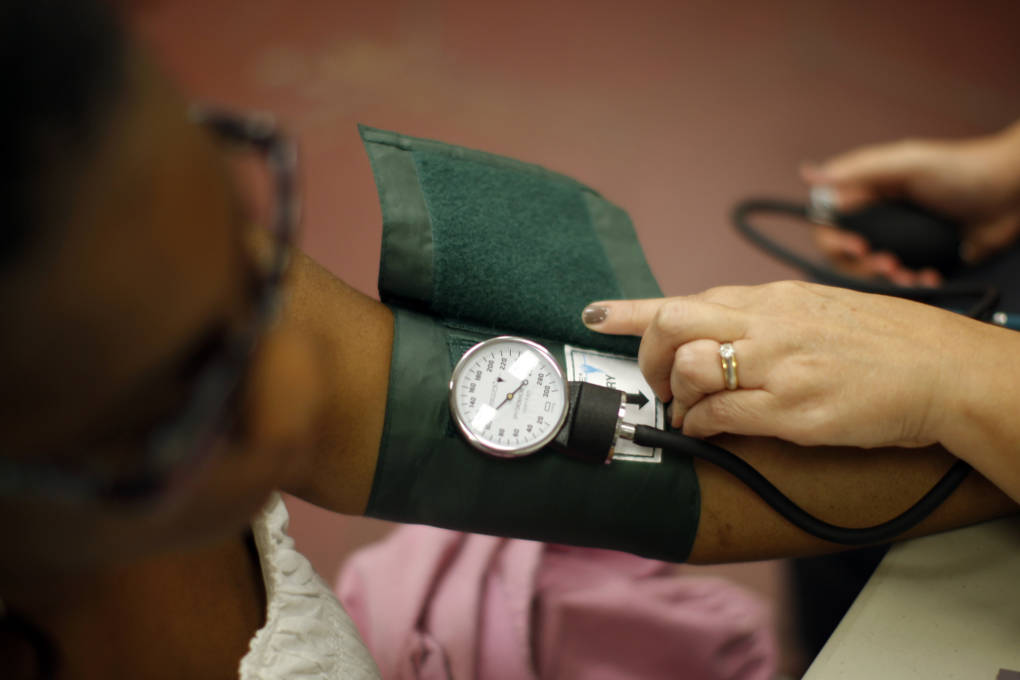
"caption": "Nurse takes blood pressure as part of a health care screening. ",
"description": "Nurse takes blood pressure as part of a health care screening. ",
"title": "Blood Pressure Test",
"credit": "David McNew/Getty Images",
"status": "inherit",
"isLoading": false,
"fetchFailed": false
},
"news_10348083": {
"type": "attachments",
"id": "news_10348083",
"meta": {
"index": "attachments_1716263798",
"site": "news",
"id": "10348083",
"found": true
},
"parent": 10348067,
"imgSizes": {
"twentyfourteen-full-width": {
"file": "https://ww2.kqed.org/app/uploads/sites/10/2014/11/pregnancy-1038x576.jpg",
"width": 1038,
"mimeType": "image/jpeg",
"height": 576
},
"thumbnail": {
"file": "https://ww2.kqed.org/app/uploads/sites/10/2014/11/pregnancy-400x287.jpg",
"width": 400,
"mimeType": "image/jpeg",
"height": 287
},
"post-thumbnail": {
"file": "https://ww2.kqed.org/app/uploads/sites/10/2014/11/pregnancy-672x372.jpg",
"width": 672,
"mimeType": "image/jpeg",
"height": 372
},
"kqedFullSize": {
"file": "https://ww2.kqed.org/app/uploads/sites/10/2014/11/pregnancy.jpg",
"width": 1440,
"height": 1036
},
"guest-author-96": {
"file": "https://ww2.kqed.org/app/uploads/sites/10/2014/11/pregnancy-96x96.jpg",
"width": 96,
"mimeType": "image/jpeg",
"height": 96
},
"medium": {
"file": "https://ww2.kqed.org/app/uploads/sites/10/2014/11/pregnancy-800x575.jpg",
"width": 800,
"mimeType": "image/jpeg",
"height": 575
},
"guest-author-64": {
"file": "https://ww2.kqed.org/app/uploads/sites/10/2014/11/pregnancy-64x64.jpg",
"width": 64,
"mimeType": "image/jpeg",
"height": 64
},
"detail": {
"file": "https://ww2.kqed.org/app/uploads/sites/10/2014/11/pregnancy-75x75.jpg",
"width": 75,
"mimeType": "image/jpeg",
"height": 75
},
"guest-author-32": {
"file": "https://ww2.kqed.org/app/uploads/sites/10/2014/11/pregnancy-32x32.jpg",
"width": 32,
"mimeType": "image/jpeg",
"height": 32
},
"guest-author-128": {
"file": "https://ww2.kqed.org/app/uploads/sites/10/2014/11/pregnancy-128x128.jpg",
"width": 128,
"mimeType": "image/jpeg",
"height": 128
}
},
"publishDate": 1415747241,
"modified": 1528929246,
"caption": "Cancer patients who hope to later become pregnant face difficult decisions.",
"description": null,
"title": "pregnancy",
"credit": "iStock",
"status": "inherit",
"isLoading": false,
"fetchFailed": false
},
"news_11659704": {
"type": "attachments",
"id": "news_11659704",
"meta": {
"index": "attachments_1716263798",
"site": "news",
"id": "11659704",
"found": true
},
"parent": 11659698,
"imgSizes": {
"small": {
"file": "https://ww2.kqed.org/app/uploads/sites/10/2018/04/RS10854_481763249-520x347.jpg",
"width": 520,
"mimeType": "image/jpeg",
"height": 347
},
"twentyfourteen-full-width": {
"file": "https://ww2.kqed.org/app/uploads/sites/10/2018/04/RS10854_481763249-1038x576.jpg",
"width": 1038,
"mimeType": "image/jpeg",
"height": 576
},
"thumbnail": {
"file": "https://ww2.kqed.org/app/uploads/sites/10/2018/04/RS10854_481763249-160x107.jpg",
"width": 160,
"mimeType": "image/jpeg",
"height": 107
},
"fd-sm": {
"file": "https://ww2.kqed.org/app/uploads/sites/10/2018/04/RS10854_481763249-960x640.jpg",
"width": 960,
"mimeType": "image/jpeg",
"height": 640
},
"post-thumbnail": {
"file": "https://ww2.kqed.org/app/uploads/sites/10/2018/04/RS10854_481763249-672x372.jpg",
"width": 672,
"mimeType": "image/jpeg",
"height": 372
},
"xsmall": {
"file": "https://ww2.kqed.org/app/uploads/sites/10/2018/04/RS10854_481763249-375x250.jpg",
"width": 375,
"mimeType": "image/jpeg",
"height": 250
},
"kqedFullSize": {
"file": "https://ww2.kqed.org/app/uploads/sites/10/2018/04/RS10854_481763249.jpg",
"width": 3000,
"height": 2001
},
"large": {
"file": "https://ww2.kqed.org/app/uploads/sites/10/2018/04/RS10854_481763249-1020x680.jpg",
"width": 1020,
"mimeType": "image/jpeg",
"height": 680
},
"xlarge": {
"file": "https://ww2.kqed.org/app/uploads/sites/10/2018/04/RS10854_481763249-1180x787.jpg",
"width": 1180,
"mimeType": "image/jpeg",
"height": 787
},
"guest-author-50": {
"file": "https://ww2.kqed.org/app/uploads/sites/10/2018/04/RS10854_481763249-50x50.jpg",
"width": 50,
"mimeType": "image/jpeg",
"height": 50
},
"guest-author-96": {
"file": "https://ww2.kqed.org/app/uploads/sites/10/2018/04/RS10854_481763249-96x96.jpg",
"width": 96,
"mimeType": "image/jpeg",
"height": 96
},
"medium": {
"file": "https://ww2.kqed.org/app/uploads/sites/10/2018/04/RS10854_481763249-800x534.jpg",
"width": 800,
"mimeType": "image/jpeg",
"height": 534
},
"guest-author-64": {
"file": "https://ww2.kqed.org/app/uploads/sites/10/2018/04/RS10854_481763249-64x64.jpg",
"width": 64,
"mimeType": "image/jpeg",
"height": 64
},
"guest-author-32": {
"file": "https://ww2.kqed.org/app/uploads/sites/10/2018/04/RS10854_481763249-32x32.jpg",
"width": 32,
"mimeType": "image/jpeg",
"height": 32
},
"fd-lrg": {
"file": "https://ww2.kqed.org/app/uploads/sites/10/2018/04/RS10854_481763249-1920x1281.jpg",
"width": 1920,
"mimeType": "image/jpeg",
"height": 1281
},
"fd-med": {
"file": "https://ww2.kqed.org/app/uploads/sites/10/2018/04/RS10854_481763249-1180x787.jpg",
"width": 1180,
"mimeType": "image/jpeg",
"height": 787
},
"full-width": {
"file": "https://ww2.kqed.org/app/uploads/sites/10/2018/04/RS10854_481763249-1920x1281.jpg",
"width": 1920,
"mimeType": "image/jpeg",
"height": 1281
},
"detail": {
"file": "https://ww2.kqed.org/app/uploads/sites/10/2018/04/RS10854_481763249-150x150.jpg",
"width": 150,
"mimeType": "image/jpeg",
"height": 150
},
"guest-author-128": {
"file": "https://ww2.kqed.org/app/uploads/sites/10/2018/04/RS10854_481763249-128x128.jpg",
"width": 128,
"mimeType": "image/jpeg",
"height": 128
},
"xxsmall": {
"file": "https://ww2.kqed.org/app/uploads/sites/10/2018/04/RS10854_481763249-240x160.jpg",
"width": 240,
"mimeType": "image/jpeg",
"height": 160
}
},
"publishDate": 1522792929,
"modified": 1522793181,
"caption": "A coalition called Care4All California has formed to push for expanded Medi-Cal coverage and higher subsidies, among other things.",
"description": null,
"title": "Americans Register For Health Care On Final Day of ACA Enrollment Drive",
"credit": "Justin Sullivan/Getty",
"status": "inherit",
"isLoading": false,
"fetchFailed": false
},
"news_11650544": {
"type": "attachments",
"id": "news_11650544",
"meta": {
"index": "attachments_1716263798",
"site": "news",
"id": "11650544",
"found": true
},
"parent": 11650534,
"imgSizes": {
"small": {
"file": "https://ww2.kqed.org/app/uploads/sites/10/2018/02/SinglePayerNow-520x373.jpg",
"width": 520,
"mimeType": "image/jpeg",
"height": 373
},
"twentyfourteen-full-width": {
"file": "https://ww2.kqed.org/app/uploads/sites/10/2018/02/SinglePayerNow-1038x576.jpg",
"width": 1038,
"mimeType": "image/jpeg",
"height": 576
},
"thumbnail": {
"file": "https://ww2.kqed.org/app/uploads/sites/10/2018/02/SinglePayerNow-160x115.jpg",
"width": 160,
"mimeType": "image/jpeg",
"height": 115
},
"fd-sm": {
"file": "https://ww2.kqed.org/app/uploads/sites/10/2018/02/SinglePayerNow-960x689.jpg",
"width": 960,
"mimeType": "image/jpeg",
"height": 689
},
"post-thumbnail": {
"file": "https://ww2.kqed.org/app/uploads/sites/10/2018/02/SinglePayerNow-672x372.jpg",
"width": 672,
"mimeType": "image/jpeg",
"height": 372
},
"xsmall": {
"file": "https://ww2.kqed.org/app/uploads/sites/10/2018/02/SinglePayerNow-375x269.jpg",
"width": 375,
"mimeType": "image/jpeg",
"height": 269
},
"kqedFullSize": {
"file": "https://ww2.kqed.org/app/uploads/sites/10/2018/02/SinglePayerNow.jpg",
"width": 1920,
"height": 1378
},
"large": {
"file": "https://ww2.kqed.org/app/uploads/sites/10/2018/02/SinglePayerNow-1020x732.jpg",
"width": 1020,
"mimeType": "image/jpeg",
"height": 732
},
"xlarge": {
"file": "https://ww2.kqed.org/app/uploads/sites/10/2018/02/SinglePayerNow-1180x847.jpg",
"width": 1180,
"mimeType": "image/jpeg",
"height": 847
},
"guest-author-50": {
"file": "https://ww2.kqed.org/app/uploads/sites/10/2018/02/SinglePayerNow-50x50.jpg",
"width": 50,
"mimeType": "image/jpeg",
"height": 50
},
"guest-author-96": {
"file": "https://ww2.kqed.org/app/uploads/sites/10/2018/02/SinglePayerNow-96x96.jpg",
"width": 96,
"mimeType": "image/jpeg",
"height": 96
},
"medium": {
"file": "https://ww2.kqed.org/app/uploads/sites/10/2018/02/SinglePayerNow-800x574.jpg",
"width": 800,
"mimeType": "image/jpeg",
"height": 574
},
"guest-author-64": {
"file": "https://ww2.kqed.org/app/uploads/sites/10/2018/02/SinglePayerNow-64x64.jpg",
"width": 64,
"mimeType": "image/jpeg",
"height": 64
},
"guest-author-32": {
"file": "https://ww2.kqed.org/app/uploads/sites/10/2018/02/SinglePayerNow-32x32.jpg",
"width": 32,
"mimeType": "image/jpeg",
"height": 32
},
"fd-lrg": {
"file": "https://ww2.kqed.org/app/uploads/sites/10/2018/02/SinglePayerNow-1920x1378.jpg",
"width": 1920,
"mimeType": "image/jpeg",
"height": 1378
},
"fd-med": {
"file": "https://ww2.kqed.org/app/uploads/sites/10/2018/02/SinglePayerNow-1180x847.jpg",
"width": 1180,
"mimeType": "image/jpeg",
"height": 847
},
"full-width": {
"file": "https://ww2.kqed.org/app/uploads/sites/10/2018/02/SinglePayerNow-1920x1378.jpg",
"width": 1920,
"mimeType": "image/jpeg",
"height": 1378
},
"detail": {
"file": "https://ww2.kqed.org/app/uploads/sites/10/2018/02/SinglePayerNow-150x150.jpg",
"width": 150,
"mimeType": "image/jpeg",
"height": 150
},
"guest-author-128": {
"file": "https://ww2.kqed.org/app/uploads/sites/10/2018/02/SinglePayerNow-128x128.jpg",
"width": 128,
"mimeType": "image/jpeg",
"height": 128
},
"xxsmall": {
"file": "https://ww2.kqed.org/app/uploads/sites/10/2018/02/SinglePayerNow-240x172.jpg",
"width": 240,
"mimeType": "image/jpeg",
"height": 172
}
},
"publishDate": 1518814855,
"modified": 1518814900,
"caption": "People rally in favor of single-payer health care for all Californians as the U.S. Senate prepared to vote on the Senate GOP health care bill, outside the office of California Assembly Speaker Anthony Rendon, on June 27, 2017.",
"description": "People rally in favor of single-payer health care for all Californians as the U.S. Senate prepared to vote on the Senate GOP health care bill, outside the office of California Assembly Speaker Anthony Rendon, on June 27, 2017.",
"title": "SinglePayerNow",
"credit": "ROBYN BECK/AFP/Getty Images",
"status": "inherit",
"isLoading": false,
"fetchFailed": false
},
"stateofhealth_362589": {
"type": "attachments",
"id": "stateofhealth_362589",
"meta": {
"index": "attachments_1716263798",
"site": "stateofhealth",
"id": "362589",
"found": true
},
"parent": 362576,
"imgSizes": {
"small": {
"file": "https://ww2.kqed.org/app/uploads/sites/27/2018/01/RS29075_mon1-qut-e1517448142759-520x321.jpg",
"width": 520,
"mimeType": "image/jpeg",
"height": 321
},
"twentyfourteen-full-width": {
"file": "https://ww2.kqed.org/app/uploads/sites/27/2018/01/RS29075_mon1-qut-e1517448142759-1038x576.jpg",
"width": 1038,
"mimeType": "image/jpeg",
"height": 576
},
"thumbnail": {
"file": "https://ww2.kqed.org/app/uploads/sites/27/2018/01/RS29075_mon1-qut-e1517448142759-160x99.jpg",
"width": 160,
"mimeType": "image/jpeg",
"height": 99
},
"fd-sm": {
"file": "https://ww2.kqed.org/app/uploads/sites/27/2018/01/RS29075_mon1-qut-e1517448142759-960x593.jpg",
"width": 960,
"mimeType": "image/jpeg",
"height": 593
},
"post-thumbnail": {
"file": "https://ww2.kqed.org/app/uploads/sites/27/2018/01/RS29075_mon1-qut-e1517448142759-672x372.jpg",
"width": 672,
"mimeType": "image/jpeg",
"height": 372
},
"xsmall": {
"file": "https://ww2.kqed.org/app/uploads/sites/27/2018/01/RS29075_mon1-qut-e1517448142759-375x232.jpg",
"width": 375,
"mimeType": "image/jpeg",
"height": 232
},
"kqedFullSize": {
"file": "https://ww2.kqed.org/app/uploads/sites/27/2018/01/RS29075_mon1-qut-e1517448142759.jpg",
"width": 1910,
"height": 1180
},
"large": {
"file": "https://ww2.kqed.org/app/uploads/sites/27/2018/01/RS29075_mon1-qut-e1517448142759-1020x630.jpg",
"width": 1020,
"mimeType": "image/jpeg",
"height": 630
},
"xlarge": {
"file": "https://ww2.kqed.org/app/uploads/sites/27/2018/01/RS29075_mon1-qut-e1517448142759-1180x729.jpg",
"width": 1180,
"mimeType": "image/jpeg",
"height": 729
},
"guest-author-50": {
"file": "https://ww2.kqed.org/app/uploads/sites/27/2018/01/RS29075_mon1-qut-e1517448142759-50x50.jpg",
"width": 50,
"mimeType": "image/jpeg",
"height": 50
},
"guest-author-96": {
"file": "https://ww2.kqed.org/app/uploads/sites/27/2018/01/RS29075_mon1-qut-e1517448142759-96x96.jpg",
"width": 96,
"mimeType": "image/jpeg",
"height": 96
},
"medium": {
"file": "https://ww2.kqed.org/app/uploads/sites/27/2018/01/RS29075_mon1-qut-e1517448142759-800x494.jpg",
"width": 800,
"mimeType": "image/jpeg",
"height": 494
},
"guest-author-64": {
"file": "https://ww2.kqed.org/app/uploads/sites/27/2018/01/RS29075_mon1-qut-e1517448142759-64x64.jpg",
"width": 64,
"mimeType": "image/jpeg",
"height": 64
},
"guest-author-32": {
"file": "https://ww2.kqed.org/app/uploads/sites/27/2018/01/RS29075_mon1-qut-e1517448142759-32x32.jpg",
"width": 32,
"mimeType": "image/jpeg",
"height": 32
},
"fd-lrg": {
"file": "https://ww2.kqed.org/app/uploads/sites/27/2018/01/RS29075_mon1-qut-1920x1440.jpg",
"width": 1920,
"mimeType": "image/jpeg",
"height": 1440
},
"fd-med": {
"file": "https://ww2.kqed.org/app/uploads/sites/27/2018/01/RS29075_mon1-qut-e1517448142759-1180x729.jpg",
"width": 1180,
"mimeType": "image/jpeg",
"height": 729
},
"full-width": {
"file": "https://ww2.kqed.org/app/uploads/sites/27/2018/01/RS29075_mon1-qut-1920x1440.jpg",
"width": 1920,
"mimeType": "image/jpeg",
"height": 1440
},
"detail": {
"file": "https://ww2.kqed.org/app/uploads/sites/27/2018/01/RS29075_mon1-qut-e1517448142759-150x150.jpg",
"width": 150,
"mimeType": "image/jpeg",
"height": 150
},
"medium_large": {
"file": "https://ww2.kqed.org/app/uploads/sites/27/2018/01/RS29075_mon1-qut-e1517448142759-768x474.jpg",
"width": 768,
"mimeType": "image/jpeg",
"height": 474
},
"guest-author-128": {
"file": "https://ww2.kqed.org/app/uploads/sites/27/2018/01/RS29075_mon1-qut-e1517448142759-128x128.jpg",
"width": 128,
"mimeType": "image/jpeg",
"height": 128
},
"xxsmall": {
"file": "https://ww2.kqed.org/app/uploads/sites/27/2018/01/RS29075_mon1-qut-e1517448142759-240x148.jpg",
"width": 240,
"mimeType": "image/jpeg",
"height": 148
}
},
"publishDate": 1517363763,
"modified": 1517442087,
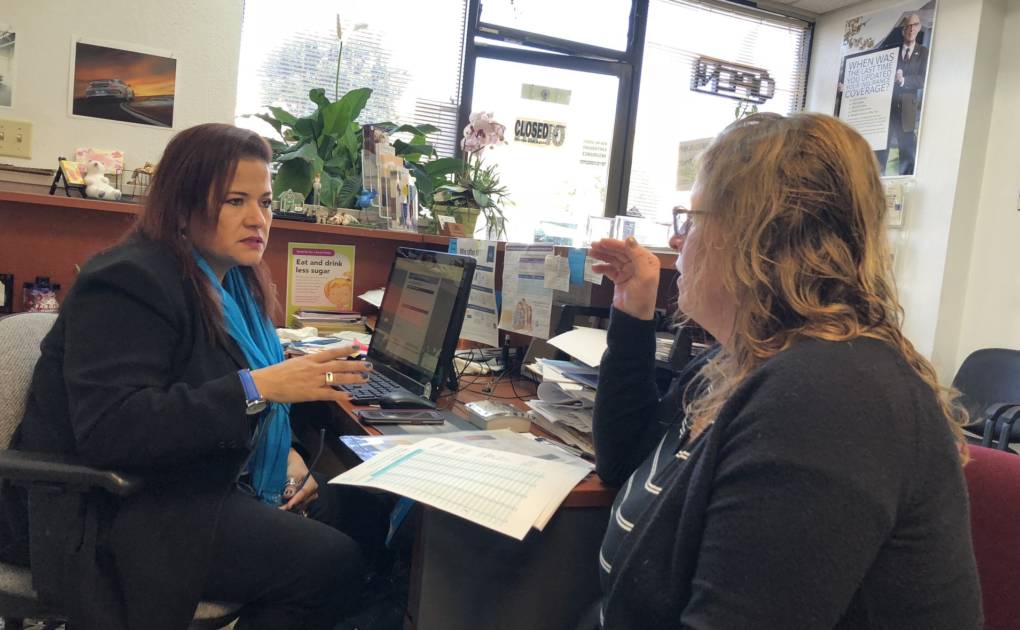
"caption": "Certified insurance agent for Covered California Monica Tracht (left) speaks to Marie Crinnion (right) about health insurance options. ",
"description": "Certified insurance agent for Covered California Monica Tracht (left) speaks to Marie Crinnion (right) about health insurance options. ",
"title": "RS29075_mon1-qut",
"credit": "Laura Klivans/KQED",
"status": "inherit",
"isLoading": false,
"fetchFailed": false
},
"news_11642782": {
"type": "attachments",
"id": "news_11642782",
"meta": {
"index": "attachments_1716263798",
"site": "news",
"id": "11642782",
"found": true
},
"parent": 11642774,
"imgSizes": {
"small": {
"file": "https://ww2.kqed.org/app/uploads/sites/10/2018/01/negotiations_011818_final-520x520.jpg",
"width": 520,
"mimeType": "image/jpeg",
"height": 520
},
"twentyfourteen-full-width": {
"file": "https://ww2.kqed.org/app/uploads/sites/10/2018/01/negotiations_011818_final-1038x576.jpg",
"width": 1038,
"mimeType": "image/jpeg",
"height": 576
},
"thumbnail": {
"file": "https://ww2.kqed.org/app/uploads/sites/10/2018/01/negotiations_011818_final-160x160.jpg",
"width": 160,
"mimeType": "image/jpeg",
"height": 160
},
"fd-sm": {
"file": "https://ww2.kqed.org/app/uploads/sites/10/2018/01/negotiations_011818_final-960x960.jpg",
"width": 960,
"mimeType": "image/jpeg",
"height": 960
},
"post-thumbnail": {
"file": "https://ww2.kqed.org/app/uploads/sites/10/2018/01/negotiations_011818_final-672x372.jpg",
"width": 672,
"mimeType": "image/jpeg",
"height": 372
},
"xsmall": {
"file": "https://ww2.kqed.org/app/uploads/sites/10/2018/01/negotiations_011818_final-375x375.jpg",
"width": 375,
"mimeType": "image/jpeg",
"height": 375
},
"kqedFullSize": {
"file": "https://ww2.kqed.org/app/uploads/sites/10/2018/01/negotiations_011818_final.jpg",
"width": 1920,
"height": 1920
},
"large": {
"file": "https://ww2.kqed.org/app/uploads/sites/10/2018/01/negotiations_011818_final-1020x1020.jpg",
"width": 1020,
"mimeType": "image/jpeg",
"height": 1020
},
"xlarge": {
"file": "https://ww2.kqed.org/app/uploads/sites/10/2018/01/negotiations_011818_final-1180x1180.jpg",
"width": 1180,
"mimeType": "image/jpeg",
"height": 1180
},
"guest-author-50": {
"file": "https://ww2.kqed.org/app/uploads/sites/10/2018/01/negotiations_011818_final-50x50.jpg",
"width": 50,
"mimeType": "image/jpeg",
"height": 50
},
"guest-author-96": {
"file": "https://ww2.kqed.org/app/uploads/sites/10/2018/01/negotiations_011818_final-96x96.jpg",
"width": 96,
"mimeType": "image/jpeg",
"height": 96
},
"medium": {
"file": "https://ww2.kqed.org/app/uploads/sites/10/2018/01/negotiations_011818_final-800x800.jpg",
"width": 800,
"mimeType": "image/jpeg",
"height": 800
},
"guest-author-64": {
"file": "https://ww2.kqed.org/app/uploads/sites/10/2018/01/negotiations_011818_final-64x64.jpg",
"width": 64,
"mimeType": "image/jpeg",
"height": 64
},
"guest-author-32": {
"file": "https://ww2.kqed.org/app/uploads/sites/10/2018/01/negotiations_011818_final-32x32.jpg",
"width": 32,
"mimeType": "image/jpeg",
"height": 32
},
"fd-lrg": {
"file": "https://ww2.kqed.org/app/uploads/sites/10/2018/01/negotiations_011818_final-1920x1920.jpg",
"width": 1920,
"mimeType": "image/jpeg",
"height": 1920
},
"fd-med": {
"file": "https://ww2.kqed.org/app/uploads/sites/10/2018/01/negotiations_011818_final-1180x1180.jpg",
"width": 1180,
"mimeType": "image/jpeg",
"height": 1180
},
"full-width": {
"file": "https://ww2.kqed.org/app/uploads/sites/10/2018/01/negotiations_011818_final-1920x1920.jpg",
"width": 1920,
"mimeType": "image/jpeg",
"height": 1920
},
"detail": {
"file": "https://ww2.kqed.org/app/uploads/sites/10/2018/01/negotiations_011818_final-150x150.jpg",
"width": 150,
"mimeType": "image/jpeg",
"height": 150
},
"guest-author-128": {
"file": "https://ww2.kqed.org/app/uploads/sites/10/2018/01/negotiations_011818_final-128x128.jpg",
"width": 128,
"mimeType": "image/jpeg",
"height": 128
},
"xxsmall": {
"file": "https://ww2.kqed.org/app/uploads/sites/10/2018/01/negotiations_011818_final-240x240.jpg",
"width": 240,
"mimeType": "image/jpeg",
"height": 240
}
},
"publishDate": 1516307688,
"modified": 1516307713,
"caption": null,
"description": null,
"title": "negotiations_011818_final",
"credit": null,
"status": "inherit",
"isLoading": false,
"fetchFailed": false
},
"news_11638984": {
"type": "attachments",
"id": "news_11638984",
"meta": {
"index": "attachments_1716263798",
"site": "news",
"id": "11638984",
"found": true
},
"parent": 11638983,
"imgSizes": {
"small": {
"file": "https://ww2.kqed.org/app/uploads/sites/10/2017/12/gettyimages-893690068_custom-47dec34cdbdccf9e5576cf8cfa13a56656da32b5-520x344.jpg",
"width": 520,
"mimeType": "image/jpeg",
"height": 344
},
"twentyfourteen-full-width": {
"file": "https://ww2.kqed.org/app/uploads/sites/10/2017/12/gettyimages-893690068_custom-47dec34cdbdccf9e5576cf8cfa13a56656da32b5-1024x576.jpg",
"width": 1024,
"mimeType": "image/jpeg",
"height": 576
},
"thumbnail": {
"file": "https://ww2.kqed.org/app/uploads/sites/10/2017/12/gettyimages-893690068_custom-47dec34cdbdccf9e5576cf8cfa13a56656da32b5-160x106.jpg",
"width": 160,
"mimeType": "image/jpeg",
"height": 106
},
"fd-sm": {
"file": "https://ww2.kqed.org/app/uploads/sites/10/2017/12/gettyimages-893690068_custom-47dec34cdbdccf9e5576cf8cfa13a56656da32b5-960x636.jpg",
"width": 960,
"mimeType": "image/jpeg",
"height": 636
},
"post-thumbnail": {
"file": "https://ww2.kqed.org/app/uploads/sites/10/2017/12/gettyimages-893690068_custom-47dec34cdbdccf9e5576cf8cfa13a56656da32b5-672x372.jpg",
"width": 672,
"mimeType": "image/jpeg",
"height": 372
},
"xsmall": {
"file": "https://ww2.kqed.org/app/uploads/sites/10/2017/12/gettyimages-893690068_custom-47dec34cdbdccf9e5576cf8cfa13a56656da32b5-375x248.jpg",
"width": 375,
"mimeType": "image/jpeg",
"height": 248
},
"kqedFullSize": {
"file": "https://ww2.kqed.org/app/uploads/sites/10/2017/12/gettyimages-893690068_custom-47dec34cdbdccf9e5576cf8cfa13a56656da32b5-e1513962168800.jpg",
"width": 1024,
"height": 678
},
"large": {
"file": "https://ww2.kqed.org/app/uploads/sites/10/2017/12/gettyimages-893690068_custom-47dec34cdbdccf9e5576cf8cfa13a56656da32b5-1020x675.jpg",
"width": 1020,
"mimeType": "image/jpeg",
"height": 675
},
"guest-author-50": {
"file": "https://ww2.kqed.org/app/uploads/sites/10/2017/12/gettyimages-893690068_custom-47dec34cdbdccf9e5576cf8cfa13a56656da32b5-50x50.jpg",
"width": 50,
"mimeType": "image/jpeg",
"height": 50
},
"guest-author-96": {
"file": "https://ww2.kqed.org/app/uploads/sites/10/2017/12/gettyimages-893690068_custom-47dec34cdbdccf9e5576cf8cfa13a56656da32b5-96x96.jpg",
"width": 96,
"mimeType": "image/jpeg",
"height": 96
},
"medium": {
"file": "https://ww2.kqed.org/app/uploads/sites/10/2017/12/gettyimages-893690068_custom-47dec34cdbdccf9e5576cf8cfa13a56656da32b5-800x530.jpg",
"width": 800,
"mimeType": "image/jpeg",
"height": 530
},
"guest-author-64": {
"file": "https://ww2.kqed.org/app/uploads/sites/10/2017/12/gettyimages-893690068_custom-47dec34cdbdccf9e5576cf8cfa13a56656da32b5-64x64.jpg",
"width": 64,
"mimeType": "image/jpeg",
"height": 64
},
"guest-author-32": {
"file": "https://ww2.kqed.org/app/uploads/sites/10/2017/12/gettyimages-893690068_custom-47dec34cdbdccf9e5576cf8cfa13a56656da32b5-32x32.jpg",
"width": 32,
"mimeType": "image/jpeg",
"height": 32
},
"detail": {
"file": "https://ww2.kqed.org/app/uploads/sites/10/2017/12/gettyimages-893690068_custom-47dec34cdbdccf9e5576cf8cfa13a56656da32b5-150x150.jpg",
"width": 150,
"mimeType": "image/jpeg",
"height": 150
},
"guest-author-128": {
"file": "https://ww2.kqed.org/app/uploads/sites/10/2017/12/gettyimages-893690068_custom-47dec34cdbdccf9e5576cf8cfa13a56656da32b5-128x128.jpg",
"width": 128,
"mimeType": "image/jpeg",
"height": 128
},
"xxsmall": {
"file": "https://ww2.kqed.org/app/uploads/sites/10/2017/12/gettyimages-893690068_custom-47dec34cdbdccf9e5576cf8cfa13a56656da32b5-240x159.jpg",
"width": 240,
"mimeType": "image/jpeg",
"height": 159
}
},
"publishDate": 1513962044,
"modified": 1513962397,
"caption": "Kelley Mui helps a client sign up for health insurance through the Affordable Care Act on Dec. 15, 2013, at the Midwest Asian Health Association in Chicago.",
"description": "Kelley Mui helps a client sign up for health insurance through the Affordable Care Act on Dec. 15 at the Midwest Asian Health Association in Chicago.",
"title": "Kelley Mui helps a client sign up for health insurance through the Affordable Care Act on Dec. 15 at the Midwest Asian Health Association in Chicago.",
"credit": "David McNew/Getty Images",
"status": "inherit",
"isLoading": false,
"fetchFailed": false
},
"stateofhealth_169744": {
"type": "attachments",
"id": "stateofhealth_169744",
"meta": {
"index": "attachments_1716263798",
"site": "stateofhealth",
"id": "169744",
"found": true
},
"parent": 169743,
"imgSizes": {
"twentyfourteen-full-width": {
"file": "https://ww2.kqed.org/app/uploads/sites/27/2016/04/sutter-health_wide-c3fbc10843b63d5808868d19304172f6d613dcec-1038x576.jpg",
"width": 1038,
"mimeType": "image/jpeg",
"height": 576
},
"thumbnail": {
"file": "https://ww2.kqed.org/app/uploads/sites/27/2016/04/sutter-health_wide-c3fbc10843b63d5808868d19304172f6d613dcec-400x225.jpg",
"width": 400,
"mimeType": "image/jpeg",
"height": 225
},
"fd-sm": {
"file": "https://ww2.kqed.org/app/uploads/sites/27/2016/04/sutter-health_wide-c3fbc10843b63d5808868d19304172f6d613dcec-960x540.jpg",
"width": 960,
"mimeType": "image/jpeg",
"height": 540
},
"post-thumbnail": {
"file": "https://ww2.kqed.org/app/uploads/sites/27/2016/04/sutter-health_wide-c3fbc10843b63d5808868d19304172f6d613dcec-672x372.jpg",
"width": 672,
"mimeType": "image/jpeg",
"height": 372
},
"kqedFullSize": {
"file": "https://ww2.kqed.org/app/uploads/sites/27/2016/04/sutter-health_wide-c3fbc10843b63d5808868d19304172f6d613dcec.jpg",
"width": 1885,
"height": 1060
},
"large": {
"file": "https://ww2.kqed.org/app/uploads/sites/27/2016/04/sutter-health_wide-c3fbc10843b63d5808868d19304172f6d613dcec-1440x810.jpg",
"width": 1440,
"mimeType": "image/jpeg",
"height": 810
},
"guest-author-96": {
"file": "https://ww2.kqed.org/app/uploads/sites/27/2016/04/sutter-health_wide-c3fbc10843b63d5808868d19304172f6d613dcec-96x96.jpg",
"width": 96,
"mimeType": "image/jpeg",
"height": 96
},
"medium": {
"file": "https://ww2.kqed.org/app/uploads/sites/27/2016/04/sutter-health_wide-c3fbc10843b63d5808868d19304172f6d613dcec-800x450.jpg",
"width": 800,
"mimeType": "image/jpeg",
"height": 450
},
"guest-author-64": {
"file": "https://ww2.kqed.org/app/uploads/sites/27/2016/04/sutter-health_wide-c3fbc10843b63d5808868d19304172f6d613dcec-64x64.jpg",
"width": 64,
"mimeType": "image/jpeg",
"height": 64
},
"guest-author-32": {
"file": "https://ww2.kqed.org/app/uploads/sites/27/2016/04/sutter-health_wide-c3fbc10843b63d5808868d19304172f6d613dcec-32x32.jpg",
"width": 32,
"mimeType": "image/jpeg",
"height": 32
},
"jmtc-small-thumb": {
"file": "https://ww2.kqed.org/app/uploads/sites/27/2016/04/sutter-health_wide-c3fbc10843b63d5808868d19304172f6d613dcec-280x150.jpg",
"width": 280,
"mimeType": "image/jpeg",
"height": 150
},
"fd-med": {
"file": "https://ww2.kqed.org/app/uploads/sites/27/2016/04/sutter-health_wide-c3fbc10843b63d5808868d19304172f6d613dcec-1180x664.jpg",
"width": 1180,
"mimeType": "image/jpeg",
"height": 664
},
"detail": {
"file": "https://ww2.kqed.org/app/uploads/sites/27/2016/04/sutter-health_wide-c3fbc10843b63d5808868d19304172f6d613dcec-75x75.jpg",
"width": 75,
"mimeType": "image/jpeg",
"height": 75
},
"medium_large": {
"file": "https://ww2.kqed.org/app/uploads/sites/27/2016/04/sutter-health_wide-c3fbc10843b63d5808868d19304172f6d613dcec-768x432.jpg",
"width": 768,
"mimeType": "image/jpeg",
"height": 432
},
"guest-author-128": {
"file": "https://ww2.kqed.org/app/uploads/sites/27/2016/04/sutter-health_wide-c3fbc10843b63d5808868d19304172f6d613dcec-128x128.jpg",
"width": 128,
"mimeType": "image/jpeg",
"height": 128
}
},
"publishDate": 1460045068,
"modified": 1460045159,
"caption": "The entrance to Sutter Davis Hospital in Davis, Calif. Sutter Health has hospitals in more than 100 communities in Northern California.",
"description": "The entrance to Sutter Davis Hospital in Davis, Calif. Sutter Health has hospitals in more than 100 communities in Northern California.",
"title": "The entrance to Sutter Davis Hospital in Davis, Calif. Sutter Health has hospitals in more than 100 communities in Northern California; it reported $11 billion in revenue last year, with an operating profit of $287 million.",
"credit": "Ken James/Bloomberg via Getty Images",
"status": "inherit",
"isLoading": false,
"fetchFailed": false
},
"stateofhealth_17341": {
"type": "attachments",
"id": "stateofhealth_17341",
"meta": {
"index": "attachments_1716263798",
"site": "stateofhealth",
"id": "17341",
"found": true
},
"parent": 17339,
"imgSizes": {
"thumbnail": {
"file": "https://ww2.kqed.org/app/uploads/sites/27/2014/01/96525183-e1390846077644-400x266.jpg",
"width": 400,
"mimeType": "image/jpeg",
"height": 266
},
"fd-sm": {
"file": "https://ww2.kqed.org/app/uploads/sites/27/2014/01/96525183-e1390846077644-320x213.jpg",
"width": 320,
"mimeType": "image/jpeg",
"height": 213
},
"post-thumbnail": {
"file": "https://ww2.kqed.org/app/uploads/sites/27/2014/01/96525183-e1390846077644-641x372.jpg",
"width": 641,
"mimeType": "image/jpeg",
"height": 372
},
"kqedFullSize": {
"file": "https://ww2.kqed.org/app/uploads/sites/27/2014/01/96525183-e1390846077644.jpg",
"width": 641,
"height": 427
},
"guest-author-96": {
"file": "https://ww2.kqed.org/app/uploads/sites/27/2014/01/96525183-e1390846077644-96x96.jpg",
"width": 96,
"mimeType": "image/jpeg",
"height": 96
},
"guest-author-64": {
"file": "https://ww2.kqed.org/app/uploads/sites/27/2014/01/96525183-e1390846077644-64x64.jpg",
"width": 64,
"mimeType": "image/jpeg",
"height": 64
},
"detail": {
"file": "https://ww2.kqed.org/app/uploads/sites/27/2014/01/96525183-e1390846077644-75x75.jpg",
"width": 75,
"mimeType": "image/jpeg",
"height": 75
},
"guest-author-32": {
"file": "https://ww2.kqed.org/app/uploads/sites/27/2014/01/96525183-e1390846077644-32x32.jpg",
"width": 32,
"mimeType": "image/jpeg",
"height": 32
},
"guest-author-128": {
"file": "https://ww2.kqed.org/app/uploads/sites/27/2014/01/96525183-e1390846077644-128x128.jpg",
"width": 128,
"mimeType": "image/jpeg",
"height": 128
}
},
"publishDate": 1390846066,
"modified": 1510855532,
"caption": "The Anthem Blue Cross headquarters in Woodland Hills, California.",
"description": "The Anthem Blue Cross headquarters in Woodland Hills, California.",
"title": "96525183",
"credit": "David McNew/Getty Images",
"status": "inherit",
"isLoading": false,
"fetchFailed": false
},
"stateofhealth_361343": {
"type": "attachments",
"id": "stateofhealth_361343",
"meta": {
"index": "attachments_1716263798",
"site": "stateofhealth",
"id": "361343",
"found": true
},
"parent": 361316,
"imgSizes": {
"small": {
"file": "https://ww2.kqed.org/app/uploads/sites/27/2017/10/Baby-at-doctor-520x347.jpg",
"width": 520,
"mimeType": "image/jpeg",
"height": 347
},
"twentyfourteen-full-width": {
"file": "https://ww2.kqed.org/app/uploads/sites/27/2017/10/Baby-at-doctor-1038x576.jpg",
"width": 1038,
"mimeType": "image/jpeg",
"height": 576
},
"thumbnail": {
"file": "https://ww2.kqed.org/app/uploads/sites/27/2017/10/Baby-at-doctor-160x107.jpg",
"width": 160,
"mimeType": "image/jpeg",
"height": 107
},
"fd-sm": {
"file": "https://ww2.kqed.org/app/uploads/sites/27/2017/10/Baby-at-doctor-960x640.jpg",
"width": 960,
"mimeType": "image/jpeg",
"height": 640
},
"post-thumbnail": {
"file": "https://ww2.kqed.org/app/uploads/sites/27/2017/10/Baby-at-doctor-672x372.jpg",
"width": 672,
"mimeType": "image/jpeg",
"height": 372
},
"xsmall": {
"file": "https://ww2.kqed.org/app/uploads/sites/27/2017/10/Baby-at-doctor-375x250.jpg",
"width": 375,
"mimeType": "image/jpeg",
"height": 250
},
"kqedFullSize": {
"file": "https://ww2.kqed.org/app/uploads/sites/27/2017/10/Baby-at-doctor.jpg",
"width": 2121,
"height": 1414
},
"large": {
"file": "https://ww2.kqed.org/app/uploads/sites/27/2017/10/Baby-at-doctor-1020x680.jpg",
"width": 1020,
"mimeType": "image/jpeg",
"height": 680
},
"xlarge": {
"file": "https://ww2.kqed.org/app/uploads/sites/27/2017/10/Baby-at-doctor-1180x787.jpg",
"width": 1180,
"mimeType": "image/jpeg",
"height": 787
},
"guest-author-50": {
"file": "https://ww2.kqed.org/app/uploads/sites/27/2017/10/Baby-at-doctor-50x50.jpg",
"width": 50,
"mimeType": "image/jpeg",
"height": 50
},
"guest-author-96": {
"file": "https://ww2.kqed.org/app/uploads/sites/27/2017/10/Baby-at-doctor-96x96.jpg",
"width": 96,
"mimeType": "image/jpeg",
"height": 96
},
"medium": {
"file": "https://ww2.kqed.org/app/uploads/sites/27/2017/10/Baby-at-doctor-800x533.jpg",
"width": 800,
"mimeType": "image/jpeg",
"height": 533
},
"guest-author-64": {
"file": "https://ww2.kqed.org/app/uploads/sites/27/2017/10/Baby-at-doctor-64x64.jpg",
"width": 64,
"mimeType": "image/jpeg",
"height": 64
},
"guest-author-32": {
"file": "https://ww2.kqed.org/app/uploads/sites/27/2017/10/Baby-at-doctor-32x32.jpg",
"width": 32,
"mimeType": "image/jpeg",
"height": 32
},
"fd-lrg": {
"file": "https://ww2.kqed.org/app/uploads/sites/27/2017/10/Baby-at-doctor-1920x1280.jpg",
"width": 1920,
"mimeType": "image/jpeg",
"height": 1280
},
"fd-med": {
"file": "https://ww2.kqed.org/app/uploads/sites/27/2017/10/Baby-at-doctor-1180x787.jpg",
"width": 1180,
"mimeType": "image/jpeg",
"height": 787
},
"full-width": {
"file": "https://ww2.kqed.org/app/uploads/sites/27/2017/10/Baby-at-doctor-1920x1280.jpg",
"width": 1920,
"mimeType": "image/jpeg",
"height": 1280
},
"detail": {
"file": "https://ww2.kqed.org/app/uploads/sites/27/2017/10/Baby-at-doctor-150x150.jpg",
"width": 150,
"mimeType": "image/jpeg",
"height": 150
},
"medium_large": {
"file": "https://ww2.kqed.org/app/uploads/sites/27/2017/10/Baby-at-doctor-768x512.jpg",
"width": 768,
"mimeType": "image/jpeg",
"height": 512
},
"guest-author-128": {
"file": "https://ww2.kqed.org/app/uploads/sites/27/2017/10/Baby-at-doctor-128x128.jpg",
"width": 128,
"mimeType": "image/jpeg",
"height": 128
},
"xxsmall": {
"file": "https://ww2.kqed.org/app/uploads/sites/27/2017/10/Baby-at-doctor-240x160.jpg",
"width": 240,
"mimeType": "image/jpeg",
"height": 160
}
},
"publishDate": 1507160888,
"modified": 1507234473,
"caption": "A pediatrician vaccinates a small boy",
"description": null,
"title": "Pediatrician makes vaccination to small boy",
"credit": "iStock",
"status": "inherit",
"isLoading": false,
"fetchFailed": false
},
"news_11593255": {
"type": "attachments",
"id": "news_11593255",
"meta": {
"index": "attachments_1716263798",
"site": "news",
"id": "11593255",
"found": true
},
"parent": 11593253,
"imgSizes": {
"small": {
"file": "https://ww2.kqed.org/app/uploads/sites/10/2017/07/gettyimages-822308366_custom-f7845785b918043a72f1a91a6f42f3862a937944-520x334.jpg",
"width": 520,
"mimeType": "image/jpeg",
"height": 334
},
"twentyfourteen-full-width": {
"file": "https://ww2.kqed.org/app/uploads/sites/10/2017/07/gettyimages-822308366_custom-f7845785b918043a72f1a91a6f42f3862a937944-1038x576.jpg",
"width": 1038,
"mimeType": "image/jpeg",
"height": 576
},
"thumbnail": {
"file": "https://ww2.kqed.org/app/uploads/sites/10/2017/07/gettyimages-822308366_custom-f7845785b918043a72f1a91a6f42f3862a937944-160x103.jpg",
"width": 160,
"mimeType": "image/jpeg",
"height": 103
},
"fd-sm": {
"file": "https://ww2.kqed.org/app/uploads/sites/10/2017/07/gettyimages-822308366_custom-f7845785b918043a72f1a91a6f42f3862a937944-960x616.jpg",
"width": 960,
"mimeType": "image/jpeg",
"height": 616
},
"post-thumbnail": {
"file": "https://ww2.kqed.org/app/uploads/sites/10/2017/07/gettyimages-822308366_custom-f7845785b918043a72f1a91a6f42f3862a937944-672x372.jpg",
"width": 672,
"mimeType": "image/jpeg",
"height": 372
},
"xsmall": {
"file": "https://ww2.kqed.org/app/uploads/sites/10/2017/07/gettyimages-822308366_custom-f7845785b918043a72f1a91a6f42f3862a937944-375x241.jpg",
"width": 375,
"mimeType": "image/jpeg",
"height": 241
},
"kqedFullSize": {
"file": "https://ww2.kqed.org/app/uploads/sites/10/2017/07/gettyimages-822308366_custom-f7845785b918043a72f1a91a6f42f3862a937944.jpg",
"width": 3000,
"height": 1925
},
"large": {
"file": "https://ww2.kqed.org/app/uploads/sites/10/2017/07/gettyimages-822308366_custom-f7845785b918043a72f1a91a6f42f3862a937944-1020x655.jpg",
"width": 1020,
"mimeType": "image/jpeg",
"height": 655
},
"xlarge": {
"file": "https://ww2.kqed.org/app/uploads/sites/10/2017/07/gettyimages-822308366_custom-f7845785b918043a72f1a91a6f42f3862a937944-1180x757.jpg",
"width": 1180,
"mimeType": "image/jpeg",
"height": 757
},
"guest-author-50": {
"file": "https://ww2.kqed.org/app/uploads/sites/10/2017/07/gettyimages-822308366_custom-f7845785b918043a72f1a91a6f42f3862a937944-50x50.jpg",
"width": 50,
"mimeType": "image/jpeg",
"height": 50
},
"guest-author-96": {
"file": "https://ww2.kqed.org/app/uploads/sites/10/2017/07/gettyimages-822308366_custom-f7845785b918043a72f1a91a6f42f3862a937944-96x96.jpg",
"width": 96,
"mimeType": "image/jpeg",
"height": 96
},
"medium": {
"file": "https://ww2.kqed.org/app/uploads/sites/10/2017/07/gettyimages-822308366_custom-f7845785b918043a72f1a91a6f42f3862a937944-800x513.jpg",
"width": 800,
"mimeType": "image/jpeg",
"height": 513
},
"guest-author-64": {
"file": "https://ww2.kqed.org/app/uploads/sites/10/2017/07/gettyimages-822308366_custom-f7845785b918043a72f1a91a6f42f3862a937944-64x64.jpg",
"width": 64,
"mimeType": "image/jpeg",
"height": 64
},
"guest-author-32": {
"file": "https://ww2.kqed.org/app/uploads/sites/10/2017/07/gettyimages-822308366_custom-f7845785b918043a72f1a91a6f42f3862a937944-32x32.jpg",
"width": 32,
"mimeType": "image/jpeg",
"height": 32
},
"fd-lrg": {
"file": "https://ww2.kqed.org/app/uploads/sites/10/2017/07/gettyimages-822308366_custom-f7845785b918043a72f1a91a6f42f3862a937944-1920x1232.jpg",
"width": 1920,
"mimeType": "image/jpeg",
"height": 1232
},
"fd-med": {
"file": "https://ww2.kqed.org/app/uploads/sites/10/2017/07/gettyimages-822308366_custom-f7845785b918043a72f1a91a6f42f3862a937944-1180x757.jpg",
"width": 1180,
"mimeType": "image/jpeg",
"height": 757
},
"full-width": {
"file": "https://ww2.kqed.org/app/uploads/sites/10/2017/07/gettyimages-822308366_custom-f7845785b918043a72f1a91a6f42f3862a937944-1920x1232.jpg",
"width": 1920,
"mimeType": "image/jpeg",
"height": 1232
},
"detail": {
"file": "https://ww2.kqed.org/app/uploads/sites/10/2017/07/gettyimages-822308366_custom-f7845785b918043a72f1a91a6f42f3862a937944-150x150.jpg",
"width": 150,
"mimeType": "image/jpeg",
"height": 150
},
"guest-author-128": {
"file": "https://ww2.kqed.org/app/uploads/sites/10/2017/07/gettyimages-822308366_custom-f7845785b918043a72f1a91a6f42f3862a937944-128x128.jpg",
"width": 128,
"mimeType": "image/jpeg",
"height": 128
},
"xxsmall": {
"file": "https://ww2.kqed.org/app/uploads/sites/10/2017/07/gettyimages-822308366_custom-f7845785b918043a72f1a91a6f42f3862a937944-240x154.jpg",
"width": 240,
"mimeType": "image/jpeg",
"height": 154
}
},
"publishDate": 1501007015,
"modified": 1501021360,
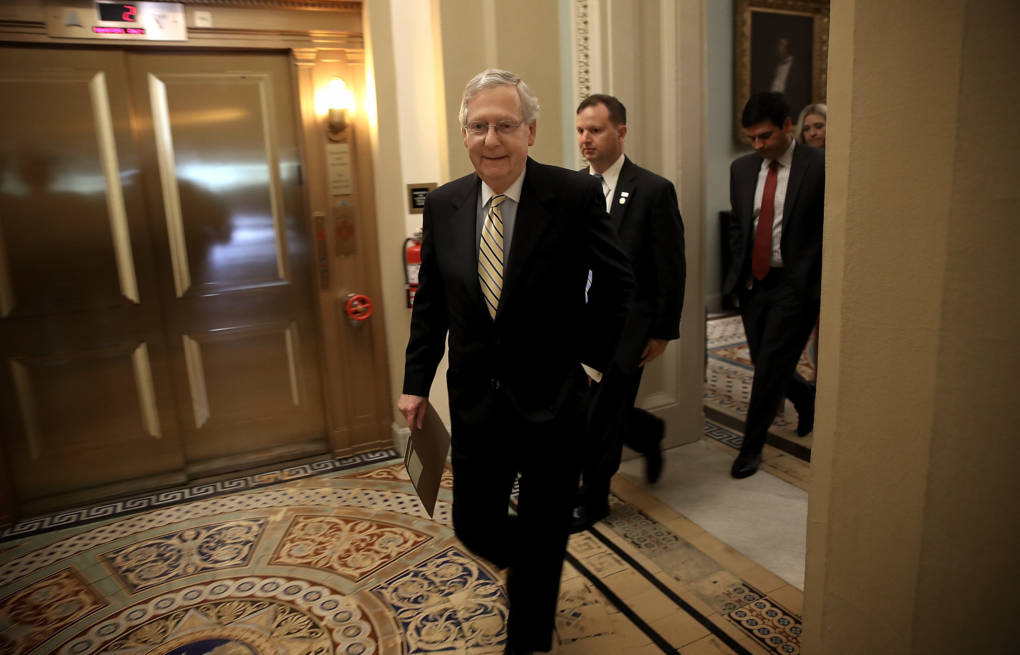
"caption": "Senate Majority Leader Mitch McConnell, R-Ky., walks to a meeting in the U.S. Capitol on July 25, 2017. ",
"description": "Senate Majority Leader Mitch McConnell, R-Ky., walks to a meeting in the U.S. Capitol on Tuesday. ",
"title": "Senate Majority Leader Mitch McConnell, R-Ky., walks to a meeting in the U.S. Capitol on Tuesday. The U.S. Senate is scheduled to hold a key procedural vote health care.",
"credit": null,
"status": "inherit",
"isLoading": false,
"fetchFailed": false
},
"news_11526185": {
"type": "attachments",
"id": "news_11526185",
"meta": {
"index": "attachments_1716263798",
"site": "news",
"id": "11526185",
"found": true
},
"parent": 11526026,
"imgSizes": {
"small": {
"file": "https://ww2.kqed.org/app/uploads/sites/10/2017/06/MitchM-520x347.jpg",
"width": 520,
"mimeType": "image/jpeg",
"height": 347
},
"twentyfourteen-full-width": {
"file": "https://ww2.kqed.org/app/uploads/sites/10/2017/06/MitchM-1038x576.jpg",
"width": 1038,
"mimeType": "image/jpeg",
"height": 576
},
"thumbnail": {
"file": "https://ww2.kqed.org/app/uploads/sites/10/2017/06/MitchM-160x107.jpg",
"width": 160,
"mimeType": "image/jpeg",
"height": 107
},
"fd-sm": {
"file": "https://ww2.kqed.org/app/uploads/sites/10/2017/06/MitchM-960x640.jpg",
"width": 960,
"mimeType": "image/jpeg",
"height": 640
},
"post-thumbnail": {
"file": "https://ww2.kqed.org/app/uploads/sites/10/2017/06/MitchM-672x372.jpg",
"width": 672,
"mimeType": "image/jpeg",
"height": 372
},
"xsmall": {
"file": "https://ww2.kqed.org/app/uploads/sites/10/2017/06/MitchM-375x250.jpg",
"width": 375,
"mimeType": "image/jpeg",
"height": 250
},
"kqedFullSize": {
"file": "https://ww2.kqed.org/app/uploads/sites/10/2017/06/MitchM.jpg",
"width": 1920,
"height": 1280
},
"large": {
"file": "https://ww2.kqed.org/app/uploads/sites/10/2017/06/MitchM-1020x680.jpg",
"width": 1020,
"mimeType": "image/jpeg",
"height": 680
},
"xlarge": {
"file": "https://ww2.kqed.org/app/uploads/sites/10/2017/06/MitchM-1180x787.jpg",
"width": 1180,
"mimeType": "image/jpeg",
"height": 787
},
"guest-author-50": {
"file": "https://ww2.kqed.org/app/uploads/sites/10/2017/06/MitchM-50x50.jpg",
"width": 50,
"mimeType": "image/jpeg",
"height": 50
},
"guest-author-96": {
"file": "https://ww2.kqed.org/app/uploads/sites/10/2017/06/MitchM-96x96.jpg",
"width": 96,
"mimeType": "image/jpeg",
"height": 96
},
"medium": {
"file": "https://ww2.kqed.org/app/uploads/sites/10/2017/06/MitchM-800x533.jpg",
"width": 800,
"mimeType": "image/jpeg",
"height": 533
},
"guest-author-64": {
"file": "https://ww2.kqed.org/app/uploads/sites/10/2017/06/MitchM-64x64.jpg",
"width": 64,
"mimeType": "image/jpeg",
"height": 64
},
"guest-author-32": {
"file": "https://ww2.kqed.org/app/uploads/sites/10/2017/06/MitchM-32x32.jpg",
"width": 32,
"mimeType": "image/jpeg",
"height": 32
},
"fd-lrg": {
"file": "https://ww2.kqed.org/app/uploads/sites/10/2017/06/MitchM-1920x1280.jpg",
"width": 1920,
"mimeType": "image/jpeg",
"height": 1280
},
"fd-med": {
"file": "https://ww2.kqed.org/app/uploads/sites/10/2017/06/MitchM-1180x787.jpg",
"width": 1180,
"mimeType": "image/jpeg",
"height": 787
},
"full-width": {
"file": "https://ww2.kqed.org/app/uploads/sites/10/2017/06/MitchM-1920x1280.jpg",
"width": 1920,
"mimeType": "image/jpeg",
"height": 1280
},
"detail": {
"file": "https://ww2.kqed.org/app/uploads/sites/10/2017/06/MitchM-150x150.jpg",
"width": 150,
"mimeType": "image/jpeg",
"height": 150
},
"guest-author-128": {
"file": "https://ww2.kqed.org/app/uploads/sites/10/2017/06/MitchM-128x128.jpg",
"width": 128,
"mimeType": "image/jpeg",
"height": 128
},
"xxsmall": {
"file": "https://ww2.kqed.org/app/uploads/sites/10/2017/06/MitchM-240x160.jpg",
"width": 240,
"mimeType": "image/jpeg",
"height": 160
}
},
"publishDate": 1498154547,
"modified": 1498154584,
"caption": "Senate Majority Leader Mitch McConnell, joined by other Republican senators, meets with reporters following a closed-door strategy session, at the Capitol on Tuesday.",
"description": "Senate Majority Leader Mitch McConnell, joined by other Republican senators, meets with reporters following a closed-door strategy session, at the Capitol on Tuesday.",
"title": "MitchM",
"credit": "Chip Somodevilla/Getty Images",
"status": "inherit",
"isLoading": false,
"fetchFailed": false
}
},
"audioPlayerReducer": {
"postId": "stream_live",
"isPaused": true,
"isPlaying": false,
"pfsActive": false,
"pledgeModalIsOpen": true,
"playerDrawerIsOpen": false,
"liveAudioPlayStartedAt": 0,
"liveAudioPlayContext": ""
},
"authorsReducer": {
"byline_news_11659698": {
"type": "authors",
"id": "byline_news_11659698",
"meta": {
"override": true
},
"slug": "byline_news_11659698",
"name": "\u003ca href=\"http://www.calhealthreport.org/author/cboydbarrett/\" rel=\"noopener\" target=\"_blank\">Claudia Boyd-Barrett\u003c/a>, \u003ca href=\"http://www.calhealthreport.org/\" rel=\"noopener\" target=\"_blank\">The California Health Report\u003c/a>",
"isLoading": false
},
"byline_news_11650534": {
"type": "authors",
"id": "byline_news_11650534",
"meta": {
"override": true
},
"slug": "byline_news_11650534",
"name": "\u003cstrong>\u003ca href=\"https://calmatters.org/articles/author/laurel-rosenhall/\">Laurel Rosenhall\u003c/a>\u003c/strong>",
"isLoading": false
},
"byline_news_11638983": {
"type": "authors",
"id": "byline_news_11638983",
"meta": {
"override": true
},
"slug": "byline_news_11638983",
"name": "Julie Rovner",
"isLoading": false
},
"byline_stateofhealth_362035": {
"type": "authors",
"id": "byline_stateofhealth_362035",
"meta": {
"override": true
},
"slug": "byline_stateofhealth_362035",
"name": "\u003cb>Chad Terhune\u003c/b>, Kaiser Health News",
"isLoading": false
},
"byline_stateofhealth_362011": {
"type": "authors",
"id": "byline_stateofhealth_362011",
"meta": {
"override": true
},
"slug": "byline_stateofhealth_362011",
"name": "\u003ca href=\"https://khn.org/news/author/chad-terhune/\" target=\"_blank\" rel=\"noopener\">Chad Terhune\u003c/a>",
"isLoading": false
},
"byline_news_11593253": {
"type": "authors",
"id": "byline_news_11593253",
"meta": {
"override": true
},
"slug": "byline_news_11593253",
"name": "Brian Naylor",
"isLoading": false
},
"byline_news_11526026": {
"type": "authors",
"id": "byline_news_11526026",
"meta": {
"override": true
},
"slug": "byline_news_11526026",
"name": "\u003cstrong>\u003ca href=\"http://www.npr.org/people/409798174/danielle-kurtzleben\" target=\"_blank\">Danielle Kurtzleben\u003c/a>\u003c/strong>\u003cbr>\u003cstrong>\u003ca href=\"http://www.npr.org/2017/06/22/533947844/senate-republicans-reveal-long-awaited-affordable-care-act-repeal-bill\" target=\"_blank\">NPR\u003c/strong>",
"isLoading": false
},
"markfiore": {
"type": "authors",
"id": "3236",
"meta": {
"index": "authors_1716337520",
"id": "3236",
"found": true
},
"name": "Mark Fiore",
"firstName": "Mark",
"lastName": "Fiore",
"slug": "markfiore",
"email": "mark@markfiore.com",
"display_author_email": false,
"staff_mastheads": [
"news"
],
"title": "KQED News Cartoonist",
"bio": "\u003ca href=\"http://www.MarkFiore.com\">MarkFiore.com\u003c/a> | \u003ca href=\"https://twitter.com/markfiore\">Follow on Twitter\u003c/a> | \u003ca href=\"https://www.facebook.com/pages/Mark-Fiore-Animated-Political-Cartoons/94451707396?ref=bookmarks\">Facebook\u003c/a> | \u003ca href=\"mailto:mark@markfiore.com\">email\u003c/a>\r\n\r\nPulitzer Prize-winner, Mark Fiore, who the Wall Street Journal has called “the undisputed guru of the form,” creates animated political cartoons in San Francisco, where his work has been featured regularly on the San Francisco Chronicle’s web site, SFGate.com. His work has appeared on Newsweek.com, Slate.com, CBSNews.com, MotherJones.com, DailyKos.com and NPR’s web site. Fiore’s political animation has appeared on CNN, Frontline, Bill Moyers Journal, Salon.com and cable and broadcast outlets across the globe.\r\n\r\nBeginning his professional life by drawing traditional political cartoons for newspapers, Fiore’s work appeared in publications ranging from the Washington Post to the Los Angeles Times. In the late 1990s, he began to experiment with animating political cartoons and, after a short stint at the San Jose Mercury News as their staff cartoonist, Fiore devoted all his energies to animation.\r\nGrowing up in California, Fiore also spent a good portion of his life in the backwoods of Idaho. It was this combination that shaped him politically. Mark majored in political science at Colorado College, where, in a perfect send-off for a cartoonist, he received his diploma in 1991 as commencement speaker Dick Cheney smiled approvingly.\r\nMark Fiore was awarded the Pulitzer Prize for political cartooning in 2010, a Robert F. Kennedy Journalism Award in 2004 and has twice received an Online Journalism Award for commentary from the Online News Association (2002, 2008). Fiore has received two awards for his work in new media from the National Cartoonists Society (2001, 2002), and in 2006 received The James Madison Freedom of Information Award from The Society of Professional Journalists.",
"avatar": "https://secure.gravatar.com/avatar/fc4e2a612b15b67bad0c6f0e1db4ca9b?s=600&d=blank&r=g",
"twitter": "MarkFiore",
"facebook": null,
"instagram": "https://www.instagram.com/markfiore/?hl=en",
"linkedin": null,
"sites": [
{
"site": "arts",
"roles": [
"contributor"
]
},
{
"site": "news",
"roles": [
"editor"
]
},
{
"site": "futureofyou",
"roles": [
"editor"
]
},
{
"site": "science",
"roles": [
"editor"
]
}
],
"headData": {
"title": "Mark Fiore | KQED",
"description": "KQED News Cartoonist",
"ogImgSrc": "https://secure.gravatar.com/avatar/fc4e2a612b15b67bad0c6f0e1db4ca9b?s=600&d=blank&r=g",
"twImgSrc": "https://secure.gravatar.com/avatar/fc4e2a612b15b67bad0c6f0e1db4ca9b?s=600&d=blank&r=g"
},
"isLoading": false,
"link": "/author/markfiore"
},
"lklivans": {
"type": "authors",
"id": "8648",
"meta": {
"index": "authors_1716337520",
"id": "8648",
"found": true
},
"name": "Laura Klivans",
"firstName": "Laura",
"lastName": "Klivans",
"slug": "lklivans",
"email": "lklivans@kqed.org",
"display_author_email": true,
"staff_mastheads": [
"news",
"science"
],
"title": "Reporter",
"bio": "Laura Klivans is an award-winning science reporter for KQED News, where she covers climate change with an eye on both groundbreaking progress and gaps in action. She is the former host of KQED's blockbuster video series about tiny, amazing animals, \u003cem>Deep Look\u003c/em>. Her work reaches national audiences through NPR, \u003cem>Here & Now, \u003c/em>PRI, and other major outlets. \r\n\r\nLaura’s won five Northern California Area Emmy Awards for Deep Look and First Place in the Greater Bay Area Journalism Awards for a podcast exploring how one Oakland neighborhood teamed up to reduce planet-heating pollution.\r\n\r\nBeyond her reporting, she hosts and moderates events. In the past, she taught audio storytelling at the UC Berkeley Graduate School of Journalism, led international education programs, worked with immigrants and refugees along the Thai-Burmese border, taught high schoolers sex ed, and was an actress. \r\n\r\nShe's a former UC Berkeley Human Rights Fellow, USC Center for Health Journalism's California Fellow and Coro Fellow in Public Affairs. Laura has a master’s in journalism from UC Berkeley, a master’s in education from Harvard, and an undergraduate degree from Northwestern University.\r\n\r\nShe loves trying to riddle the meaning out of vanity license plates.",
"avatar": "https://secure.gravatar.com/avatar/2d2ecd1550a494cc10ad4a503406965585902124739e775a9b3817eebf1d88be?s=600&d=blank&r=g",
"twitter": "lauraklivans",
"bluesky": null,
"facebook": null,
"instagram": null,
"linkedin": null,
"sites": [
{
"site": "news",
"roles": [
"editor"
]
},
{
"site": "stateofhealth",
"roles": [
"contributor",
"editor"
]
},
{
"site": "science",
"roles": [
"editor"
]
},
{
"site": "forum",
"roles": [
"editor"
]
}
],
"headData": {
"title": "Laura Klivans | KQED",
"description": "Reporter",
"ogImgSrc": "https://secure.gravatar.com/avatar/2d2ecd1550a494cc10ad4a503406965585902124739e775a9b3817eebf1d88be?s=600&d=blank&r=g",
"twImgSrc": "https://secure.gravatar.com/avatar/2d2ecd1550a494cc10ad4a503406965585902124739e775a9b3817eebf1d88be?s=600&d=blank&r=g"
},
"isLoading": false,
"link": "/author/lklivans"
},
"dgorn": {
"type": "authors",
"id": "8656",
"meta": {
"index": "authors_1716337520",
"id": "8656",
"found": true
},
"name": "David Gorn",
"firstName": "David",
"lastName": "Gorn",
"slug": "dgorn",
"email": "dgorn+donotmail@sbcglobal.net",
"display_author_email": false,
"staff_mastheads": [],
"title": "KQED Contributor",
"bio": "David Gorn is the former Deputy News Director of KQED Radio. His public radio pieces have appeared on NPR, the World, Marketplace and the California Report.",
"avatar": "https://secure.gravatar.com/avatar/a6ad3e1eec1712e19b986b9395614010?s=600&d=blank&r=g",
"twitter": null,
"facebook": null,
"instagram": null,
"linkedin": null,
"sites": [
{
"site": "news",
"roles": [
"subscriber"
]
},
{
"site": "futureofyou",
"roles": [
"author"
]
},
{
"site": "science",
"roles": [
"author"
]
},
{
"site": "quest",
"roles": [
"editor"
]
}
],
"headData": {
"title": "David Gorn | KQED",
"description": "KQED Contributor",
"ogImgSrc": "https://secure.gravatar.com/avatar/a6ad3e1eec1712e19b986b9395614010?s=600&d=blank&r=g",
"twImgSrc": "https://secure.gravatar.com/avatar/a6ad3e1eec1712e19b986b9395614010?s=600&d=blank&r=g"
},
"isLoading": false,
"link": "/author/dgorn"
},
"cfeibel": {
"type": "authors",
"id": "11314",
"meta": {
"index": "authors_1716337520",
"id": "11314",
"found": true
},
"name": "Carrie Feibel",
"firstName": "Carrie",
"lastName": "Feibel",
"slug": "cfeibel",
"email": "cfeibel@KQED.org",
"display_author_email": false,
"staff_mastheads": [],
"title": "KQED Contributor",
"bio": "Carrie Feibel is a former health editor at KQED, where she has also reported for radio and online. Her stories have appeared on the national NPR shows \u003cem>Morning Edition\u003c/em>, \u003cem>All Things Considered\u003c/em>, and \u003cem>Here & Now\u003c/em>, and on the national website, Kaiser Health News. Her print career included stints at the \u003cem>Houston Chronicle\u003c/em>, \u003cem>The (Bergen) Record,\u003c/em> and the Associated Press in New York City. A native of St. Louis, Feibel attended Cornell University, and earned a master's in journalism from Columbia University.",
"avatar": "https://secure.gravatar.com/avatar/c64a7e3c9a910e1bffd4ad32a5264aa9?s=600&d=blank&r=g",
"twitter": "KQEDHealth",
"facebook": null,
"instagram": null,
"linkedin": null,
"sites": [
{
"site": "news",
"roles": [
"subscriber"
]
},
{
"site": "stateofhealth",
"roles": [
"administrator"
]
}
],
"headData": {
"title": "Carrie Feibel | KQED",
"description": "KQED Contributor",
"ogImgSrc": "https://secure.gravatar.com/avatar/c64a7e3c9a910e1bffd4ad32a5264aa9?s=600&d=blank&r=g",
"twImgSrc": "https://secure.gravatar.com/avatar/c64a7e3c9a910e1bffd4ad32a5264aa9?s=600&d=blank&r=g"
},
"isLoading": false,
"link": "/author/cfeibel"
},
"rdillon": {
"type": "authors",
"id": "11495",
"meta": {
"index": "authors_1716337520",
"id": "11495",
"found": true
},
"name": "Raquel Maria Dillon",
"firstName": "Raquel Maria",
"lastName": "Dillon",
"slug": "rdillon",
"email": "rdillon@kqed.org",
"display_author_email": false,
"staff_mastheads": [],
"title": null,
"bio": "Raquel Maria Dillon was a reporter and host for KQED News. Previously, she produced the daily statewide California Report, edited newscasts, and covered health and education stories. Before returning to the Bay Area in 2016, she worked in Los Angeles as a wire reporter and one-woman-band video journalist for the Associated Press, where she shot, edited and reported breaking news and features across the West. Her work has appeared online and in print around the globe, and also on NPR’s Morning Edition, All Things Considered, Here and Now, Marketplace, On The Media, and Studio 360. She previously edited and mentored up-and-coming reporters at KALW, produced social videos for Timeline.com, and was a local TV news videographer for KTVU and digital producer for KNTV. She got her start as a Radio News Trainee at KQED, produced a weekly public affairs roundtable show for OPB, and covered health and politics at New Hampshire Public Radio. She has a BA in political science from Barnard College and a MA in video journalism from UC Berkeley, where she was awarded the Faith Fancher Scholarship and a Student Emmy. She has received numerous local awards from the Associated Press and the Society of Professional Journalists.",
"avatar": "https://secure.gravatar.com/avatar/b8e02ae982913d0950df605910267c1b?s=600&d=blank&r=g",
"twitter": "RaquelMDillon",
"facebook": null,
"instagram": null,
"linkedin": null,
"sites": [
{
"site": "news",
"roles": [
"subscriber"
]
},
{
"site": "stateofhealth",
"roles": [
"editor"
]
},
{
"site": "science",
"roles": [
"editor"
]
},
{
"site": "forum",
"roles": [
"editor"
]
}
],
"headData": {
"title": "Raquel Maria Dillon | KQED",
"description": null,
"ogImgSrc": "https://secure.gravatar.com/avatar/b8e02ae982913d0950df605910267c1b?s=600&d=blank&r=g",
"twImgSrc": "https://secure.gravatar.com/avatar/b8e02ae982913d0950df605910267c1b?s=600&d=blank&r=g"
},
"isLoading": false,
"link": "/author/rdillon"
}
},
"pagesReducer": {
"news_tag_health-insurance": {
"type": "terms",
"id": "news_1054",
"meta": {
"index": "terms_1716263798",
"site": "news",
"id": "1054",
"score": 9.105365
},
"featImg": null,
"name": "health insurance",
"description": null,
"taxonomy": "tag",
"headData": {
"twImgId": null,
"twTitle": null,
"ogTitle": null,
"ogImgId": null,
"twDescription": null,
"description": null,
"title": "health insurance Archives | KQED News",
"ogDescription": null
},
"ttid": 1065,
"slug": "health-insurance",
"isLoading": false,
"title": "health insurance",
"pageMeta": {
"site": "news",
"WpPageTemplate": "page-topic-editorial",
"currentPage": 5
},
"blocks": [
{
"blockName": "kqed/post-list",
"attrs": {
"layout": "cardArticle2",
"query": "posts/news?tag=health-insurance",
"seeMore": false,
"paginated": true,
"page": 5
}
},
{
"blockName": "kqed/ad"
}
]
}
},
"pfsSessionReducer": {},
"postsReducer": {
"stream_live": {
"type": "live",
"id": "stream_live",
"audioUrl": "https://streams.kqed.org/kqedradio",
"title": "Live Stream",
"excerpt": "Live Stream information currently unavailable.",
"link": "/radio",
"featImg": "",
"label": {
"name": "KQED Live",
"link": "/"
}
},
"stream_kqedNewscast": {
"type": "posts",
"id": "stream_kqedNewscast",
"audioUrl": "https://www.kqed.org/.stream/anon/radio/RDnews/newscast.mp3?_=1",
"title": "KQED Newscast",
"featImg": "",
"label": {
"name": "88.5 FM",
"link": "/"
}
},
"news_11679438": {
"type": "posts",
"id": "news_11679438",
"meta": {
"index": "posts_1716263798",
"site": "news",
"id": "11679438",
"score": null,
"sort": [
1531090831000
]
},
"parent": 0,
"labelTerm": {},
"blocks": [],
"publishDate": 1531090831,
"format": "standard",
"disqusTitle": "California’s Push to Make People Healthy—and Save Taxpayers Money",
"title": "California’s Push to Make People Healthy—and Save Taxpayers Money",
"headTitle": "The California Report | KQED News",
"content": "\u003cp>Diana Dooley may have led the \u003ca href=\"https://www.usgovernmentspending.com/california_state_spending_pie_chart\" target=\"_blank\" rel=\"noopener\">largest agency\u003c/a> in California’s government as secretary of health and human services for the past eight years, a job that led to her current post as Gov. Jerry Brown’s chief of staff—but she’s also a country gal from Hanford, in the Central Valley.\u003c/p>\n\u003cp>So despite the complexity of running an agency with an annual budget of \u003ca href=\"http://www.ebudget.ca.gov/2015-16/StateAgencyBudgets/4000/agency.html\" target=\"_blank\" rel=\"noopener\">$144 billion\u003c/a>, horse sense told her what was basically wrong with the American health care system:\u003c/p>\n\u003cp>“One of the biggest problems in health care,” Dooley said in an interview last week, “is we pay for treatment of illness but we don’t pay for the advancement of health.”\u003c/p>\n\u003cp>That idea is at the heart of the state’s effort over the past two decades to revamp its system for delivering health care to the neediest. The strategy has included a shift to managed care, meshing mental health services with physical care, and creating \u003ca href=\"http://www.dhcs.ca.gov/services/Pages/Community-BasedAdultServices(CBAS)AdultDayHealthCare(ADHC)Transition.aspx\" target=\"_blank\" rel=\"noopener\">programs\u003c/a> specifically to coordinate an array of services so patients don’t have to hunt them down one at a time.\u003c/p>\n\u003cp>More recently, the state has launched several pilot projects designed to make people healthier overall rather than just treat the pain or discomfort of chronic illness. Taxpayers foot the bill for the care of about a third of all Californians through Medi-Cal, the state’s version of the federal Medicaid program for the poor, spending tens of billions of dollars annually on treatment of chronic conditions.\u003c/p>\n\u003cp>[ad fullwidth]\u003c/p>\n\u003cp>A five-year, $1.5 billion \u003ca href=\"http://www.dhcs.ca.gov/services/Pages/WholePersonCarePilots.aspx\" target=\"_blank\" rel=\"noopener\">Whole Person Care\u003c/a> initiative, begun in 2016, aims to heal heavy users of medical services and save the state money by keeping them out of expensive emergency rooms and hospitals.\u003c/p>\n\u003cp>And a pilot program was created \u003ca href=\"https://leginfo.legislature.ca.gov/faces/billTextClient.xhtml?bill_id=201720180SB97\" target=\"_blank\" rel=\"noopener\">last year\u003c/a> to use food as medicine—to try to reverse chronic illnesses such as congestive heart failure—in projects across seven counties. Officially launched last month, it’s modeled on a \u003ca href=\"http://journals.sagepub.com/doi/abs/10.1177/2150131913490737\" target=\"_blank\" rel=\"noopener\">project\u003c/a> in Philadelphia that showed a roughly one-third reduction in patient costs.\u003c/p>\n\u003cp>These two state efforts include:\u003c/p>\n\u003cul>\n\u003cli>A pilot project in Sonoma County, where meals are supplied to Medi-Cal patients with congestive heart failure, cancer, diabetes or renal disease in hopes that patients will be healthier, emergency-room use and hospital readmissions can be reduced and long-term savings can result;\u003c/li>\n\u003cli>A Los Angeles County program to provide more nutritious meals for patients with congestive heart failure and monitor their health after six months. Dietary changes have been \u003ca href=\"https://www.ncbi.nlm.nih.gov/pmc/articles/PMC4666750/\" target=\"_blank\" rel=\"noopener\">shown\u003c/a> to ease the symptoms and progression of congestive heart failure.\u003c/li>\n\u003cli>Identification of Contra Costa County’s most frequent users of emergency, lab and hospital services, to give them individualized attention and help them better manage their health so they need those services less often.\u003c/li>\n\u003cli>In San Mateo County, use of a care coordinator in emergency departments to help identify frequent utilizers and work with them to get the services they need, so they won’t keep returning.\u003c/li>\n\u003c/ul>\n\u003cp>Nationally and in California, chronic conditions account for roughly 80 percent of all health care spending. California actually has lower obesity, diabetes and hypertension rates than most other states, but a 25 percent statewide obesity rate is still high—and expensive.\u003c/p>\n\u003cp>\u003cimg class=\"alignnone size-medium wp-image-11679492\" src=\"https://ww2.kqed.org/news/wp-content/uploads/sites/10/2018/07/Graphic_-Obesity-and-diabetes-on-the-rise-800x1105.jpg\" alt=\"\" width=\"800\" height=\"1105\" srcset=\"https://ww2.kqed.org/app/uploads/sites/10/2018/07/Graphic_-Obesity-and-diabetes-on-the-rise-800x1105.jpg 800w, https://ww2.kqed.org/app/uploads/sites/10/2018/07/Graphic_-Obesity-and-diabetes-on-the-rise-160x221.jpg 160w, https://ww2.kqed.org/app/uploads/sites/10/2018/07/Graphic_-Obesity-and-diabetes-on-the-rise-1020x1409.jpg 1020w, https://ww2.kqed.org/app/uploads/sites/10/2018/07/Graphic_-Obesity-and-diabetes-on-the-rise-868x1200.jpg 868w, https://ww2.kqed.org/app/uploads/sites/10/2018/07/Graphic_-Obesity-and-diabetes-on-the-rise-1920x2653.jpg 1920w, https://ww2.kqed.org/app/uploads/sites/10/2018/07/Graphic_-Obesity-and-diabetes-on-the-rise-1180x1631.jpg 1180w, https://ww2.kqed.org/app/uploads/sites/10/2018/07/Graphic_-Obesity-and-diabetes-on-the-rise-960x1327.jpg 960w, https://ww2.kqed.org/app/uploads/sites/10/2018/07/Graphic_-Obesity-and-diabetes-on-the-rise-240x332.jpg 240w, https://ww2.kqed.org/app/uploads/sites/10/2018/07/Graphic_-Obesity-and-diabetes-on-the-rise-375x518.jpg 375w, https://ww2.kqed.org/app/uploads/sites/10/2018/07/Graphic_-Obesity-and-diabetes-on-the-rise-520x719.jpg 520w\" sizes=\"(max-width: 800px) 100vw, 800px\">\u003c/p>\n\u003cp>\u003ca href=\"http://cbcd.ucmerced.edu/Health/faq\" target=\"_blank\" rel=\"noopener\">Researchers\u003c/a> at the University of California’s Merced campus estimate that diabetes alone costs California employers, families and the government $13 billion a year, including lost productivity. Tack on $30 billion more for heart disease, congestive heart failure and hypertension. \u003ca href=\"http://healthpolicy.ucla.edu/publications/Documents/PDF/2015/obesityreport-jun2015.pdf\" target=\"_blank\" rel=\"noopener\">UCLA researchers\u003c/a> say the state spends an additional $21 billion on health conditions related to obesity.\u003c/p>\n\u003cp>“We just can’t keep doing things as we’ve done them in the past,” Dooley said.\u003c/p>\n\u003cp>Health organizations, from insurers to hospitals, have been pursuing food as medicine for years. Many medical centers have food kitchens, for example, to teach patients how to eat and cook in a more healthful way.\u003c/p>\n\u003cp>San Francisco General Hospital recently launched a one-year pilot program in which a doctor’s prescription to the \u003ca href=\"https://www.sfhealthnetwork.org/sfghfoodpantry/\" target=\"_blank\" rel=\"noopener\">Therapeutic Food Pantry\u003c/a> can get you 25 pounds of food and intensive training in how to cook it. Loma Linda University’s School of Medicine in Southern California offers sub-specialty training in using food as medicine.\u003c/p>\n\u003cp>“We can reverse the effects and progress of chronic disease” through changes in diet, said Brenda Rea, a physician who helps run the school’s family and preventive medicine residency program. She said eating better can slow inflammation, open arteries, make the body inhospitable to cancer cells and lower blood pressure.\u003c/p>\n\u003cp>“Patients sometimes don’t realize that what they eat can really impact their health,” she said. “But the tide is shifting.”\u003c/p>\n\u003cp>Californians have come to expect a high level of innovation in the state’s private sector. But now we’re also seeing some in state government, said Nadereh Pourat, director of research at the UCLA Center for Health Policy Research.\u003c/p>\n\u003cp>“This scope is unprecedented,” Pourat said, and especially striking in a state the size of California, with the largest Medicaid population in the country.\u003c/p>\n\u003cp>“I haven’t seen examples of this anywhere else,” she said. Across the country, Pourat said, “I don’t see anyone else taking on such a big task.”\u003c/p>\n\u003cp>\u003c/p>\n\u003cp>\u003cem>This article is the first in a series on state efforts to foster healthy living as a way to reduce chronic illness. \u003ca href=\"https://calmatters.org/\" target=\"_blank\" rel=\"noopener\">CALmatters.org\u003c/a> is a nonprofit, nonpartisan media venture explaining California policies and politics\u003c/em>.\u003c/p>\n\n",
"disqusIdentifier": "11679438 https://ww2.kqed.org/news/?p=11679438",
"disqusUrl": "https://ww2.kqed.org/news/2018/07/08/californias-push-to-make-people-healthy-and-save-taxpayers-money/",
"stats": {
"hasVideo": false,
"hasChartOrMap": false,
"hasAudio": false,
"hasPolis": false,
"wordCount": 938,
"hasGoogleForm": false,
"hasGallery": false,
"hasHearkenModule": false,
"iframeSrcs": [],
"paragraphCount": 22
},
"modified": 1531174785,
"excerpt": "California is testing programs to promote healthy living, prevent disease and lower the cost of care for people in Medi-Cal.",
"headData": {
"twImgId": "",
"twTitle": "",
"ogTitle": "",
"ogImgId": "",
"twDescription": "",
"description": "California is testing programs to promote healthy living, prevent disease and lower the cost of care for people in Medi-Cal.",
"title": "California’s Push to Make People Healthy—and Save Taxpayers Money | KQED",
"ogDescription": "",
"schema": {
"@context": "https://schema.org",
"@type": "NewsArticle",
"headline": "California’s Push to Make People Healthy—and Save Taxpayers Money",
"datePublished": "2018-07-08T16:00:31-07:00",
"dateModified": "2018-07-09T15:19:45-07:00",
"image": "https://cdn.kqed.org/wp-content/uploads/2020/02/KQED-OG-Image@1x.png",
"isAccessibleForFree": "True",
"publisher": {
"@type": "NewsMediaOrganization",
"@id": "https://www.kqed.org/#organization",
"name": "KQED",
"logo": "https://cdn.kqed.org/wp-content/uploads/2020/02/KQED-OG-Image@1x.png",
"url": "https://www.kqed.org",
"sameAs": [
"https://www.facebook.com/KQED",
"https://twitter.com/KQED",
"https://www.instagram.com/kqed/",
"https://www.tiktok.com/@kqedofficial",
"https://www.linkedin.com/company/kqed",
"https://www.youtube.com/channel/UCeC0IOo7i1P_61zVUWbJ4nw"
]
}
}
},
"guestAuthors": [],
"slug": "californias-push-to-make-people-healthy-and-save-taxpayers-money",
"status": "publish",
"sourceUrl": "https://calmatters.org/",
"source": "CALmatters",
"path": "/news/11679438/californias-push-to-make-people-healthy-and-save-taxpayers-money",
"audioTrackLength": null,
"parsedContent": [
{
"type": "contentString",
"content": "\u003cdiv class=\"post-body\">\u003cp>\u003cp>Diana Dooley may have led the \u003ca href=\"https://www.usgovernmentspending.com/california_state_spending_pie_chart\" target=\"_blank\" rel=\"noopener\">largest agency\u003c/a> in California’s government as secretary of health and human services for the past eight years, a job that led to her current post as Gov. Jerry Brown’s chief of staff—but she’s also a country gal from Hanford, in the Central Valley.\u003c/p>\n\u003cp>So despite the complexity of running an agency with an annual budget of \u003ca href=\"http://www.ebudget.ca.gov/2015-16/StateAgencyBudgets/4000/agency.html\" target=\"_blank\" rel=\"noopener\">$144 billion\u003c/a>, horse sense told her what was basically wrong with the American health care system:\u003c/p>\n\u003cp>“One of the biggest problems in health care,” Dooley said in an interview last week, “is we pay for treatment of illness but we don’t pay for the advancement of health.”\u003c/p>\n\u003cp>That idea is at the heart of the state’s effort over the past two decades to revamp its system for delivering health care to the neediest. The strategy has included a shift to managed care, meshing mental health services with physical care, and creating \u003ca href=\"http://www.dhcs.ca.gov/services/Pages/Community-BasedAdultServices(CBAS)AdultDayHealthCare(ADHC)Transition.aspx\" target=\"_blank\" rel=\"noopener\">programs\u003c/a> specifically to coordinate an array of services so patients don’t have to hunt them down one at a time.\u003c/p>\n\u003cp>More recently, the state has launched several pilot projects designed to make people healthier overall rather than just treat the pain or discomfort of chronic illness. Taxpayers foot the bill for the care of about a third of all Californians through Medi-Cal, the state’s version of the federal Medicaid program for the poor, spending tens of billions of dollars annually on treatment of chronic conditions.\u003c/p>\n\u003cp>\u003c/p>\u003c/div>",
"attributes": {
"named": {},
"numeric": []
}
},
{
"type": "component",
"content": "",
"name": "ad",
"attributes": {
"named": {
"label": "fullwidth"
},
"numeric": [
"fullwidth"
]
}
},
{
"type": "contentString",
"content": "\u003cdiv class=\"post-body\">\u003cp>\u003c/p>\n\u003cp>A five-year, $1.5 billion \u003ca href=\"http://www.dhcs.ca.gov/services/Pages/WholePersonCarePilots.aspx\" target=\"_blank\" rel=\"noopener\">Whole Person Care\u003c/a> initiative, begun in 2016, aims to heal heavy users of medical services and save the state money by keeping them out of expensive emergency rooms and hospitals.\u003c/p>\n\u003cp>And a pilot program was created \u003ca href=\"https://leginfo.legislature.ca.gov/faces/billTextClient.xhtml?bill_id=201720180SB97\" target=\"_blank\" rel=\"noopener\">last year\u003c/a> to use food as medicine—to try to reverse chronic illnesses such as congestive heart failure—in projects across seven counties. Officially launched last month, it’s modeled on a \u003ca href=\"http://journals.sagepub.com/doi/abs/10.1177/2150131913490737\" target=\"_blank\" rel=\"noopener\">project\u003c/a> in Philadelphia that showed a roughly one-third reduction in patient costs.\u003c/p>\n\u003cp>These two state efforts include:\u003c/p>\n\u003cul>\n\u003cli>A pilot project in Sonoma County, where meals are supplied to Medi-Cal patients with congestive heart failure, cancer, diabetes or renal disease in hopes that patients will be healthier, emergency-room use and hospital readmissions can be reduced and long-term savings can result;\u003c/li>\n\u003cli>A Los Angeles County program to provide more nutritious meals for patients with congestive heart failure and monitor their health after six months. Dietary changes have been \u003ca href=\"https://www.ncbi.nlm.nih.gov/pmc/articles/PMC4666750/\" target=\"_blank\" rel=\"noopener\">shown\u003c/a> to ease the symptoms and progression of congestive heart failure.\u003c/li>\n\u003cli>Identification of Contra Costa County’s most frequent users of emergency, lab and hospital services, to give them individualized attention and help them better manage their health so they need those services less often.\u003c/li>\n\u003cli>In San Mateo County, use of a care coordinator in emergency departments to help identify frequent utilizers and work with them to get the services they need, so they won’t keep returning.\u003c/li>\n\u003c/ul>\n\u003cp>Nationally and in California, chronic conditions account for roughly 80 percent of all health care spending. California actually has lower obesity, diabetes and hypertension rates than most other states, but a 25 percent statewide obesity rate is still high—and expensive.\u003c/p>\n\u003cp>\u003cimg class=\"alignnone size-medium wp-image-11679492\" src=\"https://ww2.kqed.org/news/wp-content/uploads/sites/10/2018/07/Graphic_-Obesity-and-diabetes-on-the-rise-800x1105.jpg\" alt=\"\" width=\"800\" height=\"1105\" srcset=\"https://ww2.kqed.org/app/uploads/sites/10/2018/07/Graphic_-Obesity-and-diabetes-on-the-rise-800x1105.jpg 800w, https://ww2.kqed.org/app/uploads/sites/10/2018/07/Graphic_-Obesity-and-diabetes-on-the-rise-160x221.jpg 160w, https://ww2.kqed.org/app/uploads/sites/10/2018/07/Graphic_-Obesity-and-diabetes-on-the-rise-1020x1409.jpg 1020w, https://ww2.kqed.org/app/uploads/sites/10/2018/07/Graphic_-Obesity-and-diabetes-on-the-rise-868x1200.jpg 868w, https://ww2.kqed.org/app/uploads/sites/10/2018/07/Graphic_-Obesity-and-diabetes-on-the-rise-1920x2653.jpg 1920w, https://ww2.kqed.org/app/uploads/sites/10/2018/07/Graphic_-Obesity-and-diabetes-on-the-rise-1180x1631.jpg 1180w, https://ww2.kqed.org/app/uploads/sites/10/2018/07/Graphic_-Obesity-and-diabetes-on-the-rise-960x1327.jpg 960w, https://ww2.kqed.org/app/uploads/sites/10/2018/07/Graphic_-Obesity-and-diabetes-on-the-rise-240x332.jpg 240w, https://ww2.kqed.org/app/uploads/sites/10/2018/07/Graphic_-Obesity-and-diabetes-on-the-rise-375x518.jpg 375w, https://ww2.kqed.org/app/uploads/sites/10/2018/07/Graphic_-Obesity-and-diabetes-on-the-rise-520x719.jpg 520w\" sizes=\"(max-width: 800px) 100vw, 800px\">\u003c/p>\n\u003cp>\u003ca href=\"http://cbcd.ucmerced.edu/Health/faq\" target=\"_blank\" rel=\"noopener\">Researchers\u003c/a> at the University of California’s Merced campus estimate that diabetes alone costs California employers, families and the government $13 billion a year, including lost productivity. Tack on $30 billion more for heart disease, congestive heart failure and hypertension. \u003ca href=\"http://healthpolicy.ucla.edu/publications/Documents/PDF/2015/obesityreport-jun2015.pdf\" target=\"_blank\" rel=\"noopener\">UCLA researchers\u003c/a> say the state spends an additional $21 billion on health conditions related to obesity.\u003c/p>\n\u003cp>“We just can’t keep doing things as we’ve done them in the past,” Dooley said.\u003c/p>\n\u003cp>Health organizations, from insurers to hospitals, have been pursuing food as medicine for years. Many medical centers have food kitchens, for example, to teach patients how to eat and cook in a more healthful way.\u003c/p>\n\u003cp>San Francisco General Hospital recently launched a one-year pilot program in which a doctor’s prescription to the \u003ca href=\"https://www.sfhealthnetwork.org/sfghfoodpantry/\" target=\"_blank\" rel=\"noopener\">Therapeutic Food Pantry\u003c/a> can get you 25 pounds of food and intensive training in how to cook it. Loma Linda University’s School of Medicine in Southern California offers sub-specialty training in using food as medicine.\u003c/p>\n\u003cp>“We can reverse the effects and progress of chronic disease” through changes in diet, said Brenda Rea, a physician who helps run the school’s family and preventive medicine residency program. She said eating better can slow inflammation, open arteries, make the body inhospitable to cancer cells and lower blood pressure.\u003c/p>\n\u003cp>“Patients sometimes don’t realize that what they eat can really impact their health,” she said. “But the tide is shifting.”\u003c/p>\n\u003cp>Californians have come to expect a high level of innovation in the state’s private sector. But now we’re also seeing some in state government, said Nadereh Pourat, director of research at the UCLA Center for Health Policy Research.\u003c/p>\n\u003cp>“This scope is unprecedented,” Pourat said, and especially striking in a state the size of California, with the largest Medicaid population in the country.\u003c/p>\n\u003cp>“I haven’t seen examples of this anywhere else,” she said. Across the country, Pourat said, “I don’t see anyone else taking on such a big task.”\u003c/p>\n\u003cp>\u003c/p>\n\u003cp>\u003cem>This article is the first in a series on state efforts to foster healthy living as a way to reduce chronic illness. \u003ca href=\"https://calmatters.org/\" target=\"_blank\" rel=\"noopener\">CALmatters.org\u003c/a> is a nonprofit, nonpartisan media venture explaining California policies and politics\u003c/em>.\u003c/p>\n\n\u003c/div>\u003c/p>",
"attributes": {
"named": {},
"numeric": []
}
}
],
"link": "/news/11679438/californias-push-to-make-people-healthy-and-save-taxpayers-money",
"authors": [
"8656"
],
"programs": [
"news_72"
],
"categories": [
"news_457",
"news_8"
],
"tags": [
"news_22772",
"news_1930",
"news_1054",
"news_5738"
],
"affiliates": [
"news_18481"
],
"featImg": "news_11679490",
"label": "source_news_11679438"
},
"news_11674356": {
"type": "posts",
"id": "news_11674356",
"meta": {
"index": "posts_1716263798",
"site": "news",
"id": "11674356",
"score": null,
"sort": [
1528930676000
]
},
"guestAuthors": [],
"slug": "should-insurance-companies-have-to-cover-fertility-treatments-for-cancer-patients",
"title": "Should Insurance Companies Have to Cover Fertility Treatments for Cancer Patients?",
"publishDate": 1528930676,
"format": "audio",
"headTitle": "Should Insurance Companies Have to Cover Fertility Treatments for Cancer Patients? | KQED",
"labelTerm": {
"term": 72,
"site": "news"
},
"content": "\u003cp>When Alice Crisci was only 31 years old and working as a management consultant in Los Angeles, she was diagnosed with breast cancer.\u003c/p>\n\u003cp>Then, just as that was sinking in, her doctor gave her more bad news: It was highly likely that chemotherapy would leave her infertile.\u003c/p>\n\u003cp>Crisci had always wanted to have children. But the \u003ca href=\"https://www.cancer.org/treatment/treatments-and-side-effects/physical-side-effects/fertility-and-sexual-side-effects/fertility-and-women-with-cancer/how-cancer-treatments-affect-fertility.html\" target=\"_blank\" rel=\"noopener\">chemotherapy, radiation and surgery\u003c/a> could destroy her eggs and compromise her reproductive system.\u003c/p>\n\u003cp>Plus, she was about to spend years on powerful anti-tumor medications — taking away from her prime years for getting pregnant. Her doctors were eager to schedule surgery and start chemotherapy, and she needed to plan quickly.\u003c/p>\n\u003cp>Her 2008 diagnosis kicked off a flurry of research and high-stakes decisions.\u003c/p>\n\u003caside class=\"pullquote alignright\">\u003cspan style=\"font-size: x-large\">‘\u003cstrong>I had to decide on surgery, \u003c/strong>decide on the type of reconstruction, decide on the type of treatment in terms of chemo and the follow-up, and decide on fertility preservation, decide on a sperm donor.’\u003c/span>\u003ccite>Alice Crisci\u003c/cite>\u003c/aside>\n\u003cp>“I had to decide on surgery, decide on the type of reconstruction, decide on the type of treatment in terms of chemo and the follow-up, and decide on fertility preservation, decide on a sperm donor,” said Crisci, who is 41.\u003c/p>\n\u003cp>[ad fullwidth]\u003c/p>\n\u003cp>“It’s not just so simple as to do a lumpectomy or a mastectomy. Do I do a single or a double? Do I do fertility preservation or not? Do I do eggs alone or eggs and embryos? Do I split my cycle?”\u003c/p>\n\u003ch2>A lifetime of big decisions\u003c/h2>\n\u003cp>It’s like this for a lot of cancer patients in their childbearing years — a lifetime of big decisions crammed into a couple of weeks, while oncologists urge them to hurry up, schedule surgery and begin chemo.\u003c/p>\n\u003cp>It used to be that cancer patients gave up on having children of their own, but with technological advances in reproductive medicine, there are options now. Many younger patients go through treatments to preserve their fertility; they extract eggs, bank sperm and freeze embryos.\u003c/p>\n\u003cp>But when cancer patients want a chance at parenthood, who pays for the expensive treatments?\u003c/p>\n\u003ch2>Who pays?\u003c/h2>\n\u003cp>Many states are \u003ca href=\"http://www.allianceforfertilitypreservation.org/advocacy/state-legislation\" target=\"_blank\" rel=\"noopener\">considering legislation\u003c/a> to require insurance companies to cover fertility preservation for cancer patients. California has so far left these decisions up to health insurance companies and state regulators. Patient advocates and doctors say that’s not fair to vulnerable cancer patients who want a chance at parenthood.\u003c/p>\n\u003cp>Crisci was determined to get through her cancer treatment and become a mom someday, but there was more bad news — the cost. Her insurance would pay for the surgery and chemo, but not for the hormone injections, egg extraction and the yearly fees for storing materials until she was healthy enough to try for a baby.\u003c/p>\n\u003caside class=\"alignright\">\n\u003cul>\n\u003cli>\u003ca href=\"https://www.kqed.org/futureofyou/442280/new-cancer-care-dilemma-patients-want-immunotherapy-even-when-evidence-is-lacking\" target=\"_blank\" rel=\"noopener\">New Cancer Care Dilemma: Patients Want Immunotherapy Even When Evidence Is Lacking\u003c/a>\u003c/li>\n\u003c/ul>\n\u003c/aside>\n\u003cp>For men who get cancer, preserving sperm is just a couple of thousand dollars. But when it comes to reproduction, human anatomy isn’t fair.\u003c/p>\n\u003cp>“It was a $20,000 expense I put on a credit card,” Crisci said, adding that it was never even a question to her whether or not to take the financial risk.\u003c/p>\n\u003cp>When Crisci told her live-in boyfriend they had to work fast to freeze embryos, he balked, and they broke up. Now, she also had to choose a sperm donor too.\u003c/p>\n\u003cp>Crisci was lucky. She had health insurance and a good salary to pay back the debt she took on for fertility treatment. But she and other cancer patient advocates worry about how other young women just starting out in life without savings or credit will come up with the money needed for these treatments.\u003c/p>\n\u003ch2>Expensive treatments\u003c/h2>\n\u003cp>“Those costs are high for anyone — IVF, fertility treatments. It’s a challenging time, even more challenging financially,” said Joyce Reinecke, executive director of the Alliance for Fertility Preservation, a national organization based in the East Bay. “For a young person who maybe hasn’t been working that long or is in college, it’s not feasible. They don’t have that choice to make if they don’t have that money.”\u003c/p>\n\u003cp>Reinecke was just married when she found out she had cancer. Now she has twin teenage daughters who are graduating from high school, but she remembers how daunting it felt to be fighting a deadly disease and trying to plan for a future she might not have.\u003c/p>\n\u003cp>For a long time, insurance companies didn’t cover infertility, or even consider it a disease. Now, the same treatments that preserve a cancer patient’s fertility are often still lumped together with elective treatments paid for out of pocket.\u003c/p>\n\u003ch2>Luxury vs. quality of life\u003c/h2>\n\u003cp>“People saw this, I think, in part as more of a luxury thing whereas we see it as kind of part of one of the core values in medicine. We’re trying to help people’s quality of life — their ability to have a family,” said Dr. Joseph Letourneau, a reproductive medicine specialist at UCSF’s Center for Reproductive Medicine.\u003c/p>\n\u003cp>Patient advocates and doctors say insurance coverage and regulations need to catch up with medical technology and cover fertility preservation for cancer patients.\u003c/p>\n\u003cp>“This is medically necessary, and these services now, such as sperm banking and egg freezing, are really standard medical procedures and they are part of the standard of cancer care,” Reinecke said.\u003c/p>\n\u003caside class=\"alignright\">\n\u003cul>\n\u003cli>\u003ca href=\"https://www.kqed.org/stateofhealth/323065/hype-offers-hope-and-risks-to-cancer-patients\" target=\"_blank\" rel=\"noopener\">Hype Offers Hope — and Risks — to Cancer Patients\u003c/a>\u003c/li>\n\u003c/ul>\n\u003c/aside>\n\u003cp>She has worked to pass laws that require insurance companies to cover fertility preservation. She has \u003ca href=\"http://www.allianceforfertilitypreservation.org/advocacy/state-legislation\" target=\"_blank\" rel=\"noopener\">succeeded in three states\u003c/a> (Maryland, Connecticut and Rhode Island), but not California.\u003c/p>\n\u003cp>Reinecke said signing fertility preservation coverage into law would give all cancer patients, not just the rich ones, an equal chance at fertility treatments.\u003c/p>\n\u003cp>In Sacramento, three fertility preservation bills were introduced in the state Legislature. One made it as far as Gov. Jerry Brown’s desk \u003ca href=\"http://leginfo.legislature.ca.gov/faces/billTextClient.xhtml?bill_id=201320140AB912\" target=\"_blank\" rel=\"noopener\">in 2013\u003c/a>, but he \u003ca href=\"https://www.gov.ca.gov/wp-content/uploads/2017/09/2013_AB_912_Veto_Message.pdf\" target=\"_blank\" rel=\"noopener\">vetoed it\u003c/a>, saying he was reluctant to mandate any new insurance benefits just as Obamacare was coming into effect.\u003c/p>\n\u003ch2>Appeal and hope\u003c/h2>\n\u003cp>After the most recent attempt \u003ca href=\"https://californiahealthline.org/news/preserving-fertility-when-it-is-threatened-by-life-saving-medicine/\" target=\"_blank\" rel=\"noopener\">last year\u003c/a>, patient advocates decided to give up on new legislation and instead try to use existing regulations to get fertility preservation covered.\u003c/p>\n\u003cp>“This is a basic health care service that is medically necessary and therefore is covered. Then, whether an individual patient or not is entitled to that coverage, based on the medical facts of their case, is what’s at hand,” Reinecke said.\u003c/p>\n\u003cp>State regulators say when insurance companies deny coverage, patients can file an appeal with the California Department of Managed Health Care in Sacramento, which regulates HMOs to make sure medically necessary basic health care services are covered. This appeals process, called an \u003ca href=\"https://www.dmhc.ca.gov/fileacomplaint/independentmedicalreviewandcomplaintreports.aspx\" target=\"_blank\" rel=\"noopener\">Independent Medical Review,\u003c/a> requires patients to just fill out an \u003ca href=\"https://www.dmhc.ca.gov/fileacomplaint/submitanindependentmedicalreviewcomplaintform.aspx\" target=\"_blank\" rel=\"noopener\">online form\u003c/a>.\u003c/p>\n\u003cp>Filing an appeal is free, but it still requires patients to pay thousands of dollars out of pocket for fertility preservation treatments, and hope they get reimbursed later by their insurance companies.\u003c/p>\n\u003cp>Time-sensitive appeals are supposed to be expedited and completed within a week, but doctors like Letourneau say it usually takes a couple of months to get a decision. Letourneau said when he walks patients through this process, he spends a lot of time on the phone with them trying to ease their worries about cancer treatment, fertility choices and financial risks.\u003c/p>\n\u003cp>So far, the handful of Californians who have filed these appeals have won. But they still have to wait even longer for their insurance company to reimburse them.\u003c/p>\n\u003cp>Letourneau said the appeals process if flawed because it serves only patients who have the time, money and savvy to try to overturn their insurance company’s decision. He worries about the many cancer patients who can’t afford to try or may not even know that an appeal is an option.\u003c/p>\n\u003caside class=\"pullquote alignright\">\u003cspan style=\"font-size: x-large\">‘\u003cstrong>For people who don’t have those resources, you might not be able to count on hope\u003c/strong>, and you might then just not be able to have children, and that’s just wrong.’\u003c/span>\u003ccite>Dr. Adams Dudley\u003c/cite>\u003c/aside>\n\u003cp>“Their cancer provider might look at them and say, ‘Gosh, I don’t want to provide them the false hope that they could go freeze their eggs when it’s going to be an out-of-pocket expense of $8,000 and I know they don’t have that.’ So why bring it up?” he said.\u003c/p>\n\u003cp>Oncologists and reproductive specialists are working together to serve patients, Letourneau said, and he’s hopeful that better coverage would mean \u003ca href=\"https://academic.oup.com/jnci/article/107/10/djv202/986599\" target=\"_blank\" rel=\"noopener\">more patients choose to treat their cancer more aggressively \u003c/a>— that they’ll feel better about taking anti-tumor medication longer, knowing there’s hope they can still get pregnant later on.\u003c/p>\n\u003cp>The Department of Managed Health Care stands by the appeals process, declining to answer questions about the many cancer patients who don’t have the time or money to file an appeal.\u003c/p>\n\u003ch2>‘Cancer Patients Often Don’t Have Time’\u003c/h2>\n\u003cp>A couple of months is an eternity when you’re treating cancer, according to Dr. Adams Dudley, a health policy expert with UCSF.\u003c/p>\n\u003cp>“For people who don’t have those resources, you might not be able to count on hope, and you might then just not be able to have children, and that’s just wrong,” Dudley said.\u003c/p>\n\u003cp>Patients shouldn’t be forced to choose between fighting cancer aggressively, the chance to have children and going into debt to preserve their fertility, he said.\u003c/p>\n\u003caside class=\"alignright\">\n\u003cul>\n\u003cli>\u003ca href=\"https://www.kqed.org/futureofyou/442273/therapy-made-from-patients-immune-system-shows-promise-for-advanced-breast-cancer\" target=\"_blank\" rel=\"noopener\">Therapy Made From Patient’s Immune System Shows Promise For Advanced Breast Cancer\u003c/a>\u003c/li>\n\u003c/ul>\n\u003c/aside>\n\u003cp>Dudley argues that leaving these decisions up to state regulators and a slow-moving bureaucracy isn’t fair to the vast majority of patients who don’t have thousands of dollars to risk on the chance of bearing their own children someday. And it means that everyone who’d benefit from extracting eggs isn’t getting the chance to do so, he said.\u003c/p>\n\u003cp>“The problem with this appeals process is that it takes time, and cancer patients often don’t have time. Particularly the kinds of cancers that people of childbearing age get can be really aggressive, really terrible things that you need to get into and treat right away,” Dudley said.\u003c/p>\n\u003cp>The delay in covering an effective but expensive treatment is common in the field of reproductive health, Dudley added.\u003c/p>\n\u003cp>“If there were a new treatment that allowed you to have some really good outcome in almost any other disease, there wouldn’t be an issue of whether or not it would be covered. We’d just cover it. We wouldn’t say, ‘Oh, there are new chemotherapies that really improve your survival from cancer, but you can’t have them because they’re too expensive.’ We don’t do that generally. But we tend to treat reproductive health and mental health differently,” he said.\u003c/p>\n\u003cp>Dudley said state regulators and politicians should realize that the way insurers — governed by state regulators — treat reproductive health and fertility preservation has a huge impact on the lives of cancer patients.\u003c/p>\n\u003ch2>A happy ending for Alice\u003c/h2>\n\u003cp>For Alice Crisci, going into debt to pay for fertility treatment helped her get through the dark, lonely moments soon after her diagnosis. With each expensive injection of hormones, she was banking on the fact that her body still worked and that she would beat cancer, resume a normal life and eventually have a baby.\u003c/p>\n\u003cp>“The injections were a little bit painful, but I was in control. I was the one who got to do it. Nobody was doing it to me. And I felt like I was stimulating life force,” she said.\u003c/p>\n\u003cp>Crisci’s story has a happy ending. She’s an \u003ca href=\"http://www.fertileaction.org/about/alices-story/\" target=\"_blank\" rel=\"noopener\">entrepreneur\u003c/a> living in San Carlos, and single mom to a curly-headed 4-year-old named Dante.\u003c/p>\n\u003cp>“I named him Dante because it means enduring. We certainly endured a lot to get to be together,” she said.\u003c/p>\n\u003cp>Crisci and other advocates want other cancer patients to have a chance at parenthood, too.\u003c/p>\n\u003cp>[ad floatright]\u003c/p>\n\u003cp>Since January, they’ve been pressing state regulators to issue a formal letter telling insurers that California considers fertility preservation to be medically necessary and therefore should be covered.\u003c/p>\n\n",
"blocks": [],
"excerpt": "It used to be that cancer patients gave up on having children of their own. Now there are options — but who pays?",
"status": "publish",
"parent": 0,
"modified": 1721116891,
"stats": {
"hasAudio": false,
"hasVideo": false,
"hasChartOrMap": false,
"iframeSrcs": [],
"hasGoogleForm": false,
"hasGallery": false,
"hasHearkenModule": false,
"hasPolis": false,
"paragraphCount": 51,
"wordCount": 2111
},
"headData": {
"title": "Should Insurance Companies Have to Cover Fertility Treatments for Cancer Patients? | KQED",
"description": "It used to be that cancer patients gave up on having children of their own. Now there are options — but who pays?",
"ogTitle": "",
"ogDescription": "",
"ogImgId": "",
"twTitle": "",
"twDescription": "",
"twImgId": "",
"schema": {
"@context": "https://schema.org",
"@type": "NewsArticle",
"headline": "Should Insurance Companies Have to Cover Fertility Treatments for Cancer Patients?",
"datePublished": "2018-06-13T15:57:56-07:00",
"dateModified": "2024-07-16T01:01:31-07:00",
"image": "https://cdn.kqed.org/wp-content/uploads/2020/02/KQED-OG-Image@1x.png",
"isAccessibleForFree": "True",
"publisher": {
"@type": "NewsMediaOrganization",
"@id": "https://www.kqed.org/#organization",
"name": "KQED",
"logo": "https://cdn.kqed.org/wp-content/uploads/2020/02/KQED-OG-Image@1x.png",
"url": "https://www.kqed.org",
"sameAs": [
"https://www.facebook.com/KQED",
"https://twitter.com/KQED",
"https://www.instagram.com/kqed/",
"https://www.tiktok.com/@kqedofficial",
"https://www.linkedin.com/company/kqed",
"https://www.youtube.com/channel/UCeC0IOo7i1P_61zVUWbJ4nw"
]
}
}
},
"audioUrl": "https://www.kqed.org/.stream/anon/radio/tcr/2018/06/DillonFertilityPreservationTCRAM180612.mp3",
"sticky": false,
"path": "/news/11674356/should-insurance-companies-have-to-cover-fertility-treatments-for-cancer-patients",
"audioTrackLength": null,
"parsedContent": [
{
"type": "contentString",
"content": "\u003cdiv class=\"post-body\">\u003cp>\u003cp>When Alice Crisci was only 31 years old and working as a management consultant in Los Angeles, she was diagnosed with breast cancer.\u003c/p>\n\u003cp>Then, just as that was sinking in, her doctor gave her more bad news: It was highly likely that chemotherapy would leave her infertile.\u003c/p>\n\u003cp>Crisci had always wanted to have children. But the \u003ca href=\"https://www.cancer.org/treatment/treatments-and-side-effects/physical-side-effects/fertility-and-sexual-side-effects/fertility-and-women-with-cancer/how-cancer-treatments-affect-fertility.html\" target=\"_blank\" rel=\"noopener\">chemotherapy, radiation and surgery\u003c/a> could destroy her eggs and compromise her reproductive system.\u003c/p>\n\u003cp>Plus, she was about to spend years on powerful anti-tumor medications — taking away from her prime years for getting pregnant. Her doctors were eager to schedule surgery and start chemotherapy, and she needed to plan quickly.\u003c/p>\n\u003cp>Her 2008 diagnosis kicked off a flurry of research and high-stakes decisions.\u003c/p>\n\u003caside class=\"pullquote alignright\">\u003cspan style=\"font-size: x-large\">‘\u003cstrong>I had to decide on surgery, \u003c/strong>decide on the type of reconstruction, decide on the type of treatment in terms of chemo and the follow-up, and decide on fertility preservation, decide on a sperm donor.’\u003c/span>\u003ccite>Alice Crisci\u003c/cite>\u003c/aside>\n\u003cp>“I had to decide on surgery, decide on the type of reconstruction, decide on the type of treatment in terms of chemo and the follow-up, and decide on fertility preservation, decide on a sperm donor,” said Crisci, who is 41.\u003c/p>\n\u003cp>\u003c/p>\u003c/div>",
"attributes": {
"named": {},
"numeric": []
}
},
{
"type": "component",
"content": "",
"name": "ad",
"attributes": {
"named": {
"label": "fullwidth"
},
"numeric": [
"fullwidth"
]
}
},
{
"type": "contentString",
"content": "\u003cdiv class=\"post-body\">\u003cp>\u003c/p>\n\u003cp>“It’s not just so simple as to do a lumpectomy or a mastectomy. Do I do a single or a double? Do I do fertility preservation or not? Do I do eggs alone or eggs and embryos? Do I split my cycle?”\u003c/p>\n\u003ch2>A lifetime of big decisions\u003c/h2>\n\u003cp>It’s like this for a lot of cancer patients in their childbearing years — a lifetime of big decisions crammed into a couple of weeks, while oncologists urge them to hurry up, schedule surgery and begin chemo.\u003c/p>\n\u003cp>It used to be that cancer patients gave up on having children of their own, but with technological advances in reproductive medicine, there are options now. Many younger patients go through treatments to preserve their fertility; they extract eggs, bank sperm and freeze embryos.\u003c/p>\n\u003cp>But when cancer patients want a chance at parenthood, who pays for the expensive treatments?\u003c/p>\n\u003ch2>Who pays?\u003c/h2>\n\u003cp>Many states are \u003ca href=\"http://www.allianceforfertilitypreservation.org/advocacy/state-legislation\" target=\"_blank\" rel=\"noopener\">considering legislation\u003c/a> to require insurance companies to cover fertility preservation for cancer patients. California has so far left these decisions up to health insurance companies and state regulators. Patient advocates and doctors say that’s not fair to vulnerable cancer patients who want a chance at parenthood.\u003c/p>\n\u003cp>Crisci was determined to get through her cancer treatment and become a mom someday, but there was more bad news — the cost. Her insurance would pay for the surgery and chemo, but not for the hormone injections, egg extraction and the yearly fees for storing materials until she was healthy enough to try for a baby.\u003c/p>\n\u003caside class=\"alignright\">\n\u003cul>\n\u003cli>\u003ca href=\"https://www.kqed.org/futureofyou/442280/new-cancer-care-dilemma-patients-want-immunotherapy-even-when-evidence-is-lacking\" target=\"_blank\" rel=\"noopener\">New Cancer Care Dilemma: Patients Want Immunotherapy Even When Evidence Is Lacking\u003c/a>\u003c/li>\n\u003c/ul>\n\u003c/aside>\n\u003cp>For men who get cancer, preserving sperm is just a couple of thousand dollars. But when it comes to reproduction, human anatomy isn’t fair.\u003c/p>\n\u003cp>“It was a $20,000 expense I put on a credit card,” Crisci said, adding that it was never even a question to her whether or not to take the financial risk.\u003c/p>\n\u003cp>When Crisci told her live-in boyfriend they had to work fast to freeze embryos, he balked, and they broke up. Now, she also had to choose a sperm donor too.\u003c/p>\n\u003cp>Crisci was lucky. She had health insurance and a good salary to pay back the debt she took on for fertility treatment. But she and other cancer patient advocates worry about how other young women just starting out in life without savings or credit will come up with the money needed for these treatments.\u003c/p>\n\u003ch2>Expensive treatments\u003c/h2>\n\u003cp>“Those costs are high for anyone — IVF, fertility treatments. It’s a challenging time, even more challenging financially,” said Joyce Reinecke, executive director of the Alliance for Fertility Preservation, a national organization based in the East Bay. “For a young person who maybe hasn’t been working that long or is in college, it’s not feasible. They don’t have that choice to make if they don’t have that money.”\u003c/p>\n\u003cp>Reinecke was just married when she found out she had cancer. Now she has twin teenage daughters who are graduating from high school, but she remembers how daunting it felt to be fighting a deadly disease and trying to plan for a future she might not have.\u003c/p>\n\u003cp>For a long time, insurance companies didn’t cover infertility, or even consider it a disease. Now, the same treatments that preserve a cancer patient’s fertility are often still lumped together with elective treatments paid for out of pocket.\u003c/p>\n\u003ch2>Luxury vs. quality of life\u003c/h2>\n\u003cp>“People saw this, I think, in part as more of a luxury thing whereas we see it as kind of part of one of the core values in medicine. We’re trying to help people’s quality of life — their ability to have a family,” said Dr. Joseph Letourneau, a reproductive medicine specialist at UCSF’s Center for Reproductive Medicine.\u003c/p>\n\u003cp>Patient advocates and doctors say insurance coverage and regulations need to catch up with medical technology and cover fertility preservation for cancer patients.\u003c/p>\n\u003cp>“This is medically necessary, and these services now, such as sperm banking and egg freezing, are really standard medical procedures and they are part of the standard of cancer care,” Reinecke said.\u003c/p>\n\u003caside class=\"alignright\">\n\u003cul>\n\u003cli>\u003ca href=\"https://www.kqed.org/stateofhealth/323065/hype-offers-hope-and-risks-to-cancer-patients\" target=\"_blank\" rel=\"noopener\">Hype Offers Hope — and Risks — to Cancer Patients\u003c/a>\u003c/li>\n\u003c/ul>\n\u003c/aside>\n\u003cp>She has worked to pass laws that require insurance companies to cover fertility preservation. She has \u003ca href=\"http://www.allianceforfertilitypreservation.org/advocacy/state-legislation\" target=\"_blank\" rel=\"noopener\">succeeded in three states\u003c/a> (Maryland, Connecticut and Rhode Island), but not California.\u003c/p>\n\u003cp>Reinecke said signing fertility preservation coverage into law would give all cancer patients, not just the rich ones, an equal chance at fertility treatments.\u003c/p>\n\u003cp>In Sacramento, three fertility preservation bills were introduced in the state Legislature. One made it as far as Gov. Jerry Brown’s desk \u003ca href=\"http://leginfo.legislature.ca.gov/faces/billTextClient.xhtml?bill_id=201320140AB912\" target=\"_blank\" rel=\"noopener\">in 2013\u003c/a>, but he \u003ca href=\"https://www.gov.ca.gov/wp-content/uploads/2017/09/2013_AB_912_Veto_Message.pdf\" target=\"_blank\" rel=\"noopener\">vetoed it\u003c/a>, saying he was reluctant to mandate any new insurance benefits just as Obamacare was coming into effect.\u003c/p>\n\u003ch2>Appeal and hope\u003c/h2>\n\u003cp>After the most recent attempt \u003ca href=\"https://californiahealthline.org/news/preserving-fertility-when-it-is-threatened-by-life-saving-medicine/\" target=\"_blank\" rel=\"noopener\">last year\u003c/a>, patient advocates decided to give up on new legislation and instead try to use existing regulations to get fertility preservation covered.\u003c/p>\n\u003cp>“This is a basic health care service that is medically necessary and therefore is covered. Then, whether an individual patient or not is entitled to that coverage, based on the medical facts of their case, is what’s at hand,” Reinecke said.\u003c/p>\n\u003cp>State regulators say when insurance companies deny coverage, patients can file an appeal with the California Department of Managed Health Care in Sacramento, which regulates HMOs to make sure medically necessary basic health care services are covered. This appeals process, called an \u003ca href=\"https://www.dmhc.ca.gov/fileacomplaint/independentmedicalreviewandcomplaintreports.aspx\" target=\"_blank\" rel=\"noopener\">Independent Medical Review,\u003c/a> requires patients to just fill out an \u003ca href=\"https://www.dmhc.ca.gov/fileacomplaint/submitanindependentmedicalreviewcomplaintform.aspx\" target=\"_blank\" rel=\"noopener\">online form\u003c/a>.\u003c/p>\n\u003cp>Filing an appeal is free, but it still requires patients to pay thousands of dollars out of pocket for fertility preservation treatments, and hope they get reimbursed later by their insurance companies.\u003c/p>\n\u003cp>Time-sensitive appeals are supposed to be expedited and completed within a week, but doctors like Letourneau say it usually takes a couple of months to get a decision. Letourneau said when he walks patients through this process, he spends a lot of time on the phone with them trying to ease their worries about cancer treatment, fertility choices and financial risks.\u003c/p>\n\u003cp>So far, the handful of Californians who have filed these appeals have won. But they still have to wait even longer for their insurance company to reimburse them.\u003c/p>\n\u003cp>Letourneau said the appeals process if flawed because it serves only patients who have the time, money and savvy to try to overturn their insurance company’s decision. He worries about the many cancer patients who can’t afford to try or may not even know that an appeal is an option.\u003c/p>\n\u003caside class=\"pullquote alignright\">\u003cspan style=\"font-size: x-large\">‘\u003cstrong>For people who don’t have those resources, you might not be able to count on hope\u003c/strong>, and you might then just not be able to have children, and that’s just wrong.’\u003c/span>\u003ccite>Dr. Adams Dudley\u003c/cite>\u003c/aside>\n\u003cp>“Their cancer provider might look at them and say, ‘Gosh, I don’t want to provide them the false hope that they could go freeze their eggs when it’s going to be an out-of-pocket expense of $8,000 and I know they don’t have that.’ So why bring it up?” he said.\u003c/p>\n\u003cp>Oncologists and reproductive specialists are working together to serve patients, Letourneau said, and he’s hopeful that better coverage would mean \u003ca href=\"https://academic.oup.com/jnci/article/107/10/djv202/986599\" target=\"_blank\" rel=\"noopener\">more patients choose to treat their cancer more aggressively \u003c/a>— that they’ll feel better about taking anti-tumor medication longer, knowing there’s hope they can still get pregnant later on.\u003c/p>\n\u003cp>The Department of Managed Health Care stands by the appeals process, declining to answer questions about the many cancer patients who don’t have the time or money to file an appeal.\u003c/p>\n\u003ch2>‘Cancer Patients Often Don’t Have Time’\u003c/h2>\n\u003cp>A couple of months is an eternity when you’re treating cancer, according to Dr. Adams Dudley, a health policy expert with UCSF.\u003c/p>\n\u003cp>“For people who don’t have those resources, you might not be able to count on hope, and you might then just not be able to have children, and that’s just wrong,” Dudley said.\u003c/p>\n\u003cp>Patients shouldn’t be forced to choose between fighting cancer aggressively, the chance to have children and going into debt to preserve their fertility, he said.\u003c/p>\n\u003caside class=\"alignright\">\n\u003cul>\n\u003cli>\u003ca href=\"https://www.kqed.org/futureofyou/442273/therapy-made-from-patients-immune-system-shows-promise-for-advanced-breast-cancer\" target=\"_blank\" rel=\"noopener\">Therapy Made From Patient’s Immune System Shows Promise For Advanced Breast Cancer\u003c/a>\u003c/li>\n\u003c/ul>\n\u003c/aside>\n\u003cp>Dudley argues that leaving these decisions up to state regulators and a slow-moving bureaucracy isn’t fair to the vast majority of patients who don’t have thousands of dollars to risk on the chance of bearing their own children someday. And it means that everyone who’d benefit from extracting eggs isn’t getting the chance to do so, he said.\u003c/p>\n\u003cp>“The problem with this appeals process is that it takes time, and cancer patients often don’t have time. Particularly the kinds of cancers that people of childbearing age get can be really aggressive, really terrible things that you need to get into and treat right away,” Dudley said.\u003c/p>\n\u003cp>The delay in covering an effective but expensive treatment is common in the field of reproductive health, Dudley added.\u003c/p>\n\u003cp>“If there were a new treatment that allowed you to have some really good outcome in almost any other disease, there wouldn’t be an issue of whether or not it would be covered. We’d just cover it. We wouldn’t say, ‘Oh, there are new chemotherapies that really improve your survival from cancer, but you can’t have them because they’re too expensive.’ We don’t do that generally. But we tend to treat reproductive health and mental health differently,” he said.\u003c/p>\n\u003cp>Dudley said state regulators and politicians should realize that the way insurers — governed by state regulators — treat reproductive health and fertility preservation has a huge impact on the lives of cancer patients.\u003c/p>\n\u003ch2>A happy ending for Alice\u003c/h2>\n\u003cp>For Alice Crisci, going into debt to pay for fertility treatment helped her get through the dark, lonely moments soon after her diagnosis. With each expensive injection of hormones, she was banking on the fact that her body still worked and that she would beat cancer, resume a normal life and eventually have a baby.\u003c/p>\n\u003cp>“The injections were a little bit painful, but I was in control. I was the one who got to do it. Nobody was doing it to me. And I felt like I was stimulating life force,” she said.\u003c/p>\n\u003cp>Crisci’s story has a happy ending. She’s an \u003ca href=\"http://www.fertileaction.org/about/alices-story/\" target=\"_blank\" rel=\"noopener\">entrepreneur\u003c/a> living in San Carlos, and single mom to a curly-headed 4-year-old named Dante.\u003c/p>\n\u003cp>“I named him Dante because it means enduring. We certainly endured a lot to get to be together,” she said.\u003c/p>\n\u003cp>Crisci and other advocates want other cancer patients to have a chance at parenthood, too.\u003c/p>\n\u003cp>\u003c/p>\u003c/div>",
"attributes": {
"named": {},
"numeric": []
}
},
{
"type": "component",
"content": "",
"name": "ad",
"attributes": {
"named": {
"label": "floatright"
},
"numeric": [
"floatright"
]
}
},
{
"type": "contentString",
"content": "\u003cdiv class=\"post-body\">\u003cp>\u003c/p>\n\u003cp>Since January, they’ve been pressing state regulators to issue a formal letter telling insurers that California considers fertility preservation to be medically necessary and therefore should be covered.\u003c/p>\n\n\u003c/div>\u003c/p>",
"attributes": {
"named": {},
"numeric": []
}
}
],
"link": "/news/11674356/should-insurance-companies-have-to-cover-fertility-treatments-for-cancer-patients",
"authors": [
"11495"
],
"programs": [
"news_72"
],
"categories": [
"news_457",
"news_8",
"news_13",
"news_356"
],
"tags": [
"news_2275",
"news_17617",
"news_18543",
"news_1054",
"news_23490",
"news_17041"
],
"featImg": "news_10348083",
"label": "news_72"
},
"news_11659698": {
"type": "posts",
"id": "news_11659698",
"meta": {
"index": "posts_1716263798",
"site": "news",
"id": "11659698",
"score": null,
"sort": [
1522793770000
]
},
"guestAuthors": [],
"slug": "coalition-pursuing-package-of-laws-to-expand-health-care-access-reduce-cost",
"title": "Coalition Pursuing Package of Laws to Expand Health Care Access, Reduce Cost",
"publishDate": 1522793770,
"format": "standard",
"headTitle": "Coalition Pursuing Package of Laws to Expand Health Care Access, Reduce Cost | KQED",
"labelTerm": {
"term": 72,
"site": "news"
},
"content": "\u003cp>Disgusted with federal attacks on Obama-era health reforms, a broad coalition of organizations and advocacy groups is pushing the state Legislature to enact a series of bills designed to expand health coverage in California and make it more affordable.\u003c/p>\n\u003cp>Labor unions, women’s groups, medical organizations, and immigrant and community activists are part of the more than 50 members of the Care4All California coalition. The top of their agenda is expanding Medi-Cal eligibility to all undocumented immigrants and increasing subsidies for people who purchase health insurance plans through the Covered California exchange.\u003c/p>\n\u003cp>The plan is not designed to compete with proposals for a single-payer health care system, said Anthony Wright, executive director of Health Access California, which is leading the campaign. Instead, it would allow California to move closer to achieving universal health care coverage at a time when the federal government is unlikely to sign off on allowing the state to pursue a single-payer plan, he said.\u003c/p>\n\u003cp>“We feel the opportunity and the urgency of getting more people covered and addressing issues of cost and equality in the health care system, and doing so in the short term without the need for federal approval,” Wright explained. “If we can forestall the repeal efforts at the federal level, then there’s real progress we can make in California, and that does not require us to run into a brick wall with the Trump administration.”\u003c/p>\n\u003cp>Altogether, the plan includes at least 20 pieces of legislation and budget items, some of which have been debated in the past and already introduced. Wright said the remaining pieces would be rolled out in the next couple of weeks. He said the coalition is confident many of the changes can be accomplished this year.\u003c/p>\n\u003cp>[ad fullwidth]\u003c/p>\n\u003cp>Expanding Medi-Cal eligibility to undocumented immigrants and increasing subsidies to make Covered California plans more affordable could reduce the state’s uninsured rate from its current 7 percent to 1 or 2 percent, Wright predicted. California’s high cost of living means some families still can’t afford health insurance, even if they’re eligible for subsidies, he said.\u003c/p>\n\u003cp>Other proposals in the package include measures to regulate health insurance company profits, cap co-pays for prescription drugs, and establish more oversight of health company mergers. Some components aim to undermine federal efforts to weaken the Affordable Care Act. These include banning lower-quality plans favored by the Trump administration and imposing a state-level individual mandate to purchase health insurance, replacing the federal mandate repealed in the Republican tax bill.\u003c/p>\n\u003cp>The cost of these changes and how they’d be paid for has yet to be determined, Wright said. Some could be accomplished within the state’s current budget, he added.\u003c/p>\n\u003cp>Gerald Kominski, director of the UCLA Center for Health Policy Research, said the coalition’s approach is a good strategy.\u003c/p>\n\u003cp>“If you can’t do everything at once, it’s better to do something to move things forward than to sit on the sideline and say, well we can’t have complete dramatic change, so therefore we’re not going to do anything,” he said. “I think there are millions of Californians who continue to suffer every day because they don’t have adequate access to health care, and anything we can do this year to reduce that suffering is a good thing.”\u003c/p>\n\u003cp>In a statement, the California Medical Association offered its support for several pieces of the proposed legislation, including expanding Medi-Cal access to undocumented adults, and further regulating for-profit insurers. The organization added that the state should also take measures to address a shortage of health care workers in many California counties.\u003c/p>\n\u003cp>Meanwhile, the California Nurses Association, which sponsored the single-payer bill, criticized the Care4All effort. Stephanie Roberson, director of government relations for the CAN, said the proposals are a “piecemeal approach to a problem that needs a global, comprehensive solution.” Specifically, the plan wouldn’t help Californians who have insurance but can’t afford to use it, she said.\u003c/p>\n\u003cp>“We’re skeptical,” she said. “There’s nothing in the … package that this coalition is moving forward that will actually fix the growing crisis for people who pay for insurance and skip needed care due to high out-of-pocket costs, deductibles and co-pays.”\u003c/p>\n\u003cp>\u003c/p>\n\u003cp>\u003ci>\u003ca href=\"http://www.calhealthreport.org/\" target=\"_blank\" rel=\"noopener\">The California Health Report\u003c/a> is a statewide nonprofit news service that covers health and health policy.\u003c/i>\u003c/p>\n\n",
"blocks": [],
"excerpt": "More than 50 groups are banding together to push for expanded Medi-Cal eligibility and higher Covered California subsidies.",
"status": "publish",
"parent": 0,
"modified": 1738186979,
"stats": {
"hasAudio": false,
"hasVideo": false,
"hasChartOrMap": false,
"iframeSrcs": [],
"hasGoogleForm": false,
"hasGallery": false,
"hasHearkenModule": false,
"hasPolis": false,
"paragraphCount": 16,
"wordCount": 767
},
"headData": {
"title": "Coalition Pursuing Package of Laws to Expand Health Care Access, Reduce Cost | KQED",
"description": "More than 50 groups are banding together to push for expanded Medi-Cal eligibility and higher Covered California subsidies.",
"ogTitle": "",
"ogDescription": "",
"ogImgId": "",
"twTitle": "",
"twDescription": "",
"twImgId": "",
"schema": {
"@context": "https://schema.org",
"@type": "NewsArticle",
"headline": "Coalition Pursuing Package of Laws to Expand Health Care Access, Reduce Cost",
"datePublished": "2018-04-03T15:16:10-07:00",
"dateModified": "2025-01-29T13:42:59-08:00",
"image": "https://cdn.kqed.org/wp-content/uploads/2020/02/KQED-OG-Image@1x.png",
"isAccessibleForFree": "True",
"publisher": {
"@type": "NewsMediaOrganization",
"@id": "https://www.kqed.org/#organization",
"name": "KQED",
"logo": "https://cdn.kqed.org/wp-content/uploads/2020/02/KQED-OG-Image@1x.png",
"url": "https://www.kqed.org",
"sameAs": [
"https://www.facebook.com/KQED",
"https://twitter.com/KQED",
"https://www.instagram.com/kqed/",
"https://www.tiktok.com/@kqedofficial",
"https://www.linkedin.com/company/kqed",
"https://www.youtube.com/channel/UCeC0IOo7i1P_61zVUWbJ4nw"
]
}
}
},
"sticky": false,
"nprByline": "\u003ca href=\"http://www.calhealthreport.org/author/cboydbarrett/\" rel=\"noopener\" target=\"_blank\">Claudia Boyd-Barrett\u003c/a>, \u003ca href=\"http://www.calhealthreport.org/\" rel=\"noopener\" target=\"_blank\">The California Health Report\u003c/a>",
"path": "/news/11659698/coalition-pursuing-package-of-laws-to-expand-health-care-access-reduce-cost",
"audioTrackLength": null,
"parsedContent": [
{
"type": "contentString",
"content": "\u003cdiv class=\"post-body\">\u003cp>\u003cp>Disgusted with federal attacks on Obama-era health reforms, a broad coalition of organizations and advocacy groups is pushing the state Legislature to enact a series of bills designed to expand health coverage in California and make it more affordable.\u003c/p>\n\u003cp>Labor unions, women’s groups, medical organizations, and immigrant and community activists are part of the more than 50 members of the Care4All California coalition. The top of their agenda is expanding Medi-Cal eligibility to all undocumented immigrants and increasing subsidies for people who purchase health insurance plans through the Covered California exchange.\u003c/p>\n\u003cp>The plan is not designed to compete with proposals for a single-payer health care system, said Anthony Wright, executive director of Health Access California, which is leading the campaign. Instead, it would allow California to move closer to achieving universal health care coverage at a time when the federal government is unlikely to sign off on allowing the state to pursue a single-payer plan, he said.\u003c/p>\n\u003cp>“We feel the opportunity and the urgency of getting more people covered and addressing issues of cost and equality in the health care system, and doing so in the short term without the need for federal approval,” Wright explained. “If we can forestall the repeal efforts at the federal level, then there’s real progress we can make in California, and that does not require us to run into a brick wall with the Trump administration.”\u003c/p>\n\u003cp>Altogether, the plan includes at least 20 pieces of legislation and budget items, some of which have been debated in the past and already introduced. Wright said the remaining pieces would be rolled out in the next couple of weeks. He said the coalition is confident many of the changes can be accomplished this year.\u003c/p>\n\u003cp>\u003c/p>\u003c/div>",
"attributes": {
"named": {},
"numeric": []
}
},
{
"type": "component",
"content": "",
"name": "ad",
"attributes": {
"named": {
"label": "fullwidth"
},
"numeric": [
"fullwidth"
]
}
},
{
"type": "contentString",
"content": "\u003cdiv class=\"post-body\">\u003cp>\u003c/p>\n\u003cp>Expanding Medi-Cal eligibility to undocumented immigrants and increasing subsidies to make Covered California plans more affordable could reduce the state’s uninsured rate from its current 7 percent to 1 or 2 percent, Wright predicted. California’s high cost of living means some families still can’t afford health insurance, even if they’re eligible for subsidies, he said.\u003c/p>\n\u003cp>Other proposals in the package include measures to regulate health insurance company profits, cap co-pays for prescription drugs, and establish more oversight of health company mergers. Some components aim to undermine federal efforts to weaken the Affordable Care Act. These include banning lower-quality plans favored by the Trump administration and imposing a state-level individual mandate to purchase health insurance, replacing the federal mandate repealed in the Republican tax bill.\u003c/p>\n\u003cp>The cost of these changes and how they’d be paid for has yet to be determined, Wright said. Some could be accomplished within the state’s current budget, he added.\u003c/p>\n\u003cp>Gerald Kominski, director of the UCLA Center for Health Policy Research, said the coalition’s approach is a good strategy.\u003c/p>\n\u003cp>“If you can’t do everything at once, it’s better to do something to move things forward than to sit on the sideline and say, well we can’t have complete dramatic change, so therefore we’re not going to do anything,” he said. “I think there are millions of Californians who continue to suffer every day because they don’t have adequate access to health care, and anything we can do this year to reduce that suffering is a good thing.”\u003c/p>\n\u003cp>In a statement, the California Medical Association offered its support for several pieces of the proposed legislation, including expanding Medi-Cal access to undocumented adults, and further regulating for-profit insurers. The organization added that the state should also take measures to address a shortage of health care workers in many California counties.\u003c/p>\n\u003cp>Meanwhile, the California Nurses Association, which sponsored the single-payer bill, criticized the Care4All effort. Stephanie Roberson, director of government relations for the CAN, said the proposals are a “piecemeal approach to a problem that needs a global, comprehensive solution.” Specifically, the plan wouldn’t help Californians who have insurance but can’t afford to use it, she said.\u003c/p>\n\u003cp>“We’re skeptical,” she said. “There’s nothing in the … package that this coalition is moving forward that will actually fix the growing crisis for people who pay for insurance and skip needed care due to high out-of-pocket costs, deductibles and co-pays.”\u003c/p>\n\u003cp>\u003c/p>\n\u003cp>\u003ci>\u003ca href=\"http://www.calhealthreport.org/\" target=\"_blank\" rel=\"noopener\">The California Health Report\u003c/a> is a statewide nonprofit news service that covers health and health policy.\u003c/i>\u003c/p>\n\n\u003c/div>\u003c/p>",
"attributes": {
"named": {},
"numeric": []
}
}
],
"link": "/news/11659698/coalition-pursuing-package-of-laws-to-expand-health-care-access-reduce-cost",
"authors": [
"byline_news_11659698"
],
"programs": [
"news_72"
],
"categories": [
"news_457",
"news_8",
"news_33520"
],
"tags": [
"news_5164",
"news_18543",
"news_1054"
],
"featImg": "news_11659704",
"label": "news_72"
},
"news_11650534": {
"type": "posts",
"id": "news_11650534",
"meta": {
"index": "posts_1716263798",
"site": "news",
"id": "11650534",
"score": null,
"sort": [
1518817561000
]
},
"guestAuthors": [],
"slug": "single-payer-health-care-in-california-why-advocates-are-playing-the-long-game",
"title": "Single-Payer Health Care in California? Why Advocates Are Playing the Long Game",
"publishDate": 1518817561,
"format": "image",
"headTitle": "Single-Payer Health Care in California? Why Advocates Are Playing the Long Game | KQED",
"labelTerm": {},
"content": "\u003cp>By many measures the rambunctious campaign for a single-payer health care system in California appears to be floundering.\u003c/p>\n\u003cp>A bill that would replace the existing health care system with a new one run by a single payer — specifically, the state government — and paid for with taxpayer money remains parked in the Assembly, with no sign of moving ahead. An effort by activists to recall Assembly Speaker Anthony Rendon for shelving the bill has gone dormant. And an initiative that would lay the financial groundwork for a future single-payer system has little funding, undercutting its chances to qualify for the ballot.\u003c/p>\n\u003cp>But even if single payer is a lost cause in the short term, advocates are playing a long game. For now, it may well be less a realistic policy blueprint than an organizing tool.\u003c/p>\n\u003cp>And by that metric, advocates are making gains.\u003c/p>\n\u003cp>Riding a wave of enthusiasm from progressive Democrats, supporters of single payer have effectively made it a front-and-center issue in California’s 2018 elections. It’s been discussed in virtually every forum with the candidates running for governor, emerged as a point of contention in some legislative races, and will likely be a rallying cry at the upcoming California Democratic Party convention.\u003c/p>\n\u003cp>[ad fullwidth]\u003c/p>\n\u003cp>[contextly_sidebar id=”sS3Whaix6T8nqcVe0YQAXX8vPyoTkq8S”]\u003c/p>\n\u003cp>“This issue is not going away,” said Garry South, a Democratic political consultant who has worked with the California Nurses Association, which sponsored the stalled \u003ca href=\"http://leginfo.legislature.ca.gov/faces/billAnalysisClient.xhtml?bill_id=201720180SB562\">single-payer bill\u003c/a>.\u003c/p>\n\u003cp>“The progressive elements who are supportive of the single-payer concept know that it’s not going to happen now, it’s not going to happen tomorrow. It’s a long-term process and Jerry Brown is gone as of January 2019.”\u003c/p>\n\u003cp>The governor has not had to stake a position on the bill because it skidded to a stop in the Assembly last summer without reaching his desk.\u003c/p>\n\u003cp>But state Sen. Toni Atkins, a San Diego Democrat who co-authored Senate Bill 562, said Brown was not receptive. Analyses peg the cost of a statewide single-payer system at between $330 billion and $400 billion — far exceeding the state’s entire budget. That made it an anathema to Brown’s record of prioritizing fiscal stability for state government.\u003c/p>\n\u003cp>“When the governor saw that we introduced that bill… all he could look at me and do is shake his head and say, ‘$400 billion dollars.’ And I kept trying to say, ‘Can we back up and talk about what you’ve got to do to get (there)?’” Atkins said in an interview.\u003c/p>\n\u003cp>“He wasn’t letting it go.”\u003c/p>\n\u003cp>Atkins, who will take over as Senate leader next month, said she’s not giving up on the goal of single-payer but does not expect it to happen this year. “People are polarized on this issue in a way that’s not good for coming together to get it done,” she said.\u003c/p>\n\u003cp>Led by the nurses association — a labor union that \u003ca href=\"https://calmatters.org/articles/union-boss-roseann-demoro-doesnt-play-nice/\">embraces firebrand activism\u003c/a> — supporters of single-payer have targeted Rendon after he shelved the bill last summer, saying it lacked critical information on how to pay for a massive overhaul of the healthcare system. They peppered social media with images that not only portrayed the bill fight as a boxing match between Rendon and the nurses, but also depicted a knife labeled “Rendon” back-stabbing the bear symbol of California.\u003c/p>\n\u003cp>\u003cimg loading=\"lazy\" decoding=\"async\" class=\"aligncenter size-medium wp-image-11650545\" src=\"https://ww2.kqed.org/news/wp-content/uploads/sites/10/2018/02/SinglePayerInfograph-800x1875.jpg\" alt=\"\" width=\"800\" height=\"1875\" srcset=\"https://cdn.kqed.org/wp-content/uploads/sites/10/2018/02/SinglePayerInfograph.jpg 800w, https://cdn.kqed.org/wp-content/uploads/sites/10/2018/02/SinglePayerInfograph-160x375.jpg 160w, https://cdn.kqed.org/wp-content/uploads/sites/10/2018/02/SinglePayerInfograph-240x563.jpg 240w, https://cdn.kqed.org/wp-content/uploads/sites/10/2018/02/SinglePayerInfograph-375x879.jpg 375w, https://cdn.kqed.org/wp-content/uploads/sites/10/2018/02/SinglePayerInfograph-520x1219.jpg 520w\" sizes=\"auto, (max-width: 800px) 100vw, 800px\">\u003c/p>\n\u003cp>The nurses were not involved in the campaign to recall Rendon, said recall organizer Stephen Elzie, who has since dropped the effort and is now helping Democrat Maria Estrada challenge Rendon’s re-election bid. But the nurses union leapt into the governor’s race as one of the first labor unions to endorse Lt. Gov. Gavin Newsom. Single-payer has emerged as one of few issues on which the Democratic \u003ca href=\"http://www.capradio.org/articles/2017/10/22/single-payer-is-lone-contrast-in-first-meeting-of-democratic-gubernatorial-candidates/\">candidates disagree\u003c/a>.\u003c/p>\n\u003cp>Newsom and Delaine Eastin, the former state superintendent of schools, have both said they \u003ca href=\"http://www.sacbee.com/news/politics-government/capitol-alert/article174827261.html\">support the nurses’ single-payer bill\u003c/a>. Fellow Democrats Antonio Villaraigosa, former mayor of Los Angeles, and John Chiang, the state treasurer, say they want to expand health care so that everyone is covered, but not necessarily with the single-payer model that would abolish private health insurers and replace them with a government-run system.\u003c/p>\n\u003cp>A coalition of medical groups is lobbying against the single-payer bill, arguing that it makes more sense to protect and expand the federal Affordable Care Act, which has increased the number of Californians who have health insurance. Some members of the coalition have a history of spending big money to sway California elections. One of them, the doctors association, donated to Newsom before he voiced support for single-payer; it’s not yet clear if they will shift support to another candidate.\u003c/p>\n\u003cp>[contextly_sidebar id=”DV8tS2sJT93TWXubLjjIDaylKLJdvynI”]\u003c/p>\n\u003cp>Almost two-thirds of Californians like the idea of a statewide single-payer health care system, although enthusiasm drops significantly if it would require raising taxes, according to polling last year by the Public Policy Institute of California. Still, Californians didn’t cite health care as a top priority when asked last month what the Legislature and governor should focus on in 2018.\u003c/p>\n\u003cp>The Assembly just wrapped up a \u003ca href=\"http://www.latimes.com/politics/essential/la-pol-ca-essential-politics-updates-chorus-of-healthcare-advocates-praise-1518049362-htmlstory.html\">series of hearings\u003c/a> on what it would take to create a health care system that covers all Californians. It exposed \u003ca href=\"https://www.scpr.org/news/2018/02/07/80550/these-legal-hurdles-could-trip-up-universal-health/\">many obstacles\u003c/a>—in both federal and state law—to swiftly enacting single-payer. For one, the state would need permission from the federal government—and perhaps an act of Congress—to shift billions of dollars from Medi-Cal and Medi-Care into a state-run single-payer plan. For another, if lawmakers raised taxes to fund single-payer, voters would likely have to approve changes to the California Constitution to allow the money to go to health care instead of schools. (That’s the only single-payer \u003ca href=\"https://www.euhc4ca.org/contact-us/\">initiative\u003c/a> trying to qualify for the ballot, and while a Silicon Valley tech consultant is gathering signatures for it, he doesn’t have support from the nurses union or any other well-financed group.)\u003c/p>\n\u003cp>Assemblyman Jim Wood, a Healdsburg Democrat who chaired the panel, called the single-payer bill “aspirational” and said he’s instead considering legislation that could help more Californians get health care without requiring permission from the federal government. One idea: extending subsidized health plans to adults who are undocumented immigrants.\u003c/p>\n\u003cp>“I believe we can actually get to single payer, once we go through a lot of study and a lot of work,” Wood said. “But this feels, at times, more like a litmus test.”\u003c/p>\n\u003cp>[ad floatright]\u003c/p>\n\u003cp>\u003ca href=\"http://calmatters.org\">\u003cem>CALmatters.org\u003c/em>\u003c/a>\u003cem> is a nonprofit, nonpartisan media venture explaining California policies and politics.\u003c/em>\u003c/p>\n\n",
"blocks": [],
"excerpt": "For now, single payer may be less a realistic policy blueprint than an organizing tool. And by that metric, advocates are making gains.",
"status": "publish",
"parent": 0,
"modified": 1738186991,
"stats": {
"hasAudio": false,
"hasVideo": false,
"hasChartOrMap": false,
"iframeSrcs": [],
"hasGoogleForm": false,
"hasGallery": false,
"hasHearkenModule": false,
"hasPolis": false,
"paragraphCount": 26,
"wordCount": 1154
},
"headData": {
"title": "Single-Payer Health Care in California? Why Advocates Are Playing the Long Game | KQED",
"description": "For now, single payer may be less a realistic policy blueprint than an organizing tool. And by that metric, advocates are making gains.",
"ogTitle": "",
"ogDescription": "",
"ogImgId": "",
"twTitle": "",
"twDescription": "",
"twImgId": "",
"schema": {
"@context": "https://schema.org",
"@type": "NewsArticle",
"headline": "Single-Payer Health Care in California? Why Advocates Are Playing the Long Game",
"datePublished": "2018-02-16T13:46:01-08:00",
"dateModified": "2025-01-29T13:43:11-08:00",
"image": "https://cdn.kqed.org/wp-content/uploads/2020/02/KQED-OG-Image@1x.png",
"isAccessibleForFree": "True",
"publisher": {
"@type": "NewsMediaOrganization",
"@id": "https://www.kqed.org/#organization",
"name": "KQED",
"logo": "https://cdn.kqed.org/wp-content/uploads/2020/02/KQED-OG-Image@1x.png",
"url": "https://www.kqed.org",
"sameAs": [
"https://www.facebook.com/KQED",
"https://twitter.com/KQED",
"https://www.instagram.com/kqed/",
"https://www.tiktok.com/@kqedofficial",
"https://www.linkedin.com/company/kqed",
"https://www.youtube.com/channel/UCeC0IOo7i1P_61zVUWbJ4nw"
]
}
}
},
"source": "CALmatters",
"sourceUrl": "https://calmatters.org/",
"sticky": false,
"nprByline": "\u003cstrong>\u003ca href=\"https://calmatters.org/articles/author/laurel-rosenhall/\">Laurel Rosenhall\u003c/a>\u003c/strong>",
"path": "/news/11650534/single-payer-health-care-in-california-why-advocates-are-playing-the-long-game",
"audioTrackLength": null,
"parsedContent": [
{
"type": "contentString",
"content": "\u003cdiv class=\"post-body\">\u003cp>\u003cp>By many measures the rambunctious campaign for a single-payer health care system in California appears to be floundering.\u003c/p>\n\u003cp>A bill that would replace the existing health care system with a new one run by a single payer — specifically, the state government — and paid for with taxpayer money remains parked in the Assembly, with no sign of moving ahead. An effort by activists to recall Assembly Speaker Anthony Rendon for shelving the bill has gone dormant. And an initiative that would lay the financial groundwork for a future single-payer system has little funding, undercutting its chances to qualify for the ballot.\u003c/p>\n\u003cp>But even if single payer is a lost cause in the short term, advocates are playing a long game. For now, it may well be less a realistic policy blueprint than an organizing tool.\u003c/p>\n\u003cp>And by that metric, advocates are making gains.\u003c/p>\n\u003cp>Riding a wave of enthusiasm from progressive Democrats, supporters of single payer have effectively made it a front-and-center issue in California’s 2018 elections. It’s been discussed in virtually every forum with the candidates running for governor, emerged as a point of contention in some legislative races, and will likely be a rallying cry at the upcoming California Democratic Party convention.\u003c/p>\n\u003cp>\u003c/p>\u003c/div>",
"attributes": {
"named": {},
"numeric": []
}
},
{
"type": "component",
"content": "",
"name": "ad",
"attributes": {
"named": {
"label": "fullwidth"
},
"numeric": [
"fullwidth"
]
}
},
{
"type": "contentString",
"content": "\u003cdiv class=\"post-body\">\u003cp>\u003c/p>\n\u003cp>\u003c/p>\u003cp>\u003c/p>\u003cp>\u003c/p>\n\u003cp>“This issue is not going away,” said Garry South, a Democratic political consultant who has worked with the California Nurses Association, which sponsored the stalled \u003ca href=\"http://leginfo.legislature.ca.gov/faces/billAnalysisClient.xhtml?bill_id=201720180SB562\">single-payer bill\u003c/a>.\u003c/p>\n\u003cp>“The progressive elements who are supportive of the single-payer concept know that it’s not going to happen now, it’s not going to happen tomorrow. It’s a long-term process and Jerry Brown is gone as of January 2019.”\u003c/p>\n\u003cp>The governor has not had to stake a position on the bill because it skidded to a stop in the Assembly last summer without reaching his desk.\u003c/p>\n\u003cp>But state Sen. Toni Atkins, a San Diego Democrat who co-authored Senate Bill 562, said Brown was not receptive. Analyses peg the cost of a statewide single-payer system at between $330 billion and $400 billion — far exceeding the state’s entire budget. That made it an anathema to Brown’s record of prioritizing fiscal stability for state government.\u003c/p>\n\u003cp>“When the governor saw that we introduced that bill… all he could look at me and do is shake his head and say, ‘$400 billion dollars.’ And I kept trying to say, ‘Can we back up and talk about what you’ve got to do to get (there)?’” Atkins said in an interview.\u003c/p>\n\u003cp>“He wasn’t letting it go.”\u003c/p>\n\u003cp>Atkins, who will take over as Senate leader next month, said she’s not giving up on the goal of single-payer but does not expect it to happen this year. “People are polarized on this issue in a way that’s not good for coming together to get it done,” she said.\u003c/p>\n\u003cp>Led by the nurses association — a labor union that \u003ca href=\"https://calmatters.org/articles/union-boss-roseann-demoro-doesnt-play-nice/\">embraces firebrand activism\u003c/a> — supporters of single-payer have targeted Rendon after he shelved the bill last summer, saying it lacked critical information on how to pay for a massive overhaul of the healthcare system. They peppered social media with images that not only portrayed the bill fight as a boxing match between Rendon and the nurses, but also depicted a knife labeled “Rendon” back-stabbing the bear symbol of California.\u003c/p>\n\u003cp>\u003cimg loading=\"lazy\" decoding=\"async\" class=\"aligncenter size-medium wp-image-11650545\" src=\"https://ww2.kqed.org/news/wp-content/uploads/sites/10/2018/02/SinglePayerInfograph-800x1875.jpg\" alt=\"\" width=\"800\" height=\"1875\" srcset=\"https://cdn.kqed.org/wp-content/uploads/sites/10/2018/02/SinglePayerInfograph.jpg 800w, https://cdn.kqed.org/wp-content/uploads/sites/10/2018/02/SinglePayerInfograph-160x375.jpg 160w, https://cdn.kqed.org/wp-content/uploads/sites/10/2018/02/SinglePayerInfograph-240x563.jpg 240w, https://cdn.kqed.org/wp-content/uploads/sites/10/2018/02/SinglePayerInfograph-375x879.jpg 375w, https://cdn.kqed.org/wp-content/uploads/sites/10/2018/02/SinglePayerInfograph-520x1219.jpg 520w\" sizes=\"auto, (max-width: 800px) 100vw, 800px\">\u003c/p>\n\u003cp>The nurses were not involved in the campaign to recall Rendon, said recall organizer Stephen Elzie, who has since dropped the effort and is now helping Democrat Maria Estrada challenge Rendon’s re-election bid. But the nurses union leapt into the governor’s race as one of the first labor unions to endorse Lt. Gov. Gavin Newsom. Single-payer has emerged as one of few issues on which the Democratic \u003ca href=\"http://www.capradio.org/articles/2017/10/22/single-payer-is-lone-contrast-in-first-meeting-of-democratic-gubernatorial-candidates/\">candidates disagree\u003c/a>.\u003c/p>\n\u003cp>Newsom and Delaine Eastin, the former state superintendent of schools, have both said they \u003ca href=\"http://www.sacbee.com/news/politics-government/capitol-alert/article174827261.html\">support the nurses’ single-payer bill\u003c/a>. Fellow Democrats Antonio Villaraigosa, former mayor of Los Angeles, and John Chiang, the state treasurer, say they want to expand health care so that everyone is covered, but not necessarily with the single-payer model that would abolish private health insurers and replace them with a government-run system.\u003c/p>\n\u003cp>A coalition of medical groups is lobbying against the single-payer bill, arguing that it makes more sense to protect and expand the federal Affordable Care Act, which has increased the number of Californians who have health insurance. Some members of the coalition have a history of spending big money to sway California elections. One of them, the doctors association, donated to Newsom before he voiced support for single-payer; it’s not yet clear if they will shift support to another candidate.\u003c/p>\n\u003cp>\u003c/p>\u003cp>\u003c/p>\u003cp>\u003c/p>\n\u003cp>Almost two-thirds of Californians like the idea of a statewide single-payer health care system, although enthusiasm drops significantly if it would require raising taxes, according to polling last year by the Public Policy Institute of California. Still, Californians didn’t cite health care as a top priority when asked last month what the Legislature and governor should focus on in 2018.\u003c/p>\n\u003cp>The Assembly just wrapped up a \u003ca href=\"http://www.latimes.com/politics/essential/la-pol-ca-essential-politics-updates-chorus-of-healthcare-advocates-praise-1518049362-htmlstory.html\">series of hearings\u003c/a> on what it would take to create a health care system that covers all Californians. It exposed \u003ca href=\"https://www.scpr.org/news/2018/02/07/80550/these-legal-hurdles-could-trip-up-universal-health/\">many obstacles\u003c/a>—in both federal and state law—to swiftly enacting single-payer. For one, the state would need permission from the federal government—and perhaps an act of Congress—to shift billions of dollars from Medi-Cal and Medi-Care into a state-run single-payer plan. For another, if lawmakers raised taxes to fund single-payer, voters would likely have to approve changes to the California Constitution to allow the money to go to health care instead of schools. (That’s the only single-payer \u003ca href=\"https://www.euhc4ca.org/contact-us/\">initiative\u003c/a> trying to qualify for the ballot, and while a Silicon Valley tech consultant is gathering signatures for it, he doesn’t have support from the nurses union or any other well-financed group.)\u003c/p>\n\u003cp>Assemblyman Jim Wood, a Healdsburg Democrat who chaired the panel, called the single-payer bill “aspirational” and said he’s instead considering legislation that could help more Californians get health care without requiring permission from the federal government. One idea: extending subsidized health plans to adults who are undocumented immigrants.\u003c/p>\n\u003cp>“I believe we can actually get to single payer, once we go through a lot of study and a lot of work,” Wood said. “But this feels, at times, more like a litmus test.”\u003c/p>\n\u003cp>\u003c/p>\u003c/div>",
"attributes": {
"named": {},
"numeric": []
}
},
{
"type": "component",
"content": "",
"name": "ad",
"attributes": {
"named": {
"label": "floatright"
},
"numeric": [
"floatright"
]
}
},
{
"type": "contentString",
"content": "\u003cdiv class=\"post-body\">\u003cp>\u003c/p>\n\u003cp>\u003ca href=\"http://calmatters.org\">\u003cem>CALmatters.org\u003c/em>\u003c/a>\u003cem> is a nonprofit, nonpartisan media venture explaining California policies and politics.\u003c/em>\u003c/p>\n\n\u003c/div>\u003c/p>",
"attributes": {
"named": {},
"numeric": []
}
}
],
"link": "/news/11650534/single-payer-health-care-in-california-why-advocates-are-playing-the-long-game",
"authors": [
"byline_news_11650534"
],
"programs": [
"news_6944",
"news_72"
],
"categories": [
"news_457",
"news_8",
"news_33520",
"news_13"
],
"tags": [
"news_19085",
"news_20191",
"news_23202",
"news_18543",
"news_1054",
"news_22597",
"news_17286"
],
"affiliates": [
"news_18481"
],
"featImg": "news_11650544",
"label": "source_news_11650534"
},
"stateofhealth_362576": {
"type": "posts",
"id": "stateofhealth_362576",
"meta": {
"index": "posts_1716263798",
"site": "stateofhealth",
"id": "362576",
"score": null,
"sort": [
1517442197000
]
},
"parent": 0,
"labelTerm": {
"site": "stateofhealth"
},
"blocks": [],
"publishDate": 1517442197,
"format": "audio",
"disqusTitle": "A Rush to Get Health Insurance for 2018, Before California Deadline",
"title": "A Rush to Get Health Insurance for 2018, Before California Deadline",
"headTitle": "State of Health | KQED News",
"content": "\u003cp>\u003cspan style=\"font-weight: 400\">The open enrollment period to get insurance through \u003ca href=\"https://www.coveredca.com/\" target=\"_blank\" rel=\"noopener\">Covered California\u003c/a> closes at midnight tonight. \u003c/span>\u003c/p>\n\u003cp>\u003cspan style=\"font-weight: 400\">Agents like Monica Tracht are feeling the looming deadline. \u003c/span>Tracht is a certified insurance agent for Covered California, based in San Francisco. She's spent recent nights fielding calls, at home, even past 10 p.m. At her office, she's booked back-to-back appointments, between which she accommodates walk-ins.\u003c/p>\n\u003cp>\u003cspan style=\"font-weight: 400\">San Francisco insurance brokers like Tracht are logging extra hours to sign up new enrollees for Covered California in 2018. These enrollment numbers, which \u003ca href=\"https://coveredcanews.blogspot.com/2018/01/covered-california-announces-continued.html\" target=\"_blank\" rel=\"noopener\">surpass last year's numbers\u003c/a>, are strong — despite actions by President Trump and Congressional Republicans that have weakened the Affordable Care Act (ACA). \u003c/span>\u003c/p>\n\u003cp>Tracht runs a \u003ca href=\"http://storefronts.coveredca.com/agent-signage/\" target=\"_blank\" rel=\"noopener\">Covered California \"Storefront,\"\u003c/a> a permanent location open to walk-in traffic with Covered California signage. The \"Storefront\" designation also means her office is prominently listed on the health care exchange website. Tracht says that's how most of her clients find her.\u003c/p>\n\u003cp>\"I'd advertised in a local magazine in Spanish,\" Tracht said, \"A couple people came because of the magazine.\" But Tracht realized she could save her advertising money, because Covered California was promoting the health care coverage for her. \"They're everywhere,\" she said. \"The TV, the radio, the newspapers.\"\u003c/p>\n\u003cp>[ad fullwidth]\u003c/p>\n\u003cp>While the Trump Administration cut advertising budgets for the ACA, Covered California officials boosted their own marketing budget, to more than $100 million.\u003c/p>\n\u003cfigure id=\"attachment_362588\" class=\"wp-caption aligncenter\" style=\"max-width: 800px\">\u003cimg class=\"wp-image-362588 size-medium\" src=\"https://ww2.kqed.org/stateofhealth/wp-content/uploads/sites/27/2018/01/RS29076_mon2-qut-800x600.jpg\" alt=\"Monica Tracht used to advertise her health insurance business in a local, Spanish language magazine. But she's found she no longer needs to. Her clients find her through Covered California's own marketing efforts.\" width=\"800\" height=\"600\" srcset=\"https://ww2.kqed.org/app/uploads/sites/27/2018/01/RS29076_mon2-qut-800x600.jpg 800w, https://ww2.kqed.org/app/uploads/sites/27/2018/01/RS29076_mon2-qut-160x120.jpg 160w, https://ww2.kqed.org/app/uploads/sites/27/2018/01/RS29076_mon2-qut-768x576.jpg 768w, https://ww2.kqed.org/app/uploads/sites/27/2018/01/RS29076_mon2-qut-1020x765.jpg 1020w, https://ww2.kqed.org/app/uploads/sites/27/2018/01/RS29076_mon2-qut-1180x885.jpg 1180w, https://ww2.kqed.org/app/uploads/sites/27/2018/01/RS29076_mon2-qut-960x720.jpg 960w, https://ww2.kqed.org/app/uploads/sites/27/2018/01/RS29076_mon2-qut-240x180.jpg 240w, https://ww2.kqed.org/app/uploads/sites/27/2018/01/RS29076_mon2-qut-375x281.jpg 375w, https://ww2.kqed.org/app/uploads/sites/27/2018/01/RS29076_mon2-qut-520x390.jpg 520w\" sizes=\"(max-width: 800px) 100vw, 800px\">\u003cfigcaption class=\"wp-caption-text\">Monica Tracht used to advertise her health insurance business in a local, Spanish language magazine. But she's found she no longer needs to. Her clients find her through Covered California's own marketing efforts. \u003ccite>(Laura Klivans/KQED)\u003c/cite>\u003c/figcaption>\u003c/figure>\n\u003cp>Marie Crinnion had an appointment with Tracht the day before the deadline. Crinnion is currently enrolled in\u003cspan style=\"font-weight: 400\"> \u003ca href=\"https://www.medi-cal.ca.gov/\" target=\"_blank\" rel=\"noopener\">Medi-Cal,\u003c/a> a government insurance program for low-income people, but thinks she will no longer qualify this year because her income will increase. Crinnion's mother died recently and now, Crinnion will collect rent from a property she inherited. \u003c/span>\u003c/p>\n\u003cp>\"I looked online for an actual person to be able to talk to, because my insurance situation is changing and it’s a little complicated,\" Crinnion said. \"I wanted to be able to explain it to a live person and get advice.\"\u003c/p>\n\u003cp>\u003cspan style=\"font-weight: 400\">Crinnion wants to avoid a lapse in coverage because she has chronic immune problems and is partially blind. After going over her options with Tracht for a half hour, she learned her income will be too high this year to qualify for any insurance subsidies offered through Covered California. Crinnion felt she'd get a better deal by shopping outside of the Covered California exchange. She was especially interested in some of the individual plans offered by a local organization, \u003ca href=\"https://www.cchphealthplan.com/\" target=\"_blank\" rel=\"noopener\">Chinese Community Health Plan\u003c/a>. \u003c/span>\u003c/p>\n\u003cp>\u003cspan style=\"font-weight: 400\">In many other states, where consumers are using the federally-run marketplace, enrollment ended on Dec. 15. The Trump Administration shortened the enrollment period on the federal exchange from three months to six weeks. \u003c/span>\u003c/p>\n\u003cp>But all states will be affected by another new change to the ACA -- the Congressional tax bill, which removed the penalty for not having health insurance, starting in 2019.\u003c/p>\n\u003cp>\u003cspan style=\"font-weight: 400\">Tracht said some consumers were a bit confused about the different deadlines, but said no one had questions about whether the penalty was still in effect. It is for 2018. \u003c/span>\u003c/p>\n\u003cp>Covered California officials are trying to accommodate last-minute sign-ups. Although the official deadline is January 31st, if consumers have started an application before midnight, but are struggling to complete it, they \"will be allowed to finish the process on Thursday or Friday with a certified enroller,\" according to James Scullary, a spokesman for Covered California.\u003c/p>\n\u003cp>\u003c/p>\n\u003cp>People who complete applications by February 2 will have coverage beginning on March 1.\u003c/p>\n\n",
"disqusIdentifier": "362576 https://ww2.kqed.org/stateofhealth/?p=362576",
"disqusUrl": "https://ww2.kqed.org/stateofhealth/2018/01/31/a-rush-to-get-health-insurance-for-2018-before-california-deadline/",
"stats": {
"hasVideo": false,
"hasChartOrMap": false,
"hasAudio": false,
"hasPolis": false,
"wordCount": 637,
"hasGoogleForm": false,
"hasGallery": false,
"hasHearkenModule": false,
"iframeSrcs": [],
"paragraphCount": 16
},
"modified": 1517448156,
"excerpt": "Midnight on January 31 is the cutoff for enrolling in a Covered California plan this year.",
"headData": {
"twImgId": "",
"twTitle": "",
"ogTitle": "",
"ogImgId": "",
"twDescription": "",
"description": "Midnight on January 31 is the cutoff for enrolling in a Covered California plan this year.",
"title": "A Rush to Get Health Insurance for 2018, Before California Deadline | KQED",
"ogDescription": "",
"schema": {
"@context": "https://schema.org",
"@type": "Article",
"headline": "A Rush to Get Health Insurance for 2018, Before California Deadline",
"datePublished": "2018-01-31T15:43:17-08:00",
"dateModified": "2018-01-31T17:22:36-08:00",
"image": "https://cdn.kqed.org/wp-content/uploads/2020/02/KQED-OG-Image@1x.png"
}
},
"guestAuthors": [],
"slug": "a-rush-to-get-health-insurance-for-2018-before-california-deadline",
"status": "publish",
"audioUrl": "https://www.kqed.org/.stream/anon/radio/tcr/2018/01/CoveredCADeadlineKlivans.mp3",
"path": "/stateofhealth/362576/a-rush-to-get-health-insurance-for-2018-before-california-deadline",
"audioDuration": null,
"audioTrackLength": null,
"parsedContent": [
{
"type": "contentString",
"content": "\u003cdiv class=\"post-body\">\u003cp>\u003cp>\u003cspan style=\"font-weight: 400\">The open enrollment period to get insurance through \u003ca href=\"https://www.coveredca.com/\" target=\"_blank\" rel=\"noopener\">Covered California\u003c/a> closes at midnight tonight. \u003c/span>\u003c/p>\n\u003cp>\u003cspan style=\"font-weight: 400\">Agents like Monica Tracht are feeling the looming deadline. \u003c/span>Tracht is a certified insurance agent for Covered California, based in San Francisco. She's spent recent nights fielding calls, at home, even past 10 p.m. At her office, she's booked back-to-back appointments, between which she accommodates walk-ins.\u003c/p>\n\u003cp>\u003cspan style=\"font-weight: 400\">San Francisco insurance brokers like Tracht are logging extra hours to sign up new enrollees for Covered California in 2018. These enrollment numbers, which \u003ca href=\"https://coveredcanews.blogspot.com/2018/01/covered-california-announces-continued.html\" target=\"_blank\" rel=\"noopener\">surpass last year's numbers\u003c/a>, are strong — despite actions by President Trump and Congressional Republicans that have weakened the Affordable Care Act (ACA). \u003c/span>\u003c/p>\n\u003cp>Tracht runs a \u003ca href=\"http://storefronts.coveredca.com/agent-signage/\" target=\"_blank\" rel=\"noopener\">Covered California \"Storefront,\"\u003c/a> a permanent location open to walk-in traffic with Covered California signage. The \"Storefront\" designation also means her office is prominently listed on the health care exchange website. Tracht says that's how most of her clients find her.\u003c/p>\n\u003cp>\"I'd advertised in a local magazine in Spanish,\" Tracht said, \"A couple people came because of the magazine.\" But Tracht realized she could save her advertising money, because Covered California was promoting the health care coverage for her. \"They're everywhere,\" she said. \"The TV, the radio, the newspapers.\"\u003c/p>\n\u003cp>\u003c/p>\u003c/div>",
"attributes": {
"named": {},
"numeric": []
}
},
{
"type": "component",
"content": "",
"name": "ad",
"attributes": {
"named": {
"label": "fullwidth"
},
"numeric": [
"fullwidth"
]
}
},
{
"type": "contentString",
"content": "\u003cdiv class=\"post-body\">\u003cp>\u003c/p>\n\u003cp>While the Trump Administration cut advertising budgets for the ACA, Covered California officials boosted their own marketing budget, to more than $100 million.\u003c/p>\n\u003cfigure id=\"attachment_362588\" class=\"wp-caption aligncenter\" style=\"max-width: 800px\">\u003cimg class=\"wp-image-362588 size-medium\" src=\"https://ww2.kqed.org/stateofhealth/wp-content/uploads/sites/27/2018/01/RS29076_mon2-qut-800x600.jpg\" alt=\"Monica Tracht used to advertise her health insurance business in a local, Spanish language magazine. But she's found she no longer needs to. Her clients find her through Covered California's own marketing efforts.\" width=\"800\" height=\"600\" srcset=\"https://ww2.kqed.org/app/uploads/sites/27/2018/01/RS29076_mon2-qut-800x600.jpg 800w, https://ww2.kqed.org/app/uploads/sites/27/2018/01/RS29076_mon2-qut-160x120.jpg 160w, https://ww2.kqed.org/app/uploads/sites/27/2018/01/RS29076_mon2-qut-768x576.jpg 768w, https://ww2.kqed.org/app/uploads/sites/27/2018/01/RS29076_mon2-qut-1020x765.jpg 1020w, https://ww2.kqed.org/app/uploads/sites/27/2018/01/RS29076_mon2-qut-1180x885.jpg 1180w, https://ww2.kqed.org/app/uploads/sites/27/2018/01/RS29076_mon2-qut-960x720.jpg 960w, https://ww2.kqed.org/app/uploads/sites/27/2018/01/RS29076_mon2-qut-240x180.jpg 240w, https://ww2.kqed.org/app/uploads/sites/27/2018/01/RS29076_mon2-qut-375x281.jpg 375w, https://ww2.kqed.org/app/uploads/sites/27/2018/01/RS29076_mon2-qut-520x390.jpg 520w\" sizes=\"(max-width: 800px) 100vw, 800px\">\u003cfigcaption class=\"wp-caption-text\">Monica Tracht used to advertise her health insurance business in a local, Spanish language magazine. But she's found she no longer needs to. Her clients find her through Covered California's own marketing efforts. \u003ccite>(Laura Klivans/KQED)\u003c/cite>\u003c/figcaption>\u003c/figure>\n\u003cp>Marie Crinnion had an appointment with Tracht the day before the deadline. Crinnion is currently enrolled in\u003cspan style=\"font-weight: 400\"> \u003ca href=\"https://www.medi-cal.ca.gov/\" target=\"_blank\" rel=\"noopener\">Medi-Cal,\u003c/a> a government insurance program for low-income people, but thinks she will no longer qualify this year because her income will increase. Crinnion's mother died recently and now, Crinnion will collect rent from a property she inherited. \u003c/span>\u003c/p>\n\u003cp>\"I looked online for an actual person to be able to talk to, because my insurance situation is changing and it’s a little complicated,\" Crinnion said. \"I wanted to be able to explain it to a live person and get advice.\"\u003c/p>\n\u003cp>\u003cspan style=\"font-weight: 400\">Crinnion wants to avoid a lapse in coverage because she has chronic immune problems and is partially blind. After going over her options with Tracht for a half hour, she learned her income will be too high this year to qualify for any insurance subsidies offered through Covered California. Crinnion felt she'd get a better deal by shopping outside of the Covered California exchange. She was especially interested in some of the individual plans offered by a local organization, \u003ca href=\"https://www.cchphealthplan.com/\" target=\"_blank\" rel=\"noopener\">Chinese Community Health Plan\u003c/a>. \u003c/span>\u003c/p>\n\u003cp>\u003cspan style=\"font-weight: 400\">In many other states, where consumers are using the federally-run marketplace, enrollment ended on Dec. 15. The Trump Administration shortened the enrollment period on the federal exchange from three months to six weeks. \u003c/span>\u003c/p>\n\u003cp>But all states will be affected by another new change to the ACA -- the Congressional tax bill, which removed the penalty for not having health insurance, starting in 2019.\u003c/p>\n\u003cp>\u003cspan style=\"font-weight: 400\">Tracht said some consumers were a bit confused about the different deadlines, but said no one had questions about whether the penalty was still in effect. It is for 2018. \u003c/span>\u003c/p>\n\u003cp>Covered California officials are trying to accommodate last-minute sign-ups. Although the official deadline is January 31st, if consumers have started an application before midnight, but are struggling to complete it, they \"will be allowed to finish the process on Thursday or Friday with a certified enroller,\" according to James Scullary, a spokesman for Covered California.\u003c/p>\n\u003cp>\u003c/p>\n\u003cp>People who complete applications by February 2 will have coverage beginning on March 1.\u003c/p>\n\n\u003c/div>\u003c/p>",
"attributes": {
"named": {},
"numeric": []
}
}
],
"link": "/stateofhealth/362576/a-rush-to-get-health-insurance-for-2018-before-california-deadline",
"authors": [
"8648"
],
"categories": [
"stateofhealth_2442",
"stateofhealth_15",
"stateofhealth_14",
"stateofhealth_1"
],
"tags": [
"stateofhealth_368",
"stateofhealth_2808",
"stateofhealth_2519",
"stateofhealth_3217"
],
"featImg": "stateofhealth_362589",
"label": "stateofhealth"
},
"news_11642774": {
"type": "posts",
"id": "news_11642774",
"meta": {
"index": "posts_1716263798",
"site": "news",
"id": "11642774",
"score": null,
"sort": [
1516309300000
]
},
"guestAuthors": [],
"slug": "bargaining-chips",
"title": "Bargaining CHIPs",
"publishDate": 1516309300,
"format": "standard",
"headTitle": "Bargaining CHIPs | KQED",
"labelTerm": {
"term": 18515,
"site": "news"
},
"content": "\u003cp>\u003ca href=\"https://ww2.kqed.org/news/2018/01/18/confusion-reigns-as-gop-scrambles-to-avert-a-government-shutdown/\" rel=\"noopener\" target=\"_blank\">Amid much confusion\u003c/a>, negotiations over a new government spending bill hinge on extending DACA or renewing the Children’s Health Insurance Program (CHIP).\u003c/p>\n\u003cp>In order to avoid a \u003ca href=\"https://ww2.kqed.org/news/2018/01/18/heres-how-a-federal-government-shutdown-would-affect-california/\">government shutdown\u003c/a>, Congress must reach an agreement on a spending bill by midnight on Friday.\u003c/p>\n\u003cp>As of now, negotiations center around using children as bargaining chips — children brought to the United States illegally years ago, and children who rely on CHIP for their health insurance today.\u003c/p>\n\u003cp>[ad fullwidth]\u003c/p>\u003cp>\u003c/p>\n",
"blocks": [],
"excerpt": "Amid much confusion, negotiations over a new government spending bill hinge on extending DACA or renewing the Children’s Health Insurance Program (CHIP). ",
"status": "publish",
"parent": 0,
"modified": 1721113798,
"stats": {
"hasAudio": false,
"hasVideo": false,
"hasChartOrMap": false,
"iframeSrcs": [],
"hasGoogleForm": false,
"hasGallery": false,
"hasHearkenModule": false,
"hasPolis": false,
"paragraphCount": 5,
"wordCount": 79
},
"headData": {
"title": "Bargaining CHIPs | KQED",
"description": "Amid much confusion, negotiations over a new government spending bill hinge on extending DACA or renewing the Children’s Health Insurance Program (CHIP). ",
"ogTitle": "",
"ogDescription": "",
"ogImgId": "",
"twTitle": "",
"twDescription": "",
"twImgId": "",
"schema": {
"@context": "https://schema.org",
"@type": "NewsArticle",
"headline": "Bargaining CHIPs",
"datePublished": "2018-01-18T13:01:40-08:00",
"dateModified": "2024-07-16T00:09:58-07:00",
"image": "https://cdn.kqed.org/wp-content/uploads/2020/02/KQED-OG-Image@1x.png",
"isAccessibleForFree": "True",
"publisher": {
"@type": "NewsMediaOrganization",
"@id": "https://www.kqed.org/#organization",
"name": "KQED",
"logo": "https://cdn.kqed.org/wp-content/uploads/2020/02/KQED-OG-Image@1x.png",
"url": "https://www.kqed.org",
"sameAs": [
"https://www.facebook.com/KQED",
"https://twitter.com/KQED",
"https://www.instagram.com/kqed/",
"https://www.tiktok.com/@kqedofficial",
"https://www.linkedin.com/company/kqed",
"https://www.youtube.com/channel/UCeC0IOo7i1P_61zVUWbJ4nw"
]
}
}
},
"sticky": false,
"path": "/news/11642774/bargaining-chips",
"audioTrackLength": null,
"parsedContent": [
{
"type": "contentString",
"content": "\u003cdiv class=\"post-body\">\u003cp>\u003cp>\u003ca href=\"https://ww2.kqed.org/news/2018/01/18/confusion-reigns-as-gop-scrambles-to-avert-a-government-shutdown/\" rel=\"noopener\" target=\"_blank\">Amid much confusion\u003c/a>, negotiations over a new government spending bill hinge on extending DACA or renewing the Children’s Health Insurance Program (CHIP).\u003c/p>\n\u003cp>In order to avoid a \u003ca href=\"https://ww2.kqed.org/news/2018/01/18/heres-how-a-federal-government-shutdown-would-affect-california/\">government shutdown\u003c/a>, Congress must reach an agreement on a spending bill by midnight on Friday.\u003c/p>\n\u003cp>As of now, negotiations center around using children as bargaining chips — children brought to the United States illegally years ago, and children who rely on CHIP for their health insurance today.\u003c/p>\n\u003cp>\u003c/p>\u003c/div>",
"attributes": {
"named": {},
"numeric": []
}
},
{
"type": "component",
"content": "",
"name": "ad",
"attributes": {
"named": {
"label": "fullwidth"
},
"numeric": [
"fullwidth"
]
}
},
{
"type": "contentString",
"content": "\u003cdiv class=\"post-body\">\u003cp>\u003c/p>\u003cp>\u003c/p>\n\u003c/div>\u003c/p>",
"attributes": {
"named": {},
"numeric": []
}
}
],
"link": "/news/11642774/bargaining-chips",
"authors": [
"3236"
],
"series": [
"news_18515"
],
"categories": [
"news_457",
"news_1169",
"news_6188",
"news_8",
"news_13"
],
"tags": [
"news_20149",
"news_17725",
"news_20226",
"news_20415",
"news_20150",
"news_1054",
"news_20949"
],
"featImg": "news_11642782",
"label": "news_18515"
},
"news_11638983": {
"type": "posts",
"id": "news_11638983",
"meta": {
"index": "posts_1716263798",
"site": "news",
"id": "11638983",
"score": null,
"sort": [
1513962532000
]
},
"guestAuthors": [],
"slug": "robust-affordable-care-act-sign-ups-surprise-supporters-and-opponents",
"title": "Robust Affordable Care Act Sign-Ups Surprise Supporters and Opponents",
"publishDate": 1513962532,
"format": "standard",
"headTitle": "Robust Affordable Care Act Sign-Ups Surprise Supporters and Opponents | KQED",
"labelTerm": {},
"content": "\u003cp>A day after President Trump said the Affordable Care Act “has been repealed,” officials reported that 8.8 million Americans have signed up for coverage on the federal insurance exchange in 2018 — nearly reaching 2017’s number in half the sign-up time.\u003c/p>\n\u003cp>That total is far from complete. Enrollment is still open in parts of seven states, including Florida and Texas, that use the federal healthcare.gov exchange but were affected by hurricanes earlier this year.\u003c/p>\n\u003cp>The \u003ca href=\"https://www.cms.gov/Newsroom/MediaReleaseDatabase/Fact-sheets/2017-Fact-Sheet-items/2017-12-21.html\">numbers released Thursday\u003c/a> by the Department of Health and Human Services also did not include those who signed up between midnight Dec. 15 and 3 a.m. ET on Dec. 16, the final deadline for 2018 coverage, as well as those who could not finish enrolling before the deadline and left their phone number for a call back.\u003c/p>\n\u003cp>And enrollment has not yet closed in 11 states, including California and New York, as well as Washington, D.C., that run their own insurance exchanges. Those states are expected to add several million more enrollees.\u003c/p>\n\u003cp>The robust numbers for sign-ups on the federal exchange — 96 percent of last year’s total — surprised both supporters and opponents of the health law, who almost universally thought the numbers would be lower. Not only was the sign-up period reduced by half, but the Trump administration dramatically cut \u003ca href=\"https://www.politico.com/story/2017/10/29/obamacare-enrollment-confusion-republicans-trump-244267\">funding for advertising and enrollment aid\u003c/a>. Republicans in Congress spent much of the year trying to repeal and replace the law, while Trump repeatedly declared the health law dead, leading to widespread confusion.\u003c/p>\n\u003cp>[ad fullwidth]\u003c/p>\n\u003cp>On the other hand, a Trump decision aimed at hurting the exchanges may have backfired. When he canceled federal subsidies to help insurers offer discounts to their lowest-income customers, it produced some \u003ca href=\"https://www.apnews.com/9fc1b9c7854e499c837718a636fde988\">surprising bargains\u003c/a> for those who qualify for federal premium help. That may have boosted enrollment.\u003c/p>\n\u003cp>“Enrollment defied expectations, and the Trump administration’s efforts to undermine it,” says Lori Lodes, a former Obama administration health official who joined with other Obama alumni to try to promote enrollment in the absence of federal outreach efforts. “The demand for affordable coverage speaks volumes — proving yet again the staying power of the marketplaces.”\u003c/p>\n\u003cp>“The ACA is not repealed and not going away,” tweeted Andy Slavitt, who oversaw the ACA under President Barack Obama.\u003c/p>\n\u003cp>The tax bill passed by Congress this week repeals the fines for those who fail to obtain health coverage, but those fines do not go away until 2019. Still, that has added to the confusion surrounding 2018 coverage.\u003c/p>\n\u003cp>And it remains unclear whether Congress will make another attempt to repeal the law in 2018.\u003c/p>\n\u003cp>“I think we’ll probably move on to other issues,” Senate Majority Leader Mitch McConnell, R-Ky., said in an \u003ca href=\"https://www.npr.org/2017/12/21/572588692/mcconnell-wants-bipartisanship-in-2018-on-entitlements-immigration-and-more?utm_content=buffer70b7a&utm_medium=social&utm_source=twitter.com&utm_campaign=buffer\">interview Thursday with NPR\u003c/a>.\u003c/p>\n\u003cp>\u003c/p>\n\u003cp>\u003ca href=\"http://www.kaiserhealthnews.org/\">\u003cem>Kaiser Health News\u003c/em>\u003c/a>\u003cem> (KHN) is a national health policy news service. It is an editorially independent program of the \u003c/em>\u003ca href=\"http://www.kff.org/\">\u003cem>Henry J. Kaiser Family Foundation\u003c/em>\u003c/a>\u003cem>.\u003c/em>\u003c/p>\n\n",
"blocks": [],
"excerpt": "Nearly 9 million people have signed up for Obamacare so far in 2018 -- about the same as last year -- despite an enrollment period that was half as long.",
"status": "publish",
"parent": 0,
"modified": 1738187002,
"stats": {
"hasAudio": false,
"hasVideo": false,
"hasChartOrMap": false,
"iframeSrcs": [],
"hasGoogleForm": false,
"hasGallery": false,
"hasHearkenModule": false,
"hasPolis": false,
"paragraphCount": 14,
"wordCount": 501
},
"headData": {
"title": "Robust Affordable Care Act Sign-Ups Surprise Supporters and Opponents | KQED",
"description": "Nearly 9 million people have signed up for Obamacare so far in 2018 -- about the same as last year -- despite an enrollment period that was half as long.",
"ogTitle": "",
"ogDescription": "",
"ogImgId": "",
"twTitle": "",
"twDescription": "",
"twImgId": "",
"schema": {
"@context": "https://schema.org",
"@type": "NewsArticle",
"headline": "Robust Affordable Care Act Sign-Ups Surprise Supporters and Opponents",
"datePublished": "2017-12-22T09:08:52-08:00",
"dateModified": "2025-01-29T13:43:22-08:00",
"image": "https://cdn.kqed.org/wp-content/uploads/2020/02/KQED-OG-Image@1x.png",
"isAccessibleForFree": "True",
"publisher": {
"@type": "NewsMediaOrganization",
"@id": "https://www.kqed.org/#organization",
"name": "KQED",
"logo": "https://cdn.kqed.org/wp-content/uploads/2020/02/KQED-OG-Image@1x.png",
"url": "https://www.kqed.org",
"sameAs": [
"https://www.facebook.com/KQED",
"https://twitter.com/KQED",
"https://www.instagram.com/kqed/",
"https://www.tiktok.com/@kqedofficial",
"https://www.linkedin.com/company/kqed",
"https://www.youtube.com/channel/UCeC0IOo7i1P_61zVUWbJ4nw"
]
}
}
},
"source": "NPR",
"sourceUrl": "http://www.npr.org/",
"sticky": false,
"nprImageCredit": "Scott Olson",
"nprByline": "Julie Rovner",
"nprImageAgency": "Getty Images",
"nprStoryId": "572825803",
"nprApiLink": "http://api.npr.org/query?id=572825803&apiKey=MDAxOTAwOTE4MDEyMTkxMDAzNjczZDljZA004",
"nprHtmlLink": "https://www.npr.org/sections/health-shots/2017/12/22/572825803/robust-health-insurance-sign-ups-surprise-supporters-and-opponents?ft=nprml&f=572825803",
"nprRetrievedStory": "1",
"nprPubDate": "Fri, 22 Dec 2017 09:22:00 -0500",
"nprStoryDate": "Fri, 22 Dec 2017 09:09:00 -0500",
"nprLastModifiedDate": "Fri, 22 Dec 2017 09:23:13 -0500",
"path": "/news/11638983/robust-affordable-care-act-sign-ups-surprise-supporters-and-opponents",
"audioTrackLength": null,
"parsedContent": [
{
"type": "contentString",
"content": "\u003cdiv class=\"post-body\">\u003cp>\u003cp>A day after President Trump said the Affordable Care Act “has been repealed,” officials reported that 8.8 million Americans have signed up for coverage on the federal insurance exchange in 2018 — nearly reaching 2017’s number in half the sign-up time.\u003c/p>\n\u003cp>That total is far from complete. Enrollment is still open in parts of seven states, including Florida and Texas, that use the federal healthcare.gov exchange but were affected by hurricanes earlier this year.\u003c/p>\n\u003cp>The \u003ca href=\"https://www.cms.gov/Newsroom/MediaReleaseDatabase/Fact-sheets/2017-Fact-Sheet-items/2017-12-21.html\">numbers released Thursday\u003c/a> by the Department of Health and Human Services also did not include those who signed up between midnight Dec. 15 and 3 a.m. ET on Dec. 16, the final deadline for 2018 coverage, as well as those who could not finish enrolling before the deadline and left their phone number for a call back.\u003c/p>\n\u003cp>And enrollment has not yet closed in 11 states, including California and New York, as well as Washington, D.C., that run their own insurance exchanges. Those states are expected to add several million more enrollees.\u003c/p>\n\u003cp>The robust numbers for sign-ups on the federal exchange — 96 percent of last year’s total — surprised both supporters and opponents of the health law, who almost universally thought the numbers would be lower. Not only was the sign-up period reduced by half, but the Trump administration dramatically cut \u003ca href=\"https://www.politico.com/story/2017/10/29/obamacare-enrollment-confusion-republicans-trump-244267\">funding for advertising and enrollment aid\u003c/a>. Republicans in Congress spent much of the year trying to repeal and replace the law, while Trump repeatedly declared the health law dead, leading to widespread confusion.\u003c/p>\n\u003cp>\u003c/p>\u003c/div>",
"attributes": {
"named": {},
"numeric": []
}
},
{
"type": "component",
"content": "",
"name": "ad",
"attributes": {
"named": {
"label": "fullwidth"
},
"numeric": [
"fullwidth"
]
}
},
{
"type": "contentString",
"content": "\u003cdiv class=\"post-body\">\u003cp>\u003c/p>\n\u003cp>On the other hand, a Trump decision aimed at hurting the exchanges may have backfired. When he canceled federal subsidies to help insurers offer discounts to their lowest-income customers, it produced some \u003ca href=\"https://www.apnews.com/9fc1b9c7854e499c837718a636fde988\">surprising bargains\u003c/a> for those who qualify for federal premium help. That may have boosted enrollment.\u003c/p>\n\u003cp>“Enrollment defied expectations, and the Trump administration’s efforts to undermine it,” says Lori Lodes, a former Obama administration health official who joined with other Obama alumni to try to promote enrollment in the absence of federal outreach efforts. “The demand for affordable coverage speaks volumes — proving yet again the staying power of the marketplaces.”\u003c/p>\n\u003cp>“The ACA is not repealed and not going away,” tweeted Andy Slavitt, who oversaw the ACA under President Barack Obama.\u003c/p>\n\u003cp>The tax bill passed by Congress this week repeals the fines for those who fail to obtain health coverage, but those fines do not go away until 2019. Still, that has added to the confusion surrounding 2018 coverage.\u003c/p>\n\u003cp>And it remains unclear whether Congress will make another attempt to repeal the law in 2018.\u003c/p>\n\u003cp>“I think we’ll probably move on to other issues,” Senate Majority Leader Mitch McConnell, R-Ky., said in an \u003ca href=\"https://www.npr.org/2017/12/21/572588692/mcconnell-wants-bipartisanship-in-2018-on-entitlements-immigration-and-more?utm_content=buffer70b7a&utm_medium=social&utm_source=twitter.com&utm_campaign=buffer\">interview Thursday with NPR\u003c/a>.\u003c/p>\n\u003cp>\u003c/p>\n\u003cp>\u003ca href=\"http://www.kaiserhealthnews.org/\">\u003cem>Kaiser Health News\u003c/em>\u003c/a>\u003cem> (KHN) is a national health policy news service. It is an editorially independent program of the \u003c/em>\u003ca href=\"http://www.kff.org/\">\u003cem>Henry J. Kaiser Family Foundation\u003c/em>\u003c/a>\u003cem>.\u003c/em>\u003c/p>\n\n\u003c/div>\u003c/p>",
"attributes": {
"named": {},
"numeric": []
}
}
],
"link": "/news/11638983/robust-affordable-care-act-sign-ups-surprise-supporters-and-opponents",
"authors": [
"byline_news_11638983"
],
"programs": [
"news_6944",
"news_72"
],
"categories": [
"news_8",
"news_33520"
],
"tags": [
"news_2409",
"news_5164",
"news_18543",
"news_1054",
"news_3890"
],
"featImg": "news_11638984",
"label": "source_news_11638983"
},
"stateofhealth_362035": {
"type": "posts",
"id": "stateofhealth_362035",
"meta": {
"index": "posts_1716263798",
"site": "stateofhealth",
"id": "362035",
"score": null,
"sort": [
1511212646000
]
},
"parent": 0,
"labelTerm": {
"site": "stateofhealth",
"term": 3007
},
"blocks": [],
"publishDate": 1511212646,
"format": "standard",
"disqusTitle": "Health Giant Sutter Destroys Evidence In Crucial Antitrust Case Over High Prices",
"title": "Health Giant Sutter Destroys Evidence In Crucial Antitrust Case Over High Prices",
"headTitle": "Kaiser Health News | State of Health | KQED News",
"content": "\u003cp>Sutter Health intentionally destroyed 192 boxes of documents that employers and labor unions were seeking in a lawsuit that accuses the giant Northern California health system of abusing its market power and charging inflated prices, according to a state judge.\u003c/p>\n\u003cp>In a \u003ca href=\"https://californiahealthline.files.wordpress.com/2017/11/sutter-nov-13-order.pdf\">ruling this week\u003c/a>, San Francisco County Superior Court Judge Curtis E.A. Karnow said Sutter destroyed documents “knowing that the evidence was relevant to antitrust issues. … There is no good explanation for the specific and unusual destruction here.”\u003c/p>\n\u003cp>Karnow cited an internal email by a Sutter employee who said she was “running and hiding” after ordering the records destroyed in 2015. “The most generous interpretation to Sutter is that it was grossly reckless,” the judge wrote in his 12-page ruling.\u003c/p>\n\u003cp>Sutter, which has 24 hospitals and nearly $12 billion in annual revenue, said the destruction was a regrettable mistake.\u003c/p>\n\u003cp>Employers and policymakers across the country are closely watching this legal fight amid growing concern about the financial implications of industry consolidation. Large health systems are gaining market clout and the ability to raise prices by acquiring more hospitals, outpatient surgery centers and physician offices.\u003c/p>\n\u003cp>[ad fullwidth]\u003c/p>\n\u003cp>“It’s stunning what Sutter did to cover up incriminating documents in this case,” said Richard Grossman, the lead plaintiffs’ lawyer representing a class of more than 1,500 employer-funded health plans.\u003c/p>\n\u003cp>In April 2014, a grocery workers’ health plan sued Sutter and alleged it was violating antitrust and unfair competition laws. The plaintiffs began requesting documents related to contracting practices, such as “gag clauses” that prevent patients from seeing negotiated rates and choosing a cheaper provider and “all-or-nothing” terms that require every facility in a health system to be included in insurance networks \u003c/p>\n\u003cp>Sutter disputes the broader allegations in the lawsuit over its market conduct and said its charges are in line with its competitors’.\u003c/p>\n\u003cp>The judge said that in 2015 \u003ca href=\"https://www.youtube.com/watch?v=hLtEtJgW7no\">Melissa Brendt\u003c/a>, Sutter’s chief contracting officer in the managed-care department, and an assistant general counsel, Daniela Almeida, authorized Brendt’s executive assistant to destroy 10 years’ worth of managed-care documents going back to 1995. The company earlier had scheduled the documents to be destroyed in 2035 — 20 years later.\u003c/p>\n\u003cp>The executive assistant, Sina Santagata, testified in a deposition she wasn’t aware of any other time in her 17 years at Sutter when the managed-care department destroyed records held in storage.\u003c/p>\n\u003cp>In his \u003ca href=\"https://californiahealthline.files.wordpress.com/2017/11/sutter-nov-13-order.pdf\">Nov. 13 ruling\u003c/a> against Sutter, the judge singled out an email by Santagata as “particularly noteworthy.”\u003c/p>\n\u003cp>The executive assistant emailed Brendt, the chief contracting officer, on July 30, 2015, after sending the order to destroy the records. She wrote, “I’ve pushed the button … if someone is in need of a box between 3/15/95 & 11/23/05 … I’m running and hiding. … ‘Fingers crossed’ that I haven’t authorized something the FTC will hunt me down for.”\u003c/p>\n\u003cp>The Federal Trade Commission (FTC) enforces antitrust laws in health care to prevent hospitals, drugmakers and other industry players from engaging in anti-competitive behavior that could harm consumers.\u003c/p>\n\u003cp>Santagata testified that she was being “sarcastic” in her email, and Sutter told the judge that the FTC reference was just a “joke.”\u003c/p>\n\u003cp>Karnow saw no humor in it. “There are infinite topics for jokes, and the choice of this one is strong evidence” in the plaintiffs’ favor, he wrote in his order Monday.\u003c/p>\n\u003cp>As part of his sanctions against Sutter, the judge ordered the health system to examine \u003ca href=\"https://californiahealthline.files.wordpress.com/2017/11/plaintiffs-motion-for-sutter-sanctions.pdf\">email\u003c/a> backup tapes covering 2002 through 2005 to search for documents on some of the same topics as the destroyed records. Also, Karnow said he will consider a plaintiffs’ motion for issuing jury instructions that are adverse to Sutter in light of the document destruction. The trial is scheduled for June 2019.\u003c/p>\n\u003cp>“The record shows that Sutter’s conduct was more than just an inadvertent error,” Karnow wrote.\u003c/p>\n\u003cp>Sutter spokeswoman Karen Garner said the incident was a “mistake made as part of a routine destruction of old paper records” and the Sacramento-based health system disclosed the error as soon as it was discovered.\u003c/p>\n\u003cp>“We regret that as part of a routine archiving process we failed to preserve some boxes of decades-old hard-copy documents,” Garner said.\u003c/p>\n\u003cp>The United Food and Commercial Workers and its Employers Benefit Trust initially filed the case against Sutter in 2014. The joint employer-union health plan represents more than 60,000 employees, dependents and retirees. The court certified the case as a class action in August, allowing hundreds of other employers and self-funded health plans to potentially benefit from the litigation.\u003c/p>\n\u003cp>In addition to its 24 hospitals, Sutter’s nonprofit health system has 35 surgery centers and more than 5,000 physicians in its network. It reported $11.9 billion in revenue last year and income of $554 million.\u003c/p>\n\u003cp>Grossman, the plaintiffs’ counsel, said he welcomed the judge’s ruling. But he said much of the evidence is irreplaceable, particularly handwritten notes from negotiating sessions and meetings involving key Sutter executives.\u003c/p>\n\u003cp>He said those records covered a critical period in the early 2000s when there was a “sea change in Sutter’s contracting strategy” and it implemented provisions that insulated the health system from price competition.\u003c/p>\n\u003cp>“This was groundbreaking in the industry,” Grossman said. “Until we address the anti-competitive behavior of entities like Sutter, we will not solve the problem of high costs in health care.”\u003c/p>\n\u003cp>\u003c/p>\n\u003cp>The plaintiffs are seeking to recover hundreds of millions of dollars from Sutter from what it claims are illegally inflated prices. The lawsuit alleges that an overnight hospital stay at Sutter hospitals in San Francisco or Sacramento costs at least 38 percent more than a comparable stay in the more competitive Los Angeles market.\u003c/p>\n\n",
"disqusIdentifier": "362035 https://ww2.kqed.org/stateofhealth/?p=362035",
"disqusUrl": "https://ww2.kqed.org/stateofhealth/2017/11/20/health-giant-sutter-destroys-evidence-in-crucial-antitrust-case-over-high-prices/",
"stats": {
"hasVideo": false,
"hasChartOrMap": false,
"hasAudio": false,
"hasPolis": false,
"wordCount": 1018,
"hasGoogleForm": false,
"hasGallery": false,
"hasHearkenModule": false,
"iframeSrcs": [],
"paragraphCount": 27
},
"modified": 1511212646,
"excerpt": "\"Fingers crossed,\" a staffer wrote after destroying the documents. Sutter, which owns 24 hospitals, says the destruction was a mistake.",
"headData": {
"twImgId": "",
"twTitle": "",
"ogTitle": "",
"ogImgId": "",
"twDescription": "",
"description": ""Fingers crossed," a staffer wrote after destroying the documents. Sutter, which owns 24 hospitals, says the destruction was a mistake.",
"title": "Health Giant Sutter Destroys Evidence In Crucial Antitrust Case Over High Prices | KQED",
"ogDescription": "",
"schema": {
"@context": "https://schema.org",
"@type": "Article",
"headline": "Health Giant Sutter Destroys Evidence In Crucial Antitrust Case Over High Prices",
"datePublished": "2017-11-20T13:17:26-08:00",
"dateModified": "2017-11-20T13:17:26-08:00",
"image": "https://cdn.kqed.org/wp-content/uploads/2020/02/KQED-OG-Image@1x.png"
}
},
"guestAuthors": [],
"slug": "health-giant-sutter-destroys-evidence-in-crucial-antitrust-case-over-high-prices",
"status": "publish",
"nprByline": "\u003cb>Chad Terhune\u003c/b>, Kaiser Health News",
"path": "/stateofhealth/362035/health-giant-sutter-destroys-evidence-in-crucial-antitrust-case-over-high-prices",
"audioTrackLength": null,
"parsedContent": [
{
"type": "contentString",
"content": "\u003cdiv class=\"post-body\">\u003cp>\u003cp>Sutter Health intentionally destroyed 192 boxes of documents that employers and labor unions were seeking in a lawsuit that accuses the giant Northern California health system of abusing its market power and charging inflated prices, according to a state judge.\u003c/p>\n\u003cp>In a \u003ca href=\"https://californiahealthline.files.wordpress.com/2017/11/sutter-nov-13-order.pdf\">ruling this week\u003c/a>, San Francisco County Superior Court Judge Curtis E.A. Karnow said Sutter destroyed documents “knowing that the evidence was relevant to antitrust issues. … There is no good explanation for the specific and unusual destruction here.”\u003c/p>\n\u003cp>Karnow cited an internal email by a Sutter employee who said she was “running and hiding” after ordering the records destroyed in 2015. “The most generous interpretation to Sutter is that it was grossly reckless,” the judge wrote in his 12-page ruling.\u003c/p>\n\u003cp>Sutter, which has 24 hospitals and nearly $12 billion in annual revenue, said the destruction was a regrettable mistake.\u003c/p>\n\u003cp>Employers and policymakers across the country are closely watching this legal fight amid growing concern about the financial implications of industry consolidation. Large health systems are gaining market clout and the ability to raise prices by acquiring more hospitals, outpatient surgery centers and physician offices.\u003c/p>\n\u003cp>\u003c/p>\u003c/div>",
"attributes": {
"named": {},
"numeric": []
}
},
{
"type": "component",
"content": "",
"name": "ad",
"attributes": {
"named": {
"label": "fullwidth"
},
"numeric": [
"fullwidth"
]
}
},
{
"type": "contentString",
"content": "\u003cdiv class=\"post-body\">\u003cp>\u003c/p>\n\u003cp>“It’s stunning what Sutter did to cover up incriminating documents in this case,” said Richard Grossman, the lead plaintiffs’ lawyer representing a class of more than 1,500 employer-funded health plans.\u003c/p>\n\u003cp>In April 2014, a grocery workers’ health plan sued Sutter and alleged it was violating antitrust and unfair competition laws. The plaintiffs began requesting documents related to contracting practices, such as “gag clauses” that prevent patients from seeing negotiated rates and choosing a cheaper provider and “all-or-nothing” terms that require every facility in a health system to be included in insurance networks \u003c/p>\n\u003cp>Sutter disputes the broader allegations in the lawsuit over its market conduct and said its charges are in line with its competitors’.\u003c/p>\n\u003cp>The judge said that in 2015 \u003ca href=\"https://www.youtube.com/watch?v=hLtEtJgW7no\">Melissa Brendt\u003c/a>, Sutter’s chief contracting officer in the managed-care department, and an assistant general counsel, Daniela Almeida, authorized Brendt’s executive assistant to destroy 10 years’ worth of managed-care documents going back to 1995. The company earlier had scheduled the documents to be destroyed in 2035 — 20 years later.\u003c/p>\n\u003cp>The executive assistant, Sina Santagata, testified in a deposition she wasn’t aware of any other time in her 17 years at Sutter when the managed-care department destroyed records held in storage.\u003c/p>\n\u003cp>In his \u003ca href=\"https://californiahealthline.files.wordpress.com/2017/11/sutter-nov-13-order.pdf\">Nov. 13 ruling\u003c/a> against Sutter, the judge singled out an email by Santagata as “particularly noteworthy.”\u003c/p>\n\u003cp>The executive assistant emailed Brendt, the chief contracting officer, on July 30, 2015, after sending the order to destroy the records. She wrote, “I’ve pushed the button … if someone is in need of a box between 3/15/95 & 11/23/05 … I’m running and hiding. … ‘Fingers crossed’ that I haven’t authorized something the FTC will hunt me down for.”\u003c/p>\n\u003cp>The Federal Trade Commission (FTC) enforces antitrust laws in health care to prevent hospitals, drugmakers and other industry players from engaging in anti-competitive behavior that could harm consumers.\u003c/p>\n\u003cp>Santagata testified that she was being “sarcastic” in her email, and Sutter told the judge that the FTC reference was just a “joke.”\u003c/p>\n\u003cp>Karnow saw no humor in it. “There are infinite topics for jokes, and the choice of this one is strong evidence” in the plaintiffs’ favor, he wrote in his order Monday.\u003c/p>\n\u003cp>As part of his sanctions against Sutter, the judge ordered the health system to examine \u003ca href=\"https://californiahealthline.files.wordpress.com/2017/11/plaintiffs-motion-for-sutter-sanctions.pdf\">email\u003c/a> backup tapes covering 2002 through 2005 to search for documents on some of the same topics as the destroyed records. Also, Karnow said he will consider a plaintiffs’ motion for issuing jury instructions that are adverse to Sutter in light of the document destruction. The trial is scheduled for June 2019.\u003c/p>\n\u003cp>“The record shows that Sutter’s conduct was more than just an inadvertent error,” Karnow wrote.\u003c/p>\n\u003cp>Sutter spokeswoman Karen Garner said the incident was a “mistake made as part of a routine destruction of old paper records” and the Sacramento-based health system disclosed the error as soon as it was discovered.\u003c/p>\n\u003cp>“We regret that as part of a routine archiving process we failed to preserve some boxes of decades-old hard-copy documents,” Garner said.\u003c/p>\n\u003cp>The United Food and Commercial Workers and its Employers Benefit Trust initially filed the case against Sutter in 2014. The joint employer-union health plan represents more than 60,000 employees, dependents and retirees. The court certified the case as a class action in August, allowing hundreds of other employers and self-funded health plans to potentially benefit from the litigation.\u003c/p>\n\u003cp>In addition to its 24 hospitals, Sutter’s nonprofit health system has 35 surgery centers and more than 5,000 physicians in its network. It reported $11.9 billion in revenue last year and income of $554 million.\u003c/p>\n\u003cp>Grossman, the plaintiffs’ counsel, said he welcomed the judge’s ruling. But he said much of the evidence is irreplaceable, particularly handwritten notes from negotiating sessions and meetings involving key Sutter executives.\u003c/p>\n\u003cp>He said those records covered a critical period in the early 2000s when there was a “sea change in Sutter’s contracting strategy” and it implemented provisions that insulated the health system from price competition.\u003c/p>\n\u003cp>“This was groundbreaking in the industry,” Grossman said. “Until we address the anti-competitive behavior of entities like Sutter, we will not solve the problem of high costs in health care.”\u003c/p>\n\u003cp>\u003c/p>\n\u003cp>The plaintiffs are seeking to recover hundreds of millions of dollars from Sutter from what it claims are illegally inflated prices. The lawsuit alleges that an overnight hospital stay at Sutter hospitals in San Francisco or Sacramento costs at least 38 percent more than a comparable stay in the more competitive Los Angeles market.\u003c/p>\n\n\u003c/div>\u003c/p>",
"attributes": {
"named": {},
"numeric": []
}
}
],
"link": "/stateofhealth/362035/health-giant-sutter-destroys-evidence-in-crucial-antitrust-case-over-high-prices",
"authors": [
"byline_stateofhealth_362035"
],
"categories": [
"stateofhealth_2442",
"stateofhealth_14",
"stateofhealth_1"
],
"tags": [
"stateofhealth_3201",
"stateofhealth_2808",
"stateofhealth_28",
"stateofhealth_2519",
"stateofhealth_3200"
],
"affiliates": [
"stateofhealth_3007"
],
"featImg": "stateofhealth_169744",
"label": "stateofhealth_3007"
},
"stateofhealth_362011": {
"type": "posts",
"id": "stateofhealth_362011",
"meta": {
"index": "posts_1716263798",
"site": "stateofhealth",
"id": "362011",
"score": null,
"sort": [
1510856053000
]
},
"parent": 0,
"labelTerm": {
"site": "stateofhealth",
"term": 3007
},
"blocks": [],
"publishDate": 1510856053,
"format": "standard",
"disqusTitle": "California Fines Anthem $5 Million For Failing to Address Consumer Grievances",
"title": "California Fines Anthem $5 Million For Failing to Address Consumer Grievances",
"headTitle": "Kaiser Health News | State of Health | KQED News",
"content": "\u003cp>California’s managed-care regulator announced Wednesday it has fined insurance giant Anthem Blue Cross $5 million for repeatedly failing to resolve consumer grievances in a timely manner.\u003c/p>\n\u003cp>The state Department of Managed Health Care criticized Anthem, the nation’s second-largest health insurer, for systemic violations and a long history of flouting the law in regard to consumer complaints.\u003c/p>\n\u003cp>“Anthem Blue Cross’ failures to comply with the law surrounding grievance and appeals rights are long-standing, ongoing and unacceptable,” said Shelley Rouillard, director of the Department of Managed Health Care. “Anthem knows this is a huge problem, but they haven’t addressed it.”\u003c/p>\n\u003cp>Before this latest action, California had already fined Anthem more than $6 million collectively for grievance-system violations since 2002.\u003c/p>\n\u003cp>The state said it identified 245 grievance-system violations during this latest investigation of consumer complaints at Anthem from 2013 to 2016.\u003c/p>\n\u003cp>[ad fullwidth]\u003c/p>\n\u003cp>Rouillard cited one example in which Anthem denied a submitted claim for an extensive surgical procedure, even though it had issued prior approval for the operation. Twenty-two calls contesting the denial — placed by the patient, the patient’s spouse, the couple’s insurance broker and the medical provider — failed to resolve the complaint. It was not until the patient sought help from the managed-care agency, more than six months after the treatment, that Anthem paid the claim.\u003c/p>\n\u003cp>In a statement, Anthem acknowledged there are some legitimate findings in the audit, but it strongly disagreed with the state’s assertion that the problems are “systemic and ongoing.” The company said it will contest the fine.\u003c/p>\n\u003cp>“Anthem has taken responsibility for errors in the past and has made significant changes in our grievance and appeals process, as well as investments in system improvements,” the company said. “We remain committed to putting the needs of our members first.”\u003c/p>\n\u003cp>Anthem Inc., based in Indianapolis, sells Blue Cross policies in California and 13 other states.\u003c/p>\n\u003cp>California is known for having tough consumer protection laws on health coverage and for assisting policyholders when they exhaust their appeals with insurers. In other actions, the state has fined insurers for overstating the extent of their doctor networks and for denying patients timely access to mental health treatment.\u003c/p>\n\u003cp>Jamie Court, president of Consumer Watchdog, an advocacy group in Santa Monica, Calif., said the regulatory response to these problems varies greatly by state. He singled out New York, Washington and Kansas as some of the states with good track records of holding health insurers accountable.\u003c/p>\n\u003cp>“The real problem is when states don’t act there is not a great avenue for the consumer. It’s very hard to bring legal action,” Court said. “Anthem definitely needed a wake-up call. But this will also send a message to other insurers.”\u003c/p>\n\u003cp>Nationally, consumers continue to express their displeasure with health insurers over a wide range of issues, including denials for treatment, billing disputes and the lack of in-network doctors.\u003c/p>\n\u003cp>Verified complaints related to health insurance and accident coverage rose 12 percent in 2016 compared to the previous year, totaling 53,680, according to data compiled by the National Association of Insurance Commissioners. The data only includes incidents in which state regulators confirmed there was a violation or error by the insurer involved.\u003c/p>\n\u003cp>Court and other advocates welcomed the significant fine in California and said this is just the latest example of Anthem’s failure to uphold basic consumer protections.\u003c/p>\n\u003cp>Overall, state officials said that calls to Anthem’s customer service department often led to repeated transfers and that the company failed to follow up with enrollees.\u003c/p>\n\u003cp>“If you look at the history of Anthem and the penalties assessed over the years, they are definitely an outlier compared to other health plans,” Rouillard said.\u003c/p>\n\u003cp>“All the plans have some issues with grievances, but nothing to the degree we are seeing with Anthem.”\u003c/p>\n\u003cp>The managed-care department said a health plan’s grievance program is critical, so that consumers know they have the right to pursue an \u003ca href=\"https://www.dmhc.ca.gov/FileaComplaint/IndependentMedicalReview(IMR).aspx#.Wgxw3mhSyUk\" target=\"_blank\" rel=\"noopener\">independent medical \u003c/a>review or file a complaint with regulators if they are dissatisfied with the insurer’s decision. The grievance system can also help insurers identify systemic problems and improve customer service, state officials said.\u003c/p>\n\u003cp>The state’s independent medical review program allows consumers to have their case heard by doctors who are not tied to their health plan. The cases often arise when an insurer denies a patient’s request for treatment or a prescription drug.\u003c/p>\n\u003cp>In 2016, insurance company denials were overturned in nearly 70 percent of medical review cases and patients received the requested treatment, according to state officials.\u003c/p>\n\u003cp>\u003cem>This post has been updated.\u003c/em>\u003c/p>\n\u003cp>\u003c/p>\n\u003cp>\u003cem>\u003ca href=\"http://www.kaiserhealthnews.org/\" target=\"_blank\" rel=\"noopener\">Kaiser Health News\u003c/a> (KHN) is a national health policy news service. It is an editorially independent program of the \u003ca href=\"http://www.kff.org/\" target=\"_blank\" rel=\"noopener\">Henry J. Kaiser Family Foundation\u003c/a>.\u003c/em>\u003c/p>\n\n",
"disqusIdentifier": "362011 https://ww2.kqed.org/stateofhealth/?p=362011",
"disqusUrl": "https://ww2.kqed.org/stateofhealth/2017/11/16/california-fines-anthem-5-million-for-failing-to-address-consumer-grievances/",
"stats": {
"hasVideo": false,
"hasChartOrMap": false,
"hasAudio": false,
"hasPolis": false,
"wordCount": 833,
"hasGoogleForm": false,
"hasGallery": false,
"hasHearkenModule": false,
"iframeSrcs": [],
"paragraphCount": 25
},
"modified": 1510856053,
"excerpt": "The state cited one example in which consumers called the insurer 22 times to contest a decision. The complaint was not resolved until the state got involved. ",
"headData": {
"twImgId": "",
"twTitle": "",
"ogTitle": "",
"ogImgId": "",
"twDescription": "",
"description": "The state cited one example in which consumers called the insurer 22 times to contest a decision. The complaint was not resolved until the state got involved. ",
"title": "California Fines Anthem $5 Million For Failing to Address Consumer Grievances | KQED",
"ogDescription": "",
"schema": {
"@context": "https://schema.org",
"@type": "Article",
"headline": "California Fines Anthem $5 Million For Failing to Address Consumer Grievances",
"datePublished": "2017-11-16T10:14:13-08:00",
"dateModified": "2017-11-16T10:14:13-08:00",
"image": "https://cdn.kqed.org/wp-content/uploads/2020/02/KQED-OG-Image@1x.png"
}
},
"guestAuthors": [],
"slug": "california-fines-anthem-5-million-for-failing-to-address-consumer-grievances",
"status": "publish",
"nprByline": "\u003ca href=\"https://khn.org/news/author/chad-terhune/\" target=\"_blank\" rel=\"noopener\">Chad Terhune\u003c/a>",
"path": "/stateofhealth/362011/california-fines-anthem-5-million-for-failing-to-address-consumer-grievances",
"audioTrackLength": null,
"parsedContent": [
{
"type": "contentString",
"content": "\u003cdiv class=\"post-body\">\u003cp>\u003cp>California’s managed-care regulator announced Wednesday it has fined insurance giant Anthem Blue Cross $5 million for repeatedly failing to resolve consumer grievances in a timely manner.\u003c/p>\n\u003cp>The state Department of Managed Health Care criticized Anthem, the nation’s second-largest health insurer, for systemic violations and a long history of flouting the law in regard to consumer complaints.\u003c/p>\n\u003cp>“Anthem Blue Cross’ failures to comply with the law surrounding grievance and appeals rights are long-standing, ongoing and unacceptable,” said Shelley Rouillard, director of the Department of Managed Health Care. “Anthem knows this is a huge problem, but they haven’t addressed it.”\u003c/p>\n\u003cp>Before this latest action, California had already fined Anthem more than $6 million collectively for grievance-system violations since 2002.\u003c/p>\n\u003cp>The state said it identified 245 grievance-system violations during this latest investigation of consumer complaints at Anthem from 2013 to 2016.\u003c/p>\n\u003cp>\u003c/p>\u003c/div>",
"attributes": {
"named": {},
"numeric": []
}
},
{
"type": "component",
"content": "",
"name": "ad",
"attributes": {
"named": {
"label": "fullwidth"
},
"numeric": [
"fullwidth"
]
}
},
{
"type": "contentString",
"content": "\u003cdiv class=\"post-body\">\u003cp>\u003c/p>\n\u003cp>Rouillard cited one example in which Anthem denied a submitted claim for an extensive surgical procedure, even though it had issued prior approval for the operation. Twenty-two calls contesting the denial — placed by the patient, the patient’s spouse, the couple’s insurance broker and the medical provider — failed to resolve the complaint. It was not until the patient sought help from the managed-care agency, more than six months after the treatment, that Anthem paid the claim.\u003c/p>\n\u003cp>In a statement, Anthem acknowledged there are some legitimate findings in the audit, but it strongly disagreed with the state’s assertion that the problems are “systemic and ongoing.” The company said it will contest the fine.\u003c/p>\n\u003cp>“Anthem has taken responsibility for errors in the past and has made significant changes in our grievance and appeals process, as well as investments in system improvements,” the company said. “We remain committed to putting the needs of our members first.”\u003c/p>\n\u003cp>Anthem Inc., based in Indianapolis, sells Blue Cross policies in California and 13 other states.\u003c/p>\n\u003cp>California is known for having tough consumer protection laws on health coverage and for assisting policyholders when they exhaust their appeals with insurers. In other actions, the state has fined insurers for overstating the extent of their doctor networks and for denying patients timely access to mental health treatment.\u003c/p>\n\u003cp>Jamie Court, president of Consumer Watchdog, an advocacy group in Santa Monica, Calif., said the regulatory response to these problems varies greatly by state. He singled out New York, Washington and Kansas as some of the states with good track records of holding health insurers accountable.\u003c/p>\n\u003cp>“The real problem is when states don’t act there is not a great avenue for the consumer. It’s very hard to bring legal action,” Court said. “Anthem definitely needed a wake-up call. But this will also send a message to other insurers.”\u003c/p>\n\u003cp>Nationally, consumers continue to express their displeasure with health insurers over a wide range of issues, including denials for treatment, billing disputes and the lack of in-network doctors.\u003c/p>\n\u003cp>Verified complaints related to health insurance and accident coverage rose 12 percent in 2016 compared to the previous year, totaling 53,680, according to data compiled by the National Association of Insurance Commissioners. The data only includes incidents in which state regulators confirmed there was a violation or error by the insurer involved.\u003c/p>\n\u003cp>Court and other advocates welcomed the significant fine in California and said this is just the latest example of Anthem’s failure to uphold basic consumer protections.\u003c/p>\n\u003cp>Overall, state officials said that calls to Anthem’s customer service department often led to repeated transfers and that the company failed to follow up with enrollees.\u003c/p>\n\u003cp>“If you look at the history of Anthem and the penalties assessed over the years, they are definitely an outlier compared to other health plans,” Rouillard said.\u003c/p>\n\u003cp>“All the plans have some issues with grievances, but nothing to the degree we are seeing with Anthem.”\u003c/p>\n\u003cp>The managed-care department said a health plan’s grievance program is critical, so that consumers know they have the right to pursue an \u003ca href=\"https://www.dmhc.ca.gov/FileaComplaint/IndependentMedicalReview(IMR).aspx#.Wgxw3mhSyUk\" target=\"_blank\" rel=\"noopener\">independent medical \u003c/a>review or file a complaint with regulators if they are dissatisfied with the insurer’s decision. The grievance system can also help insurers identify systemic problems and improve customer service, state officials said.\u003c/p>\n\u003cp>The state’s independent medical review program allows consumers to have their case heard by doctors who are not tied to their health plan. The cases often arise when an insurer denies a patient’s request for treatment or a prescription drug.\u003c/p>\n\u003cp>In 2016, insurance company denials were overturned in nearly 70 percent of medical review cases and patients received the requested treatment, according to state officials.\u003c/p>\n\u003cp>\u003cem>This post has been updated.\u003c/em>\u003c/p>\n\u003cp>\u003c/p>\n\u003cp>\u003cem>\u003ca href=\"http://www.kaiserhealthnews.org/\" target=\"_blank\" rel=\"noopener\">Kaiser Health News\u003c/a> (KHN) is a national health policy news service. It is an editorially independent program of the \u003ca href=\"http://www.kff.org/\" target=\"_blank\" rel=\"noopener\">Henry J. Kaiser Family Foundation\u003c/a>.\u003c/em>\u003c/p>\n\n\u003c/div>\u003c/p>",
"attributes": {
"named": {},
"numeric": []
}
}
],
"link": "/stateofhealth/362011/california-fines-anthem-5-million-for-failing-to-address-consumer-grievances",
"authors": [
"byline_stateofhealth_362011"
],
"categories": [
"stateofhealth_2442",
"stateofhealth_1"
],
"tags": [
"stateofhealth_116",
"stateofhealth_3198",
"stateofhealth_2808",
"stateofhealth_3199",
"stateofhealth_2519"
],
"affiliates": [
"stateofhealth_3007"
],
"featImg": "stateofhealth_17341",
"label": "stateofhealth_3007"
},
"stateofhealth_361316": {
"type": "posts",
"id": "stateofhealth_361316",
"meta": {
"index": "posts_1716263798",
"site": "stateofhealth",
"id": "361316",
"score": null,
"sort": [
1507164500000
]
},
"parent": 0,
"labelTerm": {
"site": "stateofhealth"
},
"blocks": [],
"publishDate": 1507164500,
"format": "standard",
"disqusTitle": "California Frets Over Funding After Congress Misses Health Care Deadlines",
"title": "California Frets Over Funding After Congress Misses Health Care Deadlines",
"headTitle": "State of Health | KQED News",
"content": "\u003cp>More than a million California children get their health insurance from the Children's Health Insurance Program, also know as \"CHIP.\" Like they do with Medicaid, states split the costs for CHIP with the federal government. But Congress missed an Oct. 1 deadline to renew CHIP funding -- a lapse that many blame on the drawn-out effort to repeal the Affordable Care Act. That fight put other health care priorities on the back burner, and anxiety is growing about when -- or if -- Congress will reauthorize the money to pay for them.\u003c/p>\n\u003cp>\u003cem>What exactly is CHIP?\u003c/em>\u003c/p>\n\u003cp>CHIP is a little-known program but very important. Everyone knows about Medi-Cal, which covers lots of low-income children (and many adults as well), but CHIP is for children whose parents make too much money to qualify them for Medi-Cal, but don't have insurance through their jobs.\u003c/p>\n\u003cp>\"It saddens me because, I mean, they're children. Children should not be politicized,\" said Dr. Porshia Mack, chief medical officer at the \u003ca href=\"http://www.tvhc.org/Home.aspx\" target=\"_blank\" rel=\"noopener\">Tiburcio Vasquez Health Center\u003c/a> in Hayward.\u003c/p>\n\u003cp>A lot of people agree with Mack. CHIP has never been a controversial program, unlike the Affordable Care Act. It's always had bipartisan support since its start in 1997. Everyone professes a desire to insure children, and kids are relatively cheap to insure, compared to adults and seniors.\u003c/p>\n\u003cp>[ad fullwidth]\u003c/p>\n\u003cp>\u003cem>So what happened?\u003c/em>\u003c/p>\n\u003cp>Congress simply missed the deadline to renew the funding. In September, the Senate decided to try yet again to repeal and replace the Affordable Care Act, and it was so busy that CHIP was one of many programs that just didn't get voted on in time.\u003c/p>\n\u003cp>This week, Congress is starting to discuss reauthorizing the money for CHIP, but some of the ideas include ratcheting down the funding amounts. In recent years, CHIP funding had gotten a financial boost from the Affordable Care Act. Right now, California's share of CHIP's costs amount to $364 million a year, but some of the new funding proposals being floated in Congress would increase California's CHIP contribution to $1.5 billion a year.\u003c/p>\n\u003cp>California's CHIP program does have enough money to keep going through the end of 2017, according to the state's Medicaid director, Mari Cantwell. If the federal funding does not come back by January, the state could face some difficult decisions. Cantwell said most children won't actually be kicked off of their insurance, but California would have to pay much more to move them into Medi-Cal plans to keep them insured.\u003c/p>\n\u003cp>\u003cem>What else has been put on the back burner while Congress debated the Affordable Care Act?\u003c/em>\u003c/p>\n\u003cp>There were a number of health programs that also had funding deadlines of Sept. 30. One \u003ca href=\"https://khn.org/news/congress-cold-shoulder-sends-shivers-through-community-health-centers/\" target=\"_blank\" rel=\"noopener\">program\u003c/a> provides federal funding for community health clinics like Tiburcio Vasquez in Hayward. These are safety-net clinics that typically treat low-income people on Medi-Cal, and also provide a last resort for uninsured or undocumented people who have no other options. In California, the federal funding for these clinics came to $1.6 billion over the past five years. Clinic directors in California have been \u003ca href=\"https://www.sfccc.org/blog/2017/9/19/time-to-fight-back-against-graham-cassidy-repeal-bill-and-health-center-funding-cliff\" target=\"_blank\" rel=\"noopener\">vocal\u003c/a> about the importance of this money over the past few weeks, and are especially anxious now that the deadline has been missed. They're saying Congress really has to act soon.\u003c/p>\n\u003cp>\u003cem>What about the future of Obamacare itself? It seems to be very unclear about which direction it's heading.\u003c/em>\u003c/p>\n\u003cp>The repeal efforts seem to have stopped for now, or at least for 2017. But there was also a separate bill to fix one of the chief problems plaguing Obamacare, and that has also been delayed. The bill would have stabilized the individual insurance markets in the states by locking in funding that the Trump administration has threatened to cut. As a result of the ongoing uncertainty, some insurance companies have dropped out of the markets, and some have raised premiums for 2018.\u003c/p>\n\u003cp>\u003c/p>\n\u003cp>Some states are waiting to see if that bill gets passed, and there is \u003ca href=\"http://thehill.com/policy/healthcare/353671-gop-willing-to-give-ground-on-obamacare-subsidies\" target=\"_blank\" rel=\"noopener\">movement\u003c/a> this week to revive it. But others have already announced that the premiums are going to increase. In Georgia, for example, premiums are set to go up by 50 percent for 2018 -- all because Congress hasn't yet fixed this funding gap. California still hasn't released the rates for Covered California plans for 2018, but they will have to do that soon, because open enrollment for 2018 starts on Nov. 1.\u003c/p>\n\n",
"disqusIdentifier": "361316 https://ww2.kqed.org/stateofhealth/?p=361316",
"disqusUrl": "https://ww2.kqed.org/stateofhealth/2017/10/04/california-frets-over-funding-after-congress-misses-health-care-deadlines/",
"stats": {
"hasVideo": false,
"hasChartOrMap": false,
"hasAudio": false,
"hasPolis": false,
"wordCount": 753,
"hasGoogleForm": false,
"hasGallery": false,
"hasHearkenModule": false,
"iframeSrcs": [],
"paragraphCount": 16
},
"modified": 1507250658,
"excerpt": "A program that covers more than a million children is in funding limbo. Community clinics and Covered California are also waiting on Congress to take action. ",
"headData": {
"twImgId": "",
"twTitle": "",
"ogTitle": "",
"ogImgId": "",
"twDescription": "",
"description": "A program that covers more than a million children is in funding limbo. Community clinics and Covered California are also waiting on Congress to take action. ",
"title": "California Frets Over Funding After Congress Misses Health Care Deadlines | KQED",
"ogDescription": "",
"schema": {
"@context": "https://schema.org",
"@type": "Article",
"headline": "California Frets Over Funding After Congress Misses Health Care Deadlines",
"datePublished": "2017-10-04T17:48:20-07:00",
"dateModified": "2017-10-05T17:44:18-07:00",
"image": "https://cdn.kqed.org/wp-content/uploads/2020/02/KQED-OG-Image@1x.png"
}
},
"guestAuthors": [],
"slug": "california-frets-over-funding-after-congress-misses-health-care-deadlines",
"status": "publish",
"path": "/stateofhealth/361316/california-frets-over-funding-after-congress-misses-health-care-deadlines",
"audioTrackLength": null,
"parsedContent": [
{
"type": "contentString",
"content": "\u003cdiv class=\"post-body\">\u003cp>\u003cp>More than a million California children get their health insurance from the Children's Health Insurance Program, also know as \"CHIP.\" Like they do with Medicaid, states split the costs for CHIP with the federal government. But Congress missed an Oct. 1 deadline to renew CHIP funding -- a lapse that many blame on the drawn-out effort to repeal the Affordable Care Act. That fight put other health care priorities on the back burner, and anxiety is growing about when -- or if -- Congress will reauthorize the money to pay for them.\u003c/p>\n\u003cp>\u003cem>What exactly is CHIP?\u003c/em>\u003c/p>\n\u003cp>CHIP is a little-known program but very important. Everyone knows about Medi-Cal, which covers lots of low-income children (and many adults as well), but CHIP is for children whose parents make too much money to qualify them for Medi-Cal, but don't have insurance through their jobs.\u003c/p>\n\u003cp>\"It saddens me because, I mean, they're children. Children should not be politicized,\" said Dr. Porshia Mack, chief medical officer at the \u003ca href=\"http://www.tvhc.org/Home.aspx\" target=\"_blank\" rel=\"noopener\">Tiburcio Vasquez Health Center\u003c/a> in Hayward.\u003c/p>\n\u003cp>A lot of people agree with Mack. CHIP has never been a controversial program, unlike the Affordable Care Act. It's always had bipartisan support since its start in 1997. Everyone professes a desire to insure children, and kids are relatively cheap to insure, compared to adults and seniors.\u003c/p>\n\u003cp>\u003c/p>\u003c/div>",
"attributes": {
"named": {},
"numeric": []
}
},
{
"type": "component",
"content": "",
"name": "ad",
"attributes": {
"named": {
"label": "fullwidth"
},
"numeric": [
"fullwidth"
]
}
},
{
"type": "contentString",
"content": "\u003cdiv class=\"post-body\">\u003cp>\u003c/p>\n\u003cp>\u003cem>So what happened?\u003c/em>\u003c/p>\n\u003cp>Congress simply missed the deadline to renew the funding. In September, the Senate decided to try yet again to repeal and replace the Affordable Care Act, and it was so busy that CHIP was one of many programs that just didn't get voted on in time.\u003c/p>\n\u003cp>This week, Congress is starting to discuss reauthorizing the money for CHIP, but some of the ideas include ratcheting down the funding amounts. In recent years, CHIP funding had gotten a financial boost from the Affordable Care Act. Right now, California's share of CHIP's costs amount to $364 million a year, but some of the new funding proposals being floated in Congress would increase California's CHIP contribution to $1.5 billion a year.\u003c/p>\n\u003cp>California's CHIP program does have enough money to keep going through the end of 2017, according to the state's Medicaid director, Mari Cantwell. If the federal funding does not come back by January, the state could face some difficult decisions. Cantwell said most children won't actually be kicked off of their insurance, but California would have to pay much more to move them into Medi-Cal plans to keep them insured.\u003c/p>\n\u003cp>\u003cem>What else has been put on the back burner while Congress debated the Affordable Care Act?\u003c/em>\u003c/p>\n\u003cp>There were a number of health programs that also had funding deadlines of Sept. 30. One \u003ca href=\"https://khn.org/news/congress-cold-shoulder-sends-shivers-through-community-health-centers/\" target=\"_blank\" rel=\"noopener\">program\u003c/a> provides federal funding for community health clinics like Tiburcio Vasquez in Hayward. These are safety-net clinics that typically treat low-income people on Medi-Cal, and also provide a last resort for uninsured or undocumented people who have no other options. In California, the federal funding for these clinics came to $1.6 billion over the past five years. Clinic directors in California have been \u003ca href=\"https://www.sfccc.org/blog/2017/9/19/time-to-fight-back-against-graham-cassidy-repeal-bill-and-health-center-funding-cliff\" target=\"_blank\" rel=\"noopener\">vocal\u003c/a> about the importance of this money over the past few weeks, and are especially anxious now that the deadline has been missed. They're saying Congress really has to act soon.\u003c/p>\n\u003cp>\u003cem>What about the future of Obamacare itself? It seems to be very unclear about which direction it's heading.\u003c/em>\u003c/p>\n\u003cp>The repeal efforts seem to have stopped for now, or at least for 2017. But there was also a separate bill to fix one of the chief problems plaguing Obamacare, and that has also been delayed. The bill would have stabilized the individual insurance markets in the states by locking in funding that the Trump administration has threatened to cut. As a result of the ongoing uncertainty, some insurance companies have dropped out of the markets, and some have raised premiums for 2018.\u003c/p>\n\u003cp>\u003c/p>\n\u003cp>Some states are waiting to see if that bill gets passed, and there is \u003ca href=\"http://thehill.com/policy/healthcare/353671-gop-willing-to-give-ground-on-obamacare-subsidies\" target=\"_blank\" rel=\"noopener\">movement\u003c/a> this week to revive it. But others have already announced that the premiums are going to increase. In Georgia, for example, premiums are set to go up by 50 percent for 2018 -- all because Congress hasn't yet fixed this funding gap. California still hasn't released the rates for Covered California plans for 2018, but they will have to do that soon, because open enrollment for 2018 starts on Nov. 1.\u003c/p>\n\n\u003c/div>\u003c/p>",
"attributes": {
"named": {},
"numeric": []
}
}
],
"link": "/stateofhealth/361316/california-frets-over-funding-after-congress-misses-health-care-deadlines",
"authors": [
"11314"
],
"categories": [
"stateofhealth_2442",
"stateofhealth_15",
"stateofhealth_14",
"stateofhealth_1"
],
"tags": [
"stateofhealth_3175",
"stateofhealth_2808",
"stateofhealth_2845",
"stateofhealth_2519"
],
"featImg": "stateofhealth_361343",
"label": "stateofhealth"
},
"news_11593253": {
"type": "posts",
"id": "news_11593253",
"meta": {
"index": "posts_1716263798",
"site": "news",
"id": "11593253",
"score": null,
"sort": [
1501017180000
]
},
"parent": 0,
"labelTerm": {},
"blocks": [],
"publishDate": 1501017180,
"format": "standard",
"disqusTitle": "Senators Vote to Proceed With Health Care Debate",
"title": "Senators Vote to Proceed With Health Care Debate",
"headTitle": "The California Report | KQED News",
"content": "\u003cp>The Senate voted Tuesday to begin debating a replacement for the Affordable Care Act. It remains uncertain as to what that replacement might look like. No formal legislation has been drafted. But senators moved to take the procedural first step, known as a \"motion to proceed.\" The vote was 51-50, with Vice President Pence casting the tiebreaking vote.\u003c/p>\n\u003cp>Debate will now begin, most likely on a measure to fully repeal the law, also known as Obamacare.\u003c/p>\n\u003cp>With all Democrats opposing the measure, Senate Republican Leader Mitch McConnell could afford only to lose two votes from his 52-vote majority and two GOP senators did vote no, Maine's Susan Collins and Alaska's Lisa Murkowski.\u003c/p>\n\u003cp>There was more drama. The vote marked the return of Sen. John McCain, the Arizona Republican whose \u003ca href=\"http://www.npr.org/2017/07/19/538204928/sen-john-mccain-diagnosed-with-brain-cancer-hospital-says\">brain cancer diagnosis\u003c/a> stunned his colleagues. He was greeted with a standing ovation on the Senate floor and was embraced by senators from both sides of the aisle. McCain then voted yes on the motion.\u003c/p>\n\u003cp>[contextly_sidebar id=\"8Us7AiHnJd8mC6pTnEwJ0h69AraZFv4r\"]\u003c/p>\n\u003cp>President Trump, speaking at a news conference with Lebanese Prime Minister Saad al-Hariri in the Rose Garden, pronounced himself \"extremely happy\" and predicted, \"We're going to come up with a plan that's really, really wonderful for the American people.\" He also thanked McCain for coming for the vote.\u003c/p>\n\u003cp>[ad fullwidth]\u003c/p>\n\u003cp>Before voting began, a group of protesters shouted \"kill the bill'\" and \"shame\" from the Senate's galleries.\u003c/p>\n\u003cp>With debate formally opened, senators will be able to freely offer amendments, so nobody knows what the final product will look like. It's an unusual and perhaps unprecedented way to draft a bill that will affect millions of Americans and a large chunk of the economy, to say the least. \u003c/p>\n\u003cp>But McConnell said after the vote that \"we'll finish at the end of the week.\"\u003c/p>\n\u003ch3>Watch Archived Video of the Proceedings\u003c/h3>\n\u003cp>\u003c/p>\n\u003cp>\u003c!-- iframe plugin v.4.3 wordpress.org/plugins/iframe/ -->\u003cbr>\n\u003ciframe width=\"800\" height=\"450\" src=\"https://www.npr.org/templates/event/embeddedVideo.php?storyId=539270923&mediaId=539272166\" frameborder=\"0\" scrolling=\"no\" class=\"iframe-class\">\u003c/iframe>\u003c/p>\n\u003cdiv class=\"fullattribution\">Copyright 2017 NPR. To see more, visit http://www.npr.org/.\u003cimg src=\"https://www.google-analytics.com/__utm.gif?utmac=UA-5828686-4&utmdt=Senators+Vote+To+Proceed+With+Health+Care+Debate&utme=8(APIKey)9(MDAxOTAwOTE4MDEyMTkxMDAzNjczZDljZA004)\">\u003c/div>\n\n",
"disqusIdentifier": "11593253 https://ww2.kqed.org/news/?p=11593253",
"disqusUrl": "https://ww2.kqed.org/news/2017/07/25/watch-senators-vote-on-whether-to-proceed-with-health-care-debate/",
"stats": {
"hasVideo": false,
"hasChartOrMap": false,
"hasAudio": false,
"hasPolis": false,
"wordCount": 326,
"hasGoogleForm": false,
"hasGallery": false,
"hasHearkenModule": false,
"iframeSrcs": [],
"paragraphCount": 12
},
"modified": 1501023238,
"excerpt": "Tuesday's vote was on a procedural step that opens the door to formal debate — but on what remains to be seen.",
"headData": {
"twImgId": "",
"twTitle": "",
"ogTitle": "",
"ogImgId": "",
"twDescription": "",
"description": "Tuesday's vote was on a procedural step that opens the door to formal debate — but on what remains to be seen.",
"title": "Senators Vote to Proceed With Health Care Debate | KQED",
"ogDescription": "",
"schema": {
"@context": "https://schema.org",
"@type": "NewsArticle",
"headline": "Senators Vote to Proceed With Health Care Debate",
"datePublished": "2017-07-25T14:13:00-07:00",
"dateModified": "2017-07-25T15:53:58-07:00",
"image": "https://cdn.kqed.org/wp-content/uploads/2020/02/KQED-OG-Image@1x.png",
"isAccessibleForFree": "True",
"publisher": {
"@type": "NewsMediaOrganization",
"@id": "https://www.kqed.org/#organization",
"name": "KQED",
"logo": "https://cdn.kqed.org/wp-content/uploads/2020/02/KQED-OG-Image@1x.png",
"url": "https://www.kqed.org",
"sameAs": [
"https://www.facebook.com/KQED",
"https://twitter.com/KQED",
"https://www.instagram.com/kqed/",
"https://www.tiktok.com/@kqedofficial",
"https://www.linkedin.com/company/kqed",
"https://www.youtube.com/channel/UCeC0IOo7i1P_61zVUWbJ4nw"
]
}
}
},
"guestAuthors": [],
"slug": "watch-senators-vote-on-whether-to-proceed-with-health-care-debate",
"status": "publish",
"sourceUrl": "http://www.npr.org/",
"nprApiLink": "http://api.npr.org/query?id=539270923&apiKey=MDAxOTAwOTE4MDEyMTkxMDAzNjczZDljZA004",
"nprByline": "Brian Naylor",
"nprStoryDate": "Tue, 25 Jul 2017 14:13:00 -0400",
"nprLastModifiedDate": "Tue, 25 Jul 2017 17:59:43 -0400",
"nprHtmlLink": "http://www.npr.org/2017/07/25/539270923/senators-to-vote-on-whether-to-proceed-with-health-care-debate?ft=nprml&f=539270923",
"nprImageAgency": "Getty Images",
"nprImageCredit": "Win McNamee",
"source": "NPR",
"nprStoryId": "539270923",
"nprRetrievedStory": "1",
"nprPubDate": "Tue, 25 Jul 2017 17:59:00 -0400",
"path": "/news/11593253/watch-senators-vote-on-whether-to-proceed-with-health-care-debate",
"audioTrackLength": null,
"parsedContent": [
{
"type": "contentString",
"content": "\u003cdiv class=\"post-body\">\u003cp>\u003cp>The Senate voted Tuesday to begin debating a replacement for the Affordable Care Act. It remains uncertain as to what that replacement might look like. No formal legislation has been drafted. But senators moved to take the procedural first step, known as a \"motion to proceed.\" The vote was 51-50, with Vice President Pence casting the tiebreaking vote.\u003c/p>\n\u003cp>Debate will now begin, most likely on a measure to fully repeal the law, also known as Obamacare.\u003c/p>\n\u003cp>With all Democrats opposing the measure, Senate Republican Leader Mitch McConnell could afford only to lose two votes from his 52-vote majority and two GOP senators did vote no, Maine's Susan Collins and Alaska's Lisa Murkowski.\u003c/p>\n\u003cp>There was more drama. The vote marked the return of Sen. John McCain, the Arizona Republican whose \u003ca href=\"http://www.npr.org/2017/07/19/538204928/sen-john-mccain-diagnosed-with-brain-cancer-hospital-says\">brain cancer diagnosis\u003c/a> stunned his colleagues. He was greeted with a standing ovation on the Senate floor and was embraced by senators from both sides of the aisle. McCain then voted yes on the motion.\u003c/p>\n\u003cp>\u003c/p>\u003cp>\u003c/p>\u003cp>\u003c/p>\n\u003cp>President Trump, speaking at a news conference with Lebanese Prime Minister Saad al-Hariri in the Rose Garden, pronounced himself \"extremely happy\" and predicted, \"We're going to come up with a plan that's really, really wonderful for the American people.\" He also thanked McCain for coming for the vote.\u003c/p>\n\u003cp>\u003c/p>\u003c/div>",
"attributes": {
"named": {},
"numeric": []
}
},
{
"type": "component",
"content": "",
"name": "ad",
"attributes": {
"named": {
"label": "fullwidth"
},
"numeric": [
"fullwidth"
]
}
},
{
"type": "contentString",
"content": "\u003cdiv class=\"post-body\">\u003cp>\u003c/p>\n\u003cp>Before voting began, a group of protesters shouted \"kill the bill'\" and \"shame\" from the Senate's galleries.\u003c/p>\n\u003cp>With debate formally opened, senators will be able to freely offer amendments, so nobody knows what the final product will look like. It's an unusual and perhaps unprecedented way to draft a bill that will affect millions of Americans and a large chunk of the economy, to say the least. \u003c/p>\n\u003cp>But McConnell said after the vote that \"we'll finish at the end of the week.\"\u003c/p>\n\u003ch3>Watch Archived Video of the Proceedings\u003c/h3>\n\u003cp>\u003c/p>\n\u003cp>\u003c!-- iframe plugin v.4.3 wordpress.org/plugins/iframe/ -->\u003cbr>\n\u003ciframe width=\"800\" height=\"450\" src=\"https://www.npr.org/templates/event/embeddedVideo.php?storyId=539270923&mediaId=539272166\" frameborder=\"0\" scrolling=\"no\" class=\"iframe-class\">\u003c/iframe>\u003c/p>\n\u003cdiv class=\"fullattribution\">Copyright 2017 NPR. To see more, visit http://www.npr.org/.\u003cimg src=\"https://www.google-analytics.com/__utm.gif?utmac=UA-5828686-4&utmdt=Senators+Vote+To+Proceed+With+Health+Care+Debate&utme=8(APIKey)9(MDAxOTAwOTE4MDEyMTkxMDAzNjczZDljZA004)\">\u003c/div>\n\n\u003c/div>\u003c/p>",
"attributes": {
"named": {},
"numeric": []
}
}
],
"link": "/news/11593253/watch-senators-vote-on-whether-to-proceed-with-health-care-debate",
"authors": [
"byline_news_11593253"
],
"programs": [
"news_6944",
"news_72"
],
"categories": [
"news_8"
],
"tags": [
"news_21167",
"news_19542",
"news_1054",
"news_3890",
"news_17041"
],
"affiliates": [
"news_253"
],
"featImg": "news_11593255",
"label": "source_news_11593253"
},
"news_11526026": {
"type": "posts",
"id": "news_11526026",
"meta": {
"index": "posts_1716263798",
"site": "news",
"id": "11526026",
"score": null,
"sort": [
1498155900000
]
},
"parent": 0,
"labelTerm": {},
"blocks": [],
"publishDate": 1498155900,
"format": "standard",
"disqusTitle": "Senate Republicans Reveal Long-Awaited Affordable Care Act Repeal Bill",
"title": "Senate Republicans Reveal Long-Awaited Affordable Care Act Repeal Bill",
"headTitle": "The California Report | KQED News",
"content": "\u003cp>\u003cem>Updated at 2:32 p.m. ET Thursday\u003c/em>\u003c/p>\n\u003cp>Senate Republicans unveiled \u003ca href=\"https://www.documentcloud.org/documents/3872487-SenateHCBill.html\" target=\"_blank\" rel=\"noopener noreferrer\">their long-awaited health care overhaul proposal\u003c/a> on Thursday. The Senate bill, called the \"Better Care Reconciliation Act,\" would repeal major parts of the Affordable Care Act, also known as Obamacare. The broad outlines of it look a lot like the House bill, the American Health Care Act, which was passed in May.\u003c/p>\n\u003cp>In a lot of ways, the Senate's bill looks like the House bill: It rolls back the ACA's Medicaid expansion — making for deep spending cuts to that program, compared to current law. The Senate bill also proposes eliminating many ACA taxes, and the employer penalties associated with the employer and individual mandates would be repealed retroactively, dating back to the start of 2016. And like the House bill, young adults up to the age of 26 could stay on their parents' health care plans.\u003c/p>\n\u003cp>Larry Levitt, a health policy expert at the Kaiser Family Foundation, \u003ca href=\"https://twitter.com/larry_levitt/status/877910700315729920\" target=\"_blank\" rel=\"noopener noreferrer\">summed up his thoughts on the bill\u003c/a> on Twitter on Thursday: \"In broad strokes, the Senate bill is just like the House: Big tax cuts, big cut in federal heath spending, big increase in the uninsured.\"\u003c/p>\n\u003cp>As with the House bill, the Senate proposal also allows insurance companies to charge older people five times more than younger people — under the ACA, that ratio is 3 to 1. That's just one provision that could hit older Americans hard.\u003c/p>\n\u003cp>[ad fullwidth]\u003c/p>\n\u003cp>A small group of Republican senators has written the bill in secret in recent weeks, with many Americans and even some fellow Republicans eagerly awaiting details about what's in the bill. After the bill was released on Thursday, protesters gathered outside Senate Majority Leader Mitch McConnell's office. \u003ca href=\"https://twitter.com/NBCNightlyNews/status/877915310526939136\" target=\"_blank\" rel=\"noopener noreferrer\">Video from NBC\u003c/a> showed police removing some of those protesters from the hallway.\u003c/p>\n\u003cp>https://twitter.com/NBCNightlyNews/status/877915310526939136\u003c/p>\n\u003ch3>Big Changes to Medicaid\u003c/h3>\n\u003cp>Some of the biggest changes this bill makes are to Medicaid, the entitlement program that provides health care to low-income Americans. In that sense, it looks like the House bill, which the CBO said would cut Medicaid by $834 billion over a decade (relative to current law), with a loss of 14 million beneficiaries.\u003c/p>\n\u003cp>Both bills roll back a Medicaid expansion undertaken under the Affordable Care Act. That law extended the program to some low-income Americans above the poverty level. The Senate proposal would roll back that expansion, though it would do so more slowly than the House bill proposes.\u003c/p>\n\u003cp>As with the House, the Senate also proposes giving states either a per capita cap on Medicaid spending or a block grant of funds. That's a fundamental change; currently the program is \"\u003ca href=\"http://www.commonwealthfund.org/publications/newsletters/headlines-in-health-policy/2017/jan/january-23-2017/medicaid\" target=\"_blank\" rel=\"noopener noreferrer\">open-ended\u003c/a>,\" meaning funding increases as need increases.\u003c/p>\n\u003cp>But there's another change on top of that. Those caps would vary based on the rate of inflation, and the inflation rate the Senate would attach to those caps is one that is lower than the inflation rate the House attached.\u003c/p>\n\u003cp>That might sound like a minor wonky change, but it's not, says one former Medicaid administrator.\u003c/p>\n\u003cp>\"That's a big deal. It's a big shift,\" said John Corlett, president of the Center for Community Solutions who also served as a director of Ohio's Medicaid program. \"It means billions of dollars less in federal aid to states for their Medicaid programs.\"\u003c/p>\n\u003ch3>Tax Cuts for Richer Americans\u003c/h3>\n\u003cp>The Senate bill is also much like the House bill in that it would repeal most of the taxes associated with Obamacare. (It would bump out the implementation of the so-called \"Cadillac Tax\" on expensive, employer-sponsored health care plans, from 2025 to 2026.)\u003c/p>\n\u003cp>Repealing those taxes, as the \u003ca href=\"http://www.taxpolicycenter.org/taxvox/new-cbo-ahca-score-confirms-what-we-already-knew\" target=\"_blank\" rel=\"noopener noreferrer\">Tax Policy Center reported\u003c/a> in May (regarding the AHCA), would overwhelmingly benefit higher-income Americans. The taxes in Obamacare were largely progressive, as Kyle Pomerleau of the right-leaning Tax Foundation told NPR.\u003c/p>\n\u003cp>To one health policy expert, those tax cuts, combined with the cuts to Medicaid, mean the bill isn't a health care overhaul.\u003c/p>\n\u003cp>\"It is a tax cut bill, and they had to find a way to finance it, and Medicaid beneficiaries are going to be the ones who hurt,\" said Nicholas Bagley, a University of Michigan Law School professor who specializes in health law.\u003c/p>\n\u003cp>There are a few other ways the Senate bill mirrors the House bill. It bans the use of any federal funds for any health care plan that covers abortion, except in the cases of rape, incest or where the pregnancy puts the mother's life in danger.\u003c/p>\n\u003cp>As of 2020, the bill also eliminates cost-sharing subsidies that help low-income Americans pay for their insurance.\u003c/p>\n\u003cp>But it also has some key differences from the House bill. For example, it cuts the upper-income limit that determines who gets premium tax credits. Currently, that upper limit is at 400 percent of the poverty level. This bill would limit that to 350 percent.\u003c/p>\n\u003cp>The Senate's proposal allows states substantial freedom in determining their own health care programs — even more freedom than the House bill allows for. Under the Affordable Care Act, states can apply for \"innovation waivers\" exempting them from parts of the law and allowing them to determine their own health care systems, to an extent.\u003c/p>\n\u003cp>However, there are strict rules in place stating that states getting those waivers must provide coverage that is \"at least as comprehensive\" as they would be otherwise, as the \u003ca href=\"https://www.cms.gov/CCIIO/Programs-and-Initiatives/State-Innovation-Waivers/Section_1332_State_Innovation_Waivers-.html\" target=\"_blank\" rel=\"noopener noreferrer\">Centers for Medicare and Medicaid Services\u003c/a> explains.\u003c/p>\n\u003cp>The Senate proposal greatly widens that loophole, saying that states can get those waivers, provided their alternate plans simply don't grow the deficit.\u003c/p>\n\u003cp>\u003c/p>\n\u003cp>[documentcloud url=\"https://www.documentcloud.org/documents/3872487-SenateHCBill\" notes=\"true\" text=\"true\" search=\"true\" sidebar=\"true\" pdf=\"true\" responsive=\"true\" page=\"1\"]\u003c/p>\n\u003cdiv class=\"fullattribution\">Copyright 2017 NPR. To see more, visit http://www.npr.org/.\u003cimg src=\"https://www.google-analytics.com/__utm.gif?utmac=UA-5828686-4&utmdt=Senate+Republicans+Reveal+Long-Awaited+Affordable+Care+Act+Repeal+Bill&utme=8(APIKey)9(MDAxOTAwOTE4MDEyMTkxMDAzNjczZDljZA004)\">\u003c/div>\n\n",
"disqusIdentifier": "11526026 https://ww2.kqed.org/news/?p=11526026",
"disqusUrl": "https://ww2.kqed.org/news/2017/06/22/senate-republicans-reveal-obamacare-repeal-bill/",
"stats": {
"hasVideo": false,
"hasChartOrMap": false,
"hasAudio": false,
"hasPolis": false,
"wordCount": 978,
"hasGoogleForm": false,
"hasGallery": false,
"hasHearkenModule": false,
"iframeSrcs": [],
"paragraphCount": 25
},
"modified": 1618878710,
"excerpt": "The Senate's long-awaited 'Better Care Reconciliation Act' was written largely in secret, with even many Senate Republicans unaware of what was in it.",
"headData": {
"twImgId": "",
"twTitle": "",
"ogTitle": "",
"ogImgId": "",
"twDescription": "",
"description": "The Senate's long-awaited 'Better Care Reconciliation Act' was written largely in secret, with even many Senate Republicans unaware of what was in it.",
"title": "Senate Republicans Reveal Long-Awaited Affordable Care Act Repeal Bill | KQED",
"ogDescription": "",
"schema": {
"@context": "https://schema.org",
"@type": "NewsArticle",
"headline": "Senate Republicans Reveal Long-Awaited Affordable Care Act Repeal Bill",
"datePublished": "2017-06-22T11:25:00-07:00",
"dateModified": "2021-04-19T17:31:50-07:00",
"image": "https://cdn.kqed.org/wp-content/uploads/2020/02/KQED-OG-Image@1x.png",
"isAccessibleForFree": "True",
"publisher": {
"@type": "NewsMediaOrganization",
"@id": "https://www.kqed.org/#organization",
"name": "KQED",
"logo": "https://cdn.kqed.org/wp-content/uploads/2020/02/KQED-OG-Image@1x.png",
"url": "https://www.kqed.org",
"sameAs": [
"https://www.facebook.com/KQED",
"https://twitter.com/KQED",
"https://www.instagram.com/kqed/",
"https://www.tiktok.com/@kqedofficial",
"https://www.linkedin.com/company/kqed",
"https://www.youtube.com/channel/UCeC0IOo7i1P_61zVUWbJ4nw"
]
}
}
},
"guestAuthors": [],
"slug": "senate-republicans-reveal-obamacare-repeal-bill",
"status": "publish",
"nprApiLink": "http://api.npr.org/query?id=533947844&apiKey=MDAxOTAwOTE4MDEyMTkxMDAzNjczZDljZA004",
"templateType": "standard",
"nprStoryDate": "Thu, 22 Jun 2017 11:25:00 -0400",
"nprLastModifiedDate": "Thu, 22 Jun 2017 14:32:04 -0400",
"featuredImageType": "standard",
"nprHtmlLink": "http://www.npr.org/2017/06/22/533947844/senate-republicans-reveal-long-awaited-affordable-care-act-repeal-bill?ft=nprml&f=533947844",
"nprImageAgency": "AP",
"source": "NPR",
"nprStoryId": "533947844",
"sourceUrl": "http://www.npr.org/",
"nprByline": "\u003cstrong>\u003ca href=\"http://www.npr.org/people/409798174/danielle-kurtzleben\" target=\"_blank\">Danielle Kurtzleben\u003c/a>\u003c/strong>\u003cbr>\u003cstrong>\u003ca href=\"http://www.npr.org/2017/06/22/533947844/senate-republicans-reveal-long-awaited-affordable-care-act-repeal-bill\" target=\"_blank\">NPR\u003c/strong>",
"nprImageCredit": "J. Scott Applewhite",
"nprRetrievedStory": "1",
"nprPubDate": "Thu, 22 Jun 2017 14:32:00 -0400",
"path": "/news/11526026/senate-republicans-reveal-obamacare-repeal-bill",
"audioTrackLength": null,
"parsedContent": [
{
"type": "contentString",
"content": "\u003cdiv class=\"post-body\">\u003cp>\u003cp>\u003cem>Updated at 2:32 p.m. ET Thursday\u003c/em>\u003c/p>\n\u003cp>Senate Republicans unveiled \u003ca href=\"https://www.documentcloud.org/documents/3872487-SenateHCBill.html\" target=\"_blank\" rel=\"noopener noreferrer\">their long-awaited health care overhaul proposal\u003c/a> on Thursday. The Senate bill, called the \"Better Care Reconciliation Act,\" would repeal major parts of the Affordable Care Act, also known as Obamacare. The broad outlines of it look a lot like the House bill, the American Health Care Act, which was passed in May.\u003c/p>\n\u003cp>In a lot of ways, the Senate's bill looks like the House bill: It rolls back the ACA's Medicaid expansion — making for deep spending cuts to that program, compared to current law. The Senate bill also proposes eliminating many ACA taxes, and the employer penalties associated with the employer and individual mandates would be repealed retroactively, dating back to the start of 2016. And like the House bill, young adults up to the age of 26 could stay on their parents' health care plans.\u003c/p>\n\u003cp>Larry Levitt, a health policy expert at the Kaiser Family Foundation, \u003ca href=\"https://twitter.com/larry_levitt/status/877910700315729920\" target=\"_blank\" rel=\"noopener noreferrer\">summed up his thoughts on the bill\u003c/a> on Twitter on Thursday: \"In broad strokes, the Senate bill is just like the House: Big tax cuts, big cut in federal heath spending, big increase in the uninsured.\"\u003c/p>\n\u003cp>As with the House bill, the Senate proposal also allows insurance companies to charge older people five times more than younger people — under the ACA, that ratio is 3 to 1. That's just one provision that could hit older Americans hard.\u003c/p>\n\u003cp>\u003c/p>\u003c/div>",
"attributes": {
"named": {},
"numeric": []
}
},
{
"type": "component",
"content": "",
"name": "ad",
"attributes": {
"named": {
"label": "fullwidth"
},
"numeric": [
"fullwidth"
]
}
},
{
"type": "contentString",
"content": "\u003cdiv class=\"post-body\">\u003cp>\u003c/p>\n\u003cp>A small group of Republican senators has written the bill in secret in recent weeks, with many Americans and even some fellow Republicans eagerly awaiting details about what's in the bill. After the bill was released on Thursday, protesters gathered outside Senate Majority Leader Mitch McConnell's office. \u003ca href=\"https://twitter.com/NBCNightlyNews/status/877915310526939136\" target=\"_blank\" rel=\"noopener noreferrer\">Video from NBC\u003c/a> showed police removing some of those protesters from the hallway.\u003c/p>\u003c/p>\u003c/div>",
"attributes": {
"named": {},
"numeric": []
}
},
{
"type": "component",
"content": "",
"name": "singleTwitterStatus",
"attributes": {
"named": {
"id": "877915310526939136"
},
"numeric": []
}
},
{
"type": "contentString",
"content": "\u003cdiv class=\"post-body\">\u003cp>\n\u003ch3>Big Changes to Medicaid\u003c/h3>\n\u003cp>Some of the biggest changes this bill makes are to Medicaid, the entitlement program that provides health care to low-income Americans. In that sense, it looks like the House bill, which the CBO said would cut Medicaid by $834 billion over a decade (relative to current law), with a loss of 14 million beneficiaries.\u003c/p>\n\u003cp>Both bills roll back a Medicaid expansion undertaken under the Affordable Care Act. That law extended the program to some low-income Americans above the poverty level. The Senate proposal would roll back that expansion, though it would do so more slowly than the House bill proposes.\u003c/p>\n\u003cp>As with the House, the Senate also proposes giving states either a per capita cap on Medicaid spending or a block grant of funds. That's a fundamental change; currently the program is \"\u003ca href=\"http://www.commonwealthfund.org/publications/newsletters/headlines-in-health-policy/2017/jan/january-23-2017/medicaid\" target=\"_blank\" rel=\"noopener noreferrer\">open-ended\u003c/a>,\" meaning funding increases as need increases.\u003c/p>\n\u003cp>But there's another change on top of that. Those caps would vary based on the rate of inflation, and the inflation rate the Senate would attach to those caps is one that is lower than the inflation rate the House attached.\u003c/p>\n\u003cp>That might sound like a minor wonky change, but it's not, says one former Medicaid administrator.\u003c/p>\n\u003cp>\"That's a big deal. It's a big shift,\" said John Corlett, president of the Center for Community Solutions who also served as a director of Ohio's Medicaid program. \"It means billions of dollars less in federal aid to states for their Medicaid programs.\"\u003c/p>\n\u003ch3>Tax Cuts for Richer Americans\u003c/h3>\n\u003cp>The Senate bill is also much like the House bill in that it would repeal most of the taxes associated with Obamacare. (It would bump out the implementation of the so-called \"Cadillac Tax\" on expensive, employer-sponsored health care plans, from 2025 to 2026.)\u003c/p>\n\u003cp>Repealing those taxes, as the \u003ca href=\"http://www.taxpolicycenter.org/taxvox/new-cbo-ahca-score-confirms-what-we-already-knew\" target=\"_blank\" rel=\"noopener noreferrer\">Tax Policy Center reported\u003c/a> in May (regarding the AHCA), would overwhelmingly benefit higher-income Americans. The taxes in Obamacare were largely progressive, as Kyle Pomerleau of the right-leaning Tax Foundation told NPR.\u003c/p>\n\u003cp>To one health policy expert, those tax cuts, combined with the cuts to Medicaid, mean the bill isn't a health care overhaul.\u003c/p>\n\u003cp>\"It is a tax cut bill, and they had to find a way to finance it, and Medicaid beneficiaries are going to be the ones who hurt,\" said Nicholas Bagley, a University of Michigan Law School professor who specializes in health law.\u003c/p>\n\u003cp>There are a few other ways the Senate bill mirrors the House bill. It bans the use of any federal funds for any health care plan that covers abortion, except in the cases of rape, incest or where the pregnancy puts the mother's life in danger.\u003c/p>\n\u003cp>As of 2020, the bill also eliminates cost-sharing subsidies that help low-income Americans pay for their insurance.\u003c/p>\n\u003cp>But it also has some key differences from the House bill. For example, it cuts the upper-income limit that determines who gets premium tax credits. Currently, that upper limit is at 400 percent of the poverty level. This bill would limit that to 350 percent.\u003c/p>\n\u003cp>The Senate's proposal allows states substantial freedom in determining their own health care programs — even more freedom than the House bill allows for. Under the Affordable Care Act, states can apply for \"innovation waivers\" exempting them from parts of the law and allowing them to determine their own health care systems, to an extent.\u003c/p>\n\u003cp>However, there are strict rules in place stating that states getting those waivers must provide coverage that is \"at least as comprehensive\" as they would be otherwise, as the \u003ca href=\"https://www.cms.gov/CCIIO/Programs-and-Initiatives/State-Innovation-Waivers/Section_1332_State_Innovation_Waivers-.html\" target=\"_blank\" rel=\"noopener noreferrer\">Centers for Medicare and Medicaid Services\u003c/a> explains.\u003c/p>\n\u003cp>The Senate proposal greatly widens that loophole, saying that states can get those waivers, provided their alternate plans simply don't grow the deficit.\u003c/p>\n\u003cp>\u003c/p>\n\u003cp>\u003c/p>\u003c/div>",
"attributes": {
"named": {},
"numeric": []
}
},
{
"type": "component",
"content": "",
"name": "documentcloud",
"attributes": {
"named": {
"url": "https://www.documentcloud.org/documents/3872487-SenateHCBill",
"notes": "true",
"text": "true",
"search": "true",
"sidebar": "true",
"pdf": "true",
"responsive": "true",
"page": "1",
"label": ""
},
"numeric": []
}
},
{
"type": "contentString",
"content": "\u003cdiv class=\"post-body\">\u003cp>\u003c/p>\n\u003cdiv class=\"fullattribution\">Copyright 2017 NPR. To see more, visit http://www.npr.org/.\u003cimg src=\"https://www.google-analytics.com/__utm.gif?utmac=UA-5828686-4&utmdt=Senate+Republicans+Reveal+Long-Awaited+Affordable+Care+Act+Repeal+Bill&utme=8(APIKey)9(MDAxOTAwOTE4MDEyMTkxMDAzNjczZDljZA004)\">\u003c/div>\n\n\u003c/div>\u003c/p>",
"attributes": {
"named": {},
"numeric": []
}
}
],
"link": "/news/11526026/senate-republicans-reveal-obamacare-repeal-bill",
"authors": [
"byline_news_11526026"
],
"programs": [
"news_6944",
"news_72"
],
"categories": [
"news_457",
"news_8",
"news_13"
],
"tags": [
"news_2409",
"news_21167",
"news_19542",
"news_1054",
"news_2605",
"news_20666",
"news_3890",
"news_17041"
],
"affiliates": [
"news_253"
],
"featImg": "news_11526185",
"label": "source_news_11526026"
}
},
"podcastsReducer": {
"isFetching": false,
"fetchFailed": false,
"hasFetched": false,
"podcasts": {}
},
"radioProgramsReducer": {
"isFetching": false,
"fetchFailed": false,
"hasFetched": false,
"radioPrograms": {}
},
"radioSearchSegmentsReducer": {},
"programsReducer": {
"all-things-considered": {
"id": "all-things-considered",
"title": "All Things Considered",
"info": "Every weekday, \u003cem>All Things Considered\u003c/em> hosts Robert Siegel, Audie Cornish, Ari Shapiro, and Kelly McEvers present the program's trademark mix of news, interviews, commentaries, reviews, and offbeat features. Michel Martin hosts on the weekends.",
"airtime": "MON-FRI 1pm-2pm, 4:30pm-6:30pm\u003cbr />SAT-SUN 5pm-6pm",
"imageSrc": "https://cdn.kqed.org/wp-content/uploads/2024/04/All-Things-Considered-Podcast-Tile-360x360-1.jpg",
"officialWebsiteLink": "https://www.npr.org/programs/all-things-considered/",
"meta": {
"site": "news",
"source": "npr"
},
"link": "/radio/program/all-things-considered"
},
"american-suburb-podcast": {
"id": "american-suburb-podcast",
"title": "American Suburb: The Podcast",
"tagline": "The flip side of gentrification, told through one town",
"info": "Gentrification is changing cities across America, forcing people from neighborhoods they have long called home. Call them the displaced. Now those priced out of the Bay Area are looking for a better life in an unlikely place. American Suburb follows this migration to one California town along the Delta, 45 miles from San Francisco. But is this once sleepy suburb ready for them?",
"imageSrc": "https://cdn.kqed.org/wp-content/uploads/2024/04/American-Suburb-Podcast-Tile-703x703-1.jpg",
"officialWebsiteLink": "/news/series/american-suburb-podcast",
"meta": {
"site": "news",
"source": "kqed",
"order": 19
},
"link": "/news/series/american-suburb-podcast/",
"subscribe": {
"npr": "https://rpb3r.app.goo.gl/RBrW",
"apple": "https://itunes.apple.com/WebObjects/MZStore.woa/wa/viewPodcast?mt=2&id=1287748328",
"tuneIn": "https://tunein.com/radio/American-Suburb-p1086805/",
"rss": "https://ww2.kqed.org/news/series/american-suburb-podcast/feed/podcast",
"google": "https://podcasts.google.com/feed/aHR0cHM6Ly9mZWVkcy5tZWdhcGhvbmUuZm0vS1FJTkMzMDExODgxNjA5"
}
},
"baycurious": {
"id": "baycurious",
"title": "Bay Curious",
"tagline": "Exploring the Bay Area, one question at a time",
"info": "KQED’s new podcast, Bay Curious, gets to the bottom of the mysteries — both profound and peculiar — that give the Bay Area its unique identity. And we’ll do it with your help! You ask the questions. You decide what Bay Curious investigates. And you join us on the journey to find the answers.",
"imageSrc": "https://cdn.kqed.org/wp-content/uploads/2024/04/Bay-Curious-Podcast-Tile-703x703-1.jpg",
"imageAlt": "KQED Bay Curious",
"officialWebsiteLink": "/news/series/baycurious",
"meta": {
"site": "news",
"source": "kqed",
"order": 3
},
"link": "/podcasts/baycurious",
"subscribe": {
"apple": "https://podcasts.apple.com/us/podcast/bay-curious/id1172473406",
"npr": "https://www.npr.org/podcasts/500557090/bay-curious",
"rss": "https://ww2.kqed.org/news/category/bay-curious-podcast/feed/podcast",
"amazon": "https://music.amazon.com/podcasts/9a90d476-aa04-455d-9a4c-0871ed6216d4/bay-curious",
"stitcher": "https://www.stitcher.com/podcast/kqed/bay-curious",
"spotify": "https://open.spotify.com/show/6O76IdmhixfijmhTZLIJ8k"
}
},
"bbc-world-service": {
"id": "bbc-world-service",
"title": "BBC World Service",
"info": "The day's top stories from BBC News compiled twice daily in the week, once at weekends.",
"airtime": "MON-FRI 9pm-10pm, TUE-FRI 1am-2am",
"imageSrc": "https://cdn.kqed.org/wp-content/uploads/2024/04/BBC-World-Service-Podcast-Tile-360x360-1.jpg",
"officialWebsiteLink": "https://www.bbc.co.uk/sounds/play/live:bbc_world_service",
"meta": {
"site": "news",
"source": "BBC World Service"
},
"link": "/radio/program/bbc-world-service",
"subscribe": {
"apple": "https://itunes.apple.com/us/podcast/global-news-podcast/id135067274?mt=2",
"tuneIn": "https://tunein.com/radio/BBC-World-Service-p455581/",
"rss": "https://podcasts.files.bbci.co.uk/p02nq0gn.rss"
}
},
"californiareport": {
"id": "californiareport",
"title": "The California Report",
"tagline": "California, day by day",
"info": "KQED’s statewide radio news program providing daily coverage of issues, trends and public policy decisions.",
"imageSrc": "https://cdn.kqed.org/wp-content/uploads/2024/04/The-California-Report-Podcast-Tile-703x703-1.jpg",
"imageAlt": "KQED The California Report",
"officialWebsiteLink": "/californiareport",
"meta": {
"site": "news",
"source": "kqed",
"order": 8
},
"link": "/californiareport",
"subscribe": {
"apple": "https://podcasts.apple.com/us/podcast/kqeds-the-california-report/id79681292",
"amazon": "https://music.amazon.com/podcasts/26099305-72af-4542-9dde-ac1807fe36d5/kqed-s-the-california-report",
"npr": "https://www.npr.org/podcasts/432285393/the-california-report",
"stitcher": "https://www.stitcher.com/podcast/kqedfm-kqeds-the-california-report-podcast-8838",
"rss": "https://ww2.kqed.org/news/tag/tcram/feed/podcast"
}
},
"californiareportmagazine": {
"id": "californiareportmagazine",
"title": "The California Report Magazine",
"tagline": "Your state, your stories",
"info": "Every week, The California Report Magazine takes you on a road trip for the ears: to visit the places and meet the people who make California unique. The in-depth storytelling podcast from the California Report.",
"airtime": "FRI 4:30pm-5pm, 6:30pm-7pm, 11pm-11:30pm",
"imageSrc": "https://cdn.kqed.org/wp-content/uploads/2024/04/The-California-Report-Magazine-Podcast-Tile-703x703-1.jpg",
"imageAlt": "KQED The California Report Magazine",
"officialWebsiteLink": "/californiareportmagazine",
"meta": {
"site": "news",
"source": "kqed",
"order": 10
},
"link": "/californiareportmagazine",
"subscribe": {
"apple": "https://podcasts.apple.com/us/podcast/the-california-report-magazine/id1314750545",
"google": "https://podcasts.google.com/feed/aHR0cHM6Ly9mZWVkcy5tZWdhcGhvbmUuZm0vS1FJTkM3NjkwNjk1OTAz",
"npr": "https://www.npr.org/podcasts/564733126/the-california-report-magazine",
"stitcher": "https://www.stitcher.com/podcast/kqed/the-california-report-magazine",
"rss": "https://ww2.kqed.org/news/tag/tcrmag/feed/podcast"
}
},
"city-arts": {
"id": "city-arts",
"title": "City Arts & Lectures",
"info": "A one-hour radio program to hear celebrated writers, artists and thinkers address contemporary ideas and values, often discussing the creative process. Please note: tapes or transcripts are not available",
"imageSrc": "https://ww2.kqed.org/radio/wp-content/uploads/sites/50/2018/05/cityartsandlecture-300x300.jpg",
"officialWebsiteLink": "https://www.cityarts.net/",
"airtime": "SUN 1pm-2pm, TUE 10pm, WED 1am",
"meta": {
"site": "news",
"source": "City Arts & Lectures"
},
"link": "https://www.cityarts.net",
"subscribe": {
"tuneIn": "https://tunein.com/radio/City-Arts-and-Lectures-p692/",
"rss": "https://www.cityarts.net/feed/"
}
},
"closealltabs": {
"id": "closealltabs",
"title": "Close All Tabs",
"tagline": "Your irreverent guide to the trends redefining our world",
"info": "Close All Tabs breaks down how digital culture shapes our world through thoughtful insights and irreverent humor.",
"imageSrc": "https://cdn.kqed.org/wp-content/uploads/2025/02/CAT_2_Tile-scaled.jpg",
"imageAlt": "KQED Close All Tabs",
"officialWebsiteLink": "/podcasts/closealltabs",
"meta": {
"site": "news",
"source": "kqed",
"order": 1
},
"link": "/podcasts/closealltabs",
"subscribe": {
"apple": "https://podcasts.apple.com/us/podcast/close-all-tabs/id214663465",
"rss": "https://feeds.megaphone.fm/KQINC6993880386",
"amazon": "https://music.amazon.com/podcasts/92d9d4ac-67a3-4eed-b10a-fb45d45b1ef2/close-all-tabs",
"spotify": "https://open.spotify.com/show/6LAJFHnGK1pYXYzv6SIol6?si=deb0cae19813417c"
}
},
"code-switch-life-kit": {
"id": "code-switch-life-kit",
"title": "Code Switch / Life Kit",
"info": "\u003cem>Code Switch\u003c/em>, which listeners will hear in the first part of the hour, has fearless and much-needed conversations about race. Hosted by journalists of color, the show tackles the subject of race head-on, exploring how it impacts every part of society — from politics and pop culture to history, sports and more.\u003cbr />\u003cbr />\u003cem>Life Kit\u003c/em>, which will be in the second part of the hour, guides you through spaces and feelings no one prepares you for — from finances to mental health, from workplace microaggressions to imposter syndrome, from relationships to parenting. The show features experts with real world experience and shares their knowledge. Because everyone needs a little help being human.\u003cbr />\u003cbr />\u003ca href=\"https://www.npr.org/podcasts/510312/codeswitch\">\u003cem>Code Switch\u003c/em> offical site and podcast\u003c/a>\u003cbr />\u003ca href=\"https://www.npr.org/lifekit\">\u003cem>Life Kit\u003c/em> offical site and podcast\u003c/a>\u003cbr />",
"airtime": "SUN 9pm-10pm",
"imageSrc": "https://cdn.kqed.org/wp-content/uploads/2024/04/Code-Switch-Life-Kit-Podcast-Tile-360x360-1.jpg",
"meta": {
"site": "radio",
"source": "npr"
},
"link": "/radio/program/code-switch-life-kit",
"subscribe": {
"apple": "https://podcasts.apple.com/podcast/1112190608?mt=2&at=11l79Y&ct=nprdirectory",
"google": "https://podcasts.google.com/feed/aHR0cHM6Ly93d3cubnByLm9yZy9yc3MvcG9kY2FzdC5waHA_aWQ9NTEwMzEy",
"spotify": "https://open.spotify.com/show/3bExJ9JQpkwNhoHvaIIuyV",
"rss": "https://feeds.npr.org/510312/podcast.xml"
}
},
"commonwealth-club": {
"id": "commonwealth-club",
"title": "Commonwealth Club of California Podcast",
"info": "The Commonwealth Club of California is the nation's oldest and largest public affairs forum. As a non-partisan forum, The Club brings to the public airwaves diverse viewpoints on important topics. The Club's weekly radio broadcast - the oldest in the U.S., dating back to 1924 - is carried across the nation on public radio stations and is now podcasting. Our website archive features audio of our recent programs, as well as selected speeches from our long and distinguished history. This podcast feed is usually updated twice a week and is always un-edited.",
"airtime": "THU 10pm, FRI 1am",
"imageSrc": "https://cdn.kqed.org/wp-content/uploads/2024/04/Commonwealth-Club-Podcast-Tile-360x360-1.jpg",
"officialWebsiteLink": "https://www.commonwealthclub.org/podcasts",
"meta": {
"site": "news",
"source": "Commonwealth Club of California"
},
"link": "/radio/program/commonwealth-club",
"subscribe": {
"apple": "https://itunes.apple.com/us/podcast/commonwealth-club-of-california-podcast/id976334034?mt=2",
"google": "https://podcasts.google.com/feed/aHR0cDovL3d3dy5jb21tb253ZWFsdGhjbHViLm9yZy9hdWRpby9wb2RjYXN0L3dlZWtseS54bWw",
"tuneIn": "https://tunein.com/radio/Commonwealth-Club-of-California-p1060/"
}
},
"forum": {
"id": "forum",
"title": "Forum",
"tagline": "The conversation starts here",
"info": "KQED’s live call-in program discussing local, state, national and international issues, as well as in-depth interviews.",
"airtime": "MON-FRI 9am-11am, 10pm-11pm",
"imageSrc": "https://cdn.kqed.org/wp-content/uploads/2024/04/Forum-Podcast-Tile-703x703-1.jpg",
"imageAlt": "KQED Forum with Mina Kim and Alexis Madrigal",
"officialWebsiteLink": "/forum",
"meta": {
"site": "news",
"source": "kqed",
"order": 9
},
"link": "/forum",
"subscribe": {
"apple": "https://podcasts.apple.com/us/podcast/kqeds-forum/id73329719",
"google": "https://podcasts.google.com/feed/aHR0cHM6Ly9mZWVkcy5tZWdhcGhvbmUuZm0vS1FJTkM5NTU3MzgxNjMz",
"npr": "https://www.npr.org/podcasts/432307980/forum",
"stitcher": "https://www.stitcher.com/podcast/kqedfm-kqeds-forum-podcast",
"rss": "https://feeds.megaphone.fm/KQINC9557381633"
}
},
"freakonomics-radio": {
"id": "freakonomics-radio",
"title": "Freakonomics Radio",
"info": "Freakonomics Radio is a one-hour award-winning podcast and public-radio project hosted by Stephen Dubner, with co-author Steve Levitt as a regular guest. It is produced in partnership with WNYC.",
"imageSrc": "https://ww2.kqed.org/news/wp-content/uploads/sites/10/2018/05/freakonomicsRadio.png",
"officialWebsiteLink": "http://freakonomics.com/",
"airtime": "SUN 1am-2am, SAT 3pm-4pm",
"meta": {
"site": "radio",
"source": "WNYC"
},
"link": "/radio/program/freakonomics-radio",
"subscribe": {
"npr": "https://rpb3r.app.goo.gl/4s8b",
"apple": "https://itunes.apple.com/us/podcast/freakonomics-radio/id354668519",
"tuneIn": "https://tunein.com/podcasts/WNYC-Podcasts/Freakonomics-Radio-p272293/",
"rss": "https://feeds.feedburner.com/freakonomicsradio"
}
},
"fresh-air": {
"id": "fresh-air",
"title": "Fresh Air",
"info": "Hosted by Terry Gross, \u003cem>Fresh Air from WHYY\u003c/em> is the Peabody Award-winning weekday magazine of contemporary arts and issues. One of public radio's most popular programs, Fresh Air features intimate conversations with today's biggest luminaries.",
"airtime": "MON-FRI 7pm-8pm",
"imageSrc": "https://cdn.kqed.org/wp-content/uploads/2024/04/Fresh-Air-Podcast-Tile-360x360-1.jpg",
"officialWebsiteLink": "https://www.npr.org/programs/fresh-air/",
"meta": {
"site": "radio",
"source": "npr"
},
"link": "/radio/program/fresh-air",
"subscribe": {
"npr": "https://rpb3r.app.goo.gl/4s8b",
"apple": "https://itunes.apple.com/WebObjects/MZStore.woa/wa/viewPodcast?s=143441&mt=2&id=214089682&at=11l79Y&ct=nprdirectory",
"tuneIn": "https://tunein.com/radio/Fresh-Air-p17/",
"rss": "https://feeds.npr.org/381444908/podcast.xml"
}
},
"here-and-now": {
"id": "here-and-now",
"title": "Here & Now",
"info": "A live production of NPR and WBUR Boston, in collaboration with stations across the country, Here & Now reflects the fluid world of news as it's happening in the middle of the day, with timely, in-depth news, interviews and conversation. Hosted by Robin Young, Jeremy Hobson and Tonya Mosley.",
"airtime": "MON-THU 11am-12pm",
"imageSrc": "https://cdn.kqed.org/wp-content/uploads/2024/04/Here-And-Now-Podcast-Tile-360x360-1.jpg",
"officialWebsiteLink": "http://www.wbur.org/hereandnow",
"meta": {
"site": "news",
"source": "npr"
},
"link": "/radio/program/here-and-now",
"subsdcribe": {
"apple": "https://itunes.apple.com/WebObjects/MZStore.woa/wa/viewPodcast?mt=2&id=426698661",
"tuneIn": "https://tunein.com/radio/Here--Now-p211/",
"rss": "https://feeds.npr.org/510051/podcast.xml"
}
},
"hidden-brain": {
"id": "hidden-brain",
"title": "Hidden Brain",
"info": "Shankar Vedantam uses science and storytelling to reveal the unconscious patterns that drive human behavior, shape our choices and direct our relationships.",
"imageSrc": "https://ww2.kqed.org/radio/wp-content/uploads/sites/50/2018/05/hiddenbrain.jpg",
"officialWebsiteLink": "https://www.npr.org/series/423302056/hidden-brain",
"airtime": "SUN 7pm-8pm",
"meta": {
"site": "news",
"source": "NPR"
},
"link": "/radio/program/hidden-brain",
"subscribe": {
"apple": "https://itunes.apple.com/us/podcast/hidden-brain/id1028908750?mt=2",
"tuneIn": "https://tunein.com/podcasts/Science-Podcasts/Hidden-Brain-p787503/",
"rss": "https://feeds.npr.org/510308/podcast.xml"
}
},
"how-i-built-this": {
"id": "how-i-built-this",
"title": "How I Built This with Guy Raz",
"info": "Guy Raz dives into the stories behind some of the world's best known companies. How I Built This weaves a narrative journey about innovators, entrepreneurs and idealists—and the movements they built.",
"imageSrc": "https://ww2.kqed.org/news/wp-content/uploads/sites/10/2018/05/howIBuiltThis.png",
"officialWebsiteLink": "https://www.npr.org/podcasts/510313/how-i-built-this",
"airtime": "SUN 7:30pm-8pm",
"meta": {
"site": "news",
"source": "npr"
},
"link": "/radio/program/how-i-built-this",
"subscribe": {
"npr": "https://rpb3r.app.goo.gl/3zxy",
"apple": "https://itunes.apple.com/us/podcast/how-i-built-this-with-guy-raz/id1150510297?mt=2",
"tuneIn": "https://tunein.com/podcasts/Arts--Culture-Podcasts/How-I-Built-This-p910896/",
"rss": "https://feeds.npr.org/510313/podcast.xml"
}
},
"hyphenacion": {
"id": "hyphenacion",
"title": "Hyphenación",
"tagline": "Where conversation and cultura meet",
"info": "What kind of no sabo word is Hyphenación? For us, it’s about living within a hyphenation. Like being a third-gen Mexican-American from the Texas border now living that Bay Area Chicano life. Like Xorje! Each week we bring together a couple of hyphenated Latinos to talk all about personal life choices: family, careers, relationships, belonging … everything is on the table. ",
"imageSrc": "https://cdn.kqed.org/wp-content/uploads/2025/03/Hyphenacion_FinalAssets_PodcastTile.png",
"imageAlt": "KQED Hyphenación",
"officialWebsiteLink": "/podcasts/hyphenacion",
"meta": {
"site": "news",
"source": "kqed",
"order": 15
},
"link": "/podcasts/hyphenacion",
"subscribe": {
"apple": "https://podcasts.apple.com/us/podcast/hyphenaci%C3%B3n/id1191591838",
"spotify": "https://open.spotify.com/show/2p3Fifq96nw9BPcmFdIq0o?si=39209f7b25774f38",
"youtube": "https://www.youtube.com/c/kqedarts",
"amazon": "https://music.amazon.com/podcasts/6c3dd23c-93fb-4aab-97ba-1725fa6315f1/hyphenaci%C3%B3n",
"rss": "https://feeds.megaphone.fm/KQINC2275451163"
}
},
"jerrybrown": {
"id": "jerrybrown",
"title": "The Political Mind of Jerry Brown",
"tagline": "Lessons from a lifetime in politics",
"info": "The Political Mind of Jerry Brown brings listeners the wisdom of the former Governor, Mayor, and presidential candidate. Scott Shafer interviewed Brown for more than 40 hours, covering the former governor's life and half-century in the political game – and Brown has some lessons he'd like to share. ",
"imageSrc": "https://cdn.kqed.org/wp-content/uploads/2024/04/The-Political-Mind-of-Jerry-Brown-Podcast-Tile-703x703-1.jpg",
"imageAlt": "KQED The Political Mind of Jerry Brown",
"officialWebsiteLink": "/podcasts/jerrybrown",
"meta": {
"site": "news",
"source": "kqed",
"order": 18
},
"link": "/podcasts/jerrybrown",
"subscribe": {
"npr": "https://www.npr.org/podcasts/790253322/the-political-mind-of-jerry-brown",
"apple": "https://itunes.apple.com/us/podcast/id1492194549",
"rss": "https://ww2.kqed.org/news/series/jerrybrown/feed/podcast/",
"tuneIn": "http://tun.in/pjGcK",
"stitcher": "https://www.stitcher.com/podcast/kqed/the-political-mind-of-jerry-brown",
"spotify": "https://open.spotify.com/show/54C1dmuyFyKMFttY6X2j6r?si=K8SgRCoISNK6ZbjpXrX5-w",
"amazon": "https://music.amazon.com/podcasts/44420f75-3b0e-4301-ab3b-16da6b09e543/the-political-mind-of-jerry-brown"
}
},
"latino-usa": {
"id": "latino-usa",
"title": "Latino USA",
"airtime": "MON 1am-2am, SUN 6pm-7pm",
"info": "Latino USA, the radio journal of news and culture, is the only national, English-language radio program produced from a Latino perspective.",
"imageSrc": "https://ww2.kqed.org/radio/wp-content/uploads/sites/50/2018/04/latinoUsa.jpg",
"officialWebsiteLink": "http://latinousa.org/",
"meta": {
"site": "news",
"source": "npr"
},
"link": "/radio/program/latino-usa",
"subscribe": {
"npr": "https://rpb3r.app.goo.gl/xtTd",
"apple": "https://itunes.apple.com/WebObjects/MZStore.woa/wa/viewPodcast?s=143441&mt=2&id=79681317&at=11l79Y&ct=nprdirectory",
"tuneIn": "https://tunein.com/radio/Latino-USA-p621/",
"rss": "https://feeds.npr.org/510016/podcast.xml"
}
},
"marketplace": {
"id": "marketplace",
"title": "Marketplace",
"info": "Our flagship program, helmed by Kai Ryssdal, examines what the day in money delivered, through stories, conversations, newsworthy numbers and more. Updated Monday through Friday at about 3:30 p.m. PT.",
"airtime": "MON-FRI 4pm-4:30pm, MON-WED 6:30pm-7pm",
"imageSrc": "https://cdn.kqed.org/wp-content/uploads/2024/04/Marketplace-Podcast-Tile-360x360-1.jpg",
"officialWebsiteLink": "https://www.marketplace.org/",
"meta": {
"site": "news",
"source": "American Public Media"
},
"link": "/radio/program/marketplace",
"subscribe": {
"apple": "https://itunes.apple.com/WebObjects/MZStore.woa/wa/viewPodcast?s=143441&mt=2&id=201853034&at=11l79Y&ct=nprdirectory",
"tuneIn": "https://tunein.com/radio/APM-Marketplace-p88/",
"rss": "https://feeds.publicradio.org/public_feeds/marketplace-pm/rss/rss"
}
},
"masters-of-scale": {
"id": "masters-of-scale",
"title": "Masters of Scale",
"info": "Masters of Scale is an original podcast in which LinkedIn co-founder and Greylock Partner Reid Hoffman sets out to describe and prove theories that explain how great entrepreneurs take their companies from zero to a gazillion in ingenious fashion.",
"airtime": "Every other Wednesday June 12 through October 16 at 8pm (repeats Thursdays at 2am)",
"imageSrc": "https://cdn.kqed.org/wp-content/uploads/2024/04/Masters-of-Scale-Podcast-Tile-360x360-1.jpg",
"officialWebsiteLink": "https://mastersofscale.com/",
"meta": {
"site": "radio",
"source": "WaitWhat"
},
"link": "/radio/program/masters-of-scale",
"subscribe": {
"apple": "http://mastersofscale.app.link/",
"rss": "https://rss.art19.com/masters-of-scale"
}
},
"mindshift": {
"id": "mindshift",
"title": "MindShift",
"tagline": "A podcast about the future of learning and how we raise our kids",
"info": "The MindShift podcast explores the innovations in education that are shaping how kids learn. Hosts Ki Sung and Katrina Schwartz introduce listeners to educators, researchers, parents and students who are developing effective ways to improve how kids learn. We cover topics like how fed-up administrators are developing surprising tactics to deal with classroom disruptions; how listening to podcasts are helping kids develop reading skills; the consequences of overparenting; and why interdisciplinary learning can engage students on all ends of the traditional achievement spectrum. This podcast is part of the MindShift education site, a division of KQED News. KQED is an NPR/PBS member station based in San Francisco. You can also visit the MindShift website for episodes and supplemental blog posts or tweet us \u003ca href=\"https://twitter.com/MindShiftKQED\">@MindShiftKQED\u003c/a> or visit us at \u003ca href=\"/mindshift\">MindShift.KQED.org\u003c/a>",
"imageSrc": "https://cdn.kqed.org/wp-content/uploads/2024/04/Mindshift-Podcast-Tile-703x703-1.jpg",
"imageAlt": "KQED MindShift: How We Will Learn",
"officialWebsiteLink": "/mindshift/",
"meta": {
"site": "news",
"source": "kqed",
"order": 12
},
"link": "/podcasts/mindshift",
"subscribe": {
"apple": "https://podcasts.apple.com/us/podcast/mindshift-podcast/id1078765985",
"google": "https://podcasts.google.com/feed/aHR0cHM6Ly9mZWVkcy5tZWdhcGhvbmUuZm0vS1FJTkM1NzY0NjAwNDI5",
"npr": "https://www.npr.org/podcasts/464615685/mind-shift-podcast",
"stitcher": "https://www.stitcher.com/podcast/kqed/stories-teachers-share",
"spotify": "https://open.spotify.com/show/0MxSpNYZKNprFLCl7eEtyx"
}
},
"morning-edition": {
"id": "morning-edition",
"title": "Morning Edition",
"info": "\u003cem>Morning Edition\u003c/em> takes listeners around the country and the world with multi-faceted stories and commentaries every weekday. Hosts Steve Inskeep, David Greene and Rachel Martin bring you the latest breaking news and features to prepare you for the day.",
"airtime": "MON-FRI 3am-9am",
"imageSrc": "https://cdn.kqed.org/wp-content/uploads/2024/04/Morning-Edition-Podcast-Tile-360x360-1.jpg",
"officialWebsiteLink": "https://www.npr.org/programs/morning-edition/",
"meta": {
"site": "news",
"source": "npr"
},
"link": "/radio/program/morning-edition"
},
"onourwatch": {
"id": "onourwatch",
"title": "On Our Watch",
"tagline": "Deeply-reported investigative journalism",
"info": "For decades, the process for how police police themselves has been inconsistent – if not opaque. In some states, like California, these proceedings were completely hidden. After a new police transparency law unsealed scores of internal affairs files, our reporters set out to examine these cases and the shadow world of police discipline. On Our Watch brings listeners into the rooms where officers are questioned and witnesses are interrogated to find out who this system is really protecting. Is it the officers, or the public they've sworn to serve?",
"imageSrc": "https://cdn.kqed.org/wp-content/uploads/2024/04/On-Our-Watch-Podcast-Tile-703x703-1.jpg",
"imageAlt": "On Our Watch from NPR and KQED",
"officialWebsiteLink": "/podcasts/onourwatch",
"meta": {
"site": "news",
"source": "kqed",
"order": 11
},
"link": "/podcasts/onourwatch",
"subscribe": {
"apple": "https://podcasts.apple.com/podcast/id1567098962",
"google": "https://podcasts.google.com/feed/aHR0cHM6Ly9mZWVkcy5ucHIub3JnLzUxMDM2MC9wb2RjYXN0LnhtbD9zYz1nb29nbGVwb2RjYXN0cw",
"npr": "https://rpb3r.app.goo.gl/onourwatch",
"spotify": "https://open.spotify.com/show/0OLWoyizopu6tY1XiuX70x",
"tuneIn": "https://tunein.com/radio/On-Our-Watch-p1436229/",
"stitcher": "https://www.stitcher.com/show/on-our-watch",
"rss": "https://feeds.npr.org/510360/podcast.xml"
}
},
"on-the-media": {
"id": "on-the-media",
"title": "On The Media",
"info": "Our weekly podcast explores how the media 'sausage' is made, casts an incisive eye on fluctuations in the marketplace of ideas, and examines threats to the freedom of information and expression in America and abroad. For one hour a week, the show tries to lift the veil from the process of \"making media,\" especially news media, because it's through that lens that we see the world and the world sees us",
"airtime": "SUN 2pm-3pm, MON 12am-1am",
"imageSrc": "https://ww2.kqed.org/radio/wp-content/uploads/sites/50/2018/04/onTheMedia.png",
"officialWebsiteLink": "https://www.wnycstudios.org/shows/otm",
"meta": {
"site": "news",
"source": "wnyc"
},
"link": "/radio/program/on-the-media",
"subscribe": {
"apple": "https://itunes.apple.com/us/podcast/on-the-media/id73330715?mt=2",
"tuneIn": "https://tunein.com/radio/On-the-Media-p69/",
"rss": "http://feeds.wnyc.org/onthemedia"
}
},
"pbs-newshour": {
"id": "pbs-newshour",
"title": "PBS NewsHour",
"info": "Analysis, background reports and updates from the PBS NewsHour putting today's news in context.",
"airtime": "MON-FRI 3pm-4pm",
"imageSrc": "https://cdn.kqed.org/wp-content/uploads/2024/04/PBS-News-Hour-Podcast-Tile-360x360-1.jpg",
"officialWebsiteLink": "https://www.pbs.org/newshour/",
"meta": {
"site": "news",
"source": "pbs"
},
"link": "/radio/program/pbs-newshour",
"subscribe": {
"apple": "https://itunes.apple.com/us/podcast/pbs-newshour-full-show/id394432287?mt=2",
"tuneIn": "https://tunein.com/radio/PBS-NewsHour---Full-Show-p425698/",
"rss": "https://www.pbs.org/newshour/feeds/rss/podcasts/show"
}
},
"perspectives": {
"id": "perspectives",
"title": "Perspectives",
"tagline": "KQED's series of daily listener commentaries since 1991",
"info": "KQED's series of daily listener commentaries since 1991.",
"imageSrc": "https://cdn.kqed.org/wp-content/uploads/2025/01/Perspectives_Tile_Final.jpg",
"imageAlt": "KQED Perspectives",
"officialWebsiteLink": "/perspectives/",
"meta": {
"site": "radio",
"source": "kqed",
"order": 14
},
"link": "/perspectives",
"subscribe": {
"apple": "https://podcasts.apple.com/us/podcast/id73801135",
"npr": "https://www.npr.org/podcasts/432309616/perspectives",
"rss": "https://ww2.kqed.org/perspectives/category/perspectives/feed/",
"google": "https://podcasts.google.com/feed/aHR0cHM6Ly93dzIua3FlZC5vcmcvcGVyc3BlY3RpdmVzL2NhdGVnb3J5L3BlcnNwZWN0aXZlcy9mZWVkLw"
}
},
"planet-money": {
"id": "planet-money",
"title": "Planet Money",
"info": "The economy explained. Imagine you could call up a friend and say, Meet me at the bar and tell me what's going on with the economy. Now imagine that's actually a fun evening.",
"airtime": "SUN 3pm-4pm",
"imageSrc": "https://ww2.kqed.org/radio/wp-content/uploads/sites/50/2018/04/planetmoney.jpg",
"officialWebsiteLink": "https://www.npr.org/sections/money/",
"meta": {
"site": "news",
"source": "npr"
},
"link": "/radio/program/planet-money",
"subscribe": {
"npr": "https://rpb3r.app.goo.gl/M4f5",
"apple": "https://itunes.apple.com/us/podcast/planet-money/id290783428?mt=2",
"tuneIn": "https://tunein.com/podcasts/Business--Economics-Podcasts/Planet-Money-p164680/",
"rss": "https://feeds.npr.org/510289/podcast.xml"
}
},
"politicalbreakdown": {
"id": "politicalbreakdown",
"title": "Political Breakdown",
"tagline": "Politics from a personal perspective",
"info": "Political Breakdown is a new series that explores the political intersection of California and the nation. Each week hosts Scott Shafer and Marisa Lagos are joined with a new special guest to unpack politics -- with personality — and offer an insider’s glimpse at how politics happens.",
"airtime": "THU 6:30pm-7pm",
"imageSrc": "https://cdn.kqed.org/wp-content/uploads/2024/04/Political-Breakdown-2024-Podcast-Tile-703x703-1.jpg",
"imageAlt": "KQED Political Breakdown",
"officialWebsiteLink": "/podcasts/politicalbreakdown",
"meta": {
"site": "radio",
"source": "kqed",
"order": 5
},
"link": "/podcasts/politicalbreakdown",
"subscribe": {
"apple": "https://podcasts.apple.com/us/podcast/political-breakdown/id1327641087",
"amazon": "https://music.amazon.com/podcasts/e0c2d153-ad36-4c8d-901d-f1da6a724824/political-breakdown",
"npr": "https://www.npr.org/podcasts/572155894/political-breakdown",
"stitcher": "https://www.stitcher.com/podcast/kqed/political-breakdown",
"spotify": "https://open.spotify.com/show/07RVyIjIdk2WDuVehvBMoN",
"rss": "https://ww2.kqed.org/news/tag/political-breakdown/feed/podcast"
}
},
"possible": {
"id": "possible",
"title": "Possible",
"info": "Possible is hosted by entrepreneur Reid Hoffman and writer Aria Finger. Together in Possible, Hoffman and Finger lead enlightening discussions about building a brighter collective future. The show features interviews with visionary guests like Trevor Noah, Sam Altman and Janette Sadik-Khan. Possible paints an optimistic portrait of the world we can create through science, policy, business, art and our shared humanity. It asks: What if everything goes right for once? How can we get there? Each episode also includes a short fiction story generated by advanced AI GPT-4, serving as a thought-provoking springboard to speculate how humanity could leverage technology for good.",
"airtime": "SUN 2pm",
"imageSrc": "https://cdn.kqed.org/wp-content/uploads/2024/04/Possible-Podcast-Tile-360x360-1.jpg",
"officialWebsiteLink": "https://www.possible.fm/",
"meta": {
"site": "news",
"source": "Possible"
},
"link": "/radio/program/possible",
"subscribe": {
"apple": "https://podcasts.apple.com/us/podcast/possible/id1677184070",
"spotify": "https://open.spotify.com/show/730YpdUSNlMyPQwNnyjp4k"
}
},
"pri-the-world": {
"id": "pri-the-world",
"title": "PRI's The World: Latest Edition",
"info": "Each weekday, host Marco Werman and his team of producers bring you the world's most interesting stories in an hour of radio that reminds us just how small our planet really is.",
"airtime": "MON-FRI 2pm-3pm",
"imageSrc": "https://cdn.kqed.org/wp-content/uploads/2024/04/The-World-Podcast-Tile-360x360-1.jpg",
"officialWebsiteLink": "https://www.pri.org/programs/the-world",
"meta": {
"site": "news",
"source": "PRI"
},
"link": "/radio/program/pri-the-world",
"subscribe": {
"apple": "https://itunes.apple.com/us/podcast/pris-the-world-latest-edition/id278196007?mt=2",
"tuneIn": "https://tunein.com/podcasts/News--Politics-Podcasts/PRIs-The-World-p24/",
"rss": "http://feeds.feedburner.com/pri/theworld"
}
},
"radiolab": {
"id": "radiolab",
"title": "Radiolab",
"info": "A two-time Peabody Award-winner, Radiolab is an investigation told through sounds and stories, and centered around one big idea. In the Radiolab world, information sounds like music and science and culture collide. Hosted by Jad Abumrad and Robert Krulwich, the show is designed for listeners who demand skepticism, but appreciate wonder. WNYC Studios is the producer of other leading podcasts including Freakonomics Radio, Death, Sex & Money, On the Media and many more.",
"airtime": "SUN 12am-1am, SAT 2pm-3pm",
"imageSrc": "https://ww2.kqed.org/radio/wp-content/uploads/sites/50/2018/04/radiolab1400.png",
"officialWebsiteLink": "https://www.wnycstudios.org/shows/radiolab/",
"meta": {
"site": "science",
"source": "WNYC"
},
"link": "/radio/program/radiolab",
"subscribe": {
"apple": "https://itunes.apple.com/us/podcast/radiolab/id152249110?mt=2",
"tuneIn": "https://tunein.com/radio/RadioLab-p68032/",
"rss": "https://feeds.wnyc.org/radiolab"
}
},
"reveal": {
"id": "reveal",
"title": "Reveal",
"info": "Created by The Center for Investigative Reporting and PRX, Reveal is public radios first one-hour weekly radio show and podcast dedicated to investigative reporting. Credible, fact based and without a partisan agenda, Reveal combines the power and artistry of driveway moment storytelling with data-rich reporting on critically important issues. The result is stories that inform and inspire, arming our listeners with information to right injustices, hold the powerful accountable and improve lives.Reveal is hosted by Al Letson and showcases the award-winning work of CIR and newsrooms large and small across the nation. In a radio and podcast market crowded with choices, Reveal focuses on important and often surprising stories that illuminate the world for our listeners.",
"airtime": "SAT 4pm-5pm",
"imageSrc": "https://ww2.kqed.org/radio/wp-content/uploads/sites/50/2018/04/reveal300px.png",
"officialWebsiteLink": "https://www.revealnews.org/episodes/",
"meta": {
"site": "news",
"source": "npr"
},
"link": "/radio/program/reveal",
"subscribe": {
"apple": "https://itunes.apple.com/us/podcast/reveal/id886009669",
"tuneIn": "https://tunein.com/radio/Reveal-p679597/",
"rss": "http://feeds.revealradio.org/revealpodcast"
}
},
"rightnowish": {
"id": "rightnowish",
"title": "Rightnowish",
"tagline": "Art is where you find it",
"info": "Rightnowish digs into life in the Bay Area right now… ish. Journalist Pendarvis Harshaw takes us to galleries painted on the sides of liquor stores in West Oakland. We'll dance in warehouses in the Bayview, make smoothies with kids in South Berkeley, and listen to classical music in a 1984 Cutlass Supreme in Richmond. Every week, Pen talks to movers and shakers about how the Bay Area shapes what they create, and how they shape the place we call home.",
"imageSrc": "https://cdn.kqed.org/wp-content/uploads/2024/04/Rightnowish-Podcast-Tile-500x500-1.jpg",
"imageAlt": "KQED Rightnowish with Pendarvis Harshaw",
"officialWebsiteLink": "/podcasts/rightnowish",
"meta": {
"site": "arts",
"source": "kqed",
"order": 16
},
"link": "/podcasts/rightnowish",
"subscribe": {
"npr": "https://www.npr.org/podcasts/721590300/rightnowish",
"rss": "https://ww2.kqed.org/arts/programs/rightnowish/feed/podcast",
"apple": "https://podcasts.apple.com/us/podcast/rightnowish/id1482187648",
"stitcher": "https://www.stitcher.com/podcast/kqed/rightnowish",
"google": "https://podcasts.google.com/feed/aHR0cHM6Ly9mZWVkcy5tZWdhcGhvbmUuZm0vS1FJTkMxMjU5MTY3NDc4",
"spotify": "https://open.spotify.com/show/7kEJuafTzTVan7B78ttz1I"
}
},
"science-friday": {
"id": "science-friday",
"title": "Science Friday",
"info": "Science Friday is a weekly science talk show, broadcast live over public radio stations nationwide. Each week, the show focuses on science topics that are in the news and tries to bring an educated, balanced discussion to bear on the scientific issues at hand. Panels of expert guests join host Ira Flatow, a veteran science journalist, to discuss science and to take questions from listeners during the call-in portion of the program.",
"airtime": "FRI 11am-1pm",
"imageSrc": "https://cdn.kqed.org/wp-content/uploads/2024/04/Science-Friday-Podcast-Tile-360x360-1.jpg",
"officialWebsiteLink": "https://www.wnycstudios.org/shows/science-friday",
"meta": {
"site": "news",
"source": "npr"
},
"link": "/radio/program/science-friday",
"subscribe": {
"apple": "https://itunes.apple.com/WebObjects/MZStore.woa/wa/viewPodcast?s=143441&mt=2&id=73329284&at=11l79Y&ct=nprdirectory",
"tuneIn": "https://tunein.com/radio/Science-Friday-p394/",
"rss": "http://feeds.wnyc.org/science-friday"
}
},
"snap-judgment": {
"id": "snap-judgment",
"title": "Snap Judgment",
"tagline": "Real stories with killer beats",
"info": "The Snap Judgment radio show and podcast mixes real stories with killer beats to produce cinematic, dramatic radio. Snap's musical brand of storytelling dares listeners to see the world through the eyes of another. This is storytelling... with a BEAT!! Snap first aired on public radio stations nationwide in July 2010. Today, Snap Judgment airs on over 450 public radio stations and is brought to the airwaves by KQED & PRX.",
"airtime": "SAT 1pm-2pm, 9pm-10pm",
"imageSrc": "https://cdn.kqed.org/wp-content/uploads/2024/05/Snap-Judgment-Podcast-Tile-703x703-1.jpg",
"imageAlt": "KQED Snap Judgment",
"officialWebsiteLink": "https://snapjudgment.org",
"meta": {
"site": "arts",
"source": "kqed",
"order": 4
},
"link": "https://snapjudgment.org",
"subscribe": {
"apple": "https://podcasts.apple.com/us/podcast/snap-judgment/id283657561",
"npr": "https://www.npr.org/podcasts/449018144/snap-judgment",
"stitcher": "https://www.pandora.com/podcast/snap-judgment/PC:241?source=stitcher-sunset",
"spotify": "https://open.spotify.com/show/3Cct7ZWmxHNAtLgBTqjC5v",
"rss": "https://snap.feed.snapjudgment.org/"
}
},
"soldout": {
"id": "soldout",
"title": "SOLD OUT: Rethinking Housing in America",
"tagline": "A new future for housing",
"info": "Sold Out: Rethinking Housing in America",
"imageSrc": "https://cdn.kqed.org/wp-content/uploads/2024/04/Sold-Out-Podcast-Tile-703x703-1.jpg",
"imageAlt": "KQED Sold Out: Rethinking Housing in America",
"officialWebsiteLink": "/podcasts/soldout",
"meta": {
"site": "news",
"source": "kqed",
"order": 13
},
"link": "/podcasts/soldout",
"subscribe": {
"npr": "https://www.npr.org/podcasts/911586047/s-o-l-d-o-u-t-a-new-future-for-housing",
"apple": "https://podcasts.apple.com/us/podcast/introducing-sold-out-rethinking-housing-in-america/id1531354937",
"rss": "https://feeds.megaphone.fm/soldout",
"spotify": "https://open.spotify.com/show/38dTBSk2ISFoPiyYNoKn1X",
"stitcher": "https://www.stitcher.com/podcast/kqed/sold-out-rethinking-housing-in-america",
"tunein": "https://tunein.com/radio/SOLD-OUT-Rethinking-Housing-in-America-p1365871/"
}
},
"spooked": {
"id": "spooked",
"title": "Spooked",
"tagline": "True-life supernatural stories",
"info": "",
"imageSrc": "https://cdn.kqed.org/wp-content/uploads/2024/10/Spooked-Podcast-Tile-703x703-1.jpg",
"imageAlt": "KQED Spooked",
"officialWebsiteLink": "https://spookedpodcast.org/",
"meta": {
"site": "news",
"source": "kqed",
"order": 7
},
"link": "https://spookedpodcast.org/",
"subscribe": {
"apple": "https://podcasts.apple.com/us/podcast/spooked/id1279361017",
"npr": "https://www.npr.org/podcasts/549547848/snap-judgment-presents-spooked",
"spotify": "https://open.spotify.com/show/76571Rfl3m7PLJQZKQIGCT",
"rss": "https://feeds.simplecast.com/TBotaapn"
}
},
"tech-nation": {
"id": "tech-nation",
"title": "Tech Nation Radio Podcast",
"info": "Tech Nation is a weekly public radio program, hosted by Dr. Moira Gunn. Founded in 1993, it has grown from a simple interview show to a multi-faceted production, featuring conversations with noted technology and science leaders, and a weekly science and technology-related commentary.",
"airtime": "FRI 10pm",
"imageSrc": "https://cdn.kqed.org/wp-content/uploads/2024/04/Tech-Nation-Radio-Podcast-Tile-360x360-1.jpg",
"officialWebsiteLink": "http://technation.podomatic.com/",
"meta": {
"site": "science",
"source": "Tech Nation Media"
},
"link": "/radio/program/tech-nation",
"subscribe": {
"rss": "https://technation.podomatic.com/rss2.xml"
}
},
"ted-radio-hour": {
"id": "ted-radio-hour",
"title": "TED Radio Hour",
"info": "The TED Radio Hour is a journey through fascinating ideas, astonishing inventions, fresh approaches to old problems, and new ways to think and create.",
"airtime": "SUN 3pm-4pm, SAT 10pm-11pm",
"imageSrc": "https://ww2.kqed.org/radio/wp-content/uploads/sites/50/2018/04/tedRadioHour.jpg",
"officialWebsiteLink": "https://www.npr.org/programs/ted-radio-hour/?showDate=2018-06-22",
"meta": {
"site": "news",
"source": "npr"
},
"link": "/radio/program/ted-radio-hour",
"subscribe": {
"npr": "https://rpb3r.app.goo.gl/8vsS",
"apple": "https://itunes.apple.com/WebObjects/MZStore.woa/wa/viewPodcast?s=143441&mt=2&id=523121474&at=11l79Y&ct=nprdirectory",
"tuneIn": "https://tunein.com/radio/TED-Radio-Hour-p418021/",
"rss": "https://feeds.npr.org/510298/podcast.xml"
}
},
"thebay": {
"id": "thebay",
"title": "The Bay",
"tagline": "Local news to keep you rooted",
"info": "Host Devin Katayama walks you through the biggest story of the day with reporters and newsmakers.",
"imageSrc": "https://cdn.kqed.org/wp-content/uploads/2024/04/The-Bay-Podcast-Tile-703x703-1.jpg",
"imageAlt": "KQED The Bay",
"officialWebsiteLink": "/podcasts/thebay",
"meta": {
"site": "radio",
"source": "kqed",
"order": 2
},
"link": "/podcasts/thebay",
"subscribe": {
"apple": "https://podcasts.apple.com/us/podcast/the-bay/id1350043452",
"amazon": "https://music.amazon.com/podcasts/d800ea4c-7a2c-42f2-b861-edaf78a5db0b/the-bay",
"npr": "https://www.npr.org/podcasts/586725995/the-bay",
"stitcher": "https://www.stitcher.com/podcast/kqed/the-bay",
"spotify": "https://open.spotify.com/show/4BIKBKIujizLHlIlBNaAqQ",
"rss": "https://feeds.megaphone.fm/KQINC8259786327"
}
},
"thelatest": {
"id": "thelatest",
"title": "The Latest",
"tagline": "Trusted local news in real time",
"info": "",
"imageSrc": "https://cdn.kqed.org/wp-content/uploads/2025/05/The-Latest-2025-Podcast-Tile-703x703-1.jpg",
"imageAlt": "KQED The Latest",
"officialWebsiteLink": "/thelatest",
"meta": {
"site": "news",
"source": "kqed",
"order": 6
},
"link": "/thelatest",
"subscribe": {
"apple": "https://podcasts.apple.com/us/podcast/the-latest-from-kqed/id1197721799",
"npr": "https://www.npr.org/podcasts/1257949365/the-latest-from-k-q-e-d",
"spotify": "https://open.spotify.com/show/5KIIXMgM9GTi5AepwOYvIZ?si=bd3053fec7244dba",
"rss": "https://feeds.megaphone.fm/KQINC9137121918"
}
},
"theleap": {
"id": "theleap",
"title": "The Leap",
"tagline": "What if you closed your eyes, and jumped?",
"info": "Stories about people making dramatic, risky changes, told by award-winning public radio reporter Judy Campbell.",
"imageSrc": "https://cdn.kqed.org/wp-content/uploads/2024/04/The-Leap-Podcast-Tile-703x703-1.jpg",
"imageAlt": "KQED The Leap",
"officialWebsiteLink": "/podcasts/theleap",
"meta": {
"site": "news",
"source": "kqed",
"order": 17
},
"link": "/podcasts/theleap",
"subscribe": {
"apple": "https://podcasts.apple.com/us/podcast/the-leap/id1046668171",
"npr": "https://www.npr.org/podcasts/447248267/the-leap",
"stitcher": "https://www.stitcher.com/podcast/kqed/the-leap",
"spotify": "https://open.spotify.com/show/3sSlVHHzU0ytLwuGs1SD1U",
"rss": "https://ww2.kqed.org/news/programs/the-leap/feed/podcast"
}
},
"the-moth-radio-hour": {
"id": "the-moth-radio-hour",
"title": "The Moth Radio Hour",
"info": "Since its launch in 1997, The Moth has presented thousands of true stories, told live and without notes, to standing-room-only crowds worldwide. Moth storytellers stand alone, under a spotlight, with only a microphone and a roomful of strangers. The storyteller and the audience embark on a high-wire act of shared experience which is both terrifying and exhilarating. Since 2008, The Moth podcast has featured many of our favorite stories told live on Moth stages around the country. For information on all of our programs and live events, visit themoth.org.",
"airtime": "SAT 8pm-9pm and SUN 11am-12pm",
"imageSrc": "https://ww2.kqed.org/radio/wp-content/uploads/sites/50/2018/04/theMoth.jpg",
"officialWebsiteLink": "https://themoth.org/",
"meta": {
"site": "arts",
"source": "prx"
},
"link": "/radio/program/the-moth-radio-hour",
"subscribe": {
"apple": "https://itunes.apple.com/us/podcast/the-moth-podcast/id275699983?mt=2",
"tuneIn": "https://tunein.com/radio/The-Moth-p273888/",
"rss": "http://feeds.themoth.org/themothpodcast"
}
},
"the-new-yorker-radio-hour": {
"id": "the-new-yorker-radio-hour",
"title": "The New Yorker Radio Hour",
"info": "The New Yorker Radio Hour is a weekly program presented by the magazine's editor, David Remnick, and produced by WNYC Studios and The New Yorker. Each episode features a diverse mix of interviews, profiles, storytelling, and an occasional burst of humor inspired by the magazine, and shaped by its writers, artists, and editors. This isn't a radio version of a magazine, but something all its own, reflecting the rich possibilities of audio storytelling and conversation. Theme music for the show was composed and performed by Merrill Garbus of tUnE-YArDs.",
"airtime": "SAT 10am-11am",
"imageSrc": "https://cdn.kqed.org/wp-content/uploads/2024/04/The-New-Yorker-Podcast-Tile-360x360-1.jpg",
"officialWebsiteLink": "https://www.wnycstudios.org/shows/tnyradiohour",
"meta": {
"site": "arts",
"source": "WNYC"
},
"link": "/radio/program/the-new-yorker-radio-hour",
"subscribe": {
"apple": "https://itunes.apple.com/us/podcast/id1050430296",
"tuneIn": "https://tunein.com/podcasts/WNYC-Podcasts/New-Yorker-Radio-Hour-p803804/",
"rss": "https://feeds.feedburner.com/newyorkerradiohour"
}
},
"the-sam-sanders-show": {
"id": "the-sam-sanders-show",
"title": "The Sam Sanders Show",
"info": "One of public radio's most dynamic voices, Sam Sanders helped launch The NPR Politics Podcast and hosted NPR's hit show It's Been A Minute. Now, the award-winning host returns with something brand new, The Sam Sanders Show. Every week, Sam Sanders and friends dig into the culture that shapes our lives: what's driving the biggest trends, how artists really think, and even the memes you can't stop scrolling past. Sam is beloved for his way of unpacking the world and bringing you up close to fresh currents and engaging conversations. The Sam Sanders Show is smart, funny and always a good time.",
"airtime": "FRI 12-1pm AND SAT 11am-12pm",
"imageSrc": "https://cdn.kqed.org/wp-content/uploads/2025/11/The-Sam-Sanders-Show-Podcast-Tile-400x400-1.jpg",
"officialWebsiteLink": "https://www.kcrw.com/shows/the-sam-sanders-show/latest",
"meta": {
"site": "arts",
"source": "KCRW"
},
"link": "https://www.kcrw.com/shows/the-sam-sanders-show/latest",
"subscribe": {
"rss": "https://feed.cdnstream1.com/zjb/feed/download/ac/28/59/ac28594c-e1d0-4231-8728-61865cdc80e8.xml"
}
},
"the-splendid-table": {
"id": "the-splendid-table",
"title": "The Splendid Table",
"info": "\u003cem>The Splendid Table\u003c/em> hosts our nation's conversations about cooking, sustainability and food culture.",
"imageSrc": "https://cdn.kqed.org/wp-content/uploads/2024/04/The-Splendid-Table-Podcast-Tile-360x360-1.jpg",
"officialWebsiteLink": "https://www.splendidtable.org/",
"airtime": "SUN 10-11 pm",
"meta": {
"site": "radio",
"source": "npr"
},
"link": "/radio/program/the-splendid-table"
},
"this-american-life": {
"id": "this-american-life",
"title": "This American Life",
"info": "This American Life is a weekly public radio show, heard by 2.2 million people on more than 500 stations. Another 2.5 million people download the weekly podcast. It is hosted by Ira Glass, produced in collaboration with Chicago Public Media, delivered to stations by PRX The Public Radio Exchange, and has won all of the major broadcasting awards.",
"airtime": "SAT 12pm-1pm, 7pm-8pm",
"imageSrc": "https://ww2.kqed.org/radio/wp-content/uploads/sites/50/2018/04/thisAmericanLife.png",
"officialWebsiteLink": "https://www.thisamericanlife.org/",
"meta": {
"site": "news",
"source": "wbez"
},
"link": "/radio/program/this-american-life",
"subscribe": {
"apple": "https://itunes.apple.com/WebObjects/MZStore.woa/wa/viewPodcast?s=143441&mt=2&id=201671138&at=11l79Y&ct=nprdirectory",
"rss": "https://www.thisamericanlife.org/podcast/rss.xml"
}
},
"tinydeskradio": {
"id": "tinydeskradio",
"title": "Tiny Desk Radio",
"info": "We're bringing the best of Tiny Desk to the airwaves, only on public radio.",
"airtime": "SUN 8pm and SAT 9pm",
"imageSrc": "https://cdn.kqed.org/wp-content/uploads/2025/04/300x300-For-Member-Station-Logo-Tiny-Desk-Radio-@2x.png",
"officialWebsiteLink": "https://www.npr.org/series/g-s1-52030/tiny-desk-radio",
"meta": {
"site": "news",
"source": "npr"
},
"link": "/radio/program/tinydeskradio",
"subscribe": {
"rss": "https://feeds.npr.org/g-s1-52030/rss.xml"
}
},
"wait-wait-dont-tell-me": {
"id": "wait-wait-dont-tell-me",
"title": "Wait Wait... Don't Tell Me!",
"info": "Peter Sagal and Bill Kurtis host the weekly NPR News quiz show alongside some of the best and brightest news and entertainment personalities.",
"airtime": "SUN 10am-11am, SAT 11am-12pm, SAT 6pm-7pm",
"imageSrc": "https://cdn.kqed.org/wp-content/uploads/2024/04/Wait-Wait-Podcast-Tile-300x300-1.jpg",
"officialWebsiteLink": "https://www.npr.org/programs/wait-wait-dont-tell-me/",
"meta": {
"site": "news",
"source": "npr"
},
"link": "/radio/program/wait-wait-dont-tell-me",
"subscribe": {
"npr": "https://rpb3r.app.goo.gl/Xogv",
"apple": "https://itunes.apple.com/WebObjects/MZStore.woa/wa/viewPodcast?s=143441&mt=2&id=121493804&at=11l79Y&ct=nprdirectory",
"tuneIn": "https://tunein.com/radio/Wait-Wait-Dont-Tell-Me-p46/",
"rss": "https://feeds.npr.org/344098539/podcast.xml"
}
},
"weekend-edition-saturday": {
"id": "weekend-edition-saturday",
"title": "Weekend Edition Saturday",
"info": "Weekend Edition Saturday wraps up the week's news and offers a mix of analysis and features on a wide range of topics, including arts, sports, entertainment, and human interest stories. The two-hour program is hosted by NPR's Peabody Award-winning Scott Simon.",
"airtime": "SAT 5am-10am",
"imageSrc": "https://cdn.kqed.org/wp-content/uploads/2024/04/Weekend-Edition-Podcast-Tile-360x360-1.jpg",
"officialWebsiteLink": "https://www.npr.org/programs/weekend-edition-saturday/",
"meta": {
"site": "news",
"source": "npr"
},
"link": "/radio/program/weekend-edition-saturday"
},
"weekend-edition-sunday": {
"id": "weekend-edition-sunday",
"title": "Weekend Edition Sunday",
"info": "Weekend Edition Sunday features interviews with newsmakers, artists, scientists, politicians, musicians, writers, theologians and historians. The program has covered news events from Nelson Mandela's 1990 release from a South African prison to the capture of Saddam Hussein.",
"airtime": "SUN 5am-10am",
"imageSrc": "https://cdn.kqed.org/wp-content/uploads/2024/04/Weekend-Edition-Podcast-Tile-360x360-1.jpg",
"officialWebsiteLink": "https://www.npr.org/programs/weekend-edition-sunday/",
"meta": {
"site": "news",
"source": "npr"
},
"link": "/radio/program/weekend-edition-sunday"
}
},
"racesReducer": {},
"racesGenElectionReducer": {},
"racesGenElection2026Reducer": {},
"racesGenElection2026PresidentialReducer": {},
"radioSchedulesReducer": {},
"listsReducer": {
"posts/news?tag=health-insurance": {
"isFetching": false,
"latestQuery": {
"from": 48,
"size": 12
},
"vitalsOnly": false,
"totalRequested": 12,
"isLoading": false,
"isLoadingMore": true,
"total": {
"value": 78,
"relation": "eq"
},
"items": [
"news_11679438",
"news_11674356",
"news_11659698",
"news_11650534",
"stateofhealth_362576",
"news_11642774",
"news_11638983",
"stateofhealth_362035",
"stateofhealth_362011",
"stateofhealth_361316",
"news_11593253",
"news_11526026"
],
"complete": true
}
},
"recallGuideReducer": {
"intros": {},
"policy": {},
"candidates": {}
},
"savedArticleReducer": {
"articles": [],
"status": {}
},
"newslettersReducer": {
"isFetching": false,
"fetchFailed": false,
"hasFetched": false,
"newsletters": {},
"isSubscribing": false,
"isUnsubscribing": false,
"subscribedNewsletters": {}
},
"termsReducer": {
"about": {
"name": "About",
"type": "terms",
"id": "about",
"slug": "about",
"link": "/about",
"taxonomy": "site"
},
"arts": {
"name": "Arts & Culture",
"grouping": [
"arts",
"pop",
"trulyca"
],
"description": "KQED Arts provides daily in-depth coverage of the Bay Area's music, art, film, performing arts, literature and arts news, as well as cultural commentary and criticism.",
"type": "terms",
"id": "arts",
"slug": "arts",
"link": "/arts",
"taxonomy": "site"
},
"artschool": {
"name": "Art School",
"parent": "arts",
"type": "terms",
"id": "artschool",
"slug": "artschool",
"link": "/artschool",
"taxonomy": "site"
},
"bayareabites": {
"name": "KQED food",
"grouping": [
"food",
"bayareabites",
"checkplease"
],
"parent": "food",
"type": "terms",
"id": "bayareabites",
"slug": "bayareabites",
"link": "/food",
"taxonomy": "site"
},
"bayareahiphop": {
"name": "Bay Area Hiphop",
"type": "terms",
"id": "bayareahiphop",
"slug": "bayareahiphop",
"link": "/bayareahiphop",
"taxonomy": "site"
},
"campaign21": {
"name": "Campaign 21",
"type": "terms",
"id": "campaign21",
"slug": "campaign21",
"link": "/campaign21",
"taxonomy": "site"
},
"careers": {
"name": "Careers",
"type": "terms",
"id": "careers",
"slug": "careers",
"link": "/careers",
"taxonomy": "site"
},
"checkplease": {
"name": "KQED food",
"grouping": [
"food",
"bayareabites",
"checkplease"
],
"parent": "food",
"type": "terms",
"id": "checkplease",
"slug": "checkplease",
"link": "/food",
"taxonomy": "site"
},
"education": {
"name": "Education",
"grouping": [
"education"
],
"type": "terms",
"id": "education",
"slug": "education",
"link": "/education",
"taxonomy": "site"
},
"elections": {
"name": "Elections",
"type": "terms",
"id": "elections",
"slug": "elections",
"link": "/elections",
"taxonomy": "site"
},
"events": {
"name": "Events",
"type": "terms",
"id": "events",
"slug": "events",
"link": "/events",
"taxonomy": "site"
},
"event": {
"name": "Event",
"alias": "events",
"type": "terms",
"id": "event",
"slug": "event",
"link": "/event",
"taxonomy": "site"
},
"filmschoolshorts": {
"name": "Film School Shorts",
"type": "terms",
"id": "filmschoolshorts",
"slug": "filmschoolshorts",
"link": "/filmschoolshorts",
"taxonomy": "site"
},
"food": {
"name": "KQED food",
"grouping": [
"food",
"bayareabites",
"checkplease"
],
"type": "terms",
"id": "food",
"slug": "food",
"link": "/food",
"taxonomy": "site"
},
"forum": {
"name": "Forum",
"relatedContentQuery": "posts/forum?",
"parent": "news",
"type": "terms",
"id": "forum",
"slug": "forum",
"link": "/forum",
"taxonomy": "site"
},
"futureofyou": {
"name": "Future of You",
"grouping": [
"science",
"futureofyou"
],
"parent": "science",
"type": "terms",
"id": "futureofyou",
"slug": "futureofyou",
"link": "/futureofyou",
"taxonomy": "site"
},
"jpepinheart": {
"name": "KQED food",
"relatedContentQuery": "posts/food,bayareabites,checkplease",
"parent": "food",
"type": "terms",
"id": "jpepinheart",
"slug": "jpepinheart",
"link": "/food",
"taxonomy": "site"
},
"liveblog": {
"name": "Live Blog",
"type": "terms",
"id": "liveblog",
"slug": "liveblog",
"link": "/liveblog",
"taxonomy": "site"
},
"livetv": {
"name": "Live TV",
"parent": "tv",
"type": "terms",
"id": "livetv",
"slug": "livetv",
"link": "/livetv",
"taxonomy": "site"
},
"lowdown": {
"name": "The Lowdown",
"relatedContentQuery": "posts/lowdown?",
"parent": "news",
"type": "terms",
"id": "lowdown",
"slug": "lowdown",
"link": "/lowdown",
"taxonomy": "site"
},
"mindshift": {
"name": "Mindshift",
"parent": "news",
"description": "MindShift explores the future of education by highlighting the innovative – and sometimes counterintuitive – ways educators and parents are helping all children succeed.",
"type": "terms",
"id": "mindshift",
"slug": "mindshift",
"link": "/mindshift",
"taxonomy": "site"
},
"news": {
"name": "News",
"grouping": [
"news",
"forum"
],
"type": "terms",
"id": "news",
"slug": "news",
"link": "/news",
"taxonomy": "site"
},
"newsletters": {
"name": "newsletters",
"type": "terms",
"id": "newsletters",
"slug": "newsletters",
"link": "/newsletters",
"taxonomy": "site"
},
"perspectives": {
"name": "Perspectives",
"parent": "radio",
"type": "terms",
"id": "perspectives",
"slug": "perspectives",
"link": "/perspectives",
"taxonomy": "site"
},
"podcasts": {
"name": "Podcasts",
"type": "terms",
"id": "podcasts",
"slug": "podcasts",
"link": "/podcasts",
"taxonomy": "site"
},
"pop": {
"name": "Pop",
"parent": "arts",
"type": "terms",
"id": "pop",
"slug": "pop",
"link": "/pop",
"taxonomy": "site"
},
"pressroom": {
"name": "Pressroom",
"type": "terms",
"id": "pressroom",
"slug": "pressroom",
"link": "/pressroom",
"taxonomy": "site"
},
"quest": {
"name": "Quest",
"parent": "science",
"type": "terms",
"id": "quest",
"slug": "quest",
"link": "/quest",
"taxonomy": "site"
},
"radio": {
"name": "Radio",
"grouping": [
"forum",
"perspectives"
],
"description": "Listen to KQED Public Radio – home of Forum and The California Report – on 88.5 FM in San Francisco, 89.3 FM in Sacramento, 88.3 FM in Santa Rosa and 88.1 FM in Martinez.",
"type": "terms",
"id": "radio",
"slug": "radio",
"link": "/radio",
"taxonomy": "site"
},
"root": {
"name": "KQED",
"image": "https://ww2.kqed.org/app/uploads/2020/02/KQED-OG-Image@1x.png",
"imageWidth": 1200,
"imageHeight": 630,
"headData": {
"title": "KQED | News, Radio, Podcasts, TV | Public Media for Northern California",
"description": "KQED provides public radio, television, and independent reporting on issues that matter to the Bay Area. We’re the NPR and PBS member station for Northern California."
},
"type": "terms",
"id": "root",
"slug": "root",
"link": "/root",
"taxonomy": "site"
},
"science": {
"name": "Science",
"grouping": [
"science",
"futureofyou"
],
"description": "KQED Science brings you award-winning science and environment coverage from the Bay Area and beyond.",
"type": "terms",
"id": "science",
"slug": "science",
"link": "/science",
"taxonomy": "site"
},
"stateofhealth": {
"name": "State of Health",
"parent": "science",
"type": "terms",
"id": "stateofhealth",
"slug": "stateofhealth",
"link": "/stateofhealth",
"taxonomy": "site"
},
"support": {
"name": "Support",
"type": "terms",
"id": "support",
"slug": "support",
"link": "/support",
"taxonomy": "site"
},
"thedolist": {
"name": "The Do List",
"parent": "arts",
"type": "terms",
"id": "thedolist",
"slug": "thedolist",
"link": "/thedolist",
"taxonomy": "site"
},
"trulyca": {
"name": "Truly CA",
"grouping": [
"arts",
"pop",
"trulyca"
],
"parent": "arts",
"type": "terms",
"id": "trulyca",
"slug": "trulyca",
"link": "/trulyca",
"taxonomy": "site"
},
"tv": {
"name": "TV",
"type": "terms",
"id": "tv",
"slug": "tv",
"link": "/tv",
"taxonomy": "site"
},
"voterguide": {
"name": "Voter Guide",
"parent": "elections",
"alias": "elections",
"type": "terms",
"id": "voterguide",
"slug": "voterguide",
"link": "/voterguide",
"taxonomy": "site"
},
"guiaelectoral": {
"name": "Guia Electoral",
"parent": "elections",
"alias": "elections",
"type": "terms",
"id": "guiaelectoral",
"slug": "guiaelectoral",
"link": "/guiaelectoral",
"taxonomy": "site"
},
"news_tag_health-insurance": {
"isLoading": true
},
"news_1054": {
"type": "terms",
"id": "news_1054",
"meta": {
"index": "terms_1716263798",
"site": "news",
"id": "1054",
"found": true
},
"relationships": {},
"featImg": null,
"name": "health insurance",
"description": null,
"taxonomy": "tag",
"headData": {
"twImgId": null,
"twTitle": null,
"ogTitle": null,
"ogImgId": null,
"twDescription": null,
"description": null,
"title": "health insurance Archives | KQED News",
"ogDescription": null
},
"ttid": 1065,
"slug": "health-insurance",
"isLoading": false,
"link": "/news/tag/health-insurance"
},
"source_news_11679438": {
"type": "terms",
"id": "source_news_11679438",
"meta": {
"override": true
},
"name": "CALmatters",
"link": "https://calmatters.org/",
"isLoading": false
},
"source_news_11650534": {
"type": "terms",
"id": "source_news_11650534",
"meta": {
"override": true
},
"name": "CALmatters",
"link": "https://calmatters.org/",
"isLoading": false
},
"source_news_11638983": {
"type": "terms",
"id": "source_news_11638983",
"meta": {
"override": true
},
"name": "NPR",
"link": "http://www.npr.org/",
"isLoading": false
},
"source_news_11593253": {
"type": "terms",
"id": "source_news_11593253",
"meta": {
"override": true
},
"name": "NPR",
"link": "http://www.npr.org/",
"isLoading": false
},
"source_news_11526026": {
"type": "terms",
"id": "source_news_11526026",
"meta": {
"override": true
},
"name": "NPR",
"link": "http://www.npr.org/",
"isLoading": false
},
"news_72": {
"type": "terms",
"id": "news_72",
"meta": {
"index": "terms_1716263798",
"site": "news",
"id": "72",
"found": true
},
"relationships": {},
"featImg": "https://ww2.kqed.org/app/uploads/sites/10/2014/10/TCR-2-Logo-Web-Banners-03.png",
"name": "The California Report",
"description": null,
"taxonomy": "program",
"headData": {
"twImgId": null,
"twTitle": null,
"ogTitle": null,
"ogImgId": null,
"twDescription": null,
"description": null,
"title": "The California Report Archives | KQED News",
"ogDescription": null
},
"ttid": 6969,
"slug": "the-california-report",
"isLoading": false,
"link": "/news/program/the-california-report"
},
"news_457": {
"type": "terms",
"id": "news_457",
"meta": {
"index": "terms_1716263798",
"site": "news",
"id": "457",
"found": true
},
"relationships": {},
"featImg": null,
"name": "Health",
"description": null,
"taxonomy": "category",
"headData": {
"twImgId": null,
"twTitle": null,
"ogTitle": null,
"ogImgId": null,
"twDescription": null,
"description": null,
"title": "Health Archives | KQED News",
"ogDescription": null
},
"ttid": 16998,
"slug": "health",
"isLoading": false,
"link": "/news/category/health"
},
"news_8": {
"type": "terms",
"id": "news_8",
"meta": {
"index": "terms_1716263798",
"site": "news",
"id": "8",
"found": true
},
"relationships": {},
"featImg": null,
"name": "News",
"description": null,
"taxonomy": "category",
"headData": {
"twImgId": null,
"twTitle": null,
"ogTitle": null,
"ogImgId": null,
"twDescription": null,
"description": null,
"title": "News Archives | KQED News",
"ogDescription": null
},
"ttid": 8,
"slug": "news",
"isLoading": false,
"link": "/news/category/news"
},
"news_22772": {
"type": "terms",
"id": "news_22772",
"meta": {
"index": "terms_1716263798",
"site": "news",
"id": "22772",
"found": true
},
"relationships": {},
"featImg": null,
"name": "CALmatters",
"description": null,
"taxonomy": "tag",
"headData": {
"twImgId": null,
"twTitle": null,
"ogTitle": null,
"ogImgId": null,
"twDescription": null,
"description": null,
"title": "CALmatters Archives | KQED News",
"ogDescription": null
},
"ttid": 22789,
"slug": "calmatters",
"isLoading": false,
"link": "/news/tag/calmatters"
},
"news_5738": {
"type": "terms",
"id": "news_5738",
"meta": {
"index": "terms_1716263798",
"site": "news",
"id": "5738",
"found": true
},
"relationships": {},
"featImg": null,
"name": "obesity",
"description": null,
"taxonomy": "tag",
"headData": {
"twImgId": null,
"twTitle": null,
"ogTitle": null,
"ogImgId": null,
"twDescription": null,
"description": null,
"title": "obesity Archives | KQED News",
"ogDescription": null
},
"ttid": 5762,
"slug": "obesity",
"isLoading": false,
"link": "/news/tag/obesity"
},
"news_18481": {
"type": "terms",
"id": "news_18481",
"meta": {
"index": "terms_1716263798",
"site": "news",
"id": "18481",
"found": true
},
"relationships": {},
"featImg": null,
"name": "CALmatters",
"description": null,
"taxonomy": "affiliate",
"headData": {
"twImgId": null,
"twTitle": null,
"ogTitle": null,
"ogImgId": null,
"twDescription": null,
"description": null,
"title": "CALmatters Archives | KQED Arts",
"ogDescription": null
},
"ttid": 18515,
"slug": "calmatters",
"isLoading": false,
"link": "/news/affiliate/calmatters"
},
"news_13": {
"type": "terms",
"id": "news_13",
"meta": {
"index": "terms_1716263798",
"site": "news",
"id": "13",
"found": true
},
"relationships": {},
"name": "Politics",
"slug": "politics",
"taxonomy": "category",
"description": null,
"featImg": null,
"headData": {
"title": "Politics | KQED News",
"description": null,
"ogTitle": null,
"ogDescription": null,
"ogImgId": null,
"twTitle": null,
"twDescription": null,
"twImgId": null
},
"ttid": 13,
"isLoading": false,
"link": "/news/category/politics"
},
"news_356": {
"type": "terms",
"id": "news_356",
"meta": {
"index": "terms_1716263798",
"site": "news",
"id": "356",
"found": true
},
"relationships": {},
"featImg": null,
"name": "Science",
"description": null,
"taxonomy": "category",
"headData": {
"twImgId": null,
"twTitle": null,
"ogTitle": null,
"ogImgId": null,
"twDescription": null,
"description": null,
"title": "Science Archives | KQED News",
"ogDescription": null
},
"ttid": 364,
"slug": "science",
"isLoading": false,
"link": "/news/category/science"
},
"news_2275": {
"type": "terms",
"id": "news_2275",
"meta": {
"index": "terms_1716263798",
"site": "news",
"id": "2275",
"found": true
},
"relationships": {},
"featImg": null,
"name": "breast cancer",
"description": null,
"taxonomy": "tag",
"headData": {
"twImgId": null,
"twTitle": null,
"ogTitle": null,
"ogImgId": null,
"twDescription": null,
"description": null,
"title": "breast cancer Archives | KQED News",
"ogDescription": null
},
"ttid": 2290,
"slug": "breast-cancer",
"isLoading": false,
"link": "/news/tag/breast-cancer"
},
"news_17617": {
"type": "terms",
"id": "news_17617",
"meta": {
"index": "terms_1716263798",
"site": "news",
"id": "17617",
"found": true
},
"relationships": {},
"featImg": null,
"name": "cancer",
"description": null,
"taxonomy": "tag",
"headData": {
"twImgId": null,
"twTitle": null,
"ogTitle": null,
"ogImgId": null,
"twDescription": null,
"description": null,
"title": "cancer Archives | KQED News",
"ogDescription": null
},
"ttid": 17651,
"slug": "cancer",
"isLoading": false,
"link": "/news/tag/cancer"
},
"news_18543": {
"type": "terms",
"id": "news_18543",
"meta": {
"index": "terms_1716263798",
"site": "news",
"id": "18543",
"found": true
},
"relationships": {},
"featImg": null,
"name": "Health",
"description": null,
"taxonomy": "tag",
"headData": {
"twImgId": null,
"twTitle": null,
"ogTitle": null,
"ogImgId": null,
"twDescription": null,
"description": null,
"title": "Health Archives | KQED News",
"ogDescription": null
},
"ttid": 466,
"slug": "health",
"isLoading": false,
"link": "/news/tag/health"
},
"news_23490": {
"type": "terms",
"id": "news_23490",
"meta": {
"index": "terms_1716263798",
"site": "news",
"id": "23490",
"found": true
},
"relationships": {},
"featImg": null,
"name": "reproductive health",
"description": null,
"taxonomy": "tag",
"headData": {
"twImgId": null,
"twTitle": null,
"ogTitle": null,
"ogImgId": null,
"twDescription": null,
"description": null,
"title": "reproductive health Archives | KQED News",
"ogDescription": null
},
"ttid": 23507,
"slug": "reproductive-health",
"isLoading": false,
"link": "/news/tag/reproductive-health"
},
"news_17041": {
"type": "terms",
"id": "news_17041",
"meta": {
"index": "terms_1716263798",
"site": "news",
"id": "17041",
"found": true
},
"relationships": {},
"featImg": null,
"name": "the-california-report-featured",
"description": null,
"taxonomy": "tag",
"headData": {
"twImgId": null,
"twTitle": null,
"ogTitle": null,
"ogImgId": null,
"twDescription": null,
"description": null,
"title": "the-california-report-featured Archives | KQED News",
"ogDescription": null
},
"ttid": 17067,
"slug": "the-california-report-featured",
"isLoading": false,
"link": "/news/tag/the-california-report-featured"
},
"news_33520": {
"type": "terms",
"id": "news_33520",
"meta": {
"index": "terms_1716263798",
"site": "news",
"id": "33520",
"found": true
},
"relationships": {},
"featImg": null,
"name": "Podcast",
"description": null,
"taxonomy": "category",
"headData": {
"twImgId": null,
"twTitle": null,
"ogTitle": null,
"ogImgId": null,
"twDescription": null,
"description": null,
"title": "Podcast Archives | KQED News",
"ogDescription": null
},
"ttid": 33537,
"slug": "podcast",
"isLoading": false,
"link": "/news/category/podcast"
},
"news_5164": {
"type": "terms",
"id": "news_5164",
"meta": {
"index": "terms_1716263798",
"site": "news",
"id": "5164",
"found": true
},
"relationships": {},
"featImg": null,
"name": "Covered California",
"description": null,
"taxonomy": "tag",
"headData": {
"twImgId": null,
"twTitle": null,
"ogTitle": null,
"ogImgId": null,
"twDescription": null,
"description": null,
"title": "Covered California Archives | KQED News",
"ogDescription": null
},
"ttid": 5185,
"slug": "covered-california",
"isLoading": false,
"link": "/news/tag/covered-california"
},
"news_6944": {
"type": "terms",
"id": "news_6944",
"meta": {
"index": "terms_1716263798",
"site": "news",
"id": "6944",
"found": true
},
"relationships": {},
"featImg": "https://ww2.kqed.org/app/uploads/sites/10/2014/10/News-Fix-Logo-Web-Banners-04.png",
"name": "News Fix",
"description": null,
"taxonomy": "program",
"headData": {
"twImgId": null,
"twTitle": null,
"ogTitle": null,
"ogImgId": null,
"twDescription": null,
"description": "The News Fix is a daily news podcast from KQED that breaks down the latest headlines and provides in-depth analysis of the stories that matter to the Bay Area.",
"title": "News Fix - Daily Dose of Bay Area News | KQED",
"ogDescription": null
},
"ttid": 6968,
"slug": "news-fix",
"isLoading": false,
"link": "/news/program/news-fix"
},
"news_19085": {
"type": "terms",
"id": "news_19085",
"meta": {
"index": "terms_1716263798",
"site": "news",
"id": "19085",
"found": true
},
"relationships": {},
"featImg": null,
"name": "Anthony Rendon",
"description": null,
"taxonomy": "tag",
"headData": {
"twImgId": null,
"twTitle": null,
"ogTitle": null,
"ogImgId": null,
"twDescription": null,
"description": null,
"title": "Anthony Rendon Archives | KQED News",
"ogDescription": null
},
"ttid": 19102,
"slug": "anthony-rendon",
"isLoading": false,
"link": "/news/tag/anthony-rendon"
},
"news_20191": {
"type": "terms",
"id": "news_20191",
"meta": {
"index": "terms_1716263798",
"site": "news",
"id": "20191",
"found": true
},
"relationships": {},
"featImg": null,
"name": "election 2018",
"description": null,
"taxonomy": "tag",
"headData": {
"twImgId": null,
"twTitle": null,
"ogTitle": null,
"ogImgId": null,
"twDescription": null,
"description": null,
"title": "election 2018 Archives | KQED News",
"ogDescription": null
},
"ttid": 20208,
"slug": "election-2018",
"isLoading": false,
"link": "/news/tag/election-2018"
},
"news_23202": {
"type": "terms",
"id": "news_23202",
"meta": {
"index": "terms_1716263798",
"site": "news",
"id": "23202",
"found": true
},
"relationships": {},
"featImg": null,
"name": "Governor 2018",
"description": null,
"taxonomy": "tag",
"headData": {
"twImgId": null,
"twTitle": null,
"ogTitle": null,
"ogImgId": null,
"twDescription": null,
"description": null,
"title": "Governor 2018 Archives | KQED News",
"ogDescription": null
},
"ttid": 23219,
"slug": "governor-2018",
"isLoading": false,
"link": "/news/tag/governor-2018"
},
"news_22597": {
"type": "terms",
"id": "news_22597",
"meta": {
"index": "terms_1716263798",
"site": "news",
"id": "22597",
"found": true
},
"relationships": {},
"featImg": null,
"name": "single payer",
"description": null,
"taxonomy": "tag",
"headData": {
"twImgId": null,
"twTitle": null,
"ogTitle": null,
"ogImgId": null,
"twDescription": null,
"description": null,
"title": "single payer Archives | KQED News",
"ogDescription": null
},
"ttid": 22614,
"slug": "single-payer",
"isLoading": false,
"link": "/news/tag/single-payer"
},
"news_17286": {
"type": "terms",
"id": "news_17286",
"meta": {
"index": "terms_1716263798",
"site": "news",
"id": "17286",
"found": true
},
"relationships": {},
"featImg": null,
"name": "tcr",
"description": null,
"taxonomy": "tag",
"headData": {
"twImgId": null,
"twTitle": null,
"ogTitle": null,
"ogImgId": null,
"twDescription": null,
"description": null,
"title": "tcr Archives | KQED News",
"ogDescription": null
},
"ttid": 17318,
"slug": "tcr",
"isLoading": false,
"link": "/news/tag/tcr"
},
"stateofhealth_2442": {
"type": "terms",
"id": "stateofhealth_2442",
"meta": {
"index": "terms_1716263798",
"site": "stateofhealth",
"id": "2442",
"found": true
},
"relationships": {},
"featImg": null,
"name": "Health Insurance",
"description": null,
"taxonomy": "category",
"headData": {
"twImgId": null,
"twTitle": null,
"ogTitle": null,
"ogImgId": null,
"twDescription": null,
"description": null,
"title": "Health Insurance Archives | KQED Arts",
"ogDescription": null
},
"ttid": 2453,
"slug": "health-insurance",
"isLoading": false,
"link": "/stateofhealth/category/health-insurance"
},
"stateofhealth_15": {
"type": "terms",
"id": "stateofhealth_15",
"meta": {
"index": "terms_1716263798",
"site": "stateofhealth",
"id": "15",
"found": true
},
"relationships": {},
"featImg": null,
"name": "Obamacare",
"description": "The Affordable Care Act celebrates its seventh birthday this year. California has embraced the law, but will it survive a new Congress and President? \r\n",
"taxonomy": "category",
"headData": {
"twImgId": null,
"twTitle": null,
"ogTitle": null,
"ogImgId": null,
"twDescription": null,
"description": "The Affordable Care Act celebrates its seventh birthday this year. California has embraced the law, but will it survive a new Congress and President?",
"title": "Obamacare Archives | KQED Arts",
"ogDescription": null
},
"ttid": 15,
"slug": "reform",
"isLoading": false,
"link": "/stateofhealth/category/reform"
},
"stateofhealth_14": {
"type": "terms",
"id": "stateofhealth_14",
"meta": {
"index": "terms_1716263798",
"site": "stateofhealth",
"id": "14",
"found": true
},
"relationships": {},
"featImg": null,
"name": "Policy",
"description": "Actions by people in power – lawmakers, regulators and the like – can make a difference to your health, for better or for worse. We keep you informed",
"taxonomy": "category",
"headData": {
"twImgId": null,
"twTitle": null,
"ogTitle": null,
"ogImgId": null,
"twDescription": null,
"description": "Actions by people in power – lawmakers, regulators and the like – can make a difference to your health, for better or for worse. We keep you informed",
"title": "Policy Archives | KQED Arts",
"ogDescription": null
},
"ttid": 14,
"slug": "policy",
"isLoading": false,
"link": "/stateofhealth/category/policy"
},
"stateofhealth_1": {
"type": "terms",
"id": "stateofhealth_1",
"meta": {
"index": "terms_1716263798",
"site": "stateofhealth",
"id": "1",
"found": true
},
"relationships": {},
"featImg": null,
"name": "Uncategorized",
"description": null,
"taxonomy": "category",
"headData": {
"twImgId": null,
"twTitle": null,
"ogTitle": null,
"ogImgId": null,
"twDescription": null,
"description": null,
"title": "Uncategorized Archives | KQED Arts",
"ogDescription": null
},
"ttid": 1,
"slug": "uncategorized",
"isLoading": false,
"link": "/stateofhealth/category/uncategorized"
},
"stateofhealth_368": {
"type": "terms",
"id": "stateofhealth_368",
"meta": {
"index": "terms_1716263798",
"site": "stateofhealth",
"id": "368",
"found": true
},
"relationships": {},
"featImg": null,
"name": "Covered California",
"description": null,
"taxonomy": "tag",
"headData": {
"twImgId": null,
"twTitle": null,
"ogTitle": null,
"ogImgId": null,
"twDescription": null,
"description": null,
"title": "Covered California Archives | KQED Arts",
"ogDescription": null
},
"ttid": 369,
"slug": "covered-california",
"isLoading": false,
"link": "/stateofhealth/tag/covered-california"
},
"stateofhealth_2808": {
"type": "terms",
"id": "stateofhealth_2808",
"meta": {
"index": "terms_1716263798",
"site": "stateofhealth",
"id": "2808",
"found": true
},
"relationships": {},
"featImg": null,
"name": "featured",
"description": null,
"taxonomy": "tag",
"headData": {
"twImgId": null,
"twTitle": null,
"ogTitle": null,
"ogImgId": null,
"twDescription": null,
"description": null,
"title": "featured Archives | KQED Arts",
"ogDescription": null
},
"ttid": 2817,
"slug": "featured",
"isLoading": false,
"link": "/stateofhealth/tag/featured"
},
"stateofhealth_2519": {
"type": "terms",
"id": "stateofhealth_2519",
"meta": {
"index": "terms_1716263798",
"site": "stateofhealth",
"id": "2519",
"found": true
},
"relationships": {},
"featImg": null,
"name": "News",
"description": null,
"taxonomy": "tag",
"headData": {
"twImgId": null,
"twTitle": null,
"ogTitle": null,
"ogImgId": null,
"twDescription": null,
"description": null,
"title": "News Archives | KQED Arts",
"ogDescription": null
},
"ttid": 2528,
"slug": "news",
"isLoading": false,
"link": "/stateofhealth/tag/news"
},
"stateofhealth_3217": {
"type": "terms",
"id": "stateofhealth_3217",
"meta": {
"index": "terms_1716263798",
"site": "stateofhealth",
"id": "3217",
"found": true
},
"relationships": {},
"featImg": null,
"name": "Open Enrollment",
"description": null,
"taxonomy": "tag",
"headData": {
"twImgId": null,
"twTitle": null,
"ogTitle": null,
"ogImgId": null,
"twDescription": null,
"description": null,
"title": "Open Enrollment Archives | KQED Arts",
"ogDescription": null
},
"ttid": 3226,
"slug": "open-enrollment",
"isLoading": false,
"link": "/stateofhealth/tag/open-enrollment"
},
"news_18515": {
"type": "terms",
"id": "news_18515",
"meta": {
"index": "terms_1716263798",
"site": "news",
"id": "18515",
"found": true
},
"relationships": {},
"featImg": "https://ww2.kqed.org/app/uploads/sites/10/2015/09/DrawnBayHeader.jpg",
"name": "Mark Fiore: Drawn to the Bay",
"description": "\"Mark Fiore: Drawn to the Bay\" is a look at the Bay Area through the eyes of a longtime local cartoonist. Sometimes current, sometimes quirky, always interesting and engaging, you can find Drawn to the Bay here and on KQED’s Facebook, Twitter and Instagram feeds Monday through Friday. Mark Fiore is a Pulitzer Prize-winning political animator and cartoonist who hatched in California before the Intertubes were even invented.\r\n",
"taxonomy": "series",
"headData": {
"twImgId": null,
"twTitle": null,
"ogTitle": null,
"ogImgId": null,
"twDescription": null,
"description": "\"Mark Fiore: Drawn to the Bay\" is a look at the Bay Area through the eyes of a longtime local cartoonist. Sometimes current, sometimes quirky, always interesting and engaging, you can find Drawn to the Bay here and on KQED’s Facebook, Twitter and Instagram feeds Monday through Friday. Mark Fiore is a Pulitzer Prize-winning political animator and cartoonist who hatched in California before the Intertubes were even invented.",
"title": "Mark Fiore: Drawn to the Bay Archives | KQED News",
"ogDescription": null
},
"ttid": 18549,
"slug": "mark-fiore-drawn-to-the-bay",
"isLoading": false,
"link": "/news/series/mark-fiore-drawn-to-the-bay"
},
"news_1169": {
"type": "terms",
"id": "news_1169",
"meta": {
"index": "terms_1716263798",
"site": "news",
"id": "1169",
"found": true
},
"relationships": {},
"featImg": null,
"name": "Immigration",
"description": null,
"taxonomy": "category",
"headData": {
"twImgId": null,
"twTitle": null,
"ogTitle": null,
"ogImgId": null,
"twDescription": null,
"description": null,
"title": "Immigration Archives | KQED News",
"ogDescription": null
},
"ttid": 1180,
"slug": "immigration",
"isLoading": false,
"link": "/news/category/immigration"
},
"news_6188": {
"type": "terms",
"id": "news_6188",
"meta": {
"index": "terms_1716263798",
"site": "news",
"id": "6188",
"found": true
},
"relationships": {},
"featImg": null,
"name": "Law and Justice",
"description": null,
"taxonomy": "category",
"headData": {
"twImgId": null,
"twTitle": null,
"ogTitle": null,
"ogImgId": null,
"twDescription": null,
"description": null,
"title": "Law and Justice Archives | KQED News",
"ogDescription": null
},
"ttid": 6212,
"slug": "law-and-justice",
"isLoading": false,
"link": "/news/category/law-and-justice"
},
"news_20149": {
"type": "terms",
"id": "news_20149",
"meta": {
"index": "terms_1716263798",
"site": "news",
"id": "20149",
"found": true
},
"relationships": {},
"featImg": null,
"name": "Congress",
"description": null,
"taxonomy": "tag",
"headData": {
"twImgId": null,
"twTitle": null,
"ogTitle": null,
"ogImgId": null,
"twDescription": null,
"description": null,
"title": "Congress Archives | KQED News",
"ogDescription": null
},
"ttid": 20166,
"slug": "congress",
"isLoading": false,
"link": "/news/tag/congress"
},
"news_17725": {
"type": "terms",
"id": "news_17725",
"meta": {
"index": "terms_1716263798",
"site": "news",
"id": "17725",
"found": true
},
"relationships": {},
"featImg": null,
"name": "criminal justice",
"description": null,
"taxonomy": "tag",
"headData": {
"twImgId": null,
"twTitle": null,
"ogTitle": null,
"ogImgId": null,
"twDescription": null,
"description": null,
"title": "criminal justice Archives | KQED News",
"ogDescription": null
},
"ttid": 17759,
"slug": "criminal-justice",
"isLoading": false,
"link": "/news/tag/criminal-justice"
},
"news_20226": {
"type": "terms",
"id": "news_20226",
"meta": {
"index": "terms_1716263798",
"site": "news",
"id": "20226",
"found": true
},
"relationships": {},
"featImg": null,
"name": "DACA",
"description": null,
"taxonomy": "tag",
"headData": {
"twImgId": null,
"twTitle": null,
"ogTitle": null,
"ogImgId": null,
"twDescription": null,
"description": null,
"title": "DACA Archives | KQED News",
"ogDescription": null
},
"ttid": 20243,
"slug": "daca",
"isLoading": false,
"link": "/news/tag/daca"
},
"news_20415": {
"type": "terms",
"id": "news_20415",
"meta": {
"index": "terms_1716263798",
"site": "news",
"id": "20415",
"found": true
},
"relationships": {},
"featImg": null,
"name": "dreamers",
"description": null,
"taxonomy": "tag",
"headData": {
"twImgId": null,
"twTitle": null,
"ogTitle": null,
"ogImgId": null,
"twDescription": null,
"description": null,
"title": "dreamers Archives | KQED News",
"ogDescription": null
},
"ttid": 20432,
"slug": "dreamers",
"isLoading": false,
"link": "/news/tag/dreamers"
},
"news_20150": {
"type": "terms",
"id": "news_20150",
"meta": {
"index": "terms_1716263798",
"site": "news",
"id": "20150",
"found": true
},
"relationships": {},
"featImg": null,
"name": "exclude",
"description": null,
"taxonomy": "tag",
"headData": {
"twImgId": null,
"twTitle": null,
"ogTitle": null,
"ogImgId": null,
"twDescription": null,
"description": null,
"title": "exclude Archives | KQED News",
"ogDescription": null
},
"ttid": 20167,
"slug": "exclude",
"isLoading": false,
"link": "/news/tag/exclude"
},
"news_20949": {
"type": "terms",
"id": "news_20949",
"meta": {
"index": "terms_1716263798",
"site": "news",
"id": "20949",
"found": true
},
"relationships": {},
"featImg": null,
"name": "mark-fiore-drawn-to-the-bay-featured",
"description": null,
"taxonomy": "tag",
"headData": {
"twImgId": null,
"twTitle": null,
"ogTitle": null,
"ogImgId": null,
"twDescription": null,
"description": null,
"title": "mark-fiore-drawn-to-the-bay-featured Archives | KQED News",
"ogDescription": null
},
"ttid": 20966,
"slug": "mark-fiore-drawn-to-the-bay-featured",
"isLoading": false,
"link": "/news/tag/mark-fiore-drawn-to-the-bay-featured"
},
"news_2409": {
"type": "terms",
"id": "news_2409",
"meta": {
"index": "terms_1716263798",
"site": "news",
"id": "2409",
"found": true
},
"relationships": {},
"featImg": null,
"name": "Affordable Care Act",
"description": null,
"taxonomy": "tag",
"headData": {
"twImgId": null,
"twTitle": null,
"ogTitle": null,
"ogImgId": null,
"twDescription": null,
"description": null,
"title": "Affordable Care Act Archives | KQED News",
"ogDescription": null
},
"ttid": 2424,
"slug": "affordable-care-act",
"isLoading": false,
"link": "/news/tag/affordable-care-act"
},
"news_3890": {
"type": "terms",
"id": "news_3890",
"meta": {
"index": "terms_1716263798",
"site": "news",
"id": "3890",
"found": true
},
"relationships": {},
"featImg": null,
"name": "Obamacare",
"description": null,
"taxonomy": "tag",
"headData": {
"twImgId": null,
"twTitle": null,
"ogTitle": null,
"ogImgId": null,
"twDescription": null,
"description": null,
"title": "Obamacare Archives | KQED News",
"ogDescription": null
},
"ttid": 3909,
"slug": "obamacare",
"isLoading": false,
"link": "/news/tag/obamacare"
},
"stateofhealth_3201": {
"type": "terms",
"id": "stateofhealth_3201",
"meta": {
"index": "terms_1716263798",
"site": "stateofhealth",
"id": "3201",
"found": true
},
"relationships": {},
"featImg": null,
"name": "consolidation",
"description": null,
"taxonomy": "tag",
"headData": {
"twImgId": null,
"twTitle": null,
"ogTitle": null,
"ogImgId": null,
"twDescription": null,
"description": null,
"title": "consolidation Archives | KQED Arts",
"ogDescription": null
},
"ttid": 3210,
"slug": "consolidation",
"isLoading": false,
"link": "/stateofhealth/tag/consolidation"
},
"stateofhealth_28": {
"type": "terms",
"id": "stateofhealth_28",
"meta": {
"index": "terms_1716263798",
"site": "stateofhealth",
"id": "28",
"found": true
},
"relationships": {},
"featImg": null,
"name": "health insurance",
"description": null,
"taxonomy": "tag",
"headData": {
"twImgId": null,
"twTitle": null,
"ogTitle": null,
"ogImgId": null,
"twDescription": null,
"description": null,
"title": "health insurance Archives | KQED Arts",
"ogDescription": null
},
"ttid": 28,
"slug": "health-insurance",
"isLoading": false,
"link": "/stateofhealth/tag/health-insurance"
},
"stateofhealth_3200": {
"type": "terms",
"id": "stateofhealth_3200",
"meta": {
"index": "terms_1716263798",
"site": "stateofhealth",
"id": "3200",
"found": true
},
"relationships": {},
"featImg": null,
"name": "Sutter",
"description": null,
"taxonomy": "tag",
"headData": {
"twImgId": null,
"twTitle": null,
"ogTitle": null,
"ogImgId": null,
"twDescription": null,
"description": null,
"title": "Sutter Archives | KQED Arts",
"ogDescription": null
},
"ttid": 3209,
"slug": "sutter",
"isLoading": false,
"link": "/stateofhealth/tag/sutter"
},
"stateofhealth_3007": {
"type": "terms",
"id": "stateofhealth_3007",
"meta": {
"index": "terms_1716263798",
"site": "stateofhealth",
"id": "3007",
"found": true
},
"relationships": {},
"featImg": null,
"name": "Kaiser Health News",
"description": null,
"taxonomy": "affiliate",
"headData": {
"twImgId": null,
"twTitle": null,
"ogTitle": null,
"ogImgId": null,
"twDescription": null,
"description": null,
"title": "Kaiser Health News Archives | KQED Arts",
"ogDescription": null
},
"ttid": 3016,
"slug": "kaiser-health-news",
"isLoading": false,
"link": "/stateofhealth/affiliate/kaiser-health-news"
},
"stateofhealth_116": {
"type": "terms",
"id": "stateofhealth_116",
"meta": {
"index": "terms_1716263798",
"site": "stateofhealth",
"id": "116",
"found": true
},
"relationships": {},
"featImg": null,
"name": "Anthem Blue Cross",
"description": null,
"taxonomy": "tag",
"headData": {
"twImgId": null,
"twTitle": null,
"ogTitle": null,
"ogImgId": null,
"twDescription": null,
"description": null,
"title": "Anthem Blue Cross Archives | KQED Arts",
"ogDescription": null
},
"ttid": 116,
"slug": "anthem-blue-cross",
"isLoading": false,
"link": "/stateofhealth/tag/anthem-blue-cross"
},
"stateofhealth_3198": {
"type": "terms",
"id": "stateofhealth_3198",
"meta": {
"index": "terms_1716263798",
"site": "stateofhealth",
"id": "3198",
"found": true
},
"relationships": {},
"featImg": null,
"name": "Department of Managed Health Care",
"description": null,
"taxonomy": "tag",
"headData": {
"twImgId": null,
"twTitle": null,
"ogTitle": null,
"ogImgId": null,
"twDescription": null,
"description": null,
"title": "Department of Managed Health Care Archives | KQED Arts",
"ogDescription": null
},
"ttid": 3207,
"slug": "department-of-managed-health-care",
"isLoading": false,
"link": "/stateofhealth/tag/department-of-managed-health-care"
},
"stateofhealth_3199": {
"type": "terms",
"id": "stateofhealth_3199",
"meta": {
"index": "terms_1716263798",
"site": "stateofhealth",
"id": "3199",
"found": true
},
"relationships": {},
"featImg": null,
"name": "grievance",
"description": null,
"taxonomy": "tag",
"headData": {
"twImgId": null,
"twTitle": null,
"ogTitle": null,
"ogImgId": null,
"twDescription": null,
"description": null,
"title": "grievance Archives | KQED Arts",
"ogDescription": null
},
"ttid": 3208,
"slug": "grievance",
"isLoading": false,
"link": "/stateofhealth/tag/grievance"
},
"stateofhealth_3175": {
"type": "terms",
"id": "stateofhealth_3175",
"meta": {
"index": "terms_1716263798",
"site": "stateofhealth",
"id": "3175",
"found": true
},
"relationships": {},
"featImg": null,
"name": "CHIP",
"description": null,
"taxonomy": "tag",
"headData": {
"twImgId": null,
"twTitle": null,
"ogTitle": null,
"ogImgId": null,
"twDescription": null,
"description": null,
"title": "CHIP Archives | KQED Arts",
"ogDescription": null
},
"ttid": 3184,
"slug": "chip",
"isLoading": false,
"link": "/stateofhealth/tag/chip"
},
"stateofhealth_2845": {
"type": "terms",
"id": "stateofhealth_2845",
"meta": {
"index": "terms_1716263798",
"site": "stateofhealth",
"id": "2845",
"found": true
},
"relationships": {},
"featImg": null,
"name": "Insurance",
"description": null,
"taxonomy": "tag",
"headData": {
"twImgId": null,
"twTitle": null,
"ogTitle": null,
"ogImgId": null,
"twDescription": null,
"description": null,
"title": "Insurance Archives | KQED Arts",
"ogDescription": null
},
"ttid": 2854,
"slug": "insurance",
"isLoading": false,
"link": "/stateofhealth/tag/insurance"
},
"news_21167": {
"type": "terms",
"id": "news_21167",
"meta": {
"index": "terms_1716263798",
"site": "news",
"id": "21167",
"found": true
},
"relationships": {},
"name": "Affordable Health Care Act",
"slug": "affordable-health-care-act",
"taxonomy": "tag",
"description": null,
"featImg": null,
"headData": {
"title": "Affordable Health Care Act | KQED News",
"description": null,
"ogTitle": null,
"ogDescription": null,
"ogImgId": null,
"twTitle": null,
"twDescription": null,
"twImgId": null,
"metaRobotsNoIndex": "noindex"
},
"ttid": 21184,
"isLoading": false,
"link": "/news/tag/affordable-health-care-act"
},
"news_19542": {
"type": "terms",
"id": "news_19542",
"meta": {
"index": "terms_1716263798",
"site": "news",
"id": "19542",
"found": true
},
"relationships": {},
"featImg": null,
"name": "featured",
"description": null,
"taxonomy": "tag",
"headData": {
"twImgId": null,
"twTitle": null,
"ogTitle": null,
"ogImgId": null,
"twDescription": null,
"description": null,
"title": "featured Archives | KQED News",
"ogDescription": null
},
"ttid": 19559,
"slug": "featured",
"isLoading": false,
"link": "/news/tag/featured"
},
"news_253": {
"type": "terms",
"id": "news_253",
"meta": {
"index": "terms_1716263798",
"site": "news",
"id": "253",
"found": true
},
"relationships": {},
"featImg": null,
"name": "NPR",
"description": null,
"taxonomy": "affiliate",
"headData": {
"twImgId": null,
"twTitle": null,
"ogTitle": null,
"ogImgId": null,
"twDescription": null,
"description": "KQED is the NPR station for the Bay Area, providing award-winning news, programming, and community engagement.",
"title": "NPR Archives - Get the Latest News and Reports from California | KQED",
"ogDescription": null
},
"ttid": 7083,
"slug": "npr",
"isLoading": false,
"link": "/news/affiliate/npr"
},
"news_2605": {
"type": "terms",
"id": "news_2605",
"meta": {
"index": "terms_1716263798",
"site": "news",
"id": "2605",
"found": true
},
"relationships": {},
"featImg": null,
"name": "Medi-Cal",
"description": null,
"taxonomy": "tag",
"headData": {
"twImgId": null,
"twTitle": null,
"ogTitle": null,
"ogImgId": null,
"twDescription": null,
"description": null,
"title": "Medi-Cal Archives | KQED News",
"ogDescription": null
},
"ttid": 2621,
"slug": "medi-cal",
"isLoading": false,
"link": "/news/tag/medi-cal"
},
"news_20666": {
"type": "terms",
"id": "news_20666",
"meta": {
"index": "terms_1716263798",
"site": "news",
"id": "20666",
"found": true
},
"relationships": {},
"featImg": null,
"name": "Medicaid",
"description": null,
"taxonomy": "tag",
"headData": {
"twImgId": null,
"twTitle": null,
"ogTitle": null,
"ogImgId": null,
"twDescription": null,
"description": null,
"title": "Medicaid Archives | KQED News",
"ogDescription": null
},
"ttid": 20683,
"slug": "medicaid",
"isLoading": false,
"link": "/news/tag/medicaid"
}
},
"userPermissionsReducer": {
"wpLoggedIn": false
},
"eventsReducer": {},
"fssReducer": {},
"tvDailyScheduleReducer": {},
"tvWeeklyScheduleReducer": {},
"tvPrimetimeScheduleReducer": {},
"tvMonthlyScheduleReducer": {},
"userAccountReducer": {
"user": {
"email": null,
"emailStatus": "EMAIL_UNVALIDATED",
"loggedStatus": "LOGGED_OUT",
"loggingChecked": false,
"articles": [],
"firstName": null,
"lastName": null,
"phoneNumber": null,
"fetchingMembership": false,
"membershipError": false,
"memberships": [
{
"id": null,
"startDate": null,
"firstName": null,
"lastName": null,
"familyNumber": null,
"memberNumber": null,
"memberSince": null,
"expirationDate": null,
"pfsEligible": false,
"isSustaining": false,
"membershipLevel": "Prospect",
"membershipStatus": "Non Member",
"lastGiftDate": null,
"renewalDate": null,
"lastDonationAmount": null
}
]
},
"authModal": {
"isOpen": false,
"view": "LANDING_VIEW"
},
"error": null
},
"youthMediaReducer": {},
"checkPleaseReducer": {
"filterData": {
"region": {
"key": "Restaurant Region",
"filters": [
"Any Region"
]
},
"cuisine": {
"key": "Restaurant Cuisine",
"filters": [
"Any Cuisine"
]
}
},
"restaurantDataById": {},
"restaurantIdsSorted": [],
"error": null
},
"userAgentReducer": {
"userAgent": "Mozilla/5.0 AppleWebKit/537.36 (KHTML, like Gecko; compatible; ClaudeBot/1.0; +claudebot@anthropic.com)",
"isBot": true
},
"requestOutcomesReducer": {
"notFound": []
}
}