window.__IS_SSR__=true
window.__INITIAL_STATE__={
"attachmentsReducer": {
"audio_0": {
"type": "attachments",
"id": "audio_0",
"imgSizes": {
"kqedFullSize": {
"file": "https://ww2.kqed.org/news/wp-content/themes/KQED-unified/img/audio_bgs/background0.jpg"
}
}
},
"audio_1": {
"type": "attachments",
"id": "audio_1",
"imgSizes": {
"kqedFullSize": {
"file": "https://ww2.kqed.org/news/wp-content/themes/KQED-unified/img/audio_bgs/background1.jpg"
}
}
},
"audio_2": {
"type": "attachments",
"id": "audio_2",
"imgSizes": {
"kqedFullSize": {
"file": "https://ww2.kqed.org/news/wp-content/themes/KQED-unified/img/audio_bgs/background2.jpg"
}
}
},
"audio_3": {
"type": "attachments",
"id": "audio_3",
"imgSizes": {
"kqedFullSize": {
"file": "https://ww2.kqed.org/news/wp-content/themes/KQED-unified/img/audio_bgs/background3.jpg"
}
}
},
"audio_4": {
"type": "attachments",
"id": "audio_4",
"imgSizes": {
"kqedFullSize": {
"file": "https://ww2.kqed.org/news/wp-content/themes/KQED-unified/img/audio_bgs/background4.jpg"
}
}
},
"placeholder": {
"type": "attachments",
"id": "placeholder",
"imgSizes": {
"thumbnail": {
"file": "https://cdn.kqed.org/wp-content/uploads/2024/12/KQED-Default-Image-816638274-2000x1333-1-160x107.jpg",
"width": 160,
"height": 107,
"mimeType": "image/jpeg"
},
"medium": {
"file": "https://cdn.kqed.org/wp-content/uploads/2024/12/KQED-Default-Image-816638274-2000x1333-1-800x533.jpg",
"width": 800,
"height": 533,
"mimeType": "image/jpeg"
},
"medium_large": {
"file": "https://cdn.kqed.org/wp-content/uploads/2024/12/KQED-Default-Image-816638274-2000x1333-1-768x512.jpg",
"width": 768,
"height": 512,
"mimeType": "image/jpeg"
},
"large": {
"file": "https://cdn.kqed.org/wp-content/uploads/2024/12/KQED-Default-Image-816638274-2000x1333-1-1020x680.jpg",
"width": 1020,
"height": 680,
"mimeType": "image/jpeg"
},
"1536x1536": {
"file": "https://cdn.kqed.org/wp-content/uploads/2024/12/KQED-Default-Image-816638274-2000x1333-1-1536x1024.jpg",
"width": 1536,
"height": 1024,
"mimeType": "image/jpeg"
},
"fd-lrg": {
"file": "https://cdn.kqed.org/wp-content/uploads/2024/12/KQED-Default-Image-816638274-2000x1333-1-1536x1024.jpg",
"width": 1536,
"height": 1024,
"mimeType": "image/jpeg"
},
"fd-med": {
"file": "https://cdn.kqed.org/wp-content/uploads/2024/12/KQED-Default-Image-816638274-2000x1333-1-1020x680.jpg",
"width": 1020,
"height": 680,
"mimeType": "image/jpeg"
},
"fd-sm": {
"file": "https://cdn.kqed.org/wp-content/uploads/2024/12/KQED-Default-Image-816638274-2000x1333-1-800x533.jpg",
"width": 800,
"height": 533,
"mimeType": "image/jpeg"
},
"post-thumbnail": {
"file": "https://cdn.kqed.org/wp-content/uploads/2024/12/KQED-Default-Image-816638274-2000x1333-1-672x372.jpg",
"width": 672,
"height": 372,
"mimeType": "image/jpeg"
},
"twentyfourteen-full-width": {
"file": "https://cdn.kqed.org/wp-content/uploads/2024/12/KQED-Default-Image-816638274-2000x1333-1-1038x576.jpg",
"width": 1038,
"height": 576,
"mimeType": "image/jpeg"
},
"xxsmall": {
"file": "https://cdn.kqed.org/wp-content/uploads/2024/12/KQED-Default-Image-816638274-2000x1333-1-160x107.jpg",
"width": 160,
"height": 107,
"mimeType": "image/jpeg"
},
"xsmall": {
"file": "https://cdn.kqed.org/wp-content/uploads/2024/12/KQED-Default-Image-816638274-2000x1333-1-672x372.jpg",
"width": 672,
"height": 372,
"mimeType": "image/jpeg"
},
"small": {
"file": "https://cdn.kqed.org/wp-content/uploads/2024/12/KQED-Default-Image-816638274-2000x1333-1-672x372.jpg",
"width": 672,
"height": 372,
"mimeType": "image/jpeg"
},
"xlarge": {
"file": "https://cdn.kqed.org/wp-content/uploads/2024/12/KQED-Default-Image-816638274-2000x1333-1-1020x680.jpg",
"width": 1020,
"height": 680,
"mimeType": "image/jpeg"
},
"full-width": {
"file": "https://cdn.kqed.org/wp-content/uploads/2024/12/KQED-Default-Image-816638274-2000x1333-1-1920x1280.jpg",
"width": 1920,
"height": 1280,
"mimeType": "image/jpeg"
},
"guest-author-32": {
"file": "https://cdn.kqed.org/wp-content/uploads/2025/01/KQED-Default-Image-816638274-1333x1333-1-160x160.jpg",
"width": 32,
"height": 32,
"mimeType": "image/jpeg"
},
"guest-author-50": {
"file": "https://cdn.kqed.org/wp-content/uploads/2025/01/KQED-Default-Image-816638274-1333x1333-1-160x160.jpg",
"width": 50,
"height": 50,
"mimeType": "image/jpeg"
},
"guest-author-64": {
"file": "https://cdn.kqed.org/wp-content/uploads/2025/01/KQED-Default-Image-816638274-1333x1333-1-160x160.jpg",
"width": 64,
"height": 64,
"mimeType": "image/jpeg"
},
"guest-author-96": {
"file": "https://cdn.kqed.org/wp-content/uploads/2025/01/KQED-Default-Image-816638274-1333x1333-1-160x160.jpg",
"width": 96,
"height": 96,
"mimeType": "image/jpeg"
},
"guest-author-128": {
"file": "https://cdn.kqed.org/wp-content/uploads/2025/01/KQED-Default-Image-816638274-1333x1333-1-160x160.jpg",
"width": 128,
"height": 128,
"mimeType": "image/jpeg"
},
"detail": {
"file": "https://cdn.kqed.org/wp-content/uploads/2025/01/KQED-Default-Image-816638274-1333x1333-1-160x160.jpg",
"width": 160,
"height": 160,
"mimeType": "image/jpeg"
},
"kqedFullSize": {
"file": "https://cdn.kqed.org/wp-content/uploads/2024/12/KQED-Default-Image-816638274-2000x1333-1.jpg",
"width": 2000,
"height": 1333
}
}
},
"news_11993605": {
"type": "attachments",
"id": "news_11993605",
"meta": {
"index": "attachments_1716263798",
"site": "news",
"id": "11993605",
"found": true
},
"title": "013_SanFrancisco_CCAStrike_02082022",
"publishDate": 1720715147,
"status": "inherit",
"parent": 11993603,
"modified": 1777309516,
"caption": "State Sen. Scott Wiener and Assemblymember Matt Haney (pictured) introduced legislation Thursday that would protect the no-cost-sharing requirement for existing HIV prevention treatments.",
"credit": "Beth LaBerge/KQED",
"altTag": null,
"description": "Supervisor Matt Haney speaks outside of the California College of the Arts (CCA) San Francisco campus on Feb. 8, 2022, during a staff strike over claims of unfair labor practices.\n\n",
"imgSizes": {
"medium": {
"file": "https://cdn.kqed.org/wp-content/uploads/sites/10/2024/07/013_SanFrancisco_CCAStrike_02082022-800x533.jpg",
"width": 800,
"height": 533,
"mimeType": "image/jpeg"
},
"large": {
"file": "https://cdn.kqed.org/wp-content/uploads/sites/10/2024/07/013_SanFrancisco_CCAStrike_02082022-1020x680.jpg",
"width": 1020,
"height": 680,
"mimeType": "image/jpeg"
},
"thumbnail": {
"file": "https://cdn.kqed.org/wp-content/uploads/sites/10/2024/07/013_SanFrancisco_CCAStrike_02082022-160x107.jpg",
"width": 160,
"height": 107,
"mimeType": "image/jpeg"
},
"1536x1536": {
"file": "https://cdn.kqed.org/wp-content/uploads/sites/10/2024/07/013_SanFrancisco_CCAStrike_02082022-1536x1024.jpg",
"width": 1536,
"height": 1024,
"mimeType": "image/jpeg"
},
"post-thumbnail": {
"file": "https://cdn.kqed.org/wp-content/uploads/sites/10/2024/07/013_SanFrancisco_CCAStrike_02082022-672x372.jpg",
"width": 672,
"height": 372,
"mimeType": "image/jpeg"
},
"twentyfourteen-full-width": {
"file": "https://cdn.kqed.org/wp-content/uploads/sites/10/2024/07/013_SanFrancisco_CCAStrike_02082022-1038x576.jpg",
"width": 1038,
"height": 576,
"mimeType": "image/jpeg"
},
"full-width": {
"file": "https://cdn.kqed.org/wp-content/uploads/sites/10/2024/07/013_SanFrancisco_CCAStrike_02082022-1920x1280.jpg",
"width": 1920,
"height": 1280,
"mimeType": "image/jpeg"
},
"kqedFullSize": {
"file": "https://cdn.kqed.org/wp-content/uploads/sites/10/2024/07/013_SanFrancisco_CCAStrike_02082022.jpg",
"width": 2000,
"height": 1333
}
},
"isLoading": false,
"fetchFailed": false
},
"news_12018655": {
"type": "attachments",
"id": "news_12018655",
"meta": {
"index": "attachments_1716263798",
"site": "news",
"id": "12018655",
"found": true
},
"title": "Anthem Blue Cross and Blue Shield office building in Woodland Hills, California, USA.",
"publishDate": 1734464526,
"status": "inherit",
"parent": 12018653,
"modified": 1734464615,
"caption": "Anthem Blue Cross and Blue Shield office building in Woodland Hills, California, on July 7, 2022. ",
"credit": "iStock Editorial/Getty Images Plus",
"altTag": null,
"description": null,
"imgSizes": {
"medium": {
"file": "https://cdn.kqed.org/wp-content/uploads/sites/10/2024/12/AnthemBlueCrossGetty-800x533.jpg",
"width": 800,
"height": 533,
"mimeType": "image/jpeg"
},
"large": {
"file": "https://cdn.kqed.org/wp-content/uploads/sites/10/2024/12/AnthemBlueCrossGetty-1020x680.jpg",
"width": 1020,
"height": 680,
"mimeType": "image/jpeg"
},
"thumbnail": {
"file": "https://cdn.kqed.org/wp-content/uploads/sites/10/2024/12/AnthemBlueCrossGetty-160x107.jpg",
"width": 160,
"height": 107,
"mimeType": "image/jpeg"
},
"1536x1536": {
"file": "https://cdn.kqed.org/wp-content/uploads/sites/10/2024/12/AnthemBlueCrossGetty-1536x1024.jpg",
"width": 1536,
"height": 1024,
"mimeType": "image/jpeg"
},
"post-thumbnail": {
"file": "https://cdn.kqed.org/wp-content/uploads/sites/10/2024/12/AnthemBlueCrossGetty-672x372.jpg",
"width": 672,
"height": 372,
"mimeType": "image/jpeg"
},
"twentyfourteen-full-width": {
"file": "https://cdn.kqed.org/wp-content/uploads/sites/10/2024/12/AnthemBlueCrossGetty-1038x576.jpg",
"width": 1038,
"height": 576,
"mimeType": "image/jpeg"
},
"full-width": {
"file": "https://cdn.kqed.org/wp-content/uploads/sites/10/2024/12/AnthemBlueCrossGetty-1920x1280.jpg",
"width": 1920,
"height": 1280,
"mimeType": "image/jpeg"
},
"kqedFullSize": {
"file": "https://cdn.kqed.org/wp-content/uploads/sites/10/2024/12/AnthemBlueCrossGetty.jpg",
"width": 2000,
"height": 1333
}
},
"isLoading": false,
"fetchFailed": false
},
"news_12017418": {
"type": "attachments",
"id": "news_12017418",
"meta": {
"index": "attachments_1716263798",
"site": "news",
"id": "12017418",
"found": true
},
"title": "UnitedHealthcare CEO Killed",
"publishDate": 1733853532,
"status": "inherit",
"parent": 12017407,
"modified": 1733854076,
"caption": "New York Police officers arrive at Altoona Police Department, where a man with a gun thought to be similar to the one used in the killing of UnitedHealthcare CEO Brian Thompson has been taken into police custody for questioning on Monday, Dec. 9, 2024, in Altoona, Pennsylvania.",
"credit": "Gene J. Puskar/AP Photo",
"altTag": null,
"description": null,
"imgSizes": {
"medium": {
"file": "https://cdn.kqed.org/wp-content/uploads/sites/10/2024/12/NYPDAP-800x533.jpg",
"width": 800,
"height": 533,
"mimeType": "image/jpeg"
},
"large": {
"file": "https://cdn.kqed.org/wp-content/uploads/sites/10/2024/12/NYPDAP-1020x680.jpg",
"width": 1020,
"height": 680,
"mimeType": "image/jpeg"
},
"thumbnail": {
"file": "https://cdn.kqed.org/wp-content/uploads/sites/10/2024/12/NYPDAP-160x107.jpg",
"width": 160,
"height": 107,
"mimeType": "image/jpeg"
},
"1536x1536": {
"file": "https://cdn.kqed.org/wp-content/uploads/sites/10/2024/12/NYPDAP-1536x1024.jpg",
"width": 1536,
"height": 1024,
"mimeType": "image/jpeg"
},
"post-thumbnail": {
"file": "https://cdn.kqed.org/wp-content/uploads/sites/10/2024/12/NYPDAP-672x372.jpg",
"width": 672,
"height": 372,
"mimeType": "image/jpeg"
},
"twentyfourteen-full-width": {
"file": "https://cdn.kqed.org/wp-content/uploads/sites/10/2024/12/NYPDAP-1038x576.jpg",
"width": 1038,
"height": 576,
"mimeType": "image/jpeg"
},
"full-width": {
"file": "https://cdn.kqed.org/wp-content/uploads/sites/10/2024/12/NYPDAP-1920x1280.jpg",
"width": 1920,
"height": 1280,
"mimeType": "image/jpeg"
},
"kqedFullSize": {
"file": "https://cdn.kqed.org/wp-content/uploads/sites/10/2024/12/NYPDAP.jpg",
"width": 2000,
"height": 1333
}
},
"isLoading": false,
"fetchFailed": false
},
"news_12015269": {
"type": "attachments",
"id": "news_12015269",
"meta": {
"index": "attachments_1716263798",
"site": "news",
"id": "12015269",
"found": true
},
"title": "Fluoride Pipe At The Davis Water Treatment Plant",
"publishDate": 1732199283,
"status": "inherit",
"parent": 12015268,
"modified": 1732199345,
"caption": "Close-up of a fluoride pipe at the Davis Water Treatment Plant, Austin, Texas, November 18, 2009. Visible in the background are fluosilicic acid tanks. ",
"credit": "Photo by John Anderson/The Austin Chronicle/Getty Images",
"altTag": "fluoride",
"description": null,
"imgSizes": {
"medium": {
"file": "https://cdn.kqed.org/wp-content/uploads/sites/10/2024/11/GettyImages-2180290383-800x533.jpg",
"width": 800,
"height": 533,
"mimeType": "image/jpeg"
},
"large": {
"file": "https://cdn.kqed.org/wp-content/uploads/sites/10/2024/11/GettyImages-2180290383-1020x680.jpg",
"width": 1020,
"height": 680,
"mimeType": "image/jpeg"
},
"thumbnail": {
"file": "https://cdn.kqed.org/wp-content/uploads/sites/10/2024/11/GettyImages-2180290383-160x107.jpg",
"width": 160,
"height": 107,
"mimeType": "image/jpeg"
},
"1536x1536": {
"file": "https://cdn.kqed.org/wp-content/uploads/sites/10/2024/11/GettyImages-2180290383-1536x1024.jpg",
"width": 1536,
"height": 1024,
"mimeType": "image/jpeg"
},
"2048x2048": {
"file": "https://cdn.kqed.org/wp-content/uploads/sites/10/2024/11/GettyImages-2180290383-2048x1365.jpg",
"width": 2048,
"height": 1365,
"mimeType": "image/jpeg"
},
"post-thumbnail": {
"file": "https://cdn.kqed.org/wp-content/uploads/sites/10/2024/11/GettyImages-2180290383-672x372.jpg",
"width": 672,
"height": 372,
"mimeType": "image/jpeg"
},
"twentyfourteen-full-width": {
"file": "https://cdn.kqed.org/wp-content/uploads/sites/10/2024/11/GettyImages-2180290383-1038x576.jpg",
"width": 1038,
"height": 576,
"mimeType": "image/jpeg"
},
"full-width": {
"file": "https://cdn.kqed.org/wp-content/uploads/sites/10/2024/11/GettyImages-2180290383-1920x1280.jpg",
"width": 1920,
"height": 1280,
"mimeType": "image/jpeg"
},
"kqedFullSize": {
"file": "https://cdn.kqed.org/wp-content/uploads/sites/10/2024/11/GettyImages-2180290383-scaled.jpg",
"width": 2560,
"height": 1706
}
},
"isLoading": false,
"fetchFailed": false
},
"news_12008726": {
"type": "attachments",
"id": "news_12008726",
"meta": {
"index": "attachments_1716263798",
"site": "news",
"id": "12008726",
"found": true
},
"title": "010622-JP-SINGLE-PAYER-CM-01",
"publishDate": 1728494197,
"status": "inherit",
"parent": 12008703,
"modified": 1728494271,
"caption": "Dr. Shura Alexis Moreno sees a patient on Sept. 14, 2021. ",
"credit": "Jessica Pons/CalMatters",
"altTag": "A man wearing a doctor's uniform holds an instrument to another man's chest who is sitting on a table.",
"description": null,
"imgSizes": {
"medium": {
"file": "https://cdn.kqed.org/wp-content/uploads/sites/10/2024/10/010622-JP-SINGLE-PAYER-CM-01-800x572.jpg",
"width": 800,
"height": 572,
"mimeType": "image/jpeg"
},
"large": {
"file": "https://cdn.kqed.org/wp-content/uploads/sites/10/2024/10/010622-JP-SINGLE-PAYER-CM-01-1020x729.jpg",
"width": 1020,
"height": 729,
"mimeType": "image/jpeg"
},
"thumbnail": {
"file": "https://cdn.kqed.org/wp-content/uploads/sites/10/2024/10/010622-JP-SINGLE-PAYER-CM-01-160x114.jpg",
"width": 160,
"height": 114,
"mimeType": "image/jpeg"
},
"1536x1536": {
"file": "https://cdn.kqed.org/wp-content/uploads/sites/10/2024/10/010622-JP-SINGLE-PAYER-CM-01-1536x1097.jpg",
"width": 1536,
"height": 1097,
"mimeType": "image/jpeg"
},
"post-thumbnail": {
"file": "https://cdn.kqed.org/wp-content/uploads/sites/10/2024/10/010622-JP-SINGLE-PAYER-CM-01-672x372.jpg",
"width": 672,
"height": 372,
"mimeType": "image/jpeg"
},
"twentyfourteen-full-width": {
"file": "https://cdn.kqed.org/wp-content/uploads/sites/10/2024/10/010622-JP-SINGLE-PAYER-CM-01-1038x576.jpg",
"width": 1038,
"height": 576,
"mimeType": "image/jpeg"
},
"full-width": {
"file": "https://cdn.kqed.org/wp-content/uploads/sites/10/2024/10/010622-JP-SINGLE-PAYER-CM-01-1920x1372.jpg",
"width": 1920,
"height": 1372,
"mimeType": "image/jpeg"
},
"kqedFullSize": {
"file": "https://cdn.kqed.org/wp-content/uploads/sites/10/2024/10/010622-JP-SINGLE-PAYER-CM-01.jpg",
"width": 2000,
"height": 1429
}
},
"isLoading": false,
"fetchFailed": false
},
"news_12002589": {
"type": "attachments",
"id": "news_12002589",
"meta": {
"index": "attachments_1716263798",
"site": "news",
"id": "12002589",
"found": true
},
"title": "Blue Shield Building",
"publishDate": 1725051010,
"status": "inherit",
"parent": 12002586,
"modified": 1725051106,
"caption": "Blue Shield of California insurance company in Oakland, California, on Oct. 16, 2021. California health regulators fined Blue Shield $250,000 for illegally charging members for contraceptive services and ordered reimbursements.",
"credit": "Smith Collection/Gado/Getty Images",
"altTag": null,
"description": null,
"imgSizes": {
"medium": {
"file": "https://cdn.kqed.org/wp-content/uploads/sites/10/2024/08/BlueShieldCaliforniaGetty1-800x533.jpg",
"width": 800,
"height": 533,
"mimeType": "image/jpeg"
},
"large": {
"file": "https://cdn.kqed.org/wp-content/uploads/sites/10/2024/08/BlueShieldCaliforniaGetty1-1020x680.jpg",
"width": 1020,
"height": 680,
"mimeType": "image/jpeg"
},
"thumbnail": {
"file": "https://cdn.kqed.org/wp-content/uploads/sites/10/2024/08/BlueShieldCaliforniaGetty1-160x107.jpg",
"width": 160,
"height": 107,
"mimeType": "image/jpeg"
},
"1536x1536": {
"file": "https://cdn.kqed.org/wp-content/uploads/sites/10/2024/08/BlueShieldCaliforniaGetty1-1536x1024.jpg",
"width": 1536,
"height": 1024,
"mimeType": "image/jpeg"
},
"post-thumbnail": {
"file": "https://cdn.kqed.org/wp-content/uploads/sites/10/2024/08/BlueShieldCaliforniaGetty1-672x372.jpg",
"width": 672,
"height": 372,
"mimeType": "image/jpeg"
},
"twentyfourteen-full-width": {
"file": "https://cdn.kqed.org/wp-content/uploads/sites/10/2024/08/BlueShieldCaliforniaGetty1-1038x576.jpg",
"width": 1038,
"height": 576,
"mimeType": "image/jpeg"
},
"full-width": {
"file": "https://cdn.kqed.org/wp-content/uploads/sites/10/2024/08/BlueShieldCaliforniaGetty1-1920x1280.jpg",
"width": 1920,
"height": 1280,
"mimeType": "image/jpeg"
},
"kqedFullSize": {
"file": "https://cdn.kqed.org/wp-content/uploads/sites/10/2024/08/BlueShieldCaliforniaGetty1.jpg",
"width": 2000,
"height": 1333
}
},
"isLoading": false,
"fetchFailed": false
},
"news_11027111": {
"type": "attachments",
"id": "news_11027111",
"meta": {
"index": "attachments_1716263798",
"site": "news",
"id": "11027111",
"found": true
},
"title": "Health Insurance Provider Anthem Blue Cross To Hike Rates",
"publishDate": 1469137755,
"status": "inherit",
"parent": 11027099,
"modified": 1725046687,
"caption": "The Anthem Blue Cross headquarters in Woodland Hills, California. Anthem is California's largest for-profit insurer.",
"credit": "David McNew/Getty Images",
"altTag": null,
"description": "The Anthem Blue Cross headquarters in Woodland Hills, CA. Anthem is California's largest for-profit insurer.",
"imgSizes": {
"thumbnail": {
"file": "https://cdn.kqed.org/wp-content/uploads/sites/10/2016/07/Anthem-400x267.jpg",
"width": 400,
"height": 267,
"mimeType": "image/jpeg"
},
"medium": {
"file": "https://cdn.kqed.org/wp-content/uploads/sites/10/2016/07/Anthem-800x533.jpg",
"width": 800,
"height": 533,
"mimeType": "image/jpeg"
},
"fd-med": {
"file": "https://cdn.kqed.org/wp-content/uploads/sites/10/2016/07/Anthem-1180x786.jpg",
"width": 1180,
"height": 786,
"mimeType": "image/jpeg"
},
"fd-sm": {
"file": "https://cdn.kqed.org/wp-content/uploads/sites/10/2016/07/Anthem-960x640.jpg",
"width": 960,
"height": 640,
"mimeType": "image/jpeg"
},
"post-thumbnail": {
"file": "https://cdn.kqed.org/wp-content/uploads/sites/10/2016/07/Anthem-672x372.jpg",
"width": 672,
"height": 372,
"mimeType": "image/jpeg"
},
"twentyfourteen-full-width": {
"file": "https://cdn.kqed.org/wp-content/uploads/sites/10/2016/07/Anthem-1038x576.jpg",
"width": 1038,
"height": 576,
"mimeType": "image/jpeg"
},
"guest-author-32": {
"file": "https://cdn.kqed.org/wp-content/uploads/sites/10/2016/07/Anthem-32x32.jpg",
"width": 32,
"height": 32,
"mimeType": "image/jpeg"
},
"guest-author-50": {
"file": "https://cdn.kqed.org/wp-content/uploads/sites/10/2016/07/Anthem-50x50.jpg",
"width": 50,
"height": 50,
"mimeType": "image/jpeg"
},
"guest-author-64": {
"file": "https://cdn.kqed.org/wp-content/uploads/sites/10/2016/07/Anthem-64x64.jpg",
"width": 64,
"height": 64,
"mimeType": "image/jpeg"
},
"guest-author-96": {
"file": "https://cdn.kqed.org/wp-content/uploads/sites/10/2016/07/Anthem-96x96.jpg",
"width": 96,
"height": 96,
"mimeType": "image/jpeg"
},
"guest-author-128": {
"file": "https://cdn.kqed.org/wp-content/uploads/sites/10/2016/07/Anthem-128x128.jpg",
"width": 128,
"height": 128,
"mimeType": "image/jpeg"
},
"detail": {
"file": "https://cdn.kqed.org/wp-content/uploads/sites/10/2016/07/Anthem-150x150.jpg",
"width": 150,
"height": 150,
"mimeType": "image/jpeg"
},
"jmtc-small-thumb": {
"file": "https://cdn.kqed.org/wp-content/uploads/sites/10/2016/07/Anthem-280x150.jpg",
"width": 280,
"height": 150,
"mimeType": "image/jpeg"
},
"kqedFullSize": {
"file": "https://cdn.kqed.org/wp-content/uploads/sites/10/2016/07/Anthem.jpg",
"width": 1400,
"height": 933
}
},
"isLoading": false,
"fetchFailed": false
},
"news_11977127": {
"type": "attachments",
"id": "news_11977127",
"meta": {
"index": "attachments_1716263798",
"site": "news",
"id": "11977127",
"found": true
},
"title": "240226-PHARMACY HACK-MD-04-KQED-1",
"publishDate": 1708985186,
"status": "inherit",
"parent": 0,
"modified": 1724878593,
"caption": "A person works counting pills in the pharmacy inside a Safeway in Oakland on Feb. 26, 2024.",
"credit": "Martin do Nascimento/KQED",
"altTag": null,
"description": null,
"imgSizes": {
"medium": {
"file": "https://cdn.kqed.org/wp-content/uploads/sites/10/2024/02/240226-PHARMACY-HACK-MD-04-KQED-1-800x533.jpg",
"width": 800,
"height": 533,
"mimeType": "image/jpeg"
},
"large": {
"file": "https://cdn.kqed.org/wp-content/uploads/sites/10/2024/02/240226-PHARMACY-HACK-MD-04-KQED-1-1020x680.jpg",
"width": 1020,
"height": 680,
"mimeType": "image/jpeg"
},
"thumbnail": {
"file": "https://cdn.kqed.org/wp-content/uploads/sites/10/2024/02/240226-PHARMACY-HACK-MD-04-KQED-1-160x107.jpg",
"width": 160,
"height": 107,
"mimeType": "image/jpeg"
},
"1536x1536": {
"file": "https://cdn.kqed.org/wp-content/uploads/sites/10/2024/02/240226-PHARMACY-HACK-MD-04-KQED-1-1536x1024.jpg",
"width": 1536,
"height": 1024,
"mimeType": "image/jpeg"
},
"post-thumbnail": {
"file": "https://cdn.kqed.org/wp-content/uploads/sites/10/2024/02/240226-PHARMACY-HACK-MD-04-KQED-1-672x372.jpg",
"width": 672,
"height": 372,
"mimeType": "image/jpeg"
},
"twentyfourteen-full-width": {
"file": "https://cdn.kqed.org/wp-content/uploads/sites/10/2024/02/240226-PHARMACY-HACK-MD-04-KQED-1-1038x576.jpg",
"width": 1038,
"height": 576,
"mimeType": "image/jpeg"
},
"full-width": {
"file": "https://cdn.kqed.org/wp-content/uploads/sites/10/2024/02/240226-PHARMACY-HACK-MD-04-KQED-1-1920x1280.jpg",
"width": 1920,
"height": 1280,
"mimeType": "image/jpeg"
},
"kqedFullSize": {
"file": "https://cdn.kqed.org/wp-content/uploads/sites/10/2024/02/240226-PHARMACY-HACK-MD-04-KQED-1.jpg",
"width": 2000,
"height": 1333
}
},
"isLoading": false,
"fetchFailed": false
},
"news_11997354": {
"type": "attachments",
"id": "news_11997354",
"meta": {
"index": "attachments_1716263798",
"site": "news",
"id": "11997354",
"found": true
},
"title": "042924_Covered-CA_AH_CM_04",
"publishDate": 1721925016,
"status": "inherit",
"parent": 11997351,
"modified": 1721932461,
"caption": "A Covered California Enrollment Center in Chula Vista on April 29, 2024.",
"credit": "Adriana Heldiz, CalMatters",
"altTag": "A window has a sign that reads \"Health Insurance Covered California.\"",
"description": null,
"imgSizes": {
"medium": {
"file": "https://cdn.kqed.org/wp-content/uploads/sites/10/2024/07/042924_Covered-CA_AH_CM_04-800x533.jpg",
"width": 800,
"height": 533,
"mimeType": "image/jpeg"
},
"large": {
"file": "https://cdn.kqed.org/wp-content/uploads/sites/10/2024/07/042924_Covered-CA_AH_CM_04-1020x680.jpg",
"width": 1020,
"height": 680,
"mimeType": "image/jpeg"
},
"thumbnail": {
"file": "https://cdn.kqed.org/wp-content/uploads/sites/10/2024/07/042924_Covered-CA_AH_CM_04-160x107.jpg",
"width": 160,
"height": 107,
"mimeType": "image/jpeg"
},
"1536x1536": {
"file": "https://cdn.kqed.org/wp-content/uploads/sites/10/2024/07/042924_Covered-CA_AH_CM_04-1536x1024.jpg",
"width": 1536,
"height": 1024,
"mimeType": "image/jpeg"
},
"post-thumbnail": {
"file": "https://cdn.kqed.org/wp-content/uploads/sites/10/2024/07/042924_Covered-CA_AH_CM_04-672x372.jpg",
"width": 672,
"height": 372,
"mimeType": "image/jpeg"
},
"twentyfourteen-full-width": {
"file": "https://cdn.kqed.org/wp-content/uploads/sites/10/2024/07/042924_Covered-CA_AH_CM_04-1038x576.jpg",
"width": 1038,
"height": 576,
"mimeType": "image/jpeg"
},
"full-width": {
"file": "https://cdn.kqed.org/wp-content/uploads/sites/10/2024/07/042924_Covered-CA_AH_CM_04-1920x1280.jpg",
"width": 1920,
"height": 1280,
"mimeType": "image/jpeg"
},
"kqedFullSize": {
"file": "https://cdn.kqed.org/wp-content/uploads/sites/10/2024/07/042924_Covered-CA_AH_CM_04.jpg",
"width": 2000,
"height": 1333
}
},
"isLoading": false,
"fetchFailed": false
},
"news_11989509": {
"type": "attachments",
"id": "news_11989509",
"meta": {
"index": "attachments_1716263798",
"site": "news",
"id": "11989509",
"found": true
},
"title": "GettyImages-992012812 copy",
"publishDate": 1717798236,
"status": "inherit",
"parent": 11989505,
"modified": 1717804721,
"caption": "Scientists warn that the bird flu virus could mutate and spread from person to person, like the seasonal flu, which could spark a pandemic. ",
"credit": "E+/Getty Images",
"altTag": null,
"description": null,
"imgSizes": {
"medium": {
"file": "https://cdn.kqed.org/wp-content/uploads/sites/10/2024/06/GettyImages-992012812-copy-800x533.jpg",
"width": 800,
"height": 533,
"mimeType": "image/jpeg"
},
"large": {
"file": "https://cdn.kqed.org/wp-content/uploads/sites/10/2024/06/GettyImages-992012812-copy-1020x680.jpg",
"width": 1020,
"height": 680,
"mimeType": "image/jpeg"
},
"thumbnail": {
"file": "https://cdn.kqed.org/wp-content/uploads/sites/10/2024/06/GettyImages-992012812-copy-160x107.jpg",
"width": 160,
"height": 107,
"mimeType": "image/jpeg"
},
"1536x1536": {
"file": "https://cdn.kqed.org/wp-content/uploads/sites/10/2024/06/GettyImages-992012812-copy-1536x1024.jpg",
"width": 1536,
"height": 1024,
"mimeType": "image/jpeg"
},
"post-thumbnail": {
"file": "https://cdn.kqed.org/wp-content/uploads/sites/10/2024/06/GettyImages-992012812-copy-672x372.jpg",
"width": 672,
"height": 372,
"mimeType": "image/jpeg"
},
"twentyfourteen-full-width": {
"file": "https://cdn.kqed.org/wp-content/uploads/sites/10/2024/06/GettyImages-992012812-copy-1038x576.jpg",
"width": 1038,
"height": 576,
"mimeType": "image/jpeg"
},
"full-width": {
"file": "https://cdn.kqed.org/wp-content/uploads/sites/10/2024/06/GettyImages-992012812-copy-1920x1280.jpg",
"width": 1920,
"height": 1280,
"mimeType": "image/jpeg"
},
"kqedFullSize": {
"file": "https://cdn.kqed.org/wp-content/uploads/sites/10/2024/06/GettyImages-992012812-copy.jpg",
"width": 2048,
"height": 1365
}
},
"isLoading": false,
"fetchFailed": false
},
"news_11988887": {
"type": "attachments",
"id": "news_11988887",
"meta": {
"index": "attachments_1716263798",
"site": "news",
"id": "11988887",
"found": true
},
"title": "092223-Native-American-Day-MG-CM-28",
"publishDate": 1717522137,
"status": "inherit",
"parent": 11988884,
"modified": 1717530240,
"caption": "A booth with information on Covered California at the California Native Americans Day celebration at the state Capitol on Sept. 22, 2023. ",
"credit": "Miguel Gutierrez Jr./CalMatters",
"altTag": "A stack of papers with pens on a table.",
"description": null,
"imgSizes": {
"medium": {
"file": "https://cdn.kqed.org/wp-content/uploads/sites/10/2024/06/092223-Native-American-Day-MG-CM-28-800x533.jpg",
"width": 800,
"height": 533,
"mimeType": "image/jpeg"
},
"large": {
"file": "https://cdn.kqed.org/wp-content/uploads/sites/10/2024/06/092223-Native-American-Day-MG-CM-28-1020x680.jpg",
"width": 1020,
"height": 680,
"mimeType": "image/jpeg"
},
"thumbnail": {
"file": "https://cdn.kqed.org/wp-content/uploads/sites/10/2024/06/092223-Native-American-Day-MG-CM-28-160x107.jpg",
"width": 160,
"height": 107,
"mimeType": "image/jpeg"
},
"1536x1536": {
"file": "https://cdn.kqed.org/wp-content/uploads/sites/10/2024/06/092223-Native-American-Day-MG-CM-28-1536x1024.jpg",
"width": 1536,
"height": 1024,
"mimeType": "image/jpeg"
},
"post-thumbnail": {
"file": "https://cdn.kqed.org/wp-content/uploads/sites/10/2024/06/092223-Native-American-Day-MG-CM-28-672x372.jpg",
"width": 672,
"height": 372,
"mimeType": "image/jpeg"
},
"twentyfourteen-full-width": {
"file": "https://cdn.kqed.org/wp-content/uploads/sites/10/2024/06/092223-Native-American-Day-MG-CM-28-1038x576.jpg",
"width": 1038,
"height": 576,
"mimeType": "image/jpeg"
},
"full-width": {
"file": "https://cdn.kqed.org/wp-content/uploads/sites/10/2024/06/092223-Native-American-Day-MG-CM-28-1920x1280.jpg",
"width": 1920,
"height": 1280,
"mimeType": "image/jpeg"
},
"kqedFullSize": {
"file": "https://cdn.kqed.org/wp-content/uploads/sites/10/2024/06/092223-Native-American-Day-MG-CM-28.jpg",
"width": 2000,
"height": 1333
}
},
"isLoading": false,
"fetchFailed": false
},
"news_11975288": {
"type": "attachments",
"id": "news_11975288",
"meta": {
"index": "attachments_1716263798",
"site": "news",
"id": "11975288",
"found": true
},
"parent": 11975284,
"imgSizes": {
"twentyfourteen-full-width": {
"file": "https://cdn.kqed.org/wp-content/uploads/sites/10/2024/02/07262022_MLK-Hospital_PU_CM_29-copy-1038x576.jpg",
"width": 1038,
"mimeType": "image/jpeg",
"height": 576
},
"thumbnail": {
"file": "https://cdn.kqed.org/wp-content/uploads/sites/10/2024/02/07262022_MLK-Hospital_PU_CM_29-copy-160x107.jpg",
"width": 160,
"mimeType": "image/jpeg",
"height": 107
},
"post-thumbnail": {
"file": "https://cdn.kqed.org/wp-content/uploads/sites/10/2024/02/07262022_MLK-Hospital_PU_CM_29-copy-672x372.jpg",
"width": 672,
"mimeType": "image/jpeg",
"height": 372
},
"kqedFullSize": {
"file": "https://cdn.kqed.org/wp-content/uploads/sites/10/2024/02/07262022_MLK-Hospital_PU_CM_29-copy.jpg",
"width": 2000,
"height": 1333
},
"large": {
"file": "https://cdn.kqed.org/wp-content/uploads/sites/10/2024/02/07262022_MLK-Hospital_PU_CM_29-copy-1020x680.jpg",
"width": 1020,
"mimeType": "image/jpeg",
"height": 680
},
"1536x1536": {
"file": "https://cdn.kqed.org/wp-content/uploads/sites/10/2024/02/07262022_MLK-Hospital_PU_CM_29-copy-1536x1024.jpg",
"width": 1536,
"mimeType": "image/jpeg",
"height": 1024
},
"full-width": {
"file": "https://cdn.kqed.org/wp-content/uploads/sites/10/2024/02/07262022_MLK-Hospital_PU_CM_29-copy-1920x1280.jpg",
"width": 1920,
"mimeType": "image/jpeg",
"height": 1280
},
"medium": {
"file": "https://cdn.kqed.org/wp-content/uploads/sites/10/2024/02/07262022_MLK-Hospital_PU_CM_29-copy-800x533.jpg",
"width": 800,
"mimeType": "image/jpeg",
"height": 533
}
},
"publishDate": 1707514728,
"modified": 1707514813,
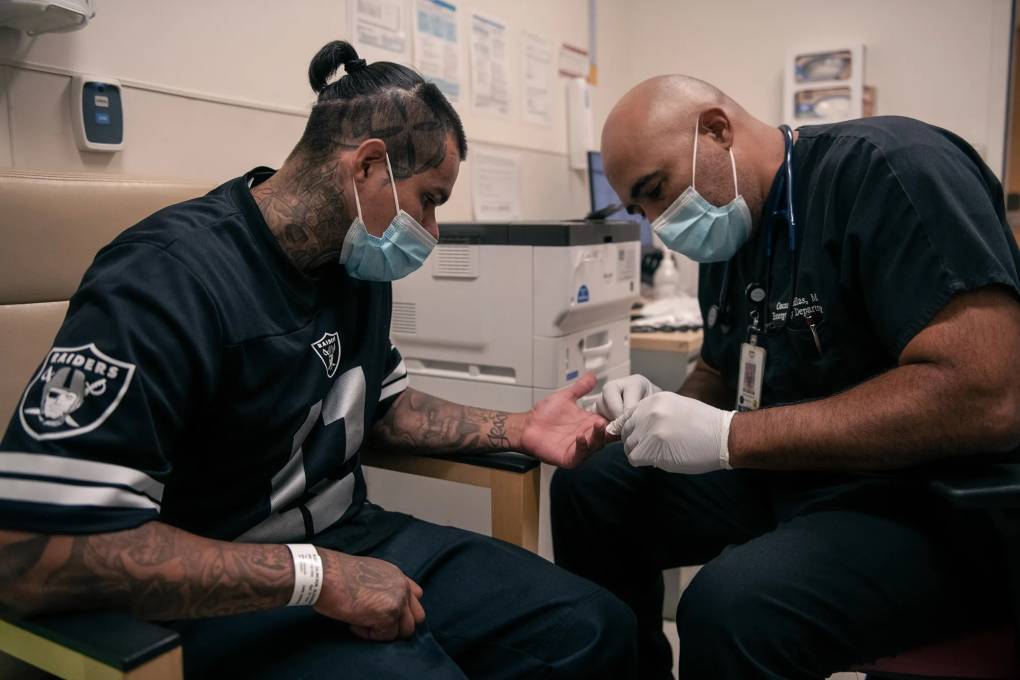
"caption": "California's new Office of Health Care Affordability is charged with capping price increases for consumers. It set a preliminary goal of limiting increases to 3% a year. Here, Dr. Oscar Casillas removes a pair of stitches from Alex’s hand at Martin Luther King Jr. Community Hospital on July 26, 2022.",
"description": null,
"title": "07262022_MLK-Hospital_PU_CM_29 copy",
"credit": "Pablo Unzueta for CalMatters",
"status": "inherit",
"altTag": "A doctor tends to a patient, both Latino males and wearing masks, in a doctor's office.",
"isLoading": false,
"fetchFailed": false
}
},
"audioPlayerReducer": {
"postId": "stream_live",
"isPaused": true,
"isPlaying": false,
"pfsActive": false,
"pledgeModalIsOpen": true,
"playerDrawerIsOpen": false,
"liveAudioPlayStartedAt": 0,
"liveAudioPlayContext": ""
},
"authorsReducer": {
"byline_news_12008703": {
"type": "authors",
"id": "byline_news_12008703",
"meta": {
"override": true
},
"slug": "byline_news_12008703",
"name": "\u003ca href=\"https://calmatters.org/author/kristen-hwang\">Kristen Hwang, \u003c/a>CalMatters",
"isLoading": false
},
"byline_news_12002516": {
"type": "authors",
"id": "byline_news_12002516",
"meta": {
"override": true
},
"slug": "byline_news_12002516",
"name": "Shaanth Nanguneri, CalMatters",
"isLoading": false
},
"byline_news_12002132": {
"type": "authors",
"id": "byline_news_12002132",
"meta": {
"override": true
},
"slug": "byline_news_12002132",
"name": " Kristen Hwang, CalMatters",
"isLoading": false
},
"byline_news_11997351": {
"type": "authors",
"id": "byline_news_11997351",
"meta": {
"override": true
},
"slug": "byline_news_11997351",
"name": "Ana B. Ibarra, CalMatters",
"isLoading": false
},
"byline_news_11989505": {
"type": "authors",
"id": "byline_news_11989505",
"meta": {
"override": true
},
"slug": "byline_news_11989505",
"name": "\u003ca href=\"https://kffhealthnews.org/news/author/tony-leys/\">Tony Leys\u003c/a> and \u003ca href=\"https://kffhealthnews.org/news/author/amy-maxmen/\">Amy Maxmen\u003c/a>, KFF Health News",
"isLoading": false
},
"byline_news_11988884": {
"type": "authors",
"id": "byline_news_11988884",
"meta": {
"override": true
},
"slug": "byline_news_11988884",
"name": "Ana B. Ibarra, CalMatters",
"isLoading": false
},
"byline_news_11975284": {
"type": "authors",
"id": "byline_news_11975284",
"meta": {
"override": true
},
"slug": "byline_news_11975284",
"name": "\u003ca href=\"https://calmatters.org/author/anaibarra/\">Ana B. Ibarra\u003c/a>",
"isLoading": false
},
"abandlamudi": {
"type": "authors",
"id": "11672",
"meta": {
"index": "authors_1716337520",
"id": "11672",
"found": true
},
"name": "Adhiti Bandlamudi",
"firstName": "Adhiti",
"lastName": "Bandlamudi",
"slug": "abandlamudi",
"email": "abandlamudi@kqed.org",
"display_author_email": false,
"staff_mastheads": [
"news"
],
"title": "KQED Housing Reporter",
"bio": "Adhiti Bandlamudi reports for KQED's Housing desk. She focuses on how housing gets built across the Bay Area. Before joining KQED in 2020, she reported for WUNC in Durham, North Carolina, WABE in Atlanta, Georgia and Capital Public Radio in Sacramento. In 2017, she was awarded a Kroc Fellowship at NPR where she reported on everything from sprinkles to the Golden State Killer's arrest. When she's not reporting, she's baking new recipes in her kitchen or watching movies with friends and family. She's originally from Georgia and has strong opinions about Great British Bake Off.",
"avatar": "https://secure.gravatar.com/avatar/868129c8b257bb99a3500e2c86a65400?s=600&d=mm&r=g",
"twitter": "oddity_adhiti",
"facebook": null,
"instagram": null,
"linkedin": null,
"sites": [
{
"site": "arts",
"roles": [
"author"
]
},
{
"site": "news",
"roles": [
"editor"
]
},
{
"site": "liveblog",
"roles": [
"author"
]
}
],
"headData": {
"title": "Adhiti Bandlamudi | KQED",
"description": "KQED Housing Reporter",
"ogImgSrc": "https://secure.gravatar.com/avatar/868129c8b257bb99a3500e2c86a65400?s=600&d=mm&r=g",
"twImgSrc": "https://secure.gravatar.com/avatar/868129c8b257bb99a3500e2c86a65400?s=600&d=mm&r=g"
},
"isLoading": false,
"link": "/author/abandlamudi"
},
"kmizuguchi": {
"type": "authors",
"id": "11739",
"meta": {
"index": "authors_1716337520",
"id": "11739",
"found": true
},
"name": "Keith Mizuguchi",
"firstName": "Keith",
"lastName": "Mizuguchi",
"slug": "kmizuguchi",
"email": "kmizuguchi@kqed.org",
"display_author_email": false,
"staff_mastheads": [],
"title": "KQED Contributor",
"bio": null,
"avatar": "https://secure.gravatar.com/avatar/64d8a7de0723d4099b9fe4e915136103febcc20809abce228ee4415bcb237023?s=600&d=blank&r=g",
"twitter": null,
"bluesky": null,
"facebook": null,
"instagram": null,
"linkedin": null,
"sites": [
{
"site": "news",
"roles": [
"editor"
]
},
{
"site": "science",
"roles": [
"editor"
]
}
],
"headData": {
"title": "Keith Mizuguchi | KQED",
"description": "KQED Contributor",
"ogImgSrc": "https://secure.gravatar.com/avatar/64d8a7de0723d4099b9fe4e915136103febcc20809abce228ee4415bcb237023?s=600&d=blank&r=g",
"twImgSrc": "https://secure.gravatar.com/avatar/64d8a7de0723d4099b9fe4e915136103febcc20809abce228ee4415bcb237023?s=600&d=blank&r=g"
},
"isLoading": false,
"link": "/author/kmizuguchi"
},
"jlara": {
"type": "authors",
"id": "11761",
"meta": {
"index": "authors_1716337520",
"id": "11761",
"found": true
},
"name": "Juan Carlos Lara",
"firstName": "Juan Carlos",
"lastName": "Lara",
"slug": "jlara",
"email": "jlara@kqed.org",
"display_author_email": false,
"staff_mastheads": [],
"title": "KQED Contributor",
"bio": null,
"avatar": "https://secure.gravatar.com/avatar/19e2052b9b05657c5ff2af2121846e9c?s=600&d=blank&r=g",
"twitter": null,
"facebook": null,
"instagram": null,
"linkedin": null,
"sites": [
{
"site": "arts",
"roles": [
"editor"
]
},
{
"site": "news",
"roles": [
"editor"
]
},
{
"site": "forum",
"roles": [
"editor"
]
},
{
"site": "liveblog",
"roles": [
"contributor"
]
}
],
"headData": {
"title": "Juan Carlos Lara | KQED",
"description": "KQED Contributor",
"ogImgSrc": "https://secure.gravatar.com/avatar/19e2052b9b05657c5ff2af2121846e9c?s=600&d=blank&r=g",
"twImgSrc": "https://secure.gravatar.com/avatar/19e2052b9b05657c5ff2af2121846e9c?s=600&d=blank&r=g"
},
"isLoading": false,
"link": "/author/jlara"
},
"kdebenedetti": {
"type": "authors",
"id": "11913",
"meta": {
"index": "authors_1716337520",
"id": "11913",
"found": true
},
"name": "Katie DeBenedetti",
"firstName": "Katie",
"lastName": "DeBenedetti",
"slug": "kdebenedetti",
"email": "kdebenedetti@kqed.org",
"display_author_email": false,
"staff_mastheads": [
"news",
"science"
],
"title": "KQED Contributor",
"bio": "Katie DeBenedetti is a digital reporter covering daily news for the Express Desk. Prior to joining KQED as a culture reporting intern in January 2024, she covered education and city government for the Napa Valley Register.",
"avatar": "https://secure.gravatar.com/avatar/6e31073cb8f7e4214ab03f42771d0f45?s=600&d=blank&r=g",
"twitter": null,
"facebook": null,
"instagram": null,
"linkedin": null,
"sites": [
{
"site": "news",
"roles": [
"author"
]
},
{
"site": "science",
"roles": [
"author"
]
},
{
"site": "liveblog",
"roles": [
"author"
]
}
],
"headData": {
"title": "Katie DeBenedetti | KQED",
"description": "KQED Contributor",
"ogImgSrc": "https://secure.gravatar.com/avatar/6e31073cb8f7e4214ab03f42771d0f45?s=600&d=blank&r=g",
"twImgSrc": "https://secure.gravatar.com/avatar/6e31073cb8f7e4214ab03f42771d0f45?s=600&d=blank&r=g"
},
"isLoading": false,
"link": "/author/kdebenedetti"
}
},
"pagesReducer": {
"news_tag_health-insurance": {
"type": "terms",
"id": "news_1054",
"meta": {
"index": "terms_1716263798",
"site": "news",
"id": "1054",
"score": 9.105365
},
"featImg": null,
"name": "health insurance",
"description": null,
"taxonomy": "tag",
"headData": {
"twImgId": null,
"twTitle": null,
"ogTitle": null,
"ogImgId": null,
"twDescription": null,
"description": null,
"title": "health insurance Archives | KQED News",
"ogDescription": null
},
"ttid": 1065,
"slug": "health-insurance",
"isLoading": false,
"title": "health insurance",
"pageMeta": {
"site": "news",
"WpPageTemplate": "page-topic-editorial",
"currentPage": 2
},
"blocks": [
{
"blockName": "kqed/post-list",
"attrs": {
"layout": "cardArticle2",
"query": "posts/news?tag=health-insurance",
"seeMore": false,
"paginated": true,
"page": 2
}
},
{
"blockName": "kqed/ad"
}
]
}
},
"pfsSessionReducer": {},
"postsReducer": {
"stream_live": {
"type": "live",
"id": "stream_live",
"audioUrl": "https://streams.kqed.org/kqedradio",
"title": "Live Stream",
"excerpt": "Live Stream information currently unavailable.",
"link": "/radio",
"featImg": "",
"label": {
"name": "KQED Live",
"link": "/"
}
},
"stream_kqedNewscast": {
"type": "posts",
"id": "stream_kqedNewscast",
"audioUrl": "https://www.kqed.org/.stream/anon/radio/RDnews/newscast.mp3?_=1",
"title": "KQED Newscast",
"featImg": "",
"label": {
"name": "88.5 FM",
"link": "/"
}
},
"news_12026891": {
"type": "posts",
"id": "news_12026891",
"meta": {
"index": "posts_1716263798",
"site": "news",
"id": "12026891",
"score": null,
"sort": [
1739543411000
]
},
"guestAuthors": [],
"slug": "california-lawmakers-push-protect-free-hiv-prevention-amid-legal-threats",
"title": "California Lawmakers Push to Protect Free HIV Prevention Amid Legal Threats",
"publishDate": 1739543411,
"format": "standard",
"headTitle": "California Lawmakers Push to Protect Free HIV Prevention Amid Legal Threats | KQED",
"labelTerm": {
"site": "news"
},
"content": "\u003cp>More than 40 years after the national HIV/AIDS epidemic began, San Francisco still holds the reminders — in memorials, in murals, in the stories of survivors and in the voids left by the tens of thousands of deaths — of the deep loss suffered during that time.\u003c/p>\n\u003cp>“I came of age as a gay man in the late 1980s during the absolute worst period in the AIDS crisis, with gay men and others having a mass die-off,” state Sen. Scott Wiener said. “It was absolutely terrifying.”\u003c/p>\n\u003cp>That story is not just one of loss but also eventual triumph. Medical advancements mean that people with HIV can live longer with minimal to no risk of transmitting the disease to partners. And highly effective preventative treatments like preexposure prophylaxis, better known as PrEP, help people avoid contracting HIV.\u003c/p>\n\u003cp>[ad fullwidth]\u003c/p>\n\u003cp>“When PrEP came around, for me and for so many other people, it was a game changer that we actually had a tool to protect our health and to stay negative,” said Wiener, who was the first elected official to publicly acknowledge being on the medication. “PrEP is an absolutely essential part of any strategy to end new HIV infections.”\u003c/p>\n\u003cp>Public health experts now hope to dramatically reduce the number of HIV transmissions by the end of the decade, but a lawsuit filed by a business in Texas against parts of the Affordable Care Act could derail ambitions.\u003c/p>\n\u003cfigure id=\"attachment_12004484\" class=\"wp-caption aligncenter\" style=\"max-width: 2000px\">\u003cimg loading=\"lazy\" decoding=\"async\" class=\"size-full wp-image-12004484\" src=\"https://cdn.kqed.org/wp-content/uploads/sites/10/2024/09/AIDSLifecycleGetty1.jpg\" alt=\"\" width=\"2000\" height=\"1271\" srcset=\"https://cdn.kqed.org/wp-content/uploads/sites/10/2024/09/AIDSLifecycleGetty1.jpg 2000w, https://cdn.kqed.org/wp-content/uploads/sites/10/2024/09/AIDSLifecycleGetty1-800x508.jpg 800w, https://cdn.kqed.org/wp-content/uploads/sites/10/2024/09/AIDSLifecycleGetty1-1020x648.jpg 1020w, https://cdn.kqed.org/wp-content/uploads/sites/10/2024/09/AIDSLifecycleGetty1-160x102.jpg 160w, https://cdn.kqed.org/wp-content/uploads/sites/10/2024/09/AIDSLifecycleGetty1-1536x976.jpg 1536w, https://cdn.kqed.org/wp-content/uploads/sites/10/2024/09/AIDSLifecycleGetty1-1920x1220.jpg 1920w\" sizes=\"auto, (max-width: 2000px) 100vw, 2000px\">\u003cfigcaption class=\"wp-caption-text\">A crowd cheers on cyclists at the beginning of the second annual AIDS/LifeCycle event on June 8, 2003, in San Francisco, California. More than 1,500 cyclists are taking part in a 585-mile tour from San Francisco to Los Angeles over seven days to raise money for AIDS and HIV services. \u003ccite>(Justin Sullivan/Getty Images)\u003c/cite>\u003c/figcaption>\u003c/figure>\n\u003cp>The lawsuit, currently under review by the Supreme Court, questions the constitutionality of a mandate requiring that health care providers offer some preventative care, including for HIV, at no cost. In response, Bay Area legislators are pushing to enshrine the no-cost mandate for HIV prevention medication in state law.\u003c/p>\n\u003cp>Wiener and Assemblymember Matt Haney introduced legislation in the state Assembly on Thursday that seeks to protect the no-cost-sharing requirement for existing HIV prevention treatments — and for treatments that could become publicly available in the coming years.\u003c/p>\n\u003cp>“There are so many people who have lost their lives, who have lost loved ones over a number of decades,” Haney said. “California, I think, has a responsibility — certainly San Francisco does as well, to step up and say this medication needs to be protected. It needs to be made available for all who need it.”\u003c/p>\n\u003cp>[aside postID=news_11968984 hero='https://ww2.kqed.org/app/uploads/sites/10/2023/12/231204-WORLD-AIDS-DAY-GETTY-JS-KQED-1020x645.jpg']\u003c/p>\n\u003ch2>A Promising Future for PrEP\u003c/h2>\n\u003cp>In 1987, San Francisco reported roughly 5,000 new HIV cases per year. In recent years, that figure has fallen below 200 and is trending downward.\u003c/p>\n\u003cp>Public health experts attribute that drop in large part to the development of preventative treatments like PrEP. The medication most commonly comes in pill form and is taken daily or before sexual activity to reduce transmission risk. Postexposure prophylaxis, known as PEP, is taken in the hours after sexual activity for the same purpose.\u003c/p>\n\u003cp>The Food and Drug Administration approved PrEP in 2012. In the years since, San Francisco has seen a 67% decline in new HIV diagnoses, according to Susan Buchbinder, director of Bridge HIV, an HIV prevention research unit within the San Francisco Department of Public Health.\u003c/p>\n\u003cp>“The U.S. Preventive Services Task Force gave PrEP an A rating, which means that there’s really substantial evidence that it makes a dramatic difference in prevention of HIV acquisition,” Buchbinder said. “So it should be covered for everyone, free of charge. That’s not always the case, but it should be the case. And it really would make a huge difference.”\u003c/p>\n\u003cp>An injectable version of PrEP requires a shot every two months, and a dosage that lasts six months is currently under FDA review. The proposed legislation would require healthcare providers to offer an option for oral medication and different injection cycles.\u003c/p>\n\u003cfigure id=\"attachment_12010450\" class=\"wp-caption aligncenter\" style=\"max-width: 2000px\">\u003cimg loading=\"lazy\" decoding=\"async\" class=\"size-full wp-image-12010450\" src=\"https://cdn.kqed.org/wp-content/uploads/sites/10/2024/10/241021-SFUSD-BREED-STATE-PRESSER-MD-09-KQED.jpg\" alt=\"\" width=\"2000\" height=\"1333\" srcset=\"https://cdn.kqed.org/wp-content/uploads/sites/10/2024/10/241021-SFUSD-BREED-STATE-PRESSER-MD-09-KQED.jpg 2000w, https://cdn.kqed.org/wp-content/uploads/sites/10/2024/10/241021-SFUSD-BREED-STATE-PRESSER-MD-09-KQED-800x533.jpg 800w, https://cdn.kqed.org/wp-content/uploads/sites/10/2024/10/241021-SFUSD-BREED-STATE-PRESSER-MD-09-KQED-1020x680.jpg 1020w, https://cdn.kqed.org/wp-content/uploads/sites/10/2024/10/241021-SFUSD-BREED-STATE-PRESSER-MD-09-KQED-160x107.jpg 160w, https://cdn.kqed.org/wp-content/uploads/sites/10/2024/10/241021-SFUSD-BREED-STATE-PRESSER-MD-09-KQED-1536x1024.jpg 1536w, https://cdn.kqed.org/wp-content/uploads/sites/10/2024/10/241021-SFUSD-BREED-STATE-PRESSER-MD-09-KQED-1920x1280.jpg 1920w\" sizes=\"auto, (max-width: 2000px) 100vw, 2000px\">\u003cfigcaption class=\"wp-caption-text\">State Sen. Scott Wiener speaks at a press event in front of the SFUSD offices in San Francisco on Oct. 21, 2024. \u003ccite>(Martin do Nascimento/KQED)\u003c/cite>\u003c/figcaption>\u003c/figure>\n\u003cp>“What we want to do is not only ensure that insurance providers in California cover this critical preventative care that can help us eliminate HIV transmissions,” Haney said. “But also that we cover these new forms of medication that will be even more effective because they cover people for longer periods of time.”\u003c/p>\n\u003cp>Buchbinder believes the six-month version of PrEP will be enticing.\u003c/p>\n\u003cp>“We know that an every-six-month injectable will appeal to some people and could really make a difference in increasing the number of people who are on PrEP because, for some people, taking a daily pill isn’t very practical,” Buchbinder said.\u003c/p>\n\u003cp>Working Toward Zero HIV Transmissions Eradicating HIV in the United States has been a goal for many since the epidemic first broke out. In 2019, President Donald Trump set a deadline to end the disease within a decade.\u003c/p>\n\u003cp>“Scientific breakthroughs have brought a once-distant dream within reach. My budget will ask Democrats and Republicans to make the needed commitment to eliminate the HIV epidemic in the United States within 10 years,” Trump said during his State of the Union address.[aside postID=forum_2010101883856 hero='https://ww2.kqed.org/app/uploads/sites/43/2021/06/GettyImages-72693997-1-1020x574.jpg']An initiative led by the U.S. Department of Health and Human Services, Ending the HIV Epidemic in the U.S., set out to decrease transmissions by 75% by 2025 and 90% by 2030. However, 2023 had more than 38,000 cases nationwide, according to preliminary data. That’s up from the more than 36,000 documented cases in 2019, the year Trump made his pledge.\u003c/p>\n\u003cp>Locally, things look more hopeful. Not only are new yearly transmissions in the low hundreds, but other data points look promising as well. Of the people who have HIV in San Francisco, 95% are estimated to be aware of their status, and more than 90% receive care within one month of diagnosis, according to federal data.\u003c/p>\n\u003cp>“So many people have not only dreamed but have worked towards this reality that we are now able to actualize,” Haney said. “Because of this medication, we can actually get to zero new transmissions a year, and there are so many people who have lost their lives, who have lost loved ones over a number of decades who have dreamed of this moment.”\u003c/p>\n\u003cp>Buchbinder acknowledged it is an aggressive target.\u003c/p>\n\u003cp>“We are really working hard on that goal here in San Francisco … We think that there need to be additional tools that would help get us towards that goal.”\u003c/p>\n\u003cp>While Buchbinder did not express confidence that new cases could be all but eliminated by the turn of the decade, she was confident that keeping the medication affordable and accessible is key to continuing current trends.\u003c/p>\n\u003cp>“Cost is always an issue, particularly for preventive treatments,” she said. “People often don’t have the funds to pay for PrEP, and so having government coverage of that and having insurance coverage of that is really a key part of [the] rollout of PrEP.\u003c/p>\n\u003cp>“We know that when people lose their insurance coverage, they often go off of PrEP, and that’s when they may be vulnerable to acquiring HIV.”\u003c/p>\n\u003cp>[ad floatright]\u003c/p>\n",
"blocks": [],
"excerpt": "State Sen. Scott Wiener and Assemblymember Matt Haney introduced legislation on Thursday that would protect the no-cost-sharing requirement for existing HIV prevention treatments.",
"status": "publish",
"parent": 0,
"modified": 1739906676,
"stats": {
"hasAudio": false,
"hasVideo": false,
"hasChartOrMap": false,
"iframeSrcs": [],
"hasGoogleForm": false,
"hasGallery": false,
"hasHearkenModule": false,
"hasPolis": false,
"paragraphCount": 28,
"wordCount": 1304
},
"headData": {
"title": "California Lawmakers Push to Protect Free HIV Prevention Amid Legal Threats | KQED",
"description": "State Sen. Scott Wiener and Assemblymember Matt Haney introduced legislation on Thursday that would protect the no-cost-sharing requirement for existing HIV prevention treatments.",
"ogTitle": "",
"ogDescription": "",
"ogImgId": "",
"twTitle": "",
"twDescription": "",
"twImgId": "",
"schema": {
"@context": "https://schema.org",
"@type": "NewsArticle",
"headline": "California Lawmakers Push to Protect Free HIV Prevention Amid Legal Threats",
"datePublished": "2025-02-14T06:30:11-08:00",
"dateModified": "2025-02-18T11:24:36-08:00",
"image": "https://cdn.kqed.org/wp-content/uploads/2020/02/KQED-OG-Image@1x.png",
"isAccessibleForFree": "True",
"publisher": {
"@type": "NewsMediaOrganization",
"@id": "https://www.kqed.org/#organization",
"name": "KQED",
"logo": "https://cdn.kqed.org/wp-content/uploads/2020/02/KQED-OG-Image@1x.png",
"url": "https://www.kqed.org",
"sameAs": [
"https://www.facebook.com/KQED",
"https://twitter.com/KQED",
"https://www.instagram.com/kqed/",
"https://www.tiktok.com/@kqedofficial",
"https://www.linkedin.com/company/kqed",
"https://www.youtube.com/channel/UCeC0IOo7i1P_61zVUWbJ4nw"
]
}
}
},
"audioUrl": "https://traffic.omny.fm/d/clips/0af137ef-751e-4b19-a055-aaef00d2d578/ffca7e9f-6831-41c5-bcaf-aaef00f5a073/275e3b89-9c2e-4ccc-a60f-b283011ae02e/audio.mp3",
"sticky": false,
"nprStoryId": "kqed-12026891",
"excludeFromSiteSearch": "Include",
"articleAge": "0",
"path": "/news/12026891/california-lawmakers-push-protect-free-hiv-prevention-amid-legal-threats",
"audioTrackLength": null,
"parsedContent": [
{
"type": "contentString",
"content": "\u003cdiv class=\"post-body\">\u003cp>\u003cp>More than 40 years after the national HIV/AIDS epidemic began, San Francisco still holds the reminders — in memorials, in murals, in the stories of survivors and in the voids left by the tens of thousands of deaths — of the deep loss suffered during that time.\u003c/p>\n\u003cp>“I came of age as a gay man in the late 1980s during the absolute worst period in the AIDS crisis, with gay men and others having a mass die-off,” state Sen. Scott Wiener said. “It was absolutely terrifying.”\u003c/p>\n\u003cp>That story is not just one of loss but also eventual triumph. Medical advancements mean that people with HIV can live longer with minimal to no risk of transmitting the disease to partners. And highly effective preventative treatments like preexposure prophylaxis, better known as PrEP, help people avoid contracting HIV.\u003c/p>\n\u003cp>\u003c/p>\u003c/div>",
"attributes": {
"named": {},
"numeric": []
}
},
{
"type": "component",
"content": "",
"name": "ad",
"attributes": {
"named": {
"label": "fullwidth"
},
"numeric": [
"fullwidth"
]
}
},
{
"type": "contentString",
"content": "\u003cdiv class=\"post-body\">\u003cp>\u003c/p>\n\u003cp>“When PrEP came around, for me and for so many other people, it was a game changer that we actually had a tool to protect our health and to stay negative,” said Wiener, who was the first elected official to publicly acknowledge being on the medication. “PrEP is an absolutely essential part of any strategy to end new HIV infections.”\u003c/p>\n\u003cp>Public health experts now hope to dramatically reduce the number of HIV transmissions by the end of the decade, but a lawsuit filed by a business in Texas against parts of the Affordable Care Act could derail ambitions.\u003c/p>\n\u003cfigure id=\"attachment_12004484\" class=\"wp-caption aligncenter\" style=\"max-width: 2000px\">\u003cimg loading=\"lazy\" decoding=\"async\" class=\"size-full wp-image-12004484\" src=\"https://cdn.kqed.org/wp-content/uploads/sites/10/2024/09/AIDSLifecycleGetty1.jpg\" alt=\"\" width=\"2000\" height=\"1271\" srcset=\"https://cdn.kqed.org/wp-content/uploads/sites/10/2024/09/AIDSLifecycleGetty1.jpg 2000w, https://cdn.kqed.org/wp-content/uploads/sites/10/2024/09/AIDSLifecycleGetty1-800x508.jpg 800w, https://cdn.kqed.org/wp-content/uploads/sites/10/2024/09/AIDSLifecycleGetty1-1020x648.jpg 1020w, https://cdn.kqed.org/wp-content/uploads/sites/10/2024/09/AIDSLifecycleGetty1-160x102.jpg 160w, https://cdn.kqed.org/wp-content/uploads/sites/10/2024/09/AIDSLifecycleGetty1-1536x976.jpg 1536w, https://cdn.kqed.org/wp-content/uploads/sites/10/2024/09/AIDSLifecycleGetty1-1920x1220.jpg 1920w\" sizes=\"auto, (max-width: 2000px) 100vw, 2000px\">\u003cfigcaption class=\"wp-caption-text\">A crowd cheers on cyclists at the beginning of the second annual AIDS/LifeCycle event on June 8, 2003, in San Francisco, California. More than 1,500 cyclists are taking part in a 585-mile tour from San Francisco to Los Angeles over seven days to raise money for AIDS and HIV services. \u003ccite>(Justin Sullivan/Getty Images)\u003c/cite>\u003c/figcaption>\u003c/figure>\n\u003cp>The lawsuit, currently under review by the Supreme Court, questions the constitutionality of a mandate requiring that health care providers offer some preventative care, including for HIV, at no cost. In response, Bay Area legislators are pushing to enshrine the no-cost mandate for HIV prevention medication in state law.\u003c/p>\n\u003cp>Wiener and Assemblymember Matt Haney introduced legislation in the state Assembly on Thursday that seeks to protect the no-cost-sharing requirement for existing HIV prevention treatments — and for treatments that could become publicly available in the coming years.\u003c/p>\n\u003cp>“There are so many people who have lost their lives, who have lost loved ones over a number of decades,” Haney said. “California, I think, has a responsibility — certainly San Francisco does as well, to step up and say this medication needs to be protected. It needs to be made available for all who need it.”\u003c/p>\n\u003cp>\u003c/p>\u003c/div>",
"attributes": {
"named": {},
"numeric": []
}
},
{
"type": "component",
"content": "",
"name": "aside",
"attributes": {
"named": {
"postid": "news_11968984",
"hero": "https://ww2.kqed.org/app/uploads/sites/10/2023/12/231204-WORLD-AIDS-DAY-GETTY-JS-KQED-1020x645.jpg",
"label": ""
},
"numeric": []
}
},
{
"type": "contentString",
"content": "\u003cdiv class=\"post-body\">\u003cp>\u003c/p>\n\u003ch2>A Promising Future for PrEP\u003c/h2>\n\u003cp>In 1987, San Francisco reported roughly 5,000 new HIV cases per year. In recent years, that figure has fallen below 200 and is trending downward.\u003c/p>\n\u003cp>Public health experts attribute that drop in large part to the development of preventative treatments like PrEP. The medication most commonly comes in pill form and is taken daily or before sexual activity to reduce transmission risk. Postexposure prophylaxis, known as PEP, is taken in the hours after sexual activity for the same purpose.\u003c/p>\n\u003cp>The Food and Drug Administration approved PrEP in 2012. In the years since, San Francisco has seen a 67% decline in new HIV diagnoses, according to Susan Buchbinder, director of Bridge HIV, an HIV prevention research unit within the San Francisco Department of Public Health.\u003c/p>\n\u003cp>“The U.S. Preventive Services Task Force gave PrEP an A rating, which means that there’s really substantial evidence that it makes a dramatic difference in prevention of HIV acquisition,” Buchbinder said. “So it should be covered for everyone, free of charge. That’s not always the case, but it should be the case. And it really would make a huge difference.”\u003c/p>\n\u003cp>An injectable version of PrEP requires a shot every two months, and a dosage that lasts six months is currently under FDA review. The proposed legislation would require healthcare providers to offer an option for oral medication and different injection cycles.\u003c/p>\n\u003cfigure id=\"attachment_12010450\" class=\"wp-caption aligncenter\" style=\"max-width: 2000px\">\u003cimg loading=\"lazy\" decoding=\"async\" class=\"size-full wp-image-12010450\" src=\"https://cdn.kqed.org/wp-content/uploads/sites/10/2024/10/241021-SFUSD-BREED-STATE-PRESSER-MD-09-KQED.jpg\" alt=\"\" width=\"2000\" height=\"1333\" srcset=\"https://cdn.kqed.org/wp-content/uploads/sites/10/2024/10/241021-SFUSD-BREED-STATE-PRESSER-MD-09-KQED.jpg 2000w, https://cdn.kqed.org/wp-content/uploads/sites/10/2024/10/241021-SFUSD-BREED-STATE-PRESSER-MD-09-KQED-800x533.jpg 800w, https://cdn.kqed.org/wp-content/uploads/sites/10/2024/10/241021-SFUSD-BREED-STATE-PRESSER-MD-09-KQED-1020x680.jpg 1020w, https://cdn.kqed.org/wp-content/uploads/sites/10/2024/10/241021-SFUSD-BREED-STATE-PRESSER-MD-09-KQED-160x107.jpg 160w, https://cdn.kqed.org/wp-content/uploads/sites/10/2024/10/241021-SFUSD-BREED-STATE-PRESSER-MD-09-KQED-1536x1024.jpg 1536w, https://cdn.kqed.org/wp-content/uploads/sites/10/2024/10/241021-SFUSD-BREED-STATE-PRESSER-MD-09-KQED-1920x1280.jpg 1920w\" sizes=\"auto, (max-width: 2000px) 100vw, 2000px\">\u003cfigcaption class=\"wp-caption-text\">State Sen. Scott Wiener speaks at a press event in front of the SFUSD offices in San Francisco on Oct. 21, 2024. \u003ccite>(Martin do Nascimento/KQED)\u003c/cite>\u003c/figcaption>\u003c/figure>\n\u003cp>“What we want to do is not only ensure that insurance providers in California cover this critical preventative care that can help us eliminate HIV transmissions,” Haney said. “But also that we cover these new forms of medication that will be even more effective because they cover people for longer periods of time.”\u003c/p>\n\u003cp>Buchbinder believes the six-month version of PrEP will be enticing.\u003c/p>\n\u003cp>“We know that an every-six-month injectable will appeal to some people and could really make a difference in increasing the number of people who are on PrEP because, for some people, taking a daily pill isn’t very practical,” Buchbinder said.\u003c/p>\n\u003cp>Working Toward Zero HIV Transmissions Eradicating HIV in the United States has been a goal for many since the epidemic first broke out. In 2019, President Donald Trump set a deadline to end the disease within a decade.\u003c/p>\n\u003cp>“Scientific breakthroughs have brought a once-distant dream within reach. My budget will ask Democrats and Republicans to make the needed commitment to eliminate the HIV epidemic in the United States within 10 years,” Trump said during his State of the Union address.\u003c/p>\u003c/div>",
"attributes": {
"named": {},
"numeric": []
}
},
{
"type": "component",
"content": "",
"name": "aside",
"attributes": {
"named": {
"postid": "forum_2010101883856",
"hero": "https://ww2.kqed.org/app/uploads/sites/43/2021/06/GettyImages-72693997-1-1020x574.jpg",
"label": ""
},
"numeric": []
}
},
{
"type": "contentString",
"content": "\u003cdiv class=\"post-body\">\u003cp>An initiative led by the U.S. Department of Health and Human Services, Ending the HIV Epidemic in the U.S., set out to decrease transmissions by 75% by 2025 and 90% by 2030. However, 2023 had more than 38,000 cases nationwide, according to preliminary data. That’s up from the more than 36,000 documented cases in 2019, the year Trump made his pledge.\u003c/p>\n\u003cp>Locally, things look more hopeful. Not only are new yearly transmissions in the low hundreds, but other data points look promising as well. Of the people who have HIV in San Francisco, 95% are estimated to be aware of their status, and more than 90% receive care within one month of diagnosis, according to federal data.\u003c/p>\n\u003cp>“So many people have not only dreamed but have worked towards this reality that we are now able to actualize,” Haney said. “Because of this medication, we can actually get to zero new transmissions a year, and there are so many people who have lost their lives, who have lost loved ones over a number of decades who have dreamed of this moment.”\u003c/p>\n\u003cp>Buchbinder acknowledged it is an aggressive target.\u003c/p>\n\u003cp>“We are really working hard on that goal here in San Francisco … We think that there need to be additional tools that would help get us towards that goal.”\u003c/p>\n\u003cp>While Buchbinder did not express confidence that new cases could be all but eliminated by the turn of the decade, she was confident that keeping the medication affordable and accessible is key to continuing current trends.\u003c/p>\n\u003cp>“Cost is always an issue, particularly for preventive treatments,” she said. “People often don’t have the funds to pay for PrEP, and so having government coverage of that and having insurance coverage of that is really a key part of [the] rollout of PrEP.\u003c/p>\n\u003cp>“We know that when people lose their insurance coverage, they often go off of PrEP, and that’s when they may be vulnerable to acquiring HIV.”\u003c/p>\n\u003cp>\u003c/p>\u003c/div>",
"attributes": {
"named": {},
"numeric": []
}
},
{
"type": "component",
"content": "",
"name": "ad",
"attributes": {
"named": {
"label": "floatright"
},
"numeric": [
"floatright"
]
}
},
{
"type": "contentString",
"content": "\u003cdiv class=\"post-body\">\u003cp>\u003c/p>\n\u003c/div>\u003c/p>",
"attributes": {
"named": {},
"numeric": []
}
}
],
"link": "/news/12026891/california-lawmakers-push-protect-free-hiv-prevention-amid-legal-threats",
"authors": [
"11761"
],
"categories": [
"news_457",
"news_8",
"news_13"
],
"tags": [
"news_18538",
"news_548",
"news_1323",
"news_27626",
"news_34377",
"news_18543",
"news_1054",
"news_34036",
"news_29548",
"news_25468",
"news_17968",
"news_19960",
"news_38",
"news_1217"
],
"featImg": "news_11993605",
"label": "news"
},
"news_12018653": {
"type": "posts",
"id": "news_12018653",
"meta": {
"index": "posts_1716263798",
"site": "news",
"id": "12018653",
"score": null,
"sort": [
1734480013000
]
},
"guestAuthors": [],
"slug": "california-fines-health-insurer-mishandling-complaints-delayed-denied-claims",
"title": "California Fines Health Insurer for Mishandling Complaints of Delayed, Denied Claims",
"publishDate": 1734480013,
"format": "standard",
"headTitle": "California Fines Health Insurer for Mishandling Complaints of Delayed, Denied Claims | KQED",
"labelTerm": {
"site": "news"
},
"content": "\u003cp>As national scrutiny of health insurance intensifies, California officials have fined \u003ca href=\"https://www.kqed.org/stateofhealth/tag/anthem-blue-cross\">Anthem Blue Cross\u003c/a> $3.5 million for mishandling member complaints over coverage denials and other issues.\u003c/p>\n\u003cp>The fine stems from the company’s failure to handle more than 10,000 complaints from its members in a timely manner over a two-year period, according to the state’s Department of Managed Health Care. Patient care advocate Linda Winkler Garvin said such behavior can be medically dangerous for patients and strain their mental health as well.\u003c/p>\n\u003cp>“It affects their life because many people — whether they [have] cancer or have chronic diseases or an acute problem — need that authorization as soon as possible and within those required days,” she told KQED. “It’s deleterious to their health to not get these on time.”\u003c/p>\n\u003cp>[ad fullwidth]\u003c/p>\n\u003cp>DMHC began investigating Anthem Blue Cross, also known as Blue Cross of California, after the company reported a large number of late acknowledgment and resolution letters. These are sent when a patient files a complaint, otherwise known as an appeal or grievance, after receiving a denial for health care services they requested or dealing with another delay or modification to their care.\u003c/p>\n\u003cp>California law requires companies to acknowledge receiving the complaint within five days, but DMHC found that between July 2020 and September 2022, Anthem did not send acknowledgments of 11,670 member grievances within that window. More than 1,600 were not acknowledged for more than 51 days.\u003c/p>\n\u003cp>Anthem also failed to resolve grievances and issue a written resolution within the standard 30-day window in many cases. More than 4,000 resolution letters were sent out late, including 1,630 after more than 51 days.\u003c/p>\n\u003cp>[aside postID=news_12016821 hero='https://cdn.kqed.org/wp-content/uploads/sites/10/2024/12/241205-SCCTRASH-JG-5-1020x680.jpg']\u003c/p>\n\u003cp>Garvin said that there are many cases in which getting timely responses from health insurers is imperative.\u003c/p>\n\u003cp>Patients who need medications to treat chronic or mental health conditions could lose progress if they are no longer able to get them covered by insurance.\u003c/p>\n\u003cp>“If there’s periods of weeks or days that the individual or the patient does not get that treatment because it’s delayed authorization, it just exacerbates the problem,” she said.\u003c/p>\n\u003cp>There are also acute injuries or cancer diagnoses that require time-sensitive procedures.\u003c/p>\n\u003cp>Plus, waiting on hold, following up on delayed claims or trying to get an explanation for why a claim was denied can be extremely stressful and frustrating for patients.\u003c/p>\n\u003cp>“It affects them physically and emotionally,” Garvin said. “I’m talking to people, and they’re calling 12 times, 20 times and many times, people don’t get back to them. If they do, they say there’s a delay and don’t give a particular reason.”\u003c/p>\n\u003cp>“It puts patients through an ordeal they should not have to go through,” she continued.\u003c/p>\n\u003cp>Anthem said it has collaborated with DMHC to address the matter and takes member concerns seriously. DMHC said the company has paid the fine.\u003c/p>\n\u003cp>“As part of our commitment to improving the member experience, we’ve made meaningful updates to our grievance and appeals process and invested in advanced system enhancements,” an Anthem Blue Cross spokesperson said. “These changes are designed to simplify the health care journey and better serve our members.”\u003c/p>\n\u003cp>\u003c/p>\n",
"blocks": [],
"excerpt": "Anthem Blue Cross has paid a $3.5 million fine for failing to handle more than 10,000 member complaints in a timely manner over a two-year period, state officials said.",
"status": "publish",
"parent": 0,
"modified": 1738186031,
"stats": {
"hasAudio": false,
"hasVideo": false,
"hasChartOrMap": false,
"iframeSrcs": [],
"hasGoogleForm": false,
"hasGallery": false,
"hasHearkenModule": false,
"hasPolis": false,
"paragraphCount": 18,
"wordCount": 581
},
"headData": {
"title": "California Fines Health Insurer for Mishandling Complaints of Delayed, Denied Claims | KQED",
"description": "Anthem Blue Cross has paid a $3.5 million fine for failing to handle more than 10,000 member complaints in a timely manner over a two-year period, state officials said.",
"ogTitle": "",
"ogDescription": "",
"ogImgId": "",
"twTitle": "",
"twDescription": "",
"twImgId": "",
"schema": {
"@context": "https://schema.org",
"@type": "NewsArticle",
"headline": "California Fines Health Insurer for Mishandling Complaints of Delayed, Denied Claims",
"datePublished": "2024-12-17T16:00:13-08:00",
"dateModified": "2025-01-29T13:27:11-08:00",
"image": "https://cdn.kqed.org/wp-content/uploads/2020/02/KQED-OG-Image@1x.png",
"isAccessibleForFree": "True",
"publisher": {
"@type": "NewsMediaOrganization",
"@id": "https://www.kqed.org/#organization",
"name": "KQED",
"logo": "https://cdn.kqed.org/wp-content/uploads/2020/02/KQED-OG-Image@1x.png",
"url": "https://www.kqed.org",
"sameAs": [
"https://www.facebook.com/KQED",
"https://twitter.com/KQED",
"https://www.instagram.com/kqed/",
"https://www.tiktok.com/@kqedofficial",
"https://www.linkedin.com/company/kqed",
"https://www.youtube.com/channel/UCeC0IOo7i1P_61zVUWbJ4nw"
]
}
}
},
"sticky": false,
"nprStoryId": "kqed-12018653",
"excludeFromSiteSearch": "Include",
"articleAge": "0",
"path": "/news/12018653/california-fines-health-insurer-mishandling-complaints-delayed-denied-claims",
"audioTrackLength": null,
"parsedContent": [
{
"type": "contentString",
"content": "\u003cdiv class=\"post-body\">\u003cp>\u003cp>As national scrutiny of health insurance intensifies, California officials have fined \u003ca href=\"https://www.kqed.org/stateofhealth/tag/anthem-blue-cross\">Anthem Blue Cross\u003c/a> $3.5 million for mishandling member complaints over coverage denials and other issues.\u003c/p>\n\u003cp>The fine stems from the company’s failure to handle more than 10,000 complaints from its members in a timely manner over a two-year period, according to the state’s Department of Managed Health Care. Patient care advocate Linda Winkler Garvin said such behavior can be medically dangerous for patients and strain their mental health as well.\u003c/p>\n\u003cp>“It affects their life because many people — whether they [have] cancer or have chronic diseases or an acute problem — need that authorization as soon as possible and within those required days,” she told KQED. “It’s deleterious to their health to not get these on time.”\u003c/p>\n\u003cp>\u003c/p>\u003c/div>",
"attributes": {
"named": {},
"numeric": []
}
},
{
"type": "component",
"content": "",
"name": "ad",
"attributes": {
"named": {
"label": "fullwidth"
},
"numeric": [
"fullwidth"
]
}
},
{
"type": "contentString",
"content": "\u003cdiv class=\"post-body\">\u003cp>\u003c/p>\n\u003cp>DMHC began investigating Anthem Blue Cross, also known as Blue Cross of California, after the company reported a large number of late acknowledgment and resolution letters. These are sent when a patient files a complaint, otherwise known as an appeal or grievance, after receiving a denial for health care services they requested or dealing with another delay or modification to their care.\u003c/p>\n\u003cp>California law requires companies to acknowledge receiving the complaint within five days, but DMHC found that between July 2020 and September 2022, Anthem did not send acknowledgments of 11,670 member grievances within that window. More than 1,600 were not acknowledged for more than 51 days.\u003c/p>\n\u003cp>Anthem also failed to resolve grievances and issue a written resolution within the standard 30-day window in many cases. More than 4,000 resolution letters were sent out late, including 1,630 after more than 51 days.\u003c/p>\n\u003cp>\u003c/p>\u003c/div>",
"attributes": {
"named": {},
"numeric": []
}
},
{
"type": "component",
"content": "",
"name": "aside",
"attributes": {
"named": {
"postid": "news_12016821",
"hero": "https://cdn.kqed.org/wp-content/uploads/sites/10/2024/12/241205-SCCTRASH-JG-5-1020x680.jpg",
"label": ""
},
"numeric": []
}
},
{
"type": "contentString",
"content": "\u003cdiv class=\"post-body\">\u003cp>\u003c/p>\n\u003cp>Garvin said that there are many cases in which getting timely responses from health insurers is imperative.\u003c/p>\n\u003cp>Patients who need medications to treat chronic or mental health conditions could lose progress if they are no longer able to get them covered by insurance.\u003c/p>\n\u003cp>“If there’s periods of weeks or days that the individual or the patient does not get that treatment because it’s delayed authorization, it just exacerbates the problem,” she said.\u003c/p>\n\u003cp>There are also acute injuries or cancer diagnoses that require time-sensitive procedures.\u003c/p>\n\u003cp>Plus, waiting on hold, following up on delayed claims or trying to get an explanation for why a claim was denied can be extremely stressful and frustrating for patients.\u003c/p>\n\u003cp>“It affects them physically and emotionally,” Garvin said. “I’m talking to people, and they’re calling 12 times, 20 times and many times, people don’t get back to them. If they do, they say there’s a delay and don’t give a particular reason.”\u003c/p>\n\u003cp>“It puts patients through an ordeal they should not have to go through,” she continued.\u003c/p>\n\u003cp>Anthem said it has collaborated with DMHC to address the matter and takes member concerns seriously. DMHC said the company has paid the fine.\u003c/p>\n\u003cp>“As part of our commitment to improving the member experience, we’ve made meaningful updates to our grievance and appeals process and invested in advanced system enhancements,” an Anthem Blue Cross spokesperson said. “These changes are designed to simplify the health care journey and better serve our members.”\u003c/p>\n\u003cp>\u003c/p>\n\u003c/div>\u003c/p>",
"attributes": {
"named": {},
"numeric": []
}
}
],
"link": "/news/12018653/california-fines-health-insurer-mishandling-complaints-delayed-denied-claims",
"authors": [
"11913"
],
"categories": [
"news_31795",
"news_457",
"news_8"
],
"tags": [
"news_1053",
"news_18538",
"news_18543",
"news_1054"
],
"featImg": "news_12018655",
"label": "news"
},
"news_12017407": {
"type": "posts",
"id": "news_12017407",
"meta": {
"index": "posts_1716263798",
"site": "news",
"id": "12017407",
"score": null,
"sort": [
1733853821000
]
},
"guestAuthors": [],
"slug": "bay-area-ties-luigi-mangione-suspect-ceos-killing-raise-questions",
"title": "Bay Area Ties of Luigi Mangione, Suspect in CEO’s Killing, Raise Questions",
"publishDate": 1733853821,
"format": "standard",
"headTitle": "Bay Area Ties of Luigi Mangione, Suspect in CEO’s Killing, Raise Questions | KQED",
"labelTerm": {
"site": "news"
},
"content": "\u003cp>\u003cem>Updated 12:38 p.m. Tuesday \u003c/em>\u003c/p>\n\u003cp>Luigi Mangione, the 26-year-old man charged with the murder of UnitedHealthcare’s CEO, has \u003ca href=\"https://www.kqed.org/news/tag/bay-area\">Bay Area\u003c/a> ties and was reportedly the subject of a recent missing person report in San Francisco.\u003c/p>\n\u003cp>Mangione was arrested in central Pennsylvania on Monday morning as a “strong person of interest” in the killing of Brian Thompson, and he was charged in Manhattan late that night. He is believed to have spent at least a summer in the Bay Area, \u003ca href=\"https://www.kqed.org/news/12017333/luigi-mangione-person-of-interest-health-care-ceo-shooting-ties-stanford\">working at Stanford\u003c/a> in 2019, but it appears his family may have had reason to believe he was in San Francisco as recently as last month.\u003c/p>\n\u003cp>The \u003cem>San Francisco Standard\u003c/em> is reporting that \u003ca href=\"https://sfstandard.com/2024/12/09/luigi-mangione-unitedhealthcare-sfpd-missing-person-report/\">Mangione’s mother reported him missing\u003c/a> to the San Francisco Police Department on Nov. 18, according to a police source with knowledge of the case.\u003c/p>\n\u003cp>[ad fullwidth]\u003c/p>\n\u003cp>Kathleen Mangione made a report, but it was not immediately clear whether he had been in San Francisco or she had reason to believe he had, according to the \u003cem>Standard\u003c/em>. Mangione is believed to have been suffering from a painful back injury and \u003ca href=\"https://www.nytimes.com/2024/12/09/nyregion/united-healthcare-ceo-shooting-luigi-mangione.html?smtyp=cur&smid=bsky-nytimes\">stopped communicating with family\u003c/a> and friends unexpectedly about six months ago, the \u003cem>New York Times\u003c/em> reported.\u003c/p>\n\u003cp>SFPD Chief Bill Scott, when asked at an unrelated press conference Tuesday morning, would neither confirm nor deny the existence of a missing person report.\u003c/p>\n\u003cfigure id=\"attachment_12017420\" class=\"wp-caption aligncenter\" style=\"max-width: 1200px\">\u003cimg loading=\"lazy\" decoding=\"async\" class=\"size-full wp-image-12017420\" src=\"https://cdn.kqed.org/wp-content/uploads/sites/10/2024/12/AP24345562201149.jpg\" alt=\"\" width=\"1200\" height=\"800\" srcset=\"https://cdn.kqed.org/wp-content/uploads/sites/10/2024/12/AP24345562201149.jpg 1200w, https://cdn.kqed.org/wp-content/uploads/sites/10/2024/12/AP24345562201149-800x533.jpg 800w, https://cdn.kqed.org/wp-content/uploads/sites/10/2024/12/AP24345562201149-1020x680.jpg 1020w, https://cdn.kqed.org/wp-content/uploads/sites/10/2024/12/AP24345562201149-160x107.jpg 160w\" sizes=\"auto, (max-width: 1200px) 100vw, 1200px\">\u003cfigcaption class=\"wp-caption-text\">This image released by Pennsylvania State Police shows a video image of Luigi Mangione, a suspect in the fatal shooting of UnitedHealthcare CEO Brian Thompson, at a McDonald’s in Altoona, Pennsylvania, on Monday, Dec. 9, 2024. \u003ccite>(Pennsylvania State Police via AP)\u003c/cite>\u003c/figcaption>\u003c/figure>\n\u003cp>During a press conference on Monday confirming Mangione’s arrest, New York City Police Department officials said that he had ties to San Francisco but did not elaborate.\u003c/p>\n\u003cp>Mangione was arrested in Altoona, Pennsylvania, after local law enforcement was dispatched to a McDonald’s, where an employee spotted someone matching the description of the murder suspect.\u003c/p>\n\u003cp>He was found with a firearm and suppressor consistent with the weapon used in the killing, along with a mask and clothes matching the wanted person’s clothing. He also had multiple fraudulent IDs, including one from New Jersey that matched the one the suspect used to check into a New York City hostel before the shooting, according to New York Police Commissioner Jessica Tisch.\u003c/p>\n\u003cp>[aside postID=news_12017333 hero='https://cdn.kqed.org/wp-content/uploads/sites/10/2024/12/LuigiMangioneAP1-1020x680.jpg']\u003c/p>\n\u003cp>A written document that was said to include information about his “motivation” and “mindset” was also recovered.\u003c/p>\n\u003cp>According to a LinkedIn profile that seems to belong to Mangione, he worked as a head counselor at Stanford’s pre-college summer program for high school students. Stanford spokesperson Dee Mostofi confirmed that a person with the same name was employed as a head counselor from May to September 2019.\u003c/p>\n\u003cp>During that time, Mangione advised students in the program and worked as a teaching assistant for those studying artificial intelligence. Head counselors generally live on campus, serving as “visible role models and leaders” for the programs’ participants, according to Stanford’s website.\u003c/p>\n\u003cp>He was officially charged with second-degree murder in connection with Thompson’s killing Monday night, the \u003cem>Times\u003c/em> reported. He also faces charges in Pennsylvania of forgery, tampering with records, falsely identifying himself to law enforcement, carrying a firearm without a license and possessing an “instrument of crime” with intent.\u003c/p>\n\u003cp>According to court records, his last known address is in Honolulu.\u003c/p>\n\u003cp>Mangione is currently being held in prison in Blair County, Pennsylvania. He was denied bail and appeared at an extradition hearing Tuesday where his attorney, Thomas Dickey, said he was contesting his extradition to New York, the \u003cem>Times\u003c/em> reported.\u003c/p>\n\u003cp>\u003c/p>\n",
"blocks": [],
"excerpt": "Mangione, who was charged with the murder of UnitedHealthcare’s CEO, appears to have worked at Stanford and was reportedly the subject of a recent missing person report in San Francisco.",
"status": "publish",
"parent": 0,
"modified": 1738186037,
"stats": {
"hasAudio": false,
"hasVideo": false,
"hasChartOrMap": false,
"iframeSrcs": [],
"hasGoogleForm": false,
"hasGallery": false,
"hasHearkenModule": false,
"hasPolis": false,
"paragraphCount": 18,
"wordCount": 639
},
"headData": {
"title": "Bay Area Ties of Luigi Mangione, Suspect in CEO’s Killing, Raise Questions | KQED",
"description": "Mangione, who was charged with the murder of UnitedHealthcare’s CEO, appears to have worked at Stanford and was reportedly the subject of a recent missing person report in San Francisco.",
"ogTitle": "",
"ogDescription": "",
"ogImgId": "",
"twTitle": "",
"twDescription": "",
"twImgId": "",
"schema": {
"@context": "https://schema.org",
"@type": "NewsArticle",
"headline": "Bay Area Ties of Luigi Mangione, Suspect in CEO’s Killing, Raise Questions",
"datePublished": "2024-12-10T10:03:41-08:00",
"dateModified": "2025-01-29T13:27:17-08:00",
"image": "https://cdn.kqed.org/wp-content/uploads/2020/02/KQED-OG-Image@1x.png",
"isAccessibleForFree": "True",
"publisher": {
"@type": "NewsMediaOrganization",
"@id": "https://www.kqed.org/#organization",
"name": "KQED",
"logo": "https://cdn.kqed.org/wp-content/uploads/2020/02/KQED-OG-Image@1x.png",
"url": "https://www.kqed.org",
"sameAs": [
"https://www.facebook.com/KQED",
"https://twitter.com/KQED",
"https://www.instagram.com/kqed/",
"https://www.tiktok.com/@kqedofficial",
"https://www.linkedin.com/company/kqed",
"https://www.youtube.com/channel/UCeC0IOo7i1P_61zVUWbJ4nw"
]
}
}
},
"sticky": false,
"nprStoryId": "kqed-12017407",
"excludeFromSiteSearch": "Include",
"articleAge": "0",
"path": "/news/12017407/bay-area-ties-luigi-mangione-suspect-ceos-killing-raise-questions",
"audioTrackLength": null,
"parsedContent": [
{
"type": "contentString",
"content": "\u003cdiv class=\"post-body\">\u003cp>\u003cp>\u003cem>Updated 12:38 p.m. Tuesday \u003c/em>\u003c/p>\n\u003cp>Luigi Mangione, the 26-year-old man charged with the murder of UnitedHealthcare’s CEO, has \u003ca href=\"https://www.kqed.org/news/tag/bay-area\">Bay Area\u003c/a> ties and was reportedly the subject of a recent missing person report in San Francisco.\u003c/p>\n\u003cp>Mangione was arrested in central Pennsylvania on Monday morning as a “strong person of interest” in the killing of Brian Thompson, and he was charged in Manhattan late that night. He is believed to have spent at least a summer in the Bay Area, \u003ca href=\"https://www.kqed.org/news/12017333/luigi-mangione-person-of-interest-health-care-ceo-shooting-ties-stanford\">working at Stanford\u003c/a> in 2019, but it appears his family may have had reason to believe he was in San Francisco as recently as last month.\u003c/p>\n\u003cp>The \u003cem>San Francisco Standard\u003c/em> is reporting that \u003ca href=\"https://sfstandard.com/2024/12/09/luigi-mangione-unitedhealthcare-sfpd-missing-person-report/\">Mangione’s mother reported him missing\u003c/a> to the San Francisco Police Department on Nov. 18, according to a police source with knowledge of the case.\u003c/p>\n\u003cp>\u003c/p>\u003c/div>",
"attributes": {
"named": {},
"numeric": []
}
},
{
"type": "component",
"content": "",
"name": "ad",
"attributes": {
"named": {
"label": "fullwidth"
},
"numeric": [
"fullwidth"
]
}
},
{
"type": "contentString",
"content": "\u003cdiv class=\"post-body\">\u003cp>\u003c/p>\n\u003cp>Kathleen Mangione made a report, but it was not immediately clear whether he had been in San Francisco or she had reason to believe he had, according to the \u003cem>Standard\u003c/em>. Mangione is believed to have been suffering from a painful back injury and \u003ca href=\"https://www.nytimes.com/2024/12/09/nyregion/united-healthcare-ceo-shooting-luigi-mangione.html?smtyp=cur&smid=bsky-nytimes\">stopped communicating with family\u003c/a> and friends unexpectedly about six months ago, the \u003cem>New York Times\u003c/em> reported.\u003c/p>\n\u003cp>SFPD Chief Bill Scott, when asked at an unrelated press conference Tuesday morning, would neither confirm nor deny the existence of a missing person report.\u003c/p>\n\u003cfigure id=\"attachment_12017420\" class=\"wp-caption aligncenter\" style=\"max-width: 1200px\">\u003cimg loading=\"lazy\" decoding=\"async\" class=\"size-full wp-image-12017420\" src=\"https://cdn.kqed.org/wp-content/uploads/sites/10/2024/12/AP24345562201149.jpg\" alt=\"\" width=\"1200\" height=\"800\" srcset=\"https://cdn.kqed.org/wp-content/uploads/sites/10/2024/12/AP24345562201149.jpg 1200w, https://cdn.kqed.org/wp-content/uploads/sites/10/2024/12/AP24345562201149-800x533.jpg 800w, https://cdn.kqed.org/wp-content/uploads/sites/10/2024/12/AP24345562201149-1020x680.jpg 1020w, https://cdn.kqed.org/wp-content/uploads/sites/10/2024/12/AP24345562201149-160x107.jpg 160w\" sizes=\"auto, (max-width: 1200px) 100vw, 1200px\">\u003cfigcaption class=\"wp-caption-text\">This image released by Pennsylvania State Police shows a video image of Luigi Mangione, a suspect in the fatal shooting of UnitedHealthcare CEO Brian Thompson, at a McDonald’s in Altoona, Pennsylvania, on Monday, Dec. 9, 2024. \u003ccite>(Pennsylvania State Police via AP)\u003c/cite>\u003c/figcaption>\u003c/figure>\n\u003cp>During a press conference on Monday confirming Mangione’s arrest, New York City Police Department officials said that he had ties to San Francisco but did not elaborate.\u003c/p>\n\u003cp>Mangione was arrested in Altoona, Pennsylvania, after local law enforcement was dispatched to a McDonald’s, where an employee spotted someone matching the description of the murder suspect.\u003c/p>\n\u003cp>He was found with a firearm and suppressor consistent with the weapon used in the killing, along with a mask and clothes matching the wanted person’s clothing. He also had multiple fraudulent IDs, including one from New Jersey that matched the one the suspect used to check into a New York City hostel before the shooting, according to New York Police Commissioner Jessica Tisch.\u003c/p>\n\u003cp>\u003c/p>\u003c/div>",
"attributes": {
"named": {},
"numeric": []
}
},
{
"type": "component",
"content": "",
"name": "aside",
"attributes": {
"named": {
"postid": "news_12017333",
"hero": "https://cdn.kqed.org/wp-content/uploads/sites/10/2024/12/LuigiMangioneAP1-1020x680.jpg",
"label": ""
},
"numeric": []
}
},
{
"type": "contentString",
"content": "\u003cdiv class=\"post-body\">\u003cp>\u003c/p>\n\u003cp>A written document that was said to include information about his “motivation” and “mindset” was also recovered.\u003c/p>\n\u003cp>According to a LinkedIn profile that seems to belong to Mangione, he worked as a head counselor at Stanford’s pre-college summer program for high school students. Stanford spokesperson Dee Mostofi confirmed that a person with the same name was employed as a head counselor from May to September 2019.\u003c/p>\n\u003cp>During that time, Mangione advised students in the program and worked as a teaching assistant for those studying artificial intelligence. Head counselors generally live on campus, serving as “visible role models and leaders” for the programs’ participants, according to Stanford’s website.\u003c/p>\n\u003cp>He was officially charged with second-degree murder in connection with Thompson’s killing Monday night, the \u003cem>Times\u003c/em> reported. He also faces charges in Pennsylvania of forgery, tampering with records, falsely identifying himself to law enforcement, carrying a firearm without a license and possessing an “instrument of crime” with intent.\u003c/p>\n\u003cp>According to court records, his last known address is in Honolulu.\u003c/p>\n\u003cp>Mangione is currently being held in prison in Blair County, Pennsylvania. He was denied bail and appeared at an extradition hearing Tuesday where his attorney, Thomas Dickey, said he was contesting his extradition to New York, the \u003cem>Times\u003c/em> reported.\u003c/p>\n\u003cp>\u003c/p>\n\u003c/div>\u003c/p>",
"attributes": {
"named": {},
"numeric": []
}
}
],
"link": "/news/12017407/bay-area-ties-luigi-mangione-suspect-ceos-killing-raise-questions",
"authors": [
"11913"
],
"categories": [
"news_34167",
"news_457",
"news_8"
],
"tags": [
"news_17626",
"news_27626",
"news_18543",
"news_1054",
"news_3574",
"news_19960",
"news_22456",
"news_1928"
],
"featImg": "news_12017418",
"label": "news"
},
"news_12015268": {
"type": "posts",
"id": "news_12015268",
"meta": {
"index": "posts_1716263798",
"site": "news",
"id": "12015268",
"score": null,
"sort": [
1732217303000
]
},
"guestAuthors": [],
"slug": "dentists-express-concerns-about-possibility-of-fluoride-free-water",
"title": "Dentists Express Concerns About Possibility of Fluoride-Free Water",
"publishDate": 1732217303,
"format": "audio",
"headTitle": "Dentists Express Concerns About Possibility of Fluoride-Free Water | KQED",
"labelTerm": {},
"content": "\u003cp>\u003cb>Here are the morning’s top stories on Thursday, November 21, 2024…\u003c/b>\u003c/p>\n\u003cul>\n\u003cli style=\"font-weight: 400\">\u003cspan style=\"font-weight: 400\">President-elect Donald Trump has tapped Robert F. Kennedy Jr. to head the country’s Department of Health and Human Services. Kennedy \u003c/span>\u003ca href=\"https://www.npr.org/2024/11/06/g-s1-33092/robert-f-kennedy-jr-trump-fluoride\">\u003cspan style=\"font-weight: 400\">has promised\u003c/span>\u003c/a>\u003cspan style=\"font-weight: 400\"> that the Trump administration will advise all U.S. water systems to remove fluoride from public water on day one in office. But what will that mean for water, and our teeth?\u003c/span>\u003c/li>\n\u003cli style=\"font-weight: 400\">\u003cspan style=\"font-weight: 400\">The state Legislature’s fiscal analyst is out with its first round of budget projections this week. The takeaway? \u003c/span>\u003ca href=\"https://calmatters.org/politics/capitol/2024/11/california-budget-deficit-legislative-analyst/\">\u003cspan style=\"font-weight: 400\">The budget is roughly balanced\u003c/span>\u003c/a>\u003cspan style=\"font-weight: 400\">, for now.\u003c/span>\u003c/li>\n\u003cli>Officials with Covered California, the state-run marketplace that offers subsidized health insurance, are \u003ca href=\"https://www.kqed.org/news/12015119/uninsured-californians-urged-sign-up-subsidized-health-care-heres-how\">urging residents to sign up\u003c/a> before open enrollment ends in January.\u003c/li>\n\u003c/ul>\n\u003ch2>\u003cstrong>Debate Grows Over Fluoride In Drinking Water\u003c/strong>\u003c/h2>\n\u003cp>President-elect Donald Trump’s incoming administration could try to remove fluoride from drinking water, \u003ca href=\"https://www.npr.org/2024/11/06/g-s1-33092/robert-f-kennedy-jr-trump-fluoride\">according to Robert F. Kennedy Jr.\u003c/a>\u003c/p>\n\u003cp>Kennedy, who has been tapped to lead the Department of Health and Human Services, called fluoride an “industrial waste” and linked it to cancer and other diseases and disorders while campaigning for Trump.\u003c/p>\n\u003cp>Fluoride, a mineral that helps strengthen teeth and reduces cavities, has been added to United States drinking water in some areas since 1945, but the decision to add fluoride is made at the local level. The federal government cannot decide on water fluoridation but can make recommendations for or against its use and in what concentration. \u003ca href=\"https://pmc.ncbi.nlm.nih.gov/articles/PMC10706776/\">\u003cu>Around 70% of the U.S. population\u003c/u>\u003c/a> has access to fluoridated tap water.\u003c/p>\n\u003cp>The northern California city of Davis \u003ca href=\"https://www.sfchronicle.com/politics/article/fluoride-davis-california-19919310.php?utm&utm_medium=email&utm_source=ActiveCampaign&utm_medium=email&utm_content=Foes%20of%20raising%20CA%20minimum%20wage%20declare%20victory&utm_campaign=WhatMatters\">has never fluoridated\u003c/a> its water. “Lower socioeconomic groups that may not be able to go to the dentist on a regular basis and get the fluoride treatments or may not be able to follow the advice to brush their teeth for two minutes at a time, twice a day, morning and night, that’s a higher risk,” said Dr. Howard Pollick, Professor of Dentistry at UC San Francisco. “The communities that have fluoridation right now are benefiting from that. And if it was to be removed, as has been shown in Canada and Alaska and Israel, when that is removed, tooth decay will increase. The studies that have been shown to do that.”\u003c/p>\n\u003ch2 class=\"entry-title \">\u003ca href=\"https://calmatters.org/politics/capitol/2024/11/california-budget-deficit-legislative-analyst/\">\u003cstrong>California’s Budget Is ‘Roughly Balanced,’ But Deficits Could Grow Under Trump\u003c/strong>\u003c/a>\u003c/h2>\n\u003cp>With tax revenues from high-earning Californians rebounding in recent months, the Legislature’s nonpartisan fiscal adviser projects that the state budget remains “roughly balanced,” but spending growth is expected to drive increasing deficits in the years ahead.\u003c/p>\n\u003cp>[ad fullwidth]\u003c/p>\n\u003cp>That could make it difficult for Gov. Gavin Newsom to pursue ideas that he has proposed in recent months to fight back against a second Trump administration and reboot California’s sluggish economy during his final two years in office.\u003c/p>\n\u003cp>In its \u003ca href=\"https://lao.ca.gov/Publications/Report/4939\">annual fiscal outlook\u003c/a>, issued Wednesday to prepare lawmakers for the upcoming budget process, the Legislative Analyst’s Office estimated that California will face a $2 billion deficit next year, a potential gap that could be resolved with minor solutions — and one that Legislative Analyst Gabriel Petek repeatedly warned leaves no room for new programs. “The revenues are up, but the outlook ahead on that is a little more precarious,” he told reporters during a briefing. “There’s really no capacity for new commitments, because we do estimate there to be these pretty significant operating deficits in the subsequent years.”\u003c/p>\n\u003ch2 class=\"routes-Site-routes-Post-Title-__Title__title\">\u003ca href=\"https://www.kqed.org/news/12015119/uninsured-californians-urged-sign-up-subsidized-health-care-heres-how\">\u003cstrong>Uninsured Californians Are Urged To Sign Up For Subsidized Health Care\u003c/strong>\u003c/a>\u003c/h2>\n\u003cp>State officials are urging uninsured residents to sign up for health insurance through \u003ca href=\"https://www.kqed.org/news/tag/covered-california\">Covered California \u003c/a>despite uncertainty around the future of the subsidized health care plans under President-elect Donald Trump.\u003c/p>\n\u003cp>Next year also marks the first time these subsidized plans will be available for immigrants who arrived in the country as children and have been allowed to stay under the federal \u003ca href=\"https://www.kqed.org/news/tag/daca\">Deferred Action for Childhood Arrivals\u003c/a> policy. With open enrollment ongoing, Covered California officials spoke in San Francisco on Wednesday as part of an effort to increase awareness of the state’s insurance marketplace — established in part through the Affordable Care Act — and the new eligibility for DACA recipients.\u003c/p>\n\u003cp>\u003c/p>\n\u003cp>Trump’s incoming administration will likely target both the ACA and DACA — as he did during his first term in office — raising questions about how long the two programs will last and Californians’ access to the subsidized insurance plans.\u003c/p>\n\n",
"blocks": [],
"excerpt": "President-elect Donald Trump’s incoming administration could try to remove fluoride from drinking water.",
"status": "publish",
"parent": 0,
"modified": 1741120624,
"stats": {
"hasAudio": false,
"hasVideo": false,
"hasChartOrMap": false,
"iframeSrcs": [],
"hasGoogleForm": false,
"hasGallery": false,
"hasHearkenModule": false,
"hasPolis": false,
"paragraphCount": 13,
"wordCount": 761
},
"headData": {
"title": "Dentists Express Concerns About Possibility of Fluoride-Free Water | KQED",
"description": "President-elect Donald Trump’s incoming administration could try to remove fluoride from drinking water.",
"ogTitle": "",
"ogDescription": "",
"ogImgId": "",
"twTitle": "",
"twDescription": "",
"twImgId": "",
"schema": {
"@context": "https://schema.org",
"@type": "NewsArticle",
"headline": "Dentists Express Concerns About Possibility of Fluoride-Free Water",
"datePublished": "2024-11-21T11:28:23-08:00",
"dateModified": "2025-03-04T12:37:04-08:00",
"image": "https://cdn.kqed.org/wp-content/uploads/2020/02/KQED-OG-Image@1x.png",
"isAccessibleForFree": "True",
"publisher": {
"@type": "NewsMediaOrganization",
"@id": "https://www.kqed.org/#organization",
"name": "KQED",
"logo": "https://cdn.kqed.org/wp-content/uploads/2020/02/KQED-OG-Image@1x.png",
"url": "https://www.kqed.org",
"sameAs": [
"https://www.facebook.com/KQED",
"https://twitter.com/KQED",
"https://www.instagram.com/kqed/",
"https://www.tiktok.com/@kqedofficial",
"https://www.linkedin.com/company/kqed",
"https://www.youtube.com/channel/UCeC0IOo7i1P_61zVUWbJ4nw"
]
}
}
},
"source": "The California Report",
"sourceUrl": "https://www.kqed.org/news/tag/tcrarchive/",
"audioUrl": "https://www.podtrac.com/pts/redirect.mp3/chrt.fm/track/G6C7C3/traffic.megaphone.fm/KQINC1673190186.mp3?updated=1732201707",
"sticky": false,
"nprStoryId": "kqed-12015268",
"templateType": "standard",
"featuredImageType": "standard",
"excludeFromSiteSearch": "Include",
"articleAge": "0",
"path": "/news/12015268/dentists-express-concerns-about-possibility-of-fluoride-free-water",
"audioTrackLength": null,
"parsedContent": [
{
"type": "contentString",
"content": "\u003cdiv class=\"post-body\">\u003cp>\u003cp>\u003cb>Here are the morning’s top stories on Thursday, November 21, 2024…\u003c/b>\u003c/p>\n\u003cul>\n\u003cli style=\"font-weight: 400\">\u003cspan style=\"font-weight: 400\">President-elect Donald Trump has tapped Robert F. Kennedy Jr. to head the country’s Department of Health and Human Services. Kennedy \u003c/span>\u003ca href=\"https://www.npr.org/2024/11/06/g-s1-33092/robert-f-kennedy-jr-trump-fluoride\">\u003cspan style=\"font-weight: 400\">has promised\u003c/span>\u003c/a>\u003cspan style=\"font-weight: 400\"> that the Trump administration will advise all U.S. water systems to remove fluoride from public water on day one in office. But what will that mean for water, and our teeth?\u003c/span>\u003c/li>\n\u003cli style=\"font-weight: 400\">\u003cspan style=\"font-weight: 400\">The state Legislature’s fiscal analyst is out with its first round of budget projections this week. The takeaway? \u003c/span>\u003ca href=\"https://calmatters.org/politics/capitol/2024/11/california-budget-deficit-legislative-analyst/\">\u003cspan style=\"font-weight: 400\">The budget is roughly balanced\u003c/span>\u003c/a>\u003cspan style=\"font-weight: 400\">, for now.\u003c/span>\u003c/li>\n\u003cli>Officials with Covered California, the state-run marketplace that offers subsidized health insurance, are \u003ca href=\"https://www.kqed.org/news/12015119/uninsured-californians-urged-sign-up-subsidized-health-care-heres-how\">urging residents to sign up\u003c/a> before open enrollment ends in January.\u003c/li>\n\u003c/ul>\n\u003ch2>\u003cstrong>Debate Grows Over Fluoride In Drinking Water\u003c/strong>\u003c/h2>\n\u003cp>President-elect Donald Trump’s incoming administration could try to remove fluoride from drinking water, \u003ca href=\"https://www.npr.org/2024/11/06/g-s1-33092/robert-f-kennedy-jr-trump-fluoride\">according to Robert F. Kennedy Jr.\u003c/a>\u003c/p>\n\u003cp>Kennedy, who has been tapped to lead the Department of Health and Human Services, called fluoride an “industrial waste” and linked it to cancer and other diseases and disorders while campaigning for Trump.\u003c/p>\n\u003cp>Fluoride, a mineral that helps strengthen teeth and reduces cavities, has been added to United States drinking water in some areas since 1945, but the decision to add fluoride is made at the local level. The federal government cannot decide on water fluoridation but can make recommendations for or against its use and in what concentration. \u003ca href=\"https://pmc.ncbi.nlm.nih.gov/articles/PMC10706776/\">\u003cu>Around 70% of the U.S. population\u003c/u>\u003c/a> has access to fluoridated tap water.\u003c/p>\n\u003cp>The northern California city of Davis \u003ca href=\"https://www.sfchronicle.com/politics/article/fluoride-davis-california-19919310.php?utm&utm_medium=email&utm_source=ActiveCampaign&utm_medium=email&utm_content=Foes%20of%20raising%20CA%20minimum%20wage%20declare%20victory&utm_campaign=WhatMatters\">has never fluoridated\u003c/a> its water. “Lower socioeconomic groups that may not be able to go to the dentist on a regular basis and get the fluoride treatments or may not be able to follow the advice to brush their teeth for two minutes at a time, twice a day, morning and night, that’s a higher risk,” said Dr. Howard Pollick, Professor of Dentistry at UC San Francisco. “The communities that have fluoridation right now are benefiting from that. And if it was to be removed, as has been shown in Canada and Alaska and Israel, when that is removed, tooth decay will increase. The studies that have been shown to do that.”\u003c/p>\n\u003ch2 class=\"entry-title \">\u003ca href=\"https://calmatters.org/politics/capitol/2024/11/california-budget-deficit-legislative-analyst/\">\u003cstrong>California’s Budget Is ‘Roughly Balanced,’ But Deficits Could Grow Under Trump\u003c/strong>\u003c/a>\u003c/h2>\n\u003cp>With tax revenues from high-earning Californians rebounding in recent months, the Legislature’s nonpartisan fiscal adviser projects that the state budget remains “roughly balanced,” but spending growth is expected to drive increasing deficits in the years ahead.\u003c/p>\n\u003cp>\u003c/p>\u003c/div>",
"attributes": {
"named": {},
"numeric": []
}
},
{
"type": "component",
"content": "",
"name": "ad",
"attributes": {
"named": {
"label": "fullwidth"
},
"numeric": [
"fullwidth"
]
}
},
{
"type": "contentString",
"content": "\u003cdiv class=\"post-body\">\u003cp>\u003c/p>\n\u003cp>That could make it difficult for Gov. Gavin Newsom to pursue ideas that he has proposed in recent months to fight back against a second Trump administration and reboot California’s sluggish economy during his final two years in office.\u003c/p>\n\u003cp>In its \u003ca href=\"https://lao.ca.gov/Publications/Report/4939\">annual fiscal outlook\u003c/a>, issued Wednesday to prepare lawmakers for the upcoming budget process, the Legislative Analyst’s Office estimated that California will face a $2 billion deficit next year, a potential gap that could be resolved with minor solutions — and one that Legislative Analyst Gabriel Petek repeatedly warned leaves no room for new programs. “The revenues are up, but the outlook ahead on that is a little more precarious,” he told reporters during a briefing. “There’s really no capacity for new commitments, because we do estimate there to be these pretty significant operating deficits in the subsequent years.”\u003c/p>\n\u003ch2 class=\"routes-Site-routes-Post-Title-__Title__title\">\u003ca href=\"https://www.kqed.org/news/12015119/uninsured-californians-urged-sign-up-subsidized-health-care-heres-how\">\u003cstrong>Uninsured Californians Are Urged To Sign Up For Subsidized Health Care\u003c/strong>\u003c/a>\u003c/h2>\n\u003cp>State officials are urging uninsured residents to sign up for health insurance through \u003ca href=\"https://www.kqed.org/news/tag/covered-california\">Covered California \u003c/a>despite uncertainty around the future of the subsidized health care plans under President-elect Donald Trump.\u003c/p>\n\u003cp>Next year also marks the first time these subsidized plans will be available for immigrants who arrived in the country as children and have been allowed to stay under the federal \u003ca href=\"https://www.kqed.org/news/tag/daca\">Deferred Action for Childhood Arrivals\u003c/a> policy. With open enrollment ongoing, Covered California officials spoke in San Francisco on Wednesday as part of an effort to increase awareness of the state’s insurance marketplace — established in part through the Affordable Care Act — and the new eligibility for DACA recipients.\u003c/p>\n\u003cp>\u003c/p>\n\u003cp>Trump’s incoming administration will likely target both the ACA and DACA — as he did during his first term in office — raising questions about how long the two programs will last and Californians’ access to the subsidized insurance plans.\u003c/p>\n\n\u003c/div>\u003c/p>",
"attributes": {
"named": {},
"numeric": []
}
}
],
"link": "/news/12015268/dentists-express-concerns-about-possibility-of-fluoride-free-water",
"authors": [
"11739"
],
"programs": [
"news_72"
],
"categories": [
"news_33520",
"news_34018"
],
"tags": [
"news_31711",
"news_1759",
"news_5164",
"news_20226",
"news_1054",
"news_33926",
"news_21998",
"news_21268"
],
"featImg": "news_12015269",
"label": "source_news_12015268"
},
"news_12008703": {
"type": "posts",
"id": "news_12008703",
"meta": {
"index": "posts_1716263798",
"site": "news",
"id": "12008703",
"score": null,
"sort": [
1728507628000
]
},
"guestAuthors": [],
"slug": "proposition-35-aims-to-improve-health-care-for-low-income-californians-critics-warn-it-could-backfire",
"title": "Proposition 35 Aims to Improve Health Care for Low-Income Californians. Critics Warn it Could Backfire",
"publishDate": 1728507628,
"format": "standard",
"headTitle": "Proposition 35 Aims to Improve Health Care for Low-Income Californians. Critics Warn it Could Backfire | KQED",
"labelTerm": {
"term": 18481,
"site": "news"
},
"content": "\u003cp>Among the blitz of election ads flooding TV, social media and street corners, you won’t see any opposition to a \u003ca href=\"https://calmatters.org/politics/elections/2024/10/california-propositions-november-election/\" target=\"_blank\" rel=\"noreferrer noopener\">ballot measure\u003c/a> proposing to lock in billions of dollars to pay doctors more for treating low-income patients.\u003c/p>\n\u003cp>However, opponents of \u003ca href=\"https://calmatters.org/california-voter-guide-2024/propositions/prop-35-health-care-tax/\" target=\"_blank\" rel=\"noreferrer noopener\">Proposition 35\u003c/a> have a warning, even if they don’t have the money to pay for ads: The measure could backfire and cause the state to lose billions in federal funding.\u003c/p>\n\u003cp>\u003ca href=\"https://calmatters.org/health/2024/07/medi-cal-mco-tax-initiative/\" target=\"_blank\" rel=\"noreferrer noopener\">Proposition 35 would take an existing tax on health insurance plans\u003c/a> and use the money to increase payment to doctors and other providers who see Medi-Cal patients. Its supporters have \u003ca href=\"https://powersearch.sos.ca.gov/advanced.php\" target=\"_blank\" rel=\"noreferrer noopener\">raised $50 million\u003c/a>, drawing from groups representing hospitals, doctors and insurers.\u003c/p>\n\u003cp>\u003ca href=\"https://calmatters.org/tag/medi-cal/\" target=\"_blank\" rel=\"noreferrer noopener\">Medi-Cal\u003c/a>, the subsidized insurance plan serving some 14 million Californians, has ballooned in size over the past decade with increased eligibility and benefits. But those changes haven’t come with a commensurate increase in payment to doctors.\u003c/p>\n\u003cp>As a result, health care providers and advocates say too few doctors accept Medi-Cal, leaving patients with nowhere to turn.\u003c/p>\n\u003cp>According to the \u003ca href=\"https://www.ppic.org/publication/ppic-statewide-survey-californians-and-their-government-september-2024/\" target=\"_blank\" rel=\"noreferrer noopener\">Public Policy Institute of California\u003c/a>, the measure is leading and likely to pass.\u003c/p>\n\u003cp>However, opponents, represented by a small coalition of community health advocates, seniors and activists for good governance, say the details of the proposition put the state at risk of losing billions in federal funding.\u003c/p>\n\u003cp>That’s because the federal government, under both the Biden and Trump administrations, has warned California that its tax on health plans to fund Medi-Cal services takes unfair advantage of a loophole in federal regulations. The federal Centers for Medicare and Medicaid Services intends to close that loophole, \u003ca href=\"https://www.dhcs.ca.gov/Documents/CA-MCO-Tax-Waiver.pdf\">regulators wrote in a letter\u003c/a> to California officials late last year.\u003c/p>\n\u003cp>“This is the fatal flaw of this initiative,” said Kiran Savage-Sangwan, executive director of the California Pan-Ethnic Health Coalition, which is leading the opposition. “We can all have opinions on how to spend the money, but we have to raise the funds first.”\u003c/p>\n\u003cp>The problem, opponents say, lies in how California taxes health plans and how Proposition 35 limits changes in the future.\u003c/p>\n\u003cp>Right now, the Managed Care Organization Tax, also known as the MCO Tax, generates revenue for Medi-Cal by taxing health insurers that serve both Medi-Cal and commercially insured patients. The federal government gives California a dollar-for-dollar match to whatever the tax raises funds. For Proposition 35, that’s an estimated $7 billion to $8 billion annually through 2027.\u003c/p>\n\u003cp>However, California has historically placed the majority of the tax burden on Medi-Cal insurers and not commercial insurers. In its letter to state officials, federal regulators said Medi-Cal plans represent 50% of all insured people but bear “99% of the total tax burden.” That is at odds with the spirit of the law, which is meant to redistribute revenue from commercial insurers to Medi-Cal plans, regulators wrote.\u003c/p>\n\u003cp>Proposition 35 would cap the tax on commercial insurers at a minimal rate. Any attempts to modify the tax would have to go back to the ballot box or be approved by three-fourths of the Legislature. Opponents say that means federal rule changes requiring the commercial tax to be more equal to the Medi-Cal tax will force the state to reduce taxes on the Medi-Cal plans.\u003c/p>\n\u003cp>“The end result of that is when the federal government makes good on their promise to change the rules on this tax, the revenue we raise from this tax will be dramatically reduced, and we would leave billions of dollars on the table,” Savage-Sangwan said.\u003c/p>\n\u003cp>Proponents of the measure said this argument is false but did not provide details. They say Proposition 35 will make the Medi-Cal program more stable and higher rates will encourage more providers to see low-income patients.\u003c/p>\n\u003cp>California’s Medi-Cal reimbursement rates fall in the bottom third compared to all other states, according to the \u003ca href=\"https://www.kff.org/medicaid/state-indicator/medicaid-to-medicare-fee-index/?currentTimeframe=0&sortModel=%7B%22colId%22:%22All%20Services%22,%22sort%22:%22desc%22%7D\" target=\"_blank\" rel=\"noreferrer noopener\">Kaiser Family Foundation\u003c/a>, and \u003ca href=\"https://calmatters.org/health/2024/02/midwife-medi-cal/?series=no-deliveries-maternity-care\" target=\"_blank\" rel=\"noreferrer noopener\">rates for specific services like obstetrics\u003c/a> are among the lowest in the country.[aside label=\"2024 California Voter Guide\" link1='https://www.kqed.org/voterguide,Learn everything you need to cast an informed ballot for the 2024 general election' hero=https://cdn.kqed.org/wp-content/uploads/sites/80/2024/09/Aside-California-Voter-Guide-2024-General-Election-1200x1200-1.png]\u003c/p>\n\u003cp>“Prop. 35 is a critically needed investment to protect and expand access to care for Medi-Cal patients and all Californians,” said Molly Weedn, spokesperson for the Yes on Prop. 35 campaign, in a statement. “The principal purpose behind Prop. 35 is to provide stability and predictability… to address the significant shortfall of providers who can see Medi-Cal patients.”\u003c/p>\n\u003cp>The California Association of Health Plans said that it did not ask for the commercial tax cap in the proposition and that it has historically supported this tax structure to pay for Medi-Cal. A higher tax on commercial plans could increase premiums.\u003c/p>\n\u003ch2>Where is Gov. Newsom on Proposition 35?\u003c/h2>\n\u003cp>The largest donors to the yes campaign are the California Hospital Association, Global Medical Response, and the California Medical Association, which collectively donated $38 million. Opponents have raised no money, according to \u003ca href=\"https://powersearch.sos.ca.gov/advanced.php\" target=\"_blank\" rel=\"noreferrer noopener\">state campaign finance records\u003c/a>.\u003c/p>\n\u003cp>Gov. Gavin Newsom has not taken a formal stance on the measure, although he said at a press conference in July that he’s concerned about how it would lock in tax revenue for a single purpose. The state budget he signed that month shifted most of the tax revenue from the tax on health insurers into the general fund to pay for the Medi-Cal program.[aside label=\"From the 2024 Voter Guide\" link1='https://www.kqed.org/voterguide/california,Learn about the California Propositions' hero=https://cdn.kqed.org/wp-content/uploads/sites/80/2024/09/Aside-California-Propositions-2024-General-Election-1200x1200-1.png]\u003c/p>\n\u003cp>If voters approve Proposition 35, the state would face a $2.6 billion deficit in the current budget, which relies on the tax to fill in gaps. That deficit would increase to $11.9 billion over the next three budget cycles, according to an analysis from the Department of Finance.\u003c/p>\n\u003cp>“This initiative hamstrings our ability to have the kind of flexibility that’s required at the moment we’re living in. I haven’t come out publicly against it. But I’m implying a point of view. Perhaps you can read between those many, many lines,” \u003ca href=\"https://calmatters.org/newsletter/newsom-ballot-measures/\" target=\"_blank\" rel=\"noreferrer noopener\">Newsom said at the press conference\u003c/a>.\u003c/p>\n\u003cp>Newsom’s office did not respond to multiple requests on whether he would formally oppose the measure.\u003c/p>\n\u003cp>Savage-Sangwan said the opposition had not solicited any money for their campaign.\u003c/p>\n\u003cp>“We are using the very small megaphone that we do have to just get the facts out,” she said.\u003c/p>\n\u003ch2>Trade-offs in 2024 health care ballot measure\u003c/h2>\n\u003cp>The political split over Proposition 35 is unusual. The measure’s opponents are often on the same side as its supporters when it comes to health policy issues in the Capitol. But community health advocates say they’re speaking up because the future ramifications of the initiative are too risky.\u003c/p>\n\u003cp>“We want to make clear that the goals of the prop are goals we agree with. We recognize our providers in Medi-Cal are paid far too little, and that disproportionately impacts people of color, children of color especially,” said Mayra Alvarez, president of The Children’s Partnership, another opposing group.\u003c/p>\n\u003cp>[ad fullwidth]\u003c/p>\n\u003cp>Some lawmakers agree. During multiple budget hearings, Sen. Caroline Menjivar, a Democrat from Van Nuys, came to oppose the proposition in part because the industry organizations that negotiated who would get money from the tax left out “community providers” and those “who don’t have high-paid lobbyists.”\u003c/p>\n\u003cp>“By listening to those with boots on the ground, the legislature developed a plan to equitably address many Medi-Cal concerns over the next few years,” Menjivar said in a statement from the opposition campaign.\u003c/p>\n\u003cp>The tax is expected to generate more than $30 billion over the next four years. The budget Newsom signed puts most of the money in the state’s general spending account but sets aside roughly $2 billion to increase rates for services, including community health workers, private duty nursing, adult and children’s day centers and children at risk of \u003ca href=\"https://calmatters.org/health/2023/07/medi-cal-eligibility-california-review/\" target=\"_blank\" rel=\"noreferrer noopener\">automatic Medi-Cal disenrollment\u003c/a>. If Proposition 35 passes, different groups will get rate increases.\u003c/p>\n\u003cp>Weedn with the Yes on Prop. 35 campaign said the initiative won’t automatically cause cuts if it passes. It would be up to the Legislature to decide how to pay for the programs opponents are worried about, she said, and that the initiative provides about $2 billion of flexible dollars annually for legislative priorities.\u003c/p>\n\u003cp>\u003ca href=\"https://cdn.kqed.org/wp-content/uploads/sites/10/2024/10/Screenshot-2024-10-09-at-10.11.15%E2%80%AFAM.png\">\u003cimg loading=\"lazy\" decoding=\"async\" class=\"aligncenter size-full wp-image-12008728\" src=\"https://cdn.kqed.org/wp-content/uploads/sites/10/2024/10/Screenshot-2024-10-09-at-10.11.15%E2%80%AFAM.png\" alt='A screenshot of a graph that reads \"Which California health providers get rate increases under the MCO tax?\"' width=\"1258\" height=\"1346\" srcset=\"https://cdn.kqed.org/wp-content/uploads/sites/10/2024/10/Screenshot-2024-10-09-at-10.11.15 AM.png 1258w, https://cdn.kqed.org/wp-content/uploads/sites/10/2024/10/Screenshot-2024-10-09-at-10.11.15 AM-800x856.png 800w, https://cdn.kqed.org/wp-content/uploads/sites/10/2024/10/Screenshot-2024-10-09-at-10.11.15 AM-1020x1091.png 1020w, https://cdn.kqed.org/wp-content/uploads/sites/10/2024/10/Screenshot-2024-10-09-at-10.11.15 AM-160x171.png 160w\" sizes=\"auto, (max-width: 1258px) 100vw, 1258px\">\u003c/a>\u003c/p>\n\u003cp>[ad floatright]\u003c/p>\n",
"blocks": [],
"excerpt": "Proposition 35 would take an existing tax on health insurance plans and use the money to increase payment to doctors who see Medi-Cal patients. Critics say it could backfire and cause the state to lose billions in federal funding.",
"status": "publish",
"parent": 0,
"modified": 1738186093,
"stats": {
"hasAudio": false,
"hasVideo": false,
"hasChartOrMap": false,
"iframeSrcs": [],
"hasGoogleForm": false,
"hasGallery": false,
"hasHearkenModule": false,
"hasPolis": false,
"paragraphCount": 34,
"wordCount": 1491
},
"headData": {
"title": "Proposition 35 Aims to Improve Health Care for Low-Income Californians. Critics Warn it Could Backfire | KQED",
"description": "Proposition 35 would take an existing tax on health insurance plans and use the money to increase payment to doctors who see Medi-Cal patients. Critics say it could backfire and cause the state to lose billions in federal funding.",
"ogTitle": "",
"ogDescription": "",
"ogImgId": "",
"twTitle": "",
"twDescription": "",
"twImgId": "",
"schema": {
"@context": "https://schema.org",
"@type": "NewsArticle",
"headline": "Proposition 35 Aims to Improve Health Care for Low-Income Californians. Critics Warn it Could Backfire",
"datePublished": "2024-10-09T14:00:28-07:00",
"dateModified": "2025-01-29T13:28:13-08:00",
"image": "https://cdn.kqed.org/wp-content/uploads/2020/02/KQED-OG-Image@1x.png",
"isAccessibleForFree": "True",
"publisher": {
"@type": "NewsMediaOrganization",
"@id": "https://www.kqed.org/#organization",
"name": "KQED",
"logo": "https://cdn.kqed.org/wp-content/uploads/2020/02/KQED-OG-Image@1x.png",
"url": "https://www.kqed.org",
"sameAs": [
"https://www.facebook.com/KQED",
"https://twitter.com/KQED",
"https://www.instagram.com/kqed/",
"https://www.tiktok.com/@kqedofficial",
"https://www.linkedin.com/company/kqed",
"https://www.youtube.com/channel/UCeC0IOo7i1P_61zVUWbJ4nw"
]
}
}
},
"sticky": false,
"nprByline": "\u003ca href=\"https://calmatters.org/author/kristen-hwang\">Kristen Hwang, \u003c/a>CalMatters",
"excludeFromSiteSearch": "Include",
"showOnAuthorArchivePages": "No",
"articleAge": "0",
"path": "/news/12008703/proposition-35-aims-to-improve-health-care-for-low-income-californians-critics-warn-it-could-backfire",
"audioTrackLength": null,
"parsedContent": [
{
"type": "contentString",
"content": "\u003cdiv class=\"post-body\">\u003cp>\u003cp>Among the blitz of election ads flooding TV, social media and street corners, you won’t see any opposition to a \u003ca href=\"https://calmatters.org/politics/elections/2024/10/california-propositions-november-election/\" target=\"_blank\" rel=\"noreferrer noopener\">ballot measure\u003c/a> proposing to lock in billions of dollars to pay doctors more for treating low-income patients.\u003c/p>\n\u003cp>However, opponents of \u003ca href=\"https://calmatters.org/california-voter-guide-2024/propositions/prop-35-health-care-tax/\" target=\"_blank\" rel=\"noreferrer noopener\">Proposition 35\u003c/a> have a warning, even if they don’t have the money to pay for ads: The measure could backfire and cause the state to lose billions in federal funding.\u003c/p>\n\u003cp>\u003ca href=\"https://calmatters.org/health/2024/07/medi-cal-mco-tax-initiative/\" target=\"_blank\" rel=\"noreferrer noopener\">Proposition 35 would take an existing tax on health insurance plans\u003c/a> and use the money to increase payment to doctors and other providers who see Medi-Cal patients. Its supporters have \u003ca href=\"https://powersearch.sos.ca.gov/advanced.php\" target=\"_blank\" rel=\"noreferrer noopener\">raised $50 million\u003c/a>, drawing from groups representing hospitals, doctors and insurers.\u003c/p>\n\u003cp>\u003ca href=\"https://calmatters.org/tag/medi-cal/\" target=\"_blank\" rel=\"noreferrer noopener\">Medi-Cal\u003c/a>, the subsidized insurance plan serving some 14 million Californians, has ballooned in size over the past decade with increased eligibility and benefits. But those changes haven’t come with a commensurate increase in payment to doctors.\u003c/p>\n\u003cp>As a result, health care providers and advocates say too few doctors accept Medi-Cal, leaving patients with nowhere to turn.\u003c/p>\n\u003cp>According to the \u003ca href=\"https://www.ppic.org/publication/ppic-statewide-survey-californians-and-their-government-september-2024/\" target=\"_blank\" rel=\"noreferrer noopener\">Public Policy Institute of California\u003c/a>, the measure is leading and likely to pass.\u003c/p>\n\u003cp>However, opponents, represented by a small coalition of community health advocates, seniors and activists for good governance, say the details of the proposition put the state at risk of losing billions in federal funding.\u003c/p>\n\u003cp>That’s because the federal government, under both the Biden and Trump administrations, has warned California that its tax on health plans to fund Medi-Cal services takes unfair advantage of a loophole in federal regulations. The federal Centers for Medicare and Medicaid Services intends to close that loophole, \u003ca href=\"https://www.dhcs.ca.gov/Documents/CA-MCO-Tax-Waiver.pdf\">regulators wrote in a letter\u003c/a> to California officials late last year.\u003c/p>\n\u003cp>“This is the fatal flaw of this initiative,” said Kiran Savage-Sangwan, executive director of the California Pan-Ethnic Health Coalition, which is leading the opposition. “We can all have opinions on how to spend the money, but we have to raise the funds first.”\u003c/p>\n\u003cp>The problem, opponents say, lies in how California taxes health plans and how Proposition 35 limits changes in the future.\u003c/p>\n\u003cp>Right now, the Managed Care Organization Tax, also known as the MCO Tax, generates revenue for Medi-Cal by taxing health insurers that serve both Medi-Cal and commercially insured patients. The federal government gives California a dollar-for-dollar match to whatever the tax raises funds. For Proposition 35, that’s an estimated $7 billion to $8 billion annually through 2027.\u003c/p>\n\u003cp>However, California has historically placed the majority of the tax burden on Medi-Cal insurers and not commercial insurers. In its letter to state officials, federal regulators said Medi-Cal plans represent 50% of all insured people but bear “99% of the total tax burden.” That is at odds with the spirit of the law, which is meant to redistribute revenue from commercial insurers to Medi-Cal plans, regulators wrote.\u003c/p>\n\u003cp>Proposition 35 would cap the tax on commercial insurers at a minimal rate. Any attempts to modify the tax would have to go back to the ballot box or be approved by three-fourths of the Legislature. Opponents say that means federal rule changes requiring the commercial tax to be more equal to the Medi-Cal tax will force the state to reduce taxes on the Medi-Cal plans.\u003c/p>\n\u003cp>“The end result of that is when the federal government makes good on their promise to change the rules on this tax, the revenue we raise from this tax will be dramatically reduced, and we would leave billions of dollars on the table,” Savage-Sangwan said.\u003c/p>\n\u003cp>Proponents of the measure said this argument is false but did not provide details. They say Proposition 35 will make the Medi-Cal program more stable and higher rates will encourage more providers to see low-income patients.\u003c/p>\n\u003cp>California’s Medi-Cal reimbursement rates fall in the bottom third compared to all other states, according to the \u003ca href=\"https://www.kff.org/medicaid/state-indicator/medicaid-to-medicare-fee-index/?currentTimeframe=0&sortModel=%7B%22colId%22:%22All%20Services%22,%22sort%22:%22desc%22%7D\" target=\"_blank\" rel=\"noreferrer noopener\">Kaiser Family Foundation\u003c/a>, and \u003ca href=\"https://calmatters.org/health/2024/02/midwife-medi-cal/?series=no-deliveries-maternity-care\" target=\"_blank\" rel=\"noreferrer noopener\">rates for specific services like obstetrics\u003c/a> are among the lowest in the country.\u003c/p>\u003c/div>",
"attributes": {
"named": {},
"numeric": []
}
},
{
"type": "component",
"content": "",
"name": "aside",
"attributes": {
"named": {
"label": "2024 California Voter Guide ",
"link1": "https://www.kqed.org/voterguide,Learn everything you need to cast an informed ballot for the 2024 general election",
"hero": "https://cdn.kqed.org/wp-content/uploads/sites/80/2024/09/Aside-California-Voter-Guide-2024-General-Election-1200x1200-1.png"
},
"numeric": []
}
},
{
"type": "contentString",
"content": "\u003cdiv class=\"post-body\">\u003cp>\u003c/p>\n\u003cp>“Prop. 35 is a critically needed investment to protect and expand access to care for Medi-Cal patients and all Californians,” said Molly Weedn, spokesperson for the Yes on Prop. 35 campaign, in a statement. “The principal purpose behind Prop. 35 is to provide stability and predictability… to address the significant shortfall of providers who can see Medi-Cal patients.”\u003c/p>\n\u003cp>The California Association of Health Plans said that it did not ask for the commercial tax cap in the proposition and that it has historically supported this tax structure to pay for Medi-Cal. A higher tax on commercial plans could increase premiums.\u003c/p>\n\u003ch2>Where is Gov. Newsom on Proposition 35?\u003c/h2>\n\u003cp>The largest donors to the yes campaign are the California Hospital Association, Global Medical Response, and the California Medical Association, which collectively donated $38 million. Opponents have raised no money, according to \u003ca href=\"https://powersearch.sos.ca.gov/advanced.php\" target=\"_blank\" rel=\"noreferrer noopener\">state campaign finance records\u003c/a>.\u003c/p>\n\u003cp>Gov. Gavin Newsom has not taken a formal stance on the measure, although he said at a press conference in July that he’s concerned about how it would lock in tax revenue for a single purpose. The state budget he signed that month shifted most of the tax revenue from the tax on health insurers into the general fund to pay for the Medi-Cal program.\u003c/p>\u003c/div>",
"attributes": {
"named": {},
"numeric": []
}
},
{
"type": "component",
"content": "",
"name": "aside",
"attributes": {
"named": {
"label": "From the 2024 Voter Guide ",
"link1": "https://www.kqed.org/voterguide/california,Learn about the California Propositions",
"hero": "https://cdn.kqed.org/wp-content/uploads/sites/80/2024/09/Aside-California-Propositions-2024-General-Election-1200x1200-1.png"
},
"numeric": []
}
},
{
"type": "contentString",
"content": "\u003cdiv class=\"post-body\">\u003cp>\u003c/p>\n\u003cp>If voters approve Proposition 35, the state would face a $2.6 billion deficit in the current budget, which relies on the tax to fill in gaps. That deficit would increase to $11.9 billion over the next three budget cycles, according to an analysis from the Department of Finance.\u003c/p>\n\u003cp>“This initiative hamstrings our ability to have the kind of flexibility that’s required at the moment we’re living in. I haven’t come out publicly against it. But I’m implying a point of view. Perhaps you can read between those many, many lines,” \u003ca href=\"https://calmatters.org/newsletter/newsom-ballot-measures/\" target=\"_blank\" rel=\"noreferrer noopener\">Newsom said at the press conference\u003c/a>.\u003c/p>\n\u003cp>Newsom’s office did not respond to multiple requests on whether he would formally oppose the measure.\u003c/p>\n\u003cp>Savage-Sangwan said the opposition had not solicited any money for their campaign.\u003c/p>\n\u003cp>“We are using the very small megaphone that we do have to just get the facts out,” she said.\u003c/p>\n\u003ch2>Trade-offs in 2024 health care ballot measure\u003c/h2>\n\u003cp>The political split over Proposition 35 is unusual. The measure’s opponents are often on the same side as its supporters when it comes to health policy issues in the Capitol. But community health advocates say they’re speaking up because the future ramifications of the initiative are too risky.\u003c/p>\n\u003cp>“We want to make clear that the goals of the prop are goals we agree with. We recognize our providers in Medi-Cal are paid far too little, and that disproportionately impacts people of color, children of color especially,” said Mayra Alvarez, president of The Children’s Partnership, another opposing group.\u003c/p>\n\u003cp>\u003c/p>\u003c/div>",
"attributes": {
"named": {},
"numeric": []
}
},
{
"type": "component",
"content": "",
"name": "ad",
"attributes": {
"named": {
"label": "fullwidth"
},
"numeric": [
"fullwidth"
]
}
},
{
"type": "contentString",
"content": "\u003cdiv class=\"post-body\">\u003cp>\u003c/p>\n\u003cp>Some lawmakers agree. During multiple budget hearings, Sen. Caroline Menjivar, a Democrat from Van Nuys, came to oppose the proposition in part because the industry organizations that negotiated who would get money from the tax left out “community providers” and those “who don’t have high-paid lobbyists.”\u003c/p>\n\u003cp>“By listening to those with boots on the ground, the legislature developed a plan to equitably address many Medi-Cal concerns over the next few years,” Menjivar said in a statement from the opposition campaign.\u003c/p>\n\u003cp>The tax is expected to generate more than $30 billion over the next four years. The budget Newsom signed puts most of the money in the state’s general spending account but sets aside roughly $2 billion to increase rates for services, including community health workers, private duty nursing, adult and children’s day centers and children at risk of \u003ca href=\"https://calmatters.org/health/2023/07/medi-cal-eligibility-california-review/\" target=\"_blank\" rel=\"noreferrer noopener\">automatic Medi-Cal disenrollment\u003c/a>. If Proposition 35 passes, different groups will get rate increases.\u003c/p>\n\u003cp>Weedn with the Yes on Prop. 35 campaign said the initiative won’t automatically cause cuts if it passes. It would be up to the Legislature to decide how to pay for the programs opponents are worried about, she said, and that the initiative provides about $2 billion of flexible dollars annually for legislative priorities.\u003c/p>\n\u003cp>\u003ca href=\"https://cdn.kqed.org/wp-content/uploads/sites/10/2024/10/Screenshot-2024-10-09-at-10.11.15%E2%80%AFAM.png\">\u003cimg loading=\"lazy\" decoding=\"async\" class=\"aligncenter size-full wp-image-12008728\" src=\"https://cdn.kqed.org/wp-content/uploads/sites/10/2024/10/Screenshot-2024-10-09-at-10.11.15%E2%80%AFAM.png\" alt='A screenshot of a graph that reads \"Which California health providers get rate increases under the MCO tax?\"' width=\"1258\" height=\"1346\" srcset=\"https://cdn.kqed.org/wp-content/uploads/sites/10/2024/10/Screenshot-2024-10-09-at-10.11.15 AM.png 1258w, https://cdn.kqed.org/wp-content/uploads/sites/10/2024/10/Screenshot-2024-10-09-at-10.11.15 AM-800x856.png 800w, https://cdn.kqed.org/wp-content/uploads/sites/10/2024/10/Screenshot-2024-10-09-at-10.11.15 AM-1020x1091.png 1020w, https://cdn.kqed.org/wp-content/uploads/sites/10/2024/10/Screenshot-2024-10-09-at-10.11.15 AM-160x171.png 160w\" sizes=\"auto, (max-width: 1258px) 100vw, 1258px\">\u003c/a>\u003c/p>\n\u003cp>\u003c/p>\u003c/div>",
"attributes": {
"named": {},
"numeric": []
}
},
{
"type": "component",
"content": "",
"name": "ad",
"attributes": {
"named": {
"label": "floatright"
},
"numeric": [
"floatright"
]
}
},
{
"type": "contentString",
"content": "\u003cdiv class=\"post-body\">\u003cp>\u003c/p>\n\u003c/div>\u003c/p>",
"attributes": {
"named": {},
"numeric": []
}
}
],
"link": "/news/12008703/proposition-35-aims-to-improve-health-care-for-low-income-californians-critics-warn-it-could-backfire",
"authors": [
"byline_news_12008703"
],
"categories": [
"news_8"
],
"tags": [
"news_16",
"news_18543",
"news_1054",
"news_2960",
"news_2605",
"news_34628",
"news_2679"
],
"affiliates": [
"news_18481"
],
"featImg": "news_12008726",
"label": "news_18481"
},
"news_12002586": {
"type": "posts",
"id": "news_12002586",
"meta": {
"index": "posts_1716263798",
"site": "news",
"id": "12002586",
"score": null,
"sort": [
1725057016000
]
},
"guestAuthors": [],
"slug": "california-fines-blue-shield-for-illegally-charging-patients-for-contraceptives",
"title": "California Fines Blue Shield for Illegally Charging Patients for Contraceptives",
"publishDate": 1725057016,
"format": "standard",
"headTitle": "California Fines Blue Shield for Illegally Charging Patients for Contraceptives | KQED",
"labelTerm": {
"site": "news"
},
"content": "\u003cp>State \u003ca href=\"https://www.kqed.org/news/tag/health\">health\u003c/a> regulators have fined Blue Shield of California $250,000 for illegally charging hundreds of its members for contraceptive health care services.\u003c/p>\n\u003cp>The insurance company also paid $228,254 in reimbursements to the members who were incorrectly billed, the California Department of Managed Health Care announced on Thursday.\u003c/p>\n\u003cp>Under state law, health insurance companies must cover contraceptive drugs, devices and products such as birth control and intrauterine devices (IUDs) at no cost to the patient. The Department of Managed Health Care found that from 2016 through 2019, Blue Shield had charged more than 330 members for those services.\u003c/p>\n\u003cp>[ad fullwidth]\u003c/p>\n\u003cp>“We always encourage health plan members who are having issues with their health plan — including billing issues like this, any kind of denials of healthcare services — file a complaint with your plan,” said Kevin Durawa, a spokesperson for the Department of Managed Health Care.\u003c/p>\n\u003cp>[aside postID=news_12001214 hero='https://cdn.kqed.org/wp-content/uploads/sites/10/2024/08/240524-REGIONALMEDICAL-JG-1-KQED-1020x680.jpg']\u003c/p>\n\u003cp>Blue Shield of California, based in Oakland, has over 4.8 million members across the state. The department started its investigation after receiving a complaint from a member who was charged for an IUD removal.\u003c/p>\n\u003cp>In October 2017, the member requested the device to be removed after experiencing complications with it. Doctors were unable to remove it during a routine office visit and had to perform an outpatient surgery to pull out the device.\u003c/p>\n\u003cp>The patient was billed $3,439 after the procedure. After Blue Shield denied a grievance filed by the patient, they turned to state regulators.\u003c/p>\n\u003cp>“The member did the right thing — they filed a complaint with the Department of Managed Health Care help center, which led to a broader investigation by the DMHC, which uncovered a much bigger issue,” Durawa said.\u003c/p>\n\u003cp>A Blue Shield spokesperson said the company has been “cooperative throughout the process of this investigation” and has taken steps to correct the issue but did not respond to a KQED inquiry into why the members were charged for contraceptive health care services in the first place.\u003c/p>\n\u003cp>\u003c/p>\n",
"blocks": [],
"excerpt": "California law requires health insurance providers to fully cover contraceptives. Blue Shield of California charged hundreds of its patients anyway.",
"status": "publish",
"parent": 0,
"modified": 1725059830,
"stats": {
"hasAudio": false,
"hasVideo": false,
"hasChartOrMap": false,
"iframeSrcs": [],
"hasGoogleForm": false,
"hasGallery": false,
"hasHearkenModule": false,
"hasPolis": false,
"paragraphCount": 12,
"wordCount": 357
},
"headData": {
"title": "California Fines Blue Shield for Illegally Charging Patients for Contraceptives | KQED",
"description": "California law requires health insurance providers to fully cover contraceptives. Blue Shield of California charged hundreds of its patients anyway.",
"ogTitle": "",
"ogDescription": "",
"ogImgId": "",
"twTitle": "",
"twDescription": "",
"twImgId": "",
"schema": {
"@context": "https://schema.org",
"@type": "NewsArticle",
"headline": "California Fines Blue Shield for Illegally Charging Patients for Contraceptives",
"datePublished": "2024-08-30T15:30:16-07:00",
"dateModified": "2024-08-30T16:17:10-07:00",
"image": "https://cdn.kqed.org/wp-content/uploads/2020/02/KQED-OG-Image@1x.png",
"isAccessibleForFree": "True",
"publisher": {
"@type": "NewsMediaOrganization",
"@id": "https://www.kqed.org/#organization",
"name": "KQED",
"logo": "https://cdn.kqed.org/wp-content/uploads/2020/02/KQED-OG-Image@1x.png",
"url": "https://www.kqed.org",
"sameAs": [
"https://www.facebook.com/KQED",
"https://twitter.com/KQED",
"https://www.instagram.com/kqed/",
"https://www.tiktok.com/@kqedofficial",
"https://www.linkedin.com/company/kqed",
"https://www.youtube.com/channel/UCeC0IOo7i1P_61zVUWbJ4nw"
]
}
}
},
"sticky": false,
"nprStoryId": "kqed-12002586",
"excludeFromSiteSearch": "Include",
"articleAge": "0",
"path": "/news/12002586/california-fines-blue-shield-for-illegally-charging-patients-for-contraceptives",
"audioTrackLength": null,
"parsedContent": [
{
"type": "contentString",
"content": "\u003cdiv class=\"post-body\">\u003cp>\u003cp>State \u003ca href=\"https://www.kqed.org/news/tag/health\">health\u003c/a> regulators have fined Blue Shield of California $250,000 for illegally charging hundreds of its members for contraceptive health care services.\u003c/p>\n\u003cp>The insurance company also paid $228,254 in reimbursements to the members who were incorrectly billed, the California Department of Managed Health Care announced on Thursday.\u003c/p>\n\u003cp>Under state law, health insurance companies must cover contraceptive drugs, devices and products such as birth control and intrauterine devices (IUDs) at no cost to the patient. The Department of Managed Health Care found that from 2016 through 2019, Blue Shield had charged more than 330 members for those services.\u003c/p>\n\u003cp>\u003c/p>\u003c/div>",
"attributes": {
"named": {},
"numeric": []
}
},
{
"type": "component",
"content": "",
"name": "ad",
"attributes": {
"named": {
"label": "fullwidth"
},
"numeric": [
"fullwidth"
]
}
},
{
"type": "contentString",
"content": "\u003cdiv class=\"post-body\">\u003cp>\u003c/p>\n\u003cp>“We always encourage health plan members who are having issues with their health plan — including billing issues like this, any kind of denials of healthcare services — file a complaint with your plan,” said Kevin Durawa, a spokesperson for the Department of Managed Health Care.\u003c/p>\n\u003cp>\u003c/p>\u003c/div>",
"attributes": {
"named": {},
"numeric": []
}
},
{
"type": "component",
"content": "",
"name": "aside",
"attributes": {
"named": {
"postid": "news_12001214",
"hero": "https://cdn.kqed.org/wp-content/uploads/sites/10/2024/08/240524-REGIONALMEDICAL-JG-1-KQED-1020x680.jpg",
"label": ""
},
"numeric": []
}
},
{
"type": "contentString",
"content": "\u003cdiv class=\"post-body\">\u003cp>\u003c/p>\n\u003cp>Blue Shield of California, based in Oakland, has over 4.8 million members across the state. The department started its investigation after receiving a complaint from a member who was charged for an IUD removal.\u003c/p>\n\u003cp>In October 2017, the member requested the device to be removed after experiencing complications with it. Doctors were unable to remove it during a routine office visit and had to perform an outpatient surgery to pull out the device.\u003c/p>\n\u003cp>The patient was billed $3,439 after the procedure. After Blue Shield denied a grievance filed by the patient, they turned to state regulators.\u003c/p>\n\u003cp>“The member did the right thing — they filed a complaint with the Department of Managed Health Care help center, which led to a broader investigation by the DMHC, which uncovered a much bigger issue,” Durawa said.\u003c/p>\n\u003cp>A Blue Shield spokesperson said the company has been “cooperative throughout the process of this investigation” and has taken steps to correct the issue but did not respond to a KQED inquiry into why the members were charged for contraceptive health care services in the first place.\u003c/p>\n\u003cp>\u003c/p>\n\u003c/div>\u003c/p>",
"attributes": {
"named": {},
"numeric": []
}
}
],
"link": "/news/12002586/california-fines-blue-shield-for-illegally-charging-patients-for-contraceptives",
"authors": [
"11672"
],
"categories": [
"news_31795",
"news_457",
"news_8"
],
"tags": [
"news_19985",
"news_20630",
"news_18538",
"news_17626",
"news_18543",
"news_1054",
"news_19960"
],
"featImg": "news_12002589",
"label": "news"
},
"news_12002516": {
"type": "posts",
"id": "news_12002516",
"meta": {
"index": "posts_1716263798",
"site": "news",
"id": "12002516",
"score": null,
"sort": [
1725046221000
]
},
"guestAuthors": [],
"slug": "health-insurers-hit-with-cas-largest-ever-penalty-over-gender-affirming-care-denials",
"title": "Health Insurers Hit With CA's Largest-Ever Penalty Over Gender-Affirming Care Denials",
"publishDate": 1725046221,
"format": "standard",
"headTitle": "Health Insurers Hit With CA’s Largest-Ever Penalty Over Gender-Affirming Care Denials | KQED",
"labelTerm": {},
"content": "\u003cp>Two major California health insurers were hit with the state’s largest-ever fines for illegally denying coverage for gender-affirming care in a case that will compel them to revise how they treat patients diagnosed with gender dysphoria.\u003c/p>\n\u003cp>The $850,000 combined penalties against \u003ca href=\"https://wpso.dmhc.ca.gov/enfactions/docs/4462/1723730164321.pdf\" target=\"_blank\" rel=\"noreferrer noopener\">Blue Cross of California Partnership Plan \u003c/a>and its \u003ca href=\"https://wpso.dmhc.ca.gov/enfactions/docs/4492/1723732238309.pdf\" target=\"_blank\" rel=\"noreferrer noopener\">Anthem Blue Cross\u003c/a> also require the insurers to hire a dedicated case manager for people with gender dysphoria. Over 150 individuals who were denied coverage for such procedures will see their cases reviewed, and most have already seen reversals, according to the decision.\u003c/p>\n\u003cp>The insurers comply with the decision of the Department of Managed Health Care, a state office that regulates their industry.\u003c/p>\n\u003cp>“We take these matters seriously and have worked directly with the Department of Managed Health Care to identify and implement specific corrective actions to address and resolve the identified matters,” wrote Mike Bowman, a spokesperson for the insurance providers, in a statement to CalMatters.\u003c/p>\n\u003cp>From 2017 to 2020, two California plans by \u003ca href=\"https://providers.anthem.com/california-provider/our-network/plan-information\" target=\"_blank\" rel=\"noreferrer noopener\">Anthem Blue Cross and its state partnership \u003c/a>categorized over 20 surgeries, such as facial implants, hair removal, voice therapy and breast augmentation, as “not medically necessary.” But the procedures were covered if they corrected “abnormal” body structures to create a “normal appearance” for “the target gender.”\u003c/p>\n\u003cp>[ad fullwidth]\u003c/p>\n\u003cp>The language the company employed “could create confusion for the reviewers regarding the medical necessity of the 22 procedures,” wrote Sonia R. Fernandes, deputy director and chief counsel office of enforcement at the Department of Managed Healthcare in an Aug. 15 ruling\u003ca href=\"https://wpso.dmhc.ca.gov/enfactions/docs/4462/1723730164321.pdf\"> against the Blue Cross of California Partnership Plan.\u003c/a>\u003c/p>\n\u003cp>In a parallel ruling against Anthem Blue Cross, she wrote that the company “did not provide alternate criteria” to help clinics and hospitals understand when the procedures would qualify for coverage. The plan in question called the procedures “cosmetic” when used to “improve the gender-specific appearance of an individual who has undergone, or is planning to undergo sex reassignment surgery.”[aside label=\"Related Stories\" tag=\"gender-affirming-care\"]\u003c/p>\n\u003cp>The contested plans were in place years after the state implemented the \u003ca href=\"https://www.insurance.ca.gov/01-consumers/110-health/60-resources/upload/CDI-Gender-Nondiscrimination-Regulations.pdf\">Insurance Gender Nondiscrimination Act in 2013\u003c/a>, which included many LGBTQ+ Californians into anti-discrimination protections for health coverage. Blue Cross officials acknowledged to regulators that the plans did not comply with state law, but the company and its affiliates have faced growing criticism in the past year over its handling of gender-affirming care.\u003c/p>\n\u003cp>It’s not the first time California’s insurance regulators have cracked down on such forms of discrimination. The department in 2017 issued a $200,000 fine against the insurer Health Net for \u003ca href=\"https://www.calhealthreport.org/2017/09/01/23219/\" target=\"_blank\" rel=\"noreferrer noopener\">gaps in coverage related to gender reassignment surgery\u003c/a> and other procedures.\u003c/p>\n\u003cp>Most recently, in December, the Department of Managed Health Care \u003ca href=\"https://wpso.dmhc.ca.gov/enfactions/docs/4383/1702479511007.pdf\" target=\"_blank\" rel=\"noreferrer noopener\">announced a $200,000 fine\u003c/a> against \u003ca href=\"https://wpso.dmhc.ca.gov/enfactions/actionListing.aspx?OrgType=0&Org=California+Physicians%27+Service\" target=\"_blank\" rel=\"noreferrer noopener\">California Physicians’ Service\u003c/a>, the doctor reimbursement side of BlueCross, also known as Blue Shield of California.\u003c/p>\n\u003cp>That \u003ca href=\"https://wpso.dmhc.ca.gov/enfactions/docs/4383/1702479511007.pdf\">decision centered around\u003c/a> an individual who was diagnosed with gender dysphoria and received prior-approved services from an out-of-network provider but later saw their health care coverage suspended. The fine has since been paid, and the company has taken corrective action as requested by the state.\u003c/p>\n\u003cp>In this month’s case, regulators said the insurance companies must also provide written confirmation that they have modified their rules, ensured further denials comply with state law and provided training to the doctors and health care administrators.\u003c/p>\n\u003cp>\u003c/p>\n\u003cp>\u003cem>Supported by the California Health Care Foundation (CHCF), which works to ensure that people have access to the care they need, when they need it, at a price they can afford. Visit www.chcf.org to learn more.\u003c/em>\u003c/p>\n\n",
"blocks": [],
"excerpt": "A major California health insurer must hire a dedicated case manager for people diagnosed with gender dysphoria after state regulators found it improperly denied coverage to some patients.",
"status": "publish",
"parent": 0,
"modified": 1738185301,
"stats": {
"hasAudio": false,
"hasVideo": false,
"hasChartOrMap": false,
"iframeSrcs": [],
"hasGoogleForm": false,
"hasGallery": false,
"hasHearkenModule": false,
"hasPolis": false,
"paragraphCount": 15,
"wordCount": 642
},
"headData": {
"title": "Health Insurers Hit With CA's Largest-Ever Penalty Over Gender-Affirming Care Denials | KQED",
"description": "A major California health insurer must hire a dedicated case manager for people diagnosed with gender dysphoria after state regulators found it improperly denied coverage to some patients.",
"ogTitle": "",
"ogDescription": "",
"ogImgId": "",
"twTitle": "",
"twDescription": "",
"twImgId": "",
"schema": {
"@context": "https://schema.org",
"@type": "NewsArticle",
"headline": "Health Insurers Hit With CA's Largest-Ever Penalty Over Gender-Affirming Care Denials",
"datePublished": "2024-08-30T12:30:21-07:00",
"dateModified": "2025-01-29T13:15:01-08:00",
"image": "https://cdn.kqed.org/wp-content/uploads/2020/02/KQED-OG-Image@1x.png",
"isAccessibleForFree": "True",
"publisher": {
"@type": "NewsMediaOrganization",
"@id": "https://www.kqed.org/#organization",
"name": "KQED",
"logo": "https://cdn.kqed.org/wp-content/uploads/2020/02/KQED-OG-Image@1x.png",
"url": "https://www.kqed.org",
"sameAs": [
"https://www.facebook.com/KQED",
"https://twitter.com/KQED",
"https://www.instagram.com/kqed/",
"https://www.tiktok.com/@kqedofficial",
"https://www.linkedin.com/company/kqed",
"https://www.youtube.com/channel/UCeC0IOo7i1P_61zVUWbJ4nw"
]
}
}
},
"source": "CalMatters",
"sourceUrl": "https://calmatters.org/health/2024/08/gender-affirming-care-denials/",
"sticky": false,
"nprByline": "Shaanth Nanguneri, CalMatters",
"nprStoryId": "kqed-12002516",
"excludeFromSiteSearch": "Include",
"showOnAuthorArchivePages": "No",
"articleAge": "0",
"path": "/news/12002516/health-insurers-hit-with-cas-largest-ever-penalty-over-gender-affirming-care-denials",
"audioTrackLength": null,
"parsedContent": [
{
"type": "contentString",
"content": "\u003cdiv class=\"post-body\">\u003cp>\u003cp>Two major California health insurers were hit with the state’s largest-ever fines for illegally denying coverage for gender-affirming care in a case that will compel them to revise how they treat patients diagnosed with gender dysphoria.\u003c/p>\n\u003cp>The $850,000 combined penalties against \u003ca href=\"https://wpso.dmhc.ca.gov/enfactions/docs/4462/1723730164321.pdf\" target=\"_blank\" rel=\"noreferrer noopener\">Blue Cross of California Partnership Plan \u003c/a>and its \u003ca href=\"https://wpso.dmhc.ca.gov/enfactions/docs/4492/1723732238309.pdf\" target=\"_blank\" rel=\"noreferrer noopener\">Anthem Blue Cross\u003c/a> also require the insurers to hire a dedicated case manager for people with gender dysphoria. Over 150 individuals who were denied coverage for such procedures will see their cases reviewed, and most have already seen reversals, according to the decision.\u003c/p>\n\u003cp>The insurers comply with the decision of the Department of Managed Health Care, a state office that regulates their industry.\u003c/p>\n\u003cp>“We take these matters seriously and have worked directly with the Department of Managed Health Care to identify and implement specific corrective actions to address and resolve the identified matters,” wrote Mike Bowman, a spokesperson for the insurance providers, in a statement to CalMatters.\u003c/p>\n\u003cp>From 2017 to 2020, two California plans by \u003ca href=\"https://providers.anthem.com/california-provider/our-network/plan-information\" target=\"_blank\" rel=\"noreferrer noopener\">Anthem Blue Cross and its state partnership \u003c/a>categorized over 20 surgeries, such as facial implants, hair removal, voice therapy and breast augmentation, as “not medically necessary.” But the procedures were covered if they corrected “abnormal” body structures to create a “normal appearance” for “the target gender.”\u003c/p>\n\u003cp>\u003c/p>\u003c/div>",
"attributes": {
"named": {},
"numeric": []
}
},
{
"type": "component",
"content": "",
"name": "ad",
"attributes": {
"named": {
"label": "fullwidth"
},
"numeric": [
"fullwidth"
]
}
},
{
"type": "contentString",
"content": "\u003cdiv class=\"post-body\">\u003cp>\u003c/p>\n\u003cp>The language the company employed “could create confusion for the reviewers regarding the medical necessity of the 22 procedures,” wrote Sonia R. Fernandes, deputy director and chief counsel office of enforcement at the Department of Managed Healthcare in an Aug. 15 ruling\u003ca href=\"https://wpso.dmhc.ca.gov/enfactions/docs/4462/1723730164321.pdf\"> against the Blue Cross of California Partnership Plan.\u003c/a>\u003c/p>\n\u003cp>In a parallel ruling against Anthem Blue Cross, she wrote that the company “did not provide alternate criteria” to help clinics and hospitals understand when the procedures would qualify for coverage. The plan in question called the procedures “cosmetic” when used to “improve the gender-specific appearance of an individual who has undergone, or is planning to undergo sex reassignment surgery.”\u003c/p>\u003c/div>",
"attributes": {
"named": {},
"numeric": []
}
},
{
"type": "component",
"content": "",
"name": "aside",
"attributes": {
"named": {
"label": "Related Stories ",
"tag": "gender-affirming-care"
},
"numeric": []
}
},
{
"type": "contentString",
"content": "\u003cdiv class=\"post-body\">\u003cp>\u003c/p>\n\u003cp>The contested plans were in place years after the state implemented the \u003ca href=\"https://www.insurance.ca.gov/01-consumers/110-health/60-resources/upload/CDI-Gender-Nondiscrimination-Regulations.pdf\">Insurance Gender Nondiscrimination Act in 2013\u003c/a>, which included many LGBTQ+ Californians into anti-discrimination protections for health coverage. Blue Cross officials acknowledged to regulators that the plans did not comply with state law, but the company and its affiliates have faced growing criticism in the past year over its handling of gender-affirming care.\u003c/p>\n\u003cp>It’s not the first time California’s insurance regulators have cracked down on such forms of discrimination. The department in 2017 issued a $200,000 fine against the insurer Health Net for \u003ca href=\"https://www.calhealthreport.org/2017/09/01/23219/\" target=\"_blank\" rel=\"noreferrer noopener\">gaps in coverage related to gender reassignment surgery\u003c/a> and other procedures.\u003c/p>\n\u003cp>Most recently, in December, the Department of Managed Health Care \u003ca href=\"https://wpso.dmhc.ca.gov/enfactions/docs/4383/1702479511007.pdf\" target=\"_blank\" rel=\"noreferrer noopener\">announced a $200,000 fine\u003c/a> against \u003ca href=\"https://wpso.dmhc.ca.gov/enfactions/actionListing.aspx?OrgType=0&Org=California+Physicians%27+Service\" target=\"_blank\" rel=\"noreferrer noopener\">California Physicians’ Service\u003c/a>, the doctor reimbursement side of BlueCross, also known as Blue Shield of California.\u003c/p>\n\u003cp>That \u003ca href=\"https://wpso.dmhc.ca.gov/enfactions/docs/4383/1702479511007.pdf\">decision centered around\u003c/a> an individual who was diagnosed with gender dysphoria and received prior-approved services from an out-of-network provider but later saw their health care coverage suspended. The fine has since been paid, and the company has taken corrective action as requested by the state.\u003c/p>\n\u003cp>In this month’s case, regulators said the insurance companies must also provide written confirmation that they have modified their rules, ensured further denials comply with state law and provided training to the doctors and health care administrators.\u003c/p>\n\u003cp>\u003c/p>\n\u003cp>\u003cem>Supported by the California Health Care Foundation (CHCF), which works to ensure that people have access to the care they need, when they need it, at a price they can afford. Visit www.chcf.org to learn more.\u003c/em>\u003c/p>\n\n\u003c/div>\u003c/p>",
"attributes": {
"named": {},
"numeric": []
}
}
],
"link": "/news/12002516/health-insurers-hit-with-cas-largest-ever-penalty-over-gender-affirming-care-denials",
"authors": [
"byline_news_12002516"
],
"categories": [
"news_457",
"news_8"
],
"tags": [
"news_31843",
"news_18543",
"news_1054"
],
"featImg": "news_11027111",
"label": "source_news_12002516"
},
"news_12002132": {
"type": "posts",
"id": "news_12002132",
"meta": {
"index": "posts_1716263798",
"site": "news",
"id": "12002132",
"score": null,
"sort": [
1724958057000
]
},
"guestAuthors": [],
"slug": "these-middlemen-say-they-keep-drug-prices-low-california-lawmakers-dont-buy-it",
"title": "These Middlemen Say They Keep Drug Prices Low. California Lawmakers Don’t Buy It",
"publishDate": 1724958057,
"format": "standard",
"headTitle": "These Middlemen Say They Keep Drug Prices Low. California Lawmakers Don’t Buy It | KQED",
"labelTerm": {},
"content": "\u003cp>It’s no secret that prescription drugs are unaffordable for many Californians. In just five years, spending on prescription drugs ballooned from $8.7 billion to $12.1 billion, an increase of 39%, according to the most recent \u003ca href=\"https://www.dmhc.ca.gov/Resources/Newsroom/December26,2023.aspx\" target=\"_blank\" rel=\"noreferrer noopener\">state data\u003c/a>.\u003c/p>\n\u003cp>Consumer advocates and health economists are placing some of the blame on pharmaceutical middlemen, who they say needlessly drive up costs by tacking on fees and withholding discounts as profit. It’s a problem that has plagued regulators across the country. This week, California lawmakers are set to vote on first-time regulations aimed at curtailing their tactics.\u003c/p>\n\u003cp>Pharmacy benefit managers, also known as PBMs, most often serve as intermediaries between insurance companies and drug manufacturers. They process claims, negotiate the price of drugs using a \u003ca href=\"https://healthpolicy.usc.edu/research/untangling-the-price-of-insulin/\" target=\"_blank\" rel=\"noreferrer noopener\">complex system of rebates\u003c/a>, and control the list of drugs that health insurance plans cover, also known as a formulary.\u003c/p>\n\u003cp>They’re already regulated to some degree in most other states, including Texas and Florida. The California proposal would require the state insurance department to license pharmacy benefit managers, and would require pharmacy benefit managers to disclose prices paid and discounts negotiated with drug manufacturers. It would also mandate that 100% of the discounts from drug manufacturers be passed onto health insurance plans.\u003c/p>\n\u003cp>“(Pharmacy benefit managers) have insinuated themselves into the nerve center of the health system where they exercise enormous leverage over the health plans, over the pharmaceutical manufacturers, over the consumers,” bill author Sen. Scott Wiener said. “They’re making enormous amounts of money at the expense of consumers.”\u003c/p>\n\u003cp>[ad fullwidth]\u003c/p>\n\u003cp>The companies argue that they save money for patients and insurance plans — the more patients they represent, the more leverage pharmacy benefit managers have to negotiate lower drug prices, for example. They are fiercely opposed to the legislation and warn that the proposed regulations will increase health premiums for Californians by $1.7 billion in the first year and $20 billion over a decade.\u003c/p>\n\u003cp>“The bottom line is \u003ca href=\"https://digitaldemocracy.calmatters.org/bills/ca_202320240sb966?slug=CA_202320240SB966\" target=\"_blank\" rel=\"noreferrer noopener\">(Senate Bill) 966\u003c/a> does nothing to reduce prescription drug costs or improve patient access and safety,” said Greg Lopes, a spokesperson for Pharmaceutical Care Management Association, an industry lobby for pharmacy benefit managers\u003c/p>\n\u003cp>Three pharmacy benefit managers dominate the industry: CVS Caremark, Express Scripts and OptumRx, representing \u003ca href=\"https://jamanetwork.com/journals/jama/fullarticle/2627994\" target=\"_blank\" rel=\"noreferrer noopener\">more than 80%\u003c/a> of the market.\u003c/p>\n\u003cp>Increasingly, research suggests consolidation \u003ca href=\"https://www.healthpolicy.usc.edu/schaeffer-center-research-on-the-pharmaceutical-distribution-chain/\" target=\"_blank\" rel=\"noreferrer noopener\">drives prescription drug prices higher\u003c/a>. The biggest player, CVS, has grown to encompass the familiar retail pharmacy stores, pharmacy benefit management services, and health insurance through a merger with Aetna.[aside label=\"Related Stories\" tag=\"prescription-drugs\"]\u003c/p>\n\u003cp>“They’re way overdue for regulation,” Wiener, a Democrat from San Francisco, said.\u003c/p>\n\u003cp>Previous attempts to regulate pharmacy benefit managers have failed in California. In 2021, Gov. Gavin Newsom vetoed legislation that would have prevented \u003ca href=\"https://www.gov.ca.gov/wp-content/uploads/2021/10/SB-524-1082021.pdf\" target=\"_blank\" rel=\"noreferrer noopener\">pharmacy benefit managers\u003c/a> from “patient steering,” a practice that forces patients to use only specified pharmacies that are also often owned by the pharmacy benefit managers.\u003c/p>\n\u003cp>“In California, we’re really behind. They have been far more aggressive in other states regulating (pharmacy benefit managers),” said Michelle Rivas, executive vice president of government relations at the California Pharmacists Association, which co-sponsored the bill. “The ideal would be comprehensive federal legislation. Unfortunately, we don’t have the luxury of time to wait for Congress to move on this issue.”\u003c/p>\n\u003cp>While more than a dozen proposals have been introduced in Congress, to date, none has passed. A recent \u003ca href=\"https://www.ftc.gov/system/files/ftc_gov/pdf/pharmacy-benefit-managers-staff-report.pdf\" target=\"_blank\" rel=\"noreferrer noopener\">report from the Federal Trade Commission\u003c/a>, which is investigating pharmacy benefit managers, suggests that the largest organizations may be engaging in practices specifically to evade regulation, such as moving portions of their operations out of the country.\u003c/p>\n\u003cp>“These guys are smart, and historically, we’ve seen them evolve, and we’ve seen them find ways to make more money,” said Geoffrey Joyce, director of health policy at the \u003ca href=\"https://healthpolicy.usc.edu/article/responding-to-some-inconvenient-truths-about-pbms/\" target=\"_blank\" rel=\"noreferrer noopener\">USC Schaeffer Center\u003c/a>, which studies pharmaceutical markets.\u003c/p>\n\u003cp>California’s effort to regulate pharmacy benefit managers is commendable, Joyce said, but he’s pessimistic that regulators can adapt as quickly as the market changes.\u003c/p>\n\u003ch2>Concessions to pharmacy benefit managers\u003c/h2>\n\u003cp>Wiener’s bill would break new ground in California, but it won’t go as far as he intended.\u003c/p>\n\u003cp>Amendments to the proposal significantly curtailed its reach in the final days of the legislative session. Industry groups requested the changes, but Wiener said the remainder still leaves “a very strong bill.”\u003c/p>\n\u003cp>Previous versions of the proposal would have prohibited pharmacy benefit managers from paying pharmacies less for a drug than they charge insurers and keeping the difference as profit. It would have also prohibited insurers from paying out bonuses based on drug cost savings.\u003c/p>\n\u003cp>The Assembly Appropriations Committee, chaired by Buffy Wicks, a Democrat from Oakland, struck those provisions.[aside label=\"More Coverage\" tag=\"pharmaceuticals\"]\u003c/p>\n\u003cp>Wiener said neither he nor the industry opponents got everything they wanted. Wicks’ office did not respond by deadline to a call asking why the amendments were added when the bill had previously made it through all committees and the Senate without a single no vote.\u003c/p>\n\u003cp>Lopes, with the pharmacy benefit manager lobby, said the group remains opposed to the bill even after the amendments.\u003c/p>\n\u003cp>“While we are taking a close look at the new language and its implications, it’s evident the bill still benefits Big Pharma at the expense of California patients,” Lopes said.\u003c/p>\n\u003cp>\u003ca href=\"https://www.pcmanet.org/pcma-blog/former-u-s-senator-toomey-and-competitive-enterprise-institute-debunk-fundamentally-flawed-ftc-report-on-pbms/07/24/2024/\" target=\"_blank\" rel=\"noreferrer noopener\">Pharmacy benefit managers argue that federal investigations\u003c/a> and criticism of their business practices are flawed and misguided. As middlemen, pharmacy benefit managers are able to negotiate prices with pharmacy chains, health insurers and drug manufacturers on behalf of their clients. Designing preferred pharmacy networks, formularies and discounts are all strategies that allow pharmacy benefit managers to keep prices reasonable, said Ed Devaney, president of the employer division at CVS Caremark.\u003c/p>\n\u003cp>“This bill would not allow employers to continue to leverage those cost containment solutions that they have enjoyed over the last 10 to 20 years,” Devaney said. Health insurers, some unions and a coalition of business associations also oppose the proposal.\u003c/p>\n\u003cp>CVS Caremark is the largest pharmacy benefit manager in the country, representing more than 100 million members. Devaney said CVS passes 99% of rebates to consumers and that it has no issue with increased transparency.\u003c/p>\n\u003cp>Instead, the benefit managers blame pharmaceutical companies for skyrocketing drug prices.\u003c/p>\n\u003ch3 id=\"h-no-saints-in-pharmaceutical-industry\" class=\"wp-block-heading\">‘No saints’ in pharmaceutical industry\u003c/h3>\n\u003cp>Reid Porter, a spokesperson for Pharmaceutical Research and Manufacturers of America, said Wiener’s proposal is a “step in the right direction” but that California legislators have more work to do to address “the perverse incentives and harmful practices of PBMs that lead to higher costs, including higher premiums, that patients face.” The trade organization representing drug companies supports Wiener’s measure.\u003c/p>\n\u003cp>Drug manufacturers have long accused pharmacy benefit managers of holding prescription drugs hostage in order to get bigger rebates that patients never see. Rebates made up just 17% of the $12.1 billion spent on pharmaceuticals in 2022, according to the Department of Managed Health Care’s most recent drug cost report.\u003c/p>\n\u003cp>Joyce of USC said both players are at fault.\u003c/p>\n\u003cp>“There are no saints. Everyone is trying to make a buck,” Joyce said.\u003c/p>\n\u003cp>Pharmacy benefit managers representing tens of millions of patients have enough leverage to negotiate lower drug prices, he said, but the problem is that their business practices are so opaque no one really knows how much in savings is being passed down to patients and how much benefit managers are keeping in profits.\u003c/p>\n\u003cp>Joyce said he has also witnessed negotiations where manufacturers withhold price discounts if the benefits manager includes coverage of competitors’ drugs.\u003c/p>\n\u003cp>“They run an opaque, non-transparent business, and that is never good,” Joyce said.\u003c/p>\n\u003cp>The Federal Trade Commission report suggests that pharmacy benefit managers increasingly make money through administrative fees and other payments tacked onto services.\u003c/p>\n\u003cp>Despite the leverage pharmacy benefit managers may have, Kevin Schulman, a professor of medicine at Stanford University, research shows they have only ever driven drug prices up — not down.\u003c/p>\n\u003cp>For example, although \u003ca href=\"https://calmatters.org/health/2023/05/cost-of-insulin/\" target=\"_blank\" rel=\"noreferrer noopener\">generic or biosimilar insulins\u003c/a> have been available for years, patient use of the cheaper alternatives has remained low because pharmacy benefit managers exclude the generics from covered benefits in lieu of higher-profit, name-brand insulins. Newsom’s \u003ca href=\"https://calmatters.org/health/2023/10/gavin-newsom-vetoes-insulin-copay-cap/\" target=\"_blank\" rel=\"noreferrer noopener\">initiative to manufacture low-cost, generic insulin for Californians\u003c/a> will face a similar challenge, Schulman said. Schulman was an advisor to Civica Rx, the company tapped by Newsom to run its insulin project.\u003c/p>\n\u003cp>“This strategy results in them being able to pocket billions of dollars,” Schulman said.\u003c/p>\n\u003cp>[ad floatright]\u003c/p>\n\u003cp>\u003cem>Supported by the California Health Care Foundation (CHCF), which works to ensure that people have access to the care they need, when they need it, at a price they can afford. Visit www.chcf.org to learn more.\u003c/em>\u003c/p>\n\n",
"blocks": [],
"excerpt": "Pharmacy benefit managers attempt to negotiate cost savings for insurers. California is considering new rules requiring them to pass their discounts on to consumers.",
"status": "publish",
"parent": 0,
"modified": 1740679089,
"stats": {
"hasAudio": false,
"hasVideo": false,
"hasChartOrMap": false,
"iframeSrcs": [],
"hasGoogleForm": false,
"hasGallery": false,
"hasHearkenModule": false,
"hasPolis": false,
"paragraphCount": 40,
"wordCount": 1514
},
"headData": {
"title": "These Middlemen Say They Keep Drug Prices Low. California Lawmakers Don’t Buy It | KQED",
"description": "Pharmacy benefit managers attempt to negotiate cost savings for insurers. California is considering new rules requiring them to pass their discounts on to consumers.",
"ogTitle": "",
"ogDescription": "",
"ogImgId": "",
"twTitle": "",
"twDescription": "",
"twImgId": "",
"schema": {
"@context": "https://schema.org",
"@type": "NewsArticle",
"headline": "These Middlemen Say They Keep Drug Prices Low. California Lawmakers Don’t Buy It",
"datePublished": "2024-08-29T12:00:57-07:00",
"dateModified": "2025-02-27T09:58:09-08:00",
"image": "https://cdn.kqed.org/wp-content/uploads/2020/02/KQED-OG-Image@1x.png",
"isAccessibleForFree": "True",
"publisher": {
"@type": "NewsMediaOrganization",
"@id": "https://www.kqed.org/#organization",
"name": "KQED",
"logo": "https://cdn.kqed.org/wp-content/uploads/2020/02/KQED-OG-Image@1x.png",
"url": "https://www.kqed.org",
"sameAs": [
"https://www.facebook.com/KQED",
"https://twitter.com/KQED",
"https://www.instagram.com/kqed/",
"https://www.tiktok.com/@kqedofficial",
"https://www.linkedin.com/company/kqed",
"https://www.youtube.com/channel/UCeC0IOo7i1P_61zVUWbJ4nw"
]
}
}
},
"source": "CalMatters",
"sourceUrl": "https://calmatters.org/health/2024/08/pharmacy-benefit-manager/",
"sticky": false,
"nprByline": " Kristen Hwang, CalMatters",
"nprStoryId": "kqed-12002132",
"excludeFromSiteSearch": "Include",
"showOnAuthorArchivePages": "No",
"articleAge": "0",
"path": "/news/12002132/these-middlemen-say-they-keep-drug-prices-low-california-lawmakers-dont-buy-it",
"audioTrackLength": null,
"parsedContent": [
{
"type": "contentString",
"content": "\u003cdiv class=\"post-body\">\u003cp>\u003cp>It’s no secret that prescription drugs are unaffordable for many Californians. In just five years, spending on prescription drugs ballooned from $8.7 billion to $12.1 billion, an increase of 39%, according to the most recent \u003ca href=\"https://www.dmhc.ca.gov/Resources/Newsroom/December26,2023.aspx\" target=\"_blank\" rel=\"noreferrer noopener\">state data\u003c/a>.\u003c/p>\n\u003cp>Consumer advocates and health economists are placing some of the blame on pharmaceutical middlemen, who they say needlessly drive up costs by tacking on fees and withholding discounts as profit. It’s a problem that has plagued regulators across the country. This week, California lawmakers are set to vote on first-time regulations aimed at curtailing their tactics.\u003c/p>\n\u003cp>Pharmacy benefit managers, also known as PBMs, most often serve as intermediaries between insurance companies and drug manufacturers. They process claims, negotiate the price of drugs using a \u003ca href=\"https://healthpolicy.usc.edu/research/untangling-the-price-of-insulin/\" target=\"_blank\" rel=\"noreferrer noopener\">complex system of rebates\u003c/a>, and control the list of drugs that health insurance plans cover, also known as a formulary.\u003c/p>\n\u003cp>They’re already regulated to some degree in most other states, including Texas and Florida. The California proposal would require the state insurance department to license pharmacy benefit managers, and would require pharmacy benefit managers to disclose prices paid and discounts negotiated with drug manufacturers. It would also mandate that 100% of the discounts from drug manufacturers be passed onto health insurance plans.\u003c/p>\n\u003cp>“(Pharmacy benefit managers) have insinuated themselves into the nerve center of the health system where they exercise enormous leverage over the health plans, over the pharmaceutical manufacturers, over the consumers,” bill author Sen. Scott Wiener said. “They’re making enormous amounts of money at the expense of consumers.”\u003c/p>\n\u003cp>\u003c/p>\u003c/div>",
"attributes": {
"named": {},
"numeric": []
}
},
{
"type": "component",
"content": "",
"name": "ad",
"attributes": {
"named": {
"label": "fullwidth"
},
"numeric": [
"fullwidth"
]
}
},
{
"type": "contentString",
"content": "\u003cdiv class=\"post-body\">\u003cp>\u003c/p>\n\u003cp>The companies argue that they save money for patients and insurance plans — the more patients they represent, the more leverage pharmacy benefit managers have to negotiate lower drug prices, for example. They are fiercely opposed to the legislation and warn that the proposed regulations will increase health premiums for Californians by $1.7 billion in the first year and $20 billion over a decade.\u003c/p>\n\u003cp>“The bottom line is \u003ca href=\"https://digitaldemocracy.calmatters.org/bills/ca_202320240sb966?slug=CA_202320240SB966\" target=\"_blank\" rel=\"noreferrer noopener\">(Senate Bill) 966\u003c/a> does nothing to reduce prescription drug costs or improve patient access and safety,” said Greg Lopes, a spokesperson for Pharmaceutical Care Management Association, an industry lobby for pharmacy benefit managers\u003c/p>\n\u003cp>Three pharmacy benefit managers dominate the industry: CVS Caremark, Express Scripts and OptumRx, representing \u003ca href=\"https://jamanetwork.com/journals/jama/fullarticle/2627994\" target=\"_blank\" rel=\"noreferrer noopener\">more than 80%\u003c/a> of the market.\u003c/p>\n\u003cp>Increasingly, research suggests consolidation \u003ca href=\"https://www.healthpolicy.usc.edu/schaeffer-center-research-on-the-pharmaceutical-distribution-chain/\" target=\"_blank\" rel=\"noreferrer noopener\">drives prescription drug prices higher\u003c/a>. The biggest player, CVS, has grown to encompass the familiar retail pharmacy stores, pharmacy benefit management services, and health insurance through a merger with Aetna.\u003c/p>\u003c/div>",
"attributes": {
"named": {},
"numeric": []
}
},
{
"type": "component",
"content": "",
"name": "aside",
"attributes": {
"named": {
"label": "Related Stories ",
"tag": "prescription-drugs"
},
"numeric": []
}
},
{
"type": "contentString",
"content": "\u003cdiv class=\"post-body\">\u003cp>\u003c/p>\n\u003cp>“They’re way overdue for regulation,” Wiener, a Democrat from San Francisco, said.\u003c/p>\n\u003cp>Previous attempts to regulate pharmacy benefit managers have failed in California. In 2021, Gov. Gavin Newsom vetoed legislation that would have prevented \u003ca href=\"https://www.gov.ca.gov/wp-content/uploads/2021/10/SB-524-1082021.pdf\" target=\"_blank\" rel=\"noreferrer noopener\">pharmacy benefit managers\u003c/a> from “patient steering,” a practice that forces patients to use only specified pharmacies that are also often owned by the pharmacy benefit managers.\u003c/p>\n\u003cp>“In California, we’re really behind. They have been far more aggressive in other states regulating (pharmacy benefit managers),” said Michelle Rivas, executive vice president of government relations at the California Pharmacists Association, which co-sponsored the bill. “The ideal would be comprehensive federal legislation. Unfortunately, we don’t have the luxury of time to wait for Congress to move on this issue.”\u003c/p>\n\u003cp>While more than a dozen proposals have been introduced in Congress, to date, none has passed. A recent \u003ca href=\"https://www.ftc.gov/system/files/ftc_gov/pdf/pharmacy-benefit-managers-staff-report.pdf\" target=\"_blank\" rel=\"noreferrer noopener\">report from the Federal Trade Commission\u003c/a>, which is investigating pharmacy benefit managers, suggests that the largest organizations may be engaging in practices specifically to evade regulation, such as moving portions of their operations out of the country.\u003c/p>\n\u003cp>“These guys are smart, and historically, we’ve seen them evolve, and we’ve seen them find ways to make more money,” said Geoffrey Joyce, director of health policy at the \u003ca href=\"https://healthpolicy.usc.edu/article/responding-to-some-inconvenient-truths-about-pbms/\" target=\"_blank\" rel=\"noreferrer noopener\">USC Schaeffer Center\u003c/a>, which studies pharmaceutical markets.\u003c/p>\n\u003cp>California’s effort to regulate pharmacy benefit managers is commendable, Joyce said, but he’s pessimistic that regulators can adapt as quickly as the market changes.\u003c/p>\n\u003ch2>Concessions to pharmacy benefit managers\u003c/h2>\n\u003cp>Wiener’s bill would break new ground in California, but it won’t go as far as he intended.\u003c/p>\n\u003cp>Amendments to the proposal significantly curtailed its reach in the final days of the legislative session. Industry groups requested the changes, but Wiener said the remainder still leaves “a very strong bill.”\u003c/p>\n\u003cp>Previous versions of the proposal would have prohibited pharmacy benefit managers from paying pharmacies less for a drug than they charge insurers and keeping the difference as profit. It would have also prohibited insurers from paying out bonuses based on drug cost savings.\u003c/p>\n\u003cp>The Assembly Appropriations Committee, chaired by Buffy Wicks, a Democrat from Oakland, struck those provisions.\u003c/p>\u003c/div>",
"attributes": {
"named": {},
"numeric": []
}
},
{
"type": "component",
"content": "",
"name": "aside",
"attributes": {
"named": {
"label": "More Coverage ",
"tag": "pharmaceuticals"
},
"numeric": []
}
},
{
"type": "contentString",
"content": "\u003cdiv class=\"post-body\">\u003cp>\u003c/p>\n\u003cp>Wiener said neither he nor the industry opponents got everything they wanted. Wicks’ office did not respond by deadline to a call asking why the amendments were added when the bill had previously made it through all committees and the Senate without a single no vote.\u003c/p>\n\u003cp>Lopes, with the pharmacy benefit manager lobby, said the group remains opposed to the bill even after the amendments.\u003c/p>\n\u003cp>“While we are taking a close look at the new language and its implications, it’s evident the bill still benefits Big Pharma at the expense of California patients,” Lopes said.\u003c/p>\n\u003cp>\u003ca href=\"https://www.pcmanet.org/pcma-blog/former-u-s-senator-toomey-and-competitive-enterprise-institute-debunk-fundamentally-flawed-ftc-report-on-pbms/07/24/2024/\" target=\"_blank\" rel=\"noreferrer noopener\">Pharmacy benefit managers argue that federal investigations\u003c/a> and criticism of their business practices are flawed and misguided. As middlemen, pharmacy benefit managers are able to negotiate prices with pharmacy chains, health insurers and drug manufacturers on behalf of their clients. Designing preferred pharmacy networks, formularies and discounts are all strategies that allow pharmacy benefit managers to keep prices reasonable, said Ed Devaney, president of the employer division at CVS Caremark.\u003c/p>\n\u003cp>“This bill would not allow employers to continue to leverage those cost containment solutions that they have enjoyed over the last 10 to 20 years,” Devaney said. Health insurers, some unions and a coalition of business associations also oppose the proposal.\u003c/p>\n\u003cp>CVS Caremark is the largest pharmacy benefit manager in the country, representing more than 100 million members. Devaney said CVS passes 99% of rebates to consumers and that it has no issue with increased transparency.\u003c/p>\n\u003cp>Instead, the benefit managers blame pharmaceutical companies for skyrocketing drug prices.\u003c/p>\n\u003ch3 id=\"h-no-saints-in-pharmaceutical-industry\" class=\"wp-block-heading\">‘No saints’ in pharmaceutical industry\u003c/h3>\n\u003cp>Reid Porter, a spokesperson for Pharmaceutical Research and Manufacturers of America, said Wiener’s proposal is a “step in the right direction” but that California legislators have more work to do to address “the perverse incentives and harmful practices of PBMs that lead to higher costs, including higher premiums, that patients face.” The trade organization representing drug companies supports Wiener’s measure.\u003c/p>\n\u003cp>Drug manufacturers have long accused pharmacy benefit managers of holding prescription drugs hostage in order to get bigger rebates that patients never see. Rebates made up just 17% of the $12.1 billion spent on pharmaceuticals in 2022, according to the Department of Managed Health Care’s most recent drug cost report.\u003c/p>\n\u003cp>Joyce of USC said both players are at fault.\u003c/p>\n\u003cp>“There are no saints. Everyone is trying to make a buck,” Joyce said.\u003c/p>\n\u003cp>Pharmacy benefit managers representing tens of millions of patients have enough leverage to negotiate lower drug prices, he said, but the problem is that their business practices are so opaque no one really knows how much in savings is being passed down to patients and how much benefit managers are keeping in profits.\u003c/p>\n\u003cp>Joyce said he has also witnessed negotiations where manufacturers withhold price discounts if the benefits manager includes coverage of competitors’ drugs.\u003c/p>\n\u003cp>“They run an opaque, non-transparent business, and that is never good,” Joyce said.\u003c/p>\n\u003cp>The Federal Trade Commission report suggests that pharmacy benefit managers increasingly make money through administrative fees and other payments tacked onto services.\u003c/p>\n\u003cp>Despite the leverage pharmacy benefit managers may have, Kevin Schulman, a professor of medicine at Stanford University, research shows they have only ever driven drug prices up — not down.\u003c/p>\n\u003cp>For example, although \u003ca href=\"https://calmatters.org/health/2023/05/cost-of-insulin/\" target=\"_blank\" rel=\"noreferrer noopener\">generic or biosimilar insulins\u003c/a> have been available for years, patient use of the cheaper alternatives has remained low because pharmacy benefit managers exclude the generics from covered benefits in lieu of higher-profit, name-brand insulins. Newsom’s \u003ca href=\"https://calmatters.org/health/2023/10/gavin-newsom-vetoes-insulin-copay-cap/\" target=\"_blank\" rel=\"noreferrer noopener\">initiative to manufacture low-cost, generic insulin for Californians\u003c/a> will face a similar challenge, Schulman said. Schulman was an advisor to Civica Rx, the company tapped by Newsom to run its insulin project.\u003c/p>\n\u003cp>“This strategy results in them being able to pocket billions of dollars,” Schulman said.\u003c/p>\n\u003cp>\u003c/p>\u003c/div>",
"attributes": {
"named": {},
"numeric": []
}
},
{
"type": "component",
"content": "",
"name": "ad",
"attributes": {
"named": {
"label": "floatright"
},
"numeric": [
"floatright"
]
}
},
{
"type": "contentString",
"content": "\u003cdiv class=\"post-body\">\u003cp>\u003c/p>\n\u003cp>\u003cem>Supported by the California Health Care Foundation (CHCF), which works to ensure that people have access to the care they need, when they need it, at a price they can afford. Visit www.chcf.org to learn more.\u003c/em>\u003c/p>\n\n\u003c/div>\u003c/p>",
"attributes": {
"named": {},
"numeric": []
}
}
],
"link": "/news/12002132/these-middlemen-say-they-keep-drug-prices-low-california-lawmakers-dont-buy-it",
"authors": [
"byline_news_12002132"
],
"categories": [
"news_31795",
"news_457",
"news_8"
],
"tags": [
"news_2704",
"news_1054",
"news_32295",
"news_18153",
"news_2211"
],
"featImg": "news_11977127",
"label": "source_news_12002132"
},
"news_11997351": {
"type": "posts",
"id": "news_11997351",
"meta": {
"index": "posts_1716263798",
"site": "news",
"id": "11997351",
"score": null,
"sort": [
1721934029000
]
},
"guestAuthors": [],
"slug": "premiums-for-covered-california-insurance-will-go-up-in-2025-heres-how-much",
"title": "Find Out How Much Covered California Insurance Premiums Will Increase in 2025",
"publishDate": 1721934029,
"format": "standard",
"headTitle": "Find Out How Much Covered California Insurance Premiums Will Increase in 2025 | KQED",
"labelTerm": {
"term": 18481,
"site": "news"
},
"content": "\u003cp>Premiums for health insurance sold through the state’s marketplace will increase by nearly 8% in 2025, Covered California officials announced Wednesday.\u003c/p>\n\u003cp>That’s a smaller increase than this year’s 10% hike, which was the biggest jump in \u003ca href=\"https://calmatters.org/health/2023/07/covered-california-2024-health-rates/\" target=\"_blank\" rel=\"noreferrer noopener\">Covered California insurance costs\u003c/a> since 2018.\u003c/p>\n\u003cp>Covered California Executive Director Jessica Altman, in a media call, attributed the upcoming increase to factors such as rising pharmacy costs, labor shortages and wage increases in the \u003ca href=\"https://calmatters.org/health/2024/06/health-care-minimum-wage/\" target=\"_blank\" rel=\"noreferrer noopener\">health care industry\u003c/a>.\u003c/p>\n\u003cp>So, what does this mean for consumers?\u003c/p>\n\u003cp>Most enrollees are typically shielded from annual premium increases because they receive financial assistance from the government. When the cost of premiums rise, usually so do government-funded subsidies.\u003c/p>\n\u003cp>[ad fullwidth]\u003c/p>\n\u003cp>People who don’t qualify for subsidies bear the full cost of rate hikes. About 90% of Covered California’s 1.7 million enrollees receive aid.\u003c/p>\n\u003cp>Premium increases vary by region and insurance carrier. Like most years, the 29,000 enrollees in the coastal region comprising Monterey, San Benito and Santa Cruz counties will see the biggest spike: an average increase of 15.7%.\u003c/p>\n\u003cp>That area is one of the \u003ca href=\"https://calmatters.org/health/2024/01/california-hospital-salinas-cost/\" target=\"_blank\" rel=\"noreferrer noopener\">most expensive health care markets\u003c/a> in the country. Experts have blamed geographic isolation and lack of market competition in the area for its high \u003ca href=\"https://calmatters.org/tag/health-care/\" target=\"_blank\" rel=\"noreferrer noopener\">health care \u003c/a>costs.\u003c/p>\n\u003cp>A notable change in 2025 for that area is that Kaiser Permanente will begin serving residents in Monterey County and is expected to cover about half of the marketplace enrollees there.\u003c/p>\n\u003cp>In terms of insurance carriers, Aetna CVS Health, Anthem Blue Cross and Blue Shield have proposed the biggest rate hikes — 15.4%, 12.7% and 8.4%, respectively. Blue Shield and Anthem cover about 40% of all Covered California enrollees.\u003c/p>\n\u003ch2>Subsidies for Covered California premiums\u003c/h2>\n\u003cp>A combination of state and federal subsidies has kept premiums affordable for many Californians despite recent inflation.\u003c/p>\n\u003cp>In the new \u003ca href=\"https://calmatters.org/tag/california-budget/\" target=\"_blank\" rel=\"noreferrer noopener\">state budget\u003c/a>, lawmakers and Gov. Gavin Newsom approved $165 million to eliminate or reduce deductibles and lower copays for enrollees.\u003c/p>\n\u003cp>That’s in addition to the premium assistance provided by the federal government.\u003c/p>\n\u003cp>Under the Affordable Care Act, the federal government has consistently provided some financial assistance. More recent laws adopted during the COVID-19 pandemic — the American Rescue Plan and then later the Inflation Reduction Act — enhanced that aid by capping what people spend on their health insurance premiums to 8.5% of their income. That allowed more middle-income people to qualify for aid.\u003c/p>\n\u003cp>“Despite the rate increase, Californians who enroll in health insurance through Covered California in 2025 will benefit from the greatest level of financial support ever offered by Covered California,” Altman said.\u003c/p>\n\u003cp>What people end up paying for a health plan depends largely on their income, household size and age. Individuals and families on the lower end of the income spectrum may find they qualify for a plan with a monthly premium of $0 a month or $20 a month.\u003c/p>\n\u003cp>The enhanced financial assistance provided by the Inflation Reduction Act expires at the end of 2025. Congress would have to extend this aid for it to continue beyond next year.\u003c/p>\n\u003cp>“Us and advocates all across the country are hoping that it does not end at the end of 2025. We hope that we will be able to get a continuation of these subsidies that have been really popular across the country and especially in California,” said Diana Douglas, director of policy and legislative advocacy at the advocacy group Health Access California.\u003c/p>\n\u003ch2>Tax penalties for uninsured Californians\u003c/h2>\n\u003cp>Many Californians who go without insurance may unknowingly pay more in tax penalties than they would for a health plan. California is one of four states, plus the District of Columbia, that penalizes residents for not having health insurance. This most recent tax season, Californians saw penalties of up to $850 per adult and $425 per child.\u003c/p>\n\u003cp>During the 2022 tax season, the latest year for which data is available, more than 271,000 households paid\u003ca href=\"https://www.ftb.ca.gov/about-ftb/data-reports-plans/Health-Care-Minimum-Essential-Coverage-Mandated-Report-2023-Process-Year-2022%20.pdf\" target=\"_blank\" rel=\"noreferrer noopener\"> fines for lacking health insurance\u003c/a>, according to the Franchise Tax Board. Most of those who paid the fines earned less than $50,000.\u003c/p>\n\u003cp>Advocates also advise that Covered California enrollees should ensure their household and income information is up to date. If that information is outdated because of a job change or another life event, enrollees could receive excess premium subsidies. In that case, they may find that they’ll have to \u003ca href=\"https://calmatters.org/health/2024/06/affordable-care-act-repayment/\" target=\"_blank\" rel=\"noreferrer noopener\">repay some of that assistance\u003c/a> when they next file their taxes. Conversely, some people may learn they are eligible for more assistance than they currently receive.\u003c/p>\n\u003cp>\u003c/p>\n\u003cp>Open enrollment for 2025 starts Nov. 1.\u003c/p>\n\n",
"blocks": [],
"excerpt": "Premium increases are expected to vary largely by region and plan, but most consumers will receive subsidies protecting them from steep hikes.",
"status": "publish",
"parent": 0,
"modified": 1721933776,
"stats": {
"hasAudio": false,
"hasVideo": false,
"hasChartOrMap": false,
"iframeSrcs": [],
"hasGoogleForm": false,
"hasGallery": false,
"hasHearkenModule": false,
"hasPolis": false,
"paragraphCount": 24,
"wordCount": 773
},
"headData": {
"title": "Find Out How Much Covered California Insurance Premiums Will Increase in 2025 | KQED",
"description": "Premium increases are expected to vary largely by region and plan, but most consumers will receive subsidies protecting them from steep hikes.",
"ogTitle": "",
"ogDescription": "",
"ogImgId": "",
"twTitle": "",
"twDescription": "",
"twImgId": "",
"schema": {
"@context": "https://schema.org",
"@type": "NewsArticle",
"headline": "Find Out How Much Covered California Insurance Premiums Will Increase in 2025",
"datePublished": "2024-07-25T12:00:29-07:00",
"dateModified": "2024-07-25T11:56:16-07:00",
"image": "https://cdn.kqed.org/wp-content/uploads/2020/02/KQED-OG-Image@1x.png",
"isAccessibleForFree": "True",
"publisher": {
"@type": "NewsMediaOrganization",
"@id": "https://www.kqed.org/#organization",
"name": "KQED",
"logo": "https://cdn.kqed.org/wp-content/uploads/2020/02/KQED-OG-Image@1x.png",
"url": "https://www.kqed.org",
"sameAs": [
"https://www.facebook.com/KQED",
"https://twitter.com/KQED",
"https://www.instagram.com/kqed/",
"https://www.tiktok.com/@kqedofficial",
"https://www.linkedin.com/company/kqed",
"https://www.youtube.com/channel/UCeC0IOo7i1P_61zVUWbJ4nw"
]
}
}
},
"sticky": false,
"nprByline": "Ana B. Ibarra, CalMatters",
"excludeFromSiteSearch": "Include",
"showOnAuthorArchivePages": "No",
"articleAge": "0",
"path": "/news/11997351/premiums-for-covered-california-insurance-will-go-up-in-2025-heres-how-much",
"audioTrackLength": null,
"parsedContent": [
{
"type": "contentString",
"content": "\u003cdiv class=\"post-body\">\u003cp>\u003cp>Premiums for health insurance sold through the state’s marketplace will increase by nearly 8% in 2025, Covered California officials announced Wednesday.\u003c/p>\n\u003cp>That’s a smaller increase than this year’s 10% hike, which was the biggest jump in \u003ca href=\"https://calmatters.org/health/2023/07/covered-california-2024-health-rates/\" target=\"_blank\" rel=\"noreferrer noopener\">Covered California insurance costs\u003c/a> since 2018.\u003c/p>\n\u003cp>Covered California Executive Director Jessica Altman, in a media call, attributed the upcoming increase to factors such as rising pharmacy costs, labor shortages and wage increases in the \u003ca href=\"https://calmatters.org/health/2024/06/health-care-minimum-wage/\" target=\"_blank\" rel=\"noreferrer noopener\">health care industry\u003c/a>.\u003c/p>\n\u003cp>So, what does this mean for consumers?\u003c/p>\n\u003cp>Most enrollees are typically shielded from annual premium increases because they receive financial assistance from the government. When the cost of premiums rise, usually so do government-funded subsidies.\u003c/p>\n\u003cp>\u003c/p>\u003c/div>",
"attributes": {
"named": {},
"numeric": []
}
},
{
"type": "component",
"content": "",
"name": "ad",
"attributes": {
"named": {
"label": "fullwidth"
},
"numeric": [
"fullwidth"
]
}
},
{
"type": "contentString",
"content": "\u003cdiv class=\"post-body\">\u003cp>\u003c/p>\n\u003cp>People who don’t qualify for subsidies bear the full cost of rate hikes. About 90% of Covered California’s 1.7 million enrollees receive aid.\u003c/p>\n\u003cp>Premium increases vary by region and insurance carrier. Like most years, the 29,000 enrollees in the coastal region comprising Monterey, San Benito and Santa Cruz counties will see the biggest spike: an average increase of 15.7%.\u003c/p>\n\u003cp>That area is one of the \u003ca href=\"https://calmatters.org/health/2024/01/california-hospital-salinas-cost/\" target=\"_blank\" rel=\"noreferrer noopener\">most expensive health care markets\u003c/a> in the country. Experts have blamed geographic isolation and lack of market competition in the area for its high \u003ca href=\"https://calmatters.org/tag/health-care/\" target=\"_blank\" rel=\"noreferrer noopener\">health care \u003c/a>costs.\u003c/p>\n\u003cp>A notable change in 2025 for that area is that Kaiser Permanente will begin serving residents in Monterey County and is expected to cover about half of the marketplace enrollees there.\u003c/p>\n\u003cp>In terms of insurance carriers, Aetna CVS Health, Anthem Blue Cross and Blue Shield have proposed the biggest rate hikes — 15.4%, 12.7% and 8.4%, respectively. Blue Shield and Anthem cover about 40% of all Covered California enrollees.\u003c/p>\n\u003ch2>Subsidies for Covered California premiums\u003c/h2>\n\u003cp>A combination of state and federal subsidies has kept premiums affordable for many Californians despite recent inflation.\u003c/p>\n\u003cp>In the new \u003ca href=\"https://calmatters.org/tag/california-budget/\" target=\"_blank\" rel=\"noreferrer noopener\">state budget\u003c/a>, lawmakers and Gov. Gavin Newsom approved $165 million to eliminate or reduce deductibles and lower copays for enrollees.\u003c/p>\n\u003cp>That’s in addition to the premium assistance provided by the federal government.\u003c/p>\n\u003cp>Under the Affordable Care Act, the federal government has consistently provided some financial assistance. More recent laws adopted during the COVID-19 pandemic — the American Rescue Plan and then later the Inflation Reduction Act — enhanced that aid by capping what people spend on their health insurance premiums to 8.5% of their income. That allowed more middle-income people to qualify for aid.\u003c/p>\n\u003cp>“Despite the rate increase, Californians who enroll in health insurance through Covered California in 2025 will benefit from the greatest level of financial support ever offered by Covered California,” Altman said.\u003c/p>\n\u003cp>What people end up paying for a health plan depends largely on their income, household size and age. Individuals and families on the lower end of the income spectrum may find they qualify for a plan with a monthly premium of $0 a month or $20 a month.\u003c/p>\n\u003cp>The enhanced financial assistance provided by the Inflation Reduction Act expires at the end of 2025. Congress would have to extend this aid for it to continue beyond next year.\u003c/p>\n\u003cp>“Us and advocates all across the country are hoping that it does not end at the end of 2025. We hope that we will be able to get a continuation of these subsidies that have been really popular across the country and especially in California,” said Diana Douglas, director of policy and legislative advocacy at the advocacy group Health Access California.\u003c/p>\n\u003ch2>Tax penalties for uninsured Californians\u003c/h2>\n\u003cp>Many Californians who go without insurance may unknowingly pay more in tax penalties than they would for a health plan. California is one of four states, plus the District of Columbia, that penalizes residents for not having health insurance. This most recent tax season, Californians saw penalties of up to $850 per adult and $425 per child.\u003c/p>\n\u003cp>During the 2022 tax season, the latest year for which data is available, more than 271,000 households paid\u003ca href=\"https://www.ftb.ca.gov/about-ftb/data-reports-plans/Health-Care-Minimum-Essential-Coverage-Mandated-Report-2023-Process-Year-2022%20.pdf\" target=\"_blank\" rel=\"noreferrer noopener\"> fines for lacking health insurance\u003c/a>, according to the Franchise Tax Board. Most of those who paid the fines earned less than $50,000.\u003c/p>\n\u003cp>Advocates also advise that Covered California enrollees should ensure their household and income information is up to date. If that information is outdated because of a job change or another life event, enrollees could receive excess premium subsidies. In that case, they may find that they’ll have to \u003ca href=\"https://calmatters.org/health/2024/06/affordable-care-act-repayment/\" target=\"_blank\" rel=\"noreferrer noopener\">repay some of that assistance\u003c/a> when they next file their taxes. Conversely, some people may learn they are eligible for more assistance than they currently receive.\u003c/p>\n\u003cp>\u003c/p>\n\u003cp>Open enrollment for 2025 starts Nov. 1.\u003c/p>\n\n\u003c/div>\u003c/p>",
"attributes": {
"named": {},
"numeric": []
}
}
],
"link": "/news/11997351/premiums-for-covered-california-insurance-will-go-up-in-2025-heres-how-much",
"authors": [
"byline_news_11997351"
],
"categories": [
"news_457",
"news_8"
],
"tags": [
"news_5164",
"news_1054",
"news_423"
],
"affiliates": [
"news_18481"
],
"featImg": "news_11997354",
"label": "news_18481"
},
"news_11989505": {
"type": "posts",
"id": "news_11989505",
"meta": {
"index": "posts_1716263798",
"site": "news",
"id": "11989505",
"score": null,
"sort": [
1717941627000
]
},
"guestAuthors": [],
"slug": "farmworkers-face-high-risk-exposures-to-bird-flu-but-testing-isnt-reaching-them",
"title": "Farmworkers Face High-Risk Exposures to Bird Flu, but Testing Isn't Reaching Them",
"publishDate": 1717941627,
"format": "standard",
"headTitle": "Farmworkers Face High-Risk Exposures to Bird Flu, but Testing Isn’t Reaching Them | KQED",
"labelTerm": {
"site": "news"
},
"content": "\u003cp>Farmworkers face some of the most intense exposures to the bird flu virus, but advocates say many of them would lack resources to fall back on if they became ill.\u003c/p>\n\u003cp>As of May 30, only three people in the United States had tested positive after being exposed to a wave of bird flu spreading among cows. Those people, dairy farm workers in Texas and Michigan, experienced eye irritation. One of them also had a cough and sore throat.\u003c/p>\n\u003cp>Scientists warn that the virus could mutate to spread from person to person like the seasonal flu, sparking a pandemic. By monitoring farmworkers, researchers could track infections, learn how dangerous they are, and be alerted if the virus becomes more infectious.\u003c/p>\n\u003cp>[ad fullwidth]\u003c/p>\n\u003cp>But people generally get tested when they seek treatment for illnesses. Farmworkers rarely do that because many lack health insurance and paid sick leave, said Elizabeth Strater, director of strategic campaigns for the national group United Farm Workers. They are unlikely to go to a doctor unless they become very ill.\u003c/p>\n\u003cp>Strater said about 150,000 people work in U.S. dairies. She said many worker advocates believe the virus has spread to more people than tests are showing. “The method being used to surveil at-risk workers has been very passive,” she said.\u003c/p>\n\u003cp>Federal officials told reporters on May 22 that just 40 people connected to U.S. dairy farms had been tested for the virus, although others are being “actively monitored” for symptoms.\u003c/p>\n\u003cp>Federal authorities \u003ca href=\"https://www.nbcnews.com/health/health-news/bird-flu-cow-test-farmers-incentive-us-government-rcna151645\">recently announced\u003c/a> they would pay farmworkers $75 each to be tested for the virus as part of a new program offering incentives for farm owners to allow testing of their dairy herds.\u003c/p>\n\u003cp>Officials of the federal Centers for Disease Control and Prevention said they recognize the importance of gaining cooperation and trust from front-line dairy employees.\u003c/p>\n\u003cp>CDC spokesperson Rosa Norman said in an email that the incentive payment compensates workers for their time contributing to the monitoring of how many people are infected, how sick they become, and whether humans are spreading the virus to each other.\u003c/p>\n\u003cp>She noted the CDC believes the virus currently poses a \u003ca href=\"https://www.cdc.gov/flu/avianflu/avian-flu-summary.htm\">low risk to public health\u003c/a>.\u003c/p>\n\u003cp>But Strater is skeptical of the incentive for farmworkers to be checked for the virus. If a worker tests positive, they’d likely be instructed to go to a clinic and then stay home from work. She said they couldn’t afford to do either.\u003c/p>\n\u003cp>“That starts to sound like a really bad deal for 75 bucks because, at the end of the week, they’re supposed to feed their families,” she said.\u003c/p>\n\u003cp>Katherine Wells, director of public health in Lubbock, Texas, said that in her state, health officials would provide short-term medical care, such as giving farmworkers the flu treatment Tamiflu. Those arrangements wouldn’t necessarily cover hospitalization if it were needed, she said.\u003c/p>\n\u003cp>She said the workers’ bigger concern appears to be that they would have to stay home from work or might even lose their jobs if they tested positive.\u003c/p>\n\u003cp>Many farmworkers \u003ca href=\"https://www.kff.org/racial-equity-and-health-policy/issue-brief/who-is-at-risk-amid-the-h5n1-influenza-outbreak-characteristics-and-health-coverage-of-animal-production-workers/\">are from other countries\u003c/a>, and they often labor in grueling conditions for little pay.\u003c/p>\n\u003cp>They may fear attention to cases among them will inflame anti-immigrant fervor, said Monica Schoch-Spana, a medical anthropologist at the Johns Hopkins Center for Health Security.\u003c/p>\n\u003cp>Societies have a long \u003ca href=\"https://pubmed.ncbi.nlm.nih.gov/20825335/\">history of blaming\u003c/a> marginalized communities for the spread of contagious diseases. Latino immigrants were verbally attacked during the H1N1 “swine flu” pandemic in 2009, for example, and some media personalities used the outbreak to push for a crackdown on immigration.\u003c/p>\n\u003cp>Bethany Boggess Alcauter, director of research and public health programs at the National Center for Farmworker Health, said many workers on dairy farms have been told very little about this new disease spreading in the cows they handle. “Education needs to be a part of testing efforts, with time for workers to ask questions,” she said.\u003c/p>\n\u003cp>These conversations should be conducted in the farmworkers’ language, with people they are likely to trust, she said.\u003c/p>\n\u003cp>Georges Benjamin, executive director of the American Public Health Association, said public health officials must make clear that workers’ immigration status will not be reported as part of the investigation into the new flu virus. “We’re not going to be the police,” he said.\u003c/p>\n\u003cp>Dawn O’Connell, an administrator at the Department of Health and Human Services, said in a press conference on May 22 that nearly 5 million doses of a vaccine against H5N1, the bird flu virus circulating in cattle, are being prepared. However, officials have not decided whether the shots will be offered to farmworkers when they’re ready later this year.\u003c/p>\n\u003cp>[aside label=\"Related Stories\" postID=\"news_11988972,science_1992816,news_11969913\"]The CDC asked states in early May to share personal protective equipment with farm owners to help them shield workers from the bird flu virus. State health departments in California, Texas, and Wisconsin, which have large dairy industries, all said they have offered to distribute such equipment.\u003c/p>\n\u003cp>Chris Van Deusen, a Texas health department spokesperson, said four dairy farms had requested protective equipment from the state stockpile. He said other farms may already have had what they needed. Spokespeople for the California and Wisconsin health departments said they did not immediately receive requests from farm owners for the extra equipment.\u003c/p>\n\u003cp>Strater, the United Farm Workers official, said protective equipment offerings need to be practical.\u003c/p>\n\u003cp>Most dairy workers already wear waterproof aprons, boots, and gloves, she said. It wouldn’t be realistic to expect them to also wear N95 face masks in the wet, hot conditions of a milking operation, she said. Plastic face shields seem like a better option for that environment, especially to prevent milk from spraying into workers’ eyes, where it could cause infection, she said.\u003c/p>\n\u003cp>Other types of agricultural workers, including those who work with chickens, also face potential infection. But scientists say the version of the virus spreading in cows could be particularly dangerous because it has adapted to live in mammals.\u003c/p>\n\u003cp>Strater said she’s most worried about dairy workers, who spend 10 to 12 hours a day in enclosed spaces with cows.\u003c/p>\n\u003cp>“Their faces are approximately 5 inches away from the milk and the udders all day long,” she said. “The intimacy of it, where their face is so very close to the infectious material, is different.”\u003c/p>\n\u003cp>[ad floatright]\u003c/p>\n",
"blocks": [],
"excerpt": "Farmworkers face some of the most intense exposures to the bird flu virus, but advocates say many of them would lack resources to fall back on if they became ill.",
"status": "publish",
"parent": 0,
"modified": 1738186206,
"stats": {
"hasAudio": false,
"hasVideo": false,
"hasChartOrMap": false,
"iframeSrcs": [],
"hasGoogleForm": false,
"hasGallery": false,
"hasHearkenModule": false,
"hasPolis": false,
"paragraphCount": 30,
"wordCount": 1090
},
"headData": {
"title": "Farmworkers Face High-Risk Exposures to Bird Flu, but Testing Isn't Reaching Them | KQED",
"description": "Farmworkers face some of the most intense exposures to the bird flu virus, but advocates say many of them would lack resources to fall back on if they became ill.",
"ogTitle": "",
"ogDescription": "",
"ogImgId": "",
"twTitle": "",
"twDescription": "",
"twImgId": "",
"schema": {
"@context": "https://schema.org",
"@type": "NewsArticle",
"headline": "Farmworkers Face High-Risk Exposures to Bird Flu, but Testing Isn't Reaching Them",
"datePublished": "2024-06-09T07:00:27-07:00",
"dateModified": "2025-01-29T13:30:06-08:00",
"image": "https://cdn.kqed.org/wp-content/uploads/2020/02/KQED-OG-Image@1x.png",
"isAccessibleForFree": "True",
"publisher": {
"@type": "NewsMediaOrganization",
"@id": "https://www.kqed.org/#organization",
"name": "KQED",
"logo": "https://cdn.kqed.org/wp-content/uploads/2020/02/KQED-OG-Image@1x.png",
"url": "https://www.kqed.org",
"sameAs": [
"https://www.facebook.com/KQED",
"https://twitter.com/KQED",
"https://www.instagram.com/kqed/",
"https://www.tiktok.com/@kqedofficial",
"https://www.linkedin.com/company/kqed",
"https://www.youtube.com/channel/UCeC0IOo7i1P_61zVUWbJ4nw"
]
}
}
},
"sticky": false,
"nprByline": "\u003ca href=\"https://kffhealthnews.org/news/author/tony-leys/\">Tony Leys\u003c/a> and \u003ca href=\"https://kffhealthnews.org/news/author/amy-maxmen/\">Amy Maxmen\u003c/a>, KFF Health News",
"excludeFromSiteSearch": "Include",
"showOnAuthorArchivePages": "No",
"articleAge": "0",
"path": "/news/11989505/farmworkers-face-high-risk-exposures-to-bird-flu-but-testing-isnt-reaching-them",
"audioTrackLength": null,
"parsedContent": [
{
"type": "contentString",
"content": "\u003cdiv class=\"post-body\">\u003cp>\u003cp>Farmworkers face some of the most intense exposures to the bird flu virus, but advocates say many of them would lack resources to fall back on if they became ill.\u003c/p>\n\u003cp>As of May 30, only three people in the United States had tested positive after being exposed to a wave of bird flu spreading among cows. Those people, dairy farm workers in Texas and Michigan, experienced eye irritation. One of them also had a cough and sore throat.\u003c/p>\n\u003cp>Scientists warn that the virus could mutate to spread from person to person like the seasonal flu, sparking a pandemic. By monitoring farmworkers, researchers could track infections, learn how dangerous they are, and be alerted if the virus becomes more infectious.\u003c/p>\n\u003cp>\u003c/p>\u003c/div>",
"attributes": {
"named": {},
"numeric": []
}
},
{
"type": "component",
"content": "",
"name": "ad",
"attributes": {
"named": {
"label": "fullwidth"
},
"numeric": [
"fullwidth"
]
}
},
{
"type": "contentString",
"content": "\u003cdiv class=\"post-body\">\u003cp>\u003c/p>\n\u003cp>But people generally get tested when they seek treatment for illnesses. Farmworkers rarely do that because many lack health insurance and paid sick leave, said Elizabeth Strater, director of strategic campaigns for the national group United Farm Workers. They are unlikely to go to a doctor unless they become very ill.\u003c/p>\n\u003cp>Strater said about 150,000 people work in U.S. dairies. She said many worker advocates believe the virus has spread to more people than tests are showing. “The method being used to surveil at-risk workers has been very passive,” she said.\u003c/p>\n\u003cp>Federal officials told reporters on May 22 that just 40 people connected to U.S. dairy farms had been tested for the virus, although others are being “actively monitored” for symptoms.\u003c/p>\n\u003cp>Federal authorities \u003ca href=\"https://www.nbcnews.com/health/health-news/bird-flu-cow-test-farmers-incentive-us-government-rcna151645\">recently announced\u003c/a> they would pay farmworkers $75 each to be tested for the virus as part of a new program offering incentives for farm owners to allow testing of their dairy herds.\u003c/p>\n\u003cp>Officials of the federal Centers for Disease Control and Prevention said they recognize the importance of gaining cooperation and trust from front-line dairy employees.\u003c/p>\n\u003cp>CDC spokesperson Rosa Norman said in an email that the incentive payment compensates workers for their time contributing to the monitoring of how many people are infected, how sick they become, and whether humans are spreading the virus to each other.\u003c/p>\n\u003cp>She noted the CDC believes the virus currently poses a \u003ca href=\"https://www.cdc.gov/flu/avianflu/avian-flu-summary.htm\">low risk to public health\u003c/a>.\u003c/p>\n\u003cp>But Strater is skeptical of the incentive for farmworkers to be checked for the virus. If a worker tests positive, they’d likely be instructed to go to a clinic and then stay home from work. She said they couldn’t afford to do either.\u003c/p>\n\u003cp>“That starts to sound like a really bad deal for 75 bucks because, at the end of the week, they’re supposed to feed their families,” she said.\u003c/p>\n\u003cp>Katherine Wells, director of public health in Lubbock, Texas, said that in her state, health officials would provide short-term medical care, such as giving farmworkers the flu treatment Tamiflu. Those arrangements wouldn’t necessarily cover hospitalization if it were needed, she said.\u003c/p>\n\u003cp>She said the workers’ bigger concern appears to be that they would have to stay home from work or might even lose their jobs if they tested positive.\u003c/p>\n\u003cp>Many farmworkers \u003ca href=\"https://www.kff.org/racial-equity-and-health-policy/issue-brief/who-is-at-risk-amid-the-h5n1-influenza-outbreak-characteristics-and-health-coverage-of-animal-production-workers/\">are from other countries\u003c/a>, and they often labor in grueling conditions for little pay.\u003c/p>\n\u003cp>They may fear attention to cases among them will inflame anti-immigrant fervor, said Monica Schoch-Spana, a medical anthropologist at the Johns Hopkins Center for Health Security.\u003c/p>\n\u003cp>Societies have a long \u003ca href=\"https://pubmed.ncbi.nlm.nih.gov/20825335/\">history of blaming\u003c/a> marginalized communities for the spread of contagious diseases. Latino immigrants were verbally attacked during the H1N1 “swine flu” pandemic in 2009, for example, and some media personalities used the outbreak to push for a crackdown on immigration.\u003c/p>\n\u003cp>Bethany Boggess Alcauter, director of research and public health programs at the National Center for Farmworker Health, said many workers on dairy farms have been told very little about this new disease spreading in the cows they handle. “Education needs to be a part of testing efforts, with time for workers to ask questions,” she said.\u003c/p>\n\u003cp>These conversations should be conducted in the farmworkers’ language, with people they are likely to trust, she said.\u003c/p>\n\u003cp>Georges Benjamin, executive director of the American Public Health Association, said public health officials must make clear that workers’ immigration status will not be reported as part of the investigation into the new flu virus. “We’re not going to be the police,” he said.\u003c/p>\n\u003cp>Dawn O’Connell, an administrator at the Department of Health and Human Services, said in a press conference on May 22 that nearly 5 million doses of a vaccine against H5N1, the bird flu virus circulating in cattle, are being prepared. However, officials have not decided whether the shots will be offered to farmworkers when they’re ready later this year.\u003c/p>\n\u003cp>\u003c/p>\u003c/div>",
"attributes": {
"named": {},
"numeric": []
}
},
{
"type": "component",
"content": "",
"name": "aside",
"attributes": {
"named": {
"label": "Related Stories ",
"postid": "news_11988972,science_1992816,news_11969913"
},
"numeric": []
}
},
{
"type": "contentString",
"content": "\u003cdiv class=\"post-body\">\u003cp>The CDC asked states in early May to share personal protective equipment with farm owners to help them shield workers from the bird flu virus. State health departments in California, Texas, and Wisconsin, which have large dairy industries, all said they have offered to distribute such equipment.\u003c/p>\n\u003cp>Chris Van Deusen, a Texas health department spokesperson, said four dairy farms had requested protective equipment from the state stockpile. He said other farms may already have had what they needed. Spokespeople for the California and Wisconsin health departments said they did not immediately receive requests from farm owners for the extra equipment.\u003c/p>\n\u003cp>Strater, the United Farm Workers official, said protective equipment offerings need to be practical.\u003c/p>\n\u003cp>Most dairy workers already wear waterproof aprons, boots, and gloves, she said. It wouldn’t be realistic to expect them to also wear N95 face masks in the wet, hot conditions of a milking operation, she said. Plastic face shields seem like a better option for that environment, especially to prevent milk from spraying into workers’ eyes, where it could cause infection, she said.\u003c/p>\n\u003cp>Other types of agricultural workers, including those who work with chickens, also face potential infection. But scientists say the version of the virus spreading in cows could be particularly dangerous because it has adapted to live in mammals.\u003c/p>\n\u003cp>Strater said she’s most worried about dairy workers, who spend 10 to 12 hours a day in enclosed spaces with cows.\u003c/p>\n\u003cp>“Their faces are approximately 5 inches away from the milk and the udders all day long,” she said. “The intimacy of it, where their face is so very close to the infectious material, is different.”\u003c/p>\n\u003cp>\u003c/p>\u003c/div>",
"attributes": {
"named": {},
"numeric": []
}
},
{
"type": "component",
"content": "",
"name": "ad",
"attributes": {
"named": {
"label": "floatright"
},
"numeric": [
"floatright"
]
}
},
{
"type": "contentString",
"content": "\u003cdiv class=\"post-body\">\u003cp>\u003c/p>\n\u003c/div>\u003c/p>",
"attributes": {
"named": {},
"numeric": []
}
}
],
"link": "/news/11989505/farmworkers-face-high-risk-exposures-to-bird-flu-but-testing-isnt-reaching-them",
"authors": [
"byline_news_11989505"
],
"categories": [
"news_8"
],
"tags": [
"news_33648",
"news_18269",
"news_27626",
"news_18543",
"news_1054",
"news_1602"
],
"featImg": "news_11989509",
"label": "news"
},
"news_11988884": {
"type": "posts",
"id": "news_11988884",
"meta": {
"index": "posts_1716263798",
"site": "news",
"id": "11988884",
"score": null,
"sort": [
1717534820000
]
},
"guestAuthors": [],
"slug": "how-to-avoid-unexpected-tax-liabilities-with-covered-california-health-care",
"title": "How to Avoid Unexpected Tax Liabilities with Covered California Health Care",
"publishDate": 1717534820,
"format": "standard",
"headTitle": "How to Avoid Unexpected Tax Liabilities with Covered California Health Care | KQED",
"labelTerm": {
"term": 18481,
"site": "news"
},
"content": "\u003cp>Every tax season, hundreds of thousands of Californians are hit with an unexpected bill: They owe hundreds of dollars or more to the IRS because they accepted more money in subsidies for health insurance than they were allowed.\u003c/p>\n\u003cp>The chargeback can sting. Collectively, \u003ca href=\"https://www.irs.gov/statistics/soi-tax-stats-historic-table-2\">415,000 California households\u003c/a> owed the IRS close to $690 million in 2021 in charges related to the health care subsidies, according to agency data from the most recent year available. That is roughly $1,662 per person or family. Many people who end up owing money live in lower-income households.\u003c/p>\n\u003cp>[aside postID=\"news_11974310,news_11956545\" label=\"What are teachers really paid?\"]This repayment rule is connected to the federal \u003ca href=\"https://calmatters.org/tag/affordable-care-act/\" target=\"_blank\" rel=\"noreferrer noopener\">Affordable Care Act\u003c/a> and the state-based health insurance plans it encouraged. \u003ca href=\"https://calmatters.org/health/2023/07/covered-california-2024-health-rates/\" target=\"_blank\" rel=\"noreferrer noopener\">Covered California\u003c/a>, the state’s insurance marketplace offers generous premium subsidies to those who qualify based on their income, but people can unknowingly receive too much aid if they underestimate how much they’ll earn the following year or if they lose a dependent and do not report that change.\u003c/p>\n\u003cp>The federal government collects any “excess” aid when people file their taxes. The government calls this process “reconciliation.”\u003c/p>\n\u003cp>Ten years after the rollout of the insurance marketplace, many Californians continue to be caught off guard come tax filing time. Often, the charges come as a shock.\u003c/p>\n\u003cp>[ad fullwidth]\u003c/p>\n\u003cp>“They feel like they’re following the rules, they’re getting their coverage. And, they just kind of feel like they’re getting in trouble for doing everything right,” said \u003ca href=\"https://www.kyccla.org/about/executive-leadership/\" target=\"_blank\" rel=\"noreferrer noopener\">Audrey Casillas\u003c/a>, assistant director of community economic development services at \u003ca href=\"https://www.kyccla.org/\" target=\"_blank\" rel=\"noreferrer noopener\">Koreatown Youth and Community Center.\u003c/a> Her nonprofit helps local low-income residents prepare their taxes at no cost as part of a \u003ca href=\"https://dcba.lacounty.gov/volunteer-income-tax-assistance/\" target=\"_blank\" rel=\"noreferrer noopener\">Los Angeles County tax assistance program\u003c/a>.\u003c/p>\n\u003cp>The people who receive excess aid are not wealthy. About half of the households who owed the IRS for excess premium subsidies in tax year 2021 earned less than $50,000, according to data from the agency.\u003c/p>\n\u003cp>\u003ca href=\"https://www.quotevalley.com/about-us/\" target=\"_blank\" rel=\"noreferrer noopener\">Alex Hernandez\u003c/a>, an insurance broker in Merced, said most people can avoid this clawback by reporting any changes in income and dependents to Covered California as soon as possible. This way, the agency will adjust the amount of premium subsidies a person or family receives, and they’ll avoid an unpleasant surprise come tax filing time.\u003c/p>\n\u003cp>Hernandez tells clients to report all taxable income to the agency, including any extras, such as a bonus or significant winnings from a lucky night at the casino.\u003c/p>\n\u003cp>“Some members who are doing the enrollment themselves think that they need to go by last year’s income, and that’s not always the case,” Hernandez said. People should instead estimate income based on their current situation, he explained.\u003c/p>\n\u003ch2>Don’t wait for open enrollment\u003c/h2>\n\u003cp>Covered California, in an emailed response to questions from CalMatters, said it sends a notice reminding enrollees to report any changes, such as income and household size before they sign up for or renew coverage.\u003c/p>\n\u003cp>“Consumers are reminded throughout the notice to ensure their information is accurate, and states what the tax implications are if information is incorrect,” Jagdip Dhillon, a Covered California spokesperson, said in an email.\u003c/p>\n\u003cp>Of course, people shouldn’t wait until open enrollment to declare changes. Enrollees can report changes at any point, either with the help of an enrollment counselor or by calling Covered California directly.\u003c/p>\n\u003cp>“People may need mid-year reminders; if you’re only getting this (notice) once a year, it can be kind of late,” said \u003ca href=\"https://www.kff.org/person/cynthia-cox/\" target=\"_blank\" rel=\"noreferrer noopener\">Cynthia Cox\u003c/a>, director of the program on the Affordable Care Act at KFF, a health policy organization that conducts polling and research. “Open enrollment is in November, and tax season is April. It might be a good idea to think about it in July.”\u003c/p>\n\u003cp>The reconciliation rule also works the other way around. People who overestimate their income and receive less subsidies than they’re eligible for could get money back. And for those who make less than 400% of the federal poverty level, there are \u003ca href=\"https://www.kff.org/faqs/faqs-health-insurance-marketplace-and-the-aca/whats-the-most-i-would-have-to-repay-the-irs/\" target=\"_blank\" rel=\"noreferrer noopener\">limits to how much they’d have to repay\u003c/a> the IRS if they were to owe.\u003c/p>\n\u003cp>At the time of learning they’ll owe the IRS, some people question whether they should keep their health insurance, Casillas said. But people may also owe if they go without insurance. That’s because California is one of five states that require residents to have health insurance. Those \u003ca href=\"https://calmatters.org/health/2024/03/california-health-insurance-penalty/\" target=\"_blank\" rel=\"noreferrer noopener\">who go without it may face penalties\u003c/a>.\u003c/p>\n\u003ch2>Many save money with Covered California\u003c/h2>\n\u003cp>Some people who have encountered this issue in the past see it as a tradeoff, Casillas said. They pay very little for their health insurance every month but pay hundreds or a couple of thousand dollars when they file their taxes. For many people, what they end up owing the IRS is still less than what they’d pay for a health plan at full price or what they’d pay for a hospital visit, Casillas said.\u003c/p>\n\u003cp>“We just tell them, ‘Hey, you know what, these things can be unpredictable. You want to have some savings,’” she said.\u003c/p>\n\u003cp>Correctly estimating next year’s earnings can be especially difficult for people who freelance or job hop, causing their estimates to be less precise, experts say.\u003c/p>\n\u003cp>“A lot of people on the ACA marketplace do have incomes that can be very volatile. They might be piecing together part-time jobs or are self-employed or small business owners,” Cox said.\u003c/p>\n\u003cp>Hernandez said he advises people enrolled in a Covered California plan to find an agent of their own and check in with them every so often. Because agents get commissions from insurance companies, this service is often free to the public. This is the best way to be informed and avoid unexpected charges, he said.\u003c/p>\n\u003cp>\u003c/p>\n\u003cp>\u003cem>Supported by the California Health Care Foundation (CHCF), which works to ensure that people have access to the care they need, when they need it, at a price they can afford. Visit www.chcf.org to learn more.\u003c/em>\u003c/p>\n\n",
"blocks": [],
"excerpt": "Every year, thousands of Californians are shocked to learn they owe the IRS for their subsidized health plan. Here’s how to avoid it.",
"status": "publish",
"parent": 0,
"modified": 1726011877,
"stats": {
"hasAudio": false,
"hasVideo": false,
"hasChartOrMap": false,
"iframeSrcs": [],
"hasGoogleForm": false,
"hasGallery": false,
"hasHearkenModule": false,
"hasPolis": false,
"paragraphCount": 24,
"wordCount": 1035
},
"headData": {
"title": "How to Avoid Unexpected Tax Liabilities with Covered California Health Care | KQED",
"description": "Every year, thousands of Californians are shocked to learn they owe the IRS for their subsidized health plan. Here’s how to avoid it.",
"ogTitle": "",
"ogDescription": "",
"ogImgId": "",
"twTitle": "",
"twDescription": "",
"twImgId": "",
"schema": {
"@context": "https://schema.org",
"@type": "NewsArticle",
"headline": "How to Avoid Unexpected Tax Liabilities with Covered California Health Care",
"datePublished": "2024-06-04T14:00:20-07:00",
"dateModified": "2024-09-10T16:44:37-07:00",
"image": "https://cdn.kqed.org/wp-content/uploads/2020/02/KQED-OG-Image@1x.png",
"isAccessibleForFree": "True",
"publisher": {
"@type": "NewsMediaOrganization",
"@id": "https://www.kqed.org/#organization",
"name": "KQED",
"logo": "https://cdn.kqed.org/wp-content/uploads/2020/02/KQED-OG-Image@1x.png",
"url": "https://www.kqed.org",
"sameAs": [
"https://www.facebook.com/KQED",
"https://twitter.com/KQED",
"https://www.instagram.com/kqed/",
"https://www.tiktok.com/@kqedofficial",
"https://www.linkedin.com/company/kqed",
"https://www.youtube.com/channel/UCeC0IOo7i1P_61zVUWbJ4nw"
]
}
}
},
"sticky": false,
"nprByline": "Ana B. Ibarra, CalMatters",
"nprStoryId": "kqed-11988884",
"excludeFromSiteSearch": "Include",
"showOnAuthorArchivePages": "No",
"articleAge": "0",
"path": "/news/11988884/how-to-avoid-unexpected-tax-liabilities-with-covered-california-health-care",
"audioTrackLength": null,
"parsedContent": [
{
"type": "contentString",
"content": "\u003cdiv class=\"post-body\">\u003cp>\u003cp>Every tax season, hundreds of thousands of Californians are hit with an unexpected bill: They owe hundreds of dollars or more to the IRS because they accepted more money in subsidies for health insurance than they were allowed.\u003c/p>\n\u003cp>The chargeback can sting. Collectively, \u003ca href=\"https://www.irs.gov/statistics/soi-tax-stats-historic-table-2\">415,000 California households\u003c/a> owed the IRS close to $690 million in 2021 in charges related to the health care subsidies, according to agency data from the most recent year available. That is roughly $1,662 per person or family. Many people who end up owing money live in lower-income households.\u003c/p>\n\u003cp>\u003c/p>\u003c/div>",
"attributes": {
"named": {},
"numeric": []
}
},
{
"type": "component",
"content": "",
"name": "aside",
"attributes": {
"named": {
"postid": "news_11974310,news_11956545",
"label": "What are teachers really paid? "
},
"numeric": []
}
},
{
"type": "contentString",
"content": "\u003cdiv class=\"post-body\">\u003cp>This repayment rule is connected to the federal \u003ca href=\"https://calmatters.org/tag/affordable-care-act/\" target=\"_blank\" rel=\"noreferrer noopener\">Affordable Care Act\u003c/a> and the state-based health insurance plans it encouraged. \u003ca href=\"https://calmatters.org/health/2023/07/covered-california-2024-health-rates/\" target=\"_blank\" rel=\"noreferrer noopener\">Covered California\u003c/a>, the state’s insurance marketplace offers generous premium subsidies to those who qualify based on their income, but people can unknowingly receive too much aid if they underestimate how much they’ll earn the following year or if they lose a dependent and do not report that change.\u003c/p>\n\u003cp>The federal government collects any “excess” aid when people file their taxes. The government calls this process “reconciliation.”\u003c/p>\n\u003cp>Ten years after the rollout of the insurance marketplace, many Californians continue to be caught off guard come tax filing time. Often, the charges come as a shock.\u003c/p>\n\u003cp>\u003c/p>\u003c/div>",
"attributes": {
"named": {},
"numeric": []
}
},
{
"type": "component",
"content": "",
"name": "ad",
"attributes": {
"named": {
"label": "fullwidth"
},
"numeric": [
"fullwidth"
]
}
},
{
"type": "contentString",
"content": "\u003cdiv class=\"post-body\">\u003cp>\u003c/p>\n\u003cp>“They feel like they’re following the rules, they’re getting their coverage. And, they just kind of feel like they’re getting in trouble for doing everything right,” said \u003ca href=\"https://www.kyccla.org/about/executive-leadership/\" target=\"_blank\" rel=\"noreferrer noopener\">Audrey Casillas\u003c/a>, assistant director of community economic development services at \u003ca href=\"https://www.kyccla.org/\" target=\"_blank\" rel=\"noreferrer noopener\">Koreatown Youth and Community Center.\u003c/a> Her nonprofit helps local low-income residents prepare their taxes at no cost as part of a \u003ca href=\"https://dcba.lacounty.gov/volunteer-income-tax-assistance/\" target=\"_blank\" rel=\"noreferrer noopener\">Los Angeles County tax assistance program\u003c/a>.\u003c/p>\n\u003cp>The people who receive excess aid are not wealthy. About half of the households who owed the IRS for excess premium subsidies in tax year 2021 earned less than $50,000, according to data from the agency.\u003c/p>\n\u003cp>\u003ca href=\"https://www.quotevalley.com/about-us/\" target=\"_blank\" rel=\"noreferrer noopener\">Alex Hernandez\u003c/a>, an insurance broker in Merced, said most people can avoid this clawback by reporting any changes in income and dependents to Covered California as soon as possible. This way, the agency will adjust the amount of premium subsidies a person or family receives, and they’ll avoid an unpleasant surprise come tax filing time.\u003c/p>\n\u003cp>Hernandez tells clients to report all taxable income to the agency, including any extras, such as a bonus or significant winnings from a lucky night at the casino.\u003c/p>\n\u003cp>“Some members who are doing the enrollment themselves think that they need to go by last year’s income, and that’s not always the case,” Hernandez said. People should instead estimate income based on their current situation, he explained.\u003c/p>\n\u003ch2>Don’t wait for open enrollment\u003c/h2>\n\u003cp>Covered California, in an emailed response to questions from CalMatters, said it sends a notice reminding enrollees to report any changes, such as income and household size before they sign up for or renew coverage.\u003c/p>\n\u003cp>“Consumers are reminded throughout the notice to ensure their information is accurate, and states what the tax implications are if information is incorrect,” Jagdip Dhillon, a Covered California spokesperson, said in an email.\u003c/p>\n\u003cp>Of course, people shouldn’t wait until open enrollment to declare changes. Enrollees can report changes at any point, either with the help of an enrollment counselor or by calling Covered California directly.\u003c/p>\n\u003cp>“People may need mid-year reminders; if you’re only getting this (notice) once a year, it can be kind of late,” said \u003ca href=\"https://www.kff.org/person/cynthia-cox/\" target=\"_blank\" rel=\"noreferrer noopener\">Cynthia Cox\u003c/a>, director of the program on the Affordable Care Act at KFF, a health policy organization that conducts polling and research. “Open enrollment is in November, and tax season is April. It might be a good idea to think about it in July.”\u003c/p>\n\u003cp>The reconciliation rule also works the other way around. People who overestimate their income and receive less subsidies than they’re eligible for could get money back. And for those who make less than 400% of the federal poverty level, there are \u003ca href=\"https://www.kff.org/faqs/faqs-health-insurance-marketplace-and-the-aca/whats-the-most-i-would-have-to-repay-the-irs/\" target=\"_blank\" rel=\"noreferrer noopener\">limits to how much they’d have to repay\u003c/a> the IRS if they were to owe.\u003c/p>\n\u003cp>At the time of learning they’ll owe the IRS, some people question whether they should keep their health insurance, Casillas said. But people may also owe if they go without insurance. That’s because California is one of five states that require residents to have health insurance. Those \u003ca href=\"https://calmatters.org/health/2024/03/california-health-insurance-penalty/\" target=\"_blank\" rel=\"noreferrer noopener\">who go without it may face penalties\u003c/a>.\u003c/p>\n\u003ch2>Many save money with Covered California\u003c/h2>\n\u003cp>Some people who have encountered this issue in the past see it as a tradeoff, Casillas said. They pay very little for their health insurance every month but pay hundreds or a couple of thousand dollars when they file their taxes. For many people, what they end up owing the IRS is still less than what they’d pay for a health plan at full price or what they’d pay for a hospital visit, Casillas said.\u003c/p>\n\u003cp>“We just tell them, ‘Hey, you know what, these things can be unpredictable. You want to have some savings,’” she said.\u003c/p>\n\u003cp>Correctly estimating next year’s earnings can be especially difficult for people who freelance or job hop, causing their estimates to be less precise, experts say.\u003c/p>\n\u003cp>“A lot of people on the ACA marketplace do have incomes that can be very volatile. They might be piecing together part-time jobs or are self-employed or small business owners,” Cox said.\u003c/p>\n\u003cp>Hernandez said he advises people enrolled in a Covered California plan to find an agent of their own and check in with them every so often. Because agents get commissions from insurance companies, this service is often free to the public. This is the best way to be informed and avoid unexpected charges, he said.\u003c/p>\n\u003cp>\u003c/p>\n\u003cp>\u003cem>Supported by the California Health Care Foundation (CHCF), which works to ensure that people have access to the care they need, when they need it, at a price they can afford. Visit www.chcf.org to learn more.\u003c/em>\u003c/p>\n\n\u003c/div>\u003c/p>",
"attributes": {
"named": {},
"numeric": []
}
}
],
"link": "/news/11988884/how-to-avoid-unexpected-tax-liabilities-with-covered-california-health-care",
"authors": [
"byline_news_11988884"
],
"categories": [
"news_34168",
"news_8"
],
"tags": [
"news_32707",
"news_5164",
"news_1054",
"news_25464",
"news_423"
],
"affiliates": [
"news_18481"
],
"featImg": "news_11988887",
"label": "news_18481"
},
"news_11975284": {
"type": "posts",
"id": "news_11975284",
"meta": {
"index": "posts_1716263798",
"site": "news",
"id": "11975284",
"score": null,
"sort": [
1707588014000
]
},
"guestAuthors": [],
"slug": "california-sets-ambitious-goal-to-cap-medical-bills-but-the-health-care-industry-is-pushing-back",
"title": "California Wants to Cap Medical Bills, but the Health Care Industry Pushes Back",
"publishDate": 1707588014,
"format": "standard",
"headTitle": "California Wants to Cap Medical Bills, but the Health Care Industry Pushes Back | KQED",
"labelTerm": {
"term": 18481,
"site": "news"
},
"content": "\u003cp>A new state office charged with controlling the rising cost of health care in California is moving toward one of the most aggressive goals in the nation, aiming to cap cost increases to 3% a year.\u003c/p>\n\u003cp>You might not notice immediately if the Office of Health Care Affordability commits to the tentative goal it released last month and takes steps to enforce it. But, over time, experts say the cap on price increases could make a difference in how much Californians pay for health care.\u003c/p>\n\u003cp>“A 3.0% target places California on the path of a more sustainable, affordable and equitable health care system, slowing the trajectory of growth and improving affordability for all,” the office wrote in its recommendation.\u003c/p>\n\u003cp>[pullquote align=\"right\" size=\"medium\" citation=\"Office of Health Care Affordability\"]‘A 3.0% target places California on the path of a more sustainable, affordable and equitable health care system, slowing the trajectory of growth and improving affordability for all.’[/pullquote]The agency’s announcement immediately drew criticism from health care industry representatives who called it “unrealistic” and “arbitrary.” They contend it could harm patients by reducing access to care if health providers are watching their spending reduce services.\u003c/p>\n\u003cp>Meanwhile, consumer advocates and health economists characterized it as a good first step in the state’s effort to control costs.\u003c/p>\n\u003cp>\u003ca href=\"https://calmatters.org/health/2022/07/rising-health-care-costs/\">Gov. Gavin Newsom established the office\u003c/a> through a provision in the 2022 state budget. Its job is to collect health expenditure data from providers and insurers, analyze it and set limits on spending for the industry.\u003c/p>\n\u003cp>\u003ca href=\"https://www.chcf.org/publication/cost-commissions-eight-states-address-cost-growth/\">Eight other states\u003c/a> have cost benchmarks. At 3%, California’s would be one of the more stringent caps — third only to Connecticut and Nevada.\u003c/p>\n\u003cp>California’s proposed target would allow health care prices and spending to increase but slower than in recent years. Between 2015 and 2020, per capita health spending grew each year by an average of 5.2%, outpacing wages, according to the Office of Health Care Affordability.\u003c/p>\n\u003cp>Health spending in California reached $405 billion in 2020 — that’s $10,299 per person, according to federal data. This includes what private insurers, public programs and individuals pay for direct services and goods, such as hospital and physician care, prescription drugs and medical devices. It does not include the administrative costs of insurance or public health funding.\u003c/p>\n\u003cp>[ad fullwidth]\u003c/p>\n\u003cp>The office plans to roll out one statewide cap but may eventually create regional and sector-specific targets. Officials said they came up with the 3% figure because that is how much the annual median household income has changed over the last 20 years.\u003c/p>\n\u003cp>“Most importantly, tying to historical median household income growth signals that health care spending should not grow faster than the income of California families,” Vishaal Pegany, deputy director of the Office of Health Care Affordability, said during the most recent board meeting.\u003c/p>\n\u003cp>Providers and entities that fail to meet the proposed benchmark could have to make improvements or face financial penalties. They would not be punished in the program’s first year.\u003c/p>\n\u003cp>The \u003ca href=\"https://hcai.ca.gov/public-meetings/february-health-care-affordability-board-meeting/\">state’s health care affordability board\u003c/a> is scheduled to continue discussions this month and has until June 1 to approve a cost target that would go into effect in 2025 and last through 2029.\u003c/p>\n\u003cp>\u003c!-- iframe plugin v.4.3 wordpress.org/plugins/iframe/ -->\u003cbr>\n\u003ciframe loading=\"lazy\" src=\"https://e.infogram.com/d62c39a9-a90d-491d-a17f-680523ba32ad?parent_url=https%3A%2F%2Fcalmatters.org%2Fhealth%2F2024%2F02%2Fhealth-care-costs-cap%2F&src=embed#async_embed\" width=\"800\" height=\"730\" scrolling=\"yes\" class=\"iframe-class\" frameborder=\"0\">\u003c/iframe>\u003c/p>\n\u003ch2>No instant savings on health care costs\u003c/h2>\n\u003cp>Many Californians are struggling with health care costs. \u003ca href=\"https://www.chcf.org/blog/top-takeaways-california-health-policy-poll/#:~:text=Meanwhile%2C%20close%20to%204%20in,racial%20equity%20in%20health%20care.\">Four in 10 Californians have medical debt\u003c/a>, according to the California Health Care Foundation.\u003c/p>\n\u003cp>Data show that people are spending more of their income on health care. A recently published \u003ca href=\"https://laborcenter.berkeley.edu/wp-content/uploads/2024/01/Measuring-Consumer-Affordability-final.pdf\">study by the UC Berkeley Labor Center (PDF)\u003c/a> found that costs like deductibles are becoming more common. In 2002, 33% of private sector workers enrolled in coverage through their jobs had a deductible. By 2022, 77% of workers did.\u003c/p>\n\u003cp>[aside label=\"Related Stories\" postID=\"news_11974310,news_11970414,news_11949192\"]The size of those deductibles has grown exponentially. Between 2002 and 2022, deductibles for a single-person plan grew 380% or an average of 8.7% every year, researchers found. Deductibles for family plans grew 332% or 7.8% annually.\u003c/p>\n\u003cp>Consumers will probably not feel a difference immediately because the state’s plan is to slow the growth of health spending and not necessarily reduce it.\u003c/p>\n\u003cp>But over time, it could make a difference. Glenn Melnick, a health economist at the University of Southern California, gives this example: “If I have to pay 25% of my (health insurance) premium, let’s say I get it from work, if my premium goes up more slowly, my contribution will be less.”\u003c/p>\n\u003cp>“What if this target had been in place for the last 10 years?” he said.\u003c/p>\n\u003ch2>California providers criticize cap\u003c/h2>\n\u003cp>Representatives for hospitals and doctors caution that basing the spending cap solely on household income rather than taking into account what it costs them to provide care could result in less access and poorer quality of care for patients.\u003c/p>\n\u003cp>They argue the proposed cap doesn’t take into account things providers have no control over, such as general inflation, rising pharmaceutical costs and natural increases in spending driven by the state’s aging population.\u003c/p>\n\u003cp>“[The office’s] proposed target entirely ignores the drivers of health care spending. In doing so, it would force health care providers to significantly cut back on the care they provide or face penalties,” wrote Ben Johnson, vice president of policy at the California Hospital Association, in a letter to the board.\u003c/p>\n\u003cp>[pullquote align=\"right\" size=\"medium\" citation=\"Ben Johnson, vice president of policy, California Hospital Association\"]‘[The office’s] proposed target entirely ignores the drivers of health care spending. In doing so, it would force health care providers to significantly cut back on the care they provide or face penalties.’[/pullquote]Some industry representatives noted specific access issues, such as narrow provider networks and long wait times, are already a top concern for the public. “A 3% target put in place for five years seems likely to result in wait times increasing,” Janice Rocco, chief of staff at the California Medical Association, said during the board’s recent meeting.\u003c/p>\n\u003cp>Dr. Richard Pan, a Sacramento pediatrician and former state senator who sits on the health care affordability board, said that for the state’s plan to truly work, the office and board would have to nail down the methodology behind the spending target so that the industry groups have confidence in it.\u003c/p>\n\u003cp>“We still have some time; these things need to be thought out,” Pan said. “Not everyone has to agree, but it has to be credible to the people that have to implement it.”\u003c/p>\n\u003cp>Melnick of USC said the industry’s argument that a cost-growth target would harm health access and quality is already an issue with today’s spending levels.\u003c/p>\n\u003cp>“A lot of people put off care because they can’t afford it,” he said. “That’s an access and quality impact.”\u003c/p>\n\u003cp>\u003cem>Supported by the California Health Care Foundation (CHCF), which works to ensure that\u003c/em> \u003cem>people have access to the care they need, when they need it, at a price they can afford. Visit \u003c/em>\u003ca href=\"http://www.chcf.org/\">\u003cem>www.chcf.org\u003c/em>\u003c/a>\u003cem> to learn more.\u003c/em>\u003c/p>\n\u003cp>[ad floatright]\u003c/p>\n",
"blocks": [],
"excerpt": "California’s new Office of Health Care Affordability has a mandate to control price increases and is proposing a 3% cost-increase target that’s among the most aggressive in America. ",
"status": "publish",
"parent": 0,
"modified": 1738186260,
"stats": {
"hasAudio": false,
"hasVideo": false,
"hasChartOrMap": true,
"iframeSrcs": [
"https://e.infogram.com/d62c39a9-a90d-491d-a17f-680523ba32ad"
],
"hasGoogleForm": false,
"hasGallery": false,
"hasHearkenModule": false,
"hasPolis": false,
"paragraphCount": 31,
"wordCount": 1231
},
"headData": {
"title": "California Wants to Cap Medical Bills, but the Health Care Industry Pushes Back | KQED",
"description": "California’s new Office of Health Care Affordability has a mandate to control price increases and is proposing a 3% cost-increase target that’s among the most aggressive in America. ",
"ogTitle": "",
"ogDescription": "",
"ogImgId": "",
"twTitle": "",
"twDescription": "",
"twImgId": "",
"schema": {
"@context": "https://schema.org",
"@type": "NewsArticle",
"headline": "California Wants to Cap Medical Bills, but the Health Care Industry Pushes Back",
"datePublished": "2024-02-10T10:00:14-08:00",
"dateModified": "2025-01-29T13:31:00-08:00",
"image": "https://cdn.kqed.org/wp-content/uploads/2020/02/KQED-OG-Image@1x.png",
"isAccessibleForFree": "True",
"publisher": {
"@type": "NewsMediaOrganization",
"@id": "https://www.kqed.org/#organization",
"name": "KQED",
"logo": "https://cdn.kqed.org/wp-content/uploads/2020/02/KQED-OG-Image@1x.png",
"url": "https://www.kqed.org",
"sameAs": [
"https://www.facebook.com/KQED",
"https://twitter.com/KQED",
"https://www.instagram.com/kqed/",
"https://www.tiktok.com/@kqedofficial",
"https://www.linkedin.com/company/kqed",
"https://www.youtube.com/channel/UCeC0IOo7i1P_61zVUWbJ4nw"
]
}
}
},
"sticky": false,
"nprByline": "\u003ca href=\"https://calmatters.org/author/anaibarra/\">Ana B. Ibarra\u003c/a>",
"excludeFromSiteSearch": "Include",
"showOnAuthorArchivePages": "No",
"articleAge": "0",
"path": "/news/11975284/california-sets-ambitious-goal-to-cap-medical-bills-but-the-health-care-industry-is-pushing-back",
"audioTrackLength": null,
"parsedContent": [
{
"type": "contentString",
"content": "\u003cdiv class=\"post-body\">\u003cp>\u003cp>A new state office charged with controlling the rising cost of health care in California is moving toward one of the most aggressive goals in the nation, aiming to cap cost increases to 3% a year.\u003c/p>\n\u003cp>You might not notice immediately if the Office of Health Care Affordability commits to the tentative goal it released last month and takes steps to enforce it. But, over time, experts say the cap on price increases could make a difference in how much Californians pay for health care.\u003c/p>\n\u003cp>“A 3.0% target places California on the path of a more sustainable, affordable and equitable health care system, slowing the trajectory of growth and improving affordability for all,” the office wrote in its recommendation.\u003c/p>\n\u003cp>\u003c/p>\u003c/div>",
"attributes": {
"named": {},
"numeric": []
}
},
{
"type": "component",
"content": "‘A 3.0% target places California on the path of a more sustainable, affordable and equitable health care system, slowing the trajectory of growth and improving affordability for all.’",
"name": "pullquote",
"attributes": {
"named": {
"align": "right",
"size": "medium",
"citation": "Office of Health Care Affordability",
"label": ""
},
"numeric": []
}
},
{
"type": "contentString",
"content": "\u003cdiv class=\"post-body\">\u003cp>The agency’s announcement immediately drew criticism from health care industry representatives who called it “unrealistic” and “arbitrary.” They contend it could harm patients by reducing access to care if health providers are watching their spending reduce services.\u003c/p>\n\u003cp>Meanwhile, consumer advocates and health economists characterized it as a good first step in the state’s effort to control costs.\u003c/p>\n\u003cp>\u003ca href=\"https://calmatters.org/health/2022/07/rising-health-care-costs/\">Gov. Gavin Newsom established the office\u003c/a> through a provision in the 2022 state budget. Its job is to collect health expenditure data from providers and insurers, analyze it and set limits on spending for the industry.\u003c/p>\n\u003cp>\u003ca href=\"https://www.chcf.org/publication/cost-commissions-eight-states-address-cost-growth/\">Eight other states\u003c/a> have cost benchmarks. At 3%, California’s would be one of the more stringent caps — third only to Connecticut and Nevada.\u003c/p>\n\u003cp>California’s proposed target would allow health care prices and spending to increase but slower than in recent years. Between 2015 and 2020, per capita health spending grew each year by an average of 5.2%, outpacing wages, according to the Office of Health Care Affordability.\u003c/p>\n\u003cp>Health spending in California reached $405 billion in 2020 — that’s $10,299 per person, according to federal data. This includes what private insurers, public programs and individuals pay for direct services and goods, such as hospital and physician care, prescription drugs and medical devices. It does not include the administrative costs of insurance or public health funding.\u003c/p>\n\u003cp>\u003c/p>\u003c/div>",
"attributes": {
"named": {},
"numeric": []
}
},
{
"type": "component",
"content": "",
"name": "ad",
"attributes": {
"named": {
"label": "fullwidth"
},
"numeric": [
"fullwidth"
]
}
},
{
"type": "contentString",
"content": "\u003cdiv class=\"post-body\">\u003cp>\u003c/p>\n\u003cp>The office plans to roll out one statewide cap but may eventually create regional and sector-specific targets. Officials said they came up with the 3% figure because that is how much the annual median household income has changed over the last 20 years.\u003c/p>\n\u003cp>“Most importantly, tying to historical median household income growth signals that health care spending should not grow faster than the income of California families,” Vishaal Pegany, deputy director of the Office of Health Care Affordability, said during the most recent board meeting.\u003c/p>\n\u003cp>Providers and entities that fail to meet the proposed benchmark could have to make improvements or face financial penalties. They would not be punished in the program’s first year.\u003c/p>\n\u003cp>The \u003ca href=\"https://hcai.ca.gov/public-meetings/february-health-care-affordability-board-meeting/\">state’s health care affordability board\u003c/a> is scheduled to continue discussions this month and has until June 1 to approve a cost target that would go into effect in 2025 and last through 2029.\u003c/p>\n\u003cp>\u003c!-- iframe plugin v.4.3 wordpress.org/plugins/iframe/ -->\u003cbr>\n\u003ciframe loading=\"lazy\" src=\"https://e.infogram.com/d62c39a9-a90d-491d-a17f-680523ba32ad?parent_url=https%3A%2F%2Fcalmatters.org%2Fhealth%2F2024%2F02%2Fhealth-care-costs-cap%2F&src=embed#async_embed\" width=\"800\" height=\"730\" scrolling=\"yes\" class=\"iframe-class\" frameborder=\"0\">\u003c/iframe>\u003c/p>\n\u003ch2>No instant savings on health care costs\u003c/h2>\n\u003cp>Many Californians are struggling with health care costs. \u003ca href=\"https://www.chcf.org/blog/top-takeaways-california-health-policy-poll/#:~:text=Meanwhile%2C%20close%20to%204%20in,racial%20equity%20in%20health%20care.\">Four in 10 Californians have medical debt\u003c/a>, according to the California Health Care Foundation.\u003c/p>\n\u003cp>Data show that people are spending more of their income on health care. A recently published \u003ca href=\"https://laborcenter.berkeley.edu/wp-content/uploads/2024/01/Measuring-Consumer-Affordability-final.pdf\">study by the UC Berkeley Labor Center (PDF)\u003c/a> found that costs like deductibles are becoming more common. In 2002, 33% of private sector workers enrolled in coverage through their jobs had a deductible. By 2022, 77% of workers did.\u003c/p>\n\u003cp>\u003c/p>\u003c/div>",
"attributes": {
"named": {},
"numeric": []
}
},
{
"type": "component",
"content": "",
"name": "aside",
"attributes": {
"named": {
"label": "Related Stories ",
"postid": "news_11974310,news_11970414,news_11949192"
},
"numeric": []
}
},
{
"type": "contentString",
"content": "\u003cdiv class=\"post-body\">\u003cp>The size of those deductibles has grown exponentially. Between 2002 and 2022, deductibles for a single-person plan grew 380% or an average of 8.7% every year, researchers found. Deductibles for family plans grew 332% or 7.8% annually.\u003c/p>\n\u003cp>Consumers will probably not feel a difference immediately because the state’s plan is to slow the growth of health spending and not necessarily reduce it.\u003c/p>\n\u003cp>But over time, it could make a difference. Glenn Melnick, a health economist at the University of Southern California, gives this example: “If I have to pay 25% of my (health insurance) premium, let’s say I get it from work, if my premium goes up more slowly, my contribution will be less.”\u003c/p>\n\u003cp>“What if this target had been in place for the last 10 years?” he said.\u003c/p>\n\u003ch2>California providers criticize cap\u003c/h2>\n\u003cp>Representatives for hospitals and doctors caution that basing the spending cap solely on household income rather than taking into account what it costs them to provide care could result in less access and poorer quality of care for patients.\u003c/p>\n\u003cp>They argue the proposed cap doesn’t take into account things providers have no control over, such as general inflation, rising pharmaceutical costs and natural increases in spending driven by the state’s aging population.\u003c/p>\n\u003cp>“[The office’s] proposed target entirely ignores the drivers of health care spending. In doing so, it would force health care providers to significantly cut back on the care they provide or face penalties,” wrote Ben Johnson, vice president of policy at the California Hospital Association, in a letter to the board.\u003c/p>\n\u003cp>\u003c/p>\u003c/div>",
"attributes": {
"named": {},
"numeric": []
}
},
{
"type": "component",
"content": "‘[The office’s] proposed target entirely ignores the drivers of health care spending. In doing so, it would force health care providers to significantly cut back on the care they provide or face penalties.’",
"name": "pullquote",
"attributes": {
"named": {
"align": "right",
"size": "medium",
"citation": "Ben Johnson, vice president of policy, California Hospital Association",
"label": ""
},
"numeric": []
}
},
{
"type": "contentString",
"content": "\u003cdiv class=\"post-body\">\u003cp>Some industry representatives noted specific access issues, such as narrow provider networks and long wait times, are already a top concern for the public. “A 3% target put in place for five years seems likely to result in wait times increasing,” Janice Rocco, chief of staff at the California Medical Association, said during the board’s recent meeting.\u003c/p>\n\u003cp>Dr. Richard Pan, a Sacramento pediatrician and former state senator who sits on the health care affordability board, said that for the state’s plan to truly work, the office and board would have to nail down the methodology behind the spending target so that the industry groups have confidence in it.\u003c/p>\n\u003cp>“We still have some time; these things need to be thought out,” Pan said. “Not everyone has to agree, but it has to be credible to the people that have to implement it.”\u003c/p>\n\u003cp>Melnick of USC said the industry’s argument that a cost-growth target would harm health access and quality is already an issue with today’s spending levels.\u003c/p>\n\u003cp>“A lot of people put off care because they can’t afford it,” he said. “That’s an access and quality impact.”\u003c/p>\n\u003cp>\u003cem>Supported by the California Health Care Foundation (CHCF), which works to ensure that\u003c/em> \u003cem>people have access to the care they need, when they need it, at a price they can afford. Visit \u003c/em>\u003ca href=\"http://www.chcf.org/\">\u003cem>www.chcf.org\u003c/em>\u003c/a>\u003cem> to learn more.\u003c/em>\u003c/p>\n\u003cp>\u003c/p>\u003c/div>",
"attributes": {
"named": {},
"numeric": []
}
},
{
"type": "component",
"content": "",
"name": "ad",
"attributes": {
"named": {
"label": "floatright"
},
"numeric": [
"floatright"
]
}
},
{
"type": "contentString",
"content": "\u003cdiv class=\"post-body\">\u003cp>\u003c/p>\n\u003c/div>\u003c/p>",
"attributes": {
"named": {},
"numeric": []
}
}
],
"link": "/news/11975284/california-sets-ambitious-goal-to-cap-medical-bills-but-the-health-care-industry-is-pushing-back",
"authors": [
"byline_news_11975284"
],
"categories": [
"news_457",
"news_8"
],
"tags": [
"news_27626",
"news_16",
"news_18543",
"news_1054"
],
"affiliates": [
"news_18481"
],
"featImg": "news_11975288",
"label": "news_18481"
}
},
"podcastsReducer": {
"isFetching": false,
"fetchFailed": false,
"hasFetched": false,
"podcasts": {}
},
"radioProgramsReducer": {
"isFetching": false,
"fetchFailed": false,
"hasFetched": false,
"radioPrograms": {}
},
"radioSearchSegmentsReducer": {},
"programsReducer": {
"all-things-considered": {
"id": "all-things-considered",
"title": "All Things Considered",
"info": "Every weekday, \u003cem>All Things Considered\u003c/em> hosts Robert Siegel, Audie Cornish, Ari Shapiro, and Kelly McEvers present the program's trademark mix of news, interviews, commentaries, reviews, and offbeat features. Michel Martin hosts on the weekends.",
"airtime": "MON-FRI 1pm-2pm, 4:30pm-6:30pm\u003cbr />SAT-SUN 5pm-6pm",
"imageSrc": "https://cdn.kqed.org/wp-content/uploads/2024/04/All-Things-Considered-Podcast-Tile-360x360-1.jpg",
"officialWebsiteLink": "https://www.npr.org/programs/all-things-considered/",
"meta": {
"site": "news",
"source": "npr"
},
"link": "/radio/program/all-things-considered"
},
"american-suburb-podcast": {
"id": "american-suburb-podcast",
"title": "American Suburb: The Podcast",
"tagline": "The flip side of gentrification, told through one town",
"info": "Gentrification is changing cities across America, forcing people from neighborhoods they have long called home. Call them the displaced. Now those priced out of the Bay Area are looking for a better life in an unlikely place. American Suburb follows this migration to one California town along the Delta, 45 miles from San Francisco. But is this once sleepy suburb ready for them?",
"imageSrc": "https://cdn.kqed.org/wp-content/uploads/2024/04/American-Suburb-Podcast-Tile-703x703-1.jpg",
"officialWebsiteLink": "/news/series/american-suburb-podcast",
"meta": {
"site": "news",
"source": "kqed",
"order": 19
},
"link": "/news/series/american-suburb-podcast/",
"subscribe": {
"npr": "https://rpb3r.app.goo.gl/RBrW",
"apple": "https://itunes.apple.com/WebObjects/MZStore.woa/wa/viewPodcast?mt=2&id=1287748328",
"tuneIn": "https://tunein.com/radio/American-Suburb-p1086805/",
"rss": "https://ww2.kqed.org/news/series/american-suburb-podcast/feed/podcast",
"google": "https://podcasts.google.com/feed/aHR0cHM6Ly9mZWVkcy5tZWdhcGhvbmUuZm0vS1FJTkMzMDExODgxNjA5"
}
},
"baycurious": {
"id": "baycurious",
"title": "Bay Curious",
"tagline": "Exploring the Bay Area, one question at a time",
"info": "KQED’s new podcast, Bay Curious, gets to the bottom of the mysteries — both profound and peculiar — that give the Bay Area its unique identity. And we’ll do it with your help! You ask the questions. You decide what Bay Curious investigates. And you join us on the journey to find the answers.",
"imageSrc": "https://cdn.kqed.org/wp-content/uploads/2024/04/Bay-Curious-Podcast-Tile-703x703-1.jpg",
"imageAlt": "KQED Bay Curious",
"officialWebsiteLink": "/news/series/baycurious",
"meta": {
"site": "news",
"source": "kqed",
"order": 3
},
"link": "/podcasts/baycurious",
"subscribe": {
"apple": "https://podcasts.apple.com/us/podcast/bay-curious/id1172473406",
"npr": "https://www.npr.org/podcasts/500557090/bay-curious",
"rss": "https://ww2.kqed.org/news/category/bay-curious-podcast/feed/podcast",
"amazon": "https://music.amazon.com/podcasts/9a90d476-aa04-455d-9a4c-0871ed6216d4/bay-curious",
"stitcher": "https://www.stitcher.com/podcast/kqed/bay-curious",
"spotify": "https://open.spotify.com/show/6O76IdmhixfijmhTZLIJ8k"
}
},
"bbc-world-service": {
"id": "bbc-world-service",
"title": "BBC World Service",
"info": "The day's top stories from BBC News compiled twice daily in the week, once at weekends.",
"airtime": "MON-FRI 9pm-10pm, TUE-FRI 1am-2am",
"imageSrc": "https://cdn.kqed.org/wp-content/uploads/2024/04/BBC-World-Service-Podcast-Tile-360x360-1.jpg",
"officialWebsiteLink": "https://www.bbc.co.uk/sounds/play/live:bbc_world_service",
"meta": {
"site": "news",
"source": "BBC World Service"
},
"link": "/radio/program/bbc-world-service",
"subscribe": {
"apple": "https://itunes.apple.com/us/podcast/global-news-podcast/id135067274?mt=2",
"tuneIn": "https://tunein.com/radio/BBC-World-Service-p455581/",
"rss": "https://podcasts.files.bbci.co.uk/p02nq0gn.rss"
}
},
"californiareport": {
"id": "californiareport",
"title": "The California Report",
"tagline": "California, day by day",
"info": "KQED’s statewide radio news program providing daily coverage of issues, trends and public policy decisions.",
"imageSrc": "https://cdn.kqed.org/wp-content/uploads/2024/04/The-California-Report-Podcast-Tile-703x703-1.jpg",
"imageAlt": "KQED The California Report",
"officialWebsiteLink": "/californiareport",
"meta": {
"site": "news",
"source": "kqed",
"order": 8
},
"link": "/californiareport",
"subscribe": {
"apple": "https://podcasts.apple.com/us/podcast/kqeds-the-california-report/id79681292",
"amazon": "https://music.amazon.com/podcasts/26099305-72af-4542-9dde-ac1807fe36d5/kqed-s-the-california-report",
"npr": "https://www.npr.org/podcasts/432285393/the-california-report",
"stitcher": "https://www.stitcher.com/podcast/kqedfm-kqeds-the-california-report-podcast-8838",
"rss": "https://ww2.kqed.org/news/tag/tcram/feed/podcast"
}
},
"californiareportmagazine": {
"id": "californiareportmagazine",
"title": "The California Report Magazine",
"tagline": "Your state, your stories",
"info": "Every week, The California Report Magazine takes you on a road trip for the ears: to visit the places and meet the people who make California unique. The in-depth storytelling podcast from the California Report.",
"airtime": "FRI 4:30pm-5pm, 6:30pm-7pm, 11pm-11:30pm",
"imageSrc": "https://cdn.kqed.org/wp-content/uploads/2024/04/The-California-Report-Magazine-Podcast-Tile-703x703-1.jpg",
"imageAlt": "KQED The California Report Magazine",
"officialWebsiteLink": "/californiareportmagazine",
"meta": {
"site": "news",
"source": "kqed",
"order": 10
},
"link": "/californiareportmagazine",
"subscribe": {
"apple": "https://podcasts.apple.com/us/podcast/the-california-report-magazine/id1314750545",
"google": "https://podcasts.google.com/feed/aHR0cHM6Ly9mZWVkcy5tZWdhcGhvbmUuZm0vS1FJTkM3NjkwNjk1OTAz",
"npr": "https://www.npr.org/podcasts/564733126/the-california-report-magazine",
"stitcher": "https://www.stitcher.com/podcast/kqed/the-california-report-magazine",
"rss": "https://ww2.kqed.org/news/tag/tcrmag/feed/podcast"
}
},
"city-arts": {
"id": "city-arts",
"title": "City Arts & Lectures",
"info": "A one-hour radio program to hear celebrated writers, artists and thinkers address contemporary ideas and values, often discussing the creative process. Please note: tapes or transcripts are not available",
"imageSrc": "https://ww2.kqed.org/radio/wp-content/uploads/sites/50/2018/05/cityartsandlecture-300x300.jpg",
"officialWebsiteLink": "https://www.cityarts.net/",
"airtime": "SUN 1pm-2pm, TUE 10pm, WED 1am",
"meta": {
"site": "news",
"source": "City Arts & Lectures"
},
"link": "https://www.cityarts.net",
"subscribe": {
"tuneIn": "https://tunein.com/radio/City-Arts-and-Lectures-p692/",
"rss": "https://www.cityarts.net/feed/"
}
},
"closealltabs": {
"id": "closealltabs",
"title": "Close All Tabs",
"tagline": "Your irreverent guide to the trends redefining our world",
"info": "Close All Tabs breaks down how digital culture shapes our world through thoughtful insights and irreverent humor.",
"imageSrc": "https://cdn.kqed.org/wp-content/uploads/2025/02/CAT_2_Tile-scaled.jpg",
"imageAlt": "KQED Close All Tabs",
"officialWebsiteLink": "/podcasts/closealltabs",
"meta": {
"site": "news",
"source": "kqed",
"order": 1
},
"link": "/podcasts/closealltabs",
"subscribe": {
"apple": "https://podcasts.apple.com/us/podcast/close-all-tabs/id214663465",
"rss": "https://feeds.megaphone.fm/KQINC6993880386",
"amazon": "https://music.amazon.com/podcasts/92d9d4ac-67a3-4eed-b10a-fb45d45b1ef2/close-all-tabs",
"spotify": "https://open.spotify.com/show/6LAJFHnGK1pYXYzv6SIol6?si=deb0cae19813417c"
}
},
"code-switch-life-kit": {
"id": "code-switch-life-kit",
"title": "Code Switch / Life Kit",
"info": "\u003cem>Code Switch\u003c/em>, which listeners will hear in the first part of the hour, has fearless and much-needed conversations about race. Hosted by journalists of color, the show tackles the subject of race head-on, exploring how it impacts every part of society — from politics and pop culture to history, sports and more.\u003cbr />\u003cbr />\u003cem>Life Kit\u003c/em>, which will be in the second part of the hour, guides you through spaces and feelings no one prepares you for — from finances to mental health, from workplace microaggressions to imposter syndrome, from relationships to parenting. The show features experts with real world experience and shares their knowledge. Because everyone needs a little help being human.\u003cbr />\u003cbr />\u003ca href=\"https://www.npr.org/podcasts/510312/codeswitch\">\u003cem>Code Switch\u003c/em> offical site and podcast\u003c/a>\u003cbr />\u003ca href=\"https://www.npr.org/lifekit\">\u003cem>Life Kit\u003c/em> offical site and podcast\u003c/a>\u003cbr />",
"airtime": "SUN 9pm-10pm",
"imageSrc": "https://cdn.kqed.org/wp-content/uploads/2024/04/Code-Switch-Life-Kit-Podcast-Tile-360x360-1.jpg",
"meta": {
"site": "radio",
"source": "npr"
},
"link": "/radio/program/code-switch-life-kit",
"subscribe": {
"apple": "https://podcasts.apple.com/podcast/1112190608?mt=2&at=11l79Y&ct=nprdirectory",
"google": "https://podcasts.google.com/feed/aHR0cHM6Ly93d3cubnByLm9yZy9yc3MvcG9kY2FzdC5waHA_aWQ9NTEwMzEy",
"spotify": "https://open.spotify.com/show/3bExJ9JQpkwNhoHvaIIuyV",
"rss": "https://feeds.npr.org/510312/podcast.xml"
}
},
"commonwealth-club": {
"id": "commonwealth-club",
"title": "Commonwealth Club of California Podcast",
"info": "The Commonwealth Club of California is the nation's oldest and largest public affairs forum. As a non-partisan forum, The Club brings to the public airwaves diverse viewpoints on important topics. The Club's weekly radio broadcast - the oldest in the U.S., dating back to 1924 - is carried across the nation on public radio stations and is now podcasting. Our website archive features audio of our recent programs, as well as selected speeches from our long and distinguished history. This podcast feed is usually updated twice a week and is always un-edited.",
"airtime": "THU 10pm, FRI 1am",
"imageSrc": "https://cdn.kqed.org/wp-content/uploads/2024/04/Commonwealth-Club-Podcast-Tile-360x360-1.jpg",
"officialWebsiteLink": "https://www.commonwealthclub.org/podcasts",
"meta": {
"site": "news",
"source": "Commonwealth Club of California"
},
"link": "/radio/program/commonwealth-club",
"subscribe": {
"apple": "https://itunes.apple.com/us/podcast/commonwealth-club-of-california-podcast/id976334034?mt=2",
"google": "https://podcasts.google.com/feed/aHR0cDovL3d3dy5jb21tb253ZWFsdGhjbHViLm9yZy9hdWRpby9wb2RjYXN0L3dlZWtseS54bWw",
"tuneIn": "https://tunein.com/radio/Commonwealth-Club-of-California-p1060/"
}
},
"forum": {
"id": "forum",
"title": "Forum",
"tagline": "The conversation starts here",
"info": "KQED’s live call-in program discussing local, state, national and international issues, as well as in-depth interviews.",
"airtime": "MON-FRI 9am-11am, 10pm-11pm",
"imageSrc": "https://cdn.kqed.org/wp-content/uploads/2024/04/Forum-Podcast-Tile-703x703-1.jpg",
"imageAlt": "KQED Forum with Mina Kim and Alexis Madrigal",
"officialWebsiteLink": "/forum",
"meta": {
"site": "news",
"source": "kqed",
"order": 9
},
"link": "/forum",
"subscribe": {
"apple": "https://podcasts.apple.com/us/podcast/kqeds-forum/id73329719",
"google": "https://podcasts.google.com/feed/aHR0cHM6Ly9mZWVkcy5tZWdhcGhvbmUuZm0vS1FJTkM5NTU3MzgxNjMz",
"npr": "https://www.npr.org/podcasts/432307980/forum",
"stitcher": "https://www.stitcher.com/podcast/kqedfm-kqeds-forum-podcast",
"rss": "https://feeds.megaphone.fm/KQINC9557381633"
}
},
"freakonomics-radio": {
"id": "freakonomics-radio",
"title": "Freakonomics Radio",
"info": "Freakonomics Radio is a one-hour award-winning podcast and public-radio project hosted by Stephen Dubner, with co-author Steve Levitt as a regular guest. It is produced in partnership with WNYC.",
"imageSrc": "https://ww2.kqed.org/news/wp-content/uploads/sites/10/2018/05/freakonomicsRadio.png",
"officialWebsiteLink": "http://freakonomics.com/",
"airtime": "SUN 1am-2am, SAT 3pm-4pm",
"meta": {
"site": "radio",
"source": "WNYC"
},
"link": "/radio/program/freakonomics-radio",
"subscribe": {
"npr": "https://rpb3r.app.goo.gl/4s8b",
"apple": "https://itunes.apple.com/us/podcast/freakonomics-radio/id354668519",
"tuneIn": "https://tunein.com/podcasts/WNYC-Podcasts/Freakonomics-Radio-p272293/",
"rss": "https://feeds.feedburner.com/freakonomicsradio"
}
},
"fresh-air": {
"id": "fresh-air",
"title": "Fresh Air",
"info": "Hosted by Terry Gross, \u003cem>Fresh Air from WHYY\u003c/em> is the Peabody Award-winning weekday magazine of contemporary arts and issues. One of public radio's most popular programs, Fresh Air features intimate conversations with today's biggest luminaries.",
"airtime": "MON-FRI 7pm-8pm",
"imageSrc": "https://cdn.kqed.org/wp-content/uploads/2024/04/Fresh-Air-Podcast-Tile-360x360-1.jpg",
"officialWebsiteLink": "https://www.npr.org/programs/fresh-air/",
"meta": {
"site": "radio",
"source": "npr"
},
"link": "/radio/program/fresh-air",
"subscribe": {
"npr": "https://rpb3r.app.goo.gl/4s8b",
"apple": "https://itunes.apple.com/WebObjects/MZStore.woa/wa/viewPodcast?s=143441&mt=2&id=214089682&at=11l79Y&ct=nprdirectory",
"tuneIn": "https://tunein.com/radio/Fresh-Air-p17/",
"rss": "https://feeds.npr.org/381444908/podcast.xml"
}
},
"here-and-now": {
"id": "here-and-now",
"title": "Here & Now",
"info": "A live production of NPR and WBUR Boston, in collaboration with stations across the country, Here & Now reflects the fluid world of news as it's happening in the middle of the day, with timely, in-depth news, interviews and conversation. Hosted by Robin Young, Jeremy Hobson and Tonya Mosley.",
"airtime": "MON-THU 11am-12pm",
"imageSrc": "https://cdn.kqed.org/wp-content/uploads/2024/04/Here-And-Now-Podcast-Tile-360x360-1.jpg",
"officialWebsiteLink": "http://www.wbur.org/hereandnow",
"meta": {
"site": "news",
"source": "npr"
},
"link": "/radio/program/here-and-now",
"subsdcribe": {
"apple": "https://itunes.apple.com/WebObjects/MZStore.woa/wa/viewPodcast?mt=2&id=426698661",
"tuneIn": "https://tunein.com/radio/Here--Now-p211/",
"rss": "https://feeds.npr.org/510051/podcast.xml"
}
},
"hidden-brain": {
"id": "hidden-brain",
"title": "Hidden Brain",
"info": "Shankar Vedantam uses science and storytelling to reveal the unconscious patterns that drive human behavior, shape our choices and direct our relationships.",
"imageSrc": "https://ww2.kqed.org/radio/wp-content/uploads/sites/50/2018/05/hiddenbrain.jpg",
"officialWebsiteLink": "https://www.npr.org/series/423302056/hidden-brain",
"airtime": "SUN 7pm-8pm",
"meta": {
"site": "news",
"source": "NPR"
},
"link": "/radio/program/hidden-brain",
"subscribe": {
"apple": "https://itunes.apple.com/us/podcast/hidden-brain/id1028908750?mt=2",
"tuneIn": "https://tunein.com/podcasts/Science-Podcasts/Hidden-Brain-p787503/",
"rss": "https://feeds.npr.org/510308/podcast.xml"
}
},
"how-i-built-this": {
"id": "how-i-built-this",
"title": "How I Built This with Guy Raz",
"info": "Guy Raz dives into the stories behind some of the world's best known companies. How I Built This weaves a narrative journey about innovators, entrepreneurs and idealists—and the movements they built.",
"imageSrc": "https://ww2.kqed.org/news/wp-content/uploads/sites/10/2018/05/howIBuiltThis.png",
"officialWebsiteLink": "https://www.npr.org/podcasts/510313/how-i-built-this",
"airtime": "SUN 7:30pm-8pm",
"meta": {
"site": "news",
"source": "npr"
},
"link": "/radio/program/how-i-built-this",
"subscribe": {
"npr": "https://rpb3r.app.goo.gl/3zxy",
"apple": "https://itunes.apple.com/us/podcast/how-i-built-this-with-guy-raz/id1150510297?mt=2",
"tuneIn": "https://tunein.com/podcasts/Arts--Culture-Podcasts/How-I-Built-This-p910896/",
"rss": "https://feeds.npr.org/510313/podcast.xml"
}
},
"hyphenacion": {
"id": "hyphenacion",
"title": "Hyphenación",
"tagline": "Where conversation and cultura meet",
"info": "What kind of no sabo word is Hyphenación? For us, it’s about living within a hyphenation. Like being a third-gen Mexican-American from the Texas border now living that Bay Area Chicano life. Like Xorje! Each week we bring together a couple of hyphenated Latinos to talk all about personal life choices: family, careers, relationships, belonging … everything is on the table. ",
"imageSrc": "https://cdn.kqed.org/wp-content/uploads/2025/03/Hyphenacion_FinalAssets_PodcastTile.png",
"imageAlt": "KQED Hyphenación",
"officialWebsiteLink": "/podcasts/hyphenacion",
"meta": {
"site": "news",
"source": "kqed",
"order": 15
},
"link": "/podcasts/hyphenacion",
"subscribe": {
"apple": "https://podcasts.apple.com/us/podcast/hyphenaci%C3%B3n/id1191591838",
"spotify": "https://open.spotify.com/show/2p3Fifq96nw9BPcmFdIq0o?si=39209f7b25774f38",
"youtube": "https://www.youtube.com/c/kqedarts",
"amazon": "https://music.amazon.com/podcasts/6c3dd23c-93fb-4aab-97ba-1725fa6315f1/hyphenaci%C3%B3n",
"rss": "https://feeds.megaphone.fm/KQINC2275451163"
}
},
"jerrybrown": {
"id": "jerrybrown",
"title": "The Political Mind of Jerry Brown",
"tagline": "Lessons from a lifetime in politics",
"info": "The Political Mind of Jerry Brown brings listeners the wisdom of the former Governor, Mayor, and presidential candidate. Scott Shafer interviewed Brown for more than 40 hours, covering the former governor's life and half-century in the political game – and Brown has some lessons he'd like to share. ",
"imageSrc": "https://cdn.kqed.org/wp-content/uploads/2024/04/The-Political-Mind-of-Jerry-Brown-Podcast-Tile-703x703-1.jpg",
"imageAlt": "KQED The Political Mind of Jerry Brown",
"officialWebsiteLink": "/podcasts/jerrybrown",
"meta": {
"site": "news",
"source": "kqed",
"order": 18
},
"link": "/podcasts/jerrybrown",
"subscribe": {
"npr": "https://www.npr.org/podcasts/790253322/the-political-mind-of-jerry-brown",
"apple": "https://itunes.apple.com/us/podcast/id1492194549",
"rss": "https://ww2.kqed.org/news/series/jerrybrown/feed/podcast/",
"tuneIn": "http://tun.in/pjGcK",
"stitcher": "https://www.stitcher.com/podcast/kqed/the-political-mind-of-jerry-brown",
"spotify": "https://open.spotify.com/show/54C1dmuyFyKMFttY6X2j6r?si=K8SgRCoISNK6ZbjpXrX5-w",
"amazon": "https://music.amazon.com/podcasts/44420f75-3b0e-4301-ab3b-16da6b09e543/the-political-mind-of-jerry-brown"
}
},
"latino-usa": {
"id": "latino-usa",
"title": "Latino USA",
"airtime": "MON 1am-2am, SUN 6pm-7pm",
"info": "Latino USA, the radio journal of news and culture, is the only national, English-language radio program produced from a Latino perspective.",
"imageSrc": "https://ww2.kqed.org/radio/wp-content/uploads/sites/50/2018/04/latinoUsa.jpg",
"officialWebsiteLink": "http://latinousa.org/",
"meta": {
"site": "news",
"source": "npr"
},
"link": "/radio/program/latino-usa",
"subscribe": {
"npr": "https://rpb3r.app.goo.gl/xtTd",
"apple": "https://itunes.apple.com/WebObjects/MZStore.woa/wa/viewPodcast?s=143441&mt=2&id=79681317&at=11l79Y&ct=nprdirectory",
"tuneIn": "https://tunein.com/radio/Latino-USA-p621/",
"rss": "https://feeds.npr.org/510016/podcast.xml"
}
},
"marketplace": {
"id": "marketplace",
"title": "Marketplace",
"info": "Our flagship program, helmed by Kai Ryssdal, examines what the day in money delivered, through stories, conversations, newsworthy numbers and more. Updated Monday through Friday at about 3:30 p.m. PT.",
"airtime": "MON-FRI 4pm-4:30pm, MON-WED 6:30pm-7pm",
"imageSrc": "https://cdn.kqed.org/wp-content/uploads/2024/04/Marketplace-Podcast-Tile-360x360-1.jpg",
"officialWebsiteLink": "https://www.marketplace.org/",
"meta": {
"site": "news",
"source": "American Public Media"
},
"link": "/radio/program/marketplace",
"subscribe": {
"apple": "https://itunes.apple.com/WebObjects/MZStore.woa/wa/viewPodcast?s=143441&mt=2&id=201853034&at=11l79Y&ct=nprdirectory",
"tuneIn": "https://tunein.com/radio/APM-Marketplace-p88/",
"rss": "https://feeds.publicradio.org/public_feeds/marketplace-pm/rss/rss"
}
},
"masters-of-scale": {
"id": "masters-of-scale",
"title": "Masters of Scale",
"info": "Masters of Scale is an original podcast in which LinkedIn co-founder and Greylock Partner Reid Hoffman sets out to describe and prove theories that explain how great entrepreneurs take their companies from zero to a gazillion in ingenious fashion.",
"airtime": "Every other Wednesday June 12 through October 16 at 8pm (repeats Thursdays at 2am)",
"imageSrc": "https://cdn.kqed.org/wp-content/uploads/2024/04/Masters-of-Scale-Podcast-Tile-360x360-1.jpg",
"officialWebsiteLink": "https://mastersofscale.com/",
"meta": {
"site": "radio",
"source": "WaitWhat"
},
"link": "/radio/program/masters-of-scale",
"subscribe": {
"apple": "http://mastersofscale.app.link/",
"rss": "https://rss.art19.com/masters-of-scale"
}
},
"mindshift": {
"id": "mindshift",
"title": "MindShift",
"tagline": "A podcast about the future of learning and how we raise our kids",
"info": "The MindShift podcast explores the innovations in education that are shaping how kids learn. Hosts Ki Sung and Katrina Schwartz introduce listeners to educators, researchers, parents and students who are developing effective ways to improve how kids learn. We cover topics like how fed-up administrators are developing surprising tactics to deal with classroom disruptions; how listening to podcasts are helping kids develop reading skills; the consequences of overparenting; and why interdisciplinary learning can engage students on all ends of the traditional achievement spectrum. This podcast is part of the MindShift education site, a division of KQED News. KQED is an NPR/PBS member station based in San Francisco. You can also visit the MindShift website for episodes and supplemental blog posts or tweet us \u003ca href=\"https://twitter.com/MindShiftKQED\">@MindShiftKQED\u003c/a> or visit us at \u003ca href=\"/mindshift\">MindShift.KQED.org\u003c/a>",
"imageSrc": "https://cdn.kqed.org/wp-content/uploads/2024/04/Mindshift-Podcast-Tile-703x703-1.jpg",
"imageAlt": "KQED MindShift: How We Will Learn",
"officialWebsiteLink": "/mindshift/",
"meta": {
"site": "news",
"source": "kqed",
"order": 12
},
"link": "/podcasts/mindshift",
"subscribe": {
"apple": "https://podcasts.apple.com/us/podcast/mindshift-podcast/id1078765985",
"google": "https://podcasts.google.com/feed/aHR0cHM6Ly9mZWVkcy5tZWdhcGhvbmUuZm0vS1FJTkM1NzY0NjAwNDI5",
"npr": "https://www.npr.org/podcasts/464615685/mind-shift-podcast",
"stitcher": "https://www.stitcher.com/podcast/kqed/stories-teachers-share",
"spotify": "https://open.spotify.com/show/0MxSpNYZKNprFLCl7eEtyx"
}
},
"morning-edition": {
"id": "morning-edition",
"title": "Morning Edition",
"info": "\u003cem>Morning Edition\u003c/em> takes listeners around the country and the world with multi-faceted stories and commentaries every weekday. Hosts Steve Inskeep, David Greene and Rachel Martin bring you the latest breaking news and features to prepare you for the day.",
"airtime": "MON-FRI 3am-9am",
"imageSrc": "https://cdn.kqed.org/wp-content/uploads/2024/04/Morning-Edition-Podcast-Tile-360x360-1.jpg",
"officialWebsiteLink": "https://www.npr.org/programs/morning-edition/",
"meta": {
"site": "news",
"source": "npr"
},
"link": "/radio/program/morning-edition"
},
"onourwatch": {
"id": "onourwatch",
"title": "On Our Watch",
"tagline": "Deeply-reported investigative journalism",
"info": "For decades, the process for how police police themselves has been inconsistent – if not opaque. In some states, like California, these proceedings were completely hidden. After a new police transparency law unsealed scores of internal affairs files, our reporters set out to examine these cases and the shadow world of police discipline. On Our Watch brings listeners into the rooms where officers are questioned and witnesses are interrogated to find out who this system is really protecting. Is it the officers, or the public they've sworn to serve?",
"imageSrc": "https://cdn.kqed.org/wp-content/uploads/2024/04/On-Our-Watch-Podcast-Tile-703x703-1.jpg",
"imageAlt": "On Our Watch from NPR and KQED",
"officialWebsiteLink": "/podcasts/onourwatch",
"meta": {
"site": "news",
"source": "kqed",
"order": 11
},
"link": "/podcasts/onourwatch",
"subscribe": {
"apple": "https://podcasts.apple.com/podcast/id1567098962",
"google": "https://podcasts.google.com/feed/aHR0cHM6Ly9mZWVkcy5ucHIub3JnLzUxMDM2MC9wb2RjYXN0LnhtbD9zYz1nb29nbGVwb2RjYXN0cw",
"npr": "https://rpb3r.app.goo.gl/onourwatch",
"spotify": "https://open.spotify.com/show/0OLWoyizopu6tY1XiuX70x",
"tuneIn": "https://tunein.com/radio/On-Our-Watch-p1436229/",
"stitcher": "https://www.stitcher.com/show/on-our-watch",
"rss": "https://feeds.npr.org/510360/podcast.xml"
}
},
"on-the-media": {
"id": "on-the-media",
"title": "On The Media",
"info": "Our weekly podcast explores how the media 'sausage' is made, casts an incisive eye on fluctuations in the marketplace of ideas, and examines threats to the freedom of information and expression in America and abroad. For one hour a week, the show tries to lift the veil from the process of \"making media,\" especially news media, because it's through that lens that we see the world and the world sees us",
"airtime": "SUN 2pm-3pm, MON 12am-1am",
"imageSrc": "https://ww2.kqed.org/radio/wp-content/uploads/sites/50/2018/04/onTheMedia.png",
"officialWebsiteLink": "https://www.wnycstudios.org/shows/otm",
"meta": {
"site": "news",
"source": "wnyc"
},
"link": "/radio/program/on-the-media",
"subscribe": {
"apple": "https://itunes.apple.com/us/podcast/on-the-media/id73330715?mt=2",
"tuneIn": "https://tunein.com/radio/On-the-Media-p69/",
"rss": "http://feeds.wnyc.org/onthemedia"
}
},
"pbs-newshour": {
"id": "pbs-newshour",
"title": "PBS NewsHour",
"info": "Analysis, background reports and updates from the PBS NewsHour putting today's news in context.",
"airtime": "MON-FRI 3pm-4pm",
"imageSrc": "https://cdn.kqed.org/wp-content/uploads/2024/04/PBS-News-Hour-Podcast-Tile-360x360-1.jpg",
"officialWebsiteLink": "https://www.pbs.org/newshour/",
"meta": {
"site": "news",
"source": "pbs"
},
"link": "/radio/program/pbs-newshour",
"subscribe": {
"apple": "https://itunes.apple.com/us/podcast/pbs-newshour-full-show/id394432287?mt=2",
"tuneIn": "https://tunein.com/radio/PBS-NewsHour---Full-Show-p425698/",
"rss": "https://www.pbs.org/newshour/feeds/rss/podcasts/show"
}
},
"perspectives": {
"id": "perspectives",
"title": "Perspectives",
"tagline": "KQED's series of daily listener commentaries since 1991",
"info": "KQED's series of daily listener commentaries since 1991.",
"imageSrc": "https://cdn.kqed.org/wp-content/uploads/2025/01/Perspectives_Tile_Final.jpg",
"imageAlt": "KQED Perspectives",
"officialWebsiteLink": "/perspectives/",
"meta": {
"site": "radio",
"source": "kqed",
"order": 14
},
"link": "/perspectives",
"subscribe": {
"apple": "https://podcasts.apple.com/us/podcast/id73801135",
"npr": "https://www.npr.org/podcasts/432309616/perspectives",
"rss": "https://ww2.kqed.org/perspectives/category/perspectives/feed/",
"google": "https://podcasts.google.com/feed/aHR0cHM6Ly93dzIua3FlZC5vcmcvcGVyc3BlY3RpdmVzL2NhdGVnb3J5L3BlcnNwZWN0aXZlcy9mZWVkLw"
}
},
"planet-money": {
"id": "planet-money",
"title": "Planet Money",
"info": "The economy explained. Imagine you could call up a friend and say, Meet me at the bar and tell me what's going on with the economy. Now imagine that's actually a fun evening.",
"airtime": "SUN 3pm-4pm",
"imageSrc": "https://ww2.kqed.org/radio/wp-content/uploads/sites/50/2018/04/planetmoney.jpg",
"officialWebsiteLink": "https://www.npr.org/sections/money/",
"meta": {
"site": "news",
"source": "npr"
},
"link": "/radio/program/planet-money",
"subscribe": {
"npr": "https://rpb3r.app.goo.gl/M4f5",
"apple": "https://itunes.apple.com/us/podcast/planet-money/id290783428?mt=2",
"tuneIn": "https://tunein.com/podcasts/Business--Economics-Podcasts/Planet-Money-p164680/",
"rss": "https://feeds.npr.org/510289/podcast.xml"
}
},
"politicalbreakdown": {
"id": "politicalbreakdown",
"title": "Political Breakdown",
"tagline": "Politics from a personal perspective",
"info": "Political Breakdown is a new series that explores the political intersection of California and the nation. Each week hosts Scott Shafer and Marisa Lagos are joined with a new special guest to unpack politics -- with personality — and offer an insider’s glimpse at how politics happens.",
"airtime": "THU 6:30pm-7pm",
"imageSrc": "https://cdn.kqed.org/wp-content/uploads/2024/04/Political-Breakdown-2024-Podcast-Tile-703x703-1.jpg",
"imageAlt": "KQED Political Breakdown",
"officialWebsiteLink": "/podcasts/politicalbreakdown",
"meta": {
"site": "radio",
"source": "kqed",
"order": 5
},
"link": "/podcasts/politicalbreakdown",
"subscribe": {
"apple": "https://podcasts.apple.com/us/podcast/political-breakdown/id1327641087",
"amazon": "https://music.amazon.com/podcasts/e0c2d153-ad36-4c8d-901d-f1da6a724824/political-breakdown",
"npr": "https://www.npr.org/podcasts/572155894/political-breakdown",
"stitcher": "https://www.stitcher.com/podcast/kqed/political-breakdown",
"spotify": "https://open.spotify.com/show/07RVyIjIdk2WDuVehvBMoN",
"rss": "https://ww2.kqed.org/news/tag/political-breakdown/feed/podcast"
}
},
"possible": {
"id": "possible",
"title": "Possible",
"info": "Possible is hosted by entrepreneur Reid Hoffman and writer Aria Finger. Together in Possible, Hoffman and Finger lead enlightening discussions about building a brighter collective future. The show features interviews with visionary guests like Trevor Noah, Sam Altman and Janette Sadik-Khan. Possible paints an optimistic portrait of the world we can create through science, policy, business, art and our shared humanity. It asks: What if everything goes right for once? How can we get there? Each episode also includes a short fiction story generated by advanced AI GPT-4, serving as a thought-provoking springboard to speculate how humanity could leverage technology for good.",
"airtime": "SUN 2pm",
"imageSrc": "https://cdn.kqed.org/wp-content/uploads/2024/04/Possible-Podcast-Tile-360x360-1.jpg",
"officialWebsiteLink": "https://www.possible.fm/",
"meta": {
"site": "news",
"source": "Possible"
},
"link": "/radio/program/possible",
"subscribe": {
"apple": "https://podcasts.apple.com/us/podcast/possible/id1677184070",
"spotify": "https://open.spotify.com/show/730YpdUSNlMyPQwNnyjp4k"
}
},
"pri-the-world": {
"id": "pri-the-world",
"title": "PRI's The World: Latest Edition",
"info": "Each weekday, host Marco Werman and his team of producers bring you the world's most interesting stories in an hour of radio that reminds us just how small our planet really is.",
"airtime": "MON-FRI 2pm-3pm",
"imageSrc": "https://cdn.kqed.org/wp-content/uploads/2024/04/The-World-Podcast-Tile-360x360-1.jpg",
"officialWebsiteLink": "https://www.pri.org/programs/the-world",
"meta": {
"site": "news",
"source": "PRI"
},
"link": "/radio/program/pri-the-world",
"subscribe": {
"apple": "https://itunes.apple.com/us/podcast/pris-the-world-latest-edition/id278196007?mt=2",
"tuneIn": "https://tunein.com/podcasts/News--Politics-Podcasts/PRIs-The-World-p24/",
"rss": "http://feeds.feedburner.com/pri/theworld"
}
},
"radiolab": {
"id": "radiolab",
"title": "Radiolab",
"info": "A two-time Peabody Award-winner, Radiolab is an investigation told through sounds and stories, and centered around one big idea. In the Radiolab world, information sounds like music and science and culture collide. Hosted by Jad Abumrad and Robert Krulwich, the show is designed for listeners who demand skepticism, but appreciate wonder. WNYC Studios is the producer of other leading podcasts including Freakonomics Radio, Death, Sex & Money, On the Media and many more.",
"airtime": "SUN 12am-1am, SAT 2pm-3pm",
"imageSrc": "https://ww2.kqed.org/radio/wp-content/uploads/sites/50/2018/04/radiolab1400.png",
"officialWebsiteLink": "https://www.wnycstudios.org/shows/radiolab/",
"meta": {
"site": "science",
"source": "WNYC"
},
"link": "/radio/program/radiolab",
"subscribe": {
"apple": "https://itunes.apple.com/us/podcast/radiolab/id152249110?mt=2",
"tuneIn": "https://tunein.com/radio/RadioLab-p68032/",
"rss": "https://feeds.wnyc.org/radiolab"
}
},
"reveal": {
"id": "reveal",
"title": "Reveal",
"info": "Created by The Center for Investigative Reporting and PRX, Reveal is public radios first one-hour weekly radio show and podcast dedicated to investigative reporting. Credible, fact based and without a partisan agenda, Reveal combines the power and artistry of driveway moment storytelling with data-rich reporting on critically important issues. The result is stories that inform and inspire, arming our listeners with information to right injustices, hold the powerful accountable and improve lives.Reveal is hosted by Al Letson and showcases the award-winning work of CIR and newsrooms large and small across the nation. In a radio and podcast market crowded with choices, Reveal focuses on important and often surprising stories that illuminate the world for our listeners.",
"airtime": "SAT 4pm-5pm",
"imageSrc": "https://ww2.kqed.org/radio/wp-content/uploads/sites/50/2018/04/reveal300px.png",
"officialWebsiteLink": "https://www.revealnews.org/episodes/",
"meta": {
"site": "news",
"source": "npr"
},
"link": "/radio/program/reveal",
"subscribe": {
"apple": "https://itunes.apple.com/us/podcast/reveal/id886009669",
"tuneIn": "https://tunein.com/radio/Reveal-p679597/",
"rss": "http://feeds.revealradio.org/revealpodcast"
}
},
"rightnowish": {
"id": "rightnowish",
"title": "Rightnowish",
"tagline": "Art is where you find it",
"info": "Rightnowish digs into life in the Bay Area right now… ish. Journalist Pendarvis Harshaw takes us to galleries painted on the sides of liquor stores in West Oakland. We'll dance in warehouses in the Bayview, make smoothies with kids in South Berkeley, and listen to classical music in a 1984 Cutlass Supreme in Richmond. Every week, Pen talks to movers and shakers about how the Bay Area shapes what they create, and how they shape the place we call home.",
"imageSrc": "https://cdn.kqed.org/wp-content/uploads/2024/04/Rightnowish-Podcast-Tile-500x500-1.jpg",
"imageAlt": "KQED Rightnowish with Pendarvis Harshaw",
"officialWebsiteLink": "/podcasts/rightnowish",
"meta": {
"site": "arts",
"source": "kqed",
"order": 16
},
"link": "/podcasts/rightnowish",
"subscribe": {
"npr": "https://www.npr.org/podcasts/721590300/rightnowish",
"rss": "https://ww2.kqed.org/arts/programs/rightnowish/feed/podcast",
"apple": "https://podcasts.apple.com/us/podcast/rightnowish/id1482187648",
"stitcher": "https://www.stitcher.com/podcast/kqed/rightnowish",
"google": "https://podcasts.google.com/feed/aHR0cHM6Ly9mZWVkcy5tZWdhcGhvbmUuZm0vS1FJTkMxMjU5MTY3NDc4",
"spotify": "https://open.spotify.com/show/7kEJuafTzTVan7B78ttz1I"
}
},
"science-friday": {
"id": "science-friday",
"title": "Science Friday",
"info": "Science Friday is a weekly science talk show, broadcast live over public radio stations nationwide. Each week, the show focuses on science topics that are in the news and tries to bring an educated, balanced discussion to bear on the scientific issues at hand. Panels of expert guests join host Ira Flatow, a veteran science journalist, to discuss science and to take questions from listeners during the call-in portion of the program.",
"airtime": "FRI 11am-1pm",
"imageSrc": "https://cdn.kqed.org/wp-content/uploads/2024/04/Science-Friday-Podcast-Tile-360x360-1.jpg",
"officialWebsiteLink": "https://www.wnycstudios.org/shows/science-friday",
"meta": {
"site": "news",
"source": "npr"
},
"link": "/radio/program/science-friday",
"subscribe": {
"apple": "https://itunes.apple.com/WebObjects/MZStore.woa/wa/viewPodcast?s=143441&mt=2&id=73329284&at=11l79Y&ct=nprdirectory",
"tuneIn": "https://tunein.com/radio/Science-Friday-p394/",
"rss": "http://feeds.wnyc.org/science-friday"
}
},
"snap-judgment": {
"id": "snap-judgment",
"title": "Snap Judgment",
"tagline": "Real stories with killer beats",
"info": "The Snap Judgment radio show and podcast mixes real stories with killer beats to produce cinematic, dramatic radio. Snap's musical brand of storytelling dares listeners to see the world through the eyes of another. This is storytelling... with a BEAT!! Snap first aired on public radio stations nationwide in July 2010. Today, Snap Judgment airs on over 450 public radio stations and is brought to the airwaves by KQED & PRX.",
"airtime": "SAT 1pm-2pm, 9pm-10pm",
"imageSrc": "https://cdn.kqed.org/wp-content/uploads/2024/05/Snap-Judgment-Podcast-Tile-703x703-1.jpg",
"imageAlt": "KQED Snap Judgment",
"officialWebsiteLink": "https://snapjudgment.org",
"meta": {
"site": "arts",
"source": "kqed",
"order": 4
},
"link": "https://snapjudgment.org",
"subscribe": {
"apple": "https://podcasts.apple.com/us/podcast/snap-judgment/id283657561",
"npr": "https://www.npr.org/podcasts/449018144/snap-judgment",
"stitcher": "https://www.pandora.com/podcast/snap-judgment/PC:241?source=stitcher-sunset",
"spotify": "https://open.spotify.com/show/3Cct7ZWmxHNAtLgBTqjC5v",
"rss": "https://snap.feed.snapjudgment.org/"
}
},
"soldout": {
"id": "soldout",
"title": "SOLD OUT: Rethinking Housing in America",
"tagline": "A new future for housing",
"info": "Sold Out: Rethinking Housing in America",
"imageSrc": "https://cdn.kqed.org/wp-content/uploads/2024/04/Sold-Out-Podcast-Tile-703x703-1.jpg",
"imageAlt": "KQED Sold Out: Rethinking Housing in America",
"officialWebsiteLink": "/podcasts/soldout",
"meta": {
"site": "news",
"source": "kqed",
"order": 13
},
"link": "/podcasts/soldout",
"subscribe": {
"npr": "https://www.npr.org/podcasts/911586047/s-o-l-d-o-u-t-a-new-future-for-housing",
"apple": "https://podcasts.apple.com/us/podcast/introducing-sold-out-rethinking-housing-in-america/id1531354937",
"rss": "https://feeds.megaphone.fm/soldout",
"spotify": "https://open.spotify.com/show/38dTBSk2ISFoPiyYNoKn1X",
"stitcher": "https://www.stitcher.com/podcast/kqed/sold-out-rethinking-housing-in-america",
"tunein": "https://tunein.com/radio/SOLD-OUT-Rethinking-Housing-in-America-p1365871/"
}
},
"spooked": {
"id": "spooked",
"title": "Spooked",
"tagline": "True-life supernatural stories",
"info": "",
"imageSrc": "https://cdn.kqed.org/wp-content/uploads/2024/10/Spooked-Podcast-Tile-703x703-1.jpg",
"imageAlt": "KQED Spooked",
"officialWebsiteLink": "https://spookedpodcast.org/",
"meta": {
"site": "news",
"source": "kqed",
"order": 7
},
"link": "https://spookedpodcast.org/",
"subscribe": {
"apple": "https://podcasts.apple.com/us/podcast/spooked/id1279361017",
"npr": "https://www.npr.org/podcasts/549547848/snap-judgment-presents-spooked",
"spotify": "https://open.spotify.com/show/76571Rfl3m7PLJQZKQIGCT",
"rss": "https://feeds.simplecast.com/TBotaapn"
}
},
"tech-nation": {
"id": "tech-nation",
"title": "Tech Nation Radio Podcast",
"info": "Tech Nation is a weekly public radio program, hosted by Dr. Moira Gunn. Founded in 1993, it has grown from a simple interview show to a multi-faceted production, featuring conversations with noted technology and science leaders, and a weekly science and technology-related commentary.",
"airtime": "FRI 10pm",
"imageSrc": "https://cdn.kqed.org/wp-content/uploads/2024/04/Tech-Nation-Radio-Podcast-Tile-360x360-1.jpg",
"officialWebsiteLink": "http://technation.podomatic.com/",
"meta": {
"site": "science",
"source": "Tech Nation Media"
},
"link": "/radio/program/tech-nation",
"subscribe": {
"rss": "https://technation.podomatic.com/rss2.xml"
}
},
"ted-radio-hour": {
"id": "ted-radio-hour",
"title": "TED Radio Hour",
"info": "The TED Radio Hour is a journey through fascinating ideas, astonishing inventions, fresh approaches to old problems, and new ways to think and create.",
"airtime": "SUN 3pm-4pm, SAT 10pm-11pm",
"imageSrc": "https://ww2.kqed.org/radio/wp-content/uploads/sites/50/2018/04/tedRadioHour.jpg",
"officialWebsiteLink": "https://www.npr.org/programs/ted-radio-hour/?showDate=2018-06-22",
"meta": {
"site": "news",
"source": "npr"
},
"link": "/radio/program/ted-radio-hour",
"subscribe": {
"npr": "https://rpb3r.app.goo.gl/8vsS",
"apple": "https://itunes.apple.com/WebObjects/MZStore.woa/wa/viewPodcast?s=143441&mt=2&id=523121474&at=11l79Y&ct=nprdirectory",
"tuneIn": "https://tunein.com/radio/TED-Radio-Hour-p418021/",
"rss": "https://feeds.npr.org/510298/podcast.xml"
}
},
"thebay": {
"id": "thebay",
"title": "The Bay",
"tagline": "Local news to keep you rooted",
"info": "Host Devin Katayama walks you through the biggest story of the day with reporters and newsmakers.",
"imageSrc": "https://cdn.kqed.org/wp-content/uploads/2024/04/The-Bay-Podcast-Tile-703x703-1.jpg",
"imageAlt": "KQED The Bay",
"officialWebsiteLink": "/podcasts/thebay",
"meta": {
"site": "radio",
"source": "kqed",
"order": 2
},
"link": "/podcasts/thebay",
"subscribe": {
"apple": "https://podcasts.apple.com/us/podcast/the-bay/id1350043452",
"amazon": "https://music.amazon.com/podcasts/d800ea4c-7a2c-42f2-b861-edaf78a5db0b/the-bay",
"npr": "https://www.npr.org/podcasts/586725995/the-bay",
"stitcher": "https://www.stitcher.com/podcast/kqed/the-bay",
"spotify": "https://open.spotify.com/show/4BIKBKIujizLHlIlBNaAqQ",
"rss": "https://feeds.megaphone.fm/KQINC8259786327"
}
},
"thelatest": {
"id": "thelatest",
"title": "The Latest",
"tagline": "Trusted local news in real time",
"info": "",
"imageSrc": "https://cdn.kqed.org/wp-content/uploads/2025/05/The-Latest-2025-Podcast-Tile-703x703-1.jpg",
"imageAlt": "KQED The Latest",
"officialWebsiteLink": "/thelatest",
"meta": {
"site": "news",
"source": "kqed",
"order": 6
},
"link": "/thelatest",
"subscribe": {
"apple": "https://podcasts.apple.com/us/podcast/the-latest-from-kqed/id1197721799",
"npr": "https://www.npr.org/podcasts/1257949365/the-latest-from-k-q-e-d",
"spotify": "https://open.spotify.com/show/5KIIXMgM9GTi5AepwOYvIZ?si=bd3053fec7244dba",
"rss": "https://feeds.megaphone.fm/KQINC9137121918"
}
},
"theleap": {
"id": "theleap",
"title": "The Leap",
"tagline": "What if you closed your eyes, and jumped?",
"info": "Stories about people making dramatic, risky changes, told by award-winning public radio reporter Judy Campbell.",
"imageSrc": "https://cdn.kqed.org/wp-content/uploads/2024/04/The-Leap-Podcast-Tile-703x703-1.jpg",
"imageAlt": "KQED The Leap",
"officialWebsiteLink": "/podcasts/theleap",
"meta": {
"site": "news",
"source": "kqed",
"order": 17
},
"link": "/podcasts/theleap",
"subscribe": {
"apple": "https://podcasts.apple.com/us/podcast/the-leap/id1046668171",
"npr": "https://www.npr.org/podcasts/447248267/the-leap",
"stitcher": "https://www.stitcher.com/podcast/kqed/the-leap",
"spotify": "https://open.spotify.com/show/3sSlVHHzU0ytLwuGs1SD1U",
"rss": "https://ww2.kqed.org/news/programs/the-leap/feed/podcast"
}
},
"the-moth-radio-hour": {
"id": "the-moth-radio-hour",
"title": "The Moth Radio Hour",
"info": "Since its launch in 1997, The Moth has presented thousands of true stories, told live and without notes, to standing-room-only crowds worldwide. Moth storytellers stand alone, under a spotlight, with only a microphone and a roomful of strangers. The storyteller and the audience embark on a high-wire act of shared experience which is both terrifying and exhilarating. Since 2008, The Moth podcast has featured many of our favorite stories told live on Moth stages around the country. For information on all of our programs and live events, visit themoth.org.",
"airtime": "SAT 8pm-9pm and SUN 11am-12pm",
"imageSrc": "https://ww2.kqed.org/radio/wp-content/uploads/sites/50/2018/04/theMoth.jpg",
"officialWebsiteLink": "https://themoth.org/",
"meta": {
"site": "arts",
"source": "prx"
},
"link": "/radio/program/the-moth-radio-hour",
"subscribe": {
"apple": "https://itunes.apple.com/us/podcast/the-moth-podcast/id275699983?mt=2",
"tuneIn": "https://tunein.com/radio/The-Moth-p273888/",
"rss": "http://feeds.themoth.org/themothpodcast"
}
},
"the-new-yorker-radio-hour": {
"id": "the-new-yorker-radio-hour",
"title": "The New Yorker Radio Hour",
"info": "The New Yorker Radio Hour is a weekly program presented by the magazine's editor, David Remnick, and produced by WNYC Studios and The New Yorker. Each episode features a diverse mix of interviews, profiles, storytelling, and an occasional burst of humor inspired by the magazine, and shaped by its writers, artists, and editors. This isn't a radio version of a magazine, but something all its own, reflecting the rich possibilities of audio storytelling and conversation. Theme music for the show was composed and performed by Merrill Garbus of tUnE-YArDs.",
"airtime": "SAT 10am-11am",
"imageSrc": "https://cdn.kqed.org/wp-content/uploads/2024/04/The-New-Yorker-Podcast-Tile-360x360-1.jpg",
"officialWebsiteLink": "https://www.wnycstudios.org/shows/tnyradiohour",
"meta": {
"site": "arts",
"source": "WNYC"
},
"link": "/radio/program/the-new-yorker-radio-hour",
"subscribe": {
"apple": "https://itunes.apple.com/us/podcast/id1050430296",
"tuneIn": "https://tunein.com/podcasts/WNYC-Podcasts/New-Yorker-Radio-Hour-p803804/",
"rss": "https://feeds.feedburner.com/newyorkerradiohour"
}
},
"the-sam-sanders-show": {
"id": "the-sam-sanders-show",
"title": "The Sam Sanders Show",
"info": "One of public radio's most dynamic voices, Sam Sanders helped launch The NPR Politics Podcast and hosted NPR's hit show It's Been A Minute. Now, the award-winning host returns with something brand new, The Sam Sanders Show. Every week, Sam Sanders and friends dig into the culture that shapes our lives: what's driving the biggest trends, how artists really think, and even the memes you can't stop scrolling past. Sam is beloved for his way of unpacking the world and bringing you up close to fresh currents and engaging conversations. The Sam Sanders Show is smart, funny and always a good time.",
"airtime": "FRI 12-1pm AND SAT 11am-12pm",
"imageSrc": "https://cdn.kqed.org/wp-content/uploads/2025/11/The-Sam-Sanders-Show-Podcast-Tile-400x400-1.jpg",
"officialWebsiteLink": "https://www.kcrw.com/shows/the-sam-sanders-show/latest",
"meta": {
"site": "arts",
"source": "KCRW"
},
"link": "https://www.kcrw.com/shows/the-sam-sanders-show/latest",
"subscribe": {
"rss": "https://feed.cdnstream1.com/zjb/feed/download/ac/28/59/ac28594c-e1d0-4231-8728-61865cdc80e8.xml"
}
},
"the-splendid-table": {
"id": "the-splendid-table",
"title": "The Splendid Table",
"info": "\u003cem>The Splendid Table\u003c/em> hosts our nation's conversations about cooking, sustainability and food culture.",
"imageSrc": "https://cdn.kqed.org/wp-content/uploads/2024/04/The-Splendid-Table-Podcast-Tile-360x360-1.jpg",
"officialWebsiteLink": "https://www.splendidtable.org/",
"airtime": "SUN 10-11 pm",
"meta": {
"site": "radio",
"source": "npr"
},
"link": "/radio/program/the-splendid-table"
},
"this-american-life": {
"id": "this-american-life",
"title": "This American Life",
"info": "This American Life is a weekly public radio show, heard by 2.2 million people on more than 500 stations. Another 2.5 million people download the weekly podcast. It is hosted by Ira Glass, produced in collaboration with Chicago Public Media, delivered to stations by PRX The Public Radio Exchange, and has won all of the major broadcasting awards.",
"airtime": "SAT 12pm-1pm, 7pm-8pm",
"imageSrc": "https://ww2.kqed.org/radio/wp-content/uploads/sites/50/2018/04/thisAmericanLife.png",
"officialWebsiteLink": "https://www.thisamericanlife.org/",
"meta": {
"site": "news",
"source": "wbez"
},
"link": "/radio/program/this-american-life",
"subscribe": {
"apple": "https://itunes.apple.com/WebObjects/MZStore.woa/wa/viewPodcast?s=143441&mt=2&id=201671138&at=11l79Y&ct=nprdirectory",
"rss": "https://www.thisamericanlife.org/podcast/rss.xml"
}
},
"tinydeskradio": {
"id": "tinydeskradio",
"title": "Tiny Desk Radio",
"info": "We're bringing the best of Tiny Desk to the airwaves, only on public radio.",
"airtime": "SUN 8pm and SAT 9pm",
"imageSrc": "https://cdn.kqed.org/wp-content/uploads/2025/04/300x300-For-Member-Station-Logo-Tiny-Desk-Radio-@2x.png",
"officialWebsiteLink": "https://www.npr.org/series/g-s1-52030/tiny-desk-radio",
"meta": {
"site": "news",
"source": "npr"
},
"link": "/radio/program/tinydeskradio",
"subscribe": {
"rss": "https://feeds.npr.org/g-s1-52030/rss.xml"
}
},
"wait-wait-dont-tell-me": {
"id": "wait-wait-dont-tell-me",
"title": "Wait Wait... Don't Tell Me!",
"info": "Peter Sagal and Bill Kurtis host the weekly NPR News quiz show alongside some of the best and brightest news and entertainment personalities.",
"airtime": "SUN 10am-11am, SAT 11am-12pm, SAT 6pm-7pm",
"imageSrc": "https://cdn.kqed.org/wp-content/uploads/2024/04/Wait-Wait-Podcast-Tile-300x300-1.jpg",
"officialWebsiteLink": "https://www.npr.org/programs/wait-wait-dont-tell-me/",
"meta": {
"site": "news",
"source": "npr"
},
"link": "/radio/program/wait-wait-dont-tell-me",
"subscribe": {
"npr": "https://rpb3r.app.goo.gl/Xogv",
"apple": "https://itunes.apple.com/WebObjects/MZStore.woa/wa/viewPodcast?s=143441&mt=2&id=121493804&at=11l79Y&ct=nprdirectory",
"tuneIn": "https://tunein.com/radio/Wait-Wait-Dont-Tell-Me-p46/",
"rss": "https://feeds.npr.org/344098539/podcast.xml"
}
},
"weekend-edition-saturday": {
"id": "weekend-edition-saturday",
"title": "Weekend Edition Saturday",
"info": "Weekend Edition Saturday wraps up the week's news and offers a mix of analysis and features on a wide range of topics, including arts, sports, entertainment, and human interest stories. The two-hour program is hosted by NPR's Peabody Award-winning Scott Simon.",
"airtime": "SAT 5am-10am",
"imageSrc": "https://cdn.kqed.org/wp-content/uploads/2024/04/Weekend-Edition-Podcast-Tile-360x360-1.jpg",
"officialWebsiteLink": "https://www.npr.org/programs/weekend-edition-saturday/",
"meta": {
"site": "news",
"source": "npr"
},
"link": "/radio/program/weekend-edition-saturday"
},
"weekend-edition-sunday": {
"id": "weekend-edition-sunday",
"title": "Weekend Edition Sunday",
"info": "Weekend Edition Sunday features interviews with newsmakers, artists, scientists, politicians, musicians, writers, theologians and historians. The program has covered news events from Nelson Mandela's 1990 release from a South African prison to the capture of Saddam Hussein.",
"airtime": "SUN 5am-10am",
"imageSrc": "https://cdn.kqed.org/wp-content/uploads/2024/04/Weekend-Edition-Podcast-Tile-360x360-1.jpg",
"officialWebsiteLink": "https://www.npr.org/programs/weekend-edition-sunday/",
"meta": {
"site": "news",
"source": "npr"
},
"link": "/radio/program/weekend-edition-sunday"
}
},
"racesReducer": {},
"racesGenElectionReducer": {},
"racesGenElection2026Reducer": {},
"racesGenElection2026PresidentialReducer": {},
"radioSchedulesReducer": {},
"listsReducer": {
"posts/news?tag=health-insurance": {
"isFetching": false,
"latestQuery": {
"from": 12,
"size": 12
},
"vitalsOnly": false,
"totalRequested": 12,
"isLoading": false,
"isLoadingMore": true,
"total": {
"value": 78,
"relation": "eq"
},
"items": [
"news_12026891",
"news_12018653",
"news_12017407",
"news_12015268",
"news_12008703",
"news_12002586",
"news_12002516",
"news_12002132",
"news_11997351",
"news_11989505",
"news_11988884",
"news_11975284"
],
"complete": true
}
},
"recallGuideReducer": {
"intros": {},
"policy": {},
"candidates": {}
},
"savedArticleReducer": {
"articles": [],
"status": {}
},
"newslettersReducer": {
"isFetching": false,
"fetchFailed": false,
"hasFetched": false,
"newsletters": {},
"isSubscribing": false,
"isUnsubscribing": false,
"subscribedNewsletters": {}
},
"termsReducer": {
"about": {
"name": "About",
"type": "terms",
"id": "about",
"slug": "about",
"link": "/about",
"taxonomy": "site"
},
"arts": {
"name": "Arts & Culture",
"grouping": [
"arts",
"pop",
"trulyca"
],
"description": "KQED Arts provides daily in-depth coverage of the Bay Area's music, art, film, performing arts, literature and arts news, as well as cultural commentary and criticism.",
"type": "terms",
"id": "arts",
"slug": "arts",
"link": "/arts",
"taxonomy": "site"
},
"artschool": {
"name": "Art School",
"parent": "arts",
"type": "terms",
"id": "artschool",
"slug": "artschool",
"link": "/artschool",
"taxonomy": "site"
},
"bayareabites": {
"name": "KQED food",
"grouping": [
"food",
"bayareabites",
"checkplease"
],
"parent": "food",
"type": "terms",
"id": "bayareabites",
"slug": "bayareabites",
"link": "/food",
"taxonomy": "site"
},
"bayareahiphop": {
"name": "Bay Area Hiphop",
"type": "terms",
"id": "bayareahiphop",
"slug": "bayareahiphop",
"link": "/bayareahiphop",
"taxonomy": "site"
},
"campaign21": {
"name": "Campaign 21",
"type": "terms",
"id": "campaign21",
"slug": "campaign21",
"link": "/campaign21",
"taxonomy": "site"
},
"careers": {
"name": "Careers",
"type": "terms",
"id": "careers",
"slug": "careers",
"link": "/careers",
"taxonomy": "site"
},
"checkplease": {
"name": "KQED food",
"grouping": [
"food",
"bayareabites",
"checkplease"
],
"parent": "food",
"type": "terms",
"id": "checkplease",
"slug": "checkplease",
"link": "/food",
"taxonomy": "site"
},
"education": {
"name": "Education",
"grouping": [
"education"
],
"type": "terms",
"id": "education",
"slug": "education",
"link": "/education",
"taxonomy": "site"
},
"elections": {
"name": "Elections",
"type": "terms",
"id": "elections",
"slug": "elections",
"link": "/elections",
"taxonomy": "site"
},
"events": {
"name": "Events",
"type": "terms",
"id": "events",
"slug": "events",
"link": "/events",
"taxonomy": "site"
},
"event": {
"name": "Event",
"alias": "events",
"type": "terms",
"id": "event",
"slug": "event",
"link": "/event",
"taxonomy": "site"
},
"filmschoolshorts": {
"name": "Film School Shorts",
"type": "terms",
"id": "filmschoolshorts",
"slug": "filmschoolshorts",
"link": "/filmschoolshorts",
"taxonomy": "site"
},
"food": {
"name": "KQED food",
"grouping": [
"food",
"bayareabites",
"checkplease"
],
"type": "terms",
"id": "food",
"slug": "food",
"link": "/food",
"taxonomy": "site"
},
"forum": {
"name": "Forum",
"relatedContentQuery": "posts/forum?",
"parent": "news",
"type": "terms",
"id": "forum",
"slug": "forum",
"link": "/forum",
"taxonomy": "site"
},
"futureofyou": {
"name": "Future of You",
"grouping": [
"science",
"futureofyou"
],
"parent": "science",
"type": "terms",
"id": "futureofyou",
"slug": "futureofyou",
"link": "/futureofyou",
"taxonomy": "site"
},
"jpepinheart": {
"name": "KQED food",
"relatedContentQuery": "posts/food,bayareabites,checkplease",
"parent": "food",
"type": "terms",
"id": "jpepinheart",
"slug": "jpepinheart",
"link": "/food",
"taxonomy": "site"
},
"liveblog": {
"name": "Live Blog",
"type": "terms",
"id": "liveblog",
"slug": "liveblog",
"link": "/liveblog",
"taxonomy": "site"
},
"livetv": {
"name": "Live TV",
"parent": "tv",
"type": "terms",
"id": "livetv",
"slug": "livetv",
"link": "/livetv",
"taxonomy": "site"
},
"lowdown": {
"name": "The Lowdown",
"relatedContentQuery": "posts/lowdown?",
"parent": "news",
"type": "terms",
"id": "lowdown",
"slug": "lowdown",
"link": "/lowdown",
"taxonomy": "site"
},
"mindshift": {
"name": "Mindshift",
"parent": "news",
"description": "MindShift explores the future of education by highlighting the innovative – and sometimes counterintuitive – ways educators and parents are helping all children succeed.",
"type": "terms",
"id": "mindshift",
"slug": "mindshift",
"link": "/mindshift",
"taxonomy": "site"
},
"news": {
"name": "News",
"grouping": [
"news",
"forum"
],
"type": "terms",
"id": "news",
"slug": "news",
"link": "/news",
"taxonomy": "site"
},
"newsletters": {
"name": "newsletters",
"type": "terms",
"id": "newsletters",
"slug": "newsletters",
"link": "/newsletters",
"taxonomy": "site"
},
"perspectives": {
"name": "Perspectives",
"parent": "radio",
"type": "terms",
"id": "perspectives",
"slug": "perspectives",
"link": "/perspectives",
"taxonomy": "site"
},
"podcasts": {
"name": "Podcasts",
"type": "terms",
"id": "podcasts",
"slug": "podcasts",
"link": "/podcasts",
"taxonomy": "site"
},
"pop": {
"name": "Pop",
"parent": "arts",
"type": "terms",
"id": "pop",
"slug": "pop",
"link": "/pop",
"taxonomy": "site"
},
"pressroom": {
"name": "Pressroom",
"type": "terms",
"id": "pressroom",
"slug": "pressroom",
"link": "/pressroom",
"taxonomy": "site"
},
"quest": {
"name": "Quest",
"parent": "science",
"type": "terms",
"id": "quest",
"slug": "quest",
"link": "/quest",
"taxonomy": "site"
},
"radio": {
"name": "Radio",
"grouping": [
"forum",
"perspectives"
],
"description": "Listen to KQED Public Radio – home of Forum and The California Report – on 88.5 FM in San Francisco, 89.3 FM in Sacramento, 88.3 FM in Santa Rosa and 88.1 FM in Martinez.",
"type": "terms",
"id": "radio",
"slug": "radio",
"link": "/radio",
"taxonomy": "site"
},
"root": {
"name": "KQED",
"image": "https://ww2.kqed.org/app/uploads/2020/02/KQED-OG-Image@1x.png",
"imageWidth": 1200,
"imageHeight": 630,
"headData": {
"title": "KQED | News, Radio, Podcasts, TV | Public Media for Northern California",
"description": "KQED provides public radio, television, and independent reporting on issues that matter to the Bay Area. We’re the NPR and PBS member station for Northern California."
},
"type": "terms",
"id": "root",
"slug": "root",
"link": "/root",
"taxonomy": "site"
},
"science": {
"name": "Science",
"grouping": [
"science",
"futureofyou"
],
"description": "KQED Science brings you award-winning science and environment coverage from the Bay Area and beyond.",
"type": "terms",
"id": "science",
"slug": "science",
"link": "/science",
"taxonomy": "site"
},
"stateofhealth": {
"name": "State of Health",
"parent": "science",
"type": "terms",
"id": "stateofhealth",
"slug": "stateofhealth",
"link": "/stateofhealth",
"taxonomy": "site"
},
"support": {
"name": "Support",
"type": "terms",
"id": "support",
"slug": "support",
"link": "/support",
"taxonomy": "site"
},
"thedolist": {
"name": "The Do List",
"parent": "arts",
"type": "terms",
"id": "thedolist",
"slug": "thedolist",
"link": "/thedolist",
"taxonomy": "site"
},
"trulyca": {
"name": "Truly CA",
"grouping": [
"arts",
"pop",
"trulyca"
],
"parent": "arts",
"type": "terms",
"id": "trulyca",
"slug": "trulyca",
"link": "/trulyca",
"taxonomy": "site"
},
"tv": {
"name": "TV",
"type": "terms",
"id": "tv",
"slug": "tv",
"link": "/tv",
"taxonomy": "site"
},
"voterguide": {
"name": "Voter Guide",
"parent": "elections",
"alias": "elections",
"type": "terms",
"id": "voterguide",
"slug": "voterguide",
"link": "/voterguide",
"taxonomy": "site"
},
"guiaelectoral": {
"name": "Guia Electoral",
"parent": "elections",
"alias": "elections",
"type": "terms",
"id": "guiaelectoral",
"slug": "guiaelectoral",
"link": "/guiaelectoral",
"taxonomy": "site"
},
"news_tag_health-insurance": {
"isLoading": true
},
"news_1054": {
"type": "terms",
"id": "news_1054",
"meta": {
"index": "terms_1716263798",
"site": "news",
"id": "1054",
"found": true
},
"relationships": {},
"featImg": null,
"name": "health insurance",
"description": null,
"taxonomy": "tag",
"headData": {
"twImgId": null,
"twTitle": null,
"ogTitle": null,
"ogImgId": null,
"twDescription": null,
"description": null,
"title": "health insurance Archives | KQED News",
"ogDescription": null
},
"ttid": 1065,
"slug": "health-insurance",
"isLoading": false,
"link": "/news/tag/health-insurance"
},
"source_news_12015268": {
"type": "terms",
"id": "source_news_12015268",
"meta": {
"override": true
},
"name": "The California Report",
"link": "https://www.kqed.org/news/tag/tcrarchive/",
"isLoading": false
},
"source_news_12002516": {
"type": "terms",
"id": "source_news_12002516",
"meta": {
"override": true
},
"name": "CalMatters",
"link": "https://calmatters.org/health/2024/08/gender-affirming-care-denials/",
"isLoading": false
},
"source_news_12002132": {
"type": "terms",
"id": "source_news_12002132",
"meta": {
"override": true
},
"name": "CalMatters",
"link": "https://calmatters.org/health/2024/08/pharmacy-benefit-manager/",
"isLoading": false
},
"news_457": {
"type": "terms",
"id": "news_457",
"meta": {
"index": "terms_1716263798",
"site": "news",
"id": "457",
"found": true
},
"relationships": {},
"featImg": null,
"name": "Health",
"description": null,
"taxonomy": "category",
"headData": {
"twImgId": null,
"twTitle": null,
"ogTitle": null,
"ogImgId": null,
"twDescription": null,
"description": null,
"title": "Health Archives | KQED News",
"ogDescription": null
},
"ttid": 16998,
"slug": "health",
"isLoading": false,
"link": "/news/category/health"
},
"news_8": {
"type": "terms",
"id": "news_8",
"meta": {
"index": "terms_1716263798",
"site": "news",
"id": "8",
"found": true
},
"relationships": {},
"featImg": null,
"name": "News",
"description": null,
"taxonomy": "category",
"headData": {
"twImgId": null,
"twTitle": null,
"ogTitle": null,
"ogImgId": null,
"twDescription": null,
"description": null,
"title": "News Archives | KQED News",
"ogDescription": null
},
"ttid": 8,
"slug": "news",
"isLoading": false,
"link": "/news/category/news"
},
"news_13": {
"type": "terms",
"id": "news_13",
"meta": {
"index": "terms_1716263798",
"site": "news",
"id": "13",
"found": true
},
"relationships": {},
"name": "Politics",
"slug": "politics",
"taxonomy": "category",
"description": null,
"featImg": null,
"headData": {
"title": "Politics | KQED News",
"description": null,
"ogTitle": null,
"ogDescription": null,
"ogImgId": null,
"twTitle": null,
"twDescription": null,
"twImgId": null
},
"ttid": 13,
"isLoading": false,
"link": "/news/category/politics"
},
"news_18538": {
"type": "terms",
"id": "news_18538",
"meta": {
"index": "terms_1716263798",
"site": "news",
"id": "18538",
"found": true
},
"relationships": {},
"featImg": null,
"name": "California",
"description": null,
"taxonomy": "tag",
"headData": {
"twImgId": null,
"twTitle": null,
"ogTitle": null,
"ogImgId": null,
"twDescription": null,
"description": null,
"title": "California Archives | KQED News",
"ogDescription": null
},
"ttid": 31,
"slug": "california",
"isLoading": false,
"link": "/news/tag/california"
},
"news_548": {
"type": "terms",
"id": "news_548",
"meta": {
"index": "terms_1716263798",
"site": "news",
"id": "548",
"found": true
},
"relationships": {},
"featImg": null,
"name": "California Supreme Court",
"description": null,
"taxonomy": "tag",
"headData": {
"twImgId": null,
"twTitle": null,
"ogTitle": null,
"ogImgId": null,
"twDescription": null,
"description": null,
"title": "California Supreme Court Archives | KQED News",
"ogDescription": null
},
"ttid": 557,
"slug": "california-supreme-court",
"isLoading": false,
"link": "/news/tag/california-supreme-court"
},
"news_1323": {
"type": "terms",
"id": "news_1323",
"meta": {
"index": "terms_1716263798",
"site": "news",
"id": "1323",
"found": true
},
"relationships": {},
"featImg": null,
"name": "Donald Trump",
"description": null,
"taxonomy": "tag",
"headData": {
"twImgId": null,
"twTitle": null,
"ogTitle": null,
"ogImgId": null,
"twDescription": null,
"description": null,
"title": "Donald Trump Archives | KQED News",
"ogDescription": null
},
"ttid": 1335,
"slug": "donald-trump",
"isLoading": false,
"link": "/news/tag/donald-trump"
},
"news_27626": {
"type": "terms",
"id": "news_27626",
"meta": {
"index": "terms_1716263798",
"site": "news",
"id": "27626",
"found": true
},
"relationships": {},
"featImg": null,
"name": "featured-news",
"description": null,
"taxonomy": "tag",
"headData": {
"twImgId": null,
"twTitle": null,
"ogTitle": null,
"ogImgId": null,
"twDescription": null,
"description": null,
"title": "featured-news Archives | KQED News",
"ogDescription": null
},
"ttid": 27643,
"slug": "featured-news",
"isLoading": false,
"link": "/news/tag/featured-news"
},
"news_34377": {
"type": "terms",
"id": "news_34377",
"meta": {
"index": "terms_1716263798",
"site": "news",
"id": "34377",
"found": true
},
"relationships": {},
"name": "featured-politics",
"slug": "featured-politics",
"taxonomy": "tag",
"description": null,
"featImg": null,
"headData": {
"title": "featured-politics Archives | KQED News",
"description": null,
"ogTitle": null,
"ogDescription": null,
"ogImgId": null,
"twTitle": null,
"twDescription": null,
"twImgId": null
},
"ttid": 34394,
"isLoading": false,
"link": "/news/tag/featured-politics"
},
"news_18543": {
"type": "terms",
"id": "news_18543",
"meta": {
"index": "terms_1716263798",
"site": "news",
"id": "18543",
"found": true
},
"relationships": {},
"featImg": null,
"name": "Health",
"description": null,
"taxonomy": "tag",
"headData": {
"twImgId": null,
"twTitle": null,
"ogTitle": null,
"ogImgId": null,
"twDescription": null,
"description": null,
"title": "Health Archives | KQED News",
"ogDescription": null
},
"ttid": 466,
"slug": "health",
"isLoading": false,
"link": "/news/tag/health"
},
"news_34036": {
"type": "terms",
"id": "news_34036",
"meta": {
"index": "terms_1716263798",
"site": "news",
"id": "34036",
"found": true
},
"relationships": {},
"featImg": null,
"name": "HIV",
"description": null,
"taxonomy": "tag",
"headData": {
"twImgId": null,
"twTitle": null,
"ogTitle": null,
"ogImgId": null,
"twDescription": null,
"description": null,
"title": "HIV Archives | KQED News",
"ogDescription": null
},
"ttid": 34053,
"slug": "hiv",
"isLoading": false,
"link": "/news/tag/hiv"
},
"news_29548": {
"type": "terms",
"id": "news_29548",
"meta": {
"index": "terms_1716263798",
"site": "news",
"id": "29548",
"found": true
},
"relationships": {},
"featImg": null,
"name": "HIV/AIDS",
"description": null,
"taxonomy": "tag",
"headData": {
"twImgId": null,
"twTitle": null,
"ogTitle": null,
"ogImgId": null,
"twDescription": null,
"description": null,
"title": "HIV/AIDS Archives | KQED News",
"ogDescription": null
},
"ttid": 29565,
"slug": "hiv-aids",
"isLoading": false,
"link": "/news/tag/hiv-aids"
},
"news_25468": {
"type": "terms",
"id": "news_25468",
"meta": {
"index": "terms_1716263798",
"site": "news",
"id": "25468",
"found": true
},
"relationships": {},
"featImg": null,
"name": "Matt Haney",
"description": null,
"taxonomy": "tag",
"headData": {
"twImgId": null,
"twTitle": null,
"ogTitle": null,
"ogImgId": null,
"twDescription": null,
"description": null,
"title": "Matt Haney Archives | KQED News",
"ogDescription": null
},
"ttid": 25485,
"slug": "matt-haney",
"isLoading": false,
"link": "/news/tag/matt-haney"
},
"news_17968": {
"type": "terms",
"id": "news_17968",
"meta": {
"index": "terms_1716263798",
"site": "news",
"id": "17968",
"found": true
},
"relationships": {},
"name": "Politics",
"slug": "politics",
"taxonomy": "tag",
"description": null,
"featImg": null,
"headData": {
"title": "Politics | KQED News",
"description": null,
"ogTitle": null,
"ogDescription": null,
"ogImgId": null,
"twTitle": null,
"twDescription": null,
"twImgId": null
},
"ttid": 18002,
"isLoading": false,
"link": "/news/tag/politics"
},
"news_19960": {
"type": "terms",
"id": "news_19960",
"meta": {
"index": "terms_1716263798",
"site": "news",
"id": "19960",
"found": true
},
"relationships": {},
"featImg": null,
"name": "public health",
"description": null,
"taxonomy": "tag",
"headData": {
"twImgId": null,
"twTitle": null,
"ogTitle": null,
"ogImgId": null,
"twDescription": null,
"description": null,
"title": "public health Archives | KQED News",
"ogDescription": null
},
"ttid": 19977,
"slug": "public-health",
"isLoading": false,
"link": "/news/tag/public-health"
},
"news_38": {
"type": "terms",
"id": "news_38",
"meta": {
"index": "terms_1716263798",
"site": "news",
"id": "38",
"found": true
},
"relationships": {},
"featImg": null,
"name": "San Francisco",
"description": null,
"taxonomy": "tag",
"headData": {
"twImgId": null,
"twTitle": null,
"ogTitle": null,
"ogImgId": null,
"twDescription": null,
"description": null,
"title": "San Francisco Archives | KQED News",
"ogDescription": null
},
"ttid": 58,
"slug": "san-francisco",
"isLoading": false,
"link": "/news/tag/san-francisco"
},
"news_1217": {
"type": "terms",
"id": "news_1217",
"meta": {
"index": "terms_1716263798",
"site": "news",
"id": "1217",
"found": true
},
"relationships": {},
"featImg": null,
"name": "Scott Wiener",
"description": null,
"taxonomy": "tag",
"headData": {
"twImgId": null,
"twTitle": null,
"ogTitle": null,
"ogImgId": null,
"twDescription": null,
"description": null,
"title": "Scott Wiener Archives | KQED News",
"ogDescription": null
},
"ttid": 1229,
"slug": "scott-wiener",
"isLoading": false,
"link": "/news/tag/scott-wiener"
},
"news_33747": {
"type": "terms",
"id": "news_33747",
"meta": {
"index": "terms_1716263798",
"site": "news",
"id": "33747",
"found": true
},
"relationships": {},
"featImg": null,
"name": "Health",
"description": null,
"taxonomy": "interest",
"headData": {
"twImgId": null,
"twTitle": null,
"ogTitle": null,
"ogImgId": null,
"twDescription": null,
"description": null,
"title": "Health Archives | KQED News",
"ogDescription": null
},
"ttid": 33764,
"slug": "health",
"isLoading": false,
"link": "/news/interest/health"
},
"news_33734": {
"type": "terms",
"id": "news_33734",
"meta": {
"index": "terms_1716263798",
"site": "news",
"id": "33734",
"found": true
},
"relationships": {},
"featImg": null,
"name": "Local Politics",
"description": null,
"taxonomy": "interest",
"headData": {
"twImgId": null,
"twTitle": null,
"ogTitle": null,
"ogImgId": null,
"twDescription": null,
"description": null,
"title": "Local Politics Archives | KQED News",
"ogDescription": null
},
"ttid": 33751,
"slug": "local-politics",
"isLoading": false,
"link": "/news/interest/local-politics"
},
"news_33733": {
"type": "terms",
"id": "news_33733",
"meta": {
"index": "terms_1716263798",
"site": "news",
"id": "33733",
"found": true
},
"relationships": {},
"featImg": null,
"name": "News",
"description": null,
"taxonomy": "interest",
"headData": {
"twImgId": null,
"twTitle": null,
"ogTitle": null,
"ogImgId": null,
"twDescription": null,
"description": null,
"title": "News Archives | KQED News",
"ogDescription": null
},
"ttid": 33750,
"slug": "news",
"isLoading": false,
"link": "/news/interest/news"
},
"news_31795": {
"type": "terms",
"id": "news_31795",
"meta": {
"index": "terms_1716263798",
"site": "news",
"id": "31795",
"found": true
},
"relationships": {},
"featImg": null,
"name": "California",
"description": null,
"taxonomy": "category",
"headData": {
"twImgId": null,
"twTitle": null,
"ogTitle": null,
"ogImgId": null,
"twDescription": null,
"description": null,
"title": "California Archives | KQED News",
"ogDescription": null
},
"ttid": 31812,
"slug": "california",
"isLoading": false,
"link": "/news/category/california"
},
"news_1053": {
"type": "terms",
"id": "news_1053",
"meta": {
"index": "terms_1716263798",
"site": "news",
"id": "1053",
"found": true
},
"relationships": {},
"name": "Blue Cross",
"slug": "blue-cross",
"taxonomy": "tag",
"description": null,
"featImg": null,
"headData": {
"title": "Blue Cross | KQED News",
"description": null,
"ogTitle": null,
"ogDescription": null,
"ogImgId": null,
"twTitle": null,
"twDescription": null,
"twImgId": null,
"metaRobotsNoIndex": "noindex"
},
"ttid": 1064,
"isLoading": false,
"link": "/news/tag/blue-cross"
},
"news_33738": {
"type": "terms",
"id": "news_33738",
"meta": {
"index": "terms_1716263798",
"site": "news",
"id": "33738",
"found": true
},
"relationships": {},
"featImg": null,
"name": "California",
"description": null,
"taxonomy": "interest",
"headData": {
"twImgId": null,
"twTitle": null,
"ogTitle": null,
"ogImgId": null,
"twDescription": null,
"description": null,
"title": "California Archives | KQED News",
"ogDescription": null
},
"ttid": 33755,
"slug": "california",
"isLoading": false,
"link": "/news/interest/california"
},
"news_34167": {
"type": "terms",
"id": "news_34167",
"meta": {
"index": "terms_1716263798",
"site": "news",
"id": "34167",
"found": true
},
"relationships": {},
"name": "Criminal Justice",
"slug": "criminal-justice",
"taxonomy": "category",
"description": null,
"featImg": null,
"headData": {
"title": "Criminal Justice Archives | KQED News",
"description": null,
"ogTitle": null,
"ogDescription": null,
"ogImgId": null,
"twTitle": null,
"twDescription": null,
"twImgId": null
},
"ttid": 34184,
"isLoading": false,
"link": "/news/category/criminal-justice"
},
"news_17626": {
"type": "terms",
"id": "news_17626",
"meta": {
"index": "terms_1716263798",
"site": "news",
"id": "17626",
"found": true
},
"relationships": {},
"featImg": null,
"name": "crime",
"description": null,
"taxonomy": "tag",
"headData": {
"twImgId": null,
"twTitle": null,
"ogTitle": null,
"ogImgId": null,
"twDescription": null,
"description": null,
"title": "crime Archives | KQED News",
"ogDescription": null
},
"ttid": 17660,
"slug": "crime",
"isLoading": false,
"link": "/news/tag/crime"
},
"news_3574": {
"type": "terms",
"id": "news_3574",
"meta": {
"index": "terms_1716263798",
"site": "news",
"id": "3574",
"found": true
},
"relationships": {},
"featImg": null,
"name": "murder",
"description": null,
"taxonomy": "tag",
"headData": {
"twImgId": null,
"twTitle": null,
"ogTitle": null,
"ogImgId": null,
"twDescription": null,
"description": null,
"title": "murder Archives | KQED News",
"ogDescription": null
},
"ttid": 3592,
"slug": "murder",
"isLoading": false,
"link": "/news/tag/murder"
},
"news_22456": {
"type": "terms",
"id": "news_22456",
"meta": {
"index": "terms_1716263798",
"site": "news",
"id": "22456",
"found": true
},
"relationships": {},
"featImg": null,
"name": "public safety",
"description": null,
"taxonomy": "tag",
"headData": {
"twImgId": null,
"twTitle": null,
"ogTitle": null,
"ogImgId": null,
"twDescription": null,
"description": null,
"title": "public safety Archives | KQED News",
"ogDescription": null
},
"ttid": 22473,
"slug": "public-safety",
"isLoading": false,
"link": "/news/tag/public-safety"
},
"news_1928": {
"type": "terms",
"id": "news_1928",
"meta": {
"index": "terms_1716263798",
"site": "news",
"id": "1928",
"found": true
},
"relationships": {},
"featImg": null,
"name": "Stanford University",
"description": null,
"taxonomy": "tag",
"headData": {
"twImgId": null,
"twTitle": null,
"ogTitle": null,
"ogImgId": null,
"twDescription": null,
"description": null,
"title": "Stanford University Archives | KQED News",
"ogDescription": null
},
"ttid": 1943,
"slug": "stanford-university",
"isLoading": false,
"link": "/news/tag/stanford-university"
},
"news_33745": {
"type": "terms",
"id": "news_33745",
"meta": {
"index": "terms_1716263798",
"site": "news",
"id": "33745",
"found": true
},
"relationships": {},
"featImg": null,
"name": "Criminal Justice",
"description": null,
"taxonomy": "interest",
"headData": {
"twImgId": null,
"twTitle": null,
"ogTitle": null,
"ogImgId": null,
"twDescription": null,
"description": null,
"title": "Criminal Justice Archives | KQED News",
"ogDescription": null
},
"ttid": 33762,
"slug": "criminal-justice",
"isLoading": false,
"link": "/news/interest/criminal-justice"
},
"news_72": {
"type": "terms",
"id": "news_72",
"meta": {
"index": "terms_1716263798",
"site": "news",
"id": "72",
"found": true
},
"relationships": {},
"featImg": "https://ww2.kqed.org/app/uploads/sites/10/2014/10/TCR-2-Logo-Web-Banners-03.png",
"name": "The California Report",
"description": null,
"taxonomy": "program",
"headData": {
"twImgId": null,
"twTitle": null,
"ogTitle": null,
"ogImgId": null,
"twDescription": null,
"description": null,
"title": "The California Report Archives | KQED News",
"ogDescription": null
},
"ttid": 6969,
"slug": "the-california-report",
"isLoading": false,
"link": "/news/program/the-california-report"
},
"news_33520": {
"type": "terms",
"id": "news_33520",
"meta": {
"index": "terms_1716263798",
"site": "news",
"id": "33520",
"found": true
},
"relationships": {},
"featImg": null,
"name": "Podcast",
"description": null,
"taxonomy": "category",
"headData": {
"twImgId": null,
"twTitle": null,
"ogTitle": null,
"ogImgId": null,
"twDescription": null,
"description": null,
"title": "Podcast Archives | KQED News",
"ogDescription": null
},
"ttid": 33537,
"slug": "podcast",
"isLoading": false,
"link": "/news/category/podcast"
},
"news_34018": {
"type": "terms",
"id": "news_34018",
"meta": {
"index": "terms_1716263798",
"site": "news",
"id": "34018",
"found": true
},
"relationships": {},
"featImg": null,
"name": "tcr",
"description": null,
"taxonomy": "category",
"headData": {
"twImgId": null,
"twTitle": null,
"ogTitle": null,
"ogImgId": null,
"twDescription": null,
"description": null,
"title": "tcr Archives | KQED News",
"ogDescription": null
},
"ttid": 34035,
"slug": "tcr",
"isLoading": false,
"link": "/news/category/tcr"
},
"news_31711": {
"type": "terms",
"id": "news_31711",
"meta": {
"index": "terms_1716263798",
"site": "news",
"id": "31711",
"found": true
},
"relationships": {},
"name": "#water",
"slug": "water",
"taxonomy": "tag",
"description": null,
"featImg": null,
"headData": {
"title": "#water | KQED News",
"description": null,
"ogTitle": null,
"ogDescription": null,
"ogImgId": null,
"twTitle": null,
"twDescription": null,
"twImgId": null
},
"ttid": 31728,
"isLoading": false,
"link": "/news/tag/water"
},
"news_1759": {
"type": "terms",
"id": "news_1759",
"meta": {
"index": "terms_1716263798",
"site": "news",
"id": "1759",
"found": true
},
"relationships": {},
"featImg": null,
"name": "budget",
"description": null,
"taxonomy": "tag",
"headData": {
"twImgId": null,
"twTitle": null,
"ogTitle": null,
"ogImgId": null,
"twDescription": null,
"description": null,
"title": "budget Archives | KQED News",
"ogDescription": null
},
"ttid": 1772,
"slug": "budget",
"isLoading": false,
"link": "/news/tag/budget"
},
"news_5164": {
"type": "terms",
"id": "news_5164",
"meta": {
"index": "terms_1716263798",
"site": "news",
"id": "5164",
"found": true
},
"relationships": {},
"featImg": null,
"name": "Covered California",
"description": null,
"taxonomy": "tag",
"headData": {
"twImgId": null,
"twTitle": null,
"ogTitle": null,
"ogImgId": null,
"twDescription": null,
"description": null,
"title": "Covered California Archives | KQED News",
"ogDescription": null
},
"ttid": 5185,
"slug": "covered-california",
"isLoading": false,
"link": "/news/tag/covered-california"
},
"news_20226": {
"type": "terms",
"id": "news_20226",
"meta": {
"index": "terms_1716263798",
"site": "news",
"id": "20226",
"found": true
},
"relationships": {},
"featImg": null,
"name": "DACA",
"description": null,
"taxonomy": "tag",
"headData": {
"twImgId": null,
"twTitle": null,
"ogTitle": null,
"ogImgId": null,
"twDescription": null,
"description": null,
"title": "DACA Archives | KQED News",
"ogDescription": null
},
"ttid": 20243,
"slug": "daca",
"isLoading": false,
"link": "/news/tag/daca"
},
"news_33926": {
"type": "terms",
"id": "news_33926",
"meta": {
"index": "terms_1716263798",
"site": "news",
"id": "33926",
"found": true
},
"relationships": {},
"featImg": null,
"name": "robert f kennedy jr",
"description": null,
"taxonomy": "tag",
"headData": {
"twImgId": null,
"twTitle": null,
"ogTitle": null,
"ogImgId": null,
"twDescription": null,
"description": null,
"title": "robert f kennedy jr Archives | KQED News",
"ogDescription": null
},
"ttid": 33943,
"slug": "robert-f-kennedy-jr",
"isLoading": false,
"link": "/news/tag/robert-f-kennedy-jr"
},
"news_21998": {
"type": "terms",
"id": "news_21998",
"meta": {
"index": "terms_1716263798",
"site": "news",
"id": "21998",
"found": true
},
"relationships": {},
"featImg": null,
"name": "TCRAM",
"description": null,
"taxonomy": "tag",
"headData": {
"twImgId": null,
"twTitle": null,
"ogTitle": null,
"ogImgId": null,
"twDescription": null,
"description": null,
"title": "TCRAM Archives | KQED News",
"ogDescription": null
},
"ttid": 22015,
"slug": "tcram",
"isLoading": false,
"link": "/news/tag/tcram"
},
"news_21268": {
"type": "terms",
"id": "news_21268",
"meta": {
"index": "terms_1716263798",
"site": "news",
"id": "21268",
"found": true
},
"relationships": {},
"featImg": null,
"name": "tcrarchive",
"description": null,
"taxonomy": "tag",
"headData": {
"twImgId": null,
"twTitle": null,
"ogTitle": null,
"ogImgId": null,
"twDescription": null,
"description": null,
"title": "tcrarchive Archives | KQED News",
"ogDescription": null
},
"ttid": 21285,
"slug": "tcrarchive",
"isLoading": false,
"link": "/news/tag/tcrarchive"
},
"news_16": {
"type": "terms",
"id": "news_16",
"meta": {
"index": "terms_1716263798",
"site": "news",
"id": "16",
"found": true
},
"relationships": {},
"featImg": null,
"name": "Gavin Newsom",
"description": null,
"taxonomy": "tag",
"headData": {
"twImgId": null,
"twTitle": null,
"ogTitle": null,
"ogImgId": null,
"twDescription": null,
"description": null,
"title": "Gavin Newsom Archives | KQED News",
"ogDescription": null
},
"ttid": 16,
"slug": "gavin-newsom",
"isLoading": false,
"link": "/news/tag/gavin-newsom"
},
"news_2960": {
"type": "terms",
"id": "news_2960",
"meta": {
"index": "terms_1716263798",
"site": "news",
"id": "2960",
"found": true
},
"relationships": {},
"featImg": null,
"name": "legislation",
"description": null,
"taxonomy": "tag",
"headData": {
"twImgId": null,
"twTitle": null,
"ogTitle": null,
"ogImgId": null,
"twDescription": null,
"description": null,
"title": "legislation Archives | KQED News",
"ogDescription": null
},
"ttid": 2978,
"slug": "legislation",
"isLoading": false,
"link": "/news/tag/legislation"
},
"news_2605": {
"type": "terms",
"id": "news_2605",
"meta": {
"index": "terms_1716263798",
"site": "news",
"id": "2605",
"found": true
},
"relationships": {},
"featImg": null,
"name": "Medi-Cal",
"description": null,
"taxonomy": "tag",
"headData": {
"twImgId": null,
"twTitle": null,
"ogTitle": null,
"ogImgId": null,
"twDescription": null,
"description": null,
"title": "Medi-Cal Archives | KQED News",
"ogDescription": null
},
"ttid": 2621,
"slug": "medi-cal",
"isLoading": false,
"link": "/news/tag/medi-cal"
},
"news_34628": {
"type": "terms",
"id": "news_34628",
"meta": {
"index": "terms_1716263798",
"site": "news",
"id": "34628",
"found": true
},
"relationships": {},
"name": "prop",
"slug": "prop",
"taxonomy": "tag",
"description": null,
"featImg": null,
"headData": {
"title": "prop | KQED News",
"description": null,
"ogTitle": null,
"ogDescription": null,
"ogImgId": null,
"twTitle": null,
"twDescription": null,
"twImgId": null,
"metaRobotsNoIndex": "noindex"
},
"ttid": 34645,
"isLoading": false,
"link": "/news/tag/prop"
},
"news_2679": {
"type": "terms",
"id": "news_2679",
"meta": {
"index": "terms_1716263798",
"site": "news",
"id": "2679",
"found": true
},
"relationships": {},
"featImg": null,
"name": "tax",
"description": null,
"taxonomy": "tag",
"headData": {
"twImgId": null,
"twTitle": null,
"ogTitle": null,
"ogImgId": null,
"twDescription": null,
"description": null,
"title": "tax Archives | KQED News",
"ogDescription": null
},
"ttid": 2696,
"slug": "tax",
"isLoading": false,
"link": "/news/tag/tax"
},
"news_18481": {
"type": "terms",
"id": "news_18481",
"meta": {
"index": "terms_1716263798",
"site": "news",
"id": "18481",
"found": true
},
"relationships": {},
"featImg": null,
"name": "CALmatters",
"description": null,
"taxonomy": "affiliate",
"headData": {
"twImgId": null,
"twTitle": null,
"ogTitle": null,
"ogImgId": null,
"twDescription": null,
"description": null,
"title": "CALmatters Archives | KQED Arts",
"ogDescription": null
},
"ttid": 18515,
"slug": "calmatters",
"isLoading": false,
"link": "/news/affiliate/calmatters"
},
"news_19985": {
"type": "terms",
"id": "news_19985",
"meta": {
"index": "terms_1716263798",
"site": "news",
"id": "19985",
"found": true
},
"relationships": {},
"featImg": null,
"name": "birth control",
"description": null,
"taxonomy": "tag",
"headData": {
"twImgId": null,
"twTitle": null,
"ogTitle": null,
"ogImgId": null,
"twDescription": null,
"description": null,
"title": "birth control Archives | KQED News",
"ogDescription": null
},
"ttid": 20002,
"slug": "birth-control",
"isLoading": false,
"link": "/news/tag/birth-control"
},
"news_20630": {
"type": "terms",
"id": "news_20630",
"meta": {
"index": "terms_1716263798",
"site": "news",
"id": "20630",
"found": true
},
"relationships": {},
"name": "blue shield of california",
"slug": "blue-shield-of-california",
"taxonomy": "tag",
"description": null,
"featImg": null,
"headData": {
"title": "blue shield of california | KQED News",
"description": null,
"ogTitle": null,
"ogDescription": null,
"ogImgId": null,
"twTitle": null,
"twDescription": null,
"twImgId": null,
"metaRobotsNoIndex": "noindex"
},
"ttid": 20647,
"isLoading": false,
"link": "/news/tag/blue-shield-of-california"
},
"news_31843": {
"type": "terms",
"id": "news_31843",
"meta": {
"index": "terms_1716263798",
"site": "news",
"id": "31843",
"found": true
},
"relationships": {},
"featImg": null,
"name": "gender affirming care",
"description": null,
"taxonomy": "tag",
"headData": {
"twImgId": null,
"twTitle": null,
"ogTitle": null,
"ogImgId": null,
"twDescription": null,
"description": null,
"title": "gender affirming care Archives | KQED News",
"ogDescription": null
},
"ttid": 31860,
"slug": "gender-affirming-care",
"isLoading": false,
"link": "/news/tag/gender-affirming-care"
},
"news_2704": {
"type": "terms",
"id": "news_2704",
"meta": {
"index": "terms_1716263798",
"site": "news",
"id": "2704",
"found": true
},
"relationships": {},
"featImg": null,
"name": "California Legislature",
"description": null,
"taxonomy": "tag",
"headData": {
"twImgId": null,
"twTitle": null,
"ogTitle": null,
"ogImgId": null,
"twDescription": null,
"description": null,
"title": "California Legislature Archives | KQED News",
"ogDescription": null
},
"ttid": 2722,
"slug": "california-legislature",
"isLoading": false,
"link": "/news/tag/california-legislature"
},
"news_32295": {
"type": "terms",
"id": "news_32295",
"meta": {
"index": "terms_1716263798",
"site": "news",
"id": "32295",
"found": true
},
"relationships": {},
"featImg": null,
"name": "pharmaceuticals",
"description": null,
"taxonomy": "tag",
"headData": {
"twImgId": null,
"twTitle": null,
"ogTitle": null,
"ogImgId": null,
"twDescription": null,
"description": null,
"title": "pharmaceuticals Archives | KQED News",
"ogDescription": null
},
"ttid": 32312,
"slug": "pharmaceuticals",
"isLoading": false,
"link": "/news/tag/pharmaceuticals"
},
"news_18153": {
"type": "terms",
"id": "news_18153",
"meta": {
"index": "terms_1716263798",
"site": "news",
"id": "18153",
"found": true
},
"relationships": {},
"featImg": null,
"name": "Prescription Drugs",
"description": null,
"taxonomy": "tag",
"headData": {
"twImgId": null,
"twTitle": null,
"ogTitle": null,
"ogImgId": null,
"twDescription": null,
"description": null,
"title": "Prescription Drugs Archives | KQED News",
"ogDescription": null
},
"ttid": 18187,
"slug": "prescription-drugs",
"isLoading": false,
"link": "/news/tag/prescription-drugs"
},
"news_2211": {
"type": "terms",
"id": "news_2211",
"meta": {
"index": "terms_1716263798",
"site": "news",
"id": "2211",
"found": true
},
"relationships": {},
"featImg": null,
"name": "Walgreens",
"description": null,
"taxonomy": "tag",
"headData": {
"twImgId": null,
"twTitle": null,
"ogTitle": null,
"ogImgId": null,
"twDescription": null,
"description": null,
"title": "Walgreens Archives | KQED News",
"ogDescription": null
},
"ttid": 2226,
"slug": "walgreens",
"isLoading": false,
"link": "/news/tag/walgreens"
},
"news_423": {
"type": "terms",
"id": "news_423",
"meta": {
"index": "terms_1716263798",
"site": "news",
"id": "423",
"found": true
},
"relationships": {},
"featImg": null,
"name": "taxes",
"description": null,
"taxonomy": "tag",
"headData": {
"twImgId": null,
"twTitle": null,
"ogTitle": null,
"ogImgId": null,
"twDescription": null,
"description": null,
"title": "taxes Archives | KQED News",
"ogDescription": null
},
"ttid": 432,
"slug": "taxes",
"isLoading": false,
"link": "/news/tag/taxes"
},
"news_33648": {
"type": "terms",
"id": "news_33648",
"meta": {
"index": "terms_1716263798",
"site": "news",
"id": "33648",
"found": true
},
"relationships": {},
"featImg": null,
"name": "bird flu",
"description": null,
"taxonomy": "tag",
"headData": {
"twImgId": null,
"twTitle": null,
"ogTitle": null,
"ogImgId": null,
"twDescription": null,
"description": null,
"title": "bird flu Archives | KQED News",
"ogDescription": null
},
"ttid": 33665,
"slug": "bird-flu",
"isLoading": false,
"link": "/news/tag/bird-flu"
},
"news_18269": {
"type": "terms",
"id": "news_18269",
"meta": {
"index": "terms_1716263798",
"site": "news",
"id": "18269",
"found": true
},
"relationships": {},
"featImg": null,
"name": "farmworkers",
"description": null,
"taxonomy": "tag",
"headData": {
"twImgId": null,
"twTitle": null,
"ogTitle": null,
"ogImgId": null,
"twDescription": null,
"description": null,
"title": "farmworkers Archives | KQED News",
"ogDescription": null
},
"ttid": 18303,
"slug": "farmworkers",
"isLoading": false,
"link": "/news/tag/farmworkers"
},
"news_1602": {
"type": "terms",
"id": "news_1602",
"meta": {
"index": "terms_1716263798",
"site": "news",
"id": "1602",
"found": true
},
"relationships": {},
"featImg": null,
"name": "united farm workers",
"description": null,
"taxonomy": "tag",
"headData": {
"twImgId": null,
"twTitle": null,
"ogTitle": null,
"ogImgId": null,
"twDescription": null,
"description": null,
"title": "united farm workers Archives | KQED News",
"ogDescription": null
},
"ttid": 1614,
"slug": "united-farm-workers",
"isLoading": false,
"link": "/news/tag/united-farm-workers"
},
"news_34168": {
"type": "terms",
"id": "news_34168",
"meta": {
"index": "terms_1716263798",
"site": "news",
"id": "34168",
"found": true
},
"relationships": {},
"name": "Guides and Explainers",
"slug": "guides-and-explainers",
"taxonomy": "category",
"description": null,
"featImg": null,
"headData": {
"title": "Guides and Explainers Archives | KQED News",
"description": null,
"ogTitle": null,
"ogDescription": null,
"ogImgId": null,
"twTitle": null,
"twDescription": null,
"twImgId": null
},
"ttid": 34185,
"isLoading": false,
"link": "/news/category/guides-and-explainers"
},
"news_32707": {
"type": "terms",
"id": "news_32707",
"meta": {
"index": "terms_1716263798",
"site": "news",
"id": "32707",
"found": true
},
"relationships": {},
"featImg": null,
"name": "audience-news",
"description": null,
"taxonomy": "tag",
"headData": {
"twImgId": null,
"twTitle": null,
"ogTitle": null,
"ogImgId": null,
"twDescription": null,
"description": null,
"title": "audience-news Archives | KQED News",
"ogDescription": null
},
"ttid": 32724,
"slug": "audience-news",
"isLoading": false,
"link": "/news/tag/audience-news"
},
"news_25464": {
"type": "terms",
"id": "news_25464",
"meta": {
"index": "terms_1716263798",
"site": "news",
"id": "25464",
"found": true
},
"relationships": {},
"featImg": null,
"name": "IRS",
"description": null,
"taxonomy": "tag",
"headData": {
"twImgId": null,
"twTitle": null,
"ogTitle": null,
"ogImgId": null,
"twDescription": null,
"description": null,
"title": "IRS Archives | KQED News",
"ogDescription": null
},
"ttid": 25481,
"slug": "irs",
"isLoading": false,
"link": "/news/tag/irs"
}
},
"userPermissionsReducer": {
"wpLoggedIn": false
},
"eventsReducer": {},
"fssReducer": {},
"tvDailyScheduleReducer": {},
"tvWeeklyScheduleReducer": {},
"tvPrimetimeScheduleReducer": {},
"tvMonthlyScheduleReducer": {},
"userAccountReducer": {
"user": {
"email": null,
"emailStatus": "EMAIL_UNVALIDATED",
"loggedStatus": "LOGGED_OUT",
"loggingChecked": false,
"articles": [],
"firstName": null,
"lastName": null,
"phoneNumber": null,
"fetchingMembership": false,
"membershipError": false,
"memberships": [
{
"id": null,
"startDate": null,
"firstName": null,
"lastName": null,
"familyNumber": null,
"memberNumber": null,
"memberSince": null,
"expirationDate": null,
"pfsEligible": false,
"isSustaining": false,
"membershipLevel": "Prospect",
"membershipStatus": "Non Member",
"lastGiftDate": null,
"renewalDate": null,
"lastDonationAmount": null
}
]
},
"authModal": {
"isOpen": false,
"view": "LANDING_VIEW"
},
"error": null
},
"youthMediaReducer": {},
"checkPleaseReducer": {
"filterData": {
"region": {
"key": "Restaurant Region",
"filters": [
"Any Region"
]
},
"cuisine": {
"key": "Restaurant Cuisine",
"filters": [
"Any Cuisine"
]
}
},
"restaurantDataById": {},
"restaurantIdsSorted": [],
"error": null
},
"userAgentReducer": {
"userAgent": "Mozilla/5.0 AppleWebKit/537.36 (KHTML, like Gecko; compatible; ClaudeBot/1.0; +claudebot@anthropic.com)",
"isBot": true
},
"requestOutcomesReducer": {
"notFound": []
}
}