window.__IS_SSR__=true
window.__INITIAL_STATE__={
"attachmentsReducer": {
"audio_0": {
"type": "attachments",
"id": "audio_0",
"imgSizes": {
"kqedFullSize": {
"file": "https://ww2.kqed.org/news/wp-content/themes/KQED-unified/img/audio_bgs/background0.jpg"
}
}
},
"audio_1": {
"type": "attachments",
"id": "audio_1",
"imgSizes": {
"kqedFullSize": {
"file": "https://ww2.kqed.org/news/wp-content/themes/KQED-unified/img/audio_bgs/background1.jpg"
}
}
},
"audio_2": {
"type": "attachments",
"id": "audio_2",
"imgSizes": {
"kqedFullSize": {
"file": "https://ww2.kqed.org/news/wp-content/themes/KQED-unified/img/audio_bgs/background2.jpg"
}
}
},
"audio_3": {
"type": "attachments",
"id": "audio_3",
"imgSizes": {
"kqedFullSize": {
"file": "https://ww2.kqed.org/news/wp-content/themes/KQED-unified/img/audio_bgs/background3.jpg"
}
}
},
"audio_4": {
"type": "attachments",
"id": "audio_4",
"imgSizes": {
"kqedFullSize": {
"file": "https://ww2.kqed.org/news/wp-content/themes/KQED-unified/img/audio_bgs/background4.jpg"
}
}
},
"placeholder": {
"type": "attachments",
"id": "placeholder",
"imgSizes": {
"thumbnail": {
"file": "https://cdn.kqed.org/wp-content/uploads/2024/12/KQED-Default-Image-816638274-2000x1333-1-160x107.jpg",
"width": 160,
"height": 107,
"mimeType": "image/jpeg"
},
"medium": {
"file": "https://cdn.kqed.org/wp-content/uploads/2024/12/KQED-Default-Image-816638274-2000x1333-1-800x533.jpg",
"width": 800,
"height": 533,
"mimeType": "image/jpeg"
},
"medium_large": {
"file": "https://cdn.kqed.org/wp-content/uploads/2024/12/KQED-Default-Image-816638274-2000x1333-1-768x512.jpg",
"width": 768,
"height": 512,
"mimeType": "image/jpeg"
},
"large": {
"file": "https://cdn.kqed.org/wp-content/uploads/2024/12/KQED-Default-Image-816638274-2000x1333-1-1020x680.jpg",
"width": 1020,
"height": 680,
"mimeType": "image/jpeg"
},
"1536x1536": {
"file": "https://cdn.kqed.org/wp-content/uploads/2024/12/KQED-Default-Image-816638274-2000x1333-1-1536x1024.jpg",
"width": 1536,
"height": 1024,
"mimeType": "image/jpeg"
},
"fd-lrg": {
"file": "https://cdn.kqed.org/wp-content/uploads/2024/12/KQED-Default-Image-816638274-2000x1333-1-1536x1024.jpg",
"width": 1536,
"height": 1024,
"mimeType": "image/jpeg"
},
"fd-med": {
"file": "https://cdn.kqed.org/wp-content/uploads/2024/12/KQED-Default-Image-816638274-2000x1333-1-1020x680.jpg",
"width": 1020,
"height": 680,
"mimeType": "image/jpeg"
},
"fd-sm": {
"file": "https://cdn.kqed.org/wp-content/uploads/2024/12/KQED-Default-Image-816638274-2000x1333-1-800x533.jpg",
"width": 800,
"height": 533,
"mimeType": "image/jpeg"
},
"post-thumbnail": {
"file": "https://cdn.kqed.org/wp-content/uploads/2024/12/KQED-Default-Image-816638274-2000x1333-1-672x372.jpg",
"width": 672,
"height": 372,
"mimeType": "image/jpeg"
},
"twentyfourteen-full-width": {
"file": "https://cdn.kqed.org/wp-content/uploads/2024/12/KQED-Default-Image-816638274-2000x1333-1-1038x576.jpg",
"width": 1038,
"height": 576,
"mimeType": "image/jpeg"
},
"xxsmall": {
"file": "https://cdn.kqed.org/wp-content/uploads/2024/12/KQED-Default-Image-816638274-2000x1333-1-160x107.jpg",
"width": 160,
"height": 107,
"mimeType": "image/jpeg"
},
"xsmall": {
"file": "https://cdn.kqed.org/wp-content/uploads/2024/12/KQED-Default-Image-816638274-2000x1333-1-672x372.jpg",
"width": 672,
"height": 372,
"mimeType": "image/jpeg"
},
"small": {
"file": "https://cdn.kqed.org/wp-content/uploads/2024/12/KQED-Default-Image-816638274-2000x1333-1-672x372.jpg",
"width": 672,
"height": 372,
"mimeType": "image/jpeg"
},
"xlarge": {
"file": "https://cdn.kqed.org/wp-content/uploads/2024/12/KQED-Default-Image-816638274-2000x1333-1-1020x680.jpg",
"width": 1020,
"height": 680,
"mimeType": "image/jpeg"
},
"full-width": {
"file": "https://cdn.kqed.org/wp-content/uploads/2024/12/KQED-Default-Image-816638274-2000x1333-1-1920x1280.jpg",
"width": 1920,
"height": 1280,
"mimeType": "image/jpeg"
},
"guest-author-32": {
"file": "https://cdn.kqed.org/wp-content/uploads/2025/01/KQED-Default-Image-816638274-1333x1333-1-160x160.jpg",
"width": 32,
"height": 32,
"mimeType": "image/jpeg"
},
"guest-author-50": {
"file": "https://cdn.kqed.org/wp-content/uploads/2025/01/KQED-Default-Image-816638274-1333x1333-1-160x160.jpg",
"width": 50,
"height": 50,
"mimeType": "image/jpeg"
},
"guest-author-64": {
"file": "https://cdn.kqed.org/wp-content/uploads/2025/01/KQED-Default-Image-816638274-1333x1333-1-160x160.jpg",
"width": 64,
"height": 64,
"mimeType": "image/jpeg"
},
"guest-author-96": {
"file": "https://cdn.kqed.org/wp-content/uploads/2025/01/KQED-Default-Image-816638274-1333x1333-1-160x160.jpg",
"width": 96,
"height": 96,
"mimeType": "image/jpeg"
},
"guest-author-128": {
"file": "https://cdn.kqed.org/wp-content/uploads/2025/01/KQED-Default-Image-816638274-1333x1333-1-160x160.jpg",
"width": 128,
"height": 128,
"mimeType": "image/jpeg"
},
"detail": {
"file": "https://cdn.kqed.org/wp-content/uploads/2025/01/KQED-Default-Image-816638274-1333x1333-1-160x160.jpg",
"width": 160,
"height": 160,
"mimeType": "image/jpeg"
},
"kqedFullSize": {
"file": "https://cdn.kqed.org/wp-content/uploads/2024/12/KQED-Default-Image-816638274-2000x1333-1.jpg",
"width": 2000,
"height": 1333
}
}
},
"news_11993065": {
"type": "attachments",
"id": "news_11993065",
"meta": {
"index": "attachments_1716263798",
"site": "news",
"id": "11993065",
"found": true
},
"title": "California Governor Newsom Campaigns For President Biden In Michigan",
"publishDate": 1720203196,
"status": "inherit",
"parent": 11993063,
"modified": 1720204562,
"caption": "California Gov. Gavin Newsom campaigns for President Joe Biden at the Van Buren County Democratic Party's 'BBQ for Biden-Harris' event on July 4, 2024, in South Haven, Michigan. Following his recent debate performance against former President Donald Trump, Gov. Newsom has been mentioned as a possible replacement for President Biden should the President decide not to run for re-election.",
"credit": "Bill Pugliano/Getty Images",
"altTag": null,
"description": null,
"imgSizes": {
"medium": {
"file": "https://cdn.kqed.org/wp-content/uploads/sites/10/2024/07/GettyImages-2159950840-800x534.jpg",
"width": 800,
"height": 534,
"mimeType": "image/jpeg"
},
"large": {
"file": "https://cdn.kqed.org/wp-content/uploads/sites/10/2024/07/GettyImages-2159950840-1020x680.jpg",
"width": 1020,
"height": 680,
"mimeType": "image/jpeg"
},
"thumbnail": {
"file": "https://cdn.kqed.org/wp-content/uploads/sites/10/2024/07/GettyImages-2159950840-160x107.jpg",
"width": 160,
"height": 107,
"mimeType": "image/jpeg"
},
"post-thumbnail": {
"file": "https://cdn.kqed.org/wp-content/uploads/sites/10/2024/07/GettyImages-2159950840-672x372.jpg",
"width": 672,
"height": 372,
"mimeType": "image/jpeg"
},
"twentyfourteen-full-width": {
"file": "https://cdn.kqed.org/wp-content/uploads/sites/10/2024/07/GettyImages-2159950840-1024x576.jpg",
"width": 1024,
"height": 576,
"mimeType": "image/jpeg"
},
"kqedFullSize": {
"file": "https://cdn.kqed.org/wp-content/uploads/sites/10/2024/07/GettyImages-2159950840.jpg",
"width": 1024,
"height": 683
}
},
"isLoading": false,
"fetchFailed": false
},
"news_11992609": {
"type": "attachments",
"id": "news_11992609",
"meta": {
"index": "attachments_1716263798",
"site": "news",
"id": "11992609",
"found": true
},
"title": "Donald Trump And Joe Biden Participate In First Presidential Debate",
"publishDate": 1719700648,
"status": "inherit",
"parent": 11992607,
"modified": 1719700778,
"caption": "Gov. Gavin Newsom at the CNN presidential debate on the Georgia Institute of Technology campus on June 27, 2024 in Atlanta, Georgia.",
"credit": "Andrew Harnik/Getty Images",
"altTag": null,
"description": null,
"imgSizes": {
"medium": {
"file": "https://cdn.kqed.org/wp-content/uploads/sites/10/2024/06/GettyImages-2159615518-800x534.jpg",
"width": 800,
"height": 534,
"mimeType": "image/jpeg"
},
"large": {
"file": "https://cdn.kqed.org/wp-content/uploads/sites/10/2024/06/GettyImages-2159615518-1020x680.jpg",
"width": 1020,
"height": 680,
"mimeType": "image/jpeg"
},
"thumbnail": {
"file": "https://cdn.kqed.org/wp-content/uploads/sites/10/2024/06/GettyImages-2159615518-160x107.jpg",
"width": 160,
"height": 107,
"mimeType": "image/jpeg"
},
"post-thumbnail": {
"file": "https://cdn.kqed.org/wp-content/uploads/sites/10/2024/06/GettyImages-2159615518-672x372.jpg",
"width": 672,
"height": 372,
"mimeType": "image/jpeg"
},
"twentyfourteen-full-width": {
"file": "https://cdn.kqed.org/wp-content/uploads/sites/10/2024/06/GettyImages-2159615518-1024x576.jpg",
"width": 1024,
"height": 576,
"mimeType": "image/jpeg"
},
"kqedFullSize": {
"file": "https://cdn.kqed.org/wp-content/uploads/sites/10/2024/06/GettyImages-2159615518.jpg",
"width": 1024,
"height": 683
}
},
"isLoading": false,
"fetchFailed": false
},
"news_11991885": {
"type": "attachments",
"id": "news_11991885",
"meta": {
"index": "attachments_1716263798",
"site": "news",
"id": "11991885",
"found": true
},
"title": "US-ECONOMY-MILKEN",
"publishDate": 1719344984,
"status": "inherit",
"parent": 11991846,
"modified": 1719345056,
"caption": "California Gov. Gavin Newsom speaks during the Milken Institute Global Conference in Beverly Hills, Los Angeles County, on May 2, 2023.",
"credit": "Patrick T. Fallon/AFP via Getty Images",
"altTag": null,
"description": null,
"imgSizes": {
"medium": {
"file": "https://cdn.kqed.org/wp-content/uploads/sites/10/2024/06/GettyImages-1252545130-800x533.jpg",
"width": 800,
"height": 533,
"mimeType": "image/jpeg"
},
"large": {
"file": "https://cdn.kqed.org/wp-content/uploads/sites/10/2024/06/GettyImages-1252545130-1020x679.jpg",
"width": 1020,
"height": 679,
"mimeType": "image/jpeg"
},
"thumbnail": {
"file": "https://cdn.kqed.org/wp-content/uploads/sites/10/2024/06/GettyImages-1252545130-160x107.jpg",
"width": 160,
"height": 107,
"mimeType": "image/jpeg"
},
"post-thumbnail": {
"file": "https://cdn.kqed.org/wp-content/uploads/sites/10/2024/06/GettyImages-1252545130-672x372.jpg",
"width": 672,
"height": 372,
"mimeType": "image/jpeg"
},
"twentyfourteen-full-width": {
"file": "https://cdn.kqed.org/wp-content/uploads/sites/10/2024/06/GettyImages-1252545130-1024x576.jpg",
"width": 1024,
"height": 576,
"mimeType": "image/jpeg"
},
"kqedFullSize": {
"file": "https://cdn.kqed.org/wp-content/uploads/sites/10/2024/06/GettyImages-1252545130.jpg",
"width": 1024,
"height": 682
}
},
"isLoading": false,
"fetchFailed": false
},
"news_11991748": {
"type": "attachments",
"id": "news_11991748",
"meta": {
"index": "attachments_1716263798",
"site": "news",
"id": "11991748",
"found": true
},
"title": "051024_Newsom-Budget_FG_CM_15-1",
"publishDate": 1719266104,
"status": "inherit",
"parent": 11991747,
"modified": 1719269062,
"caption": "Gov. Gavin Newsom addresses the media during a press conference unveiling his revised 2024–25 budget proposal at the Capitol Annex Swing Space in Sacramento on May 10, 2024. ",
"credit": "Photo by Fred Greaves/CalMatters",
"altTag": "A white man wearing a business suit stands behind a podium with flags on both sides and a state logo above him while gesturing with his left hand.",
"description": null,
"imgSizes": {
"medium": {
"file": "https://cdn.kqed.org/wp-content/uploads/sites/10/2024/06/051024_Newsom-Budget_FG_CM_15-1-800x533.jpg",
"width": 800,
"height": 533,
"mimeType": "image/jpeg"
},
"large": {
"file": "https://cdn.kqed.org/wp-content/uploads/sites/10/2024/06/051024_Newsom-Budget_FG_CM_15-1-1020x680.jpg",
"width": 1020,
"height": 680,
"mimeType": "image/jpeg"
},
"thumbnail": {
"file": "https://cdn.kqed.org/wp-content/uploads/sites/10/2024/06/051024_Newsom-Budget_FG_CM_15-1-160x107.jpg",
"width": 160,
"height": 107,
"mimeType": "image/jpeg"
},
"1536x1536": {
"file": "https://cdn.kqed.org/wp-content/uploads/sites/10/2024/06/051024_Newsom-Budget_FG_CM_15-1-1536x1024.jpg",
"width": 1536,
"height": 1024,
"mimeType": "image/jpeg"
},
"post-thumbnail": {
"file": "https://cdn.kqed.org/wp-content/uploads/sites/10/2024/06/051024_Newsom-Budget_FG_CM_15-1-672x372.jpg",
"width": 672,
"height": 372,
"mimeType": "image/jpeg"
},
"twentyfourteen-full-width": {
"file": "https://cdn.kqed.org/wp-content/uploads/sites/10/2024/06/051024_Newsom-Budget_FG_CM_15-1-1038x576.jpg",
"width": 1038,
"height": 576,
"mimeType": "image/jpeg"
},
"full-width": {
"file": "https://cdn.kqed.org/wp-content/uploads/sites/10/2024/06/051024_Newsom-Budget_FG_CM_15-1-1920x1280.jpg",
"width": 1920,
"height": 1280,
"mimeType": "image/jpeg"
},
"kqedFullSize": {
"file": "https://cdn.kqed.org/wp-content/uploads/sites/10/2024/06/051024_Newsom-Budget_FG_CM_15-1.jpg",
"width": 2000,
"height": 1333
}
},
"isLoading": false,
"fetchFailed": false
},
"news_11991648": {
"type": "attachments",
"id": "news_11991648",
"meta": {
"index": "attachments_1716263798",
"site": "news",
"id": "11991648",
"found": true
},
"title": "recycling-667973845aac0",
"publishDate": 1719236889,
"status": "inherit",
"parent": 11991647,
"modified": 1719236938,
"caption": "Plastic bottles pile up on Aug. 26, 2019 at the Miramar Recycling Center.",
"credit": "Andrew Bowen/KPBS",
"altTag": "recycling center",
"description": null,
"imgSizes": {
"medium": {
"file": "https://cdn.kqed.org/wp-content/uploads/sites/10/2024/06/recycling-667973845aac0-800x588.jpg",
"width": 800,
"height": 588,
"mimeType": "image/jpeg"
},
"large": {
"file": "https://cdn.kqed.org/wp-content/uploads/sites/10/2024/06/recycling-667973845aac0-1020x750.jpg",
"width": 1020,
"height": 750,
"mimeType": "image/jpeg"
},
"thumbnail": {
"file": "https://cdn.kqed.org/wp-content/uploads/sites/10/2024/06/recycling-667973845aac0-160x118.jpg",
"width": 160,
"height": 118,
"mimeType": "image/jpeg"
},
"1536x1536": {
"file": "https://cdn.kqed.org/wp-content/uploads/sites/10/2024/06/recycling-667973845aac0-1536x1129.jpg",
"width": 1536,
"height": 1129,
"mimeType": "image/jpeg"
},
"post-thumbnail": {
"file": "https://cdn.kqed.org/wp-content/uploads/sites/10/2024/06/recycling-667973845aac0-672x372.jpg",
"width": 672,
"height": 372,
"mimeType": "image/jpeg"
},
"twentyfourteen-full-width": {
"file": "https://cdn.kqed.org/wp-content/uploads/sites/10/2024/06/recycling-667973845aac0-1038x576.jpg",
"width": 1038,
"height": 576,
"mimeType": "image/jpeg"
},
"kqedFullSize": {
"file": "https://cdn.kqed.org/wp-content/uploads/sites/10/2024/06/recycling-667973845aac0.jpg",
"width": 1760,
"height": 1294
}
},
"isLoading": false,
"fetchFailed": false
},
"news_11972235": {
"type": "attachments",
"id": "news_11972235",
"meta": {
"index": "attachments_1716263798",
"site": "news",
"id": "11972235",
"found": true
},
"parent": 11972226,
"imgSizes": {
"twentyfourteen-full-width": {
"file": "https://cdn.kqed.org/wp-content/uploads/sites/10/2024/01/AP24010715773560-1038x576.jpg",
"width": 1038,
"mimeType": "image/jpeg",
"height": 576
},
"thumbnail": {
"file": "https://cdn.kqed.org/wp-content/uploads/sites/10/2024/01/AP24010715773560-160x107.jpg",
"width": 160,
"mimeType": "image/jpeg",
"height": 107
},
"post-thumbnail": {
"file": "https://cdn.kqed.org/wp-content/uploads/sites/10/2024/01/AP24010715773560-672x372.jpg",
"width": 672,
"mimeType": "image/jpeg",
"height": 372
},
"kqedFullSize": {
"file": "https://cdn.kqed.org/wp-content/uploads/sites/10/2024/01/AP24010715773560-scaled.jpg",
"width": 2560,
"height": 1707
},
"2048x2048": {
"file": "https://cdn.kqed.org/wp-content/uploads/sites/10/2024/01/AP24010715773560-2048x1365.jpg",
"width": 2048,
"mimeType": "image/jpeg",
"height": 1365
},
"large": {
"file": "https://cdn.kqed.org/wp-content/uploads/sites/10/2024/01/AP24010715773560-1020x680.jpg",
"width": 1020,
"mimeType": "image/jpeg",
"height": 680
},
"1536x1536": {
"file": "https://cdn.kqed.org/wp-content/uploads/sites/10/2024/01/AP24010715773560-1536x1024.jpg",
"width": 1536,
"mimeType": "image/jpeg",
"height": 1024
},
"full-width": {
"file": "https://cdn.kqed.org/wp-content/uploads/sites/10/2024/01/AP24010715773560-1920x1280.jpg",
"width": 1920,
"mimeType": "image/jpeg",
"height": 1280
},
"medium": {
"file": "https://cdn.kqed.org/wp-content/uploads/sites/10/2024/01/AP24010715773560-800x533.jpg",
"width": 800,
"mimeType": "image/jpeg",
"height": 533
}
},
"publishDate": 1704925987,
"modified": 1704930899,
"caption": "California Gov. Gavin Newsom discusses his proposed state budget for the 2024–25 fiscal year during a news conference in Sacramento on Wednesday, Jan. 10, 2024.",
"description": null,
"title": "Gavin Newsom",
"credit": "Rich Pedroncelli/AP Photo",
"status": "inherit",
"altTag": "Gov. Gavin Newsom at a podium.",
"isLoading": false,
"fetchFailed": false
},
"news_11991444": {
"type": "attachments",
"id": "news_11991444",
"meta": {
"index": "attachments_1716263798",
"site": "news",
"id": "11991444",
"found": true
},
"title": "GettyImages-2154645859-resized copy",
"publishDate": 1718994727,
"status": "inherit",
"parent": 11991442,
"modified": 1718994799,
"caption": "California Gov. Gavin Newsom speaks at an event in Berkeley on May 29, 2024.",
"credit": "Tayfun Coskun/Anadolu via Getty Images",
"altTag": null,
"description": null,
"imgSizes": {
"medium": {
"file": "https://cdn.kqed.org/wp-content/uploads/sites/10/2024/06/GettyImages-2154645859-resized-copy-800x533.jpg",
"width": 800,
"height": 533,
"mimeType": "image/jpeg"
},
"large": {
"file": "https://cdn.kqed.org/wp-content/uploads/sites/10/2024/06/GettyImages-2154645859-resized-copy-1020x680.jpg",
"width": 1020,
"height": 680,
"mimeType": "image/jpeg"
},
"thumbnail": {
"file": "https://cdn.kqed.org/wp-content/uploads/sites/10/2024/06/GettyImages-2154645859-resized-copy-160x107.jpg",
"width": 160,
"height": 107,
"mimeType": "image/jpeg"
},
"1536x1536": {
"file": "https://cdn.kqed.org/wp-content/uploads/sites/10/2024/06/GettyImages-2154645859-resized-copy-1536x1024.jpg",
"width": 1536,
"height": 1024,
"mimeType": "image/jpeg"
},
"2048x2048": {
"file": "https://cdn.kqed.org/wp-content/uploads/sites/10/2024/06/GettyImages-2154645859-resized-copy-2048x1365.jpg",
"width": 2048,
"height": 1365,
"mimeType": "image/jpeg"
},
"post-thumbnail": {
"file": "https://cdn.kqed.org/wp-content/uploads/sites/10/2024/06/GettyImages-2154645859-resized-copy-672x372.jpg",
"width": 672,
"height": 372,
"mimeType": "image/jpeg"
},
"twentyfourteen-full-width": {
"file": "https://cdn.kqed.org/wp-content/uploads/sites/10/2024/06/GettyImages-2154645859-resized-copy-1038x576.jpg",
"width": 1038,
"height": 576,
"mimeType": "image/jpeg"
},
"full-width": {
"file": "https://cdn.kqed.org/wp-content/uploads/sites/10/2024/06/GettyImages-2154645859-resized-copy-1920x1280.jpg",
"width": 1920,
"height": 1280,
"mimeType": "image/jpeg"
},
"kqedFullSize": {
"file": "https://cdn.kqed.org/wp-content/uploads/sites/10/2024/06/GettyImages-2154645859-resized-copy-scaled.jpg",
"width": 2560,
"height": 1707
}
},
"isLoading": false,
"fetchFailed": false
},
"news_11990711": {
"type": "attachments",
"id": "news_11990711",
"meta": {
"index": "attachments_1716263798",
"site": "news",
"id": "11990711",
"found": true
},
"title": "070723_SF-State_SN_CM_12-ezgif.com-webp-to-jpg-converter",
"publishDate": 1718649614,
"status": "inherit",
"parent": 11990668,
"modified": 1718649743,
"caption": "Inside J. Paul Leonard Library at San Francisco State University in San Francisco on July 7, 2023.\n",
"credit": "Semantha Norris/CalMatters",
"altTag": null,
"description": null,
"imgSizes": {
"medium": {
"file": "https://cdn.kqed.org/wp-content/uploads/sites/10/2024/06/070723_SF-State_SN_CM_12-ezgif.com-webp-to-jpg-converter-800x533.jpg",
"width": 800,
"height": 533,
"mimeType": "image/jpeg"
},
"large": {
"file": "https://cdn.kqed.org/wp-content/uploads/sites/10/2024/06/070723_SF-State_SN_CM_12-ezgif.com-webp-to-jpg-converter-1020x680.jpg",
"width": 1020,
"height": 680,
"mimeType": "image/jpeg"
},
"thumbnail": {
"file": "https://cdn.kqed.org/wp-content/uploads/sites/10/2024/06/070723_SF-State_SN_CM_12-ezgif.com-webp-to-jpg-converter-160x107.jpg",
"width": 160,
"height": 107,
"mimeType": "image/jpeg"
},
"1536x1536": {
"file": "https://cdn.kqed.org/wp-content/uploads/sites/10/2024/06/070723_SF-State_SN_CM_12-ezgif.com-webp-to-jpg-converter-1536x1024.jpg",
"width": 1536,
"height": 1024,
"mimeType": "image/jpeg"
},
"post-thumbnail": {
"file": "https://cdn.kqed.org/wp-content/uploads/sites/10/2024/06/070723_SF-State_SN_CM_12-ezgif.com-webp-to-jpg-converter-672x372.jpg",
"width": 672,
"height": 372,
"mimeType": "image/jpeg"
},
"twentyfourteen-full-width": {
"file": "https://cdn.kqed.org/wp-content/uploads/sites/10/2024/06/070723_SF-State_SN_CM_12-ezgif.com-webp-to-jpg-converter-1038x576.jpg",
"width": 1038,
"height": 576,
"mimeType": "image/jpeg"
},
"full-width": {
"file": "https://cdn.kqed.org/wp-content/uploads/sites/10/2024/06/070723_SF-State_SN_CM_12-ezgif.com-webp-to-jpg-converter-1920x1280.jpg",
"width": 1920,
"height": 1280,
"mimeType": "image/jpeg"
},
"kqedFullSize": {
"file": "https://cdn.kqed.org/wp-content/uploads/sites/10/2024/06/070723_SF-State_SN_CM_12-ezgif.com-webp-to-jpg-converter.jpg",
"width": 2000,
"height": 1333
}
},
"isLoading": false,
"fetchFailed": false
},
"news_11990470": {
"type": "attachments",
"id": "news_11990470",
"meta": {
"index": "attachments_1716263798",
"site": "news",
"id": "11990470",
"found": true
},
"title": "061124-Budget-Rally-RL-CM-17 copy",
"publishDate": 1718395463,
"status": "inherit",
"parent": 11990465,
"modified": 1718395484,
"caption": "SEIU union members and supporters protest proposed budget cuts at the state Capitol in Sacramento on June 11, 2024.\n",
"credit": "Renee Lopez for CalMatters",
"altTag": null,
"description": null,
"imgSizes": {
"medium": {
"file": "https://cdn.kqed.org/wp-content/uploads/sites/10/2024/06/061124-Budget-Rally-RL-CM-17-copy-800x533.jpg",
"width": 800,
"height": 533,
"mimeType": "image/jpeg"
},
"large": {
"file": "https://cdn.kqed.org/wp-content/uploads/sites/10/2024/06/061124-Budget-Rally-RL-CM-17-copy-1020x680.jpg",
"width": 1020,
"height": 680,
"mimeType": "image/jpeg"
},
"thumbnail": {
"file": "https://cdn.kqed.org/wp-content/uploads/sites/10/2024/06/061124-Budget-Rally-RL-CM-17-copy-160x107.jpg",
"width": 160,
"height": 107,
"mimeType": "image/jpeg"
},
"1536x1536": {
"file": "https://cdn.kqed.org/wp-content/uploads/sites/10/2024/06/061124-Budget-Rally-RL-CM-17-copy-1536x1024.jpg",
"width": 1536,
"height": 1024,
"mimeType": "image/jpeg"
},
"post-thumbnail": {
"file": "https://cdn.kqed.org/wp-content/uploads/sites/10/2024/06/061124-Budget-Rally-RL-CM-17-copy-672x372.jpg",
"width": 672,
"height": 372,
"mimeType": "image/jpeg"
},
"twentyfourteen-full-width": {
"file": "https://cdn.kqed.org/wp-content/uploads/sites/10/2024/06/061124-Budget-Rally-RL-CM-17-copy-1038x576.jpg",
"width": 1038,
"height": 576,
"mimeType": "image/jpeg"
},
"full-width": {
"file": "https://cdn.kqed.org/wp-content/uploads/sites/10/2024/06/061124-Budget-Rally-RL-CM-17-copy-1920x1280.jpg",
"width": 1920,
"height": 1280,
"mimeType": "image/jpeg"
},
"kqedFullSize": {
"file": "https://cdn.kqed.org/wp-content/uploads/sites/10/2024/06/061124-Budget-Rally-RL-CM-17-copy.jpg",
"width": 2000,
"height": 1333
}
},
"isLoading": false,
"fetchFailed": false
},
"news_11990270": {
"type": "attachments",
"id": "news_11990270",
"meta": {
"index": "attachments_1716263798",
"site": "news",
"id": "11990270",
"found": true
},
"title": "From Berkeley to San Francisco",
"publishDate": 1718314724,
"status": "inherit",
"parent": 11990243,
"modified": 1718315980,
"caption": "A view of San Francisco Bay from Berkeley Hill. Five Bay Area counties — San Francisco, San Mateo, Napa, Marin and Santa Clara — stand to lose millions from their budgets this year due to an obscure legal dispute with the state, and they argue it will have a big impact on county services. ",
"credit": "Sean Duan/Getty Images",
"altTag": null,
"description": null,
"imgSizes": {
"medium": {
"file": "https://cdn.kqed.org/wp-content/uploads/sites/10/2024/06/GettyImages-140849679-800x533.jpg",
"width": 800,
"height": 533,
"mimeType": "image/jpeg"
},
"large": {
"file": "https://cdn.kqed.org/wp-content/uploads/sites/10/2024/06/GettyImages-140849679-1020x680.jpg",
"width": 1020,
"height": 680,
"mimeType": "image/jpeg"
},
"thumbnail": {
"file": "https://cdn.kqed.org/wp-content/uploads/sites/10/2024/06/GettyImages-140849679-160x107.jpg",
"width": 160,
"height": 107,
"mimeType": "image/jpeg"
},
"1536x1536": {
"file": "https://cdn.kqed.org/wp-content/uploads/sites/10/2024/06/GettyImages-140849679-1536x1024.jpg",
"width": 1536,
"height": 1024,
"mimeType": "image/jpeg"
},
"2048x2048": {
"file": "https://cdn.kqed.org/wp-content/uploads/sites/10/2024/06/GettyImages-140849679-2048x1365.jpg",
"width": 2048,
"height": 1365,
"mimeType": "image/jpeg"
},
"post-thumbnail": {
"file": "https://cdn.kqed.org/wp-content/uploads/sites/10/2024/06/GettyImages-140849679-672x372.jpg",
"width": 672,
"height": 372,
"mimeType": "image/jpeg"
},
"twentyfourteen-full-width": {
"file": "https://cdn.kqed.org/wp-content/uploads/sites/10/2024/06/GettyImages-140849679-1038x576.jpg",
"width": 1038,
"height": 576,
"mimeType": "image/jpeg"
},
"full-width": {
"file": "https://cdn.kqed.org/wp-content/uploads/sites/10/2024/06/GettyImages-140849679-1920x1280.jpg",
"width": 1920,
"height": 1280,
"mimeType": "image/jpeg"
},
"kqedFullSize": {
"file": "https://cdn.kqed.org/wp-content/uploads/sites/10/2024/06/GettyImages-140849679.jpg",
"width": 2121,
"height": 1414
}
},
"isLoading": false,
"fetchFailed": false
},
"news_11922056": {
"type": "attachments",
"id": "news_11922056",
"meta": {
"index": "attachments_1716263798",
"site": "news",
"id": "11922056",
"found": true
},
"title": "California Governor Gavin Newsom signs legislation that allows people to sue gun manufacturers",
"publishDate": 1660070315,
"status": "inherit",
"parent": 11922045,
"modified": 1718224051,
"caption": "Gov. Gavin Newsom speaks during a news conference on gun legislation at Santa Monica College, where five people were shot and killed in 2013 by a gunman. ",
"credit": "Hans Gutknecht/MediaNews Group/Los Angeles Daily News via Getty Images",
"altTag": "A white man wearing a business suit stands at a podium pointing a finger with people standing behind him.",
"description": null,
"imgSizes": {
"medium": {
"file": "https://cdn.kqed.org/wp-content/uploads/sites/10/2022/08/GettyImages-1242055989-800x533.jpg",
"width": 800,
"height": 533,
"mimeType": "image/jpeg"
},
"large": {
"file": "https://cdn.kqed.org/wp-content/uploads/sites/10/2022/08/GettyImages-1242055989-1020x680.jpg",
"width": 1020,
"height": 680,
"mimeType": "image/jpeg"
},
"thumbnail": {
"file": "https://cdn.kqed.org/wp-content/uploads/sites/10/2022/08/GettyImages-1242055989-160x107.jpg",
"width": 160,
"height": 107,
"mimeType": "image/jpeg"
},
"1536x1536": {
"file": "https://cdn.kqed.org/wp-content/uploads/sites/10/2022/08/GettyImages-1242055989-1536x1024.jpg",
"width": 1536,
"height": 1024,
"mimeType": "image/jpeg"
},
"2048x2048": {
"file": "https://cdn.kqed.org/wp-content/uploads/sites/10/2022/08/GettyImages-1242055989-2048x1365.jpg",
"width": 2048,
"height": 1365,
"mimeType": "image/jpeg"
},
"post-thumbnail": {
"file": "https://cdn.kqed.org/wp-content/uploads/sites/10/2022/08/GettyImages-1242055989-672x372.jpg",
"width": 672,
"height": 372,
"mimeType": "image/jpeg"
},
"twentyfourteen-full-width": {
"file": "https://cdn.kqed.org/wp-content/uploads/sites/10/2022/08/GettyImages-1242055989-1038x576.jpg",
"width": 1038,
"height": 576,
"mimeType": "image/jpeg"
},
"full-width": {
"file": "https://cdn.kqed.org/wp-content/uploads/sites/10/2022/08/GettyImages-1242055989-1920x1280.jpg",
"width": 1920,
"height": 1280,
"mimeType": "image/jpeg"
},
"kqedFullSize": {
"file": "https://cdn.kqed.org/wp-content/uploads/sites/10/2022/08/GettyImages-1242055989-scaled.jpg",
"width": 2560,
"height": 1707
}
},
"isLoading": false,
"fetchFailed": false
},
"news_11980502": {
"type": "attachments",
"id": "news_11980502",
"meta": {
"index": "attachments_1716263798",
"site": "news",
"id": "11980502",
"found": true
},
"parent": 0,
"imgSizes": {
"twentyfourteen-full-width": {
"file": "https://cdn.kqed.org/wp-content/uploads/sites/10/2024/03/240322-INDOOR-HEAT-GETTY-02-KQED-1038x576.jpg",
"width": 1038,
"mimeType": "image/jpeg",
"height": 576
},
"thumbnail": {
"file": "https://cdn.kqed.org/wp-content/uploads/sites/10/2024/03/240322-INDOOR-HEAT-GETTY-02-KQED-160x98.jpg",
"width": 160,
"mimeType": "image/jpeg",
"height": 98
},
"post-thumbnail": {
"file": "https://cdn.kqed.org/wp-content/uploads/sites/10/2024/03/240322-INDOOR-HEAT-GETTY-02-KQED-672x372.jpg",
"width": 672,
"mimeType": "image/jpeg",
"height": 372
},
"kqedFullSize": {
"file": "https://cdn.kqed.org/wp-content/uploads/sites/10/2024/03/240322-INDOOR-HEAT-GETTY-02-KQED.jpg",
"width": 2000,
"height": 1221
},
"large": {
"file": "https://cdn.kqed.org/wp-content/uploads/sites/10/2024/03/240322-INDOOR-HEAT-GETTY-02-KQED-1020x623.jpg",
"width": 1020,
"mimeType": "image/jpeg",
"height": 623
},
"1536x1536": {
"file": "https://cdn.kqed.org/wp-content/uploads/sites/10/2024/03/240322-INDOOR-HEAT-GETTY-02-KQED-1536x938.jpg",
"width": 1536,
"mimeType": "image/jpeg",
"height": 938
},
"full-width": {
"file": "https://cdn.kqed.org/wp-content/uploads/sites/10/2024/03/240322-INDOOR-HEAT-GETTY-02-KQED-1920x1172.jpg",
"width": 1920,
"mimeType": "image/jpeg",
"height": 1172
},
"medium": {
"file": "https://cdn.kqed.org/wp-content/uploads/sites/10/2024/03/240322-INDOOR-HEAT-GETTY-02-KQED-800x488.jpg",
"width": 800,
"mimeType": "image/jpeg",
"height": 488
}
},
"publishDate": 1711135860,
"modified": 1711137950,
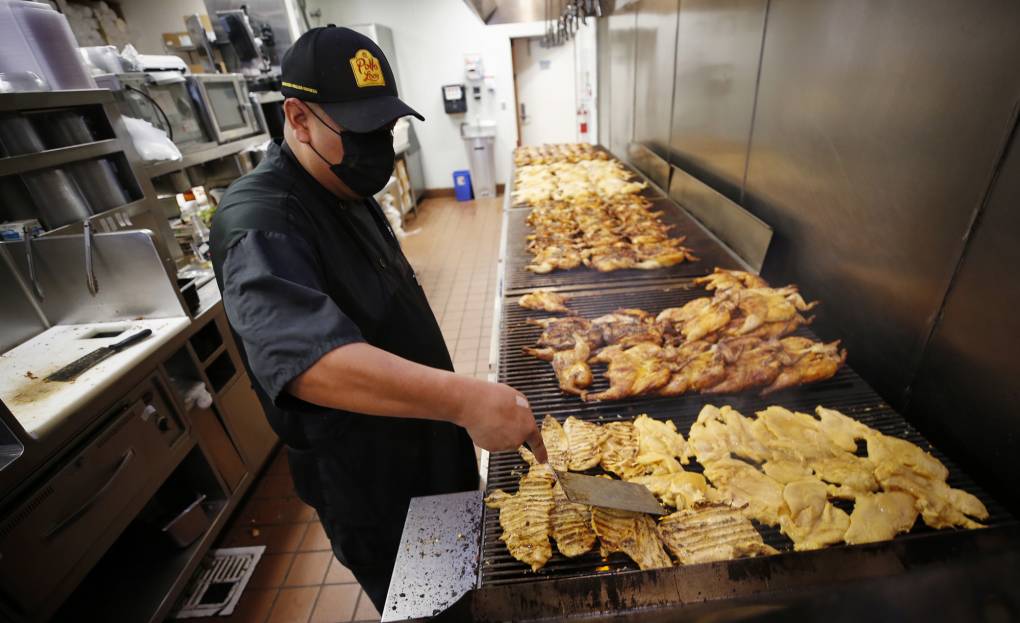
"caption": "Cook Giovanni Gomez preparing chicken on the grill for food orders in the busy kitchen of the El Pollo Loco restaurant in Agoura Hills on Aug. 18, 2021.",
"description": null,
"title": "Michaela Mendelsohn, CEO of Pollo West Corp, an Agoura Hills-based franchise company for Pollo Loco, at her Agoura Hills restaurant on August 18, 2021",
"credit": "Al Seib / Los Angeles Times via Getty Images",
"status": "inherit",
"altTag": null,
"isLoading": false,
"fetchFailed": false
}
},
"audioPlayerReducer": {
"postId": "stream_live",
"isPaused": true,
"isPlaying": false,
"pfsActive": false,
"pledgeModalIsOpen": true,
"playerDrawerIsOpen": false,
"liveAudioPlayStartedAt": 0,
"liveAudioPlayContext": ""
},
"authorsReducer": {
"byline_news_11993063": {
"type": "authors",
"id": "byline_news_11993063",
"meta": {
"override": true
},
"slug": "byline_news_11993063",
"name": "Joey Cappelletti and Bill Barrow, Associated Press",
"isLoading": false
},
"byline_news_11992607": {
"type": "authors",
"id": "byline_news_11992607",
"meta": {
"override": true
},
"slug": "byline_news_11992607",
"name": "The Associated Press",
"isLoading": false
},
"byline_news_11991846": {
"type": "authors",
"id": "byline_news_11991846",
"meta": {
"override": true
},
"slug": "byline_news_11991846",
"name": "Adam Beam, Associated Press",
"isLoading": false
},
"byline_news_11991747": {
"type": "authors",
"id": "byline_news_11991747",
"meta": {
"override": true
},
"slug": "byline_news_11991747",
"name": "Alexei Koseff, CalMatters",
"isLoading": false
},
"byline_news_11991442": {
"type": "authors",
"id": "byline_news_11991442",
"meta": {
"override": true
},
"slug": "byline_news_11991442",
"name": "\u003ca href=\"https://kffhealthnews.org/news/author/bernard-j-wolfson/\">Bernard J. Wolfson\u003c/a>, \u003ca href=\"https://kffhealthnews.org/\">KFF Health News\u003c/a>",
"isLoading": false
},
"byline_news_11990668": {
"type": "authors",
"id": "byline_news_11990668",
"meta": {
"override": true
},
"slug": "byline_news_11990668",
"name": "Mikhail Zinshteyn ",
"isLoading": false
},
"byline_news_11990465": {
"type": "authors",
"id": "byline_news_11990465",
"meta": {
"override": true
},
"slug": "byline_news_11990465",
"name": "\u003ca href=\"https://calmatters.org/author/alexei-koseff/\">Alexei Koseff\u003c/a>, CalMatters",
"isLoading": false
},
"byline_news_11989987": {
"type": "authors",
"id": "byline_news_11989987",
"meta": {
"override": true
},
"slug": "byline_news_11989987",
"name": "\u003ca href=\"https://calmatters.org/author/nigelduara/\">Nigel Duara\u003c/a>, CalMatters",
"isLoading": false
},
"fjhabvala": {
"type": "authors",
"id": "8659",
"meta": {
"index": "authors_1716337520",
"id": "8659",
"found": true
},
"name": "Farida Jhabvala Romero",
"firstName": "Farida",
"lastName": "Jhabvala Romero",
"slug": "fjhabvala",
"email": "fjhabvala@kqed.org",
"display_author_email": true,
"staff_mastheads": [
"news"
],
"title": "KQED Contributor",
"bio": "Farida Jhabvala Romero is a Labor Correspondent for KQED. She previously covered immigration. Farida was \u003ca href=\"https://www.ccnma.org/2022-most-influential-latina-journalists\">named\u003c/a> one of the 10 Most Influential Latina Journalists in California in 2022 by the California Chicano News Media Association. Her work has won awards from the Society of Professional Journalists (Northern California), as well as a national and regional Edward M. Murrow Award for the collaborative reporting projects “Dangerous Air” and “Graying California.” Before joining KQED, Farida worked as a producer at Radio Bilingüe, a national public radio network. Farida earned her master’s degree in journalism from Stanford University.",
"avatar": "https://secure.gravatar.com/avatar/f9f022d4e2609741874222a1e9d41f48fea74011aa7c615eef91d9a50c944ebe?s=600&d=blank&r=g",
"twitter": "FaridaJhabvala",
"bluesky": null,
"facebook": null,
"instagram": null,
"linkedin": "https://www.linkedin.com/in/faridajhabvala/",
"sites": [
{
"site": "news",
"roles": [
"editor"
]
},
{
"site": "stateofhealth",
"roles": [
"author"
]
},
{
"site": "liveblog",
"roles": [
"author"
]
}
],
"headData": {
"title": "Farida Jhabvala Romero | KQED",
"description": "KQED Contributor",
"ogImgSrc": "https://secure.gravatar.com/avatar/f9f022d4e2609741874222a1e9d41f48fea74011aa7c615eef91d9a50c944ebe?s=600&d=blank&r=g",
"twImgSrc": "https://secure.gravatar.com/avatar/f9f022d4e2609741874222a1e9d41f48fea74011aa7c615eef91d9a50c944ebe?s=600&d=blank&r=g"
},
"isLoading": false,
"link": "/author/fjhabvala"
},
"kmizuguchi": {
"type": "authors",
"id": "11739",
"meta": {
"index": "authors_1716337520",
"id": "11739",
"found": true
},
"name": "Keith Mizuguchi",
"firstName": "Keith",
"lastName": "Mizuguchi",
"slug": "kmizuguchi",
"email": "kmizuguchi@kqed.org",
"display_author_email": false,
"staff_mastheads": [],
"title": "KQED Contributor",
"bio": null,
"avatar": "https://secure.gravatar.com/avatar/64d8a7de0723d4099b9fe4e915136103febcc20809abce228ee4415bcb237023?s=600&d=blank&r=g",
"twitter": null,
"bluesky": null,
"facebook": null,
"instagram": null,
"linkedin": null,
"sites": [
{
"site": "news",
"roles": [
"editor"
]
},
{
"site": "science",
"roles": [
"editor"
]
}
],
"headData": {
"title": "Keith Mizuguchi | KQED",
"description": "KQED Contributor",
"ogImgSrc": "https://secure.gravatar.com/avatar/64d8a7de0723d4099b9fe4e915136103febcc20809abce228ee4415bcb237023?s=600&d=blank&r=g",
"twImgSrc": "https://secure.gravatar.com/avatar/64d8a7de0723d4099b9fe4e915136103febcc20809abce228ee4415bcb237023?s=600&d=blank&r=g"
},
"isLoading": false,
"link": "/author/kmizuguchi"
},
"bkrans": {
"type": "authors",
"id": "11923",
"meta": {
"index": "authors_1716337520",
"id": "11923",
"found": true
},
"name": "Brian Krans",
"firstName": "Brian",
"lastName": "Krans",
"slug": "bkrans",
"email": "bkrans@kqed.org",
"display_author_email": false,
"staff_mastheads": [
"news"
],
"title": "KQED Contributing Reporter",
"bio": "Brian Krans is an award-winning local news and investigative reporter who has been proudly working as a general assignment reporter for KQED since August 2023. He lives in Richmond, where he also reports on air pollution for Richmondside. He is also a founding member of the Vallejo Sun.",
"avatar": "https://secure.gravatar.com/avatar/d1014d604089314a94807d2c4f2d3e06?s=600&d=blank&r=g",
"twitter": "citizenkrans",
"facebook": null,
"instagram": null,
"linkedin": null,
"sites": [
{
"site": "news",
"roles": [
"editor"
]
}
],
"headData": {
"title": "Brian Krans | KQED",
"description": "KQED Contributing Reporter",
"ogImgSrc": "https://secure.gravatar.com/avatar/d1014d604089314a94807d2c4f2d3e06?s=600&d=blank&r=g",
"twImgSrc": "https://secure.gravatar.com/avatar/d1014d604089314a94807d2c4f2d3e06?s=600&d=blank&r=g"
},
"isLoading": false,
"link": "/author/bkrans"
}
},
"pagesReducer": {
"news_tag_gavin-newsom": {
"type": "terms",
"id": "news_16",
"meta": {
"index": "terms_1716263798",
"site": "news",
"id": "16",
"score": 8.936912
},
"featImg": null,
"name": "Gavin Newsom",
"description": null,
"taxonomy": "tag",
"headData": {
"twImgId": null,
"twTitle": null,
"ogTitle": null,
"ogImgId": null,
"twDescription": null,
"description": null,
"title": "Gavin Newsom Archives | KQED News",
"ogDescription": null
},
"ttid": 16,
"slug": "gavin-newsom",
"isLoading": false,
"title": "Gavin Newsom",
"pageMeta": {
"site": "news",
"WpPageTemplate": "page-topic-editorial",
"currentPage": 29
},
"blocks": [
{
"blockName": "kqed/post-list",
"attrs": {
"layout": "cardArticle2",
"query": "posts/news?tag=gavin-newsom",
"seeMore": false,
"paginated": true,
"page": 29
}
},
{
"blockName": "kqed/ad"
}
]
}
},
"pfsSessionReducer": {},
"postsReducer": {
"stream_live": {
"type": "live",
"id": "stream_live",
"audioUrl": "https://streams.kqed.org/kqedradio",
"title": "Live Stream",
"excerpt": "Live Stream information currently unavailable.",
"link": "/radio",
"featImg": "",
"label": {
"name": "KQED Live",
"link": "/"
}
},
"stream_kqedNewscast": {
"type": "posts",
"id": "stream_kqedNewscast",
"audioUrl": "https://www.kqed.org/.stream/anon/radio/RDnews/newscast.mp3?_=1",
"title": "KQED Newscast",
"featImg": "",
"label": {
"name": "88.5 FM",
"link": "/"
}
},
"news_11993063": {
"type": "posts",
"id": "news_11993063",
"meta": {
"index": "posts_1716263798",
"site": "news",
"id": "11993063",
"score": null,
"sort": [
1720204221000
]
},
"guestAuthors": [],
"slug": "gov-newsom-forcefully-defends-his-support-for-biden-sidestepping-replacement-talk",
"title": "Gov. Newsom Forcefully Defends His Support for Biden, Sidestepping Replacement Talk",
"publishDate": 1720204221,
"format": "standard",
"headTitle": "Gov. Newsom Forcefully Defends His Support for Biden, Sidestepping Replacement Talk | KQED",
"labelTerm": {
"site": "news"
},
"content": "\u003cp>California Gov. Gavin Newsom offered a forceful defense of embattled President \u003ca href=\"https://apnews.com/hub/joe-biden\">Joe Biden\u003c/a> on Thursday, telling Democrats in Michigan that the 81-year-old president has the record and energy to win a second term despite widespread doubts about his ability to campaign or govern effectively.\u003c/p>\n\u003cp>Newsom’s pitch at a local Independence Day picnic is part of an effort from Biden’s reelection campaign and the White House to \u003ca href=\"https://apnews.com/article/biden-election-trump-debate-democrats-withdraw-campaign-8866379e91fdb1425bbd2eb5344655c5\">reassure party activists and the broader electorate\u003c/a> that Biden is up to the job after he appeared addled \u003ca href=\"https://apnews.com/article/bidentrumppresidentialdebate-0e7577e9a354a69f50675494fea54ca9\">in his debate\u003c/a> against former President Donald Trump.\u003c/p>\n\u003cp>“This is a serious moment in American history. It’s not complicated,” Newsom told Van Buren County Democrats, turning their attention to the prospects of another Trump presidency. “What I need to convince you of is not to be fatalistic, not to fall prey to all of this negativity. … Do more. Worry less.”\u003c/p>\n\u003cp>[ad fullwidth]\u003c/p>\n\u003cp>Newsom’s plea highlights the tenuous balance for Democrats and party lieutenants like the 56-year-old governor: He has long been a top Biden campaign surrogate and was among the governors who rallied behind the president after a private White House session on Wednesday. Yet Newsom himself is among those mentioned as potential replacements should \u003ca href=\"https://apnews.com/article/biden-replacement-democratic-ballot-dnc-rules-7aa836b0ae642a68eec86cc0bebd3772\">Biden step aside and allow an open convention\u003c/a> when Democratic delegates convene in Chicago next month.\u003c/p>\n\u003cp>The governor sidestepped questions about those potential outcomes, including whether he would support Vice President \u003ca href=\"https://apnews.com/hub/kamala-harris\">Kamala Harris\u003c/a>, a fellow Californian, for the nomination if Biden leaves the race.\u003c/p>\n\u003cp>“I don’t even like playing in the hypotheticals because last night was about sort of locking down any doubt or ambiguity,” he said, referring to Biden’s session with Democratic governors. “And then we start running in different directions, zigging and zagging and all that kind of speculation. And that gets in the way of progress.”\u003c/p>\n\u003cp>Newsom acknowledged “a tough few weeks” during his remarks to picnic attendees, and he admitted he had to scrap his planned talking points when facing reporters in Atlanta after the debate. But he said Biden reassured him and other Democratic governors on Wednesday at the White House, where the president acknowledged his flop but expressed determination to win his rematch with \u003ca href=\"https://apnews.com/hub/donald-trump\">Trump\u003c/a>.\u003c/p>\n\u003cp>“That was the Joe Biden I remember from two weeks ago. That was the Joe Biden that I remember from two years ago,” Newsom said. “That’s the Joe Biden that I’m looking forward to reelecting as president of the United States, and I mean that.”\u003c/p>\n\u003cfigure id=\"attachment_11993066\" class=\"wp-caption alignnone\" style=\"max-width: 800px\">\u003cimg loading=\"lazy\" decoding=\"async\" class=\"size-full wp-image-11993066\" src=\"https://cdn.kqed.org/wp-content/uploads/sites/10/2024/07/GettyImages-2159950718-800x534.jpg\" alt=\"\" width=\"800\" height=\"534\" srcset=\"https://cdn.kqed.org/wp-content/uploads/sites/10/2024/07/GettyImages-2159950718-800x534.jpg 800w, https://cdn.kqed.org/wp-content/uploads/sites/10/2024/07/GettyImages-2159950718-1020x680.jpg 1020w, https://cdn.kqed.org/wp-content/uploads/sites/10/2024/07/GettyImages-2159950718-160x107.jpg 160w, https://cdn.kqed.org/wp-content/uploads/sites/10/2024/07/GettyImages-2159950718.jpg 1024w\" sizes=\"(max-width: 800px) 100vw, 800px\">\u003cfigcaption class=\"wp-caption-text\">Gov. Gavin Newsom campaigns for President Joe Biden at the Van Buren County Democratic Party’s ‘BBQ for Biden-Harris’ event on July 4, 2024 in South Haven, Michigan. \u003ccite>(Bill Pugliano/Getty Images)\u003c/cite>\u003c/figcaption>\u003c/figure>\n\u003cp>According to three people familiar with the meeting, Biden acknowledged to the governors that he needs to get more sleep and limit evening events so he can turn in earlier and be fit for the job. The sources spoke to \u003cem>The Associated Press\u003c/em> on the condition of anonymity to discuss private conversations.\u003c/p>\n\u003cp>Newsom did not address those explanations during his 15-minute remarks. He told reporters afterward that Biden referenced late nights “with a smile on his face.”\u003c/p>\n\u003cp>“It was more of a rhetorical framework of just being fit and rested because he was \u003ca href=\"https://apnews.com/article/biden-debate-explanation-excuse-cold-jet-lag-858cd34ca0fb6b76cf9e30b57f884548\">burning it at both ends\u003c/a> that last ten or so days (before the debate), and I think that was what he was reflecting,” Newsom said. “It wasn’t a literal ‘at 8 o’clock I will be doing things differently,’ it was more figurative.’”\u003c/p>\n\u003cp>Newsom said it’s okay when a “president acknowledges they’re human” and added that people are “reading between the lines too much” on what Biden said about his schedule.\u003c/p>\n\u003cp>Newsom drew enthusiastic applause from the partisan crowd. One attendee, Susan Kavanaugh, called his outlook “timely.”\u003c/p>\n\u003cp>[aside label=\"Related Stories\" postID=\"news_11992512,forum_2010101906188,news_11991846\"]“I just was so encouraged by his optimism and speaking genuinely from his heart,” she said. “Which reminds me a lot of the character of Joe Biden.”\u003c/p>\n\u003cp>Despite the governor’s confidence, leading Democrats remain concerned about whether Biden can rebound politically. The president’s aides and allies agree that the coming days are critical, with Biden planning a visible, busy schedule that could stem any free fall in public confidence — or further solidify voter concerns that he is too old for another term.\u003c/p>\n\u003cp>Biden is scheduled to campaign on Friday in Wisconsin, a key battleground he won in 2020, and sit for an interview with ABC’s George Stephanopoulos. It will air as a prime-time special that night. He plans to be in Philadelphia on Sunday and hold a full news conference during the NATO summit in Washington next week.\u003c/p>\n\u003cp>Already this week, the president used a radio interview to emphasize voters’ choice and argue that Trump would be a disaster for American democracy and the economy.\u003c/p>\n\u003cp>Newsom echoed that framing in Michigan, urging the party faithful to embrace Biden’s record and values. He noted sustained low unemployment, rising wages and major legislation for \u003ca href=\"https://apnews.com/article/joe-biden-congress-infrastructure-bill-signing-b5b8cca843133de060778f049861b144\">infrastructure spending\u003c/a>, addressing climate change and spurring American manufacturing, especially \u003ca href=\"https://apnews.com/article/biden-technology-china-government-and-politics-1f8c7901c14c1894856c98968f2b837a\">computer chips\u003c/a>.\u003c/p>\n\u003cp>“I believe in this man. I believe in his character. I believe that he has been one of the most transformative presidents in our collective lifetimes,” Newsom said. “We’re so good at focusing on what’s wrong and not celebrating what’s right.”\u003c/p>\n\u003cp>\u003cem>Associated Press reporter Seung Min Kim contributed from Washington.\u003c/em>\u003c/p>\n\u003cp>\u003c/p>\n",
"blocks": [],
"excerpt": "At an Independence Day picnic in Michigan, Newsom said, 'What I need to convince you of is not to be fatalistic, not to fall prey to all of this negativity. ... Do more. Worry less.'",
"status": "publish",
"parent": 0,
"modified": 1722881349,
"stats": {
"hasAudio": false,
"hasVideo": false,
"hasChartOrMap": false,
"iframeSrcs": [],
"hasGoogleForm": false,
"hasGallery": false,
"hasHearkenModule": false,
"hasPolis": false,
"paragraphCount": 22,
"wordCount": 974
},
"headData": {
"title": "Gov. Newsom Forcefully Defends His Support for Biden, Sidestepping Replacement Talk | KQED",
"description": "At an Independence Day picnic in Michigan, Newsom said, 'What I need to convince you of is not to be fatalistic, not to fall prey to all of this negativity. ... Do more. Worry less.'",
"ogTitle": "",
"ogDescription": "",
"ogImgId": "",
"twTitle": "",
"twDescription": "",
"twImgId": "",
"schema": {
"@context": "https://schema.org",
"@type": "NewsArticle",
"headline": "Gov. Newsom Forcefully Defends His Support for Biden, Sidestepping Replacement Talk",
"datePublished": "2024-07-05T11:30:21-07:00",
"dateModified": "2024-08-05T11:09:09-07:00",
"image": "https://cdn.kqed.org/wp-content/uploads/2020/02/KQED-OG-Image@1x.png",
"isAccessibleForFree": "True",
"publisher": {
"@type": "NewsMediaOrganization",
"@id": "https://www.kqed.org/#organization",
"name": "KQED",
"logo": "https://cdn.kqed.org/wp-content/uploads/2020/02/KQED-OG-Image@1x.png",
"url": "https://www.kqed.org",
"sameAs": [
"https://www.facebook.com/KQED",
"https://twitter.com/KQED",
"https://www.instagram.com/kqed/",
"https://www.tiktok.com/@kqedofficial",
"https://www.linkedin.com/company/kqed",
"https://www.youtube.com/channel/UCeC0IOo7i1P_61zVUWbJ4nw"
]
}
}
},
"sticky": false,
"nprByline": "Joey Cappelletti and Bill Barrow, Associated Press",
"nprStoryId": "kqed-11993063",
"excludeFromSiteSearch": "Include",
"showOnAuthorArchivePages": "No",
"articleAge": "0",
"path": "/news/11993063/gov-newsom-forcefully-defends-his-support-for-biden-sidestepping-replacement-talk",
"audioTrackLength": null,
"parsedContent": [
{
"type": "contentString",
"content": "\u003cdiv class=\"post-body\">\u003cp>\u003cp>California Gov. Gavin Newsom offered a forceful defense of embattled President \u003ca href=\"https://apnews.com/hub/joe-biden\">Joe Biden\u003c/a> on Thursday, telling Democrats in Michigan that the 81-year-old president has the record and energy to win a second term despite widespread doubts about his ability to campaign or govern effectively.\u003c/p>\n\u003cp>Newsom’s pitch at a local Independence Day picnic is part of an effort from Biden’s reelection campaign and the White House to \u003ca href=\"https://apnews.com/article/biden-election-trump-debate-democrats-withdraw-campaign-8866379e91fdb1425bbd2eb5344655c5\">reassure party activists and the broader electorate\u003c/a> that Biden is up to the job after he appeared addled \u003ca href=\"https://apnews.com/article/bidentrumppresidentialdebate-0e7577e9a354a69f50675494fea54ca9\">in his debate\u003c/a> against former President Donald Trump.\u003c/p>\n\u003cp>“This is a serious moment in American history. It’s not complicated,” Newsom told Van Buren County Democrats, turning their attention to the prospects of another Trump presidency. “What I need to convince you of is not to be fatalistic, not to fall prey to all of this negativity. … Do more. Worry less.”\u003c/p>\n\u003cp>\u003c/p>\u003c/div>",
"attributes": {
"named": {},
"numeric": []
}
},
{
"type": "component",
"content": "",
"name": "ad",
"attributes": {
"named": {
"label": "fullwidth"
},
"numeric": [
"fullwidth"
]
}
},
{
"type": "contentString",
"content": "\u003cdiv class=\"post-body\">\u003cp>\u003c/p>\n\u003cp>Newsom’s plea highlights the tenuous balance for Democrats and party lieutenants like the 56-year-old governor: He has long been a top Biden campaign surrogate and was among the governors who rallied behind the president after a private White House session on Wednesday. Yet Newsom himself is among those mentioned as potential replacements should \u003ca href=\"https://apnews.com/article/biden-replacement-democratic-ballot-dnc-rules-7aa836b0ae642a68eec86cc0bebd3772\">Biden step aside and allow an open convention\u003c/a> when Democratic delegates convene in Chicago next month.\u003c/p>\n\u003cp>The governor sidestepped questions about those potential outcomes, including whether he would support Vice President \u003ca href=\"https://apnews.com/hub/kamala-harris\">Kamala Harris\u003c/a>, a fellow Californian, for the nomination if Biden leaves the race.\u003c/p>\n\u003cp>“I don’t even like playing in the hypotheticals because last night was about sort of locking down any doubt or ambiguity,” he said, referring to Biden’s session with Democratic governors. “And then we start running in different directions, zigging and zagging and all that kind of speculation. And that gets in the way of progress.”\u003c/p>\n\u003cp>Newsom acknowledged “a tough few weeks” during his remarks to picnic attendees, and he admitted he had to scrap his planned talking points when facing reporters in Atlanta after the debate. But he said Biden reassured him and other Democratic governors on Wednesday at the White House, where the president acknowledged his flop but expressed determination to win his rematch with \u003ca href=\"https://apnews.com/hub/donald-trump\">Trump\u003c/a>.\u003c/p>\n\u003cp>“That was the Joe Biden I remember from two weeks ago. That was the Joe Biden that I remember from two years ago,” Newsom said. “That’s the Joe Biden that I’m looking forward to reelecting as president of the United States, and I mean that.”\u003c/p>\n\u003cfigure id=\"attachment_11993066\" class=\"wp-caption alignnone\" style=\"max-width: 800px\">\u003cimg loading=\"lazy\" decoding=\"async\" class=\"size-full wp-image-11993066\" src=\"https://cdn.kqed.org/wp-content/uploads/sites/10/2024/07/GettyImages-2159950718-800x534.jpg\" alt=\"\" width=\"800\" height=\"534\" srcset=\"https://cdn.kqed.org/wp-content/uploads/sites/10/2024/07/GettyImages-2159950718-800x534.jpg 800w, https://cdn.kqed.org/wp-content/uploads/sites/10/2024/07/GettyImages-2159950718-1020x680.jpg 1020w, https://cdn.kqed.org/wp-content/uploads/sites/10/2024/07/GettyImages-2159950718-160x107.jpg 160w, https://cdn.kqed.org/wp-content/uploads/sites/10/2024/07/GettyImages-2159950718.jpg 1024w\" sizes=\"(max-width: 800px) 100vw, 800px\">\u003cfigcaption class=\"wp-caption-text\">Gov. Gavin Newsom campaigns for President Joe Biden at the Van Buren County Democratic Party’s ‘BBQ for Biden-Harris’ event on July 4, 2024 in South Haven, Michigan. \u003ccite>(Bill Pugliano/Getty Images)\u003c/cite>\u003c/figcaption>\u003c/figure>\n\u003cp>According to three people familiar with the meeting, Biden acknowledged to the governors that he needs to get more sleep and limit evening events so he can turn in earlier and be fit for the job. The sources spoke to \u003cem>The Associated Press\u003c/em> on the condition of anonymity to discuss private conversations.\u003c/p>\n\u003cp>Newsom did not address those explanations during his 15-minute remarks. He told reporters afterward that Biden referenced late nights “with a smile on his face.”\u003c/p>\n\u003cp>“It was more of a rhetorical framework of just being fit and rested because he was \u003ca href=\"https://apnews.com/article/biden-debate-explanation-excuse-cold-jet-lag-858cd34ca0fb6b76cf9e30b57f884548\">burning it at both ends\u003c/a> that last ten or so days (before the debate), and I think that was what he was reflecting,” Newsom said. “It wasn’t a literal ‘at 8 o’clock I will be doing things differently,’ it was more figurative.’”\u003c/p>\n\u003cp>Newsom said it’s okay when a “president acknowledges they’re human” and added that people are “reading between the lines too much” on what Biden said about his schedule.\u003c/p>\n\u003cp>Newsom drew enthusiastic applause from the partisan crowd. One attendee, Susan Kavanaugh, called his outlook “timely.”\u003c/p>\n\u003cp>\u003c/p>\u003c/div>",
"attributes": {
"named": {},
"numeric": []
}
},
{
"type": "component",
"content": "",
"name": "aside",
"attributes": {
"named": {
"label": "Related Stories ",
"postid": "news_11992512,forum_2010101906188,news_11991846"
},
"numeric": []
}
},
{
"type": "contentString",
"content": "\u003cdiv class=\"post-body\">\u003cp>“I just was so encouraged by his optimism and speaking genuinely from his heart,” she said. “Which reminds me a lot of the character of Joe Biden.”\u003c/p>\n\u003cp>Despite the governor’s confidence, leading Democrats remain concerned about whether Biden can rebound politically. The president’s aides and allies agree that the coming days are critical, with Biden planning a visible, busy schedule that could stem any free fall in public confidence — or further solidify voter concerns that he is too old for another term.\u003c/p>\n\u003cp>Biden is scheduled to campaign on Friday in Wisconsin, a key battleground he won in 2020, and sit for an interview with ABC’s George Stephanopoulos. It will air as a prime-time special that night. He plans to be in Philadelphia on Sunday and hold a full news conference during the NATO summit in Washington next week.\u003c/p>\n\u003cp>Already this week, the president used a radio interview to emphasize voters’ choice and argue that Trump would be a disaster for American democracy and the economy.\u003c/p>\n\u003cp>Newsom echoed that framing in Michigan, urging the party faithful to embrace Biden’s record and values. He noted sustained low unemployment, rising wages and major legislation for \u003ca href=\"https://apnews.com/article/joe-biden-congress-infrastructure-bill-signing-b5b8cca843133de060778f049861b144\">infrastructure spending\u003c/a>, addressing climate change and spurring American manufacturing, especially \u003ca href=\"https://apnews.com/article/biden-technology-china-government-and-politics-1f8c7901c14c1894856c98968f2b837a\">computer chips\u003c/a>.\u003c/p>\n\u003cp>“I believe in this man. I believe in his character. I believe that he has been one of the most transformative presidents in our collective lifetimes,” Newsom said. “We’re so good at focusing on what’s wrong and not celebrating what’s right.”\u003c/p>\n\u003cp>\u003cem>Associated Press reporter Seung Min Kim contributed from Washington.\u003c/em>\u003c/p>\n\u003cp>\u003c/p>\n\u003c/div>\u003c/p>",
"attributes": {
"named": {},
"numeric": []
}
}
],
"link": "/news/11993063/gov-newsom-forcefully-defends-his-support-for-biden-sidestepping-replacement-talk",
"authors": [
"byline_news_11993063"
],
"categories": [
"news_31795",
"news_8",
"news_13"
],
"tags": [
"news_34250",
"news_21983",
"news_32839",
"news_27626",
"news_16",
"news_717"
],
"featImg": "news_11993065",
"label": "news"
},
"news_11992607": {
"type": "posts",
"id": "news_11992607",
"meta": {
"index": "posts_1716263798",
"site": "news",
"id": "11992607",
"score": null,
"sort": [
1719701049000
]
},
"guestAuthors": [],
"slug": "newsom-signs-california-budget-to-close-46-8-billion-deficit",
"title": "Newsom Signs California Budget to Close $46.8 Billion Deficit",
"publishDate": 1719701049,
"format": "standard",
"headTitle": "Newsom Signs California Budget to Close $46.8 Billion Deficit | KQED",
"labelTerm": {
"site": "news"
},
"content": "\u003cp>Gov. Gavin Newsom on Saturday signed \u003ca href=\"https://apnews.com/article/california-legislature-budget-deficit-229cca6cef2165c15ab1841db9f75fe0#:~:text=California%20Legislature%20approves%20budget%20that%20slashes%20spending%20to%20address%20%2446.8%20billion%20deficit,-1%20of%204&text=June%2026%2C%202024-,SACRAMENTO%2C%20Calif.,estimated%20%2446.8%20billion%20budget%20deficit.\">California’s budget to close an estimated $46.8 billion deficit\u003c/a> through $16 billion in spending cuts and temporarily raising taxes on some businesses.\u003c/p>\n\u003cp>Lawmakers passed the budget Wednesday following an agreement between Newsom and legislative leaders in which both sides made concessions and also had wins as they were forced, for the second year in a row, to pare back or delay some progressive policies that had been fueled by record-breaking surpluses during the COVID-19 pandemic.\u003c/p>\n\u003cp>[ad fullwidth]\u003c/p>\n\u003cp>“This is a responsible budget that prepares for the future while investing in foundational programs that benefit millions of Californians every day,” Newsom said in a statement. “Thanks to careful stewardship of the budget over the past few years, we’re able to meet this moment while protecting our progress on housing, homelessness, education, health care and other priorities that matter deeply to Californians.”\u003c/p>\n\u003cp>The deficit was \u003ca href=\"https://apnews.com/article/california-state-budget-2023-2db8442a1d7c0ecc5b6827207c1dad03\">about $32 billion\u003c/a> in 2023 before growing even bigger this year, with more deficits projected for the future in the nation’s most populous state. Saturday’s signing came just two years after Newsom and Democratic lawmakers were \u003ca href=\"https://apnews.com/article/immigration-california-gavin-newsom-5aa5ab19800a5e91c209ff1268ac40bc\">boasting about surpluses\u003c/a> that totaled more than $100 billion, the product of hundreds of billions of dollars of federal COVID-19 aid and a progressive tax code that produced a windfall of revenue from the state’s wealthiest residents.\u003c/p>\n\u003cp>[aside label=\"Related Stories\" postID=\"news_11991747,news_11990465,news_11985798\"]But those revenue spikes did not last as inflation slowed the economy, contributing to rising unemployment and a slowdown in the tech industry that has driven much of the state’s growth. The Newsom administration then badly miscalculated how much money California would have last year after a seven-month delay in the tax filing deadline.\u003c/p>\n\u003cp>California has historically been prone to large budget swings, given its \u003ca href=\"https://apnews.com/article/business-health-california-pandemics-coronavirus-pandemic-2522f2b710bbb32383ab33865a1a9333\">reliance on its wealthiest taxpayers\u003c/a>. But these deficits have come at a bad time for Newsom, who has been building his national profile ahead of a potential future run for president and has been tapped as a top surrogate for President Joe Biden’s campaign.\u003c/p>\n\u003cp>The budget includes an agreement that Newsom and lawmakers will try to change the state constitution to let California put more money in reserve for future shortfalls.\u003c/p>\n\u003cp>Republicans, however, said they were left out of negotiations. They criticized the tax increase on businesses, which applies to companies with at least $1 million in revenue and will last for three years, bringing in more than $5 billion extra for the state next year. And they criticized Democrats for some cuts to social safety net programs.\u003c/p>\n\u003cp>\u003c/p>\n",
"blocks": [],
"excerpt": "Gov. Gavin Newsom has signed California’s budget to close an estimated $46.8 billion deficit through $16 billion in spending cuts and temporarily raising taxes on some businesses.",
"status": "publish",
"parent": 0,
"modified": 1722643943,
"stats": {
"hasAudio": false,
"hasVideo": false,
"hasChartOrMap": false,
"iframeSrcs": [],
"hasGoogleForm": false,
"hasGallery": false,
"hasHearkenModule": false,
"hasPolis": false,
"paragraphCount": 10,
"wordCount": 453
},
"headData": {
"title": "Newsom Signs California Budget to Close $46.8 Billion Deficit | KQED",
"description": "Gov. Gavin Newsom has signed California’s budget to close an estimated $46.8 billion deficit through $16 billion in spending cuts and temporarily raising taxes on some businesses.",
"ogTitle": "",
"ogDescription": "",
"ogImgId": "",
"twTitle": "",
"twDescription": "",
"twImgId": "",
"schema": {
"@context": "https://schema.org",
"@type": "NewsArticle",
"headline": "Newsom Signs California Budget to Close $46.8 Billion Deficit",
"datePublished": "2024-06-29T15:44:09-07:00",
"dateModified": "2024-08-02T17:12:23-07:00",
"image": "https://cdn.kqed.org/wp-content/uploads/2020/02/KQED-OG-Image@1x.png",
"isAccessibleForFree": "True",
"publisher": {
"@type": "NewsMediaOrganization",
"@id": "https://www.kqed.org/#organization",
"name": "KQED",
"logo": "https://cdn.kqed.org/wp-content/uploads/2020/02/KQED-OG-Image@1x.png",
"url": "https://www.kqed.org",
"sameAs": [
"https://www.facebook.com/KQED",
"https://twitter.com/KQED",
"https://www.instagram.com/kqed/",
"https://www.tiktok.com/@kqedofficial",
"https://www.linkedin.com/company/kqed",
"https://www.youtube.com/channel/UCeC0IOo7i1P_61zVUWbJ4nw"
]
}
}
},
"sticky": false,
"nprByline": "The Associated Press",
"nprStoryId": "kqed-11992607",
"excludeFromSiteSearch": "Include",
"showOnAuthorArchivePages": "No",
"articleAge": "0",
"path": "/news/11992607/newsom-signs-california-budget-to-close-46-8-billion-deficit",
"audioTrackLength": null,
"parsedContent": [
{
"type": "contentString",
"content": "\u003cdiv class=\"post-body\">\u003cp>\u003cp>Gov. Gavin Newsom on Saturday signed \u003ca href=\"https://apnews.com/article/california-legislature-budget-deficit-229cca6cef2165c15ab1841db9f75fe0#:~:text=California%20Legislature%20approves%20budget%20that%20slashes%20spending%20to%20address%20%2446.8%20billion%20deficit,-1%20of%204&text=June%2026%2C%202024-,SACRAMENTO%2C%20Calif.,estimated%20%2446.8%20billion%20budget%20deficit.\">California’s budget to close an estimated $46.8 billion deficit\u003c/a> through $16 billion in spending cuts and temporarily raising taxes on some businesses.\u003c/p>\n\u003cp>Lawmakers passed the budget Wednesday following an agreement between Newsom and legislative leaders in which both sides made concessions and also had wins as they were forced, for the second year in a row, to pare back or delay some progressive policies that had been fueled by record-breaking surpluses during the COVID-19 pandemic.\u003c/p>\n\u003cp>\u003c/p>\u003c/div>",
"attributes": {
"named": {},
"numeric": []
}
},
{
"type": "component",
"content": "",
"name": "ad",
"attributes": {
"named": {
"label": "fullwidth"
},
"numeric": [
"fullwidth"
]
}
},
{
"type": "contentString",
"content": "\u003cdiv class=\"post-body\">\u003cp>\u003c/p>\n\u003cp>“This is a responsible budget that prepares for the future while investing in foundational programs that benefit millions of Californians every day,” Newsom said in a statement. “Thanks to careful stewardship of the budget over the past few years, we’re able to meet this moment while protecting our progress on housing, homelessness, education, health care and other priorities that matter deeply to Californians.”\u003c/p>\n\u003cp>The deficit was \u003ca href=\"https://apnews.com/article/california-state-budget-2023-2db8442a1d7c0ecc5b6827207c1dad03\">about $32 billion\u003c/a> in 2023 before growing even bigger this year, with more deficits projected for the future in the nation’s most populous state. Saturday’s signing came just two years after Newsom and Democratic lawmakers were \u003ca href=\"https://apnews.com/article/immigration-california-gavin-newsom-5aa5ab19800a5e91c209ff1268ac40bc\">boasting about surpluses\u003c/a> that totaled more than $100 billion, the product of hundreds of billions of dollars of federal COVID-19 aid and a progressive tax code that produced a windfall of revenue from the state’s wealthiest residents.\u003c/p>\n\u003cp>\u003c/p>\u003c/div>",
"attributes": {
"named": {},
"numeric": []
}
},
{
"type": "component",
"content": "",
"name": "aside",
"attributes": {
"named": {
"label": "Related Stories ",
"postid": "news_11991747,news_11990465,news_11985798"
},
"numeric": []
}
},
{
"type": "contentString",
"content": "\u003cdiv class=\"post-body\">\u003cp>But those revenue spikes did not last as inflation slowed the economy, contributing to rising unemployment and a slowdown in the tech industry that has driven much of the state’s growth. The Newsom administration then badly miscalculated how much money California would have last year after a seven-month delay in the tax filing deadline.\u003c/p>\n\u003cp>California has historically been prone to large budget swings, given its \u003ca href=\"https://apnews.com/article/business-health-california-pandemics-coronavirus-pandemic-2522f2b710bbb32383ab33865a1a9333\">reliance on its wealthiest taxpayers\u003c/a>. But these deficits have come at a bad time for Newsom, who has been building his national profile ahead of a potential future run for president and has been tapped as a top surrogate for President Joe Biden’s campaign.\u003c/p>\n\u003cp>The budget includes an agreement that Newsom and lawmakers will try to change the state constitution to let California put more money in reserve for future shortfalls.\u003c/p>\n\u003cp>Republicans, however, said they were left out of negotiations. They criticized the tax increase on businesses, which applies to companies with at least $1 million in revenue and will last for three years, bringing in more than $5 billion extra for the state next year. And they criticized Democrats for some cuts to social safety net programs.\u003c/p>\n\u003cp>\u003c/p>\n\u003c/div>\u003c/p>",
"attributes": {
"named": {},
"numeric": []
}
}
],
"link": "/news/11992607/newsom-signs-california-budget-to-close-46-8-billion-deficit",
"authors": [
"byline_news_11992607"
],
"categories": [
"news_31795",
"news_1758",
"news_8",
"news_13"
],
"tags": [
"news_34186",
"news_402",
"news_16"
],
"featImg": "news_11992609",
"label": "news"
},
"news_11991846": {
"type": "posts",
"id": "news_11991846",
"meta": {
"index": "posts_1716263798",
"site": "news",
"id": "11991846",
"score": null,
"sort": [
1719349232000
]
},
"guestAuthors": [],
"slug": "newsom-offers-progressive-values-as-antidote-to-poisonous-populism-in-state-of-the-state-address",
"title": "Newsom Offers Progressive Values as 'Antidote' to 'Poisonous Populism of the Right' in State of the State Address",
"publishDate": 1719349232,
"format": "standard",
"headTitle": "Newsom Offers Progressive Values as ‘Antidote’ to ‘Poisonous Populism of the Right’ in State of the State Address | KQED",
"labelTerm": {
"site": "news"
},
"content": "\u003cp>Gov. Gavin Newsom used his State of the State address on Tuesday to boost President Joe Biden ahead of Thursday’s \u003ca href=\"https://apnews.com/article/debate-trump-biden-what-to-watch-366ccaf83068a3c64e262bcca945d6ae\">pivotal presidential debate\u003c/a>, comparing Donald Trump’s version of the Republican Party to the rise of fascism prior to World War II and offering Democrats’ ideals as “an antidote to the poisonous populism of the right.”\u003c/p>\n\u003cp>Nowhere in Newsom’s speech — which was prerecorded and \u003ca href=\"https://www.youtube.com/watch?v=0xN-kDXdnno\">posted online\u003c/a> to his social media channels in a departure from decades of tradition — did he mention Trump or Biden by name. But he used some of Trump’s most incendiary statements to offer a dark contrast of the choice facing Americans in November, comparing it to the eve of World War II when “fascism spread its hate and destruction throughout Europe.”\u003c/p>\n\u003cp>“When they speak of immigrants poisoning American blood and of mass deportations and detention camps, this is the language of destruction — of 1939,” Newsom said.\u003c/p>\n\u003cp>[ad fullwidth]\u003c/p>\n\u003cp>Trump made those comments about immigrants “poisoning the blood of our country” during a campaign rally in Iowa last year, later \u003ca href=\"https://apnews.com/article/trump-hitler-poison-blood-history-f8c3ff512edd120252596a4743324352\">saying he did not know\u003c/a> that Adolf Hitler had once said something similar. Still, the comments have become a key talking point for the left as they paint Trump’s candidacy as a warning for a dark future.\u003c/p>\n\u003cp>The political tone of Newsom’s speech was not surprising given his role as one of the Biden campaign’s top surrogates, which has made him a target of Republicans who have repeatedly held up California as an example of Democrats’ mismanagement. They have pointed to the state’s $46.8 billion budget deficit, high tax rates, large homeless population and the proliferation of property crimes in its largest cities — acts which have been captured in viral social media clips.\u003c/p>\n\u003cp>Much of Newsom’s speech was devoted to pushing back against that narrative, referring to “delusional California bashers” whose “success depends on our failure.” He noted California’s violent crime rate is about half of what it was at its peak in 1992. He said property crime in San Francisco has fallen, as has the overall crime rate across the bay in Oakland — where Newsom recently deployed 120 California Highway Patrol officers.\u003c/p>\n\u003cp>“That’s because, in California, we take public safety seriously — a problem to solve, not just to flog on cable news,” he said.\u003c/p>\n\u003cp>On homelessness, Newsom pointed to the more active role the state has taken under his administration, including spending billions of dollars to create programs that provided 15,300 units of housing and provided shelter for more than 71,000 people. However, a \u003ca href=\"https://apnews.com/article/california-homeless-audit-spending-8c8c8ce6cd9fc6840e180a99fccff588\">state audit\u003c/a> released earlier this year chided his administration for not tracking how effective the state’s homelessness spending — more than $24 billion over five years — has been.\u003c/p>\n\u003cp>Newsom defended his decision to sign a law \u003ca href=\"https://apnews.com/article/california-homeless-audit-spending-8c8c8ce6cd9fc6840e180a99fccff588\">raising the minimum wage\u003c/a> for fast food workers to $20 an hour, a raise businesses have blamed for increasing customer costs. He also boasted about California’s economy, which, were it an independent country, would rank as the fifth largest in the world—saying California has added 63,000 new millionaires since 2019.\u003c/p>\n\u003cp>“Here is a simple question for Republicans: If California is a failed state, why are four of the seven most valuable companies in the world based here?” he said, referring to Apple, \u003ca href=\"https://apnews.com/article/nvidia-chip-ai-apple-microsoft-51cc2b56e5871111907de6ad9cab59ae\">Nvidia\u003c/a>, and the parent companies of Google and Facebook. “The best minds in the world call California home because they’re liberated from the constraints of conformity and tradition. This is true freedom — to invent and make the world a better place.”\u003c/p>\n\u003cp>[aside label=\"Related Stories\" postID=\"forum_2010101906125,news_11983845,news_11989427\"]Newsom chose to deliver a speech for the smartphone era, opting to upload a prerecorded video across his social media channels instead of giving a formal speech before a packed house of state lawmakers.\u003c/p>\n\u003cp>The Democratic governor, now in his second term, has never been a big fan of formal speeches, given the \u003ca href=\"https://apnews.com/article/entertainment-health-business-gavin-newsom-childrens-books-9756e47fc0a193a7fed729753be41ca6\">difficulty his dyslexia\u003c/a> gives him while reading from a teleprompter in live time. Last year, Newsom \u003ca href=\"https://apnews.com/article/california-governor-newsom-state-of-state-17c6461bf8b241e75b85fcd2966adb1d\">skipped the speech entirely\u003c/a>, instead embarking on a statewide tour to announce a series of major policy proposals in a more informal setting that allowed for questions from reporters.\u003c/p>\n\u003cp>“While this prerecorded speech fulfills the governor’s legal mandate, it does not in any real way fulfill his responsibility to Californians who deserve a safe, affordable and opportunity-filled future,” California Republican state Sen. Kelly Seyarto said. “California remains the country’s homeless capital, businesses are closing their doors, and crime continues to rise. The state of this state is simply not good under Newsom’s leadership and any claims to the contrary he makes in his speech will be patently false.”\u003c/p>\n\u003cp>California’s Constitution requires the governor to update the Legislature every year “on the condition of the state.” Prior to World War II, California governors would do this by sending a letter to the Legislature. That changed with Gov. Earl Warren — the future chief justice of the U.S. Supreme Court — who decided to give a formal speech to the Legislature.\u003c/p>\n\u003cp>\u003c/p>\n",
"blocks": [],
"excerpt": "Gov. Gavin Newsom has used his State of the State address to defend California's progressive values ahead of a pivotal presidential debate, comparing the November elections to the eve of World War II in Europe.",
"status": "publish",
"parent": 0,
"modified": 1738096093,
"stats": {
"hasAudio": false,
"hasVideo": false,
"hasChartOrMap": false,
"iframeSrcs": [],
"hasGoogleForm": false,
"hasGallery": false,
"hasHearkenModule": false,
"hasPolis": false,
"paragraphCount": 16,
"wordCount": 910
},
"headData": {
"title": "Newsom Offers Progressive Values as 'Antidote' to 'Poisonous Populism of the Right' in State of the State Address | KQED",
"description": "Gov. Gavin Newsom has used his State of the State address to defend California's progressive values ahead of a pivotal presidential debate, comparing the November elections to the eve of World War II in Europe.",
"ogTitle": "",
"ogDescription": "",
"ogImgId": "",
"twTitle": "",
"twDescription": "",
"twImgId": "",
"schema": {
"@context": "https://schema.org",
"@type": "NewsArticle",
"headline": "Newsom Offers Progressive Values as 'Antidote' to 'Poisonous Populism of the Right' in State of the State Address",
"datePublished": "2024-06-25T14:00:32-07:00",
"dateModified": "2025-01-28T12:28:13-08:00",
"image": "https://cdn.kqed.org/wp-content/uploads/2020/02/KQED-OG-Image@1x.png",
"isAccessibleForFree": "True",
"publisher": {
"@type": "NewsMediaOrganization",
"@id": "https://www.kqed.org/#organization",
"name": "KQED",
"logo": "https://cdn.kqed.org/wp-content/uploads/2020/02/KQED-OG-Image@1x.png",
"url": "https://www.kqed.org",
"sameAs": [
"https://www.facebook.com/KQED",
"https://twitter.com/KQED",
"https://www.instagram.com/kqed/",
"https://www.tiktok.com/@kqedofficial",
"https://www.linkedin.com/company/kqed",
"https://www.youtube.com/channel/UCeC0IOo7i1P_61zVUWbJ4nw"
]
}
}
},
"sticky": false,
"nprByline": "Adam Beam, Associated Press",
"nprStoryId": "kqed-11991846",
"excludeFromSiteSearch": "Include",
"showOnAuthorArchivePages": "No",
"articleAge": "0",
"path": "/news/11991846/newsom-offers-progressive-values-as-antidote-to-poisonous-populism-in-state-of-the-state-address",
"audioTrackLength": null,
"parsedContent": [
{
"type": "contentString",
"content": "\u003cdiv class=\"post-body\">\u003cp>\u003cp>Gov. Gavin Newsom used his State of the State address on Tuesday to boost President Joe Biden ahead of Thursday’s \u003ca href=\"https://apnews.com/article/debate-trump-biden-what-to-watch-366ccaf83068a3c64e262bcca945d6ae\">pivotal presidential debate\u003c/a>, comparing Donald Trump’s version of the Republican Party to the rise of fascism prior to World War II and offering Democrats’ ideals as “an antidote to the poisonous populism of the right.”\u003c/p>\n\u003cp>Nowhere in Newsom’s speech — which was prerecorded and \u003ca href=\"https://www.youtube.com/watch?v=0xN-kDXdnno\">posted online\u003c/a> to his social media channels in a departure from decades of tradition — did he mention Trump or Biden by name. But he used some of Trump’s most incendiary statements to offer a dark contrast of the choice facing Americans in November, comparing it to the eve of World War II when “fascism spread its hate and destruction throughout Europe.”\u003c/p>\n\u003cp>“When they speak of immigrants poisoning American blood and of mass deportations and detention camps, this is the language of destruction — of 1939,” Newsom said.\u003c/p>\n\u003cp>\u003c/p>\u003c/div>",
"attributes": {
"named": {},
"numeric": []
}
},
{
"type": "component",
"content": "",
"name": "ad",
"attributes": {
"named": {
"label": "fullwidth"
},
"numeric": [
"fullwidth"
]
}
},
{
"type": "contentString",
"content": "\u003cdiv class=\"post-body\">\u003cp>\u003c/p>\n\u003cp>Trump made those comments about immigrants “poisoning the blood of our country” during a campaign rally in Iowa last year, later \u003ca href=\"https://apnews.com/article/trump-hitler-poison-blood-history-f8c3ff512edd120252596a4743324352\">saying he did not know\u003c/a> that Adolf Hitler had once said something similar. Still, the comments have become a key talking point for the left as they paint Trump’s candidacy as a warning for a dark future.\u003c/p>\n\u003cp>The political tone of Newsom’s speech was not surprising given his role as one of the Biden campaign’s top surrogates, which has made him a target of Republicans who have repeatedly held up California as an example of Democrats’ mismanagement. They have pointed to the state’s $46.8 billion budget deficit, high tax rates, large homeless population and the proliferation of property crimes in its largest cities — acts which have been captured in viral social media clips.\u003c/p>\n\u003cp>Much of Newsom’s speech was devoted to pushing back against that narrative, referring to “delusional California bashers” whose “success depends on our failure.” He noted California’s violent crime rate is about half of what it was at its peak in 1992. He said property crime in San Francisco has fallen, as has the overall crime rate across the bay in Oakland — where Newsom recently deployed 120 California Highway Patrol officers.\u003c/p>\n\u003cp>“That’s because, in California, we take public safety seriously — a problem to solve, not just to flog on cable news,” he said.\u003c/p>\n\u003cp>On homelessness, Newsom pointed to the more active role the state has taken under his administration, including spending billions of dollars to create programs that provided 15,300 units of housing and provided shelter for more than 71,000 people. However, a \u003ca href=\"https://apnews.com/article/california-homeless-audit-spending-8c8c8ce6cd9fc6840e180a99fccff588\">state audit\u003c/a> released earlier this year chided his administration for not tracking how effective the state’s homelessness spending — more than $24 billion over five years — has been.\u003c/p>\n\u003cp>Newsom defended his decision to sign a law \u003ca href=\"https://apnews.com/article/california-homeless-audit-spending-8c8c8ce6cd9fc6840e180a99fccff588\">raising the minimum wage\u003c/a> for fast food workers to $20 an hour, a raise businesses have blamed for increasing customer costs. He also boasted about California’s economy, which, were it an independent country, would rank as the fifth largest in the world—saying California has added 63,000 new millionaires since 2019.\u003c/p>\n\u003cp>“Here is a simple question for Republicans: If California is a failed state, why are four of the seven most valuable companies in the world based here?” he said, referring to Apple, \u003ca href=\"https://apnews.com/article/nvidia-chip-ai-apple-microsoft-51cc2b56e5871111907de6ad9cab59ae\">Nvidia\u003c/a>, and the parent companies of Google and Facebook. “The best minds in the world call California home because they’re liberated from the constraints of conformity and tradition. This is true freedom — to invent and make the world a better place.”\u003c/p>\n\u003cp>\u003c/p>\u003c/div>",
"attributes": {
"named": {},
"numeric": []
}
},
{
"type": "component",
"content": "",
"name": "aside",
"attributes": {
"named": {
"label": "Related Stories ",
"postid": "forum_2010101906125,news_11983845,news_11989427"
},
"numeric": []
}
},
{
"type": "contentString",
"content": "\u003cdiv class=\"post-body\">\u003cp>Newsom chose to deliver a speech for the smartphone era, opting to upload a prerecorded video across his social media channels instead of giving a formal speech before a packed house of state lawmakers.\u003c/p>\n\u003cp>The Democratic governor, now in his second term, has never been a big fan of formal speeches, given the \u003ca href=\"https://apnews.com/article/entertainment-health-business-gavin-newsom-childrens-books-9756e47fc0a193a7fed729753be41ca6\">difficulty his dyslexia\u003c/a> gives him while reading from a teleprompter in live time. Last year, Newsom \u003ca href=\"https://apnews.com/article/california-governor-newsom-state-of-state-17c6461bf8b241e75b85fcd2966adb1d\">skipped the speech entirely\u003c/a>, instead embarking on a statewide tour to announce a series of major policy proposals in a more informal setting that allowed for questions from reporters.\u003c/p>\n\u003cp>“While this prerecorded speech fulfills the governor’s legal mandate, it does not in any real way fulfill his responsibility to Californians who deserve a safe, affordable and opportunity-filled future,” California Republican state Sen. Kelly Seyarto said. “California remains the country’s homeless capital, businesses are closing their doors, and crime continues to rise. The state of this state is simply not good under Newsom’s leadership and any claims to the contrary he makes in his speech will be patently false.”\u003c/p>\n\u003cp>California’s Constitution requires the governor to update the Legislature every year “on the condition of the state.” Prior to World War II, California governors would do this by sending a letter to the Legislature. That changed with Gov. Earl Warren — the future chief justice of the U.S. Supreme Court — who decided to give a formal speech to the Legislature.\u003c/p>\n\u003cp>\u003c/p>\n\u003c/div>\u003c/p>",
"attributes": {
"named": {},
"numeric": []
}
}
],
"link": "/news/11991846/newsom-offers-progressive-values-as-antidote-to-poisonous-populism-in-state-of-the-state-address",
"authors": [
"byline_news_11991846"
],
"categories": [
"news_31795",
"news_8",
"news_13"
],
"tags": [
"news_20251",
"news_1323",
"news_16",
"news_717",
"news_29111"
],
"featImg": "news_11991885",
"label": "news"
},
"news_11991747": {
"type": "posts",
"id": "news_11991747",
"meta": {
"index": "posts_1716263798",
"site": "news",
"id": "11991747",
"score": null,
"sort": [
1719325805000
]
},
"guestAuthors": [],
"slug": "heres-what-you-should-know-about-californias-budget-deal",
"title": "Here's What You Should Know About California's Budget Deal",
"publishDate": 1719325805,
"format": "standard",
"headTitle": "Here’s What You Should Know About California’s Budget Deal | KQED",
"labelTerm": {
"term": 18481,
"site": "news"
},
"content": "\u003cp>California will make widespread cuts to state government operations, prisons, housing programs and health care workforce development in order to maintain its social safety net as it moves to close a multibillion-dollar budget deficit.\u003c/p>\n\u003cp>The \u003ca href=\"https://www.gov.ca.gov/wp-content/uploads/2024/06/2024-Budget-Agreement-.pdf\">$297.9 billion spending plan\u003c/a>, announced on Saturday by Gov. Gavin Newsom, Senate President Pro Tem \u003ca href=\"https://digitaldemocracy.calmatters.org/legislators/mike-mcguire-93\">Mike McGuire\u003c/a> and Assembly Speaker \u003ca href=\"https://digitaldemocracy.calmatters.org/legislators/robert-rivas-165041\">Robert Rivas\u003c/a>, also relies on reserves and pauses some business tax credits to address a remaining revenue gap estimated at $56 billion over the next two years.\u003c/p>\n\u003cp>“This agreement sets the state on a path for long-term fiscal stability — addressing the current shortfall and strengthening budget resilience down the road,” Newsom \u003ca href=\"https://www.gov.ca.gov/2024/06/22/california-leaders-announce-2024-state-budget-agreement/\">said in a statement\u003c/a>. “We’re making sure to preserve programs that serve millions of Californians, including key funding for education, health care, expanded behavioral health services, and combatting homelessness.”\u003c/p>\n\u003cp>The Legislature \u003ca href=\"https://calmatters.org/politics/capitol/2024/06/california-budget-deficit-legislature-newsom/\">passed a budget more than a week ago\u003c/a> to meet a statutory deadline, but it did not represent a final deal with Newsom as they continued to negotiate over whether to repurpose billions of dollars \u003ca href=\"https://calmatters.org/health/2024/05/medi-cal-health-care-budget/\">earmarked to increase payments\u003c/a> for health care providers who treat low-income patients and whether to further delay \u003ca href=\"https://calmatters.org/health/2024/05/minimum-wage-health-care-deadline/\">minimum wage increases for health care workers\u003c/a>, among other issues.\u003c/p>\n\u003cp>\u003ca href=\"https://www.gov.ca.gov/wp-content/uploads/2024/06/2024-Budget-Agreement-.pdf\">Their agreement\u003c/a> — which the Democratic-controlled Legislature is expected to vote on \u003ca href=\"https://jasonsisney.substack.com/p/governor-and-legislative-leaders-588\">through a series of bills this week\u003c/a> ahead of the July 1 start of the new fiscal year — does claw back the funding intended for Medi-Cal provider rates. It pushes back the \u003ca href=\"https://calmatters.org/health/2024/06/health-care-minimum-wage/\">health care wage hikes\u003c/a> until at least October and potentially until next year, depending on the strength of revenue collections in the coming months. Despite heavy opposition from labor unions, the move could save California hundreds of millions of dollars.\u003c/p>\n\u003cp>[ad fullwidth]\u003c/p>\n\u003cp>The plan makes $16 billion in cuts, including a blanket 7.95% reduction in funding for nearly all state departments and the elimination of thousands of vacant positions, which are collectively expected to save nearly $3.7 billion. The Department of Corrections and Rehabilitation will take an additional $385 million cut at the urging of progressive lawmakers, far higher than what Newsom had originally sought \u003ca href=\"https://calmatters.org/justice/2024/05/californa-prison-closures-deficit/\">for the shrinking prison system\u003c/a>.\u003c/p>\n\u003cp>Other major reductions include $1.1 billion from various affordable housing programs, $746 million for health care workforce development and $500 million to build student housing. A scholarship program for middle-class college students will lose $110 million annually, about a fifth of \u003ca href=\"https://calmatters.org/education/higher-education/2024/06/financial-aid-california-budget/\">what the governor had originally sought to cut\u003c/a>.\u003c/p>\n\u003cp>More than $3 billion in previously promised funding to expand food benefits to undocumented immigrants, increase pay for providers who care for people with developmental disabilities, add new subsidized child care slots and \u003ca href=\"https://calmatters.org/economy/technology/2024/05/california-broadband-funding/\">build out broadband internet\u003c/a> will be delayed.\u003c/p>\n\u003cp>[aside postID=\"news_11986893,news_11990465,news_11985798\" label=\"Related Stories\"]This will allow the state to protect what Newsom and legislative leaders touted in their announcement as “core programs,” including an expansion of Medi-Cal, California’s health care program for the poor, to all adults regardless of their immigration status, as well as increased funding for behavioral health, welfare grants and supplemental income for seniors. Local governments will receive another \u003ca href=\"https://calmatters.org/housing/homelessness/2022/11/california-homeless-newsom-funding-reversal/\">$1 billion to address homelessness\u003c/a>.\u003c/p>\n\u003cp>The budget deal shrinks a proposed cut to school funding following a \u003ca href=\"https://calmatters.org/newsletter/california-budget-schools-funding/\">tense negotiation with education groups\u003c/a> during which teachers unions ran a television advertising campaign criticizing Newsom. About $5.5 billion will be delayed until future years.\u003c/p>\n\u003cp>“\u003ca href=\"https://abgt.assembly.ca.gov/system/files/2024-06/floor-report-of-the-2024-25-budget-june-22-2024.pdf\">The Assembly\u003c/a> fought hard to protect the public services that matter most to Californians, and we are delivering a budget that prioritizes affordability and long-term stability,” Rivas, a Salinas Democrat, said in a statement.\u003c/p>\n\u003cp>As part of their agreement, Newsom and the Legislature will pursue several additional measures to address the circumstances that led to California’s steep deficit. While the state experienced a \u003ca href=\"https://calmatters.org/explainers/california-budget-whiplash/\">historic surplus just two years ago\u003c/a>, a delay in tax collections last year caused by winter storms shielded the extent of California’s weakening fiscal condition until after the governor and lawmakers had already committed to too much new spending.\u003c/p>\n\u003cp>The budget deal proposes legislation, to be taken up in August, that will require the state to set aside a portion of future projected surpluses so that it cannot be spent until the money is collected. It also suggests putting a constitutional amendment before voters in 2026 to grow California’s main reserve account.\u003c/p>\n\u003cp>In the meantime, the state plans to dip into that rainy day fund, pulling out more than $12 billion over the next two years to address the fiscal shortfall. It will also suspend the net operating loss for companies with more than $1 million in taxable income and limit business tax credits to $5 million annually — strategies that it previously employed at the height of the coronavirus pandemic — to raise an estimated nearly $15 billion in new revenue over the next three years.\u003c/p>\n\u003cp>\u003c/p>\n\u003cp>“Make no mistake: This is a tough budget year, but it also isn’t the budget situation we were originally fearing,” McGuire, a Healdsburg Democrat, said in a statement. “\u003ca href=\"https://sbud.senate.ca.gov/system/files/2024-06/budget-act-of-2024-key-highlights.pdf\">This balanced budget\u003c/a> helps tackle some of our toughest challenges with resources to combat the homelessness crisis, investments in housing, and funding to fight wildfires and retail theft.”\u003c/p>\n\n",
"blocks": [],
"excerpt": "Gov. Newsom and legislative leaders announced an agreement to bridge the state budget deficit by dipping into reserves and reducing some spending. ",
"status": "publish",
"parent": 0,
"modified": 1740530292,
"stats": {
"hasAudio": false,
"hasVideo": false,
"hasChartOrMap": false,
"iframeSrcs": [],
"hasGoogleForm": false,
"hasGallery": false,
"hasHearkenModule": false,
"hasPolis": false,
"paragraphCount": 17,
"wordCount": 886
},
"headData": {
"title": "Here's What You Should Know About California's Budget Deal | KQED",
"description": "Gov. Newsom and legislative leaders announced an agreement to bridge the state budget deficit by dipping into reserves and reducing some spending. ",
"ogTitle": "",
"ogDescription": "",
"ogImgId": "",
"twTitle": "",
"twDescription": "",
"twImgId": "",
"schema": {
"@context": "https://schema.org",
"@type": "NewsArticle",
"headline": "Here's What You Should Know About California's Budget Deal",
"datePublished": "2024-06-25T07:30:05-07:00",
"dateModified": "2025-02-25T16:38:12-08:00",
"image": "https://cdn.kqed.org/wp-content/uploads/2020/02/KQED-OG-Image@1x.png",
"isAccessibleForFree": "True",
"publisher": {
"@type": "NewsMediaOrganization",
"@id": "https://www.kqed.org/#organization",
"name": "KQED",
"logo": "https://cdn.kqed.org/wp-content/uploads/2020/02/KQED-OG-Image@1x.png",
"url": "https://www.kqed.org",
"sameAs": [
"https://www.facebook.com/KQED",
"https://twitter.com/KQED",
"https://www.instagram.com/kqed/",
"https://www.tiktok.com/@kqedofficial",
"https://www.linkedin.com/company/kqed",
"https://www.youtube.com/channel/UCeC0IOo7i1P_61zVUWbJ4nw"
]
}
}
},
"sticky": false,
"nprByline": "Alexei Koseff, CalMatters",
"nprStoryId": "kqed-11991747",
"excludeFromSiteSearch": "Include",
"showOnAuthorArchivePages": "No",
"articleAge": "0",
"path": "/news/11991747/heres-what-you-should-know-about-californias-budget-deal",
"audioTrackLength": null,
"parsedContent": [
{
"type": "contentString",
"content": "\u003cdiv class=\"post-body\">\u003cp>\u003cp>California will make widespread cuts to state government operations, prisons, housing programs and health care workforce development in order to maintain its social safety net as it moves to close a multibillion-dollar budget deficit.\u003c/p>\n\u003cp>The \u003ca href=\"https://www.gov.ca.gov/wp-content/uploads/2024/06/2024-Budget-Agreement-.pdf\">$297.9 billion spending plan\u003c/a>, announced on Saturday by Gov. Gavin Newsom, Senate President Pro Tem \u003ca href=\"https://digitaldemocracy.calmatters.org/legislators/mike-mcguire-93\">Mike McGuire\u003c/a> and Assembly Speaker \u003ca href=\"https://digitaldemocracy.calmatters.org/legislators/robert-rivas-165041\">Robert Rivas\u003c/a>, also relies on reserves and pauses some business tax credits to address a remaining revenue gap estimated at $56 billion over the next two years.\u003c/p>\n\u003cp>“This agreement sets the state on a path for long-term fiscal stability — addressing the current shortfall and strengthening budget resilience down the road,” Newsom \u003ca href=\"https://www.gov.ca.gov/2024/06/22/california-leaders-announce-2024-state-budget-agreement/\">said in a statement\u003c/a>. “We’re making sure to preserve programs that serve millions of Californians, including key funding for education, health care, expanded behavioral health services, and combatting homelessness.”\u003c/p>\n\u003cp>The Legislature \u003ca href=\"https://calmatters.org/politics/capitol/2024/06/california-budget-deficit-legislature-newsom/\">passed a budget more than a week ago\u003c/a> to meet a statutory deadline, but it did not represent a final deal with Newsom as they continued to negotiate over whether to repurpose billions of dollars \u003ca href=\"https://calmatters.org/health/2024/05/medi-cal-health-care-budget/\">earmarked to increase payments\u003c/a> for health care providers who treat low-income patients and whether to further delay \u003ca href=\"https://calmatters.org/health/2024/05/minimum-wage-health-care-deadline/\">minimum wage increases for health care workers\u003c/a>, among other issues.\u003c/p>\n\u003cp>\u003ca href=\"https://www.gov.ca.gov/wp-content/uploads/2024/06/2024-Budget-Agreement-.pdf\">Their agreement\u003c/a> — which the Democratic-controlled Legislature is expected to vote on \u003ca href=\"https://jasonsisney.substack.com/p/governor-and-legislative-leaders-588\">through a series of bills this week\u003c/a> ahead of the July 1 start of the new fiscal year — does claw back the funding intended for Medi-Cal provider rates. It pushes back the \u003ca href=\"https://calmatters.org/health/2024/06/health-care-minimum-wage/\">health care wage hikes\u003c/a> until at least October and potentially until next year, depending on the strength of revenue collections in the coming months. Despite heavy opposition from labor unions, the move could save California hundreds of millions of dollars.\u003c/p>\n\u003cp>\u003c/p>\u003c/div>",
"attributes": {
"named": {},
"numeric": []
}
},
{
"type": "component",
"content": "",
"name": "ad",
"attributes": {
"named": {
"label": "fullwidth"
},
"numeric": [
"fullwidth"
]
}
},
{
"type": "contentString",
"content": "\u003cdiv class=\"post-body\">\u003cp>\u003c/p>\n\u003cp>The plan makes $16 billion in cuts, including a blanket 7.95% reduction in funding for nearly all state departments and the elimination of thousands of vacant positions, which are collectively expected to save nearly $3.7 billion. The Department of Corrections and Rehabilitation will take an additional $385 million cut at the urging of progressive lawmakers, far higher than what Newsom had originally sought \u003ca href=\"https://calmatters.org/justice/2024/05/californa-prison-closures-deficit/\">for the shrinking prison system\u003c/a>.\u003c/p>\n\u003cp>Other major reductions include $1.1 billion from various affordable housing programs, $746 million for health care workforce development and $500 million to build student housing. A scholarship program for middle-class college students will lose $110 million annually, about a fifth of \u003ca href=\"https://calmatters.org/education/higher-education/2024/06/financial-aid-california-budget/\">what the governor had originally sought to cut\u003c/a>.\u003c/p>\n\u003cp>More than $3 billion in previously promised funding to expand food benefits to undocumented immigrants, increase pay for providers who care for people with developmental disabilities, add new subsidized child care slots and \u003ca href=\"https://calmatters.org/economy/technology/2024/05/california-broadband-funding/\">build out broadband internet\u003c/a> will be delayed.\u003c/p>\n\u003cp>\u003c/p>\u003c/div>",
"attributes": {
"named": {},
"numeric": []
}
},
{
"type": "component",
"content": "",
"name": "aside",
"attributes": {
"named": {
"postid": "news_11986893,news_11990465,news_11985798",
"label": "Related Stories "
},
"numeric": []
}
},
{
"type": "contentString",
"content": "\u003cdiv class=\"post-body\">\u003cp>This will allow the state to protect what Newsom and legislative leaders touted in their announcement as “core programs,” including an expansion of Medi-Cal, California’s health care program for the poor, to all adults regardless of their immigration status, as well as increased funding for behavioral health, welfare grants and supplemental income for seniors. Local governments will receive another \u003ca href=\"https://calmatters.org/housing/homelessness/2022/11/california-homeless-newsom-funding-reversal/\">$1 billion to address homelessness\u003c/a>.\u003c/p>\n\u003cp>The budget deal shrinks a proposed cut to school funding following a \u003ca href=\"https://calmatters.org/newsletter/california-budget-schools-funding/\">tense negotiation with education groups\u003c/a> during which teachers unions ran a television advertising campaign criticizing Newsom. About $5.5 billion will be delayed until future years.\u003c/p>\n\u003cp>“\u003ca href=\"https://abgt.assembly.ca.gov/system/files/2024-06/floor-report-of-the-2024-25-budget-june-22-2024.pdf\">The Assembly\u003c/a> fought hard to protect the public services that matter most to Californians, and we are delivering a budget that prioritizes affordability and long-term stability,” Rivas, a Salinas Democrat, said in a statement.\u003c/p>\n\u003cp>As part of their agreement, Newsom and the Legislature will pursue several additional measures to address the circumstances that led to California’s steep deficit. While the state experienced a \u003ca href=\"https://calmatters.org/explainers/california-budget-whiplash/\">historic surplus just two years ago\u003c/a>, a delay in tax collections last year caused by winter storms shielded the extent of California’s weakening fiscal condition until after the governor and lawmakers had already committed to too much new spending.\u003c/p>\n\u003cp>The budget deal proposes legislation, to be taken up in August, that will require the state to set aside a portion of future projected surpluses so that it cannot be spent until the money is collected. It also suggests putting a constitutional amendment before voters in 2026 to grow California’s main reserve account.\u003c/p>\n\u003cp>In the meantime, the state plans to dip into that rainy day fund, pulling out more than $12 billion over the next two years to address the fiscal shortfall. It will also suspend the net operating loss for companies with more than $1 million in taxable income and limit business tax credits to $5 million annually — strategies that it previously employed at the height of the coronavirus pandemic — to raise an estimated nearly $15 billion in new revenue over the next three years.\u003c/p>\n\u003cp>\u003c/p>\n\u003cp>“Make no mistake: This is a tough budget year, but it also isn’t the budget situation we were originally fearing,” McGuire, a Healdsburg Democrat, said in a statement. “\u003ca href=\"https://sbud.senate.ca.gov/system/files/2024-06/budget-act-of-2024-key-highlights.pdf\">This balanced budget\u003c/a> helps tackle some of our toughest challenges with resources to combat the homelessness crisis, investments in housing, and funding to fight wildfires and retail theft.”\u003c/p>\n\n\u003c/div>\u003c/p>",
"attributes": {
"named": {},
"numeric": []
}
}
],
"link": "/news/11991747/heres-what-you-should-know-about-californias-budget-deal",
"authors": [
"byline_news_11991747"
],
"categories": [
"news_18540",
"news_6266",
"news_8",
"news_13"
],
"tags": [
"news_3921",
"news_616",
"news_22178",
"news_20013",
"news_27626",
"news_23122",
"news_16",
"news_18543",
"news_4020"
],
"affiliates": [
"news_18481"
],
"featImg": "news_11991748",
"label": "news_18481"
},
"news_11991647": {
"type": "posts",
"id": "news_11991647",
"meta": {
"index": "posts_1716263798",
"site": "news",
"id": "11991647",
"score": null,
"sort": [
1719257539000
]
},
"guestAuthors": [],
"slug": "california-recycling-centers-are-dwindling",
"title": "California Recycling Centers Are Dwindling",
"publishDate": 1719257539,
"format": "audio",
"headTitle": "California Recycling Centers Are Dwindling | KQED",
"labelTerm": {},
"content": "\u003cp>\u003cb>Here are the morning’s top stories on Monday, June 24, 2024…\u003c/b>\u003c/p>\n\u003cul>\n\u003cli style=\"font-weight: 400\">\u003cspan style=\"font-weight: 400\">Recycling centers have been shutting down across California for years. That means fewer opportunities for people to recycle their bottles and cans, and get back their deposits. And according to \u003c/span>\u003ca href=\"https://www.kpbs.org/news/environment/2024/06/20/californias-unclaimed-bottle-deposits-820m-recycling-centers-close\">\u003cspan style=\"font-weight: 400\">an investigation from KPBS\u003c/span>\u003c/a>\u003cspan style=\"font-weight: 400\">, the state is sitting on hundreds of millions of dollars in unclaimed bottle deposits.\u003c/span>\u003c/li>\n\u003cli>State leaders announced they’ve reached \u003ca href=\"https://www.gov.ca.gov/wp-content/uploads/2024/06/2024-Budget-Agreement-.pdf\">a deal on the state budget\u003c/a>. The deal involves $300 billion in expenditures, while filling a nearly $47 billion budget deficit. It also proposes to use more than $12 billion from the state’s rainy day fund over the next two years to help shore up the deficit.\u003c/li>\n\u003c/ul>\n\u003ch2>\u003cstrong>\u003ca href=\"https://www.kpbs.org/news/environment/2024/06/20/californias-unclaimed-bottle-deposits-820m-recycling-centers-close\">Diminishing Returns: California’s Unclaimed Bottle Deposits Hit $820M \u003c/a>\u003ca href=\"https://www.kpbs.org/news/environment/2024/06/20/californias-unclaimed-bottle-deposits-820m-recycling-centers-close\">As Recycling Centers Close\u003c/a>\u003c/strong>\u003c/h2>\n\u003cp>\u003cspan style=\"font-weight: 400\">Over the last decade, the state lost half of its bottle return recycling centers — there are currently fewer \u003c/span>\u003cspan style=\"font-weight: 400\">than 1,300 statewide.\u003c/span>\u003c/p>\n\u003cp>\u003cspan style=\"font-weight: 400\">Many of these locations simply closed down. And as recycling centers dwindled, the state’s recycling rate also dropped. The environmental consequences are alarming: Fewer recycling centers means more cans and bottles in landfills, along roadways and on beaches.\u003c/span>\u003c/p>\n\u003cp>\u003cspan style=\"font-weight: 400\">There’s also a financial impact. Many people on the bottom rung of the economic ladder need the money they get from bottle returns. Fewer recycling locations means fewer opportunities to get back those nickels and dimes.\u003c/span>\u003c/p>\n\u003cp>\u003cspan style=\"font-weight: 400\">All that spare change — from Humboldt County down to San Diego — adds up. The amount of unclaimed money sitting in the state’s beverage container fund has ballooned in recent years, from about \u003c/span>\u003ca href=\"https://dof.ca.gov/wp-content/uploads/sites/352/budget/publications/2015-16/governors-proposed-budget/EP.pdf\">\u003cspan style=\"font-weight: 400\">$219 million in 2014\u003c/span>\u003c/a>\u003cspan style=\"font-weight: 400\"> to a staggering \u003c/span>\u003ca href=\"https://www.documentcloud.org/documents/24767394-fund-0133-fund-condition-statement-detailxlsx-google-sheets\">\u003cspan style=\"font-weight: 400\">$819 million last year\u003c/span>\u003c/a>\u003cspan style=\"font-weight: 400\">.\u003c/span>\u003c/p>\n\u003ch2 class=\"routes-Site-routes-Post-Title-__Title__title\">\u003ca href=\"https://www.kqed.org/news/11991602/state-leaders-announce-budget-deal\">\u003cstrong>State Leaders Announce Budget Deal\u003c/strong>\u003c/a>\u003c/h2>\n\u003cp>State leaders announced Saturday they’ve reached \u003ca href=\"https://www.gov.ca.gov/wp-content/uploads/2024/06/2024-Budget-Agreement-.pdf\">a deal on the state budget\u003c/a>.\u003c/p>\n\u003cp>[ad fullwidth]\u003c/p>\n\u003cp>The deal reached between the legislators and Governor Gavin Newsom involves $300 billion in expenditures while filling in a $46.8 billion budget deficit. That includes pulling $12.2 billion from the state’s rainy day fund over the next two years while seeking a constitutional amendment in 2026 to grow the surplus fund.\u003c/p>\n\u003cp>\u003c/p>\n\u003cp>The deal includes a nearly 8% reduction in nearly all state department budgets—in all categories, from personnel and contracting to not filling vacant positions—to save the general fund over $2 billion.\u003c/p>\n\n",
"blocks": [],
"excerpt": null,
"status": "publish",
"parent": 0,
"modified": 1740011102,
"stats": {
"hasAudio": false,
"hasVideo": false,
"hasChartOrMap": false,
"iframeSrcs": [],
"hasGoogleForm": false,
"hasGallery": false,
"hasHearkenModule": false,
"hasPolis": false,
"paragraphCount": 10,
"wordCount": 393
},
"headData": {
"title": "California Recycling Centers Are Dwindling | KQED",
"description": "Here are the morning's top stories on Monday, June 24, 2024… Recycling centers have been shutting down across California for years. That means fewer opportunities for people to recycle their bottles and cans, and get back their deposits. And according to an investigation from KPBS, the state is sitting on hundreds of millions of dollars in unclaimed bottle deposits. State leaders announced they’ve reached a deal on the state budget. The deal involves $300 billion in expenditures, while filling a nearly $47 billion budget deficit. It also proposes to use more than $12 billion from the state’s rainy day fund",
"ogTitle": "",
"ogDescription": "",
"ogImgId": "",
"twTitle": "",
"twDescription": "",
"twImgId": "",
"schema": {
"@context": "https://schema.org",
"@type": "NewsArticle",
"headline": "California Recycling Centers Are Dwindling",
"datePublished": "2024-06-24T12:32:19-07:00",
"dateModified": "2025-02-19T16:25:02-08:00",
"image": "https://cdn.kqed.org/wp-content/uploads/2020/02/KQED-OG-Image@1x.png",
"isAccessibleForFree": "True",
"publisher": {
"@type": "NewsMediaOrganization",
"@id": "https://www.kqed.org/#organization",
"name": "KQED",
"logo": "https://cdn.kqed.org/wp-content/uploads/2020/02/KQED-OG-Image@1x.png",
"url": "https://www.kqed.org",
"sameAs": [
"https://www.facebook.com/KQED",
"https://twitter.com/KQED",
"https://www.instagram.com/kqed/",
"https://www.tiktok.com/@kqedofficial",
"https://www.linkedin.com/company/kqed",
"https://www.youtube.com/channel/UCeC0IOo7i1P_61zVUWbJ4nw"
]
}
}
},
"source": "The California Report",
"sourceUrl": "https://www.kqed.org/news/tag/tcrarchive/",
"audioUrl": "https://www.podtrac.com/pts/redirect.mp3/chrt.fm/track/G6C7C3/traffic.megaphone.fm/KQINC2076776518.mp3?updated=1719237839",
"sticky": false,
"nprStoryId": "kqed-11991647",
"excludeFromSiteSearch": "Include",
"articleAge": "0",
"path": "/news/11991647/california-recycling-centers-are-dwindling",
"audioTrackLength": null,
"parsedContent": [
{
"type": "contentString",
"content": "\u003cdiv class=\"post-body\">\u003cp>\u003cp>\u003cb>Here are the morning’s top stories on Monday, June 24, 2024…\u003c/b>\u003c/p>\n\u003cul>\n\u003cli style=\"font-weight: 400\">\u003cspan style=\"font-weight: 400\">Recycling centers have been shutting down across California for years. That means fewer opportunities for people to recycle their bottles and cans, and get back their deposits. And according to \u003c/span>\u003ca href=\"https://www.kpbs.org/news/environment/2024/06/20/californias-unclaimed-bottle-deposits-820m-recycling-centers-close\">\u003cspan style=\"font-weight: 400\">an investigation from KPBS\u003c/span>\u003c/a>\u003cspan style=\"font-weight: 400\">, the state is sitting on hundreds of millions of dollars in unclaimed bottle deposits.\u003c/span>\u003c/li>\n\u003cli>State leaders announced they’ve reached \u003ca href=\"https://www.gov.ca.gov/wp-content/uploads/2024/06/2024-Budget-Agreement-.pdf\">a deal on the state budget\u003c/a>. The deal involves $300 billion in expenditures, while filling a nearly $47 billion budget deficit. It also proposes to use more than $12 billion from the state’s rainy day fund over the next two years to help shore up the deficit.\u003c/li>\n\u003c/ul>\n\u003ch2>\u003cstrong>\u003ca href=\"https://www.kpbs.org/news/environment/2024/06/20/californias-unclaimed-bottle-deposits-820m-recycling-centers-close\">Diminishing Returns: California’s Unclaimed Bottle Deposits Hit $820M \u003c/a>\u003ca href=\"https://www.kpbs.org/news/environment/2024/06/20/californias-unclaimed-bottle-deposits-820m-recycling-centers-close\">As Recycling Centers Close\u003c/a>\u003c/strong>\u003c/h2>\n\u003cp>\u003cspan style=\"font-weight: 400\">Over the last decade, the state lost half of its bottle return recycling centers — there are currently fewer \u003c/span>\u003cspan style=\"font-weight: 400\">than 1,300 statewide.\u003c/span>\u003c/p>\n\u003cp>\u003cspan style=\"font-weight: 400\">Many of these locations simply closed down. And as recycling centers dwindled, the state’s recycling rate also dropped. The environmental consequences are alarming: Fewer recycling centers means more cans and bottles in landfills, along roadways and on beaches.\u003c/span>\u003c/p>\n\u003cp>\u003cspan style=\"font-weight: 400\">There’s also a financial impact. Many people on the bottom rung of the economic ladder need the money they get from bottle returns. Fewer recycling locations means fewer opportunities to get back those nickels and dimes.\u003c/span>\u003c/p>\n\u003cp>\u003cspan style=\"font-weight: 400\">All that spare change — from Humboldt County down to San Diego — adds up. The amount of unclaimed money sitting in the state’s beverage container fund has ballooned in recent years, from about \u003c/span>\u003ca href=\"https://dof.ca.gov/wp-content/uploads/sites/352/budget/publications/2015-16/governors-proposed-budget/EP.pdf\">\u003cspan style=\"font-weight: 400\">$219 million in 2014\u003c/span>\u003c/a>\u003cspan style=\"font-weight: 400\"> to a staggering \u003c/span>\u003ca href=\"https://www.documentcloud.org/documents/24767394-fund-0133-fund-condition-statement-detailxlsx-google-sheets\">\u003cspan style=\"font-weight: 400\">$819 million last year\u003c/span>\u003c/a>\u003cspan style=\"font-weight: 400\">.\u003c/span>\u003c/p>\n\u003ch2 class=\"routes-Site-routes-Post-Title-__Title__title\">\u003ca href=\"https://www.kqed.org/news/11991602/state-leaders-announce-budget-deal\">\u003cstrong>State Leaders Announce Budget Deal\u003c/strong>\u003c/a>\u003c/h2>\n\u003cp>State leaders announced Saturday they’ve reached \u003ca href=\"https://www.gov.ca.gov/wp-content/uploads/2024/06/2024-Budget-Agreement-.pdf\">a deal on the state budget\u003c/a>.\u003c/p>\n\u003cp>\u003c/p>\u003c/div>",
"attributes": {
"named": {},
"numeric": []
}
},
{
"type": "component",
"content": "",
"name": "ad",
"attributes": {
"named": {
"label": "fullwidth"
},
"numeric": [
"fullwidth"
]
}
},
{
"type": "contentString",
"content": "\u003cdiv class=\"post-body\">\u003cp>\u003c/p>\n\u003cp>The deal reached between the legislators and Governor Gavin Newsom involves $300 billion in expenditures while filling in a $46.8 billion budget deficit. That includes pulling $12.2 billion from the state’s rainy day fund over the next two years while seeking a constitutional amendment in 2026 to grow the surplus fund.\u003c/p>\n\u003cp>\u003c/p>\n\u003cp>The deal includes a nearly 8% reduction in nearly all state department budgets—in all categories, from personnel and contracting to not filling vacant positions—to save the general fund over $2 billion.\u003c/p>\n\n\u003c/div>\u003c/p>",
"attributes": {
"named": {},
"numeric": []
}
}
],
"link": "/news/11991647/california-recycling-centers-are-dwindling",
"authors": [
"11739"
],
"programs": [
"news_72"
],
"categories": [
"news_33520",
"news_34018"
],
"tags": [
"news_16",
"news_382",
"news_70",
"news_21998",
"news_21268"
],
"featImg": "news_11991648",
"label": "source_news_11991647"
},
"news_11991602": {
"type": "posts",
"id": "news_11991602",
"meta": {
"index": "posts_1716263798",
"site": "news",
"id": "11991602",
"score": null,
"sort": [
1719092889000
]
},
"guestAuthors": [],
"slug": "state-leaders-announce-budget-deal",
"title": "State Leaders Announce Budget Deal",
"publishDate": 1719092889,
"format": "standard",
"headTitle": "State Leaders Announce Budget Deal | KQED",
"labelTerm": {
"site": "news"
},
"content": "\u003cp>State leaders announced today they’ve reached \u003ca href=\"https://www.gov.ca.gov/wp-content/uploads/2024/06/2024-Budget-Agreement-.pdf\">a deal on the state budget\u003c/a>.\u003c/p>\n\u003cp>The deal reached between the legislators and Gov. Gavin Newsom involves $300 billion in expenditures while filling in a $46.8 billion budget deficit. That includes pulling $12.2 billion from the state’s rainy day fund over the next two years while seeking a constitutional amendment in 2026 to grow the surplus fund.\u003c/p>\n\u003cp>The deal includes a nearly 8% reduction in nearly all state department budgets—in all categories, from personnel and contracting to not filling vacant positions—to save the general fund over $2 billion.\u003c/p>\n\u003cp>[ad fullwidth]\u003c/p>\n\u003cp>In a statement, Gov. Gavin Newsom said the agreement sets the state on a path for long-term fiscal stability while addressing the current budget shortfall and preserving programs in education, health care and combatting homelessness. [aside postID=news_11990215,news_11986998]\u003c/p>\n\u003cp>“I’m grateful for the partnership of our legislative leaders in meeting this challenge with balanced solutions that continue to make progress on California’s priorities,” Newsom said.\u003c/p>\n\u003cp>State leaders are cutting nearly $750 million for various health care workforce programs and reducing state and local public health initiatives by $40 million. But the budget agreement does implement minimum wage increases to get the state’s lowest-paid health care workers to $25 an hour, per a law Newsom signed last year that was initially slated to go into effect on June 1.\u003c/p>\n\u003cp>The deal maintains funding for in-home supportive services, a program that provides health care to all Californians based on their income, regardless of their immigration status.\u003c/p>\n\u003cp>“We are extremely happy that the Legislature and the governor has continued California’s vision of inclusivity as it relates to the California immigrant population,” said Ronald Coleman Baeza, managing director of policy for \u003ca href=\"https://cpehn.org/\">California Pan-Ethnic Health Network\u003c/a>.\u003c/p>\n\u003cp>Groups across California applauded the budget’s commitment to health care, especially the more than $275 million in public health infrastructure funding at state and local levels, known as the Future of Public Health Initiative.\u003c/p>\n\u003cp>[aside label=\"Related Stories\" postID=\"news_11991442,news_11990005,news_11986871\"]“We understand that in tough budget years like this one, the state is faced with difficult decisions, and we appreciate efforts to protect public health workforce and infrastructure investments,” Michelle Gibbons, executive director of the County Health Executives Association of California, said in a statement. “California must never forget the lessons learned during the COVID-19 pandemic: investment in public health saves lives.”\u003c/p>\n\u003cp>Despite budget cuts of 8% to state departments across the board, the deal preserves more than $7 billion to expand behavioral health services for children.\u003c/p>\n\u003cp>The budget deal increases mandatory minimum funding for pre-K–12 schools and community colleges from last year, at $115.3 billion, or $18,399 per student. The 2023–2024 education budget for pre-K–12 and community colleges was \u003ca href=\"https://edsource.org/2024/gov-newsom-school-groups-settle-funding-fight-with-some-more-money-coming-as-ious/712860#:~:text=Proposition%2098%20minimum.-,2023%2D24,billion%20deferral%20from%202022%2D23.\">$101.3 billion\u003c/a>.\u003c/p>\n\u003cp>“Students will grow and succeed because we kept classroom spending whole,” Assembly Speaker Robert Rivas, who represents Salinas, said in a statement.\u003c/p>\n\u003cp>While state lawmakers passed a budget on June 15, it didn’t represent the final deal announced today. Lawmakers still have to vote on the final budget before July 1, when the new fiscal year begins.\u003c/p>\n\u003cp>Senate President pro-Tempore Mike McGuire, who represents the North Coast, said in a statement that the agreed-upon budget helps “shrink the shortfall, protect our progress, and maintain responsible reserves.”\u003c/p>\n\u003cp>“Make no mistake: This is a tough budget year, but it also isn’t the budget situation we were originally fearing,” McGuire said.\u003c/p>\n\u003cp>\u003cem>KQED’s Azul Dahlstrom-Eckman and Lakshmi Sarah contributed to this story.\u003c/em>\u003c/p>\n\u003cp>\u003c/p>\n",
"blocks": [],
"excerpt": "The deal reached between the governor and lawmakers includes an 8% cut to nearly all state department budgets while dipping into California’s rainy day fund, but preserves health care worker minimum wage increases.",
"status": "publish",
"parent": 0,
"modified": 1724431577,
"stats": {
"hasAudio": false,
"hasVideo": false,
"hasChartOrMap": false,
"iframeSrcs": [],
"hasGoogleForm": false,
"hasGallery": false,
"hasHearkenModule": false,
"hasPolis": false,
"paragraphCount": 19,
"wordCount": 628
},
"headData": {
"title": "State Leaders Announce Budget Deal | KQED",
"description": "The deal reached between the governor and lawmakers includes an 8% cut to nearly all state department budgets while dipping into California’s rainy day fund, but preserves health care worker minimum wage increases.",
"ogTitle": "",
"ogDescription": "",
"ogImgId": "",
"twTitle": "",
"twDescription": "",
"twImgId": "",
"schema": {
"@context": "https://schema.org",
"@type": "NewsArticle",
"headline": "State Leaders Announce Budget Deal",
"datePublished": "2024-06-22T14:48:09-07:00",
"dateModified": "2024-08-23T09:46:17-07:00",
"image": "https://cdn.kqed.org/wp-content/uploads/2020/02/KQED-OG-Image@1x.png",
"isAccessibleForFree": "True",
"publisher": {
"@type": "NewsMediaOrganization",
"@id": "https://www.kqed.org/#organization",
"name": "KQED",
"logo": "https://cdn.kqed.org/wp-content/uploads/2020/02/KQED-OG-Image@1x.png",
"url": "https://www.kqed.org",
"sameAs": [
"https://www.facebook.com/KQED",
"https://twitter.com/KQED",
"https://www.instagram.com/kqed/",
"https://www.tiktok.com/@kqedofficial",
"https://www.linkedin.com/company/kqed",
"https://www.youtube.com/channel/UCeC0IOo7i1P_61zVUWbJ4nw"
]
}
}
},
"sticky": false,
"nprStoryId": "kqed-11991602",
"excludeFromSiteSearch": "Include",
"showOnAuthorArchivePages": "No",
"articleAge": "0",
"path": "/news/11991602/state-leaders-announce-budget-deal",
"audioTrackLength": null,
"parsedContent": [
{
"type": "contentString",
"content": "\u003cdiv class=\"post-body\">\u003cp>\u003cp>State leaders announced today they’ve reached \u003ca href=\"https://www.gov.ca.gov/wp-content/uploads/2024/06/2024-Budget-Agreement-.pdf\">a deal on the state budget\u003c/a>.\u003c/p>\n\u003cp>The deal reached between the legislators and Gov. Gavin Newsom involves $300 billion in expenditures while filling in a $46.8 billion budget deficit. That includes pulling $12.2 billion from the state’s rainy day fund over the next two years while seeking a constitutional amendment in 2026 to grow the surplus fund.\u003c/p>\n\u003cp>The deal includes a nearly 8% reduction in nearly all state department budgets—in all categories, from personnel and contracting to not filling vacant positions—to save the general fund over $2 billion.\u003c/p>\n\u003cp>\u003c/p>\u003c/div>",
"attributes": {
"named": {},
"numeric": []
}
},
{
"type": "component",
"content": "",
"name": "ad",
"attributes": {
"named": {
"label": "fullwidth"
},
"numeric": [
"fullwidth"
]
}
},
{
"type": "contentString",
"content": "\u003cdiv class=\"post-body\">\u003cp>\u003c/p>\n\u003cp>In a statement, Gov. Gavin Newsom said the agreement sets the state on a path for long-term fiscal stability while addressing the current budget shortfall and preserving programs in education, health care and combatting homelessness. \u003c/p>\u003c/div>",
"attributes": {
"named": {},
"numeric": []
}
},
{
"type": "component",
"content": "",
"name": "aside",
"attributes": {
"named": {
"postid": "news_11990215,news_11986998",
"label": ""
},
"numeric": []
}
},
{
"type": "contentString",
"content": "\u003cdiv class=\"post-body\">\u003cp>\u003c/p>\n\u003cp>“I’m grateful for the partnership of our legislative leaders in meeting this challenge with balanced solutions that continue to make progress on California’s priorities,” Newsom said.\u003c/p>\n\u003cp>State leaders are cutting nearly $750 million for various health care workforce programs and reducing state and local public health initiatives by $40 million. But the budget agreement does implement minimum wage increases to get the state’s lowest-paid health care workers to $25 an hour, per a law Newsom signed last year that was initially slated to go into effect on June 1.\u003c/p>\n\u003cp>The deal maintains funding for in-home supportive services, a program that provides health care to all Californians based on their income, regardless of their immigration status.\u003c/p>\n\u003cp>“We are extremely happy that the Legislature and the governor has continued California’s vision of inclusivity as it relates to the California immigrant population,” said Ronald Coleman Baeza, managing director of policy for \u003ca href=\"https://cpehn.org/\">California Pan-Ethnic Health Network\u003c/a>.\u003c/p>\n\u003cp>Groups across California applauded the budget’s commitment to health care, especially the more than $275 million in public health infrastructure funding at state and local levels, known as the Future of Public Health Initiative.\u003c/p>\n\u003cp>\u003c/p>\u003c/div>",
"attributes": {
"named": {},
"numeric": []
}
},
{
"type": "component",
"content": "",
"name": "aside",
"attributes": {
"named": {
"label": "Related Stories ",
"postid": "news_11991442,news_11990005,news_11986871"
},
"numeric": []
}
},
{
"type": "contentString",
"content": "\u003cdiv class=\"post-body\">\u003cp>“We understand that in tough budget years like this one, the state is faced with difficult decisions, and we appreciate efforts to protect public health workforce and infrastructure investments,” Michelle Gibbons, executive director of the County Health Executives Association of California, said in a statement. “California must never forget the lessons learned during the COVID-19 pandemic: investment in public health saves lives.”\u003c/p>\n\u003cp>Despite budget cuts of 8% to state departments across the board, the deal preserves more than $7 billion to expand behavioral health services for children.\u003c/p>\n\u003cp>The budget deal increases mandatory minimum funding for pre-K–12 schools and community colleges from last year, at $115.3 billion, or $18,399 per student. The 2023–2024 education budget for pre-K–12 and community colleges was \u003ca href=\"https://edsource.org/2024/gov-newsom-school-groups-settle-funding-fight-with-some-more-money-coming-as-ious/712860#:~:text=Proposition%2098%20minimum.-,2023%2D24,billion%20deferral%20from%202022%2D23.\">$101.3 billion\u003c/a>.\u003c/p>\n\u003cp>“Students will grow and succeed because we kept classroom spending whole,” Assembly Speaker Robert Rivas, who represents Salinas, said in a statement.\u003c/p>\n\u003cp>While state lawmakers passed a budget on June 15, it didn’t represent the final deal announced today. Lawmakers still have to vote on the final budget before July 1, when the new fiscal year begins.\u003c/p>\n\u003cp>Senate President pro-Tempore Mike McGuire, who represents the North Coast, said in a statement that the agreed-upon budget helps “shrink the shortfall, protect our progress, and maintain responsible reserves.”\u003c/p>\n\u003cp>“Make no mistake: This is a tough budget year, but it also isn’t the budget situation we were originally fearing,” McGuire said.\u003c/p>\n\u003cp>\u003cem>KQED’s Azul Dahlstrom-Eckman and Lakshmi Sarah contributed to this story.\u003c/em>\u003c/p>\n\u003cp>\u003c/p>\n\u003c/div>\u003c/p>",
"attributes": {
"named": {},
"numeric": []
}
}
],
"link": "/news/11991602/state-leaders-announce-budget-deal",
"authors": [
"11923"
],
"categories": [
"news_8"
],
"tags": [
"news_402",
"news_27626",
"news_16",
"news_24939",
"news_1852"
],
"featImg": "news_11972235",
"label": "news"
},
"news_11991442": {
"type": "posts",
"id": "news_11991442",
"meta": {
"index": "posts_1716263798",
"site": "news",
"id": "11991442",
"score": null,
"sort": [
1719066624000
]
},
"guestAuthors": [],
"slug": "california-leaders-tussle-with-health-industry-over-billions-of-new-dollars-for-medi-cal",
"title": "Newsom, Lawmakers Tussle With Health Industry Over Billions for Medi-Cal",
"publishDate": 1719066624,
"format": "standard",
"headTitle": "Newsom, Lawmakers Tussle With Health Industry Over Billions for Medi-Cal | KQED",
"labelTerm": {
"site": "news"
},
"content": "\u003cp>Gov. Gavin Newsom, state lawmakers, and health industry leaders have a small window to reach an agreement on billions of new dollars for Medi-Cal before it’s put to voters in November.\u003c/p>\n\u003cp>\u003ca href=\"https://oag.ca.gov/system/files/initiatives/pdfs/23-0024A1%20%28Medi-Cal%20Funding%29_0.pdf\">An initiative (PDF)\u003c/a>, supported by \u003ca href=\"https://www.accesstohealthcareca.com/ourcoalition\">virtually every sector\u003c/a> of the state’s health care industry as well as the local Republican and Democratic parties, would lock in the money for Medi-Cal, California’s version of the Medicaid health insurance program for residents with low income. The funds would be used primarily to increase payment rates for health care professionals who serve Medi-Cal patients.\u003c/p>\n\u003cp>Newsom, a Democrat, \u003ca href=\"https://californiahealthline.org/news/article/health-industry-groups-new-medicaid-money/\">initially supported\u003c/a> using the money for that purpose. However, after California’s fiscal situation darkened, he reversed course in May, proposing to divert most of it to reduce the state’s $45 billion budget deficit.\u003c/p>\n\u003cp>[ad fullwidth]\u003c/p>\n\u003cp>The money comes from a two-decade-old tax on managed-care health plans, which has historically been used to offset existing state spending rather than support new investments in Medi-Cal.\u003c/p>\n\u003cp>“The importance of this ballot initiative is finally being serious about investing in the viability of the Medi-Cal system,” said Adam Dougherty, chief of emergency medicine at Sutter Medical Center in Sacramento. “The MCO tax literally touches every aspect of the Medi-Cal system, and it can’t be at the mercy of year-to-year budget crises.”\u003c/p>\n\u003cp>Michael Genest, a former finance director under Republican Gov. Arnold Schwarzenegger, noted that several ballot initiatives approved by voters in the past continue to narrow the state’s fiscal choices, including one that limits property tax increases and another that guarantees a large share of the state budget to schools.\u003c/p>\n\u003cp>“We do ballot-box budgeting in the state of California. We’ve done it forever. And everything we’ve done in that regard has turned out to be very hard on fiscal stability,” Genest said.\u003c/p>\n\u003cp>It’s possible that the \u003ca href=\"https://www.accesstohealthcareca.com/\">Coalition to Protect Access to Care\u003c/a>, made up of doctors, hospitals, health plans, and other medical providers, could settle their differences with state leaders before a June 27 deadline to withdraw the initiative.\u003c/p>\n\u003cp>Newsom’s desire to claw back most of the promised money puts him at odds with proponents of the initiative, many of whom have long counted themselves among his allies. Elana Ross, a spokesperson for Newsom, declined to comment on the status of the initiative.\u003c/p>\n\u003cp>In May, Newsom proposed using about $6.7 billion previously earmarked for Medi-Cal pay hikes and some other health care priorities, mostly in 2025 and 2026, to offset existing state spending. His proposal would retain Medi-Cal payment increases totaling around $300 million a year for some primary care, mental health, and maternity services.\u003c/p>\n\u003cp>The Legislature passed a new budget on June 13, largely following the governor’s wishes by canceling the planned Medi-Cal increases in 2025. But Newsom hasn’t signed off.\u003c/p>\n\u003cp>“What was approved represents a two-house agreement between the Senate and the Assembly — not an agreement with the governor,” said H.D. Palmer, spokesperson for the state’s Department of Finance. “We’ll respectfully decline to speculate on what the contours of a final agreement would look like.”\u003c/p>\n\u003cp>Revenue from the managed-care tax allows the state to draw matching federal dollars, more than doubling the amount available. Federal and state money would also be used to reimburse the health plans for nearly all the taxes they paid, theoretically having no effect on insurance premiums.\u003c/p>\n\u003cp>California is among 19 states that have such an “MCO tax” in place to help fund their Medicaid programs. Using the tax revenue to pay Medi-Cal providers more is “a generational opportunity to fundamentally fix access to care for Medi-Cal recipients,” said Dustin Corcoran, CEO of the California Medical Association and a spokesperson for the ballot initiative.\u003c/p>\n\u003cp>Corcoran said internal polling shows the initiative has public support by “very healthy margins,” though he declined to share specific numbers.\u003c/p>\n\u003cp>If the initiative does end up on the November ballot and is approved, it would override any compromise Newsom strikes with lawmakers. It would restore the previously planned Medi-Cal investments for 2025 and 2026. And it would make the increased funding, and more of it, permanent starting in 2027, though that would require federal approval.\u003c/p>\n\u003cp>[aside label=\"Related Stories\" postID=\"news_11990005,news_11986075,news_11986871\"]Proponents of the initiative say it is fundamentally a question of health equity. Medi-Cal covers medical and mental health services for nearly 15 million Californians, well over a third of the state, many of them among the poorest and most vulnerable residents. The program has a budget of \u003ca href=\"https://lao.ca.gov/Publications/Report/4838\">about $157 billion\u003c/a>, including recent expansions to cover all immigrants regardless of legal status and a \u003ca href=\"https://californiahealthline.org/news/article/newsom-medicaid-12-billion-dollar-makeover-nonprofits-bureacracy-calaim/\">$12 billion\u003c/a> experiment to offer socioeconomic supports not traditionally covered by health insurance.\u003c/p>\n\u003cp>However, access to care is notoriously spotty for many Medi-Cal patients, in part because low payment rates discourage providers from seeing them. The shortage is particularly acute in \u003ca href=\"https://californiahealthline.org/news/article/medicaid-specialist-shortage-wait-pain-riverside-county/\">specialty care\u003c/a>.\u003c/p>\n\u003cp>“Our patients wait months for access to specialists or travel great distances to see them,” said Joel Ramirez, chief medical officer of Camarena Health, a chain of over 20 community clinics based in Madera. “Higher rates would allow for more providers.”\u003c/p>\n\u003cp>Ramirez said 60% to 70% of Camarena’s patients are on Medi-Cal, many of them farmworkers. “It’s a tall ask for them to find time off work and get the transportation to travel an hour for an appointment,” he said. “Whatever condition that patient has that needs the attention of a specialist is being either untreated or incompletely treated.”\u003c/p>\n\u003cp>Dougherty, Sutter Medical Center’s ER chief, said that over half of his patients are on Medi-Cal and the ER is always at full capacity, with the waiting rooms jammed and an insufficient number of beds. The initiative, he said, “allows us to hire more staff, add more beds, create more infrastructure for the volume we’re seeing.”\u003c/p>\n\u003cp>\u003cem>This article was produced by \u003c/em>\u003ca href=\"https://kffhealthnews.org/about-us\" target=\"_blank\" rel=\"noreferrer noopener\">\u003cem>KFF Health News\u003c/em>\u003c/a>\u003cem>, which publishes \u003c/em>\u003ca href=\"http://www.californiahealthline.org/\" target=\"_blank\" rel=\"noreferrer noopener\">\u003cem>California Healthline\u003c/em>\u003c/a>\u003cem>, an editorially independent service of the \u003c/em>\u003ca href=\"http://www.chcf.org/\" target=\"_blank\" rel=\"noreferrer noopener\">\u003cem>California Health Care Foundation\u003c/em>\u003c/a>\u003cem>.\u003c/em>\u003c/p>\n\u003cp>\u003c/p>\n",
"blocks": [],
"excerpt": "Gov. Gavin Newsom, state lawmakers and health industry leaders have a small window to reach an agreement on billions of new dollars for Medi-Cal before it’s put to voters in November.",
"status": "publish",
"parent": 0,
"modified": 1738186184,
"stats": {
"hasAudio": false,
"hasVideo": false,
"hasChartOrMap": false,
"iframeSrcs": [],
"hasGoogleForm": false,
"hasGallery": false,
"hasHearkenModule": false,
"hasPolis": false,
"paragraphCount": 24,
"wordCount": 1068
},
"headData": {
"title": "Newsom, Lawmakers Tussle With Health Industry Over Billions for Medi-Cal | KQED",
"description": "Gov. Gavin Newsom, state lawmakers and health industry leaders have a small window to reach an agreement on billions of new dollars for Medi-Cal before it’s put to voters in November.",
"ogTitle": "",
"ogDescription": "",
"ogImgId": "",
"twTitle": "",
"twDescription": "",
"twImgId": "",
"schema": {
"@context": "https://schema.org",
"@type": "NewsArticle",
"headline": "Newsom, Lawmakers Tussle With Health Industry Over Billions for Medi-Cal",
"datePublished": "2024-06-22T07:30:24-07:00",
"dateModified": "2025-01-29T13:29:44-08:00",
"image": "https://cdn.kqed.org/wp-content/uploads/2020/02/KQED-OG-Image@1x.png",
"isAccessibleForFree": "True",
"publisher": {
"@type": "NewsMediaOrganization",
"@id": "https://www.kqed.org/#organization",
"name": "KQED",
"logo": "https://cdn.kqed.org/wp-content/uploads/2020/02/KQED-OG-Image@1x.png",
"url": "https://www.kqed.org",
"sameAs": [
"https://www.facebook.com/KQED",
"https://twitter.com/KQED",
"https://www.instagram.com/kqed/",
"https://www.tiktok.com/@kqedofficial",
"https://www.linkedin.com/company/kqed",
"https://www.youtube.com/channel/UCeC0IOo7i1P_61zVUWbJ4nw"
]
}
}
},
"sticky": false,
"nprByline": "\u003ca href=\"https://kffhealthnews.org/news/author/bernard-j-wolfson/\">Bernard J. Wolfson\u003c/a>, \u003ca href=\"https://kffhealthnews.org/\">KFF Health News\u003c/a>",
"nprStoryId": "kqed-11991442",
"excludeFromSiteSearch": "Include",
"showOnAuthorArchivePages": "No",
"articleAge": "0",
"path": "/news/11991442/california-leaders-tussle-with-health-industry-over-billions-of-new-dollars-for-medi-cal",
"audioTrackLength": null,
"parsedContent": [
{
"type": "contentString",
"content": "\u003cdiv class=\"post-body\">\u003cp>\u003cp>Gov. Gavin Newsom, state lawmakers, and health industry leaders have a small window to reach an agreement on billions of new dollars for Medi-Cal before it’s put to voters in November.\u003c/p>\n\u003cp>\u003ca href=\"https://oag.ca.gov/system/files/initiatives/pdfs/23-0024A1%20%28Medi-Cal%20Funding%29_0.pdf\">An initiative (PDF)\u003c/a>, supported by \u003ca href=\"https://www.accesstohealthcareca.com/ourcoalition\">virtually every sector\u003c/a> of the state’s health care industry as well as the local Republican and Democratic parties, would lock in the money for Medi-Cal, California’s version of the Medicaid health insurance program for residents with low income. The funds would be used primarily to increase payment rates for health care professionals who serve Medi-Cal patients.\u003c/p>\n\u003cp>Newsom, a Democrat, \u003ca href=\"https://californiahealthline.org/news/article/health-industry-groups-new-medicaid-money/\">initially supported\u003c/a> using the money for that purpose. However, after California’s fiscal situation darkened, he reversed course in May, proposing to divert most of it to reduce the state’s $45 billion budget deficit.\u003c/p>\n\u003cp>\u003c/p>\u003c/div>",
"attributes": {
"named": {},
"numeric": []
}
},
{
"type": "component",
"content": "",
"name": "ad",
"attributes": {
"named": {
"label": "fullwidth"
},
"numeric": [
"fullwidth"
]
}
},
{
"type": "contentString",
"content": "\u003cdiv class=\"post-body\">\u003cp>\u003c/p>\n\u003cp>The money comes from a two-decade-old tax on managed-care health plans, which has historically been used to offset existing state spending rather than support new investments in Medi-Cal.\u003c/p>\n\u003cp>“The importance of this ballot initiative is finally being serious about investing in the viability of the Medi-Cal system,” said Adam Dougherty, chief of emergency medicine at Sutter Medical Center in Sacramento. “The MCO tax literally touches every aspect of the Medi-Cal system, and it can’t be at the mercy of year-to-year budget crises.”\u003c/p>\n\u003cp>Michael Genest, a former finance director under Republican Gov. Arnold Schwarzenegger, noted that several ballot initiatives approved by voters in the past continue to narrow the state’s fiscal choices, including one that limits property tax increases and another that guarantees a large share of the state budget to schools.\u003c/p>\n\u003cp>“We do ballot-box budgeting in the state of California. We’ve done it forever. And everything we’ve done in that regard has turned out to be very hard on fiscal stability,” Genest said.\u003c/p>\n\u003cp>It’s possible that the \u003ca href=\"https://www.accesstohealthcareca.com/\">Coalition to Protect Access to Care\u003c/a>, made up of doctors, hospitals, health plans, and other medical providers, could settle their differences with state leaders before a June 27 deadline to withdraw the initiative.\u003c/p>\n\u003cp>Newsom’s desire to claw back most of the promised money puts him at odds with proponents of the initiative, many of whom have long counted themselves among his allies. Elana Ross, a spokesperson for Newsom, declined to comment on the status of the initiative.\u003c/p>\n\u003cp>In May, Newsom proposed using about $6.7 billion previously earmarked for Medi-Cal pay hikes and some other health care priorities, mostly in 2025 and 2026, to offset existing state spending. His proposal would retain Medi-Cal payment increases totaling around $300 million a year for some primary care, mental health, and maternity services.\u003c/p>\n\u003cp>The Legislature passed a new budget on June 13, largely following the governor’s wishes by canceling the planned Medi-Cal increases in 2025. But Newsom hasn’t signed off.\u003c/p>\n\u003cp>“What was approved represents a two-house agreement between the Senate and the Assembly — not an agreement with the governor,” said H.D. Palmer, spokesperson for the state’s Department of Finance. “We’ll respectfully decline to speculate on what the contours of a final agreement would look like.”\u003c/p>\n\u003cp>Revenue from the managed-care tax allows the state to draw matching federal dollars, more than doubling the amount available. Federal and state money would also be used to reimburse the health plans for nearly all the taxes they paid, theoretically having no effect on insurance premiums.\u003c/p>\n\u003cp>California is among 19 states that have such an “MCO tax” in place to help fund their Medicaid programs. Using the tax revenue to pay Medi-Cal providers more is “a generational opportunity to fundamentally fix access to care for Medi-Cal recipients,” said Dustin Corcoran, CEO of the California Medical Association and a spokesperson for the ballot initiative.\u003c/p>\n\u003cp>Corcoran said internal polling shows the initiative has public support by “very healthy margins,” though he declined to share specific numbers.\u003c/p>\n\u003cp>If the initiative does end up on the November ballot and is approved, it would override any compromise Newsom strikes with lawmakers. It would restore the previously planned Medi-Cal investments for 2025 and 2026. And it would make the increased funding, and more of it, permanent starting in 2027, though that would require federal approval.\u003c/p>\n\u003cp>\u003c/p>\u003c/div>",
"attributes": {
"named": {},
"numeric": []
}
},
{
"type": "component",
"content": "",
"name": "aside",
"attributes": {
"named": {
"label": "Related Stories ",
"postid": "news_11990005,news_11986075,news_11986871"
},
"numeric": []
}
},
{
"type": "contentString",
"content": "\u003cdiv class=\"post-body\">\u003cp>Proponents of the initiative say it is fundamentally a question of health equity. Medi-Cal covers medical and mental health services for nearly 15 million Californians, well over a third of the state, many of them among the poorest and most vulnerable residents. The program has a budget of \u003ca href=\"https://lao.ca.gov/Publications/Report/4838\">about $157 billion\u003c/a>, including recent expansions to cover all immigrants regardless of legal status and a \u003ca href=\"https://californiahealthline.org/news/article/newsom-medicaid-12-billion-dollar-makeover-nonprofits-bureacracy-calaim/\">$12 billion\u003c/a> experiment to offer socioeconomic supports not traditionally covered by health insurance.\u003c/p>\n\u003cp>However, access to care is notoriously spotty for many Medi-Cal patients, in part because low payment rates discourage providers from seeing them. The shortage is particularly acute in \u003ca href=\"https://californiahealthline.org/news/article/medicaid-specialist-shortage-wait-pain-riverside-county/\">specialty care\u003c/a>.\u003c/p>\n\u003cp>“Our patients wait months for access to specialists or travel great distances to see them,” said Joel Ramirez, chief medical officer of Camarena Health, a chain of over 20 community clinics based in Madera. “Higher rates would allow for more providers.”\u003c/p>\n\u003cp>Ramirez said 60% to 70% of Camarena’s patients are on Medi-Cal, many of them farmworkers. “It’s a tall ask for them to find time off work and get the transportation to travel an hour for an appointment,” he said. “Whatever condition that patient has that needs the attention of a specialist is being either untreated or incompletely treated.”\u003c/p>\n\u003cp>Dougherty, Sutter Medical Center’s ER chief, said that over half of his patients are on Medi-Cal and the ER is always at full capacity, with the waiting rooms jammed and an insufficient number of beds. The initiative, he said, “allows us to hire more staff, add more beds, create more infrastructure for the volume we’re seeing.”\u003c/p>\n\u003cp>\u003cem>This article was produced by \u003c/em>\u003ca href=\"https://kffhealthnews.org/about-us\" target=\"_blank\" rel=\"noreferrer noopener\">\u003cem>KFF Health News\u003c/em>\u003c/a>\u003cem>, which publishes \u003c/em>\u003ca href=\"http://www.californiahealthline.org/\" target=\"_blank\" rel=\"noreferrer noopener\">\u003cem>California Healthline\u003c/em>\u003c/a>\u003cem>, an editorially independent service of the \u003c/em>\u003ca href=\"http://www.chcf.org/\" target=\"_blank\" rel=\"noreferrer noopener\">\u003cem>California Health Care Foundation\u003c/em>\u003c/a>\u003cem>.\u003c/em>\u003c/p>\n\u003cp>\u003c/p>\n\u003c/div>\u003c/p>",
"attributes": {
"named": {},
"numeric": []
}
}
],
"link": "/news/11991442/california-leaders-tussle-with-health-industry-over-billions-of-new-dollars-for-medi-cal",
"authors": [
"byline_news_11991442"
],
"categories": [
"news_8"
],
"tags": [
"news_16",
"news_18543",
"news_2605"
],
"featImg": "news_11991444",
"label": "news"
},
"news_11990668": {
"type": "posts",
"id": "news_11990668",
"meta": {
"index": "posts_1716263798",
"site": "news",
"id": "11990668",
"score": null,
"sort": [
1718658017000
]
},
"guestAuthors": [],
"slug": "newsom-and-the-legislature-are-far-apart-on-college-spending-as-budget-deadline-nears",
"title": "Newsom and the Legislature Are Far Apart on College Spending as Budget Deadline Nears",
"publishDate": 1718658017,
"format": "standard",
"headTitle": "Newsom and the Legislature Are Far Apart on College Spending as Budget Deadline Nears | KQED",
"labelTerm": {},
"content": "\u003cp>Within the next week and change, Democrats who control the Legislature and fellow Democrat Gov. Gavin Newsom will need to reconcile their competing budget plans for higher education in California, with huge implications for student financial aid and the short-term fiscal health of the state’s public universities.\u003c/p>\n\u003cp>At issue is the 2024–25 \u003ca href=\"https://calmatters.org/tag/budget/\">state budget, which \u003c/a>begins July 1 and the multibillion-dollar projected deficits California faces. Lawmakers and the governor are in the \u003ca href=\"https://calmatters.org/politics/capitol/2024/06/california-budget-deficit-legislature-newsom/\">final, secretive sprint\u003c/a> of the annual process to craft the state government’s spending plan.\u003c/p>\n\u003cp>The Legislature fulfilled its constitutional duty last Thursday by passing its budget plan. That started the clock for Newsom and lawmakers to reach a compromise for the final 2024–25 budget by late June.\u003c/p>\n\u003cp>And on higher education, they’re far apart in key ways — differences that first emerged in January, when budget season publicly kicked off with \u003ca href=\"https://calmatters.org/politics/2024/01/newsom-budget-california/\">Newsom’s first proposal\u003c/a> for 2024–25.\u003c/p>\n\u003cp>“As depressed as I was in January, and as bad as some of the cuts still are that are included in this budget, in education, I think we’ve been able to step ahead with this budget,” said John Laird, a senator and Democrat from Santa Cruz who is chair of the budget subcommittee on education, \u003ca href=\"https://www.senate.ca.gov/media-archive\">at a hearing on the Legislature’s budget last week\u003c/a>.[ad fullwidth]\u003c/p>\n\u003ch2>How much for Middle Class Scholarship?\u003c/h2>\n\u003cp>Newsom’s last public spending proposal, released in May, \u003ca href=\"https://calmatters.org/education/higher-education/2024/05/california-financial-aid-2/\">would permanently gut\u003c/a> the Middle Class Scholarship \u003ca href=\"https://sbud.senate.ca.gov/system/files/2024-05/5-30-24-higher-education-all-depts-vote-only_final.pdf#page=14\">to just $100 million\u003c/a> annually — a serious blow to \u003ca href=\"https://calmatters.org/education/higher-education/2022/05/student-loans-uc/\">California’s dreams\u003c/a> of supersizing college financial aid so that no university student \u003ca href=\"https://calmatters.org/education/higher-education/2023/07/middle-class-scholarship-california/\">would need to take out student loans\u003c/a>.\u003c/p>\n\u003cp>The Legislature countered last week with a stark “nope,” instead keeping a past year’s promise to grow the program \u003ca href=\"https://sbud.senate.ca.gov/system/files/2024-05/5-30-24-higher-education-all-depts-vote-only_final.pdf#page=14\">to $926 million\u003c/a> in 2024–25 and the following year. [aside label=\"Related Stories\" tag=\"california-colleges\"]The dueling proposals would either slash how much each of the roughly 300,000 student recipients who attend the University of California and California State University would receive — or make debt-free college a closer reality.\u003c/p>\n\u003cp>Under the governor’s plan, average awards would drop from between $2,500 and $2,800 to just over $300. If the Legislature gets its way, average awards will range from $3,100 for UC students to $3,600 for Cal State students.\u003c/p>\n\u003cp>The cuts would likely mean more college loans for students, an official with the governor’s Department of Finance \u003ca href=\"https://digitaldemocracy.calmatters.org/hearings/257970?t=695&f=692440977eb96a15915fad48826affc2\">said at a hearing last month.\u003c/a>\u003c/p>\n\u003cp>The Legislature’s plan “significantly brings back the Middle Class Scholarship, right at the time that parents and students are making decisions about what colleges to go to and whether they have the financial resources to go to certain public higher education institutions in California” Laird \u003ca href=\"https://www.senate.ca.gov/media-archive?time%5Bmedia-element-17617%5D=1037.435289\">said at the budget hearing last week\u003c/a>.\u003c/p>\n\u003ch2>Will Cal Grants help more students?\u003c/h2>\n\u003cp>The Legislature also seeks to partially expand the Cal Grant, the state’s marquee financial aid program, for the 2025–26 budget year. If the plan is approved, another 21,000 students will receive the grant for the first time. About 400,000 students \u003ca href=\"https://calmatters.org/education/higher-education/2024/04/cal-grant-3/#:~:text=For%20example%2C%20under%20current%20rules%2C%20the%20income%20ceiling%20for%20a%20family%20of%20four%20with%20a%20dependent%20student%20going%20to%20college%20is%20%24131%2C000.%20It%20would%20drop%20to%20%2476%2C000%20under%20the%20Cal%20Grant%20overhaul%2C\">receive it currently\u003c/a>.\u003c/p>\n\u003cp>Newsom in May \u003ca href=\"https://calmatters.org/politics/2024/05/california-budget-deficit-newsom-may-proposal/\">formally rejected any expansion\u003c/a> of the Cal Grant, citing California’s colossal fiscal hole. But legislative budget leaders have been adamant about rolling out the Cal Grant to more students despite the state’s difficult finances to make good on years of \u003ca href=\"https://calmatters.org/education/higher-education/2021/10/cal-grant-expansion-veto/\">aggressive advocacy from lawmakers\u003c/a>.\u003c/p>\n\u003cp>The cost would be $47 million in one-time funding to ensure current students receiving the Cal Grant under the current rules would remain in the program.\u003c/p>\n\u003cp>If the plan becomes law, about 11,000 more community college students will get the grant in 2025–26, which would appear as a cash award of about $1,650 and then cover tuition at UC or Cal State if the student transfers. Cal Grants are valid for four years of full-time enrollment. The number of new recipients would grow with each subsequent year.\u003c/p>\n\u003cp>This is a lower number of new recipients, and smaller price tag, \u003ca href=\"https://calmatters.org/education/higher-education/2024/04/cal-grant-3/\">than what’s in the original Cal Grant expansion plan\u003c/a>. That’s because the partial roll-out would keep the current 2.0 GPA requirement for community college student eligibility, while the original would have removed it.\u003c/p>\n\u003cfigure id=\"attachment_11990718\" class=\"wp-caption aligncenter\" style=\"max-width: 1920px\">\u003cimg loading=\"lazy\" decoding=\"async\" class=\"size-full wp-image-11990718\" src=\"https://cdn.kqed.org/wp-content/uploads/sites/10/2024/06/ucberkeley20140213.jpg\" alt=\"\" width=\"1920\" height=\"1279\" srcset=\"https://cdn.kqed.org/wp-content/uploads/sites/10/2024/06/ucberkeley20140213.jpg 1920w, https://cdn.kqed.org/wp-content/uploads/sites/10/2024/06/ucberkeley20140213-800x533.jpg 800w, https://cdn.kqed.org/wp-content/uploads/sites/10/2024/06/ucberkeley20140213-1020x679.jpg 1020w, https://cdn.kqed.org/wp-content/uploads/sites/10/2024/06/ucberkeley20140213-160x107.jpg 160w, https://cdn.kqed.org/wp-content/uploads/sites/10/2024/06/ucberkeley20140213-1536x1023.jpg 1536w\" sizes=\"(max-width: 1920px) 100vw, 1920px\">\u003cfigcaption class=\"wp-caption-text\">UC Berkeley students walk through Sproul Plaza on the UC Berkeley campus on April 23, 2012, in Berkeley, California. \u003ccite>(Justin Sullivan/Getty Images)\u003c/cite>\u003c/figcaption>\u003c/figure>\n\u003cp>Still, under this new proposal, students would be able to re-establish eligibility by taking fewer classes \u003ca href=\"https://sac.edu/StudentServices/FinancialAid/Pages/CAL-Grant.aspx#:~:text=or%20can%20re%2Destablish%20their%20GPA%20by%20completing%20at%20least%2016%20units%20of%20credit%20at%20CCC%20with%20at%20least%20a%202.0%20GPA%2C%20as%20defined%20by%20CSAC%20regulations.\">through a special program\u003c/a> — 12 units instead of the current 16 — and earning a 2.0 GPA. The number of units a student would need to rehabilitate their GPA would drop to nine units in 2026–27 and six units in 2027–28. The plan calls for no GPA requirement by 2028–29.\u003c/p>\n\u003cp>These details were confirmed by the office of Assemblymember \u003ca href=\"https://digitaldemocracy.calmatters.org/legislators/david-alvarez-112993\">David Alvarez\u003c/a>, a Chula Vista Democrat who is chairperson of the Assembly’s budget subcommittee on education.\u003c/p>\n\u003cdiv class=\"wp-block-newspack-blocks-homepage-articles cm-inline-recirc-hppb wpnbha show-image image-alignleft ts-3 is-1 is-landscape cm-inline-recirc-hppb has-text-align-left\">\n\u003cdiv data-posts=\"\" data-current-post-id=\"428737\">\n\u003cp>The rule changes would mean 9,000 new recipients at Cal State in 2025–26, according to information the state’s financial aid agency, the California Student Aid Commission, shared with CalMatters.\u003c/p>\n\u003cp>Also, about 7,300 new students would get extra cash awards for those with dependent children. Current recipients get $6,000, but new recipients would receive $3,000 in the first year. The award for new recipients would grow by $1,000 each year until hitting $6,000.\u003c/p>\n\u003cp>However, UC would see about 1,300 fewer students receiving the Cal Grant in 2025–26 than current projections show, the result of \u003ca href=\"https://calmatters.org/education/higher-education/2024/04/cal-grant-3/#:~:text=For%20example%2C%20under%20current%20rules%2C%20the%20income%20ceiling%20for%20a%20family%20of%20four%20with%20a%20dependent%20student%20going%20to%20college%20is%20%24131%2C000.%20It%20would%20drop%20to%20%2476%2C000%20under%20the%20Cal%20Grant%20overhaul%2C\">lowering the income ceiling for who is eligible\u003c/a>. UC’s share of low-income students has declined in the past decade, \u003ca href=\"https://calmatters.org/education/higher-education/2024/04/cal-grant-3/#:~:text=Assemblymember%20David%20Alvarez%2C%20a%20Democrat%20from%20Chula%20Vista%2C%20noted%20at%20a%20March%20hearing%20that%20the%20UC%20is\">a source of worry for some lawmakers\u003c/a>.\u003c/p>\n\u003cp>Advocates pushing for Cal Grant expansion, including student associations from UC, Cal State and community colleges, \u003ca href=\"https://calmatters.org/wp-content/uploads/2024/06/CGR-Coalition-Ltr_Leg-Leadership_Support-Leg-Proposal_6.5.24-2-1.pdf\">wrote to lawmakers\u003c/a> that they are pleased with the proposal. “We respect that the cost may be too great during this budget cycle, so we agree that a phase-in as you have proposed is the right step,” the letter read.\u003c/p>\n\u003cp>If approved, these details would appear in a separate “trailer bill” sometime in late June or early July.\u003c/p>\n\u003ch2>What’s the bottom line for UC, CSU?\u003c/h2>\n\u003cp>Newsom’s plan imposes cuts and delays funding for UC and CSU in 2024–25 and then restores funding in 2025–26 — but by much less than what lawmakers and the governor promised last year.[aside label=\"Higher Education Stories\" tag=\"higher-education\"]Newsom’s funding plan has numerous moving parts, but would basically see Cal State receive $75 million less in 2024–25, then bounce up by $171 million the next year, and leap by another $265 million by 2026–27. That would increase Cal State’s main state support to $5.35 billion. However, Cal State faces numerous budget challenges, including a deficit as\u003ca href=\"https://calmatters.org/education/higher-education/2024/05/cal-state-budget/\"> high as $831 million in the next two years\u003c/a>.\u003c/p>\n\u003cp>The legislative plan would switch the order of fiscal hurt by proposing to grow the UC and CSU budgets in 2024–25 and apply cuts — if the budget deficit still calls for it — in 2025–26. The logic is that another year of additional state aid, even if it’s less than what the systems were promised last year, provides them a year to prepare for the budgetary scythe.\u003c/p>\n\u003cp>Less funding \u003ca href=\"https://abgt.assembly.ca.gov/system/files/2024-05/may-22-sub-3-agenda-and-memo.pdf#page=12\">for the UC\u003c/a> and Cal State would mean larger class sizes and more unfilled faculty and staff positions. That would limit student services and, for Cal State, likely result in more academic programs getting the ax.\u003c/p>\n\u003cp>Under both plans, though, the UC and Cal State systems would see more funding by the third year. For Cal State, that’s a jump from $4.99 billion in 2023–24 to $5.35 billion in 2026–27. And for UC, that’d mean state support growing from $4.74 billion now to $5.18 billion in 2026–27.\u003c/p>\n\u003cp>And both plans want to continue the recent trend of paying the systems to enroll more California residents — a note of sweet relief for students in the state eager to enter some of the most selective public universities in the country.\u003c/p>\n\u003cp>Laird said that “inflation, deferred maintenance, salary contracts, it is a challenge, but this really is an excellent step forward in a tough budget.”\u003c/p>\n\u003c/div>\n\u003c/div>\n\u003cp>[ad floatright]\u003c/p>\n",
"blocks": [],
"excerpt": "Gov. Newsom’s latest budget proposal cuts the Middle Class Scholarship to $100 million. The Legislature wants to provide more than $900 million for it.",
"status": "publish",
"parent": 0,
"modified": 1721753161,
"stats": {
"hasAudio": false,
"hasVideo": false,
"hasChartOrMap": false,
"iframeSrcs": [],
"hasGoogleForm": false,
"hasGallery": false,
"hasHearkenModule": false,
"hasPolis": false,
"paragraphCount": 29,
"wordCount": 1480
},
"headData": {
"title": "Newsom and the Legislature Are Far Apart on College Spending as Budget Deadline Nears | KQED",
"description": "Gov. Newsom’s latest budget proposal cuts the Middle Class Scholarship to $100 million. The Legislature wants to provide more than $900 million for it.",
"ogTitle": "",
"ogDescription": "",
"ogImgId": "",
"twTitle": "",
"twDescription": "",
"twImgId": "",
"schema": {
"@context": "https://schema.org",
"@type": "NewsArticle",
"headline": "Newsom and the Legislature Are Far Apart on College Spending as Budget Deadline Nears",
"datePublished": "2024-06-17T14:00:17-07:00",
"dateModified": "2024-07-23T09:46:01-07:00",
"image": "https://cdn.kqed.org/wp-content/uploads/2020/02/KQED-OG-Image@1x.png",
"isAccessibleForFree": "True",
"publisher": {
"@type": "NewsMediaOrganization",
"@id": "https://www.kqed.org/#organization",
"name": "KQED",
"logo": "https://cdn.kqed.org/wp-content/uploads/2020/02/KQED-OG-Image@1x.png",
"url": "https://www.kqed.org",
"sameAs": [
"https://www.facebook.com/KQED",
"https://twitter.com/KQED",
"https://www.instagram.com/kqed/",
"https://www.tiktok.com/@kqedofficial",
"https://www.linkedin.com/company/kqed",
"https://www.youtube.com/channel/UCeC0IOo7i1P_61zVUWbJ4nw"
]
}
}
},
"source": "CalMatters",
"sourceUrl": "https://calmatters.org/education/higher-education/2024/06/financial-aid-california-budget/",
"sticky": false,
"nprByline": "Mikhail Zinshteyn ",
"nprStoryId": "kqed-11990668",
"excludeFromSiteSearch": "Include",
"showOnAuthorArchivePages": "No",
"articleAge": "0",
"path": "/news/11990668/newsom-and-the-legislature-are-far-apart-on-college-spending-as-budget-deadline-nears",
"audioTrackLength": null,
"parsedContent": [
{
"type": "contentString",
"content": "\u003cdiv class=\"post-body\">\u003cp>\u003cp>Within the next week and change, Democrats who control the Legislature and fellow Democrat Gov. Gavin Newsom will need to reconcile their competing budget plans for higher education in California, with huge implications for student financial aid and the short-term fiscal health of the state’s public universities.\u003c/p>\n\u003cp>At issue is the 2024–25 \u003ca href=\"https://calmatters.org/tag/budget/\">state budget, which \u003c/a>begins July 1 and the multibillion-dollar projected deficits California faces. Lawmakers and the governor are in the \u003ca href=\"https://calmatters.org/politics/capitol/2024/06/california-budget-deficit-legislature-newsom/\">final, secretive sprint\u003c/a> of the annual process to craft the state government’s spending plan.\u003c/p>\n\u003cp>The Legislature fulfilled its constitutional duty last Thursday by passing its budget plan. That started the clock for Newsom and lawmakers to reach a compromise for the final 2024–25 budget by late June.\u003c/p>\n\u003cp>And on higher education, they’re far apart in key ways — differences that first emerged in January, when budget season publicly kicked off with \u003ca href=\"https://calmatters.org/politics/2024/01/newsom-budget-california/\">Newsom’s first proposal\u003c/a> for 2024–25.\u003c/p>\n\u003cp>“As depressed as I was in January, and as bad as some of the cuts still are that are included in this budget, in education, I think we’ve been able to step ahead with this budget,” said John Laird, a senator and Democrat from Santa Cruz who is chair of the budget subcommittee on education, \u003ca href=\"https://www.senate.ca.gov/media-archive\">at a hearing on the Legislature’s budget last week\u003c/a>.\u003c/p>\u003c/div>",
"attributes": {
"named": {},
"numeric": []
}
},
{
"type": "component",
"content": "",
"name": "ad",
"attributes": {
"named": {
"label": "fullwidth"
},
"numeric": [
"fullwidth"
]
}
},
{
"type": "contentString",
"content": "\u003cdiv class=\"post-body\">\u003cp>\u003c/p>\n\u003ch2>How much for Middle Class Scholarship?\u003c/h2>\n\u003cp>Newsom’s last public spending proposal, released in May, \u003ca href=\"https://calmatters.org/education/higher-education/2024/05/california-financial-aid-2/\">would permanently gut\u003c/a> the Middle Class Scholarship \u003ca href=\"https://sbud.senate.ca.gov/system/files/2024-05/5-30-24-higher-education-all-depts-vote-only_final.pdf#page=14\">to just $100 million\u003c/a> annually — a serious blow to \u003ca href=\"https://calmatters.org/education/higher-education/2022/05/student-loans-uc/\">California’s dreams\u003c/a> of supersizing college financial aid so that no university student \u003ca href=\"https://calmatters.org/education/higher-education/2023/07/middle-class-scholarship-california/\">would need to take out student loans\u003c/a>.\u003c/p>\n\u003cp>The Legislature countered last week with a stark “nope,” instead keeping a past year’s promise to grow the program \u003ca href=\"https://sbud.senate.ca.gov/system/files/2024-05/5-30-24-higher-education-all-depts-vote-only_final.pdf#page=14\">to $926 million\u003c/a> in 2024–25 and the following year. \u003c/p>\u003c/div>",
"attributes": {
"named": {},
"numeric": []
}
},
{
"type": "component",
"content": "",
"name": "aside",
"attributes": {
"named": {
"label": "Related Stories ",
"tag": "california-colleges"
},
"numeric": []
}
},
{
"type": "contentString",
"content": "\u003cdiv class=\"post-body\">\u003cp>The dueling proposals would either slash how much each of the roughly 300,000 student recipients who attend the University of California and California State University would receive — or make debt-free college a closer reality.\u003c/p>\n\u003cp>Under the governor’s plan, average awards would drop from between $2,500 and $2,800 to just over $300. If the Legislature gets its way, average awards will range from $3,100 for UC students to $3,600 for Cal State students.\u003c/p>\n\u003cp>The cuts would likely mean more college loans for students, an official with the governor’s Department of Finance \u003ca href=\"https://digitaldemocracy.calmatters.org/hearings/257970?t=695&f=692440977eb96a15915fad48826affc2\">said at a hearing last month.\u003c/a>\u003c/p>\n\u003cp>The Legislature’s plan “significantly brings back the Middle Class Scholarship, right at the time that parents and students are making decisions about what colleges to go to and whether they have the financial resources to go to certain public higher education institutions in California” Laird \u003ca href=\"https://www.senate.ca.gov/media-archive?time%5Bmedia-element-17617%5D=1037.435289\">said at the budget hearing last week\u003c/a>.\u003c/p>\n\u003ch2>Will Cal Grants help more students?\u003c/h2>\n\u003cp>The Legislature also seeks to partially expand the Cal Grant, the state’s marquee financial aid program, for the 2025–26 budget year. If the plan is approved, another 21,000 students will receive the grant for the first time. About 400,000 students \u003ca href=\"https://calmatters.org/education/higher-education/2024/04/cal-grant-3/#:~:text=For%20example%2C%20under%20current%20rules%2C%20the%20income%20ceiling%20for%20a%20family%20of%20four%20with%20a%20dependent%20student%20going%20to%20college%20is%20%24131%2C000.%20It%20would%20drop%20to%20%2476%2C000%20under%20the%20Cal%20Grant%20overhaul%2C\">receive it currently\u003c/a>.\u003c/p>\n\u003cp>Newsom in May \u003ca href=\"https://calmatters.org/politics/2024/05/california-budget-deficit-newsom-may-proposal/\">formally rejected any expansion\u003c/a> of the Cal Grant, citing California’s colossal fiscal hole. But legislative budget leaders have been adamant about rolling out the Cal Grant to more students despite the state’s difficult finances to make good on years of \u003ca href=\"https://calmatters.org/education/higher-education/2021/10/cal-grant-expansion-veto/\">aggressive advocacy from lawmakers\u003c/a>.\u003c/p>\n\u003cp>The cost would be $47 million in one-time funding to ensure current students receiving the Cal Grant under the current rules would remain in the program.\u003c/p>\n\u003cp>If the plan becomes law, about 11,000 more community college students will get the grant in 2025–26, which would appear as a cash award of about $1,650 and then cover tuition at UC or Cal State if the student transfers. Cal Grants are valid for four years of full-time enrollment. The number of new recipients would grow with each subsequent year.\u003c/p>\n\u003cp>This is a lower number of new recipients, and smaller price tag, \u003ca href=\"https://calmatters.org/education/higher-education/2024/04/cal-grant-3/\">than what’s in the original Cal Grant expansion plan\u003c/a>. That’s because the partial roll-out would keep the current 2.0 GPA requirement for community college student eligibility, while the original would have removed it.\u003c/p>\n\u003cfigure id=\"attachment_11990718\" class=\"wp-caption aligncenter\" style=\"max-width: 1920px\">\u003cimg loading=\"lazy\" decoding=\"async\" class=\"size-full wp-image-11990718\" src=\"https://cdn.kqed.org/wp-content/uploads/sites/10/2024/06/ucberkeley20140213.jpg\" alt=\"\" width=\"1920\" height=\"1279\" srcset=\"https://cdn.kqed.org/wp-content/uploads/sites/10/2024/06/ucberkeley20140213.jpg 1920w, https://cdn.kqed.org/wp-content/uploads/sites/10/2024/06/ucberkeley20140213-800x533.jpg 800w, https://cdn.kqed.org/wp-content/uploads/sites/10/2024/06/ucberkeley20140213-1020x679.jpg 1020w, https://cdn.kqed.org/wp-content/uploads/sites/10/2024/06/ucberkeley20140213-160x107.jpg 160w, https://cdn.kqed.org/wp-content/uploads/sites/10/2024/06/ucberkeley20140213-1536x1023.jpg 1536w\" sizes=\"(max-width: 1920px) 100vw, 1920px\">\u003cfigcaption class=\"wp-caption-text\">UC Berkeley students walk through Sproul Plaza on the UC Berkeley campus on April 23, 2012, in Berkeley, California. \u003ccite>(Justin Sullivan/Getty Images)\u003c/cite>\u003c/figcaption>\u003c/figure>\n\u003cp>Still, under this new proposal, students would be able to re-establish eligibility by taking fewer classes \u003ca href=\"https://sac.edu/StudentServices/FinancialAid/Pages/CAL-Grant.aspx#:~:text=or%20can%20re%2Destablish%20their%20GPA%20by%20completing%20at%20least%2016%20units%20of%20credit%20at%20CCC%20with%20at%20least%20a%202.0%20GPA%2C%20as%20defined%20by%20CSAC%20regulations.\">through a special program\u003c/a> — 12 units instead of the current 16 — and earning a 2.0 GPA. The number of units a student would need to rehabilitate their GPA would drop to nine units in 2026–27 and six units in 2027–28. The plan calls for no GPA requirement by 2028–29.\u003c/p>\n\u003cp>These details were confirmed by the office of Assemblymember \u003ca href=\"https://digitaldemocracy.calmatters.org/legislators/david-alvarez-112993\">David Alvarez\u003c/a>, a Chula Vista Democrat who is chairperson of the Assembly’s budget subcommittee on education.\u003c/p>\n\u003cdiv class=\"wp-block-newspack-blocks-homepage-articles cm-inline-recirc-hppb wpnbha show-image image-alignleft ts-3 is-1 is-landscape cm-inline-recirc-hppb has-text-align-left\">\n\u003cdiv data-posts=\"\" data-current-post-id=\"428737\">\n\u003cp>The rule changes would mean 9,000 new recipients at Cal State in 2025–26, according to information the state’s financial aid agency, the California Student Aid Commission, shared with CalMatters.\u003c/p>\n\u003cp>Also, about 7,300 new students would get extra cash awards for those with dependent children. Current recipients get $6,000, but new recipients would receive $3,000 in the first year. The award for new recipients would grow by $1,000 each year until hitting $6,000.\u003c/p>\n\u003cp>However, UC would see about 1,300 fewer students receiving the Cal Grant in 2025–26 than current projections show, the result of \u003ca href=\"https://calmatters.org/education/higher-education/2024/04/cal-grant-3/#:~:text=For%20example%2C%20under%20current%20rules%2C%20the%20income%20ceiling%20for%20a%20family%20of%20four%20with%20a%20dependent%20student%20going%20to%20college%20is%20%24131%2C000.%20It%20would%20drop%20to%20%2476%2C000%20under%20the%20Cal%20Grant%20overhaul%2C\">lowering the income ceiling for who is eligible\u003c/a>. UC’s share of low-income students has declined in the past decade, \u003ca href=\"https://calmatters.org/education/higher-education/2024/04/cal-grant-3/#:~:text=Assemblymember%20David%20Alvarez%2C%20a%20Democrat%20from%20Chula%20Vista%2C%20noted%20at%20a%20March%20hearing%20that%20the%20UC%20is\">a source of worry for some lawmakers\u003c/a>.\u003c/p>\n\u003cp>Advocates pushing for Cal Grant expansion, including student associations from UC, Cal State and community colleges, \u003ca href=\"https://calmatters.org/wp-content/uploads/2024/06/CGR-Coalition-Ltr_Leg-Leadership_Support-Leg-Proposal_6.5.24-2-1.pdf\">wrote to lawmakers\u003c/a> that they are pleased with the proposal. “We respect that the cost may be too great during this budget cycle, so we agree that a phase-in as you have proposed is the right step,” the letter read.\u003c/p>\n\u003cp>If approved, these details would appear in a separate “trailer bill” sometime in late June or early July.\u003c/p>\n\u003ch2>What’s the bottom line for UC, CSU?\u003c/h2>\n\u003cp>Newsom’s plan imposes cuts and delays funding for UC and CSU in 2024–25 and then restores funding in 2025–26 — but by much less than what lawmakers and the governor promised last year.\u003c/p>\u003c/div>",
"attributes": {
"named": {},
"numeric": []
}
},
{
"type": "component",
"content": "",
"name": "aside",
"attributes": {
"named": {
"label": "Higher Education Stories ",
"tag": "higher-education"
},
"numeric": []
}
},
{
"type": "contentString",
"content": "\u003cdiv class=\"post-body\">\u003cp>Newsom’s funding plan has numerous moving parts, but would basically see Cal State receive $75 million less in 2024–25, then bounce up by $171 million the next year, and leap by another $265 million by 2026–27. That would increase Cal State’s main state support to $5.35 billion. However, Cal State faces numerous budget challenges, including a deficit as\u003ca href=\"https://calmatters.org/education/higher-education/2024/05/cal-state-budget/\"> high as $831 million in the next two years\u003c/a>.\u003c/p>\n\u003cp>The legislative plan would switch the order of fiscal hurt by proposing to grow the UC and CSU budgets in 2024–25 and apply cuts — if the budget deficit still calls for it — in 2025–26. The logic is that another year of additional state aid, even if it’s less than what the systems were promised last year, provides them a year to prepare for the budgetary scythe.\u003c/p>\n\u003cp>Less funding \u003ca href=\"https://abgt.assembly.ca.gov/system/files/2024-05/may-22-sub-3-agenda-and-memo.pdf#page=12\">for the UC\u003c/a> and Cal State would mean larger class sizes and more unfilled faculty and staff positions. That would limit student services and, for Cal State, likely result in more academic programs getting the ax.\u003c/p>\n\u003cp>Under both plans, though, the UC and Cal State systems would see more funding by the third year. For Cal State, that’s a jump from $4.99 billion in 2023–24 to $5.35 billion in 2026–27. And for UC, that’d mean state support growing from $4.74 billion now to $5.18 billion in 2026–27.\u003c/p>\n\u003cp>And both plans want to continue the recent trend of paying the systems to enroll more California residents — a note of sweet relief for students in the state eager to enter some of the most selective public universities in the country.\u003c/p>\n\u003cp>Laird said that “inflation, deferred maintenance, salary contracts, it is a challenge, but this really is an excellent step forward in a tough budget.”\u003c/p>\n\u003c/div>\n\u003c/div>\n\u003cp>\u003c/p>\u003c/div>",
"attributes": {
"named": {},
"numeric": []
}
},
{
"type": "component",
"content": "",
"name": "ad",
"attributes": {
"named": {
"label": "floatright"
},
"numeric": [
"floatright"
]
}
},
{
"type": "contentString",
"content": "\u003cdiv class=\"post-body\">\u003cp>\u003c/p>\n\u003c/div>\u003c/p>",
"attributes": {
"named": {},
"numeric": []
}
}
],
"link": "/news/11990668/newsom-and-the-legislature-are-far-apart-on-college-spending-as-budget-deadline-nears",
"authors": [
"byline_news_11990668"
],
"categories": [
"news_18540",
"news_8"
],
"tags": [
"news_26542",
"news_2776",
"news_402",
"news_33638",
"news_22697",
"news_16",
"news_4843",
"news_206"
],
"featImg": "news_11990711",
"label": "source_news_11990668"
},
"news_11990465": {
"type": "posts",
"id": "news_11990465",
"meta": {
"index": "posts_1716263798",
"site": "news",
"id": "11990465",
"score": null,
"sort": [
1718456450000
]
},
"guestAuthors": [],
"slug": "gavin-newsom-and-top-democrats-are-deciding-californias-budget-behind-closed-doors",
"title": "Gov. Gavin Newsom and Top Democrats Are Deciding California's Budget Behind Closed Doors",
"publishDate": 1718456450,
"format": "standard",
"headTitle": "Gov. Gavin Newsom and Top Democrats Are Deciding California’s Budget Behind Closed Doors | KQED",
"labelTerm": {
"term": 18481,
"site": "news"
},
"content": "\u003cp>After legislative leaders failed to reach an agreement with Gov. Gavin Newsom about how to close California’s projected multibillion-dollar deficit, the Legislature passed a placeholder state budget on Thursday, just ahead of a mandatory deadline.\u003c/p>\n\u003cp>With only a few weeks left until the start of the new fiscal year on July 1, both sides refuse to publicly discuss what specific issues are holding up a deal.\u003c/p>\n\u003cp>Newsom’s office and his Department of Finance declined to answer questions about the remaining differences with the Legislature that still need to be worked out. Representatives for Senate President Pro Tem \u003ca href=\"https://digitaldemocracy.calmatters.org/legislators/mike-mcguire-93\">Mike McGuire\u003c/a> and Assembly Speaker \u003ca href=\"https://digitaldemocracy.calmatters.org/legislators/robert-rivas-165041\">Robert Rivas\u003c/a>, who are in charge of negotiating with the governor, would not make them available to the media on Thursday after their members approved a spending plan that almost certainly will not be the actual budget.\u003c/p>\n\u003cp>[ad fullwidth]\u003c/p>\n\u003cp>“There’s a shared set of priorities,” Assemblymember \u003ca href=\"https://digitaldemocracy.calmatters.org/legislators/jesse-gabriel-160858\">Jesse Gabriel\u003c/a>, an Encino Democrat who leads the Assembly budget committee, told reporters following the vote. “It’s more about what are the most effective solutions, what are the programs and services that we think are the best way to go forward versus others.”\u003c/p>\n\u003cp>His counterpart on the Senate budget committee — Sen. \u003ca href=\"https://digitaldemocracy.calmatters.org/legislators/scott-wiener-100936\">Scott Wiener\u003c/a>, a San Francisco Democrat — did not respond to an interview request.\u003c/p>\n\u003cp>Newsom \u003ca href=\"https://calmatters.org/politics/2024/05/california-budget-deficit-newsom-may-proposal/\">presented a plan last month\u003c/a> to address what his administration estimates is a remaining funding shortfall of $56 billion over the next two years, including dipping into reserve accounts, deferring school funding, eliminating government jobs and cutting or delaying money for infrastructure, health and climate programs.\u003c/p>\n\u003cfigure id=\"attachment_11990469\" class=\"wp-caption alignnone\" style=\"max-width: 1568px\">\u003cimg loading=\"lazy\" decoding=\"async\" class=\"size-full wp-image-11990469\" src=\"https://cdn.kqed.org/wp-content/uploads/sites/10/2024/06/041124-Rivas-Budget-AP-CM-01-copy.jpg\" alt=\"\" width=\"1568\" height=\"1045\" srcset=\"https://cdn.kqed.org/wp-content/uploads/sites/10/2024/06/041124-Rivas-Budget-AP-CM-01-copy.jpg 1568w, https://cdn.kqed.org/wp-content/uploads/sites/10/2024/06/041124-Rivas-Budget-AP-CM-01-copy-800x533.jpg 800w, https://cdn.kqed.org/wp-content/uploads/sites/10/2024/06/041124-Rivas-Budget-AP-CM-01-copy-1020x680.jpg 1020w, https://cdn.kqed.org/wp-content/uploads/sites/10/2024/06/041124-Rivas-Budget-AP-CM-01-copy-160x107.jpg 160w, https://cdn.kqed.org/wp-content/uploads/sites/10/2024/06/041124-Rivas-Budget-AP-CM-01-copy-1536x1024.jpg 1536w\" sizes=\"(max-width: 1568px) 100vw, 1568px\">\u003cfigcaption class=\"wp-caption-text\">Assembly Speaker Robert Rivas talks to reporters at the Capitol in Sacramento on April 11, 2024, after the Assembly approved a measure to reduce the state budget deficit. \u003ccite>(Rich Pedroncelli/AP Photo)\u003c/cite>\u003c/figcaption>\u003c/figure>\n\u003cp>Democratic leaders in the Legislature, where the party holds supermajorities in both houses, \u003ca href=\"https://calmatters.org/politics/capitol/2024/05/california-budget-deficit-legislature-democrats/\">released a counterproposal a few weeks later\u003c/a>. Among the major discrepancies is a push for more substantial \u003ca href=\"https://calmatters.org/justice/2024/05/californa-prison-closures-deficit/\">reductions to prison funding\u003c/a> to reverse some of Newsom’s proposed cuts to \u003ca href=\"https://calmatters.org/education/higher-education/2024/05/california-financial-aid-2/\">college scholarships for middle-income students\u003c/a>, public health programs, subsidized child care slots and \u003ca href=\"https://calmatters.org/housing/2024/05/may-revise-2024-homeless-housing/\">housing development\u003c/a>.\u003c/p>\n\u003cp>The governor and the Legislature must also decide whether to repurpose billions of dollars that were \u003ca href=\"https://calmatters.org/health/2024/05/medi-cal-health-care-budget/\">earmarked to increase payments\u003c/a> for health care providers who treat lower-income patients, as Newsom has suggested, and whether to further delay \u003ca href=\"https://calmatters.org/health/2024/05/minimum-wage-health-care-deadline/\">minimum wage increases for health care workers\u003c/a>, which could potentially save the state billions of dollars but faces strong opposition from unions.\u003c/p>\n\u003cp>Gabriel defended the process as “exceptionally transparent,” pointing to dozens of legislative budget hearings in which he said “there’s been a very public vetting of these issues” and “opportunities for Californians to weigh in.” He said he did not think any of the final solutions would come as a surprise.\u003c/p>\n\u003cp>[aside label=\"Related Stories\" postID=\"news_11985798,news_11986893,news_11989857\"]“I think Californians have a good understanding of what the major issues are that are at stake in this process,” he said.\u003c/p>\n\u003cp>Despite ongoing negotiations over undisclosed provisions, Democratic lawmakers voted on Thursday to adopt their version of the spending plan because they must pass a balanced budget by midnight on Saturday in order to get paid. The bill passed by a vote of 29–8 in the Senate and 59–14 in the Assembly, along largely partisan lines.\u003c/p>\n\u003cp>Republicans criticized the proposal as out of touch with Californians’ needs. They raised objections to provisions pausing some tax deductions for businesses to raise additional revenue and reversing previous commitments on expanded health care spending. Several members called out the inclusion of billions of dollars for the \u003ca href=\"https://calmatters.org/economy/2023/03/california-high-speed-rail/\">state’s troubled high-speed rail project\u003c/a> and to expand \u003ca href=\"https://calmatters.org/health/2023/12/undocumented-health-insurance-new-california-laws-2024/\">health care access for undocumented immigrants\u003c/a> while other programs are cut.\u003c/p>\n\u003cp>“This is a shameful budget,” Assemblymember \u003ca href=\"https://digitaldemocracy.calmatters.org/legislators/kate-sanchez-165419\">Kate Sanchez\u003c/a>, a Rancho Santa Margarita Republican, said during floor debate. “This budget is heartless, it’s divisive and it’s completely detached from the reality and the struggles that Californians are actually facing.”\u003c/p>\n\u003cp>\u003c/p>\n",
"blocks": [],
"excerpt": "The Legislature passes a placeholder state budget, but must still negotiate with Gov. Newsom on the final deal. How the state spends taxpayer money is largely being decided out of public view.",
"status": "publish",
"parent": 0,
"modified": 1718470849,
"stats": {
"hasAudio": false,
"hasVideo": false,
"hasChartOrMap": false,
"iframeSrcs": [],
"hasGoogleForm": false,
"hasGallery": false,
"hasHearkenModule": false,
"hasPolis": false,
"paragraphCount": 15,
"wordCount": 708
},
"headData": {
"title": "Gov. Gavin Newsom and Top Democrats Are Deciding California's Budget Behind Closed Doors | KQED",
"description": "The Legislature passes a placeholder state budget, but must still negotiate with Gov. Newsom on the final deal. How the state spends taxpayer money is largely being decided out of public view.",
"ogTitle": "",
"ogDescription": "",
"ogImgId": "",
"twTitle": "",
"twDescription": "",
"twImgId": "",
"schema": {
"@context": "https://schema.org",
"@type": "NewsArticle",
"headline": "Gov. Gavin Newsom and Top Democrats Are Deciding California's Budget Behind Closed Doors",
"datePublished": "2024-06-15T06:00:50-07:00",
"dateModified": "2024-06-15T10:00:49-07:00",
"image": "https://cdn.kqed.org/wp-content/uploads/2020/02/KQED-OG-Image@1x.png",
"isAccessibleForFree": "True",
"publisher": {
"@type": "NewsMediaOrganization",
"@id": "https://www.kqed.org/#organization",
"name": "KQED",
"logo": "https://cdn.kqed.org/wp-content/uploads/2020/02/KQED-OG-Image@1x.png",
"url": "https://www.kqed.org",
"sameAs": [
"https://www.facebook.com/KQED",
"https://twitter.com/KQED",
"https://www.instagram.com/kqed/",
"https://www.tiktok.com/@kqedofficial",
"https://www.linkedin.com/company/kqed",
"https://www.youtube.com/channel/UCeC0IOo7i1P_61zVUWbJ4nw"
]
}
}
},
"sticky": false,
"nprByline": "\u003ca href=\"https://calmatters.org/author/alexei-koseff/\">Alexei Koseff\u003c/a>, CalMatters",
"nprStoryId": "kqed-11990465",
"excludeFromSiteSearch": "Include",
"showOnAuthorArchivePages": "No",
"articleAge": "0",
"path": "/news/11990465/gavin-newsom-and-top-democrats-are-deciding-californias-budget-behind-closed-doors",
"audioTrackLength": null,
"parsedContent": [
{
"type": "contentString",
"content": "\u003cdiv class=\"post-body\">\u003cp>\u003cp>After legislative leaders failed to reach an agreement with Gov. Gavin Newsom about how to close California’s projected multibillion-dollar deficit, the Legislature passed a placeholder state budget on Thursday, just ahead of a mandatory deadline.\u003c/p>\n\u003cp>With only a few weeks left until the start of the new fiscal year on July 1, both sides refuse to publicly discuss what specific issues are holding up a deal.\u003c/p>\n\u003cp>Newsom’s office and his Department of Finance declined to answer questions about the remaining differences with the Legislature that still need to be worked out. Representatives for Senate President Pro Tem \u003ca href=\"https://digitaldemocracy.calmatters.org/legislators/mike-mcguire-93\">Mike McGuire\u003c/a> and Assembly Speaker \u003ca href=\"https://digitaldemocracy.calmatters.org/legislators/robert-rivas-165041\">Robert Rivas\u003c/a>, who are in charge of negotiating with the governor, would not make them available to the media on Thursday after their members approved a spending plan that almost certainly will not be the actual budget.\u003c/p>\n\u003cp>\u003c/p>\u003c/div>",
"attributes": {
"named": {},
"numeric": []
}
},
{
"type": "component",
"content": "",
"name": "ad",
"attributes": {
"named": {
"label": "fullwidth"
},
"numeric": [
"fullwidth"
]
}
},
{
"type": "contentString",
"content": "\u003cdiv class=\"post-body\">\u003cp>\u003c/p>\n\u003cp>“There’s a shared set of priorities,” Assemblymember \u003ca href=\"https://digitaldemocracy.calmatters.org/legislators/jesse-gabriel-160858\">Jesse Gabriel\u003c/a>, an Encino Democrat who leads the Assembly budget committee, told reporters following the vote. “It’s more about what are the most effective solutions, what are the programs and services that we think are the best way to go forward versus others.”\u003c/p>\n\u003cp>His counterpart on the Senate budget committee — Sen. \u003ca href=\"https://digitaldemocracy.calmatters.org/legislators/scott-wiener-100936\">Scott Wiener\u003c/a>, a San Francisco Democrat — did not respond to an interview request.\u003c/p>\n\u003cp>Newsom \u003ca href=\"https://calmatters.org/politics/2024/05/california-budget-deficit-newsom-may-proposal/\">presented a plan last month\u003c/a> to address what his administration estimates is a remaining funding shortfall of $56 billion over the next two years, including dipping into reserve accounts, deferring school funding, eliminating government jobs and cutting or delaying money for infrastructure, health and climate programs.\u003c/p>\n\u003cfigure id=\"attachment_11990469\" class=\"wp-caption alignnone\" style=\"max-width: 1568px\">\u003cimg loading=\"lazy\" decoding=\"async\" class=\"size-full wp-image-11990469\" src=\"https://cdn.kqed.org/wp-content/uploads/sites/10/2024/06/041124-Rivas-Budget-AP-CM-01-copy.jpg\" alt=\"\" width=\"1568\" height=\"1045\" srcset=\"https://cdn.kqed.org/wp-content/uploads/sites/10/2024/06/041124-Rivas-Budget-AP-CM-01-copy.jpg 1568w, https://cdn.kqed.org/wp-content/uploads/sites/10/2024/06/041124-Rivas-Budget-AP-CM-01-copy-800x533.jpg 800w, https://cdn.kqed.org/wp-content/uploads/sites/10/2024/06/041124-Rivas-Budget-AP-CM-01-copy-1020x680.jpg 1020w, https://cdn.kqed.org/wp-content/uploads/sites/10/2024/06/041124-Rivas-Budget-AP-CM-01-copy-160x107.jpg 160w, https://cdn.kqed.org/wp-content/uploads/sites/10/2024/06/041124-Rivas-Budget-AP-CM-01-copy-1536x1024.jpg 1536w\" sizes=\"(max-width: 1568px) 100vw, 1568px\">\u003cfigcaption class=\"wp-caption-text\">Assembly Speaker Robert Rivas talks to reporters at the Capitol in Sacramento on April 11, 2024, after the Assembly approved a measure to reduce the state budget deficit. \u003ccite>(Rich Pedroncelli/AP Photo)\u003c/cite>\u003c/figcaption>\u003c/figure>\n\u003cp>Democratic leaders in the Legislature, where the party holds supermajorities in both houses, \u003ca href=\"https://calmatters.org/politics/capitol/2024/05/california-budget-deficit-legislature-democrats/\">released a counterproposal a few weeks later\u003c/a>. Among the major discrepancies is a push for more substantial \u003ca href=\"https://calmatters.org/justice/2024/05/californa-prison-closures-deficit/\">reductions to prison funding\u003c/a> to reverse some of Newsom’s proposed cuts to \u003ca href=\"https://calmatters.org/education/higher-education/2024/05/california-financial-aid-2/\">college scholarships for middle-income students\u003c/a>, public health programs, subsidized child care slots and \u003ca href=\"https://calmatters.org/housing/2024/05/may-revise-2024-homeless-housing/\">housing development\u003c/a>.\u003c/p>\n\u003cp>The governor and the Legislature must also decide whether to repurpose billions of dollars that were \u003ca href=\"https://calmatters.org/health/2024/05/medi-cal-health-care-budget/\">earmarked to increase payments\u003c/a> for health care providers who treat lower-income patients, as Newsom has suggested, and whether to further delay \u003ca href=\"https://calmatters.org/health/2024/05/minimum-wage-health-care-deadline/\">minimum wage increases for health care workers\u003c/a>, which could potentially save the state billions of dollars but faces strong opposition from unions.\u003c/p>\n\u003cp>Gabriel defended the process as “exceptionally transparent,” pointing to dozens of legislative budget hearings in which he said “there’s been a very public vetting of these issues” and “opportunities for Californians to weigh in.” He said he did not think any of the final solutions would come as a surprise.\u003c/p>\n\u003cp>\u003c/p>\u003c/div>",
"attributes": {
"named": {},
"numeric": []
}
},
{
"type": "component",
"content": "",
"name": "aside",
"attributes": {
"named": {
"label": "Related Stories ",
"postid": "news_11985798,news_11986893,news_11989857"
},
"numeric": []
}
},
{
"type": "contentString",
"content": "\u003cdiv class=\"post-body\">\u003cp>“I think Californians have a good understanding of what the major issues are that are at stake in this process,” he said.\u003c/p>\n\u003cp>Despite ongoing negotiations over undisclosed provisions, Democratic lawmakers voted on Thursday to adopt their version of the spending plan because they must pass a balanced budget by midnight on Saturday in order to get paid. The bill passed by a vote of 29–8 in the Senate and 59–14 in the Assembly, along largely partisan lines.\u003c/p>\n\u003cp>Republicans criticized the proposal as out of touch with Californians’ needs. They raised objections to provisions pausing some tax deductions for businesses to raise additional revenue and reversing previous commitments on expanded health care spending. Several members called out the inclusion of billions of dollars for the \u003ca href=\"https://calmatters.org/economy/2023/03/california-high-speed-rail/\">state’s troubled high-speed rail project\u003c/a> and to expand \u003ca href=\"https://calmatters.org/health/2023/12/undocumented-health-insurance-new-california-laws-2024/\">health care access for undocumented immigrants\u003c/a> while other programs are cut.\u003c/p>\n\u003cp>“This is a shameful budget,” Assemblymember \u003ca href=\"https://digitaldemocracy.calmatters.org/legislators/kate-sanchez-165419\">Kate Sanchez\u003c/a>, a Rancho Santa Margarita Republican, said during floor debate. “This budget is heartless, it’s divisive and it’s completely detached from the reality and the struggles that Californians are actually facing.”\u003c/p>\n\u003cp>\u003c/p>\n\u003c/div>\u003c/p>",
"attributes": {
"named": {},
"numeric": []
}
}
],
"link": "/news/11990465/gavin-newsom-and-top-democrats-are-deciding-californias-budget-behind-closed-doors",
"authors": [
"byline_news_11990465"
],
"categories": [
"news_8"
],
"tags": [
"news_402",
"news_20251",
"news_16"
],
"affiliates": [
"news_18481"
],
"featImg": "news_11990470",
"label": "news_18481"
},
"news_11990243": {
"type": "posts",
"id": "news_11990243",
"meta": {
"index": "posts_1716263798",
"site": "news",
"id": "11990243",
"score": null,
"sort": [
1718314235000
]
},
"guestAuthors": [],
"slug": "why-some-bay-area-counties-may-lose-millions-over-an-obscure-legal-fight-with-the-state",
"title": "Why Some Bay Area Counties May Lose Millions Over an Obscure Legal Fight With the State",
"publishDate": 1718314235,
"format": "standard",
"headTitle": "Why Some Bay Area Counties May Lose Millions Over an Obscure Legal Fight With the State | KQED",
"labelTerm": {
"site": "news"
},
"content": "\u003cp>\u003cspan style=\"font-weight: 400;\">Five Bay Area counties could lose a collective $180 million annually if lawmakers pass the governor’s current budget proposal. \u003c/span>\u003c/p>\n\u003cp>\u003cspan style=\"font-weight: 400;\">The money is at the center of an ongoing battle between the state and counties with some of the highest property taxes in the state. \u003c/span>\u003c/p>\n\u003cp>\u003cspan style=\"font-weight: 400;\">San Francisco, Marin, San Mateo, Napa and Santa Clara are the only five counties in California that generate more property taxes than their obligations to the Educational Revenue Augmentation Fund, which is used to meet funding mandates for public schools across the state. The leftovers are called “excess ERAF.”\u003c/span>\u003c/p>\n\u003cp>[ad fullwidth]\u003c/p>\n\u003cp>\u003cspan style=\"font-weight: 400;\">For years, the state Department of Finance has said those counties are miscalculating the amount they owe to the fund by omitting kids in charter schools from their daily attendance counts. The state uses those figures to determine how much money it allocates to school districts. \u003c/span>\u003c/p>\n\u003cp>\u003cspan style=\"font-weight: 400;\">The counties thought recent lawsuits had settled the issue in their favor. However, under the governor’s current budget, charter schools would be counted for ERAF funding, which would essentially remove the excess property tax revenue that the counties use in their general funds. \u003c/span>\u003c/p>\n\u003cp>\u003cspan style=\"font-weight: 400;\">“For more than 30 years, these revenues have been directed to fund K–12 schools, but charter schools have been recently left out of the equation,” H.D. Palmer, a spokesperson for the state Department of Finance, said. “This proposal would ensure that all local educational agencies receive these funds.”\u003c/span>\u003c/p>\n\u003cp>\u003cspan style=\"font-weight: 400;\">In February, Matthew Hymel, then-Marin County executive, wrote \u003c/span>\u003ca href=\"https://www.marincounty.gov/departments/executive/budget-and-priority-setting/legislative-support-and-advocacy/legislative-3\">\u003cspan style=\"font-weight: 400;\">a letter to state lawmakers\u003c/span>\u003c/a>\u003cspan style=\"font-weight: 400;\"> calling the move unconstitutional, saying it would cost the county $1.1 million per year, affecting some 65 governmental entities.\u003c/span>\u003c/p>\n\u003cp>\u003cspan style=\"font-weight: 400;\">“This is the latest in a series of attempts by the State Department of Finance (DOF) to take constitutionally protected funds from local governments for State use at the expense of local health and safety programs and services,” Hymel’s statement reads.\u003c/span>\u003c/p>\n\u003cp>\u003cspan style=\"font-weight: 400;\">More than $47 million is at stake in Santa Clara County, between the county and its cities. County Executive James Williams argues that the governor’s proposal goes against a \u003c/span>\u003ca href=\"http://www.leginfo.ca.gov/pub/03-04/bill/sen/sb_0001-0050/sca_4_cfa_20040729_111134_asm_floor.html\">\u003cspan style=\"font-weight: 400;\">2004 constitutional amendment\u003c/span>\u003c/a>\u003cspan style=\"font-weight: 400;\"> passed by voters that precludes state lawmakers from enacting new “ERAF shifts” to take property tax money away from local governments.\u003c/span>\u003c/p>\n\u003cp>\u003cspan style=\"font-weight: 400;\">“There should be no more grab of local government money, and that’s why we’re urging the legislature to reject this,” Williams said. \u003c/span>\u003c/p>\n\u003cp>\u003cspan style=\"font-weight: 400;\">Michelle Allersma, director of budget and analysis in the San Francisco Controller’s Office, said San Francisco alone risks losing $43 million a year, which it uses to pay for basic services. It began using excess ERAF in the 2016–17 budget year.\u003c/span>\u003c/p>\n\u003cp>\u003cspan style=\"font-weight: 400;\">“We’re still kind of pulling ourselves out of the kind of pandemic aftermath,” Allersma said. “We’re still working on building back our local economy, so $43 million is objectively just an incredibly large number for us to backfill.” \u003c/span>\u003c/p>\n\u003cp>\u003cspan style=\"font-weight: 400;\">Williams said the dispute goes back to 1988 when California voters passed \u003c/span>\u003ca href=\"https://lao.ca.gov/2005/prop_98_primer/prop_98_primer_020805.htm#:~:text=Generally%2C%20Proposition%2098%20provides%20K,and%20local%20property%20tax%20revenues.\">\u003cspan style=\"font-weight: 400;\">Proposition 98\u003c/span>\u003c/a>\u003cspan style=\"font-weight: 400;\">, which guarantees funding for K–14 schools through a combination of money from the state’s general fund and local property taxes, creating ERAF. Property taxes fill those funding buckets first. If the counties don’t supply enough, the state’s general fund fills the rest. \u003c/span>\u003c/p>\n\u003cp>\u003cspan style=\"font-weight: 400;\">The Bay Area counties at issue have five of the six highest property taxes per resident in the state. That means their share of the buckets gets filled, and the leftover flows back into the counties to fund other services, like public health and safety. \u003c/span>\u003c/p>\n\u003cp>\u003cspan style=\"font-weight: 400;\">“The specific change that they’re proposing is to add another bucket: charter schools,” Williams said. “Today, that bucket gets filled by the state general fund. Instead, the Department of Finance wants that bucket to get filled by ERAF.” \u003c/span>\u003c/p>\n\u003cp>\u003cspan style=\"font-weight: 400;\">The Department of Finance previously tried to make that change through a directive from the state controller. That ended up with all interested parties in court. \u003c/span>\u003c/p>\n\u003cp>\u003cspan style=\"font-weight: 400;\">A \u003c/span>\u003ca href=\"https://lao.ca.gov/Publications/Report/4193\">\u003cspan style=\"font-weight: 400;\">2020 report from the Legislative Analyst’s Office\u003c/span>\u003c/a>\u003cspan style=\"font-weight: 400;\"> said the five counties were calculating their ERAF “in ways that seem contrary to state law and shift too much property tax revenue from schools to other agencies” to the tune of roughly $170 million per year. They anticipated that the amount would rise every year as property taxes increase.\u003c/span>\u003c/p>\n\u003cp>\u003cspan style=\"font-weight: 400;\">At the time, the Department of Finance said ERAF funding calculations should include charter school daily attendance numbers. In response, \u003c/span>\u003ca href=\"https://casetext.com/statute/california-codes/california-revenue-and-taxation-code/division-1-property-taxation/part-05-implementation-of-article-xiiia-of-the-california-constitution/chapter-6-allocation-of-property-tax-revenue/article-3-revenue-allocation-shifts-for-education/section-972-modifications-for-certain-fiscal-years\">\u003cspan style=\"font-weight: 400;\">state lawmakers compromised\u003c/span>\u003c/a>\u003cspan style=\"font-weight: 400;\"> with the five Bay Area counties, holding them harmless for past years so long as they followed guidance from the state controller. The Legislature passed the 2020–21 budget, assuming counties would meet the higher Proposition 98 guarantee by counting charter schools.\u003c/span>\u003c/p>\n\u003cp>\u003cspan style=\"font-weight: 400;\">However, \u003c/span>\u003ca href=\"https://www.sco.ca.gov/Files-ARD-Local/sco_eraf_guidance.pdf\">\u003cspan style=\"font-weight: 400;\">the controller’s guidance (PDF)\u003c/span>\u003c/a>\u003cspan style=\"font-weight: 400;\">, issued in February 2021, omitted charter schools from the definition of a school district in terms of ERAF funding “because they do not directly receive property tax revenue.” \u003c/span>\u003c/p>\n\u003cp>[aside label=\"Related Stories\" postID=\"news_11986893,news_11981977,news_11985798\"]\u003cspan style=\"font-weight: 400;\">The California School Boards Association (CSBA) objected, \u003c/span>\u003ca href=\"https://publications.csba.org/reports/ela/2022-annual-report/school-funding-educational-revenue-augmentation-fund/\">\u003cspan style=\"font-weight: 400;\">arguing in a lawsuit\u003c/span>\u003c/a>\u003cspan style=\"font-weight: 400;\"> against the state controller that the guidance was unlawful, violating the California constitution’s minimum funding guarantee because charter schools should not be excluded from daily attendance-based funding or minimum property tax funding, with local funding being “passed through” a school district to the charter school. They estimated that nearly $1 billion was lost to excess ERAF at that time. \u003c/span>\u003c/p>\n\u003cp>\u003cspan style=\"font-weight: 400;\">Three of the five counties — Marin, San Francisco and Santa Clara — intervened in the case. \u003c/span>\u003c/p>\n\u003cp>\u003cspan style=\"font-weight: 400;\">In June 2022, a judge found the controller’s guidance was within the law. The CSBA appealed, and local governments that use excess ERAF funding closely watched the case, with some even \u003c/span>\u003ca href=\"https://www.milpitas.gov/DocumentCenter/View/3397/FY23-24-Proposed-Budget-20230425-FINAL\">\u003cspan style=\"font-weight: 400;\">budgeting for legal bills in the case\u003c/span>\u003c/a>\u003cspan style=\"font-weight: 400;\">. Last July, an \u003c/span>\u003ca href=\"https://casetext.com/case/cal-sch-bds-assn-v-cohen\">\u003cspan style=\"font-weight: 400;\">appellate court ruled\u003c/span>\u003c/a>\u003cspan style=\"font-weight: 400;\"> in the controller’s and counties’ favor, essentially putting the issue to rest.\u003c/span>\u003c/p>\n\u003cp>\u003cspan style=\"font-weight: 400;\">Or so they thought, until the release of the governor’s current budget proposal.\u003c/span>\u003c/p>\n\u003cp>\u003cspan style=\"font-weight: 400;\">“To explicitly address charter schools and their interaction with existing ERAF distribution statutes, the Budget proposes statutory changes to clarify that charter schools are eligible to receive ERAF,” \u003c/span>\u003ca href=\"https://ebudget.ca.gov/2024-25/pdf/BudgetSummary/FullBudgetSummary.pdf\">\u003cspan style=\"font-weight: 400;\">the budget states (PDF)\u003c/span>\u003c/a>\u003cspan style=\"font-weight: 400;\">. \u003c/span>\u003c/p>\n\u003cp>\u003cspan style=\"font-weight: 400;\">While the governor’s budget proposes counting charter school kids, the legislative version of the budget doesn’t. \u003c/span>\u003c/p>\n\u003cp>\u003cspan style=\"font-weight: 400;\">Even if the governor’s proposal makes it into the final budget, counties would still have another year before the change takes effect.\u003c/span>\u003c/p>\n\u003cp>\u003cspan style=\"font-weight: 400;\">“The worst case scenario is that they agree on it, and it goes into effect on July 1, 2025,” Allersma said. “If it goes into effect, it would be at least out one year.”\u003c/span>\u003c/p>\n\u003cp>\u003cspan style=\"font-weight: 400;\">State lawmakers are \u003c/span>\u003ca href=\"https://dof.ca.gov/budget/californias-budget-process/\">\u003cspan style=\"font-weight: 400;\">required to vote\u003c/span>\u003c/a>\u003cspan style=\"font-weight: 400;\"> on the budget by June 15.\u003c/span>\u003c/p>\n\u003cp>[ad floatright]\u003c/p>\n",
"blocks": [],
"excerpt": "The governor’s proposed budget could cost five Bay Area counties up to $180 million annually in legal tussle over property taxes.",
"status": "publish",
"parent": 0,
"modified": 1724431529,
"stats": {
"hasAudio": false,
"hasVideo": false,
"hasChartOrMap": false,
"iframeSrcs": [],
"hasGoogleForm": false,
"hasGallery": false,
"hasHearkenModule": false,
"hasPolis": false,
"paragraphCount": 30,
"wordCount": 1165
},
"headData": {
"title": "Why Some Bay Area Counties May Lose Millions Over an Obscure Legal Fight With the State | KQED",
"description": "The governor’s proposed budget could cost five Bay Area counties up to $180 million annually in legal tussle over property taxes.",
"ogTitle": "",
"ogDescription": "",
"ogImgId": "",
"twTitle": "",
"twDescription": "",
"twImgId": "",
"schema": {
"@context": "https://schema.org",
"@type": "NewsArticle",
"headline": "Why Some Bay Area Counties May Lose Millions Over an Obscure Legal Fight With the State",
"datePublished": "2024-06-13T14:30:35-07:00",
"dateModified": "2024-08-23T09:45:29-07:00",
"image": "https://cdn.kqed.org/wp-content/uploads/2020/02/KQED-OG-Image@1x.png",
"isAccessibleForFree": "True",
"publisher": {
"@type": "NewsMediaOrganization",
"@id": "https://www.kqed.org/#organization",
"name": "KQED",
"logo": "https://cdn.kqed.org/wp-content/uploads/2020/02/KQED-OG-Image@1x.png",
"url": "https://www.kqed.org",
"sameAs": [
"https://www.facebook.com/KQED",
"https://twitter.com/KQED",
"https://www.instagram.com/kqed/",
"https://www.tiktok.com/@kqedofficial",
"https://www.linkedin.com/company/kqed",
"https://www.youtube.com/channel/UCeC0IOo7i1P_61zVUWbJ4nw"
]
}
}
},
"sticky": false,
"nprStoryId": "kqed-11990243",
"excludeFromSiteSearch": "Include",
"showOnAuthorArchivePages": "No",
"articleAge": "0",
"path": "/news/11990243/why-some-bay-area-counties-may-lose-millions-over-an-obscure-legal-fight-with-the-state",
"audioTrackLength": null,
"parsedContent": [
{
"type": "contentString",
"content": "\u003cdiv class=\"post-body\">\u003cp>\u003cp>\u003cspan style=\"font-weight: 400;\">Five Bay Area counties could lose a collective $180 million annually if lawmakers pass the governor’s current budget proposal. \u003c/span>\u003c/p>\n\u003cp>\u003cspan style=\"font-weight: 400;\">The money is at the center of an ongoing battle between the state and counties with some of the highest property taxes in the state. \u003c/span>\u003c/p>\n\u003cp>\u003cspan style=\"font-weight: 400;\">San Francisco, Marin, San Mateo, Napa and Santa Clara are the only five counties in California that generate more property taxes than their obligations to the Educational Revenue Augmentation Fund, which is used to meet funding mandates for public schools across the state. The leftovers are called “excess ERAF.”\u003c/span>\u003c/p>\n\u003cp>\u003c/p>\u003c/div>",
"attributes": {
"named": {},
"numeric": []
}
},
{
"type": "component",
"content": "",
"name": "ad",
"attributes": {
"named": {
"label": "fullwidth"
},
"numeric": [
"fullwidth"
]
}
},
{
"type": "contentString",
"content": "\u003cdiv class=\"post-body\">\u003cp>\u003c/p>\n\u003cp>\u003cspan style=\"font-weight: 400;\">For years, the state Department of Finance has said those counties are miscalculating the amount they owe to the fund by omitting kids in charter schools from their daily attendance counts. The state uses those figures to determine how much money it allocates to school districts. \u003c/span>\u003c/p>\n\u003cp>\u003cspan style=\"font-weight: 400;\">The counties thought recent lawsuits had settled the issue in their favor. However, under the governor’s current budget, charter schools would be counted for ERAF funding, which would essentially remove the excess property tax revenue that the counties use in their general funds. \u003c/span>\u003c/p>\n\u003cp>\u003cspan style=\"font-weight: 400;\">“For more than 30 years, these revenues have been directed to fund K–12 schools, but charter schools have been recently left out of the equation,” H.D. Palmer, a spokesperson for the state Department of Finance, said. “This proposal would ensure that all local educational agencies receive these funds.”\u003c/span>\u003c/p>\n\u003cp>\u003cspan style=\"font-weight: 400;\">In February, Matthew Hymel, then-Marin County executive, wrote \u003c/span>\u003ca href=\"https://www.marincounty.gov/departments/executive/budget-and-priority-setting/legislative-support-and-advocacy/legislative-3\">\u003cspan style=\"font-weight: 400;\">a letter to state lawmakers\u003c/span>\u003c/a>\u003cspan style=\"font-weight: 400;\"> calling the move unconstitutional, saying it would cost the county $1.1 million per year, affecting some 65 governmental entities.\u003c/span>\u003c/p>\n\u003cp>\u003cspan style=\"font-weight: 400;\">“This is the latest in a series of attempts by the State Department of Finance (DOF) to take constitutionally protected funds from local governments for State use at the expense of local health and safety programs and services,” Hymel’s statement reads.\u003c/span>\u003c/p>\n\u003cp>\u003cspan style=\"font-weight: 400;\">More than $47 million is at stake in Santa Clara County, between the county and its cities. County Executive James Williams argues that the governor’s proposal goes against a \u003c/span>\u003ca href=\"http://www.leginfo.ca.gov/pub/03-04/bill/sen/sb_0001-0050/sca_4_cfa_20040729_111134_asm_floor.html\">\u003cspan style=\"font-weight: 400;\">2004 constitutional amendment\u003c/span>\u003c/a>\u003cspan style=\"font-weight: 400;\"> passed by voters that precludes state lawmakers from enacting new “ERAF shifts” to take property tax money away from local governments.\u003c/span>\u003c/p>\n\u003cp>\u003cspan style=\"font-weight: 400;\">“There should be no more grab of local government money, and that’s why we’re urging the legislature to reject this,” Williams said. \u003c/span>\u003c/p>\n\u003cp>\u003cspan style=\"font-weight: 400;\">Michelle Allersma, director of budget and analysis in the San Francisco Controller’s Office, said San Francisco alone risks losing $43 million a year, which it uses to pay for basic services. It began using excess ERAF in the 2016–17 budget year.\u003c/span>\u003c/p>\n\u003cp>\u003cspan style=\"font-weight: 400;\">“We’re still kind of pulling ourselves out of the kind of pandemic aftermath,” Allersma said. “We’re still working on building back our local economy, so $43 million is objectively just an incredibly large number for us to backfill.” \u003c/span>\u003c/p>\n\u003cp>\u003cspan style=\"font-weight: 400;\">Williams said the dispute goes back to 1988 when California voters passed \u003c/span>\u003ca href=\"https://lao.ca.gov/2005/prop_98_primer/prop_98_primer_020805.htm#:~:text=Generally%2C%20Proposition%2098%20provides%20K,and%20local%20property%20tax%20revenues.\">\u003cspan style=\"font-weight: 400;\">Proposition 98\u003c/span>\u003c/a>\u003cspan style=\"font-weight: 400;\">, which guarantees funding for K–14 schools through a combination of money from the state’s general fund and local property taxes, creating ERAF. Property taxes fill those funding buckets first. If the counties don’t supply enough, the state’s general fund fills the rest. \u003c/span>\u003c/p>\n\u003cp>\u003cspan style=\"font-weight: 400;\">The Bay Area counties at issue have five of the six highest property taxes per resident in the state. That means their share of the buckets gets filled, and the leftover flows back into the counties to fund other services, like public health and safety. \u003c/span>\u003c/p>\n\u003cp>\u003cspan style=\"font-weight: 400;\">“The specific change that they’re proposing is to add another bucket: charter schools,” Williams said. “Today, that bucket gets filled by the state general fund. Instead, the Department of Finance wants that bucket to get filled by ERAF.” \u003c/span>\u003c/p>\n\u003cp>\u003cspan style=\"font-weight: 400;\">The Department of Finance previously tried to make that change through a directive from the state controller. That ended up with all interested parties in court. \u003c/span>\u003c/p>\n\u003cp>\u003cspan style=\"font-weight: 400;\">A \u003c/span>\u003ca href=\"https://lao.ca.gov/Publications/Report/4193\">\u003cspan style=\"font-weight: 400;\">2020 report from the Legislative Analyst’s Office\u003c/span>\u003c/a>\u003cspan style=\"font-weight: 400;\"> said the five counties were calculating their ERAF “in ways that seem contrary to state law and shift too much property tax revenue from schools to other agencies” to the tune of roughly $170 million per year. They anticipated that the amount would rise every year as property taxes increase.\u003c/span>\u003c/p>\n\u003cp>\u003cspan style=\"font-weight: 400;\">At the time, the Department of Finance said ERAF funding calculations should include charter school daily attendance numbers. In response, \u003c/span>\u003ca href=\"https://casetext.com/statute/california-codes/california-revenue-and-taxation-code/division-1-property-taxation/part-05-implementation-of-article-xiiia-of-the-california-constitution/chapter-6-allocation-of-property-tax-revenue/article-3-revenue-allocation-shifts-for-education/section-972-modifications-for-certain-fiscal-years\">\u003cspan style=\"font-weight: 400;\">state lawmakers compromised\u003c/span>\u003c/a>\u003cspan style=\"font-weight: 400;\"> with the five Bay Area counties, holding them harmless for past years so long as they followed guidance from the state controller. The Legislature passed the 2020–21 budget, assuming counties would meet the higher Proposition 98 guarantee by counting charter schools.\u003c/span>\u003c/p>\n\u003cp>\u003cspan style=\"font-weight: 400;\">However, \u003c/span>\u003ca href=\"https://www.sco.ca.gov/Files-ARD-Local/sco_eraf_guidance.pdf\">\u003cspan style=\"font-weight: 400;\">the controller’s guidance (PDF)\u003c/span>\u003c/a>\u003cspan style=\"font-weight: 400;\">, issued in February 2021, omitted charter schools from the definition of a school district in terms of ERAF funding “because they do not directly receive property tax revenue.” \u003c/span>\u003c/p>\n\u003cp>\u003c/p>\u003c/div>",
"attributes": {
"named": {},
"numeric": []
}
},
{
"type": "component",
"content": "",
"name": "aside",
"attributes": {
"named": {
"label": "Related Stories ",
"postid": "news_11986893,news_11981977,news_11985798"
},
"numeric": []
}
},
{
"type": "contentString",
"content": "\u003cdiv class=\"post-body\">\u003cp>\u003cspan style=\"font-weight: 400;\">The California School Boards Association (CSBA) objected, \u003c/span>\u003ca href=\"https://publications.csba.org/reports/ela/2022-annual-report/school-funding-educational-revenue-augmentation-fund/\">\u003cspan style=\"font-weight: 400;\">arguing in a lawsuit\u003c/span>\u003c/a>\u003cspan style=\"font-weight: 400;\"> against the state controller that the guidance was unlawful, violating the California constitution’s minimum funding guarantee because charter schools should not be excluded from daily attendance-based funding or minimum property tax funding, with local funding being “passed through” a school district to the charter school. They estimated that nearly $1 billion was lost to excess ERAF at that time. \u003c/span>\u003c/p>\n\u003cp>\u003cspan style=\"font-weight: 400;\">Three of the five counties — Marin, San Francisco and Santa Clara — intervened in the case. \u003c/span>\u003c/p>\n\u003cp>\u003cspan style=\"font-weight: 400;\">In June 2022, a judge found the controller’s guidance was within the law. The CSBA appealed, and local governments that use excess ERAF funding closely watched the case, with some even \u003c/span>\u003ca href=\"https://www.milpitas.gov/DocumentCenter/View/3397/FY23-24-Proposed-Budget-20230425-FINAL\">\u003cspan style=\"font-weight: 400;\">budgeting for legal bills in the case\u003c/span>\u003c/a>\u003cspan style=\"font-weight: 400;\">. Last July, an \u003c/span>\u003ca href=\"https://casetext.com/case/cal-sch-bds-assn-v-cohen\">\u003cspan style=\"font-weight: 400;\">appellate court ruled\u003c/span>\u003c/a>\u003cspan style=\"font-weight: 400;\"> in the controller’s and counties’ favor, essentially putting the issue to rest.\u003c/span>\u003c/p>\n\u003cp>\u003cspan style=\"font-weight: 400;\">Or so they thought, until the release of the governor’s current budget proposal.\u003c/span>\u003c/p>\n\u003cp>\u003cspan style=\"font-weight: 400;\">“To explicitly address charter schools and their interaction with existing ERAF distribution statutes, the Budget proposes statutory changes to clarify that charter schools are eligible to receive ERAF,” \u003c/span>\u003ca href=\"https://ebudget.ca.gov/2024-25/pdf/BudgetSummary/FullBudgetSummary.pdf\">\u003cspan style=\"font-weight: 400;\">the budget states (PDF)\u003c/span>\u003c/a>\u003cspan style=\"font-weight: 400;\">. \u003c/span>\u003c/p>\n\u003cp>\u003cspan style=\"font-weight: 400;\">While the governor’s budget proposes counting charter school kids, the legislative version of the budget doesn’t. \u003c/span>\u003c/p>\n\u003cp>\u003cspan style=\"font-weight: 400;\">Even if the governor’s proposal makes it into the final budget, counties would still have another year before the change takes effect.\u003c/span>\u003c/p>\n\u003cp>\u003cspan style=\"font-weight: 400;\">“The worst case scenario is that they agree on it, and it goes into effect on July 1, 2025,” Allersma said. “If it goes into effect, it would be at least out one year.”\u003c/span>\u003c/p>\n\u003cp>\u003cspan style=\"font-weight: 400;\">State lawmakers are \u003c/span>\u003ca href=\"https://dof.ca.gov/budget/californias-budget-process/\">\u003cspan style=\"font-weight: 400;\">required to vote\u003c/span>\u003c/a>\u003cspan style=\"font-weight: 400;\"> on the budget by June 15.\u003c/span>\u003c/p>\n\u003cp>\u003c/p>\u003c/div>",
"attributes": {
"named": {},
"numeric": []
}
},
{
"type": "component",
"content": "",
"name": "ad",
"attributes": {
"named": {
"label": "floatright"
},
"numeric": [
"floatright"
]
}
},
{
"type": "contentString",
"content": "\u003cdiv class=\"post-body\">\u003cp>\u003c/p>\n\u003c/div>\u003c/p>",
"attributes": {
"named": {},
"numeric": []
}
}
],
"link": "/news/11990243/why-some-bay-area-counties-may-lose-millions-over-an-obscure-legal-fight-with-the-state",
"authors": [
"11923"
],
"categories": [
"news_31795",
"news_1758",
"news_18540",
"news_28250",
"news_8"
],
"tags": [
"news_402",
"news_30911",
"news_19655",
"news_20013",
"news_16"
],
"featImg": "news_11990270",
"label": "news"
},
"news_11989987": {
"type": "posts",
"id": "news_11989987",
"meta": {
"index": "posts_1716263798",
"site": "news",
"id": "11989987",
"score": null,
"sort": [
1718226023000
]
},
"guestAuthors": [],
"slug": "federal-court-upholds-californias-ban-on-gun-sales-on-state-property",
"title": "Federal Court Upholds California's Ban on Gun Sales on State Property",
"publishDate": 1718226023,
"format": "standard",
"headTitle": "Federal Court Upholds California’s Ban on Gun Sales on State Property | KQED",
"labelTerm": {
"term": 18481,
"site": "news"
},
"content": "\u003cp>You can talk about guns at California state fairgrounds. You can \u003ca href=\"https://calmatters.org/commentary/2021/07/gun-shows-are-the-kind-of-event-state-fairgrounds-were-designed-for/#:~:text=An%20attempt%20by%20a%20local,on%20free%20speech%20and%20association.\">advertise guns there\u003c/a>, too. You can even, in the words of a gun rights group, host “a celebration of America’s gun culture.”\u003c/p>\n\u003cp>What you cannot do, according to a ruling on Tuesday by a three-judge panel on the 9th U.S. Circuit Court of Appeals, is buy or sell a firearm on property owned by the state.\u003c/p>\n\u003cp>The ruling upholds California’s ban on gun sales on state property, dismissing a challenge from gun show operator Crossroads of the West. The judges distinguished between the free speech rights of gun enthusiasts on public property and the sales that often take place at gun shows.\u003c/p>\n\u003cp>\u003ca href=\"https://calmatters.org/explainers/california-gun-laws-policy-explained/?gad_source=1&gclid=CjwKCAjw65-zBhBkEiwAjrqRMIb9oXed9sqho1Hp-4LOllyxVQZzn--EVj6QOWK2JMEtKn-xxOKTmhoCXvgQAvD_BwE\">California gun laws\u003c/a> “prohibit accepting an offer to sell firearms or ammunition on state property,” the panel ruled.\u003c/p>\n\u003cp>Crossroads of the West first sued in 2018 when one of California’s agricultural district associations barred gun shows at Del Mar Fairgrounds in San Diego County. In 2021, a new state law also barred gun sales at the state fairgrounds in Orange County, which inspired another Crossroads lawsuit.\u003c/p>\n\u003cp>[ad fullwidth]\u003c/p>\n\u003cp>The cases were consolidated, and as they wound their way through the courts, California passed a 2022 law barring \u003ca href=\"https://leginfo.legislature.ca.gov/faces/billNavClient.xhtml?bill_id=202120220SB915\">all gun sales on state property\u003c/a>.\u003c/p>\n\u003cp>[aside postID=\"news_11989294,news_11952872,news_11971307\" label=\"Related Stories\"]In the meantime, the U.S. Supreme Court ruled on a major gun case, New York State Rifle & Pistol Association v. Bruen, which tossed out New York state regulations on who can carry a gun in public and \u003ca href=\"https://calmatters.org/justice/2022/06/california-gun-laws-supreme-court/\">threw California’s restrictive gun laws into chaos.\u003c/a> Gov. Gavin Newsom has since proposed \u003ca href=\"https://calmatters.org/politics/2024/06/gavin-newsom-guns-constitutional-amendment/\">a federal constitutional amendment\u003c/a> restricting gun ownership.\u003c/p>\n\u003cp>The new ruling ends an injunction from a lower court that blocked the \u003ca href=\"https://www.sfchronicle.com/politics/article/county-fairgrounds-gun-shows-18457728.php\">restriction on gun sales at fairgrounds\u003c/a>.\u003c/p>\n\u003cp>“The restoration of my ban on gun shows on state properties — including most of the county fairgrounds sites that are owned by the state — will make us all safer,” said \u003ca href=\"https://digitaldemocracy.calmatters.org/legislators/dave-min-165451\">state Sen. Dave Min,\u003c/a> an Irvine Democrat who advocates for limits on gun sales.\u003c/p>\n\u003cp>The California Rifle and Pistol Association, a Second Amendment advocacy group, called the ruling “extremely disappointing” and signaled that it would appeal.\u003c/p>\n\u003cp>“The three-judge panel clearly did not understand the connection between First Amendment and Second Amendment rights,” the organization wrote in a statement. “CRPA will continue to protect the despised gun culture and fight back against an overreaching government that seeks to limit disfavored fundamental rights and discriminate against certain groups of people on state property.”\u003c/p>\n\u003cp>Crossroads of the West argued in court that restrictions on gun sales at state fairgrounds violated its First and Second Amendment rights and that forbidding those sales would effectively kill gun shows at state fairgrounds. The appeals court panel ruled that that’s not a First Amendment issue.\u003c/p>\n\u003cp>The organization “may choose not to provide a forum for pro-gun speech if it decides gun shows are not profitable without firearm sales, but doing so would be its own decision, not the ‘inevitable effect’” of the laws, the judges ruled.\u003c/p>\n\u003cp>Crossroads of the West said some California legislators described the legislation as a “ban on gun shows,” but that alone doesn’t prove that the laws themselves were passed to suppress speech.\u003c/p>\n\u003cp>“It is virtually inevitable that elected officials will have underlying ideological views on political issues,” the judges ruled. “But even if California legislators hold personal animus against pro-gun speech, the statutes they enact only implicate the First Amendment if that animus manifests as legislation with the direct or inevitable impact of restricting speech.”\u003c/p>\n\u003cp>To the question of whether the laws violate the Second Amendment, Crossroads of the West argued that forbidding gun sales at one location impedes people’s constitutional right to acquire firearms — something the 9th U.S. Circuit Court of Appeals has held as part of the Second Amendment’s right to bear arms.\u003c/p>\n\u003cp>The three-judge panel disagreed, ruling that forbidding gun sales on state property doesn’t prevent people from access to firearms or ammunition.\u003c/p>\n\u003cp>\u003c/p>\n\u003cp>“There are six licensed firearm dealers in the same zip code as the Orange County Fairgrounds,” according to the ruling. “Merely eliminating one environment where individuals may purchase guns does not constitute a meaningful constraint on Second Amendment rights when they can acquire the same firearms down the street.”\u003c/p>\n\n",
"blocks": [],
"excerpt": "Judges at the 9th Circuit Court of Appeals distinguished between gun sellers’ Constitutional rights and the government’s authority to decide what kind of commerce takes place on public property.",
"status": "publish",
"parent": 0,
"modified": 1722643994,
"stats": {
"hasAudio": false,
"hasVideo": false,
"hasChartOrMap": false,
"iframeSrcs": [],
"hasGoogleForm": false,
"hasGallery": false,
"hasHearkenModule": false,
"hasPolis": false,
"paragraphCount": 20,
"wordCount": 759
},
"headData": {
"title": "Federal Court Upholds California's Ban on Gun Sales on State Property | KQED",
"description": "Judges at the 9th Circuit Court of Appeals distinguished between gun sellers’ Constitutional rights and the government’s authority to decide what kind of commerce takes place on public property.",
"ogTitle": "",
"ogDescription": "",
"ogImgId": "",
"twTitle": "",
"twDescription": "",
"twImgId": "",
"schema": {
"@context": "https://schema.org",
"@type": "NewsArticle",
"headline": "Federal Court Upholds California's Ban on Gun Sales on State Property",
"datePublished": "2024-06-12T14:00:23-07:00",
"dateModified": "2024-08-02T17:13:14-07:00",
"image": "https://cdn.kqed.org/wp-content/uploads/2020/02/KQED-OG-Image@1x.png",
"isAccessibleForFree": "True",
"publisher": {
"@type": "NewsMediaOrganization",
"@id": "https://www.kqed.org/#organization",
"name": "KQED",
"logo": "https://cdn.kqed.org/wp-content/uploads/2020/02/KQED-OG-Image@1x.png",
"url": "https://www.kqed.org",
"sameAs": [
"https://www.facebook.com/KQED",
"https://twitter.com/KQED",
"https://www.instagram.com/kqed/",
"https://www.tiktok.com/@kqedofficial",
"https://www.linkedin.com/company/kqed",
"https://www.youtube.com/channel/UCeC0IOo7i1P_61zVUWbJ4nw"
]
}
}
},
"sticky": false,
"WpOldSlug": "federal-court-supports-californias-ban-on-gun-sales-on-public-property",
"nprByline": "\u003ca href=\"https://calmatters.org/author/nigelduara/\">Nigel Duara\u003c/a>, CalMatters",
"nprStoryId": "kqed-11989987",
"excludeFromSiteSearch": "Include",
"showOnAuthorArchivePages": "No",
"articleAge": "0",
"path": "/news/11989987/federal-court-upholds-californias-ban-on-gun-sales-on-state-property",
"audioTrackLength": null,
"parsedContent": [
{
"type": "contentString",
"content": "\u003cdiv class=\"post-body\">\u003cp>\u003cp>You can talk about guns at California state fairgrounds. You can \u003ca href=\"https://calmatters.org/commentary/2021/07/gun-shows-are-the-kind-of-event-state-fairgrounds-were-designed-for/#:~:text=An%20attempt%20by%20a%20local,on%20free%20speech%20and%20association.\">advertise guns there\u003c/a>, too. You can even, in the words of a gun rights group, host “a celebration of America’s gun culture.”\u003c/p>\n\u003cp>What you cannot do, according to a ruling on Tuesday by a three-judge panel on the 9th U.S. Circuit Court of Appeals, is buy or sell a firearm on property owned by the state.\u003c/p>\n\u003cp>The ruling upholds California’s ban on gun sales on state property, dismissing a challenge from gun show operator Crossroads of the West. The judges distinguished between the free speech rights of gun enthusiasts on public property and the sales that often take place at gun shows.\u003c/p>\n\u003cp>\u003ca href=\"https://calmatters.org/explainers/california-gun-laws-policy-explained/?gad_source=1&gclid=CjwKCAjw65-zBhBkEiwAjrqRMIb9oXed9sqho1Hp-4LOllyxVQZzn--EVj6QOWK2JMEtKn-xxOKTmhoCXvgQAvD_BwE\">California gun laws\u003c/a> “prohibit accepting an offer to sell firearms or ammunition on state property,” the panel ruled.\u003c/p>\n\u003cp>Crossroads of the West first sued in 2018 when one of California’s agricultural district associations barred gun shows at Del Mar Fairgrounds in San Diego County. In 2021, a new state law also barred gun sales at the state fairgrounds in Orange County, which inspired another Crossroads lawsuit.\u003c/p>\n\u003cp>\u003c/p>\u003c/div>",
"attributes": {
"named": {},
"numeric": []
}
},
{
"type": "component",
"content": "",
"name": "ad",
"attributes": {
"named": {
"label": "fullwidth"
},
"numeric": [
"fullwidth"
]
}
},
{
"type": "contentString",
"content": "\u003cdiv class=\"post-body\">\u003cp>\u003c/p>\n\u003cp>The cases were consolidated, and as they wound their way through the courts, California passed a 2022 law barring \u003ca href=\"https://leginfo.legislature.ca.gov/faces/billNavClient.xhtml?bill_id=202120220SB915\">all gun sales on state property\u003c/a>.\u003c/p>\n\u003cp>\u003c/p>\u003c/div>",
"attributes": {
"named": {},
"numeric": []
}
},
{
"type": "component",
"content": "",
"name": "aside",
"attributes": {
"named": {
"postid": "news_11989294,news_11952872,news_11971307",
"label": "Related Stories "
},
"numeric": []
}
},
{
"type": "contentString",
"content": "\u003cdiv class=\"post-body\">\u003cp>In the meantime, the U.S. Supreme Court ruled on a major gun case, New York State Rifle & Pistol Association v. Bruen, which tossed out New York state regulations on who can carry a gun in public and \u003ca href=\"https://calmatters.org/justice/2022/06/california-gun-laws-supreme-court/\">threw California’s restrictive gun laws into chaos.\u003c/a> Gov. Gavin Newsom has since proposed \u003ca href=\"https://calmatters.org/politics/2024/06/gavin-newsom-guns-constitutional-amendment/\">a federal constitutional amendment\u003c/a> restricting gun ownership.\u003c/p>\n\u003cp>The new ruling ends an injunction from a lower court that blocked the \u003ca href=\"https://www.sfchronicle.com/politics/article/county-fairgrounds-gun-shows-18457728.php\">restriction on gun sales at fairgrounds\u003c/a>.\u003c/p>\n\u003cp>“The restoration of my ban on gun shows on state properties — including most of the county fairgrounds sites that are owned by the state — will make us all safer,” said \u003ca href=\"https://digitaldemocracy.calmatters.org/legislators/dave-min-165451\">state Sen. Dave Min,\u003c/a> an Irvine Democrat who advocates for limits on gun sales.\u003c/p>\n\u003cp>The California Rifle and Pistol Association, a Second Amendment advocacy group, called the ruling “extremely disappointing” and signaled that it would appeal.\u003c/p>\n\u003cp>“The three-judge panel clearly did not understand the connection between First Amendment and Second Amendment rights,” the organization wrote in a statement. “CRPA will continue to protect the despised gun culture and fight back against an overreaching government that seeks to limit disfavored fundamental rights and discriminate against certain groups of people on state property.”\u003c/p>\n\u003cp>Crossroads of the West argued in court that restrictions on gun sales at state fairgrounds violated its First and Second Amendment rights and that forbidding those sales would effectively kill gun shows at state fairgrounds. The appeals court panel ruled that that’s not a First Amendment issue.\u003c/p>\n\u003cp>The organization “may choose not to provide a forum for pro-gun speech if it decides gun shows are not profitable without firearm sales, but doing so would be its own decision, not the ‘inevitable effect’” of the laws, the judges ruled.\u003c/p>\n\u003cp>Crossroads of the West said some California legislators described the legislation as a “ban on gun shows,” but that alone doesn’t prove that the laws themselves were passed to suppress speech.\u003c/p>\n\u003cp>“It is virtually inevitable that elected officials will have underlying ideological views on political issues,” the judges ruled. “But even if California legislators hold personal animus against pro-gun speech, the statutes they enact only implicate the First Amendment if that animus manifests as legislation with the direct or inevitable impact of restricting speech.”\u003c/p>\n\u003cp>To the question of whether the laws violate the Second Amendment, Crossroads of the West argued that forbidding gun sales at one location impedes people’s constitutional right to acquire firearms — something the 9th U.S. Circuit Court of Appeals has held as part of the Second Amendment’s right to bear arms.\u003c/p>\n\u003cp>The three-judge panel disagreed, ruling that forbidding gun sales on state property doesn’t prevent people from access to firearms or ammunition.\u003c/p>\n\u003cp>\u003c/p>\n\u003cp>“There are six licensed firearm dealers in the same zip code as the Orange County Fairgrounds,” according to the ruling. “Merely eliminating one environment where individuals may purchase guns does not constitute a meaningful constraint on Second Amendment rights when they can acquire the same firearms down the street.”\u003c/p>\n\n\u003c/div>\u003c/p>",
"attributes": {
"named": {},
"numeric": []
}
}
],
"link": "/news/11989987/federal-court-upholds-californias-ban-on-gun-sales-on-state-property",
"authors": [
"byline_news_11989987"
],
"categories": [
"news_8"
],
"tags": [
"news_4863",
"news_16",
"news_22711",
"news_34174"
],
"affiliates": [
"news_18481"
],
"featImg": "news_11922056",
"label": "news_18481"
},
"news_11989885": {
"type": "posts",
"id": "news_11989885",
"meta": {
"index": "posts_1716263798",
"site": "news",
"id": "11989885",
"score": null,
"sort": [
1718197226000
]
},
"guestAuthors": [],
"slug": "newsom-dismisses-workplace-safety-regulator-ahead-of-important-vote",
"title": "Newsom Dismisses Workplace Safety Regulator Ahead of Important Vote",
"publishDate": 1718197226,
"format": "standard",
"headTitle": "Newsom Dismisses Workplace Safety Regulator Ahead of Important Vote | KQED",
"labelTerm": {
"site": "news"
},
"content": "\u003cp>Gov. Gavin Newsom removed an outspoken occupational safety expert from a powerful regulatory body that adopts California’s workplace safety rules.\u003c/p>\n\u003cp>In addition to ending Laura Stock’s term as a member of the \u003ca href=\"http://dir.ca.gov/oshsb/oshsb.html\">Occupational Safety & Health Standards Board\u003c/a>, Newsom demoted David Thomas, the former chairperson.\u003c/p>\n\u003cp>Several worker advocates told KQED they were suspicious of the shakeup with just over a week before the board is \u003ca href=\"http://dir.ca.gov/oshsb/documents/agendaJun2024.pdf\">scheduled to vote\u003c/a> on indoor heat illness \u003ca href=\"https://www.kqed.org/news/11983396/prison-workers-excluded-from-indoor-heat-protections-by-california-regulators\">prevention rules\u003c/a>. They are worried that the board could become less protective of vulnerable workers.\u003c/p>\n\u003cp>“It’s concerning that a member like Laura Stock, who has so much expertise and is so committed to workplace health and safety, would be removed,” said Tim Shadix, legal director at the Warehouse Worker Resource Center, which is pushing for the indoor heat illness protections.\u003c/p>\n\u003cp>Newsom’s office confirmed that Stock is no longer on the workplace safety board. Joseph Alioto Jr., the San Francisco trial lawyer Newsom \u003ca href=\"https://www.gov.ca.gov/2023/08/11/governor-newsom-announces-appointments-8-11-23/\">appointed\u003c/a> last summer, was named chair. A spokesperson for the governor declined to comment on why Newsom made the changes or when he’ll make an appointment to fill the vacant seat on the seven-member body.\u003c/p>\n\u003cp>[ad fullwidth]\u003c/p>\n\u003cp>In an interview with KQED, Stock said the governor’s office told her on June 7 that she was terminated from the board. When she asked for more information, according to Stock, the person only said that Newsom had “decided to go in a different direction.”\u003c/p>\n\u003cp>“I was shocked and surprised,” said Stock, who directs the Labor Occupational Health Program at UC Berkeley. “There had been no indication that this decision was coming.”\u003c/p>\n\u003cp>Stock spent 12 years on the board, contributing to the passage of life-saving protections for hazards such as COVID-19, lead poisoning and \u003ca href=\"https://www.kqed.org/news/11969381/california-regulators-to-vote-on-emergency-rules-for-stonecutters-safety\">silica dust from engineered stone\u003c/a> that has killed and disabled countertop fabrication workers.\u003c/p>\n\u003cp>“I was inspired by the many workers who had the courage to come and share their experiences and speak up about what was needed to protect them on the job,” Stock said.\u003c/p>\n\u003cp>A representative of a large employer association did not lament Stock’s departure, claiming she often failed to listen to the concerns of member companies about proposed health and safety requirements.\u003c/p>\n\u003cp>“We as business stakeholders never really felt like Laura had any capacity for dispassionate analysis of the issues laid in front of her,” said the representative, who requested anonymity because they feared reprisal from Stock if she accepted another regulatory post. “She always had a position. You always knew how she’d vote. She never asked any questions of any criticism we would lay out.”\u003c/p>\n\u003cp>Heat illness protections for indoor workers have been delayed for years. In March, the board was expected to approve new requirements, but the Newsom administration \u003ca href=\"https://www.kqed.org/news/11980459/california-workers-heat-illness-protections\">withdrew its support\u003c/a> seemingly at the last minute. Facing outrage from workers and their advocates, Stock and Thomas, a labor representative, openly criticized the move and called for a symbolic vote on the regulations. It passed unanimously.\u003c/p>\n\u003cp>Shadix questioned whether the board changes could be connected to those actions.\u003c/p>\n\u003cp>\u003c/p>\n\u003cp>“It certainly seems a little bit suspicious and worrying that two of the members who were most outspoken for moving that indoor heat standard are now being demoted and removed,” he said. “We hope that this is not going to impact that being voted on and approved next week. Every summer that goes by without that standard in place, we see more suffering.”\u003c/p>\n\n",
"blocks": [],
"excerpt": "Worker advocates told KQED they were suspicious of the shakeup with just over a week before the board is scheduled to vote on indoor heat illness prevention rules.",
"status": "publish",
"parent": 0,
"modified": 1722644003,
"stats": {
"hasAudio": false,
"hasVideo": false,
"hasChartOrMap": false,
"iframeSrcs": [],
"hasGoogleForm": false,
"hasGallery": false,
"hasHearkenModule": false,
"hasPolis": false,
"paragraphCount": 16,
"wordCount": 598
},
"headData": {
"title": "Newsom Dismisses Workplace Safety Regulator Ahead of Important Vote | KQED",
"description": "Worker advocates told KQED they were suspicious of the shakeup with just over a week before the board is scheduled to vote on indoor heat illness prevention rules.",
"ogTitle": "",
"ogDescription": "",
"ogImgId": "",
"twTitle": "",
"twDescription": "",
"twImgId": "",
"schema": {
"@context": "https://schema.org",
"@type": "NewsArticle",
"headline": "Newsom Dismisses Workplace Safety Regulator Ahead of Important Vote",
"datePublished": "2024-06-12T06:00:26-07:00",
"dateModified": "2024-08-02T17:13:23-07:00",
"image": "https://cdn.kqed.org/wp-content/uploads/2020/02/KQED-OG-Image@1x.png",
"isAccessibleForFree": "True",
"publisher": {
"@type": "NewsMediaOrganization",
"@id": "https://www.kqed.org/#organization",
"name": "KQED",
"logo": "https://cdn.kqed.org/wp-content/uploads/2020/02/KQED-OG-Image@1x.png",
"url": "https://www.kqed.org",
"sameAs": [
"https://www.facebook.com/KQED",
"https://twitter.com/KQED",
"https://www.instagram.com/kqed/",
"https://www.tiktok.com/@kqedofficial",
"https://www.linkedin.com/company/kqed",
"https://www.youtube.com/channel/UCeC0IOo7i1P_61zVUWbJ4nw"
]
}
}
},
"sticky": false,
"nprStoryId": "kqed-11989885",
"excludeFromSiteSearch": "Include",
"articleAge": "0",
"path": "/news/11989885/newsom-dismisses-workplace-safety-regulator-ahead-of-important-vote",
"audioTrackLength": null,
"parsedContent": [
{
"type": "contentString",
"content": "\u003cdiv class=\"post-body\">\u003cp>\u003cp>Gov. Gavin Newsom removed an outspoken occupational safety expert from a powerful regulatory body that adopts California’s workplace safety rules.\u003c/p>\n\u003cp>In addition to ending Laura Stock’s term as a member of the \u003ca href=\"http://dir.ca.gov/oshsb/oshsb.html\">Occupational Safety & Health Standards Board\u003c/a>, Newsom demoted David Thomas, the former chairperson.\u003c/p>\n\u003cp>Several worker advocates told KQED they were suspicious of the shakeup with just over a week before the board is \u003ca href=\"http://dir.ca.gov/oshsb/documents/agendaJun2024.pdf\">scheduled to vote\u003c/a> on indoor heat illness \u003ca href=\"https://www.kqed.org/news/11983396/prison-workers-excluded-from-indoor-heat-protections-by-california-regulators\">prevention rules\u003c/a>. They are worried that the board could become less protective of vulnerable workers.\u003c/p>\n\u003cp>“It’s concerning that a member like Laura Stock, who has so much expertise and is so committed to workplace health and safety, would be removed,” said Tim Shadix, legal director at the Warehouse Worker Resource Center, which is pushing for the indoor heat illness protections.\u003c/p>\n\u003cp>Newsom’s office confirmed that Stock is no longer on the workplace safety board. Joseph Alioto Jr., the San Francisco trial lawyer Newsom \u003ca href=\"https://www.gov.ca.gov/2023/08/11/governor-newsom-announces-appointments-8-11-23/\">appointed\u003c/a> last summer, was named chair. A spokesperson for the governor declined to comment on why Newsom made the changes or when he’ll make an appointment to fill the vacant seat on the seven-member body.\u003c/p>\n\u003cp>\u003c/p>\u003c/div>",
"attributes": {
"named": {},
"numeric": []
}
},
{
"type": "component",
"content": "",
"name": "ad",
"attributes": {
"named": {
"label": "fullwidth"
},
"numeric": [
"fullwidth"
]
}
},
{
"type": "contentString",
"content": "\u003cdiv class=\"post-body\">\u003cp>\u003c/p>\n\u003cp>In an interview with KQED, Stock said the governor’s office told her on June 7 that she was terminated from the board. When she asked for more information, according to Stock, the person only said that Newsom had “decided to go in a different direction.”\u003c/p>\n\u003cp>“I was shocked and surprised,” said Stock, who directs the Labor Occupational Health Program at UC Berkeley. “There had been no indication that this decision was coming.”\u003c/p>\n\u003cp>Stock spent 12 years on the board, contributing to the passage of life-saving protections for hazards such as COVID-19, lead poisoning and \u003ca href=\"https://www.kqed.org/news/11969381/california-regulators-to-vote-on-emergency-rules-for-stonecutters-safety\">silica dust from engineered stone\u003c/a> that has killed and disabled countertop fabrication workers.\u003c/p>\n\u003cp>“I was inspired by the many workers who had the courage to come and share their experiences and speak up about what was needed to protect them on the job,” Stock said.\u003c/p>\n\u003cp>A representative of a large employer association did not lament Stock’s departure, claiming she often failed to listen to the concerns of member companies about proposed health and safety requirements.\u003c/p>\n\u003cp>“We as business stakeholders never really felt like Laura had any capacity for dispassionate analysis of the issues laid in front of her,” said the representative, who requested anonymity because they feared reprisal from Stock if she accepted another regulatory post. “She always had a position. You always knew how she’d vote. She never asked any questions of any criticism we would lay out.”\u003c/p>\n\u003cp>Heat illness protections for indoor workers have been delayed for years. In March, the board was expected to approve new requirements, but the Newsom administration \u003ca href=\"https://www.kqed.org/news/11980459/california-workers-heat-illness-protections\">withdrew its support\u003c/a> seemingly at the last minute. Facing outrage from workers and their advocates, Stock and Thomas, a labor representative, openly criticized the move and called for a symbolic vote on the regulations. It passed unanimously.\u003c/p>\n\u003cp>Shadix questioned whether the board changes could be connected to those actions.\u003c/p>\n\u003cp>\u003c/p>\n\u003cp>“It certainly seems a little bit suspicious and worrying that two of the members who were most outspoken for moving that indoor heat standard are now being demoted and removed,” he said. “We hope that this is not going to impact that being voted on and approved next week. Every summer that goes by without that standard in place, we see more suffering.”\u003c/p>\n\n\u003c/div>\u003c/p>",
"attributes": {
"named": {},
"numeric": []
}
}
],
"link": "/news/11989885/newsom-dismisses-workplace-safety-regulator-ahead-of-important-vote",
"authors": [
"8659"
],
"categories": [
"news_457",
"news_8",
"news_13"
],
"tags": [
"news_16",
"news_31551",
"news_29865"
],
"featImg": "news_11980502",
"label": "news"
}
},
"podcastsReducer": {
"isFetching": false,
"fetchFailed": false,
"hasFetched": false,
"podcasts": {}
},
"radioProgramsReducer": {
"isFetching": false,
"fetchFailed": false,
"hasFetched": false,
"radioPrograms": {}
},
"radioSearchSegmentsReducer": {},
"programsReducer": {
"all-things-considered": {
"id": "all-things-considered",
"title": "All Things Considered",
"info": "Every weekday, \u003cem>All Things Considered\u003c/em> hosts Robert Siegel, Audie Cornish, Ari Shapiro, and Kelly McEvers present the program's trademark mix of news, interviews, commentaries, reviews, and offbeat features. Michel Martin hosts on the weekends.",
"airtime": "MON-FRI 1pm-2pm, 4:30pm-6:30pm\u003cbr />SAT-SUN 5pm-6pm",
"imageSrc": "https://cdn.kqed.org/wp-content/uploads/2024/04/All-Things-Considered-Podcast-Tile-360x360-1.jpg",
"officialWebsiteLink": "https://www.npr.org/programs/all-things-considered/",
"meta": {
"site": "news",
"source": "npr"
},
"link": "/radio/program/all-things-considered"
},
"american-suburb-podcast": {
"id": "american-suburb-podcast",
"title": "American Suburb: The Podcast",
"tagline": "The flip side of gentrification, told through one town",
"info": "Gentrification is changing cities across America, forcing people from neighborhoods they have long called home. Call them the displaced. Now those priced out of the Bay Area are looking for a better life in an unlikely place. American Suburb follows this migration to one California town along the Delta, 45 miles from San Francisco. But is this once sleepy suburb ready for them?",
"imageSrc": "https://cdn.kqed.org/wp-content/uploads/2024/04/American-Suburb-Podcast-Tile-703x703-1.jpg",
"officialWebsiteLink": "/news/series/american-suburb-podcast",
"meta": {
"site": "news",
"source": "kqed",
"order": 19
},
"link": "/news/series/american-suburb-podcast/",
"subscribe": {
"npr": "https://rpb3r.app.goo.gl/RBrW",
"apple": "https://itunes.apple.com/WebObjects/MZStore.woa/wa/viewPodcast?mt=2&id=1287748328",
"tuneIn": "https://tunein.com/radio/American-Suburb-p1086805/",
"rss": "https://ww2.kqed.org/news/series/american-suburb-podcast/feed/podcast",
"google": "https://podcasts.google.com/feed/aHR0cHM6Ly9mZWVkcy5tZWdhcGhvbmUuZm0vS1FJTkMzMDExODgxNjA5"
}
},
"baycurious": {
"id": "baycurious",
"title": "Bay Curious",
"tagline": "Exploring the Bay Area, one question at a time",
"info": "KQED’s new podcast, Bay Curious, gets to the bottom of the mysteries — both profound and peculiar — that give the Bay Area its unique identity. And we’ll do it with your help! You ask the questions. You decide what Bay Curious investigates. And you join us on the journey to find the answers.",
"imageSrc": "https://cdn.kqed.org/wp-content/uploads/2024/04/Bay-Curious-Podcast-Tile-703x703-1.jpg",
"imageAlt": "KQED Bay Curious",
"officialWebsiteLink": "/news/series/baycurious",
"meta": {
"site": "news",
"source": "kqed",
"order": 3
},
"link": "/podcasts/baycurious",
"subscribe": {
"apple": "https://podcasts.apple.com/us/podcast/bay-curious/id1172473406",
"npr": "https://www.npr.org/podcasts/500557090/bay-curious",
"rss": "https://ww2.kqed.org/news/category/bay-curious-podcast/feed/podcast",
"amazon": "https://music.amazon.com/podcasts/9a90d476-aa04-455d-9a4c-0871ed6216d4/bay-curious",
"stitcher": "https://www.stitcher.com/podcast/kqed/bay-curious",
"spotify": "https://open.spotify.com/show/6O76IdmhixfijmhTZLIJ8k"
}
},
"bbc-world-service": {
"id": "bbc-world-service",
"title": "BBC World Service",
"info": "The day's top stories from BBC News compiled twice daily in the week, once at weekends.",
"airtime": "MON-FRI 9pm-10pm, TUE-FRI 1am-2am",
"imageSrc": "https://cdn.kqed.org/wp-content/uploads/2024/04/BBC-World-Service-Podcast-Tile-360x360-1.jpg",
"officialWebsiteLink": "https://www.bbc.co.uk/sounds/play/live:bbc_world_service",
"meta": {
"site": "news",
"source": "BBC World Service"
},
"link": "/radio/program/bbc-world-service",
"subscribe": {
"apple": "https://itunes.apple.com/us/podcast/global-news-podcast/id135067274?mt=2",
"tuneIn": "https://tunein.com/radio/BBC-World-Service-p455581/",
"rss": "https://podcasts.files.bbci.co.uk/p02nq0gn.rss"
}
},
"californiareport": {
"id": "californiareport",
"title": "The California Report",
"tagline": "California, day by day",
"info": "KQED’s statewide radio news program providing daily coverage of issues, trends and public policy decisions.",
"imageSrc": "https://cdn.kqed.org/wp-content/uploads/2024/04/The-California-Report-Podcast-Tile-703x703-1.jpg",
"imageAlt": "KQED The California Report",
"officialWebsiteLink": "/californiareport",
"meta": {
"site": "news",
"source": "kqed",
"order": 8
},
"link": "/californiareport",
"subscribe": {
"apple": "https://podcasts.apple.com/us/podcast/kqeds-the-california-report/id79681292",
"amazon": "https://music.amazon.com/podcasts/26099305-72af-4542-9dde-ac1807fe36d5/kqed-s-the-california-report",
"npr": "https://www.npr.org/podcasts/432285393/the-california-report",
"stitcher": "https://www.stitcher.com/podcast/kqedfm-kqeds-the-california-report-podcast-8838",
"rss": "https://ww2.kqed.org/news/tag/tcram/feed/podcast"
}
},
"californiareportmagazine": {
"id": "californiareportmagazine",
"title": "The California Report Magazine",
"tagline": "Your state, your stories",
"info": "Every week, The California Report Magazine takes you on a road trip for the ears: to visit the places and meet the people who make California unique. The in-depth storytelling podcast from the California Report.",
"airtime": "FRI 4:30pm-5pm, 6:30pm-7pm, 11pm-11:30pm",
"imageSrc": "https://cdn.kqed.org/wp-content/uploads/2024/04/The-California-Report-Magazine-Podcast-Tile-703x703-1.jpg",
"imageAlt": "KQED The California Report Magazine",
"officialWebsiteLink": "/californiareportmagazine",
"meta": {
"site": "news",
"source": "kqed",
"order": 10
},
"link": "/californiareportmagazine",
"subscribe": {
"apple": "https://podcasts.apple.com/us/podcast/the-california-report-magazine/id1314750545",
"google": "https://podcasts.google.com/feed/aHR0cHM6Ly9mZWVkcy5tZWdhcGhvbmUuZm0vS1FJTkM3NjkwNjk1OTAz",
"npr": "https://www.npr.org/podcasts/564733126/the-california-report-magazine",
"stitcher": "https://www.stitcher.com/podcast/kqed/the-california-report-magazine",
"rss": "https://ww2.kqed.org/news/tag/tcrmag/feed/podcast"
}
},
"city-arts": {
"id": "city-arts",
"title": "City Arts & Lectures",
"info": "A one-hour radio program to hear celebrated writers, artists and thinkers address contemporary ideas and values, often discussing the creative process. Please note: tapes or transcripts are not available",
"imageSrc": "https://ww2.kqed.org/radio/wp-content/uploads/sites/50/2018/05/cityartsandlecture-300x300.jpg",
"officialWebsiteLink": "https://www.cityarts.net/",
"airtime": "SUN 1pm-2pm, TUE 10pm, WED 1am",
"meta": {
"site": "news",
"source": "City Arts & Lectures"
},
"link": "https://www.cityarts.net",
"subscribe": {
"tuneIn": "https://tunein.com/radio/City-Arts-and-Lectures-p692/",
"rss": "https://www.cityarts.net/feed/"
}
},
"closealltabs": {
"id": "closealltabs",
"title": "Close All Tabs",
"tagline": "Your irreverent guide to the trends redefining our world",
"info": "Close All Tabs breaks down how digital culture shapes our world through thoughtful insights and irreverent humor.",
"imageSrc": "https://cdn.kqed.org/wp-content/uploads/2025/02/CAT_2_Tile-scaled.jpg",
"imageAlt": "KQED Close All Tabs",
"officialWebsiteLink": "/podcasts/closealltabs",
"meta": {
"site": "news",
"source": "kqed",
"order": 1
},
"link": "/podcasts/closealltabs",
"subscribe": {
"apple": "https://podcasts.apple.com/us/podcast/close-all-tabs/id214663465",
"rss": "https://feeds.megaphone.fm/KQINC6993880386",
"amazon": "https://music.amazon.com/podcasts/92d9d4ac-67a3-4eed-b10a-fb45d45b1ef2/close-all-tabs",
"spotify": "https://open.spotify.com/show/6LAJFHnGK1pYXYzv6SIol6?si=deb0cae19813417c"
}
},
"code-switch-life-kit": {
"id": "code-switch-life-kit",
"title": "Code Switch / Life Kit",
"info": "\u003cem>Code Switch\u003c/em>, which listeners will hear in the first part of the hour, has fearless and much-needed conversations about race. Hosted by journalists of color, the show tackles the subject of race head-on, exploring how it impacts every part of society — from politics and pop culture to history, sports and more.\u003cbr />\u003cbr />\u003cem>Life Kit\u003c/em>, which will be in the second part of the hour, guides you through spaces and feelings no one prepares you for — from finances to mental health, from workplace microaggressions to imposter syndrome, from relationships to parenting. The show features experts with real world experience and shares their knowledge. Because everyone needs a little help being human.\u003cbr />\u003cbr />\u003ca href=\"https://www.npr.org/podcasts/510312/codeswitch\">\u003cem>Code Switch\u003c/em> offical site and podcast\u003c/a>\u003cbr />\u003ca href=\"https://www.npr.org/lifekit\">\u003cem>Life Kit\u003c/em> offical site and podcast\u003c/a>\u003cbr />",
"airtime": "SUN 9pm-10pm",
"imageSrc": "https://cdn.kqed.org/wp-content/uploads/2024/04/Code-Switch-Life-Kit-Podcast-Tile-360x360-1.jpg",
"meta": {
"site": "radio",
"source": "npr"
},
"link": "/radio/program/code-switch-life-kit",
"subscribe": {
"apple": "https://podcasts.apple.com/podcast/1112190608?mt=2&at=11l79Y&ct=nprdirectory",
"google": "https://podcasts.google.com/feed/aHR0cHM6Ly93d3cubnByLm9yZy9yc3MvcG9kY2FzdC5waHA_aWQ9NTEwMzEy",
"spotify": "https://open.spotify.com/show/3bExJ9JQpkwNhoHvaIIuyV",
"rss": "https://feeds.npr.org/510312/podcast.xml"
}
},
"commonwealth-club": {
"id": "commonwealth-club",
"title": "Commonwealth Club of California Podcast",
"info": "The Commonwealth Club of California is the nation's oldest and largest public affairs forum. As a non-partisan forum, The Club brings to the public airwaves diverse viewpoints on important topics. The Club's weekly radio broadcast - the oldest in the U.S., dating back to 1924 - is carried across the nation on public radio stations and is now podcasting. Our website archive features audio of our recent programs, as well as selected speeches from our long and distinguished history. This podcast feed is usually updated twice a week and is always un-edited.",
"airtime": "THU 10pm, FRI 1am",
"imageSrc": "https://cdn.kqed.org/wp-content/uploads/2024/04/Commonwealth-Club-Podcast-Tile-360x360-1.jpg",
"officialWebsiteLink": "https://www.commonwealthclub.org/podcasts",
"meta": {
"site": "news",
"source": "Commonwealth Club of California"
},
"link": "/radio/program/commonwealth-club",
"subscribe": {
"apple": "https://itunes.apple.com/us/podcast/commonwealth-club-of-california-podcast/id976334034?mt=2",
"google": "https://podcasts.google.com/feed/aHR0cDovL3d3dy5jb21tb253ZWFsdGhjbHViLm9yZy9hdWRpby9wb2RjYXN0L3dlZWtseS54bWw",
"tuneIn": "https://tunein.com/radio/Commonwealth-Club-of-California-p1060/"
}
},
"forum": {
"id": "forum",
"title": "Forum",
"tagline": "The conversation starts here",
"info": "KQED’s live call-in program discussing local, state, national and international issues, as well as in-depth interviews.",
"airtime": "MON-FRI 9am-11am, 10pm-11pm",
"imageSrc": "https://cdn.kqed.org/wp-content/uploads/2024/04/Forum-Podcast-Tile-703x703-1.jpg",
"imageAlt": "KQED Forum with Mina Kim and Alexis Madrigal",
"officialWebsiteLink": "/forum",
"meta": {
"site": "news",
"source": "kqed",
"order": 9
},
"link": "/forum",
"subscribe": {
"apple": "https://podcasts.apple.com/us/podcast/kqeds-forum/id73329719",
"google": "https://podcasts.google.com/feed/aHR0cHM6Ly9mZWVkcy5tZWdhcGhvbmUuZm0vS1FJTkM5NTU3MzgxNjMz",
"npr": "https://www.npr.org/podcasts/432307980/forum",
"stitcher": "https://www.stitcher.com/podcast/kqedfm-kqeds-forum-podcast",
"rss": "https://feeds.megaphone.fm/KQINC9557381633"
}
},
"freakonomics-radio": {
"id": "freakonomics-radio",
"title": "Freakonomics Radio",
"info": "Freakonomics Radio is a one-hour award-winning podcast and public-radio project hosted by Stephen Dubner, with co-author Steve Levitt as a regular guest. It is produced in partnership with WNYC.",
"imageSrc": "https://ww2.kqed.org/news/wp-content/uploads/sites/10/2018/05/freakonomicsRadio.png",
"officialWebsiteLink": "http://freakonomics.com/",
"airtime": "SUN 1am-2am, SAT 3pm-4pm",
"meta": {
"site": "radio",
"source": "WNYC"
},
"link": "/radio/program/freakonomics-radio",
"subscribe": {
"npr": "https://rpb3r.app.goo.gl/4s8b",
"apple": "https://itunes.apple.com/us/podcast/freakonomics-radio/id354668519",
"tuneIn": "https://tunein.com/podcasts/WNYC-Podcasts/Freakonomics-Radio-p272293/",
"rss": "https://feeds.feedburner.com/freakonomicsradio"
}
},
"fresh-air": {
"id": "fresh-air",
"title": "Fresh Air",
"info": "Hosted by Terry Gross, \u003cem>Fresh Air from WHYY\u003c/em> is the Peabody Award-winning weekday magazine of contemporary arts and issues. One of public radio's most popular programs, Fresh Air features intimate conversations with today's biggest luminaries.",
"airtime": "MON-FRI 7pm-8pm",
"imageSrc": "https://cdn.kqed.org/wp-content/uploads/2024/04/Fresh-Air-Podcast-Tile-360x360-1.jpg",
"officialWebsiteLink": "https://www.npr.org/programs/fresh-air/",
"meta": {
"site": "radio",
"source": "npr"
},
"link": "/radio/program/fresh-air",
"subscribe": {
"npr": "https://rpb3r.app.goo.gl/4s8b",
"apple": "https://itunes.apple.com/WebObjects/MZStore.woa/wa/viewPodcast?s=143441&mt=2&id=214089682&at=11l79Y&ct=nprdirectory",
"tuneIn": "https://tunein.com/radio/Fresh-Air-p17/",
"rss": "https://feeds.npr.org/381444908/podcast.xml"
}
},
"here-and-now": {
"id": "here-and-now",
"title": "Here & Now",
"info": "A live production of NPR and WBUR Boston, in collaboration with stations across the country, Here & Now reflects the fluid world of news as it's happening in the middle of the day, with timely, in-depth news, interviews and conversation. Hosted by Robin Young, Jeremy Hobson and Tonya Mosley.",
"airtime": "MON-THU 11am-12pm",
"imageSrc": "https://cdn.kqed.org/wp-content/uploads/2024/04/Here-And-Now-Podcast-Tile-360x360-1.jpg",
"officialWebsiteLink": "http://www.wbur.org/hereandnow",
"meta": {
"site": "news",
"source": "npr"
},
"link": "/radio/program/here-and-now",
"subsdcribe": {
"apple": "https://itunes.apple.com/WebObjects/MZStore.woa/wa/viewPodcast?mt=2&id=426698661",
"tuneIn": "https://tunein.com/radio/Here--Now-p211/",
"rss": "https://feeds.npr.org/510051/podcast.xml"
}
},
"hidden-brain": {
"id": "hidden-brain",
"title": "Hidden Brain",
"info": "Shankar Vedantam uses science and storytelling to reveal the unconscious patterns that drive human behavior, shape our choices and direct our relationships.",
"imageSrc": "https://ww2.kqed.org/radio/wp-content/uploads/sites/50/2018/05/hiddenbrain.jpg",
"officialWebsiteLink": "https://www.npr.org/series/423302056/hidden-brain",
"airtime": "SUN 7pm-8pm",
"meta": {
"site": "news",
"source": "NPR"
},
"link": "/radio/program/hidden-brain",
"subscribe": {
"apple": "https://itunes.apple.com/us/podcast/hidden-brain/id1028908750?mt=2",
"tuneIn": "https://tunein.com/podcasts/Science-Podcasts/Hidden-Brain-p787503/",
"rss": "https://feeds.npr.org/510308/podcast.xml"
}
},
"how-i-built-this": {
"id": "how-i-built-this",
"title": "How I Built This with Guy Raz",
"info": "Guy Raz dives into the stories behind some of the world's best known companies. How I Built This weaves a narrative journey about innovators, entrepreneurs and idealists—and the movements they built.",
"imageSrc": "https://ww2.kqed.org/news/wp-content/uploads/sites/10/2018/05/howIBuiltThis.png",
"officialWebsiteLink": "https://www.npr.org/podcasts/510313/how-i-built-this",
"airtime": "SUN 7:30pm-8pm",
"meta": {
"site": "news",
"source": "npr"
},
"link": "/radio/program/how-i-built-this",
"subscribe": {
"npr": "https://rpb3r.app.goo.gl/3zxy",
"apple": "https://itunes.apple.com/us/podcast/how-i-built-this-with-guy-raz/id1150510297?mt=2",
"tuneIn": "https://tunein.com/podcasts/Arts--Culture-Podcasts/How-I-Built-This-p910896/",
"rss": "https://feeds.npr.org/510313/podcast.xml"
}
},
"hyphenacion": {
"id": "hyphenacion",
"title": "Hyphenación",
"tagline": "Where conversation and cultura meet",
"info": "What kind of no sabo word is Hyphenación? For us, it’s about living within a hyphenation. Like being a third-gen Mexican-American from the Texas border now living that Bay Area Chicano life. Like Xorje! Each week we bring together a couple of hyphenated Latinos to talk all about personal life choices: family, careers, relationships, belonging … everything is on the table. ",
"imageSrc": "https://cdn.kqed.org/wp-content/uploads/2025/03/Hyphenacion_FinalAssets_PodcastTile.png",
"imageAlt": "KQED Hyphenación",
"officialWebsiteLink": "/podcasts/hyphenacion",
"meta": {
"site": "news",
"source": "kqed",
"order": 15
},
"link": "/podcasts/hyphenacion",
"subscribe": {
"apple": "https://podcasts.apple.com/us/podcast/hyphenaci%C3%B3n/id1191591838",
"spotify": "https://open.spotify.com/show/2p3Fifq96nw9BPcmFdIq0o?si=39209f7b25774f38",
"youtube": "https://www.youtube.com/c/kqedarts",
"amazon": "https://music.amazon.com/podcasts/6c3dd23c-93fb-4aab-97ba-1725fa6315f1/hyphenaci%C3%B3n",
"rss": "https://feeds.megaphone.fm/KQINC2275451163"
}
},
"jerrybrown": {
"id": "jerrybrown",
"title": "The Political Mind of Jerry Brown",
"tagline": "Lessons from a lifetime in politics",
"info": "The Political Mind of Jerry Brown brings listeners the wisdom of the former Governor, Mayor, and presidential candidate. Scott Shafer interviewed Brown for more than 40 hours, covering the former governor's life and half-century in the political game – and Brown has some lessons he'd like to share. ",
"imageSrc": "https://cdn.kqed.org/wp-content/uploads/2024/04/The-Political-Mind-of-Jerry-Brown-Podcast-Tile-703x703-1.jpg",
"imageAlt": "KQED The Political Mind of Jerry Brown",
"officialWebsiteLink": "/podcasts/jerrybrown",
"meta": {
"site": "news",
"source": "kqed",
"order": 18
},
"link": "/podcasts/jerrybrown",
"subscribe": {
"npr": "https://www.npr.org/podcasts/790253322/the-political-mind-of-jerry-brown",
"apple": "https://itunes.apple.com/us/podcast/id1492194549",
"rss": "https://ww2.kqed.org/news/series/jerrybrown/feed/podcast/",
"tuneIn": "http://tun.in/pjGcK",
"stitcher": "https://www.stitcher.com/podcast/kqed/the-political-mind-of-jerry-brown",
"spotify": "https://open.spotify.com/show/54C1dmuyFyKMFttY6X2j6r?si=K8SgRCoISNK6ZbjpXrX5-w",
"amazon": "https://music.amazon.com/podcasts/44420f75-3b0e-4301-ab3b-16da6b09e543/the-political-mind-of-jerry-brown"
}
},
"latino-usa": {
"id": "latino-usa",
"title": "Latino USA",
"airtime": "MON 1am-2am, SUN 6pm-7pm",
"info": "Latino USA, the radio journal of news and culture, is the only national, English-language radio program produced from a Latino perspective.",
"imageSrc": "https://ww2.kqed.org/radio/wp-content/uploads/sites/50/2018/04/latinoUsa.jpg",
"officialWebsiteLink": "http://latinousa.org/",
"meta": {
"site": "news",
"source": "npr"
},
"link": "/radio/program/latino-usa",
"subscribe": {
"npr": "https://rpb3r.app.goo.gl/xtTd",
"apple": "https://itunes.apple.com/WebObjects/MZStore.woa/wa/viewPodcast?s=143441&mt=2&id=79681317&at=11l79Y&ct=nprdirectory",
"tuneIn": "https://tunein.com/radio/Latino-USA-p621/",
"rss": "https://feeds.npr.org/510016/podcast.xml"
}
},
"marketplace": {
"id": "marketplace",
"title": "Marketplace",
"info": "Our flagship program, helmed by Kai Ryssdal, examines what the day in money delivered, through stories, conversations, newsworthy numbers and more. Updated Monday through Friday at about 3:30 p.m. PT.",
"airtime": "MON-FRI 4pm-4:30pm, MON-WED 6:30pm-7pm",
"imageSrc": "https://cdn.kqed.org/wp-content/uploads/2024/04/Marketplace-Podcast-Tile-360x360-1.jpg",
"officialWebsiteLink": "https://www.marketplace.org/",
"meta": {
"site": "news",
"source": "American Public Media"
},
"link": "/radio/program/marketplace",
"subscribe": {
"apple": "https://itunes.apple.com/WebObjects/MZStore.woa/wa/viewPodcast?s=143441&mt=2&id=201853034&at=11l79Y&ct=nprdirectory",
"tuneIn": "https://tunein.com/radio/APM-Marketplace-p88/",
"rss": "https://feeds.publicradio.org/public_feeds/marketplace-pm/rss/rss"
}
},
"masters-of-scale": {
"id": "masters-of-scale",
"title": "Masters of Scale",
"info": "Masters of Scale is an original podcast in which LinkedIn co-founder and Greylock Partner Reid Hoffman sets out to describe and prove theories that explain how great entrepreneurs take their companies from zero to a gazillion in ingenious fashion.",
"airtime": "Every other Wednesday June 12 through October 16 at 8pm (repeats Thursdays at 2am)",
"imageSrc": "https://cdn.kqed.org/wp-content/uploads/2024/04/Masters-of-Scale-Podcast-Tile-360x360-1.jpg",
"officialWebsiteLink": "https://mastersofscale.com/",
"meta": {
"site": "radio",
"source": "WaitWhat"
},
"link": "/radio/program/masters-of-scale",
"subscribe": {
"apple": "http://mastersofscale.app.link/",
"rss": "https://rss.art19.com/masters-of-scale"
}
},
"mindshift": {
"id": "mindshift",
"title": "MindShift",
"tagline": "A podcast about the future of learning and how we raise our kids",
"info": "The MindShift podcast explores the innovations in education that are shaping how kids learn. Hosts Ki Sung and Katrina Schwartz introduce listeners to educators, researchers, parents and students who are developing effective ways to improve how kids learn. We cover topics like how fed-up administrators are developing surprising tactics to deal with classroom disruptions; how listening to podcasts are helping kids develop reading skills; the consequences of overparenting; and why interdisciplinary learning can engage students on all ends of the traditional achievement spectrum. This podcast is part of the MindShift education site, a division of KQED News. KQED is an NPR/PBS member station based in San Francisco. You can also visit the MindShift website for episodes and supplemental blog posts or tweet us \u003ca href=\"https://twitter.com/MindShiftKQED\">@MindShiftKQED\u003c/a> or visit us at \u003ca href=\"/mindshift\">MindShift.KQED.org\u003c/a>",
"imageSrc": "https://cdn.kqed.org/wp-content/uploads/2024/04/Mindshift-Podcast-Tile-703x703-1.jpg",
"imageAlt": "KQED MindShift: How We Will Learn",
"officialWebsiteLink": "/mindshift/",
"meta": {
"site": "news",
"source": "kqed",
"order": 12
},
"link": "/podcasts/mindshift",
"subscribe": {
"apple": "https://podcasts.apple.com/us/podcast/mindshift-podcast/id1078765985",
"google": "https://podcasts.google.com/feed/aHR0cHM6Ly9mZWVkcy5tZWdhcGhvbmUuZm0vS1FJTkM1NzY0NjAwNDI5",
"npr": "https://www.npr.org/podcasts/464615685/mind-shift-podcast",
"stitcher": "https://www.stitcher.com/podcast/kqed/stories-teachers-share",
"spotify": "https://open.spotify.com/show/0MxSpNYZKNprFLCl7eEtyx"
}
},
"morning-edition": {
"id": "morning-edition",
"title": "Morning Edition",
"info": "\u003cem>Morning Edition\u003c/em> takes listeners around the country and the world with multi-faceted stories and commentaries every weekday. Hosts Steve Inskeep, David Greene and Rachel Martin bring you the latest breaking news and features to prepare you for the day.",
"airtime": "MON-FRI 3am-9am",
"imageSrc": "https://cdn.kqed.org/wp-content/uploads/2024/04/Morning-Edition-Podcast-Tile-360x360-1.jpg",
"officialWebsiteLink": "https://www.npr.org/programs/morning-edition/",
"meta": {
"site": "news",
"source": "npr"
},
"link": "/radio/program/morning-edition"
},
"onourwatch": {
"id": "onourwatch",
"title": "On Our Watch",
"tagline": "Deeply-reported investigative journalism",
"info": "For decades, the process for how police police themselves has been inconsistent – if not opaque. In some states, like California, these proceedings were completely hidden. After a new police transparency law unsealed scores of internal affairs files, our reporters set out to examine these cases and the shadow world of police discipline. On Our Watch brings listeners into the rooms where officers are questioned and witnesses are interrogated to find out who this system is really protecting. Is it the officers, or the public they've sworn to serve?",
"imageSrc": "https://cdn.kqed.org/wp-content/uploads/2024/04/On-Our-Watch-Podcast-Tile-703x703-1.jpg",
"imageAlt": "On Our Watch from NPR and KQED",
"officialWebsiteLink": "/podcasts/onourwatch",
"meta": {
"site": "news",
"source": "kqed",
"order": 11
},
"link": "/podcasts/onourwatch",
"subscribe": {
"apple": "https://podcasts.apple.com/podcast/id1567098962",
"google": "https://podcasts.google.com/feed/aHR0cHM6Ly9mZWVkcy5ucHIub3JnLzUxMDM2MC9wb2RjYXN0LnhtbD9zYz1nb29nbGVwb2RjYXN0cw",
"npr": "https://rpb3r.app.goo.gl/onourwatch",
"spotify": "https://open.spotify.com/show/0OLWoyizopu6tY1XiuX70x",
"tuneIn": "https://tunein.com/radio/On-Our-Watch-p1436229/",
"stitcher": "https://www.stitcher.com/show/on-our-watch",
"rss": "https://feeds.npr.org/510360/podcast.xml"
}
},
"on-the-media": {
"id": "on-the-media",
"title": "On The Media",
"info": "Our weekly podcast explores how the media 'sausage' is made, casts an incisive eye on fluctuations in the marketplace of ideas, and examines threats to the freedom of information and expression in America and abroad. For one hour a week, the show tries to lift the veil from the process of \"making media,\" especially news media, because it's through that lens that we see the world and the world sees us",
"airtime": "SUN 2pm-3pm, MON 12am-1am",
"imageSrc": "https://ww2.kqed.org/radio/wp-content/uploads/sites/50/2018/04/onTheMedia.png",
"officialWebsiteLink": "https://www.wnycstudios.org/shows/otm",
"meta": {
"site": "news",
"source": "wnyc"
},
"link": "/radio/program/on-the-media",
"subscribe": {
"apple": "https://itunes.apple.com/us/podcast/on-the-media/id73330715?mt=2",
"tuneIn": "https://tunein.com/radio/On-the-Media-p69/",
"rss": "http://feeds.wnyc.org/onthemedia"
}
},
"pbs-newshour": {
"id": "pbs-newshour",
"title": "PBS NewsHour",
"info": "Analysis, background reports and updates from the PBS NewsHour putting today's news in context.",
"airtime": "MON-FRI 3pm-4pm",
"imageSrc": "https://cdn.kqed.org/wp-content/uploads/2024/04/PBS-News-Hour-Podcast-Tile-360x360-1.jpg",
"officialWebsiteLink": "https://www.pbs.org/newshour/",
"meta": {
"site": "news",
"source": "pbs"
},
"link": "/radio/program/pbs-newshour",
"subscribe": {
"apple": "https://itunes.apple.com/us/podcast/pbs-newshour-full-show/id394432287?mt=2",
"tuneIn": "https://tunein.com/radio/PBS-NewsHour---Full-Show-p425698/",
"rss": "https://www.pbs.org/newshour/feeds/rss/podcasts/show"
}
},
"perspectives": {
"id": "perspectives",
"title": "Perspectives",
"tagline": "KQED's series of daily listener commentaries since 1991",
"info": "KQED's series of daily listener commentaries since 1991.",
"imageSrc": "https://cdn.kqed.org/wp-content/uploads/2025/01/Perspectives_Tile_Final.jpg",
"imageAlt": "KQED Perspectives",
"officialWebsiteLink": "/perspectives/",
"meta": {
"site": "radio",
"source": "kqed",
"order": 14
},
"link": "/perspectives",
"subscribe": {
"apple": "https://podcasts.apple.com/us/podcast/id73801135",
"npr": "https://www.npr.org/podcasts/432309616/perspectives",
"rss": "https://ww2.kqed.org/perspectives/category/perspectives/feed/",
"google": "https://podcasts.google.com/feed/aHR0cHM6Ly93dzIua3FlZC5vcmcvcGVyc3BlY3RpdmVzL2NhdGVnb3J5L3BlcnNwZWN0aXZlcy9mZWVkLw"
}
},
"planet-money": {
"id": "planet-money",
"title": "Planet Money",
"info": "The economy explained. Imagine you could call up a friend and say, Meet me at the bar and tell me what's going on with the economy. Now imagine that's actually a fun evening.",
"airtime": "SUN 3pm-4pm",
"imageSrc": "https://ww2.kqed.org/radio/wp-content/uploads/sites/50/2018/04/planetmoney.jpg",
"officialWebsiteLink": "https://www.npr.org/sections/money/",
"meta": {
"site": "news",
"source": "npr"
},
"link": "/radio/program/planet-money",
"subscribe": {
"npr": "https://rpb3r.app.goo.gl/M4f5",
"apple": "https://itunes.apple.com/us/podcast/planet-money/id290783428?mt=2",
"tuneIn": "https://tunein.com/podcasts/Business--Economics-Podcasts/Planet-Money-p164680/",
"rss": "https://feeds.npr.org/510289/podcast.xml"
}
},
"politicalbreakdown": {
"id": "politicalbreakdown",
"title": "Political Breakdown",
"tagline": "Politics from a personal perspective",
"info": "Political Breakdown is a new series that explores the political intersection of California and the nation. Each week hosts Scott Shafer and Marisa Lagos are joined with a new special guest to unpack politics -- with personality — and offer an insider’s glimpse at how politics happens.",
"airtime": "THU 6:30pm-7pm",
"imageSrc": "https://cdn.kqed.org/wp-content/uploads/2024/04/Political-Breakdown-2024-Podcast-Tile-703x703-1.jpg",
"imageAlt": "KQED Political Breakdown",
"officialWebsiteLink": "/podcasts/politicalbreakdown",
"meta": {
"site": "radio",
"source": "kqed",
"order": 5
},
"link": "/podcasts/politicalbreakdown",
"subscribe": {
"apple": "https://podcasts.apple.com/us/podcast/political-breakdown/id1327641087",
"amazon": "https://music.amazon.com/podcasts/e0c2d153-ad36-4c8d-901d-f1da6a724824/political-breakdown",
"npr": "https://www.npr.org/podcasts/572155894/political-breakdown",
"stitcher": "https://www.stitcher.com/podcast/kqed/political-breakdown",
"spotify": "https://open.spotify.com/show/07RVyIjIdk2WDuVehvBMoN",
"rss": "https://ww2.kqed.org/news/tag/political-breakdown/feed/podcast"
}
},
"possible": {
"id": "possible",
"title": "Possible",
"info": "Possible is hosted by entrepreneur Reid Hoffman and writer Aria Finger. Together in Possible, Hoffman and Finger lead enlightening discussions about building a brighter collective future. The show features interviews with visionary guests like Trevor Noah, Sam Altman and Janette Sadik-Khan. Possible paints an optimistic portrait of the world we can create through science, policy, business, art and our shared humanity. It asks: What if everything goes right for once? How can we get there? Each episode also includes a short fiction story generated by advanced AI GPT-4, serving as a thought-provoking springboard to speculate how humanity could leverage technology for good.",
"airtime": "SUN 2pm",
"imageSrc": "https://cdn.kqed.org/wp-content/uploads/2024/04/Possible-Podcast-Tile-360x360-1.jpg",
"officialWebsiteLink": "https://www.possible.fm/",
"meta": {
"site": "news",
"source": "Possible"
},
"link": "/radio/program/possible",
"subscribe": {
"apple": "https://podcasts.apple.com/us/podcast/possible/id1677184070",
"spotify": "https://open.spotify.com/show/730YpdUSNlMyPQwNnyjp4k"
}
},
"pri-the-world": {
"id": "pri-the-world",
"title": "PRI's The World: Latest Edition",
"info": "Each weekday, host Marco Werman and his team of producers bring you the world's most interesting stories in an hour of radio that reminds us just how small our planet really is.",
"airtime": "MON-FRI 2pm-3pm",
"imageSrc": "https://cdn.kqed.org/wp-content/uploads/2024/04/The-World-Podcast-Tile-360x360-1.jpg",
"officialWebsiteLink": "https://www.pri.org/programs/the-world",
"meta": {
"site": "news",
"source": "PRI"
},
"link": "/radio/program/pri-the-world",
"subscribe": {
"apple": "https://itunes.apple.com/us/podcast/pris-the-world-latest-edition/id278196007?mt=2",
"tuneIn": "https://tunein.com/podcasts/News--Politics-Podcasts/PRIs-The-World-p24/",
"rss": "http://feeds.feedburner.com/pri/theworld"
}
},
"radiolab": {
"id": "radiolab",
"title": "Radiolab",
"info": "A two-time Peabody Award-winner, Radiolab is an investigation told through sounds and stories, and centered around one big idea. In the Radiolab world, information sounds like music and science and culture collide. Hosted by Jad Abumrad and Robert Krulwich, the show is designed for listeners who demand skepticism, but appreciate wonder. WNYC Studios is the producer of other leading podcasts including Freakonomics Radio, Death, Sex & Money, On the Media and many more.",
"airtime": "SUN 12am-1am, SAT 2pm-3pm",
"imageSrc": "https://ww2.kqed.org/radio/wp-content/uploads/sites/50/2018/04/radiolab1400.png",
"officialWebsiteLink": "https://www.wnycstudios.org/shows/radiolab/",
"meta": {
"site": "science",
"source": "WNYC"
},
"link": "/radio/program/radiolab",
"subscribe": {
"apple": "https://itunes.apple.com/us/podcast/radiolab/id152249110?mt=2",
"tuneIn": "https://tunein.com/radio/RadioLab-p68032/",
"rss": "https://feeds.wnyc.org/radiolab"
}
},
"reveal": {
"id": "reveal",
"title": "Reveal",
"info": "Created by The Center for Investigative Reporting and PRX, Reveal is public radios first one-hour weekly radio show and podcast dedicated to investigative reporting. Credible, fact based and without a partisan agenda, Reveal combines the power and artistry of driveway moment storytelling with data-rich reporting on critically important issues. The result is stories that inform and inspire, arming our listeners with information to right injustices, hold the powerful accountable and improve lives.Reveal is hosted by Al Letson and showcases the award-winning work of CIR and newsrooms large and small across the nation. In a radio and podcast market crowded with choices, Reveal focuses on important and often surprising stories that illuminate the world for our listeners.",
"airtime": "SAT 4pm-5pm",
"imageSrc": "https://ww2.kqed.org/radio/wp-content/uploads/sites/50/2018/04/reveal300px.png",
"officialWebsiteLink": "https://www.revealnews.org/episodes/",
"meta": {
"site": "news",
"source": "npr"
},
"link": "/radio/program/reveal",
"subscribe": {
"apple": "https://itunes.apple.com/us/podcast/reveal/id886009669",
"tuneIn": "https://tunein.com/radio/Reveal-p679597/",
"rss": "http://feeds.revealradio.org/revealpodcast"
}
},
"rightnowish": {
"id": "rightnowish",
"title": "Rightnowish",
"tagline": "Art is where you find it",
"info": "Rightnowish digs into life in the Bay Area right now… ish. Journalist Pendarvis Harshaw takes us to galleries painted on the sides of liquor stores in West Oakland. We'll dance in warehouses in the Bayview, make smoothies with kids in South Berkeley, and listen to classical music in a 1984 Cutlass Supreme in Richmond. Every week, Pen talks to movers and shakers about how the Bay Area shapes what they create, and how they shape the place we call home.",
"imageSrc": "https://cdn.kqed.org/wp-content/uploads/2024/04/Rightnowish-Podcast-Tile-500x500-1.jpg",
"imageAlt": "KQED Rightnowish with Pendarvis Harshaw",
"officialWebsiteLink": "/podcasts/rightnowish",
"meta": {
"site": "arts",
"source": "kqed",
"order": 16
},
"link": "/podcasts/rightnowish",
"subscribe": {
"npr": "https://www.npr.org/podcasts/721590300/rightnowish",
"rss": "https://ww2.kqed.org/arts/programs/rightnowish/feed/podcast",
"apple": "https://podcasts.apple.com/us/podcast/rightnowish/id1482187648",
"stitcher": "https://www.stitcher.com/podcast/kqed/rightnowish",
"google": "https://podcasts.google.com/feed/aHR0cHM6Ly9mZWVkcy5tZWdhcGhvbmUuZm0vS1FJTkMxMjU5MTY3NDc4",
"spotify": "https://open.spotify.com/show/7kEJuafTzTVan7B78ttz1I"
}
},
"science-friday": {
"id": "science-friday",
"title": "Science Friday",
"info": "Science Friday is a weekly science talk show, broadcast live over public radio stations nationwide. Each week, the show focuses on science topics that are in the news and tries to bring an educated, balanced discussion to bear on the scientific issues at hand. Panels of expert guests join host Ira Flatow, a veteran science journalist, to discuss science and to take questions from listeners during the call-in portion of the program.",
"airtime": "FRI 11am-1pm",
"imageSrc": "https://cdn.kqed.org/wp-content/uploads/2024/04/Science-Friday-Podcast-Tile-360x360-1.jpg",
"officialWebsiteLink": "https://www.wnycstudios.org/shows/science-friday",
"meta": {
"site": "news",
"source": "npr"
},
"link": "/radio/program/science-friday",
"subscribe": {
"apple": "https://itunes.apple.com/WebObjects/MZStore.woa/wa/viewPodcast?s=143441&mt=2&id=73329284&at=11l79Y&ct=nprdirectory",
"tuneIn": "https://tunein.com/radio/Science-Friday-p394/",
"rss": "http://feeds.wnyc.org/science-friday"
}
},
"snap-judgment": {
"id": "snap-judgment",
"title": "Snap Judgment",
"tagline": "Real stories with killer beats",
"info": "The Snap Judgment radio show and podcast mixes real stories with killer beats to produce cinematic, dramatic radio. Snap's musical brand of storytelling dares listeners to see the world through the eyes of another. This is storytelling... with a BEAT!! Snap first aired on public radio stations nationwide in July 2010. Today, Snap Judgment airs on over 450 public radio stations and is brought to the airwaves by KQED & PRX.",
"airtime": "SAT 1pm-2pm, 9pm-10pm",
"imageSrc": "https://cdn.kqed.org/wp-content/uploads/2024/05/Snap-Judgment-Podcast-Tile-703x703-1.jpg",
"imageAlt": "KQED Snap Judgment",
"officialWebsiteLink": "https://snapjudgment.org",
"meta": {
"site": "arts",
"source": "kqed",
"order": 4
},
"link": "https://snapjudgment.org",
"subscribe": {
"apple": "https://podcasts.apple.com/us/podcast/snap-judgment/id283657561",
"npr": "https://www.npr.org/podcasts/449018144/snap-judgment",
"stitcher": "https://www.pandora.com/podcast/snap-judgment/PC:241?source=stitcher-sunset",
"spotify": "https://open.spotify.com/show/3Cct7ZWmxHNAtLgBTqjC5v",
"rss": "https://snap.feed.snapjudgment.org/"
}
},
"soldout": {
"id": "soldout",
"title": "SOLD OUT: Rethinking Housing in America",
"tagline": "A new future for housing",
"info": "Sold Out: Rethinking Housing in America",
"imageSrc": "https://cdn.kqed.org/wp-content/uploads/2024/04/Sold-Out-Podcast-Tile-703x703-1.jpg",
"imageAlt": "KQED Sold Out: Rethinking Housing in America",
"officialWebsiteLink": "/podcasts/soldout",
"meta": {
"site": "news",
"source": "kqed",
"order": 13
},
"link": "/podcasts/soldout",
"subscribe": {
"npr": "https://www.npr.org/podcasts/911586047/s-o-l-d-o-u-t-a-new-future-for-housing",
"apple": "https://podcasts.apple.com/us/podcast/introducing-sold-out-rethinking-housing-in-america/id1531354937",
"rss": "https://feeds.megaphone.fm/soldout",
"spotify": "https://open.spotify.com/show/38dTBSk2ISFoPiyYNoKn1X",
"stitcher": "https://www.stitcher.com/podcast/kqed/sold-out-rethinking-housing-in-america",
"tunein": "https://tunein.com/radio/SOLD-OUT-Rethinking-Housing-in-America-p1365871/"
}
},
"spooked": {
"id": "spooked",
"title": "Spooked",
"tagline": "True-life supernatural stories",
"info": "",
"imageSrc": "https://cdn.kqed.org/wp-content/uploads/2024/10/Spooked-Podcast-Tile-703x703-1.jpg",
"imageAlt": "KQED Spooked",
"officialWebsiteLink": "https://spookedpodcast.org/",
"meta": {
"site": "news",
"source": "kqed",
"order": 7
},
"link": "https://spookedpodcast.org/",
"subscribe": {
"apple": "https://podcasts.apple.com/us/podcast/spooked/id1279361017",
"npr": "https://www.npr.org/podcasts/549547848/snap-judgment-presents-spooked",
"spotify": "https://open.spotify.com/show/76571Rfl3m7PLJQZKQIGCT",
"rss": "https://feeds.simplecast.com/TBotaapn"
}
},
"tech-nation": {
"id": "tech-nation",
"title": "Tech Nation Radio Podcast",
"info": "Tech Nation is a weekly public radio program, hosted by Dr. Moira Gunn. Founded in 1993, it has grown from a simple interview show to a multi-faceted production, featuring conversations with noted technology and science leaders, and a weekly science and technology-related commentary.",
"airtime": "FRI 10pm",
"imageSrc": "https://cdn.kqed.org/wp-content/uploads/2024/04/Tech-Nation-Radio-Podcast-Tile-360x360-1.jpg",
"officialWebsiteLink": "http://technation.podomatic.com/",
"meta": {
"site": "science",
"source": "Tech Nation Media"
},
"link": "/radio/program/tech-nation",
"subscribe": {
"rss": "https://technation.podomatic.com/rss2.xml"
}
},
"ted-radio-hour": {
"id": "ted-radio-hour",
"title": "TED Radio Hour",
"info": "The TED Radio Hour is a journey through fascinating ideas, astonishing inventions, fresh approaches to old problems, and new ways to think and create.",
"airtime": "SUN 3pm-4pm, SAT 10pm-11pm",
"imageSrc": "https://ww2.kqed.org/radio/wp-content/uploads/sites/50/2018/04/tedRadioHour.jpg",
"officialWebsiteLink": "https://www.npr.org/programs/ted-radio-hour/?showDate=2018-06-22",
"meta": {
"site": "news",
"source": "npr"
},
"link": "/radio/program/ted-radio-hour",
"subscribe": {
"npr": "https://rpb3r.app.goo.gl/8vsS",
"apple": "https://itunes.apple.com/WebObjects/MZStore.woa/wa/viewPodcast?s=143441&mt=2&id=523121474&at=11l79Y&ct=nprdirectory",
"tuneIn": "https://tunein.com/radio/TED-Radio-Hour-p418021/",
"rss": "https://feeds.npr.org/510298/podcast.xml"
}
},
"thebay": {
"id": "thebay",
"title": "The Bay",
"tagline": "Local news to keep you rooted",
"info": "Host Devin Katayama walks you through the biggest story of the day with reporters and newsmakers.",
"imageSrc": "https://cdn.kqed.org/wp-content/uploads/2024/04/The-Bay-Podcast-Tile-703x703-1.jpg",
"imageAlt": "KQED The Bay",
"officialWebsiteLink": "/podcasts/thebay",
"meta": {
"site": "radio",
"source": "kqed",
"order": 2
},
"link": "/podcasts/thebay",
"subscribe": {
"apple": "https://podcasts.apple.com/us/podcast/the-bay/id1350043452",
"amazon": "https://music.amazon.com/podcasts/d800ea4c-7a2c-42f2-b861-edaf78a5db0b/the-bay",
"npr": "https://www.npr.org/podcasts/586725995/the-bay",
"stitcher": "https://www.stitcher.com/podcast/kqed/the-bay",
"spotify": "https://open.spotify.com/show/4BIKBKIujizLHlIlBNaAqQ",
"rss": "https://feeds.megaphone.fm/KQINC8259786327"
}
},
"thelatest": {
"id": "thelatest",
"title": "The Latest",
"tagline": "Trusted local news in real time",
"info": "",
"imageSrc": "https://cdn.kqed.org/wp-content/uploads/2025/05/The-Latest-2025-Podcast-Tile-703x703-1.jpg",
"imageAlt": "KQED The Latest",
"officialWebsiteLink": "/thelatest",
"meta": {
"site": "news",
"source": "kqed",
"order": 6
},
"link": "/thelatest",
"subscribe": {
"apple": "https://podcasts.apple.com/us/podcast/the-latest-from-kqed/id1197721799",
"npr": "https://www.npr.org/podcasts/1257949365/the-latest-from-k-q-e-d",
"spotify": "https://open.spotify.com/show/5KIIXMgM9GTi5AepwOYvIZ?si=bd3053fec7244dba",
"rss": "https://feeds.megaphone.fm/KQINC9137121918"
}
},
"theleap": {
"id": "theleap",
"title": "The Leap",
"tagline": "What if you closed your eyes, and jumped?",
"info": "Stories about people making dramatic, risky changes, told by award-winning public radio reporter Judy Campbell.",
"imageSrc": "https://cdn.kqed.org/wp-content/uploads/2024/04/The-Leap-Podcast-Tile-703x703-1.jpg",
"imageAlt": "KQED The Leap",
"officialWebsiteLink": "/podcasts/theleap",
"meta": {
"site": "news",
"source": "kqed",
"order": 17
},
"link": "/podcasts/theleap",
"subscribe": {
"apple": "https://podcasts.apple.com/us/podcast/the-leap/id1046668171",
"npr": "https://www.npr.org/podcasts/447248267/the-leap",
"stitcher": "https://www.stitcher.com/podcast/kqed/the-leap",
"spotify": "https://open.spotify.com/show/3sSlVHHzU0ytLwuGs1SD1U",
"rss": "https://ww2.kqed.org/news/programs/the-leap/feed/podcast"
}
},
"the-moth-radio-hour": {
"id": "the-moth-radio-hour",
"title": "The Moth Radio Hour",
"info": "Since its launch in 1997, The Moth has presented thousands of true stories, told live and without notes, to standing-room-only crowds worldwide. Moth storytellers stand alone, under a spotlight, with only a microphone and a roomful of strangers. The storyteller and the audience embark on a high-wire act of shared experience which is both terrifying and exhilarating. Since 2008, The Moth podcast has featured many of our favorite stories told live on Moth stages around the country. For information on all of our programs and live events, visit themoth.org.",
"airtime": "SAT 8pm-9pm and SUN 11am-12pm",
"imageSrc": "https://ww2.kqed.org/radio/wp-content/uploads/sites/50/2018/04/theMoth.jpg",
"officialWebsiteLink": "https://themoth.org/",
"meta": {
"site": "arts",
"source": "prx"
},
"link": "/radio/program/the-moth-radio-hour",
"subscribe": {
"apple": "https://itunes.apple.com/us/podcast/the-moth-podcast/id275699983?mt=2",
"tuneIn": "https://tunein.com/radio/The-Moth-p273888/",
"rss": "http://feeds.themoth.org/themothpodcast"
}
},
"the-new-yorker-radio-hour": {
"id": "the-new-yorker-radio-hour",
"title": "The New Yorker Radio Hour",
"info": "The New Yorker Radio Hour is a weekly program presented by the magazine's editor, David Remnick, and produced by WNYC Studios and The New Yorker. Each episode features a diverse mix of interviews, profiles, storytelling, and an occasional burst of humor inspired by the magazine, and shaped by its writers, artists, and editors. This isn't a radio version of a magazine, but something all its own, reflecting the rich possibilities of audio storytelling and conversation. Theme music for the show was composed and performed by Merrill Garbus of tUnE-YArDs.",
"airtime": "SAT 10am-11am",
"imageSrc": "https://cdn.kqed.org/wp-content/uploads/2024/04/The-New-Yorker-Podcast-Tile-360x360-1.jpg",
"officialWebsiteLink": "https://www.wnycstudios.org/shows/tnyradiohour",
"meta": {
"site": "arts",
"source": "WNYC"
},
"link": "/radio/program/the-new-yorker-radio-hour",
"subscribe": {
"apple": "https://itunes.apple.com/us/podcast/id1050430296",
"tuneIn": "https://tunein.com/podcasts/WNYC-Podcasts/New-Yorker-Radio-Hour-p803804/",
"rss": "https://feeds.feedburner.com/newyorkerradiohour"
}
},
"the-sam-sanders-show": {
"id": "the-sam-sanders-show",
"title": "The Sam Sanders Show",
"info": "One of public radio's most dynamic voices, Sam Sanders helped launch The NPR Politics Podcast and hosted NPR's hit show It's Been A Minute. Now, the award-winning host returns with something brand new, The Sam Sanders Show. Every week, Sam Sanders and friends dig into the culture that shapes our lives: what's driving the biggest trends, how artists really think, and even the memes you can't stop scrolling past. Sam is beloved for his way of unpacking the world and bringing you up close to fresh currents and engaging conversations. The Sam Sanders Show is smart, funny and always a good time.",
"airtime": "FRI 12-1pm AND SAT 11am-12pm",
"imageSrc": "https://cdn.kqed.org/wp-content/uploads/2025/11/The-Sam-Sanders-Show-Podcast-Tile-400x400-1.jpg",
"officialWebsiteLink": "https://www.kcrw.com/shows/the-sam-sanders-show/latest",
"meta": {
"site": "arts",
"source": "KCRW"
},
"link": "https://www.kcrw.com/shows/the-sam-sanders-show/latest",
"subscribe": {
"rss": "https://feed.cdnstream1.com/zjb/feed/download/ac/28/59/ac28594c-e1d0-4231-8728-61865cdc80e8.xml"
}
},
"the-splendid-table": {
"id": "the-splendid-table",
"title": "The Splendid Table",
"info": "\u003cem>The Splendid Table\u003c/em> hosts our nation's conversations about cooking, sustainability and food culture.",
"imageSrc": "https://cdn.kqed.org/wp-content/uploads/2024/04/The-Splendid-Table-Podcast-Tile-360x360-1.jpg",
"officialWebsiteLink": "https://www.splendidtable.org/",
"airtime": "SUN 10-11 pm",
"meta": {
"site": "radio",
"source": "npr"
},
"link": "/radio/program/the-splendid-table"
},
"this-american-life": {
"id": "this-american-life",
"title": "This American Life",
"info": "This American Life is a weekly public radio show, heard by 2.2 million people on more than 500 stations. Another 2.5 million people download the weekly podcast. It is hosted by Ira Glass, produced in collaboration with Chicago Public Media, delivered to stations by PRX The Public Radio Exchange, and has won all of the major broadcasting awards.",
"airtime": "SAT 12pm-1pm, 7pm-8pm",
"imageSrc": "https://ww2.kqed.org/radio/wp-content/uploads/sites/50/2018/04/thisAmericanLife.png",
"officialWebsiteLink": "https://www.thisamericanlife.org/",
"meta": {
"site": "news",
"source": "wbez"
},
"link": "/radio/program/this-american-life",
"subscribe": {
"apple": "https://itunes.apple.com/WebObjects/MZStore.woa/wa/viewPodcast?s=143441&mt=2&id=201671138&at=11l79Y&ct=nprdirectory",
"rss": "https://www.thisamericanlife.org/podcast/rss.xml"
}
},
"tinydeskradio": {
"id": "tinydeskradio",
"title": "Tiny Desk Radio",
"info": "We're bringing the best of Tiny Desk to the airwaves, only on public radio.",
"airtime": "SUN 8pm and SAT 9pm",
"imageSrc": "https://cdn.kqed.org/wp-content/uploads/2025/04/300x300-For-Member-Station-Logo-Tiny-Desk-Radio-@2x.png",
"officialWebsiteLink": "https://www.npr.org/series/g-s1-52030/tiny-desk-radio",
"meta": {
"site": "news",
"source": "npr"
},
"link": "/radio/program/tinydeskradio",
"subscribe": {
"rss": "https://feeds.npr.org/g-s1-52030/rss.xml"
}
},
"wait-wait-dont-tell-me": {
"id": "wait-wait-dont-tell-me",
"title": "Wait Wait... Don't Tell Me!",
"info": "Peter Sagal and Bill Kurtis host the weekly NPR News quiz show alongside some of the best and brightest news and entertainment personalities.",
"airtime": "SUN 10am-11am, SAT 11am-12pm, SAT 6pm-7pm",
"imageSrc": "https://cdn.kqed.org/wp-content/uploads/2024/04/Wait-Wait-Podcast-Tile-300x300-1.jpg",
"officialWebsiteLink": "https://www.npr.org/programs/wait-wait-dont-tell-me/",
"meta": {
"site": "news",
"source": "npr"
},
"link": "/radio/program/wait-wait-dont-tell-me",
"subscribe": {
"npr": "https://rpb3r.app.goo.gl/Xogv",
"apple": "https://itunes.apple.com/WebObjects/MZStore.woa/wa/viewPodcast?s=143441&mt=2&id=121493804&at=11l79Y&ct=nprdirectory",
"tuneIn": "https://tunein.com/radio/Wait-Wait-Dont-Tell-Me-p46/",
"rss": "https://feeds.npr.org/344098539/podcast.xml"
}
},
"weekend-edition-saturday": {
"id": "weekend-edition-saturday",
"title": "Weekend Edition Saturday",
"info": "Weekend Edition Saturday wraps up the week's news and offers a mix of analysis and features on a wide range of topics, including arts, sports, entertainment, and human interest stories. The two-hour program is hosted by NPR's Peabody Award-winning Scott Simon.",
"airtime": "SAT 5am-10am",
"imageSrc": "https://cdn.kqed.org/wp-content/uploads/2024/04/Weekend-Edition-Podcast-Tile-360x360-1.jpg",
"officialWebsiteLink": "https://www.npr.org/programs/weekend-edition-saturday/",
"meta": {
"site": "news",
"source": "npr"
},
"link": "/radio/program/weekend-edition-saturday"
},
"weekend-edition-sunday": {
"id": "weekend-edition-sunday",
"title": "Weekend Edition Sunday",
"info": "Weekend Edition Sunday features interviews with newsmakers, artists, scientists, politicians, musicians, writers, theologians and historians. The program has covered news events from Nelson Mandela's 1990 release from a South African prison to the capture of Saddam Hussein.",
"airtime": "SUN 5am-10am",
"imageSrc": "https://cdn.kqed.org/wp-content/uploads/2024/04/Weekend-Edition-Podcast-Tile-360x360-1.jpg",
"officialWebsiteLink": "https://www.npr.org/programs/weekend-edition-sunday/",
"meta": {
"site": "news",
"source": "npr"
},
"link": "/radio/program/weekend-edition-sunday"
}
},
"racesReducer": {},
"racesGenElectionReducer": {},
"racesGenElection2026Reducer": {},
"radioSchedulesReducer": {},
"listsReducer": {
"posts/news?tag=gavin-newsom": {
"isFetching": false,
"latestQuery": {
"from": 336,
"size": 12
},
"vitalsOnly": false,
"totalRequested": 12,
"isLoading": false,
"isLoadingMore": true,
"total": {
"value": 1221,
"relation": "eq"
},
"items": [
"news_11993063",
"news_11992607",
"news_11991846",
"news_11991747",
"news_11991647",
"news_11991602",
"news_11991442",
"news_11990668",
"news_11990465",
"news_11990243",
"news_11989987",
"news_11989885"
],
"complete": true
}
},
"recallGuideReducer": {
"intros": {},
"policy": {},
"candidates": {}
},
"savedArticleReducer": {
"articles": [],
"status": {}
},
"newslettersReducer": {
"isFetching": false,
"fetchFailed": false,
"hasFetched": false,
"newsletters": {},
"isSubscribing": false,
"isUnsubscribing": false,
"subscribedNewsletters": {}
},
"termsReducer": {
"about": {
"name": "About",
"type": "terms",
"id": "about",
"slug": "about",
"link": "/about",
"taxonomy": "site"
},
"arts": {
"name": "Arts & Culture",
"grouping": [
"arts",
"pop",
"trulyca"
],
"description": "KQED Arts provides daily in-depth coverage of the Bay Area's music, art, film, performing arts, literature and arts news, as well as cultural commentary and criticism.",
"type": "terms",
"id": "arts",
"slug": "arts",
"link": "/arts",
"taxonomy": "site"
},
"artschool": {
"name": "Art School",
"parent": "arts",
"type": "terms",
"id": "artschool",
"slug": "artschool",
"link": "/artschool",
"taxonomy": "site"
},
"bayareabites": {
"name": "KQED food",
"grouping": [
"food",
"bayareabites",
"checkplease"
],
"parent": "food",
"type": "terms",
"id": "bayareabites",
"slug": "bayareabites",
"link": "/food",
"taxonomy": "site"
},
"bayareahiphop": {
"name": "Bay Area Hiphop",
"type": "terms",
"id": "bayareahiphop",
"slug": "bayareahiphop",
"link": "/bayareahiphop",
"taxonomy": "site"
},
"campaign21": {
"name": "Campaign 21",
"type": "terms",
"id": "campaign21",
"slug": "campaign21",
"link": "/campaign21",
"taxonomy": "site"
},
"careers": {
"name": "Careers",
"type": "terms",
"id": "careers",
"slug": "careers",
"link": "/careers",
"taxonomy": "site"
},
"checkplease": {
"name": "KQED food",
"grouping": [
"food",
"bayareabites",
"checkplease"
],
"parent": "food",
"type": "terms",
"id": "checkplease",
"slug": "checkplease",
"link": "/food",
"taxonomy": "site"
},
"education": {
"name": "Education",
"grouping": [
"education"
],
"type": "terms",
"id": "education",
"slug": "education",
"link": "/education",
"taxonomy": "site"
},
"elections": {
"name": "Elections",
"type": "terms",
"id": "elections",
"slug": "elections",
"link": "/elections",
"taxonomy": "site"
},
"events": {
"name": "Events",
"type": "terms",
"id": "events",
"slug": "events",
"link": "/events",
"taxonomy": "site"
},
"event": {
"name": "Event",
"alias": "events",
"type": "terms",
"id": "event",
"slug": "event",
"link": "/event",
"taxonomy": "site"
},
"filmschoolshorts": {
"name": "Film School Shorts",
"type": "terms",
"id": "filmschoolshorts",
"slug": "filmschoolshorts",
"link": "/filmschoolshorts",
"taxonomy": "site"
},
"food": {
"name": "KQED food",
"grouping": [
"food",
"bayareabites",
"checkplease"
],
"type": "terms",
"id": "food",
"slug": "food",
"link": "/food",
"taxonomy": "site"
},
"forum": {
"name": "Forum",
"relatedContentQuery": "posts/forum?",
"parent": "news",
"type": "terms",
"id": "forum",
"slug": "forum",
"link": "/forum",
"taxonomy": "site"
},
"futureofyou": {
"name": "Future of You",
"grouping": [
"science",
"futureofyou"
],
"parent": "science",
"type": "terms",
"id": "futureofyou",
"slug": "futureofyou",
"link": "/futureofyou",
"taxonomy": "site"
},
"jpepinheart": {
"name": "KQED food",
"relatedContentQuery": "posts/food,bayareabites,checkplease",
"parent": "food",
"type": "terms",
"id": "jpepinheart",
"slug": "jpepinheart",
"link": "/food",
"taxonomy": "site"
},
"liveblog": {
"name": "Live Blog",
"type": "terms",
"id": "liveblog",
"slug": "liveblog",
"link": "/liveblog",
"taxonomy": "site"
},
"livetv": {
"name": "Live TV",
"parent": "tv",
"type": "terms",
"id": "livetv",
"slug": "livetv",
"link": "/livetv",
"taxonomy": "site"
},
"lowdown": {
"name": "The Lowdown",
"relatedContentQuery": "posts/lowdown?",
"parent": "news",
"type": "terms",
"id": "lowdown",
"slug": "lowdown",
"link": "/lowdown",
"taxonomy": "site"
},
"mindshift": {
"name": "Mindshift",
"parent": "news",
"description": "MindShift explores the future of education by highlighting the innovative – and sometimes counterintuitive – ways educators and parents are helping all children succeed.",
"type": "terms",
"id": "mindshift",
"slug": "mindshift",
"link": "/mindshift",
"taxonomy": "site"
},
"news": {
"name": "News",
"grouping": [
"news",
"forum"
],
"type": "terms",
"id": "news",
"slug": "news",
"link": "/news",
"taxonomy": "site"
},
"newsletters": {
"name": "newsletters",
"type": "terms",
"id": "newsletters",
"slug": "newsletters",
"link": "/newsletters",
"taxonomy": "site"
},
"perspectives": {
"name": "Perspectives",
"parent": "radio",
"type": "terms",
"id": "perspectives",
"slug": "perspectives",
"link": "/perspectives",
"taxonomy": "site"
},
"podcasts": {
"name": "Podcasts",
"type": "terms",
"id": "podcasts",
"slug": "podcasts",
"link": "/podcasts",
"taxonomy": "site"
},
"pop": {
"name": "Pop",
"parent": "arts",
"type": "terms",
"id": "pop",
"slug": "pop",
"link": "/pop",
"taxonomy": "site"
},
"pressroom": {
"name": "Pressroom",
"type": "terms",
"id": "pressroom",
"slug": "pressroom",
"link": "/pressroom",
"taxonomy": "site"
},
"quest": {
"name": "Quest",
"parent": "science",
"type": "terms",
"id": "quest",
"slug": "quest",
"link": "/quest",
"taxonomy": "site"
},
"radio": {
"name": "Radio",
"grouping": [
"forum",
"perspectives"
],
"description": "Listen to KQED Public Radio – home of Forum and The California Report – on 88.5 FM in San Francisco, 89.3 FM in Sacramento, 88.3 FM in Santa Rosa and 88.1 FM in Martinez.",
"type": "terms",
"id": "radio",
"slug": "radio",
"link": "/radio",
"taxonomy": "site"
},
"root": {
"name": "KQED",
"image": "https://ww2.kqed.org/app/uploads/2020/02/KQED-OG-Image@1x.png",
"imageWidth": 1200,
"imageHeight": 630,
"headData": {
"title": "KQED | News, Radio, Podcasts, TV | Public Media for Northern California",
"description": "KQED provides public radio, television, and independent reporting on issues that matter to the Bay Area. We’re the NPR and PBS member station for Northern California."
},
"type": "terms",
"id": "root",
"slug": "root",
"link": "/root",
"taxonomy": "site"
},
"science": {
"name": "Science",
"grouping": [
"science",
"futureofyou"
],
"description": "KQED Science brings you award-winning science and environment coverage from the Bay Area and beyond.",
"type": "terms",
"id": "science",
"slug": "science",
"link": "/science",
"taxonomy": "site"
},
"stateofhealth": {
"name": "State of Health",
"parent": "science",
"type": "terms",
"id": "stateofhealth",
"slug": "stateofhealth",
"link": "/stateofhealth",
"taxonomy": "site"
},
"support": {
"name": "Support",
"type": "terms",
"id": "support",
"slug": "support",
"link": "/support",
"taxonomy": "site"
},
"thedolist": {
"name": "The Do List",
"parent": "arts",
"type": "terms",
"id": "thedolist",
"slug": "thedolist",
"link": "/thedolist",
"taxonomy": "site"
},
"trulyca": {
"name": "Truly CA",
"grouping": [
"arts",
"pop",
"trulyca"
],
"parent": "arts",
"type": "terms",
"id": "trulyca",
"slug": "trulyca",
"link": "/trulyca",
"taxonomy": "site"
},
"tv": {
"name": "TV",
"type": "terms",
"id": "tv",
"slug": "tv",
"link": "/tv",
"taxonomy": "site"
},
"voterguide": {
"name": "Voter Guide",
"parent": "elections",
"alias": "elections",
"type": "terms",
"id": "voterguide",
"slug": "voterguide",
"link": "/voterguide",
"taxonomy": "site"
},
"guiaelectoral": {
"name": "Guia Electoral",
"parent": "elections",
"alias": "elections",
"type": "terms",
"id": "guiaelectoral",
"slug": "guiaelectoral",
"link": "/guiaelectoral",
"taxonomy": "site"
},
"news_tag_gavin-newsom": {
"isLoading": true
},
"news_16": {
"type": "terms",
"id": "news_16",
"meta": {
"index": "terms_1716263798",
"site": "news",
"id": "16",
"found": true
},
"relationships": {},
"featImg": null,
"name": "Gavin Newsom",
"description": null,
"taxonomy": "tag",
"headData": {
"twImgId": null,
"twTitle": null,
"ogTitle": null,
"ogImgId": null,
"twDescription": null,
"description": null,
"title": "Gavin Newsom Archives | KQED News",
"ogDescription": null
},
"ttid": 16,
"slug": "gavin-newsom",
"isLoading": false,
"link": "/news/tag/gavin-newsom"
},
"source_news_11991647": {
"type": "terms",
"id": "source_news_11991647",
"meta": {
"override": true
},
"name": "The California Report",
"link": "https://www.kqed.org/news/tag/tcrarchive/",
"isLoading": false
},
"source_news_11990668": {
"type": "terms",
"id": "source_news_11990668",
"meta": {
"override": true
},
"name": "CalMatters",
"link": "https://calmatters.org/education/higher-education/2024/06/financial-aid-california-budget/",
"isLoading": false
},
"news_31795": {
"type": "terms",
"id": "news_31795",
"meta": {
"index": "terms_1716263798",
"site": "news",
"id": "31795",
"found": true
},
"relationships": {},
"featImg": null,
"name": "California",
"description": null,
"taxonomy": "category",
"headData": {
"twImgId": null,
"twTitle": null,
"ogTitle": null,
"ogImgId": null,
"twDescription": null,
"description": null,
"title": "California Archives | KQED News",
"ogDescription": null
},
"ttid": 31812,
"slug": "california",
"isLoading": false,
"link": "/news/category/california"
},
"news_8": {
"type": "terms",
"id": "news_8",
"meta": {
"index": "terms_1716263798",
"site": "news",
"id": "8",
"found": true
},
"relationships": {},
"featImg": null,
"name": "News",
"description": null,
"taxonomy": "category",
"headData": {
"twImgId": null,
"twTitle": null,
"ogTitle": null,
"ogImgId": null,
"twDescription": null,
"description": null,
"title": "News Archives | KQED News",
"ogDescription": null
},
"ttid": 8,
"slug": "news",
"isLoading": false,
"link": "/news/category/news"
},
"news_13": {
"type": "terms",
"id": "news_13",
"meta": {
"index": "terms_1716263798",
"site": "news",
"id": "13",
"found": true
},
"relationships": {},
"name": "Politics",
"slug": "politics",
"taxonomy": "category",
"description": null,
"featImg": null,
"headData": {
"title": "Politics | KQED News",
"description": null,
"ogTitle": null,
"ogDescription": null,
"ogImgId": null,
"twTitle": null,
"twDescription": null,
"twImgId": null
},
"ttid": 13,
"isLoading": false,
"link": "/news/category/politics"
},
"news_34250": {
"type": "terms",
"id": "news_34250",
"meta": {
"index": "terms_1716263798",
"site": "news",
"id": "34250",
"found": true
},
"relationships": {},
"name": "democra",
"slug": "democra",
"taxonomy": "tag",
"description": null,
"featImg": null,
"headData": {
"title": "democra | KQED News",
"description": null,
"ogTitle": null,
"ogDescription": null,
"ogImgId": null,
"twTitle": null,
"twDescription": null,
"twImgId": null,
"metaRobotsNoIndex": "noindex"
},
"ttid": 34267,
"isLoading": false,
"link": "/news/tag/democra"
},
"news_21983": {
"type": "terms",
"id": "news_21983",
"meta": {
"index": "terms_1716263798",
"site": "news",
"id": "21983",
"found": true
},
"relationships": {},
"featImg": null,
"name": "democratic party",
"description": null,
"taxonomy": "tag",
"headData": {
"twImgId": null,
"twTitle": null,
"ogTitle": null,
"ogImgId": null,
"twDescription": null,
"description": null,
"title": "democratic party Archives | KQED News",
"ogDescription": null
},
"ttid": 22000,
"slug": "democratic-party",
"isLoading": false,
"link": "/news/tag/democratic-party"
},
"news_32839": {
"type": "terms",
"id": "news_32839",
"meta": {
"index": "terms_1716263798",
"site": "news",
"id": "32839",
"found": true
},
"relationships": {},
"featImg": null,
"name": "Election 2024",
"description": null,
"taxonomy": "tag",
"headData": {
"twImgId": null,
"twTitle": null,
"ogTitle": null,
"ogImgId": null,
"twDescription": null,
"description": null,
"title": "Election 2024 Archives | KQED News",
"ogDescription": null
},
"ttid": 32856,
"slug": "election-2024",
"isLoading": false,
"link": "/news/tag/election-2024"
},
"news_27626": {
"type": "terms",
"id": "news_27626",
"meta": {
"index": "terms_1716263798",
"site": "news",
"id": "27626",
"found": true
},
"relationships": {},
"featImg": null,
"name": "featured-news",
"description": null,
"taxonomy": "tag",
"headData": {
"twImgId": null,
"twTitle": null,
"ogTitle": null,
"ogImgId": null,
"twDescription": null,
"description": null,
"title": "featured-news Archives | KQED News",
"ogDescription": null
},
"ttid": 27643,
"slug": "featured-news",
"isLoading": false,
"link": "/news/tag/featured-news"
},
"news_717": {
"type": "terms",
"id": "news_717",
"meta": {
"index": "terms_1716263798",
"site": "news",
"id": "717",
"found": true
},
"relationships": {},
"featImg": null,
"name": "Joe Biden",
"description": null,
"taxonomy": "tag",
"headData": {
"twImgId": null,
"twTitle": null,
"ogTitle": null,
"ogImgId": null,
"twDescription": null,
"description": null,
"title": "Joe Biden Archives | KQED News",
"ogDescription": null
},
"ttid": 726,
"slug": "joe-biden",
"isLoading": false,
"link": "/news/tag/joe-biden"
},
"news_33738": {
"type": "terms",
"id": "news_33738",
"meta": {
"index": "terms_1716263798",
"site": "news",
"id": "33738",
"found": true
},
"relationships": {},
"featImg": null,
"name": "California",
"description": null,
"taxonomy": "interest",
"headData": {
"twImgId": null,
"twTitle": null,
"ogTitle": null,
"ogImgId": null,
"twDescription": null,
"description": null,
"title": "California Archives | KQED News",
"ogDescription": null
},
"ttid": 33755,
"slug": "california",
"isLoading": false,
"link": "/news/interest/california"
},
"news_33733": {
"type": "terms",
"id": "news_33733",
"meta": {
"index": "terms_1716263798",
"site": "news",
"id": "33733",
"found": true
},
"relationships": {},
"featImg": null,
"name": "News",
"description": null,
"taxonomy": "interest",
"headData": {
"twImgId": null,
"twTitle": null,
"ogTitle": null,
"ogImgId": null,
"twDescription": null,
"description": null,
"title": "News Archives | KQED News",
"ogDescription": null
},
"ttid": 33750,
"slug": "news",
"isLoading": false,
"link": "/news/interest/news"
},
"news_1758": {
"type": "terms",
"id": "news_1758",
"meta": {
"index": "terms_1716263798",
"site": "news",
"id": "1758",
"found": true
},
"relationships": {},
"featImg": null,
"name": "Economy",
"description": null,
"taxonomy": "category",
"headData": {
"twImgId": null,
"twTitle": null,
"ogTitle": null,
"ogImgId": null,
"twDescription": null,
"description": "Full coverage of the economy",
"title": "Economy Archives | KQED News",
"ogDescription": null
},
"ttid": 2648,
"slug": "economy",
"isLoading": false,
"link": "/news/category/economy"
},
"news_34186": {
"type": "terms",
"id": "news_34186",
"meta": {
"index": "terms_1716263798",
"site": "news",
"id": "34186",
"found": true
},
"relationships": {},
"name": "budget deficit",
"slug": "budget-deficit",
"taxonomy": "tag",
"description": null,
"featImg": null,
"headData": {
"title": "budget deficit Archives | KQED News",
"description": null,
"ogTitle": null,
"ogDescription": null,
"ogImgId": null,
"twTitle": null,
"twDescription": null,
"twImgId": null
},
"ttid": 34203,
"isLoading": false,
"link": "/news/tag/budget-deficit"
},
"news_402": {
"type": "terms",
"id": "news_402",
"meta": {
"index": "terms_1716263798",
"site": "news",
"id": "402",
"found": true
},
"relationships": {},
"featImg": null,
"name": "California budget",
"description": null,
"taxonomy": "tag",
"headData": {
"twImgId": null,
"twTitle": null,
"ogTitle": null,
"ogImgId": null,
"twDescription": null,
"description": null,
"title": "California budget Archives | KQED News",
"ogDescription": null
},
"ttid": 410,
"slug": "california-budget",
"isLoading": false,
"link": "/news/tag/california-budget"
},
"news_20251": {
"type": "terms",
"id": "news_20251",
"meta": {
"index": "terms_1716263798",
"site": "news",
"id": "20251",
"found": true
},
"relationships": {},
"featImg": null,
"name": "California Democrats",
"description": null,
"taxonomy": "tag",
"headData": {
"twImgId": null,
"twTitle": null,
"ogTitle": null,
"ogImgId": null,
"twDescription": null,
"description": null,
"title": "California Democrats Archives | KQED News",
"ogDescription": null
},
"ttid": 20268,
"slug": "california-democrats",
"isLoading": false,
"link": "/news/tag/california-democrats"
},
"news_1323": {
"type": "terms",
"id": "news_1323",
"meta": {
"index": "terms_1716263798",
"site": "news",
"id": "1323",
"found": true
},
"relationships": {},
"featImg": null,
"name": "Donald Trump",
"description": null,
"taxonomy": "tag",
"headData": {
"twImgId": null,
"twTitle": null,
"ogTitle": null,
"ogImgId": null,
"twDescription": null,
"description": null,
"title": "Donald Trump Archives | KQED News",
"ogDescription": null
},
"ttid": 1335,
"slug": "donald-trump",
"isLoading": false,
"link": "/news/tag/donald-trump"
},
"news_29111": {
"type": "terms",
"id": "news_29111",
"meta": {
"index": "terms_1716263798",
"site": "news",
"id": "29111",
"found": true
},
"relationships": {},
"name": "Presidential Election",
"slug": "presidential-election",
"taxonomy": "tag",
"description": null,
"featImg": null,
"headData": {
"title": "Presidential Election Archives | KQED News",
"description": null,
"ogTitle": null,
"ogDescription": null,
"ogImgId": null,
"twTitle": null,
"twDescription": null,
"twImgId": null
},
"ttid": 29128,
"isLoading": false,
"link": "/news/tag/presidential-election"
},
"news_18540": {
"type": "terms",
"id": "news_18540",
"meta": {
"index": "terms_1716263798",
"site": "news",
"id": "18540",
"found": true
},
"relationships": {},
"featImg": null,
"name": "Education",
"description": null,
"taxonomy": "category",
"headData": {
"twImgId": null,
"twTitle": null,
"ogTitle": null,
"ogImgId": null,
"twDescription": null,
"description": null,
"title": "Education Archives | KQED News",
"ogDescription": null
},
"ttid": 2595,
"slug": "education",
"isLoading": false,
"link": "/news/category/education"
},
"news_6266": {
"type": "terms",
"id": "news_6266",
"meta": {
"index": "terms_1716263798",
"site": "news",
"id": "6266",
"found": true
},
"relationships": {},
"featImg": null,
"name": "Housing",
"description": null,
"taxonomy": "category",
"headData": {
"twImgId": null,
"twTitle": null,
"ogTitle": null,
"ogImgId": null,
"twDescription": null,
"description": null,
"title": "Housing Archives | KQED News",
"ogDescription": null
},
"ttid": 6290,
"slug": "housing",
"isLoading": false,
"link": "/news/category/housing"
},
"news_3921": {
"type": "terms",
"id": "news_3921",
"meta": {
"index": "terms_1716263798",
"site": "news",
"id": "3921",
"found": true
},
"relationships": {},
"featImg": null,
"name": "affordable housing",
"description": null,
"taxonomy": "tag",
"headData": {
"twImgId": null,
"twTitle": null,
"ogTitle": null,
"ogImgId": null,
"twDescription": null,
"description": null,
"title": "affordable housing Archives | KQED News",
"ogDescription": null
},
"ttid": 3940,
"slug": "affordable-housing",
"isLoading": false,
"link": "/news/tag/affordable-housing"
},
"news_616": {
"type": "terms",
"id": "news_616",
"meta": {
"index": "terms_1716263798",
"site": "news",
"id": "616",
"found": true
},
"relationships": {},
"featImg": null,
"name": "California prisons",
"description": null,
"taxonomy": "tag",
"headData": {
"twImgId": null,
"twTitle": null,
"ogTitle": null,
"ogImgId": null,
"twDescription": null,
"description": null,
"title": "California prisons Archives | KQED News",
"ogDescription": null
},
"ttid": 625,
"slug": "california-prisons",
"isLoading": false,
"link": "/news/tag/california-prisons"
},
"news_22178": {
"type": "terms",
"id": "news_22178",
"meta": {
"index": "terms_1716263798",
"site": "news",
"id": "22178",
"found": true
},
"relationships": {},
"featImg": null,
"name": "California State Budget",
"description": null,
"taxonomy": "tag",
"headData": {
"twImgId": null,
"twTitle": null,
"ogTitle": null,
"ogImgId": null,
"twDescription": null,
"description": null,
"title": "California State Budget Archives | KQED News",
"ogDescription": null
},
"ttid": 22195,
"slug": "california-state-budget",
"isLoading": false,
"link": "/news/tag/california-state-budget"
},
"news_20013": {
"type": "terms",
"id": "news_20013",
"meta": {
"index": "terms_1716263798",
"site": "news",
"id": "20013",
"found": true
},
"relationships": {},
"featImg": null,
"name": "education",
"description": null,
"taxonomy": "tag",
"headData": {
"twImgId": null,
"twTitle": null,
"ogTitle": null,
"ogImgId": null,
"twDescription": null,
"description": null,
"title": "education Archives | KQED News",
"ogDescription": null
},
"ttid": 20030,
"slug": "education",
"isLoading": false,
"link": "/news/tag/education"
},
"news_23122": {
"type": "terms",
"id": "news_23122",
"meta": {
"index": "terms_1716263798",
"site": "news",
"id": "23122",
"found": true
},
"relationships": {},
"featImg": null,
"name": "food assistance",
"description": null,
"taxonomy": "tag",
"headData": {
"twImgId": null,
"twTitle": null,
"ogTitle": null,
"ogImgId": null,
"twDescription": null,
"description": null,
"title": "food assistance Archives | KQED News",
"ogDescription": null
},
"ttid": 23139,
"slug": "food-assistance",
"isLoading": false,
"link": "/news/tag/food-assistance"
},
"news_18543": {
"type": "terms",
"id": "news_18543",
"meta": {
"index": "terms_1716263798",
"site": "news",
"id": "18543",
"found": true
},
"relationships": {},
"featImg": null,
"name": "Health",
"description": null,
"taxonomy": "tag",
"headData": {
"twImgId": null,
"twTitle": null,
"ogTitle": null,
"ogImgId": null,
"twDescription": null,
"description": null,
"title": "Health Archives | KQED News",
"ogDescription": null
},
"ttid": 466,
"slug": "health",
"isLoading": false,
"link": "/news/tag/health"
},
"news_4020": {
"type": "terms",
"id": "news_4020",
"meta": {
"index": "terms_1716263798",
"site": "news",
"id": "4020",
"found": true
},
"relationships": {},
"name": "Homelessness",
"slug": "homelessness",
"taxonomy": "tag",
"description": null,
"featImg": null,
"headData": {
"title": "Homelessness | KQED News",
"description": null,
"ogTitle": null,
"ogDescription": null,
"ogImgId": null,
"twTitle": null,
"twDescription": null,
"twImgId": null,
"metaRobotsNoIndex": "index"
},
"ttid": 4039,
"isLoading": false,
"link": "/news/tag/homelessness"
},
"news_18481": {
"type": "terms",
"id": "news_18481",
"meta": {
"index": "terms_1716263798",
"site": "news",
"id": "18481",
"found": true
},
"relationships": {},
"featImg": null,
"name": "CALmatters",
"description": null,
"taxonomy": "affiliate",
"headData": {
"twImgId": null,
"twTitle": null,
"ogTitle": null,
"ogImgId": null,
"twDescription": null,
"description": null,
"title": "CALmatters Archives | KQED Arts",
"ogDescription": null
},
"ttid": 18515,
"slug": "calmatters",
"isLoading": false,
"link": "/news/affiliate/calmatters"
},
"news_33734": {
"type": "terms",
"id": "news_33734",
"meta": {
"index": "terms_1716263798",
"site": "news",
"id": "33734",
"found": true
},
"relationships": {},
"featImg": null,
"name": "Local Politics",
"description": null,
"taxonomy": "interest",
"headData": {
"twImgId": null,
"twTitle": null,
"ogTitle": null,
"ogImgId": null,
"twDescription": null,
"description": null,
"title": "Local Politics Archives | KQED News",
"ogDescription": null
},
"ttid": 33751,
"slug": "local-politics",
"isLoading": false,
"link": "/news/interest/local-politics"
},
"news_72": {
"type": "terms",
"id": "news_72",
"meta": {
"index": "terms_1716263798",
"site": "news",
"id": "72",
"found": true
},
"relationships": {},
"featImg": "https://ww2.kqed.org/app/uploads/sites/10/2014/10/TCR-2-Logo-Web-Banners-03.png",
"name": "The California Report",
"description": null,
"taxonomy": "program",
"headData": {
"twImgId": null,
"twTitle": null,
"ogTitle": null,
"ogImgId": null,
"twDescription": null,
"description": null,
"title": "The California Report Archives | KQED News",
"ogDescription": null
},
"ttid": 6969,
"slug": "the-california-report",
"isLoading": false,
"link": "/news/program/the-california-report"
},
"news_33520": {
"type": "terms",
"id": "news_33520",
"meta": {
"index": "terms_1716263798",
"site": "news",
"id": "33520",
"found": true
},
"relationships": {},
"featImg": null,
"name": "Podcast",
"description": null,
"taxonomy": "category",
"headData": {
"twImgId": null,
"twTitle": null,
"ogTitle": null,
"ogImgId": null,
"twDescription": null,
"description": null,
"title": "Podcast Archives | KQED News",
"ogDescription": null
},
"ttid": 33537,
"slug": "podcast",
"isLoading": false,
"link": "/news/category/podcast"
},
"news_34018": {
"type": "terms",
"id": "news_34018",
"meta": {
"index": "terms_1716263798",
"site": "news",
"id": "34018",
"found": true
},
"relationships": {},
"featImg": null,
"name": "tcr",
"description": null,
"taxonomy": "category",
"headData": {
"twImgId": null,
"twTitle": null,
"ogTitle": null,
"ogImgId": null,
"twDescription": null,
"description": null,
"title": "tcr Archives | KQED News",
"ogDescription": null
},
"ttid": 34035,
"slug": "tcr",
"isLoading": false,
"link": "/news/category/tcr"
},
"news_382": {
"type": "terms",
"id": "news_382",
"meta": {
"index": "terms_1716263798",
"site": "news",
"id": "382",
"found": true
},
"relationships": {},
"featImg": null,
"name": "recycling",
"description": null,
"taxonomy": "tag",
"headData": {
"twImgId": null,
"twTitle": null,
"ogTitle": null,
"ogImgId": null,
"twDescription": null,
"description": null,
"title": "recycling Archives | KQED News",
"ogDescription": null
},
"ttid": 390,
"slug": "recycling",
"isLoading": false,
"link": "/news/tag/recycling"
},
"news_70": {
"type": "terms",
"id": "news_70",
"meta": {
"index": "terms_1716263798",
"site": "news",
"id": "70",
"found": true
},
"relationships": {},
"featImg": null,
"name": "state budget",
"description": null,
"taxonomy": "tag",
"headData": {
"twImgId": null,
"twTitle": null,
"ogTitle": null,
"ogImgId": null,
"twDescription": null,
"description": null,
"title": "state budget Archives | KQED News",
"ogDescription": null
},
"ttid": 71,
"slug": "state-budget",
"isLoading": false,
"link": "/news/tag/state-budget"
},
"news_21998": {
"type": "terms",
"id": "news_21998",
"meta": {
"index": "terms_1716263798",
"site": "news",
"id": "21998",
"found": true
},
"relationships": {},
"featImg": null,
"name": "TCRAM",
"description": null,
"taxonomy": "tag",
"headData": {
"twImgId": null,
"twTitle": null,
"ogTitle": null,
"ogImgId": null,
"twDescription": null,
"description": null,
"title": "TCRAM Archives | KQED News",
"ogDescription": null
},
"ttid": 22015,
"slug": "tcram",
"isLoading": false,
"link": "/news/tag/tcram"
},
"news_21268": {
"type": "terms",
"id": "news_21268",
"meta": {
"index": "terms_1716263798",
"site": "news",
"id": "21268",
"found": true
},
"relationships": {},
"featImg": null,
"name": "tcrarchive",
"description": null,
"taxonomy": "tag",
"headData": {
"twImgId": null,
"twTitle": null,
"ogTitle": null,
"ogImgId": null,
"twDescription": null,
"description": null,
"title": "tcrarchive Archives | KQED News",
"ogDescription": null
},
"ttid": 21285,
"slug": "tcrarchive",
"isLoading": false,
"link": "/news/tag/tcrarchive"
},
"news_24939": {
"type": "terms",
"id": "news_24939",
"meta": {
"index": "terms_1716263798",
"site": "news",
"id": "24939",
"found": true
},
"relationships": {},
"featImg": null,
"name": "health care workers",
"description": null,
"taxonomy": "tag",
"headData": {
"twImgId": null,
"twTitle": null,
"ogTitle": null,
"ogImgId": null,
"twDescription": null,
"description": null,
"title": "health care workers Archives | KQED News",
"ogDescription": null
},
"ttid": 24956,
"slug": "health-care-workers",
"isLoading": false,
"link": "/news/tag/health-care-workers"
},
"news_1852": {
"type": "terms",
"id": "news_1852",
"meta": {
"index": "terms_1716263798",
"site": "news",
"id": "1852",
"found": true
},
"relationships": {},
"featImg": null,
"name": "legislature",
"description": null,
"taxonomy": "tag",
"headData": {
"twImgId": null,
"twTitle": null,
"ogTitle": null,
"ogImgId": null,
"twDescription": null,
"description": null,
"title": "legislature Archives | KQED News",
"ogDescription": null
},
"ttid": 1867,
"slug": "legislature",
"isLoading": false,
"link": "/news/tag/legislature"
},
"news_2605": {
"type": "terms",
"id": "news_2605",
"meta": {
"index": "terms_1716263798",
"site": "news",
"id": "2605",
"found": true
},
"relationships": {},
"featImg": null,
"name": "Medi-Cal",
"description": null,
"taxonomy": "tag",
"headData": {
"twImgId": null,
"twTitle": null,
"ogTitle": null,
"ogImgId": null,
"twDescription": null,
"description": null,
"title": "Medi-Cal Archives | KQED News",
"ogDescription": null
},
"ttid": 2621,
"slug": "medi-cal",
"isLoading": false,
"link": "/news/tag/medi-cal"
},
"news_33747": {
"type": "terms",
"id": "news_33747",
"meta": {
"index": "terms_1716263798",
"site": "news",
"id": "33747",
"found": true
},
"relationships": {},
"featImg": null,
"name": "Health",
"description": null,
"taxonomy": "interest",
"headData": {
"twImgId": null,
"twTitle": null,
"ogTitle": null,
"ogImgId": null,
"twDescription": null,
"description": null,
"title": "Health Archives | KQED News",
"ogDescription": null
},
"ttid": 33764,
"slug": "health",
"isLoading": false,
"link": "/news/interest/health"
},
"news_26542": {
"type": "terms",
"id": "news_26542",
"meta": {
"index": "terms_1716263798",
"site": "news",
"id": "26542",
"found": true
},
"relationships": {},
"featImg": null,
"name": "CA Legislature",
"description": null,
"taxonomy": "tag",
"headData": {
"twImgId": null,
"twTitle": null,
"ogTitle": null,
"ogImgId": null,
"twDescription": null,
"description": null,
"title": "CA Legislature Archives | KQED News",
"ogDescription": null
},
"ttid": 26559,
"slug": "ca-legislature",
"isLoading": false,
"link": "/news/tag/ca-legislature"
},
"news_2776": {
"type": "terms",
"id": "news_2776",
"meta": {
"index": "terms_1716263798",
"site": "news",
"id": "2776",
"found": true
},
"relationships": {},
"featImg": null,
"name": "Cal State",
"description": null,
"taxonomy": "tag",
"headData": {
"twImgId": null,
"twTitle": null,
"ogTitle": null,
"ogImgId": null,
"twDescription": null,
"description": null,
"title": "Cal State Archives | KQED News",
"ogDescription": null
},
"ttid": 2794,
"slug": "cal-state",
"isLoading": false,
"link": "/news/tag/cal-state"
},
"news_33638": {
"type": "terms",
"id": "news_33638",
"meta": {
"index": "terms_1716263798",
"site": "news",
"id": "33638",
"found": true
},
"relationships": {},
"featImg": null,
"name": "california colleges",
"description": null,
"taxonomy": "tag",
"headData": {
"twImgId": null,
"twTitle": null,
"ogTitle": null,
"ogImgId": null,
"twDescription": null,
"description": null,
"title": "california colleges Archives | KQED News",
"ogDescription": null
},
"ttid": 33655,
"slug": "california-colleges",
"isLoading": false,
"link": "/news/tag/california-colleges"
},
"news_22697": {
"type": "terms",
"id": "news_22697",
"meta": {
"index": "terms_1716263798",
"site": "news",
"id": "22697",
"found": true
},
"relationships": {},
"featImg": null,
"name": "financial aid",
"description": null,
"taxonomy": "tag",
"headData": {
"twImgId": null,
"twTitle": null,
"ogTitle": null,
"ogImgId": null,
"twDescription": null,
"description": null,
"title": "financial aid Archives | KQED News",
"ogDescription": null
},
"ttid": 22714,
"slug": "financial-aid",
"isLoading": false,
"link": "/news/tag/financial-aid"
},
"news_4843": {
"type": "terms",
"id": "news_4843",
"meta": {
"index": "terms_1716263798",
"site": "news",
"id": "4843",
"found": true
},
"relationships": {},
"featImg": null,
"name": "higher education",
"description": null,
"taxonomy": "tag",
"headData": {
"twImgId": null,
"twTitle": null,
"ogTitle": null,
"ogImgId": null,
"twDescription": null,
"description": null,
"title": "higher education Archives | KQED News",
"ogDescription": null
},
"ttid": 4862,
"slug": "higher-education",
"isLoading": false,
"link": "/news/tag/higher-education"
},
"news_206": {
"type": "terms",
"id": "news_206",
"meta": {
"index": "terms_1716263798",
"site": "news",
"id": "206",
"found": true
},
"relationships": {},
"featImg": null,
"name": "University of California",
"description": null,
"taxonomy": "tag",
"headData": {
"twImgId": null,
"twTitle": null,
"ogTitle": null,
"ogImgId": null,
"twDescription": null,
"description": null,
"title": "University of California Archives | KQED News",
"ogDescription": null
},
"ttid": 214,
"slug": "university-of-california",
"isLoading": false,
"link": "/news/tag/university-of-california"
},
"news_28250": {
"type": "terms",
"id": "news_28250",
"meta": {
"index": "terms_1716263798",
"site": "news",
"id": "28250",
"found": true
},
"relationships": {},
"featImg": null,
"name": "Local",
"description": null,
"taxonomy": "category",
"headData": {
"twImgId": null,
"twTitle": null,
"ogTitle": null,
"ogImgId": null,
"twDescription": null,
"description": null,
"title": "Local Archives | KQED News",
"ogDescription": null
},
"ttid": 28267,
"slug": "local",
"isLoading": false,
"link": "/news/category/local"
},
"news_30911": {
"type": "terms",
"id": "news_30911",
"meta": {
"index": "terms_1716263798",
"site": "news",
"id": "30911",
"found": true
},
"relationships": {},
"featImg": null,
"name": "california schools",
"description": null,
"taxonomy": "tag",
"headData": {
"twImgId": null,
"twTitle": null,
"ogTitle": null,
"ogImgId": null,
"twDescription": null,
"description": null,
"title": "california schools Archives | KQED News",
"ogDescription": null
},
"ttid": 30928,
"slug": "california-schools",
"isLoading": false,
"link": "/news/tag/california-schools"
},
"news_19655": {
"type": "terms",
"id": "news_19655",
"meta": {
"index": "terms_1716263798",
"site": "news",
"id": "19655",
"found": true
},
"relationships": {},
"featImg": null,
"name": "charter schools",
"description": null,
"taxonomy": "tag",
"headData": {
"twImgId": null,
"twTitle": null,
"ogTitle": null,
"ogImgId": null,
"twDescription": null,
"description": null,
"title": "charter schools Archives | KQED News",
"ogDescription": null
},
"ttid": 19672,
"slug": "charter-schools",
"isLoading": false,
"link": "/news/tag/charter-schools"
},
"news_33746": {
"type": "terms",
"id": "news_33746",
"meta": {
"index": "terms_1716263798",
"site": "news",
"id": "33746",
"found": true
},
"relationships": {},
"featImg": null,
"name": "Education",
"description": null,
"taxonomy": "interest",
"headData": {
"twImgId": null,
"twTitle": null,
"ogTitle": null,
"ogImgId": null,
"twDescription": null,
"description": null,
"title": "Education Archives | KQED News",
"ogDescription": null
},
"ttid": 33763,
"slug": "education",
"isLoading": false,
"link": "/news/interest/education"
},
"news_4863": {
"type": "terms",
"id": "news_4863",
"meta": {
"index": "terms_1716263798",
"site": "news",
"id": "4863",
"found": true
},
"relationships": {},
"name": "9th U.S. Circuit Court of Appeals",
"slug": "9th-u-s-circuit-court-of-appeals",
"taxonomy": "tag",
"description": null,
"featImg": null,
"headData": {
"title": "9th U.S. Circuit Court of Appeals | KQED News",
"description": null,
"ogTitle": null,
"ogDescription": null,
"ogImgId": null,
"twTitle": null,
"twDescription": null,
"twImgId": null,
"metaRobotsNoIndex": "noindex"
},
"ttid": 4882,
"isLoading": false,
"link": "/news/tag/9th-u-s-circuit-court-of-appeals"
},
"news_22711": {
"type": "terms",
"id": "news_22711",
"meta": {
"index": "terms_1716263798",
"site": "news",
"id": "22711",
"found": true
},
"relationships": {},
"featImg": null,
"name": "gun laws",
"description": null,
"taxonomy": "tag",
"headData": {
"twImgId": null,
"twTitle": null,
"ogTitle": null,
"ogImgId": null,
"twDescription": null,
"description": null,
"title": "gun laws Archives | KQED News",
"ogDescription": null
},
"ttid": 22728,
"slug": "gun-laws",
"isLoading": false,
"link": "/news/tag/gun-laws"
},
"news_34174": {
"type": "terms",
"id": "news_34174",
"meta": {
"index": "terms_1716263798",
"site": "news",
"id": "34174",
"found": true
},
"relationships": {},
"name": "gun shows",
"slug": "gun-shows",
"taxonomy": "tag",
"description": null,
"featImg": null,
"headData": {
"title": "gun shows | KQED News",
"description": null,
"ogTitle": null,
"ogDescription": null,
"ogImgId": null,
"twTitle": null,
"twDescription": null,
"twImgId": null,
"metaRobotsNoIndex": "noindex"
},
"ttid": 34191,
"isLoading": false,
"link": "/news/tag/gun-shows"
},
"news_457": {
"type": "terms",
"id": "news_457",
"meta": {
"index": "terms_1716263798",
"site": "news",
"id": "457",
"found": true
},
"relationships": {},
"featImg": null,
"name": "Health",
"description": null,
"taxonomy": "category",
"headData": {
"twImgId": null,
"twTitle": null,
"ogTitle": null,
"ogImgId": null,
"twDescription": null,
"description": null,
"title": "Health Archives | KQED News",
"ogDescription": null
},
"ttid": 16998,
"slug": "health",
"isLoading": false,
"link": "/news/category/health"
},
"news_31551": {
"type": "terms",
"id": "news_31551",
"meta": {
"index": "terms_1716263798",
"site": "news",
"id": "31551",
"found": true
},
"relationships": {},
"featImg": null,
"name": "heat illness",
"description": null,
"taxonomy": "tag",
"headData": {
"twImgId": null,
"twTitle": null,
"ogTitle": null,
"ogImgId": null,
"twDescription": null,
"description": null,
"title": "heat illness Archives | KQED News",
"ogDescription": null
},
"ttid": 31568,
"slug": "heat-illness",
"isLoading": false,
"link": "/news/tag/heat-illness"
},
"news_29865": {
"type": "terms",
"id": "news_29865",
"meta": {
"index": "terms_1716263798",
"site": "news",
"id": "29865",
"found": true
},
"relationships": {},
"featImg": null,
"name": "labor rights",
"description": null,
"taxonomy": "tag",
"headData": {
"twImgId": null,
"twTitle": null,
"ogTitle": null,
"ogImgId": null,
"twDescription": null,
"description": null,
"title": "labor rights Archives | KQED News",
"ogDescription": null
},
"ttid": 29882,
"slug": "labor-rights",
"isLoading": false,
"link": "/news/tag/labor-rights"
}
},
"userPermissionsReducer": {
"wpLoggedIn": false
},
"eventsReducer": {},
"fssReducer": {},
"tvDailyScheduleReducer": {},
"tvWeeklyScheduleReducer": {},
"tvPrimetimeScheduleReducer": {},
"tvMonthlyScheduleReducer": {},
"userAccountReducer": {
"user": {
"email": null,
"emailStatus": "EMAIL_UNVALIDATED",
"loggedStatus": "LOGGED_OUT",
"loggingChecked": false,
"articles": [],
"firstName": null,
"lastName": null,
"phoneNumber": null,
"fetchingMembership": false,
"membershipError": false,
"memberships": [
{
"id": null,
"startDate": null,
"firstName": null,
"lastName": null,
"familyNumber": null,
"memberNumber": null,
"memberSince": null,
"expirationDate": null,
"pfsEligible": false,
"isSustaining": false,
"membershipLevel": "Prospect",
"membershipStatus": "Non Member",
"lastGiftDate": null,
"renewalDate": null,
"lastDonationAmount": null
}
]
},
"authModal": {
"isOpen": false,
"view": "LANDING_VIEW"
},
"error": null
},
"youthMediaReducer": {},
"checkPleaseReducer": {
"filterData": {
"region": {
"key": "Restaurant Region",
"filters": [
"Any Region"
]
},
"cuisine": {
"key": "Restaurant Cuisine",
"filters": [
"Any Cuisine"
]
}
},
"restaurantDataById": {},
"restaurantIdsSorted": [],
"error": null
},
"userAgentReducer": {
"userAgent": "Mozilla/5.0 AppleWebKit/537.36 (KHTML, like Gecko; compatible; ClaudeBot/1.0; +claudebot@anthropic.com)",
"isBot": true
},
"requestOutcomesReducer": {
"notFound": []
}
}