window.__IS_SSR__=true
window.__INITIAL_STATE__={
"attachmentsReducer": {
"audio_0": {
"type": "attachments",
"id": "audio_0",
"imgSizes": {
"kqedFullSize": {
"file": "https://ww2.kqed.org/news/wp-content/themes/KQED-unified/img/audio_bgs/background0.jpg"
}
}
},
"audio_1": {
"type": "attachments",
"id": "audio_1",
"imgSizes": {
"kqedFullSize": {
"file": "https://ww2.kqed.org/news/wp-content/themes/KQED-unified/img/audio_bgs/background1.jpg"
}
}
},
"audio_2": {
"type": "attachments",
"id": "audio_2",
"imgSizes": {
"kqedFullSize": {
"file": "https://ww2.kqed.org/news/wp-content/themes/KQED-unified/img/audio_bgs/background2.jpg"
}
}
},
"audio_3": {
"type": "attachments",
"id": "audio_3",
"imgSizes": {
"kqedFullSize": {
"file": "https://ww2.kqed.org/news/wp-content/themes/KQED-unified/img/audio_bgs/background3.jpg"
}
}
},
"audio_4": {
"type": "attachments",
"id": "audio_4",
"imgSizes": {
"kqedFullSize": {
"file": "https://ww2.kqed.org/news/wp-content/themes/KQED-unified/img/audio_bgs/background4.jpg"
}
}
},
"placeholder": {
"type": "attachments",
"id": "placeholder",
"imgSizes": {
"thumbnail": {
"file": "https://cdn.kqed.org/wp-content/uploads/2024/12/KQED-Default-Image-816638274-2000x1333-1-160x107.jpg",
"width": 160,
"height": 107,
"mimeType": "image/jpeg"
},
"medium": {
"file": "https://cdn.kqed.org/wp-content/uploads/2024/12/KQED-Default-Image-816638274-2000x1333-1-800x533.jpg",
"width": 800,
"height": 533,
"mimeType": "image/jpeg"
},
"medium_large": {
"file": "https://cdn.kqed.org/wp-content/uploads/2024/12/KQED-Default-Image-816638274-2000x1333-1-768x512.jpg",
"width": 768,
"height": 512,
"mimeType": "image/jpeg"
},
"large": {
"file": "https://cdn.kqed.org/wp-content/uploads/2024/12/KQED-Default-Image-816638274-2000x1333-1-1020x680.jpg",
"width": 1020,
"height": 680,
"mimeType": "image/jpeg"
},
"1536x1536": {
"file": "https://cdn.kqed.org/wp-content/uploads/2024/12/KQED-Default-Image-816638274-2000x1333-1-1536x1024.jpg",
"width": 1536,
"height": 1024,
"mimeType": "image/jpeg"
},
"fd-lrg": {
"file": "https://cdn.kqed.org/wp-content/uploads/2024/12/KQED-Default-Image-816638274-2000x1333-1-1536x1024.jpg",
"width": 1536,
"height": 1024,
"mimeType": "image/jpeg"
},
"fd-med": {
"file": "https://cdn.kqed.org/wp-content/uploads/2024/12/KQED-Default-Image-816638274-2000x1333-1-1020x680.jpg",
"width": 1020,
"height": 680,
"mimeType": "image/jpeg"
},
"fd-sm": {
"file": "https://cdn.kqed.org/wp-content/uploads/2024/12/KQED-Default-Image-816638274-2000x1333-1-800x533.jpg",
"width": 800,
"height": 533,
"mimeType": "image/jpeg"
},
"post-thumbnail": {
"file": "https://cdn.kqed.org/wp-content/uploads/2024/12/KQED-Default-Image-816638274-2000x1333-1-672x372.jpg",
"width": 672,
"height": 372,
"mimeType": "image/jpeg"
},
"twentyfourteen-full-width": {
"file": "https://cdn.kqed.org/wp-content/uploads/2024/12/KQED-Default-Image-816638274-2000x1333-1-1038x576.jpg",
"width": 1038,
"height": 576,
"mimeType": "image/jpeg"
},
"xxsmall": {
"file": "https://cdn.kqed.org/wp-content/uploads/2024/12/KQED-Default-Image-816638274-2000x1333-1-160x107.jpg",
"width": 160,
"height": 107,
"mimeType": "image/jpeg"
},
"xsmall": {
"file": "https://cdn.kqed.org/wp-content/uploads/2024/12/KQED-Default-Image-816638274-2000x1333-1-672x372.jpg",
"width": 672,
"height": 372,
"mimeType": "image/jpeg"
},
"small": {
"file": "https://cdn.kqed.org/wp-content/uploads/2024/12/KQED-Default-Image-816638274-2000x1333-1-672x372.jpg",
"width": 672,
"height": 372,
"mimeType": "image/jpeg"
},
"xlarge": {
"file": "https://cdn.kqed.org/wp-content/uploads/2024/12/KQED-Default-Image-816638274-2000x1333-1-1020x680.jpg",
"width": 1020,
"height": 680,
"mimeType": "image/jpeg"
},
"full-width": {
"file": "https://cdn.kqed.org/wp-content/uploads/2024/12/KQED-Default-Image-816638274-2000x1333-1-1920x1280.jpg",
"width": 1920,
"height": 1280,
"mimeType": "image/jpeg"
},
"guest-author-32": {
"file": "https://cdn.kqed.org/wp-content/uploads/2025/01/KQED-Default-Image-816638274-1333x1333-1-160x160.jpg",
"width": 32,
"height": 32,
"mimeType": "image/jpeg"
},
"guest-author-50": {
"file": "https://cdn.kqed.org/wp-content/uploads/2025/01/KQED-Default-Image-816638274-1333x1333-1-160x160.jpg",
"width": 50,
"height": 50,
"mimeType": "image/jpeg"
},
"guest-author-64": {
"file": "https://cdn.kqed.org/wp-content/uploads/2025/01/KQED-Default-Image-816638274-1333x1333-1-160x160.jpg",
"width": 64,
"height": 64,
"mimeType": "image/jpeg"
},
"guest-author-96": {
"file": "https://cdn.kqed.org/wp-content/uploads/2025/01/KQED-Default-Image-816638274-1333x1333-1-160x160.jpg",
"width": 96,
"height": 96,
"mimeType": "image/jpeg"
},
"guest-author-128": {
"file": "https://cdn.kqed.org/wp-content/uploads/2025/01/KQED-Default-Image-816638274-1333x1333-1-160x160.jpg",
"width": 128,
"height": 128,
"mimeType": "image/jpeg"
},
"detail": {
"file": "https://cdn.kqed.org/wp-content/uploads/2025/01/KQED-Default-Image-816638274-1333x1333-1-160x160.jpg",
"width": 160,
"height": 160,
"mimeType": "image/jpeg"
},
"kqedFullSize": {
"file": "https://cdn.kqed.org/wp-content/uploads/2024/12/KQED-Default-Image-816638274-2000x1333-1.jpg",
"width": 2000,
"height": 1333
}
}
},
"news_12000027": {
"type": "attachments",
"id": "news_12000027",
"meta": {
"index": "attachments_1716263798",
"site": "news",
"id": "12000027",
"found": true
},
"title": "Schools Cellphones",
"publishDate": 1723577800,
"status": "inherit",
"parent": 11999993,
"modified": 1723584981,
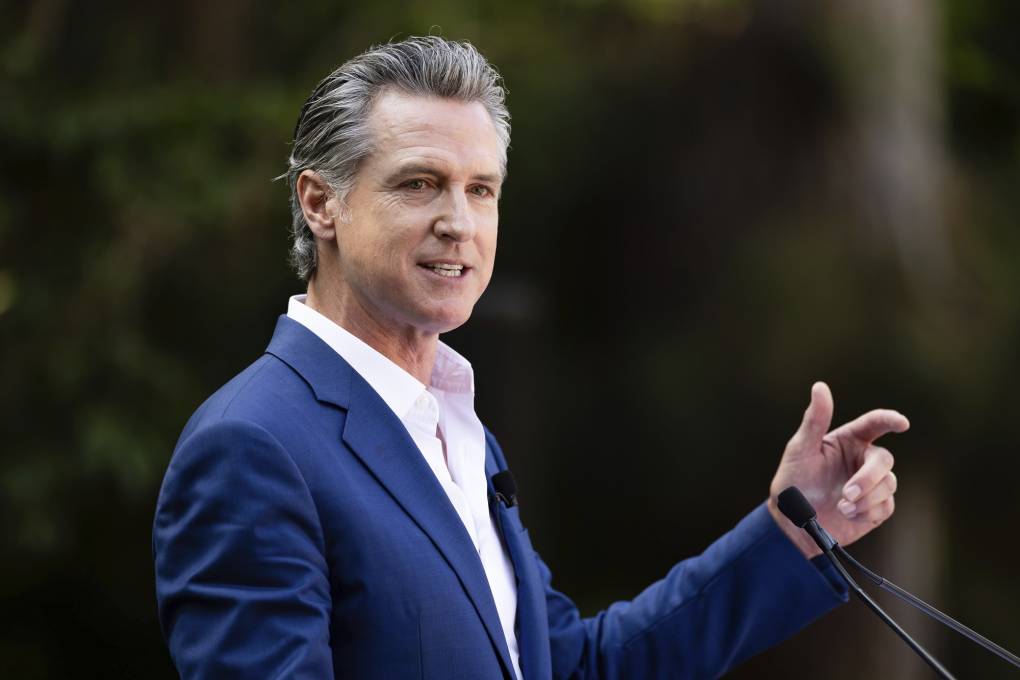
"caption": "Gov. Gavin Newsom is sending letters to every school district in California, calling on them to restrict smartphone use in classrooms.",
"credit": "Derrick Tuskan/AP Photo",
"altTag": null,
"description": null,
"imgSizes": {
"medium": {
"file": "https://cdn.kqed.org/wp-content/uploads/sites/10/2024/08/NewsomCellphonesSchools-800x533.jpg",
"width": 800,
"height": 533,
"mimeType": "image/jpeg"
},
"large": {
"file": "https://cdn.kqed.org/wp-content/uploads/sites/10/2024/08/NewsomCellphonesSchools-1020x680.jpg",
"width": 1020,
"height": 680,
"mimeType": "image/jpeg"
},
"thumbnail": {
"file": "https://cdn.kqed.org/wp-content/uploads/sites/10/2024/08/NewsomCellphonesSchools-160x107.jpg",
"width": 160,
"height": 107,
"mimeType": "image/jpeg"
},
"1536x1536": {
"file": "https://cdn.kqed.org/wp-content/uploads/sites/10/2024/08/NewsomCellphonesSchools-1536x1024.jpg",
"width": 1536,
"height": 1024,
"mimeType": "image/jpeg"
},
"post-thumbnail": {
"file": "https://cdn.kqed.org/wp-content/uploads/sites/10/2024/08/NewsomCellphonesSchools-672x372.jpg",
"width": 672,
"height": 372,
"mimeType": "image/jpeg"
},
"twentyfourteen-full-width": {
"file": "https://cdn.kqed.org/wp-content/uploads/sites/10/2024/08/NewsomCellphonesSchools-1038x576.jpg",
"width": 1038,
"height": 576,
"mimeType": "image/jpeg"
},
"full-width": {
"file": "https://cdn.kqed.org/wp-content/uploads/sites/10/2024/08/NewsomCellphonesSchools-1920x1280.jpg",
"width": 1920,
"height": 1280,
"mimeType": "image/jpeg"
},
"kqedFullSize": {
"file": "https://cdn.kqed.org/wp-content/uploads/sites/10/2024/08/NewsomCellphonesSchools.jpg",
"width": 2000,
"height": 1333
}
},
"isLoading": false,
"fetchFailed": false
},
"news_11999892": {
"type": "attachments",
"id": "news_11999892",
"meta": {
"index": "attachments_1716263798",
"site": "news",
"id": "11999892",
"found": true
},
"title": "080724_Santa-Cruz-Sweeps_MO_CM_14-1",
"publishDate": 1723495459,
"status": "inherit",
"parent": 11999880,
"modified": 1723495513,
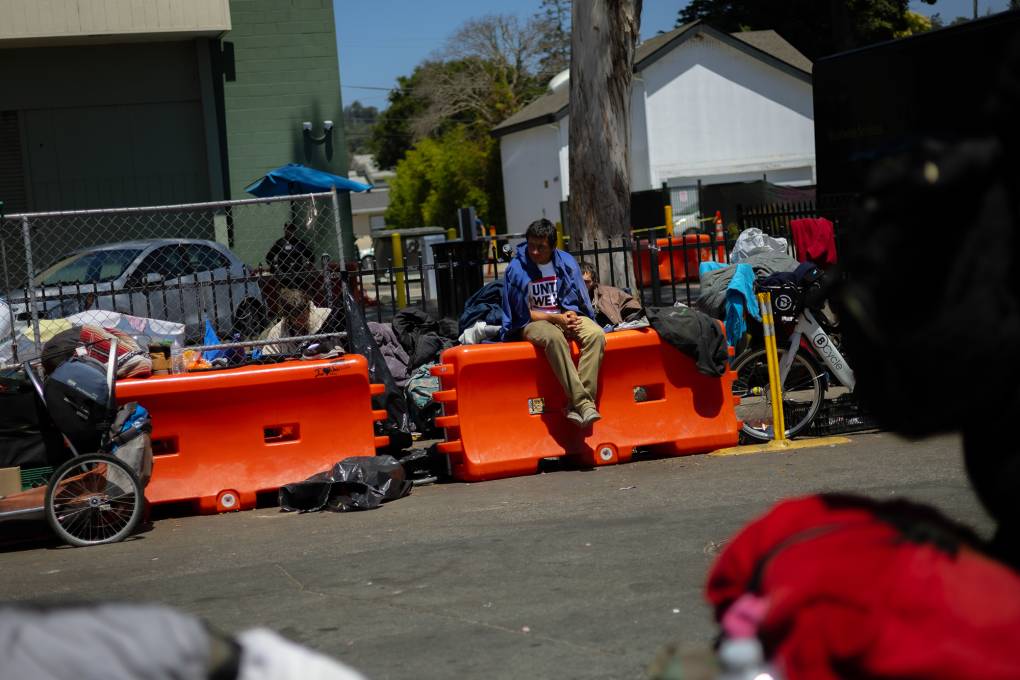
"caption": "Coral Street in Santa Cruz has become a prominent hangout for the unhoused community, who find resources at the Housing Matters shelter during the day.",
"credit": "Manuel Orbegozo/CalMatters",
"altTag": null,
"description": null,
"imgSizes": {
"medium": {
"file": "https://cdn.kqed.org/wp-content/uploads/sites/10/2024/08/080724_Santa-Cruz-Sweeps_MO_CM_14-1-800x533.jpg",
"width": 800,
"height": 533,
"mimeType": "image/jpeg"
},
"large": {
"file": "https://cdn.kqed.org/wp-content/uploads/sites/10/2024/08/080724_Santa-Cruz-Sweeps_MO_CM_14-1-1020x680.jpg",
"width": 1020,
"height": 680,
"mimeType": "image/jpeg"
},
"thumbnail": {
"file": "https://cdn.kqed.org/wp-content/uploads/sites/10/2024/08/080724_Santa-Cruz-Sweeps_MO_CM_14-1-160x107.jpg",
"width": 160,
"height": 107,
"mimeType": "image/jpeg"
},
"1536x1536": {
"file": "https://cdn.kqed.org/wp-content/uploads/sites/10/2024/08/080724_Santa-Cruz-Sweeps_MO_CM_14-1-1536x1024.jpg",
"width": 1536,
"height": 1024,
"mimeType": "image/jpeg"
},
"post-thumbnail": {
"file": "https://cdn.kqed.org/wp-content/uploads/sites/10/2024/08/080724_Santa-Cruz-Sweeps_MO_CM_14-1-672x372.jpg",
"width": 672,
"height": 372,
"mimeType": "image/jpeg"
},
"twentyfourteen-full-width": {
"file": "https://cdn.kqed.org/wp-content/uploads/sites/10/2024/08/080724_Santa-Cruz-Sweeps_MO_CM_14-1-1038x576.jpg",
"width": 1038,
"height": 576,
"mimeType": "image/jpeg"
},
"full-width": {
"file": "https://cdn.kqed.org/wp-content/uploads/sites/10/2024/08/080724_Santa-Cruz-Sweeps_MO_CM_14-1-1920x1280.jpg",
"width": 1920,
"height": 1280,
"mimeType": "image/jpeg"
},
"kqedFullSize": {
"file": "https://cdn.kqed.org/wp-content/uploads/sites/10/2024/08/080724_Santa-Cruz-Sweeps_MO_CM_14-1.jpg",
"width": 2000,
"height": 1333
}
},
"isLoading": false,
"fetchFailed": false
},
"news_11999625": {
"type": "attachments",
"id": "news_11999625",
"meta": {
"index": "attachments_1716263798",
"site": "news",
"id": "11999625",
"found": true
},
"title": "Governor Gavin Newsom along with Caltrans clean up an encampement site near Paxton Street and Remick Avenue in Los Angeles as the state's Clean California initiative continues",
"publishDate": 1723229310,
"status": "inherit",
"parent": 11999607,
"modified": 1723229358,
"caption": "Gov. Gavin Newsom along with Caltrans clean up an encampment site near Paxton Street and Remick Avenue in Los Angeles as the state's Clean California initiative continues on Thursday, Aug. 8, 2024 in Los Angeles. ",
"credit": "Jason Armond/Los Angeles Times via Getty Images",
"altTag": null,
"description": null,
"imgSizes": {
"medium": {
"file": "https://cdn.kqed.org/wp-content/uploads/sites/10/2024/08/GettyImages-2165417501-800x534.jpg",
"width": 800,
"height": 534,
"mimeType": "image/jpeg"
},
"large": {
"file": "https://cdn.kqed.org/wp-content/uploads/sites/10/2024/08/GettyImages-2165417501-1020x680.jpg",
"width": 1020,
"height": 680,
"mimeType": "image/jpeg"
},
"thumbnail": {
"file": "https://cdn.kqed.org/wp-content/uploads/sites/10/2024/08/GettyImages-2165417501-160x107.jpg",
"width": 160,
"height": 107,
"mimeType": "image/jpeg"
},
"post-thumbnail": {
"file": "https://cdn.kqed.org/wp-content/uploads/sites/10/2024/08/GettyImages-2165417501-672x372.jpg",
"width": 672,
"height": 372,
"mimeType": "image/jpeg"
},
"twentyfourteen-full-width": {
"file": "https://cdn.kqed.org/wp-content/uploads/sites/10/2024/08/GettyImages-2165417501-1024x576.jpg",
"width": 1024,
"height": 576,
"mimeType": "image/jpeg"
},
"kqedFullSize": {
"file": "https://cdn.kqed.org/wp-content/uploads/sites/10/2024/08/GettyImages-2165417501.jpg",
"width": 1024,
"height": 683
}
},
"isLoading": false,
"fetchFailed": false
},
"news_11997543": {
"type": "attachments",
"id": "news_11997543",
"meta": {
"index": "attachments_1716263798",
"site": "news",
"id": "11997543",
"found": true
},
"title": "070824-FireFight-Training-JAH-CM-06 copy",
"publishDate": 1722014247,
"status": "inherit",
"parent": 11997534,
"modified": 1722014273,
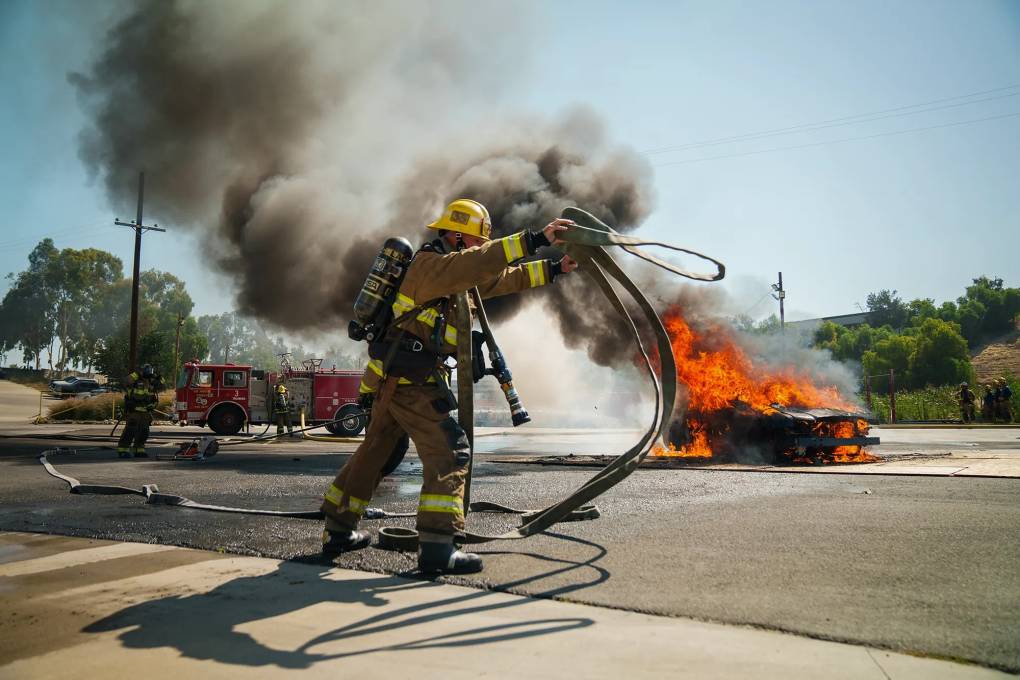
"caption": "A car burns during a training session as an apprentice lays out a fire hose at the Los Angeles County Fire Department East County Training Center, in Pomona, on July 8, 2024. ",
"credit": "Jules Hotz for CalMatters",
"altTag": null,
"description": null,
"imgSizes": {
"medium": {
"file": "https://cdn.kqed.org/wp-content/uploads/sites/10/2024/07/070824-FireFight-Training-JAH-CM-06-copy-800x533.jpg",
"width": 800,
"height": 533,
"mimeType": "image/jpeg"
},
"large": {
"file": "https://cdn.kqed.org/wp-content/uploads/sites/10/2024/07/070824-FireFight-Training-JAH-CM-06-copy-1020x680.jpg",
"width": 1020,
"height": 680,
"mimeType": "image/jpeg"
},
"thumbnail": {
"file": "https://cdn.kqed.org/wp-content/uploads/sites/10/2024/07/070824-FireFight-Training-JAH-CM-06-copy-160x107.jpg",
"width": 160,
"height": 107,
"mimeType": "image/jpeg"
},
"1536x1536": {
"file": "https://cdn.kqed.org/wp-content/uploads/sites/10/2024/07/070824-FireFight-Training-JAH-CM-06-copy-1536x1024.jpg",
"width": 1536,
"height": 1024,
"mimeType": "image/jpeg"
},
"post-thumbnail": {
"file": "https://cdn.kqed.org/wp-content/uploads/sites/10/2024/07/070824-FireFight-Training-JAH-CM-06-copy-672x372.jpg",
"width": 672,
"height": 372,
"mimeType": "image/jpeg"
},
"twentyfourteen-full-width": {
"file": "https://cdn.kqed.org/wp-content/uploads/sites/10/2024/07/070824-FireFight-Training-JAH-CM-06-copy-1038x576.jpg",
"width": 1038,
"height": 576,
"mimeType": "image/jpeg"
},
"full-width": {
"file": "https://cdn.kqed.org/wp-content/uploads/sites/10/2024/07/070824-FireFight-Training-JAH-CM-06-copy-1920x1280.jpg",
"width": 1920,
"height": 1280,
"mimeType": "image/jpeg"
},
"kqedFullSize": {
"file": "https://cdn.kqed.org/wp-content/uploads/sites/10/2024/07/070824-FireFight-Training-JAH-CM-06-copy.jpg",
"width": 2000,
"height": 1333
}
},
"isLoading": false,
"fetchFailed": false
},
"news_11997503": {
"type": "attachments",
"id": "news_11997503",
"meta": {
"index": "attachments_1716263798",
"site": "news",
"id": "11997503",
"found": true
},
"title": "240726-ParkFire-02-BL",
"publishDate": 1721983384,
"status": "inherit",
"parent": 0,
"modified": 1722967573,
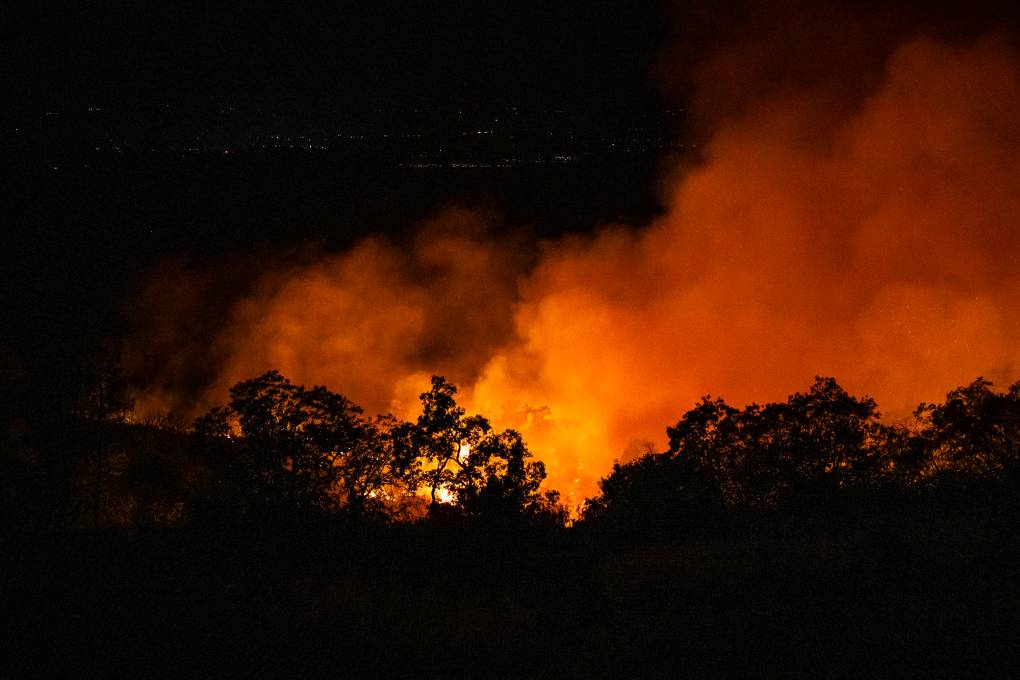
"caption": "The lights of Chico are visible from Highway 32 northeast of the city as the Park Fire burns in the early morning hours on July 26, 2024.",
"credit": "Beth LaBerge/KQED",
"altTag": null,
"description": null,
"imgSizes": {
"medium": {
"file": "https://cdn.kqed.org/wp-content/uploads/sites/10/2024/07/240726-ParkFire-02-BL-800x533.jpg",
"width": 800,
"height": 533,
"mimeType": "image/jpeg"
},
"large": {
"file": "https://cdn.kqed.org/wp-content/uploads/sites/10/2024/07/240726-ParkFire-02-BL-1020x680.jpg",
"width": 1020,
"height": 680,
"mimeType": "image/jpeg"
},
"thumbnail": {
"file": "https://cdn.kqed.org/wp-content/uploads/sites/10/2024/07/240726-ParkFire-02-BL-160x107.jpg",
"width": 160,
"height": 107,
"mimeType": "image/jpeg"
},
"1536x1536": {
"file": "https://cdn.kqed.org/wp-content/uploads/sites/10/2024/07/240726-ParkFire-02-BL-1536x1024.jpg",
"width": 1536,
"height": 1024,
"mimeType": "image/jpeg"
},
"post-thumbnail": {
"file": "https://cdn.kqed.org/wp-content/uploads/sites/10/2024/07/240726-ParkFire-02-BL-672x372.jpg",
"width": 672,
"height": 372,
"mimeType": "image/jpeg"
},
"twentyfourteen-full-width": {
"file": "https://cdn.kqed.org/wp-content/uploads/sites/10/2024/07/240726-ParkFire-02-BL-1038x576.jpg",
"width": 1038,
"height": 576,
"mimeType": "image/jpeg"
},
"full-width": {
"file": "https://cdn.kqed.org/wp-content/uploads/sites/10/2024/07/240726-ParkFire-02-BL-1920x1280.jpg",
"width": 1920,
"height": 1280,
"mimeType": "image/jpeg"
},
"kqedFullSize": {
"file": "https://cdn.kqed.org/wp-content/uploads/sites/10/2024/07/240726-ParkFire-02-BL.jpg",
"width": 2000,
"height": 1333
}
},
"isLoading": false,
"fetchFailed": false
},
"news_11997359": {
"type": "attachments",
"id": "news_11997359",
"meta": {
"index": "attachments_1716263798",
"site": "news",
"id": "11997359",
"found": true
},
"title": "California Governor Newsom Announces New Gun Safety Legislation After String Of Mass Shootings In The State",
"publishDate": 1721925466,
"status": "inherit",
"parent": 11997352,
"modified": 1721930296,
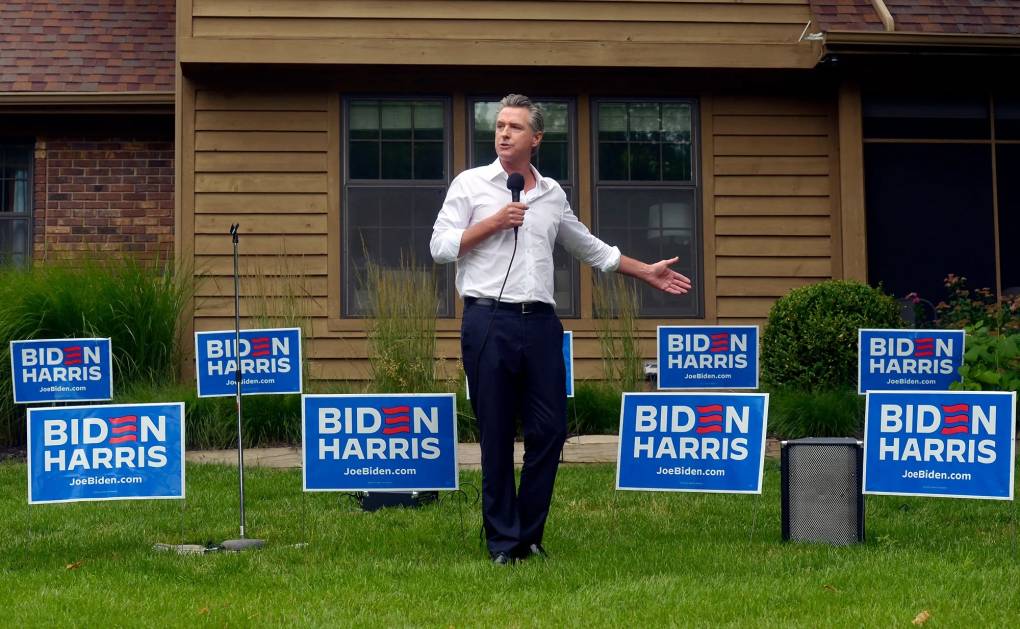
"caption": "California Gov. Gavin Newsom speaks during a press conference in Sacramento, California, on Feb. 1, 2023. ",
"credit": "Justin Sullivan/Getty Images",
"altTag": null,
"description": null,
"imgSizes": {
"medium": {
"file": "https://cdn.kqed.org/wp-content/uploads/sites/10/2024/07/GavinNewsomGetty-800x555.jpg",
"width": 800,
"height": 555,
"mimeType": "image/jpeg"
},
"large": {
"file": "https://cdn.kqed.org/wp-content/uploads/sites/10/2024/07/GavinNewsomGetty-1020x708.jpg",
"width": 1020,
"height": 708,
"mimeType": "image/jpeg"
},
"thumbnail": {
"file": "https://cdn.kqed.org/wp-content/uploads/sites/10/2024/07/GavinNewsomGetty-160x111.jpg",
"width": 160,
"height": 111,
"mimeType": "image/jpeg"
},
"1536x1536": {
"file": "https://cdn.kqed.org/wp-content/uploads/sites/10/2024/07/GavinNewsomGetty-1536x1066.jpg",
"width": 1536,
"height": 1066,
"mimeType": "image/jpeg"
},
"post-thumbnail": {
"file": "https://cdn.kqed.org/wp-content/uploads/sites/10/2024/07/GavinNewsomGetty-672x372.jpg",
"width": 672,
"height": 372,
"mimeType": "image/jpeg"
},
"twentyfourteen-full-width": {
"file": "https://cdn.kqed.org/wp-content/uploads/sites/10/2024/07/GavinNewsomGetty-1038x576.jpg",
"width": 1038,
"height": 576,
"mimeType": "image/jpeg"
},
"full-width": {
"file": "https://cdn.kqed.org/wp-content/uploads/sites/10/2024/07/GavinNewsomGetty-1920x1332.jpg",
"width": 1920,
"height": 1332,
"mimeType": "image/jpeg"
},
"kqedFullSize": {
"file": "https://cdn.kqed.org/wp-content/uploads/sites/10/2024/07/GavinNewsomGetty.jpg",
"width": 2000,
"height": 1388
}
},
"isLoading": false,
"fetchFailed": false
},
"news_11995884": {
"type": "attachments",
"id": "news_11995884",
"meta": {
"index": "attachments_1716263798",
"site": "news",
"id": "11995884",
"found": true
},
"title": "240717-NEWSOM PRICE DIPTYCH-MD-01-KQED",
"publishDate": 1721161704,
"status": "inherit",
"parent": 0,
"modified": 1721428942,
"caption": "Gov. Gavin Newsom and Alameda County District Attorney Pamela Price have dueling narratives about why a plan to send a state attorney to assist in the DA’s office fell through. ",
"credit": "Andrew Harnik/Getty Images; Lea Suzuki/The San Francisco Chronicle via Getty Images",
"altTag": null,
"description": null,
"imgSizes": {
"medium": {
"file": "https://cdn.kqed.org/wp-content/uploads/sites/10/2024/07/240717-NEWSOM-PRICE-DIPTYCH-MD-01-KQED-800x533.jpg",
"width": 800,
"height": 533,
"mimeType": "image/jpeg"
},
"large": {
"file": "https://cdn.kqed.org/wp-content/uploads/sites/10/2024/07/240717-NEWSOM-PRICE-DIPTYCH-MD-01-KQED-1020x680.jpg",
"width": 1020,
"height": 680,
"mimeType": "image/jpeg"
},
"thumbnail": {
"file": "https://cdn.kqed.org/wp-content/uploads/sites/10/2024/07/240717-NEWSOM-PRICE-DIPTYCH-MD-01-KQED-160x107.jpg",
"width": 160,
"height": 107,
"mimeType": "image/jpeg"
},
"1536x1536": {
"file": "https://cdn.kqed.org/wp-content/uploads/sites/10/2024/07/240717-NEWSOM-PRICE-DIPTYCH-MD-01-KQED-1536x1024.jpg",
"width": 1536,
"height": 1024,
"mimeType": "image/jpeg"
},
"post-thumbnail": {
"file": "https://cdn.kqed.org/wp-content/uploads/sites/10/2024/07/240717-NEWSOM-PRICE-DIPTYCH-MD-01-KQED-672x372.jpg",
"width": 672,
"height": 372,
"mimeType": "image/jpeg"
},
"twentyfourteen-full-width": {
"file": "https://cdn.kqed.org/wp-content/uploads/sites/10/2024/07/240717-NEWSOM-PRICE-DIPTYCH-MD-01-KQED-1038x576.jpg",
"width": 1038,
"height": 576,
"mimeType": "image/jpeg"
},
"full-width": {
"file": "https://cdn.kqed.org/wp-content/uploads/sites/10/2024/07/240717-NEWSOM-PRICE-DIPTYCH-MD-01-KQED-1920x1280.jpg",
"width": 1920,
"height": 1280,
"mimeType": "image/jpeg"
},
"kqedFullSize": {
"file": "https://cdn.kqed.org/wp-content/uploads/sites/10/2024/07/240717-NEWSOM-PRICE-DIPTYCH-MD-01-KQED.jpg",
"width": 2000,
"height": 1333
}
},
"isLoading": false,
"fetchFailed": false
},
"news_11996535": {
"type": "attachments",
"id": "news_11996535",
"meta": {
"index": "attachments_1716263798",
"site": "news",
"id": "11996535",
"found": true
},
"title": "TOPSHOT-US-POLITICS-BIDEN-ELECTION",
"publishDate": 1721494408,
"status": "inherit",
"parent": 11996483,
"modified": 1721494458,
"caption": "US President Joe Biden speaks during the Vote To Live Properity Summit at the College of Southern Nevada in Las Vegas, Nevada, on July 16, 2024. ",
"credit": "Kent Nishimura/AFP via Getty Images",
"altTag": null,
"description": null,
"imgSizes": {
"medium": {
"file": "https://cdn.kqed.org/wp-content/uploads/sites/10/2024/07/GettyImages-2161719484-800x533.jpg",
"width": 800,
"height": 533,
"mimeType": "image/jpeg"
},
"large": {
"file": "https://cdn.kqed.org/wp-content/uploads/sites/10/2024/07/GettyImages-2161719484-1020x680.jpg",
"width": 1020,
"height": 680,
"mimeType": "image/jpeg"
},
"thumbnail": {
"file": "https://cdn.kqed.org/wp-content/uploads/sites/10/2024/07/GettyImages-2161719484-160x107.jpg",
"width": 160,
"height": 107,
"mimeType": "image/jpeg"
},
"1536x1536": {
"file": "https://cdn.kqed.org/wp-content/uploads/sites/10/2024/07/GettyImages-2161719484-1536x1024.jpg",
"width": 1536,
"height": 1024,
"mimeType": "image/jpeg"
},
"2048x2048": {
"file": "https://cdn.kqed.org/wp-content/uploads/sites/10/2024/07/GettyImages-2161719484-2048x1365.jpg",
"width": 2048,
"height": 1365,
"mimeType": "image/jpeg"
},
"post-thumbnail": {
"file": "https://cdn.kqed.org/wp-content/uploads/sites/10/2024/07/GettyImages-2161719484-672x372.jpg",
"width": 672,
"height": 372,
"mimeType": "image/jpeg"
},
"twentyfourteen-full-width": {
"file": "https://cdn.kqed.org/wp-content/uploads/sites/10/2024/07/GettyImages-2161719484-1038x576.jpg",
"width": 1038,
"height": 576,
"mimeType": "image/jpeg"
},
"full-width": {
"file": "https://cdn.kqed.org/wp-content/uploads/sites/10/2024/07/GettyImages-2161719484-1920x1280.jpg",
"width": 1920,
"height": 1280,
"mimeType": "image/jpeg"
},
"kqedFullSize": {
"file": "https://cdn.kqed.org/wp-content/uploads/sites/10/2024/07/GettyImages-2161719484-scaled.jpg",
"width": 2560,
"height": 1707
}
},
"isLoading": false,
"fetchFailed": false
},
"news_11996417": {
"type": "attachments",
"id": "news_11996417",
"meta": {
"index": "attachments_1716263798",
"site": "news",
"id": "11996417",
"found": true
},
"title": "070424-Newsom-Biden-Campaign-AP-CM-01 copy",
"publishDate": 1721412981,
"status": "inherit",
"parent": 11996415,
"modified": 1721413006,
"caption": "Gov. Gavin Newsom gave a forceful defense of embattled President Joe Bidens at the Van Buren County Democratic Party Fourth of July reception in South Haven, Michigan on July 4, 2024.",
"credit": "Don Campbell/The Herald-Palladium via AP Photo",
"altTag": null,
"description": null,
"imgSizes": {
"medium": {
"file": "https://cdn.kqed.org/wp-content/uploads/sites/10/2024/07/070424-Newsom-Biden-Campaign-AP-CM-01-copy-800x494.jpg",
"width": 800,
"height": 494,
"mimeType": "image/jpeg"
},
"large": {
"file": "https://cdn.kqed.org/wp-content/uploads/sites/10/2024/07/070424-Newsom-Biden-Campaign-AP-CM-01-copy-1020x629.jpg",
"width": 1020,
"height": 629,
"mimeType": "image/jpeg"
},
"thumbnail": {
"file": "https://cdn.kqed.org/wp-content/uploads/sites/10/2024/07/070424-Newsom-Biden-Campaign-AP-CM-01-copy-160x99.jpg",
"width": 160,
"height": 99,
"mimeType": "image/jpeg"
},
"1536x1536": {
"file": "https://cdn.kqed.org/wp-content/uploads/sites/10/2024/07/070424-Newsom-Biden-Campaign-AP-CM-01-copy-1536x948.jpg",
"width": 1536,
"height": 948,
"mimeType": "image/jpeg"
},
"post-thumbnail": {
"file": "https://cdn.kqed.org/wp-content/uploads/sites/10/2024/07/070424-Newsom-Biden-Campaign-AP-CM-01-copy-672x372.jpg",
"width": 672,
"height": 372,
"mimeType": "image/jpeg"
},
"twentyfourteen-full-width": {
"file": "https://cdn.kqed.org/wp-content/uploads/sites/10/2024/07/070424-Newsom-Biden-Campaign-AP-CM-01-copy-1038x576.jpg",
"width": 1038,
"height": 576,
"mimeType": "image/jpeg"
},
"full-width": {
"file": "https://cdn.kqed.org/wp-content/uploads/sites/10/2024/07/070424-Newsom-Biden-Campaign-AP-CM-01-copy-1920x1185.jpg",
"width": 1920,
"height": 1185,
"mimeType": "image/jpeg"
},
"kqedFullSize": {
"file": "https://cdn.kqed.org/wp-content/uploads/sites/10/2024/07/070424-Newsom-Biden-Campaign-AP-CM-01-copy.jpg",
"width": 2000,
"height": 1234
}
},
"isLoading": false,
"fetchFailed": false
},
"news_11995875": {
"type": "attachments",
"id": "news_11995875",
"meta": {
"index": "attachments_1716263798",
"site": "news",
"id": "11995875",
"found": true
},
"title": "Chino Valley School Board Votes On Student Transgender Policy",
"publishDate": 1721159949,
"status": "inherit",
"parent": 11995853,
"modified": 1721162762,
"caption": "A person holds a sign in opposition to a policy that the Chino Valley school board is meeting to vote on, which would require school staff to 'out' students to their parents if they ask to be identified by a gender that is not listed on their birth certificate on July 20, 2023, in Chino, San Bernardino County. ",
"credit": "David McNew/Getty Images",
"altTag": null,
"description": null,
"imgSizes": {
"medium": {
"file": "https://cdn.kqed.org/wp-content/uploads/sites/10/2024/07/GettyImages-1545719242-800x534.jpg",
"width": 800,
"height": 534,
"mimeType": "image/jpeg"
},
"large": {
"file": "https://cdn.kqed.org/wp-content/uploads/sites/10/2024/07/GettyImages-1545719242-1020x680.jpg",
"width": 1020,
"height": 680,
"mimeType": "image/jpeg"
},
"thumbnail": {
"file": "https://cdn.kqed.org/wp-content/uploads/sites/10/2024/07/GettyImages-1545719242-160x107.jpg",
"width": 160,
"height": 107,
"mimeType": "image/jpeg"
},
"post-thumbnail": {
"file": "https://cdn.kqed.org/wp-content/uploads/sites/10/2024/07/GettyImages-1545719242-672x372.jpg",
"width": 672,
"height": 372,
"mimeType": "image/jpeg"
},
"twentyfourteen-full-width": {
"file": "https://cdn.kqed.org/wp-content/uploads/sites/10/2024/07/GettyImages-1545719242-1024x576.jpg",
"width": 1024,
"height": 576,
"mimeType": "image/jpeg"
},
"kqedFullSize": {
"file": "https://cdn.kqed.org/wp-content/uploads/sites/10/2024/07/GettyImages-1545719242.jpg",
"width": 1024,
"height": 683
}
},
"isLoading": false,
"fetchFailed": false
},
"news_11993653": {
"type": "attachments",
"id": "news_11993653",
"meta": {
"index": "attachments_1716263798",
"site": "news",
"id": "11993653",
"found": true
},
"title": "240711-NEWSOM CARS-AF-01-KQED",
"publishDate": 1720723932,
"status": "inherit",
"parent": 12059728,
"modified": 1760392743,
"caption": "Gov, Gavin Newsom announced a fourfold increase in California Highway Patrol operations in the East Bay on July 11, 2024, at Berry Bros. Towing in West Oakland, backed by rows of cars recovered by CHP. He was joined by Oakland Police Chief Floyd Mitchell (left) and CHP Commissioner Sean Duryee (right).",
"credit": "Annelise Finney/KQED",
"altTag": null,
"description": null,
"imgSizes": {
"medium": {
"file": "https://cdn.kqed.org/wp-content/uploads/sites/10/2024/07/240711-NEWSOM-CARS-AF-01-KQED-800x533.jpg",
"width": 800,
"height": 533,
"mimeType": "image/jpeg"
},
"large": {
"file": "https://cdn.kqed.org/wp-content/uploads/sites/10/2024/07/240711-NEWSOM-CARS-AF-01-KQED-1020x680.jpg",
"width": 1020,
"height": 680,
"mimeType": "image/jpeg"
},
"thumbnail": {
"file": "https://cdn.kqed.org/wp-content/uploads/sites/10/2024/07/240711-NEWSOM-CARS-AF-01-KQED-160x107.jpg",
"width": 160,
"height": 107,
"mimeType": "image/jpeg"
},
"1536x1536": {
"file": "https://cdn.kqed.org/wp-content/uploads/sites/10/2024/07/240711-NEWSOM-CARS-AF-01-KQED-1536x1024.jpg",
"width": 1536,
"height": 1024,
"mimeType": "image/jpeg"
},
"post-thumbnail": {
"file": "https://cdn.kqed.org/wp-content/uploads/sites/10/2024/07/240711-NEWSOM-CARS-AF-01-KQED-672x372.jpg",
"width": 672,
"height": 372,
"mimeType": "image/jpeg"
},
"twentyfourteen-full-width": {
"file": "https://cdn.kqed.org/wp-content/uploads/sites/10/2024/07/240711-NEWSOM-CARS-AF-01-KQED-1038x576.jpg",
"width": 1038,
"height": 576,
"mimeType": "image/jpeg"
},
"full-width": {
"file": "https://cdn.kqed.org/wp-content/uploads/sites/10/2024/07/240711-NEWSOM-CARS-AF-01-KQED-1920x1280.jpg",
"width": 1920,
"height": 1280,
"mimeType": "image/jpeg"
},
"kqedFullSize": {
"file": "https://cdn.kqed.org/wp-content/uploads/sites/10/2024/07/240711-NEWSOM-CARS-AF-01-KQED.jpg",
"width": 2000,
"height": 1333
}
},
"isLoading": false,
"fetchFailed": false
},
"news_11993621": {
"type": "attachments",
"id": "news_11993621",
"meta": {
"index": "attachments_1716263798",
"site": "news",
"id": "11993621",
"found": true
},
"title": "053124-Bakersfield-Rural-Homelessness-LV_05",
"publishDate": 1720718669,
"status": "inherit",
"parent": 11993616,
"modified": 1720721130,
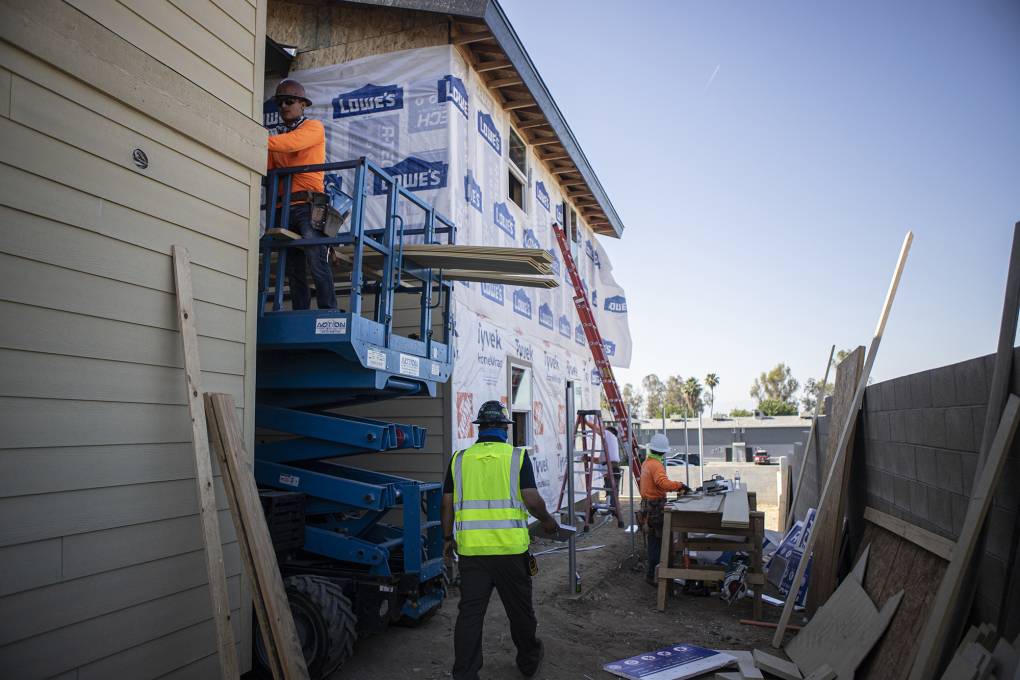
"caption": "Construction site for an affordable housing apartment complex in Bakersfield, Kern County, on May 29, 2024. ",
"credit": "Larry Valenzuela/CalMatters/CatchLight Local",
"altTag": "Men wearing bright safety uniforms and hard hats walk around a construction site.",
"description": null,
"imgSizes": {
"medium": {
"file": "https://cdn.kqed.org/wp-content/uploads/sites/10/2024/07/053124-Bakersfield-Rural-Homelessness-LV_05-800x533.jpg",
"width": 800,
"height": 533,
"mimeType": "image/jpeg"
},
"large": {
"file": "https://cdn.kqed.org/wp-content/uploads/sites/10/2024/07/053124-Bakersfield-Rural-Homelessness-LV_05-1020x680.jpg",
"width": 1020,
"height": 680,
"mimeType": "image/jpeg"
},
"thumbnail": {
"file": "https://cdn.kqed.org/wp-content/uploads/sites/10/2024/07/053124-Bakersfield-Rural-Homelessness-LV_05-160x107.jpg",
"width": 160,
"height": 107,
"mimeType": "image/jpeg"
},
"1536x1536": {
"file": "https://cdn.kqed.org/wp-content/uploads/sites/10/2024/07/053124-Bakersfield-Rural-Homelessness-LV_05-1536x1024.jpg",
"width": 1536,
"height": 1024,
"mimeType": "image/jpeg"
},
"post-thumbnail": {
"file": "https://cdn.kqed.org/wp-content/uploads/sites/10/2024/07/053124-Bakersfield-Rural-Homelessness-LV_05-672x372.jpg",
"width": 672,
"height": 372,
"mimeType": "image/jpeg"
},
"twentyfourteen-full-width": {
"file": "https://cdn.kqed.org/wp-content/uploads/sites/10/2024/07/053124-Bakersfield-Rural-Homelessness-LV_05-1038x576.jpg",
"width": 1038,
"height": 576,
"mimeType": "image/jpeg"
},
"full-width": {
"file": "https://cdn.kqed.org/wp-content/uploads/sites/10/2024/07/053124-Bakersfield-Rural-Homelessness-LV_05-1920x1280.jpg",
"width": 1920,
"height": 1280,
"mimeType": "image/jpeg"
},
"kqedFullSize": {
"file": "https://cdn.kqed.org/wp-content/uploads/sites/10/2024/07/053124-Bakersfield-Rural-Homelessness-LV_05.jpg",
"width": 2000,
"height": 1333
}
},
"isLoading": false,
"fetchFailed": false
}
},
"audioPlayerReducer": {
"postId": "stream_live",
"isPaused": true,
"isPlaying": false,
"pfsActive": false,
"pledgeModalIsOpen": true,
"playerDrawerIsOpen": false,
"liveAudioPlayStartedAt": 0,
"liveAudioPlayContext": ""
},
"authorsReducer": {
"byline_news_11999880": {
"type": "authors",
"id": "byline_news_11999880",
"meta": {
"override": true
},
"slug": "byline_news_11999880",
"name": "Marisa Kendall, Calmatters",
"isLoading": false
},
"byline_news_11999607": {
"type": "authors",
"id": "byline_news_11999607",
"meta": {
"override": true
},
"slug": "byline_news_11999607",
"name": "Trân Nguyễn, Associated Press",
"isLoading": false
},
"byline_news_11997534": {
"type": "authors",
"id": "byline_news_11997534",
"meta": {
"override": true
},
"slug": "byline_news_11997534",
"name": "\u003ca href=\"https://calmatters.org/author/adam-echelman/\">Adam Echelman\u003c/a>, CalMatters",
"isLoading": false
},
"byline_news_11996415": {
"type": "authors",
"id": "byline_news_11996415",
"meta": {
"override": true
},
"slug": "byline_news_11996415",
"name": "\u003ca href=\"https://calmatters.org/author/alexei-koseff/\">Alexei Koseff\u003c/a>, CalMatters",
"isLoading": false
},
"byline_news_11995853": {
"type": "authors",
"id": "byline_news_11995853",
"meta": {
"override": true
},
"slug": "byline_news_11995853",
"name": "Sophie Austin, Associated Press",
"isLoading": false
},
"byline_news_11993616": {
"type": "authors",
"id": "byline_news_11993616",
"meta": {
"override": true
},
"slug": "byline_news_11993616",
"name": "\u003ca href=\"https://calmatters.org/author/marisa-kendall/\">Marisa Kendall\u003c/a>, CalMatters",
"isLoading": false
},
"mlagos": {
"type": "authors",
"id": "3239",
"meta": {
"index": "authors_1716337520",
"id": "3239",
"found": true
},
"name": "Marisa Lagos",
"firstName": "Marisa",
"lastName": "Lagos",
"slug": "mlagos",
"email": "mlagos@kqed.org",
"display_author_email": false,
"staff_mastheads": [
"news"
],
"title": "KQED Contributor",
"bio": "Marisa Lagos is a correspondent for KQED’s California Politics and Government Desk and co-hosts the award-winning show and podcast, Political Breakdown. At KQED, Lagos also conducts reporting, analysis and investigations into state, local and national politics for radio, TV, online and onstage. In 2022, she and co-host, Scott Shafer, moderated the only gubernatorial debate in California. In 2020, the \u003ci>Washington Post\u003c/i> named her one of the top political journalists in California; she was nominated for a Peabody and won several other awards for her work investigating the 2017 California wildfires. She has worked at the \u003ci>San Francisco Chronicle\u003c/i>, \u003ci>San Francisco Examiner\u003c/i> and \u003ci>Los Angeles Times\u003c/i>. A UC Santa Barbara graduate, she lives in San Francisco with her two sons and husband.",
"avatar": "https://secure.gravatar.com/avatar/a261a0d3696fc066871ef96b85b5e7d2?s=600&d=blank&r=g",
"twitter": "@mlagos",
"facebook": null,
"instagram": null,
"linkedin": null,
"sites": [
{
"site": "arts",
"roles": [
"author"
]
},
{
"site": "news",
"roles": [
"editor"
]
},
{
"site": "science",
"roles": [
"editor"
]
},
{
"site": "forum",
"roles": [
"author"
]
},
{
"site": "liveblog",
"roles": [
"author"
]
}
],
"headData": {
"title": "Marisa Lagos | KQED",
"description": "KQED Contributor",
"ogImgSrc": "https://secure.gravatar.com/avatar/a261a0d3696fc066871ef96b85b5e7d2?s=600&d=blank&r=g",
"twImgSrc": "https://secure.gravatar.com/avatar/a261a0d3696fc066871ef96b85b5e7d2?s=600&d=blank&r=g"
},
"isLoading": false,
"link": "/author/mlagos"
},
"abandlamudi": {
"type": "authors",
"id": "11672",
"meta": {
"index": "authors_1716337520",
"id": "11672",
"found": true
},
"name": "Adhiti Bandlamudi",
"firstName": "Adhiti",
"lastName": "Bandlamudi",
"slug": "abandlamudi",
"email": "abandlamudi@kqed.org",
"display_author_email": false,
"staff_mastheads": [
"news"
],
"title": "KQED Housing Reporter",
"bio": "Adhiti Bandlamudi reports for KQED's Housing desk. She focuses on how housing gets built across the Bay Area. Before joining KQED in 2020, she reported for WUNC in Durham, North Carolina, WABE in Atlanta, Georgia and Capital Public Radio in Sacramento. In 2017, she was awarded a Kroc Fellowship at NPR where she reported on everything from sprinkles to the Golden State Killer's arrest. When she's not reporting, she's baking new recipes in her kitchen or watching movies with friends and family. She's originally from Georgia and has strong opinions about Great British Bake Off.",
"avatar": "https://secure.gravatar.com/avatar/868129c8b257bb99a3500e2c86a65400?s=600&d=mm&r=g",
"twitter": "oddity_adhiti",
"facebook": null,
"instagram": null,
"linkedin": null,
"sites": [
{
"site": "arts",
"roles": [
"author"
]
},
{
"site": "news",
"roles": [
"editor"
]
},
{
"site": "liveblog",
"roles": [
"author"
]
}
],
"headData": {
"title": "Adhiti Bandlamudi | KQED",
"description": "KQED Housing Reporter",
"ogImgSrc": "https://secure.gravatar.com/avatar/868129c8b257bb99a3500e2c86a65400?s=600&d=mm&r=g",
"twImgSrc": "https://secure.gravatar.com/avatar/868129c8b257bb99a3500e2c86a65400?s=600&d=mm&r=g"
},
"isLoading": false,
"link": "/author/abandlamudi"
},
"kmizuguchi": {
"type": "authors",
"id": "11739",
"meta": {
"index": "authors_1716337520",
"id": "11739",
"found": true
},
"name": "Keith Mizuguchi",
"firstName": "Keith",
"lastName": "Mizuguchi",
"slug": "kmizuguchi",
"email": "kmizuguchi@kqed.org",
"display_author_email": false,
"staff_mastheads": [],
"title": "KQED Contributor",
"bio": null,
"avatar": "https://secure.gravatar.com/avatar/64d8a7de0723d4099b9fe4e915136103febcc20809abce228ee4415bcb237023?s=600&d=blank&r=g",
"twitter": null,
"bluesky": null,
"facebook": null,
"instagram": null,
"linkedin": null,
"sites": [
{
"site": "news",
"roles": [
"editor"
]
},
{
"site": "science",
"roles": [
"editor"
]
}
],
"headData": {
"title": "Keith Mizuguchi | KQED",
"description": "KQED Contributor",
"ogImgSrc": "https://secure.gravatar.com/avatar/64d8a7de0723d4099b9fe4e915136103febcc20809abce228ee4415bcb237023?s=600&d=blank&r=g",
"twImgSrc": "https://secure.gravatar.com/avatar/64d8a7de0723d4099b9fe4e915136103febcc20809abce228ee4415bcb237023?s=600&d=blank&r=g"
},
"isLoading": false,
"link": "/author/kmizuguchi"
},
"afinney": {
"type": "authors",
"id": "11772",
"meta": {
"index": "authors_1716337520",
"id": "11772",
"found": true
},
"name": "Annelise Finney",
"firstName": "Annelise",
"lastName": "Finney",
"slug": "afinney",
"email": "afinney@kqed.org",
"display_author_email": true,
"staff_mastheads": [
"news"
],
"title": "Reporter",
"bio": "Annelise reports on reparations in California and East Bay politics. She co-produced the Sunday Music Drop, a limited-term radio series featuring Bay Area musicians that aired between Sept 2022 and Oct 2024. She joined KQED in 2021 as a general assignment reporter and is an alumna of KALW's Audio Academy. She was born and raised in the East Bay. She is currently away from KQED completing a year-long reporting project in Berlin, Germany as a Alexander Von Humboldt German Chancellor Fellow.",
"avatar": "https://secure.gravatar.com/avatar/5fded66cae47704cdfc5021cde0f3aa4?s=600&d=blank&r=g",
"twitter": null,
"facebook": null,
"instagram": null,
"linkedin": null,
"sites": [
{
"site": "news",
"roles": [
"editor"
]
},
{
"site": "liveblog",
"roles": [
"author"
]
}
],
"headData": {
"title": "Annelise Finney | KQED",
"description": "Reporter",
"ogImgSrc": "https://secure.gravatar.com/avatar/5fded66cae47704cdfc5021cde0f3aa4?s=600&d=blank&r=g",
"twImgSrc": "https://secure.gravatar.com/avatar/5fded66cae47704cdfc5021cde0f3aa4?s=600&d=blank&r=g"
},
"isLoading": false,
"link": "/author/afinney"
},
"kdebenedetti": {
"type": "authors",
"id": "11913",
"meta": {
"index": "authors_1716337520",
"id": "11913",
"found": true
},
"name": "Katie DeBenedetti",
"firstName": "Katie",
"lastName": "DeBenedetti",
"slug": "kdebenedetti",
"email": "kdebenedetti@kqed.org",
"display_author_email": false,
"staff_mastheads": [
"news",
"science"
],
"title": "KQED Contributor",
"bio": "Katie DeBenedetti is a digital reporter covering daily news for the Express Desk. Prior to joining KQED as a culture reporting intern in January 2024, she covered education and city government for the Napa Valley Register.",
"avatar": "https://secure.gravatar.com/avatar/6e31073cb8f7e4214ab03f42771d0f45?s=600&d=blank&r=g",
"twitter": null,
"facebook": null,
"instagram": null,
"linkedin": null,
"sites": [
{
"site": "news",
"roles": [
"author"
]
},
{
"site": "science",
"roles": [
"author"
]
},
{
"site": "liveblog",
"roles": [
"author"
]
}
],
"headData": {
"title": "Katie DeBenedetti | KQED",
"description": "KQED Contributor",
"ogImgSrc": "https://secure.gravatar.com/avatar/6e31073cb8f7e4214ab03f42771d0f45?s=600&d=blank&r=g",
"twImgSrc": "https://secure.gravatar.com/avatar/6e31073cb8f7e4214ab03f42771d0f45?s=600&d=blank&r=g"
},
"isLoading": false,
"link": "/author/kdebenedetti"
}
},
"pagesReducer": {
"news_tag_gavin-newsom": {
"type": "terms",
"id": "news_16",
"meta": {
"index": "terms_1716263798",
"site": "news",
"id": "16",
"score": 8.936871
},
"featImg": null,
"name": "Gavin Newsom",
"description": null,
"taxonomy": "tag",
"headData": {
"twImgId": null,
"twTitle": null,
"ogTitle": null,
"ogImgId": null,
"twDescription": null,
"description": null,
"title": "Gavin Newsom Archives | KQED News",
"ogDescription": null
},
"ttid": 16,
"slug": "gavin-newsom",
"isLoading": false,
"title": "Gavin Newsom",
"pageMeta": {
"site": "news",
"WpPageTemplate": "page-topic-editorial",
"currentPage": 28
},
"blocks": [
{
"blockName": "kqed/post-list",
"attrs": {
"layout": "cardArticle2",
"query": "posts/news?tag=gavin-newsom",
"seeMore": false,
"paginated": true,
"page": 28
}
},
{
"blockName": "kqed/ad"
}
]
}
},
"pfsSessionReducer": {},
"postsReducer": {
"stream_live": {
"type": "live",
"id": "stream_live",
"audioUrl": "https://streams.kqed.org/kqedradio",
"title": "Live Stream",
"excerpt": "Live Stream information currently unavailable.",
"link": "/radio",
"featImg": "",
"label": {
"name": "KQED Live",
"link": "/"
}
},
"stream_kqedNewscast": {
"type": "posts",
"id": "stream_kqedNewscast",
"audioUrl": "https://www.kqed.org/.stream/anon/radio/RDnews/newscast.mp3?_=1",
"title": "KQED Newscast",
"featImg": "",
"label": {
"name": "88.5 FM",
"link": "/"
}
},
"news_11999993": {
"type": "posts",
"id": "news_11999993",
"meta": {
"index": "posts_1716263798",
"site": "news",
"id": "11999993",
"score": null,
"sort": [
1723585059000
]
},
"guestAuthors": [],
"slug": "newsom-urges-schools-to-restrict-phones-in-class-many-bay-area-campuses-already-do",
"title": "Newsom Urges Schools to Restrict Phones in Class. Many Bay Area Campuses Already Do",
"publishDate": 1723585059,
"format": "standard",
"headTitle": "Newsom Urges Schools to Restrict Phones in Class. Many Bay Area Campuses Already Do | KQED",
"labelTerm": {
"site": "news"
},
"content": "\u003cp>Class is back in session, and more students might be spending their days phone-free after Gov. Gavin Newsom on Tuesday urged districts to restrict use during school hours.\u003c/p>\n\u003cp>While multiple bills that could affect phone access in schools are considered in the California Legislature, Newsom told leaders that there is “no reason for schools to wait” to limit smartphone use. More Bay Area schools plan to implement restrictions as the new academic year begins this week, but some advocates say a blanket ban is a bad idea.\u003c/p>\n\u003cp>“Reducing phone use in class leads to improved concentration, better academic outcomes, and enhanced social interactions,” Newsom said in his letter on Tuesday, adding that schools and districts that have already rolled out no-phone policies have seen “positive impacts,” including higher test scores and less bullying.\u003c/p>\n\u003cp>Here’s what to know about the efforts so far:\u003c/p>\n\u003cp>[ad fullwidth]\u003c/p>\n\u003ch2>Which Bay Area schools already lock down phones?\u003c/h2>\n\u003cp>San Mateo-Foster City School District began requiring middle school students to put their phones into lockable bags called Yondr pouches during the 2022–23 academic year. The pouch can be unlocked outside the “\u003ca href=\"https://www.overyondr.com/phone-locking-pouch\">phone-free area\u003c/a>,” according to Yondr’s website.\u003c/p>\n\u003cp>Without the distraction of messages and social media notifications, students are talking to each other more and paying attention in class, district spokesperson Diego Perez said.\u003c/p>\n\u003cfigure id=\"attachment_12000041\" class=\"wp-caption aligncenter\" style=\"max-width: 2000px\">\u003cimg loading=\"lazy\" decoding=\"async\" class=\"size-full wp-image-12000041\" src=\"https://cdn.kqed.org/wp-content/uploads/sites/10/2024/08/HighSchoolStudents.jpg\" alt=\"\" width=\"2000\" height=\"1333\" srcset=\"https://cdn.kqed.org/wp-content/uploads/sites/10/2024/08/HighSchoolStudents.jpg 2000w, https://cdn.kqed.org/wp-content/uploads/sites/10/2024/08/HighSchoolStudents-800x533.jpg 800w, https://cdn.kqed.org/wp-content/uploads/sites/10/2024/08/HighSchoolStudents-1020x680.jpg 1020w, https://cdn.kqed.org/wp-content/uploads/sites/10/2024/08/HighSchoolStudents-160x107.jpg 160w, https://cdn.kqed.org/wp-content/uploads/sites/10/2024/08/HighSchoolStudents-1536x1024.jpg 1536w, https://cdn.kqed.org/wp-content/uploads/sites/10/2024/08/HighSchoolStudents-1920x1280.jpg 1920w\" sizes=\"auto, (max-width: 2000px) 100vw, 2000px\">\u003cfigcaption class=\"wp-caption-text\">More Bay Area schools plan to implement restrictions as the new academic year begins this week, but some advocates say a blanket ban is a bad idea. \u003ccite>(Deborah Svoboda/KQED)\u003c/cite>\u003c/figcaption>\u003c/figure>\n\u003cp>“As a teacher, you see students look down into their backpacks … They’ll look up, down, up, down — they’ll find their way to be able to respond to that text,” he said. “Because of the pouches storing the phones away, leaving them in a backpack, we don’t see that anymore.”\u003c/p>\n\u003cp>In the San Mateo Union High School District, San Mateo and Peninsula high schools use the same technology so far. Spokesperson Laura Chalkley said the district’s board of trustees “has expressed an interest in exploring expanding the Yondr program, but there has been no formal discussion” yet.\u003c/p>\n\u003cp>In the East Bay, Mt. Diablo Unified School District is introducing Yondr to two campuses. In April, the district’s board approved the purchase of more than 3,000 pouches for Mt. Diablo and Ygnacio Valley high schools.\u003c/p>\n\u003cp>Tamalpais Union High School District is also considering the pouches. At a board meeting last week, district officials presented on Yondr after piloting an “expanded cellphone policy which requires all teachers to collect cellphones at the start of every class period” during the spring semester last year, according to its agenda.\u003c/p>\n\u003cp>A spokesperson for San Francisco Unified said Tuesday that though campuses require phones to be off and put away during class and passing periods, “students may have mobile communication devices on campus as long as the device is utilized in accordance with law, board policy and any rules that individual schools may impose.”\u003c/p>\n\u003ch2>Could a statewide ban be on the way?\u003c/h2>\n\u003cp>Currently, the state does not have any binding phone restrictions that affect campuses, but in June, Newsom said in a \u003ca href=\"https://www.gov.ca.gov/2024/06/18/governor-newsom-supports-efforts-to-get-smartphones-out-of-schools/\">statement\u003c/a> that he “looks forward to working with the Legislature to restrict the use of smartphones during the school day,” building on a bill he signed in 2019 that permitted districts to regulate phone use.\u003c/p>\n\u003cp>\u003cspan style=\"font-weight: 400\">[aside postID=news_11999471 hero='https://cdn.kqed.org/wp-content/uploads/sites/10/2018/03/RS8759_ucberkeley20140213-1180x786.jpg']\u003c/span>\u003c/p>\n\u003cp>That month, the California Senate Education Committee unanimously approved \u003ca href=\"https://legiscan.com/CA/text/AB3216/id/2965936\">Assembly Bill 3216\u003c/a>, a bill introduced by Rep. Josh Hoover (R-Folsom), which would “require school districts in California to adopt a policy no later than July 1, 2026, that limits or prohibits the use of smartphones by students during the school day.” \u003ca href=\"https://legiscan.com/CA/text/SB1283/id/3000774\">Senate Bill 1283\u003c/a>, introduced by Sen. Henry Stern (D-Los Angeles), would explicitly allow school districts to “limit or prohibit the use by its pupils of social media.”\u003c/p>\n\u003cp>Some advocates say a blanket ban on cellphones is a bad idea.\u003c/p>\n\u003cp>Troy Flint, the chief communications officer for the California School Boards Association, said that there are some “potentially positive uses of cellphone access.”\u003c/p>\n\u003cp>“For communications with their parents in case of emergency, or to monitor their intake of medications that they’re required to have during the day, or, in case of a disaster, in case of a school shooting and other incidents where it’s been documented that cellphones have been helpful.”\u003c/p>\n\u003cp>He said the organization is not against limitations but would “vigorously oppose any bill that proposes a blanket mandate and removes that decision-making power about how to restrict cellphones from local communities.”\u003c/p>\n\u003ch2>Aren’t kids always using the Internet in modern classrooms?\u003c/h2>\n\u003cp>There’s also the question of other technology-based learning.\u003c/p>\n\u003cp>“If kids are using computers three or four classes a day, which are going to have Internet access generally, then what are you accomplishing?” Flint said.\u003c/p>\n\u003cp>\u003cspan style=\"font-weight: 400\">[aside postID=news_11997949 hero='https://cdn.kqed.org/wp-content/uploads/sites/10/2024/07/240730-serramontedelrey-1-RETAIL-CROPPED-KQED-1020x680.jpg']\u003c/span>\u003c/p>\n\u003cp>More districts are becoming “one-to-one,” providing students with devices access to electronic devices as a part of their curriculum, including at the San Mateo-Foster City School District.\u003c/p>\n\u003cp>Perez said that the district distributes Chromebooks on campuses with “layers of security” to ensure they’re used for learning, such as a Lego education program that uses technology to bring the physical brick structures to life.\u003c/p>\n\u003cp>“While they are using technology in the classroom, they’re engaging, and they’re collaborating. The technology is the tool,” Perez said.\u003c/p>\n\u003cp>He said minimizing students’ texting, social media use, and other cellphone distractions on campus makes a big impact, especially after spending so much school time on screens during the pandemic.\u003c/p>\n\u003cp>“Having the ability to minimize those practices and habits on the school grounds helps them to actually engage,” he said. “Then, when you provide a curriculum that brings interest from students, it just makes them want to come to school the following day.”\u003c/p>\n\u003cp>\u003c/p>\n",
"blocks": [],
"excerpt": "While multiple bills are considered in the California Legislature, Newsom said there is “no reason for schools to wait” to limit smartphone use in class.",
"status": "publish",
"parent": 0,
"modified": 1740613312,
"stats": {
"hasAudio": false,
"hasVideo": false,
"hasChartOrMap": false,
"iframeSrcs": [],
"hasGoogleForm": false,
"hasGallery": false,
"hasHearkenModule": false,
"hasPolis": false,
"paragraphCount": 28,
"wordCount": 1065
},
"headData": {
"title": "Newsom Urges Schools to Restrict Phones in Class. Many Bay Area Campuses Already Do | KQED",
"description": "While multiple bills are considered in the California Legislature, Newsom said there is “no reason for schools to wait” to limit smartphone use in class.",
"ogTitle": "",
"ogDescription": "",
"ogImgId": "",
"twTitle": "",
"twDescription": "",
"twImgId": "",
"schema": {
"@context": "https://schema.org",
"@type": "NewsArticle",
"headline": "Newsom Urges Schools to Restrict Phones in Class. Many Bay Area Campuses Already Do",
"datePublished": "2024-08-13T14:37:39-07:00",
"dateModified": "2025-02-26T15:41:52-08:00",
"image": "https://cdn.kqed.org/wp-content/uploads/2020/02/KQED-OG-Image@1x.png",
"isAccessibleForFree": "True",
"publisher": {
"@type": "NewsMediaOrganization",
"@id": "https://www.kqed.org/#organization",
"name": "KQED",
"logo": "https://cdn.kqed.org/wp-content/uploads/2020/02/KQED-OG-Image@1x.png",
"url": "https://www.kqed.org",
"sameAs": [
"https://www.facebook.com/KQED",
"https://twitter.com/KQED",
"https://www.instagram.com/kqed/",
"https://www.tiktok.com/@kqedofficial",
"https://www.linkedin.com/company/kqed",
"https://www.youtube.com/channel/UCeC0IOo7i1P_61zVUWbJ4nw"
]
}
}
},
"sticky": false,
"nprStoryId": "kqed-11999993",
"excludeFromSiteSearch": "Include",
"articleAge": "0",
"path": "/news/11999993/newsom-urges-schools-to-restrict-phones-in-class-many-bay-area-campuses-already-do",
"audioTrackLength": null,
"parsedContent": [
{
"type": "contentString",
"content": "\u003cdiv class=\"post-body\">\u003cp>\u003cp>Class is back in session, and more students might be spending their days phone-free after Gov. Gavin Newsom on Tuesday urged districts to restrict use during school hours.\u003c/p>\n\u003cp>While multiple bills that could affect phone access in schools are considered in the California Legislature, Newsom told leaders that there is “no reason for schools to wait” to limit smartphone use. More Bay Area schools plan to implement restrictions as the new academic year begins this week, but some advocates say a blanket ban is a bad idea.\u003c/p>\n\u003cp>“Reducing phone use in class leads to improved concentration, better academic outcomes, and enhanced social interactions,” Newsom said in his letter on Tuesday, adding that schools and districts that have already rolled out no-phone policies have seen “positive impacts,” including higher test scores and less bullying.\u003c/p>\n\u003cp>Here’s what to know about the efforts so far:\u003c/p>\n\u003cp>\u003c/p>\u003c/div>",
"attributes": {
"named": {},
"numeric": []
}
},
{
"type": "component",
"content": "",
"name": "ad",
"attributes": {
"named": {
"label": "fullwidth"
},
"numeric": [
"fullwidth"
]
}
},
{
"type": "contentString",
"content": "\u003cdiv class=\"post-body\">\u003cp>\u003c/p>\n\u003ch2>Which Bay Area schools already lock down phones?\u003c/h2>\n\u003cp>San Mateo-Foster City School District began requiring middle school students to put their phones into lockable bags called Yondr pouches during the 2022–23 academic year. The pouch can be unlocked outside the “\u003ca href=\"https://www.overyondr.com/phone-locking-pouch\">phone-free area\u003c/a>,” according to Yondr’s website.\u003c/p>\n\u003cp>Without the distraction of messages and social media notifications, students are talking to each other more and paying attention in class, district spokesperson Diego Perez said.\u003c/p>\n\u003cfigure id=\"attachment_12000041\" class=\"wp-caption aligncenter\" style=\"max-width: 2000px\">\u003cimg loading=\"lazy\" decoding=\"async\" class=\"size-full wp-image-12000041\" src=\"https://cdn.kqed.org/wp-content/uploads/sites/10/2024/08/HighSchoolStudents.jpg\" alt=\"\" width=\"2000\" height=\"1333\" srcset=\"https://cdn.kqed.org/wp-content/uploads/sites/10/2024/08/HighSchoolStudents.jpg 2000w, https://cdn.kqed.org/wp-content/uploads/sites/10/2024/08/HighSchoolStudents-800x533.jpg 800w, https://cdn.kqed.org/wp-content/uploads/sites/10/2024/08/HighSchoolStudents-1020x680.jpg 1020w, https://cdn.kqed.org/wp-content/uploads/sites/10/2024/08/HighSchoolStudents-160x107.jpg 160w, https://cdn.kqed.org/wp-content/uploads/sites/10/2024/08/HighSchoolStudents-1536x1024.jpg 1536w, https://cdn.kqed.org/wp-content/uploads/sites/10/2024/08/HighSchoolStudents-1920x1280.jpg 1920w\" sizes=\"auto, (max-width: 2000px) 100vw, 2000px\">\u003cfigcaption class=\"wp-caption-text\">More Bay Area schools plan to implement restrictions as the new academic year begins this week, but some advocates say a blanket ban is a bad idea. \u003ccite>(Deborah Svoboda/KQED)\u003c/cite>\u003c/figcaption>\u003c/figure>\n\u003cp>“As a teacher, you see students look down into their backpacks … They’ll look up, down, up, down — they’ll find their way to be able to respond to that text,” he said. “Because of the pouches storing the phones away, leaving them in a backpack, we don’t see that anymore.”\u003c/p>\n\u003cp>In the San Mateo Union High School District, San Mateo and Peninsula high schools use the same technology so far. Spokesperson Laura Chalkley said the district’s board of trustees “has expressed an interest in exploring expanding the Yondr program, but there has been no formal discussion” yet.\u003c/p>\n\u003cp>In the East Bay, Mt. Diablo Unified School District is introducing Yondr to two campuses. In April, the district’s board approved the purchase of more than 3,000 pouches for Mt. Diablo and Ygnacio Valley high schools.\u003c/p>\n\u003cp>Tamalpais Union High School District is also considering the pouches. At a board meeting last week, district officials presented on Yondr after piloting an “expanded cellphone policy which requires all teachers to collect cellphones at the start of every class period” during the spring semester last year, according to its agenda.\u003c/p>\n\u003cp>A spokesperson for San Francisco Unified said Tuesday that though campuses require phones to be off and put away during class and passing periods, “students may have mobile communication devices on campus as long as the device is utilized in accordance with law, board policy and any rules that individual schools may impose.”\u003c/p>\n\u003ch2>Could a statewide ban be on the way?\u003c/h2>\n\u003cp>Currently, the state does not have any binding phone restrictions that affect campuses, but in June, Newsom said in a \u003ca href=\"https://www.gov.ca.gov/2024/06/18/governor-newsom-supports-efforts-to-get-smartphones-out-of-schools/\">statement\u003c/a> that he “looks forward to working with the Legislature to restrict the use of smartphones during the school day,” building on a bill he signed in 2019 that permitted districts to regulate phone use.\u003c/p>\n\u003cp>\u003cspan style=\"font-weight: 400\">\u003c/p>\u003c/div>",
"attributes": {
"named": {},
"numeric": []
}
},
{
"type": "component",
"content": "",
"name": "aside",
"attributes": {
"named": {
"postid": "news_11999471",
"hero": "https://cdn.kqed.org/wp-content/uploads/sites/10/2018/03/RS8759_ucberkeley20140213-1180x786.jpg",
"label": ""
},
"numeric": []
}
},
{
"type": "contentString",
"content": "\u003cdiv class=\"post-body\">\u003cp>\u003c/span>\u003c/p>\n\u003cp>That month, the California Senate Education Committee unanimously approved \u003ca href=\"https://legiscan.com/CA/text/AB3216/id/2965936\">Assembly Bill 3216\u003c/a>, a bill introduced by Rep. Josh Hoover (R-Folsom), which would “require school districts in California to adopt a policy no later than July 1, 2026, that limits or prohibits the use of smartphones by students during the school day.” \u003ca href=\"https://legiscan.com/CA/text/SB1283/id/3000774\">Senate Bill 1283\u003c/a>, introduced by Sen. Henry Stern (D-Los Angeles), would explicitly allow school districts to “limit or prohibit the use by its pupils of social media.”\u003c/p>\n\u003cp>Some advocates say a blanket ban on cellphones is a bad idea.\u003c/p>\n\u003cp>Troy Flint, the chief communications officer for the California School Boards Association, said that there are some “potentially positive uses of cellphone access.”\u003c/p>\n\u003cp>“For communications with their parents in case of emergency, or to monitor their intake of medications that they’re required to have during the day, or, in case of a disaster, in case of a school shooting and other incidents where it’s been documented that cellphones have been helpful.”\u003c/p>\n\u003cp>He said the organization is not against limitations but would “vigorously oppose any bill that proposes a blanket mandate and removes that decision-making power about how to restrict cellphones from local communities.”\u003c/p>\n\u003ch2>Aren’t kids always using the Internet in modern classrooms?\u003c/h2>\n\u003cp>There’s also the question of other technology-based learning.\u003c/p>\n\u003cp>“If kids are using computers three or four classes a day, which are going to have Internet access generally, then what are you accomplishing?” Flint said.\u003c/p>\n\u003cp>\u003cspan style=\"font-weight: 400\">\u003c/p>\u003c/div>",
"attributes": {
"named": {},
"numeric": []
}
},
{
"type": "component",
"content": "",
"name": "aside",
"attributes": {
"named": {
"postid": "news_11997949",
"hero": "https://cdn.kqed.org/wp-content/uploads/sites/10/2024/07/240730-serramontedelrey-1-RETAIL-CROPPED-KQED-1020x680.jpg",
"label": ""
},
"numeric": []
}
},
{
"type": "contentString",
"content": "\u003cdiv class=\"post-body\">\u003cp>\u003c/span>\u003c/p>\n\u003cp>More districts are becoming “one-to-one,” providing students with devices access to electronic devices as a part of their curriculum, including at the San Mateo-Foster City School District.\u003c/p>\n\u003cp>Perez said that the district distributes Chromebooks on campuses with “layers of security” to ensure they’re used for learning, such as a Lego education program that uses technology to bring the physical brick structures to life.\u003c/p>\n\u003cp>“While they are using technology in the classroom, they’re engaging, and they’re collaborating. The technology is the tool,” Perez said.\u003c/p>\n\u003cp>He said minimizing students’ texting, social media use, and other cellphone distractions on campus makes a big impact, especially after spending so much school time on screens during the pandemic.\u003c/p>\n\u003cp>“Having the ability to minimize those practices and habits on the school grounds helps them to actually engage,” he said. “Then, when you provide a curriculum that brings interest from students, it just makes them want to come to school the following day.”\u003c/p>\n\u003cp>\u003c/p>\n\u003c/div>\u003c/p>",
"attributes": {
"named": {},
"numeric": []
}
}
],
"link": "/news/11999993/newsom-urges-schools-to-restrict-phones-in-class-many-bay-area-campuses-already-do",
"authors": [
"11913"
],
"categories": [
"news_18540",
"news_8"
],
"tags": [
"news_1386",
"news_18538",
"news_22307",
"news_2704",
"news_20013",
"news_16",
"news_4950",
"news_3457"
],
"featImg": "news_12000027",
"label": "news"
},
"news_11999880": {
"type": "posts",
"id": "news_11999880",
"meta": {
"index": "posts_1716263798",
"site": "news",
"id": "11999880",
"score": null,
"sort": [
1723498206000
]
},
"guestAuthors": [],
"slug": "we-gotta-be-somewhere-unhoused-californians-react-to-newsoms-crackdown",
"title": "'We Gotta Be Somewhere': Unhoused Californians React to Newsom's Crackdown",
"publishDate": 1723498206,
"format": "standard",
"headTitle": "‘We Gotta Be Somewhere’: Unhoused Californians React to Newsom’s Crackdown | KQED",
"labelTerm": {},
"content": "\u003cp>[dropcap]G[/dropcap]ov. Gavin Newsom’s message on homelessness in recent weeks has been clear: The state will no longer tolerate encampments, and cities shouldn’t either.\u003c/p>\n\u003cp>Californians who live on the streets, as well as the outreach workers who support them, say they’re already feeling the difference. Places, where someone used to be able to pitch a tent and sleep in peace, have suddenly become inhospitable. Police seem to be clearing camps more often and more aggressively and are less likely to give advance notice before they come in with bulldozers and trash compactors, according to anecdotal reports in some cities. Even in cities where officials said publicly nothing would change, unhoused people and activists say it’s become harder to live without a home.\u003c/p>\n\u003cp>But the shift, \u003ca href=\"https://www.kqed.org/news/11997352/newsom-orders-state-agencies-to-dismantle-homeless-encampments-across-california\">sparked by a Supreme Court ruling\u003c/a> and then further fueled by an executive order, hasn’t caused a significant increase in shelter beds or affordable housing.\u003c/p>\n\u003cp>That’s led people on the streets to ask: Where are we supposed to go?\u003c/p>\n\u003cp>“We gotta be somewhere,” said Tré Watson, who lives in a tent in Santa Cruz and said unhoused people are running out of places to go. “We can’t hover. We come here; they run us away. We go to any park and they run us away. We go to the Pogonip (nature preserve), and they bring bulldozers.”\u003c/p>\n\u003cfigure id=\"attachment_11999893\" class=\"wp-caption aligncenter\" style=\"max-width: 1916px\">\u003cimg loading=\"lazy\" decoding=\"async\" class=\"size-full wp-image-11999893\" src=\"https://cdn.kqed.org/wp-content/uploads/sites/10/2024/08/TreWatson.png\" alt=\"\" width=\"1916\" height=\"1278\" srcset=\"https://cdn.kqed.org/wp-content/uploads/sites/10/2024/08/TreWatson.png 1916w, https://cdn.kqed.org/wp-content/uploads/sites/10/2024/08/TreWatson-800x534.png 800w, https://cdn.kqed.org/wp-content/uploads/sites/10/2024/08/TreWatson-1020x680.png 1020w, https://cdn.kqed.org/wp-content/uploads/sites/10/2024/08/TreWatson-160x107.png 160w, https://cdn.kqed.org/wp-content/uploads/sites/10/2024/08/TreWatson-1536x1025.png 1536w\" sizes=\"(max-width: 1916px) 100vw, 1916px\">\u003cfigcaption class=\"wp-caption-text\">Tré Watson stands outside the Housing Matters shelter in Santa Cruz on Aug. 7. \u003ccite>(Manuel Orbegozo/CalMatters)\u003c/cite>\u003c/figcaption>\u003c/figure>\n\u003cp>Californians experiencing homelessness and activists from San Diego to Sacramento told CalMatters that enforcement has become more frequent and more aggressive. Some city leaders have made their intentions to ramp up enforcement explicitly clear. The Fresno City Council recently passed an ordinance, which, if it gets final approval later this month, will make it illegal to camp on public property at all times. San Francisco Mayor London Breed said the city will launch a “very aggressive” crackdown, \u003ca href=\"https://www.sfchronicle.com/sf/article/mayor-breed-says-aggressive-sweep-of-sf-19582134.php\">according to the\u003cem> San Francisco Chronicle\u003c/em>\u003c/a>.\u003c/p>\n\u003cp>[ad fullwidth]\u003c/p>\n\u003cp>Others have said they won’t \u003cspan style=\"margin: 0px;padding: 0px\">change their encampment strategies. the \u003cem>Los Angeles\u003c/em> \u003cem>Times\u003c/em> reported that the Los Angeles County Board of Supervisors last month reaffirmed that the county won’t use its jails to hold unhoused people arrested for camping. Los Angeles Mayor Karen Bass has also \u003c/span>been critical of criminalizing public camping.\u003c/p>\n\u003ch2>Newsom pushes for a crackdown on encampments\u003c/h2>\n\u003cp>Homelessness has been a defining obstacle of Newsom’s career ever since he was mayor of San Francisco in the early 2000s. And it’s only become more pressing — California’s estimated unhoused population has swelled to more than 181,000, at the same time, Newsom is widely rumored to have \u003ca href=\"https://calmatters.org/politics/2024/07/gavin-newsom-biden-democrats/\">presidential ambitions\u003c/a>.\u003c/p>\n\u003cp>Earlier this summer, the conservative majority on the U.S. Supreme Court \u003ca href=\"https://calmatters.org/housing/2024/06/california-homeless-camps-grants-pass-ruling/\">handed cities a new cudgel\u003c/a> to crack down on the encampments that proliferate across California’s parks, sidewalks and open spaces. Per the Grants Pass v. Johnson ruling, law enforcement can now cite or arrest people for sleeping on public property — even if there are no shelter beds available to them. That’s a major change from prior legal precedent, which said it was unconstitutional to punish someone for sleeping outside if they had nowhere else to go.\u003c/p>\n\u003cfigure id=\"attachment_11999895\" class=\"wp-caption aligncenter\" style=\"max-width: 1914px\">\u003cimg loading=\"lazy\" decoding=\"async\" class=\"size-full wp-image-11999895\" src=\"https://cdn.kqed.org/wp-content/uploads/sites/10/2024/08/Sidewalk.png\" alt=\"\" width=\"1914\" height=\"1276\" srcset=\"https://cdn.kqed.org/wp-content/uploads/sites/10/2024/08/Sidewalk.png 1914w, https://cdn.kqed.org/wp-content/uploads/sites/10/2024/08/Sidewalk-800x533.png 800w, https://cdn.kqed.org/wp-content/uploads/sites/10/2024/08/Sidewalk-1020x680.png 1020w, https://cdn.kqed.org/wp-content/uploads/sites/10/2024/08/Sidewalk-160x107.png 160w, https://cdn.kqed.org/wp-content/uploads/sites/10/2024/08/Sidewalk-1536x1024.png 1536w\" sizes=\"(max-width: 1914px) 100vw, 1914px\">\u003cfigcaption class=\"wp-caption-text\">Roberta Titus, 67, sits outside a juice shop on Front Street in Santa Cruz on Aug. 7. \u003ccite>(Manuel Orbegozo/CalMatters)\u003c/cite>\u003c/figcaption>\u003c/figure>\n\u003cp>A month later, Newsom responded with an executive order directing state agencies to ramp up enforcement against encampments and encouraging cities to do the same. The order didn’t technically require cities to act, but last week, \u003ca href=\"https://www.kqed.org/news/11999607/newsom-vows-to-take-away-funding-from-cities-and-counties-for-not-clearing-encampments\">Newsom made it clear there will be consequences\u003c/a> for cities that don’t.\u003c/p>\n\u003cp>If he doesn’t see results in the next few months, and if he doesn’t feel local leaders are acting with a “sense of urgency,” he’ll start redirecting their funding, Newsom said during a news conference outside a homeless encampment in Los Angeles.\u003c/p>\n\u003cp>“We’re done with the excuses,” he said. “And the last big excuse was, ‘Well, the courts are saying we can’t do anything.’ Well, that’s no longer the case. So we had a simple executive order: Do your job. There’s no more excuses.”\u003c/p>\n\u003cp>The state agencies that will be most immediately affected by Newsom’s order — Caltrans, California State Parks and the California Department of Fish and Wildlife — did not answer questions requesting details about how the executive order will change how they clear encampments on their property, nor did they provide data on their prior abatement efforts. State Parks referred questions to the governor’s office, which did not respond.\u003c/p>\n\u003ch2>What it’s like for unhoused Californians\u003c/h2>\n\u003cp>In Santa Cruz, enforcement has become particularly “brutal” in recent weeks, said Keith McHenry, an activist who hands out food and other supplies to homeless communities through his organization Food Not Bombs. Though, as in many cities, it’s hard to tell how much of the change is a direct result of the Supreme Court decision and executive order. The tide was already shifting toward enforcement before the justices ruled.\u003c/p>\n\u003cp>In April, Santa Cruz pushed between 30 and 40 people out of a major encampment in a community park, according to the city. Many of the people displaced from the park then set up tents on Coral Street, outside the local homeless shelter, McHenry said. The city cleared that camp in June. After those sweeps, some people relocated to the Pogonip nature preserve at the edge of the city. Late last month, the city swept the nature preserve.\u003c/p>\n\u003cp>The city said just five people were removed from the Pogonip in that sweep, but McHenry suspects it was more.\u003c/p>\n\u003cp>The city said its strategy for dealing with homeless camps hasn’t changed.\u003c/p>\n\u003cp>“The City’s current practices have proven effective and are already consistent with Governor Newsom’s suggested encampment-related policies for local governments contained in his recent executive order,” city spokesperson Erika Smart said in an email.\u003c/p>\n\u003cfigure id=\"attachment_11999897\" class=\"wp-caption aligncenter\" style=\"max-width: 1912px\">\u003cimg loading=\"lazy\" decoding=\"async\" class=\"size-full wp-image-11999897\" src=\"https://cdn.kqed.org/wp-content/uploads/sites/10/2024/08/Spraq.png\" alt=\"\" width=\"1912\" height=\"1272\" srcset=\"https://cdn.kqed.org/wp-content/uploads/sites/10/2024/08/Spraq.png 1912w, https://cdn.kqed.org/wp-content/uploads/sites/10/2024/08/Spraq-800x532.png 800w, https://cdn.kqed.org/wp-content/uploads/sites/10/2024/08/Spraq-1020x679.png 1020w, https://cdn.kqed.org/wp-content/uploads/sites/10/2024/08/Spraq-160x106.png 160w, https://cdn.kqed.org/wp-content/uploads/sites/10/2024/08/Spraq-1536x1022.png 1536w\" sizes=\"(max-width: 1912px) 100vw, 1912px\">\u003cfigcaption class=\"wp-caption-text\">Spraq, 46, stays with his dogs and a partner in a small camp outside the Housing Matter shelter in Santa Cruz. \u003ccite>(Manuel Orbegozo/CalMatters)\u003c/cite>\u003c/figcaption>\u003c/figure>\n\u003cp>On a recent Wednesday morning, a man who goes by the nickname Spraq was packing his belongings onto a bike trailer, preparing for the sweep he thought might come later that day on Coral Street. Spraq, who ended up on the streets after the truck he was living in got repossessed about 10 years ago, was camping in the park until police kicked everyone out. He and his ex-girlfriend moved to a nearby street, and two days later, police found them, threw away his ex’s clothes and other possessions, and forced them to move on, Spraq said. So they moved into a parking spot on the street outside Costco – a place where they’d camped without issue many times before, he said. Again, police found them, said they couldn’t be there, and threw away their belongings, Spraq said.\u003c/p>\n\u003cp>“They kept doing that until we had nothing,” he said.\u003c/p>\n\u003cfigure id=\"attachment_11999900\" class=\"wp-caption aligncenter\" style=\"max-width: 1912px\">\u003cimg loading=\"lazy\" decoding=\"async\" class=\"size-full wp-image-11999900\" src=\"https://cdn.kqed.org/wp-content/uploads/sites/10/2024/08/EncampmentSantaCruz.png\" alt=\"\" width=\"1912\" height=\"1276\" srcset=\"https://cdn.kqed.org/wp-content/uploads/sites/10/2024/08/EncampmentSantaCruz.png 1912w, https://cdn.kqed.org/wp-content/uploads/sites/10/2024/08/EncampmentSantaCruz-800x534.png 800w, https://cdn.kqed.org/wp-content/uploads/sites/10/2024/08/EncampmentSantaCruz-1020x681.png 1020w, https://cdn.kqed.org/wp-content/uploads/sites/10/2024/08/EncampmentSantaCruz-160x107.png 160w, https://cdn.kqed.org/wp-content/uploads/sites/10/2024/08/EncampmentSantaCruz-1536x1025.png 1536w\" sizes=\"(max-width: 1912px) 100vw, 1912px\">\u003cfigcaption class=\"wp-caption-text\">A group of unhoused people camp outside the Housing Matters shelter in Santa Cruz on Aug. 7. \u003ccite>(Manuel Orbegozo/CalMatters)\u003c/cite>\u003c/figcaption>\u003c/figure>\n\u003cp>Combined, McHenry said the recent sweeps mark the biggest push to dismantle encampments that he’s seen in Santa Cruz in years. Before, he said, people would relocate after a sweep and the city would generally leave them alone for a while. This time, police have been coming back regularly to spots like Coral Street to make sure people don’t return, he said. The city recently erected a chain-link fence and orange plastic barricades along the sidewalk to deter campers.\u003c/p>\n\u003cp>“There’s just a full-court press to keep people from being settled anywhere,” McHenry said.\u003c/p>\n\u003ch2>Cities respond to Newsom’s push for a crackdown\u003c/h2>\n\u003cp>Enforcement seems to be ramping up along the bank of the San Diego River, where about 300 people live in tents and make-shift shacks — many of whom ended up there after police kicked them out of other camps closer to town, said Kendall Burdett, an outreach worker with the nonprofit PATH. Lately, the authorities have been clearing camps along the river multiple times per week, Burdett said. Before Newsom’s executive order, sweeps happened closer to a few times a month, he said.\u003c/p>\n\u003cp>The riverbank includes land controlled by Caltrans and by the city, and it’s not always clear who is sweeping camps, Burdett said. But he said he’s noticing the authorities are less likely to give advance notice before sweeping, leaving him and his co-workers scrambling to help their clients. That’s making it harder to get people into housing, Burdett said. People often lose their identifying documents in sweeps — which they need to get into subsidized housing.\u003c/p>\n\u003cp>“That sets the whole thing back,” he said.\u003c/p>\n\u003cp>Other times, Burdett can’t find clients after they’re swept. As a result, sometimes clients end up losing their housing placements.\u003c/p>\n\u003cp>San Diego already had been ramping up enforcement, passing an \u003ca href=\"https://calmatters.org/housing/homelessness/2024/04/homeless-encampment-ban/\">ordinance banning encampments\u003c/a> in certain areas last year. But the city said recent developments have changed nothing.\u003c/p>\n\u003cp>“There has been no change or move to increase abatements after the Supreme Court decision or following Newsom’s executive order,” city spokesperson Matt Hoffman said. “It’s just business as usual as of now.”\u003c/p>\n\u003cp>[aside label='Related Coverage' tag='homelessness']\u003c/p>\n\u003cp>In San Francisco, where Mayor Breed promised an aggressive crackdown following the court ruling, the city removed 82 tents and five other structures from the streets the week of July 29 through Aug. 2. Abatement teams engaged with 326 people during those operations — 38 of whom accepted a shelter bed — and arrested or cited nine people, according to the city.\u003c/p>\n\u003cp>Other cities are passing or considering new, more punitive rules as a result of Newsom’s executive order. In Fresno, the City Council granted preliminary approval last month to an ordinance that would ban camping on public property at all times, the Fresno Bee \u003ca href=\"https://www.fresnobee.com/news/local/article290535239.html\">reported\u003c/a>. Fresno County approved a similar measure.\u003c/p>\n\u003cp>Stockton Mayor Kevin Lincoln \u003ca href=\"https://twitter.com/kevinjlincoln/status/1816551503617736817/photo/2\" target=\"_blank\" rel=\"noopener\">said on social media site X that\u003c/a> the city must “move urgently” to ensure public safety while also supporting those in need. He made plans for a public study session later this month to discuss how the city will enforce anti-camping ordinances going forward.\u003c/p>\n\u003cp>In Sacramento, the city distributes fliers to educate its unhoused residents about the changes under the Supreme Court ruling. The light-blue notices, titled “Attention: Unlawful Camping,” warn that people can be charged with a misdemeanor for camping on public property.\u003c/p>\n\u003cp>“They’re forcing someone under threat of arrest to pack up and move all their belongings,” said Niki Jones, executive director of the Sacramento Regional Coalition to End Homelessness. “And people’s bodies literally can’t handle the physical stress.”\u003c/p>\n\u003ch2>‘Where do we go?’\u003c/h2>\n\u003cp>While Newsom has provided an influx of money for shelter beds and other services in recent years — including $1 billion in this year’s budget for Homeless Housing, Assistance and Prevention funds that cities and counties can spend as they see fit — his recent executive order comes with no additional funding. Last year, California cities and counties reported having roughly 71,000 shelter beds. They’d need more than twice that to accommodate every unhoused Californian.\u003c/p>\n\u003cp>“Folks are rightly asking, ‘Where do we go?’” Jones said.\u003c/p>\n\u003cp>Even when shelter beds are available, sweeps often fail to fill them. Santa Cruz, for example, estimates between 30 and 40 people were living in the park encampment it swept in April. Just 16 of those people accepted a shelter placement. No one kicked out of the nature preserve accepted shelter.\u003c/p>\n\u003cfigure id=\"attachment_11999902\" class=\"wp-caption aligncenter\" style=\"max-width: 1916px\">\u003cimg loading=\"lazy\" decoding=\"async\" class=\"size-full wp-image-11999902\" src=\"https://cdn.kqed.org/wp-content/uploads/sites/10/2024/08/Ross.png\" alt=\"\" width=\"1916\" height=\"1278\" srcset=\"https://cdn.kqed.org/wp-content/uploads/sites/10/2024/08/Ross.png 1916w, https://cdn.kqed.org/wp-content/uploads/sites/10/2024/08/Ross-800x534.png 800w, https://cdn.kqed.org/wp-content/uploads/sites/10/2024/08/Ross-1020x680.png 1020w, https://cdn.kqed.org/wp-content/uploads/sites/10/2024/08/Ross-160x107.png 160w, https://cdn.kqed.org/wp-content/uploads/sites/10/2024/08/Ross-1536x1025.png 1536w\" sizes=\"(max-width: 1916px) 100vw, 1916px\">\u003cfigcaption class=\"wp-caption-text\">Stephanie Ross, 49, has been unhoused in Santa Cruz and receives help from local activists. \u003ccite>(Manuel Orbegozo/CalMatters)\u003c/cite>\u003c/figcaption>\u003c/figure>\n\u003cp>People living on the streets of Santa Cruz say police often tell them to go to a sanctioned encampment on the National Guard Armory property — where residents sleep in tents and get meals and showers. But many people won’t even consider it. Several unhoused people CalMatters spoke to said they didn’t want to live somewhere with strict rules and a curfew.\u003c/p>\n\u003cp>Stephanie Ross, who has been living on the streets of Santa Cruz for seven months, recently lost everything in a sweep. All she had left was the outfit she was wearing — a dinosaur-print dress, pants covered in pink flowers and a sweater she found on the ground. On Wednesday, she met up with McHenry to pick up a new tent to replace the one she said was confiscated by police a few days ago.\u003c/p>\n\u003cp>Ross said she can’t concentrate on finding a job or doing anything else because she’s constantly worried about hiding her blankets and other possessions from the police. Even so, she worries she’d chafe under the rules of the Armory tent shelter.\u003c/p>\n\u003cp>“I need a little bit more freedom than that,” she said.\u003c/p>\n\u003cp>Demarr Clark, 42, said no one offered him a bed when police recently kicked him out of his camp on the sidewalk outside the Santa Cruz shelter. He lost everything he owned, including his tent, he said. Afterward, Clark moved across the street with a new tent gifted to him by a friend.\u003c/p>\n\u003cp>Clark grew up in Santa Cruz, and the city always seemed like a place where you could find somewhere out of the way to camp, he said. But that’s changing, he said. “It just seems like they have no tolerance for it anymore.”\u003c/p>\n\u003cp>[ad floatright]\u003c/p>\n\u003cp>\u003cem>CalMatters originally published this \u003c/em>\u003ca href=\"https://calmatters.org/\" target=\"_blank\" rel=\"noopener\">\u003cem>article\u003c/em>\u003c/a>\u003cem>.\u003c/em>\u003c/p>\n\n",
"blocks": [],
"excerpt": "Californians experiencing homelessness and activists say authorities are cracking down harder on encampments after getting the green light from the U.S. Supreme Court and Gov. Gavin Newsom.\r\n",
"status": "publish",
"parent": 0,
"modified": 1723502913,
"stats": {
"hasAudio": false,
"hasVideo": false,
"hasChartOrMap": false,
"iframeSrcs": [],
"hasGoogleForm": false,
"hasGallery": false,
"hasHearkenModule": false,
"hasPolis": false,
"paragraphCount": 46,
"wordCount": 2381
},
"headData": {
"title": "'We Gotta Be Somewhere': Unhoused Californians React to Newsom's Crackdown | KQED",
"description": "Californians experiencing homelessness and activists say authorities are cracking down harder on encampments after getting the green light from the U.S. Supreme Court and Gov. Gavin Newsom.\r\n",
"ogTitle": "",
"ogDescription": "",
"ogImgId": "",
"twTitle": "",
"twDescription": "",
"twImgId": "",
"schema": {
"@context": "https://schema.org",
"@type": "NewsArticle",
"headline": "'We Gotta Be Somewhere': Unhoused Californians React to Newsom's Crackdown",
"datePublished": "2024-08-12T14:30:06-07:00",
"dateModified": "2024-08-12T15:48:33-07:00",
"image": "https://cdn.kqed.org/wp-content/uploads/2020/02/KQED-OG-Image@1x.png",
"isAccessibleForFree": "True",
"publisher": {
"@type": "NewsMediaOrganization",
"@id": "https://www.kqed.org/#organization",
"name": "KQED",
"logo": "https://cdn.kqed.org/wp-content/uploads/2020/02/KQED-OG-Image@1x.png",
"url": "https://www.kqed.org",
"sameAs": [
"https://www.facebook.com/KQED",
"https://twitter.com/KQED",
"https://www.instagram.com/kqed/",
"https://www.tiktok.com/@kqedofficial",
"https://www.linkedin.com/company/kqed",
"https://www.youtube.com/channel/UCeC0IOo7i1P_61zVUWbJ4nw"
]
}
}
},
"source": "CalMatters",
"sourceUrl": "https://calmatters.org/",
"sticky": false,
"nprByline": "Marisa Kendall, Calmatters",
"nprStoryId": "kqed-11999880",
"excludeFromSiteSearch": "Include",
"showOnAuthorArchivePages": "No",
"articleAge": "0",
"path": "/news/11999880/we-gotta-be-somewhere-unhoused-californians-react-to-newsoms-crackdown",
"audioTrackLength": null,
"parsedContent": [
{
"type": "contentString",
"content": "\u003cdiv class=\"post-body\">\u003cp>\u003cp>\u003c/p>\u003cp>\u003cspan class=\"utils-parseShortcode-shortcodes-__dropcapShortcode__dropcap\">G\u003c/span>\u003c/p>\u003cp>ov. Gavin Newsom’s message on homelessness in recent weeks has been clear: The state will no longer tolerate encampments, and cities shouldn’t either.\u003c/p>\n\u003cp>Californians who live on the streets, as well as the outreach workers who support them, say they’re already feeling the difference. Places, where someone used to be able to pitch a tent and sleep in peace, have suddenly become inhospitable. Police seem to be clearing camps more often and more aggressively and are less likely to give advance notice before they come in with bulldozers and trash compactors, according to anecdotal reports in some cities. Even in cities where officials said publicly nothing would change, unhoused people and activists say it’s become harder to live without a home.\u003c/p>\n\u003cp>But the shift, \u003ca href=\"https://www.kqed.org/news/11997352/newsom-orders-state-agencies-to-dismantle-homeless-encampments-across-california\">sparked by a Supreme Court ruling\u003c/a> and then further fueled by an executive order, hasn’t caused a significant increase in shelter beds or affordable housing.\u003c/p>\n\u003cp>That’s led people on the streets to ask: Where are we supposed to go?\u003c/p>\n\u003cp>“We gotta be somewhere,” said Tré Watson, who lives in a tent in Santa Cruz and said unhoused people are running out of places to go. “We can’t hover. We come here; they run us away. We go to any park and they run us away. We go to the Pogonip (nature preserve), and they bring bulldozers.”\u003c/p>\n\u003cfigure id=\"attachment_11999893\" class=\"wp-caption aligncenter\" style=\"max-width: 1916px\">\u003cimg loading=\"lazy\" decoding=\"async\" class=\"size-full wp-image-11999893\" src=\"https://cdn.kqed.org/wp-content/uploads/sites/10/2024/08/TreWatson.png\" alt=\"\" width=\"1916\" height=\"1278\" srcset=\"https://cdn.kqed.org/wp-content/uploads/sites/10/2024/08/TreWatson.png 1916w, https://cdn.kqed.org/wp-content/uploads/sites/10/2024/08/TreWatson-800x534.png 800w, https://cdn.kqed.org/wp-content/uploads/sites/10/2024/08/TreWatson-1020x680.png 1020w, https://cdn.kqed.org/wp-content/uploads/sites/10/2024/08/TreWatson-160x107.png 160w, https://cdn.kqed.org/wp-content/uploads/sites/10/2024/08/TreWatson-1536x1025.png 1536w\" sizes=\"(max-width: 1916px) 100vw, 1916px\">\u003cfigcaption class=\"wp-caption-text\">Tré Watson stands outside the Housing Matters shelter in Santa Cruz on Aug. 7. \u003ccite>(Manuel Orbegozo/CalMatters)\u003c/cite>\u003c/figcaption>\u003c/figure>\n\u003cp>Californians experiencing homelessness and activists from San Diego to Sacramento told CalMatters that enforcement has become more frequent and more aggressive. Some city leaders have made their intentions to ramp up enforcement explicitly clear. The Fresno City Council recently passed an ordinance, which, if it gets final approval later this month, will make it illegal to camp on public property at all times. San Francisco Mayor London Breed said the city will launch a “very aggressive” crackdown, \u003ca href=\"https://www.sfchronicle.com/sf/article/mayor-breed-says-aggressive-sweep-of-sf-19582134.php\">according to the\u003cem> San Francisco Chronicle\u003c/em>\u003c/a>.\u003c/p>\n\u003cp>\u003c/p>\u003c/div>",
"attributes": {
"named": {},
"numeric": []
}
},
{
"type": "component",
"content": "",
"name": "ad",
"attributes": {
"named": {
"label": "fullwidth"
},
"numeric": [
"fullwidth"
]
}
},
{
"type": "contentString",
"content": "\u003cdiv class=\"post-body\">\u003cp>\u003c/p>\n\u003cp>Others have said they won’t \u003cspan style=\"margin: 0px;padding: 0px\">change their encampment strategies. the \u003cem>Los Angeles\u003c/em> \u003cem>Times\u003c/em> reported that the Los Angeles County Board of Supervisors last month reaffirmed that the county won’t use its jails to hold unhoused people arrested for camping. Los Angeles Mayor Karen Bass has also \u003c/span>been critical of criminalizing public camping.\u003c/p>\n\u003ch2>Newsom pushes for a crackdown on encampments\u003c/h2>\n\u003cp>Homelessness has been a defining obstacle of Newsom’s career ever since he was mayor of San Francisco in the early 2000s. And it’s only become more pressing — California’s estimated unhoused population has swelled to more than 181,000, at the same time, Newsom is widely rumored to have \u003ca href=\"https://calmatters.org/politics/2024/07/gavin-newsom-biden-democrats/\">presidential ambitions\u003c/a>.\u003c/p>\n\u003cp>Earlier this summer, the conservative majority on the U.S. Supreme Court \u003ca href=\"https://calmatters.org/housing/2024/06/california-homeless-camps-grants-pass-ruling/\">handed cities a new cudgel\u003c/a> to crack down on the encampments that proliferate across California’s parks, sidewalks and open spaces. Per the Grants Pass v. Johnson ruling, law enforcement can now cite or arrest people for sleeping on public property — even if there are no shelter beds available to them. That’s a major change from prior legal precedent, which said it was unconstitutional to punish someone for sleeping outside if they had nowhere else to go.\u003c/p>\n\u003cfigure id=\"attachment_11999895\" class=\"wp-caption aligncenter\" style=\"max-width: 1914px\">\u003cimg loading=\"lazy\" decoding=\"async\" class=\"size-full wp-image-11999895\" src=\"https://cdn.kqed.org/wp-content/uploads/sites/10/2024/08/Sidewalk.png\" alt=\"\" width=\"1914\" height=\"1276\" srcset=\"https://cdn.kqed.org/wp-content/uploads/sites/10/2024/08/Sidewalk.png 1914w, https://cdn.kqed.org/wp-content/uploads/sites/10/2024/08/Sidewalk-800x533.png 800w, https://cdn.kqed.org/wp-content/uploads/sites/10/2024/08/Sidewalk-1020x680.png 1020w, https://cdn.kqed.org/wp-content/uploads/sites/10/2024/08/Sidewalk-160x107.png 160w, https://cdn.kqed.org/wp-content/uploads/sites/10/2024/08/Sidewalk-1536x1024.png 1536w\" sizes=\"(max-width: 1914px) 100vw, 1914px\">\u003cfigcaption class=\"wp-caption-text\">Roberta Titus, 67, sits outside a juice shop on Front Street in Santa Cruz on Aug. 7. \u003ccite>(Manuel Orbegozo/CalMatters)\u003c/cite>\u003c/figcaption>\u003c/figure>\n\u003cp>A month later, Newsom responded with an executive order directing state agencies to ramp up enforcement against encampments and encouraging cities to do the same. The order didn’t technically require cities to act, but last week, \u003ca href=\"https://www.kqed.org/news/11999607/newsom-vows-to-take-away-funding-from-cities-and-counties-for-not-clearing-encampments\">Newsom made it clear there will be consequences\u003c/a> for cities that don’t.\u003c/p>\n\u003cp>If he doesn’t see results in the next few months, and if he doesn’t feel local leaders are acting with a “sense of urgency,” he’ll start redirecting their funding, Newsom said during a news conference outside a homeless encampment in Los Angeles.\u003c/p>\n\u003cp>“We’re done with the excuses,” he said. “And the last big excuse was, ‘Well, the courts are saying we can’t do anything.’ Well, that’s no longer the case. So we had a simple executive order: Do your job. There’s no more excuses.”\u003c/p>\n\u003cp>The state agencies that will be most immediately affected by Newsom’s order — Caltrans, California State Parks and the California Department of Fish and Wildlife — did not answer questions requesting details about how the executive order will change how they clear encampments on their property, nor did they provide data on their prior abatement efforts. State Parks referred questions to the governor’s office, which did not respond.\u003c/p>\n\u003ch2>What it’s like for unhoused Californians\u003c/h2>\n\u003cp>In Santa Cruz, enforcement has become particularly “brutal” in recent weeks, said Keith McHenry, an activist who hands out food and other supplies to homeless communities through his organization Food Not Bombs. Though, as in many cities, it’s hard to tell how much of the change is a direct result of the Supreme Court decision and executive order. The tide was already shifting toward enforcement before the justices ruled.\u003c/p>\n\u003cp>In April, Santa Cruz pushed between 30 and 40 people out of a major encampment in a community park, according to the city. Many of the people displaced from the park then set up tents on Coral Street, outside the local homeless shelter, McHenry said. The city cleared that camp in June. After those sweeps, some people relocated to the Pogonip nature preserve at the edge of the city. Late last month, the city swept the nature preserve.\u003c/p>\n\u003cp>The city said just five people were removed from the Pogonip in that sweep, but McHenry suspects it was more.\u003c/p>\n\u003cp>The city said its strategy for dealing with homeless camps hasn’t changed.\u003c/p>\n\u003cp>“The City’s current practices have proven effective and are already consistent with Governor Newsom’s suggested encampment-related policies for local governments contained in his recent executive order,” city spokesperson Erika Smart said in an email.\u003c/p>\n\u003cfigure id=\"attachment_11999897\" class=\"wp-caption aligncenter\" style=\"max-width: 1912px\">\u003cimg loading=\"lazy\" decoding=\"async\" class=\"size-full wp-image-11999897\" src=\"https://cdn.kqed.org/wp-content/uploads/sites/10/2024/08/Spraq.png\" alt=\"\" width=\"1912\" height=\"1272\" srcset=\"https://cdn.kqed.org/wp-content/uploads/sites/10/2024/08/Spraq.png 1912w, https://cdn.kqed.org/wp-content/uploads/sites/10/2024/08/Spraq-800x532.png 800w, https://cdn.kqed.org/wp-content/uploads/sites/10/2024/08/Spraq-1020x679.png 1020w, https://cdn.kqed.org/wp-content/uploads/sites/10/2024/08/Spraq-160x106.png 160w, https://cdn.kqed.org/wp-content/uploads/sites/10/2024/08/Spraq-1536x1022.png 1536w\" sizes=\"(max-width: 1912px) 100vw, 1912px\">\u003cfigcaption class=\"wp-caption-text\">Spraq, 46, stays with his dogs and a partner in a small camp outside the Housing Matter shelter in Santa Cruz. \u003ccite>(Manuel Orbegozo/CalMatters)\u003c/cite>\u003c/figcaption>\u003c/figure>\n\u003cp>On a recent Wednesday morning, a man who goes by the nickname Spraq was packing his belongings onto a bike trailer, preparing for the sweep he thought might come later that day on Coral Street. Spraq, who ended up on the streets after the truck he was living in got repossessed about 10 years ago, was camping in the park until police kicked everyone out. He and his ex-girlfriend moved to a nearby street, and two days later, police found them, threw away his ex’s clothes and other possessions, and forced them to move on, Spraq said. So they moved into a parking spot on the street outside Costco – a place where they’d camped without issue many times before, he said. Again, police found them, said they couldn’t be there, and threw away their belongings, Spraq said.\u003c/p>\n\u003cp>“They kept doing that until we had nothing,” he said.\u003c/p>\n\u003cfigure id=\"attachment_11999900\" class=\"wp-caption aligncenter\" style=\"max-width: 1912px\">\u003cimg loading=\"lazy\" decoding=\"async\" class=\"size-full wp-image-11999900\" src=\"https://cdn.kqed.org/wp-content/uploads/sites/10/2024/08/EncampmentSantaCruz.png\" alt=\"\" width=\"1912\" height=\"1276\" srcset=\"https://cdn.kqed.org/wp-content/uploads/sites/10/2024/08/EncampmentSantaCruz.png 1912w, https://cdn.kqed.org/wp-content/uploads/sites/10/2024/08/EncampmentSantaCruz-800x534.png 800w, https://cdn.kqed.org/wp-content/uploads/sites/10/2024/08/EncampmentSantaCruz-1020x681.png 1020w, https://cdn.kqed.org/wp-content/uploads/sites/10/2024/08/EncampmentSantaCruz-160x107.png 160w, https://cdn.kqed.org/wp-content/uploads/sites/10/2024/08/EncampmentSantaCruz-1536x1025.png 1536w\" sizes=\"(max-width: 1912px) 100vw, 1912px\">\u003cfigcaption class=\"wp-caption-text\">A group of unhoused people camp outside the Housing Matters shelter in Santa Cruz on Aug. 7. \u003ccite>(Manuel Orbegozo/CalMatters)\u003c/cite>\u003c/figcaption>\u003c/figure>\n\u003cp>Combined, McHenry said the recent sweeps mark the biggest push to dismantle encampments that he’s seen in Santa Cruz in years. Before, he said, people would relocate after a sweep and the city would generally leave them alone for a while. This time, police have been coming back regularly to spots like Coral Street to make sure people don’t return, he said. The city recently erected a chain-link fence and orange plastic barricades along the sidewalk to deter campers.\u003c/p>\n\u003cp>“There’s just a full-court press to keep people from being settled anywhere,” McHenry said.\u003c/p>\n\u003ch2>Cities respond to Newsom’s push for a crackdown\u003c/h2>\n\u003cp>Enforcement seems to be ramping up along the bank of the San Diego River, where about 300 people live in tents and make-shift shacks — many of whom ended up there after police kicked them out of other camps closer to town, said Kendall Burdett, an outreach worker with the nonprofit PATH. Lately, the authorities have been clearing camps along the river multiple times per week, Burdett said. Before Newsom’s executive order, sweeps happened closer to a few times a month, he said.\u003c/p>\n\u003cp>The riverbank includes land controlled by Caltrans and by the city, and it’s not always clear who is sweeping camps, Burdett said. But he said he’s noticing the authorities are less likely to give advance notice before sweeping, leaving him and his co-workers scrambling to help their clients. That’s making it harder to get people into housing, Burdett said. People often lose their identifying documents in sweeps — which they need to get into subsidized housing.\u003c/p>\n\u003cp>“That sets the whole thing back,” he said.\u003c/p>\n\u003cp>Other times, Burdett can’t find clients after they’re swept. As a result, sometimes clients end up losing their housing placements.\u003c/p>\n\u003cp>San Diego already had been ramping up enforcement, passing an \u003ca href=\"https://calmatters.org/housing/homelessness/2024/04/homeless-encampment-ban/\">ordinance banning encampments\u003c/a> in certain areas last year. But the city said recent developments have changed nothing.\u003c/p>\n\u003cp>“There has been no change or move to increase abatements after the Supreme Court decision or following Newsom’s executive order,” city spokesperson Matt Hoffman said. “It’s just business as usual as of now.”\u003c/p>\n\u003cp>\u003c/p>\u003c/div>",
"attributes": {
"named": {},
"numeric": []
}
},
{
"type": "component",
"content": "",
"name": "aside",
"attributes": {
"named": {
"label": "Related Coverage ",
"tag": "homelessness"
},
"numeric": []
}
},
{
"type": "contentString",
"content": "\u003cdiv class=\"post-body\">\u003cp>\u003c/p>\n\u003cp>In San Francisco, where Mayor Breed promised an aggressive crackdown following the court ruling, the city removed 82 tents and five other structures from the streets the week of July 29 through Aug. 2. Abatement teams engaged with 326 people during those operations — 38 of whom accepted a shelter bed — and arrested or cited nine people, according to the city.\u003c/p>\n\u003cp>Other cities are passing or considering new, more punitive rules as a result of Newsom’s executive order. In Fresno, the City Council granted preliminary approval last month to an ordinance that would ban camping on public property at all times, the Fresno Bee \u003ca href=\"https://www.fresnobee.com/news/local/article290535239.html\">reported\u003c/a>. Fresno County approved a similar measure.\u003c/p>\n\u003cp>Stockton Mayor Kevin Lincoln \u003ca href=\"https://twitter.com/kevinjlincoln/status/1816551503617736817/photo/2\" target=\"_blank\" rel=\"noopener\">said on social media site X that\u003c/a> the city must “move urgently” to ensure public safety while also supporting those in need. He made plans for a public study session later this month to discuss how the city will enforce anti-camping ordinances going forward.\u003c/p>\n\u003cp>In Sacramento, the city distributes fliers to educate its unhoused residents about the changes under the Supreme Court ruling. The light-blue notices, titled “Attention: Unlawful Camping,” warn that people can be charged with a misdemeanor for camping on public property.\u003c/p>\n\u003cp>“They’re forcing someone under threat of arrest to pack up and move all their belongings,” said Niki Jones, executive director of the Sacramento Regional Coalition to End Homelessness. “And people’s bodies literally can’t handle the physical stress.”\u003c/p>\n\u003ch2>‘Where do we go?’\u003c/h2>\n\u003cp>While Newsom has provided an influx of money for shelter beds and other services in recent years — including $1 billion in this year’s budget for Homeless Housing, Assistance and Prevention funds that cities and counties can spend as they see fit — his recent executive order comes with no additional funding. Last year, California cities and counties reported having roughly 71,000 shelter beds. They’d need more than twice that to accommodate every unhoused Californian.\u003c/p>\n\u003cp>“Folks are rightly asking, ‘Where do we go?’” Jones said.\u003c/p>\n\u003cp>Even when shelter beds are available, sweeps often fail to fill them. Santa Cruz, for example, estimates between 30 and 40 people were living in the park encampment it swept in April. Just 16 of those people accepted a shelter placement. No one kicked out of the nature preserve accepted shelter.\u003c/p>\n\u003cfigure id=\"attachment_11999902\" class=\"wp-caption aligncenter\" style=\"max-width: 1916px\">\u003cimg loading=\"lazy\" decoding=\"async\" class=\"size-full wp-image-11999902\" src=\"https://cdn.kqed.org/wp-content/uploads/sites/10/2024/08/Ross.png\" alt=\"\" width=\"1916\" height=\"1278\" srcset=\"https://cdn.kqed.org/wp-content/uploads/sites/10/2024/08/Ross.png 1916w, https://cdn.kqed.org/wp-content/uploads/sites/10/2024/08/Ross-800x534.png 800w, https://cdn.kqed.org/wp-content/uploads/sites/10/2024/08/Ross-1020x680.png 1020w, https://cdn.kqed.org/wp-content/uploads/sites/10/2024/08/Ross-160x107.png 160w, https://cdn.kqed.org/wp-content/uploads/sites/10/2024/08/Ross-1536x1025.png 1536w\" sizes=\"(max-width: 1916px) 100vw, 1916px\">\u003cfigcaption class=\"wp-caption-text\">Stephanie Ross, 49, has been unhoused in Santa Cruz and receives help from local activists. \u003ccite>(Manuel Orbegozo/CalMatters)\u003c/cite>\u003c/figcaption>\u003c/figure>\n\u003cp>People living on the streets of Santa Cruz say police often tell them to go to a sanctioned encampment on the National Guard Armory property — where residents sleep in tents and get meals and showers. But many people won’t even consider it. Several unhoused people CalMatters spoke to said they didn’t want to live somewhere with strict rules and a curfew.\u003c/p>\n\u003cp>Stephanie Ross, who has been living on the streets of Santa Cruz for seven months, recently lost everything in a sweep. All she had left was the outfit she was wearing — a dinosaur-print dress, pants covered in pink flowers and a sweater she found on the ground. On Wednesday, she met up with McHenry to pick up a new tent to replace the one she said was confiscated by police a few days ago.\u003c/p>\n\u003cp>Ross said she can’t concentrate on finding a job or doing anything else because she’s constantly worried about hiding her blankets and other possessions from the police. Even so, she worries she’d chafe under the rules of the Armory tent shelter.\u003c/p>\n\u003cp>“I need a little bit more freedom than that,” she said.\u003c/p>\n\u003cp>Demarr Clark, 42, said no one offered him a bed when police recently kicked him out of his camp on the sidewalk outside the Santa Cruz shelter. He lost everything he owned, including his tent, he said. Afterward, Clark moved across the street with a new tent gifted to him by a friend.\u003c/p>\n\u003cp>Clark grew up in Santa Cruz, and the city always seemed like a place where you could find somewhere out of the way to camp, he said. But that’s changing, he said. “It just seems like they have no tolerance for it anymore.”\u003c/p>\n\u003cp>\u003c/p>\u003c/div>",
"attributes": {
"named": {},
"numeric": []
}
},
{
"type": "component",
"content": "",
"name": "ad",
"attributes": {
"named": {
"label": "floatright"
},
"numeric": [
"floatright"
]
}
},
{
"type": "contentString",
"content": "\u003cdiv class=\"post-body\">\u003cp>\u003c/p>\n\u003cp>\u003cem>CalMatters originally published this \u003c/em>\u003ca href=\"https://calmatters.org/\" target=\"_blank\" rel=\"noopener\">\u003cem>article\u003c/em>\u003c/a>\u003cem>.\u003c/em>\u003c/p>\n\n\u003c/div>\u003c/p>",
"attributes": {
"named": {},
"numeric": []
}
}
],
"link": "/news/11999880/we-gotta-be-somewhere-unhoused-californians-react-to-newsoms-crackdown",
"authors": [
"byline_news_11999880"
],
"categories": [
"news_6266",
"news_8",
"news_13"
],
"tags": [
"news_16",
"news_4020",
"news_1775",
"news_17968",
"news_29607"
],
"featImg": "news_11999892",
"label": "source_news_11999880"
},
"news_11999607": {
"type": "posts",
"id": "news_11999607",
"meta": {
"index": "posts_1716263798",
"site": "news",
"id": "11999607",
"score": null,
"sort": [
1723230045000
]
},
"guestAuthors": [],
"slug": "newsom-vows-to-take-away-funding-from-cities-and-counties-for-not-clearing-encampments",
"title": "Newsom Vows to Take Away Funding From Cities and Counties for Not Clearing Encampments",
"publishDate": 1723230045,
"format": "standard",
"headTitle": "Newsom Vows to Take Away Funding From Cities and Counties for Not Clearing Encampments | KQED",
"labelTerm": {
"site": "news"
},
"content": "\u003cp>Gov. Gavin Newsom on Thursday had a message for local governments: Clean up homeless encampments now or lose out on state funding next year.\u003c/p>\n\u003cp>Standing in front of a cleared homeless encampment in Los Angeles, Newsom vowed to start taking state funding away from cities and counties that are not doing enough to move people out of encampments and into shelters. The governor joined the California Department of Transportation, known as Caltrans, on Thursday to clear several encampment sites in the area.\u003c/p>\n\u003cp>“I want to see results,” Newsom told reporters at a news conference. “I don’t want to read about them. I don’t want to see the data. I want to see it.”\u003c/p>\n\u003cp>[ad fullwidth]\u003c/p>\n\u003cp>Thursday’s announcement was part of Newsom’s escalating campaign to push local governments into doing more homeless encampment sweeps. Newsom last month \u003ca href=\"https://apnews.com/article/california-homeless-encampment-newsom-7d4478801de6e9f8a708c7c7c6ef3e5f\">ordered state agencies\u003c/a> to start clearing encampments on state land. He also pressured local government to do the same, though he cannot legally force them to act.\u003c/p>\n\u003cp>The executive order came after the U.S. Supreme Court \u003ca href=\"https://apnews.com/article/supreme-court-homeless-camping-bans-506ac68dc069e3bf456c10fcedfa6bee\">overturned\u003c/a> a lower court ruling that said governments could not force people to leave encampments if there weren’t any shelter beds available. Newsom’s administration \u003ca href=\"https://www.supremecourt.gov/DocketPDF/23/23-175/302201/20240304155924650_Newsome%20Amicus%20Brief%203-4-2024.pdf\">wrote in support (PDF)\u003c/a> of cities’ arguments that previous rulings, including one that \u003ca href=\"https://apnews.com/article/lawsuits-oakland-9685f0a4350f8eb45602417ad334006f\">barred San Francisco from clearing encampments\u003c/a>, have \u003ca href=\"https://apnews.com/article/california-newsom-homeless-encampments-san-francisco-court-1d4a4a2b9532881d50b7a445d618ca7d\">prevented the state from solving a critical problem\u003c/a>.\u003c/p>\n\u003cp>California is home to roughly \u003ca href=\"https://apnews.com/article/homeless-california-study-poverty-high-rent-a2a4bfc9b386cb70fdd14d593f31b68c\">one-third of the nation’s population of homeless people\u003c/a>, a problem that has dogged Newsom since he took office. There are thousands of tents and makeshift shelters across the state that line freeways and fill parking lots and public parks.\u003c/p>\n\u003cp>The state has spent roughly $24 billion under Newsom’s leadership to clean up streets and house people. That includes at least $3.2 billion in grants given to local government to build shelters, clear encampments and connect homeless people to services as they see fit, Newsom said.\u003c/p>\n\u003cp>[aside label=\"Related Stories\" postID=\"news_11997352,news_11991340,news_11999041\"]\u003c/p>\n\u003cp>Those have been unprecedented investments from the state, he added, but his administration will start redirecting that money in January.\u003c/p>\n\u003cp>“This is not about criminalization,” Newsom said. “What’s criminal is neglecting people that are struggling and suffering and dying on our watch.”\u003c/p>\n\u003cp>It’s not the first time Newsom has vowed to cut funding over what he sees as the lackluster efforts from local governments to address homelessness. In 2022, he threatened to \u003ca href=\"https://apnews.com/article/california-gavin-newsom-homelessness-government-and-politics-974ba8eb253f8437e009affca7645540\">withhold $1 billion\u003c/a> in homelessness spending from cities and counties over the lack of progress. Last month, his office \u003ca href=\"https://fox5sandiego.com/news/local-news/state-rescinds-10m-grant-to-build-tiny-homes-in-san-diego-county-still-moves-forward-with-controversial-plan/\">clawed back a $10 million grant\u003c/a> sent to San Diego to build tiny homes because the county didn’t act fast enough.\u003c/p>\n\u003cp>San Francisco’s mayor has taken more aggressive action in \u003ca href=\"https://apnews.com/article/san-francisco-mayor-california-homeless-encampments-3f8b79c8446bb60b5168711f8b06695c\">clearing encampments\u003c/a>.\u003c/p>\n\u003cp>However, others, including Los Angeles Mayor Karen Bass and Los Angeles County officials, have pushed back, saying the governor’s approach won’t work. Newsom on Thursday praised Bass’ work at successfully reducing the number of people sleeping outside in Los Angeles, adding that his frustration is mostly directed toward counties.\u003c/p>\n\u003cp>California State Association of Counties, which represents 58 counties in California, said it won’t weigh in on the governor’s announcement on Thursday. A spokesperson instead pointed to a statement in response to Newsom’s order last month that the counties “will continue to work together with the Governor and share his sense of urgency.”\u003c/p>\n\u003cp>\u003c/p>\n",
"blocks": [],
"excerpt": "'I want to see results,' Newsom told reporters at a news conference, saying he would take state funding away from cities and counties that are not doing enough to move people out of encampments and into shelter.",
"status": "publish",
"parent": 0,
"modified": 1740527456,
"stats": {
"hasAudio": false,
"hasVideo": false,
"hasChartOrMap": false,
"iframeSrcs": [],
"hasGoogleForm": false,
"hasGallery": false,
"hasHearkenModule": false,
"hasPolis": false,
"paragraphCount": 16,
"wordCount": 609
},
"headData": {
"title": "Newsom Vows to Take Away Funding From Cities and Counties for Not Clearing Encampments | KQED",
"description": "'I want to see results,' Newsom told reporters at a news conference, saying he would take state funding away from cities and counties that are not doing enough to move people out of encampments and into shelter.",
"ogTitle": "",
"ogDescription": "",
"ogImgId": "",
"twTitle": "",
"twDescription": "",
"twImgId": "",
"schema": {
"@context": "https://schema.org",
"@type": "NewsArticle",
"headline": "Newsom Vows to Take Away Funding From Cities and Counties for Not Clearing Encampments",
"datePublished": "2024-08-09T12:00:45-07:00",
"dateModified": "2025-02-25T15:50:56-08:00",
"image": "https://cdn.kqed.org/wp-content/uploads/2020/02/KQED-OG-Image@1x.png",
"isAccessibleForFree": "True",
"publisher": {
"@type": "NewsMediaOrganization",
"@id": "https://www.kqed.org/#organization",
"name": "KQED",
"logo": "https://cdn.kqed.org/wp-content/uploads/2020/02/KQED-OG-Image@1x.png",
"url": "https://www.kqed.org",
"sameAs": [
"https://www.facebook.com/KQED",
"https://twitter.com/KQED",
"https://www.instagram.com/kqed/",
"https://www.tiktok.com/@kqedofficial",
"https://www.linkedin.com/company/kqed",
"https://www.youtube.com/channel/UCeC0IOo7i1P_61zVUWbJ4nw"
]
}
}
},
"sticky": false,
"nprByline": "Trân Nguyễn, Associated Press",
"nprStoryId": "kqed-11999607",
"excludeFromSiteSearch": "Include",
"showOnAuthorArchivePages": "No",
"articleAge": "0",
"path": "/news/11999607/newsom-vows-to-take-away-funding-from-cities-and-counties-for-not-clearing-encampments",
"audioTrackLength": null,
"parsedContent": [
{
"type": "contentString",
"content": "\u003cdiv class=\"post-body\">\u003cp>\u003cp>Gov. Gavin Newsom on Thursday had a message for local governments: Clean up homeless encampments now or lose out on state funding next year.\u003c/p>\n\u003cp>Standing in front of a cleared homeless encampment in Los Angeles, Newsom vowed to start taking state funding away from cities and counties that are not doing enough to move people out of encampments and into shelters. The governor joined the California Department of Transportation, known as Caltrans, on Thursday to clear several encampment sites in the area.\u003c/p>\n\u003cp>“I want to see results,” Newsom told reporters at a news conference. “I don’t want to read about them. I don’t want to see the data. I want to see it.”\u003c/p>\n\u003cp>\u003c/p>\u003c/div>",
"attributes": {
"named": {},
"numeric": []
}
},
{
"type": "component",
"content": "",
"name": "ad",
"attributes": {
"named": {
"label": "fullwidth"
},
"numeric": [
"fullwidth"
]
}
},
{
"type": "contentString",
"content": "\u003cdiv class=\"post-body\">\u003cp>\u003c/p>\n\u003cp>Thursday’s announcement was part of Newsom’s escalating campaign to push local governments into doing more homeless encampment sweeps. Newsom last month \u003ca href=\"https://apnews.com/article/california-homeless-encampment-newsom-7d4478801de6e9f8a708c7c7c6ef3e5f\">ordered state agencies\u003c/a> to start clearing encampments on state land. He also pressured local government to do the same, though he cannot legally force them to act.\u003c/p>\n\u003cp>The executive order came after the U.S. Supreme Court \u003ca href=\"https://apnews.com/article/supreme-court-homeless-camping-bans-506ac68dc069e3bf456c10fcedfa6bee\">overturned\u003c/a> a lower court ruling that said governments could not force people to leave encampments if there weren’t any shelter beds available. Newsom’s administration \u003ca href=\"https://www.supremecourt.gov/DocketPDF/23/23-175/302201/20240304155924650_Newsome%20Amicus%20Brief%203-4-2024.pdf\">wrote in support (PDF)\u003c/a> of cities’ arguments that previous rulings, including one that \u003ca href=\"https://apnews.com/article/lawsuits-oakland-9685f0a4350f8eb45602417ad334006f\">barred San Francisco from clearing encampments\u003c/a>, have \u003ca href=\"https://apnews.com/article/california-newsom-homeless-encampments-san-francisco-court-1d4a4a2b9532881d50b7a445d618ca7d\">prevented the state from solving a critical problem\u003c/a>.\u003c/p>\n\u003cp>California is home to roughly \u003ca href=\"https://apnews.com/article/homeless-california-study-poverty-high-rent-a2a4bfc9b386cb70fdd14d593f31b68c\">one-third of the nation’s population of homeless people\u003c/a>, a problem that has dogged Newsom since he took office. There are thousands of tents and makeshift shelters across the state that line freeways and fill parking lots and public parks.\u003c/p>\n\u003cp>The state has spent roughly $24 billion under Newsom’s leadership to clean up streets and house people. That includes at least $3.2 billion in grants given to local government to build shelters, clear encampments and connect homeless people to services as they see fit, Newsom said.\u003c/p>\n\u003cp>\u003c/p>\u003c/div>",
"attributes": {
"named": {},
"numeric": []
}
},
{
"type": "component",
"content": "",
"name": "aside",
"attributes": {
"named": {
"label": "Related Stories ",
"postid": "news_11997352,news_11991340,news_11999041"
},
"numeric": []
}
},
{
"type": "contentString",
"content": "\u003cdiv class=\"post-body\">\u003cp>\u003c/p>\n\u003cp>Those have been unprecedented investments from the state, he added, but his administration will start redirecting that money in January.\u003c/p>\n\u003cp>“This is not about criminalization,” Newsom said. “What’s criminal is neglecting people that are struggling and suffering and dying on our watch.”\u003c/p>\n\u003cp>It’s not the first time Newsom has vowed to cut funding over what he sees as the lackluster efforts from local governments to address homelessness. In 2022, he threatened to \u003ca href=\"https://apnews.com/article/california-gavin-newsom-homelessness-government-and-politics-974ba8eb253f8437e009affca7645540\">withhold $1 billion\u003c/a> in homelessness spending from cities and counties over the lack of progress. Last month, his office \u003ca href=\"https://fox5sandiego.com/news/local-news/state-rescinds-10m-grant-to-build-tiny-homes-in-san-diego-county-still-moves-forward-with-controversial-plan/\">clawed back a $10 million grant\u003c/a> sent to San Diego to build tiny homes because the county didn’t act fast enough.\u003c/p>\n\u003cp>San Francisco’s mayor has taken more aggressive action in \u003ca href=\"https://apnews.com/article/san-francisco-mayor-california-homeless-encampments-3f8b79c8446bb60b5168711f8b06695c\">clearing encampments\u003c/a>.\u003c/p>\n\u003cp>However, others, including Los Angeles Mayor Karen Bass and Los Angeles County officials, have pushed back, saying the governor’s approach won’t work. Newsom on Thursday praised Bass’ work at successfully reducing the number of people sleeping outside in Los Angeles, adding that his frustration is mostly directed toward counties.\u003c/p>\n\u003cp>California State Association of Counties, which represents 58 counties in California, said it won’t weigh in on the governor’s announcement on Thursday. A spokesperson instead pointed to a statement in response to Newsom’s order last month that the counties “will continue to work together with the Governor and share his sense of urgency.”\u003c/p>\n\u003cp>\u003c/p>\n\u003c/div>\u003c/p>",
"attributes": {
"named": {},
"numeric": []
}
}
],
"link": "/news/11999607/newsom-vows-to-take-away-funding-from-cities-and-counties-for-not-clearing-encampments",
"authors": [
"byline_news_11999607"
],
"categories": [
"news_31795",
"news_6266",
"news_8",
"news_13"
],
"tags": [
"news_16",
"news_21214",
"news_1775",
"news_29607"
],
"featImg": "news_11999625",
"label": "news"
},
"news_11997534": {
"type": "posts",
"id": "news_11997534",
"meta": {
"index": "posts_1716263798",
"site": "news",
"id": "11997534",
"score": null,
"sort": [
1722103224000
]
},
"guestAuthors": [],
"slug": "firefighting-is-the-most-popular-new-career-path-in-newsoms-california-apprenticeship-program",
"title": "Firefighting Is the Most Popular New Career Path in Newsom's California Apprenticeship Program",
"publishDate": 1722103224,
"format": "standard",
"headTitle": "Firefighting Is the Most Popular New Career Path in Newsom’s California Apprenticeship Program | KQED",
"labelTerm": {
"term": 18481,
"site": "news"
},
"content": "\u003cp>Flames curled around a white 1997 Buick as the airbags exploded, sounding like gunshots. The tires popped next, sending metal pieces flying. Four men battled the blaze, shooting water through a firehose while Captain Michael Chapman looked on.\u003c/p>\n\u003cp>By the end of the day, he said, this training academy of the Los Angeles County Fire Department will torch 10 cars.\u003c/p>\n\u003cp>Not only is the training free for these firefighters-in-training — they also get paid. They’re in an apprenticeship program, which means \u003ca href=\"https://calmatters.org/education/higher-education/college-beat/2023/06/california-apprenticeships/\">they learn on the job\u003c/a>.\u003c/p>\n\u003cp>It’s a model that’s gaining \u003ca href=\"https://calmatters.org/economy/2024/06/california-workers-apprenticeships-ideas-festival/\">new attention\u003c/a>. During his 2018 campaign, Gov. Gavin Newsom said he would create \u003ca href=\"https://medium.com/@GavinNewsom/heres-how-we-grow-california-s-economy-for-everyone-b1b06c7b49c9#:~:text=Second%2C%20we%20will%20establish%20500%2C000%20earn%2Dand%2Dlearn%20apprenticeships%20by%202029%2C%20creating%20a%20new%20vocational%20pipeline%20of%20high%2Dskill%20workers.%20In%20an%20increasingly%20global%20world%2C%20apprenticeships%20provide%20the%20education%20and%20training%20necessary%20to%20prepare%20Californians%20for%20the%20jobs%20of%20today%20and%20tomorrow.\">500,000 new apprenticeships\u003c/a> in the decade after taking office. Firefighting is the most popular so far, with nearly 18,000 apprentices joining programs since Newsom’s inauguration in January 2019, according to Adele Burnes, the deputy chief of the state’s Division of Apprenticeship Standards. As of this month, she said the state has registered more than 180,000 apprentices across all industries in the last five years.\u003c/p>\n\u003cp>[ad fullwidth]\u003c/p>\n\u003cp>The California Firefighter Joint Apprenticeship Committee helps create these firefighter apprenticeships by bringing together local fire departments and their union leaders, who jointly set the terms for apprentice pay and training. The state subsidizes apprenticeship training just like it subsidizes public colleges and universities.\u003c/p>\n\u003ch2>Learning without getting burned\u003c/h2>\n\u003cp>Today, the majority of professional firefighters in California are trained through apprenticeship programs, said Yvonne de la Peña, who oversees the joint committee. She said getting to that point took more than 30 years of incremental work, negotiating apprenticeship agreements department by department.\u003c/p>\n\u003cp>The 36 Los Angeles County apprentices, all men, each with the same buzz cut. After every lesson in their 18-week training program, they split into small groups and lined up in rows, where their instructors shouted commands.\u003c/p>\n\u003cp>“We have to be militaristic,” Chapman said. “Someone has to take charge.”\u003c/p>\n\u003cp>The pay varies, but in large fire departments, apprentices can make more than $40 an hour, according to de la Peña. Once they finish apprenticeship training, they get a raise.\u003c/p>\n\u003cfigure id=\"attachment_11997537\" class=\"wp-caption alignnone\" style=\"max-width: 2150px\">\u003cimg loading=\"lazy\" decoding=\"async\" class=\"size-full wp-image-11997537\" src=\"https://cdn.kqed.org/wp-content/uploads/sites/10/2024/07/070824-FireFight-Training-JAH-CM-29-DIPTYCH-1-KQED.jpg\" alt=\"\" width=\"2150\" height=\"1333\" srcset=\"https://cdn.kqed.org/wp-content/uploads/sites/10/2024/07/070824-FireFight-Training-JAH-CM-29-DIPTYCH-1-KQED.jpg 2150w, https://cdn.kqed.org/wp-content/uploads/sites/10/2024/07/070824-FireFight-Training-JAH-CM-29-DIPTYCH-1-KQED-800x496.jpg 800w, https://cdn.kqed.org/wp-content/uploads/sites/10/2024/07/070824-FireFight-Training-JAH-CM-29-DIPTYCH-1-KQED-1020x632.jpg 1020w, https://cdn.kqed.org/wp-content/uploads/sites/10/2024/07/070824-FireFight-Training-JAH-CM-29-DIPTYCH-1-KQED-160x99.jpg 160w, https://cdn.kqed.org/wp-content/uploads/sites/10/2024/07/070824-FireFight-Training-JAH-CM-29-DIPTYCH-1-KQED-1536x952.jpg 1536w, https://cdn.kqed.org/wp-content/uploads/sites/10/2024/07/070824-FireFight-Training-JAH-CM-29-DIPTYCH-1-KQED-2048x1270.jpg 2048w, https://cdn.kqed.org/wp-content/uploads/sites/10/2024/07/070824-FireFight-Training-JAH-CM-29-DIPTYCH-1-KQED-1920x1190.jpg 1920w\" sizes=\"(max-width: 2150px) 100vw, 2150px\">\u003cfigcaption class=\"wp-caption-text\">Left: A car burns during firefighter training. Right: An apprentice carries a saw. \u003ccite>(Jules Hotz for CalMatters)\u003c/cite>\u003c/figcaption>\u003c/figure>\n\u003cfigure id=\"attachment_11997538\" class=\"wp-caption alignnone\" style=\"max-width: 1568px\">\u003cimg loading=\"lazy\" decoding=\"async\" class=\"size-full wp-image-11997538\" src=\"https://cdn.kqed.org/wp-content/uploads/sites/10/2024/07/070824-FireFight-Training-JAH-CM-10-copy.jpg\" alt=\"\" width=\"1568\" height=\"1045\" srcset=\"https://cdn.kqed.org/wp-content/uploads/sites/10/2024/07/070824-FireFight-Training-JAH-CM-10-copy.jpg 1568w, https://cdn.kqed.org/wp-content/uploads/sites/10/2024/07/070824-FireFight-Training-JAH-CM-10-copy-800x533.jpg 800w, https://cdn.kqed.org/wp-content/uploads/sites/10/2024/07/070824-FireFight-Training-JAH-CM-10-copy-1020x680.jpg 1020w, https://cdn.kqed.org/wp-content/uploads/sites/10/2024/07/070824-FireFight-Training-JAH-CM-10-copy-160x107.jpg 160w, https://cdn.kqed.org/wp-content/uploads/sites/10/2024/07/070824-FireFight-Training-JAH-CM-10-copy-1536x1024.jpg 1536w\" sizes=\"(max-width: 1568px) 100vw, 1568px\">\u003cfigcaption class=\"wp-caption-text\">Apprentices work to extinguish the flames on a burning car. \u003ccite>(Jules Hotz for CalMatters)\u003c/cite>\u003c/figcaption>\u003c/figure>\n\u003cp>The state reimburses the departments for some training costs, typically about $10 an hour for each hour of training. In the 2022–23 budget year, which ended last June, the state gave fire departments a total of more than $24 million for apprenticeship training, according to Melissa Villarin, a spokesperson for the California Community Colleges Chancellor’s Office. The money passes through education agencies because it comes from Proposition 98, the same source used to fund K–12 education and community colleges.\u003c/p>\n\u003cp>In addition to its hourly reimbursement, which is provided to almost any registered apprenticeship program, California allocated around $130 million for apprenticeships in the last budget year. Most of that money went to programs that help diversify apprenticeships or to industries that are interested in launching an apprenticeship model for the first time. It’s part of an \u003ca href=\"https://calmatters.org/commentary/2022/08/500000-californians-stand-to-benefit-from-new-apprenticeship-plan/#:~:text=The%20recently%20enacted%20budget%20includes%20an%20unprecedented%20%24480%20million%20over%20the%20next%20three%20years%20to%20support%20this%20expansion.\">unprecedented state investment\u003c/a> in apprenticeships in recent years.\u003c/p>\n\u003cp>In Los Angeles County, the fire department didn’t qualify for many of those grants, but it received over $4 million from the state for training reimbursement.\u003c/p>\n\u003cp>A few hours after quenching the car fire, the apprentices rotate to other lessons, including the most dangerous one: a burning building. For that section, instructors outnumber students. “The last thing we want is to burn one of them,” said Chapman, pointing to the apprentices. “Or burn one of the staff.”\u003c/p>\n\u003cp>To simulate a burning building, the instructors use shipping containers, lining sections of the interior walls with wooden pallets and sound boards, then lighting them on fire. Four apprentices run from a fire truck in the parking lot toward the shipping containers, carrying a firehouse between them, and crawl inside, one by one, escorted by their instructors at the front and the rear of the line.\u003c/p>\n\u003cp>At one point, while inside, the firehose snags a corner, but the apprentices struggle to communicate with one another to ask for more slack.\u003c/p>\n\u003cfigure id=\"attachment_11997539\" class=\"wp-caption alignnone\" style=\"max-width: 2500px\">\u003cimg loading=\"lazy\" decoding=\"async\" class=\"size-full wp-image-11997539\" src=\"https://cdn.kqed.org/wp-content/uploads/sites/10/2024/07/070824-FireFight-Training-JAH-CM-29-DIPTYCH-2-KQED.jpg\" alt=\"\" width=\"2500\" height=\"834\" srcset=\"https://cdn.kqed.org/wp-content/uploads/sites/10/2024/07/070824-FireFight-Training-JAH-CM-29-DIPTYCH-2-KQED.jpg 2500w, https://cdn.kqed.org/wp-content/uploads/sites/10/2024/07/070824-FireFight-Training-JAH-CM-29-DIPTYCH-2-KQED-800x267.jpg 800w, https://cdn.kqed.org/wp-content/uploads/sites/10/2024/07/070824-FireFight-Training-JAH-CM-29-DIPTYCH-2-KQED-1020x340.jpg 1020w, https://cdn.kqed.org/wp-content/uploads/sites/10/2024/07/070824-FireFight-Training-JAH-CM-29-DIPTYCH-2-KQED-160x53.jpg 160w, https://cdn.kqed.org/wp-content/uploads/sites/10/2024/07/070824-FireFight-Training-JAH-CM-29-DIPTYCH-2-KQED-1536x512.jpg 1536w, https://cdn.kqed.org/wp-content/uploads/sites/10/2024/07/070824-FireFight-Training-JAH-CM-29-DIPTYCH-2-KQED-2048x683.jpg 2048w, https://cdn.kqed.org/wp-content/uploads/sites/10/2024/07/070824-FireFight-Training-JAH-CM-29-DIPTYCH-2-KQED-1920x641.jpg 1920w\" sizes=\"(max-width: 2500px) 100vw, 2500px\">\u003cfigcaption class=\"wp-caption-text\">Apprentices, in yellow helmets, run a hose over to the entrance of a shipping container during training. \u003ccite>(Jules Hotz for CalMatters)\u003c/cite>\u003c/figcaption>\u003c/figure>\n\u003cfigure id=\"attachment_11997540\" class=\"wp-caption alignnone\" style=\"max-width: 1568px\">\u003cimg loading=\"lazy\" decoding=\"async\" class=\"size-full wp-image-11997540\" src=\"https://cdn.kqed.org/wp-content/uploads/sites/10/2024/07/070824-FireFight-Training-JAH-CM-35-copy.jpg\" alt=\"\" width=\"1568\" height=\"1045\" srcset=\"https://cdn.kqed.org/wp-content/uploads/sites/10/2024/07/070824-FireFight-Training-JAH-CM-35-copy.jpg 1568w, https://cdn.kqed.org/wp-content/uploads/sites/10/2024/07/070824-FireFight-Training-JAH-CM-35-copy-800x533.jpg 800w, https://cdn.kqed.org/wp-content/uploads/sites/10/2024/07/070824-FireFight-Training-JAH-CM-35-copy-1020x680.jpg 1020w, https://cdn.kqed.org/wp-content/uploads/sites/10/2024/07/070824-FireFight-Training-JAH-CM-35-copy-160x107.jpg 160w, https://cdn.kqed.org/wp-content/uploads/sites/10/2024/07/070824-FireFight-Training-JAH-CM-35-copy-1536x1024.jpg 1536w\" sizes=\"(max-width: 1568px) 100vw, 1568px\">\u003cfigcaption class=\"wp-caption-text\">Several instructors take off their gear and cool off between training sessions. \u003ccite>(Jules Hotz for CalMatters)\u003c/cite>\u003c/figcaption>\u003c/figure>\n\u003cp>They lose about 30 seconds but put out the fire nonetheless. They exit the shipping container slowly, too exhausted to run, then they strip off their uniforms and dunk their heads into a trash bin filled with ice water. Both apprentices and instructors are dripping in water and sweat as they sit down to debrief the lesson.\u003c/p>\n\u003cp>“Did they not hear you, or did you not understand?” said instructor Zack Balderrama, referring to the moment when the firehose got stuck.\u003c/p>\n\u003cp>“Both,” said a group of four apprentices in unison.\u003c/p>\n\u003ch2>‘Parallels’ to education\u003c/h2>\n\u003cp>On-the-job training has long been a part of firefighting, said de la Peña, with the joint apprenticeship committee. “The apprenticeship model hasn’t changed how someone becomes a firefighter.” The difference, she said, is that now fire departments are reimbursed directly by the state for some of their training costs. Their training is more standardized and union leaders play a larger part in determining it, she said.\u003c/p>\n\u003cp>Some industries, such as carpentry, have also created robust apprenticeship programs. Since 2019, the state has registered roughly 14,000 carpenter apprentices, said Burnes, with the state standards division.\u003c/p>\n\u003cp>Industries such as firefighting and carpentry will continue to add apprentices, but not at the scale needed to meet the governor’s goal of 500,000. “If we do nothing and maintain the status quo, we will serve approximately 330,000 apprentices by 2029,” wrote state agency leaders in a \u003ca href=\"https://www.dir.ca.gov/DAS/e-News/2022/Five-Point-Action-Plan.pdf#page=11\">2022 report (PDF)\u003c/a>. One of the solutions, they wrote, is to “expand new and innovative apprenticeships” in fields such as education, health care, and technology.\u003c/p>\n\u003cp>Teachers and firefighters have few skills in common, but when it comes to forming apprenticeship programs, Burnes said there are “parallels.” Both industries are primarily composed of unionized, public sector employees who are spread out across hundreds of independently governed districts.\u003c/p>\n\u003cfigure id=\"attachment_11997535\" class=\"wp-caption alignnone\" style=\"max-width: 1568px\">\u003cimg loading=\"lazy\" decoding=\"async\" class=\"size-full wp-image-11997535\" src=\"https://cdn.kqed.org/wp-content/uploads/sites/10/2024/07/070824-FireFight-Training-JAH-CM-01-copy.jpg\" alt=\"\" width=\"1568\" height=\"1045\" srcset=\"https://cdn.kqed.org/wp-content/uploads/sites/10/2024/07/070824-FireFight-Training-JAH-CM-01-copy.jpg 1568w, https://cdn.kqed.org/wp-content/uploads/sites/10/2024/07/070824-FireFight-Training-JAH-CM-01-copy-800x533.jpg 800w, https://cdn.kqed.org/wp-content/uploads/sites/10/2024/07/070824-FireFight-Training-JAH-CM-01-copy-1020x680.jpg 1020w, https://cdn.kqed.org/wp-content/uploads/sites/10/2024/07/070824-FireFight-Training-JAH-CM-01-copy-160x107.jpg 160w, https://cdn.kqed.org/wp-content/uploads/sites/10/2024/07/070824-FireFight-Training-JAH-CM-01-copy-1536x1024.jpg 1536w\" sizes=\"(max-width: 1568px) 100vw, 1568px\">\u003cfigcaption class=\"wp-caption-text\">Apprentices turn to walk to their next lesson. \u003ccite>(Jules Hotz for CalMatters)\u003c/cite>\u003c/figcaption>\u003c/figure>\n\u003cp>California — population 39 million — currently has two teacher apprentices, according to the organization, and they’re registered with the federal government, not the state. California has yet to certify an apprenticeship program for K–12 teachers, Burnes said. “There’s a whole system of teacher credentialing in California. That’s a different nut to crack.” The goal, she said, is to create a pathway for students to earn while they learn without diminishing the quality of the state’s teaching credentials.\u003c/p>\n\u003cp>In health care, Burnes pointed to one promising program, which trains licensed vocational nurses to become registered nurses. She said it has enrolled 84 apprentices since 2016.\u003c/p>\n\u003ch2>Making room for women in firefighting\u003c/h2>\n\u003cp>To train in Los Angeles County, the 36 apprentices needed to pass physical agility, medical and written tests, and to be certified Emergency Medical Technicians or paramedics before starting training. Many took over 20 different written exams, in multiple counties and states, waiting years just to get hired with a department. This particular class of apprentices took its written exam in 2019.\u003c/p>\n\u003cp>The greatest challenge is often physical. During training, apprentices must prove they can carry ladders, chainsaws, and hoses while wearing heavy uniforms, helmets, and oxygen tanks — in over 100° heat.\u003c/p>\n\u003cp>Initially, the fire department accepted 56 people, but in the first few weeks of class, 20 apprentices either got injured or failed to meet the performance requirements. Among those who failed was the sole woman.\u003c/p>\n\u003cp>“Everybody is held to the same standard,” said Chapman, adding that both men and women struggle with the physical agility exam and apprenticeship training. “Size or gender has nothing to do with it.”\u003c/p>\n\u003cp>While the governor’s goal focuses on the volume of apprentices in California, state agencies and fire departments are also concerned about diversity. Apprenticeships help\u003ca href=\"https://calmatters.org/california-divide/2024/03/youth-apprenticeships-california/#:~:text=Those%20who%20complete%20apprenticeships%20can%20earn%20starting%20salaries%20of%20%2477%2C000%2C%20and%20their%20average%20lifetime%20earnings%20could%20outpace%20their%20peers%E2%80%99%20by%20more%20than%20%24300%2C000%2C%20according%20to%20research%20by%20Jobs%20for%20the%20Future%2C%20a%20national%20organization%20that%20promotes%20workforce%20development.\"> train people for high-paying jobs,\u003c/a> but historically, the industries that offer apprenticeships have been male-dominated. In firefighting and construction, for example, just 4% of apprentices are women, according to the state’s 2022 report.\u003c/p>\n\u003cp>Diversifying those industries and creating new apprenticeship programs in female-dominated industries, such as education, can help close the pay gap between men and women, Burnes said.\u003c/p>\n\u003cp>Through \u003ca href=\"https://digitaldemocracy.calmatters.org/bills/ca_201720180ab579\">a 2017 bill\u003c/a>, the state Legislature required the California Firefighter Joint Apprenticeship Committee to create programs that prepare applicants, especially women and people of color, for firefighter jobs. Last year, the Los Angeles County Board of Supervisors called on its fire department to \u003ca href=\"https://hahn.lacounty.gov/supervisors-move-to-improve-diversity-in-la-county-fire-department/#:~:text=To%20ensure%20a%20more%20inclusive,of%20color%2C%20and%20LGBTQ%20individuals.\">do the same\u003c/a>.\u003c/p>\n\u003cp>Today, de la Peña said the joint committee offers classes in San Diego, Sacramento, and Los Angeles, where students can get certified as a paramedic and practice for the other components of the firefighter apprenticeship.\u003c/p>\n\u003cfigure id=\"attachment_11997541\" class=\"wp-caption alignnone\" style=\"max-width: 2135px\">\u003cimg loading=\"lazy\" decoding=\"async\" class=\"size-full wp-image-11997541\" src=\"https://cdn.kqed.org/wp-content/uploads/sites/10/2024/07/070824-FireFight-Training-JAH-CM-29-DIPTYCH-3-KQED.jpg\" alt=\"\" width=\"2135\" height=\"1333\" srcset=\"https://cdn.kqed.org/wp-content/uploads/sites/10/2024/07/070824-FireFight-Training-JAH-CM-29-DIPTYCH-3-KQED.jpg 2135w, https://cdn.kqed.org/wp-content/uploads/sites/10/2024/07/070824-FireFight-Training-JAH-CM-29-DIPTYCH-3-KQED-800x499.jpg 800w, https://cdn.kqed.org/wp-content/uploads/sites/10/2024/07/070824-FireFight-Training-JAH-CM-29-DIPTYCH-3-KQED-1020x637.jpg 1020w, https://cdn.kqed.org/wp-content/uploads/sites/10/2024/07/070824-FireFight-Training-JAH-CM-29-DIPTYCH-3-KQED-160x100.jpg 160w, https://cdn.kqed.org/wp-content/uploads/sites/10/2024/07/070824-FireFight-Training-JAH-CM-29-DIPTYCH-3-KQED-1536x959.jpg 1536w, https://cdn.kqed.org/wp-content/uploads/sites/10/2024/07/070824-FireFight-Training-JAH-CM-29-DIPTYCH-3-KQED-2048x1279.jpg 2048w, https://cdn.kqed.org/wp-content/uploads/sites/10/2024/07/070824-FireFight-Training-JAH-CM-29-DIPTYCH-3-KQED-1920x1199.jpg 1920w\" sizes=\"(max-width: 2135px) 100vw, 2135px\">\u003cfigcaption class=\"wp-caption-text\">Apprentices’ gear and a helmet are laid out on a bench. \u003ccite>(Jules Hotz for CalMatters)\u003c/cite>\u003c/figcaption>\u003c/figure>\n\u003cp>For Michaela Levell, a student in Los Angeles, the greatest benefit is the cost. “It’s free,” she said, referring to her paramedic class, and she’s able to continue working as an EMT since school is only three days a week. The UCLA paramedic program nearby is four days a week and costs \u003ca href=\"https://www.cpc.mednet.ucla.edu/paramedic-planningforcosts\">about $13,000.\u003c/a>\u003c/p>\n\u003cp>Growing up in Indiana, Levell said she didn’t see any other women in the fire service, so she decided to go to college and study social work instead. “It’s a daunting thing to know how few females there are in the fire department,” she said.\u003c/p>\n\u003cp>After getting her bachelor’s degree, she has around $50,000 in debt and said she wishes she had pursued a firefighter apprenticeship earlier. Once she moved to Los Angeles, she came across female firefighters through her EMT work. She said they’re some of “the most badass women I’ve ever met.”\u003c/p>\n\u003cp>\u003cem>Adam Echelman covers California’s community colleges in partnership with Open Campus, a nonprofit newsroom focused on higher education. \u003c/em>\u003cem>Financial support for this story was provided by the Smidt and Irvine foundations.\u003c/em>\u003c/p>\n\u003cp>[ad floatright]\u003c/p>\n",
"blocks": [],
"excerpt": "In his 2018 campaign, Gov. Gavin Newsom said he would create 500,000 new apprenticeships in the decade after taking office. So far, the state has registered more than 180,000 new apprenticeships, many of them firefighters.",
"status": "publish",
"parent": 0,
"modified": 1722643897,
"stats": {
"hasAudio": false,
"hasVideo": false,
"hasChartOrMap": false,
"iframeSrcs": [],
"hasGoogleForm": false,
"hasGallery": false,
"hasHearkenModule": false,
"hasPolis": false,
"paragraphCount": 38,
"wordCount": 1792
},
"headData": {
"title": "Firefighting Is the Most Popular New Career Path in Newsom's California Apprenticeship Program | KQED",
"description": "In his 2018 campaign, Gov. Gavin Newsom said he would create 500,000 new apprenticeships in the decade after taking office. So far, the state has registered more than 180,000 new apprenticeships, many of them firefighters.",
"ogTitle": "",
"ogDescription": "",
"ogImgId": "",
"twTitle": "",
"twDescription": "",
"twImgId": "",
"schema": {
"@context": "https://schema.org",
"@type": "NewsArticle",
"headline": "Firefighting Is the Most Popular New Career Path in Newsom's California Apprenticeship Program",
"datePublished": "2024-07-27T11:00:24-07:00",
"dateModified": "2024-08-02T17:11:37-07:00",
"image": "https://cdn.kqed.org/wp-content/uploads/2020/02/KQED-OG-Image@1x.png",
"isAccessibleForFree": "True",
"publisher": {
"@type": "NewsMediaOrganization",
"@id": "https://www.kqed.org/#organization",
"name": "KQED",
"logo": "https://cdn.kqed.org/wp-content/uploads/2020/02/KQED-OG-Image@1x.png",
"url": "https://www.kqed.org",
"sameAs": [
"https://www.facebook.com/KQED",
"https://twitter.com/KQED",
"https://www.instagram.com/kqed/",
"https://www.tiktok.com/@kqedofficial",
"https://www.linkedin.com/company/kqed",
"https://www.youtube.com/channel/UCeC0IOo7i1P_61zVUWbJ4nw"
]
}
}
},
"sticky": false,
"nprByline": "\u003ca href=\"https://calmatters.org/author/adam-echelman/\">Adam Echelman\u003c/a>, CalMatters",
"nprStoryId": "kqed-11997534",
"excludeFromSiteSearch": "Include",
"showOnAuthorArchivePages": "No",
"articleAge": "0",
"path": "/news/11997534/firefighting-is-the-most-popular-new-career-path-in-newsoms-california-apprenticeship-program",
"audioTrackLength": null,
"parsedContent": [
{
"type": "contentString",
"content": "\u003cdiv class=\"post-body\">\u003cp>\u003cp>Flames curled around a white 1997 Buick as the airbags exploded, sounding like gunshots. The tires popped next, sending metal pieces flying. Four men battled the blaze, shooting water through a firehose while Captain Michael Chapman looked on.\u003c/p>\n\u003cp>By the end of the day, he said, this training academy of the Los Angeles County Fire Department will torch 10 cars.\u003c/p>\n\u003cp>Not only is the training free for these firefighters-in-training — they also get paid. They’re in an apprenticeship program, which means \u003ca href=\"https://calmatters.org/education/higher-education/college-beat/2023/06/california-apprenticeships/\">they learn on the job\u003c/a>.\u003c/p>\n\u003cp>It’s a model that’s gaining \u003ca href=\"https://calmatters.org/economy/2024/06/california-workers-apprenticeships-ideas-festival/\">new attention\u003c/a>. During his 2018 campaign, Gov. Gavin Newsom said he would create \u003ca href=\"https://medium.com/@GavinNewsom/heres-how-we-grow-california-s-economy-for-everyone-b1b06c7b49c9#:~:text=Second%2C%20we%20will%20establish%20500%2C000%20earn%2Dand%2Dlearn%20apprenticeships%20by%202029%2C%20creating%20a%20new%20vocational%20pipeline%20of%20high%2Dskill%20workers.%20In%20an%20increasingly%20global%20world%2C%20apprenticeships%20provide%20the%20education%20and%20training%20necessary%20to%20prepare%20Californians%20for%20the%20jobs%20of%20today%20and%20tomorrow.\">500,000 new apprenticeships\u003c/a> in the decade after taking office. Firefighting is the most popular so far, with nearly 18,000 apprentices joining programs since Newsom’s inauguration in January 2019, according to Adele Burnes, the deputy chief of the state’s Division of Apprenticeship Standards. As of this month, she said the state has registered more than 180,000 apprentices across all industries in the last five years.\u003c/p>\n\u003cp>\u003c/p>\u003c/div>",
"attributes": {
"named": {},
"numeric": []
}
},
{
"type": "component",
"content": "",
"name": "ad",
"attributes": {
"named": {
"label": "fullwidth"
},
"numeric": [
"fullwidth"
]
}
},
{
"type": "contentString",
"content": "\u003cdiv class=\"post-body\">\u003cp>\u003c/p>\n\u003cp>The California Firefighter Joint Apprenticeship Committee helps create these firefighter apprenticeships by bringing together local fire departments and their union leaders, who jointly set the terms for apprentice pay and training. The state subsidizes apprenticeship training just like it subsidizes public colleges and universities.\u003c/p>\n\u003ch2>Learning without getting burned\u003c/h2>\n\u003cp>Today, the majority of professional firefighters in California are trained through apprenticeship programs, said Yvonne de la Peña, who oversees the joint committee. She said getting to that point took more than 30 years of incremental work, negotiating apprenticeship agreements department by department.\u003c/p>\n\u003cp>The 36 Los Angeles County apprentices, all men, each with the same buzz cut. After every lesson in their 18-week training program, they split into small groups and lined up in rows, where their instructors shouted commands.\u003c/p>\n\u003cp>“We have to be militaristic,” Chapman said. “Someone has to take charge.”\u003c/p>\n\u003cp>The pay varies, but in large fire departments, apprentices can make more than $40 an hour, according to de la Peña. Once they finish apprenticeship training, they get a raise.\u003c/p>\n\u003cfigure id=\"attachment_11997537\" class=\"wp-caption alignnone\" style=\"max-width: 2150px\">\u003cimg loading=\"lazy\" decoding=\"async\" class=\"size-full wp-image-11997537\" src=\"https://cdn.kqed.org/wp-content/uploads/sites/10/2024/07/070824-FireFight-Training-JAH-CM-29-DIPTYCH-1-KQED.jpg\" alt=\"\" width=\"2150\" height=\"1333\" srcset=\"https://cdn.kqed.org/wp-content/uploads/sites/10/2024/07/070824-FireFight-Training-JAH-CM-29-DIPTYCH-1-KQED.jpg 2150w, https://cdn.kqed.org/wp-content/uploads/sites/10/2024/07/070824-FireFight-Training-JAH-CM-29-DIPTYCH-1-KQED-800x496.jpg 800w, https://cdn.kqed.org/wp-content/uploads/sites/10/2024/07/070824-FireFight-Training-JAH-CM-29-DIPTYCH-1-KQED-1020x632.jpg 1020w, https://cdn.kqed.org/wp-content/uploads/sites/10/2024/07/070824-FireFight-Training-JAH-CM-29-DIPTYCH-1-KQED-160x99.jpg 160w, https://cdn.kqed.org/wp-content/uploads/sites/10/2024/07/070824-FireFight-Training-JAH-CM-29-DIPTYCH-1-KQED-1536x952.jpg 1536w, https://cdn.kqed.org/wp-content/uploads/sites/10/2024/07/070824-FireFight-Training-JAH-CM-29-DIPTYCH-1-KQED-2048x1270.jpg 2048w, https://cdn.kqed.org/wp-content/uploads/sites/10/2024/07/070824-FireFight-Training-JAH-CM-29-DIPTYCH-1-KQED-1920x1190.jpg 1920w\" sizes=\"(max-width: 2150px) 100vw, 2150px\">\u003cfigcaption class=\"wp-caption-text\">Left: A car burns during firefighter training. Right: An apprentice carries a saw. \u003ccite>(Jules Hotz for CalMatters)\u003c/cite>\u003c/figcaption>\u003c/figure>\n\u003cfigure id=\"attachment_11997538\" class=\"wp-caption alignnone\" style=\"max-width: 1568px\">\u003cimg loading=\"lazy\" decoding=\"async\" class=\"size-full wp-image-11997538\" src=\"https://cdn.kqed.org/wp-content/uploads/sites/10/2024/07/070824-FireFight-Training-JAH-CM-10-copy.jpg\" alt=\"\" width=\"1568\" height=\"1045\" srcset=\"https://cdn.kqed.org/wp-content/uploads/sites/10/2024/07/070824-FireFight-Training-JAH-CM-10-copy.jpg 1568w, https://cdn.kqed.org/wp-content/uploads/sites/10/2024/07/070824-FireFight-Training-JAH-CM-10-copy-800x533.jpg 800w, https://cdn.kqed.org/wp-content/uploads/sites/10/2024/07/070824-FireFight-Training-JAH-CM-10-copy-1020x680.jpg 1020w, https://cdn.kqed.org/wp-content/uploads/sites/10/2024/07/070824-FireFight-Training-JAH-CM-10-copy-160x107.jpg 160w, https://cdn.kqed.org/wp-content/uploads/sites/10/2024/07/070824-FireFight-Training-JAH-CM-10-copy-1536x1024.jpg 1536w\" sizes=\"(max-width: 1568px) 100vw, 1568px\">\u003cfigcaption class=\"wp-caption-text\">Apprentices work to extinguish the flames on a burning car. \u003ccite>(Jules Hotz for CalMatters)\u003c/cite>\u003c/figcaption>\u003c/figure>\n\u003cp>The state reimburses the departments for some training costs, typically about $10 an hour for each hour of training. In the 2022–23 budget year, which ended last June, the state gave fire departments a total of more than $24 million for apprenticeship training, according to Melissa Villarin, a spokesperson for the California Community Colleges Chancellor’s Office. The money passes through education agencies because it comes from Proposition 98, the same source used to fund K–12 education and community colleges.\u003c/p>\n\u003cp>In addition to its hourly reimbursement, which is provided to almost any registered apprenticeship program, California allocated around $130 million for apprenticeships in the last budget year. Most of that money went to programs that help diversify apprenticeships or to industries that are interested in launching an apprenticeship model for the first time. It’s part of an \u003ca href=\"https://calmatters.org/commentary/2022/08/500000-californians-stand-to-benefit-from-new-apprenticeship-plan/#:~:text=The%20recently%20enacted%20budget%20includes%20an%20unprecedented%20%24480%20million%20over%20the%20next%20three%20years%20to%20support%20this%20expansion.\">unprecedented state investment\u003c/a> in apprenticeships in recent years.\u003c/p>\n\u003cp>In Los Angeles County, the fire department didn’t qualify for many of those grants, but it received over $4 million from the state for training reimbursement.\u003c/p>\n\u003cp>A few hours after quenching the car fire, the apprentices rotate to other lessons, including the most dangerous one: a burning building. For that section, instructors outnumber students. “The last thing we want is to burn one of them,” said Chapman, pointing to the apprentices. “Or burn one of the staff.”\u003c/p>\n\u003cp>To simulate a burning building, the instructors use shipping containers, lining sections of the interior walls with wooden pallets and sound boards, then lighting them on fire. Four apprentices run from a fire truck in the parking lot toward the shipping containers, carrying a firehouse between them, and crawl inside, one by one, escorted by their instructors at the front and the rear of the line.\u003c/p>\n\u003cp>At one point, while inside, the firehose snags a corner, but the apprentices struggle to communicate with one another to ask for more slack.\u003c/p>\n\u003cfigure id=\"attachment_11997539\" class=\"wp-caption alignnone\" style=\"max-width: 2500px\">\u003cimg loading=\"lazy\" decoding=\"async\" class=\"size-full wp-image-11997539\" src=\"https://cdn.kqed.org/wp-content/uploads/sites/10/2024/07/070824-FireFight-Training-JAH-CM-29-DIPTYCH-2-KQED.jpg\" alt=\"\" width=\"2500\" height=\"834\" srcset=\"https://cdn.kqed.org/wp-content/uploads/sites/10/2024/07/070824-FireFight-Training-JAH-CM-29-DIPTYCH-2-KQED.jpg 2500w, https://cdn.kqed.org/wp-content/uploads/sites/10/2024/07/070824-FireFight-Training-JAH-CM-29-DIPTYCH-2-KQED-800x267.jpg 800w, https://cdn.kqed.org/wp-content/uploads/sites/10/2024/07/070824-FireFight-Training-JAH-CM-29-DIPTYCH-2-KQED-1020x340.jpg 1020w, https://cdn.kqed.org/wp-content/uploads/sites/10/2024/07/070824-FireFight-Training-JAH-CM-29-DIPTYCH-2-KQED-160x53.jpg 160w, https://cdn.kqed.org/wp-content/uploads/sites/10/2024/07/070824-FireFight-Training-JAH-CM-29-DIPTYCH-2-KQED-1536x512.jpg 1536w, https://cdn.kqed.org/wp-content/uploads/sites/10/2024/07/070824-FireFight-Training-JAH-CM-29-DIPTYCH-2-KQED-2048x683.jpg 2048w, https://cdn.kqed.org/wp-content/uploads/sites/10/2024/07/070824-FireFight-Training-JAH-CM-29-DIPTYCH-2-KQED-1920x641.jpg 1920w\" sizes=\"(max-width: 2500px) 100vw, 2500px\">\u003cfigcaption class=\"wp-caption-text\">Apprentices, in yellow helmets, run a hose over to the entrance of a shipping container during training. \u003ccite>(Jules Hotz for CalMatters)\u003c/cite>\u003c/figcaption>\u003c/figure>\n\u003cfigure id=\"attachment_11997540\" class=\"wp-caption alignnone\" style=\"max-width: 1568px\">\u003cimg loading=\"lazy\" decoding=\"async\" class=\"size-full wp-image-11997540\" src=\"https://cdn.kqed.org/wp-content/uploads/sites/10/2024/07/070824-FireFight-Training-JAH-CM-35-copy.jpg\" alt=\"\" width=\"1568\" height=\"1045\" srcset=\"https://cdn.kqed.org/wp-content/uploads/sites/10/2024/07/070824-FireFight-Training-JAH-CM-35-copy.jpg 1568w, https://cdn.kqed.org/wp-content/uploads/sites/10/2024/07/070824-FireFight-Training-JAH-CM-35-copy-800x533.jpg 800w, https://cdn.kqed.org/wp-content/uploads/sites/10/2024/07/070824-FireFight-Training-JAH-CM-35-copy-1020x680.jpg 1020w, https://cdn.kqed.org/wp-content/uploads/sites/10/2024/07/070824-FireFight-Training-JAH-CM-35-copy-160x107.jpg 160w, https://cdn.kqed.org/wp-content/uploads/sites/10/2024/07/070824-FireFight-Training-JAH-CM-35-copy-1536x1024.jpg 1536w\" sizes=\"(max-width: 1568px) 100vw, 1568px\">\u003cfigcaption class=\"wp-caption-text\">Several instructors take off their gear and cool off between training sessions. \u003ccite>(Jules Hotz for CalMatters)\u003c/cite>\u003c/figcaption>\u003c/figure>\n\u003cp>They lose about 30 seconds but put out the fire nonetheless. They exit the shipping container slowly, too exhausted to run, then they strip off their uniforms and dunk their heads into a trash bin filled with ice water. Both apprentices and instructors are dripping in water and sweat as they sit down to debrief the lesson.\u003c/p>\n\u003cp>“Did they not hear you, or did you not understand?” said instructor Zack Balderrama, referring to the moment when the firehose got stuck.\u003c/p>\n\u003cp>“Both,” said a group of four apprentices in unison.\u003c/p>\n\u003ch2>‘Parallels’ to education\u003c/h2>\n\u003cp>On-the-job training has long been a part of firefighting, said de la Peña, with the joint apprenticeship committee. “The apprenticeship model hasn’t changed how someone becomes a firefighter.” The difference, she said, is that now fire departments are reimbursed directly by the state for some of their training costs. Their training is more standardized and union leaders play a larger part in determining it, she said.\u003c/p>\n\u003cp>Some industries, such as carpentry, have also created robust apprenticeship programs. Since 2019, the state has registered roughly 14,000 carpenter apprentices, said Burnes, with the state standards division.\u003c/p>\n\u003cp>Industries such as firefighting and carpentry will continue to add apprentices, but not at the scale needed to meet the governor’s goal of 500,000. “If we do nothing and maintain the status quo, we will serve approximately 330,000 apprentices by 2029,” wrote state agency leaders in a \u003ca href=\"https://www.dir.ca.gov/DAS/e-News/2022/Five-Point-Action-Plan.pdf#page=11\">2022 report (PDF)\u003c/a>. One of the solutions, they wrote, is to “expand new and innovative apprenticeships” in fields such as education, health care, and technology.\u003c/p>\n\u003cp>Teachers and firefighters have few skills in common, but when it comes to forming apprenticeship programs, Burnes said there are “parallels.” Both industries are primarily composed of unionized, public sector employees who are spread out across hundreds of independently governed districts.\u003c/p>\n\u003cfigure id=\"attachment_11997535\" class=\"wp-caption alignnone\" style=\"max-width: 1568px\">\u003cimg loading=\"lazy\" decoding=\"async\" class=\"size-full wp-image-11997535\" src=\"https://cdn.kqed.org/wp-content/uploads/sites/10/2024/07/070824-FireFight-Training-JAH-CM-01-copy.jpg\" alt=\"\" width=\"1568\" height=\"1045\" srcset=\"https://cdn.kqed.org/wp-content/uploads/sites/10/2024/07/070824-FireFight-Training-JAH-CM-01-copy.jpg 1568w, https://cdn.kqed.org/wp-content/uploads/sites/10/2024/07/070824-FireFight-Training-JAH-CM-01-copy-800x533.jpg 800w, https://cdn.kqed.org/wp-content/uploads/sites/10/2024/07/070824-FireFight-Training-JAH-CM-01-copy-1020x680.jpg 1020w, https://cdn.kqed.org/wp-content/uploads/sites/10/2024/07/070824-FireFight-Training-JAH-CM-01-copy-160x107.jpg 160w, https://cdn.kqed.org/wp-content/uploads/sites/10/2024/07/070824-FireFight-Training-JAH-CM-01-copy-1536x1024.jpg 1536w\" sizes=\"(max-width: 1568px) 100vw, 1568px\">\u003cfigcaption class=\"wp-caption-text\">Apprentices turn to walk to their next lesson. \u003ccite>(Jules Hotz for CalMatters)\u003c/cite>\u003c/figcaption>\u003c/figure>\n\u003cp>California — population 39 million — currently has two teacher apprentices, according to the organization, and they’re registered with the federal government, not the state. California has yet to certify an apprenticeship program for K–12 teachers, Burnes said. “There’s a whole system of teacher credentialing in California. That’s a different nut to crack.” The goal, she said, is to create a pathway for students to earn while they learn without diminishing the quality of the state’s teaching credentials.\u003c/p>\n\u003cp>In health care, Burnes pointed to one promising program, which trains licensed vocational nurses to become registered nurses. She said it has enrolled 84 apprentices since 2016.\u003c/p>\n\u003ch2>Making room for women in firefighting\u003c/h2>\n\u003cp>To train in Los Angeles County, the 36 apprentices needed to pass physical agility, medical and written tests, and to be certified Emergency Medical Technicians or paramedics before starting training. Many took over 20 different written exams, in multiple counties and states, waiting years just to get hired with a department. This particular class of apprentices took its written exam in 2019.\u003c/p>\n\u003cp>The greatest challenge is often physical. During training, apprentices must prove they can carry ladders, chainsaws, and hoses while wearing heavy uniforms, helmets, and oxygen tanks — in over 100° heat.\u003c/p>\n\u003cp>Initially, the fire department accepted 56 people, but in the first few weeks of class, 20 apprentices either got injured or failed to meet the performance requirements. Among those who failed was the sole woman.\u003c/p>\n\u003cp>“Everybody is held to the same standard,” said Chapman, adding that both men and women struggle with the physical agility exam and apprenticeship training. “Size or gender has nothing to do with it.”\u003c/p>\n\u003cp>While the governor’s goal focuses on the volume of apprentices in California, state agencies and fire departments are also concerned about diversity. Apprenticeships help\u003ca href=\"https://calmatters.org/california-divide/2024/03/youth-apprenticeships-california/#:~:text=Those%20who%20complete%20apprenticeships%20can%20earn%20starting%20salaries%20of%20%2477%2C000%2C%20and%20their%20average%20lifetime%20earnings%20could%20outpace%20their%20peers%E2%80%99%20by%20more%20than%20%24300%2C000%2C%20according%20to%20research%20by%20Jobs%20for%20the%20Future%2C%20a%20national%20organization%20that%20promotes%20workforce%20development.\"> train people for high-paying jobs,\u003c/a> but historically, the industries that offer apprenticeships have been male-dominated. In firefighting and construction, for example, just 4% of apprentices are women, according to the state’s 2022 report.\u003c/p>\n\u003cp>Diversifying those industries and creating new apprenticeship programs in female-dominated industries, such as education, can help close the pay gap between men and women, Burnes said.\u003c/p>\n\u003cp>Through \u003ca href=\"https://digitaldemocracy.calmatters.org/bills/ca_201720180ab579\">a 2017 bill\u003c/a>, the state Legislature required the California Firefighter Joint Apprenticeship Committee to create programs that prepare applicants, especially women and people of color, for firefighter jobs. Last year, the Los Angeles County Board of Supervisors called on its fire department to \u003ca href=\"https://hahn.lacounty.gov/supervisors-move-to-improve-diversity-in-la-county-fire-department/#:~:text=To%20ensure%20a%20more%20inclusive,of%20color%2C%20and%20LGBTQ%20individuals.\">do the same\u003c/a>.\u003c/p>\n\u003cp>Today, de la Peña said the joint committee offers classes in San Diego, Sacramento, and Los Angeles, where students can get certified as a paramedic and practice for the other components of the firefighter apprenticeship.\u003c/p>\n\u003cfigure id=\"attachment_11997541\" class=\"wp-caption alignnone\" style=\"max-width: 2135px\">\u003cimg loading=\"lazy\" decoding=\"async\" class=\"size-full wp-image-11997541\" src=\"https://cdn.kqed.org/wp-content/uploads/sites/10/2024/07/070824-FireFight-Training-JAH-CM-29-DIPTYCH-3-KQED.jpg\" alt=\"\" width=\"2135\" height=\"1333\" srcset=\"https://cdn.kqed.org/wp-content/uploads/sites/10/2024/07/070824-FireFight-Training-JAH-CM-29-DIPTYCH-3-KQED.jpg 2135w, https://cdn.kqed.org/wp-content/uploads/sites/10/2024/07/070824-FireFight-Training-JAH-CM-29-DIPTYCH-3-KQED-800x499.jpg 800w, https://cdn.kqed.org/wp-content/uploads/sites/10/2024/07/070824-FireFight-Training-JAH-CM-29-DIPTYCH-3-KQED-1020x637.jpg 1020w, https://cdn.kqed.org/wp-content/uploads/sites/10/2024/07/070824-FireFight-Training-JAH-CM-29-DIPTYCH-3-KQED-160x100.jpg 160w, https://cdn.kqed.org/wp-content/uploads/sites/10/2024/07/070824-FireFight-Training-JAH-CM-29-DIPTYCH-3-KQED-1536x959.jpg 1536w, https://cdn.kqed.org/wp-content/uploads/sites/10/2024/07/070824-FireFight-Training-JAH-CM-29-DIPTYCH-3-KQED-2048x1279.jpg 2048w, https://cdn.kqed.org/wp-content/uploads/sites/10/2024/07/070824-FireFight-Training-JAH-CM-29-DIPTYCH-3-KQED-1920x1199.jpg 1920w\" sizes=\"(max-width: 2135px) 100vw, 2135px\">\u003cfigcaption class=\"wp-caption-text\">Apprentices’ gear and a helmet are laid out on a bench. \u003ccite>(Jules Hotz for CalMatters)\u003c/cite>\u003c/figcaption>\u003c/figure>\n\u003cp>For Michaela Levell, a student in Los Angeles, the greatest benefit is the cost. “It’s free,” she said, referring to her paramedic class, and she’s able to continue working as an EMT since school is only three days a week. The UCLA paramedic program nearby is four days a week and costs \u003ca href=\"https://www.cpc.mednet.ucla.edu/paramedic-planningforcosts\">about $13,000.\u003c/a>\u003c/p>\n\u003cp>Growing up in Indiana, Levell said she didn’t see any other women in the fire service, so she decided to go to college and study social work instead. “It’s a daunting thing to know how few females there are in the fire department,” she said.\u003c/p>\n\u003cp>After getting her bachelor’s degree, she has around $50,000 in debt and said she wishes she had pursued a firefighter apprenticeship earlier. Once she moved to Los Angeles, she came across female firefighters through her EMT work. She said they’re some of “the most badass women I’ve ever met.”\u003c/p>\n\u003cp>\u003cem>Adam Echelman covers California’s community colleges in partnership with Open Campus, a nonprofit newsroom focused on higher education. \u003c/em>\u003cem>Financial support for this story was provided by the Smidt and Irvine foundations.\u003c/em>\u003c/p>\n\u003cp>\u003c/p>\u003c/div>",
"attributes": {
"named": {},
"numeric": []
}
},
{
"type": "component",
"content": "",
"name": "ad",
"attributes": {
"named": {
"label": "floatright"
},
"numeric": [
"floatright"
]
}
},
{
"type": "contentString",
"content": "\u003cdiv class=\"post-body\">\u003cp>\u003c/p>\n\u003c/div>\u003c/p>",
"attributes": {
"named": {},
"numeric": []
}
}
],
"link": "/news/11997534/firefighting-is-the-most-popular-new-career-path-in-newsoms-california-apprenticeship-program",
"authors": [
"byline_news_11997534"
],
"categories": [
"news_31795",
"news_34165",
"news_1758",
"news_19906",
"news_8",
"news_13"
],
"tags": [
"news_18512",
"news_16",
"news_1760",
"news_4463"
],
"affiliates": [
"news_18481"
],
"featImg": "news_11997543",
"label": "news_18481"
},
"news_11997510": {
"type": "posts",
"id": "news_11997510",
"meta": {
"index": "posts_1716263798",
"site": "news",
"id": "11997510",
"score": null,
"sort": [
1722018102000
]
},
"guestAuthors": [],
"slug": "massive-wildfire-explodes-in-size-near-chico",
"title": "Massive Wildfire Explodes In Size Near Chico",
"publishDate": 1722018102,
"format": "standard",
"headTitle": "Massive Wildfire Explodes In Size Near Chico | KQED",
"labelTerm": {},
"content": "\u003cp>\u003cb>Here are the morning’s top stories on Friday, July 26, 2024…\u003c/b>\u003c/p>\n\u003cul>\n\u003cli style=\"font-weight: 400\">\u003cspan style=\"font-weight: 400\">The Park Fire north of Chico has \u003c/span>\u003ca href=\"https://www.kqed.org/news/11997515/massive-park-fire-near-chico-destroys-134-structures-as-it-burns-out-of-control\">\u003cspan style=\"font-weight: 400\">exploded to more than 164,000 acres\u003c/span>\u003c/a>\u003cspan style=\"font-weight: 400\"> in just over a day. And according to Cal Fire this morning, the blaze has destroyed at least 134 structures. \u003c/span>\u003c/li>\n\u003cli>Homeless rights advocates blasted \u003ca href=\"https://www.kqed.org/news/11997352/newsom-orders-state-agencies-to-dismantle-homeless-encampments-across-california\">a decision Thursday by Governor Gavin Newsom to crack down on homeless encampments\u003c/a> across the state. Meanwhile, some city officials celebrated.\u003c/li>\n\u003c/ul>\n\u003ch2>\u003ca href=\"https://www.kqed.org/news/11997515/massive-park-fire-near-chico-destroys-134-structures-as-it-burns-out-of-control\">\u003cb>Massive Park Fire Near Chico Destroys 134 Structures As It Burns Out of Control\u003c/b>\u003c/a>\u003c/h2>\n\u003cp>\u003cspan style=\"font-weight: 400\">California’s largest \u003c/span>\u003ca href=\"https://www.kqed.org/wildfires\">\u003cspan style=\"font-weight: 400\">wildfire\u003c/span>\u003c/a>\u003cspan style=\"font-weight: 400\"> of the year has destroyed 134 structures as it burns out of control just north of Chico, state fire officials said Friday morning.\u003c/span>\u003c/p>\n\u003cp>\u003cspan style=\"font-weight: 400\">The Park Fire has pushed some 4,000 people from their homes and has now charred more than 164,280 acres since it ignited Wednesday afternoon. Containment dropped from 3% to 0% by Friday as the fire continued to spread rapidly.\u003c/span>\u003c/p>\n\u003cp>\u003cspan style=\"font-weight: 400\">The rural communities of Cohasset and Forest Ranch along Highway 32, which have been ordered to evacuate, are under threat.\u003c/span>\u003c/p>\n\u003cp>\u003cspan style=\"font-weight: 400\">Arson investigators believe the blaze \u003c/span>\u003ca href=\"https://www.kqed.org/science/1993684/arson-suspect-arrested-park-fire-near-chico-californias-largest-this-year\">\u003cspan style=\"font-weight: 400\">was started\u003c/span>\u003c/a>\u003cspan style=\"font-weight: 400\"> by a man who pushed a burning car into a gully in Chico’s upper Bidwell Park.\u003c/span>\u003c/p>\n\u003ch2>\u003ca href=\"https://www.kqed.org/news/11997352/newsom-orders-state-agencies-to-dismantle-homeless-encampments-across-california\">\u003cb>Newsom Orders State Agencies to Dismantle Homeless Encampments Across California\u003c/b>\u003c/a>\u003c/h2>\n\u003cp>Gov. Gavin Newsom issued an executive order on Thursday directing state officials to \u003ca href=\"https://www.kqed.org/forum/2010101906457/bay-area-cities-increase-encampment-sweeps-after-supreme-court-grants-pass-ruling\">dismantle homeless encampments\u003c/a> from public areas and urging cities to take similar action, about a month after a Supreme Court decision expanding local governments’ authority to remove unhoused people from the streets.\u003c/p>\n\u003cp>[ad fullwidth]\u003c/p>\n\u003cp>“This executive order directs state agencies to move urgently to address dangerous encampments while supporting and assisting the individuals living in them,” Newsom said in a statement. “There are simply no more excuses. It’s time for everyone to do their part.”\u003c/p>\n\u003cp>The order directs state agencies to adopt policies similar to the California Department of Transportation’s encampment policy, under which officials prioritize clearing encampments that pose “an imminent threat to life, health, safety or infrastructure;” provide at least 48 hours’ notice to encampment residents; request outreach and assistance from service providers; and store personal property for at least 60 days.\u003c/p>\n\u003cp>\u003c/p>\n\u003cp>Newsom also encouraged local governments to do the same and to use state funding to clear encampments and provide care.\u003c/p>\n\n",
"blocks": [],
"excerpt": null,
"status": "publish",
"parent": 0,
"modified": 1740521538,
"stats": {
"hasAudio": false,
"hasVideo": false,
"hasChartOrMap": false,
"iframeSrcs": [],
"hasGoogleForm": false,
"hasGallery": false,
"hasHearkenModule": false,
"hasPolis": false,
"paragraphCount": 11,
"wordCount": 392
},
"headData": {
"title": "Massive Wildfire Explodes In Size Near Chico | KQED",
"description": "Here are the morning's top stories on Friday, July 26, 2024… The Park Fire north of Chico has exploded to more than 164,000 acres in just over a day. And according to Cal Fire this morning, the blaze has destroyed at least 134 structures. Homeless rights advocates blasted a decision Thursday by Governor Gavin Newsom to crack down on homeless encampments across the state. Meanwhile, some city officials celebrated. Massive Park Fire Near Chico Destroys 134 Structures As It Burns Out of Control California’s largest wildfire of the year has destroyed 134 structures as it burns out of control just",
"ogTitle": "",
"ogDescription": "",
"ogImgId": "",
"twTitle": "",
"twDescription": "",
"twImgId": "",
"schema": {
"@context": "https://schema.org",
"@type": "NewsArticle",
"headline": "Massive Wildfire Explodes In Size Near Chico",
"datePublished": "2024-07-26T11:21:42-07:00",
"dateModified": "2025-02-25T14:12:18-08:00",
"image": "https://cdn.kqed.org/wp-content/uploads/2020/02/KQED-OG-Image@1x.png",
"isAccessibleForFree": "True",
"publisher": {
"@type": "NewsMediaOrganization",
"@id": "https://www.kqed.org/#organization",
"name": "KQED",
"logo": "https://cdn.kqed.org/wp-content/uploads/2020/02/KQED-OG-Image@1x.png",
"url": "https://www.kqed.org",
"sameAs": [
"https://www.facebook.com/KQED",
"https://twitter.com/KQED",
"https://www.instagram.com/kqed/",
"https://www.tiktok.com/@kqedofficial",
"https://www.linkedin.com/company/kqed",
"https://www.youtube.com/channel/UCeC0IOo7i1P_61zVUWbJ4nw"
]
}
}
},
"source": "The California Report",
"sourceUrl": "https://www.kqed.org/news/tag/tcrarchive/",
"audioUrl": "https://www.podtrac.com/pts/redirect.mp3/chrt.fm/track/G6C7C3/traffic.megaphone.fm/KQINC7912620073.mp3?updated=1722017686",
"sticky": false,
"nprStoryId": "kqed-11997510",
"excludeFromSiteSearch": "Include",
"articleAge": "0",
"path": "/news/11997510/massive-wildfire-explodes-in-size-near-chico",
"audioTrackLength": null,
"parsedContent": [
{
"type": "contentString",
"content": "\u003cdiv class=\"post-body\">\u003cp>\u003cp>\u003cb>Here are the morning’s top stories on Friday, July 26, 2024…\u003c/b>\u003c/p>\n\u003cul>\n\u003cli style=\"font-weight: 400\">\u003cspan style=\"font-weight: 400\">The Park Fire north of Chico has \u003c/span>\u003ca href=\"https://www.kqed.org/news/11997515/massive-park-fire-near-chico-destroys-134-structures-as-it-burns-out-of-control\">\u003cspan style=\"font-weight: 400\">exploded to more than 164,000 acres\u003c/span>\u003c/a>\u003cspan style=\"font-weight: 400\"> in just over a day. And according to Cal Fire this morning, the blaze has destroyed at least 134 structures. \u003c/span>\u003c/li>\n\u003cli>Homeless rights advocates blasted \u003ca href=\"https://www.kqed.org/news/11997352/newsom-orders-state-agencies-to-dismantle-homeless-encampments-across-california\">a decision Thursday by Governor Gavin Newsom to crack down on homeless encampments\u003c/a> across the state. Meanwhile, some city officials celebrated.\u003c/li>\n\u003c/ul>\n\u003ch2>\u003ca href=\"https://www.kqed.org/news/11997515/massive-park-fire-near-chico-destroys-134-structures-as-it-burns-out-of-control\">\u003cb>Massive Park Fire Near Chico Destroys 134 Structures As It Burns Out of Control\u003c/b>\u003c/a>\u003c/h2>\n\u003cp>\u003cspan style=\"font-weight: 400\">California’s largest \u003c/span>\u003ca href=\"https://www.kqed.org/wildfires\">\u003cspan style=\"font-weight: 400\">wildfire\u003c/span>\u003c/a>\u003cspan style=\"font-weight: 400\"> of the year has destroyed 134 structures as it burns out of control just north of Chico, state fire officials said Friday morning.\u003c/span>\u003c/p>\n\u003cp>\u003cspan style=\"font-weight: 400\">The Park Fire has pushed some 4,000 people from their homes and has now charred more than 164,280 acres since it ignited Wednesday afternoon. Containment dropped from 3% to 0% by Friday as the fire continued to spread rapidly.\u003c/span>\u003c/p>\n\u003cp>\u003cspan style=\"font-weight: 400\">The rural communities of Cohasset and Forest Ranch along Highway 32, which have been ordered to evacuate, are under threat.\u003c/span>\u003c/p>\n\u003cp>\u003cspan style=\"font-weight: 400\">Arson investigators believe the blaze \u003c/span>\u003ca href=\"https://www.kqed.org/science/1993684/arson-suspect-arrested-park-fire-near-chico-californias-largest-this-year\">\u003cspan style=\"font-weight: 400\">was started\u003c/span>\u003c/a>\u003cspan style=\"font-weight: 400\"> by a man who pushed a burning car into a gully in Chico’s upper Bidwell Park.\u003c/span>\u003c/p>\n\u003ch2>\u003ca href=\"https://www.kqed.org/news/11997352/newsom-orders-state-agencies-to-dismantle-homeless-encampments-across-california\">\u003cb>Newsom Orders State Agencies to Dismantle Homeless Encampments Across California\u003c/b>\u003c/a>\u003c/h2>\n\u003cp>Gov. Gavin Newsom issued an executive order on Thursday directing state officials to \u003ca href=\"https://www.kqed.org/forum/2010101906457/bay-area-cities-increase-encampment-sweeps-after-supreme-court-grants-pass-ruling\">dismantle homeless encampments\u003c/a> from public areas and urging cities to take similar action, about a month after a Supreme Court decision expanding local governments’ authority to remove unhoused people from the streets.\u003c/p>\n\u003cp>\u003c/p>\u003c/div>",
"attributes": {
"named": {},
"numeric": []
}
},
{
"type": "component",
"content": "",
"name": "ad",
"attributes": {
"named": {
"label": "fullwidth"
},
"numeric": [
"fullwidth"
]
}
},
{
"type": "contentString",
"content": "\u003cdiv class=\"post-body\">\u003cp>\u003c/p>\n\u003cp>“This executive order directs state agencies to move urgently to address dangerous encampments while supporting and assisting the individuals living in them,” Newsom said in a statement. “There are simply no more excuses. It’s time for everyone to do their part.”\u003c/p>\n\u003cp>The order directs state agencies to adopt policies similar to the California Department of Transportation’s encampment policy, under which officials prioritize clearing encampments that pose “an imminent threat to life, health, safety or infrastructure;” provide at least 48 hours’ notice to encampment residents; request outreach and assistance from service providers; and store personal property for at least 60 days.\u003c/p>\n\u003cp>\u003c/p>\n\u003cp>Newsom also encouraged local governments to do the same and to use state funding to clear encampments and provide care.\u003c/p>\n\n\u003c/div>\u003c/p>",
"attributes": {
"named": {},
"numeric": []
}
}
],
"link": "/news/11997510/massive-wildfire-explodes-in-size-near-chico",
"authors": [
"11739"
],
"programs": [
"news_72"
],
"categories": [
"news_33520",
"news_34018"
],
"tags": [
"news_24512",
"news_16",
"news_21214",
"news_4020",
"news_34332",
"news_34334",
"news_21998",
"news_21268"
],
"featImg": "news_11997503",
"label": "source_news_11997510"
},
"news_11997352": {
"type": "posts",
"id": "news_11997352",
"meta": {
"index": "posts_1716263798",
"site": "news",
"id": "11997352",
"score": null,
"sort": [
1721925657000
]
},
"guestAuthors": [],
"slug": "newsom-orders-state-agencies-to-dismantle-homeless-encampments-across-california",
"title": "Newsom Orders State Agencies to Dismantle Homeless Encampments Across California",
"publishDate": 1721925657,
"format": "standard",
"headTitle": "Newsom Orders State Agencies to Dismantle Homeless Encampments Across California | KQED",
"labelTerm": {
"site": "news"
},
"content": "\u003cp>\u003cem>Updated at 2:30 p.m.\u003c/em>\u003c/p>\n\u003cp>Gov. Gavin Newsom issued an executive order on Thursday directing state officials to \u003ca href=\"https://www.kqed.org/forum/2010101906457/bay-area-cities-increase-encampment-sweeps-after-supreme-court-grants-pass-ruling\">dismantle homeless encampments\u003c/a> from public areas and urging cities to take similar action, about a month after a Supreme Court decision expanding local governments’ authority to remove unhoused people from the streets.\u003c/p>\n\u003cp>“This executive order directs state agencies to move urgently to address dangerous encampments while supporting and assisting the individuals living in them,” Newsom said in a statement. “There are simply no more excuses. It’s time for everyone to do their part.”\u003c/p>\n\u003cp>The order directs state agencies to adopt policies similar to the California Department of Transportation’s encampment policy, under which officials prioritize clearing encampments that pose “an imminent threat to life, health, safety or infrastructure;” provide at least 48 hours’ notice to encampment residents; request outreach and assistance from service providers; and store personal property for at least 60 days.\u003c/p>\n\u003cp>Newsom also encouraged local governments to do the same and to use state funding to clear encampments and provide care.\u003c/p>\n\u003cp>[ad fullwidth]\u003c/p>\n\u003cp>Since taking office in 2019, Newsom has directed about $24 billion to address the housing crisis, with almost $1 billion doled out through the state’s Encampment Resolution Funding grant program, which cities can use to clear encampments and place people into shelters.\u003c/p>\n\u003cp>Despite that spending, \u003ca href=\"https://www.kqed.org/news/11982237/california-audit-questions-state-homelessness-spending-san-jose\">California’s unhoused population has increased\u003c/a>, with the state accounting for a third of the country’s unhoused population and half of its unsheltered homeless residents.\u003c/p>\n\u003cp>Homeless rights advocacy organizations said Newsom’s decision would be harmful to people living in those encampments.[aside postID=news_11997219 hero='https://cdn.kqed.org/wp-content/uploads/sites/10/2024/07/240710-MillbraeCityHall-01-BL_qed-1020x573.jpg']“Poverty is violent, and constantly sweeping folks does nothing to solve homelessness,” said Lukas Illa, an organizer with San Francisco’s Coalition on Homelessness. “There is no recognition of people’s humanity in the scope of this authorization — on these mass sweeps across California.”\u003c/p>\n\u003cp>Local government leaders have justified the sweeps by pointing to risks to public safety posed by encampments. Last week, San Francisco Mayor London Breed said the city would begin \u003ca href=\"https://www.kqed.org/news/11996234/sf-mayor-says-very-aggressive-encampment-sweeps-will-start-in-august\">issuing citations and other penalties\u003c/a> to people who refuse offers of shelter.\u003c/p>\n\u003cp>“Those citations can get progressive, and they could lead to a misdemeanor if people refuse services,” she said. “We are going to make them so uncomfortable on the streets of San Francisco that they have to take our offer. That really is the goal of what we’re trying to accomplish.”\u003c/p>\n\u003cp>Harold Duffey, Oakland’s acting homeless administrator, said Thursday on KQED’s Forum that cities should have more authority to protect public property.\u003c/p>\n\u003cp>“We are seeing the destruction of modern-day infrastructure — you can look and see an encampment right next to a power line with propane tanks,” Duffey said. “We don’t criminalize homelessness, but being unhoused does not give you an excuse to break the law.”\u003c/p>\n\u003cp>On Tuesday, Oakland officials \u003ca href=\"https://www.kqed.org/news/11996898/oakland-sweeps-beach-encampment-where-unhoused-residents-sued-to-stay-put\">cleared a small encampment\u003c/a> from a beach near the Bay Bridge whose residents had sued to prevent their eviction in \u003ca href=\"https://www.kqed.org/news/11993380/unhoused-oakland-residents-eviction-battle-is-early-test-of-supreme-court-ruling\">an early test\u003c/a> of the Supreme Court’s decision in \u003ca href=\"https://www.kqed.org/news/11983492/how-a-pivotal-case-on-homelessness-could-redefine-policies-in-california-and-the-nation\">City of Grants Pass, Oregon v. Johnson\u003c/a>. That decision gave cities more power to regulate encampments on sidewalks and public property, overturning a lower court’s ruling that found local laws fining or jailing people for sleeping outside in the absence of any viable alternative shelter amounted to cruel and unusual punishment.\u003c/p>\n\u003cp>Justice Neil Gorsuch, who wrote the high court’s majority opinion, said a “handful of federal judges” could not instruct cities on “how best to handle a pressing social question like homelessness.”\u003c/p>\n\u003cp>The League of California Cities and the Bay Area Council, a business organization, both lauded Newsom’s executive order.\u003c/p>\n\u003cp>“Cities throughout the state are already enforcing their laws against unsafe encampments consistent with the clarity in the Grants Pass ruling created, and we are pleased to see the governor joining cities in these efforts,” said Jason Rhine, director of legislative affairs for the League of California Cities. “However, safely clearing encampments with dignity is only one part of the solution to address our state’s affordable housing and homelessness crisis.”\u003c/p>\n\u003cp>Since July 2021, cities and state agencies have cleared more than 11,000 encampments and removed almost 250,000 cubic yards of debris from public areas and streets, according to the governor’s office.\u003c/p>\n\u003cp>Still, housing advocates point to research showing that encampment sweeps are often costly to local governments and don’t often result in unhoused people finding permanent housing. According to a \u003ca href=\"https://www.nlc.org/resource/an-overview-of-homeless-encampments/\">2022 National League of Cities study\u003c/a>, California can only offer year-round beds to about 21% of its unhoused residents.\u003cstrong> \u003c/strong>\u003c/p>\n\u003cp>“The state and local governments are giving a nurse a band-aid and expecting her to fix a broken leg, and then getting upset when the leg is still broken,” said Edie Irons, a spokesperson for the homelessness policy organization All Home. “The only solutions that work are the ones that experts are repeatedly saying are necessary: real affordable housing [and] preventing homelessness before it starts.”\u003c/p>\n\u003cp>\u003cem>KQED’s \u003ca href=\"https://www.kqed.org/author/sjohnson\">Sydney Johnson\u003c/a> contributed to this report. \u003c/em>\u003c/p>\n\u003cp>\u003c/p>\n",
"blocks": [],
"excerpt": "In light of a recent Supreme Court decision, Gov. Gavin Newsom directed state agencies to remove homeless encampments from streets and other public areas.",
"status": "publish",
"parent": 0,
"modified": 1740527464,
"stats": {
"hasAudio": false,
"hasVideo": false,
"hasChartOrMap": false,
"iframeSrcs": [],
"hasGoogleForm": false,
"hasGallery": false,
"hasHearkenModule": false,
"hasPolis": false,
"paragraphCount": 22,
"wordCount": 910
},
"headData": {
"title": "Newsom Orders State Agencies to Dismantle Homeless Encampments Across California | KQED",
"description": "In light of a recent Supreme Court decision, Gov. Gavin Newsom directed state agencies to remove homeless encampments from streets and other public areas.",
"ogTitle": "",
"ogDescription": "",
"ogImgId": "",
"twTitle": "",
"twDescription": "",
"twImgId": "",
"schema": {
"@context": "https://schema.org",
"@type": "NewsArticle",
"headline": "Newsom Orders State Agencies to Dismantle Homeless Encampments Across California",
"datePublished": "2024-07-25T09:40:57-07:00",
"dateModified": "2025-02-25T15:51:04-08:00",
"image": "https://cdn.kqed.org/wp-content/uploads/2020/02/KQED-OG-Image@1x.png",
"isAccessibleForFree": "True",
"publisher": {
"@type": "NewsMediaOrganization",
"@id": "https://www.kqed.org/#organization",
"name": "KQED",
"logo": "https://cdn.kqed.org/wp-content/uploads/2020/02/KQED-OG-Image@1x.png",
"url": "https://www.kqed.org",
"sameAs": [
"https://www.facebook.com/KQED",
"https://twitter.com/KQED",
"https://www.instagram.com/kqed/",
"https://www.tiktok.com/@kqedofficial",
"https://www.linkedin.com/company/kqed",
"https://www.youtube.com/channel/UCeC0IOo7i1P_61zVUWbJ4nw"
]
}
}
},
"sticky": false,
"nprStoryId": "kqed-11997352",
"excludeFromSiteSearch": "Include",
"articleAge": "0",
"path": "/news/11997352/newsom-orders-state-agencies-to-dismantle-homeless-encampments-across-california",
"audioTrackLength": null,
"parsedContent": [
{
"type": "contentString",
"content": "\u003cdiv class=\"post-body\">\u003cp>\u003cp>\u003cem>Updated at 2:30 p.m.\u003c/em>\u003c/p>\n\u003cp>Gov. Gavin Newsom issued an executive order on Thursday directing state officials to \u003ca href=\"https://www.kqed.org/forum/2010101906457/bay-area-cities-increase-encampment-sweeps-after-supreme-court-grants-pass-ruling\">dismantle homeless encampments\u003c/a> from public areas and urging cities to take similar action, about a month after a Supreme Court decision expanding local governments’ authority to remove unhoused people from the streets.\u003c/p>\n\u003cp>“This executive order directs state agencies to move urgently to address dangerous encampments while supporting and assisting the individuals living in them,” Newsom said in a statement. “There are simply no more excuses. It’s time for everyone to do their part.”\u003c/p>\n\u003cp>The order directs state agencies to adopt policies similar to the California Department of Transportation’s encampment policy, under which officials prioritize clearing encampments that pose “an imminent threat to life, health, safety or infrastructure;” provide at least 48 hours’ notice to encampment residents; request outreach and assistance from service providers; and store personal property for at least 60 days.\u003c/p>\n\u003cp>Newsom also encouraged local governments to do the same and to use state funding to clear encampments and provide care.\u003c/p>\n\u003cp>\u003c/p>\u003c/div>",
"attributes": {
"named": {},
"numeric": []
}
},
{
"type": "component",
"content": "",
"name": "ad",
"attributes": {
"named": {
"label": "fullwidth"
},
"numeric": [
"fullwidth"
]
}
},
{
"type": "contentString",
"content": "\u003cdiv class=\"post-body\">\u003cp>\u003c/p>\n\u003cp>Since taking office in 2019, Newsom has directed about $24 billion to address the housing crisis, with almost $1 billion doled out through the state’s Encampment Resolution Funding grant program, which cities can use to clear encampments and place people into shelters.\u003c/p>\n\u003cp>Despite that spending, \u003ca href=\"https://www.kqed.org/news/11982237/california-audit-questions-state-homelessness-spending-san-jose\">California’s unhoused population has increased\u003c/a>, with the state accounting for a third of the country’s unhoused population and half of its unsheltered homeless residents.\u003c/p>\n\u003cp>Homeless rights advocacy organizations said Newsom’s decision would be harmful to people living in those encampments.\u003c/p>\u003c/div>",
"attributes": {
"named": {},
"numeric": []
}
},
{
"type": "component",
"content": "",
"name": "aside",
"attributes": {
"named": {
"postid": "news_11997219",
"hero": "https://cdn.kqed.org/wp-content/uploads/sites/10/2024/07/240710-MillbraeCityHall-01-BL_qed-1020x573.jpg",
"label": ""
},
"numeric": []
}
},
{
"type": "contentString",
"content": "\u003cdiv class=\"post-body\">\u003cp>“Poverty is violent, and constantly sweeping folks does nothing to solve homelessness,” said Lukas Illa, an organizer with San Francisco’s Coalition on Homelessness. “There is no recognition of people’s humanity in the scope of this authorization — on these mass sweeps across California.”\u003c/p>\n\u003cp>Local government leaders have justified the sweeps by pointing to risks to public safety posed by encampments. Last week, San Francisco Mayor London Breed said the city would begin \u003ca href=\"https://www.kqed.org/news/11996234/sf-mayor-says-very-aggressive-encampment-sweeps-will-start-in-august\">issuing citations and other penalties\u003c/a> to people who refuse offers of shelter.\u003c/p>\n\u003cp>“Those citations can get progressive, and they could lead to a misdemeanor if people refuse services,” she said. “We are going to make them so uncomfortable on the streets of San Francisco that they have to take our offer. That really is the goal of what we’re trying to accomplish.”\u003c/p>\n\u003cp>Harold Duffey, Oakland’s acting homeless administrator, said Thursday on KQED’s Forum that cities should have more authority to protect public property.\u003c/p>\n\u003cp>“We are seeing the destruction of modern-day infrastructure — you can look and see an encampment right next to a power line with propane tanks,” Duffey said. “We don’t criminalize homelessness, but being unhoused does not give you an excuse to break the law.”\u003c/p>\n\u003cp>On Tuesday, Oakland officials \u003ca href=\"https://www.kqed.org/news/11996898/oakland-sweeps-beach-encampment-where-unhoused-residents-sued-to-stay-put\">cleared a small encampment\u003c/a> from a beach near the Bay Bridge whose residents had sued to prevent their eviction in \u003ca href=\"https://www.kqed.org/news/11993380/unhoused-oakland-residents-eviction-battle-is-early-test-of-supreme-court-ruling\">an early test\u003c/a> of the Supreme Court’s decision in \u003ca href=\"https://www.kqed.org/news/11983492/how-a-pivotal-case-on-homelessness-could-redefine-policies-in-california-and-the-nation\">City of Grants Pass, Oregon v. Johnson\u003c/a>. That decision gave cities more power to regulate encampments on sidewalks and public property, overturning a lower court’s ruling that found local laws fining or jailing people for sleeping outside in the absence of any viable alternative shelter amounted to cruel and unusual punishment.\u003c/p>\n\u003cp>Justice Neil Gorsuch, who wrote the high court’s majority opinion, said a “handful of federal judges” could not instruct cities on “how best to handle a pressing social question like homelessness.”\u003c/p>\n\u003cp>The League of California Cities and the Bay Area Council, a business organization, both lauded Newsom’s executive order.\u003c/p>\n\u003cp>“Cities throughout the state are already enforcing their laws against unsafe encampments consistent with the clarity in the Grants Pass ruling created, and we are pleased to see the governor joining cities in these efforts,” said Jason Rhine, director of legislative affairs for the League of California Cities. “However, safely clearing encampments with dignity is only one part of the solution to address our state’s affordable housing and homelessness crisis.”\u003c/p>\n\u003cp>Since July 2021, cities and state agencies have cleared more than 11,000 encampments and removed almost 250,000 cubic yards of debris from public areas and streets, according to the governor’s office.\u003c/p>\n\u003cp>Still, housing advocates point to research showing that encampment sweeps are often costly to local governments and don’t often result in unhoused people finding permanent housing. According to a \u003ca href=\"https://www.nlc.org/resource/an-overview-of-homeless-encampments/\">2022 National League of Cities study\u003c/a>, California can only offer year-round beds to about 21% of its unhoused residents.\u003cstrong> \u003c/strong>\u003c/p>\n\u003cp>“The state and local governments are giving a nurse a band-aid and expecting her to fix a broken leg, and then getting upset when the leg is still broken,” said Edie Irons, a spokesperson for the homelessness policy organization All Home. “The only solutions that work are the ones that experts are repeatedly saying are necessary: real affordable housing [and] preventing homelessness before it starts.”\u003c/p>\n\u003cp>\u003cem>KQED’s \u003ca href=\"https://www.kqed.org/author/sjohnson\">Sydney Johnson\u003c/a> contributed to this report. \u003c/em>\u003c/p>\n\u003cp>\u003c/p>\n\u003c/div>\u003c/p>",
"attributes": {
"named": {},
"numeric": []
}
}
],
"link": "/news/11997352/newsom-orders-state-agencies-to-dismantle-homeless-encampments-across-california",
"authors": [
"11672"
],
"categories": [
"news_6266",
"news_8"
],
"tags": [
"news_3921",
"news_18538",
"news_27626",
"news_16",
"news_21214",
"news_4020",
"news_1775",
"news_29607"
],
"featImg": "news_11997359",
"label": "news"
},
"news_11996494": {
"type": "posts",
"id": "news_11996494",
"meta": {
"index": "posts_1716263798",
"site": "news",
"id": "11996494",
"score": null,
"sort": [
1721653235000
]
},
"guestAuthors": [],
"slug": "newsom-tried-to-send-a-prosecutor-to-help-alameda-county-da-heres-why-it-collapsed",
"title": "Newsom Tried to Send a Prosecutor to Help Alameda County DA. Here's Why It Collapsed",
"publishDate": 1721653235,
"format": "standard",
"headTitle": "Newsom Tried to Send a Prosecutor to Help Alameda County DA. Here’s Why It Collapsed | KQED",
"labelTerm": {
"site": "news"
},
"content": "\u003cp>Gov. Gavin Newsom is taking back state resources from local jurisdictions that don’t act on his priorities.\u003c/p>\n\u003cp>Twelve days ago, Newsom \u003ca href=\"https://www.kqed.org/news/11993611/newsom-to-quadruple-chp-deployment-in-oakland-ramping-up-states-policing-role\">rescinded an offer\u003c/a> to send a state attorney to the Alameda County District Attorney’s Office to assist with drug prosecutions, saying the offer had not been “enthusiastically embraced” by District Attorney Pamela Price.\u003c/p>\n\u003cp>Then, last week, he revoked a $10 million grant for San Diego County to build tiny homes for people experiencing homelessness because, according to \u003ca href=\"https://www.politico.com/news/2024/07/16/newsom-withdraws-10m-tiny-homes-grant-for-san-diego-00168514\">reporting\u003c/a> by Politico, officials didn’t act fast enough to build the homes.\u003c/p>\n\u003cp>Newsom, who has faced criticism from conservatives on the state’s handling of homelessness and public safety, has ratcheted up his focus on these issues in recent months. He proposed \u003ca href=\"https://www.kqed.org/news/11982070/campaign-to-roll-back-prop-47-criminal-justice-reforms-could-head-to-voters\">a plan to reform Proposition 47\u003c/a>, which decreased penalties for property crimes; deployed California Highway Patrol officers across the state to aid local law enforcement; and \u003ca href=\"https://www.politico.com/news/2024/04/18/newsom-tougher-stance-cities-combating-homelessness-00152983#:~:text=California%20Gov.,ahead%20of%20an%20announcement%20Thursday.\">announced a plan\u003c/a> to hold cities accountable if they fail to build low-income housing, among other actions.\u003c/p>\n\u003cp>[ad fullwidth]\u003c/p>\n\u003cp>“All of us have to step up and be accountable. It’s a serious moment, a crisis for members of the community,” Newsom said at a press conference in Oakland on July 11, adding that Alameda County wasn’t responding with urgency to address public safety challenges.\u003c/p>\n\u003cp>According to \u003ca href=\"https://openjustice.doj.ca.gov/exploration/crime-statistics/crimes-clearances\">data\u003c/a> from the state Department of Justice, violent crime has been on the rise in the county since 2021.\u003c/p>\n\u003cp>“Rather than lament about it and just spend all my time pointing fingers, we’re now working around this,” Newsom said, announcing the state attorney he’d planned to send to Price’s office is now being rerouted to work with the state Attorney General’s office on cases that originate in the county.[aside postID=news_11993611 hero='https://cdn.kqed.org/wp-content/uploads/sites/10/2024/07/240711-NEWSOM-CARS-AF-01-KQED-1020x680.jpg']Price, who faces a recall election in November, immediately swung back. She accused Newsom of acting rashly and said he disregarded how the negotiations played out.\u003c/p>\n\u003cp>“I hope the governor will get the facts and call us,” Price said at her own press conference on July 11.\u003c/p>\n\u003cp>Newsom first announced his plan to provide the Alameda DA’s office with extra state attorneys \u003ca href=\"https://www.kqed.org/news/11975161/newsom-to-send-state-prosecutors-to-oakland-to-help-crack-down-on-rising-crime\">in February.\u003c/a> The plan was modeled after a \u003ca href=\"https://www.sfchronicle.com/politics/article/newsom-fentanyl-drug-crisis-sf-breed-tenderloin-17911401.php\">similar partnership\u003c/a> agreement made with San Francisco’s District Attorney in 2023. The February announcement was timed to coincide with a deployment of California Highway Patrol officers to assist East Bay law enforcement.\u003c/p>\n\u003cp>The plan was seemingly simple: The three California National Guard working in San Francisco would transition to Alameda County as they finished their assignments, according to Price. Because of limits on what military personnel can work on, the attorneys would only be able to assist in drug prosecutions.\u003c/p>\n\u003cp>At the time, Price said she welcomed the assistance, but details remained hazy about who the attorneys were, when they would arrive and how long they would stay in Alameda County. Price said she was notified of Newsom’s February plan one day before the public announcement.\u003c/p>\n\u003cp>Price said there was initially confusion about how her office handles drug cases. The vast majority of drug cases follow what is called a horizontal prosecution model, which means attorneys are assigned to different parts of the court process. As a criminal case progresses, it moves from one attorney to the next. In any given case, for example, one attorney decides what charges to apply, another handles the arraignment of the defendant, another files preliminary motions and yet another manages the trial.\u003c/p>\n\u003cp>Some serious drug cases are handled by a coalition of law enforcement officers and prosecutors known as the Alameda County Narcotics Task Force. Assistant District Attorney Michael Nieto represents the DA’s office on the task force. He works in a vertical prosecution model, which means he handles cases from charging to disposition.\u003c/p>\n\u003cp>Price said Col. Mark Inaba, the Cal Guard attorney coordinating with her office, wanted the attorneys to work on serious drug cases and trials.\u003c/p>\n\u003cp>“We don’t operate like that,” Price recalled telling Inaba in an interview with KQED.\u003c/p>\n\u003cp>In 2023, alleged drug crimes made up 4% of felony arrests in Alameda County, compared to nearly 18% in San Francisco, according to data from the state Department of Justice. Price said the vast majority of the county’s drug cases are misdemeanors that often get resolved in the county’s diversion courts, not through criminal trials. Price said Inaba provided her office with a draft agreement regarding the attorneys’ work in the office and the attorneys’ resumes in early April.\u003c/p>\n\u003cfigure id=\"attachment_11991916\" class=\"wp-caption aligncenter\" style=\"max-width: 1920px\">\u003cimg loading=\"lazy\" decoding=\"async\" class=\"size-full wp-image-11991916\" src=\"https://cdn.kqed.org/wp-content/uploads/sites/10/2024/06/PamelaPrice0624.jpg\" alt=\"\" width=\"1920\" height=\"1440\" srcset=\"https://cdn.kqed.org/wp-content/uploads/sites/10/2024/06/PamelaPrice0624.jpg 1920w, https://cdn.kqed.org/wp-content/uploads/sites/10/2024/06/PamelaPrice0624-800x600.jpg 800w, https://cdn.kqed.org/wp-content/uploads/sites/10/2024/06/PamelaPrice0624-1020x765.jpg 1020w, https://cdn.kqed.org/wp-content/uploads/sites/10/2024/06/PamelaPrice0624-160x120.jpg 160w, https://cdn.kqed.org/wp-content/uploads/sites/10/2024/06/PamelaPrice0624-1536x1152.jpg 1536w\" sizes=\"(max-width: 1920px) 100vw, 1920px\">\u003cfigcaption class=\"wp-caption-text\">Alameda County District Attorney Pamela Price speaks at a press conference on June 25, 2024. \u003ccite>(Annelise Finney/KQED)\u003c/cite>\u003c/figcaption>\u003c/figure>\n\u003cp>Newsom’s office sent \u003ca href=\"https://drive.google.com/file/d/10yZPFwURVv0Qx4seEL4KnhQT6557Wmnu/view?pli=1\">a letter\u003c/a> to Price, dated the day before, announcing the decision to rescind his offer and outlining their efforts to facilitate the state attorney’s onboarding in Alameda County.\u003c/p>\n\u003cp>According to the letter, Cal Guard offered Price a legal advisor and judge advocate, both attorneys, who would work to support “the single person in your office assigned to handle narcotics cases.” Price said this referred to Nieto.\u003c/p>\n\u003cp>Price and Lt. Col. Brandon Hill, a spokesperson for Cal Guard, said the offer was for one attorney. Hill said the idea was to get that attorney in place in the office and then assess the need to scale up or down. Price said that the first attorney was supposed to be Maj. Frank Noey, who is serving with Cal Guard while on temporary leave from the Placer County District Attorney’s Office.\u003c/p>\n\u003cp>Price’s office interviewed Noey in May, according to Hill. That month, Price said Noey went on vacation, delaying the process. Hill said Cal Guard’s main point of contact in the DA’s office was Otis Bruce Jr., Price’s then-chief assistant district attorney.\u003c/p>\n\u003cp>Bruce stopped responding and Cal Guard didn’t hear from Price’s office again, Hill said. At the end of June, Price announced Bruce had resigned. At a press conference on June 25, Price declined to say why Bruce, who was previously \u003ca href=\"https://www.marinij.com/2023/07/10/marin-files-detail-misconduct-allegations-against-senior-prosecutor/\">accused of misconduct\u003c/a> in the Marin District Attorney’s Office, resigned.\u003c/p>\n\u003cp>Bruce and Noey did not respond to requests for comment.\u003c/p>\n\u003cp>By the time Newsom announced he was rescinding the offer to the DA’s office on July 10, five months had passed since the announcement of the plan. It took two weeks for the San Francisco District Attorney’s Office to onboard Cal Guard attorneys, Hill said.\u003c/p>\n\u003cp>“Would I have wanted it to go faster? Of course. I want everything to go fast,” Price told KQED on Wednesday, adding that it regularly takes the county months to onboard new employees. “I think that there was not enough understanding about how our office works or how the county functions. We’re not the city and County of San Francisco, and that was their expectation.”\u003c/p>\n\u003cp>Exactly how long Noey would have been in the office is a point of disagreement.\u003c/p>\n\u003cp>Price said her understanding was that Noey was available from June 1 to Aug. 12 at the latest — 48 business days. According to Cal Guard, Noey would have been available for 60 days with the possibility of extending to 90. In his work email auto-response from the Placer County DA’s office, Noey said he expects to return to the county by July 29.[aside postID=news_11995937 hero='https://cdn.kqed.org/wp-content/uploads/sites/10/2022/12/GettyImages-1322370857-1020x680.jpg']“If we’re going to bring someone on and train them and embed them in the office, I would want them to be here longer,” Price said at her July 11 press conference. “I thought that it would be more effective to have a lawyer who is actually trained and able to continue the case beyond a short period of time.”\u003c/p>\n\u003cp>Price also said there was a mismatch between the governor’s priorities and her own.\u003c/p>\n\u003cp>“He has a focus on working with CHP to address drug cases. We’re doing that already,” Price said. “Our office is focused on prosecuting serious homicides and prosecuting organized retail theft and prosecuting home invasions, burglaries and carjackings. These are the things that the residents of Alameda County, unfortunately, are experiencing.”\u003c/p>\n\u003cp>Newsom made one comment that particularly irked Price.\u003c/p>\n\u003cp>“The head of the narcotics unit actually has left,” Newsom said on July 11, referring to Nieto, who Newsom recently appointed to become a Superior Court Judge in Contra Costa County. “So now the unit has no supervisor and actually no personnel.”\u003c/p>\n\u003cp>Price said the statement was misleading. The DA’s office doesn’t have a specific narcotics unit, and Nieto hasn’t left yet because his appointment has not been confirmed. Price said the statement created the impression that her office isn’t prosecuting drug crimes.\u003c/p>\n\u003cp>“We recognize that we have a substance abuse and an addiction problem in Alameda County, and we’re using all of our tools to address it, not just one lawyer,” Price said Wednesday. “That was ridiculous to say that.”\u003c/p>\n\u003cp>Price said missing out on potentially two to three months of support from a Cal Guard attorney “is not particularly significant.”\u003c/p>\n\u003cp>“We have our priorities, as does the governor,” she said.\u003c/p>\n\u003cp>\u003cem>KQED’s \u003c/em>\u003ca href=\"https://www.kqed.org/author/ahall\">\u003cem>Alex Hall \u003c/em>\u003c/a>\u003cem>contributed to the reporting\u003c/em>\u003cem>.\u003c/em>\u003c/p>\n\u003cp>[ad floatright]\u003c/p>\n",
"blocks": [],
"excerpt": "Gov. Gavin Newsom and Alameda County District Attorney Pamela Price have dueling narratives about why a plan to send a state attorney to assist in the DA's office fell through.",
"status": "publish",
"parent": 0,
"modified": 1728425350,
"stats": {
"hasAudio": false,
"hasVideo": false,
"hasChartOrMap": false,
"iframeSrcs": [],
"hasGoogleForm": false,
"hasGallery": false,
"hasHearkenModule": false,
"hasPolis": false,
"paragraphCount": 37,
"wordCount": 1633
},
"headData": {
"title": "Newsom Tried to Send a Prosecutor to Help Alameda County DA. Here's Why It Collapsed | KQED",
"description": "Gov. Gavin Newsom and Alameda County District Attorney Pamela Price have dueling narratives about why a plan to send a state attorney to assist in the DA's office fell through.",
"ogTitle": "",
"ogDescription": "",
"ogImgId": "",
"twTitle": "",
"twDescription": "",
"twImgId": "",
"schema": {
"@context": "https://schema.org",
"@type": "NewsArticle",
"headline": "Newsom Tried to Send a Prosecutor to Help Alameda County DA. Here's Why It Collapsed",
"datePublished": "2024-07-22T06:00:35-07:00",
"dateModified": "2024-10-08T15:09:10-07:00",
"image": "https://cdn.kqed.org/wp-content/uploads/2020/02/KQED-OG-Image@1x.png",
"isAccessibleForFree": "True",
"publisher": {
"@type": "NewsMediaOrganization",
"@id": "https://www.kqed.org/#organization",
"name": "KQED",
"logo": "https://cdn.kqed.org/wp-content/uploads/2020/02/KQED-OG-Image@1x.png",
"url": "https://www.kqed.org",
"sameAs": [
"https://www.facebook.com/KQED",
"https://twitter.com/KQED",
"https://www.instagram.com/kqed/",
"https://www.tiktok.com/@kqedofficial",
"https://www.linkedin.com/company/kqed",
"https://www.youtube.com/channel/UCeC0IOo7i1P_61zVUWbJ4nw"
]
}
}
},
"sticky": false,
"nprStoryId": "kqed-11996494",
"excludeFromSiteSearch": "Include",
"articleAge": "0",
"path": "/news/11996494/newsom-tried-to-send-a-prosecutor-to-help-alameda-county-da-heres-why-it-collapsed",
"audioTrackLength": null,
"parsedContent": [
{
"type": "contentString",
"content": "\u003cdiv class=\"post-body\">\u003cp>\u003cp>Gov. Gavin Newsom is taking back state resources from local jurisdictions that don’t act on his priorities.\u003c/p>\n\u003cp>Twelve days ago, Newsom \u003ca href=\"https://www.kqed.org/news/11993611/newsom-to-quadruple-chp-deployment-in-oakland-ramping-up-states-policing-role\">rescinded an offer\u003c/a> to send a state attorney to the Alameda County District Attorney’s Office to assist with drug prosecutions, saying the offer had not been “enthusiastically embraced” by District Attorney Pamela Price.\u003c/p>\n\u003cp>Then, last week, he revoked a $10 million grant for San Diego County to build tiny homes for people experiencing homelessness because, according to \u003ca href=\"https://www.politico.com/news/2024/07/16/newsom-withdraws-10m-tiny-homes-grant-for-san-diego-00168514\">reporting\u003c/a> by Politico, officials didn’t act fast enough to build the homes.\u003c/p>\n\u003cp>Newsom, who has faced criticism from conservatives on the state’s handling of homelessness and public safety, has ratcheted up his focus on these issues in recent months. He proposed \u003ca href=\"https://www.kqed.org/news/11982070/campaign-to-roll-back-prop-47-criminal-justice-reforms-could-head-to-voters\">a plan to reform Proposition 47\u003c/a>, which decreased penalties for property crimes; deployed California Highway Patrol officers across the state to aid local law enforcement; and \u003ca href=\"https://www.politico.com/news/2024/04/18/newsom-tougher-stance-cities-combating-homelessness-00152983#:~:text=California%20Gov.,ahead%20of%20an%20announcement%20Thursday.\">announced a plan\u003c/a> to hold cities accountable if they fail to build low-income housing, among other actions.\u003c/p>\n\u003cp>\u003c/p>\u003c/div>",
"attributes": {
"named": {},
"numeric": []
}
},
{
"type": "component",
"content": "",
"name": "ad",
"attributes": {
"named": {
"label": "fullwidth"
},
"numeric": [
"fullwidth"
]
}
},
{
"type": "contentString",
"content": "\u003cdiv class=\"post-body\">\u003cp>\u003c/p>\n\u003cp>“All of us have to step up and be accountable. It’s a serious moment, a crisis for members of the community,” Newsom said at a press conference in Oakland on July 11, adding that Alameda County wasn’t responding with urgency to address public safety challenges.\u003c/p>\n\u003cp>According to \u003ca href=\"https://openjustice.doj.ca.gov/exploration/crime-statistics/crimes-clearances\">data\u003c/a> from the state Department of Justice, violent crime has been on the rise in the county since 2021.\u003c/p>\n\u003cp>“Rather than lament about it and just spend all my time pointing fingers, we’re now working around this,” Newsom said, announcing the state attorney he’d planned to send to Price’s office is now being rerouted to work with the state Attorney General’s office on cases that originate in the county.\u003c/p>\u003c/div>",
"attributes": {
"named": {},
"numeric": []
}
},
{
"type": "component",
"content": "",
"name": "aside",
"attributes": {
"named": {
"postid": "news_11993611",
"hero": "https://cdn.kqed.org/wp-content/uploads/sites/10/2024/07/240711-NEWSOM-CARS-AF-01-KQED-1020x680.jpg",
"label": ""
},
"numeric": []
}
},
{
"type": "contentString",
"content": "\u003cdiv class=\"post-body\">\u003cp>Price, who faces a recall election in November, immediately swung back. She accused Newsom of acting rashly and said he disregarded how the negotiations played out.\u003c/p>\n\u003cp>“I hope the governor will get the facts and call us,” Price said at her own press conference on July 11.\u003c/p>\n\u003cp>Newsom first announced his plan to provide the Alameda DA’s office with extra state attorneys \u003ca href=\"https://www.kqed.org/news/11975161/newsom-to-send-state-prosecutors-to-oakland-to-help-crack-down-on-rising-crime\">in February.\u003c/a> The plan was modeled after a \u003ca href=\"https://www.sfchronicle.com/politics/article/newsom-fentanyl-drug-crisis-sf-breed-tenderloin-17911401.php\">similar partnership\u003c/a> agreement made with San Francisco’s District Attorney in 2023. The February announcement was timed to coincide with a deployment of California Highway Patrol officers to assist East Bay law enforcement.\u003c/p>\n\u003cp>The plan was seemingly simple: The three California National Guard working in San Francisco would transition to Alameda County as they finished their assignments, according to Price. Because of limits on what military personnel can work on, the attorneys would only be able to assist in drug prosecutions.\u003c/p>\n\u003cp>At the time, Price said she welcomed the assistance, but details remained hazy about who the attorneys were, when they would arrive and how long they would stay in Alameda County. Price said she was notified of Newsom’s February plan one day before the public announcement.\u003c/p>\n\u003cp>Price said there was initially confusion about how her office handles drug cases. The vast majority of drug cases follow what is called a horizontal prosecution model, which means attorneys are assigned to different parts of the court process. As a criminal case progresses, it moves from one attorney to the next. In any given case, for example, one attorney decides what charges to apply, another handles the arraignment of the defendant, another files preliminary motions and yet another manages the trial.\u003c/p>\n\u003cp>Some serious drug cases are handled by a coalition of law enforcement officers and prosecutors known as the Alameda County Narcotics Task Force. Assistant District Attorney Michael Nieto represents the DA’s office on the task force. He works in a vertical prosecution model, which means he handles cases from charging to disposition.\u003c/p>\n\u003cp>Price said Col. Mark Inaba, the Cal Guard attorney coordinating with her office, wanted the attorneys to work on serious drug cases and trials.\u003c/p>\n\u003cp>“We don’t operate like that,” Price recalled telling Inaba in an interview with KQED.\u003c/p>\n\u003cp>In 2023, alleged drug crimes made up 4% of felony arrests in Alameda County, compared to nearly 18% in San Francisco, according to data from the state Department of Justice. Price said the vast majority of the county’s drug cases are misdemeanors that often get resolved in the county’s diversion courts, not through criminal trials. Price said Inaba provided her office with a draft agreement regarding the attorneys’ work in the office and the attorneys’ resumes in early April.\u003c/p>\n\u003cfigure id=\"attachment_11991916\" class=\"wp-caption aligncenter\" style=\"max-width: 1920px\">\u003cimg loading=\"lazy\" decoding=\"async\" class=\"size-full wp-image-11991916\" src=\"https://cdn.kqed.org/wp-content/uploads/sites/10/2024/06/PamelaPrice0624.jpg\" alt=\"\" width=\"1920\" height=\"1440\" srcset=\"https://cdn.kqed.org/wp-content/uploads/sites/10/2024/06/PamelaPrice0624.jpg 1920w, https://cdn.kqed.org/wp-content/uploads/sites/10/2024/06/PamelaPrice0624-800x600.jpg 800w, https://cdn.kqed.org/wp-content/uploads/sites/10/2024/06/PamelaPrice0624-1020x765.jpg 1020w, https://cdn.kqed.org/wp-content/uploads/sites/10/2024/06/PamelaPrice0624-160x120.jpg 160w, https://cdn.kqed.org/wp-content/uploads/sites/10/2024/06/PamelaPrice0624-1536x1152.jpg 1536w\" sizes=\"(max-width: 1920px) 100vw, 1920px\">\u003cfigcaption class=\"wp-caption-text\">Alameda County District Attorney Pamela Price speaks at a press conference on June 25, 2024. \u003ccite>(Annelise Finney/KQED)\u003c/cite>\u003c/figcaption>\u003c/figure>\n\u003cp>Newsom’s office sent \u003ca href=\"https://drive.google.com/file/d/10yZPFwURVv0Qx4seEL4KnhQT6557Wmnu/view?pli=1\">a letter\u003c/a> to Price, dated the day before, announcing the decision to rescind his offer and outlining their efforts to facilitate the state attorney’s onboarding in Alameda County.\u003c/p>\n\u003cp>According to the letter, Cal Guard offered Price a legal advisor and judge advocate, both attorneys, who would work to support “the single person in your office assigned to handle narcotics cases.” Price said this referred to Nieto.\u003c/p>\n\u003cp>Price and Lt. Col. Brandon Hill, a spokesperson for Cal Guard, said the offer was for one attorney. Hill said the idea was to get that attorney in place in the office and then assess the need to scale up or down. Price said that the first attorney was supposed to be Maj. Frank Noey, who is serving with Cal Guard while on temporary leave from the Placer County District Attorney’s Office.\u003c/p>\n\u003cp>Price’s office interviewed Noey in May, according to Hill. That month, Price said Noey went on vacation, delaying the process. Hill said Cal Guard’s main point of contact in the DA’s office was Otis Bruce Jr., Price’s then-chief assistant district attorney.\u003c/p>\n\u003cp>Bruce stopped responding and Cal Guard didn’t hear from Price’s office again, Hill said. At the end of June, Price announced Bruce had resigned. At a press conference on June 25, Price declined to say why Bruce, who was previously \u003ca href=\"https://www.marinij.com/2023/07/10/marin-files-detail-misconduct-allegations-against-senior-prosecutor/\">accused of misconduct\u003c/a> in the Marin District Attorney’s Office, resigned.\u003c/p>\n\u003cp>Bruce and Noey did not respond to requests for comment.\u003c/p>\n\u003cp>By the time Newsom announced he was rescinding the offer to the DA’s office on July 10, five months had passed since the announcement of the plan. It took two weeks for the San Francisco District Attorney’s Office to onboard Cal Guard attorneys, Hill said.\u003c/p>\n\u003cp>“Would I have wanted it to go faster? Of course. I want everything to go fast,” Price told KQED on Wednesday, adding that it regularly takes the county months to onboard new employees. “I think that there was not enough understanding about how our office works or how the county functions. We’re not the city and County of San Francisco, and that was their expectation.”\u003c/p>\n\u003cp>Exactly how long Noey would have been in the office is a point of disagreement.\u003c/p>\n\u003cp>Price said her understanding was that Noey was available from June 1 to Aug. 12 at the latest — 48 business days. According to Cal Guard, Noey would have been available for 60 days with the possibility of extending to 90. In his work email auto-response from the Placer County DA’s office, Noey said he expects to return to the county by July 29.\u003c/p>\u003c/div>",
"attributes": {
"named": {},
"numeric": []
}
},
{
"type": "component",
"content": "",
"name": "aside",
"attributes": {
"named": {
"postid": "news_11995937",
"hero": "https://cdn.kqed.org/wp-content/uploads/sites/10/2022/12/GettyImages-1322370857-1020x680.jpg",
"label": ""
},
"numeric": []
}
},
{
"type": "contentString",
"content": "\u003cdiv class=\"post-body\">\u003cp>“If we’re going to bring someone on and train them and embed them in the office, I would want them to be here longer,” Price said at her July 11 press conference. “I thought that it would be more effective to have a lawyer who is actually trained and able to continue the case beyond a short period of time.”\u003c/p>\n\u003cp>Price also said there was a mismatch between the governor’s priorities and her own.\u003c/p>\n\u003cp>“He has a focus on working with CHP to address drug cases. We’re doing that already,” Price said. “Our office is focused on prosecuting serious homicides and prosecuting organized retail theft and prosecuting home invasions, burglaries and carjackings. These are the things that the residents of Alameda County, unfortunately, are experiencing.”\u003c/p>\n\u003cp>Newsom made one comment that particularly irked Price.\u003c/p>\n\u003cp>“The head of the narcotics unit actually has left,” Newsom said on July 11, referring to Nieto, who Newsom recently appointed to become a Superior Court Judge in Contra Costa County. “So now the unit has no supervisor and actually no personnel.”\u003c/p>\n\u003cp>Price said the statement was misleading. The DA’s office doesn’t have a specific narcotics unit, and Nieto hasn’t left yet because his appointment has not been confirmed. Price said the statement created the impression that her office isn’t prosecuting drug crimes.\u003c/p>\n\u003cp>“We recognize that we have a substance abuse and an addiction problem in Alameda County, and we’re using all of our tools to address it, not just one lawyer,” Price said Wednesday. “That was ridiculous to say that.”\u003c/p>\n\u003cp>Price said missing out on potentially two to three months of support from a Cal Guard attorney “is not particularly significant.”\u003c/p>\n\u003cp>“We have our priorities, as does the governor,” she said.\u003c/p>\n\u003cp>\u003cem>KQED’s \u003c/em>\u003ca href=\"https://www.kqed.org/author/ahall\">\u003cem>Alex Hall \u003c/em>\u003c/a>\u003cem>contributed to the reporting\u003c/em>\u003cem>.\u003c/em>\u003c/p>\n\u003cp>\u003c/p>\u003c/div>",
"attributes": {
"named": {},
"numeric": []
}
},
{
"type": "component",
"content": "",
"name": "ad",
"attributes": {
"named": {
"label": "floatright"
},
"numeric": [
"floatright"
]
}
},
{
"type": "contentString",
"content": "\u003cdiv class=\"post-body\">\u003cp>\u003c/p>\n\u003c/div>\u003c/p>",
"attributes": {
"named": {},
"numeric": []
}
}
],
"link": "/news/11996494/newsom-tried-to-send-a-prosecutor-to-help-alameda-county-da-heres-why-it-collapsed",
"authors": [
"11772"
],
"categories": [
"news_34167",
"news_8"
],
"tags": [
"news_260",
"news_23318",
"news_17626",
"news_17725",
"news_16",
"news_24461",
"news_17968"
],
"featImg": "news_11995884",
"label": "news"
},
"news_11996483": {
"type": "posts",
"id": "news_11996483",
"meta": {
"index": "posts_1716263798",
"site": "news",
"id": "11996483",
"score": null,
"sort": [
1721581212000
]
},
"guestAuthors": [],
"slug": "if-joe-biden-drops-out-kamala-harris-gavin-newsom-democratic-convention",
"title": "Biden Drops Out and Endorses Kamala Harris. What Happens Next?",
"publishDate": 1721581212,
"format": "standard",
"headTitle": "Biden Drops Out and Endorses Kamala Harris. What Happens Next? | KQED",
"labelTerm": {
"site": "news"
},
"content": "\u003cp>President Joe Biden’s decision to \u003ca href=\"https://www.kqed.org/news/11996616/biden-ends-reelection-campaign-leaving-democrats-next-steps-unclear\">bow out of the presidential race\u003c/a> and endorse Vice President Kamala Harris for the nomination sets off an open convention process for Democrats not seen since \u003ca href=\"https://www.politico.com/news/2023/04/11/looking-back-at-the-1968-democratic-national-convention-00091441\">the chaotic 1968 convention\u003c/a> that resulted in the nomination of Vice President Hubert Humphrey.\u003c/p>\n\u003cp>The biggest question now hanging over the party’s next steps: Will anyone besides Harris run, or will Democrats essentially anoint her Biden’s successor without a public process? While high-profile challengers, including California Gov. Gavin Newsom, could certainly throw their hats into the ring, there are political risks to both scenarios.\u003c/p>\n\u003cp>Some Democrats have argued that bypassing Harris or making her compete for the nomination would turn off Black voters and other supporters, and could result in a chaotic and disorganized convention process that would play out on TV and potentially weaken Democrats in the eyes of voters.\u003c/p>\n\u003cp>[ad fullwidth]\u003c/p>\n\u003cp>But others, including, \u003ca href=\"https://www.politico.com/news/2024/07/19/pelosi-support-open-nomination-biden-drop-out-00169893#:~:text=In%20a%20meeting%20with%20fellow,of%20a%20Kamala%20Harris%20coronation.\">reportedly, former House Speaker Nancy Pelosi,\u003c/a> believe that Harris would be a stronger candidate if she wins the nomination publicly — allowing her to make her case to the American people and avoiding any perception that the party elites are handpicking a nominee. Some Democrats also believe that an open race between now and the August convention would give the party an opportunity to dominate airwaves, capture the nation’s attention and reshuffle the dynamics in a presidential race that has turned many voters off until now.\u003c/p>\n\u003cp>Harris, for her part, said in a statement after Biden announced his decision that she intends “to earn and win this nomination” and will continue to campaign “across the country, talking with Americans about the clear choice in this momentous election.”\u003c/p>\n\u003cp>The Democratic Party changed its nominating process after the 1968 convention, which was marked by violent crackdowns by police on anti-Vietnam War protestors and conflict among delegates — disagreement that played out on TV. Republican Richard Nixon won that fall, defeating Democratic Vice President Hubert Humphrey.\u003c/p>\n\u003cp>Starting in 1972, Democratic state caucuses and primaries became more important in the nominating process, making it less likely that floor fights like the one in 1968 would play out at the nominating convention.\u003c/p>\n\u003cp>But party delegates — a mix of party activists and insiders — still have a role in making the nomination official. Here’s what to know about the current rules governing a Democratic National Convention and its \u003ca href=\"https://democrats.org/wp-content/uploads/2023/03/2024-Call-for-Convention.pdf\">nominating process (PDF).\u003c/a>\u003c/p>\n\u003cp>\u003cstrong>Because Biden won the state primaries, the vast majority of the 4,700 Democratic delegates that will vote on the nomination are “pledged” to him\u003c/strong>\u003c/p>\n\u003cp>Biden didn’t face a serious Democratic challenger this year, and — \u003ca href=\"https://www.npr.org/2024/07/08/nx-s1-5032737/biden-tells-democrats-stop-speculation\">as he pointed out in a recent letter to members of Congress\u003c/a> — received “over 14 million votes, 87% of the votes cast across the entire nominating process.”\u003c/p>\n\u003cp>That means under party rules, those nearly 3,900 \u003ca href=\"https://www.usa.gov/primaries-caucuses\">delegates\u003c/a> are pledged to Biden and under DNC rules “shall in all good conscience reflect the sentiments of those who elected them.”\u003c/p>\n\u003cp>\u003cstrong>While primary voters choose the nominee, it’s still not official until the delegates vote\u003c/strong>\u003c/p>\n\u003cp>\u003ca href=\"https://www.usa.gov/national-conventions\">Presidential nominations are made official by a roll call vote of delegates. \u003c/a>The pledged delegates are the only ones allowed to vote on the first roll call; if no one gets a majority of votes, the nominating contest will move to a second ballot, and the other 800 or so delegates can also vote. Balloting continues until a nominee is finally selected by a majority of delegates.\u003c/p>\n\u003cp>\u003cstrong>Even with Biden supporting Harris, other Democrats can also be nominated at the convention\u003c/strong>\u003c/p>\n\u003cp>In order to be considered for the nomination, a candidate needs to gather at least 300 signatures from delegates from six states. Then, each candidate would be allowed 20 minutes of nominating speeches before delegates begin voting.\u003c/p>\n\u003cp>It seems likely that Democrats would coalesce behind the vice president if Biden indicates that’s his preference — but nothing would necessarily stop another candidate from trying to whip enough delegates to also vie for the nomination.\u003c/p>\n\u003cp>\u003cstrong>The process could potentially play out before the August convention. \u003c/strong>\u003c/p>\n\u003cp>The DNC had planned to nominate Biden before the DNC begins on August 19, because state law in Ohio previously required that political parties name their official nominee 90 days before the general election — which this year fell on August 7, almost two weeks before the Democratic convention. So before Biden’s disastrous debate performance and calls for him to drop out began mounting, the DNC decided they would do the official nomination by virtual roll call in early August.\u003c/p>\n\u003cp>That doesn’t appear to be necessary any more — Republicans in Ohio\u003ca href=\"https://apnews.com/article/biden-ohio-ballot-48601b3522a42e2680fe40b416d0421d\"> recently passed a bill, which was signed by Governor Mike DeWine\u003c/a>, that relaxed the deadline. But Democratic Party leaders had still been moving forward with the earlier nomination vote, arguing that \u003ca href=\"https://www.politico.com/news/2024/07/19/dnc-officials-defend-virtual-roll-call-vote-00169803\">outstanding lawsuits over the legislation\u003c/a> make the earlier vote necessary. Before today’s Biden announcement, the DNC had scheduled the vote to start as early as August 1, more than two weeks before the convention begins.\u003c/p>\n\u003cp>It’s possible that they could do the same in an open nominating process: Ask delegates to vote ahead of the convention, then unveil a winner in Chicago.\u003c/p>\n\u003cp>\u003cstrong>Who are the delegates — and can Democratic leaders influence who they vote for in an open convention?\u003c/strong>\u003c/p>\n\u003cp>Most delegates are party activists, elected by their peers. There are \u003ca href=\"https://democrats.org/wp-content/uploads/2023/03/2024-Delegate-Selection-Rules.pdf\">also 700 “superdelegates” (PDF)\u003c/a> — members of the House and Senate, Democratic governors, DNC members and all former Democratic presidents, vice presidents, congressional leaders and DNC chairs.\u003c/p>\n\u003cp>But since “regular” delegates far out number superdelegates, they would be the ones picking a nominee if Biden steps aside. And once an open convention begins, party leaders (including Biden) have no official power to dictate who they vote for.\u003c/p>\n\u003cp>That means even if the president asks the party to nominate Harris, things could get chaotic at the convention in August.\u003c/p>\n\u003cp>\u003c/p>\n",
"blocks": [],
"excerpt": "Now that President Biden has announced he's not running for reelection, here's what to know about the process that will follow.",
"status": "publish",
"parent": 0,
"modified": 1726011830,
"stats": {
"hasAudio": false,
"hasVideo": false,
"hasChartOrMap": false,
"iframeSrcs": [],
"hasGoogleForm": false,
"hasGallery": false,
"hasHearkenModule": false,
"hasPolis": false,
"paragraphCount": 26,
"wordCount": 1011
},
"headData": {
"title": "Biden Drops Out and Endorses Kamala Harris. What Happens Next? | KQED",
"description": "Now that President Biden has announced he's not running for reelection, here's what to know about the process that will follow.",
"ogTitle": "",
"ogDescription": "",
"ogImgId": "",
"twTitle": "",
"twDescription": "",
"twImgId": "",
"schema": {
"@context": "https://schema.org",
"@type": "NewsArticle",
"headline": "Biden Drops Out and Endorses Kamala Harris. What Happens Next?",
"datePublished": "2024-07-21T10:00:12-07:00",
"dateModified": "2024-09-10T16:43:50-07:00",
"image": "https://cdn.kqed.org/wp-content/uploads/2020/02/KQED-OG-Image@1x.png",
"isAccessibleForFree": "True",
"publisher": {
"@type": "NewsMediaOrganization",
"@id": "https://www.kqed.org/#organization",
"name": "KQED",
"logo": "https://cdn.kqed.org/wp-content/uploads/2020/02/KQED-OG-Image@1x.png",
"url": "https://www.kqed.org",
"sameAs": [
"https://www.facebook.com/KQED",
"https://twitter.com/KQED",
"https://www.instagram.com/kqed/",
"https://www.tiktok.com/@kqedofficial",
"https://www.linkedin.com/company/kqed",
"https://www.youtube.com/channel/UCeC0IOo7i1P_61zVUWbJ4nw"
]
}
}
},
"sticky": false,
"nprStoryId": "kqed-11996483",
"excludeFromSiteSearch": "Include",
"articleAge": "0",
"path": "/news/11996483/if-joe-biden-drops-out-kamala-harris-gavin-newsom-democratic-convention",
"audioTrackLength": null,
"parsedContent": [
{
"type": "contentString",
"content": "\u003cdiv class=\"post-body\">\u003cp>\u003cp>President Joe Biden’s decision to \u003ca href=\"https://www.kqed.org/news/11996616/biden-ends-reelection-campaign-leaving-democrats-next-steps-unclear\">bow out of the presidential race\u003c/a> and endorse Vice President Kamala Harris for the nomination sets off an open convention process for Democrats not seen since \u003ca href=\"https://www.politico.com/news/2023/04/11/looking-back-at-the-1968-democratic-national-convention-00091441\">the chaotic 1968 convention\u003c/a> that resulted in the nomination of Vice President Hubert Humphrey.\u003c/p>\n\u003cp>The biggest question now hanging over the party’s next steps: Will anyone besides Harris run, or will Democrats essentially anoint her Biden’s successor without a public process? While high-profile challengers, including California Gov. Gavin Newsom, could certainly throw their hats into the ring, there are political risks to both scenarios.\u003c/p>\n\u003cp>Some Democrats have argued that bypassing Harris or making her compete for the nomination would turn off Black voters and other supporters, and could result in a chaotic and disorganized convention process that would play out on TV and potentially weaken Democrats in the eyes of voters.\u003c/p>\n\u003cp>\u003c/p>\u003c/div>",
"attributes": {
"named": {},
"numeric": []
}
},
{
"type": "component",
"content": "",
"name": "ad",
"attributes": {
"named": {
"label": "fullwidth"
},
"numeric": [
"fullwidth"
]
}
},
{
"type": "contentString",
"content": "\u003cdiv class=\"post-body\">\u003cp>\u003c/p>\n\u003cp>But others, including, \u003ca href=\"https://www.politico.com/news/2024/07/19/pelosi-support-open-nomination-biden-drop-out-00169893#:~:text=In%20a%20meeting%20with%20fellow,of%20a%20Kamala%20Harris%20coronation.\">reportedly, former House Speaker Nancy Pelosi,\u003c/a> believe that Harris would be a stronger candidate if she wins the nomination publicly — allowing her to make her case to the American people and avoiding any perception that the party elites are handpicking a nominee. Some Democrats also believe that an open race between now and the August convention would give the party an opportunity to dominate airwaves, capture the nation’s attention and reshuffle the dynamics in a presidential race that has turned many voters off until now.\u003c/p>\n\u003cp>Harris, for her part, said in a statement after Biden announced his decision that she intends “to earn and win this nomination” and will continue to campaign “across the country, talking with Americans about the clear choice in this momentous election.”\u003c/p>\n\u003cp>The Democratic Party changed its nominating process after the 1968 convention, which was marked by violent crackdowns by police on anti-Vietnam War protestors and conflict among delegates — disagreement that played out on TV. Republican Richard Nixon won that fall, defeating Democratic Vice President Hubert Humphrey.\u003c/p>\n\u003cp>Starting in 1972, Democratic state caucuses and primaries became more important in the nominating process, making it less likely that floor fights like the one in 1968 would play out at the nominating convention.\u003c/p>\n\u003cp>But party delegates — a mix of party activists and insiders — still have a role in making the nomination official. Here’s what to know about the current rules governing a Democratic National Convention and its \u003ca href=\"https://democrats.org/wp-content/uploads/2023/03/2024-Call-for-Convention.pdf\">nominating process (PDF).\u003c/a>\u003c/p>\n\u003cp>\u003cstrong>Because Biden won the state primaries, the vast majority of the 4,700 Democratic delegates that will vote on the nomination are “pledged” to him\u003c/strong>\u003c/p>\n\u003cp>Biden didn’t face a serious Democratic challenger this year, and — \u003ca href=\"https://www.npr.org/2024/07/08/nx-s1-5032737/biden-tells-democrats-stop-speculation\">as he pointed out in a recent letter to members of Congress\u003c/a> — received “over 14 million votes, 87% of the votes cast across the entire nominating process.”\u003c/p>\n\u003cp>That means under party rules, those nearly 3,900 \u003ca href=\"https://www.usa.gov/primaries-caucuses\">delegates\u003c/a> are pledged to Biden and under DNC rules “shall in all good conscience reflect the sentiments of those who elected them.”\u003c/p>\n\u003cp>\u003cstrong>While primary voters choose the nominee, it’s still not official until the delegates vote\u003c/strong>\u003c/p>\n\u003cp>\u003ca href=\"https://www.usa.gov/national-conventions\">Presidential nominations are made official by a roll call vote of delegates. \u003c/a>The pledged delegates are the only ones allowed to vote on the first roll call; if no one gets a majority of votes, the nominating contest will move to a second ballot, and the other 800 or so delegates can also vote. Balloting continues until a nominee is finally selected by a majority of delegates.\u003c/p>\n\u003cp>\u003cstrong>Even with Biden supporting Harris, other Democrats can also be nominated at the convention\u003c/strong>\u003c/p>\n\u003cp>In order to be considered for the nomination, a candidate needs to gather at least 300 signatures from delegates from six states. Then, each candidate would be allowed 20 minutes of nominating speeches before delegates begin voting.\u003c/p>\n\u003cp>It seems likely that Democrats would coalesce behind the vice president if Biden indicates that’s his preference — but nothing would necessarily stop another candidate from trying to whip enough delegates to also vie for the nomination.\u003c/p>\n\u003cp>\u003cstrong>The process could potentially play out before the August convention. \u003c/strong>\u003c/p>\n\u003cp>The DNC had planned to nominate Biden before the DNC begins on August 19, because state law in Ohio previously required that political parties name their official nominee 90 days before the general election — which this year fell on August 7, almost two weeks before the Democratic convention. So before Biden’s disastrous debate performance and calls for him to drop out began mounting, the DNC decided they would do the official nomination by virtual roll call in early August.\u003c/p>\n\u003cp>That doesn’t appear to be necessary any more — Republicans in Ohio\u003ca href=\"https://apnews.com/article/biden-ohio-ballot-48601b3522a42e2680fe40b416d0421d\"> recently passed a bill, which was signed by Governor Mike DeWine\u003c/a>, that relaxed the deadline. But Democratic Party leaders had still been moving forward with the earlier nomination vote, arguing that \u003ca href=\"https://www.politico.com/news/2024/07/19/dnc-officials-defend-virtual-roll-call-vote-00169803\">outstanding lawsuits over the legislation\u003c/a> make the earlier vote necessary. Before today’s Biden announcement, the DNC had scheduled the vote to start as early as August 1, more than two weeks before the convention begins.\u003c/p>\n\u003cp>It’s possible that they could do the same in an open nominating process: Ask delegates to vote ahead of the convention, then unveil a winner in Chicago.\u003c/p>\n\u003cp>\u003cstrong>Who are the delegates — and can Democratic leaders influence who they vote for in an open convention?\u003c/strong>\u003c/p>\n\u003cp>Most delegates are party activists, elected by their peers. There are \u003ca href=\"https://democrats.org/wp-content/uploads/2023/03/2024-Delegate-Selection-Rules.pdf\">also 700 “superdelegates” (PDF)\u003c/a> — members of the House and Senate, Democratic governors, DNC members and all former Democratic presidents, vice presidents, congressional leaders and DNC chairs.\u003c/p>\n\u003cp>But since “regular” delegates far out number superdelegates, they would be the ones picking a nominee if Biden steps aside. And once an open convention begins, party leaders (including Biden) have no official power to dictate who they vote for.\u003c/p>\n\u003cp>That means even if the president asks the party to nominate Harris, things could get chaotic at the convention in August.\u003c/p>\n\u003cp>\u003c/p>\n\u003c/div>\u003c/p>",
"attributes": {
"named": {},
"numeric": []
}
}
],
"link": "/news/11996483/if-joe-biden-drops-out-kamala-harris-gavin-newsom-democratic-convention",
"authors": [
"3239"
],
"categories": [
"news_34168",
"news_8",
"news_13"
],
"tags": [
"news_32707",
"news_21983",
"news_32839",
"news_16",
"news_717",
"news_61"
],
"featImg": "news_11996535",
"label": "news"
},
"news_11996415": {
"type": "posts",
"id": "news_11996415",
"meta": {
"index": "posts_1716263798",
"site": "news",
"id": "11996415",
"score": null,
"sort": [
1721415600000
]
},
"guestAuthors": [],
"slug": "newsom-is-all-in-for-biden-as-defections-grow-strategists-say-hes-playing-the-long-game",
"title": "Newsom Is 'All In' for Biden as Defections Grow. Strategists Say He's Playing the 'Long Game'",
"publishDate": 1721415600,
"format": "standard",
"headTitle": "Newsom Is ‘All In’ for Biden as Defections Grow. Strategists Say He’s Playing the ‘Long Game’ | KQED",
"labelTerm": {
"term": 18481,
"site": "news"
},
"content": "\u003cp>As efforts to push embattled President Joe Biden out of the race crescendo, Gov. Gavin Newsom has remained one of his most committed champions.\u003c/p>\n\u003cp>Asked last week by CBS News’ Robert Costa about receiving appeals to jump into the fray to replace Biden as the Democratic nominee, Newsom said he hits “delete, delete, delete, delete” on the texts and emails.\u003c/p>\n\u003cp>“I’m all in, no daylight” with Biden, Newsom said in a \u003ca href=\"https://www.youtube.com/watch?v=2iqgFXQrDCk\">short clip released by CBS News\u003c/a> to promote the interview, which was ultimately preempted after Saturday’s attempted assassination of former President Donald Trump.\u003c/p>\n\u003cp>Though not a new message from Newsom, it underscores how the governor has emerged as perhaps Biden’s most forceful surrogate through the chaos that followed the president’s June 27 debate debacle. As a growing number of elected officials call for Biden to forgo his party’s nomination for a second term, Newsom has tied himself more closely to the president than almost any Democrat in the country who’s not already on the ticket — including other ascendant younger politicians who could \u003ca href=\"https://calmatters.org/politics/elections/2024/07/gavin-newsom-for-president-assets-liabilities/\">potentially be his rivals in a future presidential race\u003c/a>.\u003c/p>\n\u003cp>[ad fullwidth]\u003c/p>\n\u003cp>Political strategists told CalMatters this is a prudent posture for Newsom, who does not have the clout to influence Biden’s decision about whether to leave the race but stands to benefit from being seen as a team player, even if Biden drops out or loses in November. In addition to shrewdly raising his own profile through aggressive advocacy for the president, Newsom’s loyalty could win him favor with party insiders positioned to boost his candidacy if he eventually runs for the Democratic nomination.\u003c/p>\n\u003cp>“Newsom wants to be seen as a loyal soldier. He doesn’t have any other cards to play,” said Matt Rodriguez, a Democratic consultant who worked on presidential campaigns for Barack Obama, Dick Gephardt and Bill Bradley. “He’s doing the thing he needs to do.”\u003c/p>\n\u003cp>A spokesperson for Newsom, who has publicly and repeatedly denied any interest in the presidency, said there is no strategy involved in his strong support for the Biden campaign.\u003c/p>\n\u003cp>“Governor Newsom’s advocacy for the President and his administration reflects a recognition of all that President Biden has accomplished, Governor Newsom’s loyalty to the President and the Vice President, and a clear view of the real danger a second Trump administration would have for California and democracy in America,” Nathan Click said in a text message.\u003c/p>\n\u003ch2 id=\"h-playing-the-long-game\" class=\"wp-block-heading\">Playing the ‘long game’\u003c/h2>\n\u003cp>When chatter about whether to dump Biden as the nominee exploded last month following his catastrophic performance in the televised debate against Trump, Newsom was \u003ca href=\"https://www.nytimes.com/article/joe-biden-democrats-nomination-gavin-newsom-whitmer.html\">among the top tier of potential replacements\u003c/a> floated by pundits. The discourse has been dominated by politicians already viewed as strong potential contenders in the 2028 Democratic primary: Vice President Kamala Harris, Transportation Secretary Pete Buttigieg, and Democratic Govs. Gretchen Whitmer of Michigan, J.B. Pritzker of Illinois, Josh Shapiro of Pennsylvania and Andy Beshear of Kentucky.\u003c/p>\n\u003cp>All have stood behind Biden as uncertainty grows over his political future, but the extent to which they’ve defended the president has ranged widely.\u003c/p>\n\u003cp>Aside from the vice president, none have been a more visible cheerleader than Newsom, who immediately appeared on television to swat down concerns about the debate, \u003ca href=\"https://www.nytimes.com/2024/07/03/us/politics/biden-meeting-democrat-governors.html\">rushed to the White House\u003c/a> for a damage-control meeting with Democratic governors that some attended remotely, and \u003ca href=\"https://www.axios.com/2024/07/10/biden-campaign-staff-morale-election-2024\">delivered a pep talk to Biden campaign staff on a conference call\u003c/a>.\u003c/p>\n\u003cfigure id=\"attachment_11996416\" class=\"wp-caption alignnone\" style=\"max-width: 1568px\">\u003cimg loading=\"lazy\" decoding=\"async\" class=\"size-full wp-image-11996416\" src=\"https://cdn.kqed.org/wp-content/uploads/sites/10/2024/07/070824-Newsom-Biden-Campaign-REUTERS-CM-01-copy.jpg\" alt=\"\" width=\"1568\" height=\"1045\" srcset=\"https://cdn.kqed.org/wp-content/uploads/sites/10/2024/07/070824-Newsom-Biden-Campaign-REUTERS-CM-01-copy.jpg 1568w, https://cdn.kqed.org/wp-content/uploads/sites/10/2024/07/070824-Newsom-Biden-Campaign-REUTERS-CM-01-copy-800x533.jpg 800w, https://cdn.kqed.org/wp-content/uploads/sites/10/2024/07/070824-Newsom-Biden-Campaign-REUTERS-CM-01-copy-1020x680.jpg 1020w, https://cdn.kqed.org/wp-content/uploads/sites/10/2024/07/070824-Newsom-Biden-Campaign-REUTERS-CM-01-copy-160x107.jpg 160w, https://cdn.kqed.org/wp-content/uploads/sites/10/2024/07/070824-Newsom-Biden-Campaign-REUTERS-CM-01-copy-1536x1024.jpg 1536w\" sizes=\"(max-width: 1568px) 100vw, 1568px\">\u003cfigcaption class=\"wp-caption-text\">Gov. Gavin Newsom, in New Hampshire to attend a fundraising event for President Joe Biden’s campaign, greets people at the Common Man Roadside Cafe & Deli in Hooksett, New Hampshire, on July 8, 2024. \u003ccite>(Reba Saldanha/Reuters via CalMatters)\u003c/cite>\u003c/figcaption>\u003c/figure>\n\u003cp>On a tour through Michigan, Pennsylvania and New Hampshire on the president’s behalf over the Fourth of July holiday weekend, Newsom told reporters that \u003ca href=\"https://www.foxnews.com/politics/biden-surrogate-newsom-says-calls-democrats-president-step-aside-not-helpful\">calls for Biden to step aside were “not helpful”\u003c/a> and he had no doubts about the president’s cognitive health.\u003c/p>\n\u003cp>“I decided instead of just rolling over and giving up, that I would step up and pick up the fight,” Newsom said \u003ca href=\"https://apnews.com/article/gavin-newsom-biden-president-democrat-new-hampshire-09d4b827dd4be869245fa790907c81be\">at one New Hampshire stop\u003c/a>.\u003c/p>\n\u003cp>Others have charted a more cautious approach, appearing to maintain some distance from Biden without abandoning him. Whitmer, who is a co-chairperson of his reelection campaign, told CNN last week that \u003ca href=\"https://www.cnn.com/2024/07/10/politics/gretchen-whitmer-biden-cognitive-test-cnntv/index.html\">“it wouldn’t hurt” for Biden to take a cognitive test\u003c/a> and later \u003ca href=\"https://www.crainsdetroit.com/politics-policy/gretchen-whitmer-miss-joe-biden-campaign-stop\">skipped a rally he held in Detroit\u003c/a>. Beshear, currently \u003ca href=\"https://apnews.com/article/kentucky-governor-asian-trip-d5e838e490f3009b6b6bff72ef7cbebd\">on a business trip in Asia\u003c/a>, has reiterated that Biden should take more steps to reassure Americans about his health.\u003c/p>\n\u003cp>Those officials may have different considerations because of the more conservative politics of their home states. But strategists agreed that Newsom, as governor of the biggest Democratic state in the country, is on a path that holds far more rewards than risks for his career.\u003c/p>\n\u003cp>Given his relatively short record as a national political figure — and his history as an \u003ca href=\"https://www.nytimes.com/2004/11/05/politics/campaign/some-democrats-blame-one-of-their-own.html\">upstart rattling the establishment\u003c/a> on issues such as gay marriage — Newsom has more to prove to Democrats, said Catherine Lew, a political consultant who worked on Bill\u003cstrong> \u003c/strong>Clinton’s first presidential campaign in 1992. Stumping for Biden should help Newsom get in the good graces of a party establishment that still deeply values loyalty, building relationships that could pay off down the road with endorsements, fundraising and staffing up a campaign.\u003c/p>\n\u003cp>“The governor obviously has the long game in mind,” Lew said.\u003c/p>\n\u003cp>Hilary McLean, who worked on California communications for Michael Bloomberg’s 2020 presidential campaign and Bill Clinton’s 1996 reelection, said becoming a leading surrogate for Biden has signaled to the public that Newsom is “an important person for Democrats in the United States of America” going forward.\u003c/p>\n\u003cp>“What people will remember is he was super eloquent; he was a feisty advocate for Democratic ideas,” she said. “They’ll remember how well he did. They’re not going to hold it against him for supporting the president.”\u003c/p>\n\u003ch2 id=\"h-newsom-is-not-going-out-on-a-limb\" class=\"wp-block-heading\">Newsom is not ‘going out on a limb’\u003c/h2>\n\u003cp>The growing defections in Democratic support for Biden, \u003ca href=\"https://calmatters.org/newsletter/biden-drop-out-california-democrats/\">including California’s Rep. Adam Schiff\u003c/a> on Wednesday, and the lack of clarity, only a month before the party convention starts on Aug. 19, about whether he will remain the nominee is an unprecedented situation that has paralyzed many officials with indecision, Rodriguez said. He applauded Newsom for not overthinking his response and for sticking by Biden.\u003c/p>\n\u003cp>If the Democratic Party wants Biden off the presidential ticket, it will take others with more sway to push him out, Rodriguez said. Newsom calling for it would just make him appear “weak and feckless,” he said, especially if Biden sees the campaign through.\u003c/p>\n\u003cp>“There’s always a risk, even if you’re right, to be the whistleblower,” Rodriguez said. “Why are you going out on a limb if you don’t have leverage?”\u003c/p>\n\u003cp>By instead remaining a vocal defender of the president through his bleakest moment, Newsom could look like a hero in the event that Biden wins a second term, though that appears increasingly unlikely. And in the meantime, the campaign may continue to elevate Newsom, such as with a prime speaking slot at next month’s Democratic National Convention — which Rodriguez noted was the launching pad for Obama’s presidential aspirations in 2004.\u003c/p>\n\u003cp>“Politics, especially at the national level, is really about timing,” Rodriguez said. “You do the best you can with what’s in front of you.”\u003c/p>\n\u003cp>Strategists brushed off the idea that a bruising loss for Biden could hurt his top surrogates by association.\u003c/p>\n\u003cp>“A lot of this is palace court stuff,” Lew said. “Voters’ memories are short, particularly when there are other pressing, day-to-day, quality-of-life issues.”\u003c/p>\n\u003cp>Rodriguez said that if Trump wins another term in November, no one in the country is better positioned to lead the fight against him than Newsom, who has two years left as governor. That’s likely to be far more relevant in the 2028 primaries than what candidates said about Biden years prior.\u003c/p>\n\u003cp>“It’s such a lifetime away,” Rodriguez said.\u003c/p>\n\u003cp>[ad floatright]\u003c/p>\n",
"blocks": [],
"excerpt": "A growing number of Democrats say President Biden can't win and should step aside. However, California's governor is standing steadfastly behind him, which could boost Newsom's future political prospects.",
"status": "publish",
"parent": 0,
"modified": 1722881261,
"stats": {
"hasAudio": false,
"hasVideo": false,
"hasChartOrMap": false,
"iframeSrcs": [],
"hasGoogleForm": false,
"hasGallery": false,
"hasHearkenModule": false,
"hasPolis": false,
"paragraphCount": 30,
"wordCount": 1442
},
"headData": {
"title": "Newsom Is 'All In' for Biden as Defections Grow. Strategists Say He's Playing the 'Long Game' | KQED",
"description": "A growing number of Democrats say President Biden can't win and should step aside. However, California's governor is standing steadfastly behind him, which could boost Newsom's future political prospects.",
"ogTitle": "",
"ogDescription": "",
"ogImgId": "",
"twTitle": "",
"twDescription": "",
"twImgId": "",
"schema": {
"@context": "https://schema.org",
"@type": "NewsArticle",
"headline": "Newsom Is 'All In' for Biden as Defections Grow. Strategists Say He's Playing the 'Long Game'",
"datePublished": "2024-07-19T12:00:00-07:00",
"dateModified": "2024-08-05T11:07:41-07:00",
"image": "https://cdn.kqed.org/wp-content/uploads/2020/02/KQED-OG-Image@1x.png",
"isAccessibleForFree": "True",
"publisher": {
"@type": "NewsMediaOrganization",
"@id": "https://www.kqed.org/#organization",
"name": "KQED",
"logo": "https://cdn.kqed.org/wp-content/uploads/2020/02/KQED-OG-Image@1x.png",
"url": "https://www.kqed.org",
"sameAs": [
"https://www.facebook.com/KQED",
"https://twitter.com/KQED",
"https://www.instagram.com/kqed/",
"https://www.tiktok.com/@kqedofficial",
"https://www.linkedin.com/company/kqed",
"https://www.youtube.com/channel/UCeC0IOo7i1P_61zVUWbJ4nw"
]
}
}
},
"sticky": false,
"nprByline": "\u003ca href=\"https://calmatters.org/author/alexei-koseff/\">Alexei Koseff\u003c/a>, CalMatters",
"nprStoryId": "kqed-11996415",
"excludeFromSiteSearch": "Include",
"showOnAuthorArchivePages": "No",
"articleAge": "0",
"path": "/news/11996415/newsom-is-all-in-for-biden-as-defections-grow-strategists-say-hes-playing-the-long-game",
"audioTrackLength": null,
"parsedContent": [
{
"type": "contentString",
"content": "\u003cdiv class=\"post-body\">\u003cp>\u003cp>As efforts to push embattled President Joe Biden out of the race crescendo, Gov. Gavin Newsom has remained one of his most committed champions.\u003c/p>\n\u003cp>Asked last week by CBS News’ Robert Costa about receiving appeals to jump into the fray to replace Biden as the Democratic nominee, Newsom said he hits “delete, delete, delete, delete” on the texts and emails.\u003c/p>\n\u003cp>“I’m all in, no daylight” with Biden, Newsom said in a \u003ca href=\"https://www.youtube.com/watch?v=2iqgFXQrDCk\">short clip released by CBS News\u003c/a> to promote the interview, which was ultimately preempted after Saturday’s attempted assassination of former President Donald Trump.\u003c/p>\n\u003cp>Though not a new message from Newsom, it underscores how the governor has emerged as perhaps Biden’s most forceful surrogate through the chaos that followed the president’s June 27 debate debacle. As a growing number of elected officials call for Biden to forgo his party’s nomination for a second term, Newsom has tied himself more closely to the president than almost any Democrat in the country who’s not already on the ticket — including other ascendant younger politicians who could \u003ca href=\"https://calmatters.org/politics/elections/2024/07/gavin-newsom-for-president-assets-liabilities/\">potentially be his rivals in a future presidential race\u003c/a>.\u003c/p>\n\u003cp>\u003c/p>\u003c/div>",
"attributes": {
"named": {},
"numeric": []
}
},
{
"type": "component",
"content": "",
"name": "ad",
"attributes": {
"named": {
"label": "fullwidth"
},
"numeric": [
"fullwidth"
]
}
},
{
"type": "contentString",
"content": "\u003cdiv class=\"post-body\">\u003cp>\u003c/p>\n\u003cp>Political strategists told CalMatters this is a prudent posture for Newsom, who does not have the clout to influence Biden’s decision about whether to leave the race but stands to benefit from being seen as a team player, even if Biden drops out or loses in November. In addition to shrewdly raising his own profile through aggressive advocacy for the president, Newsom’s loyalty could win him favor with party insiders positioned to boost his candidacy if he eventually runs for the Democratic nomination.\u003c/p>\n\u003cp>“Newsom wants to be seen as a loyal soldier. He doesn’t have any other cards to play,” said Matt Rodriguez, a Democratic consultant who worked on presidential campaigns for Barack Obama, Dick Gephardt and Bill Bradley. “He’s doing the thing he needs to do.”\u003c/p>\n\u003cp>A spokesperson for Newsom, who has publicly and repeatedly denied any interest in the presidency, said there is no strategy involved in his strong support for the Biden campaign.\u003c/p>\n\u003cp>“Governor Newsom’s advocacy for the President and his administration reflects a recognition of all that President Biden has accomplished, Governor Newsom’s loyalty to the President and the Vice President, and a clear view of the real danger a second Trump administration would have for California and democracy in America,” Nathan Click said in a text message.\u003c/p>\n\u003ch2 id=\"h-playing-the-long-game\" class=\"wp-block-heading\">Playing the ‘long game’\u003c/h2>\n\u003cp>When chatter about whether to dump Biden as the nominee exploded last month following his catastrophic performance in the televised debate against Trump, Newsom was \u003ca href=\"https://www.nytimes.com/article/joe-biden-democrats-nomination-gavin-newsom-whitmer.html\">among the top tier of potential replacements\u003c/a> floated by pundits. The discourse has been dominated by politicians already viewed as strong potential contenders in the 2028 Democratic primary: Vice President Kamala Harris, Transportation Secretary Pete Buttigieg, and Democratic Govs. Gretchen Whitmer of Michigan, J.B. Pritzker of Illinois, Josh Shapiro of Pennsylvania and Andy Beshear of Kentucky.\u003c/p>\n\u003cp>All have stood behind Biden as uncertainty grows over his political future, but the extent to which they’ve defended the president has ranged widely.\u003c/p>\n\u003cp>Aside from the vice president, none have been a more visible cheerleader than Newsom, who immediately appeared on television to swat down concerns about the debate, \u003ca href=\"https://www.nytimes.com/2024/07/03/us/politics/biden-meeting-democrat-governors.html\">rushed to the White House\u003c/a> for a damage-control meeting with Democratic governors that some attended remotely, and \u003ca href=\"https://www.axios.com/2024/07/10/biden-campaign-staff-morale-election-2024\">delivered a pep talk to Biden campaign staff on a conference call\u003c/a>.\u003c/p>\n\u003cfigure id=\"attachment_11996416\" class=\"wp-caption alignnone\" style=\"max-width: 1568px\">\u003cimg loading=\"lazy\" decoding=\"async\" class=\"size-full wp-image-11996416\" src=\"https://cdn.kqed.org/wp-content/uploads/sites/10/2024/07/070824-Newsom-Biden-Campaign-REUTERS-CM-01-copy.jpg\" alt=\"\" width=\"1568\" height=\"1045\" srcset=\"https://cdn.kqed.org/wp-content/uploads/sites/10/2024/07/070824-Newsom-Biden-Campaign-REUTERS-CM-01-copy.jpg 1568w, https://cdn.kqed.org/wp-content/uploads/sites/10/2024/07/070824-Newsom-Biden-Campaign-REUTERS-CM-01-copy-800x533.jpg 800w, https://cdn.kqed.org/wp-content/uploads/sites/10/2024/07/070824-Newsom-Biden-Campaign-REUTERS-CM-01-copy-1020x680.jpg 1020w, https://cdn.kqed.org/wp-content/uploads/sites/10/2024/07/070824-Newsom-Biden-Campaign-REUTERS-CM-01-copy-160x107.jpg 160w, https://cdn.kqed.org/wp-content/uploads/sites/10/2024/07/070824-Newsom-Biden-Campaign-REUTERS-CM-01-copy-1536x1024.jpg 1536w\" sizes=\"(max-width: 1568px) 100vw, 1568px\">\u003cfigcaption class=\"wp-caption-text\">Gov. Gavin Newsom, in New Hampshire to attend a fundraising event for President Joe Biden’s campaign, greets people at the Common Man Roadside Cafe & Deli in Hooksett, New Hampshire, on July 8, 2024. \u003ccite>(Reba Saldanha/Reuters via CalMatters)\u003c/cite>\u003c/figcaption>\u003c/figure>\n\u003cp>On a tour through Michigan, Pennsylvania and New Hampshire on the president’s behalf over the Fourth of July holiday weekend, Newsom told reporters that \u003ca href=\"https://www.foxnews.com/politics/biden-surrogate-newsom-says-calls-democrats-president-step-aside-not-helpful\">calls for Biden to step aside were “not helpful”\u003c/a> and he had no doubts about the president’s cognitive health.\u003c/p>\n\u003cp>“I decided instead of just rolling over and giving up, that I would step up and pick up the fight,” Newsom said \u003ca href=\"https://apnews.com/article/gavin-newsom-biden-president-democrat-new-hampshire-09d4b827dd4be869245fa790907c81be\">at one New Hampshire stop\u003c/a>.\u003c/p>\n\u003cp>Others have charted a more cautious approach, appearing to maintain some distance from Biden without abandoning him. Whitmer, who is a co-chairperson of his reelection campaign, told CNN last week that \u003ca href=\"https://www.cnn.com/2024/07/10/politics/gretchen-whitmer-biden-cognitive-test-cnntv/index.html\">“it wouldn’t hurt” for Biden to take a cognitive test\u003c/a> and later \u003ca href=\"https://www.crainsdetroit.com/politics-policy/gretchen-whitmer-miss-joe-biden-campaign-stop\">skipped a rally he held in Detroit\u003c/a>. Beshear, currently \u003ca href=\"https://apnews.com/article/kentucky-governor-asian-trip-d5e838e490f3009b6b6bff72ef7cbebd\">on a business trip in Asia\u003c/a>, has reiterated that Biden should take more steps to reassure Americans about his health.\u003c/p>\n\u003cp>Those officials may have different considerations because of the more conservative politics of their home states. But strategists agreed that Newsom, as governor of the biggest Democratic state in the country, is on a path that holds far more rewards than risks for his career.\u003c/p>\n\u003cp>Given his relatively short record as a national political figure — and his history as an \u003ca href=\"https://www.nytimes.com/2004/11/05/politics/campaign/some-democrats-blame-one-of-their-own.html\">upstart rattling the establishment\u003c/a> on issues such as gay marriage — Newsom has more to prove to Democrats, said Catherine Lew, a political consultant who worked on Bill\u003cstrong> \u003c/strong>Clinton’s first presidential campaign in 1992. Stumping for Biden should help Newsom get in the good graces of a party establishment that still deeply values loyalty, building relationships that could pay off down the road with endorsements, fundraising and staffing up a campaign.\u003c/p>\n\u003cp>“The governor obviously has the long game in mind,” Lew said.\u003c/p>\n\u003cp>Hilary McLean, who worked on California communications for Michael Bloomberg’s 2020 presidential campaign and Bill Clinton’s 1996 reelection, said becoming a leading surrogate for Biden has signaled to the public that Newsom is “an important person for Democrats in the United States of America” going forward.\u003c/p>\n\u003cp>“What people will remember is he was super eloquent; he was a feisty advocate for Democratic ideas,” she said. “They’ll remember how well he did. They’re not going to hold it against him for supporting the president.”\u003c/p>\n\u003ch2 id=\"h-newsom-is-not-going-out-on-a-limb\" class=\"wp-block-heading\">Newsom is not ‘going out on a limb’\u003c/h2>\n\u003cp>The growing defections in Democratic support for Biden, \u003ca href=\"https://calmatters.org/newsletter/biden-drop-out-california-democrats/\">including California’s Rep. Adam Schiff\u003c/a> on Wednesday, and the lack of clarity, only a month before the party convention starts on Aug. 19, about whether he will remain the nominee is an unprecedented situation that has paralyzed many officials with indecision, Rodriguez said. He applauded Newsom for not overthinking his response and for sticking by Biden.\u003c/p>\n\u003cp>If the Democratic Party wants Biden off the presidential ticket, it will take others with more sway to push him out, Rodriguez said. Newsom calling for it would just make him appear “weak and feckless,” he said, especially if Biden sees the campaign through.\u003c/p>\n\u003cp>“There’s always a risk, even if you’re right, to be the whistleblower,” Rodriguez said. “Why are you going out on a limb if you don’t have leverage?”\u003c/p>\n\u003cp>By instead remaining a vocal defender of the president through his bleakest moment, Newsom could look like a hero in the event that Biden wins a second term, though that appears increasingly unlikely. And in the meantime, the campaign may continue to elevate Newsom, such as with a prime speaking slot at next month’s Democratic National Convention — which Rodriguez noted was the launching pad for Obama’s presidential aspirations in 2004.\u003c/p>\n\u003cp>“Politics, especially at the national level, is really about timing,” Rodriguez said. “You do the best you can with what’s in front of you.”\u003c/p>\n\u003cp>Strategists brushed off the idea that a bruising loss for Biden could hurt his top surrogates by association.\u003c/p>\n\u003cp>“A lot of this is palace court stuff,” Lew said. “Voters’ memories are short, particularly when there are other pressing, day-to-day, quality-of-life issues.”\u003c/p>\n\u003cp>Rodriguez said that if Trump wins another term in November, no one in the country is better positioned to lead the fight against him than Newsom, who has two years left as governor. That’s likely to be far more relevant in the 2028 primaries than what candidates said about Biden years prior.\u003c/p>\n\u003cp>“It’s such a lifetime away,” Rodriguez said.\u003c/p>\n\u003cp>\u003c/p>\u003c/div>",
"attributes": {
"named": {},
"numeric": []
}
},
{
"type": "component",
"content": "",
"name": "ad",
"attributes": {
"named": {
"label": "floatright"
},
"numeric": [
"floatright"
]
}
},
{
"type": "contentString",
"content": "\u003cdiv class=\"post-body\">\u003cp>\u003c/p>\n\u003c/div>\u003c/p>",
"attributes": {
"named": {},
"numeric": []
}
}
],
"link": "/news/11996415/newsom-is-all-in-for-biden-as-defections-grow-strategists-say-hes-playing-the-long-game",
"authors": [
"byline_news_11996415"
],
"categories": [
"news_31795",
"news_8",
"news_13"
],
"tags": [
"news_32839",
"news_16",
"news_717"
],
"affiliates": [
"news_18481"
],
"featImg": "news_11996417",
"label": "news_18481"
},
"news_11995853": {
"type": "posts",
"id": "news_11995853",
"meta": {
"index": "posts_1716263798",
"site": "news",
"id": "11995853",
"score": null,
"sort": [
1721163842000
]
},
"guestAuthors": [],
"slug": "gender-law-praised-by-lgbtq-groups-but-conservatives-claim-it-violates-parents-rights",
"title": "Gender Law Praised by LGBTQ Groups, but Conservatives Claim It Violates Parents' Rights",
"publishDate": 1721163842,
"format": "standard",
"headTitle": "Gender Law Praised by LGBTQ Groups, but Conservatives Claim It Violates Parents’ Rights | KQED",
"labelTerm": {
"site": "news"
},
"content": "\u003cp>LGBTQ+ advocacy groups lauded a new state law barring school districts from requiring that parents be notified of their child’s gender identification change, while opponents said the ban makes it harder for schools to be transparent with parents.\u003c/p>\n\u003cp>Gov. Gavin Newsom signed the \u003ca href=\"https://apnews.com/article/gender-identity-schools-california-law-af387bef5c25c14f51d1cf05a7e422eb\">first-in-the-nation law\u003c/a> on Monday, which bans districts from requiring school staff to disclose a student’s gender identity or sexual orientation to any other person without the child’s permission, with some exceptions. It also requires the state Department of Education to develop resources for families of LGBTQ+ students in grades 7 through high school. The law will take effect in January.\u003c/p>\n\u003cp>Proponents of the ban say it will help protect transgender and gender-nonconforming students who live in unwelcoming households.\u003c/p>\n\u003cp>[ad fullwidth]\u003c/p>\n\u003cp>“This critical legislation strengthens protections for LGBTQ+ youth against forced outing policies, provides resources for parents and families of LGBTQ+ students to support them as they have conversations on their terms, and creates critical safeguards to prevent retaliation against teachers and school staff who foster a safe and supportive school environment for all students,” Tony Hoang, executive director of LGBTQ+ advocacy group Equality California, said in a statement.\u003c/p>\n\u003cp>However, some conservative groups, including the California Family Council, said the new law violates parents’ rights.\u003c/p>\n\u003cp>“This bill undermines their fundamental role and places boys and girls in potential jeopardy,” Jonathan Keller, the council’s president, said in a statement. “Moms and dads have both a constitutional and divine mandate to guide and protect their kids, and AB 1955 egregiously violates this sacred trust.”\u003c/p>\n\u003cp>The new law comes after several California school districts passed policies requiring parents to be notified if a child requests to change their gender identification. That led to \u003ca href=\"https://apnews.com/article/california-sues-chino-valley-parental-notification-transgender-students-03fd6e74c62054d9bb4ba85ee92e850d\">pushback by Democratic state officials\u003c/a>, who say students have a right to privacy. Nationwide, lawmakers, families and advocates have been debating the rights of local school districts, parents and LGBTQ+ students.\u003c/p>\n\u003cp>At least six states have \u003ca href=\"https://apnews.com/article/transgender-students-pronouns-names-ec0b2c5de329d82c563ffb95262935f3\">requirements that schools notify parents\u003c/a> when minors disclose that they are transgender or ask to be referred to with a different pronoun, according to Associated Press reporting: Alabama, Arkansas, Indiana, North Carolina, South Carolina and Tennessee. Virginia asked school boards to adopt similar policies, but it has no law.\u003c/p>\n\u003cp>Arizona and Idaho also require schools to provide certain information to parents but do not specify gender expression or sexual orientation.\u003c/p>\n\u003cp>[aside label='Related Coverage' tag='transgender']In New Jersey, Attorney General Matt Platkin sued four school districts last year, claiming their policies violate an anti-discrimination law that allows gender-expression information to be shared with a student’s family only with their permission or if there’s a risk to the student’s health and safety.\u003c/p>\n\u003cp>Conservative groups, including the Pacific Justice Institute, the Goldwater Institute and the Family Policy Alliance, have attempted to intervene in the lawsuit.\u003c/p>\n\u003cp>States have also weighed in on lawsuits over how local school districts have handled transgender students. Last year, for instance, 23 Republican state attorneys general filed a brief to support a Chico, California, mother who claimed that school officials allowed her child to socially transition without her permission. Sixteen Democratic attorneys general filed a brief on the other side.\u003c/p>\n\u003cp>Newsom spokesperson Brandon Richards said the new California law will “keep children safe while protecting the critical role of parents.”\u003c/p>\n\u003cp>“It protects the child-parent relationship by preventing politicians and school staff from inappropriately intervening in family matters and attempting to control if, when, and how families have deeply personal conversations,” Richards said in a statement.\u003c/p>\n\u003cp>\u003cem>Austin is a corps member for The Associated Press/Report for America Statehouse News Initiative. Associated Press writer Geoff Mulvihill contributed to this report.\u003c/em>\u003c/p>\n\u003cp>\u003c/p>\n",
"blocks": [],
"excerpt": "LGBTQ+ groups say a new California law barring school districts from requiring that parents be notified of their child's gender identification change will protect gender-nonconforming students who live in unwelcoming households, but some conservative groups say it violates parents' rights. ",
"status": "publish",
"parent": 0,
"modified": 1738777445,
"stats": {
"hasAudio": false,
"hasVideo": false,
"hasChartOrMap": false,
"iframeSrcs": [],
"hasGoogleForm": false,
"hasGallery": false,
"hasHearkenModule": false,
"hasPolis": false,
"paragraphCount": 17,
"wordCount": 633
},
"headData": {
"title": "Gender Law Praised by LGBTQ Groups, but Conservatives Claim It Violates Parents' Rights | KQED",
"description": "LGBTQ+ groups say a new California law barring school districts from requiring that parents be notified of their child's gender identification change will protect gender-nonconforming students who live in unwelcoming households, but some conservative groups say it violates parents' rights. ",
"ogTitle": "",
"ogDescription": "",
"ogImgId": "",
"twTitle": "",
"twDescription": "",
"twImgId": "",
"schema": {
"@context": "https://schema.org",
"@type": "NewsArticle",
"headline": "Gender Law Praised by LGBTQ Groups, but Conservatives Claim It Violates Parents' Rights",
"datePublished": "2024-07-16T14:04:02-07:00",
"dateModified": "2025-02-05T09:44:05-08:00",
"image": "https://cdn.kqed.org/wp-content/uploads/2020/02/KQED-OG-Image@1x.png",
"isAccessibleForFree": "True",
"publisher": {
"@type": "NewsMediaOrganization",
"@id": "https://www.kqed.org/#organization",
"name": "KQED",
"logo": "https://cdn.kqed.org/wp-content/uploads/2020/02/KQED-OG-Image@1x.png",
"url": "https://www.kqed.org",
"sameAs": [
"https://www.facebook.com/KQED",
"https://twitter.com/KQED",
"https://www.instagram.com/kqed/",
"https://www.tiktok.com/@kqedofficial",
"https://www.linkedin.com/company/kqed",
"https://www.youtube.com/channel/UCeC0IOo7i1P_61zVUWbJ4nw"
]
}
}
},
"sticky": false,
"nprByline": "Sophie Austin, Associated Press",
"nprStoryId": "kqed-11995853",
"excludeFromSiteSearch": "Include",
"showOnAuthorArchivePages": "No",
"articleAge": "0",
"path": "/news/11995853/gender-law-praised-by-lgbtq-groups-but-conservatives-claim-it-violates-parents-rights",
"audioTrackLength": null,
"parsedContent": [
{
"type": "contentString",
"content": "\u003cdiv class=\"post-body\">\u003cp>\u003cp>LGBTQ+ advocacy groups lauded a new state law barring school districts from requiring that parents be notified of their child’s gender identification change, while opponents said the ban makes it harder for schools to be transparent with parents.\u003c/p>\n\u003cp>Gov. Gavin Newsom signed the \u003ca href=\"https://apnews.com/article/gender-identity-schools-california-law-af387bef5c25c14f51d1cf05a7e422eb\">first-in-the-nation law\u003c/a> on Monday, which bans districts from requiring school staff to disclose a student’s gender identity or sexual orientation to any other person without the child’s permission, with some exceptions. It also requires the state Department of Education to develop resources for families of LGBTQ+ students in grades 7 through high school. The law will take effect in January.\u003c/p>\n\u003cp>Proponents of the ban say it will help protect transgender and gender-nonconforming students who live in unwelcoming households.\u003c/p>\n\u003cp>\u003c/p>\u003c/div>",
"attributes": {
"named": {},
"numeric": []
}
},
{
"type": "component",
"content": "",
"name": "ad",
"attributes": {
"named": {
"label": "fullwidth"
},
"numeric": [
"fullwidth"
]
}
},
{
"type": "contentString",
"content": "\u003cdiv class=\"post-body\">\u003cp>\u003c/p>\n\u003cp>“This critical legislation strengthens protections for LGBTQ+ youth against forced outing policies, provides resources for parents and families of LGBTQ+ students to support them as they have conversations on their terms, and creates critical safeguards to prevent retaliation against teachers and school staff who foster a safe and supportive school environment for all students,” Tony Hoang, executive director of LGBTQ+ advocacy group Equality California, said in a statement.\u003c/p>\n\u003cp>However, some conservative groups, including the California Family Council, said the new law violates parents’ rights.\u003c/p>\n\u003cp>“This bill undermines their fundamental role and places boys and girls in potential jeopardy,” Jonathan Keller, the council’s president, said in a statement. “Moms and dads have both a constitutional and divine mandate to guide and protect their kids, and AB 1955 egregiously violates this sacred trust.”\u003c/p>\n\u003cp>The new law comes after several California school districts passed policies requiring parents to be notified if a child requests to change their gender identification. That led to \u003ca href=\"https://apnews.com/article/california-sues-chino-valley-parental-notification-transgender-students-03fd6e74c62054d9bb4ba85ee92e850d\">pushback by Democratic state officials\u003c/a>, who say students have a right to privacy. Nationwide, lawmakers, families and advocates have been debating the rights of local school districts, parents and LGBTQ+ students.\u003c/p>\n\u003cp>At least six states have \u003ca href=\"https://apnews.com/article/transgender-students-pronouns-names-ec0b2c5de329d82c563ffb95262935f3\">requirements that schools notify parents\u003c/a> when minors disclose that they are transgender or ask to be referred to with a different pronoun, according to Associated Press reporting: Alabama, Arkansas, Indiana, North Carolina, South Carolina and Tennessee. Virginia asked school boards to adopt similar policies, but it has no law.\u003c/p>\n\u003cp>Arizona and Idaho also require schools to provide certain information to parents but do not specify gender expression or sexual orientation.\u003c/p>\n\u003cp>\u003c/p>\u003c/div>",
"attributes": {
"named": {},
"numeric": []
}
},
{
"type": "component",
"content": "",
"name": "aside",
"attributes": {
"named": {
"label": "Related Coverage ",
"tag": "transgender"
},
"numeric": []
}
},
{
"type": "contentString",
"content": "\u003cdiv class=\"post-body\">\u003cp>In New Jersey, Attorney General Matt Platkin sued four school districts last year, claiming their policies violate an anti-discrimination law that allows gender-expression information to be shared with a student’s family only with their permission or if there’s a risk to the student’s health and safety.\u003c/p>\n\u003cp>Conservative groups, including the Pacific Justice Institute, the Goldwater Institute and the Family Policy Alliance, have attempted to intervene in the lawsuit.\u003c/p>\n\u003cp>States have also weighed in on lawsuits over how local school districts have handled transgender students. Last year, for instance, 23 Republican state attorneys general filed a brief to support a Chico, California, mother who claimed that school officials allowed her child to socially transition without her permission. Sixteen Democratic attorneys general filed a brief on the other side.\u003c/p>\n\u003cp>Newsom spokesperson Brandon Richards said the new California law will “keep children safe while protecting the critical role of parents.”\u003c/p>\n\u003cp>“It protects the child-parent relationship by preventing politicians and school staff from inappropriately intervening in family matters and attempting to control if, when, and how families have deeply personal conversations,” Richards said in a statement.\u003c/p>\n\u003cp>\u003cem>Austin is a corps member for The Associated Press/Report for America Statehouse News Initiative. Associated Press writer Geoff Mulvihill contributed to this report.\u003c/em>\u003c/p>\n\u003cp>\u003c/p>\n\u003c/div>\u003c/p>",
"attributes": {
"named": {},
"numeric": []
}
}
],
"link": "/news/11995853/gender-law-praised-by-lgbtq-groups-but-conservatives-claim-it-violates-parents-rights",
"authors": [
"byline_news_11995853"
],
"categories": [
"news_31795",
"news_18540",
"news_8"
],
"tags": [
"news_18538",
"news_4750",
"news_20013",
"news_16",
"news_17921",
"news_4691",
"news_20004",
"news_2998",
"news_33398",
"news_2486"
],
"featImg": "news_11995875",
"label": "news"
},
"news_11993611": {
"type": "posts",
"id": "news_11993611",
"meta": {
"index": "posts_1716263798",
"site": "news",
"id": "11993611",
"score": null,
"sort": [
1720726476000
]
},
"guestAuthors": [],
"slug": "newsom-to-quadruple-chp-deployment-in-oakland-ramping-up-states-policing-role",
"title": "Newsom to Quadruple CHP Deployment in Oakland, Ramping Up State's Policing Role",
"publishDate": 1720726476,
"format": "standard",
"headTitle": "Newsom to Quadruple CHP Deployment in Oakland, Ramping Up State’s Policing Role | KQED",
"labelTerm": {
"site": "news"
},
"content": "\u003cp>Gov. Gavin Newsom on Thursday announced a four-fold expansion of California Highway Patrol operations in the East Bay, stepping up the state’s law enforcement role as local authorities face criticism over crime and public safety.\u003c/p>\n\u003cp>Starting next week and continuing through the next four months, CHP officers will be on Oakland streets seven days a week assisting with traffic enforcement, efforts to curtail sideshows and recovering stolen cars.\u003c/p>\n\u003cp>The deployment builds on CHP operations that started late last year and \u003ca href=\"https://www.kqed.org/news/11974920/newsom-to-deploy-120-chp-officers-to-fight-crime-surge-in-oakland\">expanded in February\u003c/a>.\u003c/p>\n\u003cp>“We are back in Oakland mindful that there is still more work to be done, mindful that we need to step up our resources,” Newsom said at a news conference at Berry Bros. Towing in West Oakland, backed by rows of cars recovered by CHP. He was joined by Oakland Police Chief Floyd Mitchell and CHP Commissioner Sean Duryee.\u003c/p>\n\u003cp>[ad fullwidth]\u003c/p>\n\u003cp>So far, CHP operations in the East Bay have resulted in 562 arrests, the recovery of 1,162 stolen cars and the seizure of 55 firearms linked to crimes, according to the governor.\u003c/p>\n\u003cp>The February deployment led to the creation of a CHP crime suppression team that patrols hotspots such as Hegenberger Road in East Oakland. The CHP team also collaborates with other agencies on sideshow operations, combating vehicle theft, recovering cargo containers stolen from the Port of Oakland and tackling fencing operations at Oakland flea markets, among other things.\u003c/p>\n\u003cp>The number of CHP officers on assignment in Oakland each week will rise from seven to 20.\u003c/p>\n\u003cp>“I am deeply grateful to Governor Newsom for providing these critical resources to support Oakland’s public safety strategy,” Oakland Mayor Sheng Thao said in a statement. “After years of rising crime rates, we are seeing a steady decrease — and we know this is in part because of the strong partnership between the Oakland Police Department and the California Highway Patrol.”\u003c/p>\n\u003cp>The announcement of the increased CHP presence comes amid reports that Newsom is rescinding an offer to send state attorneys to Oakland to help prosecute serious and complex crimes. The state provided similar assistance to San Francisco’s district attorney for fentanyl trafficking prosecutions last year. In \u003ca href=\"https://drive.google.com/file/d/10yZPFwURVv0Qx4seEL4KnhQT6557Wmnu/view?usp=sharing\">a letter sent to Alameda County District Attorney Pamela Price\u003c/a> Wednesday, Newsom’s administration accused Price’s office of failing to make use of the state’s resources.\u003c/p>\n\u003cp>“Our hope was that these resources could be used to support efforts to prosecute violent and drug-related crimes and meaningfully improve public safety in Alameda County,” Ann Patterson, Newsom’s cabinet secretary, wrote. “Despite our outreach, your office has yet to make use of these resources.”\u003c/p>\n\u003cp>“We are mindful that we need to be more aggressive as it relates to the investigations and accountability, the prosecution of some of these cases.” Newsom said at the press conference. “So we’re moving forward.”\u003c/p>\n\u003cp>He added that the California National Guard attorney intended for the Alameda County DA’s office is being sent to the state Attorney General’s office, where they will prosecute state led cases involving crimes committed in Alameda County.\u003c/p>\n\u003cp>In a separate press conference Thursday afternoon, Price said Newsom’s characterization of her interest in the assistance was incorrect and misleading.\u003c/p>\n\u003cp>She said her office was offered one attorney to work on drug cases for 60 days with the possibility of extending to 90 days. She said her deputies were provided a written agreement to bring on that attorney in April and were working to finalize it. She said miscommunication, summer vacations and other bureaucratic hurdles had led to delays.\u003c/p>\n\u003cp>“My primary concern was the amount of time that, if we’re going to bring someone on and train them and embed them in the office, I would want them to be here longer,” she said.\u003c/p>\n\u003cp>“The devil is in the details,” Price continued. “And those details were in the process of being worked out. I hope that the governor will get the facts and call us.”\u003c/p>\n\u003cp>The plan to send state prosecutors to Oakland, \u003ca href=\"https://www.kqed.org/news/11975161/newsom-to-send-state-prosecutors-to-oakland-to-help-crack-down-on-rising-crime\">announced in February,\u003c/a> came on the heels of the governor’s decision to send 120 CHP officers to Oakland, where violent crimes — homicide, aggravated assault, robbery and rape — rose 21% from 2022 to 2023, according to \u003ca href=\"https://cityofoakland2.app.box.com/s/sjiq7usfy27gy9dfe51hp8arz5l1ixad/file/1404598604813\">Oakland Police Department data\u003c/a>.\u003c/p>\n\u003cp>The Citywide Weekly Crime Report posted earlier this week by OPD shows that violent crime is \u003ca href=\"https://cityofoakland2.app.box.com/s/sjiq7usfy27gy9dfe51hp8arz5l1ixad/file/1583885461436\">down 13%\u003c/a> from this point in 2023. But on Wednesday, \u003ca href=\"https://www.sfchronicle.com/crime/article/oakland-police-data-reports-19545681.php\">the \u003cem>San Francisco Chronicle\u003c/em> reported\u003c/a> that Oakland has been publishing misleading crime data for years.\u003c/p>\n\u003cp>While crime was almost certainly down in Oakland through April, the \u003cem>Chronicle’s\u003c/em> review of flawed Oakland police data found the city has been overstating the crime reduction, though it did find OPD’s data for homicides and violent crimes to be “mostly accurate.”\u003c/p>\n\u003cp>At the Newsom press conference, Mitchell acknowledged the lag in the department’s reporting on property crime, however he insisted the data on crimes against people, like homicide and assault, are accurate. He said the department is in the process of implementing a new computer-aided dispatch program and a new records management system.\u003c/p>\n\u003cp>\u003c/p>\n",
"blocks": [],
"excerpt": "Gov. Gavin Newsom said California Highway Patrol officers will be on Oakland streets seven days a week assisting with traffic enforcement, efforts to curtail sideshows and recovering stolen cars.",
"status": "publish",
"parent": 0,
"modified": 1725490731,
"stats": {
"hasAudio": false,
"hasVideo": false,
"hasChartOrMap": false,
"iframeSrcs": [],
"hasGoogleForm": false,
"hasGallery": false,
"hasHearkenModule": false,
"hasPolis": false,
"paragraphCount": 22,
"wordCount": 887
},
"headData": {
"title": "Newsom to Quadruple CHP Deployment in Oakland, Ramping Up State's Policing Role | KQED",
"description": "Gov. Gavin Newsom said California Highway Patrol officers will be on Oakland streets seven days a week assisting with traffic enforcement, efforts to curtail sideshows and recovering stolen cars.",
"ogTitle": "",
"ogDescription": "",
"ogImgId": "",
"twTitle": "",
"twDescription": "",
"twImgId": "",
"schema": {
"@context": "https://schema.org",
"@type": "NewsArticle",
"headline": "Newsom to Quadruple CHP Deployment in Oakland, Ramping Up State's Policing Role",
"datePublished": "2024-07-11T12:34:36-07:00",
"dateModified": "2024-09-04T15:58:51-07:00",
"image": "https://cdn.kqed.org/wp-content/uploads/2020/02/KQED-OG-Image@1x.png",
"isAccessibleForFree": "True",
"publisher": {
"@type": "NewsMediaOrganization",
"@id": "https://www.kqed.org/#organization",
"name": "KQED",
"logo": "https://cdn.kqed.org/wp-content/uploads/2020/02/KQED-OG-Image@1x.png",
"url": "https://www.kqed.org",
"sameAs": [
"https://www.facebook.com/KQED",
"https://twitter.com/KQED",
"https://www.instagram.com/kqed/",
"https://www.tiktok.com/@kqedofficial",
"https://www.linkedin.com/company/kqed",
"https://www.youtube.com/channel/UCeC0IOo7i1P_61zVUWbJ4nw"
]
}
}
},
"sticky": false,
"nprStoryId": "kqed-11993611",
"excludeFromSiteSearch": "Include",
"articleAge": "0",
"path": "/news/11993611/newsom-to-quadruple-chp-deployment-in-oakland-ramping-up-states-policing-role",
"audioTrackLength": null,
"parsedContent": [
{
"type": "contentString",
"content": "\u003cdiv class=\"post-body\">\u003cp>\u003cp>Gov. Gavin Newsom on Thursday announced a four-fold expansion of California Highway Patrol operations in the East Bay, stepping up the state’s law enforcement role as local authorities face criticism over crime and public safety.\u003c/p>\n\u003cp>Starting next week and continuing through the next four months, CHP officers will be on Oakland streets seven days a week assisting with traffic enforcement, efforts to curtail sideshows and recovering stolen cars.\u003c/p>\n\u003cp>The deployment builds on CHP operations that started late last year and \u003ca href=\"https://www.kqed.org/news/11974920/newsom-to-deploy-120-chp-officers-to-fight-crime-surge-in-oakland\">expanded in February\u003c/a>.\u003c/p>\n\u003cp>“We are back in Oakland mindful that there is still more work to be done, mindful that we need to step up our resources,” Newsom said at a news conference at Berry Bros. Towing in West Oakland, backed by rows of cars recovered by CHP. He was joined by Oakland Police Chief Floyd Mitchell and CHP Commissioner Sean Duryee.\u003c/p>\n\u003cp>\u003c/p>\u003c/div>",
"attributes": {
"named": {},
"numeric": []
}
},
{
"type": "component",
"content": "",
"name": "ad",
"attributes": {
"named": {
"label": "fullwidth"
},
"numeric": [
"fullwidth"
]
}
},
{
"type": "contentString",
"content": "\u003cdiv class=\"post-body\">\u003cp>\u003c/p>\n\u003cp>So far, CHP operations in the East Bay have resulted in 562 arrests, the recovery of 1,162 stolen cars and the seizure of 55 firearms linked to crimes, according to the governor.\u003c/p>\n\u003cp>The February deployment led to the creation of a CHP crime suppression team that patrols hotspots such as Hegenberger Road in East Oakland. The CHP team also collaborates with other agencies on sideshow operations, combating vehicle theft, recovering cargo containers stolen from the Port of Oakland and tackling fencing operations at Oakland flea markets, among other things.\u003c/p>\n\u003cp>The number of CHP officers on assignment in Oakland each week will rise from seven to 20.\u003c/p>\n\u003cp>“I am deeply grateful to Governor Newsom for providing these critical resources to support Oakland’s public safety strategy,” Oakland Mayor Sheng Thao said in a statement. “After years of rising crime rates, we are seeing a steady decrease — and we know this is in part because of the strong partnership between the Oakland Police Department and the California Highway Patrol.”\u003c/p>\n\u003cp>The announcement of the increased CHP presence comes amid reports that Newsom is rescinding an offer to send state attorneys to Oakland to help prosecute serious and complex crimes. The state provided similar assistance to San Francisco’s district attorney for fentanyl trafficking prosecutions last year. In \u003ca href=\"https://drive.google.com/file/d/10yZPFwURVv0Qx4seEL4KnhQT6557Wmnu/view?usp=sharing\">a letter sent to Alameda County District Attorney Pamela Price\u003c/a> Wednesday, Newsom’s administration accused Price’s office of failing to make use of the state’s resources.\u003c/p>\n\u003cp>“Our hope was that these resources could be used to support efforts to prosecute violent and drug-related crimes and meaningfully improve public safety in Alameda County,” Ann Patterson, Newsom’s cabinet secretary, wrote. “Despite our outreach, your office has yet to make use of these resources.”\u003c/p>\n\u003cp>“We are mindful that we need to be more aggressive as it relates to the investigations and accountability, the prosecution of some of these cases.” Newsom said at the press conference. “So we’re moving forward.”\u003c/p>\n\u003cp>He added that the California National Guard attorney intended for the Alameda County DA’s office is being sent to the state Attorney General’s office, where they will prosecute state led cases involving crimes committed in Alameda County.\u003c/p>\n\u003cp>In a separate press conference Thursday afternoon, Price said Newsom’s characterization of her interest in the assistance was incorrect and misleading.\u003c/p>\n\u003cp>She said her office was offered one attorney to work on drug cases for 60 days with the possibility of extending to 90 days. She said her deputies were provided a written agreement to bring on that attorney in April and were working to finalize it. She said miscommunication, summer vacations and other bureaucratic hurdles had led to delays.\u003c/p>\n\u003cp>“My primary concern was the amount of time that, if we’re going to bring someone on and train them and embed them in the office, I would want them to be here longer,” she said.\u003c/p>\n\u003cp>“The devil is in the details,” Price continued. “And those details were in the process of being worked out. I hope that the governor will get the facts and call us.”\u003c/p>\n\u003cp>The plan to send state prosecutors to Oakland, \u003ca href=\"https://www.kqed.org/news/11975161/newsom-to-send-state-prosecutors-to-oakland-to-help-crack-down-on-rising-crime\">announced in February,\u003c/a> came on the heels of the governor’s decision to send 120 CHP officers to Oakland, where violent crimes — homicide, aggravated assault, robbery and rape — rose 21% from 2022 to 2023, according to \u003ca href=\"https://cityofoakland2.app.box.com/s/sjiq7usfy27gy9dfe51hp8arz5l1ixad/file/1404598604813\">Oakland Police Department data\u003c/a>.\u003c/p>\n\u003cp>The Citywide Weekly Crime Report posted earlier this week by OPD shows that violent crime is \u003ca href=\"https://cityofoakland2.app.box.com/s/sjiq7usfy27gy9dfe51hp8arz5l1ixad/file/1583885461436\">down 13%\u003c/a> from this point in 2023. But on Wednesday, \u003ca href=\"https://www.sfchronicle.com/crime/article/oakland-police-data-reports-19545681.php\">the \u003cem>San Francisco Chronicle\u003c/em> reported\u003c/a> that Oakland has been publishing misleading crime data for years.\u003c/p>\n\u003cp>While crime was almost certainly down in Oakland through April, the \u003cem>Chronicle’s\u003c/em> review of flawed Oakland police data found the city has been overstating the crime reduction, though it did find OPD’s data for homicides and violent crimes to be “mostly accurate.”\u003c/p>\n\u003cp>At the Newsom press conference, Mitchell acknowledged the lag in the department’s reporting on property crime, however he insisted the data on crimes against people, like homicide and assault, are accurate. He said the department is in the process of implementing a new computer-aided dispatch program and a new records management system.\u003c/p>\n\u003cp>\u003c/p>\n\u003c/div>\u003c/p>",
"attributes": {
"named": {},
"numeric": []
}
}
],
"link": "/news/11993611/newsom-to-quadruple-chp-deployment-in-oakland-ramping-up-states-policing-role",
"authors": [
"11772"
],
"categories": [
"news_8"
],
"tags": [
"news_21546",
"news_18352",
"news_16",
"news_34054",
"news_416",
"news_17968",
"news_22456"
],
"featImg": "news_11993653",
"label": "news"
},
"news_11993616": {
"type": "posts",
"id": "news_11993616",
"meta": {
"index": "posts_1716263798",
"site": "news",
"id": "11993616",
"score": null,
"sort": [
1720724436000
]
},
"guestAuthors": [],
"slug": "california-health-care-providers-tackle-homelessness-crisis-with-new-state-funds",
"title": "California Health Care Providers Tackle Homelessness Crisis With New State Funds",
"publishDate": 1720724436,
"format": "standard",
"headTitle": "California Health Care Providers Tackle Homelessness Crisis With New State Funds | KQED",
"labelTerm": {
"term": 18481,
"site": "news"
},
"content": "\u003cp>When a shortfall of several hundred thousand dollars almost derailed new homeless housing in Bakersfield, the savior that swooped in to salvage the project wasn’t an affordable housing nonprofit, state housing grant or other traditional source.\u003c/p>\n\u003cp>Instead, it was a health care company that had never before built a single home.\u003c/p>\n\u003cp>That unorthodox move is part of a broader effort to commingle California’s health care and homeless services agencies, as providers in both areas increasingly acknowledge a glaring truth: It’s nearly impossible to be healthy if you’re living on the street.\u003c/p>\n\u003cp>Health care company Akido Labs, which runs clinics and street medicine teams in Southern and Central California, covered about 10% of the cost to build that 16-unit project in Bakersfield. Health insurance giant Anthem Blue Cross Blue Shield is funding homeless housing projects in Alameda, Kings and Tulare counties. And Los Angeles County’s biggest health plan is paying to lease properties for its homeless clients.\u003c/p>\n\u003cp>“For the unhoused, housing is medicine,” said Karthik Murali, head of public health at Akido Labs. “Providing stable housing can alleviate more health conditions than taking them to the ICU and the hospital and providing street medicine. … Knowing that fact, we wanted to be part of the solution.”\u003c/p>\n\u003cp>[ad fullwidth]\u003c/p>\n\u003cp>People who are \u003ca href=\"https://calmatters.org/explainers/californias-homelessness-crisis-explained/\">homeless\u003c/a> have higher rates of illness, and die an average of 12 years younger than the general U.S. population, according to the \u003ca href=\"https://nhchc.org/wp-content/uploads/2019/08/homelessness-and-health.pdf\">National Health Care for the Homeless Council (PDF)\u003c/a>.\u003c/p>\n\u003cp>Gov. Gavin Newsom set the marriage between housing and health care in motion in 2022, via his \u003ca href=\"https://calmatters.org/health/2022/02/california-medi-cal-reform/\">massive overhaul\u003c/a> of the state’s Medicaid system. With the launch of CalAIM, the state allows \u003ca href=\"https://calmatters.org/tag/medi-cal\">Medi-Cal\u003c/a> to fund things not traditionally covered as health care — such as helping \u003ca href=\"https://calmatters.org/category/housing/homelessness/\">homeless\u003c/a> clients find housing, paying for security deposits and preventing evictions.\u003c/p>\n\u003cp>As an incentive for health care plans to ramp up these new services, the state also provided $1.3 billion in additional funding under the \u003ca href=\"https://www.chcf.org/resource-center/homelessness-health-care/medi-cal-and-homelessness/housing-and-homelessness-incentive-program/\">Housing and Homelessness Incentive Program\u003c/a>. Managed care plans can earn those funds by investing in solutions to homelessness. It’s that money Akido and other health care providers are using to build and lease new homeless housing.\u003c/p>\n\u003cfigure id=\"attachment_11993619\" class=\"wp-caption aligncenter\" style=\"max-width: 2000px\">\u003ca href=\"https://cdn.kqed.org/wp-content/uploads/sites/10/2024/07/053124-Bakersfield-Injectable-LV_13.jpg\">\u003cimg loading=\"lazy\" decoding=\"async\" class=\"size-full wp-image-11993619\" src=\"https://cdn.kqed.org/wp-content/uploads/sites/10/2024/07/053124-Bakersfield-Injectable-LV_13.jpg\" alt=\"A man wearing a hat sits down next to bags of medicine and equipment in a vineyard.\" width=\"2000\" height=\"1333\" srcset=\"https://cdn.kqed.org/wp-content/uploads/sites/10/2024/07/053124-Bakersfield-Injectable-LV_13.jpg 2000w, https://cdn.kqed.org/wp-content/uploads/sites/10/2024/07/053124-Bakersfield-Injectable-LV_13-800x533.jpg 800w, https://cdn.kqed.org/wp-content/uploads/sites/10/2024/07/053124-Bakersfield-Injectable-LV_13-1020x680.jpg 1020w, https://cdn.kqed.org/wp-content/uploads/sites/10/2024/07/053124-Bakersfield-Injectable-LV_13-160x107.jpg 160w, https://cdn.kqed.org/wp-content/uploads/sites/10/2024/07/053124-Bakersfield-Injectable-LV_13-1536x1024.jpg 1536w, https://cdn.kqed.org/wp-content/uploads/sites/10/2024/07/053124-Bakersfield-Injectable-LV_13-1920x1280.jpg 1920w\" sizes=\"auto, (max-width: 2000px) 100vw, 2000px\">\u003c/a>\u003cfigcaption class=\"wp-caption-text\">Dr. Rishi Patel from the Akido street medicine team checks on a homeless man living in a vineyard in Arvin on May 28, 2024. Street medicine teams throughout California are increasingly using long-acting injectable antipsychotic medication to stabilize the mental health of people living in homeless encampments. \u003ccite>(Larry Valenzuela/CalMatters/CatchLight Local)\u003c/cite>\u003c/figcaption>\u003c/figure>\n\u003cp>It’s still a relatively rare use of the money — it’s more likely to pay for services for unhoused people, such as case managers or safe RV parking sites. That’s partly because creating housing is so expensive in California, and partly because most health care providers don’t know much about homebuilding.\u003c/p>\n\u003cp>Even so, Murali said the new funds made a big difference. Recognizing that it could only do so much to help its homeless patients as long as they were living on the street, Akido had long wanted to get into the business of developing housing. The incentive program gave it the funds to do so.\u003c/p>\n\u003cp>“It could not have been possible before, and it’s possible now,” Murali said.\u003c/p>\n\u003ch2>Housing as medicine\u003c/h2>\n\u003cp>Los Angeles-based Akido Labs got its start as a health tech company out of Y Combinator, the startup incubator that grew big-name companies such as Airbnb and Dropbox. It later launched medical clinics and street medicine teams in Central and Southern California.\u003c/p>\n\u003cp>When the Kern County Housing Authority found itself over budget on the Bakersfield homeless housing project — in part because the housing authority underestimated the cost of an expensive retaining wall — Akido jumped in.\u003c/p>\n\u003cfigure id=\"attachment_11993622\" class=\"wp-caption aligncenter\" style=\"max-width: 2000px\">\u003ca href=\"https://cdn.kqed.org/wp-content/uploads/sites/10/2024/07/053124-Bakersfield-Rural-Homelessness-LV_06.jpg\">\u003cimg loading=\"lazy\" decoding=\"async\" class=\"size-full wp-image-11993622\" src=\"https://cdn.kqed.org/wp-content/uploads/sites/10/2024/07/053124-Bakersfield-Rural-Homelessness-LV_06.jpg\" alt=\"Men wearing bright safety uniforms and hard hats look up near a construction site.\" width=\"2000\" height=\"1333\" srcset=\"https://cdn.kqed.org/wp-content/uploads/sites/10/2024/07/053124-Bakersfield-Rural-Homelessness-LV_06.jpg 2000w, https://cdn.kqed.org/wp-content/uploads/sites/10/2024/07/053124-Bakersfield-Rural-Homelessness-LV_06-800x533.jpg 800w, https://cdn.kqed.org/wp-content/uploads/sites/10/2024/07/053124-Bakersfield-Rural-Homelessness-LV_06-1020x680.jpg 1020w, https://cdn.kqed.org/wp-content/uploads/sites/10/2024/07/053124-Bakersfield-Rural-Homelessness-LV_06-160x107.jpg 160w, https://cdn.kqed.org/wp-content/uploads/sites/10/2024/07/053124-Bakersfield-Rural-Homelessness-LV_06-1536x1024.jpg 1536w, https://cdn.kqed.org/wp-content/uploads/sites/10/2024/07/053124-Bakersfield-Rural-Homelessness-LV_06-1920x1280.jpg 1920w\" sizes=\"auto, (max-width: 2000px) 100vw, 2000px\">\u003c/a>\u003cfigcaption class=\"wp-caption-text\">Construction site for an affordable housing apartment complex in Bakersfield on May 29, 2024. \u003ccite>(Larry Valenzuela/CalMatters/CatchLight Local)\u003c/cite>\u003c/figcaption>\u003c/figure>\n\u003cp>“We would have been stalled, and who knows where it would have been now if we hadn’t had that money come in,” said Stephen Pelz, executive director of the housing authority, who said Akido funded about 10% of the roughly $3 million project.\u003c/p>\n\u003cfigure id=\"attachment_11993620\" class=\"wp-caption aligncenter\" style=\"max-width: 2000px\">\u003ca href=\"https://cdn.kqed.org/wp-content/uploads/sites/10/2024/07/053124-Bakersfield-Rural-Homelessness-LV_04.jpg\">\u003cimg loading=\"lazy\" decoding=\"async\" class=\"size-full wp-image-11993620\" src=\"https://cdn.kqed.org/wp-content/uploads/sites/10/2024/07/053124-Bakersfield-Rural-Homelessness-LV_04.jpg\" alt=\"The inside of a building under construction.\" width=\"2000\" height=\"1333\" srcset=\"https://cdn.kqed.org/wp-content/uploads/sites/10/2024/07/053124-Bakersfield-Rural-Homelessness-LV_04.jpg 2000w, https://cdn.kqed.org/wp-content/uploads/sites/10/2024/07/053124-Bakersfield-Rural-Homelessness-LV_04-800x533.jpg 800w, https://cdn.kqed.org/wp-content/uploads/sites/10/2024/07/053124-Bakersfield-Rural-Homelessness-LV_04-1020x680.jpg 1020w, https://cdn.kqed.org/wp-content/uploads/sites/10/2024/07/053124-Bakersfield-Rural-Homelessness-LV_04-160x107.jpg 160w, https://cdn.kqed.org/wp-content/uploads/sites/10/2024/07/053124-Bakersfield-Rural-Homelessness-LV_04-1536x1024.jpg 1536w, https://cdn.kqed.org/wp-content/uploads/sites/10/2024/07/053124-Bakersfield-Rural-Homelessness-LV_04-1920x1280.jpg 1920w\" sizes=\"auto, (max-width: 2000px) 100vw, 2000px\">\u003c/a>\u003cfigcaption class=\"wp-caption-text\">Construction site for an affordable housing apartment complex in Bakersfield on May 29, 2024. \u003ccite>(Larry Valenzuela/CalMatters/CatchLight Local)\u003c/cite>\u003c/figcaption>\u003c/figure>\n\u003cp>The two-story development, where tenants will pay 30% of their income in rent, sits on a formerly vacant lot next to what used to be a large homeless encampment. Each apartment is a small one-bedroom, one-bath — about 500 square feet — and you can see the Sierra Nevada from the upstairs windows on a clear day. It’s a big deal to complete a project in that area, where most of the street doesn’t even have a sidewalk and new construction is rare, Pelz said. You’re more likely to see something here catch fire and then be torn down than you are to see something new get built, he said.\u003c/p>\n\u003cp>Akido also took on a second, 40-unit homeless housing project in Bakersfield. That development, now set to open in 2025, would have fallen apart without the health care company’s funding. The county had applied for a state \u003ca href=\"https://calmatters.org/housing/homelessness/2023/12/california-homeless-developer-investigation/\">Homekey\u003c/a> grant, but that wasn’t enough to buy the property or fund the project.\u003c/p>\n\u003cp>Akido paid about 20% of the project’s total $10 million cost, and it’s now working with the county housing authority. Akido is advocating for features it knows will help its clients, such as wheelchair accessible outdoor spaces, suicide prevention designs (such as shelves in closets instead of rails) and semigloss paint that makes cleaning easier. The health care company is learning to navigate the complicated world of housing production as it goes.\u003c/p>\n\u003cp>“That’s been an interesting process,” Murali said.\u003c/p>\n\u003ch2>Homeless housing from Sacramento to LA\u003c/h2>\n\u003cp>Other counties are using the money to secure housing units without putting shovels in the ground. Sacramento County won $3.2 million for its Landlord Engagement and Assistance Program, which gives unhoused clients rental subsidies and places them with private landlords, while also working with landlords to prevent evictions.\u003c/p>\n\u003cp>That money will allow the county to expand that program by about 30%, said human services program manager Neil Kurtz.\u003c/p>\n\u003cp>“It’s everything,” Kurtz said. “We’re going to be able to make a significant impact, I think, in reducing homelessness.”\u003c/p>\n\u003cfigure id=\"attachment_11993624\" class=\"wp-caption aligncenter\" style=\"max-width: 2000px\">\u003ca href=\"https://cdn.kqed.org/wp-content/uploads/sites/10/2024/07/04112023-Homeless-Encampment-Enforcement-RL-05-CM.jpg\">\u003cimg loading=\"lazy\" decoding=\"async\" class=\"size-full wp-image-11993624\" src=\"https://cdn.kqed.org/wp-content/uploads/sites/10/2024/07/04112023-Homeless-Encampment-Enforcement-RL-05-CM.jpg\" alt=\"A tarp and other debris forming a living structure underneath an overpass.\" width=\"2000\" height=\"1333\" srcset=\"https://cdn.kqed.org/wp-content/uploads/sites/10/2024/07/04112023-Homeless-Encampment-Enforcement-RL-05-CM.jpg 2000w, https://cdn.kqed.org/wp-content/uploads/sites/10/2024/07/04112023-Homeless-Encampment-Enforcement-RL-05-CM-800x533.jpg 800w, https://cdn.kqed.org/wp-content/uploads/sites/10/2024/07/04112023-Homeless-Encampment-Enforcement-RL-05-CM-1020x680.jpg 1020w, https://cdn.kqed.org/wp-content/uploads/sites/10/2024/07/04112023-Homeless-Encampment-Enforcement-RL-05-CM-160x107.jpg 160w, https://cdn.kqed.org/wp-content/uploads/sites/10/2024/07/04112023-Homeless-Encampment-Enforcement-RL-05-CM-1536x1024.jpg 1536w, https://cdn.kqed.org/wp-content/uploads/sites/10/2024/07/04112023-Homeless-Encampment-Enforcement-RL-05-CM-1920x1280.jpg 1920w\" sizes=\"auto, (max-width: 2000px) 100vw, 2000px\">\u003c/a>\u003cfigcaption class=\"wp-caption-text\">A homeless encampment on W Street and Alhambra Boulevard in Sacramento on April 11, 2023. \u003ccite>(Rahul Lal/CalMatters)\u003c/cite>\u003c/figcaption>\u003c/figure>\n\u003cp>Los Angeles County’s largest health plan, LA Care, is using the incentive funds to help open 1,700 homes to homeless residents by 2027. Working with the county, the health plan is funding programs to buy and lease those units, or pay for security deposits and other expenses. As of the end of last year, 600 of those homes were available, said Dr. Sameer Amin, chief medical officer for LA Care.\u003c/p>\n\u003cp>Anthem Blue Cross Blue Shield recently put money into a 42-unit homeless housing project in Tulare County, helped fund two more projects in Kings County, and contributed to a fund in Alameda County that’s building additional units.\u003c/p>\n\u003cp>“We’re looking at other opportunities,” said Kris Kuntz, program director for housing and homeless strategy at Anthem. ”We’re looking at: Do we go purchase single family homes that are on the market? Things like that.”\u003c/p>\n\u003ch2>Can the housing-health care partnership be sustainable?\u003c/h2>\n\u003cp>Blurring the line between housing and health care has been confusing for many involved, said Carolina Reid, faculty research advisor at the UC Berkeley Terner Center for Housing Innovation.\u003c/p>\n\u003cp>Health care providers don’t know what organizations to partner with in order to get housing built, or how to enter their clients’ information into the state’s homelessness data system. Housing providers don’t know how to navigate strict patient privacy laws. The Terner Center is \u003ca href=\"https://ternercenter.berkeley.edu/wp-content/uploads/2024/02/CalAIM-Brief-February-2024.pdf\">researching (PDF)\u003c/a> ways to help both sides adjust.\u003c/p>\n\u003cp>The state paints this health-care-meets-housing experiment as a success so far. Health care providers using the Housing and Homelessness Incentive Program money reported they now are more frequently screening their patients for homelessness, while also offering them more housing-related services. According to the state Department of Health Care Services, 48,172 patients have received housing — and 81% of them have remained housed.\u003c/p>\n\u003cp>But the problem with this money is that it’s a one-time grant, and Newsom has given no indication that he’ll replenish the coffers when it runs out. After Newsom and legislators \u003ca href=\"https://calmatters.org/politics/capitol/2024/06/california-budget-deal-4/\">scrambled to close\u003c/a> a multibillion-dollar budget deficit this year, there’s little state funding up for grabs.\u003c/p>\n\u003cp>“One question I have that I can’t answer is: Are these efforts sustained after the HHIP funds run out?” Reid said. “There needs to be a sustained source of funding to help managed care plans do this type of work.”\u003c/p>\n\u003cfigure id=\"attachment_11993623\" class=\"wp-caption aligncenter\" style=\"max-width: 2000px\">\u003ca href=\"https://cdn.kqed.org/wp-content/uploads/sites/10/2024/07/053124-Bakersfield-Rural-Homelessness-LV_08.jpg\">\u003cimg loading=\"lazy\" decoding=\"async\" class=\"size-full wp-image-11993623\" src=\"https://cdn.kqed.org/wp-content/uploads/sites/10/2024/07/053124-Bakersfield-Rural-Homelessness-LV_08.jpg\" alt=\"A sign that reads "Golden Empire Affordable Housing SWPPP's Strictly Enforced" with bullet points and text on a fence in front of a building and vehicle.\" width=\"2000\" height=\"1333\" srcset=\"https://cdn.kqed.org/wp-content/uploads/sites/10/2024/07/053124-Bakersfield-Rural-Homelessness-LV_08.jpg 2000w, https://cdn.kqed.org/wp-content/uploads/sites/10/2024/07/053124-Bakersfield-Rural-Homelessness-LV_08-800x533.jpg 800w, https://cdn.kqed.org/wp-content/uploads/sites/10/2024/07/053124-Bakersfield-Rural-Homelessness-LV_08-1020x680.jpg 1020w, https://cdn.kqed.org/wp-content/uploads/sites/10/2024/07/053124-Bakersfield-Rural-Homelessness-LV_08-160x107.jpg 160w, https://cdn.kqed.org/wp-content/uploads/sites/10/2024/07/053124-Bakersfield-Rural-Homelessness-LV_08-1536x1024.jpg 1536w, https://cdn.kqed.org/wp-content/uploads/sites/10/2024/07/053124-Bakersfield-Rural-Homelessness-LV_08-1920x1280.jpg 1920w\" sizes=\"auto, (max-width: 2000px) 100vw, 2000px\">\u003c/a>\u003cfigcaption class=\"wp-caption-text\">Construction site for an affordable housing apartment complex in Bakersfield on May 29, 2024. \u003ccite>(Larry Valenzuela/CalMatters/CatchLight Local)\u003c/cite>\u003c/figcaption>\u003c/figure>\n\u003cp>Murali hopes Akido can drum up private equity to replace the state funding in future projects, but whether investors can be convinced it’s a good business move remains to be seen.\u003c/p>\n\u003cp>What’s more, when up against the steep cost of building or buying housing in California, the money the state allocated doesn’t amount to that much, Reid said. That’s why, she said, we haven’t seen more health care providers using the money to create new housing.\u003c/p>\n\u003cp>Kuntz agrees.\u003c/p>\n\u003cp>“When it comes to housing and homelessness,” he said, “you think it’s a large amount of money, but per county, it’s still … not huge, per say, given the need.”\u003c/p>\n\u003cp>In Kern County, the housing authority typically receives anywhere from 500 to 1,000 applications for each new project, Pelz said. The project set to finish next month in Bakersfield has room for just 16 households.\u003c/p>\n\u003cp>[ad floatright]\u003c/p>\n\u003cp>That means, if you get chosen, Pelz said, “It’s kind of like winning the lottery.”\u003c/p>\n\n",
"blocks": [],
"excerpt": "Some California health care providers are starting to offer what their homeless patients really need: housing.",
"status": "publish",
"parent": 0,
"modified": 1740530278,
"stats": {
"hasAudio": false,
"hasVideo": false,
"hasChartOrMap": false,
"iframeSrcs": [],
"hasGoogleForm": false,
"hasGallery": false,
"hasHearkenModule": false,
"hasPolis": false,
"paragraphCount": 37,
"wordCount": 1735
},
"headData": {
"title": "California Health Care Providers Tackle Homelessness Crisis With New State Funds | KQED",
"description": "Some California health care providers are starting to offer what their homeless patients really need: housing.",
"ogTitle": "",
"ogDescription": "",
"ogImgId": "",
"twTitle": "",
"twDescription": "",
"twImgId": "",
"schema": {
"@context": "https://schema.org",
"@type": "NewsArticle",
"headline": "California Health Care Providers Tackle Homelessness Crisis With New State Funds",
"datePublished": "2024-07-11T12:00:36-07:00",
"dateModified": "2025-02-25T16:37:58-08:00",
"image": "https://cdn.kqed.org/wp-content/uploads/2020/02/KQED-OG-Image@1x.png",
"isAccessibleForFree": "True",
"publisher": {
"@type": "NewsMediaOrganization",
"@id": "https://www.kqed.org/#organization",
"name": "KQED",
"logo": "https://cdn.kqed.org/wp-content/uploads/2020/02/KQED-OG-Image@1x.png",
"url": "https://www.kqed.org",
"sameAs": [
"https://www.facebook.com/KQED",
"https://twitter.com/KQED",
"https://www.instagram.com/kqed/",
"https://www.tiktok.com/@kqedofficial",
"https://www.linkedin.com/company/kqed",
"https://www.youtube.com/channel/UCeC0IOo7i1P_61zVUWbJ4nw"
]
}
}
},
"sticky": false,
"nprByline": "\u003ca href=\"https://calmatters.org/author/marisa-kendall/\">Marisa Kendall\u003c/a>, CalMatters",
"nprStoryId": "kqed-11993616",
"excludeFromSiteSearch": "Include",
"showOnAuthorArchivePages": "No",
"articleAge": "0",
"path": "/news/11993616/california-health-care-providers-tackle-homelessness-crisis-with-new-state-funds",
"audioTrackLength": null,
"parsedContent": [
{
"type": "contentString",
"content": "\u003cdiv class=\"post-body\">\u003cp>\u003cp>When a shortfall of several hundred thousand dollars almost derailed new homeless housing in Bakersfield, the savior that swooped in to salvage the project wasn’t an affordable housing nonprofit, state housing grant or other traditional source.\u003c/p>\n\u003cp>Instead, it was a health care company that had never before built a single home.\u003c/p>\n\u003cp>That unorthodox move is part of a broader effort to commingle California’s health care and homeless services agencies, as providers in both areas increasingly acknowledge a glaring truth: It’s nearly impossible to be healthy if you’re living on the street.\u003c/p>\n\u003cp>Health care company Akido Labs, which runs clinics and street medicine teams in Southern and Central California, covered about 10% of the cost to build that 16-unit project in Bakersfield. Health insurance giant Anthem Blue Cross Blue Shield is funding homeless housing projects in Alameda, Kings and Tulare counties. And Los Angeles County’s biggest health plan is paying to lease properties for its homeless clients.\u003c/p>\n\u003cp>“For the unhoused, housing is medicine,” said Karthik Murali, head of public health at Akido Labs. “Providing stable housing can alleviate more health conditions than taking them to the ICU and the hospital and providing street medicine. … Knowing that fact, we wanted to be part of the solution.”\u003c/p>\n\u003cp>\u003c/p>\u003c/div>",
"attributes": {
"named": {},
"numeric": []
}
},
{
"type": "component",
"content": "",
"name": "ad",
"attributes": {
"named": {
"label": "fullwidth"
},
"numeric": [
"fullwidth"
]
}
},
{
"type": "contentString",
"content": "\u003cdiv class=\"post-body\">\u003cp>\u003c/p>\n\u003cp>People who are \u003ca href=\"https://calmatters.org/explainers/californias-homelessness-crisis-explained/\">homeless\u003c/a> have higher rates of illness, and die an average of 12 years younger than the general U.S. population, according to the \u003ca href=\"https://nhchc.org/wp-content/uploads/2019/08/homelessness-and-health.pdf\">National Health Care for the Homeless Council (PDF)\u003c/a>.\u003c/p>\n\u003cp>Gov. Gavin Newsom set the marriage between housing and health care in motion in 2022, via his \u003ca href=\"https://calmatters.org/health/2022/02/california-medi-cal-reform/\">massive overhaul\u003c/a> of the state’s Medicaid system. With the launch of CalAIM, the state allows \u003ca href=\"https://calmatters.org/tag/medi-cal\">Medi-Cal\u003c/a> to fund things not traditionally covered as health care — such as helping \u003ca href=\"https://calmatters.org/category/housing/homelessness/\">homeless\u003c/a> clients find housing, paying for security deposits and preventing evictions.\u003c/p>\n\u003cp>As an incentive for health care plans to ramp up these new services, the state also provided $1.3 billion in additional funding under the \u003ca href=\"https://www.chcf.org/resource-center/homelessness-health-care/medi-cal-and-homelessness/housing-and-homelessness-incentive-program/\">Housing and Homelessness Incentive Program\u003c/a>. Managed care plans can earn those funds by investing in solutions to homelessness. It’s that money Akido and other health care providers are using to build and lease new homeless housing.\u003c/p>\n\u003cfigure id=\"attachment_11993619\" class=\"wp-caption aligncenter\" style=\"max-width: 2000px\">\u003ca href=\"https://cdn.kqed.org/wp-content/uploads/sites/10/2024/07/053124-Bakersfield-Injectable-LV_13.jpg\">\u003cimg loading=\"lazy\" decoding=\"async\" class=\"size-full wp-image-11993619\" src=\"https://cdn.kqed.org/wp-content/uploads/sites/10/2024/07/053124-Bakersfield-Injectable-LV_13.jpg\" alt=\"A man wearing a hat sits down next to bags of medicine and equipment in a vineyard.\" width=\"2000\" height=\"1333\" srcset=\"https://cdn.kqed.org/wp-content/uploads/sites/10/2024/07/053124-Bakersfield-Injectable-LV_13.jpg 2000w, https://cdn.kqed.org/wp-content/uploads/sites/10/2024/07/053124-Bakersfield-Injectable-LV_13-800x533.jpg 800w, https://cdn.kqed.org/wp-content/uploads/sites/10/2024/07/053124-Bakersfield-Injectable-LV_13-1020x680.jpg 1020w, https://cdn.kqed.org/wp-content/uploads/sites/10/2024/07/053124-Bakersfield-Injectable-LV_13-160x107.jpg 160w, https://cdn.kqed.org/wp-content/uploads/sites/10/2024/07/053124-Bakersfield-Injectable-LV_13-1536x1024.jpg 1536w, https://cdn.kqed.org/wp-content/uploads/sites/10/2024/07/053124-Bakersfield-Injectable-LV_13-1920x1280.jpg 1920w\" sizes=\"auto, (max-width: 2000px) 100vw, 2000px\">\u003c/a>\u003cfigcaption class=\"wp-caption-text\">Dr. Rishi Patel from the Akido street medicine team checks on a homeless man living in a vineyard in Arvin on May 28, 2024. Street medicine teams throughout California are increasingly using long-acting injectable antipsychotic medication to stabilize the mental health of people living in homeless encampments. \u003ccite>(Larry Valenzuela/CalMatters/CatchLight Local)\u003c/cite>\u003c/figcaption>\u003c/figure>\n\u003cp>It’s still a relatively rare use of the money — it’s more likely to pay for services for unhoused people, such as case managers or safe RV parking sites. That’s partly because creating housing is so expensive in California, and partly because most health care providers don’t know much about homebuilding.\u003c/p>\n\u003cp>Even so, Murali said the new funds made a big difference. Recognizing that it could only do so much to help its homeless patients as long as they were living on the street, Akido had long wanted to get into the business of developing housing. The incentive program gave it the funds to do so.\u003c/p>\n\u003cp>“It could not have been possible before, and it’s possible now,” Murali said.\u003c/p>\n\u003ch2>Housing as medicine\u003c/h2>\n\u003cp>Los Angeles-based Akido Labs got its start as a health tech company out of Y Combinator, the startup incubator that grew big-name companies such as Airbnb and Dropbox. It later launched medical clinics and street medicine teams in Central and Southern California.\u003c/p>\n\u003cp>When the Kern County Housing Authority found itself over budget on the Bakersfield homeless housing project — in part because the housing authority underestimated the cost of an expensive retaining wall — Akido jumped in.\u003c/p>\n\u003cfigure id=\"attachment_11993622\" class=\"wp-caption aligncenter\" style=\"max-width: 2000px\">\u003ca href=\"https://cdn.kqed.org/wp-content/uploads/sites/10/2024/07/053124-Bakersfield-Rural-Homelessness-LV_06.jpg\">\u003cimg loading=\"lazy\" decoding=\"async\" class=\"size-full wp-image-11993622\" src=\"https://cdn.kqed.org/wp-content/uploads/sites/10/2024/07/053124-Bakersfield-Rural-Homelessness-LV_06.jpg\" alt=\"Men wearing bright safety uniforms and hard hats look up near a construction site.\" width=\"2000\" height=\"1333\" srcset=\"https://cdn.kqed.org/wp-content/uploads/sites/10/2024/07/053124-Bakersfield-Rural-Homelessness-LV_06.jpg 2000w, https://cdn.kqed.org/wp-content/uploads/sites/10/2024/07/053124-Bakersfield-Rural-Homelessness-LV_06-800x533.jpg 800w, https://cdn.kqed.org/wp-content/uploads/sites/10/2024/07/053124-Bakersfield-Rural-Homelessness-LV_06-1020x680.jpg 1020w, https://cdn.kqed.org/wp-content/uploads/sites/10/2024/07/053124-Bakersfield-Rural-Homelessness-LV_06-160x107.jpg 160w, https://cdn.kqed.org/wp-content/uploads/sites/10/2024/07/053124-Bakersfield-Rural-Homelessness-LV_06-1536x1024.jpg 1536w, https://cdn.kqed.org/wp-content/uploads/sites/10/2024/07/053124-Bakersfield-Rural-Homelessness-LV_06-1920x1280.jpg 1920w\" sizes=\"auto, (max-width: 2000px) 100vw, 2000px\">\u003c/a>\u003cfigcaption class=\"wp-caption-text\">Construction site for an affordable housing apartment complex in Bakersfield on May 29, 2024. \u003ccite>(Larry Valenzuela/CalMatters/CatchLight Local)\u003c/cite>\u003c/figcaption>\u003c/figure>\n\u003cp>“We would have been stalled, and who knows where it would have been now if we hadn’t had that money come in,” said Stephen Pelz, executive director of the housing authority, who said Akido funded about 10% of the roughly $3 million project.\u003c/p>\n\u003cfigure id=\"attachment_11993620\" class=\"wp-caption aligncenter\" style=\"max-width: 2000px\">\u003ca href=\"https://cdn.kqed.org/wp-content/uploads/sites/10/2024/07/053124-Bakersfield-Rural-Homelessness-LV_04.jpg\">\u003cimg loading=\"lazy\" decoding=\"async\" class=\"size-full wp-image-11993620\" src=\"https://cdn.kqed.org/wp-content/uploads/sites/10/2024/07/053124-Bakersfield-Rural-Homelessness-LV_04.jpg\" alt=\"The inside of a building under construction.\" width=\"2000\" height=\"1333\" srcset=\"https://cdn.kqed.org/wp-content/uploads/sites/10/2024/07/053124-Bakersfield-Rural-Homelessness-LV_04.jpg 2000w, https://cdn.kqed.org/wp-content/uploads/sites/10/2024/07/053124-Bakersfield-Rural-Homelessness-LV_04-800x533.jpg 800w, https://cdn.kqed.org/wp-content/uploads/sites/10/2024/07/053124-Bakersfield-Rural-Homelessness-LV_04-1020x680.jpg 1020w, https://cdn.kqed.org/wp-content/uploads/sites/10/2024/07/053124-Bakersfield-Rural-Homelessness-LV_04-160x107.jpg 160w, https://cdn.kqed.org/wp-content/uploads/sites/10/2024/07/053124-Bakersfield-Rural-Homelessness-LV_04-1536x1024.jpg 1536w, https://cdn.kqed.org/wp-content/uploads/sites/10/2024/07/053124-Bakersfield-Rural-Homelessness-LV_04-1920x1280.jpg 1920w\" sizes=\"auto, (max-width: 2000px) 100vw, 2000px\">\u003c/a>\u003cfigcaption class=\"wp-caption-text\">Construction site for an affordable housing apartment complex in Bakersfield on May 29, 2024. \u003ccite>(Larry Valenzuela/CalMatters/CatchLight Local)\u003c/cite>\u003c/figcaption>\u003c/figure>\n\u003cp>The two-story development, where tenants will pay 30% of their income in rent, sits on a formerly vacant lot next to what used to be a large homeless encampment. Each apartment is a small one-bedroom, one-bath — about 500 square feet — and you can see the Sierra Nevada from the upstairs windows on a clear day. It’s a big deal to complete a project in that area, where most of the street doesn’t even have a sidewalk and new construction is rare, Pelz said. You’re more likely to see something here catch fire and then be torn down than you are to see something new get built, he said.\u003c/p>\n\u003cp>Akido also took on a second, 40-unit homeless housing project in Bakersfield. That development, now set to open in 2025, would have fallen apart without the health care company’s funding. The county had applied for a state \u003ca href=\"https://calmatters.org/housing/homelessness/2023/12/california-homeless-developer-investigation/\">Homekey\u003c/a> grant, but that wasn’t enough to buy the property or fund the project.\u003c/p>\n\u003cp>Akido paid about 20% of the project’s total $10 million cost, and it’s now working with the county housing authority. Akido is advocating for features it knows will help its clients, such as wheelchair accessible outdoor spaces, suicide prevention designs (such as shelves in closets instead of rails) and semigloss paint that makes cleaning easier. The health care company is learning to navigate the complicated world of housing production as it goes.\u003c/p>\n\u003cp>“That’s been an interesting process,” Murali said.\u003c/p>\n\u003ch2>Homeless housing from Sacramento to LA\u003c/h2>\n\u003cp>Other counties are using the money to secure housing units without putting shovels in the ground. Sacramento County won $3.2 million for its Landlord Engagement and Assistance Program, which gives unhoused clients rental subsidies and places them with private landlords, while also working with landlords to prevent evictions.\u003c/p>\n\u003cp>That money will allow the county to expand that program by about 30%, said human services program manager Neil Kurtz.\u003c/p>\n\u003cp>“It’s everything,” Kurtz said. “We’re going to be able to make a significant impact, I think, in reducing homelessness.”\u003c/p>\n\u003cfigure id=\"attachment_11993624\" class=\"wp-caption aligncenter\" style=\"max-width: 2000px\">\u003ca href=\"https://cdn.kqed.org/wp-content/uploads/sites/10/2024/07/04112023-Homeless-Encampment-Enforcement-RL-05-CM.jpg\">\u003cimg loading=\"lazy\" decoding=\"async\" class=\"size-full wp-image-11993624\" src=\"https://cdn.kqed.org/wp-content/uploads/sites/10/2024/07/04112023-Homeless-Encampment-Enforcement-RL-05-CM.jpg\" alt=\"A tarp and other debris forming a living structure underneath an overpass.\" width=\"2000\" height=\"1333\" srcset=\"https://cdn.kqed.org/wp-content/uploads/sites/10/2024/07/04112023-Homeless-Encampment-Enforcement-RL-05-CM.jpg 2000w, https://cdn.kqed.org/wp-content/uploads/sites/10/2024/07/04112023-Homeless-Encampment-Enforcement-RL-05-CM-800x533.jpg 800w, https://cdn.kqed.org/wp-content/uploads/sites/10/2024/07/04112023-Homeless-Encampment-Enforcement-RL-05-CM-1020x680.jpg 1020w, https://cdn.kqed.org/wp-content/uploads/sites/10/2024/07/04112023-Homeless-Encampment-Enforcement-RL-05-CM-160x107.jpg 160w, https://cdn.kqed.org/wp-content/uploads/sites/10/2024/07/04112023-Homeless-Encampment-Enforcement-RL-05-CM-1536x1024.jpg 1536w, https://cdn.kqed.org/wp-content/uploads/sites/10/2024/07/04112023-Homeless-Encampment-Enforcement-RL-05-CM-1920x1280.jpg 1920w\" sizes=\"auto, (max-width: 2000px) 100vw, 2000px\">\u003c/a>\u003cfigcaption class=\"wp-caption-text\">A homeless encampment on W Street and Alhambra Boulevard in Sacramento on April 11, 2023. \u003ccite>(Rahul Lal/CalMatters)\u003c/cite>\u003c/figcaption>\u003c/figure>\n\u003cp>Los Angeles County’s largest health plan, LA Care, is using the incentive funds to help open 1,700 homes to homeless residents by 2027. Working with the county, the health plan is funding programs to buy and lease those units, or pay for security deposits and other expenses. As of the end of last year, 600 of those homes were available, said Dr. Sameer Amin, chief medical officer for LA Care.\u003c/p>\n\u003cp>Anthem Blue Cross Blue Shield recently put money into a 42-unit homeless housing project in Tulare County, helped fund two more projects in Kings County, and contributed to a fund in Alameda County that’s building additional units.\u003c/p>\n\u003cp>“We’re looking at other opportunities,” said Kris Kuntz, program director for housing and homeless strategy at Anthem. ”We’re looking at: Do we go purchase single family homes that are on the market? Things like that.”\u003c/p>\n\u003ch2>Can the housing-health care partnership be sustainable?\u003c/h2>\n\u003cp>Blurring the line between housing and health care has been confusing for many involved, said Carolina Reid, faculty research advisor at the UC Berkeley Terner Center for Housing Innovation.\u003c/p>\n\u003cp>Health care providers don’t know what organizations to partner with in order to get housing built, or how to enter their clients’ information into the state’s homelessness data system. Housing providers don’t know how to navigate strict patient privacy laws. The Terner Center is \u003ca href=\"https://ternercenter.berkeley.edu/wp-content/uploads/2024/02/CalAIM-Brief-February-2024.pdf\">researching (PDF)\u003c/a> ways to help both sides adjust.\u003c/p>\n\u003cp>The state paints this health-care-meets-housing experiment as a success so far. Health care providers using the Housing and Homelessness Incentive Program money reported they now are more frequently screening their patients for homelessness, while also offering them more housing-related services. According to the state Department of Health Care Services, 48,172 patients have received housing — and 81% of them have remained housed.\u003c/p>\n\u003cp>But the problem with this money is that it’s a one-time grant, and Newsom has given no indication that he’ll replenish the coffers when it runs out. After Newsom and legislators \u003ca href=\"https://calmatters.org/politics/capitol/2024/06/california-budget-deal-4/\">scrambled to close\u003c/a> a multibillion-dollar budget deficit this year, there’s little state funding up for grabs.\u003c/p>\n\u003cp>“One question I have that I can’t answer is: Are these efforts sustained after the HHIP funds run out?” Reid said. “There needs to be a sustained source of funding to help managed care plans do this type of work.”\u003c/p>\n\u003cfigure id=\"attachment_11993623\" class=\"wp-caption aligncenter\" style=\"max-width: 2000px\">\u003ca href=\"https://cdn.kqed.org/wp-content/uploads/sites/10/2024/07/053124-Bakersfield-Rural-Homelessness-LV_08.jpg\">\u003cimg loading=\"lazy\" decoding=\"async\" class=\"size-full wp-image-11993623\" src=\"https://cdn.kqed.org/wp-content/uploads/sites/10/2024/07/053124-Bakersfield-Rural-Homelessness-LV_08.jpg\" alt=\"A sign that reads "Golden Empire Affordable Housing SWPPP's Strictly Enforced" with bullet points and text on a fence in front of a building and vehicle.\" width=\"2000\" height=\"1333\" srcset=\"https://cdn.kqed.org/wp-content/uploads/sites/10/2024/07/053124-Bakersfield-Rural-Homelessness-LV_08.jpg 2000w, https://cdn.kqed.org/wp-content/uploads/sites/10/2024/07/053124-Bakersfield-Rural-Homelessness-LV_08-800x533.jpg 800w, https://cdn.kqed.org/wp-content/uploads/sites/10/2024/07/053124-Bakersfield-Rural-Homelessness-LV_08-1020x680.jpg 1020w, https://cdn.kqed.org/wp-content/uploads/sites/10/2024/07/053124-Bakersfield-Rural-Homelessness-LV_08-160x107.jpg 160w, https://cdn.kqed.org/wp-content/uploads/sites/10/2024/07/053124-Bakersfield-Rural-Homelessness-LV_08-1536x1024.jpg 1536w, https://cdn.kqed.org/wp-content/uploads/sites/10/2024/07/053124-Bakersfield-Rural-Homelessness-LV_08-1920x1280.jpg 1920w\" sizes=\"auto, (max-width: 2000px) 100vw, 2000px\">\u003c/a>\u003cfigcaption class=\"wp-caption-text\">Construction site for an affordable housing apartment complex in Bakersfield on May 29, 2024. \u003ccite>(Larry Valenzuela/CalMatters/CatchLight Local)\u003c/cite>\u003c/figcaption>\u003c/figure>\n\u003cp>Murali hopes Akido can drum up private equity to replace the state funding in future projects, but whether investors can be convinced it’s a good business move remains to be seen.\u003c/p>\n\u003cp>What’s more, when up against the steep cost of building or buying housing in California, the money the state allocated doesn’t amount to that much, Reid said. That’s why, she said, we haven’t seen more health care providers using the money to create new housing.\u003c/p>\n\u003cp>Kuntz agrees.\u003c/p>\n\u003cp>“When it comes to housing and homelessness,” he said, “you think it’s a large amount of money, but per county, it’s still … not huge, per say, given the need.”\u003c/p>\n\u003cp>In Kern County, the housing authority typically receives anywhere from 500 to 1,000 applications for each new project, Pelz said. The project set to finish next month in Bakersfield has room for just 16 households.\u003c/p>\n\u003cp>\u003c/p>\u003c/div>",
"attributes": {
"named": {},
"numeric": []
}
},
{
"type": "component",
"content": "",
"name": "ad",
"attributes": {
"named": {
"label": "floatright"
},
"numeric": [
"floatright"
]
}
},
{
"type": "contentString",
"content": "\u003cdiv class=\"post-body\">\u003cp>\u003c/p>\n\u003cp>That means, if you get chosen, Pelz said, “It’s kind of like winning the lottery.”\u003c/p>\n\n\u003c/div>\u003c/p>",
"attributes": {
"named": {},
"numeric": []
}
}
],
"link": "/news/11993616/california-health-care-providers-tackle-homelessness-crisis-with-new-state-funds",
"authors": [
"byline_news_11993616"
],
"categories": [
"news_6266",
"news_8"
],
"tags": [
"news_3921",
"news_16",
"news_18543",
"news_4020"
],
"affiliates": [
"news_18481"
],
"featImg": "news_11993621",
"label": "news_18481"
}
},
"podcastsReducer": {
"isFetching": false,
"fetchFailed": false,
"hasFetched": false,
"podcasts": {}
},
"radioProgramsReducer": {
"isFetching": false,
"fetchFailed": false,
"hasFetched": false,
"radioPrograms": {}
},
"radioSearchSegmentsReducer": {},
"programsReducer": {
"all-things-considered": {
"id": "all-things-considered",
"title": "All Things Considered",
"info": "Every weekday, \u003cem>All Things Considered\u003c/em> hosts Robert Siegel, Audie Cornish, Ari Shapiro, and Kelly McEvers present the program's trademark mix of news, interviews, commentaries, reviews, and offbeat features. Michel Martin hosts on the weekends.",
"airtime": "MON-FRI 1pm-2pm, 4:30pm-6:30pm\u003cbr />SAT-SUN 5pm-6pm",
"imageSrc": "https://cdn.kqed.org/wp-content/uploads/2024/04/All-Things-Considered-Podcast-Tile-360x360-1.jpg",
"officialWebsiteLink": "https://www.npr.org/programs/all-things-considered/",
"meta": {
"site": "news",
"source": "npr"
},
"link": "/radio/program/all-things-considered"
},
"american-suburb-podcast": {
"id": "american-suburb-podcast",
"title": "American Suburb: The Podcast",
"tagline": "The flip side of gentrification, told through one town",
"info": "Gentrification is changing cities across America, forcing people from neighborhoods they have long called home. Call them the displaced. Now those priced out of the Bay Area are looking for a better life in an unlikely place. American Suburb follows this migration to one California town along the Delta, 45 miles from San Francisco. But is this once sleepy suburb ready for them?",
"imageSrc": "https://cdn.kqed.org/wp-content/uploads/2024/04/American-Suburb-Podcast-Tile-703x703-1.jpg",
"officialWebsiteLink": "/news/series/american-suburb-podcast",
"meta": {
"site": "news",
"source": "kqed",
"order": 19
},
"link": "/news/series/american-suburb-podcast/",
"subscribe": {
"npr": "https://rpb3r.app.goo.gl/RBrW",
"apple": "https://itunes.apple.com/WebObjects/MZStore.woa/wa/viewPodcast?mt=2&id=1287748328",
"tuneIn": "https://tunein.com/radio/American-Suburb-p1086805/",
"rss": "https://ww2.kqed.org/news/series/american-suburb-podcast/feed/podcast",
"google": "https://podcasts.google.com/feed/aHR0cHM6Ly9mZWVkcy5tZWdhcGhvbmUuZm0vS1FJTkMzMDExODgxNjA5"
}
},
"baycurious": {
"id": "baycurious",
"title": "Bay Curious",
"tagline": "Exploring the Bay Area, one question at a time",
"info": "KQED’s new podcast, Bay Curious, gets to the bottom of the mysteries — both profound and peculiar — that give the Bay Area its unique identity. And we’ll do it with your help! You ask the questions. You decide what Bay Curious investigates. And you join us on the journey to find the answers.",
"imageSrc": "https://cdn.kqed.org/wp-content/uploads/2024/04/Bay-Curious-Podcast-Tile-703x703-1.jpg",
"imageAlt": "KQED Bay Curious",
"officialWebsiteLink": "/news/series/baycurious",
"meta": {
"site": "news",
"source": "kqed",
"order": 3
},
"link": "/podcasts/baycurious",
"subscribe": {
"apple": "https://podcasts.apple.com/us/podcast/bay-curious/id1172473406",
"npr": "https://www.npr.org/podcasts/500557090/bay-curious",
"rss": "https://ww2.kqed.org/news/category/bay-curious-podcast/feed/podcast",
"amazon": "https://music.amazon.com/podcasts/9a90d476-aa04-455d-9a4c-0871ed6216d4/bay-curious",
"stitcher": "https://www.stitcher.com/podcast/kqed/bay-curious",
"spotify": "https://open.spotify.com/show/6O76IdmhixfijmhTZLIJ8k"
}
},
"bbc-world-service": {
"id": "bbc-world-service",
"title": "BBC World Service",
"info": "The day's top stories from BBC News compiled twice daily in the week, once at weekends.",
"airtime": "MON-FRI 9pm-10pm, TUE-FRI 1am-2am",
"imageSrc": "https://cdn.kqed.org/wp-content/uploads/2024/04/BBC-World-Service-Podcast-Tile-360x360-1.jpg",
"officialWebsiteLink": "https://www.bbc.co.uk/sounds/play/live:bbc_world_service",
"meta": {
"site": "news",
"source": "BBC World Service"
},
"link": "/radio/program/bbc-world-service",
"subscribe": {
"apple": "https://itunes.apple.com/us/podcast/global-news-podcast/id135067274?mt=2",
"tuneIn": "https://tunein.com/radio/BBC-World-Service-p455581/",
"rss": "https://podcasts.files.bbci.co.uk/p02nq0gn.rss"
}
},
"californiareport": {
"id": "californiareport",
"title": "The California Report",
"tagline": "California, day by day",
"info": "KQED’s statewide radio news program providing daily coverage of issues, trends and public policy decisions.",
"imageSrc": "https://cdn.kqed.org/wp-content/uploads/2024/04/The-California-Report-Podcast-Tile-703x703-1.jpg",
"imageAlt": "KQED The California Report",
"officialWebsiteLink": "/californiareport",
"meta": {
"site": "news",
"source": "kqed",
"order": 8
},
"link": "/californiareport",
"subscribe": {
"apple": "https://podcasts.apple.com/us/podcast/kqeds-the-california-report/id79681292",
"amazon": "https://music.amazon.com/podcasts/26099305-72af-4542-9dde-ac1807fe36d5/kqed-s-the-california-report",
"npr": "https://www.npr.org/podcasts/432285393/the-california-report",
"stitcher": "https://www.stitcher.com/podcast/kqedfm-kqeds-the-california-report-podcast-8838",
"rss": "https://ww2.kqed.org/news/tag/tcram/feed/podcast"
}
},
"californiareportmagazine": {
"id": "californiareportmagazine",
"title": "The California Report Magazine",
"tagline": "Your state, your stories",
"info": "Every week, The California Report Magazine takes you on a road trip for the ears: to visit the places and meet the people who make California unique. The in-depth storytelling podcast from the California Report.",
"airtime": "FRI 4:30pm-5pm, 6:30pm-7pm, 11pm-11:30pm",
"imageSrc": "https://cdn.kqed.org/wp-content/uploads/2024/04/The-California-Report-Magazine-Podcast-Tile-703x703-1.jpg",
"imageAlt": "KQED The California Report Magazine",
"officialWebsiteLink": "/californiareportmagazine",
"meta": {
"site": "news",
"source": "kqed",
"order": 10
},
"link": "/californiareportmagazine",
"subscribe": {
"apple": "https://podcasts.apple.com/us/podcast/the-california-report-magazine/id1314750545",
"google": "https://podcasts.google.com/feed/aHR0cHM6Ly9mZWVkcy5tZWdhcGhvbmUuZm0vS1FJTkM3NjkwNjk1OTAz",
"npr": "https://www.npr.org/podcasts/564733126/the-california-report-magazine",
"stitcher": "https://www.stitcher.com/podcast/kqed/the-california-report-magazine",
"rss": "https://ww2.kqed.org/news/tag/tcrmag/feed/podcast"
}
},
"city-arts": {
"id": "city-arts",
"title": "City Arts & Lectures",
"info": "A one-hour radio program to hear celebrated writers, artists and thinkers address contemporary ideas and values, often discussing the creative process. Please note: tapes or transcripts are not available",
"imageSrc": "https://ww2.kqed.org/radio/wp-content/uploads/sites/50/2018/05/cityartsandlecture-300x300.jpg",
"officialWebsiteLink": "https://www.cityarts.net/",
"airtime": "SUN 1pm-2pm, TUE 10pm, WED 1am",
"meta": {
"site": "news",
"source": "City Arts & Lectures"
},
"link": "https://www.cityarts.net",
"subscribe": {
"tuneIn": "https://tunein.com/radio/City-Arts-and-Lectures-p692/",
"rss": "https://www.cityarts.net/feed/"
}
},
"closealltabs": {
"id": "closealltabs",
"title": "Close All Tabs",
"tagline": "Your irreverent guide to the trends redefining our world",
"info": "Close All Tabs breaks down how digital culture shapes our world through thoughtful insights and irreverent humor.",
"imageSrc": "https://cdn.kqed.org/wp-content/uploads/2025/02/CAT_2_Tile-scaled.jpg",
"imageAlt": "KQED Close All Tabs",
"officialWebsiteLink": "/podcasts/closealltabs",
"meta": {
"site": "news",
"source": "kqed",
"order": 1
},
"link": "/podcasts/closealltabs",
"subscribe": {
"apple": "https://podcasts.apple.com/us/podcast/close-all-tabs/id214663465",
"rss": "https://feeds.megaphone.fm/KQINC6993880386",
"amazon": "https://music.amazon.com/podcasts/92d9d4ac-67a3-4eed-b10a-fb45d45b1ef2/close-all-tabs",
"spotify": "https://open.spotify.com/show/6LAJFHnGK1pYXYzv6SIol6?si=deb0cae19813417c"
}
},
"code-switch-life-kit": {
"id": "code-switch-life-kit",
"title": "Code Switch / Life Kit",
"info": "\u003cem>Code Switch\u003c/em>, which listeners will hear in the first part of the hour, has fearless and much-needed conversations about race. Hosted by journalists of color, the show tackles the subject of race head-on, exploring how it impacts every part of society — from politics and pop culture to history, sports and more.\u003cbr />\u003cbr />\u003cem>Life Kit\u003c/em>, which will be in the second part of the hour, guides you through spaces and feelings no one prepares you for — from finances to mental health, from workplace microaggressions to imposter syndrome, from relationships to parenting. The show features experts with real world experience and shares their knowledge. Because everyone needs a little help being human.\u003cbr />\u003cbr />\u003ca href=\"https://www.npr.org/podcasts/510312/codeswitch\">\u003cem>Code Switch\u003c/em> offical site and podcast\u003c/a>\u003cbr />\u003ca href=\"https://www.npr.org/lifekit\">\u003cem>Life Kit\u003c/em> offical site and podcast\u003c/a>\u003cbr />",
"airtime": "SUN 9pm-10pm",
"imageSrc": "https://cdn.kqed.org/wp-content/uploads/2024/04/Code-Switch-Life-Kit-Podcast-Tile-360x360-1.jpg",
"meta": {
"site": "radio",
"source": "npr"
},
"link": "/radio/program/code-switch-life-kit",
"subscribe": {
"apple": "https://podcasts.apple.com/podcast/1112190608?mt=2&at=11l79Y&ct=nprdirectory",
"google": "https://podcasts.google.com/feed/aHR0cHM6Ly93d3cubnByLm9yZy9yc3MvcG9kY2FzdC5waHA_aWQ9NTEwMzEy",
"spotify": "https://open.spotify.com/show/3bExJ9JQpkwNhoHvaIIuyV",
"rss": "https://feeds.npr.org/510312/podcast.xml"
}
},
"commonwealth-club": {
"id": "commonwealth-club",
"title": "Commonwealth Club of California Podcast",
"info": "The Commonwealth Club of California is the nation's oldest and largest public affairs forum. As a non-partisan forum, The Club brings to the public airwaves diverse viewpoints on important topics. The Club's weekly radio broadcast - the oldest in the U.S., dating back to 1924 - is carried across the nation on public radio stations and is now podcasting. Our website archive features audio of our recent programs, as well as selected speeches from our long and distinguished history. This podcast feed is usually updated twice a week and is always un-edited.",
"airtime": "THU 10pm, FRI 1am",
"imageSrc": "https://cdn.kqed.org/wp-content/uploads/2024/04/Commonwealth-Club-Podcast-Tile-360x360-1.jpg",
"officialWebsiteLink": "https://www.commonwealthclub.org/podcasts",
"meta": {
"site": "news",
"source": "Commonwealth Club of California"
},
"link": "/radio/program/commonwealth-club",
"subscribe": {
"apple": "https://itunes.apple.com/us/podcast/commonwealth-club-of-california-podcast/id976334034?mt=2",
"google": "https://podcasts.google.com/feed/aHR0cDovL3d3dy5jb21tb253ZWFsdGhjbHViLm9yZy9hdWRpby9wb2RjYXN0L3dlZWtseS54bWw",
"tuneIn": "https://tunein.com/radio/Commonwealth-Club-of-California-p1060/"
}
},
"forum": {
"id": "forum",
"title": "Forum",
"tagline": "The conversation starts here",
"info": "KQED’s live call-in program discussing local, state, national and international issues, as well as in-depth interviews.",
"airtime": "MON-FRI 9am-11am, 10pm-11pm",
"imageSrc": "https://cdn.kqed.org/wp-content/uploads/2024/04/Forum-Podcast-Tile-703x703-1.jpg",
"imageAlt": "KQED Forum with Mina Kim and Alexis Madrigal",
"officialWebsiteLink": "/forum",
"meta": {
"site": "news",
"source": "kqed",
"order": 9
},
"link": "/forum",
"subscribe": {
"apple": "https://podcasts.apple.com/us/podcast/kqeds-forum/id73329719",
"google": "https://podcasts.google.com/feed/aHR0cHM6Ly9mZWVkcy5tZWdhcGhvbmUuZm0vS1FJTkM5NTU3MzgxNjMz",
"npr": "https://www.npr.org/podcasts/432307980/forum",
"stitcher": "https://www.stitcher.com/podcast/kqedfm-kqeds-forum-podcast",
"rss": "https://feeds.megaphone.fm/KQINC9557381633"
}
},
"freakonomics-radio": {
"id": "freakonomics-radio",
"title": "Freakonomics Radio",
"info": "Freakonomics Radio is a one-hour award-winning podcast and public-radio project hosted by Stephen Dubner, with co-author Steve Levitt as a regular guest. It is produced in partnership with WNYC.",
"imageSrc": "https://ww2.kqed.org/news/wp-content/uploads/sites/10/2018/05/freakonomicsRadio.png",
"officialWebsiteLink": "http://freakonomics.com/",
"airtime": "SUN 1am-2am, SAT 3pm-4pm",
"meta": {
"site": "radio",
"source": "WNYC"
},
"link": "/radio/program/freakonomics-radio",
"subscribe": {
"npr": "https://rpb3r.app.goo.gl/4s8b",
"apple": "https://itunes.apple.com/us/podcast/freakonomics-radio/id354668519",
"tuneIn": "https://tunein.com/podcasts/WNYC-Podcasts/Freakonomics-Radio-p272293/",
"rss": "https://feeds.feedburner.com/freakonomicsradio"
}
},
"fresh-air": {
"id": "fresh-air",
"title": "Fresh Air",
"info": "Hosted by Terry Gross, \u003cem>Fresh Air from WHYY\u003c/em> is the Peabody Award-winning weekday magazine of contemporary arts and issues. One of public radio's most popular programs, Fresh Air features intimate conversations with today's biggest luminaries.",
"airtime": "MON-FRI 7pm-8pm",
"imageSrc": "https://cdn.kqed.org/wp-content/uploads/2024/04/Fresh-Air-Podcast-Tile-360x360-1.jpg",
"officialWebsiteLink": "https://www.npr.org/programs/fresh-air/",
"meta": {
"site": "radio",
"source": "npr"
},
"link": "/radio/program/fresh-air",
"subscribe": {
"npr": "https://rpb3r.app.goo.gl/4s8b",
"apple": "https://itunes.apple.com/WebObjects/MZStore.woa/wa/viewPodcast?s=143441&mt=2&id=214089682&at=11l79Y&ct=nprdirectory",
"tuneIn": "https://tunein.com/radio/Fresh-Air-p17/",
"rss": "https://feeds.npr.org/381444908/podcast.xml"
}
},
"here-and-now": {
"id": "here-and-now",
"title": "Here & Now",
"info": "A live production of NPR and WBUR Boston, in collaboration with stations across the country, Here & Now reflects the fluid world of news as it's happening in the middle of the day, with timely, in-depth news, interviews and conversation. Hosted by Robin Young, Jeremy Hobson and Tonya Mosley.",
"airtime": "MON-THU 11am-12pm",
"imageSrc": "https://cdn.kqed.org/wp-content/uploads/2024/04/Here-And-Now-Podcast-Tile-360x360-1.jpg",
"officialWebsiteLink": "http://www.wbur.org/hereandnow",
"meta": {
"site": "news",
"source": "npr"
},
"link": "/radio/program/here-and-now",
"subsdcribe": {
"apple": "https://itunes.apple.com/WebObjects/MZStore.woa/wa/viewPodcast?mt=2&id=426698661",
"tuneIn": "https://tunein.com/radio/Here--Now-p211/",
"rss": "https://feeds.npr.org/510051/podcast.xml"
}
},
"hidden-brain": {
"id": "hidden-brain",
"title": "Hidden Brain",
"info": "Shankar Vedantam uses science and storytelling to reveal the unconscious patterns that drive human behavior, shape our choices and direct our relationships.",
"imageSrc": "https://ww2.kqed.org/radio/wp-content/uploads/sites/50/2018/05/hiddenbrain.jpg",
"officialWebsiteLink": "https://www.npr.org/series/423302056/hidden-brain",
"airtime": "SUN 7pm-8pm",
"meta": {
"site": "news",
"source": "NPR"
},
"link": "/radio/program/hidden-brain",
"subscribe": {
"apple": "https://itunes.apple.com/us/podcast/hidden-brain/id1028908750?mt=2",
"tuneIn": "https://tunein.com/podcasts/Science-Podcasts/Hidden-Brain-p787503/",
"rss": "https://feeds.npr.org/510308/podcast.xml"
}
},
"how-i-built-this": {
"id": "how-i-built-this",
"title": "How I Built This with Guy Raz",
"info": "Guy Raz dives into the stories behind some of the world's best known companies. How I Built This weaves a narrative journey about innovators, entrepreneurs and idealists—and the movements they built.",
"imageSrc": "https://ww2.kqed.org/news/wp-content/uploads/sites/10/2018/05/howIBuiltThis.png",
"officialWebsiteLink": "https://www.npr.org/podcasts/510313/how-i-built-this",
"airtime": "SUN 7:30pm-8pm",
"meta": {
"site": "news",
"source": "npr"
},
"link": "/radio/program/how-i-built-this",
"subscribe": {
"npr": "https://rpb3r.app.goo.gl/3zxy",
"apple": "https://itunes.apple.com/us/podcast/how-i-built-this-with-guy-raz/id1150510297?mt=2",
"tuneIn": "https://tunein.com/podcasts/Arts--Culture-Podcasts/How-I-Built-This-p910896/",
"rss": "https://feeds.npr.org/510313/podcast.xml"
}
},
"hyphenacion": {
"id": "hyphenacion",
"title": "Hyphenación",
"tagline": "Where conversation and cultura meet",
"info": "What kind of no sabo word is Hyphenación? For us, it’s about living within a hyphenation. Like being a third-gen Mexican-American from the Texas border now living that Bay Area Chicano life. Like Xorje! Each week we bring together a couple of hyphenated Latinos to talk all about personal life choices: family, careers, relationships, belonging … everything is on the table. ",
"imageSrc": "https://cdn.kqed.org/wp-content/uploads/2025/03/Hyphenacion_FinalAssets_PodcastTile.png",
"imageAlt": "KQED Hyphenación",
"officialWebsiteLink": "/podcasts/hyphenacion",
"meta": {
"site": "news",
"source": "kqed",
"order": 15
},
"link": "/podcasts/hyphenacion",
"subscribe": {
"apple": "https://podcasts.apple.com/us/podcast/hyphenaci%C3%B3n/id1191591838",
"spotify": "https://open.spotify.com/show/2p3Fifq96nw9BPcmFdIq0o?si=39209f7b25774f38",
"youtube": "https://www.youtube.com/c/kqedarts",
"amazon": "https://music.amazon.com/podcasts/6c3dd23c-93fb-4aab-97ba-1725fa6315f1/hyphenaci%C3%B3n",
"rss": "https://feeds.megaphone.fm/KQINC2275451163"
}
},
"jerrybrown": {
"id": "jerrybrown",
"title": "The Political Mind of Jerry Brown",
"tagline": "Lessons from a lifetime in politics",
"info": "The Political Mind of Jerry Brown brings listeners the wisdom of the former Governor, Mayor, and presidential candidate. Scott Shafer interviewed Brown for more than 40 hours, covering the former governor's life and half-century in the political game – and Brown has some lessons he'd like to share. ",
"imageSrc": "https://cdn.kqed.org/wp-content/uploads/2024/04/The-Political-Mind-of-Jerry-Brown-Podcast-Tile-703x703-1.jpg",
"imageAlt": "KQED The Political Mind of Jerry Brown",
"officialWebsiteLink": "/podcasts/jerrybrown",
"meta": {
"site": "news",
"source": "kqed",
"order": 18
},
"link": "/podcasts/jerrybrown",
"subscribe": {
"npr": "https://www.npr.org/podcasts/790253322/the-political-mind-of-jerry-brown",
"apple": "https://itunes.apple.com/us/podcast/id1492194549",
"rss": "https://ww2.kqed.org/news/series/jerrybrown/feed/podcast/",
"tuneIn": "http://tun.in/pjGcK",
"stitcher": "https://www.stitcher.com/podcast/kqed/the-political-mind-of-jerry-brown",
"spotify": "https://open.spotify.com/show/54C1dmuyFyKMFttY6X2j6r?si=K8SgRCoISNK6ZbjpXrX5-w",
"amazon": "https://music.amazon.com/podcasts/44420f75-3b0e-4301-ab3b-16da6b09e543/the-political-mind-of-jerry-brown"
}
},
"latino-usa": {
"id": "latino-usa",
"title": "Latino USA",
"airtime": "MON 1am-2am, SUN 6pm-7pm",
"info": "Latino USA, the radio journal of news and culture, is the only national, English-language radio program produced from a Latino perspective.",
"imageSrc": "https://ww2.kqed.org/radio/wp-content/uploads/sites/50/2018/04/latinoUsa.jpg",
"officialWebsiteLink": "http://latinousa.org/",
"meta": {
"site": "news",
"source": "npr"
},
"link": "/radio/program/latino-usa",
"subscribe": {
"npr": "https://rpb3r.app.goo.gl/xtTd",
"apple": "https://itunes.apple.com/WebObjects/MZStore.woa/wa/viewPodcast?s=143441&mt=2&id=79681317&at=11l79Y&ct=nprdirectory",
"tuneIn": "https://tunein.com/radio/Latino-USA-p621/",
"rss": "https://feeds.npr.org/510016/podcast.xml"
}
},
"marketplace": {
"id": "marketplace",
"title": "Marketplace",
"info": "Our flagship program, helmed by Kai Ryssdal, examines what the day in money delivered, through stories, conversations, newsworthy numbers and more. Updated Monday through Friday at about 3:30 p.m. PT.",
"airtime": "MON-FRI 4pm-4:30pm, MON-WED 6:30pm-7pm",
"imageSrc": "https://cdn.kqed.org/wp-content/uploads/2024/04/Marketplace-Podcast-Tile-360x360-1.jpg",
"officialWebsiteLink": "https://www.marketplace.org/",
"meta": {
"site": "news",
"source": "American Public Media"
},
"link": "/radio/program/marketplace",
"subscribe": {
"apple": "https://itunes.apple.com/WebObjects/MZStore.woa/wa/viewPodcast?s=143441&mt=2&id=201853034&at=11l79Y&ct=nprdirectory",
"tuneIn": "https://tunein.com/radio/APM-Marketplace-p88/",
"rss": "https://feeds.publicradio.org/public_feeds/marketplace-pm/rss/rss"
}
},
"masters-of-scale": {
"id": "masters-of-scale",
"title": "Masters of Scale",
"info": "Masters of Scale is an original podcast in which LinkedIn co-founder and Greylock Partner Reid Hoffman sets out to describe and prove theories that explain how great entrepreneurs take their companies from zero to a gazillion in ingenious fashion.",
"airtime": "Every other Wednesday June 12 through October 16 at 8pm (repeats Thursdays at 2am)",
"imageSrc": "https://cdn.kqed.org/wp-content/uploads/2024/04/Masters-of-Scale-Podcast-Tile-360x360-1.jpg",
"officialWebsiteLink": "https://mastersofscale.com/",
"meta": {
"site": "radio",
"source": "WaitWhat"
},
"link": "/radio/program/masters-of-scale",
"subscribe": {
"apple": "http://mastersofscale.app.link/",
"rss": "https://rss.art19.com/masters-of-scale"
}
},
"mindshift": {
"id": "mindshift",
"title": "MindShift",
"tagline": "A podcast about the future of learning and how we raise our kids",
"info": "The MindShift podcast explores the innovations in education that are shaping how kids learn. Hosts Ki Sung and Katrina Schwartz introduce listeners to educators, researchers, parents and students who are developing effective ways to improve how kids learn. We cover topics like how fed-up administrators are developing surprising tactics to deal with classroom disruptions; how listening to podcasts are helping kids develop reading skills; the consequences of overparenting; and why interdisciplinary learning can engage students on all ends of the traditional achievement spectrum. This podcast is part of the MindShift education site, a division of KQED News. KQED is an NPR/PBS member station based in San Francisco. You can also visit the MindShift website for episodes and supplemental blog posts or tweet us \u003ca href=\"https://twitter.com/MindShiftKQED\">@MindShiftKQED\u003c/a> or visit us at \u003ca href=\"/mindshift\">MindShift.KQED.org\u003c/a>",
"imageSrc": "https://cdn.kqed.org/wp-content/uploads/2024/04/Mindshift-Podcast-Tile-703x703-1.jpg",
"imageAlt": "KQED MindShift: How We Will Learn",
"officialWebsiteLink": "/mindshift/",
"meta": {
"site": "news",
"source": "kqed",
"order": 12
},
"link": "/podcasts/mindshift",
"subscribe": {
"apple": "https://podcasts.apple.com/us/podcast/mindshift-podcast/id1078765985",
"google": "https://podcasts.google.com/feed/aHR0cHM6Ly9mZWVkcy5tZWdhcGhvbmUuZm0vS1FJTkM1NzY0NjAwNDI5",
"npr": "https://www.npr.org/podcasts/464615685/mind-shift-podcast",
"stitcher": "https://www.stitcher.com/podcast/kqed/stories-teachers-share",
"spotify": "https://open.spotify.com/show/0MxSpNYZKNprFLCl7eEtyx"
}
},
"morning-edition": {
"id": "morning-edition",
"title": "Morning Edition",
"info": "\u003cem>Morning Edition\u003c/em> takes listeners around the country and the world with multi-faceted stories and commentaries every weekday. Hosts Steve Inskeep, David Greene and Rachel Martin bring you the latest breaking news and features to prepare you for the day.",
"airtime": "MON-FRI 3am-9am",
"imageSrc": "https://cdn.kqed.org/wp-content/uploads/2024/04/Morning-Edition-Podcast-Tile-360x360-1.jpg",
"officialWebsiteLink": "https://www.npr.org/programs/morning-edition/",
"meta": {
"site": "news",
"source": "npr"
},
"link": "/radio/program/morning-edition"
},
"onourwatch": {
"id": "onourwatch",
"title": "On Our Watch",
"tagline": "Deeply-reported investigative journalism",
"info": "For decades, the process for how police police themselves has been inconsistent – if not opaque. In some states, like California, these proceedings were completely hidden. After a new police transparency law unsealed scores of internal affairs files, our reporters set out to examine these cases and the shadow world of police discipline. On Our Watch brings listeners into the rooms where officers are questioned and witnesses are interrogated to find out who this system is really protecting. Is it the officers, or the public they've sworn to serve?",
"imageSrc": "https://cdn.kqed.org/wp-content/uploads/2024/04/On-Our-Watch-Podcast-Tile-703x703-1.jpg",
"imageAlt": "On Our Watch from NPR and KQED",
"officialWebsiteLink": "/podcasts/onourwatch",
"meta": {
"site": "news",
"source": "kqed",
"order": 11
},
"link": "/podcasts/onourwatch",
"subscribe": {
"apple": "https://podcasts.apple.com/podcast/id1567098962",
"google": "https://podcasts.google.com/feed/aHR0cHM6Ly9mZWVkcy5ucHIub3JnLzUxMDM2MC9wb2RjYXN0LnhtbD9zYz1nb29nbGVwb2RjYXN0cw",
"npr": "https://rpb3r.app.goo.gl/onourwatch",
"spotify": "https://open.spotify.com/show/0OLWoyizopu6tY1XiuX70x",
"tuneIn": "https://tunein.com/radio/On-Our-Watch-p1436229/",
"stitcher": "https://www.stitcher.com/show/on-our-watch",
"rss": "https://feeds.npr.org/510360/podcast.xml"
}
},
"on-the-media": {
"id": "on-the-media",
"title": "On The Media",
"info": "Our weekly podcast explores how the media 'sausage' is made, casts an incisive eye on fluctuations in the marketplace of ideas, and examines threats to the freedom of information and expression in America and abroad. For one hour a week, the show tries to lift the veil from the process of \"making media,\" especially news media, because it's through that lens that we see the world and the world sees us",
"airtime": "SUN 2pm-3pm, MON 12am-1am",
"imageSrc": "https://ww2.kqed.org/radio/wp-content/uploads/sites/50/2018/04/onTheMedia.png",
"officialWebsiteLink": "https://www.wnycstudios.org/shows/otm",
"meta": {
"site": "news",
"source": "wnyc"
},
"link": "/radio/program/on-the-media",
"subscribe": {
"apple": "https://itunes.apple.com/us/podcast/on-the-media/id73330715?mt=2",
"tuneIn": "https://tunein.com/radio/On-the-Media-p69/",
"rss": "http://feeds.wnyc.org/onthemedia"
}
},
"pbs-newshour": {
"id": "pbs-newshour",
"title": "PBS NewsHour",
"info": "Analysis, background reports and updates from the PBS NewsHour putting today's news in context.",
"airtime": "MON-FRI 3pm-4pm",
"imageSrc": "https://cdn.kqed.org/wp-content/uploads/2024/04/PBS-News-Hour-Podcast-Tile-360x360-1.jpg",
"officialWebsiteLink": "https://www.pbs.org/newshour/",
"meta": {
"site": "news",
"source": "pbs"
},
"link": "/radio/program/pbs-newshour",
"subscribe": {
"apple": "https://itunes.apple.com/us/podcast/pbs-newshour-full-show/id394432287?mt=2",
"tuneIn": "https://tunein.com/radio/PBS-NewsHour---Full-Show-p425698/",
"rss": "https://www.pbs.org/newshour/feeds/rss/podcasts/show"
}
},
"perspectives": {
"id": "perspectives",
"title": "Perspectives",
"tagline": "KQED's series of daily listener commentaries since 1991",
"info": "KQED's series of daily listener commentaries since 1991.",
"imageSrc": "https://cdn.kqed.org/wp-content/uploads/2025/01/Perspectives_Tile_Final.jpg",
"imageAlt": "KQED Perspectives",
"officialWebsiteLink": "/perspectives/",
"meta": {
"site": "radio",
"source": "kqed",
"order": 14
},
"link": "/perspectives",
"subscribe": {
"apple": "https://podcasts.apple.com/us/podcast/id73801135",
"npr": "https://www.npr.org/podcasts/432309616/perspectives",
"rss": "https://ww2.kqed.org/perspectives/category/perspectives/feed/",
"google": "https://podcasts.google.com/feed/aHR0cHM6Ly93dzIua3FlZC5vcmcvcGVyc3BlY3RpdmVzL2NhdGVnb3J5L3BlcnNwZWN0aXZlcy9mZWVkLw"
}
},
"planet-money": {
"id": "planet-money",
"title": "Planet Money",
"info": "The economy explained. Imagine you could call up a friend and say, Meet me at the bar and tell me what's going on with the economy. Now imagine that's actually a fun evening.",
"airtime": "SUN 3pm-4pm",
"imageSrc": "https://ww2.kqed.org/radio/wp-content/uploads/sites/50/2018/04/planetmoney.jpg",
"officialWebsiteLink": "https://www.npr.org/sections/money/",
"meta": {
"site": "news",
"source": "npr"
},
"link": "/radio/program/planet-money",
"subscribe": {
"npr": "https://rpb3r.app.goo.gl/M4f5",
"apple": "https://itunes.apple.com/us/podcast/planet-money/id290783428?mt=2",
"tuneIn": "https://tunein.com/podcasts/Business--Economics-Podcasts/Planet-Money-p164680/",
"rss": "https://feeds.npr.org/510289/podcast.xml"
}
},
"politicalbreakdown": {
"id": "politicalbreakdown",
"title": "Political Breakdown",
"tagline": "Politics from a personal perspective",
"info": "Political Breakdown is a new series that explores the political intersection of California and the nation. Each week hosts Scott Shafer and Marisa Lagos are joined with a new special guest to unpack politics -- with personality — and offer an insider’s glimpse at how politics happens.",
"airtime": "THU 6:30pm-7pm",
"imageSrc": "https://cdn.kqed.org/wp-content/uploads/2024/04/Political-Breakdown-2024-Podcast-Tile-703x703-1.jpg",
"imageAlt": "KQED Political Breakdown",
"officialWebsiteLink": "/podcasts/politicalbreakdown",
"meta": {
"site": "radio",
"source": "kqed",
"order": 5
},
"link": "/podcasts/politicalbreakdown",
"subscribe": {
"apple": "https://podcasts.apple.com/us/podcast/political-breakdown/id1327641087",
"amazon": "https://music.amazon.com/podcasts/e0c2d153-ad36-4c8d-901d-f1da6a724824/political-breakdown",
"npr": "https://www.npr.org/podcasts/572155894/political-breakdown",
"stitcher": "https://www.stitcher.com/podcast/kqed/political-breakdown",
"spotify": "https://open.spotify.com/show/07RVyIjIdk2WDuVehvBMoN",
"rss": "https://ww2.kqed.org/news/tag/political-breakdown/feed/podcast"
}
},
"possible": {
"id": "possible",
"title": "Possible",
"info": "Possible is hosted by entrepreneur Reid Hoffman and writer Aria Finger. Together in Possible, Hoffman and Finger lead enlightening discussions about building a brighter collective future. The show features interviews with visionary guests like Trevor Noah, Sam Altman and Janette Sadik-Khan. Possible paints an optimistic portrait of the world we can create through science, policy, business, art and our shared humanity. It asks: What if everything goes right for once? How can we get there? Each episode also includes a short fiction story generated by advanced AI GPT-4, serving as a thought-provoking springboard to speculate how humanity could leverage technology for good.",
"airtime": "SUN 2pm",
"imageSrc": "https://cdn.kqed.org/wp-content/uploads/2024/04/Possible-Podcast-Tile-360x360-1.jpg",
"officialWebsiteLink": "https://www.possible.fm/",
"meta": {
"site": "news",
"source": "Possible"
},
"link": "/radio/program/possible",
"subscribe": {
"apple": "https://podcasts.apple.com/us/podcast/possible/id1677184070",
"spotify": "https://open.spotify.com/show/730YpdUSNlMyPQwNnyjp4k"
}
},
"pri-the-world": {
"id": "pri-the-world",
"title": "PRI's The World: Latest Edition",
"info": "Each weekday, host Marco Werman and his team of producers bring you the world's most interesting stories in an hour of radio that reminds us just how small our planet really is.",
"airtime": "MON-FRI 2pm-3pm",
"imageSrc": "https://cdn.kqed.org/wp-content/uploads/2024/04/The-World-Podcast-Tile-360x360-1.jpg",
"officialWebsiteLink": "https://www.pri.org/programs/the-world",
"meta": {
"site": "news",
"source": "PRI"
},
"link": "/radio/program/pri-the-world",
"subscribe": {
"apple": "https://itunes.apple.com/us/podcast/pris-the-world-latest-edition/id278196007?mt=2",
"tuneIn": "https://tunein.com/podcasts/News--Politics-Podcasts/PRIs-The-World-p24/",
"rss": "http://feeds.feedburner.com/pri/theworld"
}
},
"radiolab": {
"id": "radiolab",
"title": "Radiolab",
"info": "A two-time Peabody Award-winner, Radiolab is an investigation told through sounds and stories, and centered around one big idea. In the Radiolab world, information sounds like music and science and culture collide. Hosted by Jad Abumrad and Robert Krulwich, the show is designed for listeners who demand skepticism, but appreciate wonder. WNYC Studios is the producer of other leading podcasts including Freakonomics Radio, Death, Sex & Money, On the Media and many more.",
"airtime": "SUN 12am-1am, SAT 2pm-3pm",
"imageSrc": "https://ww2.kqed.org/radio/wp-content/uploads/sites/50/2018/04/radiolab1400.png",
"officialWebsiteLink": "https://www.wnycstudios.org/shows/radiolab/",
"meta": {
"site": "science",
"source": "WNYC"
},
"link": "/radio/program/radiolab",
"subscribe": {
"apple": "https://itunes.apple.com/us/podcast/radiolab/id152249110?mt=2",
"tuneIn": "https://tunein.com/radio/RadioLab-p68032/",
"rss": "https://feeds.wnyc.org/radiolab"
}
},
"reveal": {
"id": "reveal",
"title": "Reveal",
"info": "Created by The Center for Investigative Reporting and PRX, Reveal is public radios first one-hour weekly radio show and podcast dedicated to investigative reporting. Credible, fact based and without a partisan agenda, Reveal combines the power and artistry of driveway moment storytelling with data-rich reporting on critically important issues. The result is stories that inform and inspire, arming our listeners with information to right injustices, hold the powerful accountable and improve lives.Reveal is hosted by Al Letson and showcases the award-winning work of CIR and newsrooms large and small across the nation. In a radio and podcast market crowded with choices, Reveal focuses on important and often surprising stories that illuminate the world for our listeners.",
"airtime": "SAT 4pm-5pm",
"imageSrc": "https://ww2.kqed.org/radio/wp-content/uploads/sites/50/2018/04/reveal300px.png",
"officialWebsiteLink": "https://www.revealnews.org/episodes/",
"meta": {
"site": "news",
"source": "npr"
},
"link": "/radio/program/reveal",
"subscribe": {
"apple": "https://itunes.apple.com/us/podcast/reveal/id886009669",
"tuneIn": "https://tunein.com/radio/Reveal-p679597/",
"rss": "http://feeds.revealradio.org/revealpodcast"
}
},
"rightnowish": {
"id": "rightnowish",
"title": "Rightnowish",
"tagline": "Art is where you find it",
"info": "Rightnowish digs into life in the Bay Area right now… ish. Journalist Pendarvis Harshaw takes us to galleries painted on the sides of liquor stores in West Oakland. We'll dance in warehouses in the Bayview, make smoothies with kids in South Berkeley, and listen to classical music in a 1984 Cutlass Supreme in Richmond. Every week, Pen talks to movers and shakers about how the Bay Area shapes what they create, and how they shape the place we call home.",
"imageSrc": "https://cdn.kqed.org/wp-content/uploads/2024/04/Rightnowish-Podcast-Tile-500x500-1.jpg",
"imageAlt": "KQED Rightnowish with Pendarvis Harshaw",
"officialWebsiteLink": "/podcasts/rightnowish",
"meta": {
"site": "arts",
"source": "kqed",
"order": 16
},
"link": "/podcasts/rightnowish",
"subscribe": {
"npr": "https://www.npr.org/podcasts/721590300/rightnowish",
"rss": "https://ww2.kqed.org/arts/programs/rightnowish/feed/podcast",
"apple": "https://podcasts.apple.com/us/podcast/rightnowish/id1482187648",
"stitcher": "https://www.stitcher.com/podcast/kqed/rightnowish",
"google": "https://podcasts.google.com/feed/aHR0cHM6Ly9mZWVkcy5tZWdhcGhvbmUuZm0vS1FJTkMxMjU5MTY3NDc4",
"spotify": "https://open.spotify.com/show/7kEJuafTzTVan7B78ttz1I"
}
},
"science-friday": {
"id": "science-friday",
"title": "Science Friday",
"info": "Science Friday is a weekly science talk show, broadcast live over public radio stations nationwide. Each week, the show focuses on science topics that are in the news and tries to bring an educated, balanced discussion to bear on the scientific issues at hand. Panels of expert guests join host Ira Flatow, a veteran science journalist, to discuss science and to take questions from listeners during the call-in portion of the program.",
"airtime": "FRI 11am-1pm",
"imageSrc": "https://cdn.kqed.org/wp-content/uploads/2024/04/Science-Friday-Podcast-Tile-360x360-1.jpg",
"officialWebsiteLink": "https://www.wnycstudios.org/shows/science-friday",
"meta": {
"site": "news",
"source": "npr"
},
"link": "/radio/program/science-friday",
"subscribe": {
"apple": "https://itunes.apple.com/WebObjects/MZStore.woa/wa/viewPodcast?s=143441&mt=2&id=73329284&at=11l79Y&ct=nprdirectory",
"tuneIn": "https://tunein.com/radio/Science-Friday-p394/",
"rss": "http://feeds.wnyc.org/science-friday"
}
},
"snap-judgment": {
"id": "snap-judgment",
"title": "Snap Judgment",
"tagline": "Real stories with killer beats",
"info": "The Snap Judgment radio show and podcast mixes real stories with killer beats to produce cinematic, dramatic radio. Snap's musical brand of storytelling dares listeners to see the world through the eyes of another. This is storytelling... with a BEAT!! Snap first aired on public radio stations nationwide in July 2010. Today, Snap Judgment airs on over 450 public radio stations and is brought to the airwaves by KQED & PRX.",
"airtime": "SAT 1pm-2pm, 9pm-10pm",
"imageSrc": "https://cdn.kqed.org/wp-content/uploads/2024/05/Snap-Judgment-Podcast-Tile-703x703-1.jpg",
"imageAlt": "KQED Snap Judgment",
"officialWebsiteLink": "https://snapjudgment.org",
"meta": {
"site": "arts",
"source": "kqed",
"order": 4
},
"link": "https://snapjudgment.org",
"subscribe": {
"apple": "https://podcasts.apple.com/us/podcast/snap-judgment/id283657561",
"npr": "https://www.npr.org/podcasts/449018144/snap-judgment",
"stitcher": "https://www.pandora.com/podcast/snap-judgment/PC:241?source=stitcher-sunset",
"spotify": "https://open.spotify.com/show/3Cct7ZWmxHNAtLgBTqjC5v",
"rss": "https://snap.feed.snapjudgment.org/"
}
},
"soldout": {
"id": "soldout",
"title": "SOLD OUT: Rethinking Housing in America",
"tagline": "A new future for housing",
"info": "Sold Out: Rethinking Housing in America",
"imageSrc": "https://cdn.kqed.org/wp-content/uploads/2024/04/Sold-Out-Podcast-Tile-703x703-1.jpg",
"imageAlt": "KQED Sold Out: Rethinking Housing in America",
"officialWebsiteLink": "/podcasts/soldout",
"meta": {
"site": "news",
"source": "kqed",
"order": 13
},
"link": "/podcasts/soldout",
"subscribe": {
"npr": "https://www.npr.org/podcasts/911586047/s-o-l-d-o-u-t-a-new-future-for-housing",
"apple": "https://podcasts.apple.com/us/podcast/introducing-sold-out-rethinking-housing-in-america/id1531354937",
"rss": "https://feeds.megaphone.fm/soldout",
"spotify": "https://open.spotify.com/show/38dTBSk2ISFoPiyYNoKn1X",
"stitcher": "https://www.stitcher.com/podcast/kqed/sold-out-rethinking-housing-in-america",
"tunein": "https://tunein.com/radio/SOLD-OUT-Rethinking-Housing-in-America-p1365871/"
}
},
"spooked": {
"id": "spooked",
"title": "Spooked",
"tagline": "True-life supernatural stories",
"info": "",
"imageSrc": "https://cdn.kqed.org/wp-content/uploads/2024/10/Spooked-Podcast-Tile-703x703-1.jpg",
"imageAlt": "KQED Spooked",
"officialWebsiteLink": "https://spookedpodcast.org/",
"meta": {
"site": "news",
"source": "kqed",
"order": 7
},
"link": "https://spookedpodcast.org/",
"subscribe": {
"apple": "https://podcasts.apple.com/us/podcast/spooked/id1279361017",
"npr": "https://www.npr.org/podcasts/549547848/snap-judgment-presents-spooked",
"spotify": "https://open.spotify.com/show/76571Rfl3m7PLJQZKQIGCT",
"rss": "https://feeds.simplecast.com/TBotaapn"
}
},
"tech-nation": {
"id": "tech-nation",
"title": "Tech Nation Radio Podcast",
"info": "Tech Nation is a weekly public radio program, hosted by Dr. Moira Gunn. Founded in 1993, it has grown from a simple interview show to a multi-faceted production, featuring conversations with noted technology and science leaders, and a weekly science and technology-related commentary.",
"airtime": "FRI 10pm",
"imageSrc": "https://cdn.kqed.org/wp-content/uploads/2024/04/Tech-Nation-Radio-Podcast-Tile-360x360-1.jpg",
"officialWebsiteLink": "http://technation.podomatic.com/",
"meta": {
"site": "science",
"source": "Tech Nation Media"
},
"link": "/radio/program/tech-nation",
"subscribe": {
"rss": "https://technation.podomatic.com/rss2.xml"
}
},
"ted-radio-hour": {
"id": "ted-radio-hour",
"title": "TED Radio Hour",
"info": "The TED Radio Hour is a journey through fascinating ideas, astonishing inventions, fresh approaches to old problems, and new ways to think and create.",
"airtime": "SUN 3pm-4pm, SAT 10pm-11pm",
"imageSrc": "https://ww2.kqed.org/radio/wp-content/uploads/sites/50/2018/04/tedRadioHour.jpg",
"officialWebsiteLink": "https://www.npr.org/programs/ted-radio-hour/?showDate=2018-06-22",
"meta": {
"site": "news",
"source": "npr"
},
"link": "/radio/program/ted-radio-hour",
"subscribe": {
"npr": "https://rpb3r.app.goo.gl/8vsS",
"apple": "https://itunes.apple.com/WebObjects/MZStore.woa/wa/viewPodcast?s=143441&mt=2&id=523121474&at=11l79Y&ct=nprdirectory",
"tuneIn": "https://tunein.com/radio/TED-Radio-Hour-p418021/",
"rss": "https://feeds.npr.org/510298/podcast.xml"
}
},
"thebay": {
"id": "thebay",
"title": "The Bay",
"tagline": "Local news to keep you rooted",
"info": "Host Devin Katayama walks you through the biggest story of the day with reporters and newsmakers.",
"imageSrc": "https://cdn.kqed.org/wp-content/uploads/2024/04/The-Bay-Podcast-Tile-703x703-1.jpg",
"imageAlt": "KQED The Bay",
"officialWebsiteLink": "/podcasts/thebay",
"meta": {
"site": "radio",
"source": "kqed",
"order": 2
},
"link": "/podcasts/thebay",
"subscribe": {
"apple": "https://podcasts.apple.com/us/podcast/the-bay/id1350043452",
"amazon": "https://music.amazon.com/podcasts/d800ea4c-7a2c-42f2-b861-edaf78a5db0b/the-bay",
"npr": "https://www.npr.org/podcasts/586725995/the-bay",
"stitcher": "https://www.stitcher.com/podcast/kqed/the-bay",
"spotify": "https://open.spotify.com/show/4BIKBKIujizLHlIlBNaAqQ",
"rss": "https://feeds.megaphone.fm/KQINC8259786327"
}
},
"thelatest": {
"id": "thelatest",
"title": "The Latest",
"tagline": "Trusted local news in real time",
"info": "",
"imageSrc": "https://cdn.kqed.org/wp-content/uploads/2025/05/The-Latest-2025-Podcast-Tile-703x703-1.jpg",
"imageAlt": "KQED The Latest",
"officialWebsiteLink": "/thelatest",
"meta": {
"site": "news",
"source": "kqed",
"order": 6
},
"link": "/thelatest",
"subscribe": {
"apple": "https://podcasts.apple.com/us/podcast/the-latest-from-kqed/id1197721799",
"npr": "https://www.npr.org/podcasts/1257949365/the-latest-from-k-q-e-d",
"spotify": "https://open.spotify.com/show/5KIIXMgM9GTi5AepwOYvIZ?si=bd3053fec7244dba",
"rss": "https://feeds.megaphone.fm/KQINC9137121918"
}
},
"theleap": {
"id": "theleap",
"title": "The Leap",
"tagline": "What if you closed your eyes, and jumped?",
"info": "Stories about people making dramatic, risky changes, told by award-winning public radio reporter Judy Campbell.",
"imageSrc": "https://cdn.kqed.org/wp-content/uploads/2024/04/The-Leap-Podcast-Tile-703x703-1.jpg",
"imageAlt": "KQED The Leap",
"officialWebsiteLink": "/podcasts/theleap",
"meta": {
"site": "news",
"source": "kqed",
"order": 17
},
"link": "/podcasts/theleap",
"subscribe": {
"apple": "https://podcasts.apple.com/us/podcast/the-leap/id1046668171",
"npr": "https://www.npr.org/podcasts/447248267/the-leap",
"stitcher": "https://www.stitcher.com/podcast/kqed/the-leap",
"spotify": "https://open.spotify.com/show/3sSlVHHzU0ytLwuGs1SD1U",
"rss": "https://ww2.kqed.org/news/programs/the-leap/feed/podcast"
}
},
"the-moth-radio-hour": {
"id": "the-moth-radio-hour",
"title": "The Moth Radio Hour",
"info": "Since its launch in 1997, The Moth has presented thousands of true stories, told live and without notes, to standing-room-only crowds worldwide. Moth storytellers stand alone, under a spotlight, with only a microphone and a roomful of strangers. The storyteller and the audience embark on a high-wire act of shared experience which is both terrifying and exhilarating. Since 2008, The Moth podcast has featured many of our favorite stories told live on Moth stages around the country. For information on all of our programs and live events, visit themoth.org.",
"airtime": "SAT 8pm-9pm and SUN 11am-12pm",
"imageSrc": "https://ww2.kqed.org/radio/wp-content/uploads/sites/50/2018/04/theMoth.jpg",
"officialWebsiteLink": "https://themoth.org/",
"meta": {
"site": "arts",
"source": "prx"
},
"link": "/radio/program/the-moth-radio-hour",
"subscribe": {
"apple": "https://itunes.apple.com/us/podcast/the-moth-podcast/id275699983?mt=2",
"tuneIn": "https://tunein.com/radio/The-Moth-p273888/",
"rss": "http://feeds.themoth.org/themothpodcast"
}
},
"the-new-yorker-radio-hour": {
"id": "the-new-yorker-radio-hour",
"title": "The New Yorker Radio Hour",
"info": "The New Yorker Radio Hour is a weekly program presented by the magazine's editor, David Remnick, and produced by WNYC Studios and The New Yorker. Each episode features a diverse mix of interviews, profiles, storytelling, and an occasional burst of humor inspired by the magazine, and shaped by its writers, artists, and editors. This isn't a radio version of a magazine, but something all its own, reflecting the rich possibilities of audio storytelling and conversation. Theme music for the show was composed and performed by Merrill Garbus of tUnE-YArDs.",
"airtime": "SAT 10am-11am",
"imageSrc": "https://cdn.kqed.org/wp-content/uploads/2024/04/The-New-Yorker-Podcast-Tile-360x360-1.jpg",
"officialWebsiteLink": "https://www.wnycstudios.org/shows/tnyradiohour",
"meta": {
"site": "arts",
"source": "WNYC"
},
"link": "/radio/program/the-new-yorker-radio-hour",
"subscribe": {
"apple": "https://itunes.apple.com/us/podcast/id1050430296",
"tuneIn": "https://tunein.com/podcasts/WNYC-Podcasts/New-Yorker-Radio-Hour-p803804/",
"rss": "https://feeds.feedburner.com/newyorkerradiohour"
}
},
"the-sam-sanders-show": {
"id": "the-sam-sanders-show",
"title": "The Sam Sanders Show",
"info": "One of public radio's most dynamic voices, Sam Sanders helped launch The NPR Politics Podcast and hosted NPR's hit show It's Been A Minute. Now, the award-winning host returns with something brand new, The Sam Sanders Show. Every week, Sam Sanders and friends dig into the culture that shapes our lives: what's driving the biggest trends, how artists really think, and even the memes you can't stop scrolling past. Sam is beloved for his way of unpacking the world and bringing you up close to fresh currents and engaging conversations. The Sam Sanders Show is smart, funny and always a good time.",
"airtime": "FRI 12-1pm AND SAT 11am-12pm",
"imageSrc": "https://cdn.kqed.org/wp-content/uploads/2025/11/The-Sam-Sanders-Show-Podcast-Tile-400x400-1.jpg",
"officialWebsiteLink": "https://www.kcrw.com/shows/the-sam-sanders-show/latest",
"meta": {
"site": "arts",
"source": "KCRW"
},
"link": "https://www.kcrw.com/shows/the-sam-sanders-show/latest",
"subscribe": {
"rss": "https://feed.cdnstream1.com/zjb/feed/download/ac/28/59/ac28594c-e1d0-4231-8728-61865cdc80e8.xml"
}
},
"the-splendid-table": {
"id": "the-splendid-table",
"title": "The Splendid Table",
"info": "\u003cem>The Splendid Table\u003c/em> hosts our nation's conversations about cooking, sustainability and food culture.",
"imageSrc": "https://cdn.kqed.org/wp-content/uploads/2024/04/The-Splendid-Table-Podcast-Tile-360x360-1.jpg",
"officialWebsiteLink": "https://www.splendidtable.org/",
"airtime": "SUN 10-11 pm",
"meta": {
"site": "radio",
"source": "npr"
},
"link": "/radio/program/the-splendid-table"
},
"this-american-life": {
"id": "this-american-life",
"title": "This American Life",
"info": "This American Life is a weekly public radio show, heard by 2.2 million people on more than 500 stations. Another 2.5 million people download the weekly podcast. It is hosted by Ira Glass, produced in collaboration with Chicago Public Media, delivered to stations by PRX The Public Radio Exchange, and has won all of the major broadcasting awards.",
"airtime": "SAT 12pm-1pm, 7pm-8pm",
"imageSrc": "https://ww2.kqed.org/radio/wp-content/uploads/sites/50/2018/04/thisAmericanLife.png",
"officialWebsiteLink": "https://www.thisamericanlife.org/",
"meta": {
"site": "news",
"source": "wbez"
},
"link": "/radio/program/this-american-life",
"subscribe": {
"apple": "https://itunes.apple.com/WebObjects/MZStore.woa/wa/viewPodcast?s=143441&mt=2&id=201671138&at=11l79Y&ct=nprdirectory",
"rss": "https://www.thisamericanlife.org/podcast/rss.xml"
}
},
"tinydeskradio": {
"id": "tinydeskradio",
"title": "Tiny Desk Radio",
"info": "We're bringing the best of Tiny Desk to the airwaves, only on public radio.",
"airtime": "SUN 8pm and SAT 9pm",
"imageSrc": "https://cdn.kqed.org/wp-content/uploads/2025/04/300x300-For-Member-Station-Logo-Tiny-Desk-Radio-@2x.png",
"officialWebsiteLink": "https://www.npr.org/series/g-s1-52030/tiny-desk-radio",
"meta": {
"site": "news",
"source": "npr"
},
"link": "/radio/program/tinydeskradio",
"subscribe": {
"rss": "https://feeds.npr.org/g-s1-52030/rss.xml"
}
},
"wait-wait-dont-tell-me": {
"id": "wait-wait-dont-tell-me",
"title": "Wait Wait... Don't Tell Me!",
"info": "Peter Sagal and Bill Kurtis host the weekly NPR News quiz show alongside some of the best and brightest news and entertainment personalities.",
"airtime": "SUN 10am-11am, SAT 11am-12pm, SAT 6pm-7pm",
"imageSrc": "https://cdn.kqed.org/wp-content/uploads/2024/04/Wait-Wait-Podcast-Tile-300x300-1.jpg",
"officialWebsiteLink": "https://www.npr.org/programs/wait-wait-dont-tell-me/",
"meta": {
"site": "news",
"source": "npr"
},
"link": "/radio/program/wait-wait-dont-tell-me",
"subscribe": {
"npr": "https://rpb3r.app.goo.gl/Xogv",
"apple": "https://itunes.apple.com/WebObjects/MZStore.woa/wa/viewPodcast?s=143441&mt=2&id=121493804&at=11l79Y&ct=nprdirectory",
"tuneIn": "https://tunein.com/radio/Wait-Wait-Dont-Tell-Me-p46/",
"rss": "https://feeds.npr.org/344098539/podcast.xml"
}
},
"weekend-edition-saturday": {
"id": "weekend-edition-saturday",
"title": "Weekend Edition Saturday",
"info": "Weekend Edition Saturday wraps up the week's news and offers a mix of analysis and features on a wide range of topics, including arts, sports, entertainment, and human interest stories. The two-hour program is hosted by NPR's Peabody Award-winning Scott Simon.",
"airtime": "SAT 5am-10am",
"imageSrc": "https://cdn.kqed.org/wp-content/uploads/2024/04/Weekend-Edition-Podcast-Tile-360x360-1.jpg",
"officialWebsiteLink": "https://www.npr.org/programs/weekend-edition-saturday/",
"meta": {
"site": "news",
"source": "npr"
},
"link": "/radio/program/weekend-edition-saturday"
},
"weekend-edition-sunday": {
"id": "weekend-edition-sunday",
"title": "Weekend Edition Sunday",
"info": "Weekend Edition Sunday features interviews with newsmakers, artists, scientists, politicians, musicians, writers, theologians and historians. The program has covered news events from Nelson Mandela's 1990 release from a South African prison to the capture of Saddam Hussein.",
"airtime": "SUN 5am-10am",
"imageSrc": "https://cdn.kqed.org/wp-content/uploads/2024/04/Weekend-Edition-Podcast-Tile-360x360-1.jpg",
"officialWebsiteLink": "https://www.npr.org/programs/weekend-edition-sunday/",
"meta": {
"site": "news",
"source": "npr"
},
"link": "/radio/program/weekend-edition-sunday"
}
},
"racesReducer": {},
"racesGenElectionReducer": {},
"racesGenElection2026Reducer": {},
"radioSchedulesReducer": {},
"listsReducer": {
"posts/news?tag=gavin-newsom": {
"isFetching": false,
"latestQuery": {
"from": 324,
"size": 12
},
"vitalsOnly": false,
"totalRequested": 12,
"isLoading": false,
"isLoadingMore": true,
"total": {
"value": 1221,
"relation": "eq"
},
"items": [
"news_11999993",
"news_11999880",
"news_11999607",
"news_11997534",
"news_11997510",
"news_11997352",
"news_11996494",
"news_11996483",
"news_11996415",
"news_11995853",
"news_11993611",
"news_11993616"
],
"complete": true
}
},
"recallGuideReducer": {
"intros": {},
"policy": {},
"candidates": {}
},
"savedArticleReducer": {
"articles": [],
"status": {}
},
"newslettersReducer": {
"isFetching": false,
"fetchFailed": false,
"hasFetched": false,
"newsletters": {},
"isSubscribing": false,
"isUnsubscribing": false,
"subscribedNewsletters": {}
},
"termsReducer": {
"about": {
"name": "About",
"type": "terms",
"id": "about",
"slug": "about",
"link": "/about",
"taxonomy": "site"
},
"arts": {
"name": "Arts & Culture",
"grouping": [
"arts",
"pop",
"trulyca"
],
"description": "KQED Arts provides daily in-depth coverage of the Bay Area's music, art, film, performing arts, literature and arts news, as well as cultural commentary and criticism.",
"type": "terms",
"id": "arts",
"slug": "arts",
"link": "/arts",
"taxonomy": "site"
},
"artschool": {
"name": "Art School",
"parent": "arts",
"type": "terms",
"id": "artschool",
"slug": "artschool",
"link": "/artschool",
"taxonomy": "site"
},
"bayareabites": {
"name": "KQED food",
"grouping": [
"food",
"bayareabites",
"checkplease"
],
"parent": "food",
"type": "terms",
"id": "bayareabites",
"slug": "bayareabites",
"link": "/food",
"taxonomy": "site"
},
"bayareahiphop": {
"name": "Bay Area Hiphop",
"type": "terms",
"id": "bayareahiphop",
"slug": "bayareahiphop",
"link": "/bayareahiphop",
"taxonomy": "site"
},
"campaign21": {
"name": "Campaign 21",
"type": "terms",
"id": "campaign21",
"slug": "campaign21",
"link": "/campaign21",
"taxonomy": "site"
},
"careers": {
"name": "Careers",
"type": "terms",
"id": "careers",
"slug": "careers",
"link": "/careers",
"taxonomy": "site"
},
"checkplease": {
"name": "KQED food",
"grouping": [
"food",
"bayareabites",
"checkplease"
],
"parent": "food",
"type": "terms",
"id": "checkplease",
"slug": "checkplease",
"link": "/food",
"taxonomy": "site"
},
"education": {
"name": "Education",
"grouping": [
"education"
],
"type": "terms",
"id": "education",
"slug": "education",
"link": "/education",
"taxonomy": "site"
},
"elections": {
"name": "Elections",
"type": "terms",
"id": "elections",
"slug": "elections",
"link": "/elections",
"taxonomy": "site"
},
"events": {
"name": "Events",
"type": "terms",
"id": "events",
"slug": "events",
"link": "/events",
"taxonomy": "site"
},
"event": {
"name": "Event",
"alias": "events",
"type": "terms",
"id": "event",
"slug": "event",
"link": "/event",
"taxonomy": "site"
},
"filmschoolshorts": {
"name": "Film School Shorts",
"type": "terms",
"id": "filmschoolshorts",
"slug": "filmschoolshorts",
"link": "/filmschoolshorts",
"taxonomy": "site"
},
"food": {
"name": "KQED food",
"grouping": [
"food",
"bayareabites",
"checkplease"
],
"type": "terms",
"id": "food",
"slug": "food",
"link": "/food",
"taxonomy": "site"
},
"forum": {
"name": "Forum",
"relatedContentQuery": "posts/forum?",
"parent": "news",
"type": "terms",
"id": "forum",
"slug": "forum",
"link": "/forum",
"taxonomy": "site"
},
"futureofyou": {
"name": "Future of You",
"grouping": [
"science",
"futureofyou"
],
"parent": "science",
"type": "terms",
"id": "futureofyou",
"slug": "futureofyou",
"link": "/futureofyou",
"taxonomy": "site"
},
"jpepinheart": {
"name": "KQED food",
"relatedContentQuery": "posts/food,bayareabites,checkplease",
"parent": "food",
"type": "terms",
"id": "jpepinheart",
"slug": "jpepinheart",
"link": "/food",
"taxonomy": "site"
},
"liveblog": {
"name": "Live Blog",
"type": "terms",
"id": "liveblog",
"slug": "liveblog",
"link": "/liveblog",
"taxonomy": "site"
},
"livetv": {
"name": "Live TV",
"parent": "tv",
"type": "terms",
"id": "livetv",
"slug": "livetv",
"link": "/livetv",
"taxonomy": "site"
},
"lowdown": {
"name": "The Lowdown",
"relatedContentQuery": "posts/lowdown?",
"parent": "news",
"type": "terms",
"id": "lowdown",
"slug": "lowdown",
"link": "/lowdown",
"taxonomy": "site"
},
"mindshift": {
"name": "Mindshift",
"parent": "news",
"description": "MindShift explores the future of education by highlighting the innovative – and sometimes counterintuitive – ways educators and parents are helping all children succeed.",
"type": "terms",
"id": "mindshift",
"slug": "mindshift",
"link": "/mindshift",
"taxonomy": "site"
},
"news": {
"name": "News",
"grouping": [
"news",
"forum"
],
"type": "terms",
"id": "news",
"slug": "news",
"link": "/news",
"taxonomy": "site"
},
"newsletters": {
"name": "newsletters",
"type": "terms",
"id": "newsletters",
"slug": "newsletters",
"link": "/newsletters",
"taxonomy": "site"
},
"perspectives": {
"name": "Perspectives",
"parent": "radio",
"type": "terms",
"id": "perspectives",
"slug": "perspectives",
"link": "/perspectives",
"taxonomy": "site"
},
"podcasts": {
"name": "Podcasts",
"type": "terms",
"id": "podcasts",
"slug": "podcasts",
"link": "/podcasts",
"taxonomy": "site"
},
"pop": {
"name": "Pop",
"parent": "arts",
"type": "terms",
"id": "pop",
"slug": "pop",
"link": "/pop",
"taxonomy": "site"
},
"pressroom": {
"name": "Pressroom",
"type": "terms",
"id": "pressroom",
"slug": "pressroom",
"link": "/pressroom",
"taxonomy": "site"
},
"quest": {
"name": "Quest",
"parent": "science",
"type": "terms",
"id": "quest",
"slug": "quest",
"link": "/quest",
"taxonomy": "site"
},
"radio": {
"name": "Radio",
"grouping": [
"forum",
"perspectives"
],
"description": "Listen to KQED Public Radio – home of Forum and The California Report – on 88.5 FM in San Francisco, 89.3 FM in Sacramento, 88.3 FM in Santa Rosa and 88.1 FM in Martinez.",
"type": "terms",
"id": "radio",
"slug": "radio",
"link": "/radio",
"taxonomy": "site"
},
"root": {
"name": "KQED",
"image": "https://ww2.kqed.org/app/uploads/2020/02/KQED-OG-Image@1x.png",
"imageWidth": 1200,
"imageHeight": 630,
"headData": {
"title": "KQED | News, Radio, Podcasts, TV | Public Media for Northern California",
"description": "KQED provides public radio, television, and independent reporting on issues that matter to the Bay Area. We’re the NPR and PBS member station for Northern California."
},
"type": "terms",
"id": "root",
"slug": "root",
"link": "/root",
"taxonomy": "site"
},
"science": {
"name": "Science",
"grouping": [
"science",
"futureofyou"
],
"description": "KQED Science brings you award-winning science and environment coverage from the Bay Area and beyond.",
"type": "terms",
"id": "science",
"slug": "science",
"link": "/science",
"taxonomy": "site"
},
"stateofhealth": {
"name": "State of Health",
"parent": "science",
"type": "terms",
"id": "stateofhealth",
"slug": "stateofhealth",
"link": "/stateofhealth",
"taxonomy": "site"
},
"support": {
"name": "Support",
"type": "terms",
"id": "support",
"slug": "support",
"link": "/support",
"taxonomy": "site"
},
"thedolist": {
"name": "The Do List",
"parent": "arts",
"type": "terms",
"id": "thedolist",
"slug": "thedolist",
"link": "/thedolist",
"taxonomy": "site"
},
"trulyca": {
"name": "Truly CA",
"grouping": [
"arts",
"pop",
"trulyca"
],
"parent": "arts",
"type": "terms",
"id": "trulyca",
"slug": "trulyca",
"link": "/trulyca",
"taxonomy": "site"
},
"tv": {
"name": "TV",
"type": "terms",
"id": "tv",
"slug": "tv",
"link": "/tv",
"taxonomy": "site"
},
"voterguide": {
"name": "Voter Guide",
"parent": "elections",
"alias": "elections",
"type": "terms",
"id": "voterguide",
"slug": "voterguide",
"link": "/voterguide",
"taxonomy": "site"
},
"guiaelectoral": {
"name": "Guia Electoral",
"parent": "elections",
"alias": "elections",
"type": "terms",
"id": "guiaelectoral",
"slug": "guiaelectoral",
"link": "/guiaelectoral",
"taxonomy": "site"
},
"news_tag_gavin-newsom": {
"isLoading": true
},
"news_16": {
"type": "terms",
"id": "news_16",
"meta": {
"index": "terms_1716263798",
"site": "news",
"id": "16",
"found": true
},
"relationships": {},
"featImg": null,
"name": "Gavin Newsom",
"description": null,
"taxonomy": "tag",
"headData": {
"twImgId": null,
"twTitle": null,
"ogTitle": null,
"ogImgId": null,
"twDescription": null,
"description": null,
"title": "Gavin Newsom Archives | KQED News",
"ogDescription": null
},
"ttid": 16,
"slug": "gavin-newsom",
"isLoading": false,
"link": "/news/tag/gavin-newsom"
},
"source_news_11999880": {
"type": "terms",
"id": "source_news_11999880",
"meta": {
"override": true
},
"name": "CalMatters",
"link": "https://calmatters.org/",
"isLoading": false
},
"source_news_11997510": {
"type": "terms",
"id": "source_news_11997510",
"meta": {
"override": true
},
"name": "The California Report",
"link": "https://www.kqed.org/news/tag/tcrarchive/",
"isLoading": false
},
"news_18540": {
"type": "terms",
"id": "news_18540",
"meta": {
"index": "terms_1716263798",
"site": "news",
"id": "18540",
"found": true
},
"relationships": {},
"featImg": null,
"name": "Education",
"description": null,
"taxonomy": "category",
"headData": {
"twImgId": null,
"twTitle": null,
"ogTitle": null,
"ogImgId": null,
"twDescription": null,
"description": null,
"title": "Education Archives | KQED News",
"ogDescription": null
},
"ttid": 2595,
"slug": "education",
"isLoading": false,
"link": "/news/category/education"
},
"news_8": {
"type": "terms",
"id": "news_8",
"meta": {
"index": "terms_1716263798",
"site": "news",
"id": "8",
"found": true
},
"relationships": {},
"featImg": null,
"name": "News",
"description": null,
"taxonomy": "category",
"headData": {
"twImgId": null,
"twTitle": null,
"ogTitle": null,
"ogImgId": null,
"twDescription": null,
"description": null,
"title": "News Archives | KQED News",
"ogDescription": null
},
"ttid": 8,
"slug": "news",
"isLoading": false,
"link": "/news/category/news"
},
"news_1386": {
"type": "terms",
"id": "news_1386",
"meta": {
"index": "terms_1716263798",
"site": "news",
"id": "1386",
"found": true
},
"relationships": {},
"featImg": null,
"name": "Bay Area",
"description": null,
"taxonomy": "tag",
"headData": {
"twImgId": null,
"twTitle": null,
"ogTitle": null,
"ogImgId": null,
"twDescription": null,
"description": null,
"title": "Bay Area Archives | KQED News",
"ogDescription": null
},
"ttid": 1398,
"slug": "bay-area",
"isLoading": false,
"link": "/news/tag/bay-area"
},
"news_18538": {
"type": "terms",
"id": "news_18538",
"meta": {
"index": "terms_1716263798",
"site": "news",
"id": "18538",
"found": true
},
"relationships": {},
"featImg": null,
"name": "California",
"description": null,
"taxonomy": "tag",
"headData": {
"twImgId": null,
"twTitle": null,
"ogTitle": null,
"ogImgId": null,
"twDescription": null,
"description": null,
"title": "California Archives | KQED News",
"ogDescription": null
},
"ttid": 31,
"slug": "california",
"isLoading": false,
"link": "/news/tag/california"
},
"news_22307": {
"type": "terms",
"id": "news_22307",
"meta": {
"index": "terms_1716263798",
"site": "news",
"id": "22307",
"found": true
},
"relationships": {},
"featImg": null,
"name": "california laws",
"description": null,
"taxonomy": "tag",
"headData": {
"twImgId": null,
"twTitle": null,
"ogTitle": null,
"ogImgId": null,
"twDescription": null,
"description": null,
"title": "california laws Archives | KQED News",
"ogDescription": null
},
"ttid": 22324,
"slug": "california-laws",
"isLoading": false,
"link": "/news/tag/california-laws"
},
"news_2704": {
"type": "terms",
"id": "news_2704",
"meta": {
"index": "terms_1716263798",
"site": "news",
"id": "2704",
"found": true
},
"relationships": {},
"featImg": null,
"name": "California Legislature",
"description": null,
"taxonomy": "tag",
"headData": {
"twImgId": null,
"twTitle": null,
"ogTitle": null,
"ogImgId": null,
"twDescription": null,
"description": null,
"title": "California Legislature Archives | KQED News",
"ogDescription": null
},
"ttid": 2722,
"slug": "california-legislature",
"isLoading": false,
"link": "/news/tag/california-legislature"
},
"news_20013": {
"type": "terms",
"id": "news_20013",
"meta": {
"index": "terms_1716263798",
"site": "news",
"id": "20013",
"found": true
},
"relationships": {},
"featImg": null,
"name": "education",
"description": null,
"taxonomy": "tag",
"headData": {
"twImgId": null,
"twTitle": null,
"ogTitle": null,
"ogImgId": null,
"twDescription": null,
"description": null,
"title": "education Archives | KQED News",
"ogDescription": null
},
"ttid": 20030,
"slug": "education",
"isLoading": false,
"link": "/news/tag/education"
},
"news_4950": {
"type": "terms",
"id": "news_4950",
"meta": {
"index": "terms_1716263798",
"site": "news",
"id": "4950",
"found": true
},
"relationships": {},
"featImg": null,
"name": "smartphones",
"description": null,
"taxonomy": "tag",
"headData": {
"twImgId": null,
"twTitle": null,
"ogTitle": null,
"ogImgId": null,
"twDescription": null,
"description": null,
"title": "smartphones Archives | KQED News",
"ogDescription": null
},
"ttid": 4969,
"slug": "smartphones",
"isLoading": false,
"link": "/news/tag/smartphones"
},
"news_3457": {
"type": "terms",
"id": "news_3457",
"meta": {
"index": "terms_1716263798",
"site": "news",
"id": "3457",
"found": true
},
"relationships": {},
"name": "Students",
"slug": "students",
"taxonomy": "tag",
"description": null,
"featImg": null,
"headData": {
"title": "Students | KQED News",
"description": null,
"ogTitle": null,
"ogDescription": null,
"ogImgId": null,
"twTitle": null,
"twDescription": null,
"twImgId": null
},
"ttid": 3475,
"isLoading": false,
"link": "/news/tag/students"
},
"news_33738": {
"type": "terms",
"id": "news_33738",
"meta": {
"index": "terms_1716263798",
"site": "news",
"id": "33738",
"found": true
},
"relationships": {},
"featImg": null,
"name": "California",
"description": null,
"taxonomy": "interest",
"headData": {
"twImgId": null,
"twTitle": null,
"ogTitle": null,
"ogImgId": null,
"twDescription": null,
"description": null,
"title": "California Archives | KQED News",
"ogDescription": null
},
"ttid": 33755,
"slug": "california",
"isLoading": false,
"link": "/news/interest/california"
},
"news_33746": {
"type": "terms",
"id": "news_33746",
"meta": {
"index": "terms_1716263798",
"site": "news",
"id": "33746",
"found": true
},
"relationships": {},
"featImg": null,
"name": "Education",
"description": null,
"taxonomy": "interest",
"headData": {
"twImgId": null,
"twTitle": null,
"ogTitle": null,
"ogImgId": null,
"twDescription": null,
"description": null,
"title": "Education Archives | KQED News",
"ogDescription": null
},
"ttid": 33763,
"slug": "education",
"isLoading": false,
"link": "/news/interest/education"
},
"news_33733": {
"type": "terms",
"id": "news_33733",
"meta": {
"index": "terms_1716263798",
"site": "news",
"id": "33733",
"found": true
},
"relationships": {},
"featImg": null,
"name": "News",
"description": null,
"taxonomy": "interest",
"headData": {
"twImgId": null,
"twTitle": null,
"ogTitle": null,
"ogImgId": null,
"twDescription": null,
"description": null,
"title": "News Archives | KQED News",
"ogDescription": null
},
"ttid": 33750,
"slug": "news",
"isLoading": false,
"link": "/news/interest/news"
},
"news_6266": {
"type": "terms",
"id": "news_6266",
"meta": {
"index": "terms_1716263798",
"site": "news",
"id": "6266",
"found": true
},
"relationships": {},
"featImg": null,
"name": "Housing",
"description": null,
"taxonomy": "category",
"headData": {
"twImgId": null,
"twTitle": null,
"ogTitle": null,
"ogImgId": null,
"twDescription": null,
"description": null,
"title": "Housing Archives | KQED News",
"ogDescription": null
},
"ttid": 6290,
"slug": "housing",
"isLoading": false,
"link": "/news/category/housing"
},
"news_13": {
"type": "terms",
"id": "news_13",
"meta": {
"index": "terms_1716263798",
"site": "news",
"id": "13",
"found": true
},
"relationships": {},
"name": "Politics",
"slug": "politics",
"taxonomy": "category",
"description": null,
"featImg": null,
"headData": {
"title": "Politics | KQED News",
"description": null,
"ogTitle": null,
"ogDescription": null,
"ogImgId": null,
"twTitle": null,
"twDescription": null,
"twImgId": null
},
"ttid": 13,
"isLoading": false,
"link": "/news/category/politics"
},
"news_4020": {
"type": "terms",
"id": "news_4020",
"meta": {
"index": "terms_1716263798",
"site": "news",
"id": "4020",
"found": true
},
"relationships": {},
"name": "Homelessness",
"slug": "homelessness",
"taxonomy": "tag",
"description": null,
"featImg": null,
"headData": {
"title": "Homelessness | KQED News",
"description": null,
"ogTitle": null,
"ogDescription": null,
"ogImgId": null,
"twTitle": null,
"twDescription": null,
"twImgId": null,
"metaRobotsNoIndex": "index"
},
"ttid": 4039,
"isLoading": false,
"link": "/news/tag/homelessness"
},
"news_1775": {
"type": "terms",
"id": "news_1775",
"meta": {
"index": "terms_1716263798",
"site": "news",
"id": "1775",
"found": true
},
"relationships": {},
"featImg": null,
"name": "housing",
"description": null,
"taxonomy": "tag",
"headData": {
"twImgId": null,
"twTitle": null,
"ogTitle": null,
"ogImgId": null,
"twDescription": null,
"description": null,
"title": "housing Archives | KQED News",
"ogDescription": null
},
"ttid": 1790,
"slug": "housing",
"isLoading": false,
"link": "/news/tag/housing"
},
"news_17968": {
"type": "terms",
"id": "news_17968",
"meta": {
"index": "terms_1716263798",
"site": "news",
"id": "17968",
"found": true
},
"relationships": {},
"name": "Politics",
"slug": "politics",
"taxonomy": "tag",
"description": null,
"featImg": null,
"headData": {
"title": "Politics | KQED News",
"description": null,
"ogTitle": null,
"ogDescription": null,
"ogImgId": null,
"twTitle": null,
"twDescription": null,
"twImgId": null
},
"ttid": 18002,
"isLoading": false,
"link": "/news/tag/politics"
},
"news_29607": {
"type": "terms",
"id": "news_29607",
"meta": {
"index": "terms_1716263798",
"site": "news",
"id": "29607",
"found": true
},
"relationships": {},
"featImg": null,
"name": "unhoused",
"description": null,
"taxonomy": "tag",
"headData": {
"twImgId": null,
"twTitle": null,
"ogTitle": null,
"ogImgId": null,
"twDescription": null,
"description": null,
"title": "unhoused Archives | KQED News",
"ogDescription": null
},
"ttid": 29624,
"slug": "unhoused",
"isLoading": false,
"link": "/news/tag/unhoused"
},
"news_33739": {
"type": "terms",
"id": "news_33739",
"meta": {
"index": "terms_1716263798",
"site": "news",
"id": "33739",
"found": true
},
"relationships": {},
"featImg": null,
"name": "Housing",
"description": null,
"taxonomy": "interest",
"headData": {
"twImgId": null,
"twTitle": null,
"ogTitle": null,
"ogImgId": null,
"twDescription": null,
"description": null,
"title": "Housing Archives | KQED News",
"ogDescription": null
},
"ttid": 33756,
"slug": "housing",
"isLoading": false,
"link": "/news/interest/housing"
},
"news_33734": {
"type": "terms",
"id": "news_33734",
"meta": {
"index": "terms_1716263798",
"site": "news",
"id": "33734",
"found": true
},
"relationships": {},
"featImg": null,
"name": "Local Politics",
"description": null,
"taxonomy": "interest",
"headData": {
"twImgId": null,
"twTitle": null,
"ogTitle": null,
"ogImgId": null,
"twDescription": null,
"description": null,
"title": "Local Politics Archives | KQED News",
"ogDescription": null
},
"ttid": 33751,
"slug": "local-politics",
"isLoading": false,
"link": "/news/interest/local-politics"
},
"news_31795": {
"type": "terms",
"id": "news_31795",
"meta": {
"index": "terms_1716263798",
"site": "news",
"id": "31795",
"found": true
},
"relationships": {},
"featImg": null,
"name": "California",
"description": null,
"taxonomy": "category",
"headData": {
"twImgId": null,
"twTitle": null,
"ogTitle": null,
"ogImgId": null,
"twDescription": null,
"description": null,
"title": "California Archives | KQED News",
"ogDescription": null
},
"ttid": 31812,
"slug": "california",
"isLoading": false,
"link": "/news/category/california"
},
"news_21214": {
"type": "terms",
"id": "news_21214",
"meta": {
"index": "terms_1716263798",
"site": "news",
"id": "21214",
"found": true
},
"relationships": {},
"featImg": null,
"name": "homeless encampments",
"description": null,
"taxonomy": "tag",
"headData": {
"twImgId": null,
"twTitle": null,
"ogTitle": null,
"ogImgId": null,
"twDescription": null,
"description": null,
"title": "homeless encampments Archives | KQED News",
"ogDescription": null
},
"ttid": 21231,
"slug": "homeless-encampments",
"isLoading": false,
"link": "/news/tag/homeless-encampments"
},
"news_34165": {
"type": "terms",
"id": "news_34165",
"meta": {
"index": "terms_1716263798",
"site": "news",
"id": "34165",
"found": true
},
"relationships": {},
"name": "Climate",
"slug": "climate",
"taxonomy": "category",
"description": null,
"featImg": null,
"headData": {
"title": "Climate Archives | KQED News",
"description": null,
"ogTitle": null,
"ogDescription": null,
"ogImgId": null,
"twTitle": null,
"twDescription": null,
"twImgId": null
},
"ttid": 34182,
"isLoading": false,
"link": "/news/category/climate"
},
"news_1758": {
"type": "terms",
"id": "news_1758",
"meta": {
"index": "terms_1716263798",
"site": "news",
"id": "1758",
"found": true
},
"relationships": {},
"featImg": null,
"name": "Economy",
"description": null,
"taxonomy": "category",
"headData": {
"twImgId": null,
"twTitle": null,
"ogTitle": null,
"ogImgId": null,
"twDescription": null,
"description": "Full coverage of the economy",
"title": "Economy Archives | KQED News",
"ogDescription": null
},
"ttid": 2648,
"slug": "economy",
"isLoading": false,
"link": "/news/category/economy"
},
"news_19906": {
"type": "terms",
"id": "news_19906",
"meta": {
"index": "terms_1716263798",
"site": "news",
"id": "19906",
"found": true
},
"relationships": {},
"featImg": null,
"name": "Environment",
"description": null,
"taxonomy": "category",
"headData": {
"twImgId": null,
"twTitle": null,
"ogTitle": null,
"ogImgId": null,
"twDescription": null,
"description": null,
"title": "Environment Archives | KQED News",
"ogDescription": null
},
"ttid": 19923,
"slug": "environment",
"isLoading": false,
"link": "/news/category/environment"
},
"news_18512": {
"type": "terms",
"id": "news_18512",
"meta": {
"index": "terms_1716263798",
"site": "news",
"id": "18512",
"found": true
},
"relationships": {},
"featImg": null,
"name": "firefighters",
"description": null,
"taxonomy": "tag",
"headData": {
"twImgId": null,
"twTitle": null,
"ogTitle": null,
"ogImgId": null,
"twDescription": null,
"description": null,
"title": "firefighters Archives | KQED News",
"ogDescription": null
},
"ttid": 18546,
"slug": "firefighters",
"isLoading": false,
"link": "/news/tag/firefighters"
},
"news_1760": {
"type": "terms",
"id": "news_1760",
"meta": {
"index": "terms_1716263798",
"site": "news",
"id": "1760",
"found": true
},
"relationships": {},
"featImg": null,
"name": "Jobs",
"description": null,
"taxonomy": "tag",
"headData": {
"twImgId": null,
"twTitle": null,
"ogTitle": null,
"ogImgId": null,
"twDescription": null,
"description": null,
"title": "Jobs Archives | KQED News",
"ogDescription": null
},
"ttid": 1773,
"slug": "jobs",
"isLoading": false,
"link": "/news/tag/jobs"
},
"news_4463": {
"type": "terms",
"id": "news_4463",
"meta": {
"index": "terms_1716263798",
"site": "news",
"id": "4463",
"found": true
},
"relationships": {},
"featImg": null,
"name": "wildfires",
"description": null,
"taxonomy": "tag",
"headData": {
"twImgId": null,
"twTitle": null,
"ogTitle": null,
"ogImgId": null,
"twDescription": null,
"description": null,
"title": "wildfires Archives | KQED News",
"ogDescription": null
},
"ttid": 4482,
"slug": "wildfires",
"isLoading": false,
"link": "/news/tag/wildfires"
},
"news_18481": {
"type": "terms",
"id": "news_18481",
"meta": {
"index": "terms_1716263798",
"site": "news",
"id": "18481",
"found": true
},
"relationships": {},
"featImg": null,
"name": "CALmatters",
"description": null,
"taxonomy": "affiliate",
"headData": {
"twImgId": null,
"twTitle": null,
"ogTitle": null,
"ogImgId": null,
"twDescription": null,
"description": null,
"title": "CALmatters Archives | KQED Arts",
"ogDescription": null
},
"ttid": 18515,
"slug": "calmatters",
"isLoading": false,
"link": "/news/affiliate/calmatters"
},
"news_33750": {
"type": "terms",
"id": "news_33750",
"meta": {
"index": "terms_1716263798",
"site": "news",
"id": "33750",
"found": true
},
"relationships": {},
"featImg": null,
"name": "Climate",
"description": null,
"taxonomy": "interest",
"headData": {
"twImgId": null,
"twTitle": null,
"ogTitle": null,
"ogImgId": null,
"twDescription": null,
"description": null,
"title": "Climate Archives | KQED News",
"ogDescription": null
},
"ttid": 33767,
"slug": "climate",
"isLoading": false,
"link": "/news/interest/climate"
},
"news_72": {
"type": "terms",
"id": "news_72",
"meta": {
"index": "terms_1716263798",
"site": "news",
"id": "72",
"found": true
},
"relationships": {},
"featImg": "https://ww2.kqed.org/app/uploads/sites/10/2014/10/TCR-2-Logo-Web-Banners-03.png",
"name": "The California Report",
"description": null,
"taxonomy": "program",
"headData": {
"twImgId": null,
"twTitle": null,
"ogTitle": null,
"ogImgId": null,
"twDescription": null,
"description": null,
"title": "The California Report Archives | KQED News",
"ogDescription": null
},
"ttid": 6969,
"slug": "the-california-report",
"isLoading": false,
"link": "/news/program/the-california-report"
},
"news_33520": {
"type": "terms",
"id": "news_33520",
"meta": {
"index": "terms_1716263798",
"site": "news",
"id": "33520",
"found": true
},
"relationships": {},
"featImg": null,
"name": "Podcast",
"description": null,
"taxonomy": "category",
"headData": {
"twImgId": null,
"twTitle": null,
"ogTitle": null,
"ogImgId": null,
"twDescription": null,
"description": null,
"title": "Podcast Archives | KQED News",
"ogDescription": null
},
"ttid": 33537,
"slug": "podcast",
"isLoading": false,
"link": "/news/category/podcast"
},
"news_34018": {
"type": "terms",
"id": "news_34018",
"meta": {
"index": "terms_1716263798",
"site": "news",
"id": "34018",
"found": true
},
"relationships": {},
"featImg": null,
"name": "tcr",
"description": null,
"taxonomy": "category",
"headData": {
"twImgId": null,
"twTitle": null,
"ogTitle": null,
"ogImgId": null,
"twDescription": null,
"description": null,
"title": "tcr Archives | KQED News",
"ogDescription": null
},
"ttid": 34035,
"slug": "tcr",
"isLoading": false,
"link": "/news/category/tcr"
},
"news_24512": {
"type": "terms",
"id": "news_24512",
"meta": {
"index": "terms_1716263798",
"site": "news",
"id": "24512",
"found": true
},
"relationships": {},
"featImg": null,
"name": "chico",
"description": null,
"taxonomy": "tag",
"headData": {
"twImgId": null,
"twTitle": null,
"ogTitle": null,
"ogImgId": null,
"twDescription": null,
"description": null,
"title": "chico Archives | KQED News",
"ogDescription": null
},
"ttid": 24529,
"slug": "chico",
"isLoading": false,
"link": "/news/tag/chico"
},
"news_34332": {
"type": "terms",
"id": "news_34332",
"meta": {
"index": "terms_1716263798",
"site": "news",
"id": "34332",
"found": true
},
"relationships": {},
"name": "Park Fire",
"slug": "park-fire",
"taxonomy": "tag",
"description": null,
"featImg": null,
"headData": {
"title": "Park Fire Archives | KQED News",
"description": null,
"ogTitle": null,
"ogDescription": null,
"ogImgId": null,
"twTitle": null,
"twDescription": null,
"twImgId": null
},
"ttid": 34349,
"isLoading": false,
"link": "/news/tag/park-fire"
},
"news_34334": {
"type": "terms",
"id": "news_34334",
"meta": {
"index": "terms_1716263798",
"site": "news",
"id": "34334",
"found": true
},
"relationships": {},
"name": "sweeps",
"slug": "sweeps",
"taxonomy": "tag",
"description": null,
"featImg": null,
"headData": {
"title": "sweeps | KQED News",
"description": null,
"ogTitle": null,
"ogDescription": null,
"ogImgId": null,
"twTitle": null,
"twDescription": null,
"twImgId": null,
"metaRobotsNoIndex": "noindex"
},
"ttid": 34351,
"isLoading": false,
"link": "/news/tag/sweeps"
},
"news_21998": {
"type": "terms",
"id": "news_21998",
"meta": {
"index": "terms_1716263798",
"site": "news",
"id": "21998",
"found": true
},
"relationships": {},
"featImg": null,
"name": "TCRAM",
"description": null,
"taxonomy": "tag",
"headData": {
"twImgId": null,
"twTitle": null,
"ogTitle": null,
"ogImgId": null,
"twDescription": null,
"description": null,
"title": "TCRAM Archives | KQED News",
"ogDescription": null
},
"ttid": 22015,
"slug": "tcram",
"isLoading": false,
"link": "/news/tag/tcram"
},
"news_21268": {
"type": "terms",
"id": "news_21268",
"meta": {
"index": "terms_1716263798",
"site": "news",
"id": "21268",
"found": true
},
"relationships": {},
"featImg": null,
"name": "tcrarchive",
"description": null,
"taxonomy": "tag",
"headData": {
"twImgId": null,
"twTitle": null,
"ogTitle": null,
"ogImgId": null,
"twDescription": null,
"description": null,
"title": "tcrarchive Archives | KQED News",
"ogDescription": null
},
"ttid": 21285,
"slug": "tcrarchive",
"isLoading": false,
"link": "/news/tag/tcrarchive"
},
"news_3921": {
"type": "terms",
"id": "news_3921",
"meta": {
"index": "terms_1716263798",
"site": "news",
"id": "3921",
"found": true
},
"relationships": {},
"featImg": null,
"name": "affordable housing",
"description": null,
"taxonomy": "tag",
"headData": {
"twImgId": null,
"twTitle": null,
"ogTitle": null,
"ogImgId": null,
"twDescription": null,
"description": null,
"title": "affordable housing Archives | KQED News",
"ogDescription": null
},
"ttid": 3940,
"slug": "affordable-housing",
"isLoading": false,
"link": "/news/tag/affordable-housing"
},
"news_27626": {
"type": "terms",
"id": "news_27626",
"meta": {
"index": "terms_1716263798",
"site": "news",
"id": "27626",
"found": true
},
"relationships": {},
"featImg": null,
"name": "featured-news",
"description": null,
"taxonomy": "tag",
"headData": {
"twImgId": null,
"twTitle": null,
"ogTitle": null,
"ogImgId": null,
"twDescription": null,
"description": null,
"title": "featured-news Archives | KQED News",
"ogDescription": null
},
"ttid": 27643,
"slug": "featured-news",
"isLoading": false,
"link": "/news/tag/featured-news"
},
"news_34167": {
"type": "terms",
"id": "news_34167",
"meta": {
"index": "terms_1716263798",
"site": "news",
"id": "34167",
"found": true
},
"relationships": {},
"name": "Criminal Justice",
"slug": "criminal-justice",
"taxonomy": "category",
"description": null,
"featImg": null,
"headData": {
"title": "Criminal Justice Archives | KQED News",
"description": null,
"ogTitle": null,
"ogDescription": null,
"ogImgId": null,
"twTitle": null,
"twDescription": null,
"twImgId": null
},
"ttid": 34184,
"isLoading": false,
"link": "/news/category/criminal-justice"
},
"news_260": {
"type": "terms",
"id": "news_260",
"meta": {
"index": "terms_1716263798",
"site": "news",
"id": "260",
"found": true
},
"relationships": {},
"featImg": null,
"name": "Alameda County",
"description": null,
"taxonomy": "tag",
"headData": {
"twImgId": null,
"twTitle": null,
"ogTitle": null,
"ogImgId": null,
"twDescription": null,
"description": null,
"title": "Alameda County Archives | KQED News",
"ogDescription": null
},
"ttid": 268,
"slug": "alameda-county",
"isLoading": false,
"link": "/news/tag/alameda-county"
},
"news_23318": {
"type": "terms",
"id": "news_23318",
"meta": {
"index": "terms_1716263798",
"site": "news",
"id": "23318",
"found": true
},
"relationships": {},
"featImg": null,
"name": "Alameda County District Attorney's Office",
"description": null,
"taxonomy": "tag",
"headData": {
"twImgId": null,
"twTitle": null,
"ogTitle": null,
"ogImgId": null,
"twDescription": null,
"description": null,
"title": "Alameda County District Attorney's Office Archives | KQED News",
"ogDescription": null
},
"ttid": 23335,
"slug": "alameda-county-district-attorneys-office",
"isLoading": false,
"link": "/news/tag/alameda-county-district-attorneys-office"
},
"news_17626": {
"type": "terms",
"id": "news_17626",
"meta": {
"index": "terms_1716263798",
"site": "news",
"id": "17626",
"found": true
},
"relationships": {},
"featImg": null,
"name": "crime",
"description": null,
"taxonomy": "tag",
"headData": {
"twImgId": null,
"twTitle": null,
"ogTitle": null,
"ogImgId": null,
"twDescription": null,
"description": null,
"title": "crime Archives | KQED News",
"ogDescription": null
},
"ttid": 17660,
"slug": "crime",
"isLoading": false,
"link": "/news/tag/crime"
},
"news_17725": {
"type": "terms",
"id": "news_17725",
"meta": {
"index": "terms_1716263798",
"site": "news",
"id": "17725",
"found": true
},
"relationships": {},
"featImg": null,
"name": "criminal justice",
"description": null,
"taxonomy": "tag",
"headData": {
"twImgId": null,
"twTitle": null,
"ogTitle": null,
"ogImgId": null,
"twDescription": null,
"description": null,
"title": "criminal justice Archives | KQED News",
"ogDescription": null
},
"ttid": 17759,
"slug": "criminal-justice",
"isLoading": false,
"link": "/news/tag/criminal-justice"
},
"news_24461": {
"type": "terms",
"id": "news_24461",
"meta": {
"index": "terms_1716263798",
"site": "news",
"id": "24461",
"found": true
},
"relationships": {},
"name": "Pamela Price",
"slug": "pamela-price",
"taxonomy": "tag",
"description": null,
"featImg": null,
"headData": {
"title": "Pamela Price | KQED News",
"description": null,
"ogTitle": null,
"ogDescription": null,
"ogImgId": null,
"twTitle": null,
"twDescription": null,
"twImgId": null
},
"ttid": 24478,
"isLoading": false,
"link": "/news/tag/pamela-price"
},
"news_33741": {
"type": "terms",
"id": "news_33741",
"meta": {
"index": "terms_1716263798",
"site": "news",
"id": "33741",
"found": true
},
"relationships": {},
"featImg": null,
"name": "East Bay",
"description": null,
"taxonomy": "interest",
"headData": {
"twImgId": null,
"twTitle": null,
"ogTitle": null,
"ogImgId": null,
"twDescription": null,
"description": null,
"title": "East Bay Archives | KQED News",
"ogDescription": null
},
"ttid": 33758,
"slug": "east-bay",
"isLoading": false,
"link": "/news/interest/east-bay"
},
"news_34168": {
"type": "terms",
"id": "news_34168",
"meta": {
"index": "terms_1716263798",
"site": "news",
"id": "34168",
"found": true
},
"relationships": {},
"name": "Guides and Explainers",
"slug": "guides-and-explainers",
"taxonomy": "category",
"description": null,
"featImg": null,
"headData": {
"title": "Guides and Explainers Archives | KQED News",
"description": null,
"ogTitle": null,
"ogDescription": null,
"ogImgId": null,
"twTitle": null,
"twDescription": null,
"twImgId": null
},
"ttid": 34185,
"isLoading": false,
"link": "/news/category/guides-and-explainers"
},
"news_32707": {
"type": "terms",
"id": "news_32707",
"meta": {
"index": "terms_1716263798",
"site": "news",
"id": "32707",
"found": true
},
"relationships": {},
"featImg": null,
"name": "audience-news",
"description": null,
"taxonomy": "tag",
"headData": {
"twImgId": null,
"twTitle": null,
"ogTitle": null,
"ogImgId": null,
"twDescription": null,
"description": null,
"title": "audience-news Archives | KQED News",
"ogDescription": null
},
"ttid": 32724,
"slug": "audience-news",
"isLoading": false,
"link": "/news/tag/audience-news"
},
"news_21983": {
"type": "terms",
"id": "news_21983",
"meta": {
"index": "terms_1716263798",
"site": "news",
"id": "21983",
"found": true
},
"relationships": {},
"featImg": null,
"name": "democratic party",
"description": null,
"taxonomy": "tag",
"headData": {
"twImgId": null,
"twTitle": null,
"ogTitle": null,
"ogImgId": null,
"twDescription": null,
"description": null,
"title": "democratic party Archives | KQED News",
"ogDescription": null
},
"ttid": 22000,
"slug": "democratic-party",
"isLoading": false,
"link": "/news/tag/democratic-party"
},
"news_32839": {
"type": "terms",
"id": "news_32839",
"meta": {
"index": "terms_1716263798",
"site": "news",
"id": "32839",
"found": true
},
"relationships": {},
"featImg": null,
"name": "Election 2024",
"description": null,
"taxonomy": "tag",
"headData": {
"twImgId": null,
"twTitle": null,
"ogTitle": null,
"ogImgId": null,
"twDescription": null,
"description": null,
"title": "Election 2024 Archives | KQED News",
"ogDescription": null
},
"ttid": 32856,
"slug": "election-2024",
"isLoading": false,
"link": "/news/tag/election-2024"
},
"news_717": {
"type": "terms",
"id": "news_717",
"meta": {
"index": "terms_1716263798",
"site": "news",
"id": "717",
"found": true
},
"relationships": {},
"featImg": null,
"name": "Joe Biden",
"description": null,
"taxonomy": "tag",
"headData": {
"twImgId": null,
"twTitle": null,
"ogTitle": null,
"ogImgId": null,
"twDescription": null,
"description": null,
"title": "Joe Biden Archives | KQED News",
"ogDescription": null
},
"ttid": 726,
"slug": "joe-biden",
"isLoading": false,
"link": "/news/tag/joe-biden"
},
"news_61": {
"type": "terms",
"id": "news_61",
"meta": {
"index": "terms_1716263798",
"site": "news",
"id": "61",
"found": true
},
"relationships": {},
"name": "Kamala Harris",
"slug": "kamala-harris",
"taxonomy": "tag",
"description": "Browse all our stories on Vice President Kamala Harris, including archive coverage of her accomplishments — and controversies — during her time in Bay Area and California politics before 2020.\r\n\r\nThe Oakland-born, Berkeley-raised Harris was San Francisco district attorney from 2004–10, California attorney general from 2011–17 and United States senator for California from 2017–21. In 2020, she became the first woman, the first Black woman and the first South Asian woman to be elected to vice president.",
"featImg": null,
"headData": {
"title": "Kamala Harris Archives | KQED News",
"description": "Browse all our stories on Vice President Kamala Harris, including archive coverage of her accomplishments — and controversies — during her time in Bay Area and California politics before 2020. The Oakland-born, Berkeley-raised Harris was San Francisco district attorney from 2004–10, California attorney general from 2011–17 and United States senator for California from 2017–21. In 2020, she became the first woman, the first Black woman and the first South Asian woman to be elected to vice president.",
"ogTitle": null,
"ogDescription": null,
"ogImgId": null,
"twTitle": null,
"twDescription": null,
"twImgId": null
},
"ttid": 62,
"isLoading": false,
"link": "/news/tag/kamala-harris"
},
"news_4750": {
"type": "terms",
"id": "news_4750",
"meta": {
"index": "terms_1716263798",
"site": "news",
"id": "4750",
"found": true
},
"relationships": {},
"featImg": null,
"name": "civil rights",
"description": null,
"taxonomy": "tag",
"headData": {
"twImgId": null,
"twTitle": null,
"ogTitle": null,
"ogImgId": null,
"twDescription": null,
"description": null,
"title": "civil rights Archives | KQED News",
"ogDescription": null
},
"ttid": 4769,
"slug": "civil-rights",
"isLoading": false,
"link": "/news/tag/civil-rights"
},
"news_17921": {
"type": "terms",
"id": "news_17921",
"meta": {
"index": "terms_1716263798",
"site": "news",
"id": "17921",
"found": true
},
"relationships": {},
"featImg": null,
"name": "gender equality",
"description": null,
"taxonomy": "tag",
"headData": {
"twImgId": null,
"twTitle": null,
"ogTitle": null,
"ogImgId": null,
"twDescription": null,
"description": null,
"title": "gender equality Archives | KQED News",
"ogDescription": null
},
"ttid": 17955,
"slug": "gender-equality",
"isLoading": false,
"link": "/news/tag/gender-equality"
},
"news_4691": {
"type": "terms",
"id": "news_4691",
"meta": {
"index": "terms_1716263798",
"site": "news",
"id": "4691",
"found": true
},
"relationships": {},
"featImg": null,
"name": "human rights",
"description": null,
"taxonomy": "tag",
"headData": {
"twImgId": null,
"twTitle": null,
"ogTitle": null,
"ogImgId": null,
"twDescription": null,
"description": null,
"title": "human rights Archives | KQED News",
"ogDescription": null
},
"ttid": 4710,
"slug": "human-rights-2",
"isLoading": false,
"link": "/news/tag/human-rights-2"
},
"news_20004": {
"type": "terms",
"id": "news_20004",
"meta": {
"index": "terms_1716263798",
"site": "news",
"id": "20004",
"found": true
},
"relationships": {},
"featImg": null,
"name": "LGBTQ",
"description": null,
"taxonomy": "tag",
"headData": {
"twImgId": null,
"twTitle": null,
"ogTitle": null,
"ogImgId": null,
"twDescription": null,
"description": null,
"title": "LGBTQ Archives | KQED News",
"ogDescription": null
},
"ttid": 20021,
"slug": "lgbtq",
"isLoading": false,
"link": "/news/tag/lgbtq"
},
"news_2998": {
"type": "terms",
"id": "news_2998",
"meta": {
"index": "terms_1716263798",
"site": "news",
"id": "2998",
"found": true
},
"relationships": {},
"featImg": null,
"name": "schools",
"description": null,
"taxonomy": "tag",
"headData": {
"twImgId": null,
"twTitle": null,
"ogTitle": null,
"ogImgId": null,
"twDescription": null,
"description": null,
"title": "schools Archives | KQED News",
"ogDescription": null
},
"ttid": 3016,
"slug": "schools",
"isLoading": false,
"link": "/news/tag/schools"
},
"news_33398": {
"type": "terms",
"id": "news_33398",
"meta": {
"index": "terms_1716263798",
"site": "news",
"id": "33398",
"found": true
},
"relationships": {},
"name": "student parents",
"slug": "student-parents",
"taxonomy": "tag",
"description": null,
"featImg": null,
"headData": {
"title": "student parents | KQED News",
"description": null,
"ogTitle": null,
"ogDescription": null,
"ogImgId": null,
"twTitle": null,
"twDescription": null,
"twImgId": null,
"metaRobotsNoIndex": "noindex"
},
"ttid": 33415,
"isLoading": false,
"link": "/news/tag/student-parents"
},
"news_2486": {
"type": "terms",
"id": "news_2486",
"meta": {
"index": "terms_1716263798",
"site": "news",
"id": "2486",
"found": true
},
"relationships": {},
"featImg": null,
"name": "transgender",
"description": null,
"taxonomy": "tag",
"headData": {
"twImgId": null,
"twTitle": null,
"ogTitle": null,
"ogImgId": null,
"twDescription": null,
"description": null,
"title": "transgender Archives | KQED News",
"ogDescription": null
},
"ttid": 2501,
"slug": "transgender",
"isLoading": false,
"link": "/news/tag/transgender"
},
"news_21546": {
"type": "terms",
"id": "news_21546",
"meta": {
"index": "terms_1716263798",
"site": "news",
"id": "21546",
"found": true
},
"relationships": {},
"featImg": null,
"name": "California Highway Patrol",
"description": null,
"taxonomy": "tag",
"headData": {
"twImgId": null,
"twTitle": null,
"ogTitle": null,
"ogImgId": null,
"twDescription": null,
"description": null,
"title": "California Highway Patrol Archives | KQED News",
"ogDescription": null
},
"ttid": 21563,
"slug": "california-highway-patrol",
"isLoading": false,
"link": "/news/tag/california-highway-patrol"
},
"news_18352": {
"type": "terms",
"id": "news_18352",
"meta": {
"index": "terms_1716263798",
"site": "news",
"id": "18352",
"found": true
},
"relationships": {},
"featImg": null,
"name": "East Bay",
"description": null,
"taxonomy": "tag",
"headData": {
"twImgId": null,
"twTitle": null,
"ogTitle": null,
"ogImgId": null,
"twDescription": null,
"description": null,
"title": "East Bay Archives | KQED News",
"ogDescription": null
},
"ttid": 18386,
"slug": "east-bay",
"isLoading": false,
"link": "/news/tag/east-bay"
},
"news_34054": {
"type": "terms",
"id": "news_34054",
"meta": {
"index": "terms_1716263798",
"site": "news",
"id": "34054",
"found": true
},
"relationships": {},
"featImg": null,
"name": "oakland",
"description": null,
"taxonomy": "tag",
"headData": {
"twImgId": null,
"twTitle": null,
"ogTitle": null,
"ogImgId": null,
"twDescription": null,
"description": null,
"title": "oakland Archives | KQED News",
"ogDescription": null
},
"ttid": 34071,
"slug": "oakland",
"isLoading": false,
"link": "/news/tag/oakland"
},
"news_416": {
"type": "terms",
"id": "news_416",
"meta": {
"index": "terms_1716263798",
"site": "news",
"id": "416",
"found": true
},
"relationships": {},
"featImg": null,
"name": "Oakland Police Department",
"description": null,
"taxonomy": "tag",
"headData": {
"twImgId": null,
"twTitle": null,
"ogTitle": null,
"ogImgId": null,
"twDescription": null,
"description": null,
"title": "Oakland Police Department Archives | KQED News",
"ogDescription": null
},
"ttid": 425,
"slug": "oakland-police-department",
"isLoading": false,
"link": "/news/tag/oakland-police-department"
},
"news_22456": {
"type": "terms",
"id": "news_22456",
"meta": {
"index": "terms_1716263798",
"site": "news",
"id": "22456",
"found": true
},
"relationships": {},
"featImg": null,
"name": "public safety",
"description": null,
"taxonomy": "tag",
"headData": {
"twImgId": null,
"twTitle": null,
"ogTitle": null,
"ogImgId": null,
"twDescription": null,
"description": null,
"title": "public safety Archives | KQED News",
"ogDescription": null
},
"ttid": 22473,
"slug": "public-safety",
"isLoading": false,
"link": "/news/tag/public-safety"
},
"news_33730": {
"type": "terms",
"id": "news_33730",
"meta": {
"index": "terms_1716263798",
"site": "news",
"id": "33730",
"found": true
},
"relationships": {},
"featImg": null,
"name": "Oakland",
"description": null,
"taxonomy": "interest",
"headData": {
"twImgId": null,
"twTitle": null,
"ogTitle": null,
"ogImgId": null,
"twDescription": null,
"description": null,
"title": "Oakland Archives | KQED News",
"ogDescription": null
},
"ttid": 33747,
"slug": "oakland",
"isLoading": false,
"link": "/news/interest/oakland"
},
"news_18543": {
"type": "terms",
"id": "news_18543",
"meta": {
"index": "terms_1716263798",
"site": "news",
"id": "18543",
"found": true
},
"relationships": {},
"featImg": null,
"name": "Health",
"description": null,
"taxonomy": "tag",
"headData": {
"twImgId": null,
"twTitle": null,
"ogTitle": null,
"ogImgId": null,
"twDescription": null,
"description": null,
"title": "Health Archives | KQED News",
"ogDescription": null
},
"ttid": 466,
"slug": "health",
"isLoading": false,
"link": "/news/tag/health"
},
"news_33747": {
"type": "terms",
"id": "news_33747",
"meta": {
"index": "terms_1716263798",
"site": "news",
"id": "33747",
"found": true
},
"relationships": {},
"featImg": null,
"name": "Health",
"description": null,
"taxonomy": "interest",
"headData": {
"twImgId": null,
"twTitle": null,
"ogTitle": null,
"ogImgId": null,
"twDescription": null,
"description": null,
"title": "Health Archives | KQED News",
"ogDescription": null
},
"ttid": 33764,
"slug": "health",
"isLoading": false,
"link": "/news/interest/health"
}
},
"userPermissionsReducer": {
"wpLoggedIn": false
},
"eventsReducer": {},
"fssReducer": {},
"tvDailyScheduleReducer": {},
"tvWeeklyScheduleReducer": {},
"tvPrimetimeScheduleReducer": {},
"tvMonthlyScheduleReducer": {},
"userAccountReducer": {
"user": {
"email": null,
"emailStatus": "EMAIL_UNVALIDATED",
"loggedStatus": "LOGGED_OUT",
"loggingChecked": false,
"articles": [],
"firstName": null,
"lastName": null,
"phoneNumber": null,
"fetchingMembership": false,
"membershipError": false,
"memberships": [
{
"id": null,
"startDate": null,
"firstName": null,
"lastName": null,
"familyNumber": null,
"memberNumber": null,
"memberSince": null,
"expirationDate": null,
"pfsEligible": false,
"isSustaining": false,
"membershipLevel": "Prospect",
"membershipStatus": "Non Member",
"lastGiftDate": null,
"renewalDate": null,
"lastDonationAmount": null
}
]
},
"authModal": {
"isOpen": false,
"view": "LANDING_VIEW"
},
"error": null
},
"youthMediaReducer": {},
"checkPleaseReducer": {
"filterData": {
"region": {
"key": "Restaurant Region",
"filters": [
"Any Region"
]
},
"cuisine": {
"key": "Restaurant Cuisine",
"filters": [
"Any Cuisine"
]
}
},
"restaurantDataById": {},
"restaurantIdsSorted": [],
"error": null
},
"userAgentReducer": {
"userAgent": "Mozilla/5.0 AppleWebKit/537.36 (KHTML, like Gecko; compatible; ClaudeBot/1.0; +claudebot@anthropic.com)",
"isBot": true
},
"requestOutcomesReducer": {
"notFound": []
}
}