window.__IS_SSR__=true
window.__INITIAL_STATE__={
"attachmentsReducer": {
"audio_0": {
"type": "attachments",
"id": "audio_0",
"imgSizes": {
"kqedFullSize": {
"file": "https://ww2.kqed.org/news/wp-content/themes/KQED-unified/img/audio_bgs/background0.jpg"
}
}
},
"audio_1": {
"type": "attachments",
"id": "audio_1",
"imgSizes": {
"kqedFullSize": {
"file": "https://ww2.kqed.org/news/wp-content/themes/KQED-unified/img/audio_bgs/background1.jpg"
}
}
},
"audio_2": {
"type": "attachments",
"id": "audio_2",
"imgSizes": {
"kqedFullSize": {
"file": "https://ww2.kqed.org/news/wp-content/themes/KQED-unified/img/audio_bgs/background2.jpg"
}
}
},
"audio_3": {
"type": "attachments",
"id": "audio_3",
"imgSizes": {
"kqedFullSize": {
"file": "https://ww2.kqed.org/news/wp-content/themes/KQED-unified/img/audio_bgs/background3.jpg"
}
}
},
"audio_4": {
"type": "attachments",
"id": "audio_4",
"imgSizes": {
"kqedFullSize": {
"file": "https://ww2.kqed.org/news/wp-content/themes/KQED-unified/img/audio_bgs/background4.jpg"
}
}
},
"placeholder": {
"type": "attachments",
"id": "placeholder",
"imgSizes": {
"thumbnail": {
"file": "https://cdn.kqed.org/wp-content/uploads/2024/12/KQED-Default-Image-816638274-2000x1333-1-160x107.jpg",
"width": 160,
"height": 107,
"mimeType": "image/jpeg"
},
"medium": {
"file": "https://cdn.kqed.org/wp-content/uploads/2024/12/KQED-Default-Image-816638274-2000x1333-1-800x533.jpg",
"width": 800,
"height": 533,
"mimeType": "image/jpeg"
},
"medium_large": {
"file": "https://cdn.kqed.org/wp-content/uploads/2024/12/KQED-Default-Image-816638274-2000x1333-1-768x512.jpg",
"width": 768,
"height": 512,
"mimeType": "image/jpeg"
},
"large": {
"file": "https://cdn.kqed.org/wp-content/uploads/2024/12/KQED-Default-Image-816638274-2000x1333-1-1020x680.jpg",
"width": 1020,
"height": 680,
"mimeType": "image/jpeg"
},
"1536x1536": {
"file": "https://cdn.kqed.org/wp-content/uploads/2024/12/KQED-Default-Image-816638274-2000x1333-1-1536x1024.jpg",
"width": 1536,
"height": 1024,
"mimeType": "image/jpeg"
},
"fd-lrg": {
"file": "https://cdn.kqed.org/wp-content/uploads/2024/12/KQED-Default-Image-816638274-2000x1333-1-1536x1024.jpg",
"width": 1536,
"height": 1024,
"mimeType": "image/jpeg"
},
"fd-med": {
"file": "https://cdn.kqed.org/wp-content/uploads/2024/12/KQED-Default-Image-816638274-2000x1333-1-1020x680.jpg",
"width": 1020,
"height": 680,
"mimeType": "image/jpeg"
},
"fd-sm": {
"file": "https://cdn.kqed.org/wp-content/uploads/2024/12/KQED-Default-Image-816638274-2000x1333-1-800x533.jpg",
"width": 800,
"height": 533,
"mimeType": "image/jpeg"
},
"post-thumbnail": {
"file": "https://cdn.kqed.org/wp-content/uploads/2024/12/KQED-Default-Image-816638274-2000x1333-1-672x372.jpg",
"width": 672,
"height": 372,
"mimeType": "image/jpeg"
},
"twentyfourteen-full-width": {
"file": "https://cdn.kqed.org/wp-content/uploads/2024/12/KQED-Default-Image-816638274-2000x1333-1-1038x576.jpg",
"width": 1038,
"height": 576,
"mimeType": "image/jpeg"
},
"xxsmall": {
"file": "https://cdn.kqed.org/wp-content/uploads/2024/12/KQED-Default-Image-816638274-2000x1333-1-160x107.jpg",
"width": 160,
"height": 107,
"mimeType": "image/jpeg"
},
"xsmall": {
"file": "https://cdn.kqed.org/wp-content/uploads/2024/12/KQED-Default-Image-816638274-2000x1333-1-672x372.jpg",
"width": 672,
"height": 372,
"mimeType": "image/jpeg"
},
"small": {
"file": "https://cdn.kqed.org/wp-content/uploads/2024/12/KQED-Default-Image-816638274-2000x1333-1-672x372.jpg",
"width": 672,
"height": 372,
"mimeType": "image/jpeg"
},
"xlarge": {
"file": "https://cdn.kqed.org/wp-content/uploads/2024/12/KQED-Default-Image-816638274-2000x1333-1-1020x680.jpg",
"width": 1020,
"height": 680,
"mimeType": "image/jpeg"
},
"full-width": {
"file": "https://cdn.kqed.org/wp-content/uploads/2024/12/KQED-Default-Image-816638274-2000x1333-1-1920x1280.jpg",
"width": 1920,
"height": 1280,
"mimeType": "image/jpeg"
},
"guest-author-32": {
"file": "https://cdn.kqed.org/wp-content/uploads/2025/01/KQED-Default-Image-816638274-1333x1333-1-160x160.jpg",
"width": 32,
"height": 32,
"mimeType": "image/jpeg"
},
"guest-author-50": {
"file": "https://cdn.kqed.org/wp-content/uploads/2025/01/KQED-Default-Image-816638274-1333x1333-1-160x160.jpg",
"width": 50,
"height": 50,
"mimeType": "image/jpeg"
},
"guest-author-64": {
"file": "https://cdn.kqed.org/wp-content/uploads/2025/01/KQED-Default-Image-816638274-1333x1333-1-160x160.jpg",
"width": 64,
"height": 64,
"mimeType": "image/jpeg"
},
"guest-author-96": {
"file": "https://cdn.kqed.org/wp-content/uploads/2025/01/KQED-Default-Image-816638274-1333x1333-1-160x160.jpg",
"width": 96,
"height": 96,
"mimeType": "image/jpeg"
},
"guest-author-128": {
"file": "https://cdn.kqed.org/wp-content/uploads/2025/01/KQED-Default-Image-816638274-1333x1333-1-160x160.jpg",
"width": 128,
"height": 128,
"mimeType": "image/jpeg"
},
"detail": {
"file": "https://cdn.kqed.org/wp-content/uploads/2025/01/KQED-Default-Image-816638274-1333x1333-1-160x160.jpg",
"width": 160,
"height": 160,
"mimeType": "image/jpeg"
},
"kqedFullSize": {
"file": "https://cdn.kqed.org/wp-content/uploads/2024/12/KQED-Default-Image-816638274-2000x1333-1.jpg",
"width": 2000,
"height": 1333
}
}
},
"news_12040508": {
"type": "attachments",
"id": "news_12040508",
"meta": {
"index": "attachments_1716263798",
"site": "news",
"id": "12040508",
"found": true
},
"title": "npr.brightspotcdn copy",
"publishDate": 1747419808,
"status": "inherit",
"parent": 12040506,
"modified": 1747419834,
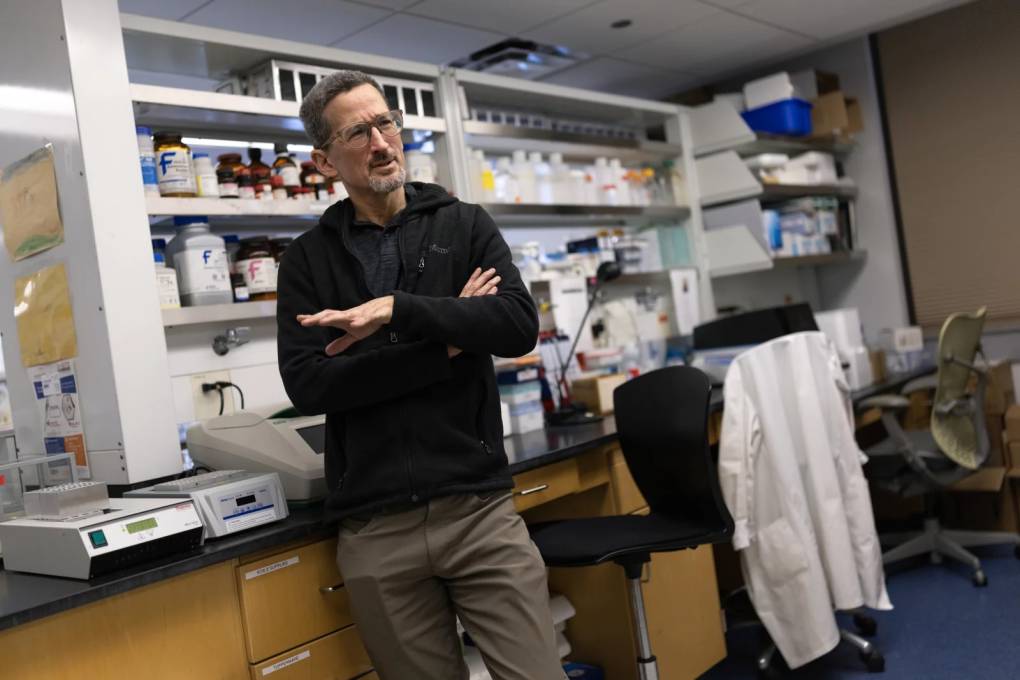
"caption": "Timothy Koh works in his lab in the Department of Kinesiology and Nutrition at the University of Illinois Chicago, where he and his team study wound healing in people with diabetes. Researchers at universities around the US, who rely on federal grants, are concerned about the future of their projects.",
"credit": "Scott Olson/Getty Images",
"altTag": null,
"description": null,
"imgSizes": {
"medium": {
"file": "https://cdn.kqed.org/wp-content/uploads/sites/10/2025/05/npr.brightspotcdn-copy-6-800x534.jpg",
"width": 800,
"height": 534,
"mimeType": "image/jpeg"
},
"large": {
"file": "https://cdn.kqed.org/wp-content/uploads/sites/10/2025/05/npr.brightspotcdn-copy-6-1020x680.jpg",
"width": 1020,
"height": 680,
"mimeType": "image/jpeg"
},
"thumbnail": {
"file": "https://cdn.kqed.org/wp-content/uploads/sites/10/2025/05/npr.brightspotcdn-copy-6-160x107.jpg",
"width": 160,
"height": 107,
"mimeType": "image/jpeg"
},
"1536x1536": {
"file": "https://cdn.kqed.org/wp-content/uploads/sites/10/2025/05/npr.brightspotcdn-copy-6-1536x1024.jpg",
"width": 1536,
"height": 1024,
"mimeType": "image/jpeg"
},
"post-thumbnail": {
"file": "https://cdn.kqed.org/wp-content/uploads/sites/10/2025/05/npr.brightspotcdn-copy-6-672x372.jpg",
"width": 672,
"height": 372,
"mimeType": "image/jpeg"
},
"twentyfourteen-full-width": {
"file": "https://cdn.kqed.org/wp-content/uploads/sites/10/2025/05/npr.brightspotcdn-copy-6-1038x576.jpg",
"width": 1038,
"height": 576,
"mimeType": "image/jpeg"
},
"kqedFullSize": {
"file": "https://cdn.kqed.org/wp-content/uploads/sites/10/2025/05/npr.brightspotcdn-copy-6.jpg",
"width": 1600,
"height": 1067
}
},
"isLoading": false,
"fetchFailed": false
},
"news_12040499": {
"type": "attachments",
"id": "news_12040499",
"meta": {
"index": "attachments_1716263798",
"site": "news",
"id": "12040499",
"found": true
},
"title": "250516-AMERICORPS-07-BL-KQED",
"publishDate": 1747418970,
"status": "inherit",
"parent": 0,
"modified": 1747419064,
"caption": "AmeriCorps member Dylan Lalanne-Perkins works with San Francisco Unified School District students during a Poetry Lab and Podcasting Field Trip at 826 Valencia’s Tenderloin Center in San Francisco on May 16, 2025.",
"credit": "Beth LaBerge/KQED",
"altTag": null,
"description": null,
"imgSizes": {
"medium": {
"file": "https://cdn.kqed.org/wp-content/uploads/sites/10/2025/05/250516-AMERICORPS-07-BL-KQED-800x533.jpg",
"width": 800,
"height": 533,
"mimeType": "image/jpeg"
},
"large": {
"file": "https://cdn.kqed.org/wp-content/uploads/sites/10/2025/05/250516-AMERICORPS-07-BL-KQED-1020x680.jpg",
"width": 1020,
"height": 680,
"mimeType": "image/jpeg"
},
"thumbnail": {
"file": "https://cdn.kqed.org/wp-content/uploads/sites/10/2025/05/250516-AMERICORPS-07-BL-KQED-160x107.jpg",
"width": 160,
"height": 107,
"mimeType": "image/jpeg"
},
"1536x1536": {
"file": "https://cdn.kqed.org/wp-content/uploads/sites/10/2025/05/250516-AMERICORPS-07-BL-KQED-1536x1024.jpg",
"width": 1536,
"height": 1024,
"mimeType": "image/jpeg"
},
"post-thumbnail": {
"file": "https://cdn.kqed.org/wp-content/uploads/sites/10/2025/05/250516-AMERICORPS-07-BL-KQED-672x372.jpg",
"width": 672,
"height": 372,
"mimeType": "image/jpeg"
},
"twentyfourteen-full-width": {
"file": "https://cdn.kqed.org/wp-content/uploads/sites/10/2025/05/250516-AMERICORPS-07-BL-KQED-1038x576.jpg",
"width": 1038,
"height": 576,
"mimeType": "image/jpeg"
},
"full-width": {
"file": "https://cdn.kqed.org/wp-content/uploads/sites/10/2025/05/250516-AMERICORPS-07-BL-KQED-1920x1280.jpg",
"width": 1920,
"height": 1280,
"mimeType": "image/jpeg"
},
"kqedFullSize": {
"file": "https://cdn.kqed.org/wp-content/uploads/sites/10/2025/05/250516-AMERICORPS-07-BL-KQED.jpg",
"width": 2000,
"height": 1333
}
},
"isLoading": false,
"fetchFailed": false
},
"news_12039810": {
"type": "attachments",
"id": "news_12039810",
"meta": {
"index": "attachments_1716263798",
"site": "news",
"id": "12039810",
"found": true
},
"title": "250512-DAY WITHOUT CHILDCARE-MD-01-KQED",
"publishDate": 1747085840,
"status": "inherit",
"parent": 12045220,
"modified": 1750446707,
"caption": "Khulood Jamil (center) and other childcare providers and supporters march to the Federal Building in San José on May 12, 2025.",
"credit": "Martin do Nascimento/KQED",
"altTag": null,
"description": null,
"imgSizes": {
"medium": {
"file": "https://cdn.kqed.org/wp-content/uploads/sites/10/2025/05/250512-DAY-WITHOUT-CHILDCARE-MD-01-KQED-800x534.jpg",
"width": 800,
"height": 534,
"mimeType": "image/jpeg"
},
"large": {
"file": "https://cdn.kqed.org/wp-content/uploads/sites/10/2025/05/250512-DAY-WITHOUT-CHILDCARE-MD-01-KQED-1020x680.jpg",
"width": 1020,
"height": 680,
"mimeType": "image/jpeg"
},
"thumbnail": {
"file": "https://cdn.kqed.org/wp-content/uploads/sites/10/2025/05/250512-DAY-WITHOUT-CHILDCARE-MD-01-KQED-160x107.jpg",
"width": 160,
"height": 107,
"mimeType": "image/jpeg"
},
"1536x1536": {
"file": "https://cdn.kqed.org/wp-content/uploads/sites/10/2025/05/250512-DAY-WITHOUT-CHILDCARE-MD-01-KQED-1536x1025.jpg",
"width": 1536,
"height": 1025,
"mimeType": "image/jpeg"
},
"post-thumbnail": {
"file": "https://cdn.kqed.org/wp-content/uploads/sites/10/2025/05/250512-DAY-WITHOUT-CHILDCARE-MD-01-KQED-672x372.jpg",
"width": 672,
"height": 372,
"mimeType": "image/jpeg"
},
"twentyfourteen-full-width": {
"file": "https://cdn.kqed.org/wp-content/uploads/sites/10/2025/05/250512-DAY-WITHOUT-CHILDCARE-MD-01-KQED-1038x576.jpg",
"width": 1038,
"height": 576,
"mimeType": "image/jpeg"
},
"full-width": {
"file": "https://cdn.kqed.org/wp-content/uploads/sites/10/2025/05/250512-DAY-WITHOUT-CHILDCARE-MD-01-KQED-1920x1281.jpg",
"width": 1920,
"height": 1281,
"mimeType": "image/jpeg"
},
"kqedFullSize": {
"file": "https://cdn.kqed.org/wp-content/uploads/sites/10/2025/05/250512-DAY-WITHOUT-CHILDCARE-MD-01-KQED.jpg",
"width": 2000,
"height": 1334
}
},
"isLoading": false,
"fetchFailed": false
},
"news_11932694": {
"type": "attachments",
"id": "news_11932694",
"meta": {
"index": "attachments_1716263798",
"site": "news",
"id": "11932694",
"found": true
},
"title": "Rockridge-BART-cropped",
"publishDate": 1668796508,
"status": "inherit",
"parent": 11932690,
"modified": 1746835406,
"caption": "A Bay Area Rapid Transit (BART) train pulls away from Oakland's Rockridge station on Aug. 2, 2013.",
"credit": "Justin Sullivan/Getty Images",
"altTag": "A BART train pulls out of an above-ground station. Cars whiz by alongside and the city of San Francisco looms in the background.",
"description": null,
"imgSizes": {
"medium": {
"file": "https://cdn.kqed.org/wp-content/uploads/sites/10/2022/11/Rockridge-BART-cropped-800x492.jpg",
"width": 800,
"height": 492,
"mimeType": "image/jpeg"
},
"large": {
"file": "https://cdn.kqed.org/wp-content/uploads/sites/10/2022/11/Rockridge-BART-cropped-1020x627.jpg",
"width": 1020,
"height": 627,
"mimeType": "image/jpeg"
},
"thumbnail": {
"file": "https://cdn.kqed.org/wp-content/uploads/sites/10/2022/11/Rockridge-BART-cropped-160x98.jpg",
"width": 160,
"height": 98,
"mimeType": "image/jpeg"
},
"1536x1536": {
"file": "https://cdn.kqed.org/wp-content/uploads/sites/10/2022/11/Rockridge-BART-cropped-1536x944.jpg",
"width": 1536,
"height": 944,
"mimeType": "image/jpeg"
},
"post-thumbnail": {
"file": "https://cdn.kqed.org/wp-content/uploads/sites/10/2022/11/Rockridge-BART-cropped-672x372.jpg",
"width": 672,
"height": 372,
"mimeType": "image/jpeg"
},
"twentyfourteen-full-width": {
"file": "https://cdn.kqed.org/wp-content/uploads/sites/10/2022/11/Rockridge-BART-cropped-1038x576.jpg",
"width": 1038,
"height": 576,
"mimeType": "image/jpeg"
},
"kqedFullSize": {
"file": "https://cdn.kqed.org/wp-content/uploads/sites/10/2022/11/Rockridge-BART-cropped.jpg",
"width": 1920,
"height": 1180
}
},
"isLoading": false,
"fetchFailed": false
},
"news_12038580": {
"type": "attachments",
"id": "news_12038580",
"meta": {
"index": "attachments_1716263798",
"site": "news",
"id": "12038580",
"found": true
},
"title": "US-POLITICS-MEDIA-PROTEST",
"publishDate": 1746211740,
"status": "inherit",
"parent": 12038576,
"modified": 1746222740,
"caption": "People participate in a rally to call on Congress to protect funding for U.S. public broadcasters, Public Broadcasting Service (PBS) and National Public Radio (NPR), outside the NPR headquarters in Washington, D.C., on March 26, 2025. ",
"credit": "Saul Loeb/AFP via Getty Images",
"altTag": null,
"description": null,
"imgSizes": {
"medium": {
"file": "https://cdn.kqed.org/wp-content/uploads/sites/10/2025/05/GettyImages-2206434879-800x534.jpg",
"width": 800,
"height": 534,
"mimeType": "image/jpeg"
},
"large": {
"file": "https://cdn.kqed.org/wp-content/uploads/sites/10/2025/05/GettyImages-2206434879-1020x680.jpg",
"width": 1020,
"height": 680,
"mimeType": "image/jpeg"
},
"thumbnail": {
"file": "https://cdn.kqed.org/wp-content/uploads/sites/10/2025/05/GettyImages-2206434879-160x107.jpg",
"width": 160,
"height": 107,
"mimeType": "image/jpeg"
},
"post-thumbnail": {
"file": "https://cdn.kqed.org/wp-content/uploads/sites/10/2025/05/GettyImages-2206434879-672x372.jpg",
"width": 672,
"height": 372,
"mimeType": "image/jpeg"
},
"twentyfourteen-full-width": {
"file": "https://cdn.kqed.org/wp-content/uploads/sites/10/2025/05/GettyImages-2206434879-1024x576.jpg",
"width": 1024,
"height": 576,
"mimeType": "image/jpeg"
},
"kqedFullSize": {
"file": "https://cdn.kqed.org/wp-content/uploads/sites/10/2025/05/GettyImages-2206434879.jpg",
"width": 1024,
"height": 683
}
},
"isLoading": false,
"fetchFailed": false
},
"news_12036506": {
"type": "attachments",
"id": "news_12036506",
"meta": {
"index": "attachments_1716263798",
"site": "news",
"id": "12036506",
"found": true
},
"title": "250417-HIGHEREDPROTESTS-08-BL-KQED",
"publishDate": 1744930148,
"status": "inherit",
"parent": 0,
"modified": 1744930309,
"caption": "San Francisco State University students, faculty and staff rally at Civic Center Plaza across from City Hall in San Francisco on April 17, 2025, to demand reinvestment in public higher education. The demonstration follows a day of organizing on campus led by the SFSU community in response to proposed budget cuts.",
"credit": "Beth LaBerge/KQED",
"altTag": null,
"description": null,
"imgSizes": {
"medium": {
"file": "https://cdn.kqed.org/wp-content/uploads/sites/10/2025/04/250417-HIGHEREDPROTESTS-08-BL-KQED-800x533.jpg",
"width": 800,
"height": 533,
"mimeType": "image/jpeg"
},
"large": {
"file": "https://cdn.kqed.org/wp-content/uploads/sites/10/2025/04/250417-HIGHEREDPROTESTS-08-BL-KQED-1020x680.jpg",
"width": 1020,
"height": 680,
"mimeType": "image/jpeg"
},
"thumbnail": {
"file": "https://cdn.kqed.org/wp-content/uploads/sites/10/2025/04/250417-HIGHEREDPROTESTS-08-BL-KQED-160x107.jpg",
"width": 160,
"height": 107,
"mimeType": "image/jpeg"
},
"1536x1536": {
"file": "https://cdn.kqed.org/wp-content/uploads/sites/10/2025/04/250417-HIGHEREDPROTESTS-08-BL-KQED-1536x1024.jpg",
"width": 1536,
"height": 1024,
"mimeType": "image/jpeg"
},
"post-thumbnail": {
"file": "https://cdn.kqed.org/wp-content/uploads/sites/10/2025/04/250417-HIGHEREDPROTESTS-08-BL-KQED-672x372.jpg",
"width": 672,
"height": 372,
"mimeType": "image/jpeg"
},
"twentyfourteen-full-width": {
"file": "https://cdn.kqed.org/wp-content/uploads/sites/10/2025/04/250417-HIGHEREDPROTESTS-08-BL-KQED-1038x576.jpg",
"width": 1038,
"height": 576,
"mimeType": "image/jpeg"
},
"full-width": {
"file": "https://cdn.kqed.org/wp-content/uploads/sites/10/2025/04/250417-HIGHEREDPROTESTS-08-BL-KQED-1920x1280.jpg",
"width": 1920,
"height": 1280,
"mimeType": "image/jpeg"
},
"kqedFullSize": {
"file": "https://cdn.kqed.org/wp-content/uploads/sites/10/2025/04/250417-HIGHEREDPROTESTS-08-BL-KQED.jpg",
"width": 2000,
"height": 1333
}
},
"isLoading": false,
"fetchFailed": false
},
"news_12034415": {
"type": "attachments",
"id": "news_12034415",
"meta": {
"index": "attachments_1716263798",
"site": "news",
"id": "12034415",
"found": true
},
"title": "071322-Mt-Shasta-GETTY-CM-01 copy",
"publishDate": 1743707869,
"status": "inherit",
"parent": 12034414,
"modified": 1743707908,
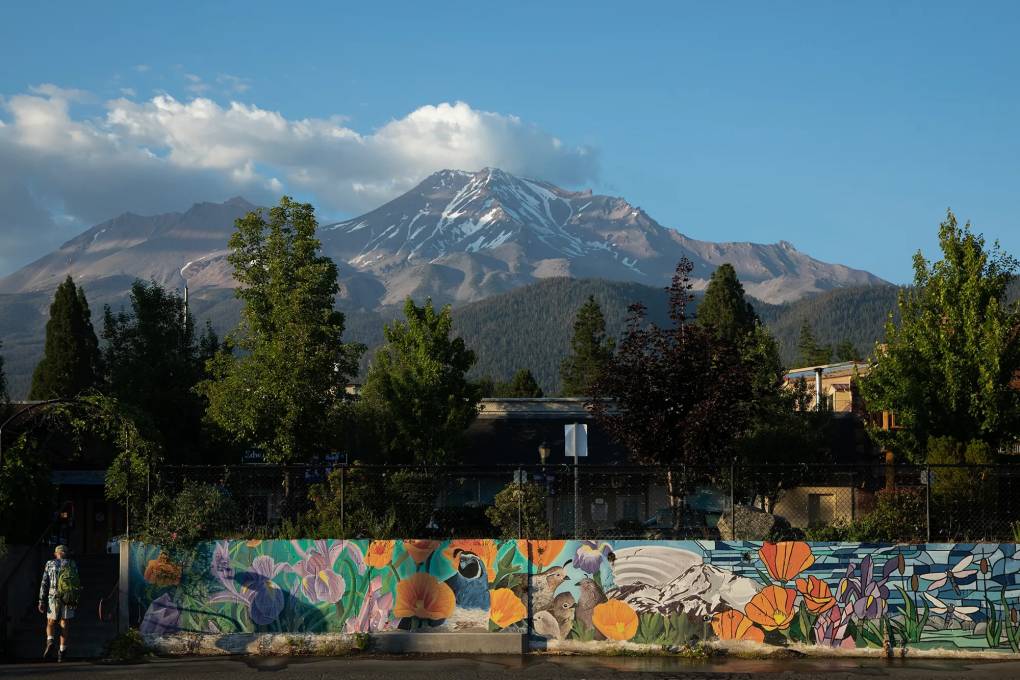
"caption": "Mount Shasta (right) and its geologic sibling Shastina, left, as seen from the city of Mount Shasta on July 13, 2022.",
"credit": "Myung J. Chun/Los Angeles Times via Getty Images",
"altTag": null,
"description": null,
"imgSizes": {
"medium": {
"file": "https://cdn.kqed.org/wp-content/uploads/sites/10/2025/04/071322-Mt-Shasta-GETTY-CM-01-copy-800x534.jpg",
"width": 800,
"height": 534,
"mimeType": "image/jpeg"
},
"large": {
"file": "https://cdn.kqed.org/wp-content/uploads/sites/10/2025/04/071322-Mt-Shasta-GETTY-CM-01-copy-1020x680.jpg",
"width": 1020,
"height": 680,
"mimeType": "image/jpeg"
},
"thumbnail": {
"file": "https://cdn.kqed.org/wp-content/uploads/sites/10/2025/04/071322-Mt-Shasta-GETTY-CM-01-copy-160x107.jpg",
"width": 160,
"height": 107,
"mimeType": "image/jpeg"
},
"1536x1536": {
"file": "https://cdn.kqed.org/wp-content/uploads/sites/10/2025/04/071322-Mt-Shasta-GETTY-CM-01-copy-1536x1025.jpg",
"width": 1536,
"height": 1025,
"mimeType": "image/jpeg"
},
"post-thumbnail": {
"file": "https://cdn.kqed.org/wp-content/uploads/sites/10/2025/04/071322-Mt-Shasta-GETTY-CM-01-copy-672x372.jpg",
"width": 672,
"height": 372,
"mimeType": "image/jpeg"
},
"twentyfourteen-full-width": {
"file": "https://cdn.kqed.org/wp-content/uploads/sites/10/2025/04/071322-Mt-Shasta-GETTY-CM-01-copy-1038x576.jpg",
"width": 1038,
"height": 576,
"mimeType": "image/jpeg"
},
"full-width": {
"file": "https://cdn.kqed.org/wp-content/uploads/sites/10/2025/04/071322-Mt-Shasta-GETTY-CM-01-copy-1920x1281.jpg",
"width": 1920,
"height": 1281,
"mimeType": "image/jpeg"
},
"kqedFullSize": {
"file": "https://cdn.kqed.org/wp-content/uploads/sites/10/2025/04/071322-Mt-Shasta-GETTY-CM-01-copy.jpg",
"width": 2000,
"height": 1334
}
},
"isLoading": false,
"fetchFailed": false
},
"news_12030406": {
"type": "attachments",
"id": "news_12030406",
"meta": {
"index": "attachments_1716263798",
"site": "news",
"id": "12030406",
"found": true
},
"title": "250307-BERKELEY SCIENCE PROTEST-MD-06-KQED",
"publishDate": 1741387524,
"status": "inherit",
"parent": 12030313,
"modified": 1741396036,
"caption": "Fred Dillon cheers at a rally at UC Berkeley in association with the national Stand Up for Science day of action in Berkeley on March 7, 2025.",
"credit": "Martin do Nascimento/KQED",
"altTag": null,
"description": null,
"imgSizes": {
"medium": {
"file": "https://cdn.kqed.org/wp-content/uploads/sites/10/2025/03/250307-BERKELEY-SCIENCE-PROTEST-MD-06-KQED-800x533.jpg",
"width": 800,
"height": 533,
"mimeType": "image/jpeg"
},
"large": {
"file": "https://cdn.kqed.org/wp-content/uploads/sites/10/2025/03/250307-BERKELEY-SCIENCE-PROTEST-MD-06-KQED-1020x680.jpg",
"width": 1020,
"height": 680,
"mimeType": "image/jpeg"
},
"thumbnail": {
"file": "https://cdn.kqed.org/wp-content/uploads/sites/10/2025/03/250307-BERKELEY-SCIENCE-PROTEST-MD-06-KQED-160x107.jpg",
"width": 160,
"height": 107,
"mimeType": "image/jpeg"
},
"1536x1536": {
"file": "https://cdn.kqed.org/wp-content/uploads/sites/10/2025/03/250307-BERKELEY-SCIENCE-PROTEST-MD-06-KQED-1536x1024.jpg",
"width": 1536,
"height": 1024,
"mimeType": "image/jpeg"
},
"post-thumbnail": {
"file": "https://cdn.kqed.org/wp-content/uploads/sites/10/2025/03/250307-BERKELEY-SCIENCE-PROTEST-MD-06-KQED-672x372.jpg",
"width": 672,
"height": 372,
"mimeType": "image/jpeg"
},
"twentyfourteen-full-width": {
"file": "https://cdn.kqed.org/wp-content/uploads/sites/10/2025/03/250307-BERKELEY-SCIENCE-PROTEST-MD-06-KQED-1038x576.jpg",
"width": 1038,
"height": 576,
"mimeType": "image/jpeg"
},
"full-width": {
"file": "https://cdn.kqed.org/wp-content/uploads/sites/10/2025/03/250307-BERKELEY-SCIENCE-PROTEST-MD-06-KQED-1920x1280.jpg",
"width": 1920,
"height": 1280,
"mimeType": "image/jpeg"
},
"kqedFullSize": {
"file": "https://cdn.kqed.org/wp-content/uploads/sites/10/2025/03/250307-BERKELEY-SCIENCE-PROTEST-MD-06-KQED.jpg",
"width": 2000,
"height": 1333
}
},
"isLoading": false,
"fetchFailed": false
},
"news_12018752": {
"type": "attachments",
"id": "news_12018752",
"meta": {
"index": "attachments_1716263798",
"site": "news",
"id": "12018752",
"found": true
},
"title": "U.S. Deputy Secretary of Education Cindy Marten, free workshop FAFSA",
"publishDate": 1734485398,
"status": "inherit",
"parent": 12018723,
"modified": 1743200682,
"caption": "Betty Wonde, 18, of Silver Spring, Maryland, is pictured at the event. The DC College Success Foundation held a free workshop to help students with their FAFSA form on March 16, 2024, in Anacostia. U.S. Deputy Secretary of Education Cindy Marten was in attendance at the event, which was held at Capital One cafe. (Photo by Sarah L. Voisin/The Washington Post via Getty Images)",
"credit": "Sarah L. Voisin/The Washington Post via Getty Images",
"altTag": null,
"description": null,
"imgSizes": {
"medium": {
"file": "https://cdn.kqed.org/wp-content/uploads/sites/10/2024/12/GettyImages-2102856667-800x533.jpg",
"width": 800,
"height": 533,
"mimeType": "image/jpeg"
},
"large": {
"file": "https://cdn.kqed.org/wp-content/uploads/sites/10/2024/12/GettyImages-2102856667-1020x680.jpg",
"width": 1020,
"height": 680,
"mimeType": "image/jpeg"
},
"thumbnail": {
"file": "https://cdn.kqed.org/wp-content/uploads/sites/10/2024/12/GettyImages-2102856667-160x107.jpg",
"width": 160,
"height": 107,
"mimeType": "image/jpeg"
},
"1536x1536": {
"file": "https://cdn.kqed.org/wp-content/uploads/sites/10/2024/12/GettyImages-2102856667-1536x1024.jpg",
"width": 1536,
"height": 1024,
"mimeType": "image/jpeg"
},
"2048x2048": {
"file": "https://cdn.kqed.org/wp-content/uploads/sites/10/2024/12/GettyImages-2102856667-2048x1365.jpg",
"width": 2048,
"height": 1365,
"mimeType": "image/jpeg"
},
"post-thumbnail": {
"file": "https://cdn.kqed.org/wp-content/uploads/sites/10/2024/12/GettyImages-2102856667-672x372.jpg",
"width": 672,
"height": 372,
"mimeType": "image/jpeg"
},
"twentyfourteen-full-width": {
"file": "https://cdn.kqed.org/wp-content/uploads/sites/10/2024/12/GettyImages-2102856667-1038x576.jpg",
"width": 1038,
"height": 576,
"mimeType": "image/jpeg"
},
"full-width": {
"file": "https://cdn.kqed.org/wp-content/uploads/sites/10/2024/12/GettyImages-2102856667-1920x1280.jpg",
"width": 1920,
"height": 1280,
"mimeType": "image/jpeg"
},
"kqedFullSize": {
"file": "https://cdn.kqed.org/wp-content/uploads/sites/10/2024/12/GettyImages-2102856667-scaled.jpg",
"width": 2560,
"height": 1707
}
},
"isLoading": false,
"fetchFailed": false
},
"news_12032407": {
"type": "attachments",
"id": "news_12032407",
"meta": {
"index": "attachments_1716263798",
"site": "news",
"id": "12032407",
"found": true
},
"title": "University of California labor unions on strike",
"publishDate": 1742519313,
"status": "inherit",
"parent": 12032232,
"modified": 1742576600,
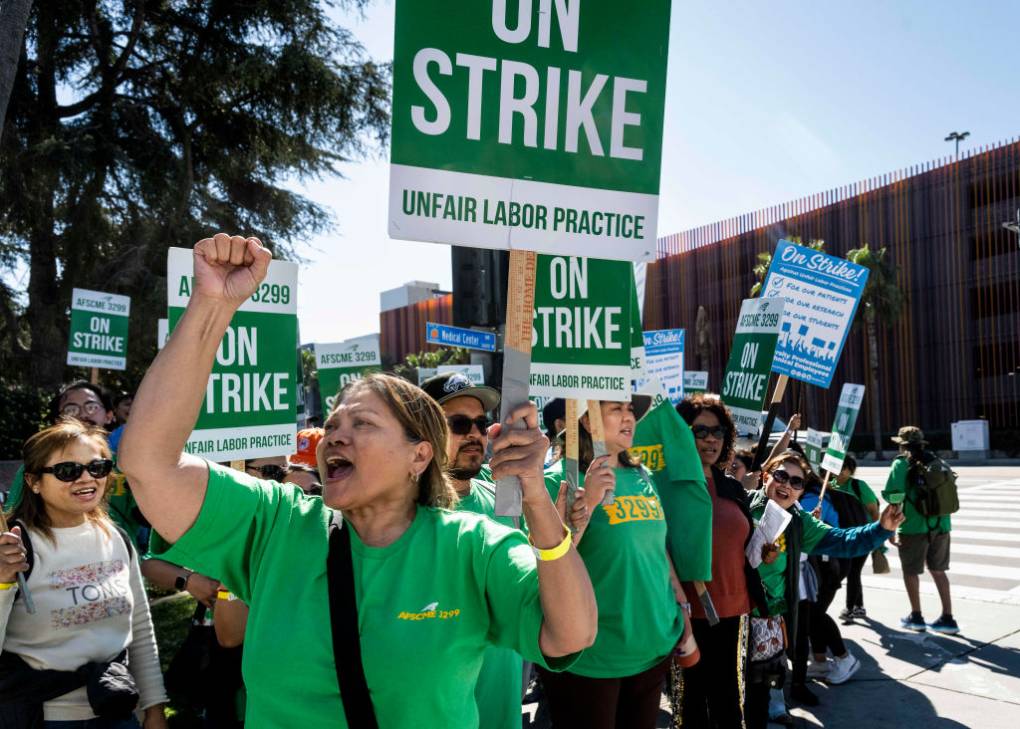
"caption": "Members of University Professional and Technical Employees-CWA Local 9119 and AFSCME Local 3299 protest on West Chapman Avenue in front of UC Irvine Medical Center in Orange, California, on Feb. 26, 2025. AFSCME Local 3299 President Liz Perlman said Wednesday, 'It's the weight at the top that's crushing the system,' blaming the UC top brass for the hiring freeze.",
"credit": "Paul Bersebach/MediaNews Group/Orange County Register via Getty Images",
"altTag": null,
"description": null,
"imgSizes": {
"medium": {
"file": "https://cdn.kqed.org/wp-content/uploads/sites/10/2025/03/GettyImages-2201544551-800x572.jpg",
"width": 800,
"height": 572,
"mimeType": "image/jpeg"
},
"large": {
"file": "https://cdn.kqed.org/wp-content/uploads/sites/10/2025/03/GettyImages-2201544551-1020x729.jpg",
"width": 1020,
"height": 729,
"mimeType": "image/jpeg"
},
"thumbnail": {
"file": "https://cdn.kqed.org/wp-content/uploads/sites/10/2025/03/GettyImages-2201544551-160x114.jpg",
"width": 160,
"height": 114,
"mimeType": "image/jpeg"
},
"post-thumbnail": {
"file": "https://cdn.kqed.org/wp-content/uploads/sites/10/2025/03/GettyImages-2201544551-672x372.jpg",
"width": 672,
"height": 372,
"mimeType": "image/jpeg"
},
"twentyfourteen-full-width": {
"file": "https://cdn.kqed.org/wp-content/uploads/sites/10/2025/03/GettyImages-2201544551-1024x576.jpg",
"width": 1024,
"height": 576,
"mimeType": "image/jpeg"
},
"kqedFullSize": {
"file": "https://cdn.kqed.org/wp-content/uploads/sites/10/2025/03/GettyImages-2201544551.jpg",
"width": 1024,
"height": 732
}
},
"isLoading": false,
"fetchFailed": false
},
"news_12026181": {
"type": "attachments",
"id": "news_12026181",
"meta": {
"index": "attachments_1716263798",
"site": "news",
"id": "12026181",
"found": true
},
"title": "250128-SFImmigration-04-BL_qed",
"publishDate": 1738952496,
"status": "inherit",
"parent": 12026179,
"modified": 1742325461,
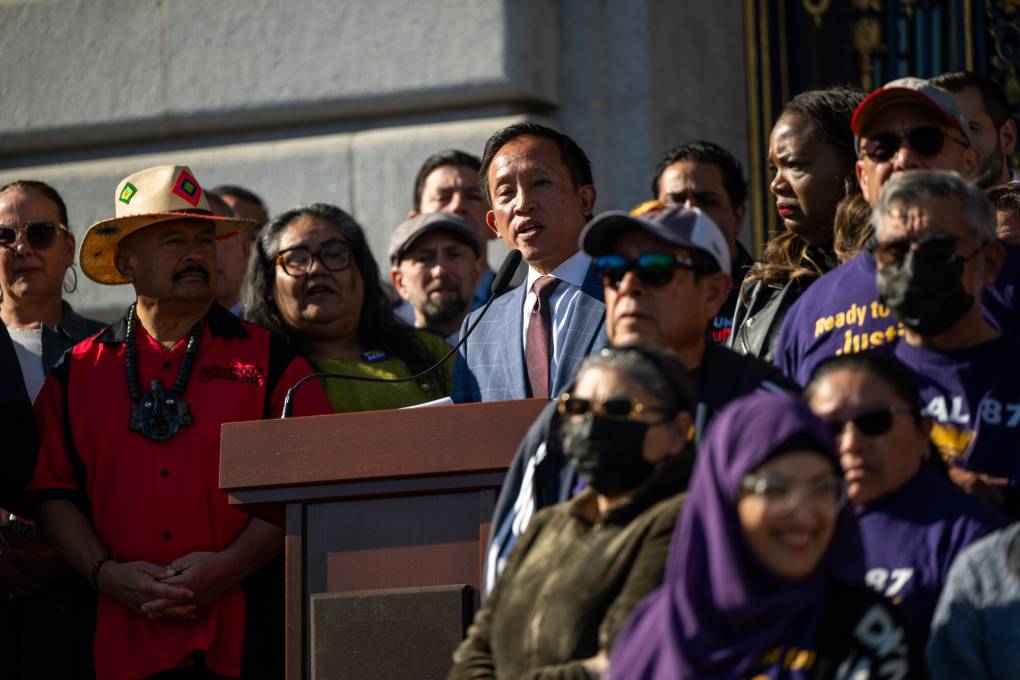
"caption": "San Francisco City Attorney David Chiu speaks during a press conference with elected and public safety officials and labor leaders in front of City Hall in San Francisco on Jan. 28, 2025, to reaffirm San Francisco’s commitment to being a Sanctuary City.",
"credit": "Beth LaBerge/KQED",
"altTag": null,
"description": null,
"imgSizes": {
"medium": {
"file": "https://cdn.kqed.org/wp-content/uploads/sites/10/2025/02/250128-SFImmigration-04-BL_qed-800x533.jpg",
"width": 800,
"height": 533,
"mimeType": "image/jpeg"
},
"large": {
"file": "https://cdn.kqed.org/wp-content/uploads/sites/10/2025/02/250128-SFImmigration-04-BL_qed-1020x680.jpg",
"width": 1020,
"height": 680,
"mimeType": "image/jpeg"
},
"thumbnail": {
"file": "https://cdn.kqed.org/wp-content/uploads/sites/10/2025/02/250128-SFImmigration-04-BL_qed-160x107.jpg",
"width": 160,
"height": 107,
"mimeType": "image/jpeg"
},
"1536x1536": {
"file": "https://cdn.kqed.org/wp-content/uploads/sites/10/2025/02/250128-SFImmigration-04-BL_qed-1536x1024.jpg",
"width": 1536,
"height": 1024,
"mimeType": "image/jpeg"
},
"post-thumbnail": {
"file": "https://cdn.kqed.org/wp-content/uploads/sites/10/2025/02/250128-SFImmigration-04-BL_qed-672x372.jpg",
"width": 672,
"height": 372,
"mimeType": "image/jpeg"
},
"twentyfourteen-full-width": {
"file": "https://cdn.kqed.org/wp-content/uploads/sites/10/2025/02/250128-SFImmigration-04-BL_qed-1038x576.jpg",
"width": 1038,
"height": 576,
"mimeType": "image/jpeg"
},
"full-width": {
"file": "https://cdn.kqed.org/wp-content/uploads/sites/10/2025/02/250128-SFImmigration-04-BL_qed-1920x1280.jpg",
"width": 1920,
"height": 1280,
"mimeType": "image/jpeg"
},
"kqedFullSize": {
"file": "https://cdn.kqed.org/wp-content/uploads/sites/10/2025/02/250128-SFImmigration-04-BL_qed.jpg",
"width": 2000,
"height": 1333
}
},
"isLoading": false,
"fetchFailed": false
},
"news_12030729": {
"type": "attachments",
"id": "news_12030729",
"meta": {
"index": "attachments_1716263798",
"site": "news",
"id": "12030729",
"found": true
},
"title": "241203-FresnoCampingBan-67-BL_qed",
"publishDate": 1741713196,
"status": "inherit",
"parent": 12030725,
"modified": 1741713231,
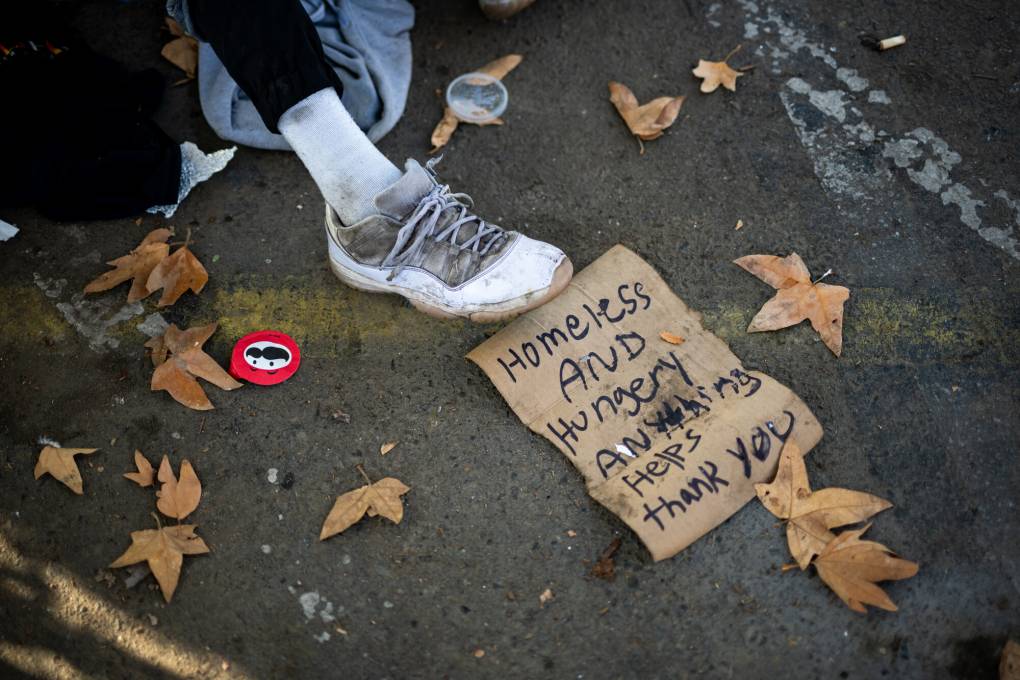
"caption": "A sign says, \"Homeless and Hungery\" near an encampment in Fresno, California, on Dec. 3, 2024.",
"credit": "Beth LaBerge/KQED",
"altTag": null,
"description": null,
"imgSizes": {
"medium": {
"file": "https://cdn.kqed.org/wp-content/uploads/sites/10/2025/03/241203-FresnoCampingBan-67-BL_qed-800x533.jpg",
"width": 800,
"height": 533,
"mimeType": "image/jpeg"
},
"large": {
"file": "https://cdn.kqed.org/wp-content/uploads/sites/10/2025/03/241203-FresnoCampingBan-67-BL_qed-1020x680.jpg",
"width": 1020,
"height": 680,
"mimeType": "image/jpeg"
},
"thumbnail": {
"file": "https://cdn.kqed.org/wp-content/uploads/sites/10/2025/03/241203-FresnoCampingBan-67-BL_qed-160x107.jpg",
"width": 160,
"height": 107,
"mimeType": "image/jpeg"
},
"1536x1536": {
"file": "https://cdn.kqed.org/wp-content/uploads/sites/10/2025/03/241203-FresnoCampingBan-67-BL_qed-1536x1024.jpg",
"width": 1536,
"height": 1024,
"mimeType": "image/jpeg"
},
"post-thumbnail": {
"file": "https://cdn.kqed.org/wp-content/uploads/sites/10/2025/03/241203-FresnoCampingBan-67-BL_qed-672x372.jpg",
"width": 672,
"height": 372,
"mimeType": "image/jpeg"
},
"twentyfourteen-full-width": {
"file": "https://cdn.kqed.org/wp-content/uploads/sites/10/2025/03/241203-FresnoCampingBan-67-BL_qed-1038x576.jpg",
"width": 1038,
"height": 576,
"mimeType": "image/jpeg"
},
"full-width": {
"file": "https://cdn.kqed.org/wp-content/uploads/sites/10/2025/03/241203-FresnoCampingBan-67-BL_qed-1920x1280.jpg",
"width": 1920,
"height": 1280,
"mimeType": "image/jpeg"
},
"kqedFullSize": {
"file": "https://cdn.kqed.org/wp-content/uploads/sites/10/2025/03/241203-FresnoCampingBan-67-BL_qed.jpg",
"width": 2000,
"height": 1333
}
},
"isLoading": false,
"fetchFailed": false
}
},
"audioPlayerReducer": {
"postId": "stream_live",
"isPaused": true,
"isPlaying": false,
"pfsActive": false,
"pledgeModalIsOpen": true,
"playerDrawerIsOpen": false,
"liveAudioPlayStartedAt": 0,
"liveAudioPlayContext": ""
},
"authorsReducer": {
"byline_news_12040506": {
"type": "authors",
"id": "byline_news_12040506",
"meta": {
"override": true
},
"slug": "byline_news_12040506",
"name": "\u003ca href=\"https://www.npr.org/people/378865949/elissa-nadworny\">Elissa Nadworny\u003c/a>, NPR",
"isLoading": false
},
"byline_news_12034414": {
"type": "authors",
"id": "byline_news_12034414",
"meta": {
"override": true
},
"slug": "byline_news_12034414",
"name": "\u003ca href=\"https://calmatters.org/author/jeanne-kuang/\">Jeanne Kuang\u003c/a>, CalMatters",
"isLoading": false
},
"byline_news_12030725": {
"type": "authors",
"id": "byline_news_12030725",
"meta": {
"override": true
},
"slug": "byline_news_12030725",
"name": "Cami Dominguez",
"isLoading": false
},
"matthewgreen": {
"type": "authors",
"id": "1263",
"meta": {
"index": "authors_1716337520",
"id": "1263",
"found": true
},
"name": "Matthew Green",
"firstName": "Matthew",
"lastName": "Green",
"slug": "matthewgreen",
"email": "mgreen@kqed.org",
"display_author_email": false,
"staff_mastheads": [],
"title": "KQED Editor/Reporter",
"bio": "Matthew Green is a digital media producer for KQED News. He previously produced \u003ca href=\"http://www.kqed.org/lowdown\">The Lowdown\u003c/a>, KQED’s multimedia news education blog. Matthew's written for numerous Bay Area publications, including the Oakland Tribune and San Francisco Chronicle. He also taught journalism classes at Fremont High School in East Oakland.\r\n\r\nEmail: mgreen@kqed.org; Twitter: @MGreenKQED",
"avatar": "https://secure.gravatar.com/avatar/3bf498d1267ca02c8494f33d8cfc575e?s=600&d=blank&r=g",
"twitter": "MGreenKQED",
"facebook": null,
"instagram": null,
"linkedin": null,
"sites": [
{
"site": "news",
"roles": []
},
{
"site": "lowdown",
"roles": []
},
{
"site": "science",
"roles": []
},
{
"site": "education",
"roles": []
},
{
"site": "quest",
"roles": []
},
{
"site": "liveblog",
"roles": []
}
],
"headData": {
"title": "Matthew Green | KQED",
"description": "KQED Editor/Reporter",
"ogImgSrc": "https://secure.gravatar.com/avatar/3bf498d1267ca02c8494f33d8cfc575e?s=600&d=blank&r=g",
"twImgSrc": "https://secure.gravatar.com/avatar/3bf498d1267ca02c8494f33d8cfc575e?s=600&d=blank&r=g"
},
"isLoading": false,
"link": "/author/matthewgreen"
},
"kmizuguchi": {
"type": "authors",
"id": "11739",
"meta": {
"index": "authors_1716337520",
"id": "11739",
"found": true
},
"name": "Keith Mizuguchi",
"firstName": "Keith",
"lastName": "Mizuguchi",
"slug": "kmizuguchi",
"email": "kmizuguchi@kqed.org",
"display_author_email": false,
"staff_mastheads": [],
"title": "KQED Contributor",
"bio": null,
"avatar": "https://secure.gravatar.com/avatar/64d8a7de0723d4099b9fe4e915136103febcc20809abce228ee4415bcb237023?s=600&d=blank&r=g",
"twitter": null,
"bluesky": null,
"facebook": null,
"instagram": null,
"linkedin": null,
"sites": [
{
"site": "news",
"roles": [
"editor"
]
},
{
"site": "science",
"roles": [
"editor"
]
}
],
"headData": {
"title": "Keith Mizuguchi | KQED",
"description": "KQED Contributor",
"ogImgSrc": "https://secure.gravatar.com/avatar/64d8a7de0723d4099b9fe4e915136103febcc20809abce228ee4415bcb237023?s=600&d=blank&r=g",
"twImgSrc": "https://secure.gravatar.com/avatar/64d8a7de0723d4099b9fe4e915136103febcc20809abce228ee4415bcb237023?s=600&d=blank&r=g"
},
"isLoading": false,
"link": "/author/kmizuguchi"
},
"adahlstromeckman": {
"type": "authors",
"id": "11785",
"meta": {
"index": "authors_1716337520",
"id": "11785",
"found": true
},
"name": "Azul Dahlstrom-Eckman",
"firstName": "Azul",
"lastName": "Dahlstrom-Eckman",
"slug": "adahlstromeckman",
"email": "adahlstrom-eckman@kqed.org",
"display_author_email": true,
"staff_mastheads": [],
"title": "Reporter",
"bio": "Azul is a reporter for KQED focusing on transportation and features. He joined KQED in 2021 as an alumna of KALW's Audio Academy radio journalism training program.",
"avatar": "https://secure.gravatar.com/avatar/9cb750298435add7815a777f55bf1f46845c1386bb8452555c60a7b820b5aba3?s=600&d=blank&r=g",
"twitter": "@zuliemann",
"bluesky": "@azul415.bsky.social",
"facebook": null,
"instagram": null,
"linkedin": null,
"sites": [
{
"site": "arts",
"roles": [
"editor"
]
},
{
"site": "news",
"roles": [
"editor"
]
},
{
"site": "science",
"roles": [
"editor"
]
},
{
"site": "liveblog",
"roles": [
"author"
]
}
],
"headData": {
"title": "Azul Dahlstrom-Eckman | KQED",
"description": "Reporter",
"ogImgSrc": "https://secure.gravatar.com/avatar/9cb750298435add7815a777f55bf1f46845c1386bb8452555c60a7b820b5aba3?s=600&d=blank&r=g",
"twImgSrc": "https://secure.gravatar.com/avatar/9cb750298435add7815a777f55bf1f46845c1386bb8452555c60a7b820b5aba3?s=600&d=blank&r=g"
},
"isLoading": false,
"link": "/author/adahlstromeckman"
},
"daisynguyen": {
"type": "authors",
"id": "11829",
"meta": {
"index": "authors_1716337520",
"id": "11829",
"found": true
},
"name": "Daisy Nguyen",
"firstName": "Daisy",
"lastName": "Nguyen",
"slug": "daisynguyen",
"email": "daisynguyen@kqed.org",
"display_author_email": true,
"staff_mastheads": [
"news"
],
"title": "KQED Contributor",
"bio": "I have covered early childhood education and child care for KQED since 2022. I focus on policies aimed at increasing access to early care and education and how they shape individual lives. I've been a journalist for more than two decades, with most of that time devoted to covering breaking news throughout California for The Associated Press. I grew up in San Francisco and studied at UC Davis and Columbia University's Graduate School of Journalism. I live in Oakland with my husband and two kids.",
"avatar": "https://secure.gravatar.com/avatar/2da2127c27f7143b53ebd419800fd55f?s=600&d=blank&r=g",
"twitter": null,
"facebook": null,
"instagram": null,
"linkedin": "https://www.linkedin.com/in/daisynguyen/",
"sites": [
{
"site": "news",
"roles": [
"author"
]
},
{
"site": "liveblog",
"roles": [
"author"
]
}
],
"headData": {
"title": "Daisy Nguyen | KQED",
"description": "KQED Contributor",
"ogImgSrc": "https://secure.gravatar.com/avatar/2da2127c27f7143b53ebd419800fd55f?s=600&d=blank&r=g",
"twImgSrc": "https://secure.gravatar.com/avatar/2da2127c27f7143b53ebd419800fd55f?s=600&d=blank&r=g"
},
"isLoading": false,
"link": "/author/daisynguyen"
},
"nkhan": {
"type": "authors",
"id": "11867",
"meta": {
"index": "authors_1716337520",
"id": "11867",
"found": true
},
"name": "Nisa Khan",
"firstName": "Nisa",
"lastName": "Khan",
"slug": "nkhan",
"email": "nkhan@kqed.org",
"display_author_email": false,
"staff_mastheads": [],
"title": "KQED Contributor",
"bio": "Nisa Khan is a reporter for KQED's Audience News Desk. She was formerly a data reporter at Michigan Radio. She earned a Bachelor of Science in Information from the University of Michigan and a Master of Arts in Communication from Stanford University.",
"avatar": "https://secure.gravatar.com/avatar/8720459eef081ff64582b3506b124d58523e80e120704a0cbd9892533c914991?s=600&d=blank&r=g",
"twitter": "mnisakhan",
"bluesky": null,
"facebook": null,
"instagram": null,
"linkedin": null,
"sites": [
{
"site": "arts",
"roles": [
"editor"
]
},
{
"site": "news",
"roles": [
"editor"
]
},
{
"site": "science",
"roles": [
"editor",
"author"
]
},
{
"site": "forum",
"roles": [
"editor"
]
},
{
"site": "liveblog",
"roles": [
"contributor"
]
}
],
"headData": {
"title": "Nisa Khan | KQED",
"description": "KQED Contributor",
"ogImgSrc": "https://secure.gravatar.com/avatar/8720459eef081ff64582b3506b124d58523e80e120704a0cbd9892533c914991?s=600&d=blank&r=g",
"twImgSrc": "https://secure.gravatar.com/avatar/8720459eef081ff64582b3506b124d58523e80e120704a0cbd9892533c914991?s=600&d=blank&r=g"
},
"isLoading": false,
"link": "/author/nkhan"
},
"kdebenedetti": {
"type": "authors",
"id": "11913",
"meta": {
"index": "authors_1716337520",
"id": "11913",
"found": true
},
"name": "Katie DeBenedetti",
"firstName": "Katie",
"lastName": "DeBenedetti",
"slug": "kdebenedetti",
"email": "kdebenedetti@kqed.org",
"display_author_email": false,
"staff_mastheads": [
"news",
"science"
],
"title": "KQED Contributor",
"bio": "Katie DeBenedetti is a digital reporter covering daily news for the Express Desk. Prior to joining KQED as a culture reporting intern in January 2024, she covered education and city government for the Napa Valley Register.",
"avatar": "https://secure.gravatar.com/avatar/6e31073cb8f7e4214ab03f42771d0f45?s=600&d=blank&r=g",
"twitter": null,
"facebook": null,
"instagram": null,
"linkedin": null,
"sites": [
{
"site": "news",
"roles": [
"author"
]
},
{
"site": "science",
"roles": [
"author"
]
},
{
"site": "liveblog",
"roles": [
"author"
]
}
],
"headData": {
"title": "Katie DeBenedetti | KQED",
"description": "KQED Contributor",
"ogImgSrc": "https://secure.gravatar.com/avatar/6e31073cb8f7e4214ab03f42771d0f45?s=600&d=blank&r=g",
"twImgSrc": "https://secure.gravatar.com/avatar/6e31073cb8f7e4214ab03f42771d0f45?s=600&d=blank&r=g"
},
"isLoading": false,
"link": "/author/kdebenedetti"
}
},
"pagesReducer": {
"news_tag_federal-funding": {
"type": "terms",
"id": "news_35063",
"meta": {
"index": "terms_1716263798",
"site": "news",
"id": "35063",
"score": 10.403188
},
"name": "federal funding",
"slug": "federal-funding",
"taxonomy": "tag",
"description": null,
"featImg": null,
"headData": {
"title": "federal funding | KQED News",
"description": null,
"ogTitle": null,
"ogDescription": null,
"ogImgId": null,
"twTitle": null,
"twDescription": null,
"twImgId": null
},
"ttid": 35080,
"isLoading": false,
"title": "federal funding",
"pageMeta": {
"site": "news",
"WpPageTemplate": "page-topic-editorial",
"currentPage": 5
},
"blocks": [
{
"blockName": "kqed/post-list",
"attrs": {
"layout": "cardArticle2",
"query": "posts/news?tag=federal-funding",
"seeMore": false,
"paginated": true,
"page": 5
}
},
{
"blockName": "kqed/ad"
}
]
}
},
"pfsSessionReducer": {},
"postsReducer": {
"stream_live": {
"type": "live",
"id": "stream_live",
"audioUrl": "https://streams.kqed.org/kqedradio",
"title": "Live Stream",
"excerpt": "Live Stream information currently unavailable.",
"link": "/radio",
"featImg": "",
"label": {
"name": "KQED Live",
"link": "/"
}
},
"stream_kqedNewscast": {
"type": "posts",
"id": "stream_kqedNewscast",
"audioUrl": "https://www.kqed.org/.stream/anon/radio/RDnews/newscast.mp3?_=1",
"title": "KQED Newscast",
"featImg": "",
"label": {
"name": "88.5 FM",
"link": "/"
}
},
"news_12040506": {
"type": "posts",
"id": "news_12040506",
"meta": {
"index": "posts_1716263798",
"site": "news",
"id": "12040506",
"score": null,
"sort": [
1747591240000
]
},
"guestAuthors": [],
"slug": "what-losing-billions-in-federal-grants-means-for-universities-and-the-nation",
"title": "What Losing Billions in Federal Grants Means for Universities, and the Nation",
"publishDate": 1747591240,
"format": "standard",
"headTitle": "What Losing Billions in Federal Grants Means for Universities, and the Nation | KQED",
"labelTerm": {
"term": 253,
"site": "news"
},
"content": "\u003cp>This week’s \u003ca href=\"https://www.npr.org/2025/05/14/nx-s1-5397318/trump-administration-says-it-will-cut-another-450-milliion-in-grants-to-harvard\">$450 million in cuts\u003c/a> from federal grants to Harvard University added to the growing pot of federal money the Trump administration has frozen in university research funding.\u003c/p>\n\u003cp>In the past four months, the total, at universities across the U.S., is about $11 billion. The cuts affect things like cancer research, diabetes treatments, new wearable technology, farming solutions and studying domestic violence: research across nearly every discipline and subject. More than two dozen universities have been affected.\u003c/p>\n\u003cp>To offset the damage, a handful of universities have moved to self-fund some research. On Wednesday, Harvard announced it would supplement \u003ca href=\"https://www.thecrimson.com/article/2025/5/15/harvard-central-research-funding/\">$250 million to continue research efforts\u003c/a>. Harvard joined schools such as Johns Hopkins University and Northwestern University in seeking to make up at least a part of the lost federal dollars.\u003c/p>\n\u003cp>[ad fullwidth]\u003c/p>\n\u003cp>But university leaders tell NPR it’s not a long-term solution, given the high price tag. Even in Wednesday’s announcement, Harvard President Alan Garber signaled that cuts, layoffs and “difficult decisions and sacrifices” lie ahead for the world’s wealthiest university.\u003c/p>\n\u003cp>That’s because when the government stops funding research, there’s really no other entity positioned to pick up the void.\u003c/p>\n\u003ch2>How university research built the American economy\u003c/h2>\n\u003cp>The relationship between universities and the federal government traces back to the 19th century. In the 1860s, the government provided funds and land grants to states to \u003ca href=\"https://www.nifa.usda.gov/grants/land-grant-university-website-directory\">establish universities focused on agriculture\u003c/a> and science. In the 1930s, under President Franklin D. Roosevelt, the Public Works Administration, an agency created under the New Deal, got involved in funding \u003ca href=\"https://livingnewdeal.org/sites/howard-university-buildings-washington-dc/\">building projects on college campuses\u003c/a>.\u003c/p>\n\u003cp>For decades, most research was conducted and funded by private labs, including AT&T, Bell Labs, Westinghouse and DuPont — or university research was funded from philanthropic sources such as the Carnegie Corp. or the Rockefeller Foundation.[aside postID=forum_2010101909387 hero='https://cdn.kqed.org/wp-content/uploads/sites/43/2025/03/250319-UCBerkeleyProtest-17-BL_qed-1020x680.jpg']“Universities were highly decentralized, less dependent on government money,” explains Christopher Loss, a historian at Vanderbilt University. “They feared that federal funding would lead to interference in the research process itself and perhaps corrupt the pursuit of truth in some profound way.”\u003c/p>\n\u003cp>But World War II changed all that and marked the beginning of the federal government entrusting and deeply investing in universities to conduct research and development.\u003c/p>\n\u003cp>“The urgency of the war effort sent federal dollars into the system in order to produce the research and the wartime discoveries that we needed,” says Loss. “That was the beginning of a publicly subsidized and funded research economy that we have today.”\u003c/p>\n\u003cp>Shalin Jyotishi, managing director of the Future of Work and Innovation Economy Initiative at New America, a left-leaning think tank, agrees.\u003c/p>\n\u003cp>“The government-university-industry partnership built the American economy in the 20th century,” he said. “Everything from the iPhone to GPS technology to fortified vitamin D has had its roots in federally funded research.”\u003c/p>\n\u003cp>By 2021, the federal government gave colleges and universities about $180 billion annually across dozens of federal agencies, according to the \u003ca href=\"https://www.gao.gov/federal-research-oversight\">Government Accountability Office\u003c/a>.\u003c/p>\n\u003cp>But President Trump has said that some universities no longer deserve such money because of widespread political bias that the administration sees at these institutions. In the letter from the federal antisemitism task force announcing the latest research cuts to Harvard, officials claimed that Harvard’s campus “has become a breeding ground … for discrimination” and that the university’s leaders have “forfeited the school’s claim to taxpayer support.”\u003c/p>\n\u003cp>Letters from the federal agencies to Harvard said the grants “no longer effectuate agency priorities.”\u003c/p>\n\u003cp>The crusade against universities didn’t come out of nowhere. On the campaign trail, Trump talked about using federal funds as leverage to root out \u003ca href=\"https://www.npr.org/2025/04/15/nx-s1-5366009/nadworny-harvard-reax\">what he saw as communist indoctrination\u003c/a> and woke liberalism at elite colleges.\u003c/p>\n\u003cp>What the future looks like may, to some degree, involve the courts.\u003c/p>\n\u003cp>Harvard is \u003ca href=\"https://podcasts.apple.com/us/podcast/the-high-stakes-battle-between-government-policy/id1521406876?i=1000706476055\">suing to block the federal funding freeze\u003c/a> and has updated its lawsuit to include the most recent cuts. The university claims that the administration’s moves are unlawful and that the cuts threaten academic freedom and First Amendment rights.\u003c/p>\n\u003cp>A \u003ca href=\"https://www.wbur.org/news/2025/04/28/harvard-trump-arguments-date-funding-freeze\">trial is set to begin in July\u003c/a>.\u003c/p>\n\u003cp>“The last four months or so have forced those of us that work in higher education to confront the fact that we’re heavily dependent on taxpayer dollars,” says Loss. “One definition of a university is that it’s a charity, relying on other people’s money. The federal government has been one of the biggest and most important patrons. In exchange, of course, our nation has received really important discoveries and groundbreaking research that improves the human condition.”\u003c/p>\n\u003cp>Those groundbreaking discoveries, as well as the way government investment has benefited from the exchange, has drawn the attention of other nations.\u003c/p>\n\u003cp>“American research universities have been the envy of the world for a reason,” says Jyotishi. “China and other competitors of the United States are borrowing from the American playbook for innovation. They’re doubling down and increasing investments in R&D.”\u003c/p>\n\u003cp>Jyotishi says the biggest worry is that if the government gets out of this business, there won’t be anyone else to step in.\u003c/p>\n\u003cp>He says the private sector can and should play more of a role in helping universities commercialize university research, but he doesn’t expect industry to replace the federal government.\u003c/p>\n\u003ch2>Why industry support likely won’t fully replace the government\u003c/h2>\n\u003cp>Sabrina Howell, a finance professor at New York University’s Stern School of Business, studies innovation and university research. She can rattle off many examples of how university research didn’t result in just a product or a solution — it resulted in underlying ideas and technologies that went on to shape entire industries and the way we live our lives.[aside postID=news_12036380 hero='https://cdn.kqed.org/wp-content/uploads/sites/10/2025/04/250307-BERKELEY-SCIENCE-PROTEST-MD-08_qed-1020x680.jpg']“We would not have iPhones if universities like MIT that are federally funded hadn’t worked on lasers without having a particular commercial application in mind and with the interest of just creating new knowledge,” she says.\u003c/p>\n\u003cp>Because that laser technology wasn’t used on just the iPhone, she adds — it also helped create semiconductors that power so many things we use in our daily lives.\u003c/p>\n\u003cp>“No private company would take that on, on their own, because it’s not obvious what the commercial application is for all the work that you’re doing,” Howell explains. “And the benefits of it are gonna be used by everybody who works on it, and so only the government can fund that kind of work.”\u003c/p>\n\u003cp>While the Trump administration talks about handing off this type of funding to the private sector, she argues that such investments are too expensive without clear returns on investment. \u003ca href=\"https://business.columbia.edu/sites/default/files-efs/pubfiles/26274/Babina_ColorofMoney.pdf\" target=\"_blank\" rel=\"noopener\">Howell has worked on research that looked\u003c/a> at what happened when areas of university research experienced federal funding declines.\u003c/p>\n\u003cp>The research found that when the private sector tried to fill the void, it made investments at a lower level, which ultimately led to weaker outcomes. The research also found a dramatic drop in the likelihood of grant recipients founding a startup, and a reduction in entrepreneurship as a result.\u003c/p>\n\u003cp>Howell says that’s because industry has a different motivation, much more focused on outputs, whereas the government is often investing in innovation to benefit society and the U.S. at large.\u003c/p>\n\u003ch2>Is change always a bad thing?\u003c/h2>\n\u003cp>But there are experts who think changes could be made to this partnership.\u003c/p>\n\u003cp>“It’s time for someone to shake things up a bit,” says Richard Vedder, a senior fellow at the Independent Institute, a libertarian think tank and the author of the book \u003cem>Let Colleges Fail\u003c/em>. He has called for scaling back government funding for research overhead and administration and says his decades working at Ohio University taught him that there is a lot of “waste” in higher education.\u003c/p>\n\u003cp>While Trump’s broad cuts aren’t what he had in mind, he says, the new administration has definitely sent an important message to colleges.\u003c/p>\n\u003cp>“It’s not perhaps the ideal way to change things. It may be a disruptive way to change things,” he says. “But on the whole, the attempt to reevaluate research grant money is a valid one.”\u003c/p>\n\u003cp>He adds that maybe now that the public sees the high price tag of federally funded research, there will be a way to make changes without abruptly halting essential and lifesaving research.\u003c/p>\n\u003cp>Vanderbilt’s Loss, who has studied the history of this high price tag, says the extent of the federal government’s involvement in the research economy has not been well understood, even by people who work in the system and are part of it.\u003c/p>\n\u003cp>“It’s quite a time here in our nation’s history where there is a deep reconsideration and evaluation of that partnership. Whether it leads to the complete toppling of it is, as yet, unclear,” he says. “But it suggests that we’re at a very different place and that we should be prepared for a very different kind of higher education system in the future.”\u003c/p>\n\u003cp>[ad floatright]\u003c/p>\n",
"blocks": [],
"excerpt": "About $11 billion of cuts in the past four months affects research across nearly every subject, including cancer research, diabetes treatments, new wearable technology, farming solutions and studying domestic violence.",
"status": "publish",
"parent": 0,
"modified": 1747420715,
"stats": {
"hasAudio": false,
"hasVideo": false,
"hasChartOrMap": false,
"iframeSrcs": [],
"hasGoogleForm": false,
"hasGallery": false,
"hasHearkenModule": false,
"hasPolis": false,
"paragraphCount": 38,
"wordCount": 1631
},
"headData": {
"title": "What Losing Billions in Federal Grants Means for Universities, and the Nation | KQED",
"description": "About $11 billion of cuts in the past four months affects research across nearly every subject, including cancer research, diabetes treatments, new wearable technology, farming solutions and studying domestic violence.",
"ogTitle": "",
"ogDescription": "",
"ogImgId": "",
"twTitle": "",
"twDescription": "",
"twImgId": "",
"schema": {
"@context": "https://schema.org",
"@type": "NewsArticle",
"headline": "What Losing Billions in Federal Grants Means for Universities, and the Nation",
"datePublished": "2025-05-18T11:00:40-07:00",
"dateModified": "2025-05-16T11:38:35-07:00",
"image": "https://cdn.kqed.org/wp-content/uploads/2020/02/KQED-OG-Image@1x.png",
"isAccessibleForFree": "True",
"publisher": {
"@type": "NewsMediaOrganization",
"@id": "https://www.kqed.org/#organization",
"name": "KQED",
"logo": "https://cdn.kqed.org/wp-content/uploads/2020/02/KQED-OG-Image@1x.png",
"url": "https://www.kqed.org",
"sameAs": [
"https://www.facebook.com/KQED",
"https://twitter.com/KQED",
"https://www.instagram.com/kqed/",
"https://www.tiktok.com/@kqedofficial",
"https://www.linkedin.com/company/kqed",
"https://www.youtube.com/channel/UCeC0IOo7i1P_61zVUWbJ4nw"
]
}
}
},
"sticky": false,
"nprByline": "\u003ca href=\"https://www.npr.org/people/378865949/elissa-nadworny\">Elissa Nadworny\u003c/a>, NPR",
"templateType": "standard",
"featuredImageType": "standard",
"excludeFromSiteSearch": "Include",
"showOnAuthorArchivePages": "No",
"articleAge": "0",
"path": "/news/12040506/what-losing-billions-in-federal-grants-means-for-universities-and-the-nation",
"audioTrackLength": null,
"parsedContent": [
{
"type": "contentString",
"content": "\u003cdiv class=\"post-body\">\u003cp>\u003cp>This week’s \u003ca href=\"https://www.npr.org/2025/05/14/nx-s1-5397318/trump-administration-says-it-will-cut-another-450-milliion-in-grants-to-harvard\">$450 million in cuts\u003c/a> from federal grants to Harvard University added to the growing pot of federal money the Trump administration has frozen in university research funding.\u003c/p>\n\u003cp>In the past four months, the total, at universities across the U.S., is about $11 billion. The cuts affect things like cancer research, diabetes treatments, new wearable technology, farming solutions and studying domestic violence: research across nearly every discipline and subject. More than two dozen universities have been affected.\u003c/p>\n\u003cp>To offset the damage, a handful of universities have moved to self-fund some research. On Wednesday, Harvard announced it would supplement \u003ca href=\"https://www.thecrimson.com/article/2025/5/15/harvard-central-research-funding/\">$250 million to continue research efforts\u003c/a>. Harvard joined schools such as Johns Hopkins University and Northwestern University in seeking to make up at least a part of the lost federal dollars.\u003c/p>\n\u003cp>\u003c/p>\u003c/div>",
"attributes": {
"named": {},
"numeric": []
}
},
{
"type": "component",
"content": "",
"name": "ad",
"attributes": {
"named": {
"label": "fullwidth"
},
"numeric": [
"fullwidth"
]
}
},
{
"type": "contentString",
"content": "\u003cdiv class=\"post-body\">\u003cp>\u003c/p>\n\u003cp>But university leaders tell NPR it’s not a long-term solution, given the high price tag. Even in Wednesday’s announcement, Harvard President Alan Garber signaled that cuts, layoffs and “difficult decisions and sacrifices” lie ahead for the world’s wealthiest university.\u003c/p>\n\u003cp>That’s because when the government stops funding research, there’s really no other entity positioned to pick up the void.\u003c/p>\n\u003ch2>How university research built the American economy\u003c/h2>\n\u003cp>The relationship between universities and the federal government traces back to the 19th century. In the 1860s, the government provided funds and land grants to states to \u003ca href=\"https://www.nifa.usda.gov/grants/land-grant-university-website-directory\">establish universities focused on agriculture\u003c/a> and science. In the 1930s, under President Franklin D. Roosevelt, the Public Works Administration, an agency created under the New Deal, got involved in funding \u003ca href=\"https://livingnewdeal.org/sites/howard-university-buildings-washington-dc/\">building projects on college campuses\u003c/a>.\u003c/p>\n\u003cp>For decades, most research was conducted and funded by private labs, including AT&T, Bell Labs, Westinghouse and DuPont — or university research was funded from philanthropic sources such as the Carnegie Corp. or the Rockefeller Foundation.\u003c/p>\u003c/div>",
"attributes": {
"named": {},
"numeric": []
}
},
{
"type": "component",
"content": "",
"name": "aside",
"attributes": {
"named": {
"postid": "forum_2010101909387",
"hero": "https://cdn.kqed.org/wp-content/uploads/sites/43/2025/03/250319-UCBerkeleyProtest-17-BL_qed-1020x680.jpg",
"label": ""
},
"numeric": []
}
},
{
"type": "contentString",
"content": "\u003cdiv class=\"post-body\">\u003cp>“Universities were highly decentralized, less dependent on government money,” explains Christopher Loss, a historian at Vanderbilt University. “They feared that federal funding would lead to interference in the research process itself and perhaps corrupt the pursuit of truth in some profound way.”\u003c/p>\n\u003cp>But World War II changed all that and marked the beginning of the federal government entrusting and deeply investing in universities to conduct research and development.\u003c/p>\n\u003cp>“The urgency of the war effort sent federal dollars into the system in order to produce the research and the wartime discoveries that we needed,” says Loss. “That was the beginning of a publicly subsidized and funded research economy that we have today.”\u003c/p>\n\u003cp>Shalin Jyotishi, managing director of the Future of Work and Innovation Economy Initiative at New America, a left-leaning think tank, agrees.\u003c/p>\n\u003cp>“The government-university-industry partnership built the American economy in the 20th century,” he said. “Everything from the iPhone to GPS technology to fortified vitamin D has had its roots in federally funded research.”\u003c/p>\n\u003cp>By 2021, the federal government gave colleges and universities about $180 billion annually across dozens of federal agencies, according to the \u003ca href=\"https://www.gao.gov/federal-research-oversight\">Government Accountability Office\u003c/a>.\u003c/p>\n\u003cp>But President Trump has said that some universities no longer deserve such money because of widespread political bias that the administration sees at these institutions. In the letter from the federal antisemitism task force announcing the latest research cuts to Harvard, officials claimed that Harvard’s campus “has become a breeding ground … for discrimination” and that the university’s leaders have “forfeited the school’s claim to taxpayer support.”\u003c/p>\n\u003cp>Letters from the federal agencies to Harvard said the grants “no longer effectuate agency priorities.”\u003c/p>\n\u003cp>The crusade against universities didn’t come out of nowhere. On the campaign trail, Trump talked about using federal funds as leverage to root out \u003ca href=\"https://www.npr.org/2025/04/15/nx-s1-5366009/nadworny-harvard-reax\">what he saw as communist indoctrination\u003c/a> and woke liberalism at elite colleges.\u003c/p>\n\u003cp>What the future looks like may, to some degree, involve the courts.\u003c/p>\n\u003cp>Harvard is \u003ca href=\"https://podcasts.apple.com/us/podcast/the-high-stakes-battle-between-government-policy/id1521406876?i=1000706476055\">suing to block the federal funding freeze\u003c/a> and has updated its lawsuit to include the most recent cuts. The university claims that the administration’s moves are unlawful and that the cuts threaten academic freedom and First Amendment rights.\u003c/p>\n\u003cp>A \u003ca href=\"https://www.wbur.org/news/2025/04/28/harvard-trump-arguments-date-funding-freeze\">trial is set to begin in July\u003c/a>.\u003c/p>\n\u003cp>“The last four months or so have forced those of us that work in higher education to confront the fact that we’re heavily dependent on taxpayer dollars,” says Loss. “One definition of a university is that it’s a charity, relying on other people’s money. The federal government has been one of the biggest and most important patrons. In exchange, of course, our nation has received really important discoveries and groundbreaking research that improves the human condition.”\u003c/p>\n\u003cp>Those groundbreaking discoveries, as well as the way government investment has benefited from the exchange, has drawn the attention of other nations.\u003c/p>\n\u003cp>“American research universities have been the envy of the world for a reason,” says Jyotishi. “China and other competitors of the United States are borrowing from the American playbook for innovation. They’re doubling down and increasing investments in R&D.”\u003c/p>\n\u003cp>Jyotishi says the biggest worry is that if the government gets out of this business, there won’t be anyone else to step in.\u003c/p>\n\u003cp>He says the private sector can and should play more of a role in helping universities commercialize university research, but he doesn’t expect industry to replace the federal government.\u003c/p>\n\u003ch2>Why industry support likely won’t fully replace the government\u003c/h2>\n\u003cp>Sabrina Howell, a finance professor at New York University’s Stern School of Business, studies innovation and university research. She can rattle off many examples of how university research didn’t result in just a product or a solution — it resulted in underlying ideas and technologies that went on to shape entire industries and the way we live our lives.\u003c/p>\u003c/div>",
"attributes": {
"named": {},
"numeric": []
}
},
{
"type": "component",
"content": "",
"name": "aside",
"attributes": {
"named": {
"postid": "news_12036380",
"hero": "https://cdn.kqed.org/wp-content/uploads/sites/10/2025/04/250307-BERKELEY-SCIENCE-PROTEST-MD-08_qed-1020x680.jpg",
"label": ""
},
"numeric": []
}
},
{
"type": "contentString",
"content": "\u003cdiv class=\"post-body\">\u003cp>“We would not have iPhones if universities like MIT that are federally funded hadn’t worked on lasers without having a particular commercial application in mind and with the interest of just creating new knowledge,” she says.\u003c/p>\n\u003cp>Because that laser technology wasn’t used on just the iPhone, she adds — it also helped create semiconductors that power so many things we use in our daily lives.\u003c/p>\n\u003cp>“No private company would take that on, on their own, because it’s not obvious what the commercial application is for all the work that you’re doing,” Howell explains. “And the benefits of it are gonna be used by everybody who works on it, and so only the government can fund that kind of work.”\u003c/p>\n\u003cp>While the Trump administration talks about handing off this type of funding to the private sector, she argues that such investments are too expensive without clear returns on investment. \u003ca href=\"https://business.columbia.edu/sites/default/files-efs/pubfiles/26274/Babina_ColorofMoney.pdf\" target=\"_blank\" rel=\"noopener\">Howell has worked on research that looked\u003c/a> at what happened when areas of university research experienced federal funding declines.\u003c/p>\n\u003cp>The research found that when the private sector tried to fill the void, it made investments at a lower level, which ultimately led to weaker outcomes. The research also found a dramatic drop in the likelihood of grant recipients founding a startup, and a reduction in entrepreneurship as a result.\u003c/p>\n\u003cp>Howell says that’s because industry has a different motivation, much more focused on outputs, whereas the government is often investing in innovation to benefit society and the U.S. at large.\u003c/p>\n\u003ch2>Is change always a bad thing?\u003c/h2>\n\u003cp>But there are experts who think changes could be made to this partnership.\u003c/p>\n\u003cp>“It’s time for someone to shake things up a bit,” says Richard Vedder, a senior fellow at the Independent Institute, a libertarian think tank and the author of the book \u003cem>Let Colleges Fail\u003c/em>. He has called for scaling back government funding for research overhead and administration and says his decades working at Ohio University taught him that there is a lot of “waste” in higher education.\u003c/p>\n\u003cp>While Trump’s broad cuts aren’t what he had in mind, he says, the new administration has definitely sent an important message to colleges.\u003c/p>\n\u003cp>“It’s not perhaps the ideal way to change things. It may be a disruptive way to change things,” he says. “But on the whole, the attempt to reevaluate research grant money is a valid one.”\u003c/p>\n\u003cp>He adds that maybe now that the public sees the high price tag of federally funded research, there will be a way to make changes without abruptly halting essential and lifesaving research.\u003c/p>\n\u003cp>Vanderbilt’s Loss, who has studied the history of this high price tag, says the extent of the federal government’s involvement in the research economy has not been well understood, even by people who work in the system and are part of it.\u003c/p>\n\u003cp>“It’s quite a time here in our nation’s history where there is a deep reconsideration and evaluation of that partnership. Whether it leads to the complete toppling of it is, as yet, unclear,” he says. “But it suggests that we’re at a very different place and that we should be prepared for a very different kind of higher education system in the future.”\u003c/p>\n\u003cp>\u003c/p>\u003c/div>",
"attributes": {
"named": {},
"numeric": []
}
},
{
"type": "component",
"content": "",
"name": "ad",
"attributes": {
"named": {
"label": "floatright"
},
"numeric": [
"floatright"
]
}
},
{
"type": "contentString",
"content": "\u003cdiv class=\"post-body\">\u003cp>\u003c/p>\n\u003c/div>\u003c/p>",
"attributes": {
"named": {},
"numeric": []
}
}
],
"link": "/news/12040506/what-losing-billions-in-federal-grants-means-for-universities-and-the-nation",
"authors": [
"byline_news_12040506"
],
"categories": [
"news_18540",
"news_8",
"news_13"
],
"tags": [
"news_1323",
"news_20013",
"news_35063",
"news_33765"
],
"affiliates": [
"news_253"
],
"featImg": "news_12040508",
"label": "news_253"
},
"news_12040314": {
"type": "posts",
"id": "news_12040314",
"meta": {
"index": "posts_1716263798",
"site": "news",
"id": "12040314",
"score": null,
"sort": [
1747492231000
]
},
"guestAuthors": [],
"slug": "after-trump-gutted-americorps-how-do-bay-area-nonprofits-move-forward",
"title": "After Trump Gutted AmeriCorps, How Do Bay Area Nonprofits Move Forward?",
"publishDate": 1747492231,
"format": "standard",
"headTitle": "After Trump Gutted AmeriCorps, How Do Bay Area Nonprofits Move Forward? | KQED",
"labelTerm": {
"site": "news"
},
"content": "\u003cp>Scores of Bay Area nonprofits are scrambling after hundreds of AmeriCorps staff members who filled crucial support roles were abruptly terminated last month, amid \u003ca href=\"https://www.kqed.org/news/12038670/trump-administration-slashes-400-million-in-americorps-funding\">sweeping cuts to the national service program\u003c/a>.\u003c/p>\n\u003cp>The workers, who are paid a modest monthly stipend to work on education, anti-poverty and disaster recovery initiatives in low-income communities, received notice from the program in late April instructing them not to come back in the next day.\u003c/p>\n\u003cp>“The note was essentially like, ‘Don’t report to work tomorrow,’” said Bita Nazarian, executive director of 826 Valencia, whose youth centers in San Francisco’s Mission, Tenderloin and Mission Bay neighborhoods offer free writing workshops and tutoring to low-income students.\u003c/p>\n\u003cp>[ad fullwidth]\u003c/p>\n\u003cp>The nonprofit, co-founded by \u003ca href=\"https://www.kqed.org/arts/13969159/dave-eggers-international-youth-library-san-francisco\">Bay Area novelist Dave Eggers\u003c/a>, has for years relied on 15 AmeriCorps members to lead the tutoring services that form the core of its mission to provide students with the kind of individualized academic support they often don’t receive in school.\u003c/p>\n\u003cp>Although 826 Valencia scraped together funds to continue paying AmeriCorps members through July, when their terms were set to end, Nazarian said she isn’t sure if they can afford to do so for future cohorts.\u003c/p>\n\u003cp>“We’re paying our people from our own budget just to maintain our programs and keep them whole,” she said. “They had committed to us, so I felt committed to them.”\u003c/p>\n\u003cfigure id=\"attachment_12040498\" class=\"wp-caption aligncenter\" style=\"max-width: 2000px\">\u003cimg loading=\"lazy\" decoding=\"async\" class=\"size-full wp-image-12040498\" src=\"https://cdn.kqed.org/wp-content/uploads/sites/10/2025/05/250516-AMERICORPS-06-BL-KQED.jpg\" alt=\"\" width=\"2000\" height=\"1333\" srcset=\"https://cdn.kqed.org/wp-content/uploads/sites/10/2025/05/250516-AMERICORPS-06-BL-KQED.jpg 2000w, https://cdn.kqed.org/wp-content/uploads/sites/10/2025/05/250516-AMERICORPS-06-BL-KQED-800x533.jpg 800w, https://cdn.kqed.org/wp-content/uploads/sites/10/2025/05/250516-AMERICORPS-06-BL-KQED-1020x680.jpg 1020w, https://cdn.kqed.org/wp-content/uploads/sites/10/2025/05/250516-AMERICORPS-06-BL-KQED-160x107.jpg 160w, https://cdn.kqed.org/wp-content/uploads/sites/10/2025/05/250516-AMERICORPS-06-BL-KQED-1536x1024.jpg 1536w, https://cdn.kqed.org/wp-content/uploads/sites/10/2025/05/250516-AMERICORPS-06-BL-KQED-1920x1280.jpg 1920w\" sizes=\"auto, (max-width: 2000px) 100vw, 2000px\">\u003cfigcaption class=\"wp-caption-text\">AmeriCorps member Dylan Lalanne-Perkins works with San Francisco Unified School District students during a Poetry Lab and Podcasting Field Trip at 826 Valencia’s Tenderloin Center in San Francisco on May 16, 2025. \u003ccite>(Beth LaBerge/KQED)\u003c/cite>\u003c/figcaption>\u003c/figure>\n\u003cp>But many other organizations don’t have the financial leeway to do that, Nazarian said. She described a recent call with other local nonprofits in which a number said they couldn’t continue paying their AmeriCorps members.\u003c/p>\n\u003cp>“People were freaking out,” she said. “How do you deliver the services that you have committed to delivering without your people?”\u003c/p>\n\u003cp>A domestic version of the Peace Corps, AmeriCorps was created three decades ago to foster public service and volunteerism, primarily drawing young people fresh out of college.\u003c/p>\n\u003cp>“These are people who are signing up to help their own country, because we have needs, there’s gaps to be filled,” said Adolfo Rivera, the director of national service programs at Bay Area Community Resources. “People always think that the way to serve the country is the military. But there are other ways too.”[aside postID=news_12040042 hero='https://cdn.kqed.org/wp-content/uploads/sites/10/2025/05/20241204-BART-JY-002_qed-1020x680.jpg']Rivera’s nonprofit manages AmeriCorps programs in about 30 educational and disaster relief organizations in the region — including 826 Valencia. He had the unfortunate job of informing the roughly 600 AmeriCorps members he oversees that their positions had been cut, effective immediately.\u003c/p>\n\u003cp>That included a group that was dispatched to Los Angeles after the devastating January wildfires and has been there since to help with \u003ca href=\"https://www.kqed.org/news/12029129/volunteers-rush-to-save-historic-tiles-from-bulldozers-in-wake-of-altadena-fires\">recovery efforts\u003c/a>.\u003c/p>\n\u003cp>“I think that one to me is almost the most heartbreaking,” said Rivera, who’s been involved with AmeriCorps since the agency’s inception in 1994. “These folks lived in hotels for months, serving people at their lowest moments, not making a lot of money, and then get an email saying the federal government has cut your grant. That their service was no longer needed or wanted.”\u003c/p>\n\u003cp>Even after watching the Trump administration ransack other government agencies, Rivera said he never expected AmeriCorps, a program that has always garnered bipartisan support, to be on the chopping block.\u003c/p>\n\u003cp>“It’s in red states, it’s in blue states. It’s in rural counties, it’s in urban counties,” he said. “AmeriCorps is everywhere.”\u003c/p>\n\u003cp>The disruption to AmeriCorps comes after the Elon Musk-led Department of Government Efficiency on April 25 quietly ordered the national service agency to \u003ca href=\"https://www.statecommissions.org/index.php?option=com_content&view=article&id=342:asc-statement-on-the-termination-of-americorps-grants&catid=23:news&Itemid=191\">cancel nearly $400 million in grants\u003c/a> — about 40% of its remaining funding — which paid for its members’ stipends, health care and education awards.\u003c/p>\n\u003cfigure id=\"attachment_12040497\" class=\"wp-caption aligncenter\" style=\"max-width: 2000px\">\u003cimg loading=\"lazy\" decoding=\"async\" class=\"size-full wp-image-12040497\" src=\"https://cdn.kqed.org/wp-content/uploads/sites/10/2025/05/250516-AMERICORPS-01-BL-KQED.jpg\" alt=\"\" width=\"2000\" height=\"1333\" srcset=\"https://cdn.kqed.org/wp-content/uploads/sites/10/2025/05/250516-AMERICORPS-01-BL-KQED.jpg 2000w, https://cdn.kqed.org/wp-content/uploads/sites/10/2025/05/250516-AMERICORPS-01-BL-KQED-800x533.jpg 800w, https://cdn.kqed.org/wp-content/uploads/sites/10/2025/05/250516-AMERICORPS-01-BL-KQED-1020x680.jpg 1020w, https://cdn.kqed.org/wp-content/uploads/sites/10/2025/05/250516-AMERICORPS-01-BL-KQED-160x107.jpg 160w, https://cdn.kqed.org/wp-content/uploads/sites/10/2025/05/250516-AMERICORPS-01-BL-KQED-1536x1024.jpg 1536w, https://cdn.kqed.org/wp-content/uploads/sites/10/2025/05/250516-AMERICORPS-01-BL-KQED-1920x1280.jpg 1920w\" sizes=\"auto, (max-width: 2000px) 100vw, 2000px\">\u003cfigcaption class=\"wp-caption-text\">AmeriCorps member Emely Baisa works with San Francisco Unified School District students during a Poetry Lab and Podcasting Field Trip at 826 Valencia’s Tenderloin Center in San Francisco on May 16, 2025. \u003ccite>(Beth LaBerge/KQED)\u003c/cite>\u003c/figcaption>\u003c/figure>\n\u003cp>“It has been determined that the award no longer meets agency priorities and you must immediately cease all award activities,” AmeriCorps wrote in an email on April 27 to national and regional organizations that help distribute grant funding, according to communications shared with KQED. “This is a final agency action, and it is not administratively appealable.”\u003c/p>\n\u003cp>The cuts have already prompted a number of local nonprofits to scale back or fully suspend their services, \u003ca href=\"https://sfstandard.com/2025/05/01/sfusd-americorps-cuts-gardening-san-francisco/\">including some garden programs\u003c/a> in San Francisco schools that AmeriCorps members primarily staff.\u003c/p>\n\u003cp>Across the country, the sudden termination could shutter more than 1,000 programs and cut short the terms of over 32,000 service members, who will immediately lose their health care benefits and only receive a percentage of the education grants they had been promised, according to America’s Service Commissions, a nonprofit organization that helps support AmeriCorps programs.\u003c/p>\n\u003cp>AmeriCorps did not respond to KQED’s request for comment.\u003c/p>\n\u003cp>Several states, including California, which has long been one of the biggest recipients of the AmeriCorps grants, had their entire funding cut, ASC said.[aside postID=news_12040025 hero='https://cdn.kqed.org/wp-content/uploads/sites/10/2025/05/GavinNewsom2025AP2-1020x680.jpg']Within days, California joined more than 20 other states in \u003ca href=\"http://ers.com/world/us/us-states-sue-block-trump-dismantling-americorps-2025-04-29/\">suing the Trump administration\u003c/a> over the cut, calling it “an unauthorized decision by the administration to dismantle” an agency that was formed, and is funded, by Congress.\u003c/p>\n\u003cp>In a separate lawsuit, filed more than a month before the cuts were announced, the San Francisco Unified School District and the city of Santa Fe \u003ca href=\"https://www.sfcityattorney.org/2025/04/01/federal-court-blocks-trump-administrations-illegal-conditions-on-americorps-funding/\">also sued the administration\u003c/a> for making AmeriCorps funding contingent on compliance with its anti-DEI policy agenda — an action that a court order temporarily blocked.\u003c/p>\n\u003cp>While DOGE and the Trump administration say they are seeking to root out wasteful government spending, Rivera said that what’s often misunderstood about AmeriCorps is that it relies on matching funds from private donors and the states, and is only partially funded by the federal government.\u003c/p>\n\u003cp>“For an administration that’s talking about making cuts to increase efficiency and decrease waste, there is no world where AmeriCorps should be part of that equation,” said Eddie Kaufman, the executive director of Mission Graduates, an education equity organization in San Francisco that until last month hosted five AmeriCorps members. “These are people who are stepping up to be a part of their community, to give their time, to give their energy, and get paid very little to do it.”\u003c/p>\n\u003cp>Kaufman said he can only think that the purge is part of the administration’s ongoing assault on institutions it considers even remotely related to DEI initiatives.\u003c/p>\n\u003cp>“AmeriCorps members are working in so many under-resourced communities and communities of color. And this administration doesn’t want to recognize that there’s additional needs that those communities have,” he said. “And so this is a way to level the playing field from their perspective, by taking out these supports that are really targeted to the communities that need it most.”\u003c/p>\n\u003cp>[ad floatright]\u003c/p>\n",
"blocks": [],
"excerpt": "Local organizations are scrambling after hundreds of AmeriCorps staff members were abruptly terminated amid sweeping cuts to the national service program.",
"status": "publish",
"parent": 0,
"modified": 1747494856,
"stats": {
"hasAudio": false,
"hasVideo": false,
"hasChartOrMap": false,
"iframeSrcs": [],
"hasGoogleForm": false,
"hasGallery": false,
"hasHearkenModule": false,
"hasPolis": false,
"paragraphCount": 27,
"wordCount": 1273
},
"headData": {
"title": "After Trump Gutted AmeriCorps, How Do Bay Area Nonprofits Move Forward? | KQED",
"description": "Local organizations are scrambling after hundreds of AmeriCorps staff members were abruptly terminated amid sweeping cuts to the national service program.",
"ogTitle": "",
"ogDescription": "",
"ogImgId": "",
"twTitle": "",
"twDescription": "",
"twImgId": "",
"schema": {
"@context": "https://schema.org",
"@type": "NewsArticle",
"headline": "After Trump Gutted AmeriCorps, How Do Bay Area Nonprofits Move Forward?",
"datePublished": "2025-05-17T07:30:31-07:00",
"dateModified": "2025-05-17T08:14:16-07:00",
"image": "https://cdn.kqed.org/wp-content/uploads/2020/02/KQED-OG-Image@1x.png",
"isAccessibleForFree": "True",
"publisher": {
"@type": "NewsMediaOrganization",
"@id": "https://www.kqed.org/#organization",
"name": "KQED",
"logo": "https://cdn.kqed.org/wp-content/uploads/2020/02/KQED-OG-Image@1x.png",
"url": "https://www.kqed.org",
"sameAs": [
"https://www.facebook.com/KQED",
"https://twitter.com/KQED",
"https://www.instagram.com/kqed/",
"https://www.tiktok.com/@kqedofficial",
"https://www.linkedin.com/company/kqed",
"https://www.youtube.com/channel/UCeC0IOo7i1P_61zVUWbJ4nw"
]
}
}
},
"sticky": false,
"nprStoryId": "kqed-12040314",
"templateType": "standard",
"featuredImageType": "standard",
"excludeFromSiteSearch": "Include",
"articleAge": "0",
"path": "/news/12040314/after-trump-gutted-americorps-how-do-bay-area-nonprofits-move-forward",
"audioTrackLength": null,
"parsedContent": [
{
"type": "contentString",
"content": "\u003cdiv class=\"post-body\">\u003cp>\u003cp>Scores of Bay Area nonprofits are scrambling after hundreds of AmeriCorps staff members who filled crucial support roles were abruptly terminated last month, amid \u003ca href=\"https://www.kqed.org/news/12038670/trump-administration-slashes-400-million-in-americorps-funding\">sweeping cuts to the national service program\u003c/a>.\u003c/p>\n\u003cp>The workers, who are paid a modest monthly stipend to work on education, anti-poverty and disaster recovery initiatives in low-income communities, received notice from the program in late April instructing them not to come back in the next day.\u003c/p>\n\u003cp>“The note was essentially like, ‘Don’t report to work tomorrow,’” said Bita Nazarian, executive director of 826 Valencia, whose youth centers in San Francisco’s Mission, Tenderloin and Mission Bay neighborhoods offer free writing workshops and tutoring to low-income students.\u003c/p>\n\u003cp>\u003c/p>\u003c/div>",
"attributes": {
"named": {},
"numeric": []
}
},
{
"type": "component",
"content": "",
"name": "ad",
"attributes": {
"named": {
"label": "fullwidth"
},
"numeric": [
"fullwidth"
]
}
},
{
"type": "contentString",
"content": "\u003cdiv class=\"post-body\">\u003cp>\u003c/p>\n\u003cp>The nonprofit, co-founded by \u003ca href=\"https://www.kqed.org/arts/13969159/dave-eggers-international-youth-library-san-francisco\">Bay Area novelist Dave Eggers\u003c/a>, has for years relied on 15 AmeriCorps members to lead the tutoring services that form the core of its mission to provide students with the kind of individualized academic support they often don’t receive in school.\u003c/p>\n\u003cp>Although 826 Valencia scraped together funds to continue paying AmeriCorps members through July, when their terms were set to end, Nazarian said she isn’t sure if they can afford to do so for future cohorts.\u003c/p>\n\u003cp>“We’re paying our people from our own budget just to maintain our programs and keep them whole,” she said. “They had committed to us, so I felt committed to them.”\u003c/p>\n\u003cfigure id=\"attachment_12040498\" class=\"wp-caption aligncenter\" style=\"max-width: 2000px\">\u003cimg loading=\"lazy\" decoding=\"async\" class=\"size-full wp-image-12040498\" src=\"https://cdn.kqed.org/wp-content/uploads/sites/10/2025/05/250516-AMERICORPS-06-BL-KQED.jpg\" alt=\"\" width=\"2000\" height=\"1333\" srcset=\"https://cdn.kqed.org/wp-content/uploads/sites/10/2025/05/250516-AMERICORPS-06-BL-KQED.jpg 2000w, https://cdn.kqed.org/wp-content/uploads/sites/10/2025/05/250516-AMERICORPS-06-BL-KQED-800x533.jpg 800w, https://cdn.kqed.org/wp-content/uploads/sites/10/2025/05/250516-AMERICORPS-06-BL-KQED-1020x680.jpg 1020w, https://cdn.kqed.org/wp-content/uploads/sites/10/2025/05/250516-AMERICORPS-06-BL-KQED-160x107.jpg 160w, https://cdn.kqed.org/wp-content/uploads/sites/10/2025/05/250516-AMERICORPS-06-BL-KQED-1536x1024.jpg 1536w, https://cdn.kqed.org/wp-content/uploads/sites/10/2025/05/250516-AMERICORPS-06-BL-KQED-1920x1280.jpg 1920w\" sizes=\"auto, (max-width: 2000px) 100vw, 2000px\">\u003cfigcaption class=\"wp-caption-text\">AmeriCorps member Dylan Lalanne-Perkins works with San Francisco Unified School District students during a Poetry Lab and Podcasting Field Trip at 826 Valencia’s Tenderloin Center in San Francisco on May 16, 2025. \u003ccite>(Beth LaBerge/KQED)\u003c/cite>\u003c/figcaption>\u003c/figure>\n\u003cp>But many other organizations don’t have the financial leeway to do that, Nazarian said. She described a recent call with other local nonprofits in which a number said they couldn’t continue paying their AmeriCorps members.\u003c/p>\n\u003cp>“People were freaking out,” she said. “How do you deliver the services that you have committed to delivering without your people?”\u003c/p>\n\u003cp>A domestic version of the Peace Corps, AmeriCorps was created three decades ago to foster public service and volunteerism, primarily drawing young people fresh out of college.\u003c/p>\n\u003cp>“These are people who are signing up to help their own country, because we have needs, there’s gaps to be filled,” said Adolfo Rivera, the director of national service programs at Bay Area Community Resources. “People always think that the way to serve the country is the military. But there are other ways too.”\u003c/p>\u003c/div>",
"attributes": {
"named": {},
"numeric": []
}
},
{
"type": "component",
"content": "",
"name": "aside",
"attributes": {
"named": {
"postid": "news_12040042",
"hero": "https://cdn.kqed.org/wp-content/uploads/sites/10/2025/05/20241204-BART-JY-002_qed-1020x680.jpg",
"label": ""
},
"numeric": []
}
},
{
"type": "contentString",
"content": "\u003cdiv class=\"post-body\">\u003cp>Rivera’s nonprofit manages AmeriCorps programs in about 30 educational and disaster relief organizations in the region — including 826 Valencia. He had the unfortunate job of informing the roughly 600 AmeriCorps members he oversees that their positions had been cut, effective immediately.\u003c/p>\n\u003cp>That included a group that was dispatched to Los Angeles after the devastating January wildfires and has been there since to help with \u003ca href=\"https://www.kqed.org/news/12029129/volunteers-rush-to-save-historic-tiles-from-bulldozers-in-wake-of-altadena-fires\">recovery efforts\u003c/a>.\u003c/p>\n\u003cp>“I think that one to me is almost the most heartbreaking,” said Rivera, who’s been involved with AmeriCorps since the agency’s inception in 1994. “These folks lived in hotels for months, serving people at their lowest moments, not making a lot of money, and then get an email saying the federal government has cut your grant. That their service was no longer needed or wanted.”\u003c/p>\n\u003cp>Even after watching the Trump administration ransack other government agencies, Rivera said he never expected AmeriCorps, a program that has always garnered bipartisan support, to be on the chopping block.\u003c/p>\n\u003cp>“It’s in red states, it’s in blue states. It’s in rural counties, it’s in urban counties,” he said. “AmeriCorps is everywhere.”\u003c/p>\n\u003cp>The disruption to AmeriCorps comes after the Elon Musk-led Department of Government Efficiency on April 25 quietly ordered the national service agency to \u003ca href=\"https://www.statecommissions.org/index.php?option=com_content&view=article&id=342:asc-statement-on-the-termination-of-americorps-grants&catid=23:news&Itemid=191\">cancel nearly $400 million in grants\u003c/a> — about 40% of its remaining funding — which paid for its members’ stipends, health care and education awards.\u003c/p>\n\u003cfigure id=\"attachment_12040497\" class=\"wp-caption aligncenter\" style=\"max-width: 2000px\">\u003cimg loading=\"lazy\" decoding=\"async\" class=\"size-full wp-image-12040497\" src=\"https://cdn.kqed.org/wp-content/uploads/sites/10/2025/05/250516-AMERICORPS-01-BL-KQED.jpg\" alt=\"\" width=\"2000\" height=\"1333\" srcset=\"https://cdn.kqed.org/wp-content/uploads/sites/10/2025/05/250516-AMERICORPS-01-BL-KQED.jpg 2000w, https://cdn.kqed.org/wp-content/uploads/sites/10/2025/05/250516-AMERICORPS-01-BL-KQED-800x533.jpg 800w, https://cdn.kqed.org/wp-content/uploads/sites/10/2025/05/250516-AMERICORPS-01-BL-KQED-1020x680.jpg 1020w, https://cdn.kqed.org/wp-content/uploads/sites/10/2025/05/250516-AMERICORPS-01-BL-KQED-160x107.jpg 160w, https://cdn.kqed.org/wp-content/uploads/sites/10/2025/05/250516-AMERICORPS-01-BL-KQED-1536x1024.jpg 1536w, https://cdn.kqed.org/wp-content/uploads/sites/10/2025/05/250516-AMERICORPS-01-BL-KQED-1920x1280.jpg 1920w\" sizes=\"auto, (max-width: 2000px) 100vw, 2000px\">\u003cfigcaption class=\"wp-caption-text\">AmeriCorps member Emely Baisa works with San Francisco Unified School District students during a Poetry Lab and Podcasting Field Trip at 826 Valencia’s Tenderloin Center in San Francisco on May 16, 2025. \u003ccite>(Beth LaBerge/KQED)\u003c/cite>\u003c/figcaption>\u003c/figure>\n\u003cp>“It has been determined that the award no longer meets agency priorities and you must immediately cease all award activities,” AmeriCorps wrote in an email on April 27 to national and regional organizations that help distribute grant funding, according to communications shared with KQED. “This is a final agency action, and it is not administratively appealable.”\u003c/p>\n\u003cp>The cuts have already prompted a number of local nonprofits to scale back or fully suspend their services, \u003ca href=\"https://sfstandard.com/2025/05/01/sfusd-americorps-cuts-gardening-san-francisco/\">including some garden programs\u003c/a> in San Francisco schools that AmeriCorps members primarily staff.\u003c/p>\n\u003cp>Across the country, the sudden termination could shutter more than 1,000 programs and cut short the terms of over 32,000 service members, who will immediately lose their health care benefits and only receive a percentage of the education grants they had been promised, according to America’s Service Commissions, a nonprofit organization that helps support AmeriCorps programs.\u003c/p>\n\u003cp>AmeriCorps did not respond to KQED’s request for comment.\u003c/p>\n\u003cp>Several states, including California, which has long been one of the biggest recipients of the AmeriCorps grants, had their entire funding cut, ASC said.\u003c/p>\u003c/div>",
"attributes": {
"named": {},
"numeric": []
}
},
{
"type": "component",
"content": "",
"name": "aside",
"attributes": {
"named": {
"postid": "news_12040025",
"hero": "https://cdn.kqed.org/wp-content/uploads/sites/10/2025/05/GavinNewsom2025AP2-1020x680.jpg",
"label": ""
},
"numeric": []
}
},
{
"type": "contentString",
"content": "\u003cdiv class=\"post-body\">\u003cp>Within days, California joined more than 20 other states in \u003ca href=\"http://ers.com/world/us/us-states-sue-block-trump-dismantling-americorps-2025-04-29/\">suing the Trump administration\u003c/a> over the cut, calling it “an unauthorized decision by the administration to dismantle” an agency that was formed, and is funded, by Congress.\u003c/p>\n\u003cp>In a separate lawsuit, filed more than a month before the cuts were announced, the San Francisco Unified School District and the city of Santa Fe \u003ca href=\"https://www.sfcityattorney.org/2025/04/01/federal-court-blocks-trump-administrations-illegal-conditions-on-americorps-funding/\">also sued the administration\u003c/a> for making AmeriCorps funding contingent on compliance with its anti-DEI policy agenda — an action that a court order temporarily blocked.\u003c/p>\n\u003cp>While DOGE and the Trump administration say they are seeking to root out wasteful government spending, Rivera said that what’s often misunderstood about AmeriCorps is that it relies on matching funds from private donors and the states, and is only partially funded by the federal government.\u003c/p>\n\u003cp>“For an administration that’s talking about making cuts to increase efficiency and decrease waste, there is no world where AmeriCorps should be part of that equation,” said Eddie Kaufman, the executive director of Mission Graduates, an education equity organization in San Francisco that until last month hosted five AmeriCorps members. “These are people who are stepping up to be a part of their community, to give their time, to give their energy, and get paid very little to do it.”\u003c/p>\n\u003cp>Kaufman said he can only think that the purge is part of the administration’s ongoing assault on institutions it considers even remotely related to DEI initiatives.\u003c/p>\n\u003cp>“AmeriCorps members are working in so many under-resourced communities and communities of color. And this administration doesn’t want to recognize that there’s additional needs that those communities have,” he said. “And so this is a way to level the playing field from their perspective, by taking out these supports that are really targeted to the communities that need it most.”\u003c/p>\n\u003cp>\u003c/p>\u003c/div>",
"attributes": {
"named": {},
"numeric": []
}
},
{
"type": "component",
"content": "",
"name": "ad",
"attributes": {
"named": {
"label": "floatright"
},
"numeric": [
"floatright"
]
}
},
{
"type": "contentString",
"content": "\u003cdiv class=\"post-body\">\u003cp>\u003c/p>\n\u003c/div>\u003c/p>",
"attributes": {
"named": {},
"numeric": []
}
}
],
"link": "/news/12040314/after-trump-gutted-americorps-how-do-bay-area-nonprofits-move-forward",
"authors": [
"1263"
],
"categories": [
"news_28250",
"news_8",
"news_13"
],
"tags": [
"news_1386",
"news_1323",
"news_27626",
"news_35063",
"news_3424",
"news_38",
"news_519"
],
"featImg": "news_12040499",
"label": "news"
},
"news_12039626": {
"type": "posts",
"id": "news_12039626",
"meta": {
"index": "posts_1716263798",
"site": "news",
"id": "12039626",
"score": null,
"sort": [
1747134032000
]
},
"guestAuthors": [],
"slug": "child-care-advocates-denounce-head-start-layoffs-in-santa-clara-county",
"title": "Child Care Advocates Denounce Head Start Layoffs in Santa Clara County",
"publishDate": 1747134032,
"format": "standard",
"headTitle": "Child Care Advocates Denounce Head Start Layoffs in Santa Clara County | KQED",
"labelTerm": {
"site": "news"
},
"content": "\u003cp>Several dozen child care providers and advocates rallied Monday outside the federal building in San José to call on Congress to protect \u003ca href=\"https://www.kqed.org/news/12038904/hundreds-of-pink-slips-prompt-california-lawmakers-to-warn-of-threats-to-head-start\">Head Start\u003c/a> and other programs that support low-income families.\u003c/p>\n\u003cp>“Don’t you dare cut child care!” they chanted as they marched from the building to a nearby park to mark A Day Without Child Care. A handful of childcare providers closed their doors to attend the rally, but there was little evidence of a widespread work stoppage, as national organizers of the event have urged.\u003c/p>\n\u003cp>Advocates used the occasion to denounce the Santa Clara County Office of Education’s decision to lay off more than 250 teachers and staffers and effectively shut services to low-income children enrolled in its Early Head Start, Head Start, migrant education and special education programs.\u003c/p>\n\u003cp>[ad fullwidth]\u003c/p>\n\u003cp>Early Head Start provides care for kids from birth to 3 years old, and Head Start serves kids between 3 and 5 years old. The county serves more than 1,200 families in Santa Clara and San Benito counties, as well as migrant families who live in other Bay Area counties.\u003c/p>\n\u003cp>The SCCOE has cited federal funding uncertainties as the reason for the layoffs. Jennifer Gravem, a spokeswoman for the office, said it has not heard whether its grants to operate Early Head Start, Head Start and the migrant education programs, which are set to expire on June 30, will be renewed.\u003c/p>\n\u003cfigure id=\"attachment_12039811\" class=\"wp-caption aligncenter\" style=\"max-width: 2000px\">\u003cimg loading=\"lazy\" decoding=\"async\" class=\"wp-image-12039811 size-full\" src=\"https://cdn.kqed.org/wp-content/uploads/sites/10/2025/05/250512-DAY-WITHOUT-CHILDCARE-MD-02-KQED.jpg\" alt=\"\" width=\"2000\" height=\"1334\" srcset=\"https://cdn.kqed.org/wp-content/uploads/sites/10/2025/05/250512-DAY-WITHOUT-CHILDCARE-MD-02-KQED.jpg 2000w, https://cdn.kqed.org/wp-content/uploads/sites/10/2025/05/250512-DAY-WITHOUT-CHILDCARE-MD-02-KQED-800x534.jpg 800w, https://cdn.kqed.org/wp-content/uploads/sites/10/2025/05/250512-DAY-WITHOUT-CHILDCARE-MD-02-KQED-1020x680.jpg 1020w, https://cdn.kqed.org/wp-content/uploads/sites/10/2025/05/250512-DAY-WITHOUT-CHILDCARE-MD-02-KQED-160x107.jpg 160w, https://cdn.kqed.org/wp-content/uploads/sites/10/2025/05/250512-DAY-WITHOUT-CHILDCARE-MD-02-KQED-1536x1025.jpg 1536w, https://cdn.kqed.org/wp-content/uploads/sites/10/2025/05/250512-DAY-WITHOUT-CHILDCARE-MD-02-KQED-1920x1281.jpg 1920w\" sizes=\"auto, (max-width: 2000px) 100vw, 2000px\">\u003cfigcaption class=\"wp-caption-text\">Clarissa Doutherd speaks at the Day Without Child Care rally in front of the Federal Building in San José on May 12, 2025. \u003ccite>(Martin do Nascimento/KQED)\u003c/cite>\u003c/figcaption>\u003c/figure>\n\u003cp>“If grants are reduced or eliminated, SCCOE will be unable to sustain these programs,” she said in a statement to KQED last week.\u003c/p>\n\u003cp>That means some of the families enrolled in Head Start’s year-round programs won’t have any child care starting July 1, said Veronica Arellano, who has spent 19 years working as a family advocate at Head Start.\u003c/p>\n\u003cp>“It’s been very nerve-racking and stressful for myself, but more so for our families that really depend on it,” she said.\u003c/p>\n\u003cp>Some Head Start funding has been delayed since the Trump administration closed several regional offices of the Department of Health and Human Services, \u003ca href=\"https://www.kqed.org/news/12035966/i-know-the-power-of-head-start-laid-off-worker-fears-for-programs-future\">including one in San Francisco\u003c/a>, and laid off federal workers who support Head Start.\u003c/p>\n\u003cp>[aside postID=news_12038904 hero='https://cdn.kqed.org/wp-content/uploads/sites/10/2024/05/20240524_MobileHeadStart-34_qut-1020x680.jpg']\u003c/p>\n\u003cp>As a consequence, the SEIU union locals that represent many Head Start workers in California said at least 1,000 of their members have gotten or expect to receive pink slips.\u003c/p>\n\u003cp>Union workers are calling on the SCCOE to rescind the layoff notices before they go into effect May 25.\u003c/p>\n\u003cp>Mercedes Hill, who helps administer Head Start for the SCCOE, pointed out that the Merced County Office of Education has decided to continue paying its workers while it waits for the federal government to renew its Head Start grant, which is also up for renewal soon.\u003c/p>\n\u003cp>Hill said she and her coworkers are “fairly certain” the grant will come through because the county has received funding to operate Head Start for the past 60 years.\u003c/p>\n\u003cp>“It’s just demoralizing to the staff. We just don’t know what we’re going to do come July 1,” she said. “ The potential break in service would be devastating, even if it’s for a day.”\u003c/p>\n\u003cfigure id=\"attachment_12039812\" class=\"wp-caption aligncenter\" style=\"max-width: 2000px\">\u003cimg loading=\"lazy\" decoding=\"async\" class=\"wp-image-12039812 size-full\" src=\"https://cdn.kqed.org/wp-content/uploads/sites/10/2025/05/250512-DAY-WITHOUT-CHILDCARE-MD-03-KQED.jpg\" alt=\"\" width=\"2000\" height=\"1334\" srcset=\"https://cdn.kqed.org/wp-content/uploads/sites/10/2025/05/250512-DAY-WITHOUT-CHILDCARE-MD-03-KQED.jpg 2000w, https://cdn.kqed.org/wp-content/uploads/sites/10/2025/05/250512-DAY-WITHOUT-CHILDCARE-MD-03-KQED-800x534.jpg 800w, https://cdn.kqed.org/wp-content/uploads/sites/10/2025/05/250512-DAY-WITHOUT-CHILDCARE-MD-03-KQED-1020x680.jpg 1020w, https://cdn.kqed.org/wp-content/uploads/sites/10/2025/05/250512-DAY-WITHOUT-CHILDCARE-MD-03-KQED-160x107.jpg 160w, https://cdn.kqed.org/wp-content/uploads/sites/10/2025/05/250512-DAY-WITHOUT-CHILDCARE-MD-03-KQED-1536x1025.jpg 1536w, https://cdn.kqed.org/wp-content/uploads/sites/10/2025/05/250512-DAY-WITHOUT-CHILDCARE-MD-03-KQED-1920x1281.jpg 1920w\" sizes=\"auto, (max-width: 2000px) 100vw, 2000px\">\u003cfigcaption class=\"wp-caption-text\">Diane Nguyen (left) and Yadira Orozco (center) hold their children at the Day Without Child Care rally in front of the Federal Building in San José on May 12, 2025. \u003ccite>(Martin do Nascimento/KQED)\u003c/cite>\u003c/figcaption>\u003c/figure>\n\u003cp>Diane Nguyen, a parent who sends her 4-year-old son to a Head Start center in San José, said if she loses child care, she would have to put her pursuit of a nursing degree on hold. Nguyen credited the teachers and staff at Head Start for supporting her and her son as they coped with the deaths of her mom and best friend.\u003c/p>\n\u003cp>“Head Start is not just another childcare to me, it’s family — the family advocates, the teachers, they’re not just teachers and family advocates. They’re a second mom or an auntie,” she said.\u003c/p>\n\u003cp>KQED’s \u003ca href=\"https://www.kqed.org/author/rcooke\">Riley Cooke\u003c/a> contributed to this report.\u003c/p>\n\u003cp>\u003c/p>\n",
"blocks": [],
"excerpt": "On the 4th annual Day Without Childcare, advocates rallied to denounce the Santa Clara County Office of Education’s decision to lay off more than 250 teachers and staffers.",
"status": "publish",
"parent": 0,
"modified": 1747143096,
"stats": {
"hasAudio": false,
"hasVideo": false,
"hasChartOrMap": false,
"iframeSrcs": [],
"hasGoogleForm": false,
"hasGallery": false,
"hasHearkenModule": false,
"hasPolis": false,
"paragraphCount": 20,
"wordCount": 743
},
"headData": {
"title": "Child Care Advocates Denounce Head Start Layoffs in Santa Clara County | KQED",
"description": "On the 4th annual Day Without Childcare, advocates rallied to denounce the Santa Clara County Office of Education’s decision to lay off more than 250 teachers and staffers.",
"ogTitle": "",
"ogDescription": "",
"ogImgId": "",
"twTitle": "",
"twDescription": "",
"twImgId": "",
"schema": {
"@context": "https://schema.org",
"@type": "NewsArticle",
"headline": "Child Care Advocates Denounce Head Start Layoffs in Santa Clara County",
"datePublished": "2025-05-13T04:00:32-07:00",
"dateModified": "2025-05-13T06:31:36-07:00",
"image": "https://cdn.kqed.org/wp-content/uploads/2020/02/KQED-OG-Image@1x.png",
"isAccessibleForFree": "True",
"publisher": {
"@type": "NewsMediaOrganization",
"@id": "https://www.kqed.org/#organization",
"name": "KQED",
"logo": "https://cdn.kqed.org/wp-content/uploads/2020/02/KQED-OG-Image@1x.png",
"url": "https://www.kqed.org",
"sameAs": [
"https://www.facebook.com/KQED",
"https://twitter.com/KQED",
"https://www.instagram.com/kqed/",
"https://www.tiktok.com/@kqedofficial",
"https://www.linkedin.com/company/kqed",
"https://www.youtube.com/channel/UCeC0IOo7i1P_61zVUWbJ4nw"
]
}
}
},
"sticky": false,
"nprStoryId": "kqed-12039626",
"templateType": "standard",
"featuredImageType": "standard",
"excludeFromSiteSearch": "Include",
"articleAge": "0",
"path": "/news/12039626/child-care-advocates-denounce-head-start-layoffs-in-santa-clara-county",
"audioTrackLength": null,
"parsedContent": [
{
"type": "contentString",
"content": "\u003cdiv class=\"post-body\">\u003cp>\u003cp>Several dozen child care providers and advocates rallied Monday outside the federal building in San José to call on Congress to protect \u003ca href=\"https://www.kqed.org/news/12038904/hundreds-of-pink-slips-prompt-california-lawmakers-to-warn-of-threats-to-head-start\">Head Start\u003c/a> and other programs that support low-income families.\u003c/p>\n\u003cp>“Don’t you dare cut child care!” they chanted as they marched from the building to a nearby park to mark A Day Without Child Care. A handful of childcare providers closed their doors to attend the rally, but there was little evidence of a widespread work stoppage, as national organizers of the event have urged.\u003c/p>\n\u003cp>Advocates used the occasion to denounce the Santa Clara County Office of Education’s decision to lay off more than 250 teachers and staffers and effectively shut services to low-income children enrolled in its Early Head Start, Head Start, migrant education and special education programs.\u003c/p>\n\u003cp>\u003c/p>\u003c/div>",
"attributes": {
"named": {},
"numeric": []
}
},
{
"type": "component",
"content": "",
"name": "ad",
"attributes": {
"named": {
"label": "fullwidth"
},
"numeric": [
"fullwidth"
]
}
},
{
"type": "contentString",
"content": "\u003cdiv class=\"post-body\">\u003cp>\u003c/p>\n\u003cp>Early Head Start provides care for kids from birth to 3 years old, and Head Start serves kids between 3 and 5 years old. The county serves more than 1,200 families in Santa Clara and San Benito counties, as well as migrant families who live in other Bay Area counties.\u003c/p>\n\u003cp>The SCCOE has cited federal funding uncertainties as the reason for the layoffs. Jennifer Gravem, a spokeswoman for the office, said it has not heard whether its grants to operate Early Head Start, Head Start and the migrant education programs, which are set to expire on June 30, will be renewed.\u003c/p>\n\u003cfigure id=\"attachment_12039811\" class=\"wp-caption aligncenter\" style=\"max-width: 2000px\">\u003cimg loading=\"lazy\" decoding=\"async\" class=\"wp-image-12039811 size-full\" src=\"https://cdn.kqed.org/wp-content/uploads/sites/10/2025/05/250512-DAY-WITHOUT-CHILDCARE-MD-02-KQED.jpg\" alt=\"\" width=\"2000\" height=\"1334\" srcset=\"https://cdn.kqed.org/wp-content/uploads/sites/10/2025/05/250512-DAY-WITHOUT-CHILDCARE-MD-02-KQED.jpg 2000w, https://cdn.kqed.org/wp-content/uploads/sites/10/2025/05/250512-DAY-WITHOUT-CHILDCARE-MD-02-KQED-800x534.jpg 800w, https://cdn.kqed.org/wp-content/uploads/sites/10/2025/05/250512-DAY-WITHOUT-CHILDCARE-MD-02-KQED-1020x680.jpg 1020w, https://cdn.kqed.org/wp-content/uploads/sites/10/2025/05/250512-DAY-WITHOUT-CHILDCARE-MD-02-KQED-160x107.jpg 160w, https://cdn.kqed.org/wp-content/uploads/sites/10/2025/05/250512-DAY-WITHOUT-CHILDCARE-MD-02-KQED-1536x1025.jpg 1536w, https://cdn.kqed.org/wp-content/uploads/sites/10/2025/05/250512-DAY-WITHOUT-CHILDCARE-MD-02-KQED-1920x1281.jpg 1920w\" sizes=\"auto, (max-width: 2000px) 100vw, 2000px\">\u003cfigcaption class=\"wp-caption-text\">Clarissa Doutherd speaks at the Day Without Child Care rally in front of the Federal Building in San José on May 12, 2025. \u003ccite>(Martin do Nascimento/KQED)\u003c/cite>\u003c/figcaption>\u003c/figure>\n\u003cp>“If grants are reduced or eliminated, SCCOE will be unable to sustain these programs,” she said in a statement to KQED last week.\u003c/p>\n\u003cp>That means some of the families enrolled in Head Start’s year-round programs won’t have any child care starting July 1, said Veronica Arellano, who has spent 19 years working as a family advocate at Head Start.\u003c/p>\n\u003cp>“It’s been very nerve-racking and stressful for myself, but more so for our families that really depend on it,” she said.\u003c/p>\n\u003cp>Some Head Start funding has been delayed since the Trump administration closed several regional offices of the Department of Health and Human Services, \u003ca href=\"https://www.kqed.org/news/12035966/i-know-the-power-of-head-start-laid-off-worker-fears-for-programs-future\">including one in San Francisco\u003c/a>, and laid off federal workers who support Head Start.\u003c/p>\n\u003cp>\u003c/p>\u003c/div>",
"attributes": {
"named": {},
"numeric": []
}
},
{
"type": "component",
"content": "",
"name": "aside",
"attributes": {
"named": {
"postid": "news_12038904",
"hero": "https://cdn.kqed.org/wp-content/uploads/sites/10/2024/05/20240524_MobileHeadStart-34_qut-1020x680.jpg",
"label": ""
},
"numeric": []
}
},
{
"type": "contentString",
"content": "\u003cdiv class=\"post-body\">\u003cp>\u003c/p>\n\u003cp>As a consequence, the SEIU union locals that represent many Head Start workers in California said at least 1,000 of their members have gotten or expect to receive pink slips.\u003c/p>\n\u003cp>Union workers are calling on the SCCOE to rescind the layoff notices before they go into effect May 25.\u003c/p>\n\u003cp>Mercedes Hill, who helps administer Head Start for the SCCOE, pointed out that the Merced County Office of Education has decided to continue paying its workers while it waits for the federal government to renew its Head Start grant, which is also up for renewal soon.\u003c/p>\n\u003cp>Hill said she and her coworkers are “fairly certain” the grant will come through because the county has received funding to operate Head Start for the past 60 years.\u003c/p>\n\u003cp>“It’s just demoralizing to the staff. We just don’t know what we’re going to do come July 1,” she said. “ The potential break in service would be devastating, even if it’s for a day.”\u003c/p>\n\u003cfigure id=\"attachment_12039812\" class=\"wp-caption aligncenter\" style=\"max-width: 2000px\">\u003cimg loading=\"lazy\" decoding=\"async\" class=\"wp-image-12039812 size-full\" src=\"https://cdn.kqed.org/wp-content/uploads/sites/10/2025/05/250512-DAY-WITHOUT-CHILDCARE-MD-03-KQED.jpg\" alt=\"\" width=\"2000\" height=\"1334\" srcset=\"https://cdn.kqed.org/wp-content/uploads/sites/10/2025/05/250512-DAY-WITHOUT-CHILDCARE-MD-03-KQED.jpg 2000w, https://cdn.kqed.org/wp-content/uploads/sites/10/2025/05/250512-DAY-WITHOUT-CHILDCARE-MD-03-KQED-800x534.jpg 800w, https://cdn.kqed.org/wp-content/uploads/sites/10/2025/05/250512-DAY-WITHOUT-CHILDCARE-MD-03-KQED-1020x680.jpg 1020w, https://cdn.kqed.org/wp-content/uploads/sites/10/2025/05/250512-DAY-WITHOUT-CHILDCARE-MD-03-KQED-160x107.jpg 160w, https://cdn.kqed.org/wp-content/uploads/sites/10/2025/05/250512-DAY-WITHOUT-CHILDCARE-MD-03-KQED-1536x1025.jpg 1536w, https://cdn.kqed.org/wp-content/uploads/sites/10/2025/05/250512-DAY-WITHOUT-CHILDCARE-MD-03-KQED-1920x1281.jpg 1920w\" sizes=\"auto, (max-width: 2000px) 100vw, 2000px\">\u003cfigcaption class=\"wp-caption-text\">Diane Nguyen (left) and Yadira Orozco (center) hold their children at the Day Without Child Care rally in front of the Federal Building in San José on May 12, 2025. \u003ccite>(Martin do Nascimento/KQED)\u003c/cite>\u003c/figcaption>\u003c/figure>\n\u003cp>Diane Nguyen, a parent who sends her 4-year-old son to a Head Start center in San José, said if she loses child care, she would have to put her pursuit of a nursing degree on hold. Nguyen credited the teachers and staff at Head Start for supporting her and her son as they coped with the deaths of her mom and best friend.\u003c/p>\n\u003cp>“Head Start is not just another childcare to me, it’s family — the family advocates, the teachers, they’re not just teachers and family advocates. They’re a second mom or an auntie,” she said.\u003c/p>\n\u003cp>KQED’s \u003ca href=\"https://www.kqed.org/author/rcooke\">Riley Cooke\u003c/a> contributed to this report.\u003c/p>\n\u003cp>\u003c/p>\n\u003c/div>\u003c/p>",
"attributes": {
"named": {},
"numeric": []
}
}
],
"link": "/news/12039626/child-care-advocates-denounce-head-start-layoffs-in-santa-clara-county",
"authors": [
"11829"
],
"categories": [
"news_31795",
"news_18540",
"news_28250",
"news_8"
],
"tags": [
"news_25647",
"news_1386",
"news_18538",
"news_20754",
"news_32768",
"news_25966",
"news_1323",
"news_32102",
"news_32928",
"news_20013",
"news_20466",
"news_27626",
"news_35063",
"news_33388"
],
"featImg": "news_12039810",
"label": "news"
},
"news_12039394": {
"type": "posts",
"id": "news_12039394",
"meta": {
"index": "posts_1716263798",
"site": "news",
"id": "12039394",
"score": null,
"sort": [
1746887414000
]
},
"guestAuthors": [],
"slug": "last-ditch-effort-fund-bay-area-transit-tries-pick-up-support",
"title": "A Last-Ditch Effort to Fund Bay Area Transit Tries to Pick Up Support",
"publishDate": 1746887414,
"format": "standard",
"headTitle": "A Last-Ditch Effort to Fund Bay Area Transit Tries to Pick Up Support | KQED",
"labelTerm": {
"site": "news"
},
"content": "\u003cp>Afternoon rush hour brought the sounds of hundreds, if not thousands, of people \u003ca href=\"https://www.kqed.org/news/11997857/barts-new-evasion-resistant-gates-arrive-in-san-francisco-for-the-first-time\">tagging their Clipper cards\u003c/a> and pushing their way through turnstiles on a recent Thursday at Embarcadero station in downtown San Francisco.\u003c/p>\n\u003cp>Among the crowds was Anna Kondolf, from the town of Fairfax in Marin County, who was on her way to a dinner date in the city.\u003c/p>\n\u003cp>“ I thought, why don’t we do this more? Because it was just so great to take the ferry here and then take BART,” Kondolf said. “It all kind of works.”\u003c/p>\n\u003cp>[ad fullwidth]\u003c/p>\n\u003cp>It works, for now, but that interconnected network of transit could soon be severely reduced. Transit agencies across the Bay Area are forecasting \u003ca href=\"https://www.kqed.org/news/12021178/sf-muni-reducing-bus-light-rail-service-amid-fiscal-crisis-more-cuts-loom\">drastic service cuts\u003c/a> if nothing is done to alleviate multimillion-dollar budget deficits set to begin in 2026.\u003c/p>\n\u003cp>State Sens. Scott Wiener, D-San Francisco, and Jesse Arreguín, D-Berkeley, earlier this year \u003ca href=\"https://www.kqed.org/news/12032607/first-look-at-2026-tax-proposal-to-keep-bay-area-transit-running\">introduced a bill\u003c/a>, set to be heard Monday in the state Senate Appropriations Committee, that would put a sales tax on the ballot in some Bay Area counties next year in order to help fund these agencies and save the region’s public transit network as we know it.\u003c/p>\n\u003cp>“We all need to work together and lock arms and understand that if our transit systems collapse, if we see catastrophic service cuts at Muni, BART, AC Transit and Caltrain, that’s terrible for the entire region,” Wiener told KQED.\u003c/p>\n\u003ch2>A slimmed-down tax proposal\u003c/h2>\n\u003cp>As it is currently written, Wiener and Arreguín’s \u003ca href=\"https://leginfo.legislature.ca.gov/faces/billTextClient.xhtml?bill_id=202520260SB63\">SB 63\u003c/a> would put a measure on the November 2026 ballot to impose a 0.5% sales tax in Alameda and Contra counties, and a 0.5% to 1% sales tax in San Francisco County.\u003c/p>\n\u003cp>Revenue from the tax would primarily go toward funding San Francisco’s Muni, BART, AC Transit and Caltrain. Smaller transit agencies in the East Bay would also be eligible to receive funds.\u003c/p>\n\u003cfigure id=\"attachment_11254007\" class=\"wp-caption aligncenter\" style=\"max-width: 1920px\">\u003cimg loading=\"lazy\" decoding=\"async\" class=\"size-full wp-image-11254007\" src=\"https://cdn.kqed.org/wp-content/uploads/sites/10/2017/01/31909760916_d88814d339_o-e1483581327477.jpg\" alt=\"The side of a Caltrain train as it enters a station.\" width=\"1920\" height=\"1440\">\u003cfigcaption class=\"wp-caption-text\">Caltrain cars at San José’s Diridon Station, December 2016. \u003ccite>(Dan Brekke/KQED)\u003c/cite>\u003c/figcaption>\u003c/figure>\n\u003cp>An analysis by the Metropolitan Transportation Commission found that the tax could generate between roughly $440 million and $550 million a year, depending on the tax rate.\u003c/p>\n\u003cp>Wiener pulled a similar but farther-reaching bill from consideration last year in the face of \u003ca href=\"https://www.kqed.org/news/11988365/a-bill-to-save-bay-area-transit-from-fiscal-disaster-is-dead-at-least-for-now\">widespread opposition\u003c/a>. That effort would have covered all nine Bay Area counties and aimed to raise $1.5 billion for a wide variety of transit, street and highway improvements.\u003c/p>\n\u003cp>This year, the bill was narrowed down to just three counties, though it also includes a provision for San Mateo and Santa Clara counties to opt in by a July 31 deadline.\u003c/p>\n\u003cp>“ I’m cautiously optimistic about the bill’s prospects, but it ain’t over until it’s over,” Wiener said.\u003c/p>\n\u003ch2>Service cuts with deep implications\u003c/h2>\n\u003cp>Of all the Bay Area’s main transit agencies, BART has the biggest deficit and is forecasting the most severe cuts.\u003c/p>\n\u003cp>Beginning in fiscal year 2026, BART said its budget deficit will balloon to around $385 million. If SB 63 fails, the agency is considering cost-saving scenarios, including cutting two lines entirely, closing on weekends and shutting down the system at 9 p.m.\u003c/p>\n\u003cfigure id=\"attachment_12039661\" class=\"wp-caption aligncenter\" style=\"max-width: 1976px\">\u003cimg loading=\"lazy\" decoding=\"async\" class=\"wp-image-12039661 size-full\" src=\"https://cdn.kqed.org/wp-content/uploads/sites/10/2025/05/bart-strike20130804_qed.jpg\" alt=\"\" width=\"1976\" height=\"1333\" srcset=\"https://cdn.kqed.org/wp-content/uploads/sites/10/2025/05/bart-strike20130804_qed.jpg 1976w, https://cdn.kqed.org/wp-content/uploads/sites/10/2025/05/bart-strike20130804_qed-800x540.jpg 800w, https://cdn.kqed.org/wp-content/uploads/sites/10/2025/05/bart-strike20130804_qed-1020x688.jpg 1020w, https://cdn.kqed.org/wp-content/uploads/sites/10/2025/05/bart-strike20130804_qed-160x108.jpg 160w, https://cdn.kqed.org/wp-content/uploads/sites/10/2025/05/bart-strike20130804_qed-1536x1036.jpg 1536w, https://cdn.kqed.org/wp-content/uploads/sites/10/2025/05/bart-strike20130804_qed-1920x1295.jpg 1920w\" sizes=\"auto, (max-width: 1976px) 100vw, 1976px\">\u003cfigcaption class=\"wp-caption-text\">A Bay Area Rapid Transit (BART) train sits idle at the Millbrae station on July 3, 2013, in Millbrae, California. \u003ccite>(Justin Sullivan/Getty Images)\u003c/cite>\u003c/figcaption>\u003c/figure>\n\u003cp>“We’re not talking about their ability to continue to sustain the service that they have today by any stretch,” said Rebecca Long, director of legislation and public affairs at the Metropolitan Transportation Commission.\u003c/p>\n\u003cp>The effects of those cuts would not only be isolated to people who take public transit.\u003c/p>\n\u003cp>“If BART runs out of funding, drivers will sit in traffic for an extra 12 or more hours per week on average,” Laura Tolkoff, transportation policy director at the planning and urban research nonprofit SPUR, said at a media briefing.\u003c/p>\n\u003cp>Shades of that were seen Friday morning when a \u003ca href=\"https://www.kqed.org/news/12039472/bart-shuts-down-entire-train-service-due-to-computer-networking-problem\">computer networking problem\u003c/a> completely shut down BART for hours. Traffic on roads and bridges was snarled, with hundreds more Bay Bridge crossings recorded than the Friday before.\u003c/p>\n\u003cp>A group of activists who support SB 63 took it as an opportunity to remind drivers what’s at stake if transit funding dries up, gathering at the backed-up Interstate 80 westbound off-ramp on Fremont Street in San Francisco with signs in support of BART and Muni.\u003c/p>\n\u003cp>“Without sufficient funding, these kinds of problems are going to get worse,” transportation activist Cyrus Hall said. “BART’s been running on a shoestring for years, and we need to fix that now.”\u003c/p>\n\u003cfigure id=\"attachment_12039665\" class=\"wp-caption aligncenter\" style=\"max-width: 1695px\">\u003cimg loading=\"lazy\" decoding=\"async\" class=\"size-full wp-image-12039665\" src=\"https://cdn.kqed.org/wp-content/uploads/sites/10/2025/05/MUNI-with-GBUS.png\" alt=\"\" width=\"1695\" height=\"1158\" srcset=\"https://cdn.kqed.org/wp-content/uploads/sites/10/2025/05/MUNI-with-GBUS.png 1695w, https://cdn.kqed.org/wp-content/uploads/sites/10/2025/05/MUNI-with-GBUS-800x547.png 800w, https://cdn.kqed.org/wp-content/uploads/sites/10/2025/05/MUNI-with-GBUS-1020x697.png 1020w, https://cdn.kqed.org/wp-content/uploads/sites/10/2025/05/MUNI-with-GBUS-160x109.png 160w, https://cdn.kqed.org/wp-content/uploads/sites/10/2025/05/MUNI-with-GBUS-1536x1049.png 1536w\" sizes=\"auto, (max-width: 1695px) 100vw, 1695px\">\u003cfigcaption class=\"wp-caption-text\">Bay Area lawmakers are pushing for a regional sales tax measure to stave off drastic transit service cuts, as agencies across the region face mounting budget shortfalls starting in 2026. \u003ccite>(Mark Wilson/Getty Images)\u003c/cite>\u003c/figcaption>\u003c/figure>\n\u003cp>Muni, which is facing a deficit of around $320 million beginning July 2026, has discussed the need to cut up to 20 bus lines and reduce service on up to 28 bus and train routes if SB 63 fails, according to a Senate analysis.\u003c/p>\n\u003cp>AC Transit and Caltrain have smaller deficits (around $30 million and $80 million, respectively) but are still forecasting service cuts without help.\u003c/p>\n\u003cp>Together, the four agencies represent around 80% of all Bay Area public transit trips, according to Long.\u003c/p>\n\u003cp>While most transit agencies, but BART and Caltrain in particular, have historically relied on fares to fund operations, these agencies saw ridership plummet by 70% to 98% due to the pandemic, Long said. And although ridership is \u003ca href=\"https://www.bart.gov/news/articles/2025/news20250421#:~:text=Larger%20systems%20also%20saw%20significant,while%20Muni%20increased%20by%204%25.\">slowly recovering\u003c/a>, it still hasn’t returned to pre-pandemic levels.\u003c/p>\n\u003cp>“Essentially, we need to rebuild the business model for transit,” Long said.\u003c/p>\n\u003ch2>‘Different needs, different desires’\u003c/h2>\n\u003cp>Wiener said he is focused on “trying to build as much regional support as possible.”\u003c/p>\n\u003cp>“ It’s complicated because all the different counties have different needs, different desires,” Wiener said.\u003c/p>\n\u003cp>Transit agencies’ boards have been meeting in recent weeks to discuss whether to back the measure. The Peninsula Corridor Joint Powers Board, which oversees Caltrain, voted May 1 to endorse it.\u003c/p>\n\u003cfigure id=\"attachment_12039671\" class=\"wp-caption aligncenter\" style=\"max-width: 2000px\">\u003cimg loading=\"lazy\" decoding=\"async\" class=\"size-full wp-image-12039671\" src=\"https://cdn.kqed.org/wp-content/uploads/sites/10/2025/05/250218-SFDowntown-03-BL_qed.jpg\" alt=\"\" width=\"2000\" height=\"1333\" srcset=\"https://cdn.kqed.org/wp-content/uploads/sites/10/2025/05/250218-SFDowntown-03-BL_qed.jpg 2000w, https://cdn.kqed.org/wp-content/uploads/sites/10/2025/05/250218-SFDowntown-03-BL_qed-800x533.jpg 800w, https://cdn.kqed.org/wp-content/uploads/sites/10/2025/05/250218-SFDowntown-03-BL_qed-1020x680.jpg 1020w, https://cdn.kqed.org/wp-content/uploads/sites/10/2025/05/250218-SFDowntown-03-BL_qed-160x107.jpg 160w, https://cdn.kqed.org/wp-content/uploads/sites/10/2025/05/250218-SFDowntown-03-BL_qed-1536x1024.jpg 1536w, https://cdn.kqed.org/wp-content/uploads/sites/10/2025/05/250218-SFDowntown-03-BL_qed-1920x1280.jpg 1920w\" sizes=\"auto, (max-width: 2000px) 100vw, 2000px\">\u003cfigcaption class=\"wp-caption-text\">Sen. Scott Wiener speaks during a press conference in Union Square, San Francisco, on Feb. 18, 2025. \u003ccite>(Beth LaBerge/KQED)\u003c/cite>\u003c/figcaption>\u003c/figure>\n\u003cp>The board that oversees the Santa Clara Valley Transportation Authority, or VTA, is still weighing whether to endorse Santa Clara County joining the regional sales tax measure.\u003c/p>\n\u003cp>At a May 1 board meeting, some members expressed concern that Santa Clara County will not get a fair amount of revenue.\u003c/p>\n\u003cp>Meanwhile, polling commissioned by AC Transit showed that 54% of voters surveyed support a possible future parcel tax, separate from SB 63, to fund operations in the East Bay agency’s district alone.[aside postID=news_12039472 hero='https://cdn.kqed.org/wp-content/uploads/sites/10/2025/05/250509-BARTOUTAGE-03-BL-KQED-1020x680.jpg']The bill must be approved by the Senate by June 6 to make it to the Assembly floor. If it survives the Legislature and makes it onto the November 2026 ballot, it would need a simple majority from voters to pass.\u003c/p>\n\u003cp>A \u003ca href=\"https://mtc.ca.gov/news/new-poll-indicates-majority-support-transit-revenue-and-reform-measure\">poll of voters\u003c/a> in Alameda, Contra Costa, San Francisco and San Mateo counties, commissioned by the Metropolitan Transportation Commission and released in February, found that 54% of voters would vote yes on a half-cent sales tax to avoid major transit cuts.\u003c/p>\n\u003cp>Wiener said he is working with other lawmakers on a budget request worth $2 billion to fund public transit statewide in the meantime.\u003c/p>\n\u003cp>“If the regional measure is successful, the cash will start coming in in 2027,” Wiener said, “The idea is to make sure that we don’t have to have service cuts before then.”\u003c/p>\n\u003cp>Advocates are stressing the importance of public transit for the overall health of the Bay Area economy, as the region continues to struggle to recover from the economic devastation wrought by the pandemic.\u003c/p>\n\u003cp>“It’s the scaffolding for our economy,” said Tolkoff of SPUR. “When we think of how many organizations are trying to mandate people coming back into the office four or five days a week, we’re hearing that just won’t be possible if people can’t get to work on transit.”\u003c/p>\n\u003cp>[ad floatright]\u003c/p>\n",
"blocks": [],
"excerpt": "With Bay Area transit agencies facing future budget shortfalls in the hundreds of millions of dollars, lawmakers are looking to a sales tax measure to prevent drastic service cuts. ",
"status": "publish",
"parent": 0,
"modified": 1746836864,
"stats": {
"hasAudio": false,
"hasVideo": false,
"hasChartOrMap": false,
"iframeSrcs": [],
"hasGoogleForm": false,
"hasGallery": false,
"hasHearkenModule": false,
"hasPolis": false,
"paragraphCount": 38,
"wordCount": 1412
},
"headData": {
"title": "A Last-Ditch Effort to Fund Bay Area Transit Tries to Pick Up Support | KQED",
"description": "With Bay Area transit agencies facing future budget shortfalls in the hundreds of millions of dollars, lawmakers are looking to a sales tax measure to prevent drastic service cuts. ",
"ogTitle": "",
"ogDescription": "",
"ogImgId": "",
"twTitle": "",
"twDescription": "",
"twImgId": "",
"schema": {
"@context": "https://schema.org",
"@type": "NewsArticle",
"headline": "A Last-Ditch Effort to Fund Bay Area Transit Tries to Pick Up Support",
"datePublished": "2025-05-10T07:30:14-07:00",
"dateModified": "2025-05-09T17:27:44-07:00",
"image": "https://cdn.kqed.org/wp-content/uploads/2020/02/KQED-OG-Image@1x.png",
"isAccessibleForFree": "True",
"publisher": {
"@type": "NewsMediaOrganization",
"@id": "https://www.kqed.org/#organization",
"name": "KQED",
"logo": "https://cdn.kqed.org/wp-content/uploads/2020/02/KQED-OG-Image@1x.png",
"url": "https://www.kqed.org",
"sameAs": [
"https://www.facebook.com/KQED",
"https://twitter.com/KQED",
"https://www.instagram.com/kqed/",
"https://www.tiktok.com/@kqedofficial",
"https://www.linkedin.com/company/kqed",
"https://www.youtube.com/channel/UCeC0IOo7i1P_61zVUWbJ4nw"
]
}
}
},
"audioUrl": "https://traffic.omny.fm/d/clips/0af137ef-751e-4b19-a055-aaef00d2d578/ffca7e9f-6831-41c5-bcaf-aaef00f5a073/a6517768-1b8e-4337-a231-b2d501025dfb/audio.mp3",
"sticky": false,
"templateType": "standard",
"featuredImageType": "standard",
"excludeFromSiteSearch": "Include",
"articleAge": "0",
"path": "/news/12039394/last-ditch-effort-fund-bay-area-transit-tries-pick-up-support",
"audioTrackLength": null,
"parsedContent": [
{
"type": "contentString",
"content": "\u003cdiv class=\"post-body\">\u003cp>\u003cp>Afternoon rush hour brought the sounds of hundreds, if not thousands, of people \u003ca href=\"https://www.kqed.org/news/11997857/barts-new-evasion-resistant-gates-arrive-in-san-francisco-for-the-first-time\">tagging their Clipper cards\u003c/a> and pushing their way through turnstiles on a recent Thursday at Embarcadero station in downtown San Francisco.\u003c/p>\n\u003cp>Among the crowds was Anna Kondolf, from the town of Fairfax in Marin County, who was on her way to a dinner date in the city.\u003c/p>\n\u003cp>“ I thought, why don’t we do this more? Because it was just so great to take the ferry here and then take BART,” Kondolf said. “It all kind of works.”\u003c/p>\n\u003cp>\u003c/p>\u003c/div>",
"attributes": {
"named": {},
"numeric": []
}
},
{
"type": "component",
"content": "",
"name": "ad",
"attributes": {
"named": {
"label": "fullwidth"
},
"numeric": [
"fullwidth"
]
}
},
{
"type": "contentString",
"content": "\u003cdiv class=\"post-body\">\u003cp>\u003c/p>\n\u003cp>It works, for now, but that interconnected network of transit could soon be severely reduced. Transit agencies across the Bay Area are forecasting \u003ca href=\"https://www.kqed.org/news/12021178/sf-muni-reducing-bus-light-rail-service-amid-fiscal-crisis-more-cuts-loom\">drastic service cuts\u003c/a> if nothing is done to alleviate multimillion-dollar budget deficits set to begin in 2026.\u003c/p>\n\u003cp>State Sens. Scott Wiener, D-San Francisco, and Jesse Arreguín, D-Berkeley, earlier this year \u003ca href=\"https://www.kqed.org/news/12032607/first-look-at-2026-tax-proposal-to-keep-bay-area-transit-running\">introduced a bill\u003c/a>, set to be heard Monday in the state Senate Appropriations Committee, that would put a sales tax on the ballot in some Bay Area counties next year in order to help fund these agencies and save the region’s public transit network as we know it.\u003c/p>\n\u003cp>“We all need to work together and lock arms and understand that if our transit systems collapse, if we see catastrophic service cuts at Muni, BART, AC Transit and Caltrain, that’s terrible for the entire region,” Wiener told KQED.\u003c/p>\n\u003ch2>A slimmed-down tax proposal\u003c/h2>\n\u003cp>As it is currently written, Wiener and Arreguín’s \u003ca href=\"https://leginfo.legislature.ca.gov/faces/billTextClient.xhtml?bill_id=202520260SB63\">SB 63\u003c/a> would put a measure on the November 2026 ballot to impose a 0.5% sales tax in Alameda and Contra counties, and a 0.5% to 1% sales tax in San Francisco County.\u003c/p>\n\u003cp>Revenue from the tax would primarily go toward funding San Francisco’s Muni, BART, AC Transit and Caltrain. Smaller transit agencies in the East Bay would also be eligible to receive funds.\u003c/p>\n\u003cfigure id=\"attachment_11254007\" class=\"wp-caption aligncenter\" style=\"max-width: 1920px\">\u003cimg loading=\"lazy\" decoding=\"async\" class=\"size-full wp-image-11254007\" src=\"https://cdn.kqed.org/wp-content/uploads/sites/10/2017/01/31909760916_d88814d339_o-e1483581327477.jpg\" alt=\"The side of a Caltrain train as it enters a station.\" width=\"1920\" height=\"1440\">\u003cfigcaption class=\"wp-caption-text\">Caltrain cars at San José’s Diridon Station, December 2016. \u003ccite>(Dan Brekke/KQED)\u003c/cite>\u003c/figcaption>\u003c/figure>\n\u003cp>An analysis by the Metropolitan Transportation Commission found that the tax could generate between roughly $440 million and $550 million a year, depending on the tax rate.\u003c/p>\n\u003cp>Wiener pulled a similar but farther-reaching bill from consideration last year in the face of \u003ca href=\"https://www.kqed.org/news/11988365/a-bill-to-save-bay-area-transit-from-fiscal-disaster-is-dead-at-least-for-now\">widespread opposition\u003c/a>. That effort would have covered all nine Bay Area counties and aimed to raise $1.5 billion for a wide variety of transit, street and highway improvements.\u003c/p>\n\u003cp>This year, the bill was narrowed down to just three counties, though it also includes a provision for San Mateo and Santa Clara counties to opt in by a July 31 deadline.\u003c/p>\n\u003cp>“ I’m cautiously optimistic about the bill’s prospects, but it ain’t over until it’s over,” Wiener said.\u003c/p>\n\u003ch2>Service cuts with deep implications\u003c/h2>\n\u003cp>Of all the Bay Area’s main transit agencies, BART has the biggest deficit and is forecasting the most severe cuts.\u003c/p>\n\u003cp>Beginning in fiscal year 2026, BART said its budget deficit will balloon to around $385 million. If SB 63 fails, the agency is considering cost-saving scenarios, including cutting two lines entirely, closing on weekends and shutting down the system at 9 p.m.\u003c/p>\n\u003cfigure id=\"attachment_12039661\" class=\"wp-caption aligncenter\" style=\"max-width: 1976px\">\u003cimg loading=\"lazy\" decoding=\"async\" class=\"wp-image-12039661 size-full\" src=\"https://cdn.kqed.org/wp-content/uploads/sites/10/2025/05/bart-strike20130804_qed.jpg\" alt=\"\" width=\"1976\" height=\"1333\" srcset=\"https://cdn.kqed.org/wp-content/uploads/sites/10/2025/05/bart-strike20130804_qed.jpg 1976w, https://cdn.kqed.org/wp-content/uploads/sites/10/2025/05/bart-strike20130804_qed-800x540.jpg 800w, https://cdn.kqed.org/wp-content/uploads/sites/10/2025/05/bart-strike20130804_qed-1020x688.jpg 1020w, https://cdn.kqed.org/wp-content/uploads/sites/10/2025/05/bart-strike20130804_qed-160x108.jpg 160w, https://cdn.kqed.org/wp-content/uploads/sites/10/2025/05/bart-strike20130804_qed-1536x1036.jpg 1536w, https://cdn.kqed.org/wp-content/uploads/sites/10/2025/05/bart-strike20130804_qed-1920x1295.jpg 1920w\" sizes=\"auto, (max-width: 1976px) 100vw, 1976px\">\u003cfigcaption class=\"wp-caption-text\">A Bay Area Rapid Transit (BART) train sits idle at the Millbrae station on July 3, 2013, in Millbrae, California. \u003ccite>(Justin Sullivan/Getty Images)\u003c/cite>\u003c/figcaption>\u003c/figure>\n\u003cp>“We’re not talking about their ability to continue to sustain the service that they have today by any stretch,” said Rebecca Long, director of legislation and public affairs at the Metropolitan Transportation Commission.\u003c/p>\n\u003cp>The effects of those cuts would not only be isolated to people who take public transit.\u003c/p>\n\u003cp>“If BART runs out of funding, drivers will sit in traffic for an extra 12 or more hours per week on average,” Laura Tolkoff, transportation policy director at the planning and urban research nonprofit SPUR, said at a media briefing.\u003c/p>\n\u003cp>Shades of that were seen Friday morning when a \u003ca href=\"https://www.kqed.org/news/12039472/bart-shuts-down-entire-train-service-due-to-computer-networking-problem\">computer networking problem\u003c/a> completely shut down BART for hours. Traffic on roads and bridges was snarled, with hundreds more Bay Bridge crossings recorded than the Friday before.\u003c/p>\n\u003cp>A group of activists who support SB 63 took it as an opportunity to remind drivers what’s at stake if transit funding dries up, gathering at the backed-up Interstate 80 westbound off-ramp on Fremont Street in San Francisco with signs in support of BART and Muni.\u003c/p>\n\u003cp>“Without sufficient funding, these kinds of problems are going to get worse,” transportation activist Cyrus Hall said. “BART’s been running on a shoestring for years, and we need to fix that now.”\u003c/p>\n\u003cfigure id=\"attachment_12039665\" class=\"wp-caption aligncenter\" style=\"max-width: 1695px\">\u003cimg loading=\"lazy\" decoding=\"async\" class=\"size-full wp-image-12039665\" src=\"https://cdn.kqed.org/wp-content/uploads/sites/10/2025/05/MUNI-with-GBUS.png\" alt=\"\" width=\"1695\" height=\"1158\" srcset=\"https://cdn.kqed.org/wp-content/uploads/sites/10/2025/05/MUNI-with-GBUS.png 1695w, https://cdn.kqed.org/wp-content/uploads/sites/10/2025/05/MUNI-with-GBUS-800x547.png 800w, https://cdn.kqed.org/wp-content/uploads/sites/10/2025/05/MUNI-with-GBUS-1020x697.png 1020w, https://cdn.kqed.org/wp-content/uploads/sites/10/2025/05/MUNI-with-GBUS-160x109.png 160w, https://cdn.kqed.org/wp-content/uploads/sites/10/2025/05/MUNI-with-GBUS-1536x1049.png 1536w\" sizes=\"auto, (max-width: 1695px) 100vw, 1695px\">\u003cfigcaption class=\"wp-caption-text\">Bay Area lawmakers are pushing for a regional sales tax measure to stave off drastic transit service cuts, as agencies across the region face mounting budget shortfalls starting in 2026. \u003ccite>(Mark Wilson/Getty Images)\u003c/cite>\u003c/figcaption>\u003c/figure>\n\u003cp>Muni, which is facing a deficit of around $320 million beginning July 2026, has discussed the need to cut up to 20 bus lines and reduce service on up to 28 bus and train routes if SB 63 fails, according to a Senate analysis.\u003c/p>\n\u003cp>AC Transit and Caltrain have smaller deficits (around $30 million and $80 million, respectively) but are still forecasting service cuts without help.\u003c/p>\n\u003cp>Together, the four agencies represent around 80% of all Bay Area public transit trips, according to Long.\u003c/p>\n\u003cp>While most transit agencies, but BART and Caltrain in particular, have historically relied on fares to fund operations, these agencies saw ridership plummet by 70% to 98% due to the pandemic, Long said. And although ridership is \u003ca href=\"https://www.bart.gov/news/articles/2025/news20250421#:~:text=Larger%20systems%20also%20saw%20significant,while%20Muni%20increased%20by%204%25.\">slowly recovering\u003c/a>, it still hasn’t returned to pre-pandemic levels.\u003c/p>\n\u003cp>“Essentially, we need to rebuild the business model for transit,” Long said.\u003c/p>\n\u003ch2>‘Different needs, different desires’\u003c/h2>\n\u003cp>Wiener said he is focused on “trying to build as much regional support as possible.”\u003c/p>\n\u003cp>“ It’s complicated because all the different counties have different needs, different desires,” Wiener said.\u003c/p>\n\u003cp>Transit agencies’ boards have been meeting in recent weeks to discuss whether to back the measure. The Peninsula Corridor Joint Powers Board, which oversees Caltrain, voted May 1 to endorse it.\u003c/p>\n\u003cfigure id=\"attachment_12039671\" class=\"wp-caption aligncenter\" style=\"max-width: 2000px\">\u003cimg loading=\"lazy\" decoding=\"async\" class=\"size-full wp-image-12039671\" src=\"https://cdn.kqed.org/wp-content/uploads/sites/10/2025/05/250218-SFDowntown-03-BL_qed.jpg\" alt=\"\" width=\"2000\" height=\"1333\" srcset=\"https://cdn.kqed.org/wp-content/uploads/sites/10/2025/05/250218-SFDowntown-03-BL_qed.jpg 2000w, https://cdn.kqed.org/wp-content/uploads/sites/10/2025/05/250218-SFDowntown-03-BL_qed-800x533.jpg 800w, https://cdn.kqed.org/wp-content/uploads/sites/10/2025/05/250218-SFDowntown-03-BL_qed-1020x680.jpg 1020w, https://cdn.kqed.org/wp-content/uploads/sites/10/2025/05/250218-SFDowntown-03-BL_qed-160x107.jpg 160w, https://cdn.kqed.org/wp-content/uploads/sites/10/2025/05/250218-SFDowntown-03-BL_qed-1536x1024.jpg 1536w, https://cdn.kqed.org/wp-content/uploads/sites/10/2025/05/250218-SFDowntown-03-BL_qed-1920x1280.jpg 1920w\" sizes=\"auto, (max-width: 2000px) 100vw, 2000px\">\u003cfigcaption class=\"wp-caption-text\">Sen. Scott Wiener speaks during a press conference in Union Square, San Francisco, on Feb. 18, 2025. \u003ccite>(Beth LaBerge/KQED)\u003c/cite>\u003c/figcaption>\u003c/figure>\n\u003cp>The board that oversees the Santa Clara Valley Transportation Authority, or VTA, is still weighing whether to endorse Santa Clara County joining the regional sales tax measure.\u003c/p>\n\u003cp>At a May 1 board meeting, some members expressed concern that Santa Clara County will not get a fair amount of revenue.\u003c/p>\n\u003cp>Meanwhile, polling commissioned by AC Transit showed that 54% of voters surveyed support a possible future parcel tax, separate from SB 63, to fund operations in the East Bay agency’s district alone.\u003c/p>\u003c/div>",
"attributes": {
"named": {},
"numeric": []
}
},
{
"type": "component",
"content": "",
"name": "aside",
"attributes": {
"named": {
"postid": "news_12039472",
"hero": "https://cdn.kqed.org/wp-content/uploads/sites/10/2025/05/250509-BARTOUTAGE-03-BL-KQED-1020x680.jpg",
"label": ""
},
"numeric": []
}
},
{
"type": "contentString",
"content": "\u003cdiv class=\"post-body\">\u003cp>The bill must be approved by the Senate by June 6 to make it to the Assembly floor. If it survives the Legislature and makes it onto the November 2026 ballot, it would need a simple majority from voters to pass.\u003c/p>\n\u003cp>A \u003ca href=\"https://mtc.ca.gov/news/new-poll-indicates-majority-support-transit-revenue-and-reform-measure\">poll of voters\u003c/a> in Alameda, Contra Costa, San Francisco and San Mateo counties, commissioned by the Metropolitan Transportation Commission and released in February, found that 54% of voters would vote yes on a half-cent sales tax to avoid major transit cuts.\u003c/p>\n\u003cp>Wiener said he is working with other lawmakers on a budget request worth $2 billion to fund public transit statewide in the meantime.\u003c/p>\n\u003cp>“If the regional measure is successful, the cash will start coming in in 2027,” Wiener said, “The idea is to make sure that we don’t have to have service cuts before then.”\u003c/p>\n\u003cp>Advocates are stressing the importance of public transit for the overall health of the Bay Area economy, as the region continues to struggle to recover from the economic devastation wrought by the pandemic.\u003c/p>\n\u003cp>“It’s the scaffolding for our economy,” said Tolkoff of SPUR. “When we think of how many organizations are trying to mandate people coming back into the office four or five days a week, we’re hearing that just won’t be possible if people can’t get to work on transit.”\u003c/p>\n\u003cp>\u003c/p>\u003c/div>",
"attributes": {
"named": {},
"numeric": []
}
},
{
"type": "component",
"content": "",
"name": "ad",
"attributes": {
"named": {
"label": "floatright"
},
"numeric": [
"floatright"
]
}
},
{
"type": "contentString",
"content": "\u003cdiv class=\"post-body\">\u003cp>\u003c/p>\n\u003c/div>\u003c/p>",
"attributes": {
"named": {},
"numeric": []
}
}
],
"link": "/news/12039394/last-ditch-effort-fund-bay-area-transit-tries-pick-up-support",
"authors": [
"11785"
],
"categories": [
"news_28250",
"news_8",
"news_1397"
],
"tags": [
"news_269",
"news_1386",
"news_510",
"news_17768",
"news_27626",
"news_35063",
"news_6243",
"news_320",
"news_17968",
"news_1764",
"news_1533",
"news_38",
"news_1217",
"news_1334",
"news_20517"
],
"featImg": "news_11932694",
"label": "news"
},
"news_12038576": {
"type": "posts",
"id": "news_12038576",
"meta": {
"index": "posts_1716263798",
"site": "news",
"id": "12038576",
"score": null,
"sort": [
1746216028000
]
},
"guestAuthors": [],
"slug": "trump-targets-npr-pbs-funding-small-local-stations-brace-fallout",
"title": "As Trump Targets NPR and PBS Funding, Small Local Stations Brace for Fallout",
"publishDate": 1746216028,
"format": "standard",
"headTitle": "As Trump Targets NPR and PBS Funding, Small Local Stations Brace for Fallout | KQED",
"labelTerm": {
"site": "news"
},
"content": "\u003cp>Northern California public radio stations and journalism organizations are raising the alarm after President Trump signed an executive order on Thursday night aiming to \u003ca href=\"https://www.kqed.org/news/12038524/trump-targets-public-media-orders-end-to-federal-funding-for-npr-and-pbs\">cut off federal funding for NPR and PBS\u003c/a>.\u003c/p>\n\u003cp>The \u003ca href=\"https://www.whitehouse.gov/presidential-actions/2025/05/ending-taxpayer-subsidization-of-biased-media/\">order\u003c/a> directs the board of the federally funded Corporation for Public Broadcasting and all federal agencies to withhold money for the nation’s primary public broadcasters, saying that government funding for the news services is “corrosive to the appearance of journalistic independence.”\u003c/p>\n\u003cp>While the order does not call on CPB to halt funding for local member stations such as KQED, Trump has signaled his desire to ask Congress to rescind nearly all funding for CPB, which distributes funds to more than 1,500 locally owned stations across the country in addition to NPR and PBS. The loss of such funding could put local, rural news outlets in jeopardy and interfere with emergency and disaster alert systems that rely on broadcast partners.\u003c/p>\n\u003cp>[ad fullwidth]\u003c/p>\n\u003cp>At small stations like KZYX in Mendocino County, CPB money makes up about a quarter of the budget, leaving them especially vulnerable to federal funding cuts.\u003c/p>\n\u003cp>“We are tiny,” said Dina Polkinghorne, the interim general manager of KZYX. “There’s threadbare staff, threadbare operational funds, and a 25% [cut] to our revenues — it’s beyond devastating. There’s nothing to cut to make up for it.”\u003c/p>\n\u003cp>CPB leadership asserted that Trump’s executive order overstepped his authority, and both NPR and PBS have \u003ca href=\"https://www.npr.org/2025/05/02/nx-s1-5384790/trump-orders-end-to-federal-funding-for-npr-and-pbs\">vowed to challenge it\u003c/a>, leaving the actual effect of the order still unclear.\u003c/p>\n\u003cfigure id=\"attachment_12038527\" class=\"wp-caption aligncenter\" style=\"max-width: 1898px\">\u003cimg loading=\"lazy\" decoding=\"async\" class=\"size-full wp-image-12038527\" src=\"https://cdn.kqed.org/wp-content/uploads/sites/10/2025/05/GettyImages-180967643_qed.jpg\" alt=\"\" width=\"1898\" height=\"1333\" srcset=\"https://cdn.kqed.org/wp-content/uploads/sites/10/2025/05/GettyImages-180967643_qed.jpg 1898w, https://cdn.kqed.org/wp-content/uploads/sites/10/2025/05/GettyImages-180967643_qed-800x562.jpg 800w, https://cdn.kqed.org/wp-content/uploads/sites/10/2025/05/GettyImages-180967643_qed-1020x716.jpg 1020w, https://cdn.kqed.org/wp-content/uploads/sites/10/2025/05/GettyImages-180967643_qed-160x112.jpg 160w, https://cdn.kqed.org/wp-content/uploads/sites/10/2025/05/GettyImages-180967643_qed-1536x1079.jpg 1536w\" sizes=\"auto, (max-width: 1898px) 100vw, 1898px\">\u003cfigcaption class=\"wp-caption-text\">The headquarters for National Public Radio, or NPR, are seen in Washington, DC, September 17, 2013. The USD 201 million building, which opened in 2013, serves as the headquarters of the media organization that creates and distributes news, information and music programming to 975 independent radio stations throughout the US, reaching 26 million listeners each week. \u003ccite>(Saul Loeb /AFP via Getty Image)\u003c/cite>\u003c/figcaption>\u003c/figure>\n\u003cp>Still, if federal funding were to dry up for small local stations, they might be unable to keep up operations, threatening to exacerbate the growing problem of “news deserts” in rural areas across California and the country.\u003c/p>\n\u003cp>KQED also receives CPB funding, which made up 7.6% of the organization’s 2024 budget, but smaller stations like KAZU in Monterey County and KZYX collected 13% and 22% of their revenue in 2023 from CPB, respectively, according to financial statements.\u003c/p>\n\u003cp>“The backbone of our local democracy is smaller news outlets, local news outlets, particularly in far-flung parts of California, rural parts of California, suburban parts of California, where large outlets don’t necessarily have as much reach,” said Joe Fitzgerald Rodriguez, the president of the Society of Professional Journalists’ Northern California chapter.\u003c/p>\n\u003cp>“All the research points to the fact that … more bribery, more scandal emerges from local government, state government, government in general, when you don’t have a robust press playing a check on them,” he continued.[aside postID=news_12038481 hero='https://cdn.kqed.org/wp-content/uploads/sites/10/2025/05/250501-MAYDAYRALLYSF-14-BL-KQED-1020x680.jpg']Polkinghorne said Mendocino residents rely on KZYX to get news in isolated parts of the sprawling Northern California county, where there isn’t a dedicated public television station.\u003c/p>\n\u003cp>“We have people who call us, they don’t decide what to wear that day until they hear our weather report in the morning,” she said.\u003c/p>\n\u003cp>Trump has repeatedly accused NPR and PBS of left-wing bias, spurring a tense \u003ca href=\"https://www.kqed.org/news/12033078/watch-live-npr-pbs-heads-answer-lawmakers-allegations-of-bias\">congressional hearing\u003c/a> in March during which Republicans criticized the organizations’ CEOs over their news coverage. NPR CEO Katherine Maher was also asked about posts she made on social media criticizing Trump during the 2020 election, before she was the head of the organization.\u003c/p>\n\u003cp>Trump’s executive order not only targets direct CPB funding of NPR and PBS; it also instructs CPB to ensure local stations do not use any federal funds to pay the national networks. Under their current agreements, member stations contribute fees to NPR and PBS in exchange for access to their programming, like \u003cem>Morning Edition \u003c/em>and \u003cem>All Things Considered\u003c/em>.\u003c/p>\n\u003cp>Maher said that programming provided by NPR, which gets about 2% of its budget from the federal government through direct and indirect means, generates about 25% of local stations’ content and 50% of their listenership. Every $1 NPR receives in federal funding makes sevenfold in revenue from local sources, according to her statement.\u003c/p>\n\u003cp>“The local-national partnership between NPR and its Member stations is essential to maintaining the viability and strength of a nationwide public media network,” it reads.\u003c/p>\n\u003cp>In a statement, KQED said that it was disappointed by the executive action and concerned about the far-reaching impacts it could have.\u003c/p>\n\u003cfigure id=\"attachment_12034660\" class=\"wp-caption aligncenter\" style=\"max-width: 1999px\">\u003cimg loading=\"lazy\" decoding=\"async\" class=\"size-full wp-image-12034660\" src=\"https://cdn.kqed.org/wp-content/uploads/sites/10/2025/04/IMG_1404.jpeg\" alt=\"\" width=\"1999\" height=\"1333\" srcset=\"https://cdn.kqed.org/wp-content/uploads/sites/10/2025/04/IMG_1404.jpeg 1999w, https://cdn.kqed.org/wp-content/uploads/sites/10/2025/04/IMG_1404-800x533.jpeg 800w, https://cdn.kqed.org/wp-content/uploads/sites/10/2025/04/IMG_1404-1020x680.jpeg 1020w, https://cdn.kqed.org/wp-content/uploads/sites/10/2025/04/IMG_1404-160x107.jpeg 160w, https://cdn.kqed.org/wp-content/uploads/sites/10/2025/04/IMG_1404-1536x1024.jpeg 1536w, https://cdn.kqed.org/wp-content/uploads/sites/10/2025/04/IMG_1404-1920x1280.jpeg 1920w\" sizes=\"auto, (max-width: 1999px) 100vw, 1999px\">\u003cfigcaption class=\"wp-caption-text\">A demonstrator dresses as the Statue of Liberty during a protest against Elon Musk and Donald Trump in Oakland on April 5, 2025. \u003ccite>(Aryk Copley for KQED)\u003c/cite>\u003c/figcaption>\u003c/figure>\n\u003cp>“The order is at odds with the opinions of Americans who feel that public media is a worthy use of federal funds,” spokesperson Peter Cavagnaro said. “If executed, the order would impact the emergency alert system which helps keep our country safe; impair access to free educational programming and resources for our youngest and most vulnerable children; and would erode public media’s ability to tell the stories of the people, places and history that are the fabric of our local communities.”\u003c/p>\n\u003cp>KALW, another San Francisco-based station, called the order dangerous and shortsighted.\u003c/p>\n\u003cp>“Our station provides essential services to the Bay Area and beyond — from trusted journalism to music and cultural programming, to training the next generation of media makers,” executive director James Kass said in a statement. “Without federal support and a thriving NPR, we cannot continue this critical work — and our democracy is weaker for it.”[aside postID=forum_2010101909136 hero='https://cdn.kqed.org/wp-content/uploads/sites/43/2025/03/GettyImages-2199675544-1-1020x574.jpg']CPB said Friday that because it is not a federal executive agency, the president does not have the right to dictate how it spends money.\u003c/p>\n\u003cp>“Congress directly authorized and funded CPB to be a private nonprofit corporation wholly independent of the federal government,” CEO Patricia Harrison said in a statement, citing the Public Broadcasting Act of 1967, which forbade government officials and departments from directing, supervising or controlling CPB or its grantees.\u003c/p>\n\u003cp>CPB is already suing the Trump administration over its attempt to fire three of its five board members earlier this week, which the corporation said is unlawful since it is not a government agency.\u003c/p>\n\u003cp>But the rescission package is still on the table, and stations like KZYX in Mendocino are looking even further ahead — considering the possibility that they might lose federal support in Congress’ next biennial budget and have to forgo CPB funds completely in the next four years.\u003c/p>\n\u003cp>“We’re going to work on a placeholder that assumes everything’s fine, if you will, and then behind the scenes, so to speak, we’ll be working on scenarios that address the 25% cut,” Polkinghorne said of preparing the station’s budget for the next fiscal year, which begins in July. “We have just begun that process, and it’s a conversation nobody wants to have, but starting with meetings next week, that’s on the table.”\u003c/p>\n\u003cp>\u003cem>This story was reported and written by KQED reporter \u003ca href=\"https://www.kqed.org/author/kdebenedetti\">Katie DeBenedetti\u003c/a> and edited by KQED Senior Editor \u003ca href=\"https://www.kqed.org/author/jservantez\">Jared Servantez\u003c/a>. Under KQED’s standard practices for reporting on itself, no member of KQED management or its news executives reviewed this story before it was posted publicly.\u003c/em>\u003c/p>\n\u003cp>[ad floatright]\u003c/p>\n",
"blocks": [],
"excerpt": "President Trump’s executive order aims to cut off federal funding for NPR and PBS, but smaller member stations could be the most at risk if money dries up.",
"status": "publish",
"parent": 0,
"modified": 1746223667,
"stats": {
"hasAudio": false,
"hasVideo": false,
"hasChartOrMap": false,
"iframeSrcs": [],
"hasGoogleForm": false,
"hasGallery": false,
"hasHearkenModule": false,
"hasPolis": false,
"paragraphCount": 26,
"wordCount": 1307
},
"headData": {
"title": "As Trump Targets NPR and PBS Funding, Small Local Stations Brace for Fallout | KQED",
"description": "President Trump’s executive order aims to cut off federal funding for NPR and PBS, but smaller member stations could be the most at risk if money dries up.",
"ogTitle": "",
"ogDescription": "",
"ogImgId": "",
"twTitle": "",
"twDescription": "",
"twImgId": "",
"schema": {
"@context": "https://schema.org",
"@type": "NewsArticle",
"headline": "As Trump Targets NPR and PBS Funding, Small Local Stations Brace for Fallout",
"datePublished": "2025-05-02T13:00:28-07:00",
"dateModified": "2025-05-02T15:07:47-07:00",
"image": "https://cdn.kqed.org/wp-content/uploads/2020/02/KQED-OG-Image@1x.png",
"isAccessibleForFree": "True",
"publisher": {
"@type": "NewsMediaOrganization",
"@id": "https://www.kqed.org/#organization",
"name": "KQED",
"logo": "https://cdn.kqed.org/wp-content/uploads/2020/02/KQED-OG-Image@1x.png",
"url": "https://www.kqed.org",
"sameAs": [
"https://www.facebook.com/KQED",
"https://twitter.com/KQED",
"https://www.instagram.com/kqed/",
"https://www.tiktok.com/@kqedofficial",
"https://www.linkedin.com/company/kqed",
"https://www.youtube.com/channel/UCeC0IOo7i1P_61zVUWbJ4nw"
]
}
}
},
"sticky": false,
"nprStoryId": "kqed-12038576",
"templateType": "standard",
"featuredImageType": "standard",
"excludeFromSiteSearch": "Include",
"articleAge": "0",
"path": "/news/12038576/trump-targets-npr-pbs-funding-small-local-stations-brace-fallout",
"audioTrackLength": null,
"parsedContent": [
{
"type": "contentString",
"content": "\u003cdiv class=\"post-body\">\u003cp>\u003cp>Northern California public radio stations and journalism organizations are raising the alarm after President Trump signed an executive order on Thursday night aiming to \u003ca href=\"https://www.kqed.org/news/12038524/trump-targets-public-media-orders-end-to-federal-funding-for-npr-and-pbs\">cut off federal funding for NPR and PBS\u003c/a>.\u003c/p>\n\u003cp>The \u003ca href=\"https://www.whitehouse.gov/presidential-actions/2025/05/ending-taxpayer-subsidization-of-biased-media/\">order\u003c/a> directs the board of the federally funded Corporation for Public Broadcasting and all federal agencies to withhold money for the nation’s primary public broadcasters, saying that government funding for the news services is “corrosive to the appearance of journalistic independence.”\u003c/p>\n\u003cp>While the order does not call on CPB to halt funding for local member stations such as KQED, Trump has signaled his desire to ask Congress to rescind nearly all funding for CPB, which distributes funds to more than 1,500 locally owned stations across the country in addition to NPR and PBS. The loss of such funding could put local, rural news outlets in jeopardy and interfere with emergency and disaster alert systems that rely on broadcast partners.\u003c/p>\n\u003cp>\u003c/p>\u003c/div>",
"attributes": {
"named": {},
"numeric": []
}
},
{
"type": "component",
"content": "",
"name": "ad",
"attributes": {
"named": {
"label": "fullwidth"
},
"numeric": [
"fullwidth"
]
}
},
{
"type": "contentString",
"content": "\u003cdiv class=\"post-body\">\u003cp>\u003c/p>\n\u003cp>At small stations like KZYX in Mendocino County, CPB money makes up about a quarter of the budget, leaving them especially vulnerable to federal funding cuts.\u003c/p>\n\u003cp>“We are tiny,” said Dina Polkinghorne, the interim general manager of KZYX. “There’s threadbare staff, threadbare operational funds, and a 25% [cut] to our revenues — it’s beyond devastating. There’s nothing to cut to make up for it.”\u003c/p>\n\u003cp>CPB leadership asserted that Trump’s executive order overstepped his authority, and both NPR and PBS have \u003ca href=\"https://www.npr.org/2025/05/02/nx-s1-5384790/trump-orders-end-to-federal-funding-for-npr-and-pbs\">vowed to challenge it\u003c/a>, leaving the actual effect of the order still unclear.\u003c/p>\n\u003cfigure id=\"attachment_12038527\" class=\"wp-caption aligncenter\" style=\"max-width: 1898px\">\u003cimg loading=\"lazy\" decoding=\"async\" class=\"size-full wp-image-12038527\" src=\"https://cdn.kqed.org/wp-content/uploads/sites/10/2025/05/GettyImages-180967643_qed.jpg\" alt=\"\" width=\"1898\" height=\"1333\" srcset=\"https://cdn.kqed.org/wp-content/uploads/sites/10/2025/05/GettyImages-180967643_qed.jpg 1898w, https://cdn.kqed.org/wp-content/uploads/sites/10/2025/05/GettyImages-180967643_qed-800x562.jpg 800w, https://cdn.kqed.org/wp-content/uploads/sites/10/2025/05/GettyImages-180967643_qed-1020x716.jpg 1020w, https://cdn.kqed.org/wp-content/uploads/sites/10/2025/05/GettyImages-180967643_qed-160x112.jpg 160w, https://cdn.kqed.org/wp-content/uploads/sites/10/2025/05/GettyImages-180967643_qed-1536x1079.jpg 1536w\" sizes=\"auto, (max-width: 1898px) 100vw, 1898px\">\u003cfigcaption class=\"wp-caption-text\">The headquarters for National Public Radio, or NPR, are seen in Washington, DC, September 17, 2013. The USD 201 million building, which opened in 2013, serves as the headquarters of the media organization that creates and distributes news, information and music programming to 975 independent radio stations throughout the US, reaching 26 million listeners each week. \u003ccite>(Saul Loeb /AFP via Getty Image)\u003c/cite>\u003c/figcaption>\u003c/figure>\n\u003cp>Still, if federal funding were to dry up for small local stations, they might be unable to keep up operations, threatening to exacerbate the growing problem of “news deserts” in rural areas across California and the country.\u003c/p>\n\u003cp>KQED also receives CPB funding, which made up 7.6% of the organization’s 2024 budget, but smaller stations like KAZU in Monterey County and KZYX collected 13% and 22% of their revenue in 2023 from CPB, respectively, according to financial statements.\u003c/p>\n\u003cp>“The backbone of our local democracy is smaller news outlets, local news outlets, particularly in far-flung parts of California, rural parts of California, suburban parts of California, where large outlets don’t necessarily have as much reach,” said Joe Fitzgerald Rodriguez, the president of the Society of Professional Journalists’ Northern California chapter.\u003c/p>\n\u003cp>“All the research points to the fact that … more bribery, more scandal emerges from local government, state government, government in general, when you don’t have a robust press playing a check on them,” he continued.\u003c/p>\u003c/div>",
"attributes": {
"named": {},
"numeric": []
}
},
{
"type": "component",
"content": "",
"name": "aside",
"attributes": {
"named": {
"postid": "news_12038481",
"hero": "https://cdn.kqed.org/wp-content/uploads/sites/10/2025/05/250501-MAYDAYRALLYSF-14-BL-KQED-1020x680.jpg",
"label": ""
},
"numeric": []
}
},
{
"type": "contentString",
"content": "\u003cdiv class=\"post-body\">\u003cp>Polkinghorne said Mendocino residents rely on KZYX to get news in isolated parts of the sprawling Northern California county, where there isn’t a dedicated public television station.\u003c/p>\n\u003cp>“We have people who call us, they don’t decide what to wear that day until they hear our weather report in the morning,” she said.\u003c/p>\n\u003cp>Trump has repeatedly accused NPR and PBS of left-wing bias, spurring a tense \u003ca href=\"https://www.kqed.org/news/12033078/watch-live-npr-pbs-heads-answer-lawmakers-allegations-of-bias\">congressional hearing\u003c/a> in March during which Republicans criticized the organizations’ CEOs over their news coverage. NPR CEO Katherine Maher was also asked about posts she made on social media criticizing Trump during the 2020 election, before she was the head of the organization.\u003c/p>\n\u003cp>Trump’s executive order not only targets direct CPB funding of NPR and PBS; it also instructs CPB to ensure local stations do not use any federal funds to pay the national networks. Under their current agreements, member stations contribute fees to NPR and PBS in exchange for access to their programming, like \u003cem>Morning Edition \u003c/em>and \u003cem>All Things Considered\u003c/em>.\u003c/p>\n\u003cp>Maher said that programming provided by NPR, which gets about 2% of its budget from the federal government through direct and indirect means, generates about 25% of local stations’ content and 50% of their listenership. Every $1 NPR receives in federal funding makes sevenfold in revenue from local sources, according to her statement.\u003c/p>\n\u003cp>“The local-national partnership between NPR and its Member stations is essential to maintaining the viability and strength of a nationwide public media network,” it reads.\u003c/p>\n\u003cp>In a statement, KQED said that it was disappointed by the executive action and concerned about the far-reaching impacts it could have.\u003c/p>\n\u003cfigure id=\"attachment_12034660\" class=\"wp-caption aligncenter\" style=\"max-width: 1999px\">\u003cimg loading=\"lazy\" decoding=\"async\" class=\"size-full wp-image-12034660\" src=\"https://cdn.kqed.org/wp-content/uploads/sites/10/2025/04/IMG_1404.jpeg\" alt=\"\" width=\"1999\" height=\"1333\" srcset=\"https://cdn.kqed.org/wp-content/uploads/sites/10/2025/04/IMG_1404.jpeg 1999w, https://cdn.kqed.org/wp-content/uploads/sites/10/2025/04/IMG_1404-800x533.jpeg 800w, https://cdn.kqed.org/wp-content/uploads/sites/10/2025/04/IMG_1404-1020x680.jpeg 1020w, https://cdn.kqed.org/wp-content/uploads/sites/10/2025/04/IMG_1404-160x107.jpeg 160w, https://cdn.kqed.org/wp-content/uploads/sites/10/2025/04/IMG_1404-1536x1024.jpeg 1536w, https://cdn.kqed.org/wp-content/uploads/sites/10/2025/04/IMG_1404-1920x1280.jpeg 1920w\" sizes=\"auto, (max-width: 1999px) 100vw, 1999px\">\u003cfigcaption class=\"wp-caption-text\">A demonstrator dresses as the Statue of Liberty during a protest against Elon Musk and Donald Trump in Oakland on April 5, 2025. \u003ccite>(Aryk Copley for KQED)\u003c/cite>\u003c/figcaption>\u003c/figure>\n\u003cp>“The order is at odds with the opinions of Americans who feel that public media is a worthy use of federal funds,” spokesperson Peter Cavagnaro said. “If executed, the order would impact the emergency alert system which helps keep our country safe; impair access to free educational programming and resources for our youngest and most vulnerable children; and would erode public media’s ability to tell the stories of the people, places and history that are the fabric of our local communities.”\u003c/p>\n\u003cp>KALW, another San Francisco-based station, called the order dangerous and shortsighted.\u003c/p>\n\u003cp>“Our station provides essential services to the Bay Area and beyond — from trusted journalism to music and cultural programming, to training the next generation of media makers,” executive director James Kass said in a statement. “Without federal support and a thriving NPR, we cannot continue this critical work — and our democracy is weaker for it.”\u003c/p>\u003c/div>",
"attributes": {
"named": {},
"numeric": []
}
},
{
"type": "component",
"content": "",
"name": "aside",
"attributes": {
"named": {
"postid": "forum_2010101909136",
"hero": "https://cdn.kqed.org/wp-content/uploads/sites/43/2025/03/GettyImages-2199675544-1-1020x574.jpg",
"label": ""
},
"numeric": []
}
},
{
"type": "contentString",
"content": "\u003cdiv class=\"post-body\">\u003cp>CPB said Friday that because it is not a federal executive agency, the president does not have the right to dictate how it spends money.\u003c/p>\n\u003cp>“Congress directly authorized and funded CPB to be a private nonprofit corporation wholly independent of the federal government,” CEO Patricia Harrison said in a statement, citing the Public Broadcasting Act of 1967, which forbade government officials and departments from directing, supervising or controlling CPB or its grantees.\u003c/p>\n\u003cp>CPB is already suing the Trump administration over its attempt to fire three of its five board members earlier this week, which the corporation said is unlawful since it is not a government agency.\u003c/p>\n\u003cp>But the rescission package is still on the table, and stations like KZYX in Mendocino are looking even further ahead — considering the possibility that they might lose federal support in Congress’ next biennial budget and have to forgo CPB funds completely in the next four years.\u003c/p>\n\u003cp>“We’re going to work on a placeholder that assumes everything’s fine, if you will, and then behind the scenes, so to speak, we’ll be working on scenarios that address the 25% cut,” Polkinghorne said of preparing the station’s budget for the next fiscal year, which begins in July. “We have just begun that process, and it’s a conversation nobody wants to have, but starting with meetings next week, that’s on the table.”\u003c/p>\n\u003cp>\u003cem>This story was reported and written by KQED reporter \u003ca href=\"https://www.kqed.org/author/kdebenedetti\">Katie DeBenedetti\u003c/a> and edited by KQED Senior Editor \u003ca href=\"https://www.kqed.org/author/jservantez\">Jared Servantez\u003c/a>. Under KQED’s standard practices for reporting on itself, no member of KQED management or its news executives reviewed this story before it was posted publicly.\u003c/em>\u003c/p>\n\u003cp>\u003c/p>\u003c/div>",
"attributes": {
"named": {},
"numeric": []
}
},
{
"type": "component",
"content": "",
"name": "ad",
"attributes": {
"named": {
"label": "floatright"
},
"numeric": [
"floatright"
]
}
},
{
"type": "contentString",
"content": "\u003cdiv class=\"post-body\">\u003cp>\u003c/p>\n\u003c/div>\u003c/p>",
"attributes": {
"named": {},
"numeric": []
}
}
],
"link": "/news/12038576/trump-targets-npr-pbs-funding-small-local-stations-brace-fallout",
"authors": [
"11913"
],
"categories": [
"news_31795",
"news_8",
"news_13"
],
"tags": [
"news_1323",
"news_20466",
"news_27626",
"news_34377",
"news_35063",
"news_23960",
"news_2670",
"news_9",
"news_18542",
"news_1400",
"news_17968",
"news_1401"
],
"featImg": "news_12038580",
"label": "news"
},
"news_12036406": {
"type": "posts",
"id": "news_12036406",
"meta": {
"index": "posts_1716263798",
"site": "news",
"id": "12036406",
"score": null,
"sort": [
1744930855000
]
},
"guestAuthors": [],
"slug": "bay-area-students-faculty-rally-for-academic-freedom-and-funding",
"title": "Bay Area Students, Faculty Rally for Academic Freedom and Funding",
"publishDate": 1744930855,
"format": "standard",
"headTitle": "Bay Area Students, Faculty Rally for Academic Freedom and Funding | KQED",
"labelTerm": {
"site": "news"
},
"content": "\u003cp>Faculty and students at UC Berkeley and San Francisco State rallied on Thursday as part of a national day of action “to defend higher education,” amid the Trump administration’s attacks on academic freedoms.\u003c/p>\n\u003cp>The faculty-organized demonstrations come as the Trump administration, which has already slashed billions of dollars in federal funding for academic research programs across the country, threatens to withhold billions more from some of the nation’s top universities that refuse to comply with its political agenda.\u003c/p>\n\u003cp>“We came together because we felt like the administration needed both to be pressured and encouraged and supported … to stand up for the ongoing need for academic freedom,” Leslie Salzinger, chair of UC Berkeley’s Gender and Women’s Studies department, told KQED, as she stood among hundreds of colleagues and students at Sproul Plaza for the midday rally.\u003c/p>\n\u003cp>[ad fullwidth]\u003c/p>\n\u003cp>“That means the freedom to speak, to teach, to learn and to do research … without fear of reprisals,” said Salzinger, who helped organize Thursday’s action. “So our goal is to continue making sure that that’s possible.”\u003c/p>\n\u003cp>The Trump administration has not yet directly threatened to withhold federal funding from the University of California system, as it has with \u003ca href=\"https://www.npr.org/2025/04/14/nx-s1-5364829/trump-administration-freezes-funds-after-harvard-rejects-dei-demands\" data-stringify-link=\"https://www.npr.org/2025/04/14/nx-s1-5364829/trump-administration-freezes-funds-after-harvard-rejects-dei-demands\" data-sk=\"tooltip_parent\">Harvard\u003c/a>, \u003ca href=\"https://www.npr.org/2025/03/18/nx-s1-5327573/columbia-university-students-react-to-white-house-crackdown-on-protesters\" data-stringify-link=\"https://www.npr.org/2025/03/18/nx-s1-5327573/columbia-university-students-react-to-white-house-crackdown-on-protesters\" data-sk=\"tooltip_parent\">Columbia\u003c/a> and a growing number of other prestigious universities around the country. Unlike Columbia, Harvard rejected the administration’s demands to overhaul its hiring, admissions and curriculum policies, walking away from $2.2 billion in federal funding — with the Internal Revenue Service now reportedly considering \u003ca href=\"https://www.nytimes.com/2025/04/16/us/politics/trump-irs-harvard.html\" data-stringify-link=\"https://www.nytimes.com/2025/04/16/us/politics/trump-irs-harvard.html\" data-sk=\"tooltip_parent\">revoking the university’s tax-exempt status\u003c/a>.\u003c/p>\n\u003cfigure id=\"attachment_12036504\" class=\"wp-caption aligncenter\" style=\"max-width: 2000px\">\u003cimg loading=\"lazy\" decoding=\"async\" class=\"size-full wp-image-12036504\" src=\"https://cdn.kqed.org/wp-content/uploads/sites/10/2025/04/250417-HIGHEREDPROTESTS-01-BL-KQED.jpg\" alt=\"\" width=\"2000\" height=\"1333\" srcset=\"https://cdn.kqed.org/wp-content/uploads/sites/10/2025/04/250417-HIGHEREDPROTESTS-01-BL-KQED.jpg 2000w, https://cdn.kqed.org/wp-content/uploads/sites/10/2025/04/250417-HIGHEREDPROTESTS-01-BL-KQED-800x533.jpg 800w, https://cdn.kqed.org/wp-content/uploads/sites/10/2025/04/250417-HIGHEREDPROTESTS-01-BL-KQED-1020x680.jpg 1020w, https://cdn.kqed.org/wp-content/uploads/sites/10/2025/04/250417-HIGHEREDPROTESTS-01-BL-KQED-160x107.jpg 160w, https://cdn.kqed.org/wp-content/uploads/sites/10/2025/04/250417-HIGHEREDPROTESTS-01-BL-KQED-1536x1024.jpg 1536w, https://cdn.kqed.org/wp-content/uploads/sites/10/2025/04/250417-HIGHEREDPROTESTS-01-BL-KQED-1920x1280.jpg 1920w\" sizes=\"auto, (max-width: 2000px) 100vw, 2000px\">\u003cfigcaption class=\"wp-caption-text\">San Francisco State University students, faculty, and staff rally at Civic Center Plaza across from City Hall in San Francisco on April 17, 2025. \u003ccite>(Beth LaBerge/KQED)\u003c/cite>\u003c/figcaption>\u003c/figure>\n\u003cp>The U.S. Department of Justice is, however, \u003ca href=\"https://www.kqed.org/news/12034707/federal-antisemitism-investigations-california-higher-education-explained\">currently investigating claims\u003c/a> of antisemitism at at least 17 colleges in the state — including UC Berkeley.\u003c/p>\n\u003cp>But Salzinger thinks it won’t be long until UC Berkeley also finds itself at risk of losing its federal funding, and said this rally is intended to pressure university officials to strengthen their resolve.\u003c/p>\n\u003cp>“I think that there are many people who are frightened, especially for our many non-citizen colleagues and students,” she said, referring to the administration’s ongoing efforts to revoke the visas of immigrant students across the country who have participated in pro-Palestinian demonstrations.\u003c/p>\n\u003cp>[aside postID=news_12018149 hero='https://cdn.kqed.org/wp-content/uploads/sites/10/2024/12/241211-SFStateFacultyLosingJobs-13-BL-1020x679.jpg']\u003c/p>\n\u003cp>“There are many things [the UC Berkeley administration] could do better. Like, they should commit to funding students that get their visas revoked,” she said. “But I feel like they’re going in the right direction. So we just want them to keep that up.”\u003c/p>\n\u003cp>UC Berkeley English professor Poulomi Saha said they have already self-censored some of their teachings as a result of the Trump administration’s actions, and attended Thursday’s rally to form a united front against its onslaught of attacks on higher education.\u003c/p>\n\u003cp>Saha had recently been preparing a classroom presentation that referenced the Jan. 6, 2021, attack on the Capitol, but ended up deleting the slides.\u003c/p>\n\u003cp>“For the first time in my career, I stopped not just because I was worried about my students’ experience or discomfort around the material, but because I was worried about the surveillance of the federal government on what I do and teach,” they said.\u003c/p>\n\u003cp>Across the bay, at San Francisco State University, about 100 faculty and students gathered for a teach-in and demonstration on the campus’ Malcolm X Plaza. Part of the same day of action, the rally centered on recent state funding cuts to the university and other California State University schools, which have gutted various programs and departments.\u003c/p>\n\u003cfigure id=\"attachment_12036505\" class=\"wp-caption aligncenter\" style=\"max-width: 2000px\">\u003cimg loading=\"lazy\" decoding=\"async\" class=\"size-full wp-image-12036505\" src=\"https://cdn.kqed.org/wp-content/uploads/sites/10/2025/04/250417-HIGHEREDPROTESTS-06-BL-KQED.jpg\" alt=\"\" width=\"2000\" height=\"1333\" srcset=\"https://cdn.kqed.org/wp-content/uploads/sites/10/2025/04/250417-HIGHEREDPROTESTS-06-BL-KQED.jpg 2000w, https://cdn.kqed.org/wp-content/uploads/sites/10/2025/04/250417-HIGHEREDPROTESTS-06-BL-KQED-800x533.jpg 800w, https://cdn.kqed.org/wp-content/uploads/sites/10/2025/04/250417-HIGHEREDPROTESTS-06-BL-KQED-1020x680.jpg 1020w, https://cdn.kqed.org/wp-content/uploads/sites/10/2025/04/250417-HIGHEREDPROTESTS-06-BL-KQED-160x107.jpg 160w, https://cdn.kqed.org/wp-content/uploads/sites/10/2025/04/250417-HIGHEREDPROTESTS-06-BL-KQED-1536x1024.jpg 1536w, https://cdn.kqed.org/wp-content/uploads/sites/10/2025/04/250417-HIGHEREDPROTESTS-06-BL-KQED-1920x1280.jpg 1920w\" sizes=\"auto, (max-width: 2000px) 100vw, 2000px\">\u003cfigcaption class=\"wp-caption-text\">San Francisco State University students, faculty, and staff rally at Civic Center Plaza across from City Hall in San Francisco on April 17, 2025. \u003ccite>(Beth LaBerge/KQED)\u003c/cite>\u003c/figcaption>\u003c/figure>\n\u003cp>An SF State spokesperson said the school would likely have to make \u003ca href=\"https://goldengatexpress.org/110863/campus/sfsu-braces-for-budget-cuts-plans-for-less-severe-impact/\">nearly $25 million in reductions\u003c/a> next year due to declining enrollment and the prospect of a \u003ca href=\"https://calmatters.org/education/higher-education/2025/02/cal-state-budget-3/\">nearly 8% cut to the CSU budget\u003c/a> — roughly $375 million — if state lawmakers approve Gov. Gavin Newsom’s proposed budget.\u003c/p>\n\u003cp>That comes on top of previous budget cuts that have forced SFSU to cancel classes and sports programs, and “lay off nearly all faculty on year-to-year contracts,” the school said in a statement this week.\u003c/p>\n\u003cp>Sean Connolly, who attended Thursday’s rally, counts himself among the casualties of those cuts. A Humanities Department lecturer at SF State for 17 years, Connolly said his position was eliminated last year.\u003c/p>\n\u003cp>“It was gutting. I mean, it was like losing a friend. It was like a death,” he said. “We were just told that we were no longer needed and that was it.”\u003c/p>\n\u003cp>Connolly said he’s distressed that government officials, on both the federal and state levels, simply aren’t prioritizing funding for public education institutions.\u003c/p>\n\u003cp>“They think it’s too expensive,” he said. “And it’s immensely damaging to everybody. Not just to those who lose their jobs, not just to the students … but to the nation as a whole.”\u003c/p>\n\u003cp>Wendy Sanchez, an SF State communications student who also attended Thursday’s rally, said budget cuts have reduced course offerings and prevented her from being able to take the classes she needs to graduate — delaying her graduation by a semester.\u003c/p>\n\u003cp>“I felt like I had the rug pulled out from under me,” she said.\u003c/p>\n\u003cp>\u003cem>KQED’s Nisa Khan and Sara Hossaini contributed reporting.\u003c/em>\u003c/p>\n\u003cp>\u003c/p>\n",
"blocks": [],
"excerpt": "Demonstrations at UC Berkeley and San Francisco State University on Thursday were part of a national day of action ‘to defend higher education’ against the Trump administration’s assault on academic freedoms.",
"status": "publish",
"parent": 0,
"modified": 1744934975,
"stats": {
"hasAudio": false,
"hasVideo": false,
"hasChartOrMap": false,
"iframeSrcs": [],
"hasGoogleForm": false,
"hasGallery": false,
"hasHearkenModule": false,
"hasPolis": false,
"paragraphCount": 25,
"wordCount": 983
},
"headData": {
"title": "Bay Area Students, Faculty Rally for Academic Freedom and Funding | KQED",
"description": "Demonstrations at UC Berkeley and San Francisco State University on Thursday were part of a national day of action ‘to defend higher education’ against the Trump administration’s assault on academic freedoms.",
"ogTitle": "",
"ogDescription": "",
"ogImgId": "",
"twTitle": "",
"twDescription": "",
"twImgId": "",
"schema": {
"@context": "https://schema.org",
"@type": "NewsArticle",
"headline": "Bay Area Students, Faculty Rally for Academic Freedom and Funding",
"datePublished": "2025-04-17T16:00:55-07:00",
"dateModified": "2025-04-17T17:09:35-07:00",
"image": "https://cdn.kqed.org/wp-content/uploads/2020/02/KQED-OG-Image@1x.png",
"isAccessibleForFree": "True",
"publisher": {
"@type": "NewsMediaOrganization",
"@id": "https://www.kqed.org/#organization",
"name": "KQED",
"logo": "https://cdn.kqed.org/wp-content/uploads/2020/02/KQED-OG-Image@1x.png",
"url": "https://www.kqed.org",
"sameAs": [
"https://www.facebook.com/KQED",
"https://twitter.com/KQED",
"https://www.instagram.com/kqed/",
"https://www.tiktok.com/@kqedofficial",
"https://www.linkedin.com/company/kqed",
"https://www.youtube.com/channel/UCeC0IOo7i1P_61zVUWbJ4nw"
]
}
}
},
"sticky": false,
"nprStoryId": "kqed-12036406",
"templateType": "standard",
"featuredImageType": "standard",
"excludeFromSiteSearch": "Include",
"articleAge": "0",
"path": "/news/12036406/bay-area-students-faculty-rally-for-academic-freedom-and-funding",
"audioTrackLength": null,
"parsedContent": [
{
"type": "contentString",
"content": "\u003cdiv class=\"post-body\">\u003cp>\u003cp>Faculty and students at UC Berkeley and San Francisco State rallied on Thursday as part of a national day of action “to defend higher education,” amid the Trump administration’s attacks on academic freedoms.\u003c/p>\n\u003cp>The faculty-organized demonstrations come as the Trump administration, which has already slashed billions of dollars in federal funding for academic research programs across the country, threatens to withhold billions more from some of the nation’s top universities that refuse to comply with its political agenda.\u003c/p>\n\u003cp>“We came together because we felt like the administration needed both to be pressured and encouraged and supported … to stand up for the ongoing need for academic freedom,” Leslie Salzinger, chair of UC Berkeley’s Gender and Women’s Studies department, told KQED, as she stood among hundreds of colleagues and students at Sproul Plaza for the midday rally.\u003c/p>\n\u003cp>\u003c/p>\u003c/div>",
"attributes": {
"named": {},
"numeric": []
}
},
{
"type": "component",
"content": "",
"name": "ad",
"attributes": {
"named": {
"label": "fullwidth"
},
"numeric": [
"fullwidth"
]
}
},
{
"type": "contentString",
"content": "\u003cdiv class=\"post-body\">\u003cp>\u003c/p>\n\u003cp>“That means the freedom to speak, to teach, to learn and to do research … without fear of reprisals,” said Salzinger, who helped organize Thursday’s action. “So our goal is to continue making sure that that’s possible.”\u003c/p>\n\u003cp>The Trump administration has not yet directly threatened to withhold federal funding from the University of California system, as it has with \u003ca href=\"https://www.npr.org/2025/04/14/nx-s1-5364829/trump-administration-freezes-funds-after-harvard-rejects-dei-demands\" data-stringify-link=\"https://www.npr.org/2025/04/14/nx-s1-5364829/trump-administration-freezes-funds-after-harvard-rejects-dei-demands\" data-sk=\"tooltip_parent\">Harvard\u003c/a>, \u003ca href=\"https://www.npr.org/2025/03/18/nx-s1-5327573/columbia-university-students-react-to-white-house-crackdown-on-protesters\" data-stringify-link=\"https://www.npr.org/2025/03/18/nx-s1-5327573/columbia-university-students-react-to-white-house-crackdown-on-protesters\" data-sk=\"tooltip_parent\">Columbia\u003c/a> and a growing number of other prestigious universities around the country. Unlike Columbia, Harvard rejected the administration’s demands to overhaul its hiring, admissions and curriculum policies, walking away from $2.2 billion in federal funding — with the Internal Revenue Service now reportedly considering \u003ca href=\"https://www.nytimes.com/2025/04/16/us/politics/trump-irs-harvard.html\" data-stringify-link=\"https://www.nytimes.com/2025/04/16/us/politics/trump-irs-harvard.html\" data-sk=\"tooltip_parent\">revoking the university’s tax-exempt status\u003c/a>.\u003c/p>\n\u003cfigure id=\"attachment_12036504\" class=\"wp-caption aligncenter\" style=\"max-width: 2000px\">\u003cimg loading=\"lazy\" decoding=\"async\" class=\"size-full wp-image-12036504\" src=\"https://cdn.kqed.org/wp-content/uploads/sites/10/2025/04/250417-HIGHEREDPROTESTS-01-BL-KQED.jpg\" alt=\"\" width=\"2000\" height=\"1333\" srcset=\"https://cdn.kqed.org/wp-content/uploads/sites/10/2025/04/250417-HIGHEREDPROTESTS-01-BL-KQED.jpg 2000w, https://cdn.kqed.org/wp-content/uploads/sites/10/2025/04/250417-HIGHEREDPROTESTS-01-BL-KQED-800x533.jpg 800w, https://cdn.kqed.org/wp-content/uploads/sites/10/2025/04/250417-HIGHEREDPROTESTS-01-BL-KQED-1020x680.jpg 1020w, https://cdn.kqed.org/wp-content/uploads/sites/10/2025/04/250417-HIGHEREDPROTESTS-01-BL-KQED-160x107.jpg 160w, https://cdn.kqed.org/wp-content/uploads/sites/10/2025/04/250417-HIGHEREDPROTESTS-01-BL-KQED-1536x1024.jpg 1536w, https://cdn.kqed.org/wp-content/uploads/sites/10/2025/04/250417-HIGHEREDPROTESTS-01-BL-KQED-1920x1280.jpg 1920w\" sizes=\"auto, (max-width: 2000px) 100vw, 2000px\">\u003cfigcaption class=\"wp-caption-text\">San Francisco State University students, faculty, and staff rally at Civic Center Plaza across from City Hall in San Francisco on April 17, 2025. \u003ccite>(Beth LaBerge/KQED)\u003c/cite>\u003c/figcaption>\u003c/figure>\n\u003cp>The U.S. Department of Justice is, however, \u003ca href=\"https://www.kqed.org/news/12034707/federal-antisemitism-investigations-california-higher-education-explained\">currently investigating claims\u003c/a> of antisemitism at at least 17 colleges in the state — including UC Berkeley.\u003c/p>\n\u003cp>But Salzinger thinks it won’t be long until UC Berkeley also finds itself at risk of losing its federal funding, and said this rally is intended to pressure university officials to strengthen their resolve.\u003c/p>\n\u003cp>“I think that there are many people who are frightened, especially for our many non-citizen colleagues and students,” she said, referring to the administration’s ongoing efforts to revoke the visas of immigrant students across the country who have participated in pro-Palestinian demonstrations.\u003c/p>\n\u003cp>\u003c/p>\u003c/div>",
"attributes": {
"named": {},
"numeric": []
}
},
{
"type": "component",
"content": "",
"name": "aside",
"attributes": {
"named": {
"postid": "news_12018149",
"hero": "https://cdn.kqed.org/wp-content/uploads/sites/10/2024/12/241211-SFStateFacultyLosingJobs-13-BL-1020x679.jpg",
"label": ""
},
"numeric": []
}
},
{
"type": "contentString",
"content": "\u003cdiv class=\"post-body\">\u003cp>\u003c/p>\n\u003cp>“There are many things [the UC Berkeley administration] could do better. Like, they should commit to funding students that get their visas revoked,” she said. “But I feel like they’re going in the right direction. So we just want them to keep that up.”\u003c/p>\n\u003cp>UC Berkeley English professor Poulomi Saha said they have already self-censored some of their teachings as a result of the Trump administration’s actions, and attended Thursday’s rally to form a united front against its onslaught of attacks on higher education.\u003c/p>\n\u003cp>Saha had recently been preparing a classroom presentation that referenced the Jan. 6, 2021, attack on the Capitol, but ended up deleting the slides.\u003c/p>\n\u003cp>“For the first time in my career, I stopped not just because I was worried about my students’ experience or discomfort around the material, but because I was worried about the surveillance of the federal government on what I do and teach,” they said.\u003c/p>\n\u003cp>Across the bay, at San Francisco State University, about 100 faculty and students gathered for a teach-in and demonstration on the campus’ Malcolm X Plaza. Part of the same day of action, the rally centered on recent state funding cuts to the university and other California State University schools, which have gutted various programs and departments.\u003c/p>\n\u003cfigure id=\"attachment_12036505\" class=\"wp-caption aligncenter\" style=\"max-width: 2000px\">\u003cimg loading=\"lazy\" decoding=\"async\" class=\"size-full wp-image-12036505\" src=\"https://cdn.kqed.org/wp-content/uploads/sites/10/2025/04/250417-HIGHEREDPROTESTS-06-BL-KQED.jpg\" alt=\"\" width=\"2000\" height=\"1333\" srcset=\"https://cdn.kqed.org/wp-content/uploads/sites/10/2025/04/250417-HIGHEREDPROTESTS-06-BL-KQED.jpg 2000w, https://cdn.kqed.org/wp-content/uploads/sites/10/2025/04/250417-HIGHEREDPROTESTS-06-BL-KQED-800x533.jpg 800w, https://cdn.kqed.org/wp-content/uploads/sites/10/2025/04/250417-HIGHEREDPROTESTS-06-BL-KQED-1020x680.jpg 1020w, https://cdn.kqed.org/wp-content/uploads/sites/10/2025/04/250417-HIGHEREDPROTESTS-06-BL-KQED-160x107.jpg 160w, https://cdn.kqed.org/wp-content/uploads/sites/10/2025/04/250417-HIGHEREDPROTESTS-06-BL-KQED-1536x1024.jpg 1536w, https://cdn.kqed.org/wp-content/uploads/sites/10/2025/04/250417-HIGHEREDPROTESTS-06-BL-KQED-1920x1280.jpg 1920w\" sizes=\"auto, (max-width: 2000px) 100vw, 2000px\">\u003cfigcaption class=\"wp-caption-text\">San Francisco State University students, faculty, and staff rally at Civic Center Plaza across from City Hall in San Francisco on April 17, 2025. \u003ccite>(Beth LaBerge/KQED)\u003c/cite>\u003c/figcaption>\u003c/figure>\n\u003cp>An SF State spokesperson said the school would likely have to make \u003ca href=\"https://goldengatexpress.org/110863/campus/sfsu-braces-for-budget-cuts-plans-for-less-severe-impact/\">nearly $25 million in reductions\u003c/a> next year due to declining enrollment and the prospect of a \u003ca href=\"https://calmatters.org/education/higher-education/2025/02/cal-state-budget-3/\">nearly 8% cut to the CSU budget\u003c/a> — roughly $375 million — if state lawmakers approve Gov. Gavin Newsom’s proposed budget.\u003c/p>\n\u003cp>That comes on top of previous budget cuts that have forced SFSU to cancel classes and sports programs, and “lay off nearly all faculty on year-to-year contracts,” the school said in a statement this week.\u003c/p>\n\u003cp>Sean Connolly, who attended Thursday’s rally, counts himself among the casualties of those cuts. A Humanities Department lecturer at SF State for 17 years, Connolly said his position was eliminated last year.\u003c/p>\n\u003cp>“It was gutting. I mean, it was like losing a friend. It was like a death,” he said. “We were just told that we were no longer needed and that was it.”\u003c/p>\n\u003cp>Connolly said he’s distressed that government officials, on both the federal and state levels, simply aren’t prioritizing funding for public education institutions.\u003c/p>\n\u003cp>“They think it’s too expensive,” he said. “And it’s immensely damaging to everybody. Not just to those who lose their jobs, not just to the students … but to the nation as a whole.”\u003c/p>\n\u003cp>Wendy Sanchez, an SF State communications student who also attended Thursday’s rally, said budget cuts have reduced course offerings and prevented her from being able to take the classes she needs to graduate — delaying her graduation by a semester.\u003c/p>\n\u003cp>“I felt like I had the rug pulled out from under me,” she said.\u003c/p>\n\u003cp>\u003cem>KQED’s Nisa Khan and Sara Hossaini contributed reporting.\u003c/em>\u003c/p>\n\u003cp>\u003c/p>\n\u003c/div>\u003c/p>",
"attributes": {
"named": {},
"numeric": []
}
}
],
"link": "/news/12036406/bay-area-students-faculty-rally-for-academic-freedom-and-funding",
"authors": [
"1263"
],
"categories": [
"news_18540",
"news_8",
"news_13"
],
"tags": [
"news_1386",
"news_18538",
"news_32395",
"news_1323",
"news_20013",
"news_20466",
"news_27626",
"news_35063",
"news_4843",
"news_4691",
"news_1260",
"news_2200",
"news_35257"
],
"featImg": "news_12036506",
"label": "news"
},
"news_12034414": {
"type": "posts",
"id": "news_12034414",
"meta": {
"index": "posts_1716263798",
"site": "news",
"id": "12034414",
"score": null,
"sort": [
1743709300000
]
},
"guestAuthors": [],
"slug": "rural-california-relies-on-the-trump-administration-for-jobs-now-theyre-bracing-for-cuts",
"title": "Rural California Relies on the Trump Administration for Jobs. Now They're Bracing for Cuts",
"publishDate": 1743709300,
"format": "standard",
"headTitle": "Rural California Relies on the Trump Administration for Jobs. Now They’re Bracing for Cuts | KQED",
"labelTerm": {
"term": 18481,
"site": "news"
},
"content": "\u003cp>\u003cem>This story was originally published by \u003ca href=\"https://calmatters.org/\">CalMatters\u003c/a>. \u003ca href=\"https://calmatters.org/subscribe-to-calmatters/\">Sign up\u003c/a> for their newsletters.\u003c/em>\u003c/p>\n\u003cp>Far from the halls of power in Washington, the forested hamlet of Mount Shasta has long tied its economic fate to a functioning federal government.\u003c/p>\n\u003cp>Yet even in a county where President Donald Trump’s cuts could hit the region’s economy hard, some are welcoming them. Nearly 60% of voters there supported the president.\u003c/p>\n\u003cp>The past two months have been a whirlwind for rural towns across California like Mount Shasta, population 3,200, where federal lands abound and outdoor recreation drives the local economy. Probationary federal workers were abruptly fired, then reinstated under court order, as further reductions in force loom. Local organizations scrambled when the federal government froze some grant funds for wildfire preparation, trail maintenance and other work, then some saw the money trickle in again but with no guarantee it’ll continue.\u003c/p>\n\u003cp>[ad fullwidth]\u003c/p>\n\u003cp>The Sierra Club and other nonprofits are suing the Trump administration to reverse Forest Service firings.\u003c/p>\n\u003cp>Business owners and officials in forest towns, overwhelmingly dependent on recreation and tourism, are anxious about whether there will be enough federal workers to keep trails open, campgrounds clean and visitors coming.\u003c/p>\n\u003cp>Some forest towns, like Mammoth Lakes in the eastern Sierra Nevada, are trying to backfill some anticipated federal losses with their own dollars. But that would be a tough undertaking for many others.\u003c/p>\n\u003cp>“We are a poor, rural county,” said Siskiyou County Supervisor Ed Valenzuela, who represents Mount Shasta. “Federal funding, it’s not like that money is going to be replicated anywhere else.”\u003c/p>\n\u003ch2>Rural California relies on federal funding\u003c/h2>\n\u003cp>He has cause for concern. The namesake mountain towers above the small town, drawing in thousands of visitors to climb and ski. In surrounding Siskiyou County, over 60% of the land is owned and managed by the U.S. Forest Service. As much as 6% of the county workforce is employed by the federal government, according to Census data.\u003c/p>\n\u003cp>It’s second only to neighboring Lassen County. Both are among the most Trump-supporting counties in the state. In Siskiyou County, nearly 60% voted for the president in November.[aside postID=news_12026245 hero='https://cdn.kqed.org/wp-content/uploads/sites/10/2025/01/ap25023755326447-1020x681.jpeg']Estimates from state labor agencies show other small, forested counties in Northern California and the Sierra Nevada also have high shares of federal employment. By contrast, though federal agencies employ far more people at offices in urban counties, they’re only responsible for 1–2% of the workforces there.\u003c/p>\n\u003cp>“Things are magnified in a small community,” said Tonya Dowse, executive director of the Siskiyou Economic Development Council, a nonprofit that receives several federal grants to help small businesses, farmers and towns including Mount Shasta. “Small reductions are felt to a greater extent.”\u003c/p>\n\u003cp>Federal land makes up the majority of many rural counties, which are already dealing with the \u003ca href=\"https://calmatters.org/education/k-12-education/2025/03/rural-counties/\">likely loss of millions of federal dollars\u003c/a> that prop up their school systems and public works departments. Rural hospitals are \u003ca href=\"https://ccf.georgetown.edu/2025/01/15/medicaids-role-in-small-towns-and-rural-areas/\">generally more reliant\u003c/a> on the massive low-income health program Medicaid. Their populations are older and poorer, making the Social Security Administration and federally funded safety net programs critical.\u003c/p>\n\u003cfigure id=\"attachment_12034416\" class=\"wp-caption aligncenter\" style=\"max-width: 2500px\">\u003cimg loading=\"lazy\" decoding=\"async\" class=\"size-full wp-image-12034416\" src=\"https://cdn.kqed.org/wp-content/uploads/sites/10/2025/04/Copy-of-KQED-side-by-side-downpage-image.jpg\" alt=\"\" width=\"2500\" height=\"833\" srcset=\"https://cdn.kqed.org/wp-content/uploads/sites/10/2025/04/Copy-of-KQED-side-by-side-downpage-image.jpg 2500w, https://cdn.kqed.org/wp-content/uploads/sites/10/2025/04/Copy-of-KQED-side-by-side-downpage-image-800x267.jpg 800w, https://cdn.kqed.org/wp-content/uploads/sites/10/2025/04/Copy-of-KQED-side-by-side-downpage-image-1020x340.jpg 1020w, https://cdn.kqed.org/wp-content/uploads/sites/10/2025/04/Copy-of-KQED-side-by-side-downpage-image-160x53.jpg 160w, https://cdn.kqed.org/wp-content/uploads/sites/10/2025/04/Copy-of-KQED-side-by-side-downpage-image-1536x512.jpg 1536w, https://cdn.kqed.org/wp-content/uploads/sites/10/2025/04/Copy-of-KQED-side-by-side-downpage-image-2048x682.jpg 2048w, https://cdn.kqed.org/wp-content/uploads/sites/10/2025/04/Copy-of-KQED-side-by-side-downpage-image-1920x640.jpg 1920w\" sizes=\"auto, (max-width: 2500px) 100vw, 2500px\">\u003cfigcaption class=\"wp-caption-text\">A view of the rural Siskiyou County community of Happy Camp on Dec. 13, 2024. \u003ccite>(Miguel Gutierrez Jr./CalMatters)\u003c/cite>\u003c/figcaption>\u003c/figure>\n\u003cp>Federal officials have not been forthcoming about exactly how many workers have been fired and reinstated in recent weeks, and locals say they’re unsure themselves. The Forest Service in February cut at least 3,400 probationary employees nationwide. The Washington Post reported last week that the administration plans new cuts of \u003ca href=\"https://www.washingtonpost.com/politics/2025/03/27/federal-worker-layoffs-government-agencies/\">between 8% to 50% across federal agencies\u003c/a>.\u003c/p>\n\u003cp>A spokesperson for the Forest Service, who would not provide a name, would say only that probationary employees who were fired in February were placed in March under a “phased plan for return-to-duty.” Thomas Stokesberry, a spokesperson for the Shasta-Trinity National Forest, directed a separate request for a breakdown of staffing cuts to the regional Forest Service press office, which did not respond.\u003c/p>\n\u003cp>In Mount Shasta, everyone seems to know someone who is affected. John Redmond, a bar owner who is also the mayor, said his regulars who work at the local Forest Service district office haven’t been spending as much since they were fired or heard of cuts. Timothy Keating, a longtime mountain guide, said he depends on a fully staffed Forest Service to approve his operating permits.\u003c/p>\n\u003cp>Down the street, an outdoor goods store manager named Michelle is also worried about economic fallout. She wouldn’t give her last name out of fear of drawing attention to her husband, a federal employee who she said was anxious about losing his job in the next round of reductions in force.\u003c/p>\n\u003cp>“A lot of federal workers make up our middle class,” she said. “This can really hurt our local tax base and spending levels.”\u003c/p>\n\u003ch2>Trump’s cuts will hit a divided county\u003c/h2>\n\u003cp>Yet others welcome cuts, even if they’ll hit the local economy.\u003c/p>\n\u003cp>While the town of Mount Shasta is liberal, its streets of Subarus, crystal shops and bed-and-breakfasts welcoming out-of-town mountaineers give way quickly to vast stretches of the county where ranchers and loggers have long clashed with environmentalists and chafed at state and federal regulations.[aside postID=news_12028454 hero='https://cdn.kqed.org/wp-content/uploads/sites/10/2025/02/GettyImages-2177324845-1020x680.jpg']Longtime resentment over Forest Service management and the decline of the timber industry have split the county.\u003c/p>\n\u003cp>Many in Mount Shasta cheered when then-President Joe Biden, in his last days in office in January, designated a new national monument on Forest Service lands outside the town, increasing federal protections there. Other Siskiyou County residents, including Supervisor W. Jess Harris, celebrated when Trump indicated last month he may revoke the designation.\u003c/p>\n\u003cp>Harris acknowledges the county relies on the federal government for both services and jobs — but he said it doesn’t have to be that way. He hopes federal cuts will reduce grants to environmental nonprofits that he says have hampered private industry.\u003c/p>\n\u003cp>Regulations like those that restrict logging to protect the spotted owl, listed as a threatened species, have “effectively damaged all of our natural resource industries,” he said. “Our area’s just a prime example of what happens when you kill the industry and become reliant on the government jobs.”\u003c/p>\n\u003cp>Dan Dorsey, chair of the local Republican Party, said he welcomes reducing federal spending and doesn’t believe the cuts will be drastic.\u003c/p>\n\u003cp>“I think the idea is to sit back and wait and see where the cuts are going to be made, and do we actually need those programs anymore?” he said. “We have too many -ologists all over the place.”\u003c/p>\n\u003cp>Other local politicians are caught in the middle.\u003c/p>\n\u003cp>Assemblywoman Heather Hadwick, a Republican from Alturas, represents 11 rural counties across Northern California, including Siskiyou. She said she’s worried about the economic ripple effects of job losses in small towns, and about funding delays in local wildfire mitigation projects, when now is the season to make those preparations.\u003c/p>\n\u003cfigure id=\"attachment_12034417\" class=\"wp-caption aligncenter\" style=\"max-width: 2000px\">\u003cimg loading=\"lazy\" decoding=\"async\" class=\"size-full wp-image-12034417\" src=\"https://cdn.kqed.org/wp-content/uploads/sites/10/2025/04/022025_Capitol-Session_FG_CM_28-copy.jpg\" alt=\"\" width=\"2000\" height=\"1333\" srcset=\"https://cdn.kqed.org/wp-content/uploads/sites/10/2025/04/022025_Capitol-Session_FG_CM_28-copy.jpg 2000w, https://cdn.kqed.org/wp-content/uploads/sites/10/2025/04/022025_Capitol-Session_FG_CM_28-copy-800x533.jpg 800w, https://cdn.kqed.org/wp-content/uploads/sites/10/2025/04/022025_Capitol-Session_FG_CM_28-copy-1020x680.jpg 1020w, https://cdn.kqed.org/wp-content/uploads/sites/10/2025/04/022025_Capitol-Session_FG_CM_28-copy-160x107.jpg 160w, https://cdn.kqed.org/wp-content/uploads/sites/10/2025/04/022025_Capitol-Session_FG_CM_28-copy-1536x1024.jpg 1536w, https://cdn.kqed.org/wp-content/uploads/sites/10/2025/04/022025_Capitol-Session_FG_CM_28-copy-1920x1280.jpg 1920w\" sizes=\"auto, (max-width: 2000px) 100vw, 2000px\">\u003cfigcaption class=\"wp-caption-text\">Assemblymember Heather Hadwick speaks before lawmakers during an Assembly floor session at the state Capitol in Sacramento on Feb. 20, 2025. \u003ccite>(Fred Greaves for CalMatters)\u003c/cite>\u003c/figcaption>\u003c/figure>\n\u003cp>It’s personal, too. Hadwick’s husband manages a local office of the U.S. Department of Agriculture and she’s seen firsthand how “his people are stressed.” But her district, which she said already holds deep distrust of the government, voted for cuts and spending reviews.\u003c/p>\n\u003cp>“I think it’s going to be uncomfortable for a while and it’s going to hurt, I know some of those programs that I care about deeply are going to be affected,” she said. “My district is very conservative, and I am very conservative … I’m going to trust in my president and trust what he’s doing is best.”\u003c/p>\n\u003cp>With both federal uncertainty and local polarization, some are hesitant to speak publicly against the cuts. The leader of one nonprofit in Siskiyou County detailed to CalMatters how the group had a Forest Service grant temporarily frozen, delaying the hiring of contractors. But after meeting with the rest of the organization the leader asked to withdraw their comments, stressing the need to remain “apolitical.”\u003c/p>\n\u003ch2>Other forest towns are preparing\u003c/h2>\n\u003cp>In bluer parts of California, some forest towns are trying to mount a small resistance. Council members in Truckee, near Lake Tahoe, last month \u003ca href=\"https://www.townoftruckee.gov/CivicAlerts.aspx?AID=116\">passed a resolution\u003c/a> denouncing possible federal cuts, citing the impact they would have on the region’s ability to prevent wildfires and accommodate tourists visiting the Tahoe National Forest.\u003c/p>\n\u003cp>Similar resolutions have passed in a handful of local fire protection districts and in the eastern Sierra Nevada town of Mammoth Lakes.\u003c/p>\n\u003cp>The town, population 7,200, balloons to nearly quadruple its size on the weekends, from skiers in winter to backpackers, climbers and tourists in spring, summer and fall. It needs the visitors: Nearly three-quarters of Mammoth Lakes’ revenue comes from a bed tax on hotels and Airbnbs, Mayor Chris Bubser said.\u003c/p>\n\u003cp>Bubser said the city has already hired a new staff member to pick up trash and help maintain local campgrounds in case there aren’t enough Forest Service personnel to do so this summer.\u003c/p>\n\u003cp>And in March, the Mammoth Lakes Town Council agreed to provide $700,000 in bridge funding for a forest-thinning and wildfire resilience project run by a local nonprofit that spans 58,000 acres of mostly national forest land surrounding the town. The project relies on about $17 million in different federal grants, some of which is frozen, she said. But Bubser said she didn’t want the project to get delayed, risking having contractors leave town if they can’t be hired in time.\u003c/p>\n\u003cp>“How, as a small-town government, are we supposed to plan and execute when the earth is moving beneath us?” she said. “We have to be prepared for any situation. We’re all alone out here.”\u003c/p>\n\u003cp>\u003cem>This article was \u003ca href=\"https://calmatters.org/politics/2025/04/rural-california-federal-cuts/\">originally published on CalMatters\u003c/a> and was republished under the \u003ca href=\"https://creativecommons.org/licenses/by-nc-nd/4.0/\">Creative Commons Attribution-NonCommercial-NoDerivatives\u003c/a> license.\u003c/em>\u003c/p>\n\u003cp>[ad floatright]\u003c/p>\n",
"blocks": [],
"excerpt": "Rural counties are some of the most reliant on federal funding and federal workers. But some still welcome Trump’s upcoming cuts to forestry and other departments.",
"status": "publish",
"parent": 0,
"modified": 1743709300,
"stats": {
"hasAudio": false,
"hasVideo": false,
"hasChartOrMap": false,
"iframeSrcs": [],
"hasGoogleForm": false,
"hasGallery": false,
"hasHearkenModule": false,
"hasPolis": false,
"paragraphCount": 38,
"wordCount": 1756
},
"headData": {
"title": "Rural California Relies on the Trump Administration for Jobs. Now They're Bracing for Cuts | KQED",
"description": "Rural counties are some of the most reliant on federal funding and federal workers. But some still welcome Trump’s upcoming cuts to forestry and other departments.",
"ogTitle": "",
"ogDescription": "",
"ogImgId": "",
"twTitle": "",
"twDescription": "",
"twImgId": "",
"schema": {
"@context": "https://schema.org",
"@type": "NewsArticle",
"headline": "Rural California Relies on the Trump Administration for Jobs. Now They're Bracing for Cuts",
"datePublished": "2025-04-03T12:41:40-07:00",
"dateModified": "2025-04-03T12:41:40-07:00",
"image": "https://cdn.kqed.org/wp-content/uploads/2020/02/KQED-OG-Image@1x.png",
"isAccessibleForFree": "True",
"publisher": {
"@type": "NewsMediaOrganization",
"@id": "https://www.kqed.org/#organization",
"name": "KQED",
"logo": "https://cdn.kqed.org/wp-content/uploads/2020/02/KQED-OG-Image@1x.png",
"url": "https://www.kqed.org",
"sameAs": [
"https://www.facebook.com/KQED",
"https://twitter.com/KQED",
"https://www.instagram.com/kqed/",
"https://www.tiktok.com/@kqedofficial",
"https://www.linkedin.com/company/kqed",
"https://www.youtube.com/channel/UCeC0IOo7i1P_61zVUWbJ4nw"
]
}
}
},
"sticky": false,
"nprByline": "\u003ca href=\"https://calmatters.org/author/jeanne-kuang/\">Jeanne Kuang\u003c/a>, CalMatters",
"nprStoryId": "kqed-12034414",
"templateType": "standard",
"featuredImageType": "standard",
"excludeFromSiteSearch": "Include",
"showOnAuthorArchivePages": "No",
"articleAge": "0",
"path": "/news/12034414/rural-california-relies-on-the-trump-administration-for-jobs-now-theyre-bracing-for-cuts",
"audioTrackLength": null,
"parsedContent": [
{
"type": "contentString",
"content": "\u003cdiv class=\"post-body\">\u003cp>\u003cp>\u003cem>This story was originally published by \u003ca href=\"https://calmatters.org/\">CalMatters\u003c/a>. \u003ca href=\"https://calmatters.org/subscribe-to-calmatters/\">Sign up\u003c/a> for their newsletters.\u003c/em>\u003c/p>\n\u003cp>Far from the halls of power in Washington, the forested hamlet of Mount Shasta has long tied its economic fate to a functioning federal government.\u003c/p>\n\u003cp>Yet even in a county where President Donald Trump’s cuts could hit the region’s economy hard, some are welcoming them. Nearly 60% of voters there supported the president.\u003c/p>\n\u003cp>The past two months have been a whirlwind for rural towns across California like Mount Shasta, population 3,200, where federal lands abound and outdoor recreation drives the local economy. Probationary federal workers were abruptly fired, then reinstated under court order, as further reductions in force loom. Local organizations scrambled when the federal government froze some grant funds for wildfire preparation, trail maintenance and other work, then some saw the money trickle in again but with no guarantee it’ll continue.\u003c/p>\n\u003cp>\u003c/p>\u003c/div>",
"attributes": {
"named": {},
"numeric": []
}
},
{
"type": "component",
"content": "",
"name": "ad",
"attributes": {
"named": {
"label": "fullwidth"
},
"numeric": [
"fullwidth"
]
}
},
{
"type": "contentString",
"content": "\u003cdiv class=\"post-body\">\u003cp>\u003c/p>\n\u003cp>The Sierra Club and other nonprofits are suing the Trump administration to reverse Forest Service firings.\u003c/p>\n\u003cp>Business owners and officials in forest towns, overwhelmingly dependent on recreation and tourism, are anxious about whether there will be enough federal workers to keep trails open, campgrounds clean and visitors coming.\u003c/p>\n\u003cp>Some forest towns, like Mammoth Lakes in the eastern Sierra Nevada, are trying to backfill some anticipated federal losses with their own dollars. But that would be a tough undertaking for many others.\u003c/p>\n\u003cp>“We are a poor, rural county,” said Siskiyou County Supervisor Ed Valenzuela, who represents Mount Shasta. “Federal funding, it’s not like that money is going to be replicated anywhere else.”\u003c/p>\n\u003ch2>Rural California relies on federal funding\u003c/h2>\n\u003cp>He has cause for concern. The namesake mountain towers above the small town, drawing in thousands of visitors to climb and ski. In surrounding Siskiyou County, over 60% of the land is owned and managed by the U.S. Forest Service. As much as 6% of the county workforce is employed by the federal government, according to Census data.\u003c/p>\n\u003cp>It’s second only to neighboring Lassen County. Both are among the most Trump-supporting counties in the state. In Siskiyou County, nearly 60% voted for the president in November.\u003c/p>\u003c/div>",
"attributes": {
"named": {},
"numeric": []
}
},
{
"type": "component",
"content": "",
"name": "aside",
"attributes": {
"named": {
"postid": "news_12026245",
"hero": "https://cdn.kqed.org/wp-content/uploads/sites/10/2025/01/ap25023755326447-1020x681.jpeg",
"label": ""
},
"numeric": []
}
},
{
"type": "contentString",
"content": "\u003cdiv class=\"post-body\">\u003cp>Estimates from state labor agencies show other small, forested counties in Northern California and the Sierra Nevada also have high shares of federal employment. By contrast, though federal agencies employ far more people at offices in urban counties, they’re only responsible for 1–2% of the workforces there.\u003c/p>\n\u003cp>“Things are magnified in a small community,” said Tonya Dowse, executive director of the Siskiyou Economic Development Council, a nonprofit that receives several federal grants to help small businesses, farmers and towns including Mount Shasta. “Small reductions are felt to a greater extent.”\u003c/p>\n\u003cp>Federal land makes up the majority of many rural counties, which are already dealing with the \u003ca href=\"https://calmatters.org/education/k-12-education/2025/03/rural-counties/\">likely loss of millions of federal dollars\u003c/a> that prop up their school systems and public works departments. Rural hospitals are \u003ca href=\"https://ccf.georgetown.edu/2025/01/15/medicaids-role-in-small-towns-and-rural-areas/\">generally more reliant\u003c/a> on the massive low-income health program Medicaid. Their populations are older and poorer, making the Social Security Administration and federally funded safety net programs critical.\u003c/p>\n\u003cfigure id=\"attachment_12034416\" class=\"wp-caption aligncenter\" style=\"max-width: 2500px\">\u003cimg loading=\"lazy\" decoding=\"async\" class=\"size-full wp-image-12034416\" src=\"https://cdn.kqed.org/wp-content/uploads/sites/10/2025/04/Copy-of-KQED-side-by-side-downpage-image.jpg\" alt=\"\" width=\"2500\" height=\"833\" srcset=\"https://cdn.kqed.org/wp-content/uploads/sites/10/2025/04/Copy-of-KQED-side-by-side-downpage-image.jpg 2500w, https://cdn.kqed.org/wp-content/uploads/sites/10/2025/04/Copy-of-KQED-side-by-side-downpage-image-800x267.jpg 800w, https://cdn.kqed.org/wp-content/uploads/sites/10/2025/04/Copy-of-KQED-side-by-side-downpage-image-1020x340.jpg 1020w, https://cdn.kqed.org/wp-content/uploads/sites/10/2025/04/Copy-of-KQED-side-by-side-downpage-image-160x53.jpg 160w, https://cdn.kqed.org/wp-content/uploads/sites/10/2025/04/Copy-of-KQED-side-by-side-downpage-image-1536x512.jpg 1536w, https://cdn.kqed.org/wp-content/uploads/sites/10/2025/04/Copy-of-KQED-side-by-side-downpage-image-2048x682.jpg 2048w, https://cdn.kqed.org/wp-content/uploads/sites/10/2025/04/Copy-of-KQED-side-by-side-downpage-image-1920x640.jpg 1920w\" sizes=\"auto, (max-width: 2500px) 100vw, 2500px\">\u003cfigcaption class=\"wp-caption-text\">A view of the rural Siskiyou County community of Happy Camp on Dec. 13, 2024. \u003ccite>(Miguel Gutierrez Jr./CalMatters)\u003c/cite>\u003c/figcaption>\u003c/figure>\n\u003cp>Federal officials have not been forthcoming about exactly how many workers have been fired and reinstated in recent weeks, and locals say they’re unsure themselves. The Forest Service in February cut at least 3,400 probationary employees nationwide. The Washington Post reported last week that the administration plans new cuts of \u003ca href=\"https://www.washingtonpost.com/politics/2025/03/27/federal-worker-layoffs-government-agencies/\">between 8% to 50% across federal agencies\u003c/a>.\u003c/p>\n\u003cp>A spokesperson for the Forest Service, who would not provide a name, would say only that probationary employees who were fired in February were placed in March under a “phased plan for return-to-duty.” Thomas Stokesberry, a spokesperson for the Shasta-Trinity National Forest, directed a separate request for a breakdown of staffing cuts to the regional Forest Service press office, which did not respond.\u003c/p>\n\u003cp>In Mount Shasta, everyone seems to know someone who is affected. John Redmond, a bar owner who is also the mayor, said his regulars who work at the local Forest Service district office haven’t been spending as much since they were fired or heard of cuts. Timothy Keating, a longtime mountain guide, said he depends on a fully staffed Forest Service to approve his operating permits.\u003c/p>\n\u003cp>Down the street, an outdoor goods store manager named Michelle is also worried about economic fallout. She wouldn’t give her last name out of fear of drawing attention to her husband, a federal employee who she said was anxious about losing his job in the next round of reductions in force.\u003c/p>\n\u003cp>“A lot of federal workers make up our middle class,” she said. “This can really hurt our local tax base and spending levels.”\u003c/p>\n\u003ch2>Trump’s cuts will hit a divided county\u003c/h2>\n\u003cp>Yet others welcome cuts, even if they’ll hit the local economy.\u003c/p>\n\u003cp>While the town of Mount Shasta is liberal, its streets of Subarus, crystal shops and bed-and-breakfasts welcoming out-of-town mountaineers give way quickly to vast stretches of the county where ranchers and loggers have long clashed with environmentalists and chafed at state and federal regulations.\u003c/p>\u003c/div>",
"attributes": {
"named": {},
"numeric": []
}
},
{
"type": "component",
"content": "",
"name": "aside",
"attributes": {
"named": {
"postid": "news_12028454",
"hero": "https://cdn.kqed.org/wp-content/uploads/sites/10/2025/02/GettyImages-2177324845-1020x680.jpg",
"label": ""
},
"numeric": []
}
},
{
"type": "contentString",
"content": "\u003cdiv class=\"post-body\">\u003cp>Longtime resentment over Forest Service management and the decline of the timber industry have split the county.\u003c/p>\n\u003cp>Many in Mount Shasta cheered when then-President Joe Biden, in his last days in office in January, designated a new national monument on Forest Service lands outside the town, increasing federal protections there. Other Siskiyou County residents, including Supervisor W. Jess Harris, celebrated when Trump indicated last month he may revoke the designation.\u003c/p>\n\u003cp>Harris acknowledges the county relies on the federal government for both services and jobs — but he said it doesn’t have to be that way. He hopes federal cuts will reduce grants to environmental nonprofits that he says have hampered private industry.\u003c/p>\n\u003cp>Regulations like those that restrict logging to protect the spotted owl, listed as a threatened species, have “effectively damaged all of our natural resource industries,” he said. “Our area’s just a prime example of what happens when you kill the industry and become reliant on the government jobs.”\u003c/p>\n\u003cp>Dan Dorsey, chair of the local Republican Party, said he welcomes reducing federal spending and doesn’t believe the cuts will be drastic.\u003c/p>\n\u003cp>“I think the idea is to sit back and wait and see where the cuts are going to be made, and do we actually need those programs anymore?” he said. “We have too many -ologists all over the place.”\u003c/p>\n\u003cp>Other local politicians are caught in the middle.\u003c/p>\n\u003cp>Assemblywoman Heather Hadwick, a Republican from Alturas, represents 11 rural counties across Northern California, including Siskiyou. She said she’s worried about the economic ripple effects of job losses in small towns, and about funding delays in local wildfire mitigation projects, when now is the season to make those preparations.\u003c/p>\n\u003cfigure id=\"attachment_12034417\" class=\"wp-caption aligncenter\" style=\"max-width: 2000px\">\u003cimg loading=\"lazy\" decoding=\"async\" class=\"size-full wp-image-12034417\" src=\"https://cdn.kqed.org/wp-content/uploads/sites/10/2025/04/022025_Capitol-Session_FG_CM_28-copy.jpg\" alt=\"\" width=\"2000\" height=\"1333\" srcset=\"https://cdn.kqed.org/wp-content/uploads/sites/10/2025/04/022025_Capitol-Session_FG_CM_28-copy.jpg 2000w, https://cdn.kqed.org/wp-content/uploads/sites/10/2025/04/022025_Capitol-Session_FG_CM_28-copy-800x533.jpg 800w, https://cdn.kqed.org/wp-content/uploads/sites/10/2025/04/022025_Capitol-Session_FG_CM_28-copy-1020x680.jpg 1020w, https://cdn.kqed.org/wp-content/uploads/sites/10/2025/04/022025_Capitol-Session_FG_CM_28-copy-160x107.jpg 160w, https://cdn.kqed.org/wp-content/uploads/sites/10/2025/04/022025_Capitol-Session_FG_CM_28-copy-1536x1024.jpg 1536w, https://cdn.kqed.org/wp-content/uploads/sites/10/2025/04/022025_Capitol-Session_FG_CM_28-copy-1920x1280.jpg 1920w\" sizes=\"auto, (max-width: 2000px) 100vw, 2000px\">\u003cfigcaption class=\"wp-caption-text\">Assemblymember Heather Hadwick speaks before lawmakers during an Assembly floor session at the state Capitol in Sacramento on Feb. 20, 2025. \u003ccite>(Fred Greaves for CalMatters)\u003c/cite>\u003c/figcaption>\u003c/figure>\n\u003cp>It’s personal, too. Hadwick’s husband manages a local office of the U.S. Department of Agriculture and she’s seen firsthand how “his people are stressed.” But her district, which she said already holds deep distrust of the government, voted for cuts and spending reviews.\u003c/p>\n\u003cp>“I think it’s going to be uncomfortable for a while and it’s going to hurt, I know some of those programs that I care about deeply are going to be affected,” she said. “My district is very conservative, and I am very conservative … I’m going to trust in my president and trust what he’s doing is best.”\u003c/p>\n\u003cp>With both federal uncertainty and local polarization, some are hesitant to speak publicly against the cuts. The leader of one nonprofit in Siskiyou County detailed to CalMatters how the group had a Forest Service grant temporarily frozen, delaying the hiring of contractors. But after meeting with the rest of the organization the leader asked to withdraw their comments, stressing the need to remain “apolitical.”\u003c/p>\n\u003ch2>Other forest towns are preparing\u003c/h2>\n\u003cp>In bluer parts of California, some forest towns are trying to mount a small resistance. Council members in Truckee, near Lake Tahoe, last month \u003ca href=\"https://www.townoftruckee.gov/CivicAlerts.aspx?AID=116\">passed a resolution\u003c/a> denouncing possible federal cuts, citing the impact they would have on the region’s ability to prevent wildfires and accommodate tourists visiting the Tahoe National Forest.\u003c/p>\n\u003cp>Similar resolutions have passed in a handful of local fire protection districts and in the eastern Sierra Nevada town of Mammoth Lakes.\u003c/p>\n\u003cp>The town, population 7,200, balloons to nearly quadruple its size on the weekends, from skiers in winter to backpackers, climbers and tourists in spring, summer and fall. It needs the visitors: Nearly three-quarters of Mammoth Lakes’ revenue comes from a bed tax on hotels and Airbnbs, Mayor Chris Bubser said.\u003c/p>\n\u003cp>Bubser said the city has already hired a new staff member to pick up trash and help maintain local campgrounds in case there aren’t enough Forest Service personnel to do so this summer.\u003c/p>\n\u003cp>And in March, the Mammoth Lakes Town Council agreed to provide $700,000 in bridge funding for a forest-thinning and wildfire resilience project run by a local nonprofit that spans 58,000 acres of mostly national forest land surrounding the town. The project relies on about $17 million in different federal grants, some of which is frozen, she said. But Bubser said she didn’t want the project to get delayed, risking having contractors leave town if they can’t be hired in time.\u003c/p>\n\u003cp>“How, as a small-town government, are we supposed to plan and execute when the earth is moving beneath us?” she said. “We have to be prepared for any situation. We’re all alone out here.”\u003c/p>\n\u003cp>\u003cem>This article was \u003ca href=\"https://calmatters.org/politics/2025/04/rural-california-federal-cuts/\">originally published on CalMatters\u003c/a> and was republished under the \u003ca href=\"https://creativecommons.org/licenses/by-nc-nd/4.0/\">Creative Commons Attribution-NonCommercial-NoDerivatives\u003c/a> license.\u003c/em>\u003c/p>\n\u003cp>\u003c/p>\u003c/div>",
"attributes": {
"named": {},
"numeric": []
}
},
{
"type": "component",
"content": "",
"name": "ad",
"attributes": {
"named": {
"label": "floatright"
},
"numeric": [
"floatright"
]
}
},
{
"type": "contentString",
"content": "\u003cdiv class=\"post-body\">\u003cp>\u003c/p>\n\u003c/div>\u003c/p>",
"attributes": {
"named": {},
"numeric": []
}
}
],
"link": "/news/12034414/rural-california-relies-on-the-trump-administration-for-jobs-now-theyre-bracing-for-cuts",
"authors": [
"byline_news_12034414"
],
"categories": [
"news_1758",
"news_457",
"news_34551",
"news_8",
"news_13"
],
"tags": [
"news_2704",
"news_1323",
"news_20023",
"news_35063",
"news_18543",
"news_19904",
"news_2715",
"news_21603",
"news_20792"
],
"affiliates": [
"news_18481"
],
"featImg": "news_12034415",
"label": "news_18481"
},
"news_12034221": {
"type": "posts",
"id": "news_12034221",
"meta": {
"index": "posts_1716263798",
"site": "news",
"id": "12034221",
"score": null,
"sort": [
1743627381000
]
},
"guestAuthors": [],
"slug": "trump-administration-subpoenas-uc-faculty-information-antisemitism-investigation",
"title": "Trump Administration Subpoenas UC Faculty Information in Antisemitism Investigation",
"publishDate": 1743627381,
"format": "standard",
"headTitle": "Trump Administration Subpoenas UC Faculty Information in Antisemitism Investigation | KQED",
"labelTerm": {
"site": "news"
},
"content": "\u003cp>\u003cem>Updated 9:15 a.m. Thursday\u003c/em>\u003c/p>\n\u003cp>Hundreds of University of California employees could have their personal information turned over to the federal government as part of the Trump administration’s \u003ca href=\"https://www.kqed.org/news/12029887/trump-doj-investigate-university-california-over-antisemitism-allegations\">investigation into allegations of antisemitism\u003c/a> on college campuses.\u003c/p>\n\u003cp>The Equal Employment Opportunity Commission, which enforces workplace anti-discrimination laws, last week subpoenaed the university system for information about some employees as part of the probe, according to a letter from the UC’s general counsel to affected faculty and staff members.\u003c/p>\n\u003cp>Severin Borenstein, a professor at UC Berkeley’s Haas School of Business, is among those whose information the EEOC is seeking because he signed an open letter to the campus’s administration decrying Hamas’s attack in Israel on Oct. 7, 2023.\u003c/p>\n\u003cp>[ad fullwidth]\u003c/p>\n\u003cp>“I was certainly unsettled by the fact that the EEOC was asking for my personal email and personal phone number due to my signing a letter that in no way could be interpreted as supporting violence or undermining the federal government,” Borenstein told KQED.\u003c/p>\n\u003cp>He said he received a message from the UC president’s office last Thursday informing him that the EEOC had subpoenaed his name, position, personal email and phone number, along with other employment information.\u003c/p>\n\u003cfigure id=\"attachment_12034299\" class=\"wp-caption aligncenter\" style=\"max-width: 2000px\">\u003cimg loading=\"lazy\" decoding=\"async\" class=\"size-full wp-image-12034299\" src=\"https://cdn.kqed.org/wp-content/uploads/sites/10/2025/04/DSC8380_qed.jpg\" alt=\"\" width=\"2000\" height=\"1333\" srcset=\"https://cdn.kqed.org/wp-content/uploads/sites/10/2025/04/DSC8380_qed.jpg 2000w, https://cdn.kqed.org/wp-content/uploads/sites/10/2025/04/DSC8380_qed-800x533.jpg 800w, https://cdn.kqed.org/wp-content/uploads/sites/10/2025/04/DSC8380_qed-1020x680.jpg 1020w, https://cdn.kqed.org/wp-content/uploads/sites/10/2025/04/DSC8380_qed-160x107.jpg 160w, https://cdn.kqed.org/wp-content/uploads/sites/10/2025/04/DSC8380_qed-1536x1024.jpg 1536w, https://cdn.kqed.org/wp-content/uploads/sites/10/2025/04/DSC8380_qed-1920x1280.jpg 1920w\" sizes=\"auto, (max-width: 2000px) 100vw, 2000px\">\u003cfigcaption class=\"wp-caption-text\">Students hold up homemade signs and shirts to protest against UC Berkeley during the 2024 commencement ceremony at the California Memorial Stadium in Berkeley, California, on May 11, 2024. \u003ccite>(Aryk Copley/KQED)\u003c/cite>\u003c/figcaption>\u003c/figure>\n\u003cp>The request applies to all signatories of two open letters. The one Borenstein signed, along with more than 360 professors and lecturers in October 2023, calls for support for Jewish staff and students and also wishes safety for students and faculty with Palestinian family and ties in Gaza. The other, signed by about 500 faculty members, was addressed to the UC regents in May 2024 and alleges that campus antisemitism had put Jewish students and faculty in danger after \u003ca href=\"https://www.kqed.org/news/12007970/1-year-later-the-impact-of-oct-7-siege-of-gaza-on-life-in-the-bay-area\">pro-Palestinian protests\u003c/a> spread over Israel’s war on Gaza.\u003c/p>\n\u003cp>“This notice is to inform you that, because your signature appears on one of these letters, your information on file with the University is being produced to the EEOC in response to this subpoena,” read the message from UC general counsel Charles Robinson to those who signed the letters.[aside postID=news_12032030 hero='https://cdn.kqed.org/wp-content/uploads/sites/10/2025/03/250319-UCBerkeleyProtest-13-BL-1020x680.jpg']It also said that a member of the EEOC staff could reach out to UC employees “regarding [their] own experiences at the university” as part of its investigation.\u003c/p>\n\u003cp>Borenstein, who is Jewish, said he was initially puzzled by his inclusion in the subpoena because the letters were “not the sort of thing that so far the \u003ca href=\"https://www.kqed.org/news/12032030/uc-berkeley-faculty-rally-to-defend-free-speech-and-protest-cuts\">Trump administration has been targeting\u003c/a>.”\u003c/p>\n\u003cp>“One possibility is they are actually looking for allies within the academic community, and the people who signed this letter might be allies to whatever policies they expect to put into place in punishing the University of California,” he told KQED. “The other possibility was that even expressing any sympathy towards the people of Gaza would potentially bring down the wrath of the Trump administration.”\u003c/p>\n\u003cp>The UC Office of the President said in a statement that it “remains committed to protecting the privacy of its community members, while complying with its legal obligation in responding to the agency requests.” The EEOC did not respond to requests for comment.\u003c/p>\n\u003cp>The subpoena follows investigations that the Trump administration has launched into alleged antisemitism at Columbia and Harvard universities, both of which have affected federal funding at the schools.\u003c/p>\n\u003cfigure id=\"attachment_11984899\" class=\"wp-caption aligncenter\" style=\"max-width: 1920px\">\u003cimg loading=\"lazy\" decoding=\"async\" class=\"size-full wp-image-11984899\" src=\"https://cdn.kqed.org/wp-content/uploads/sites/10/2024/05/AP24123503256182_qut.jpg\" alt=\"Five college students sit on the ground with laptops\" width=\"1920\" height=\"1280\" srcset=\"https://cdn.kqed.org/wp-content/uploads/sites/10/2024/05/AP24123503256182_qut.jpg 1920w, https://cdn.kqed.org/wp-content/uploads/sites/10/2024/05/AP24123503256182_qut-800x533.jpg 800w, https://cdn.kqed.org/wp-content/uploads/sites/10/2024/05/AP24123503256182_qut-1020x680.jpg 1020w, https://cdn.kqed.org/wp-content/uploads/sites/10/2024/05/AP24123503256182_qut-160x107.jpg 160w, https://cdn.kqed.org/wp-content/uploads/sites/10/2024/05/AP24123503256182_qut-1536x1024.jpg 1536w\" sizes=\"auto, (max-width: 1920px) 100vw, 1920px\">\u003cfigcaption class=\"wp-caption-text\">Staff members of the Columbia Daily Spectator, the college newspaper, work into the night as police cleared out demonstrators from Columbia University’s campus, late Tuesday, April 30, 2024, in New York. \u003ccite>(Jake Offenhartz/Associated Press)\u003c/cite>\u003c/figcaption>\u003c/figure>\n\u003cp>In a letter to its members this week, a UC faculty association said those cases have set a clear precedent “that the Trump administration is using these investigations as pretext to make multimillion dollar cuts to research funding in higher education.”\u003c/p>\n\u003cp>Even after complying with the administration’s demands, neither Columbia nor Harvard has had its funding restored, UC-AFT Local 1474 President Katie Rodger wrote in the message, which demanded that the UC system protect employees’ privacy and decline to respond to the subpoena.\u003c/p>\n\u003cp>A federal antisemitism task force this week launched a review of more than $255 million in contracts and grants between Harvard, its partners and the government.[aside postID=news_12033446 hero='https://cdn.kqed.org/wp-content/uploads/sites/10/2025/03/DonaldTrump100DaysGetty-1020x680.jpg']The same task force in March canceled $400 million in research funding from federal sources to Columbia. In response, the university agreed to make changes to its student disciplinary process, put limitations on protests and stepped up oversight of its Middle Eastern studies program, among other changes.\u003c/p>\n\u003cp>“I think it’s pretty clear that the Trump administration is using antisemitism as a smoke screen to go after academic institutions for what they think is a liberal bias and possibly just to suppress intellectual learning,” Borenstein said. “I believe that the general antagonism towards universities and the cutting off of grants on completely non-political subjects and research that very much benefits people of all political persuasion has nothing to do with antisemitism.”\u003c/p>\n\u003cp>Borenstein said that although the war in the Middle East has spurred heated and contentious debate on college campuses, “the role of a university is to allow open debate,” even when it’s uncomfortable.\u003c/p>\n\u003cp>“This has very little, if anything, to do with the Trump administration’s focus on universities,” he said of the investigations. “I think that’s made clear by the broad brush punishment that they are suggesting towards entire universities and organizations that have no political implication whatsoever.”\u003c/p>\n\u003cp>\u003c/p>\n",
"blocks": [],
"excerpt": "Hundreds of University of California employees who signed open letters could have their personal information turned over in a federal probe into allegations of campus antisemitism.",
"status": "publish",
"parent": 0,
"modified": 1743697713,
"stats": {
"hasAudio": false,
"hasVideo": false,
"hasChartOrMap": false,
"iframeSrcs": [],
"hasGoogleForm": false,
"hasGallery": false,
"hasHearkenModule": false,
"hasPolis": false,
"paragraphCount": 20,
"wordCount": 999
},
"headData": {
"title": "Trump Administration Subpoenas UC Faculty Information in Antisemitism Investigation | KQED",
"description": "Hundreds of University of California employees who signed open letters could have their personal information turned over in a federal probe into allegations of campus antisemitism.",
"ogTitle": "",
"ogDescription": "",
"ogImgId": "",
"twTitle": "",
"twDescription": "",
"twImgId": "",
"schema": {
"@context": "https://schema.org",
"@type": "NewsArticle",
"headline": "Trump Administration Subpoenas UC Faculty Information in Antisemitism Investigation",
"datePublished": "2025-04-02T13:56:21-07:00",
"dateModified": "2025-04-03T09:28:33-07:00",
"image": "https://cdn.kqed.org/wp-content/uploads/2020/02/KQED-OG-Image@1x.png",
"isAccessibleForFree": "True",
"publisher": {
"@type": "NewsMediaOrganization",
"@id": "https://www.kqed.org/#organization",
"name": "KQED",
"logo": "https://cdn.kqed.org/wp-content/uploads/2020/02/KQED-OG-Image@1x.png",
"url": "https://www.kqed.org",
"sameAs": [
"https://www.facebook.com/KQED",
"https://twitter.com/KQED",
"https://www.instagram.com/kqed/",
"https://www.tiktok.com/@kqedofficial",
"https://www.linkedin.com/company/kqed",
"https://www.youtube.com/channel/UCeC0IOo7i1P_61zVUWbJ4nw"
]
}
}
},
"sticky": false,
"nprStoryId": "kqed-12034221",
"templateType": "standard",
"featuredImageType": "standard",
"excludeFromSiteSearch": "Include",
"articleAge": "0",
"path": "/news/12034221/trump-administration-subpoenas-uc-faculty-information-antisemitism-investigation",
"audioTrackLength": null,
"parsedContent": [
{
"type": "contentString",
"content": "\u003cdiv class=\"post-body\">\u003cp>\u003cp>\u003cem>Updated 9:15 a.m. Thursday\u003c/em>\u003c/p>\n\u003cp>Hundreds of University of California employees could have their personal information turned over to the federal government as part of the Trump administration’s \u003ca href=\"https://www.kqed.org/news/12029887/trump-doj-investigate-university-california-over-antisemitism-allegations\">investigation into allegations of antisemitism\u003c/a> on college campuses.\u003c/p>\n\u003cp>The Equal Employment Opportunity Commission, which enforces workplace anti-discrimination laws, last week subpoenaed the university system for information about some employees as part of the probe, according to a letter from the UC’s general counsel to affected faculty and staff members.\u003c/p>\n\u003cp>Severin Borenstein, a professor at UC Berkeley’s Haas School of Business, is among those whose information the EEOC is seeking because he signed an open letter to the campus’s administration decrying Hamas’s attack in Israel on Oct. 7, 2023.\u003c/p>\n\u003cp>\u003c/p>\u003c/div>",
"attributes": {
"named": {},
"numeric": []
}
},
{
"type": "component",
"content": "",
"name": "ad",
"attributes": {
"named": {
"label": "fullwidth"
},
"numeric": [
"fullwidth"
]
}
},
{
"type": "contentString",
"content": "\u003cdiv class=\"post-body\">\u003cp>\u003c/p>\n\u003cp>“I was certainly unsettled by the fact that the EEOC was asking for my personal email and personal phone number due to my signing a letter that in no way could be interpreted as supporting violence or undermining the federal government,” Borenstein told KQED.\u003c/p>\n\u003cp>He said he received a message from the UC president’s office last Thursday informing him that the EEOC had subpoenaed his name, position, personal email and phone number, along with other employment information.\u003c/p>\n\u003cfigure id=\"attachment_12034299\" class=\"wp-caption aligncenter\" style=\"max-width: 2000px\">\u003cimg loading=\"lazy\" decoding=\"async\" class=\"size-full wp-image-12034299\" src=\"https://cdn.kqed.org/wp-content/uploads/sites/10/2025/04/DSC8380_qed.jpg\" alt=\"\" width=\"2000\" height=\"1333\" srcset=\"https://cdn.kqed.org/wp-content/uploads/sites/10/2025/04/DSC8380_qed.jpg 2000w, https://cdn.kqed.org/wp-content/uploads/sites/10/2025/04/DSC8380_qed-800x533.jpg 800w, https://cdn.kqed.org/wp-content/uploads/sites/10/2025/04/DSC8380_qed-1020x680.jpg 1020w, https://cdn.kqed.org/wp-content/uploads/sites/10/2025/04/DSC8380_qed-160x107.jpg 160w, https://cdn.kqed.org/wp-content/uploads/sites/10/2025/04/DSC8380_qed-1536x1024.jpg 1536w, https://cdn.kqed.org/wp-content/uploads/sites/10/2025/04/DSC8380_qed-1920x1280.jpg 1920w\" sizes=\"auto, (max-width: 2000px) 100vw, 2000px\">\u003cfigcaption class=\"wp-caption-text\">Students hold up homemade signs and shirts to protest against UC Berkeley during the 2024 commencement ceremony at the California Memorial Stadium in Berkeley, California, on May 11, 2024. \u003ccite>(Aryk Copley/KQED)\u003c/cite>\u003c/figcaption>\u003c/figure>\n\u003cp>The request applies to all signatories of two open letters. The one Borenstein signed, along with more than 360 professors and lecturers in October 2023, calls for support for Jewish staff and students and also wishes safety for students and faculty with Palestinian family and ties in Gaza. The other, signed by about 500 faculty members, was addressed to the UC regents in May 2024 and alleges that campus antisemitism had put Jewish students and faculty in danger after \u003ca href=\"https://www.kqed.org/news/12007970/1-year-later-the-impact-of-oct-7-siege-of-gaza-on-life-in-the-bay-area\">pro-Palestinian protests\u003c/a> spread over Israel’s war on Gaza.\u003c/p>\n\u003cp>“This notice is to inform you that, because your signature appears on one of these letters, your information on file with the University is being produced to the EEOC in response to this subpoena,” read the message from UC general counsel Charles Robinson to those who signed the letters.\u003c/p>\u003c/div>",
"attributes": {
"named": {},
"numeric": []
}
},
{
"type": "component",
"content": "",
"name": "aside",
"attributes": {
"named": {
"postid": "news_12032030",
"hero": "https://cdn.kqed.org/wp-content/uploads/sites/10/2025/03/250319-UCBerkeleyProtest-13-BL-1020x680.jpg",
"label": ""
},
"numeric": []
}
},
{
"type": "contentString",
"content": "\u003cdiv class=\"post-body\">\u003cp>It also said that a member of the EEOC staff could reach out to UC employees “regarding [their] own experiences at the university” as part of its investigation.\u003c/p>\n\u003cp>Borenstein, who is Jewish, said he was initially puzzled by his inclusion in the subpoena because the letters were “not the sort of thing that so far the \u003ca href=\"https://www.kqed.org/news/12032030/uc-berkeley-faculty-rally-to-defend-free-speech-and-protest-cuts\">Trump administration has been targeting\u003c/a>.”\u003c/p>\n\u003cp>“One possibility is they are actually looking for allies within the academic community, and the people who signed this letter might be allies to whatever policies they expect to put into place in punishing the University of California,” he told KQED. “The other possibility was that even expressing any sympathy towards the people of Gaza would potentially bring down the wrath of the Trump administration.”\u003c/p>\n\u003cp>The UC Office of the President said in a statement that it “remains committed to protecting the privacy of its community members, while complying with its legal obligation in responding to the agency requests.” The EEOC did not respond to requests for comment.\u003c/p>\n\u003cp>The subpoena follows investigations that the Trump administration has launched into alleged antisemitism at Columbia and Harvard universities, both of which have affected federal funding at the schools.\u003c/p>\n\u003cfigure id=\"attachment_11984899\" class=\"wp-caption aligncenter\" style=\"max-width: 1920px\">\u003cimg loading=\"lazy\" decoding=\"async\" class=\"size-full wp-image-11984899\" src=\"https://cdn.kqed.org/wp-content/uploads/sites/10/2024/05/AP24123503256182_qut.jpg\" alt=\"Five college students sit on the ground with laptops\" width=\"1920\" height=\"1280\" srcset=\"https://cdn.kqed.org/wp-content/uploads/sites/10/2024/05/AP24123503256182_qut.jpg 1920w, https://cdn.kqed.org/wp-content/uploads/sites/10/2024/05/AP24123503256182_qut-800x533.jpg 800w, https://cdn.kqed.org/wp-content/uploads/sites/10/2024/05/AP24123503256182_qut-1020x680.jpg 1020w, https://cdn.kqed.org/wp-content/uploads/sites/10/2024/05/AP24123503256182_qut-160x107.jpg 160w, https://cdn.kqed.org/wp-content/uploads/sites/10/2024/05/AP24123503256182_qut-1536x1024.jpg 1536w\" sizes=\"auto, (max-width: 1920px) 100vw, 1920px\">\u003cfigcaption class=\"wp-caption-text\">Staff members of the Columbia Daily Spectator, the college newspaper, work into the night as police cleared out demonstrators from Columbia University’s campus, late Tuesday, April 30, 2024, in New York. \u003ccite>(Jake Offenhartz/Associated Press)\u003c/cite>\u003c/figcaption>\u003c/figure>\n\u003cp>In a letter to its members this week, a UC faculty association said those cases have set a clear precedent “that the Trump administration is using these investigations as pretext to make multimillion dollar cuts to research funding in higher education.”\u003c/p>\n\u003cp>Even after complying with the administration’s demands, neither Columbia nor Harvard has had its funding restored, UC-AFT Local 1474 President Katie Rodger wrote in the message, which demanded that the UC system protect employees’ privacy and decline to respond to the subpoena.\u003c/p>\n\u003cp>A federal antisemitism task force this week launched a review of more than $255 million in contracts and grants between Harvard, its partners and the government.\u003c/p>\u003c/div>",
"attributes": {
"named": {},
"numeric": []
}
},
{
"type": "component",
"content": "",
"name": "aside",
"attributes": {
"named": {
"postid": "news_12033446",
"hero": "https://cdn.kqed.org/wp-content/uploads/sites/10/2025/03/DonaldTrump100DaysGetty-1020x680.jpg",
"label": ""
},
"numeric": []
}
},
{
"type": "contentString",
"content": "\u003cdiv class=\"post-body\">\u003cp>The same task force in March canceled $400 million in research funding from federal sources to Columbia. In response, the university agreed to make changes to its student disciplinary process, put limitations on protests and stepped up oversight of its Middle Eastern studies program, among other changes.\u003c/p>\n\u003cp>“I think it’s pretty clear that the Trump administration is using antisemitism as a smoke screen to go after academic institutions for what they think is a liberal bias and possibly just to suppress intellectual learning,” Borenstein said. “I believe that the general antagonism towards universities and the cutting off of grants on completely non-political subjects and research that very much benefits people of all political persuasion has nothing to do with antisemitism.”\u003c/p>\n\u003cp>Borenstein said that although the war in the Middle East has spurred heated and contentious debate on college campuses, “the role of a university is to allow open debate,” even when it’s uncomfortable.\u003c/p>\n\u003cp>“This has very little, if anything, to do with the Trump administration’s focus on universities,” he said of the investigations. “I think that’s made clear by the broad brush punishment that they are suggesting towards entire universities and organizations that have no political implication whatsoever.”\u003c/p>\n\u003cp>\u003c/p>\n\u003c/div>\u003c/p>",
"attributes": {
"named": {},
"numeric": []
}
}
],
"link": "/news/12034221/trump-administration-subpoenas-uc-faculty-information-antisemitism-investigation",
"authors": [
"11913"
],
"categories": [
"news_31795",
"news_8",
"news_13"
],
"tags": [
"news_24276",
"news_129",
"news_1323",
"news_20013",
"news_20466",
"news_34377",
"news_35063",
"news_6631",
"news_4843",
"news_33333",
"news_17968",
"news_17597",
"news_206"
],
"featImg": "news_12030406",
"label": "news"
},
"news_12033573": {
"type": "posts",
"id": "news_12033573",
"meta": {
"index": "posts_1716263798",
"site": "news",
"id": "12033573",
"score": null,
"sort": [
1743292835000
]
},
"guestAuthors": [],
"slug": "fafsa-2025-california-priority-deadline-student-aid-department-of-education",
"title": "The 2025 FAFSA State Priority Deadline Is April 2. Here's What to Know",
"publishDate": 1743292835,
"format": "standard",
"headTitle": "The 2025 FAFSA State Priority Deadline Is April 2. Here’s What to Know | KQED",
"labelTerm": {
"site": "news"
},
"content": "\u003cp>\u003ca href=\"https://edsource.org/2025/california-extends-state-financial-aid-deadline-until-april-2/727398\">Wednesday, April 2 is the state priority deadline\u003c/a> for the Free Application for Student Aid, a.k.a FAFSA — the deadline California students should meet for the best chances of receiving the biggest aid package.\u003c/p>\n\u003cp>And even as \u003ca href=\"https://www.kqed.org/mindshift/65308/the-education-department-is-being-cut-in-half-heres-whats-being-lost\">the federal government continues to slash\u003c/a> away at the U.S. Department of Education, which administers FAFSA and \u003ca href=\"https://www.kqed.org/news/12032864/californians-with-student-loan-debt-face-uncertain-future\">student loans\u003c/a>, the California agency that handles financial aid for colleges and universities is still encouraging students to apply for aid before that April 2 deadline hits.\u003c/p>\n\u003cp>“Regardless of what is happening at the federal level, that does not impact your ability to apply for aid. Especially here in California, there are multiple options,” California State Aid Commission spokesperson Shelveen Ratnam said. “If you are able to access and \u003ca href=\"https://studentaid.gov/h/apply-for-aid/fafsa\">complete the FAFSA\u003c/a>, we encourage you to do so.”\u003c/p>\n\u003cp>[ad fullwidth]\u003c/p>\n\u003cp>In a \u003ca href=\"https://www.csac.ca.gov/sites/default/files/2025-03/CaliforniaLeadersUrgetheImportanceofFinancialAidDeadline_03.27.25_0.pdf\">March 27 statement\u003c/a>, several California lawmakers condemned “misinformation regarding the availability of the FAFSA and state financial Aid” that President Donald Trump’s actions against the Department of Education had already caused, creating “additional anxiety and worry for families.” State Sen. Sasha Renée Pérez, the chair of the Senate Education Committee, said that the efforts to “dissolve the U.S. Department of Education” have already negatively impacted students and families, and that “here in California, we must protect our students and ensure we remain resilient in light of these regressive actions.”\u003c/p>\n\u003cp>“I urge all California students to not give up hope, to continue to fight for their dreams, and persist through their educational journey — which starts by applying for aid,” Pérez said.\u003c/p>\n\u003cp>Keep reading for what options are available for California students planning to \u003ca href=\"https://studentaid.gov/h/apply-for-aid/fafsa\">apply for FAFSA by the April 2 state priority deadline\u003c/a>.\u003c/p>\n\u003ch2>\u003cstrong>What could happen with FAFSA — and student loans — at the federal level?\u003c/strong>\u003c/h2>\n\u003cp>Since the January inauguration, the second Trump administration has made major moves to weaken the Department of Education — an agency that’s been \u003ca href=\"https://www.kqed.org/forum/2010101909180/what-trumps-threatened-education-cuts-mean-for-students-schools\">the focus of Republican ire for years\u003c/a>.\u003c/p>\n\u003cp>On March 20, President Trump signed an executive order calling on the U.S. Education Secretary, Linda McMahon, \u003ca href=\"https://www.kqed.org/news/12032228/trump-signs-executive-order-to-begin-dismantling-the-department-of-education\">to dismantle the DOE entirely.\u003c/a> Constitutionally, the executive branch alone\u003ca href=\"https://www.nytimes.com/2025/03/20/us/can-trump-dismantle-education-department.html\"> does not have the power\u003c/a> to eliminate an agency like the DOE and would require approval from Congress.\u003c/p>\n\u003cp>[aside postID=news_12018723 hero='https://cdn.kqed.org/wp-content/uploads/sites/10/2024/12/GettyImages-564011653-1020x726.jpg']\u003c/p>\n\u003cp>Earlier this month, the Trump administration laid off over \u003ca href=\"https://www.npr.org/2025/03/12/nx-s1-5325854/trump-education-department-layoffs-civil-rights-student-loans\">1,300 DOE employees\u003c/a>, reducing the agency’s workforce by nearly 50%, when added to the 600 staffers who opted to leave by resigning or retiring. The layoffs \u003ca href=\"https://www.insidehighered.com/news/government/student-aid-policy/2025/03/13/how-education-department-layoffs-could-affect-higher\">eliminated workers\u003c/a> who assisted students and families with their questions about FAFSA. Other laid-off staff handled disputes between borrowers and loan services, leaving many borrowers languishing in uncertainty about the \u003ca href=\"https://www.kqed.org/news/12031831/i-have-student-loans-what-should-i-do-during-these-department-of-education-cuts\">future of their repayments\u003c/a>.\u003c/p>\n\u003cp>The California State Aid Commission’s Ratnam said many students reached out to CSAC through\u003ca href=\"https://www.reddit.com/r/FAFSA/comments/1jfzvip/should_i_drop_out_of_college_until_trump_either/\"> social media\u003c/a> with their worries about FAFSA \u003ca href=\"https://www.reddit.com/r/FAFSA/comments/1jfbt1d/scared/\">itself being eliminated\u003c/a> after Trump’s executive order. But, “just because there’s going to be changes at the federal level to the U.S. Department of Education doesn’t mean the FAFSA is going away,” he said, adding that the recent changes from the federal government “does not impact the state aid yet.”\u003c/p>\n\u003cp>Students may also be concerned about where student loan portfolios may end up in the future if the DOE is indeed shuttered. Student loan experts like Betsy Mayotte, the founder of the nonprofit \u003ca href=\"https://freestudentloanadvice.org/\">Institute of Student Loan Advisors\u003c/a>, said to KQED earlier this month that even if a person’s student loan portfolio was moved out of the Department of Education and into another office like the Treasury, as \u003ca href=\"https://time.com/7265794/what-will-happen-to-student-loans-if-department-of-education-closes/\">Trump has proposed\u003c/a>, “it would just mean that a different agency was performing the oversight. … Terms and conditions of the loans aren’t going to change, the servicers aren’t going to change.”\u003c/p>\n\u003cp>KQED has an explainer on what \u003ca href=\"https://www.kqed.org/news/12031831/i-have-student-loans-what-should-i-do-during-these-department-of-education-cuts\">borrowers focusing on repayment\u003c/a> should know about their student loans.\u003c/p>\n\u003ch2>\u003cstrong>What mixed-status families should know about FAFSA this year\u003c/strong>\u003c/h2>\n\u003cp>During the 2023–24 FAFSA cycle, the federal government \u003ca href=\"https://www.kqed.org/news/11957693/applying-for-fafsa-in-2023-will-be-different-what-to-know-including-deadlines\">launched a new version\u003c/a> of the financial aid application in hopes of making the traditionally lengthy process more streamlined, but it resulted instead in a \u003ca href=\"https://www.kqed.org/news/11987754/californias-class-of-2024-lags-in-student-aid-applications-data-shows\">glitchy, delayed rollout\u003c/a>. The errors especially impacted \u003ca href=\"https://www.kqed.org/news/11979367/fafsa-2024-the-big-error-affecting-mixed-status-families-and-what-to-do-if-youre-an-affected-student\">mixed-status families\u003c/a>, where a student has a Social Security number but one parent does not due to their immigration status. These students were \u003ca href=\"https://www.kqed.org/news/11979367/fafsa-2024-the-big-error-affecting-mixed-status-families-and-what-to-do-if-youre-an-affected-student\">blocked entirely\u003c/a> from completing the application because they could not enter a parent’s Social Security number.\u003c/p>\n\u003cp>This was an especially pertinent problem in California where, according to 2021 numbers by the \u003ca href=\"https://immigrantdataca.org/indicators/mixed-status-families?breakdown=by-age-group\">California Immigrant Data Portal\u003c/a>, 20% of all individuals under 18 live with a mixed-status family.\u003c/p>\n\u003cp>The federal government has taken steps\u003ca href=\"https://www.ncan.org/news/688741/FSA-Announces-Updates-to-Support-Individuals-Without-Social-Security-Numbers.htm\"> to make the FAFSA easier\u003c/a> this year for people without Social Security numbers. For example, the FAFSA expanded the list of acceptable ID documents parents needed to have to make an account. However, the California State Aid Commission’s Ratnam said that, unfortunately, many students this year are facing similar “technical difficulties in completing the FAFSA” as last year.[aside postID=news_12031831 hero='https://cdn.kqed.org/wp-content/uploads/sites/10/2025/03/GettyImages-2204718967-1020x680.jpg']As a result, Ratnam said that concerned students from mixed-status families should know that “another viable option” is to apply for aid through \u003ca href=\"https://dream.csac.ca.gov/landing\">the California Dream Act right now instead of FAFSA\u003c/a>.\u003c/p>\n\u003cp>The\u003ca href=\"https://www.csac.ca.gov/apply\"> California Dream Act Application is\u003c/a> the state-specific financial aid process for students without a permanent immigration status, with funds limited to schools within California. Using this application will allow students “to apply for — and be eligible for — state-based aid and institutional aid,” Ratnam said. “They will always have the option to go back and complete a FAFSA at a later date, maybe when those technical issues have been resolved.”\u003c/p>\n\u003cp>While students from mixed-status families \u003cem>can \u003c/em>apply for state aid through the California Dream Act without applying to FAFSA at all, this would mean they wouldn’t have access to federal aid for their studies.\u003c/p>\n\u003cp>Mixed-status students have\u003ca href=\"https://laist.com/news/education/mixed-status-fafsa-cadaa-financial-aid-undocumented-trump-administration\"> also expressed their concerns\u003c/a> that applying for federal student aid could reveal their parents’ immigration status to a hostile presidential administration that has promised “\u003ca href=\"https://www.kqed.org/news/12023560/bay-area-officials-vow-uphold-sanctuary-immigrants-despite-threats-from-trump\">mass deportations\u003c/a>,” most recently transferring hundreds of \u003ca href=\"https://www.npr.org/2025/03/26/g-s1-56392/appeals-circuit-alien-enemies-act\">Venezuelan immigrants\u003c/a> to El Salvador by invoking the Alien Enemies Act.\u003c/p>\n\u003cp>There have also been reports that immigration authorities are close to \u003ca href=\"https://www.cnn.com/2025/03/23/politics/irs-ice-data-undocumented-immigrants/index.html\">obtaining access to Internal Revenue Service data\u003c/a> concerning immigrants who have filed their taxes — and tax information is needed to complete the FAFSA.\u003c/p>\n\u003cp>In November, the National College Attainment Network\u003ca href=\"https://www.ncan.org/news/687899/NCAN-Shares-FAFSA-Guidance-for-Mixed-Status-Families.htm\"> acknowledged the fear\u003c/a> many families were feeling, admitting that “at this time NCAN cannot assure mixed-status students and families that data submitted to the U.S. Department of Education, as part of the FAFSA process, will continue to be protected.”\u003c/p>\n\u003cp>“We believe mixed-status families should make a considered decision about whether to submit identifying information to the federal government in an FSA ID or FAFSA,” NCAN’s \u003ca href=\"https://www.ncan.org/news/687899/NCAN-Shares-FAFSA-Guidance-for-Mixed-Status-Families.htm\">November guidance read\u003c/a> — even though\u003ca href=\"https://studentaid.gov/notices/privacy\"> the 1965 Higher Education Act\u003c/a> explicitly prohibits the use of this type of student data for any purpose other than determining federal financial assistance.\u003c/p>\n\u003cp>In \u003ca href=\"https://www.ncan.org/news/687899/NCAN-Shares-FAFSA-Guidance-for-Mixed-Status-Families.htm\">January\u003c/a>, NCAN cautioned students and families that “to the extent that you or a contributor has already provided [DOE] with information when creating a StudentAid.gov account or previously filling out the FAFSA, [DOE] likely still has that information.”\u003c/p>\n\u003cp>According to NCAN, a new application would just update this existing information — and according to studentaid.gov, borrowers cannot delete\u003ca href=\"https://studentaid.gov/help/how-delete-fafsa-form\"> a submitted or processed\u003c/a> form.\u003c/p>\n\u003cp>Echoing the California State Aid Commission’s Ratnam, “if you are concerned about how your data will be used by the federal government, you can still apply via the California Dream Act Application, California’s own financial aid application,” Daisy Gonzales, executive director of the California Student Aid Commission, said in \u003ca href=\"https://www.csac.ca.gov/sites/default/files/2025-03/CaliforniaLeadersUrgetheImportanceofFinancialAidDeadline_03.27.25_0.pdf\">a statement\u003c/a>. “It supports your access to state aid and institutional aid, and your data will only be used for the purposes of determining and awarding financial aid.”\u003c/p>\n\u003cp>“We urge you to complete your financial application and believe in your dreams,” Gonzalez said.\u003c/p>\n\u003cp>In December, Gonzales told KQED that “the California Student Aid Commission never shares their data with the federal government.”\u003c/p>\n\u003cp>[ad floatright]\u003c/p>\n",
"blocks": [],
"excerpt": "The FAFSA deadline to apply for state aid is around the corner on Wednesday, April 2. Here's what prospective applicants should know.",
"status": "publish",
"parent": 0,
"modified": 1743296143,
"stats": {
"hasAudio": false,
"hasVideo": false,
"hasChartOrMap": false,
"iframeSrcs": [],
"hasGoogleForm": false,
"hasGallery": false,
"hasHearkenModule": false,
"hasPolis": false,
"paragraphCount": 29,
"wordCount": 1447
},
"headData": {
"title": "The 2025 FAFSA State Priority Deadline Is April 2. Here's What to Know | KQED",
"description": "The FAFSA deadline to apply for state aid is around the corner on Wednesday, April 2. Here's what prospective applicants should know.",
"ogTitle": "",
"ogDescription": "",
"ogImgId": "",
"twTitle": "",
"twDescription": "",
"twImgId": "",
"schema": {
"@context": "https://schema.org",
"@type": "NewsArticle",
"headline": "The 2025 FAFSA State Priority Deadline Is April 2. Here's What to Know",
"datePublished": "2025-03-29T17:00:35-07:00",
"dateModified": "2025-03-29T17:55:43-07:00",
"image": "https://cdn.kqed.org/wp-content/uploads/2020/02/KQED-OG-Image@1x.png",
"isAccessibleForFree": "True",
"publisher": {
"@type": "NewsMediaOrganization",
"@id": "https://www.kqed.org/#organization",
"name": "KQED",
"logo": "https://cdn.kqed.org/wp-content/uploads/2020/02/KQED-OG-Image@1x.png",
"url": "https://www.kqed.org",
"sameAs": [
"https://www.facebook.com/KQED",
"https://twitter.com/KQED",
"https://www.instagram.com/kqed/",
"https://www.tiktok.com/@kqedofficial",
"https://www.linkedin.com/company/kqed",
"https://www.youtube.com/channel/UCeC0IOo7i1P_61zVUWbJ4nw"
]
}
}
},
"sticky": false,
"nprStoryId": "kqed-12033573",
"templateType": "standard",
"featuredImageType": "standard",
"excludeFromSiteSearch": "Include",
"articleAge": "0",
"path": "/news/12033573/fafsa-2025-california-priority-deadline-student-aid-department-of-education",
"audioTrackLength": null,
"parsedContent": [
{
"type": "contentString",
"content": "\u003cdiv class=\"post-body\">\u003cp>\u003cp>\u003ca href=\"https://edsource.org/2025/california-extends-state-financial-aid-deadline-until-april-2/727398\">Wednesday, April 2 is the state priority deadline\u003c/a> for the Free Application for Student Aid, a.k.a FAFSA — the deadline California students should meet for the best chances of receiving the biggest aid package.\u003c/p>\n\u003cp>And even as \u003ca href=\"https://www.kqed.org/mindshift/65308/the-education-department-is-being-cut-in-half-heres-whats-being-lost\">the federal government continues to slash\u003c/a> away at the U.S. Department of Education, which administers FAFSA and \u003ca href=\"https://www.kqed.org/news/12032864/californians-with-student-loan-debt-face-uncertain-future\">student loans\u003c/a>, the California agency that handles financial aid for colleges and universities is still encouraging students to apply for aid before that April 2 deadline hits.\u003c/p>\n\u003cp>“Regardless of what is happening at the federal level, that does not impact your ability to apply for aid. Especially here in California, there are multiple options,” California State Aid Commission spokesperson Shelveen Ratnam said. “If you are able to access and \u003ca href=\"https://studentaid.gov/h/apply-for-aid/fafsa\">complete the FAFSA\u003c/a>, we encourage you to do so.”\u003c/p>\n\u003cp>\u003c/p>\u003c/div>",
"attributes": {
"named": {},
"numeric": []
}
},
{
"type": "component",
"content": "",
"name": "ad",
"attributes": {
"named": {
"label": "fullwidth"
},
"numeric": [
"fullwidth"
]
}
},
{
"type": "contentString",
"content": "\u003cdiv class=\"post-body\">\u003cp>\u003c/p>\n\u003cp>In a \u003ca href=\"https://www.csac.ca.gov/sites/default/files/2025-03/CaliforniaLeadersUrgetheImportanceofFinancialAidDeadline_03.27.25_0.pdf\">March 27 statement\u003c/a>, several California lawmakers condemned “misinformation regarding the availability of the FAFSA and state financial Aid” that President Donald Trump’s actions against the Department of Education had already caused, creating “additional anxiety and worry for families.” State Sen. Sasha Renée Pérez, the chair of the Senate Education Committee, said that the efforts to “dissolve the U.S. Department of Education” have already negatively impacted students and families, and that “here in California, we must protect our students and ensure we remain resilient in light of these regressive actions.”\u003c/p>\n\u003cp>“I urge all California students to not give up hope, to continue to fight for their dreams, and persist through their educational journey — which starts by applying for aid,” Pérez said.\u003c/p>\n\u003cp>Keep reading for what options are available for California students planning to \u003ca href=\"https://studentaid.gov/h/apply-for-aid/fafsa\">apply for FAFSA by the April 2 state priority deadline\u003c/a>.\u003c/p>\n\u003ch2>\u003cstrong>What could happen with FAFSA — and student loans — at the federal level?\u003c/strong>\u003c/h2>\n\u003cp>Since the January inauguration, the second Trump administration has made major moves to weaken the Department of Education — an agency that’s been \u003ca href=\"https://www.kqed.org/forum/2010101909180/what-trumps-threatened-education-cuts-mean-for-students-schools\">the focus of Republican ire for years\u003c/a>.\u003c/p>\n\u003cp>On March 20, President Trump signed an executive order calling on the U.S. Education Secretary, Linda McMahon, \u003ca href=\"https://www.kqed.org/news/12032228/trump-signs-executive-order-to-begin-dismantling-the-department-of-education\">to dismantle the DOE entirely.\u003c/a> Constitutionally, the executive branch alone\u003ca href=\"https://www.nytimes.com/2025/03/20/us/can-trump-dismantle-education-department.html\"> does not have the power\u003c/a> to eliminate an agency like the DOE and would require approval from Congress.\u003c/p>\n\u003cp>\u003c/p>\u003c/div>",
"attributes": {
"named": {},
"numeric": []
}
},
{
"type": "component",
"content": "",
"name": "aside",
"attributes": {
"named": {
"postid": "news_12018723",
"hero": "https://cdn.kqed.org/wp-content/uploads/sites/10/2024/12/GettyImages-564011653-1020x726.jpg",
"label": ""
},
"numeric": []
}
},
{
"type": "contentString",
"content": "\u003cdiv class=\"post-body\">\u003cp>\u003c/p>\n\u003cp>Earlier this month, the Trump administration laid off over \u003ca href=\"https://www.npr.org/2025/03/12/nx-s1-5325854/trump-education-department-layoffs-civil-rights-student-loans\">1,300 DOE employees\u003c/a>, reducing the agency’s workforce by nearly 50%, when added to the 600 staffers who opted to leave by resigning or retiring. The layoffs \u003ca href=\"https://www.insidehighered.com/news/government/student-aid-policy/2025/03/13/how-education-department-layoffs-could-affect-higher\">eliminated workers\u003c/a> who assisted students and families with their questions about FAFSA. Other laid-off staff handled disputes between borrowers and loan services, leaving many borrowers languishing in uncertainty about the \u003ca href=\"https://www.kqed.org/news/12031831/i-have-student-loans-what-should-i-do-during-these-department-of-education-cuts\">future of their repayments\u003c/a>.\u003c/p>\n\u003cp>The California State Aid Commission’s Ratnam said many students reached out to CSAC through\u003ca href=\"https://www.reddit.com/r/FAFSA/comments/1jfzvip/should_i_drop_out_of_college_until_trump_either/\"> social media\u003c/a> with their worries about FAFSA \u003ca href=\"https://www.reddit.com/r/FAFSA/comments/1jfbt1d/scared/\">itself being eliminated\u003c/a> after Trump’s executive order. But, “just because there’s going to be changes at the federal level to the U.S. Department of Education doesn’t mean the FAFSA is going away,” he said, adding that the recent changes from the federal government “does not impact the state aid yet.”\u003c/p>\n\u003cp>Students may also be concerned about where student loan portfolios may end up in the future if the DOE is indeed shuttered. Student loan experts like Betsy Mayotte, the founder of the nonprofit \u003ca href=\"https://freestudentloanadvice.org/\">Institute of Student Loan Advisors\u003c/a>, said to KQED earlier this month that even if a person’s student loan portfolio was moved out of the Department of Education and into another office like the Treasury, as \u003ca href=\"https://time.com/7265794/what-will-happen-to-student-loans-if-department-of-education-closes/\">Trump has proposed\u003c/a>, “it would just mean that a different agency was performing the oversight. … Terms and conditions of the loans aren’t going to change, the servicers aren’t going to change.”\u003c/p>\n\u003cp>KQED has an explainer on what \u003ca href=\"https://www.kqed.org/news/12031831/i-have-student-loans-what-should-i-do-during-these-department-of-education-cuts\">borrowers focusing on repayment\u003c/a> should know about their student loans.\u003c/p>\n\u003ch2>\u003cstrong>What mixed-status families should know about FAFSA this year\u003c/strong>\u003c/h2>\n\u003cp>During the 2023–24 FAFSA cycle, the federal government \u003ca href=\"https://www.kqed.org/news/11957693/applying-for-fafsa-in-2023-will-be-different-what-to-know-including-deadlines\">launched a new version\u003c/a> of the financial aid application in hopes of making the traditionally lengthy process more streamlined, but it resulted instead in a \u003ca href=\"https://www.kqed.org/news/11987754/californias-class-of-2024-lags-in-student-aid-applications-data-shows\">glitchy, delayed rollout\u003c/a>. The errors especially impacted \u003ca href=\"https://www.kqed.org/news/11979367/fafsa-2024-the-big-error-affecting-mixed-status-families-and-what-to-do-if-youre-an-affected-student\">mixed-status families\u003c/a>, where a student has a Social Security number but one parent does not due to their immigration status. These students were \u003ca href=\"https://www.kqed.org/news/11979367/fafsa-2024-the-big-error-affecting-mixed-status-families-and-what-to-do-if-youre-an-affected-student\">blocked entirely\u003c/a> from completing the application because they could not enter a parent’s Social Security number.\u003c/p>\n\u003cp>This was an especially pertinent problem in California where, according to 2021 numbers by the \u003ca href=\"https://immigrantdataca.org/indicators/mixed-status-families?breakdown=by-age-group\">California Immigrant Data Portal\u003c/a>, 20% of all individuals under 18 live with a mixed-status family.\u003c/p>\n\u003cp>The federal government has taken steps\u003ca href=\"https://www.ncan.org/news/688741/FSA-Announces-Updates-to-Support-Individuals-Without-Social-Security-Numbers.htm\"> to make the FAFSA easier\u003c/a> this year for people without Social Security numbers. For example, the FAFSA expanded the list of acceptable ID documents parents needed to have to make an account. However, the California State Aid Commission’s Ratnam said that, unfortunately, many students this year are facing similar “technical difficulties in completing the FAFSA” as last year.\u003c/p>\u003c/div>",
"attributes": {
"named": {},
"numeric": []
}
},
{
"type": "component",
"content": "",
"name": "aside",
"attributes": {
"named": {
"postid": "news_12031831",
"hero": "https://cdn.kqed.org/wp-content/uploads/sites/10/2025/03/GettyImages-2204718967-1020x680.jpg",
"label": ""
},
"numeric": []
}
},
{
"type": "contentString",
"content": "\u003cdiv class=\"post-body\">\u003cp>As a result, Ratnam said that concerned students from mixed-status families should know that “another viable option” is to apply for aid through \u003ca href=\"https://dream.csac.ca.gov/landing\">the California Dream Act right now instead of FAFSA\u003c/a>.\u003c/p>\n\u003cp>The\u003ca href=\"https://www.csac.ca.gov/apply\"> California Dream Act Application is\u003c/a> the state-specific financial aid process for students without a permanent immigration status, with funds limited to schools within California. Using this application will allow students “to apply for — and be eligible for — state-based aid and institutional aid,” Ratnam said. “They will always have the option to go back and complete a FAFSA at a later date, maybe when those technical issues have been resolved.”\u003c/p>\n\u003cp>While students from mixed-status families \u003cem>can \u003c/em>apply for state aid through the California Dream Act without applying to FAFSA at all, this would mean they wouldn’t have access to federal aid for their studies.\u003c/p>\n\u003cp>Mixed-status students have\u003ca href=\"https://laist.com/news/education/mixed-status-fafsa-cadaa-financial-aid-undocumented-trump-administration\"> also expressed their concerns\u003c/a> that applying for federal student aid could reveal their parents’ immigration status to a hostile presidential administration that has promised “\u003ca href=\"https://www.kqed.org/news/12023560/bay-area-officials-vow-uphold-sanctuary-immigrants-despite-threats-from-trump\">mass deportations\u003c/a>,” most recently transferring hundreds of \u003ca href=\"https://www.npr.org/2025/03/26/g-s1-56392/appeals-circuit-alien-enemies-act\">Venezuelan immigrants\u003c/a> to El Salvador by invoking the Alien Enemies Act.\u003c/p>\n\u003cp>There have also been reports that immigration authorities are close to \u003ca href=\"https://www.cnn.com/2025/03/23/politics/irs-ice-data-undocumented-immigrants/index.html\">obtaining access to Internal Revenue Service data\u003c/a> concerning immigrants who have filed their taxes — and tax information is needed to complete the FAFSA.\u003c/p>\n\u003cp>In November, the National College Attainment Network\u003ca href=\"https://www.ncan.org/news/687899/NCAN-Shares-FAFSA-Guidance-for-Mixed-Status-Families.htm\"> acknowledged the fear\u003c/a> many families were feeling, admitting that “at this time NCAN cannot assure mixed-status students and families that data submitted to the U.S. Department of Education, as part of the FAFSA process, will continue to be protected.”\u003c/p>\n\u003cp>“We believe mixed-status families should make a considered decision about whether to submit identifying information to the federal government in an FSA ID or FAFSA,” NCAN’s \u003ca href=\"https://www.ncan.org/news/687899/NCAN-Shares-FAFSA-Guidance-for-Mixed-Status-Families.htm\">November guidance read\u003c/a> — even though\u003ca href=\"https://studentaid.gov/notices/privacy\"> the 1965 Higher Education Act\u003c/a> explicitly prohibits the use of this type of student data for any purpose other than determining federal financial assistance.\u003c/p>\n\u003cp>In \u003ca href=\"https://www.ncan.org/news/687899/NCAN-Shares-FAFSA-Guidance-for-Mixed-Status-Families.htm\">January\u003c/a>, NCAN cautioned students and families that “to the extent that you or a contributor has already provided [DOE] with information when creating a StudentAid.gov account or previously filling out the FAFSA, [DOE] likely still has that information.”\u003c/p>\n\u003cp>According to NCAN, a new application would just update this existing information — and according to studentaid.gov, borrowers cannot delete\u003ca href=\"https://studentaid.gov/help/how-delete-fafsa-form\"> a submitted or processed\u003c/a> form.\u003c/p>\n\u003cp>Echoing the California State Aid Commission’s Ratnam, “if you are concerned about how your data will be used by the federal government, you can still apply via the California Dream Act Application, California’s own financial aid application,” Daisy Gonzales, executive director of the California Student Aid Commission, said in \u003ca href=\"https://www.csac.ca.gov/sites/default/files/2025-03/CaliforniaLeadersUrgetheImportanceofFinancialAidDeadline_03.27.25_0.pdf\">a statement\u003c/a>. “It supports your access to state aid and institutional aid, and your data will only be used for the purposes of determining and awarding financial aid.”\u003c/p>\n\u003cp>“We urge you to complete your financial application and believe in your dreams,” Gonzalez said.\u003c/p>\n\u003cp>In December, Gonzales told KQED that “the California Student Aid Commission never shares their data with the federal government.”\u003c/p>\n\u003cp>\u003c/p>\u003c/div>",
"attributes": {
"named": {},
"numeric": []
}
},
{
"type": "component",
"content": "",
"name": "ad",
"attributes": {
"named": {
"label": "floatright"
},
"numeric": [
"floatright"
]
}
},
{
"type": "contentString",
"content": "\u003cdiv class=\"post-body\">\u003cp>\u003c/p>\n\u003c/div>\u003c/p>",
"attributes": {
"named": {},
"numeric": []
}
}
],
"link": "/news/12033573/fafsa-2025-california-priority-deadline-student-aid-department-of-education",
"authors": [
"11867"
],
"categories": [
"news_18540",
"news_8"
],
"tags": [
"news_32707",
"news_31933",
"news_1323",
"news_31715",
"news_27626",
"news_35063",
"news_25523",
"news_21567"
],
"featImg": "news_12018752",
"label": "news"
},
"news_12032232": {
"type": "posts",
"id": "news_12032232",
"meta": {
"index": "posts_1716263798",
"site": "news",
"id": "12032232",
"score": null,
"sort": [
1742562022000
]
},
"guestAuthors": [],
"slug": "head-of-ucs-largest-union-blasts-top-brass-for-hiring-freeze-amid-massive-vacancy-crisis",
"title": "Head of UC’s Largest Union Blasts Top Brass for Hiring Freeze Amid ‘Massive Vacancy Crisis’",
"publishDate": 1742562022,
"format": "standard",
"headTitle": "Head of UC’s Largest Union Blasts Top Brass for Hiring Freeze Amid ‘Massive Vacancy Crisis’ | KQED",
"labelTerm": {
"site": "news"
},
"content": "\u003cp>\u003cem>Updated 9:45 a.m. Friday\u003c/em>\u003c/p>\n\u003cp>The head of the University of California’s largest workers union slammed UC leaders a day after the administration announced a \u003ca href=\"https://www.latimes.com/california/story/2025-03-19/university-of-california-hiring-freeze-budget-trump-funding-cuts\">systemwide hiring freeze\u003c/a>.\u003c/p>\n\u003cp>“It’s the weight at the top that’s crushing the system, said Liz Perlman, executive director of the American Federation of State, County and Municipal Employees, Local 3299, which represents more than 37,000 UC service and patient care workers across the system’s 10 universities and five of its medical centers.\u003c/p>\n\u003cp>UC officials said on Wednesday the move was necessary to prevent layoffs and downsizing amid proposed state budget cuts — \u003ca href=\"https://edsource.org/2025/uc-csu-face-cuts-under-newsoms-proposed-budget/724947\">of nearly 8%\u003c/a> — and unprecedented threats from the Trump administration to slash hundreds of millions of dollars in medical and science research funding.\u003c/p>\n\u003cp>Calling the hiring freeze “disappointing but not surprising,” Perlman said UC has had a de facto hiring freeze in place since the start of the pandemic, with administrators consistently prioritizing executive staffing — increasing their ranks by more than 40% — instead of filling crucial frontline roles.\u003c/p>\n\u003cp>[ad fullwidth]\u003c/p>\n\u003cp>“There’s been a massive vacancy crisis of frontline staff,” she said, noting that 13,000 of her union’s members have left their jobs over the last four years as a result of not receiving competitive wages and dealing with increasingly overwhelming workloads.\u003c/p>\n\u003cp>UC’s top brass “has essentially starved the people at the bottom, who then, all of a sudden, are the ones who need to tighten their belts,” said Perlman, whose union has been without a contract since July and last month \u003ca href=\"https://www.kqed.org/news/12028446/tens-of-thousands-uc-workers-strike-disrupting-campuses-hospitals-labs\">staged a two-day strike\u003c/a> across the system.\u003c/p>\n\u003cp>The hiring freeze puts thousands of job openings in limbo across the UC system, \u003ca href=\"https://ucop.edu/institutional-research-academic-planning/_files/uc-facts-at-a-glance.pdf\">which employs\u003c/a> roughly 26,000 faculty, 48,000 academic workers and 192,000 staff members.\u003c/p>\n\u003cp>\u003ca href=\"https://ucnet.universityofcalifornia.edu/employee-news/president-drake-on-the-university-of-california-financial-outlook/\">In a letter\u003c/a> explaining the decision, UC President Michael V. Drake said higher education is in a “time of great uncertainty” and that the freeze would affect nearly every corner of the vast university system — including its top ranks. Drake said he and chancellors were preparing for “significant financial challenges ahead.”\u003c/p>\n\u003cp>Drake also said all UC institutions should implement “cost-saving measures,” such as delaying maintenance and reducing business travel – and directed them to “prepare financial strategies and workforce management plans” to address potential shortfalls.\u003c/p>\n\u003cp>[aside postID=news_12030313 hero='https://cdn.kqed.org/wp-content/uploads/sites/10/2025/03/250307-BERKELEY-SCIENCE-PROTEST-MD-08-KQED-1020x680.jpg']But Perlman said UC leaders aren’t taking responsibility for the questionable decisions they’ve been making for years.\u003c/p>\n\u003cp>“I understand that what’s happening at the federal level is serious,” she said. “But what’s been happening at the university for decades is a longstanding crisis of priorities.”\u003c/p>\n\u003cp>And despite UC claiming to be in a particularly precarious financial position, Perlman argued that the system continues to be profitable.\u003c/p>\n\u003cp>\u003cstrong>“\u003c/strong>They’ve had record student enrollment. They have record numbers of patient beds — 95% are filled across the system,” she said.\u003c/p>\n\u003cp>In response, Stett Holbrook, a UC spokesperson, said the university system has been negotiating a new contract with AFSCME for 15 months and offered two different proposals that included wage increases, health care subsidies and expanded sick leave — which the union rejected.\u003c/p>\n\u003cp>Holbrook also challenged Perlman’s assertion of a staffing crisis within her ranks.\u003c/p>\n\u003cp>“Data that UC has routinely shared with the union shows that over the last three years, AFSCME headcount actually increased, while the number of AFSCME-represented UC employees leaving UC is flattening,” he said in an email to KQED.\u003c/p>\n\u003cp>However, he added that UC, like many higher education institutions across the country, is “facing unprecedented financial challenges at both the state and federal level.” The hiring freeze, he said, is a key “preventive budget-saving measure.”\u003c/p>\n\u003cp>\u003cem>KQED’s Juan Carlos Lara contributed to this report.\u003c/em>\u003c/p>\n\u003cp>\u003c/p>\n",
"blocks": [],
"excerpt": "University of California leaders announced on Wednesday the sweeping hiring freeze, calling it a necessary step to prevent layoffs and downsizing amid proposed state budget cuts and unprecedented threats from the Trump administration to slash hundreds of millions of dollars in medical and science research funding.",
"status": "publish",
"parent": 0,
"modified": 1742580793,
"stats": {
"hasAudio": false,
"hasVideo": false,
"hasChartOrMap": false,
"iframeSrcs": [],
"hasGoogleForm": false,
"hasGallery": false,
"hasHearkenModule": false,
"hasPolis": false,
"paragraphCount": 21,
"wordCount": 683
},
"headData": {
"title": "Head of UC’s Largest Union Blasts Top Brass for Hiring Freeze Amid ‘Massive Vacancy Crisis’ | KQED",
"description": "University of California leaders announced on Wednesday the sweeping hiring freeze, calling it a necessary step to prevent layoffs and downsizing amid proposed state budget cuts and unprecedented threats from the Trump administration to slash hundreds of millions of dollars in medical and science research funding.",
"ogTitle": "",
"ogDescription": "",
"ogImgId": "",
"twTitle": "",
"twDescription": "",
"twImgId": "",
"schema": {
"@context": "https://schema.org",
"@type": "NewsArticle",
"headline": "Head of UC’s Largest Union Blasts Top Brass for Hiring Freeze Amid ‘Massive Vacancy Crisis’",
"datePublished": "2025-03-21T06:00:22-07:00",
"dateModified": "2025-03-21T11:13:13-07:00",
"image": "https://cdn.kqed.org/wp-content/uploads/2020/02/KQED-OG-Image@1x.png",
"isAccessibleForFree": "True",
"publisher": {
"@type": "NewsMediaOrganization",
"@id": "https://www.kqed.org/#organization",
"name": "KQED",
"logo": "https://cdn.kqed.org/wp-content/uploads/2020/02/KQED-OG-Image@1x.png",
"url": "https://www.kqed.org",
"sameAs": [
"https://www.facebook.com/KQED",
"https://twitter.com/KQED",
"https://www.instagram.com/kqed/",
"https://www.tiktok.com/@kqedofficial",
"https://www.linkedin.com/company/kqed",
"https://www.youtube.com/channel/UCeC0IOo7i1P_61zVUWbJ4nw"
]
}
}
},
"audioUrl": "https://traffic.omny.fm/d/clips/0af137ef-751e-4b19-a055-aaef00d2d578/ffca7e9f-6831-41c5-bcaf-aaef00f5a073/858cdd4d-adf3-412e-a409-b2a600fef49f/audio.mp3",
"sticky": false,
"nprStoryId": "kqed-12032232",
"templateType": "standard",
"featuredImageType": "standard",
"excludeFromSiteSearch": "Include",
"articleAge": "0",
"path": "/news/12032232/head-of-ucs-largest-union-blasts-top-brass-for-hiring-freeze-amid-massive-vacancy-crisis",
"audioTrackLength": null,
"parsedContent": [
{
"type": "contentString",
"content": "\u003cdiv class=\"post-body\">\u003cp>\u003cp>\u003cem>Updated 9:45 a.m. Friday\u003c/em>\u003c/p>\n\u003cp>The head of the University of California’s largest workers union slammed UC leaders a day after the administration announced a \u003ca href=\"https://www.latimes.com/california/story/2025-03-19/university-of-california-hiring-freeze-budget-trump-funding-cuts\">systemwide hiring freeze\u003c/a>.\u003c/p>\n\u003cp>“It’s the weight at the top that’s crushing the system, said Liz Perlman, executive director of the American Federation of State, County and Municipal Employees, Local 3299, which represents more than 37,000 UC service and patient care workers across the system’s 10 universities and five of its medical centers.\u003c/p>\n\u003cp>UC officials said on Wednesday the move was necessary to prevent layoffs and downsizing amid proposed state budget cuts — \u003ca href=\"https://edsource.org/2025/uc-csu-face-cuts-under-newsoms-proposed-budget/724947\">of nearly 8%\u003c/a> — and unprecedented threats from the Trump administration to slash hundreds of millions of dollars in medical and science research funding.\u003c/p>\n\u003cp>Calling the hiring freeze “disappointing but not surprising,” Perlman said UC has had a de facto hiring freeze in place since the start of the pandemic, with administrators consistently prioritizing executive staffing — increasing their ranks by more than 40% — instead of filling crucial frontline roles.\u003c/p>\n\u003cp>\u003c/p>\u003c/div>",
"attributes": {
"named": {},
"numeric": []
}
},
{
"type": "component",
"content": "",
"name": "ad",
"attributes": {
"named": {
"label": "fullwidth"
},
"numeric": [
"fullwidth"
]
}
},
{
"type": "contentString",
"content": "\u003cdiv class=\"post-body\">\u003cp>\u003c/p>\n\u003cp>“There’s been a massive vacancy crisis of frontline staff,” she said, noting that 13,000 of her union’s members have left their jobs over the last four years as a result of not receiving competitive wages and dealing with increasingly overwhelming workloads.\u003c/p>\n\u003cp>UC’s top brass “has essentially starved the people at the bottom, who then, all of a sudden, are the ones who need to tighten their belts,” said Perlman, whose union has been without a contract since July and last month \u003ca href=\"https://www.kqed.org/news/12028446/tens-of-thousands-uc-workers-strike-disrupting-campuses-hospitals-labs\">staged a two-day strike\u003c/a> across the system.\u003c/p>\n\u003cp>The hiring freeze puts thousands of job openings in limbo across the UC system, \u003ca href=\"https://ucop.edu/institutional-research-academic-planning/_files/uc-facts-at-a-glance.pdf\">which employs\u003c/a> roughly 26,000 faculty, 48,000 academic workers and 192,000 staff members.\u003c/p>\n\u003cp>\u003ca href=\"https://ucnet.universityofcalifornia.edu/employee-news/president-drake-on-the-university-of-california-financial-outlook/\">In a letter\u003c/a> explaining the decision, UC President Michael V. Drake said higher education is in a “time of great uncertainty” and that the freeze would affect nearly every corner of the vast university system — including its top ranks. Drake said he and chancellors were preparing for “significant financial challenges ahead.”\u003c/p>\n\u003cp>Drake also said all UC institutions should implement “cost-saving measures,” such as delaying maintenance and reducing business travel – and directed them to “prepare financial strategies and workforce management plans” to address potential shortfalls.\u003c/p>\n\u003cp>\u003c/p>\u003c/div>",
"attributes": {
"named": {},
"numeric": []
}
},
{
"type": "component",
"content": "",
"name": "aside",
"attributes": {
"named": {
"postid": "news_12030313",
"hero": "https://cdn.kqed.org/wp-content/uploads/sites/10/2025/03/250307-BERKELEY-SCIENCE-PROTEST-MD-08-KQED-1020x680.jpg",
"label": ""
},
"numeric": []
}
},
{
"type": "contentString",
"content": "\u003cdiv class=\"post-body\">\u003cp>But Perlman said UC leaders aren’t taking responsibility for the questionable decisions they’ve been making for years.\u003c/p>\n\u003cp>“I understand that what’s happening at the federal level is serious,” she said. “But what’s been happening at the university for decades is a longstanding crisis of priorities.”\u003c/p>\n\u003cp>And despite UC claiming to be in a particularly precarious financial position, Perlman argued that the system continues to be profitable.\u003c/p>\n\u003cp>\u003cstrong>“\u003c/strong>They’ve had record student enrollment. They have record numbers of patient beds — 95% are filled across the system,” she said.\u003c/p>\n\u003cp>In response, Stett Holbrook, a UC spokesperson, said the university system has been negotiating a new contract with AFSCME for 15 months and offered two different proposals that included wage increases, health care subsidies and expanded sick leave — which the union rejected.\u003c/p>\n\u003cp>Holbrook also challenged Perlman’s assertion of a staffing crisis within her ranks.\u003c/p>\n\u003cp>“Data that UC has routinely shared with the union shows that over the last three years, AFSCME headcount actually increased, while the number of AFSCME-represented UC employees leaving UC is flattening,” he said in an email to KQED.\u003c/p>\n\u003cp>However, he added that UC, like many higher education institutions across the country, is “facing unprecedented financial challenges at both the state and federal level.” The hiring freeze, he said, is a key “preventive budget-saving measure.”\u003c/p>\n\u003cp>\u003cem>KQED’s Juan Carlos Lara contributed to this report.\u003c/em>\u003c/p>\n\u003cp>\u003c/p>\n\u003c/div>\u003c/p>",
"attributes": {
"named": {},
"numeric": []
}
}
],
"link": "/news/12032232/head-of-ucs-largest-union-blasts-top-brass-for-hiring-freeze-amid-massive-vacancy-crisis",
"authors": [
"1263"
],
"categories": [
"news_31795",
"news_18540",
"news_8"
],
"tags": [
"news_18538",
"news_1323",
"news_20013",
"news_20466",
"news_34377",
"news_35063",
"news_34927",
"news_35113",
"news_19904",
"news_17968",
"news_21567",
"news_206"
],
"featImg": "news_12032407",
"label": "news"
},
"news_12031565": {
"type": "posts",
"id": "news_12031565",
"meta": {
"index": "posts_1716263798",
"site": "news",
"id": "12031565",
"score": null,
"sort": [
1742230978000
]
},
"guestAuthors": [],
"slug": "legal-battle-pits-bay-area-counties-against-trump-administration-over-sanctuary-policies",
"title": "Legal Battle Pits Bay Area Counties Against Trump Administration Over Sanctuary Policies",
"publishDate": 1742230978,
"format": "audio",
"headTitle": "Legal Battle Pits Bay Area Counties Against Trump Administration Over Sanctuary Policies | KQED",
"labelTerm": {},
"content": "\u003cp>\u003cb>Here are the morning’s top stories on Monday, March 17, 2025…\u003c/b>\u003c/p>\n\u003cul>\n\u003cli style=\"font-weight: 400\">\u003cspan style=\"font-weight: 400\">President Donald Trump has been looking to \u003c/span>\u003ca href=\"https://www.kqed.org/news/12026179/san-francisco-leads-lawsuit-against-trumps-threats-to-punish-sanctuary-cities\">\u003cspan style=\"font-weight: 400\">punish sanctuary cities\u003c/span>\u003c/a>\u003cspan style=\"font-weight: 400\"> since his first presidency — but last time around, his administration repeatedly ended up on the losing side in court. That hasn’t stopped him from trying again.\u003c/span>\u003c/li>\n\u003cli style=\"font-weight: 400\">\u003cspan style=\"font-weight: 400\">State Farm policyholders \u003c/span>\u003ca href=\"https://www.kqed.org/news/12031375/express-desk-state-farm-rate-hike\">\u003cspan style=\"font-weight: 400\">could soon\u003c/span>\u003c/a>\u003cspan style=\"font-weight: 400\"> see their bills go up. That’s after California’s Department of Insurance announced tentative approval of an emergency rate hike. \u003c/span>\u003c/li>\n\u003cli>California’s Republican delegates \u003ca href=\"https://calmatters.org/politics/2025/03/california-republican-convention-trump/\">elected Corrin Rankin\u003c/a> as their party’s next chairwoman at the state GOP convention in Sacramento over the weekend.\u003c/li>\n\u003c/ul>\n\u003ch2>\u003cstrong>Sanctuary Policies Once Again Challenged In Court\u003c/strong>\u003c/h2>\n\u003cp>In 2017, former San Francisco City Attorney Dennis Herrera stood in City Hall and announced a lawsuit against the Trump administration. It was over an executive order that sought to strip the city of federal law enforcement funds because of its decades-old law prohibiting local officials from participating in immigration enforcement. “President Trump’s executive order tries to turn city and state employees into federal immigration officers. That is unconstitutional,” Herrera said at the time.\u003c/p>\n\u003cp>\u003ca href=\"https://www.kqed.org/news/12026179/san-francisco-leads-lawsuit-against-trumps-threats-to-punish-sanctuary-cities\">Last month\u003c/a>, eight years later, current San Francisco City Attorney David Chiu stood in the same building to announce a nearly identical suit. “Immigration enforcement is the federal government’s responsibility,” Chiu said. “Sanctuary policies prioritize using our scarce local law enforcement resources to actually fight crime, not do the job of the federal government.”\u003c/p>\n\u003cp>Chiu is suing, again, because despite the city’s success in lower courts eight years ago, none of the sanctuary cases filed during Trump’s first term made it to the U.S. Supreme Court. So in 2025, both sides are trying again: San Francisco and Santa Clara counties are leading a suit over Trump’s expanded order to strip sanctuary cities and counties of all federal funding, not just law enforcement grants.\u003c/p>\n\u003cp>And the Trump administration has filed two lawsuits of its own — one against Illinois and one against New York State — over their laws limiting cooperation with federal immigration enforcement officials.\u003c/p>\n\u003cp>[ad fullwidth]\u003c/p>\n\u003cp>At issue are fundamental disagreements over the separation of powers between federal and state governments. On one side, the administration is arguing sanctuary policies violate the Constitution’s supremacy clause, which establishes that federal law takes precedence over state law if the two conflict. On the other side, cities, counties and states contend that the 10th Amendment of the constitution, which divides power between the federal and state governments, offers them legal protection.\u003c/p>\n\u003ch2 class=\"routes-Site-routes-Post-Title-__Title__title\">\u003ca href=\"https://www.kqed.org/news/12031375/express-desk-state-farm-rate-hike\">\u003cstrong>California Grants State Farm’s Emergency Rate Hike \u003c/strong>\u003c/a>\u003c/h2>\n\u003cp>State Farm policyholders in California are likely to soon see sizable increases on their bills after Insurance Commissioner Ricardo Lara approved the company’s \u003ca href=\"https://www.kqed.org/news/12025436/state-farm-seeks-emergency-rate-hike-california-after-la-fires\">request for an emergency rate hike\u003c/a>, state regulators announced Friday morning.\u003c/p>\n\u003cp>The approval comes with provisions: The insurer will have to present financial records at a public hearing on April 8 to establish its “dire financial condition” before the rate increase can take effect, the California Department of Insurance said in a statement. Additionally, Lara is asking State Farm’s California arm to pause non-renewals and ask for a $500 million infusion of capital from its parent company. State Farm has said it would continue all existing policies for “at least one year” if the rate increase is approved.\u003c/p>\n\u003cp>State Farm requested its emergency rate hike in February, saying it was needed to avert financial disaster after January’s \u003ca href=\"https://www.kqed.org/news/12027578/how-we-rebuild-what-comes-after-the-la-fires\">Los Angeles County wildfires\u003c/a> forced it to process more than 2,000 claims and pay out an estimated $7 billion in losses and damages. The average increase would be 22% for homeowners insurance, 15% for condominium owners insurance, and 38% for renters insurance.\u003c/p>\n\u003ch2>\u003cstrong>California GOP Elects New Chairperson\u003c/strong>\u003c/h2>\n\u003cp>After flipping three seats in the state Legislature last fall and increasing President Donald Trump’s vote share in nearly every county, California Republicans \u003ca href=\"https://calmatters.org/politics/2025/03/california-republican-convention-trump/\">are seeking to capitalize\u003c/a> on the momentum this year as they try to win back congressional seats and claw their way out of superminority status in the state capital.\u003c/p>\n\u003cp>At their spring organizing convention this past weekend in Sacramento, delegates selected Corrin Rankin as the new chair of the party. Rankin said Sunday that the GOP will be “going on the offense” and expanding efforts to convert voters in Democratic strongholds like Los Angeles and the Bay Area.\u003c/p>\n\u003cp>\u003c/p>\n\u003cp>Rankin is the party’s first Black chairperson.\u003c/p>\n\n",
"blocks": [],
"excerpt": "San Francisco and Santa Clara counties are leading a suit over Trump’s expanded order to strip federal funding.",
"status": "publish",
"parent": 0,
"modified": 1742230978,
"stats": {
"hasAudio": false,
"hasVideo": false,
"hasChartOrMap": false,
"iframeSrcs": [],
"hasGoogleForm": false,
"hasGallery": false,
"hasHearkenModule": false,
"hasPolis": false,
"paragraphCount": 14,
"wordCount": 765
},
"headData": {
"title": "Legal Battle Pits Bay Area Counties Against Trump Administration Over Sanctuary Policies | KQED",
"description": "San Francisco and Santa Clara counties are leading a suit over Trump’s expanded order to strip federal funding.",
"ogTitle": "",
"ogDescription": "",
"ogImgId": "",
"twTitle": "",
"twDescription": "",
"twImgId": "",
"schema": {
"@context": "https://schema.org",
"@type": "NewsArticle",
"headline": "Legal Battle Pits Bay Area Counties Against Trump Administration Over Sanctuary Policies",
"datePublished": "2025-03-17T10:02:58-07:00",
"dateModified": "2025-03-17T10:02:58-07:00",
"image": "https://cdn.kqed.org/wp-content/uploads/2020/02/KQED-OG-Image@1x.png",
"isAccessibleForFree": "True",
"publisher": {
"@type": "NewsMediaOrganization",
"@id": "https://www.kqed.org/#organization",
"name": "KQED",
"logo": "https://cdn.kqed.org/wp-content/uploads/2020/02/KQED-OG-Image@1x.png",
"url": "https://www.kqed.org",
"sameAs": [
"https://www.facebook.com/KQED",
"https://twitter.com/KQED",
"https://www.instagram.com/kqed/",
"https://www.tiktok.com/@kqedofficial",
"https://www.linkedin.com/company/kqed",
"https://www.youtube.com/channel/UCeC0IOo7i1P_61zVUWbJ4nw"
]
}
}
},
"source": "The California Report",
"sourceUrl": "https://www.kqed.org/news/tag/tcrarchive/",
"audioUrl": "https://www.podtrac.com/pts/redirect.mp3/chrt.fm/track/G6C7C3/traffic.megaphone.fm/KQINC5791710376.mp3?updated=1742220544",
"sticky": false,
"nprStoryId": "kqed-12031565",
"templateType": "standard",
"featuredImageType": "standard",
"excludeFromSiteSearch": "Include",
"articleAge": "0",
"path": "/news/12031565/legal-battle-pits-bay-area-counties-against-trump-administration-over-sanctuary-policies",
"audioTrackLength": null,
"parsedContent": [
{
"type": "contentString",
"content": "\u003cdiv class=\"post-body\">\u003cp>\u003cp>\u003cb>Here are the morning’s top stories on Monday, March 17, 2025…\u003c/b>\u003c/p>\n\u003cul>\n\u003cli style=\"font-weight: 400\">\u003cspan style=\"font-weight: 400\">President Donald Trump has been looking to \u003c/span>\u003ca href=\"https://www.kqed.org/news/12026179/san-francisco-leads-lawsuit-against-trumps-threats-to-punish-sanctuary-cities\">\u003cspan style=\"font-weight: 400\">punish sanctuary cities\u003c/span>\u003c/a>\u003cspan style=\"font-weight: 400\"> since his first presidency — but last time around, his administration repeatedly ended up on the losing side in court. That hasn’t stopped him from trying again.\u003c/span>\u003c/li>\n\u003cli style=\"font-weight: 400\">\u003cspan style=\"font-weight: 400\">State Farm policyholders \u003c/span>\u003ca href=\"https://www.kqed.org/news/12031375/express-desk-state-farm-rate-hike\">\u003cspan style=\"font-weight: 400\">could soon\u003c/span>\u003c/a>\u003cspan style=\"font-weight: 400\"> see their bills go up. That’s after California’s Department of Insurance announced tentative approval of an emergency rate hike. \u003c/span>\u003c/li>\n\u003cli>California’s Republican delegates \u003ca href=\"https://calmatters.org/politics/2025/03/california-republican-convention-trump/\">elected Corrin Rankin\u003c/a> as their party’s next chairwoman at the state GOP convention in Sacramento over the weekend.\u003c/li>\n\u003c/ul>\n\u003ch2>\u003cstrong>Sanctuary Policies Once Again Challenged In Court\u003c/strong>\u003c/h2>\n\u003cp>In 2017, former San Francisco City Attorney Dennis Herrera stood in City Hall and announced a lawsuit against the Trump administration. It was over an executive order that sought to strip the city of federal law enforcement funds because of its decades-old law prohibiting local officials from participating in immigration enforcement. “President Trump’s executive order tries to turn city and state employees into federal immigration officers. That is unconstitutional,” Herrera said at the time.\u003c/p>\n\u003cp>\u003ca href=\"https://www.kqed.org/news/12026179/san-francisco-leads-lawsuit-against-trumps-threats-to-punish-sanctuary-cities\">Last month\u003c/a>, eight years later, current San Francisco City Attorney David Chiu stood in the same building to announce a nearly identical suit. “Immigration enforcement is the federal government’s responsibility,” Chiu said. “Sanctuary policies prioritize using our scarce local law enforcement resources to actually fight crime, not do the job of the federal government.”\u003c/p>\n\u003cp>Chiu is suing, again, because despite the city’s success in lower courts eight years ago, none of the sanctuary cases filed during Trump’s first term made it to the U.S. Supreme Court. So in 2025, both sides are trying again: San Francisco and Santa Clara counties are leading a suit over Trump’s expanded order to strip sanctuary cities and counties of all federal funding, not just law enforcement grants.\u003c/p>\n\u003cp>And the Trump administration has filed two lawsuits of its own — one against Illinois and one against New York State — over their laws limiting cooperation with federal immigration enforcement officials.\u003c/p>\n\u003cp>\u003c/p>\u003c/div>",
"attributes": {
"named": {},
"numeric": []
}
},
{
"type": "component",
"content": "",
"name": "ad",
"attributes": {
"named": {
"label": "fullwidth"
},
"numeric": [
"fullwidth"
]
}
},
{
"type": "contentString",
"content": "\u003cdiv class=\"post-body\">\u003cp>\u003c/p>\n\u003cp>At issue are fundamental disagreements over the separation of powers between federal and state governments. On one side, the administration is arguing sanctuary policies violate the Constitution’s supremacy clause, which establishes that federal law takes precedence over state law if the two conflict. On the other side, cities, counties and states contend that the 10th Amendment of the constitution, which divides power between the federal and state governments, offers them legal protection.\u003c/p>\n\u003ch2 class=\"routes-Site-routes-Post-Title-__Title__title\">\u003ca href=\"https://www.kqed.org/news/12031375/express-desk-state-farm-rate-hike\">\u003cstrong>California Grants State Farm’s Emergency Rate Hike \u003c/strong>\u003c/a>\u003c/h2>\n\u003cp>State Farm policyholders in California are likely to soon see sizable increases on their bills after Insurance Commissioner Ricardo Lara approved the company’s \u003ca href=\"https://www.kqed.org/news/12025436/state-farm-seeks-emergency-rate-hike-california-after-la-fires\">request for an emergency rate hike\u003c/a>, state regulators announced Friday morning.\u003c/p>\n\u003cp>The approval comes with provisions: The insurer will have to present financial records at a public hearing on April 8 to establish its “dire financial condition” before the rate increase can take effect, the California Department of Insurance said in a statement. Additionally, Lara is asking State Farm’s California arm to pause non-renewals and ask for a $500 million infusion of capital from its parent company. State Farm has said it would continue all existing policies for “at least one year” if the rate increase is approved.\u003c/p>\n\u003cp>State Farm requested its emergency rate hike in February, saying it was needed to avert financial disaster after January’s \u003ca href=\"https://www.kqed.org/news/12027578/how-we-rebuild-what-comes-after-the-la-fires\">Los Angeles County wildfires\u003c/a> forced it to process more than 2,000 claims and pay out an estimated $7 billion in losses and damages. The average increase would be 22% for homeowners insurance, 15% for condominium owners insurance, and 38% for renters insurance.\u003c/p>\n\u003ch2>\u003cstrong>California GOP Elects New Chairperson\u003c/strong>\u003c/h2>\n\u003cp>After flipping three seats in the state Legislature last fall and increasing President Donald Trump’s vote share in nearly every county, California Republicans \u003ca href=\"https://calmatters.org/politics/2025/03/california-republican-convention-trump/\">are seeking to capitalize\u003c/a> on the momentum this year as they try to win back congressional seats and claw their way out of superminority status in the state capital.\u003c/p>\n\u003cp>At their spring organizing convention this past weekend in Sacramento, delegates selected Corrin Rankin as the new chair of the party. Rankin said Sunday that the GOP will be “going on the offense” and expanding efforts to convert voters in Democratic strongholds like Los Angeles and the Bay Area.\u003c/p>\n\u003cp>\u003c/p>\n\u003cp>Rankin is the party’s first Black chairperson.\u003c/p>\n\n\u003c/div>\u003c/p>",
"attributes": {
"named": {},
"numeric": []
}
}
],
"link": "/news/12031565/legal-battle-pits-bay-area-counties-against-trump-administration-over-sanctuary-policies",
"authors": [
"11739"
],
"programs": [
"news_72"
],
"categories": [
"news_33520",
"news_34018"
],
"tags": [
"news_1871",
"news_35063",
"news_4462",
"news_18159",
"news_35168",
"news_34963",
"news_21998",
"news_21268"
],
"featImg": "news_12026181",
"label": "source_news_12031565"
},
"news_12030725": {
"type": "posts",
"id": "news_12030725",
"meta": {
"index": "posts_1716263798",
"site": "news",
"id": "12030725",
"score": null,
"sort": [
1741737280000
]
},
"guestAuthors": [],
"slug": "united-way-bay-area-raises-alarm-over-federal-funding-pause-hunger-homelessness",
"title": "United Way Bay Area Raises Alarm Over Federal Funding Pause for Hunger, Homelessness",
"publishDate": 1741737280,
"format": "standard",
"headTitle": "United Way Bay Area Raises Alarm Over Federal Funding Pause for Hunger, Homelessness | KQED",
"labelTerm": {
"site": "news"
},
"content": "\u003cp>United Way Bay Area is warning that a federal funding pause could worsen hunger and \u003ca href=\"https://www.kqed.org/news/12030088/why-californias-homeless-shelters-are-a-bridge-to-nowhere\">homelessness across the region\u003c/a>. Under a budget approved last April, California was set to receive $18.3 million in federal aid, with $2.5 million allocated for the Bay Area.\u003c/p>\n\u003cp>That funding is now indefinitely paused.\u003c/p>\n\u003cp>At the federal level, the Emergency Food and Shelter Program (FEMA) oversees the funds, which are then distributed to United Way. From there, United Way awards grants to local nonprofits, typically supporting 100 to 110 organizations each year.\u003c/p>\n\u003cp>[ad fullwidth]\u003c/p>\n\u003cp>Laura Escobar, vice president of Safety Net Resources at United Way Bay Area, describes her role as a bridge between government funding and the communities that rely on it.\u003c/p>\n\u003cp>“Usually, we get double the amount of requests than we have funding for. So we know the need is out there. We know the nonprofit sector needs these funds,” Escobar said. “We see the impact that these funds have.”\u003c/p>\n\u003cp>United Way Bay Area distributes funds across seven Bay Area counties: Alameda, Contra Costa, Marin, Napa, San Francisco, San Mateo, Santa Clara and Solano.\u003c/p>\n\u003cp>When a nonprofit receives a grant from United Way, it can allocate the funds to best serve its community’s specific needs. In each county, a local board made up of experts from various organizations, including city and county programs, helps determine how the money is most effectively used.\u003c/p>\n\u003cp>[aside postID=news_12030273 hero='https://cdn.kqed.org/wp-content/uploads/sites/10/2025/03/GettyImages-2202530063-1020x715.jpg']\u003c/p>\n\u003cp>As a result, services vary, but in the Bay Area, they often focus on rent relief and financial assistance for groceries.\u003c/p>\n\u003cp>Food is Free Bay Area is an organization that works to bridge food insecurity by providing free food distributions. Executive director Heather Pierini worries about the domino effects the federal funding pause could have on those who rely on these services.\u003c/p>\n\u003cp>“For something to be funded that long, through so many administrations, and become an integral piece of how we fund services for people in need, and then to be just similarly dismissed, is horrific,” Pierini said.\u003c/p>\n\u003cp>Pierini emphasizes the growing demand for Food is Free Bay Area’s services, noting that in 2024, more than 500 families sought assistance during a three-day distribution period. By February 2025, that need increased, extending distributions to five consecutive days.\u003c/p>\n\u003cp>“The need is growing immensely, and I’m terrified for what’s happening for our funding,” Pierini said. “How I’m going to be able to continue making food stretch for the people that we serve.”\u003c/p>\n\u003cp>Funding from United Way allows Food is Free Bay Area to provide fresh groceries, which is not common as most of their usual supplies are near the end of their freshness cycle.\u003c/p>\n\u003cp>The community greatly appreciates fresh produce, Pierini said, but she remains uncertain how much longer they’ll be able to provide it.\u003c/p>\n\u003cp>Executive director Ronda Kogler of Children’s Network of Solano County, an organization dedicated to bridging service gaps for families, shared that in 2024, they received $47,000 to directly assist 49 families, benefitting a total of 167 household members.\u003c/p>\n\u003cp>“We have received this funding for several years and every dollar we receive goes directly to help low-income families with emergency rental or mortgage assistance,” Kogler said in a statement. “The pause in this funding will negatively impact our ability to help families in need in Solano County, at a time when the need is great and growing.”\u003c/p>\n\u003cp>United Way Bay Area is urging people to contact their local representatives to advocate for this issue at the congressional level.\u003c/p>\n\u003cp>\u003c/p>\n",
"blocks": [],
"excerpt": "United Way Bay Area warns of an indefinite pause in federal funding for hunger and homelessness relief, impacting local nonprofits in seven Bay Area counties, including Alameda, Contra Costa, Marin and beyond.",
"status": "publish",
"parent": 0,
"modified": 1741800304,
"stats": {
"hasAudio": false,
"hasVideo": false,
"hasChartOrMap": false,
"iframeSrcs": [],
"hasGoogleForm": false,
"hasGallery": false,
"hasHearkenModule": false,
"hasPolis": false,
"paragraphCount": 20,
"wordCount": 621
},
"headData": {
"title": "United Way Bay Area Raises Alarm Over Federal Funding Pause for Hunger, Homelessness | KQED",
"description": "United Way Bay Area warns of an indefinite pause in federal funding for hunger and homelessness relief, impacting local nonprofits in seven Bay Area counties, including Alameda, Contra Costa, Marin and beyond.",
"ogTitle": "",
"ogDescription": "",
"ogImgId": "",
"twTitle": "",
"twDescription": "",
"twImgId": "",
"schema": {
"@context": "https://schema.org",
"@type": "NewsArticle",
"headline": "United Way Bay Area Raises Alarm Over Federal Funding Pause for Hunger, Homelessness",
"datePublished": "2025-03-11T16:54:40-07:00",
"dateModified": "2025-03-12T10:25:04-07:00",
"image": "https://cdn.kqed.org/wp-content/uploads/2020/02/KQED-OG-Image@1x.png",
"isAccessibleForFree": "True",
"publisher": {
"@type": "NewsMediaOrganization",
"@id": "https://www.kqed.org/#organization",
"name": "KQED",
"logo": "https://cdn.kqed.org/wp-content/uploads/2020/02/KQED-OG-Image@1x.png",
"url": "https://www.kqed.org",
"sameAs": [
"https://www.facebook.com/KQED",
"https://twitter.com/KQED",
"https://www.instagram.com/kqed/",
"https://www.tiktok.com/@kqedofficial",
"https://www.linkedin.com/company/kqed",
"https://www.youtube.com/channel/UCeC0IOo7i1P_61zVUWbJ4nw"
]
}
}
},
"sticky": false,
"nprByline": "Cami Dominguez",
"nprStoryId": "kqed-12030725",
"templateType": "standard",
"featuredImageType": "standard",
"excludeFromSiteSearch": "Include",
"showOnAuthorArchivePages": "No",
"articleAge": "0",
"path": "/news/12030725/united-way-bay-area-raises-alarm-over-federal-funding-pause-hunger-homelessness",
"audioTrackLength": null,
"parsedContent": [
{
"type": "contentString",
"content": "\u003cdiv class=\"post-body\">\u003cp>\u003cp>United Way Bay Area is warning that a federal funding pause could worsen hunger and \u003ca href=\"https://www.kqed.org/news/12030088/why-californias-homeless-shelters-are-a-bridge-to-nowhere\">homelessness across the region\u003c/a>. Under a budget approved last April, California was set to receive $18.3 million in federal aid, with $2.5 million allocated for the Bay Area.\u003c/p>\n\u003cp>That funding is now indefinitely paused.\u003c/p>\n\u003cp>At the federal level, the Emergency Food and Shelter Program (FEMA) oversees the funds, which are then distributed to United Way. From there, United Way awards grants to local nonprofits, typically supporting 100 to 110 organizations each year.\u003c/p>\n\u003cp>\u003c/p>\u003c/div>",
"attributes": {
"named": {},
"numeric": []
}
},
{
"type": "component",
"content": "",
"name": "ad",
"attributes": {
"named": {
"label": "fullwidth"
},
"numeric": [
"fullwidth"
]
}
},
{
"type": "contentString",
"content": "\u003cdiv class=\"post-body\">\u003cp>\u003c/p>\n\u003cp>Laura Escobar, vice president of Safety Net Resources at United Way Bay Area, describes her role as a bridge between government funding and the communities that rely on it.\u003c/p>\n\u003cp>“Usually, we get double the amount of requests than we have funding for. So we know the need is out there. We know the nonprofit sector needs these funds,” Escobar said. “We see the impact that these funds have.”\u003c/p>\n\u003cp>United Way Bay Area distributes funds across seven Bay Area counties: Alameda, Contra Costa, Marin, Napa, San Francisco, San Mateo, Santa Clara and Solano.\u003c/p>\n\u003cp>When a nonprofit receives a grant from United Way, it can allocate the funds to best serve its community’s specific needs. In each county, a local board made up of experts from various organizations, including city and county programs, helps determine how the money is most effectively used.\u003c/p>\n\u003cp>\u003c/p>\u003c/div>",
"attributes": {
"named": {},
"numeric": []
}
},
{
"type": "component",
"content": "",
"name": "aside",
"attributes": {
"named": {
"postid": "news_12030273",
"hero": "https://cdn.kqed.org/wp-content/uploads/sites/10/2025/03/GettyImages-2202530063-1020x715.jpg",
"label": ""
},
"numeric": []
}
},
{
"type": "contentString",
"content": "\u003cdiv class=\"post-body\">\u003cp>\u003c/p>\n\u003cp>As a result, services vary, but in the Bay Area, they often focus on rent relief and financial assistance for groceries.\u003c/p>\n\u003cp>Food is Free Bay Area is an organization that works to bridge food insecurity by providing free food distributions. Executive director Heather Pierini worries about the domino effects the federal funding pause could have on those who rely on these services.\u003c/p>\n\u003cp>“For something to be funded that long, through so many administrations, and become an integral piece of how we fund services for people in need, and then to be just similarly dismissed, is horrific,” Pierini said.\u003c/p>\n\u003cp>Pierini emphasizes the growing demand for Food is Free Bay Area’s services, noting that in 2024, more than 500 families sought assistance during a three-day distribution period. By February 2025, that need increased, extending distributions to five consecutive days.\u003c/p>\n\u003cp>“The need is growing immensely, and I’m terrified for what’s happening for our funding,” Pierini said. “How I’m going to be able to continue making food stretch for the people that we serve.”\u003c/p>\n\u003cp>Funding from United Way allows Food is Free Bay Area to provide fresh groceries, which is not common as most of their usual supplies are near the end of their freshness cycle.\u003c/p>\n\u003cp>The community greatly appreciates fresh produce, Pierini said, but she remains uncertain how much longer they’ll be able to provide it.\u003c/p>\n\u003cp>Executive director Ronda Kogler of Children’s Network of Solano County, an organization dedicated to bridging service gaps for families, shared that in 2024, they received $47,000 to directly assist 49 families, benefitting a total of 167 household members.\u003c/p>\n\u003cp>“We have received this funding for several years and every dollar we receive goes directly to help low-income families with emergency rental or mortgage assistance,” Kogler said in a statement. “The pause in this funding will negatively impact our ability to help families in need in Solano County, at a time when the need is great and growing.”\u003c/p>\n\u003cp>United Way Bay Area is urging people to contact their local representatives to advocate for this issue at the congressional level.\u003c/p>\n\u003cp>\u003c/p>\n\u003c/div>\u003c/p>",
"attributes": {
"named": {},
"numeric": []
}
}
],
"link": "/news/12030725/united-way-bay-area-raises-alarm-over-federal-funding-pause-hunger-homelessness",
"authors": [
"byline_news_12030725"
],
"categories": [
"news_6266",
"news_8",
"news_13"
],
"tags": [
"news_3921",
"news_1386",
"news_18538",
"news_1323",
"news_20466",
"news_34377",
"news_35063",
"news_34927",
"news_4020",
"news_1775",
"news_21161",
"news_3424",
"news_17968",
"news_35154"
],
"featImg": "news_12030729",
"label": "news"
}
},
"podcastsReducer": {
"isFetching": false,
"fetchFailed": false,
"hasFetched": false,
"podcasts": {}
},
"radioProgramsReducer": {
"isFetching": false,
"fetchFailed": false,
"hasFetched": false,
"radioPrograms": {}
},
"radioSearchSegmentsReducer": {},
"programsReducer": {
"all-things-considered": {
"id": "all-things-considered",
"title": "All Things Considered",
"info": "Every weekday, \u003cem>All Things Considered\u003c/em> hosts Robert Siegel, Audie Cornish, Ari Shapiro, and Kelly McEvers present the program's trademark mix of news, interviews, commentaries, reviews, and offbeat features. Michel Martin hosts on the weekends.",
"airtime": "MON-FRI 1pm-2pm, 4:30pm-6:30pm\u003cbr />SAT-SUN 5pm-6pm",
"imageSrc": "https://cdn.kqed.org/wp-content/uploads/2024/04/All-Things-Considered-Podcast-Tile-360x360-1.jpg",
"officialWebsiteLink": "https://www.npr.org/programs/all-things-considered/",
"meta": {
"site": "news",
"source": "npr"
},
"link": "/radio/program/all-things-considered"
},
"american-suburb-podcast": {
"id": "american-suburb-podcast",
"title": "American Suburb: The Podcast",
"tagline": "The flip side of gentrification, told through one town",
"info": "Gentrification is changing cities across America, forcing people from neighborhoods they have long called home. Call them the displaced. Now those priced out of the Bay Area are looking for a better life in an unlikely place. American Suburb follows this migration to one California town along the Delta, 45 miles from San Francisco. But is this once sleepy suburb ready for them?",
"imageSrc": "https://cdn.kqed.org/wp-content/uploads/2024/04/American-Suburb-Podcast-Tile-703x703-1.jpg",
"officialWebsiteLink": "/news/series/american-suburb-podcast",
"meta": {
"site": "news",
"source": "kqed",
"order": 19
},
"link": "/news/series/american-suburb-podcast/",
"subscribe": {
"npr": "https://rpb3r.app.goo.gl/RBrW",
"apple": "https://itunes.apple.com/WebObjects/MZStore.woa/wa/viewPodcast?mt=2&id=1287748328",
"tuneIn": "https://tunein.com/radio/American-Suburb-p1086805/",
"rss": "https://ww2.kqed.org/news/series/american-suburb-podcast/feed/podcast",
"google": "https://podcasts.google.com/feed/aHR0cHM6Ly9mZWVkcy5tZWdhcGhvbmUuZm0vS1FJTkMzMDExODgxNjA5"
}
},
"baycurious": {
"id": "baycurious",
"title": "Bay Curious",
"tagline": "Exploring the Bay Area, one question at a time",
"info": "KQED’s new podcast, Bay Curious, gets to the bottom of the mysteries — both profound and peculiar — that give the Bay Area its unique identity. And we’ll do it with your help! You ask the questions. You decide what Bay Curious investigates. And you join us on the journey to find the answers.",
"imageSrc": "https://cdn.kqed.org/wp-content/uploads/2024/04/Bay-Curious-Podcast-Tile-703x703-1.jpg",
"imageAlt": "KQED Bay Curious",
"officialWebsiteLink": "/news/series/baycurious",
"meta": {
"site": "news",
"source": "kqed",
"order": 3
},
"link": "/podcasts/baycurious",
"subscribe": {
"apple": "https://podcasts.apple.com/us/podcast/bay-curious/id1172473406",
"npr": "https://www.npr.org/podcasts/500557090/bay-curious",
"rss": "https://ww2.kqed.org/news/category/bay-curious-podcast/feed/podcast",
"amazon": "https://music.amazon.com/podcasts/9a90d476-aa04-455d-9a4c-0871ed6216d4/bay-curious",
"stitcher": "https://www.stitcher.com/podcast/kqed/bay-curious",
"spotify": "https://open.spotify.com/show/6O76IdmhixfijmhTZLIJ8k"
}
},
"bbc-world-service": {
"id": "bbc-world-service",
"title": "BBC World Service",
"info": "The day's top stories from BBC News compiled twice daily in the week, once at weekends.",
"airtime": "MON-FRI 9pm-10pm, TUE-FRI 1am-2am",
"imageSrc": "https://cdn.kqed.org/wp-content/uploads/2024/04/BBC-World-Service-Podcast-Tile-360x360-1.jpg",
"officialWebsiteLink": "https://www.bbc.co.uk/sounds/play/live:bbc_world_service",
"meta": {
"site": "news",
"source": "BBC World Service"
},
"link": "/radio/program/bbc-world-service",
"subscribe": {
"apple": "https://itunes.apple.com/us/podcast/global-news-podcast/id135067274?mt=2",
"tuneIn": "https://tunein.com/radio/BBC-World-Service-p455581/",
"rss": "https://podcasts.files.bbci.co.uk/p02nq0gn.rss"
}
},
"californiareport": {
"id": "californiareport",
"title": "The California Report",
"tagline": "California, day by day",
"info": "KQED’s statewide radio news program providing daily coverage of issues, trends and public policy decisions.",
"imageSrc": "https://cdn.kqed.org/wp-content/uploads/2024/04/The-California-Report-Podcast-Tile-703x703-1.jpg",
"imageAlt": "KQED The California Report",
"officialWebsiteLink": "/californiareport",
"meta": {
"site": "news",
"source": "kqed",
"order": 8
},
"link": "/californiareport",
"subscribe": {
"apple": "https://podcasts.apple.com/us/podcast/kqeds-the-california-report/id79681292",
"amazon": "https://music.amazon.com/podcasts/26099305-72af-4542-9dde-ac1807fe36d5/kqed-s-the-california-report",
"npr": "https://www.npr.org/podcasts/432285393/the-california-report",
"stitcher": "https://www.stitcher.com/podcast/kqedfm-kqeds-the-california-report-podcast-8838",
"rss": "https://ww2.kqed.org/news/tag/tcram/feed/podcast"
}
},
"californiareportmagazine": {
"id": "californiareportmagazine",
"title": "The California Report Magazine",
"tagline": "Your state, your stories",
"info": "Every week, The California Report Magazine takes you on a road trip for the ears: to visit the places and meet the people who make California unique. The in-depth storytelling podcast from the California Report.",
"airtime": "FRI 4:30pm-5pm, 6:30pm-7pm, 11pm-11:30pm",
"imageSrc": "https://cdn.kqed.org/wp-content/uploads/2024/04/The-California-Report-Magazine-Podcast-Tile-703x703-1.jpg",
"imageAlt": "KQED The California Report Magazine",
"officialWebsiteLink": "/californiareportmagazine",
"meta": {
"site": "news",
"source": "kqed",
"order": 10
},
"link": "/californiareportmagazine",
"subscribe": {
"apple": "https://podcasts.apple.com/us/podcast/the-california-report-magazine/id1314750545",
"google": "https://podcasts.google.com/feed/aHR0cHM6Ly9mZWVkcy5tZWdhcGhvbmUuZm0vS1FJTkM3NjkwNjk1OTAz",
"npr": "https://www.npr.org/podcasts/564733126/the-california-report-magazine",
"stitcher": "https://www.stitcher.com/podcast/kqed/the-california-report-magazine",
"rss": "https://ww2.kqed.org/news/tag/tcrmag/feed/podcast"
}
},
"city-arts": {
"id": "city-arts",
"title": "City Arts & Lectures",
"info": "A one-hour radio program to hear celebrated writers, artists and thinkers address contemporary ideas and values, often discussing the creative process. Please note: tapes or transcripts are not available",
"imageSrc": "https://ww2.kqed.org/radio/wp-content/uploads/sites/50/2018/05/cityartsandlecture-300x300.jpg",
"officialWebsiteLink": "https://www.cityarts.net/",
"airtime": "SUN 1pm-2pm, TUE 10pm, WED 1am",
"meta": {
"site": "news",
"source": "City Arts & Lectures"
},
"link": "https://www.cityarts.net",
"subscribe": {
"tuneIn": "https://tunein.com/radio/City-Arts-and-Lectures-p692/",
"rss": "https://www.cityarts.net/feed/"
}
},
"closealltabs": {
"id": "closealltabs",
"title": "Close All Tabs",
"tagline": "Your irreverent guide to the trends redefining our world",
"info": "Close All Tabs breaks down how digital culture shapes our world through thoughtful insights and irreverent humor.",
"imageSrc": "https://cdn.kqed.org/wp-content/uploads/2025/02/CAT_2_Tile-scaled.jpg",
"imageAlt": "KQED Close All Tabs",
"officialWebsiteLink": "/podcasts/closealltabs",
"meta": {
"site": "news",
"source": "kqed",
"order": 1
},
"link": "/podcasts/closealltabs",
"subscribe": {
"apple": "https://podcasts.apple.com/us/podcast/close-all-tabs/id214663465",
"rss": "https://feeds.megaphone.fm/KQINC6993880386",
"amazon": "https://music.amazon.com/podcasts/92d9d4ac-67a3-4eed-b10a-fb45d45b1ef2/close-all-tabs",
"spotify": "https://open.spotify.com/show/6LAJFHnGK1pYXYzv6SIol6?si=deb0cae19813417c"
}
},
"code-switch-life-kit": {
"id": "code-switch-life-kit",
"title": "Code Switch / Life Kit",
"info": "\u003cem>Code Switch\u003c/em>, which listeners will hear in the first part of the hour, has fearless and much-needed conversations about race. Hosted by journalists of color, the show tackles the subject of race head-on, exploring how it impacts every part of society — from politics and pop culture to history, sports and more.\u003cbr />\u003cbr />\u003cem>Life Kit\u003c/em>, which will be in the second part of the hour, guides you through spaces and feelings no one prepares you for — from finances to mental health, from workplace microaggressions to imposter syndrome, from relationships to parenting. The show features experts with real world experience and shares their knowledge. Because everyone needs a little help being human.\u003cbr />\u003cbr />\u003ca href=\"https://www.npr.org/podcasts/510312/codeswitch\">\u003cem>Code Switch\u003c/em> offical site and podcast\u003c/a>\u003cbr />\u003ca href=\"https://www.npr.org/lifekit\">\u003cem>Life Kit\u003c/em> offical site and podcast\u003c/a>\u003cbr />",
"airtime": "SUN 9pm-10pm",
"imageSrc": "https://cdn.kqed.org/wp-content/uploads/2024/04/Code-Switch-Life-Kit-Podcast-Tile-360x360-1.jpg",
"meta": {
"site": "radio",
"source": "npr"
},
"link": "/radio/program/code-switch-life-kit",
"subscribe": {
"apple": "https://podcasts.apple.com/podcast/1112190608?mt=2&at=11l79Y&ct=nprdirectory",
"google": "https://podcasts.google.com/feed/aHR0cHM6Ly93d3cubnByLm9yZy9yc3MvcG9kY2FzdC5waHA_aWQ9NTEwMzEy",
"spotify": "https://open.spotify.com/show/3bExJ9JQpkwNhoHvaIIuyV",
"rss": "https://feeds.npr.org/510312/podcast.xml"
}
},
"commonwealth-club": {
"id": "commonwealth-club",
"title": "Commonwealth Club of California Podcast",
"info": "The Commonwealth Club of California is the nation's oldest and largest public affairs forum. As a non-partisan forum, The Club brings to the public airwaves diverse viewpoints on important topics. The Club's weekly radio broadcast - the oldest in the U.S., dating back to 1924 - is carried across the nation on public radio stations and is now podcasting. Our website archive features audio of our recent programs, as well as selected speeches from our long and distinguished history. This podcast feed is usually updated twice a week and is always un-edited.",
"airtime": "THU 10pm, FRI 1am",
"imageSrc": "https://cdn.kqed.org/wp-content/uploads/2024/04/Commonwealth-Club-Podcast-Tile-360x360-1.jpg",
"officialWebsiteLink": "https://www.commonwealthclub.org/podcasts",
"meta": {
"site": "news",
"source": "Commonwealth Club of California"
},
"link": "/radio/program/commonwealth-club",
"subscribe": {
"apple": "https://itunes.apple.com/us/podcast/commonwealth-club-of-california-podcast/id976334034?mt=2",
"google": "https://podcasts.google.com/feed/aHR0cDovL3d3dy5jb21tb253ZWFsdGhjbHViLm9yZy9hdWRpby9wb2RjYXN0L3dlZWtseS54bWw",
"tuneIn": "https://tunein.com/radio/Commonwealth-Club-of-California-p1060/"
}
},
"forum": {
"id": "forum",
"title": "Forum",
"tagline": "The conversation starts here",
"info": "KQED’s live call-in program discussing local, state, national and international issues, as well as in-depth interviews.",
"airtime": "MON-FRI 9am-11am, 10pm-11pm",
"imageSrc": "https://cdn.kqed.org/wp-content/uploads/2024/04/Forum-Podcast-Tile-703x703-1.jpg",
"imageAlt": "KQED Forum with Mina Kim and Alexis Madrigal",
"officialWebsiteLink": "/forum",
"meta": {
"site": "news",
"source": "kqed",
"order": 9
},
"link": "/forum",
"subscribe": {
"apple": "https://podcasts.apple.com/us/podcast/kqeds-forum/id73329719",
"google": "https://podcasts.google.com/feed/aHR0cHM6Ly9mZWVkcy5tZWdhcGhvbmUuZm0vS1FJTkM5NTU3MzgxNjMz",
"npr": "https://www.npr.org/podcasts/432307980/forum",
"stitcher": "https://www.stitcher.com/podcast/kqedfm-kqeds-forum-podcast",
"rss": "https://feeds.megaphone.fm/KQINC9557381633"
}
},
"freakonomics-radio": {
"id": "freakonomics-radio",
"title": "Freakonomics Radio",
"info": "Freakonomics Radio is a one-hour award-winning podcast and public-radio project hosted by Stephen Dubner, with co-author Steve Levitt as a regular guest. It is produced in partnership with WNYC.",
"imageSrc": "https://ww2.kqed.org/news/wp-content/uploads/sites/10/2018/05/freakonomicsRadio.png",
"officialWebsiteLink": "http://freakonomics.com/",
"airtime": "SUN 1am-2am, SAT 3pm-4pm",
"meta": {
"site": "radio",
"source": "WNYC"
},
"link": "/radio/program/freakonomics-radio",
"subscribe": {
"npr": "https://rpb3r.app.goo.gl/4s8b",
"apple": "https://itunes.apple.com/us/podcast/freakonomics-radio/id354668519",
"tuneIn": "https://tunein.com/podcasts/WNYC-Podcasts/Freakonomics-Radio-p272293/",
"rss": "https://feeds.feedburner.com/freakonomicsradio"
}
},
"fresh-air": {
"id": "fresh-air",
"title": "Fresh Air",
"info": "Hosted by Terry Gross, \u003cem>Fresh Air from WHYY\u003c/em> is the Peabody Award-winning weekday magazine of contemporary arts and issues. One of public radio's most popular programs, Fresh Air features intimate conversations with today's biggest luminaries.",
"airtime": "MON-FRI 7pm-8pm",
"imageSrc": "https://cdn.kqed.org/wp-content/uploads/2024/04/Fresh-Air-Podcast-Tile-360x360-1.jpg",
"officialWebsiteLink": "https://www.npr.org/programs/fresh-air/",
"meta": {
"site": "radio",
"source": "npr"
},
"link": "/radio/program/fresh-air",
"subscribe": {
"npr": "https://rpb3r.app.goo.gl/4s8b",
"apple": "https://itunes.apple.com/WebObjects/MZStore.woa/wa/viewPodcast?s=143441&mt=2&id=214089682&at=11l79Y&ct=nprdirectory",
"tuneIn": "https://tunein.com/radio/Fresh-Air-p17/",
"rss": "https://feeds.npr.org/381444908/podcast.xml"
}
},
"here-and-now": {
"id": "here-and-now",
"title": "Here & Now",
"info": "A live production of NPR and WBUR Boston, in collaboration with stations across the country, Here & Now reflects the fluid world of news as it's happening in the middle of the day, with timely, in-depth news, interviews and conversation. Hosted by Robin Young, Jeremy Hobson and Tonya Mosley.",
"airtime": "MON-THU 11am-12pm",
"imageSrc": "https://cdn.kqed.org/wp-content/uploads/2024/04/Here-And-Now-Podcast-Tile-360x360-1.jpg",
"officialWebsiteLink": "http://www.wbur.org/hereandnow",
"meta": {
"site": "news",
"source": "npr"
},
"link": "/radio/program/here-and-now",
"subsdcribe": {
"apple": "https://itunes.apple.com/WebObjects/MZStore.woa/wa/viewPodcast?mt=2&id=426698661",
"tuneIn": "https://tunein.com/radio/Here--Now-p211/",
"rss": "https://feeds.npr.org/510051/podcast.xml"
}
},
"hidden-brain": {
"id": "hidden-brain",
"title": "Hidden Brain",
"info": "Shankar Vedantam uses science and storytelling to reveal the unconscious patterns that drive human behavior, shape our choices and direct our relationships.",
"imageSrc": "https://ww2.kqed.org/radio/wp-content/uploads/sites/50/2018/05/hiddenbrain.jpg",
"officialWebsiteLink": "https://www.npr.org/series/423302056/hidden-brain",
"airtime": "SUN 7pm-8pm",
"meta": {
"site": "news",
"source": "NPR"
},
"link": "/radio/program/hidden-brain",
"subscribe": {
"apple": "https://itunes.apple.com/us/podcast/hidden-brain/id1028908750?mt=2",
"tuneIn": "https://tunein.com/podcasts/Science-Podcasts/Hidden-Brain-p787503/",
"rss": "https://feeds.npr.org/510308/podcast.xml"
}
},
"how-i-built-this": {
"id": "how-i-built-this",
"title": "How I Built This with Guy Raz",
"info": "Guy Raz dives into the stories behind some of the world's best known companies. How I Built This weaves a narrative journey about innovators, entrepreneurs and idealists—and the movements they built.",
"imageSrc": "https://ww2.kqed.org/news/wp-content/uploads/sites/10/2018/05/howIBuiltThis.png",
"officialWebsiteLink": "https://www.npr.org/podcasts/510313/how-i-built-this",
"airtime": "SUN 7:30pm-8pm",
"meta": {
"site": "news",
"source": "npr"
},
"link": "/radio/program/how-i-built-this",
"subscribe": {
"npr": "https://rpb3r.app.goo.gl/3zxy",
"apple": "https://itunes.apple.com/us/podcast/how-i-built-this-with-guy-raz/id1150510297?mt=2",
"tuneIn": "https://tunein.com/podcasts/Arts--Culture-Podcasts/How-I-Built-This-p910896/",
"rss": "https://feeds.npr.org/510313/podcast.xml"
}
},
"hyphenacion": {
"id": "hyphenacion",
"title": "Hyphenación",
"tagline": "Where conversation and cultura meet",
"info": "What kind of no sabo word is Hyphenación? For us, it’s about living within a hyphenation. Like being a third-gen Mexican-American from the Texas border now living that Bay Area Chicano life. Like Xorje! Each week we bring together a couple of hyphenated Latinos to talk all about personal life choices: family, careers, relationships, belonging … everything is on the table. ",
"imageSrc": "https://cdn.kqed.org/wp-content/uploads/2025/03/Hyphenacion_FinalAssets_PodcastTile.png",
"imageAlt": "KQED Hyphenación",
"officialWebsiteLink": "/podcasts/hyphenacion",
"meta": {
"site": "news",
"source": "kqed",
"order": 15
},
"link": "/podcasts/hyphenacion",
"subscribe": {
"apple": "https://podcasts.apple.com/us/podcast/hyphenaci%C3%B3n/id1191591838",
"spotify": "https://open.spotify.com/show/2p3Fifq96nw9BPcmFdIq0o?si=39209f7b25774f38",
"youtube": "https://www.youtube.com/c/kqedarts",
"amazon": "https://music.amazon.com/podcasts/6c3dd23c-93fb-4aab-97ba-1725fa6315f1/hyphenaci%C3%B3n",
"rss": "https://feeds.megaphone.fm/KQINC2275451163"
}
},
"jerrybrown": {
"id": "jerrybrown",
"title": "The Political Mind of Jerry Brown",
"tagline": "Lessons from a lifetime in politics",
"info": "The Political Mind of Jerry Brown brings listeners the wisdom of the former Governor, Mayor, and presidential candidate. Scott Shafer interviewed Brown for more than 40 hours, covering the former governor's life and half-century in the political game – and Brown has some lessons he'd like to share. ",
"imageSrc": "https://cdn.kqed.org/wp-content/uploads/2024/04/The-Political-Mind-of-Jerry-Brown-Podcast-Tile-703x703-1.jpg",
"imageAlt": "KQED The Political Mind of Jerry Brown",
"officialWebsiteLink": "/podcasts/jerrybrown",
"meta": {
"site": "news",
"source": "kqed",
"order": 18
},
"link": "/podcasts/jerrybrown",
"subscribe": {
"npr": "https://www.npr.org/podcasts/790253322/the-political-mind-of-jerry-brown",
"apple": "https://itunes.apple.com/us/podcast/id1492194549",
"rss": "https://ww2.kqed.org/news/series/jerrybrown/feed/podcast/",
"tuneIn": "http://tun.in/pjGcK",
"stitcher": "https://www.stitcher.com/podcast/kqed/the-political-mind-of-jerry-brown",
"spotify": "https://open.spotify.com/show/54C1dmuyFyKMFttY6X2j6r?si=K8SgRCoISNK6ZbjpXrX5-w",
"amazon": "https://music.amazon.com/podcasts/44420f75-3b0e-4301-ab3b-16da6b09e543/the-political-mind-of-jerry-brown"
}
},
"latino-usa": {
"id": "latino-usa",
"title": "Latino USA",
"airtime": "MON 1am-2am, SUN 6pm-7pm",
"info": "Latino USA, the radio journal of news and culture, is the only national, English-language radio program produced from a Latino perspective.",
"imageSrc": "https://ww2.kqed.org/radio/wp-content/uploads/sites/50/2018/04/latinoUsa.jpg",
"officialWebsiteLink": "http://latinousa.org/",
"meta": {
"site": "news",
"source": "npr"
},
"link": "/radio/program/latino-usa",
"subscribe": {
"npr": "https://rpb3r.app.goo.gl/xtTd",
"apple": "https://itunes.apple.com/WebObjects/MZStore.woa/wa/viewPodcast?s=143441&mt=2&id=79681317&at=11l79Y&ct=nprdirectory",
"tuneIn": "https://tunein.com/radio/Latino-USA-p621/",
"rss": "https://feeds.npr.org/510016/podcast.xml"
}
},
"marketplace": {
"id": "marketplace",
"title": "Marketplace",
"info": "Our flagship program, helmed by Kai Ryssdal, examines what the day in money delivered, through stories, conversations, newsworthy numbers and more. Updated Monday through Friday at about 3:30 p.m. PT.",
"airtime": "MON-FRI 4pm-4:30pm, MON-WED 6:30pm-7pm",
"imageSrc": "https://cdn.kqed.org/wp-content/uploads/2024/04/Marketplace-Podcast-Tile-360x360-1.jpg",
"officialWebsiteLink": "https://www.marketplace.org/",
"meta": {
"site": "news",
"source": "American Public Media"
},
"link": "/radio/program/marketplace",
"subscribe": {
"apple": "https://itunes.apple.com/WebObjects/MZStore.woa/wa/viewPodcast?s=143441&mt=2&id=201853034&at=11l79Y&ct=nprdirectory",
"tuneIn": "https://tunein.com/radio/APM-Marketplace-p88/",
"rss": "https://feeds.publicradio.org/public_feeds/marketplace-pm/rss/rss"
}
},
"masters-of-scale": {
"id": "masters-of-scale",
"title": "Masters of Scale",
"info": "Masters of Scale is an original podcast in which LinkedIn co-founder and Greylock Partner Reid Hoffman sets out to describe and prove theories that explain how great entrepreneurs take their companies from zero to a gazillion in ingenious fashion.",
"airtime": "Every other Wednesday June 12 through October 16 at 8pm (repeats Thursdays at 2am)",
"imageSrc": "https://cdn.kqed.org/wp-content/uploads/2024/04/Masters-of-Scale-Podcast-Tile-360x360-1.jpg",
"officialWebsiteLink": "https://mastersofscale.com/",
"meta": {
"site": "radio",
"source": "WaitWhat"
},
"link": "/radio/program/masters-of-scale",
"subscribe": {
"apple": "http://mastersofscale.app.link/",
"rss": "https://rss.art19.com/masters-of-scale"
}
},
"mindshift": {
"id": "mindshift",
"title": "MindShift",
"tagline": "A podcast about the future of learning and how we raise our kids",
"info": "The MindShift podcast explores the innovations in education that are shaping how kids learn. Hosts Ki Sung and Katrina Schwartz introduce listeners to educators, researchers, parents and students who are developing effective ways to improve how kids learn. We cover topics like how fed-up administrators are developing surprising tactics to deal with classroom disruptions; how listening to podcasts are helping kids develop reading skills; the consequences of overparenting; and why interdisciplinary learning can engage students on all ends of the traditional achievement spectrum. This podcast is part of the MindShift education site, a division of KQED News. KQED is an NPR/PBS member station based in San Francisco. You can also visit the MindShift website for episodes and supplemental blog posts or tweet us \u003ca href=\"https://twitter.com/MindShiftKQED\">@MindShiftKQED\u003c/a> or visit us at \u003ca href=\"/mindshift\">MindShift.KQED.org\u003c/a>",
"imageSrc": "https://cdn.kqed.org/wp-content/uploads/2024/04/Mindshift-Podcast-Tile-703x703-1.jpg",
"imageAlt": "KQED MindShift: How We Will Learn",
"officialWebsiteLink": "/mindshift/",
"meta": {
"site": "news",
"source": "kqed",
"order": 12
},
"link": "/podcasts/mindshift",
"subscribe": {
"apple": "https://podcasts.apple.com/us/podcast/mindshift-podcast/id1078765985",
"google": "https://podcasts.google.com/feed/aHR0cHM6Ly9mZWVkcy5tZWdhcGhvbmUuZm0vS1FJTkM1NzY0NjAwNDI5",
"npr": "https://www.npr.org/podcasts/464615685/mind-shift-podcast",
"stitcher": "https://www.stitcher.com/podcast/kqed/stories-teachers-share",
"spotify": "https://open.spotify.com/show/0MxSpNYZKNprFLCl7eEtyx"
}
},
"morning-edition": {
"id": "morning-edition",
"title": "Morning Edition",
"info": "\u003cem>Morning Edition\u003c/em> takes listeners around the country and the world with multi-faceted stories and commentaries every weekday. Hosts Steve Inskeep, David Greene and Rachel Martin bring you the latest breaking news and features to prepare you for the day.",
"airtime": "MON-FRI 3am-9am",
"imageSrc": "https://cdn.kqed.org/wp-content/uploads/2024/04/Morning-Edition-Podcast-Tile-360x360-1.jpg",
"officialWebsiteLink": "https://www.npr.org/programs/morning-edition/",
"meta": {
"site": "news",
"source": "npr"
},
"link": "/radio/program/morning-edition"
},
"onourwatch": {
"id": "onourwatch",
"title": "On Our Watch",
"tagline": "Deeply-reported investigative journalism",
"info": "For decades, the process for how police police themselves has been inconsistent – if not opaque. In some states, like California, these proceedings were completely hidden. After a new police transparency law unsealed scores of internal affairs files, our reporters set out to examine these cases and the shadow world of police discipline. On Our Watch brings listeners into the rooms where officers are questioned and witnesses are interrogated to find out who this system is really protecting. Is it the officers, or the public they've sworn to serve?",
"imageSrc": "https://cdn.kqed.org/wp-content/uploads/2024/04/On-Our-Watch-Podcast-Tile-703x703-1.jpg",
"imageAlt": "On Our Watch from NPR and KQED",
"officialWebsiteLink": "/podcasts/onourwatch",
"meta": {
"site": "news",
"source": "kqed",
"order": 11
},
"link": "/podcasts/onourwatch",
"subscribe": {
"apple": "https://podcasts.apple.com/podcast/id1567098962",
"google": "https://podcasts.google.com/feed/aHR0cHM6Ly9mZWVkcy5ucHIub3JnLzUxMDM2MC9wb2RjYXN0LnhtbD9zYz1nb29nbGVwb2RjYXN0cw",
"npr": "https://rpb3r.app.goo.gl/onourwatch",
"spotify": "https://open.spotify.com/show/0OLWoyizopu6tY1XiuX70x",
"tuneIn": "https://tunein.com/radio/On-Our-Watch-p1436229/",
"stitcher": "https://www.stitcher.com/show/on-our-watch",
"rss": "https://feeds.npr.org/510360/podcast.xml"
}
},
"on-the-media": {
"id": "on-the-media",
"title": "On The Media",
"info": "Our weekly podcast explores how the media 'sausage' is made, casts an incisive eye on fluctuations in the marketplace of ideas, and examines threats to the freedom of information and expression in America and abroad. For one hour a week, the show tries to lift the veil from the process of \"making media,\" especially news media, because it's through that lens that we see the world and the world sees us",
"airtime": "SUN 2pm-3pm, MON 12am-1am",
"imageSrc": "https://ww2.kqed.org/radio/wp-content/uploads/sites/50/2018/04/onTheMedia.png",
"officialWebsiteLink": "https://www.wnycstudios.org/shows/otm",
"meta": {
"site": "news",
"source": "wnyc"
},
"link": "/radio/program/on-the-media",
"subscribe": {
"apple": "https://itunes.apple.com/us/podcast/on-the-media/id73330715?mt=2",
"tuneIn": "https://tunein.com/radio/On-the-Media-p69/",
"rss": "http://feeds.wnyc.org/onthemedia"
}
},
"pbs-newshour": {
"id": "pbs-newshour",
"title": "PBS NewsHour",
"info": "Analysis, background reports and updates from the PBS NewsHour putting today's news in context.",
"airtime": "MON-FRI 3pm-4pm",
"imageSrc": "https://cdn.kqed.org/wp-content/uploads/2024/04/PBS-News-Hour-Podcast-Tile-360x360-1.jpg",
"officialWebsiteLink": "https://www.pbs.org/newshour/",
"meta": {
"site": "news",
"source": "pbs"
},
"link": "/radio/program/pbs-newshour",
"subscribe": {
"apple": "https://itunes.apple.com/us/podcast/pbs-newshour-full-show/id394432287?mt=2",
"tuneIn": "https://tunein.com/radio/PBS-NewsHour---Full-Show-p425698/",
"rss": "https://www.pbs.org/newshour/feeds/rss/podcasts/show"
}
},
"perspectives": {
"id": "perspectives",
"title": "Perspectives",
"tagline": "KQED's series of daily listener commentaries since 1991",
"info": "KQED's series of daily listener commentaries since 1991.",
"imageSrc": "https://cdn.kqed.org/wp-content/uploads/2025/01/Perspectives_Tile_Final.jpg",
"imageAlt": "KQED Perspectives",
"officialWebsiteLink": "/perspectives/",
"meta": {
"site": "radio",
"source": "kqed",
"order": 14
},
"link": "/perspectives",
"subscribe": {
"apple": "https://podcasts.apple.com/us/podcast/id73801135",
"npr": "https://www.npr.org/podcasts/432309616/perspectives",
"rss": "https://ww2.kqed.org/perspectives/category/perspectives/feed/",
"google": "https://podcasts.google.com/feed/aHR0cHM6Ly93dzIua3FlZC5vcmcvcGVyc3BlY3RpdmVzL2NhdGVnb3J5L3BlcnNwZWN0aXZlcy9mZWVkLw"
}
},
"planet-money": {
"id": "planet-money",
"title": "Planet Money",
"info": "The economy explained. Imagine you could call up a friend and say, Meet me at the bar and tell me what's going on with the economy. Now imagine that's actually a fun evening.",
"airtime": "SUN 3pm-4pm",
"imageSrc": "https://ww2.kqed.org/radio/wp-content/uploads/sites/50/2018/04/planetmoney.jpg",
"officialWebsiteLink": "https://www.npr.org/sections/money/",
"meta": {
"site": "news",
"source": "npr"
},
"link": "/radio/program/planet-money",
"subscribe": {
"npr": "https://rpb3r.app.goo.gl/M4f5",
"apple": "https://itunes.apple.com/us/podcast/planet-money/id290783428?mt=2",
"tuneIn": "https://tunein.com/podcasts/Business--Economics-Podcasts/Planet-Money-p164680/",
"rss": "https://feeds.npr.org/510289/podcast.xml"
}
},
"politicalbreakdown": {
"id": "politicalbreakdown",
"title": "Political Breakdown",
"tagline": "Politics from a personal perspective",
"info": "Political Breakdown is a new series that explores the political intersection of California and the nation. Each week hosts Scott Shafer and Marisa Lagos are joined with a new special guest to unpack politics -- with personality — and offer an insider’s glimpse at how politics happens.",
"airtime": "THU 6:30pm-7pm",
"imageSrc": "https://cdn.kqed.org/wp-content/uploads/2024/04/Political-Breakdown-2024-Podcast-Tile-703x703-1.jpg",
"imageAlt": "KQED Political Breakdown",
"officialWebsiteLink": "/podcasts/politicalbreakdown",
"meta": {
"site": "radio",
"source": "kqed",
"order": 5
},
"link": "/podcasts/politicalbreakdown",
"subscribe": {
"apple": "https://podcasts.apple.com/us/podcast/political-breakdown/id1327641087",
"amazon": "https://music.amazon.com/podcasts/e0c2d153-ad36-4c8d-901d-f1da6a724824/political-breakdown",
"npr": "https://www.npr.org/podcasts/572155894/political-breakdown",
"stitcher": "https://www.stitcher.com/podcast/kqed/political-breakdown",
"spotify": "https://open.spotify.com/show/07RVyIjIdk2WDuVehvBMoN",
"rss": "https://ww2.kqed.org/news/tag/political-breakdown/feed/podcast"
}
},
"possible": {
"id": "possible",
"title": "Possible",
"info": "Possible is hosted by entrepreneur Reid Hoffman and writer Aria Finger. Together in Possible, Hoffman and Finger lead enlightening discussions about building a brighter collective future. The show features interviews with visionary guests like Trevor Noah, Sam Altman and Janette Sadik-Khan. Possible paints an optimistic portrait of the world we can create through science, policy, business, art and our shared humanity. It asks: What if everything goes right for once? How can we get there? Each episode also includes a short fiction story generated by advanced AI GPT-4, serving as a thought-provoking springboard to speculate how humanity could leverage technology for good.",
"airtime": "SUN 2pm",
"imageSrc": "https://cdn.kqed.org/wp-content/uploads/2024/04/Possible-Podcast-Tile-360x360-1.jpg",
"officialWebsiteLink": "https://www.possible.fm/",
"meta": {
"site": "news",
"source": "Possible"
},
"link": "/radio/program/possible",
"subscribe": {
"apple": "https://podcasts.apple.com/us/podcast/possible/id1677184070",
"spotify": "https://open.spotify.com/show/730YpdUSNlMyPQwNnyjp4k"
}
},
"pri-the-world": {
"id": "pri-the-world",
"title": "PRI's The World: Latest Edition",
"info": "Each weekday, host Marco Werman and his team of producers bring you the world's most interesting stories in an hour of radio that reminds us just how small our planet really is.",
"airtime": "MON-FRI 2pm-3pm",
"imageSrc": "https://cdn.kqed.org/wp-content/uploads/2024/04/The-World-Podcast-Tile-360x360-1.jpg",
"officialWebsiteLink": "https://www.pri.org/programs/the-world",
"meta": {
"site": "news",
"source": "PRI"
},
"link": "/radio/program/pri-the-world",
"subscribe": {
"apple": "https://itunes.apple.com/us/podcast/pris-the-world-latest-edition/id278196007?mt=2",
"tuneIn": "https://tunein.com/podcasts/News--Politics-Podcasts/PRIs-The-World-p24/",
"rss": "http://feeds.feedburner.com/pri/theworld"
}
},
"radiolab": {
"id": "radiolab",
"title": "Radiolab",
"info": "A two-time Peabody Award-winner, Radiolab is an investigation told through sounds and stories, and centered around one big idea. In the Radiolab world, information sounds like music and science and culture collide. Hosted by Jad Abumrad and Robert Krulwich, the show is designed for listeners who demand skepticism, but appreciate wonder. WNYC Studios is the producer of other leading podcasts including Freakonomics Radio, Death, Sex & Money, On the Media and many more.",
"airtime": "SUN 12am-1am, SAT 2pm-3pm",
"imageSrc": "https://ww2.kqed.org/radio/wp-content/uploads/sites/50/2018/04/radiolab1400.png",
"officialWebsiteLink": "https://www.wnycstudios.org/shows/radiolab/",
"meta": {
"site": "science",
"source": "WNYC"
},
"link": "/radio/program/radiolab",
"subscribe": {
"apple": "https://itunes.apple.com/us/podcast/radiolab/id152249110?mt=2",
"tuneIn": "https://tunein.com/radio/RadioLab-p68032/",
"rss": "https://feeds.wnyc.org/radiolab"
}
},
"reveal": {
"id": "reveal",
"title": "Reveal",
"info": "Created by The Center for Investigative Reporting and PRX, Reveal is public radios first one-hour weekly radio show and podcast dedicated to investigative reporting. Credible, fact based and without a partisan agenda, Reveal combines the power and artistry of driveway moment storytelling with data-rich reporting on critically important issues. The result is stories that inform and inspire, arming our listeners with information to right injustices, hold the powerful accountable and improve lives.Reveal is hosted by Al Letson and showcases the award-winning work of CIR and newsrooms large and small across the nation. In a radio and podcast market crowded with choices, Reveal focuses on important and often surprising stories that illuminate the world for our listeners.",
"airtime": "SAT 4pm-5pm",
"imageSrc": "https://ww2.kqed.org/radio/wp-content/uploads/sites/50/2018/04/reveal300px.png",
"officialWebsiteLink": "https://www.revealnews.org/episodes/",
"meta": {
"site": "news",
"source": "npr"
},
"link": "/radio/program/reveal",
"subscribe": {
"apple": "https://itunes.apple.com/us/podcast/reveal/id886009669",
"tuneIn": "https://tunein.com/radio/Reveal-p679597/",
"rss": "http://feeds.revealradio.org/revealpodcast"
}
},
"rightnowish": {
"id": "rightnowish",
"title": "Rightnowish",
"tagline": "Art is where you find it",
"info": "Rightnowish digs into life in the Bay Area right now… ish. Journalist Pendarvis Harshaw takes us to galleries painted on the sides of liquor stores in West Oakland. We'll dance in warehouses in the Bayview, make smoothies with kids in South Berkeley, and listen to classical music in a 1984 Cutlass Supreme in Richmond. Every week, Pen talks to movers and shakers about how the Bay Area shapes what they create, and how they shape the place we call home.",
"imageSrc": "https://cdn.kqed.org/wp-content/uploads/2024/04/Rightnowish-Podcast-Tile-500x500-1.jpg",
"imageAlt": "KQED Rightnowish with Pendarvis Harshaw",
"officialWebsiteLink": "/podcasts/rightnowish",
"meta": {
"site": "arts",
"source": "kqed",
"order": 16
},
"link": "/podcasts/rightnowish",
"subscribe": {
"npr": "https://www.npr.org/podcasts/721590300/rightnowish",
"rss": "https://ww2.kqed.org/arts/programs/rightnowish/feed/podcast",
"apple": "https://podcasts.apple.com/us/podcast/rightnowish/id1482187648",
"stitcher": "https://www.stitcher.com/podcast/kqed/rightnowish",
"google": "https://podcasts.google.com/feed/aHR0cHM6Ly9mZWVkcy5tZWdhcGhvbmUuZm0vS1FJTkMxMjU5MTY3NDc4",
"spotify": "https://open.spotify.com/show/7kEJuafTzTVan7B78ttz1I"
}
},
"science-friday": {
"id": "science-friday",
"title": "Science Friday",
"info": "Science Friday is a weekly science talk show, broadcast live over public radio stations nationwide. Each week, the show focuses on science topics that are in the news and tries to bring an educated, balanced discussion to bear on the scientific issues at hand. Panels of expert guests join host Ira Flatow, a veteran science journalist, to discuss science and to take questions from listeners during the call-in portion of the program.",
"airtime": "FRI 11am-1pm",
"imageSrc": "https://cdn.kqed.org/wp-content/uploads/2024/04/Science-Friday-Podcast-Tile-360x360-1.jpg",
"officialWebsiteLink": "https://www.wnycstudios.org/shows/science-friday",
"meta": {
"site": "news",
"source": "npr"
},
"link": "/radio/program/science-friday",
"subscribe": {
"apple": "https://itunes.apple.com/WebObjects/MZStore.woa/wa/viewPodcast?s=143441&mt=2&id=73329284&at=11l79Y&ct=nprdirectory",
"tuneIn": "https://tunein.com/radio/Science-Friday-p394/",
"rss": "http://feeds.wnyc.org/science-friday"
}
},
"snap-judgment": {
"id": "snap-judgment",
"title": "Snap Judgment",
"tagline": "Real stories with killer beats",
"info": "The Snap Judgment radio show and podcast mixes real stories with killer beats to produce cinematic, dramatic radio. Snap's musical brand of storytelling dares listeners to see the world through the eyes of another. This is storytelling... with a BEAT!! Snap first aired on public radio stations nationwide in July 2010. Today, Snap Judgment airs on over 450 public radio stations and is brought to the airwaves by KQED & PRX.",
"airtime": "SAT 1pm-2pm, 9pm-10pm",
"imageSrc": "https://cdn.kqed.org/wp-content/uploads/2024/05/Snap-Judgment-Podcast-Tile-703x703-1.jpg",
"imageAlt": "KQED Snap Judgment",
"officialWebsiteLink": "https://snapjudgment.org",
"meta": {
"site": "arts",
"source": "kqed",
"order": 4
},
"link": "https://snapjudgment.org",
"subscribe": {
"apple": "https://podcasts.apple.com/us/podcast/snap-judgment/id283657561",
"npr": "https://www.npr.org/podcasts/449018144/snap-judgment",
"stitcher": "https://www.pandora.com/podcast/snap-judgment/PC:241?source=stitcher-sunset",
"spotify": "https://open.spotify.com/show/3Cct7ZWmxHNAtLgBTqjC5v",
"rss": "https://snap.feed.snapjudgment.org/"
}
},
"soldout": {
"id": "soldout",
"title": "SOLD OUT: Rethinking Housing in America",
"tagline": "A new future for housing",
"info": "Sold Out: Rethinking Housing in America",
"imageSrc": "https://cdn.kqed.org/wp-content/uploads/2024/04/Sold-Out-Podcast-Tile-703x703-1.jpg",
"imageAlt": "KQED Sold Out: Rethinking Housing in America",
"officialWebsiteLink": "/podcasts/soldout",
"meta": {
"site": "news",
"source": "kqed",
"order": 13
},
"link": "/podcasts/soldout",
"subscribe": {
"npr": "https://www.npr.org/podcasts/911586047/s-o-l-d-o-u-t-a-new-future-for-housing",
"apple": "https://podcasts.apple.com/us/podcast/introducing-sold-out-rethinking-housing-in-america/id1531354937",
"rss": "https://feeds.megaphone.fm/soldout",
"spotify": "https://open.spotify.com/show/38dTBSk2ISFoPiyYNoKn1X",
"stitcher": "https://www.stitcher.com/podcast/kqed/sold-out-rethinking-housing-in-america",
"tunein": "https://tunein.com/radio/SOLD-OUT-Rethinking-Housing-in-America-p1365871/"
}
},
"spooked": {
"id": "spooked",
"title": "Spooked",
"tagline": "True-life supernatural stories",
"info": "",
"imageSrc": "https://cdn.kqed.org/wp-content/uploads/2024/10/Spooked-Podcast-Tile-703x703-1.jpg",
"imageAlt": "KQED Spooked",
"officialWebsiteLink": "https://spookedpodcast.org/",
"meta": {
"site": "news",
"source": "kqed",
"order": 7
},
"link": "https://spookedpodcast.org/",
"subscribe": {
"apple": "https://podcasts.apple.com/us/podcast/spooked/id1279361017",
"npr": "https://www.npr.org/podcasts/549547848/snap-judgment-presents-spooked",
"spotify": "https://open.spotify.com/show/76571Rfl3m7PLJQZKQIGCT",
"rss": "https://feeds.simplecast.com/TBotaapn"
}
},
"tech-nation": {
"id": "tech-nation",
"title": "Tech Nation Radio Podcast",
"info": "Tech Nation is a weekly public radio program, hosted by Dr. Moira Gunn. Founded in 1993, it has grown from a simple interview show to a multi-faceted production, featuring conversations with noted technology and science leaders, and a weekly science and technology-related commentary.",
"airtime": "FRI 10pm",
"imageSrc": "https://cdn.kqed.org/wp-content/uploads/2024/04/Tech-Nation-Radio-Podcast-Tile-360x360-1.jpg",
"officialWebsiteLink": "http://technation.podomatic.com/",
"meta": {
"site": "science",
"source": "Tech Nation Media"
},
"link": "/radio/program/tech-nation",
"subscribe": {
"rss": "https://technation.podomatic.com/rss2.xml"
}
},
"ted-radio-hour": {
"id": "ted-radio-hour",
"title": "TED Radio Hour",
"info": "The TED Radio Hour is a journey through fascinating ideas, astonishing inventions, fresh approaches to old problems, and new ways to think and create.",
"airtime": "SUN 3pm-4pm, SAT 10pm-11pm",
"imageSrc": "https://ww2.kqed.org/radio/wp-content/uploads/sites/50/2018/04/tedRadioHour.jpg",
"officialWebsiteLink": "https://www.npr.org/programs/ted-radio-hour/?showDate=2018-06-22",
"meta": {
"site": "news",
"source": "npr"
},
"link": "/radio/program/ted-radio-hour",
"subscribe": {
"npr": "https://rpb3r.app.goo.gl/8vsS",
"apple": "https://itunes.apple.com/WebObjects/MZStore.woa/wa/viewPodcast?s=143441&mt=2&id=523121474&at=11l79Y&ct=nprdirectory",
"tuneIn": "https://tunein.com/radio/TED-Radio-Hour-p418021/",
"rss": "https://feeds.npr.org/510298/podcast.xml"
}
},
"thebay": {
"id": "thebay",
"title": "The Bay",
"tagline": "Local news to keep you rooted",
"info": "Host Devin Katayama walks you through the biggest story of the day with reporters and newsmakers.",
"imageSrc": "https://cdn.kqed.org/wp-content/uploads/2024/04/The-Bay-Podcast-Tile-703x703-1.jpg",
"imageAlt": "KQED The Bay",
"officialWebsiteLink": "/podcasts/thebay",
"meta": {
"site": "radio",
"source": "kqed",
"order": 2
},
"link": "/podcasts/thebay",
"subscribe": {
"apple": "https://podcasts.apple.com/us/podcast/the-bay/id1350043452",
"amazon": "https://music.amazon.com/podcasts/d800ea4c-7a2c-42f2-b861-edaf78a5db0b/the-bay",
"npr": "https://www.npr.org/podcasts/586725995/the-bay",
"stitcher": "https://www.stitcher.com/podcast/kqed/the-bay",
"spotify": "https://open.spotify.com/show/4BIKBKIujizLHlIlBNaAqQ",
"rss": "https://feeds.megaphone.fm/KQINC8259786327"
}
},
"thelatest": {
"id": "thelatest",
"title": "The Latest",
"tagline": "Trusted local news in real time",
"info": "",
"imageSrc": "https://cdn.kqed.org/wp-content/uploads/2025/05/The-Latest-2025-Podcast-Tile-703x703-1.jpg",
"imageAlt": "KQED The Latest",
"officialWebsiteLink": "/thelatest",
"meta": {
"site": "news",
"source": "kqed",
"order": 6
},
"link": "/thelatest",
"subscribe": {
"apple": "https://podcasts.apple.com/us/podcast/the-latest-from-kqed/id1197721799",
"npr": "https://www.npr.org/podcasts/1257949365/the-latest-from-k-q-e-d",
"spotify": "https://open.spotify.com/show/5KIIXMgM9GTi5AepwOYvIZ?si=bd3053fec7244dba",
"rss": "https://feeds.megaphone.fm/KQINC9137121918"
}
},
"theleap": {
"id": "theleap",
"title": "The Leap",
"tagline": "What if you closed your eyes, and jumped?",
"info": "Stories about people making dramatic, risky changes, told by award-winning public radio reporter Judy Campbell.",
"imageSrc": "https://cdn.kqed.org/wp-content/uploads/2024/04/The-Leap-Podcast-Tile-703x703-1.jpg",
"imageAlt": "KQED The Leap",
"officialWebsiteLink": "/podcasts/theleap",
"meta": {
"site": "news",
"source": "kqed",
"order": 17
},
"link": "/podcasts/theleap",
"subscribe": {
"apple": "https://podcasts.apple.com/us/podcast/the-leap/id1046668171",
"npr": "https://www.npr.org/podcasts/447248267/the-leap",
"stitcher": "https://www.stitcher.com/podcast/kqed/the-leap",
"spotify": "https://open.spotify.com/show/3sSlVHHzU0ytLwuGs1SD1U",
"rss": "https://ww2.kqed.org/news/programs/the-leap/feed/podcast"
}
},
"the-moth-radio-hour": {
"id": "the-moth-radio-hour",
"title": "The Moth Radio Hour",
"info": "Since its launch in 1997, The Moth has presented thousands of true stories, told live and without notes, to standing-room-only crowds worldwide. Moth storytellers stand alone, under a spotlight, with only a microphone and a roomful of strangers. The storyteller and the audience embark on a high-wire act of shared experience which is both terrifying and exhilarating. Since 2008, The Moth podcast has featured many of our favorite stories told live on Moth stages around the country. For information on all of our programs and live events, visit themoth.org.",
"airtime": "SAT 8pm-9pm and SUN 11am-12pm",
"imageSrc": "https://ww2.kqed.org/radio/wp-content/uploads/sites/50/2018/04/theMoth.jpg",
"officialWebsiteLink": "https://themoth.org/",
"meta": {
"site": "arts",
"source": "prx"
},
"link": "/radio/program/the-moth-radio-hour",
"subscribe": {
"apple": "https://itunes.apple.com/us/podcast/the-moth-podcast/id275699983?mt=2",
"tuneIn": "https://tunein.com/radio/The-Moth-p273888/",
"rss": "http://feeds.themoth.org/themothpodcast"
}
},
"the-new-yorker-radio-hour": {
"id": "the-new-yorker-radio-hour",
"title": "The New Yorker Radio Hour",
"info": "The New Yorker Radio Hour is a weekly program presented by the magazine's editor, David Remnick, and produced by WNYC Studios and The New Yorker. Each episode features a diverse mix of interviews, profiles, storytelling, and an occasional burst of humor inspired by the magazine, and shaped by its writers, artists, and editors. This isn't a radio version of a magazine, but something all its own, reflecting the rich possibilities of audio storytelling and conversation. Theme music for the show was composed and performed by Merrill Garbus of tUnE-YArDs.",
"airtime": "SAT 10am-11am",
"imageSrc": "https://cdn.kqed.org/wp-content/uploads/2024/04/The-New-Yorker-Podcast-Tile-360x360-1.jpg",
"officialWebsiteLink": "https://www.wnycstudios.org/shows/tnyradiohour",
"meta": {
"site": "arts",
"source": "WNYC"
},
"link": "/radio/program/the-new-yorker-radio-hour",
"subscribe": {
"apple": "https://itunes.apple.com/us/podcast/id1050430296",
"tuneIn": "https://tunein.com/podcasts/WNYC-Podcasts/New-Yorker-Radio-Hour-p803804/",
"rss": "https://feeds.feedburner.com/newyorkerradiohour"
}
},
"the-sam-sanders-show": {
"id": "the-sam-sanders-show",
"title": "The Sam Sanders Show",
"info": "One of public radio's most dynamic voices, Sam Sanders helped launch The NPR Politics Podcast and hosted NPR's hit show It's Been A Minute. Now, the award-winning host returns with something brand new, The Sam Sanders Show. Every week, Sam Sanders and friends dig into the culture that shapes our lives: what's driving the biggest trends, how artists really think, and even the memes you can't stop scrolling past. Sam is beloved for his way of unpacking the world and bringing you up close to fresh currents and engaging conversations. The Sam Sanders Show is smart, funny and always a good time.",
"airtime": "FRI 12-1pm AND SAT 11am-12pm",
"imageSrc": "https://cdn.kqed.org/wp-content/uploads/2025/11/The-Sam-Sanders-Show-Podcast-Tile-400x400-1.jpg",
"officialWebsiteLink": "https://www.kcrw.com/shows/the-sam-sanders-show/latest",
"meta": {
"site": "arts",
"source": "KCRW"
},
"link": "https://www.kcrw.com/shows/the-sam-sanders-show/latest",
"subscribe": {
"rss": "https://feed.cdnstream1.com/zjb/feed/download/ac/28/59/ac28594c-e1d0-4231-8728-61865cdc80e8.xml"
}
},
"the-splendid-table": {
"id": "the-splendid-table",
"title": "The Splendid Table",
"info": "\u003cem>The Splendid Table\u003c/em> hosts our nation's conversations about cooking, sustainability and food culture.",
"imageSrc": "https://cdn.kqed.org/wp-content/uploads/2024/04/The-Splendid-Table-Podcast-Tile-360x360-1.jpg",
"officialWebsiteLink": "https://www.splendidtable.org/",
"airtime": "SUN 10-11 pm",
"meta": {
"site": "radio",
"source": "npr"
},
"link": "/radio/program/the-splendid-table"
},
"this-american-life": {
"id": "this-american-life",
"title": "This American Life",
"info": "This American Life is a weekly public radio show, heard by 2.2 million people on more than 500 stations. Another 2.5 million people download the weekly podcast. It is hosted by Ira Glass, produced in collaboration with Chicago Public Media, delivered to stations by PRX The Public Radio Exchange, and has won all of the major broadcasting awards.",
"airtime": "SAT 12pm-1pm, 7pm-8pm",
"imageSrc": "https://ww2.kqed.org/radio/wp-content/uploads/sites/50/2018/04/thisAmericanLife.png",
"officialWebsiteLink": "https://www.thisamericanlife.org/",
"meta": {
"site": "news",
"source": "wbez"
},
"link": "/radio/program/this-american-life",
"subscribe": {
"apple": "https://itunes.apple.com/WebObjects/MZStore.woa/wa/viewPodcast?s=143441&mt=2&id=201671138&at=11l79Y&ct=nprdirectory",
"rss": "https://www.thisamericanlife.org/podcast/rss.xml"
}
},
"tinydeskradio": {
"id": "tinydeskradio",
"title": "Tiny Desk Radio",
"info": "We're bringing the best of Tiny Desk to the airwaves, only on public radio.",
"airtime": "SUN 8pm and SAT 9pm",
"imageSrc": "https://cdn.kqed.org/wp-content/uploads/2025/04/300x300-For-Member-Station-Logo-Tiny-Desk-Radio-@2x.png",
"officialWebsiteLink": "https://www.npr.org/series/g-s1-52030/tiny-desk-radio",
"meta": {
"site": "news",
"source": "npr"
},
"link": "/radio/program/tinydeskradio",
"subscribe": {
"rss": "https://feeds.npr.org/g-s1-52030/rss.xml"
}
},
"wait-wait-dont-tell-me": {
"id": "wait-wait-dont-tell-me",
"title": "Wait Wait... Don't Tell Me!",
"info": "Peter Sagal and Bill Kurtis host the weekly NPR News quiz show alongside some of the best and brightest news and entertainment personalities.",
"airtime": "SUN 10am-11am, SAT 11am-12pm, SAT 6pm-7pm",
"imageSrc": "https://cdn.kqed.org/wp-content/uploads/2024/04/Wait-Wait-Podcast-Tile-300x300-1.jpg",
"officialWebsiteLink": "https://www.npr.org/programs/wait-wait-dont-tell-me/",
"meta": {
"site": "news",
"source": "npr"
},
"link": "/radio/program/wait-wait-dont-tell-me",
"subscribe": {
"npr": "https://rpb3r.app.goo.gl/Xogv",
"apple": "https://itunes.apple.com/WebObjects/MZStore.woa/wa/viewPodcast?s=143441&mt=2&id=121493804&at=11l79Y&ct=nprdirectory",
"tuneIn": "https://tunein.com/radio/Wait-Wait-Dont-Tell-Me-p46/",
"rss": "https://feeds.npr.org/344098539/podcast.xml"
}
},
"weekend-edition-saturday": {
"id": "weekend-edition-saturday",
"title": "Weekend Edition Saturday",
"info": "Weekend Edition Saturday wraps up the week's news and offers a mix of analysis and features on a wide range of topics, including arts, sports, entertainment, and human interest stories. The two-hour program is hosted by NPR's Peabody Award-winning Scott Simon.",
"airtime": "SAT 5am-10am",
"imageSrc": "https://cdn.kqed.org/wp-content/uploads/2024/04/Weekend-Edition-Podcast-Tile-360x360-1.jpg",
"officialWebsiteLink": "https://www.npr.org/programs/weekend-edition-saturday/",
"meta": {
"site": "news",
"source": "npr"
},
"link": "/radio/program/weekend-edition-saturday"
},
"weekend-edition-sunday": {
"id": "weekend-edition-sunday",
"title": "Weekend Edition Sunday",
"info": "Weekend Edition Sunday features interviews with newsmakers, artists, scientists, politicians, musicians, writers, theologians and historians. The program has covered news events from Nelson Mandela's 1990 release from a South African prison to the capture of Saddam Hussein.",
"airtime": "SUN 5am-10am",
"imageSrc": "https://cdn.kqed.org/wp-content/uploads/2024/04/Weekend-Edition-Podcast-Tile-360x360-1.jpg",
"officialWebsiteLink": "https://www.npr.org/programs/weekend-edition-sunday/",
"meta": {
"site": "news",
"source": "npr"
},
"link": "/radio/program/weekend-edition-sunday"
}
},
"racesReducer": {},
"racesGenElectionReducer": {},
"racesGenElection2026Reducer": {},
"radioSchedulesReducer": {},
"listsReducer": {
"posts/news?tag=federal-funding": {
"isFetching": false,
"latestQuery": {
"from": 48,
"size": 12
},
"vitalsOnly": false,
"totalRequested": 12,
"isLoading": false,
"isLoadingMore": true,
"total": {
"value": 62,
"relation": "eq"
},
"items": [
"news_12040506",
"news_12040314",
"news_12039626",
"news_12039394",
"news_12038576",
"news_12036406",
"news_12034414",
"news_12034221",
"news_12033573",
"news_12032232",
"news_12031565",
"news_12030725"
],
"complete": true
}
},
"recallGuideReducer": {
"intros": {},
"policy": {},
"candidates": {}
},
"savedArticleReducer": {
"articles": [],
"status": {}
},
"newslettersReducer": {
"isFetching": false,
"fetchFailed": false,
"hasFetched": false,
"newsletters": {},
"isSubscribing": false,
"isUnsubscribing": false,
"subscribedNewsletters": {}
},
"termsReducer": {
"about": {
"name": "About",
"type": "terms",
"id": "about",
"slug": "about",
"link": "/about",
"taxonomy": "site"
},
"arts": {
"name": "Arts & Culture",
"grouping": [
"arts",
"pop",
"trulyca"
],
"description": "KQED Arts provides daily in-depth coverage of the Bay Area's music, art, film, performing arts, literature and arts news, as well as cultural commentary and criticism.",
"type": "terms",
"id": "arts",
"slug": "arts",
"link": "/arts",
"taxonomy": "site"
},
"artschool": {
"name": "Art School",
"parent": "arts",
"type": "terms",
"id": "artschool",
"slug": "artschool",
"link": "/artschool",
"taxonomy": "site"
},
"bayareabites": {
"name": "KQED food",
"grouping": [
"food",
"bayareabites",
"checkplease"
],
"parent": "food",
"type": "terms",
"id": "bayareabites",
"slug": "bayareabites",
"link": "/food",
"taxonomy": "site"
},
"bayareahiphop": {
"name": "Bay Area Hiphop",
"type": "terms",
"id": "bayareahiphop",
"slug": "bayareahiphop",
"link": "/bayareahiphop",
"taxonomy": "site"
},
"campaign21": {
"name": "Campaign 21",
"type": "terms",
"id": "campaign21",
"slug": "campaign21",
"link": "/campaign21",
"taxonomy": "site"
},
"careers": {
"name": "Careers",
"type": "terms",
"id": "careers",
"slug": "careers",
"link": "/careers",
"taxonomy": "site"
},
"checkplease": {
"name": "KQED food",
"grouping": [
"food",
"bayareabites",
"checkplease"
],
"parent": "food",
"type": "terms",
"id": "checkplease",
"slug": "checkplease",
"link": "/food",
"taxonomy": "site"
},
"education": {
"name": "Education",
"grouping": [
"education"
],
"type": "terms",
"id": "education",
"slug": "education",
"link": "/education",
"taxonomy": "site"
},
"elections": {
"name": "Elections",
"type": "terms",
"id": "elections",
"slug": "elections",
"link": "/elections",
"taxonomy": "site"
},
"events": {
"name": "Events",
"type": "terms",
"id": "events",
"slug": "events",
"link": "/events",
"taxonomy": "site"
},
"event": {
"name": "Event",
"alias": "events",
"type": "terms",
"id": "event",
"slug": "event",
"link": "/event",
"taxonomy": "site"
},
"filmschoolshorts": {
"name": "Film School Shorts",
"type": "terms",
"id": "filmschoolshorts",
"slug": "filmschoolshorts",
"link": "/filmschoolshorts",
"taxonomy": "site"
},
"food": {
"name": "KQED food",
"grouping": [
"food",
"bayareabites",
"checkplease"
],
"type": "terms",
"id": "food",
"slug": "food",
"link": "/food",
"taxonomy": "site"
},
"forum": {
"name": "Forum",
"relatedContentQuery": "posts/forum?",
"parent": "news",
"type": "terms",
"id": "forum",
"slug": "forum",
"link": "/forum",
"taxonomy": "site"
},
"futureofyou": {
"name": "Future of You",
"grouping": [
"science",
"futureofyou"
],
"parent": "science",
"type": "terms",
"id": "futureofyou",
"slug": "futureofyou",
"link": "/futureofyou",
"taxonomy": "site"
},
"jpepinheart": {
"name": "KQED food",
"relatedContentQuery": "posts/food,bayareabites,checkplease",
"parent": "food",
"type": "terms",
"id": "jpepinheart",
"slug": "jpepinheart",
"link": "/food",
"taxonomy": "site"
},
"liveblog": {
"name": "Live Blog",
"type": "terms",
"id": "liveblog",
"slug": "liveblog",
"link": "/liveblog",
"taxonomy": "site"
},
"livetv": {
"name": "Live TV",
"parent": "tv",
"type": "terms",
"id": "livetv",
"slug": "livetv",
"link": "/livetv",
"taxonomy": "site"
},
"lowdown": {
"name": "The Lowdown",
"relatedContentQuery": "posts/lowdown?",
"parent": "news",
"type": "terms",
"id": "lowdown",
"slug": "lowdown",
"link": "/lowdown",
"taxonomy": "site"
},
"mindshift": {
"name": "Mindshift",
"parent": "news",
"description": "MindShift explores the future of education by highlighting the innovative – and sometimes counterintuitive – ways educators and parents are helping all children succeed.",
"type": "terms",
"id": "mindshift",
"slug": "mindshift",
"link": "/mindshift",
"taxonomy": "site"
},
"news": {
"name": "News",
"grouping": [
"news",
"forum"
],
"type": "terms",
"id": "news",
"slug": "news",
"link": "/news",
"taxonomy": "site"
},
"newsletters": {
"name": "newsletters",
"type": "terms",
"id": "newsletters",
"slug": "newsletters",
"link": "/newsletters",
"taxonomy": "site"
},
"perspectives": {
"name": "Perspectives",
"parent": "radio",
"type": "terms",
"id": "perspectives",
"slug": "perspectives",
"link": "/perspectives",
"taxonomy": "site"
},
"podcasts": {
"name": "Podcasts",
"type": "terms",
"id": "podcasts",
"slug": "podcasts",
"link": "/podcasts",
"taxonomy": "site"
},
"pop": {
"name": "Pop",
"parent": "arts",
"type": "terms",
"id": "pop",
"slug": "pop",
"link": "/pop",
"taxonomy": "site"
},
"pressroom": {
"name": "Pressroom",
"type": "terms",
"id": "pressroom",
"slug": "pressroom",
"link": "/pressroom",
"taxonomy": "site"
},
"quest": {
"name": "Quest",
"parent": "science",
"type": "terms",
"id": "quest",
"slug": "quest",
"link": "/quest",
"taxonomy": "site"
},
"radio": {
"name": "Radio",
"grouping": [
"forum",
"perspectives"
],
"description": "Listen to KQED Public Radio – home of Forum and The California Report – on 88.5 FM in San Francisco, 89.3 FM in Sacramento, 88.3 FM in Santa Rosa and 88.1 FM in Martinez.",
"type": "terms",
"id": "radio",
"slug": "radio",
"link": "/radio",
"taxonomy": "site"
},
"root": {
"name": "KQED",
"image": "https://ww2.kqed.org/app/uploads/2020/02/KQED-OG-Image@1x.png",
"imageWidth": 1200,
"imageHeight": 630,
"headData": {
"title": "KQED | News, Radio, Podcasts, TV | Public Media for Northern California",
"description": "KQED provides public radio, television, and independent reporting on issues that matter to the Bay Area. We’re the NPR and PBS member station for Northern California."
},
"type": "terms",
"id": "root",
"slug": "root",
"link": "/root",
"taxonomy": "site"
},
"science": {
"name": "Science",
"grouping": [
"science",
"futureofyou"
],
"description": "KQED Science brings you award-winning science and environment coverage from the Bay Area and beyond.",
"type": "terms",
"id": "science",
"slug": "science",
"link": "/science",
"taxonomy": "site"
},
"stateofhealth": {
"name": "State of Health",
"parent": "science",
"type": "terms",
"id": "stateofhealth",
"slug": "stateofhealth",
"link": "/stateofhealth",
"taxonomy": "site"
},
"support": {
"name": "Support",
"type": "terms",
"id": "support",
"slug": "support",
"link": "/support",
"taxonomy": "site"
},
"thedolist": {
"name": "The Do List",
"parent": "arts",
"type": "terms",
"id": "thedolist",
"slug": "thedolist",
"link": "/thedolist",
"taxonomy": "site"
},
"trulyca": {
"name": "Truly CA",
"grouping": [
"arts",
"pop",
"trulyca"
],
"parent": "arts",
"type": "terms",
"id": "trulyca",
"slug": "trulyca",
"link": "/trulyca",
"taxonomy": "site"
},
"tv": {
"name": "TV",
"type": "terms",
"id": "tv",
"slug": "tv",
"link": "/tv",
"taxonomy": "site"
},
"voterguide": {
"name": "Voter Guide",
"parent": "elections",
"alias": "elections",
"type": "terms",
"id": "voterguide",
"slug": "voterguide",
"link": "/voterguide",
"taxonomy": "site"
},
"guiaelectoral": {
"name": "Guia Electoral",
"parent": "elections",
"alias": "elections",
"type": "terms",
"id": "guiaelectoral",
"slug": "guiaelectoral",
"link": "/guiaelectoral",
"taxonomy": "site"
},
"news_tag_federal-funding": {
"isLoading": true
},
"news_35063": {
"type": "terms",
"id": "news_35063",
"meta": {
"index": "terms_1716263798",
"site": "news",
"id": "35063",
"found": true
},
"relationships": {},
"name": "federal funding",
"slug": "federal-funding",
"taxonomy": "tag",
"description": null,
"featImg": null,
"headData": {
"title": "federal funding | KQED News",
"description": null,
"ogTitle": null,
"ogDescription": null,
"ogImgId": null,
"twTitle": null,
"twDescription": null,
"twImgId": null
},
"ttid": 35080,
"isLoading": false,
"link": "/news/tag/federal-funding"
},
"source_news_12031565": {
"type": "terms",
"id": "source_news_12031565",
"meta": {
"override": true
},
"name": "The California Report",
"link": "https://www.kqed.org/news/tag/tcrarchive/",
"isLoading": false
},
"news_18540": {
"type": "terms",
"id": "news_18540",
"meta": {
"index": "terms_1716263798",
"site": "news",
"id": "18540",
"found": true
},
"relationships": {},
"featImg": null,
"name": "Education",
"description": null,
"taxonomy": "category",
"headData": {
"twImgId": null,
"twTitle": null,
"ogTitle": null,
"ogImgId": null,
"twDescription": null,
"description": null,
"title": "Education Archives | KQED News",
"ogDescription": null
},
"ttid": 2595,
"slug": "education",
"isLoading": false,
"link": "/news/category/education"
},
"news_8": {
"type": "terms",
"id": "news_8",
"meta": {
"index": "terms_1716263798",
"site": "news",
"id": "8",
"found": true
},
"relationships": {},
"featImg": null,
"name": "News",
"description": null,
"taxonomy": "category",
"headData": {
"twImgId": null,
"twTitle": null,
"ogTitle": null,
"ogImgId": null,
"twDescription": null,
"description": null,
"title": "News Archives | KQED News",
"ogDescription": null
},
"ttid": 8,
"slug": "news",
"isLoading": false,
"link": "/news/category/news"
},
"news_13": {
"type": "terms",
"id": "news_13",
"meta": {
"index": "terms_1716263798",
"site": "news",
"id": "13",
"found": true
},
"relationships": {},
"name": "Politics",
"slug": "politics",
"taxonomy": "category",
"description": null,
"featImg": null,
"headData": {
"title": "Politics | KQED News",
"description": null,
"ogTitle": null,
"ogDescription": null,
"ogImgId": null,
"twTitle": null,
"twDescription": null,
"twImgId": null
},
"ttid": 13,
"isLoading": false,
"link": "/news/category/politics"
},
"news_1323": {
"type": "terms",
"id": "news_1323",
"meta": {
"index": "terms_1716263798",
"site": "news",
"id": "1323",
"found": true
},
"relationships": {},
"featImg": null,
"name": "Donald Trump",
"description": null,
"taxonomy": "tag",
"headData": {
"twImgId": null,
"twTitle": null,
"ogTitle": null,
"ogImgId": null,
"twDescription": null,
"description": null,
"title": "Donald Trump Archives | KQED News",
"ogDescription": null
},
"ttid": 1335,
"slug": "donald-trump",
"isLoading": false,
"link": "/news/tag/donald-trump"
},
"news_20013": {
"type": "terms",
"id": "news_20013",
"meta": {
"index": "terms_1716263798",
"site": "news",
"id": "20013",
"found": true
},
"relationships": {},
"featImg": null,
"name": "education",
"description": null,
"taxonomy": "tag",
"headData": {
"twImgId": null,
"twTitle": null,
"ogTitle": null,
"ogImgId": null,
"twDescription": null,
"description": null,
"title": "education Archives | KQED News",
"ogDescription": null
},
"ttid": 20030,
"slug": "education",
"isLoading": false,
"link": "/news/tag/education"
},
"news_33765": {
"type": "terms",
"id": "news_33765",
"meta": {
"index": "terms_1716263798",
"site": "news",
"id": "33765",
"found": true
},
"relationships": {},
"featImg": null,
"name": "universities",
"description": null,
"taxonomy": "tag",
"headData": {
"twImgId": null,
"twTitle": null,
"ogTitle": null,
"ogImgId": null,
"twDescription": null,
"description": null,
"title": "universities Archives | KQED News",
"ogDescription": null
},
"ttid": 33782,
"slug": "universities",
"isLoading": false,
"link": "/news/tag/universities"
},
"news_253": {
"type": "terms",
"id": "news_253",
"meta": {
"index": "terms_1716263798",
"site": "news",
"id": "253",
"found": true
},
"relationships": {},
"featImg": null,
"name": "NPR",
"description": null,
"taxonomy": "affiliate",
"headData": {
"twImgId": null,
"twTitle": null,
"ogTitle": null,
"ogImgId": null,
"twDescription": null,
"description": "KQED is the NPR station for the Bay Area, providing award-winning news, programming, and community engagement.",
"title": "NPR Archives - Get the Latest News and Reports from California | KQED",
"ogDescription": null
},
"ttid": 7083,
"slug": "npr",
"isLoading": false,
"link": "/news/affiliate/npr"
},
"news_33746": {
"type": "terms",
"id": "news_33746",
"meta": {
"index": "terms_1716263798",
"site": "news",
"id": "33746",
"found": true
},
"relationships": {},
"featImg": null,
"name": "Education",
"description": null,
"taxonomy": "interest",
"headData": {
"twImgId": null,
"twTitle": null,
"ogTitle": null,
"ogImgId": null,
"twDescription": null,
"description": null,
"title": "Education Archives | KQED News",
"ogDescription": null
},
"ttid": 33763,
"slug": "education",
"isLoading": false,
"link": "/news/interest/education"
},
"news_33733": {
"type": "terms",
"id": "news_33733",
"meta": {
"index": "terms_1716263798",
"site": "news",
"id": "33733",
"found": true
},
"relationships": {},
"featImg": null,
"name": "News",
"description": null,
"taxonomy": "interest",
"headData": {
"twImgId": null,
"twTitle": null,
"ogTitle": null,
"ogImgId": null,
"twDescription": null,
"description": null,
"title": "News Archives | KQED News",
"ogDescription": null
},
"ttid": 33750,
"slug": "news",
"isLoading": false,
"link": "/news/interest/news"
},
"news_28250": {
"type": "terms",
"id": "news_28250",
"meta": {
"index": "terms_1716263798",
"site": "news",
"id": "28250",
"found": true
},
"relationships": {},
"featImg": null,
"name": "Local",
"description": null,
"taxonomy": "category",
"headData": {
"twImgId": null,
"twTitle": null,
"ogTitle": null,
"ogImgId": null,
"twDescription": null,
"description": null,
"title": "Local Archives | KQED News",
"ogDescription": null
},
"ttid": 28267,
"slug": "local",
"isLoading": false,
"link": "/news/category/local"
},
"news_1386": {
"type": "terms",
"id": "news_1386",
"meta": {
"index": "terms_1716263798",
"site": "news",
"id": "1386",
"found": true
},
"relationships": {},
"featImg": null,
"name": "Bay Area",
"description": null,
"taxonomy": "tag",
"headData": {
"twImgId": null,
"twTitle": null,
"ogTitle": null,
"ogImgId": null,
"twDescription": null,
"description": null,
"title": "Bay Area Archives | KQED News",
"ogDescription": null
},
"ttid": 1398,
"slug": "bay-area",
"isLoading": false,
"link": "/news/tag/bay-area"
},
"news_27626": {
"type": "terms",
"id": "news_27626",
"meta": {
"index": "terms_1716263798",
"site": "news",
"id": "27626",
"found": true
},
"relationships": {},
"featImg": null,
"name": "featured-news",
"description": null,
"taxonomy": "tag",
"headData": {
"twImgId": null,
"twTitle": null,
"ogTitle": null,
"ogImgId": null,
"twDescription": null,
"description": null,
"title": "featured-news Archives | KQED News",
"ogDescription": null
},
"ttid": 27643,
"slug": "featured-news",
"isLoading": false,
"link": "/news/tag/featured-news"
},
"news_3424": {
"type": "terms",
"id": "news_3424",
"meta": {
"index": "terms_1716263798",
"site": "news",
"id": "3424",
"found": true
},
"relationships": {},
"featImg": null,
"name": "nonprofits",
"description": null,
"taxonomy": "tag",
"headData": {
"twImgId": null,
"twTitle": null,
"ogTitle": null,
"ogImgId": null,
"twDescription": null,
"description": null,
"title": "nonprofits Archives | KQED News",
"ogDescription": null
},
"ttid": 3442,
"slug": "nonprofits",
"isLoading": false,
"link": "/news/tag/nonprofits"
},
"news_38": {
"type": "terms",
"id": "news_38",
"meta": {
"index": "terms_1716263798",
"site": "news",
"id": "38",
"found": true
},
"relationships": {},
"featImg": null,
"name": "San Francisco",
"description": null,
"taxonomy": "tag",
"headData": {
"twImgId": null,
"twTitle": null,
"ogTitle": null,
"ogImgId": null,
"twDescription": null,
"description": null,
"title": "San Francisco Archives | KQED News",
"ogDescription": null
},
"ttid": 58,
"slug": "san-francisco",
"isLoading": false,
"link": "/news/tag/san-francisco"
},
"news_519": {
"type": "terms",
"id": "news_519",
"meta": {
"index": "terms_1716263798",
"site": "news",
"id": "519",
"found": true
},
"relationships": {},
"featImg": null,
"name": "the Mission",
"description": null,
"taxonomy": "tag",
"headData": {
"twImgId": null,
"twTitle": null,
"ogTitle": null,
"ogImgId": null,
"twDescription": null,
"description": null,
"title": "the Mission Archives | KQED News",
"ogDescription": null
},
"ttid": 528,
"slug": "the-mission",
"isLoading": false,
"link": "/news/tag/the-mission"
},
"news_33734": {
"type": "terms",
"id": "news_33734",
"meta": {
"index": "terms_1716263798",
"site": "news",
"id": "33734",
"found": true
},
"relationships": {},
"featImg": null,
"name": "Local Politics",
"description": null,
"taxonomy": "interest",
"headData": {
"twImgId": null,
"twTitle": null,
"ogTitle": null,
"ogImgId": null,
"twDescription": null,
"description": null,
"title": "Local Politics Archives | KQED News",
"ogDescription": null
},
"ttid": 33751,
"slug": "local-politics",
"isLoading": false,
"link": "/news/interest/local-politics"
},
"news_33729": {
"type": "terms",
"id": "news_33729",
"meta": {
"index": "terms_1716263798",
"site": "news",
"id": "33729",
"found": true
},
"relationships": {},
"featImg": null,
"name": "San Francisco",
"description": null,
"taxonomy": "interest",
"headData": {
"twImgId": null,
"twTitle": null,
"ogTitle": null,
"ogImgId": null,
"twDescription": null,
"description": null,
"title": "San Francisco Archives | KQED News",
"ogDescription": null
},
"ttid": 33746,
"slug": "san-francisco",
"isLoading": false,
"link": "/news/interest/san-francisco"
},
"news_31795": {
"type": "terms",
"id": "news_31795",
"meta": {
"index": "terms_1716263798",
"site": "news",
"id": "31795",
"found": true
},
"relationships": {},
"featImg": null,
"name": "California",
"description": null,
"taxonomy": "category",
"headData": {
"twImgId": null,
"twTitle": null,
"ogTitle": null,
"ogImgId": null,
"twDescription": null,
"description": null,
"title": "California Archives | KQED News",
"ogDescription": null
},
"ttid": 31812,
"slug": "california",
"isLoading": false,
"link": "/news/category/california"
},
"news_25647": {
"type": "terms",
"id": "news_25647",
"meta": {
"index": "terms_1716263798",
"site": "news",
"id": "25647",
"found": true
},
"relationships": {},
"name": "affordable child care",
"slug": "affordable-child-care",
"taxonomy": "tag",
"description": null,
"featImg": null,
"headData": {
"title": "affordable child care | KQED News",
"description": null,
"ogTitle": null,
"ogDescription": null,
"ogImgId": null,
"twTitle": null,
"twDescription": null,
"twImgId": null,
"metaRobotsNoIndex": "noindex"
},
"ttid": 25664,
"isLoading": false,
"link": "/news/tag/affordable-child-care"
},
"news_18538": {
"type": "terms",
"id": "news_18538",
"meta": {
"index": "terms_1716263798",
"site": "news",
"id": "18538",
"found": true
},
"relationships": {},
"featImg": null,
"name": "California",
"description": null,
"taxonomy": "tag",
"headData": {
"twImgId": null,
"twTitle": null,
"ogTitle": null,
"ogImgId": null,
"twDescription": null,
"description": null,
"title": "California Archives | KQED News",
"ogDescription": null
},
"ttid": 31,
"slug": "california",
"isLoading": false,
"link": "/news/tag/california"
},
"news_20754": {
"type": "terms",
"id": "news_20754",
"meta": {
"index": "terms_1716263798",
"site": "news",
"id": "20754",
"found": true
},
"relationships": {},
"featImg": null,
"name": "child care",
"description": null,
"taxonomy": "tag",
"headData": {
"twImgId": null,
"twTitle": null,
"ogTitle": null,
"ogImgId": null,
"twDescription": null,
"description": null,
"title": "child care Archives | KQED News",
"ogDescription": null
},
"ttid": 20771,
"slug": "child-care",
"isLoading": false,
"link": "/news/tag/child-care"
},
"news_32768": {
"type": "terms",
"id": "news_32768",
"meta": {
"index": "terms_1716263798",
"site": "news",
"id": "32768",
"found": true
},
"relationships": {},
"featImg": null,
"name": "child care centers",
"description": null,
"taxonomy": "tag",
"headData": {
"twImgId": null,
"twTitle": null,
"ogTitle": null,
"ogImgId": null,
"twDescription": null,
"description": null,
"title": "child care centers Archives | KQED News",
"ogDescription": null
},
"ttid": 32785,
"slug": "child-care-centers",
"isLoading": false,
"link": "/news/tag/child-care-centers"
},
"news_25966": {
"type": "terms",
"id": "news_25966",
"meta": {
"index": "terms_1716263798",
"site": "news",
"id": "25966",
"found": true
},
"relationships": {},
"featImg": null,
"name": "child care providers",
"description": null,
"taxonomy": "tag",
"headData": {
"twImgId": null,
"twTitle": null,
"ogTitle": null,
"ogImgId": null,
"twDescription": null,
"description": null,
"title": "child care providers Archives | KQED News",
"ogDescription": null
},
"ttid": 25983,
"slug": "child-care-providers",
"isLoading": false,
"link": "/news/tag/child-care-providers"
},
"news_32102": {
"type": "terms",
"id": "news_32102",
"meta": {
"index": "terms_1716263798",
"site": "news",
"id": "32102",
"found": true
},
"relationships": {},
"featImg": null,
"name": "early childhood education and care",
"description": null,
"taxonomy": "tag",
"headData": {
"twImgId": null,
"twTitle": null,
"ogTitle": null,
"ogImgId": null,
"twDescription": null,
"description": null,
"title": "early childhood education and care Archives | KQED News",
"ogDescription": null
},
"ttid": 32119,
"slug": "early-childhood-education-and-care",
"isLoading": false,
"link": "/news/tag/early-childhood-education-and-care"
},
"news_32928": {
"type": "terms",
"id": "news_32928",
"meta": {
"index": "terms_1716263798",
"site": "news",
"id": "32928",
"found": true
},
"relationships": {},
"featImg": null,
"name": "early childhood services",
"description": null,
"taxonomy": "tag",
"headData": {
"twImgId": null,
"twTitle": null,
"ogTitle": null,
"ogImgId": null,
"twDescription": null,
"description": null,
"title": "early childhood services Archives | KQED News",
"ogDescription": null
},
"ttid": 32945,
"slug": "early-childhood-services",
"isLoading": false,
"link": "/news/tag/early-childhood-services"
},
"news_20466": {
"type": "terms",
"id": "news_20466",
"meta": {
"index": "terms_1716263798",
"site": "news",
"id": "20466",
"found": true
},
"relationships": {},
"featImg": null,
"name": "Executive Order",
"description": null,
"taxonomy": "tag",
"headData": {
"twImgId": null,
"twTitle": null,
"ogTitle": null,
"ogImgId": null,
"twDescription": null,
"description": null,
"title": "Executive Order Archives | KQED News",
"ogDescription": null
},
"ttid": 20483,
"slug": "executive-order",
"isLoading": false,
"link": "/news/tag/executive-order"
},
"news_33388": {
"type": "terms",
"id": "news_33388",
"meta": {
"index": "terms_1716263798",
"site": "news",
"id": "33388",
"found": true
},
"relationships": {},
"featImg": null,
"name": "Head Start",
"description": null,
"taxonomy": "tag",
"headData": {
"twImgId": null,
"twTitle": null,
"ogTitle": null,
"ogImgId": null,
"twDescription": null,
"description": null,
"title": "Head Start Archives | KQED News",
"ogDescription": null
},
"ttid": 33405,
"slug": "head-start",
"isLoading": false,
"link": "/news/tag/head-start"
},
"news_33738": {
"type": "terms",
"id": "news_33738",
"meta": {
"index": "terms_1716263798",
"site": "news",
"id": "33738",
"found": true
},
"relationships": {},
"featImg": null,
"name": "California",
"description": null,
"taxonomy": "interest",
"headData": {
"twImgId": null,
"twTitle": null,
"ogTitle": null,
"ogImgId": null,
"twDescription": null,
"description": null,
"title": "California Archives | KQED News",
"ogDescription": null
},
"ttid": 33755,
"slug": "california",
"isLoading": false,
"link": "/news/interest/california"
},
"news_1397": {
"type": "terms",
"id": "news_1397",
"meta": {
"index": "terms_1716263798",
"site": "news",
"id": "1397",
"found": true
},
"relationships": {},
"featImg": null,
"name": "Transportation",
"description": null,
"taxonomy": "category",
"headData": {
"twImgId": null,
"twTitle": null,
"ogTitle": null,
"ogImgId": null,
"twDescription": null,
"description": null,
"title": "Transportation Archives | KQED News",
"ogDescription": null
},
"ttid": 1409,
"slug": "transportation",
"isLoading": false,
"link": "/news/category/transportation"
},
"news_269": {
"type": "terms",
"id": "news_269",
"meta": {
"index": "terms_1716263798",
"site": "news",
"id": "269",
"found": true
},
"relationships": {},
"featImg": null,
"name": "BART",
"description": null,
"taxonomy": "tag",
"headData": {
"twImgId": null,
"twTitle": null,
"ogTitle": null,
"ogImgId": null,
"twDescription": null,
"description": null,
"title": "BART Archives | KQED News",
"ogDescription": null
},
"ttid": 277,
"slug": "bart",
"isLoading": false,
"link": "/news/tag/bart"
},
"news_510": {
"type": "terms",
"id": "news_510",
"meta": {
"index": "terms_1716263798",
"site": "news",
"id": "510",
"found": true
},
"relationships": {},
"featImg": null,
"name": "Caltrain",
"description": null,
"taxonomy": "tag",
"headData": {
"twImgId": null,
"twTitle": null,
"ogTitle": null,
"ogImgId": null,
"twDescription": null,
"description": null,
"title": "Caltrain Archives | KQED News",
"ogDescription": null
},
"ttid": 519,
"slug": "caltrain",
"isLoading": false,
"link": "/news/tag/caltrain"
},
"news_17768": {
"type": "terms",
"id": "news_17768",
"meta": {
"index": "terms_1716263798",
"site": "news",
"id": "17768",
"found": true
},
"relationships": {},
"featImg": null,
"name": "commuting",
"description": null,
"taxonomy": "tag",
"headData": {
"twImgId": null,
"twTitle": null,
"ogTitle": null,
"ogImgId": null,
"twDescription": null,
"description": null,
"title": "commuting Archives | KQED News",
"ogDescription": null
},
"ttid": 17802,
"slug": "commuting",
"isLoading": false,
"link": "/news/tag/commuting"
},
"news_6243": {
"type": "terms",
"id": "news_6243",
"meta": {
"index": "terms_1716263798",
"site": "news",
"id": "6243",
"found": true
},
"relationships": {},
"featImg": null,
"name": "Jesse Arreguin",
"description": null,
"taxonomy": "tag",
"headData": {
"twImgId": null,
"twTitle": null,
"ogTitle": null,
"ogImgId": null,
"twDescription": null,
"description": null,
"title": "Jesse Arreguin Archives | KQED News",
"ogDescription": null
},
"ttid": 6267,
"slug": "jesse-arreguin",
"isLoading": false,
"link": "/news/tag/jesse-arreguin"
},
"news_320": {
"type": "terms",
"id": "news_320",
"meta": {
"index": "terms_1716263798",
"site": "news",
"id": "320",
"found": true
},
"relationships": {},
"featImg": null,
"name": "Muni",
"description": null,
"taxonomy": "tag",
"headData": {
"twImgId": null,
"twTitle": null,
"ogTitle": null,
"ogImgId": null,
"twDescription": null,
"description": null,
"title": "Muni Archives | KQED News",
"ogDescription": null
},
"ttid": 328,
"slug": "muni",
"isLoading": false,
"link": "/news/tag/muni"
},
"news_17968": {
"type": "terms",
"id": "news_17968",
"meta": {
"index": "terms_1716263798",
"site": "news",
"id": "17968",
"found": true
},
"relationships": {},
"name": "Politics",
"slug": "politics",
"taxonomy": "tag",
"description": null,
"featImg": null,
"headData": {
"title": "Politics | KQED News",
"description": null,
"ogTitle": null,
"ogDescription": null,
"ogImgId": null,
"twTitle": null,
"twDescription": null,
"twImgId": null
},
"ttid": 18002,
"isLoading": false,
"link": "/news/tag/politics"
},
"news_1764": {
"type": "terms",
"id": "news_1764",
"meta": {
"index": "terms_1716263798",
"site": "news",
"id": "1764",
"found": true
},
"relationships": {},
"featImg": null,
"name": "public transit",
"description": null,
"taxonomy": "tag",
"headData": {
"twImgId": null,
"twTitle": null,
"ogTitle": null,
"ogImgId": null,
"twDescription": null,
"description": null,
"title": "public transit Archives | KQED News",
"ogDescription": null
},
"ttid": 1777,
"slug": "public-transit",
"isLoading": false,
"link": "/news/tag/public-transit"
},
"news_1533": {
"type": "terms",
"id": "news_1533",
"meta": {
"index": "terms_1716263798",
"site": "news",
"id": "1533",
"found": true
},
"relationships": {},
"featImg": null,
"name": "public transportation",
"description": null,
"taxonomy": "tag",
"headData": {
"twImgId": null,
"twTitle": null,
"ogTitle": null,
"ogImgId": null,
"twDescription": null,
"description": null,
"title": "public transportation Archives | KQED News",
"ogDescription": null
},
"ttid": 1545,
"slug": "public-transportation",
"isLoading": false,
"link": "/news/tag/public-transportation"
},
"news_1217": {
"type": "terms",
"id": "news_1217",
"meta": {
"index": "terms_1716263798",
"site": "news",
"id": "1217",
"found": true
},
"relationships": {},
"featImg": null,
"name": "Scott Wiener",
"description": null,
"taxonomy": "tag",
"headData": {
"twImgId": null,
"twTitle": null,
"ogTitle": null,
"ogImgId": null,
"twDescription": null,
"description": null,
"title": "Scott Wiener Archives | KQED News",
"ogDescription": null
},
"ttid": 1229,
"slug": "scott-wiener",
"isLoading": false,
"link": "/news/tag/scott-wiener"
},
"news_1334": {
"type": "terms",
"id": "news_1334",
"meta": {
"index": "terms_1716263798",
"site": "news",
"id": "1334",
"found": true
},
"relationships": {},
"featImg": null,
"name": "SFMTA",
"description": null,
"taxonomy": "tag",
"headData": {
"twImgId": null,
"twTitle": null,
"ogTitle": null,
"ogImgId": null,
"twDescription": null,
"description": null,
"title": "SFMTA Archives | KQED News",
"ogDescription": null
},
"ttid": 1346,
"slug": "sfmta",
"isLoading": false,
"link": "/news/tag/sfmta"
},
"news_20517": {
"type": "terms",
"id": "news_20517",
"meta": {
"index": "terms_1716263798",
"site": "news",
"id": "20517",
"found": true
},
"relationships": {},
"featImg": null,
"name": "transportation",
"description": null,
"taxonomy": "tag",
"headData": {
"twImgId": null,
"twTitle": null,
"ogTitle": null,
"ogImgId": null,
"twDescription": null,
"description": null,
"title": "transportation Archives | KQED News",
"ogDescription": null
},
"ttid": 20534,
"slug": "transportation",
"isLoading": false,
"link": "/news/tag/transportation"
},
"news_34377": {
"type": "terms",
"id": "news_34377",
"meta": {
"index": "terms_1716263798",
"site": "news",
"id": "34377",
"found": true
},
"relationships": {},
"name": "featured-politics",
"slug": "featured-politics",
"taxonomy": "tag",
"description": null,
"featImg": null,
"headData": {
"title": "featured-politics Archives | KQED News",
"description": null,
"ogTitle": null,
"ogDescription": null,
"ogImgId": null,
"twTitle": null,
"twDescription": null,
"twImgId": null
},
"ttid": 34394,
"isLoading": false,
"link": "/news/tag/featured-politics"
},
"news_23960": {
"type": "terms",
"id": "news_23960",
"meta": {
"index": "terms_1716263798",
"site": "news",
"id": "23960",
"found": true
},
"relationships": {},
"featImg": null,
"name": "First Amendment",
"description": null,
"taxonomy": "tag",
"headData": {
"twImgId": null,
"twTitle": null,
"ogTitle": null,
"ogImgId": null,
"twDescription": null,
"description": null,
"title": "First Amendment Archives | KQED News",
"ogDescription": null
},
"ttid": 23977,
"slug": "first-amendment",
"isLoading": false,
"link": "/news/tag/first-amendment"
},
"news_2670": {
"type": "terms",
"id": "news_2670",
"meta": {
"index": "terms_1716263798",
"site": "news",
"id": "2670",
"found": true
},
"relationships": {},
"featImg": null,
"name": "journalism",
"description": null,
"taxonomy": "tag",
"headData": {
"twImgId": null,
"twTitle": null,
"ogTitle": null,
"ogImgId": null,
"twDescription": null,
"description": null,
"title": "journalism Archives | KQED News",
"ogDescription": null
},
"ttid": 2687,
"slug": "journalism",
"isLoading": false,
"link": "/news/tag/journalism"
},
"news_9": {
"type": "terms",
"id": "news_9",
"meta": {
"index": "terms_1716263798",
"site": "news",
"id": "9",
"found": true
},
"relationships": {},
"featImg": null,
"name": "KQED",
"description": null,
"taxonomy": "tag",
"headData": {
"twImgId": null,
"twTitle": null,
"ogTitle": null,
"ogImgId": null,
"twDescription": null,
"description": null,
"title": "KQED Archives | KQED News",
"ogDescription": null
},
"ttid": 150,
"slug": "kqed",
"isLoading": false,
"link": "/news/tag/kqed"
},
"news_18542": {
"type": "terms",
"id": "news_18542",
"meta": {
"index": "terms_1716263798",
"site": "news",
"id": "18542",
"found": true
},
"relationships": {},
"featImg": null,
"name": "NPR",
"description": null,
"taxonomy": "tag",
"headData": {
"twImgId": null,
"twTitle": null,
"ogTitle": null,
"ogImgId": null,
"twDescription": null,
"description": null,
"title": "NPR Archives | KQED News",
"ogDescription": null
},
"ttid": 261,
"slug": "npr",
"isLoading": false,
"link": "/news/tag/npr"
},
"news_1400": {
"type": "terms",
"id": "news_1400",
"meta": {
"index": "terms_1716263798",
"site": "news",
"id": "1400",
"found": true
},
"relationships": {},
"featImg": null,
"name": "pbs",
"description": null,
"taxonomy": "tag",
"headData": {
"twImgId": null,
"twTitle": null,
"ogTitle": null,
"ogImgId": null,
"twDescription": null,
"description": null,
"title": "pbs Archives | KQED News",
"ogDescription": null
},
"ttid": 1412,
"slug": "pbs",
"isLoading": false,
"link": "/news/tag/pbs"
},
"news_1401": {
"type": "terms",
"id": "news_1401",
"meta": {
"index": "terms_1716263798",
"site": "news",
"id": "1401",
"found": true
},
"relationships": {},
"featImg": null,
"name": "public media",
"description": null,
"taxonomy": "tag",
"headData": {
"twImgId": null,
"twTitle": null,
"ogTitle": null,
"ogImgId": null,
"twDescription": null,
"description": null,
"title": "public media Archives | KQED News",
"ogDescription": null
},
"ttid": 1413,
"slug": "public-media",
"isLoading": false,
"link": "/news/tag/public-media"
},
"news_32395": {
"type": "terms",
"id": "news_32395",
"meta": {
"index": "terms_1716263798",
"site": "news",
"id": "32395",
"found": true
},
"relationships": {},
"featImg": null,
"name": "DEI",
"description": null,
"taxonomy": "tag",
"headData": {
"twImgId": null,
"twTitle": null,
"ogTitle": null,
"ogImgId": null,
"twDescription": null,
"description": null,
"title": "DEI Archives | KQED News",
"ogDescription": null
},
"ttid": 32412,
"slug": "dei",
"isLoading": false,
"link": "/news/tag/dei"
},
"news_4843": {
"type": "terms",
"id": "news_4843",
"meta": {
"index": "terms_1716263798",
"site": "news",
"id": "4843",
"found": true
},
"relationships": {},
"featImg": null,
"name": "higher education",
"description": null,
"taxonomy": "tag",
"headData": {
"twImgId": null,
"twTitle": null,
"ogTitle": null,
"ogImgId": null,
"twDescription": null,
"description": null,
"title": "higher education Archives | KQED News",
"ogDescription": null
},
"ttid": 4862,
"slug": "higher-education",
"isLoading": false,
"link": "/news/tag/higher-education"
},
"news_4691": {
"type": "terms",
"id": "news_4691",
"meta": {
"index": "terms_1716263798",
"site": "news",
"id": "4691",
"found": true
},
"relationships": {},
"featImg": null,
"name": "human rights",
"description": null,
"taxonomy": "tag",
"headData": {
"twImgId": null,
"twTitle": null,
"ogTitle": null,
"ogImgId": null,
"twDescription": null,
"description": null,
"title": "human rights Archives | KQED News",
"ogDescription": null
},
"ttid": 4710,
"slug": "human-rights-2",
"isLoading": false,
"link": "/news/tag/human-rights-2"
},
"news_1260": {
"type": "terms",
"id": "news_1260",
"meta": {
"index": "terms_1716263798",
"site": "news",
"id": "1260",
"found": true
},
"relationships": {},
"featImg": null,
"name": "San Francisco State",
"description": null,
"taxonomy": "tag",
"headData": {
"twImgId": null,
"twTitle": null,
"ogTitle": null,
"ogImgId": null,
"twDescription": null,
"description": null,
"title": "San Francisco State Archives | KQED News",
"ogDescription": null
},
"ttid": 1272,
"slug": "san-francisco-state",
"isLoading": false,
"link": "/news/tag/san-francisco-state"
},
"news_2200": {
"type": "terms",
"id": "news_2200",
"meta": {
"index": "terms_1716263798",
"site": "news",
"id": "2200",
"found": true
},
"relationships": {},
"featImg": null,
"name": "San Francisco State University",
"description": null,
"taxonomy": "tag",
"headData": {
"twImgId": null,
"twTitle": null,
"ogTitle": null,
"ogImgId": null,
"twDescription": null,
"description": null,
"title": "San Francisco State University Archives | KQED News",
"ogDescription": null
},
"ttid": 2215,
"slug": "san-francisco-state-university",
"isLoading": false,
"link": "/news/tag/san-francisco-state-university"
},
"news_35257": {
"type": "terms",
"id": "news_35257",
"meta": {
"index": "terms_1716263798",
"site": "news",
"id": "35257",
"found": true
},
"relationships": {},
"name": "student visas",
"slug": "student-visas",
"taxonomy": "tag",
"description": null,
"featImg": null,
"headData": {
"title": "student visas | KQED News",
"description": null,
"ogTitle": null,
"ogDescription": null,
"ogImgId": null,
"twTitle": null,
"twDescription": null,
"twImgId": null
},
"ttid": 35274,
"isLoading": false,
"link": "/news/tag/student-visas"
},
"news_1758": {
"type": "terms",
"id": "news_1758",
"meta": {
"index": "terms_1716263798",
"site": "news",
"id": "1758",
"found": true
},
"relationships": {},
"featImg": null,
"name": "Economy",
"description": null,
"taxonomy": "category",
"headData": {
"twImgId": null,
"twTitle": null,
"ogTitle": null,
"ogImgId": null,
"twDescription": null,
"description": "Full coverage of the economy",
"title": "Economy Archives | KQED News",
"ogDescription": null
},
"ttid": 2648,
"slug": "economy",
"isLoading": false,
"link": "/news/category/economy"
},
"news_457": {
"type": "terms",
"id": "news_457",
"meta": {
"index": "terms_1716263798",
"site": "news",
"id": "457",
"found": true
},
"relationships": {},
"featImg": null,
"name": "Health",
"description": null,
"taxonomy": "category",
"headData": {
"twImgId": null,
"twTitle": null,
"ogTitle": null,
"ogImgId": null,
"twDescription": null,
"description": null,
"title": "Health Archives | KQED News",
"ogDescription": null
},
"ttid": 16998,
"slug": "health",
"isLoading": false,
"link": "/news/category/health"
},
"news_34551": {
"type": "terms",
"id": "news_34551",
"meta": {
"index": "terms_1716263798",
"site": "news",
"id": "34551",
"found": true
},
"relationships": {},
"name": "Labor",
"slug": "labor",
"taxonomy": "category",
"description": "We examine worker safety, workplace regulation, employment trends and union organizing.",
"featImg": null,
"headData": {
"title": "Labor | KQED News",
"description": "We examine worker safety, workplace regulation, employment trends and union organizing.",
"ogTitle": null,
"ogDescription": null,
"ogImgId": null,
"twTitle": null,
"twDescription": null,
"twImgId": null
},
"ttid": 34568,
"isLoading": false,
"link": "/news/category/labor"
},
"news_2704": {
"type": "terms",
"id": "news_2704",
"meta": {
"index": "terms_1716263798",
"site": "news",
"id": "2704",
"found": true
},
"relationships": {},
"featImg": null,
"name": "California Legislature",
"description": null,
"taxonomy": "tag",
"headData": {
"twImgId": null,
"twTitle": null,
"ogTitle": null,
"ogImgId": null,
"twDescription": null,
"description": null,
"title": "California Legislature Archives | KQED News",
"ogDescription": null
},
"ttid": 2722,
"slug": "california-legislature",
"isLoading": false,
"link": "/news/tag/california-legislature"
},
"news_20023": {
"type": "terms",
"id": "news_20023",
"meta": {
"index": "terms_1716263798",
"site": "news",
"id": "20023",
"found": true
},
"relationships": {},
"featImg": null,
"name": "environment",
"description": null,
"taxonomy": "tag",
"headData": {
"twImgId": null,
"twTitle": null,
"ogTitle": null,
"ogImgId": null,
"twDescription": null,
"description": null,
"title": "environment Archives | KQED News",
"ogDescription": null
},
"ttid": 20040,
"slug": "environment",
"isLoading": false,
"link": "/news/tag/environment"
},
"news_18543": {
"type": "terms",
"id": "news_18543",
"meta": {
"index": "terms_1716263798",
"site": "news",
"id": "18543",
"found": true
},
"relationships": {},
"featImg": null,
"name": "Health",
"description": null,
"taxonomy": "tag",
"headData": {
"twImgId": null,
"twTitle": null,
"ogTitle": null,
"ogImgId": null,
"twDescription": null,
"description": null,
"title": "Health Archives | KQED News",
"ogDescription": null
},
"ttid": 466,
"slug": "health",
"isLoading": false,
"link": "/news/tag/health"
},
"news_19904": {
"type": "terms",
"id": "news_19904",
"meta": {
"index": "terms_1716263798",
"site": "news",
"id": "19904",
"found": true
},
"relationships": {},
"name": "Labor",
"slug": "labor",
"taxonomy": "tag",
"description": null,
"featImg": null,
"headData": {
"title": "Labor | KQED News",
"description": null,
"ogTitle": null,
"ogDescription": null,
"ogImgId": null,
"twTitle": null,
"twDescription": null,
"twImgId": null
},
"ttid": 19921,
"isLoading": false,
"link": "/news/tag/labor"
},
"news_2715": {
"type": "terms",
"id": "news_2715",
"meta": {
"index": "terms_1716263798",
"site": "news",
"id": "2715",
"found": true
},
"relationships": {},
"featImg": null,
"name": "national parks",
"description": null,
"taxonomy": "tag",
"headData": {
"twImgId": null,
"twTitle": null,
"ogTitle": null,
"ogImgId": null,
"twDescription": null,
"description": null,
"title": "national parks Archives | KQED News",
"ogDescription": null
},
"ttid": 2733,
"slug": "national-parks",
"isLoading": false,
"link": "/news/tag/national-parks"
},
"news_21603": {
"type": "terms",
"id": "news_21603",
"meta": {
"index": "terms_1716263798",
"site": "news",
"id": "21603",
"found": true
},
"relationships": {},
"featImg": null,
"name": "rural California",
"description": null,
"taxonomy": "tag",
"headData": {
"twImgId": null,
"twTitle": null,
"ogTitle": null,
"ogImgId": null,
"twDescription": null,
"description": null,
"title": "rural California Archives | KQED News",
"ogDescription": null
},
"ttid": 21620,
"slug": "rural-california",
"isLoading": false,
"link": "/news/tag/rural-california"
},
"news_20792": {
"type": "terms",
"id": "news_20792",
"meta": {
"index": "terms_1716263798",
"site": "news",
"id": "20792",
"found": true
},
"relationships": {},
"featImg": null,
"name": "U.S. Forest Service",
"description": null,
"taxonomy": "tag",
"headData": {
"twImgId": null,
"twTitle": null,
"ogTitle": null,
"ogImgId": null,
"twDescription": null,
"description": null,
"title": "U.S. Forest Service Archives | KQED News",
"ogDescription": null
},
"ttid": 20809,
"slug": "u-s-forest-service",
"isLoading": false,
"link": "/news/tag/u-s-forest-service"
},
"news_18481": {
"type": "terms",
"id": "news_18481",
"meta": {
"index": "terms_1716263798",
"site": "news",
"id": "18481",
"found": true
},
"relationships": {},
"featImg": null,
"name": "CALmatters",
"description": null,
"taxonomy": "affiliate",
"headData": {
"twImgId": null,
"twTitle": null,
"ogTitle": null,
"ogImgId": null,
"twDescription": null,
"description": null,
"title": "CALmatters Archives | KQED Arts",
"ogDescription": null
},
"ttid": 18515,
"slug": "calmatters",
"isLoading": false,
"link": "/news/affiliate/calmatters"
},
"news_24276": {
"type": "terms",
"id": "news_24276",
"meta": {
"index": "terms_1716263798",
"site": "news",
"id": "24276",
"found": true
},
"relationships": {},
"featImg": null,
"name": "Anti-Semitism",
"description": null,
"taxonomy": "tag",
"headData": {
"twImgId": null,
"twTitle": null,
"ogTitle": null,
"ogImgId": null,
"twDescription": null,
"description": null,
"title": "Anti-Semitism Archives | KQED News",
"ogDescription": null
},
"ttid": 24293,
"slug": "anti-semitism",
"isLoading": false,
"link": "/news/tag/anti-semitism"
},
"news_129": {
"type": "terms",
"id": "news_129",
"meta": {
"index": "terms_1716263798",
"site": "news",
"id": "129",
"found": true
},
"relationships": {},
"featImg": null,
"name": "Berkeley",
"description": null,
"taxonomy": "tag",
"headData": {
"twImgId": null,
"twTitle": null,
"ogTitle": null,
"ogImgId": null,
"twDescription": null,
"description": null,
"title": "Berkeley Archives | KQED News",
"ogDescription": null
},
"ttid": 133,
"slug": "berkeley",
"isLoading": false,
"link": "/news/tag/berkeley"
},
"news_6631": {
"type": "terms",
"id": "news_6631",
"meta": {
"index": "terms_1716263798",
"site": "news",
"id": "6631",
"found": true
},
"relationships": {},
"featImg": null,
"name": "Gaza",
"description": null,
"taxonomy": "tag",
"headData": {
"twImgId": null,
"twTitle": null,
"ogTitle": null,
"ogImgId": null,
"twDescription": null,
"description": null,
"title": "Gaza Archives | KQED News",
"ogDescription": null
},
"ttid": 6655,
"slug": "gaza",
"isLoading": false,
"link": "/news/tag/gaza"
},
"news_33333": {
"type": "terms",
"id": "news_33333",
"meta": {
"index": "terms_1716263798",
"site": "news",
"id": "33333",
"found": true
},
"relationships": {},
"featImg": null,
"name": "Israel-Hamas War",
"description": null,
"taxonomy": "tag",
"headData": {
"twImgId": null,
"twTitle": null,
"ogTitle": null,
"ogImgId": null,
"twDescription": null,
"description": null,
"title": "Israel-Hamas War Archives | KQED News",
"ogDescription": null
},
"ttid": 33350,
"slug": "israel-hamas-war",
"isLoading": false,
"link": "/news/tag/israel-hamas-war"
},
"news_17597": {
"type": "terms",
"id": "news_17597",
"meta": {
"index": "terms_1716263798",
"site": "news",
"id": "17597",
"found": true
},
"relationships": {},
"featImg": null,
"name": "UC Berkeley",
"description": null,
"taxonomy": "tag",
"headData": {
"twImgId": null,
"twTitle": null,
"ogTitle": null,
"ogImgId": null,
"twDescription": null,
"description": null,
"title": "UC Berkeley Archives | KQED News",
"ogDescription": null
},
"ttid": 17631,
"slug": "uc-berkeley",
"isLoading": false,
"link": "/news/tag/uc-berkeley"
},
"news_206": {
"type": "terms",
"id": "news_206",
"meta": {
"index": "terms_1716263798",
"site": "news",
"id": "206",
"found": true
},
"relationships": {},
"featImg": null,
"name": "University of California",
"description": null,
"taxonomy": "tag",
"headData": {
"twImgId": null,
"twTitle": null,
"ogTitle": null,
"ogImgId": null,
"twDescription": null,
"description": null,
"title": "University of California Archives | KQED News",
"ogDescription": null
},
"ttid": 214,
"slug": "university-of-california",
"isLoading": false,
"link": "/news/tag/university-of-california"
},
"news_33742": {
"type": "terms",
"id": "news_33742",
"meta": {
"index": "terms_1716263798",
"site": "news",
"id": "33742",
"found": true
},
"relationships": {},
"featImg": null,
"name": "Berkeley",
"description": null,
"taxonomy": "interest",
"headData": {
"twImgId": null,
"twTitle": null,
"ogTitle": null,
"ogImgId": null,
"twDescription": null,
"description": null,
"title": "Berkeley Archives | KQED News",
"ogDescription": null
},
"ttid": 33759,
"slug": "berkeley",
"isLoading": false,
"link": "/news/interest/berkeley"
},
"news_32707": {
"type": "terms",
"id": "news_32707",
"meta": {
"index": "terms_1716263798",
"site": "news",
"id": "32707",
"found": true
},
"relationships": {},
"featImg": null,
"name": "audience-news",
"description": null,
"taxonomy": "tag",
"headData": {
"twImgId": null,
"twTitle": null,
"ogTitle": null,
"ogImgId": null,
"twDescription": null,
"description": null,
"title": "audience-news Archives | KQED News",
"ogDescription": null
},
"ttid": 32724,
"slug": "audience-news",
"isLoading": false,
"link": "/news/tag/audience-news"
},
"news_31933": {
"type": "terms",
"id": "news_31933",
"meta": {
"index": "terms_1716263798",
"site": "news",
"id": "31933",
"found": true
},
"relationships": {},
"featImg": null,
"name": "California education",
"description": null,
"taxonomy": "tag",
"headData": {
"twImgId": null,
"twTitle": null,
"ogTitle": null,
"ogImgId": null,
"twDescription": null,
"description": null,
"title": "California education Archives | KQED News",
"ogDescription": null
},
"ttid": 31950,
"slug": "california-education",
"isLoading": false,
"link": "/news/tag/california-education"
},
"news_31715": {
"type": "terms",
"id": "news_31715",
"meta": {
"index": "terms_1716263798",
"site": "news",
"id": "31715",
"found": true
},
"relationships": {},
"featImg": null,
"name": "FAFSA",
"description": null,
"taxonomy": "tag",
"headData": {
"twImgId": null,
"twTitle": null,
"ogTitle": null,
"ogImgId": null,
"twDescription": null,
"description": null,
"title": "FAFSA Archives | KQED News",
"ogDescription": null
},
"ttid": 31732,
"slug": "fafsa",
"isLoading": false,
"link": "/news/tag/fafsa"
},
"news_25523": {
"type": "terms",
"id": "news_25523",
"meta": {
"index": "terms_1716263798",
"site": "news",
"id": "25523",
"found": true
},
"relationships": {},
"featImg": null,
"name": "student loans",
"description": null,
"taxonomy": "tag",
"headData": {
"twImgId": null,
"twTitle": null,
"ogTitle": null,
"ogImgId": null,
"twDescription": null,
"description": null,
"title": "student loans Archives | KQED News",
"ogDescription": null
},
"ttid": 25540,
"slug": "student-loans",
"isLoading": false,
"link": "/news/tag/student-loans"
},
"news_21567": {
"type": "terms",
"id": "news_21567",
"meta": {
"index": "terms_1716263798",
"site": "news",
"id": "21567",
"found": true
},
"relationships": {},
"featImg": null,
"name": "U.S. Department of Education",
"description": null,
"taxonomy": "tag",
"headData": {
"twImgId": null,
"twTitle": null,
"ogTitle": null,
"ogImgId": null,
"twDescription": null,
"description": null,
"title": "U.S. Department of Education Archives | KQED News",
"ogDescription": null
},
"ttid": 21584,
"slug": "u-s-department-of-education",
"isLoading": false,
"link": "/news/tag/u-s-department-of-education"
},
"news_34927": {
"type": "terms",
"id": "news_34927",
"meta": {
"index": "terms_1716263798",
"site": "news",
"id": "34927",
"found": true
},
"relationships": {},
"name": "federal funds",
"slug": "federal-funds",
"taxonomy": "tag",
"description": null,
"featImg": null,
"headData": {
"title": "federal funds | KQED News",
"description": null,
"ogTitle": null,
"ogDescription": null,
"ogImgId": null,
"twTitle": null,
"twDescription": null,
"twImgId": null
},
"ttid": 34944,
"isLoading": false,
"link": "/news/tag/federal-funds"
},
"news_35113": {
"type": "terms",
"id": "news_35113",
"meta": {
"index": "terms_1716263798",
"site": "news",
"id": "35113",
"found": true
},
"relationships": {},
"name": "hiring freeze",
"slug": "hiring-freeze",
"taxonomy": "tag",
"description": null,
"featImg": null,
"headData": {
"title": "hiring freeze | KQED News",
"description": null,
"ogTitle": null,
"ogDescription": null,
"ogImgId": null,
"twTitle": null,
"twDescription": null,
"twImgId": null
},
"ttid": 35130,
"isLoading": false,
"link": "/news/tag/hiring-freeze"
},
"news_72": {
"type": "terms",
"id": "news_72",
"meta": {
"index": "terms_1716263798",
"site": "news",
"id": "72",
"found": true
},
"relationships": {},
"featImg": "https://ww2.kqed.org/app/uploads/sites/10/2014/10/TCR-2-Logo-Web-Banners-03.png",
"name": "The California Report",
"description": null,
"taxonomy": "program",
"headData": {
"twImgId": null,
"twTitle": null,
"ogTitle": null,
"ogImgId": null,
"twDescription": null,
"description": null,
"title": "The California Report Archives | KQED News",
"ogDescription": null
},
"ttid": 6969,
"slug": "the-california-report",
"isLoading": false,
"link": "/news/program/the-california-report"
},
"news_33520": {
"type": "terms",
"id": "news_33520",
"meta": {
"index": "terms_1716263798",
"site": "news",
"id": "33520",
"found": true
},
"relationships": {},
"featImg": null,
"name": "Podcast",
"description": null,
"taxonomy": "category",
"headData": {
"twImgId": null,
"twTitle": null,
"ogTitle": null,
"ogImgId": null,
"twDescription": null,
"description": null,
"title": "Podcast Archives | KQED News",
"ogDescription": null
},
"ttid": 33537,
"slug": "podcast",
"isLoading": false,
"link": "/news/category/podcast"
},
"news_34018": {
"type": "terms",
"id": "news_34018",
"meta": {
"index": "terms_1716263798",
"site": "news",
"id": "34018",
"found": true
},
"relationships": {},
"featImg": null,
"name": "tcr",
"description": null,
"taxonomy": "category",
"headData": {
"twImgId": null,
"twTitle": null,
"ogTitle": null,
"ogImgId": null,
"twDescription": null,
"description": null,
"title": "tcr Archives | KQED News",
"ogDescription": null
},
"ttid": 34035,
"slug": "tcr",
"isLoading": false,
"link": "/news/category/tcr"
},
"news_1871": {
"type": "terms",
"id": "news_1871",
"meta": {
"index": "terms_1716263798",
"site": "news",
"id": "1871",
"found": true
},
"relationships": {},
"featImg": null,
"name": "California GOP",
"description": null,
"taxonomy": "tag",
"headData": {
"twImgId": null,
"twTitle": null,
"ogTitle": null,
"ogImgId": null,
"twDescription": null,
"description": null,
"title": "California GOP Archives | KQED News",
"ogDescription": null
},
"ttid": 1886,
"slug": "california-gop",
"isLoading": false,
"link": "/news/tag/california-gop"
},
"news_4462": {
"type": "terms",
"id": "news_4462",
"meta": {
"index": "terms_1716263798",
"site": "news",
"id": "4462",
"found": true
},
"relationships": {},
"featImg": null,
"name": "fires",
"description": null,
"taxonomy": "tag",
"headData": {
"twImgId": null,
"twTitle": null,
"ogTitle": null,
"ogImgId": null,
"twDescription": null,
"description": null,
"title": "fires Archives | KQED News",
"ogDescription": null
},
"ttid": 4481,
"slug": "fires",
"isLoading": false,
"link": "/news/tag/fires"
},
"news_18159": {
"type": "terms",
"id": "news_18159",
"meta": {
"index": "terms_1716263798",
"site": "news",
"id": "18159",
"found": true
},
"relationships": {},
"featImg": null,
"name": "insurance",
"description": null,
"taxonomy": "tag",
"headData": {
"twImgId": null,
"twTitle": null,
"ogTitle": null,
"ogImgId": null,
"twDescription": null,
"description": null,
"title": "insurance Archives | KQED News",
"ogDescription": null
},
"ttid": 18193,
"slug": "insurance",
"isLoading": false,
"link": "/news/tag/insurance"
},
"news_35168": {
"type": "terms",
"id": "news_35168",
"meta": {
"index": "terms_1716263798",
"site": "news",
"id": "35168",
"found": true
},
"relationships": {},
"name": "sanctuary policies",
"slug": "sanctuary-policies",
"taxonomy": "tag",
"description": null,
"featImg": null,
"headData": {
"title": "sanctuary policies | KQED News",
"description": null,
"ogTitle": null,
"ogDescription": null,
"ogImgId": null,
"twTitle": null,
"twDescription": null,
"twImgId": null
},
"ttid": 35185,
"isLoading": false,
"link": "/news/tag/sanctuary-policies"
},
"news_34963": {
"type": "terms",
"id": "news_34963",
"meta": {
"index": "terms_1716263798",
"site": "news",
"id": "34963",
"found": true
},
"relationships": {},
"name": "State Farm",
"slug": "state-farm",
"taxonomy": "tag",
"description": null,
"featImg": null,
"headData": {
"title": "State Farm | KQED News",
"description": null,
"ogTitle": null,
"ogDescription": null,
"ogImgId": null,
"twTitle": null,
"twDescription": null,
"twImgId": null
},
"ttid": 34980,
"isLoading": false,
"link": "/news/tag/state-farm"
},
"news_21998": {
"type": "terms",
"id": "news_21998",
"meta": {
"index": "terms_1716263798",
"site": "news",
"id": "21998",
"found": true
},
"relationships": {},
"featImg": null,
"name": "TCRAM",
"description": null,
"taxonomy": "tag",
"headData": {
"twImgId": null,
"twTitle": null,
"ogTitle": null,
"ogImgId": null,
"twDescription": null,
"description": null,
"title": "TCRAM Archives | KQED News",
"ogDescription": null
},
"ttid": 22015,
"slug": "tcram",
"isLoading": false,
"link": "/news/tag/tcram"
},
"news_21268": {
"type": "terms",
"id": "news_21268",
"meta": {
"index": "terms_1716263798",
"site": "news",
"id": "21268",
"found": true
},
"relationships": {},
"featImg": null,
"name": "tcrarchive",
"description": null,
"taxonomy": "tag",
"headData": {
"twImgId": null,
"twTitle": null,
"ogTitle": null,
"ogImgId": null,
"twDescription": null,
"description": null,
"title": "tcrarchive Archives | KQED News",
"ogDescription": null
},
"ttid": 21285,
"slug": "tcrarchive",
"isLoading": false,
"link": "/news/tag/tcrarchive"
},
"news_6266": {
"type": "terms",
"id": "news_6266",
"meta": {
"index": "terms_1716263798",
"site": "news",
"id": "6266",
"found": true
},
"relationships": {},
"featImg": null,
"name": "Housing",
"description": null,
"taxonomy": "category",
"headData": {
"twImgId": null,
"twTitle": null,
"ogTitle": null,
"ogImgId": null,
"twDescription": null,
"description": null,
"title": "Housing Archives | KQED News",
"ogDescription": null
},
"ttid": 6290,
"slug": "housing",
"isLoading": false,
"link": "/news/category/housing"
},
"news_3921": {
"type": "terms",
"id": "news_3921",
"meta": {
"index": "terms_1716263798",
"site": "news",
"id": "3921",
"found": true
},
"relationships": {},
"featImg": null,
"name": "affordable housing",
"description": null,
"taxonomy": "tag",
"headData": {
"twImgId": null,
"twTitle": null,
"ogTitle": null,
"ogImgId": null,
"twDescription": null,
"description": null,
"title": "affordable housing Archives | KQED News",
"ogDescription": null
},
"ttid": 3940,
"slug": "affordable-housing",
"isLoading": false,
"link": "/news/tag/affordable-housing"
},
"news_4020": {
"type": "terms",
"id": "news_4020",
"meta": {
"index": "terms_1716263798",
"site": "news",
"id": "4020",
"found": true
},
"relationships": {},
"name": "Homelessness",
"slug": "homelessness",
"taxonomy": "tag",
"description": null,
"featImg": null,
"headData": {
"title": "Homelessness | KQED News",
"description": null,
"ogTitle": null,
"ogDescription": null,
"ogImgId": null,
"twTitle": null,
"twDescription": null,
"twImgId": null,
"metaRobotsNoIndex": "index"
},
"ttid": 4039,
"isLoading": false,
"link": "/news/tag/homelessness"
},
"news_1775": {
"type": "terms",
"id": "news_1775",
"meta": {
"index": "terms_1716263798",
"site": "news",
"id": "1775",
"found": true
},
"relationships": {},
"featImg": null,
"name": "housing",
"description": null,
"taxonomy": "tag",
"headData": {
"twImgId": null,
"twTitle": null,
"ogTitle": null,
"ogImgId": null,
"twDescription": null,
"description": null,
"title": "housing Archives | KQED News",
"ogDescription": null
},
"ttid": 1790,
"slug": "housing",
"isLoading": false,
"link": "/news/tag/housing"
},
"news_21161": {
"type": "terms",
"id": "news_21161",
"meta": {
"index": "terms_1716263798",
"site": "news",
"id": "21161",
"found": true
},
"relationships": {},
"featImg": null,
"name": "hunger",
"description": null,
"taxonomy": "tag",
"headData": {
"twImgId": null,
"twTitle": null,
"ogTitle": null,
"ogImgId": null,
"twDescription": null,
"description": null,
"title": "hunger Archives | KQED News",
"ogDescription": null
},
"ttid": 21178,
"slug": "hunger",
"isLoading": false,
"link": "/news/tag/hunger"
},
"news_35154": {
"type": "terms",
"id": "news_35154",
"meta": {
"index": "terms_1716263798",
"site": "news",
"id": "35154",
"found": true
},
"relationships": {},
"name": "united",
"slug": "united",
"taxonomy": "tag",
"description": null,
"featImg": null,
"headData": {
"title": "united | KQED News",
"description": null,
"ogTitle": null,
"ogDescription": null,
"ogImgId": null,
"twTitle": null,
"twDescription": null,
"twImgId": null
},
"ttid": 35171,
"isLoading": false,
"link": "/news/tag/united"
},
"news_33739": {
"type": "terms",
"id": "news_33739",
"meta": {
"index": "terms_1716263798",
"site": "news",
"id": "33739",
"found": true
},
"relationships": {},
"featImg": null,
"name": "Housing",
"description": null,
"taxonomy": "interest",
"headData": {
"twImgId": null,
"twTitle": null,
"ogTitle": null,
"ogImgId": null,
"twDescription": null,
"description": null,
"title": "Housing Archives | KQED News",
"ogDescription": null
},
"ttid": 33756,
"slug": "housing",
"isLoading": false,
"link": "/news/interest/housing"
}
},
"userPermissionsReducer": {
"wpLoggedIn": false
},
"eventsReducer": {},
"fssReducer": {},
"tvDailyScheduleReducer": {},
"tvWeeklyScheduleReducer": {},
"tvPrimetimeScheduleReducer": {},
"tvMonthlyScheduleReducer": {},
"userAccountReducer": {
"user": {
"email": null,
"emailStatus": "EMAIL_UNVALIDATED",
"loggedStatus": "LOGGED_OUT",
"loggingChecked": false,
"articles": [],
"firstName": null,
"lastName": null,
"phoneNumber": null,
"fetchingMembership": false,
"membershipError": false,
"memberships": [
{
"id": null,
"startDate": null,
"firstName": null,
"lastName": null,
"familyNumber": null,
"memberNumber": null,
"memberSince": null,
"expirationDate": null,
"pfsEligible": false,
"isSustaining": false,
"membershipLevel": "Prospect",
"membershipStatus": "Non Member",
"lastGiftDate": null,
"renewalDate": null,
"lastDonationAmount": null
}
]
},
"authModal": {
"isOpen": false,
"view": "LANDING_VIEW"
},
"error": null
},
"youthMediaReducer": {},
"checkPleaseReducer": {
"filterData": {
"region": {
"key": "Restaurant Region",
"filters": [
"Any Region"
]
},
"cuisine": {
"key": "Restaurant Cuisine",
"filters": [
"Any Cuisine"
]
}
},
"restaurantDataById": {},
"restaurantIdsSorted": [],
"error": null
},
"userAgentReducer": {
"userAgent": "Mozilla/5.0 AppleWebKit/537.36 (KHTML, like Gecko; compatible; ClaudeBot/1.0; +claudebot@anthropic.com)",
"isBot": true
},
"requestOutcomesReducer": {
"notFound": []
}
}