window.__IS_SSR__=true
window.__INITIAL_STATE__={
"attachmentsReducer": {
"audio_0": {
"type": "attachments",
"id": "audio_0",
"imgSizes": {
"kqedFullSize": {
"file": "https://ww2.kqed.org/news/wp-content/themes/KQED-unified/img/audio_bgs/background0.jpg"
}
}
},
"audio_1": {
"type": "attachments",
"id": "audio_1",
"imgSizes": {
"kqedFullSize": {
"file": "https://ww2.kqed.org/news/wp-content/themes/KQED-unified/img/audio_bgs/background1.jpg"
}
}
},
"audio_2": {
"type": "attachments",
"id": "audio_2",
"imgSizes": {
"kqedFullSize": {
"file": "https://ww2.kqed.org/news/wp-content/themes/KQED-unified/img/audio_bgs/background2.jpg"
}
}
},
"audio_3": {
"type": "attachments",
"id": "audio_3",
"imgSizes": {
"kqedFullSize": {
"file": "https://ww2.kqed.org/news/wp-content/themes/KQED-unified/img/audio_bgs/background3.jpg"
}
}
},
"audio_4": {
"type": "attachments",
"id": "audio_4",
"imgSizes": {
"kqedFullSize": {
"file": "https://ww2.kqed.org/news/wp-content/themes/KQED-unified/img/audio_bgs/background4.jpg"
}
}
},
"placeholder": {
"type": "attachments",
"id": "placeholder",
"imgSizes": {
"thumbnail": {
"file": "https://cdn.kqed.org/wp-content/uploads/2024/12/KQED-Default-Image-816638274-2000x1333-1-160x107.jpg",
"width": 160,
"height": 107,
"mimeType": "image/jpeg"
},
"medium": {
"file": "https://cdn.kqed.org/wp-content/uploads/2024/12/KQED-Default-Image-816638274-2000x1333-1-800x533.jpg",
"width": 800,
"height": 533,
"mimeType": "image/jpeg"
},
"medium_large": {
"file": "https://cdn.kqed.org/wp-content/uploads/2024/12/KQED-Default-Image-816638274-2000x1333-1-768x512.jpg",
"width": 768,
"height": 512,
"mimeType": "image/jpeg"
},
"large": {
"file": "https://cdn.kqed.org/wp-content/uploads/2024/12/KQED-Default-Image-816638274-2000x1333-1-1020x680.jpg",
"width": 1020,
"height": 680,
"mimeType": "image/jpeg"
},
"1536x1536": {
"file": "https://cdn.kqed.org/wp-content/uploads/2024/12/KQED-Default-Image-816638274-2000x1333-1-1536x1024.jpg",
"width": 1536,
"height": 1024,
"mimeType": "image/jpeg"
},
"fd-lrg": {
"file": "https://cdn.kqed.org/wp-content/uploads/2024/12/KQED-Default-Image-816638274-2000x1333-1-1536x1024.jpg",
"width": 1536,
"height": 1024,
"mimeType": "image/jpeg"
},
"fd-med": {
"file": "https://cdn.kqed.org/wp-content/uploads/2024/12/KQED-Default-Image-816638274-2000x1333-1-1020x680.jpg",
"width": 1020,
"height": 680,
"mimeType": "image/jpeg"
},
"fd-sm": {
"file": "https://cdn.kqed.org/wp-content/uploads/2024/12/KQED-Default-Image-816638274-2000x1333-1-800x533.jpg",
"width": 800,
"height": 533,
"mimeType": "image/jpeg"
},
"post-thumbnail": {
"file": "https://cdn.kqed.org/wp-content/uploads/2024/12/KQED-Default-Image-816638274-2000x1333-1-672x372.jpg",
"width": 672,
"height": 372,
"mimeType": "image/jpeg"
},
"twentyfourteen-full-width": {
"file": "https://cdn.kqed.org/wp-content/uploads/2024/12/KQED-Default-Image-816638274-2000x1333-1-1038x576.jpg",
"width": 1038,
"height": 576,
"mimeType": "image/jpeg"
},
"xxsmall": {
"file": "https://cdn.kqed.org/wp-content/uploads/2024/12/KQED-Default-Image-816638274-2000x1333-1-160x107.jpg",
"width": 160,
"height": 107,
"mimeType": "image/jpeg"
},
"xsmall": {
"file": "https://cdn.kqed.org/wp-content/uploads/2024/12/KQED-Default-Image-816638274-2000x1333-1-672x372.jpg",
"width": 672,
"height": 372,
"mimeType": "image/jpeg"
},
"small": {
"file": "https://cdn.kqed.org/wp-content/uploads/2024/12/KQED-Default-Image-816638274-2000x1333-1-672x372.jpg",
"width": 672,
"height": 372,
"mimeType": "image/jpeg"
},
"xlarge": {
"file": "https://cdn.kqed.org/wp-content/uploads/2024/12/KQED-Default-Image-816638274-2000x1333-1-1020x680.jpg",
"width": 1020,
"height": 680,
"mimeType": "image/jpeg"
},
"full-width": {
"file": "https://cdn.kqed.org/wp-content/uploads/2024/12/KQED-Default-Image-816638274-2000x1333-1-1920x1280.jpg",
"width": 1920,
"height": 1280,
"mimeType": "image/jpeg"
},
"guest-author-32": {
"file": "https://cdn.kqed.org/wp-content/uploads/2025/01/KQED-Default-Image-816638274-1333x1333-1-160x160.jpg",
"width": 32,
"height": 32,
"mimeType": "image/jpeg"
},
"guest-author-50": {
"file": "https://cdn.kqed.org/wp-content/uploads/2025/01/KQED-Default-Image-816638274-1333x1333-1-160x160.jpg",
"width": 50,
"height": 50,
"mimeType": "image/jpeg"
},
"guest-author-64": {
"file": "https://cdn.kqed.org/wp-content/uploads/2025/01/KQED-Default-Image-816638274-1333x1333-1-160x160.jpg",
"width": 64,
"height": 64,
"mimeType": "image/jpeg"
},
"guest-author-96": {
"file": "https://cdn.kqed.org/wp-content/uploads/2025/01/KQED-Default-Image-816638274-1333x1333-1-160x160.jpg",
"width": 96,
"height": 96,
"mimeType": "image/jpeg"
},
"guest-author-128": {
"file": "https://cdn.kqed.org/wp-content/uploads/2025/01/KQED-Default-Image-816638274-1333x1333-1-160x160.jpg",
"width": 128,
"height": 128,
"mimeType": "image/jpeg"
},
"detail": {
"file": "https://cdn.kqed.org/wp-content/uploads/2025/01/KQED-Default-Image-816638274-1333x1333-1-160x160.jpg",
"width": 160,
"height": 160,
"mimeType": "image/jpeg"
},
"kqedFullSize": {
"file": "https://cdn.kqed.org/wp-content/uploads/2024/12/KQED-Default-Image-816638274-2000x1333-1.jpg",
"width": 2000,
"height": 1333
}
}
},
"news_12047046": {
"type": "attachments",
"id": "news_12047046",
"meta": {
"index": "attachments_1716263798",
"site": "news",
"id": "12047046",
"found": true
},
"title": "Rally To Oppose House Republicans' Tax Proposal Ahead Of Final House Vote",
"publishDate": 1751576109,
"status": "inherit",
"parent": 12047037,
"modified": 1751579101,
"caption": "Rep. Nancy Pelosi (D-CA) speaks during a rally opposing House Republicans Tax Proposal prior to the final House Vote on Capitol Hill on May 21, 2025, in Washington, D.C. Votes largely fell along party lines, with the exception of two Republicans who joined Democrats to vote against the so-called “Big Beautiful Bill.” ",
"credit": "Jemal Countess/Getty Images for Families Over Billionaires",
"altTag": null,
"description": null,
"imgSizes": {
"thumbnail": {
"file": "https://cdn.kqed.org/wp-content/uploads/sites/10/2025/07/NancyPelosiGetty2-160x107.jpg",
"width": 160,
"height": 107,
"mimeType": "image/jpeg"
},
"1536x1536": {
"file": "https://cdn.kqed.org/wp-content/uploads/sites/10/2025/07/NancyPelosiGetty2-1536x1024.jpg",
"width": 1536,
"height": 1024,
"mimeType": "image/jpeg"
},
"post-thumbnail": {
"file": "https://cdn.kqed.org/wp-content/uploads/sites/10/2025/07/NancyPelosiGetty2-672x372.jpg",
"width": 672,
"height": 372,
"mimeType": "image/jpeg"
},
"twentyfourteen-full-width": {
"file": "https://cdn.kqed.org/wp-content/uploads/sites/10/2025/07/NancyPelosiGetty2-1038x576.jpg",
"width": 1038,
"height": 576,
"mimeType": "image/jpeg"
},
"kqedFullSize": {
"file": "https://cdn.kqed.org/wp-content/uploads/sites/10/2025/07/NancyPelosiGetty2.jpg",
"width": 2000,
"height": 1333
}
},
"isLoading": false,
"fetchFailed": false
},
"news_12046737": {
"type": "attachments",
"id": "news_12046737",
"meta": {
"index": "attachments_1716263798",
"site": "news",
"id": "12046737",
"found": true
},
"title": "240517-TKBilingualLearners-128-BL_qed",
"publishDate": 1751407704,
"status": "inherit",
"parent": 12046684,
"modified": 1751407715,
"caption": "A student reads a book in English and Spanish in a bilingual transitional kindergarten class at Global Family Elementary School in Oakland on May 17, 2024.",
"credit": "Beth LaBerge/KQED",
"altTag": null,
"description": null,
"imgSizes": {
"thumbnail": {
"file": "https://cdn.kqed.org/wp-content/uploads/sites/10/2025/07/240517-TKBilingualLearners-128-BL_qed-160x107.jpg",
"width": 160,
"height": 107,
"mimeType": "image/jpeg"
},
"1536x1536": {
"file": "https://cdn.kqed.org/wp-content/uploads/sites/10/2025/07/240517-TKBilingualLearners-128-BL_qed-1536x1024.jpg",
"width": 1536,
"height": 1024,
"mimeType": "image/jpeg"
},
"post-thumbnail": {
"file": "https://cdn.kqed.org/wp-content/uploads/sites/10/2025/07/240517-TKBilingualLearners-128-BL_qed-672x372.jpg",
"width": 672,
"height": 372,
"mimeType": "image/jpeg"
},
"twentyfourteen-full-width": {
"file": "https://cdn.kqed.org/wp-content/uploads/sites/10/2025/07/240517-TKBilingualLearners-128-BL_qed-1038x576.jpg",
"width": 1038,
"height": 576,
"mimeType": "image/jpeg"
},
"kqedFullSize": {
"file": "https://cdn.kqed.org/wp-content/uploads/sites/10/2025/07/240517-TKBilingualLearners-128-BL_qed.jpg",
"width": 2000,
"height": 1333
}
},
"isLoading": false,
"fetchFailed": false
},
"news_12044135": {
"type": "attachments",
"id": "news_12044135",
"meta": {
"index": "attachments_1716263798",
"site": "news",
"id": "12044135",
"found": true
},
"title": "250610-HEADSTARTPROGRAMS-01-BL-KQED",
"publishDate": 1749833068,
"status": "inherit",
"parent": 12044082,
"modified": 1751327105,
"caption": "Students play on the playground outside a Head Start in Hollister, California, on June 10, 2025.",
"credit": "Beth LaBerge/KQED",
"altTag": null,
"description": null,
"imgSizes": {
"thumbnail": {
"file": "https://cdn.kqed.org/wp-content/uploads/sites/10/2025/06/250610-HEADSTARTPROGRAMS-01-BL-KQED-160x107.jpg",
"width": 160,
"height": 107,
"mimeType": "image/jpeg"
},
"1536x1536": {
"file": "https://cdn.kqed.org/wp-content/uploads/sites/10/2025/06/250610-HEADSTARTPROGRAMS-01-BL-KQED-1536x1024.jpg",
"width": 1536,
"height": 1024,
"mimeType": "image/jpeg"
},
"post-thumbnail": {
"file": "https://cdn.kqed.org/wp-content/uploads/sites/10/2025/06/250610-HEADSTARTPROGRAMS-01-BL-KQED-672x372.jpg",
"width": 672,
"height": 372,
"mimeType": "image/jpeg"
},
"twentyfourteen-full-width": {
"file": "https://cdn.kqed.org/wp-content/uploads/sites/10/2025/06/250610-HEADSTARTPROGRAMS-01-BL-KQED-1038x576.jpg",
"width": 1038,
"height": 576,
"mimeType": "image/jpeg"
},
"kqedFullSize": {
"file": "https://cdn.kqed.org/wp-content/uploads/sites/10/2025/06/250610-HEADSTARTPROGRAMS-01-BL-KQED.jpg",
"width": 2000,
"height": 1333
}
},
"isLoading": false,
"fetchFailed": false
},
"news_12045890": {
"type": "attachments",
"id": "news_12045890",
"meta": {
"index": "attachments_1716263798",
"site": "news",
"id": "12045890",
"found": true
},
"title": "ggbridge_003_qed",
"publishDate": 1750872107,
"status": "inherit",
"parent": 12045887,
"modified": 1750872136,
"caption": "The Golden Gate Bridge in San Francisco on Feb. 15, 2019.",
"credit": "Lindsey Moore/KQED",
"altTag": null,
"description": null,
"imgSizes": {
"thumbnail": {
"file": "https://cdn.kqed.org/wp-content/uploads/sites/10/2025/06/ggbridge_003_qed-160x112.jpg",
"width": 160,
"height": 112,
"mimeType": "image/jpeg"
},
"1536x1536": {
"file": "https://cdn.kqed.org/wp-content/uploads/sites/10/2025/06/ggbridge_003_qed-1536x1079.jpg",
"width": 1536,
"height": 1079,
"mimeType": "image/jpeg"
},
"post-thumbnail": {
"file": "https://cdn.kqed.org/wp-content/uploads/sites/10/2025/06/ggbridge_003_qed-672x372.jpg",
"width": 672,
"height": 372,
"mimeType": "image/jpeg"
},
"twentyfourteen-full-width": {
"file": "https://cdn.kqed.org/wp-content/uploads/sites/10/2025/06/ggbridge_003_qed-1038x576.jpg",
"width": 1038,
"height": 576,
"mimeType": "image/jpeg"
},
"kqedFullSize": {
"file": "https://cdn.kqed.org/wp-content/uploads/sites/10/2025/06/ggbridge_003_qed.jpg",
"width": 1897,
"height": 1333
}
},
"isLoading": false,
"fetchFailed": false
},
"news_12046206": {
"type": "attachments",
"id": "news_12046206",
"meta": {
"index": "attachments_1716263798",
"site": "news",
"id": "12046206",
"found": true
},
"title": "250626-SJBBB-JG-5-KQED",
"publishDate": 1750976134,
"status": "inherit",
"parent": 0,
"modified": 1750976161,
"caption": "Immigration Attorney Richard Hobbs speaks at a podium while surrounded by representatives of roughly two dozen community groups during a rally against President Trump's budget bill on June 26, 2025, in San José.",
"credit": "Joseph Geha/KQED",
"altTag": null,
"description": null,
"imgSizes": {
"thumbnail": {
"file": "https://cdn.kqed.org/wp-content/uploads/sites/10/2025/06/250626-SJBBB-JG-5-KQED-160x107.jpg",
"width": 160,
"height": 107,
"mimeType": "image/jpeg"
},
"1536x1536": {
"file": "https://cdn.kqed.org/wp-content/uploads/sites/10/2025/06/250626-SJBBB-JG-5-KQED-1536x1024.jpg",
"width": 1536,
"height": 1024,
"mimeType": "image/jpeg"
},
"post-thumbnail": {
"file": "https://cdn.kqed.org/wp-content/uploads/sites/10/2025/06/250626-SJBBB-JG-5-KQED-672x372.jpg",
"width": 672,
"height": 372,
"mimeType": "image/jpeg"
},
"twentyfourteen-full-width": {
"file": "https://cdn.kqed.org/wp-content/uploads/sites/10/2025/06/250626-SJBBB-JG-5-KQED-1038x576.jpg",
"width": 1038,
"height": 576,
"mimeType": "image/jpeg"
},
"kqedFullSize": {
"file": "https://cdn.kqed.org/wp-content/uploads/sites/10/2025/06/250626-SJBBB-JG-5-KQED.jpg",
"width": 2000,
"height": 1333
}
},
"isLoading": false,
"fetchFailed": false
},
"news_12044809": {
"type": "attachments",
"id": "news_12044809",
"meta": {
"index": "attachments_1716263798",
"site": "news",
"id": "12044809",
"found": true
},
"title": "250617-FOODBANKS-JG-06_qed",
"publishDate": 1750200928,
"status": "inherit",
"parent": 12044713,
"modified": 1750200944,
"caption": "Volunteers pack potatoes and carrots into food boxes inside the Second Harvest of Silicon Valley warehouse in San José on June 17, 2025.",
"credit": "Joseph Geha/KQED",
"altTag": null,
"description": null,
"imgSizes": {
"thumbnail": {
"file": "https://cdn.kqed.org/wp-content/uploads/sites/10/2025/06/250617-FOODBANKS-JG-06_qed-160x107.jpg",
"width": 160,
"height": 107,
"mimeType": "image/jpeg"
},
"1536x1536": {
"file": "https://cdn.kqed.org/wp-content/uploads/sites/10/2025/06/250617-FOODBANKS-JG-06_qed-1536x1024.jpg",
"width": 1536,
"height": 1024,
"mimeType": "image/jpeg"
},
"post-thumbnail": {
"file": "https://cdn.kqed.org/wp-content/uploads/sites/10/2025/06/250617-FOODBANKS-JG-06_qed-672x372.jpg",
"width": 672,
"height": 372,
"mimeType": "image/jpeg"
},
"twentyfourteen-full-width": {
"file": "https://cdn.kqed.org/wp-content/uploads/sites/10/2025/06/250617-FOODBANKS-JG-06_qed-1038x576.jpg",
"width": 1038,
"height": 576,
"mimeType": "image/jpeg"
},
"kqedFullSize": {
"file": "https://cdn.kqed.org/wp-content/uploads/sites/10/2025/06/250617-FOODBANKS-JG-06_qed.jpg",
"width": 1999,
"height": 1333
}
},
"isLoading": false,
"fetchFailed": false
},
"news_12000413": {
"type": "attachments",
"id": "news_12000413",
"meta": {
"index": "attachments_1716263798",
"site": "news",
"id": "12000413",
"found": true
},
"title": "240815-CITYATTORNEYDEEPFAKES-06-BL-KQED",
"publishDate": 1723748842,
"status": "inherit",
"parent": 12046379,
"modified": 1751062554,
"caption": "City Attorney David Chiu speaks during a press conference at City Hall in San Francisco on Aug. 15, 2024.",
"credit": "Beth LaBerge/KQED",
"altTag": null,
"description": null,
"imgSizes": {
"medium": {
"file": "https://cdn.kqed.org/wp-content/uploads/sites/10/2024/08/240815-CITYATTORNEYDEEPFAKES-06-BL-KQED-800x533.jpg",
"width": 800,
"height": 533,
"mimeType": "image/jpeg"
},
"large": {
"file": "https://cdn.kqed.org/wp-content/uploads/sites/10/2024/08/240815-CITYATTORNEYDEEPFAKES-06-BL-KQED-1020x680.jpg",
"width": 1020,
"height": 680,
"mimeType": "image/jpeg"
},
"thumbnail": {
"file": "https://cdn.kqed.org/wp-content/uploads/sites/10/2024/08/240815-CITYATTORNEYDEEPFAKES-06-BL-KQED-160x107.jpg",
"width": 160,
"height": 107,
"mimeType": "image/jpeg"
},
"1536x1536": {
"file": "https://cdn.kqed.org/wp-content/uploads/sites/10/2024/08/240815-CITYATTORNEYDEEPFAKES-06-BL-KQED-1536x1024.jpg",
"width": 1536,
"height": 1024,
"mimeType": "image/jpeg"
},
"post-thumbnail": {
"file": "https://cdn.kqed.org/wp-content/uploads/sites/10/2024/08/240815-CITYATTORNEYDEEPFAKES-06-BL-KQED-672x372.jpg",
"width": 672,
"height": 372,
"mimeType": "image/jpeg"
},
"twentyfourteen-full-width": {
"file": "https://cdn.kqed.org/wp-content/uploads/sites/10/2024/08/240815-CITYATTORNEYDEEPFAKES-06-BL-KQED-1038x576.jpg",
"width": 1038,
"height": 576,
"mimeType": "image/jpeg"
},
"full-width": {
"file": "https://cdn.kqed.org/wp-content/uploads/sites/10/2024/08/240815-CITYATTORNEYDEEPFAKES-06-BL-KQED-1920x1280.jpg",
"width": 1920,
"height": 1280,
"mimeType": "image/jpeg"
},
"kqedFullSize": {
"file": "https://cdn.kqed.org/wp-content/uploads/sites/10/2024/08/240815-CITYATTORNEYDEEPFAKES-06-BL-KQED.jpg",
"width": 2000,
"height": 1333
}
},
"isLoading": false,
"fetchFailed": false
},
"news_12044141": {
"type": "attachments",
"id": "news_12044141",
"meta": {
"index": "attachments_1716263798",
"site": "news",
"id": "12044141",
"found": true
},
"title": "250610-HEADSTARTPROGRAMS-39-BL-KQED",
"publishDate": 1749833095,
"status": "inherit",
"parent": 0,
"modified": 1749833155,
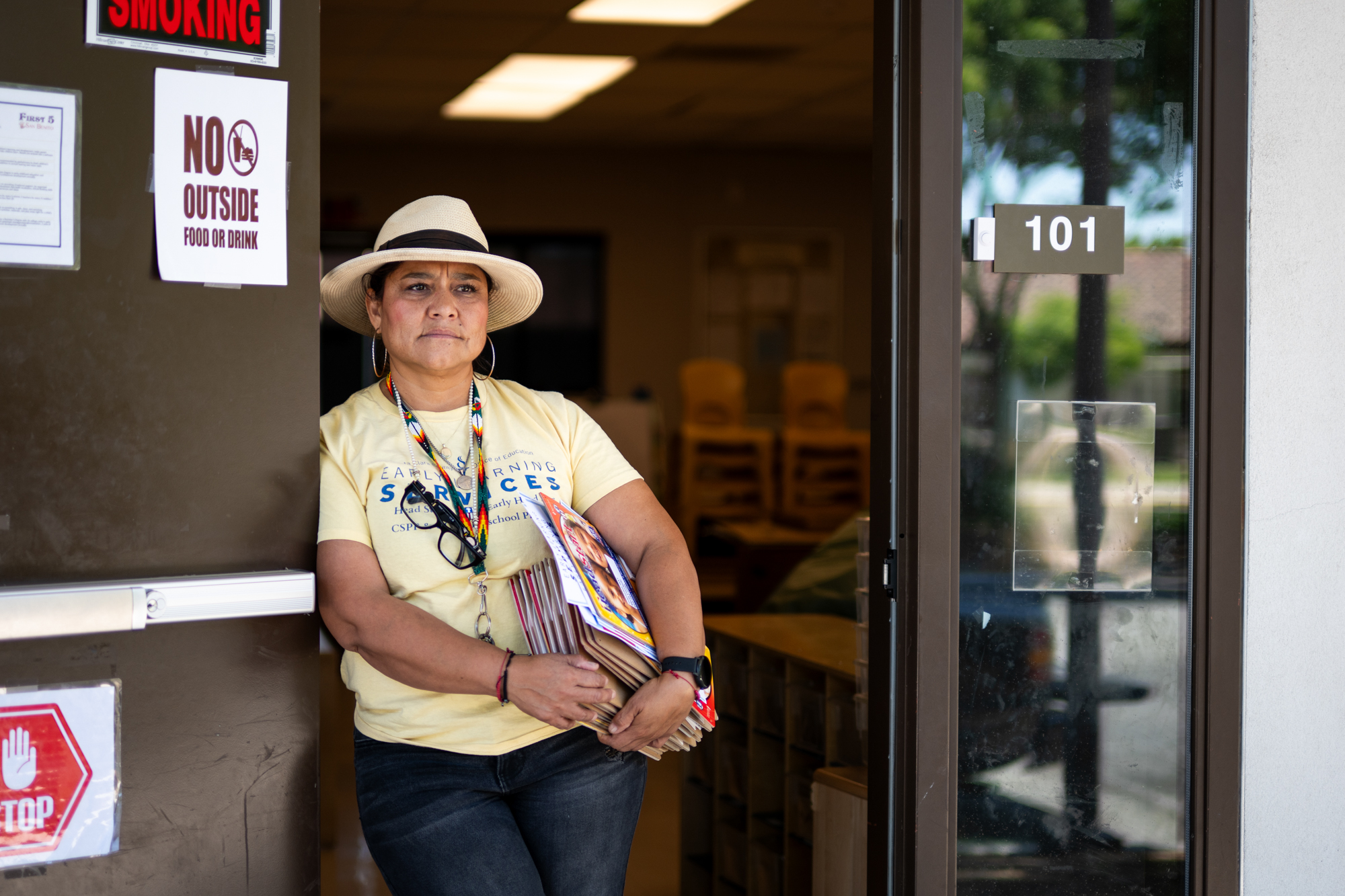
"caption": "Maria Corchado, a Head Start teacher, stands outside one of the classrooms in Hollister, San Benito County, on June 10, 2025.",
"credit": "Beth LaBerge/KQED",
"altTag": null,
"description": null,
"imgSizes": {
"thumbnail": {
"file": "https://cdn.kqed.org/wp-content/uploads/sites/10/2025/06/250610-HEADSTARTPROGRAMS-39-BL-KQED-160x107.jpg",
"width": 160,
"height": 107,
"mimeType": "image/jpeg"
},
"1536x1536": {
"file": "https://cdn.kqed.org/wp-content/uploads/sites/10/2025/06/250610-HEADSTARTPROGRAMS-39-BL-KQED-1536x1024.jpg",
"width": 1536,
"height": 1024,
"mimeType": "image/jpeg"
},
"post-thumbnail": {
"file": "https://cdn.kqed.org/wp-content/uploads/sites/10/2025/06/250610-HEADSTARTPROGRAMS-39-BL-KQED-672x372.jpg",
"width": 672,
"height": 372,
"mimeType": "image/jpeg"
},
"twentyfourteen-full-width": {
"file": "https://cdn.kqed.org/wp-content/uploads/sites/10/2025/06/250610-HEADSTARTPROGRAMS-39-BL-KQED-1038x576.jpg",
"width": 1038,
"height": 576,
"mimeType": "image/jpeg"
},
"kqedFullSize": {
"file": "https://cdn.kqed.org/wp-content/uploads/sites/10/2025/06/250610-HEADSTARTPROGRAMS-39-BL-KQED.jpg",
"width": 2000,
"height": 1333
}
},
"isLoading": false,
"fetchFailed": false
},
"news_12042994": {
"type": "attachments",
"id": "news_12042994",
"meta": {
"index": "attachments_1716263798",
"site": "news",
"id": "12042994",
"found": true
},
"title": "250605-TREASUREISLANDJOBCORPS-29-BL-KQED",
"publishDate": 1749164285,
"status": "inherit",
"parent": 0,
"modified": 1749164354,
"caption": "Isborn Ackerson (center left), in cement construction training, and Ray Moore, carpentry, lead a chant during a with students, staff, and supporters at a protest outside the Treasure Island Job Corps Center in San Francisco on June 5, 2025, protesting the facility’s upcoming closure, which they say could leave at-risk youth homeless.",
"credit": "Beth LaBerge/KQED",
"altTag": null,
"description": null,
"imgSizes": {
"thumbnail": {
"file": "https://cdn.kqed.org/wp-content/uploads/sites/10/2025/06/250605-TREASUREISLANDJOBCORPS-29-BL-KQED-160x107.jpg",
"width": 160,
"height": 107,
"mimeType": "image/jpeg"
},
"1536x1536": {
"file": "https://cdn.kqed.org/wp-content/uploads/sites/10/2025/06/250605-TREASUREISLANDJOBCORPS-29-BL-KQED-1536x1024.jpg",
"width": 1536,
"height": 1024,
"mimeType": "image/jpeg"
},
"post-thumbnail": {
"file": "https://cdn.kqed.org/wp-content/uploads/sites/10/2025/06/250605-TREASUREISLANDJOBCORPS-29-BL-KQED-672x372.jpg",
"width": 672,
"height": 372,
"mimeType": "image/jpeg"
},
"twentyfourteen-full-width": {
"file": "https://cdn.kqed.org/wp-content/uploads/sites/10/2025/06/250605-TREASUREISLANDJOBCORPS-29-BL-KQED-1038x576.jpg",
"width": 1038,
"height": 576,
"mimeType": "image/jpeg"
},
"kqedFullSize": {
"file": "https://cdn.kqed.org/wp-content/uploads/sites/10/2025/06/250605-TREASUREISLANDJOBCORPS-29-BL-KQED.jpg",
"width": 2000,
"height": 1333
}
},
"isLoading": false,
"fetchFailed": false
},
"news_12042131": {
"type": "attachments",
"id": "news_12042131",
"meta": {
"index": "attachments_1716263798",
"site": "news",
"id": "12042131",
"found": true
},
"title": "The Job Corps Center in San Jose on May 29, 2025.",
"publishDate": 1748624058,
"status": "inherit",
"parent": 0,
"modified": 1748624148,
"caption": "The Job Corps Center in San Jose on May 29, 2025.",
"credit": "Beth LaBerge/KQED",
"altTag": null,
"description": null,
"imgSizes": {
"medium": {
"file": "https://cdn.kqed.org/wp-content/uploads/sites/10/2025/05/250529-JOBCORPSCENTER-07-BL-KQED-800x533.jpg",
"width": 800,
"height": 533,
"mimeType": "image/jpeg"
},
"large": {
"file": "https://cdn.kqed.org/wp-content/uploads/sites/10/2025/05/250529-JOBCORPSCENTER-07-BL-KQED-1020x680.jpg",
"width": 1020,
"height": 680,
"mimeType": "image/jpeg"
},
"thumbnail": {
"file": "https://cdn.kqed.org/wp-content/uploads/sites/10/2025/05/250529-JOBCORPSCENTER-07-BL-KQED-160x107.jpg",
"width": 160,
"height": 107,
"mimeType": "image/jpeg"
},
"1536x1536": {
"file": "https://cdn.kqed.org/wp-content/uploads/sites/10/2025/05/250529-JOBCORPSCENTER-07-BL-KQED-1536x1024.jpg",
"width": 1536,
"height": 1024,
"mimeType": "image/jpeg"
},
"post-thumbnail": {
"file": "https://cdn.kqed.org/wp-content/uploads/sites/10/2025/05/250529-JOBCORPSCENTER-07-BL-KQED-672x372.jpg",
"width": 672,
"height": 372,
"mimeType": "image/jpeg"
},
"twentyfourteen-full-width": {
"file": "https://cdn.kqed.org/wp-content/uploads/sites/10/2025/05/250529-JOBCORPSCENTER-07-BL-KQED-1038x576.jpg",
"width": 1038,
"height": 576,
"mimeType": "image/jpeg"
},
"full-width": {
"file": "https://cdn.kqed.org/wp-content/uploads/sites/10/2025/05/250529-JOBCORPSCENTER-07-BL-KQED-1920x1280.jpg",
"width": 1920,
"height": 1280,
"mimeType": "image/jpeg"
},
"kqedFullSize": {
"file": "https://cdn.kqed.org/wp-content/uploads/sites/10/2025/05/250529-JOBCORPSCENTER-07-BL-KQED.jpg",
"width": 2000,
"height": 1333
}
},
"isLoading": false,
"fetchFailed": false
},
"news_12029489": {
"type": "attachments",
"id": "news_12029489",
"meta": {
"index": "attachments_1716263798",
"site": "news",
"id": "12029489",
"found": true
},
"title": "US-POLITICS-ENVIRONMENT-NATURE-PARKS-PROTEST",
"publishDate": 1741040569,
"status": "inherit",
"parent": 12029182,
"modified": 1741040606,
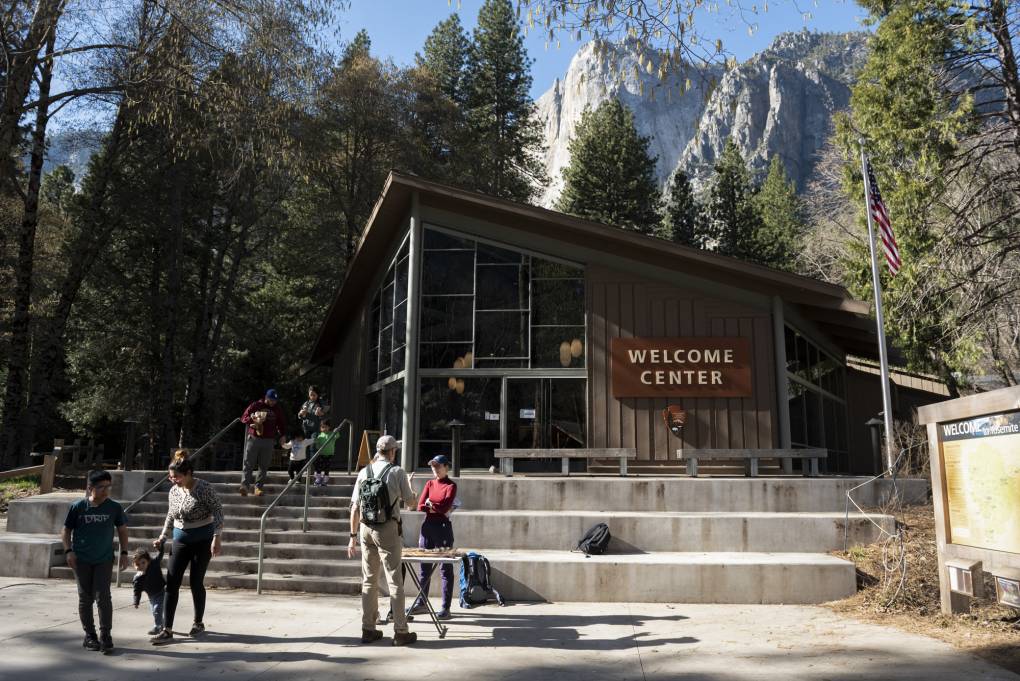
"caption": "A volunteer for the National Park Service welcomes visitors at the Exploration Center in Yosemite Valley, at Yosemite National Park on March 1, 2025.",
"credit": "Laure Andrillon/AFP via Getty",
"altTag": null,
"description": null,
"imgSizes": {
"medium": {
"file": "https://cdn.kqed.org/wp-content/uploads/sites/10/2025/03/CaliforniaPublicLandsGetty1-800x534.jpg",
"width": 800,
"height": 534,
"mimeType": "image/jpeg"
},
"large": {
"file": "https://cdn.kqed.org/wp-content/uploads/sites/10/2025/03/CaliforniaPublicLandsGetty1-1020x681.jpg",
"width": 1020,
"height": 681,
"mimeType": "image/jpeg"
},
"thumbnail": {
"file": "https://cdn.kqed.org/wp-content/uploads/sites/10/2025/03/CaliforniaPublicLandsGetty1-160x107.jpg",
"width": 160,
"height": 107,
"mimeType": "image/jpeg"
},
"1536x1536": {
"file": "https://cdn.kqed.org/wp-content/uploads/sites/10/2025/03/CaliforniaPublicLandsGetty1-1536x1025.jpg",
"width": 1536,
"height": 1025,
"mimeType": "image/jpeg"
},
"post-thumbnail": {
"file": "https://cdn.kqed.org/wp-content/uploads/sites/10/2025/03/CaliforniaPublicLandsGetty1-672x372.jpg",
"width": 672,
"height": 372,
"mimeType": "image/jpeg"
},
"twentyfourteen-full-width": {
"file": "https://cdn.kqed.org/wp-content/uploads/sites/10/2025/03/CaliforniaPublicLandsGetty1-1038x576.jpg",
"width": 1038,
"height": 576,
"mimeType": "image/jpeg"
},
"full-width": {
"file": "https://cdn.kqed.org/wp-content/uploads/sites/10/2025/03/CaliforniaPublicLandsGetty1-1920x1282.jpg",
"width": 1920,
"height": 1282,
"mimeType": "image/jpeg"
},
"kqedFullSize": {
"file": "https://cdn.kqed.org/wp-content/uploads/sites/10/2025/03/CaliforniaPublicLandsGetty1.jpg",
"width": 2000,
"height": 1335
}
},
"isLoading": false,
"fetchFailed": false
},
"news_12040001": {
"type": "attachments",
"id": "news_12040001",
"meta": {
"index": "attachments_1716263798",
"site": "news",
"id": "12040001",
"found": true
},
"title": "250513-HUD FUNDS-MD-05-KQED",
"publishDate": 1747191099,
"status": "inherit",
"parent": 0,
"modified": 1747785109,
"caption": "The courtyard at the Bishop Swing Community House supportive housing center in San Francisco, on May 13, 2025.",
"credit": "Martin do Nascimento/KQED",
"altTag": null,
"description": null,
"imgSizes": {
"medium": {
"file": "https://cdn.kqed.org/wp-content/uploads/sites/10/2025/05/250513-HUD-FUNDS-MD-05-KQED-800x534.jpg",
"width": 800,
"height": 534,
"mimeType": "image/jpeg"
},
"large": {
"file": "https://cdn.kqed.org/wp-content/uploads/sites/10/2025/05/250513-HUD-FUNDS-MD-05-KQED-1020x680.jpg",
"width": 1020,
"height": 680,
"mimeType": "image/jpeg"
},
"thumbnail": {
"file": "https://cdn.kqed.org/wp-content/uploads/sites/10/2025/05/250513-HUD-FUNDS-MD-05-KQED-160x107.jpg",
"width": 160,
"height": 107,
"mimeType": "image/jpeg"
},
"1536x1536": {
"file": "https://cdn.kqed.org/wp-content/uploads/sites/10/2025/05/250513-HUD-FUNDS-MD-05-KQED-1536x1025.jpg",
"width": 1536,
"height": 1025,
"mimeType": "image/jpeg"
},
"post-thumbnail": {
"file": "https://cdn.kqed.org/wp-content/uploads/sites/10/2025/05/250513-HUD-FUNDS-MD-05-KQED-672x372.jpg",
"width": 672,
"height": 372,
"mimeType": "image/jpeg"
},
"twentyfourteen-full-width": {
"file": "https://cdn.kqed.org/wp-content/uploads/sites/10/2025/05/250513-HUD-FUNDS-MD-05-KQED-1038x576.jpg",
"width": 1038,
"height": 576,
"mimeType": "image/jpeg"
},
"full-width": {
"file": "https://cdn.kqed.org/wp-content/uploads/sites/10/2025/05/250513-HUD-FUNDS-MD-05-KQED-1920x1281.jpg",
"width": 1920,
"height": 1281,
"mimeType": "image/jpeg"
},
"kqedFullSize": {
"file": "https://cdn.kqed.org/wp-content/uploads/sites/10/2025/05/250513-HUD-FUNDS-MD-05-KQED.jpg",
"width": 2000,
"height": 1334
}
},
"isLoading": false,
"fetchFailed": false
}
},
"audioPlayerReducer": {
"postId": "stream_live",
"isPaused": true,
"isPlaying": false,
"pfsActive": false,
"pledgeModalIsOpen": true,
"playerDrawerIsOpen": false,
"liveAudioPlayStartedAt": 0,
"liveAudioPlayContext": ""
},
"authorsReducer": {
"danbrekke": {
"type": "authors",
"id": "222",
"meta": {
"index": "authors_1716337520",
"id": "222",
"found": true
},
"name": "Dan Brekke",
"firstName": "Dan",
"lastName": "Brekke",
"slug": "danbrekke",
"email": "dbrekke@kqed.org",
"display_author_email": true,
"staff_mastheads": [
"news",
"science"
],
"title": "KQED Editor and Reporter",
"bio": "Dan Brekke is a reporter and editor for KQED News, responsible for coverage of topics ranging from California water issues to the Bay Area's transportation challenges. In a newsroom career that began in Chicago in 1972, Dan has worked for \u003cem>The San Francisco Examiner,\u003c/em> Wired and TechTV and has been published in The New York Times, The New York Times Magazine, Business 2.0, Salon and elsewhere.\r\n\r\nSince joining KQED in 2007, Dan has reported, edited and produced both radio and online features and breaking news pieces. He has shared as both editor and reporter in four Society of Professional Journalists Norcal Excellence in Journalism awards and one Edward R. Murrow regional award. He was chosen for a spring 2017 residency at the Mesa Refuge to advance his research on California salmon.\r\n\r\nEmail Dan at: \u003ca href=\"mailto:dbrekke@kqed.org\">dbrekke@kqed.org\u003c/a>\r\n\r\n\u003cstrong>Twitter:\u003c/strong> \u003ca href=\"https://twitter.com/danbrekke\" rel=\"noopener noreferrer\">twitter.com/danbrekke\u003c/a>\r\n\u003cstrong>Facebook:\u003c/strong> \u003ca href=\"https://www.facebook.com/danbrekke\" rel=\"noopener noreferrer\">www.facebook.com/danbrekke\u003c/a>\r\n\u003cstrong>LinkedIn:\u003c/strong> \u003ca href=\"https://www.linkedin.com/in/danbrekke\" rel=\"noopener noreferrer\">www.linkedin.com/in/danbrekke\u003c/a>",
"avatar": "https://secure.gravatar.com/avatar/c8126230345efca3f7aa89b1a402be45?s=600&d=mm&r=g",
"twitter": "danbrekke",
"facebook": null,
"instagram": "https://www.instagram.com/dan.brekke/",
"linkedin": "https://www.linkedin.com/in/danbrekke/",
"sites": [
{
"site": "news",
"roles": [
"administrator",
"create_posts"
]
},
{
"site": "stateofhealth",
"roles": [
"editor"
]
},
{
"site": "science",
"roles": [
"editor"
]
},
{
"site": "quest",
"roles": [
"contributor"
]
},
{
"site": "food",
"roles": [
"contributor"
]
},
{
"site": "forum",
"roles": [
"contributor"
]
},
{
"site": "liveblog",
"roles": [
"editor"
]
}
],
"headData": {
"title": "Dan Brekke | KQED",
"description": "KQED Editor and Reporter",
"ogImgSrc": "https://secure.gravatar.com/avatar/c8126230345efca3f7aa89b1a402be45?s=600&d=mm&r=g",
"twImgSrc": "https://secure.gravatar.com/avatar/c8126230345efca3f7aa89b1a402be45?s=600&d=mm&r=g"
},
"isLoading": false,
"link": "/author/danbrekke"
},
"mlagos": {
"type": "authors",
"id": "3239",
"meta": {
"index": "authors_1716337520",
"id": "3239",
"found": true
},
"name": "Marisa Lagos",
"firstName": "Marisa",
"lastName": "Lagos",
"slug": "mlagos",
"email": "mlagos@kqed.org",
"display_author_email": false,
"staff_mastheads": [
"news"
],
"title": "KQED Contributor",
"bio": "Marisa Lagos is a correspondent for KQED’s California Politics and Government Desk and co-hosts the award-winning show and podcast, Political Breakdown. At KQED, Lagos also conducts reporting, analysis and investigations into state, local and national politics for radio, TV, online and onstage. In 2022, she and co-host, Scott Shafer, moderated the only gubernatorial debate in California. In 2020, the \u003ci>Washington Post\u003c/i> named her one of the top political journalists in California; she was nominated for a Peabody and won several other awards for her work investigating the 2017 California wildfires. She has worked at the \u003ci>San Francisco Chronicle\u003c/i>, \u003ci>San Francisco Examiner\u003c/i> and \u003ci>Los Angeles Times\u003c/i>. A UC Santa Barbara graduate, she lives in San Francisco with her two sons and husband.",
"avatar": "https://secure.gravatar.com/avatar/a261a0d3696fc066871ef96b85b5e7d2?s=600&d=blank&r=g",
"twitter": "@mlagos",
"facebook": null,
"instagram": null,
"linkedin": null,
"sites": [
{
"site": "arts",
"roles": [
"author"
]
},
{
"site": "news",
"roles": [
"editor"
]
},
{
"site": "science",
"roles": [
"editor"
]
},
{
"site": "forum",
"roles": [
"author"
]
},
{
"site": "liveblog",
"roles": [
"author"
]
}
],
"headData": {
"title": "Marisa Lagos | KQED",
"description": "KQED Contributor",
"ogImgSrc": "https://secure.gravatar.com/avatar/a261a0d3696fc066871ef96b85b5e7d2?s=600&d=blank&r=g",
"twImgSrc": "https://secure.gravatar.com/avatar/a261a0d3696fc066871ef96b85b5e7d2?s=600&d=blank&r=g"
},
"isLoading": false,
"link": "/author/mlagos"
},
"daisynguyen": {
"type": "authors",
"id": "11829",
"meta": {
"index": "authors_1716337520",
"id": "11829",
"found": true
},
"name": "Daisy Nguyen",
"firstName": "Daisy",
"lastName": "Nguyen",
"slug": "daisynguyen",
"email": "daisynguyen@kqed.org",
"display_author_email": true,
"staff_mastheads": [
"news"
],
"title": "KQED Contributor",
"bio": "I have covered early childhood education and child care for KQED since 2022. I focus on policies aimed at increasing access to early care and education and how they shape individual lives. I've been a journalist for more than two decades, with most of that time devoted to covering breaking news throughout California for The Associated Press. I grew up in San Francisco and studied at UC Davis and Columbia University's Graduate School of Journalism. I live in Oakland with my husband and two kids.",
"avatar": "https://secure.gravatar.com/avatar/2da2127c27f7143b53ebd419800fd55f?s=600&d=blank&r=g",
"twitter": null,
"facebook": null,
"instagram": null,
"linkedin": "https://www.linkedin.com/in/daisynguyen/",
"sites": [
{
"site": "news",
"roles": [
"author"
]
},
{
"site": "liveblog",
"roles": [
"author"
]
}
],
"headData": {
"title": "Daisy Nguyen | KQED",
"description": "KQED Contributor",
"ogImgSrc": "https://secure.gravatar.com/avatar/2da2127c27f7143b53ebd419800fd55f?s=600&d=blank&r=g",
"twImgSrc": "https://secure.gravatar.com/avatar/2da2127c27f7143b53ebd419800fd55f?s=600&d=blank&r=g"
},
"isLoading": false,
"link": "/author/daisynguyen"
},
"sjohnson": {
"type": "authors",
"id": "11840",
"meta": {
"index": "authors_1716337520",
"id": "11840",
"found": true
},
"name": "Sydney Johnson",
"firstName": "Sydney",
"lastName": "Johnson",
"slug": "sjohnson",
"email": "sjohnson@kqed.org",
"display_author_email": false,
"staff_mastheads": [
"news"
],
"title": "KQED Reporter",
"bio": "Sydney Johnson is a general assignment reporter at KQED. She previously reported on public health and city government at the San Francisco Examiner, and before that, she covered statewide education policy for EdSource. Her reporting has won multiple local, state and national awards. Sydney is a graduate of the University of California, Berkeley and lives in San Francisco.",
"avatar": "https://secure.gravatar.com/avatar/97855f2719b72ad6190b7c535fe642c8?s=600&d=blank&r=g",
"twitter": "sydneyfjohnson",
"facebook": null,
"instagram": null,
"linkedin": null,
"sites": [
{
"site": "news",
"roles": [
"editor"
]
}
],
"headData": {
"title": "Sydney Johnson | KQED",
"description": "KQED Reporter",
"ogImgSrc": "https://secure.gravatar.com/avatar/97855f2719b72ad6190b7c535fe642c8?s=600&d=blank&r=g",
"twImgSrc": "https://secure.gravatar.com/avatar/97855f2719b72ad6190b7c535fe642c8?s=600&d=blank&r=g"
},
"isLoading": false,
"link": "/author/sjohnson"
},
"jgeha": {
"type": "authors",
"id": "11906",
"meta": {
"index": "authors_1716337520",
"id": "11906",
"found": true
},
"name": "Joseph Geha",
"firstName": "Joseph",
"lastName": "Geha",
"slug": "jgeha",
"email": "jgeha@kqed.org",
"display_author_email": false,
"staff_mastheads": [
"news",
"science"
],
"title": "KQED Contributor",
"bio": null,
"avatar": "https://secure.gravatar.com/avatar/ea84d2b6dd93d6369d453edf19dd583f117cd1759d2d9c9c92f9de77017354fe?s=600&d=blank&r=g",
"twitter": null,
"bluesky": null,
"facebook": null,
"instagram": null,
"linkedin": null,
"sites": [
{
"site": "news",
"roles": [
"editor"
]
},
{
"site": "liveblog",
"roles": [
"author"
]
}
],
"headData": {
"title": "Joseph Geha | KQED",
"description": "KQED Contributor",
"ogImgSrc": "https://secure.gravatar.com/avatar/ea84d2b6dd93d6369d453edf19dd583f117cd1759d2d9c9c92f9de77017354fe?s=600&d=blank&r=g",
"twImgSrc": "https://secure.gravatar.com/avatar/ea84d2b6dd93d6369d453edf19dd583f117cd1759d2d9c9c92f9de77017354fe?s=600&d=blank&r=g"
},
"isLoading": false,
"link": "/author/jgeha"
},
"kdebenedetti": {
"type": "authors",
"id": "11913",
"meta": {
"index": "authors_1716337520",
"id": "11913",
"found": true
},
"name": "Katie DeBenedetti",
"firstName": "Katie",
"lastName": "DeBenedetti",
"slug": "kdebenedetti",
"email": "kdebenedetti@kqed.org",
"display_author_email": false,
"staff_mastheads": [
"news",
"science"
],
"title": "KQED Contributor",
"bio": "Katie DeBenedetti is a digital reporter covering daily news for the Express Desk. Prior to joining KQED as a culture reporting intern in January 2024, she covered education and city government for the Napa Valley Register.",
"avatar": "https://secure.gravatar.com/avatar/6e31073cb8f7e4214ab03f42771d0f45?s=600&d=blank&r=g",
"twitter": null,
"facebook": null,
"instagram": null,
"linkedin": null,
"sites": [
{
"site": "news",
"roles": [
"author"
]
},
{
"site": "science",
"roles": [
"author"
]
},
{
"site": "liveblog",
"roles": [
"author"
]
}
],
"headData": {
"title": "Katie DeBenedetti | KQED",
"description": "KQED Contributor",
"ogImgSrc": "https://secure.gravatar.com/avatar/6e31073cb8f7e4214ab03f42771d0f45?s=600&d=blank&r=g",
"twImgSrc": "https://secure.gravatar.com/avatar/6e31073cb8f7e4214ab03f42771d0f45?s=600&d=blank&r=g"
},
"isLoading": false,
"link": "/author/kdebenedetti"
},
"rcooke": {
"type": "authors",
"id": "11921",
"meta": {
"index": "authors_1716337520",
"id": "11921",
"found": true
},
"name": "Riley Cooke",
"firstName": "Riley",
"lastName": "Cooke",
"slug": "rcooke",
"email": "rcooke@kqed.org",
"display_author_email": true,
"staff_mastheads": [
"news"
],
"title": "KQED Contributor",
"bio": "Riley is a senior at UC Berkeley, where she studies political science and journalism. Her work has appeared in SFGate, NBC Bay Area, Local News Matters and more. She enjoys reporting on politics, housing and homelessness — and using as many em dashes as her editors will allow.",
"avatar": "https://secure.gravatar.com/avatar/792f98c126cc5e270a8a96f77f7224ea?s=600&d=blank&r=g",
"twitter": "rrileycooke",
"facebook": null,
"instagram": null,
"linkedin": null,
"sites": [
{
"site": "arts",
"roles": [
"author"
]
},
{
"site": "news",
"roles": [
"author"
]
}
],
"headData": {
"title": "Riley Cooke | KQED",
"description": "KQED Contributor",
"ogImgSrc": "https://secure.gravatar.com/avatar/792f98c126cc5e270a8a96f77f7224ea?s=600&d=blank&r=g",
"twImgSrc": "https://secure.gravatar.com/avatar/792f98c126cc5e270a8a96f77f7224ea?s=600&d=blank&r=g"
},
"isLoading": false,
"link": "/author/rcooke"
}
},
"pagesReducer": {
"news_tag_federal-funding": {
"type": "terms",
"id": "news_35063",
"meta": {
"index": "terms_1716263798",
"site": "news",
"id": "35063",
"score": 10.403188
},
"name": "federal funding",
"slug": "federal-funding",
"taxonomy": "tag",
"description": null,
"featImg": null,
"headData": {
"title": "federal funding | KQED News",
"description": null,
"ogTitle": null,
"ogDescription": null,
"ogImgId": null,
"twTitle": null,
"twDescription": null,
"twImgId": null
},
"ttid": 35080,
"isLoading": false,
"title": "federal funding",
"pageMeta": {
"site": "news",
"WpPageTemplate": "page-topic-editorial",
"currentPage": 4
},
"blocks": [
{
"blockName": "kqed/post-list",
"attrs": {
"layout": "cardArticle2",
"query": "posts/news?tag=federal-funding",
"seeMore": false,
"paginated": true,
"page": 4
}
},
{
"blockName": "kqed/ad"
}
]
}
},
"pfsSessionReducer": {},
"postsReducer": {
"stream_live": {
"type": "live",
"id": "stream_live",
"audioUrl": "https://streams.kqed.org/kqedradio",
"title": "Live Stream",
"excerpt": "Live Stream information currently unavailable.",
"link": "/radio",
"featImg": "",
"label": {
"name": "KQED Live",
"link": "/"
}
},
"stream_kqedNewscast": {
"type": "posts",
"id": "stream_kqedNewscast",
"audioUrl": "https://www.kqed.org/.stream/anon/radio/RDnews/newscast.mp3?_=1",
"title": "KQED Newscast",
"featImg": "",
"label": {
"name": "88.5 FM",
"link": "/"
}
},
"news_12047037": {
"type": "posts",
"id": "news_12047037",
"meta": {
"index": "posts_1716263798",
"site": "news",
"id": "12047037",
"score": null,
"sort": [
1751650253000
]
},
"guestAuthors": [],
"slug": "a-betrayal-bay-area-leaders-react-to-us-house-passing-trumps-tax-and-welfare-cuts",
"title": "‘A Betrayal’: Bay Area Leaders React to US House Passing Trump’s Tax and Welfare Cuts",
"publishDate": 1751650253,
"format": "standard",
"headTitle": "‘A Betrayal’: Bay Area Leaders React to US House Passing Trump’s Tax and Welfare Cuts | KQED",
"labelTerm": {
"site": "news"
},
"content": "\u003cp>\u003cem>Updated 3:05 p.m. Thursday\u003c/em>\u003c/p>\n\u003cp>The House of Representatives narrowly passed President Trump’s \u003ca href=\"https://www.kqed.org/news/12046831/cruel-ugly-nasty-immoral-democrats-slam-mega-bill-ahead-of-house-vote\">federal budget proposal on Thursday\u003c/a>, slashing \u003ca href=\"https://www.kqed.org/news/12046134/a-big-bad-betrayal-san-jose-groups-protest-trumps-tax-bill\">social safety net programs\u003c/a> and extending tax cuts that Bay Area lawmakers say are a betrayal of the American people.\u003c/p>\n\u003cp>Votes largely fell along party lines, with the exception of Republican Reps. Thomas Massie of Kentucky and Brian Fitzpatrick of Pennsylvania, who joined Democrats to vote against the so-called “Big Beautiful Bill.”\u003c/p>\n\u003cp>The legislation heads to Trump’s desk next, and he is expected to sign it on July Fourth.\u003c/p>\n\u003cp>[ad fullwidth]\u003c/p>\n\u003cp>“This bill is a betrayal that abandons the needs of hardworking Americans and balloons the national debt by over $4 trillion — not to invest in the future, but to reward the wealthiest in our country at the expense of everyone else,” Speaker Emerita Nancy Pelosi, D-San Francisco, said in a statement on Thursday, referring to the legislation as the “Big, Ugly Bill.”\u003c/p>\n\u003cp>She said the legislation makes the \u003ca href=\"https://www.kqed.org/news/12028454/potential-medicaid-cuts-who-would-be-affected-and-what-are-republicans-proposing\">largest cuts to Medicaid\u003c/a>, Medicare and federal food stamps programs in history.\u003c/p>\n\u003cp>An estimated 2 million California residents could also lose healthcare coverage as a result of more than $28.4 billion slashed from Medicaid funding to the state. Gov. Gavin Newsom said in a statement that rural hospitals could see services reduced or close their doors entirely.\u003c/p>\n\u003cfigure id=\"attachment_12047045\" class=\"wp-caption aligncenter\" style=\"max-width: 2000px\">\u003cimg loading=\"lazy\" decoding=\"async\" class=\"size-full wp-image-12047045\" src=\"https://cdn.kqed.org/wp-content/uploads/sites/10/2025/07/BigBeautifulBillAP1.jpg\" alt=\"\" width=\"2000\" height=\"1333\" srcset=\"https://cdn.kqed.org/wp-content/uploads/sites/10/2025/07/BigBeautifulBillAP1.jpg 2000w, https://cdn.kqed.org/wp-content/uploads/sites/10/2025/07/BigBeautifulBillAP1-160x107.jpg 160w, https://cdn.kqed.org/wp-content/uploads/sites/10/2025/07/BigBeautifulBillAP1-1536x1024.jpg 1536w\" sizes=\"auto, (max-width: 2000px) 100vw, 2000px\">\u003cfigcaption class=\"wp-caption-text\">House Minority Leader Hakeem Jeffries, D-N.Y., left, speaks in the House chamber as House Democrats stand to applaud him, prior to the final vote for President Donald Trump’s signature bill of tax breaks and spending cuts, at the Capitol, on Thursday, July 3, 2025, in Washington. \u003ccite>(Rod Lamkey, Jr./AP Photo)\u003c/cite>\u003c/figcaption>\u003c/figure>\n\u003cp>Marnie Regan, director of government relations at Larkin Street Youth Services, said that the nonprofit’s clients, many of whom are homeless or formerly homeless young people, are especially at risk of losing access to these services.\u003c/p>\n\u003cp>Many of the 18- to 25-year-olds Larkin supports work gig jobs, or hold multiple part-time roles that don’t include health benefits, or allow them to cobble together the income necessary to afford enough food — making them dependent on public assistance for healthcare and nutrition.\u003c/p>\n\u003cp>“It’s that sort of invisible part of the workforce that we are very, very concerned about losing their benefits,” she said, adding that many of these young people are especially likely to forgo routine and preventative health care when they don’t have access to Medicaid.[aside postID=news_12046831 hero='https://cdn.kqed.org/wp-content/uploads/sites/10/2025/03/LateefahSimonGetty2-1020x680.jpg']“They’re worried about the cost … they don’t do dental care, there’s a lot of things that they just don’t access,” she told KQED.\u003c/p>\n\u003cp>The bill also blocks abortion care providers, like Planned Parenthood, from receiving federal funding.\u003c/p>\n\u003cp>While a federal law already prevents Medicaid from paying for abortions unless the pregnancy is a result of rape or incest or there is a threat to the pregnant person’s life, the bill would block Medicaid reimbursements for other care offered at these sites, like pregnancy testing, cancer screenings and contraceptives.\u003c/p>\n\u003cp>In a post on its website this week, Planned Parenthood said the bill could put as many as 200 of its health centers at risk of shutting down.\u003c/p>\n\u003cp>“The health and lives of 1.1 million patients across the country are at risk,” the organization said.\u003c/p>\n\u003cp>Newsom called the move to defund Planned Parenthood a “backdoor abortion ban.”\u003c/p>\n\u003cp>More than \u003ca href=\"https://calbudgetcenter.org/resources/republican-proposed-calfresh-cuts-put-millions-of-californians-at-risk-of-hunger/\">5.5 million\u003c/a> Californians rely on food assistance benefits in California, which are nearly entirely funded by the federal government, according to the \u003ca href=\"https://calbudgetcenter.org/resources/republican-proposed-calfresh-cuts-put-millions-of-californians-at-risk-of-hunger/\">California Budget & Policy Center\u003c/a>.\u003c/p>\n\u003cp>Gina Fromer, the executive director of the service organization GLIDE, told KQED that its meal lines have already grown in anticipation of cuts to CalFresh, California’s Supplemental Nutrition Assistance Program.\u003c/p>\n\u003cfigure id=\"attachment_12009979\" class=\"wp-caption aligncenter\" style=\"max-width: 2000px\">\u003cimg loading=\"lazy\" decoding=\"async\" class=\"size-full wp-image-12009979\" src=\"https://cdn.kqed.org/wp-content/uploads/sites/10/2024/10/241017-GLIDE-COMMUNITY-AMBASSADORS-MD-02-KQED.jpg\" alt=\"\" width=\"2000\" height=\"1333\" srcset=\"https://cdn.kqed.org/wp-content/uploads/sites/10/2024/10/241017-GLIDE-COMMUNITY-AMBASSADORS-MD-02-KQED.jpg 2000w, https://cdn.kqed.org/wp-content/uploads/sites/10/2024/10/241017-GLIDE-COMMUNITY-AMBASSADORS-MD-02-KQED-800x533.jpg 800w, https://cdn.kqed.org/wp-content/uploads/sites/10/2024/10/241017-GLIDE-COMMUNITY-AMBASSADORS-MD-02-KQED-1020x680.jpg 1020w, https://cdn.kqed.org/wp-content/uploads/sites/10/2024/10/241017-GLIDE-COMMUNITY-AMBASSADORS-MD-02-KQED-160x107.jpg 160w, https://cdn.kqed.org/wp-content/uploads/sites/10/2024/10/241017-GLIDE-COMMUNITY-AMBASSADORS-MD-02-KQED-1536x1024.jpg 1536w, https://cdn.kqed.org/wp-content/uploads/sites/10/2024/10/241017-GLIDE-COMMUNITY-AMBASSADORS-MD-02-KQED-1920x1280.jpg 1920w\" sizes=\"auto, (max-width: 2000px) 100vw, 2000px\">\u003cfigcaption class=\"wp-caption-text\">Dr. Gina Fromer, CEO of GLIDE, speaks at an event highlighting the work of the GLIDE Community Ambassadors program in the lobby of the GLIDE building in the Tenderloin neighborhood in San Francisco on Oct. 17, 2024. \u003ccite>(Martin do Nascimento/KQED)\u003c/cite>\u003c/figcaption>\u003c/figure>\n\u003cp>The organization serves three hot meals on weekdays, and previously offered bagged food instead of a full lunch and dinner service on weekends. This week, she said, GLIDE returned to a more full meal schedule on the weekend because of growing demand — especially as other city food providers, like Saint Anthony’s — \u003ca href=\"https://missionlocal.org/2025/07/sf-tenderloin-st-anthony-layoffs/\">face cuts.\u003c/a>\u003c/p>\n\u003cp>“We already have families in our food line who can’t afford the third meal [of the day], now they’re not going be able to afford the second meal,” she told KQED. “The impact is going to be devastating to GLIDE because it’s a strain on our resources already that are [stretched thin].”\u003c/p>\n\u003cp>All Republican members of Congress from California, including those in purple districts such as Rep. David Valadao, R-Bakersfield, voted in support of the bill.\u003c/p>\n\u003cp>“It was not an easy decision for me,” Valadao said in a statement on Thursday. “I’ve been a vocal advocate for protecting and preserving Medicaid for the most vulnerable in my district. I know how important the program is for my constituents.”\u003c/p>\n\u003cp>Trump earlier blasted the three Senate Republicans who voted against the bill — Rand Paul of Kentucky, Susan Collins of Maine and Thom Tillis of North Carolina — threatening to support their challengers in upcoming primaries.\u003c/p>\n\u003cp>Tillis announced his decision not to seek reelection on Sunday, the day after Trump \u003ca href=\"https://www.politico.com/live-updates/2025/06/28/congress/donald-trump-threatens-thom-tillis-00431472\">threatened \u003c/a>the senator online for opposing cuts to Medicaid that Tillis warned would devastate his state.\u003c/p>\n\u003cfigure id=\"attachment_11804662\" class=\"wp-caption aligncenter\" style=\"max-width: 1920px\">\u003cimg loading=\"lazy\" decoding=\"async\" class=\"size-full wp-image-11804662\" src=\"https://cdn.kqed.org/wp-content/uploads/sites/10/2020/03/John-Garamendi.jpg\" alt=\"North Bay Rep. John Garamendi (right), pictured in 2011. Garamendi and two other California congressmen want clarity from federal health officials in the wake of a whistleblower complaint.\" width=\"1920\" height=\"1128\" srcset=\"https://cdn.kqed.org/wp-content/uploads/sites/10/2020/03/John-Garamendi.jpg 1920w, https://cdn.kqed.org/wp-content/uploads/sites/10/2020/03/John-Garamendi-160x94.jpg 160w, https://cdn.kqed.org/wp-content/uploads/sites/10/2020/03/John-Garamendi-800x470.jpg 800w, https://cdn.kqed.org/wp-content/uploads/sites/10/2020/03/John-Garamendi-1020x599.jpg 1020w\" sizes=\"auto, (max-width: 1920px) 100vw, 1920px\">\u003cfigcaption class=\"wp-caption-text\">North Bay Rep. John Garamendi (right), pictured in 2011. \u003ccite>(Chip Somodevilla/Getty Images)\u003c/cite>\u003c/figcaption>\u003c/figure>\n\u003cp>“It has been very, very clear that if a Republican does not vote for this bill, then Trump is going to come after them,” Rep. John Garamendi, D-Fairfield, told KQED this week after the bill passed the Senate. “They fear Trump.”\u003c/p>\n\u003cp>In addition to preserving tax cuts, the federal budget bill significantly ramps up funding for Trump’s immigration agenda. The bill includes nearly $45 billion for new detention centers and $14 billion for increased deportation operations and hiring more Immigration and Customs Enforcement agents.\u003c/p>\n\u003cp>“Republicans have a choice between governance for the people or cruelty,” Rep. Lateefah Simon, D-Oakland, said Thursday in a statement. “It is undeniable that the policies in the bill will hurt communities in my district.”\u003c/p>\n\u003cp>Civil rights groups fighting against the bill said the impacts on vulnerable communities could be devastating.\u003c/p>\n\u003cp>“The bill will inflict generational harm on Black communities, people with disabilities, low-income families, veterans, immigrants, and countless others who already struggle to access basic necessities,” Janai Nelson, director of the NAACP Legal Defense Fund, said in a statement.\u003c/p>\n\u003cfigure id=\"attachment_11969248\" class=\"wp-caption aligncenter\" style=\"max-width: 2000px\">\u003cimg loading=\"lazy\" decoding=\"async\" class=\"size-full wp-image-11969248\" src=\"https://cdn.kqed.org/wp-content/uploads/sites/10/2023/12/231206-LateefahSimon-19-BL-KQED.jpg\" alt=\"\" width=\"2000\" height=\"1333\" srcset=\"https://cdn.kqed.org/wp-content/uploads/sites/10/2023/12/231206-LateefahSimon-19-BL-KQED.jpg 2000w, https://cdn.kqed.org/wp-content/uploads/sites/10/2023/12/231206-LateefahSimon-19-BL-KQED-800x533.jpg 800w, https://cdn.kqed.org/wp-content/uploads/sites/10/2023/12/231206-LateefahSimon-19-BL-KQED-1020x680.jpg 1020w, https://cdn.kqed.org/wp-content/uploads/sites/10/2023/12/231206-LateefahSimon-19-BL-KQED-160x107.jpg 160w, https://cdn.kqed.org/wp-content/uploads/sites/10/2023/12/231206-LateefahSimon-19-BL-KQED-1536x1024.jpg 1536w, https://cdn.kqed.org/wp-content/uploads/sites/10/2023/12/231206-LateefahSimon-19-BL-KQED-1920x1280.jpg 1920w\" sizes=\"auto, (max-width: 2000px) 100vw, 2000px\">\u003cfigcaption class=\"wp-caption-text\">Lateefah Simon poses for a portrait on Dec. 6, 2023, after signing paperwork for her congressional campaign candidacy at the Alameda County Registrar of Voters Office in Oakland. \u003ccite>(Beth LaBerge/KQED)\u003c/cite>\u003c/figcaption>\u003c/figure>\n\u003cp>The California Immigrant Policy Center, in a statement, called on Gov. Gavin Newsom and California lawmakers to “identify short and long-term opportunities to generate revenue to help mitigate the enormous harm this bill will cause.”\u003c/p>\n\u003cp>The bill also eliminates much of the \u003ca href=\"https://www.kqed.org/news/11922351/3-ways-the-inflation-reduction-act-would-pay-you-to-help-fight-climate-change\">Inflation Reduction Act’s clean energy tax credits\u003c/a> for renewable energy projects, efficient appliances and more, putting 686,000 California jobs at risk.\u003c/p>\n\u003cp>Democrats, including Simon, threw amendments at the bill this week in hopes of delaying the vote and maintaining funding for Medicaid and the Supplemental Nutrition Assistance Program.\u003c/p>\n\u003cp>Now, they’re scrambling to determine next steps for healthcare and other basic needs programs slashed in Trump’s budget.\u003c/p>\n\u003cp>“We will wake up tomorrow and fight another day, and many more days after that — until we create a society and government that we can actually be proud of,” said Simon, addressing her constituents in the statement. “That is what you sent me to Congress to do, and that is the clear-eyed goal I have for the coming months.”\u003c/p>\n\u003cp>[ad floatright]\u003c/p>\n",
"blocks": [],
"excerpt": "Votes largely fell along party lines, with the exception of two Republicans who joined Democrats to vote against the so-called “Big Beautiful Bill.” ",
"status": "publish",
"parent": 0,
"modified": 1751652239,
"stats": {
"hasAudio": false,
"hasVideo": false,
"hasChartOrMap": false,
"iframeSrcs": [],
"hasGoogleForm": false,
"hasGallery": false,
"hasHearkenModule": false,
"hasPolis": false,
"paragraphCount": 35,
"wordCount": 1384
},
"headData": {
"title": "‘A Betrayal’: Bay Area Leaders React to US House Passing Trump’s Tax and Welfare Cuts | KQED",
"description": "Votes largely fell along party lines, with the exception of two Republicans who joined Democrats to vote against the so-called “Big Beautiful Bill.” ",
"ogTitle": "",
"ogDescription": "",
"ogImgId": "",
"twTitle": "",
"twDescription": "",
"twImgId": "",
"schema": {
"@context": "https://schema.org",
"@type": "NewsArticle",
"headline": "‘A Betrayal’: Bay Area Leaders React to US House Passing Trump’s Tax and Welfare Cuts",
"datePublished": "2025-07-04T10:30:53-07:00",
"dateModified": "2025-07-04T11:03:59-07:00",
"image": "https://cdn.kqed.org/wp-content/uploads/2020/02/KQED-OG-Image@1x.png",
"isAccessibleForFree": "True",
"publisher": {
"@type": "NewsMediaOrganization",
"@id": "https://www.kqed.org/#organization",
"name": "KQED",
"logo": "https://cdn.kqed.org/wp-content/uploads/2020/02/KQED-OG-Image@1x.png",
"url": "https://www.kqed.org",
"sameAs": [
"https://www.facebook.com/KQED",
"https://twitter.com/KQED",
"https://www.instagram.com/kqed/",
"https://www.tiktok.com/@kqedofficial",
"https://www.linkedin.com/company/kqed",
"https://www.youtube.com/channel/UCeC0IOo7i1P_61zVUWbJ4nw"
]
}
}
},
"primaryCategory": {
"termId": 8,
"slug": "news",
"name": "News"
},
"sticky": false,
"nprStoryId": "kqed-12047037",
"templateType": "standard",
"featuredImageType": "standard",
"excludeFromSiteSearch": "Include",
"articleAge": "0",
"path": "/news/12047037/a-betrayal-bay-area-leaders-react-to-us-house-passing-trumps-tax-and-welfare-cuts",
"audioTrackLength": null,
"parsedContent": [
{
"type": "contentString",
"content": "\u003cdiv class=\"post-body\">\u003cp>\u003cp>\u003cem>Updated 3:05 p.m. Thursday\u003c/em>\u003c/p>\n\u003cp>The House of Representatives narrowly passed President Trump’s \u003ca href=\"https://www.kqed.org/news/12046831/cruel-ugly-nasty-immoral-democrats-slam-mega-bill-ahead-of-house-vote\">federal budget proposal on Thursday\u003c/a>, slashing \u003ca href=\"https://www.kqed.org/news/12046134/a-big-bad-betrayal-san-jose-groups-protest-trumps-tax-bill\">social safety net programs\u003c/a> and extending tax cuts that Bay Area lawmakers say are a betrayal of the American people.\u003c/p>\n\u003cp>Votes largely fell along party lines, with the exception of Republican Reps. Thomas Massie of Kentucky and Brian Fitzpatrick of Pennsylvania, who joined Democrats to vote against the so-called “Big Beautiful Bill.”\u003c/p>\n\u003cp>The legislation heads to Trump’s desk next, and he is expected to sign it on July Fourth.\u003c/p>\n\u003cp>\u003c/p>\u003c/div>",
"attributes": {
"named": {},
"numeric": []
}
},
{
"type": "component",
"content": "",
"name": "ad",
"attributes": {
"named": {
"label": "fullwidth"
},
"numeric": [
"fullwidth"
]
}
},
{
"type": "contentString",
"content": "\u003cdiv class=\"post-body\">\u003cp>\u003c/p>\n\u003cp>“This bill is a betrayal that abandons the needs of hardworking Americans and balloons the national debt by over $4 trillion — not to invest in the future, but to reward the wealthiest in our country at the expense of everyone else,” Speaker Emerita Nancy Pelosi, D-San Francisco, said in a statement on Thursday, referring to the legislation as the “Big, Ugly Bill.”\u003c/p>\n\u003cp>She said the legislation makes the \u003ca href=\"https://www.kqed.org/news/12028454/potential-medicaid-cuts-who-would-be-affected-and-what-are-republicans-proposing\">largest cuts to Medicaid\u003c/a>, Medicare and federal food stamps programs in history.\u003c/p>\n\u003cp>An estimated 2 million California residents could also lose healthcare coverage as a result of more than $28.4 billion slashed from Medicaid funding to the state. Gov. Gavin Newsom said in a statement that rural hospitals could see services reduced or close their doors entirely.\u003c/p>\n\u003cfigure id=\"attachment_12047045\" class=\"wp-caption aligncenter\" style=\"max-width: 2000px\">\u003cimg loading=\"lazy\" decoding=\"async\" class=\"size-full wp-image-12047045\" src=\"https://cdn.kqed.org/wp-content/uploads/sites/10/2025/07/BigBeautifulBillAP1.jpg\" alt=\"\" width=\"2000\" height=\"1333\" srcset=\"https://cdn.kqed.org/wp-content/uploads/sites/10/2025/07/BigBeautifulBillAP1.jpg 2000w, https://cdn.kqed.org/wp-content/uploads/sites/10/2025/07/BigBeautifulBillAP1-160x107.jpg 160w, https://cdn.kqed.org/wp-content/uploads/sites/10/2025/07/BigBeautifulBillAP1-1536x1024.jpg 1536w\" sizes=\"auto, (max-width: 2000px) 100vw, 2000px\">\u003cfigcaption class=\"wp-caption-text\">House Minority Leader Hakeem Jeffries, D-N.Y., left, speaks in the House chamber as House Democrats stand to applaud him, prior to the final vote for President Donald Trump’s signature bill of tax breaks and spending cuts, at the Capitol, on Thursday, July 3, 2025, in Washington. \u003ccite>(Rod Lamkey, Jr./AP Photo)\u003c/cite>\u003c/figcaption>\u003c/figure>\n\u003cp>Marnie Regan, director of government relations at Larkin Street Youth Services, said that the nonprofit’s clients, many of whom are homeless or formerly homeless young people, are especially at risk of losing access to these services.\u003c/p>\n\u003cp>Many of the 18- to 25-year-olds Larkin supports work gig jobs, or hold multiple part-time roles that don’t include health benefits, or allow them to cobble together the income necessary to afford enough food — making them dependent on public assistance for healthcare and nutrition.\u003c/p>\n\u003cp>“It’s that sort of invisible part of the workforce that we are very, very concerned about losing their benefits,” she said, adding that many of these young people are especially likely to forgo routine and preventative health care when they don’t have access to Medicaid.\u003c/p>\u003c/div>",
"attributes": {
"named": {},
"numeric": []
}
},
{
"type": "component",
"content": "",
"name": "aside",
"attributes": {
"named": {
"postid": "news_12046831",
"hero": "https://cdn.kqed.org/wp-content/uploads/sites/10/2025/03/LateefahSimonGetty2-1020x680.jpg",
"label": ""
},
"numeric": []
}
},
{
"type": "contentString",
"content": "\u003cdiv class=\"post-body\">\u003cp>“They’re worried about the cost … they don’t do dental care, there’s a lot of things that they just don’t access,” she told KQED.\u003c/p>\n\u003cp>The bill also blocks abortion care providers, like Planned Parenthood, from receiving federal funding.\u003c/p>\n\u003cp>While a federal law already prevents Medicaid from paying for abortions unless the pregnancy is a result of rape or incest or there is a threat to the pregnant person’s life, the bill would block Medicaid reimbursements for other care offered at these sites, like pregnancy testing, cancer screenings and contraceptives.\u003c/p>\n\u003cp>In a post on its website this week, Planned Parenthood said the bill could put as many as 200 of its health centers at risk of shutting down.\u003c/p>\n\u003cp>“The health and lives of 1.1 million patients across the country are at risk,” the organization said.\u003c/p>\n\u003cp>Newsom called the move to defund Planned Parenthood a “backdoor abortion ban.”\u003c/p>\n\u003cp>More than \u003ca href=\"https://calbudgetcenter.org/resources/republican-proposed-calfresh-cuts-put-millions-of-californians-at-risk-of-hunger/\">5.5 million\u003c/a> Californians rely on food assistance benefits in California, which are nearly entirely funded by the federal government, according to the \u003ca href=\"https://calbudgetcenter.org/resources/republican-proposed-calfresh-cuts-put-millions-of-californians-at-risk-of-hunger/\">California Budget & Policy Center\u003c/a>.\u003c/p>\n\u003cp>Gina Fromer, the executive director of the service organization GLIDE, told KQED that its meal lines have already grown in anticipation of cuts to CalFresh, California’s Supplemental Nutrition Assistance Program.\u003c/p>\n\u003cfigure id=\"attachment_12009979\" class=\"wp-caption aligncenter\" style=\"max-width: 2000px\">\u003cimg loading=\"lazy\" decoding=\"async\" class=\"size-full wp-image-12009979\" src=\"https://cdn.kqed.org/wp-content/uploads/sites/10/2024/10/241017-GLIDE-COMMUNITY-AMBASSADORS-MD-02-KQED.jpg\" alt=\"\" width=\"2000\" height=\"1333\" srcset=\"https://cdn.kqed.org/wp-content/uploads/sites/10/2024/10/241017-GLIDE-COMMUNITY-AMBASSADORS-MD-02-KQED.jpg 2000w, https://cdn.kqed.org/wp-content/uploads/sites/10/2024/10/241017-GLIDE-COMMUNITY-AMBASSADORS-MD-02-KQED-800x533.jpg 800w, https://cdn.kqed.org/wp-content/uploads/sites/10/2024/10/241017-GLIDE-COMMUNITY-AMBASSADORS-MD-02-KQED-1020x680.jpg 1020w, https://cdn.kqed.org/wp-content/uploads/sites/10/2024/10/241017-GLIDE-COMMUNITY-AMBASSADORS-MD-02-KQED-160x107.jpg 160w, https://cdn.kqed.org/wp-content/uploads/sites/10/2024/10/241017-GLIDE-COMMUNITY-AMBASSADORS-MD-02-KQED-1536x1024.jpg 1536w, https://cdn.kqed.org/wp-content/uploads/sites/10/2024/10/241017-GLIDE-COMMUNITY-AMBASSADORS-MD-02-KQED-1920x1280.jpg 1920w\" sizes=\"auto, (max-width: 2000px) 100vw, 2000px\">\u003cfigcaption class=\"wp-caption-text\">Dr. Gina Fromer, CEO of GLIDE, speaks at an event highlighting the work of the GLIDE Community Ambassadors program in the lobby of the GLIDE building in the Tenderloin neighborhood in San Francisco on Oct. 17, 2024. \u003ccite>(Martin do Nascimento/KQED)\u003c/cite>\u003c/figcaption>\u003c/figure>\n\u003cp>The organization serves three hot meals on weekdays, and previously offered bagged food instead of a full lunch and dinner service on weekends. This week, she said, GLIDE returned to a more full meal schedule on the weekend because of growing demand — especially as other city food providers, like Saint Anthony’s — \u003ca href=\"https://missionlocal.org/2025/07/sf-tenderloin-st-anthony-layoffs/\">face cuts.\u003c/a>\u003c/p>\n\u003cp>“We already have families in our food line who can’t afford the third meal [of the day], now they’re not going be able to afford the second meal,” she told KQED. “The impact is going to be devastating to GLIDE because it’s a strain on our resources already that are [stretched thin].”\u003c/p>\n\u003cp>All Republican members of Congress from California, including those in purple districts such as Rep. David Valadao, R-Bakersfield, voted in support of the bill.\u003c/p>\n\u003cp>“It was not an easy decision for me,” Valadao said in a statement on Thursday. “I’ve been a vocal advocate for protecting and preserving Medicaid for the most vulnerable in my district. I know how important the program is for my constituents.”\u003c/p>\n\u003cp>Trump earlier blasted the three Senate Republicans who voted against the bill — Rand Paul of Kentucky, Susan Collins of Maine and Thom Tillis of North Carolina — threatening to support their challengers in upcoming primaries.\u003c/p>\n\u003cp>Tillis announced his decision not to seek reelection on Sunday, the day after Trump \u003ca href=\"https://www.politico.com/live-updates/2025/06/28/congress/donald-trump-threatens-thom-tillis-00431472\">threatened \u003c/a>the senator online for opposing cuts to Medicaid that Tillis warned would devastate his state.\u003c/p>\n\u003cfigure id=\"attachment_11804662\" class=\"wp-caption aligncenter\" style=\"max-width: 1920px\">\u003cimg loading=\"lazy\" decoding=\"async\" class=\"size-full wp-image-11804662\" src=\"https://cdn.kqed.org/wp-content/uploads/sites/10/2020/03/John-Garamendi.jpg\" alt=\"North Bay Rep. John Garamendi (right), pictured in 2011. Garamendi and two other California congressmen want clarity from federal health officials in the wake of a whistleblower complaint.\" width=\"1920\" height=\"1128\" srcset=\"https://cdn.kqed.org/wp-content/uploads/sites/10/2020/03/John-Garamendi.jpg 1920w, https://cdn.kqed.org/wp-content/uploads/sites/10/2020/03/John-Garamendi-160x94.jpg 160w, https://cdn.kqed.org/wp-content/uploads/sites/10/2020/03/John-Garamendi-800x470.jpg 800w, https://cdn.kqed.org/wp-content/uploads/sites/10/2020/03/John-Garamendi-1020x599.jpg 1020w\" sizes=\"auto, (max-width: 1920px) 100vw, 1920px\">\u003cfigcaption class=\"wp-caption-text\">North Bay Rep. John Garamendi (right), pictured in 2011. \u003ccite>(Chip Somodevilla/Getty Images)\u003c/cite>\u003c/figcaption>\u003c/figure>\n\u003cp>“It has been very, very clear that if a Republican does not vote for this bill, then Trump is going to come after them,” Rep. John Garamendi, D-Fairfield, told KQED this week after the bill passed the Senate. “They fear Trump.”\u003c/p>\n\u003cp>In addition to preserving tax cuts, the federal budget bill significantly ramps up funding for Trump’s immigration agenda. The bill includes nearly $45 billion for new detention centers and $14 billion for increased deportation operations and hiring more Immigration and Customs Enforcement agents.\u003c/p>\n\u003cp>“Republicans have a choice between governance for the people or cruelty,” Rep. Lateefah Simon, D-Oakland, said Thursday in a statement. “It is undeniable that the policies in the bill will hurt communities in my district.”\u003c/p>\n\u003cp>Civil rights groups fighting against the bill said the impacts on vulnerable communities could be devastating.\u003c/p>\n\u003cp>“The bill will inflict generational harm on Black communities, people with disabilities, low-income families, veterans, immigrants, and countless others who already struggle to access basic necessities,” Janai Nelson, director of the NAACP Legal Defense Fund, said in a statement.\u003c/p>\n\u003cfigure id=\"attachment_11969248\" class=\"wp-caption aligncenter\" style=\"max-width: 2000px\">\u003cimg loading=\"lazy\" decoding=\"async\" class=\"size-full wp-image-11969248\" src=\"https://cdn.kqed.org/wp-content/uploads/sites/10/2023/12/231206-LateefahSimon-19-BL-KQED.jpg\" alt=\"\" width=\"2000\" height=\"1333\" srcset=\"https://cdn.kqed.org/wp-content/uploads/sites/10/2023/12/231206-LateefahSimon-19-BL-KQED.jpg 2000w, https://cdn.kqed.org/wp-content/uploads/sites/10/2023/12/231206-LateefahSimon-19-BL-KQED-800x533.jpg 800w, https://cdn.kqed.org/wp-content/uploads/sites/10/2023/12/231206-LateefahSimon-19-BL-KQED-1020x680.jpg 1020w, https://cdn.kqed.org/wp-content/uploads/sites/10/2023/12/231206-LateefahSimon-19-BL-KQED-160x107.jpg 160w, https://cdn.kqed.org/wp-content/uploads/sites/10/2023/12/231206-LateefahSimon-19-BL-KQED-1536x1024.jpg 1536w, https://cdn.kqed.org/wp-content/uploads/sites/10/2023/12/231206-LateefahSimon-19-BL-KQED-1920x1280.jpg 1920w\" sizes=\"auto, (max-width: 2000px) 100vw, 2000px\">\u003cfigcaption class=\"wp-caption-text\">Lateefah Simon poses for a portrait on Dec. 6, 2023, after signing paperwork for her congressional campaign candidacy at the Alameda County Registrar of Voters Office in Oakland. \u003ccite>(Beth LaBerge/KQED)\u003c/cite>\u003c/figcaption>\u003c/figure>\n\u003cp>The California Immigrant Policy Center, in a statement, called on Gov. Gavin Newsom and California lawmakers to “identify short and long-term opportunities to generate revenue to help mitigate the enormous harm this bill will cause.”\u003c/p>\n\u003cp>The bill also eliminates much of the \u003ca href=\"https://www.kqed.org/news/11922351/3-ways-the-inflation-reduction-act-would-pay-you-to-help-fight-climate-change\">Inflation Reduction Act’s clean energy tax credits\u003c/a> for renewable energy projects, efficient appliances and more, putting 686,000 California jobs at risk.\u003c/p>\n\u003cp>Democrats, including Simon, threw amendments at the bill this week in hopes of delaying the vote and maintaining funding for Medicaid and the Supplemental Nutrition Assistance Program.\u003c/p>\n\u003cp>Now, they’re scrambling to determine next steps for healthcare and other basic needs programs slashed in Trump’s budget.\u003c/p>\n\u003cp>“We will wake up tomorrow and fight another day, and many more days after that — until we create a society and government that we can actually be proud of,” said Simon, addressing her constituents in the statement. “That is what you sent me to Congress to do, and that is the clear-eyed goal I have for the coming months.”\u003c/p>\n\u003cp>\u003c/p>\u003c/div>",
"attributes": {
"named": {},
"numeric": []
}
},
{
"type": "component",
"content": "",
"name": "ad",
"attributes": {
"named": {
"label": "floatright"
},
"numeric": [
"floatright"
]
}
},
{
"type": "contentString",
"content": "\u003cdiv class=\"post-body\">\u003cp>\u003c/p>\n\u003c/div>\u003c/p>",
"attributes": {
"named": {},
"numeric": []
}
}
],
"link": "/news/12047037/a-betrayal-bay-area-leaders-react-to-us-house-passing-trumps-tax-and-welfare-cuts",
"authors": [
"11913",
"11840"
],
"categories": [
"news_31795",
"news_8",
"news_13"
],
"tags": [
"news_3854",
"news_20156",
"news_20251",
"news_1323",
"news_27626",
"news_34377",
"news_35063",
"news_34927",
"news_23122",
"news_16",
"news_18543",
"news_2605",
"news_20666",
"news_17968",
"news_22992"
],
"featImg": "news_12047046",
"label": "news"
},
"news_12046684": {
"type": "posts",
"id": "news_12046684",
"meta": {
"index": "posts_1716263798",
"site": "news",
"id": "12046684",
"score": null,
"sort": [
1751408253000
]
},
"guestAuthors": [],
"slug": "sudden-us-education-grant-freeze-targets-money-for-english-learners-migrant-students",
"title": "Sudden US Education Grant Freeze Targets Money for English Learners, Migrant Students",
"publishDate": 1751408253,
"format": "standard",
"headTitle": "Sudden US Education Grant Freeze Targets Money for English Learners, Migrant Students | KQED",
"labelTerm": {
"site": "news"
},
"content": "\u003cp>Bay Area school districts stand to lose millions of federal dollars budgeted for programs that support \u003ca href=\"https://www.kqed.org/news/12002815/lawmakers-push-to-fully-implement-english-learner-roadmap-in-california-schools\">English language learners\u003c/a>, children of migrant families and others this fall after the Trump administration made a last-minute move to freeze funding for the fiscal year that begins Tuesday.\u003c/p>\n\u003cp>The U.S. Department of Education notified states Monday afternoon that it would withhold more than $6.8 billion for six grant programs under review, including those that fund language instruction, after-school programs, teacher training and more. The freeze is expected to affect upwards of $1 billion meant for California school districts, threatening to exacerbate their \u003ca href=\"https://www.kqed.org/news/12027158/how-oakland-and-sf-ended-up-among-7-ca-school-districts-who-cant-pay-their-bills\">already squeezed wallets\u003c/a>.\u003c/p>\n\u003cp>“The actions at this time represent an incredible disruption,” state Superintendent of Public Instruction Tony Thurmond said during a press conference on Tuesday. “As schools are preparing for the next school year, as many of our programs are already in their summer programming, it couldn’t come at a worse time.\u003c/p>\n\u003cp>[ad fullwidth]\u003c/p>\n\u003cp>“The administration is punishing children for the sole reason that states refuse to cater to Trump’s political ideology, so we are here in California today to say we’re not going to let that happen,” he continued.\u003c/p>\n\u003cp>State offices of education were informed Monday that, given the change in presidential administrations, the Department of Education was reviewing congressionally appropriated grant allocations for the 2025 fiscal year, which states had expected to begin drawing down on July 1.\u003c/p>\n\u003cp>The messages said final decisions had not been made for the upcoming academic year, and that the department would not issue grant award notifications until that review was complete.\u003c/p>\n\u003cfigure id=\"attachment_12045403\" class=\"wp-caption aligncenter\" style=\"max-width: 2560px\">\u003cimg loading=\"lazy\" decoding=\"async\" class=\"size-full wp-image-12045403\" src=\"https://cdn.kqed.org/wp-content/uploads/sites/10/2025/06/gettyimages-2220605099-1-scaled.jpeg\" alt=\"President Trump pumps his fist after stepping off Air Force One at Joint Base Andrews in Maryland on Saturday.\" width=\"2560\" height=\"1705\" srcset=\"https://cdn.kqed.org/wp-content/uploads/sites/10/2025/06/gettyimages-2220605099-1-scaled.jpeg 2560w, https://cdn.kqed.org/wp-content/uploads/sites/10/2025/06/gettyimages-2220605099-1-2000x1332.jpeg 2000w, https://cdn.kqed.org/wp-content/uploads/sites/10/2025/06/gettyimages-2220605099-1-160x107.jpeg 160w, https://cdn.kqed.org/wp-content/uploads/sites/10/2025/06/gettyimages-2220605099-1-1536x1023.jpeg 1536w, https://cdn.kqed.org/wp-content/uploads/sites/10/2025/06/gettyimages-2220605099-1-2048x1364.jpeg 2048w\" sizes=\"auto, (max-width: 2560px) 100vw, 2560px\">\u003cfigcaption class=\"wp-caption-text\">President Trump pumps his fist after stepping off Air Force One at Joint Base Andrews in Maryland on June 21, 2025. \u003ccite>(Mandel Ngan/AFP via Getty Images)\u003c/cite>\u003c/figcaption>\u003c/figure>\n\u003cp>It wasn’t immediately clear what the timeline would be. The Trump administration and the Department of Education did not respond to requests for comment on Tuesday.\u003c/p>\n\u003cp>Edgar Zazueta, the executive director of the Association of California School Administrators, said the cuts will have a disproportionate effect on those public school students who need some of the most support.\u003c/p>\n\u003cp>“English learners, our migrant students, adult education, after-school programs — all those who need more are the ones that are being targeted,” he said during the press conference.\u003c/p>\n\u003cp>In Oakland, $1.47 million in Title III grant funding is allocated to pay for salaries and programming in language instruction for English learners this year, and another $2 million is planned to supplement teaching instruction. More than 32% of OUSD students are considered English language learners, according to district data.[aside postID=news_12046580 hero='https://cdn.kqed.org/wp-content/uploads/sites/10/2025/06/250421-SFUSDCentralCuts-06-BL_qed-1.jpg']Julie Kessler, who heads the newcomer and English language learner programs in OUSD, said that while some of the funding targets those students specifically, all students will be affected by the loss of funds, which pay for education coaches for teachers, curriculum writers who keep lesson plans up to date, and extended hours for teachers to modify their classes and do professional development.\u003c/p>\n\u003cp>“We’re going to send teachers back to schools less prepared than they would have been if we had Title III funding,” she told KQED.\u003c/p>\n\u003cp>The San Francisco school district’s nearly $1.3 billion budget accounts for $1.48 million for instruction for more than 15,000 English language learners — about 24% of all students, according to the state’s Ed Data dashboard — and an additional $2.5 million for instruction support.\u003c/p>\n\u003cp>Both districts were already set to receive less funding from these grants this year than in the last fiscal year.\u003c/p>\n\u003cp>Districts in more rural parts of California will be hit especially hard by the loss of funds for migrant family programs, according to Patricia Unruhe, who heads the program at Pajaro Valley Unified School District in Santa Cruz County.\u003c/p>\n\u003cp>Nearly 8% of Pajaro Valley students come from migrant families, Unruhe said.\u003c/p>\n\u003cfigure id=\"attachment_12026832\" class=\"wp-caption aligncenter\" style=\"max-width: 2000px\">\u003cimg loading=\"lazy\" decoding=\"async\" class=\"size-full wp-image-12026832\" src=\"https://cdn.kqed.org/wp-content/uploads/sites/10/2025/02/GettyImages-2197914000-scaled-e1740613370625.jpg\" alt=\"\" width=\"2000\" height=\"1334\">\u003cfigcaption class=\"wp-caption-text\">A protester waves the national flags of Mexico during a demonstration for immigrants’ rights outside of Los Angeles City Hall on Feb. 5, 2025. \u003ccite>(Qian Weizhong/VCG via Getty Images)\u003c/cite>\u003c/figcaption>\u003c/figure>\n\u003cp>“We serve over 1,000 migrant education students, and those students have unique educational needs because their families move around in order to work in the agricultural field,” she told KQED.\u003c/p>\n\u003cp>She said the program helps mitigate learning loss from frequent school changes by focusing on early literacy for students as young as pre-kindergarten, and identifying students in high school who are falling behind in math and language arts and need additional support to catch up to grade level.\u003c/p>\n\u003cp>Rich DuVarney, the president of the California County Superintendents, said the frozen funds could lead to layoffs, continued use of outdated class materials and cuts to enrichment, summer and after-school programs.[aside postID=news_12046431 hero='https://cdn.kqed.org/wp-content/uploads/sites/10/2025/06/250612-NICARAGUAN-JOURNALIST-MD-01-KQED-1.jpg']“By withdrawing those funds, our district leaders will be forced to reduce staff, delay programs and cancel services for those students [who are] the most vulnerable that rely upon those services,” he said during the press conference.\u003c/p>\n\u003cp>The state was already having trouble accessing federal funding, according to California Department of Education chief of staff David Schapira, which he said is partly due to \u003ca href=\"https://www.kqed.org/news/12030839/us-education-department-says-it-is-cutting-nearly-half-of-all-staff\">mass reductions\u003c/a> in the U.S. Department of Education.\u003c/p>\n\u003cp>In March, Secretary of Education Linda McMahon said the department would cut nearly half of its staff. Courts have required the department to hire back those workers, but Schapira said they have been placed on administrative leave.\u003c/p>\n\u003cp>“Unfortunately, we believe the U.S. Department of Education lacks the resources to get some of these funds out in a timely manner — by choice,” he said.\u003c/p>\n\u003cp>The state office of education did not say whether it would sue the Trump administration over the funding freeze, but it said it was in contact with California politicians and Attorney General Rob Bonta, as well as other states, adding that no legal remedy was off the table.\u003c/p>\n\u003cp>Bonta’s office, which has been at the forefront of many state-led challenges to Trump administration policies, did not respond to a request for comment on Tuesday.\u003c/p>\n\u003cp>In a joint statement, California Sens. Alex Padilla and Adam Schiff said the state was prepared to respond.\u003c/p>\n\u003cp>“This reckless decision threatens the future of America’s workforce and our global competitiveness. And if the Administration is asking for a fight, make no mistake — California will give it to them,” they wrote.\u003c/p>\n\u003cp>\u003cem>KQED’s \u003c/em>\u003ca href=\"https://www.kqed.org/author/shossaini\">\u003cem>Sara Hossaini\u003c/em>\u003c/a>\u003cem> contributed to this report.\u003c/em>\u003c/p>\n\u003cp>[ad floatright]\u003c/p>\n",
"blocks": [],
"excerpt": "Bay Area school districts stand to lose millions budgeted for support programs after the Trump administration froze grants that states were expecting to start on Tuesday.",
"status": "publish",
"parent": 0,
"modified": 1751409477,
"stats": {
"hasAudio": false,
"hasVideo": false,
"hasChartOrMap": false,
"iframeSrcs": [],
"hasGoogleForm": false,
"hasGallery": false,
"hasHearkenModule": false,
"hasPolis": false,
"paragraphCount": 28,
"wordCount": 1132
},
"headData": {
"title": "Sudden US Education Grant Freeze Targets Money for English Learners, Migrant Students | KQED",
"description": "Bay Area school districts stand to lose millions budgeted for support programs after the Trump administration froze grants that states were expecting to start on Tuesday.",
"ogTitle": "",
"ogDescription": "",
"ogImgId": "",
"twTitle": "",
"twDescription": "",
"twImgId": "",
"schema": {
"@context": "https://schema.org",
"@type": "NewsArticle",
"headline": "Sudden US Education Grant Freeze Targets Money for English Learners, Migrant Students",
"datePublished": "2025-07-01T15:17:33-07:00",
"dateModified": "2025-07-01T15:37:57-07:00",
"image": "https://cdn.kqed.org/wp-content/uploads/2020/02/KQED-OG-Image@1x.png",
"isAccessibleForFree": "True",
"publisher": {
"@type": "NewsMediaOrganization",
"@id": "https://www.kqed.org/#organization",
"name": "KQED",
"logo": "https://cdn.kqed.org/wp-content/uploads/2020/02/KQED-OG-Image@1x.png",
"url": "https://www.kqed.org",
"sameAs": [
"https://www.facebook.com/KQED",
"https://twitter.com/KQED",
"https://www.instagram.com/kqed/",
"https://www.tiktok.com/@kqedofficial",
"https://www.linkedin.com/company/kqed",
"https://www.youtube.com/channel/UCeC0IOo7i1P_61zVUWbJ4nw"
]
}
}
},
"primaryCategory": {
"termId": 8,
"slug": "news",
"name": "News"
},
"sticky": false,
"nprStoryId": "kqed-12046684",
"templateType": "standard",
"featuredImageType": "standard",
"excludeFromSiteSearch": "Include",
"articleAge": "0",
"path": "/news/12046684/sudden-us-education-grant-freeze-targets-money-for-english-learners-migrant-students",
"audioTrackLength": null,
"parsedContent": [
{
"type": "contentString",
"content": "\u003cdiv class=\"post-body\">\u003cp>\u003cp>Bay Area school districts stand to lose millions of federal dollars budgeted for programs that support \u003ca href=\"https://www.kqed.org/news/12002815/lawmakers-push-to-fully-implement-english-learner-roadmap-in-california-schools\">English language learners\u003c/a>, children of migrant families and others this fall after the Trump administration made a last-minute move to freeze funding for the fiscal year that begins Tuesday.\u003c/p>\n\u003cp>The U.S. Department of Education notified states Monday afternoon that it would withhold more than $6.8 billion for six grant programs under review, including those that fund language instruction, after-school programs, teacher training and more. The freeze is expected to affect upwards of $1 billion meant for California school districts, threatening to exacerbate their \u003ca href=\"https://www.kqed.org/news/12027158/how-oakland-and-sf-ended-up-among-7-ca-school-districts-who-cant-pay-their-bills\">already squeezed wallets\u003c/a>.\u003c/p>\n\u003cp>“The actions at this time represent an incredible disruption,” state Superintendent of Public Instruction Tony Thurmond said during a press conference on Tuesday. “As schools are preparing for the next school year, as many of our programs are already in their summer programming, it couldn’t come at a worse time.\u003c/p>\n\u003cp>\u003c/p>\u003c/div>",
"attributes": {
"named": {},
"numeric": []
}
},
{
"type": "component",
"content": "",
"name": "ad",
"attributes": {
"named": {
"label": "fullwidth"
},
"numeric": [
"fullwidth"
]
}
},
{
"type": "contentString",
"content": "\u003cdiv class=\"post-body\">\u003cp>\u003c/p>\n\u003cp>“The administration is punishing children for the sole reason that states refuse to cater to Trump’s political ideology, so we are here in California today to say we’re not going to let that happen,” he continued.\u003c/p>\n\u003cp>State offices of education were informed Monday that, given the change in presidential administrations, the Department of Education was reviewing congressionally appropriated grant allocations for the 2025 fiscal year, which states had expected to begin drawing down on July 1.\u003c/p>\n\u003cp>The messages said final decisions had not been made for the upcoming academic year, and that the department would not issue grant award notifications until that review was complete.\u003c/p>\n\u003cfigure id=\"attachment_12045403\" class=\"wp-caption aligncenter\" style=\"max-width: 2560px\">\u003cimg loading=\"lazy\" decoding=\"async\" class=\"size-full wp-image-12045403\" src=\"https://cdn.kqed.org/wp-content/uploads/sites/10/2025/06/gettyimages-2220605099-1-scaled.jpeg\" alt=\"President Trump pumps his fist after stepping off Air Force One at Joint Base Andrews in Maryland on Saturday.\" width=\"2560\" height=\"1705\" srcset=\"https://cdn.kqed.org/wp-content/uploads/sites/10/2025/06/gettyimages-2220605099-1-scaled.jpeg 2560w, https://cdn.kqed.org/wp-content/uploads/sites/10/2025/06/gettyimages-2220605099-1-2000x1332.jpeg 2000w, https://cdn.kqed.org/wp-content/uploads/sites/10/2025/06/gettyimages-2220605099-1-160x107.jpeg 160w, https://cdn.kqed.org/wp-content/uploads/sites/10/2025/06/gettyimages-2220605099-1-1536x1023.jpeg 1536w, https://cdn.kqed.org/wp-content/uploads/sites/10/2025/06/gettyimages-2220605099-1-2048x1364.jpeg 2048w\" sizes=\"auto, (max-width: 2560px) 100vw, 2560px\">\u003cfigcaption class=\"wp-caption-text\">President Trump pumps his fist after stepping off Air Force One at Joint Base Andrews in Maryland on June 21, 2025. \u003ccite>(Mandel Ngan/AFP via Getty Images)\u003c/cite>\u003c/figcaption>\u003c/figure>\n\u003cp>It wasn’t immediately clear what the timeline would be. The Trump administration and the Department of Education did not respond to requests for comment on Tuesday.\u003c/p>\n\u003cp>Edgar Zazueta, the executive director of the Association of California School Administrators, said the cuts will have a disproportionate effect on those public school students who need some of the most support.\u003c/p>\n\u003cp>“English learners, our migrant students, adult education, after-school programs — all those who need more are the ones that are being targeted,” he said during the press conference.\u003c/p>\n\u003cp>In Oakland, $1.47 million in Title III grant funding is allocated to pay for salaries and programming in language instruction for English learners this year, and another $2 million is planned to supplement teaching instruction. More than 32% of OUSD students are considered English language learners, according to district data.\u003c/p>\u003c/div>",
"attributes": {
"named": {},
"numeric": []
}
},
{
"type": "component",
"content": "",
"name": "aside",
"attributes": {
"named": {
"postid": "news_12046580",
"hero": "https://cdn.kqed.org/wp-content/uploads/sites/10/2025/06/250421-SFUSDCentralCuts-06-BL_qed-1.jpg",
"label": ""
},
"numeric": []
}
},
{
"type": "contentString",
"content": "\u003cdiv class=\"post-body\">\u003cp>Julie Kessler, who heads the newcomer and English language learner programs in OUSD, said that while some of the funding targets those students specifically, all students will be affected by the loss of funds, which pay for education coaches for teachers, curriculum writers who keep lesson plans up to date, and extended hours for teachers to modify their classes and do professional development.\u003c/p>\n\u003cp>“We’re going to send teachers back to schools less prepared than they would have been if we had Title III funding,” she told KQED.\u003c/p>\n\u003cp>The San Francisco school district’s nearly $1.3 billion budget accounts for $1.48 million for instruction for more than 15,000 English language learners — about 24% of all students, according to the state’s Ed Data dashboard — and an additional $2.5 million for instruction support.\u003c/p>\n\u003cp>Both districts were already set to receive less funding from these grants this year than in the last fiscal year.\u003c/p>\n\u003cp>Districts in more rural parts of California will be hit especially hard by the loss of funds for migrant family programs, according to Patricia Unruhe, who heads the program at Pajaro Valley Unified School District in Santa Cruz County.\u003c/p>\n\u003cp>Nearly 8% of Pajaro Valley students come from migrant families, Unruhe said.\u003c/p>\n\u003cfigure id=\"attachment_12026832\" class=\"wp-caption aligncenter\" style=\"max-width: 2000px\">\u003cimg loading=\"lazy\" decoding=\"async\" class=\"size-full wp-image-12026832\" src=\"https://cdn.kqed.org/wp-content/uploads/sites/10/2025/02/GettyImages-2197914000-scaled-e1740613370625.jpg\" alt=\"\" width=\"2000\" height=\"1334\">\u003cfigcaption class=\"wp-caption-text\">A protester waves the national flags of Mexico during a demonstration for immigrants’ rights outside of Los Angeles City Hall on Feb. 5, 2025. \u003ccite>(Qian Weizhong/VCG via Getty Images)\u003c/cite>\u003c/figcaption>\u003c/figure>\n\u003cp>“We serve over 1,000 migrant education students, and those students have unique educational needs because their families move around in order to work in the agricultural field,” she told KQED.\u003c/p>\n\u003cp>She said the program helps mitigate learning loss from frequent school changes by focusing on early literacy for students as young as pre-kindergarten, and identifying students in high school who are falling behind in math and language arts and need additional support to catch up to grade level.\u003c/p>\n\u003cp>Rich DuVarney, the president of the California County Superintendents, said the frozen funds could lead to layoffs, continued use of outdated class materials and cuts to enrichment, summer and after-school programs.\u003c/p>\u003c/div>",
"attributes": {
"named": {},
"numeric": []
}
},
{
"type": "component",
"content": "",
"name": "aside",
"attributes": {
"named": {
"postid": "news_12046431",
"hero": "https://cdn.kqed.org/wp-content/uploads/sites/10/2025/06/250612-NICARAGUAN-JOURNALIST-MD-01-KQED-1.jpg",
"label": ""
},
"numeric": []
}
},
{
"type": "contentString",
"content": "\u003cdiv class=\"post-body\">\u003cp>“By withdrawing those funds, our district leaders will be forced to reduce staff, delay programs and cancel services for those students [who are] the most vulnerable that rely upon those services,” he said during the press conference.\u003c/p>\n\u003cp>The state was already having trouble accessing federal funding, according to California Department of Education chief of staff David Schapira, which he said is partly due to \u003ca href=\"https://www.kqed.org/news/12030839/us-education-department-says-it-is-cutting-nearly-half-of-all-staff\">mass reductions\u003c/a> in the U.S. Department of Education.\u003c/p>\n\u003cp>In March, Secretary of Education Linda McMahon said the department would cut nearly half of its staff. Courts have required the department to hire back those workers, but Schapira said they have been placed on administrative leave.\u003c/p>\n\u003cp>“Unfortunately, we believe the U.S. Department of Education lacks the resources to get some of these funds out in a timely manner — by choice,” he said.\u003c/p>\n\u003cp>The state office of education did not say whether it would sue the Trump administration over the funding freeze, but it said it was in contact with California politicians and Attorney General Rob Bonta, as well as other states, adding that no legal remedy was off the table.\u003c/p>\n\u003cp>Bonta’s office, which has been at the forefront of many state-led challenges to Trump administration policies, did not respond to a request for comment on Tuesday.\u003c/p>\n\u003cp>In a joint statement, California Sens. Alex Padilla and Adam Schiff said the state was prepared to respond.\u003c/p>\n\u003cp>“This reckless decision threatens the future of America’s workforce and our global competitiveness. And if the Administration is asking for a fight, make no mistake — California will give it to them,” they wrote.\u003c/p>\n\u003cp>\u003cem>KQED’s \u003c/em>\u003ca href=\"https://www.kqed.org/author/shossaini\">\u003cem>Sara Hossaini\u003c/em>\u003c/a>\u003cem> contributed to this report.\u003c/em>\u003c/p>\n\u003cp>\u003c/p>\u003c/div>",
"attributes": {
"named": {},
"numeric": []
}
},
{
"type": "component",
"content": "",
"name": "ad",
"attributes": {
"named": {
"label": "floatright"
},
"numeric": [
"floatright"
]
}
},
{
"type": "contentString",
"content": "\u003cdiv class=\"post-body\">\u003cp>\u003c/p>\n\u003c/div>\u003c/p>",
"attributes": {
"named": {},
"numeric": []
}
}
],
"link": "/news/12046684/sudden-us-education-grant-freeze-targets-money-for-english-learners-migrant-students",
"authors": [
"11913"
],
"categories": [
"news_31795",
"news_18540",
"news_8",
"news_13"
],
"tags": [
"news_1386",
"news_3854",
"news_18538",
"news_30911",
"news_1323",
"news_20013",
"news_27626",
"news_34377",
"news_35063",
"news_34927",
"news_17968",
"news_20516"
],
"featImg": "news_12046737",
"label": "news"
},
"news_12046588": {
"type": "posts",
"id": "news_12046588",
"meta": {
"index": "posts_1716263798",
"site": "news",
"id": "12046588",
"score": null,
"sort": [
1751327649000
]
},
"guestAuthors": [],
"slug": "layoffs-likely-averted-for-santa-clara-office-of-educations-head-start-staff",
"title": "Layoffs Likely Averted for Santa Clara Office of Education’s Head Start Staff",
"publishDate": 1751327649,
"format": "standard",
"headTitle": "Layoffs Likely Averted for Santa Clara Office of Education’s Head Start Staff | KQED",
"labelTerm": {
"site": "news"
},
"content": "\u003cp>\u003ca href=\"https://www.kqed.org/news/12044082/layoff-threats-weigh-on-head-start-teachers-and-parents-in-hollister\">With funding set to expire Monday\u003c/a> for the Santa Clara County Office of Education’s Head Start program, some 275 laid-off workers showed up in the morning to clean out their desks and collect their last paychecks.\u003c/p>\n\u003cp>But they received a Hail Mary from the county’s superintendent of schools, who emailed at 9:25 a.m. saying that the federal government renewed two grants needed “to continue supporting the program without disruption to services for our youngest learners.”\u003c/p>\n\u003cp>As a result, the Head Start classrooms that were set to close are expected to reopen Tuesday, said Mercedes Hill, who helps administer the program for the SCCOE.\u003c/p>\n\u003cp>[ad fullwidth]\u003c/p>\n\u003cp>She said she felt “huge relief” upon hearing the news.\u003c/p>\n\u003cp>“We kind of knew [funding] was coming, but there was always that piece of [what] if it wasn’t?” she said. “I think the best news is that we don’t have to break services.”\u003c/p>\n\u003cp>The SCCOE cited funding uncertainties under the Trump administration when it issued layoff notices in March, saying it had not heard whether its $38 million grants to operate Head Start and Early Head Start would be renewed.\u003c/p>\n\u003cp>That uncertainty, \u003ca href=\"https://acrobat.adobe.com/id/urn:aaid:sc:US:1b080735-7d1a-4549-bfac-3918fab447ac?viewer%21megaVerb=group-discover\">combined with the reduction in funding\u003c/a> for the office’s migrant education and special education services, meant that about 275 workers (the majority of them Head Start staff members) were told their last day of work would be June 30.[aside postID=news_12044082 hero='https://cdn.kqed.org/wp-content/uploads/sites/10/2025/06/250610-HEADSTARTPROGRAMS-39-BL-KQED.jpg']Veronica Arellano, a parent advocate for Head Start, said as recently as Friday, she was warning parents who were trying to enroll for the new year that the program was still waiting for more funding.\u003c/p>\n\u003cp>“The uncertainty was really hard for families who are part of our year-round program,” Arellano said. “They’re like ‘oh, we’re praying that hopefully you guys don’t close your doors because I really don’t have a Plan B here and it would ultimately have to come down to me staying home with my child.’”\u003c/p>\n\u003cp>In his email, Toston said while the grants ensured continuity for some 1200 low-income families enrolled in Head Start, “some individuals will still be impacted by staffing reductions.”\u003c/p>\n\u003cp>Arellano said that while she was happy to hear her job would most likely be saved, she was angry that the SCCOE put its employees through “a roller coaster of emotions.”\u003c/p>\n\u003cp>Already, the layoff notices prompted some colleagues to retire early or to look for work elsewhere.\u003c/p>\n\u003cp>“I don’t think it was necessary to put our staff and our families through all of that, but hopefully in the future this won’t happen again,” she said.\u003c/p>\n\u003cp>\u003c/p>\n",
"blocks": [],
"excerpt": "In an email to staff, the county’s superintendent of schools said federal funds for the child care program came through at the last minute, avoiding disruption to services to some 1,200 families in the county’s Head Start program.",
"status": "publish",
"parent": 0,
"modified": 1751329616,
"stats": {
"hasAudio": false,
"hasVideo": false,
"hasChartOrMap": false,
"iframeSrcs": [],
"hasGoogleForm": false,
"hasGallery": false,
"hasHearkenModule": false,
"hasPolis": false,
"paragraphCount": 14,
"wordCount": 485
},
"headData": {
"title": "Layoffs Likely Averted for Santa Clara Office of Education’s Head Start Staff | KQED",
"description": "In an email to staff, the county’s superintendent of schools said federal funds for the child care program came through at the last minute, avoiding disruption to services to some 1,200 families in the county’s Head Start program.",
"ogTitle": "",
"ogDescription": "",
"ogImgId": "",
"twTitle": "",
"twDescription": "",
"twImgId": "",
"schema": {
"@context": "https://schema.org",
"@type": "NewsArticle",
"headline": "Layoffs Likely Averted for Santa Clara Office of Education’s Head Start Staff",
"datePublished": "2025-06-30T16:54:09-07:00",
"dateModified": "2025-06-30T17:26:56-07:00",
"image": "https://cdn.kqed.org/wp-content/uploads/2020/02/KQED-OG-Image@1x.png",
"isAccessibleForFree": "True",
"publisher": {
"@type": "NewsMediaOrganization",
"@id": "https://www.kqed.org/#organization",
"name": "KQED",
"logo": "https://cdn.kqed.org/wp-content/uploads/2020/02/KQED-OG-Image@1x.png",
"url": "https://www.kqed.org",
"sameAs": [
"https://www.facebook.com/KQED",
"https://twitter.com/KQED",
"https://www.instagram.com/kqed/",
"https://www.tiktok.com/@kqedofficial",
"https://www.linkedin.com/company/kqed",
"https://www.youtube.com/channel/UCeC0IOo7i1P_61zVUWbJ4nw"
]
}
}
},
"primaryCategory": {
"termId": 8,
"slug": "news",
"name": "News"
},
"sticky": false,
"nprStoryId": "kqed-12046588",
"templateType": "standard",
"featuredImageType": "standard",
"excludeFromSiteSearch": "Include",
"articleAge": "0",
"path": "/news/12046588/layoffs-likely-averted-for-santa-clara-office-of-educations-head-start-staff",
"audioTrackLength": null,
"parsedContent": [
{
"type": "contentString",
"content": "\u003cdiv class=\"post-body\">\u003cp>\u003cp>\u003ca href=\"https://www.kqed.org/news/12044082/layoff-threats-weigh-on-head-start-teachers-and-parents-in-hollister\">With funding set to expire Monday\u003c/a> for the Santa Clara County Office of Education’s Head Start program, some 275 laid-off workers showed up in the morning to clean out their desks and collect their last paychecks.\u003c/p>\n\u003cp>But they received a Hail Mary from the county’s superintendent of schools, who emailed at 9:25 a.m. saying that the federal government renewed two grants needed “to continue supporting the program without disruption to services for our youngest learners.”\u003c/p>\n\u003cp>As a result, the Head Start classrooms that were set to close are expected to reopen Tuesday, said Mercedes Hill, who helps administer the program for the SCCOE.\u003c/p>\n\u003cp>\u003c/p>\u003c/div>",
"attributes": {
"named": {},
"numeric": []
}
},
{
"type": "component",
"content": "",
"name": "ad",
"attributes": {
"named": {
"label": "fullwidth"
},
"numeric": [
"fullwidth"
]
}
},
{
"type": "contentString",
"content": "\u003cdiv class=\"post-body\">\u003cp>\u003c/p>\n\u003cp>She said she felt “huge relief” upon hearing the news.\u003c/p>\n\u003cp>“We kind of knew [funding] was coming, but there was always that piece of [what] if it wasn’t?” she said. “I think the best news is that we don’t have to break services.”\u003c/p>\n\u003cp>The SCCOE cited funding uncertainties under the Trump administration when it issued layoff notices in March, saying it had not heard whether its $38 million grants to operate Head Start and Early Head Start would be renewed.\u003c/p>\n\u003cp>That uncertainty, \u003ca href=\"https://acrobat.adobe.com/id/urn:aaid:sc:US:1b080735-7d1a-4549-bfac-3918fab447ac?viewer%21megaVerb=group-discover\">combined with the reduction in funding\u003c/a> for the office’s migrant education and special education services, meant that about 275 workers (the majority of them Head Start staff members) were told their last day of work would be June 30.\u003c/p>\u003c/div>",
"attributes": {
"named": {},
"numeric": []
}
},
{
"type": "component",
"content": "",
"name": "aside",
"attributes": {
"named": {
"postid": "news_12044082",
"hero": "https://cdn.kqed.org/wp-content/uploads/sites/10/2025/06/250610-HEADSTARTPROGRAMS-39-BL-KQED.jpg",
"label": ""
},
"numeric": []
}
},
{
"type": "contentString",
"content": "\u003cdiv class=\"post-body\">\u003cp>Veronica Arellano, a parent advocate for Head Start, said as recently as Friday, she was warning parents who were trying to enroll for the new year that the program was still waiting for more funding.\u003c/p>\n\u003cp>“The uncertainty was really hard for families who are part of our year-round program,” Arellano said. “They’re like ‘oh, we’re praying that hopefully you guys don’t close your doors because I really don’t have a Plan B here and it would ultimately have to come down to me staying home with my child.’”\u003c/p>\n\u003cp>In his email, Toston said while the grants ensured continuity for some 1200 low-income families enrolled in Head Start, “some individuals will still be impacted by staffing reductions.”\u003c/p>\n\u003cp>Arellano said that while she was happy to hear her job would most likely be saved, she was angry that the SCCOE put its employees through “a roller coaster of emotions.”\u003c/p>\n\u003cp>Already, the layoff notices prompted some colleagues to retire early or to look for work elsewhere.\u003c/p>\n\u003cp>“I don’t think it was necessary to put our staff and our families through all of that, but hopefully in the future this won’t happen again,” she said.\u003c/p>\n\u003cp>\u003c/p>\n\u003c/div>\u003c/p>",
"attributes": {
"named": {},
"numeric": []
}
}
],
"link": "/news/12046588/layoffs-likely-averted-for-santa-clara-office-of-educations-head-start-staff",
"authors": [
"11829"
],
"categories": [
"news_31795",
"news_18540",
"news_8"
],
"tags": [
"news_18538",
"news_1323",
"news_32102",
"news_32928",
"news_29460",
"news_20013",
"news_35063",
"news_34927"
],
"featImg": "news_12044135",
"label": "news"
},
"news_12045887": {
"type": "posts",
"id": "news_12045887",
"meta": {
"index": "posts_1716263798",
"site": "news",
"id": "12045887",
"score": null,
"sort": [
1751061696000
]
},
"guestAuthors": [],
"slug": "golden-gate-bridge-district-aims-to-drop-dei-fearing-loss-of-federal-funds",
"title": "Golden Gate Bridge District Drops DEI Language, Fearing Loss of Federal Funds",
"publishDate": 1751061696,
"format": "standard",
"headTitle": "Golden Gate Bridge District Drops DEI Language, Fearing Loss of Federal Funds | KQED",
"labelTerm": {
"site": "news"
},
"content": "\u003cp>\u003cstrong>Update, 2:50 p.m. Friday:\u003c/strong>\u003c/p>\n\u003cp>The board that oversees the \u003ca href=\"https://www.kqed.org/news/tag/golden-gate-bridge\">Golden Gate Bridge\u003c/a>, Highway and Transportation District voted Friday to approve a compromise resolution that declares the agency’s support for human rights while rescinding previously approved policies that supported diversity, equity and inclusion.\u003c/p>\n\u003cp>The move was designed to adhere to new Trump administration funding rules that would deny federal grants to agencies that have adopted DEI policies. The funding rules are based on the administration’s position that diversity, equity and inclusion policies are discriminatory and illegal under federal law, including the Civil Rights Act of 1964.\u003c/p>\n\u003cp>Bridge district General Manager Denis Mulligan had argued it was necessary for the board to rescind earlier district resolutions containing DEI language in order to preserve access to a $400 million Department of Transportation grant the agency is counting on for a seismic retrofit of the bridge.\u003c/p>\n\u003cp>[ad fullwidth]\u003c/p>\n\u003cp>Several board members said they were uneasy with abandoning support for equity programs under pressure from the Trump administration, saying they believe it could embolden federal authorities to impose even more restrictive conditions on future funding.\u003c/p>\n\u003cp>“Clearly the choices in front of us are awful,” said Sonoma County board member Gerard Giudice. He offered a compromise: replacing a 2020 board resolution with one containing a more general declaration.\u003c/p>\n\u003cfigure id=\"attachment_12010374\" class=\"wp-caption aligncenter\" style=\"max-width: 2000px\">\u003cimg loading=\"lazy\" decoding=\"async\" class=\"size-full wp-image-12010374\" src=\"https://cdn.kqed.org/wp-content/uploads/sites/10/2024/10/GGBridgeProtestAprilGetty.jpg\" alt=\"\" width=\"2000\" height=\"1372\" srcset=\"https://cdn.kqed.org/wp-content/uploads/sites/10/2024/10/GGBridgeProtestAprilGetty.jpg 2000w, https://cdn.kqed.org/wp-content/uploads/sites/10/2024/10/GGBridgeProtestAprilGetty-800x549.jpg 800w, https://cdn.kqed.org/wp-content/uploads/sites/10/2024/10/GGBridgeProtestAprilGetty-1020x700.jpg 1020w, https://cdn.kqed.org/wp-content/uploads/sites/10/2024/10/GGBridgeProtestAprilGetty-160x110.jpg 160w, https://cdn.kqed.org/wp-content/uploads/sites/10/2024/10/GGBridgeProtestAprilGetty-1536x1054.jpg 1536w, https://cdn.kqed.org/wp-content/uploads/sites/10/2024/10/GGBridgeProtestAprilGetty-1920x1317.jpg 1920w\" sizes=\"auto, (max-width: 2000px) 100vw, 2000px\">\u003cfigcaption class=\"wp-caption-text\">San Francisco’s Golden Gate Bridge on April 15, 2024. \u003ccite>(Paul Kuroda/AFP via Getty Images)\u003c/cite>\u003c/figcaption>\u003c/figure>\n\u003cp>“Let’s craft a resolution that is based on our values, that the district believes every person has the right to be respected and to be safe,” Giudice said. “That the district and the board of directors show honor, compassion, and the qualities of character that support equal justice and due process for all.”\u003c/p>\n\u003cp>The 2020 resolution, passed a month after the Minneapolis police murder of George Floyd, originally read:\u003c/p>\n\u003cp>“The District believes every person, regardless of race, color, national origin, religion, creed, sex (including pregnancy, sexual orientation, gender identity or transgender status), age, or disability, deserves the right to feel respected and safe within our organization, to feel welcome in using our Bridge and public transit facilities, and to be afforded opportunities on a fair and equitable basis in all transactions involving the District.”\u003c/p>\n\u003cp>The new resolution says:\u003c/p>\n\u003cp>“The District believes every person deserves the right to feel respected and safe within our organization, to feel welcome in using our Bridge and public transit facilities, and to be afforded opportunities on a fair and equal basis in all transactions involving the District.”\u003c/p>\n\u003cp>The board voted to accept the amended resolution by a vote of 11–3, with members Joel Engardio and Danny Sauter of San Francisco and Holli Thier of Marin County voting no.\u003c/p>\n\u003cp>\u003cstrong>Original story:\u003c/strong>\u003c/p>\n\u003cp>The head of the agency that operates the \u003ca href=\"https://www.kqed.org/news/tag/golden-gate-bridge\">Golden Gate Bridge\u003c/a> is asking its board to repeal commitments to diversity, equity and inclusion programs in response to Trump administration funding restrictions.\u003c/p>\n\u003cp>Agency General Manager Denis Mulligan called the action “a business decision” that is necessary to ensure the Golden Gate Bridge, Highway and Transportation District receives \u003ca href=\"https://highways.dot.gov/newsroom/biden-harris-administration-announces-400-million-improve-golden-gate-bridge-through\">$400 million in federal funding\u003c/a> it’s counting on for a seismic retrofit of the bridge.\u003c/p>\n\u003cfigure id=\"attachment_12045403\" class=\"wp-caption aligncenter\" style=\"max-width: 2560px\">\u003cimg loading=\"lazy\" decoding=\"async\" class=\"size-full wp-image-12045403\" src=\"https://cdn.kqed.org/wp-content/uploads/sites/10/2025/06/gettyimages-2220605099-1-scaled.jpeg\" alt=\"President Trump pumps his fist after stepping off Air Force One at Joint Base Andrews in Maryland on Saturday.\" width=\"2560\" height=\"1705\" srcset=\"https://cdn.kqed.org/wp-content/uploads/sites/10/2025/06/gettyimages-2220605099-1-scaled.jpeg 2560w, https://cdn.kqed.org/wp-content/uploads/sites/10/2025/06/gettyimages-2220605099-1-2000x1332.jpeg 2000w, https://cdn.kqed.org/wp-content/uploads/sites/10/2025/06/gettyimages-2220605099-1-160x107.jpeg 160w, https://cdn.kqed.org/wp-content/uploads/sites/10/2025/06/gettyimages-2220605099-1-1536x1023.jpeg 1536w, https://cdn.kqed.org/wp-content/uploads/sites/10/2025/06/gettyimages-2220605099-1-2048x1364.jpeg 2048w\" sizes=\"auto, (max-width: 2560px) 100vw, 2560px\">\u003cfigcaption class=\"wp-caption-text\">President Trump pumps his fist after stepping off Air Force One at Joint Base Andrews in Maryland on Saturday.\u003c/figcaption>\u003c/figure>\n\u003cp>It comes as the Trump administration’s new conditions on funding have pushed agencies across California and the U.S. to review their DEI policies and priorities.\u003c/p>\n\u003cp>“It’s not $400 million we could get someplace else,” Mulligan said in an interview. “The question is, should we undo a couple of policies that we know are problematic words to access [these] funds or not?”\u003c/p>\n\u003cp>But the proposed move faces criticism from the district’s nine-member board, with one representative saying it represents a retreat in the face of an attack on local values.\u003c/p>\n\u003cp>“We can’t just live our lives only thinking about business decisions,” said San Francisco Supervisor Joel Engardio, who serves on the bridge district board. “There are things called moral decisions, and this is one of them.”\u003c/p>\n\u003cfigure id=\"attachment_12016406\" class=\"wp-caption aligncenter\" style=\"max-width: 1999px\">\u003cimg loading=\"lazy\" decoding=\"async\" class=\"size-full wp-image-12016406\" src=\"https://cdn.kqed.org/wp-content/uploads/sites/10/2024/12/20230915-SunsetNightMarket-13-JY_qed.jpg\" alt=\"\" width=\"1999\" height=\"1333\" srcset=\"https://cdn.kqed.org/wp-content/uploads/sites/10/2024/12/20230915-SunsetNightMarket-13-JY_qed.jpg 1999w, https://cdn.kqed.org/wp-content/uploads/sites/10/2024/12/20230915-SunsetNightMarket-13-JY_qed-800x533.jpg 800w, https://cdn.kqed.org/wp-content/uploads/sites/10/2024/12/20230915-SunsetNightMarket-13-JY_qed-1020x680.jpg 1020w, https://cdn.kqed.org/wp-content/uploads/sites/10/2024/12/20230915-SunsetNightMarket-13-JY_qed-160x107.jpg 160w, https://cdn.kqed.org/wp-content/uploads/sites/10/2024/12/20230915-SunsetNightMarket-13-JY_qed-1536x1024.jpg 1536w, https://cdn.kqed.org/wp-content/uploads/sites/10/2024/12/20230915-SunsetNightMarket-13-JY_qed-1920x1280.jpg 1920w\" sizes=\"auto, (max-width: 1999px) 100vw, 1999px\">\u003cfigcaption class=\"wp-caption-text\">Supervisor Joel Engardio speaks on stage at the Sunset Night Market on Irving Street in San Francisco on Sept. 15, 2023. \u003ccite>(Juliana Yamada/KQED)\u003c/cite>\u003c/figcaption>\u003c/figure>\n\u003cp>Mulligan’s staff has introduced \u003ca href=\"https://www.goldengate.org/assets/1/25/2025-0627-rulescomm-no3-gmrescindresosrevstratplancomplyftafhwadot.pdf?12860\">a resolution\u003c/a> for a Friday district board meeting that would rescind DEI-related measures adopted in 2020 and 2023.\u003c/p>\n\u003cp>The\u003ca href=\"https://www.documentcloud.org/documents/25983828-ggbhtd-resolution-20-049/\"> 2020 resolution\u003c/a> was essentially a solidarity statement condemning \u003ca href=\"https://www.kqed.org/news/11821834/bay-area-protests-over-death-of-george-floyd\">the police murder of George Floyd\u003c/a>, denouncing racism and committing the agency, among other things, to “recruit, hire, train and retain talent from Black People, Indigenous People, and other People of Color.” The \u003ca href=\"https://www.documentcloud.org/documents/25983902-2023-0127-boardmeeting-no8d-rulessum/\">2023 policy\u003c/a> approved by the board added “social equity” as one of the factors the district could consider in awarding contracts.\u003c/p>\n\u003cp>A staff report accompanying the Friday resolution notes that although neither of the prior board actions is in apparent violation of federal anti-discrimination law, they could run afoul of a pair of directives from the U.S. Department of Transportation.\u003c/p>\n\u003cp>The first of those was \u003ca href=\"https://www.transportation.gov/sites/dot.gov/files/2025-04/Follow%20the%20Law%20Letter%20to%20Applicants%204.24.25.pdf\">an April 24 letter\u003c/a> from Transportation Secretary Sean Duffy to all grant recipients. The letter warned “any policy, program or activity that is premised on a prohibited classification, including discriminatory policies or practices designed to achieve socalled ‘diversity, equity, and inclusion,’ or ‘DEI,’ goals, presumptively violates federal law.”[aside postID=news_12044945 hero='https://cdn.kqed.org/wp-content/uploads/sites/10/2025/06/20241204-BART-JY-009_qed.jpg']The next day, the Federal Transit Administration issued funding guidelines requiring grant recipients to certify that they do not “operate any programs promoting diversity, equity, and inclusion (DEI) initiatives that violate any applicable federal anti-discrimination laws.”\u003c/p>\n\u003cp>Mulligan argued that the Trump administration directives leave the district with just three “unpleasant choices.”\u003c/p>\n\u003cp>The district could sign a funding agreement for the $400 million grant, which was awarded in 2023, with its current policies in place, but he said that would run the risk of having the grant denied or clawed back.\u003c/p>\n\u003cp>The district could instead challenge the orders in court, following the lead of about 30 other agencies that sued the administration in a Washington state federal court.\u003c/p>\n\u003cp>But Mulligan said that would mean engaging in a process that could take years to play out and delay the seismic project indefinitely.\u003c/p>\n\u003cp>Finally, he said, the district can rescind its policies and avoid the uncertainty and delay of the first two options.\u003c/p>\n\u003cp>“That will allow us to award a construction contract, start strengthening the bridge and put people to work, hundreds of people to work,” Mulligan said. “And so when you look at the three options from a business perspective, that seems to be the most prudent” course of action.\u003c/p>\n\u003cfigure id=\"attachment_11972459\" class=\"wp-caption aligncenter\" style=\"max-width: 2000px\">\u003cimg loading=\"lazy\" decoding=\"async\" class=\"size-full wp-image-11972459\" src=\"https://cdn.kqed.org/wp-content/uploads/sites/10/2024/01/240108-BridgeSafetyNet-26-BL-KQED.jpg\" alt=\"A white man with suit and sunglasses gazes out over the edge of Golden Gate Bridge.\" width=\"2000\" height=\"1333\" srcset=\"https://cdn.kqed.org/wp-content/uploads/sites/10/2024/01/240108-BridgeSafetyNet-26-BL-KQED.jpg 2000w, https://cdn.kqed.org/wp-content/uploads/sites/10/2024/01/240108-BridgeSafetyNet-26-BL-KQED-800x533.jpg 800w, https://cdn.kqed.org/wp-content/uploads/sites/10/2024/01/240108-BridgeSafetyNet-26-BL-KQED-1020x680.jpg 1020w, https://cdn.kqed.org/wp-content/uploads/sites/10/2024/01/240108-BridgeSafetyNet-26-BL-KQED-160x107.jpg 160w, https://cdn.kqed.org/wp-content/uploads/sites/10/2024/01/240108-BridgeSafetyNet-26-BL-KQED-1536x1024.jpg 1536w, https://cdn.kqed.org/wp-content/uploads/sites/10/2024/01/240108-BridgeSafetyNet-26-BL-KQED-1920x1280.jpg 1920w\" sizes=\"auto, (max-width: 2000px) 100vw, 2000px\">\u003cfigcaption class=\"wp-caption-text\">Denis Mulligan, general manager of the Golden Gate Bridge Highway and Transportation District, looks at the safety net being installed below the sidewalk on the Golden Gate Bridge on Jan. 8, 2024. \u003ccite>(Beth LaBerge/KQED)\u003c/cite>\u003c/figcaption>\u003c/figure>\n\u003cp>The general manager also argued that repealing the board’s previous actions will not alter the district’s commitment to the Bay Area community.\u003c/p>\n\u003cp>“If we undo two policies, we’re still the Golden Gate Bridge District,” Mulligan said. “You know, this was a bridge that was built with all union labor in the 1930s. It’s a bridge of the people. We provide first-class bus and ferry service to everybody. We treat our employees with dignity and respect. You know, if you’re a vendor, we’re a trusted partner that you can do business with. So none of that changes.”\u003c/p>\n\u003cp>But board member Engardio called it “disappointing and alarming” that the district would back away from values that should be celebrated.[aside postID=news_12042706 hero='https://ww2.kqed.org/app/uploads/sites/10/2022/05/IMG_7164-1020x765.jpeg']“We are talking about a simple statement that said people should be treated with respect, feel safe, and be free from discrimination,” he said, referring to the 2020 resolution. “There is nothing controversial about that statement. And if we start retreating from statements like that, where does it end?”\u003c/p>\n\u003cp>He added that the district retreating from its positions on DEI would send a negative message to its workforce.\u003c/p>\n\u003cp>“If we’re rescinding statements that say, ‘Folks should be free from discrimination,’ what kind of signal does that send to our workers and to the people?” he asked.\u003c/p>\n\u003cp>The bridge district is just one of many agencies contending with the implications of the Trump administration’s new demands on recipients of federal funds.\u003c/p>\n\u003cp>BART has apparently taken down \u003ca href=\"https://web.archive.org/web/20250301063106/https:/www.bart.gov/about/business/ocr/diversity\">a page\u003c/a> that promoted its DEI efforts. The page, which was live as recently as early March, has been scrubbed of content and now displays the message “\u003ca href=\"https://www.bart.gov/about/business/ocr/diversity\">access denied\u003c/a>.”\u003c/p>\n\u003cp>In response to emailed questions about the page, a BART spokesperson wrote: “The district has reviewed federal guidelines and taken steps to bring its programs into compliance. We are not providing any more details beyond that at this time.”\u003c/p>\n\u003cp>Thirty-one jurisdictions nationwide, including San Francisco, Santa Clara and Sonoma counties and the city of San José, filed a federal suit in Washington state in May challenging the administration’s authority to impose new conditions on funding that had already been awarded. The grants at risk would help pay for homelessness prevention, housing assistance and transportation infrastructure.\u003c/p>\n\u003cp>A federal judge in Seattle issued \u003ca href=\"https://storage.courtlistener.com/recap/gov.uscourts.wawd.347622/gov.uscourts.wawd.347622.169.0.pdf\">a preliminary injunction\u003c/a> against the Trump administration earlier this month, an order now under appeal to the 9th U.S. Circuit Court.\u003c/p>\n\u003cp>[ad floatright]\u003c/p>\n",
"blocks": [],
"excerpt": "The head of the Golden Gate Bridge agency said abandoning earlier positions on equity is the “most prudent” course to secure a $400 million grant for a seismic retrofit. ",
"status": "publish",
"parent": 0,
"modified": 1751301249,
"stats": {
"hasAudio": false,
"hasVideo": false,
"hasChartOrMap": false,
"iframeSrcs": [],
"hasGoogleForm": false,
"hasGallery": false,
"hasHearkenModule": false,
"hasPolis": false,
"paragraphCount": 41,
"wordCount": 1642
},
"headData": {
"title": "Golden Gate Bridge District Drops DEI Language, Fearing Loss of Federal Funds | KQED",
"description": "The head of the Golden Gate Bridge agency said abandoning earlier positions on equity is the “most prudent” course to secure a $400 million grant for a seismic retrofit. ",
"ogTitle": "",
"ogDescription": "",
"ogImgId": "",
"twTitle": "",
"twDescription": "",
"twImgId": "",
"schema": {
"@context": "https://schema.org",
"@type": "NewsArticle",
"headline": "Golden Gate Bridge District Drops DEI Language, Fearing Loss of Federal Funds",
"datePublished": "2025-06-27T15:01:36-07:00",
"dateModified": "2025-06-30T09:34:09-07:00",
"image": "https://cdn.kqed.org/wp-content/uploads/2020/02/KQED-OG-Image@1x.png",
"isAccessibleForFree": "True",
"publisher": {
"@type": "NewsMediaOrganization",
"@id": "https://www.kqed.org/#organization",
"name": "KQED",
"logo": "https://cdn.kqed.org/wp-content/uploads/2020/02/KQED-OG-Image@1x.png",
"url": "https://www.kqed.org",
"sameAs": [
"https://www.facebook.com/KQED",
"https://twitter.com/KQED",
"https://www.instagram.com/kqed/",
"https://www.tiktok.com/@kqedofficial",
"https://www.linkedin.com/company/kqed",
"https://www.youtube.com/channel/UCeC0IOo7i1P_61zVUWbJ4nw"
]
}
}
},
"primaryCategory": {
"termId": 8,
"slug": "news",
"name": "News"
},
"sticky": false,
"nprStoryId": "kqed-12045887",
"templateType": "standard",
"featuredImageType": "standard",
"excludeFromSiteSearch": "Include",
"articleAge": "0",
"path": "/news/12045887/golden-gate-bridge-district-aims-to-drop-dei-fearing-loss-of-federal-funds",
"audioTrackLength": null,
"parsedContent": [
{
"type": "contentString",
"content": "\u003cdiv class=\"post-body\">\u003cp>\u003cp>\u003cstrong>Update, 2:50 p.m. Friday:\u003c/strong>\u003c/p>\n\u003cp>The board that oversees the \u003ca href=\"https://www.kqed.org/news/tag/golden-gate-bridge\">Golden Gate Bridge\u003c/a>, Highway and Transportation District voted Friday to approve a compromise resolution that declares the agency’s support for human rights while rescinding previously approved policies that supported diversity, equity and inclusion.\u003c/p>\n\u003cp>The move was designed to adhere to new Trump administration funding rules that would deny federal grants to agencies that have adopted DEI policies. The funding rules are based on the administration’s position that diversity, equity and inclusion policies are discriminatory and illegal under federal law, including the Civil Rights Act of 1964.\u003c/p>\n\u003cp>Bridge district General Manager Denis Mulligan had argued it was necessary for the board to rescind earlier district resolutions containing DEI language in order to preserve access to a $400 million Department of Transportation grant the agency is counting on for a seismic retrofit of the bridge.\u003c/p>\n\u003cp>\u003c/p>\u003c/div>",
"attributes": {
"named": {},
"numeric": []
}
},
{
"type": "component",
"content": "",
"name": "ad",
"attributes": {
"named": {
"label": "fullwidth"
},
"numeric": [
"fullwidth"
]
}
},
{
"type": "contentString",
"content": "\u003cdiv class=\"post-body\">\u003cp>\u003c/p>\n\u003cp>Several board members said they were uneasy with abandoning support for equity programs under pressure from the Trump administration, saying they believe it could embolden federal authorities to impose even more restrictive conditions on future funding.\u003c/p>\n\u003cp>“Clearly the choices in front of us are awful,” said Sonoma County board member Gerard Giudice. He offered a compromise: replacing a 2020 board resolution with one containing a more general declaration.\u003c/p>\n\u003cfigure id=\"attachment_12010374\" class=\"wp-caption aligncenter\" style=\"max-width: 2000px\">\u003cimg loading=\"lazy\" decoding=\"async\" class=\"size-full wp-image-12010374\" src=\"https://cdn.kqed.org/wp-content/uploads/sites/10/2024/10/GGBridgeProtestAprilGetty.jpg\" alt=\"\" width=\"2000\" height=\"1372\" srcset=\"https://cdn.kqed.org/wp-content/uploads/sites/10/2024/10/GGBridgeProtestAprilGetty.jpg 2000w, https://cdn.kqed.org/wp-content/uploads/sites/10/2024/10/GGBridgeProtestAprilGetty-800x549.jpg 800w, https://cdn.kqed.org/wp-content/uploads/sites/10/2024/10/GGBridgeProtestAprilGetty-1020x700.jpg 1020w, https://cdn.kqed.org/wp-content/uploads/sites/10/2024/10/GGBridgeProtestAprilGetty-160x110.jpg 160w, https://cdn.kqed.org/wp-content/uploads/sites/10/2024/10/GGBridgeProtestAprilGetty-1536x1054.jpg 1536w, https://cdn.kqed.org/wp-content/uploads/sites/10/2024/10/GGBridgeProtestAprilGetty-1920x1317.jpg 1920w\" sizes=\"auto, (max-width: 2000px) 100vw, 2000px\">\u003cfigcaption class=\"wp-caption-text\">San Francisco’s Golden Gate Bridge on April 15, 2024. \u003ccite>(Paul Kuroda/AFP via Getty Images)\u003c/cite>\u003c/figcaption>\u003c/figure>\n\u003cp>“Let’s craft a resolution that is based on our values, that the district believes every person has the right to be respected and to be safe,” Giudice said. “That the district and the board of directors show honor, compassion, and the qualities of character that support equal justice and due process for all.”\u003c/p>\n\u003cp>The 2020 resolution, passed a month after the Minneapolis police murder of George Floyd, originally read:\u003c/p>\n\u003cp>“The District believes every person, regardless of race, color, national origin, religion, creed, sex (including pregnancy, sexual orientation, gender identity or transgender status), age, or disability, deserves the right to feel respected and safe within our organization, to feel welcome in using our Bridge and public transit facilities, and to be afforded opportunities on a fair and equitable basis in all transactions involving the District.”\u003c/p>\n\u003cp>The new resolution says:\u003c/p>\n\u003cp>“The District believes every person deserves the right to feel respected and safe within our organization, to feel welcome in using our Bridge and public transit facilities, and to be afforded opportunities on a fair and equal basis in all transactions involving the District.”\u003c/p>\n\u003cp>The board voted to accept the amended resolution by a vote of 11–3, with members Joel Engardio and Danny Sauter of San Francisco and Holli Thier of Marin County voting no.\u003c/p>\n\u003cp>\u003cstrong>Original story:\u003c/strong>\u003c/p>\n\u003cp>The head of the agency that operates the \u003ca href=\"https://www.kqed.org/news/tag/golden-gate-bridge\">Golden Gate Bridge\u003c/a> is asking its board to repeal commitments to diversity, equity and inclusion programs in response to Trump administration funding restrictions.\u003c/p>\n\u003cp>Agency General Manager Denis Mulligan called the action “a business decision” that is necessary to ensure the Golden Gate Bridge, Highway and Transportation District receives \u003ca href=\"https://highways.dot.gov/newsroom/biden-harris-administration-announces-400-million-improve-golden-gate-bridge-through\">$400 million in federal funding\u003c/a> it’s counting on for a seismic retrofit of the bridge.\u003c/p>\n\u003cfigure id=\"attachment_12045403\" class=\"wp-caption aligncenter\" style=\"max-width: 2560px\">\u003cimg loading=\"lazy\" decoding=\"async\" class=\"size-full wp-image-12045403\" src=\"https://cdn.kqed.org/wp-content/uploads/sites/10/2025/06/gettyimages-2220605099-1-scaled.jpeg\" alt=\"President Trump pumps his fist after stepping off Air Force One at Joint Base Andrews in Maryland on Saturday.\" width=\"2560\" height=\"1705\" srcset=\"https://cdn.kqed.org/wp-content/uploads/sites/10/2025/06/gettyimages-2220605099-1-scaled.jpeg 2560w, https://cdn.kqed.org/wp-content/uploads/sites/10/2025/06/gettyimages-2220605099-1-2000x1332.jpeg 2000w, https://cdn.kqed.org/wp-content/uploads/sites/10/2025/06/gettyimages-2220605099-1-160x107.jpeg 160w, https://cdn.kqed.org/wp-content/uploads/sites/10/2025/06/gettyimages-2220605099-1-1536x1023.jpeg 1536w, https://cdn.kqed.org/wp-content/uploads/sites/10/2025/06/gettyimages-2220605099-1-2048x1364.jpeg 2048w\" sizes=\"auto, (max-width: 2560px) 100vw, 2560px\">\u003cfigcaption class=\"wp-caption-text\">President Trump pumps his fist after stepping off Air Force One at Joint Base Andrews in Maryland on Saturday.\u003c/figcaption>\u003c/figure>\n\u003cp>It comes as the Trump administration’s new conditions on funding have pushed agencies across California and the U.S. to review their DEI policies and priorities.\u003c/p>\n\u003cp>“It’s not $400 million we could get someplace else,” Mulligan said in an interview. “The question is, should we undo a couple of policies that we know are problematic words to access [these] funds or not?”\u003c/p>\n\u003cp>But the proposed move faces criticism from the district’s nine-member board, with one representative saying it represents a retreat in the face of an attack on local values.\u003c/p>\n\u003cp>“We can’t just live our lives only thinking about business decisions,” said San Francisco Supervisor Joel Engardio, who serves on the bridge district board. “There are things called moral decisions, and this is one of them.”\u003c/p>\n\u003cfigure id=\"attachment_12016406\" class=\"wp-caption aligncenter\" style=\"max-width: 1999px\">\u003cimg loading=\"lazy\" decoding=\"async\" class=\"size-full wp-image-12016406\" src=\"https://cdn.kqed.org/wp-content/uploads/sites/10/2024/12/20230915-SunsetNightMarket-13-JY_qed.jpg\" alt=\"\" width=\"1999\" height=\"1333\" srcset=\"https://cdn.kqed.org/wp-content/uploads/sites/10/2024/12/20230915-SunsetNightMarket-13-JY_qed.jpg 1999w, https://cdn.kqed.org/wp-content/uploads/sites/10/2024/12/20230915-SunsetNightMarket-13-JY_qed-800x533.jpg 800w, https://cdn.kqed.org/wp-content/uploads/sites/10/2024/12/20230915-SunsetNightMarket-13-JY_qed-1020x680.jpg 1020w, https://cdn.kqed.org/wp-content/uploads/sites/10/2024/12/20230915-SunsetNightMarket-13-JY_qed-160x107.jpg 160w, https://cdn.kqed.org/wp-content/uploads/sites/10/2024/12/20230915-SunsetNightMarket-13-JY_qed-1536x1024.jpg 1536w, https://cdn.kqed.org/wp-content/uploads/sites/10/2024/12/20230915-SunsetNightMarket-13-JY_qed-1920x1280.jpg 1920w\" sizes=\"auto, (max-width: 1999px) 100vw, 1999px\">\u003cfigcaption class=\"wp-caption-text\">Supervisor Joel Engardio speaks on stage at the Sunset Night Market on Irving Street in San Francisco on Sept. 15, 2023. \u003ccite>(Juliana Yamada/KQED)\u003c/cite>\u003c/figcaption>\u003c/figure>\n\u003cp>Mulligan’s staff has introduced \u003ca href=\"https://www.goldengate.org/assets/1/25/2025-0627-rulescomm-no3-gmrescindresosrevstratplancomplyftafhwadot.pdf?12860\">a resolution\u003c/a> for a Friday district board meeting that would rescind DEI-related measures adopted in 2020 and 2023.\u003c/p>\n\u003cp>The\u003ca href=\"https://www.documentcloud.org/documents/25983828-ggbhtd-resolution-20-049/\"> 2020 resolution\u003c/a> was essentially a solidarity statement condemning \u003ca href=\"https://www.kqed.org/news/11821834/bay-area-protests-over-death-of-george-floyd\">the police murder of George Floyd\u003c/a>, denouncing racism and committing the agency, among other things, to “recruit, hire, train and retain talent from Black People, Indigenous People, and other People of Color.” The \u003ca href=\"https://www.documentcloud.org/documents/25983902-2023-0127-boardmeeting-no8d-rulessum/\">2023 policy\u003c/a> approved by the board added “social equity” as one of the factors the district could consider in awarding contracts.\u003c/p>\n\u003cp>A staff report accompanying the Friday resolution notes that although neither of the prior board actions is in apparent violation of federal anti-discrimination law, they could run afoul of a pair of directives from the U.S. Department of Transportation.\u003c/p>\n\u003cp>The first of those was \u003ca href=\"https://www.transportation.gov/sites/dot.gov/files/2025-04/Follow%20the%20Law%20Letter%20to%20Applicants%204.24.25.pdf\">an April 24 letter\u003c/a> from Transportation Secretary Sean Duffy to all grant recipients. The letter warned “any policy, program or activity that is premised on a prohibited classification, including discriminatory policies or practices designed to achieve socalled ‘diversity, equity, and inclusion,’ or ‘DEI,’ goals, presumptively violates federal law.”\u003c/p>\u003c/div>",
"attributes": {
"named": {},
"numeric": []
}
},
{
"type": "component",
"content": "",
"name": "aside",
"attributes": {
"named": {
"postid": "news_12044945",
"hero": "https://cdn.kqed.org/wp-content/uploads/sites/10/2025/06/20241204-BART-JY-009_qed.jpg",
"label": ""
},
"numeric": []
}
},
{
"type": "contentString",
"content": "\u003cdiv class=\"post-body\">\u003cp>The next day, the Federal Transit Administration issued funding guidelines requiring grant recipients to certify that they do not “operate any programs promoting diversity, equity, and inclusion (DEI) initiatives that violate any applicable federal anti-discrimination laws.”\u003c/p>\n\u003cp>Mulligan argued that the Trump administration directives leave the district with just three “unpleasant choices.”\u003c/p>\n\u003cp>The district could sign a funding agreement for the $400 million grant, which was awarded in 2023, with its current policies in place, but he said that would run the risk of having the grant denied or clawed back.\u003c/p>\n\u003cp>The district could instead challenge the orders in court, following the lead of about 30 other agencies that sued the administration in a Washington state federal court.\u003c/p>\n\u003cp>But Mulligan said that would mean engaging in a process that could take years to play out and delay the seismic project indefinitely.\u003c/p>\n\u003cp>Finally, he said, the district can rescind its policies and avoid the uncertainty and delay of the first two options.\u003c/p>\n\u003cp>“That will allow us to award a construction contract, start strengthening the bridge and put people to work, hundreds of people to work,” Mulligan said. “And so when you look at the three options from a business perspective, that seems to be the most prudent” course of action.\u003c/p>\n\u003cfigure id=\"attachment_11972459\" class=\"wp-caption aligncenter\" style=\"max-width: 2000px\">\u003cimg loading=\"lazy\" decoding=\"async\" class=\"size-full wp-image-11972459\" src=\"https://cdn.kqed.org/wp-content/uploads/sites/10/2024/01/240108-BridgeSafetyNet-26-BL-KQED.jpg\" alt=\"A white man with suit and sunglasses gazes out over the edge of Golden Gate Bridge.\" width=\"2000\" height=\"1333\" srcset=\"https://cdn.kqed.org/wp-content/uploads/sites/10/2024/01/240108-BridgeSafetyNet-26-BL-KQED.jpg 2000w, https://cdn.kqed.org/wp-content/uploads/sites/10/2024/01/240108-BridgeSafetyNet-26-BL-KQED-800x533.jpg 800w, https://cdn.kqed.org/wp-content/uploads/sites/10/2024/01/240108-BridgeSafetyNet-26-BL-KQED-1020x680.jpg 1020w, https://cdn.kqed.org/wp-content/uploads/sites/10/2024/01/240108-BridgeSafetyNet-26-BL-KQED-160x107.jpg 160w, https://cdn.kqed.org/wp-content/uploads/sites/10/2024/01/240108-BridgeSafetyNet-26-BL-KQED-1536x1024.jpg 1536w, https://cdn.kqed.org/wp-content/uploads/sites/10/2024/01/240108-BridgeSafetyNet-26-BL-KQED-1920x1280.jpg 1920w\" sizes=\"auto, (max-width: 2000px) 100vw, 2000px\">\u003cfigcaption class=\"wp-caption-text\">Denis Mulligan, general manager of the Golden Gate Bridge Highway and Transportation District, looks at the safety net being installed below the sidewalk on the Golden Gate Bridge on Jan. 8, 2024. \u003ccite>(Beth LaBerge/KQED)\u003c/cite>\u003c/figcaption>\u003c/figure>\n\u003cp>The general manager also argued that repealing the board’s previous actions will not alter the district’s commitment to the Bay Area community.\u003c/p>\n\u003cp>“If we undo two policies, we’re still the Golden Gate Bridge District,” Mulligan said. “You know, this was a bridge that was built with all union labor in the 1930s. It’s a bridge of the people. We provide first-class bus and ferry service to everybody. We treat our employees with dignity and respect. You know, if you’re a vendor, we’re a trusted partner that you can do business with. So none of that changes.”\u003c/p>\n\u003cp>But board member Engardio called it “disappointing and alarming” that the district would back away from values that should be celebrated.\u003c/p>\u003c/div>",
"attributes": {
"named": {},
"numeric": []
}
},
{
"type": "component",
"content": "",
"name": "aside",
"attributes": {
"named": {
"postid": "news_12042706",
"hero": "https://ww2.kqed.org/app/uploads/sites/10/2022/05/IMG_7164-1020x765.jpeg",
"label": ""
},
"numeric": []
}
},
{
"type": "contentString",
"content": "\u003cdiv class=\"post-body\">\u003cp>“We are talking about a simple statement that said people should be treated with respect, feel safe, and be free from discrimination,” he said, referring to the 2020 resolution. “There is nothing controversial about that statement. And if we start retreating from statements like that, where does it end?”\u003c/p>\n\u003cp>He added that the district retreating from its positions on DEI would send a negative message to its workforce.\u003c/p>\n\u003cp>“If we’re rescinding statements that say, ‘Folks should be free from discrimination,’ what kind of signal does that send to our workers and to the people?” he asked.\u003c/p>\n\u003cp>The bridge district is just one of many agencies contending with the implications of the Trump administration’s new demands on recipients of federal funds.\u003c/p>\n\u003cp>BART has apparently taken down \u003ca href=\"https://web.archive.org/web/20250301063106/https:/www.bart.gov/about/business/ocr/diversity\">a page\u003c/a> that promoted its DEI efforts. The page, which was live as recently as early March, has been scrubbed of content and now displays the message “\u003ca href=\"https://www.bart.gov/about/business/ocr/diversity\">access denied\u003c/a>.”\u003c/p>\n\u003cp>In response to emailed questions about the page, a BART spokesperson wrote: “The district has reviewed federal guidelines and taken steps to bring its programs into compliance. We are not providing any more details beyond that at this time.”\u003c/p>\n\u003cp>Thirty-one jurisdictions nationwide, including San Francisco, Santa Clara and Sonoma counties and the city of San José, filed a federal suit in Washington state in May challenging the administration’s authority to impose new conditions on funding that had already been awarded. The grants at risk would help pay for homelessness prevention, housing assistance and transportation infrastructure.\u003c/p>\n\u003cp>A federal judge in Seattle issued \u003ca href=\"https://storage.courtlistener.com/recap/gov.uscourts.wawd.347622/gov.uscourts.wawd.347622.169.0.pdf\">a preliminary injunction\u003c/a> against the Trump administration earlier this month, an order now under appeal to the 9th U.S. Circuit Court.\u003c/p>\n\u003cp>\u003c/p>\u003c/div>",
"attributes": {
"named": {},
"numeric": []
}
},
{
"type": "component",
"content": "",
"name": "ad",
"attributes": {
"named": {
"label": "floatright"
},
"numeric": [
"floatright"
]
}
},
{
"type": "contentString",
"content": "\u003cdiv class=\"post-body\">\u003cp>\u003c/p>\n\u003c/div>\u003c/p>",
"attributes": {
"named": {},
"numeric": []
}
}
],
"link": "/news/12045887/golden-gate-bridge-district-aims-to-drop-dei-fearing-loss-of-federal-funds",
"authors": [
"222"
],
"categories": [
"news_28250",
"news_8",
"news_13"
],
"tags": [
"news_32395",
"news_1323",
"news_35063",
"news_1276",
"news_17968",
"news_38",
"news_20517"
],
"featImg": "news_12045890",
"label": "news"
},
"news_12046134": {
"type": "posts",
"id": "news_12046134",
"meta": {
"index": "posts_1716263798",
"site": "news",
"id": "12046134",
"score": null,
"sort": [
1750982764000
]
},
"guestAuthors": [],
"slug": "a-big-bad-betrayal-san-jose-groups-protest-trumps-tax-bill",
"title": "‘A Big Bad Betrayal’: San José Groups Protest Trump’s Tax Bill",
"publishDate": 1750982764,
"format": "standard",
"headTitle": "‘A Big Bad Betrayal’: San José Groups Protest Trump’s Tax Bill | KQED",
"labelTerm": {
"site": "news"
},
"content": "\u003cp>A broad coalition of \u003ca href=\"https://www.kqed.org/news/tag/south-bay\">South Bay\u003c/a> organizations rallied Thursday in San José against what they called President Trump’s “Big Bad Bill,” aiming to highlight the harmful effect the Trump administration’s tax and immigration proposal, if passed, will have on large swaths of working class and lower income people, immigrants and the environment.\u003c/p>\n\u003cp>Protesters representing two dozen progressive groups said they are gravely concerned that the budget bill would spend hundreds of billions of dollars on defense and immigration enforcement, and make deep cuts to bedrock health and safety net programs like Medicaid and food stamps, while extending tax breaks for the rich. The bill is currently working its way through the U.S. Senate after squeezing through the House.\u003c/p>\n\u003cp>“I think people are just now getting out of their cocoons and realizing that we need a mass movement to address the problems that the country is facing,” Richard Hobbs, an immigration attorney and founder of the nonprofit Human Agenda, told KQED.\u003c/p>\n\u003cp>[ad fullwidth]\u003c/p>\n\u003cp>Hobbs said the common thread among the protesters was care for the basic needs of residents, including people of color, workers, students and immigrants.\u003c/p>\n\u003cp>“They don’t believe that we can get fundamental change in this country without changing the institutions that are currently dominating the United States and that are causing great harm,” Hobbs said, of the participating groups, which included the Council on American-Islamic Relations, the NAACP of San José/Silicon Valley, Asian Law Alliance, Amigos de Guadalupe and the Silicon Valley Immigration Committee.\u003c/p>\n\u003cfigure id=\"attachment_12046208\" class=\"wp-caption aligncenter\" style=\"max-width: 2000px\">\u003cimg loading=\"lazy\" decoding=\"async\" class=\"size-full wp-image-12046208\" src=\"https://cdn.kqed.org/wp-content/uploads/sites/10/2025/06/250626-SJBBB-JG-8-KQED.jpg\" alt=\"\" width=\"2000\" height=\"1333\" srcset=\"https://cdn.kqed.org/wp-content/uploads/sites/10/2025/06/250626-SJBBB-JG-8-KQED.jpg 2000w, https://cdn.kqed.org/wp-content/uploads/sites/10/2025/06/250626-SJBBB-JG-8-KQED-160x107.jpg 160w, https://cdn.kqed.org/wp-content/uploads/sites/10/2025/06/250626-SJBBB-JG-8-KQED-1536x1024.jpg 1536w\" sizes=\"auto, (max-width: 2000px) 100vw, 2000px\">\u003cfigcaption class=\"wp-caption-text\">Immigration Attorney Richard Hobbs, center, is seen during a rally against President Trump’s budget bill on June 26, 2025, in San José. \u003ccite>(Joseph Geha/KQED)\u003c/cite>\u003c/figcaption>\u003c/figure>\n\u003cp>In front of the Robert F. Peckham Federal Building and U.S. Courthouse, the group of about 45 protesters held a brief rally, chanting slogans in support of immigrants and opposing Trump and U.S. Immigration and Customs Enforcement, while holding anti-war signs.\u003c/p>\n\u003cp>Leaders of various groups called out Congress and Trump for their support of the budget bill. While Trump has dubbed the legislation “One Big Beautiful Bill,” the group’s leaders called it “bad,” “brutal” and a “betrayal,” among other derisive comments.\u003c/p>\n\u003cp>Kimberly Woo, an organizer with immigrant rights organization SIREN, said the bill’s proposed changes to eligibility requirements for nutritional assistance programs like SNAP, and new restrictions to Medicaid and Federal Student Aid would have a sweeping effect, cutting benefits to millions of U.S. citizens and immigrants with or without green cards.[aside postID=news_12046104 hero='https://cdn.kqed.org/wp-content/uploads/sites/10/2025/06/LosAngelesImmigrationRaidAP.jpg']“The Trump administration has weaponized our money to spend billions on fear, violence, kidnapping our community members from our streets, detaining and abusing children and families without proper access to medical attention, separating and deporting our loved ones without so much as a court hearing, and forcing us to drain our savings for necessary health care and education expenses,” Woo said during the rally.\u003c/p>\n\u003cp>The changes to Medicaid alone, known as MediCal, could push more than 1 million Californians out of the program, a \u003ca href=\"https://www.kqed.org/news/12042342/medicaid-work-rules-could-leave-a-million-californians-with-no-health-insurance\">recent analysis\u003c/a> by the Urban Institute found.\u003c/p>\n\u003cp>Darcie Green, the executive director of healthcare nonprofit Latinas Contra Cancer, said the bill is “shameful.”\u003c/p>\n\u003cp>“It isn’t a budget, it’s a heist. In our communities, MediCal isn’t optional. It’s how people access cancer treatment, medication, prenatal care, it is how our families survive,” Green said during the rally. “We will not let this system sacrifice our people so billionaires can buy a third yacht and ICE can build another detention center.”\u003c/p>\n\u003cfigure id=\"attachment_12046205\" class=\"wp-caption aligncenter\" style=\"max-width: 2000px\">\u003cimg loading=\"lazy\" decoding=\"async\" class=\"size-full wp-image-12046205\" src=\"https://cdn.kqed.org/wp-content/uploads/sites/10/2025/06/250626-SJBBB-JG-4-KQED.jpg\" alt=\"\" width=\"2000\" height=\"1333\" srcset=\"https://cdn.kqed.org/wp-content/uploads/sites/10/2025/06/250626-SJBBB-JG-4-KQED.jpg 2000w, https://cdn.kqed.org/wp-content/uploads/sites/10/2025/06/250626-SJBBB-JG-4-KQED-160x107.jpg 160w, https://cdn.kqed.org/wp-content/uploads/sites/10/2025/06/250626-SJBBB-JG-4-KQED-1536x1024.jpg 1536w\" sizes=\"auto, (max-width: 2000px) 100vw, 2000px\">\u003cfigcaption class=\"wp-caption-text\">Scott Myers-Lipton, a professor emeritus of sociology at San José State University, said President Trump’s budget bill will exacerbate inequality in the region and the country. \u003ccite>(Joseph Geha/KQED)\u003c/cite>\u003c/figcaption>\u003c/figure>\n\u003cp>The cuts to SNAP, which currently provides money for groceries for 40 million Americans, could be up to $300 billion, crippling the program and putting greater strain on already stretched thin food banks.\u003c/p>\n\u003cp>Bay Area \u003ca href=\"https://www.kqed.org/news/12044713/food-stamps-at-risk-in-trump-budget-bill-bay-area-food-banks-warn\">food bank leaders\u003c/a> said earlier this month that the bill could lead to hundreds of thousands of residents locally losing a major chunk of their monthly food budget, or being cut off altogether.\u003c/p>\n\u003cp>Scott Myers-Lipton, a professor emeritus of sociology at San José State University, who until last year led the publication of the annual Silicon Valley Pain Index — which reports on the region’s disparities in health, wealth and education — said the federal budget bill will only exacerbate worsening inequality, locally and nationwide.\u003c/p>\n\u003cp>“So here we have a Trump tax cut, a budget bill, that’s really going to give 68% of all the benefits to the top 10%, and the bottom 10%, the ones that have been struggling the most, are going to get a $1,600 cut in their annual budget. So to me, it just doesn’t seem right,” Myers-Lipton said.\u003c/p>\n\u003cfigure id=\"attachment_12046207\" class=\"wp-caption aligncenter\" style=\"max-width: 2000px\">\u003cimg loading=\"lazy\" decoding=\"async\" class=\"wp-image-12046207 size-full\" src=\"https://cdn.kqed.org/wp-content/uploads/sites/10/2025/06/250626-SJBBB-JG-6-KQED.jpg\" alt=\"\" width=\"2000\" height=\"1333\" srcset=\"https://cdn.kqed.org/wp-content/uploads/sites/10/2025/06/250626-SJBBB-JG-6-KQED.jpg 2000w, https://cdn.kqed.org/wp-content/uploads/sites/10/2025/06/250626-SJBBB-JG-6-KQED-160x107.jpg 160w, https://cdn.kqed.org/wp-content/uploads/sites/10/2025/06/250626-SJBBB-JG-6-KQED-1536x1024.jpg 1536w\" sizes=\"auto, (max-width: 2000px) 100vw, 2000px\">\u003cfigcaption class=\"wp-caption-text\">Protesters walk in a circle and chant slogans during a rally against President Trump’s budget bill outside the federal courthouse in San José on June 26, 2025. \u003ccite>(Joseph Geha/KQED)\u003c/cite>\u003c/figcaption>\u003c/figure>\n\u003cp>“Really, this is about the American dream, and cutting the possibility for so many people in our community to achieve the American Dream, which is the right to have enough food, to have a place to live, to send your kid to a good school, to have health care. Just the basics,” he added.\u003c/p>\n\u003cp>Hobbs said Thursday’s action is a small example of the kind of intersectional protests and solidarity that will be needed to push local, state and national leaders to fight back against these proposed changes to American life.\u003c/p>\n\u003cp>“People are beginning to recognize that they need to get out of their bunker — out of their house, and … out of their silo,” Hobbs said.\u003c/p>\n\u003cp>“If they stay in their silo, for example, and only represent women or only represent immigrants or only represent the environment or only represent labor, then we’re never going to reach a point where we can have the mass protest that’s going to be necessary to make change in this country.”\u003c/p>\n\u003cp>\u003c/p>\n",
"blocks": [],
"excerpt": "Progressive South Bay organizations rallied in San José to highlight the harms of Trump’s “Big Beautiful Bill,” currently before Congress.",
"status": "publish",
"parent": 0,
"modified": 1750983702,
"stats": {
"hasAudio": false,
"hasVideo": false,
"hasChartOrMap": false,
"iframeSrcs": [],
"hasGoogleForm": false,
"hasGallery": false,
"hasHearkenModule": false,
"hasPolis": false,
"paragraphCount": 21,
"wordCount": 1072
},
"headData": {
"title": "‘A Big Bad Betrayal’: San José Groups Protest Trump’s Tax Bill | KQED",
"description": "Progressive South Bay organizations rallied in San José to highlight the harms of Trump’s “Big Beautiful Bill,” currently before Congress.",
"ogTitle": "",
"ogDescription": "",
"ogImgId": "",
"twTitle": "",
"twDescription": "",
"twImgId": "",
"schema": {
"@context": "https://schema.org",
"@type": "NewsArticle",
"headline": "‘A Big Bad Betrayal’: San José Groups Protest Trump’s Tax Bill",
"datePublished": "2025-06-26T17:06:04-07:00",
"dateModified": "2025-06-26T17:21:42-07:00",
"image": "https://cdn.kqed.org/wp-content/uploads/2020/02/KQED-OG-Image@1x.png",
"isAccessibleForFree": "True",
"publisher": {
"@type": "NewsMediaOrganization",
"@id": "https://www.kqed.org/#organization",
"name": "KQED",
"logo": "https://cdn.kqed.org/wp-content/uploads/2020/02/KQED-OG-Image@1x.png",
"url": "https://www.kqed.org",
"sameAs": [
"https://www.facebook.com/KQED",
"https://twitter.com/KQED",
"https://www.instagram.com/kqed/",
"https://www.tiktok.com/@kqedofficial",
"https://www.linkedin.com/company/kqed",
"https://www.youtube.com/channel/UCeC0IOo7i1P_61zVUWbJ4nw"
]
}
}
},
"primaryCategory": {
"termId": 8,
"slug": "news",
"name": "News"
},
"sticky": false,
"nprStoryId": "kqed-12046134",
"templateType": "standard",
"featuredImageType": "standard",
"excludeFromSiteSearch": "Include",
"articleAge": "0",
"path": "/news/12046134/a-big-bad-betrayal-san-jose-groups-protest-trumps-tax-bill",
"audioTrackLength": null,
"parsedContent": [
{
"type": "contentString",
"content": "\u003cdiv class=\"post-body\">\u003cp>\u003cp>A broad coalition of \u003ca href=\"https://www.kqed.org/news/tag/south-bay\">South Bay\u003c/a> organizations rallied Thursday in San José against what they called President Trump’s “Big Bad Bill,” aiming to highlight the harmful effect the Trump administration’s tax and immigration proposal, if passed, will have on large swaths of working class and lower income people, immigrants and the environment.\u003c/p>\n\u003cp>Protesters representing two dozen progressive groups said they are gravely concerned that the budget bill would spend hundreds of billions of dollars on defense and immigration enforcement, and make deep cuts to bedrock health and safety net programs like Medicaid and food stamps, while extending tax breaks for the rich. The bill is currently working its way through the U.S. Senate after squeezing through the House.\u003c/p>\n\u003cp>“I think people are just now getting out of their cocoons and realizing that we need a mass movement to address the problems that the country is facing,” Richard Hobbs, an immigration attorney and founder of the nonprofit Human Agenda, told KQED.\u003c/p>\n\u003cp>\u003c/p>\u003c/div>",
"attributes": {
"named": {},
"numeric": []
}
},
{
"type": "component",
"content": "",
"name": "ad",
"attributes": {
"named": {
"label": "fullwidth"
},
"numeric": [
"fullwidth"
]
}
},
{
"type": "contentString",
"content": "\u003cdiv class=\"post-body\">\u003cp>\u003c/p>\n\u003cp>Hobbs said the common thread among the protesters was care for the basic needs of residents, including people of color, workers, students and immigrants.\u003c/p>\n\u003cp>“They don’t believe that we can get fundamental change in this country without changing the institutions that are currently dominating the United States and that are causing great harm,” Hobbs said, of the participating groups, which included the Council on American-Islamic Relations, the NAACP of San José/Silicon Valley, Asian Law Alliance, Amigos de Guadalupe and the Silicon Valley Immigration Committee.\u003c/p>\n\u003cfigure id=\"attachment_12046208\" class=\"wp-caption aligncenter\" style=\"max-width: 2000px\">\u003cimg loading=\"lazy\" decoding=\"async\" class=\"size-full wp-image-12046208\" src=\"https://cdn.kqed.org/wp-content/uploads/sites/10/2025/06/250626-SJBBB-JG-8-KQED.jpg\" alt=\"\" width=\"2000\" height=\"1333\" srcset=\"https://cdn.kqed.org/wp-content/uploads/sites/10/2025/06/250626-SJBBB-JG-8-KQED.jpg 2000w, https://cdn.kqed.org/wp-content/uploads/sites/10/2025/06/250626-SJBBB-JG-8-KQED-160x107.jpg 160w, https://cdn.kqed.org/wp-content/uploads/sites/10/2025/06/250626-SJBBB-JG-8-KQED-1536x1024.jpg 1536w\" sizes=\"auto, (max-width: 2000px) 100vw, 2000px\">\u003cfigcaption class=\"wp-caption-text\">Immigration Attorney Richard Hobbs, center, is seen during a rally against President Trump’s budget bill on June 26, 2025, in San José. \u003ccite>(Joseph Geha/KQED)\u003c/cite>\u003c/figcaption>\u003c/figure>\n\u003cp>In front of the Robert F. Peckham Federal Building and U.S. Courthouse, the group of about 45 protesters held a brief rally, chanting slogans in support of immigrants and opposing Trump and U.S. Immigration and Customs Enforcement, while holding anti-war signs.\u003c/p>\n\u003cp>Leaders of various groups called out Congress and Trump for their support of the budget bill. While Trump has dubbed the legislation “One Big Beautiful Bill,” the group’s leaders called it “bad,” “brutal” and a “betrayal,” among other derisive comments.\u003c/p>\n\u003cp>Kimberly Woo, an organizer with immigrant rights organization SIREN, said the bill’s proposed changes to eligibility requirements for nutritional assistance programs like SNAP, and new restrictions to Medicaid and Federal Student Aid would have a sweeping effect, cutting benefits to millions of U.S. citizens and immigrants with or without green cards.\u003c/p>\u003c/div>",
"attributes": {
"named": {},
"numeric": []
}
},
{
"type": "component",
"content": "",
"name": "aside",
"attributes": {
"named": {
"postid": "news_12046104",
"hero": "https://cdn.kqed.org/wp-content/uploads/sites/10/2025/06/LosAngelesImmigrationRaidAP.jpg",
"label": ""
},
"numeric": []
}
},
{
"type": "contentString",
"content": "\u003cdiv class=\"post-body\">\u003cp>“The Trump administration has weaponized our money to spend billions on fear, violence, kidnapping our community members from our streets, detaining and abusing children and families without proper access to medical attention, separating and deporting our loved ones without so much as a court hearing, and forcing us to drain our savings for necessary health care and education expenses,” Woo said during the rally.\u003c/p>\n\u003cp>The changes to Medicaid alone, known as MediCal, could push more than 1 million Californians out of the program, a \u003ca href=\"https://www.kqed.org/news/12042342/medicaid-work-rules-could-leave-a-million-californians-with-no-health-insurance\">recent analysis\u003c/a> by the Urban Institute found.\u003c/p>\n\u003cp>Darcie Green, the executive director of healthcare nonprofit Latinas Contra Cancer, said the bill is “shameful.”\u003c/p>\n\u003cp>“It isn’t a budget, it’s a heist. In our communities, MediCal isn’t optional. It’s how people access cancer treatment, medication, prenatal care, it is how our families survive,” Green said during the rally. “We will not let this system sacrifice our people so billionaires can buy a third yacht and ICE can build another detention center.”\u003c/p>\n\u003cfigure id=\"attachment_12046205\" class=\"wp-caption aligncenter\" style=\"max-width: 2000px\">\u003cimg loading=\"lazy\" decoding=\"async\" class=\"size-full wp-image-12046205\" src=\"https://cdn.kqed.org/wp-content/uploads/sites/10/2025/06/250626-SJBBB-JG-4-KQED.jpg\" alt=\"\" width=\"2000\" height=\"1333\" srcset=\"https://cdn.kqed.org/wp-content/uploads/sites/10/2025/06/250626-SJBBB-JG-4-KQED.jpg 2000w, https://cdn.kqed.org/wp-content/uploads/sites/10/2025/06/250626-SJBBB-JG-4-KQED-160x107.jpg 160w, https://cdn.kqed.org/wp-content/uploads/sites/10/2025/06/250626-SJBBB-JG-4-KQED-1536x1024.jpg 1536w\" sizes=\"auto, (max-width: 2000px) 100vw, 2000px\">\u003cfigcaption class=\"wp-caption-text\">Scott Myers-Lipton, a professor emeritus of sociology at San José State University, said President Trump’s budget bill will exacerbate inequality in the region and the country. \u003ccite>(Joseph Geha/KQED)\u003c/cite>\u003c/figcaption>\u003c/figure>\n\u003cp>The cuts to SNAP, which currently provides money for groceries for 40 million Americans, could be up to $300 billion, crippling the program and putting greater strain on already stretched thin food banks.\u003c/p>\n\u003cp>Bay Area \u003ca href=\"https://www.kqed.org/news/12044713/food-stamps-at-risk-in-trump-budget-bill-bay-area-food-banks-warn\">food bank leaders\u003c/a> said earlier this month that the bill could lead to hundreds of thousands of residents locally losing a major chunk of their monthly food budget, or being cut off altogether.\u003c/p>\n\u003cp>Scott Myers-Lipton, a professor emeritus of sociology at San José State University, who until last year led the publication of the annual Silicon Valley Pain Index — which reports on the region’s disparities in health, wealth and education — said the federal budget bill will only exacerbate worsening inequality, locally and nationwide.\u003c/p>\n\u003cp>“So here we have a Trump tax cut, a budget bill, that’s really going to give 68% of all the benefits to the top 10%, and the bottom 10%, the ones that have been struggling the most, are going to get a $1,600 cut in their annual budget. So to me, it just doesn’t seem right,” Myers-Lipton said.\u003c/p>\n\u003cfigure id=\"attachment_12046207\" class=\"wp-caption aligncenter\" style=\"max-width: 2000px\">\u003cimg loading=\"lazy\" decoding=\"async\" class=\"wp-image-12046207 size-full\" src=\"https://cdn.kqed.org/wp-content/uploads/sites/10/2025/06/250626-SJBBB-JG-6-KQED.jpg\" alt=\"\" width=\"2000\" height=\"1333\" srcset=\"https://cdn.kqed.org/wp-content/uploads/sites/10/2025/06/250626-SJBBB-JG-6-KQED.jpg 2000w, https://cdn.kqed.org/wp-content/uploads/sites/10/2025/06/250626-SJBBB-JG-6-KQED-160x107.jpg 160w, https://cdn.kqed.org/wp-content/uploads/sites/10/2025/06/250626-SJBBB-JG-6-KQED-1536x1024.jpg 1536w\" sizes=\"auto, (max-width: 2000px) 100vw, 2000px\">\u003cfigcaption class=\"wp-caption-text\">Protesters walk in a circle and chant slogans during a rally against President Trump’s budget bill outside the federal courthouse in San José on June 26, 2025. \u003ccite>(Joseph Geha/KQED)\u003c/cite>\u003c/figcaption>\u003c/figure>\n\u003cp>“Really, this is about the American dream, and cutting the possibility for so many people in our community to achieve the American Dream, which is the right to have enough food, to have a place to live, to send your kid to a good school, to have health care. Just the basics,” he added.\u003c/p>\n\u003cp>Hobbs said Thursday’s action is a small example of the kind of intersectional protests and solidarity that will be needed to push local, state and national leaders to fight back against these proposed changes to American life.\u003c/p>\n\u003cp>“People are beginning to recognize that they need to get out of their bunker — out of their house, and … out of their silo,” Hobbs said.\u003c/p>\n\u003cp>“If they stay in their silo, for example, and only represent women or only represent immigrants or only represent the environment or only represent labor, then we’re never going to reach a point where we can have the mass protest that’s going to be necessary to make change in this country.”\u003c/p>\n\u003cp>\u003c/p>\n\u003c/div>\u003c/p>",
"attributes": {
"named": {},
"numeric": []
}
}
],
"link": "/news/12046134/a-big-bad-betrayal-san-jose-groups-protest-trumps-tax-bill",
"authors": [
"11906"
],
"categories": [
"news_31795",
"news_8",
"news_13"
],
"tags": [
"news_3854",
"news_1323",
"news_34377",
"news_35063",
"news_20202",
"news_17968",
"news_745",
"news_35419",
"news_18541",
"news_21285"
],
"featImg": "news_12046206",
"label": "news"
},
"news_12044713": {
"type": "posts",
"id": "news_12044713",
"meta": {
"index": "posts_1716263798",
"site": "news",
"id": "12044713",
"score": null,
"sort": [
1750201471000
]
},
"guestAuthors": [],
"slug": "food-stamps-at-risk-in-trump-budget-bill-bay-area-food-banks-warn",
"title": "Food Stamps at Risk in Trump Budget Bill, Bay Area Food Banks Warn",
"publishDate": 1750201471,
"format": "standard",
"headTitle": "Food Stamps at Risk in Trump Budget Bill, Bay Area Food Banks Warn | KQED",
"labelTerm": {
"site": "news"
},
"content": "\u003cp>Leaders of five major \u003ca href=\"https://www.kqed.org/news/11847203/food-banks-in-the-bay-area-how-to-find-and-support-your-local-facility\">Bay Area food banks\u003c/a> are sounding the alarm about massive and unprecedented cuts to a critical federal food assistance program.\u003c/p>\n\u003cp>As members of Congress wrestle over how to defray the costs of\u003ca href=\"https://www.kqed.org/news/12033802/how-cuts-medicaid-republican-gains-california\"> President Donald Trump’s tax cut plan,\u003c/a> the federal\u003ca href=\"https://www.kqed.org/news/12032878/gop-cuts-to-medicaid-snap-would-shrink-californias-economy-by-17-billion-and-kill-nearly-140000-jobs-new-study-finds\"> Supplemental Nutrition Assistance Program\u003c/a>, known as SNAP — or CalFresh in California — is at risk of a nearly $300 billion cut.\u003c/p>\n\u003cp>Leslie Bacho, CEO of Second Harvest of Silicon Valley, called it “the greatest rollback of food assistance that we have seen in our modern U.S. history.”\u003c/p>\n\u003cp>[ad fullwidth]\u003c/p>\n\u003cp>Such a large slashing could severely hamper the program, reducing or ending benefits for nearly 700,000 people in the Bay Area alone, and roughly 40 million across the U.S., forcing even greater reliance on food banks that are already stretched thin.\u003c/p>\n\u003cp>“We are committed to serving anyone who needs food. We are committed to showing up every day, but we cannot replace a gutted federal safety net,” Bacho said during a news conference Tuesday.\u003c/p>\n\u003cfigure id=\"attachment_12044810\" class=\"wp-caption aligncenter\" style=\"max-width: 1999px\">\u003cimg loading=\"lazy\" decoding=\"async\" class=\"size-full wp-image-12044810\" src=\"https://cdn.kqed.org/wp-content/uploads/sites/10/2025/06/250617-FOODBANKS-JG-14_qed.jpg\" alt=\"\" width=\"1999\" height=\"1333\" srcset=\"https://cdn.kqed.org/wp-content/uploads/sites/10/2025/06/250617-FOODBANKS-JG-14_qed.jpg 1999w, https://cdn.kqed.org/wp-content/uploads/sites/10/2025/06/250617-FOODBANKS-JG-14_qed-160x107.jpg 160w, https://cdn.kqed.org/wp-content/uploads/sites/10/2025/06/250617-FOODBANKS-JG-14_qed-1536x1024.jpg 1536w\" sizes=\"auto, (max-width: 1999px) 100vw, 1999px\">\u003cfigcaption class=\"wp-caption-text\">Leslie Bacho, the CEO of Second Harvest of Silicon Valley, speaks during a press conference in San José on June 17, 2025, about potential cuts to the federal SNAP program. \u003ccite>(Joseph Geha/KQED)\u003c/cite>\u003c/figcaption>\u003c/figure>\n\u003cp>Across the Bay Area, food bank leaders said demand for the supplemental nutrition they provide is already at or near all-time highs.\u003c/p>\n\u003cp>Tanis Crosby, executive director of the San Francisco-Marin Food Bank, said a December 2023 \u003ca href=\"https://www.sfmfoodbank.org/hunger-report-2023/\">survey \u003c/a>showed its clients were already struggling with historic levels of food insecurity, even before pandemic benefits ended and inflation more harshly pushed up prices on so many basic foods.\u003c/p>\n\u003cp>“And now we’re facing this, the most consequential cut to SNAP in our lifetimes. And it’s a choice. It’s a policy choice that this government has,” Crosby told KQED. “We need to reject this bill. We need to reject these cuts. They are not necessary, and it’s going to leave tens of thousands of people without the benefits that they rely on to survive.”[aside postID=news_12032878 hero='https://cdn.kqed.org/wp-content/uploads/sites/10/2021/08/pexels-matheus-cenali-2733918-1020x680.jpeg']Historically, when SNAP benefits are reduced, such as when increased pandemic-era assistance ended, more people struggling to make ends meet and put food on the table lean on the network of pantries and organizations that distribute healthy staples from regional food banks into communities.\u003c/p>\n\u003cp>Second Harvest, for example, serves both Santa Clara and San Mateo counties, and officials say the nonprofit is currently providing meals to about 500,000 people every month, or roughly one out of every six people in the region.\u003c/p>\n\u003cp>Regi Young, the executive director of Alameda County Community Food Bank, said one in every four people is struggling with food insecurity in the East Bay.\u003c/p>\n\u003cp>“The truth is that most of the families that receive food from us are already working families, but they don’t make enough money to be able to thrive in, quite frankly, one of the most expensive places in the country,” Young said in an interview.\u003c/p>\n\u003cp>“And so we have a lot of families who are leveraging the monetary value of the food that they receive in order to supplement other costs — their rents, their utilities, their child care,” he said.\u003c/p>\n\u003cfigure id=\"attachment_12044813\" class=\"wp-caption aligncenter\" style=\"max-width: 2000px\">\u003cimg loading=\"lazy\" decoding=\"async\" class=\"wp-image-12044813 size-full\" src=\"https://cdn.kqed.org/wp-content/uploads/sites/10/2025/06/250617-FOODBANKS-JG-10_qed.jpg\" alt=\"\" width=\"2000\" height=\"1333\" srcset=\"https://cdn.kqed.org/wp-content/uploads/sites/10/2025/06/250617-FOODBANKS-JG-10_qed.jpg 2000w, https://cdn.kqed.org/wp-content/uploads/sites/10/2025/06/250617-FOODBANKS-JG-10_qed-160x107.jpg 160w, https://cdn.kqed.org/wp-content/uploads/sites/10/2025/06/250617-FOODBANKS-JG-10_qed-1536x1024.jpg 1536w\" sizes=\"auto, (max-width: 2000px) 100vw, 2000px\">\u003cfigcaption class=\"wp-caption-text\">Regi Young, the executive director of the Alameda County Community Food Bank, speaks during a press conference in San José on June 17, 2025, about potential cuts to the federal SNAP program. \u003ccite>(Joseph Geha/KQED)\u003c/cite>\u003c/figcaption>\u003c/figure>\n\u003cp>The federal benefits go by several names, including SNAP, CalFresh, EBT, or food stamps, and often come in the form of a reloadable debit card that people can use to purchase groceries and snacks at grocery stores, retailers and farmers markets. In California, anyone earning up to 200% of the\u003ca href=\"https://aspe.hhs.gov/sites/default/files/documents/dd73d4f00d8a819d10b2fdb70d254f7b/detailed-guidelines-2025.pdf\" target=\"_blank\" rel=\"noopener\"> federal poverty (PDF)\u003c/a> level is eligible, which for a family of four would be up to $64,300 each year.\u003c/p>\n\u003cp>“It boggles my mind that in the wealthiest country in the world, that we would actively dismantle our most successful hunger relief program and take away vital resources from communities that need it the most in order to support tax cuts for the wealthiest members of our communities,” Young said during the news conference.\u003c/p>\n\u003cp>Food bank leaders say the benefits not only help those most in need, such as working-class families, students, people with disabilities and seniors, but also support local economies.\u003c/p>\n\u003cp>“A dollar of SNAP is generating $1.80 of economic benefit to that local community,” said Allison Goodwin, the president and CEO of Redwood Empire Food Bank in Santa Rosa. “So not only are those families with young children given money into their pocket to purchase groceries, those dollars are going back out to those local retailers, grocers, food producers, the drivers that get it there.”\u003c/p>\n\u003cfigure id=\"attachment_12044816\" class=\"wp-caption aligncenter\" style=\"max-width: 1999px\">\u003cimg loading=\"lazy\" decoding=\"async\" class=\"size-full wp-image-12044816\" src=\"https://cdn.kqed.org/wp-content/uploads/sites/10/2025/06/250617-FOODBANKS-JG-05_qed.jpg\" alt=\"\" width=\"1999\" height=\"1333\" srcset=\"https://cdn.kqed.org/wp-content/uploads/sites/10/2025/06/250617-FOODBANKS-JG-05_qed.jpg 1999w, https://cdn.kqed.org/wp-content/uploads/sites/10/2025/06/250617-FOODBANKS-JG-05_qed-160x107.jpg 160w, https://cdn.kqed.org/wp-content/uploads/sites/10/2025/06/250617-FOODBANKS-JG-05_qed-1536x1024.jpg 1536w\" sizes=\"auto, (max-width: 1999px) 100vw, 1999px\">\u003cfigcaption class=\"wp-caption-text\">A staff member carts away a pallet of boxes filled with mixed fruit and vegetables at the Second Harvest of Silicon Valley warehouse in San José on June 17, 2025. \u003ccite>(Joseph Geha/KQED)\u003c/cite>\u003c/figcaption>\u003c/figure>\n\u003cp>The proposed cuts to SNAP are the equivalent of roughly 9.5 billion meals annually, local officials said, which is far more than the entire charitable food system across the U.S. provides each year, at about 6.5 billion meals.\u003c/p>\n\u003cp>Caitlin Sly, the president and CEO of the Food Bank of Contra Costa and Solano, said food banks have faced many crises before, such as the 2008 recession and the pandemic in recent years.\u003c/p>\n\u003cp>“And every single time, our federal government has come through to help us weather those storms,” Sly said. “Unfortunately, right now, our federal government is creating a crisis.”\u003c/p>\n\u003cp>Preserving SNAP benefits isn’t just about preventing more people from going hungry, Bacho added.\u003c/p>\n\u003cp>“It is also about dignity, and it’s about stability,” she said. “It is about the basic human right to survive in a country that has the means to do better.”\u003c/p>\n\u003cp>\u003c/p>\n",
"blocks": [],
"excerpt": "Big changes proposed in the federal food aid program could add to the strain on Bay Area food banks, as part of President Donald Trump’s tax cut legislation.",
"status": "publish",
"parent": 0,
"modified": 1750203469,
"stats": {
"hasAudio": false,
"hasVideo": false,
"hasChartOrMap": false,
"iframeSrcs": [],
"hasGoogleForm": false,
"hasGallery": false,
"hasHearkenModule": false,
"hasPolis": false,
"paragraphCount": 23,
"wordCount": 1027
},
"headData": {
"title": "Food Stamps at Risk in Trump Budget Bill, Bay Area Food Banks Warn | KQED",
"description": "Big changes proposed in the federal food aid program could add to the strain on Bay Area food banks, as part of President Donald Trump’s tax cut legislation.",
"ogTitle": "",
"ogDescription": "",
"ogImgId": "",
"twTitle": "",
"twDescription": "",
"twImgId": "",
"schema": {
"@context": "https://schema.org",
"@type": "NewsArticle",
"headline": "Food Stamps at Risk in Trump Budget Bill, Bay Area Food Banks Warn",
"datePublished": "2025-06-17T16:04:31-07:00",
"dateModified": "2025-06-17T16:37:49-07:00",
"image": "https://cdn.kqed.org/wp-content/uploads/2020/02/KQED-OG-Image@1x.png",
"isAccessibleForFree": "True",
"publisher": {
"@type": "NewsMediaOrganization",
"@id": "https://www.kqed.org/#organization",
"name": "KQED",
"logo": "https://cdn.kqed.org/wp-content/uploads/2020/02/KQED-OG-Image@1x.png",
"url": "https://www.kqed.org",
"sameAs": [
"https://www.facebook.com/KQED",
"https://twitter.com/KQED",
"https://www.instagram.com/kqed/",
"https://www.tiktok.com/@kqedofficial",
"https://www.linkedin.com/company/kqed",
"https://www.youtube.com/channel/UCeC0IOo7i1P_61zVUWbJ4nw"
]
}
}
},
"sticky": false,
"nprStoryId": "kqed-12044713",
"templateType": "standard",
"featuredImageType": "standard",
"excludeFromSiteSearch": "Include",
"articleAge": "0",
"path": "/news/12044713/food-stamps-at-risk-in-trump-budget-bill-bay-area-food-banks-warn",
"audioTrackLength": null,
"parsedContent": [
{
"type": "contentString",
"content": "\u003cdiv class=\"post-body\">\u003cp>\u003cp>Leaders of five major \u003ca href=\"https://www.kqed.org/news/11847203/food-banks-in-the-bay-area-how-to-find-and-support-your-local-facility\">Bay Area food banks\u003c/a> are sounding the alarm about massive and unprecedented cuts to a critical federal food assistance program.\u003c/p>\n\u003cp>As members of Congress wrestle over how to defray the costs of\u003ca href=\"https://www.kqed.org/news/12033802/how-cuts-medicaid-republican-gains-california\"> President Donald Trump’s tax cut plan,\u003c/a> the federal\u003ca href=\"https://www.kqed.org/news/12032878/gop-cuts-to-medicaid-snap-would-shrink-californias-economy-by-17-billion-and-kill-nearly-140000-jobs-new-study-finds\"> Supplemental Nutrition Assistance Program\u003c/a>, known as SNAP — or CalFresh in California — is at risk of a nearly $300 billion cut.\u003c/p>\n\u003cp>Leslie Bacho, CEO of Second Harvest of Silicon Valley, called it “the greatest rollback of food assistance that we have seen in our modern U.S. history.”\u003c/p>\n\u003cp>\u003c/p>\u003c/div>",
"attributes": {
"named": {},
"numeric": []
}
},
{
"type": "component",
"content": "",
"name": "ad",
"attributes": {
"named": {
"label": "fullwidth"
},
"numeric": [
"fullwidth"
]
}
},
{
"type": "contentString",
"content": "\u003cdiv class=\"post-body\">\u003cp>\u003c/p>\n\u003cp>Such a large slashing could severely hamper the program, reducing or ending benefits for nearly 700,000 people in the Bay Area alone, and roughly 40 million across the U.S., forcing even greater reliance on food banks that are already stretched thin.\u003c/p>\n\u003cp>“We are committed to serving anyone who needs food. We are committed to showing up every day, but we cannot replace a gutted federal safety net,” Bacho said during a news conference Tuesday.\u003c/p>\n\u003cfigure id=\"attachment_12044810\" class=\"wp-caption aligncenter\" style=\"max-width: 1999px\">\u003cimg loading=\"lazy\" decoding=\"async\" class=\"size-full wp-image-12044810\" src=\"https://cdn.kqed.org/wp-content/uploads/sites/10/2025/06/250617-FOODBANKS-JG-14_qed.jpg\" alt=\"\" width=\"1999\" height=\"1333\" srcset=\"https://cdn.kqed.org/wp-content/uploads/sites/10/2025/06/250617-FOODBANKS-JG-14_qed.jpg 1999w, https://cdn.kqed.org/wp-content/uploads/sites/10/2025/06/250617-FOODBANKS-JG-14_qed-160x107.jpg 160w, https://cdn.kqed.org/wp-content/uploads/sites/10/2025/06/250617-FOODBANKS-JG-14_qed-1536x1024.jpg 1536w\" sizes=\"auto, (max-width: 1999px) 100vw, 1999px\">\u003cfigcaption class=\"wp-caption-text\">Leslie Bacho, the CEO of Second Harvest of Silicon Valley, speaks during a press conference in San José on June 17, 2025, about potential cuts to the federal SNAP program. \u003ccite>(Joseph Geha/KQED)\u003c/cite>\u003c/figcaption>\u003c/figure>\n\u003cp>Across the Bay Area, food bank leaders said demand for the supplemental nutrition they provide is already at or near all-time highs.\u003c/p>\n\u003cp>Tanis Crosby, executive director of the San Francisco-Marin Food Bank, said a December 2023 \u003ca href=\"https://www.sfmfoodbank.org/hunger-report-2023/\">survey \u003c/a>showed its clients were already struggling with historic levels of food insecurity, even before pandemic benefits ended and inflation more harshly pushed up prices on so many basic foods.\u003c/p>\n\u003cp>“And now we’re facing this, the most consequential cut to SNAP in our lifetimes. And it’s a choice. It’s a policy choice that this government has,” Crosby told KQED. “We need to reject this bill. We need to reject these cuts. They are not necessary, and it’s going to leave tens of thousands of people without the benefits that they rely on to survive.”\u003c/p>\u003c/div>",
"attributes": {
"named": {},
"numeric": []
}
},
{
"type": "component",
"content": "",
"name": "aside",
"attributes": {
"named": {
"postid": "news_12032878",
"hero": "https://cdn.kqed.org/wp-content/uploads/sites/10/2021/08/pexels-matheus-cenali-2733918-1020x680.jpeg",
"label": ""
},
"numeric": []
}
},
{
"type": "contentString",
"content": "\u003cdiv class=\"post-body\">\u003cp>Historically, when SNAP benefits are reduced, such as when increased pandemic-era assistance ended, more people struggling to make ends meet and put food on the table lean on the network of pantries and organizations that distribute healthy staples from regional food banks into communities.\u003c/p>\n\u003cp>Second Harvest, for example, serves both Santa Clara and San Mateo counties, and officials say the nonprofit is currently providing meals to about 500,000 people every month, or roughly one out of every six people in the region.\u003c/p>\n\u003cp>Regi Young, the executive director of Alameda County Community Food Bank, said one in every four people is struggling with food insecurity in the East Bay.\u003c/p>\n\u003cp>“The truth is that most of the families that receive food from us are already working families, but they don’t make enough money to be able to thrive in, quite frankly, one of the most expensive places in the country,” Young said in an interview.\u003c/p>\n\u003cp>“And so we have a lot of families who are leveraging the monetary value of the food that they receive in order to supplement other costs — their rents, their utilities, their child care,” he said.\u003c/p>\n\u003cfigure id=\"attachment_12044813\" class=\"wp-caption aligncenter\" style=\"max-width: 2000px\">\u003cimg loading=\"lazy\" decoding=\"async\" class=\"wp-image-12044813 size-full\" src=\"https://cdn.kqed.org/wp-content/uploads/sites/10/2025/06/250617-FOODBANKS-JG-10_qed.jpg\" alt=\"\" width=\"2000\" height=\"1333\" srcset=\"https://cdn.kqed.org/wp-content/uploads/sites/10/2025/06/250617-FOODBANKS-JG-10_qed.jpg 2000w, https://cdn.kqed.org/wp-content/uploads/sites/10/2025/06/250617-FOODBANKS-JG-10_qed-160x107.jpg 160w, https://cdn.kqed.org/wp-content/uploads/sites/10/2025/06/250617-FOODBANKS-JG-10_qed-1536x1024.jpg 1536w\" sizes=\"auto, (max-width: 2000px) 100vw, 2000px\">\u003cfigcaption class=\"wp-caption-text\">Regi Young, the executive director of the Alameda County Community Food Bank, speaks during a press conference in San José on June 17, 2025, about potential cuts to the federal SNAP program. \u003ccite>(Joseph Geha/KQED)\u003c/cite>\u003c/figcaption>\u003c/figure>\n\u003cp>The federal benefits go by several names, including SNAP, CalFresh, EBT, or food stamps, and often come in the form of a reloadable debit card that people can use to purchase groceries and snacks at grocery stores, retailers and farmers markets. In California, anyone earning up to 200% of the\u003ca href=\"https://aspe.hhs.gov/sites/default/files/documents/dd73d4f00d8a819d10b2fdb70d254f7b/detailed-guidelines-2025.pdf\" target=\"_blank\" rel=\"noopener\"> federal poverty (PDF)\u003c/a> level is eligible, which for a family of four would be up to $64,300 each year.\u003c/p>\n\u003cp>“It boggles my mind that in the wealthiest country in the world, that we would actively dismantle our most successful hunger relief program and take away vital resources from communities that need it the most in order to support tax cuts for the wealthiest members of our communities,” Young said during the news conference.\u003c/p>\n\u003cp>Food bank leaders say the benefits not only help those most in need, such as working-class families, students, people with disabilities and seniors, but also support local economies.\u003c/p>\n\u003cp>“A dollar of SNAP is generating $1.80 of economic benefit to that local community,” said Allison Goodwin, the president and CEO of Redwood Empire Food Bank in Santa Rosa. “So not only are those families with young children given money into their pocket to purchase groceries, those dollars are going back out to those local retailers, grocers, food producers, the drivers that get it there.”\u003c/p>\n\u003cfigure id=\"attachment_12044816\" class=\"wp-caption aligncenter\" style=\"max-width: 1999px\">\u003cimg loading=\"lazy\" decoding=\"async\" class=\"size-full wp-image-12044816\" src=\"https://cdn.kqed.org/wp-content/uploads/sites/10/2025/06/250617-FOODBANKS-JG-05_qed.jpg\" alt=\"\" width=\"1999\" height=\"1333\" srcset=\"https://cdn.kqed.org/wp-content/uploads/sites/10/2025/06/250617-FOODBANKS-JG-05_qed.jpg 1999w, https://cdn.kqed.org/wp-content/uploads/sites/10/2025/06/250617-FOODBANKS-JG-05_qed-160x107.jpg 160w, https://cdn.kqed.org/wp-content/uploads/sites/10/2025/06/250617-FOODBANKS-JG-05_qed-1536x1024.jpg 1536w\" sizes=\"auto, (max-width: 1999px) 100vw, 1999px\">\u003cfigcaption class=\"wp-caption-text\">A staff member carts away a pallet of boxes filled with mixed fruit and vegetables at the Second Harvest of Silicon Valley warehouse in San José on June 17, 2025. \u003ccite>(Joseph Geha/KQED)\u003c/cite>\u003c/figcaption>\u003c/figure>\n\u003cp>The proposed cuts to SNAP are the equivalent of roughly 9.5 billion meals annually, local officials said, which is far more than the entire charitable food system across the U.S. provides each year, at about 6.5 billion meals.\u003c/p>\n\u003cp>Caitlin Sly, the president and CEO of the Food Bank of Contra Costa and Solano, said food banks have faced many crises before, such as the 2008 recession and the pandemic in recent years.\u003c/p>\n\u003cp>“And every single time, our federal government has come through to help us weather those storms,” Sly said. “Unfortunately, right now, our federal government is creating a crisis.”\u003c/p>\n\u003cp>Preserving SNAP benefits isn’t just about preventing more people from going hungry, Bacho added.\u003c/p>\n\u003cp>“It is also about dignity, and it’s about stability,” she said. “It is about the basic human right to survive in a country that has the means to do better.”\u003c/p>\n\u003cp>\u003c/p>\n\u003c/div>\u003c/p>",
"attributes": {
"named": {},
"numeric": []
}
}
],
"link": "/news/12044713/food-stamps-at-risk-in-trump-budget-bill-bay-area-food-banks-warn",
"authors": [
"11906"
],
"categories": [
"news_31795",
"news_457",
"news_28250",
"news_8"
],
"tags": [
"news_1386",
"news_18538",
"news_1323",
"news_35063",
"news_23122",
"news_20337",
"news_19994",
"news_19960",
"news_22992",
"news_21285"
],
"featImg": "news_12044809",
"label": "news"
},
"news_12044696": {
"type": "posts",
"id": "news_12044696",
"meta": {
"index": "posts_1716263798",
"site": "news",
"id": "12044696",
"score": null,
"sort": [
1750189566000
]
},
"guestAuthors": [],
"slug": "sf-sues-trump-over-funding-freeze-for-local-counterterrorism-efforts",
"title": "SF Sues Trump Over Funding Freeze for Local Counterterrorism Efforts",
"publishDate": 1750189566,
"format": "standard",
"headTitle": "SF Sues Trump Over Funding Freeze for Local Counterterrorism Efforts | KQED",
"labelTerm": {
"site": "news"
},
"content": "\u003cp>San Francisco on Monday joined a lawsuit over the \u003ca href=\"https://www.kqed.org/news/tag/donald-trump\">Trump administration\u003c/a>’s move to freeze local counterterrorism funding, marking the latest in the city’s series of legal challenges against the federal government.\u003c/p>\n\u003cp>The Department of Homeland Security informed city officials in May that it was pausing funding for its Securing the Cities program, which pays for counterterrorism detection equipment, specialized training and technical support in 13 major U.S. cities to safeguard people across the country. The agency cited “federal funding constraints.”\u003c/p>\n\u003cp>City Attorney David Chiu signed onto a lawsuit led by Chicago officials challenging the freeze, saying it puts at risk cities like San Francisco and the Bay Area, which is set to host major events, including next year’s Super Bowl and FIFA World Cup games. The lawsuit alleges that the funding pause violates the Administrative Procedure Act and undermines Congress’ power to appropriate spending.\u003c/p>\n\u003cp>[ad fullwidth]\u003c/p>\n\u003cp>“This funding is essential to protecting the Bay Area from the radiological and nuclear events we all hope never occur,” said Mary Ellen Carroll, the executive director of the Department of Emergency Management, which manages and oversees the Bay Area’s regional Securing the Cities program. “When cities can no longer count on consistent administration of homeland security funding, our public safety suffers.”\u003c/p>\n\u003cp>San Francisco is considered the fourth-highest urban area of risk, vulnerability and consequence, just after New York, Los Angeles and Chicago, according to the DHS.\u003c/p>\n\u003cfigure id=\"attachment_11785064\" class=\"wp-caption aligncenter\" style=\"max-width: 1920px\">\u003cimg loading=\"lazy\" decoding=\"async\" class=\"size-full wp-image-11785064\" src=\"https://cdn.kqed.org/wp-content/uploads/sites/10/2019/11/san-francisco-skyline-1920.jpg\" alt=\"A victorian home stands next to the San Francisco skyline on Feb. 18, 2014 in San Francisco.\" width=\"1920\" height=\"1354\" srcset=\"https://cdn.kqed.org/wp-content/uploads/sites/10/2019/11/san-francisco-skyline-1920.jpg 1920w, https://cdn.kqed.org/wp-content/uploads/sites/10/2019/11/san-francisco-skyline-1920-160x113.jpg 160w, https://cdn.kqed.org/wp-content/uploads/sites/10/2019/11/san-francisco-skyline-1920-800x564.jpg 800w, https://cdn.kqed.org/wp-content/uploads/sites/10/2019/11/san-francisco-skyline-1920-1020x719.jpg 1020w, https://cdn.kqed.org/wp-content/uploads/sites/10/2019/11/san-francisco-skyline-1920-1200x846.jpg 1200w\" sizes=\"auto, (max-width: 1920px) 100vw, 1920px\">\u003cfigcaption class=\"wp-caption-text\">A Victorian home stands next to the San Francisco skyline on Feb. 18, 2014, in San Francisco. \u003ccite>(Justin Sullivan/Getty Images)\u003c/cite>\u003c/figcaption>\u003c/figure>\n\u003cp>Since 2020, the Bay Area program, which represents 17 jurisdictions across Northern California and western Nevada, has been in a nine-year DHS contract to provide around $1 million a year in support of counterterrorism efforts. But according to the city attorney’s office, more than $400,000 in reimbursement requests submitted by San Francisco in April of this year have gone unpaid.\u003c/p>\n\u003cp>Reimbursements from DHS have traditionally come within a matter of business days, according to Chiu’s office.\u003c/p>\n\u003cp>The Bay Area Urban Areas Security Initiative, which oversees the program from San Francisco’s Department of Emergency Management, was informed on April 29 that all DHS grants were “paused” as part of a freeze on the federal government’s payment management service. Weeks later, in mid-May, DHS said that its Securing the Cities’ funding for radiological nuclear detection equipment and supplies purchases was on pause, and it did not indicate if or when it would be restored.[aside postID=news_12044621 hero='https://cdn.kqed.org/wp-content/uploads/sites/10/2025/06/GettyImages-2218796587-2000x1333.jpg']The suit suggests that the funding could be frozen because of plans in the Department of Homeland Security’s proposed 2026 budget to eliminate its Countering Weapons of Mass Destruction Office, according to draft documents \u003ca href=\"https://www.wired.com/story/pentagon-cuts-nukes-chemical-weapons-wmd/\">reported by \u003cem>Wired\u003c/em>\u003c/a> earlier this spring.\u003c/p>\n\u003cp>The department also has not sent “Please Apply” letters to the Securing the Cities jurisdictions for 2025, which have gone out each April or May since 2020 as a precursor to allocating new funding, and may be required to retain unspent money, according to the complaint.\u003c/p>\n\u003cp>Mary Ellen Callahan, who served as the assistant secretary of the DHS Countering Weapons of Mass Destruction Office until January, wrote in \u003ca href=\"https://thehill.com/opinion/national-security/5242861-threats-homeland-security-weapons-mass-destruction/\">\u003cem>The Hill\u003c/em>\u003c/a> in March that eliminating the office would make the U.S. more vulnerable to a successful terrorist attack. Cities preparing to host major world events in the coming years, including the 2028 Summer Olympics in Los Angeles, would be left “scrambling to find the tools, expertise and personnel needed to guard against weapons of mass destruction threats in less than 18 months,” she wrote.\u003c/p>\n\u003cp>The cities are asking the court to order the DHS to unfreeze the Securing the Cities funding and to process pending and future reimbursement requests for expenditures already approved by Congress. No court dates have been set since Chicago filed an amended complaint Monday, which San Francisco, Boston, Denver and Seattle joined.\u003c/p>\n\u003cp>“The Securing the Cities grant allows jurisdictions across the country to prevent terrorist and nuclear attacks, yet the Trump Administration illegally yanked this funding with no explanation,” Chiu said in a statement. “Keeping our communities safe is our City’s top priority, and it should be the top priority of the Trump Administration as well.”\u003c/p>\n\u003cp>\u003c/p>\n",
"blocks": [],
"excerpt": "San Francisco joined a lawsuit over funding for a Department of Homeland Security program that’s meant to help safeguard cities across the US against terrorist and nuclear attacks.",
"status": "publish",
"parent": 0,
"modified": 1750192182,
"stats": {
"hasAudio": false,
"hasVideo": false,
"hasChartOrMap": false,
"iframeSrcs": [],
"hasGoogleForm": false,
"hasGallery": false,
"hasHearkenModule": false,
"hasPolis": false,
"paragraphCount": 14,
"wordCount": 748
},
"headData": {
"title": "SF Sues Trump Over Funding Freeze for Local Counterterrorism Efforts | KQED",
"description": "San Francisco joined a lawsuit over funding for a Department of Homeland Security program that’s meant to help safeguard cities across the US against terrorist and nuclear attacks.",
"ogTitle": "",
"ogDescription": "",
"ogImgId": "",
"twTitle": "",
"twDescription": "",
"twImgId": "",
"schema": {
"@context": "https://schema.org",
"@type": "NewsArticle",
"headline": "SF Sues Trump Over Funding Freeze for Local Counterterrorism Efforts",
"datePublished": "2025-06-17T12:46:06-07:00",
"dateModified": "2025-06-17T13:29:42-07:00",
"image": "https://cdn.kqed.org/wp-content/uploads/2020/02/KQED-OG-Image@1x.png",
"isAccessibleForFree": "True",
"publisher": {
"@type": "NewsMediaOrganization",
"@id": "https://www.kqed.org/#organization",
"name": "KQED",
"logo": "https://cdn.kqed.org/wp-content/uploads/2020/02/KQED-OG-Image@1x.png",
"url": "https://www.kqed.org",
"sameAs": [
"https://www.facebook.com/KQED",
"https://twitter.com/KQED",
"https://www.instagram.com/kqed/",
"https://www.tiktok.com/@kqedofficial",
"https://www.linkedin.com/company/kqed",
"https://www.youtube.com/channel/UCeC0IOo7i1P_61zVUWbJ4nw"
]
}
}
},
"sticky": false,
"nprStoryId": "kqed-12044696",
"templateType": "standard",
"featuredImageType": "standard",
"excludeFromSiteSearch": "Include",
"articleAge": "0",
"path": "/news/12044696/sf-sues-trump-over-funding-freeze-for-local-counterterrorism-efforts",
"audioTrackLength": null,
"parsedContent": [
{
"type": "contentString",
"content": "\u003cdiv class=\"post-body\">\u003cp>\u003cp>San Francisco on Monday joined a lawsuit over the \u003ca href=\"https://www.kqed.org/news/tag/donald-trump\">Trump administration\u003c/a>’s move to freeze local counterterrorism funding, marking the latest in the city’s series of legal challenges against the federal government.\u003c/p>\n\u003cp>The Department of Homeland Security informed city officials in May that it was pausing funding for its Securing the Cities program, which pays for counterterrorism detection equipment, specialized training and technical support in 13 major U.S. cities to safeguard people across the country. The agency cited “federal funding constraints.”\u003c/p>\n\u003cp>City Attorney David Chiu signed onto a lawsuit led by Chicago officials challenging the freeze, saying it puts at risk cities like San Francisco and the Bay Area, which is set to host major events, including next year’s Super Bowl and FIFA World Cup games. The lawsuit alleges that the funding pause violates the Administrative Procedure Act and undermines Congress’ power to appropriate spending.\u003c/p>\n\u003cp>\u003c/p>\u003c/div>",
"attributes": {
"named": {},
"numeric": []
}
},
{
"type": "component",
"content": "",
"name": "ad",
"attributes": {
"named": {
"label": "fullwidth"
},
"numeric": [
"fullwidth"
]
}
},
{
"type": "contentString",
"content": "\u003cdiv class=\"post-body\">\u003cp>\u003c/p>\n\u003cp>“This funding is essential to protecting the Bay Area from the radiological and nuclear events we all hope never occur,” said Mary Ellen Carroll, the executive director of the Department of Emergency Management, which manages and oversees the Bay Area’s regional Securing the Cities program. “When cities can no longer count on consistent administration of homeland security funding, our public safety suffers.”\u003c/p>\n\u003cp>San Francisco is considered the fourth-highest urban area of risk, vulnerability and consequence, just after New York, Los Angeles and Chicago, according to the DHS.\u003c/p>\n\u003cfigure id=\"attachment_11785064\" class=\"wp-caption aligncenter\" style=\"max-width: 1920px\">\u003cimg loading=\"lazy\" decoding=\"async\" class=\"size-full wp-image-11785064\" src=\"https://cdn.kqed.org/wp-content/uploads/sites/10/2019/11/san-francisco-skyline-1920.jpg\" alt=\"A victorian home stands next to the San Francisco skyline on Feb. 18, 2014 in San Francisco.\" width=\"1920\" height=\"1354\" srcset=\"https://cdn.kqed.org/wp-content/uploads/sites/10/2019/11/san-francisco-skyline-1920.jpg 1920w, https://cdn.kqed.org/wp-content/uploads/sites/10/2019/11/san-francisco-skyline-1920-160x113.jpg 160w, https://cdn.kqed.org/wp-content/uploads/sites/10/2019/11/san-francisco-skyline-1920-800x564.jpg 800w, https://cdn.kqed.org/wp-content/uploads/sites/10/2019/11/san-francisco-skyline-1920-1020x719.jpg 1020w, https://cdn.kqed.org/wp-content/uploads/sites/10/2019/11/san-francisco-skyline-1920-1200x846.jpg 1200w\" sizes=\"auto, (max-width: 1920px) 100vw, 1920px\">\u003cfigcaption class=\"wp-caption-text\">A Victorian home stands next to the San Francisco skyline on Feb. 18, 2014, in San Francisco. \u003ccite>(Justin Sullivan/Getty Images)\u003c/cite>\u003c/figcaption>\u003c/figure>\n\u003cp>Since 2020, the Bay Area program, which represents 17 jurisdictions across Northern California and western Nevada, has been in a nine-year DHS contract to provide around $1 million a year in support of counterterrorism efforts. But according to the city attorney’s office, more than $400,000 in reimbursement requests submitted by San Francisco in April of this year have gone unpaid.\u003c/p>\n\u003cp>Reimbursements from DHS have traditionally come within a matter of business days, according to Chiu’s office.\u003c/p>\n\u003cp>The Bay Area Urban Areas Security Initiative, which oversees the program from San Francisco’s Department of Emergency Management, was informed on April 29 that all DHS grants were “paused” as part of a freeze on the federal government’s payment management service. Weeks later, in mid-May, DHS said that its Securing the Cities’ funding for radiological nuclear detection equipment and supplies purchases was on pause, and it did not indicate if or when it would be restored.\u003c/p>\u003c/div>",
"attributes": {
"named": {},
"numeric": []
}
},
{
"type": "component",
"content": "",
"name": "aside",
"attributes": {
"named": {
"postid": "news_12044621",
"hero": "https://cdn.kqed.org/wp-content/uploads/sites/10/2025/06/GettyImages-2218796587-2000x1333.jpg",
"label": ""
},
"numeric": []
}
},
{
"type": "contentString",
"content": "\u003cdiv class=\"post-body\">\u003cp>The suit suggests that the funding could be frozen because of plans in the Department of Homeland Security’s proposed 2026 budget to eliminate its Countering Weapons of Mass Destruction Office, according to draft documents \u003ca href=\"https://www.wired.com/story/pentagon-cuts-nukes-chemical-weapons-wmd/\">reported by \u003cem>Wired\u003c/em>\u003c/a> earlier this spring.\u003c/p>\n\u003cp>The department also has not sent “Please Apply” letters to the Securing the Cities jurisdictions for 2025, which have gone out each April or May since 2020 as a precursor to allocating new funding, and may be required to retain unspent money, according to the complaint.\u003c/p>\n\u003cp>Mary Ellen Callahan, who served as the assistant secretary of the DHS Countering Weapons of Mass Destruction Office until January, wrote in \u003ca href=\"https://thehill.com/opinion/national-security/5242861-threats-homeland-security-weapons-mass-destruction/\">\u003cem>The Hill\u003c/em>\u003c/a> in March that eliminating the office would make the U.S. more vulnerable to a successful terrorist attack. Cities preparing to host major world events in the coming years, including the 2028 Summer Olympics in Los Angeles, would be left “scrambling to find the tools, expertise and personnel needed to guard against weapons of mass destruction threats in less than 18 months,” she wrote.\u003c/p>\n\u003cp>The cities are asking the court to order the DHS to unfreeze the Securing the Cities funding and to process pending and future reimbursement requests for expenditures already approved by Congress. No court dates have been set since Chicago filed an amended complaint Monday, which San Francisco, Boston, Denver and Seattle joined.\u003c/p>\n\u003cp>“The Securing the Cities grant allows jurisdictions across the country to prevent terrorist and nuclear attacks, yet the Trump Administration illegally yanked this funding with no explanation,” Chiu said in a statement. “Keeping our communities safe is our City’s top priority, and it should be the top priority of the Trump Administration as well.”\u003c/p>\n\u003cp>\u003c/p>\n\u003c/div>\u003c/p>",
"attributes": {
"named": {},
"numeric": []
}
}
],
"link": "/news/12044696/sf-sues-trump-over-funding-freeze-for-local-counterterrorism-efforts",
"authors": [
"11913"
],
"categories": [
"news_8"
],
"tags": [
"news_167",
"news_3716",
"news_29027",
"news_1323",
"news_24504",
"news_27017",
"news_34377",
"news_35063",
"news_34927",
"news_21891",
"news_17968",
"news_22456",
"news_38",
"news_18878"
],
"featImg": "news_12000413",
"label": "news"
},
"news_12044082": {
"type": "posts",
"id": "news_12044082",
"meta": {
"index": "posts_1716263798",
"site": "news",
"id": "12044082",
"score": null,
"sort": [
1749834937000
]
},
"guestAuthors": [],
"slug": "layoff-threats-weigh-on-head-start-teachers-and-parents-in-hollister",
"title": "Layoff Threats Weigh on Head Start Teachers and Parents in Hollister",
"publishDate": 1749834937,
"format": "standard",
"headTitle": "Layoff Threats Weigh on Head Start Teachers and Parents in Hollister | KQED",
"labelTerm": {},
"content": "\u003cp>In a park steps away from their \u003ca href=\"https://www.kqed.org/news/tag/head-start\">Head Start\u003c/a> classrooms in Hollister, a group of kids marked the end of their preschool year with a moving-up ceremony. They wore colorful caps and gowns as they were called, one by one, to a balloon archway to receive their certificate of achievement.\u003c/p>\n\u003cp>The kids who are going to kindergarten were born during the pandemic. Though some of them had a challenging start to preschool, their teacher, Maricela Orozco, said they had the social-emotional skills for the next stage of schooling.\u003c/p>\n\u003cp>“They’re more than ready, I can say that, for elementary,” Orozco said.\u003c/p>\n\u003cp>[ad fullwidth]\u003c/p>\n\u003cp>But parents of 4-year-olds who just finished one year of preschool thought their kids would spend another year at Head Start, which uses federal funds to provide educational and other services to lower-income families with children up to 5 years old. They’re upset that the Santa Clara County Office of Education, which runs the Head Start center in this rural community 45 miles southeast of San José, still hasn’t gotten its $38 million federal grant renewed.\u003c/p>\n\u003cp>Without that guarantee, \u003ca href=\"https://acrobat.adobe.com/id/urn:aaid:sc:US:1b080735-7d1a-4549-bfac-3918fab447ac?viewer%21megaVerb=group-discover\">combined with reduced or expired funding\u003c/a> that supported the office’s early learning, migrant education and special education services, nearly 275 workers will be laid off June 30. Some 1200 families enrolled in Head Start will have to look for another child care option.\u003c/p>\n\u003cfigure id=\"attachment_12044137\" class=\"wp-caption aligncenter\" style=\"max-width: 2000px\">\u003cimg loading=\"lazy\" decoding=\"async\" class=\"size-full wp-image-12044137\" src=\"https://cdn.kqed.org/wp-content/uploads/sites/10/2025/06/250610-HEADSTARTPROGRAMS-15-BL-KQED.jpg\" alt=\"\" width=\"2000\" height=\"1333\" srcset=\"https://cdn.kqed.org/wp-content/uploads/sites/10/2025/06/250610-HEADSTARTPROGRAMS-15-BL-KQED.jpg 2000w, https://cdn.kqed.org/wp-content/uploads/sites/10/2025/06/250610-HEADSTARTPROGRAMS-15-BL-KQED-160x107.jpg 160w, https://cdn.kqed.org/wp-content/uploads/sites/10/2025/06/250610-HEADSTARTPROGRAMS-15-BL-KQED-1536x1024.jpg 1536w\" sizes=\"auto, (max-width: 2000px) 100vw, 2000px\">\u003cfigcaption class=\"wp-caption-text\">Maria Corchado, a Head Start teacher in Hollister, San Benito County, sits with parents and students outside the school on June 10, 2025. \u003ccite>(Beth LaBerge/KQED)\u003c/cite>\u003c/figcaption>\u003c/figure>\n\u003cp>In Hollister, where 10% of the population lives below the poverty line, parents rely on Head Start for full-time child care while they go to work.\u003c/p>\n\u003cp>“It’s very frustrating, it’s very hard. Just not knowing has been rough for us,” Vanessa Hernandez said.\u003c/p>\n\u003cp>Her son, Daniel, is old enough to begin transitional kindergarten at an elementary school, but Hernandez said he could benefit from another year at Head Start, where classroom sizes are smaller and students and their parents get more individualized support.[aside postID=news_12039626 hero='https://cdn.kqed.org/wp-content/uploads/sites/10/2025/05/250512-DAY-WITHOUT-CHILDCARE-MD-01-KQED-1020x680.jpg']“With Head Start, you get more time to grow and become more social. In TK, they already expect that of you,” she said. “He needs to be here longer because without the teachers helping him, I don’t know that he’ll succeed for the coming years.”\u003c/p>\n\u003cp>Evelyn Melchor said when her son started at Head Start, he only spoke Spanish and had a hard time communicating with teachers and classmates. But after his first full year of preschool, Melchor said her son “has done a complete 360.”\u003c/p>\n\u003cp>“If I ask him how he’s doing, how his day went, whatever he’s going through, he’s able to tell me everything in English and in Spanish,” she said. “Developmentally, so many things have just changed, and to me, it’s the best thing that could have happened to us.\u003cem>”\u003c/em>\u003c/p>\n\u003cp>Melchor was also counting on sending her younger son to Head Start when he’s old enough to enroll next year, so she could go back to work as a medical assistant. She said she stopped working when she had her second child because she couldn’t keep up with the rising cost of child care.\u003c/p>\n\u003cp>“We did take a hit financially, and it’s been rough,” she said.\u003c/p>\n\u003cp>The uncertainty of the Head Start program in Hollister makes it hard for Melchor to plan for her own future.\u003c/p>\n\u003cfigure id=\"attachment_12044135\" class=\"wp-caption aligncenter\" style=\"max-width: 2000px\">\u003cimg loading=\"lazy\" decoding=\"async\" class=\"size-full wp-image-12044135\" src=\"https://cdn.kqed.org/wp-content/uploads/sites/10/2025/06/250610-HEADSTARTPROGRAMS-01-BL-KQED.jpg\" alt=\"\" width=\"2000\" height=\"1333\" srcset=\"https://cdn.kqed.org/wp-content/uploads/sites/10/2025/06/250610-HEADSTARTPROGRAMS-01-BL-KQED.jpg 2000w, https://cdn.kqed.org/wp-content/uploads/sites/10/2025/06/250610-HEADSTARTPROGRAMS-01-BL-KQED-160x107.jpg 160w, https://cdn.kqed.org/wp-content/uploads/sites/10/2025/06/250610-HEADSTARTPROGRAMS-01-BL-KQED-1536x1024.jpg 1536w\" sizes=\"auto, (max-width: 2000px) 100vw, 2000px\">\u003cfigcaption class=\"wp-caption-text\">Janelle, 6, and Daniel, 4, a current student, play on the playground outside the Head Start in Hollister on June 10, 2025. \u003ccite>(Beth LaBerge/KQED)\u003c/cite>\u003c/figcaption>\u003c/figure>\n\u003cp>“How do I commit [to an employer] if I don’t know what’s gonna happen,” she said.\u003c/p>\n\u003cp>The situation is a fallout of cuts the Trump administration made to the federal workforce, including people who help administer Head Start grants to school districts, nonprofits and other agencies that operate the early childhood education program, said Ed Condon, executive director of the Region 9 Head Start Association, which represents agencies serving Head Start families in the western U.S.\u003c/p>\n\u003cp>He said ever since the Health and Human Services department \u003ca href=\"https://www.kqed.org/news/12035966/i-know-the-power-of-head-start-laid-off-worker-fears-for-programs-future\">closed half of its regional centers\u003c/a>, including one in San Francisco, local programs have faced long delays in getting help and receiving payments.\u003c/p>\n\u003cp>“We are in contact with people from all over the country, and this very unnecessary disruption and uncertainty has all been generated from the regional office consolidation,” Condon said.\u003c/p>\n\u003cfigure id=\"attachment_12044138\" class=\"wp-caption aligncenter\" style=\"max-width: 2000px\">\u003cimg loading=\"lazy\" decoding=\"async\" class=\"size-full wp-image-12044138\" src=\"https://cdn.kqed.org/wp-content/uploads/sites/10/2025/06/250610-HEADSTARTPROGRAMS-21-BL-KQED.jpg\" alt=\"\" width=\"2000\" height=\"1333\" srcset=\"https://cdn.kqed.org/wp-content/uploads/sites/10/2025/06/250610-HEADSTARTPROGRAMS-21-BL-KQED.jpg 2000w, https://cdn.kqed.org/wp-content/uploads/sites/10/2025/06/250610-HEADSTARTPROGRAMS-21-BL-KQED-160x107.jpg 160w, https://cdn.kqed.org/wp-content/uploads/sites/10/2025/06/250610-HEADSTARTPROGRAMS-21-BL-KQED-1536x1024.jpg 1536w\" sizes=\"auto, (max-width: 2000px) 100vw, 2000px\">\u003cfigcaption class=\"wp-caption-text\">Maria Corchado reads to Janelle, 6, on June 10, 2025, outside of the school. \u003ccite>(Beth LaBerge/KQED)\u003c/cite>\u003c/figcaption>\u003c/figure>\n\u003cp>But he said he has also seen the government come through with funding at the last minute, allowing Head Start programs to keep going.\u003c/p>\n\u003cp>“It’s not typical, and it creates a lot of angst for staff and parents in particular, but I think the most harmed are staff because they are left without the reality of a job,” Condon said\u003cem>.\u003c/em>\u003c/p>\n\u003cp>The Administration of Children and Families, which oversees Head Start and other childcare and child welfare programs, told KQED it’s processing the Santa Clara County Office of Education’s grant application and that funding “is being awarded as expeditiously as possible.”\u003c/p>\n\u003cp>In the meantime, teachers must clean out their classrooms and wait to hear their fate.\u003c/p>\n\u003cp>“We hope that we get some good news during the summertime and we can come back and keep serving a lot of families,” Orozco said.\u003c/p>\n\u003cfigure id=\"attachment_12044140\" class=\"wp-caption aligncenter\" style=\"max-width: 2000px\">\u003cimg loading=\"lazy\" decoding=\"async\" class=\"size-full wp-image-12044140\" src=\"https://cdn.kqed.org/wp-content/uploads/sites/10/2025/06/250610-HEADSTARTPROGRAMS-32-BL-KQED.jpg\" alt=\"\" width=\"2000\" height=\"1333\" srcset=\"https://cdn.kqed.org/wp-content/uploads/sites/10/2025/06/250610-HEADSTARTPROGRAMS-32-BL-KQED.jpg 2000w, https://cdn.kqed.org/wp-content/uploads/sites/10/2025/06/250610-HEADSTARTPROGRAMS-32-BL-KQED-160x107.jpg 160w, https://cdn.kqed.org/wp-content/uploads/sites/10/2025/06/250610-HEADSTARTPROGRAMS-32-BL-KQED-1536x1024.jpg 1536w\" sizes=\"auto, (max-width: 2000px) 100vw, 2000px\">\u003cfigcaption class=\"wp-caption-text\">Maria Corchado speaks to a community member while leaving flyers at local businesses on June 10, 2025, to help ensure preschool classes stay full. \u003ccite>(Beth LaBerge/KQED)\u003c/cite>\u003c/figcaption>\u003c/figure>\n\u003cp>Staffers like Maria Corchado said she planned to continue scouting for families with young kids at playgrounds, medical clinics, laundromats and resource centers around Hollister to tell them about Head Start and help them enroll in the program, should it receive more funding.\u003c/p>\n\u003cp>“I promised [the teachers], ‘hey, you guys go on break and I’m going to look for the kids that you need to fill the classrooms in the fall,’” Corchado said.\u003c/p>\n\u003cp>As a parent advocate, Corchado likens her job to being a last-resort safety net for families. She leads classes on financial literacy, mental health awareness and ways to support children as they transition to TK or kindergarten. As part of that, she ensures children undergo dental and health checkups before they enter public schools — going as far as helping parents make appointments and finding transportation to the closest pediatric dentist in Salinas, 25 miles away.\u003c/p>\n\u003cp>She said losing Head Start would hurt working-class families who are already bracing for cuts to Medicaid and food stamps, better known as CalFresh in California.\u003c/p>\n\u003cp>“It’s going to be harder for them to find medical facilities that will take them, and now they may not have a place to take their kids,” Corchado said. “It’s scary for a lot of people.”\u003c/p>\n\u003cp>[ad floatright]\u003c/p>\n",
"blocks": [],
"excerpt": "With funding running out on June 30 and no word on a new grant, parents and staff at a Head Start center in Hollister don’t know if they’ll have a classroom or job to return to in the fall.",
"status": "publish",
"parent": 0,
"modified": 1749836777,
"stats": {
"hasAudio": false,
"hasVideo": false,
"hasChartOrMap": false,
"iframeSrcs": [],
"hasGoogleForm": false,
"hasGallery": false,
"hasHearkenModule": false,
"hasPolis": false,
"paragraphCount": 29,
"wordCount": 1240
},
"headData": {
"title": "Layoff Threats Weigh on Head Start Teachers and Parents in Hollister | KQED",
"description": "With funding running out on June 30 and no word on a new grant, parents and staff at a Head Start center in Hollister don’t know if they’ll have a classroom or job to return to in the fall.",
"ogTitle": "",
"ogDescription": "",
"ogImgId": "",
"twTitle": "",
"twDescription": "",
"twImgId": "",
"schema": {
"@context": "https://schema.org",
"@type": "NewsArticle",
"headline": "Layoff Threats Weigh on Head Start Teachers and Parents in Hollister",
"datePublished": "2025-06-13T10:15:37-07:00",
"dateModified": "2025-06-13T10:46:17-07:00",
"image": "https://cdn.kqed.org/wp-content/uploads/2020/02/KQED-OG-Image@1x.png",
"isAccessibleForFree": "True",
"publisher": {
"@type": "NewsMediaOrganization",
"@id": "https://www.kqed.org/#organization",
"name": "KQED",
"logo": "https://cdn.kqed.org/wp-content/uploads/2020/02/KQED-OG-Image@1x.png",
"url": "https://www.kqed.org",
"sameAs": [
"https://www.facebook.com/KQED",
"https://twitter.com/KQED",
"https://www.instagram.com/kqed/",
"https://www.tiktok.com/@kqedofficial",
"https://www.linkedin.com/company/kqed",
"https://www.youtube.com/channel/UCeC0IOo7i1P_61zVUWbJ4nw"
]
}
}
},
"source": "News",
"audioUrl": "https://traffic.omny.fm/d/clips/0af137ef-751e-4b19-a055-aaef00d2d578/ffca7e9f-6831-41c5-bcaf-aaef00f5a073/605aaf56-1e4d-4ea3-8d64-b2fa010455f5/audio.mp3",
"sticky": false,
"nprStoryId": "kqed-12044082",
"templateType": "standard",
"featuredImageType": "standard",
"excludeFromSiteSearch": "Include",
"articleAge": "0",
"path": "/news/12044082/layoff-threats-weigh-on-head-start-teachers-and-parents-in-hollister",
"audioTrackLength": null,
"parsedContent": [
{
"type": "contentString",
"content": "\u003cdiv class=\"post-body\">\u003cp>\u003cp>In a park steps away from their \u003ca href=\"https://www.kqed.org/news/tag/head-start\">Head Start\u003c/a> classrooms in Hollister, a group of kids marked the end of their preschool year with a moving-up ceremony. They wore colorful caps and gowns as they were called, one by one, to a balloon archway to receive their certificate of achievement.\u003c/p>\n\u003cp>The kids who are going to kindergarten were born during the pandemic. Though some of them had a challenging start to preschool, their teacher, Maricela Orozco, said they had the social-emotional skills for the next stage of schooling.\u003c/p>\n\u003cp>“They’re more than ready, I can say that, for elementary,” Orozco said.\u003c/p>\n\u003cp>\u003c/p>\u003c/div>",
"attributes": {
"named": {},
"numeric": []
}
},
{
"type": "component",
"content": "",
"name": "ad",
"attributes": {
"named": {
"label": "fullwidth"
},
"numeric": [
"fullwidth"
]
}
},
{
"type": "contentString",
"content": "\u003cdiv class=\"post-body\">\u003cp>\u003c/p>\n\u003cp>But parents of 4-year-olds who just finished one year of preschool thought their kids would spend another year at Head Start, which uses federal funds to provide educational and other services to lower-income families with children up to 5 years old. They’re upset that the Santa Clara County Office of Education, which runs the Head Start center in this rural community 45 miles southeast of San José, still hasn’t gotten its $38 million federal grant renewed.\u003c/p>\n\u003cp>Without that guarantee, \u003ca href=\"https://acrobat.adobe.com/id/urn:aaid:sc:US:1b080735-7d1a-4549-bfac-3918fab447ac?viewer%21megaVerb=group-discover\">combined with reduced or expired funding\u003c/a> that supported the office’s early learning, migrant education and special education services, nearly 275 workers will be laid off June 30. Some 1200 families enrolled in Head Start will have to look for another child care option.\u003c/p>\n\u003cfigure id=\"attachment_12044137\" class=\"wp-caption aligncenter\" style=\"max-width: 2000px\">\u003cimg loading=\"lazy\" decoding=\"async\" class=\"size-full wp-image-12044137\" src=\"https://cdn.kqed.org/wp-content/uploads/sites/10/2025/06/250610-HEADSTARTPROGRAMS-15-BL-KQED.jpg\" alt=\"\" width=\"2000\" height=\"1333\" srcset=\"https://cdn.kqed.org/wp-content/uploads/sites/10/2025/06/250610-HEADSTARTPROGRAMS-15-BL-KQED.jpg 2000w, https://cdn.kqed.org/wp-content/uploads/sites/10/2025/06/250610-HEADSTARTPROGRAMS-15-BL-KQED-160x107.jpg 160w, https://cdn.kqed.org/wp-content/uploads/sites/10/2025/06/250610-HEADSTARTPROGRAMS-15-BL-KQED-1536x1024.jpg 1536w\" sizes=\"auto, (max-width: 2000px) 100vw, 2000px\">\u003cfigcaption class=\"wp-caption-text\">Maria Corchado, a Head Start teacher in Hollister, San Benito County, sits with parents and students outside the school on June 10, 2025. \u003ccite>(Beth LaBerge/KQED)\u003c/cite>\u003c/figcaption>\u003c/figure>\n\u003cp>In Hollister, where 10% of the population lives below the poverty line, parents rely on Head Start for full-time child care while they go to work.\u003c/p>\n\u003cp>“It’s very frustrating, it’s very hard. Just not knowing has been rough for us,” Vanessa Hernandez said.\u003c/p>\n\u003cp>Her son, Daniel, is old enough to begin transitional kindergarten at an elementary school, but Hernandez said he could benefit from another year at Head Start, where classroom sizes are smaller and students and their parents get more individualized support.\u003c/p>\u003c/div>",
"attributes": {
"named": {},
"numeric": []
}
},
{
"type": "component",
"content": "",
"name": "aside",
"attributes": {
"named": {
"postid": "news_12039626",
"hero": "https://cdn.kqed.org/wp-content/uploads/sites/10/2025/05/250512-DAY-WITHOUT-CHILDCARE-MD-01-KQED-1020x680.jpg",
"label": ""
},
"numeric": []
}
},
{
"type": "contentString",
"content": "\u003cdiv class=\"post-body\">\u003cp>“With Head Start, you get more time to grow and become more social. In TK, they already expect that of you,” she said. “He needs to be here longer because without the teachers helping him, I don’t know that he’ll succeed for the coming years.”\u003c/p>\n\u003cp>Evelyn Melchor said when her son started at Head Start, he only spoke Spanish and had a hard time communicating with teachers and classmates. But after his first full year of preschool, Melchor said her son “has done a complete 360.”\u003c/p>\n\u003cp>“If I ask him how he’s doing, how his day went, whatever he’s going through, he’s able to tell me everything in English and in Spanish,” she said. “Developmentally, so many things have just changed, and to me, it’s the best thing that could have happened to us.\u003cem>”\u003c/em>\u003c/p>\n\u003cp>Melchor was also counting on sending her younger son to Head Start when he’s old enough to enroll next year, so she could go back to work as a medical assistant. She said she stopped working when she had her second child because she couldn’t keep up with the rising cost of child care.\u003c/p>\n\u003cp>“We did take a hit financially, and it’s been rough,” she said.\u003c/p>\n\u003cp>The uncertainty of the Head Start program in Hollister makes it hard for Melchor to plan for her own future.\u003c/p>\n\u003cfigure id=\"attachment_12044135\" class=\"wp-caption aligncenter\" style=\"max-width: 2000px\">\u003cimg loading=\"lazy\" decoding=\"async\" class=\"size-full wp-image-12044135\" src=\"https://cdn.kqed.org/wp-content/uploads/sites/10/2025/06/250610-HEADSTARTPROGRAMS-01-BL-KQED.jpg\" alt=\"\" width=\"2000\" height=\"1333\" srcset=\"https://cdn.kqed.org/wp-content/uploads/sites/10/2025/06/250610-HEADSTARTPROGRAMS-01-BL-KQED.jpg 2000w, https://cdn.kqed.org/wp-content/uploads/sites/10/2025/06/250610-HEADSTARTPROGRAMS-01-BL-KQED-160x107.jpg 160w, https://cdn.kqed.org/wp-content/uploads/sites/10/2025/06/250610-HEADSTARTPROGRAMS-01-BL-KQED-1536x1024.jpg 1536w\" sizes=\"auto, (max-width: 2000px) 100vw, 2000px\">\u003cfigcaption class=\"wp-caption-text\">Janelle, 6, and Daniel, 4, a current student, play on the playground outside the Head Start in Hollister on June 10, 2025. \u003ccite>(Beth LaBerge/KQED)\u003c/cite>\u003c/figcaption>\u003c/figure>\n\u003cp>“How do I commit [to an employer] if I don’t know what’s gonna happen,” she said.\u003c/p>\n\u003cp>The situation is a fallout of cuts the Trump administration made to the federal workforce, including people who help administer Head Start grants to school districts, nonprofits and other agencies that operate the early childhood education program, said Ed Condon, executive director of the Region 9 Head Start Association, which represents agencies serving Head Start families in the western U.S.\u003c/p>\n\u003cp>He said ever since the Health and Human Services department \u003ca href=\"https://www.kqed.org/news/12035966/i-know-the-power-of-head-start-laid-off-worker-fears-for-programs-future\">closed half of its regional centers\u003c/a>, including one in San Francisco, local programs have faced long delays in getting help and receiving payments.\u003c/p>\n\u003cp>“We are in contact with people from all over the country, and this very unnecessary disruption and uncertainty has all been generated from the regional office consolidation,” Condon said.\u003c/p>\n\u003cfigure id=\"attachment_12044138\" class=\"wp-caption aligncenter\" style=\"max-width: 2000px\">\u003cimg loading=\"lazy\" decoding=\"async\" class=\"size-full wp-image-12044138\" src=\"https://cdn.kqed.org/wp-content/uploads/sites/10/2025/06/250610-HEADSTARTPROGRAMS-21-BL-KQED.jpg\" alt=\"\" width=\"2000\" height=\"1333\" srcset=\"https://cdn.kqed.org/wp-content/uploads/sites/10/2025/06/250610-HEADSTARTPROGRAMS-21-BL-KQED.jpg 2000w, https://cdn.kqed.org/wp-content/uploads/sites/10/2025/06/250610-HEADSTARTPROGRAMS-21-BL-KQED-160x107.jpg 160w, https://cdn.kqed.org/wp-content/uploads/sites/10/2025/06/250610-HEADSTARTPROGRAMS-21-BL-KQED-1536x1024.jpg 1536w\" sizes=\"auto, (max-width: 2000px) 100vw, 2000px\">\u003cfigcaption class=\"wp-caption-text\">Maria Corchado reads to Janelle, 6, on June 10, 2025, outside of the school. \u003ccite>(Beth LaBerge/KQED)\u003c/cite>\u003c/figcaption>\u003c/figure>\n\u003cp>But he said he has also seen the government come through with funding at the last minute, allowing Head Start programs to keep going.\u003c/p>\n\u003cp>“It’s not typical, and it creates a lot of angst for staff and parents in particular, but I think the most harmed are staff because they are left without the reality of a job,” Condon said\u003cem>.\u003c/em>\u003c/p>\n\u003cp>The Administration of Children and Families, which oversees Head Start and other childcare and child welfare programs, told KQED it’s processing the Santa Clara County Office of Education’s grant application and that funding “is being awarded as expeditiously as possible.”\u003c/p>\n\u003cp>In the meantime, teachers must clean out their classrooms and wait to hear their fate.\u003c/p>\n\u003cp>“We hope that we get some good news during the summertime and we can come back and keep serving a lot of families,” Orozco said.\u003c/p>\n\u003cfigure id=\"attachment_12044140\" class=\"wp-caption aligncenter\" style=\"max-width: 2000px\">\u003cimg loading=\"lazy\" decoding=\"async\" class=\"size-full wp-image-12044140\" src=\"https://cdn.kqed.org/wp-content/uploads/sites/10/2025/06/250610-HEADSTARTPROGRAMS-32-BL-KQED.jpg\" alt=\"\" width=\"2000\" height=\"1333\" srcset=\"https://cdn.kqed.org/wp-content/uploads/sites/10/2025/06/250610-HEADSTARTPROGRAMS-32-BL-KQED.jpg 2000w, https://cdn.kqed.org/wp-content/uploads/sites/10/2025/06/250610-HEADSTARTPROGRAMS-32-BL-KQED-160x107.jpg 160w, https://cdn.kqed.org/wp-content/uploads/sites/10/2025/06/250610-HEADSTARTPROGRAMS-32-BL-KQED-1536x1024.jpg 1536w\" sizes=\"auto, (max-width: 2000px) 100vw, 2000px\">\u003cfigcaption class=\"wp-caption-text\">Maria Corchado speaks to a community member while leaving flyers at local businesses on June 10, 2025, to help ensure preschool classes stay full. \u003ccite>(Beth LaBerge/KQED)\u003c/cite>\u003c/figcaption>\u003c/figure>\n\u003cp>Staffers like Maria Corchado said she planned to continue scouting for families with young kids at playgrounds, medical clinics, laundromats and resource centers around Hollister to tell them about Head Start and help them enroll in the program, should it receive more funding.\u003c/p>\n\u003cp>“I promised [the teachers], ‘hey, you guys go on break and I’m going to look for the kids that you need to fill the classrooms in the fall,’” Corchado said.\u003c/p>\n\u003cp>As a parent advocate, Corchado likens her job to being a last-resort safety net for families. She leads classes on financial literacy, mental health awareness and ways to support children as they transition to TK or kindergarten. As part of that, she ensures children undergo dental and health checkups before they enter public schools — going as far as helping parents make appointments and finding transportation to the closest pediatric dentist in Salinas, 25 miles away.\u003c/p>\n\u003cp>She said losing Head Start would hurt working-class families who are already bracing for cuts to Medicaid and food stamps, better known as CalFresh in California.\u003c/p>\n\u003cp>“It’s going to be harder for them to find medical facilities that will take them, and now they may not have a place to take their kids,” Corchado said. “It’s scary for a lot of people.”\u003c/p>\n\u003cp>\u003c/p>\u003c/div>",
"attributes": {
"named": {},
"numeric": []
}
},
{
"type": "component",
"content": "",
"name": "ad",
"attributes": {
"named": {
"label": "floatright"
},
"numeric": [
"floatright"
]
}
},
{
"type": "contentString",
"content": "\u003cdiv class=\"post-body\">\u003cp>\u003c/p>\n\u003c/div>\u003c/p>",
"attributes": {
"named": {},
"numeric": []
}
}
],
"link": "/news/12044082/layoff-threats-weigh-on-head-start-teachers-and-parents-in-hollister",
"authors": [
"11829"
],
"programs": [
"news_26731"
],
"categories": [
"news_31795",
"news_18540",
"news_8"
],
"tags": [
"news_1386",
"news_20754",
"news_1323",
"news_32102",
"news_32928",
"news_20013",
"news_35063",
"news_33388",
"news_17763",
"news_1749",
"news_18188",
"news_21998",
"news_34163"
],
"featImg": "news_12044141",
"label": "source_news_12044082"
},
"news_12042895": {
"type": "posts",
"id": "news_12042895",
"meta": {
"index": "posts_1716263798",
"site": "news",
"id": "12042895",
"score": null,
"sort": [
1749207632000
]
},
"guestAuthors": [],
"slug": "san-francisco-job-corps-students-face-uncertain-future",
"title": "San Francisco Job Corps Students Face Uncertain Future",
"publishDate": 1749207632,
"format": "standard",
"headTitle": "San Francisco Job Corps Students Face Uncertain Future | KQED",
"labelTerm": {
"site": "news"
},
"content": "\u003cp>Driving over the Bay Bridge into \u003ca href=\"https://www.kqed.org/news/tag/san-francisco\">San Francisco\u003c/a>, the vast, mostly barren compound that’s home to the Treasure Island Job Corps Center doesn’t look like much.\u003c/p>\n\u003cp>But students gaining certifications in culinary arts, construction, hospitality and other blue-collar careers at the trade school say it has been a lifeline for more than 20 years.\u003c/p>\n\u003cp>Since 1999, thousands of low-income youth and young adults have gotten high school diplomas and trade certifications while living and working at the federally funded site. Now, more than 350 who were enrolled as of last week are at risk of losing that lifeline in the coming weeks, as the Department of Labor plans to pause operations at Job Corps centers across the country.\u003c/p>\n\u003cp>[ad fullwidth]\u003c/p>\n\u003cp>“Many of us have nowhere to go,” said Eddie Lopez, 19, one of dozens of students, staff members and community advocates who gathered Thursday to protest the termination.\u003c/p>\n\u003cp>Lopez came to the center four months ago, after couch surfing in the East Bay and trying to find a job to support himself.\u003c/p>\n\u003cfigure id=\"attachment_12042991\" class=\"wp-caption aligncenter\" style=\"max-width: 2000px\">\u003cimg loading=\"lazy\" decoding=\"async\" class=\"size-full wp-image-12042991\" src=\"https://cdn.kqed.org/wp-content/uploads/sites/10/2025/06/250605-TREASUREISLANDJOBCORPS-14-BL-KQED.jpg\" alt=\"\" width=\"2000\" height=\"1333\" srcset=\"https://cdn.kqed.org/wp-content/uploads/sites/10/2025/06/250605-TREASUREISLANDJOBCORPS-14-BL-KQED.jpg 2000w, https://cdn.kqed.org/wp-content/uploads/sites/10/2025/06/250605-TREASUREISLANDJOBCORPS-14-BL-KQED-160x107.jpg 160w, https://cdn.kqed.org/wp-content/uploads/sites/10/2025/06/250605-TREASUREISLANDJOBCORPS-14-BL-KQED-1536x1024.jpg 1536w\" sizes=\"auto, (max-width: 2000px) 100vw, 2000px\">\u003cfigcaption class=\"wp-caption-text\">Students, staff and supporters rally outside the Treasure Island Job Corps Center in San Francisco on June 5, 2025, protesting the facility’s upcoming closure, which they say could leave at-risk youth homeless. \u003ccite>(Beth LaBerge/KQED)\u003c/cite>\u003c/figcaption>\u003c/figure>\n\u003cp>“We came here with nothing — no job, no home, no support system — and now they expect us to find something in a couple of days. It’s just really heartbreaking and horrifying and inhumane,” he said.\u003c/p>\n\u003cp>Lopez and other students at Treasure Island found out last week that they would need to leave the island after the Department of Labor announced it would indefinitely pause operations at the end of June at the vast majority of its 131 trade schools that offer free schooling, housing and healthcare to low-income 16 to 24 year olds.\u003c/p>\n\u003cp>Department of Labor Secretary Lori Chavez-DeRemer said in a statement that the department had reviewed the program and determined that it was “no longer achieving the intended outcomes that students deserve,” based on a review of serious incident reports at Job Corps sites and the financial impact of the program, which operated with a $140 million deficit in 2024.[aside postID=news_12042125 hero='https://cdn.kqed.org/wp-content/uploads/sites/10/2025/05/250529-JOBCORPSCENTER-07-BL-KQED-1020x680.jpg']About 250 of the 375 students who resided on Treasure Island prior to the DOL’s announcement have already left, and more are preparing to leave by the end of the week, according to Lacy Barnes, a representative for the Union of Teachers and Classified Professionals, which represents the center’s employees.\u003c/p>\n\u003cp>A \u003ca href=\"https://www.kqed.org/news/12042125/trump-pauses-job-corps-leaving-san-jose-trade-students-in-turmoil\">similar exodus\u003c/a> has happened at the San José Job Corps site, where another 350 students found out last Thursday that their program would be shut down, and some were told to pack their bags within days.\u003c/p>\n\u003cp>Other students, including Lopez, plan to stay on campus until they’re forced to leave.\u003c/p>\n\u003cp>On Wednesday, a federal judge granted a temporary restraining order to a trade group representing Job Corps center operators suing the Department of Labor over its abrupt announcement, ordering the department not to pause work or terminate agreements with contractors until a further ruling. The order lasts through June 17, when a hearing is scheduled in the case.\u003c/p>\n\u003cp>Even if U.S. District Judge Andrew Carter grants the contractors an injunction that would extend until the case could be decided in court, Barnes worries that the chaos over the last week cannot be rectified.\u003c/p>\n\u003cfigure id=\"attachment_12042992\" class=\"wp-caption aligncenter\" style=\"max-width: 2000px\">\u003cimg loading=\"lazy\" decoding=\"async\" class=\"size-full wp-image-12042992\" src=\"https://cdn.kqed.org/wp-content/uploads/sites/10/2025/06/250605-TREASUREISLANDJOBCORPS-21-BL-KQED.jpg\" alt=\"\" width=\"2000\" height=\"1333\" srcset=\"https://cdn.kqed.org/wp-content/uploads/sites/10/2025/06/250605-TREASUREISLANDJOBCORPS-21-BL-KQED.jpg 2000w, https://cdn.kqed.org/wp-content/uploads/sites/10/2025/06/250605-TREASUREISLANDJOBCORPS-21-BL-KQED-160x107.jpg 160w, https://cdn.kqed.org/wp-content/uploads/sites/10/2025/06/250605-TREASUREISLANDJOBCORPS-21-BL-KQED-1536x1024.jpg 1536w\" sizes=\"auto, (max-width: 2000px) 100vw, 2000px\">\u003cfigcaption class=\"wp-caption-text\">Frank Lara, executive vice president of United Educators of San Francisco, speaks during a rally outside the Treasure Island Job Corps Center in San Francisco on June 5, 2025, protesting the facility’s upcoming closure, which they say could leave at-risk youth homeless. \u003ccite>(Beth LaBerge/KQED)\u003c/cite>\u003c/figcaption>\u003c/figure>\n\u003cp>“The damage that’s incurred — we can’t recoup that,” she said.\u003c/p>\n\u003cp>Many of the students who come to job corps centers escaped difficult home situations or were previously unhoused, and are at heightened risk if they are forced to return to those circumstances.\u003c/p>\n\u003cp>Isaiah Moncrease, who recently completed the culinary program at Treasure Island, said without it, he isn’t sure he would see a future where he has a legal job.\u003c/p>\n\u003cp>“I got into gang life, I sold drugs, and I almost ended up in jail multiple times,” he said. “This program not only saved my life, but saved the lives of countless other students.”\u003c/p>\n\u003cp>Before coming to Job Corps, Moncrease said he and his siblings had been moved around nine states and more than 50 counties by his mother, who was struggling with drug addiction.\u003c/p>\n\u003cp>“She went wherever the drugs were, and we went with her,” he told KQED.\u003c/p>\n\u003cfigure id=\"attachment_12042990\" class=\"wp-caption aligncenter\" style=\"max-width: 2000px\">\u003cimg loading=\"lazy\" decoding=\"async\" class=\"size-full wp-image-12042990\" src=\"https://cdn.kqed.org/wp-content/uploads/sites/10/2025/06/250605-TREASUREISLANDJOBCORPS-12-BL-KQED.jpg\" alt=\"\" width=\"2000\" height=\"1333\" srcset=\"https://cdn.kqed.org/wp-content/uploads/sites/10/2025/06/250605-TREASUREISLANDJOBCORPS-12-BL-KQED.jpg 2000w, https://cdn.kqed.org/wp-content/uploads/sites/10/2025/06/250605-TREASUREISLANDJOBCORPS-12-BL-KQED-160x107.jpg 160w, https://cdn.kqed.org/wp-content/uploads/sites/10/2025/06/250605-TREASUREISLANDJOBCORPS-12-BL-KQED-1536x1024.jpg 1536w\" sizes=\"auto, (max-width: 2000px) 100vw, 2000px\">\u003cfigcaption class=\"wp-caption-text\">Colleen Jeffers, president of the Council of Classified Employees (CFT), listens to speakers during a rally outside the Treasure Island Job Corps Center in San Francisco on June 5, 2025, protesting the facility’s upcoming closure, which they say could leave at-risk youth homeless. \u003ccite>(Beth LaBerge/KQED)\u003c/cite>\u003c/figcaption>\u003c/figure>\n\u003cp>Eventually, he landed in Antioch with his father, where he said he was abused. Job Corps gave him an escape.\u003c/p>\n\u003cp>“In the last eight months, I have completed my culinary trade, I have got my managers and my food handler certificates, and I’ve been taught how to stand strong and proud and be who I am,” he said.\u003c/p>\n\u003cp>The center also provided a second chance for the Pierson-Jurik family.\u003c/p>\n\u003cp>Annette Pierson and Kathryn Jurik gave their daughter Eren a choice last year: go to Job Corps, or find a place to live on her own, without their help.\u003c/p>\n\u003cp>“We were having family difficulties, and we were trying to help our daughter launch,” Jurik said. “Things were getting really rough, and we gave her the choice.”\u003c/p>\n\u003cp>While Eren’s been at the center, they’ve been able to repair their family relationship. Eren was able to finish her trade program last week, and on Friday, she’s moving back to her parents’ house in Santa Rosa, with new guardrails in place to ensure they can live together healthily.\u003c/p>\n\u003cp>“I have a sign that says, ‘Job Corps saved my family,’ because we were deteriorating,” Jurik said. “Now we can be together, and spend time and talk. … we can sit around and have adult conversations and she can bring her friends home.”\u003c/p>\n\u003cp>She and others hope the program can continue: “It’s priceless. Whatever it costs is priceless for one kid,” she told KQED.\u003c/p>\n\u003cp>[ad floatright]\u003c/p>\n",
"blocks": [],
"excerpt": "The Department of Labor announced it would indefinitely pause operations at most of its Job Corps sites nationwide.",
"status": "publish",
"parent": 0,
"modified": 1749170618,
"stats": {
"hasAudio": false,
"hasVideo": false,
"hasChartOrMap": false,
"iframeSrcs": [],
"hasGoogleForm": false,
"hasGallery": false,
"hasHearkenModule": false,
"hasPolis": false,
"paragraphCount": 28,
"wordCount": 1131
},
"headData": {
"title": "San Francisco Job Corps Students Face Uncertain Future | KQED",
"description": "The Department of Labor announced it would indefinitely pause operations at most of its Job Corps sites nationwide.",
"ogTitle": "",
"ogDescription": "",
"ogImgId": "",
"twTitle": "",
"twDescription": "",
"twImgId": "",
"schema": {
"@context": "https://schema.org",
"@type": "NewsArticle",
"headline": "San Francisco Job Corps Students Face Uncertain Future",
"datePublished": "2025-06-06T04:00:32-07:00",
"dateModified": "2025-06-05T17:43:38-07:00",
"image": "https://cdn.kqed.org/wp-content/uploads/2020/02/KQED-OG-Image@1x.png",
"isAccessibleForFree": "True",
"publisher": {
"@type": "NewsMediaOrganization",
"@id": "https://www.kqed.org/#organization",
"name": "KQED",
"logo": "https://cdn.kqed.org/wp-content/uploads/2020/02/KQED-OG-Image@1x.png",
"url": "https://www.kqed.org",
"sameAs": [
"https://www.facebook.com/KQED",
"https://twitter.com/KQED",
"https://www.instagram.com/kqed/",
"https://www.tiktok.com/@kqedofficial",
"https://www.linkedin.com/company/kqed",
"https://www.youtube.com/channel/UCeC0IOo7i1P_61zVUWbJ4nw"
]
}
}
},
"sticky": false,
"templateType": "standard",
"featuredImageType": "standard",
"excludeFromSiteSearch": "Include",
"articleAge": "0",
"path": "/news/12042895/san-francisco-job-corps-students-face-uncertain-future",
"audioTrackLength": null,
"parsedContent": [
{
"type": "contentString",
"content": "\u003cdiv class=\"post-body\">\u003cp>\u003cp>Driving over the Bay Bridge into \u003ca href=\"https://www.kqed.org/news/tag/san-francisco\">San Francisco\u003c/a>, the vast, mostly barren compound that’s home to the Treasure Island Job Corps Center doesn’t look like much.\u003c/p>\n\u003cp>But students gaining certifications in culinary arts, construction, hospitality and other blue-collar careers at the trade school say it has been a lifeline for more than 20 years.\u003c/p>\n\u003cp>Since 1999, thousands of low-income youth and young adults have gotten high school diplomas and trade certifications while living and working at the federally funded site. Now, more than 350 who were enrolled as of last week are at risk of losing that lifeline in the coming weeks, as the Department of Labor plans to pause operations at Job Corps centers across the country.\u003c/p>\n\u003cp>\u003c/p>\u003c/div>",
"attributes": {
"named": {},
"numeric": []
}
},
{
"type": "component",
"content": "",
"name": "ad",
"attributes": {
"named": {
"label": "fullwidth"
},
"numeric": [
"fullwidth"
]
}
},
{
"type": "contentString",
"content": "\u003cdiv class=\"post-body\">\u003cp>\u003c/p>\n\u003cp>“Many of us have nowhere to go,” said Eddie Lopez, 19, one of dozens of students, staff members and community advocates who gathered Thursday to protest the termination.\u003c/p>\n\u003cp>Lopez came to the center four months ago, after couch surfing in the East Bay and trying to find a job to support himself.\u003c/p>\n\u003cfigure id=\"attachment_12042991\" class=\"wp-caption aligncenter\" style=\"max-width: 2000px\">\u003cimg loading=\"lazy\" decoding=\"async\" class=\"size-full wp-image-12042991\" src=\"https://cdn.kqed.org/wp-content/uploads/sites/10/2025/06/250605-TREASUREISLANDJOBCORPS-14-BL-KQED.jpg\" alt=\"\" width=\"2000\" height=\"1333\" srcset=\"https://cdn.kqed.org/wp-content/uploads/sites/10/2025/06/250605-TREASUREISLANDJOBCORPS-14-BL-KQED.jpg 2000w, https://cdn.kqed.org/wp-content/uploads/sites/10/2025/06/250605-TREASUREISLANDJOBCORPS-14-BL-KQED-160x107.jpg 160w, https://cdn.kqed.org/wp-content/uploads/sites/10/2025/06/250605-TREASUREISLANDJOBCORPS-14-BL-KQED-1536x1024.jpg 1536w\" sizes=\"auto, (max-width: 2000px) 100vw, 2000px\">\u003cfigcaption class=\"wp-caption-text\">Students, staff and supporters rally outside the Treasure Island Job Corps Center in San Francisco on June 5, 2025, protesting the facility’s upcoming closure, which they say could leave at-risk youth homeless. \u003ccite>(Beth LaBerge/KQED)\u003c/cite>\u003c/figcaption>\u003c/figure>\n\u003cp>“We came here with nothing — no job, no home, no support system — and now they expect us to find something in a couple of days. It’s just really heartbreaking and horrifying and inhumane,” he said.\u003c/p>\n\u003cp>Lopez and other students at Treasure Island found out last week that they would need to leave the island after the Department of Labor announced it would indefinitely pause operations at the end of June at the vast majority of its 131 trade schools that offer free schooling, housing and healthcare to low-income 16 to 24 year olds.\u003c/p>\n\u003cp>Department of Labor Secretary Lori Chavez-DeRemer said in a statement that the department had reviewed the program and determined that it was “no longer achieving the intended outcomes that students deserve,” based on a review of serious incident reports at Job Corps sites and the financial impact of the program, which operated with a $140 million deficit in 2024.\u003c/p>\u003c/div>",
"attributes": {
"named": {},
"numeric": []
}
},
{
"type": "component",
"content": "",
"name": "aside",
"attributes": {
"named": {
"postid": "news_12042125",
"hero": "https://cdn.kqed.org/wp-content/uploads/sites/10/2025/05/250529-JOBCORPSCENTER-07-BL-KQED-1020x680.jpg",
"label": ""
},
"numeric": []
}
},
{
"type": "contentString",
"content": "\u003cdiv class=\"post-body\">\u003cp>About 250 of the 375 students who resided on Treasure Island prior to the DOL’s announcement have already left, and more are preparing to leave by the end of the week, according to Lacy Barnes, a representative for the Union of Teachers and Classified Professionals, which represents the center’s employees.\u003c/p>\n\u003cp>A \u003ca href=\"https://www.kqed.org/news/12042125/trump-pauses-job-corps-leaving-san-jose-trade-students-in-turmoil\">similar exodus\u003c/a> has happened at the San José Job Corps site, where another 350 students found out last Thursday that their program would be shut down, and some were told to pack their bags within days.\u003c/p>\n\u003cp>Other students, including Lopez, plan to stay on campus until they’re forced to leave.\u003c/p>\n\u003cp>On Wednesday, a federal judge granted a temporary restraining order to a trade group representing Job Corps center operators suing the Department of Labor over its abrupt announcement, ordering the department not to pause work or terminate agreements with contractors until a further ruling. The order lasts through June 17, when a hearing is scheduled in the case.\u003c/p>\n\u003cp>Even if U.S. District Judge Andrew Carter grants the contractors an injunction that would extend until the case could be decided in court, Barnes worries that the chaos over the last week cannot be rectified.\u003c/p>\n\u003cfigure id=\"attachment_12042992\" class=\"wp-caption aligncenter\" style=\"max-width: 2000px\">\u003cimg loading=\"lazy\" decoding=\"async\" class=\"size-full wp-image-12042992\" src=\"https://cdn.kqed.org/wp-content/uploads/sites/10/2025/06/250605-TREASUREISLANDJOBCORPS-21-BL-KQED.jpg\" alt=\"\" width=\"2000\" height=\"1333\" srcset=\"https://cdn.kqed.org/wp-content/uploads/sites/10/2025/06/250605-TREASUREISLANDJOBCORPS-21-BL-KQED.jpg 2000w, https://cdn.kqed.org/wp-content/uploads/sites/10/2025/06/250605-TREASUREISLANDJOBCORPS-21-BL-KQED-160x107.jpg 160w, https://cdn.kqed.org/wp-content/uploads/sites/10/2025/06/250605-TREASUREISLANDJOBCORPS-21-BL-KQED-1536x1024.jpg 1536w\" sizes=\"auto, (max-width: 2000px) 100vw, 2000px\">\u003cfigcaption class=\"wp-caption-text\">Frank Lara, executive vice president of United Educators of San Francisco, speaks during a rally outside the Treasure Island Job Corps Center in San Francisco on June 5, 2025, protesting the facility’s upcoming closure, which they say could leave at-risk youth homeless. \u003ccite>(Beth LaBerge/KQED)\u003c/cite>\u003c/figcaption>\u003c/figure>\n\u003cp>“The damage that’s incurred — we can’t recoup that,” she said.\u003c/p>\n\u003cp>Many of the students who come to job corps centers escaped difficult home situations or were previously unhoused, and are at heightened risk if they are forced to return to those circumstances.\u003c/p>\n\u003cp>Isaiah Moncrease, who recently completed the culinary program at Treasure Island, said without it, he isn’t sure he would see a future where he has a legal job.\u003c/p>\n\u003cp>“I got into gang life, I sold drugs, and I almost ended up in jail multiple times,” he said. “This program not only saved my life, but saved the lives of countless other students.”\u003c/p>\n\u003cp>Before coming to Job Corps, Moncrease said he and his siblings had been moved around nine states and more than 50 counties by his mother, who was struggling with drug addiction.\u003c/p>\n\u003cp>“She went wherever the drugs were, and we went with her,” he told KQED.\u003c/p>\n\u003cfigure id=\"attachment_12042990\" class=\"wp-caption aligncenter\" style=\"max-width: 2000px\">\u003cimg loading=\"lazy\" decoding=\"async\" class=\"size-full wp-image-12042990\" src=\"https://cdn.kqed.org/wp-content/uploads/sites/10/2025/06/250605-TREASUREISLANDJOBCORPS-12-BL-KQED.jpg\" alt=\"\" width=\"2000\" height=\"1333\" srcset=\"https://cdn.kqed.org/wp-content/uploads/sites/10/2025/06/250605-TREASUREISLANDJOBCORPS-12-BL-KQED.jpg 2000w, https://cdn.kqed.org/wp-content/uploads/sites/10/2025/06/250605-TREASUREISLANDJOBCORPS-12-BL-KQED-160x107.jpg 160w, https://cdn.kqed.org/wp-content/uploads/sites/10/2025/06/250605-TREASUREISLANDJOBCORPS-12-BL-KQED-1536x1024.jpg 1536w\" sizes=\"auto, (max-width: 2000px) 100vw, 2000px\">\u003cfigcaption class=\"wp-caption-text\">Colleen Jeffers, president of the Council of Classified Employees (CFT), listens to speakers during a rally outside the Treasure Island Job Corps Center in San Francisco on June 5, 2025, protesting the facility’s upcoming closure, which they say could leave at-risk youth homeless. \u003ccite>(Beth LaBerge/KQED)\u003c/cite>\u003c/figcaption>\u003c/figure>\n\u003cp>Eventually, he landed in Antioch with his father, where he said he was abused. Job Corps gave him an escape.\u003c/p>\n\u003cp>“In the last eight months, I have completed my culinary trade, I have got my managers and my food handler certificates, and I’ve been taught how to stand strong and proud and be who I am,” he said.\u003c/p>\n\u003cp>The center also provided a second chance for the Pierson-Jurik family.\u003c/p>\n\u003cp>Annette Pierson and Kathryn Jurik gave their daughter Eren a choice last year: go to Job Corps, or find a place to live on her own, without their help.\u003c/p>\n\u003cp>“We were having family difficulties, and we were trying to help our daughter launch,” Jurik said. “Things were getting really rough, and we gave her the choice.”\u003c/p>\n\u003cp>While Eren’s been at the center, they’ve been able to repair their family relationship. Eren was able to finish her trade program last week, and on Friday, she’s moving back to her parents’ house in Santa Rosa, with new guardrails in place to ensure they can live together healthily.\u003c/p>\n\u003cp>“I have a sign that says, ‘Job Corps saved my family,’ because we were deteriorating,” Jurik said. “Now we can be together, and spend time and talk. … we can sit around and have adult conversations and she can bring her friends home.”\u003c/p>\n\u003cp>She and others hope the program can continue: “It’s priceless. Whatever it costs is priceless for one kid,” she told KQED.\u003c/p>\n\u003cp>\u003c/p>\u003c/div>",
"attributes": {
"named": {},
"numeric": []
}
},
{
"type": "component",
"content": "",
"name": "ad",
"attributes": {
"named": {
"label": "floatright"
},
"numeric": [
"floatright"
]
}
},
{
"type": "contentString",
"content": "\u003cdiv class=\"post-body\">\u003cp>\u003c/p>\n\u003c/div>\u003c/p>",
"attributes": {
"named": {},
"numeric": []
}
}
],
"link": "/news/12042895/san-francisco-job-corps-students-face-uncertain-future",
"authors": [
"11913"
],
"categories": [
"news_34551",
"news_8",
"news_13"
],
"tags": [
"news_1386",
"news_18538",
"news_1323",
"news_27626",
"news_35063",
"news_1775",
"news_1760",
"news_19904",
"news_17968",
"news_38",
"news_18541",
"news_21285",
"news_1279",
"news_98"
],
"featImg": "news_12042994",
"label": "news"
},
"news_12042125": {
"type": "posts",
"id": "news_12042125",
"meta": {
"index": "posts_1716263798",
"site": "news",
"id": "12042125",
"score": null,
"sort": [
1748626269000
]
},
"guestAuthors": [],
"slug": "trump-pauses-job-corps-leaving-san-jose-trade-students-in-turmoil",
"title": "Trump Pauses Job Corps, Leaving San José Trade Students in Turmoil",
"publishDate": 1748626269,
"format": "standard",
"headTitle": "Trump Pauses Job Corps, Leaving San José Trade Students in Turmoil | KQED",
"labelTerm": {
"site": "news"
},
"content": "\u003cp>\u003cem>Updated 12:42 p.m. Friday\u003c/em>\u003c/p>\n\u003cp>Last Thursday, the director of \u003ca href=\"https://www.kqed.org/news/tag/san-jose\">San José’\u003c/a>s Job Corps center, Davina Wong, gathered students at the federally funded trade school for an emergency town hall.\u003c/p>\n\u003cp>The site, Wong said, was at serious risk of being shut down by the Trump administration, leaving \u003ca href=\"https://www.careersystems.com/centers/san-jose/#:~:text=Covering%2010%20acres%20near%20Silicon,%2C%20workshops%2C%20and%20recreation%20facilities.\">about 350 students\u003c/a> who study and live there without anywhere to go, according to Brandon Marroquin, who studies mechatronics there. An additional 110 students commute to the center’s technical training programs.\u003c/p>\n\u003cp>The announcement came after months of uncertainty following DOGE-led federal workforce and program cuts. A week later, the Department of Labor announced in a blanket release on May 29 that it would pause operations at 99 out of 131 Job Corps centers, including San José’s, on June 30.\u003c/p>\n\u003cp>[ad fullwidth]\u003c/p>\n\u003cp>“A startling number of serious incident reports and our in-depth fiscal analysis reveal the program is no longer achieving the intended outcomes that students deserve,” DOL Secretary Lori Chavez-DeRemer said in a statement.\u003c/p>\n\u003cp>Marroquin said he was told by staffers at the San José center that they want all students who board at the center to leave by June 6, and for any student who has a home to which they can return to leave “today or in a few days.”\u003c/p>\n\u003cp>“A lot of people on campus don’t have anywhere to go, or they escaped from abusive homes. I am in that category,” Marroquin, 23, told KQED. “If they shut down Job Corps, a good chunk of these students are going to be homeless, are going to go back to their abusive homes. This is going to affect a lot of communities.”\u003c/p>\n\u003cp>He enrolled in a mechatronics program at Silicon Valley Career Technical Education through San José’s Job Corps, which is operated by Career Systems Development Corporation, last summer. Marroquin grew up in Fresno County, where he had been attending community college, but left to escape an abusive home environment.\u003c/p>\n\u003cfigure id=\"attachment_12042130\" class=\"wp-caption aligncenter\" style=\"max-width: 2000px\">\u003cimg loading=\"lazy\" decoding=\"async\" class=\"size-full wp-image-12042130\" src=\"https://cdn.kqed.org/wp-content/uploads/sites/10/2025/05/250529-JOBCORPSCENTER-02-BL-KQED.jpg\" alt=\"\" width=\"2000\" height=\"1333\" srcset=\"https://cdn.kqed.org/wp-content/uploads/sites/10/2025/05/250529-JOBCORPSCENTER-02-BL-KQED.jpg 2000w, https://cdn.kqed.org/wp-content/uploads/sites/10/2025/05/250529-JOBCORPSCENTER-02-BL-KQED-800x533.jpg 800w, https://cdn.kqed.org/wp-content/uploads/sites/10/2025/05/250529-JOBCORPSCENTER-02-BL-KQED-1020x680.jpg 1020w, https://cdn.kqed.org/wp-content/uploads/sites/10/2025/05/250529-JOBCORPSCENTER-02-BL-KQED-160x107.jpg 160w, https://cdn.kqed.org/wp-content/uploads/sites/10/2025/05/250529-JOBCORPSCENTER-02-BL-KQED-1536x1024.jpg 1536w, https://cdn.kqed.org/wp-content/uploads/sites/10/2025/05/250529-JOBCORPSCENTER-02-BL-KQED-1920x1280.jpg 1920w\" sizes=\"auto, (max-width: 2000px) 100vw, 2000px\">\u003cfigcaption class=\"wp-caption-text\">The Job Corps Center in San José on May 29, 2025. \u003ccite>(Beth LaBerge/KQED)\u003c/cite>\u003c/figcaption>\u003c/figure>\n\u003cp>He told KQED that Job Corps was his opportunity to turn over a “new leaf.”\u003c/p>\n\u003cp>“It’s my second chance, my second lease on life,” he said.\u003c/p>\n\u003cp>Job Corps became the central program of President Lyndon B. Johnson’s “War on Poverty” in 1964, offering education and housing to youth who were unemployed through the Department of Labor.\u003c/p>\n\u003cp>Centers offer free enrollment, furnished dormitories, three meals a day and basic medical care for low-income 16- to 24-year-olds who take part in one of its more than 10 technical training programs.\u003c/p>\n\u003cp>It also provides access to recreational activities, books and supplies and bimonthly living allowances, according to its website.[aside postID=news_12041847 hero='https://cdn.kqed.org/wp-content/uploads/sites/10/2025/05/250528-SJSMOKESHOPS-JG-5-KQED-1020x680.jpg']Marroquin plans to complete his basic trade training in an engineering specialty next week. After that, he had hoped to pursue an advanced training program through Job Corps, which provides housing and access to college-level courses in specific fields, including in his engineering field at its New Hampshire site in Manchester.\u003c/p>\n\u003cp>Now, he’s worried he might not even have a place to stay come June.\u003c/p>\n\u003cp>“It’s really unfortunate how I can’t even do my education correctly. I can’t even work [up] the career ladder,” Marroquin said. “I can’t even focus on my future because I’m worried about if I’m not going to have a place to even live or to eat.”\u003c/p>\n\u003cp>San José’s Job Corps personnel were not available for comment in time for this story’s publication.\u003c/p>\n\u003cp>The Job Corps operated with a $140 million deficit in 2024, and that shortfall is expected to balloon to $213 million in 2025, according to the department. It is the most expensive of the Department of Labor’s programs, costing about $1.7 billion in 2024.\u003c/p>\n\u003cp>A 2008 study from Mathematica showed that the program had beneficial impacts on disadvantaged youth and reduced their involvement in criminal activity or need for public assistance programs. But it also showed a lack of long-term earnings impacts for participants.\u003c/p>\n\u003cp>Recent data from the DOL found that participants earn $16,695 per year on average when they leave Job Corps programs.\u003c/p>\n\u003cfigure id=\"attachment_12023747\" class=\"wp-caption aligncenter\" style=\"max-width: 2000px\">\u003cimg loading=\"lazy\" decoding=\"async\" class=\"size-full wp-image-12023747\" src=\"https://cdn.kqed.org/wp-content/uploads/sites/10/2025/01/DonaldTrumpEOGetty.jpg\" alt=\"\" width=\"2000\" height=\"1302\" srcset=\"https://cdn.kqed.org/wp-content/uploads/sites/10/2025/01/DonaldTrumpEOGetty.jpg 2000w, https://cdn.kqed.org/wp-content/uploads/sites/10/2025/01/DonaldTrumpEOGetty-800x521.jpg 800w, https://cdn.kqed.org/wp-content/uploads/sites/10/2025/01/DonaldTrumpEOGetty-1020x664.jpg 1020w, https://cdn.kqed.org/wp-content/uploads/sites/10/2025/01/DonaldTrumpEOGetty-160x104.jpg 160w, https://cdn.kqed.org/wp-content/uploads/sites/10/2025/01/DonaldTrumpEOGetty-1536x1000.jpg 1536w, https://cdn.kqed.org/wp-content/uploads/sites/10/2025/01/DonaldTrumpEOGetty-1920x1250.jpg 1920w\" sizes=\"auto, (max-width: 2000px) 100vw, 2000px\">\u003cfigcaption class=\"wp-caption-text\">U.S. President Donald Trump signs an executive order in the Oval Office of the White House in Washington, D.C., on Jan. 20, 2025. \u003ccite>(Jim Watson/Pool/AFP via Getty Images)\u003c/cite>\u003c/figcaption>\u003c/figure>\n\u003cp>It also shows that in 2023, serious incident reports were written for more than 1,700 acts of violence, about 2,700 instances of drug use and more than 1,160 breaches of security across Job Corps’ roughly 100 sites.\u003c/p>\n\u003cp>“The department’s decision aligns with President [Trump]’s FY 2026 budget proposal and reflects the Administration’s commitment to ensure federal workforce investments deliver meaningful results for both students and taxpayers,” the DOL statement said.\u003c/p>\n\u003cp>Despite apparent issues, Marroquin said his experience over the past 10 months has been positive — barring some issues with declining services, staff and resources since the Trump administration took office in January, during which he enacted a temporary funding freeze and offered a voluntary buy-out to federal employees.[aside postID=news_12041294 hero='https://cdn.kqed.org/wp-content/uploads/sites/10/2025/03/GettyImages-1246387515-1020x680.jpg']“I had a safe place of shelter,” he told KQED. “I’ve learned so much here, not only for my trade but also social skills and going to counselors, going to staff members … Basically, the structure and order has taught me a lot.”\u003c/p>\n\u003cp>He said he’s worried about other students who began their studies early in 2025, before a pause on background checks halted new enrollments around March.\u003c/p>\n\u003cp>“Now, they’re in the middle of doing their trade,” he said. “I feel bad for them now because we don’t know what’s going to happen.”\u003c/p>\n\u003cp>The DOL said it plans to work with state and workforce partners “to assist current students in advancing their training and connecting them with education and employment opportunities.”\u003c/p>\n\u003cp>But Marroquin isn’t counting on the federal government’s help.\u003c/p>\n\u003cp>“If Job Corps shuts down, I will be homeless,” he said.\u003c/p>\n\u003cp>Marroquin added that he’s been asking around campus for places to stay, but is also considering taking out loans to afford to go back to a community college, and holding out some hope that he’ll get to enroll in Job Corps’ advanced program.\u003c/p>\n\u003cp>“I’m at this weird place where not only am I going forward with New Hampshire — if it’s going to go on or not — and I’m also applying for homeless shelters,” he told KQED.\u003c/p>\n\u003cp>[ad floatright]\u003c/p>\n",
"blocks": [],
"excerpt": "The Department of Labor is suspending operations of nearly 100 Job Corps centers, including one in San José. The program provides technical training for disadvantaged youth.",
"status": "publish",
"parent": 0,
"modified": 1748975171,
"stats": {
"hasAudio": false,
"hasVideo": false,
"hasChartOrMap": false,
"iframeSrcs": [],
"hasGoogleForm": false,
"hasGallery": false,
"hasHearkenModule": false,
"hasPolis": false,
"paragraphCount": 31,
"wordCount": 1203
},
"headData": {
"title": "Trump Pauses Job Corps, Leaving San José Trade Students in Turmoil | KQED",
"description": "The Department of Labor is suspending operations of nearly 100 Job Corps centers, including one in San José. The program provides technical training for disadvantaged youth.",
"ogTitle": "",
"ogDescription": "",
"ogImgId": "",
"twTitle": "",
"twDescription": "",
"twImgId": "",
"schema": {
"@context": "https://schema.org",
"@type": "NewsArticle",
"headline": "Trump Pauses Job Corps, Leaving San José Trade Students in Turmoil",
"datePublished": "2025-05-30T10:31:09-07:00",
"dateModified": "2025-06-03T11:26:11-07:00",
"image": "https://cdn.kqed.org/wp-content/uploads/2020/02/KQED-OG-Image@1x.png",
"isAccessibleForFree": "True",
"publisher": {
"@type": "NewsMediaOrganization",
"@id": "https://www.kqed.org/#organization",
"name": "KQED",
"logo": "https://cdn.kqed.org/wp-content/uploads/2020/02/KQED-OG-Image@1x.png",
"url": "https://www.kqed.org",
"sameAs": [
"https://www.facebook.com/KQED",
"https://twitter.com/KQED",
"https://www.instagram.com/kqed/",
"https://www.tiktok.com/@kqedofficial",
"https://www.linkedin.com/company/kqed",
"https://www.youtube.com/channel/UCeC0IOo7i1P_61zVUWbJ4nw"
]
}
}
},
"audioUrl": "https://traffic.omny.fm/d/clips/0af137ef-751e-4b19-a055-aaef00d2d578/ffca7e9f-6831-41c5-bcaf-aaef00f5a073/3e156068-a3bc-4ed7-af45-b2f1010417fc/audio.mp3",
"sticky": false,
"nprStoryId": "kqed-12042125",
"templateType": "standard",
"featuredImageType": "standard",
"excludeFromSiteSearch": "Include",
"articleAge": "0",
"path": "/news/12042125/trump-pauses-job-corps-leaving-san-jose-trade-students-in-turmoil",
"audioTrackLength": null,
"parsedContent": [
{
"type": "contentString",
"content": "\u003cdiv class=\"post-body\">\u003cp>\u003cp>\u003cem>Updated 12:42 p.m. Friday\u003c/em>\u003c/p>\n\u003cp>Last Thursday, the director of \u003ca href=\"https://www.kqed.org/news/tag/san-jose\">San José’\u003c/a>s Job Corps center, Davina Wong, gathered students at the federally funded trade school for an emergency town hall.\u003c/p>\n\u003cp>The site, Wong said, was at serious risk of being shut down by the Trump administration, leaving \u003ca href=\"https://www.careersystems.com/centers/san-jose/#:~:text=Covering%2010%20acres%20near%20Silicon,%2C%20workshops%2C%20and%20recreation%20facilities.\">about 350 students\u003c/a> who study and live there without anywhere to go, according to Brandon Marroquin, who studies mechatronics there. An additional 110 students commute to the center’s technical training programs.\u003c/p>\n\u003cp>The announcement came after months of uncertainty following DOGE-led federal workforce and program cuts. A week later, the Department of Labor announced in a blanket release on May 29 that it would pause operations at 99 out of 131 Job Corps centers, including San José’s, on June 30.\u003c/p>\n\u003cp>\u003c/p>\u003c/div>",
"attributes": {
"named": {},
"numeric": []
}
},
{
"type": "component",
"content": "",
"name": "ad",
"attributes": {
"named": {
"label": "fullwidth"
},
"numeric": [
"fullwidth"
]
}
},
{
"type": "contentString",
"content": "\u003cdiv class=\"post-body\">\u003cp>\u003c/p>\n\u003cp>“A startling number of serious incident reports and our in-depth fiscal analysis reveal the program is no longer achieving the intended outcomes that students deserve,” DOL Secretary Lori Chavez-DeRemer said in a statement.\u003c/p>\n\u003cp>Marroquin said he was told by staffers at the San José center that they want all students who board at the center to leave by June 6, and for any student who has a home to which they can return to leave “today or in a few days.”\u003c/p>\n\u003cp>“A lot of people on campus don’t have anywhere to go, or they escaped from abusive homes. I am in that category,” Marroquin, 23, told KQED. “If they shut down Job Corps, a good chunk of these students are going to be homeless, are going to go back to their abusive homes. This is going to affect a lot of communities.”\u003c/p>\n\u003cp>He enrolled in a mechatronics program at Silicon Valley Career Technical Education through San José’s Job Corps, which is operated by Career Systems Development Corporation, last summer. Marroquin grew up in Fresno County, where he had been attending community college, but left to escape an abusive home environment.\u003c/p>\n\u003cfigure id=\"attachment_12042130\" class=\"wp-caption aligncenter\" style=\"max-width: 2000px\">\u003cimg loading=\"lazy\" decoding=\"async\" class=\"size-full wp-image-12042130\" src=\"https://cdn.kqed.org/wp-content/uploads/sites/10/2025/05/250529-JOBCORPSCENTER-02-BL-KQED.jpg\" alt=\"\" width=\"2000\" height=\"1333\" srcset=\"https://cdn.kqed.org/wp-content/uploads/sites/10/2025/05/250529-JOBCORPSCENTER-02-BL-KQED.jpg 2000w, https://cdn.kqed.org/wp-content/uploads/sites/10/2025/05/250529-JOBCORPSCENTER-02-BL-KQED-800x533.jpg 800w, https://cdn.kqed.org/wp-content/uploads/sites/10/2025/05/250529-JOBCORPSCENTER-02-BL-KQED-1020x680.jpg 1020w, https://cdn.kqed.org/wp-content/uploads/sites/10/2025/05/250529-JOBCORPSCENTER-02-BL-KQED-160x107.jpg 160w, https://cdn.kqed.org/wp-content/uploads/sites/10/2025/05/250529-JOBCORPSCENTER-02-BL-KQED-1536x1024.jpg 1536w, https://cdn.kqed.org/wp-content/uploads/sites/10/2025/05/250529-JOBCORPSCENTER-02-BL-KQED-1920x1280.jpg 1920w\" sizes=\"auto, (max-width: 2000px) 100vw, 2000px\">\u003cfigcaption class=\"wp-caption-text\">The Job Corps Center in San José on May 29, 2025. \u003ccite>(Beth LaBerge/KQED)\u003c/cite>\u003c/figcaption>\u003c/figure>\n\u003cp>He told KQED that Job Corps was his opportunity to turn over a “new leaf.”\u003c/p>\n\u003cp>“It’s my second chance, my second lease on life,” he said.\u003c/p>\n\u003cp>Job Corps became the central program of President Lyndon B. Johnson’s “War on Poverty” in 1964, offering education and housing to youth who were unemployed through the Department of Labor.\u003c/p>\n\u003cp>Centers offer free enrollment, furnished dormitories, three meals a day and basic medical care for low-income 16- to 24-year-olds who take part in one of its more than 10 technical training programs.\u003c/p>\n\u003cp>It also provides access to recreational activities, books and supplies and bimonthly living allowances, according to its website.\u003c/p>\u003c/div>",
"attributes": {
"named": {},
"numeric": []
}
},
{
"type": "component",
"content": "",
"name": "aside",
"attributes": {
"named": {
"postid": "news_12041847",
"hero": "https://cdn.kqed.org/wp-content/uploads/sites/10/2025/05/250528-SJSMOKESHOPS-JG-5-KQED-1020x680.jpg",
"label": ""
},
"numeric": []
}
},
{
"type": "contentString",
"content": "\u003cdiv class=\"post-body\">\u003cp>Marroquin plans to complete his basic trade training in an engineering specialty next week. After that, he had hoped to pursue an advanced training program through Job Corps, which provides housing and access to college-level courses in specific fields, including in his engineering field at its New Hampshire site in Manchester.\u003c/p>\n\u003cp>Now, he’s worried he might not even have a place to stay come June.\u003c/p>\n\u003cp>“It’s really unfortunate how I can’t even do my education correctly. I can’t even work [up] the career ladder,” Marroquin said. “I can’t even focus on my future because I’m worried about if I’m not going to have a place to even live or to eat.”\u003c/p>\n\u003cp>San José’s Job Corps personnel were not available for comment in time for this story’s publication.\u003c/p>\n\u003cp>The Job Corps operated with a $140 million deficit in 2024, and that shortfall is expected to balloon to $213 million in 2025, according to the department. It is the most expensive of the Department of Labor’s programs, costing about $1.7 billion in 2024.\u003c/p>\n\u003cp>A 2008 study from Mathematica showed that the program had beneficial impacts on disadvantaged youth and reduced their involvement in criminal activity or need for public assistance programs. But it also showed a lack of long-term earnings impacts for participants.\u003c/p>\n\u003cp>Recent data from the DOL found that participants earn $16,695 per year on average when they leave Job Corps programs.\u003c/p>\n\u003cfigure id=\"attachment_12023747\" class=\"wp-caption aligncenter\" style=\"max-width: 2000px\">\u003cimg loading=\"lazy\" decoding=\"async\" class=\"size-full wp-image-12023747\" src=\"https://cdn.kqed.org/wp-content/uploads/sites/10/2025/01/DonaldTrumpEOGetty.jpg\" alt=\"\" width=\"2000\" height=\"1302\" srcset=\"https://cdn.kqed.org/wp-content/uploads/sites/10/2025/01/DonaldTrumpEOGetty.jpg 2000w, https://cdn.kqed.org/wp-content/uploads/sites/10/2025/01/DonaldTrumpEOGetty-800x521.jpg 800w, https://cdn.kqed.org/wp-content/uploads/sites/10/2025/01/DonaldTrumpEOGetty-1020x664.jpg 1020w, https://cdn.kqed.org/wp-content/uploads/sites/10/2025/01/DonaldTrumpEOGetty-160x104.jpg 160w, https://cdn.kqed.org/wp-content/uploads/sites/10/2025/01/DonaldTrumpEOGetty-1536x1000.jpg 1536w, https://cdn.kqed.org/wp-content/uploads/sites/10/2025/01/DonaldTrumpEOGetty-1920x1250.jpg 1920w\" sizes=\"auto, (max-width: 2000px) 100vw, 2000px\">\u003cfigcaption class=\"wp-caption-text\">U.S. President Donald Trump signs an executive order in the Oval Office of the White House in Washington, D.C., on Jan. 20, 2025. \u003ccite>(Jim Watson/Pool/AFP via Getty Images)\u003c/cite>\u003c/figcaption>\u003c/figure>\n\u003cp>It also shows that in 2023, serious incident reports were written for more than 1,700 acts of violence, about 2,700 instances of drug use and more than 1,160 breaches of security across Job Corps’ roughly 100 sites.\u003c/p>\n\u003cp>“The department’s decision aligns with President [Trump]’s FY 2026 budget proposal and reflects the Administration’s commitment to ensure federal workforce investments deliver meaningful results for both students and taxpayers,” the DOL statement said.\u003c/p>\n\u003cp>Despite apparent issues, Marroquin said his experience over the past 10 months has been positive — barring some issues with declining services, staff and resources since the Trump administration took office in January, during which he enacted a temporary funding freeze and offered a voluntary buy-out to federal employees.\u003c/p>\u003c/div>",
"attributes": {
"named": {},
"numeric": []
}
},
{
"type": "component",
"content": "",
"name": "aside",
"attributes": {
"named": {
"postid": "news_12041294",
"hero": "https://cdn.kqed.org/wp-content/uploads/sites/10/2025/03/GettyImages-1246387515-1020x680.jpg",
"label": ""
},
"numeric": []
}
},
{
"type": "contentString",
"content": "\u003cdiv class=\"post-body\">\u003cp>“I had a safe place of shelter,” he told KQED. “I’ve learned so much here, not only for my trade but also social skills and going to counselors, going to staff members … Basically, the structure and order has taught me a lot.”\u003c/p>\n\u003cp>He said he’s worried about other students who began their studies early in 2025, before a pause on background checks halted new enrollments around March.\u003c/p>\n\u003cp>“Now, they’re in the middle of doing their trade,” he said. “I feel bad for them now because we don’t know what’s going to happen.”\u003c/p>\n\u003cp>The DOL said it plans to work with state and workforce partners “to assist current students in advancing their training and connecting them with education and employment opportunities.”\u003c/p>\n\u003cp>But Marroquin isn’t counting on the federal government’s help.\u003c/p>\n\u003cp>“If Job Corps shuts down, I will be homeless,” he said.\u003c/p>\n\u003cp>Marroquin added that he’s been asking around campus for places to stay, but is also considering taking out loans to afford to go back to a community college, and holding out some hope that he’ll get to enroll in Job Corps’ advanced program.\u003c/p>\n\u003cp>“I’m at this weird place where not only am I going forward with New Hampshire — if it’s going to go on or not — and I’m also applying for homeless shelters,” he told KQED.\u003c/p>\n\u003cp>\u003c/p>\u003c/div>",
"attributes": {
"named": {},
"numeric": []
}
},
{
"type": "component",
"content": "",
"name": "ad",
"attributes": {
"named": {
"label": "floatright"
},
"numeric": [
"floatright"
]
}
},
{
"type": "contentString",
"content": "\u003cdiv class=\"post-body\">\u003cp>\u003c/p>\n\u003c/div>\u003c/p>",
"attributes": {
"named": {},
"numeric": []
}
}
],
"link": "/news/12042125/trump-pauses-job-corps-leaving-san-jose-trade-students-in-turmoil",
"authors": [
"11913"
],
"categories": [
"news_31795",
"news_34551",
"news_8"
],
"tags": [
"news_18538",
"news_1323",
"news_35063",
"news_1760",
"news_19904",
"news_17968",
"news_18541",
"news_31850",
"news_98"
],
"featImg": "news_12042131",
"label": "news"
},
"news_12041320": {
"type": "posts",
"id": "news_12041320",
"meta": {
"index": "posts_1716263798",
"site": "news",
"id": "12041320",
"score": null,
"sort": [
1748269842000
]
},
"guestAuthors": [],
"slug": "in-crisis-mode-former-national-park-leaders-say-cuts-will-hit-public-lands-hard",
"title": "‘In Crisis Mode’: Former National Park Leaders Say Cuts Will Hit Public Lands Hard",
"publishDate": 1748269842,
"format": "standard",
"headTitle": "‘In Crisis Mode’: Former National Park Leaders Say Cuts Will Hit Public Lands Hard | KQED",
"labelTerm": {
"site": "news"
},
"content": "\u003cp>Former \u003ca href=\"https://www.kqed.org/news/tag/national-park-service\">National Park Service\u003c/a> leaders are warning Californians about degrading conditions and safety risks on public lands this summer following the Trump administration’s \u003ca href=\"https://www.kqed.org/news/12030343/layoffs-have-hit-the-beloved-national-park-service-how-will-it-affect-your-visit\">cuts to staffing\u003c/a>.\u003c/p>\n\u003cp>Despite firing 1,000 probationary employees this year and implementing a hiring freeze, the secretary of the interior \u003ca href=\"https://www.doi.gov/document-library/secretary-order/so-3426-ensuring-national-parks-are-open-and-accessible\">ordered all national parks to remain “open and accessible”\u003c/a> — something that Don Neubacher, former superintendent of Yosemite National Park, said is untenable.\u003c/p>\n\u003cp>“You just can’t have more visitors, less staff, less money and do an adequate job,” he said. “This is not possible. So I think you’re going to find long lines, less law enforcement presence, less search and rescue capability, and less visitor centers.”\u003c/p>\n\u003cp>[ad fullwidth]\u003c/p>\n\u003cp>At \u003ca href=\"https://www.kqed.org/science/1996682/yosemite-reservation-system-2025-vehicles-camping\">Yosemite\u003c/a>, he said the quality of service is already declining: the popular High Sierra Camps are closed, and other campgrounds have had to delay their opening ahead of the busy season.\u003c/p>\n\u003cp>Russell Galipeau, who retired as superintendent of Channel Islands National Park in 2018, said he noticed cuts already beginning to affect service in his last few years on the job. However, he added that the recent hiring freeze and additional cuts in the proposed White House budget are unlike anything he has ever seen.\u003c/p>\n\u003cfigure id=\"attachment_11997996\" class=\"wp-caption aligncenter\" style=\"max-width: 2000px\">\u003cimg loading=\"lazy\" decoding=\"async\" class=\"size-full wp-image-11997996\" src=\"https://cdn.kqed.org/wp-content/uploads/sites/10/2024/07/GETTYIMAGES-2021284785-KQED.jpg\" alt=\"\" width=\"2000\" height=\"1333\" srcset=\"https://cdn.kqed.org/wp-content/uploads/sites/10/2024/07/GETTYIMAGES-2021284785-KQED.jpg 2000w, https://cdn.kqed.org/wp-content/uploads/sites/10/2024/07/GETTYIMAGES-2021284785-KQED-800x533.jpg 800w, https://cdn.kqed.org/wp-content/uploads/sites/10/2024/07/GETTYIMAGES-2021284785-KQED-1020x680.jpg 1020w, https://cdn.kqed.org/wp-content/uploads/sites/10/2024/07/GETTYIMAGES-2021284785-KQED-160x107.jpg 160w, https://cdn.kqed.org/wp-content/uploads/sites/10/2024/07/GETTYIMAGES-2021284785-KQED-1536x1024.jpg 1536w, https://cdn.kqed.org/wp-content/uploads/sites/10/2024/07/GETTYIMAGES-2021284785-KQED-1920x1280.jpg 1920w\" sizes=\"auto, (max-width: 2000px) 100vw, 2000px\">\u003cfigcaption class=\"wp-caption-text\">Upper Yosemite Fall is reflected in the Merced River at Swinging Bridge in Yosemite National Park on June 13, 2023. \u003ccite>(Tracy Barbutes for The Washington Post via Getty Images)\u003c/cite>\u003c/figcaption>\u003c/figure>\n\u003cp>“The poor park service is left in a catch-22,” he said. “They want to keep the parks, but they don’t have the human resources or the funding to do it.”\u003c/p>\n\u003cp>Both Neubacher and Galipeau are also members of the executive council of the Coalition to Protect America’s National Parks, a nonprofit organization made up of current and former parks employees.\u003c/p>\n\u003cp>In a statement, the National Park Service said, “It’s not unusual or unique to this year for questions to come up about staffing or for the staffing needs to fluctuate.”\u003c/p>\n\u003cp>But according to Neubacher, the \u003ca href=\"https://www.kqed.org/science/1996198/what-you-should-know-about-visiting-national-parks-right-now\">situation on the ground\u003c/a> is much more severe.\u003c/p>\n\u003cp>“They’re saying everything’s fine, but I don’t think one person in the park service believes that. And all the people I talk to say it’s really traumatic and it’s in crisis mode,” Neubacher said.\u003c/p>\n\u003cp>He added that many park staffers are so demoralized on the job that they are “jumping ship” at the first opportunity.[aside postID=news_12029839 hero='https://cdn.kqed.org/wp-content/uploads/sites/10/2025/03/250224-Presidio-20-BL_qed-1020x680.jpg']Besides longer lines and dirtier facilities, Galipeau said reduced staffing could also endanger park visitors. Fewer staffers will mean longer emergency service response times and less preventive maintenance for roads and trails.\u003c/p>\n\u003cp>“You have a bad experience or you get lost or you get hurt or maybe there’s a crime that occurs in the park, and there’s no one for you to turn to,” Galipeau said. “All this equates to a bad visitor experience, and a bad visitor experience means you won’t go back.”\u003c/p>\n\u003cp>The lack of maintenance also spells trouble for the beginning of the peak wildfire season in California, and Neubacher said the parks are less prepared now than ever.\u003c/p>\n\u003cp>Not only will there be fewer people to maintain vegetation and remove invasive species, but park rangers are also trained medics and firefighters. Galipeau said rangers are often sent to other regions or states to offer disaster aid; as a ranger at Everglades National Park in Florida, he was once sent to help fight fires in Oregon.\u003c/p>\n\u003cp>“If we don’t have those people around, how are we going to help when there’s a catastrophe? We won’t be able to,” Galipeau said.\u003c/p>\n\u003cp>Despite the issues they anticipate, the former park service leaders said that people should still visit the parks this summer — if anything, to see for themselves how bad it is and offer their sympathies to staff.\u003c/p>\n\u003cp>“Go there, enjoy your heritage. That’s why we set these places aside as a country,” Galipeau said. “But then if you see things that are broken, you need to go back home, you need to dial up your member of Congress or your senator and say, ‘You need to stop this.’”\u003c/p>\n\u003cp>\u003c/p>\n",
"blocks": [],
"excerpt": "After the Trump administration’s cuts to National Park Service staffing, former agency leaders warn Californians about degrading conditions and safety risks this summer.",
"status": "publish",
"parent": 0,
"modified": 1748042644,
"stats": {
"hasAudio": false,
"hasVideo": false,
"hasChartOrMap": false,
"iframeSrcs": [],
"hasGoogleForm": false,
"hasGallery": false,
"hasHearkenModule": false,
"hasPolis": false,
"paragraphCount": 19,
"wordCount": 752
},
"headData": {
"title": "‘In Crisis Mode’: Former National Park Leaders Say Cuts Will Hit Public Lands Hard | KQED",
"description": "After the Trump administration’s cuts to National Park Service staffing, former agency leaders warn Californians about degrading conditions and safety risks this summer.",
"ogTitle": "",
"ogDescription": "",
"ogImgId": "",
"twTitle": "",
"twDescription": "",
"twImgId": "",
"schema": {
"@context": "https://schema.org",
"@type": "NewsArticle",
"headline": "‘In Crisis Mode’: Former National Park Leaders Say Cuts Will Hit Public Lands Hard",
"datePublished": "2025-05-26T07:30:42-07:00",
"dateModified": "2025-05-23T16:24:04-07:00",
"image": "https://cdn.kqed.org/wp-content/uploads/2020/02/KQED-OG-Image@1x.png",
"isAccessibleForFree": "True",
"publisher": {
"@type": "NewsMediaOrganization",
"@id": "https://www.kqed.org/#organization",
"name": "KQED",
"logo": "https://cdn.kqed.org/wp-content/uploads/2020/02/KQED-OG-Image@1x.png",
"url": "https://www.kqed.org",
"sameAs": [
"https://www.facebook.com/KQED",
"https://twitter.com/KQED",
"https://www.instagram.com/kqed/",
"https://www.tiktok.com/@kqedofficial",
"https://www.linkedin.com/company/kqed",
"https://www.youtube.com/channel/UCeC0IOo7i1P_61zVUWbJ4nw"
]
}
}
},
"sticky": false,
"templateType": "standard",
"featuredImageType": "standard",
"excludeFromSiteSearch": "Include",
"articleAge": "0",
"path": "/news/12041320/in-crisis-mode-former-national-park-leaders-say-cuts-will-hit-public-lands-hard",
"audioTrackLength": null,
"parsedContent": [
{
"type": "contentString",
"content": "\u003cdiv class=\"post-body\">\u003cp>\u003cp>Former \u003ca href=\"https://www.kqed.org/news/tag/national-park-service\">National Park Service\u003c/a> leaders are warning Californians about degrading conditions and safety risks on public lands this summer following the Trump administration’s \u003ca href=\"https://www.kqed.org/news/12030343/layoffs-have-hit-the-beloved-national-park-service-how-will-it-affect-your-visit\">cuts to staffing\u003c/a>.\u003c/p>\n\u003cp>Despite firing 1,000 probationary employees this year and implementing a hiring freeze, the secretary of the interior \u003ca href=\"https://www.doi.gov/document-library/secretary-order/so-3426-ensuring-national-parks-are-open-and-accessible\">ordered all national parks to remain “open and accessible”\u003c/a> — something that Don Neubacher, former superintendent of Yosemite National Park, said is untenable.\u003c/p>\n\u003cp>“You just can’t have more visitors, less staff, less money and do an adequate job,” he said. “This is not possible. So I think you’re going to find long lines, less law enforcement presence, less search and rescue capability, and less visitor centers.”\u003c/p>\n\u003cp>\u003c/p>\u003c/div>",
"attributes": {
"named": {},
"numeric": []
}
},
{
"type": "component",
"content": "",
"name": "ad",
"attributes": {
"named": {
"label": "fullwidth"
},
"numeric": [
"fullwidth"
]
}
},
{
"type": "contentString",
"content": "\u003cdiv class=\"post-body\">\u003cp>\u003c/p>\n\u003cp>At \u003ca href=\"https://www.kqed.org/science/1996682/yosemite-reservation-system-2025-vehicles-camping\">Yosemite\u003c/a>, he said the quality of service is already declining: the popular High Sierra Camps are closed, and other campgrounds have had to delay their opening ahead of the busy season.\u003c/p>\n\u003cp>Russell Galipeau, who retired as superintendent of Channel Islands National Park in 2018, said he noticed cuts already beginning to affect service in his last few years on the job. However, he added that the recent hiring freeze and additional cuts in the proposed White House budget are unlike anything he has ever seen.\u003c/p>\n\u003cfigure id=\"attachment_11997996\" class=\"wp-caption aligncenter\" style=\"max-width: 2000px\">\u003cimg loading=\"lazy\" decoding=\"async\" class=\"size-full wp-image-11997996\" src=\"https://cdn.kqed.org/wp-content/uploads/sites/10/2024/07/GETTYIMAGES-2021284785-KQED.jpg\" alt=\"\" width=\"2000\" height=\"1333\" srcset=\"https://cdn.kqed.org/wp-content/uploads/sites/10/2024/07/GETTYIMAGES-2021284785-KQED.jpg 2000w, https://cdn.kqed.org/wp-content/uploads/sites/10/2024/07/GETTYIMAGES-2021284785-KQED-800x533.jpg 800w, https://cdn.kqed.org/wp-content/uploads/sites/10/2024/07/GETTYIMAGES-2021284785-KQED-1020x680.jpg 1020w, https://cdn.kqed.org/wp-content/uploads/sites/10/2024/07/GETTYIMAGES-2021284785-KQED-160x107.jpg 160w, https://cdn.kqed.org/wp-content/uploads/sites/10/2024/07/GETTYIMAGES-2021284785-KQED-1536x1024.jpg 1536w, https://cdn.kqed.org/wp-content/uploads/sites/10/2024/07/GETTYIMAGES-2021284785-KQED-1920x1280.jpg 1920w\" sizes=\"auto, (max-width: 2000px) 100vw, 2000px\">\u003cfigcaption class=\"wp-caption-text\">Upper Yosemite Fall is reflected in the Merced River at Swinging Bridge in Yosemite National Park on June 13, 2023. \u003ccite>(Tracy Barbutes for The Washington Post via Getty Images)\u003c/cite>\u003c/figcaption>\u003c/figure>\n\u003cp>“The poor park service is left in a catch-22,” he said. “They want to keep the parks, but they don’t have the human resources or the funding to do it.”\u003c/p>\n\u003cp>Both Neubacher and Galipeau are also members of the executive council of the Coalition to Protect America’s National Parks, a nonprofit organization made up of current and former parks employees.\u003c/p>\n\u003cp>In a statement, the National Park Service said, “It’s not unusual or unique to this year for questions to come up about staffing or for the staffing needs to fluctuate.”\u003c/p>\n\u003cp>But according to Neubacher, the \u003ca href=\"https://www.kqed.org/science/1996198/what-you-should-know-about-visiting-national-parks-right-now\">situation on the ground\u003c/a> is much more severe.\u003c/p>\n\u003cp>“They’re saying everything’s fine, but I don’t think one person in the park service believes that. And all the people I talk to say it’s really traumatic and it’s in crisis mode,” Neubacher said.\u003c/p>\n\u003cp>He added that many park staffers are so demoralized on the job that they are “jumping ship” at the first opportunity.\u003c/p>\u003c/div>",
"attributes": {
"named": {},
"numeric": []
}
},
{
"type": "component",
"content": "",
"name": "aside",
"attributes": {
"named": {
"postid": "news_12029839",
"hero": "https://cdn.kqed.org/wp-content/uploads/sites/10/2025/03/250224-Presidio-20-BL_qed-1020x680.jpg",
"label": ""
},
"numeric": []
}
},
{
"type": "contentString",
"content": "\u003cdiv class=\"post-body\">\u003cp>Besides longer lines and dirtier facilities, Galipeau said reduced staffing could also endanger park visitors. Fewer staffers will mean longer emergency service response times and less preventive maintenance for roads and trails.\u003c/p>\n\u003cp>“You have a bad experience or you get lost or you get hurt or maybe there’s a crime that occurs in the park, and there’s no one for you to turn to,” Galipeau said. “All this equates to a bad visitor experience, and a bad visitor experience means you won’t go back.”\u003c/p>\n\u003cp>The lack of maintenance also spells trouble for the beginning of the peak wildfire season in California, and Neubacher said the parks are less prepared now than ever.\u003c/p>\n\u003cp>Not only will there be fewer people to maintain vegetation and remove invasive species, but park rangers are also trained medics and firefighters. Galipeau said rangers are often sent to other regions or states to offer disaster aid; as a ranger at Everglades National Park in Florida, he was once sent to help fight fires in Oregon.\u003c/p>\n\u003cp>“If we don’t have those people around, how are we going to help when there’s a catastrophe? We won’t be able to,” Galipeau said.\u003c/p>\n\u003cp>Despite the issues they anticipate, the former park service leaders said that people should still visit the parks this summer — if anything, to see for themselves how bad it is and offer their sympathies to staff.\u003c/p>\n\u003cp>“Go there, enjoy your heritage. That’s why we set these places aside as a country,” Galipeau said. “But then if you see things that are broken, you need to go back home, you need to dial up your member of Congress or your senator and say, ‘You need to stop this.’”\u003c/p>\n\u003cp>\u003c/p>\n\u003c/div>\u003c/p>",
"attributes": {
"named": {},
"numeric": []
}
}
],
"link": "/news/12041320/in-crisis-mode-former-national-park-leaders-say-cuts-will-hit-public-lands-hard",
"authors": [
"11921"
],
"categories": [
"news_31795",
"news_8",
"news_13"
],
"tags": [
"news_3854",
"news_18538",
"news_1323",
"news_20466",
"news_27626",
"news_35063",
"news_21370",
"news_2715",
"news_5663",
"news_22456",
"news_4170",
"news_4463",
"news_4746"
],
"featImg": "news_12029489",
"label": "news"
},
"news_12041026": {
"type": "posts",
"id": "news_12041026",
"meta": {
"index": "posts_1716263798",
"site": "news",
"id": "12041026",
"score": null,
"sort": [
1747836035000
]
},
"guestAuthors": [],
"slug": "new-trump-administration-rules-could-cut-off-crucial-federal-homelessness-funding",
"title": "New Trump Administration Rules Could Cut Off Crucial Federal Homelessness Funding",
"publishDate": 1747836035,
"format": "standard",
"headTitle": "New Trump Administration Rules Could Cut Off Crucial Federal Homelessness Funding | KQED",
"labelTerm": {
"site": "news"
},
"content": "\u003cp>Since taking office in January, \u003ca href=\"https://www.kqed.org/news/tag/donald-trump\">President Donald Trump\u003c/a> and his administration \u003ca href=\"https://www.kqed.org/news/12024387/california-22-other-states-sue-to-block-trumps-federal-funding-freeze\">have repeatedly\u003c/a> moved \u003ca href=\"https://www.kqed.org/news/12037376/sf-santa-clara-counties-ask-us-court-halt-trumps-sanctuary-city-funding-freeze\">to cut off funding\u003c/a> to \u003ca href=\"https://www.kqed.org/arts/13975661/national-endowment-for-the-arts-grants-canceled-nonprofits\">cities and counties\u003c/a> that have \u003ca href=\"https://www.kqed.org/news/12027607/sfs-long-history-as-sanctuary-city-faces-renewed-challenges-under-trump\">policies counter\u003c/a> to the president’s agenda — leaving people like R.J. Sloan caught in the middle.\u003c/p>\n\u003cp>Twenty years ago, Sloan didn’t think he would need government help to keep his life on track. He was living the American Dream: working for a giant pharmaceutical company and owning two homes. Then a health issue triggered a bout of depression that led to more serious mental health challenges — and eventually, a psychotic break.\u003c/p>\n\u003cp>“I started running away from helicopters, trying to read my thoughts, I was certain they were the CIA,” he recalled. “I left my apartment, lost everything, including my two dogs. … And I started running around San Francisco, living in Golden Gate Park, eating out of trash cans.”\u003c/p>\n\u003cp>[ad fullwidth]\u003c/p>\n\u003cp>After several years living on the streets, Sloan, now age 60, connected with Episcopal Community Services, a nonprofit that operates 23 permanent supportive housing sites around the Bay Area, serving more than 2,300 people.\u003c/p>\n\u003cp>He secured an apartment at Bishop Swing Community House, a 134-unit supportive housing development in San Francisco’s South of Market District.\u003c/p>\n\u003cp>Initially, just surviving was a struggle.\u003c/p>\n\u003cp>“My first five years here, I wore the same clothes every single day. I never changed my clothes. I rarely showered or brushed my teeth. I was in such a bottomed-out phase of life,” he said.\u003c/p>\n\u003cfigure id=\"attachment_12040771\" class=\"wp-caption aligncenter\" style=\"max-width: 2000px\">\u003cimg loading=\"lazy\" decoding=\"async\" class=\"size-full wp-image-12040771\" src=\"https://cdn.kqed.org/wp-content/uploads/sites/10/2025/05/250513-HUD-FUNDS-MD-11-KQED-1.jpg\" alt=\"\" width=\"2000\" height=\"1334\" srcset=\"https://cdn.kqed.org/wp-content/uploads/sites/10/2025/05/250513-HUD-FUNDS-MD-11-KQED-1.jpg 2000w, https://cdn.kqed.org/wp-content/uploads/sites/10/2025/05/250513-HUD-FUNDS-MD-11-KQED-1-800x534.jpg 800w, https://cdn.kqed.org/wp-content/uploads/sites/10/2025/05/250513-HUD-FUNDS-MD-11-KQED-1-1020x680.jpg 1020w, https://cdn.kqed.org/wp-content/uploads/sites/10/2025/05/250513-HUD-FUNDS-MD-11-KQED-1-160x107.jpg 160w, https://cdn.kqed.org/wp-content/uploads/sites/10/2025/05/250513-HUD-FUNDS-MD-11-KQED-1-1536x1025.jpg 1536w, https://cdn.kqed.org/wp-content/uploads/sites/10/2025/05/250513-HUD-FUNDS-MD-11-KQED-1-1920x1281.jpg 1920w\" sizes=\"auto, (max-width: 2000px) 100vw, 2000px\">\u003cfigcaption class=\"wp-caption-text\">R. J. Sloan, who requested that his face not be shown, stands in the patio of the Bishop Swing Community House supportive housing center in San Francisco on May 13, 2025. \u003ccite>(Martin do Nascimento/KQED)\u003c/cite>\u003c/figcaption>\u003c/figure>\n\u003cp>But over time — and with a lot of help — Sloan said he’s been able to rebuild his life. He credits the resources available at Bishop Swing Community House.\u003c/p>\n\u003cp>These kinds of supportive housing developments don’t just provide a safe place to live: they offer mental health services, medical care, and, crucially for Sloan, case managers who encouraged him to move forward — when he was ready.\u003c/p>\n\u003cp>“The supportive part of supportive housing is crucial,” he said. ”You’re encouraged to make your appointments and you’re encouraged to keep up with the goals that you set. Every six months, we set new goals. You know, what are you capable of now, R.J.? Of course, you couldn’t do this 10 years ago, but you know what, I have a feeling you could do this now.”[aside postID=news_12039730 hero='https://cdn.kqed.org/wp-content/uploads/sites/10/2024/08/080924-ENCAMPMENT-SWEEP-MD-01-KQED-1020x680.jpg']Eventually, Sloan started working part-time as a front desk clerk at a nearby homeless shelter — work that now helps pay for his apartment. However, the bulk of his rent is covered by the federal government through a U.S. Department of Housing and Urban Development program known as \u003ca href=\"https://www.hudexchange.info/programs/coc/\">Continuum of Care\u003c/a> — a key source of funding for local governments and nonprofits trying to tackle homelessness.\u003c/p>\n\u003cp>The program helps cover housing costs and support services for thousands of homeless individuals like Sloan.\u003c/p>\n\u003cp>Santa Clara County receives around $34 million a year. San Francisco gets about $50 million annually.\u003c/p>\n\u003cp>However, that funding is now at risk as the Trump administration moves to impose new conditions on the federal money. It’s part of a \u003ca href=\"https://www.kqed.org/news/12026179/san-francisco-leads-lawsuit-against-trumps-threats-to-punish-sanctuary-cities\">broader pattern of the Trump administration seeking to withhold money\u003c/a> to pressure democratically led cities and counties to change policies the administration doesn’t like.\u003c/p>\n\u003cp>Earlier this year, when HUD sent out grant applications, local officials balked. Under the new rules, local governments must certify that they do not have diversity, equity and inclusion (DEI) programs, don’t promote “gender ideology,” and don’t have sanctuary immigration policies.\u003c/p>\n\u003cfigure id=\"attachment_12039999\" class=\"wp-caption aligncenter\" style=\"max-width: 2000px\">\u003cimg loading=\"lazy\" decoding=\"async\" class=\"size-full wp-image-12039999\" src=\"https://cdn.kqed.org/wp-content/uploads/sites/10/2025/05/250513-HUD-FUNDS-MD-02-KQED.jpg\" alt=\"\" width=\"2000\" height=\"1334\" srcset=\"https://cdn.kqed.org/wp-content/uploads/sites/10/2025/05/250513-HUD-FUNDS-MD-02-KQED.jpg 2000w, https://cdn.kqed.org/wp-content/uploads/sites/10/2025/05/250513-HUD-FUNDS-MD-02-KQED-800x534.jpg 800w, https://cdn.kqed.org/wp-content/uploads/sites/10/2025/05/250513-HUD-FUNDS-MD-02-KQED-1020x680.jpg 1020w, https://cdn.kqed.org/wp-content/uploads/sites/10/2025/05/250513-HUD-FUNDS-MD-02-KQED-160x107.jpg 160w, https://cdn.kqed.org/wp-content/uploads/sites/10/2025/05/250513-HUD-FUNDS-MD-02-KQED-1536x1025.jpg 1536w, https://cdn.kqed.org/wp-content/uploads/sites/10/2025/05/250513-HUD-FUNDS-MD-02-KQED-1920x1281.jpg 1920w\" sizes=\"auto, (max-width: 2000px) 100vw, 2000px\">\u003cfigcaption class=\"wp-caption-text\">A studio unit in the Bishop Swing Community House supportive housing center in San Francisco on May 13, 2025. \u003ccite>(Martin do Nascimento/KQED)\u003c/cite>\u003c/figcaption>\u003c/figure>\n\u003cp>San Francisco and Santa Clara joined six other counties in suing the Trump administration over these new conditions. Earlier this month, they won a temporary restraining order halting the new grant conditions. Today, the counties return to court where the same judge will consider a permanent injunction as the case moves forward.\u003c/p>\n\u003cp>“We’ve seen this kind of dynamic with the Trump administration again and again, where they’re placing unlawful and unconstitutional conditions on federal funding,” Santa Clara County Counsel Tony LoPresti said. “They’re essentially weaponizing federal funding to force locals to take action that they cannot force local governments to take.”\u003c/p>\n\u003cp>HUD did not respond to a request for comment, but in March, HUD Secretary Scott Turner \u003ca href=\"https://x.com/SecretaryTurner/status/1900257331184570703\">defended the change on the social media site X\u003c/a>.\u003c/p>\n\u003cp>“HUD’s Continuum of Care Program was meant to provide funds to end homelessness, unfortunately, it was used as a tool by the left to push a woke agenda at the expense of people in need,” Turner wrote.\u003c/p>\n\u003cp>LoPresti, however, insists that the new conditions are illegal, partly because they exceed what Congress outlined when authorizing the program. He also notes that many of the requirements are so vague that they’re impossible to comply with.\u003c/p>\n\u003cfigure id=\"attachment_12039998\" class=\"wp-caption aligncenter\" style=\"max-width: 2000px\">\u003cimg loading=\"lazy\" decoding=\"async\" class=\"size-full wp-image-12039998\" src=\"https://cdn.kqed.org/wp-content/uploads/sites/10/2025/05/250513-HUD-FUNDS-MD-01-KQED.jpg\" alt=\"\" width=\"2000\" height=\"1334\" srcset=\"https://cdn.kqed.org/wp-content/uploads/sites/10/2025/05/250513-HUD-FUNDS-MD-01-KQED.jpg 2000w, https://cdn.kqed.org/wp-content/uploads/sites/10/2025/05/250513-HUD-FUNDS-MD-01-KQED-800x534.jpg 800w, https://cdn.kqed.org/wp-content/uploads/sites/10/2025/05/250513-HUD-FUNDS-MD-01-KQED-1020x680.jpg 1020w, https://cdn.kqed.org/wp-content/uploads/sites/10/2025/05/250513-HUD-FUNDS-MD-01-KQED-160x107.jpg 160w, https://cdn.kqed.org/wp-content/uploads/sites/10/2025/05/250513-HUD-FUNDS-MD-01-KQED-1536x1025.jpg 1536w, https://cdn.kqed.org/wp-content/uploads/sites/10/2025/05/250513-HUD-FUNDS-MD-01-KQED-1920x1281.jpg 1920w\" sizes=\"auto, (max-width: 2000px) 100vw, 2000px\">\u003cfigcaption class=\"wp-caption-text\">The Bishop Swing Community House supportive housing center in San Francisco on May 13, 2025. \u003ccite>(Martin do Nascimento/KQED)\u003c/cite>\u003c/figcaption>\u003c/figure>\n\u003cp>“The ongoing focus around diversity, equity, and inclusion is a great example of that,” he said, noting that there’s no clear definition of what qualifies as DEI.\u003c/p>\n\u003cp>The lawsuit also highlights that while the new grants prohibit recipients from recognizing transgender people, “HUD’s own regulations mandate ‘equal access’ to CoC ‘programs, shelters, other buildings and facilities, benefits, services, and accommodations is provided to an individual in accordance with the individual’s gender identity.’”\u003c/p>\n\u003cp>LoPresti said the stakes are incredibly high.\u003c/p>\n\u003cp>“Our ability to really make progress in combating homelessness and making sure that those families have not only shelter, but the services that they need, really hinges in large part on our ability to access these federal funds,” he said.\u003c/p>\n\u003cp>Homelessness in the expensive Bay Area is a problem that leaders have struggled to address for decades. \u003ca href=\"https://www.kqed.org/news/11986620/san-francisco-homelessness-up-7-despite-decline-in-street-camping#:~:text=The%20overall%20number%20of%20people,the%20Point%20in%20Time%20Count.\">More than 8,000 people are unhoused in San Francisco\u003c/a>, a number that’s ticked up slightly in recent years. Santa Clara County \u003ca href=\"https://www.kqed.org/news/11977258/despite-progress-santa-clara-county-sees-sharp-rise-in-first-time-homelessness\">has also struggled to curb homelessness\u003c/a> and saw a sizable increase in the number of unhoused people in its last count in 2024.\u003c/p>\n\u003cp>Beth Stokes, executive director of Episcopal Community Services, warned that cutting off funding to developments like Bishop Swing Community House would be incredibly shortsighted.\u003c/p>\n\u003cfigure id=\"attachment_12040747\" class=\"wp-caption aligncenter\" style=\"max-width: 2000px\">\u003cimg loading=\"lazy\" decoding=\"async\" class=\"size-full wp-image-12040747\" src=\"https://cdn.kqed.org/wp-content/uploads/sites/10/2025/05/250513-HUD-FUNDS-MD-08-KQED-1.jpg\" alt=\"\" width=\"2000\" height=\"1334\" srcset=\"https://cdn.kqed.org/wp-content/uploads/sites/10/2025/05/250513-HUD-FUNDS-MD-08-KQED-1.jpg 2000w, https://cdn.kqed.org/wp-content/uploads/sites/10/2025/05/250513-HUD-FUNDS-MD-08-KQED-1-800x534.jpg 800w, https://cdn.kqed.org/wp-content/uploads/sites/10/2025/05/250513-HUD-FUNDS-MD-08-KQED-1-1020x680.jpg 1020w, https://cdn.kqed.org/wp-content/uploads/sites/10/2025/05/250513-HUD-FUNDS-MD-08-KQED-1-160x107.jpg 160w, https://cdn.kqed.org/wp-content/uploads/sites/10/2025/05/250513-HUD-FUNDS-MD-08-KQED-1-1536x1025.jpg 1536w, https://cdn.kqed.org/wp-content/uploads/sites/10/2025/05/250513-HUD-FUNDS-MD-08-KQED-1-1920x1281.jpg 1920w\" sizes=\"auto, (max-width: 2000px) 100vw, 2000px\">\u003cfigcaption class=\"wp-caption-text\">Beth Stokes, Executive Director at Episcopal Community Services, at the Bishop Swing Community House supportive housing center run in San Francisco on May 13, 2025. \u003ccite>(Martin do Nascimento/KQED)\u003c/cite>\u003c/figcaption>\u003c/figure>\n\u003cp>“Would you rather have people on the street, suffering, their health completely deteriorating, with no quality of life?” she asked, “Versus being here — this is stable. This is peaceful. People get well here. And it’s actually a better bargain for the taxpayers.”\u003c/p>\n\u003cp>Stokes said if the new grant conditions go through, she is hopeful that her organization will be able to find other funding sources to help cover Sloan and other residents’ rent. However, she acknowledged that they might have to delay other projects aimed at getting even more homeless people off the streets.\u003c/p>\n\u003cp>Sloan, the Bishop Swing Community House resident, said he cannot imagine a world without the supportive housing he’s relied on for 15 years.\u003c/p>\n\u003cp>Without it, he said, “I would have entered homelessness, exited and entered and exited, and entered homelessness many, many times.”\u003c/p>\n\u003cp>“I can’t imagine not living here, to be honest with you. I’m scared to death of that third psychotic break. I don’t know what caused the first two. So I think I’d like to age in place right here,” he said.\u003c/p>\n\u003cp>[ad floatright]\u003c/p>\n",
"blocks": [],
"excerpt": "The Trump administration wants blue cities and counties to renounce DEI and immigration policies or lose crucial homelessness funding. Formerly unhoused people like R.J. Sloan are the ones who would suffer.",
"status": "publish",
"parent": 0,
"modified": 1747848759,
"stats": {
"hasAudio": false,
"hasVideo": false,
"hasChartOrMap": false,
"iframeSrcs": [],
"hasGoogleForm": false,
"hasGallery": false,
"hasHearkenModule": false,
"hasPolis": false,
"paragraphCount": 32,
"wordCount": 1377
},
"headData": {
"title": "New Trump Administration Rules Could Cut Off Crucial Federal Homelessness Funding | KQED",
"description": "The Trump administration wants blue cities and counties to renounce DEI and immigration policies or lose crucial homelessness funding. Formerly unhoused people like R.J. Sloan are the ones who would suffer.",
"ogTitle": "",
"ogDescription": "",
"ogImgId": "",
"twTitle": "",
"twDescription": "",
"twImgId": "",
"schema": {
"@context": "https://schema.org",
"@type": "NewsArticle",
"headline": "New Trump Administration Rules Could Cut Off Crucial Federal Homelessness Funding",
"datePublished": "2025-05-21T07:00:35-07:00",
"dateModified": "2025-05-21T10:32:39-07:00",
"image": "https://cdn.kqed.org/wp-content/uploads/2020/02/KQED-OG-Image@1x.png",
"isAccessibleForFree": "True",
"publisher": {
"@type": "NewsMediaOrganization",
"@id": "https://www.kqed.org/#organization",
"name": "KQED",
"logo": "https://cdn.kqed.org/wp-content/uploads/2020/02/KQED-OG-Image@1x.png",
"url": "https://www.kqed.org",
"sameAs": [
"https://www.facebook.com/KQED",
"https://twitter.com/KQED",
"https://www.instagram.com/kqed/",
"https://www.tiktok.com/@kqedofficial",
"https://www.linkedin.com/company/kqed",
"https://www.youtube.com/channel/UCeC0IOo7i1P_61zVUWbJ4nw"
]
}
}
},
"audioUrl": "https://traffic.omny.fm/d/clips/0af137ef-751e-4b19-a055-aaef00d2d578/ffca7e9f-6831-4[…]f-aaef00f5a073/dbd629e8-0a3b-4b03-8199-b2e40104a3d6/audio.mp3",
"sticky": false,
"nprStoryId": "kqed-12041026",
"templateType": "standard",
"featuredImageType": "standard",
"excludeFromSiteSearch": "Include",
"articleAge": "0",
"path": "/news/12041026/new-trump-administration-rules-could-cut-off-crucial-federal-homelessness-funding",
"audioTrackLength": null,
"parsedContent": [
{
"type": "contentString",
"content": "\u003cdiv class=\"post-body\">\u003cp>\u003cp>Since taking office in January, \u003ca href=\"https://www.kqed.org/news/tag/donald-trump\">President Donald Trump\u003c/a> and his administration \u003ca href=\"https://www.kqed.org/news/12024387/california-22-other-states-sue-to-block-trumps-federal-funding-freeze\">have repeatedly\u003c/a> moved \u003ca href=\"https://www.kqed.org/news/12037376/sf-santa-clara-counties-ask-us-court-halt-trumps-sanctuary-city-funding-freeze\">to cut off funding\u003c/a> to \u003ca href=\"https://www.kqed.org/arts/13975661/national-endowment-for-the-arts-grants-canceled-nonprofits\">cities and counties\u003c/a> that have \u003ca href=\"https://www.kqed.org/news/12027607/sfs-long-history-as-sanctuary-city-faces-renewed-challenges-under-trump\">policies counter\u003c/a> to the president’s agenda — leaving people like R.J. Sloan caught in the middle.\u003c/p>\n\u003cp>Twenty years ago, Sloan didn’t think he would need government help to keep his life on track. He was living the American Dream: working for a giant pharmaceutical company and owning two homes. Then a health issue triggered a bout of depression that led to more serious mental health challenges — and eventually, a psychotic break.\u003c/p>\n\u003cp>“I started running away from helicopters, trying to read my thoughts, I was certain they were the CIA,” he recalled. “I left my apartment, lost everything, including my two dogs. … And I started running around San Francisco, living in Golden Gate Park, eating out of trash cans.”\u003c/p>\n\u003cp>\u003c/p>\u003c/div>",
"attributes": {
"named": {},
"numeric": []
}
},
{
"type": "component",
"content": "",
"name": "ad",
"attributes": {
"named": {
"label": "fullwidth"
},
"numeric": [
"fullwidth"
]
}
},
{
"type": "contentString",
"content": "\u003cdiv class=\"post-body\">\u003cp>\u003c/p>\n\u003cp>After several years living on the streets, Sloan, now age 60, connected with Episcopal Community Services, a nonprofit that operates 23 permanent supportive housing sites around the Bay Area, serving more than 2,300 people.\u003c/p>\n\u003cp>He secured an apartment at Bishop Swing Community House, a 134-unit supportive housing development in San Francisco’s South of Market District.\u003c/p>\n\u003cp>Initially, just surviving was a struggle.\u003c/p>\n\u003cp>“My first five years here, I wore the same clothes every single day. I never changed my clothes. I rarely showered or brushed my teeth. I was in such a bottomed-out phase of life,” he said.\u003c/p>\n\u003cfigure id=\"attachment_12040771\" class=\"wp-caption aligncenter\" style=\"max-width: 2000px\">\u003cimg loading=\"lazy\" decoding=\"async\" class=\"size-full wp-image-12040771\" src=\"https://cdn.kqed.org/wp-content/uploads/sites/10/2025/05/250513-HUD-FUNDS-MD-11-KQED-1.jpg\" alt=\"\" width=\"2000\" height=\"1334\" srcset=\"https://cdn.kqed.org/wp-content/uploads/sites/10/2025/05/250513-HUD-FUNDS-MD-11-KQED-1.jpg 2000w, https://cdn.kqed.org/wp-content/uploads/sites/10/2025/05/250513-HUD-FUNDS-MD-11-KQED-1-800x534.jpg 800w, https://cdn.kqed.org/wp-content/uploads/sites/10/2025/05/250513-HUD-FUNDS-MD-11-KQED-1-1020x680.jpg 1020w, https://cdn.kqed.org/wp-content/uploads/sites/10/2025/05/250513-HUD-FUNDS-MD-11-KQED-1-160x107.jpg 160w, https://cdn.kqed.org/wp-content/uploads/sites/10/2025/05/250513-HUD-FUNDS-MD-11-KQED-1-1536x1025.jpg 1536w, https://cdn.kqed.org/wp-content/uploads/sites/10/2025/05/250513-HUD-FUNDS-MD-11-KQED-1-1920x1281.jpg 1920w\" sizes=\"auto, (max-width: 2000px) 100vw, 2000px\">\u003cfigcaption class=\"wp-caption-text\">R. J. Sloan, who requested that his face not be shown, stands in the patio of the Bishop Swing Community House supportive housing center in San Francisco on May 13, 2025. \u003ccite>(Martin do Nascimento/KQED)\u003c/cite>\u003c/figcaption>\u003c/figure>\n\u003cp>But over time — and with a lot of help — Sloan said he’s been able to rebuild his life. He credits the resources available at Bishop Swing Community House.\u003c/p>\n\u003cp>These kinds of supportive housing developments don’t just provide a safe place to live: they offer mental health services, medical care, and, crucially for Sloan, case managers who encouraged him to move forward — when he was ready.\u003c/p>\n\u003cp>“The supportive part of supportive housing is crucial,” he said. ”You’re encouraged to make your appointments and you’re encouraged to keep up with the goals that you set. Every six months, we set new goals. You know, what are you capable of now, R.J.? Of course, you couldn’t do this 10 years ago, but you know what, I have a feeling you could do this now.”\u003c/p>\u003c/div>",
"attributes": {
"named": {},
"numeric": []
}
},
{
"type": "component",
"content": "",
"name": "aside",
"attributes": {
"named": {
"postid": "news_12039730",
"hero": "https://cdn.kqed.org/wp-content/uploads/sites/10/2024/08/080924-ENCAMPMENT-SWEEP-MD-01-KQED-1020x680.jpg",
"label": ""
},
"numeric": []
}
},
{
"type": "contentString",
"content": "\u003cdiv class=\"post-body\">\u003cp>Eventually, Sloan started working part-time as a front desk clerk at a nearby homeless shelter — work that now helps pay for his apartment. However, the bulk of his rent is covered by the federal government through a U.S. Department of Housing and Urban Development program known as \u003ca href=\"https://www.hudexchange.info/programs/coc/\">Continuum of Care\u003c/a> — a key source of funding for local governments and nonprofits trying to tackle homelessness.\u003c/p>\n\u003cp>The program helps cover housing costs and support services for thousands of homeless individuals like Sloan.\u003c/p>\n\u003cp>Santa Clara County receives around $34 million a year. San Francisco gets about $50 million annually.\u003c/p>\n\u003cp>However, that funding is now at risk as the Trump administration moves to impose new conditions on the federal money. It’s part of a \u003ca href=\"https://www.kqed.org/news/12026179/san-francisco-leads-lawsuit-against-trumps-threats-to-punish-sanctuary-cities\">broader pattern of the Trump administration seeking to withhold money\u003c/a> to pressure democratically led cities and counties to change policies the administration doesn’t like.\u003c/p>\n\u003cp>Earlier this year, when HUD sent out grant applications, local officials balked. Under the new rules, local governments must certify that they do not have diversity, equity and inclusion (DEI) programs, don’t promote “gender ideology,” and don’t have sanctuary immigration policies.\u003c/p>\n\u003cfigure id=\"attachment_12039999\" class=\"wp-caption aligncenter\" style=\"max-width: 2000px\">\u003cimg loading=\"lazy\" decoding=\"async\" class=\"size-full wp-image-12039999\" src=\"https://cdn.kqed.org/wp-content/uploads/sites/10/2025/05/250513-HUD-FUNDS-MD-02-KQED.jpg\" alt=\"\" width=\"2000\" height=\"1334\" srcset=\"https://cdn.kqed.org/wp-content/uploads/sites/10/2025/05/250513-HUD-FUNDS-MD-02-KQED.jpg 2000w, https://cdn.kqed.org/wp-content/uploads/sites/10/2025/05/250513-HUD-FUNDS-MD-02-KQED-800x534.jpg 800w, https://cdn.kqed.org/wp-content/uploads/sites/10/2025/05/250513-HUD-FUNDS-MD-02-KQED-1020x680.jpg 1020w, https://cdn.kqed.org/wp-content/uploads/sites/10/2025/05/250513-HUD-FUNDS-MD-02-KQED-160x107.jpg 160w, https://cdn.kqed.org/wp-content/uploads/sites/10/2025/05/250513-HUD-FUNDS-MD-02-KQED-1536x1025.jpg 1536w, https://cdn.kqed.org/wp-content/uploads/sites/10/2025/05/250513-HUD-FUNDS-MD-02-KQED-1920x1281.jpg 1920w\" sizes=\"auto, (max-width: 2000px) 100vw, 2000px\">\u003cfigcaption class=\"wp-caption-text\">A studio unit in the Bishop Swing Community House supportive housing center in San Francisco on May 13, 2025. \u003ccite>(Martin do Nascimento/KQED)\u003c/cite>\u003c/figcaption>\u003c/figure>\n\u003cp>San Francisco and Santa Clara joined six other counties in suing the Trump administration over these new conditions. Earlier this month, they won a temporary restraining order halting the new grant conditions. Today, the counties return to court where the same judge will consider a permanent injunction as the case moves forward.\u003c/p>\n\u003cp>“We’ve seen this kind of dynamic with the Trump administration again and again, where they’re placing unlawful and unconstitutional conditions on federal funding,” Santa Clara County Counsel Tony LoPresti said. “They’re essentially weaponizing federal funding to force locals to take action that they cannot force local governments to take.”\u003c/p>\n\u003cp>HUD did not respond to a request for comment, but in March, HUD Secretary Scott Turner \u003ca href=\"https://x.com/SecretaryTurner/status/1900257331184570703\">defended the change on the social media site X\u003c/a>.\u003c/p>\n\u003cp>“HUD’s Continuum of Care Program was meant to provide funds to end homelessness, unfortunately, it was used as a tool by the left to push a woke agenda at the expense of people in need,” Turner wrote.\u003c/p>\n\u003cp>LoPresti, however, insists that the new conditions are illegal, partly because they exceed what Congress outlined when authorizing the program. He also notes that many of the requirements are so vague that they’re impossible to comply with.\u003c/p>\n\u003cfigure id=\"attachment_12039998\" class=\"wp-caption aligncenter\" style=\"max-width: 2000px\">\u003cimg loading=\"lazy\" decoding=\"async\" class=\"size-full wp-image-12039998\" src=\"https://cdn.kqed.org/wp-content/uploads/sites/10/2025/05/250513-HUD-FUNDS-MD-01-KQED.jpg\" alt=\"\" width=\"2000\" height=\"1334\" srcset=\"https://cdn.kqed.org/wp-content/uploads/sites/10/2025/05/250513-HUD-FUNDS-MD-01-KQED.jpg 2000w, https://cdn.kqed.org/wp-content/uploads/sites/10/2025/05/250513-HUD-FUNDS-MD-01-KQED-800x534.jpg 800w, https://cdn.kqed.org/wp-content/uploads/sites/10/2025/05/250513-HUD-FUNDS-MD-01-KQED-1020x680.jpg 1020w, https://cdn.kqed.org/wp-content/uploads/sites/10/2025/05/250513-HUD-FUNDS-MD-01-KQED-160x107.jpg 160w, https://cdn.kqed.org/wp-content/uploads/sites/10/2025/05/250513-HUD-FUNDS-MD-01-KQED-1536x1025.jpg 1536w, https://cdn.kqed.org/wp-content/uploads/sites/10/2025/05/250513-HUD-FUNDS-MD-01-KQED-1920x1281.jpg 1920w\" sizes=\"auto, (max-width: 2000px) 100vw, 2000px\">\u003cfigcaption class=\"wp-caption-text\">The Bishop Swing Community House supportive housing center in San Francisco on May 13, 2025. \u003ccite>(Martin do Nascimento/KQED)\u003c/cite>\u003c/figcaption>\u003c/figure>\n\u003cp>“The ongoing focus around diversity, equity, and inclusion is a great example of that,” he said, noting that there’s no clear definition of what qualifies as DEI.\u003c/p>\n\u003cp>The lawsuit also highlights that while the new grants prohibit recipients from recognizing transgender people, “HUD’s own regulations mandate ‘equal access’ to CoC ‘programs, shelters, other buildings and facilities, benefits, services, and accommodations is provided to an individual in accordance with the individual’s gender identity.’”\u003c/p>\n\u003cp>LoPresti said the stakes are incredibly high.\u003c/p>\n\u003cp>“Our ability to really make progress in combating homelessness and making sure that those families have not only shelter, but the services that they need, really hinges in large part on our ability to access these federal funds,” he said.\u003c/p>\n\u003cp>Homelessness in the expensive Bay Area is a problem that leaders have struggled to address for decades. \u003ca href=\"https://www.kqed.org/news/11986620/san-francisco-homelessness-up-7-despite-decline-in-street-camping#:~:text=The%20overall%20number%20of%20people,the%20Point%20in%20Time%20Count.\">More than 8,000 people are unhoused in San Francisco\u003c/a>, a number that’s ticked up slightly in recent years. Santa Clara County \u003ca href=\"https://www.kqed.org/news/11977258/despite-progress-santa-clara-county-sees-sharp-rise-in-first-time-homelessness\">has also struggled to curb homelessness\u003c/a> and saw a sizable increase in the number of unhoused people in its last count in 2024.\u003c/p>\n\u003cp>Beth Stokes, executive director of Episcopal Community Services, warned that cutting off funding to developments like Bishop Swing Community House would be incredibly shortsighted.\u003c/p>\n\u003cfigure id=\"attachment_12040747\" class=\"wp-caption aligncenter\" style=\"max-width: 2000px\">\u003cimg loading=\"lazy\" decoding=\"async\" class=\"size-full wp-image-12040747\" src=\"https://cdn.kqed.org/wp-content/uploads/sites/10/2025/05/250513-HUD-FUNDS-MD-08-KQED-1.jpg\" alt=\"\" width=\"2000\" height=\"1334\" srcset=\"https://cdn.kqed.org/wp-content/uploads/sites/10/2025/05/250513-HUD-FUNDS-MD-08-KQED-1.jpg 2000w, https://cdn.kqed.org/wp-content/uploads/sites/10/2025/05/250513-HUD-FUNDS-MD-08-KQED-1-800x534.jpg 800w, https://cdn.kqed.org/wp-content/uploads/sites/10/2025/05/250513-HUD-FUNDS-MD-08-KQED-1-1020x680.jpg 1020w, https://cdn.kqed.org/wp-content/uploads/sites/10/2025/05/250513-HUD-FUNDS-MD-08-KQED-1-160x107.jpg 160w, https://cdn.kqed.org/wp-content/uploads/sites/10/2025/05/250513-HUD-FUNDS-MD-08-KQED-1-1536x1025.jpg 1536w, https://cdn.kqed.org/wp-content/uploads/sites/10/2025/05/250513-HUD-FUNDS-MD-08-KQED-1-1920x1281.jpg 1920w\" sizes=\"auto, (max-width: 2000px) 100vw, 2000px\">\u003cfigcaption class=\"wp-caption-text\">Beth Stokes, Executive Director at Episcopal Community Services, at the Bishop Swing Community House supportive housing center run in San Francisco on May 13, 2025. \u003ccite>(Martin do Nascimento/KQED)\u003c/cite>\u003c/figcaption>\u003c/figure>\n\u003cp>“Would you rather have people on the street, suffering, their health completely deteriorating, with no quality of life?” she asked, “Versus being here — this is stable. This is peaceful. People get well here. And it’s actually a better bargain for the taxpayers.”\u003c/p>\n\u003cp>Stokes said if the new grant conditions go through, she is hopeful that her organization will be able to find other funding sources to help cover Sloan and other residents’ rent. However, she acknowledged that they might have to delay other projects aimed at getting even more homeless people off the streets.\u003c/p>\n\u003cp>Sloan, the Bishop Swing Community House resident, said he cannot imagine a world without the supportive housing he’s relied on for 15 years.\u003c/p>\n\u003cp>Without it, he said, “I would have entered homelessness, exited and entered and exited, and entered homelessness many, many times.”\u003c/p>\n\u003cp>“I can’t imagine not living here, to be honest with you. I’m scared to death of that third psychotic break. I don’t know what caused the first two. So I think I’d like to age in place right here,” he said.\u003c/p>\n\u003cp>\u003c/p>\u003c/div>",
"attributes": {
"named": {},
"numeric": []
}
},
{
"type": "component",
"content": "",
"name": "ad",
"attributes": {
"named": {
"label": "floatright"
},
"numeric": [
"floatright"
]
}
},
{
"type": "contentString",
"content": "\u003cdiv class=\"post-body\">\u003cp>\u003c/p>\n\u003c/div>\u003c/p>",
"attributes": {
"named": {},
"numeric": []
}
}
],
"link": "/news/12041026/new-trump-administration-rules-could-cut-off-crucial-federal-homelessness-funding",
"authors": [
"3239"
],
"categories": [
"news_31795",
"news_6266",
"news_8",
"news_13"
],
"tags": [
"news_3921",
"news_18538",
"news_1323",
"news_35095",
"news_20466",
"news_34377",
"news_35063",
"news_35129",
"news_4020",
"news_1775",
"news_17968"
],
"featImg": "news_12040001",
"label": "news"
}
},
"podcastsReducer": {
"isFetching": false,
"fetchFailed": false,
"hasFetched": false,
"podcasts": {}
},
"radioProgramsReducer": {
"isFetching": false,
"fetchFailed": false,
"hasFetched": false,
"radioPrograms": {}
},
"radioSearchSegmentsReducer": {},
"programsReducer": {
"all-things-considered": {
"id": "all-things-considered",
"title": "All Things Considered",
"info": "Every weekday, \u003cem>All Things Considered\u003c/em> hosts Robert Siegel, Audie Cornish, Ari Shapiro, and Kelly McEvers present the program's trademark mix of news, interviews, commentaries, reviews, and offbeat features. Michel Martin hosts on the weekends.",
"airtime": "MON-FRI 1pm-2pm, 4:30pm-6:30pm\u003cbr />SAT-SUN 5pm-6pm",
"imageSrc": "https://cdn.kqed.org/wp-content/uploads/2024/04/All-Things-Considered-Podcast-Tile-360x360-1.jpg",
"officialWebsiteLink": "https://www.npr.org/programs/all-things-considered/",
"meta": {
"site": "news",
"source": "npr"
},
"link": "/radio/program/all-things-considered"
},
"american-suburb-podcast": {
"id": "american-suburb-podcast",
"title": "American Suburb: The Podcast",
"tagline": "The flip side of gentrification, told through one town",
"info": "Gentrification is changing cities across America, forcing people from neighborhoods they have long called home. Call them the displaced. Now those priced out of the Bay Area are looking for a better life in an unlikely place. American Suburb follows this migration to one California town along the Delta, 45 miles from San Francisco. But is this once sleepy suburb ready for them?",
"imageSrc": "https://cdn.kqed.org/wp-content/uploads/2024/04/American-Suburb-Podcast-Tile-703x703-1.jpg",
"officialWebsiteLink": "/news/series/american-suburb-podcast",
"meta": {
"site": "news",
"source": "kqed",
"order": 19
},
"link": "/news/series/american-suburb-podcast/",
"subscribe": {
"npr": "https://rpb3r.app.goo.gl/RBrW",
"apple": "https://itunes.apple.com/WebObjects/MZStore.woa/wa/viewPodcast?mt=2&id=1287748328",
"tuneIn": "https://tunein.com/radio/American-Suburb-p1086805/",
"rss": "https://ww2.kqed.org/news/series/american-suburb-podcast/feed/podcast",
"google": "https://podcasts.google.com/feed/aHR0cHM6Ly9mZWVkcy5tZWdhcGhvbmUuZm0vS1FJTkMzMDExODgxNjA5"
}
},
"baycurious": {
"id": "baycurious",
"title": "Bay Curious",
"tagline": "Exploring the Bay Area, one question at a time",
"info": "KQED’s new podcast, Bay Curious, gets to the bottom of the mysteries — both profound and peculiar — that give the Bay Area its unique identity. And we’ll do it with your help! You ask the questions. You decide what Bay Curious investigates. And you join us on the journey to find the answers.",
"imageSrc": "https://cdn.kqed.org/wp-content/uploads/2024/04/Bay-Curious-Podcast-Tile-703x703-1.jpg",
"imageAlt": "KQED Bay Curious",
"officialWebsiteLink": "/news/series/baycurious",
"meta": {
"site": "news",
"source": "kqed",
"order": 3
},
"link": "/podcasts/baycurious",
"subscribe": {
"apple": "https://podcasts.apple.com/us/podcast/bay-curious/id1172473406",
"npr": "https://www.npr.org/podcasts/500557090/bay-curious",
"rss": "https://ww2.kqed.org/news/category/bay-curious-podcast/feed/podcast",
"amazon": "https://music.amazon.com/podcasts/9a90d476-aa04-455d-9a4c-0871ed6216d4/bay-curious",
"stitcher": "https://www.stitcher.com/podcast/kqed/bay-curious",
"spotify": "https://open.spotify.com/show/6O76IdmhixfijmhTZLIJ8k"
}
},
"bbc-world-service": {
"id": "bbc-world-service",
"title": "BBC World Service",
"info": "The day's top stories from BBC News compiled twice daily in the week, once at weekends.",
"airtime": "MON-FRI 9pm-10pm, TUE-FRI 1am-2am",
"imageSrc": "https://cdn.kqed.org/wp-content/uploads/2024/04/BBC-World-Service-Podcast-Tile-360x360-1.jpg",
"officialWebsiteLink": "https://www.bbc.co.uk/sounds/play/live:bbc_world_service",
"meta": {
"site": "news",
"source": "BBC World Service"
},
"link": "/radio/program/bbc-world-service",
"subscribe": {
"apple": "https://itunes.apple.com/us/podcast/global-news-podcast/id135067274?mt=2",
"tuneIn": "https://tunein.com/radio/BBC-World-Service-p455581/",
"rss": "https://podcasts.files.bbci.co.uk/p02nq0gn.rss"
}
},
"californiareport": {
"id": "californiareport",
"title": "The California Report",
"tagline": "California, day by day",
"info": "KQED’s statewide radio news program providing daily coverage of issues, trends and public policy decisions.",
"imageSrc": "https://cdn.kqed.org/wp-content/uploads/2024/04/The-California-Report-Podcast-Tile-703x703-1.jpg",
"imageAlt": "KQED The California Report",
"officialWebsiteLink": "/californiareport",
"meta": {
"site": "news",
"source": "kqed",
"order": 8
},
"link": "/californiareport",
"subscribe": {
"apple": "https://podcasts.apple.com/us/podcast/kqeds-the-california-report/id79681292",
"amazon": "https://music.amazon.com/podcasts/26099305-72af-4542-9dde-ac1807fe36d5/kqed-s-the-california-report",
"npr": "https://www.npr.org/podcasts/432285393/the-california-report",
"stitcher": "https://www.stitcher.com/podcast/kqedfm-kqeds-the-california-report-podcast-8838",
"rss": "https://ww2.kqed.org/news/tag/tcram/feed/podcast"
}
},
"californiareportmagazine": {
"id": "californiareportmagazine",
"title": "The California Report Magazine",
"tagline": "Your state, your stories",
"info": "Every week, The California Report Magazine takes you on a road trip for the ears: to visit the places and meet the people who make California unique. The in-depth storytelling podcast from the California Report.",
"airtime": "FRI 4:30pm-5pm, 6:30pm-7pm, 11pm-11:30pm",
"imageSrc": "https://cdn.kqed.org/wp-content/uploads/2024/04/The-California-Report-Magazine-Podcast-Tile-703x703-1.jpg",
"imageAlt": "KQED The California Report Magazine",
"officialWebsiteLink": "/californiareportmagazine",
"meta": {
"site": "news",
"source": "kqed",
"order": 10
},
"link": "/californiareportmagazine",
"subscribe": {
"apple": "https://podcasts.apple.com/us/podcast/the-california-report-magazine/id1314750545",
"google": "https://podcasts.google.com/feed/aHR0cHM6Ly9mZWVkcy5tZWdhcGhvbmUuZm0vS1FJTkM3NjkwNjk1OTAz",
"npr": "https://www.npr.org/podcasts/564733126/the-california-report-magazine",
"stitcher": "https://www.stitcher.com/podcast/kqed/the-california-report-magazine",
"rss": "https://ww2.kqed.org/news/tag/tcrmag/feed/podcast"
}
},
"city-arts": {
"id": "city-arts",
"title": "City Arts & Lectures",
"info": "A one-hour radio program to hear celebrated writers, artists and thinkers address contemporary ideas and values, often discussing the creative process. Please note: tapes or transcripts are not available",
"imageSrc": "https://ww2.kqed.org/radio/wp-content/uploads/sites/50/2018/05/cityartsandlecture-300x300.jpg",
"officialWebsiteLink": "https://www.cityarts.net/",
"airtime": "SUN 1pm-2pm, TUE 10pm, WED 1am",
"meta": {
"site": "news",
"source": "City Arts & Lectures"
},
"link": "https://www.cityarts.net",
"subscribe": {
"tuneIn": "https://tunein.com/radio/City-Arts-and-Lectures-p692/",
"rss": "https://www.cityarts.net/feed/"
}
},
"closealltabs": {
"id": "closealltabs",
"title": "Close All Tabs",
"tagline": "Your irreverent guide to the trends redefining our world",
"info": "Close All Tabs breaks down how digital culture shapes our world through thoughtful insights and irreverent humor.",
"imageSrc": "https://cdn.kqed.org/wp-content/uploads/2025/02/CAT_2_Tile-scaled.jpg",
"imageAlt": "KQED Close All Tabs",
"officialWebsiteLink": "/podcasts/closealltabs",
"meta": {
"site": "news",
"source": "kqed",
"order": 1
},
"link": "/podcasts/closealltabs",
"subscribe": {
"apple": "https://podcasts.apple.com/us/podcast/close-all-tabs/id214663465",
"rss": "https://feeds.megaphone.fm/KQINC6993880386",
"amazon": "https://music.amazon.com/podcasts/92d9d4ac-67a3-4eed-b10a-fb45d45b1ef2/close-all-tabs",
"spotify": "https://open.spotify.com/show/6LAJFHnGK1pYXYzv6SIol6?si=deb0cae19813417c"
}
},
"code-switch-life-kit": {
"id": "code-switch-life-kit",
"title": "Code Switch / Life Kit",
"info": "\u003cem>Code Switch\u003c/em>, which listeners will hear in the first part of the hour, has fearless and much-needed conversations about race. Hosted by journalists of color, the show tackles the subject of race head-on, exploring how it impacts every part of society — from politics and pop culture to history, sports and more.\u003cbr />\u003cbr />\u003cem>Life Kit\u003c/em>, which will be in the second part of the hour, guides you through spaces and feelings no one prepares you for — from finances to mental health, from workplace microaggressions to imposter syndrome, from relationships to parenting. The show features experts with real world experience and shares their knowledge. Because everyone needs a little help being human.\u003cbr />\u003cbr />\u003ca href=\"https://www.npr.org/podcasts/510312/codeswitch\">\u003cem>Code Switch\u003c/em> offical site and podcast\u003c/a>\u003cbr />\u003ca href=\"https://www.npr.org/lifekit\">\u003cem>Life Kit\u003c/em> offical site and podcast\u003c/a>\u003cbr />",
"airtime": "SUN 9pm-10pm",
"imageSrc": "https://cdn.kqed.org/wp-content/uploads/2024/04/Code-Switch-Life-Kit-Podcast-Tile-360x360-1.jpg",
"meta": {
"site": "radio",
"source": "npr"
},
"link": "/radio/program/code-switch-life-kit",
"subscribe": {
"apple": "https://podcasts.apple.com/podcast/1112190608?mt=2&at=11l79Y&ct=nprdirectory",
"google": "https://podcasts.google.com/feed/aHR0cHM6Ly93d3cubnByLm9yZy9yc3MvcG9kY2FzdC5waHA_aWQ9NTEwMzEy",
"spotify": "https://open.spotify.com/show/3bExJ9JQpkwNhoHvaIIuyV",
"rss": "https://feeds.npr.org/510312/podcast.xml"
}
},
"commonwealth-club": {
"id": "commonwealth-club",
"title": "Commonwealth Club of California Podcast",
"info": "The Commonwealth Club of California is the nation's oldest and largest public affairs forum. As a non-partisan forum, The Club brings to the public airwaves diverse viewpoints on important topics. The Club's weekly radio broadcast - the oldest in the U.S., dating back to 1924 - is carried across the nation on public radio stations and is now podcasting. Our website archive features audio of our recent programs, as well as selected speeches from our long and distinguished history. This podcast feed is usually updated twice a week and is always un-edited.",
"airtime": "THU 10pm, FRI 1am",
"imageSrc": "https://cdn.kqed.org/wp-content/uploads/2024/04/Commonwealth-Club-Podcast-Tile-360x360-1.jpg",
"officialWebsiteLink": "https://www.commonwealthclub.org/podcasts",
"meta": {
"site": "news",
"source": "Commonwealth Club of California"
},
"link": "/radio/program/commonwealth-club",
"subscribe": {
"apple": "https://itunes.apple.com/us/podcast/commonwealth-club-of-california-podcast/id976334034?mt=2",
"google": "https://podcasts.google.com/feed/aHR0cDovL3d3dy5jb21tb253ZWFsdGhjbHViLm9yZy9hdWRpby9wb2RjYXN0L3dlZWtseS54bWw",
"tuneIn": "https://tunein.com/radio/Commonwealth-Club-of-California-p1060/"
}
},
"forum": {
"id": "forum",
"title": "Forum",
"tagline": "The conversation starts here",
"info": "KQED’s live call-in program discussing local, state, national and international issues, as well as in-depth interviews.",
"airtime": "MON-FRI 9am-11am, 10pm-11pm",
"imageSrc": "https://cdn.kqed.org/wp-content/uploads/2024/04/Forum-Podcast-Tile-703x703-1.jpg",
"imageAlt": "KQED Forum with Mina Kim and Alexis Madrigal",
"officialWebsiteLink": "/forum",
"meta": {
"site": "news",
"source": "kqed",
"order": 9
},
"link": "/forum",
"subscribe": {
"apple": "https://podcasts.apple.com/us/podcast/kqeds-forum/id73329719",
"google": "https://podcasts.google.com/feed/aHR0cHM6Ly9mZWVkcy5tZWdhcGhvbmUuZm0vS1FJTkM5NTU3MzgxNjMz",
"npr": "https://www.npr.org/podcasts/432307980/forum",
"stitcher": "https://www.stitcher.com/podcast/kqedfm-kqeds-forum-podcast",
"rss": "https://feeds.megaphone.fm/KQINC9557381633"
}
},
"freakonomics-radio": {
"id": "freakonomics-radio",
"title": "Freakonomics Radio",
"info": "Freakonomics Radio is a one-hour award-winning podcast and public-radio project hosted by Stephen Dubner, with co-author Steve Levitt as a regular guest. It is produced in partnership with WNYC.",
"imageSrc": "https://ww2.kqed.org/news/wp-content/uploads/sites/10/2018/05/freakonomicsRadio.png",
"officialWebsiteLink": "http://freakonomics.com/",
"airtime": "SUN 1am-2am, SAT 3pm-4pm",
"meta": {
"site": "radio",
"source": "WNYC"
},
"link": "/radio/program/freakonomics-radio",
"subscribe": {
"npr": "https://rpb3r.app.goo.gl/4s8b",
"apple": "https://itunes.apple.com/us/podcast/freakonomics-radio/id354668519",
"tuneIn": "https://tunein.com/podcasts/WNYC-Podcasts/Freakonomics-Radio-p272293/",
"rss": "https://feeds.feedburner.com/freakonomicsradio"
}
},
"fresh-air": {
"id": "fresh-air",
"title": "Fresh Air",
"info": "Hosted by Terry Gross, \u003cem>Fresh Air from WHYY\u003c/em> is the Peabody Award-winning weekday magazine of contemporary arts and issues. One of public radio's most popular programs, Fresh Air features intimate conversations with today's biggest luminaries.",
"airtime": "MON-FRI 7pm-8pm",
"imageSrc": "https://cdn.kqed.org/wp-content/uploads/2024/04/Fresh-Air-Podcast-Tile-360x360-1.jpg",
"officialWebsiteLink": "https://www.npr.org/programs/fresh-air/",
"meta": {
"site": "radio",
"source": "npr"
},
"link": "/radio/program/fresh-air",
"subscribe": {
"npr": "https://rpb3r.app.goo.gl/4s8b",
"apple": "https://itunes.apple.com/WebObjects/MZStore.woa/wa/viewPodcast?s=143441&mt=2&id=214089682&at=11l79Y&ct=nprdirectory",
"tuneIn": "https://tunein.com/radio/Fresh-Air-p17/",
"rss": "https://feeds.npr.org/381444908/podcast.xml"
}
},
"here-and-now": {
"id": "here-and-now",
"title": "Here & Now",
"info": "A live production of NPR and WBUR Boston, in collaboration with stations across the country, Here & Now reflects the fluid world of news as it's happening in the middle of the day, with timely, in-depth news, interviews and conversation. Hosted by Robin Young, Jeremy Hobson and Tonya Mosley.",
"airtime": "MON-THU 11am-12pm",
"imageSrc": "https://cdn.kqed.org/wp-content/uploads/2024/04/Here-And-Now-Podcast-Tile-360x360-1.jpg",
"officialWebsiteLink": "http://www.wbur.org/hereandnow",
"meta": {
"site": "news",
"source": "npr"
},
"link": "/radio/program/here-and-now",
"subsdcribe": {
"apple": "https://itunes.apple.com/WebObjects/MZStore.woa/wa/viewPodcast?mt=2&id=426698661",
"tuneIn": "https://tunein.com/radio/Here--Now-p211/",
"rss": "https://feeds.npr.org/510051/podcast.xml"
}
},
"hidden-brain": {
"id": "hidden-brain",
"title": "Hidden Brain",
"info": "Shankar Vedantam uses science and storytelling to reveal the unconscious patterns that drive human behavior, shape our choices and direct our relationships.",
"imageSrc": "https://ww2.kqed.org/radio/wp-content/uploads/sites/50/2018/05/hiddenbrain.jpg",
"officialWebsiteLink": "https://www.npr.org/series/423302056/hidden-brain",
"airtime": "SUN 7pm-8pm",
"meta": {
"site": "news",
"source": "NPR"
},
"link": "/radio/program/hidden-brain",
"subscribe": {
"apple": "https://itunes.apple.com/us/podcast/hidden-brain/id1028908750?mt=2",
"tuneIn": "https://tunein.com/podcasts/Science-Podcasts/Hidden-Brain-p787503/",
"rss": "https://feeds.npr.org/510308/podcast.xml"
}
},
"how-i-built-this": {
"id": "how-i-built-this",
"title": "How I Built This with Guy Raz",
"info": "Guy Raz dives into the stories behind some of the world's best known companies. How I Built This weaves a narrative journey about innovators, entrepreneurs and idealists—and the movements they built.",
"imageSrc": "https://ww2.kqed.org/news/wp-content/uploads/sites/10/2018/05/howIBuiltThis.png",
"officialWebsiteLink": "https://www.npr.org/podcasts/510313/how-i-built-this",
"airtime": "SUN 7:30pm-8pm",
"meta": {
"site": "news",
"source": "npr"
},
"link": "/radio/program/how-i-built-this",
"subscribe": {
"npr": "https://rpb3r.app.goo.gl/3zxy",
"apple": "https://itunes.apple.com/us/podcast/how-i-built-this-with-guy-raz/id1150510297?mt=2",
"tuneIn": "https://tunein.com/podcasts/Arts--Culture-Podcasts/How-I-Built-This-p910896/",
"rss": "https://feeds.npr.org/510313/podcast.xml"
}
},
"hyphenacion": {
"id": "hyphenacion",
"title": "Hyphenación",
"tagline": "Where conversation and cultura meet",
"info": "What kind of no sabo word is Hyphenación? For us, it’s about living within a hyphenation. Like being a third-gen Mexican-American from the Texas border now living that Bay Area Chicano life. Like Xorje! Each week we bring together a couple of hyphenated Latinos to talk all about personal life choices: family, careers, relationships, belonging … everything is on the table. ",
"imageSrc": "https://cdn.kqed.org/wp-content/uploads/2025/03/Hyphenacion_FinalAssets_PodcastTile.png",
"imageAlt": "KQED Hyphenación",
"officialWebsiteLink": "/podcasts/hyphenacion",
"meta": {
"site": "news",
"source": "kqed",
"order": 15
},
"link": "/podcasts/hyphenacion",
"subscribe": {
"apple": "https://podcasts.apple.com/us/podcast/hyphenaci%C3%B3n/id1191591838",
"spotify": "https://open.spotify.com/show/2p3Fifq96nw9BPcmFdIq0o?si=39209f7b25774f38",
"youtube": "https://www.youtube.com/c/kqedarts",
"amazon": "https://music.amazon.com/podcasts/6c3dd23c-93fb-4aab-97ba-1725fa6315f1/hyphenaci%C3%B3n",
"rss": "https://feeds.megaphone.fm/KQINC2275451163"
}
},
"jerrybrown": {
"id": "jerrybrown",
"title": "The Political Mind of Jerry Brown",
"tagline": "Lessons from a lifetime in politics",
"info": "The Political Mind of Jerry Brown brings listeners the wisdom of the former Governor, Mayor, and presidential candidate. Scott Shafer interviewed Brown for more than 40 hours, covering the former governor's life and half-century in the political game – and Brown has some lessons he'd like to share. ",
"imageSrc": "https://cdn.kqed.org/wp-content/uploads/2024/04/The-Political-Mind-of-Jerry-Brown-Podcast-Tile-703x703-1.jpg",
"imageAlt": "KQED The Political Mind of Jerry Brown",
"officialWebsiteLink": "/podcasts/jerrybrown",
"meta": {
"site": "news",
"source": "kqed",
"order": 18
},
"link": "/podcasts/jerrybrown",
"subscribe": {
"npr": "https://www.npr.org/podcasts/790253322/the-political-mind-of-jerry-brown",
"apple": "https://itunes.apple.com/us/podcast/id1492194549",
"rss": "https://ww2.kqed.org/news/series/jerrybrown/feed/podcast/",
"tuneIn": "http://tun.in/pjGcK",
"stitcher": "https://www.stitcher.com/podcast/kqed/the-political-mind-of-jerry-brown",
"spotify": "https://open.spotify.com/show/54C1dmuyFyKMFttY6X2j6r?si=K8SgRCoISNK6ZbjpXrX5-w",
"amazon": "https://music.amazon.com/podcasts/44420f75-3b0e-4301-ab3b-16da6b09e543/the-political-mind-of-jerry-brown"
}
},
"latino-usa": {
"id": "latino-usa",
"title": "Latino USA",
"airtime": "MON 1am-2am, SUN 6pm-7pm",
"info": "Latino USA, the radio journal of news and culture, is the only national, English-language radio program produced from a Latino perspective.",
"imageSrc": "https://ww2.kqed.org/radio/wp-content/uploads/sites/50/2018/04/latinoUsa.jpg",
"officialWebsiteLink": "http://latinousa.org/",
"meta": {
"site": "news",
"source": "npr"
},
"link": "/radio/program/latino-usa",
"subscribe": {
"npr": "https://rpb3r.app.goo.gl/xtTd",
"apple": "https://itunes.apple.com/WebObjects/MZStore.woa/wa/viewPodcast?s=143441&mt=2&id=79681317&at=11l79Y&ct=nprdirectory",
"tuneIn": "https://tunein.com/radio/Latino-USA-p621/",
"rss": "https://feeds.npr.org/510016/podcast.xml"
}
},
"marketplace": {
"id": "marketplace",
"title": "Marketplace",
"info": "Our flagship program, helmed by Kai Ryssdal, examines what the day in money delivered, through stories, conversations, newsworthy numbers and more. Updated Monday through Friday at about 3:30 p.m. PT.",
"airtime": "MON-FRI 4pm-4:30pm, MON-WED 6:30pm-7pm",
"imageSrc": "https://cdn.kqed.org/wp-content/uploads/2024/04/Marketplace-Podcast-Tile-360x360-1.jpg",
"officialWebsiteLink": "https://www.marketplace.org/",
"meta": {
"site": "news",
"source": "American Public Media"
},
"link": "/radio/program/marketplace",
"subscribe": {
"apple": "https://itunes.apple.com/WebObjects/MZStore.woa/wa/viewPodcast?s=143441&mt=2&id=201853034&at=11l79Y&ct=nprdirectory",
"tuneIn": "https://tunein.com/radio/APM-Marketplace-p88/",
"rss": "https://feeds.publicradio.org/public_feeds/marketplace-pm/rss/rss"
}
},
"masters-of-scale": {
"id": "masters-of-scale",
"title": "Masters of Scale",
"info": "Masters of Scale is an original podcast in which LinkedIn co-founder and Greylock Partner Reid Hoffman sets out to describe and prove theories that explain how great entrepreneurs take their companies from zero to a gazillion in ingenious fashion.",
"airtime": "Every other Wednesday June 12 through October 16 at 8pm (repeats Thursdays at 2am)",
"imageSrc": "https://cdn.kqed.org/wp-content/uploads/2024/04/Masters-of-Scale-Podcast-Tile-360x360-1.jpg",
"officialWebsiteLink": "https://mastersofscale.com/",
"meta": {
"site": "radio",
"source": "WaitWhat"
},
"link": "/radio/program/masters-of-scale",
"subscribe": {
"apple": "http://mastersofscale.app.link/",
"rss": "https://rss.art19.com/masters-of-scale"
}
},
"mindshift": {
"id": "mindshift",
"title": "MindShift",
"tagline": "A podcast about the future of learning and how we raise our kids",
"info": "The MindShift podcast explores the innovations in education that are shaping how kids learn. Hosts Ki Sung and Katrina Schwartz introduce listeners to educators, researchers, parents and students who are developing effective ways to improve how kids learn. We cover topics like how fed-up administrators are developing surprising tactics to deal with classroom disruptions; how listening to podcasts are helping kids develop reading skills; the consequences of overparenting; and why interdisciplinary learning can engage students on all ends of the traditional achievement spectrum. This podcast is part of the MindShift education site, a division of KQED News. KQED is an NPR/PBS member station based in San Francisco. You can also visit the MindShift website for episodes and supplemental blog posts or tweet us \u003ca href=\"https://twitter.com/MindShiftKQED\">@MindShiftKQED\u003c/a> or visit us at \u003ca href=\"/mindshift\">MindShift.KQED.org\u003c/a>",
"imageSrc": "https://cdn.kqed.org/wp-content/uploads/2024/04/Mindshift-Podcast-Tile-703x703-1.jpg",
"imageAlt": "KQED MindShift: How We Will Learn",
"officialWebsiteLink": "/mindshift/",
"meta": {
"site": "news",
"source": "kqed",
"order": 12
},
"link": "/podcasts/mindshift",
"subscribe": {
"apple": "https://podcasts.apple.com/us/podcast/mindshift-podcast/id1078765985",
"google": "https://podcasts.google.com/feed/aHR0cHM6Ly9mZWVkcy5tZWdhcGhvbmUuZm0vS1FJTkM1NzY0NjAwNDI5",
"npr": "https://www.npr.org/podcasts/464615685/mind-shift-podcast",
"stitcher": "https://www.stitcher.com/podcast/kqed/stories-teachers-share",
"spotify": "https://open.spotify.com/show/0MxSpNYZKNprFLCl7eEtyx"
}
},
"morning-edition": {
"id": "morning-edition",
"title": "Morning Edition",
"info": "\u003cem>Morning Edition\u003c/em> takes listeners around the country and the world with multi-faceted stories and commentaries every weekday. Hosts Steve Inskeep, David Greene and Rachel Martin bring you the latest breaking news and features to prepare you for the day.",
"airtime": "MON-FRI 3am-9am",
"imageSrc": "https://cdn.kqed.org/wp-content/uploads/2024/04/Morning-Edition-Podcast-Tile-360x360-1.jpg",
"officialWebsiteLink": "https://www.npr.org/programs/morning-edition/",
"meta": {
"site": "news",
"source": "npr"
},
"link": "/radio/program/morning-edition"
},
"onourwatch": {
"id": "onourwatch",
"title": "On Our Watch",
"tagline": "Deeply-reported investigative journalism",
"info": "For decades, the process for how police police themselves has been inconsistent – if not opaque. In some states, like California, these proceedings were completely hidden. After a new police transparency law unsealed scores of internal affairs files, our reporters set out to examine these cases and the shadow world of police discipline. On Our Watch brings listeners into the rooms where officers are questioned and witnesses are interrogated to find out who this system is really protecting. Is it the officers, or the public they've sworn to serve?",
"imageSrc": "https://cdn.kqed.org/wp-content/uploads/2024/04/On-Our-Watch-Podcast-Tile-703x703-1.jpg",
"imageAlt": "On Our Watch from NPR and KQED",
"officialWebsiteLink": "/podcasts/onourwatch",
"meta": {
"site": "news",
"source": "kqed",
"order": 11
},
"link": "/podcasts/onourwatch",
"subscribe": {
"apple": "https://podcasts.apple.com/podcast/id1567098962",
"google": "https://podcasts.google.com/feed/aHR0cHM6Ly9mZWVkcy5ucHIub3JnLzUxMDM2MC9wb2RjYXN0LnhtbD9zYz1nb29nbGVwb2RjYXN0cw",
"npr": "https://rpb3r.app.goo.gl/onourwatch",
"spotify": "https://open.spotify.com/show/0OLWoyizopu6tY1XiuX70x",
"tuneIn": "https://tunein.com/radio/On-Our-Watch-p1436229/",
"stitcher": "https://www.stitcher.com/show/on-our-watch",
"rss": "https://feeds.npr.org/510360/podcast.xml"
}
},
"on-the-media": {
"id": "on-the-media",
"title": "On The Media",
"info": "Our weekly podcast explores how the media 'sausage' is made, casts an incisive eye on fluctuations in the marketplace of ideas, and examines threats to the freedom of information and expression in America and abroad. For one hour a week, the show tries to lift the veil from the process of \"making media,\" especially news media, because it's through that lens that we see the world and the world sees us",
"airtime": "SUN 2pm-3pm, MON 12am-1am",
"imageSrc": "https://ww2.kqed.org/radio/wp-content/uploads/sites/50/2018/04/onTheMedia.png",
"officialWebsiteLink": "https://www.wnycstudios.org/shows/otm",
"meta": {
"site": "news",
"source": "wnyc"
},
"link": "/radio/program/on-the-media",
"subscribe": {
"apple": "https://itunes.apple.com/us/podcast/on-the-media/id73330715?mt=2",
"tuneIn": "https://tunein.com/radio/On-the-Media-p69/",
"rss": "http://feeds.wnyc.org/onthemedia"
}
},
"pbs-newshour": {
"id": "pbs-newshour",
"title": "PBS NewsHour",
"info": "Analysis, background reports and updates from the PBS NewsHour putting today's news in context.",
"airtime": "MON-FRI 3pm-4pm",
"imageSrc": "https://cdn.kqed.org/wp-content/uploads/2024/04/PBS-News-Hour-Podcast-Tile-360x360-1.jpg",
"officialWebsiteLink": "https://www.pbs.org/newshour/",
"meta": {
"site": "news",
"source": "pbs"
},
"link": "/radio/program/pbs-newshour",
"subscribe": {
"apple": "https://itunes.apple.com/us/podcast/pbs-newshour-full-show/id394432287?mt=2",
"tuneIn": "https://tunein.com/radio/PBS-NewsHour---Full-Show-p425698/",
"rss": "https://www.pbs.org/newshour/feeds/rss/podcasts/show"
}
},
"perspectives": {
"id": "perspectives",
"title": "Perspectives",
"tagline": "KQED's series of daily listener commentaries since 1991",
"info": "KQED's series of daily listener commentaries since 1991.",
"imageSrc": "https://cdn.kqed.org/wp-content/uploads/2025/01/Perspectives_Tile_Final.jpg",
"imageAlt": "KQED Perspectives",
"officialWebsiteLink": "/perspectives/",
"meta": {
"site": "radio",
"source": "kqed",
"order": 14
},
"link": "/perspectives",
"subscribe": {
"apple": "https://podcasts.apple.com/us/podcast/id73801135",
"npr": "https://www.npr.org/podcasts/432309616/perspectives",
"rss": "https://ww2.kqed.org/perspectives/category/perspectives/feed/",
"google": "https://podcasts.google.com/feed/aHR0cHM6Ly93dzIua3FlZC5vcmcvcGVyc3BlY3RpdmVzL2NhdGVnb3J5L3BlcnNwZWN0aXZlcy9mZWVkLw"
}
},
"planet-money": {
"id": "planet-money",
"title": "Planet Money",
"info": "The economy explained. Imagine you could call up a friend and say, Meet me at the bar and tell me what's going on with the economy. Now imagine that's actually a fun evening.",
"airtime": "SUN 3pm-4pm",
"imageSrc": "https://ww2.kqed.org/radio/wp-content/uploads/sites/50/2018/04/planetmoney.jpg",
"officialWebsiteLink": "https://www.npr.org/sections/money/",
"meta": {
"site": "news",
"source": "npr"
},
"link": "/radio/program/planet-money",
"subscribe": {
"npr": "https://rpb3r.app.goo.gl/M4f5",
"apple": "https://itunes.apple.com/us/podcast/planet-money/id290783428?mt=2",
"tuneIn": "https://tunein.com/podcasts/Business--Economics-Podcasts/Planet-Money-p164680/",
"rss": "https://feeds.npr.org/510289/podcast.xml"
}
},
"politicalbreakdown": {
"id": "politicalbreakdown",
"title": "Political Breakdown",
"tagline": "Politics from a personal perspective",
"info": "Political Breakdown is a new series that explores the political intersection of California and the nation. Each week hosts Scott Shafer and Marisa Lagos are joined with a new special guest to unpack politics -- with personality — and offer an insider’s glimpse at how politics happens.",
"airtime": "THU 6:30pm-7pm",
"imageSrc": "https://cdn.kqed.org/wp-content/uploads/2024/04/Political-Breakdown-2024-Podcast-Tile-703x703-1.jpg",
"imageAlt": "KQED Political Breakdown",
"officialWebsiteLink": "/podcasts/politicalbreakdown",
"meta": {
"site": "radio",
"source": "kqed",
"order": 5
},
"link": "/podcasts/politicalbreakdown",
"subscribe": {
"apple": "https://podcasts.apple.com/us/podcast/political-breakdown/id1327641087",
"amazon": "https://music.amazon.com/podcasts/e0c2d153-ad36-4c8d-901d-f1da6a724824/political-breakdown",
"npr": "https://www.npr.org/podcasts/572155894/political-breakdown",
"stitcher": "https://www.stitcher.com/podcast/kqed/political-breakdown",
"spotify": "https://open.spotify.com/show/07RVyIjIdk2WDuVehvBMoN",
"rss": "https://ww2.kqed.org/news/tag/political-breakdown/feed/podcast"
}
},
"possible": {
"id": "possible",
"title": "Possible",
"info": "Possible is hosted by entrepreneur Reid Hoffman and writer Aria Finger. Together in Possible, Hoffman and Finger lead enlightening discussions about building a brighter collective future. The show features interviews with visionary guests like Trevor Noah, Sam Altman and Janette Sadik-Khan. Possible paints an optimistic portrait of the world we can create through science, policy, business, art and our shared humanity. It asks: What if everything goes right for once? How can we get there? Each episode also includes a short fiction story generated by advanced AI GPT-4, serving as a thought-provoking springboard to speculate how humanity could leverage technology for good.",
"airtime": "SUN 2pm",
"imageSrc": "https://cdn.kqed.org/wp-content/uploads/2024/04/Possible-Podcast-Tile-360x360-1.jpg",
"officialWebsiteLink": "https://www.possible.fm/",
"meta": {
"site": "news",
"source": "Possible"
},
"link": "/radio/program/possible",
"subscribe": {
"apple": "https://podcasts.apple.com/us/podcast/possible/id1677184070",
"spotify": "https://open.spotify.com/show/730YpdUSNlMyPQwNnyjp4k"
}
},
"pri-the-world": {
"id": "pri-the-world",
"title": "PRI's The World: Latest Edition",
"info": "Each weekday, host Marco Werman and his team of producers bring you the world's most interesting stories in an hour of radio that reminds us just how small our planet really is.",
"airtime": "MON-FRI 2pm-3pm",
"imageSrc": "https://cdn.kqed.org/wp-content/uploads/2024/04/The-World-Podcast-Tile-360x360-1.jpg",
"officialWebsiteLink": "https://www.pri.org/programs/the-world",
"meta": {
"site": "news",
"source": "PRI"
},
"link": "/radio/program/pri-the-world",
"subscribe": {
"apple": "https://itunes.apple.com/us/podcast/pris-the-world-latest-edition/id278196007?mt=2",
"tuneIn": "https://tunein.com/podcasts/News--Politics-Podcasts/PRIs-The-World-p24/",
"rss": "http://feeds.feedburner.com/pri/theworld"
}
},
"radiolab": {
"id": "radiolab",
"title": "Radiolab",
"info": "A two-time Peabody Award-winner, Radiolab is an investigation told through sounds and stories, and centered around one big idea. In the Radiolab world, information sounds like music and science and culture collide. Hosted by Jad Abumrad and Robert Krulwich, the show is designed for listeners who demand skepticism, but appreciate wonder. WNYC Studios is the producer of other leading podcasts including Freakonomics Radio, Death, Sex & Money, On the Media and many more.",
"airtime": "SUN 12am-1am, SAT 2pm-3pm",
"imageSrc": "https://ww2.kqed.org/radio/wp-content/uploads/sites/50/2018/04/radiolab1400.png",
"officialWebsiteLink": "https://www.wnycstudios.org/shows/radiolab/",
"meta": {
"site": "science",
"source": "WNYC"
},
"link": "/radio/program/radiolab",
"subscribe": {
"apple": "https://itunes.apple.com/us/podcast/radiolab/id152249110?mt=2",
"tuneIn": "https://tunein.com/radio/RadioLab-p68032/",
"rss": "https://feeds.wnyc.org/radiolab"
}
},
"reveal": {
"id": "reveal",
"title": "Reveal",
"info": "Created by The Center for Investigative Reporting and PRX, Reveal is public radios first one-hour weekly radio show and podcast dedicated to investigative reporting. Credible, fact based and without a partisan agenda, Reveal combines the power and artistry of driveway moment storytelling with data-rich reporting on critically important issues. The result is stories that inform and inspire, arming our listeners with information to right injustices, hold the powerful accountable and improve lives.Reveal is hosted by Al Letson and showcases the award-winning work of CIR and newsrooms large and small across the nation. In a radio and podcast market crowded with choices, Reveal focuses on important and often surprising stories that illuminate the world for our listeners.",
"airtime": "SAT 4pm-5pm",
"imageSrc": "https://ww2.kqed.org/radio/wp-content/uploads/sites/50/2018/04/reveal300px.png",
"officialWebsiteLink": "https://www.revealnews.org/episodes/",
"meta": {
"site": "news",
"source": "npr"
},
"link": "/radio/program/reveal",
"subscribe": {
"apple": "https://itunes.apple.com/us/podcast/reveal/id886009669",
"tuneIn": "https://tunein.com/radio/Reveal-p679597/",
"rss": "http://feeds.revealradio.org/revealpodcast"
}
},
"rightnowish": {
"id": "rightnowish",
"title": "Rightnowish",
"tagline": "Art is where you find it",
"info": "Rightnowish digs into life in the Bay Area right now… ish. Journalist Pendarvis Harshaw takes us to galleries painted on the sides of liquor stores in West Oakland. We'll dance in warehouses in the Bayview, make smoothies with kids in South Berkeley, and listen to classical music in a 1984 Cutlass Supreme in Richmond. Every week, Pen talks to movers and shakers about how the Bay Area shapes what they create, and how they shape the place we call home.",
"imageSrc": "https://cdn.kqed.org/wp-content/uploads/2024/04/Rightnowish-Podcast-Tile-500x500-1.jpg",
"imageAlt": "KQED Rightnowish with Pendarvis Harshaw",
"officialWebsiteLink": "/podcasts/rightnowish",
"meta": {
"site": "arts",
"source": "kqed",
"order": 16
},
"link": "/podcasts/rightnowish",
"subscribe": {
"npr": "https://www.npr.org/podcasts/721590300/rightnowish",
"rss": "https://ww2.kqed.org/arts/programs/rightnowish/feed/podcast",
"apple": "https://podcasts.apple.com/us/podcast/rightnowish/id1482187648",
"stitcher": "https://www.stitcher.com/podcast/kqed/rightnowish",
"google": "https://podcasts.google.com/feed/aHR0cHM6Ly9mZWVkcy5tZWdhcGhvbmUuZm0vS1FJTkMxMjU5MTY3NDc4",
"spotify": "https://open.spotify.com/show/7kEJuafTzTVan7B78ttz1I"
}
},
"science-friday": {
"id": "science-friday",
"title": "Science Friday",
"info": "Science Friday is a weekly science talk show, broadcast live over public radio stations nationwide. Each week, the show focuses on science topics that are in the news and tries to bring an educated, balanced discussion to bear on the scientific issues at hand. Panels of expert guests join host Ira Flatow, a veteran science journalist, to discuss science and to take questions from listeners during the call-in portion of the program.",
"airtime": "FRI 11am-1pm",
"imageSrc": "https://cdn.kqed.org/wp-content/uploads/2024/04/Science-Friday-Podcast-Tile-360x360-1.jpg",
"officialWebsiteLink": "https://www.wnycstudios.org/shows/science-friday",
"meta": {
"site": "news",
"source": "npr"
},
"link": "/radio/program/science-friday",
"subscribe": {
"apple": "https://itunes.apple.com/WebObjects/MZStore.woa/wa/viewPodcast?s=143441&mt=2&id=73329284&at=11l79Y&ct=nprdirectory",
"tuneIn": "https://tunein.com/radio/Science-Friday-p394/",
"rss": "http://feeds.wnyc.org/science-friday"
}
},
"snap-judgment": {
"id": "snap-judgment",
"title": "Snap Judgment",
"tagline": "Real stories with killer beats",
"info": "The Snap Judgment radio show and podcast mixes real stories with killer beats to produce cinematic, dramatic radio. Snap's musical brand of storytelling dares listeners to see the world through the eyes of another. This is storytelling... with a BEAT!! Snap first aired on public radio stations nationwide in July 2010. Today, Snap Judgment airs on over 450 public radio stations and is brought to the airwaves by KQED & PRX.",
"airtime": "SAT 1pm-2pm, 9pm-10pm",
"imageSrc": "https://cdn.kqed.org/wp-content/uploads/2024/05/Snap-Judgment-Podcast-Tile-703x703-1.jpg",
"imageAlt": "KQED Snap Judgment",
"officialWebsiteLink": "https://snapjudgment.org",
"meta": {
"site": "arts",
"source": "kqed",
"order": 4
},
"link": "https://snapjudgment.org",
"subscribe": {
"apple": "https://podcasts.apple.com/us/podcast/snap-judgment/id283657561",
"npr": "https://www.npr.org/podcasts/449018144/snap-judgment",
"stitcher": "https://www.pandora.com/podcast/snap-judgment/PC:241?source=stitcher-sunset",
"spotify": "https://open.spotify.com/show/3Cct7ZWmxHNAtLgBTqjC5v",
"rss": "https://snap.feed.snapjudgment.org/"
}
},
"soldout": {
"id": "soldout",
"title": "SOLD OUT: Rethinking Housing in America",
"tagline": "A new future for housing",
"info": "Sold Out: Rethinking Housing in America",
"imageSrc": "https://cdn.kqed.org/wp-content/uploads/2024/04/Sold-Out-Podcast-Tile-703x703-1.jpg",
"imageAlt": "KQED Sold Out: Rethinking Housing in America",
"officialWebsiteLink": "/podcasts/soldout",
"meta": {
"site": "news",
"source": "kqed",
"order": 13
},
"link": "/podcasts/soldout",
"subscribe": {
"npr": "https://www.npr.org/podcasts/911586047/s-o-l-d-o-u-t-a-new-future-for-housing",
"apple": "https://podcasts.apple.com/us/podcast/introducing-sold-out-rethinking-housing-in-america/id1531354937",
"rss": "https://feeds.megaphone.fm/soldout",
"spotify": "https://open.spotify.com/show/38dTBSk2ISFoPiyYNoKn1X",
"stitcher": "https://www.stitcher.com/podcast/kqed/sold-out-rethinking-housing-in-america",
"tunein": "https://tunein.com/radio/SOLD-OUT-Rethinking-Housing-in-America-p1365871/"
}
},
"spooked": {
"id": "spooked",
"title": "Spooked",
"tagline": "True-life supernatural stories",
"info": "",
"imageSrc": "https://cdn.kqed.org/wp-content/uploads/2024/10/Spooked-Podcast-Tile-703x703-1.jpg",
"imageAlt": "KQED Spooked",
"officialWebsiteLink": "https://spookedpodcast.org/",
"meta": {
"site": "news",
"source": "kqed",
"order": 7
},
"link": "https://spookedpodcast.org/",
"subscribe": {
"apple": "https://podcasts.apple.com/us/podcast/spooked/id1279361017",
"npr": "https://www.npr.org/podcasts/549547848/snap-judgment-presents-spooked",
"spotify": "https://open.spotify.com/show/76571Rfl3m7PLJQZKQIGCT",
"rss": "https://feeds.simplecast.com/TBotaapn"
}
},
"tech-nation": {
"id": "tech-nation",
"title": "Tech Nation Radio Podcast",
"info": "Tech Nation is a weekly public radio program, hosted by Dr. Moira Gunn. Founded in 1993, it has grown from a simple interview show to a multi-faceted production, featuring conversations with noted technology and science leaders, and a weekly science and technology-related commentary.",
"airtime": "FRI 10pm",
"imageSrc": "https://cdn.kqed.org/wp-content/uploads/2024/04/Tech-Nation-Radio-Podcast-Tile-360x360-1.jpg",
"officialWebsiteLink": "http://technation.podomatic.com/",
"meta": {
"site": "science",
"source": "Tech Nation Media"
},
"link": "/radio/program/tech-nation",
"subscribe": {
"rss": "https://technation.podomatic.com/rss2.xml"
}
},
"ted-radio-hour": {
"id": "ted-radio-hour",
"title": "TED Radio Hour",
"info": "The TED Radio Hour is a journey through fascinating ideas, astonishing inventions, fresh approaches to old problems, and new ways to think and create.",
"airtime": "SUN 3pm-4pm, SAT 10pm-11pm",
"imageSrc": "https://ww2.kqed.org/radio/wp-content/uploads/sites/50/2018/04/tedRadioHour.jpg",
"officialWebsiteLink": "https://www.npr.org/programs/ted-radio-hour/?showDate=2018-06-22",
"meta": {
"site": "news",
"source": "npr"
},
"link": "/radio/program/ted-radio-hour",
"subscribe": {
"npr": "https://rpb3r.app.goo.gl/8vsS",
"apple": "https://itunes.apple.com/WebObjects/MZStore.woa/wa/viewPodcast?s=143441&mt=2&id=523121474&at=11l79Y&ct=nprdirectory",
"tuneIn": "https://tunein.com/radio/TED-Radio-Hour-p418021/",
"rss": "https://feeds.npr.org/510298/podcast.xml"
}
},
"thebay": {
"id": "thebay",
"title": "The Bay",
"tagline": "Local news to keep you rooted",
"info": "Host Devin Katayama walks you through the biggest story of the day with reporters and newsmakers.",
"imageSrc": "https://cdn.kqed.org/wp-content/uploads/2024/04/The-Bay-Podcast-Tile-703x703-1.jpg",
"imageAlt": "KQED The Bay",
"officialWebsiteLink": "/podcasts/thebay",
"meta": {
"site": "radio",
"source": "kqed",
"order": 2
},
"link": "/podcasts/thebay",
"subscribe": {
"apple": "https://podcasts.apple.com/us/podcast/the-bay/id1350043452",
"amazon": "https://music.amazon.com/podcasts/d800ea4c-7a2c-42f2-b861-edaf78a5db0b/the-bay",
"npr": "https://www.npr.org/podcasts/586725995/the-bay",
"stitcher": "https://www.stitcher.com/podcast/kqed/the-bay",
"spotify": "https://open.spotify.com/show/4BIKBKIujizLHlIlBNaAqQ",
"rss": "https://feeds.megaphone.fm/KQINC8259786327"
}
},
"thelatest": {
"id": "thelatest",
"title": "The Latest",
"tagline": "Trusted local news in real time",
"info": "",
"imageSrc": "https://cdn.kqed.org/wp-content/uploads/2025/05/The-Latest-2025-Podcast-Tile-703x703-1.jpg",
"imageAlt": "KQED The Latest",
"officialWebsiteLink": "/thelatest",
"meta": {
"site": "news",
"source": "kqed",
"order": 6
},
"link": "/thelatest",
"subscribe": {
"apple": "https://podcasts.apple.com/us/podcast/the-latest-from-kqed/id1197721799",
"npr": "https://www.npr.org/podcasts/1257949365/the-latest-from-k-q-e-d",
"spotify": "https://open.spotify.com/show/5KIIXMgM9GTi5AepwOYvIZ?si=bd3053fec7244dba",
"rss": "https://feeds.megaphone.fm/KQINC9137121918"
}
},
"theleap": {
"id": "theleap",
"title": "The Leap",
"tagline": "What if you closed your eyes, and jumped?",
"info": "Stories about people making dramatic, risky changes, told by award-winning public radio reporter Judy Campbell.",
"imageSrc": "https://cdn.kqed.org/wp-content/uploads/2024/04/The-Leap-Podcast-Tile-703x703-1.jpg",
"imageAlt": "KQED The Leap",
"officialWebsiteLink": "/podcasts/theleap",
"meta": {
"site": "news",
"source": "kqed",
"order": 17
},
"link": "/podcasts/theleap",
"subscribe": {
"apple": "https://podcasts.apple.com/us/podcast/the-leap/id1046668171",
"npr": "https://www.npr.org/podcasts/447248267/the-leap",
"stitcher": "https://www.stitcher.com/podcast/kqed/the-leap",
"spotify": "https://open.spotify.com/show/3sSlVHHzU0ytLwuGs1SD1U",
"rss": "https://ww2.kqed.org/news/programs/the-leap/feed/podcast"
}
},
"the-moth-radio-hour": {
"id": "the-moth-radio-hour",
"title": "The Moth Radio Hour",
"info": "Since its launch in 1997, The Moth has presented thousands of true stories, told live and without notes, to standing-room-only crowds worldwide. Moth storytellers stand alone, under a spotlight, with only a microphone and a roomful of strangers. The storyteller and the audience embark on a high-wire act of shared experience which is both terrifying and exhilarating. Since 2008, The Moth podcast has featured many of our favorite stories told live on Moth stages around the country. For information on all of our programs and live events, visit themoth.org.",
"airtime": "SAT 8pm-9pm and SUN 11am-12pm",
"imageSrc": "https://ww2.kqed.org/radio/wp-content/uploads/sites/50/2018/04/theMoth.jpg",
"officialWebsiteLink": "https://themoth.org/",
"meta": {
"site": "arts",
"source": "prx"
},
"link": "/radio/program/the-moth-radio-hour",
"subscribe": {
"apple": "https://itunes.apple.com/us/podcast/the-moth-podcast/id275699983?mt=2",
"tuneIn": "https://tunein.com/radio/The-Moth-p273888/",
"rss": "http://feeds.themoth.org/themothpodcast"
}
},
"the-new-yorker-radio-hour": {
"id": "the-new-yorker-radio-hour",
"title": "The New Yorker Radio Hour",
"info": "The New Yorker Radio Hour is a weekly program presented by the magazine's editor, David Remnick, and produced by WNYC Studios and The New Yorker. Each episode features a diverse mix of interviews, profiles, storytelling, and an occasional burst of humor inspired by the magazine, and shaped by its writers, artists, and editors. This isn't a radio version of a magazine, but something all its own, reflecting the rich possibilities of audio storytelling and conversation. Theme music for the show was composed and performed by Merrill Garbus of tUnE-YArDs.",
"airtime": "SAT 10am-11am",
"imageSrc": "https://cdn.kqed.org/wp-content/uploads/2024/04/The-New-Yorker-Podcast-Tile-360x360-1.jpg",
"officialWebsiteLink": "https://www.wnycstudios.org/shows/tnyradiohour",
"meta": {
"site": "arts",
"source": "WNYC"
},
"link": "/radio/program/the-new-yorker-radio-hour",
"subscribe": {
"apple": "https://itunes.apple.com/us/podcast/id1050430296",
"tuneIn": "https://tunein.com/podcasts/WNYC-Podcasts/New-Yorker-Radio-Hour-p803804/",
"rss": "https://feeds.feedburner.com/newyorkerradiohour"
}
},
"the-sam-sanders-show": {
"id": "the-sam-sanders-show",
"title": "The Sam Sanders Show",
"info": "One of public radio's most dynamic voices, Sam Sanders helped launch The NPR Politics Podcast and hosted NPR's hit show It's Been A Minute. Now, the award-winning host returns with something brand new, The Sam Sanders Show. Every week, Sam Sanders and friends dig into the culture that shapes our lives: what's driving the biggest trends, how artists really think, and even the memes you can't stop scrolling past. Sam is beloved for his way of unpacking the world and bringing you up close to fresh currents and engaging conversations. The Sam Sanders Show is smart, funny and always a good time.",
"airtime": "FRI 12-1pm AND SAT 11am-12pm",
"imageSrc": "https://cdn.kqed.org/wp-content/uploads/2025/11/The-Sam-Sanders-Show-Podcast-Tile-400x400-1.jpg",
"officialWebsiteLink": "https://www.kcrw.com/shows/the-sam-sanders-show/latest",
"meta": {
"site": "arts",
"source": "KCRW"
},
"link": "https://www.kcrw.com/shows/the-sam-sanders-show/latest",
"subscribe": {
"rss": "https://feed.cdnstream1.com/zjb/feed/download/ac/28/59/ac28594c-e1d0-4231-8728-61865cdc80e8.xml"
}
},
"the-splendid-table": {
"id": "the-splendid-table",
"title": "The Splendid Table",
"info": "\u003cem>The Splendid Table\u003c/em> hosts our nation's conversations about cooking, sustainability and food culture.",
"imageSrc": "https://cdn.kqed.org/wp-content/uploads/2024/04/The-Splendid-Table-Podcast-Tile-360x360-1.jpg",
"officialWebsiteLink": "https://www.splendidtable.org/",
"airtime": "SUN 10-11 pm",
"meta": {
"site": "radio",
"source": "npr"
},
"link": "/radio/program/the-splendid-table"
},
"this-american-life": {
"id": "this-american-life",
"title": "This American Life",
"info": "This American Life is a weekly public radio show, heard by 2.2 million people on more than 500 stations. Another 2.5 million people download the weekly podcast. It is hosted by Ira Glass, produced in collaboration with Chicago Public Media, delivered to stations by PRX The Public Radio Exchange, and has won all of the major broadcasting awards.",
"airtime": "SAT 12pm-1pm, 7pm-8pm",
"imageSrc": "https://ww2.kqed.org/radio/wp-content/uploads/sites/50/2018/04/thisAmericanLife.png",
"officialWebsiteLink": "https://www.thisamericanlife.org/",
"meta": {
"site": "news",
"source": "wbez"
},
"link": "/radio/program/this-american-life",
"subscribe": {
"apple": "https://itunes.apple.com/WebObjects/MZStore.woa/wa/viewPodcast?s=143441&mt=2&id=201671138&at=11l79Y&ct=nprdirectory",
"rss": "https://www.thisamericanlife.org/podcast/rss.xml"
}
},
"tinydeskradio": {
"id": "tinydeskradio",
"title": "Tiny Desk Radio",
"info": "We're bringing the best of Tiny Desk to the airwaves, only on public radio.",
"airtime": "SUN 8pm and SAT 9pm",
"imageSrc": "https://cdn.kqed.org/wp-content/uploads/2025/04/300x300-For-Member-Station-Logo-Tiny-Desk-Radio-@2x.png",
"officialWebsiteLink": "https://www.npr.org/series/g-s1-52030/tiny-desk-radio",
"meta": {
"site": "news",
"source": "npr"
},
"link": "/radio/program/tinydeskradio",
"subscribe": {
"rss": "https://feeds.npr.org/g-s1-52030/rss.xml"
}
},
"wait-wait-dont-tell-me": {
"id": "wait-wait-dont-tell-me",
"title": "Wait Wait... Don't Tell Me!",
"info": "Peter Sagal and Bill Kurtis host the weekly NPR News quiz show alongside some of the best and brightest news and entertainment personalities.",
"airtime": "SUN 10am-11am, SAT 11am-12pm, SAT 6pm-7pm",
"imageSrc": "https://cdn.kqed.org/wp-content/uploads/2024/04/Wait-Wait-Podcast-Tile-300x300-1.jpg",
"officialWebsiteLink": "https://www.npr.org/programs/wait-wait-dont-tell-me/",
"meta": {
"site": "news",
"source": "npr"
},
"link": "/radio/program/wait-wait-dont-tell-me",
"subscribe": {
"npr": "https://rpb3r.app.goo.gl/Xogv",
"apple": "https://itunes.apple.com/WebObjects/MZStore.woa/wa/viewPodcast?s=143441&mt=2&id=121493804&at=11l79Y&ct=nprdirectory",
"tuneIn": "https://tunein.com/radio/Wait-Wait-Dont-Tell-Me-p46/",
"rss": "https://feeds.npr.org/344098539/podcast.xml"
}
},
"weekend-edition-saturday": {
"id": "weekend-edition-saturday",
"title": "Weekend Edition Saturday",
"info": "Weekend Edition Saturday wraps up the week's news and offers a mix of analysis and features on a wide range of topics, including arts, sports, entertainment, and human interest stories. The two-hour program is hosted by NPR's Peabody Award-winning Scott Simon.",
"airtime": "SAT 5am-10am",
"imageSrc": "https://cdn.kqed.org/wp-content/uploads/2024/04/Weekend-Edition-Podcast-Tile-360x360-1.jpg",
"officialWebsiteLink": "https://www.npr.org/programs/weekend-edition-saturday/",
"meta": {
"site": "news",
"source": "npr"
},
"link": "/radio/program/weekend-edition-saturday"
},
"weekend-edition-sunday": {
"id": "weekend-edition-sunday",
"title": "Weekend Edition Sunday",
"info": "Weekend Edition Sunday features interviews with newsmakers, artists, scientists, politicians, musicians, writers, theologians and historians. The program has covered news events from Nelson Mandela's 1990 release from a South African prison to the capture of Saddam Hussein.",
"airtime": "SUN 5am-10am",
"imageSrc": "https://cdn.kqed.org/wp-content/uploads/2024/04/Weekend-Edition-Podcast-Tile-360x360-1.jpg",
"officialWebsiteLink": "https://www.npr.org/programs/weekend-edition-sunday/",
"meta": {
"site": "news",
"source": "npr"
},
"link": "/radio/program/weekend-edition-sunday"
}
},
"racesReducer": {},
"racesGenElectionReducer": {},
"racesGenElection2026Reducer": {},
"radioSchedulesReducer": {},
"listsReducer": {
"posts/news?tag=federal-funding": {
"isFetching": false,
"latestQuery": {
"from": 36,
"size": 12
},
"vitalsOnly": false,
"totalRequested": 12,
"isLoading": false,
"isLoadingMore": true,
"total": {
"value": 62,
"relation": "eq"
},
"items": [
"news_12047037",
"news_12046684",
"news_12046588",
"news_12045887",
"news_12046134",
"news_12044713",
"news_12044696",
"news_12044082",
"news_12042895",
"news_12042125",
"news_12041320",
"news_12041026"
],
"complete": true
}
},
"recallGuideReducer": {
"intros": {},
"policy": {},
"candidates": {}
},
"savedArticleReducer": {
"articles": [],
"status": {}
},
"newslettersReducer": {
"isFetching": false,
"fetchFailed": false,
"hasFetched": false,
"newsletters": {},
"isSubscribing": false,
"isUnsubscribing": false,
"subscribedNewsletters": {}
},
"termsReducer": {
"about": {
"name": "About",
"type": "terms",
"id": "about",
"slug": "about",
"link": "/about",
"taxonomy": "site"
},
"arts": {
"name": "Arts & Culture",
"grouping": [
"arts",
"pop",
"trulyca"
],
"description": "KQED Arts provides daily in-depth coverage of the Bay Area's music, art, film, performing arts, literature and arts news, as well as cultural commentary and criticism.",
"type": "terms",
"id": "arts",
"slug": "arts",
"link": "/arts",
"taxonomy": "site"
},
"artschool": {
"name": "Art School",
"parent": "arts",
"type": "terms",
"id": "artschool",
"slug": "artschool",
"link": "/artschool",
"taxonomy": "site"
},
"bayareabites": {
"name": "KQED food",
"grouping": [
"food",
"bayareabites",
"checkplease"
],
"parent": "food",
"type": "terms",
"id": "bayareabites",
"slug": "bayareabites",
"link": "/food",
"taxonomy": "site"
},
"bayareahiphop": {
"name": "Bay Area Hiphop",
"type": "terms",
"id": "bayareahiphop",
"slug": "bayareahiphop",
"link": "/bayareahiphop",
"taxonomy": "site"
},
"campaign21": {
"name": "Campaign 21",
"type": "terms",
"id": "campaign21",
"slug": "campaign21",
"link": "/campaign21",
"taxonomy": "site"
},
"careers": {
"name": "Careers",
"type": "terms",
"id": "careers",
"slug": "careers",
"link": "/careers",
"taxonomy": "site"
},
"checkplease": {
"name": "KQED food",
"grouping": [
"food",
"bayareabites",
"checkplease"
],
"parent": "food",
"type": "terms",
"id": "checkplease",
"slug": "checkplease",
"link": "/food",
"taxonomy": "site"
},
"education": {
"name": "Education",
"grouping": [
"education"
],
"type": "terms",
"id": "education",
"slug": "education",
"link": "/education",
"taxonomy": "site"
},
"elections": {
"name": "Elections",
"type": "terms",
"id": "elections",
"slug": "elections",
"link": "/elections",
"taxonomy": "site"
},
"events": {
"name": "Events",
"type": "terms",
"id": "events",
"slug": "events",
"link": "/events",
"taxonomy": "site"
},
"event": {
"name": "Event",
"alias": "events",
"type": "terms",
"id": "event",
"slug": "event",
"link": "/event",
"taxonomy": "site"
},
"filmschoolshorts": {
"name": "Film School Shorts",
"type": "terms",
"id": "filmschoolshorts",
"slug": "filmschoolshorts",
"link": "/filmschoolshorts",
"taxonomy": "site"
},
"food": {
"name": "KQED food",
"grouping": [
"food",
"bayareabites",
"checkplease"
],
"type": "terms",
"id": "food",
"slug": "food",
"link": "/food",
"taxonomy": "site"
},
"forum": {
"name": "Forum",
"relatedContentQuery": "posts/forum?",
"parent": "news",
"type": "terms",
"id": "forum",
"slug": "forum",
"link": "/forum",
"taxonomy": "site"
},
"futureofyou": {
"name": "Future of You",
"grouping": [
"science",
"futureofyou"
],
"parent": "science",
"type": "terms",
"id": "futureofyou",
"slug": "futureofyou",
"link": "/futureofyou",
"taxonomy": "site"
},
"jpepinheart": {
"name": "KQED food",
"relatedContentQuery": "posts/food,bayareabites,checkplease",
"parent": "food",
"type": "terms",
"id": "jpepinheart",
"slug": "jpepinheart",
"link": "/food",
"taxonomy": "site"
},
"liveblog": {
"name": "Live Blog",
"type": "terms",
"id": "liveblog",
"slug": "liveblog",
"link": "/liveblog",
"taxonomy": "site"
},
"livetv": {
"name": "Live TV",
"parent": "tv",
"type": "terms",
"id": "livetv",
"slug": "livetv",
"link": "/livetv",
"taxonomy": "site"
},
"lowdown": {
"name": "The Lowdown",
"relatedContentQuery": "posts/lowdown?",
"parent": "news",
"type": "terms",
"id": "lowdown",
"slug": "lowdown",
"link": "/lowdown",
"taxonomy": "site"
},
"mindshift": {
"name": "Mindshift",
"parent": "news",
"description": "MindShift explores the future of education by highlighting the innovative – and sometimes counterintuitive – ways educators and parents are helping all children succeed.",
"type": "terms",
"id": "mindshift",
"slug": "mindshift",
"link": "/mindshift",
"taxonomy": "site"
},
"news": {
"name": "News",
"grouping": [
"news",
"forum"
],
"type": "terms",
"id": "news",
"slug": "news",
"link": "/news",
"taxonomy": "site"
},
"newsletters": {
"name": "newsletters",
"type": "terms",
"id": "newsletters",
"slug": "newsletters",
"link": "/newsletters",
"taxonomy": "site"
},
"perspectives": {
"name": "Perspectives",
"parent": "radio",
"type": "terms",
"id": "perspectives",
"slug": "perspectives",
"link": "/perspectives",
"taxonomy": "site"
},
"podcasts": {
"name": "Podcasts",
"type": "terms",
"id": "podcasts",
"slug": "podcasts",
"link": "/podcasts",
"taxonomy": "site"
},
"pop": {
"name": "Pop",
"parent": "arts",
"type": "terms",
"id": "pop",
"slug": "pop",
"link": "/pop",
"taxonomy": "site"
},
"pressroom": {
"name": "Pressroom",
"type": "terms",
"id": "pressroom",
"slug": "pressroom",
"link": "/pressroom",
"taxonomy": "site"
},
"quest": {
"name": "Quest",
"parent": "science",
"type": "terms",
"id": "quest",
"slug": "quest",
"link": "/quest",
"taxonomy": "site"
},
"radio": {
"name": "Radio",
"grouping": [
"forum",
"perspectives"
],
"description": "Listen to KQED Public Radio – home of Forum and The California Report – on 88.5 FM in San Francisco, 89.3 FM in Sacramento, 88.3 FM in Santa Rosa and 88.1 FM in Martinez.",
"type": "terms",
"id": "radio",
"slug": "radio",
"link": "/radio",
"taxonomy": "site"
},
"root": {
"name": "KQED",
"image": "https://ww2.kqed.org/app/uploads/2020/02/KQED-OG-Image@1x.png",
"imageWidth": 1200,
"imageHeight": 630,
"headData": {
"title": "KQED | News, Radio, Podcasts, TV | Public Media for Northern California",
"description": "KQED provides public radio, television, and independent reporting on issues that matter to the Bay Area. We’re the NPR and PBS member station for Northern California."
},
"type": "terms",
"id": "root",
"slug": "root",
"link": "/root",
"taxonomy": "site"
},
"science": {
"name": "Science",
"grouping": [
"science",
"futureofyou"
],
"description": "KQED Science brings you award-winning science and environment coverage from the Bay Area and beyond.",
"type": "terms",
"id": "science",
"slug": "science",
"link": "/science",
"taxonomy": "site"
},
"stateofhealth": {
"name": "State of Health",
"parent": "science",
"type": "terms",
"id": "stateofhealth",
"slug": "stateofhealth",
"link": "/stateofhealth",
"taxonomy": "site"
},
"support": {
"name": "Support",
"type": "terms",
"id": "support",
"slug": "support",
"link": "/support",
"taxonomy": "site"
},
"thedolist": {
"name": "The Do List",
"parent": "arts",
"type": "terms",
"id": "thedolist",
"slug": "thedolist",
"link": "/thedolist",
"taxonomy": "site"
},
"trulyca": {
"name": "Truly CA",
"grouping": [
"arts",
"pop",
"trulyca"
],
"parent": "arts",
"type": "terms",
"id": "trulyca",
"slug": "trulyca",
"link": "/trulyca",
"taxonomy": "site"
},
"tv": {
"name": "TV",
"type": "terms",
"id": "tv",
"slug": "tv",
"link": "/tv",
"taxonomy": "site"
},
"voterguide": {
"name": "Voter Guide",
"parent": "elections",
"alias": "elections",
"type": "terms",
"id": "voterguide",
"slug": "voterguide",
"link": "/voterguide",
"taxonomy": "site"
},
"guiaelectoral": {
"name": "Guia Electoral",
"parent": "elections",
"alias": "elections",
"type": "terms",
"id": "guiaelectoral",
"slug": "guiaelectoral",
"link": "/guiaelectoral",
"taxonomy": "site"
},
"news_tag_federal-funding": {
"isLoading": true
},
"news_35063": {
"type": "terms",
"id": "news_35063",
"meta": {
"index": "terms_1716263798",
"site": "news",
"id": "35063",
"found": true
},
"relationships": {},
"name": "federal funding",
"slug": "federal-funding",
"taxonomy": "tag",
"description": null,
"featImg": null,
"headData": {
"title": "federal funding | KQED News",
"description": null,
"ogTitle": null,
"ogDescription": null,
"ogImgId": null,
"twTitle": null,
"twDescription": null,
"twImgId": null
},
"ttid": 35080,
"isLoading": false,
"link": "/news/tag/federal-funding"
},
"source_news_12044082": {
"type": "terms",
"id": "source_news_12044082",
"meta": {
"override": true
},
"name": "News",
"isLoading": false
},
"news_31795": {
"type": "terms",
"id": "news_31795",
"meta": {
"index": "terms_1716263798",
"site": "news",
"id": "31795",
"found": true
},
"relationships": {},
"featImg": null,
"name": "California",
"description": null,
"taxonomy": "category",
"headData": {
"twImgId": null,
"twTitle": null,
"ogTitle": null,
"ogImgId": null,
"twDescription": null,
"description": null,
"title": "California Archives | KQED News",
"ogDescription": null
},
"ttid": 31812,
"slug": "california",
"isLoading": false,
"link": "/news/category/california"
},
"news_8": {
"type": "terms",
"id": "news_8",
"meta": {
"index": "terms_1716263798",
"site": "news",
"id": "8",
"found": true
},
"relationships": {},
"featImg": null,
"name": "News",
"description": null,
"taxonomy": "category",
"headData": {
"twImgId": null,
"twTitle": null,
"ogTitle": null,
"ogImgId": null,
"twDescription": null,
"description": null,
"title": "News Archives | KQED News",
"ogDescription": null
},
"ttid": 8,
"slug": "news",
"isLoading": false,
"link": "/news/category/news"
},
"news_13": {
"type": "terms",
"id": "news_13",
"meta": {
"index": "terms_1716263798",
"site": "news",
"id": "13",
"found": true
},
"relationships": {},
"name": "Politics",
"slug": "politics",
"taxonomy": "category",
"description": null,
"featImg": null,
"headData": {
"title": "Politics | KQED News",
"description": null,
"ogTitle": null,
"ogDescription": null,
"ogImgId": null,
"twTitle": null,
"twDescription": null,
"twImgId": null
},
"ttid": 13,
"isLoading": false,
"link": "/news/category/politics"
},
"news_3854": {
"type": "terms",
"id": "news_3854",
"meta": {
"index": "terms_1716263798",
"site": "news",
"id": "3854",
"found": true
},
"relationships": {},
"featImg": null,
"name": "budget cuts",
"description": null,
"taxonomy": "tag",
"headData": {
"twImgId": null,
"twTitle": null,
"ogTitle": null,
"ogImgId": null,
"twDescription": null,
"description": null,
"title": "budget cuts Archives | KQED News",
"ogDescription": null
},
"ttid": 3873,
"slug": "budget-cuts",
"isLoading": false,
"link": "/news/tag/budget-cuts"
},
"news_20156": {
"type": "terms",
"id": "news_20156",
"meta": {
"index": "terms_1716263798",
"site": "news",
"id": "20156",
"found": true
},
"relationships": {},
"featImg": null,
"name": "California Democratic Party",
"description": null,
"taxonomy": "tag",
"headData": {
"twImgId": null,
"twTitle": null,
"ogTitle": null,
"ogImgId": null,
"twDescription": null,
"description": null,
"title": "California Democratic Party Archives | KQED News",
"ogDescription": null
},
"ttid": 20173,
"slug": "california-democratic-party",
"isLoading": false,
"link": "/news/tag/california-democratic-party"
},
"news_20251": {
"type": "terms",
"id": "news_20251",
"meta": {
"index": "terms_1716263798",
"site": "news",
"id": "20251",
"found": true
},
"relationships": {},
"featImg": null,
"name": "California Democrats",
"description": null,
"taxonomy": "tag",
"headData": {
"twImgId": null,
"twTitle": null,
"ogTitle": null,
"ogImgId": null,
"twDescription": null,
"description": null,
"title": "California Democrats Archives | KQED News",
"ogDescription": null
},
"ttid": 20268,
"slug": "california-democrats",
"isLoading": false,
"link": "/news/tag/california-democrats"
},
"news_1323": {
"type": "terms",
"id": "news_1323",
"meta": {
"index": "terms_1716263798",
"site": "news",
"id": "1323",
"found": true
},
"relationships": {},
"featImg": null,
"name": "Donald Trump",
"description": null,
"taxonomy": "tag",
"headData": {
"twImgId": null,
"twTitle": null,
"ogTitle": null,
"ogImgId": null,
"twDescription": null,
"description": null,
"title": "Donald Trump Archives | KQED News",
"ogDescription": null
},
"ttid": 1335,
"slug": "donald-trump",
"isLoading": false,
"link": "/news/tag/donald-trump"
},
"news_27626": {
"type": "terms",
"id": "news_27626",
"meta": {
"index": "terms_1716263798",
"site": "news",
"id": "27626",
"found": true
},
"relationships": {},
"featImg": null,
"name": "featured-news",
"description": null,
"taxonomy": "tag",
"headData": {
"twImgId": null,
"twTitle": null,
"ogTitle": null,
"ogImgId": null,
"twDescription": null,
"description": null,
"title": "featured-news Archives | KQED News",
"ogDescription": null
},
"ttid": 27643,
"slug": "featured-news",
"isLoading": false,
"link": "/news/tag/featured-news"
},
"news_34377": {
"type": "terms",
"id": "news_34377",
"meta": {
"index": "terms_1716263798",
"site": "news",
"id": "34377",
"found": true
},
"relationships": {},
"name": "featured-politics",
"slug": "featured-politics",
"taxonomy": "tag",
"description": null,
"featImg": null,
"headData": {
"title": "featured-politics Archives | KQED News",
"description": null,
"ogTitle": null,
"ogDescription": null,
"ogImgId": null,
"twTitle": null,
"twDescription": null,
"twImgId": null
},
"ttid": 34394,
"isLoading": false,
"link": "/news/tag/featured-politics"
},
"news_34927": {
"type": "terms",
"id": "news_34927",
"meta": {
"index": "terms_1716263798",
"site": "news",
"id": "34927",
"found": true
},
"relationships": {},
"name": "federal funds",
"slug": "federal-funds",
"taxonomy": "tag",
"description": null,
"featImg": null,
"headData": {
"title": "federal funds | KQED News",
"description": null,
"ogTitle": null,
"ogDescription": null,
"ogImgId": null,
"twTitle": null,
"twDescription": null,
"twImgId": null
},
"ttid": 34944,
"isLoading": false,
"link": "/news/tag/federal-funds"
},
"news_23122": {
"type": "terms",
"id": "news_23122",
"meta": {
"index": "terms_1716263798",
"site": "news",
"id": "23122",
"found": true
},
"relationships": {},
"featImg": null,
"name": "food assistance",
"description": null,
"taxonomy": "tag",
"headData": {
"twImgId": null,
"twTitle": null,
"ogTitle": null,
"ogImgId": null,
"twDescription": null,
"description": null,
"title": "food assistance Archives | KQED News",
"ogDescription": null
},
"ttid": 23139,
"slug": "food-assistance",
"isLoading": false,
"link": "/news/tag/food-assistance"
},
"news_16": {
"type": "terms",
"id": "news_16",
"meta": {
"index": "terms_1716263798",
"site": "news",
"id": "16",
"found": true
},
"relationships": {},
"featImg": null,
"name": "Gavin Newsom",
"description": null,
"taxonomy": "tag",
"headData": {
"twImgId": null,
"twTitle": null,
"ogTitle": null,
"ogImgId": null,
"twDescription": null,
"description": null,
"title": "Gavin Newsom Archives | KQED News",
"ogDescription": null
},
"ttid": 16,
"slug": "gavin-newsom",
"isLoading": false,
"link": "/news/tag/gavin-newsom"
},
"news_18543": {
"type": "terms",
"id": "news_18543",
"meta": {
"index": "terms_1716263798",
"site": "news",
"id": "18543",
"found": true
},
"relationships": {},
"featImg": null,
"name": "Health",
"description": null,
"taxonomy": "tag",
"headData": {
"twImgId": null,
"twTitle": null,
"ogTitle": null,
"ogImgId": null,
"twDescription": null,
"description": null,
"title": "Health Archives | KQED News",
"ogDescription": null
},
"ttid": 466,
"slug": "health",
"isLoading": false,
"link": "/news/tag/health"
},
"news_2605": {
"type": "terms",
"id": "news_2605",
"meta": {
"index": "terms_1716263798",
"site": "news",
"id": "2605",
"found": true
},
"relationships": {},
"featImg": null,
"name": "Medi-Cal",
"description": null,
"taxonomy": "tag",
"headData": {
"twImgId": null,
"twTitle": null,
"ogTitle": null,
"ogImgId": null,
"twDescription": null,
"description": null,
"title": "Medi-Cal Archives | KQED News",
"ogDescription": null
},
"ttid": 2621,
"slug": "medi-cal",
"isLoading": false,
"link": "/news/tag/medi-cal"
},
"news_20666": {
"type": "terms",
"id": "news_20666",
"meta": {
"index": "terms_1716263798",
"site": "news",
"id": "20666",
"found": true
},
"relationships": {},
"featImg": null,
"name": "Medicaid",
"description": null,
"taxonomy": "tag",
"headData": {
"twImgId": null,
"twTitle": null,
"ogTitle": null,
"ogImgId": null,
"twDescription": null,
"description": null,
"title": "Medicaid Archives | KQED News",
"ogDescription": null
},
"ttid": 20683,
"slug": "medicaid",
"isLoading": false,
"link": "/news/tag/medicaid"
},
"news_17968": {
"type": "terms",
"id": "news_17968",
"meta": {
"index": "terms_1716263798",
"site": "news",
"id": "17968",
"found": true
},
"relationships": {},
"name": "Politics",
"slug": "politics",
"taxonomy": "tag",
"description": null,
"featImg": null,
"headData": {
"title": "Politics | KQED News",
"description": null,
"ogTitle": null,
"ogDescription": null,
"ogImgId": null,
"twTitle": null,
"twDescription": null,
"twImgId": null
},
"ttid": 18002,
"isLoading": false,
"link": "/news/tag/politics"
},
"news_22992": {
"type": "terms",
"id": "news_22992",
"meta": {
"index": "terms_1716263798",
"site": "news",
"id": "22992",
"found": true
},
"relationships": {},
"featImg": null,
"name": "snap",
"description": null,
"taxonomy": "tag",
"headData": {
"twImgId": null,
"twTitle": null,
"ogTitle": null,
"ogImgId": null,
"twDescription": null,
"description": null,
"title": "snap Archives | KQED News",
"ogDescription": null
},
"ttid": 23009,
"slug": "snap",
"isLoading": false,
"link": "/news/tag/snap"
},
"news_33738": {
"type": "terms",
"id": "news_33738",
"meta": {
"index": "terms_1716263798",
"site": "news",
"id": "33738",
"found": true
},
"relationships": {},
"featImg": null,
"name": "California",
"description": null,
"taxonomy": "interest",
"headData": {
"twImgId": null,
"twTitle": null,
"ogTitle": null,
"ogImgId": null,
"twDescription": null,
"description": null,
"title": "California Archives | KQED News",
"ogDescription": null
},
"ttid": 33755,
"slug": "california",
"isLoading": false,
"link": "/news/interest/california"
},
"news_33734": {
"type": "terms",
"id": "news_33734",
"meta": {
"index": "terms_1716263798",
"site": "news",
"id": "33734",
"found": true
},
"relationships": {},
"featImg": null,
"name": "Local Politics",
"description": null,
"taxonomy": "interest",
"headData": {
"twImgId": null,
"twTitle": null,
"ogTitle": null,
"ogImgId": null,
"twDescription": null,
"description": null,
"title": "Local Politics Archives | KQED News",
"ogDescription": null
},
"ttid": 33751,
"slug": "local-politics",
"isLoading": false,
"link": "/news/interest/local-politics"
},
"news_33733": {
"type": "terms",
"id": "news_33733",
"meta": {
"index": "terms_1716263798",
"site": "news",
"id": "33733",
"found": true
},
"relationships": {},
"featImg": null,
"name": "News",
"description": null,
"taxonomy": "interest",
"headData": {
"twImgId": null,
"twTitle": null,
"ogTitle": null,
"ogImgId": null,
"twDescription": null,
"description": null,
"title": "News Archives | KQED News",
"ogDescription": null
},
"ttid": 33750,
"slug": "news",
"isLoading": false,
"link": "/news/interest/news"
},
"news_18540": {
"type": "terms",
"id": "news_18540",
"meta": {
"index": "terms_1716263798",
"site": "news",
"id": "18540",
"found": true
},
"relationships": {},
"featImg": null,
"name": "Education",
"description": null,
"taxonomy": "category",
"headData": {
"twImgId": null,
"twTitle": null,
"ogTitle": null,
"ogImgId": null,
"twDescription": null,
"description": null,
"title": "Education Archives | KQED News",
"ogDescription": null
},
"ttid": 2595,
"slug": "education",
"isLoading": false,
"link": "/news/category/education"
},
"news_1386": {
"type": "terms",
"id": "news_1386",
"meta": {
"index": "terms_1716263798",
"site": "news",
"id": "1386",
"found": true
},
"relationships": {},
"featImg": null,
"name": "Bay Area",
"description": null,
"taxonomy": "tag",
"headData": {
"twImgId": null,
"twTitle": null,
"ogTitle": null,
"ogImgId": null,
"twDescription": null,
"description": null,
"title": "Bay Area Archives | KQED News",
"ogDescription": null
},
"ttid": 1398,
"slug": "bay-area",
"isLoading": false,
"link": "/news/tag/bay-area"
},
"news_18538": {
"type": "terms",
"id": "news_18538",
"meta": {
"index": "terms_1716263798",
"site": "news",
"id": "18538",
"found": true
},
"relationships": {},
"featImg": null,
"name": "California",
"description": null,
"taxonomy": "tag",
"headData": {
"twImgId": null,
"twTitle": null,
"ogTitle": null,
"ogImgId": null,
"twDescription": null,
"description": null,
"title": "California Archives | KQED News",
"ogDescription": null
},
"ttid": 31,
"slug": "california",
"isLoading": false,
"link": "/news/tag/california"
},
"news_30911": {
"type": "terms",
"id": "news_30911",
"meta": {
"index": "terms_1716263798",
"site": "news",
"id": "30911",
"found": true
},
"relationships": {},
"featImg": null,
"name": "california schools",
"description": null,
"taxonomy": "tag",
"headData": {
"twImgId": null,
"twTitle": null,
"ogTitle": null,
"ogImgId": null,
"twDescription": null,
"description": null,
"title": "california schools Archives | KQED News",
"ogDescription": null
},
"ttid": 30928,
"slug": "california-schools",
"isLoading": false,
"link": "/news/tag/california-schools"
},
"news_20013": {
"type": "terms",
"id": "news_20013",
"meta": {
"index": "terms_1716263798",
"site": "news",
"id": "20013",
"found": true
},
"relationships": {},
"featImg": null,
"name": "education",
"description": null,
"taxonomy": "tag",
"headData": {
"twImgId": null,
"twTitle": null,
"ogTitle": null,
"ogImgId": null,
"twDescription": null,
"description": null,
"title": "education Archives | KQED News",
"ogDescription": null
},
"ttid": 20030,
"slug": "education",
"isLoading": false,
"link": "/news/tag/education"
},
"news_20516": {
"type": "terms",
"id": "news_20516",
"meta": {
"index": "terms_1716263798",
"site": "news",
"id": "20516",
"found": true
},
"relationships": {},
"featImg": null,
"name": "public schools",
"description": null,
"taxonomy": "tag",
"headData": {
"twImgId": null,
"twTitle": null,
"ogTitle": null,
"ogImgId": null,
"twDescription": null,
"description": null,
"title": "public schools Archives | KQED News",
"ogDescription": null
},
"ttid": 20533,
"slug": "public-schools",
"isLoading": false,
"link": "/news/tag/public-schools"
},
"news_33746": {
"type": "terms",
"id": "news_33746",
"meta": {
"index": "terms_1716263798",
"site": "news",
"id": "33746",
"found": true
},
"relationships": {},
"featImg": null,
"name": "Education",
"description": null,
"taxonomy": "interest",
"headData": {
"twImgId": null,
"twTitle": null,
"ogTitle": null,
"ogImgId": null,
"twDescription": null,
"description": null,
"title": "Education Archives | KQED News",
"ogDescription": null
},
"ttid": 33763,
"slug": "education",
"isLoading": false,
"link": "/news/interest/education"
},
"news_32102": {
"type": "terms",
"id": "news_32102",
"meta": {
"index": "terms_1716263798",
"site": "news",
"id": "32102",
"found": true
},
"relationships": {},
"featImg": null,
"name": "early childhood education and care",
"description": null,
"taxonomy": "tag",
"headData": {
"twImgId": null,
"twTitle": null,
"ogTitle": null,
"ogImgId": null,
"twDescription": null,
"description": null,
"title": "early childhood education and care Archives | KQED News",
"ogDescription": null
},
"ttid": 32119,
"slug": "early-childhood-education-and-care",
"isLoading": false,
"link": "/news/tag/early-childhood-education-and-care"
},
"news_32928": {
"type": "terms",
"id": "news_32928",
"meta": {
"index": "terms_1716263798",
"site": "news",
"id": "32928",
"found": true
},
"relationships": {},
"featImg": null,
"name": "early childhood services",
"description": null,
"taxonomy": "tag",
"headData": {
"twImgId": null,
"twTitle": null,
"ogTitle": null,
"ogImgId": null,
"twDescription": null,
"description": null,
"title": "early childhood services Archives | KQED News",
"ogDescription": null
},
"ttid": 32945,
"slug": "early-childhood-services",
"isLoading": false,
"link": "/news/tag/early-childhood-services"
},
"news_29460": {
"type": "terms",
"id": "news_29460",
"meta": {
"index": "terms_1716263798",
"site": "news",
"id": "29460",
"found": true
},
"relationships": {},
"featImg": null,
"name": "early education",
"description": null,
"taxonomy": "tag",
"headData": {
"twImgId": null,
"twTitle": null,
"ogTitle": null,
"ogImgId": null,
"twDescription": null,
"description": null,
"title": "early education Archives | KQED News",
"ogDescription": null
},
"ttid": 29477,
"slug": "early-education",
"isLoading": false,
"link": "/news/tag/early-education"
},
"news_28250": {
"type": "terms",
"id": "news_28250",
"meta": {
"index": "terms_1716263798",
"site": "news",
"id": "28250",
"found": true
},
"relationships": {},
"featImg": null,
"name": "Local",
"description": null,
"taxonomy": "category",
"headData": {
"twImgId": null,
"twTitle": null,
"ogTitle": null,
"ogImgId": null,
"twDescription": null,
"description": null,
"title": "Local Archives | KQED News",
"ogDescription": null
},
"ttid": 28267,
"slug": "local",
"isLoading": false,
"link": "/news/category/local"
},
"news_32395": {
"type": "terms",
"id": "news_32395",
"meta": {
"index": "terms_1716263798",
"site": "news",
"id": "32395",
"found": true
},
"relationships": {},
"featImg": null,
"name": "DEI",
"description": null,
"taxonomy": "tag",
"headData": {
"twImgId": null,
"twTitle": null,
"ogTitle": null,
"ogImgId": null,
"twDescription": null,
"description": null,
"title": "DEI Archives | KQED News",
"ogDescription": null
},
"ttid": 32412,
"slug": "dei",
"isLoading": false,
"link": "/news/tag/dei"
},
"news_1276": {
"type": "terms",
"id": "news_1276",
"meta": {
"index": "terms_1716263798",
"site": "news",
"id": "1276",
"found": true
},
"relationships": {},
"featImg": null,
"name": "Golden Gate Bridge",
"description": null,
"taxonomy": "tag",
"headData": {
"twImgId": null,
"twTitle": null,
"ogTitle": null,
"ogImgId": null,
"twDescription": null,
"description": null,
"title": "Golden Gate Bridge Archives | KQED News",
"ogDescription": null
},
"ttid": 1288,
"slug": "golden-gate-bridge",
"isLoading": false,
"link": "/news/tag/golden-gate-bridge"
},
"news_38": {
"type": "terms",
"id": "news_38",
"meta": {
"index": "terms_1716263798",
"site": "news",
"id": "38",
"found": true
},
"relationships": {},
"featImg": null,
"name": "San Francisco",
"description": null,
"taxonomy": "tag",
"headData": {
"twImgId": null,
"twTitle": null,
"ogTitle": null,
"ogImgId": null,
"twDescription": null,
"description": null,
"title": "San Francisco Archives | KQED News",
"ogDescription": null
},
"ttid": 58,
"slug": "san-francisco",
"isLoading": false,
"link": "/news/tag/san-francisco"
},
"news_20517": {
"type": "terms",
"id": "news_20517",
"meta": {
"index": "terms_1716263798",
"site": "news",
"id": "20517",
"found": true
},
"relationships": {},
"featImg": null,
"name": "transportation",
"description": null,
"taxonomy": "tag",
"headData": {
"twImgId": null,
"twTitle": null,
"ogTitle": null,
"ogImgId": null,
"twDescription": null,
"description": null,
"title": "transportation Archives | KQED News",
"ogDescription": null
},
"ttid": 20534,
"slug": "transportation",
"isLoading": false,
"link": "/news/tag/transportation"
},
"news_33729": {
"type": "terms",
"id": "news_33729",
"meta": {
"index": "terms_1716263798",
"site": "news",
"id": "33729",
"found": true
},
"relationships": {},
"featImg": null,
"name": "San Francisco",
"description": null,
"taxonomy": "interest",
"headData": {
"twImgId": null,
"twTitle": null,
"ogTitle": null,
"ogImgId": null,
"twDescription": null,
"description": null,
"title": "San Francisco Archives | KQED News",
"ogDescription": null
},
"ttid": 33746,
"slug": "san-francisco",
"isLoading": false,
"link": "/news/interest/san-francisco"
},
"news_20202": {
"type": "terms",
"id": "news_20202",
"meta": {
"index": "terms_1716263798",
"site": "news",
"id": "20202",
"found": true
},
"relationships": {},
"featImg": null,
"name": "immigration",
"description": null,
"taxonomy": "tag",
"headData": {
"twImgId": null,
"twTitle": null,
"ogTitle": null,
"ogImgId": null,
"twDescription": null,
"description": null,
"title": "immigration Archives | KQED News",
"ogDescription": null
},
"ttid": 20219,
"slug": "immigration",
"isLoading": false,
"link": "/news/tag/immigration"
},
"news_745": {
"type": "terms",
"id": "news_745",
"meta": {
"index": "terms_1716263798",
"site": "news",
"id": "745",
"found": true
},
"relationships": {},
"featImg": null,
"name": "protests",
"description": null,
"taxonomy": "tag",
"headData": {
"twImgId": null,
"twTitle": null,
"ogTitle": null,
"ogImgId": null,
"twDescription": null,
"description": null,
"title": "protests Archives | KQED News",
"ogDescription": null
},
"ttid": 754,
"slug": "protests",
"isLoading": false,
"link": "/news/tag/protests"
},
"news_35419": {
"type": "terms",
"id": "news_35419",
"meta": {
"index": "terms_1716263798",
"site": "news",
"id": "35419",
"found": true
},
"relationships": {},
"name": "rally",
"slug": "rally",
"taxonomy": "tag",
"description": null,
"featImg": null,
"headData": {
"title": "rally | KQED News",
"description": null,
"ogTitle": null,
"ogDescription": null,
"ogImgId": null,
"twTitle": null,
"twDescription": null,
"twImgId": null
},
"ttid": 35436,
"isLoading": false,
"link": "/news/tag/rally"
},
"news_18541": {
"type": "terms",
"id": "news_18541",
"meta": {
"index": "terms_1716263798",
"site": "news",
"id": "18541",
"found": true
},
"relationships": {},
"featImg": null,
"name": "San Jose",
"description": null,
"taxonomy": "tag",
"headData": {
"twImgId": null,
"twTitle": null,
"ogTitle": null,
"ogImgId": null,
"twDescription": null,
"description": null,
"title": "San Jose Archives | KQED News",
"ogDescription": null
},
"ttid": 91,
"slug": "san-jose",
"isLoading": false,
"link": "/news/tag/san-jose"
},
"news_21285": {
"type": "terms",
"id": "news_21285",
"meta": {
"index": "terms_1716263798",
"site": "news",
"id": "21285",
"found": true
},
"relationships": {},
"featImg": null,
"name": "South Bay",
"description": null,
"taxonomy": "tag",
"headData": {
"twImgId": null,
"twTitle": null,
"ogTitle": null,
"ogImgId": null,
"twDescription": null,
"description": null,
"title": "South Bay Archives | KQED News",
"ogDescription": null
},
"ttid": 21302,
"slug": "south-bay",
"isLoading": false,
"link": "/news/tag/south-bay"
},
"news_33731": {
"type": "terms",
"id": "news_33731",
"meta": {
"index": "terms_1716263798",
"site": "news",
"id": "33731",
"found": true
},
"relationships": {},
"featImg": null,
"name": "South Bay",
"description": null,
"taxonomy": "interest",
"headData": {
"twImgId": null,
"twTitle": null,
"ogTitle": null,
"ogImgId": null,
"twDescription": null,
"description": null,
"title": "South Bay Archives | KQED News",
"ogDescription": null
},
"ttid": 33748,
"slug": "south-bay",
"isLoading": false,
"link": "/news/interest/south-bay"
},
"news_457": {
"type": "terms",
"id": "news_457",
"meta": {
"index": "terms_1716263798",
"site": "news",
"id": "457",
"found": true
},
"relationships": {},
"featImg": null,
"name": "Health",
"description": null,
"taxonomy": "category",
"headData": {
"twImgId": null,
"twTitle": null,
"ogTitle": null,
"ogImgId": null,
"twDescription": null,
"description": null,
"title": "Health Archives | KQED News",
"ogDescription": null
},
"ttid": 16998,
"slug": "health",
"isLoading": false,
"link": "/news/category/health"
},
"news_20337": {
"type": "terms",
"id": "news_20337",
"meta": {
"index": "terms_1716263798",
"site": "news",
"id": "20337",
"found": true
},
"relationships": {},
"featImg": null,
"name": "food banks",
"description": null,
"taxonomy": "tag",
"headData": {
"twImgId": null,
"twTitle": null,
"ogTitle": null,
"ogImgId": null,
"twDescription": null,
"description": null,
"title": "food banks Archives | KQED News",
"ogDescription": null
},
"ttid": 20354,
"slug": "food-banks",
"isLoading": false,
"link": "/news/tag/food-banks"
},
"news_19994": {
"type": "terms",
"id": "news_19994",
"meta": {
"index": "terms_1716263798",
"site": "news",
"id": "19994",
"found": true
},
"relationships": {},
"featImg": null,
"name": "food stamps",
"description": null,
"taxonomy": "tag",
"headData": {
"twImgId": null,
"twTitle": null,
"ogTitle": null,
"ogImgId": null,
"twDescription": null,
"description": null,
"title": "food stamps Archives | KQED News",
"ogDescription": null
},
"ttid": 20011,
"slug": "food-stamps",
"isLoading": false,
"link": "/news/tag/food-stamps"
},
"news_19960": {
"type": "terms",
"id": "news_19960",
"meta": {
"index": "terms_1716263798",
"site": "news",
"id": "19960",
"found": true
},
"relationships": {},
"featImg": null,
"name": "public health",
"description": null,
"taxonomy": "tag",
"headData": {
"twImgId": null,
"twTitle": null,
"ogTitle": null,
"ogImgId": null,
"twDescription": null,
"description": null,
"title": "public health Archives | KQED News",
"ogDescription": null
},
"ttid": 19977,
"slug": "public-health",
"isLoading": false,
"link": "/news/tag/public-health"
},
"news_33747": {
"type": "terms",
"id": "news_33747",
"meta": {
"index": "terms_1716263798",
"site": "news",
"id": "33747",
"found": true
},
"relationships": {},
"featImg": null,
"name": "Health",
"description": null,
"taxonomy": "interest",
"headData": {
"twImgId": null,
"twTitle": null,
"ogTitle": null,
"ogImgId": null,
"twDescription": null,
"description": null,
"title": "Health Archives | KQED News",
"ogDescription": null
},
"ttid": 33764,
"slug": "health",
"isLoading": false,
"link": "/news/interest/health"
},
"news_167": {
"type": "terms",
"id": "news_167",
"meta": {
"index": "terms_1716263798",
"site": "news",
"id": "167",
"found": true
},
"relationships": {},
"featImg": null,
"name": "David Chiu",
"description": null,
"taxonomy": "tag",
"headData": {
"twImgId": null,
"twTitle": null,
"ogTitle": null,
"ogImgId": null,
"twDescription": null,
"description": null,
"title": "David Chiu Archives | KQED News",
"ogDescription": null
},
"ttid": 174,
"slug": "david-chiu",
"isLoading": false,
"link": "/news/tag/david-chiu"
},
"news_3716": {
"type": "terms",
"id": "news_3716",
"meta": {
"index": "terms_1716263798",
"site": "news",
"id": "3716",
"found": true
},
"relationships": {},
"featImg": null,
"name": "Department of Homeland Security",
"description": null,
"taxonomy": "tag",
"headData": {
"twImgId": null,
"twTitle": null,
"ogTitle": null,
"ogImgId": null,
"twDescription": null,
"description": null,
"title": "Department of Homeland Security Archives | KQED News",
"ogDescription": null
},
"ttid": 3734,
"slug": "department-of-homeland-security",
"isLoading": false,
"link": "/news/tag/department-of-homeland-security"
},
"news_29027": {
"type": "terms",
"id": "news_29027",
"meta": {
"index": "terms_1716263798",
"site": "news",
"id": "29027",
"found": true
},
"relationships": {},
"featImg": null,
"name": "domestic terrorism",
"description": null,
"taxonomy": "tag",
"headData": {
"twImgId": null,
"twTitle": null,
"ogTitle": null,
"ogImgId": null,
"twDescription": null,
"description": null,
"title": "domestic terrorism Archives | KQED News",
"ogDescription": null
},
"ttid": 29044,
"slug": "domestic-terrorism",
"isLoading": false,
"link": "/news/tag/domestic-terrorism"
},
"news_24504": {
"type": "terms",
"id": "news_24504",
"meta": {
"index": "terms_1716263798",
"site": "news",
"id": "24504",
"found": true
},
"relationships": {},
"featImg": null,
"name": "emergency alerts",
"description": null,
"taxonomy": "tag",
"headData": {
"twImgId": null,
"twTitle": null,
"ogTitle": null,
"ogImgId": null,
"twDescription": null,
"description": null,
"title": "emergency alerts Archives | KQED News",
"ogDescription": null
},
"ttid": 24521,
"slug": "emergency-alerts",
"isLoading": false,
"link": "/news/tag/emergency-alerts"
},
"news_27017": {
"type": "terms",
"id": "news_27017",
"meta": {
"index": "terms_1716263798",
"site": "news",
"id": "27017",
"found": true
},
"relationships": {},
"featImg": null,
"name": "emergency preparedness",
"description": null,
"taxonomy": "tag",
"headData": {
"twImgId": null,
"twTitle": null,
"ogTitle": null,
"ogImgId": null,
"twDescription": null,
"description": null,
"title": "emergency preparedness Archives | KQED News",
"ogDescription": null
},
"ttid": 27034,
"slug": "emergency-preparedness",
"isLoading": false,
"link": "/news/tag/emergency-preparedness"
},
"news_21891": {
"type": "terms",
"id": "news_21891",
"meta": {
"index": "terms_1716263798",
"site": "news",
"id": "21891",
"found": true
},
"relationships": {},
"featImg": null,
"name": "lawsuits",
"description": null,
"taxonomy": "tag",
"headData": {
"twImgId": null,
"twTitle": null,
"ogTitle": null,
"ogImgId": null,
"twDescription": null,
"description": null,
"title": "lawsuits Archives | KQED News",
"ogDescription": null
},
"ttid": 21908,
"slug": "lawsuits",
"isLoading": false,
"link": "/news/tag/lawsuits"
},
"news_22456": {
"type": "terms",
"id": "news_22456",
"meta": {
"index": "terms_1716263798",
"site": "news",
"id": "22456",
"found": true
},
"relationships": {},
"featImg": null,
"name": "public safety",
"description": null,
"taxonomy": "tag",
"headData": {
"twImgId": null,
"twTitle": null,
"ogTitle": null,
"ogImgId": null,
"twDescription": null,
"description": null,
"title": "public safety Archives | KQED News",
"ogDescription": null
},
"ttid": 22473,
"slug": "public-safety",
"isLoading": false,
"link": "/news/tag/public-safety"
},
"news_18878": {
"type": "terms",
"id": "news_18878",
"meta": {
"index": "terms_1716263798",
"site": "news",
"id": "18878",
"found": true
},
"relationships": {},
"featImg": null,
"name": "terrorism",
"description": null,
"taxonomy": "tag",
"headData": {
"twImgId": null,
"twTitle": null,
"ogTitle": null,
"ogImgId": null,
"twDescription": null,
"description": null,
"title": "terrorism Archives | KQED News",
"ogDescription": null
},
"ttid": 18895,
"slug": "terrorism",
"isLoading": false,
"link": "/news/tag/terrorism"
},
"news_26731": {
"type": "terms",
"id": "news_26731",
"meta": {
"index": "terms_1716263798",
"site": "news",
"id": "26731",
"found": true
},
"relationships": {},
"featImg": null,
"name": "The California Report Magazine",
"description": null,
"taxonomy": "program",
"headData": {
"twImgId": null,
"twTitle": null,
"ogTitle": null,
"ogImgId": null,
"twDescription": null,
"description": null,
"title": "The California Report Magazine Archives | KQED News",
"ogDescription": null
},
"ttid": 26748,
"slug": "the-california-report-magazine",
"isLoading": false,
"link": "/news/program/the-california-report-magazine"
},
"news_20754": {
"type": "terms",
"id": "news_20754",
"meta": {
"index": "terms_1716263798",
"site": "news",
"id": "20754",
"found": true
},
"relationships": {},
"featImg": null,
"name": "child care",
"description": null,
"taxonomy": "tag",
"headData": {
"twImgId": null,
"twTitle": null,
"ogTitle": null,
"ogImgId": null,
"twDescription": null,
"description": null,
"title": "child care Archives | KQED News",
"ogDescription": null
},
"ttid": 20771,
"slug": "child-care",
"isLoading": false,
"link": "/news/tag/child-care"
},
"news_33388": {
"type": "terms",
"id": "news_33388",
"meta": {
"index": "terms_1716263798",
"site": "news",
"id": "33388",
"found": true
},
"relationships": {},
"featImg": null,
"name": "Head Start",
"description": null,
"taxonomy": "tag",
"headData": {
"twImgId": null,
"twTitle": null,
"ogTitle": null,
"ogImgId": null,
"twDescription": null,
"description": null,
"title": "Head Start Archives | KQED News",
"ogDescription": null
},
"ttid": 33405,
"slug": "head-start",
"isLoading": false,
"link": "/news/tag/head-start"
},
"news_17763": {
"type": "terms",
"id": "news_17763",
"meta": {
"index": "terms_1716263798",
"site": "news",
"id": "17763",
"found": true
},
"relationships": {},
"featImg": null,
"name": "preschool",
"description": null,
"taxonomy": "tag",
"headData": {
"twImgId": null,
"twTitle": null,
"ogTitle": null,
"ogImgId": null,
"twDescription": null,
"description": null,
"title": "preschool Archives | KQED News",
"ogDescription": null
},
"ttid": 17797,
"slug": "preschool",
"isLoading": false,
"link": "/news/tag/preschool"
},
"news_1749": {
"type": "terms",
"id": "news_1749",
"meta": {
"index": "terms_1716263798",
"site": "news",
"id": "1749",
"found": true
},
"relationships": {},
"featImg": null,
"name": "Santa Clara",
"description": null,
"taxonomy": "tag",
"headData": {
"twImgId": null,
"twTitle": null,
"ogTitle": null,
"ogImgId": null,
"twDescription": null,
"description": null,
"title": "Santa Clara Archives | KQED News",
"ogDescription": null
},
"ttid": 1761,
"slug": "santa-clara",
"isLoading": false,
"link": "/news/tag/santa-clara"
},
"news_18188": {
"type": "terms",
"id": "news_18188",
"meta": {
"index": "terms_1716263798",
"site": "news",
"id": "18188",
"found": true
},
"relationships": {},
"featImg": null,
"name": "Santa Clara County",
"description": null,
"taxonomy": "tag",
"headData": {
"twImgId": null,
"twTitle": null,
"ogTitle": null,
"ogImgId": null,
"twDescription": null,
"description": null,
"title": "Santa Clara County Archives | KQED News",
"ogDescription": null
},
"ttid": 18222,
"slug": "santa-clara-county",
"isLoading": false,
"link": "/news/tag/santa-clara-county"
},
"news_21998": {
"type": "terms",
"id": "news_21998",
"meta": {
"index": "terms_1716263798",
"site": "news",
"id": "21998",
"found": true
},
"relationships": {},
"featImg": null,
"name": "TCRAM",
"description": null,
"taxonomy": "tag",
"headData": {
"twImgId": null,
"twTitle": null,
"ogTitle": null,
"ogImgId": null,
"twDescription": null,
"description": null,
"title": "TCRAM Archives | KQED News",
"ogDescription": null
},
"ttid": 22015,
"slug": "tcram",
"isLoading": false,
"link": "/news/tag/tcram"
},
"news_34163": {
"type": "terms",
"id": "news_34163",
"meta": {
"index": "terms_1716263798",
"site": "news",
"id": "34163",
"found": true
},
"relationships": {},
"name": "TK",
"slug": "tk",
"taxonomy": "tag",
"description": null,
"featImg": null,
"headData": {
"title": "TK Archives | KQED News",
"description": null,
"ogTitle": null,
"ogDescription": null,
"ogImgId": null,
"twTitle": null,
"twDescription": null,
"twImgId": null
},
"ttid": 34180,
"isLoading": false,
"link": "/news/tag/tk"
},
"news_34551": {
"type": "terms",
"id": "news_34551",
"meta": {
"index": "terms_1716263798",
"site": "news",
"id": "34551",
"found": true
},
"relationships": {},
"name": "Labor",
"slug": "labor",
"taxonomy": "category",
"description": "We examine worker safety, workplace regulation, employment trends and union organizing.",
"featImg": null,
"headData": {
"title": "Labor | KQED News",
"description": "We examine worker safety, workplace regulation, employment trends and union organizing.",
"ogTitle": null,
"ogDescription": null,
"ogImgId": null,
"twTitle": null,
"twDescription": null,
"twImgId": null
},
"ttid": 34568,
"isLoading": false,
"link": "/news/category/labor"
},
"news_1775": {
"type": "terms",
"id": "news_1775",
"meta": {
"index": "terms_1716263798",
"site": "news",
"id": "1775",
"found": true
},
"relationships": {},
"featImg": null,
"name": "housing",
"description": null,
"taxonomy": "tag",
"headData": {
"twImgId": null,
"twTitle": null,
"ogTitle": null,
"ogImgId": null,
"twDescription": null,
"description": null,
"title": "housing Archives | KQED News",
"ogDescription": null
},
"ttid": 1790,
"slug": "housing",
"isLoading": false,
"link": "/news/tag/housing"
},
"news_1760": {
"type": "terms",
"id": "news_1760",
"meta": {
"index": "terms_1716263798",
"site": "news",
"id": "1760",
"found": true
},
"relationships": {},
"featImg": null,
"name": "Jobs",
"description": null,
"taxonomy": "tag",
"headData": {
"twImgId": null,
"twTitle": null,
"ogTitle": null,
"ogImgId": null,
"twDescription": null,
"description": null,
"title": "Jobs Archives | KQED News",
"ogDescription": null
},
"ttid": 1773,
"slug": "jobs",
"isLoading": false,
"link": "/news/tag/jobs"
},
"news_19904": {
"type": "terms",
"id": "news_19904",
"meta": {
"index": "terms_1716263798",
"site": "news",
"id": "19904",
"found": true
},
"relationships": {},
"name": "Labor",
"slug": "labor",
"taxonomy": "tag",
"description": null,
"featImg": null,
"headData": {
"title": "Labor | KQED News",
"description": null,
"ogTitle": null,
"ogDescription": null,
"ogImgId": null,
"twTitle": null,
"twDescription": null,
"twImgId": null
},
"ttid": 19921,
"isLoading": false,
"link": "/news/tag/labor"
},
"news_1279": {
"type": "terms",
"id": "news_1279",
"meta": {
"index": "terms_1716263798",
"site": "news",
"id": "1279",
"found": true
},
"relationships": {},
"featImg": null,
"name": "Treasure Island",
"description": null,
"taxonomy": "tag",
"headData": {
"twImgId": null,
"twTitle": null,
"ogTitle": null,
"ogImgId": null,
"twDescription": null,
"description": null,
"title": "Treasure Island Archives | KQED News",
"ogDescription": null
},
"ttid": 1291,
"slug": "treasure-island",
"isLoading": false,
"link": "/news/tag/treasure-island"
},
"news_98": {
"type": "terms",
"id": "news_98",
"meta": {
"index": "terms_1716263798",
"site": "news",
"id": "98",
"found": true
},
"relationships": {},
"featImg": null,
"name": "Youth",
"description": null,
"taxonomy": "tag",
"headData": {
"twImgId": null,
"twTitle": null,
"ogTitle": null,
"ogImgId": null,
"twDescription": null,
"description": null,
"title": "Youth Archives | KQED News",
"ogDescription": null
},
"ttid": 101,
"slug": "youth",
"isLoading": false,
"link": "/news/tag/youth"
},
"news_31850": {
"type": "terms",
"id": "news_31850",
"meta": {
"index": "terms_1716263798",
"site": "news",
"id": "31850",
"found": true
},
"relationships": {},
"featImg": null,
"name": "U.S. Department of Labor",
"description": null,
"taxonomy": "tag",
"headData": {
"twImgId": null,
"twTitle": null,
"ogTitle": null,
"ogImgId": null,
"twDescription": null,
"description": null,
"title": "U.S. Department of Labor Archives | KQED News",
"ogDescription": null
},
"ttid": 31867,
"slug": "u-s-department-of-labor",
"isLoading": false,
"link": "/news/tag/u-s-department-of-labor"
},
"news_20466": {
"type": "terms",
"id": "news_20466",
"meta": {
"index": "terms_1716263798",
"site": "news",
"id": "20466",
"found": true
},
"relationships": {},
"featImg": null,
"name": "Executive Order",
"description": null,
"taxonomy": "tag",
"headData": {
"twImgId": null,
"twTitle": null,
"ogTitle": null,
"ogImgId": null,
"twDescription": null,
"description": null,
"title": "Executive Order Archives | KQED News",
"ogDescription": null
},
"ttid": 20483,
"slug": "executive-order",
"isLoading": false,
"link": "/news/tag/executive-order"
},
"news_21370": {
"type": "terms",
"id": "news_21370",
"meta": {
"index": "terms_1716263798",
"site": "news",
"id": "21370",
"found": true
},
"relationships": {},
"featImg": null,
"name": "Joshua Tree National Park",
"description": null,
"taxonomy": "tag",
"headData": {
"twImgId": null,
"twTitle": null,
"ogTitle": null,
"ogImgId": null,
"twDescription": null,
"description": null,
"title": "Joshua Tree National Park Archives | KQED News",
"ogDescription": null
},
"ttid": 21387,
"slug": "joshua-tree-national-park",
"isLoading": false,
"link": "/news/tag/joshua-tree-national-park"
},
"news_2715": {
"type": "terms",
"id": "news_2715",
"meta": {
"index": "terms_1716263798",
"site": "news",
"id": "2715",
"found": true
},
"relationships": {},
"featImg": null,
"name": "national parks",
"description": null,
"taxonomy": "tag",
"headData": {
"twImgId": null,
"twTitle": null,
"ogTitle": null,
"ogImgId": null,
"twDescription": null,
"description": null,
"title": "national parks Archives | KQED News",
"ogDescription": null
},
"ttid": 2733,
"slug": "national-parks",
"isLoading": false,
"link": "/news/tag/national-parks"
},
"news_5663": {
"type": "terms",
"id": "news_5663",
"meta": {
"index": "terms_1716263798",
"site": "news",
"id": "5663",
"found": true
},
"relationships": {},
"featImg": null,
"name": "Presidio",
"description": null,
"taxonomy": "tag",
"headData": {
"twImgId": null,
"twTitle": null,
"ogTitle": null,
"ogImgId": null,
"twDescription": null,
"description": null,
"title": "Presidio Archives | KQED News",
"ogDescription": null
},
"ttid": 5687,
"slug": "presidio",
"isLoading": false,
"link": "/news/tag/presidio"
},
"news_4170": {
"type": "terms",
"id": "news_4170",
"meta": {
"index": "terms_1716263798",
"site": "news",
"id": "4170",
"found": true
},
"relationships": {},
"featImg": null,
"name": "the Presidio",
"description": null,
"taxonomy": "tag",
"headData": {
"twImgId": null,
"twTitle": null,
"ogTitle": null,
"ogImgId": null,
"twDescription": null,
"description": null,
"title": "the Presidio Archives | KQED News",
"ogDescription": null
},
"ttid": 4189,
"slug": "the-presidio",
"isLoading": false,
"link": "/news/tag/the-presidio"
},
"news_4463": {
"type": "terms",
"id": "news_4463",
"meta": {
"index": "terms_1716263798",
"site": "news",
"id": "4463",
"found": true
},
"relationships": {},
"featImg": null,
"name": "wildfires",
"description": null,
"taxonomy": "tag",
"headData": {
"twImgId": null,
"twTitle": null,
"ogTitle": null,
"ogImgId": null,
"twDescription": null,
"description": null,
"title": "wildfires Archives | KQED News",
"ogDescription": null
},
"ttid": 4482,
"slug": "wildfires",
"isLoading": false,
"link": "/news/tag/wildfires"
},
"news_4746": {
"type": "terms",
"id": "news_4746",
"meta": {
"index": "terms_1716263798",
"site": "news",
"id": "4746",
"found": true
},
"relationships": {},
"featImg": null,
"name": "Yosemite National Park",
"description": null,
"taxonomy": "tag",
"headData": {
"twImgId": null,
"twTitle": null,
"ogTitle": null,
"ogImgId": null,
"twDescription": null,
"description": null,
"title": "Yosemite National Park Archives | KQED News",
"ogDescription": null
},
"ttid": 4765,
"slug": "yosemite-national-park",
"isLoading": false,
"link": "/news/tag/yosemite-national-park"
},
"news_6266": {
"type": "terms",
"id": "news_6266",
"meta": {
"index": "terms_1716263798",
"site": "news",
"id": "6266",
"found": true
},
"relationships": {},
"featImg": null,
"name": "Housing",
"description": null,
"taxonomy": "category",
"headData": {
"twImgId": null,
"twTitle": null,
"ogTitle": null,
"ogImgId": null,
"twDescription": null,
"description": null,
"title": "Housing Archives | KQED News",
"ogDescription": null
},
"ttid": 6290,
"slug": "housing",
"isLoading": false,
"link": "/news/category/housing"
},
"news_3921": {
"type": "terms",
"id": "news_3921",
"meta": {
"index": "terms_1716263798",
"site": "news",
"id": "3921",
"found": true
},
"relationships": {},
"featImg": null,
"name": "affordable housing",
"description": null,
"taxonomy": "tag",
"headData": {
"twImgId": null,
"twTitle": null,
"ogTitle": null,
"ogImgId": null,
"twDescription": null,
"description": null,
"title": "affordable housing Archives | KQED News",
"ogDescription": null
},
"ttid": 3940,
"slug": "affordable-housing",
"isLoading": false,
"link": "/news/tag/affordable-housing"
},
"news_35095": {
"type": "terms",
"id": "news_35095",
"meta": {
"index": "terms_1716263798",
"site": "news",
"id": "35095",
"found": true
},
"relationships": {},
"name": "encampments",
"slug": "encampments",
"taxonomy": "tag",
"description": null,
"featImg": null,
"headData": {
"title": "encampments | KQED News",
"description": null,
"ogTitle": null,
"ogDescription": null,
"ogImgId": null,
"twTitle": null,
"twDescription": null,
"twImgId": null
},
"ttid": 35112,
"isLoading": false,
"link": "/news/tag/encampments"
},
"news_35129": {
"type": "terms",
"id": "news_35129",
"meta": {
"index": "terms_1716263798",
"site": "news",
"id": "35129",
"found": true
},
"relationships": {},
"name": "homeless",
"slug": "homeless",
"taxonomy": "tag",
"description": null,
"featImg": null,
"headData": {
"title": "homeless | KQED News",
"description": null,
"ogTitle": null,
"ogDescription": null,
"ogImgId": null,
"twTitle": null,
"twDescription": null,
"twImgId": null
},
"ttid": 35146,
"isLoading": false,
"link": "/news/tag/homeless"
},
"news_4020": {
"type": "terms",
"id": "news_4020",
"meta": {
"index": "terms_1716263798",
"site": "news",
"id": "4020",
"found": true
},
"relationships": {},
"name": "Homelessness",
"slug": "homelessness",
"taxonomy": "tag",
"description": null,
"featImg": null,
"headData": {
"title": "Homelessness | KQED News",
"description": null,
"ogTitle": null,
"ogDescription": null,
"ogImgId": null,
"twTitle": null,
"twDescription": null,
"twImgId": null,
"metaRobotsNoIndex": "index"
},
"ttid": 4039,
"isLoading": false,
"link": "/news/tag/homelessness"
}
},
"userPermissionsReducer": {
"wpLoggedIn": false
},
"eventsReducer": {},
"fssReducer": {},
"tvDailyScheduleReducer": {},
"tvWeeklyScheduleReducer": {},
"tvPrimetimeScheduleReducer": {},
"tvMonthlyScheduleReducer": {},
"userAccountReducer": {
"user": {
"email": null,
"emailStatus": "EMAIL_UNVALIDATED",
"loggedStatus": "LOGGED_OUT",
"loggingChecked": false,
"articles": [],
"firstName": null,
"lastName": null,
"phoneNumber": null,
"fetchingMembership": false,
"membershipError": false,
"memberships": [
{
"id": null,
"startDate": null,
"firstName": null,
"lastName": null,
"familyNumber": null,
"memberNumber": null,
"memberSince": null,
"expirationDate": null,
"pfsEligible": false,
"isSustaining": false,
"membershipLevel": "Prospect",
"membershipStatus": "Non Member",
"lastGiftDate": null,
"renewalDate": null,
"lastDonationAmount": null
}
]
},
"authModal": {
"isOpen": false,
"view": "LANDING_VIEW"
},
"error": null
},
"youthMediaReducer": {},
"checkPleaseReducer": {
"filterData": {
"region": {
"key": "Restaurant Region",
"filters": [
"Any Region"
]
},
"cuisine": {
"key": "Restaurant Cuisine",
"filters": [
"Any Cuisine"
]
}
},
"restaurantDataById": {},
"restaurantIdsSorted": [],
"error": null
},
"userAgentReducer": {
"userAgent": "Mozilla/5.0 AppleWebKit/537.36 (KHTML, like Gecko; compatible; ClaudeBot/1.0; +claudebot@anthropic.com)",
"isBot": true
},
"requestOutcomesReducer": {
"notFound": []
}
}