window.__IS_SSR__=true
window.__INITIAL_STATE__={
"attachmentsReducer": {
"audio_0": {
"type": "attachments",
"id": "audio_0",
"imgSizes": {
"kqedFullSize": {
"file": "https://ww2.kqed.org/news/wp-content/themes/KQED-unified/img/audio_bgs/background0.jpg"
}
}
},
"audio_1": {
"type": "attachments",
"id": "audio_1",
"imgSizes": {
"kqedFullSize": {
"file": "https://ww2.kqed.org/news/wp-content/themes/KQED-unified/img/audio_bgs/background1.jpg"
}
}
},
"audio_2": {
"type": "attachments",
"id": "audio_2",
"imgSizes": {
"kqedFullSize": {
"file": "https://ww2.kqed.org/news/wp-content/themes/KQED-unified/img/audio_bgs/background2.jpg"
}
}
},
"audio_3": {
"type": "attachments",
"id": "audio_3",
"imgSizes": {
"kqedFullSize": {
"file": "https://ww2.kqed.org/news/wp-content/themes/KQED-unified/img/audio_bgs/background3.jpg"
}
}
},
"audio_4": {
"type": "attachments",
"id": "audio_4",
"imgSizes": {
"kqedFullSize": {
"file": "https://ww2.kqed.org/news/wp-content/themes/KQED-unified/img/audio_bgs/background4.jpg"
}
}
},
"placeholder": {
"type": "attachments",
"id": "placeholder",
"imgSizes": {
"thumbnail": {
"file": "https://cdn.kqed.org/wp-content/uploads/2024/12/KQED-Default-Image-816638274-2000x1333-1-160x107.jpg",
"width": 160,
"height": 107,
"mimeType": "image/jpeg"
},
"medium": {
"file": "https://cdn.kqed.org/wp-content/uploads/2024/12/KQED-Default-Image-816638274-2000x1333-1-800x533.jpg",
"width": 800,
"height": 533,
"mimeType": "image/jpeg"
},
"medium_large": {
"file": "https://cdn.kqed.org/wp-content/uploads/2024/12/KQED-Default-Image-816638274-2000x1333-1-768x512.jpg",
"width": 768,
"height": 512,
"mimeType": "image/jpeg"
},
"large": {
"file": "https://cdn.kqed.org/wp-content/uploads/2024/12/KQED-Default-Image-816638274-2000x1333-1-1020x680.jpg",
"width": 1020,
"height": 680,
"mimeType": "image/jpeg"
},
"1536x1536": {
"file": "https://cdn.kqed.org/wp-content/uploads/2024/12/KQED-Default-Image-816638274-2000x1333-1-1536x1024.jpg",
"width": 1536,
"height": 1024,
"mimeType": "image/jpeg"
},
"fd-lrg": {
"file": "https://cdn.kqed.org/wp-content/uploads/2024/12/KQED-Default-Image-816638274-2000x1333-1-1536x1024.jpg",
"width": 1536,
"height": 1024,
"mimeType": "image/jpeg"
},
"fd-med": {
"file": "https://cdn.kqed.org/wp-content/uploads/2024/12/KQED-Default-Image-816638274-2000x1333-1-1020x680.jpg",
"width": 1020,
"height": 680,
"mimeType": "image/jpeg"
},
"fd-sm": {
"file": "https://cdn.kqed.org/wp-content/uploads/2024/12/KQED-Default-Image-816638274-2000x1333-1-800x533.jpg",
"width": 800,
"height": 533,
"mimeType": "image/jpeg"
},
"post-thumbnail": {
"file": "https://cdn.kqed.org/wp-content/uploads/2024/12/KQED-Default-Image-816638274-2000x1333-1-672x372.jpg",
"width": 672,
"height": 372,
"mimeType": "image/jpeg"
},
"twentyfourteen-full-width": {
"file": "https://cdn.kqed.org/wp-content/uploads/2024/12/KQED-Default-Image-816638274-2000x1333-1-1038x576.jpg",
"width": 1038,
"height": 576,
"mimeType": "image/jpeg"
},
"xxsmall": {
"file": "https://cdn.kqed.org/wp-content/uploads/2024/12/KQED-Default-Image-816638274-2000x1333-1-160x107.jpg",
"width": 160,
"height": 107,
"mimeType": "image/jpeg"
},
"xsmall": {
"file": "https://cdn.kqed.org/wp-content/uploads/2024/12/KQED-Default-Image-816638274-2000x1333-1-672x372.jpg",
"width": 672,
"height": 372,
"mimeType": "image/jpeg"
},
"small": {
"file": "https://cdn.kqed.org/wp-content/uploads/2024/12/KQED-Default-Image-816638274-2000x1333-1-672x372.jpg",
"width": 672,
"height": 372,
"mimeType": "image/jpeg"
},
"xlarge": {
"file": "https://cdn.kqed.org/wp-content/uploads/2024/12/KQED-Default-Image-816638274-2000x1333-1-1020x680.jpg",
"width": 1020,
"height": 680,
"mimeType": "image/jpeg"
},
"full-width": {
"file": "https://cdn.kqed.org/wp-content/uploads/2024/12/KQED-Default-Image-816638274-2000x1333-1-1920x1280.jpg",
"width": 1920,
"height": 1280,
"mimeType": "image/jpeg"
},
"guest-author-32": {
"file": "https://cdn.kqed.org/wp-content/uploads/2025/01/KQED-Default-Image-816638274-1333x1333-1-160x160.jpg",
"width": 32,
"height": 32,
"mimeType": "image/jpeg"
},
"guest-author-50": {
"file": "https://cdn.kqed.org/wp-content/uploads/2025/01/KQED-Default-Image-816638274-1333x1333-1-160x160.jpg",
"width": 50,
"height": 50,
"mimeType": "image/jpeg"
},
"guest-author-64": {
"file": "https://cdn.kqed.org/wp-content/uploads/2025/01/KQED-Default-Image-816638274-1333x1333-1-160x160.jpg",
"width": 64,
"height": 64,
"mimeType": "image/jpeg"
},
"guest-author-96": {
"file": "https://cdn.kqed.org/wp-content/uploads/2025/01/KQED-Default-Image-816638274-1333x1333-1-160x160.jpg",
"width": 96,
"height": 96,
"mimeType": "image/jpeg"
},
"guest-author-128": {
"file": "https://cdn.kqed.org/wp-content/uploads/2025/01/KQED-Default-Image-816638274-1333x1333-1-160x160.jpg",
"width": 128,
"height": 128,
"mimeType": "image/jpeg"
},
"detail": {
"file": "https://cdn.kqed.org/wp-content/uploads/2025/01/KQED-Default-Image-816638274-1333x1333-1-160x160.jpg",
"width": 160,
"height": 160,
"mimeType": "image/jpeg"
},
"kqedFullSize": {
"file": "https://cdn.kqed.org/wp-content/uploads/2024/12/KQED-Default-Image-816638274-2000x1333-1.jpg",
"width": 2000,
"height": 1333
}
}
},
"news_12048681": {
"type": "attachments",
"id": "news_12048681",
"meta": {
"index": "attachments_1716263798",
"site": "news",
"id": "12048681",
"found": true
},
"title": "The Indian Wells Valley is going dry, and a region whose economy is dependent on water has to make hard choices.",
"publishDate": 1752849954,
"status": "inherit",
"parent": 12048680,
"modified": 1752850019,
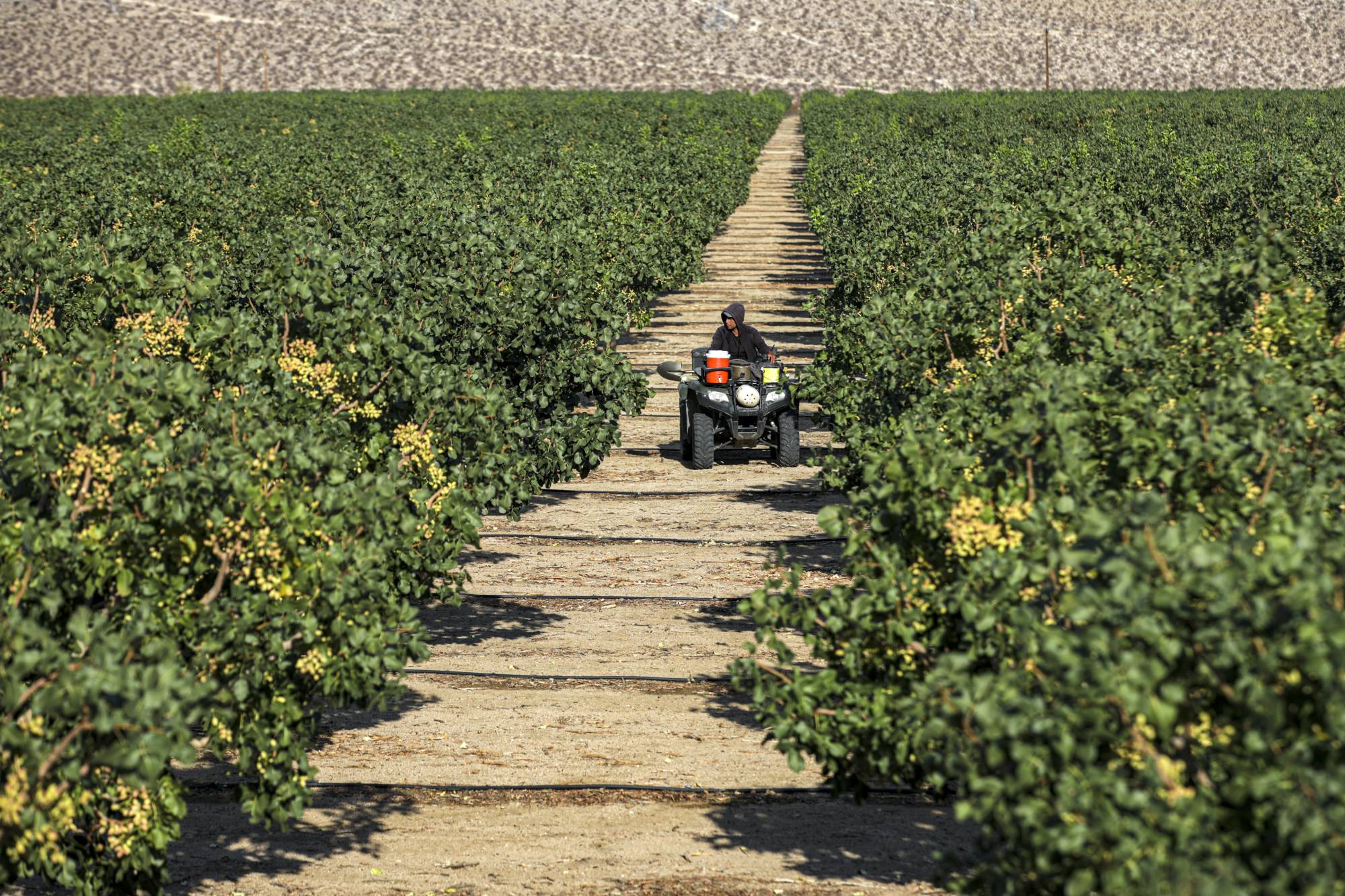
"caption": "Inyokern, CA - July 28: Mojave Pistachios farms on approximately1,600 acres in Inyokern. Pistachio farmers in the area are fighting Indian Wells Valley Groundwater Authority that has imposed a $2,130 per acre foot Replenishment Fee for the the usage of groundwater. Photographed on Wednesday, July 28, 2021 in Inyokern, CA. ",
"credit": "Irfan Khan / Los Angeles Times via Getty Images",
"altTag": null,
"description": null,
"imgSizes": {
"medium": {
"file": "https://cdn.kqed.org/wp-content/uploads/sites/10/2025/07/GettyImages-1235448435-2000x1333.jpg",
"width": 2000,
"height": 1333,
"mimeType": "image/jpeg"
},
"large": {
"file": "https://cdn.kqed.org/wp-content/uploads/sites/10/2025/07/GettyImages-1235448435-2000x1333.jpg",
"width": 2000,
"height": 1333,
"mimeType": "image/jpeg"
},
"thumbnail": {
"file": "https://cdn.kqed.org/wp-content/uploads/sites/10/2025/07/GettyImages-1235448435-160x107.jpg",
"width": 160,
"height": 107,
"mimeType": "image/jpeg"
},
"1536x1536": {
"file": "https://cdn.kqed.org/wp-content/uploads/sites/10/2025/07/GettyImages-1235448435-1536x1024.jpg",
"width": 1536,
"height": 1024,
"mimeType": "image/jpeg"
},
"2048x2048": {
"file": "https://cdn.kqed.org/wp-content/uploads/sites/10/2025/07/GettyImages-1235448435-2048x1365.jpg",
"width": 2048,
"height": 1365,
"mimeType": "image/jpeg"
},
"post-thumbnail": {
"file": "https://cdn.kqed.org/wp-content/uploads/sites/10/2025/07/GettyImages-1235448435-672x372.jpg",
"width": 672,
"height": 372,
"mimeType": "image/jpeg"
},
"twentyfourteen-full-width": {
"file": "https://cdn.kqed.org/wp-content/uploads/sites/10/2025/07/GettyImages-1235448435-1038x576.jpg",
"width": 1038,
"height": 576,
"mimeType": "image/jpeg"
},
"full-width": {
"file": "https://cdn.kqed.org/wp-content/uploads/sites/10/2025/07/GettyImages-1235448435-2000x1333.jpg",
"width": 2000,
"height": 1333,
"mimeType": "image/jpeg"
},
"kqedFullSize": {
"file": "https://cdn.kqed.org/wp-content/uploads/sites/10/2025/07/GettyImages-1235448435-scaled.jpg",
"width": 2560,
"height": 1707
}
},
"isLoading": false,
"fetchFailed": false
},
"news_11880911": {
"type": "attachments",
"id": "news_11880911",
"meta": {
"index": "attachments_1716263798",
"site": "news",
"id": "11880911",
"found": true
},
"parent": 11880904,
"imgSizes": {
"twentyfourteen-full-width": {
"file": "https://ww2.kqed.org/app/uploads/sites/10/2021/07/GUESTWORKER-COVID-OUTBREAK-FIELD-scaled-1-1038x576.jpeg",
"width": 1038,
"mimeType": "image/jpeg",
"height": 576
},
"thumbnail": {
"file": "https://ww2.kqed.org/app/uploads/sites/10/2021/07/GUESTWORKER-COVID-OUTBREAK-FIELD-scaled-1-160x92.jpeg",
"width": 160,
"mimeType": "image/jpeg",
"height": 92
},
"post-thumbnail": {
"file": "https://ww2.kqed.org/app/uploads/sites/10/2021/07/GUESTWORKER-COVID-OUTBREAK-FIELD-scaled-1-672x372.jpeg",
"width": 672,
"mimeType": "image/jpeg",
"height": 372
},
"kqedFullSize": {
"file": "https://ww2.kqed.org/app/uploads/sites/10/2021/07/GUESTWORKER-COVID-OUTBREAK-FIELD-scaled-1.jpeg",
"width": 1568,
"height": 902
},
"large": {
"file": "https://ww2.kqed.org/app/uploads/sites/10/2021/07/GUESTWORKER-COVID-OUTBREAK-FIELD-scaled-1-1020x587.jpeg",
"width": 1020,
"mimeType": "image/jpeg",
"height": 587
},
"1536x1536": {
"file": "https://ww2.kqed.org/app/uploads/sites/10/2021/07/GUESTWORKER-COVID-OUTBREAK-FIELD-scaled-1-1536x884.jpeg",
"width": 1536,
"mimeType": "image/jpeg",
"height": 884
},
"medium": {
"file": "https://ww2.kqed.org/app/uploads/sites/10/2021/07/GUESTWORKER-COVID-OUTBREAK-FIELD-scaled-1-800x460.jpeg",
"width": 800,
"mimeType": "image/jpeg",
"height": 460
}
},
"publishDate": 1626118640,
"modified": 1626118670,
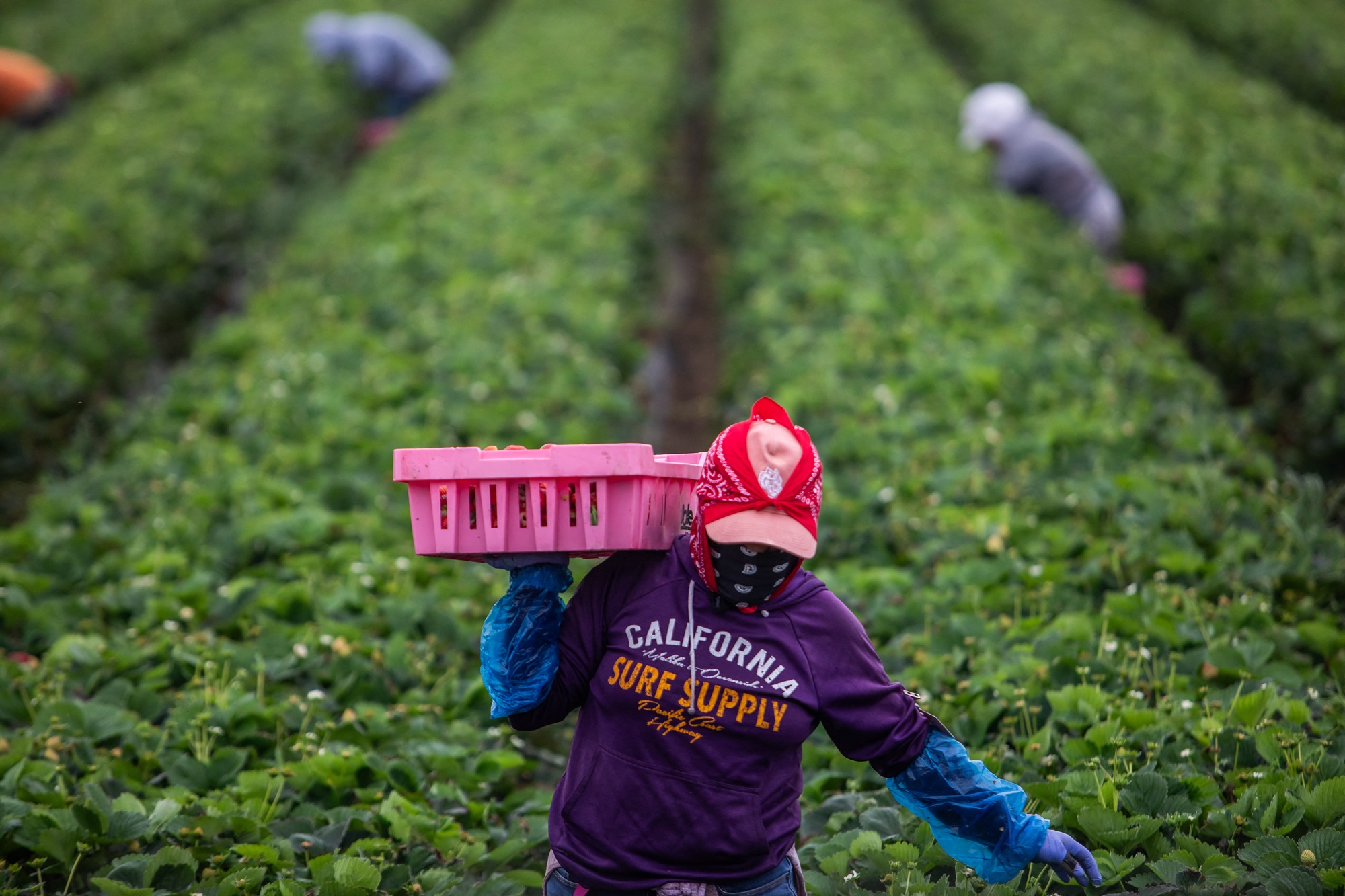
"caption": "Farmworkers pick strawberries in Watsonville, Calif., on Wednesday, July 29, 2020.",
"description": null,
"title": "GUESTWORKER-COVID-OUTBREAK-FIELD-scaled",
"credit": "David Rodriguez/The Salinas Californian",
"status": "inherit",
"altTag": null,
"isLoading": false,
"fetchFailed": false
},
"news_12046155": {
"type": "attachments",
"id": "news_12046155",
"meta": {
"index": "attachments_1716263798",
"site": "news",
"id": "12046155",
"found": true
},
"title": "Alex stands outside of City Hall in Oakland on June 26, 2025.",
"publishDate": 1750969312,
"status": "inherit",
"parent": 12046137,
"modified": 1751027177,
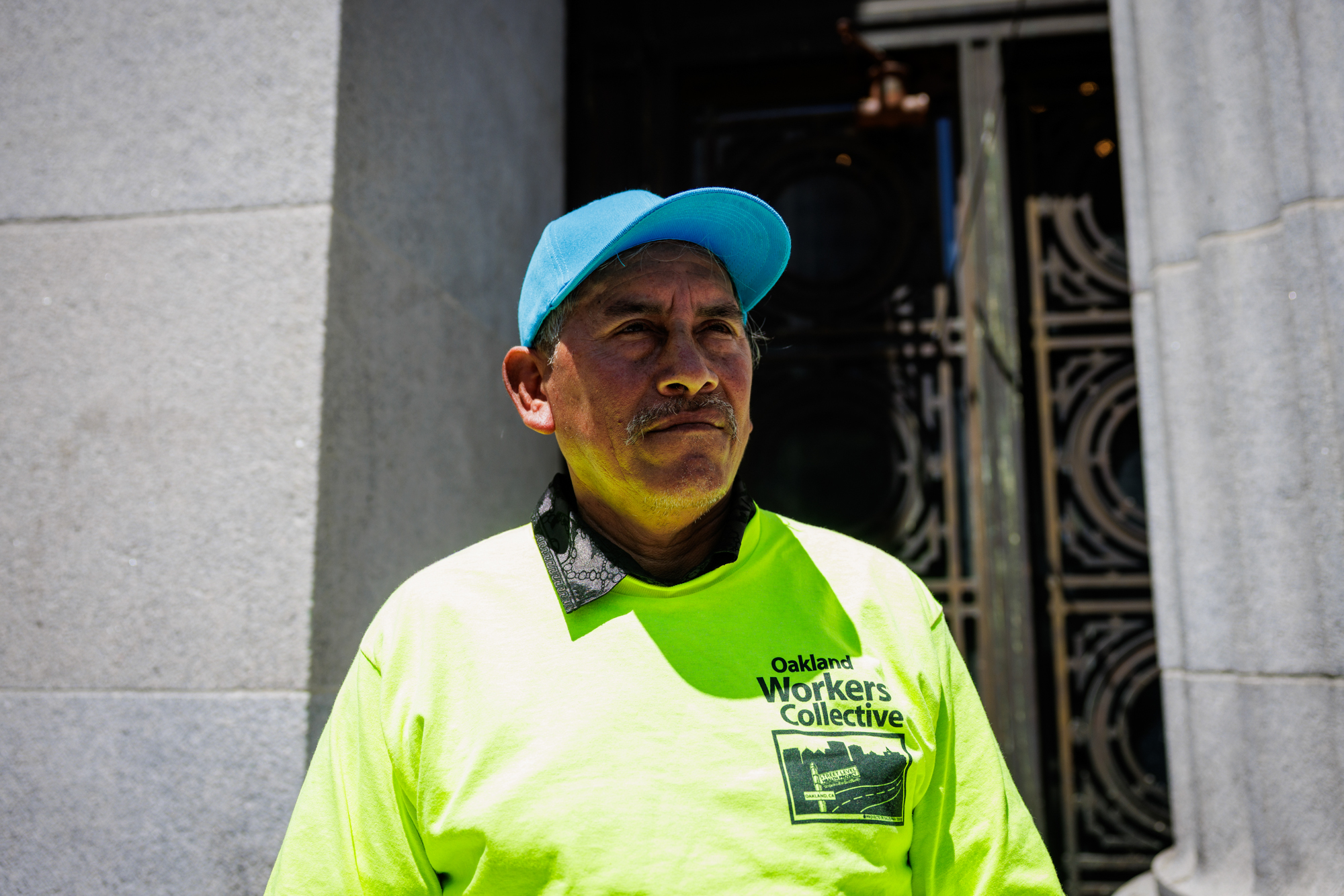
"caption": "Alex, a day laborer in Oakland stands outside of City Hall in Oakland on June 26, 2025.",
"credit": "Martin do Nascimento/KQED",
"altTag": null,
"description": null,
"imgSizes": {
"thumbnail": {
"file": "https://cdn.kqed.org/wp-content/uploads/sites/10/2025/06/250626-OAKLAND-DAY-LABORERS-MD-06-KQED-160x107.jpg",
"width": 160,
"height": 107,
"mimeType": "image/jpeg"
},
"1536x1536": {
"file": "https://cdn.kqed.org/wp-content/uploads/sites/10/2025/06/250626-OAKLAND-DAY-LABORERS-MD-06-KQED-1536x1025.jpg",
"width": 1536,
"height": 1025,
"mimeType": "image/jpeg"
},
"post-thumbnail": {
"file": "https://cdn.kqed.org/wp-content/uploads/sites/10/2025/06/250626-OAKLAND-DAY-LABORERS-MD-06-KQED-672x372.jpg",
"width": 672,
"height": 372,
"mimeType": "image/jpeg"
},
"twentyfourteen-full-width": {
"file": "https://cdn.kqed.org/wp-content/uploads/sites/10/2025/06/250626-OAKLAND-DAY-LABORERS-MD-06-KQED-1038x576.jpg",
"width": 1038,
"height": 576,
"mimeType": "image/jpeg"
},
"kqedFullSize": {
"file": "https://cdn.kqed.org/wp-content/uploads/sites/10/2025/06/250626-OAKLAND-DAY-LABORERS-MD-06-KQED.jpg",
"width": 2000,
"height": 1334
}
},
"isLoading": false,
"fetchFailed": false
},
"news_12044791": {
"type": "attachments",
"id": "news_12044791",
"meta": {
"index": "attachments_1716263798",
"site": "news",
"id": "12044791",
"found": true
},
"title": "US-POLITICS-IMMIGRATION-ICE",
"publishDate": 1750196649,
"status": "inherit",
"parent": 12044748,
"modified": 1776108571,
"caption": "A farmworker works in a strawberry field on June 12, 2025, in Oxnard, California. Anti-immigration crackdowns ordered by President Donald Trump have seen federal authorities target factories and work sites since June 6, sparking days of angry protests in Los Angeles. ",
"credit": "Apu Gomes/AFP via Getty Images",
"altTag": null,
"description": null,
"imgSizes": {
"thumbnail": {
"file": "https://cdn.kqed.org/wp-content/uploads/sites/10/2025/06/CaliforniaFarmworkersGetty-160x107.jpg",
"width": 160,
"height": 107,
"mimeType": "image/jpeg"
},
"1536x1536": {
"file": "https://cdn.kqed.org/wp-content/uploads/sites/10/2025/06/CaliforniaFarmworkersGetty-1536x1024.jpg",
"width": 1536,
"height": 1024,
"mimeType": "image/jpeg"
},
"post-thumbnail": {
"file": "https://cdn.kqed.org/wp-content/uploads/sites/10/2025/06/CaliforniaFarmworkersGetty-672x372.jpg",
"width": 672,
"height": 372,
"mimeType": "image/jpeg"
},
"twentyfourteen-full-width": {
"file": "https://cdn.kqed.org/wp-content/uploads/sites/10/2025/06/CaliforniaFarmworkersGetty-1038x576.jpg",
"width": 1038,
"height": 576,
"mimeType": "image/jpeg"
},
"kqedFullSize": {
"file": "https://cdn.kqed.org/wp-content/uploads/sites/10/2025/06/CaliforniaFarmworkersGetty.jpg",
"width": 2000,
"height": 1333
}
},
"isLoading": false,
"fetchFailed": false
},
"news_12042829": {
"type": "attachments",
"id": "news_12042829",
"meta": {
"index": "attachments_1716263798",
"site": "news",
"id": "12042829",
"found": true
},
"title": "farmworkers with signs",
"publishDate": 1749099532,
"status": "inherit",
"parent": 12042828,
"modified": 1749099566,
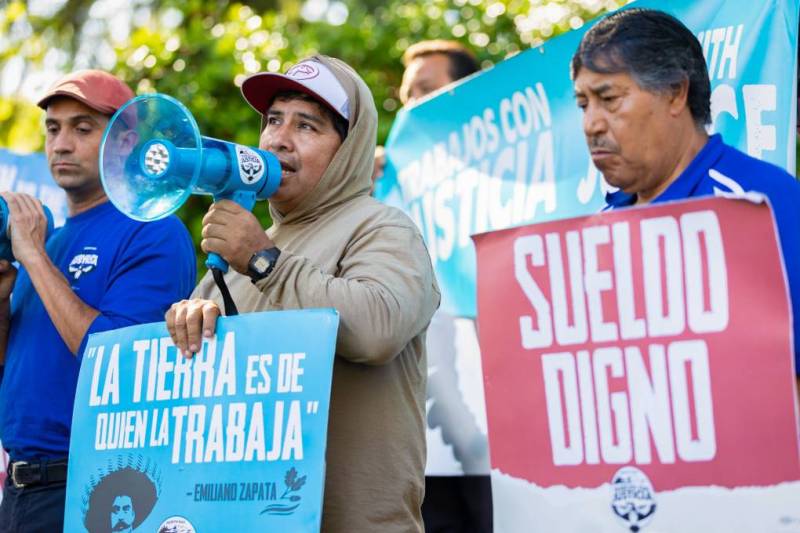
"caption": "José Alejandro Cuevas Fuentes (centro) habla en una conferencia de prensa después de que él y otros seis trabajadores agrícolas recibieran casi 34 mil dólares como indemnización por una denuncia presentada por la Junta de Relaciones Laborales Agrícolas contra Redwood Empire Vineyard Management por represalias ilegales y coacción, en Healdsburg Plaza, Healdsburg, el 28 de mayo de 2025.",
"credit": "Gina Castro/KQED",
"altTag": null,
"description": null,
"imgSizes": {
"medium": {
"file": "https://cdn.kqed.org/wp-content/uploads/sites/10/2025/06/farmworkers-with-signs-800x533.jpg",
"width": 800,
"height": 533,
"mimeType": "image/jpeg"
},
"thumbnail": {
"file": "https://cdn.kqed.org/wp-content/uploads/sites/10/2025/06/farmworkers-with-signs-160x107.jpg",
"width": 160,
"height": 107,
"mimeType": "image/jpeg"
},
"post-thumbnail": {
"file": "https://cdn.kqed.org/wp-content/uploads/sites/10/2025/06/farmworkers-with-signs-672x372.jpg",
"width": 672,
"height": 372,
"mimeType": "image/jpeg"
},
"twentyfourteen-full-width": {
"file": "https://cdn.kqed.org/wp-content/uploads/sites/10/2025/06/farmworkers-with-signs-1020x576.jpg",
"width": 1020,
"height": 576,
"mimeType": "image/jpeg"
},
"kqedFullSize": {
"file": "https://cdn.kqed.org/wp-content/uploads/sites/10/2025/06/farmworkers-with-signs.jpg",
"width": 1020,
"height": 680
}
},
"isLoading": false,
"fetchFailed": false
},
"news_11973075": {
"type": "attachments",
"id": "news_11973075",
"meta": {
"index": "attachments_1716263798",
"site": "news",
"id": "11973075",
"found": true
},
"title": "044_KQED_HMBMassShootingVigil_01272023-qut",
"publishDate": 1705688004,
"status": "inherit",
"parent": 11973071,
"modified": 1749065195,
"caption": "A sign at a memorial for victims of a mass shooting in Half Moon Bay says, \"We Stand With You\" after a vigil in their honor at Mac Dutra Park in Half Moon Bay on Jan. 27, 2023.",
"credit": "Beth LaBerge/KQED",
"altTag": "A candlelit vigil for the victims of the Half Moon Bay mass shooting.",
"description": null,
"imgSizes": {
"medium": {
"file": "https://cdn.kqed.org/wp-content/uploads/sites/10/2024/01/044_KQED_HMBMassShootingVigil_01272023-qut-800x533.jpg",
"width": 800,
"height": 533,
"mimeType": "image/jpeg"
},
"large": {
"file": "https://cdn.kqed.org/wp-content/uploads/sites/10/2024/01/044_KQED_HMBMassShootingVigil_01272023-qut-1020x680.jpg",
"width": 1020,
"height": 680,
"mimeType": "image/jpeg"
},
"thumbnail": {
"file": "https://cdn.kqed.org/wp-content/uploads/sites/10/2024/01/044_KQED_HMBMassShootingVigil_01272023-qut-160x107.jpg",
"width": 160,
"height": 107,
"mimeType": "image/jpeg"
},
"1536x1536": {
"file": "https://cdn.kqed.org/wp-content/uploads/sites/10/2024/01/044_KQED_HMBMassShootingVigil_01272023-qut-1536x1024.jpg",
"width": 1536,
"height": 1024,
"mimeType": "image/jpeg"
},
"post-thumbnail": {
"file": "https://cdn.kqed.org/wp-content/uploads/sites/10/2024/01/044_KQED_HMBMassShootingVigil_01272023-qut-672x372.jpg",
"width": 672,
"height": 372,
"mimeType": "image/jpeg"
},
"twentyfourteen-full-width": {
"file": "https://cdn.kqed.org/wp-content/uploads/sites/10/2024/01/044_KQED_HMBMassShootingVigil_01272023-qut-1038x576.jpg",
"width": 1038,
"height": 576,
"mimeType": "image/jpeg"
},
"kqedFullSize": {
"file": "https://cdn.kqed.org/wp-content/uploads/sites/10/2024/01/044_KQED_HMBMassShootingVigil_01272023-qut.jpg",
"width": 1920,
"height": 1280
}
},
"isLoading": false,
"fetchFailed": false
},
"news_12041956": {
"type": "attachments",
"id": "news_12041956",
"meta": {
"index": "attachments_1716263798",
"site": "news",
"id": "12041956",
"found": true
},
"title": "20250528_FIREDASKINGFORRAISE_GC-14-KQED",
"publishDate": 1748540013,
"status": "inherit",
"parent": 0,
"modified": 1748545366,
"caption": "José Alejandro Cuevas Fuentes (center) speaks at a press conference after him and 6 other farmworkers were awarded nearly $34,000 as settlement of a complaint issued by the Agricultural Labor Relations Board against Redwood Empire Vineyard Management over unlawful retaliation and coercion, at Healdsburg Plaza in Healdsburg on May 28, 2025.",
"credit": "Gina Castro/KQED",
"altTag": null,
"description": null,
"imgSizes": {
"medium": {
"file": "https://cdn.kqed.org/wp-content/uploads/sites/10/2025/05/20250528_FIREDASKINGFORRAISE_GC-14-KQED-800x533.jpg",
"width": 800,
"height": 533,
"mimeType": "image/jpeg"
},
"large": {
"file": "https://cdn.kqed.org/wp-content/uploads/sites/10/2025/05/20250528_FIREDASKINGFORRAISE_GC-14-KQED-1020x680.jpg",
"width": 1020,
"height": 680,
"mimeType": "image/jpeg"
},
"thumbnail": {
"file": "https://cdn.kqed.org/wp-content/uploads/sites/10/2025/05/20250528_FIREDASKINGFORRAISE_GC-14-KQED-160x107.jpg",
"width": 160,
"height": 107,
"mimeType": "image/jpeg"
},
"1536x1536": {
"file": "https://cdn.kqed.org/wp-content/uploads/sites/10/2025/05/20250528_FIREDASKINGFORRAISE_GC-14-KQED-1536x1024.jpg",
"width": 1536,
"height": 1024,
"mimeType": "image/jpeg"
},
"post-thumbnail": {
"file": "https://cdn.kqed.org/wp-content/uploads/sites/10/2025/05/20250528_FIREDASKINGFORRAISE_GC-14-KQED-672x372.jpg",
"width": 672,
"height": 372,
"mimeType": "image/jpeg"
},
"twentyfourteen-full-width": {
"file": "https://cdn.kqed.org/wp-content/uploads/sites/10/2025/05/20250528_FIREDASKINGFORRAISE_GC-14-KQED-1038x576.jpg",
"width": 1038,
"height": 576,
"mimeType": "image/jpeg"
},
"full-width": {
"file": "https://cdn.kqed.org/wp-content/uploads/sites/10/2025/05/20250528_FIREDASKINGFORRAISE_GC-14-KQED-1920x1280.jpg",
"width": 1920,
"height": 1280,
"mimeType": "image/jpeg"
},
"kqedFullSize": {
"file": "https://cdn.kqed.org/wp-content/uploads/sites/10/2025/05/20250528_FIREDASKINGFORRAISE_GC-14-KQED.jpg",
"width": 2000,
"height": 1333
}
},
"isLoading": false,
"fetchFailed": false
},
"news_12041652": {
"type": "attachments",
"id": "news_12041652",
"meta": {
"index": "attachments_1716263798",
"site": "news",
"id": "12041652",
"found": true
},
"title": "food-insecurity-6835bb7b409cf",
"publishDate": 1748351903,
"status": "inherit",
"parent": 12041651,
"modified": 1748352145,
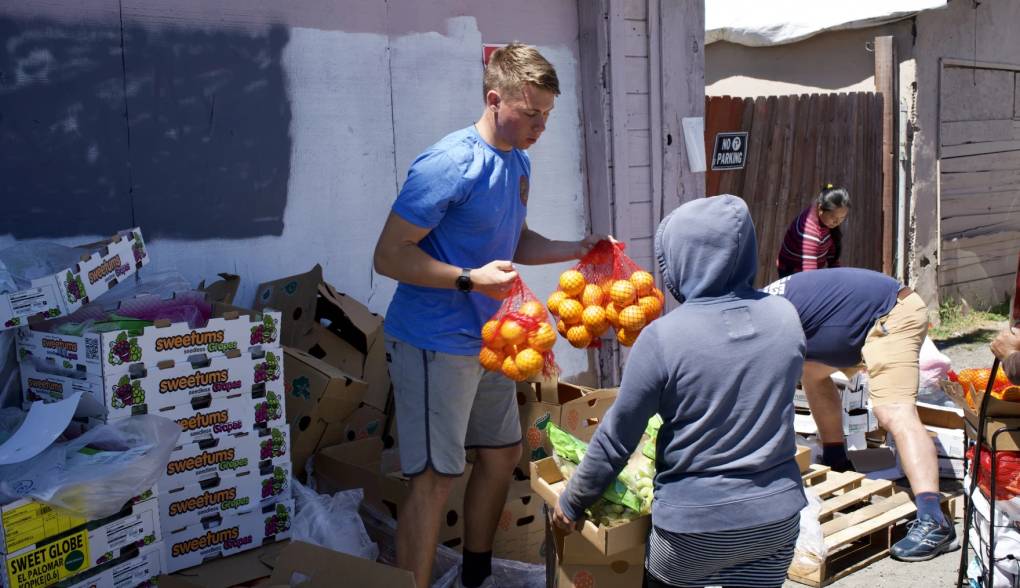
"caption": "A Second Harvest volunteer loads oranges onto a cardboard tray for one of the nearly 90 farmworkers that came to a monthly food distribution event organized by the Center for Farmworker Families in May of 2025.",
"credit": "Eduardo Gonzales-Torres/KAZU News",
"altTag": null,
"description": null,
"imgSizes": {
"medium": {
"file": "https://cdn.kqed.org/wp-content/uploads/sites/10/2025/05/food-insecurity-6835bb7b409cf-800x461.jpg",
"width": 800,
"height": 461,
"mimeType": "image/jpeg"
},
"large": {
"file": "https://cdn.kqed.org/wp-content/uploads/sites/10/2025/05/food-insecurity-6835bb7b409cf-1020x588.jpg",
"width": 1020,
"height": 588,
"mimeType": "image/jpeg"
},
"thumbnail": {
"file": "https://cdn.kqed.org/wp-content/uploads/sites/10/2025/05/food-insecurity-6835bb7b409cf-160x92.jpg",
"width": 160,
"height": 92,
"mimeType": "image/jpeg"
},
"1536x1536": {
"file": "https://cdn.kqed.org/wp-content/uploads/sites/10/2025/05/food-insecurity-6835bb7b409cf-1536x885.jpg",
"width": 1536,
"height": 885,
"mimeType": "image/jpeg"
},
"post-thumbnail": {
"file": "https://cdn.kqed.org/wp-content/uploads/sites/10/2025/05/food-insecurity-6835bb7b409cf-672x372.jpg",
"width": 672,
"height": 372,
"mimeType": "image/jpeg"
},
"twentyfourteen-full-width": {
"file": "https://cdn.kqed.org/wp-content/uploads/sites/10/2025/05/food-insecurity-6835bb7b409cf-1038x576.jpg",
"width": 1038,
"height": 576,
"mimeType": "image/jpeg"
},
"kqedFullSize": {
"file": "https://cdn.kqed.org/wp-content/uploads/sites/10/2025/05/food-insecurity-6835bb7b409cf.jpg",
"width": 1760,
"height": 1014
}
},
"isLoading": false,
"fetchFailed": false
},
"news_12039445": {
"type": "attachments",
"id": "news_12039445",
"meta": {
"index": "attachments_1716263798",
"site": "news",
"id": "12039445",
"found": true
},
"title": "US-ECONOMY-FARMS-AGRICULTURE",
"publishDate": 1746747442,
"status": "inherit",
"parent": 12039333,
"modified": 1746750539,
"caption": "A \"Vote Trump\" decorated cargo shipping container is displayed during the World Ag Expo at the International Agri-Center in Tulare, California, on Feb. 11, 2025. U.S. farmers have also been affected by the Trump administration's attempts to shut down the United States Agency for International Development (USAID), with the U.S. government previously spending billions of dollars on food aid from American farmers, while tariffs and trade wars threaten to disrupt business.",
"credit": "Patrick T. Fallon / AFP via Getty Images",
"altTag": null,
"description": null,
"imgSizes": {
"medium": {
"file": "https://cdn.kqed.org/wp-content/uploads/sites/10/2025/05/FarmersTrumpGetty-800x533.jpg",
"width": 800,
"height": 533,
"mimeType": "image/jpeg"
},
"large": {
"file": "https://cdn.kqed.org/wp-content/uploads/sites/10/2025/05/FarmersTrumpGetty-1020x680.jpg",
"width": 1020,
"height": 680,
"mimeType": "image/jpeg"
},
"thumbnail": {
"file": "https://cdn.kqed.org/wp-content/uploads/sites/10/2025/05/FarmersTrumpGetty-160x107.jpg",
"width": 160,
"height": 107,
"mimeType": "image/jpeg"
},
"1536x1536": {
"file": "https://cdn.kqed.org/wp-content/uploads/sites/10/2025/05/FarmersTrumpGetty-1536x1024.jpg",
"width": 1536,
"height": 1024,
"mimeType": "image/jpeg"
},
"post-thumbnail": {
"file": "https://cdn.kqed.org/wp-content/uploads/sites/10/2025/05/FarmersTrumpGetty-672x372.jpg",
"width": 672,
"height": 372,
"mimeType": "image/jpeg"
},
"twentyfourteen-full-width": {
"file": "https://cdn.kqed.org/wp-content/uploads/sites/10/2025/05/FarmersTrumpGetty-1038x576.jpg",
"width": 1038,
"height": 576,
"mimeType": "image/jpeg"
},
"full-width": {
"file": "https://cdn.kqed.org/wp-content/uploads/sites/10/2025/05/FarmersTrumpGetty-1920x1280.jpg",
"width": 1920,
"height": 1280,
"mimeType": "image/jpeg"
},
"kqedFullSize": {
"file": "https://cdn.kqed.org/wp-content/uploads/sites/10/2025/05/FarmersTrumpGetty.jpg",
"width": 2000,
"height": 1333
}
},
"isLoading": false,
"fetchFailed": false
},
"news_12021488": {
"type": "attachments",
"id": "news_12021488",
"meta": {
"index": "attachments_1716263798",
"site": "news",
"id": "12021488",
"found": true
},
"title": "100622_Border-Patrol-Seal_GETTY_CM_01 copy",
"publishDate": 1736538876,
"status": "inherit",
"parent": 12021487,
"modified": 1736538911,
"caption": "A US Customs and Border Protection patch on the uniform of an agent in the Jacumba mountains in Imperial County on Oct. 6, 2022. ",
"credit": "Allison Dinner/AFP via Getty Images",
"altTag": null,
"description": null,
"imgSizes": {
"medium": {
"file": "https://cdn.kqed.org/wp-content/uploads/sites/10/2025/01/100622_Border-Patrol-Seal_GETTY_CM_01-copy-800x533.jpg",
"width": 800,
"height": 533,
"mimeType": "image/jpeg"
},
"large": {
"file": "https://cdn.kqed.org/wp-content/uploads/sites/10/2025/01/100622_Border-Patrol-Seal_GETTY_CM_01-copy-1020x680.jpg",
"width": 1020,
"height": 680,
"mimeType": "image/jpeg"
},
"thumbnail": {
"file": "https://cdn.kqed.org/wp-content/uploads/sites/10/2025/01/100622_Border-Patrol-Seal_GETTY_CM_01-copy-160x107.jpg",
"width": 160,
"height": 107,
"mimeType": "image/jpeg"
},
"1536x1536": {
"file": "https://cdn.kqed.org/wp-content/uploads/sites/10/2025/01/100622_Border-Patrol-Seal_GETTY_CM_01-copy-1536x1024.jpg",
"width": 1536,
"height": 1024,
"mimeType": "image/jpeg"
},
"post-thumbnail": {
"file": "https://cdn.kqed.org/wp-content/uploads/sites/10/2025/01/100622_Border-Patrol-Seal_GETTY_CM_01-copy-672x372.jpg",
"width": 672,
"height": 372,
"mimeType": "image/jpeg"
},
"twentyfourteen-full-width": {
"file": "https://cdn.kqed.org/wp-content/uploads/sites/10/2025/01/100622_Border-Patrol-Seal_GETTY_CM_01-copy-1038x576.jpg",
"width": 1038,
"height": 576,
"mimeType": "image/jpeg"
},
"kqedFullSize": {
"file": "https://cdn.kqed.org/wp-content/uploads/sites/10/2025/01/100622_Border-Patrol-Seal_GETTY_CM_01-copy.jpg",
"width": 1568,
"height": 1045
}
},
"isLoading": false,
"fetchFailed": false
},
"news_12033280": {
"type": "attachments",
"id": "news_12033280",
"meta": {
"index": "attachments_1716263798",
"site": "news",
"id": "12033280",
"found": true
},
"title": "ramadan-67e54fb5d49f7",
"publishDate": 1743081447,
"status": "inherit",
"parent": 12033279,
"modified": 1743081486,
"caption": "Maahum Chaudhry guides her son Abbas’ hand as he decorates his gift bag for Eid al-Fitr. This is an annual tradition at Masjid al-Taqwa.",
"credit": "Megan Jamerson/KCRW",
"altTag": null,
"description": null,
"imgSizes": {
"medium": {
"file": "https://cdn.kqed.org/wp-content/uploads/sites/10/2025/03/ramadan-67e54fb5d49f7-800x600.jpg",
"width": 800,
"height": 600,
"mimeType": "image/jpeg"
},
"large": {
"file": "https://cdn.kqed.org/wp-content/uploads/sites/10/2025/03/ramadan-67e54fb5d49f7-1020x764.jpg",
"width": 1020,
"height": 764,
"mimeType": "image/jpeg"
},
"thumbnail": {
"file": "https://cdn.kqed.org/wp-content/uploads/sites/10/2025/03/ramadan-67e54fb5d49f7-160x120.jpg",
"width": 160,
"height": 120,
"mimeType": "image/jpeg"
},
"1536x1536": {
"file": "https://cdn.kqed.org/wp-content/uploads/sites/10/2025/03/ramadan-67e54fb5d49f7-1536x1151.jpg",
"width": 1536,
"height": 1151,
"mimeType": "image/jpeg"
},
"post-thumbnail": {
"file": "https://cdn.kqed.org/wp-content/uploads/sites/10/2025/03/ramadan-67e54fb5d49f7-672x372.jpg",
"width": 672,
"height": 372,
"mimeType": "image/jpeg"
},
"twentyfourteen-full-width": {
"file": "https://cdn.kqed.org/wp-content/uploads/sites/10/2025/03/ramadan-67e54fb5d49f7-1038x576.jpg",
"width": 1038,
"height": 576,
"mimeType": "image/jpeg"
},
"kqedFullSize": {
"file": "https://cdn.kqed.org/wp-content/uploads/sites/10/2025/03/ramadan-67e54fb5d49f7.jpg",
"width": 1824,
"height": 1367
}
},
"isLoading": false,
"fetchFailed": false
},
"news_12018719": {
"type": "attachments",
"id": "news_12018719",
"meta": {
"index": "attachments_1716263798",
"site": "news",
"id": "12018719",
"found": true
},
"title": "20241216-KOndaJanuary-JY-009",
"publishDate": 1734480333,
"status": "inherit",
"parent": 0,
"modified": 1736800497,
"caption": "Ayudando Latinos A Soñar (ALAS) founder Dr. Belinda Hernandez-Arriaga poses for a portrait at the ALAS office in Half Moon Bay, California, on Monday, Dec. 16, 2024. Hernandez-Arriaga founded ALAS in 2011 to support the Latino community in Half Moon Bay.",
"credit": "Juliana Yamada/KQED",
"altTag": null,
"description": null,
"imgSizes": {
"medium": {
"file": "https://cdn.kqed.org/wp-content/uploads/sites/10/2024/12/20241216-KOndaJanuary-JY-009-800x533.jpg",
"width": 800,
"height": 533,
"mimeType": "image/jpeg"
},
"large": {
"file": "https://cdn.kqed.org/wp-content/uploads/sites/10/2024/12/20241216-KOndaJanuary-JY-009-1020x680.jpg",
"width": 1020,
"height": 680,
"mimeType": "image/jpeg"
},
"thumbnail": {
"file": "https://cdn.kqed.org/wp-content/uploads/sites/10/2024/12/20241216-KOndaJanuary-JY-009-160x107.jpg",
"width": 160,
"height": 107,
"mimeType": "image/jpeg"
},
"1536x1536": {
"file": "https://cdn.kqed.org/wp-content/uploads/sites/10/2024/12/20241216-KOndaJanuary-JY-009-1536x1024.jpg",
"width": 1536,
"height": 1024,
"mimeType": "image/jpeg"
},
"post-thumbnail": {
"file": "https://cdn.kqed.org/wp-content/uploads/sites/10/2024/12/20241216-KOndaJanuary-JY-009-672x372.jpg",
"width": 672,
"height": 372,
"mimeType": "image/jpeg"
},
"twentyfourteen-full-width": {
"file": "https://cdn.kqed.org/wp-content/uploads/sites/10/2024/12/20241216-KOndaJanuary-JY-009-1038x576.jpg",
"width": 1038,
"height": 576,
"mimeType": "image/jpeg"
},
"full-width": {
"file": "https://cdn.kqed.org/wp-content/uploads/sites/10/2024/12/20241216-KOndaJanuary-JY-009-1920x1280.jpg",
"width": 1920,
"height": 1280,
"mimeType": "image/jpeg"
},
"kqedFullSize": {
"file": "https://cdn.kqed.org/wp-content/uploads/sites/10/2024/12/20241216-KOndaJanuary-JY-009.jpg",
"width": 2000,
"height": 1333
}
},
"isLoading": false,
"fetchFailed": false
}
},
"audioPlayerReducer": {
"postId": "stream_live",
"isPaused": true,
"isPlaying": false,
"pfsActive": false,
"pledgeModalIsOpen": true,
"playerDrawerIsOpen": false,
"liveAudioPlayStartedAt": 0,
"liveAudioPlayContext": ""
},
"authorsReducer": {
"btorres": {
"type": "authors",
"id": "11666",
"meta": {
"index": "authors_1716337520",
"id": "11666",
"found": true
},
"name": "Blanca Torres",
"firstName": "Blanca",
"lastName": "Torres",
"slug": "btorres",
"email": "btorres@kqed.org",
"display_author_email": true,
"staff_mastheads": [
"news"
],
"title": "Producer, Forum",
"bio": "Blanca Torres brings sharp news judgement and keen sense of lively conversation to her work as producer for Forum. She loves producing shows that leave listeners feeling like they heard distinctive voices, learned something new and gained a fresh perspective.\r\n\r\nShe joined KQED in January of 2020 after 16 years of working as a newspaper reporter most recently at the \u003cem>San Francisco Business Times,\u003c/em> where she wrote about real estate and economic development. Before that, she covered a variety of beats including crime, education, retail, workplace, the economy, consumer issues, and small business for the \u003cem>Contra Costa Times, Baltimore Sun\u003c/em> and\u003cem> The Seattle Times\u003c/em>. In addition to reporting, she worked as an editorial writer and columnist for the \u003cem>Seattle Times\u003c/em>. From 2017 to 2020, Blanca won a total of ten awards from the National Association of Real Estate Editors and won first place for land use reporting from the California News Publishers Association two years in a row. She is also a member and former board member for the National Association of Hispanic Journalists.\r\n\r\nA native of the Pacific Northwest, Blanca earned her bachelor's degree from Vanderbilt University in Nashville and a master's in fine arts in creative writing at Mills College. She lives in the East Bay with her family.",
"avatar": "https://secure.gravatar.com/avatar/f2322ff46076d337f7ba731ee6068cb1?s=600&d=blank&r=g",
"twitter": "@blancawrites",
"facebook": null,
"instagram": null,
"linkedin": null,
"sites": [
{
"site": "arts",
"roles": [
"editor"
]
},
{
"site": "news",
"roles": [
"editor"
]
},
{
"site": "forum",
"roles": [
"editor"
]
}
],
"headData": {
"title": "Blanca Torres | KQED",
"description": "Producer, Forum",
"ogImgSrc": "https://secure.gravatar.com/avatar/f2322ff46076d337f7ba731ee6068cb1?s=600&d=blank&r=g",
"twImgSrc": "https://secure.gravatar.com/avatar/f2322ff46076d337f7ba731ee6068cb1?s=600&d=blank&r=g"
},
"isLoading": false,
"link": "/author/btorres"
},
"ccabreralomeli": {
"type": "authors",
"id": "11708",
"meta": {
"index": "authors_1716337520",
"id": "11708",
"found": true
},
"name": "Carlos Cabrera-Lomelí",
"firstName": "Carlos",
"lastName": "Cabrera-Lomelí",
"slug": "ccabreralomeli",
"email": "ccabreralomeli@KQED.org",
"display_author_email": true,
"staff_mastheads": [
"news"
],
"title": "Community Reporter",
"bio": "Carlos Cabrera-Lomelí is a community reporter with KQED's digital engagement team. He also reports and co-produces for KQED's bilingual news hub KQED en Español. He grew up in San Francisco's Mission District and has previously worked with Univision, 48 Hills and REFORMA in Mexico City.",
"avatar": "https://secure.gravatar.com/avatar/e95ff80bb2eaf18a8f2af4dcf7ffb54b?s=600&d=mm&r=g",
"twitter": "@LomeliCabrera",
"facebook": null,
"instagram": null,
"linkedin": null,
"sites": [
{
"site": "arts",
"roles": [
"editor"
]
},
{
"site": "news",
"roles": [
"editor"
]
},
{
"site": "about",
"roles": [
"editor"
]
},
{
"site": "science",
"roles": [
"editor"
]
},
{
"site": "perspectives",
"roles": [
"editor"
]
},
{
"site": "elections",
"roles": [
"editor"
]
},
{
"site": "liveblog",
"roles": [
"contributor"
]
}
],
"headData": {
"title": "Carlos Cabrera-Lomelí | KQED",
"description": "Community Reporter",
"ogImgSrc": "https://secure.gravatar.com/avatar/e95ff80bb2eaf18a8f2af4dcf7ffb54b?s=600&d=mm&r=g",
"twImgSrc": "https://secure.gravatar.com/avatar/e95ff80bb2eaf18a8f2af4dcf7ffb54b?s=600&d=mm&r=g"
},
"isLoading": false,
"link": "/author/ccabreralomeli"
},
"agonzalez": {
"type": "authors",
"id": "11724",
"meta": {
"index": "authors_1716337520",
"id": "11724",
"found": true
},
"name": "Alexander Gonzalez",
"firstName": "Alexander",
"lastName": "Gonzalez",
"slug": "agonzalez",
"email": "AlexanderGonzalez@KQED.org",
"display_author_email": false,
"staff_mastheads": [
"news"
],
"title": "KQED Contributor",
"bio": null,
"avatar": "https://secure.gravatar.com/avatar/9e291ed34e154df4c662edf858b641d70b4859939bfe40be478408f9dfd057d2?s=600&d=blank&r=g",
"twitter": null,
"bluesky": null,
"facebook": null,
"instagram": null,
"linkedin": null,
"sites": [
{
"site": "arts",
"roles": [
"editor"
]
},
{
"site": "news",
"roles": [
"editor"
]
},
{
"site": "science",
"roles": [
"editor"
]
}
],
"headData": {
"title": "Alexander Gonzalez | KQED",
"description": "KQED Contributor",
"ogImgSrc": "https://secure.gravatar.com/avatar/9e291ed34e154df4c662edf858b641d70b4859939bfe40be478408f9dfd057d2?s=600&d=blank&r=g",
"twImgSrc": "https://secure.gravatar.com/avatar/9e291ed34e154df4c662edf858b641d70b4859939bfe40be478408f9dfd057d2?s=600&d=blank&r=g"
},
"isLoading": false,
"link": "/author/agonzalez"
},
"kmizuguchi": {
"type": "authors",
"id": "11739",
"meta": {
"index": "authors_1716337520",
"id": "11739",
"found": true
},
"name": "Keith Mizuguchi",
"firstName": "Keith",
"lastName": "Mizuguchi",
"slug": "kmizuguchi",
"email": "kmizuguchi@kqed.org",
"display_author_email": false,
"staff_mastheads": [],
"title": "KQED Contributor",
"bio": null,
"avatar": "https://secure.gravatar.com/avatar/64d8a7de0723d4099b9fe4e915136103febcc20809abce228ee4415bcb237023?s=600&d=blank&r=g",
"twitter": null,
"bluesky": null,
"facebook": null,
"instagram": null,
"linkedin": null,
"sites": [
{
"site": "news",
"roles": [
"editor"
]
},
{
"site": "science",
"roles": [
"editor"
]
}
],
"headData": {
"title": "Keith Mizuguchi | KQED",
"description": "KQED Contributor",
"ogImgSrc": "https://secure.gravatar.com/avatar/64d8a7de0723d4099b9fe4e915136103febcc20809abce228ee4415bcb237023?s=600&d=blank&r=g",
"twImgSrc": "https://secure.gravatar.com/avatar/64d8a7de0723d4099b9fe4e915136103febcc20809abce228ee4415bcb237023?s=600&d=blank&r=g"
},
"isLoading": false,
"link": "/author/kmizuguchi"
},
"jlara": {
"type": "authors",
"id": "11761",
"meta": {
"index": "authors_1716337520",
"id": "11761",
"found": true
},
"name": "Juan Carlos Lara",
"firstName": "Juan Carlos",
"lastName": "Lara",
"slug": "jlara",
"email": "jlara@kqed.org",
"display_author_email": false,
"staff_mastheads": [],
"title": "KQED Contributor",
"bio": null,
"avatar": "https://secure.gravatar.com/avatar/19e2052b9b05657c5ff2af2121846e9c?s=600&d=blank&r=g",
"twitter": null,
"facebook": null,
"instagram": null,
"linkedin": null,
"sites": [
{
"site": "arts",
"roles": [
"editor"
]
},
{
"site": "news",
"roles": [
"editor"
]
},
{
"site": "forum",
"roles": [
"editor"
]
},
{
"site": "liveblog",
"roles": [
"contributor"
]
}
],
"headData": {
"title": "Juan Carlos Lara | KQED",
"description": "KQED Contributor",
"ogImgSrc": "https://secure.gravatar.com/avatar/19e2052b9b05657c5ff2af2121846e9c?s=600&d=blank&r=g",
"twImgSrc": "https://secure.gravatar.com/avatar/19e2052b9b05657c5ff2af2121846e9c?s=600&d=blank&r=g"
},
"isLoading": false,
"link": "/author/jlara"
},
"bsiavoshy": {
"type": "authors",
"id": "11890",
"meta": {
"index": "authors_1716337520",
"id": "11890",
"found": true
},
"name": "Bejan Siavoshy",
"firstName": "Bejan",
"lastName": "Siavoshy",
"slug": "bsiavoshy",
"email": "bsiavoshy@kqed.org",
"display_author_email": false,
"staff_mastheads": [],
"title": "KQED Contributor",
"bio": null,
"avatar": "https://secure.gravatar.com/avatar/ead3e7c509634b37a73b1f57677e49f9?s=600&d=blank&r=g",
"twitter": null,
"facebook": null,
"instagram": null,
"linkedin": null,
"sites": [
{
"site": "news",
"roles": [
"editor"
]
}
],
"headData": {
"title": "Bejan Siavoshy | KQED",
"description": "KQED Contributor",
"ogImgSrc": "https://secure.gravatar.com/avatar/ead3e7c509634b37a73b1f57677e49f9?s=600&d=blank&r=g",
"twImgSrc": "https://secure.gravatar.com/avatar/ead3e7c509634b37a73b1f57677e49f9?s=600&d=blank&r=g"
},
"isLoading": false,
"link": "/author/bsiavoshy"
},
"kdebenedetti": {
"type": "authors",
"id": "11913",
"meta": {
"index": "authors_1716337520",
"id": "11913",
"found": true
},
"name": "Katie DeBenedetti",
"firstName": "Katie",
"lastName": "DeBenedetti",
"slug": "kdebenedetti",
"email": "kdebenedetti@kqed.org",
"display_author_email": false,
"staff_mastheads": [
"news",
"science"
],
"title": "KQED Contributor",
"bio": "Katie DeBenedetti is a digital reporter covering daily news for the Express Desk. Prior to joining KQED as a culture reporting intern in January 2024, she covered education and city government for the Napa Valley Register.",
"avatar": "https://secure.gravatar.com/avatar/6e31073cb8f7e4214ab03f42771d0f45?s=600&d=blank&r=g",
"twitter": null,
"facebook": null,
"instagram": null,
"linkedin": null,
"sites": [
{
"site": "news",
"roles": [
"author"
]
},
{
"site": "science",
"roles": [
"author"
]
},
{
"site": "liveblog",
"roles": [
"author"
]
}
],
"headData": {
"title": "Katie DeBenedetti | KQED",
"description": "KQED Contributor",
"ogImgSrc": "https://secure.gravatar.com/avatar/6e31073cb8f7e4214ab03f42771d0f45?s=600&d=blank&r=g",
"twImgSrc": "https://secure.gravatar.com/avatar/6e31073cb8f7e4214ab03f42771d0f45?s=600&d=blank&r=g"
},
"isLoading": false,
"link": "/author/kdebenedetti"
},
"emanoukian": {
"type": "authors",
"id": "11925",
"meta": {
"index": "authors_1716337520",
"id": "11925",
"found": true
},
"name": "Elize Manoukian",
"firstName": "Elize",
"lastName": "Manoukian",
"slug": "emanoukian",
"email": "emanoukian@KQED.org",
"display_author_email": false,
"staff_mastheads": [
"news"
],
"title": "Digital Producer",
"bio": null,
"avatar": "https://secure.gravatar.com/avatar/4525f1a8e46ccb30933b32653d9772064cfefe3fa655eb45b3b3a80341f6bdad?s=600&d=blank&r=g",
"twitter": null,
"bluesky": null,
"facebook": null,
"instagram": null,
"linkedin": null,
"sites": [
{
"site": "arts",
"roles": [
"editor"
]
},
{
"site": "news",
"roles": [
"editor"
]
},
{
"site": "science",
"roles": [
"editor"
]
}
],
"headData": {
"title": "Elize Manoukian | KQED",
"description": "Digital Producer",
"ogImgSrc": "https://secure.gravatar.com/avatar/4525f1a8e46ccb30933b32653d9772064cfefe3fa655eb45b3b3a80341f6bdad?s=600&d=blank&r=g",
"twImgSrc": "https://secure.gravatar.com/avatar/4525f1a8e46ccb30933b32653d9772064cfefe3fa655eb45b3b3a80341f6bdad?s=600&d=blank&r=g"
},
"isLoading": false,
"link": "/author/emanoukian"
}
},
"pagesReducer": {
"news_tag_farmworkers": {
"type": "terms",
"id": "news_18269",
"meta": {
"index": "terms_1716263798",
"site": "news",
"id": "18269",
"score": 8.934682
},
"featImg": null,
"name": "farmworkers",
"description": null,
"taxonomy": "tag",
"headData": {
"twImgId": null,
"twTitle": null,
"ogTitle": null,
"ogImgId": null,
"twDescription": null,
"description": null,
"title": "farmworkers Archives | KQED News",
"ogDescription": null
},
"ttid": 18303,
"slug": "farmworkers",
"isLoading": false,
"title": "farmworkers",
"pageMeta": {
"site": "news",
"WpPageTemplate": "page-topic-editorial",
"currentPage": 3
},
"blocks": [
{
"blockName": "kqed/post-list",
"attrs": {
"layout": "cardArticle2",
"query": "posts/news?tag=farmworkers",
"seeMore": false,
"paginated": true,
"page": 3
}
},
{
"blockName": "kqed/ad"
}
]
}
},
"pfsSessionReducer": {},
"postsReducer": {
"stream_live": {
"type": "live",
"id": "stream_live",
"audioUrl": "https://streams.kqed.org/kqedradio",
"title": "Live Stream",
"excerpt": "Live Stream information currently unavailable.",
"link": "/radio",
"featImg": "",
"label": {
"name": "KQED Live",
"link": "/"
}
},
"stream_kqedNewscast": {
"type": "posts",
"id": "stream_kqedNewscast",
"audioUrl": "https://www.kqed.org/.stream/anon/radio/RDnews/newscast.mp3?_=1",
"title": "KQED Newscast",
"featImg": "",
"label": {
"name": "88.5 FM",
"link": "/"
}
},
"news_12048680": {
"type": "posts",
"id": "news_12048680",
"meta": {
"index": "posts_1716263798",
"site": "news",
"id": "12048680",
"score": null,
"sort": [
1752867742000
]
},
"guestAuthors": [],
"slug": "as-pistachio-harvest-season-ramps-up-concerns-grow-about-workforce",
"title": "As Pistachio Harvest Season Ramps Up, Concerns Grow About Workforce",
"publishDate": 1752867742,
"format": "audio",
"headTitle": "As Pistachio Harvest Season Ramps Up, Concerns Grow About Workforce | KQED",
"labelTerm": {},
"content": "\u003cp>\u003cb>Here are the morning’s top stories on Friday, July 18, 2025…\u003c/b>\u003c/p>\n\u003cul>\n\u003cli style=\"font-weight: 400\">\u003cspan style=\"font-weight: 400\">Across the Central Valley, the agriculture industry is ramping up for harvest season. But for some farmworkers, this year’s job search is different. It comes with a shadow– the threat of immigration enforcement.\u003c/span>\u003c/li>\n\u003cli>Border Patrol agents \u003ca href=\"https://www.capradio.org/articles/2025/07/17/day-laborers-community-members-shaken-after-border-patrol-raid-at-south-sacramento-home-depot/\">descended on a Home Depot\u003c/a> in South Sacramento Thursday morning, the latest immigration enforcement action in California.\u003c/li>\n\u003c/ul>\n\u003ch2>\u003cstrong>Job Fair Illustrates Dilemma For Farm Industry, Potential Workers\u003c/strong>\u003c/h2>\n\u003cp>A recent job fair was held in the rural town of Firebaugh, 45 minutes west of Fresno, in preparation for the pistachio harvest. It highlighted some of the challenges currently rippling through the agriculture industry.\u003c/p>\n\u003cp>When Maria Vasquez got in line for the fair, she wasn’t thinking about ICE. She was thinking about rent. “I have to survive. I need a job,” she said. She’d been laid off from her job as a machine operator at a citrus packing house. She’s lived in the Central Valley for 24 years and worked in nearly every part of the agricultural industry. Despite concerns of immigration raids, she said staying home isn’t an option.\u003c/p>\n\u003cp>Maria Zarco is General Manager at Full Steam Staffing. They’re hoping to place people in packing houses and warehouses as forklift and machine operators. But Zarco said they’re not just matching workers with jobs. They’re also looking out for the immigrant community. “There’s been a lot of raids going around. But we want to make sure that our community knows their rights,” Zarco said. “I think that’s the most important thing is not spreading the fear, but educating our community.”\u003c/p>\n\u003ch2 class=\"page-title\">\u003ca href=\"https://www.capradio.org/articles/2025/07/17/day-laborers-community-members-shaken-after-border-patrol-raid-at-south-sacramento-home-depot/\">\u003cstrong>Day Laborers, Community Shaken After Border Patrol Raid At South Sacramento Home Depot\u003c/strong>\u003c/a>\u003c/h2>\n\u003cp>Border Patrol agents \u003ca href=\"https://www.dhs.gov/news/2025/07/17/dhs-nabs-least-11-illegal-aliens-including-serial-criminal-67-arrests-sacramento\">detained at least 11 individuals\u003c/a> Thursday morning during an immigration enforcement raid outside a Home Depot on Florin Road in South Sacramento. This marks one of the most visible immigration enforcement operations in the region this year.\u003c/p>\n\u003cp>[ad fullwidth]\u003c/p>\n\u003cp>Following the arrests, the incident \u003ca href=\"https://www.instagram.com/p/DMOQzaZhYTw/?hl=en&img_index=1\">gained attention quickly\u003c/a> on social media, as local community members and immigrant rights advocates shared it. Some community members, protestors, and immigrant rights advocates gathered at the site within hours of the event.\u003c/p>\n\u003cp>Advocates claim that the person detained for disrupting the arrests was a U.S. citizen, Jose Castillo Jr., who was later identified by immigrant advocacy group NorCal Resist as a volunteer observer who was filming the arrests. Online video shows he was maced and taken into custody after reportedly trying to record the scene.\u003c/p>\n\u003cp>\u003c/p>\n\u003cp>Border Patrol has been \u003ca href=\"https://calmatters.org/justice/2025/04/border-patrol-injunction/\">under a court order\u003c/a> to stop warrantless raids in the state’s Eastern District – which includes Sacramento – after agents raided a Home Depot and other worksites in January.\u003c/p>\n\n",
"blocks": [],
"excerpt": "The job search comes with a shadow this year – the threat of immigration enforcement.",
"status": "publish",
"parent": 0,
"modified": 1752867742,
"stats": {
"hasAudio": false,
"hasVideo": false,
"hasChartOrMap": false,
"iframeSrcs": [],
"hasGoogleForm": false,
"hasGallery": false,
"hasHearkenModule": false,
"hasPolis": false,
"paragraphCount": 10,
"wordCount": 478
},
"headData": {
"title": "As Pistachio Harvest Season Ramps Up, Concerns Grow About Workforce | KQED",
"description": "The job search comes with a shadow this year – the threat of immigration enforcement.",
"ogTitle": "",
"ogDescription": "",
"ogImgId": "",
"twTitle": "",
"twDescription": "",
"twImgId": "",
"schema": {
"@context": "https://schema.org",
"@type": "NewsArticle",
"headline": "As Pistachio Harvest Season Ramps Up, Concerns Grow About Workforce",
"datePublished": "2025-07-18T12:42:22-07:00",
"dateModified": "2025-07-18T12:42:22-07:00",
"image": "https://cdn.kqed.org/wp-content/uploads/2020/02/KQED-OG-Image@1x.png",
"isAccessibleForFree": "True",
"publisher": {
"@type": "NewsMediaOrganization",
"@id": "https://www.kqed.org/#organization",
"name": "KQED",
"logo": "https://cdn.kqed.org/wp-content/uploads/2020/02/KQED-OG-Image@1x.png",
"url": "https://www.kqed.org",
"sameAs": [
"https://www.facebook.com/KQED",
"https://twitter.com/KQED",
"https://www.instagram.com/kqed/",
"https://www.tiktok.com/@kqedofficial",
"https://www.linkedin.com/company/kqed",
"https://www.youtube.com/channel/UCeC0IOo7i1P_61zVUWbJ4nw"
]
}
}
},
"primaryCategory": {
"termId": 33520,
"slug": "podcast",
"name": "Podcast"
},
"source": "The California Report",
"sourceUrl": "https://www.kqed.org/news/tag/tcrarchive/",
"audioUrl": "https://www.podtrac.com/pts/redirect.mp3/chrt.fm/track/G6C7C3/traffic.megaphone.fm/KQINC2180634030.mp3?updated=1752850743",
"sticky": false,
"nprStoryId": "kqed-12048680",
"templateType": "standard",
"featuredImageType": "standard",
"excludeFromSiteSearch": "Include",
"articleAge": "0",
"path": "/news/12048680/as-pistachio-harvest-season-ramps-up-concerns-grow-about-workforce",
"audioTrackLength": null,
"parsedContent": [
{
"type": "contentString",
"content": "\u003cdiv class=\"post-body\">\u003cp>\u003cp>\u003cb>Here are the morning’s top stories on Friday, July 18, 2025…\u003c/b>\u003c/p>\n\u003cul>\n\u003cli style=\"font-weight: 400\">\u003cspan style=\"font-weight: 400\">Across the Central Valley, the agriculture industry is ramping up for harvest season. But for some farmworkers, this year’s job search is different. It comes with a shadow– the threat of immigration enforcement.\u003c/span>\u003c/li>\n\u003cli>Border Patrol agents \u003ca href=\"https://www.capradio.org/articles/2025/07/17/day-laborers-community-members-shaken-after-border-patrol-raid-at-south-sacramento-home-depot/\">descended on a Home Depot\u003c/a> in South Sacramento Thursday morning, the latest immigration enforcement action in California.\u003c/li>\n\u003c/ul>\n\u003ch2>\u003cstrong>Job Fair Illustrates Dilemma For Farm Industry, Potential Workers\u003c/strong>\u003c/h2>\n\u003cp>A recent job fair was held in the rural town of Firebaugh, 45 minutes west of Fresno, in preparation for the pistachio harvest. It highlighted some of the challenges currently rippling through the agriculture industry.\u003c/p>\n\u003cp>When Maria Vasquez got in line for the fair, she wasn’t thinking about ICE. She was thinking about rent. “I have to survive. I need a job,” she said. She’d been laid off from her job as a machine operator at a citrus packing house. She’s lived in the Central Valley for 24 years and worked in nearly every part of the agricultural industry. Despite concerns of immigration raids, she said staying home isn’t an option.\u003c/p>\n\u003cp>Maria Zarco is General Manager at Full Steam Staffing. They’re hoping to place people in packing houses and warehouses as forklift and machine operators. But Zarco said they’re not just matching workers with jobs. They’re also looking out for the immigrant community. “There’s been a lot of raids going around. But we want to make sure that our community knows their rights,” Zarco said. “I think that’s the most important thing is not spreading the fear, but educating our community.”\u003c/p>\n\u003ch2 class=\"page-title\">\u003ca href=\"https://www.capradio.org/articles/2025/07/17/day-laborers-community-members-shaken-after-border-patrol-raid-at-south-sacramento-home-depot/\">\u003cstrong>Day Laborers, Community Shaken After Border Patrol Raid At South Sacramento Home Depot\u003c/strong>\u003c/a>\u003c/h2>\n\u003cp>Border Patrol agents \u003ca href=\"https://www.dhs.gov/news/2025/07/17/dhs-nabs-least-11-illegal-aliens-including-serial-criminal-67-arrests-sacramento\">detained at least 11 individuals\u003c/a> Thursday morning during an immigration enforcement raid outside a Home Depot on Florin Road in South Sacramento. This marks one of the most visible immigration enforcement operations in the region this year.\u003c/p>\n\u003cp>\u003c/p>\u003c/div>",
"attributes": {
"named": {},
"numeric": []
}
},
{
"type": "component",
"content": "",
"name": "ad",
"attributes": {
"named": {
"label": "fullwidth"
},
"numeric": [
"fullwidth"
]
}
},
{
"type": "contentString",
"content": "\u003cdiv class=\"post-body\">\u003cp>\u003c/p>\n\u003cp>Following the arrests, the incident \u003ca href=\"https://www.instagram.com/p/DMOQzaZhYTw/?hl=en&img_index=1\">gained attention quickly\u003c/a> on social media, as local community members and immigrant rights advocates shared it. Some community members, protestors, and immigrant rights advocates gathered at the site within hours of the event.\u003c/p>\n\u003cp>Advocates claim that the person detained for disrupting the arrests was a U.S. citizen, Jose Castillo Jr., who was later identified by immigrant advocacy group NorCal Resist as a volunteer observer who was filming the arrests. Online video shows he was maced and taken into custody after reportedly trying to record the scene.\u003c/p>\n\u003cp>\u003c/p>\n\u003cp>Border Patrol has been \u003ca href=\"https://calmatters.org/justice/2025/04/border-patrol-injunction/\">under a court order\u003c/a> to stop warrantless raids in the state’s Eastern District – which includes Sacramento – after agents raided a Home Depot and other worksites in January.\u003c/p>\n\n\u003c/div>\u003c/p>",
"attributes": {
"named": {},
"numeric": []
}
}
],
"link": "/news/12048680/as-pistachio-harvest-season-ramps-up-concerns-grow-about-workforce",
"authors": [
"11739"
],
"programs": [
"news_72"
],
"categories": [
"news_33520",
"news_34018"
],
"tags": [
"news_4092",
"news_18269",
"news_35660",
"news_35659",
"news_21998",
"news_21268"
],
"featImg": "news_12048681",
"label": "source_news_12048680"
},
"news_12048292": {
"type": "posts",
"id": "news_12048292",
"meta": {
"index": "posts_1716263798",
"site": "news",
"id": "12048292",
"score": null,
"sort": [
1752696710000
]
},
"guestAuthors": [],
"slug": "pesticides-pose-significant-risk-for-pregnant-farmworkers-on-central-coast",
"title": "Pesticides Pose Significant Risk For Pregnant Farmworkers On Central Coast",
"publishDate": 1752696710,
"format": "audio",
"headTitle": "Pesticides Pose Significant Risk For Pregnant Farmworkers On Central Coast | KQED",
"labelTerm": {},
"content": "\u003cp>\u003cb>Here are the morning’s top stories on Wednesday, July 16, 2025…\u003c/b>\u003c/p>\n\u003cul>\n\u003cli style=\"font-weight: 400\">\u003cspan style=\"font-weight: 400\">Pregnancy should be a time of hope and care. But for many farmworkers in California’s Pajaro Valley, it’s a time of dangerous exposure to toxic pesticides. A \u003c/span>\u003ca href=\"https://santacruzlocal.org/2025/07/08/how-pesticides-endanger-pregnant-farmworkers/\">\u003cspan style=\"font-weight: 400\">new investigation by Santa Cruz Local\u003c/span>\u003c/a>\u003cspan style=\"font-weight: 400\"> reveals how people working in the fields are being put at serious risk. \u003c/span>\u003c/li>\n\u003cli style=\"font-weight: 400\">\u003cspan style=\"font-weight: 400\">Half of the 4,000 National Guard troops deployed to Los Angeles last month are \u003c/span>\u003ca href=\"https://laist.com/news/half-national-guard-troops-sent-to-la-to-be-released\">\u003cspan style=\"font-weight: 400\">being released\u003c/span>\u003c/a>\u003cspan style=\"font-weight: 400\"> from duty. \u003c/span>\u003c/li>\n\u003cli style=\"font-weight: 400\">\u003cspan style=\"font-weight: 400\">The California Office of the State Fire Marshal has suspended the pyrotechnic licenses of two men connected to a deadly explosion in Yolo County earlier this month. \u003c/span>\u003c/li>\n\u003c/ul>\n\u003ch2 class=\"entry-title fusion-post-title\">\u003ca href=\"https://santacruzlocal.org/2025/07/08/how-pesticides-endanger-pregnant-farmworkers/\">\u003cstrong>How Pesticides Endanger Pregnant Farmworkers In Pajaro Valley\u003c/strong>\u003c/a>\u003c/h2>\n\u003cp>Santa Cruz County’s $1.5 billion agriculture industry relies on more than 1 million pounds of pesticides annually to help boost crop yields. Farmworkers, who apply pesticides and pick produce, carry the heaviest health risks from pesticide exposure — and workers who are pregnant can expose their children to a lifetime of health problems.\u003c/p>\n\u003cp>A new \u003ca href=\"https://santacruzlocal.org/2025/07/08/how-pesticides-endanger-pregnant-farmworkers/\">investigation by Santa Cruz Local\u003c/a> looked at the impacts. Ernestina Solorio is a farmworker, but she’s also an advocate and has been very outspoken in her community in Watsonville. She has four children. She didn’t need to work when she was pregnant with her two oldest. With her younger two children, she did and she worked in the fields while pregnant, exposing her children to pesticides. They both have attention deficit hyperactivity disorder, or ADHD, as well as some mental health challenges and learning difficulties that have really affected them and have affected Ernestina and her family.\u003c/p>\n\u003cp>She now speaks out in favor of transitioning to organic as a way to protect farmworkers and residents. A slew of health harms to children have been linked with pesticide exposure during pregnancy, including childhood \u003ca href=\"https://www.sciencedirect.com/science/article/abs/pii/S0013935121003728?via%3Dihub\" target=\"_blank\" rel=\"noopener\">brain cancer\u003c/a> and \u003ca href=\"https://www.sciencedirect.com/science/article/abs/pii/S1438463919306212\" target=\"_blank\" rel=\"noopener\">leukemia\u003c/a>, \u003ca href=\"https://pmc.ncbi.nlm.nih.gov/articles/PMC3237357/\" target=\"_blank\" rel=\"noopener\">lower cognition\u003c/a>, \u003ca href=\"https://pubmed.ncbi.nlm.nih.gov/37364307/\" target=\"_blank\" rel=\"noopener\">premature birth\u003c/a>, and symptoms and diagnoses of \u003ca href=\"https://ehp.niehs.nih.gov/doi/10.1289/ehp.1307044\" target=\"_blank\" rel=\"noopener\">autism spectrum disorder\u003c/a>. These studies indicate correlation, but don’t prove pesticides cause these health harms.\u003c/p>\n\u003ch2 class=\"ArticlePage-headline\">\u003ca href=\"https://laist.com/news/half-national-guard-troops-sent-to-la-to-be-released\">\u003cstrong>Half The National Guard Troops Sent To LA Will Be Released\u003c/strong>\u003c/a>\u003c/h2>\n\u003cp>The Pentagon said Tuesday it is \u003ca href=\"https://apnews.com/article/immigration-raids-los-angeles-national-guard-4424658cc059df31317a83cb53c2b59e\">ending the deployment of 2,000 National Guard troops\u003c/a> in Los Angeles, accounting for nearly half of the soldiers sent to the city to deal with protests over the Trump administration’s immigration crackdown.\u003c/p>\n\u003cp>[ad fullwidth]\u003c/p>\n\u003cp>Roughly 4,000 National Guard soldiers and 700 Marines have been in the city since early June. It wasn’t immediately clear what prompted the 60-day deployment to end suddenly, nor was it immediately clear how long the rest of the troops would stay in the region.\u003c/p>\n\u003cp>Los Angeles Mayor Karen Bass applauded the move. “This happened because the people of Los Angeles stood united and stood strong. We organized peaceful protests, we came together at rallies, we took the Trump administration to court — all of this led to today’s retreat,” she said in a statement, adding that “We will not stop making our voices heard until this ends, not just here in LA, but throughout our country.”\u003c/p>\n\u003ch2>\u003cstrong>State Officials Pull Licenses Following Esparto Explosion\u003c/strong>\u003c/h2>\n\u003cp>The \u003ca href=\"https://myemail.constantcontact.com/CAL-FIRE-News-Release---Office-of-the-State-Fire-Marshal-Suspends-Pyrotechnic-Licenses-Following-Esparto-Facility-Explosion.html?soid=1128868940975&aid=WoOX-Z6p5_A\">California Office of the State Fire Marshal\u003c/a> has suspended the pyrotechnic license of two men connected to a deadly explosion in Yolo County this month.\u003c/p>\n\u003cp>The suspended licenses belong to Kenneth Chee of Devastating Pyrotechnics and Craig Cutright of Black Star Fireworks. Both were identified as having operated at the facility in Esparto.\u003c/p>\n\u003cp>\u003c/p>\n\u003cp>Seven people \u003ca href=\"https://www.kqed.org/news/12047736/fireworks-warehouse-explosion-victims-included-4-from-bay-area-heres-what-we-know\">were killed at the fireworks facility on July 1\u003c/a>. Cal Fire says the suspensions are part of its ongoing investigation into what caused the explosion.\u003c/p>\n\n",
"blocks": [],
"excerpt": "Workers who are pregnant can expose their children to a lifetime of health problems.",
"status": "publish",
"parent": 0,
"modified": 1752696759,
"stats": {
"hasAudio": false,
"hasVideo": false,
"hasChartOrMap": false,
"iframeSrcs": [],
"hasGoogleForm": false,
"hasGallery": false,
"hasHearkenModule": false,
"hasPolis": false,
"paragraphCount": 12,
"wordCount": 619
},
"headData": {
"title": "Pesticides Pose Significant Risk For Pregnant Farmworkers On Central Coast | KQED",
"description": "Workers who are pregnant can expose their children to a lifetime of health problems.",
"ogTitle": "",
"ogDescription": "",
"ogImgId": "",
"twTitle": "",
"twDescription": "",
"twImgId": "",
"schema": {
"@context": "https://schema.org",
"@type": "NewsArticle",
"headline": "Pesticides Pose Significant Risk For Pregnant Farmworkers On Central Coast",
"datePublished": "2025-07-16T13:11:50-07:00",
"dateModified": "2025-07-16T13:12:39-07:00",
"image": "https://cdn.kqed.org/wp-content/uploads/2020/02/KQED-OG-Image@1x.png",
"isAccessibleForFree": "True",
"publisher": {
"@type": "NewsMediaOrganization",
"@id": "https://www.kqed.org/#organization",
"name": "KQED",
"logo": "https://cdn.kqed.org/wp-content/uploads/2020/02/KQED-OG-Image@1x.png",
"url": "https://www.kqed.org",
"sameAs": [
"https://www.facebook.com/KQED",
"https://twitter.com/KQED",
"https://www.instagram.com/kqed/",
"https://www.tiktok.com/@kqedofficial",
"https://www.linkedin.com/company/kqed",
"https://www.youtube.com/channel/UCeC0IOo7i1P_61zVUWbJ4nw"
]
}
}
},
"primaryCategory": {
"termId": 34018,
"slug": "tcr",
"name": "tcr"
},
"source": "The California Report",
"sourceUrl": "https://www.kqed.org/news/tag/tcrarchive/",
"audioUrl": "https://www.podtrac.com/pts/redirect.mp3/chrt.fm/track/G6C7C3/traffic.megaphone.fm/KQINC5264172559.mp3?updated=1752673046",
"sticky": false,
"nprStoryId": "kqed-12048292",
"templateType": "standard",
"featuredImageType": "standard",
"excludeFromSiteSearch": "Include",
"articleAge": "0",
"path": "/news/12048292/pesticides-pose-significant-risk-for-pregnant-farmworkers-on-central-coast",
"audioTrackLength": null,
"parsedContent": [
{
"type": "contentString",
"content": "\u003cdiv class=\"post-body\">\u003cp>\u003cp>\u003cb>Here are the morning’s top stories on Wednesday, July 16, 2025…\u003c/b>\u003c/p>\n\u003cul>\n\u003cli style=\"font-weight: 400\">\u003cspan style=\"font-weight: 400\">Pregnancy should be a time of hope and care. But for many farmworkers in California’s Pajaro Valley, it’s a time of dangerous exposure to toxic pesticides. A \u003c/span>\u003ca href=\"https://santacruzlocal.org/2025/07/08/how-pesticides-endanger-pregnant-farmworkers/\">\u003cspan style=\"font-weight: 400\">new investigation by Santa Cruz Local\u003c/span>\u003c/a>\u003cspan style=\"font-weight: 400\"> reveals how people working in the fields are being put at serious risk. \u003c/span>\u003c/li>\n\u003cli style=\"font-weight: 400\">\u003cspan style=\"font-weight: 400\">Half of the 4,000 National Guard troops deployed to Los Angeles last month are \u003c/span>\u003ca href=\"https://laist.com/news/half-national-guard-troops-sent-to-la-to-be-released\">\u003cspan style=\"font-weight: 400\">being released\u003c/span>\u003c/a>\u003cspan style=\"font-weight: 400\"> from duty. \u003c/span>\u003c/li>\n\u003cli style=\"font-weight: 400\">\u003cspan style=\"font-weight: 400\">The California Office of the State Fire Marshal has suspended the pyrotechnic licenses of two men connected to a deadly explosion in Yolo County earlier this month. \u003c/span>\u003c/li>\n\u003c/ul>\n\u003ch2 class=\"entry-title fusion-post-title\">\u003ca href=\"https://santacruzlocal.org/2025/07/08/how-pesticides-endanger-pregnant-farmworkers/\">\u003cstrong>How Pesticides Endanger Pregnant Farmworkers In Pajaro Valley\u003c/strong>\u003c/a>\u003c/h2>\n\u003cp>Santa Cruz County’s $1.5 billion agriculture industry relies on more than 1 million pounds of pesticides annually to help boost crop yields. Farmworkers, who apply pesticides and pick produce, carry the heaviest health risks from pesticide exposure — and workers who are pregnant can expose their children to a lifetime of health problems.\u003c/p>\n\u003cp>A new \u003ca href=\"https://santacruzlocal.org/2025/07/08/how-pesticides-endanger-pregnant-farmworkers/\">investigation by Santa Cruz Local\u003c/a> looked at the impacts. Ernestina Solorio is a farmworker, but she’s also an advocate and has been very outspoken in her community in Watsonville. She has four children. She didn’t need to work when she was pregnant with her two oldest. With her younger two children, she did and she worked in the fields while pregnant, exposing her children to pesticides. They both have attention deficit hyperactivity disorder, or ADHD, as well as some mental health challenges and learning difficulties that have really affected them and have affected Ernestina and her family.\u003c/p>\n\u003cp>She now speaks out in favor of transitioning to organic as a way to protect farmworkers and residents. A slew of health harms to children have been linked with pesticide exposure during pregnancy, including childhood \u003ca href=\"https://www.sciencedirect.com/science/article/abs/pii/S0013935121003728?via%3Dihub\" target=\"_blank\" rel=\"noopener\">brain cancer\u003c/a> and \u003ca href=\"https://www.sciencedirect.com/science/article/abs/pii/S1438463919306212\" target=\"_blank\" rel=\"noopener\">leukemia\u003c/a>, \u003ca href=\"https://pmc.ncbi.nlm.nih.gov/articles/PMC3237357/\" target=\"_blank\" rel=\"noopener\">lower cognition\u003c/a>, \u003ca href=\"https://pubmed.ncbi.nlm.nih.gov/37364307/\" target=\"_blank\" rel=\"noopener\">premature birth\u003c/a>, and symptoms and diagnoses of \u003ca href=\"https://ehp.niehs.nih.gov/doi/10.1289/ehp.1307044\" target=\"_blank\" rel=\"noopener\">autism spectrum disorder\u003c/a>. These studies indicate correlation, but don’t prove pesticides cause these health harms.\u003c/p>\n\u003ch2 class=\"ArticlePage-headline\">\u003ca href=\"https://laist.com/news/half-national-guard-troops-sent-to-la-to-be-released\">\u003cstrong>Half The National Guard Troops Sent To LA Will Be Released\u003c/strong>\u003c/a>\u003c/h2>\n\u003cp>The Pentagon said Tuesday it is \u003ca href=\"https://apnews.com/article/immigration-raids-los-angeles-national-guard-4424658cc059df31317a83cb53c2b59e\">ending the deployment of 2,000 National Guard troops\u003c/a> in Los Angeles, accounting for nearly half of the soldiers sent to the city to deal with protests over the Trump administration’s immigration crackdown.\u003c/p>\n\u003cp>\u003c/p>\u003c/div>",
"attributes": {
"named": {},
"numeric": []
}
},
{
"type": "component",
"content": "",
"name": "ad",
"attributes": {
"named": {
"label": "fullwidth"
},
"numeric": [
"fullwidth"
]
}
},
{
"type": "contentString",
"content": "\u003cdiv class=\"post-body\">\u003cp>\u003c/p>\n\u003cp>Roughly 4,000 National Guard soldiers and 700 Marines have been in the city since early June. It wasn’t immediately clear what prompted the 60-day deployment to end suddenly, nor was it immediately clear how long the rest of the troops would stay in the region.\u003c/p>\n\u003cp>Los Angeles Mayor Karen Bass applauded the move. “This happened because the people of Los Angeles stood united and stood strong. We organized peaceful protests, we came together at rallies, we took the Trump administration to court — all of this led to today’s retreat,” she said in a statement, adding that “We will not stop making our voices heard until this ends, not just here in LA, but throughout our country.”\u003c/p>\n\u003ch2>\u003cstrong>State Officials Pull Licenses Following Esparto Explosion\u003c/strong>\u003c/h2>\n\u003cp>The \u003ca href=\"https://myemail.constantcontact.com/CAL-FIRE-News-Release---Office-of-the-State-Fire-Marshal-Suspends-Pyrotechnic-Licenses-Following-Esparto-Facility-Explosion.html?soid=1128868940975&aid=WoOX-Z6p5_A\">California Office of the State Fire Marshal\u003c/a> has suspended the pyrotechnic license of two men connected to a deadly explosion in Yolo County this month.\u003c/p>\n\u003cp>The suspended licenses belong to Kenneth Chee of Devastating Pyrotechnics and Craig Cutright of Black Star Fireworks. Both were identified as having operated at the facility in Esparto.\u003c/p>\n\u003cp>\u003c/p>\n\u003cp>Seven people \u003ca href=\"https://www.kqed.org/news/12047736/fireworks-warehouse-explosion-victims-included-4-from-bay-area-heres-what-we-know\">were killed at the fireworks facility on July 1\u003c/a>. Cal Fire says the suspensions are part of its ongoing investigation into what caused the explosion.\u003c/p>\n\n\u003c/div>\u003c/p>",
"attributes": {
"named": {},
"numeric": []
}
}
],
"link": "/news/12048292/pesticides-pose-significant-risk-for-pregnant-farmworkers-on-central-coast",
"authors": [
"11739"
],
"programs": [
"news_72"
],
"categories": [
"news_33520",
"news_34018"
],
"tags": [
"news_35612",
"news_18269",
"news_1619",
"news_4",
"news_79",
"news_35647",
"news_22225",
"news_21771",
"news_21998",
"news_21268",
"news_23623"
],
"featImg": "news_11880911",
"label": "source_news_12048292"
},
"news_12046137": {
"type": "posts",
"id": "news_12046137",
"meta": {
"index": "posts_1716263798",
"site": "news",
"id": "12046137",
"score": null,
"sort": [
1751025615000
]
},
"guestAuthors": [],
"slug": "stealing-day-laborers-wages-could-worsen-due-to-ice-raids-researchers-warn",
"title": "Stealing Day Laborers’ Wages Could Worsen Due to ICE Raids, Researchers Warn",
"publishDate": 1751025615,
"format": "standard",
"headTitle": "Stealing Day Laborers’ Wages Could Worsen Due to ICE Raids, Researchers Warn | KQED",
"labelTerm": {
"site": "news"
},
"content": "\u003cp>Alex finds temporary work as a business promoter in \u003ca href=\"https://www.kqed.org/news/tag/oakland\">Oakland\u003c/a>. It’s a difficult job, he said, that sometimes involves wearing a costume with little “protection” to draw people to businesses or events, sometimes in uncomfortable heat.\u003c/p>\n\u003cp>What makes his work more challenging, he told KQED in Spanish, is that his employers have on many occasions tried to pay him less than the minimum wage or deny him breaks or overtime pay.\u003c/p>\n\u003cp>“If a boss says they’re not going to pay me the same day of the job, then I don’t work. I refuse to work,” Alex said. He asked not to use his last name due to concerns of retaliation.\u003c/p>\n\u003cp>[ad fullwidth]\u003c/p>\n\u003cp>A report released Thursday showed that Oakland’s day laborers suffer widespread wage theft and labor violations, but few report it.\u003c/p>\n\u003cp>Fewer than a dozen advocates gathered before Oakland City Hall to share their findings on Thursday. The report focused on Oakland but stemmed from a statewide survey of day laborers — workers seeking temporary employment in informal settings, like landscaping and construction — conducted by the National Day Laborer Organizing Network last October.\u003c/p>\n\u003cfigure id=\"attachment_12046154\" class=\"wp-caption aligncenter\" style=\"max-width: 2000px\">\u003cimg loading=\"lazy\" decoding=\"async\" class=\"wp-image-12046154 size-full\" src=\"https://cdn.kqed.org/wp-content/uploads/sites/10/2025/06/250626-OAKLAND-DAY-LABORERS-MD-03-KQED.jpg\" alt=\"\" width=\"2000\" height=\"1334\" srcset=\"https://cdn.kqed.org/wp-content/uploads/sites/10/2025/06/250626-OAKLAND-DAY-LABORERS-MD-03-KQED.jpg 2000w, https://cdn.kqed.org/wp-content/uploads/sites/10/2025/06/250626-OAKLAND-DAY-LABORERS-MD-03-KQED-160x107.jpg 160w, https://cdn.kqed.org/wp-content/uploads/sites/10/2025/06/250626-OAKLAND-DAY-LABORERS-MD-03-KQED-1536x1025.jpg 1536w\" sizes=\"auto, (max-width: 2000px) 100vw, 2000px\">\u003cfigcaption class=\"wp-caption-text\">Nik Theodore speaks at a rally in front of City Hall in Oakland on June 26, 2025. \u003ccite>(Martin do Nascimento/KQED)\u003c/cite>\u003c/figcaption>\u003c/figure>\n\u003cp>Of the 138 Oakland workers surveyed, nearly one in three reported experiencing some form of wage theft, and one in four reported getting paid less than had been agreed upon in the previous two months. Workers rarely tried to file claims over the theft, researchers added, often due to a lack of awareness or confidence in their ability to recoup their lost pay, or fears of retaliation and deportation.\u003c/p>\n\u003cp>“Even among those who have attempted to recover [wages], an even lower percentage have actually done it,” said Nik Theodore, the report’s main author and director of the Center for Urban Economic Development at the University of Illinois, Chicago. “So our systems really are failing day laborers and are allowing this kind of abuse to continue.”\u003c/p>\n\u003cp>Theodore said common tactics of wage theft include employers promising to pay their workers at the end of the day or the end of a multi-day project, then abandoning the worker at the job site once the work is completed, or complaining about the quality of the work and trying to pay less than agreed upon.[aside postID=news_12044748 hero='https://cdn.kqed.org/wp-content/uploads/sites/10/2025/06/CaliforniaFarmworkersGetty.jpg']Sometimes, Theodore said, employers pay a portion of the promised wage, but delay full payment to string along the worker.\u003c/p>\n\u003cp>“The day laborer has a choice: ‘Do I walk away from this job and lose the money that I am owed, or do I stay with it with the hopes of recovering those wages?’” Theodore said.\u003c/p>\n\u003cp>Surveyed workers reported that the average theft amount in the previous two months was over $1,300. Researchers said that the high figure is due in part to the fact that workers stay with a job over multiple days, expecting employers to eventually pay out.\u003c/p>\n\u003cp>Both Alex and Theodore said it’s not uncommon for employers to threaten to report workers to immigration authorities in order to get away with wage theft.\u003c/p>\n\u003cp>This concern has only increased with increasing immigration enforcement actions, some of which have included locations where day laborers gather, like Home Depot locations in Southern California.\u003c/p>\n\u003cp>“Those threats of turning workers over to the immigration authorities have increased force,” Theodore said. “And so unscrupulous employers feel emboldened even more so now than ever.”\u003c/p>\n\u003cp>\u003c/p>\n",
"blocks": [],
"excerpt": "New research shows Oakland day laborers experience widespread wage theft, which may worsen with increasing immigration enforcement. ",
"status": "publish",
"parent": 0,
"modified": 1751027249,
"stats": {
"hasAudio": false,
"hasVideo": false,
"hasChartOrMap": false,
"iframeSrcs": [],
"hasGoogleForm": false,
"hasGallery": false,
"hasHearkenModule": false,
"hasPolis": false,
"paragraphCount": 15,
"wordCount": 614
},
"headData": {
"title": "Stealing Day Laborers’ Wages Could Worsen Due to ICE Raids, Researchers Warn | KQED",
"description": "New research shows Oakland day laborers experience widespread wage theft, which may worsen with increasing immigration enforcement. ",
"ogTitle": "",
"ogDescription": "",
"ogImgId": "",
"twTitle": "",
"twDescription": "",
"twImgId": "",
"schema": {
"@context": "https://schema.org",
"@type": "NewsArticle",
"headline": "Stealing Day Laborers’ Wages Could Worsen Due to ICE Raids, Researchers Warn",
"datePublished": "2025-06-27T05:00:15-07:00",
"dateModified": "2025-06-27T05:27:29-07:00",
"image": "https://cdn.kqed.org/wp-content/uploads/2020/02/KQED-OG-Image@1x.png",
"isAccessibleForFree": "True",
"publisher": {
"@type": "NewsMediaOrganization",
"@id": "https://www.kqed.org/#organization",
"name": "KQED",
"logo": "https://cdn.kqed.org/wp-content/uploads/2020/02/KQED-OG-Image@1x.png",
"url": "https://www.kqed.org",
"sameAs": [
"https://www.facebook.com/KQED",
"https://twitter.com/KQED",
"https://www.instagram.com/kqed/",
"https://www.tiktok.com/@kqedofficial",
"https://www.linkedin.com/company/kqed",
"https://www.youtube.com/channel/UCeC0IOo7i1P_61zVUWbJ4nw"
]
}
}
},
"primaryCategory": {
"termId": 8,
"slug": "news",
"name": "News"
},
"sticky": false,
"nprStoryId": "kqed-12046137",
"templateType": "standard",
"featuredImageType": "standard",
"excludeFromSiteSearch": "Include",
"articleAge": "0",
"path": "/news/12046137/stealing-day-laborers-wages-could-worsen-due-to-ice-raids-researchers-warn",
"audioTrackLength": null,
"parsedContent": [
{
"type": "contentString",
"content": "\u003cdiv class=\"post-body\">\u003cp>\u003cp>Alex finds temporary work as a business promoter in \u003ca href=\"https://www.kqed.org/news/tag/oakland\">Oakland\u003c/a>. It’s a difficult job, he said, that sometimes involves wearing a costume with little “protection” to draw people to businesses or events, sometimes in uncomfortable heat.\u003c/p>\n\u003cp>What makes his work more challenging, he told KQED in Spanish, is that his employers have on many occasions tried to pay him less than the minimum wage or deny him breaks or overtime pay.\u003c/p>\n\u003cp>“If a boss says they’re not going to pay me the same day of the job, then I don’t work. I refuse to work,” Alex said. He asked not to use his last name due to concerns of retaliation.\u003c/p>\n\u003cp>\u003c/p>\u003c/div>",
"attributes": {
"named": {},
"numeric": []
}
},
{
"type": "component",
"content": "",
"name": "ad",
"attributes": {
"named": {
"label": "fullwidth"
},
"numeric": [
"fullwidth"
]
}
},
{
"type": "contentString",
"content": "\u003cdiv class=\"post-body\">\u003cp>\u003c/p>\n\u003cp>A report released Thursday showed that Oakland’s day laborers suffer widespread wage theft and labor violations, but few report it.\u003c/p>\n\u003cp>Fewer than a dozen advocates gathered before Oakland City Hall to share their findings on Thursday. The report focused on Oakland but stemmed from a statewide survey of day laborers — workers seeking temporary employment in informal settings, like landscaping and construction — conducted by the National Day Laborer Organizing Network last October.\u003c/p>\n\u003cfigure id=\"attachment_12046154\" class=\"wp-caption aligncenter\" style=\"max-width: 2000px\">\u003cimg loading=\"lazy\" decoding=\"async\" class=\"wp-image-12046154 size-full\" src=\"https://cdn.kqed.org/wp-content/uploads/sites/10/2025/06/250626-OAKLAND-DAY-LABORERS-MD-03-KQED.jpg\" alt=\"\" width=\"2000\" height=\"1334\" srcset=\"https://cdn.kqed.org/wp-content/uploads/sites/10/2025/06/250626-OAKLAND-DAY-LABORERS-MD-03-KQED.jpg 2000w, https://cdn.kqed.org/wp-content/uploads/sites/10/2025/06/250626-OAKLAND-DAY-LABORERS-MD-03-KQED-160x107.jpg 160w, https://cdn.kqed.org/wp-content/uploads/sites/10/2025/06/250626-OAKLAND-DAY-LABORERS-MD-03-KQED-1536x1025.jpg 1536w\" sizes=\"auto, (max-width: 2000px) 100vw, 2000px\">\u003cfigcaption class=\"wp-caption-text\">Nik Theodore speaks at a rally in front of City Hall in Oakland on June 26, 2025. \u003ccite>(Martin do Nascimento/KQED)\u003c/cite>\u003c/figcaption>\u003c/figure>\n\u003cp>Of the 138 Oakland workers surveyed, nearly one in three reported experiencing some form of wage theft, and one in four reported getting paid less than had been agreed upon in the previous two months. Workers rarely tried to file claims over the theft, researchers added, often due to a lack of awareness or confidence in their ability to recoup their lost pay, or fears of retaliation and deportation.\u003c/p>\n\u003cp>“Even among those who have attempted to recover [wages], an even lower percentage have actually done it,” said Nik Theodore, the report’s main author and director of the Center for Urban Economic Development at the University of Illinois, Chicago. “So our systems really are failing day laborers and are allowing this kind of abuse to continue.”\u003c/p>\n\u003cp>Theodore said common tactics of wage theft include employers promising to pay their workers at the end of the day or the end of a multi-day project, then abandoning the worker at the job site once the work is completed, or complaining about the quality of the work and trying to pay less than agreed upon.\u003c/p>\u003c/div>",
"attributes": {
"named": {},
"numeric": []
}
},
{
"type": "component",
"content": "",
"name": "aside",
"attributes": {
"named": {
"postid": "news_12044748",
"hero": "https://cdn.kqed.org/wp-content/uploads/sites/10/2025/06/CaliforniaFarmworkersGetty.jpg",
"label": ""
},
"numeric": []
}
},
{
"type": "contentString",
"content": "\u003cdiv class=\"post-body\">\u003cp>Sometimes, Theodore said, employers pay a portion of the promised wage, but delay full payment to string along the worker.\u003c/p>\n\u003cp>“The day laborer has a choice: ‘Do I walk away from this job and lose the money that I am owed, or do I stay with it with the hopes of recovering those wages?’” Theodore said.\u003c/p>\n\u003cp>Surveyed workers reported that the average theft amount in the previous two months was over $1,300. Researchers said that the high figure is due in part to the fact that workers stay with a job over multiple days, expecting employers to eventually pay out.\u003c/p>\n\u003cp>Both Alex and Theodore said it’s not uncommon for employers to threaten to report workers to immigration authorities in order to get away with wage theft.\u003c/p>\n\u003cp>This concern has only increased with increasing immigration enforcement actions, some of which have included locations where day laborers gather, like Home Depot locations in Southern California.\u003c/p>\n\u003cp>“Those threats of turning workers over to the immigration authorities have increased force,” Theodore said. “And so unscrupulous employers feel emboldened even more so now than ever.”\u003c/p>\n\u003cp>\u003c/p>\n\u003c/div>\u003c/p>",
"attributes": {
"named": {},
"numeric": []
}
}
],
"link": "/news/12046137/stealing-day-laborers-wages-could-worsen-due-to-ice-raids-researchers-warn",
"authors": [
"11761"
],
"categories": [
"news_31795",
"news_1169",
"news_34551",
"news_28250",
"news_8"
],
"tags": [
"news_35134",
"news_18269",
"news_20202",
"news_19904",
"news_34054",
"news_20529",
"news_244",
"news_18208"
],
"featImg": "news_12046155",
"label": "news"
},
"news_12044748": {
"type": "posts",
"id": "news_12044748",
"meta": {
"index": "posts_1716263798",
"site": "news",
"id": "12044748",
"score": null,
"sort": [
1750197090000
]
},
"guestAuthors": [],
"slug": "mass-deportations-would-take-a-major-toll-on-california-economy-report-finds",
"title": "Mass Deportations Would Take a Major Toll on California Economy, Report Finds",
"publishDate": 1750197090,
"format": "standard",
"headTitle": "Mass Deportations Would Take a Major Toll on California Economy, Report Finds | KQED",
"labelTerm": {
"site": "news"
},
"content": "\u003cp>As the federal government continues to crack down on immigration, a new report by the Bay Area Council Economic Institute suggests that \u003ca href=\"https://www.kqed.org/news/tag/mass-deportations\">mass deportations\u003c/a> pose a significant threat to California’s economy.\u003c/p>\n\u003cp>The \u003ca href=\"https://www.bayareaeconomy.org/report/economic-impact-of-mass-deportation-in-california/https:/www.bayareaeconomy.org/report/economic-impact-of-mass-deportation-in-california/\">study\u003c/a> released Tuesday details the degree to which immigrants are critical to the state’s economic health. Undocumented residents make up 8% of the California workforce, according to the report, which found that federal policies focused on deportations could cost the state’s gross domestic product output $275 billion in wages and “other direct and indirect economic activity.”\u003c/p>\n\u003cp>“This pretty astronomical amount really surprised us. We knew it would be big, but I don’t think we realized how far-reaching the role undocumented workers play in sustaining the economy in California would be,” said Abby Raisz, research director at the Economic Institute and an author of the report.\u003c/p>\n\u003cp>[ad fullwidth]\u003c/p>\n\u003cp>The scale of the worst-case deportation scenario is so significant that it would drop California’s global economic ranking two places, putting the state behind the United Kingdom and India, according to the study.\u003c/p>\n\u003cp>The findings point to several industries, such as construction and agriculture, that would suffer greatly from a dramatic drop in immigrant workers. Without undocumented labor, GDP generated by California’s construction industry would shrink by 16%, and agriculture would take a 14% hit.\u003c/p>\n\u003cfigure id=\"attachment_11958488\" class=\"wp-caption aligncenter\" style=\"max-width: 2000px\">\u003cimg loading=\"lazy\" decoding=\"async\" class=\"size-full wp-image-11958488\" src=\"https://cdn.kqed.org/wp-content/uploads/sites/10/2023/08/230817-PETALUMA-VINEYARD-FARMWORKERS-AP-ER-KQED.jpg\" alt=\"Two people wearing long sleeves, hats and face coverings work in a large outdoor field of grape vines on a sunny day.\" width=\"2000\" height=\"1333\" srcset=\"https://cdn.kqed.org/wp-content/uploads/sites/10/2023/08/230817-PETALUMA-VINEYARD-FARMWORKERS-AP-ER-KQED.jpg 2000w, https://cdn.kqed.org/wp-content/uploads/sites/10/2023/08/230817-PETALUMA-VINEYARD-FARMWORKERS-AP-ER-KQED-800x533.jpg 800w, https://cdn.kqed.org/wp-content/uploads/sites/10/2023/08/230817-PETALUMA-VINEYARD-FARMWORKERS-AP-ER-KQED-1020x680.jpg 1020w, https://cdn.kqed.org/wp-content/uploads/sites/10/2023/08/230817-PETALUMA-VINEYARD-FARMWORKERS-AP-ER-KQED-160x107.jpg 160w, https://cdn.kqed.org/wp-content/uploads/sites/10/2023/08/230817-PETALUMA-VINEYARD-FARMWORKERS-AP-ER-KQED-1536x1024.jpg 1536w, https://cdn.kqed.org/wp-content/uploads/sites/10/2023/08/230817-PETALUMA-VINEYARD-FARMWORKERS-AP-ER-KQED-1920x1280.jpg 1920w\" sizes=\"auto, (max-width: 2000px) 100vw, 2000px\">\u003cfigcaption class=\"wp-caption-text\">Workers trim leaves on Pinot Noir vines in Petaluma on May 21, 2018. \u003ccite>(Eric Risberg/AP Photo)\u003c/cite>\u003c/figcaption>\u003c/figure>\n\u003cp>“We’re talking about workers who are essential to our agricultural industry in our country, who have been working in agriculture for decades. This is not the way we need to treat this workforce,” said Teresa Romero, the first Latina and first immigrant woman to serve as president of the national United Farm Workers union. “Without this workforce … small farms are going to go out of business.”\u003c/p>\n\u003cp>The White House has recently taken note of the toll that increased immigration raids and arrests have had on several sectors. President Donald Trump \u003ca href=\"https://www.pbs.org/newshour/show/trump-administration-pauses-immigration-raids-on-farms-hotels-and-restaurants\">signaled\u003c/a> that the federal government would pause raids at hotels, restaurants and farms, acknowledging that the agriculture and hospitality industries rely heavily on immigrant workers.\u003c/p>\n\u003cp>“It’s a welcome move, but just making the exception for farm workers, hotel workers, or folks at restaurants isn’t enough. The reality is immigrants are a central part of California and the United States,” said Masih Fouladi, executive director of the California Immigrant Policy Center, an immigrant rights advocacy organization.[aside postID=news_12044621 hero='https://cdn.kqed.org/wp-content/uploads/sites/10/2025/06/GettyImages-2218796587-2000x1333.jpg']“Let’s be mindful of the folks being targeted who are in the grocery stores that make sure that we can buy those produce from farms,” Fouladi said. “The folks who make sure that we are safe in hospitals and clinics are being targeted.”\u003c/p>\n\u003cp>The Bay Area Council’s report shows that 63% of the state’s agricultural workers are immigrants, and almost 26% are undocumented. In construction, 41% of workers are immigrants and 14% are undocumented.\u003c/p>\n\u003cp>“In the case of the Bay Area, a lot of that would be concentrated in industries that are really already struggling to find workers, especially in a post-COVID environment where we’re seeing sales tax revenue at an all-time low,” Raisz said. “We’re still struggling to recoup the pre-pandemic economic activity and foot traffic that we experienced before COVID hit.”\u003c/p>\n\u003cp>In addition to labor impacts, the study finds that the average undocumented immigrant pays $7,000 in state, local and federal taxes. Loss of tax revenue from mass deportations would cost local, state and federal budgets a combined $23 billion annually.\u003c/p>\n\u003cp>In addition to a variety of data sources, the report drew on direct interviews with dozens of employers, workers, trade groups and elected officials. They urged continued advocacy to oppose mass deportation efforts, increased state protections and eventually federal reforms that would create pathways to citizenship.\u003c/p>\n\u003cp>“There needs to be a lot of comprehensive immigration reform, and right now, we’re in a crisis moment, and how do we make sure that we don’t fall into a total state of disarray and destabilize all of our industries that keep the state, and frankly, the country, running,” Raisz said.\u003c/p>\n\u003cp>\u003c/p>\n",
"blocks": [],
"excerpt": "A new study by the Bay Area Council Economic Institute finds that undocumented immigrant workers contribute hundreds of billions of dollars in economic activity.",
"status": "publish",
"parent": 0,
"modified": 1750266737,
"stats": {
"hasAudio": false,
"hasVideo": false,
"hasChartOrMap": false,
"iframeSrcs": [],
"hasGoogleForm": false,
"hasGallery": false,
"hasHearkenModule": false,
"hasPolis": false,
"paragraphCount": 15,
"wordCount": 744
},
"headData": {
"title": "Mass Deportations Would Take a Major Toll on California Economy, Report Finds | KQED",
"description": "A new study by the Bay Area Council Economic Institute finds that undocumented immigrant workers contribute hundreds of billions of dollars in economic activity.",
"ogTitle": "",
"ogDescription": "",
"ogImgId": "",
"twTitle": "",
"twDescription": "",
"twImgId": "",
"schema": {
"@context": "https://schema.org",
"@type": "NewsArticle",
"headline": "Mass Deportations Would Take a Major Toll on California Economy, Report Finds",
"datePublished": "2025-06-17T14:51:30-07:00",
"dateModified": "2025-06-18T10:12:17-07:00",
"image": "https://cdn.kqed.org/wp-content/uploads/2020/02/KQED-OG-Image@1x.png",
"isAccessibleForFree": "True",
"publisher": {
"@type": "NewsMediaOrganization",
"@id": "https://www.kqed.org/#organization",
"name": "KQED",
"logo": "https://cdn.kqed.org/wp-content/uploads/2020/02/KQED-OG-Image@1x.png",
"url": "https://www.kqed.org",
"sameAs": [
"https://www.facebook.com/KQED",
"https://twitter.com/KQED",
"https://www.instagram.com/kqed/",
"https://www.tiktok.com/@kqedofficial",
"https://www.linkedin.com/company/kqed",
"https://www.youtube.com/channel/UCeC0IOo7i1P_61zVUWbJ4nw"
]
}
}
},
"audioUrl": "https://traffic.omny.fm/d/clips/0af137ef-751e-4b19-a055-aaef00d2d578/ffca7e9f-6831-41c5-bcaf-aaef00f5a073/917aef14-3611-476b-bd9f-b30001029042/audio.mp3",
"sticky": false,
"nprStoryId": "kqed-12044748",
"templateType": "standard",
"featuredImageType": "standard",
"excludeFromSiteSearch": "Include",
"articleAge": "0",
"path": "/news/12044748/mass-deportations-would-take-a-major-toll-on-california-economy-report-finds",
"audioTrackLength": null,
"parsedContent": [
{
"type": "contentString",
"content": "\u003cdiv class=\"post-body\">\u003cp>\u003cp>As the federal government continues to crack down on immigration, a new report by the Bay Area Council Economic Institute suggests that \u003ca href=\"https://www.kqed.org/news/tag/mass-deportations\">mass deportations\u003c/a> pose a significant threat to California’s economy.\u003c/p>\n\u003cp>The \u003ca href=\"https://www.bayareaeconomy.org/report/economic-impact-of-mass-deportation-in-california/https:/www.bayareaeconomy.org/report/economic-impact-of-mass-deportation-in-california/\">study\u003c/a> released Tuesday details the degree to which immigrants are critical to the state’s economic health. Undocumented residents make up 8% of the California workforce, according to the report, which found that federal policies focused on deportations could cost the state’s gross domestic product output $275 billion in wages and “other direct and indirect economic activity.”\u003c/p>\n\u003cp>“This pretty astronomical amount really surprised us. We knew it would be big, but I don’t think we realized how far-reaching the role undocumented workers play in sustaining the economy in California would be,” said Abby Raisz, research director at the Economic Institute and an author of the report.\u003c/p>\n\u003cp>\u003c/p>\u003c/div>",
"attributes": {
"named": {},
"numeric": []
}
},
{
"type": "component",
"content": "",
"name": "ad",
"attributes": {
"named": {
"label": "fullwidth"
},
"numeric": [
"fullwidth"
]
}
},
{
"type": "contentString",
"content": "\u003cdiv class=\"post-body\">\u003cp>\u003c/p>\n\u003cp>The scale of the worst-case deportation scenario is so significant that it would drop California’s global economic ranking two places, putting the state behind the United Kingdom and India, according to the study.\u003c/p>\n\u003cp>The findings point to several industries, such as construction and agriculture, that would suffer greatly from a dramatic drop in immigrant workers. Without undocumented labor, GDP generated by California’s construction industry would shrink by 16%, and agriculture would take a 14% hit.\u003c/p>\n\u003cfigure id=\"attachment_11958488\" class=\"wp-caption aligncenter\" style=\"max-width: 2000px\">\u003cimg loading=\"lazy\" decoding=\"async\" class=\"size-full wp-image-11958488\" src=\"https://cdn.kqed.org/wp-content/uploads/sites/10/2023/08/230817-PETALUMA-VINEYARD-FARMWORKERS-AP-ER-KQED.jpg\" alt=\"Two people wearing long sleeves, hats and face coverings work in a large outdoor field of grape vines on a sunny day.\" width=\"2000\" height=\"1333\" srcset=\"https://cdn.kqed.org/wp-content/uploads/sites/10/2023/08/230817-PETALUMA-VINEYARD-FARMWORKERS-AP-ER-KQED.jpg 2000w, https://cdn.kqed.org/wp-content/uploads/sites/10/2023/08/230817-PETALUMA-VINEYARD-FARMWORKERS-AP-ER-KQED-800x533.jpg 800w, https://cdn.kqed.org/wp-content/uploads/sites/10/2023/08/230817-PETALUMA-VINEYARD-FARMWORKERS-AP-ER-KQED-1020x680.jpg 1020w, https://cdn.kqed.org/wp-content/uploads/sites/10/2023/08/230817-PETALUMA-VINEYARD-FARMWORKERS-AP-ER-KQED-160x107.jpg 160w, https://cdn.kqed.org/wp-content/uploads/sites/10/2023/08/230817-PETALUMA-VINEYARD-FARMWORKERS-AP-ER-KQED-1536x1024.jpg 1536w, https://cdn.kqed.org/wp-content/uploads/sites/10/2023/08/230817-PETALUMA-VINEYARD-FARMWORKERS-AP-ER-KQED-1920x1280.jpg 1920w\" sizes=\"auto, (max-width: 2000px) 100vw, 2000px\">\u003cfigcaption class=\"wp-caption-text\">Workers trim leaves on Pinot Noir vines in Petaluma on May 21, 2018. \u003ccite>(Eric Risberg/AP Photo)\u003c/cite>\u003c/figcaption>\u003c/figure>\n\u003cp>“We’re talking about workers who are essential to our agricultural industry in our country, who have been working in agriculture for decades. This is not the way we need to treat this workforce,” said Teresa Romero, the first Latina and first immigrant woman to serve as president of the national United Farm Workers union. “Without this workforce … small farms are going to go out of business.”\u003c/p>\n\u003cp>The White House has recently taken note of the toll that increased immigration raids and arrests have had on several sectors. President Donald Trump \u003ca href=\"https://www.pbs.org/newshour/show/trump-administration-pauses-immigration-raids-on-farms-hotels-and-restaurants\">signaled\u003c/a> that the federal government would pause raids at hotels, restaurants and farms, acknowledging that the agriculture and hospitality industries rely heavily on immigrant workers.\u003c/p>\n\u003cp>“It’s a welcome move, but just making the exception for farm workers, hotel workers, or folks at restaurants isn’t enough. The reality is immigrants are a central part of California and the United States,” said Masih Fouladi, executive director of the California Immigrant Policy Center, an immigrant rights advocacy organization.\u003c/p>\u003c/div>",
"attributes": {
"named": {},
"numeric": []
}
},
{
"type": "component",
"content": "",
"name": "aside",
"attributes": {
"named": {
"postid": "news_12044621",
"hero": "https://cdn.kqed.org/wp-content/uploads/sites/10/2025/06/GettyImages-2218796587-2000x1333.jpg",
"label": ""
},
"numeric": []
}
},
{
"type": "contentString",
"content": "\u003cdiv class=\"post-body\">\u003cp>“Let’s be mindful of the folks being targeted who are in the grocery stores that make sure that we can buy those produce from farms,” Fouladi said. “The folks who make sure that we are safe in hospitals and clinics are being targeted.”\u003c/p>\n\u003cp>The Bay Area Council’s report shows that 63% of the state’s agricultural workers are immigrants, and almost 26% are undocumented. In construction, 41% of workers are immigrants and 14% are undocumented.\u003c/p>\n\u003cp>“In the case of the Bay Area, a lot of that would be concentrated in industries that are really already struggling to find workers, especially in a post-COVID environment where we’re seeing sales tax revenue at an all-time low,” Raisz said. “We’re still struggling to recoup the pre-pandemic economic activity and foot traffic that we experienced before COVID hit.”\u003c/p>\n\u003cp>In addition to labor impacts, the study finds that the average undocumented immigrant pays $7,000 in state, local and federal taxes. Loss of tax revenue from mass deportations would cost local, state and federal budgets a combined $23 billion annually.\u003c/p>\n\u003cp>In addition to a variety of data sources, the report drew on direct interviews with dozens of employers, workers, trade groups and elected officials. They urged continued advocacy to oppose mass deportation efforts, increased state protections and eventually federal reforms that would create pathways to citizenship.\u003c/p>\n\u003cp>“There needs to be a lot of comprehensive immigration reform, and right now, we’re in a crisis moment, and how do we make sure that we don’t fall into a total state of disarray and destabilize all of our industries that keep the state, and frankly, the country, running,” Raisz said.\u003c/p>\n\u003cp>\u003c/p>\n\u003c/div>\u003c/p>",
"attributes": {
"named": {},
"numeric": []
}
}
],
"link": "/news/12044748/mass-deportations-would-take-a-major-toll-on-california-economy-report-finds",
"authors": [
"11724"
],
"categories": [
"news_1169",
"news_8",
"news_13"
],
"tags": [
"news_1386",
"news_18538",
"news_3651",
"news_20098",
"news_1323",
"news_18545",
"news_18269",
"news_20202",
"news_79",
"news_20529",
"news_244"
],
"featImg": "news_12044791",
"label": "news"
},
"news_12042828": {
"type": "posts",
"id": "news_12042828",
"meta": {
"index": "posts_1716263798",
"site": "news",
"id": "12042828",
"score": null,
"sort": [
1749160929000
]
},
"guestAuthors": [],
"slug": "campesinos-sonoma-logran-acuerdo-tras-sufrir-represalias",
"title": "Estos campesinos de Sonoma pidieron un aumento y perdieron su empleo. Pero no se quedaron callados",
"publishDate": 1749160929,
"format": "standard",
"headTitle": "Estos campesinos de Sonoma pidieron un aumento y perdieron su empleo. Pero no se quedaron callados | KQED",
"labelTerm": {},
"content": "\u003cp>\u003ca href=\"https://www.kqed.org/news/12042012/farmworkers-in-sonoma-county-win-settlement-after-alleged-retaliation\">\u003cem>Read in English\u003c/em>\u003c/a>\u003c/p>\n\u003cp>A sólo unos metros de hoteles de lujo y salas de degustación, trabajadores agrícolas y activistas laborales se manifestaron el 28 de mayo en Healdsburg, el núcleo de la multimillonaria industria vinícola del condado de Sonoma, para anunciar un acuerdo con Redwood Empire Vineyard Management (o REVM por sus siglas en inglés), una empresa de gestión de viñedos con sede en Geyserville.\u003c/p>\n\u003cp>“¿Tienen miedo? ¡No! ¿Están cansados? ¡No!”, gritaban los trabajadores.\u003c/p>\n\u003cp>REVM pagará 33 mil 548 dólares a siete empleados después de que la Junta de Relaciones Laborales Agrícolas (o ALRB por sus siglas en inglés) del estado determinara que la empresa se negó a ofrecerles trabajo por haber formado parte de iniciativas para mejorar las condiciones laborales. La ALRB también descubrió que REVM obligó a los trabajadores agrícolas el año pasado a firmar un contrato en el que se comprometían a ser despedidos inmediatamente si intentaban renegociar su sueldo.\u003c/p>\n\u003cul>\n\u003cli>\u003ca href=\"#algo\">\u003cstrong>Ir directo a: Qué hacer si le ocurre algo similar\u003c/strong>\u003c/a>\u003c/li>\n\u003c/ul>\n\u003cp>Según funcionarios estatales, las acciones de la empresa se consideran prácticas laborales injustas que violan la \u003ca href=\"https://www.alrb.ca.gov/forms-publications/faqs-and-guidance/fact-sheet-english/\">Ley de Relaciones Laborales Agrícolas de California\u003c/a>.\u003c/p>\n\u003cp>“Todos tenemos derecho a organizarnos con nuestros compañeros de trabajo para exigir mejores condiciones laborales y no sufrir represalias”, afirmó Yesenia De Luna, directora regional de la ALRB. “En este caso, los trabajadores asistían a protestas y marchas para exigir mejores salarios. Eso es una condición laboral”.\u003c/p>\n\u003cp>REVM no respondió a las múltiples solicitudes de comentarios por parte de KQED.\u003c/p>\n\u003cfigure id=\"attachment_12042830\" class=\"wp-caption aligncenter\" style=\"max-width: 800px\">\u003cimg loading=\"lazy\" decoding=\"async\" class=\"size-full wp-image-12042830\" src=\"https://cdn.kqed.org/wp-content/uploads/sites/10/2025/06/pic-of-Jesenia-de-Luna-with-megaphone.jpg\" alt=\"\" width=\"800\" height=\"533\" srcset=\"https://cdn.kqed.org/wp-content/uploads/sites/10/2025/06/pic-of-Jesenia-de-Luna-with-megaphone.jpg 800w, https://cdn.kqed.org/wp-content/uploads/sites/10/2025/06/pic-of-Jesenia-de-Luna-with-megaphone-160x107.jpg 160w\" sizes=\"auto, (max-width: 800px) 100vw, 800px\">\u003cfigcaption class=\"wp-caption-text\">Yesenia De Luna, directora regional de la Junta de Relaciones Laborales Agrícolas de California (ALRB), habla en una conferencia de prensa después de que siete trabajadores agrícolas recibieran casi 34 mil dólares como indemnización por una denuncia presentada por la ALRB por represalias y acciones ilegales por parte de la gerencia, esto en Healdsburg Plaza, en Healdsburg, el 28 de mayo de 2025. \u003ccite>(Gina Castro/KQED)\u003c/cite>\u003c/figcaption>\u003c/figure>\n\u003cp>José Alejandro Cuevas Fuentes y Yolanda Prida González son algunos de los trabajadores agrícolas que colaboraron con la investigación de la ALRB. Ambos trabajaron para REVM durante varios años, ayudando a cuidar y cosechar los numerosos viñedos que la empresa gestiona en la región. Pero las cosas cambiaron cuando asistieron a \u003ca href=\"https://www.kqed.org/news/11997877/farmworkers-remain-in-the-fields-during-wildfires-now-theyre-marching-for-hazard-pay\">una marcha el 28 de julio en Healdsburg\u003c/a>, cuando cientos trabajadores agrícolas salieron a las calles a reclamar salarios más altos que tomen en cuenta los riesgos que corren durante la temporada de incendios forestales.\u003c/p>\n\u003cp>“Ahí fue cuando las cosas empezaron a ponerse feas”, dijo Cuevas Fuentes, y añadió que un compañero le avisó de que los jefes \u003ca href=\"https://www.pressdemocrat.com/article/news/farmworkers-march-wages-healdsburg/?artslide=10\">habían visto una foto suya en la marcha\u003c/a> tomada por el periódico The Press Democrat. El 14 de agosto, Cuevas Fuentes intentó asistir a una reunión organizada por REVM para quienes iban a trabajar en la cosecha del otoño de 2024, pero fue impedido por la dirección de la empresa, que le señaló que su nombre ya no aparecía en la lista del equipo de trabajo a pesar de sus años de experiencia en la cosecha.\u003c/p>\n\u003cp>“Cuando Alejandro me dijo que lo habían rechazado para la cosecha, Ese fue el impacto para mí que me dio la depresión”, dijo Prida González, pareja de Cuevas Fuentes. Juntos están criando a dos hijas. Para entonces, ella también había sido despedida por REVM. “Estaba muy decepcionada con mis jefes porque había trabajado con ellos durante muchos años, pero lo único que recibí de ellos fue su rechazo e indiferencia”, dijo.\u003c/p>\n\u003cp>Con la ayuda del grupo de derechos laborales North Bay Jobs With Justice, la pareja, junto con cinco compañeros de trabajo, presentaron denuncias ante la ALRB, que inició una investigación de varios meses que incluyó entrevistas con empleados y directivos de REVM. La pareja aún tenía que encontrar una forma de pagar las facturas y mantener a sus hijas mientras continuaba la investigación.\u003c/p>\n\u003cp>[ad fullwidth]\u003c/p>\n\u003cp>“Todo esto hizo que mi depresión fuera mucho más difícil. No quiero que los compañeros sufran lo mismo”, dijo Prida González. “Quiero que todos mis compañeros comprendan que tienen estos derechos y que dejen de lado el miedo a alzar la voz”.\u003c/p>\n\u003cp>El miedo, la falta de información y la \u003ca href=\"https://www.kqed.org/news/11919450/trabajar-con-una-visa-h-2a-en-estados-unidos-represalias-derechos\">intimidación por parte de la dirección\u003c/a> son factores que dificultan enormemente que los trabajadores agrícolas busquen ayuda, según Armando Elenes, secretario tesorero de United Farm Workers, quien habla con trabajadores de todo el estado sobre sus derechos.\u003c/p>\n\u003cp>Aunque California cuenta con mecanismos para exigir a los empleadores que sigan la ley, Elenes añadió: “Muchos trabajadores simplemente aceptan las represalias y se van a otro empleador”.\u003c/p>\n\u003cp>“Cuantos más trabajadores se unan y formen sindicatos o emprendan acciones conjuntas, más podremos hacer frente a estos problemas”, afirmó. “La clave está en que los trabajadores participen y formen parte del proceso, eso es lo que hace que todo lo demás funcione”.\u003c/p>\n\u003cp>Como parte del acuerdo, REVM ya no exigirá a los empleados que firmen un contrato con cláusulas que amenacen con el despido por solicitar salarios más altos. Además, la empresa se ha comprometido con la ALRB a respetar los derechos de sus empleados a organizarse para mejorar sus condiciones laborales. En las próximas semanas, funcionarios de la ALRB hablarán con los trabajadores agrícolas de REVM sobre los derechos que les protegen y cómo identificar posibles represalias.\u003c/p>\n\u003cp>Los siete trabajadores del caso también tienen la oportunidad de volver a REVM. Por el momento, Cuevas Fuentes no volverá, pero Prida González sí ha regresado para asegurarse de que la empresa cumple su parte del acuerdo.\u003c/p>\n\u003cp>“Los trabajadores necesitamos ver cambios”, afirmó, y añadió que cree que su regreso a la empresa demostrará a sus compañeros que arriesgarse a alzar la voz tiene resultados. “Las cosas tienen que mejorar”.\u003c/p>\n\u003cfigure id=\"attachment_12042831\" class=\"wp-caption aligncenter\" style=\"max-width: 800px\">\u003cimg loading=\"lazy\" decoding=\"async\" class=\"size-full wp-image-12042831\" src=\"https://cdn.kqed.org/wp-content/uploads/sites/10/2025/06/people-with-signs-on-the-grassy-ground.jpg\" alt=\"\" width=\"800\" height=\"533\" srcset=\"https://cdn.kqed.org/wp-content/uploads/sites/10/2025/06/people-with-signs-on-the-grassy-ground.jpg 800w, https://cdn.kqed.org/wp-content/uploads/sites/10/2025/06/people-with-signs-on-the-grassy-ground-160x107.jpg 160w\" sizes=\"auto, (max-width: 800px) 100vw, 800px\">\u003cfigcaption class=\"wp-caption-text\">Vecinos y activistas laborales asisten a una conferencia de prensa después de que siete trabajadores agrícolas recibieran casi 34 mil dólares como indemnización por una denuncia presentada por la Junta de Relaciones Laborales Agrícolas contra Redwood Empire Vineyard Management por represalias, en Healdsburg Plaza, en Healdsburg, el 28 de mayo de 2025. \u003ccite>(Gina Castro/KQED)\u003c/cite>\u003c/figcaption>\u003c/figure>\n\u003ch3>\u003ca id=\"algo\">\u003c/a>¿Qué pasaría si a usted le ocurre algo similar en su trabajo?\u003c/h3>\n\u003cp>KQED tiene \u003ca href=\"https://www.kqed.org/news/11960536/trabaja-en-los-campos-de-california-que-hacer-si-sufre-represalias\">una guía disponible sobre qué hacer si usted es trabajador agrícola\u003c/a> y su empleador ha tomado represalias contra usted por denunciar sus condiciones laborales.\u003c/p>\n\u003cp>Si no es trabajador agrícola, siga leyendo para conocer la opinión de abogados expertos en derecho laboral en California y saber qué derechos y protecciones tienen todos los trabajadores cuando solicitan un aumento salarial.\u003c/p>\n\u003ch3>\u003cstrong>Los riesgos de hacer algo por su cuenta\u003c/strong>\u003c/h3>\n\u003cp>¿Quiere hablar con su jefe sobre cuánto le pagan? Por lo general, estará más protegido si lo hace junto con sus compañeros de trabajo, según Juan Villalvazo, abogado especializado en derechos laborales de La Raza Centro Legal, un grupo de asistencia jurídica en San Francisco.\u003c/p>\n\u003cp>Si se dirige a su jefe por su cuenta con el único objetivo de hablar sobre su salario, la situación podría ser muy diferente, afirma Villalvazo. En California, \u003ca href=\"https://www.dir.ca.gov/dlse/TerminationOfEmployment.pdf\">tener un trabajo se considera de “voluntad propia”\u003c/a>, lo que significa que un empleador puede despedir a un trabajador en cualquier momento. Por supuesto, el empleo de voluntad propia también significa que un empleado puede renunciar en cualquier momento, pero le da “al empleador mucha deferencia y protección”, dice Villalvazo, y “su empleador tiene derecho a despedirlo por cualquier motivo, siempre y cuando el motivo subyacente no sea ilegal”.[aside label='Más en español' tag='kqed-en-espanol']¿Qué sería ilegal en este caso? Un empleador podría tener problemas si el motivo por el que despide a alguien es discriminatorio (por motivos de raza, religión, género, discapacidad, orientación sexual u otra categoría protegida) o para tomar represalias contra un empleado que haya participado en una “actividad protegida”, como denunciar \u003ca href=\"https://www.kqed.org/news/12002744/trabaja-en-interiores-durante-una-ola-de-calor-descubra-como-le-protegen-las-leyes-de-california\">condiciones de trabajo inseguras\u003c/a>.\u003c/p>\n\u003cp>Pero cuando la conversación que quiera tener con su jefe es solo sobre su salario individual, la ley le da a su empleador mucho más poder. Podría acudir a su jefe y pedirle un aumento, dijo Villalvazo, pero “no solo no están obligados a concedérselo, sino que podrían despedirle y decirle: ‘Bueno, voy a contratar a alguien que esté contento con el salario'”.\u003c/p>\n\u003cp>Michael Palmer, socio de Sanford Heisler Sharp McKnight, un bufete que ofrece servicios jurídicos a los trabajadores, coincidió en que los empleados son más vulnerables cuando actúan solos.\u003c/p>\n\u003cp>“Los empleados se encuentran en una posición mucho más sólida desde el punto de vista jurídico si plantean sus preocupaciones sobre su sueldo, no solo en nombre propio, sino también en nombre de los demás”, afirmó.\u003c/p>\n\u003cfigure id=\"attachment_12042832\" class=\"wp-caption aligncenter\" style=\"max-width: 800px\">\u003cimg loading=\"lazy\" decoding=\"async\" class=\"size-full wp-image-12042832\" src=\"https://cdn.kqed.org/wp-content/uploads/sites/10/2025/06/protestors-on-bridge.jpg\" alt=\"\" width=\"800\" height=\"533\" srcset=\"https://cdn.kqed.org/wp-content/uploads/sites/10/2025/06/protestors-on-bridge.jpg 800w, https://cdn.kqed.org/wp-content/uploads/sites/10/2025/06/protestors-on-bridge-160x107.jpg 160w\" sizes=\"auto, (max-width: 800px) 100vw, 800px\">\u003cfigcaption class=\"wp-caption-text\">Cientos de trabajadores agrícolas de North Bay Jobs With Justice y simpatizantes de la comunidad marchan por el puente Healdsburg Memorial Bridge para exigir salarios más altos y pagos por desastre, el 28 de julio de 2024. \u003ccite>(Gina Castro/KQED)\u003c/cite>\u003c/figcaption>\u003c/figure>\n\u003ch3>\u003cstrong>La unión hace la fuerza\u003c/strong>\u003c/h3>\n\u003cp>Acudir a su jefe para hablar sobre el salario, esta vez acompañado de sus compañeros de trabajo que tienen las mismas preocupaciones sobre su propia remuneración, no solo le coloca en una posición más fuerte para negociar, sino que también le proporciona una capa de protección legal, afirma Palmer.\u003c/p>\n\u003cp>Esto se debe a que las leyes estatales y federales protegen el derecho de los trabajadores a participar en “actividades concertadas”, lo que se define como cualquier acción emprendida por los empleados en nombre de un grupo, no solo en nombre propio, explica Palmer. “Puede tratarse de una acción emprendida como grupo, o puede ser un individuo que toma la iniciativa y plantea las inquietudes en nombre de otras personas”, afirma.\u003c/p>\n\u003cp>Un ejemplo muy conocido de actividad concertada es la formación de un sindicato por parte de los trabajadores. Sin embargo, la \u003ca href=\"https://www.nlrb.gov/espanol\">Ley Nacional de Relaciones Laborales\u003c/a> protege los derechos de todos los empleados a buscar mejores condiciones, no solo los que forman parte de un sindicato. La \u003ca href=\"https://www.nlrb.gov/es\">Ley nacional de relaciones laborales\u003c/a>, aprobada por el Congreso tras \u003ca href=\"https://www.archives.gov/milestone-documents/national-labor-relations-act\">décadas de organización liderada por los trabajadores\u003c/a>, protege el derecho de los trabajadores a:\u003c/p>\n\u003cul>\n\u003cli>Hablar entre sí sobre sus salarios y condiciones laborales.\u003c/li>\n\u003cli>Hacer circular una petición para solicitar mejores horarios.\u003c/li>\n\u003cli>Participar en un rechazo colectivo a trabajar en condiciones inseguras.\u003c/li>\n\u003cli>Hablar, junto con sus compañeros de trabajo, con su empleador, con organismos gubernamentales o con los medios de comunicación sobre los problemas en su lugar de trabajo.\u003c/li>\n\u003c/ul>\n\u003cp>La Junta Nacional de Relaciones Laborales, que vela por el cumplimiento de las leyes laborales a nivel federal, advierte que los empleados \u003ca href=\"https://www.nlrb.gov/es\">podrían perder sus protecciones\u003c/a> si se comunican con su empleador de una manera que pueda considerarse “gravemente ofensiva o deliberadamente falsa” o si “desprestigian públicamente” los productos del empleador de una manera que no esté relacionada con los asuntos laborales.\u003c/p>\n\u003cp>Por eso, Palmer recomienda a los empleados que siempre “planteen sus inquietudes con respeto” pero a la misma vez, “con seguridad”.\u003c/p>\n\u003cfigure id=\"attachment_12042833\" class=\"wp-caption aligncenter\" style=\"max-width: 800px\">\u003cimg loading=\"lazy\" decoding=\"async\" class=\"size-full wp-image-12042833\" src=\"https://cdn.kqed.org/wp-content/uploads/sites/10/2025/06/la-union-hace-la-fuerza-signs.jpg\" alt=\"\" width=\"800\" height=\"533\" srcset=\"https://cdn.kqed.org/wp-content/uploads/sites/10/2025/06/la-union-hace-la-fuerza-signs.jpg 800w, https://cdn.kqed.org/wp-content/uploads/sites/10/2025/06/la-union-hace-la-fuerza-signs-160x107.jpg 160w\" sizes=\"auto, (max-width: 800px) 100vw, 800px\">\u003cfigcaption class=\"wp-caption-text\">Trabajadores sostienen carteles en español en una rueda de prensa organizada por North Bay Jobs with Justice en Healdsburg Plaza, en Healdsburg, el 28 de mayo de 2025. \u003ccite>(Gina Castro/KQED)\u003c/cite>\u003c/figcaption>\u003c/figure>\n\u003ch3>\u003cstrong>¿Puede un contrato prohibirle hablar sobre un aumento salarial?\u003c/strong>\u003c/h3>\n\u003cp>En el caso de los trabajadores agrícolas del condado de Sonoma, su empleador incluyó una cláusula en su contrato que amenazaba con el despido inmediato si los empleados hablaban sobre sus salarios. Los funcionarios de la ARLB determinaron que la cláusula violaba la ley estatal que protege los derechos de los trabajadores agrícolas a negociar colectivamente.\u003c/p>\n\u003cp>“Ese contrato básicamente les impide siquiera empezar a organizarse o hablar sobre ello”, dijo De Luna, de la ALRB.[aside postID=\"news_12002744\" hero=\"https://ww2.kqed.org/app/uploads/sites/10/2024/09/Cooks-in-Kitchen.jpg\"]Pero si usted trabaja en otro sector que no es el agrícola, ¿puede su empleador añadir una cláusula en su contrato de trabajo que le impida a usted o a sus compañeros pedir un aumento de sueldo?\u003c/p>\n\u003cp>Eso seguiría siendo una violación de la ley, afirmó Villavalzo, de La Raza Centro Legal. “Como grupo, tienen derecho a discutir entre ustedes los salarios, las prestaciones y las condiciones en el lugar de trabajo”, afirmó.\u003c/p>\n\u003cp>Palmer, de Sanford Heisler Sharp McKnight, dijo que el contrato que REVM ofreció a los trabajadores en 2024 restringe a los empleados la posibilidad de participar en una amplia gama de acciones, incluidas las actividades en grupo.\u003c/p>\n\u003cp>“Es un intento claro de impedir que los empleados se comuniquen con sus compañeros sobre las preocupaciones que tienen”, afirmó Palmer. Si bien los empleadores pueden despedir a los trabajadores que inician peleas o crean un entorno de trabajo inseguro, “eso no es lo que pretende este tipo de disposición”, señaló. En cambio, “se trata simplemente de una exigencia clara de que los empleados no participen en ningún tipo de actividad concertada ni se comuniquen sobre las condiciones de trabajo”.\u003c/p>\n\u003ch3>\u003cstrong>Cómo hablar con su jefe sobre el sueldo: lo que sugieren los expertos legales\u003c/strong>\u003c/h3>\n\u003cp>Según Palmer, es importante que los trabajadores se sientan cómodos expresando “que conocen su valor”, pero afirma que “siempre existe un riesgo” al pedir un aumento.\u003c/p>\n\u003cp>Si usted y otros compañeros creen que lo que se les paga no equivale el trabajo que realizan y piensan que tienen argumentos sólidos, hay cosas que pueden hacer para protegerse durante y después de las conversaciones con su empleador.\u003c/p>\n\u003cp>En primer lugar, recuerde que estará más protegido si solicita un aumento “como parte de una acción concertada en la que hace la solicitud junto con otros”, dijo Palmer. Pero también es una buena idea comprobar con antelación qué remuneración reciben otras personas por realizar un trabajo similar en otros lugares, añadió.\u003c/p>\n\u003cp>Villalvazo destaca la importancia de mantener buenas relaciones con los compañeros de trabajo. “Si es amigo de sus compañeros de trabajo, será más fácil trabajar en equipo”, afirma.\u003c/p>\n\u003cp>Villalvazo también recomienda llevar un registro escrito de las conversaciones que mantenga con sus compañeros de trabajo, cuando decidan entre todos qué solicitar, y con su empleador cuando presente la solicitud. La comunicación escrita no tiene por qué ser muy formal, afirma, “puede ser simplemente un mensaje de texto”.\u003c/p>\n\u003cp>Si utiliza WhatsApp para hablar de asuntos laborales, tenga en cuenta que la aplicación permite a un usuario individual eliminar mensajes y chats para todas las demás personas que forman parte del grupo. Puede considerar la posibilidad de hacer capturas de pantalla del chat para mantener un registro de las conversaciones, o incluso proponer a sus compañeros que se comuniquen a través de otra aplicación.\u003c/p>\n\u003cp>Villalvazo señala que, en muchos lugares de trabajo de California, algunos empleados trabajan con un estatus migratorio legal, mientras que otros pueden no tenerlo. “Mantenga la solidaridad con todos sus compañeros de trabajo, independientemente de su estatus migratorio, porque al fin y al cabo, todos ustedes \u003ca href=\"https://legalaidatwork.org/es/factsheet/immigration-related-retaliation-in-the-workplace/\">comparten muchos de los mismos derechos\u003c/a>”, afirma.\u003c/p>\n\u003cp>Y si usted y sus colegas creen que su empleador les redujo el salario o los despidió por solicitar un aumento de manera colectiva, pueden presentar una queja ante la Oficina del Comisionado Laboral del estado. \u003ca href=\"https://www.dir.ca.gov/dlse/howtofileretaliationcomplaint.htm\">Puede presentar una queja por represalias en línea\u003c/a> o llamando al 714-558-4913.\u003c/p>\n\u003cp>Aunque puede tomar varios meses para que una queja sea procesada por la Oficina del Comisionado de Trabajo, la agencia tiene la autoridad para investigar a los empleadores, imponer sanciones y restituir a ciertos trabajadores sus salarios perdidos o sus empleos.\u003c/p>\n\u003chr>\n\u003cp>\u003cem>Este artículo fue traducido por la periodista \u003ca href=\"https://www.kqed.org/author/mpena/\">María Peña\u003c/a> y esa traducción fue editada por el periodista \u003ca href=\"https://www.kqed.org/author/ccabreralomeli\">Carlos Cabrera-Lomelí\u003c/a>.\u003c/em>\u003c/p>\n\u003cp>[ad fullwidth]\u003c/p>\n\u003cp>[ad floatright]\u003c/p>\n",
"blocks": [],
"excerpt": "Un grupo de trabajadores campesinos inmigrantes logró reportar a su empleador que estaba actuando en contra de las leyes de California. Además, explicamos qué derechos tiene cuando va pedir a su jefe un aumento.",
"status": "publish",
"parent": 0,
"modified": 1749161026,
"stats": {
"hasAudio": false,
"hasVideo": false,
"hasChartOrMap": false,
"iframeSrcs": [],
"hasGoogleForm": false,
"hasGallery": false,
"hasHearkenModule": false,
"hasPolis": false,
"paragraphCount": 48,
"wordCount": 3069
},
"headData": {
"title": "Estos campesinos de Sonoma pidieron un aumento y perdieron su empleo. Pero no se quedaron callados | KQED",
"description": "Un grupo de trabajadores campesinos inmigrantes logró reportar a su empleador que estaba actuando en contra de las leyes de California. Además, explicamos qué derechos tiene cuando va pedir a su jefe un aumento.",
"ogTitle": "",
"ogDescription": "",
"ogImgId": "",
"twTitle": "",
"twDescription": "",
"twImgId": "",
"schema": {
"@context": "https://schema.org",
"@type": "NewsArticle",
"headline": "Estos campesinos de Sonoma pidieron un aumento y perdieron su empleo. Pero no se quedaron callados",
"datePublished": "2025-06-05T15:02:09-07:00",
"dateModified": "2025-06-05T15:03:46-07:00",
"image": "https://cdn.kqed.org/wp-content/uploads/2020/02/KQED-OG-Image@1x.png",
"isAccessibleForFree": "True",
"publisher": {
"@type": "NewsMediaOrganization",
"@id": "https://www.kqed.org/#organization",
"name": "KQED",
"logo": "https://cdn.kqed.org/wp-content/uploads/2020/02/KQED-OG-Image@1x.png",
"url": "https://www.kqed.org",
"sameAs": [
"https://www.facebook.com/KQED",
"https://twitter.com/KQED",
"https://www.instagram.com/kqed/",
"https://www.tiktok.com/@kqedofficial",
"https://www.linkedin.com/company/kqed",
"https://www.youtube.com/channel/UCeC0IOo7i1P_61zVUWbJ4nw"
]
}
}
},
"source": "KQED en Español",
"sourceUrl": "https://kqed.org/kqedenespanol",
"sticky": false,
"nprStoryId": "kqed-12042828",
"templateType": "standard",
"featuredImageType": "standard",
"excludeFromSiteSearch": "Include",
"articleAge": "0",
"path": "/news/12042828/campesinos-sonoma-logran-acuerdo-tras-sufrir-represalias",
"audioTrackLength": null,
"parsedContent": [
{
"type": "contentString",
"content": "\u003cdiv class=\"post-body\">\u003cp>\u003cp>\u003ca href=\"https://www.kqed.org/news/12042012/farmworkers-in-sonoma-county-win-settlement-after-alleged-retaliation\">\u003cem>Read in English\u003c/em>\u003c/a>\u003c/p>\n\u003cp>A sólo unos metros de hoteles de lujo y salas de degustación, trabajadores agrícolas y activistas laborales se manifestaron el 28 de mayo en Healdsburg, el núcleo de la multimillonaria industria vinícola del condado de Sonoma, para anunciar un acuerdo con Redwood Empire Vineyard Management (o REVM por sus siglas en inglés), una empresa de gestión de viñedos con sede en Geyserville.\u003c/p>\n\u003cp>“¿Tienen miedo? ¡No! ¿Están cansados? ¡No!”, gritaban los trabajadores.\u003c/p>\n\u003cp>REVM pagará 33 mil 548 dólares a siete empleados después de que la Junta de Relaciones Laborales Agrícolas (o ALRB por sus siglas en inglés) del estado determinara que la empresa se negó a ofrecerles trabajo por haber formado parte de iniciativas para mejorar las condiciones laborales. La ALRB también descubrió que REVM obligó a los trabajadores agrícolas el año pasado a firmar un contrato en el que se comprometían a ser despedidos inmediatamente si intentaban renegociar su sueldo.\u003c/p>\n\u003cul>\n\u003cli>\u003ca href=\"#algo\">\u003cstrong>Ir directo a: Qué hacer si le ocurre algo similar\u003c/strong>\u003c/a>\u003c/li>\n\u003c/ul>\n\u003cp>Según funcionarios estatales, las acciones de la empresa se consideran prácticas laborales injustas que violan la \u003ca href=\"https://www.alrb.ca.gov/forms-publications/faqs-and-guidance/fact-sheet-english/\">Ley de Relaciones Laborales Agrícolas de California\u003c/a>.\u003c/p>\n\u003cp>“Todos tenemos derecho a organizarnos con nuestros compañeros de trabajo para exigir mejores condiciones laborales y no sufrir represalias”, afirmó Yesenia De Luna, directora regional de la ALRB. “En este caso, los trabajadores asistían a protestas y marchas para exigir mejores salarios. Eso es una condición laboral”.\u003c/p>\n\u003cp>REVM no respondió a las múltiples solicitudes de comentarios por parte de KQED.\u003c/p>\n\u003cfigure id=\"attachment_12042830\" class=\"wp-caption aligncenter\" style=\"max-width: 800px\">\u003cimg loading=\"lazy\" decoding=\"async\" class=\"size-full wp-image-12042830\" src=\"https://cdn.kqed.org/wp-content/uploads/sites/10/2025/06/pic-of-Jesenia-de-Luna-with-megaphone.jpg\" alt=\"\" width=\"800\" height=\"533\" srcset=\"https://cdn.kqed.org/wp-content/uploads/sites/10/2025/06/pic-of-Jesenia-de-Luna-with-megaphone.jpg 800w, https://cdn.kqed.org/wp-content/uploads/sites/10/2025/06/pic-of-Jesenia-de-Luna-with-megaphone-160x107.jpg 160w\" sizes=\"auto, (max-width: 800px) 100vw, 800px\">\u003cfigcaption class=\"wp-caption-text\">Yesenia De Luna, directora regional de la Junta de Relaciones Laborales Agrícolas de California (ALRB), habla en una conferencia de prensa después de que siete trabajadores agrícolas recibieran casi 34 mil dólares como indemnización por una denuncia presentada por la ALRB por represalias y acciones ilegales por parte de la gerencia, esto en Healdsburg Plaza, en Healdsburg, el 28 de mayo de 2025. \u003ccite>(Gina Castro/KQED)\u003c/cite>\u003c/figcaption>\u003c/figure>\n\u003cp>José Alejandro Cuevas Fuentes y Yolanda Prida González son algunos de los trabajadores agrícolas que colaboraron con la investigación de la ALRB. Ambos trabajaron para REVM durante varios años, ayudando a cuidar y cosechar los numerosos viñedos que la empresa gestiona en la región. Pero las cosas cambiaron cuando asistieron a \u003ca href=\"https://www.kqed.org/news/11997877/farmworkers-remain-in-the-fields-during-wildfires-now-theyre-marching-for-hazard-pay\">una marcha el 28 de julio en Healdsburg\u003c/a>, cuando cientos trabajadores agrícolas salieron a las calles a reclamar salarios más altos que tomen en cuenta los riesgos que corren durante la temporada de incendios forestales.\u003c/p>\n\u003cp>“Ahí fue cuando las cosas empezaron a ponerse feas”, dijo Cuevas Fuentes, y añadió que un compañero le avisó de que los jefes \u003ca href=\"https://www.pressdemocrat.com/article/news/farmworkers-march-wages-healdsburg/?artslide=10\">habían visto una foto suya en la marcha\u003c/a> tomada por el periódico The Press Democrat. El 14 de agosto, Cuevas Fuentes intentó asistir a una reunión organizada por REVM para quienes iban a trabajar en la cosecha del otoño de 2024, pero fue impedido por la dirección de la empresa, que le señaló que su nombre ya no aparecía en la lista del equipo de trabajo a pesar de sus años de experiencia en la cosecha.\u003c/p>\n\u003cp>“Cuando Alejandro me dijo que lo habían rechazado para la cosecha, Ese fue el impacto para mí que me dio la depresión”, dijo Prida González, pareja de Cuevas Fuentes. Juntos están criando a dos hijas. Para entonces, ella también había sido despedida por REVM. “Estaba muy decepcionada con mis jefes porque había trabajado con ellos durante muchos años, pero lo único que recibí de ellos fue su rechazo e indiferencia”, dijo.\u003c/p>\n\u003cp>Con la ayuda del grupo de derechos laborales North Bay Jobs With Justice, la pareja, junto con cinco compañeros de trabajo, presentaron denuncias ante la ALRB, que inició una investigación de varios meses que incluyó entrevistas con empleados y directivos de REVM. La pareja aún tenía que encontrar una forma de pagar las facturas y mantener a sus hijas mientras continuaba la investigación.\u003c/p>\n\u003cp>\u003c/p>\u003c/div>",
"attributes": {
"named": {},
"numeric": []
}
},
{
"type": "component",
"content": "",
"name": "ad",
"attributes": {
"named": {
"label": "fullwidth"
},
"numeric": [
"fullwidth"
]
}
},
{
"type": "contentString",
"content": "\u003cdiv class=\"post-body\">\u003cp>\u003c/p>\n\u003cp>“Todo esto hizo que mi depresión fuera mucho más difícil. No quiero que los compañeros sufran lo mismo”, dijo Prida González. “Quiero que todos mis compañeros comprendan que tienen estos derechos y que dejen de lado el miedo a alzar la voz”.\u003c/p>\n\u003cp>El miedo, la falta de información y la \u003ca href=\"https://www.kqed.org/news/11919450/trabajar-con-una-visa-h-2a-en-estados-unidos-represalias-derechos\">intimidación por parte de la dirección\u003c/a> son factores que dificultan enormemente que los trabajadores agrícolas busquen ayuda, según Armando Elenes, secretario tesorero de United Farm Workers, quien habla con trabajadores de todo el estado sobre sus derechos.\u003c/p>\n\u003cp>Aunque California cuenta con mecanismos para exigir a los empleadores que sigan la ley, Elenes añadió: “Muchos trabajadores simplemente aceptan las represalias y se van a otro empleador”.\u003c/p>\n\u003cp>“Cuantos más trabajadores se unan y formen sindicatos o emprendan acciones conjuntas, más podremos hacer frente a estos problemas”, afirmó. “La clave está en que los trabajadores participen y formen parte del proceso, eso es lo que hace que todo lo demás funcione”.\u003c/p>\n\u003cp>Como parte del acuerdo, REVM ya no exigirá a los empleados que firmen un contrato con cláusulas que amenacen con el despido por solicitar salarios más altos. Además, la empresa se ha comprometido con la ALRB a respetar los derechos de sus empleados a organizarse para mejorar sus condiciones laborales. En las próximas semanas, funcionarios de la ALRB hablarán con los trabajadores agrícolas de REVM sobre los derechos que les protegen y cómo identificar posibles represalias.\u003c/p>\n\u003cp>Los siete trabajadores del caso también tienen la oportunidad de volver a REVM. Por el momento, Cuevas Fuentes no volverá, pero Prida González sí ha regresado para asegurarse de que la empresa cumple su parte del acuerdo.\u003c/p>\n\u003cp>“Los trabajadores necesitamos ver cambios”, afirmó, y añadió que cree que su regreso a la empresa demostrará a sus compañeros que arriesgarse a alzar la voz tiene resultados. “Las cosas tienen que mejorar”.\u003c/p>\n\u003cfigure id=\"attachment_12042831\" class=\"wp-caption aligncenter\" style=\"max-width: 800px\">\u003cimg loading=\"lazy\" decoding=\"async\" class=\"size-full wp-image-12042831\" src=\"https://cdn.kqed.org/wp-content/uploads/sites/10/2025/06/people-with-signs-on-the-grassy-ground.jpg\" alt=\"\" width=\"800\" height=\"533\" srcset=\"https://cdn.kqed.org/wp-content/uploads/sites/10/2025/06/people-with-signs-on-the-grassy-ground.jpg 800w, https://cdn.kqed.org/wp-content/uploads/sites/10/2025/06/people-with-signs-on-the-grassy-ground-160x107.jpg 160w\" sizes=\"auto, (max-width: 800px) 100vw, 800px\">\u003cfigcaption class=\"wp-caption-text\">Vecinos y activistas laborales asisten a una conferencia de prensa después de que siete trabajadores agrícolas recibieran casi 34 mil dólares como indemnización por una denuncia presentada por la Junta de Relaciones Laborales Agrícolas contra Redwood Empire Vineyard Management por represalias, en Healdsburg Plaza, en Healdsburg, el 28 de mayo de 2025. \u003ccite>(Gina Castro/KQED)\u003c/cite>\u003c/figcaption>\u003c/figure>\n\u003ch3>\u003ca id=\"algo\">\u003c/a>¿Qué pasaría si a usted le ocurre algo similar en su trabajo?\u003c/h3>\n\u003cp>KQED tiene \u003ca href=\"https://www.kqed.org/news/11960536/trabaja-en-los-campos-de-california-que-hacer-si-sufre-represalias\">una guía disponible sobre qué hacer si usted es trabajador agrícola\u003c/a> y su empleador ha tomado represalias contra usted por denunciar sus condiciones laborales.\u003c/p>\n\u003cp>Si no es trabajador agrícola, siga leyendo para conocer la opinión de abogados expertos en derecho laboral en California y saber qué derechos y protecciones tienen todos los trabajadores cuando solicitan un aumento salarial.\u003c/p>\n\u003ch3>\u003cstrong>Los riesgos de hacer algo por su cuenta\u003c/strong>\u003c/h3>\n\u003cp>¿Quiere hablar con su jefe sobre cuánto le pagan? Por lo general, estará más protegido si lo hace junto con sus compañeros de trabajo, según Juan Villalvazo, abogado especializado en derechos laborales de La Raza Centro Legal, un grupo de asistencia jurídica en San Francisco.\u003c/p>\n\u003cp>Si se dirige a su jefe por su cuenta con el único objetivo de hablar sobre su salario, la situación podría ser muy diferente, afirma Villalvazo. En California, \u003ca href=\"https://www.dir.ca.gov/dlse/TerminationOfEmployment.pdf\">tener un trabajo se considera de “voluntad propia”\u003c/a>, lo que significa que un empleador puede despedir a un trabajador en cualquier momento. Por supuesto, el empleo de voluntad propia también significa que un empleado puede renunciar en cualquier momento, pero le da “al empleador mucha deferencia y protección”, dice Villalvazo, y “su empleador tiene derecho a despedirlo por cualquier motivo, siempre y cuando el motivo subyacente no sea ilegal”.\u003c/p>\u003c/div>",
"attributes": {
"named": {},
"numeric": []
}
},
{
"type": "component",
"content": "",
"name": "aside",
"attributes": {
"named": {
"label": "Más en español ",
"tag": "kqed-en-espanol"
},
"numeric": []
}
},
{
"type": "contentString",
"content": "\u003cdiv class=\"post-body\">\u003cp>¿Qué sería ilegal en este caso? Un empleador podría tener problemas si el motivo por el que despide a alguien es discriminatorio (por motivos de raza, religión, género, discapacidad, orientación sexual u otra categoría protegida) o para tomar represalias contra un empleado que haya participado en una “actividad protegida”, como denunciar \u003ca href=\"https://www.kqed.org/news/12002744/trabaja-en-interiores-durante-una-ola-de-calor-descubra-como-le-protegen-las-leyes-de-california\">condiciones de trabajo inseguras\u003c/a>.\u003c/p>\n\u003cp>Pero cuando la conversación que quiera tener con su jefe es solo sobre su salario individual, la ley le da a su empleador mucho más poder. Podría acudir a su jefe y pedirle un aumento, dijo Villalvazo, pero “no solo no están obligados a concedérselo, sino que podrían despedirle y decirle: ‘Bueno, voy a contratar a alguien que esté contento con el salario'”.\u003c/p>\n\u003cp>Michael Palmer, socio de Sanford Heisler Sharp McKnight, un bufete que ofrece servicios jurídicos a los trabajadores, coincidió en que los empleados son más vulnerables cuando actúan solos.\u003c/p>\n\u003cp>“Los empleados se encuentran en una posición mucho más sólida desde el punto de vista jurídico si plantean sus preocupaciones sobre su sueldo, no solo en nombre propio, sino también en nombre de los demás”, afirmó.\u003c/p>\n\u003cfigure id=\"attachment_12042832\" class=\"wp-caption aligncenter\" style=\"max-width: 800px\">\u003cimg loading=\"lazy\" decoding=\"async\" class=\"size-full wp-image-12042832\" src=\"https://cdn.kqed.org/wp-content/uploads/sites/10/2025/06/protestors-on-bridge.jpg\" alt=\"\" width=\"800\" height=\"533\" srcset=\"https://cdn.kqed.org/wp-content/uploads/sites/10/2025/06/protestors-on-bridge.jpg 800w, https://cdn.kqed.org/wp-content/uploads/sites/10/2025/06/protestors-on-bridge-160x107.jpg 160w\" sizes=\"auto, (max-width: 800px) 100vw, 800px\">\u003cfigcaption class=\"wp-caption-text\">Cientos de trabajadores agrícolas de North Bay Jobs With Justice y simpatizantes de la comunidad marchan por el puente Healdsburg Memorial Bridge para exigir salarios más altos y pagos por desastre, el 28 de julio de 2024. \u003ccite>(Gina Castro/KQED)\u003c/cite>\u003c/figcaption>\u003c/figure>\n\u003ch3>\u003cstrong>La unión hace la fuerza\u003c/strong>\u003c/h3>\n\u003cp>Acudir a su jefe para hablar sobre el salario, esta vez acompañado de sus compañeros de trabajo que tienen las mismas preocupaciones sobre su propia remuneración, no solo le coloca en una posición más fuerte para negociar, sino que también le proporciona una capa de protección legal, afirma Palmer.\u003c/p>\n\u003cp>Esto se debe a que las leyes estatales y federales protegen el derecho de los trabajadores a participar en “actividades concertadas”, lo que se define como cualquier acción emprendida por los empleados en nombre de un grupo, no solo en nombre propio, explica Palmer. “Puede tratarse de una acción emprendida como grupo, o puede ser un individuo que toma la iniciativa y plantea las inquietudes en nombre de otras personas”, afirma.\u003c/p>\n\u003cp>Un ejemplo muy conocido de actividad concertada es la formación de un sindicato por parte de los trabajadores. Sin embargo, la \u003ca href=\"https://www.nlrb.gov/espanol\">Ley Nacional de Relaciones Laborales\u003c/a> protege los derechos de todos los empleados a buscar mejores condiciones, no solo los que forman parte de un sindicato. La \u003ca href=\"https://www.nlrb.gov/es\">Ley nacional de relaciones laborales\u003c/a>, aprobada por el Congreso tras \u003ca href=\"https://www.archives.gov/milestone-documents/national-labor-relations-act\">décadas de organización liderada por los trabajadores\u003c/a>, protege el derecho de los trabajadores a:\u003c/p>\n\u003cul>\n\u003cli>Hablar entre sí sobre sus salarios y condiciones laborales.\u003c/li>\n\u003cli>Hacer circular una petición para solicitar mejores horarios.\u003c/li>\n\u003cli>Participar en un rechazo colectivo a trabajar en condiciones inseguras.\u003c/li>\n\u003cli>Hablar, junto con sus compañeros de trabajo, con su empleador, con organismos gubernamentales o con los medios de comunicación sobre los problemas en su lugar de trabajo.\u003c/li>\n\u003c/ul>\n\u003cp>La Junta Nacional de Relaciones Laborales, que vela por el cumplimiento de las leyes laborales a nivel federal, advierte que los empleados \u003ca href=\"https://www.nlrb.gov/es\">podrían perder sus protecciones\u003c/a> si se comunican con su empleador de una manera que pueda considerarse “gravemente ofensiva o deliberadamente falsa” o si “desprestigian públicamente” los productos del empleador de una manera que no esté relacionada con los asuntos laborales.\u003c/p>\n\u003cp>Por eso, Palmer recomienda a los empleados que siempre “planteen sus inquietudes con respeto” pero a la misma vez, “con seguridad”.\u003c/p>\n\u003cfigure id=\"attachment_12042833\" class=\"wp-caption aligncenter\" style=\"max-width: 800px\">\u003cimg loading=\"lazy\" decoding=\"async\" class=\"size-full wp-image-12042833\" src=\"https://cdn.kqed.org/wp-content/uploads/sites/10/2025/06/la-union-hace-la-fuerza-signs.jpg\" alt=\"\" width=\"800\" height=\"533\" srcset=\"https://cdn.kqed.org/wp-content/uploads/sites/10/2025/06/la-union-hace-la-fuerza-signs.jpg 800w, https://cdn.kqed.org/wp-content/uploads/sites/10/2025/06/la-union-hace-la-fuerza-signs-160x107.jpg 160w\" sizes=\"auto, (max-width: 800px) 100vw, 800px\">\u003cfigcaption class=\"wp-caption-text\">Trabajadores sostienen carteles en español en una rueda de prensa organizada por North Bay Jobs with Justice en Healdsburg Plaza, en Healdsburg, el 28 de mayo de 2025. \u003ccite>(Gina Castro/KQED)\u003c/cite>\u003c/figcaption>\u003c/figure>\n\u003ch3>\u003cstrong>¿Puede un contrato prohibirle hablar sobre un aumento salarial?\u003c/strong>\u003c/h3>\n\u003cp>En el caso de los trabajadores agrícolas del condado de Sonoma, su empleador incluyó una cláusula en su contrato que amenazaba con el despido inmediato si los empleados hablaban sobre sus salarios. Los funcionarios de la ARLB determinaron que la cláusula violaba la ley estatal que protege los derechos de los trabajadores agrícolas a negociar colectivamente.\u003c/p>\n\u003cp>“Ese contrato básicamente les impide siquiera empezar a organizarse o hablar sobre ello”, dijo De Luna, de la ALRB.\u003c/p>\u003c/div>",
"attributes": {
"named": {},
"numeric": []
}
},
{
"type": "component",
"content": "",
"name": "aside",
"attributes": {
"named": {
"postid": "news_12002744",
"hero": "https://ww2.kqed.org/app/uploads/sites/10/2024/09/Cooks-in-Kitchen.jpg",
"label": ""
},
"numeric": []
}
},
{
"type": "contentString",
"content": "\u003cdiv class=\"post-body\">\u003cp>Pero si usted trabaja en otro sector que no es el agrícola, ¿puede su empleador añadir una cláusula en su contrato de trabajo que le impida a usted o a sus compañeros pedir un aumento de sueldo?\u003c/p>\n\u003cp>Eso seguiría siendo una violación de la ley, afirmó Villavalzo, de La Raza Centro Legal. “Como grupo, tienen derecho a discutir entre ustedes los salarios, las prestaciones y las condiciones en el lugar de trabajo”, afirmó.\u003c/p>\n\u003cp>Palmer, de Sanford Heisler Sharp McKnight, dijo que el contrato que REVM ofreció a los trabajadores en 2024 restringe a los empleados la posibilidad de participar en una amplia gama de acciones, incluidas las actividades en grupo.\u003c/p>\n\u003cp>“Es un intento claro de impedir que los empleados se comuniquen con sus compañeros sobre las preocupaciones que tienen”, afirmó Palmer. Si bien los empleadores pueden despedir a los trabajadores que inician peleas o crean un entorno de trabajo inseguro, “eso no es lo que pretende este tipo de disposición”, señaló. En cambio, “se trata simplemente de una exigencia clara de que los empleados no participen en ningún tipo de actividad concertada ni se comuniquen sobre las condiciones de trabajo”.\u003c/p>\n\u003ch3>\u003cstrong>Cómo hablar con su jefe sobre el sueldo: lo que sugieren los expertos legales\u003c/strong>\u003c/h3>\n\u003cp>Según Palmer, es importante que los trabajadores se sientan cómodos expresando “que conocen su valor”, pero afirma que “siempre existe un riesgo” al pedir un aumento.\u003c/p>\n\u003cp>Si usted y otros compañeros creen que lo que se les paga no equivale el trabajo que realizan y piensan que tienen argumentos sólidos, hay cosas que pueden hacer para protegerse durante y después de las conversaciones con su empleador.\u003c/p>\n\u003cp>En primer lugar, recuerde que estará más protegido si solicita un aumento “como parte de una acción concertada en la que hace la solicitud junto con otros”, dijo Palmer. Pero también es una buena idea comprobar con antelación qué remuneración reciben otras personas por realizar un trabajo similar en otros lugares, añadió.\u003c/p>\n\u003cp>Villalvazo destaca la importancia de mantener buenas relaciones con los compañeros de trabajo. “Si es amigo de sus compañeros de trabajo, será más fácil trabajar en equipo”, afirma.\u003c/p>\n\u003cp>Villalvazo también recomienda llevar un registro escrito de las conversaciones que mantenga con sus compañeros de trabajo, cuando decidan entre todos qué solicitar, y con su empleador cuando presente la solicitud. La comunicación escrita no tiene por qué ser muy formal, afirma, “puede ser simplemente un mensaje de texto”.\u003c/p>\n\u003cp>Si utiliza WhatsApp para hablar de asuntos laborales, tenga en cuenta que la aplicación permite a un usuario individual eliminar mensajes y chats para todas las demás personas que forman parte del grupo. Puede considerar la posibilidad de hacer capturas de pantalla del chat para mantener un registro de las conversaciones, o incluso proponer a sus compañeros que se comuniquen a través de otra aplicación.\u003c/p>\n\u003cp>Villalvazo señala que, en muchos lugares de trabajo de California, algunos empleados trabajan con un estatus migratorio legal, mientras que otros pueden no tenerlo. “Mantenga la solidaridad con todos sus compañeros de trabajo, independientemente de su estatus migratorio, porque al fin y al cabo, todos ustedes \u003ca href=\"https://legalaidatwork.org/es/factsheet/immigration-related-retaliation-in-the-workplace/\">comparten muchos de los mismos derechos\u003c/a>”, afirma.\u003c/p>\n\u003cp>Y si usted y sus colegas creen que su empleador les redujo el salario o los despidió por solicitar un aumento de manera colectiva, pueden presentar una queja ante la Oficina del Comisionado Laboral del estado. \u003ca href=\"https://www.dir.ca.gov/dlse/howtofileretaliationcomplaint.htm\">Puede presentar una queja por represalias en línea\u003c/a> o llamando al 714-558-4913.\u003c/p>\n\u003cp>Aunque puede tomar varios meses para que una queja sea procesada por la Oficina del Comisionado de Trabajo, la agencia tiene la autoridad para investigar a los empleadores, imponer sanciones y restituir a ciertos trabajadores sus salarios perdidos o sus empleos.\u003c/p>\n\u003chr>\n\u003cp>\u003cem>Este artículo fue traducido por la periodista \u003ca href=\"https://www.kqed.org/author/mpena/\">María Peña\u003c/a> y esa traducción fue editada por el periodista \u003ca href=\"https://www.kqed.org/author/ccabreralomeli\">Carlos Cabrera-Lomelí\u003c/a>.\u003c/em>\u003c/p>\n\u003cp>\u003c/p>\u003c/div>",
"attributes": {
"named": {},
"numeric": []
}
},
{
"type": "component",
"content": "",
"name": "ad",
"attributes": {
"named": {
"label": "fullwidth"
},
"numeric": [
"fullwidth"
]
}
},
{
"type": "contentString",
"content": "\u003cdiv class=\"post-body\">\u003cp>\u003c/p>\n\u003cp>\u003c/p>\u003c/div>",
"attributes": {
"named": {},
"numeric": []
}
},
{
"type": "component",
"content": "",
"name": "ad",
"attributes": {
"named": {
"label": "floatright"
},
"numeric": [
"floatright"
]
}
},
{
"type": "contentString",
"content": "\u003cdiv class=\"post-body\">\u003cp>\u003c/p>\n\u003c/div>\u003c/p>",
"attributes": {
"named": {},
"numeric": []
}
}
],
"link": "/news/12042828/campesinos-sonoma-logran-acuerdo-tras-sufrir-represalias",
"authors": [
"11708"
],
"categories": [
"news_31795",
"news_1169",
"news_28523",
"news_34551",
"news_6188",
"news_8"
],
"tags": [
"news_32707",
"news_28586",
"news_18269",
"news_30152",
"news_4338",
"news_27775",
"news_26702",
"news_28444",
"news_4981"
],
"featImg": "news_12042829",
"label": "source_news_12042828"
},
"news_12042732": {
"type": "posts",
"id": "news_12042732",
"meta": {
"index": "posts_1716263798",
"site": "news",
"id": "12042732",
"score": null,
"sort": [
1749069581000
]
},
"guestAuthors": [],
"slug": "half-moon-bay-mass-shooting-suspect-will-face-rare-push-for-death-penalty-da-says",
"title": "Half Moon Bay Mass Shooting Suspect Will Face Rare Push for Death Penalty, DA Says",
"publishDate": 1749069581,
"format": "standard",
"headTitle": "Half Moon Bay Mass Shooting Suspect Will Face Rare Push for Death Penalty, DA Says | KQED",
"labelTerm": {
"site": "news"
},
"content": "\u003cp>\u003cem>Updated 9:44 a.m. Thursday\u003c/em>\u003c/p>\n\u003cp>San Mateo County prosecutors will seek the death penalty against Chunli Zhao, the man accused of \u003ca href=\"https://www.kqed.org/news/11938972/7-killed-in-monday-shooting-massacre-in-half-moon-bay\">killing seven co-workers in a 2023 mass shooting\u003c/a> at two Half Moon Bay mushroom farms, District Attorney Steve Wagstaffe said in a court hearing on Tuesday.\u003c/p>\n\u003cp>The death penalty has become increasingly rare in California, and the case against Zhao is the first time Wagstaffe has pursued capital punishment since becoming district attorney in 2011.\u003c/p>\n\u003cp>Because of a gag order in the case, Wagstaffe told KQED he couldn’t provide details on why he’s seeking the death penalty. In 2023, however, Wagstaffe told KQED that he was open to pursuing capital punishment depending on what the sheriff’s investigation revealed.\u003c/p>\n\u003cp>[ad fullwidth]\u003c/p>\n\u003cp>“Making that decision on the death penalty is something that will take place over the course of the next many, many months as we have so much more to learn about this individual, about the victims and their families and the harm that’s been inflicted here,” Wagstaffe said at the time. “So we have a long way to go before we make that decision.”\u003c/p>\n\u003cp>Zhao, 68, has pleaded not guilty to seven counts of first-degree murder and one count of attempted murder in connection with the Jan. 23, 2023, mass shooting, the deadliest in San Mateo County’s history.\u003c/p>\n\u003cfigure id=\"attachment_11954145\" class=\"wp-caption aligncenter\" style=\"max-width: 1960px\">\u003cimg loading=\"lazy\" decoding=\"async\" class=\"size-full wp-image-11954145\" src=\"https://cdn.kqed.org/wp-content/uploads/sites/10/2023/06/GettyImages-1459869831.jpg\" alt=\"A row of dilapidated trailers are seen from above in a dirt lot.\" width=\"1960\" height=\"1328\" srcset=\"https://cdn.kqed.org/wp-content/uploads/sites/10/2023/06/GettyImages-1459869831.jpg 1960w, https://cdn.kqed.org/wp-content/uploads/sites/10/2023/06/GettyImages-1459869831-800x542.jpg 800w, https://cdn.kqed.org/wp-content/uploads/sites/10/2023/06/GettyImages-1459869831-1020x691.jpg 1020w, https://cdn.kqed.org/wp-content/uploads/sites/10/2023/06/GettyImages-1459869831-160x108.jpg 160w, https://cdn.kqed.org/wp-content/uploads/sites/10/2023/06/GettyImages-1459869831-1536x1041.jpg 1536w, https://cdn.kqed.org/wp-content/uploads/sites/10/2023/06/GettyImages-1459869831-1920x1301.jpg 1920w\" sizes=\"auto, (max-width: 1960px) 100vw, 1960px\">\u003cfigcaption class=\"wp-caption-text\">Trailers are seen from above at the California Terra Gardens mushroom farm just after the mass shooting in January 2023. \u003ccite>(Jane Tyska/Digital First Media/East Bay Times via Getty Images)\u003c/cite>\u003c/figcaption>\u003c/figure>\n\u003cp>Zhao was believed to have acted alone when he opened fire at California Terra Garden — the mushroom farm where he lived and worked for seven years — killing four and leaving one other seriously wounded, sheriff’s officials said. According to authorities, he then drove to a nearby farm where he had previously worked and killed three more people.\u003c/p>\n\u003cp>The attack allegedly stemmed from \u003ca href=\"https://www.kqed.org/news/11939361/im-afraid-half-moon-bay-shootings-may-have-been-extreme-case-of-workplace-violence\">a dispute between Zhao and his boss\u003c/a>, who had tried to charge him $100 for damaged construction equipment, Wagstaffe told the \u003cem>Mercury News\u003c/em> in 2023.\u003c/p>\n\u003cp>Wagstaffe also previously confirmed reporting by NBC Bay Area that Zhao had confronted his boss and a co-worker, whom he blamed for a workplace accident, just before the shootings. The co-worker and boss were reportedly among those shot.[aside postID=news_12037511 hero='https://cdn.kqed.org/wp-content/uploads/sites/10/2023/01/GettyImages-1246581187-1020x765.jpg']The killings shed light upon Half Moon Bay farmworkers’ \u003ca href=\"https://www.kqed.org/news/11939470/deplorable-heartbreaking-officials-pledge-to-investigate-labor-conditions-at-mushroom-farms-targeted-in-half-moon-bay-shootings\">deplorable workplace and living conditions\u003c/a>. In a visit to the mourning community after the shootings, Newsom noted that farmworkers, many of whom are migrants, often labor for sub-minimum wage at just $9 an hour and are forced to live in on-site shipping containers, as was the case for Zhao and some of the shooting victims.\u003c/p>\n\u003cp>For months after the rampage, questions swirled about whether Wagstaffe would seek to execute the man officials have said is responsible for it. However, Wagstaffe, who told KQED he supports the use of the death penalty, has long been an advocate for the use of capital punishment in extreme cases.\u003c/p>\n\u003cp>Wagstaffe was working as a prosecutor in the 1980s, during an unusual wave of death penalty cases in San Mateo County. From 1983 through 1994, his office sought the death penalty 18 times, winning verdicts in 14 of those cases.\u003c/p>\n\u003cp>In 2009, Wagstaffe was the trial prosecutor in the last case that resulted in a capital conviction in the county, following the 2006 slaying of an East Palo Alto Police officer.\u003c/p>\n\u003cp>More recently, as top prosecutor in the county, he joined the Riverside and San Bernardino County district attorneys in asking California’s First District Court of Appeal to lift the state’s stays of execution, arguing that they have the right to pursue the execution of those sentenced to death in their jurisdictions.\u003c/p>\n\u003cp>“My job is to enforce the law — not to make it — but it is still the law,” Wagstaffe told KQED. “In my 14-and-a-half years as the district attorney, I have said no in so many dozens of cases where it’s technically eligible. This one here, while I can’t go in front of the desk, I had to weigh and balance it, because [the death penalty] is still on the books.”\u003c/p>\n\u003cp>Technically, the death penalty still exists in California, and prosecutors can seek it. But no one has been put to death in the state in \u003ca href=\"https://www.cdcr.ca.gov/capital-punishment/inmates-executed-1978-to-present/executed-inmate-summary-clarence-ray-allen/%20\">nearly 20 years\u003c/a>. In 2019, Newsom\u003ca href=\"https://www.kqed.org/news/11938061/california-will-dismantle-death-row-some-cheer-but-others-are-outraged\"> imposed a moratorium on executions\u003c/a> and closed the death chamber at San Quentin, \u003ca href=\"https://www.kqed.org/news/11943855/were-turning-a-new-page-infamous-san-quentin-prison-to-be-transformed-into-rehabilitation-center\">the recently renovated \u003c/a>19th-century prison overlooking San Francisco Bay. However, the moratorium ends with the governor’s term, and his successor could choose not to reinstate it.\u003c/p>\n\u003cp>Support for capital punishment has historically been low among Californians. In a 2021 poll by UC Berkeley’s Institute of Governmental Studies, a plurality of voters favored abolishing the death penalty.\u003c/p>\n\u003cp>Of those surveyed, 44% said they would vote yes on a potential amendment to the state constitution to repeal the death penalty, while 35% favored allowing executions and 21% were undecided. The death penalty has not gone before state voters since 2016, when an effort to repeal it failed.\u003c/p>\n\u003cp>Support for capital punishment has historically been low among Californians. In a\u003ca href=\"https://escholarship.org/content/qt5qq8v6c1/qt5qq8v6c1.pdf\"> 2021 poll\u003c/a> by UC Berkeley’s Institute of Governmental Studies, a plurality of voters favored abolishing the death penalty.\u003c/p>\n\u003cp>Of those surveyed, 44% said they would vote yes on a potential amendment to the state constitution to repeal the death penalty, while 35% favored allowing executions and 21% were undecided. The death penalty has not gone before state voters since 2016, when \u003ca href=\"https://www.kqed.org/news/11097442/death-penalty-propositions-divide-voters\">an effort to repeal it failed\u003c/a>.\u003c/p>\n\u003cp>The outcome of November’s election raised further questions about whether voters are souring on progressive criminal justice policy. Californians overwhelmingly approved \u003ca href=\"https://www.kqed.org/news/12035165/california-officials-warn-prop-36-may-drain-resources-from-successful-community-programs\">Proposition 36\u003c/a>, which increased penalties for drug and theft crimes, and rejected \u003ca href=\"https://www.kqed.org/news/12013392/californians-voted-against-outlawing-slavery-why-is-prop-6-failing\">Proposition 6\u003c/a>, which would have banned forced labor in prisons and jails.\u003c/p>\n\u003cp>Progressive \u003ca href=\"https://www.kqed.org/news/12013442/alameda-county-voters-recall-district-attorney-pamela-price\">district attorneys in Alameda\u003c/a> and Los Angeles counties were also voted out of office, leading some to speculate about a potential sea change in attitudes toward reform efforts of previous decades.\u003c/p>\n\u003cp>Los Angeles County’s new district attorney, Nathan Hochman, has begun seeking the death penalty again. In Alameda County, Ursula Jones Dickson has \u003ca href=\"https://www.kqed.org/news/12042693/recalled-alameda-county-da-pamela-price-blasts-the-offices-new-direction\">quietly withdrawn death row resentencing\u003c/a> efforts for at least four people — petitions that had been championed by former DA Pamela Price to correct decades of unconstitutional conduct.\u003c/p>\n\u003cp>Mary Kate DeLucco, a spokesperson for the Sacramento abolitionist group Death Penalty Focus, said the changes in California mirror wider political shifts that have happened since the presidential election.\u003c/p>\n\u003cp>“What we’re seeing in California is reflective of what we’re seeing in the United States as a whole. There has been, clearly, a backlash to what people perceive as liberal dogma,” DeLucco said.\u003c/p>\n\u003cp>DeLucco reiterated common criticisms of the death penalty: that the sentence does not impact crime rates, and that the death penalty system is vastly more expensive to taxpayers than life in prison, due to the length of proceedings and number of appeals — up to $4 billion more since 1978, according to a USC Law School \u003ca href=\"https://gould.usc.edu/news/the-high-cost-of-a-death-sentence/\">study\u003c/a>.\u003c/p>\n\u003cp>She also criticized the DA’s decision to pursue the charges in the case against Zhao.\u003c/p>\n\u003cp>“It’s a huge disappointment that Wagstaffe would choose to do this,” DeLucco said. “Everything about this is a tragedy, and a continuation of this cycle of violence. I just think it’s counterproductive.\u003c/p>\n\u003cp>\u003cem>KQED’s \u003c/em>\u003ca href=\"https://www.kqed.org/author/kmizuguchi\">\u003cem>Keith Mizuguchi\u003c/em>\u003c/a>\u003cem> contributed to this report. \u003c/em>\u003c/p>\n\u003cp>[ad floatright]\u003c/p>\n",
"blocks": [],
"excerpt": "San Mateo County prosecutors will seek the death penalty against Chunli Zhao, who is accused of killing seven co-workers at two Half Moon Bay mushroom farms in 2023.",
"status": "publish",
"parent": 0,
"modified": 1749141895,
"stats": {
"hasAudio": false,
"hasVideo": false,
"hasChartOrMap": false,
"iframeSrcs": [],
"hasGoogleForm": false,
"hasGallery": false,
"hasHearkenModule": false,
"hasPolis": false,
"paragraphCount": 30,
"wordCount": 1302
},
"headData": {
"title": "Half Moon Bay Mass Shooting Suspect Will Face Rare Push for Death Penalty, DA Says | KQED",
"description": "San Mateo County prosecutors will seek the death penalty against Chunli Zhao, who is accused of killing seven co-workers at two Half Moon Bay mushroom farms in 2023.",
"ogTitle": "",
"ogDescription": "",
"ogImgId": "",
"twTitle": "",
"twDescription": "",
"twImgId": "",
"schema": {
"@context": "https://schema.org",
"@type": "NewsArticle",
"headline": "Half Moon Bay Mass Shooting Suspect Will Face Rare Push for Death Penalty, DA Says",
"datePublished": "2025-06-04T13:39:41-07:00",
"dateModified": "2025-06-05T09:44:55-07:00",
"image": "https://cdn.kqed.org/wp-content/uploads/2020/02/KQED-OG-Image@1x.png",
"isAccessibleForFree": "True",
"publisher": {
"@type": "NewsMediaOrganization",
"@id": "https://www.kqed.org/#organization",
"name": "KQED",
"logo": "https://cdn.kqed.org/wp-content/uploads/2020/02/KQED-OG-Image@1x.png",
"url": "https://www.kqed.org",
"sameAs": [
"https://www.facebook.com/KQED",
"https://twitter.com/KQED",
"https://www.instagram.com/kqed/",
"https://www.tiktok.com/@kqedofficial",
"https://www.linkedin.com/company/kqed",
"https://www.youtube.com/channel/UCeC0IOo7i1P_61zVUWbJ4nw"
]
}
}
},
"sticky": false,
"nprStoryId": "kqed-12042732",
"templateType": "standard",
"featuredImageType": "standard",
"excludeFromSiteSearch": "Include",
"articleAge": "0",
"path": "/news/12042732/half-moon-bay-mass-shooting-suspect-will-face-rare-push-for-death-penalty-da-says",
"audioTrackLength": null,
"parsedContent": [
{
"type": "contentString",
"content": "\u003cdiv class=\"post-body\">\u003cp>\u003cp>\u003cem>Updated 9:44 a.m. Thursday\u003c/em>\u003c/p>\n\u003cp>San Mateo County prosecutors will seek the death penalty against Chunli Zhao, the man accused of \u003ca href=\"https://www.kqed.org/news/11938972/7-killed-in-monday-shooting-massacre-in-half-moon-bay\">killing seven co-workers in a 2023 mass shooting\u003c/a> at two Half Moon Bay mushroom farms, District Attorney Steve Wagstaffe said in a court hearing on Tuesday.\u003c/p>\n\u003cp>The death penalty has become increasingly rare in California, and the case against Zhao is the first time Wagstaffe has pursued capital punishment since becoming district attorney in 2011.\u003c/p>\n\u003cp>Because of a gag order in the case, Wagstaffe told KQED he couldn’t provide details on why he’s seeking the death penalty. In 2023, however, Wagstaffe told KQED that he was open to pursuing capital punishment depending on what the sheriff’s investigation revealed.\u003c/p>\n\u003cp>\u003c/p>\u003c/div>",
"attributes": {
"named": {},
"numeric": []
}
},
{
"type": "component",
"content": "",
"name": "ad",
"attributes": {
"named": {
"label": "fullwidth"
},
"numeric": [
"fullwidth"
]
}
},
{
"type": "contentString",
"content": "\u003cdiv class=\"post-body\">\u003cp>\u003c/p>\n\u003cp>“Making that decision on the death penalty is something that will take place over the course of the next many, many months as we have so much more to learn about this individual, about the victims and their families and the harm that’s been inflicted here,” Wagstaffe said at the time. “So we have a long way to go before we make that decision.”\u003c/p>\n\u003cp>Zhao, 68, has pleaded not guilty to seven counts of first-degree murder and one count of attempted murder in connection with the Jan. 23, 2023, mass shooting, the deadliest in San Mateo County’s history.\u003c/p>\n\u003cfigure id=\"attachment_11954145\" class=\"wp-caption aligncenter\" style=\"max-width: 1960px\">\u003cimg loading=\"lazy\" decoding=\"async\" class=\"size-full wp-image-11954145\" src=\"https://cdn.kqed.org/wp-content/uploads/sites/10/2023/06/GettyImages-1459869831.jpg\" alt=\"A row of dilapidated trailers are seen from above in a dirt lot.\" width=\"1960\" height=\"1328\" srcset=\"https://cdn.kqed.org/wp-content/uploads/sites/10/2023/06/GettyImages-1459869831.jpg 1960w, https://cdn.kqed.org/wp-content/uploads/sites/10/2023/06/GettyImages-1459869831-800x542.jpg 800w, https://cdn.kqed.org/wp-content/uploads/sites/10/2023/06/GettyImages-1459869831-1020x691.jpg 1020w, https://cdn.kqed.org/wp-content/uploads/sites/10/2023/06/GettyImages-1459869831-160x108.jpg 160w, https://cdn.kqed.org/wp-content/uploads/sites/10/2023/06/GettyImages-1459869831-1536x1041.jpg 1536w, https://cdn.kqed.org/wp-content/uploads/sites/10/2023/06/GettyImages-1459869831-1920x1301.jpg 1920w\" sizes=\"auto, (max-width: 1960px) 100vw, 1960px\">\u003cfigcaption class=\"wp-caption-text\">Trailers are seen from above at the California Terra Gardens mushroom farm just after the mass shooting in January 2023. \u003ccite>(Jane Tyska/Digital First Media/East Bay Times via Getty Images)\u003c/cite>\u003c/figcaption>\u003c/figure>\n\u003cp>Zhao was believed to have acted alone when he opened fire at California Terra Garden — the mushroom farm where he lived and worked for seven years — killing four and leaving one other seriously wounded, sheriff’s officials said. According to authorities, he then drove to a nearby farm where he had previously worked and killed three more people.\u003c/p>\n\u003cp>The attack allegedly stemmed from \u003ca href=\"https://www.kqed.org/news/11939361/im-afraid-half-moon-bay-shootings-may-have-been-extreme-case-of-workplace-violence\">a dispute between Zhao and his boss\u003c/a>, who had tried to charge him $100 for damaged construction equipment, Wagstaffe told the \u003cem>Mercury News\u003c/em> in 2023.\u003c/p>\n\u003cp>Wagstaffe also previously confirmed reporting by NBC Bay Area that Zhao had confronted his boss and a co-worker, whom he blamed for a workplace accident, just before the shootings. The co-worker and boss were reportedly among those shot.\u003c/p>\u003c/div>",
"attributes": {
"named": {},
"numeric": []
}
},
{
"type": "component",
"content": "",
"name": "aside",
"attributes": {
"named": {
"postid": "news_12037511",
"hero": "https://cdn.kqed.org/wp-content/uploads/sites/10/2023/01/GettyImages-1246581187-1020x765.jpg",
"label": ""
},
"numeric": []
}
},
{
"type": "contentString",
"content": "\u003cdiv class=\"post-body\">\u003cp>The killings shed light upon Half Moon Bay farmworkers’ \u003ca href=\"https://www.kqed.org/news/11939470/deplorable-heartbreaking-officials-pledge-to-investigate-labor-conditions-at-mushroom-farms-targeted-in-half-moon-bay-shootings\">deplorable workplace and living conditions\u003c/a>. In a visit to the mourning community after the shootings, Newsom noted that farmworkers, many of whom are migrants, often labor for sub-minimum wage at just $9 an hour and are forced to live in on-site shipping containers, as was the case for Zhao and some of the shooting victims.\u003c/p>\n\u003cp>For months after the rampage, questions swirled about whether Wagstaffe would seek to execute the man officials have said is responsible for it. However, Wagstaffe, who told KQED he supports the use of the death penalty, has long been an advocate for the use of capital punishment in extreme cases.\u003c/p>\n\u003cp>Wagstaffe was working as a prosecutor in the 1980s, during an unusual wave of death penalty cases in San Mateo County. From 1983 through 1994, his office sought the death penalty 18 times, winning verdicts in 14 of those cases.\u003c/p>\n\u003cp>In 2009, Wagstaffe was the trial prosecutor in the last case that resulted in a capital conviction in the county, following the 2006 slaying of an East Palo Alto Police officer.\u003c/p>\n\u003cp>More recently, as top prosecutor in the county, he joined the Riverside and San Bernardino County district attorneys in asking California’s First District Court of Appeal to lift the state’s stays of execution, arguing that they have the right to pursue the execution of those sentenced to death in their jurisdictions.\u003c/p>\n\u003cp>“My job is to enforce the law — not to make it — but it is still the law,” Wagstaffe told KQED. “In my 14-and-a-half years as the district attorney, I have said no in so many dozens of cases where it’s technically eligible. This one here, while I can’t go in front of the desk, I had to weigh and balance it, because [the death penalty] is still on the books.”\u003c/p>\n\u003cp>Technically, the death penalty still exists in California, and prosecutors can seek it. But no one has been put to death in the state in \u003ca href=\"https://www.cdcr.ca.gov/capital-punishment/inmates-executed-1978-to-present/executed-inmate-summary-clarence-ray-allen/%20\">nearly 20 years\u003c/a>. In 2019, Newsom\u003ca href=\"https://www.kqed.org/news/11938061/california-will-dismantle-death-row-some-cheer-but-others-are-outraged\"> imposed a moratorium on executions\u003c/a> and closed the death chamber at San Quentin, \u003ca href=\"https://www.kqed.org/news/11943855/were-turning-a-new-page-infamous-san-quentin-prison-to-be-transformed-into-rehabilitation-center\">the recently renovated \u003c/a>19th-century prison overlooking San Francisco Bay. However, the moratorium ends with the governor’s term, and his successor could choose not to reinstate it.\u003c/p>\n\u003cp>Support for capital punishment has historically been low among Californians. In a 2021 poll by UC Berkeley’s Institute of Governmental Studies, a plurality of voters favored abolishing the death penalty.\u003c/p>\n\u003cp>Of those surveyed, 44% said they would vote yes on a potential amendment to the state constitution to repeal the death penalty, while 35% favored allowing executions and 21% were undecided. The death penalty has not gone before state voters since 2016, when an effort to repeal it failed.\u003c/p>\n\u003cp>Support for capital punishment has historically been low among Californians. In a\u003ca href=\"https://escholarship.org/content/qt5qq8v6c1/qt5qq8v6c1.pdf\"> 2021 poll\u003c/a> by UC Berkeley’s Institute of Governmental Studies, a plurality of voters favored abolishing the death penalty.\u003c/p>\n\u003cp>Of those surveyed, 44% said they would vote yes on a potential amendment to the state constitution to repeal the death penalty, while 35% favored allowing executions and 21% were undecided. The death penalty has not gone before state voters since 2016, when \u003ca href=\"https://www.kqed.org/news/11097442/death-penalty-propositions-divide-voters\">an effort to repeal it failed\u003c/a>.\u003c/p>\n\u003cp>The outcome of November’s election raised further questions about whether voters are souring on progressive criminal justice policy. Californians overwhelmingly approved \u003ca href=\"https://www.kqed.org/news/12035165/california-officials-warn-prop-36-may-drain-resources-from-successful-community-programs\">Proposition 36\u003c/a>, which increased penalties for drug and theft crimes, and rejected \u003ca href=\"https://www.kqed.org/news/12013392/californians-voted-against-outlawing-slavery-why-is-prop-6-failing\">Proposition 6\u003c/a>, which would have banned forced labor in prisons and jails.\u003c/p>\n\u003cp>Progressive \u003ca href=\"https://www.kqed.org/news/12013442/alameda-county-voters-recall-district-attorney-pamela-price\">district attorneys in Alameda\u003c/a> and Los Angeles counties were also voted out of office, leading some to speculate about a potential sea change in attitudes toward reform efforts of previous decades.\u003c/p>\n\u003cp>Los Angeles County’s new district attorney, Nathan Hochman, has begun seeking the death penalty again. In Alameda County, Ursula Jones Dickson has \u003ca href=\"https://www.kqed.org/news/12042693/recalled-alameda-county-da-pamela-price-blasts-the-offices-new-direction\">quietly withdrawn death row resentencing\u003c/a> efforts for at least four people — petitions that had been championed by former DA Pamela Price to correct decades of unconstitutional conduct.\u003c/p>\n\u003cp>Mary Kate DeLucco, a spokesperson for the Sacramento abolitionist group Death Penalty Focus, said the changes in California mirror wider political shifts that have happened since the presidential election.\u003c/p>\n\u003cp>“What we’re seeing in California is reflective of what we’re seeing in the United States as a whole. There has been, clearly, a backlash to what people perceive as liberal dogma,” DeLucco said.\u003c/p>\n\u003cp>DeLucco reiterated common criticisms of the death penalty: that the sentence does not impact crime rates, and that the death penalty system is vastly more expensive to taxpayers than life in prison, due to the length of proceedings and number of appeals — up to $4 billion more since 1978, according to a USC Law School \u003ca href=\"https://gould.usc.edu/news/the-high-cost-of-a-death-sentence/\">study\u003c/a>.\u003c/p>\n\u003cp>She also criticized the DA’s decision to pursue the charges in the case against Zhao.\u003c/p>\n\u003cp>“It’s a huge disappointment that Wagstaffe would choose to do this,” DeLucco said. “Everything about this is a tragedy, and a continuation of this cycle of violence. I just think it’s counterproductive.\u003c/p>\n\u003cp>\u003cem>KQED’s \u003c/em>\u003ca href=\"https://www.kqed.org/author/kmizuguchi\">\u003cem>Keith Mizuguchi\u003c/em>\u003c/a>\u003cem> contributed to this report. \u003c/em>\u003c/p>\n\u003cp>\u003c/p>\u003c/div>",
"attributes": {
"named": {},
"numeric": []
}
},
{
"type": "component",
"content": "",
"name": "ad",
"attributes": {
"named": {
"label": "floatright"
},
"numeric": [
"floatright"
]
}
},
{
"type": "contentString",
"content": "\u003cdiv class=\"post-body\">\u003cp>\u003c/p>\n\u003c/div>\u003c/p>",
"attributes": {
"named": {},
"numeric": []
}
}
],
"link": "/news/12042732/half-moon-bay-mass-shooting-suspect-will-face-rare-push-for-death-penalty-da-says",
"authors": [
"11925"
],
"categories": [
"news_34167",
"news_1169",
"news_8"
],
"tags": [
"news_1386",
"news_18538",
"news_17725",
"news_18282",
"news_18269",
"news_1164",
"news_32332",
"news_32889",
"news_19954"
],
"featImg": "news_11973075",
"label": "news"
},
"news_12042012": {
"type": "posts",
"id": "news_12042012",
"meta": {
"index": "posts_1716263798",
"site": "news",
"id": "12042012",
"score": null,
"sort": [
1748700009000
]
},
"guestAuthors": [],
"slug": "farmworkers-in-sonoma-county-win-settlement-after-alleged-retaliation",
"title": "Farmworkers in Sonoma County Win Settlement After Alleged Retaliation",
"publishDate": 1748700009,
"format": "standard",
"headTitle": "Farmworkers in Sonoma County Win Settlement After Alleged Retaliation | KQED",
"labelTerm": {
"site": "news"
},
"content": "\u003cp>\u003ca href=\"https://www.kqed.org/news/12042828/campesinos-sonoma-logran-acuerdo-tras-sufrir-represalias\">\u003cem>Leer en español\u003c/em>\u003c/a>\u003c/p>\n\u003cp>Surrounded by elegant tasting rooms and high-end hotels, farmworkers and labor organizers rallied Wednesday in Healdsburg — the center of \u003ca href=\"https://www.kqed.org/news/tag/sonoma-county\">Sonoma County’s\u003c/a> multimillion-dollar wine industry — to announce a settlement with Redwood Empire Vineyard Management, a Geyserville-based company.\u003c/p>\n\u003cp>“¿Tienen miedo? ¡No! ¿Están cansados! ¡No!” workers chanted in Spanish, which translates to “Are you afraid? No! Are you tired? No!”\u003c/p>\n\u003cp class=\"p1\">REVM will pay $33,548 to seven former and current employees after the state’s Agricultural Labor Relations Board determined the company refused to offer them jobs because of their involvement in efforts to improve working conditions. The ALRB also found that REVM required farmworkers last year to sign a contract stating they would be immediately fired if they attempted to renegotiate their compensation.\u003c/p>\n\u003cul class=\"ul1\">\n\u003cli class=\"li1\">\u003cb>\u003ca href=\"#A\">Jump to: What to do if something similar happens to you\u003c/a>\u003c/b>\u003c/li>\n\u003c/ul>\n\u003cp>According to state officials, the company’s actions are considered unfair labor practices in violation of California’s \u003ca href=\"https://www.alrb.ca.gov/wp-content/uploads/sites/196/2018/05/ALRA_010112.pdf\" target=\"_blank\" rel=\"noopener\">Agricultural Labor Relations Act\u003c/a>.\u003cbr>\n[ad fullwidth]\u003c/p>\n\u003cp>“We all have the right to be able to organize with our coworkers to ask for better working conditions and not be retaliated against,” said Yesenia De Luna, ALRB’s regional director. “In this case, workers were going to protests and marches asking for better wages. That’s a working condition.”\u003c/p>\n\u003cp>REVM did not return KQED’s multiple requests for comment.\u003c/p>\n\u003cfigure id=\"attachment_12041953\" class=\"wp-caption aligncenter\" style=\"max-width: 2000px\">\u003cimg loading=\"lazy\" decoding=\"async\" class=\"size-full wp-image-12041953\" src=\"https://cdn.kqed.org/wp-content/uploads/sites/10/2025/05/20250528_FIREDASKINGFORRAISE_GC-5-KQED.jpg\" alt=\"\" width=\"2000\" height=\"1333\" srcset=\"https://cdn.kqed.org/wp-content/uploads/sites/10/2025/05/20250528_FIREDASKINGFORRAISE_GC-5-KQED.jpg 2000w, https://cdn.kqed.org/wp-content/uploads/sites/10/2025/05/20250528_FIREDASKINGFORRAISE_GC-5-KQED-800x533.jpg 800w, https://cdn.kqed.org/wp-content/uploads/sites/10/2025/05/20250528_FIREDASKINGFORRAISE_GC-5-KQED-1020x680.jpg 1020w, https://cdn.kqed.org/wp-content/uploads/sites/10/2025/05/20250528_FIREDASKINGFORRAISE_GC-5-KQED-160x107.jpg 160w, https://cdn.kqed.org/wp-content/uploads/sites/10/2025/05/20250528_FIREDASKINGFORRAISE_GC-5-KQED-1536x1024.jpg 1536w, https://cdn.kqed.org/wp-content/uploads/sites/10/2025/05/20250528_FIREDASKINGFORRAISE_GC-5-KQED-1920x1280.jpg 1920w\" sizes=\"auto, (max-width: 2000px) 100vw, 2000px\">\u003cfigcaption class=\"wp-caption-text\">Yesenia De Luna, regional director at the California Agricultural Labor Relations Board (ALRB), speaks at a press conference after seven farmworkers were awarded nearly $34,000 as settlement of a complaint issued by the ALRB over unlawful retaliation and coercion, at Healdsburg Plaza in Healdsburg on May 28, 2025. \u003ccite>(Gina Castro/KQED)\u003c/cite>\u003c/figcaption>\u003c/figure>\n\u003cp>José Alejandro Cuevas Fuentes and Yolanda Prida González are among the farmworkers named in the ALRB investigation. Both worked for REVM for several years, helping to care for and harvest the many vineyards the company manages around the region. But things changed when they attended \u003ca href=\"https://www.kqed.org/news/11997877/farmworkers-remain-in-the-fields-during-wildfires-now-theyre-marching-for-hazard-pay\">a march on July 28 in Healdsburg\u003c/a>, where farmworkers called for hazard pay — higher wages to reflect the risks they take during wildfire season.\u003c/p>\n\u003cp>“That’s when things started to get bad,” Cuevas Fuentes said in Spanish, adding that a colleague gave him a heads-up that managers had seen \u003ca href=\"https://www.pressdemocrat.com/article/news/farmworkers-march-wages-healdsburg/?artslide=10\">a photo of him at the march\u003c/a> taken by \u003ci>The Press Democrat\u003c/i>. On Aug. 14, Cuevas Fuentes tried to attend a meeting held by REVM for workers included in the 2024 fall harvest but was blocked by management, who pointed out that his name no longer appeared on the work crew list despite years of harvest experience.\u003c/p>\n\u003cp>“When Alejandro told me that he was rejected from the harvest, that’s when I fell into a depression,” said Prida González, Cuevas Fuentes’ partner. Together, they are raising two daughters. By that point, she had also been laid off by REVM. “I was really disappointed in my managers because I had worked with them for many years, but all I got from them was their rejection and indifference,” she said.\u003c/p>\n\u003cp>[aside postID=news_11958506 hero='https://ww2.kqed.org/app/uploads/sites/10/2023/08/230817-PETALUMA-VINEYARD-FARMWORKERS-AP-ER-KQED-1020x680.jpg']\u003c/p>\n\u003cp>With the help of the labor rights group North Bay Jobs With Justice, the couple, along with five coworkers, filed complaints with the ALRB, which began a months-long investigation that included interviews with REVM employees and management. The couple still had to find a way to pay bills and support their daughters while the investigation continued.\u003c/p>\n\u003cp>“All of this made my depression much more difficult. I would never want anyone else to go through this,” Prida González said. “I want all my fellow workers to understand that they have these rights as farmworkers and let go of that fear of speaking up.”\u003c/p>\n\u003cp>Fear, lack of information and \u003ca href=\"https://www.kqed.org/news/11918317/blacklisted-for-speaking-up-how-california-farmworkers-fighting-abuses-are-vulnerable-to-retaliation\">intimidation from management\u003c/a> are all factors that make it very difficult for farmworkers to seek help, said United Farm Workers Secretary Treasurer Armando Elenes, who talks to workers across the state about their protections.\u003c/p>\n\u003cp>Although California has mechanisms in place to hold employers accountable, Elenes added, “Many workers just accept the retaliation and then move on to another employer.”\u003c/p>\n\u003cp>“The more workers come together and form unions or take action together, the more we can deal with these issues,” he said. “Having workers participate and be part of the process, that’s the key — that’s what makes everything else work.”\u003c/p>\n\u003cp>As part of the settlement, REVM will no longer require employees to sign a contract with language that threatens termination for requesting higher wages. Additionally, the company has promised the ALRB that it will respect the rights of its workers to organize for better working conditions. ALRB officials will also be speaking to REVM farmworkers in the coming weeks about what rights protect them and how to identify retaliation.\u003c/p>\n\u003cp>All seven workers in the case also have the opportunity to return to REVM. For the time being, Cuevas Fuentes won’t be coming back, but Prida González has returned to make sure the company keeps its part of the settlement agreement.\u003c/p>\n\u003cp>“We workers need to see changes,” she said, adding that she believes her return to the company will show her fellow farmworkers that taking the risk of speaking up has results. “Things have to get better.”\u003c/p>\n\u003cfigure id=\"attachment_12041951\" class=\"wp-caption aligncenter\" style=\"max-width: 2000px\">\u003cimg loading=\"lazy\" decoding=\"async\" class=\"size-full wp-image-12041951\" src=\"https://cdn.kqed.org/wp-content/uploads/sites/10/2025/05/20250528_FIREDASKINGFORRAISE_GC-1-KQED.jpg\" alt=\"\" width=\"2000\" height=\"1333\" srcset=\"https://cdn.kqed.org/wp-content/uploads/sites/10/2025/05/20250528_FIREDASKINGFORRAISE_GC-1-KQED.jpg 2000w, https://cdn.kqed.org/wp-content/uploads/sites/10/2025/05/20250528_FIREDASKINGFORRAISE_GC-1-KQED-800x533.jpg 800w, https://cdn.kqed.org/wp-content/uploads/sites/10/2025/05/20250528_FIREDASKINGFORRAISE_GC-1-KQED-1020x680.jpg 1020w, https://cdn.kqed.org/wp-content/uploads/sites/10/2025/05/20250528_FIREDASKINGFORRAISE_GC-1-KQED-160x107.jpg 160w, https://cdn.kqed.org/wp-content/uploads/sites/10/2025/05/20250528_FIREDASKINGFORRAISE_GC-1-KQED-1536x1024.jpg 1536w, https://cdn.kqed.org/wp-content/uploads/sites/10/2025/05/20250528_FIREDASKINGFORRAISE_GC-1-KQED-1920x1280.jpg 1920w\" sizes=\"auto, (max-width: 2000px) 100vw, 2000px\">\u003cfigcaption class=\"wp-caption-text\">Community supporters attend a press conference after seven farmworkers were awarded nearly $34,000 as settlement of a complaint issued by the Agricultural Labor Relations Board against Redwood Empire Vineyard Management over unlawful retaliation and coercion, at Healdsburg Plaza in Healdsburg on May 28, 2025. \u003ccite>(Gina Castro/KQED)\u003c/cite>\u003c/figcaption>\u003c/figure>\n\u003ch2>\u003cb>\u003ca id=\"A\">\u003c/a>What if something like this happens to you?\u003c/b>\u003c/h2>\n\u003cp>KQED has\u003ca href=\"https://www.kqed.org/news/11958506/guide-unsafe-working-conditions-employer-retaliation-and-worker-protections\"> a guide available for what to do if you are a farmworker\u003c/a> and your employer has retaliated against you for speaking up about working conditions.\u003c/p>\n\u003cp>If you are not a farmworker, keep reading for insight from attorneys familiar with employment law in California to learn what rights and protections all workers have when asking for higher pay.\u003c/p>\n\u003cp>\u003cb>The risks of acting alone\u003c/b>\u003c/p>\n\u003cp>Want to talk to your employer about how much you’re getting paid? You’re usually more protected if you do this together with your coworkers, said Juan Villalvazo, a labor rights attorney at La Raza Centro Legal, a San Francisco legal aid group.\u003c/p>\n\u003cp>If you were to approach your boss by yourself with the motive of \u003ci>only\u003c/i> talking about your own compensation, it could be a very different story, Villalvazo said. In California, \u003ca href=\"https://www.dir.ca.gov/dlse/TerminationOfEmployment.pdf\">having a job is considered “at-will,”\u003c/a> which means an employer can fire a worker at any moment. Of course, at-will employment also means an employee can quit at any time, but it gives “the employer a lot of deference and protection,” Villalvazo said, and “your employer has the right to fire you for whatever reason, so long as the underlying reason isn’t illegal.”\u003c/p>\n\u003cp>What \u003ci>would \u003c/i>be illegal in this case? An employer could be in trouble \u003ca href=\"https://www.dir.ca.gov/dlse/TerminationOfEmployment.pdf\">if the reason they fire someone is discriminatory\u003c/a> (based on their race, religion, gender, disability, sexual orientation or another protected category) or to retaliate against an employee \u003ca href=\"https://www.dir.ca.gov/dlse/TerminationOfEmployment.pdf\">who engaged in a “protected activity”\u003c/a> like speaking up about \u003ca href=\"https://www.kqed.org/news/11999014/working-inside-during-a-heat-wave-what-to-know-about-californias-new-protections\">unsafe working conditions\u003c/a>.\u003c/p>\n\u003cp>But when the conversation you want to have with your boss is just about your \u003ci>own\u003c/i> individual wages, at-will employment rules give your employer a lot more power. You \u003ci>could \u003c/i>go to your boss and ask for a raise for yourself, Villalvazo said, but “not only are they not required to give it, they could take the action of firing you and say, ‘Well, I’m just gonna hire somebody who’s content with the pay rate.’”\u003c/p>\n\u003cp>Michael Palmer, co-managing partner at the New York office of Sanford Heisler Sharp McKnight, a firm that offers legal services to workers, agreed that employees are more vulnerable when acting alone.\u003c/p>\n\u003cp>“Employees are in a much more legally sound position if they are raising concerns about their compensation not only on behalf of themselves, but on the behalf of others,” he said.\u003c/p>\n\u003cfigure id=\"attachment_12042239\" class=\"wp-caption aligncenter\" style=\"max-width: 2000px\">\u003cimg loading=\"lazy\" decoding=\"async\" class=\"size-full wp-image-12042239\" src=\"https://cdn.kqed.org/wp-content/uploads/sites/10/2025/05/20240728_FarmworkersMarch_GC-14_qed.jpg\" alt=\"\" width=\"2000\" height=\"1333\" srcset=\"https://cdn.kqed.org/wp-content/uploads/sites/10/2025/05/20240728_FarmworkersMarch_GC-14_qed.jpg 2000w, https://cdn.kqed.org/wp-content/uploads/sites/10/2025/05/20240728_FarmworkersMarch_GC-14_qed-800x533.jpg 800w, https://cdn.kqed.org/wp-content/uploads/sites/10/2025/05/20240728_FarmworkersMarch_GC-14_qed-1020x680.jpg 1020w, https://cdn.kqed.org/wp-content/uploads/sites/10/2025/05/20240728_FarmworkersMarch_GC-14_qed-160x107.jpg 160w, https://cdn.kqed.org/wp-content/uploads/sites/10/2025/05/20240728_FarmworkersMarch_GC-14_qed-1536x1024.jpg 1536w, https://cdn.kqed.org/wp-content/uploads/sites/10/2025/05/20240728_FarmworkersMarch_GC-14_qed-1920x1280.jpg 1920w\" sizes=\"auto, (max-width: 2000px) 100vw, 2000px\">\u003cfigcaption class=\"wp-caption-text\">Hundreds of farmworkers with North Bay Jobs With Justice and community supporters march on the Healdsburg Memorial Bridge, demanding higher wages and disaster pay, on July 28, 2024. \u003ccite>(Gina Castro/KQED)\u003c/cite>\u003c/figcaption>\u003c/figure>\n\u003cp>\u003cb>Strength in numbers\u003c/b>\u003c/p>\n\u003cp>Approaching your boss to talk about wages — this time, accompanied by your coworkers who have the same concerns about their own pay — not only places you in a stronger position to negotiate, but also gives you a layer of legal protection, Palmer said.\u003c/p>\n\u003cp>This is because state and federal law protect the right of workers to engage in “concerted activity” — defined as any action taken by employees on behalf of a group, not just themselves — Palmer said. “It can be an action taken as a group, or it could be one individual who is taking the lead and raising concerns on behalf of other people,” he said.\u003c/p>\n\u003cp>One very familiar example of concerted activity is workers forming a union. But the \u003ca href=\"https://www.nlrb.gov/guidance/key-reference-materials/national-labor-relations-act\">National Labor Relations Act\u003c/a> protects the rights of all employees to collectively seek better working conditions — not just those who are part of a union. The \u003ca href=\"https://www.nlrb.gov/about-nlrb/rights-we-protect/the-law/employees/concerted-activity\">1935 law\u003c/a>, passed by Congress \u003ca href=\"https://www.archives.gov/milestone-documents/national-labor-relations-act\">after decades of worker-led organizing\u003c/a>, protects the right of workers to:\u003c/p>\n\u003cul class=\"ul1\">\n\u003cli class=\"li1\">Talk among themselves about their wages and working conditions.\u003c/li>\n\u003cli class=\"li1\">Circulate a petition asking for better hours.\u003c/li>\n\u003cli class=\"li1\">Participate in a concerted refusal to work in unsafe conditions.\u003c/li>\n\u003cli class=\"li1\">Talk — along with their coworkers — to their employer, government agency or the media about problems in their workplace.\u003c/li>\n\u003c/ul>\n\u003cp>The National Labor Relations Board — the federal agency that enforces the NLRA — warns that employees \u003ca href=\"https://www.nlrb.gov/about-nlrb/rights-we-protect/the-law/employees/concerted-activity\">could lose their protections\u003c/a> if they communicate with their employer in a way that could be deemed “egregiously offensive or knowingly and maliciously false” or by “publicly disparaging” the employer’s products in a way that’s not related to the issues at work.\u003c/p>\n\u003cp>That’s why Palmer recommends employees to always “raise concerns respectfully,” as well as “with confidence of their concerns.”\u003c/p>\n\u003cfigure id=\"attachment_12041955\" class=\"wp-caption aligncenter\" style=\"max-width: 2000px\">\u003cimg loading=\"lazy\" decoding=\"async\" class=\"size-full wp-image-12041955\" src=\"https://cdn.kqed.org/wp-content/uploads/sites/10/2025/05/20250528_FIREDASKINGFORRAISE_GC-13-KQED.jpg\" alt=\"\" width=\"2000\" height=\"1333\" srcset=\"https://cdn.kqed.org/wp-content/uploads/sites/10/2025/05/20250528_FIREDASKINGFORRAISE_GC-13-KQED.jpg 2000w, https://cdn.kqed.org/wp-content/uploads/sites/10/2025/05/20250528_FIREDASKINGFORRAISE_GC-13-KQED-800x533.jpg 800w, https://cdn.kqed.org/wp-content/uploads/sites/10/2025/05/20250528_FIREDASKINGFORRAISE_GC-13-KQED-1020x680.jpg 1020w, https://cdn.kqed.org/wp-content/uploads/sites/10/2025/05/20250528_FIREDASKINGFORRAISE_GC-13-KQED-160x107.jpg 160w, https://cdn.kqed.org/wp-content/uploads/sites/10/2025/05/20250528_FIREDASKINGFORRAISE_GC-13-KQED-1536x1024.jpg 1536w, https://cdn.kqed.org/wp-content/uploads/sites/10/2025/05/20250528_FIREDASKINGFORRAISE_GC-13-KQED-1920x1280.jpg 1920w\" sizes=\"auto, (max-width: 2000px) 100vw, 2000px\">\u003cfigcaption class=\"wp-caption-text\">Workers hold signs in Spanish reading ‘la unión hace la fuerza’ and ‘escuchen a los trabajadores’ at a press conference organized by North Bay Jobs with Justice at Healdsburg Plaza in Healdsburg on May 28, 2025. \u003ccite>(Gina Castro/KQED)\u003c/cite>\u003c/figcaption>\u003c/figure>\n\u003ch2>\u003cb>Can a contract prohibit you from talking about higher pay?\u003c/b>\u003c/h2>\n\u003cp>In the case of the farmworkers in Sonoma County, their employer included a clause in their contract that threatened immediate termination if employees spoke up about their wages. ARLB officials determined that the clause was in violation of the state law that protects the rights of farmworkers to bargain collectively.\u003c/p>\n\u003cp>“That contract is basically stopping them before they can even start to organize themselves or talk about that,” ALRB’s De Luna said.\u003c/p>\n\u003cp>But if you work in another industry that’s not agriculture, can your employer still add a clause in your work contract that prevents you or your colleagues from asking for a raise?\u003c/p>\n\u003cp>That would still be a violation of the law, said Villavalzo from La Raza Centro Legal. “As a collective, you have the right to discuss amongst yourselves about wages, benefits and conditions in the workplace,” he said.\u003c/p>\n\u003cp>Palmer, from Sanford Heisler Sharp McKnight, said the contract REVM offered workers in 2024 is written vaguely enough that it restricts employees from engaging in a wide range of actions, including concerted activities. He added that the clause, which threatens termination for employees who “create discontent in the crews, interrupting work,” is also problematic.\u003c/p>\n\u003cp>“That is a clear attempt to try to prevent employees from communicating with their colleagues about concerns that they have,” Palmer said. While employers \u003ci>can \u003c/i>fire workers who start fights or create an unsafe work environment, “that’s not what this kind of provision is getting at,” he said. Instead, “it is just a clear demand that employees not engage in any kind of concerted activity or communication about working conditions.”\u003c/p>\n\u003ch2>\u003cb>Talking to your boss about pay: What legal experts suggest\u003c/b>\u003c/h2>\n\u003cp>According to Palmer, it’s important that workers feel comfortable expressing “that they know their worth,” but he said “there is always this risk” in asking for a raise.\u003c/p>\n\u003cp>If you and other colleagues believe what you’re being paid doesn’t reflect the work you do and think you have a strong case, there are things you can do to protect yourself during and after conversations with your employer.\u003c/p>\n\u003cp>First, remember you are more protected if you request a raise “as part of a concerted action where you’re bringing the request along with that of others,” Palmer said. But it’s also a good idea to check ahead of time what compensation people are getting for doing similar work at other places, he said.\u003c/p>\n\u003cp>Villalvazo emphasizes the importance of maintaining good relationships with your coworkers. “If you’re friends with your coworkers, it’s gonna be easier to work collectively,” he said.\u003c/p>\n\u003cp>Villalvazo also recommends keeping written records of conversations you have with both coworkers — as you decide collectively what to request — and with your employer when presenting the request. The written communication doesn’t have to be very formal, he said, and “could just mean a text message.”\u003c/p>\n\u003cp>If you use WhatsApp to talk about work matters, keep in mind that the application allows an individual user to delete messages and chats for \u003ci>all \u003c/i>other people in the conversation. You may consider taking screenshots of the chat to keep a backup record of the conversations — or even propose that colleagues communicate through another app altogether.\u003c/p>\n\u003cp>Villalvazo points out that in many workplaces in California, some employees are working with a legal immigration status, while some of their colleagues may not be. “Stay in solidarity with all of your coworkers regardless of their immigration status, because at the end of the day, you all \u003ca href=\"https://legalaidatwork.org/factsheet/immigration-related-retaliation-in-the-workplace/#:~:text=In%20California%2C%20an%20employer%20who,law%20license%20for%20their%20actions.\">share many of the same rights\u003c/a>,” he said.\u003c/p>\n\u003cp>And if you and your colleagues believe your employer cut your wages or fired you for collectively requesting a raise, you can file a complaint with the state Labor Commissioner’s Office. You can \u003ca href=\"https://www.dir.ca.gov/dlse/howtofileretaliationcomplaint.htm\">file a retaliation complaint online\u003c/a> or by calling 714-558-4913.\u003c/p>\n\u003cp>While it can take several months for a complaint to move through the Labor Commissioner’s Office, the agency does have the power to investigate employers, impose penalties and give certain workers their lost wages or job back.\u003c/p>\n\u003cp>[ad floatright]\u003c/p>\n",
"blocks": [],
"excerpt": "This employer also made workers sign a contract stating anyone asking for higher wages would be fired. KQED spoke with attorneys to learn what rights all workers have when asking for better pay.",
"status": "publish",
"parent": 0,
"modified": 1749161663,
"stats": {
"hasAudio": false,
"hasVideo": false,
"hasChartOrMap": false,
"iframeSrcs": [],
"hasGoogleForm": false,
"hasGallery": false,
"hasHearkenModule": false,
"hasPolis": false,
"paragraphCount": 49,
"wordCount": 2529
},
"headData": {
"title": "Farmworkers in Sonoma County Win Settlement After Alleged Retaliation | KQED",
"description": "This employer also made workers sign a contract stating anyone asking for higher wages would be fired. KQED spoke with attorneys to learn what rights all workers have when asking for better pay.",
"ogTitle": "",
"ogDescription": "",
"ogImgId": "",
"twTitle": "",
"twDescription": "",
"twImgId": "",
"schema": {
"@context": "https://schema.org",
"@type": "NewsArticle",
"headline": "Farmworkers in Sonoma County Win Settlement After Alleged Retaliation",
"datePublished": "2025-05-31T07:00:09-07:00",
"dateModified": "2025-06-05T15:14:23-07:00",
"image": "https://cdn.kqed.org/wp-content/uploads/2020/02/KQED-OG-Image@1x.png",
"isAccessibleForFree": "True",
"publisher": {
"@type": "NewsMediaOrganization",
"@id": "https://www.kqed.org/#organization",
"name": "KQED",
"logo": "https://cdn.kqed.org/wp-content/uploads/2020/02/KQED-OG-Image@1x.png",
"url": "https://www.kqed.org",
"sameAs": [
"https://www.facebook.com/KQED",
"https://twitter.com/KQED",
"https://www.instagram.com/kqed/",
"https://www.tiktok.com/@kqedofficial",
"https://www.linkedin.com/company/kqed",
"https://www.youtube.com/channel/UCeC0IOo7i1P_61zVUWbJ4nw"
]
}
}
},
"sticky": false,
"nprStoryId": "kqed-12042012",
"templateType": "standard",
"featuredImageType": "standard",
"excludeFromSiteSearch": "Include",
"articleAge": "0",
"path": "/news/12042012/farmworkers-in-sonoma-county-win-settlement-after-alleged-retaliation",
"audioTrackLength": null,
"parsedContent": [
{
"type": "contentString",
"content": "\u003cdiv class=\"post-body\">\u003cp>\u003cp>\u003ca href=\"https://www.kqed.org/news/12042828/campesinos-sonoma-logran-acuerdo-tras-sufrir-represalias\">\u003cem>Leer en español\u003c/em>\u003c/a>\u003c/p>\n\u003cp>Surrounded by elegant tasting rooms and high-end hotels, farmworkers and labor organizers rallied Wednesday in Healdsburg — the center of \u003ca href=\"https://www.kqed.org/news/tag/sonoma-county\">Sonoma County’s\u003c/a> multimillion-dollar wine industry — to announce a settlement with Redwood Empire Vineyard Management, a Geyserville-based company.\u003c/p>\n\u003cp>“¿Tienen miedo? ¡No! ¿Están cansados! ¡No!” workers chanted in Spanish, which translates to “Are you afraid? No! Are you tired? No!”\u003c/p>\n\u003cp class=\"p1\">REVM will pay $33,548 to seven former and current employees after the state’s Agricultural Labor Relations Board determined the company refused to offer them jobs because of their involvement in efforts to improve working conditions. The ALRB also found that REVM required farmworkers last year to sign a contract stating they would be immediately fired if they attempted to renegotiate their compensation.\u003c/p>\n\u003cul class=\"ul1\">\n\u003cli class=\"li1\">\u003cb>\u003ca href=\"#A\">Jump to: What to do if something similar happens to you\u003c/a>\u003c/b>\u003c/li>\n\u003c/ul>\n\u003cp>According to state officials, the company’s actions are considered unfair labor practices in violation of California’s \u003ca href=\"https://www.alrb.ca.gov/wp-content/uploads/sites/196/2018/05/ALRA_010112.pdf\" target=\"_blank\" rel=\"noopener\">Agricultural Labor Relations Act\u003c/a>.\u003cbr>\n\u003c/p>\u003c/div>",
"attributes": {
"named": {},
"numeric": []
}
},
{
"type": "component",
"content": "",
"name": "ad",
"attributes": {
"named": {
"label": "fullwidth"
},
"numeric": [
"fullwidth"
]
}
},
{
"type": "contentString",
"content": "\u003cdiv class=\"post-body\">\u003cp>\u003c/p>\n\u003cp>“We all have the right to be able to organize with our coworkers to ask for better working conditions and not be retaliated against,” said Yesenia De Luna, ALRB’s regional director. “In this case, workers were going to protests and marches asking for better wages. That’s a working condition.”\u003c/p>\n\u003cp>REVM did not return KQED’s multiple requests for comment.\u003c/p>\n\u003cfigure id=\"attachment_12041953\" class=\"wp-caption aligncenter\" style=\"max-width: 2000px\">\u003cimg loading=\"lazy\" decoding=\"async\" class=\"size-full wp-image-12041953\" src=\"https://cdn.kqed.org/wp-content/uploads/sites/10/2025/05/20250528_FIREDASKINGFORRAISE_GC-5-KQED.jpg\" alt=\"\" width=\"2000\" height=\"1333\" srcset=\"https://cdn.kqed.org/wp-content/uploads/sites/10/2025/05/20250528_FIREDASKINGFORRAISE_GC-5-KQED.jpg 2000w, https://cdn.kqed.org/wp-content/uploads/sites/10/2025/05/20250528_FIREDASKINGFORRAISE_GC-5-KQED-800x533.jpg 800w, https://cdn.kqed.org/wp-content/uploads/sites/10/2025/05/20250528_FIREDASKINGFORRAISE_GC-5-KQED-1020x680.jpg 1020w, https://cdn.kqed.org/wp-content/uploads/sites/10/2025/05/20250528_FIREDASKINGFORRAISE_GC-5-KQED-160x107.jpg 160w, https://cdn.kqed.org/wp-content/uploads/sites/10/2025/05/20250528_FIREDASKINGFORRAISE_GC-5-KQED-1536x1024.jpg 1536w, https://cdn.kqed.org/wp-content/uploads/sites/10/2025/05/20250528_FIREDASKINGFORRAISE_GC-5-KQED-1920x1280.jpg 1920w\" sizes=\"auto, (max-width: 2000px) 100vw, 2000px\">\u003cfigcaption class=\"wp-caption-text\">Yesenia De Luna, regional director at the California Agricultural Labor Relations Board (ALRB), speaks at a press conference after seven farmworkers were awarded nearly $34,000 as settlement of a complaint issued by the ALRB over unlawful retaliation and coercion, at Healdsburg Plaza in Healdsburg on May 28, 2025. \u003ccite>(Gina Castro/KQED)\u003c/cite>\u003c/figcaption>\u003c/figure>\n\u003cp>José Alejandro Cuevas Fuentes and Yolanda Prida González are among the farmworkers named in the ALRB investigation. Both worked for REVM for several years, helping to care for and harvest the many vineyards the company manages around the region. But things changed when they attended \u003ca href=\"https://www.kqed.org/news/11997877/farmworkers-remain-in-the-fields-during-wildfires-now-theyre-marching-for-hazard-pay\">a march on July 28 in Healdsburg\u003c/a>, where farmworkers called for hazard pay — higher wages to reflect the risks they take during wildfire season.\u003c/p>\n\u003cp>“That’s when things started to get bad,” Cuevas Fuentes said in Spanish, adding that a colleague gave him a heads-up that managers had seen \u003ca href=\"https://www.pressdemocrat.com/article/news/farmworkers-march-wages-healdsburg/?artslide=10\">a photo of him at the march\u003c/a> taken by \u003ci>The Press Democrat\u003c/i>. On Aug. 14, Cuevas Fuentes tried to attend a meeting held by REVM for workers included in the 2024 fall harvest but was blocked by management, who pointed out that his name no longer appeared on the work crew list despite years of harvest experience.\u003c/p>\n\u003cp>“When Alejandro told me that he was rejected from the harvest, that’s when I fell into a depression,” said Prida González, Cuevas Fuentes’ partner. Together, they are raising two daughters. By that point, she had also been laid off by REVM. “I was really disappointed in my managers because I had worked with them for many years, but all I got from them was their rejection and indifference,” she said.\u003c/p>\n\u003cp>\u003c/p>\u003c/div>",
"attributes": {
"named": {},
"numeric": []
}
},
{
"type": "component",
"content": "",
"name": "aside",
"attributes": {
"named": {
"postid": "news_11958506",
"hero": "https://ww2.kqed.org/app/uploads/sites/10/2023/08/230817-PETALUMA-VINEYARD-FARMWORKERS-AP-ER-KQED-1020x680.jpg",
"label": ""
},
"numeric": []
}
},
{
"type": "contentString",
"content": "\u003cdiv class=\"post-body\">\u003cp>\u003c/p>\n\u003cp>With the help of the labor rights group North Bay Jobs With Justice, the couple, along with five coworkers, filed complaints with the ALRB, which began a months-long investigation that included interviews with REVM employees and management. The couple still had to find a way to pay bills and support their daughters while the investigation continued.\u003c/p>\n\u003cp>“All of this made my depression much more difficult. I would never want anyone else to go through this,” Prida González said. “I want all my fellow workers to understand that they have these rights as farmworkers and let go of that fear of speaking up.”\u003c/p>\n\u003cp>Fear, lack of information and \u003ca href=\"https://www.kqed.org/news/11918317/blacklisted-for-speaking-up-how-california-farmworkers-fighting-abuses-are-vulnerable-to-retaliation\">intimidation from management\u003c/a> are all factors that make it very difficult for farmworkers to seek help, said United Farm Workers Secretary Treasurer Armando Elenes, who talks to workers across the state about their protections.\u003c/p>\n\u003cp>Although California has mechanisms in place to hold employers accountable, Elenes added, “Many workers just accept the retaliation and then move on to another employer.”\u003c/p>\n\u003cp>“The more workers come together and form unions or take action together, the more we can deal with these issues,” he said. “Having workers participate and be part of the process, that’s the key — that’s what makes everything else work.”\u003c/p>\n\u003cp>As part of the settlement, REVM will no longer require employees to sign a contract with language that threatens termination for requesting higher wages. Additionally, the company has promised the ALRB that it will respect the rights of its workers to organize for better working conditions. ALRB officials will also be speaking to REVM farmworkers in the coming weeks about what rights protect them and how to identify retaliation.\u003c/p>\n\u003cp>All seven workers in the case also have the opportunity to return to REVM. For the time being, Cuevas Fuentes won’t be coming back, but Prida González has returned to make sure the company keeps its part of the settlement agreement.\u003c/p>\n\u003cp>“We workers need to see changes,” she said, adding that she believes her return to the company will show her fellow farmworkers that taking the risk of speaking up has results. “Things have to get better.”\u003c/p>\n\u003cfigure id=\"attachment_12041951\" class=\"wp-caption aligncenter\" style=\"max-width: 2000px\">\u003cimg loading=\"lazy\" decoding=\"async\" class=\"size-full wp-image-12041951\" src=\"https://cdn.kqed.org/wp-content/uploads/sites/10/2025/05/20250528_FIREDASKINGFORRAISE_GC-1-KQED.jpg\" alt=\"\" width=\"2000\" height=\"1333\" srcset=\"https://cdn.kqed.org/wp-content/uploads/sites/10/2025/05/20250528_FIREDASKINGFORRAISE_GC-1-KQED.jpg 2000w, https://cdn.kqed.org/wp-content/uploads/sites/10/2025/05/20250528_FIREDASKINGFORRAISE_GC-1-KQED-800x533.jpg 800w, https://cdn.kqed.org/wp-content/uploads/sites/10/2025/05/20250528_FIREDASKINGFORRAISE_GC-1-KQED-1020x680.jpg 1020w, https://cdn.kqed.org/wp-content/uploads/sites/10/2025/05/20250528_FIREDASKINGFORRAISE_GC-1-KQED-160x107.jpg 160w, https://cdn.kqed.org/wp-content/uploads/sites/10/2025/05/20250528_FIREDASKINGFORRAISE_GC-1-KQED-1536x1024.jpg 1536w, https://cdn.kqed.org/wp-content/uploads/sites/10/2025/05/20250528_FIREDASKINGFORRAISE_GC-1-KQED-1920x1280.jpg 1920w\" sizes=\"auto, (max-width: 2000px) 100vw, 2000px\">\u003cfigcaption class=\"wp-caption-text\">Community supporters attend a press conference after seven farmworkers were awarded nearly $34,000 as settlement of a complaint issued by the Agricultural Labor Relations Board against Redwood Empire Vineyard Management over unlawful retaliation and coercion, at Healdsburg Plaza in Healdsburg on May 28, 2025. \u003ccite>(Gina Castro/KQED)\u003c/cite>\u003c/figcaption>\u003c/figure>\n\u003ch2>\u003cb>\u003ca id=\"A\">\u003c/a>What if something like this happens to you?\u003c/b>\u003c/h2>\n\u003cp>KQED has\u003ca href=\"https://www.kqed.org/news/11958506/guide-unsafe-working-conditions-employer-retaliation-and-worker-protections\"> a guide available for what to do if you are a farmworker\u003c/a> and your employer has retaliated against you for speaking up about working conditions.\u003c/p>\n\u003cp>If you are not a farmworker, keep reading for insight from attorneys familiar with employment law in California to learn what rights and protections all workers have when asking for higher pay.\u003c/p>\n\u003cp>\u003cb>The risks of acting alone\u003c/b>\u003c/p>\n\u003cp>Want to talk to your employer about how much you’re getting paid? You’re usually more protected if you do this together with your coworkers, said Juan Villalvazo, a labor rights attorney at La Raza Centro Legal, a San Francisco legal aid group.\u003c/p>\n\u003cp>If you were to approach your boss by yourself with the motive of \u003ci>only\u003c/i> talking about your own compensation, it could be a very different story, Villalvazo said. In California, \u003ca href=\"https://www.dir.ca.gov/dlse/TerminationOfEmployment.pdf\">having a job is considered “at-will,”\u003c/a> which means an employer can fire a worker at any moment. Of course, at-will employment also means an employee can quit at any time, but it gives “the employer a lot of deference and protection,” Villalvazo said, and “your employer has the right to fire you for whatever reason, so long as the underlying reason isn’t illegal.”\u003c/p>\n\u003cp>What \u003ci>would \u003c/i>be illegal in this case? An employer could be in trouble \u003ca href=\"https://www.dir.ca.gov/dlse/TerminationOfEmployment.pdf\">if the reason they fire someone is discriminatory\u003c/a> (based on their race, religion, gender, disability, sexual orientation or another protected category) or to retaliate against an employee \u003ca href=\"https://www.dir.ca.gov/dlse/TerminationOfEmployment.pdf\">who engaged in a “protected activity”\u003c/a> like speaking up about \u003ca href=\"https://www.kqed.org/news/11999014/working-inside-during-a-heat-wave-what-to-know-about-californias-new-protections\">unsafe working conditions\u003c/a>.\u003c/p>\n\u003cp>But when the conversation you want to have with your boss is just about your \u003ci>own\u003c/i> individual wages, at-will employment rules give your employer a lot more power. You \u003ci>could \u003c/i>go to your boss and ask for a raise for yourself, Villalvazo said, but “not only are they not required to give it, they could take the action of firing you and say, ‘Well, I’m just gonna hire somebody who’s content with the pay rate.’”\u003c/p>\n\u003cp>Michael Palmer, co-managing partner at the New York office of Sanford Heisler Sharp McKnight, a firm that offers legal services to workers, agreed that employees are more vulnerable when acting alone.\u003c/p>\n\u003cp>“Employees are in a much more legally sound position if they are raising concerns about their compensation not only on behalf of themselves, but on the behalf of others,” he said.\u003c/p>\n\u003cfigure id=\"attachment_12042239\" class=\"wp-caption aligncenter\" style=\"max-width: 2000px\">\u003cimg loading=\"lazy\" decoding=\"async\" class=\"size-full wp-image-12042239\" src=\"https://cdn.kqed.org/wp-content/uploads/sites/10/2025/05/20240728_FarmworkersMarch_GC-14_qed.jpg\" alt=\"\" width=\"2000\" height=\"1333\" srcset=\"https://cdn.kqed.org/wp-content/uploads/sites/10/2025/05/20240728_FarmworkersMarch_GC-14_qed.jpg 2000w, https://cdn.kqed.org/wp-content/uploads/sites/10/2025/05/20240728_FarmworkersMarch_GC-14_qed-800x533.jpg 800w, https://cdn.kqed.org/wp-content/uploads/sites/10/2025/05/20240728_FarmworkersMarch_GC-14_qed-1020x680.jpg 1020w, https://cdn.kqed.org/wp-content/uploads/sites/10/2025/05/20240728_FarmworkersMarch_GC-14_qed-160x107.jpg 160w, https://cdn.kqed.org/wp-content/uploads/sites/10/2025/05/20240728_FarmworkersMarch_GC-14_qed-1536x1024.jpg 1536w, https://cdn.kqed.org/wp-content/uploads/sites/10/2025/05/20240728_FarmworkersMarch_GC-14_qed-1920x1280.jpg 1920w\" sizes=\"auto, (max-width: 2000px) 100vw, 2000px\">\u003cfigcaption class=\"wp-caption-text\">Hundreds of farmworkers with North Bay Jobs With Justice and community supporters march on the Healdsburg Memorial Bridge, demanding higher wages and disaster pay, on July 28, 2024. \u003ccite>(Gina Castro/KQED)\u003c/cite>\u003c/figcaption>\u003c/figure>\n\u003cp>\u003cb>Strength in numbers\u003c/b>\u003c/p>\n\u003cp>Approaching your boss to talk about wages — this time, accompanied by your coworkers who have the same concerns about their own pay — not only places you in a stronger position to negotiate, but also gives you a layer of legal protection, Palmer said.\u003c/p>\n\u003cp>This is because state and federal law protect the right of workers to engage in “concerted activity” — defined as any action taken by employees on behalf of a group, not just themselves — Palmer said. “It can be an action taken as a group, or it could be one individual who is taking the lead and raising concerns on behalf of other people,” he said.\u003c/p>\n\u003cp>One very familiar example of concerted activity is workers forming a union. But the \u003ca href=\"https://www.nlrb.gov/guidance/key-reference-materials/national-labor-relations-act\">National Labor Relations Act\u003c/a> protects the rights of all employees to collectively seek better working conditions — not just those who are part of a union. The \u003ca href=\"https://www.nlrb.gov/about-nlrb/rights-we-protect/the-law/employees/concerted-activity\">1935 law\u003c/a>, passed by Congress \u003ca href=\"https://www.archives.gov/milestone-documents/national-labor-relations-act\">after decades of worker-led organizing\u003c/a>, protects the right of workers to:\u003c/p>\n\u003cul class=\"ul1\">\n\u003cli class=\"li1\">Talk among themselves about their wages and working conditions.\u003c/li>\n\u003cli class=\"li1\">Circulate a petition asking for better hours.\u003c/li>\n\u003cli class=\"li1\">Participate in a concerted refusal to work in unsafe conditions.\u003c/li>\n\u003cli class=\"li1\">Talk — along with their coworkers — to their employer, government agency or the media about problems in their workplace.\u003c/li>\n\u003c/ul>\n\u003cp>The National Labor Relations Board — the federal agency that enforces the NLRA — warns that employees \u003ca href=\"https://www.nlrb.gov/about-nlrb/rights-we-protect/the-law/employees/concerted-activity\">could lose their protections\u003c/a> if they communicate with their employer in a way that could be deemed “egregiously offensive or knowingly and maliciously false” or by “publicly disparaging” the employer’s products in a way that’s not related to the issues at work.\u003c/p>\n\u003cp>That’s why Palmer recommends employees to always “raise concerns respectfully,” as well as “with confidence of their concerns.”\u003c/p>\n\u003cfigure id=\"attachment_12041955\" class=\"wp-caption aligncenter\" style=\"max-width: 2000px\">\u003cimg loading=\"lazy\" decoding=\"async\" class=\"size-full wp-image-12041955\" src=\"https://cdn.kqed.org/wp-content/uploads/sites/10/2025/05/20250528_FIREDASKINGFORRAISE_GC-13-KQED.jpg\" alt=\"\" width=\"2000\" height=\"1333\" srcset=\"https://cdn.kqed.org/wp-content/uploads/sites/10/2025/05/20250528_FIREDASKINGFORRAISE_GC-13-KQED.jpg 2000w, https://cdn.kqed.org/wp-content/uploads/sites/10/2025/05/20250528_FIREDASKINGFORRAISE_GC-13-KQED-800x533.jpg 800w, https://cdn.kqed.org/wp-content/uploads/sites/10/2025/05/20250528_FIREDASKINGFORRAISE_GC-13-KQED-1020x680.jpg 1020w, https://cdn.kqed.org/wp-content/uploads/sites/10/2025/05/20250528_FIREDASKINGFORRAISE_GC-13-KQED-160x107.jpg 160w, https://cdn.kqed.org/wp-content/uploads/sites/10/2025/05/20250528_FIREDASKINGFORRAISE_GC-13-KQED-1536x1024.jpg 1536w, https://cdn.kqed.org/wp-content/uploads/sites/10/2025/05/20250528_FIREDASKINGFORRAISE_GC-13-KQED-1920x1280.jpg 1920w\" sizes=\"auto, (max-width: 2000px) 100vw, 2000px\">\u003cfigcaption class=\"wp-caption-text\">Workers hold signs in Spanish reading ‘la unión hace la fuerza’ and ‘escuchen a los trabajadores’ at a press conference organized by North Bay Jobs with Justice at Healdsburg Plaza in Healdsburg on May 28, 2025. \u003ccite>(Gina Castro/KQED)\u003c/cite>\u003c/figcaption>\u003c/figure>\n\u003ch2>\u003cb>Can a contract prohibit you from talking about higher pay?\u003c/b>\u003c/h2>\n\u003cp>In the case of the farmworkers in Sonoma County, their employer included a clause in their contract that threatened immediate termination if employees spoke up about their wages. ARLB officials determined that the clause was in violation of the state law that protects the rights of farmworkers to bargain collectively.\u003c/p>\n\u003cp>“That contract is basically stopping them before they can even start to organize themselves or talk about that,” ALRB’s De Luna said.\u003c/p>\n\u003cp>But if you work in another industry that’s not agriculture, can your employer still add a clause in your work contract that prevents you or your colleagues from asking for a raise?\u003c/p>\n\u003cp>That would still be a violation of the law, said Villavalzo from La Raza Centro Legal. “As a collective, you have the right to discuss amongst yourselves about wages, benefits and conditions in the workplace,” he said.\u003c/p>\n\u003cp>Palmer, from Sanford Heisler Sharp McKnight, said the contract REVM offered workers in 2024 is written vaguely enough that it restricts employees from engaging in a wide range of actions, including concerted activities. He added that the clause, which threatens termination for employees who “create discontent in the crews, interrupting work,” is also problematic.\u003c/p>\n\u003cp>“That is a clear attempt to try to prevent employees from communicating with their colleagues about concerns that they have,” Palmer said. While employers \u003ci>can \u003c/i>fire workers who start fights or create an unsafe work environment, “that’s not what this kind of provision is getting at,” he said. Instead, “it is just a clear demand that employees not engage in any kind of concerted activity or communication about working conditions.”\u003c/p>\n\u003ch2>\u003cb>Talking to your boss about pay: What legal experts suggest\u003c/b>\u003c/h2>\n\u003cp>According to Palmer, it’s important that workers feel comfortable expressing “that they know their worth,” but he said “there is always this risk” in asking for a raise.\u003c/p>\n\u003cp>If you and other colleagues believe what you’re being paid doesn’t reflect the work you do and think you have a strong case, there are things you can do to protect yourself during and after conversations with your employer.\u003c/p>\n\u003cp>First, remember you are more protected if you request a raise “as part of a concerted action where you’re bringing the request along with that of others,” Palmer said. But it’s also a good idea to check ahead of time what compensation people are getting for doing similar work at other places, he said.\u003c/p>\n\u003cp>Villalvazo emphasizes the importance of maintaining good relationships with your coworkers. “If you’re friends with your coworkers, it’s gonna be easier to work collectively,” he said.\u003c/p>\n\u003cp>Villalvazo also recommends keeping written records of conversations you have with both coworkers — as you decide collectively what to request — and with your employer when presenting the request. The written communication doesn’t have to be very formal, he said, and “could just mean a text message.”\u003c/p>\n\u003cp>If you use WhatsApp to talk about work matters, keep in mind that the application allows an individual user to delete messages and chats for \u003ci>all \u003c/i>other people in the conversation. You may consider taking screenshots of the chat to keep a backup record of the conversations — or even propose that colleagues communicate through another app altogether.\u003c/p>\n\u003cp>Villalvazo points out that in many workplaces in California, some employees are working with a legal immigration status, while some of their colleagues may not be. “Stay in solidarity with all of your coworkers regardless of their immigration status, because at the end of the day, you all \u003ca href=\"https://legalaidatwork.org/factsheet/immigration-related-retaliation-in-the-workplace/#:~:text=In%20California%2C%20an%20employer%20who,law%20license%20for%20their%20actions.\">share many of the same rights\u003c/a>,” he said.\u003c/p>\n\u003cp>And if you and your colleagues believe your employer cut your wages or fired you for collectively requesting a raise, you can file a complaint with the state Labor Commissioner’s Office. You can \u003ca href=\"https://www.dir.ca.gov/dlse/howtofileretaliationcomplaint.htm\">file a retaliation complaint online\u003c/a> or by calling 714-558-4913.\u003c/p>\n\u003cp>While it can take several months for a complaint to move through the Labor Commissioner’s Office, the agency does have the power to investigate employers, impose penalties and give certain workers their lost wages or job back.\u003c/p>\n\u003cp>\u003c/p>\u003c/div>",
"attributes": {
"named": {},
"numeric": []
}
},
{
"type": "component",
"content": "",
"name": "ad",
"attributes": {
"named": {
"label": "floatright"
},
"numeric": [
"floatright"
]
}
},
{
"type": "contentString",
"content": "\u003cdiv class=\"post-body\">\u003cp>\u003c/p>\n\u003c/div>\u003c/p>",
"attributes": {
"named": {},
"numeric": []
}
}
],
"link": "/news/12042012/farmworkers-in-sonoma-county-win-settlement-after-alleged-retaliation",
"authors": [
"11708"
],
"categories": [
"news_34168",
"news_34551",
"news_6188",
"news_8"
],
"tags": [
"news_32707",
"news_30731",
"news_18269",
"news_19904",
"news_32377",
"news_29865",
"news_31275",
"news_3800",
"news_23007"
],
"featImg": "news_12041956",
"label": "news"
},
"news_12041651": {
"type": "posts",
"id": "news_12041651",
"meta": {
"index": "posts_1716263798",
"site": "news",
"id": "12041651",
"score": null,
"sort": [
1748355432000
]
},
"guestAuthors": [],
"slug": "food-insecurity-a-major-challenge-for-central-coast-farmworkers",
"title": "Food Insecurity A Major Challenge For Central Coast Farmworkers",
"publishDate": 1748355432,
"format": "audio",
"headTitle": "Food Insecurity A Major Challenge For Central Coast Farmworkers | KQED",
"labelTerm": {},
"content": "\u003cp>\u003cb>Here are the morning’s top stories on Tuesday, May 27, 2025…\u003c/b>\u003c/p>\n\u003cul>\n\u003cli style=\"font-weight: 400\">\u003cspan style=\"font-weight: 400\"> May marks the beginning of harvest season when some 800,000 farmworkers in California get to work picking food that lands on tables around the world. Though agriculture is a nearly $60 billion industry in the state, many farmworkers on the Central Coast \u003c/span>\u003ca href=\"https://www.kazu.org/kazu-news/2025-05-23/as-fields-brim-with-fruit-food-insecurity-persists-for-central-coast-farmworkers\">\u003cspan style=\"font-weight: 400\">don’t have enough to eat. \u003c/span>\u003c/a>\u003c/li>\n\u003cli>A school board in Temecula, that’s been embroiled in controversy for the last two years, \u003ca href=\"https://www.kvcrnews.org/local-news/2025-05-23/temecula-school-board-to-reconsider-transgender-notification-policy\">wants to revive a contentious policy\u003c/a> to require schools to notify parents if their child is transgender. They’re meeting Tuesday to brainstorm ideas to get around a state law that prohibits such policies.\u003c/li>\n\u003c/ul>\n\u003ch2 class=\"ArtP-headline\">\u003ca href=\"https://www.kazu.org/kazu-news/2025-05-23/as-fields-brim-with-fruit-food-insecurity-persists-for-central-coast-farmworkers\">\u003cstrong>As Fields Brim With Fruit, Food Insecurity Persists For Central Coast Farmworkers\u003c/strong>\u003c/a>\u003c/h2>\n\u003cp>May marks the beginning of harvest season—when some 800,000 farmworkers in California get to work picking food that lands on tables around the world. In 2023, California farms made nearly $60 billion but many farmworkers on the Central Coast still don’t have enough to eat.\u003c/p>\n\u003cp>Ann López has been advocating for farmworker rights for nearly two decades. Her organization,\u003ca class=\"Link\" href=\"https://farmworkerfamily.org/projects-us\" target=\"_blank\" rel=\"noopener\" data-cms-ai=\"0\"> \u003cu>Center for Farmworker Families\u003c/u>\u003c/a>, started monthly food distribution events to support hungry farmworkers six years ago. “I found a family hungry in this community. The kids were crying because they were so hungry. And I thought, we’re not gonna do this,” says López. “This is immoral.”\u003c/p>\n\u003cp>López called\u003ca class=\"Link\" href=\"https://www.thefoodbank.org/\" target=\"_blank\" rel=\"noopener\" data-cms-ai=\"0\"> \u003cu>Second Harvest Food Bank Santa Cruz County\u003c/u>\u003c/a> to figure out a solution to feeding the farmworker community. Second Harvest partners with 173 programs across the county to deliver roughly 10 million pounds of food annually. They were among the handful of organizations that provided food for the first event. Now, over 20 organizations pitch in items including clothes, toiletries, toys, and household goods for farmworkers to take home free of charge.\u003c/p>\n\u003cp>A National Agricultural Workers\u003ca class=\"Link\" href=\"https://www.dol.gov/sites/dolgov/files/ETA/naws/pdfs/NAWS%20Research%20Report%2015.pdf\" target=\"_blank\" rel=\"noopener\" data-cms-ai=\"0\"> \u003cu>Survey\u003c/u>\u003c/a> estimated nearly 25 percent of California farmworkers were living below the poverty line before the pandemic. While these events help farmworkers get closer to meeting their basic needs, how many families show up varies. Past events have provided goods for up to 400 families, López says, but this month roughly 90 families turned out. Ernestina is a retired farmworker who has worked with López for 14 years and says the threat of Immigration and Customs Enforcement (ICE) stopped people from coming. “Fear doesn’t let us move forward. Today, many families missed out because there were rumors of ICE,” Ernestina, who asked us not to use her last name, says in Spanish. “While people are scared, they also need to have food at home.”\u003c/p>\n\u003ch2 class=\"ArtP-headline\">\u003ca href=\"https://www.kvcrnews.org/local-news/2025-05-23/temecula-school-board-to-reconsider-transgender-notification-policy\">\u003cstrong>Temecula School Board To Reconsider Transgender Notification Policy\u003c/strong>\u003c/a>\u003c/h2>\n\u003cp>The Temecula school board— that’s been embroiled in controversy for the last two years— wants to revive a contentious policy to require schools to \u003ca href=\"https://www.kvcrnews.org/news/2023-08-23/temecula-school-board-adopts-policy-to-notify-parents-if-student-is-transgender\">notify parents\u003c/a> if their child is transgender. They’re meeting Tuesday to brainstorm ideas to get around \u003ca href=\"https://www.kqed.org/news/12019618/california-bans-schools-from-forcing-teachers-to-out-lgbtq-students\">a state law\u003c/a> that prohibits such policies.\u003c/p>\n\u003cp>[ad fullwidth]\u003c/p>\n\u003cp>This meeting comes months after the board was forced to rescind its original transgender notification policy. That’s because a state agency ruled that the board violated teacher’s contracts in how it created the policy. Subsequently, state lawmakers banned schools from outing transgender students.\u003c/p>\n\u003cp>\u003c/p>\n\u003cp>One idea the board will discuss is sending automatic notifications to parents anytime a student changes their record— like their name or gender. The nearby Chino Valley district adopted a similar policy. Critics say transgender notification makes LGBTQ students unsafe and unnecessarily brings divisive national politics into schools.\u003c/p>\n\n",
"blocks": [],
"excerpt": "Agriculture is a nearly $60 billion industry in the state, but many Central Coast farmworkers don't have enough to eat. ",
"status": "publish",
"parent": 0,
"modified": 1748355432,
"stats": {
"hasAudio": false,
"hasVideo": false,
"hasChartOrMap": false,
"iframeSrcs": [],
"hasGoogleForm": false,
"hasGallery": false,
"hasHearkenModule": false,
"hasPolis": false,
"paragraphCount": 10,
"wordCount": 629
},
"headData": {
"title": "Food Insecurity A Major Challenge For Central Coast Farmworkers | KQED",
"description": "Agriculture is a nearly $60 billion industry in the state, but many Central Coast farmworkers don't have enough to eat. ",
"ogTitle": "",
"ogDescription": "",
"ogImgId": "",
"twTitle": "",
"twDescription": "",
"twImgId": "",
"schema": {
"@context": "https://schema.org",
"@type": "NewsArticle",
"headline": "Food Insecurity A Major Challenge For Central Coast Farmworkers",
"datePublished": "2025-05-27T07:17:12-07:00",
"dateModified": "2025-05-27T07:17:12-07:00",
"image": "https://cdn.kqed.org/wp-content/uploads/2020/02/KQED-OG-Image@1x.png",
"isAccessibleForFree": "True",
"publisher": {
"@type": "NewsMediaOrganization",
"@id": "https://www.kqed.org/#organization",
"name": "KQED",
"logo": "https://cdn.kqed.org/wp-content/uploads/2020/02/KQED-OG-Image@1x.png",
"url": "https://www.kqed.org",
"sameAs": [
"https://www.facebook.com/KQED",
"https://twitter.com/KQED",
"https://www.instagram.com/kqed/",
"https://www.tiktok.com/@kqedofficial",
"https://www.linkedin.com/company/kqed",
"https://www.youtube.com/channel/UCeC0IOo7i1P_61zVUWbJ4nw"
]
}
}
},
"source": "The California Report",
"sourceUrl": "https://www.kqed.org/news/tag/tcrarchive/",
"audioUrl": "https://www.podtrac.com/pts/redirect.mp3/chrt.fm/track/G6C7C3/traffic.megaphone.fm/KQINC4295729292.mp3?updated=1748353133",
"sticky": false,
"nprStoryId": "kqed-12041651",
"templateType": "standard",
"featuredImageType": "standard",
"excludeFromSiteSearch": "Include",
"articleAge": "0",
"path": "/news/12041651/food-insecurity-a-major-challenge-for-central-coast-farmworkers",
"audioTrackLength": null,
"parsedContent": [
{
"type": "contentString",
"content": "\u003cdiv class=\"post-body\">\u003cp>\u003cp>\u003cb>Here are the morning’s top stories on Tuesday, May 27, 2025…\u003c/b>\u003c/p>\n\u003cul>\n\u003cli style=\"font-weight: 400\">\u003cspan style=\"font-weight: 400\"> May marks the beginning of harvest season when some 800,000 farmworkers in California get to work picking food that lands on tables around the world. Though agriculture is a nearly $60 billion industry in the state, many farmworkers on the Central Coast \u003c/span>\u003ca href=\"https://www.kazu.org/kazu-news/2025-05-23/as-fields-brim-with-fruit-food-insecurity-persists-for-central-coast-farmworkers\">\u003cspan style=\"font-weight: 400\">don’t have enough to eat. \u003c/span>\u003c/a>\u003c/li>\n\u003cli>A school board in Temecula, that’s been embroiled in controversy for the last two years, \u003ca href=\"https://www.kvcrnews.org/local-news/2025-05-23/temecula-school-board-to-reconsider-transgender-notification-policy\">wants to revive a contentious policy\u003c/a> to require schools to notify parents if their child is transgender. They’re meeting Tuesday to brainstorm ideas to get around a state law that prohibits such policies.\u003c/li>\n\u003c/ul>\n\u003ch2 class=\"ArtP-headline\">\u003ca href=\"https://www.kazu.org/kazu-news/2025-05-23/as-fields-brim-with-fruit-food-insecurity-persists-for-central-coast-farmworkers\">\u003cstrong>As Fields Brim With Fruit, Food Insecurity Persists For Central Coast Farmworkers\u003c/strong>\u003c/a>\u003c/h2>\n\u003cp>May marks the beginning of harvest season—when some 800,000 farmworkers in California get to work picking food that lands on tables around the world. In 2023, California farms made nearly $60 billion but many farmworkers on the Central Coast still don’t have enough to eat.\u003c/p>\n\u003cp>Ann López has been advocating for farmworker rights for nearly two decades. Her organization,\u003ca class=\"Link\" href=\"https://farmworkerfamily.org/projects-us\" target=\"_blank\" rel=\"noopener\" data-cms-ai=\"0\"> \u003cu>Center for Farmworker Families\u003c/u>\u003c/a>, started monthly food distribution events to support hungry farmworkers six years ago. “I found a family hungry in this community. The kids were crying because they were so hungry. And I thought, we’re not gonna do this,” says López. “This is immoral.”\u003c/p>\n\u003cp>López called\u003ca class=\"Link\" href=\"https://www.thefoodbank.org/\" target=\"_blank\" rel=\"noopener\" data-cms-ai=\"0\"> \u003cu>Second Harvest Food Bank Santa Cruz County\u003c/u>\u003c/a> to figure out a solution to feeding the farmworker community. Second Harvest partners with 173 programs across the county to deliver roughly 10 million pounds of food annually. They were among the handful of organizations that provided food for the first event. Now, over 20 organizations pitch in items including clothes, toiletries, toys, and household goods for farmworkers to take home free of charge.\u003c/p>\n\u003cp>A National Agricultural Workers\u003ca class=\"Link\" href=\"https://www.dol.gov/sites/dolgov/files/ETA/naws/pdfs/NAWS%20Research%20Report%2015.pdf\" target=\"_blank\" rel=\"noopener\" data-cms-ai=\"0\"> \u003cu>Survey\u003c/u>\u003c/a> estimated nearly 25 percent of California farmworkers were living below the poverty line before the pandemic. While these events help farmworkers get closer to meeting their basic needs, how many families show up varies. Past events have provided goods for up to 400 families, López says, but this month roughly 90 families turned out. Ernestina is a retired farmworker who has worked with López for 14 years and says the threat of Immigration and Customs Enforcement (ICE) stopped people from coming. “Fear doesn’t let us move forward. Today, many families missed out because there were rumors of ICE,” Ernestina, who asked us not to use her last name, says in Spanish. “While people are scared, they also need to have food at home.”\u003c/p>\n\u003ch2 class=\"ArtP-headline\">\u003ca href=\"https://www.kvcrnews.org/local-news/2025-05-23/temecula-school-board-to-reconsider-transgender-notification-policy\">\u003cstrong>Temecula School Board To Reconsider Transgender Notification Policy\u003c/strong>\u003c/a>\u003c/h2>\n\u003cp>The Temecula school board— that’s been embroiled in controversy for the last two years— wants to revive a contentious policy to require schools to \u003ca href=\"https://www.kvcrnews.org/news/2023-08-23/temecula-school-board-adopts-policy-to-notify-parents-if-student-is-transgender\">notify parents\u003c/a> if their child is transgender. They’re meeting Tuesday to brainstorm ideas to get around \u003ca href=\"https://www.kqed.org/news/12019618/california-bans-schools-from-forcing-teachers-to-out-lgbtq-students\">a state law\u003c/a> that prohibits such policies.\u003c/p>\n\u003cp>\u003c/p>\u003c/div>",
"attributes": {
"named": {},
"numeric": []
}
},
{
"type": "component",
"content": "",
"name": "ad",
"attributes": {
"named": {
"label": "fullwidth"
},
"numeric": [
"fullwidth"
]
}
},
{
"type": "contentString",
"content": "\u003cdiv class=\"post-body\">\u003cp>\u003c/p>\n\u003cp>This meeting comes months after the board was forced to rescind its original transgender notification policy. That’s because a state agency ruled that the board violated teacher’s contracts in how it created the policy. Subsequently, state lawmakers banned schools from outing transgender students.\u003c/p>\n\u003cp>\u003c/p>\n\u003cp>One idea the board will discuss is sending automatic notifications to parents anytime a student changes their record— like their name or gender. The nearby Chino Valley district adopted a similar policy. Critics say transgender notification makes LGBTQ students unsafe and unnecessarily brings divisive national politics into schools.\u003c/p>\n\n\u003c/div>\u003c/p>",
"attributes": {
"named": {},
"numeric": []
}
}
],
"link": "/news/12041651/food-insecurity-a-major-challenge-for-central-coast-farmworkers",
"authors": [
"11739"
],
"programs": [
"news_72"
],
"categories": [
"news_33520",
"news_34018"
],
"tags": [
"news_18269",
"news_21161",
"news_35491",
"news_21998",
"news_21268",
"news_2486"
],
"featImg": "news_12041652",
"label": "source_news_12041651"
},
"news_12039333": {
"type": "posts",
"id": "news_12039333",
"meta": {
"index": "posts_1716263798",
"site": "news",
"id": "12039333",
"score": null,
"sort": [
1746801020000
]
},
"guestAuthors": [],
"slug": "california-farmers-hit-hard-trumps-trade-war-havent-turned-against-him-yet",
"title": "California Farmers, Hit Hard by Trump’s Trade War, Haven’t Turned Against Him Yet",
"publishDate": 1746801020,
"format": "standard",
"headTitle": "California Farmers, Hit Hard by Trump’s Trade War, Haven’t Turned Against Him Yet | KQED",
"labelTerm": {
"site": "news"
},
"content": "\u003cp>California’s agricultural sector, a small and rare \u003ca href=\"https://www.kqed.org/news/11138262/why-these-central-valley-republicans-stand-by-donald-trump\">base of support for President Trump\u003c/a> in the liberal state, has been flipped on its head in the administration’s first 100 days, but it doesn’t appear that farmers are ready to stop backing him.\u003c/p>\n\u003cp>“He’s hurting the people who voted for him,” Colin Carter, a professor of agricultural and resource economics at UC Davis, told KQED.\u003c/p>\n\u003cp>The industry already struggled to bounce back after the first Trump administration’s trade war with China and the COVID-19 pandemic. Now it is being rocked by what Sen. Alex Padilla called a “triple whammy”: farmworkers rattled by immigration enforcement; exports at risk of dwindling due to tariffs; and risky water use that could leave farmers in short supply this summer.\u003c/p>\n\u003cp>[ad fullwidth]\u003c/p>\n\u003cp>“Their workforce is worried, scared,” Padilla said \u003ca href=\"https://www.kqed.org/news/12038943/democrats-voice-frustration-and-determination-to-win-back-the-house\">on KQED’s Political Breakdown podcast\u003c/a> this week, adding that even before Trump took office, January \u003ca href=\"https://www.kqed.org/news/12021487/an-immigration-raid-in-kern-county-foreshadows-what-awaits-farmworkers-and-the-economy\">immigration raids in Bakersfield\u003c/a> shook Kern County and the wider farmworker community.\u003c/p>\n\u003cp>Meanwhile, Trump’s ping-ponging tariffs, which have spurred a global trade war, are not only making imports more expensive but also affecting “the growers in California who export so much as part of their business,” Padilla said.\u003c/p>\n\u003cp>The levies have the potential to devastate California’s agriculture industry, according to Carter, who studied the fallout from the 2018–2019 trade war with China during Trump’s first term.\u003c/p>\n\u003cfigure id=\"attachment_12034427\" class=\"wp-caption aligncenter\" style=\"max-width: 1600px\">\u003cimg loading=\"lazy\" decoding=\"async\" class=\"size-full wp-image-12034427\" src=\"https://cdn.kqed.org/wp-content/uploads/sites/10/2025/04/npr.brightspotcdn-copy-4.jpg\" alt=\"\" width=\"1600\" height=\"1067\" srcset=\"https://cdn.kqed.org/wp-content/uploads/sites/10/2025/04/npr.brightspotcdn-copy-4.jpg 1600w, https://cdn.kqed.org/wp-content/uploads/sites/10/2025/04/npr.brightspotcdn-copy-4-800x534.jpg 800w, https://cdn.kqed.org/wp-content/uploads/sites/10/2025/04/npr.brightspotcdn-copy-4-1020x680.jpg 1020w, https://cdn.kqed.org/wp-content/uploads/sites/10/2025/04/npr.brightspotcdn-copy-4-160x107.jpg 160w, https://cdn.kqed.org/wp-content/uploads/sites/10/2025/04/npr.brightspotcdn-copy-4-1536x1024.jpg 1536w\" sizes=\"auto, (max-width: 1600px) 100vw, 1600px\">\u003cfigcaption class=\"wp-caption-text\">President Donald Trump holds a chart as he delivers remarks on reciprocal tariffs during an event in the Rose Garden entitled “Make America Wealthy Again” at the White House in Washington, D.C., on April 2, 2025. \u003ccite>(Brendan Smialowski/AFP via Getty Images)\u003c/cite>\u003c/figcaption>\u003c/figure>\n\u003cp>Its long-lasting effects show what is at risk for the industry right now, only “much worse,” Carter said.\u003c/p>\n\u003cp>“Prior to the early Trump trade war, China was the number one market for U.S. agriculture [exports],” he said. “The trade war that was initiated by Trump ruined that relationship, and China is no longer number one. And if we look at California, some California products were highly dependent on China.”\u003c/p>\n\u003cp>Prior to 2018, California’s export of tree nuts — mostly pistachios, walnuts and almonds — was lucrative and growing. Ninety-four percent of China’s tree nut imports came from the state.\u003c/p>\n\u003cp>But after China levied tariffs of up to 25% on some agricultural imports in response to U.S. tariffs, that 94% figure dropped to just 53%. California’s farmers lost about $900 million in revenue in one year as a result, according to Carter.[aside postID=news_12038128 hero='https://cdn.kqed.org/wp-content/uploads/sites/10/2025/04/npr.brightspotcdn-copy-21-1020x680.jpg']“In the case of almonds, China pivoted towards Australia. Australia can produce almonds; they increased their production and they have 0% tariffs,” Carter said. “[China] started increasing its own production of walnuts instead of buying them from California. It was a growing market, [and] California had a big market share that would have continued to grow, but that was all ruined.”\u003c/p>\n\u003cp>In 2019, Trump awarded $16 billion in relief for affected farms. There was some rebound in the years between that trade war and the current one, but California never regained the dominance it once held.\u003c/p>\n\u003cp>Now, on top of a near halt on exports to China under \u003ca href=\"https://www.npr.org/2025/04/11/nx-s1-5361056/china-us-trade-war-tariffs-escalation\">its 125% levies\u003c/a>, trade wars with California’s other primary export partner in Canada, threaten the same lasting impact.\u003c/p>\n\u003cp>“California agriculture ships fruits and vegetables, wine up to Canada, and that’s already impacted,” Carter said. Canada is the state’s number one importer.\u003c/p>\n\u003cp>Canada imposed a 25% retaliatory tariff on U.S. wine. Instead of looking to California, which \u003ca href=\"https://www.cdfa.ca.gov/Statistics/PDFs/2022-2023_california_agricultural_exports.pdf\">sent 34% of its exported wine\u003c/a> to the country in 2022, Canada is relying on Europe.\u003c/p>\n\u003cp>Even if the trade war ebbs, “they may not come back to California,” Carter told KQED. “Trading in agriculture is a relationship that develops over time. And if one trading partner breaks that relationship, it doesn’t snap back overnight. It takes a long time to regain that trust.”\u003c/p>\n\u003ch2>Farmworkers ‘refusing to come out’\u003c/h2>\n\u003cp>The industry’s workforce is also under significant threat.\u003c/p>\n\u003cp>Immigrants made up at least 50% of the state’s farmworker population between 2010 and 2018, \u003ca href=\"https://www.ppic.org/publication/health-care-access-among-californias-farmworkers/\">according to data\u003c/a> from the Public Policy Institute of California.\u003c/p>\n\u003cp>Those farmworkers are increasingly anxious and fearful, according to Belinda Hernandez-Arriaga, the executive director of Ayudando Latinos A Soñar (ALAS), an advocacy nonprofit for farmworkers in Half Moon Bay. Even though Trump’s threat of mass deportations has not yet been widely carried out, the emotional and psychological fear it’s caused is already having effects.\u003c/p>\n\u003cfigure id=\"attachment_11973461\" class=\"wp-caption aligncenter\" style=\"max-width: 1920px\">\u003cimg loading=\"lazy\" decoding=\"async\" class=\"size-full wp-image-11973461\" src=\"https://cdn.kqed.org/wp-content/uploads/sites/10/2024/01/240123-HMBShootingAnniversary-39-BL.jpg\" alt=\"A person with long hair stands in front of a group of people in a room painted bright orange.\" width=\"1920\" height=\"1280\" srcset=\"https://cdn.kqed.org/wp-content/uploads/sites/10/2024/01/240123-HMBShootingAnniversary-39-BL.jpg 1920w, https://cdn.kqed.org/wp-content/uploads/sites/10/2024/01/240123-HMBShootingAnniversary-39-BL-800x533.jpg 800w, https://cdn.kqed.org/wp-content/uploads/sites/10/2024/01/240123-HMBShootingAnniversary-39-BL-1020x680.jpg 1020w, https://cdn.kqed.org/wp-content/uploads/sites/10/2024/01/240123-HMBShootingAnniversary-39-BL-160x107.jpg 160w, https://cdn.kqed.org/wp-content/uploads/sites/10/2024/01/240123-HMBShootingAnniversary-39-BL-1536x1024.jpg 1536w\" sizes=\"auto, (max-width: 1920px) 100vw, 1920px\">\u003cfigcaption class=\"wp-caption-text\">Dr. Belinda Hernandez-Arriaga speaks during a roundtable discussion at the ALAS Sueño Center in Half Moon Bay on Jan. 23, 2024. \u003ccite>(Beth LaBerge/KQED)\u003c/cite>\u003c/figcaption>\u003c/figure>\n\u003cp>“There’s a group of farmworkers … here on the North Coast and they have told our team that they’re refusing to come out beyond just their work duties,” Hernandez-Arriaga said. “They don’t want to leave the farm. They don’t want to come out for other things in the community because they don’t want to be at risk, and they’re scared.”\u003c/p>\n\u003cp>She said that in the days immediately after actions like the raids in Kern County, people have stayed home from work, worried that their farms would be targets for Immigration and Customs Enforcement officials, or that they could be stopped at a gas station on their way home.\u003c/p>\n\u003cp>While many immigrants were already fearful of ICE enforcement under the Biden administration, Hernandez-Arriaga said those she spoke to in Half Moon Bay didn’t feel like a target.\u003c/p>\n\u003cp>The current administration, she said, is “saying that they’re focusing on criminals, but that’s not what we’re seeing happening at all. In many ways, that’s what they’re using to market this increased deportation of immigrants.”\u003c/p>\n\u003ch2>Farmers still on Trump’s side\u003c/h2>\n\u003cp>Amid the threats both to agricultural workers and the industry’s economic stability, Padilla said he has been working with farmers and speaking with Republican colleagues about the impacts of Trump’s policies.\u003c/p>\n\u003cp>Blanket tariffs risk retaliation and could harm the farmers they try to protect, warned Shannon Douglass, president of the California Farm Bureau, which advocates for the state’s farmers and ranchers.\u003c/p>\n\u003cfigure id=\"attachment_127407\" class=\"wp-caption aligncenter\" style=\"max-width: 1636px\">\u003cimg loading=\"lazy\" decoding=\"async\" class=\"wp-image-127407 size-full\" src=\"https://cdn.kqed.org/wp-content/uploads/sites/10/2014/02/4669193811.jpg\" alt=\"\" width=\"1636\" height=\"961\">\u003cfigcaption class=\"wp-caption-text\">California’s agricultural industry could be devastated by dwindling exports due to retaliatory tariffs and the effect of immigration enforcement on farmworkers. \u003ccite>(Frederic J. Brown/AFP-Getty Images)\u003c/cite>\u003c/figcaption>\u003c/figure>\n\u003cp>“A more strategic approach is targeted enforcement, not blanket tariffs,” she said in a statement. “Strengthening and enforcing provisions of trade agreements like USMCA, expanding export markets and ensuring fair competition through diplomatic discussions would likely protect California farmers without triggering unnecessary retaliation.”\u003c/p>\n\u003cp>Still, Carter noted that Trump didn’t lose very much support from California farmers after his 2018–2019 trade war, and there hasn’t been a dramatic outpouring of opposition from them in recent months either.\u003c/p>\n\u003cp>“It is a mystery,” Carter said.[aside postID=news_12038519 hero='https://cdn.kqed.org/wp-content/uploads/sites/10/2025/05/GettyImages-1389555319-1020x681.jpg']He added that it could be because farmers believe they’ll benefit from the long-term effects of the tariff policy.\u003c/p>\n\u003cp>“President Trump and [trade advisor] Peter Navarro and [Secretary of Commerce Howard] Lutnick, I’ve seen them on CNN complaining about how U.S. agriculture’s ripped off in Canada, in Australia, in the European Union,” Carter said. “Actually, that’s just not correct.”\u003c/p>\n\u003cp>He said California exports 40% of its agricultural goods and that the U.S. has done well in recent decades because of lower trade barriers.\u003c/p>\n\u003cp>Other farmers are hoping that high prices will be worth it for less restricted water resources, he said. In January, Trump \u003ca href=\"https://www.kqed.org/news/12023248/trump-again-wades-into-california-water-use-fight-drawing-skepticism-from-experts\">announced a “presidential action”\u003c/a> that directed the Secretary of Commerce and the Secretary of the Interior to develop a plan that would route more water from the Sacramento-San Joaquin Delta to dry parts of the state.\u003c/p>\n\u003cp>But he also \u003ca href=\"https://www.npr.org/2025/02/07/nx-s1-5287016/farmers-are-worried-after-trump-released-billions-of-gallons-of-water-in-california\">flushed 2 billion gallons of water\u003c/a> from dams in the Sierra Nevada foothills in February, claiming that it would help give Los Angeles and California “\u003ca href=\"https://www.npr.org/2025/02/07/nx-s1-5287016/farmers-are-worried-after-trump-released-billions-of-gallons-of-water-in-california\">virtually unlimited water\u003c/a>.” The fires had already been fully contained at the time.\u003c/p>\n\u003cp>Carter isn’t sure whether farmers will start to rethink their support for Trump if tariffs begin to make a bigger dent in their revenue, or if their workforce is decimated — as it would be should he carry out his threat of mass deportations.\u003c/p>\n\u003cp>“[Trump] had a lot of support in the Central Valley, and even though they were harmed during the first trade war,” Carter told KQED. “It does make you wonder how much pain they’re willing to take.”\u003c/p>\n\u003cp>[ad floatright]\u003c/p>\n",
"blocks": [],
"excerpt": "California’s agricultural industry could be devastated by dwindling exports due to retaliatory tariffs and the effect of immigration enforcement on farmworkers.",
"status": "publish",
"parent": 0,
"modified": 1747249889,
"stats": {
"hasAudio": false,
"hasVideo": false,
"hasChartOrMap": false,
"iframeSrcs": [],
"hasGoogleForm": false,
"hasGallery": false,
"hasHearkenModule": false,
"hasPolis": false,
"paragraphCount": 35,
"wordCount": 1564
},
"headData": {
"title": "California Farmers, Hit Hard by Trump’s Trade War, Haven’t Turned Against Him Yet | KQED",
"description": "California’s agricultural industry could be devastated by dwindling exports due to retaliatory tariffs and the effect of immigration enforcement on farmworkers.",
"ogTitle": "",
"ogDescription": "",
"ogImgId": "",
"twTitle": "",
"twDescription": "",
"twImgId": "",
"schema": {
"@context": "https://schema.org",
"@type": "NewsArticle",
"headline": "California Farmers, Hit Hard by Trump’s Trade War, Haven’t Turned Against Him Yet",
"datePublished": "2025-05-09T07:30:20-07:00",
"dateModified": "2025-05-14T12:11:29-07:00",
"image": "https://cdn.kqed.org/wp-content/uploads/2020/02/KQED-OG-Image@1x.png",
"isAccessibleForFree": "True",
"publisher": {
"@type": "NewsMediaOrganization",
"@id": "https://www.kqed.org/#organization",
"name": "KQED",
"logo": "https://cdn.kqed.org/wp-content/uploads/2020/02/KQED-OG-Image@1x.png",
"url": "https://www.kqed.org",
"sameAs": [
"https://www.facebook.com/KQED",
"https://twitter.com/KQED",
"https://www.instagram.com/kqed/",
"https://www.tiktok.com/@kqedofficial",
"https://www.linkedin.com/company/kqed",
"https://www.youtube.com/channel/UCeC0IOo7i1P_61zVUWbJ4nw"
]
}
}
},
"audioUrl": "https://traffic.omny.fm/d/clips/0af137ef-751e-4b19-a055-aaef00d2d578/ffca7e9f-6831-41c5-bcaf-aaef00f5a073/5c0988d4-419c-480f-b07e-b2dc0102d3db/audio.mp3",
"sticky": false,
"nprStoryId": "kqed-12039333",
"templateType": "standard",
"featuredImageType": "standard",
"excludeFromSiteSearch": "Include",
"articleAge": "0",
"path": "/news/12039333/california-farmers-hit-hard-trumps-trade-war-havent-turned-against-him-yet",
"audioTrackLength": null,
"parsedContent": [
{
"type": "contentString",
"content": "\u003cdiv class=\"post-body\">\u003cp>\u003cp>California’s agricultural sector, a small and rare \u003ca href=\"https://www.kqed.org/news/11138262/why-these-central-valley-republicans-stand-by-donald-trump\">base of support for President Trump\u003c/a> in the liberal state, has been flipped on its head in the administration’s first 100 days, but it doesn’t appear that farmers are ready to stop backing him.\u003c/p>\n\u003cp>“He’s hurting the people who voted for him,” Colin Carter, a professor of agricultural and resource economics at UC Davis, told KQED.\u003c/p>\n\u003cp>The industry already struggled to bounce back after the first Trump administration’s trade war with China and the COVID-19 pandemic. Now it is being rocked by what Sen. Alex Padilla called a “triple whammy”: farmworkers rattled by immigration enforcement; exports at risk of dwindling due to tariffs; and risky water use that could leave farmers in short supply this summer.\u003c/p>\n\u003cp>\u003c/p>\u003c/div>",
"attributes": {
"named": {},
"numeric": []
}
},
{
"type": "component",
"content": "",
"name": "ad",
"attributes": {
"named": {
"label": "fullwidth"
},
"numeric": [
"fullwidth"
]
}
},
{
"type": "contentString",
"content": "\u003cdiv class=\"post-body\">\u003cp>\u003c/p>\n\u003cp>“Their workforce is worried, scared,” Padilla said \u003ca href=\"https://www.kqed.org/news/12038943/democrats-voice-frustration-and-determination-to-win-back-the-house\">on KQED’s Political Breakdown podcast\u003c/a> this week, adding that even before Trump took office, January \u003ca href=\"https://www.kqed.org/news/12021487/an-immigration-raid-in-kern-county-foreshadows-what-awaits-farmworkers-and-the-economy\">immigration raids in Bakersfield\u003c/a> shook Kern County and the wider farmworker community.\u003c/p>\n\u003cp>Meanwhile, Trump’s ping-ponging tariffs, which have spurred a global trade war, are not only making imports more expensive but also affecting “the growers in California who export so much as part of their business,” Padilla said.\u003c/p>\n\u003cp>The levies have the potential to devastate California’s agriculture industry, according to Carter, who studied the fallout from the 2018–2019 trade war with China during Trump’s first term.\u003c/p>\n\u003cfigure id=\"attachment_12034427\" class=\"wp-caption aligncenter\" style=\"max-width: 1600px\">\u003cimg loading=\"lazy\" decoding=\"async\" class=\"size-full wp-image-12034427\" src=\"https://cdn.kqed.org/wp-content/uploads/sites/10/2025/04/npr.brightspotcdn-copy-4.jpg\" alt=\"\" width=\"1600\" height=\"1067\" srcset=\"https://cdn.kqed.org/wp-content/uploads/sites/10/2025/04/npr.brightspotcdn-copy-4.jpg 1600w, https://cdn.kqed.org/wp-content/uploads/sites/10/2025/04/npr.brightspotcdn-copy-4-800x534.jpg 800w, https://cdn.kqed.org/wp-content/uploads/sites/10/2025/04/npr.brightspotcdn-copy-4-1020x680.jpg 1020w, https://cdn.kqed.org/wp-content/uploads/sites/10/2025/04/npr.brightspotcdn-copy-4-160x107.jpg 160w, https://cdn.kqed.org/wp-content/uploads/sites/10/2025/04/npr.brightspotcdn-copy-4-1536x1024.jpg 1536w\" sizes=\"auto, (max-width: 1600px) 100vw, 1600px\">\u003cfigcaption class=\"wp-caption-text\">President Donald Trump holds a chart as he delivers remarks on reciprocal tariffs during an event in the Rose Garden entitled “Make America Wealthy Again” at the White House in Washington, D.C., on April 2, 2025. \u003ccite>(Brendan Smialowski/AFP via Getty Images)\u003c/cite>\u003c/figcaption>\u003c/figure>\n\u003cp>Its long-lasting effects show what is at risk for the industry right now, only “much worse,” Carter said.\u003c/p>\n\u003cp>“Prior to the early Trump trade war, China was the number one market for U.S. agriculture [exports],” he said. “The trade war that was initiated by Trump ruined that relationship, and China is no longer number one. And if we look at California, some California products were highly dependent on China.”\u003c/p>\n\u003cp>Prior to 2018, California’s export of tree nuts — mostly pistachios, walnuts and almonds — was lucrative and growing. Ninety-four percent of China’s tree nut imports came from the state.\u003c/p>\n\u003cp>But after China levied tariffs of up to 25% on some agricultural imports in response to U.S. tariffs, that 94% figure dropped to just 53%. California’s farmers lost about $900 million in revenue in one year as a result, according to Carter.\u003c/p>\u003c/div>",
"attributes": {
"named": {},
"numeric": []
}
},
{
"type": "component",
"content": "",
"name": "aside",
"attributes": {
"named": {
"postid": "news_12038128",
"hero": "https://cdn.kqed.org/wp-content/uploads/sites/10/2025/04/npr.brightspotcdn-copy-21-1020x680.jpg",
"label": ""
},
"numeric": []
}
},
{
"type": "contentString",
"content": "\u003cdiv class=\"post-body\">\u003cp>“In the case of almonds, China pivoted towards Australia. Australia can produce almonds; they increased their production and they have 0% tariffs,” Carter said. “[China] started increasing its own production of walnuts instead of buying them from California. It was a growing market, [and] California had a big market share that would have continued to grow, but that was all ruined.”\u003c/p>\n\u003cp>In 2019, Trump awarded $16 billion in relief for affected farms. There was some rebound in the years between that trade war and the current one, but California never regained the dominance it once held.\u003c/p>\n\u003cp>Now, on top of a near halt on exports to China under \u003ca href=\"https://www.npr.org/2025/04/11/nx-s1-5361056/china-us-trade-war-tariffs-escalation\">its 125% levies\u003c/a>, trade wars with California’s other primary export partner in Canada, threaten the same lasting impact.\u003c/p>\n\u003cp>“California agriculture ships fruits and vegetables, wine up to Canada, and that’s already impacted,” Carter said. Canada is the state’s number one importer.\u003c/p>\n\u003cp>Canada imposed a 25% retaliatory tariff on U.S. wine. Instead of looking to California, which \u003ca href=\"https://www.cdfa.ca.gov/Statistics/PDFs/2022-2023_california_agricultural_exports.pdf\">sent 34% of its exported wine\u003c/a> to the country in 2022, Canada is relying on Europe.\u003c/p>\n\u003cp>Even if the trade war ebbs, “they may not come back to California,” Carter told KQED. “Trading in agriculture is a relationship that develops over time. And if one trading partner breaks that relationship, it doesn’t snap back overnight. It takes a long time to regain that trust.”\u003c/p>\n\u003ch2>Farmworkers ‘refusing to come out’\u003c/h2>\n\u003cp>The industry’s workforce is also under significant threat.\u003c/p>\n\u003cp>Immigrants made up at least 50% of the state’s farmworker population between 2010 and 2018, \u003ca href=\"https://www.ppic.org/publication/health-care-access-among-californias-farmworkers/\">according to data\u003c/a> from the Public Policy Institute of California.\u003c/p>\n\u003cp>Those farmworkers are increasingly anxious and fearful, according to Belinda Hernandez-Arriaga, the executive director of Ayudando Latinos A Soñar (ALAS), an advocacy nonprofit for farmworkers in Half Moon Bay. Even though Trump’s threat of mass deportations has not yet been widely carried out, the emotional and psychological fear it’s caused is already having effects.\u003c/p>\n\u003cfigure id=\"attachment_11973461\" class=\"wp-caption aligncenter\" style=\"max-width: 1920px\">\u003cimg loading=\"lazy\" decoding=\"async\" class=\"size-full wp-image-11973461\" src=\"https://cdn.kqed.org/wp-content/uploads/sites/10/2024/01/240123-HMBShootingAnniversary-39-BL.jpg\" alt=\"A person with long hair stands in front of a group of people in a room painted bright orange.\" width=\"1920\" height=\"1280\" srcset=\"https://cdn.kqed.org/wp-content/uploads/sites/10/2024/01/240123-HMBShootingAnniversary-39-BL.jpg 1920w, https://cdn.kqed.org/wp-content/uploads/sites/10/2024/01/240123-HMBShootingAnniversary-39-BL-800x533.jpg 800w, https://cdn.kqed.org/wp-content/uploads/sites/10/2024/01/240123-HMBShootingAnniversary-39-BL-1020x680.jpg 1020w, https://cdn.kqed.org/wp-content/uploads/sites/10/2024/01/240123-HMBShootingAnniversary-39-BL-160x107.jpg 160w, https://cdn.kqed.org/wp-content/uploads/sites/10/2024/01/240123-HMBShootingAnniversary-39-BL-1536x1024.jpg 1536w\" sizes=\"auto, (max-width: 1920px) 100vw, 1920px\">\u003cfigcaption class=\"wp-caption-text\">Dr. Belinda Hernandez-Arriaga speaks during a roundtable discussion at the ALAS Sueño Center in Half Moon Bay on Jan. 23, 2024. \u003ccite>(Beth LaBerge/KQED)\u003c/cite>\u003c/figcaption>\u003c/figure>\n\u003cp>“There’s a group of farmworkers … here on the North Coast and they have told our team that they’re refusing to come out beyond just their work duties,” Hernandez-Arriaga said. “They don’t want to leave the farm. They don’t want to come out for other things in the community because they don’t want to be at risk, and they’re scared.”\u003c/p>\n\u003cp>She said that in the days immediately after actions like the raids in Kern County, people have stayed home from work, worried that their farms would be targets for Immigration and Customs Enforcement officials, or that they could be stopped at a gas station on their way home.\u003c/p>\n\u003cp>While many immigrants were already fearful of ICE enforcement under the Biden administration, Hernandez-Arriaga said those she spoke to in Half Moon Bay didn’t feel like a target.\u003c/p>\n\u003cp>The current administration, she said, is “saying that they’re focusing on criminals, but that’s not what we’re seeing happening at all. In many ways, that’s what they’re using to market this increased deportation of immigrants.”\u003c/p>\n\u003ch2>Farmers still on Trump’s side\u003c/h2>\n\u003cp>Amid the threats both to agricultural workers and the industry’s economic stability, Padilla said he has been working with farmers and speaking with Republican colleagues about the impacts of Trump’s policies.\u003c/p>\n\u003cp>Blanket tariffs risk retaliation and could harm the farmers they try to protect, warned Shannon Douglass, president of the California Farm Bureau, which advocates for the state’s farmers and ranchers.\u003c/p>\n\u003cfigure id=\"attachment_127407\" class=\"wp-caption aligncenter\" style=\"max-width: 1636px\">\u003cimg loading=\"lazy\" decoding=\"async\" class=\"wp-image-127407 size-full\" src=\"https://cdn.kqed.org/wp-content/uploads/sites/10/2014/02/4669193811.jpg\" alt=\"\" width=\"1636\" height=\"961\">\u003cfigcaption class=\"wp-caption-text\">California’s agricultural industry could be devastated by dwindling exports due to retaliatory tariffs and the effect of immigration enforcement on farmworkers. \u003ccite>(Frederic J. Brown/AFP-Getty Images)\u003c/cite>\u003c/figcaption>\u003c/figure>\n\u003cp>“A more strategic approach is targeted enforcement, not blanket tariffs,” she said in a statement. “Strengthening and enforcing provisions of trade agreements like USMCA, expanding export markets and ensuring fair competition through diplomatic discussions would likely protect California farmers without triggering unnecessary retaliation.”\u003c/p>\n\u003cp>Still, Carter noted that Trump didn’t lose very much support from California farmers after his 2018–2019 trade war, and there hasn’t been a dramatic outpouring of opposition from them in recent months either.\u003c/p>\n\u003cp>“It is a mystery,” Carter said.\u003c/p>\u003c/div>",
"attributes": {
"named": {},
"numeric": []
}
},
{
"type": "component",
"content": "",
"name": "aside",
"attributes": {
"named": {
"postid": "news_12038519",
"hero": "https://cdn.kqed.org/wp-content/uploads/sites/10/2025/05/GettyImages-1389555319-1020x681.jpg",
"label": ""
},
"numeric": []
}
},
{
"type": "contentString",
"content": "\u003cdiv class=\"post-body\">\u003cp>He added that it could be because farmers believe they’ll benefit from the long-term effects of the tariff policy.\u003c/p>\n\u003cp>“President Trump and [trade advisor] Peter Navarro and [Secretary of Commerce Howard] Lutnick, I’ve seen them on CNN complaining about how U.S. agriculture’s ripped off in Canada, in Australia, in the European Union,” Carter said. “Actually, that’s just not correct.”\u003c/p>\n\u003cp>He said California exports 40% of its agricultural goods and that the U.S. has done well in recent decades because of lower trade barriers.\u003c/p>\n\u003cp>Other farmers are hoping that high prices will be worth it for less restricted water resources, he said. In January, Trump \u003ca href=\"https://www.kqed.org/news/12023248/trump-again-wades-into-california-water-use-fight-drawing-skepticism-from-experts\">announced a “presidential action”\u003c/a> that directed the Secretary of Commerce and the Secretary of the Interior to develop a plan that would route more water from the Sacramento-San Joaquin Delta to dry parts of the state.\u003c/p>\n\u003cp>But he also \u003ca href=\"https://www.npr.org/2025/02/07/nx-s1-5287016/farmers-are-worried-after-trump-released-billions-of-gallons-of-water-in-california\">flushed 2 billion gallons of water\u003c/a> from dams in the Sierra Nevada foothills in February, claiming that it would help give Los Angeles and California “\u003ca href=\"https://www.npr.org/2025/02/07/nx-s1-5287016/farmers-are-worried-after-trump-released-billions-of-gallons-of-water-in-california\">virtually unlimited water\u003c/a>.” The fires had already been fully contained at the time.\u003c/p>\n\u003cp>Carter isn’t sure whether farmers will start to rethink their support for Trump if tariffs begin to make a bigger dent in their revenue, or if their workforce is decimated — as it would be should he carry out his threat of mass deportations.\u003c/p>\n\u003cp>“[Trump] had a lot of support in the Central Valley, and even though they were harmed during the first trade war,” Carter told KQED. “It does make you wonder how much pain they’re willing to take.”\u003c/p>\n\u003cp>\u003c/p>\u003c/div>",
"attributes": {
"named": {},
"numeric": []
}
},
{
"type": "component",
"content": "",
"name": "ad",
"attributes": {
"named": {
"label": "floatright"
},
"numeric": [
"floatright"
]
}
},
{
"type": "contentString",
"content": "\u003cdiv class=\"post-body\">\u003cp>\u003c/p>\n\u003c/div>\u003c/p>",
"attributes": {
"named": {},
"numeric": []
}
}
],
"link": "/news/12039333/california-farmers-hit-hard-trumps-trade-war-havent-turned-against-him-yet",
"authors": [
"11913"
],
"categories": [
"news_31795",
"news_1758",
"news_8"
],
"tags": [
"news_4092",
"news_19112",
"news_18538",
"news_3651",
"news_1323",
"news_18545",
"news_20466",
"news_18163",
"news_18269",
"news_34377",
"news_35338",
"news_32889",
"news_20202",
"news_17968",
"news_23908",
"news_22934",
"news_35339"
],
"featImg": "news_12039445",
"label": "news"
},
"news_12035318": {
"type": "posts",
"id": "news_12035318",
"meta": {
"index": "posts_1716263798",
"site": "news",
"id": "12035318",
"score": null,
"sort": [
1744302417000
]
},
"guestAuthors": [],
"slug": "border-patrol-arrest-claims-from-bakersfield-raid-dont-match-records",
"title": "Border Patrol Arrest Claims From Bakersfield Raid Don't Match Records",
"publishDate": 1744302417,
"format": "audio",
"headTitle": "Border Patrol Arrest Claims From Bakersfield Raid Don’t Match Records | KQED",
"labelTerm": {},
"content": "\u003cp>\u003cstrong>Here are this morning’s top stories for Thursday, April 10th, 2025:\u003c/strong>\u003c/p>\n\u003cul>\n\u003cli>In early January, US Customs and Border Protection (CBP) agents from El Centro near San Diego launched a \u003ca href=\"https://www.kqed.org/news/12021487/an-immigration-raid-in-kern-county-foreshadows-what-awaits-farmworkers-and-the-economy\">deportation raid\u003c/a> in Kern County, more than six hours from their usual area of operation. The man behind the effort is Gregory Bovino, head of CBP’s El Centro sector. He claimed the operation targeted criminals that were illegally in the US, but arrest data show that, of the nearly 80 people that were swept up by the El Centro agents, Border Patrol had an arrest record for just one individual.\u003c/li>\n\u003cli>Ultra low-budget airliner, Avelo, is shuttering its Bay Area hub at Sonoma County’s Charles M. Schultz Airport, after it got tapped by the Trump Administration to \u003ca href=\"https://www.kron4.com/news/bay-area/avelo-airlines-exiting-sonoma-county-airport-after-deal-to-fly-ice-deportation-flights/\">conduct mass deportation flights\u003c/a>. One Sonoma County Supervisor is condemning the move, saying it would hurt the local economy in the long-run.\u003c/li>\n\u003cli>Prop 36, California’s voter-approved “tough on crime” bill, is still a head-scratcher for lawmakers in Sacramento, who are still debating on \u003ca href=\"https://www.sacbee.com/news/politics-government/capitol-alert/article302877334.html\">how to actually fund\u003c/a> its rollout statewide.\u003c/li>\n\u003c/ul>\n\u003cp>\u003ca href=\"https://calmatters.org/economy/2025/04/border-patrol-records-kern-county/\">\u003cstrong>CalMatters Investigates the Fallout From Jan. Border Patrol Raid in Bakersfield\u003c/strong>\u003c/a>\u003c/p>\n\u003cp>On January 7th, a day after President Trump’s 2024 election win was ratified by Congress, Gregory Bovino, the head of Border Patrol’s El Centro sector near San Diego, California, decided to send his agents more than 300 miles away from the US-Mexico Border, to Bakersfield–a city that’s \u003ca href=\"https://www.census.gov/quickfacts/fact/table/bakersfieldcitycalifornia/AGE295223\">more than 50-percent Latino\u003c/a> and a hub of the state’s agriculture activity. Bovino deployed 60 agents in unmarked cars in what he dubbed “Operation Return to Sender,” which he claimed was an effort to round up nationals from Mexico, South America and China \u003ca href=\"https://www.kget.com/news/local-news/us-cbp-issues-statement-on-ongoing-operation-return-to-sender-in-bakersfield-area/\">that were in the country illegally and had criminal histories. \u003c/a>\u003c/p>\n\u003cp>But once the details of the three-day operation started coming to light, Bovino’s claims about getting criminals off the streets didn’t match \u003ca href=\"https://bakersfieldnow.com/news/local/border-patrol-said-it-targeted-known-criminals-in-kern-county-but-it-had-no-record-on-77\">Border Patrol’s own data\u003c/a>. There’s only one record of an arrest among the 78 people that El Centro border agents rounded up in the operation. Meanwhile, immigration and civil rights advocates said the raid was \u003ca href=\"https://www.kqed.org/news/12029195/border-patrol-slashed-tires-dragged-people-from-cars-bakersfield-raids-aclu-says\">fueled by racial profiling\u003c/a>, and had little evidence-based law enforcement behind it. \u003ca href=\"https://www.calonews.com/communities/bakersfield-residents-sue-federal-agencies-for-operation-return-to-sender-immigration-raids/article_c6e3c51c-f90b-11ef-a6ac-a72df3e0cb2d.html\">Lawsuits are mounting\u003c/a> against federal agencies in the fallout from “Operation Return to Sender,” but the damage may have already been done. We speak to CalMatters reporter, Sergio Olmos, who investigated the raid, as well as its fallout.\u003c/p>\n\u003cp>\u003ca href=\"https://www.kqed.org/news/12035165/california-officials-warn-prop-36-may-drain-resources-from-successful-community-programs\">\u003cstrong>California Lawmakers Still Unsure How to Fund Prop. 36\u003c/strong>\u003c/a>\u003c/p>\n\u003cp>[ad fullwidth]\u003c/p>\n\u003cp>Voters approved California’s “tough on crime” bill in the November 5th election by \u003ca href=\"https://www.kqed.org/news/12012656/proposition-36-californias-newest-tough-on-crime-measure-appears-headed-for-victory\">nearly 70 percen\u003c/a>t. The bill re-classifies certain drug and theft crimes from \u003ca href=\"https://voterguide.sos.ca.gov/propositions/36/\">misdemeanors to felonies.\u003c/a> It also offers treatment to drug offenders as an option to avoid prosecution. Now, lawmakers are struggling to figure out how to fund the treatment programs, and \u003ca href=\"https://calmatters.org/newsletter/prop-36-funding-newsletter/\">other statewide initiatives linked to the bill’s passing\u003c/a>.\u003c/p>\n\u003cp>\u003cstrong>Sonoma County Supervisor Condemns Budget Airliner’s Decision to Abandon North Bay to Help Deport Immigrants\u003c/strong>\u003c/p>\n\u003cp>In the wake of budget airliner, Avelo, partnering with the Trump Administration to\u003ca href=\"https://www.cbsnews.com/sanfrancisco/news/budget-airline-avelo-pulling-out-sonoma-county-airport-ice-deportation-flights/\"> conduct deportation flights across the country\u003c/a>, it is cutting its operations from Sonoma County. That means Avelo will no longer fly from the North Bay’s Charles M. Schultz Airport to stops in Boise, Idaho and Salt Lake City, Utah, when it begins deportation flights on May 1st.\u003c/p>\n\u003cp>\u003c/p>\n\u003cp>Sonoma County Supervisor, Lynda Hopkins, said budget airliner’s departure is \u003ca href=\"https://www.pressdemocrat.com/article/news/sonoma-county-deportation-immigration-avelo-airlines/\">a blow to the local tourism economy\u003c/a>, and comes at a time when it’s unclear how the White House’s global trade war will \u003ca href=\"https://sf.eater.com/2025/2/4/24358742/trump-tariff-california-wine-canada\">impact California’s wine industry\u003c/a>. Hopkins said it’s a shame that the Trump Administration is giving a domestic company more financial incentives to deport people than to support local and rural economies.\u003c/p>\n\n",
"blocks": [],
"excerpt": null,
"status": "publish",
"parent": 0,
"modified": 1744393591,
"stats": {
"hasAudio": false,
"hasVideo": false,
"hasChartOrMap": false,
"iframeSrcs": [],
"hasGoogleForm": false,
"hasGallery": false,
"hasHearkenModule": false,
"hasPolis": false,
"paragraphCount": 11,
"wordCount": 671
},
"headData": {
"title": "Border Patrol Arrest Claims From Bakersfield Raid Don't Match Records | KQED",
"description": "Here are this morning's top stories for Thursday, April 10th, 2025: In early January, US Customs and Border Protection (CBP) agents from El Centro near San Diego launched a deportation raid in Kern County, more than six hours from their usual area of operation. The man behind the effort is Gregory Bovino, head of CBP's El Centro sector. He claimed the operation targeted criminals that were illegally in the US, but arrest data show that, of the nearly 80 people that were swept up by the El Centro agents, Border Patrol had an arrest record for just one individual. Ultra",
"ogTitle": "",
"ogDescription": "",
"ogImgId": "",
"twTitle": "",
"twDescription": "",
"twImgId": "",
"schema": {
"@context": "https://schema.org",
"@type": "NewsArticle",
"headline": "Border Patrol Arrest Claims From Bakersfield Raid Don't Match Records",
"datePublished": "2025-04-10T09:26:57-07:00",
"dateModified": "2025-04-11T10:46:31-07:00",
"image": "https://cdn.kqed.org/wp-content/uploads/2020/02/KQED-OG-Image@1x.png",
"isAccessibleForFree": "True",
"publisher": {
"@type": "NewsMediaOrganization",
"@id": "https://www.kqed.org/#organization",
"name": "KQED",
"logo": "https://cdn.kqed.org/wp-content/uploads/2020/02/KQED-OG-Image@1x.png",
"url": "https://www.kqed.org",
"sameAs": [
"https://www.facebook.com/KQED",
"https://twitter.com/KQED",
"https://www.instagram.com/kqed/",
"https://www.tiktok.com/@kqedofficial",
"https://www.linkedin.com/company/kqed",
"https://www.youtube.com/channel/UCeC0IOo7i1P_61zVUWbJ4nw"
]
}
}
},
"source": "The California Report",
"sourceUrl": "https://www.kqed.org/news/tag/tcrarchive/",
"audioUrl": "https://www.podtrac.com/pts/redirect.mp3/chrt.fm/track/G6C7C3/traffic.megaphone.fm/KQINC9942872675.mp3?updated=1744302558",
"sticky": false,
"nprStoryId": "kqed-12035318",
"templateType": "standard",
"featuredImageType": "standard",
"excludeFromSiteSearch": "Include",
"episodeImage": "12021488",
"articleAge": "0",
"path": "/news/12035318/border-patrol-arrest-claims-from-bakersfield-raid-dont-match-records",
"audioTrackLength": null,
"parsedContent": [
{
"type": "contentString",
"content": "\u003cdiv class=\"post-body\">\u003cp>\u003cp>\u003cstrong>Here are this morning’s top stories for Thursday, April 10th, 2025:\u003c/strong>\u003c/p>\n\u003cul>\n\u003cli>In early January, US Customs and Border Protection (CBP) agents from El Centro near San Diego launched a \u003ca href=\"https://www.kqed.org/news/12021487/an-immigration-raid-in-kern-county-foreshadows-what-awaits-farmworkers-and-the-economy\">deportation raid\u003c/a> in Kern County, more than six hours from their usual area of operation. The man behind the effort is Gregory Bovino, head of CBP’s El Centro sector. He claimed the operation targeted criminals that were illegally in the US, but arrest data show that, of the nearly 80 people that were swept up by the El Centro agents, Border Patrol had an arrest record for just one individual.\u003c/li>\n\u003cli>Ultra low-budget airliner, Avelo, is shuttering its Bay Area hub at Sonoma County’s Charles M. Schultz Airport, after it got tapped by the Trump Administration to \u003ca href=\"https://www.kron4.com/news/bay-area/avelo-airlines-exiting-sonoma-county-airport-after-deal-to-fly-ice-deportation-flights/\">conduct mass deportation flights\u003c/a>. One Sonoma County Supervisor is condemning the move, saying it would hurt the local economy in the long-run.\u003c/li>\n\u003cli>Prop 36, California’s voter-approved “tough on crime” bill, is still a head-scratcher for lawmakers in Sacramento, who are still debating on \u003ca href=\"https://www.sacbee.com/news/politics-government/capitol-alert/article302877334.html\">how to actually fund\u003c/a> its rollout statewide.\u003c/li>\n\u003c/ul>\n\u003cp>\u003ca href=\"https://calmatters.org/economy/2025/04/border-patrol-records-kern-county/\">\u003cstrong>CalMatters Investigates the Fallout From Jan. Border Patrol Raid in Bakersfield\u003c/strong>\u003c/a>\u003c/p>\n\u003cp>On January 7th, a day after President Trump’s 2024 election win was ratified by Congress, Gregory Bovino, the head of Border Patrol’s El Centro sector near San Diego, California, decided to send his agents more than 300 miles away from the US-Mexico Border, to Bakersfield–a city that’s \u003ca href=\"https://www.census.gov/quickfacts/fact/table/bakersfieldcitycalifornia/AGE295223\">more than 50-percent Latino\u003c/a> and a hub of the state’s agriculture activity. Bovino deployed 60 agents in unmarked cars in what he dubbed “Operation Return to Sender,” which he claimed was an effort to round up nationals from Mexico, South America and China \u003ca href=\"https://www.kget.com/news/local-news/us-cbp-issues-statement-on-ongoing-operation-return-to-sender-in-bakersfield-area/\">that were in the country illegally and had criminal histories. \u003c/a>\u003c/p>\n\u003cp>But once the details of the three-day operation started coming to light, Bovino’s claims about getting criminals off the streets didn’t match \u003ca href=\"https://bakersfieldnow.com/news/local/border-patrol-said-it-targeted-known-criminals-in-kern-county-but-it-had-no-record-on-77\">Border Patrol’s own data\u003c/a>. There’s only one record of an arrest among the 78 people that El Centro border agents rounded up in the operation. Meanwhile, immigration and civil rights advocates said the raid was \u003ca href=\"https://www.kqed.org/news/12029195/border-patrol-slashed-tires-dragged-people-from-cars-bakersfield-raids-aclu-says\">fueled by racial profiling\u003c/a>, and had little evidence-based law enforcement behind it. \u003ca href=\"https://www.calonews.com/communities/bakersfield-residents-sue-federal-agencies-for-operation-return-to-sender-immigration-raids/article_c6e3c51c-f90b-11ef-a6ac-a72df3e0cb2d.html\">Lawsuits are mounting\u003c/a> against federal agencies in the fallout from “Operation Return to Sender,” but the damage may have already been done. We speak to CalMatters reporter, Sergio Olmos, who investigated the raid, as well as its fallout.\u003c/p>\n\u003cp>\u003ca href=\"https://www.kqed.org/news/12035165/california-officials-warn-prop-36-may-drain-resources-from-successful-community-programs\">\u003cstrong>California Lawmakers Still Unsure How to Fund Prop. 36\u003c/strong>\u003c/a>\u003c/p>\n\u003cp>\u003c/p>\u003c/div>",
"attributes": {
"named": {},
"numeric": []
}
},
{
"type": "component",
"content": "",
"name": "ad",
"attributes": {
"named": {
"label": "fullwidth"
},
"numeric": [
"fullwidth"
]
}
},
{
"type": "contentString",
"content": "\u003cdiv class=\"post-body\">\u003cp>\u003c/p>\n\u003cp>Voters approved California’s “tough on crime” bill in the November 5th election by \u003ca href=\"https://www.kqed.org/news/12012656/proposition-36-californias-newest-tough-on-crime-measure-appears-headed-for-victory\">nearly 70 percen\u003c/a>t. The bill re-classifies certain drug and theft crimes from \u003ca href=\"https://voterguide.sos.ca.gov/propositions/36/\">misdemeanors to felonies.\u003c/a> It also offers treatment to drug offenders as an option to avoid prosecution. Now, lawmakers are struggling to figure out how to fund the treatment programs, and \u003ca href=\"https://calmatters.org/newsletter/prop-36-funding-newsletter/\">other statewide initiatives linked to the bill’s passing\u003c/a>.\u003c/p>\n\u003cp>\u003cstrong>Sonoma County Supervisor Condemns Budget Airliner’s Decision to Abandon North Bay to Help Deport Immigrants\u003c/strong>\u003c/p>\n\u003cp>In the wake of budget airliner, Avelo, partnering with the Trump Administration to\u003ca href=\"https://www.cbsnews.com/sanfrancisco/news/budget-airline-avelo-pulling-out-sonoma-county-airport-ice-deportation-flights/\"> conduct deportation flights across the country\u003c/a>, it is cutting its operations from Sonoma County. That means Avelo will no longer fly from the North Bay’s Charles M. Schultz Airport to stops in Boise, Idaho and Salt Lake City, Utah, when it begins deportation flights on May 1st.\u003c/p>\n\u003cp>\u003c/p>\n\u003cp>Sonoma County Supervisor, Lynda Hopkins, said budget airliner’s departure is \u003ca href=\"https://www.pressdemocrat.com/article/news/sonoma-county-deportation-immigration-avelo-airlines/\">a blow to the local tourism economy\u003c/a>, and comes at a time when it’s unclear how the White House’s global trade war will \u003ca href=\"https://sf.eater.com/2025/2/4/24358742/trump-tariff-california-wine-canada\">impact California’s wine industry\u003c/a>. Hopkins said it’s a shame that the Trump Administration is giving a domestic company more financial incentives to deport people than to support local and rural economies.\u003c/p>\n\n\u003c/div>\u003c/p>",
"attributes": {
"named": {},
"numeric": []
}
}
],
"link": "/news/12035318/border-patrol-arrest-claims-from-bakersfield-raid-dont-match-records",
"authors": [
"11890"
],
"programs": [
"news_72"
],
"categories": [
"news_33520",
"news_34018"
],
"tags": [
"news_5563",
"news_20595",
"news_24736",
"news_21200",
"news_34439",
"news_18269",
"news_35279",
"news_35281",
"news_20202",
"news_35278",
"news_20320",
"news_20199",
"news_35282",
"news_6501",
"news_35277",
"news_35108",
"news_21998",
"news_21268",
"news_20851",
"news_244",
"news_35280"
],
"featImg": "news_12021488",
"label": "source_news_12035318"
},
"news_12033279": {
"type": "posts",
"id": "news_12033279",
"meta": {
"index": "posts_1716263798",
"site": "news",
"id": "12033279",
"score": null,
"sort": [
1743093875000
]
},
"guestAuthors": [],
"slug": "ramadan-traditions-continue-despite-devastation-from-eaton-fire",
"title": "Ramadan Traditions Continue Despite Devastation From Eaton Fire",
"publishDate": 1743093875,
"format": "audio",
"headTitle": "Ramadan Traditions Continue Despite Devastation From Eaton Fire | KQED",
"labelTerm": {},
"content": "\u003cp>\u003cb>Here are the morning’s top stories on Thursday, March 27, 2025…\u003c/b>\u003c/p>\n\u003cul>\n\u003cli style=\"font-weight: 400\">\u003cspan style=\"font-weight: 400\">The holy month of Ramadan is a special time when Muslim families often gather together. But when the Eaton Fire destroyed the only mosque in the Altadena area, \u003c/span>\u003ca href=\"https://www.kcrw.com/news/shows/kcrw-features/altadena-ramadan\">\u003cspan style=\"font-weight: 400\">it nearly upended\u003c/span>\u003c/a>\u003cspan style=\"font-weight: 400\"> the community’s ability to uphold tradition.\u003c/span>\u003c/li>\n\u003cli style=\"font-weight: 400\">\u003cspan style=\"font-weight: 400\">A \u003c/span>\u003ca href=\"https://calmatters.org/housing/homelessness/2025/03/homeless-shelter-oversight-bill/\">\u003cspan style=\"font-weight: 400\">bill in the state Legislature\u003c/span>\u003c/a>\u003cspan style=\"font-weight: 400\"> asking for more accountability from California’s homeless shelters has passed out of its first committee hearing. The proposed legislation comes after a CalMatters investigation found evidence of violence and mismanagement at shelters across the state.\u003c/span>\u003c/li>\n\u003cli>The U.S. Department of Labor \u003ca href=\"https://www.kvpr.org/business-economy/2025-03-21/secretary-of-labor-sues-valley-farm-company-a-year-after-fatal-farmworker-crash\">is suing\u003c/a> a Central Valley based agricultural company over a head on collision that killed seven farmworkers from Mexico in February of last year.\u003c/li>\n\u003c/ul>\n\u003ch2 class=\"title\">\u003ca href=\"https://www.kcrw.com/news/shows/kcrw-features/altadena-ramadan\">\u003cstrong>Altadena Mosque Was Destroyed But Ramadan Traditions Go On\u003c/strong>\u003c/a>\u003c/h2>\n\u003cp>The Eaton Fire destroyed Delores Abdus-Shakoor’s family home, real estate business, and \u003ca href=\"https://masjid-sites.com/matq/\">Masjid Al-Taqwa\u003c/a>, the mosque her family helped to found in the 1970s. Now, two months after the devastating blaze, Abdus-Shakoor is focused on celebrating the Muslim holy month of Ramadan (Feb. 28 to Mar. 29, 2025) with no permanent gathering spot and many families displaced.\u003c/p>\n\u003cp>Masjid Al-Taqwa was the first mosque in the Altadena-Pasadena area when it was founded by Black Muslims. Over the decades, it’s become known for a multicultural congregation that varies between 50 to 200 people. This Ramadan, the community is using the facilities at New Horizon School in Pasadena for their daily iftar, the meal eaten at dusk to break fast. After their Eid al-Fitr celebration at the end of the month of Ramadan, they’ll be looking for their next temporary home to hold Jummah, a weekly Friday prayer. Then they’ll be focused on rebuilding a permanent home for their mosque.\u003c/p>\n\u003cp>Abdus-Shakoor is one of the adults helping prepare the mosque’s children for Eid, which she calls a much-needed positive distraction. Abdus-Shakoor takes donations from the congregation to buy every child a gift. Despite the heavy losses experienced by this community, people gave enough money to continue the tradition. “This has been a blessing,” says Abdus-Shakoor.\u003c/p>\n\u003cp>At a recent iftar, the mosque planned another positive diversion. Children aged 2 to 14 gathered around tables full of art supplies in the outdoor cafeteria at New Horizon School. Every year, the kids paint a mural for the Eid party, and decorate paper bags for Eid gifts. The kids look forward to these iftar activities, but this year it feels even more important, says Raniyah Copeland, mom of three. She says it helps families cope with the traumatic experience of the fires. “My kids are very scarred by the experience. Whenever there’s high winds or there’s something about a fire, they’re very scared,” Copeland said.\u003c/p>\n\u003ch2 class=\"entry-title \">\u003ca href=\"https://calmatters.org/housing/homelessness/2025/03/homeless-shelter-oversight-bill/\">\u003cstrong>California Considers More Homeless Shelter Oversight After CalMatters Investigation\u003c/strong>\u003c/a>\u003c/h2>\n\u003cp>A new state bill would add more oversight to California homeless shelters after a \u003ca href=\"https://calmatters.org/housing/2025/02/california-homeless-shelters-purgatory/\">CalMatters investigation exposed\u003c/a> that many taxpayer-funded facilities are plagued by violence, mismanagement and low success rates.\u003c/p>\n\u003cp>[ad fullwidth]\u003c/p>\n\u003cp>AB 750 from Assemblymember Sharon Quirk-Silva, a Democrat who represents parts of Orange and L.A. counties, passed its first committee hearing on Wednesday. It would build on an existing state law that was supposed to add basic checks on homeless shelter safety and sanitation.\u003c/p>\n\u003cp>Under the new proposal, local governments would be required to perform annual inspections of taxpayer-funded shelters, and cities and counties could lose state funding if they fail to correct code violations or keep neglecting to file mandatory reports. Shelter operators would also have to do more to inform residents of their rights to file complaints.\u003c/p>\n\u003cp>The existing state shelter law is supposed to require cities and counties to perform inspections and report to the state if they receive complaints about shelter conditions. But public records \u003ca href=\"https://calmatters.org/housing/homelessness/2024/07/california-homeless-shelters/\">requested by CalMatters\u003c/a> from the California Department of Housing and Community Development showed that, as of last summer, just nine of California’s more than 500 total cities and counties had filed the required reports.\u003c/p>\n\u003ch2 class=\"ArtP-headline\">\u003ca href=\"https://www.kvpr.org/business-economy/2025-03-21/secretary-of-labor-sues-valley-farm-company-a-year-after-fatal-farmworker-crash\">\u003cstrong>Secretary Of Labor Sues Valley Company A Year After Fatal Farmworker Crash\u003c/strong>\u003c/a>\u003c/h2>\n\u003cp>United States Department of Labor Secretary Lori Chavez-DeRemer is suing a San Joaquin Valley farming company \u003ca class=\"Link\" href=\"https://www.kvpr.org/local-news/2024-02-23/8-killed-in-crash-involving-farmworker-van-outside-madera\" target=\"_blank\" rel=\"noopener\" data-cms-ai=\"0\">one year after a deadly crash\u003c/a> involving farmworkers.\u003c/p>\n\u003cp>The lawsuit filed in the U.S. Eastern District court in Fresno accuses owners of Lion Farms, a company out of Selma, of violating rules under the \u003ca class=\"Link\" href=\"https://www.dol.gov/agencies/whd/agriculture/mspa\" target=\"_blank\" rel=\"noopener\" data-cms-ai=\"0\">Migrant and Seasonal Agricultural Worker Protection Act\u003c/a> (MSPA). It alleges that a Lion Farms supervisor was aware the driver of the van carrying eight farmworkers – seven of whom died in the crash – was unlicensed and still instructed the driver to transport himself and the others from Kerman to a farm site the day of the crash, on Feb. 23, 2024.\u003c/p>\n\u003cp>The crash happened shortly after 6 a.m., as the eight farm workers were heading west on Avenue 7 near Road 22 in Madera County. A Chevy pickup truck crashed directly into the GMC van. The driver of that truck also died.\u003c/p>\n\u003cp>\u003c/p>\n\u003cp> \u003c/p>\n\n",
"blocks": [],
"excerpt": "The fire destroyed the only mosque in the Altadena area, but the community has come together during Ramadan.",
"status": "publish",
"parent": 0,
"modified": 1743093875,
"stats": {
"hasAudio": false,
"hasVideo": false,
"hasChartOrMap": false,
"iframeSrcs": [],
"hasGoogleForm": false,
"hasGallery": false,
"hasHearkenModule": false,
"hasPolis": false,
"paragraphCount": 14,
"wordCount": 873
},
"headData": {
"title": "Ramadan Traditions Continue Despite Devastation From Eaton Fire | KQED",
"description": "The fire destroyed the only mosque in the Altadena area, but the community has come together during Ramadan.",
"ogTitle": "",
"ogDescription": "",
"ogImgId": "",
"twTitle": "",
"twDescription": "",
"twImgId": "",
"schema": {
"@context": "https://schema.org",
"@type": "NewsArticle",
"headline": "Ramadan Traditions Continue Despite Devastation From Eaton Fire",
"datePublished": "2025-03-27T09:44:35-07:00",
"dateModified": "2025-03-27T09:44:35-07:00",
"image": "https://cdn.kqed.org/wp-content/uploads/2020/02/KQED-OG-Image@1x.png",
"isAccessibleForFree": "True",
"publisher": {
"@type": "NewsMediaOrganization",
"@id": "https://www.kqed.org/#organization",
"name": "KQED",
"logo": "https://cdn.kqed.org/wp-content/uploads/2020/02/KQED-OG-Image@1x.png",
"url": "https://www.kqed.org",
"sameAs": [
"https://www.facebook.com/KQED",
"https://twitter.com/KQED",
"https://www.instagram.com/kqed/",
"https://www.tiktok.com/@kqedofficial",
"https://www.linkedin.com/company/kqed",
"https://www.youtube.com/channel/UCeC0IOo7i1P_61zVUWbJ4nw"
]
}
}
},
"source": "The California Report",
"sourceUrl": "https://www.kqed.org/news/tag/tcrarchive/",
"audioUrl": "https://www.podtrac.com/pts/redirect.mp3/chrt.fm/track/G6C7C3/traffic.megaphone.fm/KQINC5505389238.mp3?updated=1743083470",
"sticky": false,
"nprStoryId": "kqed-12033279",
"templateType": "standard",
"featuredImageType": "standard",
"excludeFromSiteSearch": "Include",
"articleAge": "0",
"path": "/news/12033279/ramadan-traditions-continue-despite-devastation-from-eaton-fire",
"audioTrackLength": null,
"parsedContent": [
{
"type": "contentString",
"content": "\u003cdiv class=\"post-body\">\u003cp>\u003cp>\u003cb>Here are the morning’s top stories on Thursday, March 27, 2025…\u003c/b>\u003c/p>\n\u003cul>\n\u003cli style=\"font-weight: 400\">\u003cspan style=\"font-weight: 400\">The holy month of Ramadan is a special time when Muslim families often gather together. But when the Eaton Fire destroyed the only mosque in the Altadena area, \u003c/span>\u003ca href=\"https://www.kcrw.com/news/shows/kcrw-features/altadena-ramadan\">\u003cspan style=\"font-weight: 400\">it nearly upended\u003c/span>\u003c/a>\u003cspan style=\"font-weight: 400\"> the community’s ability to uphold tradition.\u003c/span>\u003c/li>\n\u003cli style=\"font-weight: 400\">\u003cspan style=\"font-weight: 400\">A \u003c/span>\u003ca href=\"https://calmatters.org/housing/homelessness/2025/03/homeless-shelter-oversight-bill/\">\u003cspan style=\"font-weight: 400\">bill in the state Legislature\u003c/span>\u003c/a>\u003cspan style=\"font-weight: 400\"> asking for more accountability from California’s homeless shelters has passed out of its first committee hearing. The proposed legislation comes after a CalMatters investigation found evidence of violence and mismanagement at shelters across the state.\u003c/span>\u003c/li>\n\u003cli>The U.S. Department of Labor \u003ca href=\"https://www.kvpr.org/business-economy/2025-03-21/secretary-of-labor-sues-valley-farm-company-a-year-after-fatal-farmworker-crash\">is suing\u003c/a> a Central Valley based agricultural company over a head on collision that killed seven farmworkers from Mexico in February of last year.\u003c/li>\n\u003c/ul>\n\u003ch2 class=\"title\">\u003ca href=\"https://www.kcrw.com/news/shows/kcrw-features/altadena-ramadan\">\u003cstrong>Altadena Mosque Was Destroyed But Ramadan Traditions Go On\u003c/strong>\u003c/a>\u003c/h2>\n\u003cp>The Eaton Fire destroyed Delores Abdus-Shakoor’s family home, real estate business, and \u003ca href=\"https://masjid-sites.com/matq/\">Masjid Al-Taqwa\u003c/a>, the mosque her family helped to found in the 1970s. Now, two months after the devastating blaze, Abdus-Shakoor is focused on celebrating the Muslim holy month of Ramadan (Feb. 28 to Mar. 29, 2025) with no permanent gathering spot and many families displaced.\u003c/p>\n\u003cp>Masjid Al-Taqwa was the first mosque in the Altadena-Pasadena area when it was founded by Black Muslims. Over the decades, it’s become known for a multicultural congregation that varies between 50 to 200 people. This Ramadan, the community is using the facilities at New Horizon School in Pasadena for their daily iftar, the meal eaten at dusk to break fast. After their Eid al-Fitr celebration at the end of the month of Ramadan, they’ll be looking for their next temporary home to hold Jummah, a weekly Friday prayer. Then they’ll be focused on rebuilding a permanent home for their mosque.\u003c/p>\n\u003cp>Abdus-Shakoor is one of the adults helping prepare the mosque’s children for Eid, which she calls a much-needed positive distraction. Abdus-Shakoor takes donations from the congregation to buy every child a gift. Despite the heavy losses experienced by this community, people gave enough money to continue the tradition. “This has been a blessing,” says Abdus-Shakoor.\u003c/p>\n\u003cp>At a recent iftar, the mosque planned another positive diversion. Children aged 2 to 14 gathered around tables full of art supplies in the outdoor cafeteria at New Horizon School. Every year, the kids paint a mural for the Eid party, and decorate paper bags for Eid gifts. The kids look forward to these iftar activities, but this year it feels even more important, says Raniyah Copeland, mom of three. She says it helps families cope with the traumatic experience of the fires. “My kids are very scarred by the experience. Whenever there’s high winds or there’s something about a fire, they’re very scared,” Copeland said.\u003c/p>\n\u003ch2 class=\"entry-title \">\u003ca href=\"https://calmatters.org/housing/homelessness/2025/03/homeless-shelter-oversight-bill/\">\u003cstrong>California Considers More Homeless Shelter Oversight After CalMatters Investigation\u003c/strong>\u003c/a>\u003c/h2>\n\u003cp>A new state bill would add more oversight to California homeless shelters after a \u003ca href=\"https://calmatters.org/housing/2025/02/california-homeless-shelters-purgatory/\">CalMatters investigation exposed\u003c/a> that many taxpayer-funded facilities are plagued by violence, mismanagement and low success rates.\u003c/p>\n\u003cp>\u003c/p>\u003c/div>",
"attributes": {
"named": {},
"numeric": []
}
},
{
"type": "component",
"content": "",
"name": "ad",
"attributes": {
"named": {
"label": "fullwidth"
},
"numeric": [
"fullwidth"
]
}
},
{
"type": "contentString",
"content": "\u003cdiv class=\"post-body\">\u003cp>\u003c/p>\n\u003cp>AB 750 from Assemblymember Sharon Quirk-Silva, a Democrat who represents parts of Orange and L.A. counties, passed its first committee hearing on Wednesday. It would build on an existing state law that was supposed to add basic checks on homeless shelter safety and sanitation.\u003c/p>\n\u003cp>Under the new proposal, local governments would be required to perform annual inspections of taxpayer-funded shelters, and cities and counties could lose state funding if they fail to correct code violations or keep neglecting to file mandatory reports. Shelter operators would also have to do more to inform residents of their rights to file complaints.\u003c/p>\n\u003cp>The existing state shelter law is supposed to require cities and counties to perform inspections and report to the state if they receive complaints about shelter conditions. But public records \u003ca href=\"https://calmatters.org/housing/homelessness/2024/07/california-homeless-shelters/\">requested by CalMatters\u003c/a> from the California Department of Housing and Community Development showed that, as of last summer, just nine of California’s more than 500 total cities and counties had filed the required reports.\u003c/p>\n\u003ch2 class=\"ArtP-headline\">\u003ca href=\"https://www.kvpr.org/business-economy/2025-03-21/secretary-of-labor-sues-valley-farm-company-a-year-after-fatal-farmworker-crash\">\u003cstrong>Secretary Of Labor Sues Valley Company A Year After Fatal Farmworker Crash\u003c/strong>\u003c/a>\u003c/h2>\n\u003cp>United States Department of Labor Secretary Lori Chavez-DeRemer is suing a San Joaquin Valley farming company \u003ca class=\"Link\" href=\"https://www.kvpr.org/local-news/2024-02-23/8-killed-in-crash-involving-farmworker-van-outside-madera\" target=\"_blank\" rel=\"noopener\" data-cms-ai=\"0\">one year after a deadly crash\u003c/a> involving farmworkers.\u003c/p>\n\u003cp>The lawsuit filed in the U.S. Eastern District court in Fresno accuses owners of Lion Farms, a company out of Selma, of violating rules under the \u003ca class=\"Link\" href=\"https://www.dol.gov/agencies/whd/agriculture/mspa\" target=\"_blank\" rel=\"noopener\" data-cms-ai=\"0\">Migrant and Seasonal Agricultural Worker Protection Act\u003c/a> (MSPA). It alleges that a Lion Farms supervisor was aware the driver of the van carrying eight farmworkers – seven of whom died in the crash – was unlicensed and still instructed the driver to transport himself and the others from Kerman to a farm site the day of the crash, on Feb. 23, 2024.\u003c/p>\n\u003cp>The crash happened shortly after 6 a.m., as the eight farm workers were heading west on Avenue 7 near Road 22 in Madera County. A Chevy pickup truck crashed directly into the GMC van. The driver of that truck also died.\u003c/p>\n\u003cp>\u003c/p>\n\u003cp> \u003c/p>\n\n\u003c/div>\u003c/p>",
"attributes": {
"named": {},
"numeric": []
}
}
],
"link": "/news/12033279/ramadan-traditions-continue-despite-devastation-from-eaton-fire",
"authors": [
"11739"
],
"programs": [
"news_72"
],
"categories": [
"news_33520",
"news_34018"
],
"tags": [
"news_35214",
"news_20546",
"news_34878",
"news_18269",
"news_35213",
"news_1767",
"news_21998",
"news_21268"
],
"featImg": "news_12033280",
"label": "source_news_12033279"
},
"news_12021877": {
"type": "posts",
"id": "news_12021877",
"meta": {
"index": "posts_1716263798",
"site": "news",
"id": "12021877",
"score": null,
"sort": [
1736863250000
]
},
"guestAuthors": [],
"slug": "california-nonprofit-empowers-half-moon-bay-farmworkers-healing-resources",
"title": "This California Nonprofit Empowers Half Moon Bay Farmworkers With Healing, Resources",
"publishDate": 1736863250,
"format": "standard",
"headTitle": "This California Nonprofit Empowers Half Moon Bay Farmworkers With Healing, Resources | KQED",
"labelTerm": {
"site": "news"
},
"content": "\u003cp>\u003cem>This story was reported for K Onda KQED, a monthly newsletter focused on the Bay Area’s Latinx community. \u003c/em>\u003ca href=\"https://www.kqed.org/newsletters/k-onda\">\u003cem>Click here to subscribe.\u003c/em>\u003c/a>\u003c/p>\n\u003cp>On a rainy morning a few weeks before Christmas, Belinda Hernandez-Arriaga arrived at California Terra Garden, a mushroom farm in \u003ca href=\"https://www.kqed.org/news/tag/half-moon-bay\">Half Moon Bay\u003c/a>, with about two dozen staff and volunteers from the nonprofit \u003ca href=\"https://www.alasdreams.com/\">Ayudando Latinos a Soñar\u003c/a>.\u003c/p>\n\u003cp>The group emerged from the Farmworker Equity Express Bus, a double-decker coach, carrying bags filled with handmade tamales, Christmas gifts and groceries to give out to farmworkers. A priest and a musician played Christmas carols in Spanish.\u003c/p>\n\u003cp>Hernandez-Arriaga donned a green Santa hat to match her green hoodie, which read, “Our veggies are Moon Raised.” The 53-year-old, with bright pink lipstick, imparted the cheerful vibe of the event, a welcome contrast to the history of this farm as the site of \u003ca href=\"https://www.kqed.org/news/11938972/7-killed-in-monday-shooting-massacre-in-half-moon-bay\">a mass shooting in January of 2023. \u003c/a>\u003c/p>\n\u003cp>[ad fullwidth]\u003c/p>\n\u003cp>ALAS brought aid to workers at California Terra Garden for years before the shooting and has continued, undeterred, since. Hernandez-Arriaga founded the organization in 2011 with the mantra “cultura cura,” which means “culture cures.”\u003c/p>\n\u003cp>Everything ALAS does — from distributing basic necessities, putting on events and offering immigration services, music classes for kids and adults and mental health counseling — is infused with Latinx culture to empower the community.\u003c/p>\n\u003cfigure id=\"attachment_12018720\" class=\"wp-caption aligncenter\" style=\"max-width: 2000px\">\u003cimg loading=\"lazy\" decoding=\"async\" class=\"size-full wp-image-12018720\" src=\"https://cdn.kqed.org/wp-content/uploads/sites/10/2024/12/20241216-KOndaJanuary-JY-016.jpg\" alt=\"\" width=\"2000\" height=\"1332\" srcset=\"https://cdn.kqed.org/wp-content/uploads/sites/10/2024/12/20241216-KOndaJanuary-JY-016.jpg 2000w, https://cdn.kqed.org/wp-content/uploads/sites/10/2024/12/20241216-KOndaJanuary-JY-016-800x533.jpg 800w, https://cdn.kqed.org/wp-content/uploads/sites/10/2024/12/20241216-KOndaJanuary-JY-016-1020x679.jpg 1020w, https://cdn.kqed.org/wp-content/uploads/sites/10/2024/12/20241216-KOndaJanuary-JY-016-160x107.jpg 160w, https://cdn.kqed.org/wp-content/uploads/sites/10/2024/12/20241216-KOndaJanuary-JY-016-1536x1023.jpg 1536w, https://cdn.kqed.org/wp-content/uploads/sites/10/2024/12/20241216-KOndaJanuary-JY-016-1920x1279.jpg 1920w\" sizes=\"auto, (max-width: 2000px) 100vw, 2000px\">\u003cfigcaption class=\"wp-caption-text\">Ayudando Latinos A Soñar (ALAS) founder Dr. Belinda Hernandez-Arriaga greets seniors of the Corazones de Oro program during a lunch at the ALAS Community Arts Center in Half Moon Bay, California, on Monday, Dec. 16, 2024. \u003ccite>(Juliana Yamada/KQED)\u003c/cite>\u003c/figcaption>\u003c/figure>\n\u003cp>Hernandez-Arriaga never imagined how vital the healing part of the group’s mission would be after a mass shooting, which thrust Half Moon Bay’s farmworker community into the national spotlight and \u003ca href=\"https://www.kqed.org/news/11939470/deplorable-heartbreaking-officials-pledge-to-investigate-labor-conditions-at-mushroom-farms-targeted-in-half-moon-bay-shootings\">exposed the decrepit living conditions\u003c/a> hundreds of farmworkers are forced to live in.\u003c/p>\n\u003cp>For far too long, Hernandez-Arriaga said, farmworkers in Half Moon Bay have contributed to the region’s economy with their labor but were largely left out of the broader community.\u003c/p>\n\u003cp>“[Latinos] are present in the economic workforce. We’re present in the job industry,” she said. “Farmworkers here are putting food on the tables for our community. Mothers are caring for the children of the community here. We’re not present in the way of cultural citizenship. When traditions are really alive in the community and there are spaces to bring us together, that creates healing and that centers healing and pride and joy and visibility in a collective way.”\u003c/p>\n\u003cp>[aside postID=news_12014006 hero='https://cdn.kqed.org/wp-content/uploads/sites/10/2024/11/Rogelio_Garcia_-_Convivir1-e1731360269373-1020x616.png']\u003c/p>\n\u003cp>I met Hernandez-Arriaga in the fall of 2023 when I reported on a program ALAS created to bring \u003ca href=\"https://www.kqed.org/news/11940252/another-opportunity-to-fight-for-change-half-moon-bay-farmworker-advocate-to-attend-state-of-the-union\">accordion classes to farmworkers as a form of music therapy\u003c/a>. The arts are often treated as just a “tradition or custom,” she said, but it really is what’s known in psychology as “cultural sensory intervention.”\u003c/p>\n\u003cp>“Cultura is our medicine,” she said. “This is not something that I’m developing or that we’re seeing as new.”\u003c/p>\n\u003cp>Hernandez-Arriaga’s background is in social work and counseling. She earned her master’s in social work at Our Lady of the Lake University before moving to the Bay Area nearly 25 years ago to work as a social worker for incarcerated youth in Santa Clara County. She has since earned a doctorate in education from the University of San Francisco.\u003c/p>\n\u003cp>She moved to Half Moon Bay in 2002 with her husband and three daughters — one now 20-year-old college student and 18-year-old twins.\u003c/p>\n\u003cp>She volunteered as a counselor for young people and began to notice a familiar condition — kids feeling embarrassed about their heritage and like outsiders in their community, similar to what she felt growing up in rural Texas.\u003c/p>\n\u003cp>Both of her grandfathers were lifelong farmworkers. Her mother picked cotton and went to segregated schools, Hernandez-Arriaga recalled. Even though she was an award-winning high school student, she felt that she had to be ashamed of her Mexican roots.\u003c/p>\n\u003cfigure id=\"attachment_12018721\" class=\"wp-caption aligncenter\" style=\"max-width: 2000px\">\u003cimg loading=\"lazy\" decoding=\"async\" class=\"size-full wp-image-12018721\" src=\"https://cdn.kqed.org/wp-content/uploads/sites/10/2024/12/20241216-KOndaJanuary-JY-018.jpg\" alt=\"\" width=\"2000\" height=\"1332\" srcset=\"https://cdn.kqed.org/wp-content/uploads/sites/10/2024/12/20241216-KOndaJanuary-JY-018.jpg 2000w, https://cdn.kqed.org/wp-content/uploads/sites/10/2024/12/20241216-KOndaJanuary-JY-018-800x533.jpg 800w, https://cdn.kqed.org/wp-content/uploads/sites/10/2024/12/20241216-KOndaJanuary-JY-018-1020x679.jpg 1020w, https://cdn.kqed.org/wp-content/uploads/sites/10/2024/12/20241216-KOndaJanuary-JY-018-160x107.jpg 160w, https://cdn.kqed.org/wp-content/uploads/sites/10/2024/12/20241216-KOndaJanuary-JY-018-1536x1023.jpg 1536w, https://cdn.kqed.org/wp-content/uploads/sites/10/2024/12/20241216-KOndaJanuary-JY-018-1920x1279.jpg 1920w\" sizes=\"auto, (max-width: 2000px) 100vw, 2000px\">\u003cfigcaption class=\"wp-caption-text\">Ayudando Latinos A Soñar (ALAS) founder Dr. Belinda Hernandez-Arriaga, right, embraces Lorena Acosta, left, of the Corazones de Oro senior program during a lunch at the ALAS Community Arts Center in Half Moon Bay, California, on Monday, Dec. 16, 2024. \u003ccite>(Juliana Yamada/KQED)\u003c/cite>\u003c/figcaption>\u003c/figure>\n\u003cp>“I felt the slow death of the loss of my culture, the loss of being proud of who I was,” she said. “I grew up with a lack of connection to cultura. Although I felt it burning inside of me, on the outside, I had to be very assimilated.”\u003c/p>\n\u003cp>Before moving to Half Moon Bay, Hernandez-Arriaga lived in San Jose, where Latine culture permeates.\u003c/p>\n\u003cp>“I realized after several years that this community of Half Moon Bay was, in many ways, suffering the same experiences that I had growing up in Texas: a lot of racism, discrimination, othering, not being valued for speaking Spanish, looking down upon,” she said. “And, I thought, this cannot be happening.”\u003c/p>\n\u003cp>Hernandez-Arriaga’s comments made me think about what representation really means. BIPOC communities talk about wanting to feel seen, but true representation goes further than that. We want to feel validated, celebrated and respected as integral members of the community.\u003c/p>\n\u003cp>[aside postID=news_12017277 hero='https://cdn.kqed.org/wp-content/uploads/sites/10/2024/12/82914079-D49D-465A-8F32-B10D0AC67EB7-1020x680.jpeg']Her response was to start a nonprofit that would address the needs of the community from food to cultural pride. ALAS’s operating budget grew to \u003ca href=\"https://www.alasdreams.com/impact\">$5.3 million in 2024, up from $232,652 in 2018.\u003c/a>\u003c/p>\n\u003cp>“When the shooting happened, the community came together and said, ‘We need to change living conditions,’” she said.\u003c/p>\n\u003cp>As it turned out, ALAS was already working on a housing development. The group partnered with Mercy Housing, a nonprofit developer, in 2022 to build senior housing on a city-owned lot in downtown Half Moon Bay. The project, \u003ca href=\"https://www.kqed.org/news/11986281/half-moon-bay-farmworker-housing-gains-approval-after-push-by-newsom\">known as 555 Kelly\u003c/a>, calls for 40 apartments in a five-story building with a community center on the ground floor.\u003c/p>\n\u003cp>Hernandez-Arriaga thought that the outpouring of outrage and concern over farmworker housing would translate into urgency for 555 Kelly, but instead, the project was delayed by community opposition.\u003c/p>\n\u003cp>“All of a sudden, we were a year or more into the project, and it came to a really surprising halt when the planning commission and so many in our community said, ‘We do not want this here. We do not want 555 Kelly. We do not want farmworker housing — or we do want it, but not here in our downtown space where you’re proposing,’” she said. “Why are farm workers always hidden in the fields? Why can’t we have them downtown walking to their medical appointments, walking to church, walking to the mercado, walking to the parks?”\u003c/p>\n\u003cp>Criticism of the project included boilerplate opposition to development — the building is too tall and doesn’t have enough parking — but there was also significant pushback against the community center and communal kitchen on the ground floor. However, that space is crucial, Hernandez-Arriaga said, to create a sense of community for the building’s residents.\u003c/p>\n\u003cp>After a stern warning from Gov. Gavin Newsom, Half Moon Bay’s planning commission and city council approved the project last June. It could break ground in 2026 and finally welcome residents in 2028, six years after planning began.\u003c/p>\n\u003cp>“We are not done,” Hernandez-Arriaga said. “ALAS is going to fight this through because our farmworker community deserves that and more.”\u003c/p>\n\u003cp>[ad floatright]\u003c/p>\n",
"blocks": [],
"excerpt": "Half Moon Bay’s farmworker community was thrust into the national spotlight after the January 2023 mass shooting at two mushroom farms. The fight for housing continues. ",
"status": "publish",
"parent": 0,
"modified": 1736806143,
"stats": {
"hasAudio": false,
"hasVideo": false,
"hasChartOrMap": false,
"iframeSrcs": [],
"hasGoogleForm": false,
"hasGallery": false,
"hasHearkenModule": false,
"hasPolis": false,
"paragraphCount": 30,
"wordCount": 1340
},
"headData": {
"title": "This California Nonprofit Empowers Half Moon Bay Farmworkers With Healing, Resources | KQED",
"description": "Half Moon Bay’s farmworker community was thrust into the national spotlight after the January 2023 mass shooting at two mushroom farms. The fight for housing continues. ",
"ogTitle": "",
"ogDescription": "",
"ogImgId": "",
"twTitle": "",
"twDescription": "",
"twImgId": "",
"schema": {
"@context": "https://schema.org",
"@type": "NewsArticle",
"headline": "This California Nonprofit Empowers Half Moon Bay Farmworkers With Healing, Resources",
"datePublished": "2025-01-14T06:00:50-08:00",
"dateModified": "2025-01-13T14:09:03-08:00",
"image": "https://cdn.kqed.org/wp-content/uploads/2020/02/KQED-OG-Image@1x.png",
"isAccessibleForFree": "True",
"publisher": {
"@type": "NewsMediaOrganization",
"@id": "https://www.kqed.org/#organization",
"name": "KQED",
"logo": "https://cdn.kqed.org/wp-content/uploads/2020/02/KQED-OG-Image@1x.png",
"url": "https://www.kqed.org",
"sameAs": [
"https://www.facebook.com/KQED",
"https://twitter.com/KQED",
"https://www.instagram.com/kqed/",
"https://www.tiktok.com/@kqedofficial",
"https://www.linkedin.com/company/kqed",
"https://www.youtube.com/channel/UCeC0IOo7i1P_61zVUWbJ4nw"
]
}
}
},
"sticky": false,
"excludeFromSiteSearch": "Include",
"articleAge": "0",
"path": "/news/12021877/california-nonprofit-empowers-half-moon-bay-farmworkers-healing-resources",
"audioTrackLength": null,
"parsedContent": [
{
"type": "contentString",
"content": "\u003cdiv class=\"post-body\">\u003cp>\u003cp>\u003cem>This story was reported for K Onda KQED, a monthly newsletter focused on the Bay Area’s Latinx community. \u003c/em>\u003ca href=\"https://www.kqed.org/newsletters/k-onda\">\u003cem>Click here to subscribe.\u003c/em>\u003c/a>\u003c/p>\n\u003cp>On a rainy morning a few weeks before Christmas, Belinda Hernandez-Arriaga arrived at California Terra Garden, a mushroom farm in \u003ca href=\"https://www.kqed.org/news/tag/half-moon-bay\">Half Moon Bay\u003c/a>, with about two dozen staff and volunteers from the nonprofit \u003ca href=\"https://www.alasdreams.com/\">Ayudando Latinos a Soñar\u003c/a>.\u003c/p>\n\u003cp>The group emerged from the Farmworker Equity Express Bus, a double-decker coach, carrying bags filled with handmade tamales, Christmas gifts and groceries to give out to farmworkers. A priest and a musician played Christmas carols in Spanish.\u003c/p>\n\u003cp>Hernandez-Arriaga donned a green Santa hat to match her green hoodie, which read, “Our veggies are Moon Raised.” The 53-year-old, with bright pink lipstick, imparted the cheerful vibe of the event, a welcome contrast to the history of this farm as the site of \u003ca href=\"https://www.kqed.org/news/11938972/7-killed-in-monday-shooting-massacre-in-half-moon-bay\">a mass shooting in January of 2023. \u003c/a>\u003c/p>\n\u003cp>\u003c/p>\u003c/div>",
"attributes": {
"named": {},
"numeric": []
}
},
{
"type": "component",
"content": "",
"name": "ad",
"attributes": {
"named": {
"label": "fullwidth"
},
"numeric": [
"fullwidth"
]
}
},
{
"type": "contentString",
"content": "\u003cdiv class=\"post-body\">\u003cp>\u003c/p>\n\u003cp>ALAS brought aid to workers at California Terra Garden for years before the shooting and has continued, undeterred, since. Hernandez-Arriaga founded the organization in 2011 with the mantra “cultura cura,” which means “culture cures.”\u003c/p>\n\u003cp>Everything ALAS does — from distributing basic necessities, putting on events and offering immigration services, music classes for kids and adults and mental health counseling — is infused with Latinx culture to empower the community.\u003c/p>\n\u003cfigure id=\"attachment_12018720\" class=\"wp-caption aligncenter\" style=\"max-width: 2000px\">\u003cimg loading=\"lazy\" decoding=\"async\" class=\"size-full wp-image-12018720\" src=\"https://cdn.kqed.org/wp-content/uploads/sites/10/2024/12/20241216-KOndaJanuary-JY-016.jpg\" alt=\"\" width=\"2000\" height=\"1332\" srcset=\"https://cdn.kqed.org/wp-content/uploads/sites/10/2024/12/20241216-KOndaJanuary-JY-016.jpg 2000w, https://cdn.kqed.org/wp-content/uploads/sites/10/2024/12/20241216-KOndaJanuary-JY-016-800x533.jpg 800w, https://cdn.kqed.org/wp-content/uploads/sites/10/2024/12/20241216-KOndaJanuary-JY-016-1020x679.jpg 1020w, https://cdn.kqed.org/wp-content/uploads/sites/10/2024/12/20241216-KOndaJanuary-JY-016-160x107.jpg 160w, https://cdn.kqed.org/wp-content/uploads/sites/10/2024/12/20241216-KOndaJanuary-JY-016-1536x1023.jpg 1536w, https://cdn.kqed.org/wp-content/uploads/sites/10/2024/12/20241216-KOndaJanuary-JY-016-1920x1279.jpg 1920w\" sizes=\"auto, (max-width: 2000px) 100vw, 2000px\">\u003cfigcaption class=\"wp-caption-text\">Ayudando Latinos A Soñar (ALAS) founder Dr. Belinda Hernandez-Arriaga greets seniors of the Corazones de Oro program during a lunch at the ALAS Community Arts Center in Half Moon Bay, California, on Monday, Dec. 16, 2024. \u003ccite>(Juliana Yamada/KQED)\u003c/cite>\u003c/figcaption>\u003c/figure>\n\u003cp>Hernandez-Arriaga never imagined how vital the healing part of the group’s mission would be after a mass shooting, which thrust Half Moon Bay’s farmworker community into the national spotlight and \u003ca href=\"https://www.kqed.org/news/11939470/deplorable-heartbreaking-officials-pledge-to-investigate-labor-conditions-at-mushroom-farms-targeted-in-half-moon-bay-shootings\">exposed the decrepit living conditions\u003c/a> hundreds of farmworkers are forced to live in.\u003c/p>\n\u003cp>For far too long, Hernandez-Arriaga said, farmworkers in Half Moon Bay have contributed to the region’s economy with their labor but were largely left out of the broader community.\u003c/p>\n\u003cp>“[Latinos] are present in the economic workforce. We’re present in the job industry,” she said. “Farmworkers here are putting food on the tables for our community. Mothers are caring for the children of the community here. We’re not present in the way of cultural citizenship. When traditions are really alive in the community and there are spaces to bring us together, that creates healing and that centers healing and pride and joy and visibility in a collective way.”\u003c/p>\n\u003cp>\u003c/p>\u003c/div>",
"attributes": {
"named": {},
"numeric": []
}
},
{
"type": "component",
"content": "",
"name": "aside",
"attributes": {
"named": {
"postid": "news_12014006",
"hero": "https://cdn.kqed.org/wp-content/uploads/sites/10/2024/11/Rogelio_Garcia_-_Convivir1-e1731360269373-1020x616.png",
"label": ""
},
"numeric": []
}
},
{
"type": "contentString",
"content": "\u003cdiv class=\"post-body\">\u003cp>\u003c/p>\n\u003cp>I met Hernandez-Arriaga in the fall of 2023 when I reported on a program ALAS created to bring \u003ca href=\"https://www.kqed.org/news/11940252/another-opportunity-to-fight-for-change-half-moon-bay-farmworker-advocate-to-attend-state-of-the-union\">accordion classes to farmworkers as a form of music therapy\u003c/a>. The arts are often treated as just a “tradition or custom,” she said, but it really is what’s known in psychology as “cultural sensory intervention.”\u003c/p>\n\u003cp>“Cultura is our medicine,” she said. “This is not something that I’m developing or that we’re seeing as new.”\u003c/p>\n\u003cp>Hernandez-Arriaga’s background is in social work and counseling. She earned her master’s in social work at Our Lady of the Lake University before moving to the Bay Area nearly 25 years ago to work as a social worker for incarcerated youth in Santa Clara County. She has since earned a doctorate in education from the University of San Francisco.\u003c/p>\n\u003cp>She moved to Half Moon Bay in 2002 with her husband and three daughters — one now 20-year-old college student and 18-year-old twins.\u003c/p>\n\u003cp>She volunteered as a counselor for young people and began to notice a familiar condition — kids feeling embarrassed about their heritage and like outsiders in their community, similar to what she felt growing up in rural Texas.\u003c/p>\n\u003cp>Both of her grandfathers were lifelong farmworkers. Her mother picked cotton and went to segregated schools, Hernandez-Arriaga recalled. Even though she was an award-winning high school student, she felt that she had to be ashamed of her Mexican roots.\u003c/p>\n\u003cfigure id=\"attachment_12018721\" class=\"wp-caption aligncenter\" style=\"max-width: 2000px\">\u003cimg loading=\"lazy\" decoding=\"async\" class=\"size-full wp-image-12018721\" src=\"https://cdn.kqed.org/wp-content/uploads/sites/10/2024/12/20241216-KOndaJanuary-JY-018.jpg\" alt=\"\" width=\"2000\" height=\"1332\" srcset=\"https://cdn.kqed.org/wp-content/uploads/sites/10/2024/12/20241216-KOndaJanuary-JY-018.jpg 2000w, https://cdn.kqed.org/wp-content/uploads/sites/10/2024/12/20241216-KOndaJanuary-JY-018-800x533.jpg 800w, https://cdn.kqed.org/wp-content/uploads/sites/10/2024/12/20241216-KOndaJanuary-JY-018-1020x679.jpg 1020w, https://cdn.kqed.org/wp-content/uploads/sites/10/2024/12/20241216-KOndaJanuary-JY-018-160x107.jpg 160w, https://cdn.kqed.org/wp-content/uploads/sites/10/2024/12/20241216-KOndaJanuary-JY-018-1536x1023.jpg 1536w, https://cdn.kqed.org/wp-content/uploads/sites/10/2024/12/20241216-KOndaJanuary-JY-018-1920x1279.jpg 1920w\" sizes=\"auto, (max-width: 2000px) 100vw, 2000px\">\u003cfigcaption class=\"wp-caption-text\">Ayudando Latinos A Soñar (ALAS) founder Dr. Belinda Hernandez-Arriaga, right, embraces Lorena Acosta, left, of the Corazones de Oro senior program during a lunch at the ALAS Community Arts Center in Half Moon Bay, California, on Monday, Dec. 16, 2024. \u003ccite>(Juliana Yamada/KQED)\u003c/cite>\u003c/figcaption>\u003c/figure>\n\u003cp>“I felt the slow death of the loss of my culture, the loss of being proud of who I was,” she said. “I grew up with a lack of connection to cultura. Although I felt it burning inside of me, on the outside, I had to be very assimilated.”\u003c/p>\n\u003cp>Before moving to Half Moon Bay, Hernandez-Arriaga lived in San Jose, where Latine culture permeates.\u003c/p>\n\u003cp>“I realized after several years that this community of Half Moon Bay was, in many ways, suffering the same experiences that I had growing up in Texas: a lot of racism, discrimination, othering, not being valued for speaking Spanish, looking down upon,” she said. “And, I thought, this cannot be happening.”\u003c/p>\n\u003cp>Hernandez-Arriaga’s comments made me think about what representation really means. BIPOC communities talk about wanting to feel seen, but true representation goes further than that. We want to feel validated, celebrated and respected as integral members of the community.\u003c/p>\n\u003cp>\u003c/p>\u003c/div>",
"attributes": {
"named": {},
"numeric": []
}
},
{
"type": "component",
"content": "",
"name": "aside",
"attributes": {
"named": {
"postid": "news_12017277",
"hero": "https://cdn.kqed.org/wp-content/uploads/sites/10/2024/12/82914079-D49D-465A-8F32-B10D0AC67EB7-1020x680.jpeg",
"label": ""
},
"numeric": []
}
},
{
"type": "contentString",
"content": "\u003cdiv class=\"post-body\">\u003cp>Her response was to start a nonprofit that would address the needs of the community from food to cultural pride. ALAS’s operating budget grew to \u003ca href=\"https://www.alasdreams.com/impact\">$5.3 million in 2024, up from $232,652 in 2018.\u003c/a>\u003c/p>\n\u003cp>“When the shooting happened, the community came together and said, ‘We need to change living conditions,’” she said.\u003c/p>\n\u003cp>As it turned out, ALAS was already working on a housing development. The group partnered with Mercy Housing, a nonprofit developer, in 2022 to build senior housing on a city-owned lot in downtown Half Moon Bay. The project, \u003ca href=\"https://www.kqed.org/news/11986281/half-moon-bay-farmworker-housing-gains-approval-after-push-by-newsom\">known as 555 Kelly\u003c/a>, calls for 40 apartments in a five-story building with a community center on the ground floor.\u003c/p>\n\u003cp>Hernandez-Arriaga thought that the outpouring of outrage and concern over farmworker housing would translate into urgency for 555 Kelly, but instead, the project was delayed by community opposition.\u003c/p>\n\u003cp>“All of a sudden, we were a year or more into the project, and it came to a really surprising halt when the planning commission and so many in our community said, ‘We do not want this here. We do not want 555 Kelly. We do not want farmworker housing — or we do want it, but not here in our downtown space where you’re proposing,’” she said. “Why are farm workers always hidden in the fields? Why can’t we have them downtown walking to their medical appointments, walking to church, walking to the mercado, walking to the parks?”\u003c/p>\n\u003cp>Criticism of the project included boilerplate opposition to development — the building is too tall and doesn’t have enough parking — but there was also significant pushback against the community center and communal kitchen on the ground floor. However, that space is crucial, Hernandez-Arriaga said, to create a sense of community for the building’s residents.\u003c/p>\n\u003cp>After a stern warning from Gov. Gavin Newsom, Half Moon Bay’s planning commission and city council approved the project last June. It could break ground in 2026 and finally welcome residents in 2028, six years after planning began.\u003c/p>\n\u003cp>“We are not done,” Hernandez-Arriaga said. “ALAS is going to fight this through because our farmworker community deserves that and more.”\u003c/p>\n\u003cp>\u003c/p>\u003c/div>",
"attributes": {
"named": {},
"numeric": []
}
},
{
"type": "component",
"content": "",
"name": "ad",
"attributes": {
"named": {
"label": "floatright"
},
"numeric": [
"floatright"
]
}
},
{
"type": "contentString",
"content": "\u003cdiv class=\"post-body\">\u003cp>\u003c/p>\n\u003c/div>\u003c/p>",
"attributes": {
"named": {},
"numeric": []
}
}
],
"link": "/news/12021877/california-nonprofit-empowers-half-moon-bay-farmworkers-healing-resources",
"authors": [
"11666"
],
"categories": [
"news_31795",
"news_1169",
"news_8"
],
"tags": [
"news_18538",
"news_18269",
"news_18142",
"news_25409"
],
"featImg": "news_12018719",
"label": "news"
}
},
"podcastsReducer": {
"isFetching": false,
"fetchFailed": false,
"hasFetched": false,
"podcasts": {}
},
"radioProgramsReducer": {
"isFetching": false,
"fetchFailed": false,
"hasFetched": false,
"radioPrograms": {}
},
"programsReducer": {
"all-things-considered": {
"id": "all-things-considered",
"title": "All Things Considered",
"info": "Every weekday, \u003cem>All Things Considered\u003c/em> hosts Robert Siegel, Audie Cornish, Ari Shapiro, and Kelly McEvers present the program's trademark mix of news, interviews, commentaries, reviews, and offbeat features. Michel Martin hosts on the weekends.",
"airtime": "MON-FRI 1pm-2pm, 4:30pm-6:30pm\u003cbr />SAT-SUN 5pm-6pm",
"imageSrc": "https://cdn.kqed.org/wp-content/uploads/2024/04/All-Things-Considered-Podcast-Tile-360x360-1.jpg",
"officialWebsiteLink": "https://www.npr.org/programs/all-things-considered/",
"meta": {
"site": "news",
"source": "npr"
},
"link": "/radio/program/all-things-considered"
},
"american-suburb-podcast": {
"id": "american-suburb-podcast",
"title": "American Suburb: The Podcast",
"tagline": "The flip side of gentrification, told through one town",
"info": "Gentrification is changing cities across America, forcing people from neighborhoods they have long called home. Call them the displaced. Now those priced out of the Bay Area are looking for a better life in an unlikely place. American Suburb follows this migration to one California town along the Delta, 45 miles from San Francisco. But is this once sleepy suburb ready for them?",
"imageSrc": "https://cdn.kqed.org/wp-content/uploads/2024/04/American-Suburb-Podcast-Tile-703x703-1.jpg",
"officialWebsiteLink": "/news/series/american-suburb-podcast",
"meta": {
"site": "news",
"source": "kqed",
"order": 19
},
"link": "/news/series/american-suburb-podcast/",
"subscribe": {
"npr": "https://rpb3r.app.goo.gl/RBrW",
"apple": "https://itunes.apple.com/WebObjects/MZStore.woa/wa/viewPodcast?mt=2&id=1287748328",
"tuneIn": "https://tunein.com/radio/American-Suburb-p1086805/",
"rss": "https://ww2.kqed.org/news/series/american-suburb-podcast/feed/podcast",
"google": "https://podcasts.google.com/feed/aHR0cHM6Ly9mZWVkcy5tZWdhcGhvbmUuZm0vS1FJTkMzMDExODgxNjA5"
}
},
"baycurious": {
"id": "baycurious",
"title": "Bay Curious",
"tagline": "Exploring the Bay Area, one question at a time",
"info": "KQED’s new podcast, Bay Curious, gets to the bottom of the mysteries — both profound and peculiar — that give the Bay Area its unique identity. And we’ll do it with your help! You ask the questions. You decide what Bay Curious investigates. And you join us on the journey to find the answers.",
"imageSrc": "https://cdn.kqed.org/wp-content/uploads/2024/04/Bay-Curious-Podcast-Tile-703x703-1.jpg",
"imageAlt": "KQED Bay Curious",
"officialWebsiteLink": "/news/series/baycurious",
"meta": {
"site": "news",
"source": "kqed",
"order": 3
},
"link": "/podcasts/baycurious",
"subscribe": {
"apple": "https://podcasts.apple.com/us/podcast/bay-curious/id1172473406",
"npr": "https://www.npr.org/podcasts/500557090/bay-curious",
"rss": "https://ww2.kqed.org/news/category/bay-curious-podcast/feed/podcast",
"amazon": "https://music.amazon.com/podcasts/9a90d476-aa04-455d-9a4c-0871ed6216d4/bay-curious",
"stitcher": "https://www.stitcher.com/podcast/kqed/bay-curious",
"spotify": "https://open.spotify.com/show/6O76IdmhixfijmhTZLIJ8k"
}
},
"bbc-world-service": {
"id": "bbc-world-service",
"title": "BBC World Service",
"info": "The day's top stories from BBC News compiled twice daily in the week, once at weekends.",
"airtime": "MON-FRI 9pm-10pm, TUE-FRI 1am-2am",
"imageSrc": "https://cdn.kqed.org/wp-content/uploads/2024/04/BBC-World-Service-Podcast-Tile-360x360-1.jpg",
"officialWebsiteLink": "https://www.bbc.co.uk/sounds/play/live:bbc_world_service",
"meta": {
"site": "news",
"source": "BBC World Service"
},
"link": "/radio/program/bbc-world-service",
"subscribe": {
"apple": "https://itunes.apple.com/us/podcast/global-news-podcast/id135067274?mt=2",
"tuneIn": "https://tunein.com/radio/BBC-World-Service-p455581/",
"rss": "https://podcasts.files.bbci.co.uk/p02nq0gn.rss"
}
},
"californiareport": {
"id": "californiareport",
"title": "The California Report",
"tagline": "California, day by day",
"info": "KQED’s statewide radio news program providing daily coverage of issues, trends and public policy decisions.",
"imageSrc": "https://cdn.kqed.org/wp-content/uploads/2024/04/The-California-Report-Podcast-Tile-703x703-1.jpg",
"imageAlt": "KQED The California Report",
"officialWebsiteLink": "/californiareport",
"meta": {
"site": "news",
"source": "kqed",
"order": 8
},
"link": "/californiareport",
"subscribe": {
"apple": "https://podcasts.apple.com/us/podcast/kqeds-the-california-report/id79681292",
"amazon": "https://music.amazon.com/podcasts/26099305-72af-4542-9dde-ac1807fe36d5/kqed-s-the-california-report",
"npr": "https://www.npr.org/podcasts/432285393/the-california-report",
"stitcher": "https://www.stitcher.com/podcast/kqedfm-kqeds-the-california-report-podcast-8838",
"rss": "https://ww2.kqed.org/news/tag/tcram/feed/podcast"
}
},
"californiareportmagazine": {
"id": "californiareportmagazine",
"title": "The California Report Magazine",
"tagline": "Your state, your stories",
"info": "Every week, The California Report Magazine takes you on a road trip for the ears: to visit the places and meet the people who make California unique. The in-depth storytelling podcast from the California Report.",
"airtime": "FRI 4:30pm-5pm, 6:30pm-7pm, 11pm-11:30pm",
"imageSrc": "https://cdn.kqed.org/wp-content/uploads/2024/04/The-California-Report-Magazine-Podcast-Tile-703x703-1.jpg",
"imageAlt": "KQED The California Report Magazine",
"officialWebsiteLink": "/californiareportmagazine",
"meta": {
"site": "news",
"source": "kqed",
"order": 10
},
"link": "/californiareportmagazine",
"subscribe": {
"apple": "https://podcasts.apple.com/us/podcast/the-california-report-magazine/id1314750545",
"google": "https://podcasts.google.com/feed/aHR0cHM6Ly9mZWVkcy5tZWdhcGhvbmUuZm0vS1FJTkM3NjkwNjk1OTAz",
"npr": "https://www.npr.org/podcasts/564733126/the-california-report-magazine",
"stitcher": "https://www.stitcher.com/podcast/kqed/the-california-report-magazine",
"rss": "https://ww2.kqed.org/news/tag/tcrmag/feed/podcast"
}
},
"city-arts": {
"id": "city-arts",
"title": "City Arts & Lectures",
"info": "A one-hour radio program to hear celebrated writers, artists and thinkers address contemporary ideas and values, often discussing the creative process. Please note: tapes or transcripts are not available",
"imageSrc": "https://ww2.kqed.org/radio/wp-content/uploads/sites/50/2018/05/cityartsandlecture-300x300.jpg",
"officialWebsiteLink": "https://www.cityarts.net/",
"airtime": "SUN 1pm-2pm, TUE 10pm, WED 1am",
"meta": {
"site": "news",
"source": "City Arts & Lectures"
},
"link": "https://www.cityarts.net",
"subscribe": {
"tuneIn": "https://tunein.com/radio/City-Arts-and-Lectures-p692/",
"rss": "https://www.cityarts.net/feed/"
}
},
"closealltabs": {
"id": "closealltabs",
"title": "Close All Tabs",
"tagline": "Your irreverent guide to the trends redefining our world",
"info": "Close All Tabs breaks down how digital culture shapes our world through thoughtful insights and irreverent humor.",
"imageSrc": "https://cdn.kqed.org/wp-content/uploads/2025/02/CAT_2_Tile-scaled.jpg",
"imageAlt": "KQED Close All Tabs",
"officialWebsiteLink": "/podcasts/closealltabs",
"meta": {
"site": "news",
"source": "kqed",
"order": 1
},
"link": "/podcasts/closealltabs",
"subscribe": {
"apple": "https://podcasts.apple.com/us/podcast/close-all-tabs/id214663465",
"rss": "https://feeds.megaphone.fm/KQINC6993880386",
"amazon": "https://music.amazon.com/podcasts/92d9d4ac-67a3-4eed-b10a-fb45d45b1ef2/close-all-tabs",
"spotify": "https://open.spotify.com/show/6LAJFHnGK1pYXYzv6SIol6?si=deb0cae19813417c"
}
},
"code-switch-life-kit": {
"id": "code-switch-life-kit",
"title": "Code Switch / Life Kit",
"info": "\u003cem>Code Switch\u003c/em>, which listeners will hear in the first part of the hour, has fearless and much-needed conversations about race. Hosted by journalists of color, the show tackles the subject of race head-on, exploring how it impacts every part of society — from politics and pop culture to history, sports and more.\u003cbr />\u003cbr />\u003cem>Life Kit\u003c/em>, which will be in the second part of the hour, guides you through spaces and feelings no one prepares you for — from finances to mental health, from workplace microaggressions to imposter syndrome, from relationships to parenting. The show features experts with real world experience and shares their knowledge. Because everyone needs a little help being human.\u003cbr />\u003cbr />\u003ca href=\"https://www.npr.org/podcasts/510312/codeswitch\">\u003cem>Code Switch\u003c/em> offical site and podcast\u003c/a>\u003cbr />\u003ca href=\"https://www.npr.org/lifekit\">\u003cem>Life Kit\u003c/em> offical site and podcast\u003c/a>\u003cbr />",
"airtime": "SUN 9pm-10pm",
"imageSrc": "https://cdn.kqed.org/wp-content/uploads/2024/04/Code-Switch-Life-Kit-Podcast-Tile-360x360-1.jpg",
"meta": {
"site": "radio",
"source": "npr"
},
"link": "/radio/program/code-switch-life-kit",
"subscribe": {
"apple": "https://podcasts.apple.com/podcast/1112190608?mt=2&at=11l79Y&ct=nprdirectory",
"google": "https://podcasts.google.com/feed/aHR0cHM6Ly93d3cubnByLm9yZy9yc3MvcG9kY2FzdC5waHA_aWQ9NTEwMzEy",
"spotify": "https://open.spotify.com/show/3bExJ9JQpkwNhoHvaIIuyV",
"rss": "https://feeds.npr.org/510312/podcast.xml"
}
},
"commonwealth-club": {
"id": "commonwealth-club",
"title": "Commonwealth Club of California Podcast",
"info": "The Commonwealth Club of California is the nation's oldest and largest public affairs forum. As a non-partisan forum, The Club brings to the public airwaves diverse viewpoints on important topics. The Club's weekly radio broadcast - the oldest in the U.S., dating back to 1924 - is carried across the nation on public radio stations and is now podcasting. Our website archive features audio of our recent programs, as well as selected speeches from our long and distinguished history. This podcast feed is usually updated twice a week and is always un-edited.",
"airtime": "THU 10pm, FRI 1am",
"imageSrc": "https://cdn.kqed.org/wp-content/uploads/2024/04/Commonwealth-Club-Podcast-Tile-360x360-1.jpg",
"officialWebsiteLink": "https://www.commonwealthclub.org/podcasts",
"meta": {
"site": "news",
"source": "Commonwealth Club of California"
},
"link": "/radio/program/commonwealth-club",
"subscribe": {
"apple": "https://itunes.apple.com/us/podcast/commonwealth-club-of-california-podcast/id976334034?mt=2",
"google": "https://podcasts.google.com/feed/aHR0cDovL3d3dy5jb21tb253ZWFsdGhjbHViLm9yZy9hdWRpby9wb2RjYXN0L3dlZWtseS54bWw",
"tuneIn": "https://tunein.com/radio/Commonwealth-Club-of-California-p1060/"
}
},
"forum": {
"id": "forum",
"title": "Forum",
"tagline": "The conversation starts here",
"info": "KQED’s live call-in program discussing local, state, national and international issues, as well as in-depth interviews.",
"airtime": "MON-FRI 9am-11am, 10pm-11pm",
"imageSrc": "https://cdn.kqed.org/wp-content/uploads/2024/04/Forum-Podcast-Tile-703x703-1.jpg",
"imageAlt": "KQED Forum with Mina Kim and Alexis Madrigal",
"officialWebsiteLink": "/forum",
"meta": {
"site": "news",
"source": "kqed",
"order": 9
},
"link": "/forum",
"subscribe": {
"apple": "https://podcasts.apple.com/us/podcast/kqeds-forum/id73329719",
"google": "https://podcasts.google.com/feed/aHR0cHM6Ly9mZWVkcy5tZWdhcGhvbmUuZm0vS1FJTkM5NTU3MzgxNjMz",
"npr": "https://www.npr.org/podcasts/432307980/forum",
"stitcher": "https://www.stitcher.com/podcast/kqedfm-kqeds-forum-podcast",
"rss": "https://feeds.megaphone.fm/KQINC9557381633"
}
},
"freakonomics-radio": {
"id": "freakonomics-radio",
"title": "Freakonomics Radio",
"info": "Freakonomics Radio is a one-hour award-winning podcast and public-radio project hosted by Stephen Dubner, with co-author Steve Levitt as a regular guest. It is produced in partnership with WNYC.",
"imageSrc": "https://ww2.kqed.org/news/wp-content/uploads/sites/10/2018/05/freakonomicsRadio.png",
"officialWebsiteLink": "http://freakonomics.com/",
"airtime": "SUN 1am-2am, SAT 3pm-4pm",
"meta": {
"site": "radio",
"source": "WNYC"
},
"link": "/radio/program/freakonomics-radio",
"subscribe": {
"npr": "https://rpb3r.app.goo.gl/4s8b",
"apple": "https://itunes.apple.com/us/podcast/freakonomics-radio/id354668519",
"tuneIn": "https://tunein.com/podcasts/WNYC-Podcasts/Freakonomics-Radio-p272293/",
"rss": "https://feeds.feedburner.com/freakonomicsradio"
}
},
"fresh-air": {
"id": "fresh-air",
"title": "Fresh Air",
"info": "Hosted by Terry Gross, \u003cem>Fresh Air from WHYY\u003c/em> is the Peabody Award-winning weekday magazine of contemporary arts and issues. One of public radio's most popular programs, Fresh Air features intimate conversations with today's biggest luminaries.",
"airtime": "MON-FRI 7pm-8pm",
"imageSrc": "https://cdn.kqed.org/wp-content/uploads/2024/04/Fresh-Air-Podcast-Tile-360x360-1.jpg",
"officialWebsiteLink": "https://www.npr.org/programs/fresh-air/",
"meta": {
"site": "radio",
"source": "npr"
},
"link": "/radio/program/fresh-air",
"subscribe": {
"npr": "https://rpb3r.app.goo.gl/4s8b",
"apple": "https://itunes.apple.com/WebObjects/MZStore.woa/wa/viewPodcast?s=143441&mt=2&id=214089682&at=11l79Y&ct=nprdirectory",
"tuneIn": "https://tunein.com/radio/Fresh-Air-p17/",
"rss": "https://feeds.npr.org/381444908/podcast.xml"
}
},
"here-and-now": {
"id": "here-and-now",
"title": "Here & Now",
"info": "A live production of NPR and WBUR Boston, in collaboration with stations across the country, Here & Now reflects the fluid world of news as it's happening in the middle of the day, with timely, in-depth news, interviews and conversation. Hosted by Robin Young, Jeremy Hobson and Tonya Mosley.",
"airtime": "MON-THU 11am-12pm",
"imageSrc": "https://cdn.kqed.org/wp-content/uploads/2024/04/Here-And-Now-Podcast-Tile-360x360-1.jpg",
"officialWebsiteLink": "http://www.wbur.org/hereandnow",
"meta": {
"site": "news",
"source": "npr"
},
"link": "/radio/program/here-and-now",
"subsdcribe": {
"apple": "https://itunes.apple.com/WebObjects/MZStore.woa/wa/viewPodcast?mt=2&id=426698661",
"tuneIn": "https://tunein.com/radio/Here--Now-p211/",
"rss": "https://feeds.npr.org/510051/podcast.xml"
}
},
"hidden-brain": {
"id": "hidden-brain",
"title": "Hidden Brain",
"info": "Shankar Vedantam uses science and storytelling to reveal the unconscious patterns that drive human behavior, shape our choices and direct our relationships.",
"imageSrc": "https://ww2.kqed.org/radio/wp-content/uploads/sites/50/2018/05/hiddenbrain.jpg",
"officialWebsiteLink": "https://www.npr.org/series/423302056/hidden-brain",
"airtime": "SUN 7pm-8pm",
"meta": {
"site": "news",
"source": "NPR"
},
"link": "/radio/program/hidden-brain",
"subscribe": {
"apple": "https://itunes.apple.com/us/podcast/hidden-brain/id1028908750?mt=2",
"tuneIn": "https://tunein.com/podcasts/Science-Podcasts/Hidden-Brain-p787503/",
"rss": "https://feeds.npr.org/510308/podcast.xml"
}
},
"how-i-built-this": {
"id": "how-i-built-this",
"title": "How I Built This with Guy Raz",
"info": "Guy Raz dives into the stories behind some of the world's best known companies. How I Built This weaves a narrative journey about innovators, entrepreneurs and idealists—and the movements they built.",
"imageSrc": "https://ww2.kqed.org/news/wp-content/uploads/sites/10/2018/05/howIBuiltThis.png",
"officialWebsiteLink": "https://www.npr.org/podcasts/510313/how-i-built-this",
"airtime": "SUN 7:30pm-8pm",
"meta": {
"site": "news",
"source": "npr"
},
"link": "/radio/program/how-i-built-this",
"subscribe": {
"npr": "https://rpb3r.app.goo.gl/3zxy",
"apple": "https://itunes.apple.com/us/podcast/how-i-built-this-with-guy-raz/id1150510297?mt=2",
"tuneIn": "https://tunein.com/podcasts/Arts--Culture-Podcasts/How-I-Built-This-p910896/",
"rss": "https://feeds.npr.org/510313/podcast.xml"
}
},
"hyphenacion": {
"id": "hyphenacion",
"title": "Hyphenación",
"tagline": "Where conversation and cultura meet",
"info": "What kind of no sabo word is Hyphenación? For us, it’s about living within a hyphenation. Like being a third-gen Mexican-American from the Texas border now living that Bay Area Chicano life. Like Xorje! Each week we bring together a couple of hyphenated Latinos to talk all about personal life choices: family, careers, relationships, belonging … everything is on the table. ",
"imageSrc": "https://cdn.kqed.org/wp-content/uploads/2025/03/Hyphenacion_FinalAssets_PodcastTile.png",
"imageAlt": "KQED Hyphenación",
"officialWebsiteLink": "/podcasts/hyphenacion",
"meta": {
"site": "news",
"source": "kqed",
"order": 15
},
"link": "/podcasts/hyphenacion",
"subscribe": {
"apple": "https://podcasts.apple.com/us/podcast/hyphenaci%C3%B3n/id1191591838",
"spotify": "https://open.spotify.com/show/2p3Fifq96nw9BPcmFdIq0o?si=39209f7b25774f38",
"youtube": "https://www.youtube.com/c/kqedarts",
"amazon": "https://music.amazon.com/podcasts/6c3dd23c-93fb-4aab-97ba-1725fa6315f1/hyphenaci%C3%B3n",
"rss": "https://feeds.megaphone.fm/KQINC2275451163"
}
},
"jerrybrown": {
"id": "jerrybrown",
"title": "The Political Mind of Jerry Brown",
"tagline": "Lessons from a lifetime in politics",
"info": "The Political Mind of Jerry Brown brings listeners the wisdom of the former Governor, Mayor, and presidential candidate. Scott Shafer interviewed Brown for more than 40 hours, covering the former governor's life and half-century in the political game – and Brown has some lessons he'd like to share. ",
"imageSrc": "https://cdn.kqed.org/wp-content/uploads/2024/04/The-Political-Mind-of-Jerry-Brown-Podcast-Tile-703x703-1.jpg",
"imageAlt": "KQED The Political Mind of Jerry Brown",
"officialWebsiteLink": "/podcasts/jerrybrown",
"meta": {
"site": "news",
"source": "kqed",
"order": 18
},
"link": "/podcasts/jerrybrown",
"subscribe": {
"npr": "https://www.npr.org/podcasts/790253322/the-political-mind-of-jerry-brown",
"apple": "https://itunes.apple.com/us/podcast/id1492194549",
"rss": "https://ww2.kqed.org/news/series/jerrybrown/feed/podcast/",
"tuneIn": "http://tun.in/pjGcK",
"stitcher": "https://www.stitcher.com/podcast/kqed/the-political-mind-of-jerry-brown",
"spotify": "https://open.spotify.com/show/54C1dmuyFyKMFttY6X2j6r?si=K8SgRCoISNK6ZbjpXrX5-w",
"amazon": "https://music.amazon.com/podcasts/44420f75-3b0e-4301-ab3b-16da6b09e543/the-political-mind-of-jerry-brown"
}
},
"latino-usa": {
"id": "latino-usa",
"title": "Latino USA",
"airtime": "MON 1am-2am, SUN 6pm-7pm",
"info": "Latino USA, the radio journal of news and culture, is the only national, English-language radio program produced from a Latino perspective.",
"imageSrc": "https://ww2.kqed.org/radio/wp-content/uploads/sites/50/2018/04/latinoUsa.jpg",
"officialWebsiteLink": "http://latinousa.org/",
"meta": {
"site": "news",
"source": "npr"
},
"link": "/radio/program/latino-usa",
"subscribe": {
"npr": "https://rpb3r.app.goo.gl/xtTd",
"apple": "https://itunes.apple.com/WebObjects/MZStore.woa/wa/viewPodcast?s=143441&mt=2&id=79681317&at=11l79Y&ct=nprdirectory",
"tuneIn": "https://tunein.com/radio/Latino-USA-p621/",
"rss": "https://feeds.npr.org/510016/podcast.xml"
}
},
"marketplace": {
"id": "marketplace",
"title": "Marketplace",
"info": "Our flagship program, helmed by Kai Ryssdal, examines what the day in money delivered, through stories, conversations, newsworthy numbers and more. Updated Monday through Friday at about 3:30 p.m. PT.",
"airtime": "MON-FRI 4pm-4:30pm, MON-WED 6:30pm-7pm",
"imageSrc": "https://cdn.kqed.org/wp-content/uploads/2024/04/Marketplace-Podcast-Tile-360x360-1.jpg",
"officialWebsiteLink": "https://www.marketplace.org/",
"meta": {
"site": "news",
"source": "American Public Media"
},
"link": "/radio/program/marketplace",
"subscribe": {
"apple": "https://itunes.apple.com/WebObjects/MZStore.woa/wa/viewPodcast?s=143441&mt=2&id=201853034&at=11l79Y&ct=nprdirectory",
"tuneIn": "https://tunein.com/radio/APM-Marketplace-p88/",
"rss": "https://feeds.publicradio.org/public_feeds/marketplace-pm/rss/rss"
}
},
"masters-of-scale": {
"id": "masters-of-scale",
"title": "Masters of Scale",
"info": "Masters of Scale is an original podcast in which LinkedIn co-founder and Greylock Partner Reid Hoffman sets out to describe and prove theories that explain how great entrepreneurs take their companies from zero to a gazillion in ingenious fashion.",
"airtime": "Every other Wednesday June 12 through October 16 at 8pm (repeats Thursdays at 2am)",
"imageSrc": "https://cdn.kqed.org/wp-content/uploads/2024/04/Masters-of-Scale-Podcast-Tile-360x360-1.jpg",
"officialWebsiteLink": "https://mastersofscale.com/",
"meta": {
"site": "radio",
"source": "WaitWhat"
},
"link": "/radio/program/masters-of-scale",
"subscribe": {
"apple": "http://mastersofscale.app.link/",
"rss": "https://rss.art19.com/masters-of-scale"
}
},
"mindshift": {
"id": "mindshift",
"title": "MindShift",
"tagline": "A podcast about the future of learning and how we raise our kids",
"info": "The MindShift podcast explores the innovations in education that are shaping how kids learn. Hosts Ki Sung and Katrina Schwartz introduce listeners to educators, researchers, parents and students who are developing effective ways to improve how kids learn. We cover topics like how fed-up administrators are developing surprising tactics to deal with classroom disruptions; how listening to podcasts are helping kids develop reading skills; the consequences of overparenting; and why interdisciplinary learning can engage students on all ends of the traditional achievement spectrum. This podcast is part of the MindShift education site, a division of KQED News. KQED is an NPR/PBS member station based in San Francisco. You can also visit the MindShift website for episodes and supplemental blog posts or tweet us \u003ca href=\"https://twitter.com/MindShiftKQED\">@MindShiftKQED\u003c/a> or visit us at \u003ca href=\"/mindshift\">MindShift.KQED.org\u003c/a>",
"imageSrc": "https://cdn.kqed.org/wp-content/uploads/2024/04/Mindshift-Podcast-Tile-703x703-1.jpg",
"imageAlt": "KQED MindShift: How We Will Learn",
"officialWebsiteLink": "/mindshift/",
"meta": {
"site": "news",
"source": "kqed",
"order": 12
},
"link": "/podcasts/mindshift",
"subscribe": {
"apple": "https://podcasts.apple.com/us/podcast/mindshift-podcast/id1078765985",
"google": "https://podcasts.google.com/feed/aHR0cHM6Ly9mZWVkcy5tZWdhcGhvbmUuZm0vS1FJTkM1NzY0NjAwNDI5",
"npr": "https://www.npr.org/podcasts/464615685/mind-shift-podcast",
"stitcher": "https://www.stitcher.com/podcast/kqed/stories-teachers-share",
"spotify": "https://open.spotify.com/show/0MxSpNYZKNprFLCl7eEtyx"
}
},
"morning-edition": {
"id": "morning-edition",
"title": "Morning Edition",
"info": "\u003cem>Morning Edition\u003c/em> takes listeners around the country and the world with multi-faceted stories and commentaries every weekday. Hosts Steve Inskeep, David Greene and Rachel Martin bring you the latest breaking news and features to prepare you for the day.",
"airtime": "MON-FRI 3am-9am",
"imageSrc": "https://cdn.kqed.org/wp-content/uploads/2024/04/Morning-Edition-Podcast-Tile-360x360-1.jpg",
"officialWebsiteLink": "https://www.npr.org/programs/morning-edition/",
"meta": {
"site": "news",
"source": "npr"
},
"link": "/radio/program/morning-edition"
},
"onourwatch": {
"id": "onourwatch",
"title": "On Our Watch",
"tagline": "Deeply-reported investigative journalism",
"info": "For decades, the process for how police police themselves has been inconsistent – if not opaque. In some states, like California, these proceedings were completely hidden. After a new police transparency law unsealed scores of internal affairs files, our reporters set out to examine these cases and the shadow world of police discipline. On Our Watch brings listeners into the rooms where officers are questioned and witnesses are interrogated to find out who this system is really protecting. Is it the officers, or the public they've sworn to serve?",
"imageSrc": "https://cdn.kqed.org/wp-content/uploads/2024/04/On-Our-Watch-Podcast-Tile-703x703-1.jpg",
"imageAlt": "On Our Watch from NPR and KQED",
"officialWebsiteLink": "/podcasts/onourwatch",
"meta": {
"site": "news",
"source": "kqed",
"order": 11
},
"link": "/podcasts/onourwatch",
"subscribe": {
"apple": "https://podcasts.apple.com/podcast/id1567098962",
"google": "https://podcasts.google.com/feed/aHR0cHM6Ly9mZWVkcy5ucHIub3JnLzUxMDM2MC9wb2RjYXN0LnhtbD9zYz1nb29nbGVwb2RjYXN0cw",
"npr": "https://rpb3r.app.goo.gl/onourwatch",
"spotify": "https://open.spotify.com/show/0OLWoyizopu6tY1XiuX70x",
"tuneIn": "https://tunein.com/radio/On-Our-Watch-p1436229/",
"stitcher": "https://www.stitcher.com/show/on-our-watch",
"rss": "https://feeds.npr.org/510360/podcast.xml"
}
},
"on-the-media": {
"id": "on-the-media",
"title": "On The Media",
"info": "Our weekly podcast explores how the media 'sausage' is made, casts an incisive eye on fluctuations in the marketplace of ideas, and examines threats to the freedom of information and expression in America and abroad. For one hour a week, the show tries to lift the veil from the process of \"making media,\" especially news media, because it's through that lens that we see the world and the world sees us",
"airtime": "SUN 2pm-3pm, MON 12am-1am",
"imageSrc": "https://ww2.kqed.org/radio/wp-content/uploads/sites/50/2018/04/onTheMedia.png",
"officialWebsiteLink": "https://www.wnycstudios.org/shows/otm",
"meta": {
"site": "news",
"source": "wnyc"
},
"link": "/radio/program/on-the-media",
"subscribe": {
"apple": "https://itunes.apple.com/us/podcast/on-the-media/id73330715?mt=2",
"tuneIn": "https://tunein.com/radio/On-the-Media-p69/",
"rss": "http://feeds.wnyc.org/onthemedia"
}
},
"pbs-newshour": {
"id": "pbs-newshour",
"title": "PBS NewsHour",
"info": "Analysis, background reports and updates from the PBS NewsHour putting today's news in context.",
"airtime": "MON-FRI 3pm-4pm",
"imageSrc": "https://cdn.kqed.org/wp-content/uploads/2024/04/PBS-News-Hour-Podcast-Tile-360x360-1.jpg",
"officialWebsiteLink": "https://www.pbs.org/newshour/",
"meta": {
"site": "news",
"source": "pbs"
},
"link": "/radio/program/pbs-newshour",
"subscribe": {
"apple": "https://itunes.apple.com/us/podcast/pbs-newshour-full-show/id394432287?mt=2",
"tuneIn": "https://tunein.com/radio/PBS-NewsHour---Full-Show-p425698/",
"rss": "https://www.pbs.org/newshour/feeds/rss/podcasts/show"
}
},
"perspectives": {
"id": "perspectives",
"title": "Perspectives",
"tagline": "KQED's series of daily listener commentaries since 1991",
"info": "KQED's series of daily listener commentaries since 1991.",
"imageSrc": "https://cdn.kqed.org/wp-content/uploads/2025/01/Perspectives_Tile_Final.jpg",
"imageAlt": "KQED Perspectives",
"officialWebsiteLink": "/perspectives/",
"meta": {
"site": "radio",
"source": "kqed",
"order": 14
},
"link": "/perspectives",
"subscribe": {
"apple": "https://podcasts.apple.com/us/podcast/id73801135",
"npr": "https://www.npr.org/podcasts/432309616/perspectives",
"rss": "https://ww2.kqed.org/perspectives/category/perspectives/feed/",
"google": "https://podcasts.google.com/feed/aHR0cHM6Ly93dzIua3FlZC5vcmcvcGVyc3BlY3RpdmVzL2NhdGVnb3J5L3BlcnNwZWN0aXZlcy9mZWVkLw"
}
},
"planet-money": {
"id": "planet-money",
"title": "Planet Money",
"info": "The economy explained. Imagine you could call up a friend and say, Meet me at the bar and tell me what's going on with the economy. Now imagine that's actually a fun evening.",
"airtime": "SUN 3pm-4pm",
"imageSrc": "https://ww2.kqed.org/radio/wp-content/uploads/sites/50/2018/04/planetmoney.jpg",
"officialWebsiteLink": "https://www.npr.org/sections/money/",
"meta": {
"site": "news",
"source": "npr"
},
"link": "/radio/program/planet-money",
"subscribe": {
"npr": "https://rpb3r.app.goo.gl/M4f5",
"apple": "https://itunes.apple.com/us/podcast/planet-money/id290783428?mt=2",
"tuneIn": "https://tunein.com/podcasts/Business--Economics-Podcasts/Planet-Money-p164680/",
"rss": "https://feeds.npr.org/510289/podcast.xml"
}
},
"politicalbreakdown": {
"id": "politicalbreakdown",
"title": "Political Breakdown",
"tagline": "Politics from a personal perspective",
"info": "Political Breakdown is a new series that explores the political intersection of California and the nation. Each week hosts Scott Shafer and Marisa Lagos are joined with a new special guest to unpack politics -- with personality — and offer an insider’s glimpse at how politics happens.",
"airtime": "THU 6:30pm-7pm",
"imageSrc": "https://cdn.kqed.org/wp-content/uploads/2024/04/Political-Breakdown-2024-Podcast-Tile-703x703-1.jpg",
"imageAlt": "KQED Political Breakdown",
"officialWebsiteLink": "/podcasts/politicalbreakdown",
"meta": {
"site": "radio",
"source": "kqed",
"order": 5
},
"link": "/podcasts/politicalbreakdown",
"subscribe": {
"apple": "https://podcasts.apple.com/us/podcast/political-breakdown/id1327641087",
"amazon": "https://music.amazon.com/podcasts/e0c2d153-ad36-4c8d-901d-f1da6a724824/political-breakdown",
"npr": "https://www.npr.org/podcasts/572155894/political-breakdown",
"stitcher": "https://www.stitcher.com/podcast/kqed/political-breakdown",
"spotify": "https://open.spotify.com/show/07RVyIjIdk2WDuVehvBMoN",
"rss": "https://ww2.kqed.org/news/tag/political-breakdown/feed/podcast"
}
},
"possible": {
"id": "possible",
"title": "Possible",
"info": "Possible is hosted by entrepreneur Reid Hoffman and writer Aria Finger. Together in Possible, Hoffman and Finger lead enlightening discussions about building a brighter collective future. The show features interviews with visionary guests like Trevor Noah, Sam Altman and Janette Sadik-Khan. Possible paints an optimistic portrait of the world we can create through science, policy, business, art and our shared humanity. It asks: What if everything goes right for once? How can we get there? Each episode also includes a short fiction story generated by advanced AI GPT-4, serving as a thought-provoking springboard to speculate how humanity could leverage technology for good.",
"airtime": "SUN 2pm",
"imageSrc": "https://cdn.kqed.org/wp-content/uploads/2024/04/Possible-Podcast-Tile-360x360-1.jpg",
"officialWebsiteLink": "https://www.possible.fm/",
"meta": {
"site": "news",
"source": "Possible"
},
"link": "/radio/program/possible",
"subscribe": {
"apple": "https://podcasts.apple.com/us/podcast/possible/id1677184070",
"spotify": "https://open.spotify.com/show/730YpdUSNlMyPQwNnyjp4k"
}
},
"pri-the-world": {
"id": "pri-the-world",
"title": "PRI's The World: Latest Edition",
"info": "Each weekday, host Marco Werman and his team of producers bring you the world's most interesting stories in an hour of radio that reminds us just how small our planet really is.",
"airtime": "MON-FRI 2pm-3pm",
"imageSrc": "https://cdn.kqed.org/wp-content/uploads/2024/04/The-World-Podcast-Tile-360x360-1.jpg",
"officialWebsiteLink": "https://www.pri.org/programs/the-world",
"meta": {
"site": "news",
"source": "PRI"
},
"link": "/radio/program/pri-the-world",
"subscribe": {
"apple": "https://itunes.apple.com/us/podcast/pris-the-world-latest-edition/id278196007?mt=2",
"tuneIn": "https://tunein.com/podcasts/News--Politics-Podcasts/PRIs-The-World-p24/",
"rss": "http://feeds.feedburner.com/pri/theworld"
}
},
"radiolab": {
"id": "radiolab",
"title": "Radiolab",
"info": "A two-time Peabody Award-winner, Radiolab is an investigation told through sounds and stories, and centered around one big idea. In the Radiolab world, information sounds like music and science and culture collide. Hosted by Jad Abumrad and Robert Krulwich, the show is designed for listeners who demand skepticism, but appreciate wonder. WNYC Studios is the producer of other leading podcasts including Freakonomics Radio, Death, Sex & Money, On the Media and many more.",
"airtime": "SUN 12am-1am, SAT 2pm-3pm",
"imageSrc": "https://ww2.kqed.org/radio/wp-content/uploads/sites/50/2018/04/radiolab1400.png",
"officialWebsiteLink": "https://www.wnycstudios.org/shows/radiolab/",
"meta": {
"site": "science",
"source": "WNYC"
},
"link": "/radio/program/radiolab",
"subscribe": {
"apple": "https://itunes.apple.com/us/podcast/radiolab/id152249110?mt=2",
"tuneIn": "https://tunein.com/radio/RadioLab-p68032/",
"rss": "https://feeds.wnyc.org/radiolab"
}
},
"reveal": {
"id": "reveal",
"title": "Reveal",
"info": "Created by The Center for Investigative Reporting and PRX, Reveal is public radios first one-hour weekly radio show and podcast dedicated to investigative reporting. Credible, fact based and without a partisan agenda, Reveal combines the power and artistry of driveway moment storytelling with data-rich reporting on critically important issues. The result is stories that inform and inspire, arming our listeners with information to right injustices, hold the powerful accountable and improve lives.Reveal is hosted by Al Letson and showcases the award-winning work of CIR and newsrooms large and small across the nation. In a radio and podcast market crowded with choices, Reveal focuses on important and often surprising stories that illuminate the world for our listeners.",
"airtime": "SAT 4pm-5pm",
"imageSrc": "https://ww2.kqed.org/radio/wp-content/uploads/sites/50/2018/04/reveal300px.png",
"officialWebsiteLink": "https://www.revealnews.org/episodes/",
"meta": {
"site": "news",
"source": "npr"
},
"link": "/radio/program/reveal",
"subscribe": {
"apple": "https://itunes.apple.com/us/podcast/reveal/id886009669",
"tuneIn": "https://tunein.com/radio/Reveal-p679597/",
"rss": "http://feeds.revealradio.org/revealpodcast"
}
},
"rightnowish": {
"id": "rightnowish",
"title": "Rightnowish",
"tagline": "Art is where you find it",
"info": "Rightnowish digs into life in the Bay Area right now… ish. Journalist Pendarvis Harshaw takes us to galleries painted on the sides of liquor stores in West Oakland. We'll dance in warehouses in the Bayview, make smoothies with kids in South Berkeley, and listen to classical music in a 1984 Cutlass Supreme in Richmond. Every week, Pen talks to movers and shakers about how the Bay Area shapes what they create, and how they shape the place we call home.",
"imageSrc": "https://cdn.kqed.org/wp-content/uploads/2024/04/Rightnowish-Podcast-Tile-500x500-1.jpg",
"imageAlt": "KQED Rightnowish with Pendarvis Harshaw",
"officialWebsiteLink": "/podcasts/rightnowish",
"meta": {
"site": "arts",
"source": "kqed",
"order": 16
},
"link": "/podcasts/rightnowish",
"subscribe": {
"npr": "https://www.npr.org/podcasts/721590300/rightnowish",
"rss": "https://ww2.kqed.org/arts/programs/rightnowish/feed/podcast",
"apple": "https://podcasts.apple.com/us/podcast/rightnowish/id1482187648",
"stitcher": "https://www.stitcher.com/podcast/kqed/rightnowish",
"google": "https://podcasts.google.com/feed/aHR0cHM6Ly9mZWVkcy5tZWdhcGhvbmUuZm0vS1FJTkMxMjU5MTY3NDc4",
"spotify": "https://open.spotify.com/show/7kEJuafTzTVan7B78ttz1I"
}
},
"science-friday": {
"id": "science-friday",
"title": "Science Friday",
"info": "Science Friday is a weekly science talk show, broadcast live over public radio stations nationwide. Each week, the show focuses on science topics that are in the news and tries to bring an educated, balanced discussion to bear on the scientific issues at hand. Panels of expert guests join host Ira Flatow, a veteran science journalist, to discuss science and to take questions from listeners during the call-in portion of the program.",
"airtime": "FRI 11am-1pm",
"imageSrc": "https://cdn.kqed.org/wp-content/uploads/2024/04/Science-Friday-Podcast-Tile-360x360-1.jpg",
"officialWebsiteLink": "https://www.wnycstudios.org/shows/science-friday",
"meta": {
"site": "news",
"source": "npr"
},
"link": "/radio/program/science-friday",
"subscribe": {
"apple": "https://itunes.apple.com/WebObjects/MZStore.woa/wa/viewPodcast?s=143441&mt=2&id=73329284&at=11l79Y&ct=nprdirectory",
"tuneIn": "https://tunein.com/radio/Science-Friday-p394/",
"rss": "http://feeds.wnyc.org/science-friday"
}
},
"snap-judgment": {
"id": "snap-judgment",
"title": "Snap Judgment",
"tagline": "Real stories with killer beats",
"info": "The Snap Judgment radio show and podcast mixes real stories with killer beats to produce cinematic, dramatic radio. Snap's musical brand of storytelling dares listeners to see the world through the eyes of another. This is storytelling... with a BEAT!! Snap first aired on public radio stations nationwide in July 2010. Today, Snap Judgment airs on over 450 public radio stations and is brought to the airwaves by KQED & PRX.",
"airtime": "SAT 1pm-2pm, 9pm-10pm",
"imageSrc": "https://cdn.kqed.org/wp-content/uploads/2024/05/Snap-Judgment-Podcast-Tile-703x703-1.jpg",
"imageAlt": "KQED Snap Judgment",
"officialWebsiteLink": "https://snapjudgment.org",
"meta": {
"site": "arts",
"source": "kqed",
"order": 4
},
"link": "https://snapjudgment.org",
"subscribe": {
"apple": "https://podcasts.apple.com/us/podcast/snap-judgment/id283657561",
"npr": "https://www.npr.org/podcasts/449018144/snap-judgment",
"stitcher": "https://www.pandora.com/podcast/snap-judgment/PC:241?source=stitcher-sunset",
"spotify": "https://open.spotify.com/show/3Cct7ZWmxHNAtLgBTqjC5v",
"rss": "https://snap.feed.snapjudgment.org/"
}
},
"soldout": {
"id": "soldout",
"title": "SOLD OUT: Rethinking Housing in America",
"tagline": "A new future for housing",
"info": "Sold Out: Rethinking Housing in America",
"imageSrc": "https://cdn.kqed.org/wp-content/uploads/2024/04/Sold-Out-Podcast-Tile-703x703-1.jpg",
"imageAlt": "KQED Sold Out: Rethinking Housing in America",
"officialWebsiteLink": "/podcasts/soldout",
"meta": {
"site": "news",
"source": "kqed",
"order": 13
},
"link": "/podcasts/soldout",
"subscribe": {
"npr": "https://www.npr.org/podcasts/911586047/s-o-l-d-o-u-t-a-new-future-for-housing",
"apple": "https://podcasts.apple.com/us/podcast/introducing-sold-out-rethinking-housing-in-america/id1531354937",
"rss": "https://feeds.megaphone.fm/soldout",
"spotify": "https://open.spotify.com/show/38dTBSk2ISFoPiyYNoKn1X",
"stitcher": "https://www.stitcher.com/podcast/kqed/sold-out-rethinking-housing-in-america",
"tunein": "https://tunein.com/radio/SOLD-OUT-Rethinking-Housing-in-America-p1365871/"
}
},
"spooked": {
"id": "spooked",
"title": "Spooked",
"tagline": "True-life supernatural stories",
"info": "",
"imageSrc": "https://cdn.kqed.org/wp-content/uploads/2024/10/Spooked-Podcast-Tile-703x703-1.jpg",
"imageAlt": "KQED Spooked",
"officialWebsiteLink": "https://spookedpodcast.org/",
"meta": {
"site": "news",
"source": "kqed",
"order": 7
},
"link": "https://spookedpodcast.org/",
"subscribe": {
"apple": "https://podcasts.apple.com/us/podcast/spooked/id1279361017",
"npr": "https://www.npr.org/podcasts/549547848/snap-judgment-presents-spooked",
"spotify": "https://open.spotify.com/show/76571Rfl3m7PLJQZKQIGCT",
"rss": "https://feeds.simplecast.com/TBotaapn"
}
},
"tech-nation": {
"id": "tech-nation",
"title": "Tech Nation Radio Podcast",
"info": "Tech Nation is a weekly public radio program, hosted by Dr. Moira Gunn. Founded in 1993, it has grown from a simple interview show to a multi-faceted production, featuring conversations with noted technology and science leaders, and a weekly science and technology-related commentary.",
"airtime": "FRI 10pm",
"imageSrc": "https://cdn.kqed.org/wp-content/uploads/2024/04/Tech-Nation-Radio-Podcast-Tile-360x360-1.jpg",
"officialWebsiteLink": "http://technation.podomatic.com/",
"meta": {
"site": "science",
"source": "Tech Nation Media"
},
"link": "/radio/program/tech-nation",
"subscribe": {
"rss": "https://technation.podomatic.com/rss2.xml"
}
},
"ted-radio-hour": {
"id": "ted-radio-hour",
"title": "TED Radio Hour",
"info": "The TED Radio Hour is a journey through fascinating ideas, astonishing inventions, fresh approaches to old problems, and new ways to think and create.",
"airtime": "SUN 3pm-4pm, SAT 10pm-11pm",
"imageSrc": "https://ww2.kqed.org/radio/wp-content/uploads/sites/50/2018/04/tedRadioHour.jpg",
"officialWebsiteLink": "https://www.npr.org/programs/ted-radio-hour/?showDate=2018-06-22",
"meta": {
"site": "news",
"source": "npr"
},
"link": "/radio/program/ted-radio-hour",
"subscribe": {
"npr": "https://rpb3r.app.goo.gl/8vsS",
"apple": "https://itunes.apple.com/WebObjects/MZStore.woa/wa/viewPodcast?s=143441&mt=2&id=523121474&at=11l79Y&ct=nprdirectory",
"tuneIn": "https://tunein.com/radio/TED-Radio-Hour-p418021/",
"rss": "https://feeds.npr.org/510298/podcast.xml"
}
},
"thebay": {
"id": "thebay",
"title": "The Bay",
"tagline": "Local news to keep you rooted",
"info": "Host Devin Katayama walks you through the biggest story of the day with reporters and newsmakers.",
"imageSrc": "https://cdn.kqed.org/wp-content/uploads/2024/04/The-Bay-Podcast-Tile-703x703-1.jpg",
"imageAlt": "KQED The Bay",
"officialWebsiteLink": "/podcasts/thebay",
"meta": {
"site": "radio",
"source": "kqed",
"order": 2
},
"link": "/podcasts/thebay",
"subscribe": {
"apple": "https://podcasts.apple.com/us/podcast/the-bay/id1350043452",
"amazon": "https://music.amazon.com/podcasts/d800ea4c-7a2c-42f2-b861-edaf78a5db0b/the-bay",
"npr": "https://www.npr.org/podcasts/586725995/the-bay",
"stitcher": "https://www.stitcher.com/podcast/kqed/the-bay",
"spotify": "https://open.spotify.com/show/4BIKBKIujizLHlIlBNaAqQ",
"rss": "https://feeds.megaphone.fm/KQINC8259786327"
}
},
"thelatest": {
"id": "thelatest",
"title": "The Latest",
"tagline": "Trusted local news in real time",
"info": "",
"imageSrc": "https://cdn.kqed.org/wp-content/uploads/2025/05/The-Latest-2025-Podcast-Tile-703x703-1.jpg",
"imageAlt": "KQED The Latest",
"officialWebsiteLink": "/thelatest",
"meta": {
"site": "news",
"source": "kqed",
"order": 6
},
"link": "/thelatest",
"subscribe": {
"apple": "https://podcasts.apple.com/us/podcast/the-latest-from-kqed/id1197721799",
"npr": "https://www.npr.org/podcasts/1257949365/the-latest-from-k-q-e-d",
"spotify": "https://open.spotify.com/show/5KIIXMgM9GTi5AepwOYvIZ?si=bd3053fec7244dba",
"rss": "https://feeds.megaphone.fm/KQINC9137121918"
}
},
"theleap": {
"id": "theleap",
"title": "The Leap",
"tagline": "What if you closed your eyes, and jumped?",
"info": "Stories about people making dramatic, risky changes, told by award-winning public radio reporter Judy Campbell.",
"imageSrc": "https://cdn.kqed.org/wp-content/uploads/2024/04/The-Leap-Podcast-Tile-703x703-1.jpg",
"imageAlt": "KQED The Leap",
"officialWebsiteLink": "/podcasts/theleap",
"meta": {
"site": "news",
"source": "kqed",
"order": 17
},
"link": "/podcasts/theleap",
"subscribe": {
"apple": "https://podcasts.apple.com/us/podcast/the-leap/id1046668171",
"npr": "https://www.npr.org/podcasts/447248267/the-leap",
"stitcher": "https://www.stitcher.com/podcast/kqed/the-leap",
"spotify": "https://open.spotify.com/show/3sSlVHHzU0ytLwuGs1SD1U",
"rss": "https://ww2.kqed.org/news/programs/the-leap/feed/podcast"
}
},
"the-moth-radio-hour": {
"id": "the-moth-radio-hour",
"title": "The Moth Radio Hour",
"info": "Since its launch in 1997, The Moth has presented thousands of true stories, told live and without notes, to standing-room-only crowds worldwide. Moth storytellers stand alone, under a spotlight, with only a microphone and a roomful of strangers. The storyteller and the audience embark on a high-wire act of shared experience which is both terrifying and exhilarating. Since 2008, The Moth podcast has featured many of our favorite stories told live on Moth stages around the country. For information on all of our programs and live events, visit themoth.org.",
"airtime": "SAT 8pm-9pm and SUN 11am-12pm",
"imageSrc": "https://ww2.kqed.org/radio/wp-content/uploads/sites/50/2018/04/theMoth.jpg",
"officialWebsiteLink": "https://themoth.org/",
"meta": {
"site": "arts",
"source": "prx"
},
"link": "/radio/program/the-moth-radio-hour",
"subscribe": {
"apple": "https://itunes.apple.com/us/podcast/the-moth-podcast/id275699983?mt=2",
"tuneIn": "https://tunein.com/radio/The-Moth-p273888/",
"rss": "http://feeds.themoth.org/themothpodcast"
}
},
"the-new-yorker-radio-hour": {
"id": "the-new-yorker-radio-hour",
"title": "The New Yorker Radio Hour",
"info": "The New Yorker Radio Hour is a weekly program presented by the magazine's editor, David Remnick, and produced by WNYC Studios and The New Yorker. Each episode features a diverse mix of interviews, profiles, storytelling, and an occasional burst of humor inspired by the magazine, and shaped by its writers, artists, and editors. This isn't a radio version of a magazine, but something all its own, reflecting the rich possibilities of audio storytelling and conversation. Theme music for the show was composed and performed by Merrill Garbus of tUnE-YArDs.",
"airtime": "SAT 10am-11am",
"imageSrc": "https://cdn.kqed.org/wp-content/uploads/2024/04/The-New-Yorker-Podcast-Tile-360x360-1.jpg",
"officialWebsiteLink": "https://www.wnycstudios.org/shows/tnyradiohour",
"meta": {
"site": "arts",
"source": "WNYC"
},
"link": "/radio/program/the-new-yorker-radio-hour",
"subscribe": {
"apple": "https://itunes.apple.com/us/podcast/id1050430296",
"tuneIn": "https://tunein.com/podcasts/WNYC-Podcasts/New-Yorker-Radio-Hour-p803804/",
"rss": "https://feeds.feedburner.com/newyorkerradiohour"
}
},
"the-sam-sanders-show": {
"id": "the-sam-sanders-show",
"title": "The Sam Sanders Show",
"info": "One of public radio's most dynamic voices, Sam Sanders helped launch The NPR Politics Podcast and hosted NPR's hit show It's Been A Minute. Now, the award-winning host returns with something brand new, The Sam Sanders Show. Every week, Sam Sanders and friends dig into the culture that shapes our lives: what's driving the biggest trends, how artists really think, and even the memes you can't stop scrolling past. Sam is beloved for his way of unpacking the world and bringing you up close to fresh currents and engaging conversations. The Sam Sanders Show is smart, funny and always a good time.",
"airtime": "FRI 12-1pm AND SAT 11am-12pm",
"imageSrc": "https://cdn.kqed.org/wp-content/uploads/2025/11/The-Sam-Sanders-Show-Podcast-Tile-400x400-1.jpg",
"officialWebsiteLink": "https://www.kcrw.com/shows/the-sam-sanders-show/latest",
"meta": {
"site": "arts",
"source": "KCRW"
},
"link": "https://www.kcrw.com/shows/the-sam-sanders-show/latest",
"subscribe": {
"rss": "https://feed.cdnstream1.com/zjb/feed/download/ac/28/59/ac28594c-e1d0-4231-8728-61865cdc80e8.xml"
}
},
"the-splendid-table": {
"id": "the-splendid-table",
"title": "The Splendid Table",
"info": "\u003cem>The Splendid Table\u003c/em> hosts our nation's conversations about cooking, sustainability and food culture.",
"imageSrc": "https://cdn.kqed.org/wp-content/uploads/2024/04/The-Splendid-Table-Podcast-Tile-360x360-1.jpg",
"officialWebsiteLink": "https://www.splendidtable.org/",
"airtime": "SUN 10-11 pm",
"meta": {
"site": "radio",
"source": "npr"
},
"link": "/radio/program/the-splendid-table"
},
"this-american-life": {
"id": "this-american-life",
"title": "This American Life",
"info": "This American Life is a weekly public radio show, heard by 2.2 million people on more than 500 stations. Another 2.5 million people download the weekly podcast. It is hosted by Ira Glass, produced in collaboration with Chicago Public Media, delivered to stations by PRX The Public Radio Exchange, and has won all of the major broadcasting awards.",
"airtime": "SAT 12pm-1pm, 7pm-8pm",
"imageSrc": "https://ww2.kqed.org/radio/wp-content/uploads/sites/50/2018/04/thisAmericanLife.png",
"officialWebsiteLink": "https://www.thisamericanlife.org/",
"meta": {
"site": "news",
"source": "wbez"
},
"link": "/radio/program/this-american-life",
"subscribe": {
"apple": "https://itunes.apple.com/WebObjects/MZStore.woa/wa/viewPodcast?s=143441&mt=2&id=201671138&at=11l79Y&ct=nprdirectory",
"rss": "https://www.thisamericanlife.org/podcast/rss.xml"
}
},
"tinydeskradio": {
"id": "tinydeskradio",
"title": "Tiny Desk Radio",
"info": "We're bringing the best of Tiny Desk to the airwaves, only on public radio.",
"airtime": "SUN 8pm and SAT 9pm",
"imageSrc": "https://cdn.kqed.org/wp-content/uploads/2025/04/300x300-For-Member-Station-Logo-Tiny-Desk-Radio-@2x.png",
"officialWebsiteLink": "https://www.npr.org/series/g-s1-52030/tiny-desk-radio",
"meta": {
"site": "news",
"source": "npr"
},
"link": "/radio/program/tinydeskradio",
"subscribe": {
"rss": "https://feeds.npr.org/g-s1-52030/rss.xml"
}
},
"wait-wait-dont-tell-me": {
"id": "wait-wait-dont-tell-me",
"title": "Wait Wait... Don't Tell Me!",
"info": "Peter Sagal and Bill Kurtis host the weekly NPR News quiz show alongside some of the best and brightest news and entertainment personalities.",
"airtime": "SUN 10am-11am, SAT 11am-12pm, SAT 6pm-7pm",
"imageSrc": "https://cdn.kqed.org/wp-content/uploads/2024/04/Wait-Wait-Podcast-Tile-300x300-1.jpg",
"officialWebsiteLink": "https://www.npr.org/programs/wait-wait-dont-tell-me/",
"meta": {
"site": "news",
"source": "npr"
},
"link": "/radio/program/wait-wait-dont-tell-me",
"subscribe": {
"npr": "https://rpb3r.app.goo.gl/Xogv",
"apple": "https://itunes.apple.com/WebObjects/MZStore.woa/wa/viewPodcast?s=143441&mt=2&id=121493804&at=11l79Y&ct=nprdirectory",
"tuneIn": "https://tunein.com/radio/Wait-Wait-Dont-Tell-Me-p46/",
"rss": "https://feeds.npr.org/344098539/podcast.xml"
}
},
"weekend-edition-saturday": {
"id": "weekend-edition-saturday",
"title": "Weekend Edition Saturday",
"info": "Weekend Edition Saturday wraps up the week's news and offers a mix of analysis and features on a wide range of topics, including arts, sports, entertainment, and human interest stories. The two-hour program is hosted by NPR's Peabody Award-winning Scott Simon.",
"airtime": "SAT 5am-10am",
"imageSrc": "https://cdn.kqed.org/wp-content/uploads/2024/04/Weekend-Edition-Podcast-Tile-360x360-1.jpg",
"officialWebsiteLink": "https://www.npr.org/programs/weekend-edition-saturday/",
"meta": {
"site": "news",
"source": "npr"
},
"link": "/radio/program/weekend-edition-saturday"
},
"weekend-edition-sunday": {
"id": "weekend-edition-sunday",
"title": "Weekend Edition Sunday",
"info": "Weekend Edition Sunday features interviews with newsmakers, artists, scientists, politicians, musicians, writers, theologians and historians. The program has covered news events from Nelson Mandela's 1990 release from a South African prison to the capture of Saddam Hussein.",
"airtime": "SUN 5am-10am",
"imageSrc": "https://cdn.kqed.org/wp-content/uploads/2024/04/Weekend-Edition-Podcast-Tile-360x360-1.jpg",
"officialWebsiteLink": "https://www.npr.org/programs/weekend-edition-sunday/",
"meta": {
"site": "news",
"source": "npr"
},
"link": "/radio/program/weekend-edition-sunday"
}
},
"racesReducer": {},
"racesGenElectionReducer": {},
"racesGenElection2026Reducer": {},
"radioSchedulesReducer": {},
"listsReducer": {
"posts/news?tag=farmworkers": {
"isFetching": false,
"latestQuery": {
"from": 24,
"size": 12
},
"vitalsOnly": false,
"totalRequested": 12,
"isLoading": false,
"isLoadingMore": true,
"total": {
"value": 155,
"relation": "eq"
},
"items": [
"news_12048680",
"news_12048292",
"news_12046137",
"news_12044748",
"news_12042828",
"news_12042732",
"news_12042012",
"news_12041651",
"news_12039333",
"news_12035318",
"news_12033279",
"news_12021877"
],
"complete": true
}
},
"recallGuideReducer": {
"intros": {},
"policy": {},
"candidates": {}
},
"savedArticleReducer": {
"articles": [],
"status": {}
},
"newslettersReducer": {
"isFetching": false,
"fetchFailed": false,
"hasFetched": false,
"newsletters": {},
"isSubscribing": false,
"isUnsubscribing": false,
"subscribedNewsletters": {}
},
"termsReducer": {
"about": {
"name": "About",
"type": "terms",
"id": "about",
"slug": "about",
"link": "/about",
"taxonomy": "site"
},
"arts": {
"name": "Arts & Culture",
"grouping": [
"arts",
"pop",
"trulyca"
],
"description": "KQED Arts provides daily in-depth coverage of the Bay Area's music, art, film, performing arts, literature and arts news, as well as cultural commentary and criticism.",
"type": "terms",
"id": "arts",
"slug": "arts",
"link": "/arts",
"taxonomy": "site"
},
"artschool": {
"name": "Art School",
"parent": "arts",
"type": "terms",
"id": "artschool",
"slug": "artschool",
"link": "/artschool",
"taxonomy": "site"
},
"bayareabites": {
"name": "KQED food",
"grouping": [
"food",
"bayareabites",
"checkplease"
],
"parent": "food",
"type": "terms",
"id": "bayareabites",
"slug": "bayareabites",
"link": "/food",
"taxonomy": "site"
},
"bayareahiphop": {
"name": "Bay Area Hiphop",
"type": "terms",
"id": "bayareahiphop",
"slug": "bayareahiphop",
"link": "/bayareahiphop",
"taxonomy": "site"
},
"campaign21": {
"name": "Campaign 21",
"type": "terms",
"id": "campaign21",
"slug": "campaign21",
"link": "/campaign21",
"taxonomy": "site"
},
"careers": {
"name": "Careers",
"type": "terms",
"id": "careers",
"slug": "careers",
"link": "/careers",
"taxonomy": "site"
},
"checkplease": {
"name": "KQED food",
"grouping": [
"food",
"bayareabites",
"checkplease"
],
"parent": "food",
"type": "terms",
"id": "checkplease",
"slug": "checkplease",
"link": "/food",
"taxonomy": "site"
},
"education": {
"name": "Education",
"grouping": [
"education"
],
"type": "terms",
"id": "education",
"slug": "education",
"link": "/education",
"taxonomy": "site"
},
"elections": {
"name": "Elections",
"type": "terms",
"id": "elections",
"slug": "elections",
"link": "/elections",
"taxonomy": "site"
},
"events": {
"name": "Events",
"type": "terms",
"id": "events",
"slug": "events",
"link": "/events",
"taxonomy": "site"
},
"event": {
"name": "Event",
"alias": "events",
"type": "terms",
"id": "event",
"slug": "event",
"link": "/event",
"taxonomy": "site"
},
"filmschoolshorts": {
"name": "Film School Shorts",
"type": "terms",
"id": "filmschoolshorts",
"slug": "filmschoolshorts",
"link": "/filmschoolshorts",
"taxonomy": "site"
},
"food": {
"name": "KQED food",
"grouping": [
"food",
"bayareabites",
"checkplease"
],
"type": "terms",
"id": "food",
"slug": "food",
"link": "/food",
"taxonomy": "site"
},
"forum": {
"name": "Forum",
"relatedContentQuery": "posts/forum?",
"parent": "news",
"type": "terms",
"id": "forum",
"slug": "forum",
"link": "/forum",
"taxonomy": "site"
},
"futureofyou": {
"name": "Future of You",
"grouping": [
"science",
"futureofyou"
],
"parent": "science",
"type": "terms",
"id": "futureofyou",
"slug": "futureofyou",
"link": "/futureofyou",
"taxonomy": "site"
},
"jpepinheart": {
"name": "KQED food",
"relatedContentQuery": "posts/food,bayareabites,checkplease",
"parent": "food",
"type": "terms",
"id": "jpepinheart",
"slug": "jpepinheart",
"link": "/food",
"taxonomy": "site"
},
"liveblog": {
"name": "Live Blog",
"type": "terms",
"id": "liveblog",
"slug": "liveblog",
"link": "/liveblog",
"taxonomy": "site"
},
"livetv": {
"name": "Live TV",
"parent": "tv",
"type": "terms",
"id": "livetv",
"slug": "livetv",
"link": "/livetv",
"taxonomy": "site"
},
"lowdown": {
"name": "The Lowdown",
"relatedContentQuery": "posts/lowdown?",
"parent": "news",
"type": "terms",
"id": "lowdown",
"slug": "lowdown",
"link": "/lowdown",
"taxonomy": "site"
},
"mindshift": {
"name": "Mindshift",
"parent": "news",
"description": "MindShift explores the future of education by highlighting the innovative – and sometimes counterintuitive – ways educators and parents are helping all children succeed.",
"type": "terms",
"id": "mindshift",
"slug": "mindshift",
"link": "/mindshift",
"taxonomy": "site"
},
"news": {
"name": "News",
"grouping": [
"news",
"forum"
],
"type": "terms",
"id": "news",
"slug": "news",
"link": "/news",
"taxonomy": "site"
},
"newsletters": {
"name": "newsletters",
"type": "terms",
"id": "newsletters",
"slug": "newsletters",
"link": "/newsletters",
"taxonomy": "site"
},
"perspectives": {
"name": "Perspectives",
"parent": "radio",
"type": "terms",
"id": "perspectives",
"slug": "perspectives",
"link": "/perspectives",
"taxonomy": "site"
},
"podcasts": {
"name": "Podcasts",
"type": "terms",
"id": "podcasts",
"slug": "podcasts",
"link": "/podcasts",
"taxonomy": "site"
},
"pop": {
"name": "Pop",
"parent": "arts",
"type": "terms",
"id": "pop",
"slug": "pop",
"link": "/pop",
"taxonomy": "site"
},
"pressroom": {
"name": "Pressroom",
"type": "terms",
"id": "pressroom",
"slug": "pressroom",
"link": "/pressroom",
"taxonomy": "site"
},
"quest": {
"name": "Quest",
"parent": "science",
"type": "terms",
"id": "quest",
"slug": "quest",
"link": "/quest",
"taxonomy": "site"
},
"radio": {
"name": "Radio",
"grouping": [
"forum",
"perspectives"
],
"description": "Listen to KQED Public Radio – home of Forum and The California Report – on 88.5 FM in San Francisco, 89.3 FM in Sacramento, 88.3 FM in Santa Rosa and 88.1 FM in Martinez.",
"type": "terms",
"id": "radio",
"slug": "radio",
"link": "/radio",
"taxonomy": "site"
},
"root": {
"name": "KQED",
"image": "https://ww2.kqed.org/app/uploads/2020/02/KQED-OG-Image@1x.png",
"imageWidth": 1200,
"imageHeight": 630,
"headData": {
"title": "KQED | News, Radio, Podcasts, TV | Public Media for Northern California",
"description": "KQED provides public radio, television, and independent reporting on issues that matter to the Bay Area. We’re the NPR and PBS member station for Northern California."
},
"type": "terms",
"id": "root",
"slug": "root",
"link": "/root",
"taxonomy": "site"
},
"science": {
"name": "Science",
"grouping": [
"science",
"futureofyou"
],
"description": "KQED Science brings you award-winning science and environment coverage from the Bay Area and beyond.",
"type": "terms",
"id": "science",
"slug": "science",
"link": "/science",
"taxonomy": "site"
},
"stateofhealth": {
"name": "State of Health",
"parent": "science",
"type": "terms",
"id": "stateofhealth",
"slug": "stateofhealth",
"link": "/stateofhealth",
"taxonomy": "site"
},
"support": {
"name": "Support",
"type": "terms",
"id": "support",
"slug": "support",
"link": "/support",
"taxonomy": "site"
},
"thedolist": {
"name": "The Do List",
"parent": "arts",
"type": "terms",
"id": "thedolist",
"slug": "thedolist",
"link": "/thedolist",
"taxonomy": "site"
},
"trulyca": {
"name": "Truly CA",
"grouping": [
"arts",
"pop",
"trulyca"
],
"parent": "arts",
"type": "terms",
"id": "trulyca",
"slug": "trulyca",
"link": "/trulyca",
"taxonomy": "site"
},
"tv": {
"name": "TV",
"type": "terms",
"id": "tv",
"slug": "tv",
"link": "/tv",
"taxonomy": "site"
},
"voterguide": {
"name": "Voter Guide",
"parent": "elections",
"alias": "elections",
"type": "terms",
"id": "voterguide",
"slug": "voterguide",
"link": "/voterguide",
"taxonomy": "site"
},
"guiaelectoral": {
"name": "Guia Electoral",
"parent": "elections",
"alias": "elections",
"type": "terms",
"id": "guiaelectoral",
"slug": "guiaelectoral",
"link": "/guiaelectoral",
"taxonomy": "site"
},
"news_tag_farmworkers": {
"isLoading": true
},
"news_18269": {
"type": "terms",
"id": "news_18269",
"meta": {
"index": "terms_1716263798",
"site": "news",
"id": "18269",
"found": true
},
"relationships": {},
"featImg": null,
"name": "farmworkers",
"description": null,
"taxonomy": "tag",
"headData": {
"twImgId": null,
"twTitle": null,
"ogTitle": null,
"ogImgId": null,
"twDescription": null,
"description": null,
"title": "farmworkers Archives | KQED News",
"ogDescription": null
},
"ttid": 18303,
"slug": "farmworkers",
"isLoading": false,
"link": "/news/tag/farmworkers"
},
"source_news_12048680": {
"type": "terms",
"id": "source_news_12048680",
"meta": {
"override": true
},
"name": "The California Report",
"link": "https://www.kqed.org/news/tag/tcrarchive/",
"isLoading": false
},
"source_news_12048292": {
"type": "terms",
"id": "source_news_12048292",
"meta": {
"override": true
},
"name": "The California Report",
"link": "https://www.kqed.org/news/tag/tcrarchive/",
"isLoading": false
},
"source_news_12042828": {
"type": "terms",
"id": "source_news_12042828",
"meta": {
"override": true
},
"name": "KQED en Español",
"link": "https://kqed.org/kqedenespanol",
"isLoading": false
},
"source_news_12041651": {
"type": "terms",
"id": "source_news_12041651",
"meta": {
"override": true
},
"name": "The California Report",
"link": "https://www.kqed.org/news/tag/tcrarchive/",
"isLoading": false
},
"source_news_12035318": {
"type": "terms",
"id": "source_news_12035318",
"meta": {
"override": true
},
"name": "The California Report",
"link": "https://www.kqed.org/news/tag/tcrarchive/",
"isLoading": false
},
"source_news_12033279": {
"type": "terms",
"id": "source_news_12033279",
"meta": {
"override": true
},
"name": "The California Report",
"link": "https://www.kqed.org/news/tag/tcrarchive/",
"isLoading": false
},
"news_72": {
"type": "terms",
"id": "news_72",
"meta": {
"index": "terms_1716263798",
"site": "news",
"id": "72",
"found": true
},
"relationships": {},
"featImg": "https://ww2.kqed.org/app/uploads/sites/10/2014/10/TCR-2-Logo-Web-Banners-03.png",
"name": "The California Report",
"description": null,
"taxonomy": "program",
"headData": {
"twImgId": null,
"twTitle": null,
"ogTitle": null,
"ogImgId": null,
"twDescription": null,
"description": null,
"title": "The California Report Archives | KQED News",
"ogDescription": null
},
"ttid": 6969,
"slug": "the-california-report",
"isLoading": false,
"link": "/news/program/the-california-report"
},
"news_33520": {
"type": "terms",
"id": "news_33520",
"meta": {
"index": "terms_1716263798",
"site": "news",
"id": "33520",
"found": true
},
"relationships": {},
"featImg": null,
"name": "Podcast",
"description": null,
"taxonomy": "category",
"headData": {
"twImgId": null,
"twTitle": null,
"ogTitle": null,
"ogImgId": null,
"twDescription": null,
"description": null,
"title": "Podcast Archives | KQED News",
"ogDescription": null
},
"ttid": 33537,
"slug": "podcast",
"isLoading": false,
"link": "/news/category/podcast"
},
"news_34018": {
"type": "terms",
"id": "news_34018",
"meta": {
"index": "terms_1716263798",
"site": "news",
"id": "34018",
"found": true
},
"relationships": {},
"featImg": null,
"name": "tcr",
"description": null,
"taxonomy": "category",
"headData": {
"twImgId": null,
"twTitle": null,
"ogTitle": null,
"ogImgId": null,
"twDescription": null,
"description": null,
"title": "tcr Archives | KQED News",
"ogDescription": null
},
"ttid": 34035,
"slug": "tcr",
"isLoading": false,
"link": "/news/category/tcr"
},
"news_4092": {
"type": "terms",
"id": "news_4092",
"meta": {
"index": "terms_1716263798",
"site": "news",
"id": "4092",
"found": true
},
"relationships": {},
"featImg": null,
"name": "agriculture",
"description": null,
"taxonomy": "tag",
"headData": {
"twImgId": null,
"twTitle": null,
"ogTitle": null,
"ogImgId": null,
"twDescription": null,
"description": null,
"title": "agriculture Archives | KQED News",
"ogDescription": null
},
"ttid": 4111,
"slug": "agriculture-2",
"isLoading": false,
"link": "/news/tag/agriculture-2"
},
"news_35660": {
"type": "terms",
"id": "news_35660",
"meta": {
"index": "terms_1716263798",
"site": "news",
"id": "35660",
"found": true
},
"relationships": {},
"name": "immigration raid",
"slug": "immigration-raid",
"taxonomy": "tag",
"description": null,
"featImg": null,
"headData": {
"title": "immigration raid | KQED News",
"description": null,
"ogTitle": null,
"ogDescription": null,
"ogImgId": null,
"twTitle": null,
"twDescription": null,
"twImgId": null
},
"ttid": 35677,
"isLoading": false,
"link": "/news/tag/immigration-raid"
},
"news_35659": {
"type": "terms",
"id": "news_35659",
"meta": {
"index": "terms_1716263798",
"site": "news",
"id": "35659",
"found": true
},
"relationships": {},
"name": "job fair",
"slug": "job-fair",
"taxonomy": "tag",
"description": null,
"featImg": null,
"headData": {
"title": "job fair | KQED News",
"description": null,
"ogTitle": null,
"ogDescription": null,
"ogImgId": null,
"twTitle": null,
"twDescription": null,
"twImgId": null
},
"ttid": 35676,
"isLoading": false,
"link": "/news/tag/job-fair"
},
"news_21998": {
"type": "terms",
"id": "news_21998",
"meta": {
"index": "terms_1716263798",
"site": "news",
"id": "21998",
"found": true
},
"relationships": {},
"featImg": null,
"name": "TCRAM",
"description": null,
"taxonomy": "tag",
"headData": {
"twImgId": null,
"twTitle": null,
"ogTitle": null,
"ogImgId": null,
"twDescription": null,
"description": null,
"title": "TCRAM Archives | KQED News",
"ogDescription": null
},
"ttid": 22015,
"slug": "tcram",
"isLoading": false,
"link": "/news/tag/tcram"
},
"news_21268": {
"type": "terms",
"id": "news_21268",
"meta": {
"index": "terms_1716263798",
"site": "news",
"id": "21268",
"found": true
},
"relationships": {},
"featImg": null,
"name": "tcrarchive",
"description": null,
"taxonomy": "tag",
"headData": {
"twImgId": null,
"twTitle": null,
"ogTitle": null,
"ogImgId": null,
"twDescription": null,
"description": null,
"title": "tcrarchive Archives | KQED News",
"ogDescription": null
},
"ttid": 21285,
"slug": "tcrarchive",
"isLoading": false,
"link": "/news/tag/tcrarchive"
},
"news_35612": {
"type": "terms",
"id": "news_35612",
"meta": {
"index": "terms_1716263798",
"site": "news",
"id": "35612",
"found": true
},
"relationships": {},
"name": "explosion",
"slug": "explosion",
"taxonomy": "tag",
"description": null,
"featImg": null,
"headData": {
"title": "explosion | KQED News",
"description": null,
"ogTitle": null,
"ogDescription": null,
"ogImgId": null,
"twTitle": null,
"twDescription": null,
"twImgId": null
},
"ttid": 35629,
"isLoading": false,
"link": "/news/tag/explosion"
},
"news_1619": {
"type": "terms",
"id": "news_1619",
"meta": {
"index": "terms_1716263798",
"site": "news",
"id": "1619",
"found": true
},
"relationships": {},
"featImg": null,
"name": "fireworks",
"description": null,
"taxonomy": "tag",
"headData": {
"twImgId": null,
"twTitle": null,
"ogTitle": null,
"ogImgId": null,
"twDescription": null,
"description": null,
"title": "fireworks Archives | KQED News",
"ogDescription": null
},
"ttid": 1631,
"slug": "fireworks",
"isLoading": false,
"link": "/news/tag/fireworks"
},
"news_4": {
"type": "terms",
"id": "news_4",
"meta": {
"index": "terms_1716263798",
"site": "news",
"id": "4",
"found": true
},
"relationships": {},
"featImg": null,
"name": "los angeles",
"description": null,
"taxonomy": "tag",
"headData": {
"twImgId": null,
"twTitle": null,
"ogTitle": null,
"ogImgId": null,
"twDescription": null,
"description": null,
"title": "los angeles Archives | KQED News",
"ogDescription": null
},
"ttid": 4,
"slug": "los-angeles",
"isLoading": false,
"link": "/news/tag/los-angeles"
},
"news_79": {
"type": "terms",
"id": "news_79",
"meta": {
"index": "terms_1716263798",
"site": "news",
"id": "79",
"found": true
},
"relationships": {},
"featImg": null,
"name": "National Guard",
"description": null,
"taxonomy": "tag",
"headData": {
"twImgId": null,
"twTitle": null,
"ogTitle": null,
"ogImgId": null,
"twDescription": null,
"description": null,
"title": "National Guard Archives | KQED News",
"ogDescription": null
},
"ttid": 80,
"slug": "national-guard",
"isLoading": false,
"link": "/news/tag/national-guard"
},
"news_35647": {
"type": "terms",
"id": "news_35647",
"meta": {
"index": "terms_1716263798",
"site": "news",
"id": "35647",
"found": true
},
"relationships": {},
"name": "Pajaro Valley",
"slug": "pajaro-valley",
"taxonomy": "tag",
"description": null,
"featImg": null,
"headData": {
"title": "Pajaro Valley | KQED News",
"description": null,
"ogTitle": null,
"ogDescription": null,
"ogImgId": null,
"twTitle": null,
"twDescription": null,
"twImgId": null
},
"ttid": 35664,
"isLoading": false,
"link": "/news/tag/pajaro-valley"
},
"news_22225": {
"type": "terms",
"id": "news_22225",
"meta": {
"index": "terms_1716263798",
"site": "news",
"id": "22225",
"found": true
},
"relationships": {},
"featImg": null,
"name": "pesticides",
"description": null,
"taxonomy": "tag",
"headData": {
"twImgId": null,
"twTitle": null,
"ogTitle": null,
"ogImgId": null,
"twDescription": null,
"description": null,
"title": "pesticides Archives | KQED News",
"ogDescription": null
},
"ttid": 22242,
"slug": "pesticides",
"isLoading": false,
"link": "/news/tag/pesticides"
},
"news_21771": {
"type": "terms",
"id": "news_21771",
"meta": {
"index": "terms_1716263798",
"site": "news",
"id": "21771",
"found": true
},
"relationships": {},
"featImg": null,
"name": "pregnancy",
"description": null,
"taxonomy": "tag",
"headData": {
"twImgId": null,
"twTitle": null,
"ogTitle": null,
"ogImgId": null,
"twDescription": null,
"description": null,
"title": "pregnancy Archives | KQED News",
"ogDescription": null
},
"ttid": 21788,
"slug": "pregnancy",
"isLoading": false,
"link": "/news/tag/pregnancy"
},
"news_23623": {
"type": "terms",
"id": "news_23623",
"meta": {
"index": "terms_1716263798",
"site": "news",
"id": "23623",
"found": true
},
"relationships": {},
"featImg": null,
"name": "yolo county",
"description": null,
"taxonomy": "tag",
"headData": {
"twImgId": null,
"twTitle": null,
"ogTitle": null,
"ogImgId": null,
"twDescription": null,
"description": null,
"title": "yolo county Archives | KQED News",
"ogDescription": null
},
"ttid": 23640,
"slug": "yolo-county",
"isLoading": false,
"link": "/news/tag/yolo-county"
},
"news_31795": {
"type": "terms",
"id": "news_31795",
"meta": {
"index": "terms_1716263798",
"site": "news",
"id": "31795",
"found": true
},
"relationships": {},
"featImg": null,
"name": "California",
"description": null,
"taxonomy": "category",
"headData": {
"twImgId": null,
"twTitle": null,
"ogTitle": null,
"ogImgId": null,
"twDescription": null,
"description": null,
"title": "California Archives | KQED News",
"ogDescription": null
},
"ttid": 31812,
"slug": "california",
"isLoading": false,
"link": "/news/category/california"
},
"news_1169": {
"type": "terms",
"id": "news_1169",
"meta": {
"index": "terms_1716263798",
"site": "news",
"id": "1169",
"found": true
},
"relationships": {},
"featImg": null,
"name": "Immigration",
"description": null,
"taxonomy": "category",
"headData": {
"twImgId": null,
"twTitle": null,
"ogTitle": null,
"ogImgId": null,
"twDescription": null,
"description": null,
"title": "Immigration Archives | KQED News",
"ogDescription": null
},
"ttid": 1180,
"slug": "immigration",
"isLoading": false,
"link": "/news/category/immigration"
},
"news_34551": {
"type": "terms",
"id": "news_34551",
"meta": {
"index": "terms_1716263798",
"site": "news",
"id": "34551",
"found": true
},
"relationships": {},
"name": "Labor",
"slug": "labor",
"taxonomy": "category",
"description": "We examine worker safety, workplace regulation, employment trends and union organizing.",
"featImg": null,
"headData": {
"title": "Labor | KQED News",
"description": "We examine worker safety, workplace regulation, employment trends and union organizing.",
"ogTitle": null,
"ogDescription": null,
"ogImgId": null,
"twTitle": null,
"twDescription": null,
"twImgId": null
},
"ttid": 34568,
"isLoading": false,
"link": "/news/category/labor"
},
"news_28250": {
"type": "terms",
"id": "news_28250",
"meta": {
"index": "terms_1716263798",
"site": "news",
"id": "28250",
"found": true
},
"relationships": {},
"featImg": null,
"name": "Local",
"description": null,
"taxonomy": "category",
"headData": {
"twImgId": null,
"twTitle": null,
"ogTitle": null,
"ogImgId": null,
"twDescription": null,
"description": null,
"title": "Local Archives | KQED News",
"ogDescription": null
},
"ttid": 28267,
"slug": "local",
"isLoading": false,
"link": "/news/category/local"
},
"news_8": {
"type": "terms",
"id": "news_8",
"meta": {
"index": "terms_1716263798",
"site": "news",
"id": "8",
"found": true
},
"relationships": {},
"featImg": null,
"name": "News",
"description": null,
"taxonomy": "category",
"headData": {
"twImgId": null,
"twTitle": null,
"ogTitle": null,
"ogImgId": null,
"twDescription": null,
"description": null,
"title": "News Archives | KQED News",
"ogDescription": null
},
"ttid": 8,
"slug": "news",
"isLoading": false,
"link": "/news/category/news"
},
"news_35134": {
"type": "terms",
"id": "news_35134",
"meta": {
"index": "terms_1716263798",
"site": "news",
"id": "35134",
"found": true
},
"relationships": {},
"name": "day laborers",
"slug": "day-laborers",
"taxonomy": "tag",
"description": null,
"featImg": null,
"headData": {
"title": "day laborers | KQED News",
"description": null,
"ogTitle": null,
"ogDescription": null,
"ogImgId": null,
"twTitle": null,
"twDescription": null,
"twImgId": null
},
"ttid": 35151,
"isLoading": false,
"link": "/news/tag/day-laborers"
},
"news_20202": {
"type": "terms",
"id": "news_20202",
"meta": {
"index": "terms_1716263798",
"site": "news",
"id": "20202",
"found": true
},
"relationships": {},
"featImg": null,
"name": "immigration",
"description": null,
"taxonomy": "tag",
"headData": {
"twImgId": null,
"twTitle": null,
"ogTitle": null,
"ogImgId": null,
"twDescription": null,
"description": null,
"title": "immigration Archives | KQED News",
"ogDescription": null
},
"ttid": 20219,
"slug": "immigration",
"isLoading": false,
"link": "/news/tag/immigration"
},
"news_19904": {
"type": "terms",
"id": "news_19904",
"meta": {
"index": "terms_1716263798",
"site": "news",
"id": "19904",
"found": true
},
"relationships": {},
"name": "Labor",
"slug": "labor",
"taxonomy": "tag",
"description": null,
"featImg": null,
"headData": {
"title": "Labor | KQED News",
"description": null,
"ogTitle": null,
"ogDescription": null,
"ogImgId": null,
"twTitle": null,
"twDescription": null,
"twImgId": null
},
"ttid": 19921,
"isLoading": false,
"link": "/news/tag/labor"
},
"news_34054": {
"type": "terms",
"id": "news_34054",
"meta": {
"index": "terms_1716263798",
"site": "news",
"id": "34054",
"found": true
},
"relationships": {},
"featImg": null,
"name": "oakland",
"description": null,
"taxonomy": "tag",
"headData": {
"twImgId": null,
"twTitle": null,
"ogTitle": null,
"ogImgId": null,
"twDescription": null,
"description": null,
"title": "oakland Archives | KQED News",
"ogDescription": null
},
"ttid": 34071,
"slug": "oakland",
"isLoading": false,
"link": "/news/tag/oakland"
},
"news_20529": {
"type": "terms",
"id": "news_20529",
"meta": {
"index": "terms_1716263798",
"site": "news",
"id": "20529",
"found": true
},
"relationships": {},
"featImg": null,
"name": "U.S. Immigration and Customs Enforcement",
"description": null,
"taxonomy": "tag",
"headData": {
"twImgId": null,
"twTitle": null,
"ogTitle": null,
"ogImgId": null,
"twDescription": null,
"description": null,
"title": "U.S. Immigration and Customs Enforcement Archives | KQED News",
"ogDescription": null
},
"ttid": 20546,
"slug": "u-s-immigration-and-customs-enforcement",
"isLoading": false,
"link": "/news/tag/u-s-immigration-and-customs-enforcement"
},
"news_244": {
"type": "terms",
"id": "news_244",
"meta": {
"index": "terms_1716263798",
"site": "news",
"id": "244",
"found": true
},
"relationships": {},
"featImg": null,
"name": "undocumented immigrants",
"description": null,
"taxonomy": "tag",
"headData": {
"twImgId": null,
"twTitle": null,
"ogTitle": null,
"ogImgId": null,
"twDescription": null,
"description": null,
"title": "undocumented immigrants Archives | KQED News",
"ogDescription": null
},
"ttid": 252,
"slug": "undocumented-immigrants",
"isLoading": false,
"link": "/news/tag/undocumented-immigrants"
},
"news_18208": {
"type": "terms",
"id": "news_18208",
"meta": {
"index": "terms_1716263798",
"site": "news",
"id": "18208",
"found": true
},
"relationships": {},
"featImg": null,
"name": "wage theft",
"description": null,
"taxonomy": "tag",
"headData": {
"twImgId": null,
"twTitle": null,
"ogTitle": null,
"ogImgId": null,
"twDescription": null,
"description": null,
"title": "wage theft Archives | KQED News",
"ogDescription": null
},
"ttid": 18242,
"slug": "wage-theft",
"isLoading": false,
"link": "/news/tag/wage-theft"
},
"news_33734": {
"type": "terms",
"id": "news_33734",
"meta": {
"index": "terms_1716263798",
"site": "news",
"id": "33734",
"found": true
},
"relationships": {},
"featImg": null,
"name": "Local Politics",
"description": null,
"taxonomy": "interest",
"headData": {
"twImgId": null,
"twTitle": null,
"ogTitle": null,
"ogImgId": null,
"twDescription": null,
"description": null,
"title": "Local Politics Archives | KQED News",
"ogDescription": null
},
"ttid": 33751,
"slug": "local-politics",
"isLoading": false,
"link": "/news/interest/local-politics"
},
"news_33733": {
"type": "terms",
"id": "news_33733",
"meta": {
"index": "terms_1716263798",
"site": "news",
"id": "33733",
"found": true
},
"relationships": {},
"featImg": null,
"name": "News",
"description": null,
"taxonomy": "interest",
"headData": {
"twImgId": null,
"twTitle": null,
"ogTitle": null,
"ogImgId": null,
"twDescription": null,
"description": null,
"title": "News Archives | KQED News",
"ogDescription": null
},
"ttid": 33750,
"slug": "news",
"isLoading": false,
"link": "/news/interest/news"
},
"news_33730": {
"type": "terms",
"id": "news_33730",
"meta": {
"index": "terms_1716263798",
"site": "news",
"id": "33730",
"found": true
},
"relationships": {},
"featImg": null,
"name": "Oakland",
"description": null,
"taxonomy": "interest",
"headData": {
"twImgId": null,
"twTitle": null,
"ogTitle": null,
"ogImgId": null,
"twDescription": null,
"description": null,
"title": "Oakland Archives | KQED News",
"ogDescription": null
},
"ttid": 33747,
"slug": "oakland",
"isLoading": false,
"link": "/news/interest/oakland"
},
"news_13": {
"type": "terms",
"id": "news_13",
"meta": {
"index": "terms_1716263798",
"site": "news",
"id": "13",
"found": true
},
"relationships": {},
"name": "Politics",
"slug": "politics",
"taxonomy": "category",
"description": null,
"featImg": null,
"headData": {
"title": "Politics | KQED News",
"description": null,
"ogTitle": null,
"ogDescription": null,
"ogImgId": null,
"twTitle": null,
"twDescription": null,
"twImgId": null
},
"ttid": 13,
"isLoading": false,
"link": "/news/category/politics"
},
"news_1386": {
"type": "terms",
"id": "news_1386",
"meta": {
"index": "terms_1716263798",
"site": "news",
"id": "1386",
"found": true
},
"relationships": {},
"featImg": null,
"name": "Bay Area",
"description": null,
"taxonomy": "tag",
"headData": {
"twImgId": null,
"twTitle": null,
"ogTitle": null,
"ogImgId": null,
"twDescription": null,
"description": null,
"title": "Bay Area Archives | KQED News",
"ogDescription": null
},
"ttid": 1398,
"slug": "bay-area",
"isLoading": false,
"link": "/news/tag/bay-area"
},
"news_18538": {
"type": "terms",
"id": "news_18538",
"meta": {
"index": "terms_1716263798",
"site": "news",
"id": "18538",
"found": true
},
"relationships": {},
"featImg": null,
"name": "California",
"description": null,
"taxonomy": "tag",
"headData": {
"twImgId": null,
"twTitle": null,
"ogTitle": null,
"ogImgId": null,
"twDescription": null,
"description": null,
"title": "California Archives | KQED News",
"ogDescription": null
},
"ttid": 31,
"slug": "california",
"isLoading": false,
"link": "/news/tag/california"
},
"news_3651": {
"type": "terms",
"id": "news_3651",
"meta": {
"index": "terms_1716263798",
"site": "news",
"id": "3651",
"found": true
},
"relationships": {},
"featImg": null,
"name": "California economy",
"description": null,
"taxonomy": "tag",
"headData": {
"twImgId": null,
"twTitle": null,
"ogTitle": null,
"ogImgId": null,
"twDescription": null,
"description": null,
"title": "California economy Archives | KQED News",
"ogDescription": null
},
"ttid": 3669,
"slug": "california-economy",
"isLoading": false,
"link": "/news/tag/california-economy"
},
"news_20098": {
"type": "terms",
"id": "news_20098",
"meta": {
"index": "terms_1716263798",
"site": "news",
"id": "20098",
"found": true
},
"relationships": {},
"featImg": null,
"name": "California National Guard",
"description": null,
"taxonomy": "tag",
"headData": {
"twImgId": null,
"twTitle": null,
"ogTitle": null,
"ogImgId": null,
"twDescription": null,
"description": null,
"title": "California National Guard Archives | KQED News",
"ogDescription": null
},
"ttid": 20115,
"slug": "california-national-guard",
"isLoading": false,
"link": "/news/tag/california-national-guard"
},
"news_1323": {
"type": "terms",
"id": "news_1323",
"meta": {
"index": "terms_1716263798",
"site": "news",
"id": "1323",
"found": true
},
"relationships": {},
"featImg": null,
"name": "Donald Trump",
"description": null,
"taxonomy": "tag",
"headData": {
"twImgId": null,
"twTitle": null,
"ogTitle": null,
"ogImgId": null,
"twDescription": null,
"description": null,
"title": "Donald Trump Archives | KQED News",
"ogDescription": null
},
"ttid": 1335,
"slug": "donald-trump",
"isLoading": false,
"link": "/news/tag/donald-trump"
},
"news_18545": {
"type": "terms",
"id": "news_18545",
"meta": {
"index": "terms_1716263798",
"site": "news",
"id": "18545",
"found": true
},
"relationships": {},
"featImg": null,
"name": "Economy",
"description": null,
"taxonomy": "tag",
"headData": {
"twImgId": null,
"twTitle": null,
"ogTitle": null,
"ogImgId": null,
"twDescription": null,
"description": null,
"title": "Economy Archives | KQED News",
"ogDescription": null
},
"ttid": 1771,
"slug": "economy",
"isLoading": false,
"link": "/news/tag/economy"
},
"news_33748": {
"type": "terms",
"id": "news_33748",
"meta": {
"index": "terms_1716263798",
"site": "news",
"id": "33748",
"found": true
},
"relationships": {},
"featImg": null,
"name": "Immigration",
"description": null,
"taxonomy": "interest",
"headData": {
"twImgId": null,
"twTitle": null,
"ogTitle": null,
"ogImgId": null,
"twDescription": null,
"description": null,
"title": "Immigration Archives | KQED News",
"ogDescription": null
},
"ttid": 33765,
"slug": "immigration",
"isLoading": false,
"link": "/news/interest/immigration"
},
"news_28523": {
"type": "terms",
"id": "news_28523",
"meta": {
"index": "terms_1716263798",
"site": "news",
"id": "28523",
"found": true
},
"relationships": {},
"featImg": null,
"name": "KQED en Español",
"description": null,
"taxonomy": "category",
"headData": {
"twImgId": null,
"twTitle": null,
"ogTitle": null,
"ogImgId": null,
"twDescription": null,
"description": null,
"title": "KQED en Español Archives | KQED News",
"ogDescription": null
},
"ttid": 28540,
"slug": "kqed-en-espanol",
"isLoading": false,
"link": "/news/category/kqed-en-espanol"
},
"news_6188": {
"type": "terms",
"id": "news_6188",
"meta": {
"index": "terms_1716263798",
"site": "news",
"id": "6188",
"found": true
},
"relationships": {},
"featImg": null,
"name": "Law and Justice",
"description": null,
"taxonomy": "category",
"headData": {
"twImgId": null,
"twTitle": null,
"ogTitle": null,
"ogImgId": null,
"twDescription": null,
"description": null,
"title": "Law and Justice Archives | KQED News",
"ogDescription": null
},
"ttid": 6212,
"slug": "law-and-justice",
"isLoading": false,
"link": "/news/category/law-and-justice"
},
"news_32707": {
"type": "terms",
"id": "news_32707",
"meta": {
"index": "terms_1716263798",
"site": "news",
"id": "32707",
"found": true
},
"relationships": {},
"featImg": null,
"name": "audience-news",
"description": null,
"taxonomy": "tag",
"headData": {
"twImgId": null,
"twTitle": null,
"ogTitle": null,
"ogImgId": null,
"twDescription": null,
"description": null,
"title": "audience-news Archives | KQED News",
"ogDescription": null
},
"ttid": 32724,
"slug": "audience-news",
"isLoading": false,
"link": "/news/tag/audience-news"
},
"news_28586": {
"type": "terms",
"id": "news_28586",
"meta": {
"index": "terms_1716263798",
"site": "news",
"id": "28586",
"found": true
},
"relationships": {},
"featImg": null,
"name": "en español",
"description": null,
"taxonomy": "tag",
"headData": {
"twImgId": null,
"twTitle": null,
"ogTitle": null,
"ogImgId": null,
"twDescription": null,
"description": null,
"title": "en español Archives | KQED News",
"ogDescription": null
},
"ttid": 28603,
"slug": "en-espanol",
"isLoading": false,
"link": "/news/tag/en-espanol"
},
"news_30152": {
"type": "terms",
"id": "news_30152",
"meta": {
"index": "terms_1716263798",
"site": "news",
"id": "30152",
"found": true
},
"relationships": {},
"featImg": null,
"name": "guías de KQED",
"description": null,
"taxonomy": "tag",
"headData": {
"twImgId": null,
"twTitle": null,
"ogTitle": null,
"ogImgId": null,
"twDescription": null,
"description": null,
"title": "guías de KQED Archives | KQED News",
"ogDescription": null
},
"ttid": 30169,
"slug": "guias-de-kqed",
"isLoading": false,
"link": "/news/tag/guias-de-kqed"
},
"news_4338": {
"type": "terms",
"id": "news_4338",
"meta": {
"index": "terms_1716263798",
"site": "news",
"id": "4338",
"found": true
},
"relationships": {},
"featImg": null,
"name": "Healdsburg",
"description": null,
"taxonomy": "tag",
"headData": {
"twImgId": null,
"twTitle": null,
"ogTitle": null,
"ogImgId": null,
"twDescription": null,
"description": null,
"title": "Healdsburg Archives | KQED News",
"ogDescription": null
},
"ttid": 4357,
"slug": "healdsburg",
"isLoading": false,
"link": "/news/tag/healdsburg"
},
"news_27775": {
"type": "terms",
"id": "news_27775",
"meta": {
"index": "terms_1716263798",
"site": "news",
"id": "27775",
"found": true
},
"relationships": {},
"featImg": null,
"name": "kqed en español",
"description": null,
"taxonomy": "tag",
"headData": {
"twImgId": null,
"twTitle": null,
"ogTitle": null,
"ogImgId": null,
"twDescription": null,
"description": null,
"title": "kqed en español Archives | KQED News",
"ogDescription": null
},
"ttid": 27792,
"slug": "kqed-en-espanol",
"isLoading": false,
"link": "/news/tag/kqed-en-espanol"
},
"news_26702": {
"type": "terms",
"id": "news_26702",
"meta": {
"index": "terms_1716263798",
"site": "news",
"id": "26702",
"found": true
},
"relationships": {},
"featImg": null,
"name": "KQED guides",
"description": null,
"taxonomy": "tag",
"headData": {
"twImgId": null,
"twTitle": null,
"ogTitle": null,
"ogImgId": null,
"twDescription": null,
"description": null,
"title": "KQED guides Archives | KQED News",
"ogDescription": null
},
"ttid": 26719,
"slug": "kqed-guides",
"isLoading": false,
"link": "/news/tag/kqed-guides"
},
"news_28444": {
"type": "terms",
"id": "news_28444",
"meta": {
"index": "terms_1716263798",
"site": "news",
"id": "28444",
"found": true
},
"relationships": {},
"featImg": null,
"name": "kqedenespanol",
"description": null,
"taxonomy": "tag",
"headData": {
"twImgId": null,
"twTitle": null,
"ogTitle": null,
"ogImgId": null,
"twDescription": null,
"description": null,
"title": "kqedenespanol Archives | KQED News",
"ogDescription": null
},
"ttid": 28461,
"slug": "kqedenespanol",
"isLoading": false,
"link": "/news/tag/kqedenespanol"
},
"news_4981": {
"type": "terms",
"id": "news_4981",
"meta": {
"index": "terms_1716263798",
"site": "news",
"id": "4981",
"found": true
},
"relationships": {},
"featImg": null,
"name": "Sonoma County",
"description": null,
"taxonomy": "tag",
"headData": {
"twImgId": null,
"twTitle": null,
"ogTitle": null,
"ogImgId": null,
"twDescription": null,
"description": null,
"title": "Sonoma County Archives | KQED News",
"ogDescription": null
},
"ttid": 5000,
"slug": "sonoma-county",
"isLoading": false,
"link": "/news/tag/sonoma-county"
},
"news_33743": {
"type": "terms",
"id": "news_33743",
"meta": {
"index": "terms_1716263798",
"site": "news",
"id": "33743",
"found": true
},
"relationships": {},
"featImg": null,
"name": "North Bay",
"description": null,
"taxonomy": "interest",
"headData": {
"twImgId": null,
"twTitle": null,
"ogTitle": null,
"ogImgId": null,
"twDescription": null,
"description": null,
"title": "North Bay Archives | KQED News",
"ogDescription": null
},
"ttid": 33760,
"slug": "north-bay",
"isLoading": false,
"link": "/news/interest/north-bay"
},
"news_34167": {
"type": "terms",
"id": "news_34167",
"meta": {
"index": "terms_1716263798",
"site": "news",
"id": "34167",
"found": true
},
"relationships": {},
"name": "Criminal Justice",
"slug": "criminal-justice",
"taxonomy": "category",
"description": null,
"featImg": null,
"headData": {
"title": "Criminal Justice Archives | KQED News",
"description": null,
"ogTitle": null,
"ogDescription": null,
"ogImgId": null,
"twTitle": null,
"twDescription": null,
"twImgId": null
},
"ttid": 34184,
"isLoading": false,
"link": "/news/category/criminal-justice"
},
"news_17725": {
"type": "terms",
"id": "news_17725",
"meta": {
"index": "terms_1716263798",
"site": "news",
"id": "17725",
"found": true
},
"relationships": {},
"featImg": null,
"name": "criminal justice",
"description": null,
"taxonomy": "tag",
"headData": {
"twImgId": null,
"twTitle": null,
"ogTitle": null,
"ogImgId": null,
"twDescription": null,
"description": null,
"title": "criminal justice Archives | KQED News",
"ogDescription": null
},
"ttid": 17759,
"slug": "criminal-justice",
"isLoading": false,
"link": "/news/tag/criminal-justice"
},
"news_18282": {
"type": "terms",
"id": "news_18282",
"meta": {
"index": "terms_1716263798",
"site": "news",
"id": "18282",
"found": true
},
"relationships": {},
"featImg": null,
"name": "death penalty",
"description": null,
"taxonomy": "tag",
"headData": {
"twImgId": null,
"twTitle": null,
"ogTitle": null,
"ogImgId": null,
"twDescription": null,
"description": null,
"title": "death penalty Archives | KQED News",
"ogDescription": null
},
"ttid": 18316,
"slug": "death-penalty",
"isLoading": false,
"link": "/news/tag/death-penalty"
},
"news_1164": {
"type": "terms",
"id": "news_1164",
"meta": {
"index": "terms_1716263798",
"site": "news",
"id": "1164",
"found": true
},
"relationships": {},
"featImg": null,
"name": "Half Moon Bay",
"description": null,
"taxonomy": "tag",
"headData": {
"twImgId": null,
"twTitle": null,
"ogTitle": null,
"ogImgId": null,
"twDescription": null,
"description": null,
"title": "Half Moon Bay Archives | KQED News",
"ogDescription": null
},
"ttid": 1175,
"slug": "half-moon-bay",
"isLoading": false,
"link": "/news/tag/half-moon-bay"
},
"news_32332": {
"type": "terms",
"id": "news_32332",
"meta": {
"index": "terms_1716263798",
"site": "news",
"id": "32332",
"found": true
},
"relationships": {},
"featImg": null,
"name": "half moon bay shooting",
"description": null,
"taxonomy": "tag",
"headData": {
"twImgId": null,
"twTitle": null,
"ogTitle": null,
"ogImgId": null,
"twDescription": null,
"description": null,
"title": "half moon bay shooting Archives | KQED News",
"ogDescription": null
},
"ttid": 32349,
"slug": "half-moon-bay-shooting",
"isLoading": false,
"link": "/news/tag/half-moon-bay-shooting"
},
"news_32889": {
"type": "terms",
"id": "news_32889",
"meta": {
"index": "terms_1716263798",
"site": "news",
"id": "32889",
"found": true
},
"relationships": {},
"featImg": null,
"name": "immigrant farmworkers",
"description": null,
"taxonomy": "tag",
"headData": {
"twImgId": null,
"twTitle": null,
"ogTitle": null,
"ogImgId": null,
"twDescription": null,
"description": null,
"title": "immigrant farmworkers Archives | KQED News",
"ogDescription": null
},
"ttid": 32906,
"slug": "immigrant-farmworkers",
"isLoading": false,
"link": "/news/tag/immigrant-farmworkers"
},
"news_19954": {
"type": "terms",
"id": "news_19954",
"meta": {
"index": "terms_1716263798",
"site": "news",
"id": "19954",
"found": true
},
"relationships": {},
"featImg": null,
"name": "Law and Justice",
"description": null,
"taxonomy": "tag",
"headData": {
"twImgId": null,
"twTitle": null,
"ogTitle": null,
"ogImgId": null,
"twDescription": null,
"description": null,
"title": "Law and Justice Archives | KQED News",
"ogDescription": null
},
"ttid": 19971,
"slug": "law-and-justice",
"isLoading": false,
"link": "/news/tag/law-and-justice"
},
"news_33745": {
"type": "terms",
"id": "news_33745",
"meta": {
"index": "terms_1716263798",
"site": "news",
"id": "33745",
"found": true
},
"relationships": {},
"featImg": null,
"name": "Criminal Justice",
"description": null,
"taxonomy": "interest",
"headData": {
"twImgId": null,
"twTitle": null,
"ogTitle": null,
"ogImgId": null,
"twDescription": null,
"description": null,
"title": "Criminal Justice Archives | KQED News",
"ogDescription": null
},
"ttid": 33762,
"slug": "criminal-justice",
"isLoading": false,
"link": "/news/interest/criminal-justice"
},
"news_34168": {
"type": "terms",
"id": "news_34168",
"meta": {
"index": "terms_1716263798",
"site": "news",
"id": "34168",
"found": true
},
"relationships": {},
"name": "Guides and Explainers",
"slug": "guides-and-explainers",
"taxonomy": "category",
"description": null,
"featImg": null,
"headData": {
"title": "Guides and Explainers Archives | KQED News",
"description": null,
"ogTitle": null,
"ogDescription": null,
"ogImgId": null,
"twTitle": null,
"twDescription": null,
"twImgId": null
},
"ttid": 34185,
"isLoading": false,
"link": "/news/category/guides-and-explainers"
},
"news_30731": {
"type": "terms",
"id": "news_30731",
"meta": {
"index": "terms_1716263798",
"site": "news",
"id": "30731",
"found": true
},
"relationships": {},
"featImg": null,
"name": "California Labor Commissioner’s Office",
"description": null,
"taxonomy": "tag",
"headData": {
"twImgId": null,
"twTitle": null,
"ogTitle": null,
"ogImgId": null,
"twDescription": null,
"description": null,
"title": "California Labor Commissioner’s Office Archives | KQED News",
"ogDescription": null
},
"ttid": 30748,
"slug": "california-labor-commissioners-office",
"isLoading": false,
"link": "/news/tag/california-labor-commissioners-office"
},
"news_32377": {
"type": "terms",
"id": "news_32377",
"meta": {
"index": "terms_1716263798",
"site": "news",
"id": "32377",
"found": true
},
"relationships": {},
"featImg": null,
"name": "labor laws",
"description": null,
"taxonomy": "tag",
"headData": {
"twImgId": null,
"twTitle": null,
"ogTitle": null,
"ogImgId": null,
"twDescription": null,
"description": null,
"title": "labor laws Archives | KQED News",
"ogDescription": null
},
"ttid": 32394,
"slug": "labor-laws",
"isLoading": false,
"link": "/news/tag/labor-laws"
},
"news_29865": {
"type": "terms",
"id": "news_29865",
"meta": {
"index": "terms_1716263798",
"site": "news",
"id": "29865",
"found": true
},
"relationships": {},
"featImg": null,
"name": "labor rights",
"description": null,
"taxonomy": "tag",
"headData": {
"twImgId": null,
"twTitle": null,
"ogTitle": null,
"ogImgId": null,
"twDescription": null,
"description": null,
"title": "labor rights Archives | KQED News",
"ogDescription": null
},
"ttid": 29882,
"slug": "labor-rights",
"isLoading": false,
"link": "/news/tag/labor-rights"
},
"news_31275": {
"type": "terms",
"id": "news_31275",
"meta": {
"index": "terms_1716263798",
"site": "news",
"id": "31275",
"found": true
},
"relationships": {},
"featImg": null,
"name": "retaliation",
"description": null,
"taxonomy": "tag",
"headData": {
"twImgId": null,
"twTitle": null,
"ogTitle": null,
"ogImgId": null,
"twDescription": null,
"description": null,
"title": "retaliation Archives | KQED News",
"ogDescription": null
},
"ttid": 31292,
"slug": "retaliation",
"isLoading": false,
"link": "/news/tag/retaliation"
},
"news_3800": {
"type": "terms",
"id": "news_3800",
"meta": {
"index": "terms_1716263798",
"site": "news",
"id": "3800",
"found": true
},
"relationships": {},
"featImg": null,
"name": "vineyards",
"description": null,
"taxonomy": "tag",
"headData": {
"twImgId": null,
"twTitle": null,
"ogTitle": null,
"ogImgId": null,
"twDescription": null,
"description": null,
"title": "vineyards Archives | KQED News",
"ogDescription": null
},
"ttid": 3819,
"slug": "vineyards",
"isLoading": false,
"link": "/news/tag/vineyards"
},
"news_23007": {
"type": "terms",
"id": "news_23007",
"meta": {
"index": "terms_1716263798",
"site": "news",
"id": "23007",
"found": true
},
"relationships": {},
"featImg": null,
"name": "worker safety",
"description": null,
"taxonomy": "tag",
"headData": {
"twImgId": null,
"twTitle": null,
"ogTitle": null,
"ogImgId": null,
"twDescription": null,
"description": null,
"title": "worker safety Archives | KQED News",
"ogDescription": null
},
"ttid": 23024,
"slug": "worker-safety",
"isLoading": false,
"link": "/news/tag/worker-safety"
},
"news_33738": {
"type": "terms",
"id": "news_33738",
"meta": {
"index": "terms_1716263798",
"site": "news",
"id": "33738",
"found": true
},
"relationships": {},
"featImg": null,
"name": "California",
"description": null,
"taxonomy": "interest",
"headData": {
"twImgId": null,
"twTitle": null,
"ogTitle": null,
"ogImgId": null,
"twDescription": null,
"description": null,
"title": "California Archives | KQED News",
"ogDescription": null
},
"ttid": 33755,
"slug": "california",
"isLoading": false,
"link": "/news/interest/california"
},
"news_21161": {
"type": "terms",
"id": "news_21161",
"meta": {
"index": "terms_1716263798",
"site": "news",
"id": "21161",
"found": true
},
"relationships": {},
"featImg": null,
"name": "hunger",
"description": null,
"taxonomy": "tag",
"headData": {
"twImgId": null,
"twTitle": null,
"ogTitle": null,
"ogImgId": null,
"twDescription": null,
"description": null,
"title": "hunger Archives | KQED News",
"ogDescription": null
},
"ttid": 21178,
"slug": "hunger",
"isLoading": false,
"link": "/news/tag/hunger"
},
"news_35491": {
"type": "terms",
"id": "news_35491",
"meta": {
"index": "terms_1716263798",
"site": "news",
"id": "35491",
"found": true
},
"relationships": {},
"name": "notification policy",
"slug": "notification-policy",
"taxonomy": "tag",
"description": null,
"featImg": null,
"headData": {
"title": "notification policy | KQED News",
"description": null,
"ogTitle": null,
"ogDescription": null,
"ogImgId": null,
"twTitle": null,
"twDescription": null,
"twImgId": null
},
"ttid": 35508,
"isLoading": false,
"link": "/news/tag/notification-policy"
},
"news_2486": {
"type": "terms",
"id": "news_2486",
"meta": {
"index": "terms_1716263798",
"site": "news",
"id": "2486",
"found": true
},
"relationships": {},
"featImg": null,
"name": "transgender",
"description": null,
"taxonomy": "tag",
"headData": {
"twImgId": null,
"twTitle": null,
"ogTitle": null,
"ogImgId": null,
"twDescription": null,
"description": null,
"title": "transgender Archives | KQED News",
"ogDescription": null
},
"ttid": 2501,
"slug": "transgender",
"isLoading": false,
"link": "/news/tag/transgender"
},
"news_1758": {
"type": "terms",
"id": "news_1758",
"meta": {
"index": "terms_1716263798",
"site": "news",
"id": "1758",
"found": true
},
"relationships": {},
"featImg": null,
"name": "Economy",
"description": null,
"taxonomy": "category",
"headData": {
"twImgId": null,
"twTitle": null,
"ogTitle": null,
"ogImgId": null,
"twDescription": null,
"description": "Full coverage of the economy",
"title": "Economy Archives | KQED News",
"ogDescription": null
},
"ttid": 2648,
"slug": "economy",
"isLoading": false,
"link": "/news/category/economy"
},
"news_19112": {
"type": "terms",
"id": "news_19112",
"meta": {
"index": "terms_1716263798",
"site": "news",
"id": "19112",
"found": true
},
"relationships": {},
"featImg": null,
"name": "Alex Padilla",
"description": null,
"taxonomy": "tag",
"headData": {
"twImgId": null,
"twTitle": null,
"ogTitle": null,
"ogImgId": null,
"twDescription": null,
"description": null,
"title": "Alex Padilla Archives | KQED News",
"ogDescription": null
},
"ttid": 19129,
"slug": "alex-padilla",
"isLoading": false,
"link": "/news/tag/alex-padilla"
},
"news_20466": {
"type": "terms",
"id": "news_20466",
"meta": {
"index": "terms_1716263798",
"site": "news",
"id": "20466",
"found": true
},
"relationships": {},
"featImg": null,
"name": "Executive Order",
"description": null,
"taxonomy": "tag",
"headData": {
"twImgId": null,
"twTitle": null,
"ogTitle": null,
"ogImgId": null,
"twDescription": null,
"description": null,
"title": "Executive Order Archives | KQED News",
"ogDescription": null
},
"ttid": 20483,
"slug": "executive-order",
"isLoading": false,
"link": "/news/tag/executive-order"
},
"news_18163": {
"type": "terms",
"id": "news_18163",
"meta": {
"index": "terms_1716263798",
"site": "news",
"id": "18163",
"found": true
},
"relationships": {},
"featImg": null,
"name": "Farmers",
"description": null,
"taxonomy": "tag",
"headData": {
"twImgId": null,
"twTitle": null,
"ogTitle": null,
"ogImgId": null,
"twDescription": null,
"description": null,
"title": "Farmers Archives | KQED News",
"ogDescription": null
},
"ttid": 18197,
"slug": "farmers",
"isLoading": false,
"link": "/news/tag/farmers"
},
"news_34377": {
"type": "terms",
"id": "news_34377",
"meta": {
"index": "terms_1716263798",
"site": "news",
"id": "34377",
"found": true
},
"relationships": {},
"name": "featured-politics",
"slug": "featured-politics",
"taxonomy": "tag",
"description": null,
"featImg": null,
"headData": {
"title": "featured-politics Archives | KQED News",
"description": null,
"ogTitle": null,
"ogDescription": null,
"ogImgId": null,
"twTitle": null,
"twDescription": null,
"twImgId": null
},
"ttid": 34394,
"isLoading": false,
"link": "/news/tag/featured-politics"
},
"news_35338": {
"type": "terms",
"id": "news_35338",
"meta": {
"index": "terms_1716263798",
"site": "news",
"id": "35338",
"found": true
},
"relationships": {},
"name": "global trade war",
"slug": "global-trade-war",
"taxonomy": "tag",
"description": null,
"featImg": null,
"headData": {
"title": "global trade war | KQED News",
"description": null,
"ogTitle": null,
"ogDescription": null,
"ogImgId": null,
"twTitle": null,
"twDescription": null,
"twImgId": null
},
"ttid": 35355,
"isLoading": false,
"link": "/news/tag/global-trade-war"
},
"news_17968": {
"type": "terms",
"id": "news_17968",
"meta": {
"index": "terms_1716263798",
"site": "news",
"id": "17968",
"found": true
},
"relationships": {},
"name": "Politics",
"slug": "politics",
"taxonomy": "tag",
"description": null,
"featImg": null,
"headData": {
"title": "Politics | KQED News",
"description": null,
"ogTitle": null,
"ogDescription": null,
"ogImgId": null,
"twTitle": null,
"twDescription": null,
"twImgId": null
},
"ttid": 18002,
"isLoading": false,
"link": "/news/tag/politics"
},
"news_23908": {
"type": "terms",
"id": "news_23908",
"meta": {
"index": "terms_1716263798",
"site": "news",
"id": "23908",
"found": true
},
"relationships": {},
"featImg": null,
"name": "tariffs",
"description": null,
"taxonomy": "tag",
"headData": {
"twImgId": null,
"twTitle": null,
"ogTitle": null,
"ogImgId": null,
"twDescription": null,
"description": null,
"title": "tariffs Archives | KQED News",
"ogDescription": null
},
"ttid": 23925,
"slug": "tariffs",
"isLoading": false,
"link": "/news/tag/tariffs"
},
"news_22934": {
"type": "terms",
"id": "news_22934",
"meta": {
"index": "terms_1716263798",
"site": "news",
"id": "22934",
"found": true
},
"relationships": {},
"featImg": null,
"name": "trade war",
"description": null,
"taxonomy": "tag",
"headData": {
"twImgId": null,
"twTitle": null,
"ogTitle": null,
"ogImgId": null,
"twDescription": null,
"description": null,
"title": "trade war Archives | KQED News",
"ogDescription": null
},
"ttid": 22951,
"slug": "trade-war",
"isLoading": false,
"link": "/news/tag/trade-war"
},
"news_35339": {
"type": "terms",
"id": "news_35339",
"meta": {
"index": "terms_1716263798",
"site": "news",
"id": "35339",
"found": true
},
"relationships": {},
"name": "Trump trade war",
"slug": "trump-trade-war",
"taxonomy": "tag",
"description": null,
"featImg": null,
"headData": {
"title": "Trump trade war | KQED News",
"description": null,
"ogTitle": null,
"ogDescription": null,
"ogImgId": null,
"twTitle": null,
"twDescription": null,
"twImgId": null
},
"ttid": 35356,
"isLoading": false,
"link": "/news/tag/trump-trade-war"
},
"news_5563": {
"type": "terms",
"id": "news_5563",
"meta": {
"index": "terms_1716263798",
"site": "news",
"id": "5563",
"found": true
},
"relationships": {},
"featImg": null,
"name": "Bakersfield",
"description": null,
"taxonomy": "tag",
"headData": {
"twImgId": null,
"twTitle": null,
"ogTitle": null,
"ogImgId": null,
"twDescription": null,
"description": null,
"title": "Bakersfield Archives | KQED News",
"ogDescription": null
},
"ttid": 5587,
"slug": "bakersfield",
"isLoading": false,
"link": "/news/tag/bakersfield"
},
"news_20595": {
"type": "terms",
"id": "news_20595",
"meta": {
"index": "terms_1716263798",
"site": "news",
"id": "20595",
"found": true
},
"relationships": {},
"featImg": null,
"name": "border patrol",
"description": null,
"taxonomy": "tag",
"headData": {
"twImgId": null,
"twTitle": null,
"ogTitle": null,
"ogImgId": null,
"twDescription": null,
"description": null,
"title": "border patrol Archives | KQED News",
"ogDescription": null
},
"ttid": 20612,
"slug": "border-patrol",
"isLoading": false,
"link": "/news/tag/border-patrol"
},
"news_24736": {
"type": "terms",
"id": "news_24736",
"meta": {
"index": "terms_1716263798",
"site": "news",
"id": "24736",
"found": true
},
"relationships": {},
"featImg": null,
"name": "CBP",
"description": null,
"taxonomy": "tag",
"headData": {
"twImgId": null,
"twTitle": null,
"ogTitle": null,
"ogImgId": null,
"twDescription": null,
"description": null,
"title": "CBP Archives | KQED News",
"ogDescription": null
},
"ttid": 24753,
"slug": "cbp",
"isLoading": false,
"link": "/news/tag/cbp"
},
"news_21200": {
"type": "terms",
"id": "news_21200",
"meta": {
"index": "terms_1716263798",
"site": "news",
"id": "21200",
"found": true
},
"relationships": {},
"featImg": null,
"name": "Customs and Border Protection",
"description": null,
"taxonomy": "tag",
"headData": {
"twImgId": null,
"twTitle": null,
"ogTitle": null,
"ogImgId": null,
"twDescription": null,
"description": null,
"title": "Customs and Border Protection Archives | KQED News",
"ogDescription": null
},
"ttid": 21217,
"slug": "customs-and-border-protection",
"isLoading": false,
"link": "/news/tag/customs-and-border-protection"
},
"news_34439": {
"type": "terms",
"id": "news_34439",
"meta": {
"index": "terms_1716263798",
"site": "news",
"id": "34439",
"found": true
},
"relationships": {},
"name": "El Centro",
"slug": "el-centro",
"taxonomy": "tag",
"description": null,
"featImg": null,
"headData": {
"title": "El Centro | KQED News",
"description": null,
"ogTitle": null,
"ogDescription": null,
"ogImgId": null,
"twTitle": null,
"twDescription": null,
"twImgId": null
},
"ttid": 34456,
"isLoading": false,
"link": "/news/tag/el-centro"
},
"news_35279": {
"type": "terms",
"id": "news_35279",
"meta": {
"index": "terms_1716263798",
"site": "news",
"id": "35279",
"found": true
},
"relationships": {},
"name": "Illegal Immigration",
"slug": "illegal-immigration",
"taxonomy": "tag",
"description": null,
"featImg": null,
"headData": {
"title": "Illegal Immigration | KQED News",
"description": null,
"ogTitle": null,
"ogDescription": null,
"ogImgId": null,
"twTitle": null,
"twDescription": null,
"twImgId": null
},
"ttid": 35296,
"isLoading": false,
"link": "/news/tag/illegal-immigration"
},
"news_35281": {
"type": "terms",
"id": "news_35281",
"meta": {
"index": "terms_1716263798",
"site": "news",
"id": "35281",
"found": true
},
"relationships": {},
"name": "Illegal migrants",
"slug": "illegal-migrants",
"taxonomy": "tag",
"description": null,
"featImg": null,
"headData": {
"title": "Illegal migrants | KQED News",
"description": null,
"ogTitle": null,
"ogDescription": null,
"ogImgId": null,
"twTitle": null,
"twDescription": null,
"twImgId": null
},
"ttid": 35298,
"isLoading": false,
"link": "/news/tag/illegal-migrants"
},
"news_35278": {
"type": "terms",
"id": "news_35278",
"meta": {
"index": "terms_1716263798",
"site": "news",
"id": "35278",
"found": true
},
"relationships": {},
"name": "Immigration Raids",
"slug": "immigration-raids",
"taxonomy": "tag",
"description": null,
"featImg": null,
"headData": {
"title": "Immigration Raids | KQED News",
"description": null,
"ogTitle": null,
"ogDescription": null,
"ogImgId": null,
"twTitle": null,
"twDescription": null,
"twImgId": null
},
"ttid": 35295,
"isLoading": false,
"link": "/news/tag/immigration-raids"
},
"news_20320": {
"type": "terms",
"id": "news_20320",
"meta": {
"index": "terms_1716263798",
"site": "news",
"id": "20320",
"found": true
},
"relationships": {},
"featImg": null,
"name": "kern county",
"description": null,
"taxonomy": "tag",
"headData": {
"twImgId": null,
"twTitle": null,
"ogTitle": null,
"ogImgId": null,
"twDescription": null,
"description": null,
"title": "kern county Archives | KQED News",
"ogDescription": null
},
"ttid": 20337,
"slug": "kern-county",
"isLoading": false,
"link": "/news/tag/kern-county"
},
"news_20199": {
"type": "terms",
"id": "news_20199",
"meta": {
"index": "terms_1716263798",
"site": "news",
"id": "20199",
"found": true
},
"relationships": {},
"featImg": null,
"name": "lawsuit",
"description": null,
"taxonomy": "tag",
"headData": {
"twImgId": null,
"twTitle": null,
"ogTitle": null,
"ogImgId": null,
"twDescription": null,
"description": null,
"title": "lawsuit Archives | KQED News",
"ogDescription": null
},
"ttid": 20216,
"slug": "lawsuit",
"isLoading": false,
"link": "/news/tag/lawsuit"
},
"news_35282": {
"type": "terms",
"id": "news_35282",
"meta": {
"index": "terms_1716263798",
"site": "news",
"id": "35282",
"found": true
},
"relationships": {},
"name": "Operation Return to Sender",
"slug": "operation-return-to-sender",
"taxonomy": "tag",
"description": null,
"featImg": null,
"headData": {
"title": "Operation Return to Sender | KQED News",
"description": null,
"ogTitle": null,
"ogDescription": null,
"ogImgId": null,
"twTitle": null,
"twDescription": null,
"twImgId": null
},
"ttid": 35299,
"isLoading": false,
"link": "/news/tag/operation-return-to-sender"
},
"news_6501": {
"type": "terms",
"id": "news_6501",
"meta": {
"index": "terms_1716263798",
"site": "news",
"id": "6501",
"found": true
},
"relationships": {},
"featImg": null,
"name": "racial profiling",
"description": null,
"taxonomy": "tag",
"headData": {
"twImgId": null,
"twTitle": null,
"ogTitle": null,
"ogImgId": null,
"twDescription": null,
"description": null,
"title": "racial profiling Archives | KQED News",
"ogDescription": null
},
"ttid": 6525,
"slug": "racial-profiling",
"isLoading": false,
"link": "/news/tag/racial-profiling"
},
"news_35277": {
"type": "terms",
"id": "news_35277",
"meta": {
"index": "terms_1716263798",
"site": "news",
"id": "35277",
"found": true
},
"relationships": {},
"name": "Raid",
"slug": "raid",
"taxonomy": "tag",
"description": null,
"featImg": null,
"headData": {
"title": "Raid | KQED News",
"description": null,
"ogTitle": null,
"ogDescription": null,
"ogImgId": null,
"twTitle": null,
"twDescription": null,
"twImgId": null
},
"ttid": 35294,
"isLoading": false,
"link": "/news/tag/raid"
},
"news_35108": {
"type": "terms",
"id": "news_35108",
"meta": {
"index": "terms_1716263798",
"site": "news",
"id": "35108",
"found": true
},
"relationships": {},
"name": "raids",
"slug": "raids",
"taxonomy": "tag",
"description": null,
"featImg": null,
"headData": {
"title": "raids | KQED News",
"description": null,
"ogTitle": null,
"ogDescription": null,
"ogImgId": null,
"twTitle": null,
"twDescription": null,
"twImgId": null
},
"ttid": 35125,
"isLoading": false,
"link": "/news/tag/raids"
},
"news_20851": {
"type": "terms",
"id": "news_20851",
"meta": {
"index": "terms_1716263798",
"site": "news",
"id": "20851",
"found": true
},
"relationships": {},
"featImg": null,
"name": "The California Report",
"description": null,
"taxonomy": "tag",
"headData": {
"twImgId": null,
"twTitle": null,
"ogTitle": null,
"ogImgId": null,
"twDescription": null,
"description": null,
"title": "The California Report Archives | KQED News",
"ogDescription": null
},
"ttid": 20868,
"slug": "the-california-report",
"isLoading": false,
"link": "/news/tag/the-california-report"
},
"news_35280": {
"type": "terms",
"id": "news_35280",
"meta": {
"index": "terms_1716263798",
"site": "news",
"id": "35280",
"found": true
},
"relationships": {},
"name": "undocumented migrants",
"slug": "undocumented-migrants",
"taxonomy": "tag",
"description": null,
"featImg": null,
"headData": {
"title": "undocumented migrants | KQED News",
"description": null,
"ogTitle": null,
"ogDescription": null,
"ogImgId": null,
"twTitle": null,
"twDescription": null,
"twImgId": null
},
"ttid": 35297,
"isLoading": false,
"link": "/news/tag/undocumented-migrants"
},
"news_35214": {
"type": "terms",
"id": "news_35214",
"meta": {
"index": "terms_1716263798",
"site": "news",
"id": "35214",
"found": true
},
"relationships": {},
"name": "crash",
"slug": "crash",
"taxonomy": "tag",
"description": null,
"featImg": null,
"headData": {
"title": "crash | KQED News",
"description": null,
"ogTitle": null,
"ogDescription": null,
"ogImgId": null,
"twTitle": null,
"twDescription": null,
"twImgId": null
},
"ttid": 35231,
"isLoading": false,
"link": "/news/tag/crash"
},
"news_20546": {
"type": "terms",
"id": "news_20546",
"meta": {
"index": "terms_1716263798",
"site": "news",
"id": "20546",
"found": true
},
"relationships": {},
"featImg": null,
"name": "Department of Labor",
"description": null,
"taxonomy": "tag",
"headData": {
"twImgId": null,
"twTitle": null,
"ogTitle": null,
"ogImgId": null,
"twDescription": null,
"description": null,
"title": "Department of Labor Archives | KQED News",
"ogDescription": null
},
"ttid": 20563,
"slug": "department-of-labor",
"isLoading": false,
"link": "/news/tag/department-of-labor"
},
"news_34878": {
"type": "terms",
"id": "news_34878",
"meta": {
"index": "terms_1716263798",
"site": "news",
"id": "34878",
"found": true
},
"relationships": {},
"name": "Eaton Fire",
"slug": "eaton-fire",
"taxonomy": "tag",
"description": null,
"featImg": null,
"headData": {
"title": "Eaton Fire | KQED News",
"description": null,
"ogTitle": null,
"ogDescription": null,
"ogImgId": null,
"twTitle": null,
"twDescription": null,
"twImgId": null
},
"ttid": 34895,
"isLoading": false,
"link": "/news/tag/eaton-fire"
},
"news_35213": {
"type": "terms",
"id": "news_35213",
"meta": {
"index": "terms_1716263798",
"site": "news",
"id": "35213",
"found": true
},
"relationships": {},
"name": "homeless shelters",
"slug": "homeless-shelters",
"taxonomy": "tag",
"description": null,
"featImg": null,
"headData": {
"title": "homeless shelters | KQED News",
"description": null,
"ogTitle": null,
"ogDescription": null,
"ogImgId": null,
"twTitle": null,
"twDescription": null,
"twImgId": null
},
"ttid": 35230,
"isLoading": false,
"link": "/news/tag/homeless-shelters"
},
"news_1767": {
"type": "terms",
"id": "news_1767",
"meta": {
"index": "terms_1716263798",
"site": "news",
"id": "1767",
"found": true
},
"relationships": {},
"featImg": null,
"name": "Ramadan",
"description": null,
"taxonomy": "tag",
"headData": {
"twImgId": null,
"twTitle": null,
"ogTitle": null,
"ogImgId": null,
"twDescription": null,
"description": null,
"title": "Ramadan Archives | KQED News",
"ogDescription": null
},
"ttid": 1781,
"slug": "ramadan",
"isLoading": false,
"link": "/news/tag/ramadan"
},
"news_18142": {
"type": "terms",
"id": "news_18142",
"meta": {
"index": "terms_1716263798",
"site": "news",
"id": "18142",
"found": true
},
"relationships": {},
"featImg": null,
"name": "Latinos",
"description": null,
"taxonomy": "tag",
"headData": {
"twImgId": null,
"twTitle": null,
"ogTitle": null,
"ogImgId": null,
"twDescription": null,
"description": null,
"title": "Latinos Archives | KQED News",
"ogDescription": null
},
"ttid": 18176,
"slug": "latinos",
"isLoading": false,
"link": "/news/tag/latinos"
},
"news_25409": {
"type": "terms",
"id": "news_25409",
"meta": {
"index": "terms_1716263798",
"site": "news",
"id": "25409",
"found": true
},
"relationships": {},
"featImg": null,
"name": "Latinx",
"description": null,
"taxonomy": "tag",
"headData": {
"twImgId": null,
"twTitle": null,
"ogTitle": null,
"ogImgId": null,
"twDescription": null,
"description": null,
"title": "Latinx Archives | KQED News",
"ogDescription": null
},
"ttid": 25426,
"slug": "latinx",
"isLoading": false,
"link": "/news/tag/latinx"
}
},
"userPermissionsReducer": {
"wpLoggedIn": false
},
"eventsReducer": {},
"fssReducer": {},
"tvDailyScheduleReducer": {},
"tvWeeklyScheduleReducer": {},
"tvPrimetimeScheduleReducer": {},
"tvMonthlyScheduleReducer": {},
"userAccountReducer": {
"user": {
"email": null,
"emailStatus": "EMAIL_UNVALIDATED",
"loggedStatus": "LOGGED_OUT",
"loggingChecked": false,
"articles": [],
"firstName": null,
"lastName": null,
"phoneNumber": null,
"fetchingMembership": false,
"membershipError": false,
"memberships": [
{
"id": null,
"startDate": null,
"firstName": null,
"lastName": null,
"familyNumber": null,
"memberNumber": null,
"memberSince": null,
"expirationDate": null,
"pfsEligible": false,
"isSustaining": false,
"membershipLevel": "Prospect",
"membershipStatus": "Non Member",
"lastGiftDate": null,
"renewalDate": null,
"lastDonationAmount": null
}
]
},
"authModal": {
"isOpen": false,
"view": "LANDING_VIEW"
},
"error": null
},
"youthMediaReducer": {},
"checkPleaseReducer": {
"filterData": {
"region": {
"key": "Restaurant Region",
"filters": [
"Any Region"
]
},
"cuisine": {
"key": "Restaurant Cuisine",
"filters": [
"Any Cuisine"
]
}
},
"restaurantDataById": {},
"restaurantIdsSorted": [],
"error": null
},
"userAgentReducer": {
"userAgent": "Mozilla/5.0 AppleWebKit/537.36 (KHTML, like Gecko; compatible; ClaudeBot/1.0; +claudebot@anthropic.com)",
"isBot": true
}
}