window.__IS_SSR__=true
window.__INITIAL_STATE__={
"attachmentsReducer": {
"audio_0": {
"type": "attachments",
"id": "audio_0",
"imgSizes": {
"kqedFullSize": {
"file": "https://ww2.kqed.org/news/wp-content/themes/KQED-unified/img/audio_bgs/background0.jpg"
}
}
},
"audio_1": {
"type": "attachments",
"id": "audio_1",
"imgSizes": {
"kqedFullSize": {
"file": "https://ww2.kqed.org/news/wp-content/themes/KQED-unified/img/audio_bgs/background1.jpg"
}
}
},
"audio_2": {
"type": "attachments",
"id": "audio_2",
"imgSizes": {
"kqedFullSize": {
"file": "https://ww2.kqed.org/news/wp-content/themes/KQED-unified/img/audio_bgs/background2.jpg"
}
}
},
"audio_3": {
"type": "attachments",
"id": "audio_3",
"imgSizes": {
"kqedFullSize": {
"file": "https://ww2.kqed.org/news/wp-content/themes/KQED-unified/img/audio_bgs/background3.jpg"
}
}
},
"audio_4": {
"type": "attachments",
"id": "audio_4",
"imgSizes": {
"kqedFullSize": {
"file": "https://ww2.kqed.org/news/wp-content/themes/KQED-unified/img/audio_bgs/background4.jpg"
}
}
},
"placeholder": {
"type": "attachments",
"id": "placeholder",
"imgSizes": {
"thumbnail": {
"file": "https://cdn.kqed.org/wp-content/uploads/2024/12/KQED-Default-Image-816638274-2000x1333-1-160x107.jpg",
"width": 160,
"height": 107,
"mimeType": "image/jpeg"
},
"medium": {
"file": "https://cdn.kqed.org/wp-content/uploads/2024/12/KQED-Default-Image-816638274-2000x1333-1-800x533.jpg",
"width": 800,
"height": 533,
"mimeType": "image/jpeg"
},
"medium_large": {
"file": "https://cdn.kqed.org/wp-content/uploads/2024/12/KQED-Default-Image-816638274-2000x1333-1-768x512.jpg",
"width": 768,
"height": 512,
"mimeType": "image/jpeg"
},
"large": {
"file": "https://cdn.kqed.org/wp-content/uploads/2024/12/KQED-Default-Image-816638274-2000x1333-1-1020x680.jpg",
"width": 1020,
"height": 680,
"mimeType": "image/jpeg"
},
"1536x1536": {
"file": "https://cdn.kqed.org/wp-content/uploads/2024/12/KQED-Default-Image-816638274-2000x1333-1-1536x1024.jpg",
"width": 1536,
"height": 1024,
"mimeType": "image/jpeg"
},
"fd-lrg": {
"file": "https://cdn.kqed.org/wp-content/uploads/2024/12/KQED-Default-Image-816638274-2000x1333-1-1536x1024.jpg",
"width": 1536,
"height": 1024,
"mimeType": "image/jpeg"
},
"fd-med": {
"file": "https://cdn.kqed.org/wp-content/uploads/2024/12/KQED-Default-Image-816638274-2000x1333-1-1020x680.jpg",
"width": 1020,
"height": 680,
"mimeType": "image/jpeg"
},
"fd-sm": {
"file": "https://cdn.kqed.org/wp-content/uploads/2024/12/KQED-Default-Image-816638274-2000x1333-1-800x533.jpg",
"width": 800,
"height": 533,
"mimeType": "image/jpeg"
},
"post-thumbnail": {
"file": "https://cdn.kqed.org/wp-content/uploads/2024/12/KQED-Default-Image-816638274-2000x1333-1-672x372.jpg",
"width": 672,
"height": 372,
"mimeType": "image/jpeg"
},
"twentyfourteen-full-width": {
"file": "https://cdn.kqed.org/wp-content/uploads/2024/12/KQED-Default-Image-816638274-2000x1333-1-1038x576.jpg",
"width": 1038,
"height": 576,
"mimeType": "image/jpeg"
},
"xxsmall": {
"file": "https://cdn.kqed.org/wp-content/uploads/2024/12/KQED-Default-Image-816638274-2000x1333-1-160x107.jpg",
"width": 160,
"height": 107,
"mimeType": "image/jpeg"
},
"xsmall": {
"file": "https://cdn.kqed.org/wp-content/uploads/2024/12/KQED-Default-Image-816638274-2000x1333-1-672x372.jpg",
"width": 672,
"height": 372,
"mimeType": "image/jpeg"
},
"small": {
"file": "https://cdn.kqed.org/wp-content/uploads/2024/12/KQED-Default-Image-816638274-2000x1333-1-672x372.jpg",
"width": 672,
"height": 372,
"mimeType": "image/jpeg"
},
"xlarge": {
"file": "https://cdn.kqed.org/wp-content/uploads/2024/12/KQED-Default-Image-816638274-2000x1333-1-1020x680.jpg",
"width": 1020,
"height": 680,
"mimeType": "image/jpeg"
},
"full-width": {
"file": "https://cdn.kqed.org/wp-content/uploads/2024/12/KQED-Default-Image-816638274-2000x1333-1-1920x1280.jpg",
"width": 1920,
"height": 1280,
"mimeType": "image/jpeg"
},
"guest-author-32": {
"file": "https://cdn.kqed.org/wp-content/uploads/2025/01/KQED-Default-Image-816638274-1333x1333-1-160x160.jpg",
"width": 32,
"height": 32,
"mimeType": "image/jpeg"
},
"guest-author-50": {
"file": "https://cdn.kqed.org/wp-content/uploads/2025/01/KQED-Default-Image-816638274-1333x1333-1-160x160.jpg",
"width": 50,
"height": 50,
"mimeType": "image/jpeg"
},
"guest-author-64": {
"file": "https://cdn.kqed.org/wp-content/uploads/2025/01/KQED-Default-Image-816638274-1333x1333-1-160x160.jpg",
"width": 64,
"height": 64,
"mimeType": "image/jpeg"
},
"guest-author-96": {
"file": "https://cdn.kqed.org/wp-content/uploads/2025/01/KQED-Default-Image-816638274-1333x1333-1-160x160.jpg",
"width": 96,
"height": 96,
"mimeType": "image/jpeg"
},
"guest-author-128": {
"file": "https://cdn.kqed.org/wp-content/uploads/2025/01/KQED-Default-Image-816638274-1333x1333-1-160x160.jpg",
"width": 128,
"height": 128,
"mimeType": "image/jpeg"
},
"detail": {
"file": "https://cdn.kqed.org/wp-content/uploads/2025/01/KQED-Default-Image-816638274-1333x1333-1-160x160.jpg",
"width": 160,
"height": 160,
"mimeType": "image/jpeg"
},
"kqedFullSize": {
"file": "https://cdn.kqed.org/wp-content/uploads/2024/12/KQED-Default-Image-816638274-2000x1333-1.jpg",
"width": 2000,
"height": 1333
}
}
},
"news_11477268": {
"type": "attachments",
"id": "news_11477268",
"meta": {
"index": "attachments_1716263798",
"site": "news",
"id": "11477268",
"found": true
},
"parent": 11477255,
"imgSizes": {
"small": {
"file": "https://ww2.kqed.org/app/uploads/sites/10/2017/05/screenaddiction-768x565-520x383.jpg",
"width": 520,
"mimeType": "image/jpeg",
"height": 383
},
"thumbnail": {
"file": "https://ww2.kqed.org/app/uploads/sites/10/2017/05/screenaddiction-768x565-160x118.jpg",
"width": 160,
"mimeType": "image/jpeg",
"height": 118
},
"post-thumbnail": {
"file": "https://ww2.kqed.org/app/uploads/sites/10/2017/05/screenaddiction-768x565-672x372.jpg",
"width": 672,
"mimeType": "image/jpeg",
"height": 372
},
"xsmall": {
"file": "https://ww2.kqed.org/app/uploads/sites/10/2017/05/screenaddiction-768x565-375x276.jpg",
"width": 375,
"mimeType": "image/jpeg",
"height": 276
},
"kqedFullSize": {
"file": "https://ww2.kqed.org/app/uploads/sites/10/2017/05/screenaddiction-768x565.jpg",
"width": 768,
"height": 565
},
"guest-author-50": {
"file": "https://ww2.kqed.org/app/uploads/sites/10/2017/05/screenaddiction-768x565-50x50.jpg",
"width": 50,
"mimeType": "image/jpeg",
"height": 50
},
"guest-author-96": {
"file": "https://ww2.kqed.org/app/uploads/sites/10/2017/05/screenaddiction-768x565-96x96.jpg",
"width": 96,
"mimeType": "image/jpeg",
"height": 96
},
"guest-author-64": {
"file": "https://ww2.kqed.org/app/uploads/sites/10/2017/05/screenaddiction-768x565-64x64.jpg",
"width": 64,
"mimeType": "image/jpeg",
"height": 64
},
"detail": {
"file": "https://ww2.kqed.org/app/uploads/sites/10/2017/05/screenaddiction-768x565-150x150.jpg",
"width": 150,
"mimeType": "image/jpeg",
"height": 150
},
"guest-author-32": {
"file": "https://ww2.kqed.org/app/uploads/sites/10/2017/05/screenaddiction-768x565-32x32.jpg",
"width": 32,
"mimeType": "image/jpeg",
"height": 32
},
"guest-author-128": {
"file": "https://ww2.kqed.org/app/uploads/sites/10/2017/05/screenaddiction-768x565-128x128.jpg",
"width": 128,
"mimeType": "image/jpeg",
"height": 128
},
"xxsmall": {
"file": "https://ww2.kqed.org/app/uploads/sites/10/2017/05/screenaddiction-768x565-240x177.jpg",
"width": 240,
"mimeType": "image/jpeg",
"height": 177
}
},
"publishDate": 1495736318,
"modified": 1495736342,
"caption": null,
"description": null,
"title": "screenaddiction-768x565",
"credit": "IvanNikulin/iStock",
"status": "inherit",
"isLoading": false,
"fetchFailed": false
},
"news_11471653": {
"type": "attachments",
"id": "news_11471653",
"meta": {
"index": "attachments_1716263798",
"site": "news",
"id": "11471653",
"found": true
},
"parent": 11471652,
"imgSizes": {
"small": {
"file": "https://ww2.kqed.org/app/uploads/sites/10/2017/05/front-page_wide-489cab3888e71a49261e7387c313cdc47ab956d2-520x292.jpg",
"width": 520,
"mimeType": "image/jpeg",
"height": 292
},
"thumbnail": {
"file": "https://ww2.kqed.org/app/uploads/sites/10/2017/05/front-page_wide-489cab3888e71a49261e7387c313cdc47ab956d2-160x90.jpg",
"width": 160,
"mimeType": "image/jpeg",
"height": 90
},
"fd-sm": {
"file": "https://ww2.kqed.org/app/uploads/sites/10/2017/05/front-page_wide-489cab3888e71a49261e7387c313cdc47ab956d2-960x539.jpg",
"width": 960,
"mimeType": "image/jpeg",
"height": 539
},
"post-thumbnail": {
"file": "https://ww2.kqed.org/app/uploads/sites/10/2017/05/front-page_wide-489cab3888e71a49261e7387c313cdc47ab956d2-672x372.jpg",
"width": 672,
"mimeType": "image/jpeg",
"height": 372
},
"xsmall": {
"file": "https://ww2.kqed.org/app/uploads/sites/10/2017/05/front-page_wide-489cab3888e71a49261e7387c313cdc47ab956d2-375x211.jpg",
"width": 375,
"mimeType": "image/jpeg",
"height": 211
},
"kqedFullSize": {
"file": "https://ww2.kqed.org/app/uploads/sites/10/2017/05/front-page_wide-489cab3888e71a49261e7387c313cdc47ab956d2.jpg",
"width": 981,
"height": 551
},
"guest-author-50": {
"file": "https://ww2.kqed.org/app/uploads/sites/10/2017/05/front-page_wide-489cab3888e71a49261e7387c313cdc47ab956d2-50x50.jpg",
"width": 50,
"mimeType": "image/jpeg",
"height": 50
},
"guest-author-96": {
"file": "https://ww2.kqed.org/app/uploads/sites/10/2017/05/front-page_wide-489cab3888e71a49261e7387c313cdc47ab956d2-96x96.jpg",
"width": 96,
"mimeType": "image/jpeg",
"height": 96
},
"medium": {
"file": "https://ww2.kqed.org/app/uploads/sites/10/2017/05/front-page_wide-489cab3888e71a49261e7387c313cdc47ab956d2-800x449.jpg",
"width": 800,
"mimeType": "image/jpeg",
"height": 449
},
"guest-author-64": {
"file": "https://ww2.kqed.org/app/uploads/sites/10/2017/05/front-page_wide-489cab3888e71a49261e7387c313cdc47ab956d2-64x64.jpg",
"width": 64,
"mimeType": "image/jpeg",
"height": 64
},
"guest-author-32": {
"file": "https://ww2.kqed.org/app/uploads/sites/10/2017/05/front-page_wide-489cab3888e71a49261e7387c313cdc47ab956d2-32x32.jpg",
"width": 32,
"mimeType": "image/jpeg",
"height": 32
},
"detail": {
"file": "https://ww2.kqed.org/app/uploads/sites/10/2017/05/front-page_wide-489cab3888e71a49261e7387c313cdc47ab956d2-150x150.jpg",
"width": 150,
"mimeType": "image/jpeg",
"height": 150
},
"guest-author-128": {
"file": "https://ww2.kqed.org/app/uploads/sites/10/2017/05/front-page_wide-489cab3888e71a49261e7387c313cdc47ab956d2-128x128.jpg",
"width": 128,
"mimeType": "image/jpeg",
"height": 128
},
"xxsmall": {
"file": "https://ww2.kqed.org/app/uploads/sites/10/2017/05/front-page_wide-489cab3888e71a49261e7387c313cdc47ab956d2-240x135.jpg",
"width": 240,
"mimeType": "image/jpeg",
"height": 135
}
},
"publishDate": 1495475093,
"modified": 1495475612,
"caption": "The Gab.ai home page cites the First Amendment of the U.S. Constitution.",
"description": "The Gab.ai home page cites the First Amendment of the U.S. Constitution.",
"title": "The Gab.ai home page cites the First Amendment of the U.S. Constitution.",
"credit": "Gab.ai/Screenshot by NPR",
"status": "inherit",
"isLoading": false,
"fetchFailed": false
},
"news_11449028": {
"type": "attachments",
"id": "news_11449028",
"meta": {
"index": "attachments_1716263798",
"site": "news",
"id": "11449028",
"found": true
},
"parent": 11448328,
"imgSizes": {
"small": {
"file": "https://ww2.kqed.org/app/uploads/sites/10/2017/05/RS25317_GettyImages-499985222-qut-520x350.jpg",
"width": 520,
"mimeType": "image/jpeg",
"height": 350
},
"twentyfourteen-full-width": {
"file": "https://ww2.kqed.org/app/uploads/sites/10/2017/05/RS25317_GettyImages-499985222-qut-1038x576.jpg",
"width": 1038,
"mimeType": "image/jpeg",
"height": 576
},
"thumbnail": {
"file": "https://ww2.kqed.org/app/uploads/sites/10/2017/05/RS25317_GettyImages-499985222-qut-160x108.jpg",
"width": 160,
"mimeType": "image/jpeg",
"height": 108
},
"fd-sm": {
"file": "https://ww2.kqed.org/app/uploads/sites/10/2017/05/RS25317_GettyImages-499985222-qut-960x646.jpg",
"width": 960,
"mimeType": "image/jpeg",
"height": 646
},
"post-thumbnail": {
"file": "https://ww2.kqed.org/app/uploads/sites/10/2017/05/RS25317_GettyImages-499985222-qut-672x372.jpg",
"width": 672,
"mimeType": "image/jpeg",
"height": 372
},
"xsmall": {
"file": "https://ww2.kqed.org/app/uploads/sites/10/2017/05/RS25317_GettyImages-499985222-qut-375x252.jpg",
"width": 375,
"mimeType": "image/jpeg",
"height": 252
},
"kqedFullSize": {
"file": "https://ww2.kqed.org/app/uploads/sites/10/2017/05/RS25317_GettyImages-499985222-qut.jpg",
"width": 1920,
"height": 1292
},
"large": {
"file": "https://ww2.kqed.org/app/uploads/sites/10/2017/05/RS25317_GettyImages-499985222-qut-1020x686.jpg",
"width": 1020,
"mimeType": "image/jpeg",
"height": 686
},
"xlarge": {
"file": "https://ww2.kqed.org/app/uploads/sites/10/2017/05/RS25317_GettyImages-499985222-qut-1180x794.jpg",
"width": 1180,
"mimeType": "image/jpeg",
"height": 794
},
"guest-author-50": {
"file": "https://ww2.kqed.org/app/uploads/sites/10/2017/05/RS25317_GettyImages-499985222-qut-50x50.jpg",
"width": 50,
"mimeType": "image/jpeg",
"height": 50
},
"guest-author-96": {
"file": "https://ww2.kqed.org/app/uploads/sites/10/2017/05/RS25317_GettyImages-499985222-qut-96x96.jpg",
"width": 96,
"mimeType": "image/jpeg",
"height": 96
},
"medium": {
"file": "https://ww2.kqed.org/app/uploads/sites/10/2017/05/RS25317_GettyImages-499985222-qut-800x538.jpg",
"width": 800,
"mimeType": "image/jpeg",
"height": 538
},
"guest-author-64": {
"file": "https://ww2.kqed.org/app/uploads/sites/10/2017/05/RS25317_GettyImages-499985222-qut-64x64.jpg",
"width": 64,
"mimeType": "image/jpeg",
"height": 64
},
"guest-author-32": {
"file": "https://ww2.kqed.org/app/uploads/sites/10/2017/05/RS25317_GettyImages-499985222-qut-32x32.jpg",
"width": 32,
"mimeType": "image/jpeg",
"height": 32
},
"fd-lrg": {
"file": "https://ww2.kqed.org/app/uploads/sites/10/2017/05/RS25317_GettyImages-499985222-qut-1920x1292.jpg",
"width": 1920,
"mimeType": "image/jpeg",
"height": 1292
},
"fd-med": {
"file": "https://ww2.kqed.org/app/uploads/sites/10/2017/05/RS25317_GettyImages-499985222-qut-1180x794.jpg",
"width": 1180,
"mimeType": "image/jpeg",
"height": 794
},
"full-width": {
"file": "https://ww2.kqed.org/app/uploads/sites/10/2017/05/RS25317_GettyImages-499985222-qut-1920x1292.jpg",
"width": 1920,
"mimeType": "image/jpeg",
"height": 1292
},
"detail": {
"file": "https://ww2.kqed.org/app/uploads/sites/10/2017/05/RS25317_GettyImages-499985222-qut-150x150.jpg",
"width": 150,
"mimeType": "image/jpeg",
"height": 150
},
"guest-author-128": {
"file": "https://ww2.kqed.org/app/uploads/sites/10/2017/05/RS25317_GettyImages-499985222-qut-128x128.jpg",
"width": 128,
"mimeType": "image/jpeg",
"height": 128
},
"xxsmall": {
"file": "https://ww2.kqed.org/app/uploads/sites/10/2017/05/RS25317_GettyImages-499985222-qut-240x162.jpg",
"width": 240,
"mimeType": "image/jpeg",
"height": 162
}
},
"publishDate": 1494376630,
"modified": 1494454570,
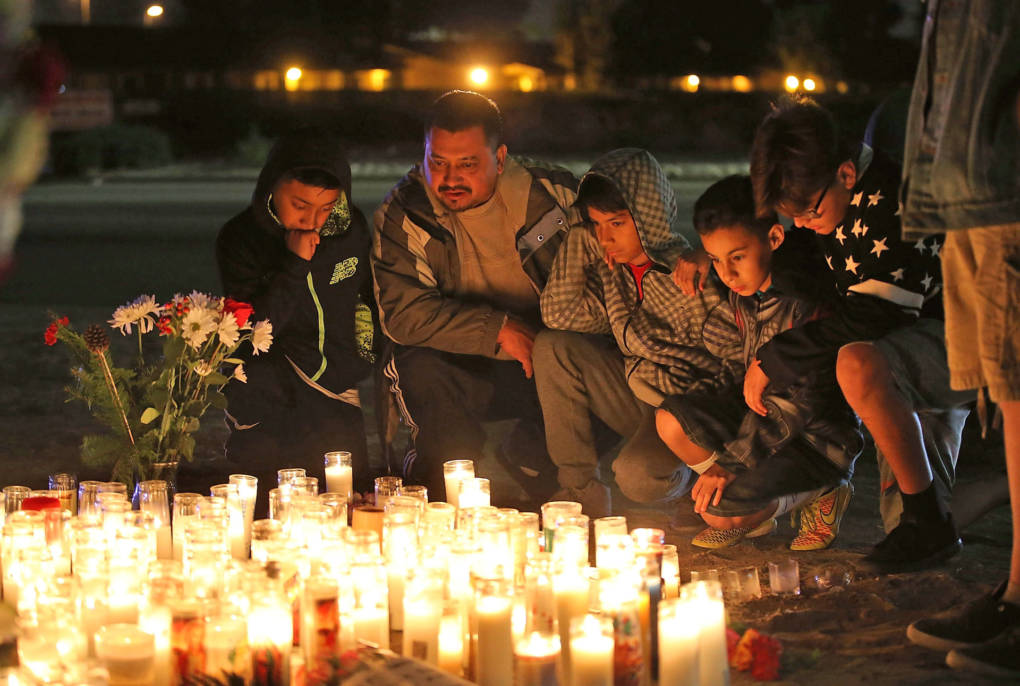
"caption": "Mourners visit a makeshift memorial near the Inland Regional Center on Dec. 4, 2015, in San Bernardino, California. The FBI officially labeled the attack carried out by Syed Farook and his wife, Tashfeen Malik, an act of terrorism. ",
"description": null,
"title": "Community Mourns As Investigation Continues Into San Bernardino Mass Shooting",
"credit": "Justin Sullivan/Getty Images",
"status": "inherit",
"isLoading": false,
"fetchFailed": false
},
"news_11438564": {
"type": "attachments",
"id": "news_11438564",
"meta": {
"index": "attachments_1716263798",
"site": "news",
"id": "11438564",
"found": true
},
"parent": 11438563,
"imgSizes": {
"small": {
"file": "https://ww2.kqed.org/app/uploads/sites/10/2017/05/gettyimages-512015968-49009c166e4927e1801eb8de7c2c25cabc69c06a-520x390.jpg",
"width": 520,
"mimeType": "image/jpeg",
"height": 390
},
"twentyfourteen-full-width": {
"file": "https://ww2.kqed.org/app/uploads/sites/10/2017/05/gettyimages-512015968-49009c166e4927e1801eb8de7c2c25cabc69c06a-1038x576.jpg",
"width": 1038,
"mimeType": "image/jpeg",
"height": 576
},
"thumbnail": {
"file": "https://ww2.kqed.org/app/uploads/sites/10/2017/05/gettyimages-512015968-49009c166e4927e1801eb8de7c2c25cabc69c06a-160x120.jpg",
"width": 160,
"mimeType": "image/jpeg",
"height": 120
},
"fd-sm": {
"file": "https://ww2.kqed.org/app/uploads/sites/10/2017/05/gettyimages-512015968-49009c166e4927e1801eb8de7c2c25cabc69c06a-960x720.jpg",
"width": 960,
"mimeType": "image/jpeg",
"height": 720
},
"post-thumbnail": {
"file": "https://ww2.kqed.org/app/uploads/sites/10/2017/05/gettyimages-512015968-49009c166e4927e1801eb8de7c2c25cabc69c06a-672x372.jpg",
"width": 672,
"mimeType": "image/jpeg",
"height": 372
},
"xsmall": {
"file": "https://ww2.kqed.org/app/uploads/sites/10/2017/05/gettyimages-512015968-49009c166e4927e1801eb8de7c2c25cabc69c06a-375x281.jpg",
"width": 375,
"mimeType": "image/jpeg",
"height": 281
},
"kqedFullSize": {
"file": "https://ww2.kqed.org/app/uploads/sites/10/2017/05/gettyimages-512015968-49009c166e4927e1801eb8de7c2c25cabc69c06a.jpg",
"width": 2048,
"height": 1536
},
"large": {
"file": "https://ww2.kqed.org/app/uploads/sites/10/2017/05/gettyimages-512015968-49009c166e4927e1801eb8de7c2c25cabc69c06a-1020x765.jpg",
"width": 1020,
"mimeType": "image/jpeg",
"height": 765
},
"xlarge": {
"file": "https://ww2.kqed.org/app/uploads/sites/10/2017/05/gettyimages-512015968-49009c166e4927e1801eb8de7c2c25cabc69c06a-1180x885.jpg",
"width": 1180,
"mimeType": "image/jpeg",
"height": 885
},
"guest-author-50": {
"file": "https://ww2.kqed.org/app/uploads/sites/10/2017/05/gettyimages-512015968-49009c166e4927e1801eb8de7c2c25cabc69c06a-50x50.jpg",
"width": 50,
"mimeType": "image/jpeg",
"height": 50
},
"guest-author-96": {
"file": "https://ww2.kqed.org/app/uploads/sites/10/2017/05/gettyimages-512015968-49009c166e4927e1801eb8de7c2c25cabc69c06a-96x96.jpg",
"width": 96,
"mimeType": "image/jpeg",
"height": 96
},
"medium": {
"file": "https://ww2.kqed.org/app/uploads/sites/10/2017/05/gettyimages-512015968-49009c166e4927e1801eb8de7c2c25cabc69c06a-800x600.jpg",
"width": 800,
"mimeType": "image/jpeg",
"height": 600
},
"guest-author-64": {
"file": "https://ww2.kqed.org/app/uploads/sites/10/2017/05/gettyimages-512015968-49009c166e4927e1801eb8de7c2c25cabc69c06a-64x64.jpg",
"width": 64,
"mimeType": "image/jpeg",
"height": 64
},
"guest-author-32": {
"file": "https://ww2.kqed.org/app/uploads/sites/10/2017/05/gettyimages-512015968-49009c166e4927e1801eb8de7c2c25cabc69c06a-32x32.jpg",
"width": 32,
"mimeType": "image/jpeg",
"height": 32
},
"fd-lrg": {
"file": "https://ww2.kqed.org/app/uploads/sites/10/2017/05/gettyimages-512015968-49009c166e4927e1801eb8de7c2c25cabc69c06a-1920x1440.jpg",
"width": 1920,
"mimeType": "image/jpeg",
"height": 1440
},
"fd-med": {
"file": "https://ww2.kqed.org/app/uploads/sites/10/2017/05/gettyimages-512015968-49009c166e4927e1801eb8de7c2c25cabc69c06a-1180x885.jpg",
"width": 1180,
"mimeType": "image/jpeg",
"height": 885
},
"full-width": {
"file": "https://ww2.kqed.org/app/uploads/sites/10/2017/05/gettyimages-512015968-49009c166e4927e1801eb8de7c2c25cabc69c06a-1920x1440.jpg",
"width": 1920,
"mimeType": "image/jpeg",
"height": 1440
},
"detail": {
"file": "https://ww2.kqed.org/app/uploads/sites/10/2017/05/gettyimages-512015968-49009c166e4927e1801eb8de7c2c25cabc69c06a-150x150.jpg",
"width": 150,
"mimeType": "image/jpeg",
"height": 150
},
"guest-author-128": {
"file": "https://ww2.kqed.org/app/uploads/sites/10/2017/05/gettyimages-512015968-49009c166e4927e1801eb8de7c2c25cabc69c06a-128x128.jpg",
"width": 128,
"mimeType": "image/jpeg",
"height": 128
},
"xxsmall": {
"file": "https://ww2.kqed.org/app/uploads/sites/10/2017/05/gettyimages-512015968-49009c166e4927e1801eb8de7c2c25cabc69c06a-240x180.jpg",
"width": 240,
"mimeType": "image/jpeg",
"height": 180
}
},
"publishDate": 1493828452,
"modified": 1493828821,
"caption": "The Facebook logo displayed in Berlin in 2016.",
"description": "The Facebook logo, displayed in Berlin in 2016.",
"title": "The Facebook logo, displayed in Berlin in 2016.",
"credit": "Sean Gallup/Getty Images",
"status": "inherit",
"isLoading": false,
"fetchFailed": false
},
"news_11430136": {
"type": "attachments",
"id": "news_11430136",
"meta": {
"index": "attachments_1716263798",
"site": "news",
"id": "11430136",
"found": true
},
"parent": 11429851,
"imgSizes": {
"small": {
"file": "https://ww2.kqed.org/app/uploads/sites/10/2017/04/Facebook-Building-21-800-520x694.jpg",
"width": 520,
"mimeType": "image/jpeg",
"height": 694
},
"twentyfourteen-full-width": {
"file": "https://ww2.kqed.org/app/uploads/sites/10/2017/04/Facebook-Building-21-800-800x576.jpg",
"width": 800,
"mimeType": "image/jpeg",
"height": 576
},
"thumbnail": {
"file": "https://ww2.kqed.org/app/uploads/sites/10/2017/04/Facebook-Building-21-800-160x213.jpg",
"width": 160,
"mimeType": "image/jpeg",
"height": 213
},
"post-thumbnail": {
"file": "https://ww2.kqed.org/app/uploads/sites/10/2017/04/Facebook-Building-21-800-672x372.jpg",
"width": 672,
"mimeType": "image/jpeg",
"height": 372
},
"xsmall": {
"file": "https://ww2.kqed.org/app/uploads/sites/10/2017/04/Facebook-Building-21-800-375x500.jpg",
"width": 375,
"mimeType": "image/jpeg",
"height": 500
},
"kqedFullSize": {
"file": "https://ww2.kqed.org/app/uploads/sites/10/2017/04/Facebook-Building-21-800.jpg",
"width": 800,
"height": 1067
},
"guest-author-50": {
"file": "https://ww2.kqed.org/app/uploads/sites/10/2017/04/Facebook-Building-21-800-50x50.jpg",
"width": 50,
"mimeType": "image/jpeg",
"height": 50
},
"guest-author-96": {
"file": "https://ww2.kqed.org/app/uploads/sites/10/2017/04/Facebook-Building-21-800-96x96.jpg",
"width": 96,
"mimeType": "image/jpeg",
"height": 96
},
"medium": {
"file": "https://ww2.kqed.org/app/uploads/sites/10/2017/04/Facebook-Building-21-800-800x1067.jpg",
"width": 800,
"mimeType": "image/jpeg",
"height": 1067
},
"guest-author-64": {
"file": "https://ww2.kqed.org/app/uploads/sites/10/2017/04/Facebook-Building-21-800-64x64.jpg",
"width": 64,
"mimeType": "image/jpeg",
"height": 64
},
"guest-author-32": {
"file": "https://ww2.kqed.org/app/uploads/sites/10/2017/04/Facebook-Building-21-800-32x32.jpg",
"width": 32,
"mimeType": "image/jpeg",
"height": 32
},
"detail": {
"file": "https://ww2.kqed.org/app/uploads/sites/10/2017/04/Facebook-Building-21-800-150x150.jpg",
"width": 150,
"mimeType": "image/jpeg",
"height": 150
},
"guest-author-128": {
"file": "https://ww2.kqed.org/app/uploads/sites/10/2017/04/Facebook-Building-21-800-128x128.jpg",
"width": 128,
"mimeType": "image/jpeg",
"height": 128
},
"xxsmall": {
"file": "https://ww2.kqed.org/app/uploads/sites/10/2017/04/Facebook-Building-21-800-240x320.jpg",
"width": 240,
"mimeType": "image/jpeg",
"height": 320
}
},
"publishDate": 1493332183,
"modified": 1493333319,
"caption": "Two ironworkers were injured at Facebook's Menlo Park construction site on April 26, 2017.",
"description": null,
"title": "Facebook-Building-21-800",
"credit": "Courtesy of the Menlo Park Fire Protection District",
"status": "inherit",
"isLoading": false,
"fetchFailed": false
},
"news_11422124": {
"type": "attachments",
"id": "news_11422124",
"meta": {
"index": "attachments_1716263798",
"site": "news",
"id": "11422124",
"found": true
},
"parent": 11422120,
"imgSizes": {
"small": {
"file": "https://ww2.kqed.org/app/uploads/sites/10/2017/04/GettyImages-669974134-520x347.jpg",
"width": 520,
"mimeType": "image/jpeg",
"height": 347
},
"twentyfourteen-full-width": {
"file": "https://ww2.kqed.org/app/uploads/sites/10/2017/04/GettyImages-669974134-1038x576.jpg",
"width": 1038,
"mimeType": "image/jpeg",
"height": 576
},
"thumbnail": {
"file": "https://ww2.kqed.org/app/uploads/sites/10/2017/04/GettyImages-669974134-160x107.jpg",
"width": 160,
"mimeType": "image/jpeg",
"height": 107
},
"fd-sm": {
"file": "https://ww2.kqed.org/app/uploads/sites/10/2017/04/GettyImages-669974134-960x640.jpg",
"width": 960,
"mimeType": "image/jpeg",
"height": 640
},
"post-thumbnail": {
"file": "https://ww2.kqed.org/app/uploads/sites/10/2017/04/GettyImages-669974134-672x372.jpg",
"width": 672,
"mimeType": "image/jpeg",
"height": 372
},
"xsmall": {
"file": "https://ww2.kqed.org/app/uploads/sites/10/2017/04/GettyImages-669974134-375x250.jpg",
"width": 375,
"mimeType": "image/jpeg",
"height": 250
},
"kqedFullSize": {
"file": "https://ww2.kqed.org/app/uploads/sites/10/2017/04/GettyImages-669974134-e1492900652825.jpg",
"width": 1920,
"height": 1280
},
"large": {
"file": "https://ww2.kqed.org/app/uploads/sites/10/2017/04/GettyImages-669974134-1020x680.jpg",
"width": 1020,
"mimeType": "image/jpeg",
"height": 680
},
"xlarge": {
"file": "https://ww2.kqed.org/app/uploads/sites/10/2017/04/GettyImages-669974134-1180x787.jpg",
"width": 1180,
"mimeType": "image/jpeg",
"height": 787
},
"guest-author-50": {
"file": "https://ww2.kqed.org/app/uploads/sites/10/2017/04/GettyImages-669974134-50x50.jpg",
"width": 50,
"mimeType": "image/jpeg",
"height": 50
},
"guest-author-96": {
"file": "https://ww2.kqed.org/app/uploads/sites/10/2017/04/GettyImages-669974134-96x96.jpg",
"width": 96,
"mimeType": "image/jpeg",
"height": 96
},
"medium": {
"file": "https://ww2.kqed.org/app/uploads/sites/10/2017/04/GettyImages-669974134-800x533.jpg",
"width": 800,
"mimeType": "image/jpeg",
"height": 533
},
"guest-author-64": {
"file": "https://ww2.kqed.org/app/uploads/sites/10/2017/04/GettyImages-669974134-64x64.jpg",
"width": 64,
"mimeType": "image/jpeg",
"height": 64
},
"guest-author-32": {
"file": "https://ww2.kqed.org/app/uploads/sites/10/2017/04/GettyImages-669974134-32x32.jpg",
"width": 32,
"mimeType": "image/jpeg",
"height": 32
},
"fd-lrg": {
"file": "https://ww2.kqed.org/app/uploads/sites/10/2017/04/GettyImages-669974134-1920x1280.jpg",
"width": 1920,
"mimeType": "image/jpeg",
"height": 1280
},
"fd-med": {
"file": "https://ww2.kqed.org/app/uploads/sites/10/2017/04/GettyImages-669974134-1180x787.jpg",
"width": 1180,
"mimeType": "image/jpeg",
"height": 787
},
"full-width": {
"file": "https://ww2.kqed.org/app/uploads/sites/10/2017/04/GettyImages-669974134-1920x1280.jpg",
"width": 1920,
"mimeType": "image/jpeg",
"height": 1280
},
"detail": {
"file": "https://ww2.kqed.org/app/uploads/sites/10/2017/04/GettyImages-669974134-150x150.jpg",
"width": 150,
"mimeType": "image/jpeg",
"height": 150
},
"guest-author-128": {
"file": "https://ww2.kqed.org/app/uploads/sites/10/2017/04/GettyImages-669974134-128x128.jpg",
"width": 128,
"mimeType": "image/jpeg",
"height": 128
},
"xxsmall": {
"file": "https://ww2.kqed.org/app/uploads/sites/10/2017/04/GettyImages-669974134-240x160.jpg",
"width": 240,
"mimeType": "image/jpeg",
"height": 160
}
},
"publishDate": 1492900602,
"modified": 1493071074,
"caption": "A view of the booth demonstrating Facebook Spaces at Facebook's F8 Developer Conference on April 18, 2017, in San Jose.",
"description": null,
"title": "Mark Zuckerberg Delivers Keynote Address At Facebook F8 Conference",
"credit": "Justin Sullivan/Getty Images",
"status": "inherit",
"isLoading": false,
"fetchFailed": false
},
"news_11417349": {
"type": "attachments",
"id": "news_11417349",
"meta": {
"index": "attachments_1716263798",
"site": "news",
"id": "11417349",
"found": true
},
"parent": 11417348,
"imgSizes": {
"small": {
"file": "https://ww2.kqed.org/app/uploads/sites/10/2017/04/aarti-avatar_wide-3648ce0521597101e25b42e10265ee6f40d7a119-520x292.jpg",
"width": 520,
"mimeType": "image/jpeg",
"height": 292
},
"twentyfourteen-full-width": {
"file": "https://ww2.kqed.org/app/uploads/sites/10/2017/04/aarti-avatar_wide-3648ce0521597101e25b42e10265ee6f40d7a119-1038x576.jpg",
"width": 1038,
"mimeType": "image/jpeg",
"height": 576
},
"thumbnail": {
"file": "https://ww2.kqed.org/app/uploads/sites/10/2017/04/aarti-avatar_wide-3648ce0521597101e25b42e10265ee6f40d7a119-160x90.jpg",
"width": 160,
"mimeType": "image/jpeg",
"height": 90
},
"fd-sm": {
"file": "https://ww2.kqed.org/app/uploads/sites/10/2017/04/aarti-avatar_wide-3648ce0521597101e25b42e10265ee6f40d7a119-960x540.jpg",
"width": 960,
"mimeType": "image/jpeg",
"height": 540
},
"post-thumbnail": {
"file": "https://ww2.kqed.org/app/uploads/sites/10/2017/04/aarti-avatar_wide-3648ce0521597101e25b42e10265ee6f40d7a119-672x372.jpg",
"width": 672,
"mimeType": "image/jpeg",
"height": 372
},
"xsmall": {
"file": "https://ww2.kqed.org/app/uploads/sites/10/2017/04/aarti-avatar_wide-3648ce0521597101e25b42e10265ee6f40d7a119-375x211.jpg",
"width": 375,
"mimeType": "image/jpeg",
"height": 211
},
"kqedFullSize": {
"file": "https://ww2.kqed.org/app/uploads/sites/10/2017/04/aarti-avatar_wide-3648ce0521597101e25b42e10265ee6f40d7a119.jpg",
"width": 1698,
"height": 955
},
"large": {
"file": "https://ww2.kqed.org/app/uploads/sites/10/2017/04/aarti-avatar_wide-3648ce0521597101e25b42e10265ee6f40d7a119-1020x574.jpg",
"width": 1020,
"mimeType": "image/jpeg",
"height": 574
},
"xlarge": {
"file": "https://ww2.kqed.org/app/uploads/sites/10/2017/04/aarti-avatar_wide-3648ce0521597101e25b42e10265ee6f40d7a119-1180x664.jpg",
"width": 1180,
"mimeType": "image/jpeg",
"height": 664
},
"guest-author-50": {
"file": "https://ww2.kqed.org/app/uploads/sites/10/2017/04/aarti-avatar_wide-3648ce0521597101e25b42e10265ee6f40d7a119-50x50.jpg",
"width": 50,
"mimeType": "image/jpeg",
"height": 50
},
"guest-author-96": {
"file": "https://ww2.kqed.org/app/uploads/sites/10/2017/04/aarti-avatar_wide-3648ce0521597101e25b42e10265ee6f40d7a119-96x96.jpg",
"width": 96,
"mimeType": "image/jpeg",
"height": 96
},
"medium": {
"file": "https://ww2.kqed.org/app/uploads/sites/10/2017/04/aarti-avatar_wide-3648ce0521597101e25b42e10265ee6f40d7a119-800x450.jpg",
"width": 800,
"mimeType": "image/jpeg",
"height": 450
},
"guest-author-64": {
"file": "https://ww2.kqed.org/app/uploads/sites/10/2017/04/aarti-avatar_wide-3648ce0521597101e25b42e10265ee6f40d7a119-64x64.jpg",
"width": 64,
"mimeType": "image/jpeg",
"height": 64
},
"guest-author-32": {
"file": "https://ww2.kqed.org/app/uploads/sites/10/2017/04/aarti-avatar_wide-3648ce0521597101e25b42e10265ee6f40d7a119-32x32.jpg",
"width": 32,
"mimeType": "image/jpeg",
"height": 32
},
"fd-med": {
"file": "https://ww2.kqed.org/app/uploads/sites/10/2017/04/aarti-avatar_wide-3648ce0521597101e25b42e10265ee6f40d7a119-1180x664.jpg",
"width": 1180,
"mimeType": "image/jpeg",
"height": 664
},
"detail": {
"file": "https://ww2.kqed.org/app/uploads/sites/10/2017/04/aarti-avatar_wide-3648ce0521597101e25b42e10265ee6f40d7a119-150x150.jpg",
"width": 150,
"mimeType": "image/jpeg",
"height": 150
},
"guest-author-128": {
"file": "https://ww2.kqed.org/app/uploads/sites/10/2017/04/aarti-avatar_wide-3648ce0521597101e25b42e10265ee6f40d7a119-128x128.jpg",
"width": 128,
"mimeType": "image/jpeg",
"height": 128
},
"xxsmall": {
"file": "https://ww2.kqed.org/app/uploads/sites/10/2017/04/aarti-avatar_wide-3648ce0521597101e25b42e10265ee6f40d7a119-240x135.jpg",
"width": 240,
"mimeType": "image/jpeg",
"height": 135
}
},
"publishDate": 1492652513,
"modified": 1492653011,
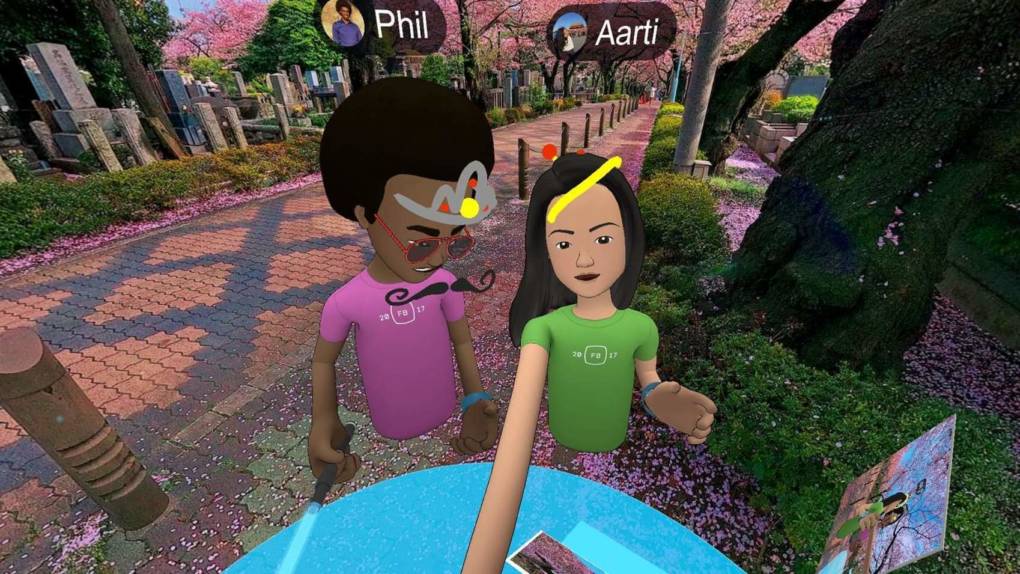
"caption": "NPR reporter Aarti Shahani tested Facebook's new social VR platform. She requested an older avatar to represent her, but that was not available. Her guide \"Phil\" had her tour virtual cherry blossoms.",
"description": "NPR reporter Aarti Shahani tested Facebook's new social VR platform. She requested an older avatar to represent her, but that was not available. Her guide \"Phil\" had her tour virtual cherry blossoms.",
"title": "NPR reporter Aarti Shahani tested Facebook's new social VR platform. She requested an older avatar to represent her, but that was not available. Her guide \"Phil\" had her tour virtual cherry blossoms.",
"credit": "NPR",
"status": "inherit",
"isLoading": false,
"fetchFailed": false
},
"news_11389588": {
"type": "attachments",
"id": "news_11389588",
"meta": {
"index": "attachments_1716263798",
"site": "news",
"id": "11389588",
"found": true
},
"parent": 11389587,
"imgSizes": {
"small": {
"file": "https://ww2.kqed.org/app/uploads/sites/10/2017/04/gettyimages-635338226-aed88058e51c1678fa2d6819abc7ab174843110a-520x391.jpg",
"width": 520,
"mimeType": "image/jpeg",
"height": 391
},
"twentyfourteen-full-width": {
"file": "https://ww2.kqed.org/app/uploads/sites/10/2017/04/gettyimages-635338226-aed88058e51c1678fa2d6819abc7ab174843110a-1038x576.jpg",
"width": 1038,
"mimeType": "image/jpeg",
"height": 576
},
"thumbnail": {
"file": "https://ww2.kqed.org/app/uploads/sites/10/2017/04/gettyimages-635338226-aed88058e51c1678fa2d6819abc7ab174843110a-160x120.jpg",
"width": 160,
"mimeType": "image/jpeg",
"height": 120
},
"fd-sm": {
"file": "https://ww2.kqed.org/app/uploads/sites/10/2017/04/gettyimages-635338226-aed88058e51c1678fa2d6819abc7ab174843110a-960x722.jpg",
"width": 960,
"mimeType": "image/jpeg",
"height": 722
},
"post-thumbnail": {
"file": "https://ww2.kqed.org/app/uploads/sites/10/2017/04/gettyimages-635338226-aed88058e51c1678fa2d6819abc7ab174843110a-672x372.jpg",
"width": 672,
"mimeType": "image/jpeg",
"height": 372
},
"xsmall": {
"file": "https://ww2.kqed.org/app/uploads/sites/10/2017/04/gettyimages-635338226-aed88058e51c1678fa2d6819abc7ab174843110a-375x282.jpg",
"width": 375,
"mimeType": "image/jpeg",
"height": 282
},
"kqedFullSize": {
"file": "https://ww2.kqed.org/app/uploads/sites/10/2017/04/gettyimages-635338226-aed88058e51c1678fa2d6819abc7ab174843110a.jpg",
"width": 4014,
"height": 3017
},
"large": {
"file": "https://ww2.kqed.org/app/uploads/sites/10/2017/04/gettyimages-635338226-aed88058e51c1678fa2d6819abc7ab174843110a-1020x767.jpg",
"width": 1020,
"mimeType": "image/jpeg",
"height": 767
},
"xlarge": {
"file": "https://ww2.kqed.org/app/uploads/sites/10/2017/04/gettyimages-635338226-aed88058e51c1678fa2d6819abc7ab174843110a-1180x887.jpg",
"width": 1180,
"mimeType": "image/jpeg",
"height": 887
},
"guest-author-50": {
"file": "https://ww2.kqed.org/app/uploads/sites/10/2017/04/gettyimages-635338226-aed88058e51c1678fa2d6819abc7ab174843110a-50x50.jpg",
"width": 50,
"mimeType": "image/jpeg",
"height": 50
},
"guest-author-96": {
"file": "https://ww2.kqed.org/app/uploads/sites/10/2017/04/gettyimages-635338226-aed88058e51c1678fa2d6819abc7ab174843110a-96x96.jpg",
"width": 96,
"mimeType": "image/jpeg",
"height": 96
},
"medium": {
"file": "https://ww2.kqed.org/app/uploads/sites/10/2017/04/gettyimages-635338226-aed88058e51c1678fa2d6819abc7ab174843110a-800x601.jpg",
"width": 800,
"mimeType": "image/jpeg",
"height": 601
},
"guest-author-64": {
"file": "https://ww2.kqed.org/app/uploads/sites/10/2017/04/gettyimages-635338226-aed88058e51c1678fa2d6819abc7ab174843110a-64x64.jpg",
"width": 64,
"mimeType": "image/jpeg",
"height": 64
},
"guest-author-32": {
"file": "https://ww2.kqed.org/app/uploads/sites/10/2017/04/gettyimages-635338226-aed88058e51c1678fa2d6819abc7ab174843110a-32x32.jpg",
"width": 32,
"mimeType": "image/jpeg",
"height": 32
},
"fd-lrg": {
"file": "https://ww2.kqed.org/app/uploads/sites/10/2017/04/gettyimages-635338226-aed88058e51c1678fa2d6819abc7ab174843110a-1920x1443.jpg",
"width": 1920,
"mimeType": "image/jpeg",
"height": 1443
},
"fd-med": {
"file": "https://ww2.kqed.org/app/uploads/sites/10/2017/04/gettyimages-635338226-aed88058e51c1678fa2d6819abc7ab174843110a-1180x887.jpg",
"width": 1180,
"mimeType": "image/jpeg",
"height": 887
},
"full-width": {
"file": "https://ww2.kqed.org/app/uploads/sites/10/2017/04/gettyimages-635338226-aed88058e51c1678fa2d6819abc7ab174843110a-1920x1443.jpg",
"width": 1920,
"mimeType": "image/jpeg",
"height": 1443
},
"detail": {
"file": "https://ww2.kqed.org/app/uploads/sites/10/2017/04/gettyimages-635338226-aed88058e51c1678fa2d6819abc7ab174843110a-150x150.jpg",
"width": 150,
"mimeType": "image/jpeg",
"height": 150
},
"guest-author-128": {
"file": "https://ww2.kqed.org/app/uploads/sites/10/2017/04/gettyimages-635338226-aed88058e51c1678fa2d6819abc7ab174843110a-128x128.jpg",
"width": 128,
"mimeType": "image/jpeg",
"height": 128
},
"xxsmall": {
"file": "https://ww2.kqed.org/app/uploads/sites/10/2017/04/gettyimages-635338226-aed88058e51c1678fa2d6819abc7ab174843110a-240x180.jpg",
"width": 240,
"mimeType": "image/jpeg",
"height": 180
}
},
"publishDate": 1491234557,
"modified": 1491234775,
"caption": "Chicago police announced on Sunday the arrest of a 14-year-old boy in connection with the sexual assault of a 15-year-old girl that was streamed live on Facebook. Above, Chicago Police Superintendent Eddie Johnson talks to reporters at the scene of a triple shooting in the North Lawndale neighborhood in February.",
"description": "Chicago police announced on Sunday the arrest of a 14-year-old boy in connection with the sexual assault of a 15-year-old girl that was streamed live on Facebook. Above, Chicago Police Superintendent Eddie Johnson talks to reporters at the scene of a triple shooting in the North Lawndale neighborhood in February.",
"title": "Chicago police announced on Sunday the arrest of a 14-year-old boy in connection with the sexual assault of a 15-year-old girl that was streamed live on Facebook. Above, Chicago Police Superintendent Eddie Johnson talks to reporters at the scene of a triple shooting in the North Lawndale neighborhood in February.",
"credit": "Joshua Lott/AFP/Getty Images",
"status": "inherit",
"isLoading": false,
"fetchFailed": false
},
"news_93966": {
"type": "attachments",
"id": "news_93966",
"meta": {
"index": "attachments_1716263798",
"site": "news",
"id": "93966",
"found": true
},
"parent": 93962,
"imgSizes": {
"kqedFullSize": {
"file": "https://ww2.kqed.org/app/uploads/sites/10/2013/04/RS1613_101560214-e1463670226127.jpg",
"width": 1920,
"height": 1280
}
},
"publishDate": 1365709075,
"modified": 1487374247,
"caption": "Facebook CEO Mark Zuckerberg, photographed in a meeting with conservative commentators in 2013, has once again affirmed his commitment to globalization.",
"description": "Mark Zuckerberg and a number of Silicon Valley leaders have founded a new immigration reform advocacy organization. (Gabriel Bouys/AFP/Getty Images)",
"title": "Mark Zuckerberg",
"credit": "Gabriel Bouys/AFP-Getty Images",
"status": "inherit",
"isLoading": false,
"fetchFailed": false
},
"news_11318264": {
"type": "attachments",
"id": "news_11318264",
"meta": {
"index": "attachments_1716263798",
"site": "news",
"id": "11318264",
"found": true
},
"parent": 11318260,
"imgSizes": {
"small": {
"file": "https://ww2.kqed.org/app/uploads/sites/10/2017/02/RS9182_144717349-520x347.jpg",
"width": 520,
"mimeType": "image/jpeg",
"height": 347
},
"twentyfourteen-full-width": {
"file": "https://ww2.kqed.org/app/uploads/sites/10/2017/02/RS9182_144717349-1038x576.jpg",
"width": 1038,
"mimeType": "image/jpeg",
"height": 576
},
"thumbnail": {
"file": "https://ww2.kqed.org/app/uploads/sites/10/2017/02/RS9182_144717349-160x107.jpg",
"width": 160,
"mimeType": "image/jpeg",
"height": 107
},
"fd-sm": {
"file": "https://ww2.kqed.org/app/uploads/sites/10/2017/02/RS9182_144717349-960x640.jpg",
"width": 960,
"mimeType": "image/jpeg",
"height": 640
},
"post-thumbnail": {
"file": "https://ww2.kqed.org/app/uploads/sites/10/2017/02/RS9182_144717349-672x372.jpg",
"width": 672,
"mimeType": "image/jpeg",
"height": 372
},
"xsmall": {
"file": "https://ww2.kqed.org/app/uploads/sites/10/2017/02/RS9182_144717349-375x250.jpg",
"width": 375,
"mimeType": "image/jpeg",
"height": 250
},
"kqedFullSize": {
"file": "https://ww2.kqed.org/app/uploads/sites/10/2017/02/RS9182_144717349.jpg",
"width": 5616,
"height": 3744
},
"large": {
"file": "https://ww2.kqed.org/app/uploads/sites/10/2017/02/RS9182_144717349-1020x680.jpg",
"width": 1020,
"mimeType": "image/jpeg",
"height": 680
},
"xlarge": {
"file": "https://ww2.kqed.org/app/uploads/sites/10/2017/02/RS9182_144717349-1180x787.jpg",
"width": 1180,
"mimeType": "image/jpeg",
"height": 787
},
"guest-author-50": {
"file": "https://ww2.kqed.org/app/uploads/sites/10/2017/02/RS9182_144717349-50x50.jpg",
"width": 50,
"mimeType": "image/jpeg",
"height": 50
},
"guest-author-96": {
"file": "https://ww2.kqed.org/app/uploads/sites/10/2017/02/RS9182_144717349-96x96.jpg",
"width": 96,
"mimeType": "image/jpeg",
"height": 96
},
"medium": {
"file": "https://ww2.kqed.org/app/uploads/sites/10/2017/02/RS9182_144717349-800x533.jpg",
"width": 800,
"mimeType": "image/jpeg",
"height": 533
},
"guest-author-64": {
"file": "https://ww2.kqed.org/app/uploads/sites/10/2017/02/RS9182_144717349-64x64.jpg",
"width": 64,
"mimeType": "image/jpeg",
"height": 64
},
"guest-author-32": {
"file": "https://ww2.kqed.org/app/uploads/sites/10/2017/02/RS9182_144717349-32x32.jpg",
"width": 32,
"mimeType": "image/jpeg",
"height": 32
},
"fd-lrg": {
"file": "https://ww2.kqed.org/app/uploads/sites/10/2017/02/RS9182_144717349-1920x1280.jpg",
"width": 1920,
"mimeType": "image/jpeg",
"height": 1280
},
"fd-med": {
"file": "https://ww2.kqed.org/app/uploads/sites/10/2017/02/RS9182_144717349-1180x787.jpg",
"width": 1180,
"mimeType": "image/jpeg",
"height": 787
},
"full-width": {
"file": "https://ww2.kqed.org/app/uploads/sites/10/2017/02/RS9182_144717349-1920x1280.jpg",
"width": 1920,
"mimeType": "image/jpeg",
"height": 1280
},
"detail": {
"file": "https://ww2.kqed.org/app/uploads/sites/10/2017/02/RS9182_144717349-150x150.jpg",
"width": 150,
"mimeType": "image/jpeg",
"height": 150
},
"guest-author-128": {
"file": "https://ww2.kqed.org/app/uploads/sites/10/2017/02/RS9182_144717349-128x128.jpg",
"width": 128,
"mimeType": "image/jpeg",
"height": 128
},
"xxsmall": {
"file": "https://ww2.kqed.org/app/uploads/sites/10/2017/02/RS9182_144717349-240x160.jpg",
"width": 240,
"mimeType": "image/jpeg",
"height": 160
}
},
"publishDate": 1487194581,
"modified": 1487199669,
"caption": "A 'like' sign stands at the entrance of Facebook headquarters on May 18, 2012, in Menlo Park, California. ",
"description": null,
"title": "Facebook Debuts As Public Company With Initial Public Offering On NASDAQ Exchange",
"credit": "Stephen Lam/Getty Images",
"status": "inherit",
"isLoading": false,
"fetchFailed": false
},
"news_11240272": {
"type": "attachments",
"id": "news_11240272",
"meta": {
"index": "attachments_1716263798",
"site": "news",
"id": "11240272",
"found": true
},
"parent": 11240202,
"imgSizes": {
"small": {
"file": "https://ww2.kqed.org/app/uploads/sites/10/2016/12/2408_transform-520x347.jpg",
"width": 520,
"mimeType": "image/jpeg",
"height": 347
},
"twentyfourteen-full-width": {
"file": "https://ww2.kqed.org/app/uploads/sites/10/2016/12/2408_transform-1038x576.jpg",
"width": 1038,
"mimeType": "image/jpeg",
"height": 576
},
"thumbnail": {
"file": "https://ww2.kqed.org/app/uploads/sites/10/2016/12/2408_transform-160x107.jpg",
"width": 160,
"mimeType": "image/jpeg",
"height": 107
},
"fd-sm": {
"file": "https://ww2.kqed.org/app/uploads/sites/10/2016/12/2408_transform-960x640.jpg",
"width": 960,
"mimeType": "image/jpeg",
"height": 640
},
"post-thumbnail": {
"file": "https://ww2.kqed.org/app/uploads/sites/10/2016/12/2408_transform-672x372.jpg",
"width": 672,
"mimeType": "image/jpeg",
"height": 372
},
"xsmall": {
"file": "https://ww2.kqed.org/app/uploads/sites/10/2016/12/2408_transform-375x250.jpg",
"width": 375,
"mimeType": "image/jpeg",
"height": 250
},
"kqedFullSize": {
"file": "https://ww2.kqed.org/app/uploads/sites/10/2016/12/2408_transform.jpg",
"width": 1920,
"height": 1280
},
"large": {
"file": "https://ww2.kqed.org/app/uploads/sites/10/2016/12/2408_transform-1020x680.jpg",
"width": 1020,
"mimeType": "image/jpeg",
"height": 680
},
"xlarge": {
"file": "https://ww2.kqed.org/app/uploads/sites/10/2016/12/2408_transform-1180x787.jpg",
"width": 1180,
"mimeType": "image/jpeg",
"height": 787
},
"guest-author-50": {
"file": "https://ww2.kqed.org/app/uploads/sites/10/2016/12/2408_transform-50x50.jpg",
"width": 50,
"mimeType": "image/jpeg",
"height": 50
},
"guest-author-96": {
"file": "https://ww2.kqed.org/app/uploads/sites/10/2016/12/2408_transform-96x96.jpg",
"width": 96,
"mimeType": "image/jpeg",
"height": 96
},
"medium": {
"file": "https://ww2.kqed.org/app/uploads/sites/10/2016/12/2408_transform-800x533.jpg",
"width": 800,
"mimeType": "image/jpeg",
"height": 533
},
"guest-author-64": {
"file": "https://ww2.kqed.org/app/uploads/sites/10/2016/12/2408_transform-64x64.jpg",
"width": 64,
"mimeType": "image/jpeg",
"height": 64
},
"guest-author-32": {
"file": "https://ww2.kqed.org/app/uploads/sites/10/2016/12/2408_transform-32x32.jpg",
"width": 32,
"mimeType": "image/jpeg",
"height": 32
},
"jmtc-small-thumb": {
"file": "https://ww2.kqed.org/app/uploads/sites/10/2016/12/2408_transform-280x150.jpg",
"width": 280,
"mimeType": "image/jpeg",
"height": 150
},
"fd-lrg": {
"file": "https://ww2.kqed.org/app/uploads/sites/10/2016/12/2408_transform-1920x1280.jpg",
"width": 1920,
"mimeType": "image/jpeg",
"height": 1280
},
"fd-med": {
"file": "https://ww2.kqed.org/app/uploads/sites/10/2016/12/2408_transform-1180x787.jpg",
"width": 1180,
"mimeType": "image/jpeg",
"height": 787
},
"full-width": {
"file": "https://ww2.kqed.org/app/uploads/sites/10/2016/12/2408_transform-1920x1280.jpg",
"width": 1920,
"mimeType": "image/jpeg",
"height": 1280
},
"detail": {
"file": "https://ww2.kqed.org/app/uploads/sites/10/2016/12/2408_transform-150x150.jpg",
"width": 150,
"mimeType": "image/jpeg",
"height": 150
},
"guest-author-128": {
"file": "https://ww2.kqed.org/app/uploads/sites/10/2016/12/2408_transform-128x128.jpg",
"width": 128,
"mimeType": "image/jpeg",
"height": 128
},
"xxsmall": {
"file": "https://ww2.kqed.org/app/uploads/sites/10/2016/12/2408_transform-240x160.jpg",
"width": 240,
"mimeType": "image/jpeg",
"height": 160
}
},
"publishDate": 1482865122,
"modified": 1482865202,
"caption": "The site shows users how Facebook categorizes them. It doesn’t reveal the data it is buying about their offline lives. ",
"description": "The site shows users how Facebook categorizes them. It doesn’t reveal the data it is buying about their offline lives. \n",
"title": "A picture taken on May 14, 2012 in Paris",
"credit": "JOEL SAGET/AFP/Getty Images",
"status": "inherit",
"isLoading": false,
"fetchFailed": false
},
"news_11221907": {
"type": "attachments",
"id": "news_11221907",
"meta": {
"index": "attachments_1716263798",
"site": "news",
"id": "11221907",
"found": true
},
"parent": 11221886,
"imgSizes": {
"small": {
"file": "https://ww2.kqed.org/app/uploads/sites/10/2016/12/facebook-1920a-520x347.jpg",
"width": 520,
"mimeType": "image/jpeg",
"height": 347
},
"twentyfourteen-full-width": {
"file": "https://ww2.kqed.org/app/uploads/sites/10/2016/12/facebook-1920a-1038x576.jpg",
"width": 1038,
"mimeType": "image/jpeg",
"height": 576
},
"thumbnail": {
"file": "https://ww2.kqed.org/app/uploads/sites/10/2016/12/facebook-1920a-160x107.jpg",
"width": 160,
"mimeType": "image/jpeg",
"height": 107
},
"fd-sm": {
"file": "https://ww2.kqed.org/app/uploads/sites/10/2016/12/facebook-1920a-960x640.jpg",
"width": 960,
"mimeType": "image/jpeg",
"height": 640
},
"post-thumbnail": {
"file": "https://ww2.kqed.org/app/uploads/sites/10/2016/12/facebook-1920a-672x372.jpg",
"width": 672,
"mimeType": "image/jpeg",
"height": 372
},
"xsmall": {
"file": "https://ww2.kqed.org/app/uploads/sites/10/2016/12/facebook-1920a-375x250.jpg",
"width": 375,
"mimeType": "image/jpeg",
"height": 250
},
"kqedFullSize": {
"file": "https://ww2.kqed.org/app/uploads/sites/10/2016/12/facebook-1920a.jpg",
"width": 1920,
"height": 1280
},
"large": {
"file": "https://ww2.kqed.org/app/uploads/sites/10/2016/12/facebook-1920a-1020x680.jpg",
"width": 1020,
"mimeType": "image/jpeg",
"height": 680
},
"xlarge": {
"file": "https://ww2.kqed.org/app/uploads/sites/10/2016/12/facebook-1920a-1180x787.jpg",
"width": 1180,
"mimeType": "image/jpeg",
"height": 787
},
"guest-author-50": {
"file": "https://ww2.kqed.org/app/uploads/sites/10/2016/12/facebook-1920a-50x50.jpg",
"width": 50,
"mimeType": "image/jpeg",
"height": 50
},
"guest-author-96": {
"file": "https://ww2.kqed.org/app/uploads/sites/10/2016/12/facebook-1920a-96x96.jpg",
"width": 96,
"mimeType": "image/jpeg",
"height": 96
},
"medium": {
"file": "https://ww2.kqed.org/app/uploads/sites/10/2016/12/facebook-1920a-800x533.jpg",
"width": 800,
"mimeType": "image/jpeg",
"height": 533
},
"guest-author-64": {
"file": "https://ww2.kqed.org/app/uploads/sites/10/2016/12/facebook-1920a-64x64.jpg",
"width": 64,
"mimeType": "image/jpeg",
"height": 64
},
"guest-author-32": {
"file": "https://ww2.kqed.org/app/uploads/sites/10/2016/12/facebook-1920a-32x32.jpg",
"width": 32,
"mimeType": "image/jpeg",
"height": 32
},
"jmtc-small-thumb": {
"file": "https://ww2.kqed.org/app/uploads/sites/10/2016/12/facebook-1920a-280x150.jpg",
"width": 280,
"mimeType": "image/jpeg",
"height": 150
},
"fd-lrg": {
"file": "https://ww2.kqed.org/app/uploads/sites/10/2016/12/facebook-1920a-1920x1280.jpg",
"width": 1920,
"mimeType": "image/jpeg",
"height": 1280
},
"fd-med": {
"file": "https://ww2.kqed.org/app/uploads/sites/10/2016/12/facebook-1920a-1180x787.jpg",
"width": 1180,
"mimeType": "image/jpeg",
"height": 787
},
"full-width": {
"file": "https://ww2.kqed.org/app/uploads/sites/10/2016/12/facebook-1920a-1920x1280.jpg",
"width": 1920,
"mimeType": "image/jpeg",
"height": 1280
},
"detail": {
"file": "https://ww2.kqed.org/app/uploads/sites/10/2016/12/facebook-1920a-150x150.jpg",
"width": 150,
"mimeType": "image/jpeg",
"height": 150
},
"guest-author-128": {
"file": "https://ww2.kqed.org/app/uploads/sites/10/2016/12/facebook-1920a-128x128.jpg",
"width": 128,
"mimeType": "image/jpeg",
"height": 128
},
"xxsmall": {
"file": "https://ww2.kqed.org/app/uploads/sites/10/2016/12/facebook-1920a-240x160.jpg",
"width": 240,
"mimeType": "image/jpeg",
"height": 160
}
},
"publishDate": 1481847669,
"modified": 1498175738,
"caption": "Facebook logos are pictured on the screens of a smartphone (R), and a laptop computer, in central London on Nov. 21, 2016.",
"description": null,
"title": "facebook-1920a",
"credit": null,
"status": "inherit",
"isLoading": false,
"fetchFailed": false
}
},
"audioPlayerReducer": {
"postId": "stream_live",
"isPaused": true,
"isPlaying": false,
"pfsActive": false,
"pledgeModalIsOpen": true,
"playerDrawerIsOpen": false,
"liveAudioPlayStartedAt": 0,
"liveAudioPlayContext": ""
},
"authorsReducer": {
"byline_news_11471652": {
"type": "authors",
"id": "byline_news_11471652",
"meta": {
"override": true
},
"slug": "byline_news_11471652",
"name": "Alina Selyukh\u003cbr>\u003cstrong>\u003ca href=\"http://www.npr.org/sections/alltechconsidered/2017/05/21/529005840/feeling-sidelined-by-mainstream-social-media-far-right-users-jump-to-gab\">NPR\u003c/a>\u003c/strong>",
"isLoading": false
},
"byline_news_11438563": {
"type": "authors",
"id": "byline_news_11438563",
"meta": {
"override": true
},
"slug": "byline_news_11438563",
"name": "Colin Dwyer",
"isLoading": false
},
"byline_news_11422120": {
"type": "authors",
"id": "byline_news_11422120",
"meta": {
"override": true
},
"slug": "byline_news_11422120",
"name": "\u003cstrong>Laura Sydell\u003c/strong>",
"isLoading": false
},
"byline_news_11417348": {
"type": "authors",
"id": "byline_news_11417348",
"meta": {
"override": true
},
"slug": "byline_news_11417348",
"name": "Aarti Shahani",
"isLoading": false
},
"byline_news_11389587": {
"type": "authors",
"id": "byline_news_11389587",
"meta": {
"override": true
},
"slug": "byline_news_11389587",
"name": "Laurel Wamsley",
"isLoading": false
},
"byline_news_11240202": {
"type": "authors",
"id": "byline_news_11240202",
"meta": {
"override": true
},
"slug": "byline_news_11240202",
"name": "\u003cstrong>Julia Angwin, Terry Parris Jr. and Surya Mattu\u003cbr />ProPublica\u003c/strong>",
"isLoading": false
},
"byline_news_11221886": {
"type": "authors",
"id": "byline_news_11221886",
"meta": {
"override": true
},
"slug": "byline_news_11221886",
"name": "\u003cstrong>\u003ca href=\"http://www.npr.org/people/14562108/bill-chappell\">Bill Chappell\u003c/a>\u003cbr />\u003ca href=\"http://www.npr.org/\">NPR\u003c/a>\u003c/strong>",
"isLoading": false
},
"jbrooks": {
"type": "authors",
"id": "80",
"meta": {
"index": "authors_1716337520",
"id": "80",
"found": true
},
"name": "Jon Brooks",
"firstName": "Jon",
"lastName": "Brooks",
"slug": "jbrooks",
"email": "jbrooks@kqed.org",
"display_author_email": true,
"staff_mastheads": [
"science"
],
"title": "Digital Editor",
"bio": "Jon Brooks is a former Digital Editor for KQED Science. He is the former editor of KQED’s daily news blog, News Fix. In 2014, he won a California Journalism Award for his coverage of ride services like Uber and Lyft and the taxi industry. A veteran blogger, he previously worked for Yahoo! in various news writing and editing roles. Jon is also a playwright whose work has been produced in San Francisco, New York, Italy, and around the U.S. He has written about film for his own blog and studied film at Boston University.",
"avatar": "https://secure.gravatar.com/avatar/98887f7ed1c876ed414d4c915e969584?s=600&d=blank&r=g",
"twitter": "jbrooksfoy",
"facebook": null,
"instagram": null,
"linkedin": null,
"sites": [
{
"site": "arts",
"roles": [
"Contributor",
"editor"
]
},
{
"site": "news",
"roles": [
"author"
]
},
{
"site": "futureofyou",
"roles": [
"administrator"
]
},
{
"site": "mindshift",
"roles": [
"editor"
]
},
{
"site": "stateofhealth",
"roles": [
"editor"
]
},
{
"site": "science",
"roles": [
"administrator"
]
},
{
"site": "quest",
"roles": [
"editor"
]
}
],
"headData": {
"title": "Jon Brooks | KQED",
"description": "Digital Editor",
"ogImgSrc": "https://secure.gravatar.com/avatar/98887f7ed1c876ed414d4c915e969584?s=600&d=blank&r=g",
"twImgSrc": "https://secure.gravatar.com/avatar/98887f7ed1c876ed414d4c915e969584?s=600&d=blank&r=g"
},
"isLoading": false,
"link": "/author/jbrooks"
},
"tgoldberg": {
"type": "authors",
"id": "258",
"meta": {
"index": "authors_1716337520",
"id": "258",
"found": true
},
"name": "Ted Goldberg",
"firstName": "Ted",
"lastName": "Goldberg",
"slug": "tgoldberg",
"email": "tgoldberg@kqed.org",
"display_author_email": true,
"staff_mastheads": [
"news"
],
"title": "KQED Managing Editor, News and Newscasts",
"bio": "Ted Goldberg is Managing Editor of News and Newscasts at KQED. His main reporting beat is the Bay Area's oil refining industry.\r\n\r\nPrior to joining KQED in 2014, Ted worked at CBS News and WCBS AM in New York and Bay City News and KCBS Radio in San Francisco. He graduated from Oberlin College in Ohio in 1998.",
"avatar": "https://secure.gravatar.com/avatar/30ce2e4fe89135e104f89be2394d16225b9d36c121b5b3cb7651ce642978b96f?s=600&d=blank&r=g",
"twitter": "TedrickG",
"bluesky": null,
"facebook": null,
"instagram": null,
"linkedin": null,
"sites": [
{
"site": "news",
"roles": [
"editor"
]
},
{
"site": "science",
"roles": [
"editor"
]
}
],
"headData": {
"title": "Ted Goldberg | KQED",
"description": "KQED Managing Editor, News and Newscasts",
"ogImgSrc": "https://secure.gravatar.com/avatar/30ce2e4fe89135e104f89be2394d16225b9d36c121b5b3cb7651ce642978b96f?s=600&d=blank&r=g",
"twImgSrc": "https://secure.gravatar.com/avatar/30ce2e4fe89135e104f89be2394d16225b9d36c121b5b3cb7651ce642978b96f?s=600&d=blank&r=g"
},
"isLoading": false,
"link": "/author/tgoldberg"
},
"qkim": {
"type": "authors",
"id": "11099",
"meta": {
"index": "authors_1716337520",
"id": "11099",
"found": true
},
"name": "Queena Sook Kim",
"firstName": "Queena",
"lastName": "Kim",
"slug": "qkim",
"email": "qkim@kqed.org",
"display_author_email": false,
"staff_mastheads": [
"news"
],
"title": "Senior Editor",
"bio": "\u003cspan style=\"font-weight: 400;\">Queena Sook Kim is a former senior editor of the weekend desk at KQED. Before taking on that post, she was the Senior Editor of the Silicon Valley Desk and was the \u003c/span>\u003cspan style=\"font-weight: 400;\">host of The California Report. The daily morning show airs on KQED in San Francisco, one of the nation’s largest NPR affiliates, and on 30 stations across the state. In that role, she produces and reports on news, politics and life in the Golden State. Queena likes to take sideways look at the larger trends changing the state. One of her favorite stories asked\u003c/span>\u003ca href=\"https://ww2.kqed.org/news/2015/02/15/why-the-heck-do-mexican-reporters-on-public-radio-say-their-names-that-way\"> \u003cspan style=\"font-weight: 400;\">why Latino journalists “over’pronounce” their Spanish surnames\u003c/span>\u003c/a>\u003cspan style=\"font-weight: 400;\"> as a way of looking at how immigration is creating a culture shift in California.\u003c/span>\r\n\r\n\u003cspan style=\"font-weight: 400;\">Before joining The California Report, Queena was a \u003ca href=\"http://www.marketplace.org/people/queena-kim\">Senior Reporter covering technology for Marketplace\u003c/a>, the daily business show that airs on public radio. Queena covered daily tech business stories and reported on larger technology trends. She did a series of stories looking at role of social engineering in hacking and on a start-up in Silicon Valley that’s trying to use technology, instead of animals, to make meat that bleeds.\u003c/span>\r\n\r\n\u003cspan style=\"font-weight: 400;\">Queena started her career as a business journalist at the Wall Street Journal, where she spent four years covering the paper, home building and toy industries. She wrote A1 stories about the unusually aggressive tactics KB Home took against its home buyers. and the resurgence of “Cracker” architecture in Florida. She also wrote section front stories on marketing trends and\u003c/span>\r\n\r\n\u003cspan style=\"font-weight: 400;\">As a journalist, Queena has spent much of her career helping start-up editorial products. She was on the founding editorial team of The Bay Citizen, an experimental, online news site in San Francisco that was funded by the late hillbilly billionaire Warren Hellman. In 2009, Queena received a grant from the Corporation of Public Broadcasting to start-up a podcast called \u003ca href=\"https://soundcloud.com/cyberfrequencies\">CyberFrequencies\u003c/a>, which reported on the culture of technology. She also helped start-up two radio shows - Off-Ramp and Pacific Drift - for KPCC, the NPR-affiliate in Los Angeles. Off-Ramp was awarded 1st Place for news and Public Affairs programming by the PRINDI and the L.A. Press club. \u003ca href=\"https://soundcloud.com/queena-sook-kim\">Queena’s stories have appeared \u003c/a>on NPR’s Day to Day, Hearing Voices, WNYC’s Studio 360, WBUR’s Here and Now, BBC’s Global Perspectives and New York Times’ multimedia page.\u003c/span>\r\n\r\n\u003cspan style=\"font-weight: 400;\">In 1994, Queena won a Fulbright Grant to teach and study in Seoul, South Korea. She was also selected to be a Teach For America Corps Member in 1991 and taught elementary school in the Inglewood Unified School District in Southern California.\u003c/span>\r\n\r\n\u003cspan style=\"font-weight: 400;\">Queena is a frequent public speaker and has given talks at UC Berkeley, Stanford University, San Francisco State University, PRINDI conference and the Craigslist Foundation Boot Camp. Queena went to UC Berkeley’s Graduate School of Journalism and graduated cum laude from New York University with a B.A. in Politics. She grew up in Southern California and lives in Berkeley, Ca in a big fixer on which she spends most weekends, well, fixing.\u003c/span>",
"avatar": "https://secure.gravatar.com/avatar/b72382fd0db351b99f8a31939f4853fc?s=600&d=blank&r=g",
"twitter": "queenasookkim",
"facebook": null,
"instagram": null,
"linkedin": null,
"sites": [
{
"site": "news",
"roles": [
"subscriber"
]
},
{
"site": "forum",
"roles": [
"author"
]
},
{
"site": "breakingnews",
"roles": [
"editor"
]
}
],
"headData": {
"title": "Queena Sook Kim | KQED",
"description": "Senior Editor",
"ogImgSrc": "https://secure.gravatar.com/avatar/b72382fd0db351b99f8a31939f4853fc?s=600&d=blank&r=g",
"twImgSrc": "https://secure.gravatar.com/avatar/b72382fd0db351b99f8a31939f4853fc?s=600&d=blank&r=g"
},
"isLoading": false,
"link": "/author/qkim"
},
"rlevi": {
"type": "authors",
"id": "11260",
"meta": {
"index": "authors_1716337520",
"id": "11260",
"found": true
},
"name": "Ryan Levi",
"firstName": "Ryan",
"lastName": "Levi",
"slug": "rlevi",
"email": "rlevi@KQED.org",
"display_author_email": false,
"staff_mastheads": [],
"title": "KQED Contributor",
"bio": "Ryan Levi was a reporter and podcast producer at KQED News from 2016-2019. He worked on \u003ca href=\"https://www.kqed.org/news/series/baycurious\">Bay Curious\u003c/a>, \u003ca href=\"https://www.kqed.org/news/tag/the-bay/\">The Bay, \u003c/a>and \u003ca href=\"https://podcasts.apple.com/us/podcast/the-california-report-magazine/id1314750545\">The California Report Magazine\u003c/a>, as well as hosting and producing the weekly \u003ca href=\"https://www.kqed.org/news/program/qedup/\">Q'ed Up podcast. \u003c/a>He also helped inaugurate KQED's weekend news coverage in 2017 as one of two original digital producers. Ryan holds degrees in multimedia journalism and Spanish from the University of Missouri.",
"avatar": "https://secure.gravatar.com/avatar/4cb2ddd028ac8807d1adf09609c5555d?s=600&d=blank&r=g",
"twitter": "ryan_levi",
"facebook": null,
"instagram": null,
"linkedin": null,
"sites": [
{
"site": "arts",
"roles": [
"editor"
]
},
{
"site": "news",
"roles": [
"subscriber"
]
},
{
"site": "stateofhealth",
"roles": [
"editor"
]
},
{
"site": "science",
"roles": [
"editor"
]
},
{
"site": "forum",
"roles": [
"administrator"
]
},
{
"site": "perspectives",
"roles": [
"administrator"
]
}
],
"headData": {
"title": "Ryan Levi | KQED",
"description": "KQED Contributor",
"ogImgSrc": "https://secure.gravatar.com/avatar/4cb2ddd028ac8807d1adf09609c5555d?s=600&d=blank&r=g",
"twImgSrc": "https://secure.gravatar.com/avatar/4cb2ddd028ac8807d1adf09609c5555d?s=600&d=blank&r=g"
},
"isLoading": false,
"link": "/author/rlevi"
},
"jsepulvado": {
"type": "authors",
"id": "11298",
"meta": {
"index": "authors_1716337520",
"id": "11298",
"found": true
},
"name": "John Sepulvado",
"firstName": "John",
"lastName": "Sepulvado",
"slug": "jsepulvado",
"email": "jsepulvado@KQED.org",
"display_author_email": false,
"staff_mastheads": [],
"title": null,
"bio": "John Sepulvado is a former morning host of \u003cem>The California Report\u003c/em>. Prior to joining KQED in September 2016, John was the local host of NPR’s \u003cem>Weekend Edition\u003c/em> at Oregon Public Broadcasting (OPB). He has also served as a producer for America Public Media’s \u003cem>Marketplace Weekend\u003c/em> and worked as a national correspondent for CNN and as news director at WUSF in Tampa, Florida. John has earned prestigious RTDNA Murrow and PRNDI awards for investigative reporting, and helped CNN take home a Peabody Award for coverage of the 2010 Gulf oil spill. John attended Florida A&M in Tallahassee and is also a member of Phi Theta Kappa. He left KQED in 2019.",
"avatar": "https://secure.gravatar.com/avatar/b976d3c4cf11750a793b670e5acb7a1c?s=600&d=blank&r=g",
"twitter": null,
"facebook": null,
"instagram": null,
"linkedin": null,
"sites": [
{
"site": "news",
"roles": [
"author",
"edit_others_posts"
]
}
],
"headData": {
"title": "John Sepulvado | KQED",
"description": null,
"ogImgSrc": "https://secure.gravatar.com/avatar/b976d3c4cf11750a793b670e5acb7a1c?s=600&d=blank&r=g",
"twImgSrc": "https://secure.gravatar.com/avatar/b976d3c4cf11750a793b670e5acb7a1c?s=600&d=blank&r=g"
},
"isLoading": false,
"link": "/author/jsepulvado"
}
},
"pagesReducer": {
"news_tag_facebook": {
"type": "terms",
"id": "news_249",
"meta": {
"index": "terms_1716263798",
"site": "news",
"id": "249",
"score": 8.457257
},
"featImg": null,
"name": "Facebook",
"description": null,
"taxonomy": "tag",
"headData": {
"twImgId": null,
"twTitle": null,
"ogTitle": null,
"ogImgId": null,
"twDescription": null,
"description": null,
"title": "Facebook Archives | KQED News",
"ogDescription": null
},
"ttid": 257,
"slug": "facebook",
"isLoading": false,
"title": "Facebook",
"pageMeta": {
"site": "news",
"WpPageTemplate": "page-topic-editorial",
"currentPage": 20
},
"blocks": [
{
"blockName": "kqed/post-list",
"attrs": {
"layout": "cardArticle2",
"query": "posts/news?tag=facebook",
"seeMore": false,
"paginated": true,
"page": 20
}
},
{
"blockName": "kqed/ad"
}
]
}
},
"pfsSessionReducer": {},
"postsReducer": {
"stream_live": {
"type": "live",
"id": "stream_live",
"audioUrl": "https://streams.kqed.org/kqedradio",
"title": "Live Stream",
"excerpt": "Live Stream information currently unavailable.",
"link": "/radio",
"featImg": "",
"label": {
"name": "KQED Live",
"link": "/"
}
},
"stream_kqedNewscast": {
"type": "posts",
"id": "stream_kqedNewscast",
"audioUrl": "https://www.kqed.org/.stream/anon/radio/RDnews/newscast.mp3?_=1",
"title": "KQED Newscast",
"featImg": "",
"label": {
"name": "88.5 FM",
"link": "/"
}
},
"news_11477255": {
"type": "posts",
"id": "news_11477255",
"meta": {
"index": "posts_1716263798",
"site": "news",
"id": "11477255",
"score": null,
"sort": [
1495737341000
]
},
"parent": 0,
"labelTerm": {
"site": "futureofyou"
},
"blocks": [],
"publishDate": 1495737341,
"format": "standard",
"disqusTitle": "Tech Insiders Call Out Facebook for Literally Manipulating Your Brain",
"title": "Tech Insiders Call Out Facebook for Literally Manipulating Your Brain",
"headTitle": "The California Report | KQED News",
"content": "\u003cp>In today's world, you'd have to be looking at your phone all the time not to notice that people are looking at their phones all the time.\u003c/p>\n\u003caside>‘The tycoons of social media have to stop pretending that they're friendly nerd-gods building a better world, and admit they're just tobacco farmers in t-shirts selling an addictive product to children.'\u003ccite>Bill Maher, on his HBO show\u003c/cite>\u003c/aside>\n\u003cp>Some proud device owners are so enamored of their digital companions that even \u003ca target=\"_blank\" rel=\"nofollow\" href=\"https://www.youtube.com/watch?v=fTOZjXjaCaE\">crossing a busy street\u003c/a> doesn't merit a little look-see at the 3-D world. Last year, when it came to \u003ca target=\"_blank\" rel=\"nofollow\" href=\"https://ww2.kqed.org/futureofyou/2016/07/22/the-number-of-accident-reports-related-to-pokemon-go-is-getting-scary/\">playing\u003c/a> Pokémon Go, \u003ca target=\"_blank\" rel=\"nofollow\" href=\"https://www.youtube.com/watch?time_continue=1&v=KvA9ZgC73vc\">driving a car\u003c/a> or \u003ca target=\"_blank\" rel=\"nofollow\" href=\"http://www.cnn.com/2016/07/15/health/pokemon-go-players-fall-down-cliff/\">walking toward a cliff\u003c/a> didn't rate everyone's full attention, either.\u003c/p>\n\u003cp>Recently, \u003ca target=\"_blank\" rel=\"nofollow\" href=\"http://www.tristanharris.com/\">Tristan Harris\u003c/a>, a former “design ethicist” at Google, has been on a crusade of sorts calling out big companies like Facebook, Google and Apple for using behavioral techniques and neuroscience to keep you clicking, texting and scrolling in ways that foster compulsivity.\u003c/p>\n\u003cp>The issue is starting to get a lot of media attention — last month, “60 Minutes” ran a \u003ca target=\"_blank\" rel=\"nofollow\" href=\"http://www.cbsnews.com/news/brain-hacking-tech-insiders-60-minutes/\">segment\u003c/a> on it with Harris and other tech insiders. That was followed by the comedian and tele-muckraker Bill Maher addressing the subject in one of his HBO commentaries.\u003c/p>\n\u003cp>“The tycoons of social media have to stop pretending that they're friendly nerd-gods building a better world, and admit they're just tobacco farmers in t-shirts selling an addictive product to children,” Maher opined. “Because let's face it, checking your ‘likes' is the new smoking.”\u003c/p>\n\u003cp>[ad fullwidth]\u003c/p>\n\u003cp>“Apple, Google, Facebook? They are essentially drug dealers.”\u003c/p>\n\u003cp>\u003cem>Here's Maher's take (replete with his signature politically incorrect raunchiness):\u003c/em>\u003c/p>\n\u003cp>[youtube https://www.youtube.com/watch?v=KDqoTDM7tio?version=3&rel=1&fs=1&autohide=2&showsearch=0&showinfo=1&iv_load_policy=1&wmode=transparent&w=640&h=390]\u003c/p>\n\u003cp>While the comedian's view may seem a bit hyperbolic, KQED's Lesley McClurg recently reported \u003ca href=\"https://ww2.kqed.org/futureofyou/2017/05/25/tristan-harris-brain-hacking/\" target=\"_blank\" rel=\"nofollow\" id=\"rssmi_more\">Read More ...\u003c/a> \u003c/p>\n\u003cp>\u003c/p>\n\u003cp>Source:: \u003ca href=\"https://ww2.kqed.org/futureofyou/2017/05/25/tristan-harris-brain-hacking/\" target=\"_blank\" title=\"Tech Insiders Call Out Facebook for Literally Manipulating Your Brain\" rel=\"nofollow\">Future of You\u003c/a>\u003c/p>\n\n",
"disqusIdentifier": "11477255 https://ww2.kqed.org/news/?p=11477255",
"disqusUrl": "https://ww2.kqed.org/news/2017/05/25/tech-insiders-call-out-facebook-for-literally-manipulating-your-brain/",
"stats": {
"hasVideo": true,
"hasChartOrMap": false,
"hasAudio": false,
"hasPolis": false,
"wordCount": 357,
"hasGoogleForm": false,
"hasGallery": false,
"hasHearkenModule": false,
"iframeSrcs": [],
"paragraphCount": 12
},
"modified": 1495737341,
"excerpt": "A former Google ethicist is on a crusade to make people aware of what he says are manipulative techniques by tech companies to foster compulsive use.",
"headData": {
"twImgId": "",
"twTitle": "",
"ogTitle": "",
"ogImgId": "",
"twDescription": "",
"description": "A former Google ethicist is on a crusade to make people aware of what he says are manipulative techniques by tech companies to foster compulsive use.",
"title": "Tech Insiders Call Out Facebook for Literally Manipulating Your Brain | KQED",
"ogDescription": "",
"schema": {
"@context": "https://schema.org",
"@type": "NewsArticle",
"headline": "Tech Insiders Call Out Facebook for Literally Manipulating Your Brain",
"datePublished": "2017-05-25T11:35:41-07:00",
"dateModified": "2017-05-25T11:35:41-07:00",
"image": "https://cdn.kqed.org/wp-content/uploads/2020/02/KQED-OG-Image@1x.png",
"isAccessibleForFree": "True",
"publisher": {
"@type": "NewsMediaOrganization",
"@id": "https://www.kqed.org/#organization",
"name": "KQED",
"logo": "https://cdn.kqed.org/wp-content/uploads/2020/02/KQED-OG-Image@1x.png",
"url": "https://www.kqed.org",
"sameAs": [
"https://www.facebook.com/KQED",
"https://twitter.com/KQED",
"https://www.instagram.com/kqed/",
"https://www.tiktok.com/@kqedofficial",
"https://www.linkedin.com/company/kqed",
"https://www.youtube.com/channel/UCeC0IOo7i1P_61zVUWbJ4nw"
]
}
}
},
"guestAuthors": [],
"slug": "tech-insiders-call-out-facebook-for-literally-manipulating-your-brain",
"status": "publish",
"redirect": {
"type": "external",
"url": "https://ww2.kqed.org/futureofyou/2017/05/25/tristan-harris-brain-hacking/"
},
"rssmiSourceLink": "https://ww2.kqed.org/futureofyou/2017/05/25/tristan-harris-brain-hacking/",
"path": "/news/11477255/tech-insiders-call-out-facebook-for-literally-manipulating-your-brain",
"audioTrackLength": null,
"parsedContent": [
{
"type": "contentString",
"content": "\u003cdiv class=\"post-body\">\u003cp>\u003cp>In today's world, you'd have to be looking at your phone all the time not to notice that people are looking at their phones all the time.\u003c/p>\n\u003caside>‘The tycoons of social media have to stop pretending that they're friendly nerd-gods building a better world, and admit they're just tobacco farmers in t-shirts selling an addictive product to children.'\u003ccite>Bill Maher, on his HBO show\u003c/cite>\u003c/aside>\n\u003cp>Some proud device owners are so enamored of their digital companions that even \u003ca target=\"_blank\" rel=\"nofollow\" href=\"https://www.youtube.com/watch?v=fTOZjXjaCaE\">crossing a busy street\u003c/a> doesn't merit a little look-see at the 3-D world. Last year, when it came to \u003ca target=\"_blank\" rel=\"nofollow\" href=\"https://ww2.kqed.org/futureofyou/2016/07/22/the-number-of-accident-reports-related-to-pokemon-go-is-getting-scary/\">playing\u003c/a> Pokémon Go, \u003ca target=\"_blank\" rel=\"nofollow\" href=\"https://www.youtube.com/watch?time_continue=1&v=KvA9ZgC73vc\">driving a car\u003c/a> or \u003ca target=\"_blank\" rel=\"nofollow\" href=\"http://www.cnn.com/2016/07/15/health/pokemon-go-players-fall-down-cliff/\">walking toward a cliff\u003c/a> didn't rate everyone's full attention, either.\u003c/p>\n\u003cp>Recently, \u003ca target=\"_blank\" rel=\"nofollow\" href=\"http://www.tristanharris.com/\">Tristan Harris\u003c/a>, a former “design ethicist” at Google, has been on a crusade of sorts calling out big companies like Facebook, Google and Apple for using behavioral techniques and neuroscience to keep you clicking, texting and scrolling in ways that foster compulsivity.\u003c/p>\n\u003cp>The issue is starting to get a lot of media attention — last month, “60 Minutes” ran a \u003ca target=\"_blank\" rel=\"nofollow\" href=\"http://www.cbsnews.com/news/brain-hacking-tech-insiders-60-minutes/\">segment\u003c/a> on it with Harris and other tech insiders. That was followed by the comedian and tele-muckraker Bill Maher addressing the subject in one of his HBO commentaries.\u003c/p>\n\u003cp>“The tycoons of social media have to stop pretending that they're friendly nerd-gods building a better world, and admit they're just tobacco farmers in t-shirts selling an addictive product to children,” Maher opined. “Because let's face it, checking your ‘likes' is the new smoking.”\u003c/p>\n\u003cp>\u003c/p>\u003c/div>",
"attributes": {
"named": {},
"numeric": []
}
},
{
"type": "component",
"content": "",
"name": "ad",
"attributes": {
"named": {
"label": "fullwidth"
},
"numeric": [
"fullwidth"
]
}
},
{
"type": "contentString",
"content": "\u003cdiv class=\"post-body\">\u003cp>\u003c/p>\n\u003cp>“Apple, Google, Facebook? They are essentially drug dealers.”\u003c/p>\n\u003cp>\u003cem>Here's Maher's take (replete with his signature politically incorrect raunchiness):\u003c/em>\u003c/p>\n\u003cp>\u003c/p>\u003cp>\u003cspan class='utils-parseShortcode-shortcodes-__youtubeShortcode__embedYoutube'>\n \u003cspan class='utils-parseShortcode-shortcodes-__youtubeShortcode__embedYoutubeInside'>\n \u003ciframe\n loading='lazy'\n class='utils-parseShortcode-shortcodes-__youtubeShortcode__youtubePlayer'\n type='text/html'\n src='//www.youtube.com/embed/KDqoTDM7tio?version=3'\n title='//www.youtube.com/embed/KDqoTDM7tio?version=3'\n allowfullscreen='true'\n style='border:0;'>\u003c/iframe>\n \u003c/span>\n \u003c/span>\u003c/p>\u003cp>\u003c/p>\n\u003cp>While the comedian's view may seem a bit hyperbolic, KQED's Lesley McClurg recently reported \u003ca href=\"https://ww2.kqed.org/futureofyou/2017/05/25/tristan-harris-brain-hacking/\" target=\"_blank\" rel=\"nofollow\" id=\"rssmi_more\">Read More ...\u003c/a> \u003c/p>\n\u003cp>\u003c/p>\n\u003cp>Source:: \u003ca href=\"https://ww2.kqed.org/futureofyou/2017/05/25/tristan-harris-brain-hacking/\" target=\"_blank\" title=\"Tech Insiders Call Out Facebook for Literally Manipulating Your Brain\" rel=\"nofollow\">Future of You\u003c/a>\u003c/p>\n\n\u003c/div>\u003c/p>",
"attributes": {
"named": {},
"numeric": []
}
}
],
"link": "https://ww2.kqed.org/futureofyou/2017/05/25/tristan-harris-brain-hacking/",
"authors": [
"80"
],
"programs": [
"news_6944",
"news_72"
],
"categories": [
"news_8",
"news_248"
],
"tags": [
"news_249",
"news_93"
],
"featImg": "news_11477268",
"label": "news"
},
"news_11471652": {
"type": "posts",
"id": "news_11471652",
"meta": {
"index": "posts_1716263798",
"site": "news",
"id": "11471652",
"score": null,
"sort": [
1495476039000
]
},
"parent": 0,
"labelTerm": {},
"blocks": [],
"publishDate": 1495476039,
"format": "standard",
"disqusTitle": "Feeling Sidelined By Mainstream Social Media, Far-Right Users Jump To Gab",
"title": "Feeling Sidelined By Mainstream Social Media, Far-Right Users Jump To Gab",
"headTitle": "News Fix | KQED News",
"content": "\u003cp>A new social network has grown quietly in recent months. It's called Gab, and its users are invited to #SpeakFreely — an appeal attractive to many members of the far right and others who feel their views are stifled by mainstream sites like Twitter and Facebook.\u003c/p>\n\u003cp>Gab.ai was born not long before the election, a brainchild of a young CEO in a \"Make America Great Again\" hat, taking on what he calls \"the Big Social\" with a motto \"Free Speech For Everyone.\" While Facebook and Twitter are attempting to clean up offensive content and misinformation, Gab CEO Andrew Torba argues the efforts result in censorship.\u003c/p>\n\u003cp>\"For whatever reason, we're shying away from individual liberty, individual responsibility to this nanny-state, Big-Brother-esque forum or model of the internet, which is really scary to me,\" Torba said in a \u003ca href=\"https://www.youtube.com/watch?v=IsBQfEZvJeY\" target=\"_blank\" rel=\"noopener noreferrer\">recent conversation\u003c/a> with a commentator on YouTube.\u003c/p>\n\u003cp>Instead, Gab makes the case for people to be able to post whatever they want, as long as it's legal. That means the site's \u003ca href=\"https://gab.ai/about/guidelines\" target=\"_blank\" rel=\"noopener noreferrer\">user guidelines\u003c/a> prohibit very few types of posts: illegal pornography, threats of violence or terrorism, confidential information of users without their consent.\u003c/p>\n\u003cp>Shortly after Gab launched, a \u003cem>Wired\u003c/em> \u003ca href=\"https://www.wired.com/2016/09/gab-alt-rights-twitter-ultimate-filter-bubble/\" target=\"_blank\" rel=\"noopener noreferrer\">article described\u003c/a> the site as \"an artifact from a dystopian universe where the alt-right completely took over Twitter.\" The alt-right has been associated with racism, anti-Semitism and misogyny.\u003c/p>\n\u003cp>[ad fullwidth]\u003c/p>\n\u003cp>Richard Spencer, the white nationalist and a major \"alt-right\" figure, was suspended from Twitter \u003ca href=\"https://ww2.kqed.org/news/2016/11/16/twitter-suspends-prominent-alt-right-accounts/\" target=\"_blank\" rel=\"noopener noreferrer\">in November\u003c/a> along with several other alt-right figures. \"To be honest, I don't know what I'm going to do,\" Spencer said in a follow-up \u003ca href=\"https://www.youtube.com/watch?v=qiADHzBOqZ0\" target=\"_blank\" rel=\"noopener noreferrer\">YouTube video\u003c/a>. \"There's obviously Gab, which is an interesting medium. ... I think that will be the place where we go next.\"\u003c/p>\n\u003cp>A wave of news stories followed. \u003cem>The New York Times\u003c/em> \u003ca href=\"https://www.nytimes.com/2016/11/30/arts/the-far-right-has-a-new-digital-safe-space.html?_r=2&mtrref=undefined\" target=\"_blank\" rel=\"noopener noreferrer\">described Gab\u003c/a> as \"a digital safe space for the far right.\" A \u003cem>Salon\u003c/em> reporter \u003ca href=\"http://www.salon.com/2016/11/05/inside-the-twitter-for-racists-gab-the-site-where-milo-yiannopoulos-goes-to-troll-now/\" target=\"_blank\" rel=\"noopener noreferrer\">asked Torba\u003c/a> about Gab's logo — a green frog dubbed Gabby: \"I suspected it was a reference to Pepe the frog,\" the reporter wrote, referring to \u003ca href=\"http://www.npr.org/sections/alltechconsidered/2017/05/11/527590762/what-pepe-the-frogs-death-can-teach-us-about-the-internet\">the Internet cartoon character\u003c/a> that's been associated with the alt-right, neo-Nazis and white nationalists. Torba says the Gab frog is a religious reference, a symbol of exodus and rebirth.\u003c/p>\n\u003cp>At the time, in the fall, Gab was invitation-only. Thousands of people were said to be on the wait-list. \"Gab is less than a month old, so it may well flame out like \u003ca href=\"https://www.wired.com/2016/01/peach-is-so-hot-right-now-heres-why-the-internets-obsessed-with-it/\" target=\"_blank\" rel=\"noopener noreferrer\">Peach\u003c/a> or \u003ca href=\"https://www.wired.com/2016/05/ello-artists/\" target=\"_blank\" rel=\"noopener noreferrer\">Ello\u003c/a>,\" \u003cem>Wired's\u003c/em> Emma Grey Ellis wrote in that September feature.\u003c/p>\n\u003cp>Earlier this month, Gab.ai opened to the public. It is funded with users' contributions. In a \u003ca href=\"https://medium.com/@getongab/gab-is-now-out-of-beta-testing-with-open-registration-7c406e927116\" target=\"_blank\" rel=\"noopener noreferrer\">post on Medium\u003c/a> on May 8, Gab leaders shared the latest statistics: \"In under nine months, 170,000 Gabbers have 7.6 million posts and raised $145,000 to help us expand our team and cover operational expenses.\"\u003c/p>\n\u003cfigure id=\"attachment_11471654\" class=\"wp-caption aligncenter\" style=\"max-width: 631px\">\u003ca href=\"https://ww2.kqed.org/news/wp-content/uploads/sites/10/2017/05/compose-post_wide-7a380326a07c6d62376de022141a1e58b41c7cd8.jpg\">\u003cimg class=\"size-full wp-image-11471654\" src=\"https://ww2.kqed.org/news/wp-content/uploads/sites/10/2017/05/compose-post_wide-7a380326a07c6d62376de022141a1e58b41c7cd8.jpg\" alt=\"\" width=\"631\" height=\"355\" srcset=\"https://ww2.kqed.org/app/uploads/sites/10/2017/05/compose-post_wide-7a380326a07c6d62376de022141a1e58b41c7cd8.jpg 631w, https://ww2.kqed.org/app/uploads/sites/10/2017/05/compose-post_wide-7a380326a07c6d62376de022141a1e58b41c7cd8-160x90.jpg 160w, https://ww2.kqed.org/app/uploads/sites/10/2017/05/compose-post_wide-7a380326a07c6d62376de022141a1e58b41c7cd8-240x135.jpg 240w, https://ww2.kqed.org/app/uploads/sites/10/2017/05/compose-post_wide-7a380326a07c6d62376de022141a1e58b41c7cd8-375x211.jpg 375w, https://ww2.kqed.org/app/uploads/sites/10/2017/05/compose-post_wide-7a380326a07c6d62376de022141a1e58b41c7cd8-520x293.jpg 520w\" sizes=\"(max-width: 631px) 100vw, 631px\">\u003c/a>\u003cfigcaption class=\"wp-caption-text\">Gab has very few restrictions on what users aren't allowed to post, limited mostly to illegal porn and threats of violence. \u003ccite>(Gab.ai/Screenshot by NPR)\u003c/cite>\u003c/figcaption>\u003c/figure>\n\u003cp>\u003cstrong>'I want a buffet'\u003c/strong>\u003c/p>\n\u003cp>Visually, Gab sort of combines some of the features of Twitter, Reddit and Facebook. You can follow people and repost or comment on anything anywhere. Posts are restricted to 300 characters and can be upvoted by the community. Gab has developed an Android app, but Apple has so far rejected the social network from its app store.\u003c/p>\n\u003cp>There are permanent categories like \"Cuisine\" or \"Sports\" and sort of trending ones, called \"Live Topics,\" like \"Julian Assange\" or \"Seth Rich\" (\u003ca href=\"http://www.npr.org/sections/thetwo-way/2017/05/19/529086029/sweden-drops-rape-case-against-julian-assange\" target=\"_blank\" rel=\"noopener noreferrer\">both reflecting\u003c/a> the \u003ca href=\"http://www.npr.org/2017/05/17/528804792/unproved-claims-reemerge-around-dnc-staffer-s-death-here-s-what-you-should-know\" target=\"_blank\" rel=\"noopener noreferrer\">latest news cycles\u003c/a>). Before Gab got rid of trending hashtags, #MAGA, #gabfam and #Trump were the virtually permanent mainstays.\u003c/p>\n\u003cp>There are no bans on hate speech or harassment (and language does fly freely). The users have the option to \"mute\" whatever people or terms they want. In the wild, without muting or following particular people, a random scroll through categories on Gab is a roller-coaster of posts: Some benign ones (a chicken recipe, a prayer in support of President Trump, some links to music clips), then a startling one (a photo of a group of Klansmen, the \u003ca href=\"http://www.georgiaencyclopedia.org/articles/history-archaeology/leo-frank-case\" target=\"_blank\" rel=\"noopener noreferrer\">Leo Frank\u003c/a> lynching), then back to regular internet lore (a dog video, a \u003cem>Saturday Night Live\u003c/em> skit). Throughout it all, there's a tremendous amount of debate over news, with a heavy dose of conspiracy theories.\u003c/p>\n\u003cp>\"Even when you have a bunch of people that are anti-politically correct and, you know, 'things were better in the 50s' or whatever the case ... people you might call alt-right, there's a much bigger group of people that aren't that,\" says Ryan Donker.\u003c/p>\n\u003cp>I originally saw him posting in the science topics on Gab and later followed him on Twitter. His online handle is @TruckDrivinRyan — he drives 18-wheelers for a living.\u003c/p>\n\u003cp>\"As a local driver doing port work, I have a lot of down time. Most of my day is sitting at the port waiting for a box to be taken off or put on,\" Donker says. \"It's times like that when I'll go on the internet, goof off with people, read up on interesting things, get into arguments — whatever I can do to pass the time.\"\u003c/p>\n\u003cp>Donker describes himself as libertarian. He says Trump is better than Hillary Clinton, but he does not always agree with the president. Donker is also openly gay. His partner is an immigrant. On Gab, he says he's faced off with a few haters — but that's what he likes about it: He says here, people are laid bare.\u003c/p>\n\u003cp>\"You know, this social media starts as a place to be free and open and share a bunch of thoughts and ideas all willy-nilly is the way it should be,\" Donker says. \"I don't want you to feed me — I want a buffet, where I can pick what I want. I don't want an algorithm to control my news feed, I want to decide for myself.\"\u003c/p>\n\u003cfigure id=\"attachment_11471655\" class=\"wp-caption aligncenter\" style=\"max-width: 904px\">\u003ca href=\"https://ww2.kqed.org/news/wp-content/uploads/sites/10/2017/05/torba_wide-b504ae001b200b9fa25110559371daac6c5227c5.jpg\">\u003cimg class=\"size-full wp-image-11471655\" src=\"https://ww2.kqed.org/news/wp-content/uploads/sites/10/2017/05/torba_wide-b504ae001b200b9fa25110559371daac6c5227c5.jpg\" alt=\"\" width=\"904\" height=\"508\" srcset=\"https://ww2.kqed.org/app/uploads/sites/10/2017/05/torba_wide-b504ae001b200b9fa25110559371daac6c5227c5.jpg 904w, https://ww2.kqed.org/app/uploads/sites/10/2017/05/torba_wide-b504ae001b200b9fa25110559371daac6c5227c5-160x90.jpg 160w, https://ww2.kqed.org/app/uploads/sites/10/2017/05/torba_wide-b504ae001b200b9fa25110559371daac6c5227c5-800x450.jpg 800w, https://ww2.kqed.org/app/uploads/sites/10/2017/05/torba_wide-b504ae001b200b9fa25110559371daac6c5227c5-240x135.jpg 240w, https://ww2.kqed.org/app/uploads/sites/10/2017/05/torba_wide-b504ae001b200b9fa25110559371daac6c5227c5-375x211.jpg 375w, https://ww2.kqed.org/app/uploads/sites/10/2017/05/torba_wide-b504ae001b200b9fa25110559371daac6c5227c5-520x292.jpg 520w\" sizes=\"(max-width: 904px) 100vw, 904px\">\u003c/a>\u003cfigcaption class=\"wp-caption-text\">Gab CEO's page on his own social network. \u003ccite>(Gab.ai/Screenshot by NPR)\u003c/cite>\u003c/figcaption>\u003c/figure>\n\u003cp>\u003cstrong>'Conservative exodus from Twitter'\u003c/strong>\u003c/p>\n\u003cp>As told by CEO Torba, Gab's birth dates to the \u003ca href=\"https://ww2.kqed.org/news/2016/05/13/amid-allegations-of-bias-facebook-explains-how-trending-topics-works/\" target=\"_blank\" rel=\"noopener noreferrer\">controversy\u003c/a> over Facebook's sidelining of conservative-leaning topics from the \"Trending\" display.\u003c/p>\n\u003cp>\"That's when I saw the opportunity to ... step up and defend free speech, defend individual liberty, defend the free flow of information that I saw under attack,\" Torba says in the recent YouTube video, in which he also describes feeling \"like a minority\" in Silicon Valley \"as a conservative, as a Christian, as a straight white male\" in a place that's \"very far-left, very progressive and very liberal-minded.\" (He now lives in Austin.)\u003c/p>\n\u003cp>Craig Combs, a poet and writer from Michigan, says he felt Facebook was dominated by the liberal left. He says his posts there would regularly get removed, which he attributes to censorship. \"It was almost like being thrown into a timeout corner as a child,\" he says. \"I'm 48; I don't need to be treated this way.\"\u003c/p>\n\u003cp>Combs says he first heard about Gab from David Seaman and other YouTubers as he followed the \u003ca href=\"http://www.npr.org/sections/thetwo-way/2017/03/26/521545788/conspiracy-theorist-alex-jones-apologizes-for-promoting-pizzagate\" target=\"_blank\" rel=\"noopener noreferrer\">\"pizzagate\" conspiracy\u003c/a>. (Combs does not believe mainstream fact-checking and news sites that have debunked the rumors and maintains his belief in the story.) He quickly shifted to the new platform, and describes himself as an \"avid poster.\"\u003c/p>\n\u003cp>\"At first, I will be frank, it was a little culture shock for me,\" he says. \"Going from the liberalism of Facebook and having to adjust to that culture, then going to Gab — which frankly, even four months ago was very different than it is now. ... It was like a conservative exodus from Twitter.\"\u003c/p>\n\u003cp>Combs says he is not conservative — he has conservative values, but he describes himself as a libertarian, an \"independent thinker,\" and he is also gay.\u003c/p>\n\u003cp>\"I was at odds quite a bit over that,\" Combs says. \"I have encountered several people on Gab when I first started, I will be very frank, there is a very conservative thread that runs through that platform. And I think they're starting to get it that they're not there to control the conversation.\"\u003c/p>\n\u003cp>Combs and Donker both say Gab's decision to \"open the floodgates\" is already helping to add diversity of views to what they both assume was the original crowd of hard-line conservative Republicans.\u003c/p>\n\u003cp>[ad floatright]\u003c/p>\n\u003cp>But are there any liberals? Donker laughs. \"There are a few,\" he says, later adding: \"I've never heard anybody say they support Hillary. But then again, Gab is a big place.\"\u003c/p>\n\u003cdiv class=\"fullattribution\">\u003cem>Copyright 2017 NPR. To see more, visit \u003ca href=\"http://www.npr.org/\">www.npr.org\u003c/a>.\u003cimg src=\"https://www.google-analytics.com/__utm.gif?utmac=UA-5828686-4&utmdt=Feeling+Sidelined+By+Mainstream+Social+Media%2C+Far-Right+Users+Jump+To+Gab&utme=8(APIKey)9(MDAxOTAwOTE4MDEyMTkxMDAzNjczZDljZA004)\">\u003c/em>\u003c/div>\n\n",
"disqusIdentifier": "11471652 https://ww2.kqed.org/news/?p=11471652",
"disqusUrl": "https://ww2.kqed.org/news/2017/05/22/feeling-sidelined-by-mainstream-social-media-far-right-users-jump-to-gab/",
"stats": {
"hasVideo": false,
"hasChartOrMap": false,
"hasAudio": false,
"hasPolis": false,
"wordCount": 1458,
"hasGoogleForm": false,
"hasGallery": false,
"hasHearkenModule": false,
"iframeSrcs": [],
"paragraphCount": 30
},
"modified": 1495476160,
"excerpt": "Criticized for being affiliated with the alt-right, the social site Gab now reports 170,000 users. It has found a niche among some conservatives and others who feel stifled by Facebook and Twitter.",
"headData": {
"twImgId": "",
"twTitle": "",
"ogTitle": "",
"ogImgId": "",
"twDescription": "",
"description": "Criticized for being affiliated with the alt-right, the social site Gab now reports 170,000 users. It has found a niche among some conservatives and others who feel stifled by Facebook and Twitter.",
"title": "Feeling Sidelined By Mainstream Social Media, Far-Right Users Jump To Gab | KQED",
"ogDescription": "",
"schema": {
"@context": "https://schema.org",
"@type": "NewsArticle",
"headline": "Feeling Sidelined By Mainstream Social Media, Far-Right Users Jump To Gab",
"datePublished": "2017-05-22T11:00:39-07:00",
"dateModified": "2017-05-22T11:02:40-07:00",
"image": "https://cdn.kqed.org/wp-content/uploads/2020/02/KQED-OG-Image@1x.png",
"isAccessibleForFree": "True",
"publisher": {
"@type": "NewsMediaOrganization",
"@id": "https://www.kqed.org/#organization",
"name": "KQED",
"logo": "https://cdn.kqed.org/wp-content/uploads/2020/02/KQED-OG-Image@1x.png",
"url": "https://www.kqed.org",
"sameAs": [
"https://www.facebook.com/KQED",
"https://twitter.com/KQED",
"https://www.instagram.com/kqed/",
"https://www.tiktok.com/@kqedofficial",
"https://www.linkedin.com/company/kqed",
"https://www.youtube.com/channel/UCeC0IOo7i1P_61zVUWbJ4nw"
]
}
}
},
"guestAuthors": [],
"slug": "feeling-sidelined-by-mainstream-social-media-far-right-users-jump-to-gab",
"status": "publish",
"nprApiLink": "http://api.npr.org/query?id=529005840&apiKey=MDAxOTAwOTE4MDEyMTkxMDAzNjczZDljZA004",
"nprStoryDate": "Sun, 21 May 2017 06:46:00 -0400",
"nprLastModifiedDate": "Sun, 21 May 2017 21:34:48 -0400",
"nprHtmlLink": "http://www.npr.org/sections/alltechconsidered/2017/05/21/529005840/feeling-sidelined-by-mainstream-social-media-far-right-users-jump-to-gab?ft=nprml&f=529005840",
"nprAudio": "https://ondemand.npr.org/anon.npr-mp3/npr/wesun/2017/05/20170521_wesun_feeling_sidelined_by_mainstream_social_media_far-right_users_jump_to_gab.mp3?orgId=1&topicId=1019&d=244&p=10&story=529005840&t=progseg&e=529364442&seg=13&ft=nprml&f=529005840",
"nprImageAgency": "Gab.ai/Screenshot by NPR",
"source": "NPR",
"nprAudioM3u": "http://api.npr.org/m3u/1529364554-9617be.m3u?orgId=1&topicId=1019&d=244&p=10&story=529005840&t=progseg&e=529364442&seg=13&ft=nprml&f=529005840",
"nprStoryId": "529005840",
"sourceUrl": "http://www.npr.org/sections/alltechconsidered/2017/05/21/529005840/feeling-sidelined-by-mainstream-social-media-far-right-users-jump-to-gab",
"nprByline": "Alina Selyukh\u003cbr>\u003cstrong>\u003ca href=\"http://www.npr.org/sections/alltechconsidered/2017/05/21/529005840/feeling-sidelined-by-mainstream-social-media-far-right-users-jump-to-gab\">NPR\u003c/a>\u003c/strong>",
"nprRetrievedStory": "1",
"nprPubDate": "Sun, 21 May 2017 08:20:00 -0400",
"path": "/news/11471652/feeling-sidelined-by-mainstream-social-media-far-right-users-jump-to-gab",
"audioUrl": "https://ondemand.npr.org/anon.npr-mp3/npr/wesun/2017/05/20170521_wesun_feeling_sidelined_by_mainstream_social_media_far-right_users_jump_to_gab.mp3?orgId=1&topicId=1019&d=244&p=10&story=529005840&t=progseg&e=529364442&seg=13&ft=nprml&f=529005840",
"audioTrackLength": null,
"parsedContent": [
{
"type": "contentString",
"content": "\u003cdiv class=\"post-body\">\u003cp>\u003cp>A new social network has grown quietly in recent months. It's called Gab, and its users are invited to #SpeakFreely — an appeal attractive to many members of the far right and others who feel their views are stifled by mainstream sites like Twitter and Facebook.\u003c/p>\n\u003cp>Gab.ai was born not long before the election, a brainchild of a young CEO in a \"Make America Great Again\" hat, taking on what he calls \"the Big Social\" with a motto \"Free Speech For Everyone.\" While Facebook and Twitter are attempting to clean up offensive content and misinformation, Gab CEO Andrew Torba argues the efforts result in censorship.\u003c/p>\n\u003cp>\"For whatever reason, we're shying away from individual liberty, individual responsibility to this nanny-state, Big-Brother-esque forum or model of the internet, which is really scary to me,\" Torba said in a \u003ca href=\"https://www.youtube.com/watch?v=IsBQfEZvJeY\" target=\"_blank\" rel=\"noopener noreferrer\">recent conversation\u003c/a> with a commentator on YouTube.\u003c/p>\n\u003cp>Instead, Gab makes the case for people to be able to post whatever they want, as long as it's legal. That means the site's \u003ca href=\"https://gab.ai/about/guidelines\" target=\"_blank\" rel=\"noopener noreferrer\">user guidelines\u003c/a> prohibit very few types of posts: illegal pornography, threats of violence or terrorism, confidential information of users without their consent.\u003c/p>\n\u003cp>Shortly after Gab launched, a \u003cem>Wired\u003c/em> \u003ca href=\"https://www.wired.com/2016/09/gab-alt-rights-twitter-ultimate-filter-bubble/\" target=\"_blank\" rel=\"noopener noreferrer\">article described\u003c/a> the site as \"an artifact from a dystopian universe where the alt-right completely took over Twitter.\" The alt-right has been associated with racism, anti-Semitism and misogyny.\u003c/p>\n\u003cp>\u003c/p>\u003c/div>",
"attributes": {
"named": {},
"numeric": []
}
},
{
"type": "component",
"content": "",
"name": "ad",
"attributes": {
"named": {
"label": "fullwidth"
},
"numeric": [
"fullwidth"
]
}
},
{
"type": "contentString",
"content": "\u003cdiv class=\"post-body\">\u003cp>\u003c/p>\n\u003cp>Richard Spencer, the white nationalist and a major \"alt-right\" figure, was suspended from Twitter \u003ca href=\"https://ww2.kqed.org/news/2016/11/16/twitter-suspends-prominent-alt-right-accounts/\" target=\"_blank\" rel=\"noopener noreferrer\">in November\u003c/a> along with several other alt-right figures. \"To be honest, I don't know what I'm going to do,\" Spencer said in a follow-up \u003ca href=\"https://www.youtube.com/watch?v=qiADHzBOqZ0\" target=\"_blank\" rel=\"noopener noreferrer\">YouTube video\u003c/a>. \"There's obviously Gab, which is an interesting medium. ... I think that will be the place where we go next.\"\u003c/p>\n\u003cp>A wave of news stories followed. \u003cem>The New York Times\u003c/em> \u003ca href=\"https://www.nytimes.com/2016/11/30/arts/the-far-right-has-a-new-digital-safe-space.html?_r=2&mtrref=undefined\" target=\"_blank\" rel=\"noopener noreferrer\">described Gab\u003c/a> as \"a digital safe space for the far right.\" A \u003cem>Salon\u003c/em> reporter \u003ca href=\"http://www.salon.com/2016/11/05/inside-the-twitter-for-racists-gab-the-site-where-milo-yiannopoulos-goes-to-troll-now/\" target=\"_blank\" rel=\"noopener noreferrer\">asked Torba\u003c/a> about Gab's logo — a green frog dubbed Gabby: \"I suspected it was a reference to Pepe the frog,\" the reporter wrote, referring to \u003ca href=\"http://www.npr.org/sections/alltechconsidered/2017/05/11/527590762/what-pepe-the-frogs-death-can-teach-us-about-the-internet\">the Internet cartoon character\u003c/a> that's been associated with the alt-right, neo-Nazis and white nationalists. Torba says the Gab frog is a religious reference, a symbol of exodus and rebirth.\u003c/p>\n\u003cp>At the time, in the fall, Gab was invitation-only. Thousands of people were said to be on the wait-list. \"Gab is less than a month old, so it may well flame out like \u003ca href=\"https://www.wired.com/2016/01/peach-is-so-hot-right-now-heres-why-the-internets-obsessed-with-it/\" target=\"_blank\" rel=\"noopener noreferrer\">Peach\u003c/a> or \u003ca href=\"https://www.wired.com/2016/05/ello-artists/\" target=\"_blank\" rel=\"noopener noreferrer\">Ello\u003c/a>,\" \u003cem>Wired's\u003c/em> Emma Grey Ellis wrote in that September feature.\u003c/p>\n\u003cp>Earlier this month, Gab.ai opened to the public. It is funded with users' contributions. In a \u003ca href=\"https://medium.com/@getongab/gab-is-now-out-of-beta-testing-with-open-registration-7c406e927116\" target=\"_blank\" rel=\"noopener noreferrer\">post on Medium\u003c/a> on May 8, Gab leaders shared the latest statistics: \"In under nine months, 170,000 Gabbers have 7.6 million posts and raised $145,000 to help us expand our team and cover operational expenses.\"\u003c/p>\n\u003cfigure id=\"attachment_11471654\" class=\"wp-caption aligncenter\" style=\"max-width: 631px\">\u003ca href=\"https://ww2.kqed.org/news/wp-content/uploads/sites/10/2017/05/compose-post_wide-7a380326a07c6d62376de022141a1e58b41c7cd8.jpg\">\u003cimg class=\"size-full wp-image-11471654\" src=\"https://ww2.kqed.org/news/wp-content/uploads/sites/10/2017/05/compose-post_wide-7a380326a07c6d62376de022141a1e58b41c7cd8.jpg\" alt=\"\" width=\"631\" height=\"355\" srcset=\"https://ww2.kqed.org/app/uploads/sites/10/2017/05/compose-post_wide-7a380326a07c6d62376de022141a1e58b41c7cd8.jpg 631w, https://ww2.kqed.org/app/uploads/sites/10/2017/05/compose-post_wide-7a380326a07c6d62376de022141a1e58b41c7cd8-160x90.jpg 160w, https://ww2.kqed.org/app/uploads/sites/10/2017/05/compose-post_wide-7a380326a07c6d62376de022141a1e58b41c7cd8-240x135.jpg 240w, https://ww2.kqed.org/app/uploads/sites/10/2017/05/compose-post_wide-7a380326a07c6d62376de022141a1e58b41c7cd8-375x211.jpg 375w, https://ww2.kqed.org/app/uploads/sites/10/2017/05/compose-post_wide-7a380326a07c6d62376de022141a1e58b41c7cd8-520x293.jpg 520w\" sizes=\"(max-width: 631px) 100vw, 631px\">\u003c/a>\u003cfigcaption class=\"wp-caption-text\">Gab has very few restrictions on what users aren't allowed to post, limited mostly to illegal porn and threats of violence. \u003ccite>(Gab.ai/Screenshot by NPR)\u003c/cite>\u003c/figcaption>\u003c/figure>\n\u003cp>\u003cstrong>'I want a buffet'\u003c/strong>\u003c/p>\n\u003cp>Visually, Gab sort of combines some of the features of Twitter, Reddit and Facebook. You can follow people and repost or comment on anything anywhere. Posts are restricted to 300 characters and can be upvoted by the community. Gab has developed an Android app, but Apple has so far rejected the social network from its app store.\u003c/p>\n\u003cp>There are permanent categories like \"Cuisine\" or \"Sports\" and sort of trending ones, called \"Live Topics,\" like \"Julian Assange\" or \"Seth Rich\" (\u003ca href=\"http://www.npr.org/sections/thetwo-way/2017/05/19/529086029/sweden-drops-rape-case-against-julian-assange\" target=\"_blank\" rel=\"noopener noreferrer\">both reflecting\u003c/a> the \u003ca href=\"http://www.npr.org/2017/05/17/528804792/unproved-claims-reemerge-around-dnc-staffer-s-death-here-s-what-you-should-know\" target=\"_blank\" rel=\"noopener noreferrer\">latest news cycles\u003c/a>). Before Gab got rid of trending hashtags, #MAGA, #gabfam and #Trump were the virtually permanent mainstays.\u003c/p>\n\u003cp>There are no bans on hate speech or harassment (and language does fly freely). The users have the option to \"mute\" whatever people or terms they want. In the wild, without muting or following particular people, a random scroll through categories on Gab is a roller-coaster of posts: Some benign ones (a chicken recipe, a prayer in support of President Trump, some links to music clips), then a startling one (a photo of a group of Klansmen, the \u003ca href=\"http://www.georgiaencyclopedia.org/articles/history-archaeology/leo-frank-case\" target=\"_blank\" rel=\"noopener noreferrer\">Leo Frank\u003c/a> lynching), then back to regular internet lore (a dog video, a \u003cem>Saturday Night Live\u003c/em> skit). Throughout it all, there's a tremendous amount of debate over news, with a heavy dose of conspiracy theories.\u003c/p>\n\u003cp>\"Even when you have a bunch of people that are anti-politically correct and, you know, 'things were better in the 50s' or whatever the case ... people you might call alt-right, there's a much bigger group of people that aren't that,\" says Ryan Donker.\u003c/p>\n\u003cp>I originally saw him posting in the science topics on Gab and later followed him on Twitter. His online handle is @TruckDrivinRyan — he drives 18-wheelers for a living.\u003c/p>\n\u003cp>\"As a local driver doing port work, I have a lot of down time. Most of my day is sitting at the port waiting for a box to be taken off or put on,\" Donker says. \"It's times like that when I'll go on the internet, goof off with people, read up on interesting things, get into arguments — whatever I can do to pass the time.\"\u003c/p>\n\u003cp>Donker describes himself as libertarian. He says Trump is better than Hillary Clinton, but he does not always agree with the president. Donker is also openly gay. His partner is an immigrant. On Gab, he says he's faced off with a few haters — but that's what he likes about it: He says here, people are laid bare.\u003c/p>\n\u003cp>\"You know, this social media starts as a place to be free and open and share a bunch of thoughts and ideas all willy-nilly is the way it should be,\" Donker says. \"I don't want you to feed me — I want a buffet, where I can pick what I want. I don't want an algorithm to control my news feed, I want to decide for myself.\"\u003c/p>\n\u003cfigure id=\"attachment_11471655\" class=\"wp-caption aligncenter\" style=\"max-width: 904px\">\u003ca href=\"https://ww2.kqed.org/news/wp-content/uploads/sites/10/2017/05/torba_wide-b504ae001b200b9fa25110559371daac6c5227c5.jpg\">\u003cimg class=\"size-full wp-image-11471655\" src=\"https://ww2.kqed.org/news/wp-content/uploads/sites/10/2017/05/torba_wide-b504ae001b200b9fa25110559371daac6c5227c5.jpg\" alt=\"\" width=\"904\" height=\"508\" srcset=\"https://ww2.kqed.org/app/uploads/sites/10/2017/05/torba_wide-b504ae001b200b9fa25110559371daac6c5227c5.jpg 904w, https://ww2.kqed.org/app/uploads/sites/10/2017/05/torba_wide-b504ae001b200b9fa25110559371daac6c5227c5-160x90.jpg 160w, https://ww2.kqed.org/app/uploads/sites/10/2017/05/torba_wide-b504ae001b200b9fa25110559371daac6c5227c5-800x450.jpg 800w, https://ww2.kqed.org/app/uploads/sites/10/2017/05/torba_wide-b504ae001b200b9fa25110559371daac6c5227c5-240x135.jpg 240w, https://ww2.kqed.org/app/uploads/sites/10/2017/05/torba_wide-b504ae001b200b9fa25110559371daac6c5227c5-375x211.jpg 375w, https://ww2.kqed.org/app/uploads/sites/10/2017/05/torba_wide-b504ae001b200b9fa25110559371daac6c5227c5-520x292.jpg 520w\" sizes=\"(max-width: 904px) 100vw, 904px\">\u003c/a>\u003cfigcaption class=\"wp-caption-text\">Gab CEO's page on his own social network. \u003ccite>(Gab.ai/Screenshot by NPR)\u003c/cite>\u003c/figcaption>\u003c/figure>\n\u003cp>\u003cstrong>'Conservative exodus from Twitter'\u003c/strong>\u003c/p>\n\u003cp>As told by CEO Torba, Gab's birth dates to the \u003ca href=\"https://ww2.kqed.org/news/2016/05/13/amid-allegations-of-bias-facebook-explains-how-trending-topics-works/\" target=\"_blank\" rel=\"noopener noreferrer\">controversy\u003c/a> over Facebook's sidelining of conservative-leaning topics from the \"Trending\" display.\u003c/p>\n\u003cp>\"That's when I saw the opportunity to ... step up and defend free speech, defend individual liberty, defend the free flow of information that I saw under attack,\" Torba says in the recent YouTube video, in which he also describes feeling \"like a minority\" in Silicon Valley \"as a conservative, as a Christian, as a straight white male\" in a place that's \"very far-left, very progressive and very liberal-minded.\" (He now lives in Austin.)\u003c/p>\n\u003cp>Craig Combs, a poet and writer from Michigan, says he felt Facebook was dominated by the liberal left. He says his posts there would regularly get removed, which he attributes to censorship. \"It was almost like being thrown into a timeout corner as a child,\" he says. \"I'm 48; I don't need to be treated this way.\"\u003c/p>\n\u003cp>Combs says he first heard about Gab from David Seaman and other YouTubers as he followed the \u003ca href=\"http://www.npr.org/sections/thetwo-way/2017/03/26/521545788/conspiracy-theorist-alex-jones-apologizes-for-promoting-pizzagate\" target=\"_blank\" rel=\"noopener noreferrer\">\"pizzagate\" conspiracy\u003c/a>. (Combs does not believe mainstream fact-checking and news sites that have debunked the rumors and maintains his belief in the story.) He quickly shifted to the new platform, and describes himself as an \"avid poster.\"\u003c/p>\n\u003cp>\"At first, I will be frank, it was a little culture shock for me,\" he says. \"Going from the liberalism of Facebook and having to adjust to that culture, then going to Gab — which frankly, even four months ago was very different than it is now. ... It was like a conservative exodus from Twitter.\"\u003c/p>\n\u003cp>Combs says he is not conservative — he has conservative values, but he describes himself as a libertarian, an \"independent thinker,\" and he is also gay.\u003c/p>\n\u003cp>\"I was at odds quite a bit over that,\" Combs says. \"I have encountered several people on Gab when I first started, I will be very frank, there is a very conservative thread that runs through that platform. And I think they're starting to get it that they're not there to control the conversation.\"\u003c/p>\n\u003cp>Combs and Donker both say Gab's decision to \"open the floodgates\" is already helping to add diversity of views to what they both assume was the original crowd of hard-line conservative Republicans.\u003c/p>\n\u003cp>\u003c/p>\u003c/div>",
"attributes": {
"named": {},
"numeric": []
}
},
{
"type": "component",
"content": "",
"name": "ad",
"attributes": {
"named": {
"label": "floatright"
},
"numeric": [
"floatright"
]
}
},
{
"type": "contentString",
"content": "\u003cdiv class=\"post-body\">\u003cp>\u003c/p>\n\u003cp>But are there any liberals? Donker laughs. \"There are a few,\" he says, later adding: \"I've never heard anybody say they support Hillary. But then again, Gab is a big place.\"\u003c/p>\n\u003cdiv class=\"fullattribution\">\u003cem>Copyright 2017 NPR. To see more, visit \u003ca href=\"http://www.npr.org/\">www.npr.org\u003c/a>.\u003cimg src=\"https://www.google-analytics.com/__utm.gif?utmac=UA-5828686-4&utmdt=Feeling+Sidelined+By+Mainstream+Social+Media%2C+Far-Right+Users+Jump+To+Gab&utme=8(APIKey)9(MDAxOTAwOTE4MDEyMTkxMDAzNjczZDljZA004)\">\u003c/em>\u003c/div>\n\n\u003c/div>\u003c/p>",
"attributes": {
"named": {},
"numeric": []
}
}
],
"link": "/news/11471652/feeling-sidelined-by-mainstream-social-media-far-right-users-jump-to-gab",
"authors": [
"byline_news_11471652"
],
"programs": [
"news_6944"
],
"categories": [
"news_8",
"news_248"
],
"tags": [
"news_249",
"news_20261",
"news_1089"
],
"affiliates": [
"news_253"
],
"featImg": "news_11471653",
"label": "source_news_11471652"
},
"news_11448328": {
"type": "posts",
"id": "news_11448328",
"meta": {
"index": "posts_1716263798",
"site": "news",
"id": "11448328",
"score": null,
"sort": [
1494444276000
]
},
"parent": 0,
"labelTerm": {
"site": "news",
"term": 72
},
"blocks": [],
"publishDate": 1494444276,
"format": "audio",
"disqusTitle": "Victims' Families Sue Tech Companies Over San Bernardino Shooting",
"title": "Victims' Families Sue Tech Companies Over San Bernardino Shooting",
"headTitle": "The California Report | KQED News",
"content": "\u003cp>When Gregory Clayborn heard that his daughter, Sierra, had been one of 14 people killed in a \u003ca href=\"https://ww2.kqed.org/news/2016/12/02/san-bernardino-shootings-signs-have-faded-but-memories-remain-piercing/\" target=\"_blank\" rel=\"noopener noreferrer\">mass shooting in San Bernardino\u003c/a> on Dec. 2, 2015, he says he was filled with rage.\u003c/p>\n\u003cp>\"But I decided to channel that rage into something positive to try and bring about a change so that this won't have to happen again,\" Clayborn says.\u003c/p>\n\u003cp>For Clayborn, that change is getting digital platforms like Facebook, Twitter and Google to prevent terrorist organizations like ISIS from using their websites.\u003c/p>\n\u003cp>In a lawsuit filed along with the families of two other victims, Clayborn claims the technology companies know ISIS is using their platforms to recruit followers and plan attacks, and that they aren't doing enough to prevent it.\u003c/p>\n\u003cp>[contextly_sidebar id=\"5OVB837ZvVN0YZfypNWOtfWraqqQZDNC\"]\u003c/p>\n\u003cp>\"For years, Defendants have knowingly and recklessly provided the terrorist group ISIS with accounts to use its social networks as a tool for spreading extremist propaganda, raising funds, and attracting new recruits,\" alleges the lawsuit, which was \u003ca href=\"http://www.npr.org/sections/thetwo-way/2017/05/04/526830849/san-bernardino-victims-families-accuse-tech-giants-of-enabling-isis\" target=\"_blank\" rel=\"noopener noreferrer\">filed in federal district court \u003c/a>in Los Angeles on May 3.\u003c/p>\n\u003cp>[ad fullwidth]\u003c/p>\n\u003cp>Tashfeen Malik, who opened fire at the Inland Regional Center along with her husband, Syed Rizwan Farook, on Dec. 2, 2015, \u003ca href=\"http://www.latimes.com/local/lanow/la-me-ln-malik-facebook-messages-jihad-20151214-story.html?_r=0\" target=\"_blank\" rel=\"noopener noreferrer\">pledged allegiance to ISIS\u003c/a> on her Facebook page the day of the attack and had exchanged messages on the platform about her desire to carry out an attack.\u003c/p>\n\u003cp>The lawsuit details numerous other examples of terrorist organizations' active presence on social media sites and their use of those sites to recruit and radicalize individuals who go on to commit acts of terror.\u003c/p>\n\u003cfigure id=\"attachment_11450383\" class=\"wp-caption aligncenter\" style=\"max-width: 800px\">\u003cimg class=\"size-medium wp-image-11450383\" src=\"https://ww2.kqed.org/news/wp-content/uploads/sites/10/2017/05/SBShootingTruck-800x503.jpg\" alt=\"Investigators survey the SUV driven by Syed Farook and Tashfeen Malik after their Dec. 2, 2015, attack in San Bernardino.\" width=\"800\" height=\"503\" srcset=\"https://ww2.kqed.org/app/uploads/sites/10/2017/05/SBShootingTruck-800x503.jpg 800w, https://ww2.kqed.org/app/uploads/sites/10/2017/05/SBShootingTruck-160x101.jpg 160w, https://ww2.kqed.org/app/uploads/sites/10/2017/05/SBShootingTruck-1020x641.jpg 1020w, https://ww2.kqed.org/app/uploads/sites/10/2017/05/SBShootingTruck.jpg 1920w, https://ww2.kqed.org/app/uploads/sites/10/2017/05/SBShootingTruck-1180x741.jpg 1180w, https://ww2.kqed.org/app/uploads/sites/10/2017/05/SBShootingTruck-960x603.jpg 960w, https://ww2.kqed.org/app/uploads/sites/10/2017/05/SBShootingTruck-240x151.jpg 240w, https://ww2.kqed.org/app/uploads/sites/10/2017/05/SBShootingTruck-375x236.jpg 375w, https://ww2.kqed.org/app/uploads/sites/10/2017/05/SBShootingTruck-520x327.jpg 520w\" sizes=\"(max-width: 800px) 100vw, 800px\">\u003cfigcaption class=\"wp-caption-text\">Investigators survey the SUV driven by Syed Farook and Tashfeen Malik after their Dec. 2, 2015, attack in San Bernardino. \u003ccite>(Joe Raedle/Getty Images)\u003c/cite>\u003c/figcaption>\u003c/figure>\n\u003cp>The suit is the latest chapter in what has become an ongoing legal battle to force companies to take a more active role in preventing terrorists from using their platforms. A similar suit was filed against the same three companies in connection with the \u003ca href=\"http://www.orlandosentinel.com/business/brinkmann-on-business/os-bz-pulse-twitter-isis-20170403-story.html\" target=\"_blank\" rel=\"noopener noreferrer\">June 12, 2016, massacre\u003c/a> at the Pulse nightclub in Orlando, Florida.\u003c/p>\n\u003cp>\u003ca href=\"https://www.eff.org/issues/cda230\" target=\"_blank\" rel=\"noopener noreferrer\">Current law\u003c/a> offers digital platforms broad protections from liability for content posted by users, which would protect companies like Facebook, Twitter and Google from these types of suits.\u003c/p>\n\u003cp>Clayborn's attorneys argue this law doesn't protect them because they are making money by putting advertisements on ISIS posts and pages. They say this creates new content that the companies should be held responsible for.\u003c/p>\n\u003cp>\"Their bottom line is making money,\" Clayborn says about Facebook, Google and Twitter. \"They don't really care about anything else. If they did, they'd have algorithms to stop this and monitor this type of activity. They know how to do it, but they won't do it because of the money involved.\"\u003c/p>\n\u003cp>Clayborn wants the sites to shut down any accounts connected with terrorists or terrorist organizations, but some worry that could lead to regular users having their content censored as well.\u003c/p>\n\u003cp>[contextly_sidebar id=\"vVAYBAhT2oHlQU1ffueVRGuUebsSovKx\"]\u003c/p>\n\u003cp>\"Generally, we find the more you do to prevent criminals and terrorists from using the internet, the more you're going to be preventing legitimate internet users from doing the same things,\" says Jeremy Malcolm, a senior global policy analyst with the Electronic Frontier Foundation.\u003c/p>\n\u003cp>Malcolm says the voices pushing for more content regulation have gained steam after concerns over the proliferation of \"fake news\" during the 2016 presidential campaign and terror attacks in the United States and abroad. But he says it's not reasonable to expect terrorists not to use social media any more than one could expect them not to use roads or the post office.\u003c/p>\n\u003cp>Instead, he advocates for empowering users to call out and report dangerous content like they would on a subway or at an airport.\u003c/p>\n\u003cp>\"I think that's the best approach rather than requiring platforms to proactively seek out and remove information, because they're going to make mistakes if that happens,\" he says. \"That's just going to lead to unnecessary censorship.\"\u003c/p>\n\u003cp>Clayborn says that argument doesn't work when you've lost a child to an act of terror.\u003c/p>\n\u003cp>\"Where would you be if you were the parent of that child? Would you still be talking about limiting the censoring of the internet? Or would you be pursuing a way so that this wouldn't happen to anyone else?\" he asks.\u003c/p>\n\u003cp>A Facebook spokesperson said in an email, \"There is no place on Facebook for groups that engage in terrorist activity or for content that expresses support for such activity, and we take swift action to remove this content when it’s reported to us.\"\u003c/p>\n\u003cp>\u003c/p>\n\u003cp>A Twitter spokesperson declined to comment, and Google did not respond to KQED's request for comment.\u003c/p>\n\n",
"disqusIdentifier": "11448328 https://ww2.kqed.org/news/?p=11448328",
"disqusUrl": "https://ww2.kqed.org/news/2017/05/10/victims-families-sue-tech-companies-over-san-bernardino-shooting/",
"stats": {
"hasVideo": false,
"hasChartOrMap": false,
"hasAudio": false,
"hasPolis": false,
"wordCount": 785,
"hasGoogleForm": false,
"hasGallery": false,
"hasHearkenModule": false,
"iframeSrcs": [],
"paragraphCount": 24
},
"modified": 1494454717,
"excerpt": "The lawsuit argues that Facebook, Twitter and Google should be held liable for terrorist activity on their websites.",
"headData": {
"twImgId": "",
"twTitle": "",
"ogTitle": "",
"ogImgId": "",
"twDescription": "",
"description": "The lawsuit argues that Facebook, Twitter and Google should be held liable for terrorist activity on their websites.",
"title": "Victims' Families Sue Tech Companies Over San Bernardino Shooting | KQED",
"ogDescription": "",
"schema": {
"@context": "https://schema.org",
"@type": "NewsArticle",
"headline": "Victims' Families Sue Tech Companies Over San Bernardino Shooting",
"datePublished": "2017-05-10T12:24:36-07:00",
"dateModified": "2017-05-10T15:18:37-07:00",
"image": "https://cdn.kqed.org/wp-content/uploads/2020/02/KQED-OG-Image@1x.png",
"isAccessibleForFree": "True",
"publisher": {
"@type": "NewsMediaOrganization",
"@id": "https://www.kqed.org/#organization",
"name": "KQED",
"logo": "https://cdn.kqed.org/wp-content/uploads/2020/02/KQED-OG-Image@1x.png",
"url": "https://www.kqed.org",
"sameAs": [
"https://www.facebook.com/KQED",
"https://twitter.com/KQED",
"https://www.instagram.com/kqed/",
"https://www.tiktok.com/@kqedofficial",
"https://www.linkedin.com/company/kqed",
"https://www.youtube.com/channel/UCeC0IOo7i1P_61zVUWbJ4nw"
]
}
}
},
"guestAuthors": [],
"slug": "victims-families-sue-tech-companies-over-san-bernardino-shooting",
"status": "publish",
"audioUrl": "http://www.kqed.org/.stream/anon/radio/tcr/2017/05/2017-05-10c-tcr.mp3",
"guestFields": "0",
"path": "/news/11448328/victims-families-sue-tech-companies-over-san-bernardino-shooting",
"audioTrackLength": null,
"parsedContent": [
{
"type": "contentString",
"content": "\u003cdiv class=\"post-body\">\u003cp>\u003cp>When Gregory Clayborn heard that his daughter, Sierra, had been one of 14 people killed in a \u003ca href=\"https://ww2.kqed.org/news/2016/12/02/san-bernardino-shootings-signs-have-faded-but-memories-remain-piercing/\" target=\"_blank\" rel=\"noopener noreferrer\">mass shooting in San Bernardino\u003c/a> on Dec. 2, 2015, he says he was filled with rage.\u003c/p>\n\u003cp>\"But I decided to channel that rage into something positive to try and bring about a change so that this won't have to happen again,\" Clayborn says.\u003c/p>\n\u003cp>For Clayborn, that change is getting digital platforms like Facebook, Twitter and Google to prevent terrorist organizations like ISIS from using their websites.\u003c/p>\n\u003cp>In a lawsuit filed along with the families of two other victims, Clayborn claims the technology companies know ISIS is using their platforms to recruit followers and plan attacks, and that they aren't doing enough to prevent it.\u003c/p>\n\u003cp>\u003c/p>\u003cp>\u003c/p>\u003cp>\u003c/p>\n\u003cp>\"For years, Defendants have knowingly and recklessly provided the terrorist group ISIS with accounts to use its social networks as a tool for spreading extremist propaganda, raising funds, and attracting new recruits,\" alleges the lawsuit, which was \u003ca href=\"http://www.npr.org/sections/thetwo-way/2017/05/04/526830849/san-bernardino-victims-families-accuse-tech-giants-of-enabling-isis\" target=\"_blank\" rel=\"noopener noreferrer\">filed in federal district court \u003c/a>in Los Angeles on May 3.\u003c/p>\n\u003cp>\u003c/p>\u003c/div>",
"attributes": {
"named": {},
"numeric": []
}
},
{
"type": "component",
"content": "",
"name": "ad",
"attributes": {
"named": {
"label": "fullwidth"
},
"numeric": [
"fullwidth"
]
}
},
{
"type": "contentString",
"content": "\u003cdiv class=\"post-body\">\u003cp>\u003c/p>\n\u003cp>Tashfeen Malik, who opened fire at the Inland Regional Center along with her husband, Syed Rizwan Farook, on Dec. 2, 2015, \u003ca href=\"http://www.latimes.com/local/lanow/la-me-ln-malik-facebook-messages-jihad-20151214-story.html?_r=0\" target=\"_blank\" rel=\"noopener noreferrer\">pledged allegiance to ISIS\u003c/a> on her Facebook page the day of the attack and had exchanged messages on the platform about her desire to carry out an attack.\u003c/p>\n\u003cp>The lawsuit details numerous other examples of terrorist organizations' active presence on social media sites and their use of those sites to recruit and radicalize individuals who go on to commit acts of terror.\u003c/p>\n\u003cfigure id=\"attachment_11450383\" class=\"wp-caption aligncenter\" style=\"max-width: 800px\">\u003cimg class=\"size-medium wp-image-11450383\" src=\"https://ww2.kqed.org/news/wp-content/uploads/sites/10/2017/05/SBShootingTruck-800x503.jpg\" alt=\"Investigators survey the SUV driven by Syed Farook and Tashfeen Malik after their Dec. 2, 2015, attack in San Bernardino.\" width=\"800\" height=\"503\" srcset=\"https://ww2.kqed.org/app/uploads/sites/10/2017/05/SBShootingTruck-800x503.jpg 800w, https://ww2.kqed.org/app/uploads/sites/10/2017/05/SBShootingTruck-160x101.jpg 160w, https://ww2.kqed.org/app/uploads/sites/10/2017/05/SBShootingTruck-1020x641.jpg 1020w, https://ww2.kqed.org/app/uploads/sites/10/2017/05/SBShootingTruck.jpg 1920w, https://ww2.kqed.org/app/uploads/sites/10/2017/05/SBShootingTruck-1180x741.jpg 1180w, https://ww2.kqed.org/app/uploads/sites/10/2017/05/SBShootingTruck-960x603.jpg 960w, https://ww2.kqed.org/app/uploads/sites/10/2017/05/SBShootingTruck-240x151.jpg 240w, https://ww2.kqed.org/app/uploads/sites/10/2017/05/SBShootingTruck-375x236.jpg 375w, https://ww2.kqed.org/app/uploads/sites/10/2017/05/SBShootingTruck-520x327.jpg 520w\" sizes=\"(max-width: 800px) 100vw, 800px\">\u003cfigcaption class=\"wp-caption-text\">Investigators survey the SUV driven by Syed Farook and Tashfeen Malik after their Dec. 2, 2015, attack in San Bernardino. \u003ccite>(Joe Raedle/Getty Images)\u003c/cite>\u003c/figcaption>\u003c/figure>\n\u003cp>The suit is the latest chapter in what has become an ongoing legal battle to force companies to take a more active role in preventing terrorists from using their platforms. A similar suit was filed against the same three companies in connection with the \u003ca href=\"http://www.orlandosentinel.com/business/brinkmann-on-business/os-bz-pulse-twitter-isis-20170403-story.html\" target=\"_blank\" rel=\"noopener noreferrer\">June 12, 2016, massacre\u003c/a> at the Pulse nightclub in Orlando, Florida.\u003c/p>\n\u003cp>\u003ca href=\"https://www.eff.org/issues/cda230\" target=\"_blank\" rel=\"noopener noreferrer\">Current law\u003c/a> offers digital platforms broad protections from liability for content posted by users, which would protect companies like Facebook, Twitter and Google from these types of suits.\u003c/p>\n\u003cp>Clayborn's attorneys argue this law doesn't protect them because they are making money by putting advertisements on ISIS posts and pages. They say this creates new content that the companies should be held responsible for.\u003c/p>\n\u003cp>\"Their bottom line is making money,\" Clayborn says about Facebook, Google and Twitter. \"They don't really care about anything else. If they did, they'd have algorithms to stop this and monitor this type of activity. They know how to do it, but they won't do it because of the money involved.\"\u003c/p>\n\u003cp>Clayborn wants the sites to shut down any accounts connected with terrorists or terrorist organizations, but some worry that could lead to regular users having their content censored as well.\u003c/p>\n\u003cp>\u003c/p>\u003cp>\u003c/p>\u003cp>\u003c/p>\n\u003cp>\"Generally, we find the more you do to prevent criminals and terrorists from using the internet, the more you're going to be preventing legitimate internet users from doing the same things,\" says Jeremy Malcolm, a senior global policy analyst with the Electronic Frontier Foundation.\u003c/p>\n\u003cp>Malcolm says the voices pushing for more content regulation have gained steam after concerns over the proliferation of \"fake news\" during the 2016 presidential campaign and terror attacks in the United States and abroad. But he says it's not reasonable to expect terrorists not to use social media any more than one could expect them not to use roads or the post office.\u003c/p>\n\u003cp>Instead, he advocates for empowering users to call out and report dangerous content like they would on a subway or at an airport.\u003c/p>\n\u003cp>\"I think that's the best approach rather than requiring platforms to proactively seek out and remove information, because they're going to make mistakes if that happens,\" he says. \"That's just going to lead to unnecessary censorship.\"\u003c/p>\n\u003cp>Clayborn says that argument doesn't work when you've lost a child to an act of terror.\u003c/p>\n\u003cp>\"Where would you be if you were the parent of that child? Would you still be talking about limiting the censoring of the internet? Or would you be pursuing a way so that this wouldn't happen to anyone else?\" he asks.\u003c/p>\n\u003cp>A Facebook spokesperson said in an email, \"There is no place on Facebook for groups that engage in terrorist activity or for content that expresses support for such activity, and we take swift action to remove this content when it’s reported to us.\"\u003c/p>\n\u003cp>\u003c/p>\n\u003cp>A Twitter spokesperson declined to comment, and Google did not respond to KQED's request for comment.\u003c/p>\n\n\u003c/div>\u003c/p>",
"attributes": {
"named": {},
"numeric": []
}
}
],
"link": "/news/11448328/victims-families-sue-tech-companies-over-san-bernardino-shooting",
"authors": [
"11260"
],
"programs": [
"news_6944",
"news_72"
],
"categories": [
"news_6188",
"news_8",
"news_248"
],
"tags": [
"news_249",
"news_93",
"news_2717",
"news_17286",
"news_346"
],
"featImg": "news_11449028",
"label": "news_72"
},
"news_11438563": {
"type": "posts",
"id": "news_11438563",
"meta": {
"index": "posts_1716263798",
"site": "news",
"id": "11438563",
"score": null,
"sort": [
1493828876000
]
},
"parent": 0,
"labelTerm": {},
"blocks": [],
"publishDate": 1493828876,
"format": "standard",
"disqusTitle": "Facebook Will Add 3,000 Workers to Remove Violent Content",
"title": "Facebook Will Add 3,000 Workers to Remove Violent Content",
"headTitle": "The California Report | KQED News",
"content": "\u003cp>Faced with a recent spate of violent videos and hate speech posted by users on its network, Facebook has announced plans for a heap of hires: 3,000 new employees worldwide to review and react to reports of harm and harassment.\u003c/p>\n\u003cp>\"Over the last few weeks, we've seen people hurting themselves and others on Facebook — either live or in video posted later. It's heartbreaking, and I've been reflecting on how we can do better for our community,\" CEO Mark Zuckerberg announced Wednesday \u003ca href=\"https://www.facebook.com/zuck/posts/10103695315624661?pnref=story\">in a Facebook post\u003c/a>.\u003c/p>\n\u003cp>\"If we're going to build a safe community,\" he continued, \"we need to respond quickly. We're working to make these videos easier to report so we can take the right action sooner — whether that's responding quickly when someone needs help or taking a post down.\"\u003c/p>\n\u003cp>Zuckerberg said the move significantly expands the company's workforce dedicated specifically to these concerns, increasing its current staff of 4,500 by nearly 70 percent. The hires will be made over the next year.\u003c/p>\n\u003cp>[contextly_sidebar id=\"fgryYNccW1OKADjGV5SRFXN7SXW3qgbW\"]\u003c/p>\n\u003cp>It's a high-profile announcement for what has become a high-profile problem for the tech giant. In recent months, \u003ca href=\"http://www.npr.org/sections/thetwo-way/2017/04/18/524490044/facebook-murder-suspect-has-shot-and-killed-himself-police-say\">an elderly man was murdered\u003c/a> in Cleveland in a video later uploaded to Facebook; a teenage girl was \u003ca href=\"http://www.npr.org/2017/04/04/522574666/should-viewers-of-facebook-live-gang-rape-face-charges\">sexually assaulted\u003c/a> in a live-streamed video; and four people were charged with hate crimes for the assault of a man who authorities said had \"mental health challenges\" in a video that was also \u003ca href=\"http://www.npr.org/sections/thetwo-way/2017/01/05/508331652/4-people-in-custody-in-chicago-over-beating-live-streamed-on-facebook\">streamed on the site\u003c/a>.\u003c/p>\n\u003cp>[ad fullwidth]\u003c/p>\n\u003cp>And then, there have been issues in the other direction — where the problem wasn't that violence went unflagged, but that an overactive flagging process removed less-than-offensive content. Perhaps the most notable of these incidents came last year, when the Pulitzer Prize-winning \"Napalm Girl\" photograph was removed from the site for violating Facebook's Community Standards, before the company relented and allowed it after \u003ca href=\"http://www.npr.org/sections/alltechconsidered/2016/09/10/493454256/with-napalm-girl-facebook-humans-not-algorithms-struggle-to-be-editor\">an international outcry\u003c/a>.\u003c/p>\n\u003cp>\"Half the time it's, 'Oh no, Facebook didn't take something down, and we think that's terrible; they should have taken it down,' \" Stanford University law professor Daphne Keller \u003ca href=\"http://www.npr.org/sections/alltechconsidered/2017/04/21/525042474/murder-video-again-raises-questions-about-how-facebook-handles-content\">told NPR's Laura Sydell last month\u003c/a>. \"And the other half of the time is, 'Oh no! Facebook took something down and we wish they hadn't.' \"\u003c/p>\n\u003cp>Zuckerberg intends the new hiring spree to help ease this seesaw swing between too little enforcement and too much. Saying the company also aims to combat things such as hate speech and child exploitation, Zuckerberg said the next steps include close work with law enforcement and streamlined reporting mechanisms.\u003c/p>\n\u003cp>\u003c/p>\n\u003cp>\"As these become available,\" Zuckerberg wrote, \"they should help make our community safer.\"\u003c/p>\n\n",
"disqusIdentifier": "11438563 https://ww2.kqed.org/news/?p=11438563",
"disqusUrl": "https://ww2.kqed.org/news/2017/05/03/facebook-will-add-3000-workers-to-remove-violent-content/",
"stats": {
"hasVideo": false,
"hasChartOrMap": false,
"hasAudio": false,
"hasPolis": false,
"wordCount": 448,
"hasGoogleForm": false,
"hasGallery": false,
"hasHearkenModule": false,
"iframeSrcs": [],
"paragraphCount": 12
},
"modified": 1493849008,
"excerpt": "The move expands the tech giant's workforce dedicated to these concerns, increasing its current staff of 4,500 by nearly 70 percent.",
"headData": {
"twImgId": "",
"twTitle": "",
"ogTitle": "",
"ogImgId": "",
"twDescription": "",
"description": "The move expands the tech giant's workforce dedicated to these concerns, increasing its current staff of 4,500 by nearly 70 percent.",
"title": "Facebook Will Add 3,000 Workers to Remove Violent Content | KQED",
"ogDescription": "",
"schema": {
"@context": "https://schema.org",
"@type": "NewsArticle",
"headline": "Facebook Will Add 3,000 Workers to Remove Violent Content",
"datePublished": "2017-05-03T09:27:56-07:00",
"dateModified": "2017-05-03T15:03:28-07:00",
"image": "https://cdn.kqed.org/wp-content/uploads/2020/02/KQED-OG-Image@1x.png",
"isAccessibleForFree": "True",
"publisher": {
"@type": "NewsMediaOrganization",
"@id": "https://www.kqed.org/#organization",
"name": "KQED",
"logo": "https://cdn.kqed.org/wp-content/uploads/2020/02/KQED-OG-Image@1x.png",
"url": "https://www.kqed.org",
"sameAs": [
"https://www.facebook.com/KQED",
"https://twitter.com/KQED",
"https://www.instagram.com/kqed/",
"https://www.tiktok.com/@kqedofficial",
"https://www.linkedin.com/company/kqed",
"https://www.youtube.com/channel/UCeC0IOo7i1P_61zVUWbJ4nw"
]
}
}
},
"guestAuthors": [],
"slug": "facebook-will-add-3000-workers-to-remove-violent-content",
"status": "publish",
"sourceUrl": "http://www.npr.org/",
"nprApiLink": "http://api.npr.org/query?id=526727711&apiKey=MDAxOTAwOTE4MDEyMTkxMDAzNjczZDljZA004",
"nprByline": "Colin Dwyer",
"nprStoryDate": "Wed, 03 May 2017 12:03:00 -0400",
"nprLastModifiedDate": "Wed, 03 May 2017 12:04:00 -0400",
"nprHtmlLink": "http://www.npr.org/sections/thetwo-way/2017/05/03/526727711/facebook-plans-to-add-3-000-workers-to-monitor-remove-violent-content?ft=nprml&f=526727711",
"nprImageAgency": "Getty Images",
"nprImageCredit": "Sean Gallup",
"source": "NPR",
"nprStoryId": "526727711",
"nprRetrievedStory": "1",
"nprPubDate": "Wed, 03 May 2017 12:03:00 -0400",
"path": "/news/11438563/facebook-will-add-3000-workers-to-remove-violent-content",
"audioTrackLength": null,
"parsedContent": [
{
"type": "contentString",
"content": "\u003cdiv class=\"post-body\">\u003cp>\u003cp>Faced with a recent spate of violent videos and hate speech posted by users on its network, Facebook has announced plans for a heap of hires: 3,000 new employees worldwide to review and react to reports of harm and harassment.\u003c/p>\n\u003cp>\"Over the last few weeks, we've seen people hurting themselves and others on Facebook — either live or in video posted later. It's heartbreaking, and I've been reflecting on how we can do better for our community,\" CEO Mark Zuckerberg announced Wednesday \u003ca href=\"https://www.facebook.com/zuck/posts/10103695315624661?pnref=story\">in a Facebook post\u003c/a>.\u003c/p>\n\u003cp>\"If we're going to build a safe community,\" he continued, \"we need to respond quickly. We're working to make these videos easier to report so we can take the right action sooner — whether that's responding quickly when someone needs help or taking a post down.\"\u003c/p>\n\u003cp>Zuckerberg said the move significantly expands the company's workforce dedicated specifically to these concerns, increasing its current staff of 4,500 by nearly 70 percent. The hires will be made over the next year.\u003c/p>\n\u003cp>\u003c/p>\u003cp>\u003c/p>\u003cp>\u003c/p>\n\u003cp>It's a high-profile announcement for what has become a high-profile problem for the tech giant. In recent months, \u003ca href=\"http://www.npr.org/sections/thetwo-way/2017/04/18/524490044/facebook-murder-suspect-has-shot-and-killed-himself-police-say\">an elderly man was murdered\u003c/a> in Cleveland in a video later uploaded to Facebook; a teenage girl was \u003ca href=\"http://www.npr.org/2017/04/04/522574666/should-viewers-of-facebook-live-gang-rape-face-charges\">sexually assaulted\u003c/a> in a live-streamed video; and four people were charged with hate crimes for the assault of a man who authorities said had \"mental health challenges\" in a video that was also \u003ca href=\"http://www.npr.org/sections/thetwo-way/2017/01/05/508331652/4-people-in-custody-in-chicago-over-beating-live-streamed-on-facebook\">streamed on the site\u003c/a>.\u003c/p>\n\u003cp>\u003c/p>\u003c/div>",
"attributes": {
"named": {},
"numeric": []
}
},
{
"type": "component",
"content": "",
"name": "ad",
"attributes": {
"named": {
"label": "fullwidth"
},
"numeric": [
"fullwidth"
]
}
},
{
"type": "contentString",
"content": "\u003cdiv class=\"post-body\">\u003cp>\u003c/p>\n\u003cp>And then, there have been issues in the other direction — where the problem wasn't that violence went unflagged, but that an overactive flagging process removed less-than-offensive content. Perhaps the most notable of these incidents came last year, when the Pulitzer Prize-winning \"Napalm Girl\" photograph was removed from the site for violating Facebook's Community Standards, before the company relented and allowed it after \u003ca href=\"http://www.npr.org/sections/alltechconsidered/2016/09/10/493454256/with-napalm-girl-facebook-humans-not-algorithms-struggle-to-be-editor\">an international outcry\u003c/a>.\u003c/p>\n\u003cp>\"Half the time it's, 'Oh no, Facebook didn't take something down, and we think that's terrible; they should have taken it down,' \" Stanford University law professor Daphne Keller \u003ca href=\"http://www.npr.org/sections/alltechconsidered/2017/04/21/525042474/murder-video-again-raises-questions-about-how-facebook-handles-content\">told NPR's Laura Sydell last month\u003c/a>. \"And the other half of the time is, 'Oh no! Facebook took something down and we wish they hadn't.' \"\u003c/p>\n\u003cp>Zuckerberg intends the new hiring spree to help ease this seesaw swing between too little enforcement and too much. Saying the company also aims to combat things such as hate speech and child exploitation, Zuckerberg said the next steps include close work with law enforcement and streamlined reporting mechanisms.\u003c/p>\n\u003cp>\u003c/p>\n\u003cp>\"As these become available,\" Zuckerberg wrote, \"they should help make our community safer.\"\u003c/p>\n\n\u003c/div>\u003c/p>",
"attributes": {
"named": {},
"numeric": []
}
}
],
"link": "/news/11438563/facebook-will-add-3000-workers-to-remove-violent-content",
"authors": [
"byline_news_11438563"
],
"programs": [
"news_6944",
"news_72"
],
"categories": [
"news_6188",
"news_8",
"news_248"
],
"tags": [
"news_249",
"news_250"
],
"featImg": "news_11438564",
"label": "source_news_11438563"
},
"news_11429851": {
"type": "posts",
"id": "news_11429851",
"meta": {
"index": "posts_1716263798",
"site": "news",
"id": "11429851",
"score": null,
"sort": [
1493333364000
]
},
"parent": 0,
"labelTerm": {
"site": "news",
"term": 6944
},
"blocks": [],
"publishDate": 1493333364,
"format": "standard",
"disqusTitle": "Work Halted at Facebook Site After Building Collapse Injures 2 Ironworkers",
"title": "Work Halted at Facebook Site After Building Collapse Injures 2 Ironworkers",
"headTitle": "News Fix | KQED News",
"content": "\u003cp>State workplace regulators have launched an investigation into the partial collapse of a building under construction on Facebook's Menlo Park campus that sent two ironworkers to the hospital and placed scrutiny on two construction companies that have done work on some of the Bay Area's most high-profile projects.\u003c/p>\n\u003cp>Four beams on the new building dislodged from the steel supports at 5:25 p.m. Wednesday, according to Level 10 Construction, the project's main contractor. The two men were on a team that was putting up the steel frame of Facebook's new Building 21 that was designed by Frank Gehry. Work was halted after the accident.\u003c/p>\n\u003cp>\"There was a catastrophic failure of some kind,\" said Menlo Park Fire Chief Harold Schapelhouman.\u003c/p>\n\u003cp>The workers were on one of the beams that dropped, got caught on a lower floor assembly and catapulted them toward the ground, according to Schapelhouman.\u003c/p>\n\u003cp>\"These guys are slinging big steel. When you're using cranes and dealing with thousands of pounds of steel beams it's not easy work, and something obviously went wrong,\" Schapelhouman said in an interview.\u003c/p>\n\u003cp>[ad fullwidth]\u003c/p>\n\u003cp>The workers fell about 30 feet to the ground, Level 10's president Dennis Giles said in a statement.\u003c/p>\n\u003cp>Both injured men were wearing protection equipment.They were transported to Stanford Medical Center. One of them was released from the hospital last night, The other is under observation, according to Giles.\u003c/p>\n\u003cp>Level 10 has worked on other Facebook projects and has done jobs for Stanford University, Sutter Health, Oracle, UC San Francisco and 181 Fremont, which is a new 60-story high-rise near the Transbay Terminal in downtown San Francisco\u003c/p>\n\u003cp>The workers were employed by a subcontractor, Schuff Steel, a Phoenix-based structural steel fabricator and erector, which has done work on a number of major high-profile projects, including Apple's corporate headquarters.\u003c/p>\n\u003cp>Representatives of Schuff have yet to return requests for comment and Facebook is not commenting.\u003c/p>\n\u003cp>The collapse damaged a number of steel upright crossbeams, Menlo Park fire officials said. But Level 10 representatives have not released the extent of that damage.\u003c/p>\n\u003cp>California's Division of Occupational Safety and Health (Cal/OSHA) is investigating the incident, and both Level 10 and Schuff will be the focus of its probe, said Cal/OSHA spokesman Frank Polizzi.\u003c/p>\n\u003cp>The state agency has investigated Schuff on eight occasions since 2013 and fined it several times. Last year Cal/OSHA fined the company more than $18,000 in connection with an accident at a Stockton construction site. In 2013, it was fined more than $30,000 for violations stemming from an accident at a San Diego site.\u003c/p>\n\u003cp>\u003c/p>\n\u003cp>Cal/OSHA has investigated Level 10 eight times in the last three years but has not fined the company in connection with any of those probes.\u003c/p>\n\n",
"disqusIdentifier": "11429851 https://ww2.kqed.org/news/?p=11429851",
"disqusUrl": "https://ww2.kqed.org/news/2017/04/27/work-halted-at-facebook-site-after-building-collapse-injures-2-ironworkers/",
"stats": {
"hasVideo": false,
"hasChartOrMap": false,
"hasAudio": false,
"hasPolis": false,
"wordCount": 479,
"hasGoogleForm": false,
"hasGallery": false,
"hasHearkenModule": false,
"iframeSrcs": [],
"paragraphCount": 16
},
"modified": 1493333364,
"excerpt": "'There was a catastrophic failure of some kind,' says Menlo Park fire chief, referring to Building 21, designed by Frank Gehry, on the tech company campus.",
"headData": {
"twImgId": "",
"twTitle": "",
"ogTitle": "",
"ogImgId": "",
"twDescription": "",
"description": "'There was a catastrophic failure of some kind,' says Menlo Park fire chief, referring to Building 21, designed by Frank Gehry, on the tech company campus.",
"title": "Work Halted at Facebook Site After Building Collapse Injures 2 Ironworkers | KQED",
"ogDescription": "",
"schema": {
"@context": "https://schema.org",
"@type": "NewsArticle",
"headline": "Work Halted at Facebook Site After Building Collapse Injures 2 Ironworkers",
"datePublished": "2017-04-27T15:49:24-07:00",
"dateModified": "2017-04-27T15:49:24-07:00",
"image": "https://cdn.kqed.org/wp-content/uploads/2020/02/KQED-OG-Image@1x.png",
"isAccessibleForFree": "True",
"publisher": {
"@type": "NewsMediaOrganization",
"@id": "https://www.kqed.org/#organization",
"name": "KQED",
"logo": "https://cdn.kqed.org/wp-content/uploads/2020/02/KQED-OG-Image@1x.png",
"url": "https://www.kqed.org",
"sameAs": [
"https://www.facebook.com/KQED",
"https://twitter.com/KQED",
"https://www.instagram.com/kqed/",
"https://www.tiktok.com/@kqedofficial",
"https://www.linkedin.com/company/kqed",
"https://www.youtube.com/channel/UCeC0IOo7i1P_61zVUWbJ4nw"
]
}
}
},
"guestAuthors": [],
"slug": "work-halted-at-facebook-site-after-building-collapse-injures-2-ironworkers",
"status": "publish",
"path": "/news/11429851/work-halted-at-facebook-site-after-building-collapse-injures-2-ironworkers",
"audioTrackLength": null,
"parsedContent": [
{
"type": "contentString",
"content": "\u003cdiv class=\"post-body\">\u003cp>\u003cp>State workplace regulators have launched an investigation into the partial collapse of a building under construction on Facebook's Menlo Park campus that sent two ironworkers to the hospital and placed scrutiny on two construction companies that have done work on some of the Bay Area's most high-profile projects.\u003c/p>\n\u003cp>Four beams on the new building dislodged from the steel supports at 5:25 p.m. Wednesday, according to Level 10 Construction, the project's main contractor. The two men were on a team that was putting up the steel frame of Facebook's new Building 21 that was designed by Frank Gehry. Work was halted after the accident.\u003c/p>\n\u003cp>\"There was a catastrophic failure of some kind,\" said Menlo Park Fire Chief Harold Schapelhouman.\u003c/p>\n\u003cp>The workers were on one of the beams that dropped, got caught on a lower floor assembly and catapulted them toward the ground, according to Schapelhouman.\u003c/p>\n\u003cp>\"These guys are slinging big steel. When you're using cranes and dealing with thousands of pounds of steel beams it's not easy work, and something obviously went wrong,\" Schapelhouman said in an interview.\u003c/p>\n\u003cp>\u003c/p>\u003c/div>",
"attributes": {
"named": {},
"numeric": []
}
},
{
"type": "component",
"content": "",
"name": "ad",
"attributes": {
"named": {
"label": "fullwidth"
},
"numeric": [
"fullwidth"
]
}
},
{
"type": "contentString",
"content": "\u003cdiv class=\"post-body\">\u003cp>\u003c/p>\n\u003cp>The workers fell about 30 feet to the ground, Level 10's president Dennis Giles said in a statement.\u003c/p>\n\u003cp>Both injured men were wearing protection equipment.They were transported to Stanford Medical Center. One of them was released from the hospital last night, The other is under observation, according to Giles.\u003c/p>\n\u003cp>Level 10 has worked on other Facebook projects and has done jobs for Stanford University, Sutter Health, Oracle, UC San Francisco and 181 Fremont, which is a new 60-story high-rise near the Transbay Terminal in downtown San Francisco\u003c/p>\n\u003cp>The workers were employed by a subcontractor, Schuff Steel, a Phoenix-based structural steel fabricator and erector, which has done work on a number of major high-profile projects, including Apple's corporate headquarters.\u003c/p>\n\u003cp>Representatives of Schuff have yet to return requests for comment and Facebook is not commenting.\u003c/p>\n\u003cp>The collapse damaged a number of steel upright crossbeams, Menlo Park fire officials said. But Level 10 representatives have not released the extent of that damage.\u003c/p>\n\u003cp>California's Division of Occupational Safety and Health (Cal/OSHA) is investigating the incident, and both Level 10 and Schuff will be the focus of its probe, said Cal/OSHA spokesman Frank Polizzi.\u003c/p>\n\u003cp>The state agency has investigated Schuff on eight occasions since 2013 and fined it several times. Last year Cal/OSHA fined the company more than $18,000 in connection with an accident at a Stockton construction site. In 2013, it was fined more than $30,000 for violations stemming from an accident at a San Diego site.\u003c/p>\n\u003cp>\u003c/p>\n\u003cp>Cal/OSHA has investigated Level 10 eight times in the last three years but has not fined the company in connection with any of those probes.\u003c/p>\n\n\u003c/div>\u003c/p>",
"attributes": {
"named": {},
"numeric": []
}
}
],
"link": "/news/11429851/work-halted-at-facebook-site-after-building-collapse-injures-2-ironworkers",
"authors": [
"258"
],
"programs": [
"news_6944"
],
"categories": [
"news_1758",
"news_457",
"news_8",
"news_248"
],
"tags": [
"news_249"
],
"featImg": "news_11430136",
"label": "news_6944"
},
"news_11422120": {
"type": "posts",
"id": "news_11422120",
"meta": {
"index": "posts_1716263798",
"site": "news",
"id": "11422120",
"score": null,
"sort": [
1492900875000
]
},
"parent": 0,
"labelTerm": {},
"blocks": [],
"publishDate": 1492900875,
"format": "standard",
"disqusTitle": "Murder Video Again Raises Questions About How Facebook Handles Content",
"title": "Murder Video Again Raises Questions About How Facebook Handles Content",
"headTitle": "The California Report | KQED News",
"content": "\u003cp>Video of a murder uploaded to Facebook recently upset many users, especially since it took Facebook two hours to take it down. But \u003ca href=\"http://www.npr.org/sections/thetwo-way/2017/04/16/524260257/cleveland-police-search-for-suspected-shooter-accused-of-live-streaming-homicide\">the incident\u003c/a> illustrates a dilemma for the company as it becomes an open platform for both recorded and livestreamed video.\u003c/p>\n\u003cp>Facebook CEO Mark Zuckerberg was contrite about the incident when he appeared on stage at the company's F8 developer's conference.\u003c/p>\n\u003cp>\"Our hearts go out to the family and friends of Robert Godwin Sr.,\" said Zuckerberg, referring to the man whose murder was posted on Facebook. \"And we have a lot of work, and we will keep doing all we can to prevent tragedies like this from happening.\"\u003c/p>\n\u003cp>But doing more may not be so easy for Facebook. On the one hand, its users want to be free to express themselves; on the other hand, they do want some protection.\u003c/p>\n\u003cp>\"Half the time it's, 'Oh no, Facebook didn't take something down, and we think that's terrible; they should have taken it down,' \" says Daphne Keller, a law professor at Stanford University. \"And the other half of the time is, 'Oh no! Facebook took something down and we wish they hadn't.' \"\u003c/p>\n\u003cp>[ad fullwidth]\u003c/p>\n\u003cp>Keller points to an incident last year when Facebook took down a post of \u003ca href=\"http://www.npr.org/sections/alltechconsidered/2016/09/10/493454256/with-napalm-girl-facebook-humans-not-algorithms-struggle-to-be-editor\">an iconic Vietnam War photo\u003c/a> of a naked girl running from a napalm attack. The removal upset users.\u003c/p>\n\u003cp>Keller says Facebook isn't actually under legal obligation to keep anything up or to take down a video of a crime. The company wants to respond to keep users happy. \"They want to take things like this down, and they're working really hard to have a good way to do [contextly_sidebar id=\"sJNF7YT3e1qn28khWQFLU1BNpJRdSgPw\"]that,\" she says.\u003c/p>\n\u003cp>Keller thinks part of Facebook's dilemma is that society isn't sure yet whether the company should be like the phone company, which isn't responsible for what people say, or if it should be like a traditional broadcaster, subject to strict regulations on what can be put on air.\u003c/p>\n\u003cp>\"And I think Facebook isn't really exactly like either of those two things,\" says Keller, \"and that makes it hard as a society to figure out what it is we do want them to do.\"\u003c/p>\n\u003cp>Nearly 2 billion people use Facebook each month, and millions of them are uploading videos every day. Facebook also pays media outlets, including NPR, to upload videos. That volume of content makes Facebook's job a lot harder.\u003c/p>\n\u003cp>The company has three ways of monitoring content: There are the users — like the ones who flagged the murder videos from Cleveland. Facebook also has human editors who evaluate flagged content. And, there's artificial intelligence, which can monitor enormous amounts of content.\u003c/p>\n\u003cp>But, even AI has its limits, says Nick Feamster, a professor of computer science at Princeton University. Take that iconic naked girl photo from Vietnam, he says. \"Can we detect a nude image? That's something that an algorithm is pretty good at,\" he says. \"Does the algorithm know context and history? That's a much more difficult problem.\"\u003c/p>\n\u003cp>Feamster says it's not a problem that's likely to be solved anytime soon. However, he says AI might be able to detect signs of a troublesome account. It's sort of like the way a bank assesses credit ratings.\u003c/p>\n\u003cp>\"Over time you might learn a so-called prior probability that suggests that maybe this user is more likely to be bad or more likely to be posting inappropriate or unwanted content,\" Feamster says.\u003c/p>\n\u003cp>So, Facebook would keep a closer eye on that account.\u003c/p>\n\u003cp>Between artificial intelligence and more human monitoring, it might be possible to stop the posting of criminal videos and hate speech.\u003c/p>\n\u003cp>But Stanford's Keller wonders if that's really what we want.\u003c/p>\n\u003cp>\"Do we want one of our key platforms for communication with each other to have built-in surveillance and monitoring for illegal activity and somebody deciding when what we said is inappropriate and cutting it off?\" she asks. \"That's kind of a dystopian policy direction as far as I'm concerned.\"\u003c/p>\n\u003cp>\u003c/p>\n\u003cp>Keller is willing to make a prediction — very soon someone else will upload another video that forces the country to be asking these same questions again.\u003c/p>\n\u003cdiv class=\"fullattribution\">Copyright 2017 NPR. To see more, visit http://www.npr.org/.\u003cimg src=\"https://www.google-analytics.com/__utm.gif?utmac=UA-5828686-4&utmdt=Murder+Video+Again+Raises+Questions+About+How+Facebook+Handles+Content&utme=8(APIKey)9(MDAxOTAwOTE4MDEyMTkxMDAzNjczZDljZA004)\">\u003c/div>\n\n",
"disqusIdentifier": "11422120 https://ww2.kqed.org/news/?p=11422120",
"disqusUrl": "https://ww2.kqed.org/news/2017/04/22/murder-video-again-raises-questions-about-how-facebook-handles-content/",
"stats": {
"hasVideo": false,
"hasChartOrMap": false,
"hasAudio": false,
"hasPolis": false,
"wordCount": 726,
"hasGoogleForm": false,
"hasGallery": false,
"hasHearkenModule": false,
"iframeSrcs": [],
"paragraphCount": 21
},
"modified": 1493071230,
"excerpt": "Cleveland crime illustrates dilemma for company as it becomes open platform for both recorded and livestreamed video.",
"headData": {
"twImgId": "",
"twTitle": "",
"ogTitle": "",
"ogImgId": "",
"twDescription": "",
"description": "Cleveland crime illustrates dilemma for company as it becomes open platform for both recorded and livestreamed video.",
"title": "Murder Video Again Raises Questions About How Facebook Handles Content | KQED",
"ogDescription": "",
"schema": {
"@context": "https://schema.org",
"@type": "NewsArticle",
"headline": "Murder Video Again Raises Questions About How Facebook Handles Content",
"datePublished": "2017-04-22T15:41:15-07:00",
"dateModified": "2017-04-24T15:00:30-07:00",
"image": "https://cdn.kqed.org/wp-content/uploads/2020/02/KQED-OG-Image@1x.png",
"isAccessibleForFree": "True",
"publisher": {
"@type": "NewsMediaOrganization",
"@id": "https://www.kqed.org/#organization",
"name": "KQED",
"logo": "https://cdn.kqed.org/wp-content/uploads/2020/02/KQED-OG-Image@1x.png",
"url": "https://www.kqed.org",
"sameAs": [
"https://www.facebook.com/KQED",
"https://twitter.com/KQED",
"https://www.instagram.com/kqed/",
"https://www.tiktok.com/@kqedofficial",
"https://www.linkedin.com/company/kqed",
"https://www.youtube.com/channel/UCeC0IOo7i1P_61zVUWbJ4nw"
]
}
}
},
"guestAuthors": [],
"slug": "murder-video-again-raises-questions-about-how-facebook-handles-content",
"status": "publish",
"nprApiLink": "http://api.npr.org/query?id=525042474&apiKey=MDAxOTAwOTE4MDEyMTkxMDAzNjczZDljZA004",
"nprStoryDate": "Fri, 21 Apr 2017 16:48:00 -0400",
"nprLastModifiedDate": "Fri, 21 Apr 2017 18:23:37 -0400",
"nprHtmlLink": "http://www.npr.org/sections/alltechconsidered/2017/04/21/525042474/murder-video-again-raises-questions-about-how-facebook-handles-content?ft=nprml&f=525042474",
"nprAudio": "https://ondemand.npr.org/anon.npr-mp3/npr/atc/2017/04/20170421_atc_murder_video_again_raises_questions_about_how_facebook_handles_content.mp3?orgId=1&topicId=1019&d=224&p=2&story=525042474&t=progseg&e=525013207&seg=8&ft=nprml&f=525042474",
"nprImageAgency": "AP",
"source": "NPR",
"nprAudioM3u": "http://api.npr.org/m3u/1525110204-be6eec.m3u?orgId=1&topicId=1019&d=224&p=2&story=525042474&t=progseg&e=525013207&seg=8&ft=nprml&f=525042474",
"nprStoryId": "525042474",
"nprByline": "\u003cstrong>Laura Sydell\u003c/strong>",
"nprImageCredit": "Noah Berger",
"nprRetrievedStory": "1",
"nprPubDate": "Fri, 21 Apr 2017 16:48:00 -0400",
"path": "/news/11422120/murder-video-again-raises-questions-about-how-facebook-handles-content",
"audioUrl": "https://ondemand.npr.org/anon.npr-mp3/npr/atc/2017/04/20170421_atc_murder_video_again_raises_questions_about_how_facebook_handles_content.mp3?orgId=1&topicId=1019&d=224&p=2&story=525042474&t=progseg&e=525013207&seg=8&ft=nprml&f=525042474",
"audioTrackLength": null,
"parsedContent": [
{
"type": "contentString",
"content": "\u003cdiv class=\"post-body\">\u003cp>\u003cp>Video of a murder uploaded to Facebook recently upset many users, especially since it took Facebook two hours to take it down. But \u003ca href=\"http://www.npr.org/sections/thetwo-way/2017/04/16/524260257/cleveland-police-search-for-suspected-shooter-accused-of-live-streaming-homicide\">the incident\u003c/a> illustrates a dilemma for the company as it becomes an open platform for both recorded and livestreamed video.\u003c/p>\n\u003cp>Facebook CEO Mark Zuckerberg was contrite about the incident when he appeared on stage at the company's F8 developer's conference.\u003c/p>\n\u003cp>\"Our hearts go out to the family and friends of Robert Godwin Sr.,\" said Zuckerberg, referring to the man whose murder was posted on Facebook. \"And we have a lot of work, and we will keep doing all we can to prevent tragedies like this from happening.\"\u003c/p>\n\u003cp>But doing more may not be so easy for Facebook. On the one hand, its users want to be free to express themselves; on the other hand, they do want some protection.\u003c/p>\n\u003cp>\"Half the time it's, 'Oh no, Facebook didn't take something down, and we think that's terrible; they should have taken it down,' \" says Daphne Keller, a law professor at Stanford University. \"And the other half of the time is, 'Oh no! Facebook took something down and we wish they hadn't.' \"\u003c/p>\n\u003cp>\u003c/p>\u003c/div>",
"attributes": {
"named": {},
"numeric": []
}
},
{
"type": "component",
"content": "",
"name": "ad",
"attributes": {
"named": {
"label": "fullwidth"
},
"numeric": [
"fullwidth"
]
}
},
{
"type": "contentString",
"content": "\u003cdiv class=\"post-body\">\u003cp>\u003c/p>\n\u003cp>Keller points to an incident last year when Facebook took down a post of \u003ca href=\"http://www.npr.org/sections/alltechconsidered/2016/09/10/493454256/with-napalm-girl-facebook-humans-not-algorithms-struggle-to-be-editor\">an iconic Vietnam War photo\u003c/a> of a naked girl running from a napalm attack. The removal upset users.\u003c/p>\n\u003cp>Keller says Facebook isn't actually under legal obligation to keep anything up or to take down a video of a crime. The company wants to respond to keep users happy. \"They want to take things like this down, and they're working really hard to have a good way to do \u003c/p>\u003cp>\u003c/p>\u003cp>that,\" she says.\u003c/p>\n\u003cp>Keller thinks part of Facebook's dilemma is that society isn't sure yet whether the company should be like the phone company, which isn't responsible for what people say, or if it should be like a traditional broadcaster, subject to strict regulations on what can be put on air.\u003c/p>\n\u003cp>\"And I think Facebook isn't really exactly like either of those two things,\" says Keller, \"and that makes it hard as a society to figure out what it is we do want them to do.\"\u003c/p>\n\u003cp>Nearly 2 billion people use Facebook each month, and millions of them are uploading videos every day. Facebook also pays media outlets, including NPR, to upload videos. That volume of content makes Facebook's job a lot harder.\u003c/p>\n\u003cp>The company has three ways of monitoring content: There are the users — like the ones who flagged the murder videos from Cleveland. Facebook also has human editors who evaluate flagged content. And, there's artificial intelligence, which can monitor enormous amounts of content.\u003c/p>\n\u003cp>But, even AI has its limits, says Nick Feamster, a professor of computer science at Princeton University. Take that iconic naked girl photo from Vietnam, he says. \"Can we detect a nude image? That's something that an algorithm is pretty good at,\" he says. \"Does the algorithm know context and history? That's a much more difficult problem.\"\u003c/p>\n\u003cp>Feamster says it's not a problem that's likely to be solved anytime soon. However, he says AI might be able to detect signs of a troublesome account. It's sort of like the way a bank assesses credit ratings.\u003c/p>\n\u003cp>\"Over time you might learn a so-called prior probability that suggests that maybe this user is more likely to be bad or more likely to be posting inappropriate or unwanted content,\" Feamster says.\u003c/p>\n\u003cp>So, Facebook would keep a closer eye on that account.\u003c/p>\n\u003cp>Between artificial intelligence and more human monitoring, it might be possible to stop the posting of criminal videos and hate speech.\u003c/p>\n\u003cp>But Stanford's Keller wonders if that's really what we want.\u003c/p>\n\u003cp>\"Do we want one of our key platforms for communication with each other to have built-in surveillance and monitoring for illegal activity and somebody deciding when what we said is inappropriate and cutting it off?\" she asks. \"That's kind of a dystopian policy direction as far as I'm concerned.\"\u003c/p>\n\u003cp>\u003c/p>\n\u003cp>Keller is willing to make a prediction — very soon someone else will upload another video that forces the country to be asking these same questions again.\u003c/p>\n\u003cdiv class=\"fullattribution\">Copyright 2017 NPR. To see more, visit http://www.npr.org/.\u003cimg src=\"https://www.google-analytics.com/__utm.gif?utmac=UA-5828686-4&utmdt=Murder+Video+Again+Raises+Questions+About+How+Facebook+Handles+Content&utme=8(APIKey)9(MDAxOTAwOTE4MDEyMTkxMDAzNjczZDljZA004)\">\u003c/div>\n\n\u003c/div>\u003c/p>",
"attributes": {
"named": {},
"numeric": []
}
}
],
"link": "/news/11422120/murder-video-again-raises-questions-about-how-facebook-handles-content",
"authors": [
"byline_news_11422120"
],
"programs": [
"news_6944",
"news_72"
],
"categories": [
"news_8",
"news_248"
],
"tags": [
"news_249",
"news_250"
],
"featImg": "news_11422124",
"label": "source_news_11422120"
},
"news_11417348": {
"type": "posts",
"id": "news_11417348",
"meta": {
"index": "posts_1716263798",
"site": "news",
"id": "11417348",
"score": null,
"sort": [
1492653099000
]
},
"guestAuthors": [
{
"ID": "98603",
"displayName": "Aarti Shahani",
"firstName": "Aarti",
"lastName": "Shahani",
"userLogin": "aarti-shahani",
"userEmail": "ashahani@kqed.org",
"linkedAccount": "aartishahani",
"website": "",
"description": "",
"userNicename": "aarti-shahani",
"type": "guest-author",
"nickname": ""
}
],
"slug": "facebooks-reveals-plan-to-draw-you-in-but-no-details-on-handling",
"title": "Facebook Reveals Plan To Draw You In, But No Details on Handling Safety Concerns",
"publishDate": 1492653099,
"format": "standard",
"headTitle": "Facebook Reveals Plan To Draw You In, But No Details on Handling Safety Concerns | KQED",
"labelTerm": {},
"content": "\u003cp>Facebook’s CEO gave a public address on Tuesday in Silicon Valley, laying out the company’s grand plan for the next year. Mark Zuckerberg provided dazzling details about how Facebook will use cameras, like the ones on our phones, to draw us deeper into digital life — and zero details about how Facebook will address growing safety concerns online.\u003c/p>\n\u003cp>He was speaking at \u003ca href=\"https://www.fbf8.com/\">F8\u003c/a>. In tech land, that stands for the Facebook Developer Conference, which brings together thousands of people who make apps for Facebook and build other tools for the platform.\u003c/p>\n\u003cp>Though, for the rest of the world, F8 might be a reference to \u003cem>The Fast and The Furious\u003c/em>. Zuckerberg spent the first few minutes of his address making geeky jokes about it and laughing at his own jokes.\u003c/p>\n\u003cp>“While \u003cem>Fast and Furious\u003c/em>‘ tagline is ‘never give up on family,’ ours is similar: Never give up on the family of apps,” he said, chuckling.\u003c/p>\n\u003cp>And then, once that was out of his system, the 32-year-old CEO pivoted to what seemed like a more serious, timely place. “Last month I wrote a letter on building community. I have it here.”\u003c/p>\n\u003cp>[ad fullwidth]\u003c/p>\n\u003cp>The large screen projected his \u003ca href=\"https://www.facebook.com/notes/mark-zuckerberg/building-global-community/10154544292806634/\">manifesto\u003c/a>, which he published in February, about how broken the human social fabric is and how Facebook could solve that by connecting us. But Zuckerberg acknowledged that human beings are complicated, and being connected is not an unconditional good.\u003c/p>\n\u003cp>“We have a lot more to do here. And we’re reminded of this, this week, by the tragedy in Cleveland,” Zuckerberg said. He expressed condolences to the loved ones of Robert Godwin Sr., whose murder was broadcast on Facebook. “And we have a lot of work. And we will keep doing all we can to prevent tragedies like this from happening,” Zuckerberg said.\u003c/p>\n\u003cp>It sounded as if Zuckerberg were about to lay out for his audience — the people helping to build his platform — what they all need to take seriously: That people sometimes hijack the app to broadcast gratuitous violence, to wage propaganda wars with “fake news,” to bully and to hate.\u003c/p>\n\u003cp>But that’s not what he did. Instead he pivoted again, abruptly, to a radical vision for how Facebook will move us from the two-dimensional news feed to vibrant 3-D imaginary worlds. “Think about, if your daughter is a big Harry Potter fan, for her birthday you can change your home into Hogwarts.”\u003c/p>\n\u003cp>The world learned about “augmented reality” through the \u003ca href=\"http://www.npr.org/sections/alltechconsidered/2016/07/11/485551781/pokemon-go-is-catching-us-all-in-unexpected-ways\">Pokémon Go\u003c/a> craze. Now Facebook wants to take that craze and turn it into a sustained global movement.\u003c/p>\n\u003cp>The company plans to use smartphone cameras and virtual reality headsets to create 3-D digital spaces all around us. Instead of seeing a real painting, for example, you could don a headset and stare at a blank wall to gaze upon imaginary art. Your kids could wear goggles at breakfast, and see fun little sharks swimming around the bowl of Cheerios. Or say you wake up for your morning coffee. “You can add a second coffee mug so it looks like you’re not having breakfast alone,” Zuckerberg said.\u003c/p>\n\u003cp>He told the audience to imagine tapping on a virtual wine bottle, “and you can add an information card that shows what the vintage of the wine is and what the rating is and maybe where to get it and maybe in the future even a link to buy it.”\u003c/p>\n\u003cp>In the imaginary world, the possibilities — creative and commercial — are endless.\u003c/p>\n\u003cp>The company is releasing an initial version of “\u003ca href=\"https://www.facebook.com/spaces\">Facebook Spaces\u003c/a>,” a new virtual reality app that lets you hang out with your Facebook friends in VR as 3-D cartoon characters, or avatars. Facebook VR guru Rachel Rubin Franklin explained onstage: The company is using artificial intelligence to suggest how you should look. Though you have the final word, of course. “You can add glasses or facial hair. You can change your eye and hair color,” she explained.\u003c/p>\n\u003cp>When you step back and take in this Facebook keynote, it appears Zuckerberg (and his leadership) are, like the best engineers, deeply excited about the new worlds they can build, but also deeply unsure about how to govern these worlds.\u003c/p>\n\u003cp>Virtual and augmented reality apps are not new. But Ryan Pamplin, vice president of sales at augmented reality company Meta, says in an email that Facebook is “uniquely positioned” to take them from the gamer community to the mainstream.\u003c/p>\n\u003cp>\u003c/p>\n\u003cp>He writes: “If you believe Facebook has good intentions and will properly protect user privacy, it’s exciting. If you don’t, then it’s a scary step towards a dystopian future.”\u003c/p>\n\n",
"blocks": [],
"excerpt": "In quintessential Silicon Valley style, Facebook CEO Mark Zuckerberg unveils ambitious plans to bring users to 3-D imaginary worlds.",
"status": "publish",
"parent": 0,
"modified": 1729029596,
"stats": {
"hasAudio": false,
"hasVideo": false,
"hasChartOrMap": false,
"iframeSrcs": [],
"hasGoogleForm": false,
"hasGallery": false,
"hasHearkenModule": false,
"hasPolis": false,
"paragraphCount": 19,
"wordCount": 816
},
"headData": {
"title": "Facebook Reveals Plan To Draw You In, But No Details on Handling Safety Concerns | KQED",
"description": "In quintessential Silicon Valley style, Facebook CEO Mark Zuckerberg unveils ambitious plans to bring users to 3-D imaginary worlds.",
"ogTitle": "",
"ogDescription": "",
"ogImgId": "",
"twTitle": "",
"twDescription": "",
"twImgId": "",
"schema": {
"@context": "https://schema.org",
"@type": "NewsArticle",
"headline": "Facebook Reveals Plan To Draw You In, But No Details on Handling Safety Concerns",
"datePublished": "2017-04-19T18:51:39-07:00",
"dateModified": "2024-10-15T14:59:56-07:00",
"image": "https://cdn.kqed.org/wp-content/uploads/2020/02/KQED-OG-Image@1x.png",
"isAccessibleForFree": "True",
"publisher": {
"@type": "NewsMediaOrganization",
"@id": "https://www.kqed.org/#organization",
"name": "KQED",
"logo": "https://cdn.kqed.org/wp-content/uploads/2020/02/KQED-OG-Image@1x.png",
"url": "https://www.kqed.org",
"sameAs": [
"https://www.facebook.com/KQED",
"https://twitter.com/KQED",
"https://www.instagram.com/kqed/",
"https://www.tiktok.com/@kqedofficial",
"https://www.linkedin.com/company/kqed",
"https://www.youtube.com/channel/UCeC0IOo7i1P_61zVUWbJ4nw"
]
}
}
},
"source": "NPR",
"sticky": false,
"nprByline": "Aarti Shahani",
"nprImageAgency": "NPR",
"nprStoryId": "524643659",
"nprApiLink": "http://api.npr.org/query?id=524643659&apiKey=MDAxOTAwOTE4MDEyMTkxMDAzNjczZDljZA004",
"nprHtmlLink": "http://www.npr.org/sections/alltechconsidered/2017/04/19/524643659/facebooks-new-grand-plan-to-draw-you-in?ft=nprml&f=524643659",
"nprRetrievedStory": "1",
"nprPubDate": "Wed, 19 Apr 2017 11:40:00 -0400",
"nprStoryDate": "Wed, 19 Apr 2017 02:52:00 -0400",
"nprLastModifiedDate": "Wed, 19 Apr 2017 11:40:32 -0400",
"nprAudio": "https://ondemand.npr.org/anon.npr-mp3/npr/me/2017/04/20170419_me_zuckerberg_speech.mp3?orgId=1&topicId=1019&d=261&p=3&story=524643659&t=progseg&e=524654613&seg=16&ft=nprml&f=524643659",
"nprAudioM3u": "http://api.npr.org/m3u/1524678256-324d83.m3u?orgId=1&topicId=1019&d=261&p=3&story=524643659&t=progseg&e=524654613&seg=16&ft=nprml&f=524643659",
"path": "/news/11417348/facebooks-reveals-plan-to-draw-you-in-but-no-details-on-handling",
"audioUrl": "https://ondemand.npr.org/anon.npr-mp3/npr/me/2017/04/20170419_me_zuckerberg_speech.mp3?orgId=1&topicId=1019&d=261&p=3&story=524643659&t=progseg&e=524654613&seg=16&ft=nprml&f=524643659",
"audioTrackLength": null,
"parsedContent": [
{
"type": "contentString",
"content": "\u003cdiv class=\"post-body\">\u003cp>\u003cp>Facebook’s CEO gave a public address on Tuesday in Silicon Valley, laying out the company’s grand plan for the next year. Mark Zuckerberg provided dazzling details about how Facebook will use cameras, like the ones on our phones, to draw us deeper into digital life — and zero details about how Facebook will address growing safety concerns online.\u003c/p>\n\u003cp>He was speaking at \u003ca href=\"https://www.fbf8.com/\">F8\u003c/a>. In tech land, that stands for the Facebook Developer Conference, which brings together thousands of people who make apps for Facebook and build other tools for the platform.\u003c/p>\n\u003cp>Though, for the rest of the world, F8 might be a reference to \u003cem>The Fast and The Furious\u003c/em>. Zuckerberg spent the first few minutes of his address making geeky jokes about it and laughing at his own jokes.\u003c/p>\n\u003cp>“While \u003cem>Fast and Furious\u003c/em>‘ tagline is ‘never give up on family,’ ours is similar: Never give up on the family of apps,” he said, chuckling.\u003c/p>\n\u003cp>And then, once that was out of his system, the 32-year-old CEO pivoted to what seemed like a more serious, timely place. “Last month I wrote a letter on building community. I have it here.”\u003c/p>\n\u003cp>\u003c/p>\u003c/div>",
"attributes": {
"named": {},
"numeric": []
}
},
{
"type": "component",
"content": "",
"name": "ad",
"attributes": {
"named": {
"label": "fullwidth"
},
"numeric": [
"fullwidth"
]
}
},
{
"type": "contentString",
"content": "\u003cdiv class=\"post-body\">\u003cp>\u003c/p>\n\u003cp>The large screen projected his \u003ca href=\"https://www.facebook.com/notes/mark-zuckerberg/building-global-community/10154544292806634/\">manifesto\u003c/a>, which he published in February, about how broken the human social fabric is and how Facebook could solve that by connecting us. But Zuckerberg acknowledged that human beings are complicated, and being connected is not an unconditional good.\u003c/p>\n\u003cp>“We have a lot more to do here. And we’re reminded of this, this week, by the tragedy in Cleveland,” Zuckerberg said. He expressed condolences to the loved ones of Robert Godwin Sr., whose murder was broadcast on Facebook. “And we have a lot of work. And we will keep doing all we can to prevent tragedies like this from happening,” Zuckerberg said.\u003c/p>\n\u003cp>It sounded as if Zuckerberg were about to lay out for his audience — the people helping to build his platform — what they all need to take seriously: That people sometimes hijack the app to broadcast gratuitous violence, to wage propaganda wars with “fake news,” to bully and to hate.\u003c/p>\n\u003cp>But that’s not what he did. Instead he pivoted again, abruptly, to a radical vision for how Facebook will move us from the two-dimensional news feed to vibrant 3-D imaginary worlds. “Think about, if your daughter is a big Harry Potter fan, for her birthday you can change your home into Hogwarts.”\u003c/p>\n\u003cp>The world learned about “augmented reality” through the \u003ca href=\"http://www.npr.org/sections/alltechconsidered/2016/07/11/485551781/pokemon-go-is-catching-us-all-in-unexpected-ways\">Pokémon Go\u003c/a> craze. Now Facebook wants to take that craze and turn it into a sustained global movement.\u003c/p>\n\u003cp>The company plans to use smartphone cameras and virtual reality headsets to create 3-D digital spaces all around us. Instead of seeing a real painting, for example, you could don a headset and stare at a blank wall to gaze upon imaginary art. Your kids could wear goggles at breakfast, and see fun little sharks swimming around the bowl of Cheerios. Or say you wake up for your morning coffee. “You can add a second coffee mug so it looks like you’re not having breakfast alone,” Zuckerberg said.\u003c/p>\n\u003cp>He told the audience to imagine tapping on a virtual wine bottle, “and you can add an information card that shows what the vintage of the wine is and what the rating is and maybe where to get it and maybe in the future even a link to buy it.”\u003c/p>\n\u003cp>In the imaginary world, the possibilities — creative and commercial — are endless.\u003c/p>\n\u003cp>The company is releasing an initial version of “\u003ca href=\"https://www.facebook.com/spaces\">Facebook Spaces\u003c/a>,” a new virtual reality app that lets you hang out with your Facebook friends in VR as 3-D cartoon characters, or avatars. Facebook VR guru Rachel Rubin Franklin explained onstage: The company is using artificial intelligence to suggest how you should look. Though you have the final word, of course. “You can add glasses or facial hair. You can change your eye and hair color,” she explained.\u003c/p>\n\u003cp>When you step back and take in this Facebook keynote, it appears Zuckerberg (and his leadership) are, like the best engineers, deeply excited about the new worlds they can build, but also deeply unsure about how to govern these worlds.\u003c/p>\n\u003cp>Virtual and augmented reality apps are not new. But Ryan Pamplin, vice president of sales at augmented reality company Meta, says in an email that Facebook is “uniquely positioned” to take them from the gamer community to the mainstream.\u003c/p>\n\u003cp>\u003c/p>\n\u003cp>He writes: “If you believe Facebook has good intentions and will properly protect user privacy, it’s exciting. If you don’t, then it’s a scary step towards a dystopian future.”\u003c/p>\n\n\u003c/div>\u003c/p>",
"attributes": {
"named": {},
"numeric": []
}
}
],
"link": "/news/11417348/facebooks-reveals-plan-to-draw-you-in-but-no-details-on-handling",
"authors": [
"byline_news_11417348"
],
"programs": [
"news_6944"
],
"categories": [
"news_223",
"news_8",
"news_356",
"news_248"
],
"tags": [
"news_249",
"news_250",
"news_1631"
],
"featImg": "news_11417349",
"label": "source_news_11417348"
},
"news_11389587": {
"type": "posts",
"id": "news_11389587",
"meta": {
"index": "posts_1716263798",
"site": "news",
"id": "11389587",
"score": null,
"sort": [
1491234837000
]
},
"parent": 0,
"labelTerm": {},
"blocks": [],
"publishDate": 1491234837,
"format": "standard",
"disqusTitle": "14-Year-Old Charged In Sexual Assault Broadcast On Facebook Live",
"title": "14-Year-Old Charged In Sexual Assault Broadcast On Facebook Live",
"headTitle": "The California Report | KQED News",
"content": "\u003cp>Chicago police \u003ca href=\"https://twitter.com/Chicago_Police/status/848527558958354432\">announced on Twitter\u003c/a> Sunday that they had arrested a 14-year-old boy in connection with the sexual assault of a 15-year-old girl that had been streamed live on Facebook in March.\u003c/p>\n\u003cp>The boy faces felony counts of aggravated criminal sexual assault, manufacturing of child pornography and dissemination of child pornography, police said. They said during a Sunday news conference that an arrest warrant had been issued for a second teenager and that they were actively searching for him.\u003c/p>\n\u003cp>The girl was reported missing from Chicago's Lawndale neighborhood after she went to the store and did not return. Then the girl's mother was alerted to the Facebook Live video of the attack, which she showed to Chicago Police Superintendent Eddie Johnson. The girl was found the next day, taken to the hospital and reunited with her family.\u003c/p>\n\u003cp>\"Due to the graphic content that I observed, I don't want to go into the detail of what was on the video, but I want to tell you that the young men responsible, they should be ashamed of themselves,\" Johnson said during Sunday's news conference. \"They've humiliated themselves, they've humiliated their families, and now they're going to be held accountable for what they did.\"\u003c/p>\n\u003cp>Police have said that the attack involved five or six people, and that 40 people watched the assault live on Facebook and did not call the authorities.\u003c/p>\n\u003cp>[ad fullwidth]\u003c/p>\n\u003cp>\"You know, we've seen a couple of acts in this city now in the last few months involving social media. And it just disgusts me that people would look at those videos and not pick up the phone and dial 911,\" Johnson said.\u003c/p>\n\u003cp>Police have since moved the girl and her family to a \u003ca href=\"http://chicago.suntimes.com/news/girl-gang-raped-on-facebook-live-relocated-to-safe-space/\">\"safe space\"\u003c/a> after she was getting taunted and threatened. The girl's mother said that her daughter had been receiving online threats after the attack and that kids in the neighborhood were ringing the doorbell looking for the girl, the Associated Press reports.\u003c/p>\n\u003cp>The \u003cem>\u003ca href=\"http://chicago.suntimes.com/news/woman-says-she-saw-missing-daughter-assaulted-on-facebook-live/\">Chicago Sun-Times\u003c/a>\u003c/em> spoke with Alderman Michael Scott Jr. when the attack was made public.\u003c/p>\n\u003cblockquote>\u003cp>\"It is baffling to me,\" Scott said of the Facebook Live posting. \"Of course I didn't grow up with social media. But it's becoming a place where young people act out movie scenes, if you will, people are getting shot and killed and beaten on Facebook Live.\"\u003c/p>\u003c/blockquote>\n\u003cp>\u003c/p>\n\u003cp>Chicago has had a spate of incidents of violence streamed live on Facebook. As local news site DNAinfo \u003ca href=\"https://www.dnainfo.com/chicago/20161031/back-of-yards/man-shot-during-facebook-live-post-this-year-was-killed-friday-shooting\">reports\u003c/a>:\u003c/p>\n\u003cblockquote>\u003cp>\"Last month, a pregnant woman was recording herself on Facebook Live when a gunman opened fire, wounding her and killing a 2-year-old and a man.\u003c/p>\n\u003cp>\"In January, four people were charged with hate crimes in the kidnapping and torturing of a mentally disabled suburban man on Facebook Live.\u003c/p>\n\u003cp>\"In 2016, a man was live streaming when he was shot and fatally wounded in North Lawndale. Also in 2016 a man taking a selfie video was shot on Facebook. He survived that incident, but was shot to death months later.\"\u003c/p>\u003c/blockquote>\n\n",
"disqusIdentifier": "11389587 https://ww2.kqed.org/news/?p=11389587",
"disqusUrl": "https://ww2.kqed.org/news/2017/04/03/14-year-old-charged-in-sexual-assault-broadcast-on-facebook-live/",
"stats": {
"hasVideo": false,
"hasChartOrMap": false,
"hasAudio": false,
"hasPolis": false,
"wordCount": 514,
"hasGoogleForm": false,
"hasGallery": false,
"hasHearkenModule": false,
"iframeSrcs": [],
"paragraphCount": 15
},
"modified": 1491257528,
"excerpt": "Police say 40 people watched the assault live on Facebook and did not call the authorities.",
"headData": {
"twImgId": "",
"twTitle": "",
"ogTitle": "",
"ogImgId": "",
"twDescription": "",
"description": "Police say 40 people watched the assault live on Facebook and did not call the authorities.",
"title": "14-Year-Old Charged In Sexual Assault Broadcast On Facebook Live | KQED",
"ogDescription": "",
"schema": {
"@context": "https://schema.org",
"@type": "NewsArticle",
"headline": "14-Year-Old Charged In Sexual Assault Broadcast On Facebook Live",
"datePublished": "2017-04-03T08:53:57-07:00",
"dateModified": "2017-04-03T15:12:08-07:00",
"image": "https://cdn.kqed.org/wp-content/uploads/2020/02/KQED-OG-Image@1x.png",
"isAccessibleForFree": "True",
"publisher": {
"@type": "NewsMediaOrganization",
"@id": "https://www.kqed.org/#organization",
"name": "KQED",
"logo": "https://cdn.kqed.org/wp-content/uploads/2020/02/KQED-OG-Image@1x.png",
"url": "https://www.kqed.org",
"sameAs": [
"https://www.facebook.com/KQED",
"https://twitter.com/KQED",
"https://www.instagram.com/kqed/",
"https://www.tiktok.com/@kqedofficial",
"https://www.linkedin.com/company/kqed",
"https://www.youtube.com/channel/UCeC0IOo7i1P_61zVUWbJ4nw"
]
}
}
},
"guestAuthors": [],
"slug": "14-year-old-charged-in-sexual-assault-broadcast-on-facebook-live",
"status": "publish",
"nprApiLink": "http://api.npr.org/query?id=522371704&apiKey=MDAxOTAwOTE4MDEyMTkxMDAzNjczZDljZA004",
"nprByline": "Laurel Wamsley",
"nprStoryDate": "Sun, 02 Apr 2017 12:01:00 -0400",
"nprLastModifiedDate": "Sun, 02 Apr 2017 15:29:04 -0400",
"nprHtmlLink": "http://www.npr.org/sections/thetwo-way/2017/04/02/522371704/14-year-old-arrested-in-facebook-live-sexual-assault?ft=nprml&f=522371704",
"nprImageAgency": "AFP/Getty Images",
"nprImageCredit": "Joshua Lott",
"source": "NPR",
"nprStoryId": "522371704",
"nprRetrievedStory": "1",
"nprPubDate": "Sun, 02 Apr 2017 15:29:00 -0400",
"path": "/news/11389587/14-year-old-charged-in-sexual-assault-broadcast-on-facebook-live",
"audioTrackLength": null,
"parsedContent": [
{
"type": "contentString",
"content": "\u003cdiv class=\"post-body\">\u003cp>\u003cp>Chicago police \u003ca href=\"https://twitter.com/Chicago_Police/status/848527558958354432\">announced on Twitter\u003c/a> Sunday that they had arrested a 14-year-old boy in connection with the sexual assault of a 15-year-old girl that had been streamed live on Facebook in March.\u003c/p>\n\u003cp>The boy faces felony counts of aggravated criminal sexual assault, manufacturing of child pornography and dissemination of child pornography, police said. They said during a Sunday news conference that an arrest warrant had been issued for a second teenager and that they were actively searching for him.\u003c/p>\n\u003cp>The girl was reported missing from Chicago's Lawndale neighborhood after she went to the store and did not return. Then the girl's mother was alerted to the Facebook Live video of the attack, which she showed to Chicago Police Superintendent Eddie Johnson. The girl was found the next day, taken to the hospital and reunited with her family.\u003c/p>\n\u003cp>\"Due to the graphic content that I observed, I don't want to go into the detail of what was on the video, but I want to tell you that the young men responsible, they should be ashamed of themselves,\" Johnson said during Sunday's news conference. \"They've humiliated themselves, they've humiliated their families, and now they're going to be held accountable for what they did.\"\u003c/p>\n\u003cp>Police have said that the attack involved five or six people, and that 40 people watched the assault live on Facebook and did not call the authorities.\u003c/p>\n\u003cp>\u003c/p>\u003c/div>",
"attributes": {
"named": {},
"numeric": []
}
},
{
"type": "component",
"content": "",
"name": "ad",
"attributes": {
"named": {
"label": "fullwidth"
},
"numeric": [
"fullwidth"
]
}
},
{
"type": "contentString",
"content": "\u003cdiv class=\"post-body\">\u003cp>\u003c/p>\n\u003cp>\"You know, we've seen a couple of acts in this city now in the last few months involving social media. And it just disgusts me that people would look at those videos and not pick up the phone and dial 911,\" Johnson said.\u003c/p>\n\u003cp>Police have since moved the girl and her family to a \u003ca href=\"http://chicago.suntimes.com/news/girl-gang-raped-on-facebook-live-relocated-to-safe-space/\">\"safe space\"\u003c/a> after she was getting taunted and threatened. The girl's mother said that her daughter had been receiving online threats after the attack and that kids in the neighborhood were ringing the doorbell looking for the girl, the Associated Press reports.\u003c/p>\n\u003cp>The \u003cem>\u003ca href=\"http://chicago.suntimes.com/news/woman-says-she-saw-missing-daughter-assaulted-on-facebook-live/\">Chicago Sun-Times\u003c/a>\u003c/em> spoke with Alderman Michael Scott Jr. when the attack was made public.\u003c/p>\n\u003cblockquote>\u003cp>\"It is baffling to me,\" Scott said of the Facebook Live posting. \"Of course I didn't grow up with social media. But it's becoming a place where young people act out movie scenes, if you will, people are getting shot and killed and beaten on Facebook Live.\"\u003c/p>\u003c/blockquote>\n\u003cp>\u003c/p>\n\u003cp>Chicago has had a spate of incidents of violence streamed live on Facebook. As local news site DNAinfo \u003ca href=\"https://www.dnainfo.com/chicago/20161031/back-of-yards/man-shot-during-facebook-live-post-this-year-was-killed-friday-shooting\">reports\u003c/a>:\u003c/p>\n\u003cblockquote>\u003cp>\"Last month, a pregnant woman was recording herself on Facebook Live when a gunman opened fire, wounding her and killing a 2-year-old and a man.\u003c/p>\n\u003cp>\"In January, four people were charged with hate crimes in the kidnapping and torturing of a mentally disabled suburban man on Facebook Live.\u003c/p>\n\u003cp>\"In 2016, a man was live streaming when he was shot and fatally wounded in North Lawndale. Also in 2016 a man taking a selfie video was shot on Facebook. He survived that incident, but was shot to death months later.\"\u003c/p>\u003c/blockquote>\n\n\u003c/div>\u003c/p>",
"attributes": {
"named": {},
"numeric": []
}
}
],
"link": "/news/11389587/14-year-old-charged-in-sexual-assault-broadcast-on-facebook-live",
"authors": [
"byline_news_11389587"
],
"programs": [
"news_6944",
"news_72"
],
"categories": [
"news_8"
],
"tags": [
"news_249",
"news_346"
],
"featImg": "news_11389588",
"label": "source_news_11389587"
},
"news_11320034": {
"type": "posts",
"id": "news_11320034",
"meta": {
"index": "posts_1716263798",
"site": "news",
"id": "11320034",
"score": null,
"sort": [
1487300788000
]
},
"parent": 0,
"labelTerm": {
"site": "news",
"term": 6944
},
"blocks": [],
"publishDate": 1487300788,
"format": "standard",
"disqusTitle": "Facebook's Zuckerberg Pushes Globalization as Some U.S. Leaders Turn Inward",
"title": "Facebook's Zuckerberg Pushes Globalization as Some U.S. Leaders Turn Inward",
"headTitle": "News Fix | KQED News",
"content": "\u003cp>\u003cspan style=\"font-weight: 400\">Facebook’s Mark Zuckerberg is affirming his commitment to globalization at a time when that \u003c/span>\u003cspan style=\"font-weight: 400\">ideology is coming under fire in the \u003c/span>\u003cspan style=\"font-weight: 400\">U.S. and some European countries. \u003c/span>\u003c/p>\n\u003cp>“Our greatest opportunities are now global,” Zuckerberg \u003ca href=\"https://www.facebook.com/notes/mark-zuckerberg/building-global-community/10103508221158471/\">wrote in a 5,800-word post on the social network\u003c/a>. “Our greatest challenges also need global responses — like ending terrorism, fighting climate change, and preventing pandemics. Progress now requires humanity coming together not just as cities or nations, but also as a global community.”\u003c/p>\n\u003cp>Zuckerberg’s Thursday post doesn’t name President Trump or the rise of white nationalism and anti-immigration attitudes in the United States. In an interview with \u003ca href=\"http://www.recode.net/2017/2/16/14637928/facebook-mark-zuckerberg-manifesto-kara-swisher\">Recode\u003c/a>, he said he’d been mulling over the ideas for a while. But there’s no denying that current events were a motivator.\u003c/p>\n\u003cp>“In times like these, the most important thing we at Facebook can do is develop the social infrastructure to give people the power to build a global community that works for all of us,” Zuckerberg wrote in his post.\u003c/p>\n\u003cp>The mission of creating a global community, or “\u003ca href=\"https://www.cnet.com/news/what-does-facebooks-cult-insignia-really-signify/\">making the world more open and connected,\u003c/a>” has been Facebook’s foundation. It’s an idea that Zuckerberg noted wasn’t controversial when the social network started more than a decade ago. Of course that’s changed, with nationalism and anti-globalization sentiments on the rise in the U.S. and Europe.\u003c/p>\n\u003cp>[ad fullwidth]\u003c/p>\n\u003cp>Zuckerberg is getting kudos for his positions — being \"\u003ca href=\"http://www.recode.net/2017/2/16/14637928/facebook-mark-zuckerberg-manifesto-kara-swisher\">woke\u003c/a>\" — and realizing the immense social power Facebook yields, especially in news. \u003ca href=\"http://www.journalism.org/2016/05/26/news-use-across-social-media-platforms-2016/\">A majority of American adults get their news from Facebook\u003c/a>, according to the Pew Research Center. And Facebook has arguably been key to the success of movements like #blacklivesmatter and the recent Women’s March.\u003c/p>\n\u003cp>But Zuckerberg’s post also displays the naiveté for which Silicon Valley companies routinely get slammed. That is, there’s been a magical thinking that access to information, connecting people and making consumption clickable, in and of themselves, will make the world a better place.\u003c/p>\n\u003cp>In his open letter, Zuckerberg also outlined several other current social problems that Facebook will help solve. Among them: building a supportive and civic-minded community, as well as tackling fake news.\u003c/p>\n\u003cp>Facebook has acknowledged fake news on its platform as a problem and has partnered with fact-checkers to try to filter it out.\u003c/p>\n\u003cp>\u003c/p>\n\u003cp>“Accuracy of information is very important,” Zuckerberg wrote. “We know there is misinformation and even outright hoax content on Facebook, and we take this very seriously. We've made progress fighting hoaxes the way we fight spam, but we have more work to do.”\u003c/p>\n\n",
"disqusIdentifier": "11320034 https://ww2.kqed.org/news/?p=11320034",
"disqusUrl": "https://ww2.kqed.org/news/2017/02/16/facebooks-zuckerberg-pushes-globalization-as-u-s-leaders-turn-inward/",
"stats": {
"hasVideo": false,
"hasChartOrMap": false,
"hasAudio": false,
"hasPolis": false,
"wordCount": 472,
"hasGoogleForm": false,
"hasGallery": false,
"hasHearkenModule": false,
"iframeSrcs": [],
"paragraphCount": 12
},
"modified": 1487374386,
"excerpt": "'Our greatest opportunities are now global,' writes Facebook CEO in a 5,800-word post on the social network.",
"headData": {
"twImgId": "",
"twTitle": "",
"ogTitle": "",
"ogImgId": "",
"twDescription": "",
"description": "'Our greatest opportunities are now global,' writes Facebook CEO in a 5,800-word post on the social network.",
"title": "Facebook's Zuckerberg Pushes Globalization as Some U.S. Leaders Turn Inward | KQED",
"ogDescription": "",
"schema": {
"@context": "https://schema.org",
"@type": "NewsArticle",
"headline": "Facebook's Zuckerberg Pushes Globalization as Some U.S. Leaders Turn Inward",
"datePublished": "2017-02-16T19:06:28-08:00",
"dateModified": "2017-02-17T15:33:06-08:00",
"image": "https://cdn.kqed.org/wp-content/uploads/2020/02/KQED-OG-Image@1x.png",
"isAccessibleForFree": "True",
"publisher": {
"@type": "NewsMediaOrganization",
"@id": "https://www.kqed.org/#organization",
"name": "KQED",
"logo": "https://cdn.kqed.org/wp-content/uploads/2020/02/KQED-OG-Image@1x.png",
"url": "https://www.kqed.org",
"sameAs": [
"https://www.facebook.com/KQED",
"https://twitter.com/KQED",
"https://www.instagram.com/kqed/",
"https://www.tiktok.com/@kqedofficial",
"https://www.linkedin.com/company/kqed",
"https://www.youtube.com/channel/UCeC0IOo7i1P_61zVUWbJ4nw"
]
}
}
},
"guestAuthors": [],
"slug": "facebooks-zuckerberg-pushes-globalization-as-u-s-leaders-turn-inward",
"status": "publish",
"customPermalink": "2017/02/16/facebooks-zuckerberg-stands-up-for-globalism/",
"path": "/news/11320034/facebooks-zuckerberg-pushes-globalization-as-u-s-leaders-turn-inward",
"audioTrackLength": null,
"parsedContent": [
{
"type": "contentString",
"content": "\u003cdiv class=\"post-body\">\u003cp>\u003cp>\u003cspan style=\"font-weight: 400\">Facebook’s Mark Zuckerberg is affirming his commitment to globalization at a time when that \u003c/span>\u003cspan style=\"font-weight: 400\">ideology is coming under fire in the \u003c/span>\u003cspan style=\"font-weight: 400\">U.S. and some European countries. \u003c/span>\u003c/p>\n\u003cp>“Our greatest opportunities are now global,” Zuckerberg \u003ca href=\"https://www.facebook.com/notes/mark-zuckerberg/building-global-community/10103508221158471/\">wrote in a 5,800-word post on the social network\u003c/a>. “Our greatest challenges also need global responses — like ending terrorism, fighting climate change, and preventing pandemics. Progress now requires humanity coming together not just as cities or nations, but also as a global community.”\u003c/p>\n\u003cp>Zuckerberg’s Thursday post doesn’t name President Trump or the rise of white nationalism and anti-immigration attitudes in the United States. In an interview with \u003ca href=\"http://www.recode.net/2017/2/16/14637928/facebook-mark-zuckerberg-manifesto-kara-swisher\">Recode\u003c/a>, he said he’d been mulling over the ideas for a while. But there’s no denying that current events were a motivator.\u003c/p>\n\u003cp>“In times like these, the most important thing we at Facebook can do is develop the social infrastructure to give people the power to build a global community that works for all of us,” Zuckerberg wrote in his post.\u003c/p>\n\u003cp>The mission of creating a global community, or “\u003ca href=\"https://www.cnet.com/news/what-does-facebooks-cult-insignia-really-signify/\">making the world more open and connected,\u003c/a>” has been Facebook’s foundation. It’s an idea that Zuckerberg noted wasn’t controversial when the social network started more than a decade ago. Of course that’s changed, with nationalism and anti-globalization sentiments on the rise in the U.S. and Europe.\u003c/p>\n\u003cp>\u003c/p>\u003c/div>",
"attributes": {
"named": {},
"numeric": []
}
},
{
"type": "component",
"content": "",
"name": "ad",
"attributes": {
"named": {
"label": "fullwidth"
},
"numeric": [
"fullwidth"
]
}
},
{
"type": "contentString",
"content": "\u003cdiv class=\"post-body\">\u003cp>\u003c/p>\n\u003cp>Zuckerberg is getting kudos for his positions — being \"\u003ca href=\"http://www.recode.net/2017/2/16/14637928/facebook-mark-zuckerberg-manifesto-kara-swisher\">woke\u003c/a>\" — and realizing the immense social power Facebook yields, especially in news. \u003ca href=\"http://www.journalism.org/2016/05/26/news-use-across-social-media-platforms-2016/\">A majority of American adults get their news from Facebook\u003c/a>, according to the Pew Research Center. And Facebook has arguably been key to the success of movements like #blacklivesmatter and the recent Women’s March.\u003c/p>\n\u003cp>But Zuckerberg’s post also displays the naiveté for which Silicon Valley companies routinely get slammed. That is, there’s been a magical thinking that access to information, connecting people and making consumption clickable, in and of themselves, will make the world a better place.\u003c/p>\n\u003cp>In his open letter, Zuckerberg also outlined several other current social problems that Facebook will help solve. Among them: building a supportive and civic-minded community, as well as tackling fake news.\u003c/p>\n\u003cp>Facebook has acknowledged fake news on its platform as a problem and has partnered with fact-checkers to try to filter it out.\u003c/p>\n\u003cp>\u003c/p>\n\u003cp>“Accuracy of information is very important,” Zuckerberg wrote. “We know there is misinformation and even outright hoax content on Facebook, and we take this very seriously. We've made progress fighting hoaxes the way we fight spam, but we have more work to do.”\u003c/p>\n\n\u003c/div>\u003c/p>",
"attributes": {
"named": {},
"numeric": []
}
}
],
"link": "/news/11320034/facebooks-zuckerberg-pushes-globalization-as-u-s-leaders-turn-inward",
"authors": [
"11099"
],
"programs": [
"news_6944"
],
"categories": [
"news_8",
"news_13",
"news_248"
],
"tags": [
"news_249",
"news_250",
"news_20481"
],
"featImg": "news_93966",
"label": "news_6944"
},
"news_11318260": {
"type": "posts",
"id": "news_11318260",
"meta": {
"index": "posts_1716263798",
"site": "news",
"id": "11318260",
"score": null,
"sort": [
1487203037000
]
},
"guestAuthors": [],
"slug": "facebook-sets-pace-for-employee-benefits-but-can-others-follow",
"title": "Facebook Sets Pace for Employee Benefits, But Can Others Follow?",
"publishDate": 1487203037,
"format": "audio",
"headTitle": "Facebook Sets Pace for Employee Benefits, But Can Others Follow? | KQED",
"labelTerm": {
"term": 72,
"site": "news"
},
"content": "\u003cp>Most companies that care about employee recruitment and retention try to offer the best benefit packages possible to attract top talent. In tech, an industry facing perpetual talent shortages, that often means going big.\u003c/p>\n\u003cp>Facebook last week said it would yet again expand its family leave benefit package, offering employees 20 days of paid sick leave to grieve an immediate relative and 10 days to mourn an extended family member’s death. They also added three days to care for a sick child.\u003c/p>\n\u003cp>In a Facebook post outlining the policy, company COO Sheryl Sandberg referenced her own bereavement in 2015 after the unexpected death of her husband, Dave Goldberg.\u003c/p>\n\u003cp>“Amid the nightmare of Dave’s death when my kids needed me more than ever, I was grateful every day to work for a company that provides bereavement leave and flexibility,” Sandberg wrote. “I know how rare that is, and I believe strongly that it shouldn’t be.”\u003c/p>\n\u003cp>In an interview with KQED, Sandberg said her experience helped to shape the bereavement policy.\u003c/p>\n\u003cp>[ad fullwidth]\u003c/p>\n\u003cp>“I mean, just getting out of bed is a struggle,” Sandberg told \u003cem>The California Report\u003c/em>. “And I know I’m not the only one who faced something like this. And so I think what we’re trying to do with this policy is give people time … time for themselves, time to grieve, and time to take care of the things they need to take care of for their families.”\u003c/p>\n\u003cp>Facebook is well positioned to offer these costly benefits because the company’s business is growing so fast. Revenues in 2016 increased 54 percent over the year before, and the company has $29 billion cash on hand.\u003c/p>\n\u003cp>But for other companies who aren’t so cash flush, the question is: How do you lure top-flight talent with a bottom-shelf budget? That puzzle is especially tough for nonprofits to figure out, with many repeatedly voicing concern that they’re being left behind in the Silicon Valley hiring race.\u003c/p>\n\u003cp>Sandberg said she recognizes that not all companies can keep up with Facebook, but they should still try to “stretch” to offer as many benefits as possible.\u003c/p>\n\u003cp>\u003c/p>\n\u003cp>“I think it’s great when companies do more,” she said. “I think it’s great when employees know that they’re valued, and I think there are a lot of ways companies can do this.”\u003c/p>\n\n",
"blocks": [],
"excerpt": "In tech, an industry facing perpetual talent shortages, companies like Facebook often go big with their benefits to lure employees.",
"status": "publish",
"parent": 0,
"modified": 1729029611,
"stats": {
"hasAudio": false,
"hasVideo": false,
"hasChartOrMap": false,
"iframeSrcs": [],
"hasGoogleForm": false,
"hasGallery": false,
"hasHearkenModule": false,
"hasPolis": false,
"paragraphCount": 12,
"wordCount": 428
},
"headData": {
"title": "Facebook Sets Pace for Employee Benefits, But Can Others Follow? | KQED",
"description": "In tech, an industry facing perpetual talent shortages, companies like Facebook often go big with their benefits to lure employees.",
"ogTitle": "",
"ogDescription": "",
"ogImgId": "",
"twTitle": "",
"twDescription": "",
"twImgId": "",
"schema": {
"@context": "https://schema.org",
"@type": "NewsArticle",
"headline": "Facebook Sets Pace for Employee Benefits, But Can Others Follow?",
"datePublished": "2017-02-15T15:57:17-08:00",
"dateModified": "2024-10-15T15:00:11-07:00",
"image": "https://cdn.kqed.org/wp-content/uploads/2020/02/KQED-OG-Image@1x.png",
"isAccessibleForFree": "True",
"publisher": {
"@type": "NewsMediaOrganization",
"@id": "https://www.kqed.org/#organization",
"name": "KQED",
"logo": "https://cdn.kqed.org/wp-content/uploads/2020/02/KQED-OG-Image@1x.png",
"url": "https://www.kqed.org",
"sameAs": [
"https://www.facebook.com/KQED",
"https://twitter.com/KQED",
"https://www.instagram.com/kqed/",
"https://www.tiktok.com/@kqedofficial",
"https://www.linkedin.com/company/kqed",
"https://www.youtube.com/channel/UCeC0IOo7i1P_61zVUWbJ4nw"
]
}
}
},
"audioUrl": "http://www.kqed.org/.stream/anon/radio/tcr/2017/02/2017-02-15b-tcr.mp3",
"guestFields": "0",
"sticky": false,
"path": "/news/11318260/facebook-sets-pace-for-employee-benefits-but-can-others-follow",
"audioTrackLength": null,
"parsedContent": [
{
"type": "contentString",
"content": "\u003cdiv class=\"post-body\">\u003cp>\u003cp>Most companies that care about employee recruitment and retention try to offer the best benefit packages possible to attract top talent. In tech, an industry facing perpetual talent shortages, that often means going big.\u003c/p>\n\u003cp>Facebook last week said it would yet again expand its family leave benefit package, offering employees 20 days of paid sick leave to grieve an immediate relative and 10 days to mourn an extended family member’s death. They also added three days to care for a sick child.\u003c/p>\n\u003cp>In a Facebook post outlining the policy, company COO Sheryl Sandberg referenced her own bereavement in 2015 after the unexpected death of her husband, Dave Goldberg.\u003c/p>\n\u003cp>“Amid the nightmare of Dave’s death when my kids needed me more than ever, I was grateful every day to work for a company that provides bereavement leave and flexibility,” Sandberg wrote. “I know how rare that is, and I believe strongly that it shouldn’t be.”\u003c/p>\n\u003cp>In an interview with KQED, Sandberg said her experience helped to shape the bereavement policy.\u003c/p>\n\u003cp>\u003c/p>\u003c/div>",
"attributes": {
"named": {},
"numeric": []
}
},
{
"type": "component",
"content": "",
"name": "ad",
"attributes": {
"named": {
"label": "fullwidth"
},
"numeric": [
"fullwidth"
]
}
},
{
"type": "contentString",
"content": "\u003cdiv class=\"post-body\">\u003cp>\u003c/p>\n\u003cp>“I mean, just getting out of bed is a struggle,” Sandberg told \u003cem>The California Report\u003c/em>. “And I know I’m not the only one who faced something like this. And so I think what we’re trying to do with this policy is give people time … time for themselves, time to grieve, and time to take care of the things they need to take care of for their families.”\u003c/p>\n\u003cp>Facebook is well positioned to offer these costly benefits because the company’s business is growing so fast. Revenues in 2016 increased 54 percent over the year before, and the company has $29 billion cash on hand.\u003c/p>\n\u003cp>But for other companies who aren’t so cash flush, the question is: How do you lure top-flight talent with a bottom-shelf budget? That puzzle is especially tough for nonprofits to figure out, with many repeatedly voicing concern that they’re being left behind in the Silicon Valley hiring race.\u003c/p>\n\u003cp>Sandberg said she recognizes that not all companies can keep up with Facebook, but they should still try to “stretch” to offer as many benefits as possible.\u003c/p>\n\u003cp>\u003c/p>\n\u003cp>“I think it’s great when companies do more,” she said. “I think it’s great when employees know that they’re valued, and I think there are a lot of ways companies can do this.”\u003c/p>\n\n\u003c/div>\u003c/p>",
"attributes": {
"named": {},
"numeric": []
}
}
],
"link": "/news/11318260/facebook-sets-pace-for-employee-benefits-but-can-others-follow",
"authors": [
"11298"
],
"programs": [
"news_6944",
"news_72"
],
"categories": [
"news_8",
"news_33520",
"news_248"
],
"tags": [
"news_249",
"news_1631"
],
"featImg": "news_11318264",
"label": "news_72"
},
"news_11240202": {
"type": "posts",
"id": "news_11240202",
"meta": {
"index": "posts_1716263798",
"site": "news",
"id": "11240202",
"score": null,
"sort": [
1482872401000
]
},
"parent": 0,
"labelTerm": {
"site": "news",
"term": 72
},
"blocks": [],
"publishDate": 1482872401,
"format": "standard",
"disqusTitle": "Facebook Doesn't Tell Users Everything it Really Knows About Them",
"title": "Facebook Doesn't Tell Users Everything it Really Knows About Them",
"headTitle": "The California Report | KQED News",
"content": "\u003cp>Facebook has long let users see all sorts of things the site knows about them, like whether they enjoy soccer, have recently moved, or like Melania Trump.\u003c/p>\n\u003cp>But the tech giant gives users little indication that it buys far more sensitive data about them, including their income, the types of restaurants they frequent and even how many credit cards are in their wallets.\u003c/p>\n\u003cp>[soundcloud url=\"https://api.soundcloud.com/tracks/299845010\" params=\"color=ff5500&auto_play=false&hide_related=false&show_comments=true&show_user=true&show_reposts=false\" width=\"100%\" height=\"166\" iframe=\"true\" /]\u003c/p>\n\u003cp>Since September, ProPublica has been encouraging Facebook users to \u003ca href=\"https://www.propublica.org/article/breaking-the-black-box-what-facebook-knows-about-you\">share the categories of interest\u003c/a> that the site has assigned to them. Users showed us everything from \"Pretending to Text in Awkward Situations\" to \"Breastfeeding in Public.\" In total, we collected more than 52,000 unique attributes that Facebook has used to classify users.\u003c/p>\n\u003cp>Facebook's site says it gets information about its users \"from a few different sources.\"\u003c/p>\n\u003cp>[ad fullwidth]\u003c/p>\n\u003cp>What the page doesn't say is that those sources include \u003ca href=\"http://lifehacker.com/5994380/how-facebook-uses-your-data-to-target-ads-even-offline\">detailed dossiers\u003c/a> obtained from commercial data brokers about users' offline lives. Nor does Facebook show users any of the often remarkably detailed information it gets from those brokers.\u003c/p>\n\u003cp>\"They are not being honest,\" said Jeffrey Chester, executive director of the \u003ca href=\"https://www.democraticmedia.org/about\">Center for Digital Democracy\u003c/a>. \"Facebook is bundling a dozen different data companies to target an individual customer, and an individual should have access to that bundle as well.\"\u003c/p>\n\u003cp>When asked this week about the lack of disclosure, Facebook responded that it doesn't tell users about the third-party data because it's widely available and was not collected by Facebook.\u003c/p>\n\u003cp>\"Our approach to controls for third-party categories is somewhat different than our approach for Facebook-specific categories,\" said Steve Satterfield, a Facebook manager of privacy and public policy. \"This is because the data providers we work with generally make their categories available across many different ad platforms, not just on Facebook.\"\u003c/p>\n\u003cp>Satterfield said users who don't want that information to be available to Facebook should contact the data brokers directly. He said users can visit a \u003ca href=\"https://m.facebook.com/help/494750870625830?helpref=uf_permalink.\">page in Facebook's help center\u003c/a>, which provides links to the opt-outs for six data brokers that sell personal data to Facebook.\u003c/p>\n\u003cp>Limiting commercial data brokers' distribution of your personal information is no simple matter. For instance, opting out of Oracle's Datalogix, which provides about 350 types of data to Facebook according to our analysis, requires \"\u003ca href=\"https://www.oracle.com/legal/privacy/marketing-cloud-data-cloud-privacy-policy.html\">sending a written request\u003c/a>, along with a copy of government-issued identification\" in postal mail to Oracle's chief privacy officer.\u003c/p>\n\u003cp>Users can ask data brokers to show them the information stored about them. But that can also be complicated. One Facebook broker, Acxiom, requires people to send the \u003ca href=\"https://aboutthedata.com\">last four digits of their social security number\u003c/a> to obtain their data. Facebook changes its providers from time to time so members would have to regularly visit the help center page to protect their privacy.\u003c/p>\n\u003cp>One of us actually tried to do what Facebook suggests. While writing a book about privacy in 2013, reporter Julia Angwin \u003ca href=\"https://www.propublica.org/article/privacy-tools-opting-out-from-data-brokers\">tried to opt out\u003c/a> from as many data brokers as she could. Of the 92 brokers she identified that accepted opt-outs, 65 of them required her to submit a form of identification such as a driver's license. In the end, she could not remove her data from the majority of providers.\u003c/p>\n\u003cp>ProPublica's experiment to gather Facebook's ad categories from readers was part of our Black Box series, which explores the power of algorithms in our lives. Facebook uses algorithms not only to determine the news and advertisements that it displays to users, but also to categorize its users in tens of thousands of micro-targetable groups.\u003c/p>\n\u003cp>Our crowd-sourced data showed us that Facebook's categories range from innocuous groupings of people who like southern food to sensitive categories such as \"Ethnic Affinity\" which categorizes people based on their affinity for African-Americans, Hispanics and other ethnic groups. Advertisers can target ads toward a group 2014 or exclude ads from being shown to a particular group.\u003c/p>\n\u003cp>Last month, after ProPublica \u003ca href=\"https://www.propublica.org/article/facebook-lets-advertisers-exclude-users-by-race\">bought a Facebook ad\u003c/a> in its housing categories that excluded African-Americans, Hispanics and Asian-Americans, the company said it would \u003ca href=\"https://www.propublica.org/article/facebook-to-stop-allowing-some-advertisers-to-exclude-users-by-race\">build an automated system\u003c/a> to help it spot ads that illegally discriminate.\u003c/p>\n\u003cp>Facebook has been working with data brokers since 2012 when it signed a deal with Datalogix. This prompted Chester, the privacy advocate at the Center for Digital Democracy, to file a complaint with the Federal Trade Commission alleging that Facebook had violated a consent decree with the agency on privacy issues. The FTC has never publicly responded to that complaint and Facebook subsequently signed deals with five other data brokers.\u003c/p>\n\u003cp>To find out exactly what type of data Facebook buys from brokers, we downloaded a list of 29,000 categories that the site provides to ad buyers. Nearly 600 of the categories were described as being provided by third-party data brokers. (Most categories were described as being generated by clicking pages or ads on Facebook.)\u003c/p>\n\u003cp>The categories from commercial data brokers were largely financial, such as \"total liquid investible assets $1-$24,999,\" \"People in households that have an estimated household income of between $100K and $125K, or even \"Individuals that are frequent transactor at lower cost department or dollar stores.\"\u003c/p>\n\u003cp>We compared the data broker categories with the crowd-sourced list of what Facebook tells users about themselves. We found none of the data broker information on any of the tens of the thousands of \"interests\" that Facebook showed users.\u003c/p>\n\u003cp>Our tool also allowed users to react to the categories they were placed in as being \"wrong,\" \"creepy\" or \"spot on.\" The category that received the most votes for \"wrong\" was \"Farmville slots.\" The category that got the most votes for \"creepy\" was \"Away from family.\" And the category that was rated most \"spot on\" was \"NPR.\"\u003c/p>\n\u003cp>\u003cem>ProPublica is a Pulitzer Prize-winning investigative newsroom. Sign up for their \u003ca href=\"http://www.propublica.org/forms/newsletter_daily_email\">newsletter\u003c/a>\u003c/em>.\u003c/p>\n\u003cp>\u003c/p>\n\u003cp>[propublicaFB]\u003c/p>\n\n",
"disqusIdentifier": "11240202 http://ww2.kqed.org/news/?p=11240202",
"disqusUrl": "https://ww2.kqed.org/news/2016/12/27/facebook-doesnt-tell-users-everything-it-really-knows-about-them/",
"stats": {
"hasVideo": false,
"hasChartOrMap": false,
"hasAudio": false,
"hasPolis": false,
"wordCount": 1008,
"hasGoogleForm": false,
"hasGallery": false,
"hasHearkenModule": false,
"iframeSrcs": [],
"paragraphCount": 25
},
"modified": 1482888895,
"excerpt": "The site shows users how Facebook categorizes them. It doesn’t reveal the data it is buying about their offline lives. ",
"headData": {
"twImgId": "",
"twTitle": "",
"ogTitle": "",
"ogImgId": "",
"twDescription": "",
"description": "The site shows users how Facebook categorizes them. It doesn’t reveal the data it is buying about their offline lives. ",
"title": "Facebook Doesn't Tell Users Everything it Really Knows About Them | KQED",
"ogDescription": "",
"schema": {
"@context": "https://schema.org",
"@type": "NewsArticle",
"headline": "Facebook Doesn't Tell Users Everything it Really Knows About Them",
"datePublished": "2016-12-27T13:00:01-08:00",
"dateModified": "2016-12-27T17:34:55-08:00",
"image": "https://cdn.kqed.org/wp-content/uploads/2020/02/KQED-OG-Image@1x.png",
"isAccessibleForFree": "True",
"publisher": {
"@type": "NewsMediaOrganization",
"@id": "https://www.kqed.org/#organization",
"name": "KQED",
"logo": "https://cdn.kqed.org/wp-content/uploads/2020/02/KQED-OG-Image@1x.png",
"url": "https://www.kqed.org",
"sameAs": [
"https://www.facebook.com/KQED",
"https://twitter.com/KQED",
"https://www.instagram.com/kqed/",
"https://www.tiktok.com/@kqedofficial",
"https://www.linkedin.com/company/kqed",
"https://www.youtube.com/channel/UCeC0IOo7i1P_61zVUWbJ4nw"
]
}
}
},
"guestAuthors": [],
"slug": "facebook-doesnt-tell-users-everything-it-really-knows-about-them",
"status": "publish",
"nprByline": "\u003cstrong>Julia Angwin, Terry Parris Jr. and Surya Mattu\u003cbr />ProPublica\u003c/strong>",
"path": "/news/11240202/facebook-doesnt-tell-users-everything-it-really-knows-about-them",
"audioTrackLength": null,
"parsedContent": [
{
"type": "contentString",
"content": "\u003cdiv class=\"post-body\">\u003cp>\u003cp>Facebook has long let users see all sorts of things the site knows about them, like whether they enjoy soccer, have recently moved, or like Melania Trump.\u003c/p>\n\u003cp>But the tech giant gives users little indication that it buys far more sensitive data about them, including their income, the types of restaurants they frequent and even how many credit cards are in their wallets.\u003c/p>\n\u003cp>\u003c/p>\u003cp>\u003cdiv class='utils-parseShortcode-shortcodes-__shortcodes__shortcodeWrapper'>\n \u003ciframe width='100%' height='166'\n scrolling='no' frameborder='no'\n src='https://w.soundcloud.com/player/?url=https://api.soundcloud.com/tracks/299845010&visual=true&color=ff5500&auto_play=false&hide_related=false&show_comments=true&show_user=true&show_reposts=false'\n title='https://api.soundcloud.com/tracks/299845010'>\n \u003c/iframe>\n \u003c/div>\u003c/p>\u003cp>\u003c/p>\n\u003cp>Since September, ProPublica has been encouraging Facebook users to \u003ca href=\"https://www.propublica.org/article/breaking-the-black-box-what-facebook-knows-about-you\">share the categories of interest\u003c/a> that the site has assigned to them. Users showed us everything from \"Pretending to Text in Awkward Situations\" to \"Breastfeeding in Public.\" In total, we collected more than 52,000 unique attributes that Facebook has used to classify users.\u003c/p>\n\u003cp>Facebook's site says it gets information about its users \"from a few different sources.\"\u003c/p>\n\u003cp>\u003c/p>\u003c/div>",
"attributes": {
"named": {},
"numeric": []
}
},
{
"type": "component",
"content": "",
"name": "ad",
"attributes": {
"named": {
"label": "fullwidth"
},
"numeric": [
"fullwidth"
]
}
},
{
"type": "contentString",
"content": "\u003cdiv class=\"post-body\">\u003cp>\u003c/p>\n\u003cp>What the page doesn't say is that those sources include \u003ca href=\"http://lifehacker.com/5994380/how-facebook-uses-your-data-to-target-ads-even-offline\">detailed dossiers\u003c/a> obtained from commercial data brokers about users' offline lives. Nor does Facebook show users any of the often remarkably detailed information it gets from those brokers.\u003c/p>\n\u003cp>\"They are not being honest,\" said Jeffrey Chester, executive director of the \u003ca href=\"https://www.democraticmedia.org/about\">Center for Digital Democracy\u003c/a>. \"Facebook is bundling a dozen different data companies to target an individual customer, and an individual should have access to that bundle as well.\"\u003c/p>\n\u003cp>When asked this week about the lack of disclosure, Facebook responded that it doesn't tell users about the third-party data because it's widely available and was not collected by Facebook.\u003c/p>\n\u003cp>\"Our approach to controls for third-party categories is somewhat different than our approach for Facebook-specific categories,\" said Steve Satterfield, a Facebook manager of privacy and public policy. \"This is because the data providers we work with generally make their categories available across many different ad platforms, not just on Facebook.\"\u003c/p>\n\u003cp>Satterfield said users who don't want that information to be available to Facebook should contact the data brokers directly. He said users can visit a \u003ca href=\"https://m.facebook.com/help/494750870625830?helpref=uf_permalink.\">page in Facebook's help center\u003c/a>, which provides links to the opt-outs for six data brokers that sell personal data to Facebook.\u003c/p>\n\u003cp>Limiting commercial data brokers' distribution of your personal information is no simple matter. For instance, opting out of Oracle's Datalogix, which provides about 350 types of data to Facebook according to our analysis, requires \"\u003ca href=\"https://www.oracle.com/legal/privacy/marketing-cloud-data-cloud-privacy-policy.html\">sending a written request\u003c/a>, along with a copy of government-issued identification\" in postal mail to Oracle's chief privacy officer.\u003c/p>\n\u003cp>Users can ask data brokers to show them the information stored about them. But that can also be complicated. One Facebook broker, Acxiom, requires people to send the \u003ca href=\"https://aboutthedata.com\">last four digits of their social security number\u003c/a> to obtain their data. Facebook changes its providers from time to time so members would have to regularly visit the help center page to protect their privacy.\u003c/p>\n\u003cp>One of us actually tried to do what Facebook suggests. While writing a book about privacy in 2013, reporter Julia Angwin \u003ca href=\"https://www.propublica.org/article/privacy-tools-opting-out-from-data-brokers\">tried to opt out\u003c/a> from as many data brokers as she could. Of the 92 brokers she identified that accepted opt-outs, 65 of them required her to submit a form of identification such as a driver's license. In the end, she could not remove her data from the majority of providers.\u003c/p>\n\u003cp>ProPublica's experiment to gather Facebook's ad categories from readers was part of our Black Box series, which explores the power of algorithms in our lives. Facebook uses algorithms not only to determine the news and advertisements that it displays to users, but also to categorize its users in tens of thousands of micro-targetable groups.\u003c/p>\n\u003cp>Our crowd-sourced data showed us that Facebook's categories range from innocuous groupings of people who like southern food to sensitive categories such as \"Ethnic Affinity\" which categorizes people based on their affinity for African-Americans, Hispanics and other ethnic groups. Advertisers can target ads toward a group 2014 or exclude ads from being shown to a particular group.\u003c/p>\n\u003cp>Last month, after ProPublica \u003ca href=\"https://www.propublica.org/article/facebook-lets-advertisers-exclude-users-by-race\">bought a Facebook ad\u003c/a> in its housing categories that excluded African-Americans, Hispanics and Asian-Americans, the company said it would \u003ca href=\"https://www.propublica.org/article/facebook-to-stop-allowing-some-advertisers-to-exclude-users-by-race\">build an automated system\u003c/a> to help it spot ads that illegally discriminate.\u003c/p>\n\u003cp>Facebook has been working with data brokers since 2012 when it signed a deal with Datalogix. This prompted Chester, the privacy advocate at the Center for Digital Democracy, to file a complaint with the Federal Trade Commission alleging that Facebook had violated a consent decree with the agency on privacy issues. The FTC has never publicly responded to that complaint and Facebook subsequently signed deals with five other data brokers.\u003c/p>\n\u003cp>To find out exactly what type of data Facebook buys from brokers, we downloaded a list of 29,000 categories that the site provides to ad buyers. Nearly 600 of the categories were described as being provided by third-party data brokers. (Most categories were described as being generated by clicking pages or ads on Facebook.)\u003c/p>\n\u003cp>The categories from commercial data brokers were largely financial, such as \"total liquid investible assets $1-$24,999,\" \"People in households that have an estimated household income of between $100K and $125K, or even \"Individuals that are frequent transactor at lower cost department or dollar stores.\"\u003c/p>\n\u003cp>We compared the data broker categories with the crowd-sourced list of what Facebook tells users about themselves. We found none of the data broker information on any of the tens of the thousands of \"interests\" that Facebook showed users.\u003c/p>\n\u003cp>Our tool also allowed users to react to the categories they were placed in as being \"wrong,\" \"creepy\" or \"spot on.\" The category that received the most votes for \"wrong\" was \"Farmville slots.\" The category that got the most votes for \"creepy\" was \"Away from family.\" And the category that was rated most \"spot on\" was \"NPR.\"\u003c/p>\n\u003cp>\u003cem>ProPublica is a Pulitzer Prize-winning investigative newsroom. Sign up for their \u003ca href=\"http://www.propublica.org/forms/newsletter_daily_email\">newsletter\u003c/a>\u003c/em>.\u003c/p>\n\u003cp>\u003c/p>\n\u003cp>[propublicaFB]\u003c/p>\n\n\u003c/div>\u003c/p>",
"attributes": {
"named": {},
"numeric": []
}
}
],
"link": "/news/11240202/facebook-doesnt-tell-users-everything-it-really-knows-about-them",
"authors": [
"byline_news_11240202"
],
"programs": [
"news_6944",
"news_72"
],
"categories": [
"news_8",
"news_248"
],
"tags": [
"news_249",
"news_19542"
],
"featImg": "news_11240272",
"label": "news_72"
},
"news_11221886": {
"type": "posts",
"id": "news_11221886",
"meta": {
"index": "posts_1716263798",
"site": "news",
"id": "11221886",
"score": null,
"sort": [
1481847952000
]
},
"parent": 0,
"labelTerm": {},
"blocks": [],
"publishDate": 1481847952,
"format": "standard",
"disqusTitle": "Facebook Details Its New Plan to Combat Fake News Stories",
"title": "Facebook Details Its New Plan to Combat Fake News Stories",
"headTitle": "The California Report | KQED News",
"content": "\u003cp>Providing new details about how it's trying to counter the spread of fake news on its services, Facebook says it's working with fact-checking groups to identify bogus stories -- and to warn users if a story they're trying to share has been reported as fake.\u003c/p>\n\u003cp>Facebook also says it will let users report a possible hoax by clicking the upper-right corner of a post and choosing one of four reasons they want to flag it -- from \"It's spam\" to \"It's a fake news story.\"\u003c/p>\n\u003cp>If a story is deemed false, it will be tagged with an alert message saying it's been \"disputed by 3rd party fact-checkers.\"\u003c/p>\n\u003cfigure id=\"attachment_11221910\" class=\"wp-caption aligncenter\" style=\"max-width: 700px\">\u003cimg class=\"size-full wp-image-11221910\" src=\"http://ww2.kqed.org/news/wp-content/uploads/sites/10/2016/12/reporting-a-story-as-fake-wide.png\" alt=\" A mockup provided by Facebook shows the screens it will use to allow users to report a potential hoax or fake news story.\" width=\"700\" height=\"393\" srcset=\"https://ww2.kqed.org/app/uploads/sites/10/2016/12/reporting-a-story-as-fake-wide.png 700w, https://ww2.kqed.org/app/uploads/sites/10/2016/12/reporting-a-story-as-fake-wide-160x90.png 160w, https://ww2.kqed.org/app/uploads/sites/10/2016/12/reporting-a-story-as-fake-wide-240x135.png 240w, https://ww2.kqed.org/app/uploads/sites/10/2016/12/reporting-a-story-as-fake-wide-375x211.png 375w, https://ww2.kqed.org/app/uploads/sites/10/2016/12/reporting-a-story-as-fake-wide-520x292.png 520w\" sizes=\"(max-width: 700px) 100vw, 700px\">\u003cfigcaption class=\"wp-caption-text\">A mockup provided by Facebook shows the screens it will use to allow users to report a potential hoax or fake news story. \u003ccite>(Facebook)\u003c/cite>\u003c/figcaption>\u003c/figure>\n\u003cp>The social media giant was sharply criticized after the Nov. 8 election, as false stories were blamed for adding confusion to a dynamic campaign season. Since then, fake news and conspiracy theories were also identified as a motivating factor in \u003ca href=\"http://www.npr.org/sections/thetwo-way/2016/12/05/504404675/man-fires-rifle-inside-d-c-pizzeria-cites-fictitious-conspiracy-theories\" target=\"_blank\">a man's assault on a pizza restaurant\u003c/a> in Washington, D.C.\u003c/p>\n\u003cp>In the wake of that and other stories, some called for Facebook to hire editors to vet news stories; \u003ca href=\"http://newsroom.fb.com/news/2016/12/news-feed-fyi-addressing-hoaxes-and-fake-news/\" target=\"_blank\">in today's update\u003c/a> from Facebook's vice president in charge of its News Feed feature, Adam Mosseri, the company could be seen to be effectively outsourcing that job to third-party groups that it says have signed on to \u003ca href=\"http://www.poynter.org/fact-checkers-code-of-principles/\" target=\"_blank\">Poynter's International Fact Checking Code of Principles\u003c/a>.\u003c/p>\n\u003cp>[ad fullwidth]\u003c/p>\n\u003cp>The update to Facebook's plan to cope with bogus information comes nearly one month after CEO Mark Zuckerberg acknowledged that Facebook had \"much more work\" to do in how it handles false stories.\u003c/p>\n\u003cp>Today's news touches on four of the seven areas that Zuckerberg listed as part of his company's fight against misinformation. It remains to be seen whether the moves will satisfy Facebook's critics -- both inside and outside the company's ranks -- who have faulted the way it deals with controversial, offensive and/or fake posts. \u003ca href=\"http://www.npr.org/sections/alltechconsidered/2016/11/17/495827410/from-hate-speech-to-fake-news-the-content-crisis-facing-mark-zuckerberg\" target=\"_blank\">As NPR's Aarti Shahani reported in November\u003c/a>, that effort has grown to include thousands of overseas subcontractors.\u003c/p>\n\u003cp>In a news release outlining how Facebook's new reporting and flagging process will work, Mosseri said the company will rely on its users to report a story as potentially bogus, \"along with other signals.\" The story would then be sent to fact-checkers.\u003c/p>\n\u003cp>\"If the fact-checking organizations identify a story as fake,\" Mosseri said, \"it will get flagged as disputed and there will be a link to the corresponding article explaining why. Stories that have been disputed may also appear lower in News Feed.\"\u003c/p>\n\u003cp>Mosseri added, \"It will still be possible to share these stories, but you will see a warning that the story has been disputed as you share.\"\u003c/p>\n\u003cp>The flagged story will also be rejected if anyone tries to turn it into a promoted ad, Facebook says.\u003c/p>\n\u003cp>While fake news created a stir because of its intersection with U.S. politics, many of the people behind the sites say they're mainly in it for the money.\u003c/p>\n\u003cp>Here's how Craig Silverman of BuzzFeed News described what he found in researching the phenomenon, \u003ca href=\"http://www.npr.org/2016/12/14/505547295/fake-news-expert-on-how-false-stories-spread-and-why-people-believe-them\" target=\"_blank\">Wednesday's Fresh Air\u003c/a>:\u003c/p>\n\u003cblockquote>\u003cp>\"Facebook directly doesn't really earn them a lot of money. But the key thing about Facebook -- and this is true whether you're running a politics site out of Macedonia or whether you run a very large website in the U.S. -- Facebook is the biggest driver of traffic to, you know, news websites in the world now. You know, 1.8 billion people log into Facebook every month.\"\u003c/p>\u003c/blockquote>\n\u003cp>Today, Facebook says it has \"found that a lot of fake news is financially motivated\" -- and that it's taking steps to remove some of that incentive.\u003c/p>\n\u003cp>\"On the buying side we've eliminated the ability to spoof domains, which will reduce the prevalence of sites that pretend to be real publications,\" Mosseri says. \"On the publisher side, we are analyzing publisher sites to detect where policy enforcement actions might be necessary.\"\u003c/p>\n\u003cp>\u003c/p>\n\u003cp>Copyright 2016 NPR. To see more, visit http://www.npr.org/.\u003c/p>\n\n",
"disqusIdentifier": "11221886 http://ww2.kqed.org/news/?p=11221886",
"disqusUrl": "https://ww2.kqed.org/news/2016/12/15/facebook-details-its-new-plan-to-combat-fake-news-stories/",
"stats": {
"hasVideo": false,
"hasChartOrMap": false,
"hasAudio": false,
"hasPolis": false,
"wordCount": 702,
"hasGoogleForm": false,
"hasGallery": false,
"hasHearkenModule": false,
"iframeSrcs": [],
"paragraphCount": 19
},
"modified": 1482167538,
"excerpt": "If a story fails a fact-check test, Facebook will warn users if they try to share the fake news. The company will rely on third-party groups to vet stories that are flagged.",
"headData": {
"twImgId": "",
"twTitle": "",
"ogTitle": "",
"ogImgId": "",
"twDescription": "",
"description": "If a story fails a fact-check test, Facebook will warn users if they try to share the fake news. The company will rely on third-party groups to vet stories that are flagged.",
"title": "Facebook Details Its New Plan to Combat Fake News Stories | KQED",
"ogDescription": "",
"schema": {
"@context": "https://schema.org",
"@type": "NewsArticle",
"headline": "Facebook Details Its New Plan to Combat Fake News Stories",
"datePublished": "2016-12-15T16:25:52-08:00",
"dateModified": "2016-12-19T09:12:18-08:00",
"image": "https://cdn.kqed.org/wp-content/uploads/2020/02/KQED-OG-Image@1x.png",
"isAccessibleForFree": "True",
"publisher": {
"@type": "NewsMediaOrganization",
"@id": "https://www.kqed.org/#organization",
"name": "KQED",
"logo": "https://cdn.kqed.org/wp-content/uploads/2020/02/KQED-OG-Image@1x.png",
"url": "https://www.kqed.org",
"sameAs": [
"https://www.facebook.com/KQED",
"https://twitter.com/KQED",
"https://www.instagram.com/kqed/",
"https://www.tiktok.com/@kqedofficial",
"https://www.linkedin.com/company/kqed",
"https://www.youtube.com/channel/UCeC0IOo7i1P_61zVUWbJ4nw"
]
}
}
},
"guestAuthors": [],
"slug": "facebook-details-its-new-plan-to-combat-fake-news-stories",
"status": "publish",
"sourceUrl": "http://www.npr.org/",
"nprApiLink": "http://api.npr.org/query?id=505728377&apiKey=MDAxOTAwOTE4MDEyMTkxMDAzNjczZDljZA004",
"nprByline": "\u003cstrong>\u003ca href=\"http://www.npr.org/people/14562108/bill-chappell\">Bill Chappell\u003c/a>\u003cbr />\u003ca href=\"http://www.npr.org/\">NPR\u003c/a>\u003c/strong>",
"nprStoryDate": "Thu, 15 Dec 2016 14:21:00 -0500",
"nprLastModifiedDate": "Thu, 15 Dec 2016 18:10:46 -0500",
"nprHtmlLink": "http://www.npr.org/sections/thetwo-way/2016/12/15/505728377/facebook-details-its-new-plan-to-combat-fake-news-stories?ft=nprml&f=505728377",
"nprImageAgency": "AP",
"nprImageCredit": "Raphael Satter",
"source": "NPR",
"nprStoryId": "505728377",
"nprRetrievedStory": "1",
"nprPubDate": "Thu, 15 Dec 2016 18:10:00 -0500",
"path": "/news/11221886/facebook-details-its-new-plan-to-combat-fake-news-stories",
"audioTrackLength": null,
"parsedContent": [
{
"type": "contentString",
"content": "\u003cdiv class=\"post-body\">\u003cp>\u003cp>Providing new details about how it's trying to counter the spread of fake news on its services, Facebook says it's working with fact-checking groups to identify bogus stories -- and to warn users if a story they're trying to share has been reported as fake.\u003c/p>\n\u003cp>Facebook also says it will let users report a possible hoax by clicking the upper-right corner of a post and choosing one of four reasons they want to flag it -- from \"It's spam\" to \"It's a fake news story.\"\u003c/p>\n\u003cp>If a story is deemed false, it will be tagged with an alert message saying it's been \"disputed by 3rd party fact-checkers.\"\u003c/p>\n\u003cfigure id=\"attachment_11221910\" class=\"wp-caption aligncenter\" style=\"max-width: 700px\">\u003cimg class=\"size-full wp-image-11221910\" src=\"http://ww2.kqed.org/news/wp-content/uploads/sites/10/2016/12/reporting-a-story-as-fake-wide.png\" alt=\" A mockup provided by Facebook shows the screens it will use to allow users to report a potential hoax or fake news story.\" width=\"700\" height=\"393\" srcset=\"https://ww2.kqed.org/app/uploads/sites/10/2016/12/reporting-a-story-as-fake-wide.png 700w, https://ww2.kqed.org/app/uploads/sites/10/2016/12/reporting-a-story-as-fake-wide-160x90.png 160w, https://ww2.kqed.org/app/uploads/sites/10/2016/12/reporting-a-story-as-fake-wide-240x135.png 240w, https://ww2.kqed.org/app/uploads/sites/10/2016/12/reporting-a-story-as-fake-wide-375x211.png 375w, https://ww2.kqed.org/app/uploads/sites/10/2016/12/reporting-a-story-as-fake-wide-520x292.png 520w\" sizes=\"(max-width: 700px) 100vw, 700px\">\u003cfigcaption class=\"wp-caption-text\">A mockup provided by Facebook shows the screens it will use to allow users to report a potential hoax or fake news story. \u003ccite>(Facebook)\u003c/cite>\u003c/figcaption>\u003c/figure>\n\u003cp>The social media giant was sharply criticized after the Nov. 8 election, as false stories were blamed for adding confusion to a dynamic campaign season. Since then, fake news and conspiracy theories were also identified as a motivating factor in \u003ca href=\"http://www.npr.org/sections/thetwo-way/2016/12/05/504404675/man-fires-rifle-inside-d-c-pizzeria-cites-fictitious-conspiracy-theories\" target=\"_blank\">a man's assault on a pizza restaurant\u003c/a> in Washington, D.C.\u003c/p>\n\u003cp>In the wake of that and other stories, some called for Facebook to hire editors to vet news stories; \u003ca href=\"http://newsroom.fb.com/news/2016/12/news-feed-fyi-addressing-hoaxes-and-fake-news/\" target=\"_blank\">in today's update\u003c/a> from Facebook's vice president in charge of its News Feed feature, Adam Mosseri, the company could be seen to be effectively outsourcing that job to third-party groups that it says have signed on to \u003ca href=\"http://www.poynter.org/fact-checkers-code-of-principles/\" target=\"_blank\">Poynter's International Fact Checking Code of Principles\u003c/a>.\u003c/p>\n\u003cp>\u003c/p>\u003c/div>",
"attributes": {
"named": {},
"numeric": []
}
},
{
"type": "component",
"content": "",
"name": "ad",
"attributes": {
"named": {
"label": "fullwidth"
},
"numeric": [
"fullwidth"
]
}
},
{
"type": "contentString",
"content": "\u003cdiv class=\"post-body\">\u003cp>\u003c/p>\n\u003cp>The update to Facebook's plan to cope with bogus information comes nearly one month after CEO Mark Zuckerberg acknowledged that Facebook had \"much more work\" to do in how it handles false stories.\u003c/p>\n\u003cp>Today's news touches on four of the seven areas that Zuckerberg listed as part of his company's fight against misinformation. It remains to be seen whether the moves will satisfy Facebook's critics -- both inside and outside the company's ranks -- who have faulted the way it deals with controversial, offensive and/or fake posts. \u003ca href=\"http://www.npr.org/sections/alltechconsidered/2016/11/17/495827410/from-hate-speech-to-fake-news-the-content-crisis-facing-mark-zuckerberg\" target=\"_blank\">As NPR's Aarti Shahani reported in November\u003c/a>, that effort has grown to include thousands of overseas subcontractors.\u003c/p>\n\u003cp>In a news release outlining how Facebook's new reporting and flagging process will work, Mosseri said the company will rely on its users to report a story as potentially bogus, \"along with other signals.\" The story would then be sent to fact-checkers.\u003c/p>\n\u003cp>\"If the fact-checking organizations identify a story as fake,\" Mosseri said, \"it will get flagged as disputed and there will be a link to the corresponding article explaining why. Stories that have been disputed may also appear lower in News Feed.\"\u003c/p>\n\u003cp>Mosseri added, \"It will still be possible to share these stories, but you will see a warning that the story has been disputed as you share.\"\u003c/p>\n\u003cp>The flagged story will also be rejected if anyone tries to turn it into a promoted ad, Facebook says.\u003c/p>\n\u003cp>While fake news created a stir because of its intersection with U.S. politics, many of the people behind the sites say they're mainly in it for the money.\u003c/p>\n\u003cp>Here's how Craig Silverman of BuzzFeed News described what he found in researching the phenomenon, \u003ca href=\"http://www.npr.org/2016/12/14/505547295/fake-news-expert-on-how-false-stories-spread-and-why-people-believe-them\" target=\"_blank\">Wednesday's Fresh Air\u003c/a>:\u003c/p>\n\u003cblockquote>\u003cp>\"Facebook directly doesn't really earn them a lot of money. But the key thing about Facebook -- and this is true whether you're running a politics site out of Macedonia or whether you run a very large website in the U.S. -- Facebook is the biggest driver of traffic to, you know, news websites in the world now. You know, 1.8 billion people log into Facebook every month.\"\u003c/p>\u003c/blockquote>\n\u003cp>Today, Facebook says it has \"found that a lot of fake news is financially motivated\" -- and that it's taking steps to remove some of that incentive.\u003c/p>\n\u003cp>\"On the buying side we've eliminated the ability to spoof domains, which will reduce the prevalence of sites that pretend to be real publications,\" Mosseri says. \"On the publisher side, we are analyzing publisher sites to detect where policy enforcement actions might be necessary.\"\u003c/p>\n\u003cp>\u003c/p>\n\u003cp>Copyright 2016 NPR. To see more, visit http://www.npr.org/.\u003c/p>\n\n\u003c/div>\u003c/p>",
"attributes": {
"named": {},
"numeric": []
}
}
],
"link": "/news/11221886/facebook-details-its-new-plan-to-combat-fake-news-stories",
"authors": [
"byline_news_11221886"
],
"programs": [
"news_6944",
"news_72"
],
"categories": [
"news_8",
"news_248"
],
"tags": [
"news_249",
"news_20261",
"news_17041"
],
"affiliates": [
"news_253"
],
"featImg": "news_11221907",
"label": "source_news_11221886"
}
},
"podcastsReducer": {
"isFetching": false,
"fetchFailed": false,
"hasFetched": false,
"podcasts": {}
},
"radioProgramsReducer": {
"isFetching": false,
"fetchFailed": false,
"hasFetched": false,
"radioPrograms": {}
},
"radioSearchSegmentsReducer": {},
"programsReducer": {
"all-things-considered": {
"id": "all-things-considered",
"title": "All Things Considered",
"info": "Every weekday, \u003cem>All Things Considered\u003c/em> hosts Robert Siegel, Audie Cornish, Ari Shapiro, and Kelly McEvers present the program's trademark mix of news, interviews, commentaries, reviews, and offbeat features. Michel Martin hosts on the weekends.",
"airtime": "MON-FRI 1pm-2pm, 4:30pm-6:30pm\u003cbr />SAT-SUN 5pm-6pm",
"imageSrc": "https://cdn.kqed.org/wp-content/uploads/2024/04/All-Things-Considered-Podcast-Tile-360x360-1.jpg",
"officialWebsiteLink": "https://www.npr.org/programs/all-things-considered/",
"meta": {
"site": "news",
"source": "npr"
},
"link": "/radio/program/all-things-considered"
},
"american-suburb-podcast": {
"id": "american-suburb-podcast",
"title": "American Suburb: The Podcast",
"tagline": "The flip side of gentrification, told through one town",
"info": "Gentrification is changing cities across America, forcing people from neighborhoods they have long called home. Call them the displaced. Now those priced out of the Bay Area are looking for a better life in an unlikely place. American Suburb follows this migration to one California town along the Delta, 45 miles from San Francisco. But is this once sleepy suburb ready for them?",
"imageSrc": "https://cdn.kqed.org/wp-content/uploads/2024/04/American-Suburb-Podcast-Tile-703x703-1.jpg",
"officialWebsiteLink": "/news/series/american-suburb-podcast",
"meta": {
"site": "news",
"source": "kqed",
"order": 19
},
"link": "/news/series/american-suburb-podcast/",
"subscribe": {
"npr": "https://rpb3r.app.goo.gl/RBrW",
"apple": "https://itunes.apple.com/WebObjects/MZStore.woa/wa/viewPodcast?mt=2&id=1287748328",
"tuneIn": "https://tunein.com/radio/American-Suburb-p1086805/",
"rss": "https://ww2.kqed.org/news/series/american-suburb-podcast/feed/podcast",
"google": "https://podcasts.google.com/feed/aHR0cHM6Ly9mZWVkcy5tZWdhcGhvbmUuZm0vS1FJTkMzMDExODgxNjA5"
}
},
"baycurious": {
"id": "baycurious",
"title": "Bay Curious",
"tagline": "Exploring the Bay Area, one question at a time",
"info": "KQED’s new podcast, Bay Curious, gets to the bottom of the mysteries — both profound and peculiar — that give the Bay Area its unique identity. And we’ll do it with your help! You ask the questions. You decide what Bay Curious investigates. And you join us on the journey to find the answers.",
"imageSrc": "https://cdn.kqed.org/wp-content/uploads/2024/04/Bay-Curious-Podcast-Tile-703x703-1.jpg",
"imageAlt": "KQED Bay Curious",
"officialWebsiteLink": "/news/series/baycurious",
"meta": {
"site": "news",
"source": "kqed",
"order": 3
},
"link": "/podcasts/baycurious",
"subscribe": {
"apple": "https://podcasts.apple.com/us/podcast/bay-curious/id1172473406",
"npr": "https://www.npr.org/podcasts/500557090/bay-curious",
"rss": "https://ww2.kqed.org/news/category/bay-curious-podcast/feed/podcast",
"amazon": "https://music.amazon.com/podcasts/9a90d476-aa04-455d-9a4c-0871ed6216d4/bay-curious",
"stitcher": "https://www.stitcher.com/podcast/kqed/bay-curious",
"spotify": "https://open.spotify.com/show/6O76IdmhixfijmhTZLIJ8k"
}
},
"bbc-world-service": {
"id": "bbc-world-service",
"title": "BBC World Service",
"info": "The day's top stories from BBC News compiled twice daily in the week, once at weekends.",
"airtime": "MON-FRI 9pm-10pm, TUE-FRI 1am-2am",
"imageSrc": "https://cdn.kqed.org/wp-content/uploads/2024/04/BBC-World-Service-Podcast-Tile-360x360-1.jpg",
"officialWebsiteLink": "https://www.bbc.co.uk/sounds/play/live:bbc_world_service",
"meta": {
"site": "news",
"source": "BBC World Service"
},
"link": "/radio/program/bbc-world-service",
"subscribe": {
"apple": "https://itunes.apple.com/us/podcast/global-news-podcast/id135067274?mt=2",
"tuneIn": "https://tunein.com/radio/BBC-World-Service-p455581/",
"rss": "https://podcasts.files.bbci.co.uk/p02nq0gn.rss"
}
},
"californiareport": {
"id": "californiareport",
"title": "The California Report",
"tagline": "California, day by day",
"info": "KQED’s statewide radio news program providing daily coverage of issues, trends and public policy decisions.",
"imageSrc": "https://cdn.kqed.org/wp-content/uploads/2024/04/The-California-Report-Podcast-Tile-703x703-1.jpg",
"imageAlt": "KQED The California Report",
"officialWebsiteLink": "/californiareport",
"meta": {
"site": "news",
"source": "kqed",
"order": 8
},
"link": "/californiareport",
"subscribe": {
"apple": "https://podcasts.apple.com/us/podcast/kqeds-the-california-report/id79681292",
"amazon": "https://music.amazon.com/podcasts/26099305-72af-4542-9dde-ac1807fe36d5/kqed-s-the-california-report",
"npr": "https://www.npr.org/podcasts/432285393/the-california-report",
"stitcher": "https://www.stitcher.com/podcast/kqedfm-kqeds-the-california-report-podcast-8838",
"rss": "https://ww2.kqed.org/news/tag/tcram/feed/podcast"
}
},
"californiareportmagazine": {
"id": "californiareportmagazine",
"title": "The California Report Magazine",
"tagline": "Your state, your stories",
"info": "Every week, The California Report Magazine takes you on a road trip for the ears: to visit the places and meet the people who make California unique. The in-depth storytelling podcast from the California Report.",
"airtime": "FRI 4:30pm-5pm, 6:30pm-7pm, 11pm-11:30pm",
"imageSrc": "https://cdn.kqed.org/wp-content/uploads/2024/04/The-California-Report-Magazine-Podcast-Tile-703x703-1.jpg",
"imageAlt": "KQED The California Report Magazine",
"officialWebsiteLink": "/californiareportmagazine",
"meta": {
"site": "news",
"source": "kqed",
"order": 10
},
"link": "/californiareportmagazine",
"subscribe": {
"apple": "https://podcasts.apple.com/us/podcast/the-california-report-magazine/id1314750545",
"google": "https://podcasts.google.com/feed/aHR0cHM6Ly9mZWVkcy5tZWdhcGhvbmUuZm0vS1FJTkM3NjkwNjk1OTAz",
"npr": "https://www.npr.org/podcasts/564733126/the-california-report-magazine",
"stitcher": "https://www.stitcher.com/podcast/kqed/the-california-report-magazine",
"rss": "https://ww2.kqed.org/news/tag/tcrmag/feed/podcast"
}
},
"city-arts": {
"id": "city-arts",
"title": "City Arts & Lectures",
"info": "A one-hour radio program to hear celebrated writers, artists and thinkers address contemporary ideas and values, often discussing the creative process. Please note: tapes or transcripts are not available",
"imageSrc": "https://ww2.kqed.org/radio/wp-content/uploads/sites/50/2018/05/cityartsandlecture-300x300.jpg",
"officialWebsiteLink": "https://www.cityarts.net/",
"airtime": "SUN 1pm-2pm, TUE 10pm, WED 1am",
"meta": {
"site": "news",
"source": "City Arts & Lectures"
},
"link": "https://www.cityarts.net",
"subscribe": {
"tuneIn": "https://tunein.com/radio/City-Arts-and-Lectures-p692/",
"rss": "https://www.cityarts.net/feed/"
}
},
"closealltabs": {
"id": "closealltabs",
"title": "Close All Tabs",
"tagline": "Your irreverent guide to the trends redefining our world",
"info": "Close All Tabs breaks down how digital culture shapes our world through thoughtful insights and irreverent humor.",
"imageSrc": "https://cdn.kqed.org/wp-content/uploads/2025/02/CAT_2_Tile-scaled.jpg",
"imageAlt": "KQED Close All Tabs",
"officialWebsiteLink": "/podcasts/closealltabs",
"meta": {
"site": "news",
"source": "kqed",
"order": 1
},
"link": "/podcasts/closealltabs",
"subscribe": {
"apple": "https://podcasts.apple.com/us/podcast/close-all-tabs/id214663465",
"rss": "https://feeds.megaphone.fm/KQINC6993880386",
"amazon": "https://music.amazon.com/podcasts/92d9d4ac-67a3-4eed-b10a-fb45d45b1ef2/close-all-tabs",
"spotify": "https://open.spotify.com/show/6LAJFHnGK1pYXYzv6SIol6?si=deb0cae19813417c"
}
},
"code-switch-life-kit": {
"id": "code-switch-life-kit",
"title": "Code Switch / Life Kit",
"info": "\u003cem>Code Switch\u003c/em>, which listeners will hear in the first part of the hour, has fearless and much-needed conversations about race. Hosted by journalists of color, the show tackles the subject of race head-on, exploring how it impacts every part of society — from politics and pop culture to history, sports and more.\u003cbr />\u003cbr />\u003cem>Life Kit\u003c/em>, which will be in the second part of the hour, guides you through spaces and feelings no one prepares you for — from finances to mental health, from workplace microaggressions to imposter syndrome, from relationships to parenting. The show features experts with real world experience and shares their knowledge. Because everyone needs a little help being human.\u003cbr />\u003cbr />\u003ca href=\"https://www.npr.org/podcasts/510312/codeswitch\">\u003cem>Code Switch\u003c/em> offical site and podcast\u003c/a>\u003cbr />\u003ca href=\"https://www.npr.org/lifekit\">\u003cem>Life Kit\u003c/em> offical site and podcast\u003c/a>\u003cbr />",
"airtime": "SUN 9pm-10pm",
"imageSrc": "https://cdn.kqed.org/wp-content/uploads/2024/04/Code-Switch-Life-Kit-Podcast-Tile-360x360-1.jpg",
"meta": {
"site": "radio",
"source": "npr"
},
"link": "/radio/program/code-switch-life-kit",
"subscribe": {
"apple": "https://podcasts.apple.com/podcast/1112190608?mt=2&at=11l79Y&ct=nprdirectory",
"google": "https://podcasts.google.com/feed/aHR0cHM6Ly93d3cubnByLm9yZy9yc3MvcG9kY2FzdC5waHA_aWQ9NTEwMzEy",
"spotify": "https://open.spotify.com/show/3bExJ9JQpkwNhoHvaIIuyV",
"rss": "https://feeds.npr.org/510312/podcast.xml"
}
},
"commonwealth-club": {
"id": "commonwealth-club",
"title": "Commonwealth Club of California Podcast",
"info": "The Commonwealth Club of California is the nation's oldest and largest public affairs forum. As a non-partisan forum, The Club brings to the public airwaves diverse viewpoints on important topics. The Club's weekly radio broadcast - the oldest in the U.S., dating back to 1924 - is carried across the nation on public radio stations and is now podcasting. Our website archive features audio of our recent programs, as well as selected speeches from our long and distinguished history. This podcast feed is usually updated twice a week and is always un-edited.",
"airtime": "THU 10pm, FRI 1am",
"imageSrc": "https://cdn.kqed.org/wp-content/uploads/2024/04/Commonwealth-Club-Podcast-Tile-360x360-1.jpg",
"officialWebsiteLink": "https://www.commonwealthclub.org/podcasts",
"meta": {
"site": "news",
"source": "Commonwealth Club of California"
},
"link": "/radio/program/commonwealth-club",
"subscribe": {
"apple": "https://itunes.apple.com/us/podcast/commonwealth-club-of-california-podcast/id976334034?mt=2",
"google": "https://podcasts.google.com/feed/aHR0cDovL3d3dy5jb21tb253ZWFsdGhjbHViLm9yZy9hdWRpby9wb2RjYXN0L3dlZWtseS54bWw",
"tuneIn": "https://tunein.com/radio/Commonwealth-Club-of-California-p1060/"
}
},
"forum": {
"id": "forum",
"title": "Forum",
"tagline": "The conversation starts here",
"info": "KQED’s live call-in program discussing local, state, national and international issues, as well as in-depth interviews.",
"airtime": "MON-FRI 9am-11am, 10pm-11pm",
"imageSrc": "https://cdn.kqed.org/wp-content/uploads/2024/04/Forum-Podcast-Tile-703x703-1.jpg",
"imageAlt": "KQED Forum with Mina Kim and Alexis Madrigal",
"officialWebsiteLink": "/forum",
"meta": {
"site": "news",
"source": "kqed",
"order": 9
},
"link": "/forum",
"subscribe": {
"apple": "https://podcasts.apple.com/us/podcast/kqeds-forum/id73329719",
"google": "https://podcasts.google.com/feed/aHR0cHM6Ly9mZWVkcy5tZWdhcGhvbmUuZm0vS1FJTkM5NTU3MzgxNjMz",
"npr": "https://www.npr.org/podcasts/432307980/forum",
"stitcher": "https://www.stitcher.com/podcast/kqedfm-kqeds-forum-podcast",
"rss": "https://feeds.megaphone.fm/KQINC9557381633"
}
},
"freakonomics-radio": {
"id": "freakonomics-radio",
"title": "Freakonomics Radio",
"info": "Freakonomics Radio is a one-hour award-winning podcast and public-radio project hosted by Stephen Dubner, with co-author Steve Levitt as a regular guest. It is produced in partnership with WNYC.",
"imageSrc": "https://ww2.kqed.org/news/wp-content/uploads/sites/10/2018/05/freakonomicsRadio.png",
"officialWebsiteLink": "http://freakonomics.com/",
"airtime": "SUN 1am-2am, SAT 3pm-4pm",
"meta": {
"site": "radio",
"source": "WNYC"
},
"link": "/radio/program/freakonomics-radio",
"subscribe": {
"npr": "https://rpb3r.app.goo.gl/4s8b",
"apple": "https://itunes.apple.com/us/podcast/freakonomics-radio/id354668519",
"tuneIn": "https://tunein.com/podcasts/WNYC-Podcasts/Freakonomics-Radio-p272293/",
"rss": "https://feeds.feedburner.com/freakonomicsradio"
}
},
"fresh-air": {
"id": "fresh-air",
"title": "Fresh Air",
"info": "Hosted by Terry Gross, \u003cem>Fresh Air from WHYY\u003c/em> is the Peabody Award-winning weekday magazine of contemporary arts and issues. One of public radio's most popular programs, Fresh Air features intimate conversations with today's biggest luminaries.",
"airtime": "MON-FRI 7pm-8pm",
"imageSrc": "https://cdn.kqed.org/wp-content/uploads/2024/04/Fresh-Air-Podcast-Tile-360x360-1.jpg",
"officialWebsiteLink": "https://www.npr.org/programs/fresh-air/",
"meta": {
"site": "radio",
"source": "npr"
},
"link": "/radio/program/fresh-air",
"subscribe": {
"npr": "https://rpb3r.app.goo.gl/4s8b",
"apple": "https://itunes.apple.com/WebObjects/MZStore.woa/wa/viewPodcast?s=143441&mt=2&id=214089682&at=11l79Y&ct=nprdirectory",
"tuneIn": "https://tunein.com/radio/Fresh-Air-p17/",
"rss": "https://feeds.npr.org/381444908/podcast.xml"
}
},
"here-and-now": {
"id": "here-and-now",
"title": "Here & Now",
"info": "A live production of NPR and WBUR Boston, in collaboration with stations across the country, Here & Now reflects the fluid world of news as it's happening in the middle of the day, with timely, in-depth news, interviews and conversation. Hosted by Robin Young, Jeremy Hobson and Tonya Mosley.",
"airtime": "MON-THU 11am-12pm",
"imageSrc": "https://cdn.kqed.org/wp-content/uploads/2024/04/Here-And-Now-Podcast-Tile-360x360-1.jpg",
"officialWebsiteLink": "http://www.wbur.org/hereandnow",
"meta": {
"site": "news",
"source": "npr"
},
"link": "/radio/program/here-and-now",
"subsdcribe": {
"apple": "https://itunes.apple.com/WebObjects/MZStore.woa/wa/viewPodcast?mt=2&id=426698661",
"tuneIn": "https://tunein.com/radio/Here--Now-p211/",
"rss": "https://feeds.npr.org/510051/podcast.xml"
}
},
"hidden-brain": {
"id": "hidden-brain",
"title": "Hidden Brain",
"info": "Shankar Vedantam uses science and storytelling to reveal the unconscious patterns that drive human behavior, shape our choices and direct our relationships.",
"imageSrc": "https://ww2.kqed.org/radio/wp-content/uploads/sites/50/2018/05/hiddenbrain.jpg",
"officialWebsiteLink": "https://www.npr.org/series/423302056/hidden-brain",
"airtime": "SUN 7pm-8pm",
"meta": {
"site": "news",
"source": "NPR"
},
"link": "/radio/program/hidden-brain",
"subscribe": {
"apple": "https://itunes.apple.com/us/podcast/hidden-brain/id1028908750?mt=2",
"tuneIn": "https://tunein.com/podcasts/Science-Podcasts/Hidden-Brain-p787503/",
"rss": "https://feeds.npr.org/510308/podcast.xml"
}
},
"how-i-built-this": {
"id": "how-i-built-this",
"title": "How I Built This with Guy Raz",
"info": "Guy Raz dives into the stories behind some of the world's best known companies. How I Built This weaves a narrative journey about innovators, entrepreneurs and idealists—and the movements they built.",
"imageSrc": "https://ww2.kqed.org/news/wp-content/uploads/sites/10/2018/05/howIBuiltThis.png",
"officialWebsiteLink": "https://www.npr.org/podcasts/510313/how-i-built-this",
"airtime": "SUN 7:30pm-8pm",
"meta": {
"site": "news",
"source": "npr"
},
"link": "/radio/program/how-i-built-this",
"subscribe": {
"npr": "https://rpb3r.app.goo.gl/3zxy",
"apple": "https://itunes.apple.com/us/podcast/how-i-built-this-with-guy-raz/id1150510297?mt=2",
"tuneIn": "https://tunein.com/podcasts/Arts--Culture-Podcasts/How-I-Built-This-p910896/",
"rss": "https://feeds.npr.org/510313/podcast.xml"
}
},
"hyphenacion": {
"id": "hyphenacion",
"title": "Hyphenación",
"tagline": "Where conversation and cultura meet",
"info": "What kind of no sabo word is Hyphenación? For us, it’s about living within a hyphenation. Like being a third-gen Mexican-American from the Texas border now living that Bay Area Chicano life. Like Xorje! Each week we bring together a couple of hyphenated Latinos to talk all about personal life choices: family, careers, relationships, belonging … everything is on the table. ",
"imageSrc": "https://cdn.kqed.org/wp-content/uploads/2025/03/Hyphenacion_FinalAssets_PodcastTile.png",
"imageAlt": "KQED Hyphenación",
"officialWebsiteLink": "/podcasts/hyphenacion",
"meta": {
"site": "news",
"source": "kqed",
"order": 15
},
"link": "/podcasts/hyphenacion",
"subscribe": {
"apple": "https://podcasts.apple.com/us/podcast/hyphenaci%C3%B3n/id1191591838",
"spotify": "https://open.spotify.com/show/2p3Fifq96nw9BPcmFdIq0o?si=39209f7b25774f38",
"youtube": "https://www.youtube.com/c/kqedarts",
"amazon": "https://music.amazon.com/podcasts/6c3dd23c-93fb-4aab-97ba-1725fa6315f1/hyphenaci%C3%B3n",
"rss": "https://feeds.megaphone.fm/KQINC2275451163"
}
},
"jerrybrown": {
"id": "jerrybrown",
"title": "The Political Mind of Jerry Brown",
"tagline": "Lessons from a lifetime in politics",
"info": "The Political Mind of Jerry Brown brings listeners the wisdom of the former Governor, Mayor, and presidential candidate. Scott Shafer interviewed Brown for more than 40 hours, covering the former governor's life and half-century in the political game – and Brown has some lessons he'd like to share. ",
"imageSrc": "https://cdn.kqed.org/wp-content/uploads/2024/04/The-Political-Mind-of-Jerry-Brown-Podcast-Tile-703x703-1.jpg",
"imageAlt": "KQED The Political Mind of Jerry Brown",
"officialWebsiteLink": "/podcasts/jerrybrown",
"meta": {
"site": "news",
"source": "kqed",
"order": 18
},
"link": "/podcasts/jerrybrown",
"subscribe": {
"npr": "https://www.npr.org/podcasts/790253322/the-political-mind-of-jerry-brown",
"apple": "https://itunes.apple.com/us/podcast/id1492194549",
"rss": "https://ww2.kqed.org/news/series/jerrybrown/feed/podcast/",
"tuneIn": "http://tun.in/pjGcK",
"stitcher": "https://www.stitcher.com/podcast/kqed/the-political-mind-of-jerry-brown",
"spotify": "https://open.spotify.com/show/54C1dmuyFyKMFttY6X2j6r?si=K8SgRCoISNK6ZbjpXrX5-w",
"amazon": "https://music.amazon.com/podcasts/44420f75-3b0e-4301-ab3b-16da6b09e543/the-political-mind-of-jerry-brown"
}
},
"latino-usa": {
"id": "latino-usa",
"title": "Latino USA",
"airtime": "MON 1am-2am, SUN 6pm-7pm",
"info": "Latino USA, the radio journal of news and culture, is the only national, English-language radio program produced from a Latino perspective.",
"imageSrc": "https://ww2.kqed.org/radio/wp-content/uploads/sites/50/2018/04/latinoUsa.jpg",
"officialWebsiteLink": "http://latinousa.org/",
"meta": {
"site": "news",
"source": "npr"
},
"link": "/radio/program/latino-usa",
"subscribe": {
"npr": "https://rpb3r.app.goo.gl/xtTd",
"apple": "https://itunes.apple.com/WebObjects/MZStore.woa/wa/viewPodcast?s=143441&mt=2&id=79681317&at=11l79Y&ct=nprdirectory",
"tuneIn": "https://tunein.com/radio/Latino-USA-p621/",
"rss": "https://feeds.npr.org/510016/podcast.xml"
}
},
"marketplace": {
"id": "marketplace",
"title": "Marketplace",
"info": "Our flagship program, helmed by Kai Ryssdal, examines what the day in money delivered, through stories, conversations, newsworthy numbers and more. Updated Monday through Friday at about 3:30 p.m. PT.",
"airtime": "MON-FRI 4pm-4:30pm, MON-WED 6:30pm-7pm",
"imageSrc": "https://cdn.kqed.org/wp-content/uploads/2024/04/Marketplace-Podcast-Tile-360x360-1.jpg",
"officialWebsiteLink": "https://www.marketplace.org/",
"meta": {
"site": "news",
"source": "American Public Media"
},
"link": "/radio/program/marketplace",
"subscribe": {
"apple": "https://itunes.apple.com/WebObjects/MZStore.woa/wa/viewPodcast?s=143441&mt=2&id=201853034&at=11l79Y&ct=nprdirectory",
"tuneIn": "https://tunein.com/radio/APM-Marketplace-p88/",
"rss": "https://feeds.publicradio.org/public_feeds/marketplace-pm/rss/rss"
}
},
"masters-of-scale": {
"id": "masters-of-scale",
"title": "Masters of Scale",
"info": "Masters of Scale is an original podcast in which LinkedIn co-founder and Greylock Partner Reid Hoffman sets out to describe and prove theories that explain how great entrepreneurs take their companies from zero to a gazillion in ingenious fashion.",
"airtime": "Every other Wednesday June 12 through October 16 at 8pm (repeats Thursdays at 2am)",
"imageSrc": "https://cdn.kqed.org/wp-content/uploads/2024/04/Masters-of-Scale-Podcast-Tile-360x360-1.jpg",
"officialWebsiteLink": "https://mastersofscale.com/",
"meta": {
"site": "radio",
"source": "WaitWhat"
},
"link": "/radio/program/masters-of-scale",
"subscribe": {
"apple": "http://mastersofscale.app.link/",
"rss": "https://rss.art19.com/masters-of-scale"
}
},
"mindshift": {
"id": "mindshift",
"title": "MindShift",
"tagline": "A podcast about the future of learning and how we raise our kids",
"info": "The MindShift podcast explores the innovations in education that are shaping how kids learn. Hosts Ki Sung and Katrina Schwartz introduce listeners to educators, researchers, parents and students who are developing effective ways to improve how kids learn. We cover topics like how fed-up administrators are developing surprising tactics to deal with classroom disruptions; how listening to podcasts are helping kids develop reading skills; the consequences of overparenting; and why interdisciplinary learning can engage students on all ends of the traditional achievement spectrum. This podcast is part of the MindShift education site, a division of KQED News. KQED is an NPR/PBS member station based in San Francisco. You can also visit the MindShift website for episodes and supplemental blog posts or tweet us \u003ca href=\"https://twitter.com/MindShiftKQED\">@MindShiftKQED\u003c/a> or visit us at \u003ca href=\"/mindshift\">MindShift.KQED.org\u003c/a>",
"imageSrc": "https://cdn.kqed.org/wp-content/uploads/2024/04/Mindshift-Podcast-Tile-703x703-1.jpg",
"imageAlt": "KQED MindShift: How We Will Learn",
"officialWebsiteLink": "/mindshift/",
"meta": {
"site": "news",
"source": "kqed",
"order": 12
},
"link": "/podcasts/mindshift",
"subscribe": {
"apple": "https://podcasts.apple.com/us/podcast/mindshift-podcast/id1078765985",
"google": "https://podcasts.google.com/feed/aHR0cHM6Ly9mZWVkcy5tZWdhcGhvbmUuZm0vS1FJTkM1NzY0NjAwNDI5",
"npr": "https://www.npr.org/podcasts/464615685/mind-shift-podcast",
"stitcher": "https://www.stitcher.com/podcast/kqed/stories-teachers-share",
"spotify": "https://open.spotify.com/show/0MxSpNYZKNprFLCl7eEtyx"
}
},
"morning-edition": {
"id": "morning-edition",
"title": "Morning Edition",
"info": "\u003cem>Morning Edition\u003c/em> takes listeners around the country and the world with multi-faceted stories and commentaries every weekday. Hosts Steve Inskeep, David Greene and Rachel Martin bring you the latest breaking news and features to prepare you for the day.",
"airtime": "MON-FRI 3am-9am",
"imageSrc": "https://cdn.kqed.org/wp-content/uploads/2024/04/Morning-Edition-Podcast-Tile-360x360-1.jpg",
"officialWebsiteLink": "https://www.npr.org/programs/morning-edition/",
"meta": {
"site": "news",
"source": "npr"
},
"link": "/radio/program/morning-edition"
},
"onourwatch": {
"id": "onourwatch",
"title": "On Our Watch",
"tagline": "Deeply-reported investigative journalism",
"info": "For decades, the process for how police police themselves has been inconsistent – if not opaque. In some states, like California, these proceedings were completely hidden. After a new police transparency law unsealed scores of internal affairs files, our reporters set out to examine these cases and the shadow world of police discipline. On Our Watch brings listeners into the rooms where officers are questioned and witnesses are interrogated to find out who this system is really protecting. Is it the officers, or the public they've sworn to serve?",
"imageSrc": "https://cdn.kqed.org/wp-content/uploads/2024/04/On-Our-Watch-Podcast-Tile-703x703-1.jpg",
"imageAlt": "On Our Watch from NPR and KQED",
"officialWebsiteLink": "/podcasts/onourwatch",
"meta": {
"site": "news",
"source": "kqed",
"order": 11
},
"link": "/podcasts/onourwatch",
"subscribe": {
"apple": "https://podcasts.apple.com/podcast/id1567098962",
"google": "https://podcasts.google.com/feed/aHR0cHM6Ly9mZWVkcy5ucHIub3JnLzUxMDM2MC9wb2RjYXN0LnhtbD9zYz1nb29nbGVwb2RjYXN0cw",
"npr": "https://rpb3r.app.goo.gl/onourwatch",
"spotify": "https://open.spotify.com/show/0OLWoyizopu6tY1XiuX70x",
"tuneIn": "https://tunein.com/radio/On-Our-Watch-p1436229/",
"stitcher": "https://www.stitcher.com/show/on-our-watch",
"rss": "https://feeds.npr.org/510360/podcast.xml"
}
},
"on-the-media": {
"id": "on-the-media",
"title": "On The Media",
"info": "Our weekly podcast explores how the media 'sausage' is made, casts an incisive eye on fluctuations in the marketplace of ideas, and examines threats to the freedom of information and expression in America and abroad. For one hour a week, the show tries to lift the veil from the process of \"making media,\" especially news media, because it's through that lens that we see the world and the world sees us",
"airtime": "SUN 2pm-3pm, MON 12am-1am",
"imageSrc": "https://ww2.kqed.org/radio/wp-content/uploads/sites/50/2018/04/onTheMedia.png",
"officialWebsiteLink": "https://www.wnycstudios.org/shows/otm",
"meta": {
"site": "news",
"source": "wnyc"
},
"link": "/radio/program/on-the-media",
"subscribe": {
"apple": "https://itunes.apple.com/us/podcast/on-the-media/id73330715?mt=2",
"tuneIn": "https://tunein.com/radio/On-the-Media-p69/",
"rss": "http://feeds.wnyc.org/onthemedia"
}
},
"pbs-newshour": {
"id": "pbs-newshour",
"title": "PBS NewsHour",
"info": "Analysis, background reports and updates from the PBS NewsHour putting today's news in context.",
"airtime": "MON-FRI 3pm-4pm",
"imageSrc": "https://cdn.kqed.org/wp-content/uploads/2024/04/PBS-News-Hour-Podcast-Tile-360x360-1.jpg",
"officialWebsiteLink": "https://www.pbs.org/newshour/",
"meta": {
"site": "news",
"source": "pbs"
},
"link": "/radio/program/pbs-newshour",
"subscribe": {
"apple": "https://itunes.apple.com/us/podcast/pbs-newshour-full-show/id394432287?mt=2",
"tuneIn": "https://tunein.com/radio/PBS-NewsHour---Full-Show-p425698/",
"rss": "https://www.pbs.org/newshour/feeds/rss/podcasts/show"
}
},
"perspectives": {
"id": "perspectives",
"title": "Perspectives",
"tagline": "KQED's series of daily listener commentaries since 1991",
"info": "KQED's series of daily listener commentaries since 1991.",
"imageSrc": "https://cdn.kqed.org/wp-content/uploads/2025/01/Perspectives_Tile_Final.jpg",
"imageAlt": "KQED Perspectives",
"officialWebsiteLink": "/perspectives/",
"meta": {
"site": "radio",
"source": "kqed",
"order": 14
},
"link": "/perspectives",
"subscribe": {
"apple": "https://podcasts.apple.com/us/podcast/id73801135",
"npr": "https://www.npr.org/podcasts/432309616/perspectives",
"rss": "https://ww2.kqed.org/perspectives/category/perspectives/feed/",
"google": "https://podcasts.google.com/feed/aHR0cHM6Ly93dzIua3FlZC5vcmcvcGVyc3BlY3RpdmVzL2NhdGVnb3J5L3BlcnNwZWN0aXZlcy9mZWVkLw"
}
},
"planet-money": {
"id": "planet-money",
"title": "Planet Money",
"info": "The economy explained. Imagine you could call up a friend and say, Meet me at the bar and tell me what's going on with the economy. Now imagine that's actually a fun evening.",
"airtime": "SUN 3pm-4pm",
"imageSrc": "https://ww2.kqed.org/radio/wp-content/uploads/sites/50/2018/04/planetmoney.jpg",
"officialWebsiteLink": "https://www.npr.org/sections/money/",
"meta": {
"site": "news",
"source": "npr"
},
"link": "/radio/program/planet-money",
"subscribe": {
"npr": "https://rpb3r.app.goo.gl/M4f5",
"apple": "https://itunes.apple.com/us/podcast/planet-money/id290783428?mt=2",
"tuneIn": "https://tunein.com/podcasts/Business--Economics-Podcasts/Planet-Money-p164680/",
"rss": "https://feeds.npr.org/510289/podcast.xml"
}
},
"politicalbreakdown": {
"id": "politicalbreakdown",
"title": "Political Breakdown",
"tagline": "Politics from a personal perspective",
"info": "Political Breakdown is a new series that explores the political intersection of California and the nation. Each week hosts Scott Shafer and Marisa Lagos are joined with a new special guest to unpack politics -- with personality — and offer an insider’s glimpse at how politics happens.",
"airtime": "THU 6:30pm-7pm",
"imageSrc": "https://cdn.kqed.org/wp-content/uploads/2024/04/Political-Breakdown-2024-Podcast-Tile-703x703-1.jpg",
"imageAlt": "KQED Political Breakdown",
"officialWebsiteLink": "/podcasts/politicalbreakdown",
"meta": {
"site": "radio",
"source": "kqed",
"order": 5
},
"link": "/podcasts/politicalbreakdown",
"subscribe": {
"apple": "https://podcasts.apple.com/us/podcast/political-breakdown/id1327641087",
"amazon": "https://music.amazon.com/podcasts/e0c2d153-ad36-4c8d-901d-f1da6a724824/political-breakdown",
"npr": "https://www.npr.org/podcasts/572155894/political-breakdown",
"stitcher": "https://www.stitcher.com/podcast/kqed/political-breakdown",
"spotify": "https://open.spotify.com/show/07RVyIjIdk2WDuVehvBMoN",
"rss": "https://ww2.kqed.org/news/tag/political-breakdown/feed/podcast"
}
},
"possible": {
"id": "possible",
"title": "Possible",
"info": "Possible is hosted by entrepreneur Reid Hoffman and writer Aria Finger. Together in Possible, Hoffman and Finger lead enlightening discussions about building a brighter collective future. The show features interviews with visionary guests like Trevor Noah, Sam Altman and Janette Sadik-Khan. Possible paints an optimistic portrait of the world we can create through science, policy, business, art and our shared humanity. It asks: What if everything goes right for once? How can we get there? Each episode also includes a short fiction story generated by advanced AI GPT-4, serving as a thought-provoking springboard to speculate how humanity could leverage technology for good.",
"airtime": "SUN 2pm",
"imageSrc": "https://cdn.kqed.org/wp-content/uploads/2024/04/Possible-Podcast-Tile-360x360-1.jpg",
"officialWebsiteLink": "https://www.possible.fm/",
"meta": {
"site": "news",
"source": "Possible"
},
"link": "/radio/program/possible",
"subscribe": {
"apple": "https://podcasts.apple.com/us/podcast/possible/id1677184070",
"spotify": "https://open.spotify.com/show/730YpdUSNlMyPQwNnyjp4k"
}
},
"pri-the-world": {
"id": "pri-the-world",
"title": "PRI's The World: Latest Edition",
"info": "Each weekday, host Marco Werman and his team of producers bring you the world's most interesting stories in an hour of radio that reminds us just how small our planet really is.",
"airtime": "MON-FRI 2pm-3pm",
"imageSrc": "https://cdn.kqed.org/wp-content/uploads/2024/04/The-World-Podcast-Tile-360x360-1.jpg",
"officialWebsiteLink": "https://www.pri.org/programs/the-world",
"meta": {
"site": "news",
"source": "PRI"
},
"link": "/radio/program/pri-the-world",
"subscribe": {
"apple": "https://itunes.apple.com/us/podcast/pris-the-world-latest-edition/id278196007?mt=2",
"tuneIn": "https://tunein.com/podcasts/News--Politics-Podcasts/PRIs-The-World-p24/",
"rss": "http://feeds.feedburner.com/pri/theworld"
}
},
"radiolab": {
"id": "radiolab",
"title": "Radiolab",
"info": "A two-time Peabody Award-winner, Radiolab is an investigation told through sounds and stories, and centered around one big idea. In the Radiolab world, information sounds like music and science and culture collide. Hosted by Jad Abumrad and Robert Krulwich, the show is designed for listeners who demand skepticism, but appreciate wonder. WNYC Studios is the producer of other leading podcasts including Freakonomics Radio, Death, Sex & Money, On the Media and many more.",
"airtime": "SUN 12am-1am, SAT 2pm-3pm",
"imageSrc": "https://ww2.kqed.org/radio/wp-content/uploads/sites/50/2018/04/radiolab1400.png",
"officialWebsiteLink": "https://www.wnycstudios.org/shows/radiolab/",
"meta": {
"site": "science",
"source": "WNYC"
},
"link": "/radio/program/radiolab",
"subscribe": {
"apple": "https://itunes.apple.com/us/podcast/radiolab/id152249110?mt=2",
"tuneIn": "https://tunein.com/radio/RadioLab-p68032/",
"rss": "https://feeds.wnyc.org/radiolab"
}
},
"reveal": {
"id": "reveal",
"title": "Reveal",
"info": "Created by The Center for Investigative Reporting and PRX, Reveal is public radios first one-hour weekly radio show and podcast dedicated to investigative reporting. Credible, fact based and without a partisan agenda, Reveal combines the power and artistry of driveway moment storytelling with data-rich reporting on critically important issues. The result is stories that inform and inspire, arming our listeners with information to right injustices, hold the powerful accountable and improve lives.Reveal is hosted by Al Letson and showcases the award-winning work of CIR and newsrooms large and small across the nation. In a radio and podcast market crowded with choices, Reveal focuses on important and often surprising stories that illuminate the world for our listeners.",
"airtime": "SAT 4pm-5pm",
"imageSrc": "https://ww2.kqed.org/radio/wp-content/uploads/sites/50/2018/04/reveal300px.png",
"officialWebsiteLink": "https://www.revealnews.org/episodes/",
"meta": {
"site": "news",
"source": "npr"
},
"link": "/radio/program/reveal",
"subscribe": {
"apple": "https://itunes.apple.com/us/podcast/reveal/id886009669",
"tuneIn": "https://tunein.com/radio/Reveal-p679597/",
"rss": "http://feeds.revealradio.org/revealpodcast"
}
},
"rightnowish": {
"id": "rightnowish",
"title": "Rightnowish",
"tagline": "Art is where you find it",
"info": "Rightnowish digs into life in the Bay Area right now… ish. Journalist Pendarvis Harshaw takes us to galleries painted on the sides of liquor stores in West Oakland. We'll dance in warehouses in the Bayview, make smoothies with kids in South Berkeley, and listen to classical music in a 1984 Cutlass Supreme in Richmond. Every week, Pen talks to movers and shakers about how the Bay Area shapes what they create, and how they shape the place we call home.",
"imageSrc": "https://cdn.kqed.org/wp-content/uploads/2024/04/Rightnowish-Podcast-Tile-500x500-1.jpg",
"imageAlt": "KQED Rightnowish with Pendarvis Harshaw",
"officialWebsiteLink": "/podcasts/rightnowish",
"meta": {
"site": "arts",
"source": "kqed",
"order": 16
},
"link": "/podcasts/rightnowish",
"subscribe": {
"npr": "https://www.npr.org/podcasts/721590300/rightnowish",
"rss": "https://ww2.kqed.org/arts/programs/rightnowish/feed/podcast",
"apple": "https://podcasts.apple.com/us/podcast/rightnowish/id1482187648",
"stitcher": "https://www.stitcher.com/podcast/kqed/rightnowish",
"google": "https://podcasts.google.com/feed/aHR0cHM6Ly9mZWVkcy5tZWdhcGhvbmUuZm0vS1FJTkMxMjU5MTY3NDc4",
"spotify": "https://open.spotify.com/show/7kEJuafTzTVan7B78ttz1I"
}
},
"science-friday": {
"id": "science-friday",
"title": "Science Friday",
"info": "Science Friday is a weekly science talk show, broadcast live over public radio stations nationwide. Each week, the show focuses on science topics that are in the news and tries to bring an educated, balanced discussion to bear on the scientific issues at hand. Panels of expert guests join host Ira Flatow, a veteran science journalist, to discuss science and to take questions from listeners during the call-in portion of the program.",
"airtime": "FRI 11am-1pm",
"imageSrc": "https://cdn.kqed.org/wp-content/uploads/2024/04/Science-Friday-Podcast-Tile-360x360-1.jpg",
"officialWebsiteLink": "https://www.wnycstudios.org/shows/science-friday",
"meta": {
"site": "news",
"source": "npr"
},
"link": "/radio/program/science-friday",
"subscribe": {
"apple": "https://itunes.apple.com/WebObjects/MZStore.woa/wa/viewPodcast?s=143441&mt=2&id=73329284&at=11l79Y&ct=nprdirectory",
"tuneIn": "https://tunein.com/radio/Science-Friday-p394/",
"rss": "http://feeds.wnyc.org/science-friday"
}
},
"snap-judgment": {
"id": "snap-judgment",
"title": "Snap Judgment",
"tagline": "Real stories with killer beats",
"info": "The Snap Judgment radio show and podcast mixes real stories with killer beats to produce cinematic, dramatic radio. Snap's musical brand of storytelling dares listeners to see the world through the eyes of another. This is storytelling... with a BEAT!! Snap first aired on public radio stations nationwide in July 2010. Today, Snap Judgment airs on over 450 public radio stations and is brought to the airwaves by KQED & PRX.",
"airtime": "SAT 1pm-2pm, 9pm-10pm",
"imageSrc": "https://cdn.kqed.org/wp-content/uploads/2024/05/Snap-Judgment-Podcast-Tile-703x703-1.jpg",
"imageAlt": "KQED Snap Judgment",
"officialWebsiteLink": "https://snapjudgment.org",
"meta": {
"site": "arts",
"source": "kqed",
"order": 4
},
"link": "https://snapjudgment.org",
"subscribe": {
"apple": "https://podcasts.apple.com/us/podcast/snap-judgment/id283657561",
"npr": "https://www.npr.org/podcasts/449018144/snap-judgment",
"stitcher": "https://www.pandora.com/podcast/snap-judgment/PC:241?source=stitcher-sunset",
"spotify": "https://open.spotify.com/show/3Cct7ZWmxHNAtLgBTqjC5v",
"rss": "https://snap.feed.snapjudgment.org/"
}
},
"soldout": {
"id": "soldout",
"title": "SOLD OUT: Rethinking Housing in America",
"tagline": "A new future for housing",
"info": "Sold Out: Rethinking Housing in America",
"imageSrc": "https://cdn.kqed.org/wp-content/uploads/2024/04/Sold-Out-Podcast-Tile-703x703-1.jpg",
"imageAlt": "KQED Sold Out: Rethinking Housing in America",
"officialWebsiteLink": "/podcasts/soldout",
"meta": {
"site": "news",
"source": "kqed",
"order": 13
},
"link": "/podcasts/soldout",
"subscribe": {
"npr": "https://www.npr.org/podcasts/911586047/s-o-l-d-o-u-t-a-new-future-for-housing",
"apple": "https://podcasts.apple.com/us/podcast/introducing-sold-out-rethinking-housing-in-america/id1531354937",
"rss": "https://feeds.megaphone.fm/soldout",
"spotify": "https://open.spotify.com/show/38dTBSk2ISFoPiyYNoKn1X",
"stitcher": "https://www.stitcher.com/podcast/kqed/sold-out-rethinking-housing-in-america",
"tunein": "https://tunein.com/radio/SOLD-OUT-Rethinking-Housing-in-America-p1365871/"
}
},
"spooked": {
"id": "spooked",
"title": "Spooked",
"tagline": "True-life supernatural stories",
"info": "",
"imageSrc": "https://cdn.kqed.org/wp-content/uploads/2024/10/Spooked-Podcast-Tile-703x703-1.jpg",
"imageAlt": "KQED Spooked",
"officialWebsiteLink": "https://spookedpodcast.org/",
"meta": {
"site": "news",
"source": "kqed",
"order": 7
},
"link": "https://spookedpodcast.org/",
"subscribe": {
"apple": "https://podcasts.apple.com/us/podcast/spooked/id1279361017",
"npr": "https://www.npr.org/podcasts/549547848/snap-judgment-presents-spooked",
"spotify": "https://open.spotify.com/show/76571Rfl3m7PLJQZKQIGCT",
"rss": "https://feeds.simplecast.com/TBotaapn"
}
},
"tech-nation": {
"id": "tech-nation",
"title": "Tech Nation Radio Podcast",
"info": "Tech Nation is a weekly public radio program, hosted by Dr. Moira Gunn. Founded in 1993, it has grown from a simple interview show to a multi-faceted production, featuring conversations with noted technology and science leaders, and a weekly science and technology-related commentary.",
"airtime": "FRI 10pm",
"imageSrc": "https://cdn.kqed.org/wp-content/uploads/2024/04/Tech-Nation-Radio-Podcast-Tile-360x360-1.jpg",
"officialWebsiteLink": "http://technation.podomatic.com/",
"meta": {
"site": "science",
"source": "Tech Nation Media"
},
"link": "/radio/program/tech-nation",
"subscribe": {
"rss": "https://technation.podomatic.com/rss2.xml"
}
},
"ted-radio-hour": {
"id": "ted-radio-hour",
"title": "TED Radio Hour",
"info": "The TED Radio Hour is a journey through fascinating ideas, astonishing inventions, fresh approaches to old problems, and new ways to think and create.",
"airtime": "SUN 3pm-4pm, SAT 10pm-11pm",
"imageSrc": "https://ww2.kqed.org/radio/wp-content/uploads/sites/50/2018/04/tedRadioHour.jpg",
"officialWebsiteLink": "https://www.npr.org/programs/ted-radio-hour/?showDate=2018-06-22",
"meta": {
"site": "news",
"source": "npr"
},
"link": "/radio/program/ted-radio-hour",
"subscribe": {
"npr": "https://rpb3r.app.goo.gl/8vsS",
"apple": "https://itunes.apple.com/WebObjects/MZStore.woa/wa/viewPodcast?s=143441&mt=2&id=523121474&at=11l79Y&ct=nprdirectory",
"tuneIn": "https://tunein.com/radio/TED-Radio-Hour-p418021/",
"rss": "https://feeds.npr.org/510298/podcast.xml"
}
},
"thebay": {
"id": "thebay",
"title": "The Bay",
"tagline": "Local news to keep you rooted",
"info": "Host Devin Katayama walks you through the biggest story of the day with reporters and newsmakers.",
"imageSrc": "https://cdn.kqed.org/wp-content/uploads/2024/04/The-Bay-Podcast-Tile-703x703-1.jpg",
"imageAlt": "KQED The Bay",
"officialWebsiteLink": "/podcasts/thebay",
"meta": {
"site": "radio",
"source": "kqed",
"order": 2
},
"link": "/podcasts/thebay",
"subscribe": {
"apple": "https://podcasts.apple.com/us/podcast/the-bay/id1350043452",
"amazon": "https://music.amazon.com/podcasts/d800ea4c-7a2c-42f2-b861-edaf78a5db0b/the-bay",
"npr": "https://www.npr.org/podcasts/586725995/the-bay",
"stitcher": "https://www.stitcher.com/podcast/kqed/the-bay",
"spotify": "https://open.spotify.com/show/4BIKBKIujizLHlIlBNaAqQ",
"rss": "https://feeds.megaphone.fm/KQINC8259786327"
}
},
"thelatest": {
"id": "thelatest",
"title": "The Latest",
"tagline": "Trusted local news in real time",
"info": "",
"imageSrc": "https://cdn.kqed.org/wp-content/uploads/2025/05/The-Latest-2025-Podcast-Tile-703x703-1.jpg",
"imageAlt": "KQED The Latest",
"officialWebsiteLink": "/thelatest",
"meta": {
"site": "news",
"source": "kqed",
"order": 6
},
"link": "/thelatest",
"subscribe": {
"apple": "https://podcasts.apple.com/us/podcast/the-latest-from-kqed/id1197721799",
"npr": "https://www.npr.org/podcasts/1257949365/the-latest-from-k-q-e-d",
"spotify": "https://open.spotify.com/show/5KIIXMgM9GTi5AepwOYvIZ?si=bd3053fec7244dba",
"rss": "https://feeds.megaphone.fm/KQINC9137121918"
}
},
"theleap": {
"id": "theleap",
"title": "The Leap",
"tagline": "What if you closed your eyes, and jumped?",
"info": "Stories about people making dramatic, risky changes, told by award-winning public radio reporter Judy Campbell.",
"imageSrc": "https://cdn.kqed.org/wp-content/uploads/2024/04/The-Leap-Podcast-Tile-703x703-1.jpg",
"imageAlt": "KQED The Leap",
"officialWebsiteLink": "/podcasts/theleap",
"meta": {
"site": "news",
"source": "kqed",
"order": 17
},
"link": "/podcasts/theleap",
"subscribe": {
"apple": "https://podcasts.apple.com/us/podcast/the-leap/id1046668171",
"npr": "https://www.npr.org/podcasts/447248267/the-leap",
"stitcher": "https://www.stitcher.com/podcast/kqed/the-leap",
"spotify": "https://open.spotify.com/show/3sSlVHHzU0ytLwuGs1SD1U",
"rss": "https://ww2.kqed.org/news/programs/the-leap/feed/podcast"
}
},
"the-moth-radio-hour": {
"id": "the-moth-radio-hour",
"title": "The Moth Radio Hour",
"info": "Since its launch in 1997, The Moth has presented thousands of true stories, told live and without notes, to standing-room-only crowds worldwide. Moth storytellers stand alone, under a spotlight, with only a microphone and a roomful of strangers. The storyteller and the audience embark on a high-wire act of shared experience which is both terrifying and exhilarating. Since 2008, The Moth podcast has featured many of our favorite stories told live on Moth stages around the country. For information on all of our programs and live events, visit themoth.org.",
"airtime": "SAT 8pm-9pm and SUN 11am-12pm",
"imageSrc": "https://ww2.kqed.org/radio/wp-content/uploads/sites/50/2018/04/theMoth.jpg",
"officialWebsiteLink": "https://themoth.org/",
"meta": {
"site": "arts",
"source": "prx"
},
"link": "/radio/program/the-moth-radio-hour",
"subscribe": {
"apple": "https://itunes.apple.com/us/podcast/the-moth-podcast/id275699983?mt=2",
"tuneIn": "https://tunein.com/radio/The-Moth-p273888/",
"rss": "http://feeds.themoth.org/themothpodcast"
}
},
"the-new-yorker-radio-hour": {
"id": "the-new-yorker-radio-hour",
"title": "The New Yorker Radio Hour",
"info": "The New Yorker Radio Hour is a weekly program presented by the magazine's editor, David Remnick, and produced by WNYC Studios and The New Yorker. Each episode features a diverse mix of interviews, profiles, storytelling, and an occasional burst of humor inspired by the magazine, and shaped by its writers, artists, and editors. This isn't a radio version of a magazine, but something all its own, reflecting the rich possibilities of audio storytelling and conversation. Theme music for the show was composed and performed by Merrill Garbus of tUnE-YArDs.",
"airtime": "SAT 10am-11am",
"imageSrc": "https://cdn.kqed.org/wp-content/uploads/2024/04/The-New-Yorker-Podcast-Tile-360x360-1.jpg",
"officialWebsiteLink": "https://www.wnycstudios.org/shows/tnyradiohour",
"meta": {
"site": "arts",
"source": "WNYC"
},
"link": "/radio/program/the-new-yorker-radio-hour",
"subscribe": {
"apple": "https://itunes.apple.com/us/podcast/id1050430296",
"tuneIn": "https://tunein.com/podcasts/WNYC-Podcasts/New-Yorker-Radio-Hour-p803804/",
"rss": "https://feeds.feedburner.com/newyorkerradiohour"
}
},
"the-sam-sanders-show": {
"id": "the-sam-sanders-show",
"title": "The Sam Sanders Show",
"info": "One of public radio's most dynamic voices, Sam Sanders helped launch The NPR Politics Podcast and hosted NPR's hit show It's Been A Minute. Now, the award-winning host returns with something brand new, The Sam Sanders Show. Every week, Sam Sanders and friends dig into the culture that shapes our lives: what's driving the biggest trends, how artists really think, and even the memes you can't stop scrolling past. Sam is beloved for his way of unpacking the world and bringing you up close to fresh currents and engaging conversations. The Sam Sanders Show is smart, funny and always a good time.",
"airtime": "FRI 12-1pm AND SAT 11am-12pm",
"imageSrc": "https://cdn.kqed.org/wp-content/uploads/2025/11/The-Sam-Sanders-Show-Podcast-Tile-400x400-1.jpg",
"officialWebsiteLink": "https://www.kcrw.com/shows/the-sam-sanders-show/latest",
"meta": {
"site": "arts",
"source": "KCRW"
},
"link": "https://www.kcrw.com/shows/the-sam-sanders-show/latest",
"subscribe": {
"rss": "https://feed.cdnstream1.com/zjb/feed/download/ac/28/59/ac28594c-e1d0-4231-8728-61865cdc80e8.xml"
}
},
"the-splendid-table": {
"id": "the-splendid-table",
"title": "The Splendid Table",
"info": "\u003cem>The Splendid Table\u003c/em> hosts our nation's conversations about cooking, sustainability and food culture.",
"imageSrc": "https://cdn.kqed.org/wp-content/uploads/2024/04/The-Splendid-Table-Podcast-Tile-360x360-1.jpg",
"officialWebsiteLink": "https://www.splendidtable.org/",
"airtime": "SUN 10-11 pm",
"meta": {
"site": "radio",
"source": "npr"
},
"link": "/radio/program/the-splendid-table"
},
"this-american-life": {
"id": "this-american-life",
"title": "This American Life",
"info": "This American Life is a weekly public radio show, heard by 2.2 million people on more than 500 stations. Another 2.5 million people download the weekly podcast. It is hosted by Ira Glass, produced in collaboration with Chicago Public Media, delivered to stations by PRX The Public Radio Exchange, and has won all of the major broadcasting awards.",
"airtime": "SAT 12pm-1pm, 7pm-8pm",
"imageSrc": "https://ww2.kqed.org/radio/wp-content/uploads/sites/50/2018/04/thisAmericanLife.png",
"officialWebsiteLink": "https://www.thisamericanlife.org/",
"meta": {
"site": "news",
"source": "wbez"
},
"link": "/radio/program/this-american-life",
"subscribe": {
"apple": "https://itunes.apple.com/WebObjects/MZStore.woa/wa/viewPodcast?s=143441&mt=2&id=201671138&at=11l79Y&ct=nprdirectory",
"rss": "https://www.thisamericanlife.org/podcast/rss.xml"
}
},
"tinydeskradio": {
"id": "tinydeskradio",
"title": "Tiny Desk Radio",
"info": "We're bringing the best of Tiny Desk to the airwaves, only on public radio.",
"airtime": "SUN 8pm and SAT 9pm",
"imageSrc": "https://cdn.kqed.org/wp-content/uploads/2025/04/300x300-For-Member-Station-Logo-Tiny-Desk-Radio-@2x.png",
"officialWebsiteLink": "https://www.npr.org/series/g-s1-52030/tiny-desk-radio",
"meta": {
"site": "news",
"source": "npr"
},
"link": "/radio/program/tinydeskradio",
"subscribe": {
"rss": "https://feeds.npr.org/g-s1-52030/rss.xml"
}
},
"wait-wait-dont-tell-me": {
"id": "wait-wait-dont-tell-me",
"title": "Wait Wait... Don't Tell Me!",
"info": "Peter Sagal and Bill Kurtis host the weekly NPR News quiz show alongside some of the best and brightest news and entertainment personalities.",
"airtime": "SUN 10am-11am, SAT 11am-12pm, SAT 6pm-7pm",
"imageSrc": "https://cdn.kqed.org/wp-content/uploads/2024/04/Wait-Wait-Podcast-Tile-300x300-1.jpg",
"officialWebsiteLink": "https://www.npr.org/programs/wait-wait-dont-tell-me/",
"meta": {
"site": "news",
"source": "npr"
},
"link": "/radio/program/wait-wait-dont-tell-me",
"subscribe": {
"npr": "https://rpb3r.app.goo.gl/Xogv",
"apple": "https://itunes.apple.com/WebObjects/MZStore.woa/wa/viewPodcast?s=143441&mt=2&id=121493804&at=11l79Y&ct=nprdirectory",
"tuneIn": "https://tunein.com/radio/Wait-Wait-Dont-Tell-Me-p46/",
"rss": "https://feeds.npr.org/344098539/podcast.xml"
}
},
"weekend-edition-saturday": {
"id": "weekend-edition-saturday",
"title": "Weekend Edition Saturday",
"info": "Weekend Edition Saturday wraps up the week's news and offers a mix of analysis and features on a wide range of topics, including arts, sports, entertainment, and human interest stories. The two-hour program is hosted by NPR's Peabody Award-winning Scott Simon.",
"airtime": "SAT 5am-10am",
"imageSrc": "https://cdn.kqed.org/wp-content/uploads/2024/04/Weekend-Edition-Podcast-Tile-360x360-1.jpg",
"officialWebsiteLink": "https://www.npr.org/programs/weekend-edition-saturday/",
"meta": {
"site": "news",
"source": "npr"
},
"link": "/radio/program/weekend-edition-saturday"
},
"weekend-edition-sunday": {
"id": "weekend-edition-sunday",
"title": "Weekend Edition Sunday",
"info": "Weekend Edition Sunday features interviews with newsmakers, artists, scientists, politicians, musicians, writers, theologians and historians. The program has covered news events from Nelson Mandela's 1990 release from a South African prison to the capture of Saddam Hussein.",
"airtime": "SUN 5am-10am",
"imageSrc": "https://cdn.kqed.org/wp-content/uploads/2024/04/Weekend-Edition-Podcast-Tile-360x360-1.jpg",
"officialWebsiteLink": "https://www.npr.org/programs/weekend-edition-sunday/",
"meta": {
"site": "news",
"source": "npr"
},
"link": "/radio/program/weekend-edition-sunday"
}
},
"racesReducer": {},
"racesGenElectionReducer": {},
"racesGenElection2026Reducer": {},
"radioSchedulesReducer": {},
"listsReducer": {
"posts/news?tag=facebook": {
"isFetching": false,
"latestQuery": {
"from": 228,
"size": 12
},
"vitalsOnly": false,
"totalRequested": 12,
"isLoading": false,
"isLoadingMore": true,
"total": {
"value": 358,
"relation": "eq"
},
"items": [
"news_11477255",
"news_11471652",
"news_11448328",
"news_11438563",
"news_11429851",
"news_11422120",
"news_11417348",
"news_11389587",
"news_11320034",
"news_11318260",
"news_11240202",
"news_11221886"
],
"complete": true
}
},
"recallGuideReducer": {
"intros": {},
"policy": {},
"candidates": {}
},
"savedArticleReducer": {
"articles": [],
"status": {}
},
"newslettersReducer": {
"isFetching": false,
"fetchFailed": false,
"hasFetched": false,
"newsletters": {},
"isSubscribing": false,
"isUnsubscribing": false,
"subscribedNewsletters": {}
},
"termsReducer": {
"about": {
"name": "About",
"type": "terms",
"id": "about",
"slug": "about",
"link": "/about",
"taxonomy": "site"
},
"arts": {
"name": "Arts & Culture",
"grouping": [
"arts",
"pop",
"trulyca"
],
"description": "KQED Arts provides daily in-depth coverage of the Bay Area's music, art, film, performing arts, literature and arts news, as well as cultural commentary and criticism.",
"type": "terms",
"id": "arts",
"slug": "arts",
"link": "/arts",
"taxonomy": "site"
},
"artschool": {
"name": "Art School",
"parent": "arts",
"type": "terms",
"id": "artschool",
"slug": "artschool",
"link": "/artschool",
"taxonomy": "site"
},
"bayareabites": {
"name": "KQED food",
"grouping": [
"food",
"bayareabites",
"checkplease"
],
"parent": "food",
"type": "terms",
"id": "bayareabites",
"slug": "bayareabites",
"link": "/food",
"taxonomy": "site"
},
"bayareahiphop": {
"name": "Bay Area Hiphop",
"type": "terms",
"id": "bayareahiphop",
"slug": "bayareahiphop",
"link": "/bayareahiphop",
"taxonomy": "site"
},
"campaign21": {
"name": "Campaign 21",
"type": "terms",
"id": "campaign21",
"slug": "campaign21",
"link": "/campaign21",
"taxonomy": "site"
},
"careers": {
"name": "Careers",
"type": "terms",
"id": "careers",
"slug": "careers",
"link": "/careers",
"taxonomy": "site"
},
"checkplease": {
"name": "KQED food",
"grouping": [
"food",
"bayareabites",
"checkplease"
],
"parent": "food",
"type": "terms",
"id": "checkplease",
"slug": "checkplease",
"link": "/food",
"taxonomy": "site"
},
"education": {
"name": "Education",
"grouping": [
"education"
],
"type": "terms",
"id": "education",
"slug": "education",
"link": "/education",
"taxonomy": "site"
},
"elections": {
"name": "Elections",
"type": "terms",
"id": "elections",
"slug": "elections",
"link": "/elections",
"taxonomy": "site"
},
"events": {
"name": "Events",
"type": "terms",
"id": "events",
"slug": "events",
"link": "/events",
"taxonomy": "site"
},
"event": {
"name": "Event",
"alias": "events",
"type": "terms",
"id": "event",
"slug": "event",
"link": "/event",
"taxonomy": "site"
},
"filmschoolshorts": {
"name": "Film School Shorts",
"type": "terms",
"id": "filmschoolshorts",
"slug": "filmschoolshorts",
"link": "/filmschoolshorts",
"taxonomy": "site"
},
"food": {
"name": "KQED food",
"grouping": [
"food",
"bayareabites",
"checkplease"
],
"type": "terms",
"id": "food",
"slug": "food",
"link": "/food",
"taxonomy": "site"
},
"forum": {
"name": "Forum",
"relatedContentQuery": "posts/forum?",
"parent": "news",
"type": "terms",
"id": "forum",
"slug": "forum",
"link": "/forum",
"taxonomy": "site"
},
"futureofyou": {
"name": "Future of You",
"grouping": [
"science",
"futureofyou"
],
"parent": "science",
"type": "terms",
"id": "futureofyou",
"slug": "futureofyou",
"link": "/futureofyou",
"taxonomy": "site"
},
"jpepinheart": {
"name": "KQED food",
"relatedContentQuery": "posts/food,bayareabites,checkplease",
"parent": "food",
"type": "terms",
"id": "jpepinheart",
"slug": "jpepinheart",
"link": "/food",
"taxonomy": "site"
},
"liveblog": {
"name": "Live Blog",
"type": "terms",
"id": "liveblog",
"slug": "liveblog",
"link": "/liveblog",
"taxonomy": "site"
},
"livetv": {
"name": "Live TV",
"parent": "tv",
"type": "terms",
"id": "livetv",
"slug": "livetv",
"link": "/livetv",
"taxonomy": "site"
},
"lowdown": {
"name": "The Lowdown",
"relatedContentQuery": "posts/lowdown?",
"parent": "news",
"type": "terms",
"id": "lowdown",
"slug": "lowdown",
"link": "/lowdown",
"taxonomy": "site"
},
"mindshift": {
"name": "Mindshift",
"parent": "news",
"description": "MindShift explores the future of education by highlighting the innovative – and sometimes counterintuitive – ways educators and parents are helping all children succeed.",
"type": "terms",
"id": "mindshift",
"slug": "mindshift",
"link": "/mindshift",
"taxonomy": "site"
},
"news": {
"name": "News",
"grouping": [
"news",
"forum"
],
"type": "terms",
"id": "news",
"slug": "news",
"link": "/news",
"taxonomy": "site"
},
"newsletters": {
"name": "newsletters",
"type": "terms",
"id": "newsletters",
"slug": "newsletters",
"link": "/newsletters",
"taxonomy": "site"
},
"perspectives": {
"name": "Perspectives",
"parent": "radio",
"type": "terms",
"id": "perspectives",
"slug": "perspectives",
"link": "/perspectives",
"taxonomy": "site"
},
"podcasts": {
"name": "Podcasts",
"type": "terms",
"id": "podcasts",
"slug": "podcasts",
"link": "/podcasts",
"taxonomy": "site"
},
"pop": {
"name": "Pop",
"parent": "arts",
"type": "terms",
"id": "pop",
"slug": "pop",
"link": "/pop",
"taxonomy": "site"
},
"pressroom": {
"name": "Pressroom",
"type": "terms",
"id": "pressroom",
"slug": "pressroom",
"link": "/pressroom",
"taxonomy": "site"
},
"quest": {
"name": "Quest",
"parent": "science",
"type": "terms",
"id": "quest",
"slug": "quest",
"link": "/quest",
"taxonomy": "site"
},
"radio": {
"name": "Radio",
"grouping": [
"forum",
"perspectives"
],
"description": "Listen to KQED Public Radio – home of Forum and The California Report – on 88.5 FM in San Francisco, 89.3 FM in Sacramento, 88.3 FM in Santa Rosa and 88.1 FM in Martinez.",
"type": "terms",
"id": "radio",
"slug": "radio",
"link": "/radio",
"taxonomy": "site"
},
"root": {
"name": "KQED",
"image": "https://ww2.kqed.org/app/uploads/2020/02/KQED-OG-Image@1x.png",
"imageWidth": 1200,
"imageHeight": 630,
"headData": {
"title": "KQED | News, Radio, Podcasts, TV | Public Media for Northern California",
"description": "KQED provides public radio, television, and independent reporting on issues that matter to the Bay Area. We’re the NPR and PBS member station for Northern California."
},
"type": "terms",
"id": "root",
"slug": "root",
"link": "/root",
"taxonomy": "site"
},
"science": {
"name": "Science",
"grouping": [
"science",
"futureofyou"
],
"description": "KQED Science brings you award-winning science and environment coverage from the Bay Area and beyond.",
"type": "terms",
"id": "science",
"slug": "science",
"link": "/science",
"taxonomy": "site"
},
"stateofhealth": {
"name": "State of Health",
"parent": "science",
"type": "terms",
"id": "stateofhealth",
"slug": "stateofhealth",
"link": "/stateofhealth",
"taxonomy": "site"
},
"support": {
"name": "Support",
"type": "terms",
"id": "support",
"slug": "support",
"link": "/support",
"taxonomy": "site"
},
"thedolist": {
"name": "The Do List",
"parent": "arts",
"type": "terms",
"id": "thedolist",
"slug": "thedolist",
"link": "/thedolist",
"taxonomy": "site"
},
"trulyca": {
"name": "Truly CA",
"grouping": [
"arts",
"pop",
"trulyca"
],
"parent": "arts",
"type": "terms",
"id": "trulyca",
"slug": "trulyca",
"link": "/trulyca",
"taxonomy": "site"
},
"tv": {
"name": "TV",
"type": "terms",
"id": "tv",
"slug": "tv",
"link": "/tv",
"taxonomy": "site"
},
"voterguide": {
"name": "Voter Guide",
"parent": "elections",
"alias": "elections",
"type": "terms",
"id": "voterguide",
"slug": "voterguide",
"link": "/voterguide",
"taxonomy": "site"
},
"guiaelectoral": {
"name": "Guia Electoral",
"parent": "elections",
"alias": "elections",
"type": "terms",
"id": "guiaelectoral",
"slug": "guiaelectoral",
"link": "/guiaelectoral",
"taxonomy": "site"
},
"news_tag_facebook": {
"isLoading": true
},
"news_249": {
"type": "terms",
"id": "news_249",
"meta": {
"index": "terms_1716263798",
"site": "news",
"id": "249",
"found": true
},
"relationships": {},
"featImg": null,
"name": "Facebook",
"description": null,
"taxonomy": "tag",
"headData": {
"twImgId": null,
"twTitle": null,
"ogTitle": null,
"ogImgId": null,
"twDescription": null,
"description": null,
"title": "Facebook Archives | KQED News",
"ogDescription": null
},
"ttid": 257,
"slug": "facebook",
"isLoading": false,
"link": "/news/tag/facebook"
},
"source_news_11471652": {
"type": "terms",
"id": "source_news_11471652",
"meta": {
"override": true
},
"name": "NPR",
"link": "http://www.npr.org/sections/alltechconsidered/2017/05/21/529005840/feeling-sidelined-by-mainstream-social-media-far-right-users-jump-to-gab",
"isLoading": false
},
"source_news_11438563": {
"type": "terms",
"id": "source_news_11438563",
"meta": {
"override": true
},
"name": "NPR",
"link": "http://www.npr.org/",
"isLoading": false
},
"source_news_11422120": {
"type": "terms",
"id": "source_news_11422120",
"meta": {
"override": true
},
"name": "NPR",
"isLoading": false
},
"source_news_11417348": {
"type": "terms",
"id": "source_news_11417348",
"meta": {
"override": true
},
"name": "NPR",
"isLoading": false
},
"source_news_11389587": {
"type": "terms",
"id": "source_news_11389587",
"meta": {
"override": true
},
"name": "NPR",
"isLoading": false
},
"source_news_11221886": {
"type": "terms",
"id": "source_news_11221886",
"meta": {
"override": true
},
"name": "NPR",
"link": "http://www.npr.org/",
"isLoading": false
},
"news_6944": {
"type": "terms",
"id": "news_6944",
"meta": {
"index": "terms_1716263798",
"site": "news",
"id": "6944",
"found": true
},
"relationships": {},
"featImg": "https://ww2.kqed.org/app/uploads/sites/10/2014/10/News-Fix-Logo-Web-Banners-04.png",
"name": "News Fix",
"description": null,
"taxonomy": "program",
"headData": {
"twImgId": null,
"twTitle": null,
"ogTitle": null,
"ogImgId": null,
"twDescription": null,
"description": "The News Fix is a daily news podcast from KQED that breaks down the latest headlines and provides in-depth analysis of the stories that matter to the Bay Area.",
"title": "News Fix - Daily Dose of Bay Area News | KQED",
"ogDescription": null
},
"ttid": 6968,
"slug": "news-fix",
"isLoading": false,
"link": "/news/program/news-fix"
},
"news_72": {
"type": "terms",
"id": "news_72",
"meta": {
"index": "terms_1716263798",
"site": "news",
"id": "72",
"found": true
},
"relationships": {},
"featImg": "https://ww2.kqed.org/app/uploads/sites/10/2014/10/TCR-2-Logo-Web-Banners-03.png",
"name": "The California Report",
"description": null,
"taxonomy": "program",
"headData": {
"twImgId": null,
"twTitle": null,
"ogTitle": null,
"ogImgId": null,
"twDescription": null,
"description": null,
"title": "The California Report Archives | KQED News",
"ogDescription": null
},
"ttid": 6969,
"slug": "the-california-report",
"isLoading": false,
"link": "/news/program/the-california-report"
},
"news_8": {
"type": "terms",
"id": "news_8",
"meta": {
"index": "terms_1716263798",
"site": "news",
"id": "8",
"found": true
},
"relationships": {},
"featImg": null,
"name": "News",
"description": null,
"taxonomy": "category",
"headData": {
"twImgId": null,
"twTitle": null,
"ogTitle": null,
"ogImgId": null,
"twDescription": null,
"description": null,
"title": "News Archives | KQED News",
"ogDescription": null
},
"ttid": 8,
"slug": "news",
"isLoading": false,
"link": "/news/category/news"
},
"news_248": {
"type": "terms",
"id": "news_248",
"meta": {
"index": "terms_1716263798",
"site": "news",
"id": "248",
"found": true
},
"relationships": {},
"featImg": null,
"name": "Technology",
"description": null,
"taxonomy": "category",
"headData": {
"twImgId": null,
"twTitle": null,
"ogTitle": null,
"ogImgId": null,
"twDescription": null,
"description": null,
"title": "Technology Archives | KQED News",
"ogDescription": null
},
"ttid": 256,
"slug": "technology",
"isLoading": false,
"link": "/news/category/technology"
},
"news_93": {
"type": "terms",
"id": "news_93",
"meta": {
"index": "terms_1716263798",
"site": "news",
"id": "93",
"found": true
},
"relationships": {},
"featImg": null,
"name": "Google",
"description": null,
"taxonomy": "tag",
"headData": {
"twImgId": null,
"twTitle": null,
"ogTitle": null,
"ogImgId": null,
"twDescription": null,
"description": null,
"title": "Google Archives | KQED News",
"ogDescription": null
},
"ttid": 96,
"slug": "google",
"isLoading": false,
"link": "/news/tag/google"
},
"news_20261": {
"type": "terms",
"id": "news_20261",
"meta": {
"index": "terms_1716263798",
"site": "news",
"id": "20261",
"found": true
},
"relationships": {},
"featImg": null,
"name": "fake news",
"description": null,
"taxonomy": "tag",
"headData": {
"twImgId": null,
"twTitle": null,
"ogTitle": null,
"ogImgId": null,
"twDescription": null,
"description": null,
"title": "fake news Archives | KQED News",
"ogDescription": null
},
"ttid": 20278,
"slug": "fake-news",
"isLoading": false,
"link": "/news/tag/fake-news"
},
"news_1089": {
"type": "terms",
"id": "news_1089",
"meta": {
"index": "terms_1716263798",
"site": "news",
"id": "1089",
"found": true
},
"relationships": {},
"featImg": null,
"name": "social media",
"description": null,
"taxonomy": "tag",
"headData": {
"twImgId": null,
"twTitle": null,
"ogTitle": null,
"ogImgId": null,
"twDescription": null,
"description": null,
"title": "social media Archives | KQED News",
"ogDescription": null
},
"ttid": 1100,
"slug": "social-media",
"isLoading": false,
"link": "/news/tag/social-media"
},
"news_253": {
"type": "terms",
"id": "news_253",
"meta": {
"index": "terms_1716263798",
"site": "news",
"id": "253",
"found": true
},
"relationships": {},
"featImg": null,
"name": "NPR",
"description": null,
"taxonomy": "affiliate",
"headData": {
"twImgId": null,
"twTitle": null,
"ogTitle": null,
"ogImgId": null,
"twDescription": null,
"description": "KQED is the NPR station for the Bay Area, providing award-winning news, programming, and community engagement.",
"title": "NPR Archives - Get the Latest News and Reports from California | KQED",
"ogDescription": null
},
"ttid": 7083,
"slug": "npr",
"isLoading": false,
"link": "/news/affiliate/npr"
},
"news_6188": {
"type": "terms",
"id": "news_6188",
"meta": {
"index": "terms_1716263798",
"site": "news",
"id": "6188",
"found": true
},
"relationships": {},
"featImg": null,
"name": "Law and Justice",
"description": null,
"taxonomy": "category",
"headData": {
"twImgId": null,
"twTitle": null,
"ogTitle": null,
"ogImgId": null,
"twDescription": null,
"description": null,
"title": "Law and Justice Archives | KQED News",
"ogDescription": null
},
"ttid": 6212,
"slug": "law-and-justice",
"isLoading": false,
"link": "/news/category/law-and-justice"
},
"news_2717": {
"type": "terms",
"id": "news_2717",
"meta": {
"index": "terms_1716263798",
"site": "news",
"id": "2717",
"found": true
},
"relationships": {},
"featImg": null,
"name": "San Bernardino",
"description": null,
"taxonomy": "tag",
"headData": {
"twImgId": null,
"twTitle": null,
"ogTitle": null,
"ogImgId": null,
"twDescription": null,
"description": null,
"title": "San Bernardino Archives | KQED News",
"ogDescription": null
},
"ttid": 2735,
"slug": "san-bernardino",
"isLoading": false,
"link": "/news/tag/san-bernardino"
},
"news_17286": {
"type": "terms",
"id": "news_17286",
"meta": {
"index": "terms_1716263798",
"site": "news",
"id": "17286",
"found": true
},
"relationships": {},
"featImg": null,
"name": "tcr",
"description": null,
"taxonomy": "tag",
"headData": {
"twImgId": null,
"twTitle": null,
"ogTitle": null,
"ogImgId": null,
"twDescription": null,
"description": null,
"title": "tcr Archives | KQED News",
"ogDescription": null
},
"ttid": 17318,
"slug": "tcr",
"isLoading": false,
"link": "/news/tag/tcr"
},
"news_346": {
"type": "terms",
"id": "news_346",
"meta": {
"index": "terms_1716263798",
"site": "news",
"id": "346",
"found": true
},
"relationships": {},
"featImg": null,
"name": "Twitter",
"description": null,
"taxonomy": "tag",
"headData": {
"twImgId": null,
"twTitle": null,
"ogTitle": null,
"ogImgId": null,
"twDescription": null,
"description": null,
"title": "Twitter Archives | KQED News",
"ogDescription": null
},
"ttid": 354,
"slug": "twitter",
"isLoading": false,
"link": "/news/tag/twitter"
},
"news_250": {
"type": "terms",
"id": "news_250",
"meta": {
"index": "terms_1716263798",
"site": "news",
"id": "250",
"found": true
},
"relationships": {},
"featImg": null,
"name": "Mark Zuckerberg",
"description": null,
"taxonomy": "tag",
"headData": {
"twImgId": null,
"twTitle": null,
"ogTitle": null,
"ogImgId": null,
"twDescription": null,
"description": null,
"title": "Mark Zuckerberg Archives | KQED News",
"ogDescription": null
},
"ttid": 258,
"slug": "mark-zuckerberg",
"isLoading": false,
"link": "/news/tag/mark-zuckerberg"
},
"news_1758": {
"type": "terms",
"id": "news_1758",
"meta": {
"index": "terms_1716263798",
"site": "news",
"id": "1758",
"found": true
},
"relationships": {},
"featImg": null,
"name": "Economy",
"description": null,
"taxonomy": "category",
"headData": {
"twImgId": null,
"twTitle": null,
"ogTitle": null,
"ogImgId": null,
"twDescription": null,
"description": "Full coverage of the economy",
"title": "Economy Archives | KQED News",
"ogDescription": null
},
"ttid": 2648,
"slug": "economy",
"isLoading": false,
"link": "/news/category/economy"
},
"news_457": {
"type": "terms",
"id": "news_457",
"meta": {
"index": "terms_1716263798",
"site": "news",
"id": "457",
"found": true
},
"relationships": {},
"featImg": null,
"name": "Health",
"description": null,
"taxonomy": "category",
"headData": {
"twImgId": null,
"twTitle": null,
"ogTitle": null,
"ogImgId": null,
"twDescription": null,
"description": null,
"title": "Health Archives | KQED News",
"ogDescription": null
},
"ttid": 16998,
"slug": "health",
"isLoading": false,
"link": "/news/category/health"
},
"news_223": {
"type": "terms",
"id": "news_223",
"meta": {
"index": "terms_1716263798",
"site": "news",
"id": "223",
"found": true
},
"relationships": {},
"featImg": null,
"name": "Arts and Culture",
"description": null,
"taxonomy": "category",
"headData": {
"twImgId": null,
"twTitle": null,
"ogTitle": null,
"ogImgId": null,
"twDescription": null,
"description": null,
"title": "Arts and Culture Archives | KQED News",
"ogDescription": null
},
"ttid": 231,
"slug": "arts-and-culture",
"isLoading": false,
"link": "/news/category/arts-and-culture"
},
"news_356": {
"type": "terms",
"id": "news_356",
"meta": {
"index": "terms_1716263798",
"site": "news",
"id": "356",
"found": true
},
"relationships": {},
"featImg": null,
"name": "Science",
"description": null,
"taxonomy": "category",
"headData": {
"twImgId": null,
"twTitle": null,
"ogTitle": null,
"ogImgId": null,
"twDescription": null,
"description": null,
"title": "Science Archives | KQED News",
"ogDescription": null
},
"ttid": 364,
"slug": "science",
"isLoading": false,
"link": "/news/category/science"
},
"news_1631": {
"type": "terms",
"id": "news_1631",
"meta": {
"index": "terms_1716263798",
"site": "news",
"id": "1631",
"found": true
},
"relationships": {},
"name": "Technology",
"slug": "technology",
"taxonomy": "tag",
"description": null,
"featImg": null,
"headData": {
"title": "Technology | KQED News",
"description": null,
"ogTitle": null,
"ogDescription": null,
"ogImgId": null,
"twTitle": null,
"twDescription": null,
"twImgId": null
},
"ttid": 1643,
"isLoading": false,
"link": "/news/tag/technology"
},
"news_13": {
"type": "terms",
"id": "news_13",
"meta": {
"index": "terms_1716263798",
"site": "news",
"id": "13",
"found": true
},
"relationships": {},
"name": "Politics",
"slug": "politics",
"taxonomy": "category",
"description": null,
"featImg": null,
"headData": {
"title": "Politics | KQED News",
"description": null,
"ogTitle": null,
"ogDescription": null,
"ogImgId": null,
"twTitle": null,
"twDescription": null,
"twImgId": null
},
"ttid": 13,
"isLoading": false,
"link": "/news/category/politics"
},
"news_33520": {
"type": "terms",
"id": "news_33520",
"meta": {
"index": "terms_1716263798",
"site": "news",
"id": "33520",
"found": true
},
"relationships": {},
"featImg": null,
"name": "Podcast",
"description": null,
"taxonomy": "category",
"headData": {
"twImgId": null,
"twTitle": null,
"ogTitle": null,
"ogImgId": null,
"twDescription": null,
"description": null,
"title": "Podcast Archives | KQED News",
"ogDescription": null
},
"ttid": 33537,
"slug": "podcast",
"isLoading": false,
"link": "/news/category/podcast"
},
"news_19542": {
"type": "terms",
"id": "news_19542",
"meta": {
"index": "terms_1716263798",
"site": "news",
"id": "19542",
"found": true
},
"relationships": {},
"featImg": null,
"name": "featured",
"description": null,
"taxonomy": "tag",
"headData": {
"twImgId": null,
"twTitle": null,
"ogTitle": null,
"ogImgId": null,
"twDescription": null,
"description": null,
"title": "featured Archives | KQED News",
"ogDescription": null
},
"ttid": 19559,
"slug": "featured",
"isLoading": false,
"link": "/news/tag/featured"
},
"news_17041": {
"type": "terms",
"id": "news_17041",
"meta": {
"index": "terms_1716263798",
"site": "news",
"id": "17041",
"found": true
},
"relationships": {},
"featImg": null,
"name": "the-california-report-featured",
"description": null,
"taxonomy": "tag",
"headData": {
"twImgId": null,
"twTitle": null,
"ogTitle": null,
"ogImgId": null,
"twDescription": null,
"description": null,
"title": "the-california-report-featured Archives | KQED News",
"ogDescription": null
},
"ttid": 17067,
"slug": "the-california-report-featured",
"isLoading": false,
"link": "/news/tag/the-california-report-featured"
}
},
"userPermissionsReducer": {
"wpLoggedIn": false
},
"eventsReducer": {},
"fssReducer": {},
"tvDailyScheduleReducer": {},
"tvWeeklyScheduleReducer": {},
"tvPrimetimeScheduleReducer": {},
"tvMonthlyScheduleReducer": {},
"userAccountReducer": {
"user": {
"email": null,
"emailStatus": "EMAIL_UNVALIDATED",
"loggedStatus": "LOGGED_OUT",
"loggingChecked": false,
"articles": [],
"firstName": null,
"lastName": null,
"phoneNumber": null,
"fetchingMembership": false,
"membershipError": false,
"memberships": [
{
"id": null,
"startDate": null,
"firstName": null,
"lastName": null,
"familyNumber": null,
"memberNumber": null,
"memberSince": null,
"expirationDate": null,
"pfsEligible": false,
"isSustaining": false,
"membershipLevel": "Prospect",
"membershipStatus": "Non Member",
"lastGiftDate": null,
"renewalDate": null,
"lastDonationAmount": null
}
]
},
"authModal": {
"isOpen": false,
"view": "LANDING_VIEW"
},
"error": null
},
"youthMediaReducer": {},
"checkPleaseReducer": {
"filterData": {
"region": {
"key": "Restaurant Region",
"filters": [
"Any Region"
]
},
"cuisine": {
"key": "Restaurant Cuisine",
"filters": [
"Any Cuisine"
]
}
},
"restaurantDataById": {},
"restaurantIdsSorted": [],
"error": null
},
"userAgentReducer": {
"userAgent": "Mozilla/5.0 AppleWebKit/537.36 (KHTML, like Gecko; compatible; ClaudeBot/1.0; +claudebot@anthropic.com)",
"isBot": true
},
"requestOutcomesReducer": {
"notFound": []
}
}