window.__IS_SSR__=true
window.__INITIAL_STATE__={
"attachmentsReducer": {
"audio_0": {
"type": "attachments",
"id": "audio_0",
"imgSizes": {
"kqedFullSize": {
"file": "https://ww2.kqed.org/news/wp-content/themes/KQED-unified/img/audio_bgs/background0.jpg"
}
}
},
"audio_1": {
"type": "attachments",
"id": "audio_1",
"imgSizes": {
"kqedFullSize": {
"file": "https://ww2.kqed.org/news/wp-content/themes/KQED-unified/img/audio_bgs/background1.jpg"
}
}
},
"audio_2": {
"type": "attachments",
"id": "audio_2",
"imgSizes": {
"kqedFullSize": {
"file": "https://ww2.kqed.org/news/wp-content/themes/KQED-unified/img/audio_bgs/background2.jpg"
}
}
},
"audio_3": {
"type": "attachments",
"id": "audio_3",
"imgSizes": {
"kqedFullSize": {
"file": "https://ww2.kqed.org/news/wp-content/themes/KQED-unified/img/audio_bgs/background3.jpg"
}
}
},
"audio_4": {
"type": "attachments",
"id": "audio_4",
"imgSizes": {
"kqedFullSize": {
"file": "https://ww2.kqed.org/news/wp-content/themes/KQED-unified/img/audio_bgs/background4.jpg"
}
}
},
"placeholder": {
"type": "attachments",
"id": "placeholder",
"imgSizes": {
"thumbnail": {
"file": "https://cdn.kqed.org/wp-content/uploads/2024/12/KQED-Default-Image-816638274-2000x1333-1-160x107.jpg",
"width": 160,
"height": 107,
"mimeType": "image/jpeg"
},
"medium": {
"file": "https://cdn.kqed.org/wp-content/uploads/2024/12/KQED-Default-Image-816638274-2000x1333-1-800x533.jpg",
"width": 800,
"height": 533,
"mimeType": "image/jpeg"
},
"medium_large": {
"file": "https://cdn.kqed.org/wp-content/uploads/2024/12/KQED-Default-Image-816638274-2000x1333-1-768x512.jpg",
"width": 768,
"height": 512,
"mimeType": "image/jpeg"
},
"large": {
"file": "https://cdn.kqed.org/wp-content/uploads/2024/12/KQED-Default-Image-816638274-2000x1333-1-1020x680.jpg",
"width": 1020,
"height": 680,
"mimeType": "image/jpeg"
},
"1536x1536": {
"file": "https://cdn.kqed.org/wp-content/uploads/2024/12/KQED-Default-Image-816638274-2000x1333-1-1536x1024.jpg",
"width": 1536,
"height": 1024,
"mimeType": "image/jpeg"
},
"fd-lrg": {
"file": "https://cdn.kqed.org/wp-content/uploads/2024/12/KQED-Default-Image-816638274-2000x1333-1-1536x1024.jpg",
"width": 1536,
"height": 1024,
"mimeType": "image/jpeg"
},
"fd-med": {
"file": "https://cdn.kqed.org/wp-content/uploads/2024/12/KQED-Default-Image-816638274-2000x1333-1-1020x680.jpg",
"width": 1020,
"height": 680,
"mimeType": "image/jpeg"
},
"fd-sm": {
"file": "https://cdn.kqed.org/wp-content/uploads/2024/12/KQED-Default-Image-816638274-2000x1333-1-800x533.jpg",
"width": 800,
"height": 533,
"mimeType": "image/jpeg"
},
"post-thumbnail": {
"file": "https://cdn.kqed.org/wp-content/uploads/2024/12/KQED-Default-Image-816638274-2000x1333-1-672x372.jpg",
"width": 672,
"height": 372,
"mimeType": "image/jpeg"
},
"twentyfourteen-full-width": {
"file": "https://cdn.kqed.org/wp-content/uploads/2024/12/KQED-Default-Image-816638274-2000x1333-1-1038x576.jpg",
"width": 1038,
"height": 576,
"mimeType": "image/jpeg"
},
"xxsmall": {
"file": "https://cdn.kqed.org/wp-content/uploads/2024/12/KQED-Default-Image-816638274-2000x1333-1-160x107.jpg",
"width": 160,
"height": 107,
"mimeType": "image/jpeg"
},
"xsmall": {
"file": "https://cdn.kqed.org/wp-content/uploads/2024/12/KQED-Default-Image-816638274-2000x1333-1-672x372.jpg",
"width": 672,
"height": 372,
"mimeType": "image/jpeg"
},
"small": {
"file": "https://cdn.kqed.org/wp-content/uploads/2024/12/KQED-Default-Image-816638274-2000x1333-1-672x372.jpg",
"width": 672,
"height": 372,
"mimeType": "image/jpeg"
},
"xlarge": {
"file": "https://cdn.kqed.org/wp-content/uploads/2024/12/KQED-Default-Image-816638274-2000x1333-1-1020x680.jpg",
"width": 1020,
"height": 680,
"mimeType": "image/jpeg"
},
"full-width": {
"file": "https://cdn.kqed.org/wp-content/uploads/2024/12/KQED-Default-Image-816638274-2000x1333-1-1920x1280.jpg",
"width": 1920,
"height": 1280,
"mimeType": "image/jpeg"
},
"guest-author-32": {
"file": "https://cdn.kqed.org/wp-content/uploads/2025/01/KQED-Default-Image-816638274-1333x1333-1-160x160.jpg",
"width": 32,
"height": 32,
"mimeType": "image/jpeg"
},
"guest-author-50": {
"file": "https://cdn.kqed.org/wp-content/uploads/2025/01/KQED-Default-Image-816638274-1333x1333-1-160x160.jpg",
"width": 50,
"height": 50,
"mimeType": "image/jpeg"
},
"guest-author-64": {
"file": "https://cdn.kqed.org/wp-content/uploads/2025/01/KQED-Default-Image-816638274-1333x1333-1-160x160.jpg",
"width": 64,
"height": 64,
"mimeType": "image/jpeg"
},
"guest-author-96": {
"file": "https://cdn.kqed.org/wp-content/uploads/2025/01/KQED-Default-Image-816638274-1333x1333-1-160x160.jpg",
"width": 96,
"height": 96,
"mimeType": "image/jpeg"
},
"guest-author-128": {
"file": "https://cdn.kqed.org/wp-content/uploads/2025/01/KQED-Default-Image-816638274-1333x1333-1-160x160.jpg",
"width": 128,
"height": 128,
"mimeType": "image/jpeg"
},
"detail": {
"file": "https://cdn.kqed.org/wp-content/uploads/2025/01/KQED-Default-Image-816638274-1333x1333-1-160x160.jpg",
"width": 160,
"height": 160,
"mimeType": "image/jpeg"
},
"kqedFullSize": {
"file": "https://cdn.kqed.org/wp-content/uploads/2024/12/KQED-Default-Image-816638274-2000x1333-1.jpg",
"width": 2000,
"height": 1333
}
}
},
"news_11897113": {
"type": "attachments",
"id": "news_11897113",
"meta": {
"index": "attachments_1716263798",
"site": "news",
"id": "11897113",
"found": true
},
"parent": 11897105,
"imgSizes": {
"twentyfourteen-full-width": {
"file": "https://ww2.kqed.org/app/uploads/sites/10/2021/11/111221-Math-Curriculum-JL-CM-28-1038x576.jpeg",
"width": 1038,
"mimeType": "image/jpeg",
"height": 576
},
"thumbnail": {
"file": "https://ww2.kqed.org/app/uploads/sites/10/2021/11/111221-Math-Curriculum-JL-CM-28-160x107.jpeg",
"width": 160,
"mimeType": "image/jpeg",
"height": 107
},
"post-thumbnail": {
"file": "https://ww2.kqed.org/app/uploads/sites/10/2021/11/111221-Math-Curriculum-JL-CM-28-672x372.jpeg",
"width": 672,
"mimeType": "image/jpeg",
"height": 372
},
"kqedFullSize": {
"file": "https://ww2.kqed.org/app/uploads/sites/10/2021/11/111221-Math-Curriculum-JL-CM-28.jpeg",
"width": 1200,
"height": 800
},
"large": {
"file": "https://ww2.kqed.org/app/uploads/sites/10/2021/11/111221-Math-Curriculum-JL-CM-28-1020x680.jpeg",
"width": 1020,
"mimeType": "image/jpeg",
"height": 680
},
"medium": {
"file": "https://ww2.kqed.org/app/uploads/sites/10/2021/11/111221-Math-Curriculum-JL-CM-28-800x533.jpeg",
"width": 800,
"mimeType": "image/jpeg",
"height": 533
}
},
"publishDate": 1637610378,
"modified": 1637610449,
"caption": "Rebecca Parison uses dice to teach math to her students at the Hueneme Elementary School District in Oxnard. She's part of a team working to revise California's math framework.",
"description": null,
"title": "111221-Math-Curriculum-JL-CM-28",
"credit": "Julie Leopo/CalMatters",
"status": "inherit",
"altTag": null,
"isLoading": false,
"fetchFailed": false
},
"news_11897040": {
"type": "attachments",
"id": "news_11897040",
"meta": {
"index": "attachments_1716263798",
"site": "news",
"id": "11897040",
"found": true
},
"parent": 11897034,
"imgSizes": {
"twentyfourteen-full-width": {
"file": "https://ww2.kqed.org/app/uploads/sites/10/2021/11/RS18894_GettyImages-52237594-qut-1038x576.jpg",
"width": 1038,
"mimeType": "image/jpeg",
"height": 576
},
"thumbnail": {
"file": "https://ww2.kqed.org/app/uploads/sites/10/2021/11/RS18894_GettyImages-52237594-qut-160x107.jpg",
"width": 160,
"mimeType": "image/jpeg",
"height": 107
},
"post-thumbnail": {
"file": "https://ww2.kqed.org/app/uploads/sites/10/2021/11/RS18894_GettyImages-52237594-qut-672x372.jpg",
"width": 672,
"mimeType": "image/jpeg",
"height": 372
},
"kqedFullSize": {
"file": "https://ww2.kqed.org/app/uploads/sites/10/2021/11/RS18894_GettyImages-52237594-qut.jpg",
"width": 1920,
"height": 1282
},
"large": {
"file": "https://ww2.kqed.org/app/uploads/sites/10/2021/11/RS18894_GettyImages-52237594-qut-1020x681.jpg",
"width": 1020,
"mimeType": "image/jpeg",
"height": 681
},
"1536x1536": {
"file": "https://ww2.kqed.org/app/uploads/sites/10/2021/11/RS18894_GettyImages-52237594-qut-1536x1026.jpg",
"width": 1536,
"mimeType": "image/jpeg",
"height": 1026
},
"medium": {
"file": "https://ww2.kqed.org/app/uploads/sites/10/2021/11/RS18894_GettyImages-52237594-qut-800x534.jpg",
"width": 800,
"mimeType": "image/jpeg",
"height": 534
}
},
"publishDate": 1637435844,
"modified": 1646337641,
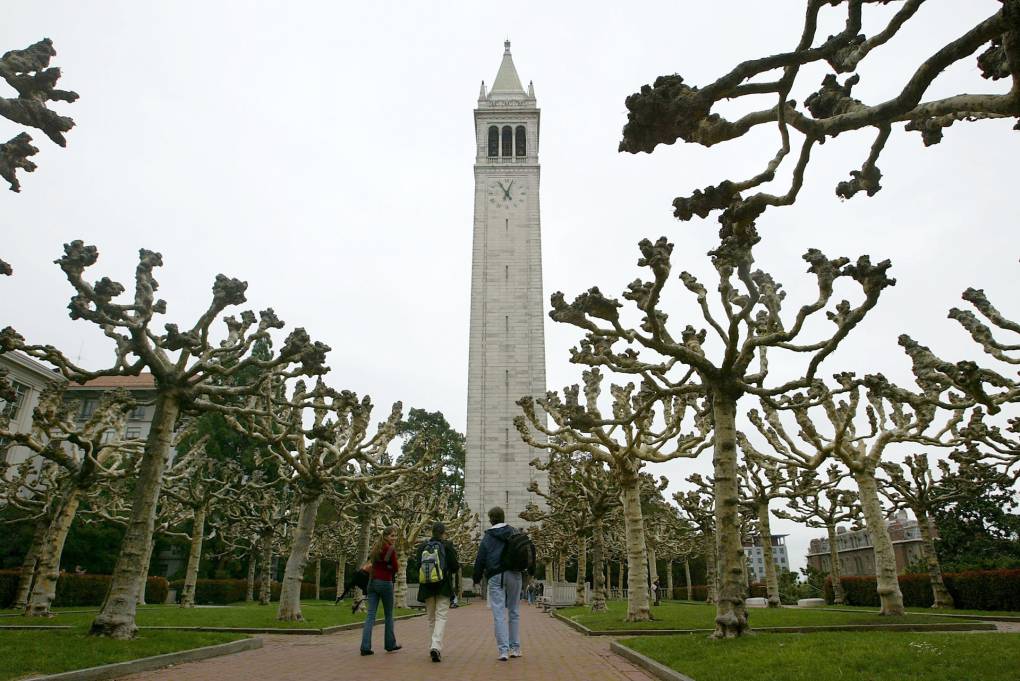
"caption": "Students walking on UC Berkeley's campus.",
"description": null,
"title": "RS18894_GettyImages-52237594-qut",
"credit": "Justin Sullivan/Getty Images",
"status": "inherit",
"altTag": "The UC Berkeley campanile against a white-grey sky with a foreground of funky-looking trees.",
"isLoading": false,
"fetchFailed": false
},
"news_11897029": {
"type": "attachments",
"id": "news_11897029",
"meta": {
"index": "attachments_1716263798",
"site": "news",
"id": "11897029",
"found": true
},
"parent": 11896546,
"imgSizes": {
"twentyfourteen-full-width": {
"file": "https://ww2.kqed.org/app/uploads/sites/10/2021/11/RS52570_GettyImages-1346601919-qut-1038x576.jpg",
"width": 1038,
"mimeType": "image/jpeg",
"height": 576
},
"thumbnail": {
"file": "https://ww2.kqed.org/app/uploads/sites/10/2021/11/RS52570_GettyImages-1346601919-qut-160x105.jpg",
"width": 160,
"mimeType": "image/jpeg",
"height": 105
},
"post-thumbnail": {
"file": "https://ww2.kqed.org/app/uploads/sites/10/2021/11/RS52570_GettyImages-1346601919-qut-672x372.jpg",
"width": 672,
"mimeType": "image/jpeg",
"height": 372
},
"kqedFullSize": {
"file": "https://ww2.kqed.org/app/uploads/sites/10/2021/11/RS52570_GettyImages-1346601919-qut.jpg",
"width": 1920,
"height": 1263
},
"large": {
"file": "https://ww2.kqed.org/app/uploads/sites/10/2021/11/RS52570_GettyImages-1346601919-qut-1020x671.jpg",
"width": 1020,
"mimeType": "image/jpeg",
"height": 671
},
"1536x1536": {
"file": "https://ww2.kqed.org/app/uploads/sites/10/2021/11/RS52570_GettyImages-1346601919-qut-1536x1010.jpg",
"width": 1536,
"mimeType": "image/jpeg",
"height": 1010
},
"medium": {
"file": "https://ww2.kqed.org/app/uploads/sites/10/2021/11/RS52570_GettyImages-1346601919-qut-800x526.jpg",
"width": 800,
"mimeType": "image/jpeg",
"height": 526
}
},
"publishDate": 1637427376,
"modified": 1637805628,
"caption": "In an aerial view, shipping containers are stacked in a storage area at the Port of Oakland on Oct. 14, 2021, in Oakland, California. Disruptions to the global supply chain are continuing with extreme port congestion, a lack of truck drivers and a microchip shortage. ",
"description": null,
"title": "Global Supply Chain Disruptions Continue As Pandemic Induced Issues Drag On",
"credit": "Justin Sullivan/Getty Images",
"status": "inherit",
"altTag": "A wide shot of many, many multi-colored containers all piled on top of each other. With a bit of blue sky towards the top of the image and a truck making its way past the containers on the left side.",
"isLoading": false,
"fetchFailed": false
},
"news_11897025": {
"type": "attachments",
"id": "news_11897025",
"meta": {
"index": "attachments_1716263798",
"site": "news",
"id": "11897025",
"found": true
},
"parent": 11896900,
"imgSizes": {
"twentyfourteen-full-width": {
"file": "https://ww2.kqed.org/app/uploads/sites/10/2021/11/Image-from-iOS-1038x576.jpg",
"width": 1038,
"mimeType": "image/jpeg",
"height": 576
},
"thumbnail": {
"file": "https://ww2.kqed.org/app/uploads/sites/10/2021/11/Image-from-iOS-160x107.jpg",
"width": 160,
"mimeType": "image/jpeg",
"height": 107
},
"post-thumbnail": {
"file": "https://ww2.kqed.org/app/uploads/sites/10/2021/11/Image-from-iOS-672x372.jpg",
"width": 672,
"mimeType": "image/jpeg",
"height": 372
},
"kqedFullSize": {
"file": "https://ww2.kqed.org/app/uploads/sites/10/2021/11/Image-from-iOS.jpg",
"width": 1504,
"height": 1003
},
"large": {
"file": "https://ww2.kqed.org/app/uploads/sites/10/2021/11/Image-from-iOS-1020x680.jpg",
"width": 1020,
"mimeType": "image/jpeg",
"height": 680
},
"medium": {
"file": "https://ww2.kqed.org/app/uploads/sites/10/2021/11/Image-from-iOS-800x534.jpg",
"width": 800,
"mimeType": "image/jpeg",
"height": 534
}
},
"publishDate": 1637383271,
"modified": 1637383381,
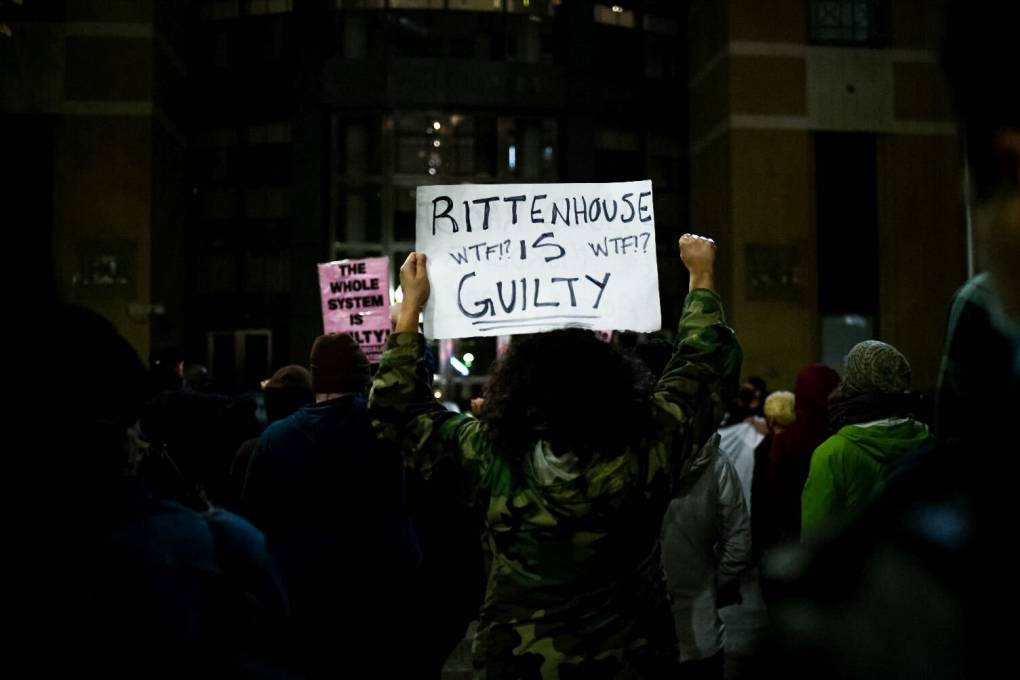
"caption": "A demonstrator raises their fist while holding a sign that says, 'Rittenhouse is Guilty' during a protest outside of Ron Dellums Federal Building in Oakland on Nov. 19, 2021, after the acquittal of Kyle Rittenhouse.",
"description": null,
"title": "Image from iOS",
"credit": "Beth LaBerge/KQED",
"status": "inherit",
"altTag": null,
"isLoading": false,
"fetchFailed": false
},
"news_11896856": {
"type": "attachments",
"id": "news_11896856",
"meta": {
"index": "attachments_1716263798",
"site": "news",
"id": "11896856",
"found": true
},
"parent": 11900721,
"imgSizes": {
"twentyfourteen-full-width": {
"file": "https://ww2.kqed.org/app/uploads/sites/10/2021/11/faauuga-1038x576.jpeg",
"width": 1038,
"mimeType": "image/jpeg",
"height": 576
},
"thumbnail": {
"file": "https://ww2.kqed.org/app/uploads/sites/10/2021/11/faauuga-160x117.jpeg",
"width": 160,
"mimeType": "image/jpeg",
"height": 117
},
"post-thumbnail": {
"file": "https://ww2.kqed.org/app/uploads/sites/10/2021/11/faauuga-672x372.jpeg",
"width": 672,
"mimeType": "image/jpeg",
"height": 372
},
"kqedFullSize": {
"file": "https://ww2.kqed.org/app/uploads/sites/10/2021/11/faauuga-e1637364441573.jpeg",
"width": 1920,
"height": 1406
},
"large": {
"file": "https://ww2.kqed.org/app/uploads/sites/10/2021/11/faauuga-1020x747.jpeg",
"width": 1020,
"mimeType": "image/jpeg",
"height": 747
},
"1536x1536": {
"file": "https://ww2.kqed.org/app/uploads/sites/10/2021/11/faauuga-1536x1125.jpeg",
"width": 1536,
"mimeType": "image/jpeg",
"height": 1125
},
"full-width": {
"file": "https://ww2.kqed.org/app/uploads/sites/10/2021/11/faauuga-1920x1406.jpeg",
"width": 1920,
"mimeType": "image/jpeg",
"height": 1406
},
"medium": {
"file": "https://ww2.kqed.org/app/uploads/sites/10/2021/11/faauuga-800x586.jpeg",
"width": 800,
"mimeType": "image/jpeg",
"height": 586
}
},
"publishDate": 1637349535,
"modified": 1641850827,
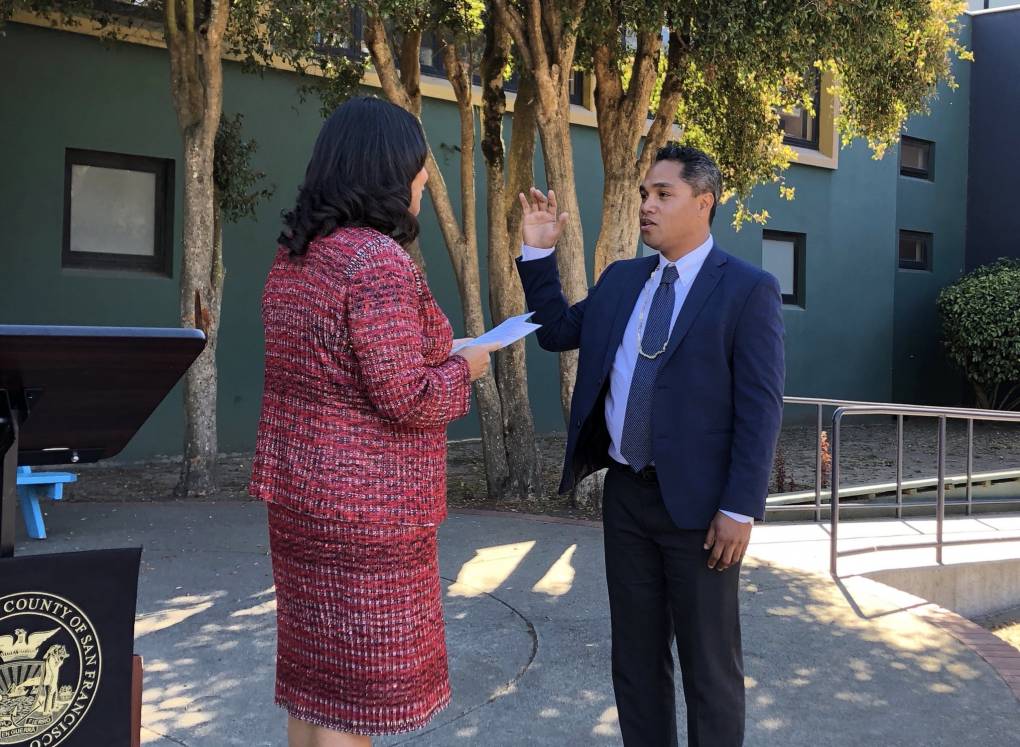
"caption": "San Francisco Mayor London Breed appoints Faauuga Moliga to the SF Board of Education on Oct. 15, 2018, on the campus of the June Jordan School for Equity. Breed has since supported the effort to recall Moliga, who is now the board's vice president.",
"description": null,
"title": "faauuga",
"credit": "Courtesy \u003ca href=\"https://twitter.com/LondonBreed/status/1051912735196250112\">London Breed/Twitter\u003c/a>",
"status": "inherit",
"altTag": "SF Mayor London Breed faces a man in a suit holding up his right hand.",
"isLoading": false,
"fetchFailed": false
},
"news_11867521": {
"type": "attachments",
"id": "news_11867521",
"meta": {
"index": "attachments_1716263798",
"site": "news",
"id": "11867521",
"found": true
},
"parent": 11900721,
"imgSizes": {
"twentyfourteen-full-width": {
"file": "https://ww2.kqed.org/app/uploads/sites/10/2021/04/IMG_7815-1038x576.jpg",
"width": 1038,
"mimeType": "image/jpeg",
"height": 576
},
"thumbnail": {
"file": "https://ww2.kqed.org/app/uploads/sites/10/2021/04/IMG_7815-160x107.jpg",
"width": 160,
"mimeType": "image/jpeg",
"height": 107
},
"post-thumbnail": {
"file": "https://ww2.kqed.org/app/uploads/sites/10/2021/04/IMG_7815-672x372.jpg",
"width": 672,
"mimeType": "image/jpeg",
"height": 372
},
"kqedFullSize": {
"file": "https://ww2.kqed.org/app/uploads/sites/10/2021/04/IMG_7815-scaled-e1617305062188.jpg",
"width": 1920,
"height": 1280
},
"2048x2048": {
"file": "https://ww2.kqed.org/app/uploads/sites/10/2021/04/IMG_7815-2048x1365.jpg",
"width": 2048,
"mimeType": "image/jpeg",
"height": 1365
},
"large": {
"file": "https://ww2.kqed.org/app/uploads/sites/10/2021/04/IMG_7815-1020x680.jpg",
"width": 1020,
"mimeType": "image/jpeg",
"height": 680
},
"1536x1536": {
"file": "https://ww2.kqed.org/app/uploads/sites/10/2021/04/IMG_7815-1536x1024.jpg",
"width": 1536,
"mimeType": "image/jpeg",
"height": 1024
},
"full-width": {
"file": "https://ww2.kqed.org/app/uploads/sites/10/2021/04/IMG_7815-1920x1280.jpg",
"width": 1920,
"mimeType": "image/jpeg",
"height": 1280
},
"medium": {
"file": "https://ww2.kqed.org/app/uploads/sites/10/2021/04/IMG_7815-800x533.jpg",
"width": 800,
"mimeType": "image/jpeg",
"height": 533
}
},
"publishDate": 1617282004,
"modified": 1641855855,
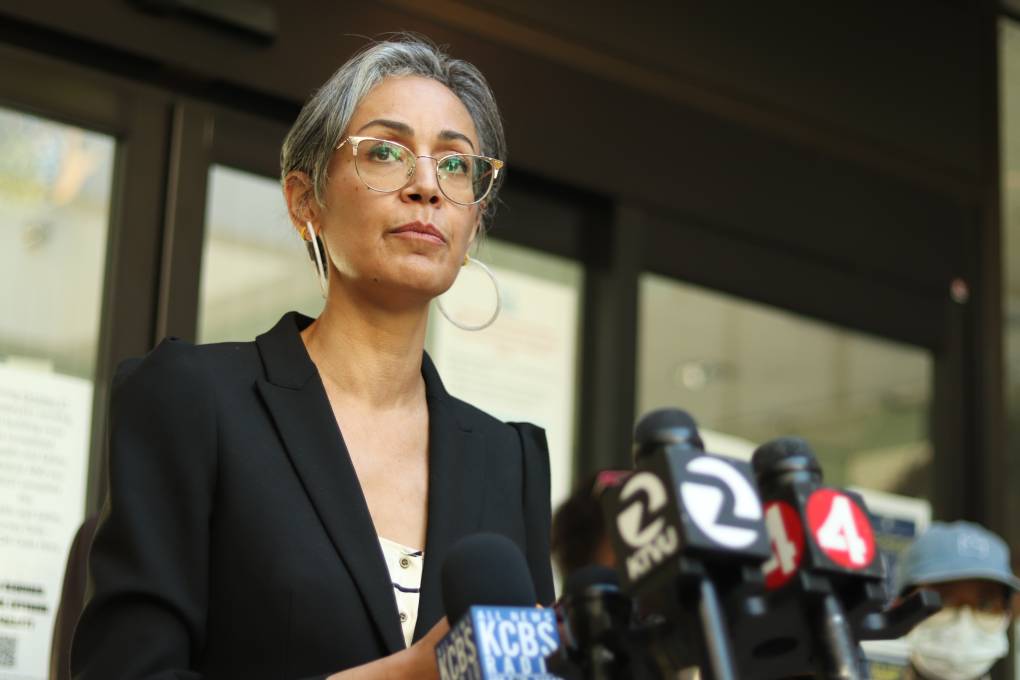
"caption": "San Francisco Board of Education Commissioner Alison Collins addresses her supporters at a rally in San Francisco on March 31, 2021.",
"description": null,
"title": "IMG_7815",
"credit": "MJ Johnson/KQED",
"status": "inherit",
"altTag": "A woman standing in front of microphones at a news conference.",
"isLoading": false,
"fetchFailed": false
},
"news_11896409": {
"type": "attachments",
"id": "news_11896409",
"meta": {
"index": "attachments_1716263798",
"site": "news",
"id": "11896409",
"found": true
},
"parent": 11896341,
"imgSizes": {
"twentyfourteen-full-width": {
"file": "https://ww2.kqed.org/app/uploads/sites/10/2021/11/RS48810_002_Berkeley_EthnicStudiesDanaMoran_04232021-qut-1038x576.jpg",
"width": 1038,
"mimeType": "image/jpeg",
"height": 576
},
"thumbnail": {
"file": "https://ww2.kqed.org/app/uploads/sites/10/2021/11/RS48810_002_Berkeley_EthnicStudiesDanaMoran_04232021-qut-160x107.jpg",
"width": 160,
"mimeType": "image/jpeg",
"height": 107
},
"post-thumbnail": {
"file": "https://ww2.kqed.org/app/uploads/sites/10/2021/11/RS48810_002_Berkeley_EthnicStudiesDanaMoran_04232021-qut-672x372.jpg",
"width": 672,
"mimeType": "image/jpeg",
"height": 372
},
"kqedFullSize": {
"file": "https://ww2.kqed.org/app/uploads/sites/10/2021/11/RS48810_002_Berkeley_EthnicStudiesDanaMoran_04232021-qut.jpg",
"width": 1920,
"height": 1280
},
"large": {
"file": "https://ww2.kqed.org/app/uploads/sites/10/2021/11/RS48810_002_Berkeley_EthnicStudiesDanaMoran_04232021-qut-1020x680.jpg",
"width": 1020,
"mimeType": "image/jpeg",
"height": 680
},
"1536x1536": {
"file": "https://ww2.kqed.org/app/uploads/sites/10/2021/11/RS48810_002_Berkeley_EthnicStudiesDanaMoran_04232021-qut-1536x1024.jpg",
"width": 1536,
"mimeType": "image/jpeg",
"height": 1024
},
"medium": {
"file": "https://ww2.kqed.org/app/uploads/sites/10/2021/11/RS48810_002_Berkeley_EthnicStudiesDanaMoran_04232021-qut-800x533.jpg",
"width": 800,
"mimeType": "image/jpeg",
"height": 533
}
},
"publishDate": 1637100069,
"modified": 1637277751,
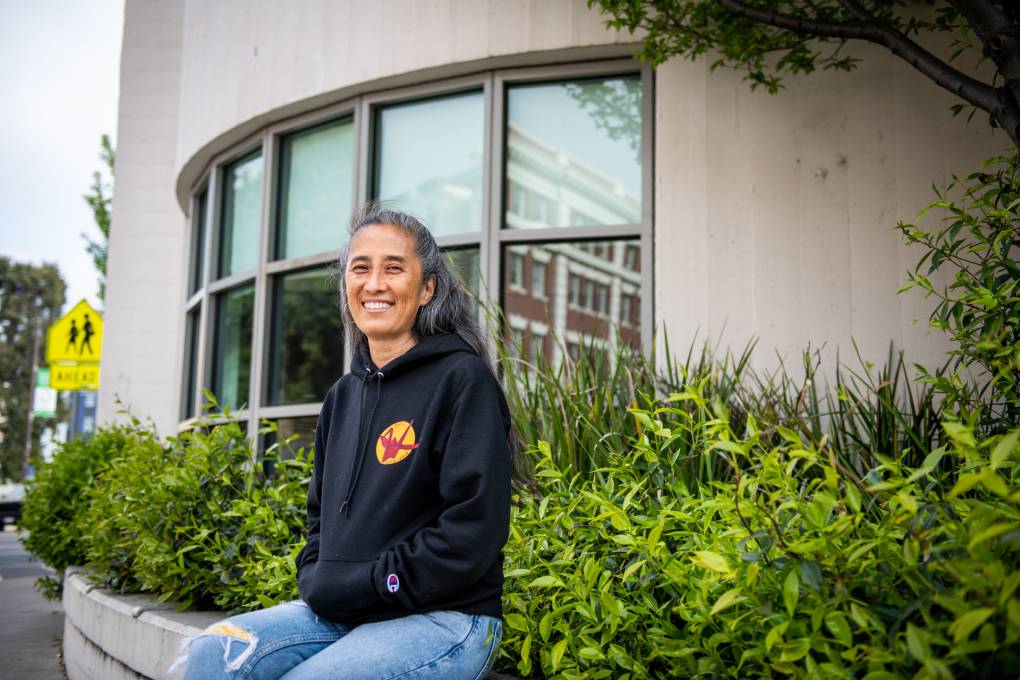
"caption": "Berkeley High School ethnic studies teacher Dana Moran outside the school on April 23, 2021.",
"description": null,
"title": "RS48810_002_Berkeley_EthnicStudiesDanaMoran_04232021-qut",
"credit": "Beth LaBerge/KQED",
"status": "inherit",
"altTag": "A woman sits outside a building wearing a black hoodie and jeans.",
"isLoading": false,
"fetchFailed": false
},
"news_11895541": {
"type": "attachments",
"id": "news_11895541",
"meta": {
"index": "attachments_1716263798",
"site": "news",
"id": "11895541",
"found": true
},
"parent": 11895538,
"imgSizes": {
"twentyfourteen-full-width": {
"file": "https://ww2.kqed.org/app/uploads/sites/10/2021/11/Oak_Tech_008-1200x750-1-1038x576.jpeg",
"width": 1038,
"mimeType": "image/jpeg",
"height": 576
},
"thumbnail": {
"file": "https://ww2.kqed.org/app/uploads/sites/10/2021/11/Oak_Tech_008-1200x750-1-160x100.jpeg",
"width": 160,
"mimeType": "image/jpeg",
"height": 100
},
"post-thumbnail": {
"file": "https://ww2.kqed.org/app/uploads/sites/10/2021/11/Oak_Tech_008-1200x750-1-672x372.jpeg",
"width": 672,
"mimeType": "image/jpeg",
"height": 372
},
"kqedFullSize": {
"file": "https://ww2.kqed.org/app/uploads/sites/10/2021/11/Oak_Tech_008-1200x750-1.jpeg",
"width": 1200,
"height": 750
},
"large": {
"file": "https://ww2.kqed.org/app/uploads/sites/10/2021/11/Oak_Tech_008-1200x750-1-1020x638.jpeg",
"width": 1020,
"mimeType": "image/jpeg",
"height": 638
},
"medium": {
"file": "https://ww2.kqed.org/app/uploads/sites/10/2021/11/Oak_Tech_008-1200x750-1-800x500.jpeg",
"width": 800,
"mimeType": "image/jpeg",
"height": 500
}
},
"publishDate": 1636406064,
"modified": 1636506216,
"caption": "High school students at Oakland Technical High School on May 1, 2017.",
"description": null,
"title": "Oakland Tech",
"credit": "Alison Yin/EdSource",
"status": "inherit",
"altTag": "A high school student with a backpack walks down a long, windowed school hallway.",
"isLoading": false,
"fetchFailed": false
},
"news_11895160": {
"type": "attachments",
"id": "news_11895160",
"meta": {
"index": "attachments_1716263798",
"site": "news",
"id": "11895160",
"found": true
},
"parent": 11895150,
"imgSizes": {
"twentyfourteen-full-width": {
"file": "https://ww2.kqed.org/app/uploads/sites/10/2021/11/Redwood_Elem_044-1200x750-1-1038x576.jpeg",
"width": 1038,
"mimeType": "image/jpeg",
"height": 576
},
"thumbnail": {
"file": "https://ww2.kqed.org/app/uploads/sites/10/2021/11/Redwood_Elem_044-1200x750-1-160x100.jpeg",
"width": 160,
"mimeType": "image/jpeg",
"height": 100
},
"post-thumbnail": {
"file": "https://ww2.kqed.org/app/uploads/sites/10/2021/11/Redwood_Elem_044-1200x750-1-672x372.jpeg",
"width": 672,
"mimeType": "image/jpeg",
"height": 372
},
"kqedFullSize": {
"file": "https://ww2.kqed.org/app/uploads/sites/10/2021/11/Redwood_Elem_044-1200x750-1.jpeg",
"width": 1200,
"height": 750
},
"large": {
"file": "https://ww2.kqed.org/app/uploads/sites/10/2021/11/Redwood_Elem_044-1200x750-1-1020x638.jpeg",
"width": 1020,
"mimeType": "image/jpeg",
"height": 638
},
"medium": {
"file": "https://ww2.kqed.org/app/uploads/sites/10/2021/11/Redwood_Elem_044-1200x750-1-800x500.jpeg",
"width": 800,
"mimeType": "image/jpeg",
"height": 500
}
},
"publishDate": 1636058015,
"modified": 1636069885,
"caption": "Kindergartners during recess at Redwood Heights Elementary School in Oakland, Calif., Wednesday, May 17, 2017.",
"description": null,
"title": "alisonyin.com",
"credit": "Alison Yin/EdSource",
"status": "inherit",
"altTag": "Three children at a playground. One is in the background, and one holds up a green apple at the third child, who holds a red lunch box.",
"isLoading": false,
"fetchFailed": false
},
"news_11894831": {
"type": "attachments",
"id": "news_11894831",
"meta": {
"index": "attachments_1716263798",
"site": "news",
"id": "11894831",
"found": true
},
"parent": 11894830,
"imgSizes": {
"thumbnail": {
"file": "https://ww2.kqed.org/app/uploads/sites/10/2021/11/HOW-TO-Newsletter-Graphic-5-1020x574-1-160x90.png",
"width": 160,
"mimeType": "image/png",
"height": 90
},
"post-thumbnail": {
"file": "https://ww2.kqed.org/app/uploads/sites/10/2021/11/HOW-TO-Newsletter-Graphic-5-1020x574-1-672x372.png",
"width": 672,
"mimeType": "image/png",
"height": 372
},
"kqedFullSize": {
"file": "https://ww2.kqed.org/app/uploads/sites/10/2021/11/HOW-TO-Newsletter-Graphic-5-1020x574-1.png",
"width": 1020,
"height": 574
},
"medium": {
"file": "https://ww2.kqed.org/app/uploads/sites/10/2021/11/HOW-TO-Newsletter-Graphic-5-1020x574-1-800x450.png",
"width": 800,
"mimeType": "image/png",
"height": 450
}
},
"publishDate": 1635892679,
"modified": 1635892687,
"caption": null,
"description": null,
"title": "SFUSD students",
"credit": null,
"status": "inherit",
"altTag": null,
"isLoading": false,
"fetchFailed": false
},
"news_11894302": {
"type": "attachments",
"id": "news_11894302",
"meta": {
"index": "attachments_1716263798",
"site": "news",
"id": "11894302",
"found": true
},
"parent": 11894065,
"imgSizes": {
"twentyfourteen-full-width": {
"file": "https://ww2.kqed.org/app/uploads/sites/10/2021/10/Autumn_Siva_petitions_credit_Recall_SF_School_Board-1-1038x576.jpeg",
"width": 1038,
"mimeType": "image/jpeg",
"height": 576
},
"thumbnail": {
"file": "https://ww2.kqed.org/app/uploads/sites/10/2021/10/Autumn_Siva_petitions_credit_Recall_SF_School_Board-1-160x120.jpeg",
"width": 160,
"mimeType": "image/jpeg",
"height": 120
},
"post-thumbnail": {
"file": "https://ww2.kqed.org/app/uploads/sites/10/2021/10/Autumn_Siva_petitions_credit_Recall_SF_School_Board-1-672x372.jpeg",
"width": 672,
"mimeType": "image/jpeg",
"height": 372
},
"kqedFullSize": {
"file": "https://ww2.kqed.org/app/uploads/sites/10/2021/10/Autumn_Siva_petitions_credit_Recall_SF_School_Board-1-scaled-e1635468698126.jpeg",
"width": 1920,
"height": 1440
},
"2048x2048": {
"file": "https://ww2.kqed.org/app/uploads/sites/10/2021/10/Autumn_Siva_petitions_credit_Recall_SF_School_Board-1-2048x1536.jpeg",
"width": 2048,
"mimeType": "image/jpeg",
"height": 1536
},
"large": {
"file": "https://ww2.kqed.org/app/uploads/sites/10/2021/10/Autumn_Siva_petitions_credit_Recall_SF_School_Board-1-1020x765.jpeg",
"width": 1020,
"mimeType": "image/jpeg",
"height": 765
},
"1536x1536": {
"file": "https://ww2.kqed.org/app/uploads/sites/10/2021/10/Autumn_Siva_petitions_credit_Recall_SF_School_Board-1-1536x1152.jpeg",
"width": 1536,
"mimeType": "image/jpeg",
"height": 1152
},
"full-width": {
"file": "https://ww2.kqed.org/app/uploads/sites/10/2021/10/Autumn_Siva_petitions_credit_Recall_SF_School_Board-1-1920x1440.jpeg",
"width": 1920,
"mimeType": "image/jpeg",
"height": 1440
},
"medium": {
"file": "https://ww2.kqed.org/app/uploads/sites/10/2021/10/Autumn_Siva_petitions_credit_Recall_SF_School_Board-1-800x600.jpeg",
"width": 800,
"mimeType": "image/jpeg",
"height": 600
}
},
"publishDate": 1635468575,
"modified": 1635540677,
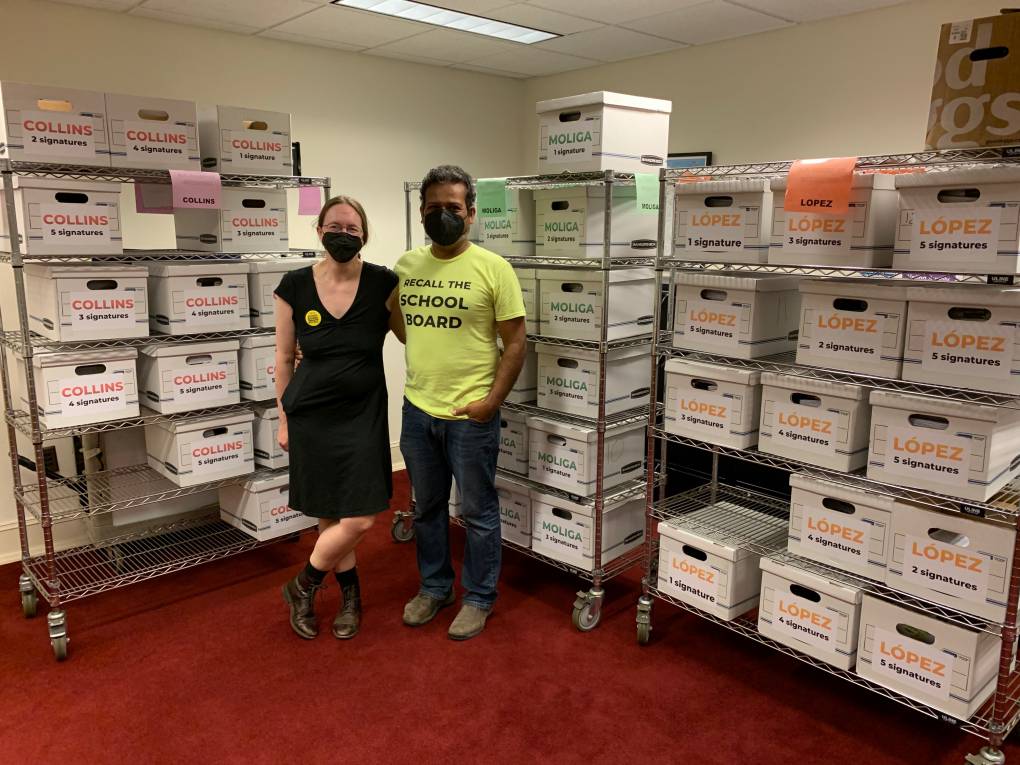
"caption": "Autumn Looijen, left, and Siva Raj, co-founders of the Recall SF School Board campaign, stand in front of boxes filled with signed petitions to put the effort on the ballot.",
"description": null,
"title": "Autumn_Siva_petitions_credit_Recall_SF_School_Board (1)",
"credit": "Recall SF School Board",
"status": "inherit",
"altTag": "A man and a woman, smiling and arm in arm, stand at the corner of two walls stacked with election filing boxes.",
"isLoading": false,
"fetchFailed": false
},
"news_11893804": {
"type": "attachments",
"id": "news_11893804",
"meta": {
"index": "attachments_1716263798",
"site": "news",
"id": "11893804",
"found": true
},
"parent": 11893791,
"imgSizes": {
"twentyfourteen-full-width": {
"file": "https://ww2.kqed.org/app/uploads/sites/10/2021/10/RS52136_018_SanLeandro_KidsConnectPreschool_10222021-qut-1038x576.jpg",
"width": 1038,
"mimeType": "image/jpeg",
"height": 576
},
"thumbnail": {
"file": "https://ww2.kqed.org/app/uploads/sites/10/2021/10/RS52136_018_SanLeandro_KidsConnectPreschool_10222021-qut-160x107.jpg",
"width": 160,
"mimeType": "image/jpeg",
"height": 107
},
"post-thumbnail": {
"file": "https://ww2.kqed.org/app/uploads/sites/10/2021/10/RS52136_018_SanLeandro_KidsConnectPreschool_10222021-qut-672x372.jpg",
"width": 672,
"mimeType": "image/jpeg",
"height": 372
},
"kqedFullSize": {
"file": "https://ww2.kqed.org/app/uploads/sites/10/2021/10/RS52136_018_SanLeandro_KidsConnectPreschool_10222021-qut.jpg",
"width": 1920,
"height": 1280
},
"large": {
"file": "https://ww2.kqed.org/app/uploads/sites/10/2021/10/RS52136_018_SanLeandro_KidsConnectPreschool_10222021-qut-1020x680.jpg",
"width": 1020,
"mimeType": "image/jpeg",
"height": 680
},
"1536x1536": {
"file": "https://ww2.kqed.org/app/uploads/sites/10/2021/10/RS52136_018_SanLeandro_KidsConnectPreschool_10222021-qut-1536x1024.jpg",
"width": 1536,
"mimeType": "image/jpeg",
"height": 1024
},
"medium": {
"file": "https://ww2.kqed.org/app/uploads/sites/10/2021/10/RS52136_018_SanLeandro_KidsConnectPreschool_10222021-qut-800x533.jpg",
"width": 800,
"mimeType": "image/jpeg",
"height": 533
}
},
"publishDate": 1635277710,
"modified": 1635295918,
"caption": "Bri Davis leads a game for a classroom of preschool children at Kids Konnect Infant Care and Preschool in San Leandro on Oct. 22, 2021.",
"description": null,
"title": "RS52136_018_SanLeandro_KidsConnectPreschool_10222021-qut",
"credit": "Beth LaBerge/KQED",
"status": "inherit",
"altTag": "Bri Davis leads a game for a classroom of preschool children in a gym.",
"isLoading": false,
"fetchFailed": false
}
},
"audioPlayerReducer": {
"postId": "stream_live",
"isPaused": true,
"isPlaying": false,
"pfsActive": false,
"pledgeModalIsOpen": true,
"playerDrawerIsOpen": false,
"liveAudioPlayStartedAt": 0,
"liveAudioPlayContext": ""
},
"authorsReducer": {
"byline_news_11897105": {
"type": "authors",
"id": "byline_news_11897105",
"meta": {
"override": true
},
"slug": "byline_news_11897105",
"name": "Joe Hong",
"isLoading": false
},
"byline_news_11897034": {
"type": "authors",
"id": "byline_news_11897034",
"meta": {
"override": true
},
"slug": "byline_news_11897034",
"name": "Mikhail Zinshteyn",
"isLoading": false
},
"byline_news_11895538": {
"type": "authors",
"id": "byline_news_11895538",
"meta": {
"override": true
},
"slug": "byline_news_11895538",
"name": "\u003ca href=\"https://edsource.org/author/cjones\">Carolyn Jones\u003c/a>",
"isLoading": false
},
"byline_news_11895150": {
"type": "authors",
"id": "byline_news_11895150",
"meta": {
"override": true
},
"slug": "byline_news_11895150",
"name": "\u003ca href=\"https://edsource.org/author/cjones\">Carolyn Jones\u003c/a>",
"isLoading": false
},
"byline_news_11893791": {
"type": "authors",
"id": "byline_news_11893791",
"meta": {
"override": true
},
"slug": "byline_news_11893791",
"name": "Deepa Fernandes",
"isLoading": false
},
"gmarzorati": {
"type": "authors",
"id": "227",
"meta": {
"index": "authors_1716337520",
"id": "227",
"found": true
},
"name": "Guy Marzorati",
"firstName": "Guy",
"lastName": "Marzorati",
"slug": "gmarzorati",
"email": "gmarzorati@KQED.org",
"display_author_email": true,
"staff_mastheads": [
"news"
],
"title": "Correspondent",
"bio": "Guy Marzorati is a correspondent on KQED's California Politics and Government Desk, based in San Jose. A graduate of Santa Clara University, Guy joined KQED in 2013. He reports on state and local politics and produces KQED's digital voter guide.",
"avatar": "https://secure.gravatar.com/avatar/e7038b8dbfd55b104369b76b1cd0b9de?s=600&d=blank&r=g",
"twitter": "guymarzorati",
"facebook": null,
"instagram": null,
"linkedin": null,
"sites": [
{
"site": "",
"roles": [
"editor"
]
},
{
"site": "news",
"roles": [
"editor"
]
},
{
"site": "science",
"roles": [
"editor"
]
},
{
"site": "forum",
"roles": [
"editor"
]
},
{
"site": "elections",
"roles": [
"editor"
]
},
{
"site": "liveblog",
"roles": [
"editor"
]
}
],
"headData": {
"title": "Guy Marzorati | KQED",
"description": "Correspondent",
"ogImgSrc": "https://secure.gravatar.com/avatar/e7038b8dbfd55b104369b76b1cd0b9de?s=600&d=blank&r=g",
"twImgSrc": "https://secure.gravatar.com/avatar/e7038b8dbfd55b104369b76b1cd0b9de?s=600&d=blank&r=g"
},
"isLoading": false,
"link": "/author/gmarzorati"
},
"kqednewsstaffandwires": {
"type": "authors",
"id": "237",
"meta": {
"index": "authors_1716337520",
"id": "237",
"found": true
},
"name": "KQED News Staff and Wires",
"firstName": "KQED News Staff and Wires",
"lastName": null,
"slug": "kqednewsstaffandwires",
"email": "onlinenewsstaff@kqed.org",
"display_author_email": false,
"staff_mastheads": [],
"title": null,
"bio": null,
"avatar": "https://secure.gravatar.com/avatar/72295af8ebbfbd19a4948f5271285664?s=600&d=blank&r=g",
"twitter": null,
"facebook": null,
"instagram": null,
"linkedin": null,
"sites": [
{
"site": "arts",
"roles": [
"contributor"
]
},
{
"site": "news",
"roles": [
"contributor"
]
},
{
"site": "lowdown",
"roles": [
"author"
]
},
{
"site": "stateofhealth",
"roles": [
"contributor"
]
},
{
"site": "food",
"roles": [
"author"
]
}
],
"headData": {
"title": "KQED News Staff and Wires | KQED",
"description": null,
"ogImgSrc": "https://secure.gravatar.com/avatar/72295af8ebbfbd19a4948f5271285664?s=600&d=blank&r=g",
"twImgSrc": "https://secure.gravatar.com/avatar/72295af8ebbfbd19a4948f5271285664?s=600&d=blank&r=g"
},
"isLoading": false,
"link": "/author/kqednewsstaffandwires"
},
"dkatayama": {
"type": "authors",
"id": "7240",
"meta": {
"index": "authors_1716337520",
"id": "7240",
"found": true
},
"name": "Devin Katayama",
"firstName": "Devin",
"lastName": "Katayama",
"slug": "dkatayama",
"email": "dkatayama@kqed.org",
"display_author_email": true,
"staff_mastheads": [
"news"
],
"title": "Editor of Talent and Development",
"bio": "Devin Katayama is former Editor of Talent and Development for KQED. He supported our internship program and on-call staff by looking for equitable opportunities to improve the newsroom.\r\n\r\nHe previously hosted The Bay and American Suburb podcasts from KQED News. Prior to returning to the Bay Area in 2015, Devin was the education reporter for WFPL in Louisville and worked as a producer with radio stations in Chicago and Portland, OR. His work has appeared on NPR’s \u003cem>Morning Edition, All Things Considered, The Takeaway\u003c/em> and \u003cem>Here and Now.\u003c/em>\r\n\r\nDevin earned his MA in Journalism from Columbia College Chicago, where he was a Follett Fellow and the recipient of the 2011 Studs Terkel Community Media Workshop Scholarship for his story on Chicago's homeless youth. He won WBUR's 2014 Daniel Schorr award and a regional RTNDA Edward R. Murrow Award for his documentary \"At Risk\" that looked at issues facing some of Louisville's students. Devin has also received numerous local awards from the Associated Press and the Society of Professional Journalists.",
"avatar": "https://secure.gravatar.com/avatar/d0d2978a31002fb2de107921a8e18405?s=600&d=blank&r=g",
"twitter": "RadioDevin",
"facebook": null,
"instagram": null,
"linkedin": null,
"sites": [
{
"site": "arts",
"roles": []
},
{
"site": "news",
"roles": [
"author"
]
},
{
"site": "stateofhealth",
"roles": [
"author"
]
},
{
"site": "forum",
"roles": [
"editor"
]
},
{
"site": "perspectives",
"roles": [
"editor"
]
}
],
"headData": {
"title": "Devin Katayama | KQED",
"description": "Editor of Talent and Development",
"ogImgSrc": "https://secure.gravatar.com/avatar/d0d2978a31002fb2de107921a8e18405?s=600&d=blank&r=g",
"twImgSrc": "https://secure.gravatar.com/avatar/d0d2978a31002fb2de107921a8e18405?s=600&d=blank&r=g"
},
"isLoading": false,
"link": "/author/dkatayama"
},
"ecruzguevarra": {
"type": "authors",
"id": "8654",
"meta": {
"index": "authors_1716337520",
"id": "8654",
"found": true
},
"name": "Ericka Cruz Guevarra",
"firstName": "Ericka",
"lastName": "Cruz Guevarra",
"slug": "ecruzguevarra",
"email": "ecruzguevarra@kqed.org",
"display_author_email": true,
"staff_mastheads": [
"news"
],
"title": "Producer, The Bay Podcast",
"bio": "Ericka Cruz Guevarra is host of \u003ca href=\"https://www.kqed.org/podcasts/thebay\">\u003cem>The Bay\u003c/em>\u003c/a> podcast at KQED. Before host, she was the show’s producer. Her work in that capacity includes a three-part reported series on policing in Vallejo, which won a 2020 excellence in journalism award from the Society of Professional Journalists. Ericka has worked as a breaking news reporter at Oregon Public Broadcasting, helped produce the Code Switch podcast, and was KQED’s inaugural Raul Ramirez Diversity Fund intern. She’s also an alumna of NPR’s Next Generation Radio program. Send her an email if you have strong feelings about whether Fairfield and Suisun City are the Bay. Ericka is represented by SAG-AFTRA.",
"avatar": "https://secure.gravatar.com/avatar/accefc1de4bafc7e234b69bcb9b6f6536c130fd84709bc3069ef11a78787e1bb?s=600&d=blank&r=g",
"twitter": "NotoriousECG",
"bluesky": null,
"facebook": null,
"instagram": null,
"linkedin": null,
"sites": [
{
"site": "arts",
"roles": [
"subscriber"
]
},
{
"site": "news",
"roles": [
"editor",
"manage_categories"
]
},
{
"site": "futureofyou",
"roles": [
"subscriber"
]
},
{
"site": "stateofhealth",
"roles": [
"subscriber"
]
},
{
"site": "science",
"roles": [
"editor"
]
},
{
"site": "forum",
"roles": [
"subscriber"
]
}
],
"headData": {
"title": "Ericka Cruz Guevarra | KQED",
"description": "Producer, The Bay Podcast",
"ogImgSrc": "https://secure.gravatar.com/avatar/accefc1de4bafc7e234b69bcb9b6f6536c130fd84709bc3069ef11a78787e1bb?s=600&d=blank&r=g",
"twImgSrc": "https://secure.gravatar.com/avatar/accefc1de4bafc7e234b69bcb9b6f6536c130fd84709bc3069ef11a78787e1bb?s=600&d=blank&r=g"
},
"isLoading": false,
"link": "/author/ecruzguevarra"
},
"bwatt": {
"type": "authors",
"id": "11238",
"meta": {
"index": "authors_1716337520",
"id": "11238",
"found": true
},
"name": "Brian Watt",
"firstName": "Brian",
"lastName": "Watt",
"slug": "bwatt",
"email": "bwatt@KQED.org",
"display_author_email": false,
"staff_mastheads": [
"news"
],
"title": "Morning News Anchor",
"bio": "Brian Watt is KQED's morning radio news anchor. He joined the KQED News team in April of 2016. Prior to that, he worked as a Reporter for KPCC in Los Angeles and a producer at \u003cem>Marketplace.\u003c/em>\r\n\r\nDuring eight years at KPCC, Brian covered business and economics, and his work won several awards. In 2008, he won the Los Angeles Press Club’s first-place award for Business and Financial Reporting, Broadcast. He’s also received honorable mention and been first runner up for the Press Club’s Radio Journalist of the Year. He won two Golden Mike awards from the Radio and TV News Association of Southern California.\r\n\r\nBrian holds degrees in theater from Yale University and the Sorbonne, and has worked as an actor in France, Italy, Brazil, Hungary and . . . Hollywood. He appeared in a few television shows, including \u003cem>The West Wing, Judging Amy\u003c/em> and \u003cem>The District.\u003c/em>\r\n\r\nEmail: bwatt@KQED.org Twitter: @RadioBWatt",
"avatar": "https://secure.gravatar.com/avatar/55393ff57ed34e2be773ba4789dd6a19?s=600&d=blank&r=g",
"twitter": "@RadioBWatt",
"facebook": null,
"instagram": null,
"linkedin": null,
"sites": [
{
"site": "arts",
"roles": [
"contributor"
]
},
{
"site": "news",
"roles": [
"editor"
]
}
],
"headData": {
"title": "Brian Watt | KQED",
"description": "Morning News Anchor",
"ogImgSrc": "https://secure.gravatar.com/avatar/55393ff57ed34e2be773ba4789dd6a19?s=600&d=blank&r=g",
"twImgSrc": "https://secure.gravatar.com/avatar/55393ff57ed34e2be773ba4789dd6a19?s=600&d=blank&r=g"
},
"isLoading": false,
"link": "/author/bwatt"
},
"vrancano": {
"type": "authors",
"id": "11276",
"meta": {
"index": "authors_1716337520",
"id": "11276",
"found": true
},
"name": "Vanessa Rancaño",
"firstName": "Vanessa",
"lastName": "Rancaño",
"slug": "vrancano",
"email": "vrancano@kqed.org",
"display_author_email": false,
"staff_mastheads": [
"news"
],
"title": "Reporter",
"bio": "Vanessa Rancaño is a features reporter for KQED. She’s also covered homelessness and education for the station and reported from the Central Valley. Her work has aired across public radio, from flagship national news shows to longform narrative podcasts. Before taking up a mic, she worked as a freelance print journalist. She’s been recognized with a number of national and regional awards. Vanessa grew up in California's Central Valley. She's a former NPR Kroc Fellow, and a graduate of the UC Berkeley Graduate School of Journalism.",
"avatar": "https://secure.gravatar.com/avatar/b3a383dfb0e7ee1c17568f2cf067904ab654d6e3de9743fc661f3c788ade1bed?s=600&d=blank&r=g",
"twitter": "vanessarancano",
"bluesky": null,
"facebook": null,
"instagram": null,
"linkedin": null,
"sites": [
{
"site": "arts",
"roles": [
"editor"
]
},
{
"site": "news",
"roles": [
"editor"
]
},
{
"site": "liveblog",
"roles": [
"contributor"
]
}
],
"headData": {
"title": "Vanessa Rancaño | KQED",
"description": "Reporter",
"ogImgSrc": "https://secure.gravatar.com/avatar/b3a383dfb0e7ee1c17568f2cf067904ab654d6e3de9743fc661f3c788ade1bed?s=600&d=blank&r=g",
"twImgSrc": "https://secure.gravatar.com/avatar/b3a383dfb0e7ee1c17568f2cf067904ab654d6e3de9743fc661f3c788ade1bed?s=600&d=blank&r=g"
},
"isLoading": false,
"link": "/author/vrancano"
},
"mfharvin": {
"type": "authors",
"id": "11583",
"meta": {
"index": "authors_1716337520",
"id": "11583",
"found": true
},
"name": "Mary Franklin Harvin",
"firstName": "Mary Franklin",
"lastName": "Harvin",
"slug": "mfharvin",
"email": "mfharvin@KQED.org",
"display_author_email": false,
"staff_mastheads": [
"news"
],
"title": "KQED Contributor",
"bio": null,
"avatar": "https://secure.gravatar.com/avatar/0e53510a7d48cfbdebfc9b11357d845f?s=600&d=blank&r=g",
"twitter": "EmEffHarvin",
"facebook": null,
"instagram": null,
"linkedin": null,
"sites": [
{
"site": "news",
"roles": [
"author",
"edit_others_posts"
]
},
{
"site": "science",
"roles": [
"editor"
]
}
],
"headData": {
"title": "Mary Franklin Harvin | KQED",
"description": "KQED Contributor",
"ogImgSrc": "https://secure.gravatar.com/avatar/0e53510a7d48cfbdebfc9b11357d845f?s=600&d=blank&r=g",
"twImgSrc": "https://secure.gravatar.com/avatar/0e53510a7d48cfbdebfc9b11357d845f?s=600&d=blank&r=g"
},
"isLoading": false,
"link": "/author/mfharvin"
},
"hmcdede": {
"type": "authors",
"id": "11635",
"meta": {
"index": "authors_1716337520",
"id": "11635",
"found": true
},
"name": "Holly McDede",
"firstName": "Holly",
"lastName": "McDede",
"slug": "hmcdede",
"email": "hmcdede@KQED.org",
"display_author_email": false,
"staff_mastheads": [],
"title": "KQED Contributor",
"bio": null,
"avatar": "https://secure.gravatar.com/avatar/999d9bf31bb3a2f0511932d99526cb3e?s=600&d=blank&r=g",
"twitter": null,
"facebook": null,
"instagram": null,
"linkedin": null,
"sites": [
{
"site": "arts",
"roles": [
"editor"
]
},
{
"site": "news",
"roles": [
"edit_others_posts",
"editor"
]
},
{
"site": "science",
"roles": [
"editor"
]
},
{
"site": "forum",
"roles": [
"editor"
]
},
{
"site": "perspectives",
"roles": [
"administrator"
]
}
],
"headData": {
"title": "Holly McDede | KQED",
"description": "KQED Contributor",
"ogImgSrc": "https://secure.gravatar.com/avatar/999d9bf31bb3a2f0511932d99526cb3e?s=600&d=blank&r=g",
"twImgSrc": "https://secure.gravatar.com/avatar/999d9bf31bb3a2f0511932d99526cb3e?s=600&d=blank&r=g"
},
"isLoading": false,
"link": "/author/hmcdede"
},
"amontecillo": {
"type": "authors",
"id": "11649",
"meta": {
"index": "authors_1716337520",
"id": "11649",
"found": true
},
"name": "Alan Montecillo",
"firstName": "Alan",
"lastName": "Montecillo",
"slug": "amontecillo",
"email": "amontecillo@kqed.org",
"display_author_email": false,
"staff_mastheads": [
"news"
],
"title": "KQED Contributor",
"bio": "Alan Montecillo is the senior editor of \u003cem>\u003ca href=\"http://kqed.org/thebay\">The Bay\u003c/a>, \u003c/em> KQED's local news podcast. Before moving to the Bay Area, he worked as a senior talk show producer for WILL in Champaign-Urbana, Illinois and at Oregon Public Broadcasting in Portland, Oregon. He has won journalism awards from the Society of Professional Journalists Northern California, the Public Media Journalists Association, The Signal Awards, and has also received a regional Edward R. Murrow award. Alan is a Filipino American from Hong Kong and a graduate of Reed College.",
"avatar": "https://secure.gravatar.com/avatar/268f53a2066899ea9efdd8a5900218b17c822d9862cbc9326cccec53ef41d349?s=600&d=blank&r=g",
"twitter": "alanmontecillo",
"bluesky": null,
"facebook": null,
"instagram": null,
"linkedin": null,
"sites": [
{
"site": "",
"roles": [
"editor"
]
},
{
"site": "news",
"roles": [
"editor",
"manage_categories"
]
}
],
"headData": {
"title": "Alan Montecillo | KQED",
"description": "KQED Contributor",
"ogImgSrc": "https://secure.gravatar.com/avatar/268f53a2066899ea9efdd8a5900218b17c822d9862cbc9326cccec53ef41d349?s=600&d=blank&r=g",
"twImgSrc": "https://secure.gravatar.com/avatar/268f53a2066899ea9efdd8a5900218b17c822d9862cbc9326cccec53ef41d349?s=600&d=blank&r=g"
},
"isLoading": false,
"link": "/author/amontecillo"
},
"agonzalez": {
"type": "authors",
"id": "11724",
"meta": {
"index": "authors_1716337520",
"id": "11724",
"found": true
},
"name": "Alexander Gonzalez",
"firstName": "Alexander",
"lastName": "Gonzalez",
"slug": "agonzalez",
"email": "AlexanderGonzalez@KQED.org",
"display_author_email": false,
"staff_mastheads": [
"news"
],
"title": "KQED Contributor",
"bio": null,
"avatar": "https://secure.gravatar.com/avatar/9e291ed34e154df4c662edf858b641d70b4859939bfe40be478408f9dfd057d2?s=600&d=blank&r=g",
"twitter": null,
"bluesky": null,
"facebook": null,
"instagram": null,
"linkedin": null,
"sites": [
{
"site": "arts",
"roles": [
"editor"
]
},
{
"site": "news",
"roles": [
"editor"
]
},
{
"site": "science",
"roles": [
"editor"
]
}
],
"headData": {
"title": "Alexander Gonzalez | KQED",
"description": "KQED Contributor",
"ogImgSrc": "https://secure.gravatar.com/avatar/9e291ed34e154df4c662edf858b641d70b4859939bfe40be478408f9dfd057d2?s=600&d=blank&r=g",
"twImgSrc": "https://secure.gravatar.com/avatar/9e291ed34e154df4c662edf858b641d70b4859939bfe40be478408f9dfd057d2?s=600&d=blank&r=g"
},
"isLoading": false,
"link": "/author/agonzalez"
},
"swhitney": {
"type": "authors",
"id": "11784",
"meta": {
"index": "authors_1716337520",
"id": "11784",
"found": true
},
"name": "Spencer Whitney",
"firstName": "Spencer",
"lastName": "Whitney",
"slug": "swhitney",
"email": "swhitney@kqed.org",
"display_author_email": false,
"staff_mastheads": [],
"title": "KQED Digital Editor",
"bio": "Spencer Whitney is currently a Digital Editor for KQED News. Prior to joining KQED News, Spencer worked as the Multimedia Editor at the Oakland Post and an Assistant Editor in the Editorial department at the San Francisco Chronicle. He attended Howard University as an undergraduate and interned with SiriusXM. He also attended UC Berkeley's Graduate School of Journalism and had the opportunity to write for the hyperlocal news sites Richmond Confidential and Oakland North.",
"avatar": "https://secure.gravatar.com/avatar/e33ff4fd8b8f0d2796f36472fb32607ca8fc46ef5e537dcfdbdee688d8ea5b80?s=600&d=mm&r=g",
"twitter": null,
"bluesky": null,
"facebook": null,
"instagram": null,
"linkedin": null,
"sites": [
{
"site": "arts",
"roles": [
"editor"
]
},
{
"site": "news",
"roles": [
"editor"
]
},
{
"site": "science",
"roles": [
"editor"
]
},
{
"site": "perspectives",
"roles": [
"editor"
]
}
],
"headData": {
"title": "Spencer Whitney | KQED",
"description": "KQED Digital Editor",
"ogImgSrc": "https://secure.gravatar.com/avatar/e33ff4fd8b8f0d2796f36472fb32607ca8fc46ef5e537dcfdbdee688d8ea5b80?s=600&d=mm&r=g",
"twImgSrc": "https://secure.gravatar.com/avatar/e33ff4fd8b8f0d2796f36472fb32607ca8fc46ef5e537dcfdbdee688d8ea5b80?s=600&d=mm&r=g"
},
"isLoading": false,
"link": "/author/swhitney"
}
},
"pagesReducer": {
"news_tag_education": {
"type": "terms",
"id": "news_20013",
"meta": {
"index": "terms_1716263798",
"site": "news",
"id": "20013",
"score": 6.9701543
},
"featImg": null,
"name": "education",
"description": null,
"taxonomy": "tag",
"headData": {
"twImgId": null,
"twTitle": null,
"ogTitle": null,
"ogImgId": null,
"twDescription": null,
"description": null,
"title": "education Archives | KQED News",
"ogDescription": null
},
"ttid": 20030,
"slug": "education",
"isLoading": false,
"title": "education",
"pageMeta": {
"site": "news",
"WpPageTemplate": "page-topic-editorial",
"currentPage": 73
},
"blocks": [
{
"blockName": "kqed/post-list",
"attrs": {
"layout": "cardArticle2",
"query": "posts/news?tag=education",
"seeMore": false,
"paginated": true,
"page": 73
}
},
{
"blockName": "kqed/ad"
}
]
}
},
"pfsSessionReducer": {},
"postsReducer": {
"stream_live": {
"type": "live",
"id": "stream_live",
"audioUrl": "https://streams.kqed.org/kqedradio",
"title": "Live Stream",
"excerpt": "Live Stream information currently unavailable.",
"link": "/radio",
"featImg": "",
"label": {
"name": "KQED Live",
"link": "/"
}
},
"stream_kqedNewscast": {
"type": "posts",
"id": "stream_kqedNewscast",
"audioUrl": "https://www.kqed.org/.stream/anon/radio/RDnews/newscast.mp3?_=1",
"title": "KQED Newscast",
"featImg": "",
"label": {
"name": "88.5 FM",
"link": "/"
}
},
"news_11897105": {
"type": "posts",
"id": "news_11897105",
"meta": {
"index": "posts_1716263798",
"site": "news",
"id": "11897105",
"score": null,
"sort": [
1637613230000
]
},
"guestAuthors": [],
"slug": "why-revamping-the-way-california-teaches-math-is-so-contentious",
"title": "Why Revamping the Way California Teaches Math Is So Contentious",
"publishDate": 1637613230,
"format": "standard",
"headTitle": "Why Revamping the Way California Teaches Math Is So Contentious | KQED",
"labelTerm": {},
"content": "\u003cp>\u003cem>Lea este artículo en \u003ca href=\"https://calmatters.org/calmatters-en-espanol/2021/11/comprendiendo-el-debate-detras-del-nuevo-marco-matematico-de-california/\" target=\"_blank\" rel=\"noopener noreferrer\">español\u003c/a>.\u003c/em>\u003c/p>\n\u003cp>When Rebecca Pariso agreed to join a team of educators tasked in late 2019 with California’s new mathematics framework, she said she expected some controversy.\u003c/p>\n\u003cp>But she didn’t expect her work would be in the \u003ca href=\"https://www.nytimes.com/2021/11/04/us/california-math-curriculum-guidelines.html\" target=\"_blank\" rel=\"noopener noreferrer\">national spotlight\u003c/a>.\u003c/p>\n\u003cp>“We were transforming math education, and change is hard and scary,” said Pariso, a math teacher at Hueneme Elementary School District. “Especially if you don’t understand why that change needs to occur. But I didn’t expect it to go this far.”\u003c/p>\n\u003cp>Every \u003ca href=\"https://www.scoe.net/castandards/Documents/summary_math_framework.pdf\" target=\"_blank\" rel=\"noopener noreferrer\">eight years\u003c/a>, a group of educators comes together to update the state’s math curriculum framework. This particular update has attracted extra attention, and controversy, because of perceived changes it makes to how “gifted” students progress — and because it pushes Algebra 1 back to 9th grade, de-emphasizes calculus, and applies social justice principles to math lessons.\u003c/p>\n\u003cp>[ad fullwidth]\u003c/p>\n\u003cp>Their intent, the framework’s designers say, is to maintain rigor while also helping remedy California’s achievement gaps for \u003ca href=\"https://www.nationsreportcard.gov/profiles/stateprofile/overview/CA?cti=PgTab_GapComparisons&chort=2&sub=MAT&sj=CA&fs=Grade&st=MN&year=2019R3&sg=Race%2FEthnicity%3A+White+vs.+Black&sgv=Difference&ts=Single+Year&tss=2019R3&sfj=NP\" target=\"_blank\" rel=\"noopener noreferrer\">Black\u003c/a>, \u003ca href=\"https://www.nationsreportcard.gov/profiles/stateprofile/overview/CA?cti=PgTab_GapComparisons&chort=2&sub=MAT&sj=CA&fs=Grade&st=MN&year=2019R3&sg=Race%2FEthnicity%3A+White+vs.+Hispanic&sgv=Difference&ts=Single+Year&tss=2019R3&sfj=NP\" target=\"_blank\" rel=\"noopener noreferrer\">Latino\u003c/a> and \u003ca href=\"https://www.nationsreportcard.gov/profiles/stateprofile/overview/CA?cti=PgTab_GapComparisons&chort=2&sub=MAT&sj=CA&fs=Grade&st=MN&year=2019R3&sg=National+School+Lunch+Eligibility%3A+Eligible+vs.+Not+Eligible&sgv=Difference&ts=Single+Year&tss=2019R3&sfj=NP\" target=\"_blank\" rel=\"noopener noreferrer\">low-income students\u003c/a>, which remain some of the largest in the nation.\u003c/p>\n\u003cp>At the heart of the wrangling lies a broad agreement about at least one thing: The way California public schools teach math isn’t working. On national standardized tests, California ranks in the bottom quartile among all states and U.S. territories for 8th grade math scores.\u003c/p>\n\u003cp>Yet the proposed framework, about 800-pages long, is little more than a set of suggestions. Its designers are revising it now and will subject it to 60 more days of public review. Once it’s approved in July, districts may adopt as much or as little of the framework as they choose — and can disregard it completely without any penalty.\u003c/p>\n\u003cp>“There’s a huge problem with math instruction right now. The way things are set up, it’s not giving everybody a chance to learn math at the highest levels.”\u003c/p>\n\u003cfigure id=\"attachment_11897112\" class=\"wp-caption alignnone\" style=\"max-width: 800px\">\u003cimg loading=\"lazy\" decoding=\"async\" class=\"size-medium wp-image-11897112\" src=\"https://ww2.kqed.org/app/uploads/sites/10/2021/11/111221-Math-Curriculum-JL-CM-40-800x533.jpeg\" alt=\"A hand-written flow chart about math homework written in blue, green and purple pen.\" width=\"800\" height=\"533\" srcset=\"https://cdn.kqed.org/wp-content/uploads/sites/10/2021/11/111221-Math-Curriculum-JL-CM-40-800x533.jpeg 800w, https://cdn.kqed.org/wp-content/uploads/sites/10/2021/11/111221-Math-Curriculum-JL-CM-40-1020x679.jpeg 1020w, https://cdn.kqed.org/wp-content/uploads/sites/10/2021/11/111221-Math-Curriculum-JL-CM-40-160x107.jpeg 160w, https://cdn.kqed.org/wp-content/uploads/sites/10/2021/11/111221-Math-Curriculum-JL-CM-40.jpeg 1024w\" sizes=\"(max-width: 800px) 100vw, 800px\">\u003cfigcaption class=\"wp-caption-text\">A flowchart created by Rebecca Parison, which she considers a universal design, aids teachers through the process of assigning math homework. “I have noticed homework is sometimes given to students with little thought on its effectiveness,” said Parison. Parison believes if teachers use this chart the learning will be equitable and purposeful. Nov. 12, 2021. \u003ccite>(Julie Leopo/CalMatters)\u003c/cite>\u003c/figcaption>\u003c/figure>\n\u003cp>District officials at Cupertino Union School District, for instance, sent families a letter in May saying despite the state framework, it doesn’t plan to “make shifts to our math courses in the foreseeable future.”\u003c/p>\n\u003cp>Pariso wanted to be a voice for her students among the 20-member team. In her 7,500-student school district in Ventura County, 42% of students are English Learners and 84% qualify for free or reduced-price lunch. She said students like hers have long been dismissed as lacking math skills due to language barriers or factors outside the classroom like housing or food insecurity. The result, she said: In a state that’s home to giant tech companies, her students are alienated from careers in science, math, engineering and technology.\u003c/p>\n\u003cp>“There’s a huge problem with math instruction right now,” Pariso said. “The way things are set up, it’s not giving everybody a chance to learn math at the highest levels.”\u003c/p>\n\u003ch3>\u003cstrong>A persisting achievement gap\u003c/strong>\u003c/h3>\n\u003cp>Mariah Rose, a third-year applied math major at UC Berkeley, said she didn’t have another Black classmate in any of her math classes until this semester.\u003c/p>\n\u003cp>“There’s one other Black student in my class right now, and that’s just crazy to me,” said Rose. “The number of Black and Brown people in math is so low.”\u003c/p>\n\u003cp>Rose, who is half Black and half Latino, said this is nothing new. She said she was the only Black female student in her advanced math classes during high school. And her successes in math make her an outlier in California’s public school system where Black and Latino students score lower on standardized tests.\u003c/p>\n\u003cp>But the question of how to close this gap has opened up another divide between math education experts and academic mathematicians.\u003c/p>\n\u003cp>In July, hundreds of mathematics and science professors signed an \u003ca href=\"https://www.independent.org/news/article.asp?id=13658\" target=\"_blank\" rel=\"noopener noreferrer\">open letter\u003c/a> calling on the state to replace the proposed framework. Academic mathematicians say their input is valuable because not only have they gone through the entire math pipeline, but they also know what elementary math builds up to.\u003c/p>\n\u003cfigure id=\"attachment_11897110\" class=\"wp-caption alignnone\" style=\"max-width: 800px\">\u003cimg loading=\"lazy\" decoding=\"async\" class=\"size-medium wp-image-11897110\" src=\"https://ww2.kqed.org/app/uploads/sites/10/2021/11/111221-Math-Curriculum-JL-CM-52-800x533.jpeg\" alt=\"A woman sits at a desk reaching next to her to touch a large paper with hand-written notes on the wall.\" width=\"800\" height=\"533\" srcset=\"https://cdn.kqed.org/wp-content/uploads/sites/10/2021/11/111221-Math-Curriculum-JL-CM-52-800x533.jpeg 800w, https://cdn.kqed.org/wp-content/uploads/sites/10/2021/11/111221-Math-Curriculum-JL-CM-52-1020x680.jpeg 1020w, https://cdn.kqed.org/wp-content/uploads/sites/10/2021/11/111221-Math-Curriculum-JL-CM-52-160x107.jpeg 160w, https://cdn.kqed.org/wp-content/uploads/sites/10/2021/11/111221-Math-Curriculum-JL-CM-52.jpeg 1200w\" sizes=\"(max-width: 800px) 100vw, 800px\">\u003cfigcaption class=\"wp-caption-text\">Rebecca Parison in her office at Hueneme Elementary School District in Oxnard on Nov. 12, 2021. \u003ccite>(Julie Leopo/CalMatters)\u003c/cite>\u003c/figcaption>\u003c/figure>\n\u003cp>\u003ca href=\"https://calmatters.org/commentary/2021/08/californias-proposed-new-math-curriculum-defies-logic/\" target=\"_blank\" rel=\"noopener noreferrer\">Svetlana Jitomirskaya\u003c/a>, a mathematics professor at UC Irvine, said the authors of the committee should have consulted more experts in the STEM fields who are more familiar with the advanced education and training students need after high school.\u003c/p>\n\u003cp>“The process should have definitely involved STEM faculty from top CA universities with direct knowledge of what is needed for success as STEM majors,” she emailed. “It is absurd this was not done.”\u003c/p>\n\u003cp>But some education specialists say the framework would hurt historically marginalized students the most by injecting too many social justice related topics that distract from the math.\u003c/p>\n\u003cp>Jo Boaler is the framework’s primary author and a math education professor at Stanford University. She and other advocates of the framework say university professors — who work with older and more motivated students who elect to take higher level math courses — might not have the insight needed to build a K-12 curriculum, especially for historically marginalized student groups.\u003c/p>\n\u003cp>“We understand education, and they have no experience studying education,” Boaler said.\u003c/p>\n\u003cp>Ben Ford, a mathematics professor at Sonoma State University and one of the framework’s authors, said he’s also optimistic that, especially at the Cal State Universities that prioritize instruction over research, the divide between mathematicians and math educators is narrowing.\u003c/p>\n\u003cp>“The mathematics community cares a lot these days about broadening participation,” he said. “I think we’re getting a lot more sophisticated about how our methods contribute to exclusion.”\u003c/p>\n\u003ch3>\u003cstrong>‘Gifted’ math students controversy\u003c/strong>\u003c/h3>\n\u003cp>A key sticking point in the approval process has been the framework’s recommendation that teachers refrain from labeling students as “naturally talented” in math. This has led to accusations from parents and educators that it holds back “gifted” students.\u003c/p>\n\u003cp>“Holding back high achievers makes them achieve more?” said Avery Wang, a parent of a Palo Alto Unified student.\u003c/p>\n\u003cp>Boaler said the revised draft will contain more suggestions for advancing students more quickly in math based on merit.\u003c/p>\n\u003cp>The framework also calls for more relatable and practical instruction, through real-world issues like housing and climate change.\u003c/p>\n\u003cp>To critics, that sounds perilously like dumbing down math.\u003c/p>\n\u003cp>“They’re changing math to make it math appreciation,” said Michael Malione, a parent in the Piedmont City Unified School District who works as a private math tutor.\u003c/p>\n\u003cp>Malione and other parents say the framework does a disservice to historically marginalized student groups by offering them a simplified version of math that fails to prepare them for the challenges of a career in science, tech, engineering or math.\u003c/p>\n\u003cp>Advocates of the proposed framework argue that critics are too fixated on protecting students who are already doing well in math. In California, these students tend to be white, East Asian or come from more affluent households. [aside tag=\"education, math\" label=\"More Related Stories\"]\u003c/p>\n\u003cp>“The people who advocate for traditional methods see the goal of math instruction as finding the brilliant ones and helping the other ones just get through life,” Ford, the Sonoma State professor said. “We’re thinking about the people we miss.”\u003c/p>\n\u003cp>Rose, the UC Berkeley math major, said she has mixed feelings. She agrees with the framework’s recommendation to delay more advanced math classes and avoid labeling students based on their math abilities at younger ages. But she isn’t sure if she would be where she is if she hadn’t been accelerated into a higher-level math class in 6th grade.\u003c/p>\n\u003cp>“It was a game changer,” she said. “I don’t know if I would’ve pursued math if I hadn’t advanced so early.”\u003c/p>\n\u003ch3>\u003cstrong>Blending math and open-ended inquiry\u003c/strong>\u003c/h3>\n\u003cp>The framework would not forbid districts from accelerating students in middle school. It does, however, recommend that middle-school students all take the same sequence of “integrated” math classes that blend concepts from arithmetic, algebra and other subjects with the goal of cultivating a foundation and comfort level with numbers.\u003c/p>\n\u003cp>On top of that, the framework recommends that schools postpone offering students Algebra 1 until 9th grade or later.\u003c/p>\n\u003cp>[pullquote size=\"medium\" align=\"right\" citation=\"Jo Boaler, Professor, Stanford University\"]‘When kids struggle, they immediately say ‘I don’t have a math brain.’ That changes how the brain operates.[/pullquote]\u003c/p>\n\u003cp>“When kids struggle, they immediately say ‘I don’t have a math brain,’” Boaler said. “That changes how the brain operates.”\u003c/p>\n\u003cp>Delaying Algebra 1 until 9th grade, however, would require other high school math classes like Geometry, Algebra 2 and Pre-Calculus to be compressed so that students can reach AP Calculus by 12th grade.\u003c/p>\n\u003cp>Jitomirskaya said that waiting until high school for Algebra 1 would result in accelerated pre-calculus courses that would be too difficult for most students.\u003c/p>\n\u003cp>Norm Matloff, a computer science professor at UC Davis and a critic of the framework, said compressed mathematics classes are “dangerous” because they inevitably leave out parts of the curriculum.\u003c/p>\n\u003cp>For Boaler and her co-authors, integrating traditionally separate math classes goes hand-in-hand with open-ended inquiry. For example, instead of assigning repetitive problem sets, teachers would use collaborative projects such as calculating the living wage in the students’ communities. Open-ended assignments like this don’t necessarily have a single right answer.\u003c/p>\n\u003cp>Some education experts and math professors say the framework’s emphasis on open-ended assignments just leads to confusion, especially for struggling and historically marginalized students.\u003c/p>\n\u003ch3>\u003cstrong>The calculus calculus\u003c/strong>\u003c/h3>\n\u003cp>The framework also creates a new high school data science course as an alternative to calculus. The authors say this course will result in a more diverse student body pursuing careers in science, technology, engineering or mathematics. But some experts say calculus is vital to prepare students for a STEM career.\u003c/p>\n\u003cp>“If you want a job in data science that isn’t replaceable by a computer in the next couple of years, you need to take calculus,” said Jitomirskaya, the UC Irvine math professor. “They want a data science course that is completely dumbed down.”\u003c/p>\n\u003cp>State data indicate that not only do relatively few students take calculus in high school, but the number of students enrolling in the most advanced calculus classes — dropped in the past four years to a mere 3.4%.\u003c/p>\n\u003cp>The framework’s authors counter that taking calculus in high school shouldn’t be necessary to enter a STEM field in college and beyond, especially because calculus can be a barrier to entry for Black and Latino students.\u003c/p>\n\u003cp>“Derivatives and integrals aren’t important to get into college. The college credit and the AP exam are more important,” Ford said. “Many of us at the college level would prefer students to come to us more ready to take Calculus 1.”\u003c/p>\n\u003cp>The University of California and Cal State systems have taken steps to \u003ca href=\"https://edsource.org/2020/university-of-california-expands-list-of-courses-that-meet-math-requirement-for-admission/643173\" target=\"_blank\" rel=\"noopener noreferrer\">de-emphasize calculus\u003c/a> as an admissions requirement.\u003c/p>\n\u003cp>Rose, the UC Berkeley student, said she didn’t come to appreciate the beauty of calculus until she reached college. She said her classmates who came to college without having taken AP Calculus sometimes scored higher than she did in their university-level calculus courses.\u003c/p>\n\u003ch3>\u003cstrong>Is it ‘woke’ math?\u003c/strong>\u003c/h3>\n\u003cp>Other critics lambaste the new framework as “woke math” that “\u003ca href=\"https://www.newsweek.com/california-planning-de-mathematize-math-it-will-hurt-vulnerable-most-all-opinion-1647372\" target=\"_blank\" rel=\"noopener noreferrer\">de-mathematizes math\u003c/a>” with “social justice lessons” and “left-wing ideology.”\u003c/p>\n\u003cp>An \u003ca href=\"https://www.independent.org/news/article.asp?id=13658\" target=\"_blank\" rel=\"noopener noreferrer\">open letter\u003c/a> signed by over a thousand STEM experts condemned the framework for suggesting that teachers highlight the “contributions that historically marginalized people have made to mathematics,” “take a justice-oriented perspective at any grade level,” and use inclusive gender pronouns.\u003c/p>\n\u003cp>A Wall Street Journal editorial that helped spark national interest in California’s math curriculum and conservative publications like the \u003ca href=\"https://www.nationalreview.com/2021/09/the-folly-of-woke-math/\" target=\"_blank\" rel=\"noopener noreferrer\">National Review\u003c/a> have objected to the framework’s occasional citation of “\u003ca href=\"https://equitablemath.org/\" target=\"_blank\" rel=\"noopener noreferrer\">A Pathway to Equitable Math Instruction\u003c/a>,” a manual that aims to show math teachers how they can use their class to combat white supremacy. The manual asserts that current math pedagogy in the U.S. reinforces white supremacy in a variety of ways, but its critics say numbers are numbers, so how can there be racism in math?\u003c/p>\n\u003cp>The authors removed references to the manual shortly thereafter.\u003c/p>\n\u003cp>Critics have also attacked recommended assignments that try to apply math concepts to social science topics.\u003c/p>\n\u003cp>But Brian Lindamann, one of the authors of the framework, said divisions between the two fields are often “artificial.”\u003c/p>\n\u003cp>“For example, something like understanding how cost-of-living works — that’s both mathematics and social justice,” he said. “The intersectionalities of many of these disciplines are the very things that propel society as a whole. Why not have an economics teacher and a math teacher teach a class together?”\u003c/p>\n\u003cp>She noted that an earlier draft of the framework included sample lessons on calculating a school cafeteria’s food waste — but that many of her students would have found the entire exercise alienating because they lack food security at home.\u003c/p>\n\u003ch3>\u003cstrong>Bigger, structural problems\u003c/strong>\u003c/h3>\n\u003cp>The framework committee met several times over eight months. Pariso describes the meetings as an “intense” collaboration between math teachers, school district administrators and math education experts.\u003c/p>\n\u003cp>The authors, five professors from across the state, wrote an 800-page draft that generated both praise and criticism.\u003c/p>\n\u003cp>After absorbing blowback in hours of public testimony, the California State Board of Education delayed the approval process by two months.\u003c/p>\n\u003cp>Whatever impact a new framework has, California public schools still face systemic challenges.\u003c/p>\n\u003cp>Aris Biegler, a Los Angeles math teacher who helped design the framework, said smaller classes are key: “If a kid isn’t comfortable multiplying six times four, I can sort of reinforce them without shaming them.”\u003c/p>\n\u003cp>But amid an \u003ca href=\"https://edsource.org/2021/california-school-districts-receive-unprecedented-windfall-but-lack-teachers-to-help-students-catch-up/656711\" target=\"_blank\" rel=\"noopener noreferrer\">ongoing teacher shortage\u003c/a>, teaching is less appealing for those graduating college with STEM degrees.\u003c/p>\n\u003cp>“I have students who are very passionate about teaching… But they would prefer the higher paying STEM jobs,” Jitomirskaya said.\u003c/p>\n\u003cp>Still, not all districts will fully implement the new framework’s recommendations — even so, Pariso said it’s a step in the right direction.\u003c/p>\n\u003cp>[ad floatright]\u003c/p>\n\u003cp>“I used to value and make a big deal about students who got 100%,” she said. After learning about Jo Boaler’s tools, she realized she needed to celebrate the students who are progressing. “I don’t really talk about the one-hundred-percenters any more. I say ‘Wow, look how far you’ve come.’”\u003c/p>\n\n",
"blocks": [],
"excerpt": "In the push to help more students thrive in science, tech, engineering and math, California is working to change the way its schools teach math. But the suggested new framework has sparked widespread criticism.",
"status": "publish",
"parent": 0,
"modified": 1721150675,
"stats": {
"hasAudio": false,
"hasVideo": false,
"hasChartOrMap": false,
"iframeSrcs": [],
"hasGoogleForm": false,
"hasGallery": false,
"hasHearkenModule": false,
"hasPolis": false,
"paragraphCount": 70,
"wordCount": 2610
},
"headData": {
"title": "Why Revamping the Way California Teaches Math Is So Contentious | KQED",
"description": "In the push to help more students thrive in science, tech, engineering and math, California is working to change the way its schools teach math. But the suggested new framework has sparked widespread criticism.",
"ogTitle": "",
"ogDescription": "",
"ogImgId": "",
"twTitle": "",
"twDescription": "",
"twImgId": "",
"schema": {
"@context": "https://schema.org",
"@type": "NewsArticle",
"headline": "Why Revamping the Way California Teaches Math Is So Contentious",
"datePublished": "2021-11-22T12:33:50-08:00",
"dateModified": "2024-07-16T10:24:35-07:00",
"image": "https://cdn.kqed.org/wp-content/uploads/2020/02/KQED-OG-Image@1x.png",
"isAccessibleForFree": "True",
"publisher": {
"@type": "NewsMediaOrganization",
"@id": "https://www.kqed.org/#organization",
"name": "KQED",
"logo": "https://cdn.kqed.org/wp-content/uploads/2020/02/KQED-OG-Image@1x.png",
"url": "https://www.kqed.org",
"sameAs": [
"https://www.facebook.com/KQED",
"https://twitter.com/KQED",
"https://www.instagram.com/kqed/",
"https://www.tiktok.com/@kqedofficial",
"https://www.linkedin.com/company/kqed",
"https://www.youtube.com/channel/UCeC0IOo7i1P_61zVUWbJ4nw"
]
}
}
},
"source": "Calmatters",
"sourceUrl": "https://calmatters.org/",
"sticky": false,
"nprByline": "Joe Hong",
"excludeFromSiteSearch": "Include",
"showOnAuthorArchivePages": "No",
"path": "/news/11897105/why-revamping-the-way-california-teaches-math-is-so-contentious",
"audioTrackLength": null,
"parsedContent": [
{
"type": "contentString",
"content": "\u003cdiv class=\"post-body\">\u003cp>\u003cp>\u003cem>Lea este artículo en \u003ca href=\"https://calmatters.org/calmatters-en-espanol/2021/11/comprendiendo-el-debate-detras-del-nuevo-marco-matematico-de-california/\" target=\"_blank\" rel=\"noopener noreferrer\">español\u003c/a>.\u003c/em>\u003c/p>\n\u003cp>When Rebecca Pariso agreed to join a team of educators tasked in late 2019 with California’s new mathematics framework, she said she expected some controversy.\u003c/p>\n\u003cp>But she didn’t expect her work would be in the \u003ca href=\"https://www.nytimes.com/2021/11/04/us/california-math-curriculum-guidelines.html\" target=\"_blank\" rel=\"noopener noreferrer\">national spotlight\u003c/a>.\u003c/p>\n\u003cp>“We were transforming math education, and change is hard and scary,” said Pariso, a math teacher at Hueneme Elementary School District. “Especially if you don’t understand why that change needs to occur. But I didn’t expect it to go this far.”\u003c/p>\n\u003cp>Every \u003ca href=\"https://www.scoe.net/castandards/Documents/summary_math_framework.pdf\" target=\"_blank\" rel=\"noopener noreferrer\">eight years\u003c/a>, a group of educators comes together to update the state’s math curriculum framework. This particular update has attracted extra attention, and controversy, because of perceived changes it makes to how “gifted” students progress — and because it pushes Algebra 1 back to 9th grade, de-emphasizes calculus, and applies social justice principles to math lessons.\u003c/p>\n\u003cp>\u003c/p>\u003c/div>",
"attributes": {
"named": {},
"numeric": []
}
},
{
"type": "component",
"content": "",
"name": "ad",
"attributes": {
"named": {
"label": "fullwidth"
},
"numeric": [
"fullwidth"
]
}
},
{
"type": "contentString",
"content": "\u003cdiv class=\"post-body\">\u003cp>\u003c/p>\n\u003cp>Their intent, the framework’s designers say, is to maintain rigor while also helping remedy California’s achievement gaps for \u003ca href=\"https://www.nationsreportcard.gov/profiles/stateprofile/overview/CA?cti=PgTab_GapComparisons&chort=2&sub=MAT&sj=CA&fs=Grade&st=MN&year=2019R3&sg=Race%2FEthnicity%3A+White+vs.+Black&sgv=Difference&ts=Single+Year&tss=2019R3&sfj=NP\" target=\"_blank\" rel=\"noopener noreferrer\">Black\u003c/a>, \u003ca href=\"https://www.nationsreportcard.gov/profiles/stateprofile/overview/CA?cti=PgTab_GapComparisons&chort=2&sub=MAT&sj=CA&fs=Grade&st=MN&year=2019R3&sg=Race%2FEthnicity%3A+White+vs.+Hispanic&sgv=Difference&ts=Single+Year&tss=2019R3&sfj=NP\" target=\"_blank\" rel=\"noopener noreferrer\">Latino\u003c/a> and \u003ca href=\"https://www.nationsreportcard.gov/profiles/stateprofile/overview/CA?cti=PgTab_GapComparisons&chort=2&sub=MAT&sj=CA&fs=Grade&st=MN&year=2019R3&sg=National+School+Lunch+Eligibility%3A+Eligible+vs.+Not+Eligible&sgv=Difference&ts=Single+Year&tss=2019R3&sfj=NP\" target=\"_blank\" rel=\"noopener noreferrer\">low-income students\u003c/a>, which remain some of the largest in the nation.\u003c/p>\n\u003cp>At the heart of the wrangling lies a broad agreement about at least one thing: The way California public schools teach math isn’t working. On national standardized tests, California ranks in the bottom quartile among all states and U.S. territories for 8th grade math scores.\u003c/p>\n\u003cp>Yet the proposed framework, about 800-pages long, is little more than a set of suggestions. Its designers are revising it now and will subject it to 60 more days of public review. Once it’s approved in July, districts may adopt as much or as little of the framework as they choose — and can disregard it completely without any penalty.\u003c/p>\n\u003cp>“There’s a huge problem with math instruction right now. The way things are set up, it’s not giving everybody a chance to learn math at the highest levels.”\u003c/p>\n\u003cfigure id=\"attachment_11897112\" class=\"wp-caption alignnone\" style=\"max-width: 800px\">\u003cimg loading=\"lazy\" decoding=\"async\" class=\"size-medium wp-image-11897112\" src=\"https://ww2.kqed.org/app/uploads/sites/10/2021/11/111221-Math-Curriculum-JL-CM-40-800x533.jpeg\" alt=\"A hand-written flow chart about math homework written in blue, green and purple pen.\" width=\"800\" height=\"533\" srcset=\"https://cdn.kqed.org/wp-content/uploads/sites/10/2021/11/111221-Math-Curriculum-JL-CM-40-800x533.jpeg 800w, https://cdn.kqed.org/wp-content/uploads/sites/10/2021/11/111221-Math-Curriculum-JL-CM-40-1020x679.jpeg 1020w, https://cdn.kqed.org/wp-content/uploads/sites/10/2021/11/111221-Math-Curriculum-JL-CM-40-160x107.jpeg 160w, https://cdn.kqed.org/wp-content/uploads/sites/10/2021/11/111221-Math-Curriculum-JL-CM-40.jpeg 1024w\" sizes=\"(max-width: 800px) 100vw, 800px\">\u003cfigcaption class=\"wp-caption-text\">A flowchart created by Rebecca Parison, which she considers a universal design, aids teachers through the process of assigning math homework. “I have noticed homework is sometimes given to students with little thought on its effectiveness,” said Parison. Parison believes if teachers use this chart the learning will be equitable and purposeful. Nov. 12, 2021. \u003ccite>(Julie Leopo/CalMatters)\u003c/cite>\u003c/figcaption>\u003c/figure>\n\u003cp>District officials at Cupertino Union School District, for instance, sent families a letter in May saying despite the state framework, it doesn’t plan to “make shifts to our math courses in the foreseeable future.”\u003c/p>\n\u003cp>Pariso wanted to be a voice for her students among the 20-member team. In her 7,500-student school district in Ventura County, 42% of students are English Learners and 84% qualify for free or reduced-price lunch. She said students like hers have long been dismissed as lacking math skills due to language barriers or factors outside the classroom like housing or food insecurity. The result, she said: In a state that’s home to giant tech companies, her students are alienated from careers in science, math, engineering and technology.\u003c/p>\n\u003cp>“There’s a huge problem with math instruction right now,” Pariso said. “The way things are set up, it’s not giving everybody a chance to learn math at the highest levels.”\u003c/p>\n\u003ch3>\u003cstrong>A persisting achievement gap\u003c/strong>\u003c/h3>\n\u003cp>Mariah Rose, a third-year applied math major at UC Berkeley, said she didn’t have another Black classmate in any of her math classes until this semester.\u003c/p>\n\u003cp>“There’s one other Black student in my class right now, and that’s just crazy to me,” said Rose. “The number of Black and Brown people in math is so low.”\u003c/p>\n\u003cp>Rose, who is half Black and half Latino, said this is nothing new. She said she was the only Black female student in her advanced math classes during high school. And her successes in math make her an outlier in California’s public school system where Black and Latino students score lower on standardized tests.\u003c/p>\n\u003cp>But the question of how to close this gap has opened up another divide between math education experts and academic mathematicians.\u003c/p>\n\u003cp>In July, hundreds of mathematics and science professors signed an \u003ca href=\"https://www.independent.org/news/article.asp?id=13658\" target=\"_blank\" rel=\"noopener noreferrer\">open letter\u003c/a> calling on the state to replace the proposed framework. Academic mathematicians say their input is valuable because not only have they gone through the entire math pipeline, but they also know what elementary math builds up to.\u003c/p>\n\u003cfigure id=\"attachment_11897110\" class=\"wp-caption alignnone\" style=\"max-width: 800px\">\u003cimg loading=\"lazy\" decoding=\"async\" class=\"size-medium wp-image-11897110\" src=\"https://ww2.kqed.org/app/uploads/sites/10/2021/11/111221-Math-Curriculum-JL-CM-52-800x533.jpeg\" alt=\"A woman sits at a desk reaching next to her to touch a large paper with hand-written notes on the wall.\" width=\"800\" height=\"533\" srcset=\"https://cdn.kqed.org/wp-content/uploads/sites/10/2021/11/111221-Math-Curriculum-JL-CM-52-800x533.jpeg 800w, https://cdn.kqed.org/wp-content/uploads/sites/10/2021/11/111221-Math-Curriculum-JL-CM-52-1020x680.jpeg 1020w, https://cdn.kqed.org/wp-content/uploads/sites/10/2021/11/111221-Math-Curriculum-JL-CM-52-160x107.jpeg 160w, https://cdn.kqed.org/wp-content/uploads/sites/10/2021/11/111221-Math-Curriculum-JL-CM-52.jpeg 1200w\" sizes=\"(max-width: 800px) 100vw, 800px\">\u003cfigcaption class=\"wp-caption-text\">Rebecca Parison in her office at Hueneme Elementary School District in Oxnard on Nov. 12, 2021. \u003ccite>(Julie Leopo/CalMatters)\u003c/cite>\u003c/figcaption>\u003c/figure>\n\u003cp>\u003ca href=\"https://calmatters.org/commentary/2021/08/californias-proposed-new-math-curriculum-defies-logic/\" target=\"_blank\" rel=\"noopener noreferrer\">Svetlana Jitomirskaya\u003c/a>, a mathematics professor at UC Irvine, said the authors of the committee should have consulted more experts in the STEM fields who are more familiar with the advanced education and training students need after high school.\u003c/p>\n\u003cp>“The process should have definitely involved STEM faculty from top CA universities with direct knowledge of what is needed for success as STEM majors,” she emailed. “It is absurd this was not done.”\u003c/p>\n\u003cp>But some education specialists say the framework would hurt historically marginalized students the most by injecting too many social justice related topics that distract from the math.\u003c/p>\n\u003cp>Jo Boaler is the framework’s primary author and a math education professor at Stanford University. She and other advocates of the framework say university professors — who work with older and more motivated students who elect to take higher level math courses — might not have the insight needed to build a K-12 curriculum, especially for historically marginalized student groups.\u003c/p>\n\u003cp>“We understand education, and they have no experience studying education,” Boaler said.\u003c/p>\n\u003cp>Ben Ford, a mathematics professor at Sonoma State University and one of the framework’s authors, said he’s also optimistic that, especially at the Cal State Universities that prioritize instruction over research, the divide between mathematicians and math educators is narrowing.\u003c/p>\n\u003cp>“The mathematics community cares a lot these days about broadening participation,” he said. “I think we’re getting a lot more sophisticated about how our methods contribute to exclusion.”\u003c/p>\n\u003ch3>\u003cstrong>‘Gifted’ math students controversy\u003c/strong>\u003c/h3>\n\u003cp>A key sticking point in the approval process has been the framework’s recommendation that teachers refrain from labeling students as “naturally talented” in math. This has led to accusations from parents and educators that it holds back “gifted” students.\u003c/p>\n\u003cp>“Holding back high achievers makes them achieve more?” said Avery Wang, a parent of a Palo Alto Unified student.\u003c/p>\n\u003cp>Boaler said the revised draft will contain more suggestions for advancing students more quickly in math based on merit.\u003c/p>\n\u003cp>The framework also calls for more relatable and practical instruction, through real-world issues like housing and climate change.\u003c/p>\n\u003cp>To critics, that sounds perilously like dumbing down math.\u003c/p>\n\u003cp>“They’re changing math to make it math appreciation,” said Michael Malione, a parent in the Piedmont City Unified School District who works as a private math tutor.\u003c/p>\n\u003cp>Malione and other parents say the framework does a disservice to historically marginalized student groups by offering them a simplified version of math that fails to prepare them for the challenges of a career in science, tech, engineering or math.\u003c/p>\n\u003cp>Advocates of the proposed framework argue that critics are too fixated on protecting students who are already doing well in math. In California, these students tend to be white, East Asian or come from more affluent households. \u003c/p>\u003c/div>",
"attributes": {
"named": {},
"numeric": []
}
},
{
"type": "component",
"content": "",
"name": "aside",
"attributes": {
"named": {
"tag": "education, math",
"label": "More Related Stories "
},
"numeric": []
}
},
{
"type": "contentString",
"content": "\u003cdiv class=\"post-body\">\u003cp>\u003c/p>\n\u003cp>“The people who advocate for traditional methods see the goal of math instruction as finding the brilliant ones and helping the other ones just get through life,” Ford, the Sonoma State professor said. “We’re thinking about the people we miss.”\u003c/p>\n\u003cp>Rose, the UC Berkeley math major, said she has mixed feelings. She agrees with the framework’s recommendation to delay more advanced math classes and avoid labeling students based on their math abilities at younger ages. But she isn’t sure if she would be where she is if she hadn’t been accelerated into a higher-level math class in 6th grade.\u003c/p>\n\u003cp>“It was a game changer,” she said. “I don’t know if I would’ve pursued math if I hadn’t advanced so early.”\u003c/p>\n\u003ch3>\u003cstrong>Blending math and open-ended inquiry\u003c/strong>\u003c/h3>\n\u003cp>The framework would not forbid districts from accelerating students in middle school. It does, however, recommend that middle-school students all take the same sequence of “integrated” math classes that blend concepts from arithmetic, algebra and other subjects with the goal of cultivating a foundation and comfort level with numbers.\u003c/p>\n\u003cp>On top of that, the framework recommends that schools postpone offering students Algebra 1 until 9th grade or later.\u003c/p>\n\u003cp>\u003c/p>\u003c/div>",
"attributes": {
"named": {},
"numeric": []
}
},
{
"type": "component",
"content": "‘When kids struggle, they immediately say ‘I don’t have a math brain.’ That changes how the brain operates.",
"name": "pullquote",
"attributes": {
"named": {
"size": "medium",
"align": "right",
"citation": "Jo Boaler, Professor, Stanford University",
"label": ""
},
"numeric": []
}
},
{
"type": "contentString",
"content": "\u003cdiv class=\"post-body\">\u003cp>\u003c/p>\n\u003cp>“When kids struggle, they immediately say ‘I don’t have a math brain,’” Boaler said. “That changes how the brain operates.”\u003c/p>\n\u003cp>Delaying Algebra 1 until 9th grade, however, would require other high school math classes like Geometry, Algebra 2 and Pre-Calculus to be compressed so that students can reach AP Calculus by 12th grade.\u003c/p>\n\u003cp>Jitomirskaya said that waiting until high school for Algebra 1 would result in accelerated pre-calculus courses that would be too difficult for most students.\u003c/p>\n\u003cp>Norm Matloff, a computer science professor at UC Davis and a critic of the framework, said compressed mathematics classes are “dangerous” because they inevitably leave out parts of the curriculum.\u003c/p>\n\u003cp>For Boaler and her co-authors, integrating traditionally separate math classes goes hand-in-hand with open-ended inquiry. For example, instead of assigning repetitive problem sets, teachers would use collaborative projects such as calculating the living wage in the students’ communities. Open-ended assignments like this don’t necessarily have a single right answer.\u003c/p>\n\u003cp>Some education experts and math professors say the framework’s emphasis on open-ended assignments just leads to confusion, especially for struggling and historically marginalized students.\u003c/p>\n\u003ch3>\u003cstrong>The calculus calculus\u003c/strong>\u003c/h3>\n\u003cp>The framework also creates a new high school data science course as an alternative to calculus. The authors say this course will result in a more diverse student body pursuing careers in science, technology, engineering or mathematics. But some experts say calculus is vital to prepare students for a STEM career.\u003c/p>\n\u003cp>“If you want a job in data science that isn’t replaceable by a computer in the next couple of years, you need to take calculus,” said Jitomirskaya, the UC Irvine math professor. “They want a data science course that is completely dumbed down.”\u003c/p>\n\u003cp>State data indicate that not only do relatively few students take calculus in high school, but the number of students enrolling in the most advanced calculus classes — dropped in the past four years to a mere 3.4%.\u003c/p>\n\u003cp>The framework’s authors counter that taking calculus in high school shouldn’t be necessary to enter a STEM field in college and beyond, especially because calculus can be a barrier to entry for Black and Latino students.\u003c/p>\n\u003cp>“Derivatives and integrals aren’t important to get into college. The college credit and the AP exam are more important,” Ford said. “Many of us at the college level would prefer students to come to us more ready to take Calculus 1.”\u003c/p>\n\u003cp>The University of California and Cal State systems have taken steps to \u003ca href=\"https://edsource.org/2020/university-of-california-expands-list-of-courses-that-meet-math-requirement-for-admission/643173\" target=\"_blank\" rel=\"noopener noreferrer\">de-emphasize calculus\u003c/a> as an admissions requirement.\u003c/p>\n\u003cp>Rose, the UC Berkeley student, said she didn’t come to appreciate the beauty of calculus until she reached college. She said her classmates who came to college without having taken AP Calculus sometimes scored higher than she did in their university-level calculus courses.\u003c/p>\n\u003ch3>\u003cstrong>Is it ‘woke’ math?\u003c/strong>\u003c/h3>\n\u003cp>Other critics lambaste the new framework as “woke math” that “\u003ca href=\"https://www.newsweek.com/california-planning-de-mathematize-math-it-will-hurt-vulnerable-most-all-opinion-1647372\" target=\"_blank\" rel=\"noopener noreferrer\">de-mathematizes math\u003c/a>” with “social justice lessons” and “left-wing ideology.”\u003c/p>\n\u003cp>An \u003ca href=\"https://www.independent.org/news/article.asp?id=13658\" target=\"_blank\" rel=\"noopener noreferrer\">open letter\u003c/a> signed by over a thousand STEM experts condemned the framework for suggesting that teachers highlight the “contributions that historically marginalized people have made to mathematics,” “take a justice-oriented perspective at any grade level,” and use inclusive gender pronouns.\u003c/p>\n\u003cp>A Wall Street Journal editorial that helped spark national interest in California’s math curriculum and conservative publications like the \u003ca href=\"https://www.nationalreview.com/2021/09/the-folly-of-woke-math/\" target=\"_blank\" rel=\"noopener noreferrer\">National Review\u003c/a> have objected to the framework’s occasional citation of “\u003ca href=\"https://equitablemath.org/\" target=\"_blank\" rel=\"noopener noreferrer\">A Pathway to Equitable Math Instruction\u003c/a>,” a manual that aims to show math teachers how they can use their class to combat white supremacy. The manual asserts that current math pedagogy in the U.S. reinforces white supremacy in a variety of ways, but its critics say numbers are numbers, so how can there be racism in math?\u003c/p>\n\u003cp>The authors removed references to the manual shortly thereafter.\u003c/p>\n\u003cp>Critics have also attacked recommended assignments that try to apply math concepts to social science topics.\u003c/p>\n\u003cp>But Brian Lindamann, one of the authors of the framework, said divisions between the two fields are often “artificial.”\u003c/p>\n\u003cp>“For example, something like understanding how cost-of-living works — that’s both mathematics and social justice,” he said. “The intersectionalities of many of these disciplines are the very things that propel society as a whole. Why not have an economics teacher and a math teacher teach a class together?”\u003c/p>\n\u003cp>She noted that an earlier draft of the framework included sample lessons on calculating a school cafeteria’s food waste — but that many of her students would have found the entire exercise alienating because they lack food security at home.\u003c/p>\n\u003ch3>\u003cstrong>Bigger, structural problems\u003c/strong>\u003c/h3>\n\u003cp>The framework committee met several times over eight months. Pariso describes the meetings as an “intense” collaboration between math teachers, school district administrators and math education experts.\u003c/p>\n\u003cp>The authors, five professors from across the state, wrote an 800-page draft that generated both praise and criticism.\u003c/p>\n\u003cp>After absorbing blowback in hours of public testimony, the California State Board of Education delayed the approval process by two months.\u003c/p>\n\u003cp>Whatever impact a new framework has, California public schools still face systemic challenges.\u003c/p>\n\u003cp>Aris Biegler, a Los Angeles math teacher who helped design the framework, said smaller classes are key: “If a kid isn’t comfortable multiplying six times four, I can sort of reinforce them without shaming them.”\u003c/p>\n\u003cp>But amid an \u003ca href=\"https://edsource.org/2021/california-school-districts-receive-unprecedented-windfall-but-lack-teachers-to-help-students-catch-up/656711\" target=\"_blank\" rel=\"noopener noreferrer\">ongoing teacher shortage\u003c/a>, teaching is less appealing for those graduating college with STEM degrees.\u003c/p>\n\u003cp>“I have students who are very passionate about teaching… But they would prefer the higher paying STEM jobs,” Jitomirskaya said.\u003c/p>\n\u003cp>Still, not all districts will fully implement the new framework’s recommendations — even so, Pariso said it’s a step in the right direction.\u003c/p>\n\u003cp>\u003c/p>\u003c/div>",
"attributes": {
"named": {},
"numeric": []
}
},
{
"type": "component",
"content": "",
"name": "ad",
"attributes": {
"named": {
"label": "floatright"
},
"numeric": [
"floatright"
]
}
},
{
"type": "contentString",
"content": "\u003cdiv class=\"post-body\">\u003cp>\u003c/p>\n\u003cp>“I used to value and make a big deal about students who got 100%,” she said. After learning about Jo Boaler’s tools, she realized she needed to celebrate the students who are progressing. “I don’t really talk about the one-hundred-percenters any more. I say ‘Wow, look how far you’ve come.’”\u003c/p>\n\n\u003c/div>\u003c/p>",
"attributes": {
"named": {},
"numeric": []
}
}
],
"link": "/news/11897105/why-revamping-the-way-california-teaches-math-is-so-contentious",
"authors": [
"byline_news_11897105"
],
"categories": [
"news_18540",
"news_8",
"news_13"
],
"tags": [
"news_20013"
],
"featImg": "news_11897113",
"label": "source_news_11897105"
},
"news_11897034": {
"type": "posts",
"id": "news_11897034",
"meta": {
"index": "posts_1716263798",
"site": "news",
"id": "11897034",
"score": null,
"sort": [
1637517760000
]
},
"parent": 0,
"labelTerm": {},
"blocks": [],
"publishDate": 1637517760,
"format": "standard",
"disqusTitle": "UC Officially Ditches All Tests for Undergraduate Admissions",
"title": "UC Officially Ditches All Tests for Undergraduate Admissions",
"headTitle": "KQED News",
"content": "\u003cp>\u003cem>Lea este artículo en \u003ca href=\"https://calmatters.org/calmatters-en-espanol/2021/11/la-uc-abandona-oficialmente-cualquier-prueba-para-las-admisiones-de-pregrado/\" target=\"_blank\" rel=\"noopener noreferrer\">español\u003c/a>.\u003c/em>\u003c/p>\n\u003cp>The University of California will not require any kind of admissions test for students trying to gain entry as undergraduates, system leaders reiterated Thursday.\u003c/p>\n\u003cp>Though the system \u003ca href=\"https://calmatters.org/education/higher-education/2020/05/uc-sat-act-standardized-test-requirements/\" target=\"_blank\" rel=\"noopener noreferrer\">voted last year to do away with requiring the SAT and ACT admissions tests\u003c/a>, still up in the air was whether the UC would decide to use any other test.\u003c/p>\n\u003cp>Signs already strongly suggested that the answer was no. A December 2020 report and more recent September report stated that creating a new test and using an existing assessment 11th graders have to take already aren’t feasible. On Thursday, UC leaders reaffirmed that the system will be test-free for undergraduate admissions going forward.\u003c/p>\n\u003cp>“We don’t have an assessment now that we believe we can use effectively,” said UC President Michael Drake at Thursday’s UC Board of Regents meeting.\u003c/p>\n\u003cp>[ad fullwidth]\u003c/p>\n\u003cp>The Board of Regents agreed with the move, said its chair, Cecilia Estolano. “We reached a conclusive decision that there isn’t right now a test or an assessment that we feel comfortable using in our admissions process.”\u003c/p>\n\u003cp>“This will have national implications,” she added.\u003c/p>\n\u003cp>The SAT and ACT have long been the focus of critics who say they are racially biased and give a leg up to wealthier students whose families can afford pricey test preparation.\u003c/p>\n\u003cp>Having no testing requirement is also seen as one reason why the UC \u003ca href=\"https://apnews.com/article/education-race-and-ethnicity-79f7d0e7eb812ce36538b9e112c38956\" target=\"_blank\" rel=\"noopener noreferrer\">admitted its most diverse class for this fall\u003c/a>, \u003ca href=\"https://www.universityofcalifornia.edu/press-room/uc-admissions-reach-record-highs-california-freshmen-underrepresented-students-and\" target=\"_blank\" rel=\"noopener noreferrer\">according to a July press statement from President Drake’s office\u003c/a>. The number of low-income students who were admitted to a UC campus jumped by 10% since 2020.\u003c/p>\n\u003ch3>How we got here\u003c/h3>\n\u003cp>The creation of a \u003ca href=\"https://regents.universityofcalifornia.edu/regmeet/jan21/b2attach5.pdf\" target=\"_blank\" rel=\"noopener noreferrer\">new test is out of the question because it would take too long to develop\u003c/a>, a December 2020 academic report to the UC Office of the President said. The Board of Regents’ vote last year to get rid of the SAT included the possibility of having a replacement test by 2024. But another academic report indicated creating a new test would take nine years. In effect, the Board of Regents’ tight deadline ruled out a new test, the December 2020 report said. [pullquote size=\"medium\" align=\"right\" citation=\"Cecilia Estolano, Chair, UC Board Of Regents\"]'This will have national implications.’[/pullquote]\u003c/p>\n\u003cp>The UC’s focus then shifted to using an existing test called Smarter Balanced. It’s an assessment federal law requires that California public school students take for free in classrooms in grades 3 through 8 and 11. Unlike the SAT, though, the Smarter Balanced isn’t a “high stakes” test that determines a student’s academic fate. It’s chiefly used by state and district officials to measure whether students are making academic progress. Generally, it’s not a test K-12 students stress over.\u003c/p>\n\u003ch3>\"This will have national implications\"\u003c/h3>\n\u003cp>After months of meetings, a working group of the UC Academic Senate recommended in September that the \u003ca href=\"https://regents.universityofcalifornia.edu/regmeet/nov21/b3attach2.pdf\" target=\"_blank\" rel=\"noopener noreferrer\">UC not adopt the test for admissions\u003c/a>. Its report said overhauling the Smarter Balanced assessment as an admissions test would just recreate the same issues that prompted the UC Board of Regents to get rid of the SAT and ACT.[aside tag=\"education\" label=\"More Related Stories\"]\u003c/p>\n\u003cp>For one, using it for admissions would turn the Smarter Balanced assessment into a major source of anxiety for students given its sudden high-stakes nature. Next, making Smarter Balanced an admissions tool would create a new marketplace for test-prep, which the Academic Senate group said would result in wealthier families hiring tutors and purchasing other materials to give their students a leg up.\u003c/p>\n\u003cp>Overall, Smarter Balanced “captures the inequities in opportunities to learn across California schools that are pronounced by race and socioeconomic status,” \u003ca href=\"https://regents.universityofcalifornia.edu/regmeet/nov21/b3attach2.pdf\" target=\"_blank\" rel=\"noopener noreferrer\">the Academic Senate group’s September report said\u003c/a>.\u003c/p>\n\u003cp>President Drake last month \u003ca href=\"https://calmatters.org/wp-content/uploads/2021/11/Letter-from-President-Drake-Horwitz-1.pdf\" target=\"_blank\" rel=\"noopener noreferrer\">agreed with that recommendation\u003c/a>.\u003c/p>\n\u003ch3>Are admissions tests at the UC gone forever?\u003c/h3>\n\u003cp>Could the UC change its stance and adopt an admissions test again? Maybe, Drake said. If a test comes along and “does what we believe it should do in a way that we believe it’s effective, we certainly could consider adopting such a thing in the future.”\u003c/p>\n\u003cp>At least one Regent thought keeping the door slightly open for another testing requirement is ill-advised, given how much work is required to overhaul admissions requirements.\u003c/p>\n\u003cp>“We would have to rewrite our entire admissions system again,” said Alexis Atsilvsgi Zaragoza, a Berkeley student and Regents member, who noted that admissions offices at the UC scrambled to adjust their criteria for letting students in after the Regents removed the SAT requirement.\u003c/p>\n\u003ch3>More work for admissions offices without a test\u003c/h3>\n\u003cp>Still, without a test, admitting students becomes more challenging because of the workload it represents for admissions officers, Estolano said. That the UC ditched the SAT has already led to record-level applications to the system. For fall 2021, the first season after the UC dropped its testing requirement, the UC received more than 200,000 applications, compared with 172,000 in 2020.\u003c/p>\n\u003cp>Training admissions office staff on the “comprehensive review” process that looks at grades, extra-curriculars, the socio-economic factors in which students grow up and other non-test criteria becomes even more important, Estolano said.\u003c/p>\n\u003cp>Relying more on artificial intelligence may be one way to help with the workload. A report to the Regents this week noted that \u003ca href=\"https://regents.universityofcalifornia.edu/regmeet/nov21/b2attach.pdf\" target=\"_blank\" rel=\"noopener noreferrer\">AI plays a small part in admissions and financial aid decisions at campuses\u003c/a>, but its role could be expanded. “Algorithms could be employed to create a predictive score for each applicant, a process that could help to supplement evaluation by admissions staff,” the report said.\u003c/p>\n\u003cp>But there are pitfalls to that approach, the report cautioned.\u003c/p>\n\u003cp>\u003c/p>\n\u003cp>“However, the potential for adverse outcomes or unintended consequences can be ingrained in AI-enabled tools if they draw on outdated training data or data that is incomplete or unrepresentative of a broad demographic.”\u003c/p>\n\n",
"disqusIdentifier": "11897034 https://ww2.kqed.org/news/?p=11897034",
"disqusUrl": "https://ww2.kqed.org/news/2021/11/21/uc-officially-ditches-all-tests-for-undergraduate-admissions/",
"stats": {
"hasVideo": false,
"hasChartOrMap": false,
"hasAudio": false,
"hasPolis": false,
"wordCount": 1024,
"hasGoogleForm": false,
"hasGallery": false,
"hasHearkenModule": false,
"iframeSrcs": [],
"paragraphCount": 25
},
"modified": 1637799306,
"excerpt": "After doing away with the SAT and ACT in 2020, the University of California said Thursday it would no longer consider using any tests as part of its undergraduate admissions process.",
"headData": {
"twImgId": "",
"twTitle": "",
"ogTitle": "",
"ogImgId": "",
"twDescription": "",
"description": "After doing away with the SAT and ACT in 2020, the University of California said Thursday it would no longer consider using any tests as part of its undergraduate admissions process.",
"title": "UC Officially Ditches All Tests for Undergraduate Admissions | KQED",
"ogDescription": "",
"schema": {
"@context": "https://schema.org",
"@type": "NewsArticle",
"headline": "UC Officially Ditches All Tests for Undergraduate Admissions",
"datePublished": "2021-11-21T10:02:40-08:00",
"dateModified": "2021-11-24T16:15:06-08:00",
"image": "https://cdn.kqed.org/wp-content/uploads/2020/02/KQED-OG-Image@1x.png",
"isAccessibleForFree": "True",
"publisher": {
"@type": "NewsMediaOrganization",
"@id": "https://www.kqed.org/#organization",
"name": "KQED",
"logo": "https://cdn.kqed.org/wp-content/uploads/2020/02/KQED-OG-Image@1x.png",
"url": "https://www.kqed.org",
"sameAs": [
"https://www.facebook.com/KQED",
"https://twitter.com/KQED",
"https://www.instagram.com/kqed/",
"https://www.tiktok.com/@kqedofficial",
"https://www.linkedin.com/company/kqed",
"https://www.youtube.com/channel/UCeC0IOo7i1P_61zVUWbJ4nw"
]
}
}
},
"guestAuthors": [],
"slug": "uc-officially-ditches-all-tests-for-undergraduate-admissions",
"status": "publish",
"sourceUrl": "https://calmatters.org/",
"nprByline": "Mikhail Zinshteyn",
"excludeFromSiteSearch": "Include",
"source": "Calmatters",
"showOnAuthorArchivePages": "No",
"path": "/news/11897034/uc-officially-ditches-all-tests-for-undergraduate-admissions",
"audioTrackLength": null,
"parsedContent": [
{
"type": "contentString",
"content": "\u003cdiv class=\"post-body\">\u003cp>\u003cp>\u003cem>Lea este artículo en \u003ca href=\"https://calmatters.org/calmatters-en-espanol/2021/11/la-uc-abandona-oficialmente-cualquier-prueba-para-las-admisiones-de-pregrado/\" target=\"_blank\" rel=\"noopener noreferrer\">español\u003c/a>.\u003c/em>\u003c/p>\n\u003cp>The University of California will not require any kind of admissions test for students trying to gain entry as undergraduates, system leaders reiterated Thursday.\u003c/p>\n\u003cp>Though the system \u003ca href=\"https://calmatters.org/education/higher-education/2020/05/uc-sat-act-standardized-test-requirements/\" target=\"_blank\" rel=\"noopener noreferrer\">voted last year to do away with requiring the SAT and ACT admissions tests\u003c/a>, still up in the air was whether the UC would decide to use any other test.\u003c/p>\n\u003cp>Signs already strongly suggested that the answer was no. A December 2020 report and more recent September report stated that creating a new test and using an existing assessment 11th graders have to take already aren’t feasible. On Thursday, UC leaders reaffirmed that the system will be test-free for undergraduate admissions going forward.\u003c/p>\n\u003cp>“We don’t have an assessment now that we believe we can use effectively,” said UC President Michael Drake at Thursday’s UC Board of Regents meeting.\u003c/p>\n\u003cp>\u003c/p>\u003c/div>",
"attributes": {
"named": {},
"numeric": []
}
},
{
"type": "component",
"content": "",
"name": "ad",
"attributes": {
"named": {
"label": "fullwidth"
},
"numeric": [
"fullwidth"
]
}
},
{
"type": "contentString",
"content": "\u003cdiv class=\"post-body\">\u003cp>\u003c/p>\n\u003cp>The Board of Regents agreed with the move, said its chair, Cecilia Estolano. “We reached a conclusive decision that there isn’t right now a test or an assessment that we feel comfortable using in our admissions process.”\u003c/p>\n\u003cp>“This will have national implications,” she added.\u003c/p>\n\u003cp>The SAT and ACT have long been the focus of critics who say they are racially biased and give a leg up to wealthier students whose families can afford pricey test preparation.\u003c/p>\n\u003cp>Having no testing requirement is also seen as one reason why the UC \u003ca href=\"https://apnews.com/article/education-race-and-ethnicity-79f7d0e7eb812ce36538b9e112c38956\" target=\"_blank\" rel=\"noopener noreferrer\">admitted its most diverse class for this fall\u003c/a>, \u003ca href=\"https://www.universityofcalifornia.edu/press-room/uc-admissions-reach-record-highs-california-freshmen-underrepresented-students-and\" target=\"_blank\" rel=\"noopener noreferrer\">according to a July press statement from President Drake’s office\u003c/a>. The number of low-income students who were admitted to a UC campus jumped by 10% since 2020.\u003c/p>\n\u003ch3>How we got here\u003c/h3>\n\u003cp>The creation of a \u003ca href=\"https://regents.universityofcalifornia.edu/regmeet/jan21/b2attach5.pdf\" target=\"_blank\" rel=\"noopener noreferrer\">new test is out of the question because it would take too long to develop\u003c/a>, a December 2020 academic report to the UC Office of the President said. The Board of Regents’ vote last year to get rid of the SAT included the possibility of having a replacement test by 2024. But another academic report indicated creating a new test would take nine years. In effect, the Board of Regents’ tight deadline ruled out a new test, the December 2020 report said. \u003c/p>\u003c/div>",
"attributes": {
"named": {},
"numeric": []
}
},
{
"type": "component",
"content": "'This will have national implications.’",
"name": "pullquote",
"attributes": {
"named": {
"size": "medium",
"align": "right",
"citation": "Cecilia Estolano, Chair, UC Board Of Regents",
"label": ""
},
"numeric": []
}
},
{
"type": "contentString",
"content": "\u003cdiv class=\"post-body\">\u003cp>\u003c/p>\n\u003cp>The UC’s focus then shifted to using an existing test called Smarter Balanced. It’s an assessment federal law requires that California public school students take for free in classrooms in grades 3 through 8 and 11. Unlike the SAT, though, the Smarter Balanced isn’t a “high stakes” test that determines a student’s academic fate. It’s chiefly used by state and district officials to measure whether students are making academic progress. Generally, it’s not a test K-12 students stress over.\u003c/p>\n\u003ch3>\"This will have national implications\"\u003c/h3>\n\u003cp>After months of meetings, a working group of the UC Academic Senate recommended in September that the \u003ca href=\"https://regents.universityofcalifornia.edu/regmeet/nov21/b3attach2.pdf\" target=\"_blank\" rel=\"noopener noreferrer\">UC not adopt the test for admissions\u003c/a>. Its report said overhauling the Smarter Balanced assessment as an admissions test would just recreate the same issues that prompted the UC Board of Regents to get rid of the SAT and ACT.\u003c/p>\u003c/div>",
"attributes": {
"named": {},
"numeric": []
}
},
{
"type": "component",
"content": "",
"name": "aside",
"attributes": {
"named": {
"tag": "education",
"label": "More Related Stories "
},
"numeric": []
}
},
{
"type": "contentString",
"content": "\u003cdiv class=\"post-body\">\u003cp>\u003c/p>\n\u003cp>For one, using it for admissions would turn the Smarter Balanced assessment into a major source of anxiety for students given its sudden high-stakes nature. Next, making Smarter Balanced an admissions tool would create a new marketplace for test-prep, which the Academic Senate group said would result in wealthier families hiring tutors and purchasing other materials to give their students a leg up.\u003c/p>\n\u003cp>Overall, Smarter Balanced “captures the inequities in opportunities to learn across California schools that are pronounced by race and socioeconomic status,” \u003ca href=\"https://regents.universityofcalifornia.edu/regmeet/nov21/b3attach2.pdf\" target=\"_blank\" rel=\"noopener noreferrer\">the Academic Senate group’s September report said\u003c/a>.\u003c/p>\n\u003cp>President Drake last month \u003ca href=\"https://calmatters.org/wp-content/uploads/2021/11/Letter-from-President-Drake-Horwitz-1.pdf\" target=\"_blank\" rel=\"noopener noreferrer\">agreed with that recommendation\u003c/a>.\u003c/p>\n\u003ch3>Are admissions tests at the UC gone forever?\u003c/h3>\n\u003cp>Could the UC change its stance and adopt an admissions test again? Maybe, Drake said. If a test comes along and “does what we believe it should do in a way that we believe it’s effective, we certainly could consider adopting such a thing in the future.”\u003c/p>\n\u003cp>At least one Regent thought keeping the door slightly open for another testing requirement is ill-advised, given how much work is required to overhaul admissions requirements.\u003c/p>\n\u003cp>“We would have to rewrite our entire admissions system again,” said Alexis Atsilvsgi Zaragoza, a Berkeley student and Regents member, who noted that admissions offices at the UC scrambled to adjust their criteria for letting students in after the Regents removed the SAT requirement.\u003c/p>\n\u003ch3>More work for admissions offices without a test\u003c/h3>\n\u003cp>Still, without a test, admitting students becomes more challenging because of the workload it represents for admissions officers, Estolano said. That the UC ditched the SAT has already led to record-level applications to the system. For fall 2021, the first season after the UC dropped its testing requirement, the UC received more than 200,000 applications, compared with 172,000 in 2020.\u003c/p>\n\u003cp>Training admissions office staff on the “comprehensive review” process that looks at grades, extra-curriculars, the socio-economic factors in which students grow up and other non-test criteria becomes even more important, Estolano said.\u003c/p>\n\u003cp>Relying more on artificial intelligence may be one way to help with the workload. A report to the Regents this week noted that \u003ca href=\"https://regents.universityofcalifornia.edu/regmeet/nov21/b2attach.pdf\" target=\"_blank\" rel=\"noopener noreferrer\">AI plays a small part in admissions and financial aid decisions at campuses\u003c/a>, but its role could be expanded. “Algorithms could be employed to create a predictive score for each applicant, a process that could help to supplement evaluation by admissions staff,” the report said.\u003c/p>\n\u003cp>But there are pitfalls to that approach, the report cautioned.\u003c/p>\n\u003cp>\u003c/p>\n\u003cp>“However, the potential for adverse outcomes or unintended consequences can be ingrained in AI-enabled tools if they draw on outdated training data or data that is incomplete or unrepresentative of a broad demographic.”\u003c/p>\n\n\u003c/div>\u003c/p>",
"attributes": {
"named": {},
"numeric": []
}
}
],
"link": "/news/11897034/uc-officially-ditches-all-tests-for-undergraduate-admissions",
"authors": [
"byline_news_11897034"
],
"categories": [
"news_18540",
"news_8"
],
"tags": [
"news_1505",
"news_22772",
"news_20013",
"news_22489",
"news_30281",
"news_30280",
"news_4606",
"news_6699"
],
"featImg": "news_11897040",
"label": "source_news_11897034"
},
"news_11896546": {
"type": "posts",
"id": "news_11896546",
"meta": {
"index": "posts_1716263798",
"site": "news",
"id": "11896546",
"score": null,
"sort": [
1637430521000
]
},
"guestAuthors": [],
"slug": "how-the-port-of-oakland-can-help-relieve-the-global-supply-chain",
"title": "How the Port of Oakland Can Help Relieve the Global Supply Chain",
"publishDate": 1637430521,
"format": "standard",
"headTitle": "How the Port of Oakland Can Help Relieve the Global Supply Chain | KQED",
"labelTerm": {
"site": "news"
},
"content": "\u003cp>Massive bottlenecks and backlogs in southern California are disrupting the global supply chain, leading to a shortage of everything from computer chips to kitchen supplies.\u003c/p>\n\u003cp>The ports of Los Angeles and Long Beach together bring in 40% of all goods shipped to the country by water, but these harbors are struggling to keep up with the influx of containers full of new goods coming in.[pullquote size=\"medium\" align=\"right\" citation=\"Danny Wan, executive director of the Port of Oakland\"]‘We have three terminals at the Port of Oakland and we’re about 75% capacity.’[/pullquote]\u003c/p>\n\u003cp>In mid-October, President Joe Biden announced that the Port of Los Angeles would operate around the clock, a decision that came after the Port of Long Beach also decided to extend its hours. Despite these measures, state officials are still working to find ways to increase the operational capacity of both ports.\u003c/p>\n\u003cp>The backlog’s origin story is complicated. Early in the pandemic, factories had to shut down or reduce their output. Shipping companies reduced their schedules, assuming people would be buying less stuff. Protective gear was sent to locations across the globe that don’t export many goods, so some of those shipping containers didn’t get returned.\u003c/p>\n\u003cp>Then, people did buy stuff — a lot of stuff. Warehouses struggled to hire enough workers to keep up with demand and they started getting backed up, leaving containers full of new goods at the ports, where they started to create traffic jams, said Chris Tang, a professor at UCLA’s Anderson School of Management who studies supply chain issues.\u003c/p>\n\u003cp>On Wednesday, Gov. Gavin Newsom toured the ports and announced that, starting Nov. 19, Caltrans will begin accepting applications for trucks moving from statewide ports and distribution centers to carry heavier loads of up to 88,000 pounds on state and interstate highways.\u003c/p>\n\u003cp>https://twitter.com/CAgovernor/status/1461082984325398530?s=20\u003c/p>\n\u003cp>But in the Bay Area, the Port of Oakland faces a completely different situation. The executive director of the port, Danny Wan, shared with state legislators earlier this month that Oakland actually has a lot of spare space.\u003c/p>\n\u003cp>“You look at the Bay and the whole terminal is empty,” he said. “Empty of containers. Empty of ships. And the operator tells me that this is the first time in the history where they’re operating Oakland that they have not one vessel call.”\u003c/p>\n\u003cp>KQED spoke with Wan, who also serves as president of the California Association of Port Authorities, this week to better understand the current situation in Oakland and how he proposes to overhaul California’s port infrastructure.\u003c/p>\n\u003cp>\u003cem>The following interview has been edited for length and clarity.\u003c/em>\u003c/p>\n\u003cp>\u003cstrong>KQED’s Brian Watt: Has the situation at the Port of Oakland changed since you met with legislators?\u003c/strong>\u003c/p>\n\u003cp>\u003cstrong>Danny Wan\u003c/strong>: We have three terminals at the Port of Oakland and we’re about 75% capacity. We’re talking to the shipping lines about returning some [shipping] to Oakland, and [we’re] not talking about shipping the stuff that usually goes down to LA and Long Beach in normal times, to come to Oakland. Some of the things that normally do come to Oakland, all of a sudden in this kind of disruptive environment, have now started to go down to Long Beach now instead of Oakland.\u003c/p>\n\u003cp>\u003cstrong>There are two international trade routes that are starting up this month docking at Oakland. Are they in response to the situation that has developed in Los Angeles and Long Beach?\u003c/strong>\u003c/p>\n\u003cp>Normally what happens is that the shipping lines do a route from Asia to Los Angeles-Long Beach. They drop the cargo down there that’s destined for the southern California routes. And then they come up to Oakland. and they pick up exports and they also drop off what’s destined for northern California. What’s happening now is that they’re skipping Oakland because they want to get their containers back. They’re simply dropping all the cargo off in Los Angeles-Long Beach and expecting northern California export-importers to go down to Los Angeles into that congestion and do their business.\u003c/p>\n\u003cp>These two new trade routes are direct shipping lines coming to Oakland — not to Los Angeles-Long Beach. They’re first coming to Oakland to drop off the imports and pick up the exports and go back to Asia directly so that we have a direct route … that is perfect for us, that is efficient, that is going to serve the people up here and we hope to have more of those kind of routes starting up.\u003cbr>\n[ad fullwidth]\u003c/p>\n\u003cp>\u003cstrong>What is your suggestion for what could be done to help push through some of the bottleneck issues we see at the ports?\u003c/strong>\u003c/p>\n\u003cp>There’s a lot of discussion about whether we can relieve the congestion for Christmas. I unfortunately got a report that this congestion problem is not going to be solved by Christmas. What we need to do is make sure that this congestion problem does not last very much into the new year.\u003c/p>\n\u003cp>[aside label ='Related Coverage' tag='economy']One of the solutions I’m suggesting is to use our maximum capacity, including the Port of Oakland. We have another 25% capacity. We could help relieve that congestion down south. I think that there needs to be some kind of discussion about coordinating the various parties in the supply chain in terms of moving, making space available and getting more information to our shippers … to have some clarity as to when the schedule is, when they can get spots, when they can get their containers so that people can coordinate the system better to make it flow more smoothly.\u003c/p>\n\u003cp>But in the long term, there’s an issue. California ports are especially underinvested. We need a coordinated effort from the state and the federal government to make more investment into the supply chain in California, both in terms of dock space, dock improvements, but also workforce training as well as other issues, like inland warehouse development.\u003c/p>\n\u003cp>\u003cstrong>Do you feel that the recently approved federal infrastructure package, which includes $17 billion for infrastructure at ports, is a start?\u003c/strong>\u003c/p>\n\u003cp>Absolutely. I appreciate the Biden administration recognizing that this is an important investment in the package. But I think one of the issues that we need to bring out … is that California ports, compared to, for example, the Gulf ports of the East and the South are having an investment disadvantage of about 11 to 1. In other words, for every dollar they invest in the West Coast, in California ports, 11 dollars are invested in other ports on other coasts. So California is way behind.\u003c/p>\n\u003cp>We need to have a California-coordinated freight policy that not only makes sense of the capacity issue — where we ship the goods, but also in terms of investing, having a plan to invest so that we can compete for that federal investment that’s coming in with the infrastructure package.\u003c/p>\n\u003cp>\u003cem>This post includes reporting from CalMatters’s Gal Gedye.\u003c/em>\u003cbr>\n[ad fullwidth]\u003c/p>\n\u003cp>[ad floatright]\u003c/p>\n",
"blocks": [],
"excerpt": "Ports in Southern California are struggling to keep up with the number of cargo ships coming in, worsening the supply chain crisis. But Bay Area ports face a completely different situation.",
"status": "publish",
"parent": 0,
"modified": 1721152937,
"stats": {
"hasAudio": false,
"hasVideo": false,
"hasChartOrMap": false,
"iframeSrcs": [],
"hasGoogleForm": false,
"hasGallery": false,
"hasHearkenModule": false,
"hasPolis": false,
"paragraphCount": 24,
"wordCount": 1211
},
"headData": {
"title": "How the Port of Oakland Can Help Relieve the Global Supply Chain | KQED",
"description": "Ports in Southern California are struggling to keep up with the number of cargo ships coming in, worsening the supply chain crisis. But Bay Area ports face a completely different situation.",
"ogTitle": "",
"ogDescription": "",
"ogImgId": "",
"twTitle": "",
"twDescription": "",
"twImgId": "",
"schema": {
"@context": "https://schema.org",
"@type": "NewsArticle",
"headline": "How the Port of Oakland Can Help Relieve the Global Supply Chain",
"datePublished": "2021-11-20T09:48:41-08:00",
"dateModified": "2024-07-16T11:02:17-07:00",
"image": "https://cdn.kqed.org/wp-content/uploads/2020/02/KQED-OG-Image@1x.png",
"isAccessibleForFree": "True",
"publisher": {
"@type": "NewsMediaOrganization",
"@id": "https://www.kqed.org/#organization",
"name": "KQED",
"logo": "https://cdn.kqed.org/wp-content/uploads/2020/02/KQED-OG-Image@1x.png",
"url": "https://www.kqed.org",
"sameAs": [
"https://www.facebook.com/KQED",
"https://twitter.com/KQED",
"https://www.instagram.com/kqed/",
"https://www.tiktok.com/@kqedofficial",
"https://www.linkedin.com/company/kqed",
"https://www.youtube.com/channel/UCeC0IOo7i1P_61zVUWbJ4nw"
]
}
}
},
"audioUrl": "https://traffic.omny.fm/d/clips/0af137ef-751e-4b19-a055-aaef00d2d578/ffca7e9f-6831-41c5-bcaf-aaef00f5a073/b663abbf-ac5b-44ff-bd14-ade201421608/audio.mp3",
"sticky": false,
"excludeFromSiteSearch": "Include",
"path": "/news/11896546/how-the-port-of-oakland-can-help-relieve-the-global-supply-chain",
"audioTrackLength": null,
"parsedContent": [
{
"type": "contentString",
"content": "\u003cdiv class=\"post-body\">\u003cp>\u003cp>Massive bottlenecks and backlogs in southern California are disrupting the global supply chain, leading to a shortage of everything from computer chips to kitchen supplies.\u003c/p>\n\u003cp>The ports of Los Angeles and Long Beach together bring in 40% of all goods shipped to the country by water, but these harbors are struggling to keep up with the influx of containers full of new goods coming in.\u003c/p>\u003c/div>",
"attributes": {
"named": {},
"numeric": []
}
},
{
"type": "component",
"content": "‘We have three terminals at the Port of Oakland and we’re about 75% capacity.’",
"name": "pullquote",
"attributes": {
"named": {
"size": "medium",
"align": "right",
"citation": "Danny Wan, executive director of the Port of Oakland",
"label": ""
},
"numeric": []
}
},
{
"type": "contentString",
"content": "\u003cdiv class=\"post-body\">\u003cp>\u003c/p>\n\u003cp>In mid-October, President Joe Biden announced that the Port of Los Angeles would operate around the clock, a decision that came after the Port of Long Beach also decided to extend its hours. Despite these measures, state officials are still working to find ways to increase the operational capacity of both ports.\u003c/p>\n\u003cp>The backlog’s origin story is complicated. Early in the pandemic, factories had to shut down or reduce their output. Shipping companies reduced their schedules, assuming people would be buying less stuff. Protective gear was sent to locations across the globe that don’t export many goods, so some of those shipping containers didn’t get returned.\u003c/p>\n\u003cp>Then, people did buy stuff — a lot of stuff. Warehouses struggled to hire enough workers to keep up with demand and they started getting backed up, leaving containers full of new goods at the ports, where they started to create traffic jams, said Chris Tang, a professor at UCLA’s Anderson School of Management who studies supply chain issues.\u003c/p>\n\u003cp>On Wednesday, Gov. Gavin Newsom toured the ports and announced that, starting Nov. 19, Caltrans will begin accepting applications for trucks moving from statewide ports and distribution centers to carry heavier loads of up to 88,000 pounds on state and interstate highways.\u003c/p>\u003c/p>\u003c/div>",
"attributes": {
"named": {},
"numeric": []
}
},
{
"type": "component",
"content": "",
"name": "singleTwitterStatus",
"attributes": {
"named": {
"id": "1461082984325398530"
},
"numeric": []
}
},
{
"type": "contentString",
"content": "\u003cdiv class=\"post-body\">\u003cp>\n\u003cp>But in the Bay Area, the Port of Oakland faces a completely different situation. The executive director of the port, Danny Wan, shared with state legislators earlier this month that Oakland actually has a lot of spare space.\u003c/p>\n\u003cp>“You look at the Bay and the whole terminal is empty,” he said. “Empty of containers. Empty of ships. And the operator tells me that this is the first time in the history where they’re operating Oakland that they have not one vessel call.”\u003c/p>\n\u003cp>KQED spoke with Wan, who also serves as president of the California Association of Port Authorities, this week to better understand the current situation in Oakland and how he proposes to overhaul California’s port infrastructure.\u003c/p>\n\u003cp>\u003cem>The following interview has been edited for length and clarity.\u003c/em>\u003c/p>\n\u003cp>\u003cstrong>KQED’s Brian Watt: Has the situation at the Port of Oakland changed since you met with legislators?\u003c/strong>\u003c/p>\n\u003cp>\u003cstrong>Danny Wan\u003c/strong>: We have three terminals at the Port of Oakland and we’re about 75% capacity. We’re talking to the shipping lines about returning some [shipping] to Oakland, and [we’re] not talking about shipping the stuff that usually goes down to LA and Long Beach in normal times, to come to Oakland. Some of the things that normally do come to Oakland, all of a sudden in this kind of disruptive environment, have now started to go down to Long Beach now instead of Oakland.\u003c/p>\n\u003cp>\u003cstrong>There are two international trade routes that are starting up this month docking at Oakland. Are they in response to the situation that has developed in Los Angeles and Long Beach?\u003c/strong>\u003c/p>\n\u003cp>Normally what happens is that the shipping lines do a route from Asia to Los Angeles-Long Beach. They drop the cargo down there that’s destined for the southern California routes. And then they come up to Oakland. and they pick up exports and they also drop off what’s destined for northern California. What’s happening now is that they’re skipping Oakland because they want to get their containers back. They’re simply dropping all the cargo off in Los Angeles-Long Beach and expecting northern California export-importers to go down to Los Angeles into that congestion and do their business.\u003c/p>\n\u003cp>These two new trade routes are direct shipping lines coming to Oakland — not to Los Angeles-Long Beach. They’re first coming to Oakland to drop off the imports and pick up the exports and go back to Asia directly so that we have a direct route … that is perfect for us, that is efficient, that is going to serve the people up here and we hope to have more of those kind of routes starting up.\u003cbr>\n\u003c/p>\u003c/div>",
"attributes": {
"named": {},
"numeric": []
}
},
{
"type": "component",
"content": "",
"name": "ad",
"attributes": {
"named": {
"label": "fullwidth"
},
"numeric": [
"fullwidth"
]
}
},
{
"type": "contentString",
"content": "\u003cdiv class=\"post-body\">\u003cp>\u003c/p>\n\u003cp>\u003cstrong>What is your suggestion for what could be done to help push through some of the bottleneck issues we see at the ports?\u003c/strong>\u003c/p>\n\u003cp>There’s a lot of discussion about whether we can relieve the congestion for Christmas. I unfortunately got a report that this congestion problem is not going to be solved by Christmas. What we need to do is make sure that this congestion problem does not last very much into the new year.\u003c/p>\n\u003cp>\u003c/p>\u003c/div>",
"attributes": {
"named": {},
"numeric": []
}
},
{
"type": "component",
"content": "",
"name": "aside",
"attributes": {
"named": {
"label": "Related Coverage ",
"tag": "economy"
},
"numeric": []
}
},
{
"type": "contentString",
"content": "\u003cdiv class=\"post-body\">\u003cp>One of the solutions I’m suggesting is to use our maximum capacity, including the Port of Oakland. We have another 25% capacity. We could help relieve that congestion down south. I think that there needs to be some kind of discussion about coordinating the various parties in the supply chain in terms of moving, making space available and getting more information to our shippers … to have some clarity as to when the schedule is, when they can get spots, when they can get their containers so that people can coordinate the system better to make it flow more smoothly.\u003c/p>\n\u003cp>But in the long term, there’s an issue. California ports are especially underinvested. We need a coordinated effort from the state and the federal government to make more investment into the supply chain in California, both in terms of dock space, dock improvements, but also workforce training as well as other issues, like inland warehouse development.\u003c/p>\n\u003cp>\u003cstrong>Do you feel that the recently approved federal infrastructure package, which includes $17 billion for infrastructure at ports, is a start?\u003c/strong>\u003c/p>\n\u003cp>Absolutely. I appreciate the Biden administration recognizing that this is an important investment in the package. But I think one of the issues that we need to bring out … is that California ports, compared to, for example, the Gulf ports of the East and the South are having an investment disadvantage of about 11 to 1. In other words, for every dollar they invest in the West Coast, in California ports, 11 dollars are invested in other ports on other coasts. So California is way behind.\u003c/p>\n\u003cp>We need to have a California-coordinated freight policy that not only makes sense of the capacity issue — where we ship the goods, but also in terms of investing, having a plan to invest so that we can compete for that federal investment that’s coming in with the infrastructure package.\u003c/p>\n\u003cp>\u003cem>This post includes reporting from CalMatters’s Gal Gedye.\u003c/em>\u003cbr>\n\u003c/p>\u003c/div>",
"attributes": {
"named": {},
"numeric": []
}
},
{
"type": "component",
"content": "",
"name": "ad",
"attributes": {
"named": {
"label": "fullwidth"
},
"numeric": [
"fullwidth"
]
}
},
{
"type": "contentString",
"content": "\u003cdiv class=\"post-body\">\u003cp>\u003c/p>\n\u003cp>\u003c/p>\u003c/div>",
"attributes": {
"named": {},
"numeric": []
}
},
{
"type": "component",
"content": "",
"name": "ad",
"attributes": {
"named": {
"label": "floatright"
},
"numeric": [
"floatright"
]
}
},
{
"type": "contentString",
"content": "\u003cdiv class=\"post-body\">\u003cp>\u003c/p>\n\u003c/div>\u003c/p>",
"attributes": {
"named": {},
"numeric": []
}
}
],
"link": "/news/11896546/how-the-port-of-oakland-can-help-relieve-the-global-supply-chain",
"authors": [
"11238",
"11724"
],
"categories": [
"news_1758",
"news_28250",
"news_8",
"news_13"
],
"tags": [
"news_1761",
"news_18545",
"news_20013",
"news_2045",
"news_18696",
"news_20517"
],
"featImg": "news_11897029",
"label": "news"
},
"news_11896900": {
"type": "posts",
"id": "news_11896900",
"meta": {
"index": "posts_1716263798",
"site": "news",
"id": "11896900",
"score": null,
"sort": [
1637373418000
]
},
"guestAuthors": [],
"slug": "they-can-literally-get-away-with-murder-bay-area-activists-leaders-react-to-rittenhouse-acquittal",
"title": "'They Can Literally Get Away With Murder': Bay Area Activists, Leaders React to Rittenhouse Not Guilty Verdict",
"publishDate": 1637373418,
"format": "standard",
"headTitle": "‘They Can Literally Get Away With Murder’: Bay Area Activists, Leaders React to Rittenhouse Not Guilty Verdict | KQED",
"labelTerm": {
"site": "news"
},
"content": "\u003cp>Bay Area civil rights activists and elected leaders reacted with outrage and disappointment Friday to the acquittal of Kyle Rittenhouse, the white teenager who last year shot and killed two people protesting police violence in Kenosha, Wisconsin.[pullquote align=\"right\" size=\"medium\" citation=\"Cat Brooks, co-founder of the Anti Police-Terror Project\"]‘If you look who’s funneled into American prisons and if you look whose lives are protected and defended inside of our courtrooms, we see grave disparities where Black, Indigenous and other people of color always end up with the short end of the stick.’[/pullquote]\u003c/p>\n\u003cp>Cat Brooks, a longtime Oakland activist and co-founder of the Anti Police-Terror Project, told KQED that while the news felt like “a punch in the gut,” she was hardly surprised.\u003c/p>\n\u003cp>Brooks noted that the verdict highlights a glaring contradiction in the U.S. criminal justice system that she said treats white defendants with much greater leniency than it does people of color, particularly Black people.”If you look who’s funneled into American prisons and if you look whose lives are protected and defended inside of our courtrooms, we see grave disparities where Black, Indigenous and other people of color always end up with the short end of the stick,” she said.\u003c/p>\n\u003cfigure id=\"attachment_11897023\" class=\"wp-caption alignnone\" style=\"max-width: 800px\">\u003cimg loading=\"lazy\" decoding=\"async\" class=\"size-medium wp-image-11897023\" src=\"https://ww2.kqed.org/app/uploads/sites/10/2021/11/Image-from-iOS-2-800x533.jpg\" alt=\"A woman stands in a black hoodie with a hand on her chest with an expression filled with emotion. \" width=\"800\" height=\"533\" srcset=\"https://cdn.kqed.org/wp-content/uploads/sites/10/2021/11/Image-from-iOS-2-800x533.jpg 800w, https://cdn.kqed.org/wp-content/uploads/sites/10/2021/11/Image-from-iOS-2-1020x680.jpg 1020w, https://cdn.kqed.org/wp-content/uploads/sites/10/2021/11/Image-from-iOS-2-160x107.jpg 160w, https://cdn.kqed.org/wp-content/uploads/sites/10/2021/11/Image-from-iOS-2.jpg 1536w\" sizes=\"(max-width: 800px) 100vw, 800px\">\u003cfigcaption class=\"wp-caption-text\">Cat Brooks, co-founder of Anti Police-Terror Project, speaks during a protest outside of Ron Dellums Federal Building in Oakland on Nov. 19, 2021, after the acquittal of Kyle Rittenhouse. \u003ccite>(Beth LaBerge/KQED)\u003c/cite>\u003c/figcaption>\u003c/figure>\n\u003cp>Rittenhouse, 18, was found not guilty of all charges Friday after pleading self-defense in the deadly August 2020 shootings that became a flashpoint in the debate over guns, vigilantism and racial injustice in the U.S.\u003c/p>\n\u003cp>Organizers and community leaders will continue fighting against racial injustice nationwide, Brooks insisted, despite the profound discouragement from verdicts like this one. Large demonstrations against the verdict are expected to place in scores of cities across the country, including \u003ca href=\"https://twitter.com/CausaJusta1/status/1461792788249513986\">one planned for downtown Oakland on Friday evening\u003c/a>.\u003c/p>\n\u003cp>But Brooks said she is also increasingly concerned that Rittenhouse’s acquittal could encourage further violence from white nationalists.\u003c/p>\n\u003cp>https://twitter.com/CatsCommentary/status/1461769531949342727\u003c/p>\n\u003cp>“White supremacists, right-wing extremists … are watching these trials closely to see what they can get away with,” Brooks said. “And the message that was sent today is that they can literally get away with murder.”\u003c/p>\n\u003cp>Rittenhouse, who was 17 at the time of the shooting, was charged with homicide, attempted homicide and reckless endangerment for killing two men with an AR-style semi-automatic rifle, and wounding a third, during a tumultuous night of protests over the shooting of Jacob Blake, a Black man, by a white Kenosha police officer.\u003c/p>\n\u003cp>A former police youth cadet from Illinois, Rittenhouse claimed he had gone to Kenosha to protect property from rioters.\u003c/p>\n\u003cp>The anonymous jury, whose racial makeup was not disclosed by the court, but appeared from media reports to be overwhelmingly white, deliberated for close to 3 1/2 days.\u003c/p>\n\u003cp>Rittenhouse could have gotten life in prison if found guilty on the most serious charge, first-degree intentional homicide, or what some other states call first-degree murder. Two other charges each carried over 60 years behind bars.\u003c/p>\n\u003cp>“The fact that … the taking of two lives is not worthy of any punishment, it’s not worthy of any consequences has sent a chilling message, particularly in a time where we see white supremacy rising,” former Stockton Mayor Michael Tubbs told KQED’s Forum on Friday, after learning of the verdict.\u003c/p>\n\u003cp>“As human beings, but also as Americans, we should continually be in a state of outrage and deep mourning when our justice system illustrates that once again it does not work the same for everyone,” he said.[pullquote align=\"right\" size=\"medium\" citation=\"Michael Tubbs, former mayor of Stockton\"]‘As human beings, but also as Americans, we should continually be in a state of outrage and deep mourning when our justice system illustrates that once again it does not work the same for everyone.’[/pullquote]Many on the right, meanwhile, who have hailed Rittenhouse as a hero and condemned the trial throughout, celebrated the verdict.\u003c/p>\n\u003cp>\u003ca href=\"https://apnews.com/article/kyle-rittenhouse-race-and-ethnicity-racial-injustice-senate-elections-wisconsin-5a99406766017207b24f892312b0b1b2\">Mark McCloskey, who got in trouble\u003c/a> with the law when he and his wife waved a rifle and a handgun at Black Lives Matter protesters marching past his St. Louis home in 2020, said the verdict shows that people have a right to defend themselves from a “mob.” He is now a Republican candidate for U.S. Senate in Missouri.\u003c/p>\n\u003cp>President Biden was quick to call for calm, saying that while the outcome of the case “will leave many Americans feeling angry and concerned, myself included, we must acknowledge that the jury has spoken.”\u003c/p>\n\u003cp>But many elected leaders in the Bay Area and California immediately condemned the verdict.\u003c/p>\n\u003cp>“America today … you can break the law, carry around weapons built for a military, shoot and kill people, and get away with it,” \u003ca href=\"https://twitter.com/GavinNewsom/status/1461769436952551425\">Gov. Gavin Newsom said in Tweet\u003c/a>. “That’s the message we’ve just sent to armed vigilantes across the nation.”\u003c/p>\n\u003cp>That outrage was echoed on Twitter by a number of Bay Area leaders, including \u003ca href=\"https://twitter.com/sliccardo/status/1461778256835797002\">San José Mayor Sam Liccardo\u003c/a> and \u003ca href=\"https://twitter.com/LibbySchaaf/status/1461786421107249154\">Oakland Mayor Libby Schaaf.\u003c/a>\u003c/p>\n\u003cp>“Today’s verdict gives vigilantism a free pass and fortifies white privilege,” Schaaf said. “It’s further evidence of a broken justice system, and it should only encourage us to fight harder for a more just and equitable America.”\u003c/p>\n\u003cp>State Sen. Scott Wiener, D-San Francisco, said the case underscored the systemic inequalities in America’s justice system.\u003c/p>\n\u003cp>“Our racist justice system has once again profoundly failed the American people,” he said on Twitter.\u003c/p>\n\u003cp>https://twitter.com/scott_wiener/status/1461768646405984263?s=21\u003c/p>\n\u003cp>The Kenosha case was part of an extraordinary confluence of trials that reflected the deep divide over race in the United States: In Georgia, three white men are on trial in the killing of Ahmaud Arbery, while in Virginia, a trial is underway in a lawsuit over the \u003ca href=\"https://www.npr.org/2021/11/18/1056807013/charlottesville-unite-the-right-trial-closing-arguments\">deadly white-supremacist rally held in Charlottesville in 2017\u003c/a>.\u003c/p>\n\u003cp>The bloodshed in Kenosha took place during a summer of protests set off across the U.S. after George Floyd was killed by Minneapolis police that May, and other cases where Black people lost their lives at the hands of mostly white police officers.\u003c/p>\n\u003cp>Rittenhouse went to Kenosha, joining other armed civilians on the streets, after businesses there were ransacked and burned in the nights that followed Blake’s shooting. Authorities said the weapon the 17-year-old used was illegally purchased.\u003c/p>\n\u003cp>Bystander and drone video captured most of the frenzied chain of events that followed: Rittenhouse killed Joseph Rosenbaum, 36, then shot to death protester Anthony Huber, 26 — both of whom were white — and wounded demonstrator Gaige Grosskreutz, now 28, who is also white.[aside label=\"related coverage\" tag=\"black-lives-matter\"]At trial, prosecutors portrayed Rittenhouse as a “wannabe soldier” who had gone looking for trouble that night and was responsible for creating a dangerous situation in the first place by pointing his rifle at demonstrators.\u003c/p>\n\u003cp>But Rittenhouse testified he came under attack: “I didn’t do anything wrong. I defended myself,” he said in court.\u003c/p>\n\u003cp>Breaking into sobs at one point, he told the jury he opened fire after Rosenbaum chased him and made a grab for his gun, and said he was afraid his rifle was going to be wrested away and used to kill him.\u003c/p>\n\u003cp>Huber was then killed after hitting Rittenhouse in the head or neck with a skateboard, and Grosskreutz was shot after pointing a gun of his own at Rittenhouse.\u003c/p>\n\u003cp>After the verdict, Huber’s parents, Karen Bloom and John Huber, said the outcome “sends the unacceptable message that armed civilians can show up in any town, incite violence, and then use the danger they have created to justify shooting people in the street.”\u003c/p>\n\u003cp>At the onset of the trial, many legal experts said they believed the defense had the advantage because of provisions favorable to Rittenhouse in Wisconsin’s self-defense law, and because of video showing him being chased. Testimony from some of the prosecution’s own witnesses also seemed to buttress his claim of self-defense.\u003c/p>\n\u003cp>Kenosha County Circuit Court Judge Bruce Schroeder also made several controversial decisions that some observers argue worked in Rittenhouse’s favor, including \u003ca href=\"https://apnews.com/article/kyle-rittenhouse-wisconsin-homicide-kenosha-aed653b7f5157373e4e8139734e2ce13\">allowing the defendant to draw numbers from a barrel to determine which jurors would serve as alternates\u003c/a>. Before the trial even began, the judge ruled prosecutors couldn’t argue that Rittenhouse was affiliated with the far-right Proud Boys group or that he attacked a woman months before the shootings. Nor would he permit prosecutors to refer to \u003ca href=\"https://www.npr.org/2021/10/26/1049458617/kyle-rittenhouse-victims-arsonists-looters-judge-ruled\">those shot by Rittenhouse as “victims”\u003c/a> — “a loaded, loaded word,” he said — although he did allow defense lawyers to refer to them as “arsonists” and “looters” if they could prove the men had taken part in such activities.\u003c/p>\n\u003cp>Rittenhouse had also been charged with possession of a dangerous weapon by a person under 18, a misdemeanor that carries nine months behind bars and appeared likely to lead to a conviction.\u003c/p>\n\u003cp>But the judge threw out that charge before deliberations after the defense argued that the Wisconsin law did not apply to the kind of long-barreled rifle Rittenhouse used.\u003c/p>\n\u003cp>\u003cem>This post includes reporting from the Associated Press and KQED’s Mina Kim, Kate Wolffe, Carlos Cabrera-Lomelí and Matthew Green.\u003c/em>\u003cbr>\n[ad fullwidth]\u003c/p>\n\u003cp>[ad floatright]\u003c/p>\n",
"blocks": [],
"excerpt": "Criminal justice reform advocates and California officials reacted with outrage to the Rittenhouse verdict, some arguing it could encourage further armed vigilantism.",
"status": "publish",
"parent": 0,
"modified": 1721156173,
"stats": {
"hasAudio": false,
"hasVideo": false,
"hasChartOrMap": false,
"iframeSrcs": [],
"hasGoogleForm": false,
"hasGallery": false,
"hasHearkenModule": false,
"hasPolis": false,
"paragraphCount": 35,
"wordCount": 1638
},
"headData": {
"title": "'They Can Literally Get Away With Murder': Bay Area Activists, Leaders React to Rittenhouse Not Guilty Verdict | KQED",
"description": "Criminal justice reform advocates and California officials reacted with outrage to the Rittenhouse verdict, some arguing it could encourage further armed vigilantism.",
"ogTitle": "",
"ogDescription": "",
"ogImgId": "",
"twTitle": "",
"twDescription": "",
"twImgId": "",
"schema": {
"@context": "https://schema.org",
"@type": "NewsArticle",
"headline": "'They Can Literally Get Away With Murder': Bay Area Activists, Leaders React to Rittenhouse Not Guilty Verdict",
"datePublished": "2021-11-19T17:56:58-08:00",
"dateModified": "2024-07-16T11:56:13-07:00",
"image": "https://cdn.kqed.org/wp-content/uploads/2020/02/KQED-OG-Image@1x.png",
"isAccessibleForFree": "True",
"publisher": {
"@type": "NewsMediaOrganization",
"@id": "https://www.kqed.org/#organization",
"name": "KQED",
"logo": "https://cdn.kqed.org/wp-content/uploads/2020/02/KQED-OG-Image@1x.png",
"url": "https://www.kqed.org",
"sameAs": [
"https://www.facebook.com/KQED",
"https://twitter.com/KQED",
"https://www.instagram.com/kqed/",
"https://www.tiktok.com/@kqedofficial",
"https://www.linkedin.com/company/kqed",
"https://www.youtube.com/channel/UCeC0IOo7i1P_61zVUWbJ4nw"
]
}
}
},
"sticky": false,
"excludeFromSiteSearch": "Include",
"path": "/news/11896900/they-can-literally-get-away-with-murder-bay-area-activists-leaders-react-to-rittenhouse-acquittal",
"audioTrackLength": null,
"parsedContent": [
{
"type": "contentString",
"content": "\u003cdiv class=\"post-body\">\u003cp>\u003cp>Bay Area civil rights activists and elected leaders reacted with outrage and disappointment Friday to the acquittal of Kyle Rittenhouse, the white teenager who last year shot and killed two people protesting police violence in Kenosha, Wisconsin.\u003c/p>\u003c/div>",
"attributes": {
"named": {},
"numeric": []
}
},
{
"type": "component",
"content": "‘If you look who’s funneled into American prisons and if you look whose lives are protected and defended inside of our courtrooms, we see grave disparities where Black, Indigenous and other people of color always end up with the short end of the stick.’",
"name": "pullquote",
"attributes": {
"named": {
"align": "right",
"size": "medium",
"citation": "Cat Brooks, co-founder of the Anti Police-Terror Project",
"label": ""
},
"numeric": []
}
},
{
"type": "contentString",
"content": "\u003cdiv class=\"post-body\">\u003cp>\u003c/p>\n\u003cp>Cat Brooks, a longtime Oakland activist and co-founder of the Anti Police-Terror Project, told KQED that while the news felt like “a punch in the gut,” she was hardly surprised.\u003c/p>\n\u003cp>Brooks noted that the verdict highlights a glaring contradiction in the U.S. criminal justice system that she said treats white defendants with much greater leniency than it does people of color, particularly Black people.”If you look who’s funneled into American prisons and if you look whose lives are protected and defended inside of our courtrooms, we see grave disparities where Black, Indigenous and other people of color always end up with the short end of the stick,” she said.\u003c/p>\n\u003cfigure id=\"attachment_11897023\" class=\"wp-caption alignnone\" style=\"max-width: 800px\">\u003cimg loading=\"lazy\" decoding=\"async\" class=\"size-medium wp-image-11897023\" src=\"https://ww2.kqed.org/app/uploads/sites/10/2021/11/Image-from-iOS-2-800x533.jpg\" alt=\"A woman stands in a black hoodie with a hand on her chest with an expression filled with emotion. \" width=\"800\" height=\"533\" srcset=\"https://cdn.kqed.org/wp-content/uploads/sites/10/2021/11/Image-from-iOS-2-800x533.jpg 800w, https://cdn.kqed.org/wp-content/uploads/sites/10/2021/11/Image-from-iOS-2-1020x680.jpg 1020w, https://cdn.kqed.org/wp-content/uploads/sites/10/2021/11/Image-from-iOS-2-160x107.jpg 160w, https://cdn.kqed.org/wp-content/uploads/sites/10/2021/11/Image-from-iOS-2.jpg 1536w\" sizes=\"(max-width: 800px) 100vw, 800px\">\u003cfigcaption class=\"wp-caption-text\">Cat Brooks, co-founder of Anti Police-Terror Project, speaks during a protest outside of Ron Dellums Federal Building in Oakland on Nov. 19, 2021, after the acquittal of Kyle Rittenhouse. \u003ccite>(Beth LaBerge/KQED)\u003c/cite>\u003c/figcaption>\u003c/figure>\n\u003cp>Rittenhouse, 18, was found not guilty of all charges Friday after pleading self-defense in the deadly August 2020 shootings that became a flashpoint in the debate over guns, vigilantism and racial injustice in the U.S.\u003c/p>\n\u003cp>Organizers and community leaders will continue fighting against racial injustice nationwide, Brooks insisted, despite the profound discouragement from verdicts like this one. Large demonstrations against the verdict are expected to place in scores of cities across the country, including \u003ca href=\"https://twitter.com/CausaJusta1/status/1461792788249513986\">one planned for downtown Oakland on Friday evening\u003c/a>.\u003c/p>\n\u003cp>But Brooks said she is also increasingly concerned that Rittenhouse’s acquittal could encourage further violence from white nationalists.\u003c/p>\u003c/p>\u003c/div>",
"attributes": {
"named": {},
"numeric": []
}
},
{
"type": "component",
"content": "",
"name": "singleTwitterStatus",
"attributes": {
"named": {
"id": "1461769531949342727"
},
"numeric": []
}
},
{
"type": "contentString",
"content": "\u003cdiv class=\"post-body\">\u003cp>\n\u003cp>“White supremacists, right-wing extremists … are watching these trials closely to see what they can get away with,” Brooks said. “And the message that was sent today is that they can literally get away with murder.”\u003c/p>\n\u003cp>Rittenhouse, who was 17 at the time of the shooting, was charged with homicide, attempted homicide and reckless endangerment for killing two men with an AR-style semi-automatic rifle, and wounding a third, during a tumultuous night of protests over the shooting of Jacob Blake, a Black man, by a white Kenosha police officer.\u003c/p>\n\u003cp>A former police youth cadet from Illinois, Rittenhouse claimed he had gone to Kenosha to protect property from rioters.\u003c/p>\n\u003cp>The anonymous jury, whose racial makeup was not disclosed by the court, but appeared from media reports to be overwhelmingly white, deliberated for close to 3 1/2 days.\u003c/p>\n\u003cp>Rittenhouse could have gotten life in prison if found guilty on the most serious charge, first-degree intentional homicide, or what some other states call first-degree murder. Two other charges each carried over 60 years behind bars.\u003c/p>\n\u003cp>“The fact that … the taking of two lives is not worthy of any punishment, it’s not worthy of any consequences has sent a chilling message, particularly in a time where we see white supremacy rising,” former Stockton Mayor Michael Tubbs told KQED’s Forum on Friday, after learning of the verdict.\u003c/p>\n\u003cp>“As human beings, but also as Americans, we should continually be in a state of outrage and deep mourning when our justice system illustrates that once again it does not work the same for everyone,” he said.\u003c/p>\u003c/div>",
"attributes": {
"named": {},
"numeric": []
}
},
{
"type": "component",
"content": "‘As human beings, but also as Americans, we should continually be in a state of outrage and deep mourning when our justice system illustrates that once again it does not work the same for everyone.’",
"name": "pullquote",
"attributes": {
"named": {
"align": "right",
"size": "medium",
"citation": "Michael Tubbs, former mayor of Stockton",
"label": ""
},
"numeric": []
}
},
{
"type": "contentString",
"content": "\u003cdiv class=\"post-body\">\u003cp>Many on the right, meanwhile, who have hailed Rittenhouse as a hero and condemned the trial throughout, celebrated the verdict.\u003c/p>\n\u003cp>\u003ca href=\"https://apnews.com/article/kyle-rittenhouse-race-and-ethnicity-racial-injustice-senate-elections-wisconsin-5a99406766017207b24f892312b0b1b2\">Mark McCloskey, who got in trouble\u003c/a> with the law when he and his wife waved a rifle and a handgun at Black Lives Matter protesters marching past his St. Louis home in 2020, said the verdict shows that people have a right to defend themselves from a “mob.” He is now a Republican candidate for U.S. Senate in Missouri.\u003c/p>\n\u003cp>President Biden was quick to call for calm, saying that while the outcome of the case “will leave many Americans feeling angry and concerned, myself included, we must acknowledge that the jury has spoken.”\u003c/p>\n\u003cp>But many elected leaders in the Bay Area and California immediately condemned the verdict.\u003c/p>\n\u003cp>“America today … you can break the law, carry around weapons built for a military, shoot and kill people, and get away with it,” \u003ca href=\"https://twitter.com/GavinNewsom/status/1461769436952551425\">Gov. Gavin Newsom said in Tweet\u003c/a>. “That’s the message we’ve just sent to armed vigilantes across the nation.”\u003c/p>\n\u003cp>That outrage was echoed on Twitter by a number of Bay Area leaders, including \u003ca href=\"https://twitter.com/sliccardo/status/1461778256835797002\">San José Mayor Sam Liccardo\u003c/a> and \u003ca href=\"https://twitter.com/LibbySchaaf/status/1461786421107249154\">Oakland Mayor Libby Schaaf.\u003c/a>\u003c/p>\n\u003cp>“Today’s verdict gives vigilantism a free pass and fortifies white privilege,” Schaaf said. “It’s further evidence of a broken justice system, and it should only encourage us to fight harder for a more just and equitable America.”\u003c/p>\n\u003cp>State Sen. Scott Wiener, D-San Francisco, said the case underscored the systemic inequalities in America’s justice system.\u003c/p>\n\u003cp>“Our racist justice system has once again profoundly failed the American people,” he said on Twitter.\u003c/p>\u003c/p>\u003c/div>",
"attributes": {
"named": {},
"numeric": []
}
},
{
"type": "component",
"content": "",
"name": "singleTwitterStatus",
"attributes": {
"named": {
"id": "1461768646405984263"
},
"numeric": []
}
},
{
"type": "contentString",
"content": "\u003cdiv class=\"post-body\">\u003cp>\n\u003cp>The Kenosha case was part of an extraordinary confluence of trials that reflected the deep divide over race in the United States: In Georgia, three white men are on trial in the killing of Ahmaud Arbery, while in Virginia, a trial is underway in a lawsuit over the \u003ca href=\"https://www.npr.org/2021/11/18/1056807013/charlottesville-unite-the-right-trial-closing-arguments\">deadly white-supremacist rally held in Charlottesville in 2017\u003c/a>.\u003c/p>\n\u003cp>The bloodshed in Kenosha took place during a summer of protests set off across the U.S. after George Floyd was killed by Minneapolis police that May, and other cases where Black people lost their lives at the hands of mostly white police officers.\u003c/p>\n\u003cp>Rittenhouse went to Kenosha, joining other armed civilians on the streets, after businesses there were ransacked and burned in the nights that followed Blake’s shooting. Authorities said the weapon the 17-year-old used was illegally purchased.\u003c/p>\n\u003cp>Bystander and drone video captured most of the frenzied chain of events that followed: Rittenhouse killed Joseph Rosenbaum, 36, then shot to death protester Anthony Huber, 26 — both of whom were white — and wounded demonstrator Gaige Grosskreutz, now 28, who is also white.\u003c/p>\u003c/div>",
"attributes": {
"named": {},
"numeric": []
}
},
{
"type": "component",
"content": "",
"name": "aside",
"attributes": {
"named": {
"label": "related coverage ",
"tag": "black-lives-matter"
},
"numeric": []
}
},
{
"type": "contentString",
"content": "\u003cdiv class=\"post-body\">\u003cp>At trial, prosecutors portrayed Rittenhouse as a “wannabe soldier” who had gone looking for trouble that night and was responsible for creating a dangerous situation in the first place by pointing his rifle at demonstrators.\u003c/p>\n\u003cp>But Rittenhouse testified he came under attack: “I didn’t do anything wrong. I defended myself,” he said in court.\u003c/p>\n\u003cp>Breaking into sobs at one point, he told the jury he opened fire after Rosenbaum chased him and made a grab for his gun, and said he was afraid his rifle was going to be wrested away and used to kill him.\u003c/p>\n\u003cp>Huber was then killed after hitting Rittenhouse in the head or neck with a skateboard, and Grosskreutz was shot after pointing a gun of his own at Rittenhouse.\u003c/p>\n\u003cp>After the verdict, Huber’s parents, Karen Bloom and John Huber, said the outcome “sends the unacceptable message that armed civilians can show up in any town, incite violence, and then use the danger they have created to justify shooting people in the street.”\u003c/p>\n\u003cp>At the onset of the trial, many legal experts said they believed the defense had the advantage because of provisions favorable to Rittenhouse in Wisconsin’s self-defense law, and because of video showing him being chased. Testimony from some of the prosecution’s own witnesses also seemed to buttress his claim of self-defense.\u003c/p>\n\u003cp>Kenosha County Circuit Court Judge Bruce Schroeder also made several controversial decisions that some observers argue worked in Rittenhouse’s favor, including \u003ca href=\"https://apnews.com/article/kyle-rittenhouse-wisconsin-homicide-kenosha-aed653b7f5157373e4e8139734e2ce13\">allowing the defendant to draw numbers from a barrel to determine which jurors would serve as alternates\u003c/a>. Before the trial even began, the judge ruled prosecutors couldn’t argue that Rittenhouse was affiliated with the far-right Proud Boys group or that he attacked a woman months before the shootings. Nor would he permit prosecutors to refer to \u003ca href=\"https://www.npr.org/2021/10/26/1049458617/kyle-rittenhouse-victims-arsonists-looters-judge-ruled\">those shot by Rittenhouse as “victims”\u003c/a> — “a loaded, loaded word,” he said — although he did allow defense lawyers to refer to them as “arsonists” and “looters” if they could prove the men had taken part in such activities.\u003c/p>\n\u003cp>Rittenhouse had also been charged with possession of a dangerous weapon by a person under 18, a misdemeanor that carries nine months behind bars and appeared likely to lead to a conviction.\u003c/p>\n\u003cp>But the judge threw out that charge before deliberations after the defense argued that the Wisconsin law did not apply to the kind of long-barreled rifle Rittenhouse used.\u003c/p>\n\u003cp>\u003cem>This post includes reporting from the Associated Press and KQED’s Mina Kim, Kate Wolffe, Carlos Cabrera-Lomelí and Matthew Green.\u003c/em>\u003cbr>\n\u003c/p>\u003c/div>",
"attributes": {
"named": {},
"numeric": []
}
},
{
"type": "component",
"content": "",
"name": "ad",
"attributes": {
"named": {
"label": "fullwidth"
},
"numeric": [
"fullwidth"
]
}
},
{
"type": "contentString",
"content": "\u003cdiv class=\"post-body\">\u003cp>\u003c/p>\n\u003cp>\u003c/p>\u003c/div>",
"attributes": {
"named": {},
"numeric": []
}
},
{
"type": "component",
"content": "",
"name": "ad",
"attributes": {
"named": {
"label": "floatright"
},
"numeric": [
"floatright"
]
}
},
{
"type": "contentString",
"content": "\u003cdiv class=\"post-body\">\u003cp>\u003c/p>\n\u003c/div>\u003c/p>",
"attributes": {
"named": {},
"numeric": []
}
}
],
"link": "/news/11896900/they-can-literally-get-away-with-murder-bay-area-activists-leaders-react-to-rittenhouse-acquittal",
"authors": [
"237"
],
"categories": [
"news_6188",
"news_8"
],
"tags": [
"news_19971",
"news_17725",
"news_20013",
"news_27626",
"news_22050",
"news_19216",
"news_28497"
],
"featImg": "news_11897025",
"label": "news"
},
"news_11896685": {
"type": "posts",
"id": "news_11896685",
"meta": {
"index": "posts_1716263798",
"site": "news",
"id": "11896685",
"score": null,
"sort": [
1637364519000
]
},
"guestAuthors": [],
"slug": "faced-with-recall-faauuga-moliga-distances-himself-from-fellow-sf-school-board-members",
"title": "Faced With Recall, Faauuga Moliga Distances Himself From Fellow SF School Board Members",
"publishDate": 1637364519,
"format": "standard",
"headTitle": "Faced With Recall, Faauuga Moliga Distances Himself From Fellow SF School Board Members | KQED",
"labelTerm": {
"site": "news"
},
"content": "\u003cp>\u003cem>This article is \u003ca href=\"https://www.kqed.org/news/tag/sf-school-board-recall\">part of a series of interviews\u003c/a> KQED has conducted with all three San Francisco school board members facing recall elections in February.\u003c/em>\u003c/p>\n\u003cp>The push to recall San Francisco Board of Education members Alison Collins, Gabriela López and Faauuga Moliga is gaining momentum, with high-profile endorsements from state Sen. Scott Wiener and Mayor London Breed.\u003c/p>\n\u003cp>Voters will be asked whether to keep or oust the commissioners in three separate questions on a Feb. 15 special election ballot. If any are recalled, Breed would choose their replacements.\u003c/p>\n\u003cp>Recall leaders have said they would recall all seven board members if they could, but the other four commissioners were elected last November, and therefore aren’t yet eligible based on city election rules. There have been at least 55 recall attempts of California school board members this year, according to the California School Boards Association.[pullquote size='medium' align='right' citation='Faauuga Moliga, SFUSD Board of Education vice president']‘I’m currently running the race to stop the recall of myself. I’m not running in tandem with Gabriela or Alison currently.’[/pullquote]\u003c/p>\n\u003cp>Meanwhile, the board’s defenders are getting ready to fight back. The group NoSchoolBoardRecall has begun collecting donations, and Moliga, the board’s vice president, has launched his own campaign. The teachers union has so far not undertaken a formal campaign, and its leaders said they will stay focused on educating voters, for now, though on social media the recall’s proponents have accused the union of taking a more active role.\u003c/p>\n\u003cp>KQED education reporter Vanessa Rancaño spoke with San Francisco Board of Education Vice President Faauuga Moliga about the recall effort against him and his colleagues.\u003c/p>\n\u003cp>\u003cem>This interview from Nov. 15, has been edited for length and clarity.\u003c/em>\u003c/p>\n\u003cp>\u003cstrong>Vanessa Rancaño: Do you see a distinction between yourself, Gabriela Lopez and Alison Collins in terms of whether any of you should be recalled?\u003c/strong>\u003c/p>\n\u003cp>\u003cstrong>Faauuga Moliga:\u003c/strong> There is a recall effort to recall the school board, but, you know, realistically, the school board is not being recalled, three individuals are. Our legislation and the work that we’ve done are very different, in a sense. Like our interests, things they pursue, they’re just very different.\u003c/p>\n\u003cp>I constantly wanted schools to be open. I’ve constantly been working at addressing the budget deficit. And I can’t speak for what Gabriela or Alison have done or what their interests have been around those things. I’m currently running the race to stop the recall of myself. I’m not running in tandem with Gabriela or Alison currently.\u003c/p>\n\u003cp>\u003cstrong>Mayor London Breed originally appointed you to the board. Now she’s endorsing this recall effort. How do you think about her role in this?\u003c/strong>\u003c/p>\n\u003cp>I disagree with the mayor in terms of her reasoning to recall me, and I let her know that. Things that she’s mentioned about my work, I just strongly disagree with. I was hoping she was going to stay out of it.[pullquote size='medium' align='right' citation='Faauuga Moliga, SFUSD Board of Education vice president']‘I know things weren’t perfect, and if people felt unseen during that time, I personally would just like to say we could have done better.’[/pullquote]\u003c/p>\n\u003cp>\u003cstrong>What role do you think race plays in the recall?\u003c/strong>\u003c/p>\n\u003cp>As the first Pacific Islander to ever run for the school board, it’s critical. One of the reasons I ran is because Pacific Islanders were not doing well. And the reason why they were not doing well was because there’s a lot of systemic barriers that have really been a hindrance for the growth of Pacific Islanders in the city. So having a voice at the table and being able to advocate for things like the Fa’a Sāmoa Initiative, the Samoa Community Development (Center) learning hub, those things just don’t show up if you don’t have a seat at the table.\u003c/p>\n\u003cp>In terms of being equitable and being able to serve all your constituents and families that live in the city, you have to have representation, especially for those groups that are marginalized the most. And so race, it really matters to public education.\u003c/p>\n\u003cp>\u003cstrong>One of the biggest criticisms from recall supporters is around the reopening of schools as well as feelings from parents of not being heard, the board not recognizing their suffering during the pandemic and their kids’ mental health issues. They point specifically to evidence of learning loss among the most marginalized students in the district. What do you say to them?\u003c/strong>\u003c/p>\n\u003cp>One thing that you didn’t hear a lot during the pandemic publicly was voices from the marginalized communities. So for me, going out there and meeting with families in projects, indigenous communities, Black communities, Latinx immigrant communities and trying to figure out what are their needs (was important) because they’re not the ones that are showing up at the school board meetings. They don’t have that kind of access.\u003c/p>\n\u003cp>This thing around learning loss and the opportunity gap, they kind of go hand in hand. The same students that were facing challenges prior to the pandemic are the same students that were also impacted during the pandemic. Because these are the communities that are currently impacted. If we weren’t able to get resources to them as a city and county and a school district prior to (the pandemic) it is going to be really tough for us to do it now. And so, as a school district, we did our best, we did a lot of things: we opened up lunches every day, breakfast every day, fed the whole entire city of San Francisco. We provided technology for all the kids that didn’t have it.\u003c/p>\n\u003cp>I know things weren’t perfect, and if people felt unseen during that time, I personally would just like to say we could have done better. I apologize if that was how people felt during that time, and I’m committed to continue to work and to make sure that all our families are heard.\u003c/p>\n\u003cp>\u003cstrong>In the context of the budget crisis, I hear a lot of criticism about the board’s fiscal stewardship. How do you defend your track record?\u003c/strong>\u003c/p>\n\u003cp>Now that we’re coming out of the pandemic, we’re finally able to address it in a way that makes sense for not only the school district but also our partners, including our labor partners. When I first came on, I knew we were going into a budget deficit. Repeatedly I said we have to continue doing things that are going to cost-save. It’s not an easy issue that we’re working on right now, but I do feel confident that we’re going to be able to get a balanced budget and not have the school district be taken over.[aside postID='news_11893795,forum_2010101886188,news_11892743' label='Related Coverage']\u003c/p>\n\u003cp>\u003cstrong>Do you see any validity in the anger that’s being expressed by some parents through this recall?\u003c/strong>\u003c/p>\n\u003cp>I do, and I understand. I’ve met with parents, sit down and talk with parents, especially the parents that have been feeling unheard. My hope is that we can work together now and in the future.\u003c/p>\n\u003cp>\u003cstrong>Do you have greater political ambitions?\u003c/strong>\u003c/p>\n\u003cp>It’s never been my intention. My goal at the end of the day is to close the opportunity gap for Pacific Islanders, Black, Latinx and other students.\u003c/p>\n\u003cp>\u003cstrong>What accomplishments are you most proud of?\u003c/strong>\u003c/p>\n\u003cp>During the pandemic, I spearheaded this resolution around coordinated care. I’m a clinical social worker — the first thing you want to do during a crisis is be able to assess any situation. And so what the coordinator care did was, it provided the school district with the framework to be able to conduct wellness checks.\u003c/p>\n\u003cp>I spearheaded the \u003ca href=\"https://go.boarddocs.com/ca/sfusd/Board.nsf/files/BDCQRF6A8817/%24file/195-14A1%20Healing.pdf\">Our Healing in our Hands\u003c/a> resolution championed by the Chinese youth at the Chinese Progressive Association. We created a brand new wellness center at Balboa High School. We upped the number of mental health workers in the school district, increased the amount of therapists, plus (created) the peer wellness program. When the pandemic hit, those things were critical.\u003c/p>\n\u003cp>During the pandemic, I \u003ca href=\"https://go.boarddocs.com/ca/sfusd/Board.nsf/goto?open&id=BW6P3H614625\">authored and passed the MediCal (Billing) resolution\u003c/a>, which in 2025, is looking to draw in more than $25 million.\u003c/p>\n\u003cp>Through the Fa’a Sāmoa Initiative, we were able to build the first PreK-12 dual immersion Samoan school in the Bayview and it has the highest preschool enrollment in the school district right now. There’s more work to expand that into other great levels. We were able to bring on staff to be able to run the Fa’a Sāmoa Initiative: we hired a policy analyst, there’s also an HPR coordinator. Through the pandemic, they were able to get a peer mentoring program rolling, tutoring rolling, all virtual. They got a (Native Hawaiian Pacific Islander Parent Advisory Council) for the school district.\u003c/p>\n\u003cp>Prior to the pandemic, educator housing was the number one issue, and so when I got on the school board, I was able to pass a resolution that targets three lots in the city to begin building teacher housing.\u003c/p>\n\u003cp>When we went into a budget deficit, the first thing I did was (ask) Where are we spending high dollars? Our transportation cost is astronomical. So I was able to\u003ca href=\"https://go.boarddocs.com/ca/sfusd/Board.nsf/goto?open&id=BW6P3H614625\"> roll out a resolution\u003c/a> which is saving the school district $25 million within the next five years.\u003c/p>\n\u003cp>[ad fullwidth]\u003c/p>\n\u003cp>[ad floatright]\u003c/p>\n",
"blocks": [],
"excerpt": "San Francisco Board of Education Vice President Faauuga Moliga weighs in on the recall effort against him and his other two colleagues, Alison Collins and Gabriela López.",
"status": "publish",
"parent": 0,
"modified": 1721157849,
"stats": {
"hasAudio": false,
"hasVideo": false,
"hasChartOrMap": false,
"iframeSrcs": [],
"hasGoogleForm": false,
"hasGallery": false,
"hasHearkenModule": false,
"hasPolis": false,
"paragraphCount": 34,
"wordCount": 1642
},
"headData": {
"title": "Faced With Recall, Faauuga Moliga Distances Himself From Fellow SF School Board Members | KQED",
"description": "San Francisco Board of Education Vice President Faauuga Moliga weighs in on the recall effort against him and his other two colleagues, Alison Collins and Gabriela López.",
"ogTitle": "",
"ogDescription": "",
"ogImgId": "",
"twTitle": "",
"twDescription": "",
"twImgId": "",
"schema": {
"@context": "https://schema.org",
"@type": "NewsArticle",
"headline": "Faced With Recall, Faauuga Moliga Distances Himself From Fellow SF School Board Members",
"datePublished": "2021-11-19T15:28:39-08:00",
"dateModified": "2024-07-16T12:24:09-07:00",
"image": "https://cdn.kqed.org/wp-content/uploads/2020/02/KQED-OG-Image@1x.png",
"isAccessibleForFree": "True",
"publisher": {
"@type": "NewsMediaOrganization",
"@id": "https://www.kqed.org/#organization",
"name": "KQED",
"logo": "https://cdn.kqed.org/wp-content/uploads/2020/02/KQED-OG-Image@1x.png",
"url": "https://www.kqed.org",
"sameAs": [
"https://www.facebook.com/KQED",
"https://twitter.com/KQED",
"https://www.instagram.com/kqed/",
"https://www.tiktok.com/@kqedofficial",
"https://www.linkedin.com/company/kqed",
"https://www.youtube.com/channel/UCeC0IOo7i1P_61zVUWbJ4nw"
]
}
}
},
"sticky": false,
"excludeFromSiteSearch": "Include",
"path": "/news/11896685/faced-with-recall-faauuga-moliga-distances-himself-from-fellow-sf-school-board-members",
"audioTrackLength": null,
"parsedContent": [
{
"type": "contentString",
"content": "\u003cdiv class=\"post-body\">\u003cp>\u003cp>\u003cem>This article is \u003ca href=\"https://www.kqed.org/news/tag/sf-school-board-recall\">part of a series of interviews\u003c/a> KQED has conducted with all three San Francisco school board members facing recall elections in February.\u003c/em>\u003c/p>\n\u003cp>The push to recall San Francisco Board of Education members Alison Collins, Gabriela López and Faauuga Moliga is gaining momentum, with high-profile endorsements from state Sen. Scott Wiener and Mayor London Breed.\u003c/p>\n\u003cp>Voters will be asked whether to keep or oust the commissioners in three separate questions on a Feb. 15 special election ballot. If any are recalled, Breed would choose their replacements.\u003c/p>\n\u003cp>Recall leaders have said they would recall all seven board members if they could, but the other four commissioners were elected last November, and therefore aren’t yet eligible based on city election rules. There have been at least 55 recall attempts of California school board members this year, according to the California School Boards Association.\u003c/p>\u003c/div>",
"attributes": {
"named": {},
"numeric": []
}
},
{
"type": "component",
"content": "‘I’m currently running the race to stop the recall of myself. I’m not running in tandem with Gabriela or Alison currently.’",
"name": "pullquote",
"attributes": {
"named": {
"size": "medium",
"align": "right",
"citation": "Faauuga Moliga, SFUSD Board of Education vice president",
"label": ""
},
"numeric": []
}
},
{
"type": "contentString",
"content": "\u003cdiv class=\"post-body\">\u003cp>\u003c/p>\n\u003cp>Meanwhile, the board’s defenders are getting ready to fight back. The group NoSchoolBoardRecall has begun collecting donations, and Moliga, the board’s vice president, has launched his own campaign. The teachers union has so far not undertaken a formal campaign, and its leaders said they will stay focused on educating voters, for now, though on social media the recall’s proponents have accused the union of taking a more active role.\u003c/p>\n\u003cp>KQED education reporter Vanessa Rancaño spoke with San Francisco Board of Education Vice President Faauuga Moliga about the recall effort against him and his colleagues.\u003c/p>\n\u003cp>\u003cem>This interview from Nov. 15, has been edited for length and clarity.\u003c/em>\u003c/p>\n\u003cp>\u003cstrong>Vanessa Rancaño: Do you see a distinction between yourself, Gabriela Lopez and Alison Collins in terms of whether any of you should be recalled?\u003c/strong>\u003c/p>\n\u003cp>\u003cstrong>Faauuga Moliga:\u003c/strong> There is a recall effort to recall the school board, but, you know, realistically, the school board is not being recalled, three individuals are. Our legislation and the work that we’ve done are very different, in a sense. Like our interests, things they pursue, they’re just very different.\u003c/p>\n\u003cp>I constantly wanted schools to be open. I’ve constantly been working at addressing the budget deficit. And I can’t speak for what Gabriela or Alison have done or what their interests have been around those things. I’m currently running the race to stop the recall of myself. I’m not running in tandem with Gabriela or Alison currently.\u003c/p>\n\u003cp>\u003cstrong>Mayor London Breed originally appointed you to the board. Now she’s endorsing this recall effort. How do you think about her role in this?\u003c/strong>\u003c/p>\n\u003cp>I disagree with the mayor in terms of her reasoning to recall me, and I let her know that. Things that she’s mentioned about my work, I just strongly disagree with. I was hoping she was going to stay out of it.\u003c/p>\u003c/div>",
"attributes": {
"named": {},
"numeric": []
}
},
{
"type": "component",
"content": "‘I know things weren’t perfect, and if people felt unseen during that time, I personally would just like to say we could have done better.’",
"name": "pullquote",
"attributes": {
"named": {
"size": "medium",
"align": "right",
"citation": "Faauuga Moliga, SFUSD Board of Education vice president",
"label": ""
},
"numeric": []
}
},
{
"type": "contentString",
"content": "\u003cdiv class=\"post-body\">\u003cp>\u003c/p>\n\u003cp>\u003cstrong>What role do you think race plays in the recall?\u003c/strong>\u003c/p>\n\u003cp>As the first Pacific Islander to ever run for the school board, it’s critical. One of the reasons I ran is because Pacific Islanders were not doing well. And the reason why they were not doing well was because there’s a lot of systemic barriers that have really been a hindrance for the growth of Pacific Islanders in the city. So having a voice at the table and being able to advocate for things like the Fa’a Sāmoa Initiative, the Samoa Community Development (Center) learning hub, those things just don’t show up if you don’t have a seat at the table.\u003c/p>\n\u003cp>In terms of being equitable and being able to serve all your constituents and families that live in the city, you have to have representation, especially for those groups that are marginalized the most. And so race, it really matters to public education.\u003c/p>\n\u003cp>\u003cstrong>One of the biggest criticisms from recall supporters is around the reopening of schools as well as feelings from parents of not being heard, the board not recognizing their suffering during the pandemic and their kids’ mental health issues. They point specifically to evidence of learning loss among the most marginalized students in the district. What do you say to them?\u003c/strong>\u003c/p>\n\u003cp>One thing that you didn’t hear a lot during the pandemic publicly was voices from the marginalized communities. So for me, going out there and meeting with families in projects, indigenous communities, Black communities, Latinx immigrant communities and trying to figure out what are their needs (was important) because they’re not the ones that are showing up at the school board meetings. They don’t have that kind of access.\u003c/p>\n\u003cp>This thing around learning loss and the opportunity gap, they kind of go hand in hand. The same students that were facing challenges prior to the pandemic are the same students that were also impacted during the pandemic. Because these are the communities that are currently impacted. If we weren’t able to get resources to them as a city and county and a school district prior to (the pandemic) it is going to be really tough for us to do it now. And so, as a school district, we did our best, we did a lot of things: we opened up lunches every day, breakfast every day, fed the whole entire city of San Francisco. We provided technology for all the kids that didn’t have it.\u003c/p>\n\u003cp>I know things weren’t perfect, and if people felt unseen during that time, I personally would just like to say we could have done better. I apologize if that was how people felt during that time, and I’m committed to continue to work and to make sure that all our families are heard.\u003c/p>\n\u003cp>\u003cstrong>In the context of the budget crisis, I hear a lot of criticism about the board’s fiscal stewardship. How do you defend your track record?\u003c/strong>\u003c/p>\n\u003cp>Now that we’re coming out of the pandemic, we’re finally able to address it in a way that makes sense for not only the school district but also our partners, including our labor partners. When I first came on, I knew we were going into a budget deficit. Repeatedly I said we have to continue doing things that are going to cost-save. It’s not an easy issue that we’re working on right now, but I do feel confident that we’re going to be able to get a balanced budget and not have the school district be taken over.\u003c/p>\u003c/div>",
"attributes": {
"named": {},
"numeric": []
}
},
{
"type": "component",
"content": "",
"name": "aside",
"attributes": {
"named": {
"postid": "news_11893795,forum_2010101886188,news_11892743",
"label": "Related Coverage "
},
"numeric": []
}
},
{
"type": "contentString",
"content": "\u003cdiv class=\"post-body\">\u003cp>\u003c/p>\n\u003cp>\u003cstrong>Do you see any validity in the anger that’s being expressed by some parents through this recall?\u003c/strong>\u003c/p>\n\u003cp>I do, and I understand. I’ve met with parents, sit down and talk with parents, especially the parents that have been feeling unheard. My hope is that we can work together now and in the future.\u003c/p>\n\u003cp>\u003cstrong>Do you have greater political ambitions?\u003c/strong>\u003c/p>\n\u003cp>It’s never been my intention. My goal at the end of the day is to close the opportunity gap for Pacific Islanders, Black, Latinx and other students.\u003c/p>\n\u003cp>\u003cstrong>What accomplishments are you most proud of?\u003c/strong>\u003c/p>\n\u003cp>During the pandemic, I spearheaded this resolution around coordinated care. I’m a clinical social worker — the first thing you want to do during a crisis is be able to assess any situation. And so what the coordinator care did was, it provided the school district with the framework to be able to conduct wellness checks.\u003c/p>\n\u003cp>I spearheaded the \u003ca href=\"https://go.boarddocs.com/ca/sfusd/Board.nsf/files/BDCQRF6A8817/%24file/195-14A1%20Healing.pdf\">Our Healing in our Hands\u003c/a> resolution championed by the Chinese youth at the Chinese Progressive Association. We created a brand new wellness center at Balboa High School. We upped the number of mental health workers in the school district, increased the amount of therapists, plus (created) the peer wellness program. When the pandemic hit, those things were critical.\u003c/p>\n\u003cp>During the pandemic, I \u003ca href=\"https://go.boarddocs.com/ca/sfusd/Board.nsf/goto?open&id=BW6P3H614625\">authored and passed the MediCal (Billing) resolution\u003c/a>, which in 2025, is looking to draw in more than $25 million.\u003c/p>\n\u003cp>Through the Fa’a Sāmoa Initiative, we were able to build the first PreK-12 dual immersion Samoan school in the Bayview and it has the highest preschool enrollment in the school district right now. There’s more work to expand that into other great levels. We were able to bring on staff to be able to run the Fa’a Sāmoa Initiative: we hired a policy analyst, there’s also an HPR coordinator. Through the pandemic, they were able to get a peer mentoring program rolling, tutoring rolling, all virtual. They got a (Native Hawaiian Pacific Islander Parent Advisory Council) for the school district.\u003c/p>\n\u003cp>Prior to the pandemic, educator housing was the number one issue, and so when I got on the school board, I was able to pass a resolution that targets three lots in the city to begin building teacher housing.\u003c/p>\n\u003cp>When we went into a budget deficit, the first thing I did was (ask) Where are we spending high dollars? Our transportation cost is astronomical. So I was able to\u003ca href=\"https://go.boarddocs.com/ca/sfusd/Board.nsf/goto?open&id=BW6P3H614625\"> roll out a resolution\u003c/a> which is saving the school district $25 million within the next five years.\u003c/p>\n\u003cp>\u003c/p>\u003c/div>",
"attributes": {
"named": {},
"numeric": []
}
},
{
"type": "component",
"content": "",
"name": "ad",
"attributes": {
"named": {
"label": "fullwidth"
},
"numeric": [
"fullwidth"
]
}
},
{
"type": "contentString",
"content": "\u003cdiv class=\"post-body\">\u003cp>\u003c/p>\n\u003cp>\u003c/p>\u003c/div>",
"attributes": {
"named": {},
"numeric": []
}
},
{
"type": "component",
"content": "",
"name": "ad",
"attributes": {
"named": {
"label": "floatright"
},
"numeric": [
"floatright"
]
}
},
{
"type": "contentString",
"content": "\u003cdiv class=\"post-body\">\u003cp>\u003c/p>\n\u003c/div>\u003c/p>",
"attributes": {
"named": {},
"numeric": []
}
}
],
"link": "/news/11896685/faced-with-recall-faauuga-moliga-distances-himself-from-fellow-sf-school-board-members",
"authors": [
"11276"
],
"categories": [
"news_18540",
"news_8"
],
"tags": [
"news_29311",
"news_20013",
"news_30139",
"news_29888",
"news_30150",
"news_30277"
],
"featImg": "news_11896856",
"label": "news"
},
"news_11896759": {
"type": "posts",
"id": "news_11896759",
"meta": {
"index": "posts_1716263798",
"site": "news",
"id": "11896759",
"score": null,
"sort": [
1637356234000
]
},
"guestAuthors": [],
"slug": "sf-school-board-member-alison-collins-defends-herself-against-recall-effort",
"title": "SF School Board Member Alison Collins Defends Herself Against Recall Effort",
"publishDate": 1637356234,
"format": "standard",
"headTitle": "SF School Board Member Alison Collins Defends Herself Against Recall Effort | KQED",
"labelTerm": {
"site": "news"
},
"content": "\u003cp>\u003cem>This article is part of \u003ca href=\"https://www.kqed.org/news/tag/sf-school-board-recall\">a series of interviews\u003c/a> that KQED has conducted with all three San Francisco school board members facing recall elections in February.\u003c/em>\u003c/p>\n\u003cp>The push to recall San Francisco Board of Education members Alison Collins, Gabriela López and Faauuga Moliga is gaining momentum with high profile endorsements from state Sen. Scott Wiener and Mayor London Breed.\u003c/p>\n\u003cp>Meanwhile, the board’s defenders are getting ready to fight back. The group NoSchoolBoardRecall has begun collecting donations, and Vice President Moliga has launched his own campaign. \u003ca href=\"https://uesf.org/news/uesf-statement-on-board-of-education-recall/\">The union representing San Francisco teachers said it opposes the recall effort\u003c/a>, but for now will remain on the sidelines, with a focus on educating voters, according to its leadership. On social media the recall’s proponents have accused the union of taking a more active role.\u003c/p>\n\u003cp>Recall leaders argue the board unnecessarily delayed reopening classrooms while prioritizing, and mismanaging, the renaming of schools and the admissions policy change at Lowell High School. But anger directed at Collins has been its own motivating force for some. Collins was stripped of her leadership position on the board over past Twitter comments resurfaced by recall proponent and Lowell alumna Diane Yap. In response, \u003ca href=\"https://www.kqed.org/news/11867599/censured-sf-school-board-member-alison-collins-sues-district-colleagues-for-constitutional-rights-violations\">Collins sued the district for $87 million.\u003c/a> A judge dismissed the suit, and Collins dropped her effort.\u003c/p>\n\u003cp>KQED education reporter Vanessa Rancaño spoke with San Francisco Board of Education commissioner Alison Collins about that controversy and the broader recall effort.[pullquote size=\"medium\" align=\"right\" citation=\"Alison Collins, San Francisco Board of Education commissioner\"]‘One of the things that I think makes me the most sad about this recall effort is that it takes needed energy away from meeting the needs of our most vulnerable communities who are still struggling with the impacts of the pandemic.’[/pullquote]\u003c/p>\n\u003cp>\u003cem>This interview from Nov. 15 has been edited for length and clarity.\u003c/em>\u003c/p>\n\u003cp>\u003cstrong>Vanessa Rancaño: Do you draw a distinction between yourself and Gabriela Lopez and Faauuga Moliga in terms of whether you should be recalled? \u003c/strong>\u003c/p>\n\u003cp>\u003cstrong>Alison Collins:\u003c/strong> No. We are all representing constituencies that have been underrepresented. We all come from community. We all value community voice. We may not always see eye to eye on how to get there. I think that is normal, healthy part of democracy, and I think it makes our board better that we do represent and reflect a variety of voices and constituencies.\u003c/p>\n\u003cp>I’m really proud of the work that we are doing because that expertise and direct experience inform the work that we’ve been doing, and it’s allowed us to really bridge some of these persistent gaps that have been named in the past, but that we haven’t been able to really address before.\u003c/p>\n\u003cp>\u003cstrong>Are you going to campaign with them?\u003c/strong>\u003c/p>\n\u003cp>I think most of what we’ve been doing is doing the work. One of the things that I think makes me the most sad about this recall effort is that it takes needed energy away from meeting the needs of our most vulnerable communities who are still struggling with the impacts of the pandemic. I would much rather be talking to you about, how do we address sexual assault in our schools? How do we fully fund education in California? This is happening nationwide with an unprecedented amount of recalls across the country. It is a political tactic, and it’s unfortunate when politics gets in the way of us doing the work that we were elected to do.\u003c/p>\n\u003cp>\u003cstrong>How are you thinking about the mayor’s role in this recall?\u003c/strong>\u003c/p>\n\u003cp>Obviously, education is always a political issue. Folks often want to use education as a talking point, you know, to engage with voters. Schools are always a very emotional issue. But we’re the ones that are most closely connected to the communities that we serve.\u003c/p>\n\u003cp>I think four out of seven of us are credentialed educators. I always defer to the folks that are on the ground and are doing the work. And those are going to be the parents, parent leaders, students themselves and our educators that are in the schools. And those are the folks that we’re listening to.[pullquote size=\"medium\" align=\"right\" citation=\"Alison Collins, San Francisco Board of Education commissioner\"]‘What happened to me was an information attack and the goal of it was to prevent me and President Lopez and others on our board from doing this racial equity work.’[/pullquote]\u003c/p>\n\u003cp>\u003cstrong>What role do you think race plays in this recall?\u003c/strong>\u003c/p>\n\u003cp>It’s not just about race. But I do think that when you look at some of the criticism directed specifically at the three of us … having a president that’s Latina, a vice president that’s Black and both also being women as well. I do think there are different standards. I think where this really shows up is not in critiques of policies, but in critiques of people. They invariably feed into tropes of certain racial, cultural or gender groups.\u003c/p>\n\u003cp>\u003cstrong>For a lot of parents who are supporting this recall they are frustrated around the reopening of schools, feeling like the board wasn’t listening to them and ignoring concerns about learning loss and mental health issues. They argue, if this board is so worried about equity, why are they doing these “symbolic” things and not reopening, which would help the kids who are most likely to suffer learning loss during the pandemic. What would you want to say to them?\u003c/strong>\u003c/p>\n\u003cp>We represent all parents and I’m a parent who wanted my teenagers to go back for sure, but there were also families that reached out to us that were worried. Our number one priority was opening schools safely, not opening schools at all costs. I’m proud of the work that our district has done and I think it reflects a wide range of perspectives.\u003c/p>\n\u003cp>This idea about learning loss — every year, the parent advisory council — the [American Indian/Alaskan Native Parent Advisory Council], the [Community Advisory Committee for Special Education for SFUSD], the English Learners Advisory Committee — present an official report to the Board of Education and there is one consistent thing that they say that their children need: they need to see that their community, history and culture is reflected in the curriculum. That motivates kids, so that has a direct impact on achievement. Anybody who’s saying they’re not focused on learning is actually just not aware or hasn’t been involved because that’s the work that we’re currently doing.\u003c/p>\n\u003cp>\u003cstrong>I want to ask you about the tweet controversy. Looking back, how do you judge the way you handled that situation?\u003c/strong>\u003c/p>\n\u003cp>I’m very sorry that my words were used in a way that was hurtful to a community that was reeling. I’m very sad that my words were weaponized in that way. And they did cause people pain. During that time, I was listening to many folks and having really hard conversations with people.\u003c/p>\n\u003cp>This was about really just stirring up outrage. And I don’t think that’s productive for the Black community. I don’t think it’s productive for the Asian-American community.\u003c/p>\n\u003cp>My tweets, what I said, was not racist. My tweets addressed ongoing anti-Black racism at Lowell and throughout SFUSD. Anybody who’s done racial equity work, they understood what I was saying. At the same time, I did not think that having (that) conversation during a time when Asian-Americans were really grieving (was appropriate.)\u003c/p>\n\u003cp>If we’re going to talk about what I said, we should be looking at who surfaced what I said and what were their motivations in sharing old tweets about during a time when Asian Americans were going through a lot of fear and pain. If the impact of starting that conversation is more upset, that says a lot about what’s really behind that conversation. And I think this is a part of a larger pattern that we see behind recalls going on nationally.[aside postID='news_11893795,forum_2010101886188,news_11892743' label='Related Coverage']\u003c/p>\n\u003cp>\u003cstrong>In terms of your lawsuit, why — in the context of the district’s financial situation, in the context of everything that you just expressed about the pain in Asian-American communities at that time — why was it important to you to sue?\u003c/strong>\u003c/p>\n\u003cp>I needed to protect my family, and I also needed to protect the work of the Board of Education and also protect students and families in our district and in our communities. What happened to me was an information attack and the goal of it was to prevent me and President Lopez and others on our board from doing this racial equity work. Specifically, it relates to Lowell.\u003c/p>\n\u003cp>If folks want to talk about lawsuits, there’s a lot of lawsuits flying around, right? And there’s a lot of people filing them, and a lot of those lawsuits are being lodged by folks who want to undermine progress for communities of color who are consistently fighting to make sure that their kids have access to high-quality schools and that their kids feel valued and visible in the schools.\u003c/p>\n\u003cp>I had the opportunity to continue my lawsuit and I chose not to continue it when school started because I wanted to focus on meeting the needs of families and students.\u003c/p>\n\u003cp>\u003cstrong>Do you regret filing it?\u003c/strong>\u003c/p>\n\u003cp>No, I don’t, because it reaffirmed my presence on the board. And it also protected my family.\u003c/p>\n\u003cp>\u003cstrong>Looking back at the last couple of years, is there anything that you would do differently?\u003c/strong>\u003c/p>\n\u003cp>I lead with my heart, so making the right choice in some ways is easy, but it can be difficult at the same time in the sense that what is politically expedient isn’t always the right thing. I’m doing what I was elected to do. I’m defending the right of all children to a quality education and specifically centering families that have a harder time getting access.\u003c/p>\n\u003cp>\u003cstrong>Do you have greater political ambitions?\u003c/strong>\u003c/p>\n\u003cp>No, I’ve been very clear. I think you’re not supposed to say that or as a politician, but I’m an educator through and through. I’m a parent activist organizer through and through. I’ve been doing it for 20 years.\u003c/p>\n\u003cp>[ad fullwidth]\u003c/p>\n\u003cp>[ad floatright]\u003c/p>\n",
"blocks": [],
"excerpt": "San Francisco Board of Education commissioner Alison Collins discusses the recall efforts against her and her fellow colleagues, Gabriela López and Faauuga Moliga.",
"status": "publish",
"parent": 0,
"modified": 1721131483,
"stats": {
"hasAudio": false,
"hasVideo": false,
"hasChartOrMap": false,
"iframeSrcs": [],
"hasGoogleForm": false,
"hasGallery": false,
"hasHearkenModule": false,
"hasPolis": false,
"paragraphCount": 36,
"wordCount": 1783
},
"headData": {
"title": "SF School Board Member Alison Collins Defends Herself Against Recall Effort | KQED",
"description": "San Francisco Board of Education commissioner Alison Collins discusses the recall efforts against her and her fellow colleagues, Gabriela López and Faauuga Moliga.",
"ogTitle": "",
"ogDescription": "",
"ogImgId": "",
"twTitle": "",
"twDescription": "",
"twImgId": "",
"schema": {
"@context": "https://schema.org",
"@type": "NewsArticle",
"headline": "SF School Board Member Alison Collins Defends Herself Against Recall Effort",
"datePublished": "2021-11-19T13:10:34-08:00",
"dateModified": "2024-07-16T05:04:43-07:00",
"image": "https://cdn.kqed.org/wp-content/uploads/2020/02/KQED-OG-Image@1x.png",
"isAccessibleForFree": "True",
"publisher": {
"@type": "NewsMediaOrganization",
"@id": "https://www.kqed.org/#organization",
"name": "KQED",
"logo": "https://cdn.kqed.org/wp-content/uploads/2020/02/KQED-OG-Image@1x.png",
"url": "https://www.kqed.org",
"sameAs": [
"https://www.facebook.com/KQED",
"https://twitter.com/KQED",
"https://www.instagram.com/kqed/",
"https://www.tiktok.com/@kqedofficial",
"https://www.linkedin.com/company/kqed",
"https://www.youtube.com/channel/UCeC0IOo7i1P_61zVUWbJ4nw"
]
}
}
},
"sticky": false,
"excludeFromSiteSearch": "Include",
"path": "/news/11896759/sf-school-board-member-alison-collins-defends-herself-against-recall-effort",
"audioTrackLength": null,
"parsedContent": [
{
"type": "contentString",
"content": "\u003cdiv class=\"post-body\">\u003cp>\u003cp>\u003cem>This article is part of \u003ca href=\"https://www.kqed.org/news/tag/sf-school-board-recall\">a series of interviews\u003c/a> that KQED has conducted with all three San Francisco school board members facing recall elections in February.\u003c/em>\u003c/p>\n\u003cp>The push to recall San Francisco Board of Education members Alison Collins, Gabriela López and Faauuga Moliga is gaining momentum with high profile endorsements from state Sen. Scott Wiener and Mayor London Breed.\u003c/p>\n\u003cp>Meanwhile, the board’s defenders are getting ready to fight back. The group NoSchoolBoardRecall has begun collecting donations, and Vice President Moliga has launched his own campaign. \u003ca href=\"https://uesf.org/news/uesf-statement-on-board-of-education-recall/\">The union representing San Francisco teachers said it opposes the recall effort\u003c/a>, but for now will remain on the sidelines, with a focus on educating voters, according to its leadership. On social media the recall’s proponents have accused the union of taking a more active role.\u003c/p>\n\u003cp>Recall leaders argue the board unnecessarily delayed reopening classrooms while prioritizing, and mismanaging, the renaming of schools and the admissions policy change at Lowell High School. But anger directed at Collins has been its own motivating force for some. Collins was stripped of her leadership position on the board over past Twitter comments resurfaced by recall proponent and Lowell alumna Diane Yap. In response, \u003ca href=\"https://www.kqed.org/news/11867599/censured-sf-school-board-member-alison-collins-sues-district-colleagues-for-constitutional-rights-violations\">Collins sued the district for $87 million.\u003c/a> A judge dismissed the suit, and Collins dropped her effort.\u003c/p>\n\u003cp>KQED education reporter Vanessa Rancaño spoke with San Francisco Board of Education commissioner Alison Collins about that controversy and the broader recall effort.\u003c/p>\u003c/div>",
"attributes": {
"named": {},
"numeric": []
}
},
{
"type": "component",
"content": "‘One of the things that I think makes me the most sad about this recall effort is that it takes needed energy away from meeting the needs of our most vulnerable communities who are still struggling with the impacts of the pandemic.’",
"name": "pullquote",
"attributes": {
"named": {
"size": "medium",
"align": "right",
"citation": "Alison Collins, San Francisco Board of Education commissioner",
"label": ""
},
"numeric": []
}
},
{
"type": "contentString",
"content": "\u003cdiv class=\"post-body\">\u003cp>\u003c/p>\n\u003cp>\u003cem>This interview from Nov. 15 has been edited for length and clarity.\u003c/em>\u003c/p>\n\u003cp>\u003cstrong>Vanessa Rancaño: Do you draw a distinction between yourself and Gabriela Lopez and Faauuga Moliga in terms of whether you should be recalled? \u003c/strong>\u003c/p>\n\u003cp>\u003cstrong>Alison Collins:\u003c/strong> No. We are all representing constituencies that have been underrepresented. We all come from community. We all value community voice. We may not always see eye to eye on how to get there. I think that is normal, healthy part of democracy, and I think it makes our board better that we do represent and reflect a variety of voices and constituencies.\u003c/p>\n\u003cp>I’m really proud of the work that we are doing because that expertise and direct experience inform the work that we’ve been doing, and it’s allowed us to really bridge some of these persistent gaps that have been named in the past, but that we haven’t been able to really address before.\u003c/p>\n\u003cp>\u003cstrong>Are you going to campaign with them?\u003c/strong>\u003c/p>\n\u003cp>I think most of what we’ve been doing is doing the work. One of the things that I think makes me the most sad about this recall effort is that it takes needed energy away from meeting the needs of our most vulnerable communities who are still struggling with the impacts of the pandemic. I would much rather be talking to you about, how do we address sexual assault in our schools? How do we fully fund education in California? This is happening nationwide with an unprecedented amount of recalls across the country. It is a political tactic, and it’s unfortunate when politics gets in the way of us doing the work that we were elected to do.\u003c/p>\n\u003cp>\u003cstrong>How are you thinking about the mayor’s role in this recall?\u003c/strong>\u003c/p>\n\u003cp>Obviously, education is always a political issue. Folks often want to use education as a talking point, you know, to engage with voters. Schools are always a very emotional issue. But we’re the ones that are most closely connected to the communities that we serve.\u003c/p>\n\u003cp>I think four out of seven of us are credentialed educators. I always defer to the folks that are on the ground and are doing the work. And those are going to be the parents, parent leaders, students themselves and our educators that are in the schools. And those are the folks that we’re listening to.\u003c/p>\u003c/div>",
"attributes": {
"named": {},
"numeric": []
}
},
{
"type": "component",
"content": "‘What happened to me was an information attack and the goal of it was to prevent me and President Lopez and others on our board from doing this racial equity work.’",
"name": "pullquote",
"attributes": {
"named": {
"size": "medium",
"align": "right",
"citation": "Alison Collins, San Francisco Board of Education commissioner",
"label": ""
},
"numeric": []
}
},
{
"type": "contentString",
"content": "\u003cdiv class=\"post-body\">\u003cp>\u003c/p>\n\u003cp>\u003cstrong>What role do you think race plays in this recall?\u003c/strong>\u003c/p>\n\u003cp>It’s not just about race. But I do think that when you look at some of the criticism directed specifically at the three of us … having a president that’s Latina, a vice president that’s Black and both also being women as well. I do think there are different standards. I think where this really shows up is not in critiques of policies, but in critiques of people. They invariably feed into tropes of certain racial, cultural or gender groups.\u003c/p>\n\u003cp>\u003cstrong>For a lot of parents who are supporting this recall they are frustrated around the reopening of schools, feeling like the board wasn’t listening to them and ignoring concerns about learning loss and mental health issues. They argue, if this board is so worried about equity, why are they doing these “symbolic” things and not reopening, which would help the kids who are most likely to suffer learning loss during the pandemic. What would you want to say to them?\u003c/strong>\u003c/p>\n\u003cp>We represent all parents and I’m a parent who wanted my teenagers to go back for sure, but there were also families that reached out to us that were worried. Our number one priority was opening schools safely, not opening schools at all costs. I’m proud of the work that our district has done and I think it reflects a wide range of perspectives.\u003c/p>\n\u003cp>This idea about learning loss — every year, the parent advisory council — the [American Indian/Alaskan Native Parent Advisory Council], the [Community Advisory Committee for Special Education for SFUSD], the English Learners Advisory Committee — present an official report to the Board of Education and there is one consistent thing that they say that their children need: they need to see that their community, history and culture is reflected in the curriculum. That motivates kids, so that has a direct impact on achievement. Anybody who’s saying they’re not focused on learning is actually just not aware or hasn’t been involved because that’s the work that we’re currently doing.\u003c/p>\n\u003cp>\u003cstrong>I want to ask you about the tweet controversy. Looking back, how do you judge the way you handled that situation?\u003c/strong>\u003c/p>\n\u003cp>I’m very sorry that my words were used in a way that was hurtful to a community that was reeling. I’m very sad that my words were weaponized in that way. And they did cause people pain. During that time, I was listening to many folks and having really hard conversations with people.\u003c/p>\n\u003cp>This was about really just stirring up outrage. And I don’t think that’s productive for the Black community. I don’t think it’s productive for the Asian-American community.\u003c/p>\n\u003cp>My tweets, what I said, was not racist. My tweets addressed ongoing anti-Black racism at Lowell and throughout SFUSD. Anybody who’s done racial equity work, they understood what I was saying. At the same time, I did not think that having (that) conversation during a time when Asian-Americans were really grieving (was appropriate.)\u003c/p>\n\u003cp>If we’re going to talk about what I said, we should be looking at who surfaced what I said and what were their motivations in sharing old tweets about during a time when Asian Americans were going through a lot of fear and pain. If the impact of starting that conversation is more upset, that says a lot about what’s really behind that conversation. And I think this is a part of a larger pattern that we see behind recalls going on nationally.\u003c/p>\u003c/div>",
"attributes": {
"named": {},
"numeric": []
}
},
{
"type": "component",
"content": "",
"name": "aside",
"attributes": {
"named": {
"postid": "news_11893795,forum_2010101886188,news_11892743",
"label": "Related Coverage "
},
"numeric": []
}
},
{
"type": "contentString",
"content": "\u003cdiv class=\"post-body\">\u003cp>\u003c/p>\n\u003cp>\u003cstrong>In terms of your lawsuit, why — in the context of the district’s financial situation, in the context of everything that you just expressed about the pain in Asian-American communities at that time — why was it important to you to sue?\u003c/strong>\u003c/p>\n\u003cp>I needed to protect my family, and I also needed to protect the work of the Board of Education and also protect students and families in our district and in our communities. What happened to me was an information attack and the goal of it was to prevent me and President Lopez and others on our board from doing this racial equity work. Specifically, it relates to Lowell.\u003c/p>\n\u003cp>If folks want to talk about lawsuits, there’s a lot of lawsuits flying around, right? And there’s a lot of people filing them, and a lot of those lawsuits are being lodged by folks who want to undermine progress for communities of color who are consistently fighting to make sure that their kids have access to high-quality schools and that their kids feel valued and visible in the schools.\u003c/p>\n\u003cp>I had the opportunity to continue my lawsuit and I chose not to continue it when school started because I wanted to focus on meeting the needs of families and students.\u003c/p>\n\u003cp>\u003cstrong>Do you regret filing it?\u003c/strong>\u003c/p>\n\u003cp>No, I don’t, because it reaffirmed my presence on the board. And it also protected my family.\u003c/p>\n\u003cp>\u003cstrong>Looking back at the last couple of years, is there anything that you would do differently?\u003c/strong>\u003c/p>\n\u003cp>I lead with my heart, so making the right choice in some ways is easy, but it can be difficult at the same time in the sense that what is politically expedient isn’t always the right thing. I’m doing what I was elected to do. I’m defending the right of all children to a quality education and specifically centering families that have a harder time getting access.\u003c/p>\n\u003cp>\u003cstrong>Do you have greater political ambitions?\u003c/strong>\u003c/p>\n\u003cp>No, I’ve been very clear. I think you’re not supposed to say that or as a politician, but I’m an educator through and through. I’m a parent activist organizer through and through. I’ve been doing it for 20 years.\u003c/p>\n\u003cp>\u003c/p>\u003c/div>",
"attributes": {
"named": {},
"numeric": []
}
},
{
"type": "component",
"content": "",
"name": "ad",
"attributes": {
"named": {
"label": "fullwidth"
},
"numeric": [
"fullwidth"
]
}
},
{
"type": "contentString",
"content": "\u003cdiv class=\"post-body\">\u003cp>\u003c/p>\n\u003cp>\u003c/p>\u003c/div>",
"attributes": {
"named": {},
"numeric": []
}
},
{
"type": "component",
"content": "",
"name": "ad",
"attributes": {
"named": {
"label": "floatright"
},
"numeric": [
"floatright"
]
}
},
{
"type": "contentString",
"content": "\u003cdiv class=\"post-body\">\u003cp>\u003c/p>\n\u003c/div>\u003c/p>",
"attributes": {
"named": {},
"numeric": []
}
}
],
"link": "/news/11896759/sf-school-board-member-alison-collins-defends-herself-against-recall-effort",
"authors": [
"11276"
],
"categories": [
"news_18540",
"news_8"
],
"tags": [
"news_29311",
"news_20013",
"news_30139",
"news_29888",
"news_29330",
"news_30150",
"news_30277",
"news_1290"
],
"featImg": "news_11867521",
"label": "news"
},
"news_11896341": {
"type": "posts",
"id": "news_11896341",
"meta": {
"index": "posts_1716263798",
"site": "news",
"id": "11896341",
"score": null,
"sort": [
1637198285000
]
},
"guestAuthors": [],
"slug": "berkeley-highs-dana-moran-was-championing-ethnic-studies-decades-before-california-considered-requiring-it",
"title": "Berkeley High's Dana Moran Was Teaching Ethnic Studies Decades Before California Required It",
"publishDate": 1637198285,
"format": "standard",
"headTitle": "Berkeley High’s Dana Moran Was Teaching Ethnic Studies Decades Before California Required It | KQED",
"labelTerm": {
"site": "news"
},
"content": "\u003cp>Amid raging national debates over how history is taught in schools, \u003ca href=\"https://www.kqed.org/news/11891396/new-california-law-will-require-ethnic-studies-class-for-high-schoolers\">California last month became one of the first states to eventually require all high school students to complete a semester of ethnic studies to graduate\u003c/a>.\u003c/p>\n\u003cp>The new law — \u003ca href=\"https://leginfo.legislature.ca.gov/faces/billTextClient.xhtml?bill_id=202120220AB101\">Assembly Bill 101 \u003c/a>— mandates all public and charter high schools in the state, starting in the 2025-26 school year, to offer at least one ethnic studies class. Taking the course will be a prerequisite for graduation beginning with the class of 2030.\u003c/p>\n\u003cp>[pullquote size='medium' align='right' citation='Abby Sanchez, Berkeley High School alum']‘We talked a lot about identity formation. And that hit super-personally and changed the way I totally perceived myself — the beauty of having both one foot in Latin culture and one foot in U.S. culture, and how that experience is so unique, but so common.’[/pullquote]But under the new law, not much will change at Berkeley High School, an early adopter of ethnic studies classes. Nearly 30 years ago, the school became one of the first in the country to require its ninth graders to take a semester-long class exploring the dynamics of race, discrimination, privilege and gender.\u003c/p>\n\u003cp>Abby Sanchez, now a sophomore at Barnard College in New York, reflected on her experience taking the ethnic studies class when she was in ninth grade at Berkeley High.\u003c/p>\n\u003cp>“This class really attacks this fundamental ideology that a ton of Americans have, that America has done no wrong and does nothing but spread this idea of freedom and whatnot, and attacking that bias,” she told KQED. “I remember in ethnic studies, we talked a lot about identity formation. And that hit super-personally and changed the way I totally perceived myself — the beauty of having both one foot in Latin culture and one foot in U.S. culture, and how that experience is so unique, but so common.”\u003c/p>\n\u003cp>In 1993, Dana Moran, a Berkeley High alum, began teaching ethnic studies at the school, and went on to develop a more comprehensive curriculum.\u003c/p>\n\u003cp>KQED reporter Alexander Gonzalez recently spoke with Moran about how ethnic studies curricula have changed over the years and the impact the new state mandate could have on millions of high school students across California.\u003c/p>\n\u003cp>\u003cem>This interview has been edited for length and clarity.\u003c/em>\u003c/p>\n\u003cp>\u003cstrong>Alexander Gonzalez: How did you get involved in this work?\u003c/strong>\u003c/p>\n\u003cp>So, I’ve been teaching for a really long time. I started my teaching career in Los Angeles, actually in LA Unified. And when I was teaching there (and also working as a “diversity trainer”), Berkeley High started its ethnic studies requirement and I got recruited by the principal at the time to come … specifically to teach the course. I’m a graduate of Berkeley High, so it was intriguing, and I came back and started teaching ethnic studies in 1993 — and I’ve been doing it ever since.\u003c/p>\n\u003cp>Another sort of funny thing about that is [Berkeley High at the time] was having some difficulties and they hired me as — you’re not going to believe this — my actual job title was “racial harmony coordinator.” I wanted to make a plaque and put it on the door — it was just so funny.\u003c/p>\n\u003cp>I was given one period a day to create racial harmony at Berkeley High, which I didn’t do. So they eliminated the position [but let me continue teaching ethnic studies].\u003c/p>\n\u003cfigure id=\"attachment_11896611\" class=\"wp-caption aligncenter\" style=\"max-width: 1068px\">\u003ca href=\"https://ww2.kqed.org/app/uploads/sites/10/2021/11/STOP-students-together-opposing-prejudice.png\">\u003cimg loading=\"lazy\" decoding=\"async\" class=\"wp-image-11896611 size-full\" src=\"https://ww2.kqed.org/app/uploads/sites/10/2021/11/STOP-students-together-opposing-prejudice.png\" alt=\"A black-and-white photo of a group of high school students.\" width=\"1068\" height=\"826\" srcset=\"https://cdn.kqed.org/wp-content/uploads/sites/10/2021/11/STOP-students-together-opposing-prejudice.png 1068w, https://cdn.kqed.org/wp-content/uploads/sites/10/2021/11/STOP-students-together-opposing-prejudice-800x619.png 800w, https://cdn.kqed.org/wp-content/uploads/sites/10/2021/11/STOP-students-together-opposing-prejudice-1020x789.png 1020w, https://cdn.kqed.org/wp-content/uploads/sites/10/2021/11/STOP-students-together-opposing-prejudice-160x124.png 160w\" sizes=\"(max-width: 1068px) 100vw, 1068px\">\u003c/a>\u003cfigcaption class=\"wp-caption-text\">A 1991 yearbook photo of Students Together Opposing Prejudice (STOP), a group of Berkeley High School students who helped establish the school’s ethnic studies requirement. \u003ccite>(Courtesy of Berkeley High School)\u003c/cite>\u003c/figcaption>\u003c/figure>\n\u003cp>\u003cb>How has the course evolved over the many years you’ve been teaching it?\u003c/b>\u003c/p>\n\u003cp>When we first started teaching ethnic studies, it was a one-semester course and we were supposed to cover African American, Asian American, Chicano/Latino, Native American and Jewish American experiences. And that meant about three weeks per group.[aside postID='news_11870309,news_11891396,news_11865712' label='Related Posts']The longer we did it, the more unworkable it seemed, and sort of disingenuous and maybe even disrespectful. It just felt like checking boxes in a way that didn’t feel very authentic. And so now I think we try to frame our ethnic studies classes. We’re very different from some of the other ways that people talk about ethnic studies. I know, for example, in Tucson [in Arizona] and in San Francisco Unified, it’s very based in and grounded in certain groups’ experiences.\u003c/p>\n\u003cp>Ours is a lot more, I would say, like an intro ethnic studies class at the college level, where we’re introducing a lot more conceptual stuff. We just finished our culture unit and we were talking about cultural appropriation versus cultural appreciation and cultural assimilation. And then we sort of talk to kids about race as a social construct, and power and privilege and how people get that and how people are denied that. [We talk about] resistance movements, ways that people have in the past resisted systemic racism or attempted to dismantle it.\u003c/p>\n\u003cp>We use current events or historical events as case studies, but we don’t try to say, ‘Oh, we’re going to teach you everything you need to know about African Americans in this one-semester class.’\u003c/p>\n\u003cp>\u003cb>Has your class recently focused more on the issue of systemic racism, especially since the national uprisings and racial reckoning sparked by George Floyd’s murder last year?\u003c/b>\u003c/p>\n\u003cp>I sort of feel like we’ve been doing it forever at Berkeley High anyway. I’ve been teaching “The New Jim Crow” forever. We’ll talk about voter suppression, we’ll talk about mass incarceration, and because here in California there’s been so much anti-Asian and anti-Latino history, we’ll talk about that, too.\u003c/p>\n\u003cp>So they understand that racism is not just a Black and white thing, that there are all these other people who have dealt with very, very similar things. And that [with] the systems that are in place, racism isn’t just like name-calling and people being mean to each other, and if you’re just nicer to each other, then everything will be fine.\u003c/p>\n\u003cp>I think it’s easier for us to connect, certainly to current events. But I feel like it’s a framing that we’ve had for a really long time.\u003c/p>\n\u003cp>\u003cstrong>It sounds like you’re an educational specialist in uncomfortable conversations. Would that be a fair way to put it?\u003c/strong>\u003c/p>\n\u003cp>[pullquote align=\"right\" size=\"medium\" citation=\"Dana Moran, Berkeley High ethnic studies teacher\"]‘What we really want to do is get them all involved in these conversations about how none of us made these systems, but all of us are inheriting these systems. … So how and why were these systems set up and what can we do about them moving forward?’[/pullquote]Yes, very much so. We try to make it so that it is safe for kids to have these conversations. We’re not trying to make all the white kids feel bad for slavery or other things that just are so unproductive and don’t get anybody anywhere. And we’re also not trying to stir up rage among other communities of color.\u003c/p>\n\u003cp>So what we really want to do is get them all involved in these conversations about how none of us made these systems, but all of us are inheriting these systems. So what is it that we think any of us can do about it? And I think that’s our goal: to get everybody realizing that none of us like it. And all of us want to do something about it. So how and why were these systems set up and what can we do about them moving forward?\u003c/p>\n\u003cp>\u003cstrong>It’s cool to hear that this is already being taught in high school as early as ninth grade. \u003c/strong>\u003c/p>\n\u003cp>[The students] are so lucky, they have no idea. We give them a framework and some language for understanding some pretty complex things. I feel like when our students go out into the world and go to college, they understand a lot more about the world, I think, than a lot of other students. And they certainly report back to us that this is true. Like, they take classes and they’re like, ‘People have never heard of white privilege or people don’t understand systemic racism.’ Their peers in college have never heard of these things, have never talked about these things, have never thought about these things and their role in all of this or their place in a multiethnic world. And Berkeley High students have been thinking and talking about that for four years already.\u003c/p>\n\u003cp>So I feel like they’re really prepared for a lot of things that are introduced to them in college. Where other students are kind of going, ‘Oh, my God, I’ve never heard of this before,’ our students are like, ‘Yeah, we talked about this in ninth grade.’\u003cbr>\n[ad fullwidth]\u003c/p>\n\u003cp>[ad floatright]\u003c/p>\n",
"blocks": [],
"excerpt": "For nearly 30 years, Dana Moran has been teaching ethnic studies courses at Berkeley High School, long before the state ever considered making it a high school graduation requirement.",
"status": "publish",
"parent": 0,
"modified": 1721131468,
"stats": {
"hasAudio": false,
"hasVideo": false,
"hasChartOrMap": false,
"iframeSrcs": [],
"hasGoogleForm": false,
"hasGallery": false,
"hasHearkenModule": false,
"hasPolis": false,
"paragraphCount": 27,
"wordCount": 1570
},
"headData": {
"title": "Berkeley High's Dana Moran Was Teaching Ethnic Studies Decades Before California Required It | KQED",
"description": "For nearly 30 years, Dana Moran has been teaching ethnic studies courses at Berkeley High School, long before the state ever considered making it a high school graduation requirement.",
"ogTitle": "",
"ogDescription": "",
"ogImgId": "",
"twTitle": "",
"twDescription": "",
"twImgId": "",
"schema": {
"@context": "https://schema.org",
"@type": "NewsArticle",
"headline": "Berkeley High's Dana Moran Was Teaching Ethnic Studies Decades Before California Required It",
"datePublished": "2021-11-17T17:18:05-08:00",
"dateModified": "2024-07-16T05:04:28-07:00",
"image": "https://cdn.kqed.org/wp-content/uploads/2020/02/KQED-OG-Image@1x.png",
"isAccessibleForFree": "True",
"publisher": {
"@type": "NewsMediaOrganization",
"@id": "https://www.kqed.org/#organization",
"name": "KQED",
"logo": "https://cdn.kqed.org/wp-content/uploads/2020/02/KQED-OG-Image@1x.png",
"url": "https://www.kqed.org",
"sameAs": [
"https://www.facebook.com/KQED",
"https://twitter.com/KQED",
"https://www.instagram.com/kqed/",
"https://www.tiktok.com/@kqedofficial",
"https://www.linkedin.com/company/kqed",
"https://www.youtube.com/channel/UCeC0IOo7i1P_61zVUWbJ4nw"
]
}
}
},
"audioUrl": "https://omny.fm/shows/kqed-segmented-audio/berkeley-unified-plans-to-expand-ethnic-studies-be.mp3",
"sticky": false,
"excludeFromSiteSearch": "Include",
"path": "/news/11896341/berkeley-highs-dana-moran-was-championing-ethnic-studies-decades-before-california-considered-requiring-it",
"audioTrackLength": null,
"parsedContent": [
{
"type": "contentString",
"content": "\u003cdiv class=\"post-body\">\u003cp>\u003cp>Amid raging national debates over how history is taught in schools, \u003ca href=\"https://www.kqed.org/news/11891396/new-california-law-will-require-ethnic-studies-class-for-high-schoolers\">California last month became one of the first states to eventually require all high school students to complete a semester of ethnic studies to graduate\u003c/a>.\u003c/p>\n\u003cp>The new law — \u003ca href=\"https://leginfo.legislature.ca.gov/faces/billTextClient.xhtml?bill_id=202120220AB101\">Assembly Bill 101 \u003c/a>— mandates all public and charter high schools in the state, starting in the 2025-26 school year, to offer at least one ethnic studies class. Taking the course will be a prerequisite for graduation beginning with the class of 2030.\u003c/p>\n\u003cp>\u003c/p>\u003c/div>",
"attributes": {
"named": {},
"numeric": []
}
},
{
"type": "component",
"content": "‘We talked a lot about identity formation. And that hit super-personally and changed the way I totally perceived myself — the beauty of having both one foot in Latin culture and one foot in U.S. culture, and how that experience is so unique, but so common.’",
"name": "pullquote",
"attributes": {
"named": {
"size": "medium",
"align": "right",
"citation": "Abby Sanchez, Berkeley High School alum",
"label": ""
},
"numeric": []
}
},
{
"type": "contentString",
"content": "\u003cdiv class=\"post-body\">\u003cp>But under the new law, not much will change at Berkeley High School, an early adopter of ethnic studies classes. Nearly 30 years ago, the school became one of the first in the country to require its ninth graders to take a semester-long class exploring the dynamics of race, discrimination, privilege and gender.\u003c/p>\n\u003cp>Abby Sanchez, now a sophomore at Barnard College in New York, reflected on her experience taking the ethnic studies class when she was in ninth grade at Berkeley High.\u003c/p>\n\u003cp>“This class really attacks this fundamental ideology that a ton of Americans have, that America has done no wrong and does nothing but spread this idea of freedom and whatnot, and attacking that bias,” she told KQED. “I remember in ethnic studies, we talked a lot about identity formation. And that hit super-personally and changed the way I totally perceived myself — the beauty of having both one foot in Latin culture and one foot in U.S. culture, and how that experience is so unique, but so common.”\u003c/p>\n\u003cp>In 1993, Dana Moran, a Berkeley High alum, began teaching ethnic studies at the school, and went on to develop a more comprehensive curriculum.\u003c/p>\n\u003cp>KQED reporter Alexander Gonzalez recently spoke with Moran about how ethnic studies curricula have changed over the years and the impact the new state mandate could have on millions of high school students across California.\u003c/p>\n\u003cp>\u003cem>This interview has been edited for length and clarity.\u003c/em>\u003c/p>\n\u003cp>\u003cstrong>Alexander Gonzalez: How did you get involved in this work?\u003c/strong>\u003c/p>\n\u003cp>So, I’ve been teaching for a really long time. I started my teaching career in Los Angeles, actually in LA Unified. And when I was teaching there (and also working as a “diversity trainer”), Berkeley High started its ethnic studies requirement and I got recruited by the principal at the time to come … specifically to teach the course. I’m a graduate of Berkeley High, so it was intriguing, and I came back and started teaching ethnic studies in 1993 — and I’ve been doing it ever since.\u003c/p>\n\u003cp>Another sort of funny thing about that is [Berkeley High at the time] was having some difficulties and they hired me as — you’re not going to believe this — my actual job title was “racial harmony coordinator.” I wanted to make a plaque and put it on the door — it was just so funny.\u003c/p>\n\u003cp>I was given one period a day to create racial harmony at Berkeley High, which I didn’t do. So they eliminated the position [but let me continue teaching ethnic studies].\u003c/p>\n\u003cfigure id=\"attachment_11896611\" class=\"wp-caption aligncenter\" style=\"max-width: 1068px\">\u003ca href=\"https://ww2.kqed.org/app/uploads/sites/10/2021/11/STOP-students-together-opposing-prejudice.png\">\u003cimg loading=\"lazy\" decoding=\"async\" class=\"wp-image-11896611 size-full\" src=\"https://ww2.kqed.org/app/uploads/sites/10/2021/11/STOP-students-together-opposing-prejudice.png\" alt=\"A black-and-white photo of a group of high school students.\" width=\"1068\" height=\"826\" srcset=\"https://cdn.kqed.org/wp-content/uploads/sites/10/2021/11/STOP-students-together-opposing-prejudice.png 1068w, https://cdn.kqed.org/wp-content/uploads/sites/10/2021/11/STOP-students-together-opposing-prejudice-800x619.png 800w, https://cdn.kqed.org/wp-content/uploads/sites/10/2021/11/STOP-students-together-opposing-prejudice-1020x789.png 1020w, https://cdn.kqed.org/wp-content/uploads/sites/10/2021/11/STOP-students-together-opposing-prejudice-160x124.png 160w\" sizes=\"(max-width: 1068px) 100vw, 1068px\">\u003c/a>\u003cfigcaption class=\"wp-caption-text\">A 1991 yearbook photo of Students Together Opposing Prejudice (STOP), a group of Berkeley High School students who helped establish the school’s ethnic studies requirement. \u003ccite>(Courtesy of Berkeley High School)\u003c/cite>\u003c/figcaption>\u003c/figure>\n\u003cp>\u003cb>How has the course evolved over the many years you’ve been teaching it?\u003c/b>\u003c/p>\n\u003cp>When we first started teaching ethnic studies, it was a one-semester course and we were supposed to cover African American, Asian American, Chicano/Latino, Native American and Jewish American experiences. And that meant about three weeks per group.\u003c/p>\u003c/div>",
"attributes": {
"named": {},
"numeric": []
}
},
{
"type": "component",
"content": "",
"name": "aside",
"attributes": {
"named": {
"postid": "news_11870309,news_11891396,news_11865712",
"label": "Related Posts "
},
"numeric": []
}
},
{
"type": "contentString",
"content": "\u003cdiv class=\"post-body\">\u003cp>The longer we did it, the more unworkable it seemed, and sort of disingenuous and maybe even disrespectful. It just felt like checking boxes in a way that didn’t feel very authentic. And so now I think we try to frame our ethnic studies classes. We’re very different from some of the other ways that people talk about ethnic studies. I know, for example, in Tucson [in Arizona] and in San Francisco Unified, it’s very based in and grounded in certain groups’ experiences.\u003c/p>\n\u003cp>Ours is a lot more, I would say, like an intro ethnic studies class at the college level, where we’re introducing a lot more conceptual stuff. We just finished our culture unit and we were talking about cultural appropriation versus cultural appreciation and cultural assimilation. And then we sort of talk to kids about race as a social construct, and power and privilege and how people get that and how people are denied that. [We talk about] resistance movements, ways that people have in the past resisted systemic racism or attempted to dismantle it.\u003c/p>\n\u003cp>We use current events or historical events as case studies, but we don’t try to say, ‘Oh, we’re going to teach you everything you need to know about African Americans in this one-semester class.’\u003c/p>\n\u003cp>\u003cb>Has your class recently focused more on the issue of systemic racism, especially since the national uprisings and racial reckoning sparked by George Floyd’s murder last year?\u003c/b>\u003c/p>\n\u003cp>I sort of feel like we’ve been doing it forever at Berkeley High anyway. I’ve been teaching “The New Jim Crow” forever. We’ll talk about voter suppression, we’ll talk about mass incarceration, and because here in California there’s been so much anti-Asian and anti-Latino history, we’ll talk about that, too.\u003c/p>\n\u003cp>So they understand that racism is not just a Black and white thing, that there are all these other people who have dealt with very, very similar things. And that [with] the systems that are in place, racism isn’t just like name-calling and people being mean to each other, and if you’re just nicer to each other, then everything will be fine.\u003c/p>\n\u003cp>I think it’s easier for us to connect, certainly to current events. But I feel like it’s a framing that we’ve had for a really long time.\u003c/p>\n\u003cp>\u003cstrong>It sounds like you’re an educational specialist in uncomfortable conversations. Would that be a fair way to put it?\u003c/strong>\u003c/p>\n\u003cp>\u003c/p>\u003c/div>",
"attributes": {
"named": {},
"numeric": []
}
},
{
"type": "component",
"content": "‘What we really want to do is get them all involved in these conversations about how none of us made these systems, but all of us are inheriting these systems. … So how and why were these systems set up and what can we do about them moving forward?’",
"name": "pullquote",
"attributes": {
"named": {
"align": "right",
"size": "medium",
"citation": "Dana Moran, Berkeley High ethnic studies teacher",
"label": ""
},
"numeric": []
}
},
{
"type": "contentString",
"content": "\u003cdiv class=\"post-body\">\u003cp>Yes, very much so. We try to make it so that it is safe for kids to have these conversations. We’re not trying to make all the white kids feel bad for slavery or other things that just are so unproductive and don’t get anybody anywhere. And we’re also not trying to stir up rage among other communities of color.\u003c/p>\n\u003cp>So what we really want to do is get them all involved in these conversations about how none of us made these systems, but all of us are inheriting these systems. So what is it that we think any of us can do about it? And I think that’s our goal: to get everybody realizing that none of us like it. And all of us want to do something about it. So how and why were these systems set up and what can we do about them moving forward?\u003c/p>\n\u003cp>\u003cstrong>It’s cool to hear that this is already being taught in high school as early as ninth grade. \u003c/strong>\u003c/p>\n\u003cp>[The students] are so lucky, they have no idea. We give them a framework and some language for understanding some pretty complex things. I feel like when our students go out into the world and go to college, they understand a lot more about the world, I think, than a lot of other students. And they certainly report back to us that this is true. Like, they take classes and they’re like, ‘People have never heard of white privilege or people don’t understand systemic racism.’ Their peers in college have never heard of these things, have never talked about these things, have never thought about these things and their role in all of this or their place in a multiethnic world. And Berkeley High students have been thinking and talking about that for four years already.\u003c/p>\n\u003cp>So I feel like they’re really prepared for a lot of things that are introduced to them in college. Where other students are kind of going, ‘Oh, my God, I’ve never heard of this before,’ our students are like, ‘Yeah, we talked about this in ninth grade.’\u003cbr>\n\u003c/p>\u003c/div>",
"attributes": {
"named": {},
"numeric": []
}
},
{
"type": "component",
"content": "",
"name": "ad",
"attributes": {
"named": {
"label": "fullwidth"
},
"numeric": [
"fullwidth"
]
}
},
{
"type": "contentString",
"content": "\u003cdiv class=\"post-body\">\u003cp>\u003c/p>\n\u003cp>\u003c/p>\u003c/div>",
"attributes": {
"named": {},
"numeric": []
}
},
{
"type": "component",
"content": "",
"name": "ad",
"attributes": {
"named": {
"label": "floatright"
},
"numeric": [
"floatright"
]
}
},
{
"type": "contentString",
"content": "\u003cdiv class=\"post-body\">\u003cp>\u003c/p>\n\u003c/div>\u003c/p>",
"attributes": {
"named": {},
"numeric": []
}
}
],
"link": "/news/11896341/berkeley-highs-dana-moran-was-championing-ethnic-studies-decades-before-california-considered-requiring-it",
"authors": [
"11784",
"11724"
],
"categories": [
"news_18540",
"news_8"
],
"tags": [
"news_20013",
"news_19203",
"news_20219",
"news_28497"
],
"featImg": "news_11896409",
"label": "news"
},
"news_11895538": {
"type": "posts",
"id": "news_11895538",
"meta": {
"index": "posts_1716263798",
"site": "news",
"id": "11895538",
"score": null,
"sort": [
1636493394000
]
},
"guestAuthors": [],
"slug": "representation-matters-the-case-for-more-black-counselors-in-k-12-schools",
"title": "'Representation Matters': The Case for More Black Counselors in K-12 Schools",
"publishDate": 1636493394,
"format": "standard",
"headTitle": "‘Representation Matters’: The Case for More Black Counselors in K-12 Schools | KQED",
"labelTerm": {},
"content": "\u003cp>A growing number of education advocates who have long called on schools to diversify their teaching staffs are urging administrators to extend those efforts beyond the classroom — to the counseling office.\u003c/p>\n\u003cp>The needs of Black students, advocates argue, are too often overlooked by non-Black middle and high school counselors. Black students are \u003ca href=\"http://blog.csba.org/ap-inequities/\">more likely to be placed in classes that don’t adequately prepare them\u003c/a> for college or a career, \u003ca class=\"external\" href=\"https://www.apa.org/news/press/releases/2021/10/black-students-harsh-discipline\" target=\"_blank\" rel=\"noopener noreferrer\">subject them to harsher discipline\u003c/a> and fail to address any mental health needs, research shows.[pullquote align=\"right\" size=\"medium\" citation=\"Lisa Andrews, California College Guidance Initiative\"]‘It often takes Black counselors to be on the front lines, aggressively advocating for Black students, pushing the needle forward for them, ensuring they have access to rigorous classes.’[/pullquote]“There’s a subconscious mindset that Black students, students in poverty, cannot learn,” said Lisa Andrews, a director at the California College Guidance Initiative and a counseling professor at the University of La Verne, near Pomona. “To change that, school counseling needs to be transformational and revolutionary.”\u003c/p>\n\u003cp>School counselors help students choose classes, provide academic guidance, advise students on college applications and career options and offer mental health support. While counselors of any race or background can offer high-quality advising to any student, Black counselors might be more inclined to take extra time, show a little more patience and establish trust with Black students and their families, she said.\u003c/p>\n\u003ch3>Personal experience\u003c/h3>\n\u003cp>Andrews points to an experience she had while working as a high school counselor. One day she met a group of young Black girls outside her office who lagged academically and were not focused on four-year college goals. She brought them in and explained they needed to focus more on academics if they wanted to go to college, she said.\u003c/p>\n\u003cp>“At first, they didn’t respond because I sounded like just another authority figure. But then I told them, ‘Listen, I was born in Compton. I have struggled,’” Andrews said. “That changed everything. They knew that I understood, and we could start building a trusting relationship.”\u003c/p>\n\u003cp>[ad fullwidth]\u003c/p>\n\u003cp>She met with the girls weekly to check in on their progress. By the time they became seniors, all 17 had passed the classes needed to attend California’s public universities, Andrews said.\u003c/p>\n\u003cp>“It often takes Black counselors to be on the front lines, aggressively advocating for Black students, pushing the needle forward for them, ensuring they have access to rigorous classes,” she said. “If you set the expectations high, the students will respond.”\u003c/p>\n\u003cp>There’s no data on the racial or ethnic makeup of California’s nearly 10,000 K-12 school counselors. Classroom teachers throughout the state, however, are overwhelmingly white. In the 2018-19 school year, more than 60% of California’s public school teachers were white, even though just 22% of students were white, according to an analysis by \u003ca class=\"external\" href=\"https://edtrust.org/educator-diversity/#CA\" target=\"_blank\" rel=\"noopener noreferrer\">EdTrust West\u003c/a>, a nonprofit education equity organization. Meanwhile, fewer than 4% of teachers — and 5.4% of students — that year were Black.\u003c/p>\n\u003cp>A 2020 \u003ca class=\"external\" href=\"https://s3-us-east-2.amazonaws.com/edtrustmain/wp-content/uploads/2014/09/08183916/Inequities-in-Advanced-Coursework-Whats-Driving-Them-and-What-Leaders-Can-Do-January-2019.pdf\" target=\"_blank\" rel=\"noopener noreferrer\">EdTrust study\u003c/a> showed that Black students are less likely to be placed in advanced math in middle school or in Advanced Placement classes in high school, and many attend schools where AP classes are not offered at all. \u003ca href=\"https://kappanonline.org/meeting-mental-health-needs-black-students-cokley-cody-smith/\">Numerous academic studies have shown that Black students are less likely to attend schools with adequate counseling\u003c/a> staff or access to mental health services.\u003c/p>\n\u003cp>\u003cspan class=\"m_4958875047977244530normaltextrun\">“Representation matters. Whether it’s guidance counselors, teachers, mental health providers or leaders, having a workforce that reflects the racial and ethnic diversity of California directly impacts students’ experiences in school — and their educational outcomes,” said Natalie Wheatfall-Lum, EdTrust West’s director of education policy. “Moreover, counselors can either be the gatekeepers or the connectors to college. We need counselors who believe all students can go to college and challenge the biases they may have about who is and isn’t ‘college-bound.’ Unfortunately, too few California students have access to education professionals who look like them and understand their lived experiences.”\u003c/span>\u003c/p>\n\u003ch3>Recruitment challenges\u003c/h3>\n\u003cp>School districts and counselor preparation programs can take steps to diversify the field through mentorship, training and retention programs, said Loretta Whitson, executive director of the California Association of School Counselors. Graduate schools can host job fairs and make other outreach efforts to recruit Black students to the counseling field, she added, and ensure they get the support they need to graduate and find jobs.[aside label=\"related coverage\" tag=\"education\"]The Los Angeles Unified School District has taken a lead in efforts to hire Black counselors. In February, the district allotted $80 million to fund a Black Student Achievement Plan, which includes several initiatives aimed at improving test scores, attendance and graduation rates at about 100 schools where many Black students are enrolled. So far, as part of the plan, the district has hired about 60 new counselors, many of whom are Black.\u003c/p>\n\u003cp>But it’s not an easy task, said Jared DuPree, a senior director at the district. For one, the district does not ask job candidates their race or ethnicity, and among the candidates interviewed, only a small percentage are Black, he said.\u003c/p>\n\u003cp>“We’re fooling ourselves if we think we can reserve these spots just for Black counselors,” DuPree said. “But you don’t have to be Black to support Black students. Counselors of any race can be effective at this.”\u003c/p>\n\u003cp>Still, a counselor’s race can be an important factor in establishing trust, at least in the beginning, he noted. And Black students, he said, might be more likely to ask for help from counselors whose culture, experiences and outlook resemble their own.\u003c/p>\n\u003cp>“Whether it’s right or wrong, Black families sometimes feel more comfortable with people who look like them,” he said. “It reduces anxiety. They feel, ‘This person can identify with my lived experiences, to the things I value.’ It’s a source of comfort.”\u003c/p>\n\u003ch3>‘It’s about relatability’\u003c/h3>\n\u003cp>Lyndsey Taylor, a student adviser at Chaffey College in Rancho Cucamonga, who’s studying to be a high school counselor, said that being Black helps when she’s counseling Black students, but it’s certainly not the only factor that leads to a successful counseling relationship. Patience is key, too.\u003c/p>\n\u003cp>“Just because you’re the same race, it’s not going to be instant. You still have to build trust,” Taylor said. “It’s about relatability, being able to see yourself in the person who’s advising you. ‘Here’s someone who looks like me, and authentically wants me to succeed.’ It takes time for students of color to build that trust, break that barrier.”\u003c/p>\n\u003cp>Lavernis Martin, a high school counselor at a group of Southern California charter schools, said that his experience as a student inspired him to pursue counseling as a career. While he grew up in a middle-class, predominantly white suburb of Los Angeles, his cousins lived in a mostly Black neighborhood in the city, he said, and throughout his childhood witnessed the differences in their educational experiences.[pullquote align=\"right\" size=\"medium\" citation=\"Lavernis Martin, high school counselor\"]‘As a counselor, I tell my Black students, you are better than what your environment suggests. You are just as capable as your peers. And I’m on your team.’[/pullquote]“It was like, ‘Why am I in the fourth grade and learning these things, and you’re in eighth grade and struggling to keep up?’ It was a big eye-opener. Something clearly needed to change,” he said. “My own privilege played a huge role in my options and opportunities. As a counselor, I tell my Black students, you are better than what your environment suggests. You are just as capable as your peers. And I’m on your team.”\u003c/p>\n\u003cp>Like Taylor, Martin agrees that Black counselors are only part of what it will take to ensure Black students succeed. Curriculum that emphasizes the accomplishments of Black people, as well as practices on campus to keep Black students engaged in school, are also crucial steps, he said.\u003c/p>\n\u003cp>Muhammad Abdul-Qawi, principal of Del Mar High School, a continuation school in San Gabriel, said he never would have made it to college if his mother hadn’t pushed him. The counselors at his high school in Oklahoma did not encourage Black students academically, he said, and many of his classmates, whose abilities were equal to his, suffered for it.\u003c/p>\n\u003cp>“This should not be controversial,” Abdul-Qawi said of the need to recruit more Black counselors. “There’s a lot of success stories out there, but there should be a whole lot more.”\u003c/p>\n\u003cp>[ad floatright]\u003c/p>\n\u003cp>\u003cem>\u003ca href=\"https://edsource.org/2021/the-absolutely-essential-role-of-black-counselors-on-campus/663367\">This story originally appeared in EdSource.\u003c/a>\u003c/em>\u003c/p>\n\n",
"blocks": [],
"excerpt": "Some education advocates are calling for schools to further diversify not only their teaching ranks, but also their counseling staff, noting that Black counselors can play an essential role in boosting achievement among Black students.",
"status": "publish",
"parent": 0,
"modified": 1740613023,
"stats": {
"hasAudio": false,
"hasVideo": false,
"hasChartOrMap": false,
"iframeSrcs": [],
"hasGoogleForm": false,
"hasGallery": false,
"hasHearkenModule": false,
"hasPolis": false,
"paragraphCount": 24,
"wordCount": 1534
},
"headData": {
"title": "'Representation Matters': The Case for More Black Counselors in K-12 Schools | KQED",
"description": "Some education advocates are calling for schools to further diversify not only their teaching ranks, but also their counseling staff, noting that Black counselors can play an essential role in boosting achievement among Black students.",
"ogTitle": "",
"ogDescription": "",
"ogImgId": "",
"twTitle": "",
"twDescription": "",
"twImgId": "",
"schema": {
"@context": "https://schema.org",
"@type": "NewsArticle",
"headline": "'Representation Matters': The Case for More Black Counselors in K-12 Schools",
"datePublished": "2021-11-09T13:29:54-08:00",
"dateModified": "2025-02-26T15:37:03-08:00",
"image": "https://cdn.kqed.org/wp-content/uploads/2020/02/KQED-OG-Image@1x.png",
"isAccessibleForFree": "True",
"publisher": {
"@type": "NewsMediaOrganization",
"@id": "https://www.kqed.org/#organization",
"name": "KQED",
"logo": "https://cdn.kqed.org/wp-content/uploads/2020/02/KQED-OG-Image@1x.png",
"url": "https://www.kqed.org",
"sameAs": [
"https://www.facebook.com/KQED",
"https://twitter.com/KQED",
"https://www.instagram.com/kqed/",
"https://www.tiktok.com/@kqedofficial",
"https://www.linkedin.com/company/kqed",
"https://www.youtube.com/channel/UCeC0IOo7i1P_61zVUWbJ4nw"
]
}
}
},
"source": "EdSource",
"sourceUrl": "https://edsource.org/",
"sticky": false,
"nprByline": "\u003ca href=\"https://edsource.org/author/cjones\">Carolyn Jones\u003c/a>",
"templateType": "standard",
"featuredImageType": "standard",
"excludeFromSiteSearch": "Include",
"showOnAuthorArchivePages": "No",
"articleAge": "0",
"path": "/news/11895538/representation-matters-the-case-for-more-black-counselors-in-k-12-schools",
"audioTrackLength": null,
"parsedContent": [
{
"type": "contentString",
"content": "\u003cdiv class=\"post-body\">\u003cp>\u003cp>A growing number of education advocates who have long called on schools to diversify their teaching staffs are urging administrators to extend those efforts beyond the classroom — to the counseling office.\u003c/p>\n\u003cp>The needs of Black students, advocates argue, are too often overlooked by non-Black middle and high school counselors. Black students are \u003ca href=\"http://blog.csba.org/ap-inequities/\">more likely to be placed in classes that don’t adequately prepare them\u003c/a> for college or a career, \u003ca class=\"external\" href=\"https://www.apa.org/news/press/releases/2021/10/black-students-harsh-discipline\" target=\"_blank\" rel=\"noopener noreferrer\">subject them to harsher discipline\u003c/a> and fail to address any mental health needs, research shows.\u003c/p>\u003c/div>",
"attributes": {
"named": {},
"numeric": []
}
},
{
"type": "component",
"content": "‘It often takes Black counselors to be on the front lines, aggressively advocating for Black students, pushing the needle forward for them, ensuring they have access to rigorous classes.’",
"name": "pullquote",
"attributes": {
"named": {
"align": "right",
"size": "medium",
"citation": "Lisa Andrews, California College Guidance Initiative",
"label": ""
},
"numeric": []
}
},
{
"type": "contentString",
"content": "\u003cdiv class=\"post-body\">\u003cp>“There’s a subconscious mindset that Black students, students in poverty, cannot learn,” said Lisa Andrews, a director at the California College Guidance Initiative and a counseling professor at the University of La Verne, near Pomona. “To change that, school counseling needs to be transformational and revolutionary.”\u003c/p>\n\u003cp>School counselors help students choose classes, provide academic guidance, advise students on college applications and career options and offer mental health support. While counselors of any race or background can offer high-quality advising to any student, Black counselors might be more inclined to take extra time, show a little more patience and establish trust with Black students and their families, she said.\u003c/p>\n\u003ch3>Personal experience\u003c/h3>\n\u003cp>Andrews points to an experience she had while working as a high school counselor. One day she met a group of young Black girls outside her office who lagged academically and were not focused on four-year college goals. She brought them in and explained they needed to focus more on academics if they wanted to go to college, she said.\u003c/p>\n\u003cp>“At first, they didn’t respond because I sounded like just another authority figure. But then I told them, ‘Listen, I was born in Compton. I have struggled,’” Andrews said. “That changed everything. They knew that I understood, and we could start building a trusting relationship.”\u003c/p>\n\u003cp>\u003c/p>\u003c/div>",
"attributes": {
"named": {},
"numeric": []
}
},
{
"type": "component",
"content": "",
"name": "ad",
"attributes": {
"named": {
"label": "fullwidth"
},
"numeric": [
"fullwidth"
]
}
},
{
"type": "contentString",
"content": "\u003cdiv class=\"post-body\">\u003cp>\u003c/p>\n\u003cp>She met with the girls weekly to check in on their progress. By the time they became seniors, all 17 had passed the classes needed to attend California’s public universities, Andrews said.\u003c/p>\n\u003cp>“It often takes Black counselors to be on the front lines, aggressively advocating for Black students, pushing the needle forward for them, ensuring they have access to rigorous classes,” she said. “If you set the expectations high, the students will respond.”\u003c/p>\n\u003cp>There’s no data on the racial or ethnic makeup of California’s nearly 10,000 K-12 school counselors. Classroom teachers throughout the state, however, are overwhelmingly white. In the 2018-19 school year, more than 60% of California’s public school teachers were white, even though just 22% of students were white, according to an analysis by \u003ca class=\"external\" href=\"https://edtrust.org/educator-diversity/#CA\" target=\"_blank\" rel=\"noopener noreferrer\">EdTrust West\u003c/a>, a nonprofit education equity organization. Meanwhile, fewer than 4% of teachers — and 5.4% of students — that year were Black.\u003c/p>\n\u003cp>A 2020 \u003ca class=\"external\" href=\"https://s3-us-east-2.amazonaws.com/edtrustmain/wp-content/uploads/2014/09/08183916/Inequities-in-Advanced-Coursework-Whats-Driving-Them-and-What-Leaders-Can-Do-January-2019.pdf\" target=\"_blank\" rel=\"noopener noreferrer\">EdTrust study\u003c/a> showed that Black students are less likely to be placed in advanced math in middle school or in Advanced Placement classes in high school, and many attend schools where AP classes are not offered at all. \u003ca href=\"https://kappanonline.org/meeting-mental-health-needs-black-students-cokley-cody-smith/\">Numerous academic studies have shown that Black students are less likely to attend schools with adequate counseling\u003c/a> staff or access to mental health services.\u003c/p>\n\u003cp>\u003cspan class=\"m_4958875047977244530normaltextrun\">“Representation matters. Whether it’s guidance counselors, teachers, mental health providers or leaders, having a workforce that reflects the racial and ethnic diversity of California directly impacts students’ experiences in school — and their educational outcomes,” said Natalie Wheatfall-Lum, EdTrust West’s director of education policy. “Moreover, counselors can either be the gatekeepers or the connectors to college. We need counselors who believe all students can go to college and challenge the biases they may have about who is and isn’t ‘college-bound.’ Unfortunately, too few California students have access to education professionals who look like them and understand their lived experiences.”\u003c/span>\u003c/p>\n\u003ch3>Recruitment challenges\u003c/h3>\n\u003cp>School districts and counselor preparation programs can take steps to diversify the field through mentorship, training and retention programs, said Loretta Whitson, executive director of the California Association of School Counselors. Graduate schools can host job fairs and make other outreach efforts to recruit Black students to the counseling field, she added, and ensure they get the support they need to graduate and find jobs.\u003c/p>\u003c/div>",
"attributes": {
"named": {},
"numeric": []
}
},
{
"type": "component",
"content": "",
"name": "aside",
"attributes": {
"named": {
"label": "related coverage ",
"tag": "education"
},
"numeric": []
}
},
{
"type": "contentString",
"content": "\u003cdiv class=\"post-body\">\u003cp>The Los Angeles Unified School District has taken a lead in efforts to hire Black counselors. In February, the district allotted $80 million to fund a Black Student Achievement Plan, which includes several initiatives aimed at improving test scores, attendance and graduation rates at about 100 schools where many Black students are enrolled. So far, as part of the plan, the district has hired about 60 new counselors, many of whom are Black.\u003c/p>\n\u003cp>But it’s not an easy task, said Jared DuPree, a senior director at the district. For one, the district does not ask job candidates their race or ethnicity, and among the candidates interviewed, only a small percentage are Black, he said.\u003c/p>\n\u003cp>“We’re fooling ourselves if we think we can reserve these spots just for Black counselors,” DuPree said. “But you don’t have to be Black to support Black students. Counselors of any race can be effective at this.”\u003c/p>\n\u003cp>Still, a counselor’s race can be an important factor in establishing trust, at least in the beginning, he noted. And Black students, he said, might be more likely to ask for help from counselors whose culture, experiences and outlook resemble their own.\u003c/p>\n\u003cp>“Whether it’s right or wrong, Black families sometimes feel more comfortable with people who look like them,” he said. “It reduces anxiety. They feel, ‘This person can identify with my lived experiences, to the things I value.’ It’s a source of comfort.”\u003c/p>\n\u003ch3>‘It’s about relatability’\u003c/h3>\n\u003cp>Lyndsey Taylor, a student adviser at Chaffey College in Rancho Cucamonga, who’s studying to be a high school counselor, said that being Black helps when she’s counseling Black students, but it’s certainly not the only factor that leads to a successful counseling relationship. Patience is key, too.\u003c/p>\n\u003cp>“Just because you’re the same race, it’s not going to be instant. You still have to build trust,” Taylor said. “It’s about relatability, being able to see yourself in the person who’s advising you. ‘Here’s someone who looks like me, and authentically wants me to succeed.’ It takes time for students of color to build that trust, break that barrier.”\u003c/p>\n\u003cp>Lavernis Martin, a high school counselor at a group of Southern California charter schools, said that his experience as a student inspired him to pursue counseling as a career. While he grew up in a middle-class, predominantly white suburb of Los Angeles, his cousins lived in a mostly Black neighborhood in the city, he said, and throughout his childhood witnessed the differences in their educational experiences.\u003c/p>\u003c/div>",
"attributes": {
"named": {},
"numeric": []
}
},
{
"type": "component",
"content": "‘As a counselor, I tell my Black students, you are better than what your environment suggests. You are just as capable as your peers. And I’m on your team.’",
"name": "pullquote",
"attributes": {
"named": {
"align": "right",
"size": "medium",
"citation": "Lavernis Martin, high school counselor",
"label": ""
},
"numeric": []
}
},
{
"type": "contentString",
"content": "\u003cdiv class=\"post-body\">\u003cp>“It was like, ‘Why am I in the fourth grade and learning these things, and you’re in eighth grade and struggling to keep up?’ It was a big eye-opener. Something clearly needed to change,” he said. “My own privilege played a huge role in my options and opportunities. As a counselor, I tell my Black students, you are better than what your environment suggests. You are just as capable as your peers. And I’m on your team.”\u003c/p>\n\u003cp>Like Taylor, Martin agrees that Black counselors are only part of what it will take to ensure Black students succeed. Curriculum that emphasizes the accomplishments of Black people, as well as practices on campus to keep Black students engaged in school, are also crucial steps, he said.\u003c/p>\n\u003cp>Muhammad Abdul-Qawi, principal of Del Mar High School, a continuation school in San Gabriel, said he never would have made it to college if his mother hadn’t pushed him. The counselors at his high school in Oklahoma did not encourage Black students academically, he said, and many of his classmates, whose abilities were equal to his, suffered for it.\u003c/p>\n\u003cp>“This should not be controversial,” Abdul-Qawi said of the need to recruit more Black counselors. “There’s a lot of success stories out there, but there should be a whole lot more.”\u003c/p>\n\u003cp>\u003c/p>\u003c/div>",
"attributes": {
"named": {},
"numeric": []
}
},
{
"type": "component",
"content": "",
"name": "ad",
"attributes": {
"named": {
"label": "floatright"
},
"numeric": [
"floatright"
]
}
},
{
"type": "contentString",
"content": "\u003cdiv class=\"post-body\">\u003cp>\u003c/p>\n\u003cp>\u003cem>\u003ca href=\"https://edsource.org/2021/the-absolutely-essential-role-of-black-counselors-on-campus/663367\">This story originally appeared in EdSource.\u003c/a>\u003c/em>\u003c/p>\n\n\u003c/div>\u003c/p>",
"attributes": {
"named": {},
"numeric": []
}
}
],
"link": "/news/11895538/representation-matters-the-case-for-more-black-counselors-in-k-12-schools",
"authors": [
"byline_news_11895538"
],
"categories": [
"news_18540",
"news_8"
],
"tags": [
"news_20013",
"news_30211",
"news_3457"
],
"featImg": "news_11895541",
"label": "source_news_11895538"
},
"news_11895150": {
"type": "posts",
"id": "news_11895150",
"meta": {
"index": "posts_1716263798",
"site": "news",
"id": "11895150",
"score": null,
"sort": [
1636061108000
]
},
"guestAuthors": [],
"slug": "here-are-the-next-steps-for-schools-now-that-vaccines-for-kids-ages-5-11-are-here",
"title": "Now That Vaccines for Kids Age 5-11 Are Here, Here's What's Next for Schools",
"publishDate": 1636061108,
"format": "standard",
"headTitle": "Now That Vaccines for Kids Age 5-11 Are Here, Here’s What’s Next for Schools | KQED",
"labelTerm": {},
"content": "\u003cp>With this week’s approval of a COVID vaccine for children, California schools and parents began looking ahead to a new era — one that might mean fewer mask and testing requirements, but where deep ideological divisions remain.\u003c/p>\n\u003cp>A day after the Centers for Disease Control gave preliminary approval for children age 5 to 11 to receive the Pfizer-BioNTech vaccine, California followed suit and allowed children in California to begin receiving jabs as soon as Thursday. Some counties, including Santa Clara, have already started accepting appointments for children.\u003c/p>\n\u003cp>“This is going to give a lot of parents peace of mind,” said Dr. Norma Perez, a pediatrician and medical director of AltaMed Health Services in Los Angeles. “We’re 20 months into this pandemic, and this is a really important step to get us back to a state of normalcy.”\u003c/p>\n\u003cp>Vaccinating children will be a crucial step toward achieving herd immunity, where virus transmission tapers off because so many people have been exposed through vaccination or by becoming infected, Perez said.\u003c/p>\n\u003cp>The federal government plans to give California 1.2 million doses of the children’s vaccine, enough to vaccinate all 5- to 11-year-olds in the next few weeks, health authorities said. Vaccines will be available at more than 4,000 clinics and schools across California, and the state is launching a public information campaign to encourage children and their parents to get vaccinated.[aside postID=news_11894138,news_11893985,news_11894903 label='Related Posts']\u003c/p>\n\u003cp>“Vaccines are how we end this pandemic, and the ability to vaccinate more children who have remained vulnerable to Covid-19 strengthens our fight against this deadly virus. Californians ages 5-11 can now get the same robust protection that has helped save countless lives,” California Health and Human Services Agency Secretary Dr. Mark Ghaly and director of the California Department of Public Health and State Public Health Officer Dr. Tomás J. Aragón said in a joint statement Wednesday.\u003c/p>\n\u003cp>“Last year’s winter surge was devastating in our state, and it is critically important that all eligible Californians supercharge their protection against COVID-19 ahead of the winter months,” they said.\u003c/p>\n\u003cp>School districts are also encouraging parents to get their children vaccinated, but so far it appears no districts — except Culver City Unified — are requiring it. Gov. Gavin Newsom announced last month that COVID vaccinations will be required for children to attend school the first semester after the Food and Drug Administration grants full approval to the vaccines.\u003c/p>\n\u003cp>Los Angeles Unified, San Francisco Unified and Fresno Unified are among the districts that will be offering free COVID vaccines for 5-to-11-years-olds over the next few weeks.\u003c/p>\n\u003cp>“We are delighted to be able to offer voluntary vaccine access to students in this age group,” Los Angeles Unified announced Wednesday. “The COVID-19 vaccine is highly encouraged for children ages 5-11. … COVID-19 vaccines are safe, effective and the best way to protect our students, staff and families, and public schools are natural sites for our students and families to receive this life-saving vaccine.”\u003c/p>\n\u003cp>Meanwhile, parents’ response to the vaccine approval for children is mixed. Only 27% of parents of 5- to-11-year-olds nationwide said they’d immediately get their child vaccinated against COVID-19 once a vaccine is available, according to a survey released Oct. 28 by the Kaiser Family Foundation. About one-third said they’d never get their child vaccinated, and the rest said they’d wait and see.\u003c/p>\n\u003cp>In some parts of California, such as Shasta County, students and parents have staged school walkouts to protest vaccine requirements, saying vaccines should be a personal choice, not a public health mandate.\u003c/p>\n\u003cp>Some parents have expressed concern about possible side effects from the vaccine, including a rare heart inflammation called myocarditis. In trials, no children age 5 to 11 contracted the illness, although older children, especially boys, are more susceptible, according to the CDC. Most cases are mild and patients recover at home, Perez said.\u003c/p>\n\u003cp>So far, the most common side effects of the COVID vaccine, for children and adults, are sore arms, fatigue and mild fever, Perez said.\u003c/p>\n\u003cfigure id=\"attachment_11894985\" class=\"wp-caption aligncenter\" style=\"max-width: 2000px\">\u003ca href=\"https://ww2.kqed.org/app/uploads/sites/10/2021/11/2021_11_03_kidsvaccines-4_enl-7bd33b028df4a92b33352e537059aad79f7dad93.jpg\">\u003cimg loading=\"lazy\" decoding=\"async\" class=\"wp-image-11894985 size-full\" src=\"https://ww2.kqed.org/app/uploads/sites/10/2021/11/2021_11_03_kidsvaccines-4_enl-7bd33b028df4a92b33352e537059aad79f7dad93.jpg\" alt=\"A nurse wearing gloves pushes a needle into a preteen's arm.\" width=\"2000\" height=\"1331\" srcset=\"https://cdn.kqed.org/wp-content/uploads/sites/10/2021/11/2021_11_03_kidsvaccines-4_enl-7bd33b028df4a92b33352e537059aad79f7dad93.jpg 2000w, https://cdn.kqed.org/wp-content/uploads/sites/10/2021/11/2021_11_03_kidsvaccines-4_enl-7bd33b028df4a92b33352e537059aad79f7dad93-800x532.jpg 800w, https://cdn.kqed.org/wp-content/uploads/sites/10/2021/11/2021_11_03_kidsvaccines-4_enl-7bd33b028df4a92b33352e537059aad79f7dad93-1020x679.jpg 1020w, https://cdn.kqed.org/wp-content/uploads/sites/10/2021/11/2021_11_03_kidsvaccines-4_enl-7bd33b028df4a92b33352e537059aad79f7dad93-160x106.jpg 160w, https://cdn.kqed.org/wp-content/uploads/sites/10/2021/11/2021_11_03_kidsvaccines-4_enl-7bd33b028df4a92b33352e537059aad79f7dad93-1536x1022.jpg 1536w, https://cdn.kqed.org/wp-content/uploads/sites/10/2021/11/2021_11_03_kidsvaccines-4_enl-7bd33b028df4a92b33352e537059aad79f7dad93-1920x1278.jpg 1920w\" sizes=\"auto, (max-width: 2000px) 100vw, 2000px\">\u003c/a>\u003cfigcaption class=\"wp-caption-text\">A 10-year-old child receives the Pfizer-BioNTech COVID-19 vaccine for 5- to 11-year-olds, at Hartford Hospital in Hartford, Conn., on Nov. 2, 2021. \u003ccite>(Joseph Prezioso/AFP via Getty Images)\u003c/cite>\u003c/figcaption>\u003c/figure>\n\u003cp>Megan Bacigalupi, director of a statewide parents’ group that advocated for schools in California to reopen, said she was thrilled about the vaccine approval but wants to see the state lift mask requirements for children at school and ease up on COVID testing.\u003c/p>\n\u003cp>“We have kids getting vaccinated, teachers getting booster shots, adults getting vaccinated at high rates. Schools are becoming incredibly safe,” she said. “I cannot imagine the uproar in, say, eight weeks when people see 18,000 fans at Chase Center not wearing masks but meanwhile a group of 6-year-olds who’ve all been vaccinated still have to wear masks. … It shows we are not prioritizing the needs of children.”\u003c/p>\n\u003cp>On Oct. 20, the state Department of Public Health said it would consider updating its mask requirements for children by Nov. 1, but so far has not issued any changes to the requirement that children wear masks indoors and outdoors while at school.\u003c/p>\n\u003cp>It’s probably too early to relax mask and testing protocols because of the looming flu and cold season, Perez said. Also, it will likely take a few months before all children receive their COVID vaccine.\u003cbr>\nBut for now, the CDC’s approval of the COVID vaccine for children age 5-11 is something to celebrate, Perez said.\u003c/p>\n\u003cp>“The CDC would not have approved this vaccine if it was not safe and effective,” she said. “This is something we’ve been looking forward to for months. … How does it feel to finally be here? It feels wonderful.”\u003c/p>\n\u003cp>\u003cem>\u003ca href=\"https://edsource.org/2021/districts-anticipate-major-hits-to-their-2022-23-budgets-as-enrollments-drop/662448\">This story originally appeared in EdSource.\u003c/a>\u003c/em>\u003c/p>\n\u003cp>[ad fullwidth]\u003c/p>\n\u003cp>\u003c/p>\n",
"blocks": [],
"excerpt": "A day after the CDC gave preliminary approval for children age 5 to 11 to receive the Pfizer-BioNTech vaccine, California has allowed children to begin receiving jabs as soon as Thursday.",
"status": "publish",
"parent": 0,
"modified": 1740614727,
"stats": {
"hasAudio": false,
"hasVideo": false,
"hasChartOrMap": false,
"iframeSrcs": [],
"hasGoogleForm": false,
"hasGallery": false,
"hasHearkenModule": false,
"hasPolis": false,
"paragraphCount": 22,
"wordCount": 1028
},
"headData": {
"title": "Now That Vaccines for Kids Age 5-11 Are Here, Here's What's Next for Schools | KQED",
"description": "A day after the CDC gave preliminary approval for children age 5 to 11 to receive the Pfizer-BioNTech vaccine, California has allowed children to begin receiving jabs as soon as Thursday.",
"ogTitle": "",
"ogDescription": "",
"ogImgId": "",
"twTitle": "",
"twDescription": "",
"twImgId": "",
"schema": {
"@context": "https://schema.org",
"@type": "NewsArticle",
"headline": "Now That Vaccines for Kids Age 5-11 Are Here, Here's What's Next for Schools",
"datePublished": "2021-11-04T14:25:08-07:00",
"dateModified": "2025-02-26T16:05:27-08:00",
"image": "https://cdn.kqed.org/wp-content/uploads/2020/02/KQED-OG-Image@1x.png",
"isAccessibleForFree": "True",
"publisher": {
"@type": "NewsMediaOrganization",
"@id": "https://www.kqed.org/#organization",
"name": "KQED",
"logo": "https://cdn.kqed.org/wp-content/uploads/2020/02/KQED-OG-Image@1x.png",
"url": "https://www.kqed.org",
"sameAs": [
"https://www.facebook.com/KQED",
"https://twitter.com/KQED",
"https://www.instagram.com/kqed/",
"https://www.tiktok.com/@kqedofficial",
"https://www.linkedin.com/company/kqed",
"https://www.youtube.com/channel/UCeC0IOo7i1P_61zVUWbJ4nw"
]
}
}
},
"source": "EdSource",
"sourceUrl": "https://edsource.org",
"sticky": false,
"nprByline": "\u003ca href=\"https://edsource.org/author/cjones\">Carolyn Jones\u003c/a>",
"excludeFromSiteSearch": "Include",
"path": "/news/11895150/here-are-the-next-steps-for-schools-now-that-vaccines-for-kids-ages-5-11-are-here",
"audioTrackLength": null,
"parsedContent": [
{
"type": "contentString",
"content": "\u003cdiv class=\"post-body\">\u003cp>\u003cp>With this week’s approval of a COVID vaccine for children, California schools and parents began looking ahead to a new era — one that might mean fewer mask and testing requirements, but where deep ideological divisions remain.\u003c/p>\n\u003cp>A day after the Centers for Disease Control gave preliminary approval for children age 5 to 11 to receive the Pfizer-BioNTech vaccine, California followed suit and allowed children in California to begin receiving jabs as soon as Thursday. Some counties, including Santa Clara, have already started accepting appointments for children.\u003c/p>\n\u003cp>“This is going to give a lot of parents peace of mind,” said Dr. Norma Perez, a pediatrician and medical director of AltaMed Health Services in Los Angeles. “We’re 20 months into this pandemic, and this is a really important step to get us back to a state of normalcy.”\u003c/p>\n\u003cp>Vaccinating children will be a crucial step toward achieving herd immunity, where virus transmission tapers off because so many people have been exposed through vaccination or by becoming infected, Perez said.\u003c/p>\n\u003cp>The federal government plans to give California 1.2 million doses of the children’s vaccine, enough to vaccinate all 5- to 11-year-olds in the next few weeks, health authorities said. Vaccines will be available at more than 4,000 clinics and schools across California, and the state is launching a public information campaign to encourage children and their parents to get vaccinated.\u003c/p>\u003c/div>",
"attributes": {
"named": {},
"numeric": []
}
},
{
"type": "component",
"content": "",
"name": "aside",
"attributes": {
"named": {
"postid": "news_11894138,news_11893985,news_11894903",
"label": "Related Posts "
},
"numeric": []
}
},
{
"type": "contentString",
"content": "\u003cdiv class=\"post-body\">\u003cp>\u003c/p>\n\u003cp>“Vaccines are how we end this pandemic, and the ability to vaccinate more children who have remained vulnerable to Covid-19 strengthens our fight against this deadly virus. Californians ages 5-11 can now get the same robust protection that has helped save countless lives,” California Health and Human Services Agency Secretary Dr. Mark Ghaly and director of the California Department of Public Health and State Public Health Officer Dr. Tomás J. Aragón said in a joint statement Wednesday.\u003c/p>\n\u003cp>“Last year’s winter surge was devastating in our state, and it is critically important that all eligible Californians supercharge their protection against COVID-19 ahead of the winter months,” they said.\u003c/p>\n\u003cp>School districts are also encouraging parents to get their children vaccinated, but so far it appears no districts — except Culver City Unified — are requiring it. Gov. Gavin Newsom announced last month that COVID vaccinations will be required for children to attend school the first semester after the Food and Drug Administration grants full approval to the vaccines.\u003c/p>\n\u003cp>Los Angeles Unified, San Francisco Unified and Fresno Unified are among the districts that will be offering free COVID vaccines for 5-to-11-years-olds over the next few weeks.\u003c/p>\n\u003cp>“We are delighted to be able to offer voluntary vaccine access to students in this age group,” Los Angeles Unified announced Wednesday. “The COVID-19 vaccine is highly encouraged for children ages 5-11. … COVID-19 vaccines are safe, effective and the best way to protect our students, staff and families, and public schools are natural sites for our students and families to receive this life-saving vaccine.”\u003c/p>\n\u003cp>Meanwhile, parents’ response to the vaccine approval for children is mixed. Only 27% of parents of 5- to-11-year-olds nationwide said they’d immediately get their child vaccinated against COVID-19 once a vaccine is available, according to a survey released Oct. 28 by the Kaiser Family Foundation. About one-third said they’d never get their child vaccinated, and the rest said they’d wait and see.\u003c/p>\n\u003cp>In some parts of California, such as Shasta County, students and parents have staged school walkouts to protest vaccine requirements, saying vaccines should be a personal choice, not a public health mandate.\u003c/p>\n\u003cp>Some parents have expressed concern about possible side effects from the vaccine, including a rare heart inflammation called myocarditis. In trials, no children age 5 to 11 contracted the illness, although older children, especially boys, are more susceptible, according to the CDC. Most cases are mild and patients recover at home, Perez said.\u003c/p>\n\u003cp>So far, the most common side effects of the COVID vaccine, for children and adults, are sore arms, fatigue and mild fever, Perez said.\u003c/p>\n\u003cfigure id=\"attachment_11894985\" class=\"wp-caption aligncenter\" style=\"max-width: 2000px\">\u003ca href=\"https://ww2.kqed.org/app/uploads/sites/10/2021/11/2021_11_03_kidsvaccines-4_enl-7bd33b028df4a92b33352e537059aad79f7dad93.jpg\">\u003cimg loading=\"lazy\" decoding=\"async\" class=\"wp-image-11894985 size-full\" src=\"https://ww2.kqed.org/app/uploads/sites/10/2021/11/2021_11_03_kidsvaccines-4_enl-7bd33b028df4a92b33352e537059aad79f7dad93.jpg\" alt=\"A nurse wearing gloves pushes a needle into a preteen's arm.\" width=\"2000\" height=\"1331\" srcset=\"https://cdn.kqed.org/wp-content/uploads/sites/10/2021/11/2021_11_03_kidsvaccines-4_enl-7bd33b028df4a92b33352e537059aad79f7dad93.jpg 2000w, https://cdn.kqed.org/wp-content/uploads/sites/10/2021/11/2021_11_03_kidsvaccines-4_enl-7bd33b028df4a92b33352e537059aad79f7dad93-800x532.jpg 800w, https://cdn.kqed.org/wp-content/uploads/sites/10/2021/11/2021_11_03_kidsvaccines-4_enl-7bd33b028df4a92b33352e537059aad79f7dad93-1020x679.jpg 1020w, https://cdn.kqed.org/wp-content/uploads/sites/10/2021/11/2021_11_03_kidsvaccines-4_enl-7bd33b028df4a92b33352e537059aad79f7dad93-160x106.jpg 160w, https://cdn.kqed.org/wp-content/uploads/sites/10/2021/11/2021_11_03_kidsvaccines-4_enl-7bd33b028df4a92b33352e537059aad79f7dad93-1536x1022.jpg 1536w, https://cdn.kqed.org/wp-content/uploads/sites/10/2021/11/2021_11_03_kidsvaccines-4_enl-7bd33b028df4a92b33352e537059aad79f7dad93-1920x1278.jpg 1920w\" sizes=\"auto, (max-width: 2000px) 100vw, 2000px\">\u003c/a>\u003cfigcaption class=\"wp-caption-text\">A 10-year-old child receives the Pfizer-BioNTech COVID-19 vaccine for 5- to 11-year-olds, at Hartford Hospital in Hartford, Conn., on Nov. 2, 2021. \u003ccite>(Joseph Prezioso/AFP via Getty Images)\u003c/cite>\u003c/figcaption>\u003c/figure>\n\u003cp>Megan Bacigalupi, director of a statewide parents’ group that advocated for schools in California to reopen, said she was thrilled about the vaccine approval but wants to see the state lift mask requirements for children at school and ease up on COVID testing.\u003c/p>\n\u003cp>“We have kids getting vaccinated, teachers getting booster shots, adults getting vaccinated at high rates. Schools are becoming incredibly safe,” she said. “I cannot imagine the uproar in, say, eight weeks when people see 18,000 fans at Chase Center not wearing masks but meanwhile a group of 6-year-olds who’ve all been vaccinated still have to wear masks. … It shows we are not prioritizing the needs of children.”\u003c/p>\n\u003cp>On Oct. 20, the state Department of Public Health said it would consider updating its mask requirements for children by Nov. 1, but so far has not issued any changes to the requirement that children wear masks indoors and outdoors while at school.\u003c/p>\n\u003cp>It’s probably too early to relax mask and testing protocols because of the looming flu and cold season, Perez said. Also, it will likely take a few months before all children receive their COVID vaccine.\u003cbr>\nBut for now, the CDC’s approval of the COVID vaccine for children age 5-11 is something to celebrate, Perez said.\u003c/p>\n\u003cp>“The CDC would not have approved this vaccine if it was not safe and effective,” she said. “This is something we’ve been looking forward to for months. … How does it feel to finally be here? It feels wonderful.”\u003c/p>\n\u003cp>\u003cem>\u003ca href=\"https://edsource.org/2021/districts-anticipate-major-hits-to-their-2022-23-budgets-as-enrollments-drop/662448\">This story originally appeared in EdSource.\u003c/a>\u003c/em>\u003c/p>\n\u003cp>\u003c/p>\u003c/div>",
"attributes": {
"named": {},
"numeric": []
}
},
{
"type": "component",
"content": "",
"name": "ad",
"attributes": {
"named": {
"label": "fullwidth"
},
"numeric": [
"fullwidth"
]
}
},
{
"type": "contentString",
"content": "\u003cdiv class=\"post-body\">\u003cp>\u003c/p>\n\u003cp>\u003c/p>\n\u003c/div>\u003c/p>",
"attributes": {
"named": {},
"numeric": []
}
}
],
"link": "/news/11895150/here-are-the-next-steps-for-schools-now-that-vaccines-for-kids-ages-5-11-are-here",
"authors": [
"byline_news_11895150"
],
"categories": [
"news_18540",
"news_457",
"news_8"
],
"tags": [
"news_22221",
"news_28801",
"news_20013"
],
"featImg": "news_11895160",
"label": "source_news_11895150"
},
"news_11894830": {
"type": "posts",
"id": "news_11894830",
"meta": {
"index": "posts_1716263798",
"site": "news",
"id": "11894830",
"score": null,
"sort": [
1635933650000
]
},
"parent": 0,
"labelTerm": {},
"blocks": [],
"publishDate": 1635933650,
"format": "audio",
"title": "The SFUSD Board Recall Election is Set. We Revisit Student Voices",
"headTitle": "The SFUSD Board Recall Election is Set. We Revisit Student Voices | KQED",
"content": "\u003cp>3 members of the San Francisco Unified School District Board of Education will be facing a recall vote in February. The special election encompasses a whole host of polarizing issues in the district: in-person learning, the admissions policy at Lowell High School, the effort to rename schools, a series of 2016 tweets by Commissioner Alison Collins, and more.\u003c/p>\n\u003cp>Throughout these crises, student voices have often remained on the periphery. So today, we’re revisiting an episode from April where we hear SFUSD students sharing their views — and how they feel about the debate happening around them.\u003c/p>\n\u003cp>\u003cstrong>Guest: \u003c/strong>\u003ca href=\"https://twitter.com/HollyMcDede\" target=\"_blank\" rel=\"noopener noreferrer\">Holly J. McDede\u003c/a>, KQED reporter and producer\u003c/p>\n\u003cp>\u003cem>This episode originally aired on April 19, 2021.\u003c/em>\u003c/p>\n\u003cp>\u003cstrong>More Reading:\u003c/strong>\u003c/p>\n\u003cul>\n\u003cli>\u003ca href=\"https://www.kqed.org/news/11892743/recall-of-3-san-francisco-school-board-members-headed-to-ballot\" target=\"_blank\" rel=\"noopener noreferrer\">‘It’s a Question of Competence’: San Francisco to Hold Recall Election of 3 School Board Members\u003c/a>\u003c/li>\n\u003cli>\u003ca href=\"https://www.kqed.org/news/11893795/all-political-sf-board-of-education-president-gabriela-lopez-on-the-recall-effort-against-her-2-other-board-members\" target=\"_blank\" rel=\"noopener noreferrer\">‘All Political’: SF Board of Education President Gabriela López on the Recall Effort Against Her, 2 Other Board Members\u003c/a>\u003c/li>\n\u003cli>\u003ca href=\"https://www.kqed.org/news/11894065/sf-school-board-recall-funded-mostly-by-local-donors-with-venture-capitalists-topping-the-list\" target=\"_blank\" rel=\"noopener noreferrer\">SF School Board Recall Funded Mostly by Local Donors, With Venture Capitalists Topping the List\u003c/a>\u003c/li>\n\u003c/ul>\n\u003cp>[ad fullwidth]\u003c/p>\u003cp>\u003c/p>\n",
"stats": {
"hasVideo": false,
"hasChartOrMap": false,
"hasAudio": false,
"hasPolis": false,
"wordCount": 177,
"hasGoogleForm": false,
"hasGallery": false,
"hasHearkenModule": false,
"iframeSrcs": [],
"paragraphCount": 7
},
"modified": 1700691040,
"excerpt": null,
"headData": {
"twImgId": "",
"twTitle": "",
"ogTitle": "",
"ogImgId": "",
"twDescription": "",
"description": "3 members of the San Francisco Unified School District Board of Education will be facing a recall vote in February. The special election encompasses a whole host of polarizing issues in the district: in-person learning, the admissions policy at Lowell High School, the effort to rename schools, a series of 2016 tweets by Commissioner Alison",
"title": "The SFUSD Board Recall Election is Set. We Revisit Student Voices | KQED",
"ogDescription": "",
"schema": {
"@context": "https://schema.org",
"@type": "NewsArticle",
"headline": "The SFUSD Board Recall Election is Set. We Revisit Student Voices",
"datePublished": "2021-11-03T03:00:50-07:00",
"dateModified": "2023-11-22T14:10:40-08:00",
"image": "https://cdn.kqed.org/wp-content/uploads/2020/02/KQED-OG-Image@1x.png",
"isAccessibleForFree": "True",
"publisher": {
"@type": "NewsMediaOrganization",
"@id": "https://www.kqed.org/#organization",
"name": "KQED",
"logo": "https://cdn.kqed.org/wp-content/uploads/2020/02/KQED-OG-Image@1x.png",
"url": "https://www.kqed.org",
"sameAs": [
"https://www.facebook.com/KQED",
"https://twitter.com/KQED",
"https://www.instagram.com/kqed/",
"https://www.tiktok.com/@kqedofficial",
"https://www.linkedin.com/company/kqed",
"https://www.youtube.com/channel/UCeC0IOo7i1P_61zVUWbJ4nw"
]
}
}
},
"guestAuthors": [],
"slug": "the-sfusd-board-recall-election-is-set-we-revisit-student-voices",
"status": "publish",
"sourceUrl": "https://www.kqed.org/podcasts/thebay",
"audioUrl": "https://www.podtrac.com/pts/redirect.mp3/traffic.megaphone.fm/KQINC5131296971.mp3?updated=1635892829",
"excludeFromSiteSearch": "Include",
"source": "The Bay",
"path": "/news/11894830/the-sfusd-board-recall-election-is-set-we-revisit-student-voices",
"audioTrackLength": null,
"parsedContent": [
{
"type": "contentString",
"content": "\u003cdiv class=\"post-body\">\u003cp>\u003cp>3 members of the San Francisco Unified School District Board of Education will be facing a recall vote in February. The special election encompasses a whole host of polarizing issues in the district: in-person learning, the admissions policy at Lowell High School, the effort to rename schools, a series of 2016 tweets by Commissioner Alison Collins, and more.\u003c/p>\n\u003cp>Throughout these crises, student voices have often remained on the periphery. So today, we’re revisiting an episode from April where we hear SFUSD students sharing their views — and how they feel about the debate happening around them.\u003c/p>\n\u003cp>\u003cstrong>Guest: \u003c/strong>\u003ca href=\"https://twitter.com/HollyMcDede\" target=\"_blank\" rel=\"noopener noreferrer\">Holly J. McDede\u003c/a>, KQED reporter and producer\u003c/p>\n\u003cp>\u003cem>This episode originally aired on April 19, 2021.\u003c/em>\u003c/p>\n\u003cp>\u003cstrong>More Reading:\u003c/strong>\u003c/p>\n\u003cul>\n\u003cli>\u003ca href=\"https://www.kqed.org/news/11892743/recall-of-3-san-francisco-school-board-members-headed-to-ballot\" target=\"_blank\" rel=\"noopener noreferrer\">‘It’s a Question of Competence’: San Francisco to Hold Recall Election of 3 School Board Members\u003c/a>\u003c/li>\n\u003cli>\u003ca href=\"https://www.kqed.org/news/11893795/all-political-sf-board-of-education-president-gabriela-lopez-on-the-recall-effort-against-her-2-other-board-members\" target=\"_blank\" rel=\"noopener noreferrer\">‘All Political’: SF Board of Education President Gabriela López on the Recall Effort Against Her, 2 Other Board Members\u003c/a>\u003c/li>\n\u003cli>\u003ca href=\"https://www.kqed.org/news/11894065/sf-school-board-recall-funded-mostly-by-local-donors-with-venture-capitalists-topping-the-list\" target=\"_blank\" rel=\"noopener noreferrer\">SF School Board Recall Funded Mostly by Local Donors, With Venture Capitalists Topping the List\u003c/a>\u003c/li>\n\u003c/ul>\n\u003cp>\u003c/p>\u003c/div>",
"attributes": {
"named": {},
"numeric": []
}
},
{
"type": "component",
"content": "",
"name": "ad",
"attributes": {
"named": {
"label": "fullwidth"
},
"numeric": [
"fullwidth"
]
}
},
{
"type": "contentString",
"content": "\u003cdiv class=\"post-body\">\u003cp>\u003c/p>\u003cp>\u003c/p>\n\u003c/div>\u003c/p>",
"attributes": {
"named": {},
"numeric": []
}
}
],
"link": "/news/11894830/the-sfusd-board-recall-election-is-set-we-revisit-student-voices",
"authors": [
"7240",
"11635",
"8654",
"11649",
"11583"
],
"programs": [
"news_28779"
],
"categories": [
"news_8",
"news_33520"
],
"tags": [
"news_20013",
"news_21509",
"news_1290",
"news_22598"
],
"featImg": "news_11894831",
"label": "source_news_11894830"
},
"news_11894065": {
"type": "posts",
"id": "news_11894065",
"meta": {
"index": "posts_1716263798",
"site": "news",
"id": "11894065",
"score": null,
"sort": [
1635490917000
]
},
"parent": 0,
"labelTerm": {
"site": "news"
},
"blocks": [],
"publishDate": 1635490917,
"format": "standard",
"disqusTitle": "SF School Board Recall Funded Mostly by Local Donors, With Venture Capitalists Topping the List",
"title": "SF School Board Recall Funded Mostly by Local Donors, With Venture Capitalists Topping the List",
"headTitle": "KQED News",
"content": "\u003cp>San Francisco’s school board has spent the past year in the national spotlight, garnering the attention of pundits from Fox News to the New York Times editorial pages for its controversial decisions on distance learning, school renamings and admissions policies.\u003c/p>\n\u003cp>\u003ca href=\"https://www.kqed.org/news/11892743/recall-of-3-san-francisco-school-board-members-headed-to-ballot\">The campaign to recall board members\u003c/a> Alison Collins, Gabriela López and Faauuga Moliga, however, has relied on a donor network close to home.\u003c/p>\n\u003cp>A KQED analysis of campaign filings for the election, slated for Feb. 15, found that at least 76% of the pro-recall cash raised so far is coming from donors in San Francisco.\u003c/p>\n\u003cp>Opponents of the recall, who haven’t started fundraising, will likely seek to portray the campaign as spearheaded by forces outside of the city — as has been the case in \u003ca href=\"https://www.npr.org/2021/10/26/1049078199/a-look-at-the-groups-supporting-school-board-protesters-nationwide\">a number of other recent school board protests across the country \u003c/a>— said Jason McDaniel, associate professor of political science at San Francisco State University, who reviewed KQED’s findings.\u003c/p>\n\u003cp>“I suspect they'll still do that message, but I do think that so far the fact that most of the donations ... are coming from people in San Francisco who are individuals will at least be a counterargument to that,” he said.\u003c/p>\n\u003ch3>'Local networks'\u003c/h3>\n\u003cp>But the campaign finance reports filed with the city do reveal some potential political vulnerabilities for the recall campaign: Its top donors are wealthy venture capitalists who could serve as prime foils for the unions likely to bankroll the imperiled board members.\u003c/p>\n\u003cp>But the recall campaign, at least initially, appears to be more of an “amateur affair” than an orchestrated big money takeover of San Francisco schools, McDaniel said.\u003c/p>\n\u003cp>“I don't mean that in an insulting way. There's not maybe a ton of political experience there,” he added. “But what that seems to be is that they're turning to their local networks. ... That's where they're getting their contributions from so far. I suspect that's pretty politically smart as well.”\u003c/p>\n\u003cp>Of the $581,240 raised by the recall committee through the end of September, at least $442,834 (76%) came from donors in the city, compared to at least $76,435 (13%) from outside of San Francisco. The remaining 11% of contributions were under $100 — classified as unitemized — meaning the donors did not have to disclose their names or location.\u003c/p>\n\u003cp>\u003ca href=\"https://ww2.kqed.org/app/uploads/sites/10/2021/10/donations1.png\">\u003cimg class=\"aligncenter size-full wp-image-11905144\" src=\"https://ww2.kqed.org/app/uploads/sites/10/2021/10/donations1.png\" alt=\"\" width=\"1531\" height=\"1050\" srcset=\"https://ww2.kqed.org/app/uploads/sites/10/2021/10/donations1.png 1531w, https://ww2.kqed.org/app/uploads/sites/10/2021/10/donations1-800x549.png 800w, https://ww2.kqed.org/app/uploads/sites/10/2021/10/donations1-1020x700.png 1020w, https://ww2.kqed.org/app/uploads/sites/10/2021/10/donations1-160x110.png 160w\" sizes=\"(max-width: 1531px) 100vw, 1531px\">\u003c/a>\u003cbr>\nBy comparison, some 63% of the donations made to candidates running for school board last year originated in San Francisco, and local measures on the ballot last November got 60% of their cash from city donors.\u003c/p>\n\u003cp>“The vast majority of donors actually are just from our community,” said Siva Raj, a San Francisco public school parent who is co-chair of the recall campaign. “These are parents, teachers.”\u003c/p>\n\u003cp>William Hack, who spent 31 years working for the San Francisco Unified School District as a teacher, principal and department supervisor, said he kicked in $75 and volunteered to gather signatures.\u003c/p>\n\u003cp>“I've never seen a board like this one,” he said, “and I've been through, over my years in the district, many school board meetings.”[aside label=\"related coverage\" tag=\"san-francisco-school-board\"]Hack said the controversy surrounding \u003ca href=\"https://www.kqed.org/news/11867599/censured-sf-school-board-member-alison-collins-sues-district-colleagues-for-constitutional-rights-violations\">school board Commissioner Alison Collins’s tweets\u003c/a>, which included derogatory comments about Asian people, moved him to action, but he has plenty of other gripes. And while he fundamentally backed the board’s controversial effort to rename schools and overhaul the admissions policy to increase diversity at Lowell High School, he questioned the timing and handling of both initiatives.\u003c/p>\n\u003cp>“I do not typically ever support recalls, but this is different,” Hack said. “There needs to be a lesson here about their ongoing behavior and refusal to listen to the stakeholders in our city.”\u003c/p>\n\u003cp>In some instances, national press coverage of the school board's recent controversies is helping to bring in money from across the country.\u003c/p>\n\u003cp>Mark Dalzell of Dover, New Hampshire, has no personal ties to the district. He said he chipped in $500 after reading about the issue this summer in The Wall Street Journal. For him, it’s ideological.\u003c/p>\n\u003cp>For years Dalzell chaired the board of a Los Angeles charter school and said he grew frustrated with the district's school board.\u003c/p>\n\u003cp>“I've always been interested in trying to get more advantages for kids in low-income areas,” he said, “and so I view San Francisco as representative of that.”\u003c/p>\n\u003ch3>\u003cstrong>Venture capitalists top donor list\u003c/strong>\u003c/h3>\n\u003cp>Some of the recall’s biggest donors also have a history of involvement with education policy and politics.\u003c/p>\n\u003cp>The top two donors, Arthur Rock and David Sacks, have each put in $49,500. Rock, a self-employed venture capitalist with a record of funding education-related causes, has contributed to organizations with ties to charter schools, including political advocacy arms of the California Charter Schools Association, and the EdVoice for the Kids political action committee. Sacks, a fellow venture capitalist who runs Craft Ventures, contributed $180,000 to the campaign to recall Gov. Gavin Newsom and recently hosted a fundraiser in San Francisco for Florida Gov. Ron DeSantis.\u003c/p>\n\u003cp>Of the top 10 contributors so far to the SF school board recall campaign — all of whom have given at least $10,000 — six identified as partners or investors at venture capital firms.\u003c/p>\n\u003cp>\u003ca href=\"https://ww2.kqed.org/app/uploads/sites/10/2021/10/top10-1.png\">\u003cimg src=\"https://ww2.kqed.org/app/uploads/sites/10/2021/10/top10-1.png\" alt=\"A horizontal bar chart showing top 10 donors to SF school board recall.\" width=\"1540\" height=\"915\" class=\"aligncenter size-full wp-image-11905147\" srcset=\"https://ww2.kqed.org/app/uploads/sites/10/2021/10/top10-1.png 1540w, https://ww2.kqed.org/app/uploads/sites/10/2021/10/top10-1-800x475.png 800w, https://ww2.kqed.org/app/uploads/sites/10/2021/10/top10-1-1020x606.png 1020w, https://ww2.kqed.org/app/uploads/sites/10/2021/10/top10-1-160x95.png 160w, https://ww2.kqed.org/app/uploads/sites/10/2021/10/top10-1-1536x913.png 1536w\" sizes=\"(max-width: 1540px) 100vw, 1540px\">\u003c/a>\u003cbr>\nIn his campaign against the gubernatorial recall earlier this year, Newsom frequently invoked the donors of the campaign to oust him (including former Arkansas Gov. Mike Huckabee and the Republican National Committee) as he attempted to tar the effort as out of step with the majority of California voters.\u003c/p>\n\u003cp>Similarly, the three school board members facing removal could point to the recall’s top donors as symbols of the city’s financial elite attempting to strong-arm a local election.\u003c/p>\n\u003cp>“What it tells me is that so many of the people who live in San Francisco who are wealthy happen to come from that world,” McDaniel said. “I do think that's a potential vulnerability in terms of a political message. But right now, it does not feel like a very credible one.”\u003c/p>\n\u003cp>But venture capitalists aren’t the only big spenders. The Chinese American Democratic Club of San Francisco kicked in $10,000. \u003ca href=\"https://www.sfcadc.org/letter_to\" target=\"_blank\" rel=\"noopener noreferrer\">CADC opposed the change to the Lowell admissions policy\u003c/a>, but CADC Education Committee Chair Seeyew Mo says the group's decision to donate was solely prompted by Collins's tweets.[ad fullwidth]\u003c/p>\n\u003cp>“This is not about a policy disagreement in terms of Commissioner Alison Collins. This is about rooting out anti-Asian sentiment and ideology from public education,” Mo said, pointing out that many CADC members volunteered to collect signatures to recall Collins. “A lot of the grassroots movement that you heard about, a lot of them are Chinese Americans who have not been politically active until this.”\u003c/p>\n\u003cp>CADC will announce its position on the recall of Lopez and Moliga after holding a membership vote, Mo said.\u003c/p>\n\u003cp>A group called San Francisco Common Sense Voter Guide, a committee supporting the recall of SF District Attorney Chesa Boudin, contributed $9,000 to the school board recall. That committee receives much of its funding from another political group called Neighbors for a Better San Francisco Advocacy, which is funded by a handful of wealthy San Francisco investors.\u003c/p>\n\u003ch3>Dropping self-imposed donation limits\u003c/h3>\n\u003cp>Initially, the recall campaign placed a $99.99 cap on donations, even though there’s no legal limit on fundraising for this type of campaign. It was an attempt, leaders said, to prevent any donor from having an outsize voice in the campaign.\u003c/p>\n\u003cp>But there were practical reasons, too: Contributions under $100 don’t require record-keeping, which campaign leaders expected they’d have to do themselves and “didn’t want to screw it up,” said campaign co-chair Autumn Looijen, a San Francisco resident whose children live in Los Altos.[pullquote align=\"right\" size=\"medium\" citation=\"Larry Tramutola, political consultant\"]'This is far from a done deal. It's a lot easier collecting signatures for a recall than to recall someone. So I expect a battle royal.'[/pullquote]The self-imposed limit was later increased significantly, to $49,500, to fund paid signature gatherers. State law requires donations of $50,000 or more to be printed on the paper petitions, which Looijen said would leave less space for signatures.\u003c/p>\n\u003cp>In all, the campaign raised $61,971 in small-dollar donations (under $100). The balance between smaller and larger donations indicates strong grassroots support, said political consultant Larry Tramutola, though he added that larger donations are vital for building a campaign’s infrastructure and legitimacy.\u003c/p>\n\u003cp>“Bigger contributions help you to get smaller contributions,” he added. “No one, even if they don't like the school board, is going to give $100 dollars, $200, if they feel it's a losing effort.”\u003c/p>\n\u003cp>Since the recall campaign eschewed its cap on larger contributions, the stream of donations under $100, typically a good barometer for grassroots engagement, has tailed off. The campaign reported raising $49,934 in unitemized donations through May 31, and just $12,038 since then.\u003c/p>\n\u003ch3>The other side\u003c/h3>\n\u003cp>Meanwhile, the campaign in support of Collins, Lopez and Moliga is just beginning to emerge.\u003c/p>\n\u003cp>Recall opponents launched their own effort last week, calling themselves NoSchoolBoardRecall, a self-described “group of parents, educators, and concerned SF residents who care about the needs of our public schools.”\u003c/p>\n\u003cp>The city’s teachers union, United Educators of San Francisco, is not involved in that campaign, though it is opposed to the recall, said its president, Cassondra Curiel. Instead, union leaders have said they are currently focused on member and community education.\u003c/p>\n\u003cp>“Our goal is to educate the community around why this recall is a waste of resources that should be spent on schools and is the first step on a path toward an ill-advised mayoral controlled school district,” Curiel said in a statement.\u003c/p>\n\u003cp>Curiel sees it as linked to the wave of recalls across the country — \u003ca href=\"https://ballotpedia.org/School_board_recalls\">Ballotpedia has tracked 84 school board recall efforts\u003c/a> so far this year, the highest tally on record. Meanwhile, the California School Boards Association counts roughly 60 efforts in the state alone.\u003c/p>\n\u003cp>On Monday, a political campaign committee called “Stop the Recall of Faauuga Moliga” filed with the city, an indication that the embattled board members may end up raising money separately.\u003c/p>\n\u003cp>Ultimately, Tramutola said, unions will provide the big money against the recall. And he said the local teachers union will likely flex its influence with the city’s Democratic clubs, which hold major sway with voters.\u003c/p>\n\u003cp>With the recall on the ballot, he said, the real fundraising will begin.\u003c/p>\n\u003cp>“This is far from a done deal. It's a lot easier collecting signatures for a recall than to recall someone,” he said. “So I expect a battle royal.”\u003c/p>\n\u003cp>[ad floatright]\u003c/p>\n",
"disqusIdentifier": "11894065 https://ww2.kqed.org/news/?p=11894065",
"disqusUrl": "https://ww2.kqed.org/news/2021/10/29/sf-school-board-recall-funded-mostly-by-local-donors-with-venture-capitalists-topping-the-list/",
"stats": {
"hasVideo": false,
"hasChartOrMap": false,
"hasAudio": false,
"hasPolis": false,
"wordCount": 1865,
"hasGoogleForm": false,
"hasGallery": false,
"hasHearkenModule": false,
"iframeSrcs": [],
"paragraphCount": 43
},
"modified": 1644881221,
"excerpt": "A KQED analysis of campaign filings for the recall election, slated for Feb. 15, found that at least 76% of the pro-recall cash raised so far is coming from donors in San Francisco, with some of the biggest contributions from local venture capitalists.",
"headData": {
"twImgId": "",
"twTitle": "",
"ogTitle": "",
"ogImgId": "",
"twDescription": "",
"description": "A KQED analysis of campaign filings for the recall election, slated for Feb. 15, found that at least 76% of the pro-recall cash raised so far is coming from donors in San Francisco, with some of the biggest contributions from local venture capitalists.",
"title": "SF School Board Recall Funded Mostly by Local Donors, With Venture Capitalists Topping the List | KQED",
"ogDescription": "",
"schema": {
"@context": "https://schema.org",
"@type": "NewsArticle",
"headline": "SF School Board Recall Funded Mostly by Local Donors, With Venture Capitalists Topping the List",
"datePublished": "2021-10-29T00:01:57-07:00",
"dateModified": "2022-02-14T15:27:01-08:00",
"image": "https://cdn.kqed.org/wp-content/uploads/2020/02/KQED-OG-Image@1x.png",
"isAccessibleForFree": "True",
"publisher": {
"@type": "NewsMediaOrganization",
"@id": "https://www.kqed.org/#organization",
"name": "KQED",
"logo": "https://cdn.kqed.org/wp-content/uploads/2020/02/KQED-OG-Image@1x.png",
"url": "https://www.kqed.org",
"sameAs": [
"https://www.facebook.com/KQED",
"https://twitter.com/KQED",
"https://www.instagram.com/kqed/",
"https://www.tiktok.com/@kqedofficial",
"https://www.linkedin.com/company/kqed",
"https://www.youtube.com/channel/UCeC0IOo7i1P_61zVUWbJ4nw"
]
}
}
},
"guestAuthors": [],
"slug": "sf-school-board-recall-funded-mostly-by-local-donors-with-venture-capitalists-topping-the-list",
"status": "publish",
"audioUrl": "https://traffic.omny.fm/d/clips/0af137ef-751e-4b19-a055-aaef00d2d578/ffca7e9f-6831-41c5-bcaf-aaef00f5a073/9140d1ac-ceb2-4941-8656-adce011ba5bd/audio.mp3",
"excludeFromSiteSearch": "Include",
"path": "/news/11894065/sf-school-board-recall-funded-mostly-by-local-donors-with-venture-capitalists-topping-the-list",
"audioTrackLength": null,
"parsedContent": [
{
"type": "contentString",
"content": "\u003cdiv class=\"post-body\">\u003cp>\u003cp>San Francisco’s school board has spent the past year in the national spotlight, garnering the attention of pundits from Fox News to the New York Times editorial pages for its controversial decisions on distance learning, school renamings and admissions policies.\u003c/p>\n\u003cp>\u003ca href=\"https://www.kqed.org/news/11892743/recall-of-3-san-francisco-school-board-members-headed-to-ballot\">The campaign to recall board members\u003c/a> Alison Collins, Gabriela López and Faauuga Moliga, however, has relied on a donor network close to home.\u003c/p>\n\u003cp>A KQED analysis of campaign filings for the election, slated for Feb. 15, found that at least 76% of the pro-recall cash raised so far is coming from donors in San Francisco.\u003c/p>\n\u003cp>Opponents of the recall, who haven’t started fundraising, will likely seek to portray the campaign as spearheaded by forces outside of the city — as has been the case in \u003ca href=\"https://www.npr.org/2021/10/26/1049078199/a-look-at-the-groups-supporting-school-board-protesters-nationwide\">a number of other recent school board protests across the country \u003c/a>— said Jason McDaniel, associate professor of political science at San Francisco State University, who reviewed KQED’s findings.\u003c/p>\n\u003cp>“I suspect they'll still do that message, but I do think that so far the fact that most of the donations ... are coming from people in San Francisco who are individuals will at least be a counterargument to that,” he said.\u003c/p>\n\u003ch3>'Local networks'\u003c/h3>\n\u003cp>But the campaign finance reports filed with the city do reveal some potential political vulnerabilities for the recall campaign: Its top donors are wealthy venture capitalists who could serve as prime foils for the unions likely to bankroll the imperiled board members.\u003c/p>\n\u003cp>But the recall campaign, at least initially, appears to be more of an “amateur affair” than an orchestrated big money takeover of San Francisco schools, McDaniel said.\u003c/p>\n\u003cp>“I don't mean that in an insulting way. There's not maybe a ton of political experience there,” he added. “But what that seems to be is that they're turning to their local networks. ... That's where they're getting their contributions from so far. I suspect that's pretty politically smart as well.”\u003c/p>\n\u003cp>Of the $581,240 raised by the recall committee through the end of September, at least $442,834 (76%) came from donors in the city, compared to at least $76,435 (13%) from outside of San Francisco. The remaining 11% of contributions were under $100 — classified as unitemized — meaning the donors did not have to disclose their names or location.\u003c/p>\n\u003cp>\u003ca href=\"https://ww2.kqed.org/app/uploads/sites/10/2021/10/donations1.png\">\u003cimg class=\"aligncenter size-full wp-image-11905144\" src=\"https://ww2.kqed.org/app/uploads/sites/10/2021/10/donations1.png\" alt=\"\" width=\"1531\" height=\"1050\" srcset=\"https://ww2.kqed.org/app/uploads/sites/10/2021/10/donations1.png 1531w, https://ww2.kqed.org/app/uploads/sites/10/2021/10/donations1-800x549.png 800w, https://ww2.kqed.org/app/uploads/sites/10/2021/10/donations1-1020x700.png 1020w, https://ww2.kqed.org/app/uploads/sites/10/2021/10/donations1-160x110.png 160w\" sizes=\"(max-width: 1531px) 100vw, 1531px\">\u003c/a>\u003cbr>\nBy comparison, some 63% of the donations made to candidates running for school board last year originated in San Francisco, and local measures on the ballot last November got 60% of their cash from city donors.\u003c/p>\n\u003cp>“The vast majority of donors actually are just from our community,” said Siva Raj, a San Francisco public school parent who is co-chair of the recall campaign. “These are parents, teachers.”\u003c/p>\n\u003cp>William Hack, who spent 31 years working for the San Francisco Unified School District as a teacher, principal and department supervisor, said he kicked in $75 and volunteered to gather signatures.\u003c/p>\n\u003cp>“I've never seen a board like this one,” he said, “and I've been through, over my years in the district, many school board meetings.”\u003c/p>\u003c/div>",
"attributes": {
"named": {},
"numeric": []
}
},
{
"type": "component",
"content": "",
"name": "aside",
"attributes": {
"named": {
"label": "related coverage ",
"tag": "san-francisco-school-board"
},
"numeric": []
}
},
{
"type": "contentString",
"content": "\u003cdiv class=\"post-body\">\u003cp>Hack said the controversy surrounding \u003ca href=\"https://www.kqed.org/news/11867599/censured-sf-school-board-member-alison-collins-sues-district-colleagues-for-constitutional-rights-violations\">school board Commissioner Alison Collins’s tweets\u003c/a>, which included derogatory comments about Asian people, moved him to action, but he has plenty of other gripes. And while he fundamentally backed the board’s controversial effort to rename schools and overhaul the admissions policy to increase diversity at Lowell High School, he questioned the timing and handling of both initiatives.\u003c/p>\n\u003cp>“I do not typically ever support recalls, but this is different,” Hack said. “There needs to be a lesson here about their ongoing behavior and refusal to listen to the stakeholders in our city.”\u003c/p>\n\u003cp>In some instances, national press coverage of the school board's recent controversies is helping to bring in money from across the country.\u003c/p>\n\u003cp>Mark Dalzell of Dover, New Hampshire, has no personal ties to the district. He said he chipped in $500 after reading about the issue this summer in The Wall Street Journal. For him, it’s ideological.\u003c/p>\n\u003cp>For years Dalzell chaired the board of a Los Angeles charter school and said he grew frustrated with the district's school board.\u003c/p>\n\u003cp>“I've always been interested in trying to get more advantages for kids in low-income areas,” he said, “and so I view San Francisco as representative of that.”\u003c/p>\n\u003ch3>\u003cstrong>Venture capitalists top donor list\u003c/strong>\u003c/h3>\n\u003cp>Some of the recall’s biggest donors also have a history of involvement with education policy and politics.\u003c/p>\n\u003cp>The top two donors, Arthur Rock and David Sacks, have each put in $49,500. Rock, a self-employed venture capitalist with a record of funding education-related causes, has contributed to organizations with ties to charter schools, including political advocacy arms of the California Charter Schools Association, and the EdVoice for the Kids political action committee. Sacks, a fellow venture capitalist who runs Craft Ventures, contributed $180,000 to the campaign to recall Gov. Gavin Newsom and recently hosted a fundraiser in San Francisco for Florida Gov. Ron DeSantis.\u003c/p>\n\u003cp>Of the top 10 contributors so far to the SF school board recall campaign — all of whom have given at least $10,000 — six identified as partners or investors at venture capital firms.\u003c/p>\n\u003cp>\u003ca href=\"https://ww2.kqed.org/app/uploads/sites/10/2021/10/top10-1.png\">\u003cimg src=\"https://ww2.kqed.org/app/uploads/sites/10/2021/10/top10-1.png\" alt=\"A horizontal bar chart showing top 10 donors to SF school board recall.\" width=\"1540\" height=\"915\" class=\"aligncenter size-full wp-image-11905147\" srcset=\"https://ww2.kqed.org/app/uploads/sites/10/2021/10/top10-1.png 1540w, https://ww2.kqed.org/app/uploads/sites/10/2021/10/top10-1-800x475.png 800w, https://ww2.kqed.org/app/uploads/sites/10/2021/10/top10-1-1020x606.png 1020w, https://ww2.kqed.org/app/uploads/sites/10/2021/10/top10-1-160x95.png 160w, https://ww2.kqed.org/app/uploads/sites/10/2021/10/top10-1-1536x913.png 1536w\" sizes=\"(max-width: 1540px) 100vw, 1540px\">\u003c/a>\u003cbr>\nIn his campaign against the gubernatorial recall earlier this year, Newsom frequently invoked the donors of the campaign to oust him (including former Arkansas Gov. Mike Huckabee and the Republican National Committee) as he attempted to tar the effort as out of step with the majority of California voters.\u003c/p>\n\u003cp>Similarly, the three school board members facing removal could point to the recall’s top donors as symbols of the city’s financial elite attempting to strong-arm a local election.\u003c/p>\n\u003cp>“What it tells me is that so many of the people who live in San Francisco who are wealthy happen to come from that world,” McDaniel said. “I do think that's a potential vulnerability in terms of a political message. But right now, it does not feel like a very credible one.”\u003c/p>\n\u003cp>But venture capitalists aren’t the only big spenders. The Chinese American Democratic Club of San Francisco kicked in $10,000. \u003ca href=\"https://www.sfcadc.org/letter_to\" target=\"_blank\" rel=\"noopener noreferrer\">CADC opposed the change to the Lowell admissions policy\u003c/a>, but CADC Education Committee Chair Seeyew Mo says the group's decision to donate was solely prompted by Collins's tweets.\u003c/p>\u003c/div>",
"attributes": {
"named": {},
"numeric": []
}
},
{
"type": "component",
"content": "",
"name": "ad",
"attributes": {
"named": {
"label": "fullwidth"
},
"numeric": [
"fullwidth"
]
}
},
{
"type": "contentString",
"content": "\u003cdiv class=\"post-body\">\u003cp>\u003c/p>\n\u003cp>“This is not about a policy disagreement in terms of Commissioner Alison Collins. This is about rooting out anti-Asian sentiment and ideology from public education,” Mo said, pointing out that many CADC members volunteered to collect signatures to recall Collins. “A lot of the grassroots movement that you heard about, a lot of them are Chinese Americans who have not been politically active until this.”\u003c/p>\n\u003cp>CADC will announce its position on the recall of Lopez and Moliga after holding a membership vote, Mo said.\u003c/p>\n\u003cp>A group called San Francisco Common Sense Voter Guide, a committee supporting the recall of SF District Attorney Chesa Boudin, contributed $9,000 to the school board recall. That committee receives much of its funding from another political group called Neighbors for a Better San Francisco Advocacy, which is funded by a handful of wealthy San Francisco investors.\u003c/p>\n\u003ch3>Dropping self-imposed donation limits\u003c/h3>\n\u003cp>Initially, the recall campaign placed a $99.99 cap on donations, even though there’s no legal limit on fundraising for this type of campaign. It was an attempt, leaders said, to prevent any donor from having an outsize voice in the campaign.\u003c/p>\n\u003cp>But there were practical reasons, too: Contributions under $100 don’t require record-keeping, which campaign leaders expected they’d have to do themselves and “didn’t want to screw it up,” said campaign co-chair Autumn Looijen, a San Francisco resident whose children live in Los Altos.\u003c/p>\u003c/div>",
"attributes": {
"named": {},
"numeric": []
}
},
{
"type": "component",
"content": "'This is far from a done deal. It's a lot easier collecting signatures for a recall than to recall someone. So I expect a battle royal.'",
"name": "pullquote",
"attributes": {
"named": {
"align": "right",
"size": "medium",
"citation": "Larry Tramutola, political consultant",
"label": ""
},
"numeric": []
}
},
{
"type": "contentString",
"content": "\u003cdiv class=\"post-body\">\u003cp>The self-imposed limit was later increased significantly, to $49,500, to fund paid signature gatherers. State law requires donations of $50,000 or more to be printed on the paper petitions, which Looijen said would leave less space for signatures.\u003c/p>\n\u003cp>In all, the campaign raised $61,971 in small-dollar donations (under $100). The balance between smaller and larger donations indicates strong grassroots support, said political consultant Larry Tramutola, though he added that larger donations are vital for building a campaign’s infrastructure and legitimacy.\u003c/p>\n\u003cp>“Bigger contributions help you to get smaller contributions,” he added. “No one, even if they don't like the school board, is going to give $100 dollars, $200, if they feel it's a losing effort.”\u003c/p>\n\u003cp>Since the recall campaign eschewed its cap on larger contributions, the stream of donations under $100, typically a good barometer for grassroots engagement, has tailed off. The campaign reported raising $49,934 in unitemized donations through May 31, and just $12,038 since then.\u003c/p>\n\u003ch3>The other side\u003c/h3>\n\u003cp>Meanwhile, the campaign in support of Collins, Lopez and Moliga is just beginning to emerge.\u003c/p>\n\u003cp>Recall opponents launched their own effort last week, calling themselves NoSchoolBoardRecall, a self-described “group of parents, educators, and concerned SF residents who care about the needs of our public schools.”\u003c/p>\n\u003cp>The city’s teachers union, United Educators of San Francisco, is not involved in that campaign, though it is opposed to the recall, said its president, Cassondra Curiel. Instead, union leaders have said they are currently focused on member and community education.\u003c/p>\n\u003cp>“Our goal is to educate the community around why this recall is a waste of resources that should be spent on schools and is the first step on a path toward an ill-advised mayoral controlled school district,” Curiel said in a statement.\u003c/p>\n\u003cp>Curiel sees it as linked to the wave of recalls across the country — \u003ca href=\"https://ballotpedia.org/School_board_recalls\">Ballotpedia has tracked 84 school board recall efforts\u003c/a> so far this year, the highest tally on record. Meanwhile, the California School Boards Association counts roughly 60 efforts in the state alone.\u003c/p>\n\u003cp>On Monday, a political campaign committee called “Stop the Recall of Faauuga Moliga” filed with the city, an indication that the embattled board members may end up raising money separately.\u003c/p>\n\u003cp>Ultimately, Tramutola said, unions will provide the big money against the recall. And he said the local teachers union will likely flex its influence with the city’s Democratic clubs, which hold major sway with voters.\u003c/p>\n\u003cp>With the recall on the ballot, he said, the real fundraising will begin.\u003c/p>\n\u003cp>“This is far from a done deal. It's a lot easier collecting signatures for a recall than to recall someone,” he said. “So I expect a battle royal.”\u003c/p>\n\u003cp>\u003c/p>\u003c/div>",
"attributes": {
"named": {},
"numeric": []
}
},
{
"type": "component",
"content": "",
"name": "ad",
"attributes": {
"named": {
"label": "floatright"
},
"numeric": [
"floatright"
]
}
},
{
"type": "contentString",
"content": "\u003cdiv class=\"post-body\">\u003cp>\u003c/p>\n\u003c/div>\u003c/p>",
"attributes": {
"named": {},
"numeric": []
}
}
],
"link": "/news/11894065/sf-school-board-recall-funded-mostly-by-local-donors-with-venture-capitalists-topping-the-list",
"authors": [
"227",
"11276"
],
"categories": [
"news_18540",
"news_8",
"news_13"
],
"tags": [
"news_29311",
"news_20013",
"news_30139",
"news_29888",
"news_17968",
"news_123",
"news_30150",
"news_30277"
],
"featImg": "news_11894302",
"label": "news"
},
"news_11893791": {
"type": "posts",
"id": "news_11893791",
"meta": {
"index": "posts_1716263798",
"site": "news",
"id": "11893791",
"score": null,
"sort": [
1635287027000
]
},
"guestAuthors": [],
"slug": "why-californias-universal-transitional-kindergarten-plan-poses-a-threat-to-some-early-childhood-ed-providers",
"title": "Why California's Universal Transitional Kindergarten Plan Poses a Threat to Some Early Childhood Ed Providers",
"publishDate": 1635287027,
"format": "standard",
"headTitle": "Why California’s Universal Transitional Kindergarten Plan Poses a Threat to Some Early Childhood Ed Providers | KQED",
"labelTerm": {
"site": "news"
},
"content": "\u003cp>Universal preschool is coming to California in 2025, a major victory, years in the making for early childhood education advocates.\u003c/p>\n\u003cp>“It’s the biggest thing we’ve ever done in California for our youngest learners,” said Assemblymember Kevin McCarty, a Sacramento Democrat who led the push for universal preschool in California during the last decade.\u003c/p>\n\u003cp>McCarty is the architect of the $2.7 billion initiative, which was authorized as part of an education funding bill signed into law in July. The program, called universal transitional kindergarten, will be gradually phased in over the next five years on public school campuses, expanding existing TK classrooms until it covers all 4-year-olds in the state. By the 2025-26 school year, at full implementation, the program is expected to benefit 300,000 children, according to McCarty’s office.\u003c/p>\n\u003cp>“This is a game changer,” McCarty said.\u003c/p>\n\u003cp>But Makinya Ward is not celebrating.\u003c/p>\n\u003cp>As a new mother, the San Leandro resident struggled to find quality preschool for her children. She wanted them to grow and develop through play, and also be nurtured by caring teachers. When she couldn’t find a suitable child care center, Ward started her own in 2009.\u003c/p>\n\u003cfigure id=\"attachment_11893799\" class=\"wp-caption aligncenter\" style=\"max-width: 1920px\">\u003ca href=\"https://ww2.kqed.org/app/uploads/sites/10/2021/10/RS52121_003_SanLeandro_KidsConnectPreschool_10222021-qut.jpg\">\u003cimg loading=\"lazy\" decoding=\"async\" class=\"wp-image-11893799 size-full\" src=\"https://ww2.kqed.org/app/uploads/sites/10/2021/10/RS52121_003_SanLeandro_KidsConnectPreschool_10222021-qut.jpg\" alt=\"A woman wearing a mask kneels beside a young student dribbling something amber-colored onto a cookie sheet.\" width=\"1920\" height=\"1280\" srcset=\"https://cdn.kqed.org/wp-content/uploads/sites/10/2021/10/RS52121_003_SanLeandro_KidsConnectPreschool_10222021-qut.jpg 1920w, https://cdn.kqed.org/wp-content/uploads/sites/10/2021/10/RS52121_003_SanLeandro_KidsConnectPreschool_10222021-qut-800x533.jpg 800w, https://cdn.kqed.org/wp-content/uploads/sites/10/2021/10/RS52121_003_SanLeandro_KidsConnectPreschool_10222021-qut-1020x680.jpg 1020w, https://cdn.kqed.org/wp-content/uploads/sites/10/2021/10/RS52121_003_SanLeandro_KidsConnectPreschool_10222021-qut-160x107.jpg 160w, https://cdn.kqed.org/wp-content/uploads/sites/10/2021/10/RS52121_003_SanLeandro_KidsConnectPreschool_10222021-qut-1536x1024.jpg 1536w\" sizes=\"(max-width: 1920px) 100vw, 1920px\">\u003c/a>\u003cfigcaption class=\"wp-caption-text\">Bri Davis helps a student with a science experiment at Kids Konnect Infant Care and Preschool in San Leandro on Oct. 22, 2021. \u003ccite>(Beth LaBerge/KQED)\u003c/cite>\u003c/figcaption>\u003c/figure>\n\u003cp>Twelve years later, Ward runs five centers, serving 165 children from infants to 5-year-olds in Alameda and San Mateo counties. But the state’s newly minted plan could undo all that.\u003c/p>\n\u003cp>While advocates celebrate the addition of this new grade level to the public school system, many of those who currently provide much of California’s early childhood education options, often women of color like Ward, are worried they will be nudged out of the equation.\u003c/p>\n\u003ch3>Fear of losing students\u003c/h3>\n\u003cp>Early childhood education in California has long been a hard-to-navigate patchwork of government-run preschools, private and nonprofit centers, and family child care sites that are run out of providers’ homes. The state pays for the children from the lowest-income homes, and quality varies widely. The state’s new universal TK program is designed to streamline options, improve quality and reach more children.\u003c/p>\n\u003cp>Yet, in an ironic twist, Ward and other preschool directors fear the universal program could result in less care for infants and toddlers, as private centers might not be able to survive financially if they lose their 4-year-olds to the free school-based program.\u003c/p>\n\u003cp>Ward worries she will lose up to a third of her little students — many if not all of her 4-year-olds — causing a significant loss of income that could leave her unable to continue paying the rest of her teachers.\u003c/p>\n\u003cp>The business model for preschools is unique, affected by laws that mandate a higher ratio of teachers needed for the youngest children.\u003c/p>\n\u003cp>In California, child care centers are required by law to have one adult present for every four kids under age 2, while the ratio for 4-year-olds is one adult for every 12 kids.\u003c/p>\n\u003cp>“You take a loss on infants and toddlers and you make a marginal gain on 4- and 5-year-olds,” said Dave Esbin, executive director of California Quality Early Learning, or CQEL, a nonprofit that supports community-based child care providers.\u003c/p>\n\u003cp>Losing tuition from older children will cut into the small padding preschools have to help cover the more expensive care of children under 2.\u003c/p>\n\u003cfigure id=\"attachment_11893802\" class=\"wp-caption aligncenter\" style=\"max-width: 1920px\">\u003ca href=\"https://ww2.kqed.org/app/uploads/sites/10/2021/10/RS52126_008_SanLeandro_KidsConnectPreschool_10222021-qut.jpg\">\u003cimg loading=\"lazy\" decoding=\"async\" class=\"wp-image-11893802 size-full\" src=\"https://ww2.kqed.org/app/uploads/sites/10/2021/10/RS52126_008_SanLeandro_KidsConnectPreschool_10222021-qut.jpg\" alt=\"A woman in a pink short-sleeved sweater and masks holds up a baby with a pacifier in its mouth.\" width=\"1920\" height=\"1280\" srcset=\"https://cdn.kqed.org/wp-content/uploads/sites/10/2021/10/RS52126_008_SanLeandro_KidsConnectPreschool_10222021-qut.jpg 1920w, https://cdn.kqed.org/wp-content/uploads/sites/10/2021/10/RS52126_008_SanLeandro_KidsConnectPreschool_10222021-qut-800x533.jpg 800w, https://cdn.kqed.org/wp-content/uploads/sites/10/2021/10/RS52126_008_SanLeandro_KidsConnectPreschool_10222021-qut-1020x680.jpg 1020w, https://cdn.kqed.org/wp-content/uploads/sites/10/2021/10/RS52126_008_SanLeandro_KidsConnectPreschool_10222021-qut-160x107.jpg 160w, https://cdn.kqed.org/wp-content/uploads/sites/10/2021/10/RS52126_008_SanLeandro_KidsConnectPreschool_10222021-qut-1536x1024.jpg 1536w\" sizes=\"(max-width: 1920px) 100vw, 1920px\">\u003c/a>\u003cfigcaption class=\"wp-caption-text\">A teacher takes care of an infant at Kids Konnect Infant Care and Preschool in San Leandro on Oct. 22, 2021. \u003ccite>(Beth LaBerge/KQED)\u003c/cite>\u003c/figcaption>\u003c/figure>\n\u003cp>“It will be difficult for us if we are no longer able to serve 4-year-olds, because we depend on those tuitions in order to pay for the expense of the younger children,” Ward said.\u003c/p>\n\u003cp>In 2019, there were about 290,000 4-year-olds in early childhood education programs, according to American Community Survey data analyzed by the Population Reference Bureau for this story. As many as 200,000 of those 4-year-olds could potentially leave private day care centers for free public school TK come 2025.\u003c/p>\n\u003cp>“TK extracts the one age group that [private] providers depend upon for stability, so many providers will close forever in the coming years,” Esbin said. “Those that don’t close will need to raise infant and toddler tuition to survive, which will be completely unaffordable for even more families.”\u003c/p>\n\u003cp>In other words, parents might win by having free preschool for their 4-year-olds, but that could potentially come at the cost of losing care for their younger children.\u003c/p>\n\u003ch3>Seeking a middle ground\u003c/h3>\n\u003cp>It didn’t have to be this way, Ward said.\u003c/p>\n\u003cp>“I feel like those of us who provide the care were not invited to the table to talk about some ways that we could work collaboratively so that we would minimize the impact and effects on families,” she said.\u003c/p>\n\u003cp>The civil rights group Advancement Project California was at the table during negotiations with lawmakers, pushing for an equitable universal TK plan that would prioritize the state’s many children of color who typically have not had equal access to early childhood education. Khydeeja Alam, the group’s senior policy and advocacy director, acknowledges that many preschools and family child care centers run by women of color will suffer if they are not meaningfully included in the state’s plan.\u003c/p>\n\u003cp>“Those were some of the toughest conversations we had with the Legislature,” Alam said.\u003c/p>\n\u003cp>As it stands, the state’s new transitional kindergarten offerings will be available at existing public schools. Ward supports a model where centers like hers could also provide the preschool programming that the state pays for, similar to what exists in New York City, in what’s known as a “mixed delivery system.”\u003c/p>\n\u003cfigure id=\"attachment_11893800\" class=\"wp-caption alignnone\" style=\"max-width: 1920px\">\u003ca href=\"https://ww2.kqed.org/app/uploads/sites/10/2021/10/RS52122_004_SanLeandro_KidsConnectPreschool_10222021-qut.jpg\">\u003cimg loading=\"lazy\" decoding=\"async\" class=\"wp-image-11893800 size-full\" src=\"https://ww2.kqed.org/app/uploads/sites/10/2021/10/RS52122_004_SanLeandro_KidsConnectPreschool_10222021-qut.jpg\" alt=\"An overhead view of a child's head and arm, and a teacher's hands and arms, working together to color in an outline of a farmer.\" width=\"1920\" height=\"1280\" srcset=\"https://cdn.kqed.org/wp-content/uploads/sites/10/2021/10/RS52122_004_SanLeandro_KidsConnectPreschool_10222021-qut.jpg 1920w, https://cdn.kqed.org/wp-content/uploads/sites/10/2021/10/RS52122_004_SanLeandro_KidsConnectPreschool_10222021-qut-800x533.jpg 800w, https://cdn.kqed.org/wp-content/uploads/sites/10/2021/10/RS52122_004_SanLeandro_KidsConnectPreschool_10222021-qut-1020x680.jpg 1020w, https://cdn.kqed.org/wp-content/uploads/sites/10/2021/10/RS52122_004_SanLeandro_KidsConnectPreschool_10222021-qut-160x107.jpg 160w, https://cdn.kqed.org/wp-content/uploads/sites/10/2021/10/RS52122_004_SanLeandro_KidsConnectPreschool_10222021-qut-1536x1024.jpg 1536w\" sizes=\"(max-width: 1920px) 100vw, 1920px\">\u003c/a>\u003cfigcaption class=\"wp-caption-text\">A teacher works with students on a coloring project at Kids Konnect Infant Care and Preschool in San Leandro on Oct. 22, 2021. \u003ccite>(Beth LaBerge/KQED)\u003c/cite>\u003c/figcaption>\u003c/figure>\n\u003cp>But there are challenges with this model, too. When universal preschool was opened to both public and private providers in New York City in 2014, \u003ca href=\"https://www.edsurge.com/news/2021-05-10-the-unintended-consequences-of-universal-preschool\">many private providers shifted to serving more 4-year-olds to benefit from the stable income it provided, while cutting back on more costly infant and toddler care\u003c/a>. The result was a deficit in child care available for children under 2.\u003c/p>\n\u003cp>There has to be a middle ground, Alam said.\u003c/p>\n\u003cp>“I just don’t see school districts taking on the whole responsibility of UTK on their own,” she said. “We don’t have enough facilities. We don’t have enough teachers. So this is really an opportunity for private providers and school districts to work together.”\u003c/p>\n\u003cp>Esbin, of CQEL, suggests that private providers be allowed to continue serving 4-year-olds, possibly as contractors hired by the local school districts receiving the new state funds. “Other states have implemented mixed-delivery systems and included the entire child care community to take part, and that’s what you have to do to create a healthy child care system to serve all communities,” Esbin said, \u003ca href=\"https://earlychildhood.marylandpublicschools.org/PDG\">pointing to Maryland as one example[aside postID=news_11892267,news_11892891 label='Related Posts']\u003c/a>.\u003c/p>\n\u003cp>But Assemblymember McCarty is opposed to the idea. “We don’t contract out eighth grade and fifth grade and third grade, so I don’t know how we’re going to contract out a grade,” McCarty said.\u003c/p>\n\u003cp>McCarty also doesn’t believe family child care centers and other private facilities will be forced to close when universal TK is fully implemented in 2025. “There are plenty of 3-year-olds that are going to need service,” he said. “So we’re telling these programs, ‘Hey, you can serve 3-year-olds.’”\u003c/p>\n\u003ch3>Importance of play\u003c/h3>\n\u003cp>Ward also worries that public schools can’t fully meet the developmental needs of 4-year-olds, something her programs do through experiential learning and play-based curriculum. Her teachers use cooking activities, water play and tricycles to foster early literacy and numerical concepts. For instance, when making pancakes, preschoolers measure ingredients and learn about simple fractions, and with water play, they use different size containers to begin to understand volume.\u003c/p>\n\u003cp>In contrast, she says, TK looks a lot more like school where “play” is highly structured: For example, using play dough to form numbers or letters, versus free play, which many experts say helps foster learning.\u003c/p>\n\u003cp>Some parents like more structure and academics for their preschooler, and some might want a truly play-based model, says Los Angeles preschool director Jennifer Carter. And it’s this ability to choose that parents will lose if free preschool is only available in a TK classroom on an elementary school campus.\u003c/p>\n\u003cfigure id=\"attachment_11893801\" class=\"wp-caption aligncenter\" style=\"max-width: 1920px\">\u003ca href=\"https://ww2.kqed.org/app/uploads/sites/10/2021/10/RS52123_005_SanLeandro_KidsConnectPreschool_10222021-qut.jpg\">\u003cimg loading=\"lazy\" decoding=\"async\" class=\"wp-image-11893801 size-full\" src=\"https://ww2.kqed.org/app/uploads/sites/10/2021/10/RS52123_005_SanLeandro_KidsConnectPreschool_10222021-qut.jpg\" alt=\"A woman and three kids, all wearing masks and the kids in smocks, sit at a round table painting the same jack-o'-lantern in the middle. \" width=\"1920\" height=\"1280\" srcset=\"https://cdn.kqed.org/wp-content/uploads/sites/10/2021/10/RS52123_005_SanLeandro_KidsConnectPreschool_10222021-qut.jpg 1920w, https://cdn.kqed.org/wp-content/uploads/sites/10/2021/10/RS52123_005_SanLeandro_KidsConnectPreschool_10222021-qut-800x533.jpg 800w, https://cdn.kqed.org/wp-content/uploads/sites/10/2021/10/RS52123_005_SanLeandro_KidsConnectPreschool_10222021-qut-1020x680.jpg 1020w, https://cdn.kqed.org/wp-content/uploads/sites/10/2021/10/RS52123_005_SanLeandro_KidsConnectPreschool_10222021-qut-160x107.jpg 160w, https://cdn.kqed.org/wp-content/uploads/sites/10/2021/10/RS52123_005_SanLeandro_KidsConnectPreschool_10222021-qut-1536x1024.jpg 1536w\" sizes=\"(max-width: 1920px) 100vw, 1920px\">\u003c/a>\u003cfigcaption class=\"wp-caption-text\">Teacher Roz Tavares helps students paint a pumpkin at Kids Konnect Infant Care and Preschool in San Leandro on Oct. 22, 2021. \u003ccite>(Beth LaBerge/KQED)\u003c/cite>\u003c/figcaption>\u003c/figure>\n\u003cp>“Four-year-olds should not be sitting at a desk doing worksheets,” she said.\u003c/p>\n\u003cp>There are also concerns about the well-being of Black children who will be attending preschool as part of the public school system, said Keisha Nzewi, director of public policy at the California Child Care Resource and Referral Network.\u003c/p>\n\u003cp>“My concern is starting the school-to-prison pipeline even earlier because behaviors that are age-appropriate are not going to be tolerated,” she said. \u003ca class=\"c-link\" href=\"https://www.washingtonpost.com/education/2020/11/26/new-federal-data-shows-black-preschoolers-still-disciplined-far-higher-rates-than-whites/\" target=\"_blank\" rel=\"noopener noreferrer\" data-stringify-link=\"https://www.washingtonpost.com/education/2020/11/26/new-federal-data-shows-black-preschoolers-still-disciplined-far-higher-rates-than-whites/\" data-sk=\"tooltip_parent\" data-remove-tab-index=\"true\" aria-describedby=\"sk-tooltip-14974\">Black preschoolers are already disciplined and expelled at far higher rates than their white peers\u003c/a>, yet if that now happens earlier, it will follow them for longer throughout their educational careers, Nzewi said.[pullquote size=\"medium\" align=\"right\" citation=\" Khydeeja Alam, senior policy and advocacy director of Advancement Project California\"]‘I just don’t see school districts taking on the whole responsibility of UTK on their own. We don’t have enough facilities. We don’t have enough teachers.’[/pullquote]\u003c/p>\n\u003cp>There are also logistical challenges. The transition to universal TK, which will be a much shorter day than what is now provided by most private programs, could create challenges for working parents, many of whom will be left scrambling to find new before- and after-care options for their children. Practitioners like Carter doubt they’ll be able to hire and pay enough teachers to work only in the early mornings and late afternoons, and argue that transporting kids back and forth will be a mess.\u003c/p>\n\u003cp>“There is an expectation that private centers will transport kids to and from school. The logistics alone are ridiculous,” she said.\u003c/p>\n\u003ch3>Oversight concerns\u003c/h3>\n\u003cp>Michael Olenick, president and CEO of the Child Care Resource Center in Los Angeles, worries that elementary school campuses do not have the infrastructure to cater to the specific needs of preschool-age children, citing bathrooms as an example. Preschools often have very specific toilets, with half doors and special seats, and they are usually inside the preschool classroom, instead of down the hall or elsewhere.\u003c/p>\n\u003cp>“Four-year-olds, when they need to go, they need to go,” Olenick said. “Does that mean that you’re going to walk 10 or 20 kids all together to the bathroom?”\u003c/p>\n\u003cfigure id=\"attachment_11893806\" class=\"wp-caption aligncenter\" style=\"max-width: 1920px\">\u003ca href=\"https://ww2.kqed.org/app/uploads/sites/10/2021/10/RS52120_002_SanLeandro_KidsConnectPreschool_10222021-qut.jpg\">\u003cimg loading=\"lazy\" decoding=\"async\" class=\"wp-image-11893806 size-full\" src=\"https://ww2.kqed.org/app/uploads/sites/10/2021/10/RS52120_002_SanLeandro_KidsConnectPreschool_10222021-qut.jpg\" alt=\"A woman wearing a mask leans over a low wooden table where a group of masked children are opening tubs of markers.\" width=\"1920\" height=\"1280\" srcset=\"https://cdn.kqed.org/wp-content/uploads/sites/10/2021/10/RS52120_002_SanLeandro_KidsConnectPreschool_10222021-qut.jpg 1920w, https://cdn.kqed.org/wp-content/uploads/sites/10/2021/10/RS52120_002_SanLeandro_KidsConnectPreschool_10222021-qut-800x533.jpg 800w, https://cdn.kqed.org/wp-content/uploads/sites/10/2021/10/RS52120_002_SanLeandro_KidsConnectPreschool_10222021-qut-1020x680.jpg 1020w, https://cdn.kqed.org/wp-content/uploads/sites/10/2021/10/RS52120_002_SanLeandro_KidsConnectPreschool_10222021-qut-160x107.jpg 160w, https://cdn.kqed.org/wp-content/uploads/sites/10/2021/10/RS52120_002_SanLeandro_KidsConnectPreschool_10222021-qut-1536x1024.jpg 1536w\" sizes=\"(max-width: 1920px) 100vw, 1920px\">\u003c/a>\u003cfigcaption class=\"wp-caption-text\">A teacher works with students on an art project at Kids Konnect Infant Care and Preschool in San Leandro on Oct. 22, 2021. \u003ccite>(Beth LaBerge/KQED)\u003c/cite>\u003c/figcaption>\u003c/figure>\n\u003cp>Olenick said he’s encouraged that the state’s new program will mandate a 10:1 student-to-teacher ratio in all public TK classes by 2025. The program will also require the curriculum to be developmentally appropriate and require TK teachers to have at least 24 units of child development study, all of which he says are important “guard rails” for quality.\u003c/p>\n\u003cp>[ad fullwidth]But Olenick worries about school districts complying with these mandates. “Whether anybody will check on that, I don’t know,” he said.\u003c/p>\n\u003cp>And in rural areas, focusing just on 4-year-olds will be hard, Olenick adds. Many school districts are so small they already combine TK students with kindergarteners.\u003c/p>\n\u003cp>McCarty is well aware of these concerns. After years of fighting for universal preschool for California, he wants it to work, he said.\u003c/p>\n\u003cp>“Some classrooms may not have a bathroom, they may not have little sinks for little kids, so we put several hundred million dollars in this year’s budget [and] we’ll probably do that again next year and the following year to help districts build more [TK] classrooms,” he said.\u003c/p>\n\u003cp>But pouring more money into public schools won’t solve all those problems, argues Jennifer Carter, the LA preschool director. She worries that as private centers downsize because of the new state program, the early childhood education workforce will be decimated.\u003c/p>\n\u003cfigure id=\"attachment_11893803\" class=\"wp-caption aligncenter\" style=\"max-width: 1920px\">\u003ca href=\"https://ww2.kqed.org/app/uploads/sites/10/2021/10/RS52133_015_SanLeandro_KidsConnectPreschool_10222021-qut.jpg\">\u003cimg loading=\"lazy\" decoding=\"async\" class=\"wp-image-11893803 size-full\" src=\"https://ww2.kqed.org/app/uploads/sites/10/2021/10/RS52133_015_SanLeandro_KidsConnectPreschool_10222021-qut.jpg\" alt=\"A motley, not-quite-straight, line of little kids stands in a bright hallway.\" width=\"1920\" height=\"1280\" srcset=\"https://cdn.kqed.org/wp-content/uploads/sites/10/2021/10/RS52133_015_SanLeandro_KidsConnectPreschool_10222021-qut.jpg 1920w, https://cdn.kqed.org/wp-content/uploads/sites/10/2021/10/RS52133_015_SanLeandro_KidsConnectPreschool_10222021-qut-800x533.jpg 800w, https://cdn.kqed.org/wp-content/uploads/sites/10/2021/10/RS52133_015_SanLeandro_KidsConnectPreschool_10222021-qut-1020x680.jpg 1020w, https://cdn.kqed.org/wp-content/uploads/sites/10/2021/10/RS52133_015_SanLeandro_KidsConnectPreschool_10222021-qut-160x107.jpg 160w, https://cdn.kqed.org/wp-content/uploads/sites/10/2021/10/RS52133_015_SanLeandro_KidsConnectPreschool_10222021-qut-1536x1024.jpg 1536w\" sizes=\"(max-width: 1920px) 100vw, 1920px\">\u003c/a>\u003cfigcaption class=\"wp-caption-text\">Bri Davis leads a classroom of children to the gym at Kids Konnect Infant Care and Preschool in San Leandro on Oct. 22, 2021. \u003ccite>(Beth LaBerge/KQED)\u003c/cite>\u003c/figcaption>\u003c/figure>\n\u003cp>“A lot of Black and Brown women are going to be out of work,” Carter said. “I am really worried that the state of early childhood education is going to be catastrophically miserable in about five years.”\u003c/p>\n\u003cp>Khydeeja Alam of Advancement Project California hears the frustrations of providers like Carter and Ward, both Black women who have overcome many obstacles to keep their preschool doors open. She believes there is still time to include the private sector in more meaningful ways.\u003c/p>\n\u003cp>“I think it’s an opportunity for growth, it’s an opportunity for creativity, and it’s an opportunity for partnerships,” she said.\u003c/p>\n\u003cp>\u003cem>Deepa Fernandes is an early childhood reporting fellow at Pacific Oaks College, which is funded in part by First 5 LA.\u003c/em>\u003c/p>\n\u003cp> \u003c/p>\n\u003cp>[ad floatright]\u003c/p>\n",
"blocks": [],
"excerpt": "Free transitional kindergarten for 4-year-olds is coming to California in 2025. But some private early childhood providers — many of whom are women of color — worry they'll lose a significant number of students as a result, and could struggle to stay open.",
"status": "publish",
"parent": 0,
"modified": 1726598249,
"stats": {
"hasAudio": false,
"hasVideo": false,
"hasChartOrMap": false,
"iframeSrcs": [],
"hasGoogleForm": false,
"hasGallery": false,
"hasHearkenModule": false,
"hasPolis": false,
"paragraphCount": 51,
"wordCount": 2354
},
"headData": {
"title": "Why California's Universal Transitional Kindergarten Plan Poses a Threat to Some Early Childhood Ed Providers | KQED",
"description": "Free transitional kindergarten for 4-year-olds is coming to California in 2025. But some private early childhood providers — many of whom are women of color — worry they'll lose a significant number of students as a result, and could struggle to stay open.",
"ogTitle": "",
"ogDescription": "",
"ogImgId": "",
"twTitle": "",
"twDescription": "",
"twImgId": "",
"schema": {
"@context": "https://schema.org",
"@type": "NewsArticle",
"headline": "Why California's Universal Transitional Kindergarten Plan Poses a Threat to Some Early Childhood Ed Providers",
"datePublished": "2021-10-26T15:23:47-07:00",
"dateModified": "2024-09-17T11:37:29-07:00",
"image": "https://cdn.kqed.org/wp-content/uploads/2020/02/KQED-OG-Image@1x.png",
"isAccessibleForFree": "True",
"publisher": {
"@type": "NewsMediaOrganization",
"@id": "https://www.kqed.org/#organization",
"name": "KQED",
"logo": "https://cdn.kqed.org/wp-content/uploads/2020/02/KQED-OG-Image@1x.png",
"url": "https://www.kqed.org",
"sameAs": [
"https://www.facebook.com/KQED",
"https://twitter.com/KQED",
"https://www.instagram.com/kqed/",
"https://www.tiktok.com/@kqedofficial",
"https://www.linkedin.com/company/kqed",
"https://www.youtube.com/channel/UCeC0IOo7i1P_61zVUWbJ4nw"
]
}
}
},
"sticky": false,
"nprByline": "Deepa Fernandes",
"excludeFromSiteSearch": "Include",
"path": "/news/11893791/why-californias-universal-transitional-kindergarten-plan-poses-a-threat-to-some-early-childhood-ed-providers",
"audioTrackLength": null,
"parsedContent": [
{
"type": "contentString",
"content": "\u003cdiv class=\"post-body\">\u003cp>\u003cp>Universal preschool is coming to California in 2025, a major victory, years in the making for early childhood education advocates.\u003c/p>\n\u003cp>“It’s the biggest thing we’ve ever done in California for our youngest learners,” said Assemblymember Kevin McCarty, a Sacramento Democrat who led the push for universal preschool in California during the last decade.\u003c/p>\n\u003cp>McCarty is the architect of the $2.7 billion initiative, which was authorized as part of an education funding bill signed into law in July. The program, called universal transitional kindergarten, will be gradually phased in over the next five years on public school campuses, expanding existing TK classrooms until it covers all 4-year-olds in the state. By the 2025-26 school year, at full implementation, the program is expected to benefit 300,000 children, according to McCarty’s office.\u003c/p>\n\u003cp>“This is a game changer,” McCarty said.\u003c/p>\n\u003cp>But Makinya Ward is not celebrating.\u003c/p>\n\u003cp>As a new mother, the San Leandro resident struggled to find quality preschool for her children. She wanted them to grow and develop through play, and also be nurtured by caring teachers. When she couldn’t find a suitable child care center, Ward started her own in 2009.\u003c/p>\n\u003cfigure id=\"attachment_11893799\" class=\"wp-caption aligncenter\" style=\"max-width: 1920px\">\u003ca href=\"https://ww2.kqed.org/app/uploads/sites/10/2021/10/RS52121_003_SanLeandro_KidsConnectPreschool_10222021-qut.jpg\">\u003cimg loading=\"lazy\" decoding=\"async\" class=\"wp-image-11893799 size-full\" src=\"https://ww2.kqed.org/app/uploads/sites/10/2021/10/RS52121_003_SanLeandro_KidsConnectPreschool_10222021-qut.jpg\" alt=\"A woman wearing a mask kneels beside a young student dribbling something amber-colored onto a cookie sheet.\" width=\"1920\" height=\"1280\" srcset=\"https://cdn.kqed.org/wp-content/uploads/sites/10/2021/10/RS52121_003_SanLeandro_KidsConnectPreschool_10222021-qut.jpg 1920w, https://cdn.kqed.org/wp-content/uploads/sites/10/2021/10/RS52121_003_SanLeandro_KidsConnectPreschool_10222021-qut-800x533.jpg 800w, https://cdn.kqed.org/wp-content/uploads/sites/10/2021/10/RS52121_003_SanLeandro_KidsConnectPreschool_10222021-qut-1020x680.jpg 1020w, https://cdn.kqed.org/wp-content/uploads/sites/10/2021/10/RS52121_003_SanLeandro_KidsConnectPreschool_10222021-qut-160x107.jpg 160w, https://cdn.kqed.org/wp-content/uploads/sites/10/2021/10/RS52121_003_SanLeandro_KidsConnectPreschool_10222021-qut-1536x1024.jpg 1536w\" sizes=\"(max-width: 1920px) 100vw, 1920px\">\u003c/a>\u003cfigcaption class=\"wp-caption-text\">Bri Davis helps a student with a science experiment at Kids Konnect Infant Care and Preschool in San Leandro on Oct. 22, 2021. \u003ccite>(Beth LaBerge/KQED)\u003c/cite>\u003c/figcaption>\u003c/figure>\n\u003cp>Twelve years later, Ward runs five centers, serving 165 children from infants to 5-year-olds in Alameda and San Mateo counties. But the state’s newly minted plan could undo all that.\u003c/p>\n\u003cp>While advocates celebrate the addition of this new grade level to the public school system, many of those who currently provide much of California’s early childhood education options, often women of color like Ward, are worried they will be nudged out of the equation.\u003c/p>\n\u003ch3>Fear of losing students\u003c/h3>\n\u003cp>Early childhood education in California has long been a hard-to-navigate patchwork of government-run preschools, private and nonprofit centers, and family child care sites that are run out of providers’ homes. The state pays for the children from the lowest-income homes, and quality varies widely. The state’s new universal TK program is designed to streamline options, improve quality and reach more children.\u003c/p>\n\u003cp>Yet, in an ironic twist, Ward and other preschool directors fear the universal program could result in less care for infants and toddlers, as private centers might not be able to survive financially if they lose their 4-year-olds to the free school-based program.\u003c/p>\n\u003cp>Ward worries she will lose up to a third of her little students — many if not all of her 4-year-olds — causing a significant loss of income that could leave her unable to continue paying the rest of her teachers.\u003c/p>\n\u003cp>The business model for preschools is unique, affected by laws that mandate a higher ratio of teachers needed for the youngest children.\u003c/p>\n\u003cp>In California, child care centers are required by law to have one adult present for every four kids under age 2, while the ratio for 4-year-olds is one adult for every 12 kids.\u003c/p>\n\u003cp>“You take a loss on infants and toddlers and you make a marginal gain on 4- and 5-year-olds,” said Dave Esbin, executive director of California Quality Early Learning, or CQEL, a nonprofit that supports community-based child care providers.\u003c/p>\n\u003cp>Losing tuition from older children will cut into the small padding preschools have to help cover the more expensive care of children under 2.\u003c/p>\n\u003cfigure id=\"attachment_11893802\" class=\"wp-caption aligncenter\" style=\"max-width: 1920px\">\u003ca href=\"https://ww2.kqed.org/app/uploads/sites/10/2021/10/RS52126_008_SanLeandro_KidsConnectPreschool_10222021-qut.jpg\">\u003cimg loading=\"lazy\" decoding=\"async\" class=\"wp-image-11893802 size-full\" src=\"https://ww2.kqed.org/app/uploads/sites/10/2021/10/RS52126_008_SanLeandro_KidsConnectPreschool_10222021-qut.jpg\" alt=\"A woman in a pink short-sleeved sweater and masks holds up a baby with a pacifier in its mouth.\" width=\"1920\" height=\"1280\" srcset=\"https://cdn.kqed.org/wp-content/uploads/sites/10/2021/10/RS52126_008_SanLeandro_KidsConnectPreschool_10222021-qut.jpg 1920w, https://cdn.kqed.org/wp-content/uploads/sites/10/2021/10/RS52126_008_SanLeandro_KidsConnectPreschool_10222021-qut-800x533.jpg 800w, https://cdn.kqed.org/wp-content/uploads/sites/10/2021/10/RS52126_008_SanLeandro_KidsConnectPreschool_10222021-qut-1020x680.jpg 1020w, https://cdn.kqed.org/wp-content/uploads/sites/10/2021/10/RS52126_008_SanLeandro_KidsConnectPreschool_10222021-qut-160x107.jpg 160w, https://cdn.kqed.org/wp-content/uploads/sites/10/2021/10/RS52126_008_SanLeandro_KidsConnectPreschool_10222021-qut-1536x1024.jpg 1536w\" sizes=\"(max-width: 1920px) 100vw, 1920px\">\u003c/a>\u003cfigcaption class=\"wp-caption-text\">A teacher takes care of an infant at Kids Konnect Infant Care and Preschool in San Leandro on Oct. 22, 2021. \u003ccite>(Beth LaBerge/KQED)\u003c/cite>\u003c/figcaption>\u003c/figure>\n\u003cp>“It will be difficult for us if we are no longer able to serve 4-year-olds, because we depend on those tuitions in order to pay for the expense of the younger children,” Ward said.\u003c/p>\n\u003cp>In 2019, there were about 290,000 4-year-olds in early childhood education programs, according to American Community Survey data analyzed by the Population Reference Bureau for this story. As many as 200,000 of those 4-year-olds could potentially leave private day care centers for free public school TK come 2025.\u003c/p>\n\u003cp>“TK extracts the one age group that [private] providers depend upon for stability, so many providers will close forever in the coming years,” Esbin said. “Those that don’t close will need to raise infant and toddler tuition to survive, which will be completely unaffordable for even more families.”\u003c/p>\n\u003cp>In other words, parents might win by having free preschool for their 4-year-olds, but that could potentially come at the cost of losing care for their younger children.\u003c/p>\n\u003ch3>Seeking a middle ground\u003c/h3>\n\u003cp>It didn’t have to be this way, Ward said.\u003c/p>\n\u003cp>“I feel like those of us who provide the care were not invited to the table to talk about some ways that we could work collaboratively so that we would minimize the impact and effects on families,” she said.\u003c/p>\n\u003cp>The civil rights group Advancement Project California was at the table during negotiations with lawmakers, pushing for an equitable universal TK plan that would prioritize the state’s many children of color who typically have not had equal access to early childhood education. Khydeeja Alam, the group’s senior policy and advocacy director, acknowledges that many preschools and family child care centers run by women of color will suffer if they are not meaningfully included in the state’s plan.\u003c/p>\n\u003cp>“Those were some of the toughest conversations we had with the Legislature,” Alam said.\u003c/p>\n\u003cp>As it stands, the state’s new transitional kindergarten offerings will be available at existing public schools. Ward supports a model where centers like hers could also provide the preschool programming that the state pays for, similar to what exists in New York City, in what’s known as a “mixed delivery system.”\u003c/p>\n\u003cfigure id=\"attachment_11893800\" class=\"wp-caption alignnone\" style=\"max-width: 1920px\">\u003ca href=\"https://ww2.kqed.org/app/uploads/sites/10/2021/10/RS52122_004_SanLeandro_KidsConnectPreschool_10222021-qut.jpg\">\u003cimg loading=\"lazy\" decoding=\"async\" class=\"wp-image-11893800 size-full\" src=\"https://ww2.kqed.org/app/uploads/sites/10/2021/10/RS52122_004_SanLeandro_KidsConnectPreschool_10222021-qut.jpg\" alt=\"An overhead view of a child's head and arm, and a teacher's hands and arms, working together to color in an outline of a farmer.\" width=\"1920\" height=\"1280\" srcset=\"https://cdn.kqed.org/wp-content/uploads/sites/10/2021/10/RS52122_004_SanLeandro_KidsConnectPreschool_10222021-qut.jpg 1920w, https://cdn.kqed.org/wp-content/uploads/sites/10/2021/10/RS52122_004_SanLeandro_KidsConnectPreschool_10222021-qut-800x533.jpg 800w, https://cdn.kqed.org/wp-content/uploads/sites/10/2021/10/RS52122_004_SanLeandro_KidsConnectPreschool_10222021-qut-1020x680.jpg 1020w, https://cdn.kqed.org/wp-content/uploads/sites/10/2021/10/RS52122_004_SanLeandro_KidsConnectPreschool_10222021-qut-160x107.jpg 160w, https://cdn.kqed.org/wp-content/uploads/sites/10/2021/10/RS52122_004_SanLeandro_KidsConnectPreschool_10222021-qut-1536x1024.jpg 1536w\" sizes=\"(max-width: 1920px) 100vw, 1920px\">\u003c/a>\u003cfigcaption class=\"wp-caption-text\">A teacher works with students on a coloring project at Kids Konnect Infant Care and Preschool in San Leandro on Oct. 22, 2021. \u003ccite>(Beth LaBerge/KQED)\u003c/cite>\u003c/figcaption>\u003c/figure>\n\u003cp>But there are challenges with this model, too. When universal preschool was opened to both public and private providers in New York City in 2014, \u003ca href=\"https://www.edsurge.com/news/2021-05-10-the-unintended-consequences-of-universal-preschool\">many private providers shifted to serving more 4-year-olds to benefit from the stable income it provided, while cutting back on more costly infant and toddler care\u003c/a>. The result was a deficit in child care available for children under 2.\u003c/p>\n\u003cp>There has to be a middle ground, Alam said.\u003c/p>\n\u003cp>“I just don’t see school districts taking on the whole responsibility of UTK on their own,” she said. “We don’t have enough facilities. We don’t have enough teachers. So this is really an opportunity for private providers and school districts to work together.”\u003c/p>\n\u003cp>Esbin, of CQEL, suggests that private providers be allowed to continue serving 4-year-olds, possibly as contractors hired by the local school districts receiving the new state funds. “Other states have implemented mixed-delivery systems and included the entire child care community to take part, and that’s what you have to do to create a healthy child care system to serve all communities,” Esbin said, \u003ca href=\"https://earlychildhood.marylandpublicschools.org/PDG\">pointing to Maryland as one example\u003c/p>\u003c/div>",
"attributes": {
"named": {},
"numeric": []
}
},
{
"type": "component",
"content": "",
"name": "aside",
"attributes": {
"named": {
"postid": "news_11892267,news_11892891",
"label": "Related Posts "
},
"numeric": []
}
},
{
"type": "contentString",
"content": "\u003cdiv class=\"post-body\">\u003cp>\u003c/a>.\u003c/p>\n\u003cp>But Assemblymember McCarty is opposed to the idea. “We don’t contract out eighth grade and fifth grade and third grade, so I don’t know how we’re going to contract out a grade,” McCarty said.\u003c/p>\n\u003cp>McCarty also doesn’t believe family child care centers and other private facilities will be forced to close when universal TK is fully implemented in 2025. “There are plenty of 3-year-olds that are going to need service,” he said. “So we’re telling these programs, ‘Hey, you can serve 3-year-olds.’”\u003c/p>\n\u003ch3>Importance of play\u003c/h3>\n\u003cp>Ward also worries that public schools can’t fully meet the developmental needs of 4-year-olds, something her programs do through experiential learning and play-based curriculum. Her teachers use cooking activities, water play and tricycles to foster early literacy and numerical concepts. For instance, when making pancakes, preschoolers measure ingredients and learn about simple fractions, and with water play, they use different size containers to begin to understand volume.\u003c/p>\n\u003cp>In contrast, she says, TK looks a lot more like school where “play” is highly structured: For example, using play dough to form numbers or letters, versus free play, which many experts say helps foster learning.\u003c/p>\n\u003cp>Some parents like more structure and academics for their preschooler, and some might want a truly play-based model, says Los Angeles preschool director Jennifer Carter. And it’s this ability to choose that parents will lose if free preschool is only available in a TK classroom on an elementary school campus.\u003c/p>\n\u003cfigure id=\"attachment_11893801\" class=\"wp-caption aligncenter\" style=\"max-width: 1920px\">\u003ca href=\"https://ww2.kqed.org/app/uploads/sites/10/2021/10/RS52123_005_SanLeandro_KidsConnectPreschool_10222021-qut.jpg\">\u003cimg loading=\"lazy\" decoding=\"async\" class=\"wp-image-11893801 size-full\" src=\"https://ww2.kqed.org/app/uploads/sites/10/2021/10/RS52123_005_SanLeandro_KidsConnectPreschool_10222021-qut.jpg\" alt=\"A woman and three kids, all wearing masks and the kids in smocks, sit at a round table painting the same jack-o'-lantern in the middle. \" width=\"1920\" height=\"1280\" srcset=\"https://cdn.kqed.org/wp-content/uploads/sites/10/2021/10/RS52123_005_SanLeandro_KidsConnectPreschool_10222021-qut.jpg 1920w, https://cdn.kqed.org/wp-content/uploads/sites/10/2021/10/RS52123_005_SanLeandro_KidsConnectPreschool_10222021-qut-800x533.jpg 800w, https://cdn.kqed.org/wp-content/uploads/sites/10/2021/10/RS52123_005_SanLeandro_KidsConnectPreschool_10222021-qut-1020x680.jpg 1020w, https://cdn.kqed.org/wp-content/uploads/sites/10/2021/10/RS52123_005_SanLeandro_KidsConnectPreschool_10222021-qut-160x107.jpg 160w, https://cdn.kqed.org/wp-content/uploads/sites/10/2021/10/RS52123_005_SanLeandro_KidsConnectPreschool_10222021-qut-1536x1024.jpg 1536w\" sizes=\"(max-width: 1920px) 100vw, 1920px\">\u003c/a>\u003cfigcaption class=\"wp-caption-text\">Teacher Roz Tavares helps students paint a pumpkin at Kids Konnect Infant Care and Preschool in San Leandro on Oct. 22, 2021. \u003ccite>(Beth LaBerge/KQED)\u003c/cite>\u003c/figcaption>\u003c/figure>\n\u003cp>“Four-year-olds should not be sitting at a desk doing worksheets,” she said.\u003c/p>\n\u003cp>There are also concerns about the well-being of Black children who will be attending preschool as part of the public school system, said Keisha Nzewi, director of public policy at the California Child Care Resource and Referral Network.\u003c/p>\n\u003cp>“My concern is starting the school-to-prison pipeline even earlier because behaviors that are age-appropriate are not going to be tolerated,” she said. \u003ca class=\"c-link\" href=\"https://www.washingtonpost.com/education/2020/11/26/new-federal-data-shows-black-preschoolers-still-disciplined-far-higher-rates-than-whites/\" target=\"_blank\" rel=\"noopener noreferrer\" data-stringify-link=\"https://www.washingtonpost.com/education/2020/11/26/new-federal-data-shows-black-preschoolers-still-disciplined-far-higher-rates-than-whites/\" data-sk=\"tooltip_parent\" data-remove-tab-index=\"true\" aria-describedby=\"sk-tooltip-14974\">Black preschoolers are already disciplined and expelled at far higher rates than their white peers\u003c/a>, yet if that now happens earlier, it will follow them for longer throughout their educational careers, Nzewi said.\u003c/p>\u003c/div>",
"attributes": {
"named": {},
"numeric": []
}
},
{
"type": "component",
"content": "‘I just don’t see school districts taking on the whole responsibility of UTK on their own. We don’t have enough facilities. We don’t have enough teachers.’",
"name": "pullquote",
"attributes": {
"named": {
"size": "medium",
"align": "right",
"citation": " Khydeeja Alam, senior policy and advocacy director of Advancement Project California",
"label": ""
},
"numeric": []
}
},
{
"type": "contentString",
"content": "\u003cdiv class=\"post-body\">\u003cp>\u003c/p>\n\u003cp>There are also logistical challenges. The transition to universal TK, which will be a much shorter day than what is now provided by most private programs, could create challenges for working parents, many of whom will be left scrambling to find new before- and after-care options for their children. Practitioners like Carter doubt they’ll be able to hire and pay enough teachers to work only in the early mornings and late afternoons, and argue that transporting kids back and forth will be a mess.\u003c/p>\n\u003cp>“There is an expectation that private centers will transport kids to and from school. The logistics alone are ridiculous,” she said.\u003c/p>\n\u003ch3>Oversight concerns\u003c/h3>\n\u003cp>Michael Olenick, president and CEO of the Child Care Resource Center in Los Angeles, worries that elementary school campuses do not have the infrastructure to cater to the specific needs of preschool-age children, citing bathrooms as an example. Preschools often have very specific toilets, with half doors and special seats, and they are usually inside the preschool classroom, instead of down the hall or elsewhere.\u003c/p>\n\u003cp>“Four-year-olds, when they need to go, they need to go,” Olenick said. “Does that mean that you’re going to walk 10 or 20 kids all together to the bathroom?”\u003c/p>\n\u003cfigure id=\"attachment_11893806\" class=\"wp-caption aligncenter\" style=\"max-width: 1920px\">\u003ca href=\"https://ww2.kqed.org/app/uploads/sites/10/2021/10/RS52120_002_SanLeandro_KidsConnectPreschool_10222021-qut.jpg\">\u003cimg loading=\"lazy\" decoding=\"async\" class=\"wp-image-11893806 size-full\" src=\"https://ww2.kqed.org/app/uploads/sites/10/2021/10/RS52120_002_SanLeandro_KidsConnectPreschool_10222021-qut.jpg\" alt=\"A woman wearing a mask leans over a low wooden table where a group of masked children are opening tubs of markers.\" width=\"1920\" height=\"1280\" srcset=\"https://cdn.kqed.org/wp-content/uploads/sites/10/2021/10/RS52120_002_SanLeandro_KidsConnectPreschool_10222021-qut.jpg 1920w, https://cdn.kqed.org/wp-content/uploads/sites/10/2021/10/RS52120_002_SanLeandro_KidsConnectPreschool_10222021-qut-800x533.jpg 800w, https://cdn.kqed.org/wp-content/uploads/sites/10/2021/10/RS52120_002_SanLeandro_KidsConnectPreschool_10222021-qut-1020x680.jpg 1020w, https://cdn.kqed.org/wp-content/uploads/sites/10/2021/10/RS52120_002_SanLeandro_KidsConnectPreschool_10222021-qut-160x107.jpg 160w, https://cdn.kqed.org/wp-content/uploads/sites/10/2021/10/RS52120_002_SanLeandro_KidsConnectPreschool_10222021-qut-1536x1024.jpg 1536w\" sizes=\"(max-width: 1920px) 100vw, 1920px\">\u003c/a>\u003cfigcaption class=\"wp-caption-text\">A teacher works with students on an art project at Kids Konnect Infant Care and Preschool in San Leandro on Oct. 22, 2021. \u003ccite>(Beth LaBerge/KQED)\u003c/cite>\u003c/figcaption>\u003c/figure>\n\u003cp>Olenick said he’s encouraged that the state’s new program will mandate a 10:1 student-to-teacher ratio in all public TK classes by 2025. The program will also require the curriculum to be developmentally appropriate and require TK teachers to have at least 24 units of child development study, all of which he says are important “guard rails” for quality.\u003c/p>\n\u003cp>\u003c/p>\u003c/div>",
"attributes": {
"named": {},
"numeric": []
}
},
{
"type": "component",
"content": "",
"name": "ad",
"attributes": {
"named": {
"label": "fullwidth"
},
"numeric": [
"fullwidth"
]
}
},
{
"type": "contentString",
"content": "\u003cdiv class=\"post-body\">\u003cp>But Olenick worries about school districts complying with these mandates. “Whether anybody will check on that, I don’t know,” he said.\u003c/p>\n\u003cp>And in rural areas, focusing just on 4-year-olds will be hard, Olenick adds. Many school districts are so small they already combine TK students with kindergarteners.\u003c/p>\n\u003cp>McCarty is well aware of these concerns. After years of fighting for universal preschool for California, he wants it to work, he said.\u003c/p>\n\u003cp>“Some classrooms may not have a bathroom, they may not have little sinks for little kids, so we put several hundred million dollars in this year’s budget [and] we’ll probably do that again next year and the following year to help districts build more [TK] classrooms,” he said.\u003c/p>\n\u003cp>But pouring more money into public schools won’t solve all those problems, argues Jennifer Carter, the LA preschool director. She worries that as private centers downsize because of the new state program, the early childhood education workforce will be decimated.\u003c/p>\n\u003cfigure id=\"attachment_11893803\" class=\"wp-caption aligncenter\" style=\"max-width: 1920px\">\u003ca href=\"https://ww2.kqed.org/app/uploads/sites/10/2021/10/RS52133_015_SanLeandro_KidsConnectPreschool_10222021-qut.jpg\">\u003cimg loading=\"lazy\" decoding=\"async\" class=\"wp-image-11893803 size-full\" src=\"https://ww2.kqed.org/app/uploads/sites/10/2021/10/RS52133_015_SanLeandro_KidsConnectPreschool_10222021-qut.jpg\" alt=\"A motley, not-quite-straight, line of little kids stands in a bright hallway.\" width=\"1920\" height=\"1280\" srcset=\"https://cdn.kqed.org/wp-content/uploads/sites/10/2021/10/RS52133_015_SanLeandro_KidsConnectPreschool_10222021-qut.jpg 1920w, https://cdn.kqed.org/wp-content/uploads/sites/10/2021/10/RS52133_015_SanLeandro_KidsConnectPreschool_10222021-qut-800x533.jpg 800w, https://cdn.kqed.org/wp-content/uploads/sites/10/2021/10/RS52133_015_SanLeandro_KidsConnectPreschool_10222021-qut-1020x680.jpg 1020w, https://cdn.kqed.org/wp-content/uploads/sites/10/2021/10/RS52133_015_SanLeandro_KidsConnectPreschool_10222021-qut-160x107.jpg 160w, https://cdn.kqed.org/wp-content/uploads/sites/10/2021/10/RS52133_015_SanLeandro_KidsConnectPreschool_10222021-qut-1536x1024.jpg 1536w\" sizes=\"(max-width: 1920px) 100vw, 1920px\">\u003c/a>\u003cfigcaption class=\"wp-caption-text\">Bri Davis leads a classroom of children to the gym at Kids Konnect Infant Care and Preschool in San Leandro on Oct. 22, 2021. \u003ccite>(Beth LaBerge/KQED)\u003c/cite>\u003c/figcaption>\u003c/figure>\n\u003cp>“A lot of Black and Brown women are going to be out of work,” Carter said. “I am really worried that the state of early childhood education is going to be catastrophically miserable in about five years.”\u003c/p>\n\u003cp>Khydeeja Alam of Advancement Project California hears the frustrations of providers like Carter and Ward, both Black women who have overcome many obstacles to keep their preschool doors open. She believes there is still time to include the private sector in more meaningful ways.\u003c/p>\n\u003cp>“I think it’s an opportunity for growth, it’s an opportunity for creativity, and it’s an opportunity for partnerships,” she said.\u003c/p>\n\u003cp>\u003cem>Deepa Fernandes is an early childhood reporting fellow at Pacific Oaks College, which is funded in part by First 5 LA.\u003c/em>\u003c/p>\n\u003cp> \u003c/p>\n\u003cp>\u003c/p>\u003c/div>",
"attributes": {
"named": {},
"numeric": []
}
},
{
"type": "component",
"content": "",
"name": "ad",
"attributes": {
"named": {
"label": "floatright"
},
"numeric": [
"floatright"
]
}
},
{
"type": "contentString",
"content": "\u003cdiv class=\"post-body\">\u003cp>\u003c/p>\n\u003c/div>\u003c/p>",
"attributes": {
"named": {},
"numeric": []
}
}
],
"link": "/news/11893791/why-californias-universal-transitional-kindergarten-plan-poses-a-threat-to-some-early-childhood-ed-providers",
"authors": [
"byline_news_11893791"
],
"categories": [
"news_18540",
"news_8"
],
"tags": [
"news_32102",
"news_20013",
"news_17763"
],
"featImg": "news_11893804",
"label": "news"
}
},
"podcastsReducer": {
"isFetching": false,
"fetchFailed": false,
"hasFetched": false,
"podcasts": {}
},
"radioProgramsReducer": {
"isFetching": false,
"fetchFailed": false,
"hasFetched": false,
"radioPrograms": {}
},
"radioSearchSegmentsReducer": {},
"programsReducer": {
"all-things-considered": {
"id": "all-things-considered",
"title": "All Things Considered",
"info": "Every weekday, \u003cem>All Things Considered\u003c/em> hosts Robert Siegel, Audie Cornish, Ari Shapiro, and Kelly McEvers present the program's trademark mix of news, interviews, commentaries, reviews, and offbeat features. Michel Martin hosts on the weekends.",
"airtime": "MON-FRI 1pm-2pm, 4:30pm-6:30pm\u003cbr />SAT-SUN 5pm-6pm",
"imageSrc": "https://cdn.kqed.org/wp-content/uploads/2024/04/All-Things-Considered-Podcast-Tile-360x360-1.jpg",
"officialWebsiteLink": "https://www.npr.org/programs/all-things-considered/",
"meta": {
"site": "news",
"source": "npr"
},
"link": "/radio/program/all-things-considered"
},
"american-suburb-podcast": {
"id": "american-suburb-podcast",
"title": "American Suburb: The Podcast",
"tagline": "The flip side of gentrification, told through one town",
"info": "Gentrification is changing cities across America, forcing people from neighborhoods they have long called home. Call them the displaced. Now those priced out of the Bay Area are looking for a better life in an unlikely place. American Suburb follows this migration to one California town along the Delta, 45 miles from San Francisco. But is this once sleepy suburb ready for them?",
"imageSrc": "https://cdn.kqed.org/wp-content/uploads/2024/04/American-Suburb-Podcast-Tile-703x703-1.jpg",
"officialWebsiteLink": "/news/series/american-suburb-podcast",
"meta": {
"site": "news",
"source": "kqed",
"order": 19
},
"link": "/news/series/american-suburb-podcast/",
"subscribe": {
"npr": "https://rpb3r.app.goo.gl/RBrW",
"apple": "https://itunes.apple.com/WebObjects/MZStore.woa/wa/viewPodcast?mt=2&id=1287748328",
"tuneIn": "https://tunein.com/radio/American-Suburb-p1086805/",
"rss": "https://ww2.kqed.org/news/series/american-suburb-podcast/feed/podcast",
"google": "https://podcasts.google.com/feed/aHR0cHM6Ly9mZWVkcy5tZWdhcGhvbmUuZm0vS1FJTkMzMDExODgxNjA5"
}
},
"baycurious": {
"id": "baycurious",
"title": "Bay Curious",
"tagline": "Exploring the Bay Area, one question at a time",
"info": "KQED’s new podcast, Bay Curious, gets to the bottom of the mysteries — both profound and peculiar — that give the Bay Area its unique identity. And we’ll do it with your help! You ask the questions. You decide what Bay Curious investigates. And you join us on the journey to find the answers.",
"imageSrc": "https://cdn.kqed.org/wp-content/uploads/2024/04/Bay-Curious-Podcast-Tile-703x703-1.jpg",
"imageAlt": "KQED Bay Curious",
"officialWebsiteLink": "/news/series/baycurious",
"meta": {
"site": "news",
"source": "kqed",
"order": 3
},
"link": "/podcasts/baycurious",
"subscribe": {
"apple": "https://podcasts.apple.com/us/podcast/bay-curious/id1172473406",
"npr": "https://www.npr.org/podcasts/500557090/bay-curious",
"rss": "https://ww2.kqed.org/news/category/bay-curious-podcast/feed/podcast",
"amazon": "https://music.amazon.com/podcasts/9a90d476-aa04-455d-9a4c-0871ed6216d4/bay-curious",
"stitcher": "https://www.stitcher.com/podcast/kqed/bay-curious",
"spotify": "https://open.spotify.com/show/6O76IdmhixfijmhTZLIJ8k"
}
},
"bbc-world-service": {
"id": "bbc-world-service",
"title": "BBC World Service",
"info": "The day's top stories from BBC News compiled twice daily in the week, once at weekends.",
"airtime": "MON-FRI 9pm-10pm, TUE-FRI 1am-2am",
"imageSrc": "https://cdn.kqed.org/wp-content/uploads/2024/04/BBC-World-Service-Podcast-Tile-360x360-1.jpg",
"officialWebsiteLink": "https://www.bbc.co.uk/sounds/play/live:bbc_world_service",
"meta": {
"site": "news",
"source": "BBC World Service"
},
"link": "/radio/program/bbc-world-service",
"subscribe": {
"apple": "https://itunes.apple.com/us/podcast/global-news-podcast/id135067274?mt=2",
"tuneIn": "https://tunein.com/radio/BBC-World-Service-p455581/",
"rss": "https://podcasts.files.bbci.co.uk/p02nq0gn.rss"
}
},
"californiareport": {
"id": "californiareport",
"title": "The California Report",
"tagline": "California, day by day",
"info": "KQED’s statewide radio news program providing daily coverage of issues, trends and public policy decisions.",
"imageSrc": "https://cdn.kqed.org/wp-content/uploads/2024/04/The-California-Report-Podcast-Tile-703x703-1.jpg",
"imageAlt": "KQED The California Report",
"officialWebsiteLink": "/californiareport",
"meta": {
"site": "news",
"source": "kqed",
"order": 8
},
"link": "/californiareport",
"subscribe": {
"apple": "https://podcasts.apple.com/us/podcast/kqeds-the-california-report/id79681292",
"amazon": "https://music.amazon.com/podcasts/26099305-72af-4542-9dde-ac1807fe36d5/kqed-s-the-california-report",
"npr": "https://www.npr.org/podcasts/432285393/the-california-report",
"stitcher": "https://www.stitcher.com/podcast/kqedfm-kqeds-the-california-report-podcast-8838",
"rss": "https://ww2.kqed.org/news/tag/tcram/feed/podcast"
}
},
"californiareportmagazine": {
"id": "californiareportmagazine",
"title": "The California Report Magazine",
"tagline": "Your state, your stories",
"info": "Every week, The California Report Magazine takes you on a road trip for the ears: to visit the places and meet the people who make California unique. The in-depth storytelling podcast from the California Report.",
"airtime": "FRI 4:30pm-5pm, 6:30pm-7pm, 11pm-11:30pm",
"imageSrc": "https://cdn.kqed.org/wp-content/uploads/2024/04/The-California-Report-Magazine-Podcast-Tile-703x703-1.jpg",
"imageAlt": "KQED The California Report Magazine",
"officialWebsiteLink": "/californiareportmagazine",
"meta": {
"site": "news",
"source": "kqed",
"order": 10
},
"link": "/californiareportmagazine",
"subscribe": {
"apple": "https://podcasts.apple.com/us/podcast/the-california-report-magazine/id1314750545",
"google": "https://podcasts.google.com/feed/aHR0cHM6Ly9mZWVkcy5tZWdhcGhvbmUuZm0vS1FJTkM3NjkwNjk1OTAz",
"npr": "https://www.npr.org/podcasts/564733126/the-california-report-magazine",
"stitcher": "https://www.stitcher.com/podcast/kqed/the-california-report-magazine",
"rss": "https://ww2.kqed.org/news/tag/tcrmag/feed/podcast"
}
},
"city-arts": {
"id": "city-arts",
"title": "City Arts & Lectures",
"info": "A one-hour radio program to hear celebrated writers, artists and thinkers address contemporary ideas and values, often discussing the creative process. Please note: tapes or transcripts are not available",
"imageSrc": "https://ww2.kqed.org/radio/wp-content/uploads/sites/50/2018/05/cityartsandlecture-300x300.jpg",
"officialWebsiteLink": "https://www.cityarts.net/",
"airtime": "SUN 1pm-2pm, TUE 10pm, WED 1am",
"meta": {
"site": "news",
"source": "City Arts & Lectures"
},
"link": "https://www.cityarts.net",
"subscribe": {
"tuneIn": "https://tunein.com/radio/City-Arts-and-Lectures-p692/",
"rss": "https://www.cityarts.net/feed/"
}
},
"closealltabs": {
"id": "closealltabs",
"title": "Close All Tabs",
"tagline": "Your irreverent guide to the trends redefining our world",
"info": "Close All Tabs breaks down how digital culture shapes our world through thoughtful insights and irreverent humor.",
"imageSrc": "https://cdn.kqed.org/wp-content/uploads/2025/02/CAT_2_Tile-scaled.jpg",
"imageAlt": "KQED Close All Tabs",
"officialWebsiteLink": "/podcasts/closealltabs",
"meta": {
"site": "news",
"source": "kqed",
"order": 1
},
"link": "/podcasts/closealltabs",
"subscribe": {
"apple": "https://podcasts.apple.com/us/podcast/close-all-tabs/id214663465",
"rss": "https://feeds.megaphone.fm/KQINC6993880386",
"amazon": "https://music.amazon.com/podcasts/92d9d4ac-67a3-4eed-b10a-fb45d45b1ef2/close-all-tabs",
"spotify": "https://open.spotify.com/show/6LAJFHnGK1pYXYzv6SIol6?si=deb0cae19813417c"
}
},
"code-switch-life-kit": {
"id": "code-switch-life-kit",
"title": "Code Switch / Life Kit",
"info": "\u003cem>Code Switch\u003c/em>, which listeners will hear in the first part of the hour, has fearless and much-needed conversations about race. Hosted by journalists of color, the show tackles the subject of race head-on, exploring how it impacts every part of society — from politics and pop culture to history, sports and more.\u003cbr />\u003cbr />\u003cem>Life Kit\u003c/em>, which will be in the second part of the hour, guides you through spaces and feelings no one prepares you for — from finances to mental health, from workplace microaggressions to imposter syndrome, from relationships to parenting. The show features experts with real world experience and shares their knowledge. Because everyone needs a little help being human.\u003cbr />\u003cbr />\u003ca href=\"https://www.npr.org/podcasts/510312/codeswitch\">\u003cem>Code Switch\u003c/em> offical site and podcast\u003c/a>\u003cbr />\u003ca href=\"https://www.npr.org/lifekit\">\u003cem>Life Kit\u003c/em> offical site and podcast\u003c/a>\u003cbr />",
"airtime": "SUN 9pm-10pm",
"imageSrc": "https://cdn.kqed.org/wp-content/uploads/2024/04/Code-Switch-Life-Kit-Podcast-Tile-360x360-1.jpg",
"meta": {
"site": "radio",
"source": "npr"
},
"link": "/radio/program/code-switch-life-kit",
"subscribe": {
"apple": "https://podcasts.apple.com/podcast/1112190608?mt=2&at=11l79Y&ct=nprdirectory",
"google": "https://podcasts.google.com/feed/aHR0cHM6Ly93d3cubnByLm9yZy9yc3MvcG9kY2FzdC5waHA_aWQ9NTEwMzEy",
"spotify": "https://open.spotify.com/show/3bExJ9JQpkwNhoHvaIIuyV",
"rss": "https://feeds.npr.org/510312/podcast.xml"
}
},
"commonwealth-club": {
"id": "commonwealth-club",
"title": "Commonwealth Club of California Podcast",
"info": "The Commonwealth Club of California is the nation's oldest and largest public affairs forum. As a non-partisan forum, The Club brings to the public airwaves diverse viewpoints on important topics. The Club's weekly radio broadcast - the oldest in the U.S., dating back to 1924 - is carried across the nation on public radio stations and is now podcasting. Our website archive features audio of our recent programs, as well as selected speeches from our long and distinguished history. This podcast feed is usually updated twice a week and is always un-edited.",
"airtime": "THU 10pm, FRI 1am",
"imageSrc": "https://cdn.kqed.org/wp-content/uploads/2024/04/Commonwealth-Club-Podcast-Tile-360x360-1.jpg",
"officialWebsiteLink": "https://www.commonwealthclub.org/podcasts",
"meta": {
"site": "news",
"source": "Commonwealth Club of California"
},
"link": "/radio/program/commonwealth-club",
"subscribe": {
"apple": "https://itunes.apple.com/us/podcast/commonwealth-club-of-california-podcast/id976334034?mt=2",
"google": "https://podcasts.google.com/feed/aHR0cDovL3d3dy5jb21tb253ZWFsdGhjbHViLm9yZy9hdWRpby9wb2RjYXN0L3dlZWtseS54bWw",
"tuneIn": "https://tunein.com/radio/Commonwealth-Club-of-California-p1060/"
}
},
"forum": {
"id": "forum",
"title": "Forum",
"tagline": "The conversation starts here",
"info": "KQED’s live call-in program discussing local, state, national and international issues, as well as in-depth interviews.",
"airtime": "MON-FRI 9am-11am, 10pm-11pm",
"imageSrc": "https://cdn.kqed.org/wp-content/uploads/2024/04/Forum-Podcast-Tile-703x703-1.jpg",
"imageAlt": "KQED Forum with Mina Kim and Alexis Madrigal",
"officialWebsiteLink": "/forum",
"meta": {
"site": "news",
"source": "kqed",
"order": 9
},
"link": "/forum",
"subscribe": {
"apple": "https://podcasts.apple.com/us/podcast/kqeds-forum/id73329719",
"google": "https://podcasts.google.com/feed/aHR0cHM6Ly9mZWVkcy5tZWdhcGhvbmUuZm0vS1FJTkM5NTU3MzgxNjMz",
"npr": "https://www.npr.org/podcasts/432307980/forum",
"stitcher": "https://www.stitcher.com/podcast/kqedfm-kqeds-forum-podcast",
"rss": "https://feeds.megaphone.fm/KQINC9557381633"
}
},
"freakonomics-radio": {
"id": "freakonomics-radio",
"title": "Freakonomics Radio",
"info": "Freakonomics Radio is a one-hour award-winning podcast and public-radio project hosted by Stephen Dubner, with co-author Steve Levitt as a regular guest. It is produced in partnership with WNYC.",
"imageSrc": "https://ww2.kqed.org/news/wp-content/uploads/sites/10/2018/05/freakonomicsRadio.png",
"officialWebsiteLink": "http://freakonomics.com/",
"airtime": "SUN 1am-2am, SAT 3pm-4pm",
"meta": {
"site": "radio",
"source": "WNYC"
},
"link": "/radio/program/freakonomics-radio",
"subscribe": {
"npr": "https://rpb3r.app.goo.gl/4s8b",
"apple": "https://itunes.apple.com/us/podcast/freakonomics-radio/id354668519",
"tuneIn": "https://tunein.com/podcasts/WNYC-Podcasts/Freakonomics-Radio-p272293/",
"rss": "https://feeds.feedburner.com/freakonomicsradio"
}
},
"fresh-air": {
"id": "fresh-air",
"title": "Fresh Air",
"info": "Hosted by Terry Gross, \u003cem>Fresh Air from WHYY\u003c/em> is the Peabody Award-winning weekday magazine of contemporary arts and issues. One of public radio's most popular programs, Fresh Air features intimate conversations with today's biggest luminaries.",
"airtime": "MON-FRI 7pm-8pm",
"imageSrc": "https://cdn.kqed.org/wp-content/uploads/2024/04/Fresh-Air-Podcast-Tile-360x360-1.jpg",
"officialWebsiteLink": "https://www.npr.org/programs/fresh-air/",
"meta": {
"site": "radio",
"source": "npr"
},
"link": "/radio/program/fresh-air",
"subscribe": {
"npr": "https://rpb3r.app.goo.gl/4s8b",
"apple": "https://itunes.apple.com/WebObjects/MZStore.woa/wa/viewPodcast?s=143441&mt=2&id=214089682&at=11l79Y&ct=nprdirectory",
"tuneIn": "https://tunein.com/radio/Fresh-Air-p17/",
"rss": "https://feeds.npr.org/381444908/podcast.xml"
}
},
"here-and-now": {
"id": "here-and-now",
"title": "Here & Now",
"info": "A live production of NPR and WBUR Boston, in collaboration with stations across the country, Here & Now reflects the fluid world of news as it's happening in the middle of the day, with timely, in-depth news, interviews and conversation. Hosted by Robin Young, Jeremy Hobson and Tonya Mosley.",
"airtime": "MON-THU 11am-12pm",
"imageSrc": "https://cdn.kqed.org/wp-content/uploads/2024/04/Here-And-Now-Podcast-Tile-360x360-1.jpg",
"officialWebsiteLink": "http://www.wbur.org/hereandnow",
"meta": {
"site": "news",
"source": "npr"
},
"link": "/radio/program/here-and-now",
"subsdcribe": {
"apple": "https://itunes.apple.com/WebObjects/MZStore.woa/wa/viewPodcast?mt=2&id=426698661",
"tuneIn": "https://tunein.com/radio/Here--Now-p211/",
"rss": "https://feeds.npr.org/510051/podcast.xml"
}
},
"hidden-brain": {
"id": "hidden-brain",
"title": "Hidden Brain",
"info": "Shankar Vedantam uses science and storytelling to reveal the unconscious patterns that drive human behavior, shape our choices and direct our relationships.",
"imageSrc": "https://ww2.kqed.org/radio/wp-content/uploads/sites/50/2018/05/hiddenbrain.jpg",
"officialWebsiteLink": "https://www.npr.org/series/423302056/hidden-brain",
"airtime": "SUN 7pm-8pm",
"meta": {
"site": "news",
"source": "NPR"
},
"link": "/radio/program/hidden-brain",
"subscribe": {
"apple": "https://itunes.apple.com/us/podcast/hidden-brain/id1028908750?mt=2",
"tuneIn": "https://tunein.com/podcasts/Science-Podcasts/Hidden-Brain-p787503/",
"rss": "https://feeds.npr.org/510308/podcast.xml"
}
},
"how-i-built-this": {
"id": "how-i-built-this",
"title": "How I Built This with Guy Raz",
"info": "Guy Raz dives into the stories behind some of the world's best known companies. How I Built This weaves a narrative journey about innovators, entrepreneurs and idealists—and the movements they built.",
"imageSrc": "https://ww2.kqed.org/news/wp-content/uploads/sites/10/2018/05/howIBuiltThis.png",
"officialWebsiteLink": "https://www.npr.org/podcasts/510313/how-i-built-this",
"airtime": "SUN 7:30pm-8pm",
"meta": {
"site": "news",
"source": "npr"
},
"link": "/radio/program/how-i-built-this",
"subscribe": {
"npr": "https://rpb3r.app.goo.gl/3zxy",
"apple": "https://itunes.apple.com/us/podcast/how-i-built-this-with-guy-raz/id1150510297?mt=2",
"tuneIn": "https://tunein.com/podcasts/Arts--Culture-Podcasts/How-I-Built-This-p910896/",
"rss": "https://feeds.npr.org/510313/podcast.xml"
}
},
"hyphenacion": {
"id": "hyphenacion",
"title": "Hyphenación",
"tagline": "Where conversation and cultura meet",
"info": "What kind of no sabo word is Hyphenación? For us, it’s about living within a hyphenation. Like being a third-gen Mexican-American from the Texas border now living that Bay Area Chicano life. Like Xorje! Each week we bring together a couple of hyphenated Latinos to talk all about personal life choices: family, careers, relationships, belonging … everything is on the table. ",
"imageSrc": "https://cdn.kqed.org/wp-content/uploads/2025/03/Hyphenacion_FinalAssets_PodcastTile.png",
"imageAlt": "KQED Hyphenación",
"officialWebsiteLink": "/podcasts/hyphenacion",
"meta": {
"site": "news",
"source": "kqed",
"order": 15
},
"link": "/podcasts/hyphenacion",
"subscribe": {
"apple": "https://podcasts.apple.com/us/podcast/hyphenaci%C3%B3n/id1191591838",
"spotify": "https://open.spotify.com/show/2p3Fifq96nw9BPcmFdIq0o?si=39209f7b25774f38",
"youtube": "https://www.youtube.com/c/kqedarts",
"amazon": "https://music.amazon.com/podcasts/6c3dd23c-93fb-4aab-97ba-1725fa6315f1/hyphenaci%C3%B3n",
"rss": "https://feeds.megaphone.fm/KQINC2275451163"
}
},
"jerrybrown": {
"id": "jerrybrown",
"title": "The Political Mind of Jerry Brown",
"tagline": "Lessons from a lifetime in politics",
"info": "The Political Mind of Jerry Brown brings listeners the wisdom of the former Governor, Mayor, and presidential candidate. Scott Shafer interviewed Brown for more than 40 hours, covering the former governor's life and half-century in the political game – and Brown has some lessons he'd like to share. ",
"imageSrc": "https://cdn.kqed.org/wp-content/uploads/2024/04/The-Political-Mind-of-Jerry-Brown-Podcast-Tile-703x703-1.jpg",
"imageAlt": "KQED The Political Mind of Jerry Brown",
"officialWebsiteLink": "/podcasts/jerrybrown",
"meta": {
"site": "news",
"source": "kqed",
"order": 18
},
"link": "/podcasts/jerrybrown",
"subscribe": {
"npr": "https://www.npr.org/podcasts/790253322/the-political-mind-of-jerry-brown",
"apple": "https://itunes.apple.com/us/podcast/id1492194549",
"rss": "https://ww2.kqed.org/news/series/jerrybrown/feed/podcast/",
"tuneIn": "http://tun.in/pjGcK",
"stitcher": "https://www.stitcher.com/podcast/kqed/the-political-mind-of-jerry-brown",
"spotify": "https://open.spotify.com/show/54C1dmuyFyKMFttY6X2j6r?si=K8SgRCoISNK6ZbjpXrX5-w",
"amazon": "https://music.amazon.com/podcasts/44420f75-3b0e-4301-ab3b-16da6b09e543/the-political-mind-of-jerry-brown"
}
},
"latino-usa": {
"id": "latino-usa",
"title": "Latino USA",
"airtime": "MON 1am-2am, SUN 6pm-7pm",
"info": "Latino USA, the radio journal of news and culture, is the only national, English-language radio program produced from a Latino perspective.",
"imageSrc": "https://ww2.kqed.org/radio/wp-content/uploads/sites/50/2018/04/latinoUsa.jpg",
"officialWebsiteLink": "http://latinousa.org/",
"meta": {
"site": "news",
"source": "npr"
},
"link": "/radio/program/latino-usa",
"subscribe": {
"npr": "https://rpb3r.app.goo.gl/xtTd",
"apple": "https://itunes.apple.com/WebObjects/MZStore.woa/wa/viewPodcast?s=143441&mt=2&id=79681317&at=11l79Y&ct=nprdirectory",
"tuneIn": "https://tunein.com/radio/Latino-USA-p621/",
"rss": "https://feeds.npr.org/510016/podcast.xml"
}
},
"marketplace": {
"id": "marketplace",
"title": "Marketplace",
"info": "Our flagship program, helmed by Kai Ryssdal, examines what the day in money delivered, through stories, conversations, newsworthy numbers and more. Updated Monday through Friday at about 3:30 p.m. PT.",
"airtime": "MON-FRI 4pm-4:30pm, MON-WED 6:30pm-7pm",
"imageSrc": "https://cdn.kqed.org/wp-content/uploads/2024/04/Marketplace-Podcast-Tile-360x360-1.jpg",
"officialWebsiteLink": "https://www.marketplace.org/",
"meta": {
"site": "news",
"source": "American Public Media"
},
"link": "/radio/program/marketplace",
"subscribe": {
"apple": "https://itunes.apple.com/WebObjects/MZStore.woa/wa/viewPodcast?s=143441&mt=2&id=201853034&at=11l79Y&ct=nprdirectory",
"tuneIn": "https://tunein.com/radio/APM-Marketplace-p88/",
"rss": "https://feeds.publicradio.org/public_feeds/marketplace-pm/rss/rss"
}
},
"masters-of-scale": {
"id": "masters-of-scale",
"title": "Masters of Scale",
"info": "Masters of Scale is an original podcast in which LinkedIn co-founder and Greylock Partner Reid Hoffman sets out to describe and prove theories that explain how great entrepreneurs take their companies from zero to a gazillion in ingenious fashion.",
"airtime": "Every other Wednesday June 12 through October 16 at 8pm (repeats Thursdays at 2am)",
"imageSrc": "https://cdn.kqed.org/wp-content/uploads/2024/04/Masters-of-Scale-Podcast-Tile-360x360-1.jpg",
"officialWebsiteLink": "https://mastersofscale.com/",
"meta": {
"site": "radio",
"source": "WaitWhat"
},
"link": "/radio/program/masters-of-scale",
"subscribe": {
"apple": "http://mastersofscale.app.link/",
"rss": "https://rss.art19.com/masters-of-scale"
}
},
"mindshift": {
"id": "mindshift",
"title": "MindShift",
"tagline": "A podcast about the future of learning and how we raise our kids",
"info": "The MindShift podcast explores the innovations in education that are shaping how kids learn. Hosts Ki Sung and Katrina Schwartz introduce listeners to educators, researchers, parents and students who are developing effective ways to improve how kids learn. We cover topics like how fed-up administrators are developing surprising tactics to deal with classroom disruptions; how listening to podcasts are helping kids develop reading skills; the consequences of overparenting; and why interdisciplinary learning can engage students on all ends of the traditional achievement spectrum. This podcast is part of the MindShift education site, a division of KQED News. KQED is an NPR/PBS member station based in San Francisco. You can also visit the MindShift website for episodes and supplemental blog posts or tweet us \u003ca href=\"https://twitter.com/MindShiftKQED\">@MindShiftKQED\u003c/a> or visit us at \u003ca href=\"/mindshift\">MindShift.KQED.org\u003c/a>",
"imageSrc": "https://cdn.kqed.org/wp-content/uploads/2024/04/Mindshift-Podcast-Tile-703x703-1.jpg",
"imageAlt": "KQED MindShift: How We Will Learn",
"officialWebsiteLink": "/mindshift/",
"meta": {
"site": "news",
"source": "kqed",
"order": 12
},
"link": "/podcasts/mindshift",
"subscribe": {
"apple": "https://podcasts.apple.com/us/podcast/mindshift-podcast/id1078765985",
"google": "https://podcasts.google.com/feed/aHR0cHM6Ly9mZWVkcy5tZWdhcGhvbmUuZm0vS1FJTkM1NzY0NjAwNDI5",
"npr": "https://www.npr.org/podcasts/464615685/mind-shift-podcast",
"stitcher": "https://www.stitcher.com/podcast/kqed/stories-teachers-share",
"spotify": "https://open.spotify.com/show/0MxSpNYZKNprFLCl7eEtyx"
}
},
"morning-edition": {
"id": "morning-edition",
"title": "Morning Edition",
"info": "\u003cem>Morning Edition\u003c/em> takes listeners around the country and the world with multi-faceted stories and commentaries every weekday. Hosts Steve Inskeep, David Greene and Rachel Martin bring you the latest breaking news and features to prepare you for the day.",
"airtime": "MON-FRI 3am-9am",
"imageSrc": "https://cdn.kqed.org/wp-content/uploads/2024/04/Morning-Edition-Podcast-Tile-360x360-1.jpg",
"officialWebsiteLink": "https://www.npr.org/programs/morning-edition/",
"meta": {
"site": "news",
"source": "npr"
},
"link": "/radio/program/morning-edition"
},
"onourwatch": {
"id": "onourwatch",
"title": "On Our Watch",
"tagline": "Deeply-reported investigative journalism",
"info": "For decades, the process for how police police themselves has been inconsistent – if not opaque. In some states, like California, these proceedings were completely hidden. After a new police transparency law unsealed scores of internal affairs files, our reporters set out to examine these cases and the shadow world of police discipline. On Our Watch brings listeners into the rooms where officers are questioned and witnesses are interrogated to find out who this system is really protecting. Is it the officers, or the public they've sworn to serve?",
"imageSrc": "https://cdn.kqed.org/wp-content/uploads/2024/04/On-Our-Watch-Podcast-Tile-703x703-1.jpg",
"imageAlt": "On Our Watch from NPR and KQED",
"officialWebsiteLink": "/podcasts/onourwatch",
"meta": {
"site": "news",
"source": "kqed",
"order": 11
},
"link": "/podcasts/onourwatch",
"subscribe": {
"apple": "https://podcasts.apple.com/podcast/id1567098962",
"google": "https://podcasts.google.com/feed/aHR0cHM6Ly9mZWVkcy5ucHIub3JnLzUxMDM2MC9wb2RjYXN0LnhtbD9zYz1nb29nbGVwb2RjYXN0cw",
"npr": "https://rpb3r.app.goo.gl/onourwatch",
"spotify": "https://open.spotify.com/show/0OLWoyizopu6tY1XiuX70x",
"tuneIn": "https://tunein.com/radio/On-Our-Watch-p1436229/",
"stitcher": "https://www.stitcher.com/show/on-our-watch",
"rss": "https://feeds.npr.org/510360/podcast.xml"
}
},
"on-the-media": {
"id": "on-the-media",
"title": "On The Media",
"info": "Our weekly podcast explores how the media 'sausage' is made, casts an incisive eye on fluctuations in the marketplace of ideas, and examines threats to the freedom of information and expression in America and abroad. For one hour a week, the show tries to lift the veil from the process of \"making media,\" especially news media, because it's through that lens that we see the world and the world sees us",
"airtime": "SUN 2pm-3pm, MON 12am-1am",
"imageSrc": "https://ww2.kqed.org/radio/wp-content/uploads/sites/50/2018/04/onTheMedia.png",
"officialWebsiteLink": "https://www.wnycstudios.org/shows/otm",
"meta": {
"site": "news",
"source": "wnyc"
},
"link": "/radio/program/on-the-media",
"subscribe": {
"apple": "https://itunes.apple.com/us/podcast/on-the-media/id73330715?mt=2",
"tuneIn": "https://tunein.com/radio/On-the-Media-p69/",
"rss": "http://feeds.wnyc.org/onthemedia"
}
},
"pbs-newshour": {
"id": "pbs-newshour",
"title": "PBS NewsHour",
"info": "Analysis, background reports and updates from the PBS NewsHour putting today's news in context.",
"airtime": "MON-FRI 3pm-4pm",
"imageSrc": "https://cdn.kqed.org/wp-content/uploads/2024/04/PBS-News-Hour-Podcast-Tile-360x360-1.jpg",
"officialWebsiteLink": "https://www.pbs.org/newshour/",
"meta": {
"site": "news",
"source": "pbs"
},
"link": "/radio/program/pbs-newshour",
"subscribe": {
"apple": "https://itunes.apple.com/us/podcast/pbs-newshour-full-show/id394432287?mt=2",
"tuneIn": "https://tunein.com/radio/PBS-NewsHour---Full-Show-p425698/",
"rss": "https://www.pbs.org/newshour/feeds/rss/podcasts/show"
}
},
"perspectives": {
"id": "perspectives",
"title": "Perspectives",
"tagline": "KQED's series of daily listener commentaries since 1991",
"info": "KQED's series of daily listener commentaries since 1991.",
"imageSrc": "https://cdn.kqed.org/wp-content/uploads/2025/01/Perspectives_Tile_Final.jpg",
"imageAlt": "KQED Perspectives",
"officialWebsiteLink": "/perspectives/",
"meta": {
"site": "radio",
"source": "kqed",
"order": 14
},
"link": "/perspectives",
"subscribe": {
"apple": "https://podcasts.apple.com/us/podcast/id73801135",
"npr": "https://www.npr.org/podcasts/432309616/perspectives",
"rss": "https://ww2.kqed.org/perspectives/category/perspectives/feed/",
"google": "https://podcasts.google.com/feed/aHR0cHM6Ly93dzIua3FlZC5vcmcvcGVyc3BlY3RpdmVzL2NhdGVnb3J5L3BlcnNwZWN0aXZlcy9mZWVkLw"
}
},
"planet-money": {
"id": "planet-money",
"title": "Planet Money",
"info": "The economy explained. Imagine you could call up a friend and say, Meet me at the bar and tell me what's going on with the economy. Now imagine that's actually a fun evening.",
"airtime": "SUN 3pm-4pm",
"imageSrc": "https://ww2.kqed.org/radio/wp-content/uploads/sites/50/2018/04/planetmoney.jpg",
"officialWebsiteLink": "https://www.npr.org/sections/money/",
"meta": {
"site": "news",
"source": "npr"
},
"link": "/radio/program/planet-money",
"subscribe": {
"npr": "https://rpb3r.app.goo.gl/M4f5",
"apple": "https://itunes.apple.com/us/podcast/planet-money/id290783428?mt=2",
"tuneIn": "https://tunein.com/podcasts/Business--Economics-Podcasts/Planet-Money-p164680/",
"rss": "https://feeds.npr.org/510289/podcast.xml"
}
},
"politicalbreakdown": {
"id": "politicalbreakdown",
"title": "Political Breakdown",
"tagline": "Politics from a personal perspective",
"info": "Political Breakdown is a new series that explores the political intersection of California and the nation. Each week hosts Scott Shafer and Marisa Lagos are joined with a new special guest to unpack politics -- with personality — and offer an insider’s glimpse at how politics happens.",
"airtime": "THU 6:30pm-7pm",
"imageSrc": "https://cdn.kqed.org/wp-content/uploads/2024/04/Political-Breakdown-2024-Podcast-Tile-703x703-1.jpg",
"imageAlt": "KQED Political Breakdown",
"officialWebsiteLink": "/podcasts/politicalbreakdown",
"meta": {
"site": "radio",
"source": "kqed",
"order": 5
},
"link": "/podcasts/politicalbreakdown",
"subscribe": {
"apple": "https://podcasts.apple.com/us/podcast/political-breakdown/id1327641087",
"amazon": "https://music.amazon.com/podcasts/e0c2d153-ad36-4c8d-901d-f1da6a724824/political-breakdown",
"npr": "https://www.npr.org/podcasts/572155894/political-breakdown",
"stitcher": "https://www.stitcher.com/podcast/kqed/political-breakdown",
"spotify": "https://open.spotify.com/show/07RVyIjIdk2WDuVehvBMoN",
"rss": "https://ww2.kqed.org/news/tag/political-breakdown/feed/podcast"
}
},
"possible": {
"id": "possible",
"title": "Possible",
"info": "Possible is hosted by entrepreneur Reid Hoffman and writer Aria Finger. Together in Possible, Hoffman and Finger lead enlightening discussions about building a brighter collective future. The show features interviews with visionary guests like Trevor Noah, Sam Altman and Janette Sadik-Khan. Possible paints an optimistic portrait of the world we can create through science, policy, business, art and our shared humanity. It asks: What if everything goes right for once? How can we get there? Each episode also includes a short fiction story generated by advanced AI GPT-4, serving as a thought-provoking springboard to speculate how humanity could leverage technology for good.",
"airtime": "SUN 2pm",
"imageSrc": "https://cdn.kqed.org/wp-content/uploads/2024/04/Possible-Podcast-Tile-360x360-1.jpg",
"officialWebsiteLink": "https://www.possible.fm/",
"meta": {
"site": "news",
"source": "Possible"
},
"link": "/radio/program/possible",
"subscribe": {
"apple": "https://podcasts.apple.com/us/podcast/possible/id1677184070",
"spotify": "https://open.spotify.com/show/730YpdUSNlMyPQwNnyjp4k"
}
},
"pri-the-world": {
"id": "pri-the-world",
"title": "PRI's The World: Latest Edition",
"info": "Each weekday, host Marco Werman and his team of producers bring you the world's most interesting stories in an hour of radio that reminds us just how small our planet really is.",
"airtime": "MON-FRI 2pm-3pm",
"imageSrc": "https://cdn.kqed.org/wp-content/uploads/2024/04/The-World-Podcast-Tile-360x360-1.jpg",
"officialWebsiteLink": "https://www.pri.org/programs/the-world",
"meta": {
"site": "news",
"source": "PRI"
},
"link": "/radio/program/pri-the-world",
"subscribe": {
"apple": "https://itunes.apple.com/us/podcast/pris-the-world-latest-edition/id278196007?mt=2",
"tuneIn": "https://tunein.com/podcasts/News--Politics-Podcasts/PRIs-The-World-p24/",
"rss": "http://feeds.feedburner.com/pri/theworld"
}
},
"radiolab": {
"id": "radiolab",
"title": "Radiolab",
"info": "A two-time Peabody Award-winner, Radiolab is an investigation told through sounds and stories, and centered around one big idea. In the Radiolab world, information sounds like music and science and culture collide. Hosted by Jad Abumrad and Robert Krulwich, the show is designed for listeners who demand skepticism, but appreciate wonder. WNYC Studios is the producer of other leading podcasts including Freakonomics Radio, Death, Sex & Money, On the Media and many more.",
"airtime": "SUN 12am-1am, SAT 2pm-3pm",
"imageSrc": "https://ww2.kqed.org/radio/wp-content/uploads/sites/50/2018/04/radiolab1400.png",
"officialWebsiteLink": "https://www.wnycstudios.org/shows/radiolab/",
"meta": {
"site": "science",
"source": "WNYC"
},
"link": "/radio/program/radiolab",
"subscribe": {
"apple": "https://itunes.apple.com/us/podcast/radiolab/id152249110?mt=2",
"tuneIn": "https://tunein.com/radio/RadioLab-p68032/",
"rss": "https://feeds.wnyc.org/radiolab"
}
},
"reveal": {
"id": "reveal",
"title": "Reveal",
"info": "Created by The Center for Investigative Reporting and PRX, Reveal is public radios first one-hour weekly radio show and podcast dedicated to investigative reporting. Credible, fact based and without a partisan agenda, Reveal combines the power and artistry of driveway moment storytelling with data-rich reporting on critically important issues. The result is stories that inform and inspire, arming our listeners with information to right injustices, hold the powerful accountable and improve lives.Reveal is hosted by Al Letson and showcases the award-winning work of CIR and newsrooms large and small across the nation. In a radio and podcast market crowded with choices, Reveal focuses on important and often surprising stories that illuminate the world for our listeners.",
"airtime": "SAT 4pm-5pm",
"imageSrc": "https://ww2.kqed.org/radio/wp-content/uploads/sites/50/2018/04/reveal300px.png",
"officialWebsiteLink": "https://www.revealnews.org/episodes/",
"meta": {
"site": "news",
"source": "npr"
},
"link": "/radio/program/reveal",
"subscribe": {
"apple": "https://itunes.apple.com/us/podcast/reveal/id886009669",
"tuneIn": "https://tunein.com/radio/Reveal-p679597/",
"rss": "http://feeds.revealradio.org/revealpodcast"
}
},
"rightnowish": {
"id": "rightnowish",
"title": "Rightnowish",
"tagline": "Art is where you find it",
"info": "Rightnowish digs into life in the Bay Area right now… ish. Journalist Pendarvis Harshaw takes us to galleries painted on the sides of liquor stores in West Oakland. We'll dance in warehouses in the Bayview, make smoothies with kids in South Berkeley, and listen to classical music in a 1984 Cutlass Supreme in Richmond. Every week, Pen talks to movers and shakers about how the Bay Area shapes what they create, and how they shape the place we call home.",
"imageSrc": "https://cdn.kqed.org/wp-content/uploads/2024/04/Rightnowish-Podcast-Tile-500x500-1.jpg",
"imageAlt": "KQED Rightnowish with Pendarvis Harshaw",
"officialWebsiteLink": "/podcasts/rightnowish",
"meta": {
"site": "arts",
"source": "kqed",
"order": 16
},
"link": "/podcasts/rightnowish",
"subscribe": {
"npr": "https://www.npr.org/podcasts/721590300/rightnowish",
"rss": "https://ww2.kqed.org/arts/programs/rightnowish/feed/podcast",
"apple": "https://podcasts.apple.com/us/podcast/rightnowish/id1482187648",
"stitcher": "https://www.stitcher.com/podcast/kqed/rightnowish",
"google": "https://podcasts.google.com/feed/aHR0cHM6Ly9mZWVkcy5tZWdhcGhvbmUuZm0vS1FJTkMxMjU5MTY3NDc4",
"spotify": "https://open.spotify.com/show/7kEJuafTzTVan7B78ttz1I"
}
},
"science-friday": {
"id": "science-friday",
"title": "Science Friday",
"info": "Science Friday is a weekly science talk show, broadcast live over public radio stations nationwide. Each week, the show focuses on science topics that are in the news and tries to bring an educated, balanced discussion to bear on the scientific issues at hand. Panels of expert guests join host Ira Flatow, a veteran science journalist, to discuss science and to take questions from listeners during the call-in portion of the program.",
"airtime": "FRI 11am-1pm",
"imageSrc": "https://cdn.kqed.org/wp-content/uploads/2024/04/Science-Friday-Podcast-Tile-360x360-1.jpg",
"officialWebsiteLink": "https://www.wnycstudios.org/shows/science-friday",
"meta": {
"site": "news",
"source": "npr"
},
"link": "/radio/program/science-friday",
"subscribe": {
"apple": "https://itunes.apple.com/WebObjects/MZStore.woa/wa/viewPodcast?s=143441&mt=2&id=73329284&at=11l79Y&ct=nprdirectory",
"tuneIn": "https://tunein.com/radio/Science-Friday-p394/",
"rss": "http://feeds.wnyc.org/science-friday"
}
},
"snap-judgment": {
"id": "snap-judgment",
"title": "Snap Judgment",
"tagline": "Real stories with killer beats",
"info": "The Snap Judgment radio show and podcast mixes real stories with killer beats to produce cinematic, dramatic radio. Snap's musical brand of storytelling dares listeners to see the world through the eyes of another. This is storytelling... with a BEAT!! Snap first aired on public radio stations nationwide in July 2010. Today, Snap Judgment airs on over 450 public radio stations and is brought to the airwaves by KQED & PRX.",
"airtime": "SAT 1pm-2pm, 9pm-10pm",
"imageSrc": "https://cdn.kqed.org/wp-content/uploads/2024/05/Snap-Judgment-Podcast-Tile-703x703-1.jpg",
"imageAlt": "KQED Snap Judgment",
"officialWebsiteLink": "https://snapjudgment.org",
"meta": {
"site": "arts",
"source": "kqed",
"order": 4
},
"link": "https://snapjudgment.org",
"subscribe": {
"apple": "https://podcasts.apple.com/us/podcast/snap-judgment/id283657561",
"npr": "https://www.npr.org/podcasts/449018144/snap-judgment",
"stitcher": "https://www.pandora.com/podcast/snap-judgment/PC:241?source=stitcher-sunset",
"spotify": "https://open.spotify.com/show/3Cct7ZWmxHNAtLgBTqjC5v",
"rss": "https://snap.feed.snapjudgment.org/"
}
},
"soldout": {
"id": "soldout",
"title": "SOLD OUT: Rethinking Housing in America",
"tagline": "A new future for housing",
"info": "Sold Out: Rethinking Housing in America",
"imageSrc": "https://cdn.kqed.org/wp-content/uploads/2024/04/Sold-Out-Podcast-Tile-703x703-1.jpg",
"imageAlt": "KQED Sold Out: Rethinking Housing in America",
"officialWebsiteLink": "/podcasts/soldout",
"meta": {
"site": "news",
"source": "kqed",
"order": 13
},
"link": "/podcasts/soldout",
"subscribe": {
"npr": "https://www.npr.org/podcasts/911586047/s-o-l-d-o-u-t-a-new-future-for-housing",
"apple": "https://podcasts.apple.com/us/podcast/introducing-sold-out-rethinking-housing-in-america/id1531354937",
"rss": "https://feeds.megaphone.fm/soldout",
"spotify": "https://open.spotify.com/show/38dTBSk2ISFoPiyYNoKn1X",
"stitcher": "https://www.stitcher.com/podcast/kqed/sold-out-rethinking-housing-in-america",
"tunein": "https://tunein.com/radio/SOLD-OUT-Rethinking-Housing-in-America-p1365871/"
}
},
"spooked": {
"id": "spooked",
"title": "Spooked",
"tagline": "True-life supernatural stories",
"info": "",
"imageSrc": "https://cdn.kqed.org/wp-content/uploads/2024/10/Spooked-Podcast-Tile-703x703-1.jpg",
"imageAlt": "KQED Spooked",
"officialWebsiteLink": "https://spookedpodcast.org/",
"meta": {
"site": "news",
"source": "kqed",
"order": 7
},
"link": "https://spookedpodcast.org/",
"subscribe": {
"apple": "https://podcasts.apple.com/us/podcast/spooked/id1279361017",
"npr": "https://www.npr.org/podcasts/549547848/snap-judgment-presents-spooked",
"spotify": "https://open.spotify.com/show/76571Rfl3m7PLJQZKQIGCT",
"rss": "https://feeds.simplecast.com/TBotaapn"
}
},
"tech-nation": {
"id": "tech-nation",
"title": "Tech Nation Radio Podcast",
"info": "Tech Nation is a weekly public radio program, hosted by Dr. Moira Gunn. Founded in 1993, it has grown from a simple interview show to a multi-faceted production, featuring conversations with noted technology and science leaders, and a weekly science and technology-related commentary.",
"airtime": "FRI 10pm",
"imageSrc": "https://cdn.kqed.org/wp-content/uploads/2024/04/Tech-Nation-Radio-Podcast-Tile-360x360-1.jpg",
"officialWebsiteLink": "http://technation.podomatic.com/",
"meta": {
"site": "science",
"source": "Tech Nation Media"
},
"link": "/radio/program/tech-nation",
"subscribe": {
"rss": "https://technation.podomatic.com/rss2.xml"
}
},
"ted-radio-hour": {
"id": "ted-radio-hour",
"title": "TED Radio Hour",
"info": "The TED Radio Hour is a journey through fascinating ideas, astonishing inventions, fresh approaches to old problems, and new ways to think and create.",
"airtime": "SUN 3pm-4pm, SAT 10pm-11pm",
"imageSrc": "https://ww2.kqed.org/radio/wp-content/uploads/sites/50/2018/04/tedRadioHour.jpg",
"officialWebsiteLink": "https://www.npr.org/programs/ted-radio-hour/?showDate=2018-06-22",
"meta": {
"site": "news",
"source": "npr"
},
"link": "/radio/program/ted-radio-hour",
"subscribe": {
"npr": "https://rpb3r.app.goo.gl/8vsS",
"apple": "https://itunes.apple.com/WebObjects/MZStore.woa/wa/viewPodcast?s=143441&mt=2&id=523121474&at=11l79Y&ct=nprdirectory",
"tuneIn": "https://tunein.com/radio/TED-Radio-Hour-p418021/",
"rss": "https://feeds.npr.org/510298/podcast.xml"
}
},
"thebay": {
"id": "thebay",
"title": "The Bay",
"tagline": "Local news to keep you rooted",
"info": "Host Devin Katayama walks you through the biggest story of the day with reporters and newsmakers.",
"imageSrc": "https://cdn.kqed.org/wp-content/uploads/2024/04/The-Bay-Podcast-Tile-703x703-1.jpg",
"imageAlt": "KQED The Bay",
"officialWebsiteLink": "/podcasts/thebay",
"meta": {
"site": "radio",
"source": "kqed",
"order": 2
},
"link": "/podcasts/thebay",
"subscribe": {
"apple": "https://podcasts.apple.com/us/podcast/the-bay/id1350043452",
"amazon": "https://music.amazon.com/podcasts/d800ea4c-7a2c-42f2-b861-edaf78a5db0b/the-bay",
"npr": "https://www.npr.org/podcasts/586725995/the-bay",
"stitcher": "https://www.stitcher.com/podcast/kqed/the-bay",
"spotify": "https://open.spotify.com/show/4BIKBKIujizLHlIlBNaAqQ",
"rss": "https://feeds.megaphone.fm/KQINC8259786327"
}
},
"thelatest": {
"id": "thelatest",
"title": "The Latest",
"tagline": "Trusted local news in real time",
"info": "",
"imageSrc": "https://cdn.kqed.org/wp-content/uploads/2025/05/The-Latest-2025-Podcast-Tile-703x703-1.jpg",
"imageAlt": "KQED The Latest",
"officialWebsiteLink": "/thelatest",
"meta": {
"site": "news",
"source": "kqed",
"order": 6
},
"link": "/thelatest",
"subscribe": {
"apple": "https://podcasts.apple.com/us/podcast/the-latest-from-kqed/id1197721799",
"npr": "https://www.npr.org/podcasts/1257949365/the-latest-from-k-q-e-d",
"spotify": "https://open.spotify.com/show/5KIIXMgM9GTi5AepwOYvIZ?si=bd3053fec7244dba",
"rss": "https://feeds.megaphone.fm/KQINC9137121918"
}
},
"theleap": {
"id": "theleap",
"title": "The Leap",
"tagline": "What if you closed your eyes, and jumped?",
"info": "Stories about people making dramatic, risky changes, told by award-winning public radio reporter Judy Campbell.",
"imageSrc": "https://cdn.kqed.org/wp-content/uploads/2024/04/The-Leap-Podcast-Tile-703x703-1.jpg",
"imageAlt": "KQED The Leap",
"officialWebsiteLink": "/podcasts/theleap",
"meta": {
"site": "news",
"source": "kqed",
"order": 17
},
"link": "/podcasts/theleap",
"subscribe": {
"apple": "https://podcasts.apple.com/us/podcast/the-leap/id1046668171",
"npr": "https://www.npr.org/podcasts/447248267/the-leap",
"stitcher": "https://www.stitcher.com/podcast/kqed/the-leap",
"spotify": "https://open.spotify.com/show/3sSlVHHzU0ytLwuGs1SD1U",
"rss": "https://ww2.kqed.org/news/programs/the-leap/feed/podcast"
}
},
"the-moth-radio-hour": {
"id": "the-moth-radio-hour",
"title": "The Moth Radio Hour",
"info": "Since its launch in 1997, The Moth has presented thousands of true stories, told live and without notes, to standing-room-only crowds worldwide. Moth storytellers stand alone, under a spotlight, with only a microphone and a roomful of strangers. The storyteller and the audience embark on a high-wire act of shared experience which is both terrifying and exhilarating. Since 2008, The Moth podcast has featured many of our favorite stories told live on Moth stages around the country. For information on all of our programs and live events, visit themoth.org.",
"airtime": "SAT 8pm-9pm and SUN 11am-12pm",
"imageSrc": "https://ww2.kqed.org/radio/wp-content/uploads/sites/50/2018/04/theMoth.jpg",
"officialWebsiteLink": "https://themoth.org/",
"meta": {
"site": "arts",
"source": "prx"
},
"link": "/radio/program/the-moth-radio-hour",
"subscribe": {
"apple": "https://itunes.apple.com/us/podcast/the-moth-podcast/id275699983?mt=2",
"tuneIn": "https://tunein.com/radio/The-Moth-p273888/",
"rss": "http://feeds.themoth.org/themothpodcast"
}
},
"the-new-yorker-radio-hour": {
"id": "the-new-yorker-radio-hour",
"title": "The New Yorker Radio Hour",
"info": "The New Yorker Radio Hour is a weekly program presented by the magazine's editor, David Remnick, and produced by WNYC Studios and The New Yorker. Each episode features a diverse mix of interviews, profiles, storytelling, and an occasional burst of humor inspired by the magazine, and shaped by its writers, artists, and editors. This isn't a radio version of a magazine, but something all its own, reflecting the rich possibilities of audio storytelling and conversation. Theme music for the show was composed and performed by Merrill Garbus of tUnE-YArDs.",
"airtime": "SAT 10am-11am",
"imageSrc": "https://cdn.kqed.org/wp-content/uploads/2024/04/The-New-Yorker-Podcast-Tile-360x360-1.jpg",
"officialWebsiteLink": "https://www.wnycstudios.org/shows/tnyradiohour",
"meta": {
"site": "arts",
"source": "WNYC"
},
"link": "/radio/program/the-new-yorker-radio-hour",
"subscribe": {
"apple": "https://itunes.apple.com/us/podcast/id1050430296",
"tuneIn": "https://tunein.com/podcasts/WNYC-Podcasts/New-Yorker-Radio-Hour-p803804/",
"rss": "https://feeds.feedburner.com/newyorkerradiohour"
}
},
"the-sam-sanders-show": {
"id": "the-sam-sanders-show",
"title": "The Sam Sanders Show",
"info": "One of public radio's most dynamic voices, Sam Sanders helped launch The NPR Politics Podcast and hosted NPR's hit show It's Been A Minute. Now, the award-winning host returns with something brand new, The Sam Sanders Show. Every week, Sam Sanders and friends dig into the culture that shapes our lives: what's driving the biggest trends, how artists really think, and even the memes you can't stop scrolling past. Sam is beloved for his way of unpacking the world and bringing you up close to fresh currents and engaging conversations. The Sam Sanders Show is smart, funny and always a good time.",
"airtime": "FRI 12-1pm AND SAT 11am-12pm",
"imageSrc": "https://cdn.kqed.org/wp-content/uploads/2025/11/The-Sam-Sanders-Show-Podcast-Tile-400x400-1.jpg",
"officialWebsiteLink": "https://www.kcrw.com/shows/the-sam-sanders-show/latest",
"meta": {
"site": "arts",
"source": "KCRW"
},
"link": "https://www.kcrw.com/shows/the-sam-sanders-show/latest",
"subscribe": {
"rss": "https://feed.cdnstream1.com/zjb/feed/download/ac/28/59/ac28594c-e1d0-4231-8728-61865cdc80e8.xml"
}
},
"the-splendid-table": {
"id": "the-splendid-table",
"title": "The Splendid Table",
"info": "\u003cem>The Splendid Table\u003c/em> hosts our nation's conversations about cooking, sustainability and food culture.",
"imageSrc": "https://cdn.kqed.org/wp-content/uploads/2024/04/The-Splendid-Table-Podcast-Tile-360x360-1.jpg",
"officialWebsiteLink": "https://www.splendidtable.org/",
"airtime": "SUN 10-11 pm",
"meta": {
"site": "radio",
"source": "npr"
},
"link": "/radio/program/the-splendid-table"
},
"this-american-life": {
"id": "this-american-life",
"title": "This American Life",
"info": "This American Life is a weekly public radio show, heard by 2.2 million people on more than 500 stations. Another 2.5 million people download the weekly podcast. It is hosted by Ira Glass, produced in collaboration with Chicago Public Media, delivered to stations by PRX The Public Radio Exchange, and has won all of the major broadcasting awards.",
"airtime": "SAT 12pm-1pm, 7pm-8pm",
"imageSrc": "https://ww2.kqed.org/radio/wp-content/uploads/sites/50/2018/04/thisAmericanLife.png",
"officialWebsiteLink": "https://www.thisamericanlife.org/",
"meta": {
"site": "news",
"source": "wbez"
},
"link": "/radio/program/this-american-life",
"subscribe": {
"apple": "https://itunes.apple.com/WebObjects/MZStore.woa/wa/viewPodcast?s=143441&mt=2&id=201671138&at=11l79Y&ct=nprdirectory",
"rss": "https://www.thisamericanlife.org/podcast/rss.xml"
}
},
"tinydeskradio": {
"id": "tinydeskradio",
"title": "Tiny Desk Radio",
"info": "We're bringing the best of Tiny Desk to the airwaves, only on public radio.",
"airtime": "SUN 8pm and SAT 9pm",
"imageSrc": "https://cdn.kqed.org/wp-content/uploads/2025/04/300x300-For-Member-Station-Logo-Tiny-Desk-Radio-@2x.png",
"officialWebsiteLink": "https://www.npr.org/series/g-s1-52030/tiny-desk-radio",
"meta": {
"site": "news",
"source": "npr"
},
"link": "/radio/program/tinydeskradio",
"subscribe": {
"rss": "https://feeds.npr.org/g-s1-52030/rss.xml"
}
},
"wait-wait-dont-tell-me": {
"id": "wait-wait-dont-tell-me",
"title": "Wait Wait... Don't Tell Me!",
"info": "Peter Sagal and Bill Kurtis host the weekly NPR News quiz show alongside some of the best and brightest news and entertainment personalities.",
"airtime": "SUN 10am-11am, SAT 11am-12pm, SAT 6pm-7pm",
"imageSrc": "https://cdn.kqed.org/wp-content/uploads/2024/04/Wait-Wait-Podcast-Tile-300x300-1.jpg",
"officialWebsiteLink": "https://www.npr.org/programs/wait-wait-dont-tell-me/",
"meta": {
"site": "news",
"source": "npr"
},
"link": "/radio/program/wait-wait-dont-tell-me",
"subscribe": {
"npr": "https://rpb3r.app.goo.gl/Xogv",
"apple": "https://itunes.apple.com/WebObjects/MZStore.woa/wa/viewPodcast?s=143441&mt=2&id=121493804&at=11l79Y&ct=nprdirectory",
"tuneIn": "https://tunein.com/radio/Wait-Wait-Dont-Tell-Me-p46/",
"rss": "https://feeds.npr.org/344098539/podcast.xml"
}
},
"weekend-edition-saturday": {
"id": "weekend-edition-saturday",
"title": "Weekend Edition Saturday",
"info": "Weekend Edition Saturday wraps up the week's news and offers a mix of analysis and features on a wide range of topics, including arts, sports, entertainment, and human interest stories. The two-hour program is hosted by NPR's Peabody Award-winning Scott Simon.",
"airtime": "SAT 5am-10am",
"imageSrc": "https://cdn.kqed.org/wp-content/uploads/2024/04/Weekend-Edition-Podcast-Tile-360x360-1.jpg",
"officialWebsiteLink": "https://www.npr.org/programs/weekend-edition-saturday/",
"meta": {
"site": "news",
"source": "npr"
},
"link": "/radio/program/weekend-edition-saturday"
},
"weekend-edition-sunday": {
"id": "weekend-edition-sunday",
"title": "Weekend Edition Sunday",
"info": "Weekend Edition Sunday features interviews with newsmakers, artists, scientists, politicians, musicians, writers, theologians and historians. The program has covered news events from Nelson Mandela's 1990 release from a South African prison to the capture of Saddam Hussein.",
"airtime": "SUN 5am-10am",
"imageSrc": "https://cdn.kqed.org/wp-content/uploads/2024/04/Weekend-Edition-Podcast-Tile-360x360-1.jpg",
"officialWebsiteLink": "https://www.npr.org/programs/weekend-edition-sunday/",
"meta": {
"site": "news",
"source": "npr"
},
"link": "/radio/program/weekend-edition-sunday"
}
},
"racesReducer": {},
"racesGenElectionReducer": {},
"racesGenElection2026Reducer": {},
"racesGenElection2026PresidentialReducer": {},
"radioSchedulesReducer": {},
"listsReducer": {
"posts/news?tag=education": {
"isFetching": false,
"latestQuery": {
"from": 864,
"size": 12
},
"vitalsOnly": false,
"totalRequested": 12,
"isLoading": false,
"isLoadingMore": true,
"total": {
"value": 1523,
"relation": "eq"
},
"items": [
"news_11897105",
"news_11897034",
"news_11896546",
"news_11896900",
"news_11896685",
"news_11896759",
"news_11896341",
"news_11895538",
"news_11895150",
"news_11894830",
"news_11894065",
"news_11893791"
],
"complete": true
}
},
"recallGuideReducer": {
"intros": {},
"policy": {},
"candidates": {}
},
"savedArticleReducer": {
"articles": [],
"status": {}
},
"newslettersReducer": {
"isFetching": false,
"fetchFailed": false,
"hasFetched": false,
"newsletters": {},
"isSubscribing": false,
"isUnsubscribing": false,
"subscribedNewsletters": {}
},
"termsReducer": {
"about": {
"name": "About",
"type": "terms",
"id": "about",
"slug": "about",
"link": "/about",
"taxonomy": "site"
},
"arts": {
"name": "Arts & Culture",
"grouping": [
"arts",
"pop",
"trulyca"
],
"description": "KQED Arts provides daily in-depth coverage of the Bay Area's music, art, film, performing arts, literature and arts news, as well as cultural commentary and criticism.",
"type": "terms",
"id": "arts",
"slug": "arts",
"link": "/arts",
"taxonomy": "site"
},
"artschool": {
"name": "Art School",
"parent": "arts",
"type": "terms",
"id": "artschool",
"slug": "artschool",
"link": "/artschool",
"taxonomy": "site"
},
"bayareabites": {
"name": "KQED food",
"grouping": [
"food",
"bayareabites",
"checkplease"
],
"parent": "food",
"type": "terms",
"id": "bayareabites",
"slug": "bayareabites",
"link": "/food",
"taxonomy": "site"
},
"bayareahiphop": {
"name": "Bay Area Hiphop",
"type": "terms",
"id": "bayareahiphop",
"slug": "bayareahiphop",
"link": "/bayareahiphop",
"taxonomy": "site"
},
"campaign21": {
"name": "Campaign 21",
"type": "terms",
"id": "campaign21",
"slug": "campaign21",
"link": "/campaign21",
"taxonomy": "site"
},
"careers": {
"name": "Careers",
"type": "terms",
"id": "careers",
"slug": "careers",
"link": "/careers",
"taxonomy": "site"
},
"checkplease": {
"name": "KQED food",
"grouping": [
"food",
"bayareabites",
"checkplease"
],
"parent": "food",
"type": "terms",
"id": "checkplease",
"slug": "checkplease",
"link": "/food",
"taxonomy": "site"
},
"education": {
"name": "Education",
"grouping": [
"education"
],
"type": "terms",
"id": "education",
"slug": "education",
"link": "/education",
"taxonomy": "site"
},
"elections": {
"name": "Elections",
"type": "terms",
"id": "elections",
"slug": "elections",
"link": "/elections",
"taxonomy": "site"
},
"events": {
"name": "Events",
"type": "terms",
"id": "events",
"slug": "events",
"link": "/events",
"taxonomy": "site"
},
"event": {
"name": "Event",
"alias": "events",
"type": "terms",
"id": "event",
"slug": "event",
"link": "/event",
"taxonomy": "site"
},
"filmschoolshorts": {
"name": "Film School Shorts",
"type": "terms",
"id": "filmschoolshorts",
"slug": "filmschoolshorts",
"link": "/filmschoolshorts",
"taxonomy": "site"
},
"food": {
"name": "KQED food",
"grouping": [
"food",
"bayareabites",
"checkplease"
],
"type": "terms",
"id": "food",
"slug": "food",
"link": "/food",
"taxonomy": "site"
},
"forum": {
"name": "Forum",
"relatedContentQuery": "posts/forum?",
"parent": "news",
"type": "terms",
"id": "forum",
"slug": "forum",
"link": "/forum",
"taxonomy": "site"
},
"futureofyou": {
"name": "Future of You",
"grouping": [
"science",
"futureofyou"
],
"parent": "science",
"type": "terms",
"id": "futureofyou",
"slug": "futureofyou",
"link": "/futureofyou",
"taxonomy": "site"
},
"jpepinheart": {
"name": "KQED food",
"relatedContentQuery": "posts/food,bayareabites,checkplease",
"parent": "food",
"type": "terms",
"id": "jpepinheart",
"slug": "jpepinheart",
"link": "/food",
"taxonomy": "site"
},
"liveblog": {
"name": "Live Blog",
"type": "terms",
"id": "liveblog",
"slug": "liveblog",
"link": "/liveblog",
"taxonomy": "site"
},
"livetv": {
"name": "Live TV",
"parent": "tv",
"type": "terms",
"id": "livetv",
"slug": "livetv",
"link": "/livetv",
"taxonomy": "site"
},
"lowdown": {
"name": "The Lowdown",
"relatedContentQuery": "posts/lowdown?",
"parent": "news",
"type": "terms",
"id": "lowdown",
"slug": "lowdown",
"link": "/lowdown",
"taxonomy": "site"
},
"mindshift": {
"name": "Mindshift",
"parent": "news",
"description": "MindShift explores the future of education by highlighting the innovative – and sometimes counterintuitive – ways educators and parents are helping all children succeed.",
"type": "terms",
"id": "mindshift",
"slug": "mindshift",
"link": "/mindshift",
"taxonomy": "site"
},
"news": {
"name": "News",
"grouping": [
"news",
"forum"
],
"type": "terms",
"id": "news",
"slug": "news",
"link": "/news",
"taxonomy": "site"
},
"newsletters": {
"name": "newsletters",
"type": "terms",
"id": "newsletters",
"slug": "newsletters",
"link": "/newsletters",
"taxonomy": "site"
},
"perspectives": {
"name": "Perspectives",
"parent": "radio",
"type": "terms",
"id": "perspectives",
"slug": "perspectives",
"link": "/perspectives",
"taxonomy": "site"
},
"podcasts": {
"name": "Podcasts",
"type": "terms",
"id": "podcasts",
"slug": "podcasts",
"link": "/podcasts",
"taxonomy": "site"
},
"pop": {
"name": "Pop",
"parent": "arts",
"type": "terms",
"id": "pop",
"slug": "pop",
"link": "/pop",
"taxonomy": "site"
},
"pressroom": {
"name": "Pressroom",
"type": "terms",
"id": "pressroom",
"slug": "pressroom",
"link": "/pressroom",
"taxonomy": "site"
},
"quest": {
"name": "Quest",
"parent": "science",
"type": "terms",
"id": "quest",
"slug": "quest",
"link": "/quest",
"taxonomy": "site"
},
"radio": {
"name": "Radio",
"grouping": [
"forum",
"perspectives"
],
"description": "Listen to KQED Public Radio – home of Forum and The California Report – on 88.5 FM in San Francisco, 89.3 FM in Sacramento, 88.3 FM in Santa Rosa and 88.1 FM in Martinez.",
"type": "terms",
"id": "radio",
"slug": "radio",
"link": "/radio",
"taxonomy": "site"
},
"root": {
"name": "KQED",
"image": "https://ww2.kqed.org/app/uploads/2020/02/KQED-OG-Image@1x.png",
"imageWidth": 1200,
"imageHeight": 630,
"headData": {
"title": "KQED | News, Radio, Podcasts, TV | Public Media for Northern California",
"description": "KQED provides public radio, television, and independent reporting on issues that matter to the Bay Area. We’re the NPR and PBS member station for Northern California."
},
"type": "terms",
"id": "root",
"slug": "root",
"link": "/root",
"taxonomy": "site"
},
"science": {
"name": "Science",
"grouping": [
"science",
"futureofyou"
],
"description": "KQED Science brings you award-winning science and environment coverage from the Bay Area and beyond.",
"type": "terms",
"id": "science",
"slug": "science",
"link": "/science",
"taxonomy": "site"
},
"stateofhealth": {
"name": "State of Health",
"parent": "science",
"type": "terms",
"id": "stateofhealth",
"slug": "stateofhealth",
"link": "/stateofhealth",
"taxonomy": "site"
},
"support": {
"name": "Support",
"type": "terms",
"id": "support",
"slug": "support",
"link": "/support",
"taxonomy": "site"
},
"thedolist": {
"name": "The Do List",
"parent": "arts",
"type": "terms",
"id": "thedolist",
"slug": "thedolist",
"link": "/thedolist",
"taxonomy": "site"
},
"trulyca": {
"name": "Truly CA",
"grouping": [
"arts",
"pop",
"trulyca"
],
"parent": "arts",
"type": "terms",
"id": "trulyca",
"slug": "trulyca",
"link": "/trulyca",
"taxonomy": "site"
},
"tv": {
"name": "TV",
"type": "terms",
"id": "tv",
"slug": "tv",
"link": "/tv",
"taxonomy": "site"
},
"voterguide": {
"name": "Voter Guide",
"parent": "elections",
"alias": "elections",
"type": "terms",
"id": "voterguide",
"slug": "voterguide",
"link": "/voterguide",
"taxonomy": "site"
},
"guiaelectoral": {
"name": "Guia Electoral",
"parent": "elections",
"alias": "elections",
"type": "terms",
"id": "guiaelectoral",
"slug": "guiaelectoral",
"link": "/guiaelectoral",
"taxonomy": "site"
},
"news_tag_education": {
"isLoading": true
},
"news_20013": {
"type": "terms",
"id": "news_20013",
"meta": {
"index": "terms_1716263798",
"site": "news",
"id": "20013",
"found": true
},
"relationships": {},
"featImg": null,
"name": "education",
"description": null,
"taxonomy": "tag",
"headData": {
"twImgId": null,
"twTitle": null,
"ogTitle": null,
"ogImgId": null,
"twDescription": null,
"description": null,
"title": "education Archives | KQED News",
"ogDescription": null
},
"ttid": 20030,
"slug": "education",
"isLoading": false,
"link": "/news/tag/education"
},
"source_news_11897105": {
"type": "terms",
"id": "source_news_11897105",
"meta": {
"override": true
},
"name": "Calmatters",
"link": "https://calmatters.org/",
"isLoading": false
},
"source_news_11897034": {
"type": "terms",
"id": "source_news_11897034",
"meta": {
"override": true
},
"name": "Calmatters",
"link": "https://calmatters.org/",
"isLoading": false
},
"source_news_11895538": {
"type": "terms",
"id": "source_news_11895538",
"meta": {
"override": true
},
"name": "EdSource",
"link": "https://edsource.org/",
"isLoading": false
},
"source_news_11895150": {
"type": "terms",
"id": "source_news_11895150",
"meta": {
"override": true
},
"name": "EdSource",
"link": "https://edsource.org",
"isLoading": false
},
"source_news_11894830": {
"type": "terms",
"id": "source_news_11894830",
"meta": {
"override": true
},
"name": "The Bay",
"link": "https://www.kqed.org/podcasts/thebay",
"isLoading": false
},
"news_18540": {
"type": "terms",
"id": "news_18540",
"meta": {
"index": "terms_1716263798",
"site": "news",
"id": "18540",
"found": true
},
"relationships": {},
"featImg": null,
"name": "Education",
"description": null,
"taxonomy": "category",
"headData": {
"twImgId": null,
"twTitle": null,
"ogTitle": null,
"ogImgId": null,
"twDescription": null,
"description": null,
"title": "Education Archives | KQED News",
"ogDescription": null
},
"ttid": 2595,
"slug": "education",
"isLoading": false,
"link": "/news/category/education"
},
"news_8": {
"type": "terms",
"id": "news_8",
"meta": {
"index": "terms_1716263798",
"site": "news",
"id": "8",
"found": true
},
"relationships": {},
"featImg": null,
"name": "News",
"description": null,
"taxonomy": "category",
"headData": {
"twImgId": null,
"twTitle": null,
"ogTitle": null,
"ogImgId": null,
"twDescription": null,
"description": null,
"title": "News Archives | KQED News",
"ogDescription": null
},
"ttid": 8,
"slug": "news",
"isLoading": false,
"link": "/news/category/news"
},
"news_13": {
"type": "terms",
"id": "news_13",
"meta": {
"index": "terms_1716263798",
"site": "news",
"id": "13",
"found": true
},
"relationships": {},
"name": "Politics",
"slug": "politics",
"taxonomy": "category",
"description": null,
"featImg": null,
"headData": {
"title": "Politics | KQED News",
"description": null,
"ogTitle": null,
"ogDescription": null,
"ogImgId": null,
"twTitle": null,
"twDescription": null,
"twImgId": null
},
"ttid": 13,
"isLoading": false,
"link": "/news/category/politics"
},
"news_1505": {
"type": "terms",
"id": "news_1505",
"meta": {
"index": "terms_1716263798",
"site": "news",
"id": "1505",
"found": true
},
"relationships": {},
"featImg": null,
"name": "ACT",
"description": null,
"taxonomy": "tag",
"headData": {
"twImgId": null,
"twTitle": null,
"ogTitle": null,
"ogImgId": null,
"twDescription": null,
"description": null,
"title": "ACT Archives | KQED News",
"ogDescription": null
},
"ttid": 1517,
"slug": "act",
"isLoading": false,
"link": "/news/tag/act"
},
"news_22772": {
"type": "terms",
"id": "news_22772",
"meta": {
"index": "terms_1716263798",
"site": "news",
"id": "22772",
"found": true
},
"relationships": {},
"featImg": null,
"name": "CALmatters",
"description": null,
"taxonomy": "tag",
"headData": {
"twImgId": null,
"twTitle": null,
"ogTitle": null,
"ogImgId": null,
"twDescription": null,
"description": null,
"title": "CALmatters Archives | KQED News",
"ogDescription": null
},
"ttid": 22789,
"slug": "calmatters",
"isLoading": false,
"link": "/news/tag/calmatters"
},
"news_22489": {
"type": "terms",
"id": "news_22489",
"meta": {
"index": "terms_1716263798",
"site": "news",
"id": "22489",
"found": true
},
"relationships": {},
"featImg": null,
"name": "SAT",
"description": null,
"taxonomy": "tag",
"headData": {
"twImgId": null,
"twTitle": null,
"ogTitle": null,
"ogImgId": null,
"twDescription": null,
"description": null,
"title": "SAT Archives | KQED News",
"ogDescription": null
},
"ttid": 22506,
"slug": "sat",
"isLoading": false,
"link": "/news/tag/sat"
},
"news_30280": {
"type": "terms",
"id": "news_30280",
"meta": {
"index": "terms_1716263798",
"site": "news",
"id": "30280",
"found": true
},
"relationships": {},
"name": "uc admissions",
"slug": "uc-admissions",
"taxonomy": "tag",
"description": null,
"featImg": null,
"headData": {
"title": "uc admissions | KQED News",
"description": null,
"ogTitle": null,
"ogDescription": null,
"ogImgId": null,
"twTitle": null,
"twDescription": null,
"twImgId": null,
"metaRobotsNoIndex": "noindex"
},
"ttid": 30297,
"isLoading": false,
"link": "/news/tag/uc-admissions"
},
"news_4606": {
"type": "terms",
"id": "news_4606",
"meta": {
"index": "terms_1716263798",
"site": "news",
"id": "4606",
"found": true
},
"relationships": {},
"featImg": null,
"name": "UC system",
"description": null,
"taxonomy": "tag",
"headData": {
"twImgId": null,
"twTitle": null,
"ogTitle": null,
"ogImgId": null,
"twDescription": null,
"description": null,
"title": "UC system Archives | KQED News",
"ogDescription": null
},
"ttid": 4625,
"slug": "uc-system",
"isLoading": false,
"link": "/news/tag/uc-system"
},
"news_6699": {
"type": "terms",
"id": "news_6699",
"meta": {
"index": "terms_1716263798",
"site": "news",
"id": "6699",
"found": true
},
"relationships": {},
"featImg": null,
"name": "University",
"description": null,
"taxonomy": "tag",
"headData": {
"twImgId": null,
"twTitle": null,
"ogTitle": null,
"ogImgId": null,
"twDescription": null,
"description": null,
"title": "University Archives | KQED News",
"ogDescription": null
},
"ttid": 6723,
"slug": "university",
"isLoading": false,
"link": "/news/tag/university"
},
"news_1758": {
"type": "terms",
"id": "news_1758",
"meta": {
"index": "terms_1716263798",
"site": "news",
"id": "1758",
"found": true
},
"relationships": {},
"featImg": null,
"name": "Economy",
"description": null,
"taxonomy": "category",
"headData": {
"twImgId": null,
"twTitle": null,
"ogTitle": null,
"ogImgId": null,
"twDescription": null,
"description": "Full coverage of the economy",
"title": "Economy Archives | KQED News",
"ogDescription": null
},
"ttid": 2648,
"slug": "economy",
"isLoading": false,
"link": "/news/category/economy"
},
"news_28250": {
"type": "terms",
"id": "news_28250",
"meta": {
"index": "terms_1716263798",
"site": "news",
"id": "28250",
"found": true
},
"relationships": {},
"featImg": null,
"name": "Local",
"description": null,
"taxonomy": "category",
"headData": {
"twImgId": null,
"twTitle": null,
"ogTitle": null,
"ogImgId": null,
"twDescription": null,
"description": null,
"title": "Local Archives | KQED News",
"ogDescription": null
},
"ttid": 28267,
"slug": "local",
"isLoading": false,
"link": "/news/category/local"
},
"news_1761": {
"type": "terms",
"id": "news_1761",
"meta": {
"index": "terms_1716263798",
"site": "news",
"id": "1761",
"found": true
},
"relationships": {},
"featImg": null,
"name": "economics",
"description": null,
"taxonomy": "tag",
"headData": {
"twImgId": null,
"twTitle": null,
"ogTitle": null,
"ogImgId": null,
"twDescription": null,
"description": null,
"title": "economics Archives | KQED News",
"ogDescription": null
},
"ttid": 1774,
"slug": "economics-2",
"isLoading": false,
"link": "/news/tag/economics-2"
},
"news_18545": {
"type": "terms",
"id": "news_18545",
"meta": {
"index": "terms_1716263798",
"site": "news",
"id": "18545",
"found": true
},
"relationships": {},
"featImg": null,
"name": "Economy",
"description": null,
"taxonomy": "tag",
"headData": {
"twImgId": null,
"twTitle": null,
"ogTitle": null,
"ogImgId": null,
"twDescription": null,
"description": null,
"title": "Economy Archives | KQED News",
"ogDescription": null
},
"ttid": 1771,
"slug": "economy",
"isLoading": false,
"link": "/news/tag/economy"
},
"news_2045": {
"type": "terms",
"id": "news_2045",
"meta": {
"index": "terms_1716263798",
"site": "news",
"id": "2045",
"found": true
},
"relationships": {},
"featImg": null,
"name": "Port of Oakland",
"description": null,
"taxonomy": "tag",
"headData": {
"twImgId": null,
"twTitle": null,
"ogTitle": null,
"ogImgId": null,
"twDescription": null,
"description": null,
"title": "Port of Oakland Archives | KQED News",
"ogDescription": null
},
"ttid": 2060,
"slug": "port-of-oakland",
"isLoading": false,
"link": "/news/tag/port-of-oakland"
},
"news_18696": {
"type": "terms",
"id": "news_18696",
"meta": {
"index": "terms_1716263798",
"site": "news",
"id": "18696",
"found": true
},
"relationships": {},
"featImg": null,
"name": "trade",
"description": null,
"taxonomy": "tag",
"headData": {
"twImgId": null,
"twTitle": null,
"ogTitle": null,
"ogImgId": null,
"twDescription": null,
"description": null,
"title": "trade Archives | KQED News",
"ogDescription": null
},
"ttid": 18713,
"slug": "trade",
"isLoading": false,
"link": "/news/tag/trade"
},
"news_20517": {
"type": "terms",
"id": "news_20517",
"meta": {
"index": "terms_1716263798",
"site": "news",
"id": "20517",
"found": true
},
"relationships": {},
"featImg": null,
"name": "transportation",
"description": null,
"taxonomy": "tag",
"headData": {
"twImgId": null,
"twTitle": null,
"ogTitle": null,
"ogImgId": null,
"twDescription": null,
"description": null,
"title": "transportation Archives | KQED News",
"ogDescription": null
},
"ttid": 20534,
"slug": "transportation",
"isLoading": false,
"link": "/news/tag/transportation"
},
"news_6188": {
"type": "terms",
"id": "news_6188",
"meta": {
"index": "terms_1716263798",
"site": "news",
"id": "6188",
"found": true
},
"relationships": {},
"featImg": null,
"name": "Law and Justice",
"description": null,
"taxonomy": "category",
"headData": {
"twImgId": null,
"twTitle": null,
"ogTitle": null,
"ogImgId": null,
"twDescription": null,
"description": null,
"title": "Law and Justice Archives | KQED News",
"ogDescription": null
},
"ttid": 6212,
"slug": "law-and-justice",
"isLoading": false,
"link": "/news/category/law-and-justice"
},
"news_19971": {
"type": "terms",
"id": "news_19971",
"meta": {
"index": "terms_1716263798",
"site": "news",
"id": "19971",
"found": true
},
"relationships": {},
"featImg": null,
"name": "black lives matter",
"description": null,
"taxonomy": "tag",
"headData": {
"twImgId": null,
"twTitle": null,
"ogTitle": null,
"ogImgId": null,
"twDescription": null,
"description": null,
"title": "black lives matter Archives | KQED News",
"ogDescription": null
},
"ttid": 19988,
"slug": "black-lives-matter",
"isLoading": false,
"link": "/news/tag/black-lives-matter"
},
"news_17725": {
"type": "terms",
"id": "news_17725",
"meta": {
"index": "terms_1716263798",
"site": "news",
"id": "17725",
"found": true
},
"relationships": {},
"featImg": null,
"name": "criminal justice",
"description": null,
"taxonomy": "tag",
"headData": {
"twImgId": null,
"twTitle": null,
"ogTitle": null,
"ogImgId": null,
"twDescription": null,
"description": null,
"title": "criminal justice Archives | KQED News",
"ogDescription": null
},
"ttid": 17759,
"slug": "criminal-justice",
"isLoading": false,
"link": "/news/tag/criminal-justice"
},
"news_27626": {
"type": "terms",
"id": "news_27626",
"meta": {
"index": "terms_1716263798",
"site": "news",
"id": "27626",
"found": true
},
"relationships": {},
"featImg": null,
"name": "featured-news",
"description": null,
"taxonomy": "tag",
"headData": {
"twImgId": null,
"twTitle": null,
"ogTitle": null,
"ogImgId": null,
"twDescription": null,
"description": null,
"title": "featured-news Archives | KQED News",
"ogDescription": null
},
"ttid": 27643,
"slug": "featured-news",
"isLoading": false,
"link": "/news/tag/featured-news"
},
"news_22050": {
"type": "terms",
"id": "news_22050",
"meta": {
"index": "terms_1716263798",
"site": "news",
"id": "22050",
"found": true
},
"relationships": {},
"featImg": null,
"name": "police brutality",
"description": null,
"taxonomy": "tag",
"headData": {
"twImgId": null,
"twTitle": null,
"ogTitle": null,
"ogImgId": null,
"twDescription": null,
"description": null,
"title": "police brutality Archives | KQED News",
"ogDescription": null
},
"ttid": 22067,
"slug": "police-brutality",
"isLoading": false,
"link": "/news/tag/police-brutality"
},
"news_19216": {
"type": "terms",
"id": "news_19216",
"meta": {
"index": "terms_1716263798",
"site": "news",
"id": "19216",
"found": true
},
"relationships": {},
"featImg": null,
"name": "racism",
"description": null,
"taxonomy": "tag",
"headData": {
"twImgId": null,
"twTitle": null,
"ogTitle": null,
"ogImgId": null,
"twDescription": null,
"description": null,
"title": "racism Archives | KQED News",
"ogDescription": null
},
"ttid": 19233,
"slug": "racism",
"isLoading": false,
"link": "/news/tag/racism"
},
"news_28497": {
"type": "terms",
"id": "news_28497",
"meta": {
"index": "terms_1716263798",
"site": "news",
"id": "28497",
"found": true
},
"relationships": {},
"featImg": null,
"name": "systemic racism",
"description": null,
"taxonomy": "tag",
"headData": {
"twImgId": null,
"twTitle": null,
"ogTitle": null,
"ogImgId": null,
"twDescription": null,
"description": null,
"title": "systemic racism Archives | KQED News",
"ogDescription": null
},
"ttid": 28514,
"slug": "systemic-racism",
"isLoading": false,
"link": "/news/tag/systemic-racism"
},
"news_29311": {
"type": "terms",
"id": "news_29311",
"meta": {
"index": "terms_1716263798",
"site": "news",
"id": "29311",
"found": true
},
"relationships": {},
"name": "alison collins",
"slug": "alison-collins",
"taxonomy": "tag",
"description": null,
"featImg": null,
"headData": {
"title": "alison collins | KQED News",
"description": null,
"ogTitle": null,
"ogDescription": null,
"ogImgId": null,
"twTitle": null,
"twDescription": null,
"twImgId": null,
"metaRobotsNoIndex": "noindex"
},
"ttid": 29328,
"isLoading": false,
"link": "/news/tag/alison-collins"
},
"news_30139": {
"type": "terms",
"id": "news_30139",
"meta": {
"index": "terms_1716263798",
"site": "news",
"id": "30139",
"found": true
},
"relationships": {},
"featImg": null,
"name": "Faauuga Moliga",
"description": null,
"taxonomy": "tag",
"headData": {
"twImgId": null,
"twTitle": null,
"ogTitle": null,
"ogImgId": null,
"twDescription": null,
"description": null,
"title": "Faauuga Moliga Archives | KQED News",
"ogDescription": null
},
"ttid": 30156,
"slug": "faauuga-moliga",
"isLoading": false,
"link": "/news/tag/faauuga-moliga"
},
"news_29888": {
"type": "terms",
"id": "news_29888",
"meta": {
"index": "terms_1716263798",
"site": "news",
"id": "29888",
"found": true
},
"relationships": {},
"featImg": null,
"name": "Gabriela Lopez",
"description": null,
"taxonomy": "tag",
"headData": {
"twImgId": null,
"twTitle": null,
"ogTitle": null,
"ogImgId": null,
"twDescription": null,
"description": null,
"title": "Gabriela Lopez Archives | KQED News",
"ogDescription": null
},
"ttid": 29905,
"slug": "gabriela-lopez",
"isLoading": false,
"link": "/news/tag/gabriela-lopez"
},
"news_30150": {
"type": "terms",
"id": "news_30150",
"meta": {
"index": "terms_1716263798",
"site": "news",
"id": "30150",
"found": true
},
"relationships": {},
"featImg": null,
"name": "school board recall",
"description": null,
"taxonomy": "tag",
"headData": {
"twImgId": null,
"twTitle": null,
"ogTitle": null,
"ogImgId": null,
"twDescription": null,
"description": null,
"title": "school board recall Archives | KQED News",
"ogDescription": null
},
"ttid": 30167,
"slug": "school-board-recall",
"isLoading": false,
"link": "/news/tag/school-board-recall"
},
"news_30277": {
"type": "terms",
"id": "news_30277",
"meta": {
"index": "terms_1716263798",
"site": "news",
"id": "30277",
"found": true
},
"relationships": {},
"featImg": null,
"name": "SF school board recall",
"description": null,
"taxonomy": "tag",
"headData": {
"twImgId": null,
"twTitle": null,
"ogTitle": null,
"ogImgId": null,
"twDescription": null,
"description": null,
"title": "SF school board recall Archives | KQED News",
"ogDescription": null
},
"ttid": 30294,
"slug": "sf-school-board-recall",
"isLoading": false,
"link": "/news/tag/sf-school-board-recall"
},
"news_29330": {
"type": "terms",
"id": "news_29330",
"meta": {
"index": "terms_1716263798",
"site": "news",
"id": "29330",
"found": true
},
"relationships": {},
"featImg": null,
"name": "San Francisco Board of Education",
"description": null,
"taxonomy": "tag",
"headData": {
"twImgId": null,
"twTitle": null,
"ogTitle": null,
"ogImgId": null,
"twDescription": null,
"description": null,
"title": "San Francisco Board of Education Archives | KQED News",
"ogDescription": null
},
"ttid": 29347,
"slug": "san-francisco-board-of-education",
"isLoading": false,
"link": "/news/tag/san-francisco-board-of-education"
},
"news_1290": {
"type": "terms",
"id": "news_1290",
"meta": {
"index": "terms_1716263798",
"site": "news",
"id": "1290",
"found": true
},
"relationships": {},
"featImg": null,
"name": "SFUSD",
"description": null,
"taxonomy": "tag",
"headData": {
"twImgId": null,
"twTitle": null,
"ogTitle": null,
"ogImgId": null,
"twDescription": null,
"description": null,
"title": "SFUSD Archives | KQED News",
"ogDescription": null
},
"ttid": 1302,
"slug": "sfusd",
"isLoading": false,
"link": "/news/tag/sfusd"
},
"news_19203": {
"type": "terms",
"id": "news_19203",
"meta": {
"index": "terms_1716263798",
"site": "news",
"id": "19203",
"found": true
},
"relationships": {},
"featImg": null,
"name": "ethnic studies",
"description": null,
"taxonomy": "tag",
"headData": {
"twImgId": null,
"twTitle": null,
"ogTitle": null,
"ogImgId": null,
"twDescription": null,
"description": null,
"title": "ethnic studies Archives | KQED News",
"ogDescription": null
},
"ttid": 19220,
"slug": "ethnic-studies",
"isLoading": false,
"link": "/news/tag/ethnic-studies"
},
"news_20219": {
"type": "terms",
"id": "news_20219",
"meta": {
"index": "terms_1716263798",
"site": "news",
"id": "20219",
"found": true
},
"relationships": {},
"featImg": null,
"name": "race",
"description": null,
"taxonomy": "tag",
"headData": {
"twImgId": null,
"twTitle": null,
"ogTitle": null,
"ogImgId": null,
"twDescription": null,
"description": null,
"title": "race Archives | KQED News",
"ogDescription": null
},
"ttid": 20236,
"slug": "race",
"isLoading": false,
"link": "/news/tag/race"
},
"news_30211": {
"type": "terms",
"id": "news_30211",
"meta": {
"index": "terms_1716263798",
"site": "news",
"id": "30211",
"found": true
},
"relationships": {},
"featImg": null,
"name": "education equity",
"description": null,
"taxonomy": "tag",
"headData": {
"twImgId": null,
"twTitle": null,
"ogTitle": null,
"ogImgId": null,
"twDescription": null,
"description": null,
"title": "education equity Archives | KQED News",
"ogDescription": null
},
"ttid": 30228,
"slug": "education-equity",
"isLoading": false,
"link": "/news/tag/education-equity"
},
"news_3457": {
"type": "terms",
"id": "news_3457",
"meta": {
"index": "terms_1716263798",
"site": "news",
"id": "3457",
"found": true
},
"relationships": {},
"name": "Students",
"slug": "students",
"taxonomy": "tag",
"description": null,
"featImg": null,
"headData": {
"title": "Students | KQED News",
"description": null,
"ogTitle": null,
"ogDescription": null,
"ogImgId": null,
"twTitle": null,
"twDescription": null,
"twImgId": null
},
"ttid": 3475,
"isLoading": false,
"link": "/news/tag/students"
},
"news_457": {
"type": "terms",
"id": "news_457",
"meta": {
"index": "terms_1716263798",
"site": "news",
"id": "457",
"found": true
},
"relationships": {},
"featImg": null,
"name": "Health",
"description": null,
"taxonomy": "category",
"headData": {
"twImgId": null,
"twTitle": null,
"ogTitle": null,
"ogImgId": null,
"twDescription": null,
"description": null,
"title": "Health Archives | KQED News",
"ogDescription": null
},
"ttid": 16998,
"slug": "health",
"isLoading": false,
"link": "/news/category/health"
},
"news_22221": {
"type": "terms",
"id": "news_22221",
"meta": {
"index": "terms_1716263798",
"site": "news",
"id": "22221",
"found": true
},
"relationships": {},
"featImg": null,
"name": "cdc",
"description": null,
"taxonomy": "tag",
"headData": {
"twImgId": null,
"twTitle": null,
"ogTitle": null,
"ogImgId": null,
"twDescription": null,
"description": null,
"title": "cdc Archives | KQED News",
"ogDescription": null
},
"ttid": 22238,
"slug": "cdc",
"isLoading": false,
"link": "/news/tag/cdc"
},
"news_28801": {
"type": "terms",
"id": "news_28801",
"meta": {
"index": "terms_1716263798",
"site": "news",
"id": "28801",
"found": true
},
"relationships": {},
"name": "COVID vaccines",
"slug": "covid-vaccines",
"taxonomy": "tag",
"description": null,
"featImg": null,
"headData": {
"title": "COVID vaccines | KQED News",
"description": null,
"ogTitle": null,
"ogDescription": null,
"ogImgId": null,
"twTitle": null,
"twDescription": null,
"twImgId": null
},
"ttid": 28818,
"isLoading": false,
"link": "/news/tag/covid-vaccines"
},
"news_28779": {
"type": "terms",
"id": "news_28779",
"meta": {
"index": "terms_1716263798",
"site": "news",
"id": "28779",
"found": true
},
"relationships": {},
"featImg": null,
"name": "The Bay",
"description": null,
"taxonomy": "program",
"headData": {
"twImgId": null,
"twTitle": null,
"ogTitle": null,
"ogImgId": null,
"twDescription": null,
"description": "The Bay is a daily news and culture program from KQED that covers the latest headlines, trends, and stories that matter to the Bay Area.",
"title": "The Bay Area Archives | KQED",
"ogDescription": null
},
"ttid": 28796,
"slug": "the-bay",
"isLoading": false,
"link": "/news/program/the-bay"
},
"news_33520": {
"type": "terms",
"id": "news_33520",
"meta": {
"index": "terms_1716263798",
"site": "news",
"id": "33520",
"found": true
},
"relationships": {},
"featImg": null,
"name": "Podcast",
"description": null,
"taxonomy": "category",
"headData": {
"twImgId": null,
"twTitle": null,
"ogTitle": null,
"ogImgId": null,
"twDescription": null,
"description": null,
"title": "Podcast Archives | KQED News",
"ogDescription": null
},
"ttid": 33537,
"slug": "podcast",
"isLoading": false,
"link": "/news/category/podcast"
},
"news_21509": {
"type": "terms",
"id": "news_21509",
"meta": {
"index": "terms_1716263798",
"site": "news",
"id": "21509",
"found": true
},
"relationships": {},
"featImg": null,
"name": "recall",
"description": null,
"taxonomy": "tag",
"headData": {
"twImgId": null,
"twTitle": null,
"ogTitle": null,
"ogImgId": null,
"twDescription": null,
"description": null,
"title": "recall Archives | KQED News",
"ogDescription": null
},
"ttid": 21526,
"slug": "recall",
"isLoading": false,
"link": "/news/tag/recall"
},
"news_22598": {
"type": "terms",
"id": "news_22598",
"meta": {
"index": "terms_1716263798",
"site": "news",
"id": "22598",
"found": true
},
"relationships": {},
"featImg": null,
"name": "The Bay",
"description": "\u003cimg class=\"alignnone size-medium wp-image-11638190\" src=\"https://ww2.kqed.org/news/wp-content/uploads/sites/10/2018/02/TheBay_1200x6301.png\" alt=\"\" />\r\n\u003cbr/>\r\n\r\nEvery good story starts local. So that’s where we start. \u003ci>The Bay\u003c/i> is storytelling for daily news. KQED host Devin Katayama talks with reporters to help us make sense of what’s happening in the Bay Area. One story. One conversation. One idea.\r\n\r\n\u003cstrong>Subscribe to The Bay:\u003c/strong>\r\n\r\n\u003ca href=\"https://itunes.apple.com/us/podcast/the-bay/id1350043452?mt=2\">\u003cimg src=\"https://ww2.kqed.org/news/wp-content/uploads/sites/10/2018/01/Listen_on_Apple_Podcasts_sRGB_US-e1515635079510.png\" />\u003c/a>",
"taxonomy": "tag",
"headData": {
"twImgId": null,
"twTitle": null,
"ogTitle": null,
"ogImgId": null,
"twDescription": null,
"description": "Every good story starts local. So that’s where we start. The Bay is storytelling for daily news. KQED host Devin Katayama talks with reporters to help us make sense of what’s happening in the Bay Area. One story. One conversation. One idea. Subscribe to The Bay:",
"title": "The Bay Archives | KQED News",
"ogDescription": null
},
"ttid": 22615,
"slug": "the-bay",
"isLoading": false,
"link": "/news/tag/the-bay"
},
"news_17968": {
"type": "terms",
"id": "news_17968",
"meta": {
"index": "terms_1716263798",
"site": "news",
"id": "17968",
"found": true
},
"relationships": {},
"name": "Politics",
"slug": "politics",
"taxonomy": "tag",
"description": null,
"featImg": null,
"headData": {
"title": "Politics | KQED News",
"description": null,
"ogTitle": null,
"ogDescription": null,
"ogImgId": null,
"twTitle": null,
"twDescription": null,
"twImgId": null
},
"ttid": 18002,
"isLoading": false,
"link": "/news/tag/politics"
},
"news_123": {
"type": "terms",
"id": "news_123",
"meta": {
"index": "terms_1716263798",
"site": "news",
"id": "123",
"found": true
},
"relationships": {},
"featImg": null,
"name": "San Francisco School Board",
"description": null,
"taxonomy": "tag",
"headData": {
"twImgId": null,
"twTitle": null,
"ogTitle": null,
"ogImgId": null,
"twDescription": null,
"description": null,
"title": "San Francisco School Board Archives | KQED News",
"ogDescription": null
},
"ttid": 127,
"slug": "san-francisco-school-board",
"isLoading": false,
"link": "/news/tag/san-francisco-school-board"
},
"news_32102": {
"type": "terms",
"id": "news_32102",
"meta": {
"index": "terms_1716263798",
"site": "news",
"id": "32102",
"found": true
},
"relationships": {},
"featImg": null,
"name": "early childhood education and care",
"description": null,
"taxonomy": "tag",
"headData": {
"twImgId": null,
"twTitle": null,
"ogTitle": null,
"ogImgId": null,
"twDescription": null,
"description": null,
"title": "early childhood education and care Archives | KQED News",
"ogDescription": null
},
"ttid": 32119,
"slug": "early-childhood-education-and-care",
"isLoading": false,
"link": "/news/tag/early-childhood-education-and-care"
},
"news_17763": {
"type": "terms",
"id": "news_17763",
"meta": {
"index": "terms_1716263798",
"site": "news",
"id": "17763",
"found": true
},
"relationships": {},
"featImg": null,
"name": "preschool",
"description": null,
"taxonomy": "tag",
"headData": {
"twImgId": null,
"twTitle": null,
"ogTitle": null,
"ogImgId": null,
"twDescription": null,
"description": null,
"title": "preschool Archives | KQED News",
"ogDescription": null
},
"ttid": 17797,
"slug": "preschool",
"isLoading": false,
"link": "/news/tag/preschool"
}
},
"userPermissionsReducer": {
"wpLoggedIn": false
},
"eventsReducer": {},
"fssReducer": {},
"tvDailyScheduleReducer": {},
"tvWeeklyScheduleReducer": {},
"tvPrimetimeScheduleReducer": {},
"tvMonthlyScheduleReducer": {},
"userAccountReducer": {
"user": {
"email": null,
"emailStatus": "EMAIL_UNVALIDATED",
"loggedStatus": "LOGGED_OUT",
"loggingChecked": false,
"articles": [],
"firstName": null,
"lastName": null,
"phoneNumber": null,
"fetchingMembership": false,
"membershipError": false,
"memberships": [
{
"id": null,
"startDate": null,
"firstName": null,
"lastName": null,
"familyNumber": null,
"memberNumber": null,
"memberSince": null,
"expirationDate": null,
"pfsEligible": false,
"isSustaining": false,
"membershipLevel": "Prospect",
"membershipStatus": "Non Member",
"lastGiftDate": null,
"renewalDate": null,
"lastDonationAmount": null
}
]
},
"authModal": {
"isOpen": false,
"view": "LANDING_VIEW"
},
"error": null
},
"youthMediaReducer": {},
"checkPleaseReducer": {
"filterData": {
"region": {
"key": "Restaurant Region",
"filters": [
"Any Region"
]
},
"cuisine": {
"key": "Restaurant Cuisine",
"filters": [
"Any Cuisine"
]
}
},
"restaurantDataById": {},
"restaurantIdsSorted": [],
"error": null
},
"userAgentReducer": {
"userAgent": "Mozilla/5.0 AppleWebKit/537.36 (KHTML, like Gecko; compatible; ClaudeBot/1.0; +claudebot@anthropic.com)",
"isBot": true
},
"requestOutcomesReducer": {
"notFound": []
}
}