window.__IS_SSR__=true
window.__INITIAL_STATE__={
"attachmentsReducer": {
"audio_0": {
"type": "attachments",
"id": "audio_0",
"imgSizes": {
"kqedFullSize": {
"file": "https://ww2.kqed.org/news/wp-content/themes/KQED-unified/img/audio_bgs/background0.jpg"
}
}
},
"audio_1": {
"type": "attachments",
"id": "audio_1",
"imgSizes": {
"kqedFullSize": {
"file": "https://ww2.kqed.org/news/wp-content/themes/KQED-unified/img/audio_bgs/background1.jpg"
}
}
},
"audio_2": {
"type": "attachments",
"id": "audio_2",
"imgSizes": {
"kqedFullSize": {
"file": "https://ww2.kqed.org/news/wp-content/themes/KQED-unified/img/audio_bgs/background2.jpg"
}
}
},
"audio_3": {
"type": "attachments",
"id": "audio_3",
"imgSizes": {
"kqedFullSize": {
"file": "https://ww2.kqed.org/news/wp-content/themes/KQED-unified/img/audio_bgs/background3.jpg"
}
}
},
"audio_4": {
"type": "attachments",
"id": "audio_4",
"imgSizes": {
"kqedFullSize": {
"file": "https://ww2.kqed.org/news/wp-content/themes/KQED-unified/img/audio_bgs/background4.jpg"
}
}
},
"placeholder": {
"type": "attachments",
"id": "placeholder",
"imgSizes": {
"thumbnail": {
"file": "https://cdn.kqed.org/wp-content/uploads/2024/12/KQED-Default-Image-816638274-2000x1333-1-160x107.jpg",
"width": 160,
"height": 107,
"mimeType": "image/jpeg"
},
"medium": {
"file": "https://cdn.kqed.org/wp-content/uploads/2024/12/KQED-Default-Image-816638274-2000x1333-1-800x533.jpg",
"width": 800,
"height": 533,
"mimeType": "image/jpeg"
},
"medium_large": {
"file": "https://cdn.kqed.org/wp-content/uploads/2024/12/KQED-Default-Image-816638274-2000x1333-1-768x512.jpg",
"width": 768,
"height": 512,
"mimeType": "image/jpeg"
},
"large": {
"file": "https://cdn.kqed.org/wp-content/uploads/2024/12/KQED-Default-Image-816638274-2000x1333-1-1020x680.jpg",
"width": 1020,
"height": 680,
"mimeType": "image/jpeg"
},
"1536x1536": {
"file": "https://cdn.kqed.org/wp-content/uploads/2024/12/KQED-Default-Image-816638274-2000x1333-1-1536x1024.jpg",
"width": 1536,
"height": 1024,
"mimeType": "image/jpeg"
},
"fd-lrg": {
"file": "https://cdn.kqed.org/wp-content/uploads/2024/12/KQED-Default-Image-816638274-2000x1333-1-1536x1024.jpg",
"width": 1536,
"height": 1024,
"mimeType": "image/jpeg"
},
"fd-med": {
"file": "https://cdn.kqed.org/wp-content/uploads/2024/12/KQED-Default-Image-816638274-2000x1333-1-1020x680.jpg",
"width": 1020,
"height": 680,
"mimeType": "image/jpeg"
},
"fd-sm": {
"file": "https://cdn.kqed.org/wp-content/uploads/2024/12/KQED-Default-Image-816638274-2000x1333-1-800x533.jpg",
"width": 800,
"height": 533,
"mimeType": "image/jpeg"
},
"post-thumbnail": {
"file": "https://cdn.kqed.org/wp-content/uploads/2024/12/KQED-Default-Image-816638274-2000x1333-1-672x372.jpg",
"width": 672,
"height": 372,
"mimeType": "image/jpeg"
},
"twentyfourteen-full-width": {
"file": "https://cdn.kqed.org/wp-content/uploads/2024/12/KQED-Default-Image-816638274-2000x1333-1-1038x576.jpg",
"width": 1038,
"height": 576,
"mimeType": "image/jpeg"
},
"xxsmall": {
"file": "https://cdn.kqed.org/wp-content/uploads/2024/12/KQED-Default-Image-816638274-2000x1333-1-160x107.jpg",
"width": 160,
"height": 107,
"mimeType": "image/jpeg"
},
"xsmall": {
"file": "https://cdn.kqed.org/wp-content/uploads/2024/12/KQED-Default-Image-816638274-2000x1333-1-672x372.jpg",
"width": 672,
"height": 372,
"mimeType": "image/jpeg"
},
"small": {
"file": "https://cdn.kqed.org/wp-content/uploads/2024/12/KQED-Default-Image-816638274-2000x1333-1-672x372.jpg",
"width": 672,
"height": 372,
"mimeType": "image/jpeg"
},
"xlarge": {
"file": "https://cdn.kqed.org/wp-content/uploads/2024/12/KQED-Default-Image-816638274-2000x1333-1-1020x680.jpg",
"width": 1020,
"height": 680,
"mimeType": "image/jpeg"
},
"full-width": {
"file": "https://cdn.kqed.org/wp-content/uploads/2024/12/KQED-Default-Image-816638274-2000x1333-1-1920x1280.jpg",
"width": 1920,
"height": 1280,
"mimeType": "image/jpeg"
},
"guest-author-32": {
"file": "https://cdn.kqed.org/wp-content/uploads/2025/01/KQED-Default-Image-816638274-1333x1333-1-160x160.jpg",
"width": 32,
"height": 32,
"mimeType": "image/jpeg"
},
"guest-author-50": {
"file": "https://cdn.kqed.org/wp-content/uploads/2025/01/KQED-Default-Image-816638274-1333x1333-1-160x160.jpg",
"width": 50,
"height": 50,
"mimeType": "image/jpeg"
},
"guest-author-64": {
"file": "https://cdn.kqed.org/wp-content/uploads/2025/01/KQED-Default-Image-816638274-1333x1333-1-160x160.jpg",
"width": 64,
"height": 64,
"mimeType": "image/jpeg"
},
"guest-author-96": {
"file": "https://cdn.kqed.org/wp-content/uploads/2025/01/KQED-Default-Image-816638274-1333x1333-1-160x160.jpg",
"width": 96,
"height": 96,
"mimeType": "image/jpeg"
},
"guest-author-128": {
"file": "https://cdn.kqed.org/wp-content/uploads/2025/01/KQED-Default-Image-816638274-1333x1333-1-160x160.jpg",
"width": 128,
"height": 128,
"mimeType": "image/jpeg"
},
"detail": {
"file": "https://cdn.kqed.org/wp-content/uploads/2025/01/KQED-Default-Image-816638274-1333x1333-1-160x160.jpg",
"width": 160,
"height": 160,
"mimeType": "image/jpeg"
},
"kqedFullSize": {
"file": "https://cdn.kqed.org/wp-content/uploads/2024/12/KQED-Default-Image-816638274-2000x1333-1.jpg",
"width": 2000,
"height": 1333
}
}
},
"news_12053560": {
"type": "attachments",
"id": "news_12053560",
"meta": {
"index": "attachments_1716263798",
"site": "news",
"id": "12053560",
"found": true
},
"title": "250825-SFUSDMISSIONEDCENTER-06-BL-KQED",
"publishDate": 1756145313,
"status": "inherit",
"parent": 12082156,
"modified": 1777678565,
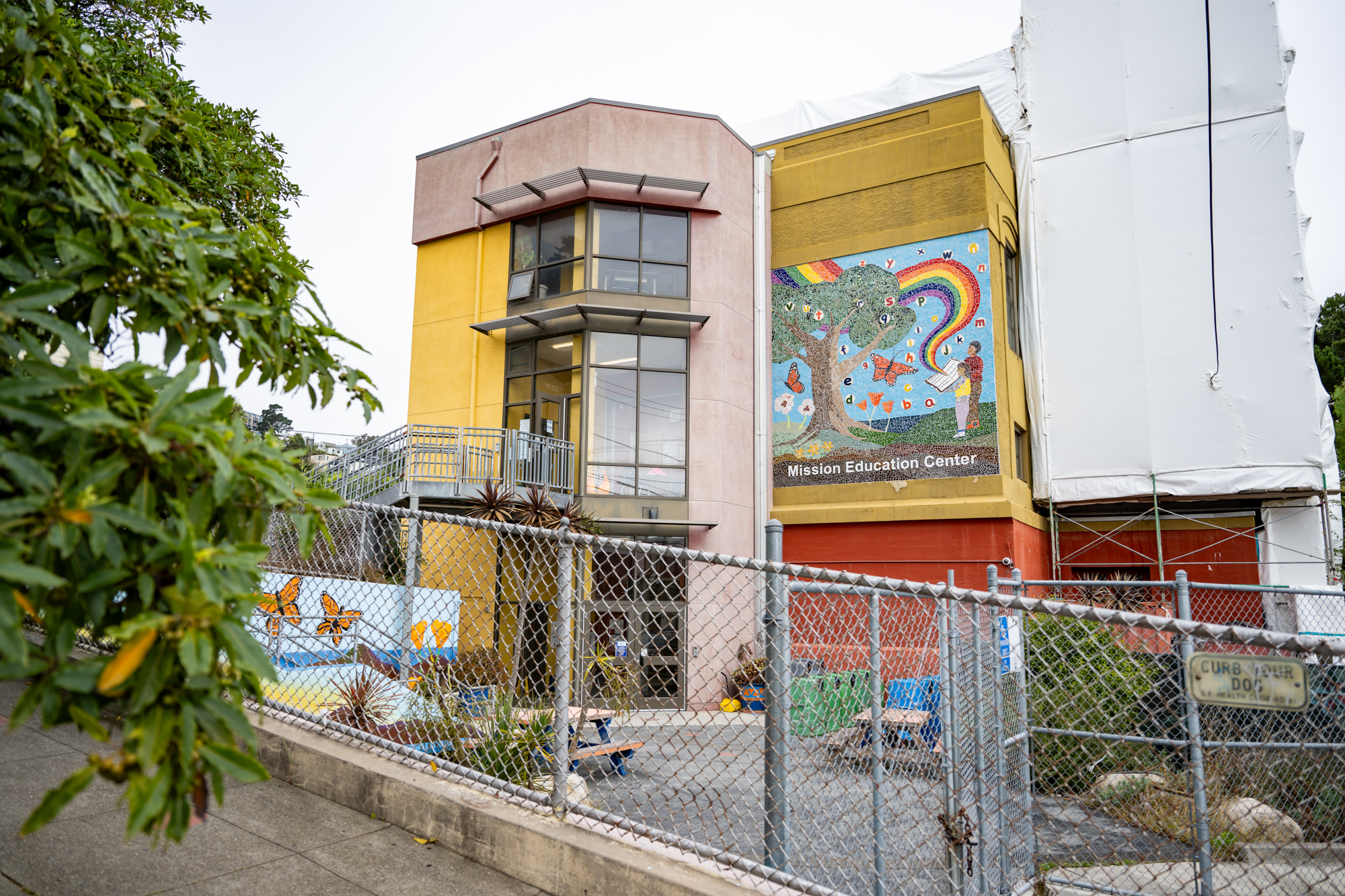
"caption": "The Mission Education Center, a bilingual elementary school in the San Francisco Unified School District, in San Francisco’s Noe Valley neighborhood on Aug. 25, 2025. A group of parents wrote a letter to the SFUSD raising “urgent concerns about the unsafe and unacceptable conditions at Mission Education Center.”",
"credit": "Beth LaBerge/KQED",
"altTag": null,
"description": null,
"imgSizes": {
"thumbnail": {
"file": "https://cdn.kqed.org/wp-content/uploads/sites/10/2025/08/250825-SFUSDMISSIONEDCENTER-06-BL-KQED-160x107.jpg",
"width": 160,
"height": 107,
"mimeType": "image/jpeg"
},
"1536x1536": {
"file": "https://cdn.kqed.org/wp-content/uploads/sites/10/2025/08/250825-SFUSDMISSIONEDCENTER-06-BL-KQED-1536x1024.jpg",
"width": 1536,
"height": 1024,
"mimeType": "image/jpeg"
},
"post-thumbnail": {
"file": "https://cdn.kqed.org/wp-content/uploads/sites/10/2025/08/250825-SFUSDMISSIONEDCENTER-06-BL-KQED-672x372.jpg",
"width": 672,
"height": 372,
"mimeType": "image/jpeg"
},
"twentyfourteen-full-width": {
"file": "https://cdn.kqed.org/wp-content/uploads/sites/10/2025/08/250825-SFUSDMISSIONEDCENTER-06-BL-KQED-1038x576.jpg",
"width": 1038,
"height": 576,
"mimeType": "image/jpeg"
},
"kqedFullSize": {
"file": "https://cdn.kqed.org/wp-content/uploads/sites/10/2025/08/250825-SFUSDMISSIONEDCENTER-06-BL-KQED.jpg",
"width": 2000,
"height": 1333
}
},
"isLoading": false,
"fetchFailed": false
},
"news_12052582": {
"type": "attachments",
"id": "news_12052582",
"meta": {
"index": "attachments_1716263798",
"site": "news",
"id": "12052582",
"found": true
},
"title": "teacher with a little girl with glasses",
"publishDate": 1755470966,
"status": "inherit",
"parent": 12052579,
"modified": 1755470987,
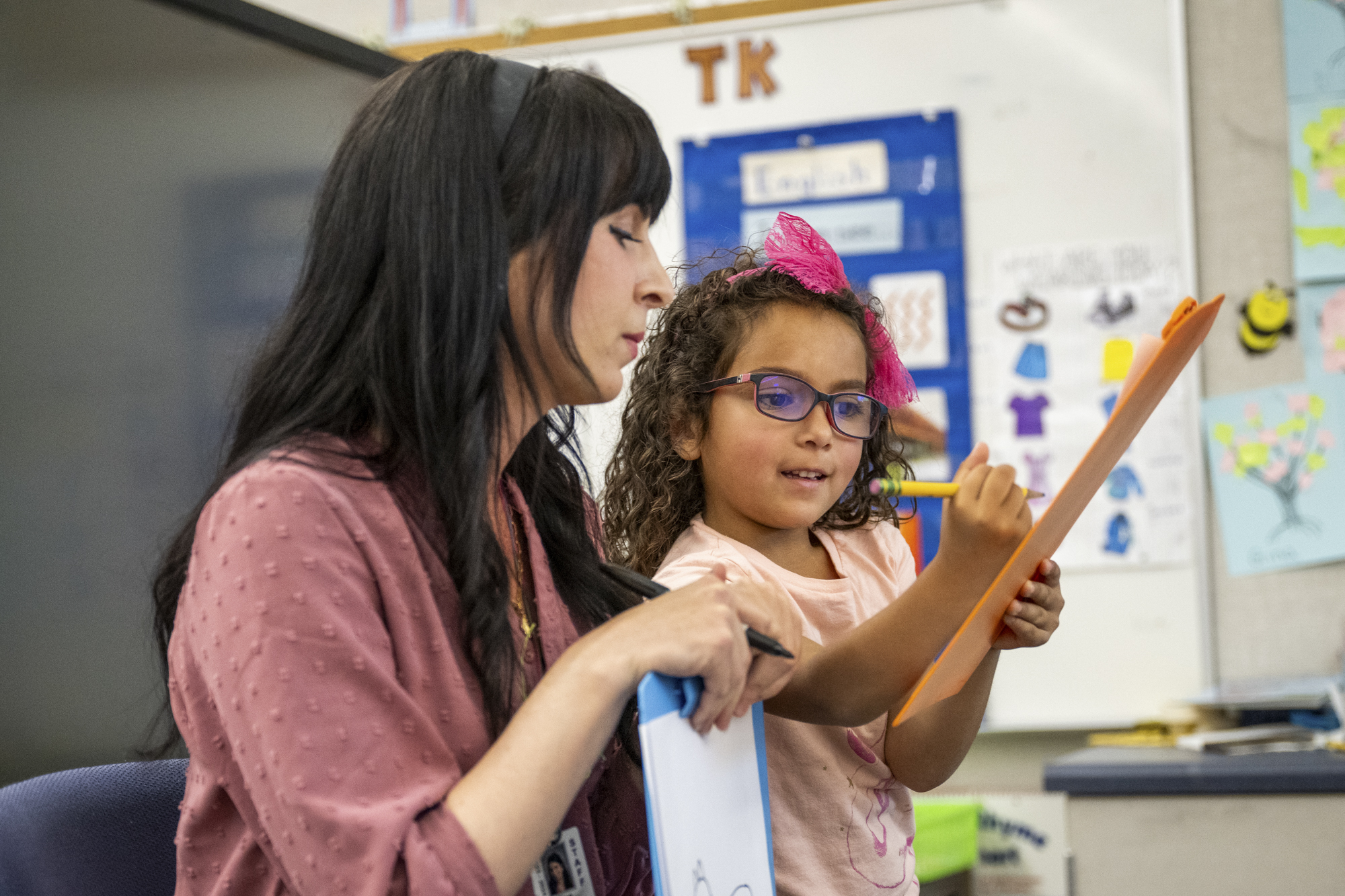
"caption": "Gina Viggiano imparte una clase de transición al kínder en la Holbrook Language Academy de\nConcord el 20 de mayo de 2024.",
"credit": "Beth LaBerge/KQED",
"altTag": null,
"description": null,
"imgSizes": {
"thumbnail": {
"file": "https://cdn.kqed.org/wp-content/uploads/sites/10/2025/08/teacher-with-a-little-girl-with-glasses-160x107.jpg",
"width": 160,
"height": 107,
"mimeType": "image/jpeg"
},
"1536x1536": {
"file": "https://cdn.kqed.org/wp-content/uploads/sites/10/2025/08/teacher-with-a-little-girl-with-glasses-1536x1024.jpg",
"width": 1536,
"height": 1024,
"mimeType": "image/jpeg"
},
"post-thumbnail": {
"file": "https://cdn.kqed.org/wp-content/uploads/sites/10/2025/08/teacher-with-a-little-girl-with-glasses-672x372.jpg",
"width": 672,
"height": 372,
"mimeType": "image/jpeg"
},
"twentyfourteen-full-width": {
"file": "https://cdn.kqed.org/wp-content/uploads/sites/10/2025/08/teacher-with-a-little-girl-with-glasses-1038x576.jpg",
"width": 1038,
"height": 576,
"mimeType": "image/jpeg"
},
"kqedFullSize": {
"file": "https://cdn.kqed.org/wp-content/uploads/sites/10/2025/08/teacher-with-a-little-girl-with-glasses.jpg",
"width": 2000,
"height": 1333
}
},
"isLoading": false,
"fetchFailed": false
},
"news_12052662": {
"type": "attachments",
"id": "news_12052662",
"meta": {
"index": "attachments_1716263798",
"site": "news",
"id": "12052662",
"found": true
},
"title": "250818-SFUSDFIRSTDAY-03-KQED",
"publishDate": 1755549109,
"status": "inherit",
"parent": 12054363,
"modified": 1756839539,
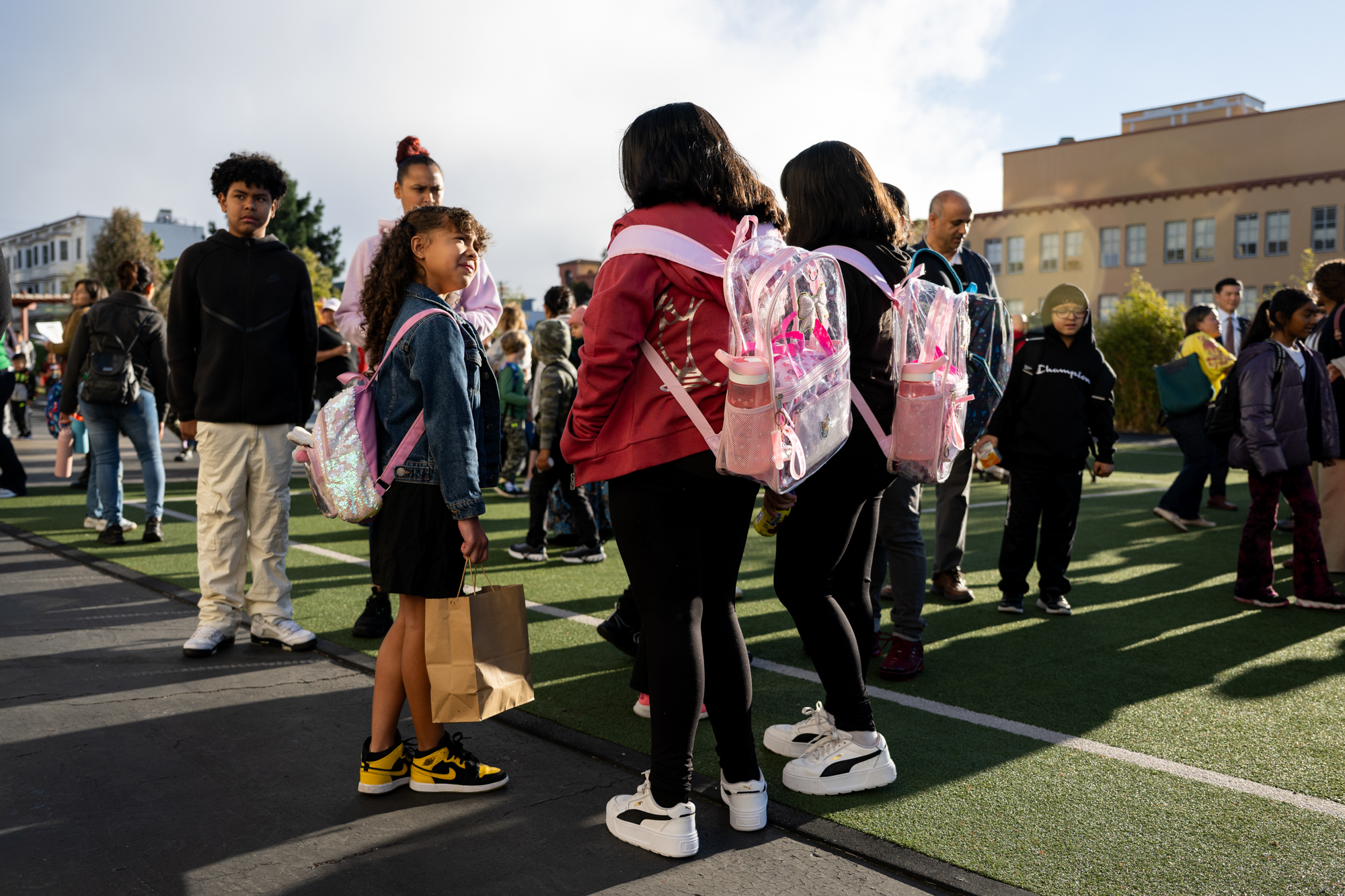
"caption": "Students at Sanchez Elementary School in San Francisco arrive for their first day of the school year on Aug. 18, 2025.",
"credit": "Beth LaBerge/KQED",
"altTag": null,
"description": null,
"imgSizes": {
"thumbnail": {
"file": "https://cdn.kqed.org/wp-content/uploads/sites/10/2025/08/250818-SFUSDFIRSTDAY-03-KQED-160x107.jpg",
"width": 160,
"height": 107,
"mimeType": "image/jpeg"
},
"1536x1536": {
"file": "https://cdn.kqed.org/wp-content/uploads/sites/10/2025/08/250818-SFUSDFIRSTDAY-03-KQED-1536x1024.jpg",
"width": 1536,
"height": 1024,
"mimeType": "image/jpeg"
},
"post-thumbnail": {
"file": "https://cdn.kqed.org/wp-content/uploads/sites/10/2025/08/250818-SFUSDFIRSTDAY-03-KQED-672x372.jpg",
"width": 672,
"height": 372,
"mimeType": "image/jpeg"
},
"twentyfourteen-full-width": {
"file": "https://cdn.kqed.org/wp-content/uploads/sites/10/2025/08/250818-SFUSDFIRSTDAY-03-KQED-1038x576.jpg",
"width": 1038,
"height": 576,
"mimeType": "image/jpeg"
},
"kqedFullSize": {
"file": "https://cdn.kqed.org/wp-content/uploads/sites/10/2025/08/250818-SFUSDFIRSTDAY-03-KQED.jpg",
"width": 2000,
"height": 1333
}
},
"isLoading": false,
"fetchFailed": false
},
"news_12052484": {
"type": "attachments",
"id": "news_12052484",
"meta": {
"index": "attachments_1716263798",
"site": "news",
"id": "12052484",
"found": true
},
"title": "240520-TKParentsDilemma-32-BL_qed",
"publishDate": 1755299415,
"status": "inherit",
"parent": 0,
"modified": 1755299436,
"caption": "Galilea (right), 5, reads alongside classmates in a transitional kindergarten class at Holbrook Language Academy in Concord on May 20, 2024.",
"credit": "Beth LaBerge/KQED",
"altTag": null,
"description": null,
"imgSizes": {
"thumbnail": {
"file": "https://cdn.kqed.org/wp-content/uploads/sites/10/2025/08/240520-TKParentsDilemma-32-BL_qed-160x107.jpg",
"width": 160,
"height": 107,
"mimeType": "image/jpeg"
},
"1536x1536": {
"file": "https://cdn.kqed.org/wp-content/uploads/sites/10/2025/08/240520-TKParentsDilemma-32-BL_qed-1536x1024.jpg",
"width": 1536,
"height": 1024,
"mimeType": "image/jpeg"
},
"post-thumbnail": {
"file": "https://cdn.kqed.org/wp-content/uploads/sites/10/2025/08/240520-TKParentsDilemma-32-BL_qed-672x372.jpg",
"width": 672,
"height": 372,
"mimeType": "image/jpeg"
},
"twentyfourteen-full-width": {
"file": "https://cdn.kqed.org/wp-content/uploads/sites/10/2025/08/240520-TKParentsDilemma-32-BL_qed-1038x576.jpg",
"width": 1038,
"height": 576,
"mimeType": "image/jpeg"
},
"kqedFullSize": {
"file": "https://cdn.kqed.org/wp-content/uploads/sites/10/2025/08/240520-TKParentsDilemma-32-BL_qed.jpg",
"width": 2000,
"height": 1333
}
},
"isLoading": false,
"fetchFailed": false
},
"news_12052409": {
"type": "attachments",
"id": "news_12052409",
"meta": {
"index": "attachments_1716263798",
"site": "news",
"id": "12052409",
"found": true
},
"title": "241023-SFUSDSuperintendent-12-BL_qed (1)",
"publishDate": 1755284348,
"status": "inherit",
"parent": 0,
"modified": 1755301624,
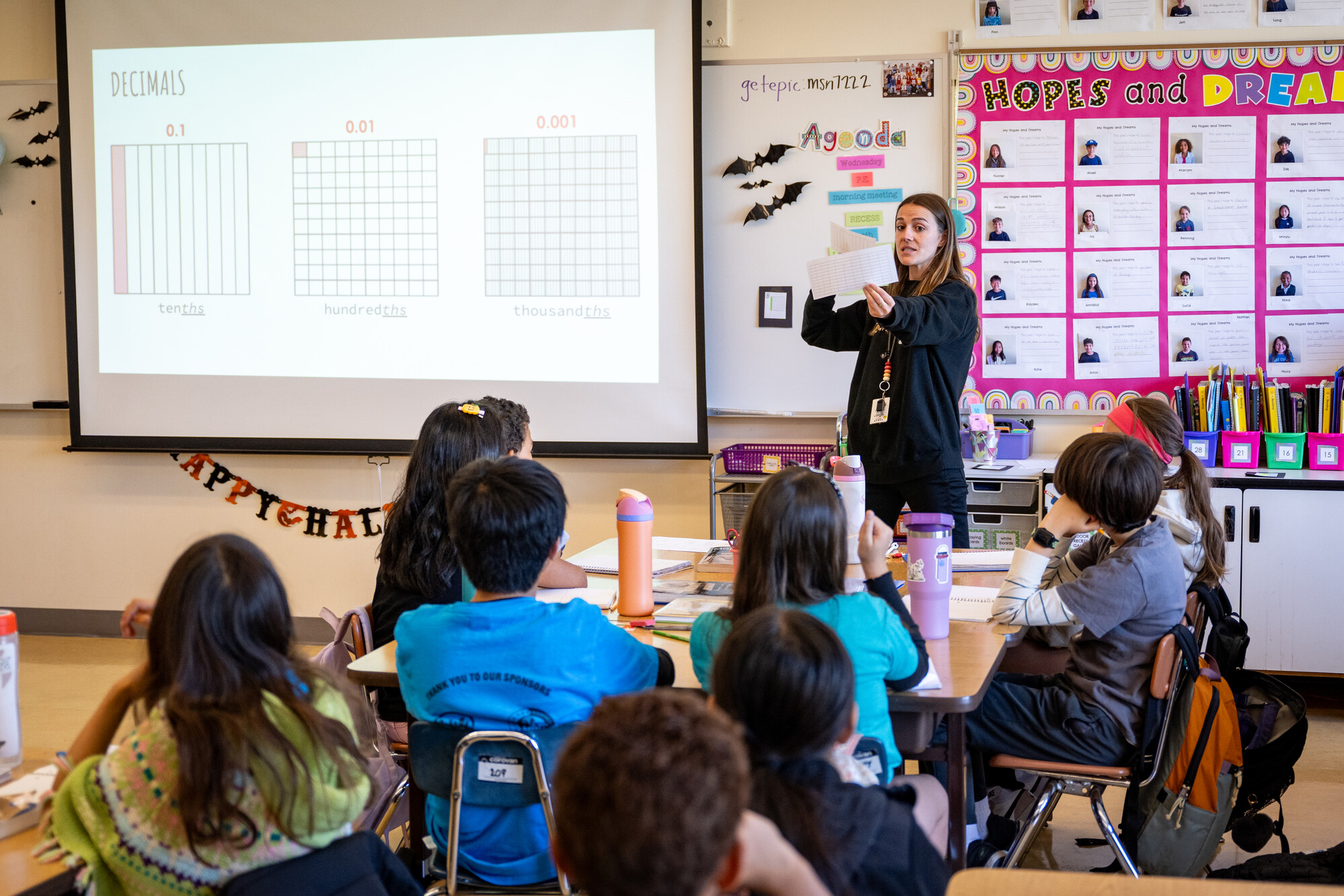
"caption": "A teacher instructs her class at Yick Wo Alternative Elementary School in San Francisco on Oct. 23, 2024.",
"credit": "Beth LaBerge/KQED",
"altTag": null,
"description": null,
"imgSizes": {
"thumbnail": {
"file": "https://cdn.kqed.org/wp-content/uploads/sites/10/2025/08/241023-SFUSDSuperintendent-12-BL_qed-1-160x107.jpg",
"width": 160,
"height": 107,
"mimeType": "image/jpeg"
},
"1536x1536": {
"file": "https://cdn.kqed.org/wp-content/uploads/sites/10/2025/08/241023-SFUSDSuperintendent-12-BL_qed-1-1536x1024.jpg",
"width": 1536,
"height": 1024,
"mimeType": "image/jpeg"
},
"post-thumbnail": {
"file": "https://cdn.kqed.org/wp-content/uploads/sites/10/2025/08/241023-SFUSDSuperintendent-12-BL_qed-1-672x372.jpg",
"width": 672,
"height": 372,
"mimeType": "image/jpeg"
},
"twentyfourteen-full-width": {
"file": "https://cdn.kqed.org/wp-content/uploads/sites/10/2025/08/241023-SFUSDSuperintendent-12-BL_qed-1-1038x576.jpg",
"width": 1038,
"height": 576,
"mimeType": "image/jpeg"
},
"kqedFullSize": {
"file": "https://cdn.kqed.org/wp-content/uploads/sites/10/2025/08/241023-SFUSDSuperintendent-12-BL_qed-1.jpg",
"width": 1999,
"height": 1333
}
},
"isLoading": false,
"fetchFailed": false
},
"news_12052535": {
"type": "attachments",
"id": "news_12052535",
"meta": {
"index": "attachments_1716263798",
"site": "news",
"id": "12052535",
"found": true
},
"title": "080525_WomenInStem_FM_CM_04",
"publishDate": 1755377180,
"status": "inherit",
"parent": 12052533,
"modified": 1755377331,
"caption": "Chloe Lynn, 20, a UC Berkeley undergraduate student double majoring in applied mathematics and operations research and management science, at her home in Berkeley on Aug. 5, 2025. Lynn recently presented a poster for her project in optimization theory that she keeps displayed on her bedroom wall.",
"credit": "Florence Middleton for CalMatters",
"altTag": null,
"description": null,
"imgSizes": {
"thumbnail": {
"file": "https://cdn.kqed.org/wp-content/uploads/sites/10/2025/08/080525_WomenInStem_FM_CM_04-160x107.jpeg",
"width": 160,
"height": 107,
"mimeType": "image/jpeg"
},
"1536x1536": {
"file": "https://cdn.kqed.org/wp-content/uploads/sites/10/2025/08/080525_WomenInStem_FM_CM_04-1536x1024.jpeg",
"width": 1536,
"height": 1024,
"mimeType": "image/jpeg"
},
"post-thumbnail": {
"file": "https://cdn.kqed.org/wp-content/uploads/sites/10/2025/08/080525_WomenInStem_FM_CM_04-672x372.jpeg",
"width": 672,
"height": 372,
"mimeType": "image/jpeg"
},
"twentyfourteen-full-width": {
"file": "https://cdn.kqed.org/wp-content/uploads/sites/10/2025/08/080525_WomenInStem_FM_CM_04-1038x576.jpeg",
"width": 1038,
"height": 576,
"mimeType": "image/jpeg"
},
"kqedFullSize": {
"file": "https://cdn.kqed.org/wp-content/uploads/sites/10/2025/08/080525_WomenInStem_FM_CM_04.jpeg",
"width": 2000,
"height": 1333
}
},
"isLoading": false,
"fetchFailed": false
},
"news_12014213": {
"type": "attachments",
"id": "news_12014213",
"meta": {
"index": "attachments_1716263798",
"site": "news",
"id": "12014213",
"found": true
},
"title": "Stanford campus on May 30, 2023.",
"publishDate": 1731521794,
"status": "inherit",
"parent": 0,
"modified": 1733786946,
"caption": "Stanford University campus on May 30, 2023.",
"credit": "Beth LaBerge/KQED",
"altTag": null,
"description": null,
"imgSizes": {
"medium": {
"file": "https://cdn.kqed.org/wp-content/uploads/sites/10/2024/11/005_KQED_StanfordGradUnion_05302023_qed-800x533.jpg",
"width": 800,
"height": 533,
"mimeType": "image/jpeg"
},
"large": {
"file": "https://cdn.kqed.org/wp-content/uploads/sites/10/2024/11/005_KQED_StanfordGradUnion_05302023_qed-1020x680.jpg",
"width": 1020,
"height": 680,
"mimeType": "image/jpeg"
},
"thumbnail": {
"file": "https://cdn.kqed.org/wp-content/uploads/sites/10/2024/11/005_KQED_StanfordGradUnion_05302023_qed-160x107.jpg",
"width": 160,
"height": 107,
"mimeType": "image/jpeg"
},
"1536x1536": {
"file": "https://cdn.kqed.org/wp-content/uploads/sites/10/2024/11/005_KQED_StanfordGradUnion_05302023_qed-1536x1024.jpg",
"width": 1536,
"height": 1024,
"mimeType": "image/jpeg"
},
"post-thumbnail": {
"file": "https://cdn.kqed.org/wp-content/uploads/sites/10/2024/11/005_KQED_StanfordGradUnion_05302023_qed-672x372.jpg",
"width": 672,
"height": 372,
"mimeType": "image/jpeg"
},
"twentyfourteen-full-width": {
"file": "https://cdn.kqed.org/wp-content/uploads/sites/10/2024/11/005_KQED_StanfordGradUnion_05302023_qed-1038x576.jpg",
"width": 1038,
"height": 576,
"mimeType": "image/jpeg"
},
"full-width": {
"file": "https://cdn.kqed.org/wp-content/uploads/sites/10/2024/11/005_KQED_StanfordGradUnion_05302023_qed-1920x1280.jpg",
"width": 1920,
"height": 1280,
"mimeType": "image/jpeg"
},
"kqedFullSize": {
"file": "https://cdn.kqed.org/wp-content/uploads/sites/10/2024/11/005_KQED_StanfordGradUnion_05302023_qed.jpg",
"width": 2000,
"height": 1333
}
},
"isLoading": false,
"fetchFailed": false
},
"news_12051869": {
"type": "attachments",
"id": "news_12051869",
"meta": {
"index": "attachments_1716263798",
"site": "news",
"id": "12051869",
"found": true
},
"title": "250418-SFUSD-04-BL_qed",
"publishDate": 1755024187,
"status": "inherit",
"parent": 12051862,
"modified": 1755024198,
"caption": "The San Francisco Unified School District Administrative Offices in San Francisco on April 18, 2025.",
"credit": "Beth LaBerge/KQED",
"altTag": null,
"description": null,
"imgSizes": {
"thumbnail": {
"file": "https://cdn.kqed.org/wp-content/uploads/sites/10/2025/08/250418-SFUSD-04-BL_qed-160x107.jpg",
"width": 160,
"height": 107,
"mimeType": "image/jpeg"
},
"1536x1536": {
"file": "https://cdn.kqed.org/wp-content/uploads/sites/10/2025/08/250418-SFUSD-04-BL_qed-1536x1024.jpg",
"width": 1536,
"height": 1024,
"mimeType": "image/jpeg"
},
"post-thumbnail": {
"file": "https://cdn.kqed.org/wp-content/uploads/sites/10/2025/08/250418-SFUSD-04-BL_qed-672x372.jpg",
"width": 672,
"height": 372,
"mimeType": "image/jpeg"
},
"twentyfourteen-full-width": {
"file": "https://cdn.kqed.org/wp-content/uploads/sites/10/2025/08/250418-SFUSD-04-BL_qed-1038x576.jpg",
"width": 1038,
"height": 576,
"mimeType": "image/jpeg"
},
"kqedFullSize": {
"file": "https://cdn.kqed.org/wp-content/uploads/sites/10/2025/08/250418-SFUSD-04-BL_qed.jpg",
"width": 2000,
"height": 1333
}
},
"isLoading": false,
"fetchFailed": false
},
"news_11988704": {
"type": "attachments",
"id": "news_11988704",
"meta": {
"index": "attachments_1716263798",
"site": "news",
"id": "11988704",
"found": true
},
"title": "240520-TKPARENTSDILEMMA-07-BL-KQED",
"publishDate": 1717439637,
"status": "inherit",
"parent": 11989789,
"modified": 1718138364,
"caption": "Students listen to teacher Gina Viggiano in a transitional kindergarten class at Holbrook Language Academy in Concord on May 20, 2024.",
"credit": "Beth LaBerge/KQED",
"altTag": null,
"description": null,
"imgSizes": {
"medium": {
"file": "https://cdn.kqed.org/wp-content/uploads/sites/10/2024/06/240520-TKPARENTSDILEMMA-07-BL-KQED-800x533.jpg",
"width": 800,
"height": 533,
"mimeType": "image/jpeg"
},
"large": {
"file": "https://cdn.kqed.org/wp-content/uploads/sites/10/2024/06/240520-TKPARENTSDILEMMA-07-BL-KQED-1020x680.jpg",
"width": 1020,
"height": 680,
"mimeType": "image/jpeg"
},
"thumbnail": {
"file": "https://cdn.kqed.org/wp-content/uploads/sites/10/2024/06/240520-TKPARENTSDILEMMA-07-BL-KQED-160x107.jpg",
"width": 160,
"height": 107,
"mimeType": "image/jpeg"
},
"1536x1536": {
"file": "https://cdn.kqed.org/wp-content/uploads/sites/10/2024/06/240520-TKPARENTSDILEMMA-07-BL-KQED-1536x1024.jpg",
"width": 1536,
"height": 1024,
"mimeType": "image/jpeg"
},
"post-thumbnail": {
"file": "https://cdn.kqed.org/wp-content/uploads/sites/10/2024/06/240520-TKPARENTSDILEMMA-07-BL-KQED-672x372.jpg",
"width": 672,
"height": 372,
"mimeType": "image/jpeg"
},
"twentyfourteen-full-width": {
"file": "https://cdn.kqed.org/wp-content/uploads/sites/10/2024/06/240520-TKPARENTSDILEMMA-07-BL-KQED-1038x576.jpg",
"width": 1038,
"height": 576,
"mimeType": "image/jpeg"
},
"full-width": {
"file": "https://cdn.kqed.org/wp-content/uploads/sites/10/2024/06/240520-TKPARENTSDILEMMA-07-BL-KQED-1920x1280.jpg",
"width": 1920,
"height": 1280,
"mimeType": "image/jpeg"
},
"kqedFullSize": {
"file": "https://cdn.kqed.org/wp-content/uploads/sites/10/2024/06/240520-TKPARENTSDILEMMA-07-BL-KQED.jpg",
"width": 2000,
"height": 1333
}
},
"isLoading": false,
"fetchFailed": false
},
"news_12039812": {
"type": "attachments",
"id": "news_12039812",
"meta": {
"index": "attachments_1716263798",
"site": "news",
"id": "12039812",
"found": true
},
"title": "250512-DAY WITHOUT CHILDCARE-MD-03-KQED",
"publishDate": 1747085850,
"status": "inherit",
"parent": 0,
"modified": 1747140567,
"caption": "Diane Nguyen (left) and Yadira Orozco (center) hold their children at the Day Without Child Care rally in front of the Federal Building in San José on May 12, 2025.",
"credit": "Martin do Nascimento/KQED",
"altTag": null,
"description": null,
"imgSizes": {
"medium": {
"file": "https://cdn.kqed.org/wp-content/uploads/sites/10/2025/05/250512-DAY-WITHOUT-CHILDCARE-MD-03-KQED-800x534.jpg",
"width": 800,
"height": 534,
"mimeType": "image/jpeg"
},
"large": {
"file": "https://cdn.kqed.org/wp-content/uploads/sites/10/2025/05/250512-DAY-WITHOUT-CHILDCARE-MD-03-KQED-1020x680.jpg",
"width": 1020,
"height": 680,
"mimeType": "image/jpeg"
},
"thumbnail": {
"file": "https://cdn.kqed.org/wp-content/uploads/sites/10/2025/05/250512-DAY-WITHOUT-CHILDCARE-MD-03-KQED-160x107.jpg",
"width": 160,
"height": 107,
"mimeType": "image/jpeg"
},
"1536x1536": {
"file": "https://cdn.kqed.org/wp-content/uploads/sites/10/2025/05/250512-DAY-WITHOUT-CHILDCARE-MD-03-KQED-1536x1025.jpg",
"width": 1536,
"height": 1025,
"mimeType": "image/jpeg"
},
"post-thumbnail": {
"file": "https://cdn.kqed.org/wp-content/uploads/sites/10/2025/05/250512-DAY-WITHOUT-CHILDCARE-MD-03-KQED-672x372.jpg",
"width": 672,
"height": 372,
"mimeType": "image/jpeg"
},
"twentyfourteen-full-width": {
"file": "https://cdn.kqed.org/wp-content/uploads/sites/10/2025/05/250512-DAY-WITHOUT-CHILDCARE-MD-03-KQED-1038x576.jpg",
"width": 1038,
"height": 576,
"mimeType": "image/jpeg"
},
"full-width": {
"file": "https://cdn.kqed.org/wp-content/uploads/sites/10/2025/05/250512-DAY-WITHOUT-CHILDCARE-MD-03-KQED-1920x1281.jpg",
"width": 1920,
"height": 1281,
"mimeType": "image/jpeg"
},
"kqedFullSize": {
"file": "https://cdn.kqed.org/wp-content/uploads/sites/10/2025/05/250512-DAY-WITHOUT-CHILDCARE-MD-03-KQED.jpg",
"width": 2000,
"height": 1334
}
},
"isLoading": false,
"fetchFailed": false
},
"news_12051414": {
"type": "attachments",
"id": "news_12051414",
"meta": {
"index": "attachments_1716263798",
"site": "news",
"id": "12051414",
"found": true
},
"title": "250802-AFROFUTURES_01253_TV-KQED-1",
"publishDate": 1754660438,
"status": "inherit",
"parent": 0,
"modified": 1754672001,
"caption": "Selena Wilson, CEO of the EOYDC, speaks at the Black Futures Ball Banquet hosted by The East Oakland Youth Development Center at Chabot Space and Science Center in Oakland on Aug. 2, 2025.",
"credit": "Tâm Vũ/KQED",
"altTag": null,
"description": null,
"imgSizes": {
"thumbnail": {
"file": "https://cdn.kqed.org/wp-content/uploads/sites/10/2025/08/250802-AFROFUTURES_01253_TV-KQED-1-160x107.jpg",
"width": 160,
"height": 107,
"mimeType": "image/jpeg"
},
"1536x1536": {
"file": "https://cdn.kqed.org/wp-content/uploads/sites/10/2025/08/250802-AFROFUTURES_01253_TV-KQED-1-1536x1024.jpg",
"width": 1536,
"height": 1024,
"mimeType": "image/jpeg"
},
"post-thumbnail": {
"file": "https://cdn.kqed.org/wp-content/uploads/sites/10/2025/08/250802-AFROFUTURES_01253_TV-KQED-1-672x372.jpg",
"width": 672,
"height": 372,
"mimeType": "image/jpeg"
},
"twentyfourteen-full-width": {
"file": "https://cdn.kqed.org/wp-content/uploads/sites/10/2025/08/250802-AFROFUTURES_01253_TV-KQED-1-1038x576.jpg",
"width": 1038,
"height": 576,
"mimeType": "image/jpeg"
},
"kqedFullSize": {
"file": "https://cdn.kqed.org/wp-content/uploads/sites/10/2025/08/250802-AFROFUTURES_01253_TV-KQED-1.jpg",
"width": 2000,
"height": 1333
}
},
"isLoading": false,
"fetchFailed": false
},
"news_12051530": {
"type": "attachments",
"id": "news_12051530",
"meta": {
"index": "attachments_1716263798",
"site": "news",
"id": "12051530",
"found": true
},
"title": "UCLA Trump Administration",
"publishDate": 1754684554,
"status": "inherit",
"parent": 12051521,
"modified": 1754684584,
"caption": "Students walk past Royce Hall at the University of California, Los Angeles, campus in Los Angeles, on Aug. 15, 2024. ",
"credit": "Damian Dovarganes/AP Photo",
"altTag": null,
"description": null,
"imgSizes": {
"thumbnail": {
"file": "https://cdn.kqed.org/wp-content/uploads/sites/10/2025/08/UCLAAP-160x107.jpg",
"width": 160,
"height": 107,
"mimeType": "image/jpeg"
},
"1536x1536": {
"file": "https://cdn.kqed.org/wp-content/uploads/sites/10/2025/08/UCLAAP-1536x1027.jpg",
"width": 1536,
"height": 1027,
"mimeType": "image/jpeg"
},
"post-thumbnail": {
"file": "https://cdn.kqed.org/wp-content/uploads/sites/10/2025/08/UCLAAP-672x372.jpg",
"width": 672,
"height": 372,
"mimeType": "image/jpeg"
},
"twentyfourteen-full-width": {
"file": "https://cdn.kqed.org/wp-content/uploads/sites/10/2025/08/UCLAAP-1038x576.jpg",
"width": 1038,
"height": 576,
"mimeType": "image/jpeg"
},
"kqedFullSize": {
"file": "https://cdn.kqed.org/wp-content/uploads/sites/10/2025/08/UCLAAP.jpg",
"width": 2000,
"height": 1337
}
},
"isLoading": false,
"fetchFailed": false
}
},
"audioPlayerReducer": {
"postId": "stream_live",
"isPaused": true,
"isPlaying": false,
"pfsActive": false,
"pledgeModalIsOpen": true,
"playerDrawerIsOpen": false,
"liveAudioPlayStartedAt": 0,
"liveAudioPlayContext": ""
},
"authorsReducer": {
"byline_news_12052533": {
"type": "authors",
"id": "byline_news_12052533",
"meta": {
"override": true
},
"slug": "byline_news_12052533",
"name": "Adam Echelman, CalMatters",
"isLoading": false
},
"byline_news_11989955": {
"type": "authors",
"id": "byline_news_11989955",
"meta": {
"override": true
},
"slug": "byline_news_11989955",
"name": "Daisy Nguyen, Blanca Torres and Elly Yu",
"isLoading": false
},
"btorres": {
"type": "authors",
"id": "11666",
"meta": {
"index": "authors_1716337520",
"id": "11666",
"found": true
},
"name": "Blanca Torres",
"firstName": "Blanca",
"lastName": "Torres",
"slug": "btorres",
"email": "btorres@kqed.org",
"display_author_email": true,
"staff_mastheads": [
"news"
],
"title": "Producer, Forum",
"bio": "Blanca Torres brings sharp news judgement and keen sense of lively conversation to her work as producer for Forum. She loves producing shows that leave listeners feeling like they heard distinctive voices, learned something new and gained a fresh perspective.\r\n\r\nShe joined KQED in January of 2020 after 16 years of working as a newspaper reporter most recently at the \u003cem>San Francisco Business Times,\u003c/em> where she wrote about real estate and economic development. Before that, she covered a variety of beats including crime, education, retail, workplace, the economy, consumer issues, and small business for the \u003cem>Contra Costa Times, Baltimore Sun\u003c/em> and\u003cem> The Seattle Times\u003c/em>. In addition to reporting, she worked as an editorial writer and columnist for the \u003cem>Seattle Times\u003c/em>. From 2017 to 2020, Blanca won a total of ten awards from the National Association of Real Estate Editors and won first place for land use reporting from the California News Publishers Association two years in a row. She is also a member and former board member for the National Association of Hispanic Journalists.\r\n\r\nA native of the Pacific Northwest, Blanca earned her bachelor's degree from Vanderbilt University in Nashville and a master's in fine arts in creative writing at Mills College. She lives in the East Bay with her family.",
"avatar": "https://secure.gravatar.com/avatar/50b49d19b14a1eed34f26ebf4681152cdd81574ed21851100871ccd29e578cdc?s=600&d=blank&r=g",
"twitter": "@blancawrites",
"bluesky": null,
"facebook": null,
"instagram": null,
"linkedin": null,
"sites": [
{
"site": "arts",
"roles": [
"editor"
]
},
{
"site": "news",
"roles": [
"editor"
]
},
{
"site": "forum",
"roles": [
"editor"
]
}
],
"headData": {
"title": "Blanca Torres | KQED",
"description": "Producer, Forum",
"ogImgSrc": "https://secure.gravatar.com/avatar/50b49d19b14a1eed34f26ebf4681152cdd81574ed21851100871ccd29e578cdc?s=600&d=blank&r=g",
"twImgSrc": "https://secure.gravatar.com/avatar/50b49d19b14a1eed34f26ebf4681152cdd81574ed21851100871ccd29e578cdc?s=600&d=blank&r=g"
},
"isLoading": false,
"link": "/author/btorres"
},
"jlara": {
"type": "authors",
"id": "11761",
"meta": {
"index": "authors_1716337520",
"id": "11761",
"found": true
},
"name": "Juan Carlos Lara",
"firstName": "Juan Carlos",
"lastName": "Lara",
"slug": "jlara",
"email": "jlara@kqed.org",
"display_author_email": false,
"staff_mastheads": [],
"title": "KQED Contributor",
"bio": null,
"avatar": "https://secure.gravatar.com/avatar/19e2052b9b05657c5ff2af2121846e9c?s=600&d=blank&r=g",
"twitter": null,
"facebook": null,
"instagram": null,
"linkedin": null,
"sites": [
{
"site": "arts",
"roles": [
"editor"
]
},
{
"site": "news",
"roles": [
"editor"
]
},
{
"site": "forum",
"roles": [
"editor"
]
},
{
"site": "liveblog",
"roles": [
"contributor"
]
}
],
"headData": {
"title": "Juan Carlos Lara | KQED",
"description": "KQED Contributor",
"ogImgSrc": "https://secure.gravatar.com/avatar/19e2052b9b05657c5ff2af2121846e9c?s=600&d=blank&r=g",
"twImgSrc": "https://secure.gravatar.com/avatar/19e2052b9b05657c5ff2af2121846e9c?s=600&d=blank&r=g"
},
"isLoading": false,
"link": "/author/jlara"
},
"daisynguyen": {
"type": "authors",
"id": "11829",
"meta": {
"index": "authors_1716337520",
"id": "11829",
"found": true
},
"name": "Daisy Nguyen",
"firstName": "Daisy",
"lastName": "Nguyen",
"slug": "daisynguyen",
"email": "daisynguyen@kqed.org",
"display_author_email": true,
"staff_mastheads": [
"news"
],
"title": "KQED Contributor",
"bio": "I have covered early childhood education and child care for KQED since 2022. I focus on policies aimed at increasing access to early care and education and how they shape individual lives. I've been a journalist for more than two decades, with most of that time devoted to covering breaking news throughout California for The Associated Press. I grew up in San Francisco and studied at UC Davis and Columbia University's Graduate School of Journalism. I live in Oakland with my husband and two kids.",
"avatar": "https://secure.gravatar.com/avatar/2da2127c27f7143b53ebd419800fd55f?s=600&d=blank&r=g",
"twitter": null,
"facebook": null,
"instagram": null,
"linkedin": "https://www.linkedin.com/in/daisynguyen/",
"sites": [
{
"site": "news",
"roles": [
"author"
]
},
{
"site": "liveblog",
"roles": [
"author"
]
}
],
"headData": {
"title": "Daisy Nguyen | KQED",
"description": "KQED Contributor",
"ogImgSrc": "https://secure.gravatar.com/avatar/2da2127c27f7143b53ebd419800fd55f?s=600&d=blank&r=g",
"twImgSrc": "https://secure.gravatar.com/avatar/2da2127c27f7143b53ebd419800fd55f?s=600&d=blank&r=g"
},
"isLoading": false,
"link": "/author/daisynguyen"
},
"kdebenedetti": {
"type": "authors",
"id": "11913",
"meta": {
"index": "authors_1716337520",
"id": "11913",
"found": true
},
"name": "Katie DeBenedetti",
"firstName": "Katie",
"lastName": "DeBenedetti",
"slug": "kdebenedetti",
"email": "kdebenedetti@kqed.org",
"display_author_email": false,
"staff_mastheads": [
"news",
"science"
],
"title": "KQED Contributor",
"bio": "Katie DeBenedetti is a digital reporter covering daily news for the Express Desk. Prior to joining KQED as a culture reporting intern in January 2024, she covered education and city government for the Napa Valley Register.",
"avatar": "https://secure.gravatar.com/avatar/6e31073cb8f7e4214ab03f42771d0f45?s=600&d=blank&r=g",
"twitter": null,
"facebook": null,
"instagram": null,
"linkedin": null,
"sites": [
{
"site": "news",
"roles": [
"author"
]
},
{
"site": "science",
"roles": [
"author"
]
},
{
"site": "liveblog",
"roles": [
"author"
]
}
],
"headData": {
"title": "Katie DeBenedetti | KQED",
"description": "KQED Contributor",
"ogImgSrc": "https://secure.gravatar.com/avatar/6e31073cb8f7e4214ab03f42771d0f45?s=600&d=blank&r=g",
"twImgSrc": "https://secure.gravatar.com/avatar/6e31073cb8f7e4214ab03f42771d0f45?s=600&d=blank&r=g"
},
"isLoading": false,
"link": "/author/kdebenedetti"
},
"gzada": {
"type": "authors",
"id": "11929",
"meta": {
"index": "authors_1716337520",
"id": "11929",
"found": true
},
"name": "Gilare Zada",
"firstName": "Gilare",
"lastName": "Zada",
"slug": "gzada",
"email": "gzada@kqed.org",
"display_author_email": true,
"staff_mastheads": [
"news"
],
"title": null,
"bio": "Gilare Zada is a Kurdish-American from San Diego, CA. Storytelling, fitness, and binge reading are some of her passions outside of news reporting. Her work has appeared in Mission Local, the Peninsula Press, the San Francisco Press Club, and more. She also writes as a class correspondent for the Stanford Magazine - go Card!",
"avatar": "https://secure.gravatar.com/avatar/33a75f2b947669a488a805edec3fbf3838c1cedaedda710e983770633b4d6a75?s=600&d=blank&r=g",
"twitter": null,
"bluesky": null,
"facebook": null,
"instagram": null,
"linkedin": null,
"sites": [
{
"site": "",
"roles": [
"editor"
]
},
{
"site": "arts",
"roles": [
"editor"
]
},
{
"site": "news",
"roles": [
"administrator"
]
},
{
"site": "science",
"roles": [
"editor"
]
}
],
"headData": {
"title": "Gilare Zada | KQED",
"description": null,
"ogImgSrc": "https://secure.gravatar.com/avatar/33a75f2b947669a488a805edec3fbf3838c1cedaedda710e983770633b4d6a75?s=600&d=blank&r=g",
"twImgSrc": "https://secure.gravatar.com/avatar/33a75f2b947669a488a805edec3fbf3838c1cedaedda710e983770633b4d6a75?s=600&d=blank&r=g"
},
"isLoading": false,
"link": "/author/gzada"
}
},
"pagesReducer": {
"news_tag_education": {
"type": "terms",
"id": "news_20013",
"meta": {
"index": "terms_1716263798",
"site": "news",
"id": "20013",
"score": 6.970053
},
"featImg": null,
"name": "education",
"description": null,
"taxonomy": "tag",
"headData": {
"twImgId": null,
"twTitle": null,
"ogTitle": null,
"ogImgId": null,
"twDescription": null,
"description": null,
"title": "education Archives | KQED News",
"ogDescription": null
},
"ttid": 20030,
"slug": "education",
"isLoading": false,
"title": "education",
"pageMeta": {
"site": "news",
"WpPageTemplate": "page-topic-editorial",
"currentPage": 19
},
"blocks": [
{
"blockName": "kqed/post-list",
"attrs": {
"layout": "cardArticle2",
"query": "posts/news?tag=education",
"seeMore": false,
"paginated": true,
"page": 19
}
},
{
"blockName": "kqed/ad"
}
]
}
},
"pfsSessionReducer": {},
"postsReducer": {
"stream_live": {
"type": "live",
"id": "stream_live",
"audioUrl": "https://streams.kqed.org/kqedradio",
"title": "Live Stream",
"excerpt": "Live Stream information currently unavailable.",
"link": "/radio",
"featImg": "",
"label": {
"name": "KQED Live",
"link": "/"
}
},
"stream_kqedNewscast": {
"type": "posts",
"id": "stream_kqedNewscast",
"audioUrl": "https://www.kqed.org/.stream/anon/radio/RDnews/newscast.mp3?_=1",
"title": "KQED Newscast",
"featImg": "",
"label": {
"name": "88.5 FM",
"link": "/"
}
},
"news_12053574": {
"type": "posts",
"id": "news_12053574",
"meta": {
"index": "posts_1716263798",
"site": "news",
"id": "12053574",
"score": null,
"sort": [
1756150215000
]
},
"guestAuthors": [],
"slug": "sf-school-serving-spanish-speaking-immigrants-is-severely-understaffed-parents-say",
"title": "SF School Serving Spanish-Speaking Immigrants Is ‘Severely Understaffed,’ Parents Say",
"publishDate": 1756150215,
"format": "standard",
"headTitle": "SF School Serving Spanish-Speaking Immigrants Is ‘Severely Understaffed,’ Parents Say | KQED",
"labelTerm": {
"site": "news"
},
"content": "\u003cp>\u003cem>Updated at 6:30 p.m.\u003c/em>\u003c/p>\n\u003cp>On its \u003ca href=\"https://www.kqed.org/news/12052399/a-new-school-year-begins-in-san-francisco-with-new-possibilities-and-problems\">first day of school last week\u003c/a>, the \u003ca href=\"https://www.kqed.org/news/tag/sfusd\">San Francisco Unified School District\u003c/a> announced that it had fully staffed schools — albeit some with substitute teachers — and was prepared for a year of smooth sailing, focused on the “basics.”\u003c/p>\n\u003cp>But that was far from the scene at Mission Education Center, a campus serving pre-kindergarten through fifth grade for newly arrived Spanish-speaking immigrants.\u003c/p>\n\u003cp>“It was just kind of a cacophony of catastrophe that first morning, because as the conversations unfolded throughout the morning, we realized to what extent the school was just severely understaffed,” said Jeremiah Mayfield, whose daughter started transitional kindergarten last week. The school recently expanded to add Spanish-immersion transitional kindergarten classrooms for the district’s youngest students.\u003c/p>\n\u003cp>[ad fullwidth]\u003c/p>\n\u003cp>Mayfield and a coalition of 13 other parents wrote in a letter to the district on Wednesday that when they and their 4-year-olds arrived on campus that morning, there was no smiling principal waiting to greet them. That role remains vacant, along with three classroom teaching positions and multiple paraeducator jobs.\u003c/p>\n\u003cp>“We are writing to raise urgent concerns about the unsafe and unacceptable conditions at Mission Education Center,” the letter reads. “We love SFUSD. We believe in public education. We trusted the system — and the system failed us and our children.”\u003c/p>\n\u003cp>SFUSD said in a message to families Monday afternoon that it had offered the principal and pre-kindergarten teacher roles to candidates, and extended offers for instructional aide positions to three other people. It said it was still looking for two TK teachers.\u003c/p>\n\u003cp>“Please know that we see and understand these challenges, and we are truly grateful for your patience and partnership during this time,” the message, which the district shared with KQED, reads. “We are fully committed to providing the very best care and quality education to each of the 76 students enrolled at MEC.”\u003c/p>\n\u003cfigure id=\"attachment_12053561\" class=\"wp-caption aligncenter\" style=\"max-width: 2000px\">\u003cimg loading=\"lazy\" decoding=\"async\" class=\"size-full wp-image-12053561\" src=\"https://cdn.kqed.org/wp-content/uploads/sites/10/2025/08/250825-SFUSDMISSIONEDCENTER-08-BL-KQED.jpg\" alt=\"\" width=\"2000\" height=\"1333\" srcset=\"https://cdn.kqed.org/wp-content/uploads/sites/10/2025/08/250825-SFUSDMISSIONEDCENTER-08-BL-KQED.jpg 2000w, https://cdn.kqed.org/wp-content/uploads/sites/10/2025/08/250825-SFUSDMISSIONEDCENTER-08-BL-KQED-160x107.jpg 160w, https://cdn.kqed.org/wp-content/uploads/sites/10/2025/08/250825-SFUSDMISSIONEDCENTER-08-BL-KQED-1536x1024.jpg 1536w\" sizes=\"auto, (max-width: 2000px) 100vw, 2000px\">\u003cfigcaption class=\"wp-caption-text\">The Mission Education Center, a bilingual elementary school in the San Francisco Unified School District, in San Francisco’s Noe Valley neighborhood, on Aug. 25, 2025. \u003ccite>(Beth LaBerge/KQED)\u003c/cite>\u003c/figcaption>\u003c/figure>\n\u003cp>After the children lined up and were led to their classrooms, the site’s interim principal — who himself has been teaching one of the classes, according to Mayfield — corralled worried parents in the cafeteria.\u003c/p>\n\u003cp>“We don’t have teachers. We don’t have staff. We are scrambling to try to get resources here the rest of the week,” Mayfield recalled the interim leader saying. “It’s going to be pretty chaotic and pretty much adjusting targets every day.”\u003c/p>\n\u003cp>Mayfield said before the school year started, his daughter’s class had been assigned a teacher, a longtime bilingual educator in SFUSD who taught older classes prior to this year. He met her during a back-to-school event the previous week, but on the first day, she wasn’t there.\u003c/p>\n\u003cp>“The parents showed up and we’re being told, ‘[This teacher’s] class line up here,’” Mayfield said. “We’re lined up, and this woman is in the front of the line, and I said, ‘Well, that’s not [our teacher]. I met her on Friday. Who is this?’[aside postID=news_12052579 hero='https://cdn.kqed.org/wp-content/uploads/sites/10/2025/08/teacher-with-a-little-girl-with-glasses.jpg']“That’s when we found out, oh, this is a substitute,” he continued.\u003c/p>\n\u003cp>Mayfield said the school later told him and other parents that the teacher who was assigned to the classroom didn’t have the necessary early education training, and that they were working all week to “get her credentialed.”\u003c/p>\n\u003cp>In the meantime, his daughter has had three substitutes.\u003c/p>\n\u003cp>“She’s progressively gotten worse and worse about wanting to go in after they line up in the morning — crying, hugging me, saying to me, ‘I don’t know who those people are,’” Mayfield said. “It’s hard to see your kid … you want them to have a great educational experience. You want her to love school. You want her to feel safe at school. And literally she’s showing up every day, and she doesn’t know who’s going to be her teacher.”\u003c/p>\n\u003cp>Mission Education Center has operated for years as a small pre-kindergarten through fifth-grade campus meant to serve as a transitional school for newly arrived immigrant students, helping them get up to speed with the district’s grade-level learning standards and move into general education classrooms.\u003c/p>\n\u003cp>SFUSD announced \u003ca href=\"https://www.ppssf.org/news/the-sfusd-transitional-kindergarten-program-is-opening-six-new-sites-in-2022-2023\">it would introduce\u003c/a> Spanish immersion TK at MEC for the 2022–23 school year, and last year, the site had \u003ca href=\"https://dq.cde.ca.gov/dataquest/dqcensus/enrgrdlevels.aspx?cds=38684786089585&agglevel=School&year=2024-25&ro=y\">47 TK students\u003c/a>, according to state data. Mayfield explained the site as almost containing two separate schools.\u003c/p>\n\u003cfigure id=\"attachment_12051869\" class=\"wp-caption aligncenter\" style=\"max-width: 2000px\">\u003cimg loading=\"lazy\" decoding=\"async\" class=\"size-full wp-image-12051869\" src=\"https://cdn.kqed.org/wp-content/uploads/sites/10/2025/08/250418-SFUSD-04-BL_qed.jpg\" alt=\"\" width=\"2000\" height=\"1333\" srcset=\"https://cdn.kqed.org/wp-content/uploads/sites/10/2025/08/250418-SFUSD-04-BL_qed.jpg 2000w, https://cdn.kqed.org/wp-content/uploads/sites/10/2025/08/250418-SFUSD-04-BL_qed-160x107.jpg 160w, https://cdn.kqed.org/wp-content/uploads/sites/10/2025/08/250418-SFUSD-04-BL_qed-1536x1024.jpg 1536w\" sizes=\"auto, (max-width: 2000px) 100vw, 2000px\">\u003cfigcaption class=\"wp-caption-text\">The San Francisco Unified School District Administrative Offices in San Francisco on April 18, 2025. \u003ccite>(Beth LaBerge/KQED)\u003c/cite>\u003c/figcaption>\u003c/figure>\n\u003cp>The early education expansion appears to be where most of MEC’s staffing issues are.\u003c/p>\n\u003cp>As of Friday, two of the three TK classes and the pre-kindergarten didn’t have permanent teachers, according to parents. All but one paraeducator position across those classrooms — since state staffing rules say each group of 20 TKers should have two supervising adults — were still vacant.\u003c/p>\n\u003cp>While Mayfield said he and other parents were assured that a principal had been hired in June and was being onboarded over the summer, the interim principal said last week that the position hadn’t been filled.\u003c/p>\n\u003cp>The letter from concerned parents to the district said that on the first day, one paraeducator floated between three rooms. By Wednesday, the district had sent in central office employees as support, Mayfield said.[aside postID=news_12052609 hero='https://cdn.kqed.org/wp-content/uploads/sites/10/2025/08/240520-TKParentsDilemma-32-BL_qed.jpg']The letter also said that on the first day, parents anxiously lingering around the school until midmorning saw one child go to the bathroom alone, while others were left in the halls. They say they had to step in to lead early morning circle time for a group of TK kids. Substitute staff sent to teach the Spanish immersion classes, which include some children who only speak Spanish fluently, don’t have the necessary language skills, according to multiple parents.\u003c/p>\n\u003cp>“These conditions are unsafe, inequitable, and a violation of the state’s expectations for early education,” the parents wrote in their letter. “On-site staff have been transparent and honest about these challenges to us and are doing their best — and for this, we are grateful, we applaud them — but this clearly needs immediate support from the district.”\u003c/p>\n\u003cp>Lucia Gonzalezz Ippolito’s daughter, who started TK last week, had been in a Spanish Immersion preschool for the last two years. She said that the program was great, and her daughter could have continued there for one more year before enrolling in kindergarten, but she felt pressure to put her in TK at SFUSD so she would have a better chance of getting one of the district’s competitive Spanish immersion spots.\u003c/p>\n\u003cp>“If I want her in a Spanish immersion program, I have to stay in MEC,” Gonzalez Ippolito said. “If you go to a regular TK or if you stay in preschool, then you’ll probably be like number 50 on the wait list.”\u003c/p>\n\u003cp>Since she took the helm as superintendent last year, Maria Su has said that one of her goals is to expand the district’s TK offerings, first \u003ca href=\"https://www.kqed.org/news/12052609/as-transitional-kindergarten-opens-to-all-4-year-olds-sf-parents-compete-for-seats\">adding 16 classrooms this year\u003c/a>, and looking at potential locations for more early education programs in the future to meet enrollment demands. This fall, an influx of applications to the grade level, which California now guarantees access to for all students, \u003ca href=\"https://www.kqed.org/news/12031802/san-francisco-public-schools-see-surge-applications-thanks-transitional-kindergarten-demand\">boosted the district’s struggling enrollment\u003c/a>.\u003c/p>\n\u003cp>But, “if you’re going to focus and make this an early education hub and have multiple classes of TKs there, you need to give it the attention that it deserves,” Mayfield said.\u003c/p>\n\u003cp>After the parents’ letter, a follow-up message on Friday morning, and more individual emails asking district leaders for information throughout the week, Mayfield said parents finally got a response from SFUSD’s assistant superintendent of early education late Friday morning.\u003c/p>\n\u003cp>“We are working closely with HR to address the staffing needs at MEC, and by end of day Monday, we will be able to share additional updates regarding staffing plans and next steps,” Christie Herrera wrote in the message shared with KQED.\u003c/p>\n\u003cp>While parents wait to see what those updates will be, Mayfield said it feels like too little, too late.\u003c/p>\n\u003cp>“If this is the way that the district acts and carries itself and works with parents, then I understand why parents don’t trust the district,” he told KQED. “I understand why the district has the reputation that they do for being very mismanaged and chaotic and disorganized and probably wasteful. It just feels like the district is there to try to protect the district, and nobody’s thinking about the kids.”\u003c/p>\n\u003cp>[ad floatright]\u003c/p>\n",
"blocks": [],
"excerpt": "A group of parents wrote a letter to the San Francisco Unified School District raising “urgent concerns about the unsafe and unacceptable conditions at Mission Education Center.”",
"status": "publish",
"parent": 0,
"modified": 1756172402,
"stats": {
"hasAudio": false,
"hasVideo": false,
"hasChartOrMap": false,
"iframeSrcs": [],
"hasGoogleForm": false,
"hasGallery": false,
"hasHearkenModule": false,
"hasPolis": false,
"paragraphCount": 32,
"wordCount": 1586
},
"headData": {
"title": "SF School Serving Spanish-Speaking Immigrants Is ‘Severely Understaffed,’ Parents Say | KQED",
"description": "A group of parents wrote a letter to the San Francisco Unified School District raising “urgent concerns about the unsafe and unacceptable conditions at Mission Education Center.”",
"ogTitle": "",
"ogDescription": "",
"ogImgId": "",
"twTitle": "",
"twDescription": "",
"twImgId": "",
"schema": {
"@context": "https://schema.org",
"@type": "NewsArticle",
"headline": "SF School Serving Spanish-Speaking Immigrants Is ‘Severely Understaffed,’ Parents Say",
"datePublished": "2025-08-25T12:30:15-07:00",
"dateModified": "2025-08-25T18:40:02-07:00",
"image": "https://cdn.kqed.org/wp-content/uploads/2020/02/KQED-OG-Image@1x.png",
"isAccessibleForFree": "True",
"publisher": {
"@type": "NewsMediaOrganization",
"@id": "https://www.kqed.org/#organization",
"name": "KQED",
"logo": "https://cdn.kqed.org/wp-content/uploads/2020/02/KQED-OG-Image@1x.png",
"url": "https://www.kqed.org",
"sameAs": [
"https://www.facebook.com/KQED",
"https://twitter.com/KQED",
"https://www.instagram.com/kqed/",
"https://www.tiktok.com/@kqedofficial",
"https://www.linkedin.com/company/kqed",
"https://www.youtube.com/channel/UCeC0IOo7i1P_61zVUWbJ4nw"
]
}
}
},
"primaryCategory": {
"termId": 8,
"slug": "news",
"name": "News"
},
"sticky": false,
"nprStoryId": "kqed-12053574",
"templateType": "standard",
"featuredImageType": "standard",
"excludeFromSiteSearch": "Include",
"articleAge": "0",
"path": "/news/12053574/sf-school-serving-spanish-speaking-immigrants-is-severely-understaffed-parents-say",
"audioTrackLength": null,
"parsedContent": [
{
"type": "contentString",
"content": "\u003cdiv class=\"post-body\">\u003cp>\u003cp>\u003cem>Updated at 6:30 p.m.\u003c/em>\u003c/p>\n\u003cp>On its \u003ca href=\"https://www.kqed.org/news/12052399/a-new-school-year-begins-in-san-francisco-with-new-possibilities-and-problems\">first day of school last week\u003c/a>, the \u003ca href=\"https://www.kqed.org/news/tag/sfusd\">San Francisco Unified School District\u003c/a> announced that it had fully staffed schools — albeit some with substitute teachers — and was prepared for a year of smooth sailing, focused on the “basics.”\u003c/p>\n\u003cp>But that was far from the scene at Mission Education Center, a campus serving pre-kindergarten through fifth grade for newly arrived Spanish-speaking immigrants.\u003c/p>\n\u003cp>“It was just kind of a cacophony of catastrophe that first morning, because as the conversations unfolded throughout the morning, we realized to what extent the school was just severely understaffed,” said Jeremiah Mayfield, whose daughter started transitional kindergarten last week. The school recently expanded to add Spanish-immersion transitional kindergarten classrooms for the district’s youngest students.\u003c/p>\n\u003cp>\u003c/p>\u003c/div>",
"attributes": {
"named": {},
"numeric": []
}
},
{
"type": "component",
"content": "",
"name": "ad",
"attributes": {
"named": {
"label": "fullwidth"
},
"numeric": [
"fullwidth"
]
}
},
{
"type": "contentString",
"content": "\u003cdiv class=\"post-body\">\u003cp>\u003c/p>\n\u003cp>Mayfield and a coalition of 13 other parents wrote in a letter to the district on Wednesday that when they and their 4-year-olds arrived on campus that morning, there was no smiling principal waiting to greet them. That role remains vacant, along with three classroom teaching positions and multiple paraeducator jobs.\u003c/p>\n\u003cp>“We are writing to raise urgent concerns about the unsafe and unacceptable conditions at Mission Education Center,” the letter reads. “We love SFUSD. We believe in public education. We trusted the system — and the system failed us and our children.”\u003c/p>\n\u003cp>SFUSD said in a message to families Monday afternoon that it had offered the principal and pre-kindergarten teacher roles to candidates, and extended offers for instructional aide positions to three other people. It said it was still looking for two TK teachers.\u003c/p>\n\u003cp>“Please know that we see and understand these challenges, and we are truly grateful for your patience and partnership during this time,” the message, which the district shared with KQED, reads. “We are fully committed to providing the very best care and quality education to each of the 76 students enrolled at MEC.”\u003c/p>\n\u003cfigure id=\"attachment_12053561\" class=\"wp-caption aligncenter\" style=\"max-width: 2000px\">\u003cimg loading=\"lazy\" decoding=\"async\" class=\"size-full wp-image-12053561\" src=\"https://cdn.kqed.org/wp-content/uploads/sites/10/2025/08/250825-SFUSDMISSIONEDCENTER-08-BL-KQED.jpg\" alt=\"\" width=\"2000\" height=\"1333\" srcset=\"https://cdn.kqed.org/wp-content/uploads/sites/10/2025/08/250825-SFUSDMISSIONEDCENTER-08-BL-KQED.jpg 2000w, https://cdn.kqed.org/wp-content/uploads/sites/10/2025/08/250825-SFUSDMISSIONEDCENTER-08-BL-KQED-160x107.jpg 160w, https://cdn.kqed.org/wp-content/uploads/sites/10/2025/08/250825-SFUSDMISSIONEDCENTER-08-BL-KQED-1536x1024.jpg 1536w\" sizes=\"auto, (max-width: 2000px) 100vw, 2000px\">\u003cfigcaption class=\"wp-caption-text\">The Mission Education Center, a bilingual elementary school in the San Francisco Unified School District, in San Francisco’s Noe Valley neighborhood, on Aug. 25, 2025. \u003ccite>(Beth LaBerge/KQED)\u003c/cite>\u003c/figcaption>\u003c/figure>\n\u003cp>After the children lined up and were led to their classrooms, the site’s interim principal — who himself has been teaching one of the classes, according to Mayfield — corralled worried parents in the cafeteria.\u003c/p>\n\u003cp>“We don’t have teachers. We don’t have staff. We are scrambling to try to get resources here the rest of the week,” Mayfield recalled the interim leader saying. “It’s going to be pretty chaotic and pretty much adjusting targets every day.”\u003c/p>\n\u003cp>Mayfield said before the school year started, his daughter’s class had been assigned a teacher, a longtime bilingual educator in SFUSD who taught older classes prior to this year. He met her during a back-to-school event the previous week, but on the first day, she wasn’t there.\u003c/p>\n\u003cp>“The parents showed up and we’re being told, ‘[This teacher’s] class line up here,’” Mayfield said. “We’re lined up, and this woman is in the front of the line, and I said, ‘Well, that’s not [our teacher]. I met her on Friday. Who is this?’\u003c/p>\u003c/div>",
"attributes": {
"named": {},
"numeric": []
}
},
{
"type": "component",
"content": "",
"name": "aside",
"attributes": {
"named": {
"postid": "news_12052579",
"hero": "https://cdn.kqed.org/wp-content/uploads/sites/10/2025/08/teacher-with-a-little-girl-with-glasses.jpg",
"label": ""
},
"numeric": []
}
},
{
"type": "contentString",
"content": "\u003cdiv class=\"post-body\">\u003cp>“That’s when we found out, oh, this is a substitute,” he continued.\u003c/p>\n\u003cp>Mayfield said the school later told him and other parents that the teacher who was assigned to the classroom didn’t have the necessary early education training, and that they were working all week to “get her credentialed.”\u003c/p>\n\u003cp>In the meantime, his daughter has had three substitutes.\u003c/p>\n\u003cp>“She’s progressively gotten worse and worse about wanting to go in after they line up in the morning — crying, hugging me, saying to me, ‘I don’t know who those people are,’” Mayfield said. “It’s hard to see your kid … you want them to have a great educational experience. You want her to love school. You want her to feel safe at school. And literally she’s showing up every day, and she doesn’t know who’s going to be her teacher.”\u003c/p>\n\u003cp>Mission Education Center has operated for years as a small pre-kindergarten through fifth-grade campus meant to serve as a transitional school for newly arrived immigrant students, helping them get up to speed with the district’s grade-level learning standards and move into general education classrooms.\u003c/p>\n\u003cp>SFUSD announced \u003ca href=\"https://www.ppssf.org/news/the-sfusd-transitional-kindergarten-program-is-opening-six-new-sites-in-2022-2023\">it would introduce\u003c/a> Spanish immersion TK at MEC for the 2022–23 school year, and last year, the site had \u003ca href=\"https://dq.cde.ca.gov/dataquest/dqcensus/enrgrdlevels.aspx?cds=38684786089585&agglevel=School&year=2024-25&ro=y\">47 TK students\u003c/a>, according to state data. Mayfield explained the site as almost containing two separate schools.\u003c/p>\n\u003cfigure id=\"attachment_12051869\" class=\"wp-caption aligncenter\" style=\"max-width: 2000px\">\u003cimg loading=\"lazy\" decoding=\"async\" class=\"size-full wp-image-12051869\" src=\"https://cdn.kqed.org/wp-content/uploads/sites/10/2025/08/250418-SFUSD-04-BL_qed.jpg\" alt=\"\" width=\"2000\" height=\"1333\" srcset=\"https://cdn.kqed.org/wp-content/uploads/sites/10/2025/08/250418-SFUSD-04-BL_qed.jpg 2000w, https://cdn.kqed.org/wp-content/uploads/sites/10/2025/08/250418-SFUSD-04-BL_qed-160x107.jpg 160w, https://cdn.kqed.org/wp-content/uploads/sites/10/2025/08/250418-SFUSD-04-BL_qed-1536x1024.jpg 1536w\" sizes=\"auto, (max-width: 2000px) 100vw, 2000px\">\u003cfigcaption class=\"wp-caption-text\">The San Francisco Unified School District Administrative Offices in San Francisco on April 18, 2025. \u003ccite>(Beth LaBerge/KQED)\u003c/cite>\u003c/figcaption>\u003c/figure>\n\u003cp>The early education expansion appears to be where most of MEC’s staffing issues are.\u003c/p>\n\u003cp>As of Friday, two of the three TK classes and the pre-kindergarten didn’t have permanent teachers, according to parents. All but one paraeducator position across those classrooms — since state staffing rules say each group of 20 TKers should have two supervising adults — were still vacant.\u003c/p>\n\u003cp>While Mayfield said he and other parents were assured that a principal had been hired in June and was being onboarded over the summer, the interim principal said last week that the position hadn’t been filled.\u003c/p>\n\u003cp>The letter from concerned parents to the district said that on the first day, one paraeducator floated between three rooms. By Wednesday, the district had sent in central office employees as support, Mayfield said.\u003c/p>\u003c/div>",
"attributes": {
"named": {},
"numeric": []
}
},
{
"type": "component",
"content": "",
"name": "aside",
"attributes": {
"named": {
"postid": "news_12052609",
"hero": "https://cdn.kqed.org/wp-content/uploads/sites/10/2025/08/240520-TKParentsDilemma-32-BL_qed.jpg",
"label": ""
},
"numeric": []
}
},
{
"type": "contentString",
"content": "\u003cdiv class=\"post-body\">\u003cp>The letter also said that on the first day, parents anxiously lingering around the school until midmorning saw one child go to the bathroom alone, while others were left in the halls. They say they had to step in to lead early morning circle time for a group of TK kids. Substitute staff sent to teach the Spanish immersion classes, which include some children who only speak Spanish fluently, don’t have the necessary language skills, according to multiple parents.\u003c/p>\n\u003cp>“These conditions are unsafe, inequitable, and a violation of the state’s expectations for early education,” the parents wrote in their letter. “On-site staff have been transparent and honest about these challenges to us and are doing their best — and for this, we are grateful, we applaud them — but this clearly needs immediate support from the district.”\u003c/p>\n\u003cp>Lucia Gonzalezz Ippolito’s daughter, who started TK last week, had been in a Spanish Immersion preschool for the last two years. She said that the program was great, and her daughter could have continued there for one more year before enrolling in kindergarten, but she felt pressure to put her in TK at SFUSD so she would have a better chance of getting one of the district’s competitive Spanish immersion spots.\u003c/p>\n\u003cp>“If I want her in a Spanish immersion program, I have to stay in MEC,” Gonzalez Ippolito said. “If you go to a regular TK or if you stay in preschool, then you’ll probably be like number 50 on the wait list.”\u003c/p>\n\u003cp>Since she took the helm as superintendent last year, Maria Su has said that one of her goals is to expand the district’s TK offerings, first \u003ca href=\"https://www.kqed.org/news/12052609/as-transitional-kindergarten-opens-to-all-4-year-olds-sf-parents-compete-for-seats\">adding 16 classrooms this year\u003c/a>, and looking at potential locations for more early education programs in the future to meet enrollment demands. This fall, an influx of applications to the grade level, which California now guarantees access to for all students, \u003ca href=\"https://www.kqed.org/news/12031802/san-francisco-public-schools-see-surge-applications-thanks-transitional-kindergarten-demand\">boosted the district’s struggling enrollment\u003c/a>.\u003c/p>\n\u003cp>But, “if you’re going to focus and make this an early education hub and have multiple classes of TKs there, you need to give it the attention that it deserves,” Mayfield said.\u003c/p>\n\u003cp>After the parents’ letter, a follow-up message on Friday morning, and more individual emails asking district leaders for information throughout the week, Mayfield said parents finally got a response from SFUSD’s assistant superintendent of early education late Friday morning.\u003c/p>\n\u003cp>“We are working closely with HR to address the staffing needs at MEC, and by end of day Monday, we will be able to share additional updates regarding staffing plans and next steps,” Christie Herrera wrote in the message shared with KQED.\u003c/p>\n\u003cp>While parents wait to see what those updates will be, Mayfield said it feels like too little, too late.\u003c/p>\n\u003cp>“If this is the way that the district acts and carries itself and works with parents, then I understand why parents don’t trust the district,” he told KQED. “I understand why the district has the reputation that they do for being very mismanaged and chaotic and disorganized and probably wasteful. It just feels like the district is there to try to protect the district, and nobody’s thinking about the kids.”\u003c/p>\n\u003cp>\u003c/p>\u003c/div>",
"attributes": {
"named": {},
"numeric": []
}
},
{
"type": "component",
"content": "",
"name": "ad",
"attributes": {
"named": {
"label": "floatright"
},
"numeric": [
"floatright"
]
}
},
{
"type": "contentString",
"content": "\u003cdiv class=\"post-body\">\u003cp>\u003c/p>\n\u003c/div>\u003c/p>",
"attributes": {
"named": {},
"numeric": []
}
}
],
"link": "/news/12053574/sf-school-serving-spanish-speaking-immigrants-is-severely-understaffed-parents-say",
"authors": [
"11913"
],
"categories": [
"news_18540",
"news_1169",
"news_34551",
"news_28250",
"news_8"
],
"tags": [
"news_1386",
"news_32102",
"news_32928",
"news_29460",
"news_20013",
"news_27626",
"news_6904",
"news_20202",
"news_19904",
"news_38",
"news_3946",
"news_1290",
"news_27160",
"news_34163"
],
"featImg": "news_12053560",
"label": "news"
},
"news_12052579": {
"type": "posts",
"id": "news_12052579",
"meta": {
"index": "posts_1716263798",
"site": "news",
"id": "12052579",
"score": null,
"sort": [
1755709433000
]
},
"guestAuthors": [],
"slug": "que-es-kinder-de-transicion-tk-california",
"title": "¿Qué es el kínder de transición o \"TK\" en las escuelas de California?",
"publishDate": 1755709433,
"format": "standard",
"headTitle": "¿Qué es el kínder de transición o “TK” en las escuelas de California? | KQED",
"labelTerm": {},
"content": "\u003cp>\u003ca href=\"https://www.kqed.org/news/11989955/what-to-expect-when-enrolling-your-child-in-transitional-kindergarten\">\u003cem>Read in English\u003c/em>\u003c/a>\u003c/p>\n\u003cp>Este año, todos los niños de 4 años de edad en California pueden entrar a la escuela, ya que el estado requiere que cada distrito escolar ofrezcan lo que se conoce en inglés como “transitional kindergarten” o “TK”. En español, este programa educativo también se conoce como “kínder de transición” o “jardín de infancia transicional”.\u003c/p>\n\u003cp>Según \u003ca href=\"https://laist.com/news/education/early-childhood-education-pre-k/california-transitional-kindergarten-awareness-research-stanford\">una encuesta realizada por el Centro sobre la primera infancia de la universidad de Stanford\u003c/a>, son pocos los padres que conocen lo que es el kínder de transición y saben que puede ser una opción para su familia.\u003c/p>\n\u003cp>A continuación, respondemos algunas preguntas frecuentes sobre este nuevo grado en \u003ca href=\"https://www.kqed.org/news/11989465/california-teacher-shortage-hinders-transitional-kindergarten-and-bilingual-education-goals\">el sistema de escuelas públicas de California\u003c/a>.\u003c/p>\n\u003ch2>\u003cstrong>¿Qué es el kínder de transición?\u003c/strong>\u003c/h2>\n\u003cp>El kínder de transición \u003ca href=\"https://www.kqed.org/forum/2010101906814/can-californias-universal-transitional-kindergarten-plan-make-the-grade\">forma parte del ambicioso plan de California\u003c/a> para crear el programa de educación infantil gratuita más grande del país. Según funcionarios del estado, el TK es la primera parte de un programa de kínder que dura dos años para preparar a los niños para las exigencias de la escuela primaria.\u003c/p>\n\u003cp>Todo esto comenzó en 2012, cuando algunos distritos escolares formaron el TK para atender a niños que no aún no tenían la edad mínima para entrar al kínder regular.\u003c/p>\n\u003cfigure id=\"attachment_12052581\" class=\"wp-caption aligncenter\" style=\"max-width: 1920px\">\u003cimg loading=\"lazy\" decoding=\"async\" class=\"size-full wp-image-12052581\" src=\"https://cdn.kqed.org/wp-content/uploads/sites/10/2025/08/teacher-with-students.jpg\" alt=\"\" width=\"1920\" height=\"1280\" srcset=\"https://cdn.kqed.org/wp-content/uploads/sites/10/2025/08/teacher-with-students.jpg 1920w, https://cdn.kqed.org/wp-content/uploads/sites/10/2025/08/teacher-with-students-160x107.jpg 160w, https://cdn.kqed.org/wp-content/uploads/sites/10/2025/08/teacher-with-students-1536x1024.jpg 1536w\" sizes=\"auto, (max-width: 1920px) 100vw, 1920px\">\u003cfigcaption class=\"wp-caption-text\">La maestra Erika Vargas supervisa a los alumnos durante el recreo en una clase de transición bilingüe de preescolar en la escuela primaria Global Family Elementary School de Oakland, el 17 de mayo de 2024. \u003ccite>(Beth LaBerge/KQED)\u003c/cite>\u003c/figcaption>\u003c/figure>\n\u003cp>En 2021, comenzaron a aceptar a más niños de 4 años ampliando cada año los límites de edad. A partir de este año escolar, todos los distritos escolares deben ofrecer acceso universal al TK. También deben limitar el tamaño de las aulas a un adulto por cada diez alumnos.\u003c/p>\n\u003ch2>\u003cstrong>¿Cómo sé si mi hijo cumple los requisitos para acceder al TK?\u003c/strong>\u003c/h2>\n\u003cp>Pueden inscribirse los alumnos que cumplan 4 años antes del 1 de septiembre del año escolar.\u003cbr>\n[ad fullwidth]\u003c/p>\n\u003ch2>\u003cstrong>¿Qué aprenden los niños en el TK?\u003c/strong>\u003c/h2>\n\u003cp>El TK es un programa basado en el aprendizaje a través del juego, en el que los niños aprenden jugando e interactuando entre ellos. Se espera que las escuelas se ajusten al marco estatal, el \u003ca href=\"https://www.cde.ca.gov/sp/cd/re/psfoundations.asp\">Preschool/Transitional Kindergarten Learning Foundations\u003c/a> (Fundamentos del aprendizaje en preescolar y kínder de transición), a la hora de establecer el plan de estudios del TK.\u003c/p>\n\u003cp>El documento establece los conocimientos y habilidades que los niños de 3 a 5 años de edad pueden adquirir, como concentrar su attention y colaborar con los demás, si se les brinda los beneficios de una educación temprana de alta calidad.[aside label='Más en español' tag='kqed-en-espanol']Erika Vargas, maestra de kínder de transición en la escuela primaria Global Family de Oakland, afirma que un año en TK ofrece a los niños un “periodo de gracia” para aprender las rutinas y expectativas de la escuela y desarrollar las habilidades necesarias para el kínder.\u003c/p>\n\u003cp>“Nuestro objetivo es exponerlos a la literatura, desarrollar ese amor por los libros, la lectura, la escritura y el dibujo”, explica. “En el ámbito social, queremos que aprendan a hacer amigos y a resolver conflictos”.\u003c/p>\n\u003cp>Los niños también comienzan con habilidades básicas, tales como aprender el alfabeto y los números, pero el enfoque se centra más en el desarrollo socioemocional, según Tanya Harris, directora de educación primaria del distrito escolar unificado de Alameda.\u003c/p>\n\u003ch2>\u003cstrong>¿En qué se diferencia TK de otros tipos de preescolar?\u003c/strong>\u003c/h2>\n\u003cp>TK es la única opción escolar gratuita para todos los niños de 4 años en California. Otros dos programas preescolares financiados con fondos públicos, \u003ca href=\"https://headstart.gov/es\">Head Start\u003c/a> y el \u003ca href=\"https://www.ccrcca.org/es/headstart/programs/california-state-preschool-program-ages-3-5/\">Programa preescolar del estado de California\u003c/a> (CSPP por sus siglas en inglés), dan prioridad a los alumnos en función de determinados criterios, como los ingresos y la situación familiar.\u003c/p>\n\u003cp>Los centros preescolares privados son empresas o organizaciones sin ánimo de lucro que deben cumplir con la normativa local en materia de salud, seguridad y zonificación. Ellos establecen su propio plan de estudios.\u003c/p>\n\u003ch2>\u003cstrong>¿Por qué California quiere ofrecer el TK a todos los niños?\u003c/strong>\u003c/h2>\n\u003cp>El gobernador Gavin Newsom sostiene que el objetivo de hacer universal el TK es que “todos los niños de 4 años de California puedan, a partir de ahora, comenzar su trayectoria escolar por el buen camino, preparándolos para el éxito en el futuro”.\u003c/p>\n\u003cfigure id=\"attachment_12052583\" class=\"wp-caption aligncenter\" style=\"max-width: 2000px\">\u003cimg loading=\"lazy\" decoding=\"async\" class=\"size-full wp-image-12052583\" src=\"https://cdn.kqed.org/wp-content/uploads/sites/10/2025/08/teacher-with-a-little-girl-with-glasses-1.jpg\" alt=\"\" width=\"2000\" height=\"1333\" srcset=\"https://cdn.kqed.org/wp-content/uploads/sites/10/2025/08/teacher-with-a-little-girl-with-glasses-1.jpg 2000w, https://cdn.kqed.org/wp-content/uploads/sites/10/2025/08/teacher-with-a-little-girl-with-glasses-1-160x107.jpg 160w, https://cdn.kqed.org/wp-content/uploads/sites/10/2025/08/teacher-with-a-little-girl-with-glasses-1-1536x1024.jpg 1536w\" sizes=\"auto, (max-width: 2000px) 100vw, 2000px\">\u003cfigcaption class=\"wp-caption-text\">Gina Viggiano enseña a sus alumnos de kínder de transicion en la escuela Holbrook Language Academy en Concord, el 20 de mayo, 2024. \u003ccite>(Beth LaBerge/KQED)\u003c/cite>\u003c/figcaption>\u003c/figure>\n\u003cp>Los expertos también afirman que el TK permite a los alumnos incorporarse antes al sistema educativo K-12, de modo que pueden acostumbrarse a la escuela y sentirse cómodos en el aula, mientras que los padres se benefician de un año adicional de cuidado y educación gratuita para sus hijos.\u003c/p>\n\u003ch2>\u003cstrong>¿Mi hijo tiene que asistir al TK?\u003c/strong>\u003c/h2>\n\u003cp>No. El TK y el kínder son opcionales en California. Los niños no están obligados a matricularse en la escuela hasta el primer grado (en inglés conocido como “first grade”).\u003c/p>\n\u003ch2>\u003cstrong>¿Cuándo debo empezar a buscar opciones de kínder de transición para mi hijo?\u003c/strong>\u003c/h2>\n\u003cp>Muchos distritos escolares comienzan la inscripción en enero para el otoño y pueden dar prioridad a la asignación de plazas en la escuela a quienes se inscriban antes. Además, las escuelas suelen organizar visitas y sesiones informativas en primavera.\u003c/p>\n\u003cp>Pero no espere que su distrito escolar local se ponga en contacto con usted para recordarle que inscriba a su hijo. Muchos padres nos han dicho que se enteran del TK a través de otros padres y que ellos mismos buscan opciones y plazos.\u003c/p>\n\u003ch2>\u003cstrong>¿Qué pasa si espero hasta el último momento para inscribir a mi hijo al TK?\u003c/strong>\u003c/h2>\n\u003cp>Los niños pueden inscribirse en la escuela en cualquier momento, pero eso puede limitar sus opciones en cuanto a la escuela o el programa en el que puede inscribirse su hijo. Algunas escuelas pueden llenarse, lo que significa que tendrá que buscar otras opciones.\u003c/p>\n\u003ch2>\u003cstrong>¿Cómo sé si el kínder de transición es la mejor opción para mi hija o hijo?\u003c/strong>\u003c/h2>\n\u003cp>Dado que el TK puede no cubrir todas las horas de cuidado infantil que los padres necesitan para adaptarse a su horario de trabajo, las familias deben considerar si pueden cumplir con este compromiso y si su hijo puede adaptarse a ir a un servicio de cuidado después de la escuela (o “after school program”).\u003c/p>\n\u003cfigure id=\"attachment_12052584\" class=\"wp-caption aligncenter\" style=\"max-width: 1920px\">\u003cimg loading=\"lazy\" decoding=\"async\" class=\"size-full wp-image-12052584\" src=\"https://cdn.kqed.org/wp-content/uploads/sites/10/2025/08/boy-giving-high-five-to-teacher.jpg\" alt=\"\" width=\"1920\" height=\"1280\" srcset=\"https://cdn.kqed.org/wp-content/uploads/sites/10/2025/08/boy-giving-high-five-to-teacher.jpg 1920w, https://cdn.kqed.org/wp-content/uploads/sites/10/2025/08/boy-giving-high-five-to-teacher-160x107.jpg 160w, https://cdn.kqed.org/wp-content/uploads/sites/10/2025/08/boy-giving-high-five-to-teacher-1536x1024.jpg 1536w\" sizes=\"auto, (max-width: 1920px) 100vw, 1920px\">\u003cfigcaption class=\"wp-caption-text\">Bernadette Pilar Zermeño, una educadora multilingüe de primera infancia, se sienta con alumnos de kínder de transición durante la merienda en la Escuela comunitaria internacional de Oakland. \u003ccite>(Beth LaBerge/KQED)\u003c/cite>\u003c/figcaption>\u003c/figure>\n\u003cp>Algunas familias prefieren mantener a sus hijos en un programa que les proporcione cuidado durante todo el día, según Kym Johnson, directora ejecutiva de Bananas, una agencia que orienta a los padres sobre las opciones de cuidado infantil en el condado de Alameda.\u003c/p>\n\u003cp>Por otro lado, algunos padres quieren que sus hijos entren en un entorno escolar. “Los niños de cuatro años se encuentran en diferentes etapas y niveles de independencia”, afirma Johnson. “Creemos que las familias saben lo que es mejor para sus hijos”.\u003c/p>\n\u003ch2>\u003cstrong>¿Qué debo buscar en un programa de TK?\u003c/strong>\u003c/h2>\n\u003cp>Un aula TK de alta calidad debe tener un amplio espacio para actividades basadas en el juego, según Hanna Melnick, asesora sénior de políticas del Learning Policy Institute con sede en Palo Alto.\u003c/p>\n\u003cp>“Se debe ver en el aula actividades de alfabetización, matemáticas y ciencias que estén cuidadosamente planificadas”, dijo Melnick. “Y se quiere estar seguro de que el plan de estudios y las evaluaciones tengan en cuenta las necesidades del niño en su totalidad: sus necesidades socioemocionales, su desarrollo físico y lo que se considera un desarrollo académico más tradicional en matemáticas y lectura”.\u003c/p>\n\u003cp>Dale Farran, investigador en educación infantil y profesor emérito de la universidad de Vanderbilt, afirma que los padres deben buscar oportunidades de aprendizaje en el aula que vayan más allá de la enseñanza básica.\u003c/p>\n\u003cp>“Necesitan estar activos, necesitan explorar, necesitan interactuar entre ellos y con el profesor, y necesitan un entorno que facilite todo eso”, afirma Farran.\u003c/p>\n\u003ch2>\u003cstrong>¿Qué debo preguntar a la escuela sobre su programa de TK?\u003c/strong>\u003c/h2>\n\u003cul>\n\u003cli>¿Qué tipo de actividades al aire libre realizan los niños y qué ofrecen esos espacios?\u003c/li>\n\u003cli>¿Cómo se incorpora el juego en el plan de estudios?\\\u003c/li>\n\u003cli>¿Hay baños junto al aula?\u003c/li>\n\u003cli>Si no es así, ¿hay un baño dentro del aula? ¿Dónde están los baños más cercanos y cómo llegan los niños hasta ellos?\u003c/li>\n\u003cli>¿Dónde comerán el almuerzo y la merienda? ¿Será en el aula o en la cafetería?\u003c/li>\n\u003cli>¿Hay algún programa adicional especial para los alumnos de TK, por ejemplo, inmersión dual?\u003c/li>\n\u003cli>¿Qué tipo de servicio de guardería hay después del horario escolar?\u003c/li>\n\u003cli>¿Puedo visitar el aula?\u003c/li>\n\u003cli>¿Puedo hablar con el director y los profesores?\u003c/li>\n\u003c/ul>\n\u003ch2>\u003cstrong>¿Cuáles son los retos más comunes a los que se enfrentan los padres?\u003c/strong>\u003c/h2>\n\u003cp>Para muchos padres, el mayor reto es llevar y recoger a sus hijos, dependiendo de sus horarios de trabajo. Otro gran reto es encontrar servicios de cuidado antes y después de la escuela, ya que los horarios del TK varían en duración, desde tres hasta cinco horas al día.\u003c/p>\n\u003cp>El estado ha proporcionado fondos a las escuelas para que añadan servicios de cuidado después de la escuela y clases de enriquecimiento en arte, STEM (ciencia, tecnología, ingeniería y matemáticas) o deportes, pero la disponibilidad varía de una escuela a otra. Algunos programas cobran cuotas, mientras que otros son gratuitos.\u003c/p>\n\u003ch2>\u003cstrong>¿Hay algo más que deba considerar?\u003c/strong>\u003c/h2>\n\u003cp>La siesta y el aprender a ir al baño. Algunos niños de 4 años todavía duermen la siesta por la tarde, lo cual no forma parte de la mayoría de los programas del TK. Si eso es un problema, tal vez puede cambiar la rutina de su hija o hijo para que la siesta ocurra después de la escuela.\u003c/p>\n\u003cfigure id=\"attachment_12052585\" class=\"wp-caption aligncenter\" style=\"max-width: 1920px\">\u003cimg loading=\"lazy\" decoding=\"async\" class=\"size-full wp-image-12052585\" src=\"https://cdn.kqed.org/wp-content/uploads/sites/10/2025/08/kids-in-school-playground.jpg\" alt=\"\" width=\"1920\" height=\"1280\" srcset=\"https://cdn.kqed.org/wp-content/uploads/sites/10/2025/08/kids-in-school-playground.jpg 1920w, https://cdn.kqed.org/wp-content/uploads/sites/10/2025/08/kids-in-school-playground-160x107.jpg 160w, https://cdn.kqed.org/wp-content/uploads/sites/10/2025/08/kids-in-school-playground-1536x1024.jpg 1536w\" sizes=\"auto, (max-width: 1920px) 100vw, 1920px\">\u003cfigcaption class=\"wp-caption-text\">Alumnos de preescolar juegan al aire libre durante el recreo en la Escuela Comunitaria Internacional de Oakland el 17 de mayo de 2024. \u003ccite>(Beth LaBerge/KQED)\u003c/cite>\u003c/figcaption>\u003c/figure>\n\u003cp>Otra cuestión que preocupa a algunos padres es si sus hijos están preparados para ir al baño solos. Marji D. Calbeck, directora de apoyo a la educación primaria del distrito escolar unificado de Mount Diablo, recomienda a los padres que hablen con los profesores al comienzo del curso escolar sobre cualquier preocupación que tengan e incluso que preparen a sus hijos ropa de repuesto por si tienen algún accidente. Los accidentes al ir al baño ocurren en la escuela, afirma, y señala que es algo para lo que los educadores deben estar preparados.\u003c/p>\n\u003ch2>\u003cstrong>¿Qué pasa si mi hijo no está listo para el TK? ¿Qué otras opciones tengo?\u003c/strong>\u003c/h2>\n\u003cp>California ofrece varios programas de educación infantil financiados con fondos públicos para ayudar a satisfacer las diversas necesidades de cuidado infantil de las familias.\u003c/p>\n\u003cp>En el marco de la iniciativa estatal \u003ca href=\"https://cauniversalprek.org/\">Universal Pre-Kindergarten\u003c/a> (o UPK pos sus siglas en inglés), las familias que cumplen los requisitos de ingresos pueden inscribirse en los programas federales Head Start, el Programa preescolar del estado de California o programas de aprendizaje temprano subvencionados, como el “cuidado infantil familiar” en el hogar o los centros preescolares privados.\u003c/p>\n\u003cp>El Programa preescolar del estado de California ofrece opciones de medio día y día completo para niños de 2 a 4 años. \u003ca href=\"https://www.cde.ca.gov/sp/cd/ci/mb2306.asp\">Haga clic aquí\u003c/a> para averiguar si cumple los requisitos de ingresos para inscribir a su hijo en este servicio.\u003c/p>\n\u003ch2>\u003cstrong>¿Dónde puedo encontrar más información?\u003c/strong>\u003c/h2>\n\u003cp>El estado ha creado un \u003ca href=\"https://cauniversalprek.org/families/\">sitio web con información sobre UPK\u003c/a>. Para encontrar un programa en su área, comience por su distrito escolar local. También puede explorar foros o grupos de padres en las redes sociales.\u003c/p>\n\u003cp>Los padres también pueden buscar servicios de cuidado infantil que se adapten a sus necesidades específicas a través de \u003ca href=\"http://mychildcareplan.org/\">MyChildCarePlan.org\u003c/a>, una herramienta de búsqueda respaldada por la red de agencias de recursos y referencias de California.\u003c/p>\n\u003cp>Si tiene alguna pregunta que no hayamos incluido, no dude en ponerse en contacto con nosotros, \u003ca href=\"http://daisynguyen@kqed.org\">Daisy Nguyen\u003c/a> o \u003ca href=\"http://eyu@laist.com\">Elly Yu\u003c/a>, y haremos todo lo posible por encontrar una respuesta.\u003c/p>\n\u003chr>\n\u003cp>\u003cem>Este artículo fue traducido por la periodista \u003ca href=\"https://www.kqed.org/author/mpena/\">María Peña\u003c/a> y esa traducción fue editada por el periodista \u003ca href=\"https://www.kqed.org/author/ccabreralomeli\">Carlos Cabrera-Lomelí\u003c/a>.\u003c/em>\u003c/p>\n\u003cp>[ad fullwidth]\u003c/p>\n\u003cp>[ad floatright]\u003c/p>\n",
"blocks": [],
"excerpt": "Las escuelas de California ya ofrecen kínder de transición, también conocido como \"TK\", a todos los niños de 4 años. ¿Qué es y cómo saber si esto es lo mejor para su familia?",
"status": "publish",
"parent": 0,
"modified": 1755712394,
"stats": {
"hasAudio": false,
"hasVideo": false,
"hasChartOrMap": false,
"iframeSrcs": [],
"hasGoogleForm": false,
"hasGallery": false,
"hasHearkenModule": false,
"hasPolis": false,
"paragraphCount": 40,
"wordCount": 2477
},
"headData": {
"title": "¿Qué es el kínder de transición o \"TK\" en las escuelas de California? | KQED",
"description": "Las escuelas de California ya ofrecen kínder de transición, también conocido como "TK", a todos los niños de 4 años. ¿Qué es y cómo saber si esto es lo mejor para su familia?",
"ogTitle": "¿Qué es el kínder de transición o "TK" en las escuelas de California?",
"ogDescription": "",
"ogImgId": "",
"twTitle": "¿Qué es el kínder de transición o "TK" en las escuelas de California?",
"twDescription": "",
"twImgId": "",
"translatedArticles": [
{
"path": "/news/11989955/what-to-expect-when-enrolling-your-child-in-transitional-kindergarten",
"lang": "en"
},
{
"path": "/news/12052579/que-es-kinder-de-transicion-tk-california",
"lang": "es"
}
],
"schema": {
"@context": "https://schema.org",
"@type": "NewsArticle",
"headline": "¿Qué es el kínder de transición o \"TK\" en las escuelas de California?",
"datePublished": "2025-08-20T10:03:53-07:00",
"dateModified": "2025-08-20T10:53:14-07:00",
"image": "https://cdn.kqed.org/wp-content/uploads/2020/02/KQED-OG-Image@1x.png",
"isAccessibleForFree": "True",
"publisher": {
"@type": "NewsMediaOrganization",
"@id": "https://www.kqed.org/#organization",
"name": "KQED",
"logo": "https://cdn.kqed.org/wp-content/uploads/2020/02/KQED-OG-Image@1x.png",
"url": "https://www.kqed.org",
"sameAs": [
"https://www.facebook.com/KQED",
"https://twitter.com/KQED",
"https://www.instagram.com/kqed/",
"https://www.tiktok.com/@kqedofficial",
"https://www.linkedin.com/company/kqed",
"https://www.youtube.com/channel/UCeC0IOo7i1P_61zVUWbJ4nw"
]
}
}
},
"primaryCategory": {
"termId": 28523,
"slug": "kqed-en-espanol",
"name": "KQED en Español"
},
"source": "KQED en Español",
"sourceUrl": "https://www.kqed.org/kqedenespanol",
"sticky": false,
"nprStoryId": "kqed-12052579",
"templateType": "standard",
"featuredImageType": "standard",
"excludeFromSiteSearch": "Include",
"articleAge": "0",
"path": "/news/12052579/que-es-kinder-de-transicion-tk-california",
"audioTrackLength": null,
"parsedContent": [
{
"type": "contentString",
"content": "\u003cdiv class=\"post-body\">\u003cp>\u003cp>\u003ca href=\"https://www.kqed.org/news/11989955/what-to-expect-when-enrolling-your-child-in-transitional-kindergarten\">\u003cem>Read in English\u003c/em>\u003c/a>\u003c/p>\n\u003cp>Este año, todos los niños de 4 años de edad en California pueden entrar a la escuela, ya que el estado requiere que cada distrito escolar ofrezcan lo que se conoce en inglés como “transitional kindergarten” o “TK”. En español, este programa educativo también se conoce como “kínder de transición” o “jardín de infancia transicional”.\u003c/p>\n\u003cp>Según \u003ca href=\"https://laist.com/news/education/early-childhood-education-pre-k/california-transitional-kindergarten-awareness-research-stanford\">una encuesta realizada por el Centro sobre la primera infancia de la universidad de Stanford\u003c/a>, son pocos los padres que conocen lo que es el kínder de transición y saben que puede ser una opción para su familia.\u003c/p>\n\u003cp>A continuación, respondemos algunas preguntas frecuentes sobre este nuevo grado en \u003ca href=\"https://www.kqed.org/news/11989465/california-teacher-shortage-hinders-transitional-kindergarten-and-bilingual-education-goals\">el sistema de escuelas públicas de California\u003c/a>.\u003c/p>\n\u003ch2>\u003cstrong>¿Qué es el kínder de transición?\u003c/strong>\u003c/h2>\n\u003cp>El kínder de transición \u003ca href=\"https://www.kqed.org/forum/2010101906814/can-californias-universal-transitional-kindergarten-plan-make-the-grade\">forma parte del ambicioso plan de California\u003c/a> para crear el programa de educación infantil gratuita más grande del país. Según funcionarios del estado, el TK es la primera parte de un programa de kínder que dura dos años para preparar a los niños para las exigencias de la escuela primaria.\u003c/p>\n\u003cp>Todo esto comenzó en 2012, cuando algunos distritos escolares formaron el TK para atender a niños que no aún no tenían la edad mínima para entrar al kínder regular.\u003c/p>\n\u003cfigure id=\"attachment_12052581\" class=\"wp-caption aligncenter\" style=\"max-width: 1920px\">\u003cimg loading=\"lazy\" decoding=\"async\" class=\"size-full wp-image-12052581\" src=\"https://cdn.kqed.org/wp-content/uploads/sites/10/2025/08/teacher-with-students.jpg\" alt=\"\" width=\"1920\" height=\"1280\" srcset=\"https://cdn.kqed.org/wp-content/uploads/sites/10/2025/08/teacher-with-students.jpg 1920w, https://cdn.kqed.org/wp-content/uploads/sites/10/2025/08/teacher-with-students-160x107.jpg 160w, https://cdn.kqed.org/wp-content/uploads/sites/10/2025/08/teacher-with-students-1536x1024.jpg 1536w\" sizes=\"auto, (max-width: 1920px) 100vw, 1920px\">\u003cfigcaption class=\"wp-caption-text\">La maestra Erika Vargas supervisa a los alumnos durante el recreo en una clase de transición bilingüe de preescolar en la escuela primaria Global Family Elementary School de Oakland, el 17 de mayo de 2024. \u003ccite>(Beth LaBerge/KQED)\u003c/cite>\u003c/figcaption>\u003c/figure>\n\u003cp>En 2021, comenzaron a aceptar a más niños de 4 años ampliando cada año los límites de edad. A partir de este año escolar, todos los distritos escolares deben ofrecer acceso universal al TK. También deben limitar el tamaño de las aulas a un adulto por cada diez alumnos.\u003c/p>\n\u003ch2>\u003cstrong>¿Cómo sé si mi hijo cumple los requisitos para acceder al TK?\u003c/strong>\u003c/h2>\n\u003cp>Pueden inscribirse los alumnos que cumplan 4 años antes del 1 de septiembre del año escolar.\u003cbr>\n\u003c/p>\u003c/div>",
"attributes": {
"named": {},
"numeric": []
}
},
{
"type": "component",
"content": "",
"name": "ad",
"attributes": {
"named": {
"label": "fullwidth"
},
"numeric": [
"fullwidth"
]
}
},
{
"type": "contentString",
"content": "\u003cdiv class=\"post-body\">\u003cp>\u003c/p>\n\u003ch2>\u003cstrong>¿Qué aprenden los niños en el TK?\u003c/strong>\u003c/h2>\n\u003cp>El TK es un programa basado en el aprendizaje a través del juego, en el que los niños aprenden jugando e interactuando entre ellos. Se espera que las escuelas se ajusten al marco estatal, el \u003ca href=\"https://www.cde.ca.gov/sp/cd/re/psfoundations.asp\">Preschool/Transitional Kindergarten Learning Foundations\u003c/a> (Fundamentos del aprendizaje en preescolar y kínder de transición), a la hora de establecer el plan de estudios del TK.\u003c/p>\n\u003cp>El documento establece los conocimientos y habilidades que los niños de 3 a 5 años de edad pueden adquirir, como concentrar su attention y colaborar con los demás, si se les brinda los beneficios de una educación temprana de alta calidad.\u003c/p>\u003c/div>",
"attributes": {
"named": {},
"numeric": []
}
},
{
"type": "component",
"content": "",
"name": "aside",
"attributes": {
"named": {
"label": "Más en español ",
"tag": "kqed-en-espanol"
},
"numeric": []
}
},
{
"type": "contentString",
"content": "\u003cdiv class=\"post-body\">\u003cp>Erika Vargas, maestra de kínder de transición en la escuela primaria Global Family de Oakland, afirma que un año en TK ofrece a los niños un “periodo de gracia” para aprender las rutinas y expectativas de la escuela y desarrollar las habilidades necesarias para el kínder.\u003c/p>\n\u003cp>“Nuestro objetivo es exponerlos a la literatura, desarrollar ese amor por los libros, la lectura, la escritura y el dibujo”, explica. “En el ámbito social, queremos que aprendan a hacer amigos y a resolver conflictos”.\u003c/p>\n\u003cp>Los niños también comienzan con habilidades básicas, tales como aprender el alfabeto y los números, pero el enfoque se centra más en el desarrollo socioemocional, según Tanya Harris, directora de educación primaria del distrito escolar unificado de Alameda.\u003c/p>\n\u003ch2>\u003cstrong>¿En qué se diferencia TK de otros tipos de preescolar?\u003c/strong>\u003c/h2>\n\u003cp>TK es la única opción escolar gratuita para todos los niños de 4 años en California. Otros dos programas preescolares financiados con fondos públicos, \u003ca href=\"https://headstart.gov/es\">Head Start\u003c/a> y el \u003ca href=\"https://www.ccrcca.org/es/headstart/programs/california-state-preschool-program-ages-3-5/\">Programa preescolar del estado de California\u003c/a> (CSPP por sus siglas en inglés), dan prioridad a los alumnos en función de determinados criterios, como los ingresos y la situación familiar.\u003c/p>\n\u003cp>Los centros preescolares privados son empresas o organizaciones sin ánimo de lucro que deben cumplir con la normativa local en materia de salud, seguridad y zonificación. Ellos establecen su propio plan de estudios.\u003c/p>\n\u003ch2>\u003cstrong>¿Por qué California quiere ofrecer el TK a todos los niños?\u003c/strong>\u003c/h2>\n\u003cp>El gobernador Gavin Newsom sostiene que el objetivo de hacer universal el TK es que “todos los niños de 4 años de California puedan, a partir de ahora, comenzar su trayectoria escolar por el buen camino, preparándolos para el éxito en el futuro”.\u003c/p>\n\u003cfigure id=\"attachment_12052583\" class=\"wp-caption aligncenter\" style=\"max-width: 2000px\">\u003cimg loading=\"lazy\" decoding=\"async\" class=\"size-full wp-image-12052583\" src=\"https://cdn.kqed.org/wp-content/uploads/sites/10/2025/08/teacher-with-a-little-girl-with-glasses-1.jpg\" alt=\"\" width=\"2000\" height=\"1333\" srcset=\"https://cdn.kqed.org/wp-content/uploads/sites/10/2025/08/teacher-with-a-little-girl-with-glasses-1.jpg 2000w, https://cdn.kqed.org/wp-content/uploads/sites/10/2025/08/teacher-with-a-little-girl-with-glasses-1-160x107.jpg 160w, https://cdn.kqed.org/wp-content/uploads/sites/10/2025/08/teacher-with-a-little-girl-with-glasses-1-1536x1024.jpg 1536w\" sizes=\"auto, (max-width: 2000px) 100vw, 2000px\">\u003cfigcaption class=\"wp-caption-text\">Gina Viggiano enseña a sus alumnos de kínder de transicion en la escuela Holbrook Language Academy en Concord, el 20 de mayo, 2024. \u003ccite>(Beth LaBerge/KQED)\u003c/cite>\u003c/figcaption>\u003c/figure>\n\u003cp>Los expertos también afirman que el TK permite a los alumnos incorporarse antes al sistema educativo K-12, de modo que pueden acostumbrarse a la escuela y sentirse cómodos en el aula, mientras que los padres se benefician de un año adicional de cuidado y educación gratuita para sus hijos.\u003c/p>\n\u003ch2>\u003cstrong>¿Mi hijo tiene que asistir al TK?\u003c/strong>\u003c/h2>\n\u003cp>No. El TK y el kínder son opcionales en California. Los niños no están obligados a matricularse en la escuela hasta el primer grado (en inglés conocido como “first grade”).\u003c/p>\n\u003ch2>\u003cstrong>¿Cuándo debo empezar a buscar opciones de kínder de transición para mi hijo?\u003c/strong>\u003c/h2>\n\u003cp>Muchos distritos escolares comienzan la inscripción en enero para el otoño y pueden dar prioridad a la asignación de plazas en la escuela a quienes se inscriban antes. Además, las escuelas suelen organizar visitas y sesiones informativas en primavera.\u003c/p>\n\u003cp>Pero no espere que su distrito escolar local se ponga en contacto con usted para recordarle que inscriba a su hijo. Muchos padres nos han dicho que se enteran del TK a través de otros padres y que ellos mismos buscan opciones y plazos.\u003c/p>\n\u003ch2>\u003cstrong>¿Qué pasa si espero hasta el último momento para inscribir a mi hijo al TK?\u003c/strong>\u003c/h2>\n\u003cp>Los niños pueden inscribirse en la escuela en cualquier momento, pero eso puede limitar sus opciones en cuanto a la escuela o el programa en el que puede inscribirse su hijo. Algunas escuelas pueden llenarse, lo que significa que tendrá que buscar otras opciones.\u003c/p>\n\u003ch2>\u003cstrong>¿Cómo sé si el kínder de transición es la mejor opción para mi hija o hijo?\u003c/strong>\u003c/h2>\n\u003cp>Dado que el TK puede no cubrir todas las horas de cuidado infantil que los padres necesitan para adaptarse a su horario de trabajo, las familias deben considerar si pueden cumplir con este compromiso y si su hijo puede adaptarse a ir a un servicio de cuidado después de la escuela (o “after school program”).\u003c/p>\n\u003cfigure id=\"attachment_12052584\" class=\"wp-caption aligncenter\" style=\"max-width: 1920px\">\u003cimg loading=\"lazy\" decoding=\"async\" class=\"size-full wp-image-12052584\" src=\"https://cdn.kqed.org/wp-content/uploads/sites/10/2025/08/boy-giving-high-five-to-teacher.jpg\" alt=\"\" width=\"1920\" height=\"1280\" srcset=\"https://cdn.kqed.org/wp-content/uploads/sites/10/2025/08/boy-giving-high-five-to-teacher.jpg 1920w, https://cdn.kqed.org/wp-content/uploads/sites/10/2025/08/boy-giving-high-five-to-teacher-160x107.jpg 160w, https://cdn.kqed.org/wp-content/uploads/sites/10/2025/08/boy-giving-high-five-to-teacher-1536x1024.jpg 1536w\" sizes=\"auto, (max-width: 1920px) 100vw, 1920px\">\u003cfigcaption class=\"wp-caption-text\">Bernadette Pilar Zermeño, una educadora multilingüe de primera infancia, se sienta con alumnos de kínder de transición durante la merienda en la Escuela comunitaria internacional de Oakland. \u003ccite>(Beth LaBerge/KQED)\u003c/cite>\u003c/figcaption>\u003c/figure>\n\u003cp>Algunas familias prefieren mantener a sus hijos en un programa que les proporcione cuidado durante todo el día, según Kym Johnson, directora ejecutiva de Bananas, una agencia que orienta a los padres sobre las opciones de cuidado infantil en el condado de Alameda.\u003c/p>\n\u003cp>Por otro lado, algunos padres quieren que sus hijos entren en un entorno escolar. “Los niños de cuatro años se encuentran en diferentes etapas y niveles de independencia”, afirma Johnson. “Creemos que las familias saben lo que es mejor para sus hijos”.\u003c/p>\n\u003ch2>\u003cstrong>¿Qué debo buscar en un programa de TK?\u003c/strong>\u003c/h2>\n\u003cp>Un aula TK de alta calidad debe tener un amplio espacio para actividades basadas en el juego, según Hanna Melnick, asesora sénior de políticas del Learning Policy Institute con sede en Palo Alto.\u003c/p>\n\u003cp>“Se debe ver en el aula actividades de alfabetización, matemáticas y ciencias que estén cuidadosamente planificadas”, dijo Melnick. “Y se quiere estar seguro de que el plan de estudios y las evaluaciones tengan en cuenta las necesidades del niño en su totalidad: sus necesidades socioemocionales, su desarrollo físico y lo que se considera un desarrollo académico más tradicional en matemáticas y lectura”.\u003c/p>\n\u003cp>Dale Farran, investigador en educación infantil y profesor emérito de la universidad de Vanderbilt, afirma que los padres deben buscar oportunidades de aprendizaje en el aula que vayan más allá de la enseñanza básica.\u003c/p>\n\u003cp>“Necesitan estar activos, necesitan explorar, necesitan interactuar entre ellos y con el profesor, y necesitan un entorno que facilite todo eso”, afirma Farran.\u003c/p>\n\u003ch2>\u003cstrong>¿Qué debo preguntar a la escuela sobre su programa de TK?\u003c/strong>\u003c/h2>\n\u003cul>\n\u003cli>¿Qué tipo de actividades al aire libre realizan los niños y qué ofrecen esos espacios?\u003c/li>\n\u003cli>¿Cómo se incorpora el juego en el plan de estudios?\\\u003c/li>\n\u003cli>¿Hay baños junto al aula?\u003c/li>\n\u003cli>Si no es así, ¿hay un baño dentro del aula? ¿Dónde están los baños más cercanos y cómo llegan los niños hasta ellos?\u003c/li>\n\u003cli>¿Dónde comerán el almuerzo y la merienda? ¿Será en el aula o en la cafetería?\u003c/li>\n\u003cli>¿Hay algún programa adicional especial para los alumnos de TK, por ejemplo, inmersión dual?\u003c/li>\n\u003cli>¿Qué tipo de servicio de guardería hay después del horario escolar?\u003c/li>\n\u003cli>¿Puedo visitar el aula?\u003c/li>\n\u003cli>¿Puedo hablar con el director y los profesores?\u003c/li>\n\u003c/ul>\n\u003ch2>\u003cstrong>¿Cuáles son los retos más comunes a los que se enfrentan los padres?\u003c/strong>\u003c/h2>\n\u003cp>Para muchos padres, el mayor reto es llevar y recoger a sus hijos, dependiendo de sus horarios de trabajo. Otro gran reto es encontrar servicios de cuidado antes y después de la escuela, ya que los horarios del TK varían en duración, desde tres hasta cinco horas al día.\u003c/p>\n\u003cp>El estado ha proporcionado fondos a las escuelas para que añadan servicios de cuidado después de la escuela y clases de enriquecimiento en arte, STEM (ciencia, tecnología, ingeniería y matemáticas) o deportes, pero la disponibilidad varía de una escuela a otra. Algunos programas cobran cuotas, mientras que otros son gratuitos.\u003c/p>\n\u003ch2>\u003cstrong>¿Hay algo más que deba considerar?\u003c/strong>\u003c/h2>\n\u003cp>La siesta y el aprender a ir al baño. Algunos niños de 4 años todavía duermen la siesta por la tarde, lo cual no forma parte de la mayoría de los programas del TK. Si eso es un problema, tal vez puede cambiar la rutina de su hija o hijo para que la siesta ocurra después de la escuela.\u003c/p>\n\u003cfigure id=\"attachment_12052585\" class=\"wp-caption aligncenter\" style=\"max-width: 1920px\">\u003cimg loading=\"lazy\" decoding=\"async\" class=\"size-full wp-image-12052585\" src=\"https://cdn.kqed.org/wp-content/uploads/sites/10/2025/08/kids-in-school-playground.jpg\" alt=\"\" width=\"1920\" height=\"1280\" srcset=\"https://cdn.kqed.org/wp-content/uploads/sites/10/2025/08/kids-in-school-playground.jpg 1920w, https://cdn.kqed.org/wp-content/uploads/sites/10/2025/08/kids-in-school-playground-160x107.jpg 160w, https://cdn.kqed.org/wp-content/uploads/sites/10/2025/08/kids-in-school-playground-1536x1024.jpg 1536w\" sizes=\"auto, (max-width: 1920px) 100vw, 1920px\">\u003cfigcaption class=\"wp-caption-text\">Alumnos de preescolar juegan al aire libre durante el recreo en la Escuela Comunitaria Internacional de Oakland el 17 de mayo de 2024. \u003ccite>(Beth LaBerge/KQED)\u003c/cite>\u003c/figcaption>\u003c/figure>\n\u003cp>Otra cuestión que preocupa a algunos padres es si sus hijos están preparados para ir al baño solos. Marji D. Calbeck, directora de apoyo a la educación primaria del distrito escolar unificado de Mount Diablo, recomienda a los padres que hablen con los profesores al comienzo del curso escolar sobre cualquier preocupación que tengan e incluso que preparen a sus hijos ropa de repuesto por si tienen algún accidente. Los accidentes al ir al baño ocurren en la escuela, afirma, y señala que es algo para lo que los educadores deben estar preparados.\u003c/p>\n\u003ch2>\u003cstrong>¿Qué pasa si mi hijo no está listo para el TK? ¿Qué otras opciones tengo?\u003c/strong>\u003c/h2>\n\u003cp>California ofrece varios programas de educación infantil financiados con fondos públicos para ayudar a satisfacer las diversas necesidades de cuidado infantil de las familias.\u003c/p>\n\u003cp>En el marco de la iniciativa estatal \u003ca href=\"https://cauniversalprek.org/\">Universal Pre-Kindergarten\u003c/a> (o UPK pos sus siglas en inglés), las familias que cumplen los requisitos de ingresos pueden inscribirse en los programas federales Head Start, el Programa preescolar del estado de California o programas de aprendizaje temprano subvencionados, como el “cuidado infantil familiar” en el hogar o los centros preescolares privados.\u003c/p>\n\u003cp>El Programa preescolar del estado de California ofrece opciones de medio día y día completo para niños de 2 a 4 años. \u003ca href=\"https://www.cde.ca.gov/sp/cd/ci/mb2306.asp\">Haga clic aquí\u003c/a> para averiguar si cumple los requisitos de ingresos para inscribir a su hijo en este servicio.\u003c/p>\n\u003ch2>\u003cstrong>¿Dónde puedo encontrar más información?\u003c/strong>\u003c/h2>\n\u003cp>El estado ha creado un \u003ca href=\"https://cauniversalprek.org/families/\">sitio web con información sobre UPK\u003c/a>. Para encontrar un programa en su área, comience por su distrito escolar local. También puede explorar foros o grupos de padres en las redes sociales.\u003c/p>\n\u003cp>Los padres también pueden buscar servicios de cuidado infantil que se adapten a sus necesidades específicas a través de \u003ca href=\"http://mychildcareplan.org/\">MyChildCarePlan.org\u003c/a>, una herramienta de búsqueda respaldada por la red de agencias de recursos y referencias de California.\u003c/p>\n\u003cp>Si tiene alguna pregunta que no hayamos incluido, no dude en ponerse en contacto con nosotros, \u003ca href=\"http://daisynguyen@kqed.org\">Daisy Nguyen\u003c/a> o \u003ca href=\"http://eyu@laist.com\">Elly Yu\u003c/a>, y haremos todo lo posible por encontrar una respuesta.\u003c/p>\n\u003chr>\n\u003cp>\u003cem>Este artículo fue traducido por la periodista \u003ca href=\"https://www.kqed.org/author/mpena/\">María Peña\u003c/a> y esa traducción fue editada por el periodista \u003ca href=\"https://www.kqed.org/author/ccabreralomeli\">Carlos Cabrera-Lomelí\u003c/a>.\u003c/em>\u003c/p>\n\u003cp>\u003c/p>\u003c/div>",
"attributes": {
"named": {},
"numeric": []
}
},
{
"type": "component",
"content": "",
"name": "ad",
"attributes": {
"named": {
"label": "fullwidth"
},
"numeric": [
"fullwidth"
]
}
},
{
"type": "contentString",
"content": "\u003cdiv class=\"post-body\">\u003cp>\u003c/p>\n\u003cp>\u003c/p>\u003c/div>",
"attributes": {
"named": {},
"numeric": []
}
},
{
"type": "component",
"content": "",
"name": "ad",
"attributes": {
"named": {
"label": "floatright"
},
"numeric": [
"floatright"
]
}
},
{
"type": "contentString",
"content": "\u003cdiv class=\"post-body\">\u003cp>\u003c/p>\n\u003c/div>\u003c/p>",
"attributes": {
"named": {},
"numeric": []
}
}
],
"link": "/news/12052579/que-es-kinder-de-transicion-tk-california",
"authors": [
"11666",
"11829",
"11953"
],
"series": [
"news_28487"
],
"categories": [
"news_31795",
"news_18540",
"news_1169",
"news_28523",
"news_8"
],
"tags": [
"news_32707",
"news_20013",
"news_28586",
"news_30152",
"news_6904",
"news_20202",
"news_27775",
"news_28444",
"news_2252"
],
"featImg": "news_12052582",
"label": "source_news_12052579"
},
"news_12052638": {
"type": "posts",
"id": "news_12052638",
"meta": {
"index": "posts_1716263798",
"site": "news",
"id": "12052638",
"score": null,
"sort": [
1755549824000
]
},
"guestAuthors": [],
"slug": "as-sf-students-return-to-school-city-leaders-aim-to-soothe-frayed-nerves",
"title": "As SF Students Return to School, City Leaders Aim to Soothe Frayed Nerves",
"publishDate": 1755549824,
"format": "standard",
"headTitle": "As SF Students Return to School, City Leaders Aim to Soothe Frayed Nerves | KQED",
"labelTerm": {
"site": "news"
},
"content": "\u003cp>The \u003ca href=\"https://www.kqed.org/news/12052399/a-new-school-year-begins-in-san-francisco-with-new-possibilities-and-problems\">first day of school was in full swing\u003c/a> in San Francisco on Monday morning — packed buses squeezed down neighborhood streets, parents walked hand in hand with kids loaded down by new backpacks, and music and excited chatter poured out of the schoolyard at Sanchez Elementary in the Mission District.\u003c/p>\n\u003cp>Fourth-grader Leilani stood by the school’s front door, eager to begin all of the learning in store in math class this year, while third-graders Miles and Miguel reunited on the play yard, their moms hoping they’d run out the first-day jitters before the morning bell rang.\u003c/p>\n\u003cp>“Get it all out before class,” they yelled to the boys as they sped across the turf-covered blacktop.\u003c/p>\n\u003cp>[ad fullwidth]\u003c/p>\n\u003cp>“These kids have all been in the same cohort together going all the way through, so they’re really excited to be back with their friends,” said Miles’ mom, Lindsey Husband. “We have a really strong community here, and our principal really holds things together. Everyone that works at Sanchez is just so great. We’re lucky to be a part of it.”\u003c/p>\n\u003cp>From the familiar greetings that teachers and Principal Ann Marin — joined by Superintendent Maria Su and Mayor Daniel Lurie — gave nearly 300 transitional kindergarten through fifth grade students streaming onto the well-loved campus, it didn’t look like much had changed within the \u003ca href=\"https://www.kqed.org/news/tag/sfusd\">San Francisco Unified School District\u003c/a> since this time last year.\u003c/p>\n\u003cfigure id=\"attachment_12052661\" class=\"wp-caption aligncenter\" style=\"max-width: 2000px\">\u003cimg loading=\"lazy\" decoding=\"async\" class=\"size-full wp-image-12052661\" src=\"https://cdn.kqed.org/wp-content/uploads/sites/10/2025/08/250818-SFUSDFIRSTDAY-02-KQED.jpg\" alt=\"\" width=\"2000\" height=\"1333\" srcset=\"https://cdn.kqed.org/wp-content/uploads/sites/10/2025/08/250818-SFUSDFIRSTDAY-02-KQED.jpg 2000w, https://cdn.kqed.org/wp-content/uploads/sites/10/2025/08/250818-SFUSDFIRSTDAY-02-KQED-160x107.jpg 160w, https://cdn.kqed.org/wp-content/uploads/sites/10/2025/08/250818-SFUSDFIRSTDAY-02-KQED-1536x1024.jpg 1536w\" sizes=\"auto, (max-width: 2000px) 100vw, 2000px\">\u003cfigcaption class=\"wp-caption-text\">Students at Sanchez Elementary School in San Francisco arrive for their first day of the school year on Aug. 18, 2025. \u003ccite>(Beth LaBerge/KQED)\u003c/cite>\u003c/figcaption>\u003c/figure>\n\u003cp>That’s how Su seems to want it. On the heels of \u003ca href=\"https://www.kqed.org/news/12044768/sf-school-district-unveils-balanced-budget-after-cutting-over-110-million-in-spending\">major budget concerns\u003c/a> and \u003ca href=\"https://www.kqed.org/news/12010008/sf-schools-crisis-is-spiraling-with-top-official-to-resign-heres-all-thats-happened\">leadership changes\u003c/a>, and as a new set of unpredictable challenges from the federal government loomed, she assured students and parents that their school would be safe and stable this year.\u003c/p>\n\u003cp>“Over the last several months, your principal, your teachers, your social worker, your counselor have all been working to make sure that we start the school year great,” she told the families gathered for a morning meeting just after 8 a.m. “We come together to make sure that we continue on the wonderful thing that we already started last year.”[aside postID=news_12052399 hero='https://cdn.kqed.org/wp-content/uploads/sites/10/2025/08/241023-SFUSDSuperintendent-12-BL_qed-1.jpg']While the energy was high, SFUSD is emerging from a challenging few years since the COVID-19 pandemic. Funding shortfalls, declining enrollment, and strife between educators and leadership have plagued the district.\u003c/p>\n\u003cp>Last fall, then-Superintendent Matt Wayne resigned after a poorly executed attempt to close schools, and in the spring, the district cut 400 staff positions to balance a $114 million budget deficit.\u003c/p>\n\u003cp>After related \u003ca href=\"https://www.kqed.org/news/12017631/embattled-sf-school-district-offer-hundreds-buyouts-potential-layoffs\">employee buyouts\u003c/a> and \u003ca href=\"https://www.kqed.org/news/12040756/sfusd-reverses-over-150-layoffs-but-hiring-teachers-may-still-be-an-uphill-battle\">layoffs\u003c/a>, there won’t be quite as many adults on campuses this fall, but Su told reporters that there will be more permanent classroom teachers on Monday than there have been on the first day in recent years.\u003c/p>\n\u003cp>Nearly 95% of district classrooms have a permanent, certificated teacher, leaving just about 50 with substitutes. Last year, nearly 100 classrooms were without permanent educators, and in 2023, it was more than 140.\u003c/p>\n\u003cp>Su also said kinks in the district’s \u003ca href=\"https://www.kqed.org/news/12051862/sf-teachers-are-yet-again-having-payroll-issues-just-after-launch-of-costly-new-system\">new payroll system\u003c/a> were under control after more than 100 educators reported struggles to get proper payment since it launched last month.\u003c/p>\n\u003cfigure id=\"attachment_12052663\" class=\"wp-caption aligncenter\" style=\"max-width: 2000px\">\u003cimg loading=\"lazy\" decoding=\"async\" class=\"size-full wp-image-12052663\" src=\"https://cdn.kqed.org/wp-content/uploads/sites/10/2025/08/250818-SFUSDFIRSTDAY-04-KQED.jpg\" alt=\"\" width=\"2000\" height=\"1333\" srcset=\"https://cdn.kqed.org/wp-content/uploads/sites/10/2025/08/250818-SFUSDFIRSTDAY-04-KQED.jpg 2000w, https://cdn.kqed.org/wp-content/uploads/sites/10/2025/08/250818-SFUSDFIRSTDAY-04-KQED-160x107.jpg 160w, https://cdn.kqed.org/wp-content/uploads/sites/10/2025/08/250818-SFUSDFIRSTDAY-04-KQED-1536x1024.jpg 1536w\" sizes=\"auto, (max-width: 2000px) 100vw, 2000px\">\u003cfigcaption class=\"wp-caption-text\">Superintendent Maria Su speaks to students at Sanchez Elementary School on the first day of classes for the new school year in San Francisco on Aug. 18, 2025. \u003ccite>(Beth LaBerge/KQED)\u003c/cite>\u003c/figcaption>\u003c/figure>\n\u003cp>As for threats from outside the district, including growing fears among the large immigrant community in SFUSD that federal enforcement officers could target schools, Su said she is collaborating with city and state leaders to protect campuses.\u003c/p>\n\u003cp>“SFUSD is a sanctuary district that is within a sanctuary city, that is within a sanctuary state,” she said. “We also have policies and procedures in place that will protect our students once they are inside our school building. [We will] continue to work with all of our community partners, like our Rapid Response Network, like the city-funded S.F. legal services community.”\u003c/p>\n\u003cp>Lurie told those gathered at Sanchez Elementary that his top priority for city schools was keeping students and their parents safe.\u003c/p>\n\u003cp>“We as your city leaders have your back,” he said. “We’re going to look out for you; we’re going to protect you and keep you safe. Focus on your reading and your math and your writing, and get stronger and better each and every day.”\u003c/p>\n\u003cfigure id=\"attachment_12052660\" class=\"wp-caption aligncenter\" style=\"max-width: 2000px\">\u003cimg loading=\"lazy\" decoding=\"async\" class=\"size-full wp-image-12052660\" src=\"https://cdn.kqed.org/wp-content/uploads/sites/10/2025/08/250818-SFUSDFIRSTDAY-01-KQED.jpg\" alt=\"\" width=\"2000\" height=\"1333\" srcset=\"https://cdn.kqed.org/wp-content/uploads/sites/10/2025/08/250818-SFUSDFIRSTDAY-01-KQED.jpg 2000w, https://cdn.kqed.org/wp-content/uploads/sites/10/2025/08/250818-SFUSDFIRSTDAY-01-KQED-160x107.jpg 160w, https://cdn.kqed.org/wp-content/uploads/sites/10/2025/08/250818-SFUSDFIRSTDAY-01-KQED-1536x1024.jpg 1536w\" sizes=\"auto, (max-width: 2000px) 100vw, 2000px\">\u003cfigcaption class=\"wp-caption-text\">Students at Sanchez Elementary School in San Francisco arrive for their first day of the school year on Aug. 18, 2025. \u003ccite>(Beth LaBerge/KQED)\u003c/cite>\u003c/figcaption>\u003c/figure>\n\u003cp>All focus was on families and encouraging them to buy into their school communities this year.\u003c/p>\n\u003cp>The district launched a new campaign, “Be Here,” to decrease absenteeism on campuses, is expanding transitional kindergarten classes, and is eyeing an expansion of its Mandarin immersion program in the next two years.\u003c/p>\n\u003cp>In addition to building up some families’ tenuous relationships with the district after a rocky few years, the efforts could also help shore up much-needed funding.\u003c/p>\n\u003cp>Despite last year’s budget cuts, SFUSD still has a tough financial road ahead due to\u003ca href=\"https://www.kqed.org/news/12027218/how-trumps-drastic-k-12-plans-will-and-wont-change-california-schools\"> federal threats\u003c/a>, \u003ca href=\"https://www.kqed.org/news/11989857/how-will-californias-budget-deficit-impact-schools\">state budget constraints\u003c/a> and a new\u003ca href=\"https://www.kqed.org/news/12048313/san-francisco-unified-plans-new-mandarin-immersion-school-amid-charter-push\"> campaign to open a charter school\u003c/a> in the city, which could siphon more money away.\u003c/p>\n\u003cp>“The right thing to do [is] when we center our students in all the decisions that we make,” Su said. “And that is what I commit to continuing to do.”\u003c/p>\n\u003cp>\u003c/p>\n",
"blocks": [],
"excerpt": "San Francisco city and district leaders sought to assure students and their parents that their school will be safe and stable amid budget issues and fears of immigration enforcement.",
"status": "publish",
"parent": 0,
"modified": 1755551712,
"stats": {
"hasAudio": false,
"hasVideo": false,
"hasChartOrMap": false,
"iframeSrcs": [],
"hasGoogleForm": false,
"hasGallery": false,
"hasHearkenModule": false,
"hasPolis": false,
"paragraphCount": 22,
"wordCount": 970
},
"headData": {
"title": "As SF Students Return to School, City Leaders Aim to Soothe Frayed Nerves | KQED",
"description": "San Francisco city and district leaders sought to assure students and their parents that their school will be safe and stable amid budget issues and fears of immigration enforcement.",
"ogTitle": "",
"ogDescription": "",
"ogImgId": "",
"twTitle": "",
"twDescription": "",
"twImgId": "",
"schema": {
"@context": "https://schema.org",
"@type": "NewsArticle",
"headline": "As SF Students Return to School, City Leaders Aim to Soothe Frayed Nerves",
"datePublished": "2025-08-18T13:43:44-07:00",
"dateModified": "2025-08-18T14:15:12-07:00",
"image": "https://cdn.kqed.org/wp-content/uploads/2020/02/KQED-OG-Image@1x.png",
"isAccessibleForFree": "True",
"publisher": {
"@type": "NewsMediaOrganization",
"@id": "https://www.kqed.org/#organization",
"name": "KQED",
"logo": "https://cdn.kqed.org/wp-content/uploads/2020/02/KQED-OG-Image@1x.png",
"url": "https://www.kqed.org",
"sameAs": [
"https://www.facebook.com/KQED",
"https://twitter.com/KQED",
"https://www.instagram.com/kqed/",
"https://www.tiktok.com/@kqedofficial",
"https://www.linkedin.com/company/kqed",
"https://www.youtube.com/channel/UCeC0IOo7i1P_61zVUWbJ4nw"
]
}
}
},
"primaryCategory": {
"termId": 8,
"slug": "news",
"name": "News"
},
"sticky": false,
"nprStoryId": "kqed-12052638",
"templateType": "standard",
"featuredImageType": "standard",
"excludeFromSiteSearch": "Include",
"articleAge": "0",
"path": "/news/12052638/as-sf-students-return-to-school-city-leaders-aim-to-soothe-frayed-nerves",
"audioTrackLength": null,
"parsedContent": [
{
"type": "contentString",
"content": "\u003cdiv class=\"post-body\">\u003cp>\u003cp>The \u003ca href=\"https://www.kqed.org/news/12052399/a-new-school-year-begins-in-san-francisco-with-new-possibilities-and-problems\">first day of school was in full swing\u003c/a> in San Francisco on Monday morning — packed buses squeezed down neighborhood streets, parents walked hand in hand with kids loaded down by new backpacks, and music and excited chatter poured out of the schoolyard at Sanchez Elementary in the Mission District.\u003c/p>\n\u003cp>Fourth-grader Leilani stood by the school’s front door, eager to begin all of the learning in store in math class this year, while third-graders Miles and Miguel reunited on the play yard, their moms hoping they’d run out the first-day jitters before the morning bell rang.\u003c/p>\n\u003cp>“Get it all out before class,” they yelled to the boys as they sped across the turf-covered blacktop.\u003c/p>\n\u003cp>\u003c/p>\u003c/div>",
"attributes": {
"named": {},
"numeric": []
}
},
{
"type": "component",
"content": "",
"name": "ad",
"attributes": {
"named": {
"label": "fullwidth"
},
"numeric": [
"fullwidth"
]
}
},
{
"type": "contentString",
"content": "\u003cdiv class=\"post-body\">\u003cp>\u003c/p>\n\u003cp>“These kids have all been in the same cohort together going all the way through, so they’re really excited to be back with their friends,” said Miles’ mom, Lindsey Husband. “We have a really strong community here, and our principal really holds things together. Everyone that works at Sanchez is just so great. We’re lucky to be a part of it.”\u003c/p>\n\u003cp>From the familiar greetings that teachers and Principal Ann Marin — joined by Superintendent Maria Su and Mayor Daniel Lurie — gave nearly 300 transitional kindergarten through fifth grade students streaming onto the well-loved campus, it didn’t look like much had changed within the \u003ca href=\"https://www.kqed.org/news/tag/sfusd\">San Francisco Unified School District\u003c/a> since this time last year.\u003c/p>\n\u003cfigure id=\"attachment_12052661\" class=\"wp-caption aligncenter\" style=\"max-width: 2000px\">\u003cimg loading=\"lazy\" decoding=\"async\" class=\"size-full wp-image-12052661\" src=\"https://cdn.kqed.org/wp-content/uploads/sites/10/2025/08/250818-SFUSDFIRSTDAY-02-KQED.jpg\" alt=\"\" width=\"2000\" height=\"1333\" srcset=\"https://cdn.kqed.org/wp-content/uploads/sites/10/2025/08/250818-SFUSDFIRSTDAY-02-KQED.jpg 2000w, https://cdn.kqed.org/wp-content/uploads/sites/10/2025/08/250818-SFUSDFIRSTDAY-02-KQED-160x107.jpg 160w, https://cdn.kqed.org/wp-content/uploads/sites/10/2025/08/250818-SFUSDFIRSTDAY-02-KQED-1536x1024.jpg 1536w\" sizes=\"auto, (max-width: 2000px) 100vw, 2000px\">\u003cfigcaption class=\"wp-caption-text\">Students at Sanchez Elementary School in San Francisco arrive for their first day of the school year on Aug. 18, 2025. \u003ccite>(Beth LaBerge/KQED)\u003c/cite>\u003c/figcaption>\u003c/figure>\n\u003cp>That’s how Su seems to want it. On the heels of \u003ca href=\"https://www.kqed.org/news/12044768/sf-school-district-unveils-balanced-budget-after-cutting-over-110-million-in-spending\">major budget concerns\u003c/a> and \u003ca href=\"https://www.kqed.org/news/12010008/sf-schools-crisis-is-spiraling-with-top-official-to-resign-heres-all-thats-happened\">leadership changes\u003c/a>, and as a new set of unpredictable challenges from the federal government loomed, she assured students and parents that their school would be safe and stable this year.\u003c/p>\n\u003cp>“Over the last several months, your principal, your teachers, your social worker, your counselor have all been working to make sure that we start the school year great,” she told the families gathered for a morning meeting just after 8 a.m. “We come together to make sure that we continue on the wonderful thing that we already started last year.”\u003c/p>\u003c/div>",
"attributes": {
"named": {},
"numeric": []
}
},
{
"type": "component",
"content": "",
"name": "aside",
"attributes": {
"named": {
"postid": "news_12052399",
"hero": "https://cdn.kqed.org/wp-content/uploads/sites/10/2025/08/241023-SFUSDSuperintendent-12-BL_qed-1.jpg",
"label": ""
},
"numeric": []
}
},
{
"type": "contentString",
"content": "\u003cdiv class=\"post-body\">\u003cp>While the energy was high, SFUSD is emerging from a challenging few years since the COVID-19 pandemic. Funding shortfalls, declining enrollment, and strife between educators and leadership have plagued the district.\u003c/p>\n\u003cp>Last fall, then-Superintendent Matt Wayne resigned after a poorly executed attempt to close schools, and in the spring, the district cut 400 staff positions to balance a $114 million budget deficit.\u003c/p>\n\u003cp>After related \u003ca href=\"https://www.kqed.org/news/12017631/embattled-sf-school-district-offer-hundreds-buyouts-potential-layoffs\">employee buyouts\u003c/a> and \u003ca href=\"https://www.kqed.org/news/12040756/sfusd-reverses-over-150-layoffs-but-hiring-teachers-may-still-be-an-uphill-battle\">layoffs\u003c/a>, there won’t be quite as many adults on campuses this fall, but Su told reporters that there will be more permanent classroom teachers on Monday than there have been on the first day in recent years.\u003c/p>\n\u003cp>Nearly 95% of district classrooms have a permanent, certificated teacher, leaving just about 50 with substitutes. Last year, nearly 100 classrooms were without permanent educators, and in 2023, it was more than 140.\u003c/p>\n\u003cp>Su also said kinks in the district’s \u003ca href=\"https://www.kqed.org/news/12051862/sf-teachers-are-yet-again-having-payroll-issues-just-after-launch-of-costly-new-system\">new payroll system\u003c/a> were under control after more than 100 educators reported struggles to get proper payment since it launched last month.\u003c/p>\n\u003cfigure id=\"attachment_12052663\" class=\"wp-caption aligncenter\" style=\"max-width: 2000px\">\u003cimg loading=\"lazy\" decoding=\"async\" class=\"size-full wp-image-12052663\" src=\"https://cdn.kqed.org/wp-content/uploads/sites/10/2025/08/250818-SFUSDFIRSTDAY-04-KQED.jpg\" alt=\"\" width=\"2000\" height=\"1333\" srcset=\"https://cdn.kqed.org/wp-content/uploads/sites/10/2025/08/250818-SFUSDFIRSTDAY-04-KQED.jpg 2000w, https://cdn.kqed.org/wp-content/uploads/sites/10/2025/08/250818-SFUSDFIRSTDAY-04-KQED-160x107.jpg 160w, https://cdn.kqed.org/wp-content/uploads/sites/10/2025/08/250818-SFUSDFIRSTDAY-04-KQED-1536x1024.jpg 1536w\" sizes=\"auto, (max-width: 2000px) 100vw, 2000px\">\u003cfigcaption class=\"wp-caption-text\">Superintendent Maria Su speaks to students at Sanchez Elementary School on the first day of classes for the new school year in San Francisco on Aug. 18, 2025. \u003ccite>(Beth LaBerge/KQED)\u003c/cite>\u003c/figcaption>\u003c/figure>\n\u003cp>As for threats from outside the district, including growing fears among the large immigrant community in SFUSD that federal enforcement officers could target schools, Su said she is collaborating with city and state leaders to protect campuses.\u003c/p>\n\u003cp>“SFUSD is a sanctuary district that is within a sanctuary city, that is within a sanctuary state,” she said. “We also have policies and procedures in place that will protect our students once they are inside our school building. [We will] continue to work with all of our community partners, like our Rapid Response Network, like the city-funded S.F. legal services community.”\u003c/p>\n\u003cp>Lurie told those gathered at Sanchez Elementary that his top priority for city schools was keeping students and their parents safe.\u003c/p>\n\u003cp>“We as your city leaders have your back,” he said. “We’re going to look out for you; we’re going to protect you and keep you safe. Focus on your reading and your math and your writing, and get stronger and better each and every day.”\u003c/p>\n\u003cfigure id=\"attachment_12052660\" class=\"wp-caption aligncenter\" style=\"max-width: 2000px\">\u003cimg loading=\"lazy\" decoding=\"async\" class=\"size-full wp-image-12052660\" src=\"https://cdn.kqed.org/wp-content/uploads/sites/10/2025/08/250818-SFUSDFIRSTDAY-01-KQED.jpg\" alt=\"\" width=\"2000\" height=\"1333\" srcset=\"https://cdn.kqed.org/wp-content/uploads/sites/10/2025/08/250818-SFUSDFIRSTDAY-01-KQED.jpg 2000w, https://cdn.kqed.org/wp-content/uploads/sites/10/2025/08/250818-SFUSDFIRSTDAY-01-KQED-160x107.jpg 160w, https://cdn.kqed.org/wp-content/uploads/sites/10/2025/08/250818-SFUSDFIRSTDAY-01-KQED-1536x1024.jpg 1536w\" sizes=\"auto, (max-width: 2000px) 100vw, 2000px\">\u003cfigcaption class=\"wp-caption-text\">Students at Sanchez Elementary School in San Francisco arrive for their first day of the school year on Aug. 18, 2025. \u003ccite>(Beth LaBerge/KQED)\u003c/cite>\u003c/figcaption>\u003c/figure>\n\u003cp>All focus was on families and encouraging them to buy into their school communities this year.\u003c/p>\n\u003cp>The district launched a new campaign, “Be Here,” to decrease absenteeism on campuses, is expanding transitional kindergarten classes, and is eyeing an expansion of its Mandarin immersion program in the next two years.\u003c/p>\n\u003cp>In addition to building up some families’ tenuous relationships with the district after a rocky few years, the efforts could also help shore up much-needed funding.\u003c/p>\n\u003cp>Despite last year’s budget cuts, SFUSD still has a tough financial road ahead due to\u003ca href=\"https://www.kqed.org/news/12027218/how-trumps-drastic-k-12-plans-will-and-wont-change-california-schools\"> federal threats\u003c/a>, \u003ca href=\"https://www.kqed.org/news/11989857/how-will-californias-budget-deficit-impact-schools\">state budget constraints\u003c/a> and a new\u003ca href=\"https://www.kqed.org/news/12048313/san-francisco-unified-plans-new-mandarin-immersion-school-amid-charter-push\"> campaign to open a charter school\u003c/a> in the city, which could siphon more money away.\u003c/p>\n\u003cp>“The right thing to do [is] when we center our students in all the decisions that we make,” Su said. “And that is what I commit to continuing to do.”\u003c/p>\n\u003cp>\u003c/p>\n\u003c/div>\u003c/p>",
"attributes": {
"named": {},
"numeric": []
}
}
],
"link": "/news/12052638/as-sf-students-return-to-school-city-leaders-aim-to-soothe-frayed-nerves",
"authors": [
"11913"
],
"categories": [
"news_31795",
"news_18540",
"news_28250",
"news_8"
],
"tags": [
"news_20013",
"news_27626",
"news_38",
"news_3946",
"news_1290"
],
"featImg": "news_12052662",
"label": "news"
},
"news_12052609": {
"type": "posts",
"id": "news_12052609",
"meta": {
"index": "posts_1716263798",
"site": "news",
"id": "12052609",
"score": null,
"sort": [
1755540053000
]
},
"guestAuthors": [],
"slug": "as-transitional-kindergarten-opens-to-all-4-year-olds-sf-parents-compete-for-seats",
"title": "As Transitional Kindergarten Opens to All 4-Year-Olds, SF Parents Compete for Seats",
"publishDate": 1755540053,
"format": "standard",
"headTitle": "As Transitional Kindergarten Opens to All 4-Year-Olds, SF Parents Compete for Seats | KQED",
"labelTerm": {
"site": "news"
},
"content": "\u003cp>When Atticus Floc heard that \u003ca href=\"https://www.kqed.org/news/tag/california\">California\u003c/a> was allowing universal access to transitional kindergarten starting this school year, he enrolled his son in the San Francisco Unified School District.\u003c/p>\n\u003cp>Under new rules, any child in California who turns 4 by Sept. 1 is guaranteed a seat in a TK classroom. With a late August birthday, Floc said his little boy, Ryden, just barely made the cutoff, but he was ready.\u003c/p>\n\u003cp>“TK would be great because it’s like a head start on everything. Me and my wife both felt this would be wonderful for our son to have,” Floc said, adding that Ryden would benefit most from socializing with kids his age.\u003c/p>\n\u003cp>[ad fullwidth]\u003c/p>\n\u003cp>But the couple was dismayed to discover that the district’s complex student assignment system — known locally as “the lottery” — placed Ryden in a school across town instead of the one mere blocks from where they live in the Sunset District.\u003c/p>\n\u003cp>Now placed on long waitlists for several nearby schools, they’re wondering whether to keep Ryden home for another year under his grandparents’ care and miss out on TK.\u003c/p>\n\u003cp>“I don’t understand why it has to be like this. It’s so crazy,” he said.\u003c/p>\n\u003cfigure id=\"attachment_12052485\" class=\"wp-caption aligncenter\" style=\"max-width: 2000px\">\u003cimg loading=\"lazy\" decoding=\"async\" class=\"size-full wp-image-12052485\" src=\"https://cdn.kqed.org/wp-content/uploads/sites/10/2025/08/240520-TKParentsDilemma-60-BL_qed.jpg\" alt=\"\" width=\"2000\" height=\"1333\" srcset=\"https://cdn.kqed.org/wp-content/uploads/sites/10/2025/08/240520-TKParentsDilemma-60-BL_qed.jpg 2000w, https://cdn.kqed.org/wp-content/uploads/sites/10/2025/08/240520-TKParentsDilemma-60-BL_qed-160x107.jpg 160w, https://cdn.kqed.org/wp-content/uploads/sites/10/2025/08/240520-TKParentsDilemma-60-BL_qed-1536x1024.jpg 1536w\" sizes=\"auto, (max-width: 2000px) 100vw, 2000px\">\u003cfigcaption class=\"wp-caption-text\">Victor and Karina Buendia, along with their son Fabian, 3, pick up their daughter Galilea, 5, after a transitional kindergarten class at Holbrook Language Academy in Concord on May 20, 2024. \u003ccite>(Beth LaBerge/KQED)\u003c/cite>\u003c/figcaption>\u003c/figure>\n\u003cp>The competition, especially for a seat in a language immersion school or a school in a wealthy neighborhood, points to strong demand for TK in San Francisco. This year, SFUSD is opening 16 new transitional kindergarten classrooms to accommodate the incoming class.\u003c/p>\n\u003cp>While it’s too early to provide final enrollment data for 2025–26, the district reported in March that it received \u003ca href=\"https://www.kqed.org/news/12031802/san-francisco-public-schools-see-surge-applications-thanks-transitional-kindergarten-demand\">the largest number of applications in more than a decade\u003c/a>, and the biggest surge in applications was for TK.\u003c/p>\n\u003cp>While a recent\u003ca href=\"https://rapidsurveyproject.com/article/interest-in-using-transitional-kindergarten-is-linked-with-california-parents-awareness-of-the-program/\"> statewide survey found that fewer parents of young kids know about TK\u003c/a> than they did just a few years ago, experts say San Francisco parents are more aware of it because the city has been offering free or low-cost preschool for children since 2004. Four-year-olds in the city participate in preschool at a higher rate than their peers in other parts of the state.[aside postID=news_11989955 hero='https://cdn.kqed.org/wp-content/uploads/sites/10/2024/06/240520-TKPARENTSDILEMMA-07-BL-KQED-1020x680.jpg']\u003cstrong>“\u003c/strong>With the price of rent shooting through the sky, working families need those options,” said Henry Wong, principal of Dr. William Cobb Elementary School in Lower Pacific Heights, which has one TK classroom this year.\u003c/p>\n\u003cp>“A TK program is really wonderful in the sense [that] we’re preparing our kids for school, they’re gaining that foundation of being in a classroom and being around other children, which is very useful,” he said.\u003c/p>\n\u003cp>The district said 61% of students who applied for TK will be assigned to their first-choice school. After the main round of school assignments, the district uses waitlists to manage school enrollment, leaving many parents holding out for better options.\u003c/p>\n\u003cp>Floc said the enrollment office told him Ryden stood a better chance of getting into his neighborhood school for kindergarten than for TK, where there was only enough room for 20 students this year.\u003c/p>\n\u003cp>The district said that \u003ca href=\"https://www.kqed.org/news/11989615/california-struggles-with-classroom-space-for-transitional-kindergarten\">due to strict state standards\u003c/a> for TK that require adequate space to play indoors and outdoors, and a bathroom nearby for 4-year-olds, some schools don’t have the necessary facilities. That’s why some get assigned to a school outside of their neighborhood.\u003c/p>\n\u003cfigure id=\"attachment_12052481\" class=\"wp-caption aligncenter\" style=\"max-width: 2000px\">\u003cimg loading=\"lazy\" decoding=\"async\" class=\"size-full wp-image-12052481\" src=\"https://cdn.kqed.org/wp-content/uploads/sites/10/2025/08/250815-SF-TK-DN-02-KQED.jpg\" alt=\"\" width=\"2000\" height=\"1333\" srcset=\"https://cdn.kqed.org/wp-content/uploads/sites/10/2025/08/250815-SF-TK-DN-02-KQED.jpg 2000w, https://cdn.kqed.org/wp-content/uploads/sites/10/2025/08/250815-SF-TK-DN-02-KQED-160x107.jpg 160w, https://cdn.kqed.org/wp-content/uploads/sites/10/2025/08/250815-SF-TK-DN-02-KQED-1536x1024.jpg 1536w\" sizes=\"auto, (max-width: 2000px) 100vw, 2000px\">\u003cfigcaption class=\"wp-caption-text\">Joselyn Manigque prepares her transitional kindergarten classroom for the first day of school at Dr. William Cobb Elementary School in San Francisco on Aug. 15, 2025. \u003ccite>(Daisy Nguyen/KQED)\u003c/cite>\u003c/figcaption>\u003c/figure>\n\u003cp>As Floc and his wife consider their options, he said his top priority is ensuring his son experiences continuity.\u003c/p>\n\u003cp>“We don’t want to put our son in that position where he’s on the other side of town making friends, and then having to sever those friendships,” Floc said. “We’d rather have him start fresh, knowing that he’s going to stay in one school, and he’s going to make friends and that they’re going to be lasting friendships.”\u003c/p>\n\u003cp>The school district has long promised to \u003ca href=\"https://www.sfusd.edu/schools/enroll/student-assignment-policy/student-assignment-changes\">overhaul the current student assignment \u003c/a>system, which was intended to create racial and socioeconomic diversity at each school but hasn’t achieved that goal. The district said it will allow families to choose a school within their designated zone, but hasn’t said when it will introduce the new system.\u003c/p>\n\u003cp>It’s also \u003ca href=\"https://docs.google.com/presentation/d/1e1gbAcdJErRUKIeJ9-nP8GdZ5METxrvWo8ONivgz5Oc/edit?slide=id.g1fa15ff0a8_0_140#slide=id.g1fa15ff0a8_0_140\">proposing to create a “feeder system”\u003c/a> starting in the next school year, in which TK students who are grouped in the same classroom at a site with appropriate facilities for 4-year-olds would automatically move up to kindergarten at their neighborhood elementary school together.\u003c/p>\n\u003cfigure id=\"attachment_12052480\" class=\"wp-caption aligncenter\" style=\"max-width: 2000px\">\u003cimg loading=\"lazy\" decoding=\"async\" class=\"size-full wp-image-12052480\" src=\"https://cdn.kqed.org/wp-content/uploads/sites/10/2025/08/250815-SF-TK-DN-01-KQED.jpg\" alt=\"\" width=\"2000\" height=\"1500\" srcset=\"https://cdn.kqed.org/wp-content/uploads/sites/10/2025/08/250815-SF-TK-DN-01-KQED.jpg 2000w, https://cdn.kqed.org/wp-content/uploads/sites/10/2025/08/250815-SF-TK-DN-01-KQED-160x120.jpg 160w, https://cdn.kqed.org/wp-content/uploads/sites/10/2025/08/250815-SF-TK-DN-01-KQED-1536x1152.jpg 1536w\" sizes=\"auto, (max-width: 2000px) 100vw, 2000px\">\u003cfigcaption class=\"wp-caption-text\">Joselyn Manigque’s transitional kindergarten classroom at Dr. William Cobb Elementary School in San Francisco on Aug. 15, 2025. \u003ccite>(Daisy Nguyen/KQED)\u003c/cite>\u003c/figcaption>\u003c/figure>\n\u003cp>“I think we’re moving in that direction where we want our families to be within walking distance of their schools or closer, you know, so that they’re not traveling across the city on multiple buses to get there,” Wong said.\u003c/p>\n\u003cp>Besides the TK classroom, Cobb includes a separate wing for a part-day state preschool program for children under 4. Wong said having the program at the same school site helps ease the transition when young learners move to the next grade level, and allows parents to build their community.\u003c/p>\n\u003cp>“That continuity is very powerful in the sense that it’s good for the families and it’s good for this school,” he said. “You understand how schools work. You get to know the staff. We understand the needs of the family.”\u003c/p>\n\u003cp>The school’s new TK teacher, Joselyn Manigque, taught in the preschool classroom at Cobb last year. That means some of the incoming transitional kindergarteners will see a familiar face when they start on Monday.\u003c/p>\n\u003cp>“They’re excited,” Manigque said. “They know me, and I know them and where they’re at developmentally.”\u003c/p>\n\u003cp>\u003c/p>\n",
"blocks": [],
"excerpt": "SFUSD is opening 16 new TK classrooms to accommodate the incoming class. But waitlists, especially for language immersion schools or those in wealthy neighborhoods, point to strong demand.",
"status": "publish",
"parent": 0,
"modified": 1755714458,
"stats": {
"hasAudio": false,
"hasVideo": false,
"hasChartOrMap": false,
"iframeSrcs": [],
"hasGoogleForm": false,
"hasGallery": false,
"hasHearkenModule": false,
"hasPolis": false,
"paragraphCount": 24,
"wordCount": 1088
},
"headData": {
"title": "As Transitional Kindergarten Opens to All 4-Year-Olds, SF Parents Compete for Seats | KQED",
"description": "SFUSD is opening 16 new TK classrooms to accommodate the incoming class. But waitlists, especially for language immersion schools or those in wealthy neighborhoods, point to strong demand.",
"ogTitle": "",
"ogDescription": "",
"ogImgId": "",
"twTitle": "",
"twDescription": "",
"twImgId": "",
"schema": {
"@context": "https://schema.org",
"@type": "NewsArticle",
"headline": "As Transitional Kindergarten Opens to All 4-Year-Olds, SF Parents Compete for Seats",
"datePublished": "2025-08-18T11:00:53-07:00",
"dateModified": "2025-08-20T11:27:38-07:00",
"image": "https://cdn.kqed.org/wp-content/uploads/2020/02/KQED-OG-Image@1x.png",
"isAccessibleForFree": "True",
"publisher": {
"@type": "NewsMediaOrganization",
"@id": "https://www.kqed.org/#organization",
"name": "KQED",
"logo": "https://cdn.kqed.org/wp-content/uploads/2020/02/KQED-OG-Image@1x.png",
"url": "https://www.kqed.org",
"sameAs": [
"https://www.facebook.com/KQED",
"https://twitter.com/KQED",
"https://www.instagram.com/kqed/",
"https://www.tiktok.com/@kqedofficial",
"https://www.linkedin.com/company/kqed",
"https://www.youtube.com/channel/UCeC0IOo7i1P_61zVUWbJ4nw"
]
}
}
},
"primaryCategory": {
"termId": 8,
"slug": "news",
"name": "News"
},
"audioUrl": "https://traffic.omny.fm/d/clips/0af137ef-751e-4b19-a055-aaef00d2d578/ffca7e9f-6831-41c5-bcaf-aaef00f5a073/7185f179-3d94-475d-becf-b33f01101ee2/audio.mp3",
"sticky": false,
"nprStoryId": "kqed-12052609",
"templateType": "standard",
"featuredImageType": "standard",
"excludeFromSiteSearch": "Include",
"articleAge": "0",
"path": "/news/12052609/as-transitional-kindergarten-opens-to-all-4-year-olds-sf-parents-compete-for-seats",
"audioTrackLength": null,
"parsedContent": [
{
"type": "contentString",
"content": "\u003cdiv class=\"post-body\">\u003cp>\u003cp>When Atticus Floc heard that \u003ca href=\"https://www.kqed.org/news/tag/california\">California\u003c/a> was allowing universal access to transitional kindergarten starting this school year, he enrolled his son in the San Francisco Unified School District.\u003c/p>\n\u003cp>Under new rules, any child in California who turns 4 by Sept. 1 is guaranteed a seat in a TK classroom. With a late August birthday, Floc said his little boy, Ryden, just barely made the cutoff, but he was ready.\u003c/p>\n\u003cp>“TK would be great because it’s like a head start on everything. Me and my wife both felt this would be wonderful for our son to have,” Floc said, adding that Ryden would benefit most from socializing with kids his age.\u003c/p>\n\u003cp>\u003c/p>\u003c/div>",
"attributes": {
"named": {},
"numeric": []
}
},
{
"type": "component",
"content": "",
"name": "ad",
"attributes": {
"named": {
"label": "fullwidth"
},
"numeric": [
"fullwidth"
]
}
},
{
"type": "contentString",
"content": "\u003cdiv class=\"post-body\">\u003cp>\u003c/p>\n\u003cp>But the couple was dismayed to discover that the district’s complex student assignment system — known locally as “the lottery” — placed Ryden in a school across town instead of the one mere blocks from where they live in the Sunset District.\u003c/p>\n\u003cp>Now placed on long waitlists for several nearby schools, they’re wondering whether to keep Ryden home for another year under his grandparents’ care and miss out on TK.\u003c/p>\n\u003cp>“I don’t understand why it has to be like this. It’s so crazy,” he said.\u003c/p>\n\u003cfigure id=\"attachment_12052485\" class=\"wp-caption aligncenter\" style=\"max-width: 2000px\">\u003cimg loading=\"lazy\" decoding=\"async\" class=\"size-full wp-image-12052485\" src=\"https://cdn.kqed.org/wp-content/uploads/sites/10/2025/08/240520-TKParentsDilemma-60-BL_qed.jpg\" alt=\"\" width=\"2000\" height=\"1333\" srcset=\"https://cdn.kqed.org/wp-content/uploads/sites/10/2025/08/240520-TKParentsDilemma-60-BL_qed.jpg 2000w, https://cdn.kqed.org/wp-content/uploads/sites/10/2025/08/240520-TKParentsDilemma-60-BL_qed-160x107.jpg 160w, https://cdn.kqed.org/wp-content/uploads/sites/10/2025/08/240520-TKParentsDilemma-60-BL_qed-1536x1024.jpg 1536w\" sizes=\"auto, (max-width: 2000px) 100vw, 2000px\">\u003cfigcaption class=\"wp-caption-text\">Victor and Karina Buendia, along with their son Fabian, 3, pick up their daughter Galilea, 5, after a transitional kindergarten class at Holbrook Language Academy in Concord on May 20, 2024. \u003ccite>(Beth LaBerge/KQED)\u003c/cite>\u003c/figcaption>\u003c/figure>\n\u003cp>The competition, especially for a seat in a language immersion school or a school in a wealthy neighborhood, points to strong demand for TK in San Francisco. This year, SFUSD is opening 16 new transitional kindergarten classrooms to accommodate the incoming class.\u003c/p>\n\u003cp>While it’s too early to provide final enrollment data for 2025–26, the district reported in March that it received \u003ca href=\"https://www.kqed.org/news/12031802/san-francisco-public-schools-see-surge-applications-thanks-transitional-kindergarten-demand\">the largest number of applications in more than a decade\u003c/a>, and the biggest surge in applications was for TK.\u003c/p>\n\u003cp>While a recent\u003ca href=\"https://rapidsurveyproject.com/article/interest-in-using-transitional-kindergarten-is-linked-with-california-parents-awareness-of-the-program/\"> statewide survey found that fewer parents of young kids know about TK\u003c/a> than they did just a few years ago, experts say San Francisco parents are more aware of it because the city has been offering free or low-cost preschool for children since 2004. Four-year-olds in the city participate in preschool at a higher rate than their peers in other parts of the state.\u003c/p>\u003c/div>",
"attributes": {
"named": {},
"numeric": []
}
},
{
"type": "component",
"content": "",
"name": "aside",
"attributes": {
"named": {
"postid": "news_11989955",
"hero": "https://cdn.kqed.org/wp-content/uploads/sites/10/2024/06/240520-TKPARENTSDILEMMA-07-BL-KQED-1020x680.jpg",
"label": ""
},
"numeric": []
}
},
{
"type": "contentString",
"content": "\u003cdiv class=\"post-body\">\u003cp>\u003cstrong>“\u003c/strong>With the price of rent shooting through the sky, working families need those options,” said Henry Wong, principal of Dr. William Cobb Elementary School in Lower Pacific Heights, which has one TK classroom this year.\u003c/p>\n\u003cp>“A TK program is really wonderful in the sense [that] we’re preparing our kids for school, they’re gaining that foundation of being in a classroom and being around other children, which is very useful,” he said.\u003c/p>\n\u003cp>The district said 61% of students who applied for TK will be assigned to their first-choice school. After the main round of school assignments, the district uses waitlists to manage school enrollment, leaving many parents holding out for better options.\u003c/p>\n\u003cp>Floc said the enrollment office told him Ryden stood a better chance of getting into his neighborhood school for kindergarten than for TK, where there was only enough room for 20 students this year.\u003c/p>\n\u003cp>The district said that \u003ca href=\"https://www.kqed.org/news/11989615/california-struggles-with-classroom-space-for-transitional-kindergarten\">due to strict state standards\u003c/a> for TK that require adequate space to play indoors and outdoors, and a bathroom nearby for 4-year-olds, some schools don’t have the necessary facilities. That’s why some get assigned to a school outside of their neighborhood.\u003c/p>\n\u003cfigure id=\"attachment_12052481\" class=\"wp-caption aligncenter\" style=\"max-width: 2000px\">\u003cimg loading=\"lazy\" decoding=\"async\" class=\"size-full wp-image-12052481\" src=\"https://cdn.kqed.org/wp-content/uploads/sites/10/2025/08/250815-SF-TK-DN-02-KQED.jpg\" alt=\"\" width=\"2000\" height=\"1333\" srcset=\"https://cdn.kqed.org/wp-content/uploads/sites/10/2025/08/250815-SF-TK-DN-02-KQED.jpg 2000w, https://cdn.kqed.org/wp-content/uploads/sites/10/2025/08/250815-SF-TK-DN-02-KQED-160x107.jpg 160w, https://cdn.kqed.org/wp-content/uploads/sites/10/2025/08/250815-SF-TK-DN-02-KQED-1536x1024.jpg 1536w\" sizes=\"auto, (max-width: 2000px) 100vw, 2000px\">\u003cfigcaption class=\"wp-caption-text\">Joselyn Manigque prepares her transitional kindergarten classroom for the first day of school at Dr. William Cobb Elementary School in San Francisco on Aug. 15, 2025. \u003ccite>(Daisy Nguyen/KQED)\u003c/cite>\u003c/figcaption>\u003c/figure>\n\u003cp>As Floc and his wife consider their options, he said his top priority is ensuring his son experiences continuity.\u003c/p>\n\u003cp>“We don’t want to put our son in that position where he’s on the other side of town making friends, and then having to sever those friendships,” Floc said. “We’d rather have him start fresh, knowing that he’s going to stay in one school, and he’s going to make friends and that they’re going to be lasting friendships.”\u003c/p>\n\u003cp>The school district has long promised to \u003ca href=\"https://www.sfusd.edu/schools/enroll/student-assignment-policy/student-assignment-changes\">overhaul the current student assignment \u003c/a>system, which was intended to create racial and socioeconomic diversity at each school but hasn’t achieved that goal. The district said it will allow families to choose a school within their designated zone, but hasn’t said when it will introduce the new system.\u003c/p>\n\u003cp>It’s also \u003ca href=\"https://docs.google.com/presentation/d/1e1gbAcdJErRUKIeJ9-nP8GdZ5METxrvWo8ONivgz5Oc/edit?slide=id.g1fa15ff0a8_0_140#slide=id.g1fa15ff0a8_0_140\">proposing to create a “feeder system”\u003c/a> starting in the next school year, in which TK students who are grouped in the same classroom at a site with appropriate facilities for 4-year-olds would automatically move up to kindergarten at their neighborhood elementary school together.\u003c/p>\n\u003cfigure id=\"attachment_12052480\" class=\"wp-caption aligncenter\" style=\"max-width: 2000px\">\u003cimg loading=\"lazy\" decoding=\"async\" class=\"size-full wp-image-12052480\" src=\"https://cdn.kqed.org/wp-content/uploads/sites/10/2025/08/250815-SF-TK-DN-01-KQED.jpg\" alt=\"\" width=\"2000\" height=\"1500\" srcset=\"https://cdn.kqed.org/wp-content/uploads/sites/10/2025/08/250815-SF-TK-DN-01-KQED.jpg 2000w, https://cdn.kqed.org/wp-content/uploads/sites/10/2025/08/250815-SF-TK-DN-01-KQED-160x120.jpg 160w, https://cdn.kqed.org/wp-content/uploads/sites/10/2025/08/250815-SF-TK-DN-01-KQED-1536x1152.jpg 1536w\" sizes=\"auto, (max-width: 2000px) 100vw, 2000px\">\u003cfigcaption class=\"wp-caption-text\">Joselyn Manigque’s transitional kindergarten classroom at Dr. William Cobb Elementary School in San Francisco on Aug. 15, 2025. \u003ccite>(Daisy Nguyen/KQED)\u003c/cite>\u003c/figcaption>\u003c/figure>\n\u003cp>“I think we’re moving in that direction where we want our families to be within walking distance of their schools or closer, you know, so that they’re not traveling across the city on multiple buses to get there,” Wong said.\u003c/p>\n\u003cp>Besides the TK classroom, Cobb includes a separate wing for a part-day state preschool program for children under 4. Wong said having the program at the same school site helps ease the transition when young learners move to the next grade level, and allows parents to build their community.\u003c/p>\n\u003cp>“That continuity is very powerful in the sense that it’s good for the families and it’s good for this school,” he said. “You understand how schools work. You get to know the staff. We understand the needs of the family.”\u003c/p>\n\u003cp>The school’s new TK teacher, Joselyn Manigque, taught in the preschool classroom at Cobb last year. That means some of the incoming transitional kindergarteners will see a familiar face when they start on Monday.\u003c/p>\n\u003cp>“They’re excited,” Manigque said. “They know me, and I know them and where they’re at developmentally.”\u003c/p>\n\u003cp>\u003c/p>\n\u003c/div>\u003c/p>",
"attributes": {
"named": {},
"numeric": []
}
}
],
"link": "/news/12052609/as-transitional-kindergarten-opens-to-all-4-year-olds-sf-parents-compete-for-seats",
"authors": [
"11829"
],
"categories": [
"news_31795",
"news_18540",
"news_28250",
"news_8"
],
"tags": [
"news_1386",
"news_18538",
"news_2043",
"news_32102",
"news_32928",
"news_29460",
"news_20013",
"news_38",
"news_2252"
],
"featImg": "news_12052484",
"label": "news"
},
"news_12052399": {
"type": "posts",
"id": "news_12052399",
"meta": {
"index": "posts_1716263798",
"site": "news",
"id": "12052399",
"score": null,
"sort": [
1755514841000
]
},
"guestAuthors": [],
"slug": "a-new-school-year-begins-in-san-francisco-with-new-possibilities-and-problems",
"title": "A New School Year Begins in San Francisco, With New Possibilities and Problems",
"publishDate": 1755514841,
"format": "standard",
"headTitle": "A New School Year Begins in San Francisco, With New Possibilities and Problems | KQED",
"labelTerm": {
"site": "news"
},
"content": "\u003cp>Class is back in session for \u003ca href=\"https://www.kqed.org/news/tag/sfusd\">San Francisco Unified School District\u003c/a>, and the new school year promises lots of change for the nearly 50,000 students and thousands more staffers headed back to campuses.\u003c/p>\n\u003cp>While a \u003ca href=\"https://www.kqed.org/news/12008405/these-san-francisco-schools-could-close-list-isnt-final\">list of closing schools\u003c/a> is no longer looming overhead, and \u003ca href=\"https://www.kqed.org/news/12010008/sf-schools-crisis-is-spiraling-with-top-official-to-resign-heres-all-thats-happened\">leadership feels more stable \u003c/a>without the \u003ca href=\"https://www.kqed.org/news/12005932/sf-mayor-sends-team-to-address-crisis-at-school-district-but-dont-call-it-a-takeover\">flurry of major city elections\u003c/a>, SFUSD is teed up for plenty of changes and growing pains.\u003c/p>\n\u003cp>Here’s what we’re watching heading into the fall.\u003c/p>\n\u003cp>[ad fullwidth]\u003c/p>\n\u003ch2>Slimmed down staffing\u003c/h2>\n\u003cp>To close a record-high budget deficit projected for the 2025–26 school year, SFUSD last spring \u003ca href=\"https://www.kqed.org/news/12044768/sf-school-district-unveils-balanced-budget-after-cutting-over-110-million-in-spending\">laid off 109 members of its staff\u003c/a> and offered \u003ca href=\"https://www.kqed.org/news/12017631/embattled-sf-school-district-offer-hundreds-buyouts-potential-layoffs\">early retirement packages\u003c/a> to another 345 who agreed to leave their positions in June.\u003c/p>\n\u003cp>San Francisco’s school board \u003ca href=\"https://www.kqed.org/news/12028317/sf-schools-brace-hundreds-layoffs-including-teachers-librarians-counselors\">approved much higher layoff projections\u003c/a> in March, totalling more than 500 across school sites and the district’s administrative office, but was able to\u003ca href=\"https://www.kqed.org/news/12040756/sfusd-reverses-over-150-layoffs-but-hiring-teachers-may-still-be-an-uphill-battle\"> rescind most preliminary pink slips\u003c/a> thanks to high participation in the voluntary buyout.\u003c/p>\n\u003cfigure id=\"attachment_12046126\" class=\"wp-caption aligncenter\" style=\"max-width: 1999px\">\u003cimg loading=\"lazy\" decoding=\"async\" class=\"size-full wp-image-12046126\" src=\"https://cdn.kqed.org/wp-content/uploads/sites/10/2025/06/250418-SFUSD-01-BL_qed.jpg\" alt=\"\" width=\"1999\" height=\"1333\" srcset=\"https://cdn.kqed.org/wp-content/uploads/sites/10/2025/06/250418-SFUSD-01-BL_qed.jpg 1999w, https://cdn.kqed.org/wp-content/uploads/sites/10/2025/06/250418-SFUSD-01-BL_qed-160x107.jpg 160w, https://cdn.kqed.org/wp-content/uploads/sites/10/2025/06/250418-SFUSD-01-BL_qed-1536x1024.jpg 1536w\" sizes=\"auto, (max-width: 1999px) 100vw, 1999px\">\u003cfigcaption class=\"wp-caption-text\">The San Francisco Unified School District Administrative Offices in San Francisco on April 18, 2025. \u003ccite>(Beth LaBerge/KQED)\u003c/cite>\u003c/figcaption>\u003c/figure>\n\u003cp>Even though the final layoff numbers ended up being relatively low, especially for student-facing positions, campuses are going to have noticeably fewer staff members this fall.\u003c/p>\n\u003cp>The district eliminated 400 positions in schools and across its administration, shifting many educators working in specialized roles, like curriculum development or reading support, into classroom positions vacated by buyout recipients.[aside postID=news_12044768 hero='https://cdn.kqed.org/wp-content/uploads/sites/10/2025/06/250421-SFUSDCentralCuts-07-BL_qed.jpg']Schools will operate this fall according to a new bare-bones staffing model, which guarantees a principal, classroom teachers, a clerk and custodial staff.\u003c/p>\n\u003cp>Other professionals, however, who families have grown accustomed to having around — like additional teachers who help keep class sizes small, or support English language learners — will only work in schools that have discretionary budgets available.\u003c/p>\n\u003cp>SFUSD has publicly shared a supplementary staffing guide explaining how those roles could be filled, but how much funding individual schools have, and what they’re using it for, will start coming into view in the first few weeks of the year.\u003c/p>\n\u003cp>It also remains to be seen how many classes will start the year without a permanent teacher.\u003c/p>\n\u003cp>The district did not provide data on how many teacher vacancies it had on Friday, but in May, principals indicated that they were falling behind in \u003ca href=\"https://www.kqed.org/news/12040756/sfusd-reverses-over-150-layoffs-but-hiring-teachers-may-still-be-an-uphill-battle\">trying to fill the positions\u003c/a> of those retiring or leaving the district.\u003c/p>\n\u003ch2>Curriculum changes\u003c/h2>\n\u003cp>The district is also introducing some pretty significant curriculum changes — both planned and unplanned.\u003c/p>\n\u003cp>This week, kindergarten through eighth-grade math classes will begin using new lesson plans focused on problem-based learning and real-world applications. Both Imagine Learning and Amplify Desmos Math lessons were piloted in some SFUSD elementary and middle schools, respectively, last year.\u003c/p>\n\u003cfigure id=\"attachment_12008414\" class=\"wp-caption aligncenter\" style=\"max-width: 2000px\">\u003cimg loading=\"lazy\" decoding=\"async\" class=\"size-full wp-image-12008414\" src=\"https://cdn.kqed.org/wp-content/uploads/sites/10/2024/10/SFUSDStudentsGetty.jpg\" alt=\"\" width=\"2000\" height=\"1336\" srcset=\"https://cdn.kqed.org/wp-content/uploads/sites/10/2024/10/SFUSDStudentsGetty.jpg 2000w, https://cdn.kqed.org/wp-content/uploads/sites/10/2024/10/SFUSDStudentsGetty-800x534.jpg 800w, https://cdn.kqed.org/wp-content/uploads/sites/10/2024/10/SFUSDStudentsGetty-1020x681.jpg 1020w, https://cdn.kqed.org/wp-content/uploads/sites/10/2024/10/SFUSDStudentsGetty-160x107.jpg 160w, https://cdn.kqed.org/wp-content/uploads/sites/10/2024/10/SFUSDStudentsGetty-1536x1026.jpg 1536w, https://cdn.kqed.org/wp-content/uploads/sites/10/2024/10/SFUSDStudentsGetty-1920x1283.jpg 1920w\" sizes=\"auto, (max-width: 2000px) 100vw, 2000px\">\u003cfigcaption class=\"wp-caption-text\">Students from the San Francisco Unified School District return to their buses after a field trip in San Francisco, California, on Sept. 13, 2012. \u003ccite>(Liz Hafalia/The San Francisco Chronicle via Getty Images)\u003c/cite>\u003c/figcaption>\u003c/figure>\n\u003cp>The new curriculum will cost the district a total of $11.6 million — to fund new textbooks, digital licenses and professional development over the next five years in elementary grades and one year in middle school classes, according to SFUSD’s adoption \u003ca href=\"https://go.boarddocs.com/ca/sfusd/Board.nsf/files/DEYNRV60952B/%24file/K-8%20Math%20Curriculum%20Adoption%20-%20Mar.%202025.pdf\">documents\u003c/a>.\u003c/p>\n\u003cp>While the district has been working toward acquiring new math materials for multiple years, it also decided to make a last-minute change to another course curriculum: ninth-grade ethnic studies.\u003c/p>\n\u003cp>After parents and a \u003ca href=\"https://defendinged.org/map/\">national education organization\u003c/a> with a record of efforts to \u003ca href=\"https://web.archive.org/web/20250521190020/https:/www.bostonglobe.com/2022/11/14/metro/right-leaning-nonprofit-increasingly-targets-massachusetts-teaching-gender-race-sex-education/\">curtail education\u003c/a> about gender, race and sexual orientation in public schools expressed \u003ca href=\"https://www.kqed.org/news/12046122/sfusd-was-a-pioneer-in-ethnic-studies-now-the-program-could-be-put-on-pause\">concerns with SFUSD’s longstanding Ethnic Studies curriculum\u003c/a>, Superintendent Maria Su decided to swap it out for a more regulated curriculum used by other districts across the state.\u003c/p>\n\u003cp>She told school leaders and families in June that SFUSD would\u003ca href=\"https://www.kqed.org/news/12046580/sf-school-district-wont-cancel-ethnic-studies-but-pauses-its-homegrown-curriculum\"> pause instruction of its homegrown curriculum\u003c/a>, developed by educators over more than 15 years, to audit course materials. Throughout the 2025–26 school year, she said the district will work on a more regulated internal curriculum to bring to the school board for approval ahead of fall 2026.\u003c/p>\n\u003ch2>Payroll problems persist\u003c/h2>\n\u003cp>As teachers returned to classrooms last week, some dealt with what has become a fairly typical point of tension in recent years: \u003ca href=\"https://www.kqed.org/news/12051862/sf-teachers-are-yet-again-having-payroll-issues-just-after-launch-of-costly-new-system\">getting paid\u003c/a>.\u003c/p>\n\u003cp>After two years and more than $30 million trying to make a payroll system operated by EMPower work, the district ditched it last year, shelling out even more money to purchase new software from companies Frontline and Red Rover to manage paychecks and employee benefits.[aside postID=news_12051862 hero='https://cdn.kqed.org/wp-content/uploads/sites/10/2025/08/250418-SFUSD-04-BL_qed.jpg']That program launched in July, but in its first few weeks, some educators are already experiencing familiar issues.\u003c/p>\n\u003cp>United Educators of San Francisco said some of its members’ dues haven’t been properly deducted from their summer paychecks, while other employees have reported being paid at the wrong rate or missing money for clocked vacation and sick days.\u003c/p>\n\u003cp>The district said that kinks are expected, and some of the issues are byproducts of the EMPower system, since a lot of data had to be transferred over from that software.\u003c/p>\n\u003cp>Marin Trujillo, SFUSD’s head of staff, assured board members last week that, unlike issues that arose in EMPower, he’s confident the district can identify and fix the root causes quickly.\u003c/p>\n\u003ch2>Declining enrollment and … a new school?\u003c/h2>\n\u003cp>While many of the problems SFUSD has been dealing with for years — long-term enrollment decline, funding shortfalls and teacher retention — persist, Su looks to be betting on new programs to draw in more students and resources.\u003c/p>\n\u003cp>SFUSD saw an uptick in interest for this fall, thanks to \u003ca href=\"https://www.kqed.org/news/12031802/san-francisco-public-schools-see-surge-applications-thanks-transitional-kindergarten-demand\">expanding transitional kindergarten\u003c/a> offerings. Total applications were up 10%, led by families looking to enroll their 4-year-olds in district schools.\u003c/p>\n\u003cfigure id=\"attachment_12046127\" class=\"wp-caption aligncenter\" style=\"max-width: 2000px\">\u003cimg loading=\"lazy\" decoding=\"async\" class=\"size-full wp-image-12046127\" src=\"https://cdn.kqed.org/wp-content/uploads/sites/10/2025/06/250421-SFUSDCentralCuts-09-BL_qed.jpg\" alt=\"\" width=\"2000\" height=\"1333\" srcset=\"https://cdn.kqed.org/wp-content/uploads/sites/10/2025/06/250421-SFUSDCentralCuts-09-BL_qed.jpg 2000w, https://cdn.kqed.org/wp-content/uploads/sites/10/2025/06/250421-SFUSDCentralCuts-09-BL_qed-160x107.jpg 160w, https://cdn.kqed.org/wp-content/uploads/sites/10/2025/06/250421-SFUSDCentralCuts-09-BL_qed-1536x1024.jpg 1536w\" sizes=\"auto, (max-width: 2000px) 100vw, 2000px\">\u003cfigcaption class=\"wp-caption-text\">San Francisco Unified School District Superintendent Dr. Maria Su speaks during a press conference at the school district offices in San Francisco on April 21, 2025. \u003ccite>(Beth LaBerge/KQED)\u003c/cite>\u003c/figcaption>\u003c/figure>\n\u003cp>While Su and San Francisco’s Board of Education President Phil Kim have both left the door open to the possibility of school closures in the coming years, Su said in the spring that she’s most interested in transforming SFUSD sites for more TK classes and \u003ca href=\"https://www.kqed.org/news/12044978/sfusd-pays-millions-for-special-ed-this-change-could-save-money-and-help-families\">expanded special education \u003c/a>offerings.\u003c/p>\n\u003cp>One such site might also become the home of a new kindergarten through eighth-grade \u003ca href=\"https://www.kqed.org/news/12048313/san-francisco-unified-plans-new-mandarin-immersion-school-amid-charter-push\">Mandarin immersion school\u003c/a> announced in July.[aside postID=news_12048313 hero='https://cdn.kqed.org/wp-content/uploads/sites/10/2025/07/SanFranciscoK8SchoolGetty.jpg']Su previously said the move follows years of growing interest in a new dual language program. Currently, SFUSD only has 66 seats across two kindergarten Mandarin immersion programs, more than half of which are reserved for Mandarin speakers.\u003c/p>\n\u003cp>But the announcement this summer also came as support grew for a parent-led effort to launch a charter school offering a similar program.\u003c/p>\n\u003cp>In June, leaders of the proposed Dragon Gate Academy, also a K–8 Mandarin immersion school, submitted a petition to the city’s school board asking for a charter to open next fall.\u003c/p>\n\u003cp>Last week, district staff urged the board to reject the proposal, citing educational and legal issues, and saying SFUSD “is not positioned to absorb the financial impact of the charter school.”\u003c/p>\n\u003cp>School districts have been generally wary of new charters, which can hurt their enrollment and siphon their per-pupil funding. The board will vote on the proposal Aug. 26.\u003c/p>\n\u003cp>[ad floatright]\u003c/p>\n",
"blocks": [],
"excerpt": "As 50,000 students return to San Francisco Unified School District schools, families can anticipate slimmed-down staffing, a new ethnic studies curriculum and a chance for kindergarteners to learn Mandarin.",
"status": "publish",
"parent": 0,
"modified": 1755644665,
"stats": {
"hasAudio": false,
"hasVideo": false,
"hasChartOrMap": false,
"iframeSrcs": [],
"hasGoogleForm": false,
"hasGallery": false,
"hasHearkenModule": false,
"hasPolis": false,
"paragraphCount": 32,
"wordCount": 1286
},
"headData": {
"title": "A New School Year Begins in San Francisco, With New Possibilities and Problems | KQED",
"description": "As 50,000 students return to San Francisco Unified School District schools, families can anticipate slimmed-down staffing, a new ethnic studies curriculum and a chance for kindergarteners to learn Mandarin.",
"ogTitle": "",
"ogDescription": "",
"ogImgId": "",
"twTitle": "",
"twDescription": "",
"twImgId": "",
"schema": {
"@context": "https://schema.org",
"@type": "NewsArticle",
"headline": "A New School Year Begins in San Francisco, With New Possibilities and Problems",
"datePublished": "2025-08-18T04:00:41-07:00",
"dateModified": "2025-08-19T16:04:25-07:00",
"image": "https://cdn.kqed.org/wp-content/uploads/2020/02/KQED-OG-Image@1x.png",
"isAccessibleForFree": "True",
"publisher": {
"@type": "NewsMediaOrganization",
"@id": "https://www.kqed.org/#organization",
"name": "KQED",
"logo": "https://cdn.kqed.org/wp-content/uploads/2020/02/KQED-OG-Image@1x.png",
"url": "https://www.kqed.org",
"sameAs": [
"https://www.facebook.com/KQED",
"https://twitter.com/KQED",
"https://www.instagram.com/kqed/",
"https://www.tiktok.com/@kqedofficial",
"https://www.linkedin.com/company/kqed",
"https://www.youtube.com/channel/UCeC0IOo7i1P_61zVUWbJ4nw"
]
}
}
},
"primaryCategory": {
"termId": 8,
"slug": "news",
"name": "News"
},
"audioUrl": "https://traffic.omny.fm/d/clips/0af137ef-751e-4b19-a055-aaef00d2d578/ffca7e9f-6831-41c5-bcaf-aaef00f5a073/da0ea965-6169-4a27-924c-b33d01147b8e/audio.mp3",
"sticky": false,
"nprStoryId": "kqed-12052399",
"templateType": "standard",
"featuredImageType": "standard",
"excludeFromSiteSearch": "Include",
"articleAge": "0",
"path": "/news/12052399/a-new-school-year-begins-in-san-francisco-with-new-possibilities-and-problems",
"audioTrackLength": null,
"parsedContent": [
{
"type": "contentString",
"content": "\u003cdiv class=\"post-body\">\u003cp>\u003cp>Class is back in session for \u003ca href=\"https://www.kqed.org/news/tag/sfusd\">San Francisco Unified School District\u003c/a>, and the new school year promises lots of change for the nearly 50,000 students and thousands more staffers headed back to campuses.\u003c/p>\n\u003cp>While a \u003ca href=\"https://www.kqed.org/news/12008405/these-san-francisco-schools-could-close-list-isnt-final\">list of closing schools\u003c/a> is no longer looming overhead, and \u003ca href=\"https://www.kqed.org/news/12010008/sf-schools-crisis-is-spiraling-with-top-official-to-resign-heres-all-thats-happened\">leadership feels more stable \u003c/a>without the \u003ca href=\"https://www.kqed.org/news/12005932/sf-mayor-sends-team-to-address-crisis-at-school-district-but-dont-call-it-a-takeover\">flurry of major city elections\u003c/a>, SFUSD is teed up for plenty of changes and growing pains.\u003c/p>\n\u003cp>Here’s what we’re watching heading into the fall.\u003c/p>\n\u003cp>\u003c/p>\u003c/div>",
"attributes": {
"named": {},
"numeric": []
}
},
{
"type": "component",
"content": "",
"name": "ad",
"attributes": {
"named": {
"label": "fullwidth"
},
"numeric": [
"fullwidth"
]
}
},
{
"type": "contentString",
"content": "\u003cdiv class=\"post-body\">\u003cp>\u003c/p>\n\u003ch2>Slimmed down staffing\u003c/h2>\n\u003cp>To close a record-high budget deficit projected for the 2025–26 school year, SFUSD last spring \u003ca href=\"https://www.kqed.org/news/12044768/sf-school-district-unveils-balanced-budget-after-cutting-over-110-million-in-spending\">laid off 109 members of its staff\u003c/a> and offered \u003ca href=\"https://www.kqed.org/news/12017631/embattled-sf-school-district-offer-hundreds-buyouts-potential-layoffs\">early retirement packages\u003c/a> to another 345 who agreed to leave their positions in June.\u003c/p>\n\u003cp>San Francisco’s school board \u003ca href=\"https://www.kqed.org/news/12028317/sf-schools-brace-hundreds-layoffs-including-teachers-librarians-counselors\">approved much higher layoff projections\u003c/a> in March, totalling more than 500 across school sites and the district’s administrative office, but was able to\u003ca href=\"https://www.kqed.org/news/12040756/sfusd-reverses-over-150-layoffs-but-hiring-teachers-may-still-be-an-uphill-battle\"> rescind most preliminary pink slips\u003c/a> thanks to high participation in the voluntary buyout.\u003c/p>\n\u003cfigure id=\"attachment_12046126\" class=\"wp-caption aligncenter\" style=\"max-width: 1999px\">\u003cimg loading=\"lazy\" decoding=\"async\" class=\"size-full wp-image-12046126\" src=\"https://cdn.kqed.org/wp-content/uploads/sites/10/2025/06/250418-SFUSD-01-BL_qed.jpg\" alt=\"\" width=\"1999\" height=\"1333\" srcset=\"https://cdn.kqed.org/wp-content/uploads/sites/10/2025/06/250418-SFUSD-01-BL_qed.jpg 1999w, https://cdn.kqed.org/wp-content/uploads/sites/10/2025/06/250418-SFUSD-01-BL_qed-160x107.jpg 160w, https://cdn.kqed.org/wp-content/uploads/sites/10/2025/06/250418-SFUSD-01-BL_qed-1536x1024.jpg 1536w\" sizes=\"auto, (max-width: 1999px) 100vw, 1999px\">\u003cfigcaption class=\"wp-caption-text\">The San Francisco Unified School District Administrative Offices in San Francisco on April 18, 2025. \u003ccite>(Beth LaBerge/KQED)\u003c/cite>\u003c/figcaption>\u003c/figure>\n\u003cp>Even though the final layoff numbers ended up being relatively low, especially for student-facing positions, campuses are going to have noticeably fewer staff members this fall.\u003c/p>\n\u003cp>The district eliminated 400 positions in schools and across its administration, shifting many educators working in specialized roles, like curriculum development or reading support, into classroom positions vacated by buyout recipients.\u003c/p>\u003c/div>",
"attributes": {
"named": {},
"numeric": []
}
},
{
"type": "component",
"content": "",
"name": "aside",
"attributes": {
"named": {
"postid": "news_12044768",
"hero": "https://cdn.kqed.org/wp-content/uploads/sites/10/2025/06/250421-SFUSDCentralCuts-07-BL_qed.jpg",
"label": ""
},
"numeric": []
}
},
{
"type": "contentString",
"content": "\u003cdiv class=\"post-body\">\u003cp>Schools will operate this fall according to a new bare-bones staffing model, which guarantees a principal, classroom teachers, a clerk and custodial staff.\u003c/p>\n\u003cp>Other professionals, however, who families have grown accustomed to having around — like additional teachers who help keep class sizes small, or support English language learners — will only work in schools that have discretionary budgets available.\u003c/p>\n\u003cp>SFUSD has publicly shared a supplementary staffing guide explaining how those roles could be filled, but how much funding individual schools have, and what they’re using it for, will start coming into view in the first few weeks of the year.\u003c/p>\n\u003cp>It also remains to be seen how many classes will start the year without a permanent teacher.\u003c/p>\n\u003cp>The district did not provide data on how many teacher vacancies it had on Friday, but in May, principals indicated that they were falling behind in \u003ca href=\"https://www.kqed.org/news/12040756/sfusd-reverses-over-150-layoffs-but-hiring-teachers-may-still-be-an-uphill-battle\">trying to fill the positions\u003c/a> of those retiring or leaving the district.\u003c/p>\n\u003ch2>Curriculum changes\u003c/h2>\n\u003cp>The district is also introducing some pretty significant curriculum changes — both planned and unplanned.\u003c/p>\n\u003cp>This week, kindergarten through eighth-grade math classes will begin using new lesson plans focused on problem-based learning and real-world applications. Both Imagine Learning and Amplify Desmos Math lessons were piloted in some SFUSD elementary and middle schools, respectively, last year.\u003c/p>\n\u003cfigure id=\"attachment_12008414\" class=\"wp-caption aligncenter\" style=\"max-width: 2000px\">\u003cimg loading=\"lazy\" decoding=\"async\" class=\"size-full wp-image-12008414\" src=\"https://cdn.kqed.org/wp-content/uploads/sites/10/2024/10/SFUSDStudentsGetty.jpg\" alt=\"\" width=\"2000\" height=\"1336\" srcset=\"https://cdn.kqed.org/wp-content/uploads/sites/10/2024/10/SFUSDStudentsGetty.jpg 2000w, https://cdn.kqed.org/wp-content/uploads/sites/10/2024/10/SFUSDStudentsGetty-800x534.jpg 800w, https://cdn.kqed.org/wp-content/uploads/sites/10/2024/10/SFUSDStudentsGetty-1020x681.jpg 1020w, https://cdn.kqed.org/wp-content/uploads/sites/10/2024/10/SFUSDStudentsGetty-160x107.jpg 160w, https://cdn.kqed.org/wp-content/uploads/sites/10/2024/10/SFUSDStudentsGetty-1536x1026.jpg 1536w, https://cdn.kqed.org/wp-content/uploads/sites/10/2024/10/SFUSDStudentsGetty-1920x1283.jpg 1920w\" sizes=\"auto, (max-width: 2000px) 100vw, 2000px\">\u003cfigcaption class=\"wp-caption-text\">Students from the San Francisco Unified School District return to their buses after a field trip in San Francisco, California, on Sept. 13, 2012. \u003ccite>(Liz Hafalia/The San Francisco Chronicle via Getty Images)\u003c/cite>\u003c/figcaption>\u003c/figure>\n\u003cp>The new curriculum will cost the district a total of $11.6 million — to fund new textbooks, digital licenses and professional development over the next five years in elementary grades and one year in middle school classes, according to SFUSD’s adoption \u003ca href=\"https://go.boarddocs.com/ca/sfusd/Board.nsf/files/DEYNRV60952B/%24file/K-8%20Math%20Curriculum%20Adoption%20-%20Mar.%202025.pdf\">documents\u003c/a>.\u003c/p>\n\u003cp>While the district has been working toward acquiring new math materials for multiple years, it also decided to make a last-minute change to another course curriculum: ninth-grade ethnic studies.\u003c/p>\n\u003cp>After parents and a \u003ca href=\"https://defendinged.org/map/\">national education organization\u003c/a> with a record of efforts to \u003ca href=\"https://web.archive.org/web/20250521190020/https:/www.bostonglobe.com/2022/11/14/metro/right-leaning-nonprofit-increasingly-targets-massachusetts-teaching-gender-race-sex-education/\">curtail education\u003c/a> about gender, race and sexual orientation in public schools expressed \u003ca href=\"https://www.kqed.org/news/12046122/sfusd-was-a-pioneer-in-ethnic-studies-now-the-program-could-be-put-on-pause\">concerns with SFUSD’s longstanding Ethnic Studies curriculum\u003c/a>, Superintendent Maria Su decided to swap it out for a more regulated curriculum used by other districts across the state.\u003c/p>\n\u003cp>She told school leaders and families in June that SFUSD would\u003ca href=\"https://www.kqed.org/news/12046580/sf-school-district-wont-cancel-ethnic-studies-but-pauses-its-homegrown-curriculum\"> pause instruction of its homegrown curriculum\u003c/a>, developed by educators over more than 15 years, to audit course materials. Throughout the 2025–26 school year, she said the district will work on a more regulated internal curriculum to bring to the school board for approval ahead of fall 2026.\u003c/p>\n\u003ch2>Payroll problems persist\u003c/h2>\n\u003cp>As teachers returned to classrooms last week, some dealt with what has become a fairly typical point of tension in recent years: \u003ca href=\"https://www.kqed.org/news/12051862/sf-teachers-are-yet-again-having-payroll-issues-just-after-launch-of-costly-new-system\">getting paid\u003c/a>.\u003c/p>\n\u003cp>After two years and more than $30 million trying to make a payroll system operated by EMPower work, the district ditched it last year, shelling out even more money to purchase new software from companies Frontline and Red Rover to manage paychecks and employee benefits.\u003c/p>\u003c/div>",
"attributes": {
"named": {},
"numeric": []
}
},
{
"type": "component",
"content": "",
"name": "aside",
"attributes": {
"named": {
"postid": "news_12051862",
"hero": "https://cdn.kqed.org/wp-content/uploads/sites/10/2025/08/250418-SFUSD-04-BL_qed.jpg",
"label": ""
},
"numeric": []
}
},
{
"type": "contentString",
"content": "\u003cdiv class=\"post-body\">\u003cp>That program launched in July, but in its first few weeks, some educators are already experiencing familiar issues.\u003c/p>\n\u003cp>United Educators of San Francisco said some of its members’ dues haven’t been properly deducted from their summer paychecks, while other employees have reported being paid at the wrong rate or missing money for clocked vacation and sick days.\u003c/p>\n\u003cp>The district said that kinks are expected, and some of the issues are byproducts of the EMPower system, since a lot of data had to be transferred over from that software.\u003c/p>\n\u003cp>Marin Trujillo, SFUSD’s head of staff, assured board members last week that, unlike issues that arose in EMPower, he’s confident the district can identify and fix the root causes quickly.\u003c/p>\n\u003ch2>Declining enrollment and … a new school?\u003c/h2>\n\u003cp>While many of the problems SFUSD has been dealing with for years — long-term enrollment decline, funding shortfalls and teacher retention — persist, Su looks to be betting on new programs to draw in more students and resources.\u003c/p>\n\u003cp>SFUSD saw an uptick in interest for this fall, thanks to \u003ca href=\"https://www.kqed.org/news/12031802/san-francisco-public-schools-see-surge-applications-thanks-transitional-kindergarten-demand\">expanding transitional kindergarten\u003c/a> offerings. Total applications were up 10%, led by families looking to enroll their 4-year-olds in district schools.\u003c/p>\n\u003cfigure id=\"attachment_12046127\" class=\"wp-caption aligncenter\" style=\"max-width: 2000px\">\u003cimg loading=\"lazy\" decoding=\"async\" class=\"size-full wp-image-12046127\" src=\"https://cdn.kqed.org/wp-content/uploads/sites/10/2025/06/250421-SFUSDCentralCuts-09-BL_qed.jpg\" alt=\"\" width=\"2000\" height=\"1333\" srcset=\"https://cdn.kqed.org/wp-content/uploads/sites/10/2025/06/250421-SFUSDCentralCuts-09-BL_qed.jpg 2000w, https://cdn.kqed.org/wp-content/uploads/sites/10/2025/06/250421-SFUSDCentralCuts-09-BL_qed-160x107.jpg 160w, https://cdn.kqed.org/wp-content/uploads/sites/10/2025/06/250421-SFUSDCentralCuts-09-BL_qed-1536x1024.jpg 1536w\" sizes=\"auto, (max-width: 2000px) 100vw, 2000px\">\u003cfigcaption class=\"wp-caption-text\">San Francisco Unified School District Superintendent Dr. Maria Su speaks during a press conference at the school district offices in San Francisco on April 21, 2025. \u003ccite>(Beth LaBerge/KQED)\u003c/cite>\u003c/figcaption>\u003c/figure>\n\u003cp>While Su and San Francisco’s Board of Education President Phil Kim have both left the door open to the possibility of school closures in the coming years, Su said in the spring that she’s most interested in transforming SFUSD sites for more TK classes and \u003ca href=\"https://www.kqed.org/news/12044978/sfusd-pays-millions-for-special-ed-this-change-could-save-money-and-help-families\">expanded special education \u003c/a>offerings.\u003c/p>\n\u003cp>One such site might also become the home of a new kindergarten through eighth-grade \u003ca href=\"https://www.kqed.org/news/12048313/san-francisco-unified-plans-new-mandarin-immersion-school-amid-charter-push\">Mandarin immersion school\u003c/a> announced in July.\u003c/p>\u003c/div>",
"attributes": {
"named": {},
"numeric": []
}
},
{
"type": "component",
"content": "",
"name": "aside",
"attributes": {
"named": {
"postid": "news_12048313",
"hero": "https://cdn.kqed.org/wp-content/uploads/sites/10/2025/07/SanFranciscoK8SchoolGetty.jpg",
"label": ""
},
"numeric": []
}
},
{
"type": "contentString",
"content": "\u003cdiv class=\"post-body\">\u003cp>Su previously said the move follows years of growing interest in a new dual language program. Currently, SFUSD only has 66 seats across two kindergarten Mandarin immersion programs, more than half of which are reserved for Mandarin speakers.\u003c/p>\n\u003cp>But the announcement this summer also came as support grew for a parent-led effort to launch a charter school offering a similar program.\u003c/p>\n\u003cp>In June, leaders of the proposed Dragon Gate Academy, also a K–8 Mandarin immersion school, submitted a petition to the city’s school board asking for a charter to open next fall.\u003c/p>\n\u003cp>Last week, district staff urged the board to reject the proposal, citing educational and legal issues, and saying SFUSD “is not positioned to absorb the financial impact of the charter school.”\u003c/p>\n\u003cp>School districts have been generally wary of new charters, which can hurt their enrollment and siphon their per-pupil funding. The board will vote on the proposal Aug. 26.\u003c/p>\n\u003cp>\u003c/p>\u003c/div>",
"attributes": {
"named": {},
"numeric": []
}
},
{
"type": "component",
"content": "",
"name": "ad",
"attributes": {
"named": {
"label": "floatright"
},
"numeric": [
"floatright"
]
}
},
{
"type": "contentString",
"content": "\u003cdiv class=\"post-body\">\u003cp>\u003c/p>\n\u003c/div>\u003c/p>",
"attributes": {
"named": {},
"numeric": []
}
}
],
"link": "/news/12052399/a-new-school-year-begins-in-san-francisco-with-new-possibilities-and-problems",
"authors": [
"11913"
],
"categories": [
"news_18540",
"news_34551",
"news_28250",
"news_8"
],
"tags": [
"news_1386",
"news_20013",
"news_27626",
"news_19904",
"news_20516",
"news_38",
"news_30812",
"news_33375",
"news_3946",
"news_1290"
],
"featImg": "news_12052409",
"label": "news"
},
"news_12052533": {
"type": "posts",
"id": "news_12052533",
"meta": {
"index": "posts_1716263798",
"site": "news",
"id": "12052533",
"score": null,
"sort": [
1755439250000
]
},
"guestAuthors": [],
"slug": "california-invested-millions-pushing-these-careers-for-women-the-results-are-disappointing",
"title": "California invested millions pushing these careers for women. The results are disappointing",
"publishDate": 1755439250,
"format": "standard",
"headTitle": "California invested millions pushing these careers for women. The results are disappointing | KQED",
"labelTerm": {
"term": 18481,
"site": "news"
},
"content": "\u003cp>\u003cem>This story was originally published by \u003ca href=\"https://calmatters.org/\">CalMatters\u003c/a>. \u003ca href=\"https://calmatters.org/subscribe-to-calmatters/\">Sign up\u003c/a> for their newsletters.\u003c/em>\u003c/p>\n\u003cp>Ten years ago, it seemed everyone was talking about women in science.\u003c/p>\n\u003cp>As the economy improved in the years after the Great Recession, women were slower to return to the workforce, causing alarm, especially in vital fields like computing. State and federal leaders turned their attention to women in science, technology, engineering and math, known by the acronym STEM.\u003c/p>\n\u003cp>Over the next few years, they poured millions of dollars into increasing the number of women pursuing STEM degrees. But the rate of women who attain those degrees has hardly improved, according to an analysis of colleges’ data by the Public Policy Institute of California on behalf of CalMatters.\u003c/p>\n\u003cp>“The unfortunate news is that the numbers haven’t changed much at all,” said Hans Johnson, a senior fellow at the institute who conducted the analysis of California’s four-year colleges using data from the 2009-10 school year and comparing it to the most recent numbers, from 2022-23. The share of women who received a bachelor’s degree increased from roughly 19% to about 25% in engineering and from nearly 16% to about 23% in computer science. In math and statistics, the percentage of women who graduate with a degree has gone down in the last five years.\u003c/p>\n\u003cp>[ad fullwidth]\u003c/p>\n\u003cp>“It’s not nothing, but at this pace it would take a very long time to reach parity,” Johnson said.\u003c/p>\n\u003cp>Girls are also underrepresented in certain high school classes, such as \u003ca href=\"https://code.org/en-US/computer-science-advanced-placement-data\">AP computer science\u003c/a>, and while women make up about 42% of California’s workforce, they comprise just a quarter of those working in STEM careers, according to a \u003ca href=\"https://www.msmu.edu/media/website/learning-amp-research-communities/center-for-the-advancement-of-women/MSMU_RSWG_2025_FNL.pdf\">study\u003c/a> by Mount Saint Mary’s University. Fewer women were working in math careers in 2023 than in the five or 10 years before that, the study found.\u003c/p>\n\u003cp>“It’s a cultural phenomenon, not a biological phenomenon,” said Mayya Tokman, a professor of applied mathematics at UC Merced. She said underrepresentation is a result of perceptions about women, the quality of their education, and a lack of role models in a given field.\u003c/p>\n\u003cp>Science and technology spurs innovation and economic growth while promoting national security, and these jobs are often lucrative and stable. Gender parity is critical, especially as U.S. science and technology industries struggle to find qualified workers, said Sue Rosser, provost emerita at San Francisco State and a longtime advocate for women in science. “We need more people in STEM. More people means immigrants, women, people of color as well as white men. There’s no point in excluding anyone.”\u003c/p>\n\u003cfigure id=\"attachment_12052538\" class=\"wp-caption alignnone\" style=\"max-width: 2000px\">\u003cimg loading=\"lazy\" decoding=\"async\" class=\"size-full wp-image-12052538\" src=\"https://cdn.kqed.org/wp-content/uploads/sites/10/2025/08/080525_WomenInStem_FM_CM_08.jpeg\" alt=\"\" width=\"2000\" height=\"1333\" srcset=\"https://cdn.kqed.org/wp-content/uploads/sites/10/2025/08/080525_WomenInStem_FM_CM_08.jpeg 2000w, https://cdn.kqed.org/wp-content/uploads/sites/10/2025/08/080525_WomenInStem_FM_CM_08-160x107.jpeg 160w, https://cdn.kqed.org/wp-content/uploads/sites/10/2025/08/080525_WomenInStem_FM_CM_08-1536x1024.jpeg 1536w\" sizes=\"auto, (max-width: 2000px) 100vw, 2000px\">\u003cfigcaption class=\"wp-caption-text\">Chloe Lynn, 20, a UC Berkeley undergraduate student, points to a poster she presented summarizing her mathematics research in Berkeley on Aug. 5, 2025. \u003ccite>(Florence Middleton for CalMatters)\u003c/cite>\u003c/figcaption>\u003c/figure>\n\u003cp>Over the last eight months, the federal government has made \u003ca href=\"https://calmatters.org/education/2025/03/university-of-california/\">extensive cuts\u003c/a> to scientific research at California’s universities, affecting work on \u003ca href=\"https://calmatters.org/education/higher-education/2025/04/health-research/\">dementia\u003c/a>, vaccines, women’s issues and on health problems affecting the LGBTQ+ community. The administration also ended programs that\u003ca href=\"https://calmatters.org/education/higher-education/2025/05/nih-science-research-california/\"> support undergraduate students\u003c/a> in science. In June a federal judge ruled that the administration needs to\u003ca href=\"https://calmatters.org/education/higher-education/2025/06/health-research-california/\"> restore some of those grants\u003c/a>, but a Supreme Court decision could reverse that ruling.\u003c/p>\n\u003cp>More recently, the administration halted hundreds of grants to UCLA — representing hundreds of millions in research funding — in response to a U.S. Justice Department investigation into allegations of \u003ca href=\"https://calmatters.org/education/higher-education/2025/07/ucla/\">antisemitism\u003c/a>. Now the Trump administration is asking for a $1 billion settlement in return for the grants. A California district judge ruled on Tuesday that at least some of those grants need to\u003ca href=\"https://calmatters.org/education/2025/08/trump-ucla-research-grants/\"> be restored\u003c/a>.\u003c/p>\n\u003ch2>‘The cultural conversation has changed’\u003c/h2>\n\u003cp>In the past five years, attention has shifted away from women in science. Nonprofit leaders and researchers across the state say that many lawmakers and philanthropists turned away from women in STEM during the COVID-19 pandemic and focused more on racial justice following the police killing of George Floyd.\u003c/p>\n\u003cdiv id=\"datawrapper-vis-wO6k7\" style=\"min-height: 742px\">\n\u003cp>Since 1995, women have been outpacing men in college, and women are now much more likely to attain \u003ca href=\"https://www.pewresearch.org/short-reads/2024/11/18/us-women-are-outpacing-men-in-college-completion-including-in-every-major-racial-and-ethnic-group/\">a bachelor’s degree\u003c/a>. The unemployment rate for men\u003ca href=\"https://www.ppic.org/blog/who-is-unemployed-in-california-today/\"> is higher,\u003c/a> too, and men without college degrees are \u003ca href=\"https://www.ppic.org/blog/improving-californias-labor-market-for-men-without-four-year-degrees/\">opting out\u003c/a> of the labor force at unprecedented rates.On July 30 Gov. Gavin Newsom issued an executive order saying the state needs to do more to address the “growing crisis of connection and opportunity for \u003ca href=\"https://www.gov.ca.gov/wp-content/uploads/2025/07/2025-7-30.Men-and-Boys-Workgroup-EO.FINAL-signed.pdf\">men and boys\u003c/a>.” It’s not a “zero-sum” game, he wrote: the state can, and should, support everyone. But some state investments for women’s education are lagging.\u003c/p>\n\u003cfigure id=\"attachment_12000027\" class=\"wp-caption alignnone\" style=\"max-width: 2000px\">\u003cimg loading=\"lazy\" decoding=\"async\" class=\"size-full wp-image-12000027\" src=\"https://cdn.kqed.org/wp-content/uploads/sites/10/2024/08/NewsomCellphonesSchools.jpg\" alt=\"\" width=\"2000\" height=\"1333\" srcset=\"https://cdn.kqed.org/wp-content/uploads/sites/10/2024/08/NewsomCellphonesSchools.jpg 2000w, https://cdn.kqed.org/wp-content/uploads/sites/10/2024/08/NewsomCellphonesSchools-800x533.jpg 800w, https://cdn.kqed.org/wp-content/uploads/sites/10/2024/08/NewsomCellphonesSchools-1020x680.jpg 1020w, https://cdn.kqed.org/wp-content/uploads/sites/10/2024/08/NewsomCellphonesSchools-160x107.jpg 160w, https://cdn.kqed.org/wp-content/uploads/sites/10/2024/08/NewsomCellphonesSchools-1536x1024.jpg 1536w, https://cdn.kqed.org/wp-content/uploads/sites/10/2024/08/NewsomCellphonesSchools-1920x1280.jpg 1920w\" sizes=\"auto, (max-width: 2000px) 100vw, 2000px\">\u003cfigcaption class=\"wp-caption-text\">Gov. Gavin Newsom is sending letters to every school district in California, calling on them to restrict smartphone use in classrooms. \u003ccite>(Derrick Tuskan/AP Photo)\u003c/cite>\u003c/figcaption>\u003c/figure>\n\u003cp>In 2018, the Legislature agreed to put $10 million each year into a new initiative, the California Education Learning Laboratory, to “close equity and achievement gaps,” including the underrepresentation of girls and women in science and technology. But two years later, the state imposed large-scale cuts to the initiative due to the pandemic. As the state faced more fiscal challenges in 2024, lawmakers cut its budget to about half its former size.\u003c/p>\n\u003cp>This year, Newsom proposed cutting the Education Learning Laboratory altogether. After negotiations with the Legislature, Newsom agreed to fund the initiative through next year, at which point it’s set to close unless new funding is secured.\u003c/p>\n\u003cp>“While I think women are faring better in college generally, I would be skeptical that we can say ‘mission accomplished’ in terms of achieving parity for women in STEM undergraduate degrees,” said Lark Park, the director of the Education Learning Laboratory, which uses public money to provide grants to schools and nonprofits. “I think we’ve just gotten distracted and the cultural conversation has changed.”\u003c/p>\n\u003cp>Private and corporate foundations fund numerous nonprofit organizations that support girls and women in STEM, but grant recipients say some money has moved toward other, more popular topics or less controversial ones. “Funders focus on trends and they’re very trendy in how they give,” said Dawn Brown, president of the EmpowHer Institute, which offers education programs to girls and women across Los Angeles County.\u003c/p>\n\u003cfigure id=\"attachment_11963870\" class=\"wp-caption alignnone\" style=\"max-width: 2000px\">\u003cimg loading=\"lazy\" decoding=\"async\" class=\"size-full wp-image-11963870\" src=\"https://cdn.kqed.org/wp-content/uploads/sites/10/2023/10/230817-UC-BERKELEY-CAMPUS-MD-03-KQED.jpg\" alt=\"Young people walk outdoors in front of a large ornate tower.\" width=\"2000\" height=\"1333\" srcset=\"https://cdn.kqed.org/wp-content/uploads/sites/10/2023/10/230817-UC-BERKELEY-CAMPUS-MD-03-KQED.jpg 2000w, https://cdn.kqed.org/wp-content/uploads/sites/10/2023/10/230817-UC-BERKELEY-CAMPUS-MD-03-KQED-800x533.jpg 800w, https://cdn.kqed.org/wp-content/uploads/sites/10/2023/10/230817-UC-BERKELEY-CAMPUS-MD-03-KQED-1020x680.jpg 1020w, https://cdn.kqed.org/wp-content/uploads/sites/10/2023/10/230817-UC-BERKELEY-CAMPUS-MD-03-KQED-160x107.jpg 160w, https://cdn.kqed.org/wp-content/uploads/sites/10/2023/10/230817-UC-BERKELEY-CAMPUS-MD-03-KQED-1536x1024.jpg 1536w, https://cdn.kqed.org/wp-content/uploads/sites/10/2023/10/230817-UC-BERKELEY-CAMPUS-MD-03-KQED-1920x1280.jpg 1920w\" sizes=\"auto, (max-width: 2000px) 100vw, 2000px\">\u003cfigcaption class=\"wp-caption-text\">Students walk across the UC Berkeley campus on Aug. 17, 2023. \u003ccite>(Martin do Nascimento/KQED)\u003c/cite>\u003c/figcaption>\u003c/figure>\n\u003cp>One of her programs provides a free, five-week summer camp to girls, including a trip to Catalina Island, where they learn about environmental science and climate change. Since Trump took office, some corporate funders have pulled back support for the organization’s programs, which may be perceived as supporting “DEI,” she said. “The words ‘women,’ ‘girls,’ ‘climate change’ — those are banned words.”\u003c/p>\n\u003cp>\u003cspan style=\"font-size: 24px;font-weight: bold\">Supporting women in math\u003c/span>\u003c/p>\n\u003cp>When Chloe Lynn, a rising junior at UC Berkeley and a double major in applied math and management science, started taking higher-level courses, she noticed a trend in her math classes: fewer women. “I’ll be one of three girls in a 30, 40-person class,” she said during an interview at the university’s division of equity and inclusion.\u003c/p>\n\u003cp>UC Berkeley has a center dedicated to promoting diversity in STEM, known as Cal NERDS, which features cozy study spots, a high-tech makerspace and various multi-purpose meeting rooms. The center receives much of its funding from the state but has a few grants from the federal government, some of which are currently on hold.[aside postID=news_12048432 hero='https://cdn.kqed.org/wp-content/uploads/sites/10/2025/07/EducationChatGPT.jpg']\u003c/p>\n\u003cp>On a Thursday last month, Lynn was one of 10 students who came to present their summer research in one of the multi-purpose rooms. More than half of the presenters were women or non-binary, and the rest were part of other underrepresented groups in STEM, including Hispanic, Black and LGBTQ+ students. She stood in front of a large poster, waiting for people to stop by and ask about her work.\u003c/p>\n\u003cp>“Say you’re at an auction, and say there’s \u003cem>n\u003c/em> bidders and \u003cem>k\u003c/em> identical items,” she said as another student approached. Over the next two hours, fellow mathematicians, classmates, friends and family stopped by, listening as she explained her formula for allocating resources in an optimal way. Some understood her work and asked questions about her variables, formulas or 3-D models. The rest nodded in admiration.\u003c/p>\n\u003cp>By the end of the event, many students had abandoned their own posters in order to learn about their friends’ research. In her free time, as the vice president of UC Berkeley’s undergraduate math association, Lynn has been trying to build this kind of community among other female math majors by organizing events where students can meet each other. Her end goal is graduate school, either in applied math or industrial engineering. Women are also \u003ca href=\"https://www.pewresearch.org/social-trends/2021/04/01/stem-jobs-see-uneven-progress-in-increasing-gender-racial-and-ethnic-diversity/#:~:text=But%20they%20accounted%20for%2053,these%20fields%20as%20of%202018.\">underrepresented\u003c/a> in those graduate programs.\u003c/p>\n\u003cp>“Creating an inclusive and uplifting community is so important for anyone that’s underrepresented,” she said after finishing her presentation.\u003c/p>\n\u003cp>\u003cspan style=\"font-size: 24px;font-weight: bold\">How STEM helps people\u003c/span>\u003c/p>\n\u003cp>The lack of women in STEM has nothing to do with their abilities. In fact, women who major in STEM at California State University campuses are more likely than men to graduate, according to \u003ca href=\"https://tableau.calstate.edu/views/GraduationRatesPopulationPyramidPrototype_liveversion/SummaryOverview?iframeSizedToWindow=true&%3Aembed=y&%3Adisplay_count=no&%3AshowAppBanner=false&%3AshowVizHome=no\">data\u003c/a> from the college system, and in biology, women are overrepresented. Over 64% of biology bachelor’s degrees awarded in California during the 2022-23 school year went to women, according to the analysis from the Public Policy Institute of California.\u003c/p>\n\u003cfigure id=\"attachment_12052545\" class=\"wp-caption alignnone\" style=\"max-width: 2000px\">\u003cimg loading=\"lazy\" decoding=\"async\" class=\"size-full wp-image-12052545\" src=\"https://cdn.kqed.org/wp-content/uploads/sites/10/2025/08/080525_WomenInStem_FM_CM_15.jpeg\" alt=\"\" width=\"2000\" height=\"1333\" srcset=\"https://cdn.kqed.org/wp-content/uploads/sites/10/2025/08/080525_WomenInStem_FM_CM_15.jpeg 2000w, https://cdn.kqed.org/wp-content/uploads/sites/10/2025/08/080525_WomenInStem_FM_CM_15-160x107.jpeg 160w, https://cdn.kqed.org/wp-content/uploads/sites/10/2025/08/080525_WomenInStem_FM_CM_15-1536x1024.jpeg 1536w\" sizes=\"auto, (max-width: 2000px) 100vw, 2000px\">\u003cfigcaption class=\"wp-caption-text\">Chloe Lynn at her home in Berkeley on Aug. 5, 2025. \u003ccite>(Florence Middleton for CalMatters)\u003c/cite>\u003c/figcaption>\u003c/figure>\n\u003cp>Brown said some female alumni of EmpowHer have said that college advisers push biology over other science, engineering or math courses, claiming that it’s “easier.” Better advising could create more parity, she said.\u003c/p>\n\u003cp>Rosser, who trained as a zoologist before becoming a college administrator, said women’s shift toward biology was a slow process, beginning in the 1970s. “Women are particularly attracted to STEM when they can see its usefulness, particularly to help people,” she said. Biology is often “an entryway to the health care professions,” she added, many of which are predominately female. She recommends that professors promote the application of their research as a way to increase the percentage of women in these fields.\u003c/p>\n\u003cp>In her studies at UC Berkeley, Lynn said she’s struggled with the relevance of her research. “There’s a lot going on in the world right now and I feel called to help,” she said. “Even though I did theory research this summer, I’ve been thinking about ways to apply this theory to real-world applications I care about.” In particular, she wants her research to help her community in the Bay Area, where she grew up.\u003c/p>\n\u003cp>“Say you’re an architect and you’re in charge of reinforcing San Francisco’s concrete structures in the event of an earthquake,” she said. “You want to minimize cost in San Francisco, and that’s going to help you choose which building you’re going to reinforce.”\u003c/p>\n\u003cp>It’s just another resource allocation problem, she said, so it could be solved with a similar formula.\u003c/p>\n\u003cp>“It does hit close to home,” she said. In fact, the UC Berkeley campus lies on a fault line.\u003c/p>\n\u003cp>\u003cem>This article was \u003ca href=\"https://calmatters.org/education/higher-education/2025/07/chatbots/\">originally published on CalMatters\u003c/a> and was republished under the \u003ca href=\"https://creativecommons.org/licenses/by-nc-nd/4.0/\">Creative Commons Attribution-NonCommercial-NoDerivatives\u003c/a> license.\u003c/em>\u003c/p>\n\u003c/div>\n\u003cp>[ad floatright]\u003c/p>\n",
"blocks": [],
"excerpt": null,
"status": "publish",
"parent": 0,
"modified": 1755384521,
"stats": {
"hasAudio": false,
"hasVideo": false,
"hasChartOrMap": false,
"iframeSrcs": [],
"hasGoogleForm": false,
"hasGallery": false,
"hasHearkenModule": false,
"hasPolis": false,
"paragraphCount": 36,
"wordCount": 1967
},
"headData": {
"title": "California invested millions pushing these careers for women. The results are disappointing | KQED",
"description": "This story was originally published by CalMatters. Sign up for their newsletters. Ten years ago, it seemed everyone was talking about women in science. As the economy improved in the years after the Great Recession, women were slower to return to the workforce, causing alarm, especially in vital fields like computing. State and federal leaders",
"ogTitle": "",
"ogDescription": "",
"ogImgId": "",
"twTitle": "",
"twDescription": "",
"twImgId": "",
"schema": {
"@context": "https://schema.org",
"@type": "NewsArticle",
"headline": "California invested millions pushing these careers for women. The results are disappointing",
"datePublished": "2025-08-17T07:00:50-07:00",
"dateModified": "2025-08-16T15:48:41-07:00",
"image": "https://cdn.kqed.org/wp-content/uploads/2020/02/KQED-OG-Image@1x.png",
"isAccessibleForFree": "True",
"publisher": {
"@type": "NewsMediaOrganization",
"@id": "https://www.kqed.org/#organization",
"name": "KQED",
"logo": "https://cdn.kqed.org/wp-content/uploads/2020/02/KQED-OG-Image@1x.png",
"url": "https://www.kqed.org",
"sameAs": [
"https://www.facebook.com/KQED",
"https://twitter.com/KQED",
"https://www.instagram.com/kqed/",
"https://www.tiktok.com/@kqedofficial",
"https://www.linkedin.com/company/kqed",
"https://www.youtube.com/channel/UCeC0IOo7i1P_61zVUWbJ4nw"
]
}
}
},
"primaryCategory": {
"termId": 8,
"slug": "news",
"name": "News"
},
"sticky": false,
"nprByline": "Adam Echelman, CalMatters",
"templateType": "standard",
"featuredImageType": "standard",
"excludeFromSiteSearch": "Include",
"showOnAuthorArchivePages": "No",
"articleAge": "0",
"path": "/news/12052533/california-invested-millions-pushing-these-careers-for-women-the-results-are-disappointing",
"audioTrackLength": null,
"parsedContent": [
{
"type": "contentString",
"content": "\u003cdiv class=\"post-body\">\u003cp>\u003cp>\u003cem>This story was originally published by \u003ca href=\"https://calmatters.org/\">CalMatters\u003c/a>. \u003ca href=\"https://calmatters.org/subscribe-to-calmatters/\">Sign up\u003c/a> for their newsletters.\u003c/em>\u003c/p>\n\u003cp>Ten years ago, it seemed everyone was talking about women in science.\u003c/p>\n\u003cp>As the economy improved in the years after the Great Recession, women were slower to return to the workforce, causing alarm, especially in vital fields like computing. State and federal leaders turned their attention to women in science, technology, engineering and math, known by the acronym STEM.\u003c/p>\n\u003cp>Over the next few years, they poured millions of dollars into increasing the number of women pursuing STEM degrees. But the rate of women who attain those degrees has hardly improved, according to an analysis of colleges’ data by the Public Policy Institute of California on behalf of CalMatters.\u003c/p>\n\u003cp>“The unfortunate news is that the numbers haven’t changed much at all,” said Hans Johnson, a senior fellow at the institute who conducted the analysis of California’s four-year colleges using data from the 2009-10 school year and comparing it to the most recent numbers, from 2022-23. The share of women who received a bachelor’s degree increased from roughly 19% to about 25% in engineering and from nearly 16% to about 23% in computer science. In math and statistics, the percentage of women who graduate with a degree has gone down in the last five years.\u003c/p>\n\u003cp>\u003c/p>\u003c/div>",
"attributes": {
"named": {},
"numeric": []
}
},
{
"type": "component",
"content": "",
"name": "ad",
"attributes": {
"named": {
"label": "fullwidth"
},
"numeric": [
"fullwidth"
]
}
},
{
"type": "contentString",
"content": "\u003cdiv class=\"post-body\">\u003cp>\u003c/p>\n\u003cp>“It’s not nothing, but at this pace it would take a very long time to reach parity,” Johnson said.\u003c/p>\n\u003cp>Girls are also underrepresented in certain high school classes, such as \u003ca href=\"https://code.org/en-US/computer-science-advanced-placement-data\">AP computer science\u003c/a>, and while women make up about 42% of California’s workforce, they comprise just a quarter of those working in STEM careers, according to a \u003ca href=\"https://www.msmu.edu/media/website/learning-amp-research-communities/center-for-the-advancement-of-women/MSMU_RSWG_2025_FNL.pdf\">study\u003c/a> by Mount Saint Mary’s University. Fewer women were working in math careers in 2023 than in the five or 10 years before that, the study found.\u003c/p>\n\u003cp>“It’s a cultural phenomenon, not a biological phenomenon,” said Mayya Tokman, a professor of applied mathematics at UC Merced. She said underrepresentation is a result of perceptions about women, the quality of their education, and a lack of role models in a given field.\u003c/p>\n\u003cp>Science and technology spurs innovation and economic growth while promoting national security, and these jobs are often lucrative and stable. Gender parity is critical, especially as U.S. science and technology industries struggle to find qualified workers, said Sue Rosser, provost emerita at San Francisco State and a longtime advocate for women in science. “We need more people in STEM. More people means immigrants, women, people of color as well as white men. There’s no point in excluding anyone.”\u003c/p>\n\u003cfigure id=\"attachment_12052538\" class=\"wp-caption alignnone\" style=\"max-width: 2000px\">\u003cimg loading=\"lazy\" decoding=\"async\" class=\"size-full wp-image-12052538\" src=\"https://cdn.kqed.org/wp-content/uploads/sites/10/2025/08/080525_WomenInStem_FM_CM_08.jpeg\" alt=\"\" width=\"2000\" height=\"1333\" srcset=\"https://cdn.kqed.org/wp-content/uploads/sites/10/2025/08/080525_WomenInStem_FM_CM_08.jpeg 2000w, https://cdn.kqed.org/wp-content/uploads/sites/10/2025/08/080525_WomenInStem_FM_CM_08-160x107.jpeg 160w, https://cdn.kqed.org/wp-content/uploads/sites/10/2025/08/080525_WomenInStem_FM_CM_08-1536x1024.jpeg 1536w\" sizes=\"auto, (max-width: 2000px) 100vw, 2000px\">\u003cfigcaption class=\"wp-caption-text\">Chloe Lynn, 20, a UC Berkeley undergraduate student, points to a poster she presented summarizing her mathematics research in Berkeley on Aug. 5, 2025. \u003ccite>(Florence Middleton for CalMatters)\u003c/cite>\u003c/figcaption>\u003c/figure>\n\u003cp>Over the last eight months, the federal government has made \u003ca href=\"https://calmatters.org/education/2025/03/university-of-california/\">extensive cuts\u003c/a> to scientific research at California’s universities, affecting work on \u003ca href=\"https://calmatters.org/education/higher-education/2025/04/health-research/\">dementia\u003c/a>, vaccines, women’s issues and on health problems affecting the LGBTQ+ community. The administration also ended programs that\u003ca href=\"https://calmatters.org/education/higher-education/2025/05/nih-science-research-california/\"> support undergraduate students\u003c/a> in science. In June a federal judge ruled that the administration needs to\u003ca href=\"https://calmatters.org/education/higher-education/2025/06/health-research-california/\"> restore some of those grants\u003c/a>, but a Supreme Court decision could reverse that ruling.\u003c/p>\n\u003cp>More recently, the administration halted hundreds of grants to UCLA — representing hundreds of millions in research funding — in response to a U.S. Justice Department investigation into allegations of \u003ca href=\"https://calmatters.org/education/higher-education/2025/07/ucla/\">antisemitism\u003c/a>. Now the Trump administration is asking for a $1 billion settlement in return for the grants. A California district judge ruled on Tuesday that at least some of those grants need to\u003ca href=\"https://calmatters.org/education/2025/08/trump-ucla-research-grants/\"> be restored\u003c/a>.\u003c/p>\n\u003ch2>‘The cultural conversation has changed’\u003c/h2>\n\u003cp>In the past five years, attention has shifted away from women in science. Nonprofit leaders and researchers across the state say that many lawmakers and philanthropists turned away from women in STEM during the COVID-19 pandemic and focused more on racial justice following the police killing of George Floyd.\u003c/p>\n\u003cdiv id=\"datawrapper-vis-wO6k7\" style=\"min-height: 742px\">\n\u003cp>Since 1995, women have been outpacing men in college, and women are now much more likely to attain \u003ca href=\"https://www.pewresearch.org/short-reads/2024/11/18/us-women-are-outpacing-men-in-college-completion-including-in-every-major-racial-and-ethnic-group/\">a bachelor’s degree\u003c/a>. The unemployment rate for men\u003ca href=\"https://www.ppic.org/blog/who-is-unemployed-in-california-today/\"> is higher,\u003c/a> too, and men without college degrees are \u003ca href=\"https://www.ppic.org/blog/improving-californias-labor-market-for-men-without-four-year-degrees/\">opting out\u003c/a> of the labor force at unprecedented rates.On July 30 Gov. Gavin Newsom issued an executive order saying the state needs to do more to address the “growing crisis of connection and opportunity for \u003ca href=\"https://www.gov.ca.gov/wp-content/uploads/2025/07/2025-7-30.Men-and-Boys-Workgroup-EO.FINAL-signed.pdf\">men and boys\u003c/a>.” It’s not a “zero-sum” game, he wrote: the state can, and should, support everyone. But some state investments for women’s education are lagging.\u003c/p>\n\u003cfigure id=\"attachment_12000027\" class=\"wp-caption alignnone\" style=\"max-width: 2000px\">\u003cimg loading=\"lazy\" decoding=\"async\" class=\"size-full wp-image-12000027\" src=\"https://cdn.kqed.org/wp-content/uploads/sites/10/2024/08/NewsomCellphonesSchools.jpg\" alt=\"\" width=\"2000\" height=\"1333\" srcset=\"https://cdn.kqed.org/wp-content/uploads/sites/10/2024/08/NewsomCellphonesSchools.jpg 2000w, https://cdn.kqed.org/wp-content/uploads/sites/10/2024/08/NewsomCellphonesSchools-800x533.jpg 800w, https://cdn.kqed.org/wp-content/uploads/sites/10/2024/08/NewsomCellphonesSchools-1020x680.jpg 1020w, https://cdn.kqed.org/wp-content/uploads/sites/10/2024/08/NewsomCellphonesSchools-160x107.jpg 160w, https://cdn.kqed.org/wp-content/uploads/sites/10/2024/08/NewsomCellphonesSchools-1536x1024.jpg 1536w, https://cdn.kqed.org/wp-content/uploads/sites/10/2024/08/NewsomCellphonesSchools-1920x1280.jpg 1920w\" sizes=\"auto, (max-width: 2000px) 100vw, 2000px\">\u003cfigcaption class=\"wp-caption-text\">Gov. Gavin Newsom is sending letters to every school district in California, calling on them to restrict smartphone use in classrooms. \u003ccite>(Derrick Tuskan/AP Photo)\u003c/cite>\u003c/figcaption>\u003c/figure>\n\u003cp>In 2018, the Legislature agreed to put $10 million each year into a new initiative, the California Education Learning Laboratory, to “close equity and achievement gaps,” including the underrepresentation of girls and women in science and technology. But two years later, the state imposed large-scale cuts to the initiative due to the pandemic. As the state faced more fiscal challenges in 2024, lawmakers cut its budget to about half its former size.\u003c/p>\n\u003cp>This year, Newsom proposed cutting the Education Learning Laboratory altogether. After negotiations with the Legislature, Newsom agreed to fund the initiative through next year, at which point it’s set to close unless new funding is secured.\u003c/p>\n\u003cp>“While I think women are faring better in college generally, I would be skeptical that we can say ‘mission accomplished’ in terms of achieving parity for women in STEM undergraduate degrees,” said Lark Park, the director of the Education Learning Laboratory, which uses public money to provide grants to schools and nonprofits. “I think we’ve just gotten distracted and the cultural conversation has changed.”\u003c/p>\n\u003cp>Private and corporate foundations fund numerous nonprofit organizations that support girls and women in STEM, but grant recipients say some money has moved toward other, more popular topics or less controversial ones. “Funders focus on trends and they’re very trendy in how they give,” said Dawn Brown, president of the EmpowHer Institute, which offers education programs to girls and women across Los Angeles County.\u003c/p>\n\u003cfigure id=\"attachment_11963870\" class=\"wp-caption alignnone\" style=\"max-width: 2000px\">\u003cimg loading=\"lazy\" decoding=\"async\" class=\"size-full wp-image-11963870\" src=\"https://cdn.kqed.org/wp-content/uploads/sites/10/2023/10/230817-UC-BERKELEY-CAMPUS-MD-03-KQED.jpg\" alt=\"Young people walk outdoors in front of a large ornate tower.\" width=\"2000\" height=\"1333\" srcset=\"https://cdn.kqed.org/wp-content/uploads/sites/10/2023/10/230817-UC-BERKELEY-CAMPUS-MD-03-KQED.jpg 2000w, https://cdn.kqed.org/wp-content/uploads/sites/10/2023/10/230817-UC-BERKELEY-CAMPUS-MD-03-KQED-800x533.jpg 800w, https://cdn.kqed.org/wp-content/uploads/sites/10/2023/10/230817-UC-BERKELEY-CAMPUS-MD-03-KQED-1020x680.jpg 1020w, https://cdn.kqed.org/wp-content/uploads/sites/10/2023/10/230817-UC-BERKELEY-CAMPUS-MD-03-KQED-160x107.jpg 160w, https://cdn.kqed.org/wp-content/uploads/sites/10/2023/10/230817-UC-BERKELEY-CAMPUS-MD-03-KQED-1536x1024.jpg 1536w, https://cdn.kqed.org/wp-content/uploads/sites/10/2023/10/230817-UC-BERKELEY-CAMPUS-MD-03-KQED-1920x1280.jpg 1920w\" sizes=\"auto, (max-width: 2000px) 100vw, 2000px\">\u003cfigcaption class=\"wp-caption-text\">Students walk across the UC Berkeley campus on Aug. 17, 2023. \u003ccite>(Martin do Nascimento/KQED)\u003c/cite>\u003c/figcaption>\u003c/figure>\n\u003cp>One of her programs provides a free, five-week summer camp to girls, including a trip to Catalina Island, where they learn about environmental science and climate change. Since Trump took office, some corporate funders have pulled back support for the organization’s programs, which may be perceived as supporting “DEI,” she said. “The words ‘women,’ ‘girls,’ ‘climate change’ — those are banned words.”\u003c/p>\n\u003cp>\u003cspan style=\"font-size: 24px;font-weight: bold\">Supporting women in math\u003c/span>\u003c/p>\n\u003cp>When Chloe Lynn, a rising junior at UC Berkeley and a double major in applied math and management science, started taking higher-level courses, she noticed a trend in her math classes: fewer women. “I’ll be one of three girls in a 30, 40-person class,” she said during an interview at the university’s division of equity and inclusion.\u003c/p>\n\u003cp>UC Berkeley has a center dedicated to promoting diversity in STEM, known as Cal NERDS, which features cozy study spots, a high-tech makerspace and various multi-purpose meeting rooms. The center receives much of its funding from the state but has a few grants from the federal government, some of which are currently on hold.\u003c/p>\u003c/div>",
"attributes": {
"named": {},
"numeric": []
}
},
{
"type": "component",
"content": "",
"name": "aside",
"attributes": {
"named": {
"postid": "news_12048432",
"hero": "https://cdn.kqed.org/wp-content/uploads/sites/10/2025/07/EducationChatGPT.jpg",
"label": ""
},
"numeric": []
}
},
{
"type": "contentString",
"content": "\u003cdiv class=\"post-body\">\u003cp>\u003c/p>\n\u003cp>On a Thursday last month, Lynn was one of 10 students who came to present their summer research in one of the multi-purpose rooms. More than half of the presenters were women or non-binary, and the rest were part of other underrepresented groups in STEM, including Hispanic, Black and LGBTQ+ students. She stood in front of a large poster, waiting for people to stop by and ask about her work.\u003c/p>\n\u003cp>“Say you’re at an auction, and say there’s \u003cem>n\u003c/em> bidders and \u003cem>k\u003c/em> identical items,” she said as another student approached. Over the next two hours, fellow mathematicians, classmates, friends and family stopped by, listening as she explained her formula for allocating resources in an optimal way. Some understood her work and asked questions about her variables, formulas or 3-D models. The rest nodded in admiration.\u003c/p>\n\u003cp>By the end of the event, many students had abandoned their own posters in order to learn about their friends’ research. In her free time, as the vice president of UC Berkeley’s undergraduate math association, Lynn has been trying to build this kind of community among other female math majors by organizing events where students can meet each other. Her end goal is graduate school, either in applied math or industrial engineering. Women are also \u003ca href=\"https://www.pewresearch.org/social-trends/2021/04/01/stem-jobs-see-uneven-progress-in-increasing-gender-racial-and-ethnic-diversity/#:~:text=But%20they%20accounted%20for%2053,these%20fields%20as%20of%202018.\">underrepresented\u003c/a> in those graduate programs.\u003c/p>\n\u003cp>“Creating an inclusive and uplifting community is so important for anyone that’s underrepresented,” she said after finishing her presentation.\u003c/p>\n\u003cp>\u003cspan style=\"font-size: 24px;font-weight: bold\">How STEM helps people\u003c/span>\u003c/p>\n\u003cp>The lack of women in STEM has nothing to do with their abilities. In fact, women who major in STEM at California State University campuses are more likely than men to graduate, according to \u003ca href=\"https://tableau.calstate.edu/views/GraduationRatesPopulationPyramidPrototype_liveversion/SummaryOverview?iframeSizedToWindow=true&%3Aembed=y&%3Adisplay_count=no&%3AshowAppBanner=false&%3AshowVizHome=no\">data\u003c/a> from the college system, and in biology, women are overrepresented. Over 64% of biology bachelor’s degrees awarded in California during the 2022-23 school year went to women, according to the analysis from the Public Policy Institute of California.\u003c/p>\n\u003cfigure id=\"attachment_12052545\" class=\"wp-caption alignnone\" style=\"max-width: 2000px\">\u003cimg loading=\"lazy\" decoding=\"async\" class=\"size-full wp-image-12052545\" src=\"https://cdn.kqed.org/wp-content/uploads/sites/10/2025/08/080525_WomenInStem_FM_CM_15.jpeg\" alt=\"\" width=\"2000\" height=\"1333\" srcset=\"https://cdn.kqed.org/wp-content/uploads/sites/10/2025/08/080525_WomenInStem_FM_CM_15.jpeg 2000w, https://cdn.kqed.org/wp-content/uploads/sites/10/2025/08/080525_WomenInStem_FM_CM_15-160x107.jpeg 160w, https://cdn.kqed.org/wp-content/uploads/sites/10/2025/08/080525_WomenInStem_FM_CM_15-1536x1024.jpeg 1536w\" sizes=\"auto, (max-width: 2000px) 100vw, 2000px\">\u003cfigcaption class=\"wp-caption-text\">Chloe Lynn at her home in Berkeley on Aug. 5, 2025. \u003ccite>(Florence Middleton for CalMatters)\u003c/cite>\u003c/figcaption>\u003c/figure>\n\u003cp>Brown said some female alumni of EmpowHer have said that college advisers push biology over other science, engineering or math courses, claiming that it’s “easier.” Better advising could create more parity, she said.\u003c/p>\n\u003cp>Rosser, who trained as a zoologist before becoming a college administrator, said women’s shift toward biology was a slow process, beginning in the 1970s. “Women are particularly attracted to STEM when they can see its usefulness, particularly to help people,” she said. Biology is often “an entryway to the health care professions,” she added, many of which are predominately female. She recommends that professors promote the application of their research as a way to increase the percentage of women in these fields.\u003c/p>\n\u003cp>In her studies at UC Berkeley, Lynn said she’s struggled with the relevance of her research. “There’s a lot going on in the world right now and I feel called to help,” she said. “Even though I did theory research this summer, I’ve been thinking about ways to apply this theory to real-world applications I care about.” In particular, she wants her research to help her community in the Bay Area, where she grew up.\u003c/p>\n\u003cp>“Say you’re an architect and you’re in charge of reinforcing San Francisco’s concrete structures in the event of an earthquake,” she said. “You want to minimize cost in San Francisco, and that’s going to help you choose which building you’re going to reinforce.”\u003c/p>\n\u003cp>It’s just another resource allocation problem, she said, so it could be solved with a similar formula.\u003c/p>\n\u003cp>“It does hit close to home,” she said. In fact, the UC Berkeley campus lies on a fault line.\u003c/p>\n\u003cp>\u003cem>This article was \u003ca href=\"https://calmatters.org/education/higher-education/2025/07/chatbots/\">originally published on CalMatters\u003c/a> and was republished under the \u003ca href=\"https://creativecommons.org/licenses/by-nc-nd/4.0/\">Creative Commons Attribution-NonCommercial-NoDerivatives\u003c/a> license.\u003c/em>\u003c/p>\n\u003c/div>\n\u003cp>\u003c/p>\u003c/div>",
"attributes": {
"named": {},
"numeric": []
}
},
{
"type": "component",
"content": "",
"name": "ad",
"attributes": {
"named": {
"label": "floatright"
},
"numeric": [
"floatright"
]
}
},
{
"type": "contentString",
"content": "\u003cdiv class=\"post-body\">\u003cp>\u003c/p>\n\u003c/div>\u003c/p>",
"attributes": {
"named": {},
"numeric": []
}
}
],
"link": "/news/12052533/california-invested-millions-pushing-these-careers-for-women-the-results-are-disappointing",
"authors": [
"byline_news_12052533"
],
"categories": [
"news_31795",
"news_18540",
"news_8"
],
"tags": [
"news_20013",
"news_30211",
"news_34948",
"news_3187",
"news_6793"
],
"affiliates": [
"news_18481"
],
"featImg": "news_12052535",
"label": "news_18481"
},
"news_12052024": {
"type": "posts",
"id": "news_12052024",
"meta": {
"index": "posts_1716263798",
"site": "news",
"id": "12052024",
"score": null,
"sort": [
1755126297000
]
},
"guestAuthors": [],
"slug": "california-banned-legacy-admissions-at-private-schools-stanford-is-sticking-with-it",
"title": "California Banned Legacy Admissions at Private Schools. Stanford Is Sticking With It",
"publishDate": 1755126297,
"format": "standard",
"headTitle": "California Banned Legacy Admissions at Private Schools. Stanford Is Sticking With It | KQED",
"labelTerm": {
"site": "news"
},
"content": "\u003cp>\u003ca href=\"https://www.kqed.org/news/tag/stanford-university\">Stanford University\u003c/a> will continue to use legacy and donor status in its admissions process by opting out of the state’s Cal Grant financial aid program, a move that would allow it to skirt a statewide ban on legacy admissions.\u003c/p>\n\u003cp>The announcement comes just a few weeks before \u003ca href=\"https://leginfo.legislature.ca.gov/faces/billNavClient.xhtml?bill_id=202320240AB1780\">Assembly Bill 1780\u003c/a>, which was signed into law last year, takes effect Sept. 1. The law \u003ca href=\"https://calmatters.org/education/higher-education/2024/10/college-admissions-2/\">prohibits legacy or donor-driven preferences\u003c/a> in admissions at any university “that receives, or benefits from, state-funded student financial assistance or that enrolls students who receive state-funded student financial assistance,” including private institutions like Stanford.\u003c/p>\n\u003cp>Colleges that receive state funding and continue to give legacy preference risk an increased burden of reporting requirements to the state government, as well as being publicly listed as noncompliant on the California Department of Justice’s website.\u003c/p>\n\u003cp>[ad fullwidth]\u003c/p>\n\u003cp>By withdrawing from Cal Grant, the state-funded financial aid program that provides millions of dollars a year to support hundreds of its students, Stanford will be able to continue those admissions practices without being subject to the law.\u003c/p>\n\u003cp>In a statement posted \u003ca href=\"https://news.stanford.edu/stories/2025/07/admissions-criteria-application-period\">online\u003c/a> July 29, university officials said Stanford will use university scholarship funding instead of state financial assistance programs, including Cal Grant.\u003c/p>\n\u003cp>A spokesperson for Stanford told KQED that the university will continue to evaluate how legacy status is considered in its admissions process.\u003c/p>\n\u003cfigure id=\"attachment_12052037\" class=\"wp-caption aligncenter\" style=\"max-width: 2000px\">\u003cimg loading=\"lazy\" decoding=\"async\" class=\"size-full wp-image-12052037\" src=\"https://cdn.kqed.org/wp-content/uploads/sites/10/2025/08/StanfordUniversity.jpg\" alt=\"\" width=\"2000\" height=\"1513\" srcset=\"https://cdn.kqed.org/wp-content/uploads/sites/10/2025/08/StanfordUniversity.jpg 2000w, https://cdn.kqed.org/wp-content/uploads/sites/10/2025/08/StanfordUniversity-160x121.jpg 160w, https://cdn.kqed.org/wp-content/uploads/sites/10/2025/08/StanfordUniversity-1536x1162.jpg 1536w\" sizes=\"auto, (max-width: 2000px) 100vw, 2000px\">\u003cfigcaption class=\"wp-caption-text\">One of the entrances to the Main Quad on the Stanford University campus on April 9, 2019. \u003ccite>(Rachael Myrow/KQED)\u003c/cite>\u003c/figcaption>\u003c/figure>\n\u003cp>Assemblymember Phil Ting, who introduced AB 1780, has said he was inspired to target legacy admissions by the \u003ca href=\"https://www.kqed.org/arts/13887290/lies-money-and-cheating-the-deeper-story-of-the-college-admissions-scandal\">Varsity Blues scandal\u003c/a>, in which wealthy parents paid bribes to get their children into elite schools, including Stanford, USC, UC Berkeley and UCLA through side doors.\u003c/p>\n\u003cp>Student organizers, meanwhile, have also taken aim at university admissions policies that they say favor the children of wealthy and influential parents.\u003c/p>\n\u003cp>Ryan Cieslikowski, a Stanford alum who benefited from financial aid for students from less privileged backgrounds, said his experience there led him to \u003ca href=\"https://www.joinclassaction.us/\">Class Action\u003c/a>, a nationwide nonprofit of students, alumni and faculty members who advocate for tackling classism and inequality within higher education.[aside postID=news_12050989 hero='https://ww2.kqed.org/app/uploads/sites/10/2019/03/GettyImages-1135386368-1020x679.jpg']Now a lead organizer for the nonprofit, he said his research showed schools like Stanford accept “more students from the top 1% of the income distribution than the entire bottom 50%.”\u003c/p>\n\u003cp>His fellow Stanford organizers traveled to Sacramento three times to testify before the state Legislature when AB 1780 was still in the process of becoming law.\u003c/p>\n\u003cp>“These are the various students whose children stand to benefit from legacy admissions in the future,” Cieslikowski said. “Even the people who stand to benefit from it disproportionately don’t think that their institution should practice it.”\u003c/p>\n\u003cp>He said that while the Trump administration is “exploiting America’s mistrust” of elite education for political purposes, universities should be striving to demonstrate that they serve the public interest, but “Stanford’s decision to continue legacy and donor preference does the exact opposite of that.”\u003c/p>\n\u003cp>The university’s legacy admissions statement was posted just two days before it announced sweeping \u003ca href=\"https://www.kqed.org/news/12050989/stanford-university-lays-off-363-employees-citing-trump-cuts\">layoffs\u003c/a> of over 350 employees and a $140 million budget cut.\u003c/p>\n\u003cfigure id=\"attachment_11956028\" class=\"wp-caption aligncenter\" style=\"max-width: 2000px\">\u003cimg loading=\"lazy\" decoding=\"async\" class=\"size-full wp-image-11956028\" src=\"https://cdn.kqed.org/wp-content/uploads/sites/10/2023/07/230719-STANFORD-GETTY-DM-KQED.jpg\" alt=\"An ornate sandstone-colored building with a series of arches sitting on a brick plaza.\" width=\"2000\" height=\"1320\" srcset=\"https://cdn.kqed.org/wp-content/uploads/sites/10/2023/07/230719-STANFORD-GETTY-DM-KQED.jpg 2000w, https://cdn.kqed.org/wp-content/uploads/sites/10/2023/07/230719-STANFORD-GETTY-DM-KQED-800x528.jpg 800w, https://cdn.kqed.org/wp-content/uploads/sites/10/2023/07/230719-STANFORD-GETTY-DM-KQED-1020x673.jpg 1020w, https://cdn.kqed.org/wp-content/uploads/sites/10/2023/07/230719-STANFORD-GETTY-DM-KQED-160x106.jpg 160w, https://cdn.kqed.org/wp-content/uploads/sites/10/2023/07/230719-STANFORD-GETTY-DM-KQED-1536x1014.jpg 1536w, https://cdn.kqed.org/wp-content/uploads/sites/10/2023/07/230719-STANFORD-GETTY-DM-KQED-1920x1267.jpg 1920w\" sizes=\"auto, (max-width: 2000px) 100vw, 2000px\">\u003cfigcaption class=\"wp-caption-text\">The arches of the Main Quadrangle buildings on the campus of Stanford University in Palo Alto on Oct. 2, 2021. \u003ccite>(David Madison/Getty Images)\u003c/cite>\u003c/figcaption>\u003c/figure>\n\u003cp>“Stanford has decided that accepting the disproportionately privileged children of Stanford alumni and Stanford donors is more important than taking free money from the state of California in order to provide financial aid for their low-income students,” Cieslikowski said. “Especially in the face of massive layoffs.”\u003c/p>\n\u003cp>The Stanford spokesperson did not respond to a follow-up question seeking to specify whether the decision to substitute university funding for Cal Grant was a factor or point of discussion in the budget cut.\u003c/p>\n\u003cp>Cieslikowski referenced Leland Stanford’s quote upon founding the institution in 1885: that “The children of California shall be our children.”\u003c/p>\n\u003cp>“By clinging to legacy preference, the university is sending the exact opposite message,” he said. “Saying that the children of wealthy alumni and donors come first, they shall be our children.”\u003c/p>\n\u003cp>\u003c/p>\n",
"blocks": [],
"excerpt": "Stanford University said it will continue giving admissions preference to children and relatives of alumni by withdrawing from the Cal Grant program to avoid using state financial aid.",
"status": "publish",
"parent": 0,
"modified": 1755127287,
"stats": {
"hasAudio": false,
"hasVideo": false,
"hasChartOrMap": false,
"iframeSrcs": [],
"hasGoogleForm": false,
"hasGallery": false,
"hasHearkenModule": false,
"hasPolis": false,
"paragraphCount": 19,
"wordCount": 728
},
"headData": {
"title": "California Banned Legacy Admissions at Private Schools. Stanford Is Sticking With It | KQED",
"description": "Stanford University said it will continue giving admissions preference to children and relatives of alumni by withdrawing from the Cal Grant program to avoid using state financial aid.",
"ogTitle": "",
"ogDescription": "",
"ogImgId": "",
"twTitle": "",
"twDescription": "",
"twImgId": "",
"schema": {
"@context": "https://schema.org",
"@type": "NewsArticle",
"headline": "California Banned Legacy Admissions at Private Schools. Stanford Is Sticking With It",
"datePublished": "2025-08-13T16:04:57-07:00",
"dateModified": "2025-08-13T16:21:27-07:00",
"image": "https://cdn.kqed.org/wp-content/uploads/2020/02/KQED-OG-Image@1x.png",
"isAccessibleForFree": "True",
"publisher": {
"@type": "NewsMediaOrganization",
"@id": "https://www.kqed.org/#organization",
"name": "KQED",
"logo": "https://cdn.kqed.org/wp-content/uploads/2020/02/KQED-OG-Image@1x.png",
"url": "https://www.kqed.org",
"sameAs": [
"https://www.facebook.com/KQED",
"https://twitter.com/KQED",
"https://www.instagram.com/kqed/",
"https://www.tiktok.com/@kqedofficial",
"https://www.linkedin.com/company/kqed",
"https://www.youtube.com/channel/UCeC0IOo7i1P_61zVUWbJ4nw"
]
}
}
},
"primaryCategory": {
"termId": 8,
"slug": "news",
"name": "News"
},
"sticky": false,
"nprStoryId": "kqed-12052024",
"templateType": "standard",
"featuredImageType": "standard",
"excludeFromSiteSearch": "Include",
"articleAge": "0",
"path": "/news/12052024/california-banned-legacy-admissions-at-private-schools-stanford-is-sticking-with-it",
"audioTrackLength": null,
"parsedContent": [
{
"type": "contentString",
"content": "\u003cdiv class=\"post-body\">\u003cp>\u003cp>\u003ca href=\"https://www.kqed.org/news/tag/stanford-university\">Stanford University\u003c/a> will continue to use legacy and donor status in its admissions process by opting out of the state’s Cal Grant financial aid program, a move that would allow it to skirt a statewide ban on legacy admissions.\u003c/p>\n\u003cp>The announcement comes just a few weeks before \u003ca href=\"https://leginfo.legislature.ca.gov/faces/billNavClient.xhtml?bill_id=202320240AB1780\">Assembly Bill 1780\u003c/a>, which was signed into law last year, takes effect Sept. 1. The law \u003ca href=\"https://calmatters.org/education/higher-education/2024/10/college-admissions-2/\">prohibits legacy or donor-driven preferences\u003c/a> in admissions at any university “that receives, or benefits from, state-funded student financial assistance or that enrolls students who receive state-funded student financial assistance,” including private institutions like Stanford.\u003c/p>\n\u003cp>Colleges that receive state funding and continue to give legacy preference risk an increased burden of reporting requirements to the state government, as well as being publicly listed as noncompliant on the California Department of Justice’s website.\u003c/p>\n\u003cp>\u003c/p>\u003c/div>",
"attributes": {
"named": {},
"numeric": []
}
},
{
"type": "component",
"content": "",
"name": "ad",
"attributes": {
"named": {
"label": "fullwidth"
},
"numeric": [
"fullwidth"
]
}
},
{
"type": "contentString",
"content": "\u003cdiv class=\"post-body\">\u003cp>\u003c/p>\n\u003cp>By withdrawing from Cal Grant, the state-funded financial aid program that provides millions of dollars a year to support hundreds of its students, Stanford will be able to continue those admissions practices without being subject to the law.\u003c/p>\n\u003cp>In a statement posted \u003ca href=\"https://news.stanford.edu/stories/2025/07/admissions-criteria-application-period\">online\u003c/a> July 29, university officials said Stanford will use university scholarship funding instead of state financial assistance programs, including Cal Grant.\u003c/p>\n\u003cp>A spokesperson for Stanford told KQED that the university will continue to evaluate how legacy status is considered in its admissions process.\u003c/p>\n\u003cfigure id=\"attachment_12052037\" class=\"wp-caption aligncenter\" style=\"max-width: 2000px\">\u003cimg loading=\"lazy\" decoding=\"async\" class=\"size-full wp-image-12052037\" src=\"https://cdn.kqed.org/wp-content/uploads/sites/10/2025/08/StanfordUniversity.jpg\" alt=\"\" width=\"2000\" height=\"1513\" srcset=\"https://cdn.kqed.org/wp-content/uploads/sites/10/2025/08/StanfordUniversity.jpg 2000w, https://cdn.kqed.org/wp-content/uploads/sites/10/2025/08/StanfordUniversity-160x121.jpg 160w, https://cdn.kqed.org/wp-content/uploads/sites/10/2025/08/StanfordUniversity-1536x1162.jpg 1536w\" sizes=\"auto, (max-width: 2000px) 100vw, 2000px\">\u003cfigcaption class=\"wp-caption-text\">One of the entrances to the Main Quad on the Stanford University campus on April 9, 2019. \u003ccite>(Rachael Myrow/KQED)\u003c/cite>\u003c/figcaption>\u003c/figure>\n\u003cp>Assemblymember Phil Ting, who introduced AB 1780, has said he was inspired to target legacy admissions by the \u003ca href=\"https://www.kqed.org/arts/13887290/lies-money-and-cheating-the-deeper-story-of-the-college-admissions-scandal\">Varsity Blues scandal\u003c/a>, in which wealthy parents paid bribes to get their children into elite schools, including Stanford, USC, UC Berkeley and UCLA through side doors.\u003c/p>\n\u003cp>Student organizers, meanwhile, have also taken aim at university admissions policies that they say favor the children of wealthy and influential parents.\u003c/p>\n\u003cp>Ryan Cieslikowski, a Stanford alum who benefited from financial aid for students from less privileged backgrounds, said his experience there led him to \u003ca href=\"https://www.joinclassaction.us/\">Class Action\u003c/a>, a nationwide nonprofit of students, alumni and faculty members who advocate for tackling classism and inequality within higher education.\u003c/p>\u003c/div>",
"attributes": {
"named": {},
"numeric": []
}
},
{
"type": "component",
"content": "",
"name": "aside",
"attributes": {
"named": {
"postid": "news_12050989",
"hero": "https://ww2.kqed.org/app/uploads/sites/10/2019/03/GettyImages-1135386368-1020x679.jpg",
"label": ""
},
"numeric": []
}
},
{
"type": "contentString",
"content": "\u003cdiv class=\"post-body\">\u003cp>Now a lead organizer for the nonprofit, he said his research showed schools like Stanford accept “more students from the top 1% of the income distribution than the entire bottom 50%.”\u003c/p>\n\u003cp>His fellow Stanford organizers traveled to Sacramento three times to testify before the state Legislature when AB 1780 was still in the process of becoming law.\u003c/p>\n\u003cp>“These are the various students whose children stand to benefit from legacy admissions in the future,” Cieslikowski said. “Even the people who stand to benefit from it disproportionately don’t think that their institution should practice it.”\u003c/p>\n\u003cp>He said that while the Trump administration is “exploiting America’s mistrust” of elite education for political purposes, universities should be striving to demonstrate that they serve the public interest, but “Stanford’s decision to continue legacy and donor preference does the exact opposite of that.”\u003c/p>\n\u003cp>The university’s legacy admissions statement was posted just two days before it announced sweeping \u003ca href=\"https://www.kqed.org/news/12050989/stanford-university-lays-off-363-employees-citing-trump-cuts\">layoffs\u003c/a> of over 350 employees and a $140 million budget cut.\u003c/p>\n\u003cfigure id=\"attachment_11956028\" class=\"wp-caption aligncenter\" style=\"max-width: 2000px\">\u003cimg loading=\"lazy\" decoding=\"async\" class=\"size-full wp-image-11956028\" src=\"https://cdn.kqed.org/wp-content/uploads/sites/10/2023/07/230719-STANFORD-GETTY-DM-KQED.jpg\" alt=\"An ornate sandstone-colored building with a series of arches sitting on a brick plaza.\" width=\"2000\" height=\"1320\" srcset=\"https://cdn.kqed.org/wp-content/uploads/sites/10/2023/07/230719-STANFORD-GETTY-DM-KQED.jpg 2000w, https://cdn.kqed.org/wp-content/uploads/sites/10/2023/07/230719-STANFORD-GETTY-DM-KQED-800x528.jpg 800w, https://cdn.kqed.org/wp-content/uploads/sites/10/2023/07/230719-STANFORD-GETTY-DM-KQED-1020x673.jpg 1020w, https://cdn.kqed.org/wp-content/uploads/sites/10/2023/07/230719-STANFORD-GETTY-DM-KQED-160x106.jpg 160w, https://cdn.kqed.org/wp-content/uploads/sites/10/2023/07/230719-STANFORD-GETTY-DM-KQED-1536x1014.jpg 1536w, https://cdn.kqed.org/wp-content/uploads/sites/10/2023/07/230719-STANFORD-GETTY-DM-KQED-1920x1267.jpg 1920w\" sizes=\"auto, (max-width: 2000px) 100vw, 2000px\">\u003cfigcaption class=\"wp-caption-text\">The arches of the Main Quadrangle buildings on the campus of Stanford University in Palo Alto on Oct. 2, 2021. \u003ccite>(David Madison/Getty Images)\u003c/cite>\u003c/figcaption>\u003c/figure>\n\u003cp>“Stanford has decided that accepting the disproportionately privileged children of Stanford alumni and Stanford donors is more important than taking free money from the state of California in order to provide financial aid for their low-income students,” Cieslikowski said. “Especially in the face of massive layoffs.”\u003c/p>\n\u003cp>The Stanford spokesperson did not respond to a follow-up question seeking to specify whether the decision to substitute university funding for Cal Grant was a factor or point of discussion in the budget cut.\u003c/p>\n\u003cp>Cieslikowski referenced Leland Stanford’s quote upon founding the institution in 1885: that “The children of California shall be our children.”\u003c/p>\n\u003cp>“By clinging to legacy preference, the university is sending the exact opposite message,” he said. “Saying that the children of wealthy alumni and donors come first, they shall be our children.”\u003c/p>\n\u003cp>\u003c/p>\n\u003c/div>\u003c/p>",
"attributes": {
"named": {},
"numeric": []
}
}
],
"link": "/news/12052024/california-banned-legacy-admissions-at-private-schools-stanford-is-sticking-with-it",
"authors": [
"11929"
],
"categories": [
"news_31795",
"news_18540",
"news_8"
],
"tags": [
"news_18538",
"news_22810",
"news_22809",
"news_20013",
"news_27626",
"news_35063",
"news_178",
"news_1928"
],
"featImg": "news_12014213",
"label": "news"
},
"news_12051862": {
"type": "posts",
"id": "news_12051862",
"meta": {
"index": "posts_1716263798",
"site": "news",
"id": "12051862",
"score": null,
"sort": [
1755024945000
]
},
"guestAuthors": [],
"slug": "sf-teachers-are-yet-again-having-payroll-issues-just-after-launch-of-costly-new-system",
"title": "SF Teachers Are Yet Again Having Payroll Issues, Just After Launch of Costly New System",
"publishDate": 1755024945,
"format": "standard",
"headTitle": "SF Teachers Are Yet Again Having Payroll Issues, Just After Launch of Costly New System | KQED",
"labelTerm": {
"site": "news"
},
"content": "\u003cp>More than 100 \u003ca href=\"https://www.kqed.org/news/tag/san-francisco\">San Francisco\u003c/a> public school employees haven’t been properly paid for their summer work, union leaders said as teachers return to their classrooms this week, just over a month after the district rolled out a replacement for its \u003ca href=\"https://www.kqed.org/news/11908196/sfusd-teachers-protest-missed-paychecks-and-payroll-glitches-at-headquarters-overnight\">faulty payroll system\u003c/a> at a cost of tens of millions of dollars.\u003c/p>\n\u003cp>According to the teachers’ union’s state labor complaint filed Monday against the \u003ca href=\"https://www.kqed.org/news/tag/san-francisco-unified-school-district\">San Francisco Unified School District\u003c/a>, some members’ paychecks were delayed or missing, their hours were miscalculated or their union dues went undeducted in the first six weeks since the new system launched.\u003c/p>\n\u003cp>“As they processed the first couple of checks for maybe a couple hundred employees who had worked over summer, many of the same excuses started to emerge, which was, ‘We didn’t account for these unique circumstances,’ and all of a sudden, people were not receiving their full pay,” said Frank Lara, the executive vice president of United Educators of San Francisco.\u003c/p>\n\u003cp>[ad fullwidth]\u003c/p>\n\u003cp>Payroll has been \u003ca href=\"https://www.kqed.org/news/11922273/as-new-school-year-begins-some-s-f-teachers-still-havent-been-paid-what-theyre-owed-sfusd\">a thorn in the district’s side\u003c/a> since 2022, when it implemented the costly EMPower system that left some employees with incorrect paychecks, and others without pay at all.\u003c/p>\n\u003cp>Over two years, the district tried to resolve issues with the buggy software, spending more than $30 million and ultimately angering thousands of educators.\u003c/p>\n\u003cp>In total, Lara estimated that at least 3,000 of the union’s members had issues getting paid through EMPower and filed more than 10,000 issue tickets with district staff.\u003c/p>\n\u003cfigure id=\"attachment_12042992\" class=\"wp-caption aligncenter\" style=\"max-width: 2000px\">\u003cimg loading=\"lazy\" decoding=\"async\" class=\"size-full wp-image-12042992\" src=\"https://cdn.kqed.org/wp-content/uploads/sites/10/2025/06/250605-TREASUREISLANDJOBCORPS-21-BL-KQED.jpg\" alt=\"\" width=\"2000\" height=\"1333\" srcset=\"https://cdn.kqed.org/wp-content/uploads/sites/10/2025/06/250605-TREASUREISLANDJOBCORPS-21-BL-KQED.jpg 2000w, https://cdn.kqed.org/wp-content/uploads/sites/10/2025/06/250605-TREASUREISLANDJOBCORPS-21-BL-KQED-160x107.jpg 160w, https://cdn.kqed.org/wp-content/uploads/sites/10/2025/06/250605-TREASUREISLANDJOBCORPS-21-BL-KQED-1536x1024.jpg 1536w\" sizes=\"auto, (max-width: 2000px) 100vw, 2000px\">\u003cfigcaption class=\"wp-caption-text\">Frank Lara, executive vice president of United Educators of San Francisco, speaks during a rally outside the Treasure Island Job Corps Center in San Francisco on June 5, 2025, protesting the facility’s upcoming closure, which they say could leave at-risk youth homeless. \u003ccite>(Beth LaBerge/KQED)\u003c/cite>\u003c/figcaption>\u003c/figure>\n\u003cp>Over the summer, the district rolled out a new system, operated by Frontline and Red Rover, that Superintendent Maria Su assured the school board and district employees would operate more smoothly and reliably. That software cost the \u003ca href=\"https://www.kqed.org/news/12044768/sf-school-district-unveils-balanced-budget-after-cutting-over-110-million-in-spending\">cash-strapped district\u003c/a> $20 million more.\u003c/p>\n\u003cp>“After careful deliberation with our teams, I am pleased to announce that we will be able to proceed with the transition to Frontline as scheduled on July 1,” Su told reporters in June. “And we’ve done all the due diligence to make sure we are going to be able to do it and not have the hiccups of last time.”\u003c/p>\n\u003cp>But since July, Lara said about 150 of the union’s 500 or so members who worked over the summer have had payroll issues.[aside postID=news_12048313 hero='https://cdn.kqed.org/wp-content/uploads/sites/10/2025/07/SanFranciscoK8SchoolGetty.jpg']Some teachers who worked at district-sponsored enrichment programs over the summer didn’t receive pay at all; others never had union dues deducted from their paychecks like they were supposed to.\u003c/p>\n\u003cp>Other employees were paid at the incorrect rate or had their paychecks delayed for weeks, among other issues.\u003c/p>\n\u003cp>“We knew that going into the implementation of Frontline, there were going to be challenges. … with the implementation of any software and program, especially built on top of a system that we know struggled and did not work for our school district,” said Phil Kim, the president of San Francisco’s Board of Education. “The question I think that I’ve been posing to staff and making sure that the superintendent prioritizes is: ‘How fast are we able to resolve these issues?’”\u003c/p>\n\u003cp>So far, the union has been especially disappointed by how the district is handling the problems, Lara said.\u003c/p>\n\u003cp>“When we raised the alarm, we were shocked at how dismissive the staff was in terms of the very real concerns,” he told KQED.\u003c/p>\n\u003cp>“When a problem arises, everybody starts blaming each other. When we talk to the executive director of payroll … they go, ‘That’s probably an HR thing or a labor relations thing.’ So then we go over to the executive director of HR, and they’re like, ‘We raised these concerns a year ago and they didn’t include that into the system,’” he said. “Then who’s managing the system?”\u003c/p>\n\u003cfigure id=\"attachment_12046127\" class=\"wp-caption aligncenter\" style=\"max-width: 2000px\">\u003cimg loading=\"lazy\" decoding=\"async\" class=\"size-full wp-image-12046127\" src=\"https://cdn.kqed.org/wp-content/uploads/sites/10/2025/06/250421-SFUSDCentralCuts-09-BL_qed.jpg\" alt=\"\" width=\"2000\" height=\"1333\" srcset=\"https://cdn.kqed.org/wp-content/uploads/sites/10/2025/06/250421-SFUSDCentralCuts-09-BL_qed.jpg 2000w, https://cdn.kqed.org/wp-content/uploads/sites/10/2025/06/250421-SFUSDCentralCuts-09-BL_qed-160x107.jpg 160w, https://cdn.kqed.org/wp-content/uploads/sites/10/2025/06/250421-SFUSDCentralCuts-09-BL_qed-1536x1024.jpg 1536w\" sizes=\"auto, (max-width: 2000px) 100vw, 2000px\">\u003cfigcaption class=\"wp-caption-text\">San Francisco Unified School District Superintendent Dr. Maria Su speaks during a press conference at the school district offices in San Francisco on April 21, 2025. \u003ccite>(Beth LaBerge/KQED)\u003c/cite>\u003c/figcaption>\u003c/figure>\n\u003cp>Last week, the union sent a cease and desist letter to district leaders, including Su and Kim, detailing the issues employees had been dealing with since July, and informing the district it would file a state labor complaint if the issues were not resolved.\u003c/p>\n\u003cp>On Monday, UESF sent that complaint to California’s Public Employment Relations Board, writing that after spending a year preparing for the transition to Frontline, “the system cannot actually do the things we need it to do.”\u003c/p>\n\u003cp>“UESF’s expectation is that SFUSD is paying all of our members exactly what they are owed exactly when it is owed, that our member’s benefits are fully and completely available … without delay,” the unfair-practice charge reads.\u003c/p>\n\u003cp>In a statement, the district said it is working quickly to resolve any issues that arise and has created a website for employees with information and a way to report payroll concerns.\u003c/p>\n\u003cp>As teachers return to their classrooms on Tuesday before the first day of school next week, union leaders plan to rally outside the district’s office, urging officials to resolve the issues quickly.\u003c/p>\n\u003cp>“We’re really concerned now that 6,000 of our members are coming back, especially substitute teachers, that this is going to be a problem,” Lara said.\u003c/p>\n\u003cp>\u003c/p>\n",
"blocks": [],
"excerpt": "The San Francisco Unified School District spent tens of millions of dollars on a replacement for its faulty payroll system. It’s already having major problems, the teachers union says.",
"status": "publish",
"parent": 0,
"modified": 1755026000,
"stats": {
"hasAudio": false,
"hasVideo": false,
"hasChartOrMap": false,
"iframeSrcs": [],
"hasGoogleForm": false,
"hasGallery": false,
"hasHearkenModule": false,
"hasPolis": false,
"paragraphCount": 22,
"wordCount": 981
},
"headData": {
"title": "SF Teachers Are Yet Again Having Payroll Issues, Just After Launch of Costly New System | KQED",
"description": "The San Francisco Unified School District spent tens of millions of dollars on a replacement for its faulty payroll system. It’s already having major problems, the teachers union says.",
"ogTitle": "",
"ogDescription": "",
"ogImgId": "",
"twTitle": "",
"twDescription": "",
"twImgId": "",
"schema": {
"@context": "https://schema.org",
"@type": "NewsArticle",
"headline": "SF Teachers Are Yet Again Having Payroll Issues, Just After Launch of Costly New System",
"datePublished": "2025-08-12T11:55:45-07:00",
"dateModified": "2025-08-12T12:13:20-07:00",
"image": "https://cdn.kqed.org/wp-content/uploads/2020/02/KQED-OG-Image@1x.png",
"isAccessibleForFree": "True",
"publisher": {
"@type": "NewsMediaOrganization",
"@id": "https://www.kqed.org/#organization",
"name": "KQED",
"logo": "https://cdn.kqed.org/wp-content/uploads/2020/02/KQED-OG-Image@1x.png",
"url": "https://www.kqed.org",
"sameAs": [
"https://www.facebook.com/KQED",
"https://twitter.com/KQED",
"https://www.instagram.com/kqed/",
"https://www.tiktok.com/@kqedofficial",
"https://www.linkedin.com/company/kqed",
"https://www.youtube.com/channel/UCeC0IOo7i1P_61zVUWbJ4nw"
]
}
}
},
"primaryCategory": {
"termId": 8,
"slug": "news",
"name": "News"
},
"sticky": false,
"nprStoryId": "kqed-12051862",
"templateType": "standard",
"featuredImageType": "standard",
"excludeFromSiteSearch": "Include",
"articleAge": "0",
"path": "/news/12051862/sf-teachers-are-yet-again-having-payroll-issues-just-after-launch-of-costly-new-system",
"audioTrackLength": null,
"parsedContent": [
{
"type": "contentString",
"content": "\u003cdiv class=\"post-body\">\u003cp>\u003cp>More than 100 \u003ca href=\"https://www.kqed.org/news/tag/san-francisco\">San Francisco\u003c/a> public school employees haven’t been properly paid for their summer work, union leaders said as teachers return to their classrooms this week, just over a month after the district rolled out a replacement for its \u003ca href=\"https://www.kqed.org/news/11908196/sfusd-teachers-protest-missed-paychecks-and-payroll-glitches-at-headquarters-overnight\">faulty payroll system\u003c/a> at a cost of tens of millions of dollars.\u003c/p>\n\u003cp>According to the teachers’ union’s state labor complaint filed Monday against the \u003ca href=\"https://www.kqed.org/news/tag/san-francisco-unified-school-district\">San Francisco Unified School District\u003c/a>, some members’ paychecks were delayed or missing, their hours were miscalculated or their union dues went undeducted in the first six weeks since the new system launched.\u003c/p>\n\u003cp>“As they processed the first couple of checks for maybe a couple hundred employees who had worked over summer, many of the same excuses started to emerge, which was, ‘We didn’t account for these unique circumstances,’ and all of a sudden, people were not receiving their full pay,” said Frank Lara, the executive vice president of United Educators of San Francisco.\u003c/p>\n\u003cp>\u003c/p>\u003c/div>",
"attributes": {
"named": {},
"numeric": []
}
},
{
"type": "component",
"content": "",
"name": "ad",
"attributes": {
"named": {
"label": "fullwidth"
},
"numeric": [
"fullwidth"
]
}
},
{
"type": "contentString",
"content": "\u003cdiv class=\"post-body\">\u003cp>\u003c/p>\n\u003cp>Payroll has been \u003ca href=\"https://www.kqed.org/news/11922273/as-new-school-year-begins-some-s-f-teachers-still-havent-been-paid-what-theyre-owed-sfusd\">a thorn in the district’s side\u003c/a> since 2022, when it implemented the costly EMPower system that left some employees with incorrect paychecks, and others without pay at all.\u003c/p>\n\u003cp>Over two years, the district tried to resolve issues with the buggy software, spending more than $30 million and ultimately angering thousands of educators.\u003c/p>\n\u003cp>In total, Lara estimated that at least 3,000 of the union’s members had issues getting paid through EMPower and filed more than 10,000 issue tickets with district staff.\u003c/p>\n\u003cfigure id=\"attachment_12042992\" class=\"wp-caption aligncenter\" style=\"max-width: 2000px\">\u003cimg loading=\"lazy\" decoding=\"async\" class=\"size-full wp-image-12042992\" src=\"https://cdn.kqed.org/wp-content/uploads/sites/10/2025/06/250605-TREASUREISLANDJOBCORPS-21-BL-KQED.jpg\" alt=\"\" width=\"2000\" height=\"1333\" srcset=\"https://cdn.kqed.org/wp-content/uploads/sites/10/2025/06/250605-TREASUREISLANDJOBCORPS-21-BL-KQED.jpg 2000w, https://cdn.kqed.org/wp-content/uploads/sites/10/2025/06/250605-TREASUREISLANDJOBCORPS-21-BL-KQED-160x107.jpg 160w, https://cdn.kqed.org/wp-content/uploads/sites/10/2025/06/250605-TREASUREISLANDJOBCORPS-21-BL-KQED-1536x1024.jpg 1536w\" sizes=\"auto, (max-width: 2000px) 100vw, 2000px\">\u003cfigcaption class=\"wp-caption-text\">Frank Lara, executive vice president of United Educators of San Francisco, speaks during a rally outside the Treasure Island Job Corps Center in San Francisco on June 5, 2025, protesting the facility’s upcoming closure, which they say could leave at-risk youth homeless. \u003ccite>(Beth LaBerge/KQED)\u003c/cite>\u003c/figcaption>\u003c/figure>\n\u003cp>Over the summer, the district rolled out a new system, operated by Frontline and Red Rover, that Superintendent Maria Su assured the school board and district employees would operate more smoothly and reliably. That software cost the \u003ca href=\"https://www.kqed.org/news/12044768/sf-school-district-unveils-balanced-budget-after-cutting-over-110-million-in-spending\">cash-strapped district\u003c/a> $20 million more.\u003c/p>\n\u003cp>“After careful deliberation with our teams, I am pleased to announce that we will be able to proceed with the transition to Frontline as scheduled on July 1,” Su told reporters in June. “And we’ve done all the due diligence to make sure we are going to be able to do it and not have the hiccups of last time.”\u003c/p>\n\u003cp>But since July, Lara said about 150 of the union’s 500 or so members who worked over the summer have had payroll issues.\u003c/p>\u003c/div>",
"attributes": {
"named": {},
"numeric": []
}
},
{
"type": "component",
"content": "",
"name": "aside",
"attributes": {
"named": {
"postid": "news_12048313",
"hero": "https://cdn.kqed.org/wp-content/uploads/sites/10/2025/07/SanFranciscoK8SchoolGetty.jpg",
"label": ""
},
"numeric": []
}
},
{
"type": "contentString",
"content": "\u003cdiv class=\"post-body\">\u003cp>Some teachers who worked at district-sponsored enrichment programs over the summer didn’t receive pay at all; others never had union dues deducted from their paychecks like they were supposed to.\u003c/p>\n\u003cp>Other employees were paid at the incorrect rate or had their paychecks delayed for weeks, among other issues.\u003c/p>\n\u003cp>“We knew that going into the implementation of Frontline, there were going to be challenges. … with the implementation of any software and program, especially built on top of a system that we know struggled and did not work for our school district,” said Phil Kim, the president of San Francisco’s Board of Education. “The question I think that I’ve been posing to staff and making sure that the superintendent prioritizes is: ‘How fast are we able to resolve these issues?’”\u003c/p>\n\u003cp>So far, the union has been especially disappointed by how the district is handling the problems, Lara said.\u003c/p>\n\u003cp>“When we raised the alarm, we were shocked at how dismissive the staff was in terms of the very real concerns,” he told KQED.\u003c/p>\n\u003cp>“When a problem arises, everybody starts blaming each other. When we talk to the executive director of payroll … they go, ‘That’s probably an HR thing or a labor relations thing.’ So then we go over to the executive director of HR, and they’re like, ‘We raised these concerns a year ago and they didn’t include that into the system,’” he said. “Then who’s managing the system?”\u003c/p>\n\u003cfigure id=\"attachment_12046127\" class=\"wp-caption aligncenter\" style=\"max-width: 2000px\">\u003cimg loading=\"lazy\" decoding=\"async\" class=\"size-full wp-image-12046127\" src=\"https://cdn.kqed.org/wp-content/uploads/sites/10/2025/06/250421-SFUSDCentralCuts-09-BL_qed.jpg\" alt=\"\" width=\"2000\" height=\"1333\" srcset=\"https://cdn.kqed.org/wp-content/uploads/sites/10/2025/06/250421-SFUSDCentralCuts-09-BL_qed.jpg 2000w, https://cdn.kqed.org/wp-content/uploads/sites/10/2025/06/250421-SFUSDCentralCuts-09-BL_qed-160x107.jpg 160w, https://cdn.kqed.org/wp-content/uploads/sites/10/2025/06/250421-SFUSDCentralCuts-09-BL_qed-1536x1024.jpg 1536w\" sizes=\"auto, (max-width: 2000px) 100vw, 2000px\">\u003cfigcaption class=\"wp-caption-text\">San Francisco Unified School District Superintendent Dr. Maria Su speaks during a press conference at the school district offices in San Francisco on April 21, 2025. \u003ccite>(Beth LaBerge/KQED)\u003c/cite>\u003c/figcaption>\u003c/figure>\n\u003cp>Last week, the union sent a cease and desist letter to district leaders, including Su and Kim, detailing the issues employees had been dealing with since July, and informing the district it would file a state labor complaint if the issues were not resolved.\u003c/p>\n\u003cp>On Monday, UESF sent that complaint to California’s Public Employment Relations Board, writing that after spending a year preparing for the transition to Frontline, “the system cannot actually do the things we need it to do.”\u003c/p>\n\u003cp>“UESF’s expectation is that SFUSD is paying all of our members exactly what they are owed exactly when it is owed, that our member’s benefits are fully and completely available … without delay,” the unfair-practice charge reads.\u003c/p>\n\u003cp>In a statement, the district said it is working quickly to resolve any issues that arise and has created a website for employees with information and a way to report payroll concerns.\u003c/p>\n\u003cp>As teachers return to their classrooms on Tuesday before the first day of school next week, union leaders plan to rally outside the district’s office, urging officials to resolve the issues quickly.\u003c/p>\n\u003cp>“We’re really concerned now that 6,000 of our members are coming back, especially substitute teachers, that this is going to be a problem,” Lara said.\u003c/p>\n\u003cp>\u003c/p>\n\u003c/div>\u003c/p>",
"attributes": {
"named": {},
"numeric": []
}
}
],
"link": "/news/12051862/sf-teachers-are-yet-again-having-payroll-issues-just-after-launch-of-costly-new-system",
"authors": [
"11913"
],
"categories": [
"news_18540",
"news_34551",
"news_28250",
"news_8"
],
"tags": [
"news_1386",
"news_18538",
"news_20013",
"news_27626",
"news_19904",
"news_20516",
"news_30812",
"news_33375",
"news_3946",
"news_1290",
"news_3733"
],
"featImg": "news_12051869",
"label": "news"
},
"news_11989955": {
"type": "posts",
"id": "news_11989955",
"meta": {
"index": "posts_1716263798",
"site": "news",
"id": "11989955",
"score": null,
"sort": [
1755018079000
]
},
"guestAuthors": [],
"slug": "what-to-expect-when-enrolling-your-child-in-transitional-kindergarten",
"title": "What to Expect When Enrolling Your Child in Transitional Kindergarten",
"publishDate": 1755018079,
"format": "standard",
"headTitle": "What to Expect When Enrolling Your Child in Transitional Kindergarten | KQED",
"labelTerm": {
"term": 72,
"site": "news"
},
"content": "\u003cp>\u003cem>Updated 10 a.m. Tuesday — \u003ca href=\"https://www.kqed.org/news/12052579/que-es-kinder-de-transicion-tk-california\">\u003cstrong>Leer en español\u003c/strong>\u003c/a>\u003c/em>\u003c/p>\n\u003cp>This year, every 4-year-old in California can enter transitional kindergarten at their local school district. But fewer parents know about TK, and that it can be an option for their family, than they did just a few years ago, according to \u003ca href=\"https://laist.com/news/education/early-childhood-education-pre-k/california-transitional-kindergarten-awareness-research-stanford\">a survey by the Stanford Center on Early Childhood\u003c/a>.\u003c/p>\n\u003cp>Here are some frequently asked questions about this new grade in \u003ca href=\"https://www.kqed.org/news/11989465/california-teacher-shortage-hinders-transitional-kindergarten-and-bilingual-education-goals\">California’s public school system\u003c/a>.\u003c/p>\n\u003cp>[ad fullwidth]\u003c/p>\n\u003ch2>What is transitional kindergarten?\u003c/h2>\n\u003cp>\u003ca href=\"https://www.kqed.org/forum/2010101906814/can-californias-universal-transitional-kindergarten-plan-make-the-grade\">Transitional kindergarten is part of California’s ambitious plan\u003c/a> to create the nation’s largest free early education program. The state describes TK as the first of a two-year kindergarten program to prepare children for the rigors of elementary school.\u003c/p>\n\u003cp>Starting in 2012, some school districts introduced TK on a limited basis to serve a group of children who narrowly missed the cutoff date to enter kindergarten.\u003c/p>\n\u003cfigure id=\"attachment_11988070\" class=\"wp-caption aligncenter\" style=\"max-width: 1920px\">\u003cimg loading=\"lazy\" decoding=\"async\" class=\"size-full wp-image-11988070\" src=\"https://cdn.kqed.org/wp-content/uploads/sites/10/2024/05/240517-TKBilingualLearners-135-BL_qut.jpg\" alt=\"A woman teacher leans over and smiles at two young students in a classroom\" width=\"1920\" height=\"1280\" srcset=\"https://cdn.kqed.org/wp-content/uploads/sites/10/2024/05/240517-TKBilingualLearners-135-BL_qut.jpg 1920w, https://cdn.kqed.org/wp-content/uploads/sites/10/2024/05/240517-TKBilingualLearners-135-BL_qut-800x533.jpg 800w, https://cdn.kqed.org/wp-content/uploads/sites/10/2024/05/240517-TKBilingualLearners-135-BL_qut-1020x680.jpg 1020w, https://cdn.kqed.org/wp-content/uploads/sites/10/2024/05/240517-TKBilingualLearners-135-BL_qut-160x107.jpg 160w, https://cdn.kqed.org/wp-content/uploads/sites/10/2024/05/240517-TKBilingualLearners-135-BL_qut-1536x1024.jpg 1536w\" sizes=\"auto, (max-width: 1920px) 100vw, 1920px\">\u003cfigcaption class=\"wp-caption-text\">Teacher Erika Vargas checks in on students during playtime during a bilingual transitional kindergarten class at Global Family Elementary School in Oakland on May 17, 2024. \u003ccite>(Beth LaBerge/KQED)\u003c/cite>\u003c/figcaption>\u003c/figure>\n\u003cp>In 2021, they began accepting more 4-year-olds by expanding the birthday cutoffs each year. Starting this school year, all school districts are required to offer universal access to TK. They must also limit classroom sizes to one adult for every ten students.\u003c/p>\n\u003ch2>How do I know if my kid is eligible for TK?\u003c/h2>\n\u003cp>Students who will turn 4 by Sept. 1 of the school year can enroll.\u003c/p>\n\u003ch2>What do kids learn in TK?\u003c/h2>\n\u003cp>TK is a play-based program where children learn through play and interaction with each other. Schools are expected to align with the state’s framework, the \u003ca href=\"https://www.cde.ca.gov/sp/cd/re/psfoundations.asp\">Preschool/Transitional Kindergarten Learning Foundations\u003c/a>, when they set the curriculum for TK.[aside postID=news_11989789 hero='https://cdn.kqed.org/wp-content/uploads/sites/10/2024/06/240610-TKParentsDilemma-24-BL_qut-1020x680.jpg']The document lays out the knowledge and skills that 3- to 5-year-old children can acquire, such as focusing attention and collaborating with others, if given the benefits of a high-quality early education.\u003c/p>\n\u003cp>Erika Vargas, a transitional kindergarten teacher at Global Family Elementary School in Oakland, said a year in TK gives children a “grace period” to learn the routines and expectations of being in school and develop the skills necessary for kindergarten.\u003c/p>\n\u003cp>“Our goal is to expose them to literature, to develop that love of books, reading, writing and drawing,” she said. “Socially, we want them to learn how to make friends and resolve conflicts.”\u003c/p>\n\u003cp>Kids also start on basic skills such as learning the alphabet and numbers, but the focus is more on social and emotional development, said Tanya Harris, director of elementary education for the Alameda Unified School District.\u003c/p>\n\u003ch2>How is TK different from other types of preschool?\u003c/h2>\n\u003cp>TK is the only free school option for all 4-year-olds in California. Two other publicly funded preschool programs — Head Start and the California State Preschool Program — prioritize students based on certain criteria, like income and living situation.\u003c/p>\n\u003cp>Private preschools are businesses or nonprofits that are required to comply with local zoning and health and safety codes. They set their own curriculum.\u003c/p>\n\u003ch2>Why does California want to make TK universal?\u003c/h2>\n\u003cp>Gov. Gavin Newsom said the goal of making TK universal is so that “every 4-year-old in California from here on out can start their schooling on the right track, setting them up for success further down the road.”\u003c/p>\n\u003cfigure id=\"attachment_11988706\" class=\"wp-caption aligncenter\" style=\"max-width: 2000px\">\u003cimg loading=\"lazy\" decoding=\"async\" class=\"size-full wp-image-11988706\" src=\"https://cdn.kqed.org/wp-content/uploads/sites/10/2024/06/240520-TKPARENTSDILEMMA-23-BL-KQED.jpg\" alt=\"\" width=\"2000\" height=\"1333\" srcset=\"https://cdn.kqed.org/wp-content/uploads/sites/10/2024/06/240520-TKPARENTSDILEMMA-23-BL-KQED.jpg 2000w, https://cdn.kqed.org/wp-content/uploads/sites/10/2024/06/240520-TKPARENTSDILEMMA-23-BL-KQED-800x533.jpg 800w, https://cdn.kqed.org/wp-content/uploads/sites/10/2024/06/240520-TKPARENTSDILEMMA-23-BL-KQED-1020x680.jpg 1020w, https://cdn.kqed.org/wp-content/uploads/sites/10/2024/06/240520-TKPARENTSDILEMMA-23-BL-KQED-160x107.jpg 160w, https://cdn.kqed.org/wp-content/uploads/sites/10/2024/06/240520-TKPARENTSDILEMMA-23-BL-KQED-1536x1024.jpg 1536w, https://cdn.kqed.org/wp-content/uploads/sites/10/2024/06/240520-TKPARENTSDILEMMA-23-BL-KQED-1920x1280.jpg 1920w\" sizes=\"auto, (max-width: 2000px) 100vw, 2000px\">\u003cfigcaption class=\"wp-caption-text\">Gina Viggiano teaches a transitional kindergarten class at Holbrook Language Academy in Concord on May 20, 2024. \u003ccite>(Beth LaBerge/KQED)\u003c/cite>\u003c/figcaption>\u003c/figure>\n\u003cp>Experts also say that TK brings students into the K–12 system sooner so that they can acclimate to going to school and feel comfortable in a classroom, while parents benefit from an extra year of free care and education for their children.\u003c/p>\n\u003ch2>Does my child have to attend TK?\u003c/h2>\n\u003cp>No. TK and kindergarten are considered optional in California. Children are not mandated to enroll in school until first grade.\u003c/p>\n\u003ch2>When should I start researching transitional kindergarten options for my child?\u003c/h2>\n\u003cp>Many school districts start enrollment in January for the fall and may give priority to school placement for those who enroll early. Also, schools often hold tours and information sessions in the spring.\u003c/p>\n\u003cp>But don’t expect your local school district to reach out to you with a reminder to sign up for your child. Many parents have told us they find out about TK from other parents and do their research into options and deadlines.\u003c/p>\n\u003ch2>What happens if I wait to enroll my child until right before school starts?\u003c/h2>\n\u003cp>Children can enroll in school at any time, but that may limit your options for which school or program your child can enroll in. Some schools may fill up, which means you will have to look at other options.\u003c/p>\n\u003ch2>How can I assess if transitional kindergarten is right for my child?\u003c/h2>\n\u003cp>Since TK may not cover all the child care hours parents need to fit their work schedule, families must consider if they can make it work logistically and if their child can handle switching from school to an aftercare arrangement.\u003c/p>\n\u003cfigure id=\"attachment_11988053\" class=\"wp-caption aligncenter\" style=\"max-width: 1920px\">\u003cimg loading=\"lazy\" decoding=\"async\" class=\"size-full wp-image-11988053\" src=\"https://cdn.kqed.org/wp-content/uploads/sites/10/2024/05/240517-TKBilingualLearners-15-BL_qut.jpg\" alt=\"A teacher wearing a facemask high-fives a young student at a classroom table\" width=\"1920\" height=\"1280\" srcset=\"https://cdn.kqed.org/wp-content/uploads/sites/10/2024/05/240517-TKBilingualLearners-15-BL_qut.jpg 1920w, https://cdn.kqed.org/wp-content/uploads/sites/10/2024/05/240517-TKBilingualLearners-15-BL_qut-800x533.jpg 800w, https://cdn.kqed.org/wp-content/uploads/sites/10/2024/05/240517-TKBilingualLearners-15-BL_qut-1020x680.jpg 1020w, https://cdn.kqed.org/wp-content/uploads/sites/10/2024/05/240517-TKBilingualLearners-15-BL_qut-160x107.jpg 160w, https://cdn.kqed.org/wp-content/uploads/sites/10/2024/05/240517-TKBilingualLearners-15-BL_qut-1536x1024.jpg 1536w\" sizes=\"auto, (max-width: 1920px) 100vw, 1920px\">\u003cfigcaption class=\"wp-caption-text\">Bernadette Pilar Zermeño, a multilingual early childhood educator, sits with transitional kindergarten students during snack time at the International Community School in Oakland. \u003ccite>(Beth LaBerge/KQED)\u003c/cite>\u003c/figcaption>\u003c/figure>\n\u003cp>Some families prefer to keep their child in a program that can provide full-day care, said Kym Johnson, CEO of Bananas, an agency that refers parents to child care options in Alameda County.\u003c/p>\n\u003cp>On the other hand, some parents want their kids to enter a school environment. “Four-year-olds are at different stages and levels of independence,” Johnson said. “We believe families know what’s best for their kids.”\u003c/p>\n\u003ch2>What should I look for in a TK program?\u003c/h2>\n\u003cp>A high-quality TK classroom ought to have ample space for play-based activities, said Hanna Melnick, senior policy adviser for the Learning Policy Institute based in Palo Alto.[aside postID=news_11989615 hero='https://cdn.kqed.org/wp-content/uploads/sites/10/2024/06/TKBackPack-1020x647.jpg']“You want to see literacy, math and science activities in the classroom that are thoughtfully planned,” Melnick said. “And you want to make sure that the curriculum and assessments are taking into account the needs of the whole child — their social and emotional needs, their physical development as well as what’s more considered traditional academic development in math and reading.”\u003c/p>\n\u003cp>Dale Farran, an early childhood education researcher and emeritus professor at Vanderbilt University, said parents need to look for learning opportunities in the classroom that go beyond basic instruction.\u003c/p>\n\u003cp>“They need to be up, they need to be exploring, they need to be interacting with each other and with the teacher, and they need to have an environment that facilitates all of that happening,” Farran said.\u003c/p>\n\u003ch2>What should I ask the school about how TK is run?\u003c/h2>\n\u003cul>\n\u003cli>What kind of outdoor time do children get, and what do those spaces offer?\u003c/li>\n\u003cli>How do you incorporate play into the curriculum?\u003c/li>\n\u003cli>Are there bathrooms attached to the classroom?\u003c/li>\n\u003cli>If not, is there a bathroom inside the classroom? Where are the closest bathrooms, and how do the children get there?\u003c/li>\n\u003cli>Where will they eat their lunch and snacks? Will it be in the classroom or the cafeteria?\u003c/li>\n\u003cli>Do you have any special additional programs for TK students, e.g., dual immersion?\u003c/li>\n\u003cli>What kind of after-school care do you offer?\u003c/li>\n\u003cli>Can I take a tour?\u003c/li>\n\u003cli>Can I talk to the principal and teacher?\u003c/li>\n\u003c/ul>\n\u003ch2>What are common challenges parents encounter?\u003c/h2>\n\u003cp>Many parents find that arranging pick-up and drop-off can be a huge challenge, depending on their work schedules. The other big challenge is finding before- and after-school care since TK schedules vary in length, anywhere from three to five hours a day.\u003c/p>\n\u003cp>The state has provided funding for schools to add after-school care and enrichment classes in art, STEM or sports, but availability varies from school to school. Some programs charge fees while others are free.\u003c/p>\n\u003ch2>Anything else I should consider?\u003c/h2>\n\u003cp>Napping and toilet training. Some 4-year-olds still nap in the afternoon, which is not part of most TK programs. If that’s a problem, then perhaps you could consider how your child could still nap after school or phase out napping.\u003c/p>\n\u003cfigure id=\"attachment_11988060\" class=\"wp-caption aligncenter\" style=\"max-width: 1920px\">\u003cimg loading=\"lazy\" decoding=\"async\" class=\"size-full wp-image-11988060\" src=\"https://cdn.kqed.org/wp-content/uploads/sites/10/2024/05/240517-TKBilingualLearners-80-BL_qut.jpg\" alt=\"Three young students hold hands outside as they walk away from the camera towards a play gym structure during recess\" width=\"1920\" height=\"1280\" srcset=\"https://cdn.kqed.org/wp-content/uploads/sites/10/2024/05/240517-TKBilingualLearners-80-BL_qut.jpg 1920w, https://cdn.kqed.org/wp-content/uploads/sites/10/2024/05/240517-TKBilingualLearners-80-BL_qut-800x533.jpg 800w, https://cdn.kqed.org/wp-content/uploads/sites/10/2024/05/240517-TKBilingualLearners-80-BL_qut-1020x680.jpg 1020w, https://cdn.kqed.org/wp-content/uploads/sites/10/2024/05/240517-TKBilingualLearners-80-BL_qut-160x107.jpg 160w, https://cdn.kqed.org/wp-content/uploads/sites/10/2024/05/240517-TKBilingualLearners-80-BL_qut-1536x1024.jpg 1536w\" sizes=\"auto, (max-width: 1920px) 100vw, 1920px\">\u003cfigcaption class=\"wp-caption-text\">Transitional kindergarten students play outside during recess at the International Community School in Oakland on May 17, 2024. \u003ccite>(Beth LaBerge/KQED)\u003c/cite>\u003c/figcaption>\u003c/figure>\n\u003cp>Another issue some parents worry about is how prepared their child is to use the bathroom on their own. Marji D. Calbeck, director of elementary support for the Mount Diablo Unified School District, recommends that parents talk with teachers at the start of the school year about any concerns and even pack their kids an extra change of clothes in case they have an accident. Potty accidents happen in school, she said, noting it’s something educators should be equipped to deal with.\u003c/p>\n\u003ch2>What if my child isn’t ready for TK? What are my other options?\u003c/h2>\n\u003cp>California offers several publicly funded early childhood education programs to help meet families’ diverse child care needs.\u003c/p>\n\u003cp>Under the state’s \u003ca href=\"https://cauniversalprek.org/\">Universal Pre-Kindergarten (UPK)\u003c/a> initiative, income-eligible families can enroll in federal Head Start programs, the California State Preschool Program or subsidized early learning programs such as home-based “family child care” or private preschools.\u003c/p>\n\u003cp>CSPP offers part-day and full-day options for 2- to 4-year-olds.\u003c/p>\n\u003cp>\u003ca href=\"https://www.cde.ca.gov/sp/cd/ci/mb2306.asp\">Click here to\u003c/a> find out whether you meet the income requirement to enroll your child in CSPP.\u003c/p>\n\u003ch2>Where can I find more information?\u003c/h2>\n\u003cp>The state has set up a \u003ca href=\"https://cauniversalprek.org/families/\">website with information about UPK\u003c/a>. To find a program in your area, start with your local school district. You can also explore parent forums or groups on social media.\u003c/p>\n\u003cp>Parents can also search for child care that meets their specific needs via \u003ca href=\"http://mychildcareplan.org\">MyChildCarePlan.org\u003c/a>, a search tool supported by California’s network of resource and referral agencies.\u003c/p>\n\u003cp>If there’s a question you have we didn’t include, feel free to reach out to us — \u003ca href=\"mailto:daisynguyen@kqed.org\">Daisy Nguyen \u003c/a>or \u003ca href=\"mailto:eyu@laist.com\">Elly Yu\u003c/a> — and we’ll do our best to find answers.\u003c/p>\n\u003cp>[ad floatright]\u003c/p>\n",
"blocks": [],
"excerpt": "California is offering transitional kindergarten to all 4-year-olds starting this school year. So what is it, and how do you know if it’s right for your child and your family? ",
"status": "publish",
"parent": 0,
"modified": 1755796357,
"stats": {
"hasAudio": false,
"hasVideo": false,
"hasChartOrMap": false,
"iframeSrcs": [],
"hasGoogleForm": false,
"hasGallery": false,
"hasHearkenModule": false,
"hasPolis": false,
"paragraphCount": 38,
"wordCount": 1743
},
"headData": {
"title": "What to Expect When Enrolling Your Child in Transitional Kindergarten | KQED",
"description": "California is offering transitional kindergarten to all 4-year-olds starting this school year. So what is it, and how do you know if it’s right for your child and your family? ",
"ogTitle": "",
"ogDescription": "",
"ogImgId": "",
"twTitle": "",
"twDescription": "",
"twImgId": "",
"translatedArticles": [
{
"path": "/news/11989955/what-to-expect-when-enrolling-your-child-in-transitional-kindergarten",
"lang": "en"
},
{
"path": "/news/12052579/que-es-kinder-de-transicion-tk-california",
"lang": "es"
}
],
"schema": {
"@context": "https://schema.org",
"@type": "NewsArticle",
"headline": "What to Expect When Enrolling Your Child in Transitional Kindergarten",
"datePublished": "2025-08-12T10:01:19-07:00",
"dateModified": "2025-08-21T10:12:37-07:00",
"image": "https://cdn.kqed.org/wp-content/uploads/2020/02/KQED-OG-Image@1x.png",
"isAccessibleForFree": "True",
"publisher": {
"@type": "NewsMediaOrganization",
"@id": "https://www.kqed.org/#organization",
"name": "KQED",
"logo": "https://cdn.kqed.org/wp-content/uploads/2020/02/KQED-OG-Image@1x.png",
"url": "https://www.kqed.org",
"sameAs": [
"https://www.facebook.com/KQED",
"https://twitter.com/KQED",
"https://www.instagram.com/kqed/",
"https://www.tiktok.com/@kqedofficial",
"https://www.linkedin.com/company/kqed",
"https://www.youtube.com/channel/UCeC0IOo7i1P_61zVUWbJ4nw"
]
}
}
},
"primaryCategory": {
"termId": 8,
"slug": "news",
"name": "News"
},
"sticky": false,
"nprByline": "Daisy Nguyen, Blanca Torres and Elly Yu",
"nprStoryId": "kqed-11989955",
"templateType": "standard",
"featuredImageType": "standard",
"excludeFromSiteSearch": "Include",
"showOnAuthorArchivePages": "No",
"articleAge": "0",
"path": "/news/11989955/what-to-expect-when-enrolling-your-child-in-transitional-kindergarten",
"audioTrackLength": null,
"parsedContent": [
{
"type": "contentString",
"content": "\u003cdiv class=\"post-body\">\u003cp>\u003cp>\u003cem>Updated 10 a.m. Tuesday — \u003ca href=\"https://www.kqed.org/news/12052579/que-es-kinder-de-transicion-tk-california\">\u003cstrong>Leer en español\u003c/strong>\u003c/a>\u003c/em>\u003c/p>\n\u003cp>This year, every 4-year-old in California can enter transitional kindergarten at their local school district. But fewer parents know about TK, and that it can be an option for their family, than they did just a few years ago, according to \u003ca href=\"https://laist.com/news/education/early-childhood-education-pre-k/california-transitional-kindergarten-awareness-research-stanford\">a survey by the Stanford Center on Early Childhood\u003c/a>.\u003c/p>\n\u003cp>Here are some frequently asked questions about this new grade in \u003ca href=\"https://www.kqed.org/news/11989465/california-teacher-shortage-hinders-transitional-kindergarten-and-bilingual-education-goals\">California’s public school system\u003c/a>.\u003c/p>\n\u003cp>\u003c/p>\u003c/div>",
"attributes": {
"named": {},
"numeric": []
}
},
{
"type": "component",
"content": "",
"name": "ad",
"attributes": {
"named": {
"label": "fullwidth"
},
"numeric": [
"fullwidth"
]
}
},
{
"type": "contentString",
"content": "\u003cdiv class=\"post-body\">\u003cp>\u003c/p>\n\u003ch2>What is transitional kindergarten?\u003c/h2>\n\u003cp>\u003ca href=\"https://www.kqed.org/forum/2010101906814/can-californias-universal-transitional-kindergarten-plan-make-the-grade\">Transitional kindergarten is part of California’s ambitious plan\u003c/a> to create the nation’s largest free early education program. The state describes TK as the first of a two-year kindergarten program to prepare children for the rigors of elementary school.\u003c/p>\n\u003cp>Starting in 2012, some school districts introduced TK on a limited basis to serve a group of children who narrowly missed the cutoff date to enter kindergarten.\u003c/p>\n\u003cfigure id=\"attachment_11988070\" class=\"wp-caption aligncenter\" style=\"max-width: 1920px\">\u003cimg loading=\"lazy\" decoding=\"async\" class=\"size-full wp-image-11988070\" src=\"https://cdn.kqed.org/wp-content/uploads/sites/10/2024/05/240517-TKBilingualLearners-135-BL_qut.jpg\" alt=\"A woman teacher leans over and smiles at two young students in a classroom\" width=\"1920\" height=\"1280\" srcset=\"https://cdn.kqed.org/wp-content/uploads/sites/10/2024/05/240517-TKBilingualLearners-135-BL_qut.jpg 1920w, https://cdn.kqed.org/wp-content/uploads/sites/10/2024/05/240517-TKBilingualLearners-135-BL_qut-800x533.jpg 800w, https://cdn.kqed.org/wp-content/uploads/sites/10/2024/05/240517-TKBilingualLearners-135-BL_qut-1020x680.jpg 1020w, https://cdn.kqed.org/wp-content/uploads/sites/10/2024/05/240517-TKBilingualLearners-135-BL_qut-160x107.jpg 160w, https://cdn.kqed.org/wp-content/uploads/sites/10/2024/05/240517-TKBilingualLearners-135-BL_qut-1536x1024.jpg 1536w\" sizes=\"auto, (max-width: 1920px) 100vw, 1920px\">\u003cfigcaption class=\"wp-caption-text\">Teacher Erika Vargas checks in on students during playtime during a bilingual transitional kindergarten class at Global Family Elementary School in Oakland on May 17, 2024. \u003ccite>(Beth LaBerge/KQED)\u003c/cite>\u003c/figcaption>\u003c/figure>\n\u003cp>In 2021, they began accepting more 4-year-olds by expanding the birthday cutoffs each year. Starting this school year, all school districts are required to offer universal access to TK. They must also limit classroom sizes to one adult for every ten students.\u003c/p>\n\u003ch2>How do I know if my kid is eligible for TK?\u003c/h2>\n\u003cp>Students who will turn 4 by Sept. 1 of the school year can enroll.\u003c/p>\n\u003ch2>What do kids learn in TK?\u003c/h2>\n\u003cp>TK is a play-based program where children learn through play and interaction with each other. Schools are expected to align with the state’s framework, the \u003ca href=\"https://www.cde.ca.gov/sp/cd/re/psfoundations.asp\">Preschool/Transitional Kindergarten Learning Foundations\u003c/a>, when they set the curriculum for TK.\u003c/p>\u003c/div>",
"attributes": {
"named": {},
"numeric": []
}
},
{
"type": "component",
"content": "",
"name": "aside",
"attributes": {
"named": {
"postid": "news_11989789",
"hero": "https://cdn.kqed.org/wp-content/uploads/sites/10/2024/06/240610-TKParentsDilemma-24-BL_qut-1020x680.jpg",
"label": ""
},
"numeric": []
}
},
{
"type": "contentString",
"content": "\u003cdiv class=\"post-body\">\u003cp>The document lays out the knowledge and skills that 3- to 5-year-old children can acquire, such as focusing attention and collaborating with others, if given the benefits of a high-quality early education.\u003c/p>\n\u003cp>Erika Vargas, a transitional kindergarten teacher at Global Family Elementary School in Oakland, said a year in TK gives children a “grace period” to learn the routines and expectations of being in school and develop the skills necessary for kindergarten.\u003c/p>\n\u003cp>“Our goal is to expose them to literature, to develop that love of books, reading, writing and drawing,” she said. “Socially, we want them to learn how to make friends and resolve conflicts.”\u003c/p>\n\u003cp>Kids also start on basic skills such as learning the alphabet and numbers, but the focus is more on social and emotional development, said Tanya Harris, director of elementary education for the Alameda Unified School District.\u003c/p>\n\u003ch2>How is TK different from other types of preschool?\u003c/h2>\n\u003cp>TK is the only free school option for all 4-year-olds in California. Two other publicly funded preschool programs — Head Start and the California State Preschool Program — prioritize students based on certain criteria, like income and living situation.\u003c/p>\n\u003cp>Private preschools are businesses or nonprofits that are required to comply with local zoning and health and safety codes. They set their own curriculum.\u003c/p>\n\u003ch2>Why does California want to make TK universal?\u003c/h2>\n\u003cp>Gov. Gavin Newsom said the goal of making TK universal is so that “every 4-year-old in California from here on out can start their schooling on the right track, setting them up for success further down the road.”\u003c/p>\n\u003cfigure id=\"attachment_11988706\" class=\"wp-caption aligncenter\" style=\"max-width: 2000px\">\u003cimg loading=\"lazy\" decoding=\"async\" class=\"size-full wp-image-11988706\" src=\"https://cdn.kqed.org/wp-content/uploads/sites/10/2024/06/240520-TKPARENTSDILEMMA-23-BL-KQED.jpg\" alt=\"\" width=\"2000\" height=\"1333\" srcset=\"https://cdn.kqed.org/wp-content/uploads/sites/10/2024/06/240520-TKPARENTSDILEMMA-23-BL-KQED.jpg 2000w, https://cdn.kqed.org/wp-content/uploads/sites/10/2024/06/240520-TKPARENTSDILEMMA-23-BL-KQED-800x533.jpg 800w, https://cdn.kqed.org/wp-content/uploads/sites/10/2024/06/240520-TKPARENTSDILEMMA-23-BL-KQED-1020x680.jpg 1020w, https://cdn.kqed.org/wp-content/uploads/sites/10/2024/06/240520-TKPARENTSDILEMMA-23-BL-KQED-160x107.jpg 160w, https://cdn.kqed.org/wp-content/uploads/sites/10/2024/06/240520-TKPARENTSDILEMMA-23-BL-KQED-1536x1024.jpg 1536w, https://cdn.kqed.org/wp-content/uploads/sites/10/2024/06/240520-TKPARENTSDILEMMA-23-BL-KQED-1920x1280.jpg 1920w\" sizes=\"auto, (max-width: 2000px) 100vw, 2000px\">\u003cfigcaption class=\"wp-caption-text\">Gina Viggiano teaches a transitional kindergarten class at Holbrook Language Academy in Concord on May 20, 2024. \u003ccite>(Beth LaBerge/KQED)\u003c/cite>\u003c/figcaption>\u003c/figure>\n\u003cp>Experts also say that TK brings students into the K–12 system sooner so that they can acclimate to going to school and feel comfortable in a classroom, while parents benefit from an extra year of free care and education for their children.\u003c/p>\n\u003ch2>Does my child have to attend TK?\u003c/h2>\n\u003cp>No. TK and kindergarten are considered optional in California. Children are not mandated to enroll in school until first grade.\u003c/p>\n\u003ch2>When should I start researching transitional kindergarten options for my child?\u003c/h2>\n\u003cp>Many school districts start enrollment in January for the fall and may give priority to school placement for those who enroll early. Also, schools often hold tours and information sessions in the spring.\u003c/p>\n\u003cp>But don’t expect your local school district to reach out to you with a reminder to sign up for your child. Many parents have told us they find out about TK from other parents and do their research into options and deadlines.\u003c/p>\n\u003ch2>What happens if I wait to enroll my child until right before school starts?\u003c/h2>\n\u003cp>Children can enroll in school at any time, but that may limit your options for which school or program your child can enroll in. Some schools may fill up, which means you will have to look at other options.\u003c/p>\n\u003ch2>How can I assess if transitional kindergarten is right for my child?\u003c/h2>\n\u003cp>Since TK may not cover all the child care hours parents need to fit their work schedule, families must consider if they can make it work logistically and if their child can handle switching from school to an aftercare arrangement.\u003c/p>\n\u003cfigure id=\"attachment_11988053\" class=\"wp-caption aligncenter\" style=\"max-width: 1920px\">\u003cimg loading=\"lazy\" decoding=\"async\" class=\"size-full wp-image-11988053\" src=\"https://cdn.kqed.org/wp-content/uploads/sites/10/2024/05/240517-TKBilingualLearners-15-BL_qut.jpg\" alt=\"A teacher wearing a facemask high-fives a young student at a classroom table\" width=\"1920\" height=\"1280\" srcset=\"https://cdn.kqed.org/wp-content/uploads/sites/10/2024/05/240517-TKBilingualLearners-15-BL_qut.jpg 1920w, https://cdn.kqed.org/wp-content/uploads/sites/10/2024/05/240517-TKBilingualLearners-15-BL_qut-800x533.jpg 800w, https://cdn.kqed.org/wp-content/uploads/sites/10/2024/05/240517-TKBilingualLearners-15-BL_qut-1020x680.jpg 1020w, https://cdn.kqed.org/wp-content/uploads/sites/10/2024/05/240517-TKBilingualLearners-15-BL_qut-160x107.jpg 160w, https://cdn.kqed.org/wp-content/uploads/sites/10/2024/05/240517-TKBilingualLearners-15-BL_qut-1536x1024.jpg 1536w\" sizes=\"auto, (max-width: 1920px) 100vw, 1920px\">\u003cfigcaption class=\"wp-caption-text\">Bernadette Pilar Zermeño, a multilingual early childhood educator, sits with transitional kindergarten students during snack time at the International Community School in Oakland. \u003ccite>(Beth LaBerge/KQED)\u003c/cite>\u003c/figcaption>\u003c/figure>\n\u003cp>Some families prefer to keep their child in a program that can provide full-day care, said Kym Johnson, CEO of Bananas, an agency that refers parents to child care options in Alameda County.\u003c/p>\n\u003cp>On the other hand, some parents want their kids to enter a school environment. “Four-year-olds are at different stages and levels of independence,” Johnson said. “We believe families know what’s best for their kids.”\u003c/p>\n\u003ch2>What should I look for in a TK program?\u003c/h2>\n\u003cp>A high-quality TK classroom ought to have ample space for play-based activities, said Hanna Melnick, senior policy adviser for the Learning Policy Institute based in Palo Alto.\u003c/p>\u003c/div>",
"attributes": {
"named": {},
"numeric": []
}
},
{
"type": "component",
"content": "",
"name": "aside",
"attributes": {
"named": {
"postid": "news_11989615",
"hero": "https://cdn.kqed.org/wp-content/uploads/sites/10/2024/06/TKBackPack-1020x647.jpg",
"label": ""
},
"numeric": []
}
},
{
"type": "contentString",
"content": "\u003cdiv class=\"post-body\">\u003cp>“You want to see literacy, math and science activities in the classroom that are thoughtfully planned,” Melnick said. “And you want to make sure that the curriculum and assessments are taking into account the needs of the whole child — their social and emotional needs, their physical development as well as what’s more considered traditional academic development in math and reading.”\u003c/p>\n\u003cp>Dale Farran, an early childhood education researcher and emeritus professor at Vanderbilt University, said parents need to look for learning opportunities in the classroom that go beyond basic instruction.\u003c/p>\n\u003cp>“They need to be up, they need to be exploring, they need to be interacting with each other and with the teacher, and they need to have an environment that facilitates all of that happening,” Farran said.\u003c/p>\n\u003ch2>What should I ask the school about how TK is run?\u003c/h2>\n\u003cul>\n\u003cli>What kind of outdoor time do children get, and what do those spaces offer?\u003c/li>\n\u003cli>How do you incorporate play into the curriculum?\u003c/li>\n\u003cli>Are there bathrooms attached to the classroom?\u003c/li>\n\u003cli>If not, is there a bathroom inside the classroom? Where are the closest bathrooms, and how do the children get there?\u003c/li>\n\u003cli>Where will they eat their lunch and snacks? Will it be in the classroom or the cafeteria?\u003c/li>\n\u003cli>Do you have any special additional programs for TK students, e.g., dual immersion?\u003c/li>\n\u003cli>What kind of after-school care do you offer?\u003c/li>\n\u003cli>Can I take a tour?\u003c/li>\n\u003cli>Can I talk to the principal and teacher?\u003c/li>\n\u003c/ul>\n\u003ch2>What are common challenges parents encounter?\u003c/h2>\n\u003cp>Many parents find that arranging pick-up and drop-off can be a huge challenge, depending on their work schedules. The other big challenge is finding before- and after-school care since TK schedules vary in length, anywhere from three to five hours a day.\u003c/p>\n\u003cp>The state has provided funding for schools to add after-school care and enrichment classes in art, STEM or sports, but availability varies from school to school. Some programs charge fees while others are free.\u003c/p>\n\u003ch2>Anything else I should consider?\u003c/h2>\n\u003cp>Napping and toilet training. Some 4-year-olds still nap in the afternoon, which is not part of most TK programs. If that’s a problem, then perhaps you could consider how your child could still nap after school or phase out napping.\u003c/p>\n\u003cfigure id=\"attachment_11988060\" class=\"wp-caption aligncenter\" style=\"max-width: 1920px\">\u003cimg loading=\"lazy\" decoding=\"async\" class=\"size-full wp-image-11988060\" src=\"https://cdn.kqed.org/wp-content/uploads/sites/10/2024/05/240517-TKBilingualLearners-80-BL_qut.jpg\" alt=\"Three young students hold hands outside as they walk away from the camera towards a play gym structure during recess\" width=\"1920\" height=\"1280\" srcset=\"https://cdn.kqed.org/wp-content/uploads/sites/10/2024/05/240517-TKBilingualLearners-80-BL_qut.jpg 1920w, https://cdn.kqed.org/wp-content/uploads/sites/10/2024/05/240517-TKBilingualLearners-80-BL_qut-800x533.jpg 800w, https://cdn.kqed.org/wp-content/uploads/sites/10/2024/05/240517-TKBilingualLearners-80-BL_qut-1020x680.jpg 1020w, https://cdn.kqed.org/wp-content/uploads/sites/10/2024/05/240517-TKBilingualLearners-80-BL_qut-160x107.jpg 160w, https://cdn.kqed.org/wp-content/uploads/sites/10/2024/05/240517-TKBilingualLearners-80-BL_qut-1536x1024.jpg 1536w\" sizes=\"auto, (max-width: 1920px) 100vw, 1920px\">\u003cfigcaption class=\"wp-caption-text\">Transitional kindergarten students play outside during recess at the International Community School in Oakland on May 17, 2024. \u003ccite>(Beth LaBerge/KQED)\u003c/cite>\u003c/figcaption>\u003c/figure>\n\u003cp>Another issue some parents worry about is how prepared their child is to use the bathroom on their own. Marji D. Calbeck, director of elementary support for the Mount Diablo Unified School District, recommends that parents talk with teachers at the start of the school year about any concerns and even pack their kids an extra change of clothes in case they have an accident. Potty accidents happen in school, she said, noting it’s something educators should be equipped to deal with.\u003c/p>\n\u003ch2>What if my child isn’t ready for TK? What are my other options?\u003c/h2>\n\u003cp>California offers several publicly funded early childhood education programs to help meet families’ diverse child care needs.\u003c/p>\n\u003cp>Under the state’s \u003ca href=\"https://cauniversalprek.org/\">Universal Pre-Kindergarten (UPK)\u003c/a> initiative, income-eligible families can enroll in federal Head Start programs, the California State Preschool Program or subsidized early learning programs such as home-based “family child care” or private preschools.\u003c/p>\n\u003cp>CSPP offers part-day and full-day options for 2- to 4-year-olds.\u003c/p>\n\u003cp>\u003ca href=\"https://www.cde.ca.gov/sp/cd/ci/mb2306.asp\">Click here to\u003c/a> find out whether you meet the income requirement to enroll your child in CSPP.\u003c/p>\n\u003ch2>Where can I find more information?\u003c/h2>\n\u003cp>The state has set up a \u003ca href=\"https://cauniversalprek.org/families/\">website with information about UPK\u003c/a>. To find a program in your area, start with your local school district. You can also explore parent forums or groups on social media.\u003c/p>\n\u003cp>Parents can also search for child care that meets their specific needs via \u003ca href=\"http://mychildcareplan.org\">MyChildCarePlan.org\u003c/a>, a search tool supported by California’s network of resource and referral agencies.\u003c/p>\n\u003cp>If there’s a question you have we didn’t include, feel free to reach out to us — \u003ca href=\"mailto:daisynguyen@kqed.org\">Daisy Nguyen \u003c/a>or \u003ca href=\"mailto:eyu@laist.com\">Elly Yu\u003c/a> — and we’ll do our best to find answers.\u003c/p>\n\u003cp>\u003c/p>\u003c/div>",
"attributes": {
"named": {},
"numeric": []
}
},
{
"type": "component",
"content": "",
"name": "ad",
"attributes": {
"named": {
"label": "floatright"
},
"numeric": [
"floatright"
]
}
},
{
"type": "contentString",
"content": "\u003cdiv class=\"post-body\">\u003cp>\u003c/p>\n\u003c/div>\u003c/p>",
"attributes": {
"named": {},
"numeric": []
}
}
],
"link": "/news/11989955/what-to-expect-when-enrolling-your-child-in-transitional-kindergarten",
"authors": [
"byline_news_11989955"
],
"programs": [
"news_72"
],
"categories": [
"news_18540",
"news_34168",
"news_1169",
"news_8",
"news_33520"
],
"tags": [
"news_32707",
"news_18538",
"news_32102",
"news_20013",
"news_27626",
"news_6904",
"news_20202",
"news_25409",
"news_2252"
],
"featImg": "news_11988704",
"label": "news_72"
},
"news_12051737": {
"type": "posts",
"id": "news_12051737",
"meta": {
"index": "posts_1716263798",
"site": "news",
"id": "12051737",
"score": null,
"sort": [
1754955160000
]
},
"guestAuthors": [],
"slug": "child-care-union-strikes-deal-to-preserve-benefits-bump-up-pay",
"title": "California Child Care Union Strikes Deal to Preserve Benefits, Bump Up Pay",
"publishDate": 1754955160,
"format": "standard",
"headTitle": "California Child Care Union Strikes Deal to Preserve Benefits, Bump Up Pay | KQED",
"labelTerm": {
"site": "news"
},
"content": "\u003cp>Approximately \u003ca href=\"https://www.kqed.org/early-childhood-education-and-care\">60,000 home-based child care providers\u003c/a> will get to preserve their retirement, health care and training benefits and receive a pay bump under a contract deal their union leaders have struck with the state of California.\u003c/p>\n\u003cp>During months of labor talks, the bargaining team for Child Care Providers United said the state was \u003ca href=\"https://www.kqed.org/news/12045220/after-historic-win-child-care-union-fears-pushback-over-pay-benefits\">threatening to cut back some of the benefits and postpone implementing a plan\u003c/a> to bring their payments up to the “true cost of care.”\u003c/p>\n\u003cp>But under the tentative agreement, those benefits will be preserved over the next three years, union leaders said Monday.\u003c/p>\n\u003cp>[ad fullwidth]\u003c/p>\n\u003cp>“In these times in which healthcare is under attack by the federal government in the form of Medicaid cuts, which of course is Medi-Cal for us, it’s significant to have a benefit like that so they can take care of themselves and their families as they continue to do this work,” said Max Arias, chief negotiator for the union.\u003c/p>\n\u003cp>He encouraged members to enroll in the CCPU Health Fund to get reimbursed for out-of-pocket expenses and possibly monthly premiums.\u003c/p>\n\u003cfigure id=\"attachment_11935478\" class=\"wp-caption aligncenter\" style=\"max-width: 1920px\">\u003ca href=\"https://cdn.kqed.org/wp-content/uploads/sites/10/2022/12/RS61674_029_KQED_DaycareYolandaThomas_12142022-qut.jpg\">\u003cimg loading=\"lazy\" decoding=\"async\" class=\"size-full wp-image-11935478\" src=\"https://cdn.kqed.org/wp-content/uploads/sites/10/2022/12/RS61674_029_KQED_DaycareYolandaThomas_12142022-qut.jpg\" alt='A Black woman wearing a purple t-shirt that says \"Child care\" stands outside.' width=\"1920\" height=\"1280\" srcset=\"https://cdn.kqed.org/wp-content/uploads/sites/10/2022/12/RS61674_029_KQED_DaycareYolandaThomas_12142022-qut.jpg 1920w, https://cdn.kqed.org/wp-content/uploads/sites/10/2022/12/RS61674_029_KQED_DaycareYolandaThomas_12142022-qut-800x533.jpg 800w, https://cdn.kqed.org/wp-content/uploads/sites/10/2022/12/RS61674_029_KQED_DaycareYolandaThomas_12142022-qut-1020x680.jpg 1020w, https://cdn.kqed.org/wp-content/uploads/sites/10/2022/12/RS61674_029_KQED_DaycareYolandaThomas_12142022-qut-160x107.jpg 160w, https://cdn.kqed.org/wp-content/uploads/sites/10/2022/12/RS61674_029_KQED_DaycareYolandaThomas_12142022-qut-1536x1024.jpg 1536w\" sizes=\"auto, (max-width: 1920px) 100vw, 1920px\">\u003c/a>\u003cfigcaption class=\"wp-caption-text\">Yolanda Thomas stands outside her Pittsburg home, where she runs a daycare, on Dec. 14, 2022. \u003ccite>(Beth LaBerge/KQED)\u003c/cite>\u003c/figcaption>\u003c/figure>\n\u003cp>The state also offered a cost-of-living adjustment that amounts to a 1.5% subsidy rate increase and $90 million in one-time “stabilization payments” per child, per month, while the two sides work toward implementing the payment plan.\u003c/p>\n\u003cp>“The stabilization payments means that the state of California recognizes the \u003ca href=\"https://www.kqed.org/news/11935433/all-work-and-low-pay-the-struggle-of-californias-in-home-child-care-providers\">severe financial pressure we face\u003c/a> and they’re taking action to inject direct funds into the system,” said Yolanda Thomas, owner of Best Beginnings Day Care in Pittsburg and a member of the bargaining team.\u003c/p>\n\u003cp>As small-business owners, home-based child care providers like Thomas don’t have access to employer-provided benefits. In 2019, they won the right to collectively bargain because many of them receive reimbursements from the state to serve lower-income families.[aside postID=news_12046588 hero='https://cdn.kqed.org/wp-content/uploads/sites/10/2025/06/250610-HEADSTARTPROGRAMS-01-BL-KQED.jpg']For years, the providers complained that the state doesn’t pay them enough to cover the costs of care, putting them at a much \u003ca href=\"https://www.ppic.org/publication/californias-changing-child-care-landscape-understanding-costs-and-supply/\">higher risk\u003c/a> of closing their doors than child care centers, which destabilizes the child care market.\u003c/p>\n\u003cp>Thomas is licensed to provide care for up to 14 children out of her home, but she’s currently serving 12 with her husband’s help — although soon he’ll have other work to do. She said the funds will allow her to hire an assistant and serve more families, and help cover the cost of online classes she’s about to begin taking to earn a bachelor’s degree in early childhood education through \u003ca href=\"https://www.edvance.edu/\">EDvance College\u003c/a>.\u003c/p>\n\u003cp>Thomas has been a child care provider since 2001, but she said she was motivated to continue her professional development so she can earn a living wage.\u003c/p>\n\u003cp>“The way we do that is by furthering our education, making sure that the state and parents know that we’re not just babysitters,” she said. “We don’t sit on babies. We teach babies, we make sure they are ready for their brick-and-mortar school.”\u003c/p>\n\u003cp>Members will be asked to ratify the deal in several weeks, the union said.\u003c/p>\n\u003cp>\u003c/p>\n",
"blocks": [],
"excerpt": "California will increase pay to home-based child care providers and preserve retirement and health care benefits, the union said. ",
"status": "publish",
"parent": 0,
"modified": 1754958894,
"stats": {
"hasAudio": false,
"hasVideo": false,
"hasChartOrMap": false,
"iframeSrcs": [],
"hasGoogleForm": false,
"hasGallery": false,
"hasHearkenModule": false,
"hasPolis": false,
"paragraphCount": 14,
"wordCount": 580
},
"headData": {
"title": "California Child Care Union Strikes Deal to Preserve Benefits, Bump Up Pay | KQED",
"description": "California will increase pay to home-based child care providers and preserve retirement and health care benefits, the union said. ",
"ogTitle": "",
"ogDescription": "",
"ogImgId": "",
"twTitle": "",
"twDescription": "",
"twImgId": "",
"schema": {
"@context": "https://schema.org",
"@type": "NewsArticle",
"headline": "California Child Care Union Strikes Deal to Preserve Benefits, Bump Up Pay",
"datePublished": "2025-08-11T16:32:40-07:00",
"dateModified": "2025-08-11T17:34:54-07:00",
"image": "https://cdn.kqed.org/wp-content/uploads/2020/02/KQED-OG-Image@1x.png",
"isAccessibleForFree": "True",
"publisher": {
"@type": "NewsMediaOrganization",
"@id": "https://www.kqed.org/#organization",
"name": "KQED",
"logo": "https://cdn.kqed.org/wp-content/uploads/2020/02/KQED-OG-Image@1x.png",
"url": "https://www.kqed.org",
"sameAs": [
"https://www.facebook.com/KQED",
"https://twitter.com/KQED",
"https://www.instagram.com/kqed/",
"https://www.tiktok.com/@kqedofficial",
"https://www.linkedin.com/company/kqed",
"https://www.youtube.com/channel/UCeC0IOo7i1P_61zVUWbJ4nw"
]
}
}
},
"primaryCategory": {
"termId": 8,
"slug": "news",
"name": "News"
},
"sticky": false,
"nprStoryId": "kqed-12051737",
"templateType": "standard",
"featuredImageType": "standard",
"excludeFromSiteSearch": "Include",
"articleAge": "0",
"path": "/news/12051737/child-care-union-strikes-deal-to-preserve-benefits-bump-up-pay",
"audioTrackLength": null,
"parsedContent": [
{
"type": "contentString",
"content": "\u003cdiv class=\"post-body\">\u003cp>\u003cp>Approximately \u003ca href=\"https://www.kqed.org/early-childhood-education-and-care\">60,000 home-based child care providers\u003c/a> will get to preserve their retirement, health care and training benefits and receive a pay bump under a contract deal their union leaders have struck with the state of California.\u003c/p>\n\u003cp>During months of labor talks, the bargaining team for Child Care Providers United said the state was \u003ca href=\"https://www.kqed.org/news/12045220/after-historic-win-child-care-union-fears-pushback-over-pay-benefits\">threatening to cut back some of the benefits and postpone implementing a plan\u003c/a> to bring their payments up to the “true cost of care.”\u003c/p>\n\u003cp>But under the tentative agreement, those benefits will be preserved over the next three years, union leaders said Monday.\u003c/p>\n\u003cp>\u003c/p>\u003c/div>",
"attributes": {
"named": {},
"numeric": []
}
},
{
"type": "component",
"content": "",
"name": "ad",
"attributes": {
"named": {
"label": "fullwidth"
},
"numeric": [
"fullwidth"
]
}
},
{
"type": "contentString",
"content": "\u003cdiv class=\"post-body\">\u003cp>\u003c/p>\n\u003cp>“In these times in which healthcare is under attack by the federal government in the form of Medicaid cuts, which of course is Medi-Cal for us, it’s significant to have a benefit like that so they can take care of themselves and their families as they continue to do this work,” said Max Arias, chief negotiator for the union.\u003c/p>\n\u003cp>He encouraged members to enroll in the CCPU Health Fund to get reimbursed for out-of-pocket expenses and possibly monthly premiums.\u003c/p>\n\u003cfigure id=\"attachment_11935478\" class=\"wp-caption aligncenter\" style=\"max-width: 1920px\">\u003ca href=\"https://cdn.kqed.org/wp-content/uploads/sites/10/2022/12/RS61674_029_KQED_DaycareYolandaThomas_12142022-qut.jpg\">\u003cimg loading=\"lazy\" decoding=\"async\" class=\"size-full wp-image-11935478\" src=\"https://cdn.kqed.org/wp-content/uploads/sites/10/2022/12/RS61674_029_KQED_DaycareYolandaThomas_12142022-qut.jpg\" alt='A Black woman wearing a purple t-shirt that says \"Child care\" stands outside.' width=\"1920\" height=\"1280\" srcset=\"https://cdn.kqed.org/wp-content/uploads/sites/10/2022/12/RS61674_029_KQED_DaycareYolandaThomas_12142022-qut.jpg 1920w, https://cdn.kqed.org/wp-content/uploads/sites/10/2022/12/RS61674_029_KQED_DaycareYolandaThomas_12142022-qut-800x533.jpg 800w, https://cdn.kqed.org/wp-content/uploads/sites/10/2022/12/RS61674_029_KQED_DaycareYolandaThomas_12142022-qut-1020x680.jpg 1020w, https://cdn.kqed.org/wp-content/uploads/sites/10/2022/12/RS61674_029_KQED_DaycareYolandaThomas_12142022-qut-160x107.jpg 160w, https://cdn.kqed.org/wp-content/uploads/sites/10/2022/12/RS61674_029_KQED_DaycareYolandaThomas_12142022-qut-1536x1024.jpg 1536w\" sizes=\"auto, (max-width: 1920px) 100vw, 1920px\">\u003c/a>\u003cfigcaption class=\"wp-caption-text\">Yolanda Thomas stands outside her Pittsburg home, where she runs a daycare, on Dec. 14, 2022. \u003ccite>(Beth LaBerge/KQED)\u003c/cite>\u003c/figcaption>\u003c/figure>\n\u003cp>The state also offered a cost-of-living adjustment that amounts to a 1.5% subsidy rate increase and $90 million in one-time “stabilization payments” per child, per month, while the two sides work toward implementing the payment plan.\u003c/p>\n\u003cp>“The stabilization payments means that the state of California recognizes the \u003ca href=\"https://www.kqed.org/news/11935433/all-work-and-low-pay-the-struggle-of-californias-in-home-child-care-providers\">severe financial pressure we face\u003c/a> and they’re taking action to inject direct funds into the system,” said Yolanda Thomas, owner of Best Beginnings Day Care in Pittsburg and a member of the bargaining team.\u003c/p>\n\u003cp>As small-business owners, home-based child care providers like Thomas don’t have access to employer-provided benefits. In 2019, they won the right to collectively bargain because many of them receive reimbursements from the state to serve lower-income families.\u003c/p>\u003c/div>",
"attributes": {
"named": {},
"numeric": []
}
},
{
"type": "component",
"content": "",
"name": "aside",
"attributes": {
"named": {
"postid": "news_12046588",
"hero": "https://cdn.kqed.org/wp-content/uploads/sites/10/2025/06/250610-HEADSTARTPROGRAMS-01-BL-KQED.jpg",
"label": ""
},
"numeric": []
}
},
{
"type": "contentString",
"content": "\u003cdiv class=\"post-body\">\u003cp>For years, the providers complained that the state doesn’t pay them enough to cover the costs of care, putting them at a much \u003ca href=\"https://www.ppic.org/publication/californias-changing-child-care-landscape-understanding-costs-and-supply/\">higher risk\u003c/a> of closing their doors than child care centers, which destabilizes the child care market.\u003c/p>\n\u003cp>Thomas is licensed to provide care for up to 14 children out of her home, but she’s currently serving 12 with her husband’s help — although soon he’ll have other work to do. She said the funds will allow her to hire an assistant and serve more families, and help cover the cost of online classes she’s about to begin taking to earn a bachelor’s degree in early childhood education through \u003ca href=\"https://www.edvance.edu/\">EDvance College\u003c/a>.\u003c/p>\n\u003cp>Thomas has been a child care provider since 2001, but she said she was motivated to continue her professional development so she can earn a living wage.\u003c/p>\n\u003cp>“The way we do that is by furthering our education, making sure that the state and parents know that we’re not just babysitters,” she said. “We don’t sit on babies. We teach babies, we make sure they are ready for their brick-and-mortar school.”\u003c/p>\n\u003cp>Members will be asked to ratify the deal in several weeks, the union said.\u003c/p>\n\u003cp>\u003c/p>\n\u003c/div>\u003c/p>",
"attributes": {
"named": {},
"numeric": []
}
}
],
"link": "/news/12051737/child-care-union-strikes-deal-to-preserve-benefits-bump-up-pay",
"authors": [
"11829"
],
"categories": [
"news_31795",
"news_18540",
"news_8"
],
"tags": [
"news_18538",
"news_32102",
"news_32928",
"news_29460",
"news_20013",
"news_35063",
"news_34927"
],
"featImg": "news_12039812",
"label": "news"
},
"news_12050844": {
"type": "posts",
"id": "news_12050844",
"meta": {
"index": "posts_1716263798",
"site": "news",
"id": "12050844",
"score": null,
"sort": [
1754751617000
]
},
"guestAuthors": [],
"slug": "where-past-meets-possible-black-futures-ball-illuminates-dreams-in-oakland",
"title": "Where Past Meets Possible: Black Futures Ball Illuminates Dreams in Oakland",
"publishDate": 1754751617,
"format": "standard",
"headTitle": "Where Past Meets Possible: Black Futures Ball Illuminates Dreams in Oakland | KQED",
"labelTerm": {
"site": "news"
},
"content": "\u003cp>On the first Saturday night in August, the sun set on the Chabot Space and Science Center in \u003ca href=\"https://www.kqed.org/news/tag/oakland\">Oakland\u003c/a>, a steel-framed, futuristic campus reaching toward the sky.\u003c/p>\n\u003cp>At one of the entrances, a line formed. Spilling down the center’s stairs were patrons dressed head to toe in glittering silvers and golds, some in radiant fabrics that beamed like Technicolor.\u003c/p>\n\u003cp>A passerby might have mistaken the scene for a mini Met Gala — women sashaying in golden sun-shaped crowns, men in silver suits that caught the light and scattered it in a cascade.\u003c/p>\n\u003cp>[ad fullwidth]\u003c/p>\n\u003cp>But this wasn’t the Met Gala — it was the 2025 Black Futures Ball, an annual fundraiser hosted by the East Oakland Youth Development Center. Since its founding in 1978, the EOYDC has stood as a beacon of hope and support for Oakland’s youth, offering resources in career development, wellness, college preparation and arts programming.\u003c/p>\n\u003cp>The gala took place amid a rising tide of investment in East Oakland’s future — most notably, a $100 million community-led initiative known as \u003ca href=\"https://www.kqed.org/news/12021914/rise-east-unlocks-100-million-to-reimagine-east-oakland\">Rise East\u003c/a>, aimed at reversing generations of disinvestment. Powered by local leaders and a national funder, the effort centers Black and brown families and aims to transform a 40-block stretch of East Oakland through long-term support for housing, education and public safety.\u003c/p>\n\u003cfigure id=\"attachment_12051410\" class=\"wp-caption aligncenter\" style=\"max-width: 2000px\">\u003cimg loading=\"lazy\" decoding=\"async\" class=\"size-full wp-image-12051410\" src=\"https://cdn.kqed.org/wp-content/uploads/sites/10/2025/08/250802-AFROFUTURES_01096_TV-KQED.jpg\" alt=\"\" width=\"2000\" height=\"1333\" srcset=\"https://cdn.kqed.org/wp-content/uploads/sites/10/2025/08/250802-AFROFUTURES_01096_TV-KQED.jpg 2000w, https://cdn.kqed.org/wp-content/uploads/sites/10/2025/08/250802-AFROFUTURES_01096_TV-KQED-160x107.jpg 160w, https://cdn.kqed.org/wp-content/uploads/sites/10/2025/08/250802-AFROFUTURES_01096_TV-KQED-1536x1024.jpg 1536w\" sizes=\"auto, (max-width: 2000px) 100vw, 2000px\">\u003cfigcaption class=\"wp-caption-text\">Guests dance together at the Black Futures Ball hosted by The East Oakland Youth Development Center at Chabot Space and Science Center in Oakland on Aug. 2, 2025. \u003ccite>(Tâm Vũ/KQED)\u003c/cite>\u003c/figcaption>\u003c/figure>\n\u003cp>The EOYDC is part of the 40×40 Council, a coalition of community-based organizations working to improve health and quality of life in East Oakland.\u003c/p>\n\u003cp>One key EOYDC initiative is the Pathway to College and Careers Program, which helps prospective college students navigate the application process and provides financial scholarships to support their journeys.\u003c/p>\n\u003cp>This was the fourth year of the Black Futures Ball, which the EOYDC hosts to celebrate those scholars and raise funds to help ensure future generations dream big.[aside postID=news_12021914 hero='https://cdn.kqed.org/wp-content/uploads/sites/10/2024/12/241010-RiseEastDeepDown-07-BL-672x372.jpg']On Aug. 2, the past, present and future converged at the gala with the theme Space is the Place — Visionary Dreamwork. Many donors and attendees were once EOYDC participants themselves, giving youth a glimpse of what might await them — futures already mapped among the stars.\u003c/p>\n\u003cp>Selena Wilson, the EOYDC’s CEO, said the ball’s theme — while futuristic — is grounded in Oakland’s history. She said the 1974 Afrofuturist film \u003cem>Space is the Place \u003c/em>inspired her\u003cem>,\u003c/em> which starred \u003ca href=\"https://www.kqed.org/arts/13931735/sun-ra-where-to-begin\">jazz legend Sun Ra\u003c/a> and was largely shot in Oakland.\u003c/p>\n\u003cp>“We wanted to lean into radical imagination,” Wilson told KQED. “Making space for joy.”\u003c/p>\n\u003cp>The theme’s double meaning, Wilson said, is about embracing ambition and breaking boundaries, while also making room to uplift and celebrate each other.\u003c/p>\n\u003cp>To Jada White, a rising senior at UCLA and an EOYDC scholar, the theme takes on many meanings.\u003c/p>\n\u003cfigure id=\"attachment_12051407\" class=\"wp-caption aligncenter\" style=\"max-width: 2000px\">\u003cimg loading=\"lazy\" decoding=\"async\" class=\"wp-image-12051407 size-full\" src=\"https://cdn.kqed.org/wp-content/uploads/sites/10/2025/08/250802-AFROFUTURES_00907_TV-KQED.jpg\" alt=\"\" width=\"2000\" height=\"1333\" srcset=\"https://cdn.kqed.org/wp-content/uploads/sites/10/2025/08/250802-AFROFUTURES_00907_TV-KQED.jpg 2000w, https://cdn.kqed.org/wp-content/uploads/sites/10/2025/08/250802-AFROFUTURES_00907_TV-KQED-160x107.jpg 160w, https://cdn.kqed.org/wp-content/uploads/sites/10/2025/08/250802-AFROFUTURES_00907_TV-KQED-1536x1024.jpg 1536w\" sizes=\"auto, (max-width: 2000px) 100vw, 2000px\">\u003cfigcaption class=\"wp-caption-text\">(L-R) Kahnetah Thomas, Shoshonie Torres, Erin Dixon, and Alexandria Rivera pose for a portrait together at the Black Futures Ball hosted by The East Oakland Youth Development Center at Chabot Space and Science Center in Oakland on Aug. 2, 2025. \u003ccite>(Tâm Vũ/KQED)\u003c/cite>\u003c/figcaption>\u003c/figure>\n\u003cp>“As a Black student, I think I have to remind myself that my journey has a lot more obstacles than somebody else,” White, 21, said. “Me being in the same room as them is a feat within itself.”\u003c/p>\n\u003cp>Still, White added, it’s not just about taking up space — it’s about “making sure that we’re allowing space for others like us to enter.”\u003c/p>\n\u003cp>“That’s why it’s really important to have events like this, because most of these donors are Black scholars,” White said. “They were in our shoes before, and I think that seeing that as a scholar is kind of inspiring and endearing.”\u003c/p>\n\u003cfigure id=\"attachment_12051388\" class=\"wp-caption aligncenter\" style=\"max-width: 2000px\">\u003cimg loading=\"lazy\" decoding=\"async\" class=\"size-full wp-image-12051388\" src=\"https://cdn.kqed.org/wp-content/uploads/sites/10/2025/08/250802-AFROFUTURES_00394_TV-KQED.jpg\" alt=\"\" width=\"2000\" height=\"1333\" srcset=\"https://cdn.kqed.org/wp-content/uploads/sites/10/2025/08/250802-AFROFUTURES_00394_TV-KQED.jpg 2000w, https://cdn.kqed.org/wp-content/uploads/sites/10/2025/08/250802-AFROFUTURES_00394_TV-KQED-160x107.jpg 160w, https://cdn.kqed.org/wp-content/uploads/sites/10/2025/08/250802-AFROFUTURES_00394_TV-KQED-1536x1024.jpg 1536w\" sizes=\"auto, (max-width: 2000px) 100vw, 2000px\">\u003cfigcaption class=\"wp-caption-text\">Charlene Richardson (left) and Charlette Richardson (right), also known as The LoveLove Twins, pose for a portrait at the Black Futures Ball hosted by The East Oakland Youth Development Center at Chabot Space and Science Center in Oakland on Aug. 2, 2025. \u003ccite>(Tâm Vũ/KQED)\u003c/cite>\u003c/figcaption>\u003c/figure>\n\u003cp>Leila Fite, an incoming freshman at Temple University, said radical imagination helped shape her future in public health. At Skyline High School, where many of the scholars attended, Fite did her senior project on Black maternal health and was connected to resources through the EOYDC.\u003c/p>\n\u003cp>“I got to talk to a whole bunch of Black women in very different, specific medical fields that I had never even heard of,” Fite said. “It really just opened up a whole new scope of possibilities for me.”\u003c/p>\n\u003cp>Inside the banquet hall, students shared their college plans and majors with families and donors before hearing from guest speakers. This year’s honorary guests included Oakland Mayor Barbara Lee and Dolores Huerta, the labor leader and activist whose name is synonymous with the national farm workers movement.\u003c/p>\n\u003cfigure id=\"attachment_12051394\" class=\"wp-caption aligncenter\" style=\"max-width: 2000px\">\u003cimg loading=\"lazy\" decoding=\"async\" class=\"size-full wp-image-12051394\" src=\"https://cdn.kqed.org/wp-content/uploads/sites/10/2025/08/250802-AFROFUTURES_00563_TV-KQED.jpg\" alt=\"\" width=\"2000\" height=\"1333\" srcset=\"https://cdn.kqed.org/wp-content/uploads/sites/10/2025/08/250802-AFROFUTURES_00563_TV-KQED.jpg 2000w, https://cdn.kqed.org/wp-content/uploads/sites/10/2025/08/250802-AFROFUTURES_00563_TV-KQED-160x107.jpg 160w, https://cdn.kqed.org/wp-content/uploads/sites/10/2025/08/250802-AFROFUTURES_00563_TV-KQED-1536x1024.jpg 1536w\" sizes=\"auto, (max-width: 2000px) 100vw, 2000px\">\u003cfigcaption class=\"wp-caption-text\">Oakland Mayor Barbara Lee (left) and Dolores Huerta (right) pose for a photo at the Black Futures Ball banquet hosted by The East Oakland Youth Development Center at Chabot Space and Science Center in Oakland on Aug. 2, 2025. \u003ccite>(Tâm Vũ/KQED)\u003c/cite>\u003c/figcaption>\u003c/figure>\n\u003cp>Tears fell when a scholarship was announced in the memory of Marvin Boomer, a \u003ca href=\"https://www.kqed.org/news/12043904/oakland-watchdogs-say-chp-should-follow-opd-pursuit-policy-following-deadly-crash\">beloved Castlemont High School teacher\u003c/a> who was killed in June when he was struck by a driver fleeing from the California Highway Patrol.\u003c/p>\n\u003cp>Tears fell again when Rev. Dereca Blackmon led a libation ceremony.\u003c/p>\n\u003cp>She called forth the ancestors “not just to remember them, but to invite them to be with us right here, right now, to bless us as we’ve carved new spaces for our children and our communities.”\u003c/p>\n\u003cp>She also invoked “the young ones who are yet to be born, that they may call our names with pride.”\u003c/p>\n\u003cfigure id=\"attachment_12051392\" class=\"wp-caption aligncenter\" style=\"max-width: 2000px\">\u003cimg loading=\"lazy\" decoding=\"async\" class=\"size-full wp-image-12051392\" src=\"https://cdn.kqed.org/wp-content/uploads/sites/10/2025/08/250802-AFROFUTURES_00517_TV-KQED.jpg\" alt=\"\" width=\"2000\" height=\"1333\" srcset=\"https://cdn.kqed.org/wp-content/uploads/sites/10/2025/08/250802-AFROFUTURES_00517_TV-KQED.jpg 2000w, https://cdn.kqed.org/wp-content/uploads/sites/10/2025/08/250802-AFROFUTURES_00517_TV-KQED-160x107.jpg 160w, https://cdn.kqed.org/wp-content/uploads/sites/10/2025/08/250802-AFROFUTURES_00517_TV-KQED-1536x1024.jpg 1536w\" sizes=\"auto, (max-width: 2000px) 100vw, 2000px\">\u003cfigcaption class=\"wp-caption-text\">Oakland Mayor Barbara Lee walks up to the stage with a mayoral proclamation at the Black Futures Ball banquet hosted by The East Oakland Youth Development Center at Chabot Space and Science Center in Oakland on Aug. 2, 2025. \u003ccite>(Tâm Vũ/KQED)\u003c/cite>\u003c/figcaption>\u003c/figure>\n\u003cp>Lee presented the Ida Louise Jackson Award. She knew the trailblazing educator and philanthropist personally and called the moment “Sankofa” — a Ghanaian concept of reflecting on one’s history and heritage to look toward the future.\u003c/p>\n\u003cp>“Just know that those who had the vision are proud,” Lee told the scholars. “You all are making sure that the world survives, and you are secure in the world, for the future.”\u003c/p>\n\u003cp>When Huerta, now 95, made her way to the podium, the room fell silent.\u003c/p>\n\u003cfigure id=\"attachment_12051393\" class=\"wp-caption aligncenter\" style=\"max-width: 2000px\">\u003cimg loading=\"lazy\" decoding=\"async\" class=\"size-full wp-image-12051393\" src=\"https://cdn.kqed.org/wp-content/uploads/sites/10/2025/08/250802-AFROFUTURES_00554_TV-KQED.jpg\" alt=\"\" width=\"2000\" height=\"1333\" srcset=\"https://cdn.kqed.org/wp-content/uploads/sites/10/2025/08/250802-AFROFUTURES_00554_TV-KQED.jpg 2000w, https://cdn.kqed.org/wp-content/uploads/sites/10/2025/08/250802-AFROFUTURES_00554_TV-KQED-160x107.jpg 160w, https://cdn.kqed.org/wp-content/uploads/sites/10/2025/08/250802-AFROFUTURES_00554_TV-KQED-1536x1024.jpg 1536w\" sizes=\"auto, (max-width: 2000px) 100vw, 2000px\">\u003cfigcaption class=\"wp-caption-text\">Ryan Nicole Austin (left) helps Dolores Huerta (right) walk to the stage at the Black Futures Ball banquet hosted by The East Oakland Youth Development Center at Chabot Space and Science Center in Oakland on Aug. 2, 2025. \u003ccite>(Tâm Vũ/KQED)\u003c/cite>\u003c/figcaption>\u003c/figure>\n\u003cp>She reminded the audience of the importance of education and awareness — especially in a time when the federal government has placed those keystone values on a chopping block. Racial and religious divisions, she said, are bolstered by withholding education.\u003c/p>\n\u003cp>“Si Se Puede,” Huerta said, and the entire room bellowed back: “YES YOU CAN!”\u003c/p>\n\u003cp>Other speakers included Tajai and DJ Toure from the Oakland hip-hop collective Hieroglyphics. Tajai described “the beautiful vortex” of movements born in the Bay Area — the Black Panthers, hippies, disability rights — and the homegrown talent that Oakland has gifted the world.\u003c/p>\n\u003cp>“Y’all are the people that are gonna save us,” he said.\u003c/p>\n\u003cfigure id=\"attachment_12051398\" class=\"wp-caption aligncenter\" style=\"max-width: 2000px\">\u003cimg loading=\"lazy\" decoding=\"async\" class=\"size-full wp-image-12051398\" src=\"https://cdn.kqed.org/wp-content/uploads/sites/10/2025/08/250802-AFROFUTURES_00748_TV-KQED.jpg\" alt=\"\" width=\"2000\" height=\"1333\" srcset=\"https://cdn.kqed.org/wp-content/uploads/sites/10/2025/08/250802-AFROFUTURES_00748_TV-KQED.jpg 2000w, https://cdn.kqed.org/wp-content/uploads/sites/10/2025/08/250802-AFROFUTURES_00748_TV-KQED-160x107.jpg 160w, https://cdn.kqed.org/wp-content/uploads/sites/10/2025/08/250802-AFROFUTURES_00748_TV-KQED-1536x1024.jpg 1536w\" sizes=\"auto, (max-width: 2000px) 100vw, 2000px\">\u003cfigcaption class=\"wp-caption-text\">Charlay King hugs a friend at the Black Futures Ball hosted by The East Oakland Youth Development Center at Chabot Space and Science Center in Oakland on Aug. 2, 2025. \u003ccite>(Tâm Vũ/KQED)\u003c/cite>\u003c/figcaption>\u003c/figure>\n\u003cp>After the speeches and fundraising, the crowd poured onto the dance floor. Lights bounced off space helmets and NASA decals. A brilliant dome glowed overhead.\u003c/p>\n\u003cp>The crowd, blending in a mix of silver and neon, traditional African dress and elaborate face paint, bestows upon the present an insignia, the past marrying the future. Local Black and POC artisans filled tables with jewelry, desserts and more in celebration of abundance, art and joy.\u003c/p>\n\u003cp>Alyce Kareem, an incoming sophomore at Xavier University of Louisiana, has big dreams. A Skyline graduate and lifelong EOYDC participant, Kareem told KQED she wants to pursue both filmmaking and medicine — two passions she is certain can be blended into one path.\u003c/p>\n\u003cfigure id=\"attachment_12051403\" class=\"wp-caption aligncenter\" style=\"max-width: 2000px\">\u003cimg loading=\"lazy\" decoding=\"async\" class=\"size-full wp-image-12051403\" src=\"https://cdn.kqed.org/wp-content/uploads/sites/10/2025/08/250802-AFROFUTURES_00828_TV-KQED.jpg\" alt=\"\" width=\"2000\" height=\"1333\" srcset=\"https://cdn.kqed.org/wp-content/uploads/sites/10/2025/08/250802-AFROFUTURES_00828_TV-KQED.jpg 2000w, https://cdn.kqed.org/wp-content/uploads/sites/10/2025/08/250802-AFROFUTURES_00828_TV-KQED-160x107.jpg 160w, https://cdn.kqed.org/wp-content/uploads/sites/10/2025/08/250802-AFROFUTURES_00828_TV-KQED-1536x1024.jpg 1536w\" sizes=\"auto, (max-width: 2000px) 100vw, 2000px\">\u003cfigcaption class=\"wp-caption-text\">Sabrina Melton poses for a portrait showing off her jewelry at the Black Futures Ball hosted by The East Oakland Youth Development Center at Chabot Space and Science Center in Oakland on Aug. 2, 2025. \u003ccite>(Tâm Vũ/KQED)\u003c/cite>\u003c/figcaption>\u003c/figure>\n\u003cp>“These spaces push me to express myself and not put myself in a box,” Kareem said, gesturing to the flickering strobe lights and the crowd dancing near her.\u003c/p>\n\u003cp>When asked about her night and her time at the EOYDC, she simply said: “A dream of mine came true.”\u003c/p>\n\u003cp>As the midnight fog settled over Skyline Boulevard, the Chabot Center still glowed — lights and music spilling from every door — as though the night sky itself were alive and full of stars.\u003c/p>\n\u003cp>[ad floatright]\u003c/p>\n",
"blocks": [],
"excerpt": "The East Oakland Youth Development Center’s fourth annual gala fused Afrofuturism, legacy and the empowerment of Oakland youth to raise scholarship funds and celebrate the next generation of Black leaders.",
"status": "publish",
"parent": 0,
"modified": 1754758631,
"stats": {
"hasAudio": false,
"hasVideo": false,
"hasChartOrMap": false,
"iframeSrcs": [],
"hasGoogleForm": false,
"hasGallery": false,
"hasHearkenModule": false,
"hasPolis": false,
"paragraphCount": 37,
"wordCount": 1613
},
"headData": {
"title": "Where Past Meets Possible: Black Futures Ball Illuminates Dreams in Oakland | KQED",
"description": "The East Oakland Youth Development Center’s fourth annual gala fused Afrofuturism, legacy and the empowerment of Oakland youth to raise scholarship funds and celebrate the next generation of Black leaders.",
"ogTitle": "",
"ogDescription": "",
"ogImgId": "",
"twTitle": "",
"twDescription": "",
"twImgId": "",
"schema": {
"@context": "https://schema.org",
"@type": "NewsArticle",
"headline": "Where Past Meets Possible: Black Futures Ball Illuminates Dreams in Oakland",
"datePublished": "2025-08-09T08:00:17-07:00",
"dateModified": "2025-08-09T09:57:11-07:00",
"image": "https://cdn.kqed.org/wp-content/uploads/2020/02/KQED-OG-Image@1x.png",
"isAccessibleForFree": "True",
"publisher": {
"@type": "NewsMediaOrganization",
"@id": "https://www.kqed.org/#organization",
"name": "KQED",
"logo": "https://cdn.kqed.org/wp-content/uploads/2020/02/KQED-OG-Image@1x.png",
"url": "https://www.kqed.org",
"sameAs": [
"https://www.facebook.com/KQED",
"https://twitter.com/KQED",
"https://www.instagram.com/kqed/",
"https://www.tiktok.com/@kqedofficial",
"https://www.linkedin.com/company/kqed",
"https://www.youtube.com/channel/UCeC0IOo7i1P_61zVUWbJ4nw"
]
}
}
},
"primaryCategory": {
"termId": 8,
"slug": "news",
"name": "News"
},
"sticky": false,
"nprStoryId": "kqed-12050844",
"templateType": "standard",
"featuredImageType": "standard",
"excludeFromSiteSearch": "Include",
"articleAge": "0",
"path": "/news/12050844/where-past-meets-possible-black-futures-ball-illuminates-dreams-in-oakland",
"audioTrackLength": null,
"parsedContent": [
{
"type": "contentString",
"content": "\u003cdiv class=\"post-body\">\u003cp>\u003cp>On the first Saturday night in August, the sun set on the Chabot Space and Science Center in \u003ca href=\"https://www.kqed.org/news/tag/oakland\">Oakland\u003c/a>, a steel-framed, futuristic campus reaching toward the sky.\u003c/p>\n\u003cp>At one of the entrances, a line formed. Spilling down the center’s stairs were patrons dressed head to toe in glittering silvers and golds, some in radiant fabrics that beamed like Technicolor.\u003c/p>\n\u003cp>A passerby might have mistaken the scene for a mini Met Gala — women sashaying in golden sun-shaped crowns, men in silver suits that caught the light and scattered it in a cascade.\u003c/p>\n\u003cp>\u003c/p>\u003c/div>",
"attributes": {
"named": {},
"numeric": []
}
},
{
"type": "component",
"content": "",
"name": "ad",
"attributes": {
"named": {
"label": "fullwidth"
},
"numeric": [
"fullwidth"
]
}
},
{
"type": "contentString",
"content": "\u003cdiv class=\"post-body\">\u003cp>\u003c/p>\n\u003cp>But this wasn’t the Met Gala — it was the 2025 Black Futures Ball, an annual fundraiser hosted by the East Oakland Youth Development Center. Since its founding in 1978, the EOYDC has stood as a beacon of hope and support for Oakland’s youth, offering resources in career development, wellness, college preparation and arts programming.\u003c/p>\n\u003cp>The gala took place amid a rising tide of investment in East Oakland’s future — most notably, a $100 million community-led initiative known as \u003ca href=\"https://www.kqed.org/news/12021914/rise-east-unlocks-100-million-to-reimagine-east-oakland\">Rise East\u003c/a>, aimed at reversing generations of disinvestment. Powered by local leaders and a national funder, the effort centers Black and brown families and aims to transform a 40-block stretch of East Oakland through long-term support for housing, education and public safety.\u003c/p>\n\u003cfigure id=\"attachment_12051410\" class=\"wp-caption aligncenter\" style=\"max-width: 2000px\">\u003cimg loading=\"lazy\" decoding=\"async\" class=\"size-full wp-image-12051410\" src=\"https://cdn.kqed.org/wp-content/uploads/sites/10/2025/08/250802-AFROFUTURES_01096_TV-KQED.jpg\" alt=\"\" width=\"2000\" height=\"1333\" srcset=\"https://cdn.kqed.org/wp-content/uploads/sites/10/2025/08/250802-AFROFUTURES_01096_TV-KQED.jpg 2000w, https://cdn.kqed.org/wp-content/uploads/sites/10/2025/08/250802-AFROFUTURES_01096_TV-KQED-160x107.jpg 160w, https://cdn.kqed.org/wp-content/uploads/sites/10/2025/08/250802-AFROFUTURES_01096_TV-KQED-1536x1024.jpg 1536w\" sizes=\"auto, (max-width: 2000px) 100vw, 2000px\">\u003cfigcaption class=\"wp-caption-text\">Guests dance together at the Black Futures Ball hosted by The East Oakland Youth Development Center at Chabot Space and Science Center in Oakland on Aug. 2, 2025. \u003ccite>(Tâm Vũ/KQED)\u003c/cite>\u003c/figcaption>\u003c/figure>\n\u003cp>The EOYDC is part of the 40×40 Council, a coalition of community-based organizations working to improve health and quality of life in East Oakland.\u003c/p>\n\u003cp>One key EOYDC initiative is the Pathway to College and Careers Program, which helps prospective college students navigate the application process and provides financial scholarships to support their journeys.\u003c/p>\n\u003cp>This was the fourth year of the Black Futures Ball, which the EOYDC hosts to celebrate those scholars and raise funds to help ensure future generations dream big.\u003c/p>\u003c/div>",
"attributes": {
"named": {},
"numeric": []
}
},
{
"type": "component",
"content": "",
"name": "aside",
"attributes": {
"named": {
"postid": "news_12021914",
"hero": "https://cdn.kqed.org/wp-content/uploads/sites/10/2024/12/241010-RiseEastDeepDown-07-BL-672x372.jpg",
"label": ""
},
"numeric": []
}
},
{
"type": "contentString",
"content": "\u003cdiv class=\"post-body\">\u003cp>On Aug. 2, the past, present and future converged at the gala with the theme Space is the Place — Visionary Dreamwork. Many donors and attendees were once EOYDC participants themselves, giving youth a glimpse of what might await them — futures already mapped among the stars.\u003c/p>\n\u003cp>Selena Wilson, the EOYDC’s CEO, said the ball’s theme — while futuristic — is grounded in Oakland’s history. She said the 1974 Afrofuturist film \u003cem>Space is the Place \u003c/em>inspired her\u003cem>,\u003c/em> which starred \u003ca href=\"https://www.kqed.org/arts/13931735/sun-ra-where-to-begin\">jazz legend Sun Ra\u003c/a> and was largely shot in Oakland.\u003c/p>\n\u003cp>“We wanted to lean into radical imagination,” Wilson told KQED. “Making space for joy.”\u003c/p>\n\u003cp>The theme’s double meaning, Wilson said, is about embracing ambition and breaking boundaries, while also making room to uplift and celebrate each other.\u003c/p>\n\u003cp>To Jada White, a rising senior at UCLA and an EOYDC scholar, the theme takes on many meanings.\u003c/p>\n\u003cfigure id=\"attachment_12051407\" class=\"wp-caption aligncenter\" style=\"max-width: 2000px\">\u003cimg loading=\"lazy\" decoding=\"async\" class=\"wp-image-12051407 size-full\" src=\"https://cdn.kqed.org/wp-content/uploads/sites/10/2025/08/250802-AFROFUTURES_00907_TV-KQED.jpg\" alt=\"\" width=\"2000\" height=\"1333\" srcset=\"https://cdn.kqed.org/wp-content/uploads/sites/10/2025/08/250802-AFROFUTURES_00907_TV-KQED.jpg 2000w, https://cdn.kqed.org/wp-content/uploads/sites/10/2025/08/250802-AFROFUTURES_00907_TV-KQED-160x107.jpg 160w, https://cdn.kqed.org/wp-content/uploads/sites/10/2025/08/250802-AFROFUTURES_00907_TV-KQED-1536x1024.jpg 1536w\" sizes=\"auto, (max-width: 2000px) 100vw, 2000px\">\u003cfigcaption class=\"wp-caption-text\">(L-R) Kahnetah Thomas, Shoshonie Torres, Erin Dixon, and Alexandria Rivera pose for a portrait together at the Black Futures Ball hosted by The East Oakland Youth Development Center at Chabot Space and Science Center in Oakland on Aug. 2, 2025. \u003ccite>(Tâm Vũ/KQED)\u003c/cite>\u003c/figcaption>\u003c/figure>\n\u003cp>“As a Black student, I think I have to remind myself that my journey has a lot more obstacles than somebody else,” White, 21, said. “Me being in the same room as them is a feat within itself.”\u003c/p>\n\u003cp>Still, White added, it’s not just about taking up space — it’s about “making sure that we’re allowing space for others like us to enter.”\u003c/p>\n\u003cp>“That’s why it’s really important to have events like this, because most of these donors are Black scholars,” White said. “They were in our shoes before, and I think that seeing that as a scholar is kind of inspiring and endearing.”\u003c/p>\n\u003cfigure id=\"attachment_12051388\" class=\"wp-caption aligncenter\" style=\"max-width: 2000px\">\u003cimg loading=\"lazy\" decoding=\"async\" class=\"size-full wp-image-12051388\" src=\"https://cdn.kqed.org/wp-content/uploads/sites/10/2025/08/250802-AFROFUTURES_00394_TV-KQED.jpg\" alt=\"\" width=\"2000\" height=\"1333\" srcset=\"https://cdn.kqed.org/wp-content/uploads/sites/10/2025/08/250802-AFROFUTURES_00394_TV-KQED.jpg 2000w, https://cdn.kqed.org/wp-content/uploads/sites/10/2025/08/250802-AFROFUTURES_00394_TV-KQED-160x107.jpg 160w, https://cdn.kqed.org/wp-content/uploads/sites/10/2025/08/250802-AFROFUTURES_00394_TV-KQED-1536x1024.jpg 1536w\" sizes=\"auto, (max-width: 2000px) 100vw, 2000px\">\u003cfigcaption class=\"wp-caption-text\">Charlene Richardson (left) and Charlette Richardson (right), also known as The LoveLove Twins, pose for a portrait at the Black Futures Ball hosted by The East Oakland Youth Development Center at Chabot Space and Science Center in Oakland on Aug. 2, 2025. \u003ccite>(Tâm Vũ/KQED)\u003c/cite>\u003c/figcaption>\u003c/figure>\n\u003cp>Leila Fite, an incoming freshman at Temple University, said radical imagination helped shape her future in public health. At Skyline High School, where many of the scholars attended, Fite did her senior project on Black maternal health and was connected to resources through the EOYDC.\u003c/p>\n\u003cp>“I got to talk to a whole bunch of Black women in very different, specific medical fields that I had never even heard of,” Fite said. “It really just opened up a whole new scope of possibilities for me.”\u003c/p>\n\u003cp>Inside the banquet hall, students shared their college plans and majors with families and donors before hearing from guest speakers. This year’s honorary guests included Oakland Mayor Barbara Lee and Dolores Huerta, the labor leader and activist whose name is synonymous with the national farm workers movement.\u003c/p>\n\u003cfigure id=\"attachment_12051394\" class=\"wp-caption aligncenter\" style=\"max-width: 2000px\">\u003cimg loading=\"lazy\" decoding=\"async\" class=\"size-full wp-image-12051394\" src=\"https://cdn.kqed.org/wp-content/uploads/sites/10/2025/08/250802-AFROFUTURES_00563_TV-KQED.jpg\" alt=\"\" width=\"2000\" height=\"1333\" srcset=\"https://cdn.kqed.org/wp-content/uploads/sites/10/2025/08/250802-AFROFUTURES_00563_TV-KQED.jpg 2000w, https://cdn.kqed.org/wp-content/uploads/sites/10/2025/08/250802-AFROFUTURES_00563_TV-KQED-160x107.jpg 160w, https://cdn.kqed.org/wp-content/uploads/sites/10/2025/08/250802-AFROFUTURES_00563_TV-KQED-1536x1024.jpg 1536w\" sizes=\"auto, (max-width: 2000px) 100vw, 2000px\">\u003cfigcaption class=\"wp-caption-text\">Oakland Mayor Barbara Lee (left) and Dolores Huerta (right) pose for a photo at the Black Futures Ball banquet hosted by The East Oakland Youth Development Center at Chabot Space and Science Center in Oakland on Aug. 2, 2025. \u003ccite>(Tâm Vũ/KQED)\u003c/cite>\u003c/figcaption>\u003c/figure>\n\u003cp>Tears fell when a scholarship was announced in the memory of Marvin Boomer, a \u003ca href=\"https://www.kqed.org/news/12043904/oakland-watchdogs-say-chp-should-follow-opd-pursuit-policy-following-deadly-crash\">beloved Castlemont High School teacher\u003c/a> who was killed in June when he was struck by a driver fleeing from the California Highway Patrol.\u003c/p>\n\u003cp>Tears fell again when Rev. Dereca Blackmon led a libation ceremony.\u003c/p>\n\u003cp>She called forth the ancestors “not just to remember them, but to invite them to be with us right here, right now, to bless us as we’ve carved new spaces for our children and our communities.”\u003c/p>\n\u003cp>She also invoked “the young ones who are yet to be born, that they may call our names with pride.”\u003c/p>\n\u003cfigure id=\"attachment_12051392\" class=\"wp-caption aligncenter\" style=\"max-width: 2000px\">\u003cimg loading=\"lazy\" decoding=\"async\" class=\"size-full wp-image-12051392\" src=\"https://cdn.kqed.org/wp-content/uploads/sites/10/2025/08/250802-AFROFUTURES_00517_TV-KQED.jpg\" alt=\"\" width=\"2000\" height=\"1333\" srcset=\"https://cdn.kqed.org/wp-content/uploads/sites/10/2025/08/250802-AFROFUTURES_00517_TV-KQED.jpg 2000w, https://cdn.kqed.org/wp-content/uploads/sites/10/2025/08/250802-AFROFUTURES_00517_TV-KQED-160x107.jpg 160w, https://cdn.kqed.org/wp-content/uploads/sites/10/2025/08/250802-AFROFUTURES_00517_TV-KQED-1536x1024.jpg 1536w\" sizes=\"auto, (max-width: 2000px) 100vw, 2000px\">\u003cfigcaption class=\"wp-caption-text\">Oakland Mayor Barbara Lee walks up to the stage with a mayoral proclamation at the Black Futures Ball banquet hosted by The East Oakland Youth Development Center at Chabot Space and Science Center in Oakland on Aug. 2, 2025. \u003ccite>(Tâm Vũ/KQED)\u003c/cite>\u003c/figcaption>\u003c/figure>\n\u003cp>Lee presented the Ida Louise Jackson Award. She knew the trailblazing educator and philanthropist personally and called the moment “Sankofa” — a Ghanaian concept of reflecting on one’s history and heritage to look toward the future.\u003c/p>\n\u003cp>“Just know that those who had the vision are proud,” Lee told the scholars. “You all are making sure that the world survives, and you are secure in the world, for the future.”\u003c/p>\n\u003cp>When Huerta, now 95, made her way to the podium, the room fell silent.\u003c/p>\n\u003cfigure id=\"attachment_12051393\" class=\"wp-caption aligncenter\" style=\"max-width: 2000px\">\u003cimg loading=\"lazy\" decoding=\"async\" class=\"size-full wp-image-12051393\" src=\"https://cdn.kqed.org/wp-content/uploads/sites/10/2025/08/250802-AFROFUTURES_00554_TV-KQED.jpg\" alt=\"\" width=\"2000\" height=\"1333\" srcset=\"https://cdn.kqed.org/wp-content/uploads/sites/10/2025/08/250802-AFROFUTURES_00554_TV-KQED.jpg 2000w, https://cdn.kqed.org/wp-content/uploads/sites/10/2025/08/250802-AFROFUTURES_00554_TV-KQED-160x107.jpg 160w, https://cdn.kqed.org/wp-content/uploads/sites/10/2025/08/250802-AFROFUTURES_00554_TV-KQED-1536x1024.jpg 1536w\" sizes=\"auto, (max-width: 2000px) 100vw, 2000px\">\u003cfigcaption class=\"wp-caption-text\">Ryan Nicole Austin (left) helps Dolores Huerta (right) walk to the stage at the Black Futures Ball banquet hosted by The East Oakland Youth Development Center at Chabot Space and Science Center in Oakland on Aug. 2, 2025. \u003ccite>(Tâm Vũ/KQED)\u003c/cite>\u003c/figcaption>\u003c/figure>\n\u003cp>She reminded the audience of the importance of education and awareness — especially in a time when the federal government has placed those keystone values on a chopping block. Racial and religious divisions, she said, are bolstered by withholding education.\u003c/p>\n\u003cp>“Si Se Puede,” Huerta said, and the entire room bellowed back: “YES YOU CAN!”\u003c/p>\n\u003cp>Other speakers included Tajai and DJ Toure from the Oakland hip-hop collective Hieroglyphics. Tajai described “the beautiful vortex” of movements born in the Bay Area — the Black Panthers, hippies, disability rights — and the homegrown talent that Oakland has gifted the world.\u003c/p>\n\u003cp>“Y’all are the people that are gonna save us,” he said.\u003c/p>\n\u003cfigure id=\"attachment_12051398\" class=\"wp-caption aligncenter\" style=\"max-width: 2000px\">\u003cimg loading=\"lazy\" decoding=\"async\" class=\"size-full wp-image-12051398\" src=\"https://cdn.kqed.org/wp-content/uploads/sites/10/2025/08/250802-AFROFUTURES_00748_TV-KQED.jpg\" alt=\"\" width=\"2000\" height=\"1333\" srcset=\"https://cdn.kqed.org/wp-content/uploads/sites/10/2025/08/250802-AFROFUTURES_00748_TV-KQED.jpg 2000w, https://cdn.kqed.org/wp-content/uploads/sites/10/2025/08/250802-AFROFUTURES_00748_TV-KQED-160x107.jpg 160w, https://cdn.kqed.org/wp-content/uploads/sites/10/2025/08/250802-AFROFUTURES_00748_TV-KQED-1536x1024.jpg 1536w\" sizes=\"auto, (max-width: 2000px) 100vw, 2000px\">\u003cfigcaption class=\"wp-caption-text\">Charlay King hugs a friend at the Black Futures Ball hosted by The East Oakland Youth Development Center at Chabot Space and Science Center in Oakland on Aug. 2, 2025. \u003ccite>(Tâm Vũ/KQED)\u003c/cite>\u003c/figcaption>\u003c/figure>\n\u003cp>After the speeches and fundraising, the crowd poured onto the dance floor. Lights bounced off space helmets and NASA decals. A brilliant dome glowed overhead.\u003c/p>\n\u003cp>The crowd, blending in a mix of silver and neon, traditional African dress and elaborate face paint, bestows upon the present an insignia, the past marrying the future. Local Black and POC artisans filled tables with jewelry, desserts and more in celebration of abundance, art and joy.\u003c/p>\n\u003cp>Alyce Kareem, an incoming sophomore at Xavier University of Louisiana, has big dreams. A Skyline graduate and lifelong EOYDC participant, Kareem told KQED she wants to pursue both filmmaking and medicine — two passions she is certain can be blended into one path.\u003c/p>\n\u003cfigure id=\"attachment_12051403\" class=\"wp-caption aligncenter\" style=\"max-width: 2000px\">\u003cimg loading=\"lazy\" decoding=\"async\" class=\"size-full wp-image-12051403\" src=\"https://cdn.kqed.org/wp-content/uploads/sites/10/2025/08/250802-AFROFUTURES_00828_TV-KQED.jpg\" alt=\"\" width=\"2000\" height=\"1333\" srcset=\"https://cdn.kqed.org/wp-content/uploads/sites/10/2025/08/250802-AFROFUTURES_00828_TV-KQED.jpg 2000w, https://cdn.kqed.org/wp-content/uploads/sites/10/2025/08/250802-AFROFUTURES_00828_TV-KQED-160x107.jpg 160w, https://cdn.kqed.org/wp-content/uploads/sites/10/2025/08/250802-AFROFUTURES_00828_TV-KQED-1536x1024.jpg 1536w\" sizes=\"auto, (max-width: 2000px) 100vw, 2000px\">\u003cfigcaption class=\"wp-caption-text\">Sabrina Melton poses for a portrait showing off her jewelry at the Black Futures Ball hosted by The East Oakland Youth Development Center at Chabot Space and Science Center in Oakland on Aug. 2, 2025. \u003ccite>(Tâm Vũ/KQED)\u003c/cite>\u003c/figcaption>\u003c/figure>\n\u003cp>“These spaces push me to express myself and not put myself in a box,” Kareem said, gesturing to the flickering strobe lights and the crowd dancing near her.\u003c/p>\n\u003cp>When asked about her night and her time at the EOYDC, she simply said: “A dream of mine came true.”\u003c/p>\n\u003cp>As the midnight fog settled over Skyline Boulevard, the Chabot Center still glowed — lights and music spilling from every door — as though the night sky itself were alive and full of stars.\u003c/p>\n\u003cp>\u003c/p>\u003c/div>",
"attributes": {
"named": {},
"numeric": []
}
},
{
"type": "component",
"content": "",
"name": "ad",
"attributes": {
"named": {
"label": "floatright"
},
"numeric": [
"floatright"
]
}
},
{
"type": "contentString",
"content": "\u003cdiv class=\"post-body\">\u003cp>\u003c/p>\n\u003c/div>\u003c/p>",
"attributes": {
"named": {},
"numeric": []
}
}
],
"link": "/news/12050844/where-past-meets-possible-black-futures-ball-illuminates-dreams-in-oakland",
"authors": [
"11929"
],
"categories": [
"news_223",
"news_28250",
"news_8"
],
"tags": [
"news_19133",
"news_32662",
"news_22185",
"news_32487",
"news_18538",
"news_30652",
"news_22973",
"news_34638",
"news_886",
"news_18066",
"news_20013",
"news_33935",
"news_27626",
"news_34512",
"news_34054",
"news_2672",
"news_2923",
"news_3578"
],
"featImg": "news_12051414",
"label": "news"
},
"news_12051521": {
"type": "posts",
"id": "news_12051521",
"meta": {
"index": "posts_1716263798",
"site": "news",
"id": "12051521",
"score": null,
"sort": [
1754694549000
]
},
"guestAuthors": [],
"slug": "extortion-newsom-threatens-to-sue-after-trump-fines-ucla-1-billion",
"title": "‘Extortion’: Newsom Threatens to Sue After Trump Fines UCLA $1 Billion",
"publishDate": 1754694549,
"format": "standard",
"headTitle": "‘Extortion’: Newsom Threatens to Sue After Trump Fines UCLA $1 Billion | KQED",
"labelTerm": {
"site": "news"
},
"content": "\u003cp>California Gov. Gavin Newsom threatened to sue the Trump administration on Friday over what he called “extortion,” after the federal government proposed that UCLA pay $1 billion to settle allegations of antisemitism at UCLA and restore more \u003ca href=\"https://www.kqed.org/news/12050654/trump-is-freezing-hundreds-of-grants-to-ucla-over-suspected-antisemitism\">than half a billion dollars in \u003c/a>frozen federal grant funding.\u003c/p>\n\u003cp>“Donald Trump today is trying to silence academic freedom; he’s attacking one of the most important public institutions in the United States of America,” Newsom told reporters.\u003c/p>\n\u003cp>At a \u003ca href=\"https://www.kqed.org/news/12051290/pelosi-says-california-democrats-will-not-unilaterally-disarm-in-redistricting-war\">meeting between California Democratic leaders and Texas Democrats\u003c/a> who fled the state to delay congressional redistricting efforts, Newsom addressed and pushed back against the proposal.\u003c/p>\n\u003cp>[ad fullwidth]\u003c/p>\n\u003cp>“He has threatened us through extortion with a billion-dollar fine unless we do his bidding. So as long as I am governor, I will stand tall and push back against that, and I believe every member of the California legislature feels the same way,” Newsom said.\u003c/p>\n\u003cp>In a statement on Friday, University of California President James Milliken said, “As a public university, we are stewards of taxpayer resources and a payment of this scale would completely devastate our country’s greatest public university system as well as inflict great harm on our students and all Californians.”\u003c/p>\n\u003cfigure id=\"attachment_12049917\" class=\"wp-caption aligncenter\" style=\"max-width: 2000px\">\u003cimg loading=\"lazy\" decoding=\"async\" class=\"wp-image-12049917 size-full\" src=\"https://cdn.kqed.org/wp-content/uploads/sites/10/2025/07/072525-Gavin-Newsom-Presser-AP-CM-01.jpg\" alt=\"\" width=\"2000\" height=\"1333\" srcset=\"https://cdn.kqed.org/wp-content/uploads/sites/10/2025/07/072525-Gavin-Newsom-Presser-AP-CM-01.jpg 2000w, https://cdn.kqed.org/wp-content/uploads/sites/10/2025/07/072525-Gavin-Newsom-Presser-AP-CM-01-160x107.jpg 160w, https://cdn.kqed.org/wp-content/uploads/sites/10/2025/07/072525-Gavin-Newsom-Presser-AP-CM-01-1536x1024.jpg 1536w\" sizes=\"auto, (max-width: 2000px) 100vw, 2000px\">\u003cfigcaption class=\"wp-caption-text\">Gov. Gavin Newsom calls for a new way for California to redraw its congressional district maps during a news conference in Sacramento on July 25, 2025. \u003ccite>(Rich Pedroncelli/AP Photo)\u003c/cite>\u003c/figcaption>\u003c/figure>\n\u003cp>In exchange for renewed federal funding, the Department of Justice would also require the UC to pay $172 million into a fund for people impacted by violations of Title VII of the Civil Rights Act, according to \u003ca href=\"https://www.cnn.com/2025/08/08/politics/ucla-trump-administration-settlement\">CNN\u003c/a>, which first broke the news. Title VII prohibits employment discrimination based on race, color, religion, sex and national origin.\u003c/p>\n\u003cp>Milliken said UC officials offered earlier this week to engage in dialogue with the Department of Justice.\u003c/p>\n\u003cp>If approved, the agreement would mark the latest and largest settlement between the Trump administration and a university. Since President Donald Trump regained office, his government has targeted universities for alleged discrimination stemming from their perceived inaction against pro-Palestinian student activism. Columbia and Brown, both also facing suspended federal funding, agreed to settlements of over $220 million and $50 million, respectively, in recent weeks.\u003c/p>\n\u003cp>In their settlements, Columbia and Brown also agreed to federal oversight and changes to campus policies or curriculum, raising questions about the integrity of academic freedom on college campuses.[aside postID=news_12050654 hero='https://cdn.kqed.org/wp-content/uploads/sites/10/2025/08/UCLAGetty.jpg']Along with the 10-figure payout, the Department of Justice’s proposal would require that UC officials agree to several other conditions, including a senior administrator who will oversee compliance with anti-discrimination laws and a monitor who can review admissions data, according to CNN. The university would also have to prohibit overnight protests and revise its protest policies.\u003c/p>\n\u003cp>The settlement additionally includes conditions that appear entirely unrelated to the initial antisemitism claims. UCLA would have to end race and ethnicity-based scholarships, stop providing gender affirming care in its hospital and medical school and ensure single-sex housing for women on campus, CNN reported.\u003c/p>\n\u003cp>“We will not be complicit in this kind of attack on academic freedom on this extraordinary public institution,” Newsom said. “We are not like some of those other institutions that have followed a different path.\u003c/p>\n\u003cp>Newsom has previously said that he would “fight like hell” against a deal between the university system and the federal government, referring to Columbia and Brown in his comments.\u003c/p>\n\u003cfigure id=\"attachment_12051319\" class=\"wp-caption aligncenter\" style=\"max-width: 2560px\">\u003cimg loading=\"lazy\" decoding=\"async\" class=\"size-full wp-image-12051319\" src=\"https://cdn.kqed.org/wp-content/uploads/sites/10/2025/08/GettyImages-2227778784-scaled.jpg\" alt=\"\" width=\"2560\" height=\"1688\" srcset=\"https://cdn.kqed.org/wp-content/uploads/sites/10/2025/08/GettyImages-2227778784-scaled.jpg 2560w, https://cdn.kqed.org/wp-content/uploads/sites/10/2025/08/GettyImages-2227778784-2000x1319.jpg 2000w, https://cdn.kqed.org/wp-content/uploads/sites/10/2025/08/GettyImages-2227778784-160x106.jpg 160w, https://cdn.kqed.org/wp-content/uploads/sites/10/2025/08/GettyImages-2227778784-1536x1013.jpg 1536w, https://cdn.kqed.org/wp-content/uploads/sites/10/2025/08/GettyImages-2227778784-2048x1351.jpg 2048w\" sizes=\"auto, (max-width: 2560px) 100vw, 2560px\">\u003cfigcaption class=\"wp-caption-text\">People walk on the plaza outside Royce Hall, the site of 2024 pro-Palestinian protests, on the UCLA campus on July 30, 2025, in Los Angeles, California. \u003ccite>(Mario Tama/Getty Images)\u003c/cite>\u003c/figcaption>\u003c/figure>\n\u003cp>“This is about our competitiveness. It’s about the fate and future of this country. It’s about our sovereignty,” Newsom said Thursday. “It’s about so much more than the temperament of an aggrieved individual who happens to currently be president of the United States.”\u003c/p>\n\u003cp>While the UC officially operates independently from state leadership, Newsom said before the announcement of the federal government’s proposal that he is confident the university’s leaders will “do the right thing.”\u003c/p>\n\u003cp>“I’ll do everything in my power to encourage them to do the right thing and not to become another law firm that bends on their knees, another company that sells their soul, or another institution that takes the shortcut and takes the easy wrong versus the hard right,” Newsom said.\u003c/p>\n\u003cp>In a\u003ca href=\"https://chancellor.ucla.edu/messages/update-on-protecting-our-research-mission\"> public letter\u003c/a> to the university community on Wednesday, UCLA Chancellor Julio Frenk said the loss of roughly $584 million in federal grants would be “devastating for UCLA and for Americans across the nation.”\u003c/p>\n\u003cp>\u003c/p>\n",
"blocks": [],
"excerpt": "University of California President James Milliken said President Donald Trump’s proposal would “completely devastate” the system. ",
"status": "publish",
"parent": 0,
"modified": 1754697049,
"stats": {
"hasAudio": false,
"hasVideo": false,
"hasChartOrMap": false,
"iframeSrcs": [],
"hasGoogleForm": false,
"hasGallery": false,
"hasHearkenModule": false,
"hasPolis": false,
"paragraphCount": 18,
"wordCount": 813
},
"headData": {
"title": "‘Extortion’: Newsom Threatens to Sue After Trump Fines UCLA $1 Billion | KQED",
"description": "University of California President James Milliken said President Donald Trump’s proposal would “completely devastate” the system. ",
"ogTitle": "",
"ogDescription": "",
"ogImgId": "",
"twTitle": "",
"twDescription": "",
"twImgId": "",
"schema": {
"@context": "https://schema.org",
"@type": "NewsArticle",
"headline": "‘Extortion’: Newsom Threatens to Sue After Trump Fines UCLA $1 Billion",
"datePublished": "2025-08-08T16:09:09-07:00",
"dateModified": "2025-08-08T16:50:49-07:00",
"image": "https://cdn.kqed.org/wp-content/uploads/2020/02/KQED-OG-Image@1x.png",
"isAccessibleForFree": "True",
"publisher": {
"@type": "NewsMediaOrganization",
"@id": "https://www.kqed.org/#organization",
"name": "KQED",
"logo": "https://cdn.kqed.org/wp-content/uploads/2020/02/KQED-OG-Image@1x.png",
"url": "https://www.kqed.org",
"sameAs": [
"https://www.facebook.com/KQED",
"https://twitter.com/KQED",
"https://www.instagram.com/kqed/",
"https://www.tiktok.com/@kqedofficial",
"https://www.linkedin.com/company/kqed",
"https://www.youtube.com/channel/UCeC0IOo7i1P_61zVUWbJ4nw"
]
}
}
},
"primaryCategory": {
"termId": 8,
"slug": "news",
"name": "News"
},
"sticky": false,
"nprStoryId": "kqed-12051521",
"templateType": "standard",
"featuredImageType": "standard",
"excludeFromSiteSearch": "Include",
"articleAge": "0",
"path": "/news/12051521/extortion-newsom-threatens-to-sue-after-trump-fines-ucla-1-billion",
"audioTrackLength": null,
"parsedContent": [
{
"type": "contentString",
"content": "\u003cdiv class=\"post-body\">\u003cp>\u003cp>California Gov. Gavin Newsom threatened to sue the Trump administration on Friday over what he called “extortion,” after the federal government proposed that UCLA pay $1 billion to settle allegations of antisemitism at UCLA and restore more \u003ca href=\"https://www.kqed.org/news/12050654/trump-is-freezing-hundreds-of-grants-to-ucla-over-suspected-antisemitism\">than half a billion dollars in \u003c/a>frozen federal grant funding.\u003c/p>\n\u003cp>“Donald Trump today is trying to silence academic freedom; he’s attacking one of the most important public institutions in the United States of America,” Newsom told reporters.\u003c/p>\n\u003cp>At a \u003ca href=\"https://www.kqed.org/news/12051290/pelosi-says-california-democrats-will-not-unilaterally-disarm-in-redistricting-war\">meeting between California Democratic leaders and Texas Democrats\u003c/a> who fled the state to delay congressional redistricting efforts, Newsom addressed and pushed back against the proposal.\u003c/p>\n\u003cp>\u003c/p>\u003c/div>",
"attributes": {
"named": {},
"numeric": []
}
},
{
"type": "component",
"content": "",
"name": "ad",
"attributes": {
"named": {
"label": "fullwidth"
},
"numeric": [
"fullwidth"
]
}
},
{
"type": "contentString",
"content": "\u003cdiv class=\"post-body\">\u003cp>\u003c/p>\n\u003cp>“He has threatened us through extortion with a billion-dollar fine unless we do his bidding. So as long as I am governor, I will stand tall and push back against that, and I believe every member of the California legislature feels the same way,” Newsom said.\u003c/p>\n\u003cp>In a statement on Friday, University of California President James Milliken said, “As a public university, we are stewards of taxpayer resources and a payment of this scale would completely devastate our country’s greatest public university system as well as inflict great harm on our students and all Californians.”\u003c/p>\n\u003cfigure id=\"attachment_12049917\" class=\"wp-caption aligncenter\" style=\"max-width: 2000px\">\u003cimg loading=\"lazy\" decoding=\"async\" class=\"wp-image-12049917 size-full\" src=\"https://cdn.kqed.org/wp-content/uploads/sites/10/2025/07/072525-Gavin-Newsom-Presser-AP-CM-01.jpg\" alt=\"\" width=\"2000\" height=\"1333\" srcset=\"https://cdn.kqed.org/wp-content/uploads/sites/10/2025/07/072525-Gavin-Newsom-Presser-AP-CM-01.jpg 2000w, https://cdn.kqed.org/wp-content/uploads/sites/10/2025/07/072525-Gavin-Newsom-Presser-AP-CM-01-160x107.jpg 160w, https://cdn.kqed.org/wp-content/uploads/sites/10/2025/07/072525-Gavin-Newsom-Presser-AP-CM-01-1536x1024.jpg 1536w\" sizes=\"auto, (max-width: 2000px) 100vw, 2000px\">\u003cfigcaption class=\"wp-caption-text\">Gov. Gavin Newsom calls for a new way for California to redraw its congressional district maps during a news conference in Sacramento on July 25, 2025. \u003ccite>(Rich Pedroncelli/AP Photo)\u003c/cite>\u003c/figcaption>\u003c/figure>\n\u003cp>In exchange for renewed federal funding, the Department of Justice would also require the UC to pay $172 million into a fund for people impacted by violations of Title VII of the Civil Rights Act, according to \u003ca href=\"https://www.cnn.com/2025/08/08/politics/ucla-trump-administration-settlement\">CNN\u003c/a>, which first broke the news. Title VII prohibits employment discrimination based on race, color, religion, sex and national origin.\u003c/p>\n\u003cp>Milliken said UC officials offered earlier this week to engage in dialogue with the Department of Justice.\u003c/p>\n\u003cp>If approved, the agreement would mark the latest and largest settlement between the Trump administration and a university. Since President Donald Trump regained office, his government has targeted universities for alleged discrimination stemming from their perceived inaction against pro-Palestinian student activism. Columbia and Brown, both also facing suspended federal funding, agreed to settlements of over $220 million and $50 million, respectively, in recent weeks.\u003c/p>\n\u003cp>In their settlements, Columbia and Brown also agreed to federal oversight and changes to campus policies or curriculum, raising questions about the integrity of academic freedom on college campuses.\u003c/p>\u003c/div>",
"attributes": {
"named": {},
"numeric": []
}
},
{
"type": "component",
"content": "",
"name": "aside",
"attributes": {
"named": {
"postid": "news_12050654",
"hero": "https://cdn.kqed.org/wp-content/uploads/sites/10/2025/08/UCLAGetty.jpg",
"label": ""
},
"numeric": []
}
},
{
"type": "contentString",
"content": "\u003cdiv class=\"post-body\">\u003cp>Along with the 10-figure payout, the Department of Justice’s proposal would require that UC officials agree to several other conditions, including a senior administrator who will oversee compliance with anti-discrimination laws and a monitor who can review admissions data, according to CNN. The university would also have to prohibit overnight protests and revise its protest policies.\u003c/p>\n\u003cp>The settlement additionally includes conditions that appear entirely unrelated to the initial antisemitism claims. UCLA would have to end race and ethnicity-based scholarships, stop providing gender affirming care in its hospital and medical school and ensure single-sex housing for women on campus, CNN reported.\u003c/p>\n\u003cp>“We will not be complicit in this kind of attack on academic freedom on this extraordinary public institution,” Newsom said. “We are not like some of those other institutions that have followed a different path.\u003c/p>\n\u003cp>Newsom has previously said that he would “fight like hell” against a deal between the university system and the federal government, referring to Columbia and Brown in his comments.\u003c/p>\n\u003cfigure id=\"attachment_12051319\" class=\"wp-caption aligncenter\" style=\"max-width: 2560px\">\u003cimg loading=\"lazy\" decoding=\"async\" class=\"size-full wp-image-12051319\" src=\"https://cdn.kqed.org/wp-content/uploads/sites/10/2025/08/GettyImages-2227778784-scaled.jpg\" alt=\"\" width=\"2560\" height=\"1688\" srcset=\"https://cdn.kqed.org/wp-content/uploads/sites/10/2025/08/GettyImages-2227778784-scaled.jpg 2560w, https://cdn.kqed.org/wp-content/uploads/sites/10/2025/08/GettyImages-2227778784-2000x1319.jpg 2000w, https://cdn.kqed.org/wp-content/uploads/sites/10/2025/08/GettyImages-2227778784-160x106.jpg 160w, https://cdn.kqed.org/wp-content/uploads/sites/10/2025/08/GettyImages-2227778784-1536x1013.jpg 1536w, https://cdn.kqed.org/wp-content/uploads/sites/10/2025/08/GettyImages-2227778784-2048x1351.jpg 2048w\" sizes=\"auto, (max-width: 2560px) 100vw, 2560px\">\u003cfigcaption class=\"wp-caption-text\">People walk on the plaza outside Royce Hall, the site of 2024 pro-Palestinian protests, on the UCLA campus on July 30, 2025, in Los Angeles, California. \u003ccite>(Mario Tama/Getty Images)\u003c/cite>\u003c/figcaption>\u003c/figure>\n\u003cp>“This is about our competitiveness. It’s about the fate and future of this country. It’s about our sovereignty,” Newsom said Thursday. “It’s about so much more than the temperament of an aggrieved individual who happens to currently be president of the United States.”\u003c/p>\n\u003cp>While the UC officially operates independently from state leadership, Newsom said before the announcement of the federal government’s proposal that he is confident the university’s leaders will “do the right thing.”\u003c/p>\n\u003cp>“I’ll do everything in my power to encourage them to do the right thing and not to become another law firm that bends on their knees, another company that sells their soul, or another institution that takes the shortcut and takes the easy wrong versus the hard right,” Newsom said.\u003c/p>\n\u003cp>In a\u003ca href=\"https://chancellor.ucla.edu/messages/update-on-protecting-our-research-mission\"> public letter\u003c/a> to the university community on Wednesday, UCLA Chancellor Julio Frenk said the loss of roughly $584 million in federal grants would be “devastating for UCLA and for Americans across the nation.”\u003c/p>\n\u003cp>\u003c/p>\n\u003c/div>\u003c/p>",
"attributes": {
"named": {},
"numeric": []
}
}
],
"link": "/news/12051521/extortion-newsom-threatens-to-sue-after-trump-fines-ucla-1-billion",
"authors": [
"11761"
],
"categories": [
"news_31795",
"news_18540",
"news_8"
],
"tags": [
"news_24276",
"news_1323",
"news_20013",
"news_27626",
"news_34377",
"news_21891",
"news_17968",
"news_2792"
],
"featImg": "news_12051530",
"label": "news"
}
},
"podcastsReducer": {
"isFetching": false,
"fetchFailed": false,
"hasFetched": false,
"podcasts": {}
},
"radioProgramsReducer": {
"isFetching": false,
"fetchFailed": false,
"hasFetched": false,
"radioPrograms": {}
},
"radioSearchSegmentsReducer": {},
"programsReducer": {
"all-things-considered": {
"id": "all-things-considered",
"title": "All Things Considered",
"info": "Every weekday, \u003cem>All Things Considered\u003c/em> hosts Robert Siegel, Audie Cornish, Ari Shapiro, and Kelly McEvers present the program's trademark mix of news, interviews, commentaries, reviews, and offbeat features. Michel Martin hosts on the weekends.",
"airtime": "MON-FRI 1pm-2pm, 4:30pm-6:30pm\u003cbr />SAT-SUN 5pm-6pm",
"imageSrc": "https://cdn.kqed.org/wp-content/uploads/2024/04/All-Things-Considered-Podcast-Tile-360x360-1.jpg",
"officialWebsiteLink": "https://www.npr.org/programs/all-things-considered/",
"meta": {
"site": "news",
"source": "npr"
},
"link": "/radio/program/all-things-considered"
},
"american-suburb-podcast": {
"id": "american-suburb-podcast",
"title": "American Suburb: The Podcast",
"tagline": "The flip side of gentrification, told through one town",
"info": "Gentrification is changing cities across America, forcing people from neighborhoods they have long called home. Call them the displaced. Now those priced out of the Bay Area are looking for a better life in an unlikely place. American Suburb follows this migration to one California town along the Delta, 45 miles from San Francisco. But is this once sleepy suburb ready for them?",
"imageSrc": "https://cdn.kqed.org/wp-content/uploads/2024/04/American-Suburb-Podcast-Tile-703x703-1.jpg",
"officialWebsiteLink": "/news/series/american-suburb-podcast",
"meta": {
"site": "news",
"source": "kqed",
"order": 19
},
"link": "/news/series/american-suburb-podcast/",
"subscribe": {
"npr": "https://rpb3r.app.goo.gl/RBrW",
"apple": "https://itunes.apple.com/WebObjects/MZStore.woa/wa/viewPodcast?mt=2&id=1287748328",
"tuneIn": "https://tunein.com/radio/American-Suburb-p1086805/",
"rss": "https://ww2.kqed.org/news/series/american-suburb-podcast/feed/podcast",
"google": "https://podcasts.google.com/feed/aHR0cHM6Ly9mZWVkcy5tZWdhcGhvbmUuZm0vS1FJTkMzMDExODgxNjA5"
}
},
"baycurious": {
"id": "baycurious",
"title": "Bay Curious",
"tagline": "Exploring the Bay Area, one question at a time",
"info": "KQED’s new podcast, Bay Curious, gets to the bottom of the mysteries — both profound and peculiar — that give the Bay Area its unique identity. And we’ll do it with your help! You ask the questions. You decide what Bay Curious investigates. And you join us on the journey to find the answers.",
"imageSrc": "https://cdn.kqed.org/wp-content/uploads/2024/04/Bay-Curious-Podcast-Tile-703x703-1.jpg",
"imageAlt": "KQED Bay Curious",
"officialWebsiteLink": "/news/series/baycurious",
"meta": {
"site": "news",
"source": "kqed",
"order": 3
},
"link": "/podcasts/baycurious",
"subscribe": {
"apple": "https://podcasts.apple.com/us/podcast/bay-curious/id1172473406",
"npr": "https://www.npr.org/podcasts/500557090/bay-curious",
"rss": "https://ww2.kqed.org/news/category/bay-curious-podcast/feed/podcast",
"amazon": "https://music.amazon.com/podcasts/9a90d476-aa04-455d-9a4c-0871ed6216d4/bay-curious",
"stitcher": "https://www.stitcher.com/podcast/kqed/bay-curious",
"spotify": "https://open.spotify.com/show/6O76IdmhixfijmhTZLIJ8k"
}
},
"bbc-world-service": {
"id": "bbc-world-service",
"title": "BBC World Service",
"info": "The day's top stories from BBC News compiled twice daily in the week, once at weekends.",
"airtime": "MON-FRI 9pm-10pm, TUE-FRI 1am-2am",
"imageSrc": "https://cdn.kqed.org/wp-content/uploads/2024/04/BBC-World-Service-Podcast-Tile-360x360-1.jpg",
"officialWebsiteLink": "https://www.bbc.co.uk/sounds/play/live:bbc_world_service",
"meta": {
"site": "news",
"source": "BBC World Service"
},
"link": "/radio/program/bbc-world-service",
"subscribe": {
"apple": "https://itunes.apple.com/us/podcast/global-news-podcast/id135067274?mt=2",
"tuneIn": "https://tunein.com/radio/BBC-World-Service-p455581/",
"rss": "https://podcasts.files.bbci.co.uk/p02nq0gn.rss"
}
},
"californiareport": {
"id": "californiareport",
"title": "The California Report",
"tagline": "California, day by day",
"info": "KQED’s statewide radio news program providing daily coverage of issues, trends and public policy decisions.",
"imageSrc": "https://cdn.kqed.org/wp-content/uploads/2024/04/The-California-Report-Podcast-Tile-703x703-1.jpg",
"imageAlt": "KQED The California Report",
"officialWebsiteLink": "/californiareport",
"meta": {
"site": "news",
"source": "kqed",
"order": 8
},
"link": "/californiareport",
"subscribe": {
"apple": "https://podcasts.apple.com/us/podcast/kqeds-the-california-report/id79681292",
"amazon": "https://music.amazon.com/podcasts/26099305-72af-4542-9dde-ac1807fe36d5/kqed-s-the-california-report",
"npr": "https://www.npr.org/podcasts/432285393/the-california-report",
"stitcher": "https://www.stitcher.com/podcast/kqedfm-kqeds-the-california-report-podcast-8838",
"rss": "https://ww2.kqed.org/news/tag/tcram/feed/podcast"
}
},
"californiareportmagazine": {
"id": "californiareportmagazine",
"title": "The California Report Magazine",
"tagline": "Your state, your stories",
"info": "Every week, The California Report Magazine takes you on a road trip for the ears: to visit the places and meet the people who make California unique. The in-depth storytelling podcast from the California Report.",
"airtime": "FRI 4:30pm-5pm, 6:30pm-7pm, 11pm-11:30pm",
"imageSrc": "https://cdn.kqed.org/wp-content/uploads/2024/04/The-California-Report-Magazine-Podcast-Tile-703x703-1.jpg",
"imageAlt": "KQED The California Report Magazine",
"officialWebsiteLink": "/californiareportmagazine",
"meta": {
"site": "news",
"source": "kqed",
"order": 10
},
"link": "/californiareportmagazine",
"subscribe": {
"apple": "https://podcasts.apple.com/us/podcast/the-california-report-magazine/id1314750545",
"google": "https://podcasts.google.com/feed/aHR0cHM6Ly9mZWVkcy5tZWdhcGhvbmUuZm0vS1FJTkM3NjkwNjk1OTAz",
"npr": "https://www.npr.org/podcasts/564733126/the-california-report-magazine",
"stitcher": "https://www.stitcher.com/podcast/kqed/the-california-report-magazine",
"rss": "https://ww2.kqed.org/news/tag/tcrmag/feed/podcast"
}
},
"city-arts": {
"id": "city-arts",
"title": "City Arts & Lectures",
"info": "A one-hour radio program to hear celebrated writers, artists and thinkers address contemporary ideas and values, often discussing the creative process. Please note: tapes or transcripts are not available",
"imageSrc": "https://ww2.kqed.org/radio/wp-content/uploads/sites/50/2018/05/cityartsandlecture-300x300.jpg",
"officialWebsiteLink": "https://www.cityarts.net/",
"airtime": "SUN 1pm-2pm, TUE 10pm, WED 1am",
"meta": {
"site": "news",
"source": "City Arts & Lectures"
},
"link": "https://www.cityarts.net",
"subscribe": {
"tuneIn": "https://tunein.com/radio/City-Arts-and-Lectures-p692/",
"rss": "https://www.cityarts.net/feed/"
}
},
"closealltabs": {
"id": "closealltabs",
"title": "Close All Tabs",
"tagline": "Your irreverent guide to the trends redefining our world",
"info": "Close All Tabs breaks down how digital culture shapes our world through thoughtful insights and irreverent humor.",
"imageSrc": "https://cdn.kqed.org/wp-content/uploads/2025/02/CAT_2_Tile-scaled.jpg",
"imageAlt": "KQED Close All Tabs",
"officialWebsiteLink": "/podcasts/closealltabs",
"meta": {
"site": "news",
"source": "kqed",
"order": 1
},
"link": "/podcasts/closealltabs",
"subscribe": {
"apple": "https://podcasts.apple.com/us/podcast/close-all-tabs/id214663465",
"rss": "https://feeds.megaphone.fm/KQINC6993880386",
"amazon": "https://music.amazon.com/podcasts/92d9d4ac-67a3-4eed-b10a-fb45d45b1ef2/close-all-tabs",
"spotify": "https://open.spotify.com/show/6LAJFHnGK1pYXYzv6SIol6?si=deb0cae19813417c"
}
},
"code-switch-life-kit": {
"id": "code-switch-life-kit",
"title": "Code Switch / Life Kit",
"info": "\u003cem>Code Switch\u003c/em>, which listeners will hear in the first part of the hour, has fearless and much-needed conversations about race. Hosted by journalists of color, the show tackles the subject of race head-on, exploring how it impacts every part of society — from politics and pop culture to history, sports and more.\u003cbr />\u003cbr />\u003cem>Life Kit\u003c/em>, which will be in the second part of the hour, guides you through spaces and feelings no one prepares you for — from finances to mental health, from workplace microaggressions to imposter syndrome, from relationships to parenting. The show features experts with real world experience and shares their knowledge. Because everyone needs a little help being human.\u003cbr />\u003cbr />\u003ca href=\"https://www.npr.org/podcasts/510312/codeswitch\">\u003cem>Code Switch\u003c/em> offical site and podcast\u003c/a>\u003cbr />\u003ca href=\"https://www.npr.org/lifekit\">\u003cem>Life Kit\u003c/em> offical site and podcast\u003c/a>\u003cbr />",
"airtime": "SUN 9pm-10pm",
"imageSrc": "https://cdn.kqed.org/wp-content/uploads/2024/04/Code-Switch-Life-Kit-Podcast-Tile-360x360-1.jpg",
"meta": {
"site": "radio",
"source": "npr"
},
"link": "/radio/program/code-switch-life-kit",
"subscribe": {
"apple": "https://podcasts.apple.com/podcast/1112190608?mt=2&at=11l79Y&ct=nprdirectory",
"google": "https://podcasts.google.com/feed/aHR0cHM6Ly93d3cubnByLm9yZy9yc3MvcG9kY2FzdC5waHA_aWQ9NTEwMzEy",
"spotify": "https://open.spotify.com/show/3bExJ9JQpkwNhoHvaIIuyV",
"rss": "https://feeds.npr.org/510312/podcast.xml"
}
},
"commonwealth-club": {
"id": "commonwealth-club",
"title": "Commonwealth Club of California Podcast",
"info": "The Commonwealth Club of California is the nation's oldest and largest public affairs forum. As a non-partisan forum, The Club brings to the public airwaves diverse viewpoints on important topics. The Club's weekly radio broadcast - the oldest in the U.S., dating back to 1924 - is carried across the nation on public radio stations and is now podcasting. Our website archive features audio of our recent programs, as well as selected speeches from our long and distinguished history. This podcast feed is usually updated twice a week and is always un-edited.",
"airtime": "THU 10pm, FRI 1am",
"imageSrc": "https://cdn.kqed.org/wp-content/uploads/2024/04/Commonwealth-Club-Podcast-Tile-360x360-1.jpg",
"officialWebsiteLink": "https://www.commonwealthclub.org/podcasts",
"meta": {
"site": "news",
"source": "Commonwealth Club of California"
},
"link": "/radio/program/commonwealth-club",
"subscribe": {
"apple": "https://itunes.apple.com/us/podcast/commonwealth-club-of-california-podcast/id976334034?mt=2",
"google": "https://podcasts.google.com/feed/aHR0cDovL3d3dy5jb21tb253ZWFsdGhjbHViLm9yZy9hdWRpby9wb2RjYXN0L3dlZWtseS54bWw",
"tuneIn": "https://tunein.com/radio/Commonwealth-Club-of-California-p1060/"
}
},
"forum": {
"id": "forum",
"title": "Forum",
"tagline": "The conversation starts here",
"info": "KQED’s live call-in program discussing local, state, national and international issues, as well as in-depth interviews.",
"airtime": "MON-FRI 9am-11am, 10pm-11pm",
"imageSrc": "https://cdn.kqed.org/wp-content/uploads/2024/04/Forum-Podcast-Tile-703x703-1.jpg",
"imageAlt": "KQED Forum with Mina Kim and Alexis Madrigal",
"officialWebsiteLink": "/forum",
"meta": {
"site": "news",
"source": "kqed",
"order": 9
},
"link": "/forum",
"subscribe": {
"apple": "https://podcasts.apple.com/us/podcast/kqeds-forum/id73329719",
"google": "https://podcasts.google.com/feed/aHR0cHM6Ly9mZWVkcy5tZWdhcGhvbmUuZm0vS1FJTkM5NTU3MzgxNjMz",
"npr": "https://www.npr.org/podcasts/432307980/forum",
"stitcher": "https://www.stitcher.com/podcast/kqedfm-kqeds-forum-podcast",
"rss": "https://feeds.megaphone.fm/KQINC9557381633"
}
},
"freakonomics-radio": {
"id": "freakonomics-radio",
"title": "Freakonomics Radio",
"info": "Freakonomics Radio is a one-hour award-winning podcast and public-radio project hosted by Stephen Dubner, with co-author Steve Levitt as a regular guest. It is produced in partnership with WNYC.",
"imageSrc": "https://ww2.kqed.org/news/wp-content/uploads/sites/10/2018/05/freakonomicsRadio.png",
"officialWebsiteLink": "http://freakonomics.com/",
"airtime": "SUN 1am-2am, SAT 3pm-4pm",
"meta": {
"site": "radio",
"source": "WNYC"
},
"link": "/radio/program/freakonomics-radio",
"subscribe": {
"npr": "https://rpb3r.app.goo.gl/4s8b",
"apple": "https://itunes.apple.com/us/podcast/freakonomics-radio/id354668519",
"tuneIn": "https://tunein.com/podcasts/WNYC-Podcasts/Freakonomics-Radio-p272293/",
"rss": "https://feeds.feedburner.com/freakonomicsradio"
}
},
"fresh-air": {
"id": "fresh-air",
"title": "Fresh Air",
"info": "Hosted by Terry Gross, \u003cem>Fresh Air from WHYY\u003c/em> is the Peabody Award-winning weekday magazine of contemporary arts and issues. One of public radio's most popular programs, Fresh Air features intimate conversations with today's biggest luminaries.",
"airtime": "MON-FRI 7pm-8pm",
"imageSrc": "https://cdn.kqed.org/wp-content/uploads/2024/04/Fresh-Air-Podcast-Tile-360x360-1.jpg",
"officialWebsiteLink": "https://www.npr.org/programs/fresh-air/",
"meta": {
"site": "radio",
"source": "npr"
},
"link": "/radio/program/fresh-air",
"subscribe": {
"npr": "https://rpb3r.app.goo.gl/4s8b",
"apple": "https://itunes.apple.com/WebObjects/MZStore.woa/wa/viewPodcast?s=143441&mt=2&id=214089682&at=11l79Y&ct=nprdirectory",
"tuneIn": "https://tunein.com/radio/Fresh-Air-p17/",
"rss": "https://feeds.npr.org/381444908/podcast.xml"
}
},
"here-and-now": {
"id": "here-and-now",
"title": "Here & Now",
"info": "A live production of NPR and WBUR Boston, in collaboration with stations across the country, Here & Now reflects the fluid world of news as it's happening in the middle of the day, with timely, in-depth news, interviews and conversation. Hosted by Robin Young, Jeremy Hobson and Tonya Mosley.",
"airtime": "MON-THU 11am-12pm",
"imageSrc": "https://cdn.kqed.org/wp-content/uploads/2024/04/Here-And-Now-Podcast-Tile-360x360-1.jpg",
"officialWebsiteLink": "http://www.wbur.org/hereandnow",
"meta": {
"site": "news",
"source": "npr"
},
"link": "/radio/program/here-and-now",
"subsdcribe": {
"apple": "https://itunes.apple.com/WebObjects/MZStore.woa/wa/viewPodcast?mt=2&id=426698661",
"tuneIn": "https://tunein.com/radio/Here--Now-p211/",
"rss": "https://feeds.npr.org/510051/podcast.xml"
}
},
"hidden-brain": {
"id": "hidden-brain",
"title": "Hidden Brain",
"info": "Shankar Vedantam uses science and storytelling to reveal the unconscious patterns that drive human behavior, shape our choices and direct our relationships.",
"imageSrc": "https://ww2.kqed.org/radio/wp-content/uploads/sites/50/2018/05/hiddenbrain.jpg",
"officialWebsiteLink": "https://www.npr.org/series/423302056/hidden-brain",
"airtime": "SUN 7pm-8pm",
"meta": {
"site": "news",
"source": "NPR"
},
"link": "/radio/program/hidden-brain",
"subscribe": {
"apple": "https://itunes.apple.com/us/podcast/hidden-brain/id1028908750?mt=2",
"tuneIn": "https://tunein.com/podcasts/Science-Podcasts/Hidden-Brain-p787503/",
"rss": "https://feeds.npr.org/510308/podcast.xml"
}
},
"how-i-built-this": {
"id": "how-i-built-this",
"title": "How I Built This with Guy Raz",
"info": "Guy Raz dives into the stories behind some of the world's best known companies. How I Built This weaves a narrative journey about innovators, entrepreneurs and idealists—and the movements they built.",
"imageSrc": "https://ww2.kqed.org/news/wp-content/uploads/sites/10/2018/05/howIBuiltThis.png",
"officialWebsiteLink": "https://www.npr.org/podcasts/510313/how-i-built-this",
"airtime": "SUN 7:30pm-8pm",
"meta": {
"site": "news",
"source": "npr"
},
"link": "/radio/program/how-i-built-this",
"subscribe": {
"npr": "https://rpb3r.app.goo.gl/3zxy",
"apple": "https://itunes.apple.com/us/podcast/how-i-built-this-with-guy-raz/id1150510297?mt=2",
"tuneIn": "https://tunein.com/podcasts/Arts--Culture-Podcasts/How-I-Built-This-p910896/",
"rss": "https://feeds.npr.org/510313/podcast.xml"
}
},
"hyphenacion": {
"id": "hyphenacion",
"title": "Hyphenación",
"tagline": "Where conversation and cultura meet",
"info": "What kind of no sabo word is Hyphenación? For us, it’s about living within a hyphenation. Like being a third-gen Mexican-American from the Texas border now living that Bay Area Chicano life. Like Xorje! Each week we bring together a couple of hyphenated Latinos to talk all about personal life choices: family, careers, relationships, belonging … everything is on the table. ",
"imageSrc": "https://cdn.kqed.org/wp-content/uploads/2025/03/Hyphenacion_FinalAssets_PodcastTile.png",
"imageAlt": "KQED Hyphenación",
"officialWebsiteLink": "/podcasts/hyphenacion",
"meta": {
"site": "news",
"source": "kqed",
"order": 15
},
"link": "/podcasts/hyphenacion",
"subscribe": {
"apple": "https://podcasts.apple.com/us/podcast/hyphenaci%C3%B3n/id1191591838",
"spotify": "https://open.spotify.com/show/2p3Fifq96nw9BPcmFdIq0o?si=39209f7b25774f38",
"youtube": "https://www.youtube.com/c/kqedarts",
"amazon": "https://music.amazon.com/podcasts/6c3dd23c-93fb-4aab-97ba-1725fa6315f1/hyphenaci%C3%B3n",
"rss": "https://feeds.megaphone.fm/KQINC2275451163"
}
},
"jerrybrown": {
"id": "jerrybrown",
"title": "The Political Mind of Jerry Brown",
"tagline": "Lessons from a lifetime in politics",
"info": "The Political Mind of Jerry Brown brings listeners the wisdom of the former Governor, Mayor, and presidential candidate. Scott Shafer interviewed Brown for more than 40 hours, covering the former governor's life and half-century in the political game – and Brown has some lessons he'd like to share. ",
"imageSrc": "https://cdn.kqed.org/wp-content/uploads/2024/04/The-Political-Mind-of-Jerry-Brown-Podcast-Tile-703x703-1.jpg",
"imageAlt": "KQED The Political Mind of Jerry Brown",
"officialWebsiteLink": "/podcasts/jerrybrown",
"meta": {
"site": "news",
"source": "kqed",
"order": 18
},
"link": "/podcasts/jerrybrown",
"subscribe": {
"npr": "https://www.npr.org/podcasts/790253322/the-political-mind-of-jerry-brown",
"apple": "https://itunes.apple.com/us/podcast/id1492194549",
"rss": "https://ww2.kqed.org/news/series/jerrybrown/feed/podcast/",
"tuneIn": "http://tun.in/pjGcK",
"stitcher": "https://www.stitcher.com/podcast/kqed/the-political-mind-of-jerry-brown",
"spotify": "https://open.spotify.com/show/54C1dmuyFyKMFttY6X2j6r?si=K8SgRCoISNK6ZbjpXrX5-w",
"amazon": "https://music.amazon.com/podcasts/44420f75-3b0e-4301-ab3b-16da6b09e543/the-political-mind-of-jerry-brown"
}
},
"latino-usa": {
"id": "latino-usa",
"title": "Latino USA",
"airtime": "MON 1am-2am, SUN 6pm-7pm",
"info": "Latino USA, the radio journal of news and culture, is the only national, English-language radio program produced from a Latino perspective.",
"imageSrc": "https://ww2.kqed.org/radio/wp-content/uploads/sites/50/2018/04/latinoUsa.jpg",
"officialWebsiteLink": "http://latinousa.org/",
"meta": {
"site": "news",
"source": "npr"
},
"link": "/radio/program/latino-usa",
"subscribe": {
"npr": "https://rpb3r.app.goo.gl/xtTd",
"apple": "https://itunes.apple.com/WebObjects/MZStore.woa/wa/viewPodcast?s=143441&mt=2&id=79681317&at=11l79Y&ct=nprdirectory",
"tuneIn": "https://tunein.com/radio/Latino-USA-p621/",
"rss": "https://feeds.npr.org/510016/podcast.xml"
}
},
"marketplace": {
"id": "marketplace",
"title": "Marketplace",
"info": "Our flagship program, helmed by Kai Ryssdal, examines what the day in money delivered, through stories, conversations, newsworthy numbers and more. Updated Monday through Friday at about 3:30 p.m. PT.",
"airtime": "MON-FRI 4pm-4:30pm, MON-WED 6:30pm-7pm",
"imageSrc": "https://cdn.kqed.org/wp-content/uploads/2024/04/Marketplace-Podcast-Tile-360x360-1.jpg",
"officialWebsiteLink": "https://www.marketplace.org/",
"meta": {
"site": "news",
"source": "American Public Media"
},
"link": "/radio/program/marketplace",
"subscribe": {
"apple": "https://itunes.apple.com/WebObjects/MZStore.woa/wa/viewPodcast?s=143441&mt=2&id=201853034&at=11l79Y&ct=nprdirectory",
"tuneIn": "https://tunein.com/radio/APM-Marketplace-p88/",
"rss": "https://feeds.publicradio.org/public_feeds/marketplace-pm/rss/rss"
}
},
"masters-of-scale": {
"id": "masters-of-scale",
"title": "Masters of Scale",
"info": "Masters of Scale is an original podcast in which LinkedIn co-founder and Greylock Partner Reid Hoffman sets out to describe and prove theories that explain how great entrepreneurs take their companies from zero to a gazillion in ingenious fashion.",
"airtime": "Every other Wednesday June 12 through October 16 at 8pm (repeats Thursdays at 2am)",
"imageSrc": "https://cdn.kqed.org/wp-content/uploads/2024/04/Masters-of-Scale-Podcast-Tile-360x360-1.jpg",
"officialWebsiteLink": "https://mastersofscale.com/",
"meta": {
"site": "radio",
"source": "WaitWhat"
},
"link": "/radio/program/masters-of-scale",
"subscribe": {
"apple": "http://mastersofscale.app.link/",
"rss": "https://rss.art19.com/masters-of-scale"
}
},
"mindshift": {
"id": "mindshift",
"title": "MindShift",
"tagline": "A podcast about the future of learning and how we raise our kids",
"info": "The MindShift podcast explores the innovations in education that are shaping how kids learn. Hosts Ki Sung and Katrina Schwartz introduce listeners to educators, researchers, parents and students who are developing effective ways to improve how kids learn. We cover topics like how fed-up administrators are developing surprising tactics to deal with classroom disruptions; how listening to podcasts are helping kids develop reading skills; the consequences of overparenting; and why interdisciplinary learning can engage students on all ends of the traditional achievement spectrum. This podcast is part of the MindShift education site, a division of KQED News. KQED is an NPR/PBS member station based in San Francisco. You can also visit the MindShift website for episodes and supplemental blog posts or tweet us \u003ca href=\"https://twitter.com/MindShiftKQED\">@MindShiftKQED\u003c/a> or visit us at \u003ca href=\"/mindshift\">MindShift.KQED.org\u003c/a>",
"imageSrc": "https://cdn.kqed.org/wp-content/uploads/2024/04/Mindshift-Podcast-Tile-703x703-1.jpg",
"imageAlt": "KQED MindShift: How We Will Learn",
"officialWebsiteLink": "/mindshift/",
"meta": {
"site": "news",
"source": "kqed",
"order": 12
},
"link": "/podcasts/mindshift",
"subscribe": {
"apple": "https://podcasts.apple.com/us/podcast/mindshift-podcast/id1078765985",
"google": "https://podcasts.google.com/feed/aHR0cHM6Ly9mZWVkcy5tZWdhcGhvbmUuZm0vS1FJTkM1NzY0NjAwNDI5",
"npr": "https://www.npr.org/podcasts/464615685/mind-shift-podcast",
"stitcher": "https://www.stitcher.com/podcast/kqed/stories-teachers-share",
"spotify": "https://open.spotify.com/show/0MxSpNYZKNprFLCl7eEtyx"
}
},
"morning-edition": {
"id": "morning-edition",
"title": "Morning Edition",
"info": "\u003cem>Morning Edition\u003c/em> takes listeners around the country and the world with multi-faceted stories and commentaries every weekday. Hosts Steve Inskeep, David Greene and Rachel Martin bring you the latest breaking news and features to prepare you for the day.",
"airtime": "MON-FRI 3am-9am",
"imageSrc": "https://cdn.kqed.org/wp-content/uploads/2024/04/Morning-Edition-Podcast-Tile-360x360-1.jpg",
"officialWebsiteLink": "https://www.npr.org/programs/morning-edition/",
"meta": {
"site": "news",
"source": "npr"
},
"link": "/radio/program/morning-edition"
},
"onourwatch": {
"id": "onourwatch",
"title": "On Our Watch",
"tagline": "Deeply-reported investigative journalism",
"info": "For decades, the process for how police police themselves has been inconsistent – if not opaque. In some states, like California, these proceedings were completely hidden. After a new police transparency law unsealed scores of internal affairs files, our reporters set out to examine these cases and the shadow world of police discipline. On Our Watch brings listeners into the rooms where officers are questioned and witnesses are interrogated to find out who this system is really protecting. Is it the officers, or the public they've sworn to serve?",
"imageSrc": "https://cdn.kqed.org/wp-content/uploads/2024/04/On-Our-Watch-Podcast-Tile-703x703-1.jpg",
"imageAlt": "On Our Watch from NPR and KQED",
"officialWebsiteLink": "/podcasts/onourwatch",
"meta": {
"site": "news",
"source": "kqed",
"order": 11
},
"link": "/podcasts/onourwatch",
"subscribe": {
"apple": "https://podcasts.apple.com/podcast/id1567098962",
"google": "https://podcasts.google.com/feed/aHR0cHM6Ly9mZWVkcy5ucHIub3JnLzUxMDM2MC9wb2RjYXN0LnhtbD9zYz1nb29nbGVwb2RjYXN0cw",
"npr": "https://rpb3r.app.goo.gl/onourwatch",
"spotify": "https://open.spotify.com/show/0OLWoyizopu6tY1XiuX70x",
"tuneIn": "https://tunein.com/radio/On-Our-Watch-p1436229/",
"stitcher": "https://www.stitcher.com/show/on-our-watch",
"rss": "https://feeds.npr.org/510360/podcast.xml"
}
},
"on-the-media": {
"id": "on-the-media",
"title": "On The Media",
"info": "Our weekly podcast explores how the media 'sausage' is made, casts an incisive eye on fluctuations in the marketplace of ideas, and examines threats to the freedom of information and expression in America and abroad. For one hour a week, the show tries to lift the veil from the process of \"making media,\" especially news media, because it's through that lens that we see the world and the world sees us",
"airtime": "SUN 2pm-3pm, MON 12am-1am",
"imageSrc": "https://ww2.kqed.org/radio/wp-content/uploads/sites/50/2018/04/onTheMedia.png",
"officialWebsiteLink": "https://www.wnycstudios.org/shows/otm",
"meta": {
"site": "news",
"source": "wnyc"
},
"link": "/radio/program/on-the-media",
"subscribe": {
"apple": "https://itunes.apple.com/us/podcast/on-the-media/id73330715?mt=2",
"tuneIn": "https://tunein.com/radio/On-the-Media-p69/",
"rss": "http://feeds.wnyc.org/onthemedia"
}
},
"pbs-newshour": {
"id": "pbs-newshour",
"title": "PBS NewsHour",
"info": "Analysis, background reports and updates from the PBS NewsHour putting today's news in context.",
"airtime": "MON-FRI 3pm-4pm",
"imageSrc": "https://cdn.kqed.org/wp-content/uploads/2024/04/PBS-News-Hour-Podcast-Tile-360x360-1.jpg",
"officialWebsiteLink": "https://www.pbs.org/newshour/",
"meta": {
"site": "news",
"source": "pbs"
},
"link": "/radio/program/pbs-newshour",
"subscribe": {
"apple": "https://itunes.apple.com/us/podcast/pbs-newshour-full-show/id394432287?mt=2",
"tuneIn": "https://tunein.com/radio/PBS-NewsHour---Full-Show-p425698/",
"rss": "https://www.pbs.org/newshour/feeds/rss/podcasts/show"
}
},
"perspectives": {
"id": "perspectives",
"title": "Perspectives",
"tagline": "KQED's series of daily listener commentaries since 1991",
"info": "KQED's series of daily listener commentaries since 1991.",
"imageSrc": "https://cdn.kqed.org/wp-content/uploads/2025/01/Perspectives_Tile_Final.jpg",
"imageAlt": "KQED Perspectives",
"officialWebsiteLink": "/perspectives/",
"meta": {
"site": "radio",
"source": "kqed",
"order": 14
},
"link": "/perspectives",
"subscribe": {
"apple": "https://podcasts.apple.com/us/podcast/id73801135",
"npr": "https://www.npr.org/podcasts/432309616/perspectives",
"rss": "https://ww2.kqed.org/perspectives/category/perspectives/feed/",
"google": "https://podcasts.google.com/feed/aHR0cHM6Ly93dzIua3FlZC5vcmcvcGVyc3BlY3RpdmVzL2NhdGVnb3J5L3BlcnNwZWN0aXZlcy9mZWVkLw"
}
},
"planet-money": {
"id": "planet-money",
"title": "Planet Money",
"info": "The economy explained. Imagine you could call up a friend and say, Meet me at the bar and tell me what's going on with the economy. Now imagine that's actually a fun evening.",
"airtime": "SUN 3pm-4pm",
"imageSrc": "https://ww2.kqed.org/radio/wp-content/uploads/sites/50/2018/04/planetmoney.jpg",
"officialWebsiteLink": "https://www.npr.org/sections/money/",
"meta": {
"site": "news",
"source": "npr"
},
"link": "/radio/program/planet-money",
"subscribe": {
"npr": "https://rpb3r.app.goo.gl/M4f5",
"apple": "https://itunes.apple.com/us/podcast/planet-money/id290783428?mt=2",
"tuneIn": "https://tunein.com/podcasts/Business--Economics-Podcasts/Planet-Money-p164680/",
"rss": "https://feeds.npr.org/510289/podcast.xml"
}
},
"politicalbreakdown": {
"id": "politicalbreakdown",
"title": "Political Breakdown",
"tagline": "Politics from a personal perspective",
"info": "Political Breakdown is a new series that explores the political intersection of California and the nation. Each week hosts Scott Shafer and Marisa Lagos are joined with a new special guest to unpack politics -- with personality — and offer an insider’s glimpse at how politics happens.",
"airtime": "THU 6:30pm-7pm",
"imageSrc": "https://cdn.kqed.org/wp-content/uploads/2024/04/Political-Breakdown-2024-Podcast-Tile-703x703-1.jpg",
"imageAlt": "KQED Political Breakdown",
"officialWebsiteLink": "/podcasts/politicalbreakdown",
"meta": {
"site": "radio",
"source": "kqed",
"order": 5
},
"link": "/podcasts/politicalbreakdown",
"subscribe": {
"apple": "https://podcasts.apple.com/us/podcast/political-breakdown/id1327641087",
"amazon": "https://music.amazon.com/podcasts/e0c2d153-ad36-4c8d-901d-f1da6a724824/political-breakdown",
"npr": "https://www.npr.org/podcasts/572155894/political-breakdown",
"stitcher": "https://www.stitcher.com/podcast/kqed/political-breakdown",
"spotify": "https://open.spotify.com/show/07RVyIjIdk2WDuVehvBMoN",
"rss": "https://ww2.kqed.org/news/tag/political-breakdown/feed/podcast"
}
},
"possible": {
"id": "possible",
"title": "Possible",
"info": "Possible is hosted by entrepreneur Reid Hoffman and writer Aria Finger. Together in Possible, Hoffman and Finger lead enlightening discussions about building a brighter collective future. The show features interviews with visionary guests like Trevor Noah, Sam Altman and Janette Sadik-Khan. Possible paints an optimistic portrait of the world we can create through science, policy, business, art and our shared humanity. It asks: What if everything goes right for once? How can we get there? Each episode also includes a short fiction story generated by advanced AI GPT-4, serving as a thought-provoking springboard to speculate how humanity could leverage technology for good.",
"airtime": "SUN 2pm",
"imageSrc": "https://cdn.kqed.org/wp-content/uploads/2024/04/Possible-Podcast-Tile-360x360-1.jpg",
"officialWebsiteLink": "https://www.possible.fm/",
"meta": {
"site": "news",
"source": "Possible"
},
"link": "/radio/program/possible",
"subscribe": {
"apple": "https://podcasts.apple.com/us/podcast/possible/id1677184070",
"spotify": "https://open.spotify.com/show/730YpdUSNlMyPQwNnyjp4k"
}
},
"pri-the-world": {
"id": "pri-the-world",
"title": "PRI's The World: Latest Edition",
"info": "Each weekday, host Marco Werman and his team of producers bring you the world's most interesting stories in an hour of radio that reminds us just how small our planet really is.",
"airtime": "MON-FRI 2pm-3pm",
"imageSrc": "https://cdn.kqed.org/wp-content/uploads/2024/04/The-World-Podcast-Tile-360x360-1.jpg",
"officialWebsiteLink": "https://www.pri.org/programs/the-world",
"meta": {
"site": "news",
"source": "PRI"
},
"link": "/radio/program/pri-the-world",
"subscribe": {
"apple": "https://itunes.apple.com/us/podcast/pris-the-world-latest-edition/id278196007?mt=2",
"tuneIn": "https://tunein.com/podcasts/News--Politics-Podcasts/PRIs-The-World-p24/",
"rss": "http://feeds.feedburner.com/pri/theworld"
}
},
"radiolab": {
"id": "radiolab",
"title": "Radiolab",
"info": "A two-time Peabody Award-winner, Radiolab is an investigation told through sounds and stories, and centered around one big idea. In the Radiolab world, information sounds like music and science and culture collide. Hosted by Jad Abumrad and Robert Krulwich, the show is designed for listeners who demand skepticism, but appreciate wonder. WNYC Studios is the producer of other leading podcasts including Freakonomics Radio, Death, Sex & Money, On the Media and many more.",
"airtime": "SUN 12am-1am, SAT 2pm-3pm",
"imageSrc": "https://ww2.kqed.org/radio/wp-content/uploads/sites/50/2018/04/radiolab1400.png",
"officialWebsiteLink": "https://www.wnycstudios.org/shows/radiolab/",
"meta": {
"site": "science",
"source": "WNYC"
},
"link": "/radio/program/radiolab",
"subscribe": {
"apple": "https://itunes.apple.com/us/podcast/radiolab/id152249110?mt=2",
"tuneIn": "https://tunein.com/radio/RadioLab-p68032/",
"rss": "https://feeds.wnyc.org/radiolab"
}
},
"reveal": {
"id": "reveal",
"title": "Reveal",
"info": "Created by The Center for Investigative Reporting and PRX, Reveal is public radios first one-hour weekly radio show and podcast dedicated to investigative reporting. Credible, fact based and without a partisan agenda, Reveal combines the power and artistry of driveway moment storytelling with data-rich reporting on critically important issues. The result is stories that inform and inspire, arming our listeners with information to right injustices, hold the powerful accountable and improve lives.Reveal is hosted by Al Letson and showcases the award-winning work of CIR and newsrooms large and small across the nation. In a radio and podcast market crowded with choices, Reveal focuses on important and often surprising stories that illuminate the world for our listeners.",
"airtime": "SAT 4pm-5pm",
"imageSrc": "https://ww2.kqed.org/radio/wp-content/uploads/sites/50/2018/04/reveal300px.png",
"officialWebsiteLink": "https://www.revealnews.org/episodes/",
"meta": {
"site": "news",
"source": "npr"
},
"link": "/radio/program/reveal",
"subscribe": {
"apple": "https://itunes.apple.com/us/podcast/reveal/id886009669",
"tuneIn": "https://tunein.com/radio/Reveal-p679597/",
"rss": "http://feeds.revealradio.org/revealpodcast"
}
},
"rightnowish": {
"id": "rightnowish",
"title": "Rightnowish",
"tagline": "Art is where you find it",
"info": "Rightnowish digs into life in the Bay Area right now… ish. Journalist Pendarvis Harshaw takes us to galleries painted on the sides of liquor stores in West Oakland. We'll dance in warehouses in the Bayview, make smoothies with kids in South Berkeley, and listen to classical music in a 1984 Cutlass Supreme in Richmond. Every week, Pen talks to movers and shakers about how the Bay Area shapes what they create, and how they shape the place we call home.",
"imageSrc": "https://cdn.kqed.org/wp-content/uploads/2024/04/Rightnowish-Podcast-Tile-500x500-1.jpg",
"imageAlt": "KQED Rightnowish with Pendarvis Harshaw",
"officialWebsiteLink": "/podcasts/rightnowish",
"meta": {
"site": "arts",
"source": "kqed",
"order": 16
},
"link": "/podcasts/rightnowish",
"subscribe": {
"npr": "https://www.npr.org/podcasts/721590300/rightnowish",
"rss": "https://ww2.kqed.org/arts/programs/rightnowish/feed/podcast",
"apple": "https://podcasts.apple.com/us/podcast/rightnowish/id1482187648",
"stitcher": "https://www.stitcher.com/podcast/kqed/rightnowish",
"google": "https://podcasts.google.com/feed/aHR0cHM6Ly9mZWVkcy5tZWdhcGhvbmUuZm0vS1FJTkMxMjU5MTY3NDc4",
"spotify": "https://open.spotify.com/show/7kEJuafTzTVan7B78ttz1I"
}
},
"science-friday": {
"id": "science-friday",
"title": "Science Friday",
"info": "Science Friday is a weekly science talk show, broadcast live over public radio stations nationwide. Each week, the show focuses on science topics that are in the news and tries to bring an educated, balanced discussion to bear on the scientific issues at hand. Panels of expert guests join host Ira Flatow, a veteran science journalist, to discuss science and to take questions from listeners during the call-in portion of the program.",
"airtime": "FRI 11am-1pm",
"imageSrc": "https://cdn.kqed.org/wp-content/uploads/2024/04/Science-Friday-Podcast-Tile-360x360-1.jpg",
"officialWebsiteLink": "https://www.wnycstudios.org/shows/science-friday",
"meta": {
"site": "news",
"source": "npr"
},
"link": "/radio/program/science-friday",
"subscribe": {
"apple": "https://itunes.apple.com/WebObjects/MZStore.woa/wa/viewPodcast?s=143441&mt=2&id=73329284&at=11l79Y&ct=nprdirectory",
"tuneIn": "https://tunein.com/radio/Science-Friday-p394/",
"rss": "http://feeds.wnyc.org/science-friday"
}
},
"snap-judgment": {
"id": "snap-judgment",
"title": "Snap Judgment",
"tagline": "Real stories with killer beats",
"info": "The Snap Judgment radio show and podcast mixes real stories with killer beats to produce cinematic, dramatic radio. Snap's musical brand of storytelling dares listeners to see the world through the eyes of another. This is storytelling... with a BEAT!! Snap first aired on public radio stations nationwide in July 2010. Today, Snap Judgment airs on over 450 public radio stations and is brought to the airwaves by KQED & PRX.",
"airtime": "SAT 1pm-2pm, 9pm-10pm",
"imageSrc": "https://cdn.kqed.org/wp-content/uploads/2024/05/Snap-Judgment-Podcast-Tile-703x703-1.jpg",
"imageAlt": "KQED Snap Judgment",
"officialWebsiteLink": "https://snapjudgment.org",
"meta": {
"site": "arts",
"source": "kqed",
"order": 4
},
"link": "https://snapjudgment.org",
"subscribe": {
"apple": "https://podcasts.apple.com/us/podcast/snap-judgment/id283657561",
"npr": "https://www.npr.org/podcasts/449018144/snap-judgment",
"stitcher": "https://www.pandora.com/podcast/snap-judgment/PC:241?source=stitcher-sunset",
"spotify": "https://open.spotify.com/show/3Cct7ZWmxHNAtLgBTqjC5v",
"rss": "https://snap.feed.snapjudgment.org/"
}
},
"soldout": {
"id": "soldout",
"title": "SOLD OUT: Rethinking Housing in America",
"tagline": "A new future for housing",
"info": "Sold Out: Rethinking Housing in America",
"imageSrc": "https://cdn.kqed.org/wp-content/uploads/2024/04/Sold-Out-Podcast-Tile-703x703-1.jpg",
"imageAlt": "KQED Sold Out: Rethinking Housing in America",
"officialWebsiteLink": "/podcasts/soldout",
"meta": {
"site": "news",
"source": "kqed",
"order": 13
},
"link": "/podcasts/soldout",
"subscribe": {
"npr": "https://www.npr.org/podcasts/911586047/s-o-l-d-o-u-t-a-new-future-for-housing",
"apple": "https://podcasts.apple.com/us/podcast/introducing-sold-out-rethinking-housing-in-america/id1531354937",
"rss": "https://feeds.megaphone.fm/soldout",
"spotify": "https://open.spotify.com/show/38dTBSk2ISFoPiyYNoKn1X",
"stitcher": "https://www.stitcher.com/podcast/kqed/sold-out-rethinking-housing-in-america",
"tunein": "https://tunein.com/radio/SOLD-OUT-Rethinking-Housing-in-America-p1365871/"
}
},
"spooked": {
"id": "spooked",
"title": "Spooked",
"tagline": "True-life supernatural stories",
"info": "",
"imageSrc": "https://cdn.kqed.org/wp-content/uploads/2024/10/Spooked-Podcast-Tile-703x703-1.jpg",
"imageAlt": "KQED Spooked",
"officialWebsiteLink": "https://spookedpodcast.org/",
"meta": {
"site": "news",
"source": "kqed",
"order": 7
},
"link": "https://spookedpodcast.org/",
"subscribe": {
"apple": "https://podcasts.apple.com/us/podcast/spooked/id1279361017",
"npr": "https://www.npr.org/podcasts/549547848/snap-judgment-presents-spooked",
"spotify": "https://open.spotify.com/show/76571Rfl3m7PLJQZKQIGCT",
"rss": "https://feeds.simplecast.com/TBotaapn"
}
},
"tech-nation": {
"id": "tech-nation",
"title": "Tech Nation Radio Podcast",
"info": "Tech Nation is a weekly public radio program, hosted by Dr. Moira Gunn. Founded in 1993, it has grown from a simple interview show to a multi-faceted production, featuring conversations with noted technology and science leaders, and a weekly science and technology-related commentary.",
"airtime": "FRI 10pm",
"imageSrc": "https://cdn.kqed.org/wp-content/uploads/2024/04/Tech-Nation-Radio-Podcast-Tile-360x360-1.jpg",
"officialWebsiteLink": "http://technation.podomatic.com/",
"meta": {
"site": "science",
"source": "Tech Nation Media"
},
"link": "/radio/program/tech-nation",
"subscribe": {
"rss": "https://technation.podomatic.com/rss2.xml"
}
},
"ted-radio-hour": {
"id": "ted-radio-hour",
"title": "TED Radio Hour",
"info": "The TED Radio Hour is a journey through fascinating ideas, astonishing inventions, fresh approaches to old problems, and new ways to think and create.",
"airtime": "SUN 3pm-4pm, SAT 10pm-11pm",
"imageSrc": "https://ww2.kqed.org/radio/wp-content/uploads/sites/50/2018/04/tedRadioHour.jpg",
"officialWebsiteLink": "https://www.npr.org/programs/ted-radio-hour/?showDate=2018-06-22",
"meta": {
"site": "news",
"source": "npr"
},
"link": "/radio/program/ted-radio-hour",
"subscribe": {
"npr": "https://rpb3r.app.goo.gl/8vsS",
"apple": "https://itunes.apple.com/WebObjects/MZStore.woa/wa/viewPodcast?s=143441&mt=2&id=523121474&at=11l79Y&ct=nprdirectory",
"tuneIn": "https://tunein.com/radio/TED-Radio-Hour-p418021/",
"rss": "https://feeds.npr.org/510298/podcast.xml"
}
},
"thebay": {
"id": "thebay",
"title": "The Bay",
"tagline": "Local news to keep you rooted",
"info": "Host Devin Katayama walks you through the biggest story of the day with reporters and newsmakers.",
"imageSrc": "https://cdn.kqed.org/wp-content/uploads/2024/04/The-Bay-Podcast-Tile-703x703-1.jpg",
"imageAlt": "KQED The Bay",
"officialWebsiteLink": "/podcasts/thebay",
"meta": {
"site": "radio",
"source": "kqed",
"order": 2
},
"link": "/podcasts/thebay",
"subscribe": {
"apple": "https://podcasts.apple.com/us/podcast/the-bay/id1350043452",
"amazon": "https://music.amazon.com/podcasts/d800ea4c-7a2c-42f2-b861-edaf78a5db0b/the-bay",
"npr": "https://www.npr.org/podcasts/586725995/the-bay",
"stitcher": "https://www.stitcher.com/podcast/kqed/the-bay",
"spotify": "https://open.spotify.com/show/4BIKBKIujizLHlIlBNaAqQ",
"rss": "https://feeds.megaphone.fm/KQINC8259786327"
}
},
"thelatest": {
"id": "thelatest",
"title": "The Latest",
"tagline": "Trusted local news in real time",
"info": "",
"imageSrc": "https://cdn.kqed.org/wp-content/uploads/2025/05/The-Latest-2025-Podcast-Tile-703x703-1.jpg",
"imageAlt": "KQED The Latest",
"officialWebsiteLink": "/thelatest",
"meta": {
"site": "news",
"source": "kqed",
"order": 6
},
"link": "/thelatest",
"subscribe": {
"apple": "https://podcasts.apple.com/us/podcast/the-latest-from-kqed/id1197721799",
"npr": "https://www.npr.org/podcasts/1257949365/the-latest-from-k-q-e-d",
"spotify": "https://open.spotify.com/show/5KIIXMgM9GTi5AepwOYvIZ?si=bd3053fec7244dba",
"rss": "https://feeds.megaphone.fm/KQINC9137121918"
}
},
"theleap": {
"id": "theleap",
"title": "The Leap",
"tagline": "What if you closed your eyes, and jumped?",
"info": "Stories about people making dramatic, risky changes, told by award-winning public radio reporter Judy Campbell.",
"imageSrc": "https://cdn.kqed.org/wp-content/uploads/2024/04/The-Leap-Podcast-Tile-703x703-1.jpg",
"imageAlt": "KQED The Leap",
"officialWebsiteLink": "/podcasts/theleap",
"meta": {
"site": "news",
"source": "kqed",
"order": 17
},
"link": "/podcasts/theleap",
"subscribe": {
"apple": "https://podcasts.apple.com/us/podcast/the-leap/id1046668171",
"npr": "https://www.npr.org/podcasts/447248267/the-leap",
"stitcher": "https://www.stitcher.com/podcast/kqed/the-leap",
"spotify": "https://open.spotify.com/show/3sSlVHHzU0ytLwuGs1SD1U",
"rss": "https://ww2.kqed.org/news/programs/the-leap/feed/podcast"
}
},
"the-moth-radio-hour": {
"id": "the-moth-radio-hour",
"title": "The Moth Radio Hour",
"info": "Since its launch in 1997, The Moth has presented thousands of true stories, told live and without notes, to standing-room-only crowds worldwide. Moth storytellers stand alone, under a spotlight, with only a microphone and a roomful of strangers. The storyteller and the audience embark on a high-wire act of shared experience which is both terrifying and exhilarating. Since 2008, The Moth podcast has featured many of our favorite stories told live on Moth stages around the country. For information on all of our programs and live events, visit themoth.org.",
"airtime": "SAT 8pm-9pm and SUN 11am-12pm",
"imageSrc": "https://ww2.kqed.org/radio/wp-content/uploads/sites/50/2018/04/theMoth.jpg",
"officialWebsiteLink": "https://themoth.org/",
"meta": {
"site": "arts",
"source": "prx"
},
"link": "/radio/program/the-moth-radio-hour",
"subscribe": {
"apple": "https://itunes.apple.com/us/podcast/the-moth-podcast/id275699983?mt=2",
"tuneIn": "https://tunein.com/radio/The-Moth-p273888/",
"rss": "http://feeds.themoth.org/themothpodcast"
}
},
"the-new-yorker-radio-hour": {
"id": "the-new-yorker-radio-hour",
"title": "The New Yorker Radio Hour",
"info": "The New Yorker Radio Hour is a weekly program presented by the magazine's editor, David Remnick, and produced by WNYC Studios and The New Yorker. Each episode features a diverse mix of interviews, profiles, storytelling, and an occasional burst of humor inspired by the magazine, and shaped by its writers, artists, and editors. This isn't a radio version of a magazine, but something all its own, reflecting the rich possibilities of audio storytelling and conversation. Theme music for the show was composed and performed by Merrill Garbus of tUnE-YArDs.",
"airtime": "SAT 10am-11am",
"imageSrc": "https://cdn.kqed.org/wp-content/uploads/2024/04/The-New-Yorker-Podcast-Tile-360x360-1.jpg",
"officialWebsiteLink": "https://www.wnycstudios.org/shows/tnyradiohour",
"meta": {
"site": "arts",
"source": "WNYC"
},
"link": "/radio/program/the-new-yorker-radio-hour",
"subscribe": {
"apple": "https://itunes.apple.com/us/podcast/id1050430296",
"tuneIn": "https://tunein.com/podcasts/WNYC-Podcasts/New-Yorker-Radio-Hour-p803804/",
"rss": "https://feeds.feedburner.com/newyorkerradiohour"
}
},
"the-sam-sanders-show": {
"id": "the-sam-sanders-show",
"title": "The Sam Sanders Show",
"info": "One of public radio's most dynamic voices, Sam Sanders helped launch The NPR Politics Podcast and hosted NPR's hit show It's Been A Minute. Now, the award-winning host returns with something brand new, The Sam Sanders Show. Every week, Sam Sanders and friends dig into the culture that shapes our lives: what's driving the biggest trends, how artists really think, and even the memes you can't stop scrolling past. Sam is beloved for his way of unpacking the world and bringing you up close to fresh currents and engaging conversations. The Sam Sanders Show is smart, funny and always a good time.",
"airtime": "FRI 12-1pm AND SAT 11am-12pm",
"imageSrc": "https://cdn.kqed.org/wp-content/uploads/2025/11/The-Sam-Sanders-Show-Podcast-Tile-400x400-1.jpg",
"officialWebsiteLink": "https://www.kcrw.com/shows/the-sam-sanders-show/latest",
"meta": {
"site": "arts",
"source": "KCRW"
},
"link": "https://www.kcrw.com/shows/the-sam-sanders-show/latest",
"subscribe": {
"rss": "https://feed.cdnstream1.com/zjb/feed/download/ac/28/59/ac28594c-e1d0-4231-8728-61865cdc80e8.xml"
}
},
"the-splendid-table": {
"id": "the-splendid-table",
"title": "The Splendid Table",
"info": "\u003cem>The Splendid Table\u003c/em> hosts our nation's conversations about cooking, sustainability and food culture.",
"imageSrc": "https://cdn.kqed.org/wp-content/uploads/2024/04/The-Splendid-Table-Podcast-Tile-360x360-1.jpg",
"officialWebsiteLink": "https://www.splendidtable.org/",
"airtime": "SUN 10-11 pm",
"meta": {
"site": "radio",
"source": "npr"
},
"link": "/radio/program/the-splendid-table"
},
"this-american-life": {
"id": "this-american-life",
"title": "This American Life",
"info": "This American Life is a weekly public radio show, heard by 2.2 million people on more than 500 stations. Another 2.5 million people download the weekly podcast. It is hosted by Ira Glass, produced in collaboration with Chicago Public Media, delivered to stations by PRX The Public Radio Exchange, and has won all of the major broadcasting awards.",
"airtime": "SAT 12pm-1pm, 7pm-8pm",
"imageSrc": "https://ww2.kqed.org/radio/wp-content/uploads/sites/50/2018/04/thisAmericanLife.png",
"officialWebsiteLink": "https://www.thisamericanlife.org/",
"meta": {
"site": "news",
"source": "wbez"
},
"link": "/radio/program/this-american-life",
"subscribe": {
"apple": "https://itunes.apple.com/WebObjects/MZStore.woa/wa/viewPodcast?s=143441&mt=2&id=201671138&at=11l79Y&ct=nprdirectory",
"rss": "https://www.thisamericanlife.org/podcast/rss.xml"
}
},
"tinydeskradio": {
"id": "tinydeskradio",
"title": "Tiny Desk Radio",
"info": "We're bringing the best of Tiny Desk to the airwaves, only on public radio.",
"airtime": "SUN 8pm and SAT 9pm",
"imageSrc": "https://cdn.kqed.org/wp-content/uploads/2025/04/300x300-For-Member-Station-Logo-Tiny-Desk-Radio-@2x.png",
"officialWebsiteLink": "https://www.npr.org/series/g-s1-52030/tiny-desk-radio",
"meta": {
"site": "news",
"source": "npr"
},
"link": "/radio/program/tinydeskradio",
"subscribe": {
"rss": "https://feeds.npr.org/g-s1-52030/rss.xml"
}
},
"wait-wait-dont-tell-me": {
"id": "wait-wait-dont-tell-me",
"title": "Wait Wait... Don't Tell Me!",
"info": "Peter Sagal and Bill Kurtis host the weekly NPR News quiz show alongside some of the best and brightest news and entertainment personalities.",
"airtime": "SUN 10am-11am, SAT 11am-12pm, SAT 6pm-7pm",
"imageSrc": "https://cdn.kqed.org/wp-content/uploads/2024/04/Wait-Wait-Podcast-Tile-300x300-1.jpg",
"officialWebsiteLink": "https://www.npr.org/programs/wait-wait-dont-tell-me/",
"meta": {
"site": "news",
"source": "npr"
},
"link": "/radio/program/wait-wait-dont-tell-me",
"subscribe": {
"npr": "https://rpb3r.app.goo.gl/Xogv",
"apple": "https://itunes.apple.com/WebObjects/MZStore.woa/wa/viewPodcast?s=143441&mt=2&id=121493804&at=11l79Y&ct=nprdirectory",
"tuneIn": "https://tunein.com/radio/Wait-Wait-Dont-Tell-Me-p46/",
"rss": "https://feeds.npr.org/344098539/podcast.xml"
}
},
"weekend-edition-saturday": {
"id": "weekend-edition-saturday",
"title": "Weekend Edition Saturday",
"info": "Weekend Edition Saturday wraps up the week's news and offers a mix of analysis and features on a wide range of topics, including arts, sports, entertainment, and human interest stories. The two-hour program is hosted by NPR's Peabody Award-winning Scott Simon.",
"airtime": "SAT 5am-10am",
"imageSrc": "https://cdn.kqed.org/wp-content/uploads/2024/04/Weekend-Edition-Podcast-Tile-360x360-1.jpg",
"officialWebsiteLink": "https://www.npr.org/programs/weekend-edition-saturday/",
"meta": {
"site": "news",
"source": "npr"
},
"link": "/radio/program/weekend-edition-saturday"
},
"weekend-edition-sunday": {
"id": "weekend-edition-sunday",
"title": "Weekend Edition Sunday",
"info": "Weekend Edition Sunday features interviews with newsmakers, artists, scientists, politicians, musicians, writers, theologians and historians. The program has covered news events from Nelson Mandela's 1990 release from a South African prison to the capture of Saddam Hussein.",
"airtime": "SUN 5am-10am",
"imageSrc": "https://cdn.kqed.org/wp-content/uploads/2024/04/Weekend-Edition-Podcast-Tile-360x360-1.jpg",
"officialWebsiteLink": "https://www.npr.org/programs/weekend-edition-sunday/",
"meta": {
"site": "news",
"source": "npr"
},
"link": "/radio/program/weekend-edition-sunday"
}
},
"racesReducer": {},
"racesGenElectionReducer": {},
"racesGenElection2026Reducer": {},
"radioSchedulesReducer": {},
"listsReducer": {
"posts/news?tag=education": {
"isFetching": false,
"latestQuery": {
"from": 216,
"size": 12
},
"vitalsOnly": false,
"totalRequested": 12,
"isLoading": false,
"isLoadingMore": true,
"total": {
"value": 1523,
"relation": "eq"
},
"items": [
"news_12053574",
"news_12052579",
"news_12052638",
"news_12052609",
"news_12052399",
"news_12052533",
"news_12052024",
"news_12051862",
"news_11989955",
"news_12051737",
"news_12050844",
"news_12051521"
],
"complete": true
}
},
"recallGuideReducer": {
"intros": {},
"policy": {},
"candidates": {}
},
"savedArticleReducer": {
"articles": [],
"status": {}
},
"newslettersReducer": {
"isFetching": false,
"fetchFailed": false,
"hasFetched": false,
"newsletters": {},
"isSubscribing": false,
"isUnsubscribing": false,
"subscribedNewsletters": {}
},
"termsReducer": {
"about": {
"name": "About",
"type": "terms",
"id": "about",
"slug": "about",
"link": "/about",
"taxonomy": "site"
},
"arts": {
"name": "Arts & Culture",
"grouping": [
"arts",
"pop",
"trulyca"
],
"description": "KQED Arts provides daily in-depth coverage of the Bay Area's music, art, film, performing arts, literature and arts news, as well as cultural commentary and criticism.",
"type": "terms",
"id": "arts",
"slug": "arts",
"link": "/arts",
"taxonomy": "site"
},
"artschool": {
"name": "Art School",
"parent": "arts",
"type": "terms",
"id": "artschool",
"slug": "artschool",
"link": "/artschool",
"taxonomy": "site"
},
"bayareabites": {
"name": "KQED food",
"grouping": [
"food",
"bayareabites",
"checkplease"
],
"parent": "food",
"type": "terms",
"id": "bayareabites",
"slug": "bayareabites",
"link": "/food",
"taxonomy": "site"
},
"bayareahiphop": {
"name": "Bay Area Hiphop",
"type": "terms",
"id": "bayareahiphop",
"slug": "bayareahiphop",
"link": "/bayareahiphop",
"taxonomy": "site"
},
"campaign21": {
"name": "Campaign 21",
"type": "terms",
"id": "campaign21",
"slug": "campaign21",
"link": "/campaign21",
"taxonomy": "site"
},
"careers": {
"name": "Careers",
"type": "terms",
"id": "careers",
"slug": "careers",
"link": "/careers",
"taxonomy": "site"
},
"checkplease": {
"name": "KQED food",
"grouping": [
"food",
"bayareabites",
"checkplease"
],
"parent": "food",
"type": "terms",
"id": "checkplease",
"slug": "checkplease",
"link": "/food",
"taxonomy": "site"
},
"education": {
"name": "Education",
"grouping": [
"education"
],
"type": "terms",
"id": "education",
"slug": "education",
"link": "/education",
"taxonomy": "site"
},
"elections": {
"name": "Elections",
"type": "terms",
"id": "elections",
"slug": "elections",
"link": "/elections",
"taxonomy": "site"
},
"events": {
"name": "Events",
"type": "terms",
"id": "events",
"slug": "events",
"link": "/events",
"taxonomy": "site"
},
"event": {
"name": "Event",
"alias": "events",
"type": "terms",
"id": "event",
"slug": "event",
"link": "/event",
"taxonomy": "site"
},
"filmschoolshorts": {
"name": "Film School Shorts",
"type": "terms",
"id": "filmschoolshorts",
"slug": "filmschoolshorts",
"link": "/filmschoolshorts",
"taxonomy": "site"
},
"food": {
"name": "KQED food",
"grouping": [
"food",
"bayareabites",
"checkplease"
],
"type": "terms",
"id": "food",
"slug": "food",
"link": "/food",
"taxonomy": "site"
},
"forum": {
"name": "Forum",
"relatedContentQuery": "posts/forum?",
"parent": "news",
"type": "terms",
"id": "forum",
"slug": "forum",
"link": "/forum",
"taxonomy": "site"
},
"futureofyou": {
"name": "Future of You",
"grouping": [
"science",
"futureofyou"
],
"parent": "science",
"type": "terms",
"id": "futureofyou",
"slug": "futureofyou",
"link": "/futureofyou",
"taxonomy": "site"
},
"jpepinheart": {
"name": "KQED food",
"relatedContentQuery": "posts/food,bayareabites,checkplease",
"parent": "food",
"type": "terms",
"id": "jpepinheart",
"slug": "jpepinheart",
"link": "/food",
"taxonomy": "site"
},
"liveblog": {
"name": "Live Blog",
"type": "terms",
"id": "liveblog",
"slug": "liveblog",
"link": "/liveblog",
"taxonomy": "site"
},
"livetv": {
"name": "Live TV",
"parent": "tv",
"type": "terms",
"id": "livetv",
"slug": "livetv",
"link": "/livetv",
"taxonomy": "site"
},
"lowdown": {
"name": "The Lowdown",
"relatedContentQuery": "posts/lowdown?",
"parent": "news",
"type": "terms",
"id": "lowdown",
"slug": "lowdown",
"link": "/lowdown",
"taxonomy": "site"
},
"mindshift": {
"name": "Mindshift",
"parent": "news",
"description": "MindShift explores the future of education by highlighting the innovative – and sometimes counterintuitive – ways educators and parents are helping all children succeed.",
"type": "terms",
"id": "mindshift",
"slug": "mindshift",
"link": "/mindshift",
"taxonomy": "site"
},
"news": {
"name": "News",
"grouping": [
"news",
"forum"
],
"type": "terms",
"id": "news",
"slug": "news",
"link": "/news",
"taxonomy": "site"
},
"newsletters": {
"name": "newsletters",
"type": "terms",
"id": "newsletters",
"slug": "newsletters",
"link": "/newsletters",
"taxonomy": "site"
},
"perspectives": {
"name": "Perspectives",
"parent": "radio",
"type": "terms",
"id": "perspectives",
"slug": "perspectives",
"link": "/perspectives",
"taxonomy": "site"
},
"podcasts": {
"name": "Podcasts",
"type": "terms",
"id": "podcasts",
"slug": "podcasts",
"link": "/podcasts",
"taxonomy": "site"
},
"pop": {
"name": "Pop",
"parent": "arts",
"type": "terms",
"id": "pop",
"slug": "pop",
"link": "/pop",
"taxonomy": "site"
},
"pressroom": {
"name": "Pressroom",
"type": "terms",
"id": "pressroom",
"slug": "pressroom",
"link": "/pressroom",
"taxonomy": "site"
},
"quest": {
"name": "Quest",
"parent": "science",
"type": "terms",
"id": "quest",
"slug": "quest",
"link": "/quest",
"taxonomy": "site"
},
"radio": {
"name": "Radio",
"grouping": [
"forum",
"perspectives"
],
"description": "Listen to KQED Public Radio – home of Forum and The California Report – on 88.5 FM in San Francisco, 89.3 FM in Sacramento, 88.3 FM in Santa Rosa and 88.1 FM in Martinez.",
"type": "terms",
"id": "radio",
"slug": "radio",
"link": "/radio",
"taxonomy": "site"
},
"root": {
"name": "KQED",
"image": "https://ww2.kqed.org/app/uploads/2020/02/KQED-OG-Image@1x.png",
"imageWidth": 1200,
"imageHeight": 630,
"headData": {
"title": "KQED | News, Radio, Podcasts, TV | Public Media for Northern California",
"description": "KQED provides public radio, television, and independent reporting on issues that matter to the Bay Area. We’re the NPR and PBS member station for Northern California."
},
"type": "terms",
"id": "root",
"slug": "root",
"link": "/root",
"taxonomy": "site"
},
"science": {
"name": "Science",
"grouping": [
"science",
"futureofyou"
],
"description": "KQED Science brings you award-winning science and environment coverage from the Bay Area and beyond.",
"type": "terms",
"id": "science",
"slug": "science",
"link": "/science",
"taxonomy": "site"
},
"stateofhealth": {
"name": "State of Health",
"parent": "science",
"type": "terms",
"id": "stateofhealth",
"slug": "stateofhealth",
"link": "/stateofhealth",
"taxonomy": "site"
},
"support": {
"name": "Support",
"type": "terms",
"id": "support",
"slug": "support",
"link": "/support",
"taxonomy": "site"
},
"thedolist": {
"name": "The Do List",
"parent": "arts",
"type": "terms",
"id": "thedolist",
"slug": "thedolist",
"link": "/thedolist",
"taxonomy": "site"
},
"trulyca": {
"name": "Truly CA",
"grouping": [
"arts",
"pop",
"trulyca"
],
"parent": "arts",
"type": "terms",
"id": "trulyca",
"slug": "trulyca",
"link": "/trulyca",
"taxonomy": "site"
},
"tv": {
"name": "TV",
"type": "terms",
"id": "tv",
"slug": "tv",
"link": "/tv",
"taxonomy": "site"
},
"voterguide": {
"name": "Voter Guide",
"parent": "elections",
"alias": "elections",
"type": "terms",
"id": "voterguide",
"slug": "voterguide",
"link": "/voterguide",
"taxonomy": "site"
},
"guiaelectoral": {
"name": "Guia Electoral",
"parent": "elections",
"alias": "elections",
"type": "terms",
"id": "guiaelectoral",
"slug": "guiaelectoral",
"link": "/guiaelectoral",
"taxonomy": "site"
},
"news_tag_education": {
"isLoading": true
},
"news_20013": {
"type": "terms",
"id": "news_20013",
"meta": {
"index": "terms_1716263798",
"site": "news",
"id": "20013",
"found": true
},
"relationships": {},
"featImg": null,
"name": "education",
"description": null,
"taxonomy": "tag",
"headData": {
"twImgId": null,
"twTitle": null,
"ogTitle": null,
"ogImgId": null,
"twDescription": null,
"description": null,
"title": "education Archives | KQED News",
"ogDescription": null
},
"ttid": 20030,
"slug": "education",
"isLoading": false,
"link": "/news/tag/education"
},
"source_news_12052579": {
"type": "terms",
"id": "source_news_12052579",
"meta": {
"override": true
},
"name": "KQED en Español",
"link": "https://www.kqed.org/kqedenespanol",
"isLoading": false
},
"news_18540": {
"type": "terms",
"id": "news_18540",
"meta": {
"index": "terms_1716263798",
"site": "news",
"id": "18540",
"found": true
},
"relationships": {},
"featImg": null,
"name": "Education",
"description": null,
"taxonomy": "category",
"headData": {
"twImgId": null,
"twTitle": null,
"ogTitle": null,
"ogImgId": null,
"twDescription": null,
"description": null,
"title": "Education Archives | KQED News",
"ogDescription": null
},
"ttid": 2595,
"slug": "education",
"isLoading": false,
"link": "/news/category/education"
},
"news_1169": {
"type": "terms",
"id": "news_1169",
"meta": {
"index": "terms_1716263798",
"site": "news",
"id": "1169",
"found": true
},
"relationships": {},
"featImg": null,
"name": "Immigration",
"description": null,
"taxonomy": "category",
"headData": {
"twImgId": null,
"twTitle": null,
"ogTitle": null,
"ogImgId": null,
"twDescription": null,
"description": null,
"title": "Immigration Archives | KQED News",
"ogDescription": null
},
"ttid": 1180,
"slug": "immigration",
"isLoading": false,
"link": "/news/category/immigration"
},
"news_34551": {
"type": "terms",
"id": "news_34551",
"meta": {
"index": "terms_1716263798",
"site": "news",
"id": "34551",
"found": true
},
"relationships": {},
"name": "Labor",
"slug": "labor",
"taxonomy": "category",
"description": "We examine worker safety, workplace regulation, employment trends and union organizing.",
"featImg": null,
"headData": {
"title": "Labor | KQED News",
"description": "We examine worker safety, workplace regulation, employment trends and union organizing.",
"ogTitle": null,
"ogDescription": null,
"ogImgId": null,
"twTitle": null,
"twDescription": null,
"twImgId": null
},
"ttid": 34568,
"isLoading": false,
"link": "/news/category/labor"
},
"news_28250": {
"type": "terms",
"id": "news_28250",
"meta": {
"index": "terms_1716263798",
"site": "news",
"id": "28250",
"found": true
},
"relationships": {},
"featImg": null,
"name": "Local",
"description": null,
"taxonomy": "category",
"headData": {
"twImgId": null,
"twTitle": null,
"ogTitle": null,
"ogImgId": null,
"twDescription": null,
"description": null,
"title": "Local Archives | KQED News",
"ogDescription": null
},
"ttid": 28267,
"slug": "local",
"isLoading": false,
"link": "/news/category/local"
},
"news_8": {
"type": "terms",
"id": "news_8",
"meta": {
"index": "terms_1716263798",
"site": "news",
"id": "8",
"found": true
},
"relationships": {},
"featImg": null,
"name": "News",
"description": null,
"taxonomy": "category",
"headData": {
"twImgId": null,
"twTitle": null,
"ogTitle": null,
"ogImgId": null,
"twDescription": null,
"description": null,
"title": "News Archives | KQED News",
"ogDescription": null
},
"ttid": 8,
"slug": "news",
"isLoading": false,
"link": "/news/category/news"
},
"news_1386": {
"type": "terms",
"id": "news_1386",
"meta": {
"index": "terms_1716263798",
"site": "news",
"id": "1386",
"found": true
},
"relationships": {},
"featImg": null,
"name": "Bay Area",
"description": null,
"taxonomy": "tag",
"headData": {
"twImgId": null,
"twTitle": null,
"ogTitle": null,
"ogImgId": null,
"twDescription": null,
"description": null,
"title": "Bay Area Archives | KQED News",
"ogDescription": null
},
"ttid": 1398,
"slug": "bay-area",
"isLoading": false,
"link": "/news/tag/bay-area"
},
"news_32102": {
"type": "terms",
"id": "news_32102",
"meta": {
"index": "terms_1716263798",
"site": "news",
"id": "32102",
"found": true
},
"relationships": {},
"featImg": null,
"name": "early childhood education and care",
"description": null,
"taxonomy": "tag",
"headData": {
"twImgId": null,
"twTitle": null,
"ogTitle": null,
"ogImgId": null,
"twDescription": null,
"description": null,
"title": "early childhood education and care Archives | KQED News",
"ogDescription": null
},
"ttid": 32119,
"slug": "early-childhood-education-and-care",
"isLoading": false,
"link": "/news/tag/early-childhood-education-and-care"
},
"news_32928": {
"type": "terms",
"id": "news_32928",
"meta": {
"index": "terms_1716263798",
"site": "news",
"id": "32928",
"found": true
},
"relationships": {},
"featImg": null,
"name": "early childhood services",
"description": null,
"taxonomy": "tag",
"headData": {
"twImgId": null,
"twTitle": null,
"ogTitle": null,
"ogImgId": null,
"twDescription": null,
"description": null,
"title": "early childhood services Archives | KQED News",
"ogDescription": null
},
"ttid": 32945,
"slug": "early-childhood-services",
"isLoading": false,
"link": "/news/tag/early-childhood-services"
},
"news_29460": {
"type": "terms",
"id": "news_29460",
"meta": {
"index": "terms_1716263798",
"site": "news",
"id": "29460",
"found": true
},
"relationships": {},
"featImg": null,
"name": "early education",
"description": null,
"taxonomy": "tag",
"headData": {
"twImgId": null,
"twTitle": null,
"ogTitle": null,
"ogImgId": null,
"twDescription": null,
"description": null,
"title": "early education Archives | KQED News",
"ogDescription": null
},
"ttid": 29477,
"slug": "early-education",
"isLoading": false,
"link": "/news/tag/early-education"
},
"news_27626": {
"type": "terms",
"id": "news_27626",
"meta": {
"index": "terms_1716263798",
"site": "news",
"id": "27626",
"found": true
},
"relationships": {},
"featImg": null,
"name": "featured-news",
"description": null,
"taxonomy": "tag",
"headData": {
"twImgId": null,
"twTitle": null,
"ogTitle": null,
"ogImgId": null,
"twDescription": null,
"description": null,
"title": "featured-news Archives | KQED News",
"ogDescription": null
},
"ttid": 27643,
"slug": "featured-news",
"isLoading": false,
"link": "/news/tag/featured-news"
},
"news_6904": {
"type": "terms",
"id": "news_6904",
"meta": {
"index": "terms_1716263798",
"site": "news",
"id": "6904",
"found": true
},
"relationships": {},
"featImg": null,
"name": "immigrant children",
"description": null,
"taxonomy": "tag",
"headData": {
"twImgId": null,
"twTitle": null,
"ogTitle": null,
"ogImgId": null,
"twDescription": null,
"description": null,
"title": "immigrant children Archives | KQED News",
"ogDescription": null
},
"ttid": 6928,
"slug": "immigrant-children",
"isLoading": false,
"link": "/news/tag/immigrant-children"
},
"news_20202": {
"type": "terms",
"id": "news_20202",
"meta": {
"index": "terms_1716263798",
"site": "news",
"id": "20202",
"found": true
},
"relationships": {},
"featImg": null,
"name": "immigration",
"description": null,
"taxonomy": "tag",
"headData": {
"twImgId": null,
"twTitle": null,
"ogTitle": null,
"ogImgId": null,
"twDescription": null,
"description": null,
"title": "immigration Archives | KQED News",
"ogDescription": null
},
"ttid": 20219,
"slug": "immigration",
"isLoading": false,
"link": "/news/tag/immigration"
},
"news_19904": {
"type": "terms",
"id": "news_19904",
"meta": {
"index": "terms_1716263798",
"site": "news",
"id": "19904",
"found": true
},
"relationships": {},
"name": "Labor",
"slug": "labor",
"taxonomy": "tag",
"description": null,
"featImg": null,
"headData": {
"title": "Labor | KQED News",
"description": null,
"ogTitle": null,
"ogDescription": null,
"ogImgId": null,
"twTitle": null,
"twDescription": null,
"twImgId": null
},
"ttid": 19921,
"isLoading": false,
"link": "/news/tag/labor"
},
"news_38": {
"type": "terms",
"id": "news_38",
"meta": {
"index": "terms_1716263798",
"site": "news",
"id": "38",
"found": true
},
"relationships": {},
"featImg": null,
"name": "San Francisco",
"description": null,
"taxonomy": "tag",
"headData": {
"twImgId": null,
"twTitle": null,
"ogTitle": null,
"ogImgId": null,
"twDescription": null,
"description": null,
"title": "San Francisco Archives | KQED News",
"ogDescription": null
},
"ttid": 58,
"slug": "san-francisco",
"isLoading": false,
"link": "/news/tag/san-francisco"
},
"news_3946": {
"type": "terms",
"id": "news_3946",
"meta": {
"index": "terms_1716263798",
"site": "news",
"id": "3946",
"found": true
},
"relationships": {},
"featImg": null,
"name": "San Francisco Unified School District",
"description": null,
"taxonomy": "tag",
"headData": {
"twImgId": null,
"twTitle": null,
"ogTitle": null,
"ogImgId": null,
"twDescription": null,
"description": null,
"title": "San Francisco Unified School District Archives | KQED News",
"ogDescription": null
},
"ttid": 3965,
"slug": "san-francisco-unified-school-district",
"isLoading": false,
"link": "/news/tag/san-francisco-unified-school-district"
},
"news_1290": {
"type": "terms",
"id": "news_1290",
"meta": {
"index": "terms_1716263798",
"site": "news",
"id": "1290",
"found": true
},
"relationships": {},
"featImg": null,
"name": "SFUSD",
"description": null,
"taxonomy": "tag",
"headData": {
"twImgId": null,
"twTitle": null,
"ogTitle": null,
"ogImgId": null,
"twDescription": null,
"description": null,
"title": "SFUSD Archives | KQED News",
"ogDescription": null
},
"ttid": 1302,
"slug": "sfusd",
"isLoading": false,
"link": "/news/tag/sfusd"
},
"news_27160": {
"type": "terms",
"id": "news_27160",
"meta": {
"index": "terms_1716263798",
"site": "news",
"id": "27160",
"found": true
},
"relationships": {},
"featImg": null,
"name": "Spanish",
"description": null,
"taxonomy": "tag",
"headData": {
"twImgId": null,
"twTitle": null,
"ogTitle": null,
"ogImgId": null,
"twDescription": null,
"description": null,
"title": "Spanish Archives | KQED News",
"ogDescription": null
},
"ttid": 27177,
"slug": "spanish",
"isLoading": false,
"link": "/news/tag/spanish"
},
"news_34163": {
"type": "terms",
"id": "news_34163",
"meta": {
"index": "terms_1716263798",
"site": "news",
"id": "34163",
"found": true
},
"relationships": {},
"name": "TK",
"slug": "tk",
"taxonomy": "tag",
"description": null,
"featImg": null,
"headData": {
"title": "TK Archives | KQED News",
"description": null,
"ogTitle": null,
"ogDescription": null,
"ogImgId": null,
"twTitle": null,
"twDescription": null,
"twImgId": null
},
"ttid": 34180,
"isLoading": false,
"link": "/news/tag/tk"
},
"news_33746": {
"type": "terms",
"id": "news_33746",
"meta": {
"index": "terms_1716263798",
"site": "news",
"id": "33746",
"found": true
},
"relationships": {},
"featImg": null,
"name": "Education",
"description": null,
"taxonomy": "interest",
"headData": {
"twImgId": null,
"twTitle": null,
"ogTitle": null,
"ogImgId": null,
"twDescription": null,
"description": null,
"title": "Education Archives | KQED News",
"ogDescription": null
},
"ttid": 33763,
"slug": "education",
"isLoading": false,
"link": "/news/interest/education"
},
"news_33748": {
"type": "terms",
"id": "news_33748",
"meta": {
"index": "terms_1716263798",
"site": "news",
"id": "33748",
"found": true
},
"relationships": {},
"featImg": null,
"name": "Immigration",
"description": null,
"taxonomy": "interest",
"headData": {
"twImgId": null,
"twTitle": null,
"ogTitle": null,
"ogImgId": null,
"twDescription": null,
"description": null,
"title": "Immigration Archives | KQED News",
"ogDescription": null
},
"ttid": 33765,
"slug": "immigration",
"isLoading": false,
"link": "/news/interest/immigration"
},
"news_33733": {
"type": "terms",
"id": "news_33733",
"meta": {
"index": "terms_1716263798",
"site": "news",
"id": "33733",
"found": true
},
"relationships": {},
"featImg": null,
"name": "News",
"description": null,
"taxonomy": "interest",
"headData": {
"twImgId": null,
"twTitle": null,
"ogTitle": null,
"ogImgId": null,
"twDescription": null,
"description": null,
"title": "News Archives | KQED News",
"ogDescription": null
},
"ttid": 33750,
"slug": "news",
"isLoading": false,
"link": "/news/interest/news"
},
"news_28487": {
"type": "terms",
"id": "news_28487",
"meta": {
"index": "terms_1716263798",
"site": "news",
"id": "28487",
"found": true
},
"relationships": {},
"featImg": null,
"name": "KQED en Espanol",
"description": null,
"taxonomy": "series",
"headData": {
"twImgId": null,
"twTitle": null,
"ogTitle": null,
"ogImgId": null,
"twDescription": null,
"description": null,
"title": "KQED en Espanol Archives | KQED News",
"ogDescription": null
},
"ttid": 28504,
"slug": "kqed-en-espanol",
"isLoading": false,
"link": "/news/series/kqed-en-espanol"
},
"news_31795": {
"type": "terms",
"id": "news_31795",
"meta": {
"index": "terms_1716263798",
"site": "news",
"id": "31795",
"found": true
},
"relationships": {},
"featImg": null,
"name": "California",
"description": null,
"taxonomy": "category",
"headData": {
"twImgId": null,
"twTitle": null,
"ogTitle": null,
"ogImgId": null,
"twDescription": null,
"description": null,
"title": "California Archives | KQED News",
"ogDescription": null
},
"ttid": 31812,
"slug": "california",
"isLoading": false,
"link": "/news/category/california"
},
"news_28523": {
"type": "terms",
"id": "news_28523",
"meta": {
"index": "terms_1716263798",
"site": "news",
"id": "28523",
"found": true
},
"relationships": {},
"featImg": null,
"name": "KQED en Español",
"description": null,
"taxonomy": "category",
"headData": {
"twImgId": null,
"twTitle": null,
"ogTitle": null,
"ogImgId": null,
"twDescription": null,
"description": null,
"title": "KQED en Español Archives | KQED News",
"ogDescription": null
},
"ttid": 28540,
"slug": "kqed-en-espanol",
"isLoading": false,
"link": "/news/category/kqed-en-espanol"
},
"news_32707": {
"type": "terms",
"id": "news_32707",
"meta": {
"index": "terms_1716263798",
"site": "news",
"id": "32707",
"found": true
},
"relationships": {},
"featImg": null,
"name": "audience-news",
"description": null,
"taxonomy": "tag",
"headData": {
"twImgId": null,
"twTitle": null,
"ogTitle": null,
"ogImgId": null,
"twDescription": null,
"description": null,
"title": "audience-news Archives | KQED News",
"ogDescription": null
},
"ttid": 32724,
"slug": "audience-news",
"isLoading": false,
"link": "/news/tag/audience-news"
},
"news_28586": {
"type": "terms",
"id": "news_28586",
"meta": {
"index": "terms_1716263798",
"site": "news",
"id": "28586",
"found": true
},
"relationships": {},
"featImg": null,
"name": "en español",
"description": null,
"taxonomy": "tag",
"headData": {
"twImgId": null,
"twTitle": null,
"ogTitle": null,
"ogImgId": null,
"twDescription": null,
"description": null,
"title": "en español Archives | KQED News",
"ogDescription": null
},
"ttid": 28603,
"slug": "en-espanol",
"isLoading": false,
"link": "/news/tag/en-espanol"
},
"news_30152": {
"type": "terms",
"id": "news_30152",
"meta": {
"index": "terms_1716263798",
"site": "news",
"id": "30152",
"found": true
},
"relationships": {},
"featImg": null,
"name": "guías de KQED",
"description": null,
"taxonomy": "tag",
"headData": {
"twImgId": null,
"twTitle": null,
"ogTitle": null,
"ogImgId": null,
"twDescription": null,
"description": null,
"title": "guías de KQED Archives | KQED News",
"ogDescription": null
},
"ttid": 30169,
"slug": "guias-de-kqed",
"isLoading": false,
"link": "/news/tag/guias-de-kqed"
},
"news_27775": {
"type": "terms",
"id": "news_27775",
"meta": {
"index": "terms_1716263798",
"site": "news",
"id": "27775",
"found": true
},
"relationships": {},
"featImg": null,
"name": "kqed en español",
"description": null,
"taxonomy": "tag",
"headData": {
"twImgId": null,
"twTitle": null,
"ogTitle": null,
"ogImgId": null,
"twDescription": null,
"description": null,
"title": "kqed en español Archives | KQED News",
"ogDescription": null
},
"ttid": 27792,
"slug": "kqed-en-espanol",
"isLoading": false,
"link": "/news/tag/kqed-en-espanol"
},
"news_28444": {
"type": "terms",
"id": "news_28444",
"meta": {
"index": "terms_1716263798",
"site": "news",
"id": "28444",
"found": true
},
"relationships": {},
"featImg": null,
"name": "kqedenespanol",
"description": null,
"taxonomy": "tag",
"headData": {
"twImgId": null,
"twTitle": null,
"ogTitle": null,
"ogImgId": null,
"twDescription": null,
"description": null,
"title": "kqedenespanol Archives | KQED News",
"ogDescription": null
},
"ttid": 28461,
"slug": "kqedenespanol",
"isLoading": false,
"link": "/news/tag/kqedenespanol"
},
"news_2252": {
"type": "terms",
"id": "news_2252",
"meta": {
"index": "terms_1716263798",
"site": "news",
"id": "2252",
"found": true
},
"relationships": {},
"featImg": null,
"name": "transitional kindergarten",
"description": null,
"taxonomy": "tag",
"headData": {
"twImgId": null,
"twTitle": null,
"ogTitle": null,
"ogImgId": null,
"twDescription": null,
"description": null,
"title": "transitional kindergarten Archives | KQED News",
"ogDescription": null
},
"ttid": 2267,
"slug": "transitional-kindergarten",
"isLoading": false,
"link": "/news/tag/transitional-kindergarten"
},
"news_33738": {
"type": "terms",
"id": "news_33738",
"meta": {
"index": "terms_1716263798",
"site": "news",
"id": "33738",
"found": true
},
"relationships": {},
"featImg": null,
"name": "California",
"description": null,
"taxonomy": "interest",
"headData": {
"twImgId": null,
"twTitle": null,
"ogTitle": null,
"ogImgId": null,
"twDescription": null,
"description": null,
"title": "California Archives | KQED News",
"ogDescription": null
},
"ttid": 33755,
"slug": "california",
"isLoading": false,
"link": "/news/interest/california"
},
"news_33729": {
"type": "terms",
"id": "news_33729",
"meta": {
"index": "terms_1716263798",
"site": "news",
"id": "33729",
"found": true
},
"relationships": {},
"featImg": null,
"name": "San Francisco",
"description": null,
"taxonomy": "interest",
"headData": {
"twImgId": null,
"twTitle": null,
"ogTitle": null,
"ogImgId": null,
"twDescription": null,
"description": null,
"title": "San Francisco Archives | KQED News",
"ogDescription": null
},
"ttid": 33746,
"slug": "san-francisco",
"isLoading": false,
"link": "/news/interest/san-francisco"
},
"news_18538": {
"type": "terms",
"id": "news_18538",
"meta": {
"index": "terms_1716263798",
"site": "news",
"id": "18538",
"found": true
},
"relationships": {},
"featImg": null,
"name": "California",
"description": null,
"taxonomy": "tag",
"headData": {
"twImgId": null,
"twTitle": null,
"ogTitle": null,
"ogImgId": null,
"twDescription": null,
"description": null,
"title": "California Archives | KQED News",
"ogDescription": null
},
"ttid": 31,
"slug": "california",
"isLoading": false,
"link": "/news/tag/california"
},
"news_2043": {
"type": "terms",
"id": "news_2043",
"meta": {
"index": "terms_1716263798",
"site": "news",
"id": "2043",
"found": true
},
"relationships": {},
"featImg": null,
"name": "children",
"description": null,
"taxonomy": "tag",
"headData": {
"twImgId": null,
"twTitle": null,
"ogTitle": null,
"ogImgId": null,
"twDescription": null,
"description": null,
"title": "children Archives | KQED News",
"ogDescription": null
},
"ttid": 2058,
"slug": "children",
"isLoading": false,
"link": "/news/tag/children"
},
"news_20516": {
"type": "terms",
"id": "news_20516",
"meta": {
"index": "terms_1716263798",
"site": "news",
"id": "20516",
"found": true
},
"relationships": {},
"featImg": null,
"name": "public schools",
"description": null,
"taxonomy": "tag",
"headData": {
"twImgId": null,
"twTitle": null,
"ogTitle": null,
"ogImgId": null,
"twDescription": null,
"description": null,
"title": "public schools Archives | KQED News",
"ogDescription": null
},
"ttid": 20533,
"slug": "public-schools",
"isLoading": false,
"link": "/news/tag/public-schools"
},
"news_30812": {
"type": "terms",
"id": "news_30812",
"meta": {
"index": "terms_1716263798",
"site": "news",
"id": "30812",
"found": true
},
"relationships": {},
"featImg": null,
"name": "san francisco teachers",
"description": null,
"taxonomy": "tag",
"headData": {
"twImgId": null,
"twTitle": null,
"ogTitle": null,
"ogImgId": null,
"twDescription": null,
"description": null,
"title": "san francisco teachers Archives | KQED News",
"ogDescription": null
},
"ttid": 30829,
"slug": "san-francisco-teachers",
"isLoading": false,
"link": "/news/tag/san-francisco-teachers"
},
"news_33375": {
"type": "terms",
"id": "news_33375",
"meta": {
"index": "terms_1716263798",
"site": "news",
"id": "33375",
"found": true
},
"relationships": {},
"featImg": null,
"name": "san francisco teachers' union",
"description": null,
"taxonomy": "tag",
"headData": {
"twImgId": null,
"twTitle": null,
"ogTitle": null,
"ogImgId": null,
"twDescription": null,
"description": null,
"title": "san francisco teachers' union Archives | KQED News",
"ogDescription": null
},
"ttid": 33392,
"slug": "san-francisco-teachers-union",
"isLoading": false,
"link": "/news/tag/san-francisco-teachers-union"
},
"news_30211": {
"type": "terms",
"id": "news_30211",
"meta": {
"index": "terms_1716263798",
"site": "news",
"id": "30211",
"found": true
},
"relationships": {},
"featImg": null,
"name": "education equity",
"description": null,
"taxonomy": "tag",
"headData": {
"twImgId": null,
"twTitle": null,
"ogTitle": null,
"ogImgId": null,
"twDescription": null,
"description": null,
"title": "education equity Archives | KQED News",
"ogDescription": null
},
"ttid": 30228,
"slug": "education-equity",
"isLoading": false,
"link": "/news/tag/education-equity"
},
"news_34948": {
"type": "terms",
"id": "news_34948",
"meta": {
"index": "terms_1716263798",
"site": "news",
"id": "34948",
"found": true
},
"relationships": {},
"name": "gender",
"slug": "gender",
"taxonomy": "tag",
"description": null,
"featImg": null,
"headData": {
"title": "gender | KQED News",
"description": null,
"ogTitle": null,
"ogDescription": null,
"ogImgId": null,
"twTitle": null,
"twDescription": null,
"twImgId": null
},
"ttid": 34965,
"isLoading": false,
"link": "/news/tag/gender"
},
"news_3187": {
"type": "terms",
"id": "news_3187",
"meta": {
"index": "terms_1716263798",
"site": "news",
"id": "3187",
"found": true
},
"relationships": {},
"featImg": null,
"name": "science",
"description": null,
"taxonomy": "tag",
"headData": {
"twImgId": null,
"twTitle": null,
"ogTitle": null,
"ogImgId": null,
"twDescription": null,
"description": null,
"title": "science Archives | KQED News",
"ogDescription": null
},
"ttid": 3205,
"slug": "science-2",
"isLoading": false,
"link": "/news/tag/science-2"
},
"news_6793": {
"type": "terms",
"id": "news_6793",
"meta": {
"index": "terms_1716263798",
"site": "news",
"id": "6793",
"found": true
},
"relationships": {},
"featImg": null,
"name": "STEM",
"description": null,
"taxonomy": "tag",
"headData": {
"twImgId": null,
"twTitle": null,
"ogTitle": null,
"ogImgId": null,
"twDescription": null,
"description": null,
"title": "STEM Archives | KQED News",
"ogDescription": null
},
"ttid": 6817,
"slug": "stem",
"isLoading": false,
"link": "/news/tag/stem"
},
"news_18481": {
"type": "terms",
"id": "news_18481",
"meta": {
"index": "terms_1716263798",
"site": "news",
"id": "18481",
"found": true
},
"relationships": {},
"featImg": null,
"name": "CALmatters",
"description": null,
"taxonomy": "affiliate",
"headData": {
"twImgId": null,
"twTitle": null,
"ogTitle": null,
"ogImgId": null,
"twDescription": null,
"description": null,
"title": "CALmatters Archives | KQED Arts",
"ogDescription": null
},
"ttid": 18515,
"slug": "calmatters",
"isLoading": false,
"link": "/news/affiliate/calmatters"
},
"news_22810": {
"type": "terms",
"id": "news_22810",
"meta": {
"index": "terms_1716263798",
"site": "news",
"id": "22810",
"found": true
},
"relationships": {},
"featImg": null,
"name": "college access",
"description": null,
"taxonomy": "tag",
"headData": {
"twImgId": null,
"twTitle": null,
"ogTitle": null,
"ogImgId": null,
"twDescription": null,
"description": null,
"title": "college access Archives | KQED News",
"ogDescription": null
},
"ttid": 22827,
"slug": "college-access",
"isLoading": false,
"link": "/news/tag/college-access"
},
"news_22809": {
"type": "terms",
"id": "news_22809",
"meta": {
"index": "terms_1716263798",
"site": "news",
"id": "22809",
"found": true
},
"relationships": {},
"featImg": null,
"name": "college admissions",
"description": null,
"taxonomy": "tag",
"headData": {
"twImgId": null,
"twTitle": null,
"ogTitle": null,
"ogImgId": null,
"twDescription": null,
"description": null,
"title": "college admissions Archives | KQED News",
"ogDescription": null
},
"ttid": 22826,
"slug": "college-admissions",
"isLoading": false,
"link": "/news/tag/college-admissions"
},
"news_35063": {
"type": "terms",
"id": "news_35063",
"meta": {
"index": "terms_1716263798",
"site": "news",
"id": "35063",
"found": true
},
"relationships": {},
"name": "federal funding",
"slug": "federal-funding",
"taxonomy": "tag",
"description": null,
"featImg": null,
"headData": {
"title": "federal funding | KQED News",
"description": null,
"ogTitle": null,
"ogDescription": null,
"ogImgId": null,
"twTitle": null,
"twDescription": null,
"twImgId": null
},
"ttid": 35080,
"isLoading": false,
"link": "/news/tag/federal-funding"
},
"news_178": {
"type": "terms",
"id": "news_178",
"meta": {
"index": "terms_1716263798",
"site": "news",
"id": "178",
"found": true
},
"relationships": {},
"featImg": null,
"name": "Stanford",
"description": null,
"taxonomy": "tag",
"headData": {
"twImgId": null,
"twTitle": null,
"ogTitle": null,
"ogImgId": null,
"twDescription": null,
"description": null,
"title": "Stanford Archives | KQED News",
"ogDescription": null
},
"ttid": 185,
"slug": "stanford",
"isLoading": false,
"link": "/news/tag/stanford"
},
"news_1928": {
"type": "terms",
"id": "news_1928",
"meta": {
"index": "terms_1716263798",
"site": "news",
"id": "1928",
"found": true
},
"relationships": {},
"featImg": null,
"name": "Stanford University",
"description": null,
"taxonomy": "tag",
"headData": {
"twImgId": null,
"twTitle": null,
"ogTitle": null,
"ogImgId": null,
"twDescription": null,
"description": null,
"title": "Stanford University Archives | KQED News",
"ogDescription": null
},
"ttid": 1943,
"slug": "stanford-university",
"isLoading": false,
"link": "/news/tag/stanford-university"
},
"news_33731": {
"type": "terms",
"id": "news_33731",
"meta": {
"index": "terms_1716263798",
"site": "news",
"id": "33731",
"found": true
},
"relationships": {},
"featImg": null,
"name": "South Bay",
"description": null,
"taxonomy": "interest",
"headData": {
"twImgId": null,
"twTitle": null,
"ogTitle": null,
"ogImgId": null,
"twDescription": null,
"description": null,
"title": "South Bay Archives | KQED News",
"ogDescription": null
},
"ttid": 33748,
"slug": "south-bay",
"isLoading": false,
"link": "/news/interest/south-bay"
},
"news_3733": {
"type": "terms",
"id": "news_3733",
"meta": {
"index": "terms_1716263798",
"site": "news",
"id": "3733",
"found": true
},
"relationships": {},
"featImg": null,
"name": "wages",
"description": null,
"taxonomy": "tag",
"headData": {
"twImgId": null,
"twTitle": null,
"ogTitle": null,
"ogImgId": null,
"twDescription": null,
"description": null,
"title": "wages Archives | KQED News",
"ogDescription": null
},
"ttid": 3751,
"slug": "wages",
"isLoading": false,
"link": "/news/tag/wages"
},
"news_72": {
"type": "terms",
"id": "news_72",
"meta": {
"index": "terms_1716263798",
"site": "news",
"id": "72",
"found": true
},
"relationships": {},
"featImg": "https://ww2.kqed.org/app/uploads/sites/10/2014/10/TCR-2-Logo-Web-Banners-03.png",
"name": "The California Report",
"description": null,
"taxonomy": "program",
"headData": {
"twImgId": null,
"twTitle": null,
"ogTitle": null,
"ogImgId": null,
"twDescription": null,
"description": null,
"title": "The California Report Archives | KQED News",
"ogDescription": null
},
"ttid": 6969,
"slug": "the-california-report",
"isLoading": false,
"link": "/news/program/the-california-report"
},
"news_34168": {
"type": "terms",
"id": "news_34168",
"meta": {
"index": "terms_1716263798",
"site": "news",
"id": "34168",
"found": true
},
"relationships": {},
"name": "Guides and Explainers",
"slug": "guides-and-explainers",
"taxonomy": "category",
"description": null,
"featImg": null,
"headData": {
"title": "Guides and Explainers Archives | KQED News",
"description": null,
"ogTitle": null,
"ogDescription": null,
"ogImgId": null,
"twTitle": null,
"twDescription": null,
"twImgId": null
},
"ttid": 34185,
"isLoading": false,
"link": "/news/category/guides-and-explainers"
},
"news_33520": {
"type": "terms",
"id": "news_33520",
"meta": {
"index": "terms_1716263798",
"site": "news",
"id": "33520",
"found": true
},
"relationships": {},
"featImg": null,
"name": "Podcast",
"description": null,
"taxonomy": "category",
"headData": {
"twImgId": null,
"twTitle": null,
"ogTitle": null,
"ogImgId": null,
"twDescription": null,
"description": null,
"title": "Podcast Archives | KQED News",
"ogDescription": null
},
"ttid": 33537,
"slug": "podcast",
"isLoading": false,
"link": "/news/category/podcast"
},
"news_25409": {
"type": "terms",
"id": "news_25409",
"meta": {
"index": "terms_1716263798",
"site": "news",
"id": "25409",
"found": true
},
"relationships": {},
"featImg": null,
"name": "Latinx",
"description": null,
"taxonomy": "tag",
"headData": {
"twImgId": null,
"twTitle": null,
"ogTitle": null,
"ogImgId": null,
"twDescription": null,
"description": null,
"title": "Latinx Archives | KQED News",
"ogDescription": null
},
"ttid": 25426,
"slug": "latinx",
"isLoading": false,
"link": "/news/tag/latinx"
},
"news_34927": {
"type": "terms",
"id": "news_34927",
"meta": {
"index": "terms_1716263798",
"site": "news",
"id": "34927",
"found": true
},
"relationships": {},
"name": "federal funds",
"slug": "federal-funds",
"taxonomy": "tag",
"description": null,
"featImg": null,
"headData": {
"title": "federal funds | KQED News",
"description": null,
"ogTitle": null,
"ogDescription": null,
"ogImgId": null,
"twTitle": null,
"twDescription": null,
"twImgId": null
},
"ttid": 34944,
"isLoading": false,
"link": "/news/tag/federal-funds"
},
"news_223": {
"type": "terms",
"id": "news_223",
"meta": {
"index": "terms_1716263798",
"site": "news",
"id": "223",
"found": true
},
"relationships": {},
"featImg": null,
"name": "Arts and Culture",
"description": null,
"taxonomy": "category",
"headData": {
"twImgId": null,
"twTitle": null,
"ogTitle": null,
"ogImgId": null,
"twDescription": null,
"description": null,
"title": "Arts and Culture Archives | KQED News",
"ogDescription": null
},
"ttid": 231,
"slug": "arts-and-culture",
"isLoading": false,
"link": "/news/category/arts-and-culture"
},
"news_19133": {
"type": "terms",
"id": "news_19133",
"meta": {
"index": "terms_1716263798",
"site": "news",
"id": "19133",
"found": true
},
"relationships": {},
"featImg": null,
"name": "Arts",
"description": null,
"taxonomy": "tag",
"headData": {
"twImgId": null,
"twTitle": null,
"ogTitle": null,
"ogImgId": null,
"twDescription": null,
"description": null,
"title": "Arts Archives | KQED News",
"ogDescription": null
},
"ttid": 19150,
"slug": "arts",
"isLoading": false,
"link": "/news/tag/arts"
},
"news_32662": {
"type": "terms",
"id": "news_32662",
"meta": {
"index": "terms_1716263798",
"site": "news",
"id": "32662",
"found": true
},
"relationships": {},
"featImg": null,
"name": "arts and culture",
"description": null,
"taxonomy": "tag",
"headData": {
"twImgId": null,
"twTitle": null,
"ogTitle": null,
"ogImgId": null,
"twDescription": null,
"description": null,
"title": "arts and culture Archives | KQED News",
"ogDescription": null
},
"ttid": 32679,
"slug": "arts-and-culture",
"isLoading": false,
"link": "/news/tag/arts-and-culture"
},
"news_22185": {
"type": "terms",
"id": "news_22185",
"meta": {
"index": "terms_1716263798",
"site": "news",
"id": "22185",
"found": true
},
"relationships": {},
"featImg": null,
"name": "Barbara Lee",
"description": null,
"taxonomy": "tag",
"headData": {
"twImgId": null,
"twTitle": null,
"ogTitle": null,
"ogImgId": null,
"twDescription": null,
"description": null,
"title": "Barbara Lee Archives | KQED News",
"ogDescription": null
},
"ttid": 22202,
"slug": "barbara-lee",
"isLoading": false,
"link": "/news/tag/barbara-lee"
},
"news_32487": {
"type": "terms",
"id": "news_32487",
"meta": {
"index": "terms_1716263798",
"site": "news",
"id": "32487",
"found": true
},
"relationships": {},
"featImg": null,
"name": "Black reparations",
"description": null,
"taxonomy": "tag",
"headData": {
"twImgId": null,
"twTitle": null,
"ogTitle": null,
"ogImgId": null,
"twDescription": null,
"description": null,
"title": "Black reparations Archives | KQED News",
"ogDescription": null
},
"ttid": 32504,
"slug": "black-reparations",
"isLoading": false,
"link": "/news/tag/black-reparations"
},
"news_30652": {
"type": "terms",
"id": "news_30652",
"meta": {
"index": "terms_1716263798",
"site": "news",
"id": "30652",
"found": true
},
"relationships": {},
"featImg": null,
"name": "california-reparations",
"description": null,
"taxonomy": "tag",
"headData": {
"twImgId": null,
"twTitle": null,
"ogTitle": null,
"ogImgId": null,
"twDescription": null,
"description": null,
"title": "california-reparations Archives | KQED News",
"ogDescription": null
},
"ttid": 30669,
"slug": "california-reparations",
"isLoading": false,
"link": "/news/tag/california-reparations"
},
"news_22973": {
"type": "terms",
"id": "news_22973",
"meta": {
"index": "terms_1716263798",
"site": "news",
"id": "22973",
"found": true
},
"relationships": {},
"featImg": null,
"name": "culture",
"description": null,
"taxonomy": "tag",
"headData": {
"twImgId": null,
"twTitle": null,
"ogTitle": null,
"ogImgId": null,
"twDescription": null,
"description": null,
"title": "culture Archives | KQED News",
"ogDescription": null
},
"ttid": 22990,
"slug": "culture",
"isLoading": false,
"link": "/news/tag/culture"
},
"news_34638": {
"type": "terms",
"id": "news_34638",
"meta": {
"index": "terms_1716263798",
"site": "news",
"id": "34638",
"found": true
},
"relationships": {},
"name": "deep east oakland",
"slug": "deep-east-oakland",
"taxonomy": "tag",
"description": null,
"featImg": null,
"headData": {
"title": "deep east oakland | KQED News",
"description": null,
"ogTitle": null,
"ogDescription": null,
"ogImgId": null,
"twTitle": null,
"twDescription": null,
"twImgId": null
},
"ttid": 34655,
"isLoading": false,
"link": "/news/tag/deep-east-oakland"
},
"news_886": {
"type": "terms",
"id": "news_886",
"meta": {
"index": "terms_1716263798",
"site": "news",
"id": "886",
"found": true
},
"relationships": {},
"name": "Dolores Huerta",
"slug": "dolores-huerta",
"taxonomy": "tag",
"description": null,
"featImg": null,
"headData": {
"title": "Dolores Huerta | KQED News",
"description": null,
"ogTitle": null,
"ogDescription": null,
"ogImgId": null,
"twTitle": null,
"twDescription": null,
"twImgId": null,
"metaRobotsNoIndex": "noindex"
},
"ttid": 896,
"isLoading": false,
"link": "/news/tag/dolores-huerta"
},
"news_18066": {
"type": "terms",
"id": "news_18066",
"meta": {
"index": "terms_1716263798",
"site": "news",
"id": "18066",
"found": true
},
"relationships": {},
"featImg": null,
"name": "east oakland",
"description": null,
"taxonomy": "tag",
"headData": {
"twImgId": null,
"twTitle": null,
"ogTitle": null,
"ogImgId": null,
"twDescription": null,
"description": null,
"title": "east oakland Archives | KQED News",
"ogDescription": null
},
"ttid": 18100,
"slug": "east-oakland",
"isLoading": false,
"link": "/news/tag/east-oakland"
},
"news_33935": {
"type": "terms",
"id": "news_33935",
"meta": {
"index": "terms_1716263798",
"site": "news",
"id": "33935",
"found": true
},
"relationships": {},
"featImg": null,
"name": "featured-california-reparations",
"description": null,
"taxonomy": "tag",
"headData": {
"twImgId": null,
"twTitle": null,
"ogTitle": null,
"ogImgId": null,
"twDescription": null,
"description": null,
"title": "featured-california-reparations Archives | KQED News",
"ogDescription": null
},
"ttid": 33952,
"slug": "featured-california-reparations",
"isLoading": false,
"link": "/news/tag/featured-california-reparations"
},
"news_34512": {
"type": "terms",
"id": "news_34512",
"meta": {
"index": "terms_1716263798",
"site": "news",
"id": "34512",
"found": true
},
"relationships": {},
"name": "featured-reparations",
"slug": "featured-reparations",
"taxonomy": "tag",
"description": null,
"featImg": null,
"headData": {
"title": "featured-reparations | KQED News",
"description": null,
"ogTitle": null,
"ogDescription": null,
"ogImgId": null,
"twTitle": null,
"twDescription": null,
"twImgId": null
},
"ttid": 34529,
"isLoading": false,
"link": "/news/tag/featured-reparations"
},
"news_34054": {
"type": "terms",
"id": "news_34054",
"meta": {
"index": "terms_1716263798",
"site": "news",
"id": "34054",
"found": true
},
"relationships": {},
"featImg": null,
"name": "oakland",
"description": null,
"taxonomy": "tag",
"headData": {
"twImgId": null,
"twTitle": null,
"ogTitle": null,
"ogImgId": null,
"twDescription": null,
"description": null,
"title": "oakland Archives | KQED News",
"ogDescription": null
},
"ttid": 34071,
"slug": "oakland",
"isLoading": false,
"link": "/news/tag/oakland"
},
"news_2672": {
"type": "terms",
"id": "news_2672",
"meta": {
"index": "terms_1716263798",
"site": "news",
"id": "2672",
"found": true
},
"relationships": {},
"featImg": null,
"name": "Photography",
"description": "Witness the Bay Area through captivating images and compelling narratives. Explore the latest visually-driven storytelling by KQED and immerse yourself in the heart of our community.",
"taxonomy": "tag",
"headData": {
"twImgId": null,
"twTitle": null,
"ogTitle": null,
"ogImgId": null,
"twDescription": null,
"description": "Witness the Bay Area through captivating images and compelling narratives. Explore the latest visually-driven storytelling by KQED and immerse yourself in the heart of our community.",
"title": "Photography Archives | KQED News",
"ogDescription": null
},
"ttid": 2689,
"slug": "photography",
"isLoading": false,
"link": "/news/tag/photography"
},
"news_2923": {
"type": "terms",
"id": "news_2923",
"meta": {
"index": "terms_1716263798",
"site": "news",
"id": "2923",
"found": true
},
"relationships": {},
"featImg": null,
"name": "reparations",
"description": null,
"taxonomy": "tag",
"headData": {
"twImgId": null,
"twTitle": null,
"ogTitle": null,
"ogImgId": null,
"twDescription": null,
"description": null,
"title": "reparations Archives | KQED News",
"ogDescription": null
},
"ttid": 2941,
"slug": "reparations",
"isLoading": false,
"link": "/news/tag/reparations"
},
"news_3578": {
"type": "terms",
"id": "news_3578",
"meta": {
"index": "terms_1716263798",
"site": "news",
"id": "3578",
"found": true
},
"relationships": {},
"featImg": null,
"name": "scholarships",
"description": null,
"taxonomy": "tag",
"headData": {
"twImgId": null,
"twTitle": null,
"ogTitle": null,
"ogImgId": null,
"twDescription": null,
"description": null,
"title": "scholarships Archives | KQED News",
"ogDescription": null
},
"ttid": 3596,
"slug": "scholarships",
"isLoading": false,
"link": "/news/tag/scholarships"
},
"news_33736": {
"type": "terms",
"id": "news_33736",
"meta": {
"index": "terms_1716263798",
"site": "news",
"id": "33736",
"found": true
},
"relationships": {},
"featImg": null,
"name": "Arts and Culture",
"description": null,
"taxonomy": "interest",
"headData": {
"twImgId": null,
"twTitle": null,
"ogTitle": null,
"ogImgId": null,
"twDescription": null,
"description": null,
"title": "Arts and Culture Archives | KQED News",
"ogDescription": null
},
"ttid": 33753,
"slug": "arts-and-culture",
"isLoading": false,
"link": "/news/interest/arts-and-culture"
},
"news_33730": {
"type": "terms",
"id": "news_33730",
"meta": {
"index": "terms_1716263798",
"site": "news",
"id": "33730",
"found": true
},
"relationships": {},
"featImg": null,
"name": "Oakland",
"description": null,
"taxonomy": "interest",
"headData": {
"twImgId": null,
"twTitle": null,
"ogTitle": null,
"ogImgId": null,
"twDescription": null,
"description": null,
"title": "Oakland Archives | KQED News",
"ogDescription": null
},
"ttid": 33747,
"slug": "oakland",
"isLoading": false,
"link": "/news/interest/oakland"
},
"news_24276": {
"type": "terms",
"id": "news_24276",
"meta": {
"index": "terms_1716263798",
"site": "news",
"id": "24276",
"found": true
},
"relationships": {},
"featImg": null,
"name": "Anti-Semitism",
"description": null,
"taxonomy": "tag",
"headData": {
"twImgId": null,
"twTitle": null,
"ogTitle": null,
"ogImgId": null,
"twDescription": null,
"description": null,
"title": "Anti-Semitism Archives | KQED News",
"ogDescription": null
},
"ttid": 24293,
"slug": "anti-semitism",
"isLoading": false,
"link": "/news/tag/anti-semitism"
},
"news_1323": {
"type": "terms",
"id": "news_1323",
"meta": {
"index": "terms_1716263798",
"site": "news",
"id": "1323",
"found": true
},
"relationships": {},
"featImg": null,
"name": "Donald Trump",
"description": null,
"taxonomy": "tag",
"headData": {
"twImgId": null,
"twTitle": null,
"ogTitle": null,
"ogImgId": null,
"twDescription": null,
"description": null,
"title": "Donald Trump Archives | KQED News",
"ogDescription": null
},
"ttid": 1335,
"slug": "donald-trump",
"isLoading": false,
"link": "/news/tag/donald-trump"
},
"news_34377": {
"type": "terms",
"id": "news_34377",
"meta": {
"index": "terms_1716263798",
"site": "news",
"id": "34377",
"found": true
},
"relationships": {},
"name": "featured-politics",
"slug": "featured-politics",
"taxonomy": "tag",
"description": null,
"featImg": null,
"headData": {
"title": "featured-politics Archives | KQED News",
"description": null,
"ogTitle": null,
"ogDescription": null,
"ogImgId": null,
"twTitle": null,
"twDescription": null,
"twImgId": null
},
"ttid": 34394,
"isLoading": false,
"link": "/news/tag/featured-politics"
},
"news_21891": {
"type": "terms",
"id": "news_21891",
"meta": {
"index": "terms_1716263798",
"site": "news",
"id": "21891",
"found": true
},
"relationships": {},
"featImg": null,
"name": "lawsuits",
"description": null,
"taxonomy": "tag",
"headData": {
"twImgId": null,
"twTitle": null,
"ogTitle": null,
"ogImgId": null,
"twDescription": null,
"description": null,
"title": "lawsuits Archives | KQED News",
"ogDescription": null
},
"ttid": 21908,
"slug": "lawsuits",
"isLoading": false,
"link": "/news/tag/lawsuits"
},
"news_17968": {
"type": "terms",
"id": "news_17968",
"meta": {
"index": "terms_1716263798",
"site": "news",
"id": "17968",
"found": true
},
"relationships": {},
"name": "Politics",
"slug": "politics",
"taxonomy": "tag",
"description": null,
"featImg": null,
"headData": {
"title": "Politics | KQED News",
"description": null,
"ogTitle": null,
"ogDescription": null,
"ogImgId": null,
"twTitle": null,
"twDescription": null,
"twImgId": null
},
"ttid": 18002,
"isLoading": false,
"link": "/news/tag/politics"
},
"news_2792": {
"type": "terms",
"id": "news_2792",
"meta": {
"index": "terms_1716263798",
"site": "news",
"id": "2792",
"found": true
},
"relationships": {},
"featImg": null,
"name": "UCLA",
"description": null,
"taxonomy": "tag",
"headData": {
"twImgId": null,
"twTitle": null,
"ogTitle": null,
"ogImgId": null,
"twDescription": null,
"description": null,
"title": "UCLA Archives | KQED News",
"ogDescription": null
},
"ttid": 2810,
"slug": "ucla",
"isLoading": false,
"link": "/news/tag/ucla"
}
},
"userPermissionsReducer": {
"wpLoggedIn": false
},
"eventsReducer": {},
"fssReducer": {},
"tvDailyScheduleReducer": {},
"tvWeeklyScheduleReducer": {},
"tvPrimetimeScheduleReducer": {},
"tvMonthlyScheduleReducer": {},
"userAccountReducer": {
"user": {
"email": null,
"emailStatus": "EMAIL_UNVALIDATED",
"loggedStatus": "LOGGED_OUT",
"loggingChecked": false,
"articles": [],
"firstName": null,
"lastName": null,
"phoneNumber": null,
"fetchingMembership": false,
"membershipError": false,
"memberships": [
{
"id": null,
"startDate": null,
"firstName": null,
"lastName": null,
"familyNumber": null,
"memberNumber": null,
"memberSince": null,
"expirationDate": null,
"pfsEligible": false,
"isSustaining": false,
"membershipLevel": "Prospect",
"membershipStatus": "Non Member",
"lastGiftDate": null,
"renewalDate": null,
"lastDonationAmount": null
}
]
},
"authModal": {
"isOpen": false,
"view": "LANDING_VIEW"
},
"error": null
},
"youthMediaReducer": {},
"checkPleaseReducer": {
"filterData": {
"region": {
"key": "Restaurant Region",
"filters": [
"Any Region"
]
},
"cuisine": {
"key": "Restaurant Cuisine",
"filters": [
"Any Cuisine"
]
}
},
"restaurantDataById": {},
"restaurantIdsSorted": [],
"error": null
},
"userAgentReducer": {
"userAgent": "Mozilla/5.0 AppleWebKit/537.36 (KHTML, like Gecko; compatible; ClaudeBot/1.0; +claudebot@anthropic.com)",
"isBot": true
},
"requestOutcomesReducer": {
"notFound": []
}
}