window.__IS_SSR__=true
window.__INITIAL_STATE__={
"attachmentsReducer": {
"audio_0": {
"type": "attachments",
"id": "audio_0",
"imgSizes": {
"kqedFullSize": {
"file": "https://ww2.kqed.org/news/wp-content/themes/KQED-unified/img/audio_bgs/background0.jpg"
}
}
},
"audio_1": {
"type": "attachments",
"id": "audio_1",
"imgSizes": {
"kqedFullSize": {
"file": "https://ww2.kqed.org/news/wp-content/themes/KQED-unified/img/audio_bgs/background1.jpg"
}
}
},
"audio_2": {
"type": "attachments",
"id": "audio_2",
"imgSizes": {
"kqedFullSize": {
"file": "https://ww2.kqed.org/news/wp-content/themes/KQED-unified/img/audio_bgs/background2.jpg"
}
}
},
"audio_3": {
"type": "attachments",
"id": "audio_3",
"imgSizes": {
"kqedFullSize": {
"file": "https://ww2.kqed.org/news/wp-content/themes/KQED-unified/img/audio_bgs/background3.jpg"
}
}
},
"audio_4": {
"type": "attachments",
"id": "audio_4",
"imgSizes": {
"kqedFullSize": {
"file": "https://ww2.kqed.org/news/wp-content/themes/KQED-unified/img/audio_bgs/background4.jpg"
}
}
},
"placeholder": {
"type": "attachments",
"id": "placeholder",
"imgSizes": {
"thumbnail": {
"file": "https://cdn.kqed.org/wp-content/uploads/2024/12/KQED-Default-Image-816638274-2000x1333-1-160x107.jpg",
"width": 160,
"height": 107,
"mimeType": "image/jpeg"
},
"medium": {
"file": "https://cdn.kqed.org/wp-content/uploads/2024/12/KQED-Default-Image-816638274-2000x1333-1-800x533.jpg",
"width": 800,
"height": 533,
"mimeType": "image/jpeg"
},
"medium_large": {
"file": "https://cdn.kqed.org/wp-content/uploads/2024/12/KQED-Default-Image-816638274-2000x1333-1-768x512.jpg",
"width": 768,
"height": 512,
"mimeType": "image/jpeg"
},
"large": {
"file": "https://cdn.kqed.org/wp-content/uploads/2024/12/KQED-Default-Image-816638274-2000x1333-1-1020x680.jpg",
"width": 1020,
"height": 680,
"mimeType": "image/jpeg"
},
"1536x1536": {
"file": "https://cdn.kqed.org/wp-content/uploads/2024/12/KQED-Default-Image-816638274-2000x1333-1-1536x1024.jpg",
"width": 1536,
"height": 1024,
"mimeType": "image/jpeg"
},
"fd-lrg": {
"file": "https://cdn.kqed.org/wp-content/uploads/2024/12/KQED-Default-Image-816638274-2000x1333-1-1536x1024.jpg",
"width": 1536,
"height": 1024,
"mimeType": "image/jpeg"
},
"fd-med": {
"file": "https://cdn.kqed.org/wp-content/uploads/2024/12/KQED-Default-Image-816638274-2000x1333-1-1020x680.jpg",
"width": 1020,
"height": 680,
"mimeType": "image/jpeg"
},
"fd-sm": {
"file": "https://cdn.kqed.org/wp-content/uploads/2024/12/KQED-Default-Image-816638274-2000x1333-1-800x533.jpg",
"width": 800,
"height": 533,
"mimeType": "image/jpeg"
},
"post-thumbnail": {
"file": "https://cdn.kqed.org/wp-content/uploads/2024/12/KQED-Default-Image-816638274-2000x1333-1-672x372.jpg",
"width": 672,
"height": 372,
"mimeType": "image/jpeg"
},
"twentyfourteen-full-width": {
"file": "https://cdn.kqed.org/wp-content/uploads/2024/12/KQED-Default-Image-816638274-2000x1333-1-1038x576.jpg",
"width": 1038,
"height": 576,
"mimeType": "image/jpeg"
},
"xxsmall": {
"file": "https://cdn.kqed.org/wp-content/uploads/2024/12/KQED-Default-Image-816638274-2000x1333-1-160x107.jpg",
"width": 160,
"height": 107,
"mimeType": "image/jpeg"
},
"xsmall": {
"file": "https://cdn.kqed.org/wp-content/uploads/2024/12/KQED-Default-Image-816638274-2000x1333-1-672x372.jpg",
"width": 672,
"height": 372,
"mimeType": "image/jpeg"
},
"small": {
"file": "https://cdn.kqed.org/wp-content/uploads/2024/12/KQED-Default-Image-816638274-2000x1333-1-672x372.jpg",
"width": 672,
"height": 372,
"mimeType": "image/jpeg"
},
"xlarge": {
"file": "https://cdn.kqed.org/wp-content/uploads/2024/12/KQED-Default-Image-816638274-2000x1333-1-1020x680.jpg",
"width": 1020,
"height": 680,
"mimeType": "image/jpeg"
},
"full-width": {
"file": "https://cdn.kqed.org/wp-content/uploads/2024/12/KQED-Default-Image-816638274-2000x1333-1-1920x1280.jpg",
"width": 1920,
"height": 1280,
"mimeType": "image/jpeg"
},
"guest-author-32": {
"file": "https://cdn.kqed.org/wp-content/uploads/2025/01/KQED-Default-Image-816638274-1333x1333-1-160x160.jpg",
"width": 32,
"height": 32,
"mimeType": "image/jpeg"
},
"guest-author-50": {
"file": "https://cdn.kqed.org/wp-content/uploads/2025/01/KQED-Default-Image-816638274-1333x1333-1-160x160.jpg",
"width": 50,
"height": 50,
"mimeType": "image/jpeg"
},
"guest-author-64": {
"file": "https://cdn.kqed.org/wp-content/uploads/2025/01/KQED-Default-Image-816638274-1333x1333-1-160x160.jpg",
"width": 64,
"height": 64,
"mimeType": "image/jpeg"
},
"guest-author-96": {
"file": "https://cdn.kqed.org/wp-content/uploads/2025/01/KQED-Default-Image-816638274-1333x1333-1-160x160.jpg",
"width": 96,
"height": 96,
"mimeType": "image/jpeg"
},
"guest-author-128": {
"file": "https://cdn.kqed.org/wp-content/uploads/2025/01/KQED-Default-Image-816638274-1333x1333-1-160x160.jpg",
"width": 128,
"height": 128,
"mimeType": "image/jpeg"
},
"detail": {
"file": "https://cdn.kqed.org/wp-content/uploads/2025/01/KQED-Default-Image-816638274-1333x1333-1-160x160.jpg",
"width": 160,
"height": 160,
"mimeType": "image/jpeg"
},
"kqedFullSize": {
"file": "https://cdn.kqed.org/wp-content/uploads/2024/12/KQED-Default-Image-816638274-2000x1333-1.jpg",
"width": 2000,
"height": 1333
}
}
},
"news_12016604": {
"type": "attachments",
"id": "news_12016604",
"meta": {
"index": "attachments_1716263798",
"site": "news",
"id": "12016604",
"found": true
},
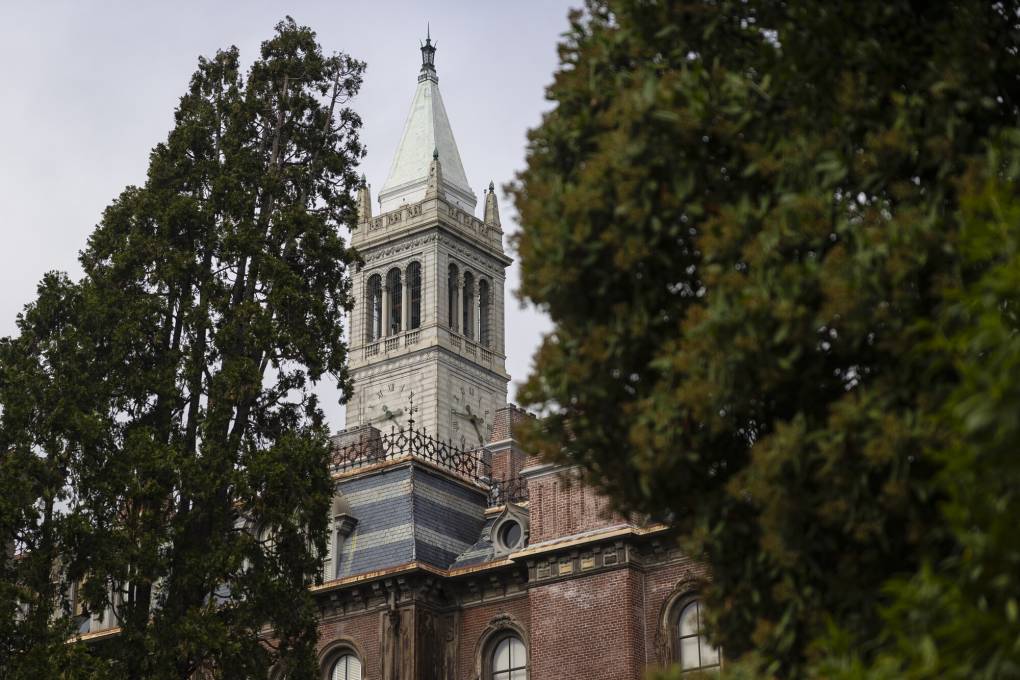
"title": "The UC Berkeley Campus in Berkeley on Aug. 17, 2023.",
"publishDate": 1733334753,
"status": "inherit",
"parent": 12016602,
"modified": 1733334766,
"caption": "The UC Berkeley Campus in Berkeley on Aug. 17, 2023.",
"credit": "Martin do Nascimento/KQED",
"altTag": null,
"description": null,
"imgSizes": {
"medium": {
"file": "https://cdn.kqed.org/wp-content/uploads/sites/10/2024/12/230817-UC-BERKELEY-CAMPUS-MD-02_qed-800x533.jpg",
"width": 800,
"height": 533,
"mimeType": "image/jpeg"
},
"large": {
"file": "https://cdn.kqed.org/wp-content/uploads/sites/10/2024/12/230817-UC-BERKELEY-CAMPUS-MD-02_qed-1020x680.jpg",
"width": 1020,
"height": 680,
"mimeType": "image/jpeg"
},
"thumbnail": {
"file": "https://cdn.kqed.org/wp-content/uploads/sites/10/2024/12/230817-UC-BERKELEY-CAMPUS-MD-02_qed-160x107.jpg",
"width": 160,
"height": 107,
"mimeType": "image/jpeg"
},
"1536x1536": {
"file": "https://cdn.kqed.org/wp-content/uploads/sites/10/2024/12/230817-UC-BERKELEY-CAMPUS-MD-02_qed-1536x1024.jpg",
"width": 1536,
"height": 1024,
"mimeType": "image/jpeg"
},
"post-thumbnail": {
"file": "https://cdn.kqed.org/wp-content/uploads/sites/10/2024/12/230817-UC-BERKELEY-CAMPUS-MD-02_qed-672x372.jpg",
"width": 672,
"height": 372,
"mimeType": "image/jpeg"
},
"twentyfourteen-full-width": {
"file": "https://cdn.kqed.org/wp-content/uploads/sites/10/2024/12/230817-UC-BERKELEY-CAMPUS-MD-02_qed-1038x576.jpg",
"width": 1038,
"height": 576,
"mimeType": "image/jpeg"
},
"full-width": {
"file": "https://cdn.kqed.org/wp-content/uploads/sites/10/2024/12/230817-UC-BERKELEY-CAMPUS-MD-02_qed-1920x1280.jpg",
"width": 1920,
"height": 1280,
"mimeType": "image/jpeg"
},
"kqedFullSize": {
"file": "https://cdn.kqed.org/wp-content/uploads/sites/10/2024/12/230817-UC-BERKELEY-CAMPUS-MD-02_qed.jpg",
"width": 2000,
"height": 1333
}
},
"isLoading": false,
"fetchFailed": false
},
"news_12035840": {
"type": "attachments",
"id": "news_12035840",
"meta": {
"index": "attachments_1716263798",
"site": "news",
"id": "12035840",
"found": true
},
"title": "061121_SummerSchool_AW_CM_06",
"publishDate": 1744574510,
"status": "inherit",
"parent": 12035838,
"modified": 1746053532,
"caption": "Rising first graders walk to their classroom at the start of the day during summer session at Laurel Elementary in Oakland on June 11, 2021. ",
"credit": "Anne Wernikoff/CalMatters",
"altTag": "The bottom half of several children on a concrete playground with yellow chalk outlining numbers and letters is shown.",
"description": null,
"imgSizes": {
"medium": {
"file": "https://cdn.kqed.org/wp-content/uploads/sites/10/2025/04/061121_SummerSchool_AW_CM_06-800x533.jpg",
"width": 800,
"height": 533,
"mimeType": "image/jpeg"
},
"large": {
"file": "https://cdn.kqed.org/wp-content/uploads/sites/10/2025/04/061121_SummerSchool_AW_CM_06-1020x680.jpg",
"width": 1020,
"height": 680,
"mimeType": "image/jpeg"
},
"thumbnail": {
"file": "https://cdn.kqed.org/wp-content/uploads/sites/10/2025/04/061121_SummerSchool_AW_CM_06-160x107.jpg",
"width": 160,
"height": 107,
"mimeType": "image/jpeg"
},
"1536x1536": {
"file": "https://cdn.kqed.org/wp-content/uploads/sites/10/2025/04/061121_SummerSchool_AW_CM_06-1536x1024.jpg",
"width": 1536,
"height": 1024,
"mimeType": "image/jpeg"
},
"post-thumbnail": {
"file": "https://cdn.kqed.org/wp-content/uploads/sites/10/2025/04/061121_SummerSchool_AW_CM_06-672x372.jpg",
"width": 672,
"height": 372,
"mimeType": "image/jpeg"
},
"twentyfourteen-full-width": {
"file": "https://cdn.kqed.org/wp-content/uploads/sites/10/2025/04/061121_SummerSchool_AW_CM_06-1038x576.jpg",
"width": 1038,
"height": 576,
"mimeType": "image/jpeg"
},
"full-width": {
"file": "https://cdn.kqed.org/wp-content/uploads/sites/10/2025/04/061121_SummerSchool_AW_CM_06-1920x1280.jpg",
"width": 1920,
"height": 1280,
"mimeType": "image/jpeg"
},
"kqedFullSize": {
"file": "https://cdn.kqed.org/wp-content/uploads/sites/10/2025/04/061121_SummerSchool_AW_CM_06.jpg",
"width": 2000,
"height": 1333
}
},
"isLoading": false,
"fetchFailed": false
},
"news_12055530": {
"type": "attachments",
"id": "news_12055530",
"meta": {
"index": "attachments_1716263798",
"site": "news",
"id": "12055530",
"found": true
},
"title": "ImmigrationCoverageCM1",
"publishDate": 1757546413,
"status": "inherit",
"parent": 12055528,
"modified": 1757546450,
"caption": "Tebh Altawil, teacher apprentice at the Ralph Hawley Head Start Center at the YMCA of the East Bay, blows bubbles with her infant and toddler class during their outdoor time in Emeryville on Dec. 9, 2024. ",
"credit": "Florence Middleton/CalMatters",
"altTag": null,
"description": null,
"imgSizes": {
"thumbnail": {
"file": "https://cdn.kqed.org/wp-content/uploads/sites/10/2025/09/ImmigrationCoverageCM1-160x107.jpg",
"width": 160,
"height": 107,
"mimeType": "image/jpeg"
},
"1536x1536": {
"file": "https://cdn.kqed.org/wp-content/uploads/sites/10/2025/09/ImmigrationCoverageCM1-1536x1024.jpg",
"width": 1536,
"height": 1024,
"mimeType": "image/jpeg"
},
"post-thumbnail": {
"file": "https://cdn.kqed.org/wp-content/uploads/sites/10/2025/09/ImmigrationCoverageCM1-672x372.jpg",
"width": 672,
"height": 372,
"mimeType": "image/jpeg"
},
"twentyfourteen-full-width": {
"file": "https://cdn.kqed.org/wp-content/uploads/sites/10/2025/09/ImmigrationCoverageCM1-1038x576.jpg",
"width": 1038,
"height": 576,
"mimeType": "image/jpeg"
},
"kqedFullSize": {
"file": "https://cdn.kqed.org/wp-content/uploads/sites/10/2025/09/ImmigrationCoverageCM1.jpg",
"width": 2000,
"height": 1333
}
},
"isLoading": false,
"fetchFailed": false
},
"news_12055511": {
"type": "attachments",
"id": "news_12055511",
"meta": {
"index": "attachments_1716263798",
"site": "news",
"id": "12055511",
"found": true
},
"title": "CommunityCollegeFreeMeal1",
"publishDate": 1757542108,
"status": "inherit",
"parent": 12055457,
"modified": 1757542146,
"caption": "Santa Clara County’s West Valley-Mission Community College District is providing one no-cost meal per day to every student in an effort to address food insecurity. ",
"credit": "Courtesy of Haley Tabor/West Valley College",
"altTag": null,
"description": null,
"imgSizes": {
"thumbnail": {
"file": "https://cdn.kqed.org/wp-content/uploads/sites/10/2025/09/CommunityCollegeFreeMeal1-160x120.jpg",
"width": 160,
"height": 120,
"mimeType": "image/jpeg"
},
"1536x1536": {
"file": "https://cdn.kqed.org/wp-content/uploads/sites/10/2025/09/CommunityCollegeFreeMeal1-1536x1153.jpg",
"width": 1536,
"height": 1153,
"mimeType": "image/jpeg"
},
"post-thumbnail": {
"file": "https://cdn.kqed.org/wp-content/uploads/sites/10/2025/09/CommunityCollegeFreeMeal1-672x372.jpg",
"width": 672,
"height": 372,
"mimeType": "image/jpeg"
},
"twentyfourteen-full-width": {
"file": "https://cdn.kqed.org/wp-content/uploads/sites/10/2025/09/CommunityCollegeFreeMeal1-1038x576.jpg",
"width": 1038,
"height": 576,
"mimeType": "image/jpeg"
},
"kqedFullSize": {
"file": "https://cdn.kqed.org/wp-content/uploads/sites/10/2025/09/CommunityCollegeFreeMeal1.jpg",
"width": 2000,
"height": 1501
}
},
"isLoading": false,
"fetchFailed": false
},
"news_12054963": {
"type": "attachments",
"id": "news_12054963",
"meta": {
"index": "attachments_1716263798",
"site": "news",
"id": "12054963",
"found": true
},
"title": "250905_OAKLANDWALKOUT_GH-KQED",
"publishDate": 1757110575,
"status": "inherit",
"parent": 0,
"modified": 1757110601,
"caption": "Alexander Ybarra, an 11th grader at Coliseum College Prep Academy, leads classmates in a walkout against gun violence on Sept. 5, 2025.",
"credit": "Gustavo Hernandez/KQED",
"altTag": null,
"description": null,
"imgSizes": {
"thumbnail": {
"file": "https://cdn.kqed.org/wp-content/uploads/sites/10/2025/09/250905_OAKLANDWALKOUT_GH-KQED-160x107.jpg",
"width": 160,
"height": 107,
"mimeType": "image/jpeg"
},
"1536x1536": {
"file": "https://cdn.kqed.org/wp-content/uploads/sites/10/2025/09/250905_OAKLANDWALKOUT_GH-KQED-1536x1025.jpg",
"width": 1536,
"height": 1025,
"mimeType": "image/jpeg"
},
"post-thumbnail": {
"file": "https://cdn.kqed.org/wp-content/uploads/sites/10/2025/09/250905_OAKLANDWALKOUT_GH-KQED-672x372.jpg",
"width": 672,
"height": 372,
"mimeType": "image/jpeg"
},
"twentyfourteen-full-width": {
"file": "https://cdn.kqed.org/wp-content/uploads/sites/10/2025/09/250905_OAKLANDWALKOUT_GH-KQED-1038x576.jpg",
"width": 1038,
"height": 576,
"mimeType": "image/jpeg"
},
"kqedFullSize": {
"file": "https://cdn.kqed.org/wp-content/uploads/sites/10/2025/09/250905_OAKLANDWALKOUT_GH-KQED.jpg",
"width": 2000,
"height": 1334
}
},
"isLoading": false,
"fetchFailed": false
},
"news_12051869": {
"type": "attachments",
"id": "news_12051869",
"meta": {
"index": "attachments_1716263798",
"site": "news",
"id": "12051869",
"found": true
},
"title": "250418-SFUSD-04-BL_qed",
"publishDate": 1755024187,
"status": "inherit",
"parent": 12051862,
"modified": 1755024198,
"caption": "The San Francisco Unified School District Administrative Offices in San Francisco on April 18, 2025.",
"credit": "Beth LaBerge/KQED",
"altTag": null,
"description": null,
"imgSizes": {
"thumbnail": {
"file": "https://cdn.kqed.org/wp-content/uploads/sites/10/2025/08/250418-SFUSD-04-BL_qed-160x107.jpg",
"width": 160,
"height": 107,
"mimeType": "image/jpeg"
},
"1536x1536": {
"file": "https://cdn.kqed.org/wp-content/uploads/sites/10/2025/08/250418-SFUSD-04-BL_qed-1536x1024.jpg",
"width": 1536,
"height": 1024,
"mimeType": "image/jpeg"
},
"post-thumbnail": {
"file": "https://cdn.kqed.org/wp-content/uploads/sites/10/2025/08/250418-SFUSD-04-BL_qed-672x372.jpg",
"width": 672,
"height": 372,
"mimeType": "image/jpeg"
},
"twentyfourteen-full-width": {
"file": "https://cdn.kqed.org/wp-content/uploads/sites/10/2025/08/250418-SFUSD-04-BL_qed-1038x576.jpg",
"width": 1038,
"height": 576,
"mimeType": "image/jpeg"
},
"kqedFullSize": {
"file": "https://cdn.kqed.org/wp-content/uploads/sites/10/2025/08/250418-SFUSD-04-BL_qed.jpg",
"width": 2000,
"height": 1333
}
},
"isLoading": false,
"fetchFailed": false
},
"news_12054023": {
"type": "attachments",
"id": "news_12054023",
"meta": {
"index": "attachments_1716263798",
"site": "news",
"id": "12054023",
"found": true
},
"title": "250827-CLIMATERESILIENTCHILDCARECENTER-04-BL-KQED",
"publishDate": 1756338810,
"status": "inherit",
"parent": 0,
"modified": 1756338960,
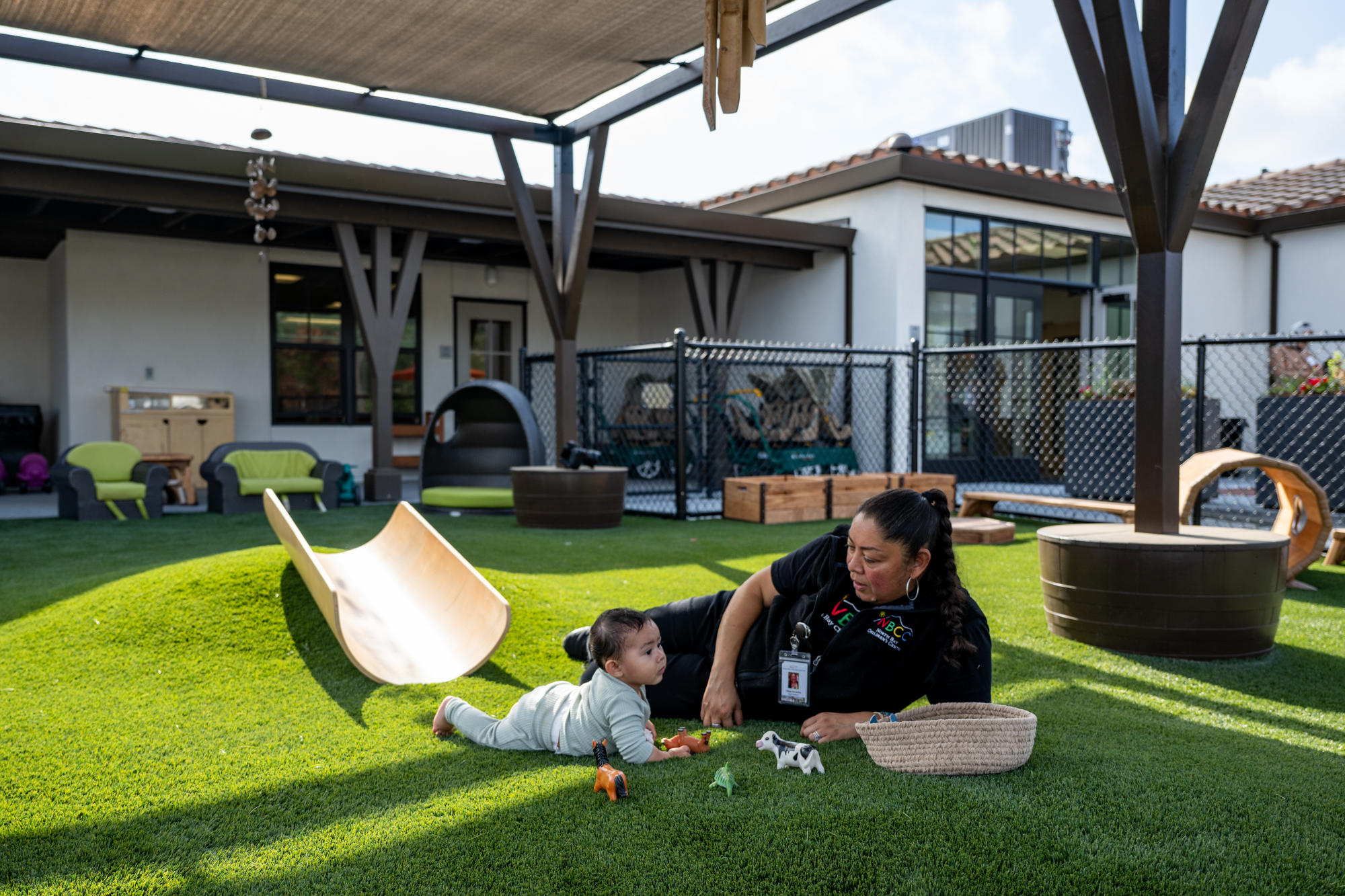
"caption": "Laly Cervantes, master head teacher for infant programs at the North Bay Children’s Center, works with young children at the Novato location on Aug. 27, 2025.",
"credit": "Beth LaBerge/KQED",
"altTag": null,
"description": null,
"imgSizes": {
"thumbnail": {
"file": "https://cdn.kqed.org/wp-content/uploads/sites/10/2025/08/250827-CLIMATERESILIENTCHILDCARECENTER-04-BL-KQED-160x107.jpg",
"width": 160,
"height": 107,
"mimeType": "image/jpeg"
},
"1536x1536": {
"file": "https://cdn.kqed.org/wp-content/uploads/sites/10/2025/08/250827-CLIMATERESILIENTCHILDCARECENTER-04-BL-KQED-1536x1024.jpg",
"width": 1536,
"height": 1024,
"mimeType": "image/jpeg"
},
"post-thumbnail": {
"file": "https://cdn.kqed.org/wp-content/uploads/sites/10/2025/08/250827-CLIMATERESILIENTCHILDCARECENTER-04-BL-KQED-672x372.jpg",
"width": 672,
"height": 372,
"mimeType": "image/jpeg"
},
"twentyfourteen-full-width": {
"file": "https://cdn.kqed.org/wp-content/uploads/sites/10/2025/08/250827-CLIMATERESILIENTCHILDCARECENTER-04-BL-KQED-1038x576.jpg",
"width": 1038,
"height": 576,
"mimeType": "image/jpeg"
},
"kqedFullSize": {
"file": "https://cdn.kqed.org/wp-content/uploads/sites/10/2025/08/250827-CLIMATERESILIENTCHILDCARECENTER-04-BL-KQED.jpg",
"width": 2000,
"height": 1333
}
},
"isLoading": false,
"fetchFailed": false
},
"news_12053962": {
"type": "attachments",
"id": "news_12053962",
"meta": {
"index": "attachments_1716263798",
"site": "news",
"id": "12053962",
"found": true
},
"title": "20230608_ksuzuki_adelanteschool 172_qed",
"publishDate": 1756333041,
"status": "inherit",
"parent": 12053938,
"modified": 1756401471,
"caption": "A sign outside Adelante Dual Language Academy is pictured in San José, California, on June 8, 2023. Records obtained by KQED show a music teacher arrested this year for sexually abusing 10 students at Adelante Academy had complaints at a different school for inappropriately touching students before he was transferred.",
"credit": "Kori Suzuki/KQED",
"altTag": null,
"description": null,
"imgSizes": {
"thumbnail": {
"file": "https://cdn.kqed.org/wp-content/uploads/sites/10/2025/08/20230608_ksuzuki_adelanteschool-172_qed-160x106.jpg",
"width": 160,
"height": 106,
"mimeType": "image/jpeg"
},
"1536x1536": {
"file": "https://cdn.kqed.org/wp-content/uploads/sites/10/2025/08/20230608_ksuzuki_adelanteschool-172_qed-1536x1022.jpg",
"width": 1536,
"height": 1022,
"mimeType": "image/jpeg"
},
"post-thumbnail": {
"file": "https://cdn.kqed.org/wp-content/uploads/sites/10/2025/08/20230608_ksuzuki_adelanteschool-172_qed-672x372.jpg",
"width": 672,
"height": 372,
"mimeType": "image/jpeg"
},
"twentyfourteen-full-width": {
"file": "https://cdn.kqed.org/wp-content/uploads/sites/10/2025/08/20230608_ksuzuki_adelanteschool-172_qed-1038x576.jpg",
"width": 1038,
"height": 576,
"mimeType": "image/jpeg"
},
"kqedFullSize": {
"file": "https://cdn.kqed.org/wp-content/uploads/sites/10/2025/08/20230608_ksuzuki_adelanteschool-172_qed.jpg",
"width": 2000,
"height": 1331
}
},
"isLoading": false,
"fetchFailed": false
},
"news_12053836": {
"type": "attachments",
"id": "news_12053836",
"meta": {
"index": "attachments_1716263798",
"site": "news",
"id": "12053836",
"found": true
},
"title": "An activist seen holding a placard that says keep your laws",
"publishDate": 1756250193,
"status": "inherit",
"parent": 12053640,
"modified": 1756323141,
"caption": "Women's rights activists in Los Angeles on May 21, 2019, protested against restrictions on abortions after Alabama passed the most restrictive abortion bans in the U.S.",
"credit": "Ronen Tivony/SOPA Images/LightRocket via Getty Images",
"altTag": null,
"description": null,
"imgSizes": {
"thumbnail": {
"file": "https://cdn.kqed.org/wp-content/uploads/sites/10/2025/08/SexEducationGetty-160x107.jpg",
"width": 160,
"height": 107,
"mimeType": "image/jpeg"
},
"1536x1536": {
"file": "https://cdn.kqed.org/wp-content/uploads/sites/10/2025/08/SexEducationGetty-1536x1024.jpg",
"width": 1536,
"height": 1024,
"mimeType": "image/jpeg"
},
"post-thumbnail": {
"file": "https://cdn.kqed.org/wp-content/uploads/sites/10/2025/08/SexEducationGetty-672x372.jpg",
"width": 672,
"height": 372,
"mimeType": "image/jpeg"
},
"twentyfourteen-full-width": {
"file": "https://cdn.kqed.org/wp-content/uploads/sites/10/2025/08/SexEducationGetty-1038x576.jpg",
"width": 1038,
"height": 576,
"mimeType": "image/jpeg"
},
"kqedFullSize": {
"file": "https://cdn.kqed.org/wp-content/uploads/sites/10/2025/08/SexEducationGetty.jpg",
"width": 2000,
"height": 1333
}
},
"isLoading": false,
"fetchFailed": false
},
"news_12053747": {
"type": "attachments",
"id": "news_12053747",
"meta": {
"index": "attachments_1716263798",
"site": "news",
"id": "12053747",
"found": true
},
"title": "250818-SFUSDFirstDay-20_qed",
"publishDate": 1756229825,
"status": "inherit",
"parent": 12053745,
"modified": 1756229850,
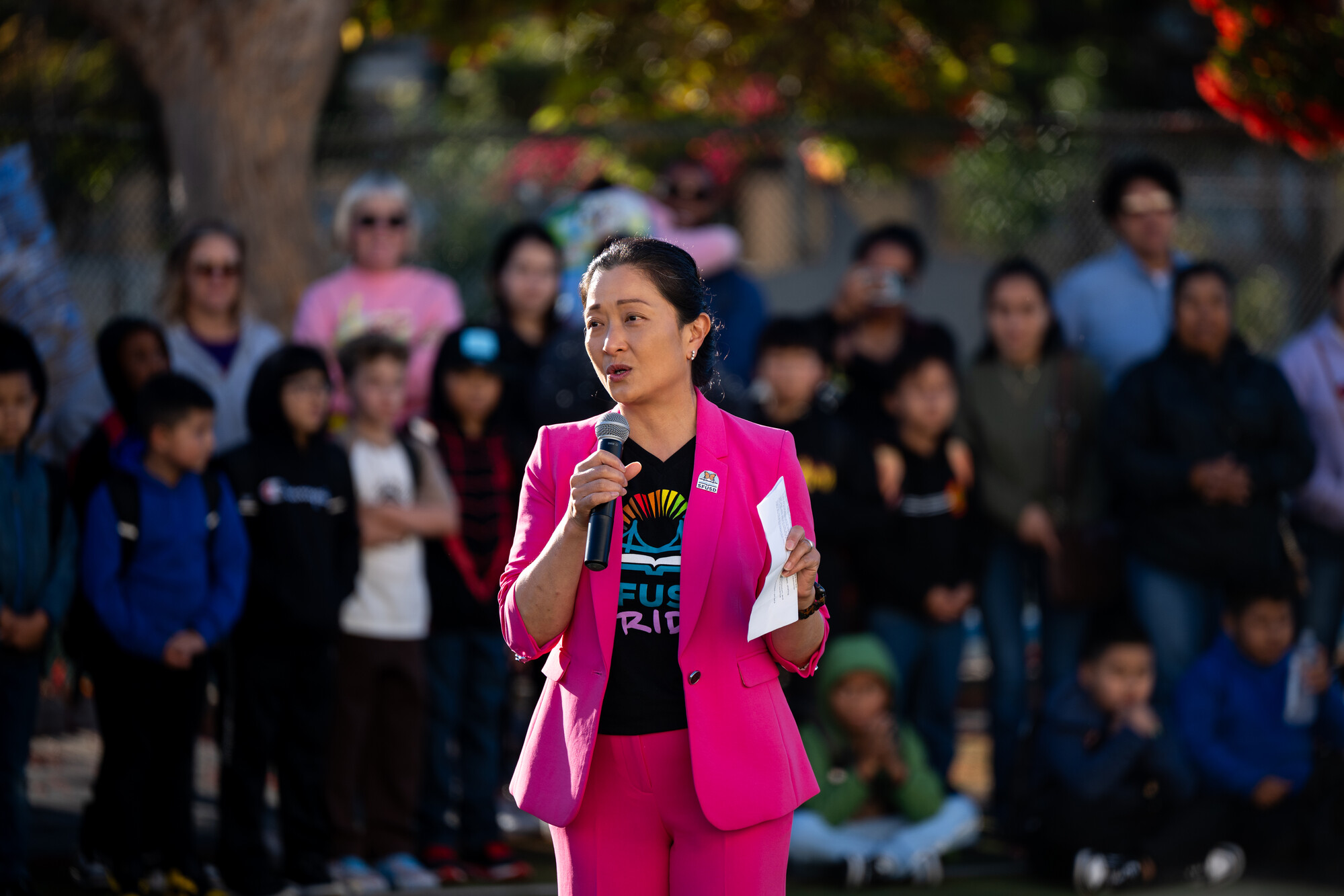
"caption": "Superintendent Maria Su speaks to students at Sanchez Elementary School on the first day of classes for the new school year in San Francisco on Aug. 18, 2025.",
"credit": "Beth LaBerge/KQED",
"altTag": null,
"description": null,
"imgSizes": {
"thumbnail": {
"file": "https://cdn.kqed.org/wp-content/uploads/sites/10/2025/08/250818-SFUSDFirstDay-20_qed-160x107.jpg",
"width": 160,
"height": 107,
"mimeType": "image/jpeg"
},
"1536x1536": {
"file": "https://cdn.kqed.org/wp-content/uploads/sites/10/2025/08/250818-SFUSDFirstDay-20_qed-1536x1024.jpg",
"width": 1536,
"height": 1024,
"mimeType": "image/jpeg"
},
"post-thumbnail": {
"file": "https://cdn.kqed.org/wp-content/uploads/sites/10/2025/08/250818-SFUSDFirstDay-20_qed-672x372.jpg",
"width": 672,
"height": 372,
"mimeType": "image/jpeg"
},
"twentyfourteen-full-width": {
"file": "https://cdn.kqed.org/wp-content/uploads/sites/10/2025/08/250818-SFUSDFirstDay-20_qed-1038x576.jpg",
"width": 1038,
"height": 576,
"mimeType": "image/jpeg"
},
"kqedFullSize": {
"file": "https://cdn.kqed.org/wp-content/uploads/sites/10/2025/08/250818-SFUSDFirstDay-20_qed.jpg",
"width": 1999,
"height": 1333
}
},
"isLoading": false,
"fetchFailed": false
},
"news_12008782": {
"type": "attachments",
"id": "news_12008782",
"meta": {
"index": "attachments_1716263798",
"site": "news",
"id": "12008782",
"found": true
},
"title": "Isabel Toscano's classroom at Oakland High School in Oakland on Oct. 9, 2024.",
"publishDate": 1728508991,
"status": "inherit",
"parent": 0,
"modified": 1728509060,
"caption": "Isabel Toscano's classroom at Oakland High School in Oakland on Oct. 9, 2024.",
"credit": "Martin do Nascimento/KQED",
"altTag": null,
"description": null,
"imgSizes": {
"medium": {
"file": "https://cdn.kqed.org/wp-content/uploads/sites/10/2024/10/241009-OAKLAND-YOUTH-VOTE-MD-08-KQED-800x533.jpg",
"width": 800,
"height": 533,
"mimeType": "image/jpeg"
},
"large": {
"file": "https://cdn.kqed.org/wp-content/uploads/sites/10/2024/10/241009-OAKLAND-YOUTH-VOTE-MD-08-KQED-1020x680.jpg",
"width": 1020,
"height": 680,
"mimeType": "image/jpeg"
},
"thumbnail": {
"file": "https://cdn.kqed.org/wp-content/uploads/sites/10/2024/10/241009-OAKLAND-YOUTH-VOTE-MD-08-KQED-160x107.jpg",
"width": 160,
"height": 107,
"mimeType": "image/jpeg"
},
"1536x1536": {
"file": "https://cdn.kqed.org/wp-content/uploads/sites/10/2024/10/241009-OAKLAND-YOUTH-VOTE-MD-08-KQED-1536x1024.jpg",
"width": 1536,
"height": 1024,
"mimeType": "image/jpeg"
},
"post-thumbnail": {
"file": "https://cdn.kqed.org/wp-content/uploads/sites/10/2024/10/241009-OAKLAND-YOUTH-VOTE-MD-08-KQED-672x372.jpg",
"width": 672,
"height": 372,
"mimeType": "image/jpeg"
},
"twentyfourteen-full-width": {
"file": "https://cdn.kqed.org/wp-content/uploads/sites/10/2024/10/241009-OAKLAND-YOUTH-VOTE-MD-08-KQED-1038x576.jpg",
"width": 1038,
"height": 576,
"mimeType": "image/jpeg"
},
"full-width": {
"file": "https://cdn.kqed.org/wp-content/uploads/sites/10/2024/10/241009-OAKLAND-YOUTH-VOTE-MD-08-KQED-1920x1280.jpg",
"width": 1920,
"height": 1280,
"mimeType": "image/jpeg"
},
"kqedFullSize": {
"file": "https://cdn.kqed.org/wp-content/uploads/sites/10/2024/10/241009-OAKLAND-YOUTH-VOTE-MD-08-KQED.jpg",
"width": 2000,
"height": 1333
}
},
"isLoading": false,
"fetchFailed": false
},
"news_12053846": {
"type": "attachments",
"id": "news_12053846",
"meta": {
"index": "attachments_1716263798",
"site": "news",
"id": "12053846",
"found": true
},
"title": "CAT — Teachers Curbing AI Use - IMG",
"publishDate": 1756254354,
"status": "inherit",
"parent": 12053843,
"modified": 1756256099,
"caption": "Two high school students discuss an essay for their English final exam at Thomas Jefferson High School in Denver, Colorado.",
"credit": "Hyoung Chang/The Denver Post",
"altTag": "Two female high school students hover over a computer. One student has a hand covering her face as the other student leans in closely to the computer screen.Their teacher and a projection of the lesson are blurred in the background. The Close All Tabs logo appears in pixelated font in the lower right corner.",
"description": null,
"imgSizes": {
"thumbnail": {
"file": "https://cdn.kqed.org/wp-content/uploads/sites/10/2025/08/CAT-—-Teachers-Curbing-AI-Use-IMG-160x90.png",
"width": 160,
"height": 90,
"mimeType": "image/png"
},
"1536x1536": {
"file": "https://cdn.kqed.org/wp-content/uploads/sites/10/2025/08/CAT-—-Teachers-Curbing-AI-Use-IMG-1536x864.png",
"width": 1536,
"height": 864,
"mimeType": "image/png"
},
"post-thumbnail": {
"file": "https://cdn.kqed.org/wp-content/uploads/sites/10/2025/08/CAT-—-Teachers-Curbing-AI-Use-IMG-672x372.png",
"width": 672,
"height": 372,
"mimeType": "image/png"
},
"twentyfourteen-full-width": {
"file": "https://cdn.kqed.org/wp-content/uploads/sites/10/2025/08/CAT-—-Teachers-Curbing-AI-Use-IMG-1038x576.png",
"width": 1038,
"height": 576,
"mimeType": "image/png"
},
"kqedFullSize": {
"file": "https://cdn.kqed.org/wp-content/uploads/sites/10/2025/08/CAT-—-Teachers-Curbing-AI-Use-IMG.png",
"width": 1920,
"height": 1080
}
},
"isLoading": false,
"fetchFailed": false
}
},
"audioPlayerReducer": {
"postId": "stream_live",
"isPaused": true,
"isPlaying": false,
"pfsActive": false,
"pledgeModalIsOpen": true,
"playerDrawerIsOpen": false,
"liveAudioPlayStartedAt": 0,
"liveAudioPlayContext": ""
},
"authorsReducer": {
"byline_news_12055528": {
"type": "authors",
"id": "byline_news_12055528",
"meta": {
"override": true
},
"slug": "byline_news_12055528",
"name": "Adam Echelman, CalMatters",
"isLoading": false
},
"ecruzguevarra": {
"type": "authors",
"id": "8654",
"meta": {
"index": "authors_1716337520",
"id": "8654",
"found": true
},
"name": "Ericka Cruz Guevarra",
"firstName": "Ericka",
"lastName": "Cruz Guevarra",
"slug": "ecruzguevarra",
"email": "ecruzguevarra@kqed.org",
"display_author_email": true,
"staff_mastheads": [
"news"
],
"title": "Producer, The Bay Podcast",
"bio": "Ericka Cruz Guevarra is host of \u003ca href=\"https://www.kqed.org/podcasts/thebay\">\u003cem>The Bay\u003c/em>\u003c/a> podcast at KQED. Before host, she was the show’s producer. Her work in that capacity includes a three-part reported series on policing in Vallejo, which won a 2020 excellence in journalism award from the Society of Professional Journalists. Ericka has worked as a breaking news reporter at Oregon Public Broadcasting, helped produce the Code Switch podcast, and was KQED’s inaugural Raul Ramirez Diversity Fund intern. She’s also an alumna of NPR’s Next Generation Radio program. Send her an email if you have strong feelings about whether Fairfield and Suisun City are the Bay. Ericka is represented by SAG-AFTRA.",
"avatar": "https://secure.gravatar.com/avatar/accefc1de4bafc7e234b69bcb9b6f6536c130fd84709bc3069ef11a78787e1bb?s=600&d=blank&r=g",
"twitter": "NotoriousECG",
"bluesky": null,
"facebook": null,
"instagram": null,
"linkedin": null,
"sites": [
{
"site": "arts",
"roles": [
"subscriber"
]
},
{
"site": "news",
"roles": [
"editor",
"manage_categories"
]
},
{
"site": "futureofyou",
"roles": [
"subscriber"
]
},
{
"site": "stateofhealth",
"roles": [
"subscriber"
]
},
{
"site": "science",
"roles": [
"editor"
]
},
{
"site": "forum",
"roles": [
"subscriber"
]
}
],
"headData": {
"title": "Ericka Cruz Guevarra | KQED",
"description": "Producer, The Bay Podcast",
"ogImgSrc": "https://secure.gravatar.com/avatar/accefc1de4bafc7e234b69bcb9b6f6536c130fd84709bc3069ef11a78787e1bb?s=600&d=blank&r=g",
"twImgSrc": "https://secure.gravatar.com/avatar/accefc1de4bafc7e234b69bcb9b6f6536c130fd84709bc3069ef11a78787e1bb?s=600&d=blank&r=g"
},
"isLoading": false,
"link": "/author/ecruzguevarra"
},
"hmcdede": {
"type": "authors",
"id": "11635",
"meta": {
"index": "authors_1716337520",
"id": "11635",
"found": true
},
"name": "Holly McDede",
"firstName": "Holly",
"lastName": "McDede",
"slug": "hmcdede",
"email": "hmcdede@KQED.org",
"display_author_email": false,
"staff_mastheads": [],
"title": "KQED Contributor",
"bio": null,
"avatar": "https://secure.gravatar.com/avatar/999d9bf31bb3a2f0511932d99526cb3e?s=600&d=blank&r=g",
"twitter": null,
"facebook": null,
"instagram": null,
"linkedin": null,
"sites": [
{
"site": "arts",
"roles": [
"editor"
]
},
{
"site": "news",
"roles": [
"edit_others_posts",
"editor"
]
},
{
"site": "science",
"roles": [
"editor"
]
},
{
"site": "forum",
"roles": [
"editor"
]
},
{
"site": "perspectives",
"roles": [
"administrator"
]
}
],
"headData": {
"title": "Holly McDede | KQED",
"description": "KQED Contributor",
"ogImgSrc": "https://secure.gravatar.com/avatar/999d9bf31bb3a2f0511932d99526cb3e?s=600&d=blank&r=g",
"twImgSrc": "https://secure.gravatar.com/avatar/999d9bf31bb3a2f0511932d99526cb3e?s=600&d=blank&r=g"
},
"isLoading": false,
"link": "/author/hmcdede"
},
"amontecillo": {
"type": "authors",
"id": "11649",
"meta": {
"index": "authors_1716337520",
"id": "11649",
"found": true
},
"name": "Alan Montecillo",
"firstName": "Alan",
"lastName": "Montecillo",
"slug": "amontecillo",
"email": "amontecillo@kqed.org",
"display_author_email": false,
"staff_mastheads": [
"news"
],
"title": "KQED Contributor",
"bio": "Alan Montecillo is the senior editor of \u003cem>\u003ca href=\"http://kqed.org/thebay\">The Bay\u003c/a>, \u003c/em> KQED's local news podcast. Before moving to the Bay Area, he worked as a senior talk show producer for WILL in Champaign-Urbana, Illinois and at Oregon Public Broadcasting in Portland, Oregon. He has won journalism awards from the Society of Professional Journalists Northern California, the Public Media Journalists Association, The Signal Awards, and has also received a regional Edward R. Murrow award. Alan is a Filipino American from Hong Kong and a graduate of Reed College.",
"avatar": "https://secure.gravatar.com/avatar/268f53a2066899ea9efdd8a5900218b17c822d9862cbc9326cccec53ef41d349?s=600&d=blank&r=g",
"twitter": "alanmontecillo",
"bluesky": null,
"facebook": null,
"instagram": null,
"linkedin": null,
"sites": [
{
"site": "",
"roles": [
"editor"
]
},
{
"site": "news",
"roles": [
"editor",
"manage_categories"
]
}
],
"headData": {
"title": "Alan Montecillo | KQED",
"description": "KQED Contributor",
"ogImgSrc": "https://secure.gravatar.com/avatar/268f53a2066899ea9efdd8a5900218b17c822d9862cbc9326cccec53ef41d349?s=600&d=blank&r=g",
"twImgSrc": "https://secure.gravatar.com/avatar/268f53a2066899ea9efdd8a5900218b17c822d9862cbc9326cccec53ef41d349?s=600&d=blank&r=g"
},
"isLoading": false,
"link": "/author/amontecillo"
},
"nnavarro": {
"type": "authors",
"id": "11756",
"meta": {
"index": "authors_1716337520",
"id": "11756",
"found": true
},
"name": "Natalia Navarro",
"firstName": "Natalia",
"lastName": "Navarro",
"slug": "nnavarro",
"email": "nnavarro@kqed.org",
"display_author_email": true,
"staff_mastheads": [
"news"
],
"title": "Afternoon News Anchor",
"bio": "Natalia Navarro is KQED's afternoon radio news anchor. She came to KQED in 2021 from Colorado Public Radio, where she was a reporter and host. She has received several awards for her work covering daily and breaking news from professional organizations such as the San Francisco Press Club, Society of Professional Journalists and the Colorado Broadcasters Association. Natalia is originally from Tucson, Arizona, where she got her start in journalism writing for the Arizona Daily Star, Arizona Public Media and the Tucson Weekly. Natalia earned her bachelor's degree in journalism and economics, and her master's degree in journalism from the University of Arizona.",
"avatar": "https://secure.gravatar.com/avatar/a2bdb19fd9520bdea295a2d5f9b2ad65ec51cf0bf559fb1cc041d3a0a04d62ad?s=600&d=blank&r=g",
"twitter": "@NataliaVNavarro",
"bluesky": null,
"facebook": null,
"instagram": null,
"linkedin": null,
"sites": [
{
"site": "news",
"roles": [
"editor"
]
}
],
"headData": {
"title": "Natalia Navarro | KQED",
"description": "Afternoon News Anchor",
"ogImgSrc": "https://secure.gravatar.com/avatar/a2bdb19fd9520bdea295a2d5f9b2ad65ec51cf0bf559fb1cc041d3a0a04d62ad?s=600&d=blank&r=g",
"twImgSrc": "https://secure.gravatar.com/avatar/a2bdb19fd9520bdea295a2d5f9b2ad65ec51cf0bf559fb1cc041d3a0a04d62ad?s=600&d=blank&r=g"
},
"isLoading": false,
"link": "/author/nnavarro"
},
"adahlstromeckman": {
"type": "authors",
"id": "11785",
"meta": {
"index": "authors_1716337520",
"id": "11785",
"found": true
},
"name": "Azul Dahlstrom-Eckman",
"firstName": "Azul",
"lastName": "Dahlstrom-Eckman",
"slug": "adahlstromeckman",
"email": "adahlstrom-eckman@kqed.org",
"display_author_email": true,
"staff_mastheads": [],
"title": "Reporter",
"bio": "Azul is a reporter for KQED focusing on transportation and features. He joined KQED in 2021 as an alumna of KALW's Audio Academy radio journalism training program.",
"avatar": "https://secure.gravatar.com/avatar/9cb750298435add7815a777f55bf1f46845c1386bb8452555c60a7b820b5aba3?s=600&d=blank&r=g",
"twitter": "@zuliemann",
"bluesky": "@azul415.bsky.social",
"facebook": null,
"instagram": null,
"linkedin": null,
"sites": [
{
"site": "arts",
"roles": [
"editor"
]
},
{
"site": "news",
"roles": [
"editor"
]
},
{
"site": "science",
"roles": [
"editor"
]
},
{
"site": "liveblog",
"roles": [
"author"
]
}
],
"headData": {
"title": "Azul Dahlstrom-Eckman | KQED",
"description": "Reporter",
"ogImgSrc": "https://secure.gravatar.com/avatar/9cb750298435add7815a777f55bf1f46845c1386bb8452555c60a7b820b5aba3?s=600&d=blank&r=g",
"twImgSrc": "https://secure.gravatar.com/avatar/9cb750298435add7815a777f55bf1f46845c1386bb8452555c60a7b820b5aba3?s=600&d=blank&r=g"
},
"isLoading": false,
"link": "/author/adahlstromeckman"
},
"ibloom": {
"type": "authors",
"id": "11805",
"meta": {
"index": "authors_1716337520",
"id": "11805",
"found": true
},
"name": "Izzy Bloom",
"firstName": "Izzy",
"lastName": "Bloom",
"slug": "ibloom",
"email": "ibloom@kqed.org",
"display_author_email": false,
"staff_mastheads": [],
"title": "KQED Reporter & Producer",
"bio": "Izzy is a reporter and producer on KQED's California Politics & Government Desk. She joined the desk in 2024 to produce Political Breakdown, covering local and national elections and attending the RNC and DNC in Milwaukee and Chicago. \r\n\r\nBefore that, Izzy was a producer on The California Report and reported long-form stories for The California Report Magazine. She was a finalist for the Third Coast/Richard H. Driehaus Foundation Competition and was awarded for her reporting on indigenous land back by the Society of Professional Journalists. Izzy received her master's in journalism from the University of California, Berkeley.",
"avatar": "https://secure.gravatar.com/avatar/cc4d272ca430783ee1a8efac470a6b1e0fdd082c3beb61da019801d0ff751c8c?s=600&d=blank&r=g",
"twitter": null,
"bluesky": null,
"facebook": null,
"instagram": null,
"linkedin": null,
"sites": [
{
"site": "news",
"roles": [
"editor"
]
},
{
"site": "perspectives",
"roles": [
"editor"
]
}
],
"headData": {
"title": "Izzy Bloom | KQED",
"description": "KQED Reporter & Producer",
"ogImgSrc": "https://secure.gravatar.com/avatar/cc4d272ca430783ee1a8efac470a6b1e0fdd082c3beb61da019801d0ff751c8c?s=600&d=blank&r=g",
"twImgSrc": "https://secure.gravatar.com/avatar/cc4d272ca430783ee1a8efac470a6b1e0fdd082c3beb61da019801d0ff751c8c?s=600&d=blank&r=g"
},
"isLoading": false,
"link": "/author/ibloom"
},
"daisynguyen": {
"type": "authors",
"id": "11829",
"meta": {
"index": "authors_1716337520",
"id": "11829",
"found": true
},
"name": "Daisy Nguyen",
"firstName": "Daisy",
"lastName": "Nguyen",
"slug": "daisynguyen",
"email": "daisynguyen@kqed.org",
"display_author_email": true,
"staff_mastheads": [
"news"
],
"title": "KQED Contributor",
"bio": "I have covered early childhood education and child care for KQED since 2022. I focus on policies aimed at increasing access to early care and education and how they shape individual lives. I've been a journalist for more than two decades, with most of that time devoted to covering breaking news throughout California for The Associated Press. I grew up in San Francisco and studied at UC Davis and Columbia University's Graduate School of Journalism. I live in Oakland with my husband and two kids.",
"avatar": "https://secure.gravatar.com/avatar/2da2127c27f7143b53ebd419800fd55f?s=600&d=blank&r=g",
"twitter": null,
"facebook": null,
"instagram": null,
"linkedin": "https://www.linkedin.com/in/daisynguyen/",
"sites": [
{
"site": "news",
"roles": [
"author"
]
},
{
"site": "liveblog",
"roles": [
"author"
]
}
],
"headData": {
"title": "Daisy Nguyen | KQED",
"description": "KQED Contributor",
"ogImgSrc": "https://secure.gravatar.com/avatar/2da2127c27f7143b53ebd419800fd55f?s=600&d=blank&r=g",
"twImgSrc": "https://secure.gravatar.com/avatar/2da2127c27f7143b53ebd419800fd55f?s=600&d=blank&r=g"
},
"isLoading": false,
"link": "/author/daisynguyen"
},
"jessicakariisa": {
"type": "authors",
"id": "11831",
"meta": {
"index": "authors_1716337520",
"id": "11831",
"found": true
},
"name": "Jessica Kariisa",
"firstName": "Jessica",
"lastName": "Kariisa",
"slug": "jessicakariisa",
"email": "jkariisa@kqed.org",
"display_author_email": false,
"staff_mastheads": [],
"title": "Producer, The Bay",
"bio": "Jessica Kariisa is the producer of The Bay. She first joined KQED as an intern for The California Report Magazine, after which she became an on-call producer. She reported a Bay Curious episode on the use of rap lyrics in criminal trials which won a Society of Professional Journalists award in 2023 for Excellence in Features Journalism and the 2023 Signal Award for Best Conversation Starter. She’s worked on podcasts for Snap Judgment and American Public Media. Before embarking on her audio career, she was a music journalist.\r\n\r\nJessica Kariisa is represented by SAG-AFTRA.",
"avatar": "https://secure.gravatar.com/avatar/522e97b28ac0b3d411621c0fde8f3419c7b71ea2c5c262c57c4bb600963f328c?s=600&d=blank&r=g",
"twitter": null,
"bluesky": null,
"facebook": null,
"instagram": null,
"linkedin": null,
"sites": [
{
"site": "arts",
"roles": [
"author"
]
},
{
"site": "news",
"roles": [
"editor",
"manage_categories"
]
}
],
"headData": {
"title": "Jessica Kariisa | KQED",
"description": "Producer, The Bay",
"ogImgSrc": "https://secure.gravatar.com/avatar/522e97b28ac0b3d411621c0fde8f3419c7b71ea2c5c262c57c4bb600963f328c?s=600&d=blank&r=g",
"twImgSrc": "https://secure.gravatar.com/avatar/522e97b28ac0b3d411621c0fde8f3419c7b71ea2c5c262c57c4bb600963f328c?s=600&d=blank&r=g"
},
"isLoading": false,
"link": "/author/jessicakariisa"
},
"chambrick": {
"type": "authors",
"id": "11832",
"meta": {
"index": "authors_1716337520",
"id": "11832",
"found": true
},
"name": "Chris Hambrick",
"firstName": "Chris",
"lastName": "Hambrick",
"slug": "chambrick",
"email": "chambrick@kqed.org",
"display_author_email": false,
"staff_mastheads": [],
"title": "KQED Contributor",
"bio": null,
"avatar": "https://secure.gravatar.com/avatar/23cb83888bc440645af5d36d0d1909e8ecb6cef21f2fdb96abf9a55495bb19d8?s=600&d=blank&r=g",
"twitter": null,
"bluesky": null,
"facebook": null,
"instagram": null,
"linkedin": null,
"sites": [
{
"site": "",
"roles": [
"editor"
]
},
{
"site": "arts",
"roles": [
"editor"
]
},
{
"site": "news",
"roles": [
"editor"
]
},
{
"site": "podcasts",
"roles": [
"editor"
]
}
],
"headData": {
"title": "Chris Hambrick | KQED",
"description": "KQED Contributor",
"ogImgSrc": "https://secure.gravatar.com/avatar/23cb83888bc440645af5d36d0d1909e8ecb6cef21f2fdb96abf9a55495bb19d8?s=600&d=blank&r=g",
"twImgSrc": "https://secure.gravatar.com/avatar/23cb83888bc440645af5d36d0d1909e8ecb6cef21f2fdb96abf9a55495bb19d8?s=600&d=blank&r=g"
},
"isLoading": false,
"link": "/author/chambrick"
},
"cegusa": {
"type": "authors",
"id": "11869",
"meta": {
"index": "authors_1716337520",
"id": "11869",
"found": true
},
"name": "Chris Egusa",
"firstName": "Chris",
"lastName": "Egusa",
"slug": "cegusa",
"email": "cegusa@kqed.org",
"display_author_email": false,
"staff_mastheads": [],
"title": "KQED Contributor",
"bio": null,
"avatar": "https://secure.gravatar.com/avatar/3562ed52747313a4c94017da88ea89f9e85cd901f63ebc056a7d5e0adf4a03da?s=600&d=blank&r=g",
"twitter": null,
"bluesky": null,
"facebook": null,
"instagram": null,
"linkedin": null,
"sites": [
{
"site": "arts",
"roles": [
"editor"
]
},
{
"site": "news",
"roles": [
"editor"
]
}
],
"headData": {
"title": "Chris Egusa | KQED",
"description": "KQED Contributor",
"ogImgSrc": "https://secure.gravatar.com/avatar/3562ed52747313a4c94017da88ea89f9e85cd901f63ebc056a7d5e0adf4a03da?s=600&d=blank&r=g",
"twImgSrc": "https://secure.gravatar.com/avatar/3562ed52747313a4c94017da88ea89f9e85cd901f63ebc056a7d5e0adf4a03da?s=600&d=blank&r=g"
},
"isLoading": false,
"link": "/author/cegusa"
},
"kdebenedetti": {
"type": "authors",
"id": "11913",
"meta": {
"index": "authors_1716337520",
"id": "11913",
"found": true
},
"name": "Katie DeBenedetti",
"firstName": "Katie",
"lastName": "DeBenedetti",
"slug": "kdebenedetti",
"email": "kdebenedetti@kqed.org",
"display_author_email": false,
"staff_mastheads": [
"news",
"science"
],
"title": "KQED Contributor",
"bio": "Katie DeBenedetti is a digital reporter covering daily news for the Express Desk. Prior to joining KQED as a culture reporting intern in January 2024, she covered education and city government for the Napa Valley Register.",
"avatar": "https://secure.gravatar.com/avatar/6e31073cb8f7e4214ab03f42771d0f45?s=600&d=blank&r=g",
"twitter": null,
"facebook": null,
"instagram": null,
"linkedin": null,
"sites": [
{
"site": "news",
"roles": [
"author"
]
},
{
"site": "science",
"roles": [
"author"
]
},
{
"site": "liveblog",
"roles": [
"author"
]
}
],
"headData": {
"title": "Katie DeBenedetti | KQED",
"description": "KQED Contributor",
"ogImgSrc": "https://secure.gravatar.com/avatar/6e31073cb8f7e4214ab03f42771d0f45?s=600&d=blank&r=g",
"twImgSrc": "https://secure.gravatar.com/avatar/6e31073cb8f7e4214ab03f42771d0f45?s=600&d=blank&r=g"
},
"isLoading": false,
"link": "/author/kdebenedetti"
},
"bkrans": {
"type": "authors",
"id": "11923",
"meta": {
"index": "authors_1716337520",
"id": "11923",
"found": true
},
"name": "Brian Krans",
"firstName": "Brian",
"lastName": "Krans",
"slug": "bkrans",
"email": "bkrans@kqed.org",
"display_author_email": false,
"staff_mastheads": [
"news"
],
"title": "KQED Contributing Reporter",
"bio": "Brian Krans is an award-winning local news and investigative reporter who has been proudly working as a general assignment reporter for KQED since August 2023. He lives in Richmond, where he also reports on air pollution for Richmondside. He is also a founding member of the Vallejo Sun.",
"avatar": "https://secure.gravatar.com/avatar/71fa91f931774612559f7640390b53d9c2840ff72b20f195a25239aab2d9fbb9?s=600&d=blank&r=g",
"twitter": "citizenkrans",
"bluesky": null,
"facebook": null,
"instagram": null,
"linkedin": null,
"sites": [
{
"site": "news",
"roles": [
"editor"
]
}
],
"headData": {
"title": "Brian Krans | KQED",
"description": "KQED Contributing Reporter",
"ogImgSrc": "https://secure.gravatar.com/avatar/71fa91f931774612559f7640390b53d9c2840ff72b20f195a25239aab2d9fbb9?s=600&d=blank&r=g",
"twImgSrc": "https://secure.gravatar.com/avatar/71fa91f931774612559f7640390b53d9c2840ff72b20f195a25239aab2d9fbb9?s=600&d=blank&r=g"
},
"isLoading": false,
"link": "/author/bkrans"
},
"gzada": {
"type": "authors",
"id": "11929",
"meta": {
"index": "authors_1716337520",
"id": "11929",
"found": true
},
"name": "Gilare Zada",
"firstName": "Gilare",
"lastName": "Zada",
"slug": "gzada",
"email": "gzada@kqed.org",
"display_author_email": true,
"staff_mastheads": [
"news"
],
"title": null,
"bio": "Gilare Zada is a Kurdish-American from San Diego, CA. Storytelling, fitness, and binge reading are some of her passions outside of news reporting. Her work has appeared in Mission Local, the Peninsula Press, the San Francisco Press Club, and more. She also writes as a class correspondent for the Stanford Magazine - go Card!",
"avatar": "https://secure.gravatar.com/avatar/33a75f2b947669a488a805edec3fbf3838c1cedaedda710e983770633b4d6a75?s=600&d=blank&r=g",
"twitter": null,
"bluesky": null,
"facebook": null,
"instagram": null,
"linkedin": null,
"sites": [
{
"site": "",
"roles": [
"editor"
]
},
{
"site": "arts",
"roles": [
"editor"
]
},
{
"site": "news",
"roles": [
"administrator"
]
},
{
"site": "science",
"roles": [
"editor"
]
}
],
"headData": {
"title": "Gilare Zada | KQED",
"description": null,
"ogImgSrc": "https://secure.gravatar.com/avatar/33a75f2b947669a488a805edec3fbf3838c1cedaedda710e983770633b4d6a75?s=600&d=blank&r=g",
"twImgSrc": "https://secure.gravatar.com/avatar/33a75f2b947669a488a805edec3fbf3838c1cedaedda710e983770633b4d6a75?s=600&d=blank&r=g"
},
"isLoading": false,
"link": "/author/gzada"
},
"mcueva": {
"type": "authors",
"id": "11943",
"meta": {
"index": "authors_1716337520",
"id": "11943",
"found": true
},
"name": "Maya Cueva",
"firstName": "Maya",
"lastName": "Cueva",
"slug": "mcueva",
"email": "mcueva@kqed.org",
"display_author_email": false,
"staff_mastheads": [],
"title": "KQED Contributor",
"bio": null,
"avatar": "https://secure.gravatar.com/avatar/238c7aba67c4b6b7b891965ba8cc9e9a4928b5dbdeaf4bde6a81c13e87f49b49?s=600&d=blank&r=g",
"twitter": null,
"bluesky": null,
"facebook": null,
"instagram": null,
"linkedin": null,
"sites": [
{
"site": "news",
"roles": [
"editor"
]
}
],
"headData": {
"title": "Maya Cueva | KQED",
"description": "KQED Contributor",
"ogImgSrc": "https://secure.gravatar.com/avatar/238c7aba67c4b6b7b891965ba8cc9e9a4928b5dbdeaf4bde6a81c13e87f49b49?s=600&d=blank&r=g",
"twImgSrc": "https://secure.gravatar.com/avatar/238c7aba67c4b6b7b891965ba8cc9e9a4928b5dbdeaf4bde6a81c13e87f49b49?s=600&d=blank&r=g"
},
"isLoading": false,
"link": "/author/mcueva"
},
"msung": {
"type": "authors",
"id": "11944",
"meta": {
"index": "authors_1716337520",
"id": "11944",
"found": true
},
"name": "Morgan Sung",
"firstName": "Morgan",
"lastName": "Sung",
"slug": "msung",
"email": "msung@kqed.org",
"display_author_email": false,
"staff_mastheads": [],
"title": "Close All Tabs Host",
"bio": null,
"avatar": "https://secure.gravatar.com/avatar/34033b8d232ee6c987ca6f0a1a28f0e5?s=600&d=blank&r=g",
"twitter": null,
"facebook": null,
"instagram": null,
"linkedin": null,
"sites": [
{
"site": "news",
"roles": [
"editor"
]
}
],
"headData": {
"title": "Morgan Sung | KQED",
"description": "Close All Tabs Host",
"ogImgSrc": "https://secure.gravatar.com/avatar/34033b8d232ee6c987ca6f0a1a28f0e5?s=600&d=blank&r=g",
"twImgSrc": "https://secure.gravatar.com/avatar/34033b8d232ee6c987ca6f0a1a28f0e5?s=600&d=blank&r=g"
},
"isLoading": false,
"link": "/author/msung"
}
},
"pagesReducer": {
"news_tag_education": {
"type": "terms",
"id": "news_20013",
"meta": {
"index": "terms_1716263798",
"site": "news",
"id": "20013",
"score": 6.970053
},
"featImg": null,
"name": "education",
"description": null,
"taxonomy": "tag",
"headData": {
"twImgId": null,
"twTitle": null,
"ogTitle": null,
"ogImgId": null,
"twDescription": null,
"description": null,
"title": "education Archives | KQED News",
"ogDescription": null
},
"ttid": 20030,
"slug": "education",
"isLoading": false,
"title": "education",
"pageMeta": {
"site": "news",
"WpPageTemplate": "page-topic-editorial",
"currentPage": 18
},
"blocks": [
{
"blockName": "kqed/post-list",
"attrs": {
"layout": "cardArticle2",
"query": "posts/news?tag=education",
"seeMore": false,
"paginated": true,
"page": 18
}
},
{
"blockName": "kqed/ad"
}
]
}
},
"pfsSessionReducer": {},
"postsReducer": {
"stream_live": {
"type": "live",
"id": "stream_live",
"audioUrl": "https://streams.kqed.org/kqedradio",
"title": "Live Stream",
"excerpt": "Live Stream information currently unavailable.",
"link": "/radio",
"featImg": "",
"label": {
"name": "KQED Live",
"link": "/"
}
},
"stream_kqedNewscast": {
"type": "posts",
"id": "stream_kqedNewscast",
"audioUrl": "https://www.kqed.org/.stream/anon/radio/RDnews/newscast.mp3?_=1",
"title": "KQED Newscast",
"featImg": "",
"label": {
"name": "88.5 FM",
"link": "/"
}
},
"news_12055827": {
"type": "posts",
"id": "news_12055827",
"meta": {
"index": "posts_1716263798",
"site": "news",
"id": "12055827",
"score": null,
"sort": [
1757716687000
]
},
"guestAuthors": [],
"slug": "uc-berkeley-gives-trump-administration-160-names-in-antisemitism-investigation",
"title": "UC Berkeley Gives Trump Administration 160 Names in Antisemitism Investigation",
"publishDate": 1757716687,
"format": "standard",
"headTitle": "UC Berkeley Gives Trump Administration 160 Names in Antisemitism Investigation | KQED",
"labelTerm": {
"site": "news"
},
"content": "\u003cp>\u003ca href=\"https://www.kqed.org/news/tag/uc-berkeley\">UC Berkeley\u003c/a> has turned over information about 160 students and staff accused of antisemitism to the Trump administration, the university said Friday.\u003c/p>\n\u003cp>The move comes as the federal government continues to \u003ca href=\"https://www.kqed.org/news/12034707/federal-antisemitism-investigations-california-higher-education-explained\">investigate allegations of antisemitism\u003c/a> on campuses, largely at those that have seen large pro-Palestinian demonstrations against Israel’s war in Gaza.\u003c/p>\n\u003cp>In a statement, UC Berkeley said it acted on the advice of the University of California’s attorneys in complying with the demand for information from the Department of Education’s Office for Civil Rights, which investigates alleged discrimination on college campuses.\u003c/p>\n\u003cp>[ad fullwidth]\u003c/p>\n\u003cp>The Department of Education’s investigation is just one part of the Trump administration’s multipronged effort to root out what it describes as pervasive antisemitism at the country’s top universities. In March, the U.S. Department of Justice \u003ca href=\"https://www.kqed.org/news/12029887/trump-doj-investigate-university-california-over-antisemitism-allegations\">announced\u003c/a> that it was investigating whether the UC system created a hostile work environment for Jewish employees. And in April, the Equal Employment Opportunity Commission, which enforces workplace anti-discrimination laws, \u003ca href=\"https://www.kqed.org/news/12034221/trump-administration-subpoenas-uc-faculty-information-antisemitism-investigation\">subpoenaed the UC\u003c/a> for information about some employees.\u003c/p>\n\u003cp>Last week, UC Berkeley notified those whose names appeared in files and reports related to how the school handled alleged antisemitic incidents. It did so as students had previously expressed concern about their information being released to the federal government, as that information has been used to deport students who were in the United States on student visas at universities including Columbia and Tufts.\u003c/p>\n\u003cfigure id=\"attachment_12055832\" class=\"wp-caption aligncenter\" style=\"max-width: 2560px\">\u003ca href=\"https://cdn.kqed.org/wp-content/uploads/sites/10/2025/09/GettyImages-1437125462-scaled.jpg\">\u003cimg loading=\"lazy\" decoding=\"async\" class=\"size-full wp-image-12055832\" src=\"https://cdn.kqed.org/wp-content/uploads/sites/10/2025/09/GettyImages-1437125462-scaled.jpg\" alt=\"\" width=\"2560\" height=\"1707\" srcset=\"https://cdn.kqed.org/wp-content/uploads/sites/10/2025/09/GettyImages-1437125462-scaled.jpg 2560w, https://cdn.kqed.org/wp-content/uploads/sites/10/2025/09/GettyImages-1437125462-2000x1334.jpg 2000w, https://cdn.kqed.org/wp-content/uploads/sites/10/2025/09/GettyImages-1437125462-160x107.jpg 160w, https://cdn.kqed.org/wp-content/uploads/sites/10/2025/09/GettyImages-1437125462-1536x1024.jpg 1536w, https://cdn.kqed.org/wp-content/uploads/sites/10/2025/09/GettyImages-1437125462-2048x1366.jpg 2048w\" sizes=\"auto, (max-width: 2560px) 100vw, 2560px\">\u003c/a>\u003cfigcaption class=\"wp-caption-text\">UC Berkeley professor and world-renowned academic Judith Butler receives the Golden Medal at Circulo de las Bellas Artes on October 27, 2022, in Madrid, Spain. \u003ccite>(Photo by Aldara Zarraoa/Getty Images)\u003c/cite>\u003c/figcaption>\u003c/figure>\n\u003cp>Judith Butler, a distinguished professor in UC Berkeley’s graduate school who is also Jewish, received the notice last week.\u003c/p>\n\u003cp>The notice didn’t say whether the allegation was against Butler or whether their name just happened to be in the file, along with other information.\u003c/p>\n\u003cp>“It was ambiguous as a letter,” Butler said. “What was, of course, most disturbing was to discover that I was allegedly guilty of antisemitism, and that I was given no option to see that complaint, nor was I given an option to respond to that complaint.”\u003c/p>\n\u003cp>Butler said that violated university policies that allow the accused to know the name of their accuser, read the complaint against them and have their response recorded as part of the final adjudication.\u003c/p>\n\u003cp>Butler said the complaint is likely due to their activism as a member of \u003ca href=\"https://www.jewishvoiceforpeace.org/\">Jewish Voice for Peace\u003c/a>, which objects to Israel’s war in Gaza and has led mass protests in the Bay Area and beyond.\u003c/p>\n\u003cp>“It’s obviously equating political expression on Palestine with antisemitism,” Butler said. “It cannot be the case that to support Palestinian lives — which I do as a Jewish person, and which I proudly do as part of Jewish Voice for Peace — it cannot be that it goes against Jewish values to stop a genocide against an entire people.\u003c/p>\n\u003cp>“The only way that that makes sense is if we accept somehow that any criticism of Israel or any support of Palestine is a sign of antisemitism or is a sign of support for Hamas or any of those kinds of things,” Butler continued. “But in fact, people have all kinds of reasons for criticizing the State of Israel, and probably the most predominant of them right now are humanitarian reasons.”[aside postID=news_12055560 hero='https://cdn.kqed.org/wp-content/uploads/sites/10/2025/04/061121_SummerSchool_AW_CM_06-1020x680.jpg']Butler, who said they are largely retired, fears for others on the list, including international students who could have their visas threatened.\u003c/p>\n\u003cp>“The administration has not been honest with its own community, and it has broken trust with the community … knowing full well that the consequences [of forwarding these names] could be deportation, harassment, detention, loss of employment, limitations imposed on passports, congressional hearings, vilification, abduction,” Butler said. “All of these things have happened to students at other universities.”\u003c/p>\n\u003cp>Butler had hoped that UC Berkeley leaders would have followed the likes of Princeton, George Mason and other universities that have told the federal government they wouldn’t comply with those kinds of requests.\u003c/p>\n\u003cp>In response to Butler’s allegations, the UC Office of the President said that as a public university, it is subject to oversight by state and federal agencies and routinely receives document requests.\u003c/p>\n\u003cp>“UC is committed to protecting the privacy of our students, faculty, and staff to the greatest extent possible, while fulfilling its legal obligations,” the statement said.\u003c/p>\n\u003cp>UC Berkeley’s notice sent to the affected students and staff said the Office for Civil Rights investigation is ongoing, and the university may be obligated to produce more documents in the future.\u003c/p>\n\u003cp>The Department of Education did not respond to a request for comment.\u003c/p>\n\u003cp>\u003c/p>\n",
"blocks": [],
"excerpt": "The university said it acted on the advice of lawyers in turning over information to the Department of Education in its probe into allegations of campus antisemitism.\r\n",
"status": "publish",
"parent": 0,
"modified": 1757718448,
"stats": {
"hasAudio": false,
"hasVideo": false,
"hasChartOrMap": false,
"iframeSrcs": [],
"hasGoogleForm": false,
"hasGallery": false,
"hasHearkenModule": false,
"hasPolis": false,
"paragraphCount": 20,
"wordCount": 831
},
"headData": {
"title": "UC Berkeley Gives Trump Administration 160 Names in Antisemitism Investigation | KQED",
"description": "The university said it acted on the advice of lawyers in turning over information to the Department of Education in its probe into allegations of campus antisemitism.\r\n",
"ogTitle": "",
"ogDescription": "",
"ogImgId": "",
"twTitle": "",
"twDescription": "",
"twImgId": "",
"schema": {
"@context": "https://schema.org",
"@type": "NewsArticle",
"headline": "UC Berkeley Gives Trump Administration 160 Names in Antisemitism Investigation",
"datePublished": "2025-09-12T15:38:07-07:00",
"dateModified": "2025-09-12T16:07:28-07:00",
"image": "https://cdn.kqed.org/wp-content/uploads/2020/02/KQED-OG-Image@1x.png",
"isAccessibleForFree": "True",
"publisher": {
"@type": "NewsMediaOrganization",
"@id": "https://www.kqed.org/#organization",
"name": "KQED",
"logo": "https://cdn.kqed.org/wp-content/uploads/2020/02/KQED-OG-Image@1x.png",
"url": "https://www.kqed.org",
"sameAs": [
"https://www.facebook.com/KQED",
"https://twitter.com/KQED",
"https://www.instagram.com/kqed/",
"https://www.tiktok.com/@kqedofficial",
"https://www.linkedin.com/company/kqed",
"https://www.youtube.com/channel/UCeC0IOo7i1P_61zVUWbJ4nw"
]
}
}
},
"primaryCategory": {
"termId": 18540,
"slug": "education",
"name": "Education"
},
"sticky": false,
"nprStoryId": "kqed-12055827",
"templateType": "standard",
"featuredImageType": "standard",
"excludeFromSiteSearch": "Include",
"articleAge": "0",
"path": "/news/12055827/uc-berkeley-gives-trump-administration-160-names-in-antisemitism-investigation",
"audioTrackLength": null,
"parsedContent": [
{
"type": "contentString",
"content": "\u003cdiv class=\"post-body\">\u003cp>\u003cp>\u003ca href=\"https://www.kqed.org/news/tag/uc-berkeley\">UC Berkeley\u003c/a> has turned over information about 160 students and staff accused of antisemitism to the Trump administration, the university said Friday.\u003c/p>\n\u003cp>The move comes as the federal government continues to \u003ca href=\"https://www.kqed.org/news/12034707/federal-antisemitism-investigations-california-higher-education-explained\">investigate allegations of antisemitism\u003c/a> on campuses, largely at those that have seen large pro-Palestinian demonstrations against Israel’s war in Gaza.\u003c/p>\n\u003cp>In a statement, UC Berkeley said it acted on the advice of the University of California’s attorneys in complying with the demand for information from the Department of Education’s Office for Civil Rights, which investigates alleged discrimination on college campuses.\u003c/p>\n\u003cp>\u003c/p>\u003c/div>",
"attributes": {
"named": {},
"numeric": []
}
},
{
"type": "component",
"content": "",
"name": "ad",
"attributes": {
"named": {
"label": "fullwidth"
},
"numeric": [
"fullwidth"
]
}
},
{
"type": "contentString",
"content": "\u003cdiv class=\"post-body\">\u003cp>\u003c/p>\n\u003cp>The Department of Education’s investigation is just one part of the Trump administration’s multipronged effort to root out what it describes as pervasive antisemitism at the country’s top universities. In March, the U.S. Department of Justice \u003ca href=\"https://www.kqed.org/news/12029887/trump-doj-investigate-university-california-over-antisemitism-allegations\">announced\u003c/a> that it was investigating whether the UC system created a hostile work environment for Jewish employees. And in April, the Equal Employment Opportunity Commission, which enforces workplace anti-discrimination laws, \u003ca href=\"https://www.kqed.org/news/12034221/trump-administration-subpoenas-uc-faculty-information-antisemitism-investigation\">subpoenaed the UC\u003c/a> for information about some employees.\u003c/p>\n\u003cp>Last week, UC Berkeley notified those whose names appeared in files and reports related to how the school handled alleged antisemitic incidents. It did so as students had previously expressed concern about their information being released to the federal government, as that information has been used to deport students who were in the United States on student visas at universities including Columbia and Tufts.\u003c/p>\n\u003cfigure id=\"attachment_12055832\" class=\"wp-caption aligncenter\" style=\"max-width: 2560px\">\u003ca href=\"https://cdn.kqed.org/wp-content/uploads/sites/10/2025/09/GettyImages-1437125462-scaled.jpg\">\u003cimg loading=\"lazy\" decoding=\"async\" class=\"size-full wp-image-12055832\" src=\"https://cdn.kqed.org/wp-content/uploads/sites/10/2025/09/GettyImages-1437125462-scaled.jpg\" alt=\"\" width=\"2560\" height=\"1707\" srcset=\"https://cdn.kqed.org/wp-content/uploads/sites/10/2025/09/GettyImages-1437125462-scaled.jpg 2560w, https://cdn.kqed.org/wp-content/uploads/sites/10/2025/09/GettyImages-1437125462-2000x1334.jpg 2000w, https://cdn.kqed.org/wp-content/uploads/sites/10/2025/09/GettyImages-1437125462-160x107.jpg 160w, https://cdn.kqed.org/wp-content/uploads/sites/10/2025/09/GettyImages-1437125462-1536x1024.jpg 1536w, https://cdn.kqed.org/wp-content/uploads/sites/10/2025/09/GettyImages-1437125462-2048x1366.jpg 2048w\" sizes=\"auto, (max-width: 2560px) 100vw, 2560px\">\u003c/a>\u003cfigcaption class=\"wp-caption-text\">UC Berkeley professor and world-renowned academic Judith Butler receives the Golden Medal at Circulo de las Bellas Artes on October 27, 2022, in Madrid, Spain. \u003ccite>(Photo by Aldara Zarraoa/Getty Images)\u003c/cite>\u003c/figcaption>\u003c/figure>\n\u003cp>Judith Butler, a distinguished professor in UC Berkeley’s graduate school who is also Jewish, received the notice last week.\u003c/p>\n\u003cp>The notice didn’t say whether the allegation was against Butler or whether their name just happened to be in the file, along with other information.\u003c/p>\n\u003cp>“It was ambiguous as a letter,” Butler said. “What was, of course, most disturbing was to discover that I was allegedly guilty of antisemitism, and that I was given no option to see that complaint, nor was I given an option to respond to that complaint.”\u003c/p>\n\u003cp>Butler said that violated university policies that allow the accused to know the name of their accuser, read the complaint against them and have their response recorded as part of the final adjudication.\u003c/p>\n\u003cp>Butler said the complaint is likely due to their activism as a member of \u003ca href=\"https://www.jewishvoiceforpeace.org/\">Jewish Voice for Peace\u003c/a>, which objects to Israel’s war in Gaza and has led mass protests in the Bay Area and beyond.\u003c/p>\n\u003cp>“It’s obviously equating political expression on Palestine with antisemitism,” Butler said. “It cannot be the case that to support Palestinian lives — which I do as a Jewish person, and which I proudly do as part of Jewish Voice for Peace — it cannot be that it goes against Jewish values to stop a genocide against an entire people.\u003c/p>\n\u003cp>“The only way that that makes sense is if we accept somehow that any criticism of Israel or any support of Palestine is a sign of antisemitism or is a sign of support for Hamas or any of those kinds of things,” Butler continued. “But in fact, people have all kinds of reasons for criticizing the State of Israel, and probably the most predominant of them right now are humanitarian reasons.”\u003c/p>\u003c/div>",
"attributes": {
"named": {},
"numeric": []
}
},
{
"type": "component",
"content": "",
"name": "aside",
"attributes": {
"named": {
"postid": "news_12055560",
"hero": "https://cdn.kqed.org/wp-content/uploads/sites/10/2025/04/061121_SummerSchool_AW_CM_06-1020x680.jpg",
"label": ""
},
"numeric": []
}
},
{
"type": "contentString",
"content": "\u003cdiv class=\"post-body\">\u003cp>Butler, who said they are largely retired, fears for others on the list, including international students who could have their visas threatened.\u003c/p>\n\u003cp>“The administration has not been honest with its own community, and it has broken trust with the community … knowing full well that the consequences [of forwarding these names] could be deportation, harassment, detention, loss of employment, limitations imposed on passports, congressional hearings, vilification, abduction,” Butler said. “All of these things have happened to students at other universities.”\u003c/p>\n\u003cp>Butler had hoped that UC Berkeley leaders would have followed the likes of Princeton, George Mason and other universities that have told the federal government they wouldn’t comply with those kinds of requests.\u003c/p>\n\u003cp>In response to Butler’s allegations, the UC Office of the President said that as a public university, it is subject to oversight by state and federal agencies and routinely receives document requests.\u003c/p>\n\u003cp>“UC is committed to protecting the privacy of our students, faculty, and staff to the greatest extent possible, while fulfilling its legal obligations,” the statement said.\u003c/p>\n\u003cp>UC Berkeley’s notice sent to the affected students and staff said the Office for Civil Rights investigation is ongoing, and the university may be obligated to produce more documents in the future.\u003c/p>\n\u003cp>The Department of Education did not respond to a request for comment.\u003c/p>\n\u003cp>\u003c/p>\n\u003c/div>\u003c/p>",
"attributes": {
"named": {},
"numeric": []
}
}
],
"link": "/news/12055827/uc-berkeley-gives-trump-administration-160-names-in-antisemitism-investigation",
"authors": [
"11923"
],
"categories": [
"news_31795",
"news_18540",
"news_28250",
"news_8",
"news_13"
],
"tags": [
"news_24276",
"news_18538",
"news_4750",
"news_1323",
"news_20013",
"news_27626",
"news_34377",
"news_23960",
"news_18797",
"news_6631",
"news_1741",
"news_33333",
"news_17968",
"news_17597"
],
"featImg": "news_12016604",
"label": "news"
},
"news_12055560": {
"type": "posts",
"id": "news_12055560",
"meta": {
"index": "posts_1716263798",
"site": "news",
"id": "12055560",
"score": null,
"sort": [
1757631695000
]
},
"guestAuthors": [],
"slug": "controversial-ca-bill-to-combat-antisemitism-in-schools-races-against-legislative-clock",
"title": "Controversial California Bill to Combat Antisemitism in Schools Races Against Legislative Clock",
"publishDate": 1757631695,
"format": "standard",
"headTitle": "Controversial California Bill to Combat Antisemitism in Schools Races Against Legislative Clock | KQED",
"labelTerm": {
"site": "news"
},
"content": "\u003cp>Amid \u003ca href=\"https://www.kqed.org/news/12047251/chancellor-lyons-to-testify-in-house-hearing-on-uc-berkeley-antisemitism-policies\">growing action nationwide\u003c/a> to combat antisemitism in places of education, a bill that seeks to address the issue in California’s TK–12 schools is swiftly working through the state Legislature.\u003c/p>\n\u003cp>\u003ca href=\"https://app.trint.com/public/1206e858-ede3-4f83-be3d-3e393aa43637\">AB 715\u003c/a> would establish an Office of Civil Rights, which would become home to a new antisemitism prevention coordinator position. The governor would appoint the coordinator and have a broad remit to both administer antisemitism education to teachers and school administrators, as well as track and report on incidents.\u003c/p>\n\u003cp>“We’ve heard from hundreds and hundreds of families across California who have tried to speak up when there were antisemitic materials or instruction in the school campus or in the classroom, and that their concerns went unheard,” said Assemblymember Dawn Addis, D-Morro Bay, who co-introduced the bill with Assemblymember Rick Chavez Zbur, D-Los Angeles.\u003c/p>\n\u003cp>[ad fullwidth]\u003c/p>\n\u003cp>After passing the state Senate Committee on Education with a near-unanimous vote on Wednesday, lawmakers are racing to clear the Senate’s Appropriations Committee and a floor vote before they can return the bill to the Assembly for final votes — all before a Saturday deadline.\u003c/p>\n\u003cp>While proponents of the law see this as a necessary step to combat a rise in antisemitism in California schools, opponents say the bill would have a chilling effect on free speech and learning in schools, especially when it comes to the Israel-Palestine conflict.\u003c/p>\n\u003cfigure id=\"attachment_12032227\" class=\"wp-caption aligncenter\" style=\"max-width: 2000px\">\u003cimg loading=\"lazy\" decoding=\"async\" class=\"size-full wp-image-12032227\" src=\"https://cdn.kqed.org/wp-content/uploads/sites/10/2025/03/240311-JewishProtest-JY-24_qed.jpg\" alt=\"\" width=\"2000\" height=\"1333\" srcset=\"https://cdn.kqed.org/wp-content/uploads/sites/10/2025/03/240311-JewishProtest-JY-24_qed.jpg 2000w, https://cdn.kqed.org/wp-content/uploads/sites/10/2025/03/240311-JewishProtest-JY-24_qed-800x533.jpg 800w, https://cdn.kqed.org/wp-content/uploads/sites/10/2025/03/240311-JewishProtest-JY-24_qed-1020x680.jpg 1020w, https://cdn.kqed.org/wp-content/uploads/sites/10/2025/03/240311-JewishProtest-JY-24_qed-160x107.jpg 160w, https://cdn.kqed.org/wp-content/uploads/sites/10/2025/03/240311-JewishProtest-JY-24_qed-1536x1024.jpg 1536w, https://cdn.kqed.org/wp-content/uploads/sites/10/2025/03/240311-JewishProtest-JY-24_qed-1920x1280.jpg 1920w\" sizes=\"auto, (max-width: 2000px) 100vw, 2000px\">\u003cfigcaption class=\"wp-caption-text\">Rabbi Gil Leeds of Berkeley Chabad, left, and Rabbi Adam Naftalin-Kelman, executive director of Berkeley Hillel, right, embrace as Jewish Berkeley students, faculty and community members rally on campus in Berkeley, California, on March 11, 2024. The crowd of over 100 rallied to protest antisemitism and blockage of Sather Gate by pro-Palestinian and anti-Israel students, stating that the University had not been enforcing its policy of keeping the gate path clear. \u003ccite>(Juliana Yamada for KQED)\u003c/cite>\u003c/figcaption>\u003c/figure>\n\u003cp>“We, too, want to challenge antisemitism. This is not the way to do it,” said Theresa Montaño, a member of the California Faculty Association and a professor at California State University, Northridge. “This bill does nothing to challenge antisemitism. It does everything to create an environment that is divisive and that creates fear where teachers have to look around to see who in their classroom is likely to report them when they teach issues.”\u003c/p>\n\u003cp>The law would require teacher instruction to be “factually accurate and align with the adopted curriculum and standards in existing law, and be consistent with accepted standards of professional responsibility, rather than advocacy, personal opinion, bias or partisanship.”\u003c/p>\n\u003cp>Opponents of the bill, like the California chapter of the Council on American-Islamic Relations, said “factual accuracy” is a vague standard and could be used to “prohibit statements that could be construed as ‘advocacy’ and ‘personal opinion,’ inviting politically motivated complaints,” according to a press release.\u003c/p>\n\u003cp>Oussama Mokeddem, legislative and government affairs director for the CAIR’s California chapter, said the bill doesn’t speak to the specific needs of other communities that are also experiencing hate.[aside postID=news_12050654 hero='https://cdn.kqed.org/wp-content/uploads/sites/10/2025/08/UCLAGetty.jpg']“To create an antisemitism prevention coordinator — which represents about 5% of the student population in California — with a substantive charge to address hate against the Jewish community, while relegating all other minority groups to coordinators based on general categories is a lopsided approach,” Mokeddem said.\u003c/p>\n\u003cp>The law has been heavily modified as it works its way through the halls of Sacramento. Earlier versions mandated instructional materials on Jews, Israel and the Israel-Palestine conflict, which have since been removed from the bill’s language. The bill also does not define antisemitism. Instead, the law looks to a \u003ca href=\"https://bidenwhitehouse.archives.gov/briefing-room/statements-releases/2023/06/02/the-u-s-national-strategy-to-counter-antisemitism-key-actions-by-pillar-2/\">strategy\u003c/a> from the Biden administration as a means to identify, respond to, prevent and counter antisemitism.\u003c/p>\n\u003cp>Under the law, if a school is found to be in violation of existing anti-discrimination laws involving antisemitism, it would be required to implement an improvement plan developed in consultation with the antisemitism prevention coordinator and use alternative instructional materials.\u003c/p>\n\u003cp>At Wednesday’s meeting of the state Senate Committee on Education, some lawmakers voiced concern that the bill was being rushed through the legislative process.\u003c/p>\n\u003cfigure id=\"attachment_12055702\" class=\"wp-caption aligncenter\" style=\"max-width: 1999px\">\u003cimg loading=\"lazy\" decoding=\"async\" class=\"size-full wp-image-12055702\" src=\"https://cdn.kqed.org/wp-content/uploads/sites/10/2025/09/StevenChoi_qed.jpg\" alt=\"\" width=\"1999\" height=\"1333\" srcset=\"https://cdn.kqed.org/wp-content/uploads/sites/10/2025/09/StevenChoi_qed.jpg 1999w, https://cdn.kqed.org/wp-content/uploads/sites/10/2025/09/StevenChoi_qed-160x107.jpg 160w, https://cdn.kqed.org/wp-content/uploads/sites/10/2025/09/StevenChoi_qed-1536x1024.jpg 1536w\" sizes=\"auto, (max-width: 1999px) 100vw, 1999px\">\u003cfigcaption class=\"wp-caption-text\">Assemblymember Steven Choi at the State Capitol in Sacramento on Aug. 15, 2019. \u003ccite>(Stephanie Lister/KQED)\u003c/cite>\u003c/figcaption>\u003c/figure>\n\u003cp>“We only received the new language for this bill last night at about 6 o’clock,” state Sen. Steven Choi, R-Los Angeles, said. “Ultimately, I wonder if we should be supporting such big changes to this bill when the public has had less than 24 hours to read the new language.”\u003c/p>\n\u003cp>Choi said he struggled with whether to support the measure, but ultimately decided to vote yes.\u003c/p>\n\u003cp>“At a time when antisemitism and other forms of hate are rising across our nation, it is vital that our schools are equipped to respond with both clarity and compassion,” Choi said.\u003c/p>\n\u003cp>From 2015 to 2024, reported hate crime events \u003ca href=\"https://data-openjustice.doj.ca.gov/sites/default/files/2025-06/Hate%20Crime%20In%20CA%202024.pdf\">increased\u003c/a> 141.7% in California, according to the state’s Department of Justice. Out of all religious-based hate crimes in the state, Jewish people reported experiencing the vast majority during that time.\u003c/p>\n\u003cp>Despite this surge, California was recently named the top state for fighting antisemitism in a report by the Anti-Defamation League, \u003ca href=\"https://www.gov.ca.gov/2025/08/19/independent-review-california-leads-the-nation-in-combating-antisemitism-through-statewide-initiatives/\">receiving a score of 94. \u003c/a>\u003c/p>\n\u003cp>California Jewish groups welcomed the bill’s passage in the state’s education committee. “This is a pivotal step forward toward safer, more inclusive classrooms for all students,” the Jewish Public Affairs Committee of California wrote in a press release.\u003c/p>\n\u003cp>\u003cem>KQED’s \u003c/em>\u003ca href=\"https://www.kqed.org/author/jlara\">\u003cem>Juan Carlos Lara\u003c/em>\u003c/a>\u003cem> contributed to this report.\u003c/em>\u003c/p>\n\u003cp>\u003c/p>\n",
"blocks": [],
"excerpt": "Proponents say California families have demanded action to fight antisemitism in schools, but critics are concerned that the bill’s broad remit could be used to censure free speech.",
"status": "publish",
"parent": 0,
"modified": 1757634359,
"stats": {
"hasAudio": false,
"hasVideo": false,
"hasChartOrMap": false,
"iframeSrcs": [],
"hasGoogleForm": false,
"hasGallery": false,
"hasHearkenModule": false,
"hasPolis": false,
"paragraphCount": 21,
"wordCount": 973
},
"headData": {
"title": "Controversial California Bill to Combat Antisemitism in Schools Races Against Legislative Clock | KQED",
"description": "Proponents say California families have demanded action to fight antisemitism in schools, but critics are concerned that the bill’s broad remit could be used to censure free speech.",
"ogTitle": "",
"ogDescription": "",
"ogImgId": "",
"twTitle": "",
"twDescription": "",
"twImgId": "",
"schema": {
"@context": "https://schema.org",
"@type": "NewsArticle",
"headline": "Controversial California Bill to Combat Antisemitism in Schools Races Against Legislative Clock",
"datePublished": "2025-09-11T16:01:35-07:00",
"dateModified": "2025-09-11T16:45:59-07:00",
"image": "https://cdn.kqed.org/wp-content/uploads/2020/02/KQED-OG-Image@1x.png",
"isAccessibleForFree": "True",
"publisher": {
"@type": "NewsMediaOrganization",
"@id": "https://www.kqed.org/#organization",
"name": "KQED",
"logo": "https://cdn.kqed.org/wp-content/uploads/2020/02/KQED-OG-Image@1x.png",
"url": "https://www.kqed.org",
"sameAs": [
"https://www.facebook.com/KQED",
"https://twitter.com/KQED",
"https://www.instagram.com/kqed/",
"https://www.tiktok.com/@kqedofficial",
"https://www.linkedin.com/company/kqed",
"https://www.youtube.com/channel/UCeC0IOo7i1P_61zVUWbJ4nw"
]
}
}
},
"primaryCategory": {
"termId": 18540,
"slug": "education",
"name": "Education"
},
"sticky": false,
"nprStoryId": "kqed-12055560",
"templateType": "standard",
"featuredImageType": "standard",
"excludeFromSiteSearch": "Include",
"articleAge": "0",
"path": "/news/12055560/controversial-ca-bill-to-combat-antisemitism-in-schools-races-against-legislative-clock",
"audioTrackLength": null,
"parsedContent": [
{
"type": "contentString",
"content": "\u003cdiv class=\"post-body\">\u003cp>\u003cp>Amid \u003ca href=\"https://www.kqed.org/news/12047251/chancellor-lyons-to-testify-in-house-hearing-on-uc-berkeley-antisemitism-policies\">growing action nationwide\u003c/a> to combat antisemitism in places of education, a bill that seeks to address the issue in California’s TK–12 schools is swiftly working through the state Legislature.\u003c/p>\n\u003cp>\u003ca href=\"https://app.trint.com/public/1206e858-ede3-4f83-be3d-3e393aa43637\">AB 715\u003c/a> would establish an Office of Civil Rights, which would become home to a new antisemitism prevention coordinator position. The governor would appoint the coordinator and have a broad remit to both administer antisemitism education to teachers and school administrators, as well as track and report on incidents.\u003c/p>\n\u003cp>“We’ve heard from hundreds and hundreds of families across California who have tried to speak up when there were antisemitic materials or instruction in the school campus or in the classroom, and that their concerns went unheard,” said Assemblymember Dawn Addis, D-Morro Bay, who co-introduced the bill with Assemblymember Rick Chavez Zbur, D-Los Angeles.\u003c/p>\n\u003cp>\u003c/p>\u003c/div>",
"attributes": {
"named": {},
"numeric": []
}
},
{
"type": "component",
"content": "",
"name": "ad",
"attributes": {
"named": {
"label": "fullwidth"
},
"numeric": [
"fullwidth"
]
}
},
{
"type": "contentString",
"content": "\u003cdiv class=\"post-body\">\u003cp>\u003c/p>\n\u003cp>After passing the state Senate Committee on Education with a near-unanimous vote on Wednesday, lawmakers are racing to clear the Senate’s Appropriations Committee and a floor vote before they can return the bill to the Assembly for final votes — all before a Saturday deadline.\u003c/p>\n\u003cp>While proponents of the law see this as a necessary step to combat a rise in antisemitism in California schools, opponents say the bill would have a chilling effect on free speech and learning in schools, especially when it comes to the Israel-Palestine conflict.\u003c/p>\n\u003cfigure id=\"attachment_12032227\" class=\"wp-caption aligncenter\" style=\"max-width: 2000px\">\u003cimg loading=\"lazy\" decoding=\"async\" class=\"size-full wp-image-12032227\" src=\"https://cdn.kqed.org/wp-content/uploads/sites/10/2025/03/240311-JewishProtest-JY-24_qed.jpg\" alt=\"\" width=\"2000\" height=\"1333\" srcset=\"https://cdn.kqed.org/wp-content/uploads/sites/10/2025/03/240311-JewishProtest-JY-24_qed.jpg 2000w, https://cdn.kqed.org/wp-content/uploads/sites/10/2025/03/240311-JewishProtest-JY-24_qed-800x533.jpg 800w, https://cdn.kqed.org/wp-content/uploads/sites/10/2025/03/240311-JewishProtest-JY-24_qed-1020x680.jpg 1020w, https://cdn.kqed.org/wp-content/uploads/sites/10/2025/03/240311-JewishProtest-JY-24_qed-160x107.jpg 160w, https://cdn.kqed.org/wp-content/uploads/sites/10/2025/03/240311-JewishProtest-JY-24_qed-1536x1024.jpg 1536w, https://cdn.kqed.org/wp-content/uploads/sites/10/2025/03/240311-JewishProtest-JY-24_qed-1920x1280.jpg 1920w\" sizes=\"auto, (max-width: 2000px) 100vw, 2000px\">\u003cfigcaption class=\"wp-caption-text\">Rabbi Gil Leeds of Berkeley Chabad, left, and Rabbi Adam Naftalin-Kelman, executive director of Berkeley Hillel, right, embrace as Jewish Berkeley students, faculty and community members rally on campus in Berkeley, California, on March 11, 2024. The crowd of over 100 rallied to protest antisemitism and blockage of Sather Gate by pro-Palestinian and anti-Israel students, stating that the University had not been enforcing its policy of keeping the gate path clear. \u003ccite>(Juliana Yamada for KQED)\u003c/cite>\u003c/figcaption>\u003c/figure>\n\u003cp>“We, too, want to challenge antisemitism. This is not the way to do it,” said Theresa Montaño, a member of the California Faculty Association and a professor at California State University, Northridge. “This bill does nothing to challenge antisemitism. It does everything to create an environment that is divisive and that creates fear where teachers have to look around to see who in their classroom is likely to report them when they teach issues.”\u003c/p>\n\u003cp>The law would require teacher instruction to be “factually accurate and align with the adopted curriculum and standards in existing law, and be consistent with accepted standards of professional responsibility, rather than advocacy, personal opinion, bias or partisanship.”\u003c/p>\n\u003cp>Opponents of the bill, like the California chapter of the Council on American-Islamic Relations, said “factual accuracy” is a vague standard and could be used to “prohibit statements that could be construed as ‘advocacy’ and ‘personal opinion,’ inviting politically motivated complaints,” according to a press release.\u003c/p>\n\u003cp>Oussama Mokeddem, legislative and government affairs director for the CAIR’s California chapter, said the bill doesn’t speak to the specific needs of other communities that are also experiencing hate.\u003c/p>\u003c/div>",
"attributes": {
"named": {},
"numeric": []
}
},
{
"type": "component",
"content": "",
"name": "aside",
"attributes": {
"named": {
"postid": "news_12050654",
"hero": "https://cdn.kqed.org/wp-content/uploads/sites/10/2025/08/UCLAGetty.jpg",
"label": ""
},
"numeric": []
}
},
{
"type": "contentString",
"content": "\u003cdiv class=\"post-body\">\u003cp>“To create an antisemitism prevention coordinator — which represents about 5% of the student population in California — with a substantive charge to address hate against the Jewish community, while relegating all other minority groups to coordinators based on general categories is a lopsided approach,” Mokeddem said.\u003c/p>\n\u003cp>The law has been heavily modified as it works its way through the halls of Sacramento. Earlier versions mandated instructional materials on Jews, Israel and the Israel-Palestine conflict, which have since been removed from the bill’s language. The bill also does not define antisemitism. Instead, the law looks to a \u003ca href=\"https://bidenwhitehouse.archives.gov/briefing-room/statements-releases/2023/06/02/the-u-s-national-strategy-to-counter-antisemitism-key-actions-by-pillar-2/\">strategy\u003c/a> from the Biden administration as a means to identify, respond to, prevent and counter antisemitism.\u003c/p>\n\u003cp>Under the law, if a school is found to be in violation of existing anti-discrimination laws involving antisemitism, it would be required to implement an improvement plan developed in consultation with the antisemitism prevention coordinator and use alternative instructional materials.\u003c/p>\n\u003cp>At Wednesday’s meeting of the state Senate Committee on Education, some lawmakers voiced concern that the bill was being rushed through the legislative process.\u003c/p>\n\u003cfigure id=\"attachment_12055702\" class=\"wp-caption aligncenter\" style=\"max-width: 1999px\">\u003cimg loading=\"lazy\" decoding=\"async\" class=\"size-full wp-image-12055702\" src=\"https://cdn.kqed.org/wp-content/uploads/sites/10/2025/09/StevenChoi_qed.jpg\" alt=\"\" width=\"1999\" height=\"1333\" srcset=\"https://cdn.kqed.org/wp-content/uploads/sites/10/2025/09/StevenChoi_qed.jpg 1999w, https://cdn.kqed.org/wp-content/uploads/sites/10/2025/09/StevenChoi_qed-160x107.jpg 160w, https://cdn.kqed.org/wp-content/uploads/sites/10/2025/09/StevenChoi_qed-1536x1024.jpg 1536w\" sizes=\"auto, (max-width: 1999px) 100vw, 1999px\">\u003cfigcaption class=\"wp-caption-text\">Assemblymember Steven Choi at the State Capitol in Sacramento on Aug. 15, 2019. \u003ccite>(Stephanie Lister/KQED)\u003c/cite>\u003c/figcaption>\u003c/figure>\n\u003cp>“We only received the new language for this bill last night at about 6 o’clock,” state Sen. Steven Choi, R-Los Angeles, said. “Ultimately, I wonder if we should be supporting such big changes to this bill when the public has had less than 24 hours to read the new language.”\u003c/p>\n\u003cp>Choi said he struggled with whether to support the measure, but ultimately decided to vote yes.\u003c/p>\n\u003cp>“At a time when antisemitism and other forms of hate are rising across our nation, it is vital that our schools are equipped to respond with both clarity and compassion,” Choi said.\u003c/p>\n\u003cp>From 2015 to 2024, reported hate crime events \u003ca href=\"https://data-openjustice.doj.ca.gov/sites/default/files/2025-06/Hate%20Crime%20In%20CA%202024.pdf\">increased\u003c/a> 141.7% in California, according to the state’s Department of Justice. Out of all religious-based hate crimes in the state, Jewish people reported experiencing the vast majority during that time.\u003c/p>\n\u003cp>Despite this surge, California was recently named the top state for fighting antisemitism in a report by the Anti-Defamation League, \u003ca href=\"https://www.gov.ca.gov/2025/08/19/independent-review-california-leads-the-nation-in-combating-antisemitism-through-statewide-initiatives/\">receiving a score of 94. \u003c/a>\u003c/p>\n\u003cp>California Jewish groups welcomed the bill’s passage in the state’s education committee. “This is a pivotal step forward toward safer, more inclusive classrooms for all students,” the Jewish Public Affairs Committee of California wrote in a press release.\u003c/p>\n\u003cp>\u003cem>KQED’s \u003c/em>\u003ca href=\"https://www.kqed.org/author/jlara\">\u003cem>Juan Carlos Lara\u003c/em>\u003c/a>\u003cem> contributed to this report.\u003c/em>\u003c/p>\n\u003cp>\u003c/p>\n\u003c/div>\u003c/p>",
"attributes": {
"named": {},
"numeric": []
}
}
],
"link": "/news/12055560/controversial-ca-bill-to-combat-antisemitism-in-schools-races-against-legislative-clock",
"authors": [
"11785"
],
"categories": [
"news_31795",
"news_18540",
"news_28250",
"news_8",
"news_13"
],
"tags": [
"news_24276",
"news_18538",
"news_20013",
"news_34377",
"news_33333",
"news_35401",
"news_17968"
],
"featImg": "news_12035840",
"label": "news"
},
"news_12055528": {
"type": "posts",
"id": "news_12055528",
"meta": {
"index": "posts_1716263798",
"site": "news",
"id": "12055528",
"score": null,
"sort": [
1757588440000
]
},
"guestAuthors": [],
"slug": "judge-halts-trump-policy-denying-schools-shelters-to-certain-immigrants",
"title": "Judge Halts Trump Policy Denying Schools, Shelters to Certain Immigrants",
"publishDate": 1757588440,
"format": "standard",
"headTitle": "Judge Halts Trump Policy Denying Schools, Shelters to Certain Immigrants | KQED",
"labelTerm": {},
"content": "\u003cp>\u003c!-- Creative Commons Attribution-NonCommercial-NoDerivatives https://creativecommons.org/licenses/by-nc-nd/4.0/ -->\u003c/p>\n\u003cp>\u003cem>This story was originally published by \u003ca href=\"https://calmatters.org/\">CalMatters\u003c/a>. \u003ca href=\"https://calmatters.org/subscribe-to-calmatters/\">Sign up\u003c/a> for their newsletters.\u003c/em>\u003c/p>\n\u003cp>\u003ca href=\"https://www.kqed.org/news/tag/california\">California\u003c/a>’s soup kitchens, homeless shelters and preschools can continue to serve those without legal status, at least temporarily, according to a decision on Wednesday by a U.S. district court judge in Rhode Island.\u003c/p>\n\u003cp>In July, four federal departments — Education, Justice, Health and Human Services and Labor — directed California to deny many immigrants access to federally funded public services, including health care, \u003ca href=\"https://www.kqed.org/news/tag/education\">education\u003c/a> and job training. The new policies apply to certain classes of immigrants, including those without legal status as well as those who have it, such as asylum seekers or those with student visas.\u003c/p>\n\u003cp>California quickly joined 20 other states and the District of Columbia in \u003ca href=\"https://www.courtlistener.com/docket/70869382/state-of-new-york-v-us-department-of-justice/\">a lawsuit\u003c/a>, arguing that the policy changes were illegal. The ruling today, which is a preliminary injunction, means that the federal government can’t enforce the new policies in these states until the lawsuit is decided, which could take months or years to resolve.\u003c/p>\n\u003cp>[ad fullwidth]\u003c/p>\n\u003cp>The four federal departments said in July that the new policies were an effort to fulfill one of Trump’s \u003ca href=\"https://www.whitehouse.gov/presidential-actions/2025/02/ending-taxpayer-subsidization-of-open-borders/\">executive orders\u003c/a>, which claims that public benefits fuel “illegal immigration.” The executive order asks federal departments to ensure that “no taxpayer-funded benefits go to unqualified aliens.”\u003c/p>\n\u003cp>A lawyer for the Justice Department, Sean Skedzielewski, said the new policies also reflect the proper interpretation of federal law, despite the fact that the Justice Department has used a different interpretation for nearly 30 years.\u003c/p>\n\u003cfigure id=\"attachment_12026832\" class=\"wp-caption aligncenter\" style=\"max-width: 2000px\">\u003cimg loading=\"lazy\" decoding=\"async\" class=\"size-full wp-image-12026832\" src=\"https://cdn.kqed.org/wp-content/uploads/sites/10/2025/02/GettyImages-2197914000-scaled-e1740613370625.jpg\" alt=\"\" width=\"2000\" height=\"1334\">\u003cfigcaption class=\"wp-caption-text\">A protester waves the national flags of Mexico during a demonstration for immigrants’ rights outside of Los Angeles City Hall on Feb. 5, 2025. \u003ccite>(Qian Weizhong/VCG via Getty Images)\u003c/cite>\u003c/figcaption>\u003c/figure>\n\u003cp>In \u003ca href=\"https://calmatters.org/wp-content/uploads/2025/09/c8da6d92-c0d0-4a14-a4a1-6c6c94d48b8b.pdf\">her written decision\u003c/a> issuing the preliminary injunction, U.S. District Judge Mary McElroy said she’s skeptical of Skedzielewski’s legal argument. “The [federal] Government argues that it has somehow interpreted this statute incorrectly for the nearly thirty years that it has been the law. In its view, everyone [from every past administration] has misunderstood it from the start — at least until last month, when the right way to read it became clear to the [federal] Government.”\u003c/p>\n\u003cp>McElroy wrote that the new policies, which are now paused, would mean that “fewer people will get critical antipoverty resources due to immigrant communities avoiding services but also because, generally, people living in poverty at times lack government identification.”\u003c/p>\n\u003ch2>Who qualifies for public benefits?\u003c/h2>\n\u003cp>In 1996, Congress passed a law restricting most federally funded public benefits to U.S. citizens or those with certain legal statuses, such as a green card. Later, when clarifying the law, the federal government carved out certain exceptions.\u003c/p>\n\u003cp>Any person, regardless of their legal status, can access a crisis call center and any neglected or abused child can receive public assistance because these services are “necessary for the protection of life and safety,” according to \u003ca href=\"https://www.govinfo.gov/content/pkg/FR-1996-08-30/pdf/96-22233.pdf\">federal guidance from 1996\u003c/a>, which clarified the meaning of that year’s law. Homeless and domestic violence shelters, public hospitals and programs that support mental health or substance use recovery are also available to all.\u003c/p>\n\u003cfigure id=\"attachment_11707712\" class=\"wp-caption aligncenter\" style=\"max-width: 1920px\">\u003cimg loading=\"lazy\" decoding=\"async\" class=\"size-full wp-image-11707712\" src=\"https://cdn.kqed.org/wp-content/uploads/sites/10/2018/11/RS33989_111918_AW_SoupKitchen_03-qut.jpg\" alt=\"\" width=\"1920\" height=\"1280\" srcset=\"https://cdn.kqed.org/wp-content/uploads/sites/10/2018/11/RS33989_111918_AW_SoupKitchen_03-qut.jpg 1920w, https://cdn.kqed.org/wp-content/uploads/sites/10/2018/11/RS33989_111918_AW_SoupKitchen_03-qut-160x107.jpg 160w, https://cdn.kqed.org/wp-content/uploads/sites/10/2018/11/RS33989_111918_AW_SoupKitchen_03-qut-800x533.jpg 800w, https://cdn.kqed.org/wp-content/uploads/sites/10/2018/11/RS33989_111918_AW_SoupKitchen_03-qut-1020x680.jpg 1020w, https://cdn.kqed.org/wp-content/uploads/sites/10/2018/11/RS33989_111918_AW_SoupKitchen_03-qut-1200x800.jpg 1200w\" sizes=\"auto, (max-width: 1920px) 100vw, 1920px\">\u003cfigcaption class=\"wp-caption-text\">Volunteers pass trays down the cafeteria line at St. Anthony’s. \u003ccite>(Anne Wernikoff/KQED)\u003c/cite>\u003c/figcaption>\u003c/figure>\n\u003cp>As a result of a 1982 \u003ca href=\"https://calmatters.org/education/k-12-education/2025/08/immigrants-california/\">Supreme Court decision\u003c/a>, the federal government allows all students under 18 years old, regardless of legal status, to attend public school. Immigrants without legal status are also able to access Head Start and to enroll in adult education classes, which include English as a second language and high school equivalency programs.\u003c/p>\n\u003cp>In Santa Clara County, which encompasses San Jose, roughly 40% of residents are foreign-born and more than half of all children in the county have a foreign-born parent. The county receives about $3.7 billion in federal funding each year, most of which supports its public hospital system, according to a court declaration by Greta Hanson, the chief operating officer of the county.\u003c/p>\n\u003cp>Verifying patients’ legal status isn’t feasible, she said, but even if it were, it would “have extremely detrimental impacts and deter individuals from seeking much-needed care.” If an individual has a contagious disease but avoids seeking care, for example, they could jeopardize the health of their entire community.\u003c/p>\n\u003cp>Although the new policies went into effect in July, the health system has yet to turn away any patients. The states in the lawsuit and the four federal departments came to an agreement that they would delay enforcing the new policies until Sept. 11. Because of today’s preliminary injunction, it will now take months or years before the policies are enacted, and if the judge ultimately rules in favor of California, the policies may never take effect at all.[aside postID=news_12055279 hero='https://cdn.kqed.org/wp-content/uploads/sites/10/2025/09/250903-ICETRAINING_01023_TV-KQED.jpg']It’s just one of many lawsuits California has filed against the Trump administration regarding the treatment of immigrants. In an attempt to implement a different presidential executive order, which asked federal departments to stop “\u003ca href=\"https://www.federalregister.gov/documents/2025/03/25/2025-05214/stopping-waste-fraud-and-abuse-by-eliminating-information-silos\">waste, fraud and abuse\u003c/a>,” the U.S. Department of Agriculture (USDA) asked California to share private data about people who receive food stamps.\u003c/p>\n\u003cp>In July, Democratic attorneys general, including California Attorney General Rob Bonta, sued the USDA, saying it’s an attempt to target \u003ca href=\"https://www.kqed.org/news/12052815/oakland-attorneys-say-immigrant-children-are-being-held-in-prison-like-conditions\">mixed-status families\u003c/a>, where U.S. citizens may have a non-citizen relative. California has also sued the Trump Administration over its \u003ca href=\"https://www.kqed.org/news/12054700/newsom-trump-troop-stunt-cost-taxpayers-nearly-120-million\">deployment of the National Guard\u003c/a> after federal immigration raids led to protests in Los Angeles this summer.\u003c/p>\n\u003cp>All told, California has sued or joined other states in suing the federal government \u003ca href=\"https://www.kqed.org/news/12047925/california-sues-trump-administration-again-this-time-over-withheld-school-funds\">roughly 40 times\u003c/a> since the president’s inauguration. During the first Trump administration, California sued the president 123 times and won about two-thirds of those cases.\u003c/p>\n\u003cp>Many of the lawsuits filed this year have already led to preliminary injunctions, temporarily halting the Trump administration’s new policies, but advocates for immigrants say the president’s actions have had an impact nonetheless.\u003c/p>\n\u003cp>Many Californians, including those with legal status, are shying away from public services out of fear. Some are \u003ca href=\"https://calmatters.org/justice/2025/08/la-immigration-raids-empty-spaces/\">afraid to leave their house\u003c/a> at all.\u003c/p>\n\u003cp>At an adult school in Huntington Beach, principal Steve Curiel said few immigrants are showing up for English-language classes this summer. He said he’s heard that other schools across the state are seeing the same trend.\u003c/p>\n\u003cp>\u003cem>Education reporter Carolyn Jones contributed to this story\u003c/em>\u003c/p>\n\u003cp>\u003cem>This article was \u003ca href=\"https://calmatters.org/education/2025/09/public-benefits-california/\">originally published on CalMatters\u003c/a> and was republished under the \u003ca href=\"https://creativecommons.org/licenses/by-nc-nd/4.0/\">Creative Commons Attribution-NonCommercial-NoDerivatives\u003c/a> license.\u003c/em>\u003c/p>\n\u003cp>[ad floatright]\u003c/p>\n",
"blocks": [],
"excerpt": "A U.S. district judge issued a preliminary injunction, temporarily pausing a series of federal policies aimed at restricting certain immigrants’ access to public benefits and programs.",
"status": "publish",
"parent": 0,
"modified": 1757547846,
"stats": {
"hasAudio": false,
"hasVideo": false,
"hasChartOrMap": false,
"iframeSrcs": [],
"hasGoogleForm": false,
"hasGallery": false,
"hasHearkenModule": false,
"hasPolis": false,
"paragraphCount": 24,
"wordCount": 1117
},
"headData": {
"title": "Judge Halts Trump Policy Denying Schools, Shelters to Certain Immigrants | KQED",
"description": "A U.S. district judge issued a preliminary injunction, temporarily pausing a series of federal policies aimed at restricting certain immigrants’ access to public benefits and programs.",
"ogTitle": "",
"ogDescription": "",
"ogImgId": "",
"twTitle": "",
"twDescription": "",
"twImgId": "",
"schema": {
"@context": "https://schema.org",
"@type": "NewsArticle",
"headline": "Judge Halts Trump Policy Denying Schools, Shelters to Certain Immigrants",
"datePublished": "2025-09-11T04:00:40-07:00",
"dateModified": "2025-09-10T16:44:06-07:00",
"image": "https://cdn.kqed.org/wp-content/uploads/2020/02/KQED-OG-Image@1x.png",
"isAccessibleForFree": "True",
"publisher": {
"@type": "NewsMediaOrganization",
"@id": "https://www.kqed.org/#organization",
"name": "KQED",
"logo": "https://cdn.kqed.org/wp-content/uploads/2020/02/KQED-OG-Image@1x.png",
"url": "https://www.kqed.org",
"sameAs": [
"https://www.facebook.com/KQED",
"https://twitter.com/KQED",
"https://www.instagram.com/kqed/",
"https://www.tiktok.com/@kqedofficial",
"https://www.linkedin.com/company/kqed",
"https://www.youtube.com/channel/UCeC0IOo7i1P_61zVUWbJ4nw"
]
}
}
},
"primaryCategory": {
"termId": 1169,
"slug": "immigration",
"name": "Immigration"
},
"source": "CalMatters",
"sourceUrl": "https://calmatters.org/",
"sticky": false,
"nprByline": "Adam Echelman, CalMatters",
"templateType": "standard",
"featuredImageType": "standard",
"excludeFromSiteSearch": "Include",
"showOnAuthorArchivePages": "No",
"articleAge": "0",
"path": "/news/12055528/judge-halts-trump-policy-denying-schools-shelters-to-certain-immigrants",
"audioTrackLength": null,
"parsedContent": [
{
"type": "contentString",
"content": "\u003cdiv class=\"post-body\">\u003cp>\u003cp>\u003c!-- Creative Commons Attribution-NonCommercial-NoDerivatives https://creativecommons.org/licenses/by-nc-nd/4.0/ -->\u003c/p>\n\u003cp>\u003cem>This story was originally published by \u003ca href=\"https://calmatters.org/\">CalMatters\u003c/a>. \u003ca href=\"https://calmatters.org/subscribe-to-calmatters/\">Sign up\u003c/a> for their newsletters.\u003c/em>\u003c/p>\n\u003cp>\u003ca href=\"https://www.kqed.org/news/tag/california\">California\u003c/a>’s soup kitchens, homeless shelters and preschools can continue to serve those without legal status, at least temporarily, according to a decision on Wednesday by a U.S. district court judge in Rhode Island.\u003c/p>\n\u003cp>In July, four federal departments — Education, Justice, Health and Human Services and Labor — directed California to deny many immigrants access to federally funded public services, including health care, \u003ca href=\"https://www.kqed.org/news/tag/education\">education\u003c/a> and job training. The new policies apply to certain classes of immigrants, including those without legal status as well as those who have it, such as asylum seekers or those with student visas.\u003c/p>\n\u003cp>California quickly joined 20 other states and the District of Columbia in \u003ca href=\"https://www.courtlistener.com/docket/70869382/state-of-new-york-v-us-department-of-justice/\">a lawsuit\u003c/a>, arguing that the policy changes were illegal. The ruling today, which is a preliminary injunction, means that the federal government can’t enforce the new policies in these states until the lawsuit is decided, which could take months or years to resolve.\u003c/p>\n\u003cp>\u003c/p>\u003c/div>",
"attributes": {
"named": {},
"numeric": []
}
},
{
"type": "component",
"content": "",
"name": "ad",
"attributes": {
"named": {
"label": "fullwidth"
},
"numeric": [
"fullwidth"
]
}
},
{
"type": "contentString",
"content": "\u003cdiv class=\"post-body\">\u003cp>\u003c/p>\n\u003cp>The four federal departments said in July that the new policies were an effort to fulfill one of Trump’s \u003ca href=\"https://www.whitehouse.gov/presidential-actions/2025/02/ending-taxpayer-subsidization-of-open-borders/\">executive orders\u003c/a>, which claims that public benefits fuel “illegal immigration.” The executive order asks federal departments to ensure that “no taxpayer-funded benefits go to unqualified aliens.”\u003c/p>\n\u003cp>A lawyer for the Justice Department, Sean Skedzielewski, said the new policies also reflect the proper interpretation of federal law, despite the fact that the Justice Department has used a different interpretation for nearly 30 years.\u003c/p>\n\u003cfigure id=\"attachment_12026832\" class=\"wp-caption aligncenter\" style=\"max-width: 2000px\">\u003cimg loading=\"lazy\" decoding=\"async\" class=\"size-full wp-image-12026832\" src=\"https://cdn.kqed.org/wp-content/uploads/sites/10/2025/02/GettyImages-2197914000-scaled-e1740613370625.jpg\" alt=\"\" width=\"2000\" height=\"1334\">\u003cfigcaption class=\"wp-caption-text\">A protester waves the national flags of Mexico during a demonstration for immigrants’ rights outside of Los Angeles City Hall on Feb. 5, 2025. \u003ccite>(Qian Weizhong/VCG via Getty Images)\u003c/cite>\u003c/figcaption>\u003c/figure>\n\u003cp>In \u003ca href=\"https://calmatters.org/wp-content/uploads/2025/09/c8da6d92-c0d0-4a14-a4a1-6c6c94d48b8b.pdf\">her written decision\u003c/a> issuing the preliminary injunction, U.S. District Judge Mary McElroy said she’s skeptical of Skedzielewski’s legal argument. “The [federal] Government argues that it has somehow interpreted this statute incorrectly for the nearly thirty years that it has been the law. In its view, everyone [from every past administration] has misunderstood it from the start — at least until last month, when the right way to read it became clear to the [federal] Government.”\u003c/p>\n\u003cp>McElroy wrote that the new policies, which are now paused, would mean that “fewer people will get critical antipoverty resources due to immigrant communities avoiding services but also because, generally, people living in poverty at times lack government identification.”\u003c/p>\n\u003ch2>Who qualifies for public benefits?\u003c/h2>\n\u003cp>In 1996, Congress passed a law restricting most federally funded public benefits to U.S. citizens or those with certain legal statuses, such as a green card. Later, when clarifying the law, the federal government carved out certain exceptions.\u003c/p>\n\u003cp>Any person, regardless of their legal status, can access a crisis call center and any neglected or abused child can receive public assistance because these services are “necessary for the protection of life and safety,” according to \u003ca href=\"https://www.govinfo.gov/content/pkg/FR-1996-08-30/pdf/96-22233.pdf\">federal guidance from 1996\u003c/a>, which clarified the meaning of that year’s law. Homeless and domestic violence shelters, public hospitals and programs that support mental health or substance use recovery are also available to all.\u003c/p>\n\u003cfigure id=\"attachment_11707712\" class=\"wp-caption aligncenter\" style=\"max-width: 1920px\">\u003cimg loading=\"lazy\" decoding=\"async\" class=\"size-full wp-image-11707712\" src=\"https://cdn.kqed.org/wp-content/uploads/sites/10/2018/11/RS33989_111918_AW_SoupKitchen_03-qut.jpg\" alt=\"\" width=\"1920\" height=\"1280\" srcset=\"https://cdn.kqed.org/wp-content/uploads/sites/10/2018/11/RS33989_111918_AW_SoupKitchen_03-qut.jpg 1920w, https://cdn.kqed.org/wp-content/uploads/sites/10/2018/11/RS33989_111918_AW_SoupKitchen_03-qut-160x107.jpg 160w, https://cdn.kqed.org/wp-content/uploads/sites/10/2018/11/RS33989_111918_AW_SoupKitchen_03-qut-800x533.jpg 800w, https://cdn.kqed.org/wp-content/uploads/sites/10/2018/11/RS33989_111918_AW_SoupKitchen_03-qut-1020x680.jpg 1020w, https://cdn.kqed.org/wp-content/uploads/sites/10/2018/11/RS33989_111918_AW_SoupKitchen_03-qut-1200x800.jpg 1200w\" sizes=\"auto, (max-width: 1920px) 100vw, 1920px\">\u003cfigcaption class=\"wp-caption-text\">Volunteers pass trays down the cafeteria line at St. Anthony’s. \u003ccite>(Anne Wernikoff/KQED)\u003c/cite>\u003c/figcaption>\u003c/figure>\n\u003cp>As a result of a 1982 \u003ca href=\"https://calmatters.org/education/k-12-education/2025/08/immigrants-california/\">Supreme Court decision\u003c/a>, the federal government allows all students under 18 years old, regardless of legal status, to attend public school. Immigrants without legal status are also able to access Head Start and to enroll in adult education classes, which include English as a second language and high school equivalency programs.\u003c/p>\n\u003cp>In Santa Clara County, which encompasses San Jose, roughly 40% of residents are foreign-born and more than half of all children in the county have a foreign-born parent. The county receives about $3.7 billion in federal funding each year, most of which supports its public hospital system, according to a court declaration by Greta Hanson, the chief operating officer of the county.\u003c/p>\n\u003cp>Verifying patients’ legal status isn’t feasible, she said, but even if it were, it would “have extremely detrimental impacts and deter individuals from seeking much-needed care.” If an individual has a contagious disease but avoids seeking care, for example, they could jeopardize the health of their entire community.\u003c/p>\n\u003cp>Although the new policies went into effect in July, the health system has yet to turn away any patients. The states in the lawsuit and the four federal departments came to an agreement that they would delay enforcing the new policies until Sept. 11. Because of today’s preliminary injunction, it will now take months or years before the policies are enacted, and if the judge ultimately rules in favor of California, the policies may never take effect at all.\u003c/p>\u003c/div>",
"attributes": {
"named": {},
"numeric": []
}
},
{
"type": "component",
"content": "",
"name": "aside",
"attributes": {
"named": {
"postid": "news_12055279",
"hero": "https://cdn.kqed.org/wp-content/uploads/sites/10/2025/09/250903-ICETRAINING_01023_TV-KQED.jpg",
"label": ""
},
"numeric": []
}
},
{
"type": "contentString",
"content": "\u003cdiv class=\"post-body\">\u003cp>It’s just one of many lawsuits California has filed against the Trump administration regarding the treatment of immigrants. In an attempt to implement a different presidential executive order, which asked federal departments to stop “\u003ca href=\"https://www.federalregister.gov/documents/2025/03/25/2025-05214/stopping-waste-fraud-and-abuse-by-eliminating-information-silos\">waste, fraud and abuse\u003c/a>,” the U.S. Department of Agriculture (USDA) asked California to share private data about people who receive food stamps.\u003c/p>\n\u003cp>In July, Democratic attorneys general, including California Attorney General Rob Bonta, sued the USDA, saying it’s an attempt to target \u003ca href=\"https://www.kqed.org/news/12052815/oakland-attorneys-say-immigrant-children-are-being-held-in-prison-like-conditions\">mixed-status families\u003c/a>, where U.S. citizens may have a non-citizen relative. California has also sued the Trump Administration over its \u003ca href=\"https://www.kqed.org/news/12054700/newsom-trump-troop-stunt-cost-taxpayers-nearly-120-million\">deployment of the National Guard\u003c/a> after federal immigration raids led to protests in Los Angeles this summer.\u003c/p>\n\u003cp>All told, California has sued or joined other states in suing the federal government \u003ca href=\"https://www.kqed.org/news/12047925/california-sues-trump-administration-again-this-time-over-withheld-school-funds\">roughly 40 times\u003c/a> since the president’s inauguration. During the first Trump administration, California sued the president 123 times and won about two-thirds of those cases.\u003c/p>\n\u003cp>Many of the lawsuits filed this year have already led to preliminary injunctions, temporarily halting the Trump administration’s new policies, but advocates for immigrants say the president’s actions have had an impact nonetheless.\u003c/p>\n\u003cp>Many Californians, including those with legal status, are shying away from public services out of fear. Some are \u003ca href=\"https://calmatters.org/justice/2025/08/la-immigration-raids-empty-spaces/\">afraid to leave their house\u003c/a> at all.\u003c/p>\n\u003cp>At an adult school in Huntington Beach, principal Steve Curiel said few immigrants are showing up for English-language classes this summer. He said he’s heard that other schools across the state are seeing the same trend.\u003c/p>\n\u003cp>\u003cem>Education reporter Carolyn Jones contributed to this story\u003c/em>\u003c/p>\n\u003cp>\u003cem>This article was \u003ca href=\"https://calmatters.org/education/2025/09/public-benefits-california/\">originally published on CalMatters\u003c/a> and was republished under the \u003ca href=\"https://creativecommons.org/licenses/by-nc-nd/4.0/\">Creative Commons Attribution-NonCommercial-NoDerivatives\u003c/a> license.\u003c/em>\u003c/p>\n\u003cp>\u003c/p>\u003c/div>",
"attributes": {
"named": {},
"numeric": []
}
},
{
"type": "component",
"content": "",
"name": "ad",
"attributes": {
"named": {
"label": "floatright"
},
"numeric": [
"floatright"
]
}
},
{
"type": "contentString",
"content": "\u003cdiv class=\"post-body\">\u003cp>\u003c/p>\n\u003c/div>\u003c/p>",
"attributes": {
"named": {},
"numeric": []
}
}
],
"link": "/news/12055528/judge-halts-trump-policy-denying-schools-shelters-to-certain-immigrants",
"authors": [
"byline_news_12055528"
],
"categories": [
"news_31795",
"news_1169",
"news_8",
"news_13"
],
"tags": [
"news_18538",
"news_1323",
"news_20013",
"news_35213",
"news_20202",
"news_17968",
"news_244"
],
"affiliates": [
"news_18481"
],
"featImg": "news_12055530",
"label": "source_news_12055528"
},
"news_12055457": {
"type": "posts",
"id": "news_12055457",
"meta": {
"index": "posts_1716263798",
"site": "news",
"id": "12055457",
"score": null,
"sort": [
1757542842000
]
},
"guestAuthors": [],
"slug": "silicon-valley-schools-launch-nations-first-free-meal-program-for-college-students",
"title": "Silicon Valley Community Colleges Launch First Universal Free Meal Program in US for Students",
"publishDate": 1757542842,
"format": "standard",
"headTitle": "Silicon Valley Community Colleges Launch First Universal Free Meal Program in US for Students | KQED",
"labelTerm": {
"site": "news"
},
"content": "\u003cp>When Sophia Cuevas leaves for school at 7 a.m., like many students, she frequently runs out of time to eat breakfast or pack food.\u003c/p>\n\u003cp>“Usually I skip lunch if I’m on campus, because we had to pay for meals,” the 19-year-old West Valley College student said. “But now that there’s something that I can eat [for free] every day, I am no longer skipping lunch.”\u003c/p>\n\u003cp>Starting this fall, students enrolled in \u003ca href=\"https://www.kqed.org/news/tag/santa-clara-county\">Santa Clara County\u003c/a>’s West Valley-Mission Community College District are receiving one no-cost meal per school day. The new universal free meal program aims to lower barriers to higher education by addressing student food insecurity.\u003c/p>\n\u003cp>[ad fullwidth]\u003c/p>\n\u003cp>“Students continue to tell us that food insecurity was the biggest barrier that they faced,” district Chancellor Bradley Davis told KQED. “And we went about sculpting a program that would tackle that head-on.”\u003c/p>\n\u003cp>The program is the first of its kind among any college in the nation, according to Davis.\u003c/p>\n\u003cp>“Plenty of colleges have programs that address on a very limited basis food insecurity, but no other program applies to every single student at the institution,” he said.\u003c/p>\n\u003cfigure id=\"attachment_12055514\" class=\"wp-caption aligncenter\" style=\"max-width: 2000px\">\u003cimg loading=\"lazy\" decoding=\"async\" class=\"wp-image-12055514 size-full\" src=\"https://cdn.kqed.org/wp-content/uploads/sites/10/2025/09/CommunityCollegeFreeMeal2.jpg\" alt=\"\" width=\"2000\" height=\"1500\" srcset=\"https://cdn.kqed.org/wp-content/uploads/sites/10/2025/09/CommunityCollegeFreeMeal2.jpg 2000w, https://cdn.kqed.org/wp-content/uploads/sites/10/2025/09/CommunityCollegeFreeMeal2-160x120.jpg 160w, https://cdn.kqed.org/wp-content/uploads/sites/10/2025/09/CommunityCollegeFreeMeal2-1536x1152.jpg 1536w\" sizes=\"auto, (max-width: 2000px) 100vw, 2000px\">\u003cfigcaption class=\"wp-caption-text\">Starting this fall, students enrolled in Santa Clara County’s West Valley-Mission Community College District are receiving one no-cost meal per school day. \u003ccite>(Courtesy of Haley Tabor/West Valley College)\u003c/cite>\u003c/figcaption>\u003c/figure>\n\u003cp>Nestled within Silicon Valley, the district serves more than 17,000 students between its two colleges: West Valley College in Saratoga and Mission College in Santa Clara. About a third of district students reported struggling with food insecurity in the past 12 months, \u003ca href=\"https://cdn.kqed.org/wp-content/uploads/sites/10/2025/09/West-Valley-Mission-CCD-Dining-Board-of-Trustees-Presentation-9.10.24.pdf\" target=\"_blank\" rel=\"noopener\">according to a survey\u003c/a>.\u003c/p>\n\u003cp>“Every year, more community college students stop their educational process because of food and housing insecurity than those who start,” Davis said. The district seeks to limit those challenges with free, nutritious food.\u003c/p>\n\u003cp>For Cuevas, who lives at home with her mom and sister, the program means going to her business and economics classes, tennis practice and a campus marketing job with a full stomach.\u003c/p>\n\u003cp>“Being in a single-income household, it sometimes is a struggle to find something that’s both nutritious and at a right price for us, and we’re often left sacrificing one for the other,” Cuevas said. “[This program] takes off a ton of stress for not only myself but my family as well.”[aside postID=news_12044911 hero='https://cdn.kqed.org/wp-content/uploads/sites/10/2025/06/250618-NEWTEACHERHOUSING-09-BL-KQED.jpg']Every in-person student enrolled in at least six units receives a meal card through the program that replenishes every Monday with a balance ranging from $30 to $60, depending on need. The balance can be used to purchase a freshly made meal from the cafeteria run by food service management company Thomas Cuisine. Students can also purchase snacks and coffee from vending machines and on-campus cafes.\u003c/p>\n\u003cp>“I have been a huge fan of the poké bowls,” Cuevas said. “It tastes really, really good … I’ve also heard some really good reviews about the Greek salad.”\u003c/p>\n\u003cp>Any unused funds each week expire on Sunday night.\u003c/p>\n\u003cp>The district celebrated the launch of the program and both colleges’ newly renovated cafeterias at ribbon-cutting ceremonies this week.\u003c/p>\n\u003cp>Davis estimates the program will cost about $2.5 million annually and said local property taxes will fund it.\u003c/p>\n\u003cp>The meal program has already served over 22,000 meals to students in its first two weeks, according to Davis.\u003c/p>\n\u003cp>“Given the advent of this new meal plan, our new coffee shops and our cafeterias have become jam-packed with students,” Davis said. “The other day I went over to sample the food in the cafeteria, and I could not find a single seat to sit down with students.”\u003c/p>\n\u003cp>Davis said the free meal program is not a direct response to federal cuts to food nutrition programs like the Supplemental Nutrition Assistance Program. However, “the timing is fortuitous given that there will be greater numbers of community members who are wrestling with food insecurity.”\u003c/p>\n\u003cp>Cuevas, who works as director of marketing at the Associated Students of West Valley College, said she and her peers are excited about the program and already using the funds to snack on coffee, apples, bananas and curly fries.\u003c/p>\n\u003cp>“We’re constantly inside of the office just snacking on everything from the cafeteria,” she said. “It’s good to know that we have full stomachs and we’re able to get a lot more work done.”\u003c/p>\n\u003cp>\u003cem>KQED’s \u003c/em>\u003ca href=\"https://www.kqed.org/author/gzada\">\u003cem>Gilare Zada\u003c/em>\u003c/a>\u003cem> contributed to this report. \u003c/em>\u003c/p>\n\u003cp>\u003c/p>\n",
"blocks": [],
"excerpt": "Santa Clara County’s West Valley-Mission Community College District is providing one no-cost meal per day to every student in an effort to address food insecurity. ",
"status": "publish",
"parent": 0,
"modified": 1757545996,
"stats": {
"hasAudio": false,
"hasVideo": false,
"hasChartOrMap": false,
"iframeSrcs": [],
"hasGoogleForm": false,
"hasGallery": false,
"hasHearkenModule": false,
"hasPolis": false,
"paragraphCount": 22,
"wordCount": 802
},
"headData": {
"title": "Silicon Valley Community Colleges Launch First Universal Free Meal Program in US for Students | KQED",
"description": "Santa Clara County’s West Valley-Mission Community College District is providing one no-cost meal per day to every student in an effort to address food insecurity. ",
"ogTitle": "",
"ogDescription": "",
"ogImgId": "",
"twTitle": "",
"twDescription": "",
"twImgId": "",
"schema": {
"@context": "https://schema.org",
"@type": "NewsArticle",
"headline": "Silicon Valley Community Colleges Launch First Universal Free Meal Program in US for Students",
"datePublished": "2025-09-10T15:20:42-07:00",
"dateModified": "2025-09-10T16:13:16-07:00",
"image": "https://cdn.kqed.org/wp-content/uploads/2020/02/KQED-OG-Image@1x.png",
"isAccessibleForFree": "True",
"publisher": {
"@type": "NewsMediaOrganization",
"@id": "https://www.kqed.org/#organization",
"name": "KQED",
"logo": "https://cdn.kqed.org/wp-content/uploads/2020/02/KQED-OG-Image@1x.png",
"url": "https://www.kqed.org",
"sameAs": [
"https://www.facebook.com/KQED",
"https://twitter.com/KQED",
"https://www.instagram.com/kqed/",
"https://www.tiktok.com/@kqedofficial",
"https://www.linkedin.com/company/kqed",
"https://www.youtube.com/channel/UCeC0IOo7i1P_61zVUWbJ4nw"
]
}
}
},
"primaryCategory": {
"termId": 18540,
"slug": "education",
"name": "Education"
},
"sticky": false,
"nprStoryId": "kqed-12055457",
"templateType": "standard",
"featuredImageType": "standard",
"excludeFromSiteSearch": "Include",
"articleAge": "0",
"path": "/news/12055457/silicon-valley-schools-launch-nations-first-free-meal-program-for-college-students",
"audioTrackLength": null,
"parsedContent": [
{
"type": "contentString",
"content": "\u003cdiv class=\"post-body\">\u003cp>\u003cp>When Sophia Cuevas leaves for school at 7 a.m., like many students, she frequently runs out of time to eat breakfast or pack food.\u003c/p>\n\u003cp>“Usually I skip lunch if I’m on campus, because we had to pay for meals,” the 19-year-old West Valley College student said. “But now that there’s something that I can eat [for free] every day, I am no longer skipping lunch.”\u003c/p>\n\u003cp>Starting this fall, students enrolled in \u003ca href=\"https://www.kqed.org/news/tag/santa-clara-county\">Santa Clara County\u003c/a>’s West Valley-Mission Community College District are receiving one no-cost meal per school day. The new universal free meal program aims to lower barriers to higher education by addressing student food insecurity.\u003c/p>\n\u003cp>\u003c/p>\u003c/div>",
"attributes": {
"named": {},
"numeric": []
}
},
{
"type": "component",
"content": "",
"name": "ad",
"attributes": {
"named": {
"label": "fullwidth"
},
"numeric": [
"fullwidth"
]
}
},
{
"type": "contentString",
"content": "\u003cdiv class=\"post-body\">\u003cp>\u003c/p>\n\u003cp>“Students continue to tell us that food insecurity was the biggest barrier that they faced,” district Chancellor Bradley Davis told KQED. “And we went about sculpting a program that would tackle that head-on.”\u003c/p>\n\u003cp>The program is the first of its kind among any college in the nation, according to Davis.\u003c/p>\n\u003cp>“Plenty of colleges have programs that address on a very limited basis food insecurity, but no other program applies to every single student at the institution,” he said.\u003c/p>\n\u003cfigure id=\"attachment_12055514\" class=\"wp-caption aligncenter\" style=\"max-width: 2000px\">\u003cimg loading=\"lazy\" decoding=\"async\" class=\"wp-image-12055514 size-full\" src=\"https://cdn.kqed.org/wp-content/uploads/sites/10/2025/09/CommunityCollegeFreeMeal2.jpg\" alt=\"\" width=\"2000\" height=\"1500\" srcset=\"https://cdn.kqed.org/wp-content/uploads/sites/10/2025/09/CommunityCollegeFreeMeal2.jpg 2000w, https://cdn.kqed.org/wp-content/uploads/sites/10/2025/09/CommunityCollegeFreeMeal2-160x120.jpg 160w, https://cdn.kqed.org/wp-content/uploads/sites/10/2025/09/CommunityCollegeFreeMeal2-1536x1152.jpg 1536w\" sizes=\"auto, (max-width: 2000px) 100vw, 2000px\">\u003cfigcaption class=\"wp-caption-text\">Starting this fall, students enrolled in Santa Clara County’s West Valley-Mission Community College District are receiving one no-cost meal per school day. \u003ccite>(Courtesy of Haley Tabor/West Valley College)\u003c/cite>\u003c/figcaption>\u003c/figure>\n\u003cp>Nestled within Silicon Valley, the district serves more than 17,000 students between its two colleges: West Valley College in Saratoga and Mission College in Santa Clara. About a third of district students reported struggling with food insecurity in the past 12 months, \u003ca href=\"https://cdn.kqed.org/wp-content/uploads/sites/10/2025/09/West-Valley-Mission-CCD-Dining-Board-of-Trustees-Presentation-9.10.24.pdf\" target=\"_blank\" rel=\"noopener\">according to a survey\u003c/a>.\u003c/p>\n\u003cp>“Every year, more community college students stop their educational process because of food and housing insecurity than those who start,” Davis said. The district seeks to limit those challenges with free, nutritious food.\u003c/p>\n\u003cp>For Cuevas, who lives at home with her mom and sister, the program means going to her business and economics classes, tennis practice and a campus marketing job with a full stomach.\u003c/p>\n\u003cp>“Being in a single-income household, it sometimes is a struggle to find something that’s both nutritious and at a right price for us, and we’re often left sacrificing one for the other,” Cuevas said. “[This program] takes off a ton of stress for not only myself but my family as well.”\u003c/p>\u003c/div>",
"attributes": {
"named": {},
"numeric": []
}
},
{
"type": "component",
"content": "",
"name": "aside",
"attributes": {
"named": {
"postid": "news_12044911",
"hero": "https://cdn.kqed.org/wp-content/uploads/sites/10/2025/06/250618-NEWTEACHERHOUSING-09-BL-KQED.jpg",
"label": ""
},
"numeric": []
}
},
{
"type": "contentString",
"content": "\u003cdiv class=\"post-body\">\u003cp>Every in-person student enrolled in at least six units receives a meal card through the program that replenishes every Monday with a balance ranging from $30 to $60, depending on need. The balance can be used to purchase a freshly made meal from the cafeteria run by food service management company Thomas Cuisine. Students can also purchase snacks and coffee from vending machines and on-campus cafes.\u003c/p>\n\u003cp>“I have been a huge fan of the poké bowls,” Cuevas said. “It tastes really, really good … I’ve also heard some really good reviews about the Greek salad.”\u003c/p>\n\u003cp>Any unused funds each week expire on Sunday night.\u003c/p>\n\u003cp>The district celebrated the launch of the program and both colleges’ newly renovated cafeterias at ribbon-cutting ceremonies this week.\u003c/p>\n\u003cp>Davis estimates the program will cost about $2.5 million annually and said local property taxes will fund it.\u003c/p>\n\u003cp>The meal program has already served over 22,000 meals to students in its first two weeks, according to Davis.\u003c/p>\n\u003cp>“Given the advent of this new meal plan, our new coffee shops and our cafeterias have become jam-packed with students,” Davis said. “The other day I went over to sample the food in the cafeteria, and I could not find a single seat to sit down with students.”\u003c/p>\n\u003cp>Davis said the free meal program is not a direct response to federal cuts to food nutrition programs like the Supplemental Nutrition Assistance Program. However, “the timing is fortuitous given that there will be greater numbers of community members who are wrestling with food insecurity.”\u003c/p>\n\u003cp>Cuevas, who works as director of marketing at the Associated Students of West Valley College, said she and her peers are excited about the program and already using the funds to snack on coffee, apples, bananas and curly fries.\u003c/p>\n\u003cp>“We’re constantly inside of the office just snacking on everything from the cafeteria,” she said. “It’s good to know that we have full stomachs and we’re able to get a lot more work done.”\u003c/p>\n\u003cp>\u003cem>KQED’s \u003c/em>\u003ca href=\"https://www.kqed.org/author/gzada\">\u003cem>Gilare Zada\u003c/em>\u003c/a>\u003cem> contributed to this report. \u003c/em>\u003c/p>\n\u003cp>\u003c/p>\n\u003c/div>\u003c/p>",
"attributes": {
"named": {},
"numeric": []
}
}
],
"link": "/news/12055457/silicon-valley-schools-launch-nations-first-free-meal-program-for-college-students",
"authors": [
"11805"
],
"categories": [
"news_31795",
"news_18540",
"news_457",
"news_28250",
"news_8"
],
"tags": [
"news_18538",
"news_25365",
"news_20013",
"news_23122",
"news_21602",
"news_34586",
"news_21285",
"news_3457"
],
"featImg": "news_12055511",
"label": "news"
},
"news_12054838": {
"type": "posts",
"id": "news_12054838",
"meta": {
"index": "posts_1716263798",
"site": "news",
"id": "12054838",
"score": null,
"sort": [
1757167225000
]
},
"guestAuthors": [],
"slug": "oakland-walkout",
"title": "Oakland High School Students Walk Out of Class, Demanding End to Gun Violence",
"publishDate": 1757167225,
"format": "standard",
"headTitle": "Oakland High School Students Walk Out of Class, Demanding End to Gun Violence | KQED",
"labelTerm": {
"site": "news"
},
"content": "\u003cp>On an overcast Friday at noon, students spilled onto the blacktop outside of Coliseum College Prep Academy, a public middle and high school in east \u003ca href=\"https://www.kqed.org/news/tag/oakland\">Oakland\u003c/a>. Instead of heading to lunch, they carried oversized posterboards with a simple block-letter message: “WE DESERVE TO LIVE.”\u003c/p>\n\u003cp>The high schoolers joined a nationwide walkout with Students Demand Action, a grassroots organization focused on ending gun violence.\u003c/p>\n\u003cp>The protest was organized in response to the fatal shooting of two children at a Minneapolis Catholic school in late August.\u003c/p>\n\u003cp>[ad fullwidth]\u003c/p>\n\u003cp>For Coliseum College Prep junior Alexander Ibarra, 15, Friday’s walkout felt like a deja vu moment — because it was.\u003c/p>\n\u003cp>Ibarra remembers spearheading his middle school’s awareness march when he was 11 years old, after the shooting deaths of 19 students and two teachers in Uvalde, Texas.\u003c/p>\n\u003cp>“I don’t feel like anything has changed nationally,” Ibarra said. “We are simply asking to put a federal ban on assault weapons because we don’t believe that anyone needs the access to assault rifles except for the military.”\u003c/p>\n\u003cfigure id=\"attachment_12054958\" class=\"wp-caption alignnone\" style=\"max-width: 2000px\">\u003cimg loading=\"lazy\" decoding=\"async\" class=\"size-full wp-image-12054958\" src=\"https://cdn.kqed.org/wp-content/uploads/sites/10/2025/09/250905_OAKLANDWALKOUT_GH-2-KQED.jpg\" alt=\"\" width=\"2000\" height=\"1333\" srcset=\"https://cdn.kqed.org/wp-content/uploads/sites/10/2025/09/250905_OAKLANDWALKOUT_GH-2-KQED.jpg 2000w, https://cdn.kqed.org/wp-content/uploads/sites/10/2025/09/250905_OAKLANDWALKOUT_GH-2-KQED-160x107.jpg 160w, https://cdn.kqed.org/wp-content/uploads/sites/10/2025/09/250905_OAKLANDWALKOUT_GH-2-KQED-1536x1024.jpg 1536w\" sizes=\"auto, (max-width: 2000px) 100vw, 2000px\">\u003cfigcaption class=\"wp-caption-text\">Alexander Ybarra, an 11th grader at Coliseum College Prep Academy, speaks through a megaphone during a student walkout on Sept. 5, 2025, in East Oakland. Ybarra and classmates organized the action in response to last week’s school shooting in Minneapolis and ongoing gun violence in their community. \u003ccite>(Gustavo Hernandez/KQED)\u003c/cite>\u003c/figcaption>\u003c/figure>\n\u003cp>Ibarra’s classmate, 16-year-old Enemesio Ayala, said that the students’ call to prevent gun violence wasn’t just about school shootings.\u003c/p>\n\u003cp>“I’ve been affected by gun violence with my family,” Ayala, who co-organized the 2022 protest with Ibarra and other students, said. “Even walking, sometimes you gotta be cautious of how you’re walking and who you’re walking with because you never really know.”[aside postID=news_12049635 hero='https://cdn.kqed.org/wp-content/uploads/sites/10/2025/07/CaliforniaAmmoAP.jpg']Oakland, and Alameda County at large, has long grappled with higher-than-average gun violence rates — a December 2024 report by then-District Attorney Pamela Price concluded that gun violence was the leading cause of death among Alameda’s children and young people under the age of 24.\u003c/p>\n\u003cp>Ayala added that he thinks the federal government needs to do a better job of cracking down on people who purchase guns illegally, and should ban the distribution of automatic assault rifles.\u003c/p>\n\u003cp>Nelson Perez, a 17-year-old Coliseum College Prep senior, said his little sister is a fifth grader at the elementary school across the street. He always has a plan in case things take a turn for the worse.\u003c/p>\n\u003cp>“As soon as I hear a gunshot, to run towards my sister’s school,” Perez said, of the worst-case scenario. “I really don’t think this is an environment and mindset we should have. We should have a mindset of achieving our goals.”\u003c/p>\n\u003cfigure id=\"attachment_12054962\" class=\"wp-caption aligncenter\" style=\"max-width: 2000px\">\u003cimg loading=\"lazy\" decoding=\"async\" class=\"size-full wp-image-12054962\" src=\"https://cdn.kqed.org/wp-content/uploads/sites/10/2025/09/250905_OAKLANDWALKOUT_GH-12-KQED.jpg\" alt=\"\" width=\"2000\" height=\"1333\" srcset=\"https://cdn.kqed.org/wp-content/uploads/sites/10/2025/09/250905_OAKLANDWALKOUT_GH-12-KQED.jpg 2000w, https://cdn.kqed.org/wp-content/uploads/sites/10/2025/09/250905_OAKLANDWALKOUT_GH-12-KQED-160x107.jpg 160w, https://cdn.kqed.org/wp-content/uploads/sites/10/2025/09/250905_OAKLANDWALKOUT_GH-12-KQED-1536x1024.jpg 1536w\" sizes=\"auto, (max-width: 2000px) 100vw, 2000px\">\u003cfigcaption class=\"wp-caption-text\">Posters made by students at Coliseum College Prep Academy call for change, with messages including “Students Are Not Targets” and “Protect Students, Protect the Future.” \u003ccite>(Gustavo Hernandez/KQED)\u003c/cite>\u003c/figcaption>\u003c/figure>\n\u003cp>Coliseum College Prep administrator Michael Jenkins said he feels the country is still “on ground-zero” in terms of progress toward adequate gun safety laws, but he is proud nonetheless that his students wish “to be the spark plug or the catalyst to actually drum up the action that they want.”\u003c/p>\n\u003cp>Jenkins also spoke of the gun violence plaguing Oakland and pointed to the fact that many students don’t feel safe stepping outside of their own homes.\u003c/p>\n\u003cp>“What the students are feeling is real,” Jenkins said. “There is a clear need to curtail gun violence — inside and outside the school.”\u003c/p>\n\u003cp>\u003c/p>\n",
"blocks": [],
"excerpt": "In 2022, a group of Oakland middle school students organized a march in response to the Uvalde shooting. Three years later, those same students joined a nationwide walkout to demand change.",
"status": "publish",
"parent": 0,
"modified": 1757195437,
"stats": {
"hasAudio": false,
"hasVideo": false,
"hasChartOrMap": false,
"iframeSrcs": [],
"hasGoogleForm": false,
"hasGallery": false,
"hasHearkenModule": false,
"hasPolis": false,
"paragraphCount": 16,
"wordCount": 648
},
"headData": {
"title": "Oakland High School Students Walk Out of Class, Demanding End to Gun Violence | KQED",
"description": "In 2022, a group of Oakland middle school students organized a march in response to the Uvalde shooting. Three years later, those same students joined a nationwide walkout to demand change.",
"ogTitle": "",
"ogDescription": "",
"ogImgId": "",
"twTitle": "",
"twDescription": "",
"twImgId": "",
"schema": {
"@context": "https://schema.org",
"@type": "NewsArticle",
"headline": "Oakland High School Students Walk Out of Class, Demanding End to Gun Violence",
"datePublished": "2025-09-06T07:00:25-07:00",
"dateModified": "2025-09-06T14:50:37-07:00",
"image": "https://cdn.kqed.org/wp-content/uploads/2020/02/KQED-OG-Image@1x.png",
"isAccessibleForFree": "True",
"publisher": {
"@type": "NewsMediaOrganization",
"@id": "https://www.kqed.org/#organization",
"name": "KQED",
"logo": "https://cdn.kqed.org/wp-content/uploads/2020/02/KQED-OG-Image@1x.png",
"url": "https://www.kqed.org",
"sameAs": [
"https://www.facebook.com/KQED",
"https://twitter.com/KQED",
"https://www.instagram.com/kqed/",
"https://www.tiktok.com/@kqedofficial",
"https://www.linkedin.com/company/kqed",
"https://www.youtube.com/channel/UCeC0IOo7i1P_61zVUWbJ4nw"
]
}
}
},
"primaryCategory": {
"termId": 18540,
"slug": "education",
"name": "Education"
},
"sticky": false,
"nprStoryId": "kqed-12054838",
"templateType": "standard",
"featuredImageType": "standard",
"excludeFromSiteSearch": "Include",
"articleAge": "0",
"path": "/news/12054838/oakland-walkout",
"audioTrackLength": null,
"parsedContent": [
{
"type": "contentString",
"content": "\u003cdiv class=\"post-body\">\u003cp>\u003cp>On an overcast Friday at noon, students spilled onto the blacktop outside of Coliseum College Prep Academy, a public middle and high school in east \u003ca href=\"https://www.kqed.org/news/tag/oakland\">Oakland\u003c/a>. Instead of heading to lunch, they carried oversized posterboards with a simple block-letter message: “WE DESERVE TO LIVE.”\u003c/p>\n\u003cp>The high schoolers joined a nationwide walkout with Students Demand Action, a grassroots organization focused on ending gun violence.\u003c/p>\n\u003cp>The protest was organized in response to the fatal shooting of two children at a Minneapolis Catholic school in late August.\u003c/p>\n\u003cp>\u003c/p>\u003c/div>",
"attributes": {
"named": {},
"numeric": []
}
},
{
"type": "component",
"content": "",
"name": "ad",
"attributes": {
"named": {
"label": "fullwidth"
},
"numeric": [
"fullwidth"
]
}
},
{
"type": "contentString",
"content": "\u003cdiv class=\"post-body\">\u003cp>\u003c/p>\n\u003cp>For Coliseum College Prep junior Alexander Ibarra, 15, Friday’s walkout felt like a deja vu moment — because it was.\u003c/p>\n\u003cp>Ibarra remembers spearheading his middle school’s awareness march when he was 11 years old, after the shooting deaths of 19 students and two teachers in Uvalde, Texas.\u003c/p>\n\u003cp>“I don’t feel like anything has changed nationally,” Ibarra said. “We are simply asking to put a federal ban on assault weapons because we don’t believe that anyone needs the access to assault rifles except for the military.”\u003c/p>\n\u003cfigure id=\"attachment_12054958\" class=\"wp-caption alignnone\" style=\"max-width: 2000px\">\u003cimg loading=\"lazy\" decoding=\"async\" class=\"size-full wp-image-12054958\" src=\"https://cdn.kqed.org/wp-content/uploads/sites/10/2025/09/250905_OAKLANDWALKOUT_GH-2-KQED.jpg\" alt=\"\" width=\"2000\" height=\"1333\" srcset=\"https://cdn.kqed.org/wp-content/uploads/sites/10/2025/09/250905_OAKLANDWALKOUT_GH-2-KQED.jpg 2000w, https://cdn.kqed.org/wp-content/uploads/sites/10/2025/09/250905_OAKLANDWALKOUT_GH-2-KQED-160x107.jpg 160w, https://cdn.kqed.org/wp-content/uploads/sites/10/2025/09/250905_OAKLANDWALKOUT_GH-2-KQED-1536x1024.jpg 1536w\" sizes=\"auto, (max-width: 2000px) 100vw, 2000px\">\u003cfigcaption class=\"wp-caption-text\">Alexander Ybarra, an 11th grader at Coliseum College Prep Academy, speaks through a megaphone during a student walkout on Sept. 5, 2025, in East Oakland. Ybarra and classmates organized the action in response to last week’s school shooting in Minneapolis and ongoing gun violence in their community. \u003ccite>(Gustavo Hernandez/KQED)\u003c/cite>\u003c/figcaption>\u003c/figure>\n\u003cp>Ibarra’s classmate, 16-year-old Enemesio Ayala, said that the students’ call to prevent gun violence wasn’t just about school shootings.\u003c/p>\n\u003cp>“I’ve been affected by gun violence with my family,” Ayala, who co-organized the 2022 protest with Ibarra and other students, said. “Even walking, sometimes you gotta be cautious of how you’re walking and who you’re walking with because you never really know.”\u003c/p>\u003c/div>",
"attributes": {
"named": {},
"numeric": []
}
},
{
"type": "component",
"content": "",
"name": "aside",
"attributes": {
"named": {
"postid": "news_12049635",
"hero": "https://cdn.kqed.org/wp-content/uploads/sites/10/2025/07/CaliforniaAmmoAP.jpg",
"label": ""
},
"numeric": []
}
},
{
"type": "contentString",
"content": "\u003cdiv class=\"post-body\">\u003cp>Oakland, and Alameda County at large, has long grappled with higher-than-average gun violence rates — a December 2024 report by then-District Attorney Pamela Price concluded that gun violence was the leading cause of death among Alameda’s children and young people under the age of 24.\u003c/p>\n\u003cp>Ayala added that he thinks the federal government needs to do a better job of cracking down on people who purchase guns illegally, and should ban the distribution of automatic assault rifles.\u003c/p>\n\u003cp>Nelson Perez, a 17-year-old Coliseum College Prep senior, said his little sister is a fifth grader at the elementary school across the street. He always has a plan in case things take a turn for the worse.\u003c/p>\n\u003cp>“As soon as I hear a gunshot, to run towards my sister’s school,” Perez said, of the worst-case scenario. “I really don’t think this is an environment and mindset we should have. We should have a mindset of achieving our goals.”\u003c/p>\n\u003cfigure id=\"attachment_12054962\" class=\"wp-caption aligncenter\" style=\"max-width: 2000px\">\u003cimg loading=\"lazy\" decoding=\"async\" class=\"size-full wp-image-12054962\" src=\"https://cdn.kqed.org/wp-content/uploads/sites/10/2025/09/250905_OAKLANDWALKOUT_GH-12-KQED.jpg\" alt=\"\" width=\"2000\" height=\"1333\" srcset=\"https://cdn.kqed.org/wp-content/uploads/sites/10/2025/09/250905_OAKLANDWALKOUT_GH-12-KQED.jpg 2000w, https://cdn.kqed.org/wp-content/uploads/sites/10/2025/09/250905_OAKLANDWALKOUT_GH-12-KQED-160x107.jpg 160w, https://cdn.kqed.org/wp-content/uploads/sites/10/2025/09/250905_OAKLANDWALKOUT_GH-12-KQED-1536x1024.jpg 1536w\" sizes=\"auto, (max-width: 2000px) 100vw, 2000px\">\u003cfigcaption class=\"wp-caption-text\">Posters made by students at Coliseum College Prep Academy call for change, with messages including “Students Are Not Targets” and “Protect Students, Protect the Future.” \u003ccite>(Gustavo Hernandez/KQED)\u003c/cite>\u003c/figcaption>\u003c/figure>\n\u003cp>Coliseum College Prep administrator Michael Jenkins said he feels the country is still “on ground-zero” in terms of progress toward adequate gun safety laws, but he is proud nonetheless that his students wish “to be the spark plug or the catalyst to actually drum up the action that they want.”\u003c/p>\n\u003cp>Jenkins also spoke of the gun violence plaguing Oakland and pointed to the fact that many students don’t feel safe stepping outside of their own homes.\u003c/p>\n\u003cp>“What the students are feeling is real,” Jenkins said. “There is a clear need to curtail gun violence — inside and outside the school.”\u003c/p>\n\u003cp>\u003c/p>\n\u003c/div>\u003c/p>",
"attributes": {
"named": {},
"numeric": []
}
}
],
"link": "/news/12054838/oakland-walkout",
"authors": [
"11929"
],
"categories": [
"news_18540",
"news_28250",
"news_8"
],
"tags": [
"news_18066",
"news_20013",
"news_2795",
"news_22711",
"news_24228",
"news_4922",
"news_34054",
"news_35836"
],
"featImg": "news_12054963",
"label": "news"
},
"news_12054363": {
"type": "posts",
"id": "news_12054363",
"meta": {
"index": "posts_1716263798",
"site": "news",
"id": "12054363",
"score": null,
"sort": [
1756839918000
]
},
"guestAuthors": [],
"slug": "ethnic-studies-debate-follows-students-into-san-francisco-classrooms",
"title": "Ethnic Studies Debate Follows Students Into San Francisco Classrooms",
"publishDate": 1756839918,
"format": "standard",
"headTitle": "Ethnic Studies Debate Follows Students Into San Francisco Classrooms | KQED",
"labelTerm": {
"site": "news"
},
"content": "\u003cp>When Samantha Aguirre’s ninth graders shuffled into \u003ca href=\"https://www.kqed.org/news/11830384/how-the-longest-student-strike-in-u-s-history-created-ethnic-studies\">ethnic studies\u003c/a> on the first day of school this fall, many had no idea of the drama and strife surrounding the course all summer — still looming in the background of Aguirre’s and many teachers’ minds.\u003c/p>\n\u003cp>She delivered her opening spiel, refined over a decade teaching the class in the San Francisco Unified School District, introducing herself to new students, establishing a welcoming environment and posing one of the year’s guiding questions: “What are race and ethnicities and how have they changed over time?”\u003c/p>\n\u003cp>Discussing that question has always been where Aguirre starts, she said. \u003ca href=\"https://www.kqed.org/news/12046122/sfusd-was-a-pioneer-in-ethnic-studies-now-the-program-could-be-put-on-pause\">Despite months of parent pushback\u003c/a> against ethnic studies, prompting a late-summer \u003ca href=\"https://www.kqed.org/news/12046580/sf-school-district-wont-cancel-ethnic-studies-but-pauses-its-homegrown-curriculum\">curriculum change\u003c/a> and new oversight regulations, she hasn’t had to alter much.\u003c/p>\n\u003cp>[ad fullwidth]\u003c/p>\n\u003cp>Since school let out in the spring, SFUSD’s ethnic studies course has come under major scrutiny after a cohort of parents, backed by local political groups and a national education organization, raised alarms that the curriculum in their children’s classrooms comes from a biased, “activist-driven” perspective.\u003c/p>\n\u003cp>Petitions cropped up to pause the class, parents created a \u003ca href=\"https://www.opt-out-toolkit-sfusd-ethnic-studies.com/\">toolkit to opt kids out\u003c/a> and media scrutiny intensified. In July, the district announced it would replace its pioneering homegrown curriculum with a third-party textbook for this year.\u003c/p>\n\u003cfigure id=\"attachment_12052662\" class=\"wp-caption aligncenter\" style=\"max-width: 2000px\">\u003cimg loading=\"lazy\" decoding=\"async\" class=\"wp-image-12052662 size-full\" src=\"https://cdn.kqed.org/wp-content/uploads/sites/10/2025/08/250818-SFUSDFIRSTDAY-03-KQED.jpg\" alt=\"\" width=\"2000\" height=\"1333\" srcset=\"https://cdn.kqed.org/wp-content/uploads/sites/10/2025/08/250818-SFUSDFIRSTDAY-03-KQED.jpg 2000w, https://cdn.kqed.org/wp-content/uploads/sites/10/2025/08/250818-SFUSDFIRSTDAY-03-KQED-160x107.jpg 160w, https://cdn.kqed.org/wp-content/uploads/sites/10/2025/08/250818-SFUSDFIRSTDAY-03-KQED-1536x1024.jpg 1536w\" sizes=\"auto, (max-width: 2000px) 100vw, 2000px\">\u003cfigcaption class=\"wp-caption-text\">Students at Sanchez Elementary School in San Francisco arrive for their first day of the school year on Aug. 18, 2025. \u003ccite>(Beth LaBerge/KQED)\u003c/cite>\u003c/figcaption>\u003c/figure>\n\u003cp>Despite the online chatter, fewer than 50 ninth graders chose not to take ethnic studies this fall, and the classrooms the other 3,800 freshmen entered looked much the same as in previous years.\u003c/p>\n\u003cp>When teachers began flipping through the new course materials in early August, Aguirre said she and other veterans reached an almost ironic understanding: “This textbook that’s been quote-unquote ‘vetted and approved’ is not radically different from what most of us have been teaching already,” she said.\u003c/p>\n\u003cp>The first unit of the new textbook, \u003ca href=\"https://gibbssmitheducation.com/diversity-studies/voices\">\u003cem>Voices: An Ethnic Studies Survey\u003c/em>\u003c/a> by Gibbs Smith Education, focuses on race and ethnicity, sharing many of the themes that SFUSD’s opening “Self and Stories” unit covered.\u003c/p>\n\u003cp>“[\u003cem>Voices\u003c/em>] talks a little bit about colonialism and constructs and eugenics and hierarchy and race. It defines what race is and how that varies from ethnicity, “ Aguirre said. “It talks a little bit about scientific racism and pseudoscientists of the past. These are all things that were in the SFUSD curriculum.”[aside postID=news_12046580 hero='https://cdn.kqed.org/wp-content/uploads/sites/10/2025/06/250421-SFUSDCentralCuts-06-BL_qed-1.jpg']SFUSD first piloted ethnic studies as an elective at some high schools in 2010, and expanded to all campuses in 2015. San Francisco’s Board of Education voted to make a yearlong ethnic studies course a graduation requirement beginning with students who entered ninth grade last year.\u003c/p>\n\u003cp>Since its inception, the course has been lauded as one of the district’s great successes. When announcing a new \u003ca href=\"https://www.kqed.org/news/11891396/new-california-law-will-require-ethnic-studies-class-for-high-schoolers\">state-wide ethnic studies requirement\u003c/a> in 2021, Gov. Gavin Newsom pointed to San Francisco’s class, citing \u003ca href=\"https://ed.stanford.edu/news/ninth-grade-ethnic-studies-helped-students-years-stanford-researchers-find\">Stanford University research\u003c/a> that showed it bolstered students’ attendance and graduation rates. Researchers from UC Irvine found that taking ethnic studies in ninth grade boosted the GPAs of SFUSD students throughout high school, especially among Black and Latino students.\u003c/p>\n\u003cp>But since the district’s course became a graduation requirement in 2024, it has faced intense criticism. Parents Defending Education, a national education group, published multiple reports last year accusing the class of bias and posted course documents it obtained through public records requests.\u003c/p>\n\u003cp>News articles cited one in-class activity \u003ca href=\"https://sfstandard.com/2025/05/30/sfusd-new-ethnic-studies-mandate/\">asking students to role-play as Israeli soldiers\u003c/a> putting Palestinians into refugee camps, and a slide deck comparing civil rights and other \u003ca href=\"https://www.sfchronicle.com/bayarea/article/sfusd-ethic-studies-school-20353723.php\">social movements to the Red Guards\u003c/a>, an often-violent youth movement supporting Mao Zedong during China’s cultural revolution in the 1960s.\u003c/p>\n\u003cp>Multiple ethnic studies teachers previously told KQED they had never seen those materials, much less used them in their classrooms. But the documents sparked a movement to pause the course, led by parents and aided by moderate political action groups like \u003ca href=\"https://www.sfblueprint.org/blog/ethnic-studies-is-yet-another-disastrous-misstep-for-our-public-school-district\">Blueprint for a Better San Francisco\u003c/a>.\u003c/p>\n\u003cfigure id=\"attachment_12052663\" class=\"wp-caption aligncenter\" style=\"max-width: 2000px\">\u003cimg loading=\"lazy\" decoding=\"async\" class=\"wp-image-12052663 size-full\" src=\"https://cdn.kqed.org/wp-content/uploads/sites/10/2025/08/250818-SFUSDFIRSTDAY-04-KQED.jpg\" alt=\"\" width=\"2000\" height=\"1333\" srcset=\"https://cdn.kqed.org/wp-content/uploads/sites/10/2025/08/250818-SFUSDFIRSTDAY-04-KQED.jpg 2000w, https://cdn.kqed.org/wp-content/uploads/sites/10/2025/08/250818-SFUSDFIRSTDAY-04-KQED-160x107.jpg 160w, https://cdn.kqed.org/wp-content/uploads/sites/10/2025/08/250818-SFUSDFIRSTDAY-04-KQED-1536x1024.jpg 1536w\" sizes=\"auto, (max-width: 2000px) 100vw, 2000px\">\u003cfigcaption class=\"wp-caption-text\">Superintendent Maria Su speaks to students at Sanchez Elementary School on the first day of classes for the new school year in San Francisco on Aug. 18, 2025. \u003ccite>(Beth LaBerge/KQED)\u003c/cite>\u003c/figcaption>\u003c/figure>\n\u003cp>They say ethnic studies should focus less on oppression, resistance and activism, and more on the histories of different ethnic groups. The new curriculum, however, changes little, according to Nikhil Laud, who heads the department.\u003c/p>\n\u003cp>“Things are taught in a bit of a different sequence than we’re used to teaching, but we’re not planets apart or continents apart, it’s like the next town over,” he said.\u003c/p>\n\u003cp>The course’s two guiding questions — “How have race and ethnicity shaped or been shaped by history, policy and beliefs?” and “How, if at all, are race and ethnicity significant today?” — remain the same.\u003c/p>\n\u003cp>That makes sense, he said, since SFUSD’s curriculum is one of the longest-standing in the state and served as a model for the state implementing a graduation requirement.[aside postID=news_11830384 hero='https://cdn.kqed.org/wp-content/uploads/sites/10/2020/07/1495678.750x-672x372.png']“Our course actually influenced a lot of the values and principles of the state model curriculum,” he told KQED.\u003c/p>\n\u003cp>Sarita Lavin, another ethnic studies educator, said she feels the \u003cem>Voice\u003c/em>s book has gaps, lacking sections on the LGBTQ+ movement, disability rights and women’s history.\u003c/p>\n\u003cp>“It has no mention of trans people or queer people or their struggles, which is pretty appalling considering the student populations we serve and the fact that we are in San Francisco, which has been a historic hub for queer resistance and rights,” she said.\u003c/p>\n\u003cp>The biggest change teachers face, though, is not the new curriculum itself.\u003c/p>\n\u003cp>“A lot of us are kind of afraid of a witch hunt,” Aguirre said. “It’s very disheartening that … [teachers] feel like they have to look over their shoulder. To question ‘Is this going to be objectionable? Am I going to get doxxed online?’”\u003c/p>\n\u003cp>She worries ethnic studies classes will be under a microscope this year, especially after the district implemented a new regulation last month governing when supplemental materials that aren’t from the approved curriculum can be used.\u003c/p>\n\u003cp>In August, Superintendent Maria Su announced that any outside documents teachers use in any class must go through the district’s review process. That protocol said teachers can use their judgment to decide when something is appropriate. If they are unsure, they must get approval from the superintendent or another designated top official.\u003c/p>\n\u003cp>Aguirre said when she and teachers asked for more concrete details about the vetting and complaint process, they were told little.\u003c/p>\n\u003cp>The district referred KQED to a \u003ca href=\"https://www.sfusd.edu/departments/curriculum-instruction/administrative-regulation-616111-supplemental-instructional-materials\">page on its website\u003c/a> that said if a teacher requests a consult, the superintendent’s designee will assess the new material’s “educational value, relevance, appropriateness, and alignment with District criteria.”\u003c/p>\n\u003cp>SFUSD also said parents can request feedback forms from school principals.\u003c/p>\n\u003cp>She said she was told to continue sharing curriculum with her department head and campus administrators — which teachers already do — but it did little to ease the anxiety of new and non-tenured teachers.\u003c/p>\n\u003cp>Lavin said she fears that using unapproved supplements could lead to discipline or removal.\u003c/p>\n\u003cp>“What we’re seeing realistically is that people who are not educational professionals are having a voice over the people who are educational professionals,” Lavin said. “People who are not education professionals are determining what is allowed for your students to learn in a classroom space.\u003c/p>\n\u003cp>“This is a very dangerous precedent to set.”\u003c/p>\n\u003cp>[ad floatright]\u003c/p>\n",
"blocks": [],
"excerpt": "San Francisco Unified’s ethnic studies program, once hailed as a national model, is now at the center of heated parent opposition, new curriculum oversight and rising teacher fears about censorship.",
"status": "publish",
"parent": 0,
"modified": 1759505810,
"stats": {
"hasAudio": false,
"hasVideo": false,
"hasChartOrMap": false,
"iframeSrcs": [],
"hasGoogleForm": false,
"hasGallery": false,
"hasHearkenModule": false,
"hasPolis": false,
"paragraphCount": 32,
"wordCount": 1358
},
"headData": {
"title": "Ethnic Studies Debate Follows Students Into San Francisco Classrooms | KQED",
"description": "San Francisco Unified’s ethnic studies program, once hailed as a national model, is now at the center of heated parent opposition, new curriculum oversight and rising teacher fears about censorship.",
"ogTitle": "",
"ogDescription": "",
"ogImgId": "",
"twTitle": "",
"twDescription": "",
"twImgId": "",
"schema": {
"@context": "https://schema.org",
"@type": "NewsArticle",
"headline": "Ethnic Studies Debate Follows Students Into San Francisco Classrooms",
"datePublished": "2025-09-02T12:05:18-07:00",
"dateModified": "2025-10-03T08:36:50-07:00",
"image": "https://cdn.kqed.org/wp-content/uploads/2020/02/KQED-OG-Image@1x.png",
"isAccessibleForFree": "True",
"publisher": {
"@type": "NewsMediaOrganization",
"@id": "https://www.kqed.org/#organization",
"name": "KQED",
"logo": "https://cdn.kqed.org/wp-content/uploads/2020/02/KQED-OG-Image@1x.png",
"url": "https://www.kqed.org",
"sameAs": [
"https://www.facebook.com/KQED",
"https://twitter.com/KQED",
"https://www.instagram.com/kqed/",
"https://www.tiktok.com/@kqedofficial",
"https://www.linkedin.com/company/kqed",
"https://www.youtube.com/channel/UCeC0IOo7i1P_61zVUWbJ4nw"
]
}
}
},
"primaryCategory": {
"termId": 8,
"slug": "news",
"name": "News"
},
"audioUrl": "https://traffic.omny.fm/d/clips/0af137ef-751e-4b19-a055-aaef00d2d578/ffca7e9f-6831-41c5-bcaf-aaef00f5a073/8e6946ca-8dfc-45d7-a2c7-b35c010b273a/audio.mp3",
"sticky": false,
"nprStoryId": "kqed-12054363",
"templateType": "standard",
"featuredImageType": "standard",
"excludeFromSiteSearch": "Include",
"articleAge": "0",
"path": "/news/12054363/ethnic-studies-debate-follows-students-into-san-francisco-classrooms",
"audioTrackLength": null,
"parsedContent": [
{
"type": "contentString",
"content": "\u003cdiv class=\"post-body\">\u003cp>\u003cp>When Samantha Aguirre’s ninth graders shuffled into \u003ca href=\"https://www.kqed.org/news/11830384/how-the-longest-student-strike-in-u-s-history-created-ethnic-studies\">ethnic studies\u003c/a> on the first day of school this fall, many had no idea of the drama and strife surrounding the course all summer — still looming in the background of Aguirre’s and many teachers’ minds.\u003c/p>\n\u003cp>She delivered her opening spiel, refined over a decade teaching the class in the San Francisco Unified School District, introducing herself to new students, establishing a welcoming environment and posing one of the year’s guiding questions: “What are race and ethnicities and how have they changed over time?”\u003c/p>\n\u003cp>Discussing that question has always been where Aguirre starts, she said. \u003ca href=\"https://www.kqed.org/news/12046122/sfusd-was-a-pioneer-in-ethnic-studies-now-the-program-could-be-put-on-pause\">Despite months of parent pushback\u003c/a> against ethnic studies, prompting a late-summer \u003ca href=\"https://www.kqed.org/news/12046580/sf-school-district-wont-cancel-ethnic-studies-but-pauses-its-homegrown-curriculum\">curriculum change\u003c/a> and new oversight regulations, she hasn’t had to alter much.\u003c/p>\n\u003cp>\u003c/p>\u003c/div>",
"attributes": {
"named": {},
"numeric": []
}
},
{
"type": "component",
"content": "",
"name": "ad",
"attributes": {
"named": {
"label": "fullwidth"
},
"numeric": [
"fullwidth"
]
}
},
{
"type": "contentString",
"content": "\u003cdiv class=\"post-body\">\u003cp>\u003c/p>\n\u003cp>Since school let out in the spring, SFUSD’s ethnic studies course has come under major scrutiny after a cohort of parents, backed by local political groups and a national education organization, raised alarms that the curriculum in their children’s classrooms comes from a biased, “activist-driven” perspective.\u003c/p>\n\u003cp>Petitions cropped up to pause the class, parents created a \u003ca href=\"https://www.opt-out-toolkit-sfusd-ethnic-studies.com/\">toolkit to opt kids out\u003c/a> and media scrutiny intensified. In July, the district announced it would replace its pioneering homegrown curriculum with a third-party textbook for this year.\u003c/p>\n\u003cfigure id=\"attachment_12052662\" class=\"wp-caption aligncenter\" style=\"max-width: 2000px\">\u003cimg loading=\"lazy\" decoding=\"async\" class=\"wp-image-12052662 size-full\" src=\"https://cdn.kqed.org/wp-content/uploads/sites/10/2025/08/250818-SFUSDFIRSTDAY-03-KQED.jpg\" alt=\"\" width=\"2000\" height=\"1333\" srcset=\"https://cdn.kqed.org/wp-content/uploads/sites/10/2025/08/250818-SFUSDFIRSTDAY-03-KQED.jpg 2000w, https://cdn.kqed.org/wp-content/uploads/sites/10/2025/08/250818-SFUSDFIRSTDAY-03-KQED-160x107.jpg 160w, https://cdn.kqed.org/wp-content/uploads/sites/10/2025/08/250818-SFUSDFIRSTDAY-03-KQED-1536x1024.jpg 1536w\" sizes=\"auto, (max-width: 2000px) 100vw, 2000px\">\u003cfigcaption class=\"wp-caption-text\">Students at Sanchez Elementary School in San Francisco arrive for their first day of the school year on Aug. 18, 2025. \u003ccite>(Beth LaBerge/KQED)\u003c/cite>\u003c/figcaption>\u003c/figure>\n\u003cp>Despite the online chatter, fewer than 50 ninth graders chose not to take ethnic studies this fall, and the classrooms the other 3,800 freshmen entered looked much the same as in previous years.\u003c/p>\n\u003cp>When teachers began flipping through the new course materials in early August, Aguirre said she and other veterans reached an almost ironic understanding: “This textbook that’s been quote-unquote ‘vetted and approved’ is not radically different from what most of us have been teaching already,” she said.\u003c/p>\n\u003cp>The first unit of the new textbook, \u003ca href=\"https://gibbssmitheducation.com/diversity-studies/voices\">\u003cem>Voices: An Ethnic Studies Survey\u003c/em>\u003c/a> by Gibbs Smith Education, focuses on race and ethnicity, sharing many of the themes that SFUSD’s opening “Self and Stories” unit covered.\u003c/p>\n\u003cp>“[\u003cem>Voices\u003c/em>] talks a little bit about colonialism and constructs and eugenics and hierarchy and race. It defines what race is and how that varies from ethnicity, “ Aguirre said. “It talks a little bit about scientific racism and pseudoscientists of the past. These are all things that were in the SFUSD curriculum.”\u003c/p>\u003c/div>",
"attributes": {
"named": {},
"numeric": []
}
},
{
"type": "component",
"content": "",
"name": "aside",
"attributes": {
"named": {
"postid": "news_12046580",
"hero": "https://cdn.kqed.org/wp-content/uploads/sites/10/2025/06/250421-SFUSDCentralCuts-06-BL_qed-1.jpg",
"label": ""
},
"numeric": []
}
},
{
"type": "contentString",
"content": "\u003cdiv class=\"post-body\">\u003cp>SFUSD first piloted ethnic studies as an elective at some high schools in 2010, and expanded to all campuses in 2015. San Francisco’s Board of Education voted to make a yearlong ethnic studies course a graduation requirement beginning with students who entered ninth grade last year.\u003c/p>\n\u003cp>Since its inception, the course has been lauded as one of the district’s great successes. When announcing a new \u003ca href=\"https://www.kqed.org/news/11891396/new-california-law-will-require-ethnic-studies-class-for-high-schoolers\">state-wide ethnic studies requirement\u003c/a> in 2021, Gov. Gavin Newsom pointed to San Francisco’s class, citing \u003ca href=\"https://ed.stanford.edu/news/ninth-grade-ethnic-studies-helped-students-years-stanford-researchers-find\">Stanford University research\u003c/a> that showed it bolstered students’ attendance and graduation rates. Researchers from UC Irvine found that taking ethnic studies in ninth grade boosted the GPAs of SFUSD students throughout high school, especially among Black and Latino students.\u003c/p>\n\u003cp>But since the district’s course became a graduation requirement in 2024, it has faced intense criticism. Parents Defending Education, a national education group, published multiple reports last year accusing the class of bias and posted course documents it obtained through public records requests.\u003c/p>\n\u003cp>News articles cited one in-class activity \u003ca href=\"https://sfstandard.com/2025/05/30/sfusd-new-ethnic-studies-mandate/\">asking students to role-play as Israeli soldiers\u003c/a> putting Palestinians into refugee camps, and a slide deck comparing civil rights and other \u003ca href=\"https://www.sfchronicle.com/bayarea/article/sfusd-ethic-studies-school-20353723.php\">social movements to the Red Guards\u003c/a>, an often-violent youth movement supporting Mao Zedong during China’s cultural revolution in the 1960s.\u003c/p>\n\u003cp>Multiple ethnic studies teachers previously told KQED they had never seen those materials, much less used them in their classrooms. But the documents sparked a movement to pause the course, led by parents and aided by moderate political action groups like \u003ca href=\"https://www.sfblueprint.org/blog/ethnic-studies-is-yet-another-disastrous-misstep-for-our-public-school-district\">Blueprint for a Better San Francisco\u003c/a>.\u003c/p>\n\u003cfigure id=\"attachment_12052663\" class=\"wp-caption aligncenter\" style=\"max-width: 2000px\">\u003cimg loading=\"lazy\" decoding=\"async\" class=\"wp-image-12052663 size-full\" src=\"https://cdn.kqed.org/wp-content/uploads/sites/10/2025/08/250818-SFUSDFIRSTDAY-04-KQED.jpg\" alt=\"\" width=\"2000\" height=\"1333\" srcset=\"https://cdn.kqed.org/wp-content/uploads/sites/10/2025/08/250818-SFUSDFIRSTDAY-04-KQED.jpg 2000w, https://cdn.kqed.org/wp-content/uploads/sites/10/2025/08/250818-SFUSDFIRSTDAY-04-KQED-160x107.jpg 160w, https://cdn.kqed.org/wp-content/uploads/sites/10/2025/08/250818-SFUSDFIRSTDAY-04-KQED-1536x1024.jpg 1536w\" sizes=\"auto, (max-width: 2000px) 100vw, 2000px\">\u003cfigcaption class=\"wp-caption-text\">Superintendent Maria Su speaks to students at Sanchez Elementary School on the first day of classes for the new school year in San Francisco on Aug. 18, 2025. \u003ccite>(Beth LaBerge/KQED)\u003c/cite>\u003c/figcaption>\u003c/figure>\n\u003cp>They say ethnic studies should focus less on oppression, resistance and activism, and more on the histories of different ethnic groups. The new curriculum, however, changes little, according to Nikhil Laud, who heads the department.\u003c/p>\n\u003cp>“Things are taught in a bit of a different sequence than we’re used to teaching, but we’re not planets apart or continents apart, it’s like the next town over,” he said.\u003c/p>\n\u003cp>The course’s two guiding questions — “How have race and ethnicity shaped or been shaped by history, policy and beliefs?” and “How, if at all, are race and ethnicity significant today?” — remain the same.\u003c/p>\n\u003cp>That makes sense, he said, since SFUSD’s curriculum is one of the longest-standing in the state and served as a model for the state implementing a graduation requirement.\u003c/p>\u003c/div>",
"attributes": {
"named": {},
"numeric": []
}
},
{
"type": "component",
"content": "",
"name": "aside",
"attributes": {
"named": {
"postid": "news_11830384",
"hero": "https://cdn.kqed.org/wp-content/uploads/sites/10/2020/07/1495678.750x-672x372.png",
"label": ""
},
"numeric": []
}
},
{
"type": "contentString",
"content": "\u003cdiv class=\"post-body\">\u003cp>“Our course actually influenced a lot of the values and principles of the state model curriculum,” he told KQED.\u003c/p>\n\u003cp>Sarita Lavin, another ethnic studies educator, said she feels the \u003cem>Voice\u003c/em>s book has gaps, lacking sections on the LGBTQ+ movement, disability rights and women’s history.\u003c/p>\n\u003cp>“It has no mention of trans people or queer people or their struggles, which is pretty appalling considering the student populations we serve and the fact that we are in San Francisco, which has been a historic hub for queer resistance and rights,” she said.\u003c/p>\n\u003cp>The biggest change teachers face, though, is not the new curriculum itself.\u003c/p>\n\u003cp>“A lot of us are kind of afraid of a witch hunt,” Aguirre said. “It’s very disheartening that … [teachers] feel like they have to look over their shoulder. To question ‘Is this going to be objectionable? Am I going to get doxxed online?’”\u003c/p>\n\u003cp>She worries ethnic studies classes will be under a microscope this year, especially after the district implemented a new regulation last month governing when supplemental materials that aren’t from the approved curriculum can be used.\u003c/p>\n\u003cp>In August, Superintendent Maria Su announced that any outside documents teachers use in any class must go through the district’s review process. That protocol said teachers can use their judgment to decide when something is appropriate. If they are unsure, they must get approval from the superintendent or another designated top official.\u003c/p>\n\u003cp>Aguirre said when she and teachers asked for more concrete details about the vetting and complaint process, they were told little.\u003c/p>\n\u003cp>The district referred KQED to a \u003ca href=\"https://www.sfusd.edu/departments/curriculum-instruction/administrative-regulation-616111-supplemental-instructional-materials\">page on its website\u003c/a> that said if a teacher requests a consult, the superintendent’s designee will assess the new material’s “educational value, relevance, appropriateness, and alignment with District criteria.”\u003c/p>\n\u003cp>SFUSD also said parents can request feedback forms from school principals.\u003c/p>\n\u003cp>She said she was told to continue sharing curriculum with her department head and campus administrators — which teachers already do — but it did little to ease the anxiety of new and non-tenured teachers.\u003c/p>\n\u003cp>Lavin said she fears that using unapproved supplements could lead to discipline or removal.\u003c/p>\n\u003cp>“What we’re seeing realistically is that people who are not educational professionals are having a voice over the people who are educational professionals,” Lavin said. “People who are not education professionals are determining what is allowed for your students to learn in a classroom space.\u003c/p>\n\u003cp>“This is a very dangerous precedent to set.”\u003c/p>\n\u003cp>\u003c/p>\u003c/div>",
"attributes": {
"named": {},
"numeric": []
}
},
{
"type": "component",
"content": "",
"name": "ad",
"attributes": {
"named": {
"label": "floatright"
},
"numeric": [
"floatright"
]
}
},
{
"type": "contentString",
"content": "\u003cdiv class=\"post-body\">\u003cp>\u003c/p>\n\u003c/div>\u003c/p>",
"attributes": {
"named": {},
"numeric": []
}
}
],
"link": "/news/12054363/ethnic-studies-debate-follows-students-into-san-francisco-classrooms",
"authors": [
"11913"
],
"categories": [
"news_18540",
"news_28250",
"news_8"
],
"tags": [
"news_1386",
"news_20013",
"news_19203",
"news_38",
"news_3946",
"news_1290"
],
"featImg": "news_12051869",
"label": "news"
},
"news_12053877": {
"type": "posts",
"id": "news_12053877",
"meta": {
"index": "posts_1716263798",
"site": "news",
"id": "12053877",
"score": null,
"sort": [
1756476030000
]
},
"guestAuthors": [],
"slug": "this-new-north-bay-child-care-center-is-adapting-to-climate-change",
"title": "This New North Bay Child Care Center Is Adapting to Climate Change",
"publishDate": 1756476030,
"format": "standard",
"headTitle": "This New North Bay Child Care Center Is Adapting to Climate Change | KQED",
"labelTerm": {
"site": "news"
},
"content": "\u003cp>\u003ca href=\"https://www.kqed.org/wildfires\">Wildfire\u003c/a> smoke, extreme heat and contagious viruses — unhealthy for anyone — are especially dangerous for young bodies, so schools and \u003ca href=\"https://www.kqed.org/news/12051850/as-californias-electricity-rates-rise-parents-struggle-to-pay-their-bills\">child care\u003c/a> are often forced to close when disasters hit.\u003c/p>\n\u003cp>Since 2017, the staff at North Bay Children’s Center has seen the rippling consequences of these emergencies: parents had to drop what they were doing to pick up their children.\u003c/p>\n\u003cp>“During the fires, because of poor air quality, and during the pandemic, the natural reaction to our school districts and many of our colleagues in child care was to close,” said Susan Gilmore, CEO of the nonprofit, which operates 14 child development centers in Sonoma and Marin counties.\u003c/p>\n\u003cp>[ad fullwidth]\u003c/p>\n\u003cp>“And our parents can’t afford that,” she said. “Most of them are essential employees; they live paycheck to paycheck and cannot miss work.”\u003c/p>\n\u003cp>This week, the NBCC opened its biggest center in Novato, serving 176 infants, toddlers and preschoolers, and it’s designed to stay open amidst wildfire smoke, extreme heat and other climate-related events, and provide not just for kids but their families as well.\u003c/p>\n\u003cfigure id=\"attachment_12054027\" class=\"wp-caption aligncenter\" style=\"max-width: 2000px\">\u003cimg loading=\"lazy\" decoding=\"async\" class=\"size-full wp-image-12054027\" src=\"https://cdn.kqed.org/wp-content/uploads/sites/10/2025/08/250827-CLIMATERESILIENTCHILDCARECENTER-11-BL-KQED.jpg\" alt=\"\" width=\"2000\" height=\"1333\" srcset=\"https://cdn.kqed.org/wp-content/uploads/sites/10/2025/08/250827-CLIMATERESILIENTCHILDCARECENTER-11-BL-KQED.jpg 2000w, https://cdn.kqed.org/wp-content/uploads/sites/10/2025/08/250827-CLIMATERESILIENTCHILDCARECENTER-11-BL-KQED-160x107.jpg 160w, https://cdn.kqed.org/wp-content/uploads/sites/10/2025/08/250827-CLIMATERESILIENTCHILDCARECENTER-11-BL-KQED-1536x1024.jpg 1536w\" sizes=\"auto, (max-width: 2000px) 100vw, 2000px\">\u003cfigcaption class=\"wp-caption-text\">A preschool classroom at the North Bay Children’s Center in Novato on Aug. 27, 2025. \u003ccite>(Beth LaBerge/KQED)\u003c/cite>\u003c/figcaption>\u003c/figure>\n\u003cp>Inside, each classroom has its own climate control and filtration system to ensure the air stays cool and clean — and to minimize germs spreading from one room to another.\u003c/p>\n\u003cp>Outside, trees and shade structures protect the play yard from the heat. The ground is mostly covered in mulch and astroturf instead of asphalt, which can radiate dangerously high temperatures, cutting outdoor playtime short.\u003c/p>\n\u003cp>To extend that time, playground builders studied the sun.\u003c/p>\n\u003cfigure id=\"attachment_12054024\" class=\"wp-caption aligncenter\" style=\"max-width: 2000px\">\u003cimg loading=\"lazy\" decoding=\"async\" class=\"size-full wp-image-12054024\" src=\"https://cdn.kqed.org/wp-content/uploads/sites/10/2025/08/250827-CLIMATERESILIENTCHILDCARECENTER-05-BL-KQED.jpg\" alt=\"\" width=\"2000\" height=\"1333\" srcset=\"https://cdn.kqed.org/wp-content/uploads/sites/10/2025/08/250827-CLIMATERESILIENTCHILDCARECENTER-05-BL-KQED.jpg 2000w, https://cdn.kqed.org/wp-content/uploads/sites/10/2025/08/250827-CLIMATERESILIENTCHILDCARECENTER-05-BL-KQED-160x107.jpg 160w, https://cdn.kqed.org/wp-content/uploads/sites/10/2025/08/250827-CLIMATERESILIENTCHILDCARECENTER-05-BL-KQED-1536x1024.jpg 1536w\" sizes=\"auto, (max-width: 2000px) 100vw, 2000px\">\u003cfigcaption class=\"wp-caption-text\">A child from the infant program plays in the outdoor area at the North Bay Children’s Center in Novato on Aug. 27, 2025. \u003ccite>(Beth LaBerge/KQED)\u003c/cite>\u003c/figcaption>\u003c/figure>\n\u003cp>Babies, toddlers and kids under 5 are more vulnerable to heat exhaustion because their bodies heat up faster, and they have a harder time cooling down.\u003c/p>\n\u003cp>“We live in an area where those extreme heat days are hotter and they last longer, so we have to make sure that our environments can support what children need,” Gilmore said.\u003c/p>\n\u003cp>Crews carefully positioned fabric panels above the sandbox to provide shade as sunlight shifts, said Brian St. Peter, head of facilities for the NBCC.\u003c/p>\n\u003cfigure id=\"attachment_12054028\" class=\"wp-caption aligncenter\" style=\"max-width: 2000px\">\u003cimg loading=\"lazy\" decoding=\"async\" class=\"size-full wp-image-12054028\" src=\"https://cdn.kqed.org/wp-content/uploads/sites/10/2025/08/250827-CLIMATERESILIENTCHILDCARECENTER-12-BL-KQED.jpg\" alt=\"\" width=\"2000\" height=\"1333\" srcset=\"https://cdn.kqed.org/wp-content/uploads/sites/10/2025/08/250827-CLIMATERESILIENTCHILDCARECENTER-12-BL-KQED.jpg 2000w, https://cdn.kqed.org/wp-content/uploads/sites/10/2025/08/250827-CLIMATERESILIENTCHILDCARECENTER-12-BL-KQED-160x107.jpg 160w, https://cdn.kqed.org/wp-content/uploads/sites/10/2025/08/250827-CLIMATERESILIENTCHILDCARECENTER-12-BL-KQED-1536x1024.jpg 1536w\" sizes=\"auto, (max-width: 2000px) 100vw, 2000px\">\u003cfigcaption class=\"wp-caption-text\">Teresa Fogolini, director of Garden of Eatin’, checks on lettuce growing in the garden at the North Bay Children’s Center in Novato on Aug. 27, 2025. The program teaches children about healthy food through hands-on gardening. \u003ccite>(Beth LaBerge/KQED)\u003c/cite>\u003c/figcaption>\u003c/figure>\n\u003cp>“We really had to look at exactly where it’s coming during the summer months, just to be able to accommodate the most shade for kids where they’re actually going to be playing,” he said.\u003c/p>\n\u003cp>The $12.5 million campus is on former military land that the NBCC purchased from the federal government for $1 years ago.\u003c/p>\n\u003cp>Gilmore already had blueprints for the building in 2015, but when the 2017 North Bay wildfires devastated the region and upended the lives of many families — including teachers and other members of the staff — Gilmore said it became crucial to add design features that address climate change.\u003c/p>\n\u003cfigure id=\"attachment_12054031\" class=\"wp-caption aligncenter\" style=\"max-width: 2000px\">\u003cimg loading=\"lazy\" decoding=\"async\" class=\"size-full wp-image-12054031\" src=\"https://cdn.kqed.org/wp-content/uploads/sites/10/2025/08/250827-CLIMATERESILIENTCHILDCARECENTER-19-BL-KQED.jpg\" alt=\"\" width=\"2000\" height=\"1333\" srcset=\"https://cdn.kqed.org/wp-content/uploads/sites/10/2025/08/250827-CLIMATERESILIENTCHILDCARECENTER-19-BL-KQED.jpg 2000w, https://cdn.kqed.org/wp-content/uploads/sites/10/2025/08/250827-CLIMATERESILIENTCHILDCARECENTER-19-BL-KQED-160x107.jpg 160w, https://cdn.kqed.org/wp-content/uploads/sites/10/2025/08/250827-CLIMATERESILIENTCHILDCARECENTER-19-BL-KQED-1536x1024.jpg 1536w\" sizes=\"auto, (max-width: 2000px) 100vw, 2000px\">\u003cfigcaption class=\"wp-caption-text\">Students learn how to cut vegetables for a salad at the North Bay Children’s Center in Novato on Aug. 27, 2025. \u003ccite>(Beth LaBerge/KQED)\u003c/cite>\u003c/figcaption>\u003c/figure>\n\u003cp>To prepare for future emergencies, the new building will serve as a “resiliency hub” where families can go and be safe instead of an evacuation shelter.\u003c/p>\n\u003cp>\u003cstrong>“\u003c/strong>If they’re in a place where they can’t get to their home, it’s important that we do have enough food, we do have enough water, and that we do have space outside of the classrooms where families can gather,” she said.\u003c/p>\n\u003cp>\u003c/p>\n",
"blocks": [],
"excerpt": "Heat, wildfire and other disasters often force child care centers to close, leaving families in the lurch.",
"status": "publish",
"parent": 0,
"modified": 1756924481,
"stats": {
"hasAudio": false,
"hasVideo": false,
"hasChartOrMap": false,
"iframeSrcs": [],
"hasGoogleForm": false,
"hasGallery": false,
"hasHearkenModule": false,
"hasPolis": false,
"paragraphCount": 18,
"wordCount": 651
},
"headData": {
"title": "This New North Bay Child Care Center Is Adapting to Climate Change | KQED",
"description": "Heat, wildfire and other disasters often force child care centers to close, leaving families in the lurch.",
"ogTitle": "",
"ogDescription": "",
"ogImgId": "",
"twTitle": "",
"twDescription": "",
"twImgId": "",
"schema": {
"@context": "https://schema.org",
"@type": "NewsArticle",
"headline": "This New North Bay Child Care Center Is Adapting to Climate Change",
"datePublished": "2025-08-29T07:00:30-07:00",
"dateModified": "2025-09-03T11:34:41-07:00",
"image": "https://cdn.kqed.org/wp-content/uploads/2020/02/KQED-OG-Image@1x.png",
"isAccessibleForFree": "True",
"publisher": {
"@type": "NewsMediaOrganization",
"@id": "https://www.kqed.org/#organization",
"name": "KQED",
"logo": "https://cdn.kqed.org/wp-content/uploads/2020/02/KQED-OG-Image@1x.png",
"url": "https://www.kqed.org",
"sameAs": [
"https://www.facebook.com/KQED",
"https://twitter.com/KQED",
"https://www.instagram.com/kqed/",
"https://www.tiktok.com/@kqedofficial",
"https://www.linkedin.com/company/kqed",
"https://www.youtube.com/channel/UCeC0IOo7i1P_61zVUWbJ4nw"
]
}
}
},
"primaryCategory": {
"termId": 8,
"slug": "news",
"name": "News"
},
"audioUrl": "https://traffic.omny.fm/d/clips/0af137ef-751e-4b19-a055-aaef00d2d578/ffca7e9f-6831-41c5-bcaf-aaef00f5a073/6713fa6f-9838-43ab-998a-b34d010e11b1/audio.mp3",
"sticky": false,
"nprStoryId": "kqed-12053877",
"templateType": "standard",
"featuredImageType": "standard",
"excludeFromSiteSearch": "Include",
"articleAge": "0",
"path": "/news/12053877/this-new-north-bay-child-care-center-is-adapting-to-climate-change",
"audioTrackLength": null,
"parsedContent": [
{
"type": "contentString",
"content": "\u003cdiv class=\"post-body\">\u003cp>\u003cp>\u003ca href=\"https://www.kqed.org/wildfires\">Wildfire\u003c/a> smoke, extreme heat and contagious viruses — unhealthy for anyone — are especially dangerous for young bodies, so schools and \u003ca href=\"https://www.kqed.org/news/12051850/as-californias-electricity-rates-rise-parents-struggle-to-pay-their-bills\">child care\u003c/a> are often forced to close when disasters hit.\u003c/p>\n\u003cp>Since 2017, the staff at North Bay Children’s Center has seen the rippling consequences of these emergencies: parents had to drop what they were doing to pick up their children.\u003c/p>\n\u003cp>“During the fires, because of poor air quality, and during the pandemic, the natural reaction to our school districts and many of our colleagues in child care was to close,” said Susan Gilmore, CEO of the nonprofit, which operates 14 child development centers in Sonoma and Marin counties.\u003c/p>\n\u003cp>\u003c/p>\u003c/div>",
"attributes": {
"named": {},
"numeric": []
}
},
{
"type": "component",
"content": "",
"name": "ad",
"attributes": {
"named": {
"label": "fullwidth"
},
"numeric": [
"fullwidth"
]
}
},
{
"type": "contentString",
"content": "\u003cdiv class=\"post-body\">\u003cp>\u003c/p>\n\u003cp>“And our parents can’t afford that,” she said. “Most of them are essential employees; they live paycheck to paycheck and cannot miss work.”\u003c/p>\n\u003cp>This week, the NBCC opened its biggest center in Novato, serving 176 infants, toddlers and preschoolers, and it’s designed to stay open amidst wildfire smoke, extreme heat and other climate-related events, and provide not just for kids but their families as well.\u003c/p>\n\u003cfigure id=\"attachment_12054027\" class=\"wp-caption aligncenter\" style=\"max-width: 2000px\">\u003cimg loading=\"lazy\" decoding=\"async\" class=\"size-full wp-image-12054027\" src=\"https://cdn.kqed.org/wp-content/uploads/sites/10/2025/08/250827-CLIMATERESILIENTCHILDCARECENTER-11-BL-KQED.jpg\" alt=\"\" width=\"2000\" height=\"1333\" srcset=\"https://cdn.kqed.org/wp-content/uploads/sites/10/2025/08/250827-CLIMATERESILIENTCHILDCARECENTER-11-BL-KQED.jpg 2000w, https://cdn.kqed.org/wp-content/uploads/sites/10/2025/08/250827-CLIMATERESILIENTCHILDCARECENTER-11-BL-KQED-160x107.jpg 160w, https://cdn.kqed.org/wp-content/uploads/sites/10/2025/08/250827-CLIMATERESILIENTCHILDCARECENTER-11-BL-KQED-1536x1024.jpg 1536w\" sizes=\"auto, (max-width: 2000px) 100vw, 2000px\">\u003cfigcaption class=\"wp-caption-text\">A preschool classroom at the North Bay Children’s Center in Novato on Aug. 27, 2025. \u003ccite>(Beth LaBerge/KQED)\u003c/cite>\u003c/figcaption>\u003c/figure>\n\u003cp>Inside, each classroom has its own climate control and filtration system to ensure the air stays cool and clean — and to minimize germs spreading from one room to another.\u003c/p>\n\u003cp>Outside, trees and shade structures protect the play yard from the heat. The ground is mostly covered in mulch and astroturf instead of asphalt, which can radiate dangerously high temperatures, cutting outdoor playtime short.\u003c/p>\n\u003cp>To extend that time, playground builders studied the sun.\u003c/p>\n\u003cfigure id=\"attachment_12054024\" class=\"wp-caption aligncenter\" style=\"max-width: 2000px\">\u003cimg loading=\"lazy\" decoding=\"async\" class=\"size-full wp-image-12054024\" src=\"https://cdn.kqed.org/wp-content/uploads/sites/10/2025/08/250827-CLIMATERESILIENTCHILDCARECENTER-05-BL-KQED.jpg\" alt=\"\" width=\"2000\" height=\"1333\" srcset=\"https://cdn.kqed.org/wp-content/uploads/sites/10/2025/08/250827-CLIMATERESILIENTCHILDCARECENTER-05-BL-KQED.jpg 2000w, https://cdn.kqed.org/wp-content/uploads/sites/10/2025/08/250827-CLIMATERESILIENTCHILDCARECENTER-05-BL-KQED-160x107.jpg 160w, https://cdn.kqed.org/wp-content/uploads/sites/10/2025/08/250827-CLIMATERESILIENTCHILDCARECENTER-05-BL-KQED-1536x1024.jpg 1536w\" sizes=\"auto, (max-width: 2000px) 100vw, 2000px\">\u003cfigcaption class=\"wp-caption-text\">A child from the infant program plays in the outdoor area at the North Bay Children’s Center in Novato on Aug. 27, 2025. \u003ccite>(Beth LaBerge/KQED)\u003c/cite>\u003c/figcaption>\u003c/figure>\n\u003cp>Babies, toddlers and kids under 5 are more vulnerable to heat exhaustion because their bodies heat up faster, and they have a harder time cooling down.\u003c/p>\n\u003cp>“We live in an area where those extreme heat days are hotter and they last longer, so we have to make sure that our environments can support what children need,” Gilmore said.\u003c/p>\n\u003cp>Crews carefully positioned fabric panels above the sandbox to provide shade as sunlight shifts, said Brian St. Peter, head of facilities for the NBCC.\u003c/p>\n\u003cfigure id=\"attachment_12054028\" class=\"wp-caption aligncenter\" style=\"max-width: 2000px\">\u003cimg loading=\"lazy\" decoding=\"async\" class=\"size-full wp-image-12054028\" src=\"https://cdn.kqed.org/wp-content/uploads/sites/10/2025/08/250827-CLIMATERESILIENTCHILDCARECENTER-12-BL-KQED.jpg\" alt=\"\" width=\"2000\" height=\"1333\" srcset=\"https://cdn.kqed.org/wp-content/uploads/sites/10/2025/08/250827-CLIMATERESILIENTCHILDCARECENTER-12-BL-KQED.jpg 2000w, https://cdn.kqed.org/wp-content/uploads/sites/10/2025/08/250827-CLIMATERESILIENTCHILDCARECENTER-12-BL-KQED-160x107.jpg 160w, https://cdn.kqed.org/wp-content/uploads/sites/10/2025/08/250827-CLIMATERESILIENTCHILDCARECENTER-12-BL-KQED-1536x1024.jpg 1536w\" sizes=\"auto, (max-width: 2000px) 100vw, 2000px\">\u003cfigcaption class=\"wp-caption-text\">Teresa Fogolini, director of Garden of Eatin’, checks on lettuce growing in the garden at the North Bay Children’s Center in Novato on Aug. 27, 2025. The program teaches children about healthy food through hands-on gardening. \u003ccite>(Beth LaBerge/KQED)\u003c/cite>\u003c/figcaption>\u003c/figure>\n\u003cp>“We really had to look at exactly where it’s coming during the summer months, just to be able to accommodate the most shade for kids where they’re actually going to be playing,” he said.\u003c/p>\n\u003cp>The $12.5 million campus is on former military land that the NBCC purchased from the federal government for $1 years ago.\u003c/p>\n\u003cp>Gilmore already had blueprints for the building in 2015, but when the 2017 North Bay wildfires devastated the region and upended the lives of many families — including teachers and other members of the staff — Gilmore said it became crucial to add design features that address climate change.\u003c/p>\n\u003cfigure id=\"attachment_12054031\" class=\"wp-caption aligncenter\" style=\"max-width: 2000px\">\u003cimg loading=\"lazy\" decoding=\"async\" class=\"size-full wp-image-12054031\" src=\"https://cdn.kqed.org/wp-content/uploads/sites/10/2025/08/250827-CLIMATERESILIENTCHILDCARECENTER-19-BL-KQED.jpg\" alt=\"\" width=\"2000\" height=\"1333\" srcset=\"https://cdn.kqed.org/wp-content/uploads/sites/10/2025/08/250827-CLIMATERESILIENTCHILDCARECENTER-19-BL-KQED.jpg 2000w, https://cdn.kqed.org/wp-content/uploads/sites/10/2025/08/250827-CLIMATERESILIENTCHILDCARECENTER-19-BL-KQED-160x107.jpg 160w, https://cdn.kqed.org/wp-content/uploads/sites/10/2025/08/250827-CLIMATERESILIENTCHILDCARECENTER-19-BL-KQED-1536x1024.jpg 1536w\" sizes=\"auto, (max-width: 2000px) 100vw, 2000px\">\u003cfigcaption class=\"wp-caption-text\">Students learn how to cut vegetables for a salad at the North Bay Children’s Center in Novato on Aug. 27, 2025. \u003ccite>(Beth LaBerge/KQED)\u003c/cite>\u003c/figcaption>\u003c/figure>\n\u003cp>To prepare for future emergencies, the new building will serve as a “resiliency hub” where families can go and be safe instead of an evacuation shelter.\u003c/p>\n\u003cp>\u003cstrong>“\u003c/strong>If they’re in a place where they can’t get to their home, it’s important that we do have enough food, we do have enough water, and that we do have space outside of the classrooms where families can gather,” she said.\u003c/p>\n\u003cp>\u003c/p>\n\u003c/div>\u003c/p>",
"attributes": {
"named": {},
"numeric": []
}
}
],
"link": "/news/12053877/this-new-north-bay-child-care-center-is-adapting-to-climate-change",
"authors": [
"11829"
],
"categories": [
"news_31795",
"news_34165",
"news_18540",
"news_8"
],
"tags": [
"news_25647",
"news_18538",
"news_20754",
"news_32768",
"news_2043",
"news_29886",
"news_19204",
"news_255",
"news_32102",
"news_32928",
"news_20013",
"news_27626"
],
"featImg": "news_12054023",
"label": "news"
},
"news_12053938": {
"type": "posts",
"id": "news_12053938",
"meta": {
"index": "posts_1716263798",
"site": "news",
"id": "12053938",
"score": null,
"sort": [
1756400654000
]
},
"guestAuthors": [],
"slug": "former-san-jose-principal-sues-alum-rock-school-district-alleging-retaliation-over-abuse-report",
"title": "Former San José Principal Sues Alum Rock School District, Alleging Retaliation Over Abuse Report",
"publishDate": 1756400654,
"format": "standard",
"headTitle": "Former San José Principal Sues Alum Rock School District, Alleging Retaliation Over Abuse Report | KQED",
"labelTerm": {
"site": "news"
},
"content": "\u003cp>More than two years ago, parents of children at Adelante Dual Language Academy in San José called on the district to bring back their principal, Maria Gutierrez. Now, Gutierrez is suing Alum Rock Union School District, alleging she was placed on leave and eventually terminated in retaliation for \u003ca href=\"https://www.kqed.org/news/11990571/east-san-jose-school-conspired-to-hide-teachers-sexual-abuse-11-victims-allege-in-lawsuit\">reporting the school’s music teacher\u003c/a>, Israel Santiago, to authorities for suspected abuse.\u003c/p>\n\u003cp>Gutierrez said she was a well-respected principal, known for her dedication to student success and fostering a supportive school culture. But she claims district administrators responded with hostility, engaging in a systemic effort to discredit, intimidate and isolate her.\u003c/p>\n\u003cp>The Alum Rock Union School District declined to comment on pending litigation.\u003c/p>\n\u003cp>According to the complaint, Gutierrez reported Santiago to Child Protective Services and law enforcement in November 2022, triggering a criminal investigation that led to his arrest for multiple counts of molestation and lewd acts on a child by force. Santiago is currently serving a prison sentence for the abuse.\u003c/p>\n\u003cp>[ad fullwidth]\u003c/p>\n\u003cp>Days after reporting Santiago, Gutierrez said she was placed on administrative leave and later terminated. She alleges the district reported her to the Commission on Teacher Credentialing in an effort to damage her career prospects and prevent future employment in education.\u003c/p>\n\u003cp>“Defendants made Plaintiff a scapegoat for their systemic failures in addressing Santiago’s misconduct,” the suit reads. “Rather than taking accountability, they shifted blame onto Plaintiff to protect their reputations and evade responsibility for their inaction.”\u003c/p>\n\u003cfigure id=\"attachment_12053963\" class=\"wp-caption aligncenter\" style=\"max-width: 2000px\">\u003cimg loading=\"lazy\" decoding=\"async\" class=\"size-full wp-image-12053963\" src=\"https://cdn.kqed.org/wp-content/uploads/sites/10/2025/08/20230608_ksuzuki_adelanteschool-081_qed.jpg\" alt=\"\" width=\"2000\" height=\"1331\" srcset=\"https://cdn.kqed.org/wp-content/uploads/sites/10/2025/08/20230608_ksuzuki_adelanteschool-081_qed.jpg 2000w, https://cdn.kqed.org/wp-content/uploads/sites/10/2025/08/20230608_ksuzuki_adelanteschool-081_qed-160x106.jpg 160w, https://cdn.kqed.org/wp-content/uploads/sites/10/2025/08/20230608_ksuzuki_adelanteschool-081_qed-1536x1022.jpg 1536w\" sizes=\"auto, (max-width: 2000px) 100vw, 2000px\">\u003cfigcaption class=\"wp-caption-text\">A sign outside Adelante Dual Language Academy is pictured in San José, California on June 8 2023. Records obtained by KQED show a music teacher arrested this year for sexually abusing 10 students at Adelante Academy had complaints at a different school for inappropriately touching students before he was transferred. \u003ccite>(Kori Suzuki/KQED)\u003c/cite>\u003c/figcaption>\u003c/figure>\n\u003cp>Records obtained by KQED show that students at two other district schools had reported Santiago’s behavior from 2012 through 2014. Despite repeated complaints of inappropriate touching, the district issued a letter of reprimand and transferred him to another school.\u003c/p>\n\u003cp>After transferring Santiago to Adelante, the district did not inform site leadership or parents about his history of complaints, according to the lawsuit. Gutierrez alleges she was punished for exposing the district’s institutional failures, while those who failed to report or shielded Santiago were not disciplined.\u003c/p>\n\u003cp>Imee Almazan, the former Sheppard Middle School principal who investigated Santiago in 2014, was appointed interim superintendent in 2024, though she is no longer with the district, according to her LinkedIn.[aside postID=news_11990571 hero='https://cdn.kqed.org/wp-content/uploads/sites/10/2023/06/RS66175_20230608_ksuzuki_adelanteschool-111-KQED-1020x678.jpg']The Alum Rock school board is also facing scrutiny over its decision to close or consolidate schools, and the abrupt firing of its most recent superintendent. In an interview with \u003ca href=\"https://sanjosespotlight.com/east-san-jose-alum-rock-union-school-district-leader-fired-for-looking-into-questionable-expenses/\">\u003cem>San José Spotlight\u003c/em>\u003c/a>, former superintendent German Cerda said he was let go after asking board members to reimburse questionable expenses billed to the district. Cerda said Board Vice President Andres Quintero received more than $27,000 in reimbursements from the district for an online doctorate program.\u003c/p>\n\u003cp>In a written statement, Quintero called the claims “baseless,” saying every reimbursement request he submitted followed proper procedures and was approved by district administration.\u003c/p>\n\u003cp>He is calling on Cerda to release his own personnel file.\u003c/p>\n\u003cp>“The Alum Rock community deserves facts, not insinuations. While I remain committed to transparency and accountability, I will not be silent in the face of false and damaging accusations,” Quintero wrote.\u003c/p>\n\u003cp>The Santa Clara County Office of Education has \u003ca href=\"https://www.sccoe.org/news/NR/Pages/audit-request-ARUSD.aspx\">requested an audit\u003c/a> of the Alum Rock Union School District in response to concerns regarding the “reimbursement of board members for education and training.”\u003c/p>\n\u003cp>The next Alum Rock board meeting is scheduled for Thursday night.\u003c/p>\n\u003cp>\u003c/p>\n",
"blocks": [],
"excerpt": "The lawsuit highlights alleged retaliation against a principal who reported child abuse, raising questions about district oversight, board accountability and student safety in San José schools.",
"status": "publish",
"parent": 0,
"modified": 1756402247,
"stats": {
"hasAudio": false,
"hasVideo": false,
"hasChartOrMap": false,
"iframeSrcs": [],
"hasGoogleForm": false,
"hasGallery": false,
"hasHearkenModule": false,
"hasPolis": false,
"paragraphCount": 16,
"wordCount": 634
},
"headData": {
"title": "Former San José Principal Sues Alum Rock School District, Alleging Retaliation Over Abuse Report | KQED",
"description": "The lawsuit highlights alleged retaliation against a principal who reported child abuse, raising questions about district oversight, board accountability and student safety in San José schools.",
"ogTitle": "",
"ogDescription": "",
"ogImgId": "",
"twTitle": "",
"twDescription": "",
"twImgId": "",
"schema": {
"@context": "https://schema.org",
"@type": "NewsArticle",
"headline": "Former San José Principal Sues Alum Rock School District, Alleging Retaliation Over Abuse Report",
"datePublished": "2025-08-28T10:04:14-07:00",
"dateModified": "2025-08-28T10:30:47-07:00",
"image": "https://cdn.kqed.org/wp-content/uploads/2020/02/KQED-OG-Image@1x.png",
"isAccessibleForFree": "True",
"publisher": {
"@type": "NewsMediaOrganization",
"@id": "https://www.kqed.org/#organization",
"name": "KQED",
"logo": "https://cdn.kqed.org/wp-content/uploads/2020/02/KQED-OG-Image@1x.png",
"url": "https://www.kqed.org",
"sameAs": [
"https://www.facebook.com/KQED",
"https://twitter.com/KQED",
"https://www.instagram.com/kqed/",
"https://www.tiktok.com/@kqedofficial",
"https://www.linkedin.com/company/kqed",
"https://www.youtube.com/channel/UCeC0IOo7i1P_61zVUWbJ4nw"
]
}
}
},
"primaryCategory": {
"termId": 8,
"slug": "news",
"name": "News"
},
"sticky": false,
"nprStoryId": "kqed-12053938",
"templateType": "standard",
"featuredImageType": "standard",
"excludeFromSiteSearch": "Include",
"articleAge": "0",
"path": "/news/12053938/former-san-jose-principal-sues-alum-rock-school-district-alleging-retaliation-over-abuse-report",
"audioTrackLength": null,
"parsedContent": [
{
"type": "contentString",
"content": "\u003cdiv class=\"post-body\">\u003cp>\u003cp>More than two years ago, parents of children at Adelante Dual Language Academy in San José called on the district to bring back their principal, Maria Gutierrez. Now, Gutierrez is suing Alum Rock Union School District, alleging she was placed on leave and eventually terminated in retaliation for \u003ca href=\"https://www.kqed.org/news/11990571/east-san-jose-school-conspired-to-hide-teachers-sexual-abuse-11-victims-allege-in-lawsuit\">reporting the school’s music teacher\u003c/a>, Israel Santiago, to authorities for suspected abuse.\u003c/p>\n\u003cp>Gutierrez said she was a well-respected principal, known for her dedication to student success and fostering a supportive school culture. But she claims district administrators responded with hostility, engaging in a systemic effort to discredit, intimidate and isolate her.\u003c/p>\n\u003cp>The Alum Rock Union School District declined to comment on pending litigation.\u003c/p>\n\u003cp>According to the complaint, Gutierrez reported Santiago to Child Protective Services and law enforcement in November 2022, triggering a criminal investigation that led to his arrest for multiple counts of molestation and lewd acts on a child by force. Santiago is currently serving a prison sentence for the abuse.\u003c/p>\n\u003cp>\u003c/p>\u003c/div>",
"attributes": {
"named": {},
"numeric": []
}
},
{
"type": "component",
"content": "",
"name": "ad",
"attributes": {
"named": {
"label": "fullwidth"
},
"numeric": [
"fullwidth"
]
}
},
{
"type": "contentString",
"content": "\u003cdiv class=\"post-body\">\u003cp>\u003c/p>\n\u003cp>Days after reporting Santiago, Gutierrez said she was placed on administrative leave and later terminated. She alleges the district reported her to the Commission on Teacher Credentialing in an effort to damage her career prospects and prevent future employment in education.\u003c/p>\n\u003cp>“Defendants made Plaintiff a scapegoat for their systemic failures in addressing Santiago’s misconduct,” the suit reads. “Rather than taking accountability, they shifted blame onto Plaintiff to protect their reputations and evade responsibility for their inaction.”\u003c/p>\n\u003cfigure id=\"attachment_12053963\" class=\"wp-caption aligncenter\" style=\"max-width: 2000px\">\u003cimg loading=\"lazy\" decoding=\"async\" class=\"size-full wp-image-12053963\" src=\"https://cdn.kqed.org/wp-content/uploads/sites/10/2025/08/20230608_ksuzuki_adelanteschool-081_qed.jpg\" alt=\"\" width=\"2000\" height=\"1331\" srcset=\"https://cdn.kqed.org/wp-content/uploads/sites/10/2025/08/20230608_ksuzuki_adelanteschool-081_qed.jpg 2000w, https://cdn.kqed.org/wp-content/uploads/sites/10/2025/08/20230608_ksuzuki_adelanteschool-081_qed-160x106.jpg 160w, https://cdn.kqed.org/wp-content/uploads/sites/10/2025/08/20230608_ksuzuki_adelanteschool-081_qed-1536x1022.jpg 1536w\" sizes=\"auto, (max-width: 2000px) 100vw, 2000px\">\u003cfigcaption class=\"wp-caption-text\">A sign outside Adelante Dual Language Academy is pictured in San José, California on June 8 2023. Records obtained by KQED show a music teacher arrested this year for sexually abusing 10 students at Adelante Academy had complaints at a different school for inappropriately touching students before he was transferred. \u003ccite>(Kori Suzuki/KQED)\u003c/cite>\u003c/figcaption>\u003c/figure>\n\u003cp>Records obtained by KQED show that students at two other district schools had reported Santiago’s behavior from 2012 through 2014. Despite repeated complaints of inappropriate touching, the district issued a letter of reprimand and transferred him to another school.\u003c/p>\n\u003cp>After transferring Santiago to Adelante, the district did not inform site leadership or parents about his history of complaints, according to the lawsuit. Gutierrez alleges she was punished for exposing the district’s institutional failures, while those who failed to report or shielded Santiago were not disciplined.\u003c/p>\n\u003cp>Imee Almazan, the former Sheppard Middle School principal who investigated Santiago in 2014, was appointed interim superintendent in 2024, though she is no longer with the district, according to her LinkedIn.\u003c/p>\u003c/div>",
"attributes": {
"named": {},
"numeric": []
}
},
{
"type": "component",
"content": "",
"name": "aside",
"attributes": {
"named": {
"postid": "news_11990571",
"hero": "https://cdn.kqed.org/wp-content/uploads/sites/10/2023/06/RS66175_20230608_ksuzuki_adelanteschool-111-KQED-1020x678.jpg",
"label": ""
},
"numeric": []
}
},
{
"type": "contentString",
"content": "\u003cdiv class=\"post-body\">\u003cp>The Alum Rock school board is also facing scrutiny over its decision to close or consolidate schools, and the abrupt firing of its most recent superintendent. In an interview with \u003ca href=\"https://sanjosespotlight.com/east-san-jose-alum-rock-union-school-district-leader-fired-for-looking-into-questionable-expenses/\">\u003cem>San José Spotlight\u003c/em>\u003c/a>, former superintendent German Cerda said he was let go after asking board members to reimburse questionable expenses billed to the district. Cerda said Board Vice President Andres Quintero received more than $27,000 in reimbursements from the district for an online doctorate program.\u003c/p>\n\u003cp>In a written statement, Quintero called the claims “baseless,” saying every reimbursement request he submitted followed proper procedures and was approved by district administration.\u003c/p>\n\u003cp>He is calling on Cerda to release his own personnel file.\u003c/p>\n\u003cp>“The Alum Rock community deserves facts, not insinuations. While I remain committed to transparency and accountability, I will not be silent in the face of false and damaging accusations,” Quintero wrote.\u003c/p>\n\u003cp>The Santa Clara County Office of Education has \u003ca href=\"https://www.sccoe.org/news/NR/Pages/audit-request-ARUSD.aspx\">requested an audit\u003c/a> of the Alum Rock Union School District in response to concerns regarding the “reimbursement of board members for education and training.”\u003c/p>\n\u003cp>The next Alum Rock board meeting is scheduled for Thursday night.\u003c/p>\n\u003cp>\u003c/p>\n\u003c/div>\u003c/p>",
"attributes": {
"named": {},
"numeric": []
}
}
],
"link": "/news/12053938/former-san-jose-principal-sues-alum-rock-school-district-alleging-retaliation-over-abuse-report",
"authors": [
"11635"
],
"categories": [
"news_34167",
"news_18540",
"news_8"
],
"tags": [
"news_17725",
"news_20013",
"news_27626",
"news_19904",
"news_18541",
"news_2700",
"news_21285"
],
"featImg": "news_12053962",
"label": "news"
},
"news_12053640": {
"type": "posts",
"id": "news_12053640",
"meta": {
"index": "posts_1716263798",
"site": "news",
"id": "12053640",
"score": null,
"sort": [
1756322865000
]
},
"guestAuthors": [],
"slug": "trump-administration-cuts-california-sex-ed-funding-over-gender-identity-content",
"title": "Trump Administration Cuts California Sex Ed Funding Over Gender Identity Content",
"publishDate": 1756322865,
"format": "standard",
"headTitle": "Trump Administration Cuts California Sex Ed Funding Over Gender Identity Content | KQED",
"labelTerm": {
"site": "news"
},
"content": "\u003cp>The Trump Administration last week canceled funding for a \u003ca href=\"https://www.kqed.org/news/tag/california\">California\u003c/a> sexual health education program serving homeless, foster care and incarcerated youth, alleging it is an “attempt to indoctrinate children with gender ideology.”\u003c/p>\n\u003cp>At issue is California’s curricula, which teach that gender identity can differ from biological sex and that trans and nonbinary people exist.\u003c/p>\n\u003cp>“We know that trans people exist and we know that there are trans kids in our schools,” said Perryn Reis, a longtime sex and puberty educator. “They need to feel included and seen in the curriculum and ultimately to try to decrease bullying, to try to increase comfort for them in their school communities.”\u003c/p>\n\u003cp>[ad fullwidth]\u003c/p>\n\u003cp>California law requires public and charter schools to teach comprehensive, inclusive and medically accurate sex and relationship education, including information about gender, gender expression and gender identity, a California Department of Public Health spokesperson said in a statement.\u003c/p>\n\u003cp>The California Personal Responsibility Education Program, known as CA PREP, provides grants to 20 schools and local nonprofits to offer classes, reaching about 13,000 youth annually across the state.\u003c/p>\n\u003cp>“California’s students deserve access to educational information and materials that help them make healthy decisions about sexual activity, including the decision to delay sexual activity, while honoring and respecting their dignity, including gender identity,” CDPH said in a statement. “California maintains its position that the curriculum is medically accurate, comprehensive, and age-appropriate.”\u003c/p>\n\u003cfigure id=\"attachment_12023046\" class=\"wp-caption aligncenter\" style=\"max-width: 2000px\">\u003cimg loading=\"lazy\" decoding=\"async\" class=\"wp-image-12023046 size-full\" src=\"https://cdn.kqed.org/wp-content/uploads/sites/10/2025/01/20250118_Peoples-March_DMB_00192.jpg\" alt='A woman wearing a white hat holds a white sign with the word \"Obsessed\" in large letters.' width=\"2000\" height=\"1333\" srcset=\"https://cdn.kqed.org/wp-content/uploads/sites/10/2025/01/20250118_Peoples-March_DMB_00192.jpg 2000w, https://cdn.kqed.org/wp-content/uploads/sites/10/2025/01/20250118_Peoples-March_DMB_00192-800x533.jpg 800w, https://cdn.kqed.org/wp-content/uploads/sites/10/2025/01/20250118_Peoples-March_DMB_00192-1020x680.jpg 1020w, https://cdn.kqed.org/wp-content/uploads/sites/10/2025/01/20250118_Peoples-March_DMB_00192-160x107.jpg 160w, https://cdn.kqed.org/wp-content/uploads/sites/10/2025/01/20250118_Peoples-March_DMB_00192-1536x1024.jpg 1536w, https://cdn.kqed.org/wp-content/uploads/sites/10/2025/01/20250118_Peoples-March_DMB_00192-1920x1280.jpg 1920w\" sizes=\"auto, (max-width: 2000px) 100vw, 2000px\">\u003cfigcaption class=\"wp-caption-text\">A demonstrator holds a sign for women’s rights while marching with hundreds who came out to protest along 24th Street for the People’s March in San Francisco’s Mission District, on Jan. 18, 2025. The protesters represent several causes, including the war in Gaza, women’s rights, targeting of undocumented people, minorities and more, part of a nationwide day of action protesting President-elect Donald Trump’s second term. \u003ccite>(David M. Barreda/KQED)\u003c/cite>\u003c/figcaption>\u003c/figure>\n\u003cp>In the Bay Area, Health Initiatives for Youth was awarded $274,398 for services in Alameda County.\u003c/p>\n\u003cp>The curricula used by CA PREP were previously reviewed and approved by the federal Administration for Children and Families, but the Trump administration is now revoking that approval. California is now about $5.8 million in federal funding for local organizations and schools.\u003c/p>\n\u003cp>That loss will likely fall on the grantees who serve high-needs children, who are already struggling financially, Reis said.[aside postID=news_12050618 hero='https://cdn.kqed.org/wp-content/uploads/sites/10/2025/07/20250725_KaiserTransProtest_GC-7_qed.jpg']“I don’t know who’s going to make up the funding,” Reis said. “I think there’s just going to be a lack of services for our young people, and I think the burden will fall more on our state government to make up the funding or on schools … to make up the difference to either train teachers or hire outside folks to come in and teach a sex ed curriculum, or then they wouldn’t be in compliance with the Ed code.”\u003c/p>\n\u003cp>Of the California grantees losing funding, three are Planned Parenthood affiliates.\u003c/p>\n\u003cp>Shelby McMichael with the Planned Parenthood Affiliates of California called the cuts an attack not only on reproductive health care, but also “a clear attack on California and its values.”\u003c/p>\n\u003cp>“Make no mistake, these cuts will cause harm: unplanned teen pregnancies will go up, the STI crisis will worsen, and countless youth across the state will be deprived of the knowledge they need to make the decisions that are best for their health, relationships, and lives,” McMichael said.\u003c/p>\n\u003cp>California has 30 days to appeal, but CDPH has not confirmed whether or not it will do so.\u003c/p>\n\u003cp>In a letter to the federal Administration for Children and Families before the funding cutoff, Matthew Green with the Center for Family Health at CDPH said the department would not change its curricula.\u003c/p>\n\u003cfigure id=\"attachment_11913111\" class=\"wp-caption aligncenter\" style=\"max-width: 1920px\">\u003cimg loading=\"lazy\" decoding=\"async\" class=\"size-full wp-image-11913111\" src=\"https://cdn.kqed.org/wp-content/uploads/sites/10/2022/05/Image-from-iOS-4-scaled-e1651632298608.jpg\" alt='A large crowed assembles in downtown San Francisco. Many are chanting and holding up signs. One sign reads, \"My body, my choice.\"' width=\"1920\" height=\"1278\">\u003cfigcaption class=\"wp-caption-text\">Hundreds gathered outside the Phillip Burton Federal Building in San Francisco on May 3, 2022, in support of abortion rights after the Supreme Court’s draft opinion of Dobbs v. Jackson Women’s Health Organization was leaked. \u003ccite>(Beth LaBerge/KQED)\u003c/cite>\u003c/figcaption>\u003c/figure>\n\u003cp>“The materials are medically accurate and directly relevant to the purposes of personal responsibility education programs set out in the authorizing statute,” Green wrote. “In short, CDPH will continue to comply with federal and California law regarding personal responsibility and sexual health education of youth and pupils in the state.”\u003c/p>\n\u003cp>California is one of just five states that require comprehensive sex education in schools by law.\u003c/p>\n\u003cp>Reis said she hopes California stands strong and continues to offer trans-inclusive sex education.\u003c/p>\n\u003cp>“None of the curricula out there are trying to change people’s mind or they’re trying to get kids to go through operations or things like that,” she said. “It’s just about recognizing the diversity in the world and that our world is really diverse … and our bodies are really diverse.”\u003c/p>\n\u003cp>\u003c/p>\n",
"blocks": [],
"excerpt": "A federal funding cutoff threatens California’s sex education program for at-risk youth after the state refused to remove lessons on gender identity, impacting thousands of students and nonprofits.",
"status": "publish",
"parent": 0,
"modified": 1756324115,
"stats": {
"hasAudio": false,
"hasVideo": false,
"hasChartOrMap": false,
"iframeSrcs": [],
"hasGoogleForm": false,
"hasGallery": false,
"hasHearkenModule": false,
"hasPolis": false,
"paragraphCount": 20,
"wordCount": 848
},
"headData": {
"title": "Trump Administration Cuts California Sex Ed Funding Over Gender Identity Content | KQED",
"description": "A federal funding cutoff threatens California’s sex education program for at-risk youth after the state refused to remove lessons on gender identity, impacting thousands of students and nonprofits.",
"ogTitle": "",
"ogDescription": "",
"ogImgId": "",
"twTitle": "",
"twDescription": "",
"twImgId": "",
"schema": {
"@context": "https://schema.org",
"@type": "NewsArticle",
"headline": "Trump Administration Cuts California Sex Ed Funding Over Gender Identity Content",
"datePublished": "2025-08-27T12:27:45-07:00",
"dateModified": "2025-08-27T12:48:35-07:00",
"image": "https://cdn.kqed.org/wp-content/uploads/2020/02/KQED-OG-Image@1x.png",
"isAccessibleForFree": "True",
"publisher": {
"@type": "NewsMediaOrganization",
"@id": "https://www.kqed.org/#organization",
"name": "KQED",
"logo": "https://cdn.kqed.org/wp-content/uploads/2020/02/KQED-OG-Image@1x.png",
"url": "https://www.kqed.org",
"sameAs": [
"https://www.facebook.com/KQED",
"https://twitter.com/KQED",
"https://www.instagram.com/kqed/",
"https://www.tiktok.com/@kqedofficial",
"https://www.linkedin.com/company/kqed",
"https://www.youtube.com/channel/UCeC0IOo7i1P_61zVUWbJ4nw"
]
}
}
},
"primaryCategory": {
"termId": 8,
"slug": "news",
"name": "News"
},
"sticky": false,
"nprStoryId": "kqed-12053640",
"templateType": "standard",
"featuredImageType": "standard",
"excludeFromSiteSearch": "Include",
"articleAge": "0",
"path": "/news/12053640/trump-administration-cuts-california-sex-ed-funding-over-gender-identity-content",
"audioTrackLength": null,
"parsedContent": [
{
"type": "contentString",
"content": "\u003cdiv class=\"post-body\">\u003cp>\u003cp>The Trump Administration last week canceled funding for a \u003ca href=\"https://www.kqed.org/news/tag/california\">California\u003c/a> sexual health education program serving homeless, foster care and incarcerated youth, alleging it is an “attempt to indoctrinate children with gender ideology.”\u003c/p>\n\u003cp>At issue is California’s curricula, which teach that gender identity can differ from biological sex and that trans and nonbinary people exist.\u003c/p>\n\u003cp>“We know that trans people exist and we know that there are trans kids in our schools,” said Perryn Reis, a longtime sex and puberty educator. “They need to feel included and seen in the curriculum and ultimately to try to decrease bullying, to try to increase comfort for them in their school communities.”\u003c/p>\n\u003cp>\u003c/p>\u003c/div>",
"attributes": {
"named": {},
"numeric": []
}
},
{
"type": "component",
"content": "",
"name": "ad",
"attributes": {
"named": {
"label": "fullwidth"
},
"numeric": [
"fullwidth"
]
}
},
{
"type": "contentString",
"content": "\u003cdiv class=\"post-body\">\u003cp>\u003c/p>\n\u003cp>California law requires public and charter schools to teach comprehensive, inclusive and medically accurate sex and relationship education, including information about gender, gender expression and gender identity, a California Department of Public Health spokesperson said in a statement.\u003c/p>\n\u003cp>The California Personal Responsibility Education Program, known as CA PREP, provides grants to 20 schools and local nonprofits to offer classes, reaching about 13,000 youth annually across the state.\u003c/p>\n\u003cp>“California’s students deserve access to educational information and materials that help them make healthy decisions about sexual activity, including the decision to delay sexual activity, while honoring and respecting their dignity, including gender identity,” CDPH said in a statement. “California maintains its position that the curriculum is medically accurate, comprehensive, and age-appropriate.”\u003c/p>\n\u003cfigure id=\"attachment_12023046\" class=\"wp-caption aligncenter\" style=\"max-width: 2000px\">\u003cimg loading=\"lazy\" decoding=\"async\" class=\"wp-image-12023046 size-full\" src=\"https://cdn.kqed.org/wp-content/uploads/sites/10/2025/01/20250118_Peoples-March_DMB_00192.jpg\" alt='A woman wearing a white hat holds a white sign with the word \"Obsessed\" in large letters.' width=\"2000\" height=\"1333\" srcset=\"https://cdn.kqed.org/wp-content/uploads/sites/10/2025/01/20250118_Peoples-March_DMB_00192.jpg 2000w, https://cdn.kqed.org/wp-content/uploads/sites/10/2025/01/20250118_Peoples-March_DMB_00192-800x533.jpg 800w, https://cdn.kqed.org/wp-content/uploads/sites/10/2025/01/20250118_Peoples-March_DMB_00192-1020x680.jpg 1020w, https://cdn.kqed.org/wp-content/uploads/sites/10/2025/01/20250118_Peoples-March_DMB_00192-160x107.jpg 160w, https://cdn.kqed.org/wp-content/uploads/sites/10/2025/01/20250118_Peoples-March_DMB_00192-1536x1024.jpg 1536w, https://cdn.kqed.org/wp-content/uploads/sites/10/2025/01/20250118_Peoples-March_DMB_00192-1920x1280.jpg 1920w\" sizes=\"auto, (max-width: 2000px) 100vw, 2000px\">\u003cfigcaption class=\"wp-caption-text\">A demonstrator holds a sign for women’s rights while marching with hundreds who came out to protest along 24th Street for the People’s March in San Francisco’s Mission District, on Jan. 18, 2025. The protesters represent several causes, including the war in Gaza, women’s rights, targeting of undocumented people, minorities and more, part of a nationwide day of action protesting President-elect Donald Trump’s second term. \u003ccite>(David M. Barreda/KQED)\u003c/cite>\u003c/figcaption>\u003c/figure>\n\u003cp>In the Bay Area, Health Initiatives for Youth was awarded $274,398 for services in Alameda County.\u003c/p>\n\u003cp>The curricula used by CA PREP were previously reviewed and approved by the federal Administration for Children and Families, but the Trump administration is now revoking that approval. California is now about $5.8 million in federal funding for local organizations and schools.\u003c/p>\n\u003cp>That loss will likely fall on the grantees who serve high-needs children, who are already struggling financially, Reis said.\u003c/p>\u003c/div>",
"attributes": {
"named": {},
"numeric": []
}
},
{
"type": "component",
"content": "",
"name": "aside",
"attributes": {
"named": {
"postid": "news_12050618",
"hero": "https://cdn.kqed.org/wp-content/uploads/sites/10/2025/07/20250725_KaiserTransProtest_GC-7_qed.jpg",
"label": ""
},
"numeric": []
}
},
{
"type": "contentString",
"content": "\u003cdiv class=\"post-body\">\u003cp>“I don’t know who’s going to make up the funding,” Reis said. “I think there’s just going to be a lack of services for our young people, and I think the burden will fall more on our state government to make up the funding or on schools … to make up the difference to either train teachers or hire outside folks to come in and teach a sex ed curriculum, or then they wouldn’t be in compliance with the Ed code.”\u003c/p>\n\u003cp>Of the California grantees losing funding, three are Planned Parenthood affiliates.\u003c/p>\n\u003cp>Shelby McMichael with the Planned Parenthood Affiliates of California called the cuts an attack not only on reproductive health care, but also “a clear attack on California and its values.”\u003c/p>\n\u003cp>“Make no mistake, these cuts will cause harm: unplanned teen pregnancies will go up, the STI crisis will worsen, and countless youth across the state will be deprived of the knowledge they need to make the decisions that are best for their health, relationships, and lives,” McMichael said.\u003c/p>\n\u003cp>California has 30 days to appeal, but CDPH has not confirmed whether or not it will do so.\u003c/p>\n\u003cp>In a letter to the federal Administration for Children and Families before the funding cutoff, Matthew Green with the Center for Family Health at CDPH said the department would not change its curricula.\u003c/p>\n\u003cfigure id=\"attachment_11913111\" class=\"wp-caption aligncenter\" style=\"max-width: 1920px\">\u003cimg loading=\"lazy\" decoding=\"async\" class=\"size-full wp-image-11913111\" src=\"https://cdn.kqed.org/wp-content/uploads/sites/10/2022/05/Image-from-iOS-4-scaled-e1651632298608.jpg\" alt='A large crowed assembles in downtown San Francisco. Many are chanting and holding up signs. One sign reads, \"My body, my choice.\"' width=\"1920\" height=\"1278\">\u003cfigcaption class=\"wp-caption-text\">Hundreds gathered outside the Phillip Burton Federal Building in San Francisco on May 3, 2022, in support of abortion rights after the Supreme Court’s draft opinion of Dobbs v. Jackson Women’s Health Organization was leaked. \u003ccite>(Beth LaBerge/KQED)\u003c/cite>\u003c/figcaption>\u003c/figure>\n\u003cp>“The materials are medically accurate and directly relevant to the purposes of personal responsibility education programs set out in the authorizing statute,” Green wrote. “In short, CDPH will continue to comply with federal and California law regarding personal responsibility and sexual health education of youth and pupils in the state.”\u003c/p>\n\u003cp>California is one of just five states that require comprehensive sex education in schools by law.\u003c/p>\n\u003cp>Reis said she hopes California stands strong and continues to offer trans-inclusive sex education.\u003c/p>\n\u003cp>“None of the curricula out there are trying to change people’s mind or they’re trying to get kids to go through operations or things like that,” she said. “It’s just about recognizing the diversity in the world and that our world is really diverse … and our bodies are really diverse.”\u003c/p>\n\u003cp>\u003c/p>\n\u003c/div>\u003c/p>",
"attributes": {
"named": {},
"numeric": []
}
}
],
"link": "/news/12053640/trump-administration-cuts-california-sex-ed-funding-over-gender-identity-content",
"authors": [
"11756"
],
"categories": [
"news_31795",
"news_18540",
"news_8"
],
"tags": [
"news_18538",
"news_1323",
"news_20013",
"news_27626",
"news_34377",
"news_18543",
"news_35118",
"news_20004",
"news_20003",
"news_19345",
"news_32549",
"news_17968",
"news_5850",
"news_35628",
"news_18077",
"news_1917"
],
"featImg": "news_12053836",
"label": "news"
},
"news_12053745": {
"type": "posts",
"id": "news_12053745",
"meta": {
"index": "posts_1716263798",
"site": "news",
"id": "12053745",
"score": null,
"sort": [
1756314065000
]
},
"guestAuthors": [],
"slug": "sf-school-board-to-vote-on-new-mandarin-charter-school-facing-likely-rejection",
"title": "SF School Board Unanimously Denies Mandarin Immersion Charter",
"publishDate": 1756314065,
"format": "standard",
"headTitle": "SF School Board Unanimously Denies Mandarin Immersion Charter | KQED",
"labelTerm": {
"site": "news"
},
"content": "\u003cp>\u003cem>Updated 10 a.m. Wednesday\u003c/em>\u003c/p>\n\u003cp>\u003ca href=\"https://www.kqed.org/news/tag/san-francisco\">San Francisco\u003c/a>’s school board unanimously rejected a petition on Tuesday to open a kindergarten-through-eighth-grade Mandarin Immersion school in the city next fall, citing concerns with the parent-led effort’s educational model and the new school’s financial impact on the cash-strapped district.\u003c/p>\n\u003cp>After two hours of debate, the board voted 7-0 to deny the charter, following the recommendation of \u003ca href=\"https://www.kqed.org/news/tag/sfusd\">San Francisco Unified School District\u003c/a> staff, which said they didn’t believe the plan was “workable.”\u003c/p>\n\u003cp>In addition to concerns about the educational model and feasibility of the plan, staff also wrote in a report earlier this month that the school could siphon away funding the district can’t stand to lose.\u003c/p>\n\u003cp>[ad fullwidth]\u003c/p>\n\u003cp>“At full scale, Dragon Gate Academy would serve approximately 396 students and could lead to a loss of funding in excess of $5 million annually,” the report reads. “SFUSD … is not positioned to absorb the impact of the proposed charter school.”\u003c/p>\n\u003cp>The rejection isn’t the end of the road for the charter petitioners — they can still appeal to the state, and seem prepared to do so. Here’s what’s happened in the saga so far and what could be coming next.\u003c/p>\n\u003cfigure id=\"attachment_12036911\" class=\"wp-caption aligncenter\" style=\"max-width: 2000px\">\u003cimg loading=\"lazy\" decoding=\"async\" class=\"size-full wp-image-12036911\" src=\"https://cdn.kqed.org/wp-content/uploads/sites/10/2025/04/250418-SFUSD-06-BL-KQED.jpg\" alt=\"\" width=\"2000\" height=\"1333\" srcset=\"https://cdn.kqed.org/wp-content/uploads/sites/10/2025/04/250418-SFUSD-06-BL-KQED.jpg 2000w, https://cdn.kqed.org/wp-content/uploads/sites/10/2025/04/250418-SFUSD-06-BL-KQED-800x533.jpg 800w, https://cdn.kqed.org/wp-content/uploads/sites/10/2025/04/250418-SFUSD-06-BL-KQED-1020x680.jpg 1020w, https://cdn.kqed.org/wp-content/uploads/sites/10/2025/04/250418-SFUSD-06-BL-KQED-160x107.jpg 160w, https://cdn.kqed.org/wp-content/uploads/sites/10/2025/04/250418-SFUSD-06-BL-KQED-1536x1024.jpg 1536w, https://cdn.kqed.org/wp-content/uploads/sites/10/2025/04/250418-SFUSD-06-BL-KQED-1920x1280.jpg 1920w\" sizes=\"auto, (max-width: 2000px) 100vw, 2000px\">\u003cfigcaption class=\"wp-caption-text\">The San Francisco Unified School District Administrative Offices in San Francisco on April 18, 2025. \u003ccite>(Beth LaBerge/KQED)\u003c/cite>\u003c/figcaption>\u003c/figure>\n\u003cp>\u003cstrong>Catch up fast:\u003c/strong> In June, a group of parents, led by Brian Hollinger, submitted a petition to the San Francisco Board of Education, seeking a charter to open and operate \u003ca href=\"https://www.dragongateacademy.org/\">Dragon Gate Academy\u003c/a> starting next fall.\u003c/p>\n\u003cp>The proposal argued that SFUSD has long lacked enough seats in Mandarin immersion classrooms and that the current model, which separates elementary and middle school students, makes commuting a challenge for families. Currently, the district offers just 66 seats across two elementary schools to incoming kindergarteners each year, with two-thirds reserved for native speakers.\u003c/p>\n\u003cp>The new school would nearly double that number in the next five years, opening to an estimated 154 students in grades K-4 next fall and expanding to 396 students in K-8 by the 2030-2031 school year.[aside postID=news_12048313 hero='https://cdn.kqed.org/wp-content/uploads/sites/10/2025/07/SanFranciscoK8SchoolGetty.jpg']The new school would teach students in both English and Mandarin, introducing some Cantonese “as a cultural feature” in fourth grade.\u003c/p>\n\u003cp>\u003cstrong>What’s new: \u003c/strong>The school board held a public hearing to gauge support for the school in July, and issued a scathing staff report panning the application on Aug. 11.\u003c/p>\n\u003cp>That report urged the school board to deny the charter, citing concerns with its proposed methods to measure student achievement, ensure proper staffing, recruit a diverse student body and support special education students.\u003c/p>\n\u003cp>While Dragon Gate’s petition has about 200 signatures from parents of elementary-age children, the report also questions how broad their reach is.\u003c/p>\n\u003cp>“It appears at most 16 members of the public, including some of the named petitioners, voiced support for the charter school,” at the public hearing, the report says. “Staff do not consider 16 members of the public as representing significant community support.”\u003c/p>\n\u003cp>During Tuesday’s meeting, Hollinger said that some of the criticisms felt hypocritical because they stemmed from policies modeled by the district. He defended the school’s proposal and questioned whether some board members’ preconceived opinions of charter schools.\u003c/p>\n\u003cfigure id=\"attachment_12053776\" class=\"wp-caption aligncenter\" style=\"max-width: 1999px\">\u003cimg loading=\"lazy\" decoding=\"async\" class=\"size-full wp-image-12053776\" src=\"https://cdn.kqed.org/wp-content/uploads/sites/10/2025/08/250818-SFUSDFirstDay-01_qed.jpg\" alt=\"\" width=\"1999\" height=\"1333\" srcset=\"https://cdn.kqed.org/wp-content/uploads/sites/10/2025/08/250818-SFUSDFirstDay-01_qed.jpg 1999w, https://cdn.kqed.org/wp-content/uploads/sites/10/2025/08/250818-SFUSDFirstDay-01_qed-160x107.jpg 160w, https://cdn.kqed.org/wp-content/uploads/sites/10/2025/08/250818-SFUSDFirstDay-01_qed-1536x1024.jpg 1536w\" sizes=\"auto, (max-width: 1999px) 100vw, 1999px\">\u003cfigcaption class=\"wp-caption-text\">Students at Sanchez Elementary School in San Francisco arrive for their first day of the school year on Aug. 18, 2025. \u003ccite>(Beth LaBerge/KQED)\u003c/cite>\u003c/figcaption>\u003c/figure>\n\u003cp>\u003cstrong>The context: \u003c/strong>In the months since Dragon Gate submitted its proposal, SFUSD also unexpectedly announced plans to \u003ca href=\"https://www.kqed.org/news/12048313/san-francisco-unified-plans-new-mandarin-immersion-school-amid-charter-push\">launch its own K-8 Mandarin immersion school\u003c/a> by 2027, aided by an anonymous benefactor and led by former principal Liana Szeto.\u003c/p>\n\u003cp>Superintendent Maria Su said the move was part of her effort to expand specialized programs to meet a growing need for language immersion education and attract families to the district, but Hollinger believes the announcement was a direct response to Dragon Gate.\u003c/p>\n\u003cp>“They say imitation is the greatest form of flattery,” he said last week, speaking with reporters outside the district’s headquarters.\u003c/p>\n\u003cp>Some experts agree the district’s plan could strengthen the argument to deny the petition, but Hollinger said the news only energized his group.\u003c/p>\n\u003cp>“We didn’t slow down, we just felt incredibly validated,” he said.\u003c/p>\n\u003cp>\u003cstrong>What’s next: \u003c/strong>Charter school petitioners have a robust appeals process in California, and Dragon Gate is expected to take advantage of it now that the board has denied its proposal.\u003c/p>\n\u003cp>Under most jurisdictions, Dragon Gate would be required to appeal to a county board of education that oversees the petitioned school district, but since the school board in San Francisco — as a city and county — oversees both SFUSD and the county office of education, there is no independent county board.\u003c/p>\n\u003cp>Dragon Gate can appeal directly to the state Board of Education, which typically reviews charters as a last resort and can only reverse a local decision if it was erroneous or unreasonable. In this case, however, the state board will review the petition independently and decide whether to approve the school.\u003c/p>\n\u003cp>That could work in Dragon Gate’s favor, since the state board has historically been more likely to grant charters than local boards.\u003c/p>\n\u003cp>If Dragon Gate is approved by the state board of education, it would technically be the school’s oversight. But that doesn’t mean SFUSD would be off the hook financially — the district’s estimate that Dragon Gate could increase costs and intensify competition for students and staff still stands.\u003c/p>\n\u003cp>\u003c/p>\n",
"blocks": [],
"excerpt": "The board cited concerns about the school’s educational model, financial impact and limited community support, though petitioners can still appeal to the state.",
"status": "publish",
"parent": 0,
"modified": 1756314837,
"stats": {
"hasAudio": false,
"hasVideo": false,
"hasChartOrMap": false,
"iframeSrcs": [],
"hasGoogleForm": false,
"hasGallery": false,
"hasHearkenModule": false,
"hasPolis": false,
"paragraphCount": 26,
"wordCount": 971
},
"headData": {
"title": "SF School Board Unanimously Denies Mandarin Immersion Charter | KQED",
"description": "The board cited concerns about the school’s educational model, financial impact and limited community support, though petitioners can still appeal to the state.",
"ogTitle": "",
"ogDescription": "",
"ogImgId": "",
"twTitle": "",
"twDescription": "",
"twImgId": "",
"schema": {
"@context": "https://schema.org",
"@type": "NewsArticle",
"headline": "SF School Board Unanimously Denies Mandarin Immersion Charter",
"datePublished": "2025-08-27T10:01:05-07:00",
"dateModified": "2025-08-27T10:13:57-07:00",
"image": "https://cdn.kqed.org/wp-content/uploads/2020/02/KQED-OG-Image@1x.png",
"isAccessibleForFree": "True",
"publisher": {
"@type": "NewsMediaOrganization",
"@id": "https://www.kqed.org/#organization",
"name": "KQED",
"logo": "https://cdn.kqed.org/wp-content/uploads/2020/02/KQED-OG-Image@1x.png",
"url": "https://www.kqed.org",
"sameAs": [
"https://www.facebook.com/KQED",
"https://twitter.com/KQED",
"https://www.instagram.com/kqed/",
"https://www.tiktok.com/@kqedofficial",
"https://www.linkedin.com/company/kqed",
"https://www.youtube.com/channel/UCeC0IOo7i1P_61zVUWbJ4nw"
]
}
}
},
"primaryCategory": {
"termId": 8,
"slug": "news",
"name": "News"
},
"sticky": false,
"nprStoryId": "kqed-12053745",
"templateType": "standard",
"featuredImageType": "standard",
"excludeFromSiteSearch": "Include",
"articleAge": "0",
"path": "/news/12053745/sf-school-board-to-vote-on-new-mandarin-charter-school-facing-likely-rejection",
"audioTrackLength": null,
"parsedContent": [
{
"type": "contentString",
"content": "\u003cdiv class=\"post-body\">\u003cp>\u003cp>\u003cem>Updated 10 a.m. Wednesday\u003c/em>\u003c/p>\n\u003cp>\u003ca href=\"https://www.kqed.org/news/tag/san-francisco\">San Francisco\u003c/a>’s school board unanimously rejected a petition on Tuesday to open a kindergarten-through-eighth-grade Mandarin Immersion school in the city next fall, citing concerns with the parent-led effort’s educational model and the new school’s financial impact on the cash-strapped district.\u003c/p>\n\u003cp>After two hours of debate, the board voted 7-0 to deny the charter, following the recommendation of \u003ca href=\"https://www.kqed.org/news/tag/sfusd\">San Francisco Unified School District\u003c/a> staff, which said they didn’t believe the plan was “workable.”\u003c/p>\n\u003cp>In addition to concerns about the educational model and feasibility of the plan, staff also wrote in a report earlier this month that the school could siphon away funding the district can’t stand to lose.\u003c/p>\n\u003cp>\u003c/p>\u003c/div>",
"attributes": {
"named": {},
"numeric": []
}
},
{
"type": "component",
"content": "",
"name": "ad",
"attributes": {
"named": {
"label": "fullwidth"
},
"numeric": [
"fullwidth"
]
}
},
{
"type": "contentString",
"content": "\u003cdiv class=\"post-body\">\u003cp>\u003c/p>\n\u003cp>“At full scale, Dragon Gate Academy would serve approximately 396 students and could lead to a loss of funding in excess of $5 million annually,” the report reads. “SFUSD … is not positioned to absorb the impact of the proposed charter school.”\u003c/p>\n\u003cp>The rejection isn’t the end of the road for the charter petitioners — they can still appeal to the state, and seem prepared to do so. Here’s what’s happened in the saga so far and what could be coming next.\u003c/p>\n\u003cfigure id=\"attachment_12036911\" class=\"wp-caption aligncenter\" style=\"max-width: 2000px\">\u003cimg loading=\"lazy\" decoding=\"async\" class=\"size-full wp-image-12036911\" src=\"https://cdn.kqed.org/wp-content/uploads/sites/10/2025/04/250418-SFUSD-06-BL-KQED.jpg\" alt=\"\" width=\"2000\" height=\"1333\" srcset=\"https://cdn.kqed.org/wp-content/uploads/sites/10/2025/04/250418-SFUSD-06-BL-KQED.jpg 2000w, https://cdn.kqed.org/wp-content/uploads/sites/10/2025/04/250418-SFUSD-06-BL-KQED-800x533.jpg 800w, https://cdn.kqed.org/wp-content/uploads/sites/10/2025/04/250418-SFUSD-06-BL-KQED-1020x680.jpg 1020w, https://cdn.kqed.org/wp-content/uploads/sites/10/2025/04/250418-SFUSD-06-BL-KQED-160x107.jpg 160w, https://cdn.kqed.org/wp-content/uploads/sites/10/2025/04/250418-SFUSD-06-BL-KQED-1536x1024.jpg 1536w, https://cdn.kqed.org/wp-content/uploads/sites/10/2025/04/250418-SFUSD-06-BL-KQED-1920x1280.jpg 1920w\" sizes=\"auto, (max-width: 2000px) 100vw, 2000px\">\u003cfigcaption class=\"wp-caption-text\">The San Francisco Unified School District Administrative Offices in San Francisco on April 18, 2025. \u003ccite>(Beth LaBerge/KQED)\u003c/cite>\u003c/figcaption>\u003c/figure>\n\u003cp>\u003cstrong>Catch up fast:\u003c/strong> In June, a group of parents, led by Brian Hollinger, submitted a petition to the San Francisco Board of Education, seeking a charter to open and operate \u003ca href=\"https://www.dragongateacademy.org/\">Dragon Gate Academy\u003c/a> starting next fall.\u003c/p>\n\u003cp>The proposal argued that SFUSD has long lacked enough seats in Mandarin immersion classrooms and that the current model, which separates elementary and middle school students, makes commuting a challenge for families. Currently, the district offers just 66 seats across two elementary schools to incoming kindergarteners each year, with two-thirds reserved for native speakers.\u003c/p>\n\u003cp>The new school would nearly double that number in the next five years, opening to an estimated 154 students in grades K-4 next fall and expanding to 396 students in K-8 by the 2030-2031 school year.\u003c/p>\u003c/div>",
"attributes": {
"named": {},
"numeric": []
}
},
{
"type": "component",
"content": "",
"name": "aside",
"attributes": {
"named": {
"postid": "news_12048313",
"hero": "https://cdn.kqed.org/wp-content/uploads/sites/10/2025/07/SanFranciscoK8SchoolGetty.jpg",
"label": ""
},
"numeric": []
}
},
{
"type": "contentString",
"content": "\u003cdiv class=\"post-body\">\u003cp>The new school would teach students in both English and Mandarin, introducing some Cantonese “as a cultural feature” in fourth grade.\u003c/p>\n\u003cp>\u003cstrong>What’s new: \u003c/strong>The school board held a public hearing to gauge support for the school in July, and issued a scathing staff report panning the application on Aug. 11.\u003c/p>\n\u003cp>That report urged the school board to deny the charter, citing concerns with its proposed methods to measure student achievement, ensure proper staffing, recruit a diverse student body and support special education students.\u003c/p>\n\u003cp>While Dragon Gate’s petition has about 200 signatures from parents of elementary-age children, the report also questions how broad their reach is.\u003c/p>\n\u003cp>“It appears at most 16 members of the public, including some of the named petitioners, voiced support for the charter school,” at the public hearing, the report says. “Staff do not consider 16 members of the public as representing significant community support.”\u003c/p>\n\u003cp>During Tuesday’s meeting, Hollinger said that some of the criticisms felt hypocritical because they stemmed from policies modeled by the district. He defended the school’s proposal and questioned whether some board members’ preconceived opinions of charter schools.\u003c/p>\n\u003cfigure id=\"attachment_12053776\" class=\"wp-caption aligncenter\" style=\"max-width: 1999px\">\u003cimg loading=\"lazy\" decoding=\"async\" class=\"size-full wp-image-12053776\" src=\"https://cdn.kqed.org/wp-content/uploads/sites/10/2025/08/250818-SFUSDFirstDay-01_qed.jpg\" alt=\"\" width=\"1999\" height=\"1333\" srcset=\"https://cdn.kqed.org/wp-content/uploads/sites/10/2025/08/250818-SFUSDFirstDay-01_qed.jpg 1999w, https://cdn.kqed.org/wp-content/uploads/sites/10/2025/08/250818-SFUSDFirstDay-01_qed-160x107.jpg 160w, https://cdn.kqed.org/wp-content/uploads/sites/10/2025/08/250818-SFUSDFirstDay-01_qed-1536x1024.jpg 1536w\" sizes=\"auto, (max-width: 1999px) 100vw, 1999px\">\u003cfigcaption class=\"wp-caption-text\">Students at Sanchez Elementary School in San Francisco arrive for their first day of the school year on Aug. 18, 2025. \u003ccite>(Beth LaBerge/KQED)\u003c/cite>\u003c/figcaption>\u003c/figure>\n\u003cp>\u003cstrong>The context: \u003c/strong>In the months since Dragon Gate submitted its proposal, SFUSD also unexpectedly announced plans to \u003ca href=\"https://www.kqed.org/news/12048313/san-francisco-unified-plans-new-mandarin-immersion-school-amid-charter-push\">launch its own K-8 Mandarin immersion school\u003c/a> by 2027, aided by an anonymous benefactor and led by former principal Liana Szeto.\u003c/p>\n\u003cp>Superintendent Maria Su said the move was part of her effort to expand specialized programs to meet a growing need for language immersion education and attract families to the district, but Hollinger believes the announcement was a direct response to Dragon Gate.\u003c/p>\n\u003cp>“They say imitation is the greatest form of flattery,” he said last week, speaking with reporters outside the district’s headquarters.\u003c/p>\n\u003cp>Some experts agree the district’s plan could strengthen the argument to deny the petition, but Hollinger said the news only energized his group.\u003c/p>\n\u003cp>“We didn’t slow down, we just felt incredibly validated,” he said.\u003c/p>\n\u003cp>\u003cstrong>What’s next: \u003c/strong>Charter school petitioners have a robust appeals process in California, and Dragon Gate is expected to take advantage of it now that the board has denied its proposal.\u003c/p>\n\u003cp>Under most jurisdictions, Dragon Gate would be required to appeal to a county board of education that oversees the petitioned school district, but since the school board in San Francisco — as a city and county — oversees both SFUSD and the county office of education, there is no independent county board.\u003c/p>\n\u003cp>Dragon Gate can appeal directly to the state Board of Education, which typically reviews charters as a last resort and can only reverse a local decision if it was erroneous or unreasonable. In this case, however, the state board will review the petition independently and decide whether to approve the school.\u003c/p>\n\u003cp>That could work in Dragon Gate’s favor, since the state board has historically been more likely to grant charters than local boards.\u003c/p>\n\u003cp>If Dragon Gate is approved by the state board of education, it would technically be the school’s oversight. But that doesn’t mean SFUSD would be off the hook financially — the district’s estimate that Dragon Gate could increase costs and intensify competition for students and staff still stands.\u003c/p>\n\u003cp>\u003c/p>\n\u003c/div>\u003c/p>",
"attributes": {
"named": {},
"numeric": []
}
}
],
"link": "/news/12053745/sf-school-board-to-vote-on-new-mandarin-charter-school-facing-likely-rejection",
"authors": [
"11913"
],
"categories": [
"news_18540",
"news_28250",
"news_8"
],
"tags": [
"news_22973",
"news_20013",
"news_23393",
"news_38",
"news_3946",
"news_1290"
],
"featImg": "news_12053747",
"label": "news"
},
"news_12053799": {
"type": "posts",
"id": "news_12053799",
"meta": {
"index": "posts_1716263798",
"site": "news",
"id": "12053799",
"score": null,
"sort": [
1756288834000
]
},
"guestAuthors": [],
"slug": "not-even-ai-can-save-me-students-teachers-on-ai-this-school-year",
"title": "‘Not Even AI Can Save Me’: Students and Teachers on ChatGPT in the Classroom",
"publishDate": 1756288834,
"format": "audio",
"headTitle": "‘Not Even AI Can Save Me’: Students and Teachers on ChatGPT in the Classroom | KQED",
"labelTerm": {},
"content": "\u003cp>Artificial intelligence inside California schools feels a lot like building the plane as it’s flying. Students who are familiar with tools like ChatGPT are using it faster than teachers and administrators can regulate it. Jesse Dukes, co-host of the Homework Machine podcast, talked with dozens of students and teachers across the country about their thoughts on AI in the classroom.\u003c/p>\n\u003cp>\u003c!-- iframe plugin v.4.3 wordpress.org/plugins/iframe/ -->\u003cbr>\n\u003ciframe loading=\"lazy\" frameborder=\"0\" height=\"200\" scrolling=\"no\" src=\"https://playlist.megaphone.fm?e=KQINC8258569586&light=true\" width=\"100%\" class=\"iframe-class\">\u003c/iframe>\u003c/p>\n\u003cp>\u003cem>\u003ci>Some members of the KQED podcast team are represented by The Screen Actors Guild, American Federation of Television and Radio Artists. San Francisco Northern California Local.\u003c/i>\u003c/em>\u003c/p>\n\u003cp>\u003cstrong>Links:\u003c/strong>\u003c/p>\n\u003cul>\n\u003cli>\u003ca href=\"https://www.teachlabpodcast.com/\">TeachLab Presents: The Homework Machine\u003c/a>\u003c/li>\n\u003c/ul>\n\u003cp>\u003cem>This is a computer-generated transcript. While our team has reviewed it, there may be errors.\u003c/em>\u003c/p>\n\u003cp>[ad fullwidth]\u003c/p>\n\u003cp>\u003cstrong>Ericka Cruz Guevarra \u003c/strong>[00:01:28] It does feel like AI is sort of everywhere now, including in classrooms. Is that pretty accurate? Is it safe to say that AI is just everywhere?\u003c/p>\n\u003cp>\u003cstrong>Jesse Dukes \u003c/strong>[00:01:44] It depends what you mean by AI, right? I mean, if we’re talking about generative AI, which is, you know, chat GPT in this generation of AI, it’s certainly made its way into schools. When you’re talking about what do students use, either in ways that their teachers approve of or in ways their teachers disapprove of, it’s gonna be like chat GPT, I would say like 90% of the time.\u003c/p>\n\u003cp>\u003cstrong>Ericka Cruz Guevarra \u003c/strong>[00:02:15] Well, I mean, you’re in the thick of it in a sense because you did a bunch of interviews with both teachers and students for this story. And I know you met a student named Emilia. Can you tell me a little bit about Emila? Who is she and where is she from?\u003c/p>\n\u003cp>\u003cstrong>Jesse Dukes \u003c/strong>[00:02:32] So I talked to a student named Emilia who asked to stay anonymous. She’s from somewhere in Northern California and she was a senior last school year when I spoke with her.\u003c/p>\n\u003cp>\u003cstrong>Emilia \u003c/strong>[00:02:48] My schedule is from 8.30 to 5 being at school and then from 5 to 6 I have soccer. So it’s just like I love being at school. I don’t like being at my house.\u003c/p>\n\u003cp>\u003cstrong>Jesse Dukes \u003c/strong>[00:03:01] She says that she likes to learn too. And she actually, when I was asking her, do you see students using AI to do their schoolwork or do their homework, she said she did and expressed some disapproval of that.\u003c/p>\n\u003cp>\u003cstrong>Emilia \u003c/strong>[00:03:17] You’re not learning. You’re just learning how to copy and paste. Why would schools be invented then? Or like, why would we come to school? Or like it just like, it just applied.\u003c/p>\n\u003cp>\u003cstrong>Jesse Dukes \u003c/strong>[00:03:30] And she also described herself as somebody who really likes writing as well.\u003c/p>\n\u003cp>\u003cstrong>Ericka Cruz Guevarra \u003c/strong>[00:03:34] Okay, so she sounds a little bit like a rule follower.\u003c/p>\n\u003cp>\u003cstrong>Jesse Dukes \u003c/strong>[00:03:37] Yeah, usually.\u003c/p>\n\u003cp>\u003cstrong>Ericka Cruz Guevarra \u003c/strong>[00:03:39] That is until she it seems hit a wall with one of her classes. What happened?\u003c/p>\n\u003cp>\u003cstrong>Jesse Dukes \u003c/strong>[00:03:49] There was a teacher who I believe was new to the school, an English teacher, so somebody who didn’t know her, and Emilia said that when she was turning in writing assignments, the teacher just didn’t seem to like her writing.\u003c/p>\n\u003cp>\u003cstrong>Emilia \u003c/strong>[00:04:03] All the essays that we have been doing. She has given me either a C. Or an F.\u003c/p>\n\u003cp>\u003cstrong>Jesse Dukes \u003c/strong>[00:04:10] And Emilia found that confusing because, you know, as I mentioned, she thought of herself as a good writer.\u003c/p>\n\u003cp>\u003cstrong>Emilia \u003c/strong>[00:04:15] I actually took a college class with a professor in UC Berkeley and I never had these type of like, your writing sucks, uni, so much and so much. I always had A’s in that class and the professor even liked so many of my writings. I was just like, how am I getting A’s, in my college classes, and with you, I’m getting F’s and C’s.\u003c/p>\n\u003cp>\u003cstrong>Jesse Dukes \u003c/strong>[00:04:42] She’s in the class, she’s frustrated, and she keeps getting grades she doesn’t like on writing assignments and one time there’s an in-class extra credit assignment. So it’s sort of low stakes, right? You’re not gonna get a bad grade if you don’t do a good job. And she thinks, I don’t know, I wonder what will happen if I get ChatGPT to do this for me.\u003c/p>\n\u003cp>\u003cstrong>Emilia \u003c/strong>[00:05:04] Yeah, I mean, I could just write it myself, but I was just so tired, I was like, I’m just AI-ing.\u003c/p>\n\u003cp>\u003cstrong>Jesse Dukes \u003c/strong>[00:05:15] So she gave it a try. And then apparently her teacher was able to detect that she had used ChatGPT. And so then Emilia got this message, I believe it was in Google Chat, that essentially said, I don’t think this is your work and you’re not gonna get any extra credit. And if you wanna dispute that, you can come talk to me. But Amelia didn’t dispute that because she knew that the teacher was correct.\u003c/p>\n\u003cp>\u003cstrong>Emilia \u003c/strong>[00:05:42] That was like my whole jaw dropped and I was like not even AI can save me.\u003c/p>\n\u003cp>\u003cstrong>Jesse Dukes \u003c/strong>[00:05:48] She had this kind of pit of the stomach moment, as many of us would when you get caught doing something embarrassing or against the rules and maybe something that in Amelia’s case goes against her own values.\u003c/p>\n\u003cp>\u003cstrong>Ericka Cruz Guevarra \u003c/strong>[00:06:00] Totally, totally. I’m just thinking like how I was as a student, that’s like my worst nightmare.\u003c/p>\n\u003cp>\u003cstrong>Jesse Dukes \u003c/strong>[00:06:05] Yeah, no, I get a little bit of a shiver just thinking about it.\u003c/p>\n\u003cp>\u003cstrong>Ericka Cruz Guevarra \u003c/strong>[00:06:09] I think I can easily imagine how a student might use ChatGPT for like a social science class or an English class, but how can it be used for maybe like a math or science class?\u003c/p>\n\u003cp>\u003cstrong>Jesse Dukes \u003c/strong>[00:06:21] It’s pretty good at math. You can just transcribe the math problem into ChatGPT, but there’s also something called Photomath. Have you seen Photometh? Which is an app that integrates the phone’s camera and you can just hold Photomoth above the math problem, even if it’s hand written and it will solve it for you and output an answer. And it even works with word problems.\u003c/p>\n\u003cp>\u003cstrong>Ericka Cruz Guevarra \u003c/strong>[00:06:46] I gotta say, as someone who is not good at math, I might have been tempted by that as a student.\u003c/p>\n\u003cp>\u003cstrong>Jesse Dukes \u003c/strong>[00:06:53] It’s very tempting. So Justin, my co-host, tells a story about how he was helping his 14-year-old daughter with her math homework, and they were both stuck. And the daughter just whipped out her phone and put it into photo math, and they used it to figure out how to solve that problem. Now, according to Justin, then they put the phone away and tried to do the rest of the problems without using photo math. And actually, this use case I just described to you, I think this is a classic gray area, if you’re stuck in your homework. Many teachers say you can use resources. Can you use photo math as a resource or ChatGPT as a research to figure out how to solve the math problem, particularly if you then put it away and solve the rest of them using your own brain? It’s a little bit unclear right now.\u003c/p>\n\u003cp>\u003cstrong>Ericka Cruz Guevarra \u003c/strong>[00:07:36] I want to talk more, Jesse, about some of the conversations you had with educators. You spoke to dozens of educators about how they’re feeling about AI. And I feel like whenever I hear conversations about AI in classrooms, the main concern is always, as we’ve been talking about, this idea of cheating. But what are some of other concerns that you heard from educators about AI right now?\u003c/p>\n\u003cp>\u003cstrong>Jesse Dukes \u003c/strong>[00:08:03] Cheating is probably the biggest one. One of the major concerns around cheating is, you know, there’s this sort of ethical concern, but there’s also the concern that if the student is using AI to do their homework, they’re bypassing the learning that the teacher is trying to get them engaged in. They’re bypassed the thinking. Other concerns, will what we’re trying to do… To keep students from cheating end up having its own harm? Are we going to punish students unfairly or harshly who are suspected of AI cheating? Is that discipline going to be unfair or inequitable in some ways? There are concerns among teachers that teachers might be replaced by AI. I don’t think that is imminent, but there are a number of pilot programs of AI-powered tutors right now. And then I think there’s a concern, this sort of existential concern about, are we teaching students what they are going to need to be successful in an uncertain future that may very well have more AI in it? It’s an age old question. Are we teaching the right things in schools? And AI has exacerbated that question.\u003c/p>\n\u003cp>\u003cstrong>Ericka Cruz Guevarra \u003c/strong>[00:09:21] And you mentioned earlier this idea of disciplining students and how to discipline students for using AI, which feels tied to what policies schools have around AI and whether those even exist. I mean, are there policies around AI for schools in California?\u003c/p>\n\u003cp>\u003cstrong>Jesse Dukes \u003c/strong>[00:09:41] It’s really school by school, district by district. We did a survey with the RAND Corporation that found that in early 2024, so about a year ago, only about one in four teachers said their schools had an AI policy or had gotten any AI guidance. Both the teachers and the students are saying it can be a little bit confusing what counts as a responsible use of AI by a student and what counts is cheating. If we did that survey again now, we’re now in the fall of 2025, I suspect that more schools do have policies written. More schools have probably had these conversations about how do we want our students to use AI responsibly? What kind of guidance do we wanna give our students? What do we consider cheating? But it’s taken a while.\u003c/p>\n\u003cp>\u003cstrong>Sara Falls \u003c/strong>[00:10:37] AI keeps changing and keeps getting better and keeps more and more tempting and more and accessible.\u003c/p>\n\u003cp>\u003cstrong>Jesse Dukes \u003c/strong>[00:10:46] Sara Falls is a veteran teacher, English teacher, who teaches at Abraham Lincoln High School in San Francisco. She’s been teaching there at least 20 years.\u003c/p>\n\u003cp>\u003cstrong>Sara Falls \u003c/strong>[00:10:57] I trust a lot of my methodology, I trust a lot my processes. It’s not just about writing, it’s about thinking and I’m really good at helping kind of unpack and help students to think critically.\u003c/p>\n\u003cp>\u003cstrong>Jesse Dukes \u003c/strong>[00:11:11] For her, AI has been kind of horrifying, seeing it come into school, seeing it coming to the classroom.\u003c/p>\n\u003cp>\u003cstrong>Sara Falls \u003c/strong>[00:11:17] I’m starting to worry that the career I’ve built that’s really about deepening student critical thinking in order to create something meaningful is going to just go out the window. That people are going to say, my ability to think critically about this and write about it well does not matter. That, for me, is the biggest issue.\u003c/p>\n\u003cp>\u003cstrong>Ericka Cruz Guevarra \u003c/strong>[00:11:39] Yeah, I mean, how did she see her students maybe using AI in the classroom and how did she get her school to address it?\u003c/p>\n\u003cp>\u003cstrong>Jesse Dukes \u003c/strong>[00:11:47] She really wanted her school to adopt a kind of zero tolerance policy when it came to AI. And around that time, she reached out to the school district for guidance, and she said due to personnel issues and staffing issues, the person at the district level who would usually, whose job it would be to think about these things, that person’s job had been eliminated and not replaced.\u003c/p>\n\u003cp>\u003cstrong>Sara Falls \u003c/strong>[00:12:10] I would like to feel like SFUSD leaders recognize that this is a concern, and especially, again, as teachers of writing, what are we going to do about this? Where does it become a really useful tool versus it’s getting in the way of students’ ability to create and draft and revise meaningfully on their own?\u003c/p>\n\u003cp>\u003cstrong>Jesse Dukes \u003c/strong>[00:12:32] The district did have some guidance about AI, but it was pretty basic. So she thought we were just going to have to come up with our own guidance for the students. And so she started a process to write a responsible AI policy for her school, uh, roped in other members of the English department. They wrote a draft and they shared it with the rest of the school. And then my understanding is they went through some revision processes and then she presented it to her school’s leadership over the summer.\u003c/p>\n\u003cp>\u003cstrong>Sara Falls \u003c/strong>[00:13:06] The first to do is some deterrence, trying to explain what the concerns are. It’s detrimental to the environment. It uses copyrighted works and is creative theft. If using Grammarly, be an active editor, don’t necessarily accept all the suggestions, their style isn’t always better. Google Translate, use it to look up words, but not, don’t write in one language and then run the entire text through Google Translate. Mostly what I wanted was to feel like We’re all sort of discussing this and deciding that this is a district-wide concern and let’s figure out how we’re going to move forward with it.\u003c/p>\n\u003cp>\u003cstrong>Ericka Cruz Guevarra \u003c/strong>[00:13:49] We’ll be right back with more from Jesse Duke’s co-host of the Homework Machine podcast right after this. Stay with us.\u003c/p>\n\u003cp>\u003cstrong>Ericka Cruz Guevarra \u003c/strong>[00:14:05] So Sara is the sort of AI skeptic, it sounds like, but I know you did talk with some teachers who find it pretty helpful, actually. What did you hear from those teachers about positive uses of AI?\u003c/p>\n\u003cp>\u003cstrong>Jesse Dukes \u003c/strong>[00:14:22] Well, for one thing, you know, teachers are sort of even handed. So even the most skeptical teacher, you know, because they’re sort of like journalists in this way. You’re like, well, can you think of anything good about AI? They’ll usually come up with something, right? They’re like I used it to sort my students into their field trip groups. So there are these organizational tasks. I’ve had a number of teachers tell me that they use it to write their self-evaluations, which, gosh, there’s a lot to say about that. There are some teachers who describe uses of AI to really support learning in interesting ways.\u003c/p>\n\u003cp>\u003cstrong>Eric Timmons \u003c/strong>[00:15:00] I was reading about OpenAI and ChatGPT. And so I started playing with it. And like everybody else, I was like, well, this is pretty incredible.\u003c/p>\n\u003cp>\u003cstrong>Jesse Dukes \u003c/strong>[00:15:10] So one of those enthusiasts was Eric Timmons, who is a film and English teacher at Santa Ana High School. He teaches film. His students are majority Latino, majority low income. And he talks about using AI to help him come up with kind of like teaching ideas and curriculum ideas. And I should say, he’s a veteran teacher.\u003c/p>\n\u003cp>\u003cstrong>Eric Timmons \u003c/strong>[00:15:36] The part of our job that is sometimes cumbersome of like putting the curriculum together and all these plans and stuff like that, it makes it really fast.\u003c/p>\n\u003cp>\u003cstrong>Jesse Dukes \u003c/strong>[00:15:43] He was giving his students an article to read about gentrification in Santa Ana. And, you know, this was an article he found. It wasn’t something the school had given him. So there were no discussion questions. There were no bridge activities. So he wanted to come up with some kind of in-class discussion framework. I was like, okay, let me try and apply ChatGPT and come up with a structure for this. So he asked ChatGpT to design some discussion questions He’s somebody who’s taken some classes from different curriculum designers. And he’s a fan of something called Project Zero. And they have a particular bridge activity framework that he likes. So he asked ChatGPT to design some discussion questions in accordance with that Project Zero’s bridge activity. And it sped out some questions for him. He kept the ones he liked, he got rid of the ones he didn’t think were gonna be very effective, and that gave him his in-class discussion activity, you know, in like two minutes.\u003c/p>\n\u003cp>\u003cstrong>Eric Timmons \u003c/strong>[00:16:44] As a teacher there’s like sometimes a feeling of like well you know what like I’m not a curriculum designer like should I be going and doing all of this work for free you know um but at the end of the day it’s not going to happen so I have to do it right being able to work with the smartest curriculum designer that’s ever existed and have that at at my disposal is incredible\u003c/p>\n\u003cp>\u003cstrong>Jesse Dukes \u003c/strong>[00:17:07] And I think one thing that, you know, my co-host Justin Reich, who’s a professor of education, would be very quick to point out probably is that there does seem to be a pattern that the teachers who use generative AI effectively often tend to be the veteran teachers who already probably could do the thing they’re asking chat GPT how to do. First of all, they’re able to know what to ask for in very, very specific terms. And they’re also. Able to evaluate what the AI bot gives them and keep the good and dispense with the part of that that’s less useful.\u003c/p>\n\u003cp>\u003cstrong>Ericka Cruz Guevarra \u003c/strong>[00:17:49] I’m wondering how myself and just people who are maybe seeing what’s happening in classrooms around the country and California, how we’re sort of supposed to make sense of all of this hype and this push around AI by our state leaders, by AI tech companies, and how we sort of square that with what you’ve heard from students and teachers and the People actually like living it in these classrooms.\u003c/p>\n\u003cp>[ad floatright]\u003c/p>\n\u003cp>\u003cstrong>Jesse Dukes \u003c/strong>[00:18:20] I think we should all be a little bit skeptical of the idea that AI is going to transform and democratize education and do so quickly. And I think that we don’t really know what skills students are going to need in the future, even if there is way more AI in the workplace. And historically, we’ve not been very good at predicting what skills our students are going to need to succeed in a world that is being increasingly redefined and shaped by different technologies. But I think the absolute most important thing that schools need to be doing right now, and I’ve definitely heard this from teachers, is they need to creating space for the kinds of conversations between teachers, between teachers and students, between school leaders about what values they want to center when they are giving their students guidance about how to use AI responsibly. You know, what counts as responsible use of AI? What counts as cheating? There are gonna be people in the schools who disagree about that. And if they can bring students into those conversations, all the better. But too many schools haven’t really convened those conversations. They haven’t given their teachers the chance to discuss AI, responsible use of AI with one another. And what I’m hearing from teachers is that when they’ve had a chance to be exposed to a little bit of information about AI and to talk these things out with their colleagues, with students, with school leaders. At least they feel a lot more comfortable and they feel like they can work towards a framework for how to proceed in this pretty complicated and confusing moment.\u003c/p>\n\n",
"blocks": [],
"excerpt": "Artificial intelligence inside California schools feels a lot like building the plane as it's flying.",
"status": "publish",
"parent": 0,
"modified": 1756327555,
"stats": {
"hasAudio": true,
"hasVideo": false,
"hasChartOrMap": false,
"iframeSrcs": [],
"hasGoogleForm": false,
"hasGallery": false,
"hasHearkenModule": false,
"hasPolis": false,
"paragraphCount": 58,
"wordCount": 3530
},
"headData": {
"title": "‘Not Even AI Can Save Me’: Students and Teachers on ChatGPT in the Classroom | KQED",
"description": "Artificial intelligence inside California schools feels a lot like building the plane as it's flying.",
"ogTitle": "",
"ogDescription": "",
"ogImgId": "",
"twTitle": "",
"twDescription": "",
"twImgId": "",
"schema": {
"@context": "https://schema.org",
"@type": "NewsArticle",
"headline": "‘Not Even AI Can Save Me’: Students and Teachers on ChatGPT in the Classroom",
"datePublished": "2025-08-27T03:00:34-07:00",
"dateModified": "2025-08-27T13:45:55-07:00",
"image": "https://cdn.kqed.org/wp-content/uploads/2020/02/KQED-OG-Image@1x.png",
"isAccessibleForFree": "True",
"publisher": {
"@type": "NewsMediaOrganization",
"@id": "https://www.kqed.org/#organization",
"name": "KQED",
"logo": "https://cdn.kqed.org/wp-content/uploads/2020/02/KQED-OG-Image@1x.png",
"url": "https://www.kqed.org",
"sameAs": [
"https://www.facebook.com/KQED",
"https://twitter.com/KQED",
"https://www.instagram.com/kqed/",
"https://www.tiktok.com/@kqedofficial",
"https://www.linkedin.com/company/kqed",
"https://www.youtube.com/channel/UCeC0IOo7i1P_61zVUWbJ4nw"
]
}
}
},
"source": "The Bay",
"sourceUrl": "https://www.kqed.org/podcasts/thebay",
"audioUrl": "https://www.podtrac.com/pts/redirect.mp3/chrt.fm/track/G6C7C3/traffic.megaphone.fm/KQINC8258569586.mp3",
"sticky": false,
"nprStoryId": "kqed-12053799",
"templateType": "standard",
"featuredImageType": "standard",
"excludeFromSiteSearch": "Include",
"articleAge": "0",
"path": "/news/12053799/not-even-ai-can-save-me-students-teachers-on-ai-this-school-year",
"audioTrackLength": null,
"parsedContent": [
{
"type": "contentString",
"content": "\u003cdiv class=\"post-body\">\u003cp>\u003cp>Artificial intelligence inside California schools feels a lot like building the plane as it’s flying. Students who are familiar with tools like ChatGPT are using it faster than teachers and administrators can regulate it. Jesse Dukes, co-host of the Homework Machine podcast, talked with dozens of students and teachers across the country about their thoughts on AI in the classroom.\u003c/p>\n\u003cp>\u003c!-- iframe plugin v.4.3 wordpress.org/plugins/iframe/ -->\u003cbr>\n\u003ciframe loading=\"lazy\" frameborder=\"0\" height=\"200\" scrolling=\"no\" src=\"https://playlist.megaphone.fm?e=KQINC8258569586&light=true\" width=\"100%\" class=\"iframe-class\">\u003c/iframe>\u003c/p>\n\u003cp>\u003cem>\u003ci>Some members of the KQED podcast team are represented by The Screen Actors Guild, American Federation of Television and Radio Artists. San Francisco Northern California Local.\u003c/i>\u003c/em>\u003c/p>\n\u003cp>\u003cstrong>Links:\u003c/strong>\u003c/p>\n\u003cul>\n\u003cli>\u003ca href=\"https://www.teachlabpodcast.com/\">TeachLab Presents: The Homework Machine\u003c/a>\u003c/li>\n\u003c/ul>\n\u003cp>\u003cem>This is a computer-generated transcript. While our team has reviewed it, there may be errors.\u003c/em>\u003c/p>\n\u003cp>\u003c/p>\u003c/div>",
"attributes": {
"named": {},
"numeric": []
}
},
{
"type": "component",
"content": "",
"name": "ad",
"attributes": {
"named": {
"label": "fullwidth"
},
"numeric": [
"fullwidth"
]
}
},
{
"type": "contentString",
"content": "\u003cdiv class=\"post-body\">\u003cp>\u003c/p>\n\u003cp>\u003cstrong>Ericka Cruz Guevarra \u003c/strong>[00:01:28] It does feel like AI is sort of everywhere now, including in classrooms. Is that pretty accurate? Is it safe to say that AI is just everywhere?\u003c/p>\n\u003cp>\u003cstrong>Jesse Dukes \u003c/strong>[00:01:44] It depends what you mean by AI, right? I mean, if we’re talking about generative AI, which is, you know, chat GPT in this generation of AI, it’s certainly made its way into schools. When you’re talking about what do students use, either in ways that their teachers approve of or in ways their teachers disapprove of, it’s gonna be like chat GPT, I would say like 90% of the time.\u003c/p>\n\u003cp>\u003cstrong>Ericka Cruz Guevarra \u003c/strong>[00:02:15] Well, I mean, you’re in the thick of it in a sense because you did a bunch of interviews with both teachers and students for this story. And I know you met a student named Emilia. Can you tell me a little bit about Emila? Who is she and where is she from?\u003c/p>\n\u003cp>\u003cstrong>Jesse Dukes \u003c/strong>[00:02:32] So I talked to a student named Emilia who asked to stay anonymous. She’s from somewhere in Northern California and she was a senior last school year when I spoke with her.\u003c/p>\n\u003cp>\u003cstrong>Emilia \u003c/strong>[00:02:48] My schedule is from 8.30 to 5 being at school and then from 5 to 6 I have soccer. So it’s just like I love being at school. I don’t like being at my house.\u003c/p>\n\u003cp>\u003cstrong>Jesse Dukes \u003c/strong>[00:03:01] She says that she likes to learn too. And she actually, when I was asking her, do you see students using AI to do their schoolwork or do their homework, she said she did and expressed some disapproval of that.\u003c/p>\n\u003cp>\u003cstrong>Emilia \u003c/strong>[00:03:17] You’re not learning. You’re just learning how to copy and paste. Why would schools be invented then? Or like, why would we come to school? Or like it just like, it just applied.\u003c/p>\n\u003cp>\u003cstrong>Jesse Dukes \u003c/strong>[00:03:30] And she also described herself as somebody who really likes writing as well.\u003c/p>\n\u003cp>\u003cstrong>Ericka Cruz Guevarra \u003c/strong>[00:03:34] Okay, so she sounds a little bit like a rule follower.\u003c/p>\n\u003cp>\u003cstrong>Jesse Dukes \u003c/strong>[00:03:37] Yeah, usually.\u003c/p>\n\u003cp>\u003cstrong>Ericka Cruz Guevarra \u003c/strong>[00:03:39] That is until she it seems hit a wall with one of her classes. What happened?\u003c/p>\n\u003cp>\u003cstrong>Jesse Dukes \u003c/strong>[00:03:49] There was a teacher who I believe was new to the school, an English teacher, so somebody who didn’t know her, and Emilia said that when she was turning in writing assignments, the teacher just didn’t seem to like her writing.\u003c/p>\n\u003cp>\u003cstrong>Emilia \u003c/strong>[00:04:03] All the essays that we have been doing. She has given me either a C. Or an F.\u003c/p>\n\u003cp>\u003cstrong>Jesse Dukes \u003c/strong>[00:04:10] And Emilia found that confusing because, you know, as I mentioned, she thought of herself as a good writer.\u003c/p>\n\u003cp>\u003cstrong>Emilia \u003c/strong>[00:04:15] I actually took a college class with a professor in UC Berkeley and I never had these type of like, your writing sucks, uni, so much and so much. I always had A’s in that class and the professor even liked so many of my writings. I was just like, how am I getting A’s, in my college classes, and with you, I’m getting F’s and C’s.\u003c/p>\n\u003cp>\u003cstrong>Jesse Dukes \u003c/strong>[00:04:42] She’s in the class, she’s frustrated, and she keeps getting grades she doesn’t like on writing assignments and one time there’s an in-class extra credit assignment. So it’s sort of low stakes, right? You’re not gonna get a bad grade if you don’t do a good job. And she thinks, I don’t know, I wonder what will happen if I get ChatGPT to do this for me.\u003c/p>\n\u003cp>\u003cstrong>Emilia \u003c/strong>[00:05:04] Yeah, I mean, I could just write it myself, but I was just so tired, I was like, I’m just AI-ing.\u003c/p>\n\u003cp>\u003cstrong>Jesse Dukes \u003c/strong>[00:05:15] So she gave it a try. And then apparently her teacher was able to detect that she had used ChatGPT. And so then Emilia got this message, I believe it was in Google Chat, that essentially said, I don’t think this is your work and you’re not gonna get any extra credit. And if you wanna dispute that, you can come talk to me. But Amelia didn’t dispute that because she knew that the teacher was correct.\u003c/p>\n\u003cp>\u003cstrong>Emilia \u003c/strong>[00:05:42] That was like my whole jaw dropped and I was like not even AI can save me.\u003c/p>\n\u003cp>\u003cstrong>Jesse Dukes \u003c/strong>[00:05:48] She had this kind of pit of the stomach moment, as many of us would when you get caught doing something embarrassing or against the rules and maybe something that in Amelia’s case goes against her own values.\u003c/p>\n\u003cp>\u003cstrong>Ericka Cruz Guevarra \u003c/strong>[00:06:00] Totally, totally. I’m just thinking like how I was as a student, that’s like my worst nightmare.\u003c/p>\n\u003cp>\u003cstrong>Jesse Dukes \u003c/strong>[00:06:05] Yeah, no, I get a little bit of a shiver just thinking about it.\u003c/p>\n\u003cp>\u003cstrong>Ericka Cruz Guevarra \u003c/strong>[00:06:09] I think I can easily imagine how a student might use ChatGPT for like a social science class or an English class, but how can it be used for maybe like a math or science class?\u003c/p>\n\u003cp>\u003cstrong>Jesse Dukes \u003c/strong>[00:06:21] It’s pretty good at math. You can just transcribe the math problem into ChatGPT, but there’s also something called Photomath. Have you seen Photometh? Which is an app that integrates the phone’s camera and you can just hold Photomoth above the math problem, even if it’s hand written and it will solve it for you and output an answer. And it even works with word problems.\u003c/p>\n\u003cp>\u003cstrong>Ericka Cruz Guevarra \u003c/strong>[00:06:46] I gotta say, as someone who is not good at math, I might have been tempted by that as a student.\u003c/p>\n\u003cp>\u003cstrong>Jesse Dukes \u003c/strong>[00:06:53] It’s very tempting. So Justin, my co-host, tells a story about how he was helping his 14-year-old daughter with her math homework, and they were both stuck. And the daughter just whipped out her phone and put it into photo math, and they used it to figure out how to solve that problem. Now, according to Justin, then they put the phone away and tried to do the rest of the problems without using photo math. And actually, this use case I just described to you, I think this is a classic gray area, if you’re stuck in your homework. Many teachers say you can use resources. Can you use photo math as a resource or ChatGPT as a research to figure out how to solve the math problem, particularly if you then put it away and solve the rest of them using your own brain? It’s a little bit unclear right now.\u003c/p>\n\u003cp>\u003cstrong>Ericka Cruz Guevarra \u003c/strong>[00:07:36] I want to talk more, Jesse, about some of the conversations you had with educators. You spoke to dozens of educators about how they’re feeling about AI. And I feel like whenever I hear conversations about AI in classrooms, the main concern is always, as we’ve been talking about, this idea of cheating. But what are some of other concerns that you heard from educators about AI right now?\u003c/p>\n\u003cp>\u003cstrong>Jesse Dukes \u003c/strong>[00:08:03] Cheating is probably the biggest one. One of the major concerns around cheating is, you know, there’s this sort of ethical concern, but there’s also the concern that if the student is using AI to do their homework, they’re bypassing the learning that the teacher is trying to get them engaged in. They’re bypassed the thinking. Other concerns, will what we’re trying to do… To keep students from cheating end up having its own harm? Are we going to punish students unfairly or harshly who are suspected of AI cheating? Is that discipline going to be unfair or inequitable in some ways? There are concerns among teachers that teachers might be replaced by AI. I don’t think that is imminent, but there are a number of pilot programs of AI-powered tutors right now. And then I think there’s a concern, this sort of existential concern about, are we teaching students what they are going to need to be successful in an uncertain future that may very well have more AI in it? It’s an age old question. Are we teaching the right things in schools? And AI has exacerbated that question.\u003c/p>\n\u003cp>\u003cstrong>Ericka Cruz Guevarra \u003c/strong>[00:09:21] And you mentioned earlier this idea of disciplining students and how to discipline students for using AI, which feels tied to what policies schools have around AI and whether those even exist. I mean, are there policies around AI for schools in California?\u003c/p>\n\u003cp>\u003cstrong>Jesse Dukes \u003c/strong>[00:09:41] It’s really school by school, district by district. We did a survey with the RAND Corporation that found that in early 2024, so about a year ago, only about one in four teachers said their schools had an AI policy or had gotten any AI guidance. Both the teachers and the students are saying it can be a little bit confusing what counts as a responsible use of AI by a student and what counts is cheating. If we did that survey again now, we’re now in the fall of 2025, I suspect that more schools do have policies written. More schools have probably had these conversations about how do we want our students to use AI responsibly? What kind of guidance do we wanna give our students? What do we consider cheating? But it’s taken a while.\u003c/p>\n\u003cp>\u003cstrong>Sara Falls \u003c/strong>[00:10:37] AI keeps changing and keeps getting better and keeps more and more tempting and more and accessible.\u003c/p>\n\u003cp>\u003cstrong>Jesse Dukes \u003c/strong>[00:10:46] Sara Falls is a veteran teacher, English teacher, who teaches at Abraham Lincoln High School in San Francisco. She’s been teaching there at least 20 years.\u003c/p>\n\u003cp>\u003cstrong>Sara Falls \u003c/strong>[00:10:57] I trust a lot of my methodology, I trust a lot my processes. It’s not just about writing, it’s about thinking and I’m really good at helping kind of unpack and help students to think critically.\u003c/p>\n\u003cp>\u003cstrong>Jesse Dukes \u003c/strong>[00:11:11] For her, AI has been kind of horrifying, seeing it come into school, seeing it coming to the classroom.\u003c/p>\n\u003cp>\u003cstrong>Sara Falls \u003c/strong>[00:11:17] I’m starting to worry that the career I’ve built that’s really about deepening student critical thinking in order to create something meaningful is going to just go out the window. That people are going to say, my ability to think critically about this and write about it well does not matter. That, for me, is the biggest issue.\u003c/p>\n\u003cp>\u003cstrong>Ericka Cruz Guevarra \u003c/strong>[00:11:39] Yeah, I mean, how did she see her students maybe using AI in the classroom and how did she get her school to address it?\u003c/p>\n\u003cp>\u003cstrong>Jesse Dukes \u003c/strong>[00:11:47] She really wanted her school to adopt a kind of zero tolerance policy when it came to AI. And around that time, she reached out to the school district for guidance, and she said due to personnel issues and staffing issues, the person at the district level who would usually, whose job it would be to think about these things, that person’s job had been eliminated and not replaced.\u003c/p>\n\u003cp>\u003cstrong>Sara Falls \u003c/strong>[00:12:10] I would like to feel like SFUSD leaders recognize that this is a concern, and especially, again, as teachers of writing, what are we going to do about this? Where does it become a really useful tool versus it’s getting in the way of students’ ability to create and draft and revise meaningfully on their own?\u003c/p>\n\u003cp>\u003cstrong>Jesse Dukes \u003c/strong>[00:12:32] The district did have some guidance about AI, but it was pretty basic. So she thought we were just going to have to come up with our own guidance for the students. And so she started a process to write a responsible AI policy for her school, uh, roped in other members of the English department. They wrote a draft and they shared it with the rest of the school. And then my understanding is they went through some revision processes and then she presented it to her school’s leadership over the summer.\u003c/p>\n\u003cp>\u003cstrong>Sara Falls \u003c/strong>[00:13:06] The first to do is some deterrence, trying to explain what the concerns are. It’s detrimental to the environment. It uses copyrighted works and is creative theft. If using Grammarly, be an active editor, don’t necessarily accept all the suggestions, their style isn’t always better. Google Translate, use it to look up words, but not, don’t write in one language and then run the entire text through Google Translate. Mostly what I wanted was to feel like We’re all sort of discussing this and deciding that this is a district-wide concern and let’s figure out how we’re going to move forward with it.\u003c/p>\n\u003cp>\u003cstrong>Ericka Cruz Guevarra \u003c/strong>[00:13:49] We’ll be right back with more from Jesse Duke’s co-host of the Homework Machine podcast right after this. Stay with us.\u003c/p>\n\u003cp>\u003cstrong>Ericka Cruz Guevarra \u003c/strong>[00:14:05] So Sara is the sort of AI skeptic, it sounds like, but I know you did talk with some teachers who find it pretty helpful, actually. What did you hear from those teachers about positive uses of AI?\u003c/p>\n\u003cp>\u003cstrong>Jesse Dukes \u003c/strong>[00:14:22] Well, for one thing, you know, teachers are sort of even handed. So even the most skeptical teacher, you know, because they’re sort of like journalists in this way. You’re like, well, can you think of anything good about AI? They’ll usually come up with something, right? They’re like I used it to sort my students into their field trip groups. So there are these organizational tasks. I’ve had a number of teachers tell me that they use it to write their self-evaluations, which, gosh, there’s a lot to say about that. There are some teachers who describe uses of AI to really support learning in interesting ways.\u003c/p>\n\u003cp>\u003cstrong>Eric Timmons \u003c/strong>[00:15:00] I was reading about OpenAI and ChatGPT. And so I started playing with it. And like everybody else, I was like, well, this is pretty incredible.\u003c/p>\n\u003cp>\u003cstrong>Jesse Dukes \u003c/strong>[00:15:10] So one of those enthusiasts was Eric Timmons, who is a film and English teacher at Santa Ana High School. He teaches film. His students are majority Latino, majority low income. And he talks about using AI to help him come up with kind of like teaching ideas and curriculum ideas. And I should say, he’s a veteran teacher.\u003c/p>\n\u003cp>\u003cstrong>Eric Timmons \u003c/strong>[00:15:36] The part of our job that is sometimes cumbersome of like putting the curriculum together and all these plans and stuff like that, it makes it really fast.\u003c/p>\n\u003cp>\u003cstrong>Jesse Dukes \u003c/strong>[00:15:43] He was giving his students an article to read about gentrification in Santa Ana. And, you know, this was an article he found. It wasn’t something the school had given him. So there were no discussion questions. There were no bridge activities. So he wanted to come up with some kind of in-class discussion framework. I was like, okay, let me try and apply ChatGPT and come up with a structure for this. So he asked ChatGpT to design some discussion questions He’s somebody who’s taken some classes from different curriculum designers. And he’s a fan of something called Project Zero. And they have a particular bridge activity framework that he likes. So he asked ChatGPT to design some discussion questions in accordance with that Project Zero’s bridge activity. And it sped out some questions for him. He kept the ones he liked, he got rid of the ones he didn’t think were gonna be very effective, and that gave him his in-class discussion activity, you know, in like two minutes.\u003c/p>\n\u003cp>\u003cstrong>Eric Timmons \u003c/strong>[00:16:44] As a teacher there’s like sometimes a feeling of like well you know what like I’m not a curriculum designer like should I be going and doing all of this work for free you know um but at the end of the day it’s not going to happen so I have to do it right being able to work with the smartest curriculum designer that’s ever existed and have that at at my disposal is incredible\u003c/p>\n\u003cp>\u003cstrong>Jesse Dukes \u003c/strong>[00:17:07] And I think one thing that, you know, my co-host Justin Reich, who’s a professor of education, would be very quick to point out probably is that there does seem to be a pattern that the teachers who use generative AI effectively often tend to be the veteran teachers who already probably could do the thing they’re asking chat GPT how to do. First of all, they’re able to know what to ask for in very, very specific terms. And they’re also. Able to evaluate what the AI bot gives them and keep the good and dispense with the part of that that’s less useful.\u003c/p>\n\u003cp>\u003cstrong>Ericka Cruz Guevarra \u003c/strong>[00:17:49] I’m wondering how myself and just people who are maybe seeing what’s happening in classrooms around the country and California, how we’re sort of supposed to make sense of all of this hype and this push around AI by our state leaders, by AI tech companies, and how we sort of square that with what you’ve heard from students and teachers and the People actually like living it in these classrooms.\u003c/p>\n\u003cp>\u003c/p>\u003c/div>",
"attributes": {
"named": {},
"numeric": []
}
},
{
"type": "component",
"content": "",
"name": "ad",
"attributes": {
"named": {
"label": "floatright"
},
"numeric": [
"floatright"
]
}
},
{
"type": "contentString",
"content": "\u003cdiv class=\"post-body\">\u003cp>\u003c/p>\n\u003cp>\u003cstrong>Jesse Dukes \u003c/strong>[00:18:20] I think we should all be a little bit skeptical of the idea that AI is going to transform and democratize education and do so quickly. And I think that we don’t really know what skills students are going to need in the future, even if there is way more AI in the workplace. And historically, we’ve not been very good at predicting what skills our students are going to need to succeed in a world that is being increasingly redefined and shaped by different technologies. But I think the absolute most important thing that schools need to be doing right now, and I’ve definitely heard this from teachers, is they need to creating space for the kinds of conversations between teachers, between teachers and students, between school leaders about what values they want to center when they are giving their students guidance about how to use AI responsibly. You know, what counts as responsible use of AI? What counts as cheating? There are gonna be people in the schools who disagree about that. And if they can bring students into those conversations, all the better. But too many schools haven’t really convened those conversations. They haven’t given their teachers the chance to discuss AI, responsible use of AI with one another. And what I’m hearing from teachers is that when they’ve had a chance to be exposed to a little bit of information about AI and to talk these things out with their colleagues, with students, with school leaders. At least they feel a lot more comfortable and they feel like they can work towards a framework for how to proceed in this pretty complicated and confusing moment.\u003c/p>\n\n\u003c/div>\u003c/p>",
"attributes": {
"named": {},
"numeric": []
}
}
],
"link": "/news/12053799/not-even-ai-can-save-me-students-teachers-on-ai-this-school-year",
"authors": [
"8654",
"11831",
"11649"
],
"categories": [
"news_8"
],
"tags": [
"news_25184",
"news_34755",
"news_20013",
"news_33812",
"news_34586",
"news_1631",
"news_22598"
],
"featImg": "news_12008782",
"label": "source_news_12053799"
},
"news_12053843": {
"type": "posts",
"id": "news_12053843",
"meta": {
"index": "posts_1716263798",
"site": "news",
"id": "12053843",
"score": null,
"sort": [
1756288804000
]
},
"guestAuthors": [],
"slug": "teachers-strike-back-against-ai-cheating",
"title": "Teachers Strike Back Against AI Cheating",
"publishDate": 1756288804,
"format": "audio",
"headTitle": "Teachers Strike Back Against AI Cheating | KQED",
"labelTerm": {},
"content": "\u003cp>\u003cspan style=\"font-weight: 400\">Cheating in school isn’t new. But with AI making it easier than ever, teachers face a new challenge: where to draw the line and how to make sure students are still learning. In this episode, we’ll take a look at three different approaches educators are adopting to deal with AI in their classrooms. \u003c/span>\u003c/p>\n\u003cp>\u003cspan style=\"font-weight: 400\">First, Morgan sits down with Max Spero, CEO and co-founder of the AI detection company Pangram Labs, to discuss how detection tools should, and should not, be used in the classroom. Then, we hear from KQED reporter Marlena Jackson Retondo about the return of the iconic “blue books,” and the benefits of “analog” learning. Finally, Morgan calls up her cousin, Jeremy Na, who happens to be an English teacher in San Jose. He explains how he adapted his teaching style to focus on the process of learning, rather than a final grade — and why his method has kept AI out of his classroom (for the most part).\u003c/span>\u003c/p>\n\u003cp>\u003c!-- iframe plugin v.4.3 wordpress.org/plugins/iframe/ -->\u003cbr>\n\u003ciframe loading=\"lazy\" frameborder=\"0\" height=\"200\" scrolling=\"no\" src=\"https://playlist.megaphone.fm/?e=KQINC8041204001\" width=\"100%\" class=\"iframe-class\">\u003c/iframe>\u003c/p>\n\u003cp>\u003cspan style=\"font-weight: 400\">Guests: \u003c/span>\u003c/p>\n\u003cul>\n\u003cli>\u003cspan style=\"font-weight: 400\">Jeremy Na, Bay Area-based educator\u003c/span>\u003c/li>\n\u003cli>\u003cspan style=\"font-weight: 400\">\u003ca href=\"https://www.pangram.com/about-us\">Max Spero\u003c/a>, founder of Pangram Labs \u003c/span>\u003c/li>\n\u003cli>\u003ca href=\"https://www.kqed.org/author/mjacksonretondo\">\u003cspan style=\"font-weight: 400\">Marlena Jackson-Retondo\u003c/span>\u003c/a>\u003cspan style=\"font-weight: 400\">, engagement producer and reporter for KQED\u003c/span>\u003c/li>\n\u003c/ul>\n\u003cp>\u003cspan style=\"font-weight: 400\">Further reading/listening: \u003c/span>\u003c/p>\n\u003cul>\n\u003cli>\u003ca href=\"https://nymag.com/intelligencer/article/openai-chatgpt-ai-cheating-education-college-students-school.html\">\u003cspan style=\"font-weight: 400\">Everyone Is Cheating Their Way Through College\u003c/span>\u003c/a>\u003cspan style=\"font-weight: 400\"> – James D. Walsh, \u003c/span>\u003ci>\u003cspan style=\"font-weight: 400\">NYMag\u003c/span>\u003c/i>\u003c/li>\n\u003cli>\u003cspan style=\"font-weight: 400\">\u003ca href=\"https://www.kqed.org/mindshift/64992/taking-exams-in-blue-books-its-back-to-help-curb-ai-use-and-rampant-cheating\">Taking Exams in Blue Books? They’re Back to Help Curb AI Use and Rampant Cheating\u003c/a>\u003c/span>\u003cspan style=\"font-weight: 400\"> –\u003c/span>\u003cspan style=\"font-weight: 400\"> Marlena Jackson Retondo\u003c/span>\u003ci>\u003cspan style=\"font-weight: 400\">, \u003ci>KQED’s Mindshift\u003c/i>\u003c/span>\u003c/i>\u003c/li>\n\u003cli>\u003ca href=\"https://www.wsj.com/business/chatgpt-ai-cheating-college-blue-books-5e3014a6\">\u003cspan style=\"font-weight: 400\">They Were Every Student’s Worst Nightmare. Now Blue Books Are Back. \u003c/span>\u003c/a>\u003cspan style=\"font-weight: 400\">– Ben Cohen, \u003c/span>\u003ci>\u003cspan style=\"font-weight: 400\">The Wall Street Journal \u003c/span>\u003c/i>\u003c/li>\n\u003c/ul>\n\u003cp>Want to give us feedback on the show? Shoot us an email at \u003ca href=\"mailto:CloseAllTabs@KQED.org\">CloseAllTabs@KQED.org\u003c/a>\u003c/p>\n\u003cp>\u003ca href=\"https://www.instagram.com/closealltabspod/\">Follow us on Instagram\u003c/a>\u003c/p>\n\u003cp>[ad fullwidth]\u003c/p>\n\u003cp> \u003c/p>\n\u003ch2 id=\"episode-transcript\">Episode Transcript\u003c/h2>\n\u003cp>\u003ci data-stringify-type=\"italic\">This is a computer-generated transcript. While our team has reviewed it, there may be errors.\u003c/i>\u003c/p>\n\u003cp>\u003cb>Morgan Sung:\u003c/b> \u003cspan style=\"font-weight: 400\">What are your thoughts on, on generative AI? \u003c/span>\u003c/p>\n\u003cp>\u003cb>Jeremy Na:\u003c/b> \u003cspan style=\"font-weight: 400\">Generative AI is a fancy autocomplete, in my opinion. Trusting it is no different than trusting a magic 8-ball. \u003c/span>\u003c/p>\n\u003cp>\u003cb>Morgan Sung:\u003c/b> \u003cspan style=\"font-weight: 400\">Jeremy Na is a Bay Area High School English teacher. He’s a great teacher, and I know this because he’s my older cousin, and he spent a lot of his teenage years at my parents’ dining table as my math tutor. Let’s just say I wasn’t the most cooperative student. One of the first hurdles of his teaching career was probably getting me to understand basic algebra. The second, getting me to actually sit down and do my math homework. And now, like many teachers, he faces another challenge: AI in the classroom. \u003c/span>\u003c/p>\n\u003cp>\u003cb>Jeremy Na:\u003c/b> \u003cspan style=\"font-weight: 400\">When my students tell me a lot about how they trust AI answers and stuff like that, I reference the SpongeBob episode where, you know, everyone in Bikini Bottom is trusting a magic conch shell to give them answers and decide their life. \u003c/span>\u003c/p>\n\u003cp>\u003cb>SpongeBob SquarePants: \u003c/b>\u003cspan style=\"font-weight: 400\">Oh magic conch shell, what do we need to do to get out of the kelp forest? \u003c/span>\u003c/p>\n\u003cp>\u003cb>SpongeBob SquarePants: \u003c/b>\u003cspan style=\"font-weight: 400\">Nothing. \u003c/span>\u003c/p>\n\u003cp>\u003cb>SpongeBob SquarePants: \u003c/b>\u003cspan style=\"font-weight: 400\">The shell has spoken! \u003c/span>\u003c/p>\n\u003cp>\u003cb>Jeremy Na:\u003c/b> \u003cspan style=\"font-weight: 400\">So I think it’s a big scam. Or rather, I know it’s big scam because, you know, it just sucks up money and is burning the environment for nothing. That’s my personal view of generative AI. \u003c/span>\u003c/p>\n\u003cp>\u003cb>Morgan Sung:\u003c/b> \u003cspan style=\"font-weight: 400\">So yeah, my cousin Jeremy, not a fan of AI. In recent years, the use of AI tools has been a major point of contention between students and teachers. Scroll through any social media platform and you’ll see students give tips for getting away with submitting AI essays. \u003c/span>\u003c/p>\n\u003cp>\u003cb>TikTok: \u003c/b>\u003cspan style=\"font-weight: 400\">I use ChatGPT, but this is the way to use ChatGPT and not get flagged for any plagiarism or anything like that. \u003c/span>\u003c/p>\n\u003cp>\u003cb>Morgan Sung:\u003c/b> \u003cspan style=\"font-weight: 400\">Teachers fretting about their students’ dependence on AI. \u003c/span>\u003c/p>\n\u003cp>\u003cb>TikTok: \u003c/b>\u003cspan style=\"font-weight: 400\">This is a nightmare that is destroying learning. \u003c/span>\u003c/p>\n\u003cp>\u003cb>Morgan Sung:\u003c/b> \u003cspan style=\"font-weight: 400\">And then there are the students who don’t use AI but get dragged in anyway. \u003c/span>\u003c/p>\n\u003cp>\u003cb>TikTok: \u003c/b>\u003cspan style=\"font-weight: 400\">I was falsely accused of using AI on my final paper last term, it was flagged as 60% AI. \u003c/span>\u003c/p>\n\u003cp>\u003cb>Morgan Sung:\u003c/b> \u003cspan style=\"font-weight: 400\">In his nine years of teaching, my cousin Jeremy has seen his fair share of cheating attempts. His students have used ChatGBT since it launched about three years ago. But he quickly realized that his students were using it for more than just an academic shortcut. \u003c/span>\u003c/p>\n\u003cp>\u003cb>Jeremy Na:\u003c/b> \u003cspan style=\"font-weight: 400\">They were asking me stuff like, Mr. Na, uh, how can I use AI to help me with this assignment? Or Mr. Na, you know, I was using AI the other day and it really helped me with X, Y, Z problem. At first, I thought these students were just kinda trolling cause like I thought to myself, there’s no way anyone would trust AI. This is the machines that like tell people to staple cheese to pizza to make it stick better. \u003c/span>\u003c/p>\n\u003cp>\u003cb>Morgan Sung:\u003c/b> \u003cspan style=\"font-weight: 400\">Google AI actually recommended adding glue to pizza, but his point still stands. \u003c/span>\u003c/p>\n\u003cp>\u003cb>Jeremy Na:\u003c/b> \u003cspan style=\"font-weight: 400\">But no, I realized soon enough that my students were like serious about trusting AI. And that’s when I realized, oh, my students, you know, they’ve fallen for the propaganda. \u003c/span>\u003c/p>\n\u003cp>\u003cb>Morgan Sung:\u003c/b> \u003cspan style=\"font-weight: 400\">There’s still no consensus on the role of AI in education. Some teachers embrace it as a feature of their lesson plans. Others ban it from their classrooms entirely and blame AI for their students’ atrophied critical thinking skills. And at the center of this debate is a question that’s haunted educators throughout human history. What do we do about cheating? Now that everyone can carry little AI cheating machines in their pockets, AKA their phones, that debate has kicked into overdrive. \u003c/span>\u003c/p>\n\u003cp>\u003cspan style=\"font-weight: 400\">This is Close All Tabs. I’m Morgan Sung, tech journalist, and your chronically online friend, here to open as many browser tabs as it takes to help you understand how the digital world affects our real lives. Let’s get into it. \u003c/span>\u003c/p>\n\u003cp>\u003cspan style=\"font-weight: 400\">Today’s episode is a little different, because instead of following one thread, this internet rabbit hole will take us down a few different paths. We’re going to look at three different approaches to curbing AI cheating in school. \u003c/span>\u003c/p>\n\u003cp>\u003cspan style=\"font-weight: 400\">Back when the internet was brand new, students suddenly had access to a virtually endless trove of information to copy and paste from. Academics needed a way to tell what was original and what was copied. So plagiarism detection was born. An entire industry dedicated to identifying and flagging stolen work. But with generative AI blowing up, checking for plagiarism isn’t enough. \u003c/span>\u003c/p>\n\u003cp>\u003cspan style=\"font-weight: 400\">First up, a new tab. What’s up with AI detection? \u003c/span>\u003c/p>\n\u003cp>\u003cb>Morgan Sung:\u003c/b> \u003cspan style=\"font-weight: 400\">To get into this, I called up Max Spero, co-founder and self-described chief slop janitor of Pangram Labs. Pangram is an AI detection tool that flags texts generated by all the major models like ChatGBT and Claude and Grok, and also detects AI-generated edits from tools like Grammarly. \u003c/span>\u003c/p>\n\u003cp>\u003cb>Max Spero:\u003c/b> \u003cspan style=\"font-weight: 400\">It could be an essay, it could be a review, it could a social media post. And then so we help people tell you like, yeah, what’s AI and what’s human. \u003c/span>\u003c/p>\n\u003cp>\u003cb>Morgan Sung:\u003c/b> \u003cspan style=\"font-weight: 400\">Cleaning up the slop. \u003c/span>\u003c/p>\n\u003cp>\u003cb>Max Spero:\u003c/b> \u003cspan style=\"font-weight: 400\">Cleaning up the slop as they say. \u003c/span>\u003c/p>\n\u003cp>\u003cb>Morgan Sung:\u003c/b> \u003cspan style=\"font-weight: 400\">Slop is the colloquial term for that low-quality, AI-generated content flooding the internet. Pangram didn’t start out as an educational tool. Max said that the company’s first customers were actually websites trying to detect and delete fake reviews. Pangram offered a free trial version of the tool on its website. \u003c/span>\u003c/p>\n\u003cp>\u003cb>Max Spero:\u003c/b> \u003cspan style=\"font-weight: 400\">But then we were looking at the signups and we kept on seeing signups from like EDU addresses, people who are putting in what’s clearly student papers and people are doing this like at huge volumes. They’re just pasting in like dozens of papers a day. And then, so I think we were realizing like, hey, there’s a much bigger market here on this consumer side as well, where we can help teachers out because this is clearly a big need. \u003c/span>\u003c/p>\n\u003cp>\u003cb>Morgan Sung:\u003c/b> \u003cspan style=\"font-weight: 400\">Pangram’s detection works by showing its model two writing samples. The first, written by a human, and the second, similar but AI-generated. They do this over and over and again. The model learns to recognize the way humans write, and distinguish it from AI trying to replicate it. That’s how certain sentence structures or words like “delve” and “rich cultural tapestry”, or even, my beloved em-dash, became associated with AI writing. Humans use all of those features in writing, but AI models overuse them. They’re predictable. There’s a misconception that students can bypass detection tools by paraphrasing AI-generated writing. That may have been the case a few years ago, but detection tools are getting better. \u003c/span>\u003c/p>\n\u003cp>\u003cb>Max Spero:\u003c/b> \u003cspan style=\"font-weight: 400\">We found that you need to rewrite at least 30% to 40% of some text before it’ll come back as human written. So you really have to like rewrite a large portion of the text before you’re able to erase these signs of AI writing. At that point, you might as well just write your essay yourself. But in the end, like all of these tools, at Pangram and other AI detectors, we can still train on these, the outputs of these tools, so we can detect, not only does this look AI generated, but it also looks like it was run through a humanizer. \u003c/span>\u003c/p>\n\u003cp>\u003cb>Morgan Sung:\u003c/b> \u003cspan style=\"font-weight: 400\">That’s a program that rewrites AI-generated text to sound more, well, human. And of course, humanizers use AI to do that. \u003c/span>\u003c/p>\n\u003cp>\u003cb>Max Spero:\u003c/b> \u003cspan style=\"font-weight: 400\">And that’s even more clearly a sign of acting in bad faith. Like this is a clear indication that no, you didn’t just like misunderstand that you weren’t allowed to use ChatGPT, but like you actually were actively cheating here. \u003c/span>\u003c/p>\n\u003cp>\u003cb>Morgan Sung:\u003c/b> \u003cspan style=\"font-weight: 400\">It’s not impossible to bypass AI detection, but Max said that many AI detectors, including Pangram, can still flag humanized text as AI. He added that since these students are often trying to take the path of least resistance, the threat of detection could be enough to deter cheating. \u003c/span>\u003c/p>\n\u003cp>\u003cb>Max Spero:\u003c/b> \u003cspan style=\"font-weight: 400\">Adding a little bit of friction here goes a long way to helping put down these guardrails and say like, okay, fine, you know, if it’s not really easy for me to just use AI to generate my assignment, I’ll just do it myself. It’s not that bad. \u003c/span>\u003c/p>\n\u003cp>\u003cb>Morgan Sung:\u003c/b> \u003cspan style=\"font-weight: 400\">Some teachers have tried to AI-proof their assignments by adding a random prompt in white text, like “mention bananas in every paragraph.” The human eye can’t see the white text on a white digital background. If a student copies and pastes it into ChatGPT, they’ll get a generated essay that has nothing to do with the actual assignment, but a lot to do with bananas. It’s a dead giveaway that they used AI to complete the paper. \u003c/span>\u003c/p>\n\u003cp>\u003cspan style=\"font-weight: 400\">There’s also some confusion over what detection scores mean. A score of 60% doesn’t mean that 60% of the essay is AI-generated, it’s a confidence score. It means that the detection tool is 60% certain that the text it analyzed is AI generated, which is pretty far from certain. That’s why students who wrote completely original papers have been accused of cheating. \u003c/span>\u003c/p>\n\u003cp>\u003cspan style=\"font-weight: 400\">These AI-proofing hacks and the knee-jerk reaction to accuse students of using AI without hearing them out says a lot about the relationship between students and teachers right now. \u003c/span>\u003c/p>\n\u003cp>\u003cb>Max Spero:\u003c/b> \u003cspan style=\"font-weight: 400\">I think there’s a big problem in trust right now in education, especially because, um, the nature of it is so adversarial. I think like we really need to take a step back and realize that we have a shared goal. The goal is to get the student to learn. And I think a lot of this starts with like how we understand assignments. Like, teachers need to be very clear to students like, hey, these are the guardrails. \u003c/span>\u003c/p>\n\u003cp>\u003cspan style=\"font-weight: 400\">Like you can use AI, for example, to do brainstorming or an outline, but don’t use AI to fully produce your assignment. Um, and similarly, once the student has like a very clear understanding of like, these are the guidelines, this is what I can and can’t do, um, then it’s easier for them to work together. \u003c/span>\u003c/p>\n\u003cp>\u003cb>Morgan Sung:\u003c/b> \u003cspan style=\"font-weight: 400\">What’s your stance on teachers using Pangram to grade? Are AI detection tools like the end all be all? Can teachers rely on it completely? How do you best see Pangram being used in the grading process? \u003c/span>\u003c/p>\n\u003cp>\u003cb>Max Spero:\u003c/b> \u003cspan style=\"font-weight: 400\">It’s like really only the start. It is best used as a smoke detector to tell you, hey, something’s wrong. I should look into what’s going on here. I don’t think it’s appropriate to say like, hey, this AI detector flagged your work as AI, so I’m gonna give you a zero and then just like move on. I think that’s, that’s lazy and that doesn’t really turn the opportunity into a teaching moment. \u003c/span>\u003c/p>\n\u003cp>\u003cb>Morgan Sung:\u003c/b> \u003cspan style=\"font-weight: 400\">Detection tools are just one part of a holistic grading process. Max added that some teachers integrate AI detection into their classroom platforms so that students can check themselves before they turn in their assignments. But other teachers are taking a wildly different approach. Instead of leaning into detection, they’re going back to the olden days. We’ll dive into the return of handwriting after this break. \u003c/span>\u003c/p>\n\u003cp>\u003cb>Morgan Sung:\u003c/b> \u003cspan style=\"font-weight: 400\">We’re back. Let’s take a look at the next strategy teachers have employed to hold the line against AI. If you were in college before the pandemic started, you might remember this vintage classic. Okay, new tab. Back to blue books. \u003c/span>\u003c/p>\n\u003cp>\u003cb>Morgan Sung:\u003c/b> \u003cspan style=\"font-weight: 400\">My colleague, Marlena Jackson-Retondo, is joining us for this part of our deep dive. Marlena has been reporting on AI and K through 12 education for MindShift, another KQED podcast about the future of learning. \u003c/span>\u003c/p>\n\u003cp>\u003cb>Marlena Jackson-Retondo:\u003c/b> \u003cspan style=\"font-weight: 400\">So I guess now we can say that blue books are an old-fashioned, in quotes, tool that, um, a lot of professors and high school teachers use to test students. And they’re used for a lot midterms and finals, and are an alternative to now what we know as, you know, digital testing tools. \u003c/span>\u003c/p>\n\u003cp>\u003cb>Morgan Sung:\u003c/b> \u003cspan style=\"font-weight: 400\">I’ve used blue books. You’ve used blue books. I feel like it wasn’t that long ago that we were using blue books. \u003c/span>\u003c/p>\n\u003cp>\u003cb>Marlena Jackson-Retondo:\u003c/b> \u003cspan style=\"font-weight: 400\">We’re not that old. \u003c/span>\u003c/p>\n\u003cp>\u003cb>Morgan Sung:\u003c/b> \u003cspan style=\"font-weight: 400\">Blue books are exactly what they sound like. They’re little booklets with a baby blue cover and lined paper. They’ve been around since the 1920s and they’ve been a staple of written exams in high school and college. I still remember the absolute horror I felt my junior year of college when my pen exploded just as I finished my constitutional law final and I had to turn in a blue book covered in purple ink. \u003c/span>\u003c/p>\n\u003cp>\u003cspan style=\"font-weight: 400\">But blue books were phased out when the pandemic shut down schools in 2020. Everything involved in learning, from lessons to homework to exams, took place online. And then, late last year, Marlena saw a viral post from Jason Coupe, a professor in Atlanta. \u003c/span>\u003c/p>\n\u003cp>\u003cb>Marlena Jackson-Retondo:\u003c/b> \u003cspan style=\"font-weight: 400\">And he was talking about using blue books, bringing them back to the classroom for his first midterm of that school year. \u003c/span>\u003c/p>\n\u003cp>\u003cb>Morgan Sung:\u003c/b> \u003cspan style=\"font-weight: 400\">Can you talk about his reasoning behind moving to blue books? How did other teachers react to that? \u003c/span>\u003c/p>\n\u003cp>\u003cb>Marlena Jackson-Retondo:\u003c/b> \u003cspan style=\"font-weight: 400\">He and a couple other professors in his department got together and discussed ways to mitigate cheating, use of AI, and also to reengage their students. When we spoke last year, there was a lot of discussion about really getting students to think on their feet, think critically, respond to questions in ways that they might in the real world. And he wasn’t seeing a lot of that in digital exams. \u003c/span>\u003c/p>\n\u003cp>\u003cspan style=\"font-weight: 400\">So this wasn’t just about cheating. It wasn’t just about AI. There was also that sense of reconnecting the students to the coursework. And it was a learning curve for a lot of students, um, as I’ve heard from multiple professors, but it went well, and a lot of folks will continue to, to use these blue books. \u003c/span>\u003c/p>\n\u003cp>\u003cb>Morgan Sung:\u003c/b> \u003cspan style=\"font-weight: 400\">By 2024, you know, this is a generation of students that have spent at least four years, you know, learning digitally in some capacity. How did they respond to having to go back to handwriting? \u003c/span>\u003c/p>\n\u003cp>\u003cb>Marlena Jackson-Retondo:\u003c/b> \u003cspan style=\"font-weight: 400\">Yeah, so a lot of Coupe’s students didn’t know what a blue book was. They had never taken a handwritten exam. They didn’t what to do with the blue book, where to write their name. So he had to teach them. And I remember him saying that it reminded him of his time in teaching in elementary school, um, having to really break down certain processes for students. But, you know, they learned, they took the exam by hand, and he and other professors noticed a difference right away. \u003c/span>\u003c/p>\n\u003cp>\u003cspan style=\"font-weight: 400\">Aside from deterring cheating, how else does prioritizing handwritten notes impact learning? \u003c/span>\u003c/p>\n\u003cp>\u003cb>Marlena Jackson-Retondo:\u003c/b> \u003cspan style=\"font-weight: 400\">The research on handwriting is actually really interesting. I spoke with Sophia Vinci-Booher out of Vanderbilt University. She talked to me about handwriting in a really interesting way in that it creates these neural connections to what you’re learning. And this is what she called the visual motor learning system. So it’s combining these two systems, the motor system of handwriting and the visuals of learning something that might be written on the board or a PowerPoint, and it’s combining them and it’s reinforcing what you’re learning when you’re writing by hand. \u003c/span>\u003c/p>\n\u003cp>\u003cspan style=\"font-weight: 400\">It’s been shown that the mode of taking notes, when it correlates with the mode of having to recall that information, like taking an exam. When those modes are synced, so let’s say there’s a student who takes notes by hand, and then they have to go and take an exam on a blue book, the recall is better that way. \u003c/span>\u003c/p>\n\u003cp>\u003cspan style=\"font-weight: 400\">So essentially, students are “learning more”, that’s in big quotes, because obviously there are other factors involved in learning. But there’s better learning happening when the mode of note taking and recalling those notes is the same. So, you know, I think there’s a lot more research to look at and to be done, but there are certain benefits to writing by hand. \u003c/span>\u003c/p>\n\u003cp>\u003cb>Morgan Sung:\u003c/b> \u003cspan style=\"font-weight: 400\">And blue books are hot again. Earlier this year, The Wall Street Journal reported that blue book sales were up more than 30% at Texas A&M University and almost 50% at the University of Florida. At UC Berkeley, blue book sales shot up 80% over the past two years. \u003c/span>\u003c/p>\n\u003cp>\u003cspan style=\"font-weight: 400\">Of course, this return to our roots has its limits. Blue books are great for exams, but they’re not a realistic option for longer assignments like research papers. And neither approach we’ve covered so far, AI detection and blue books, addresses the core reasons students cheat. \u003c/span>\u003c/p>\n\u003cp>\u003cspan style=\"font-weight: 400\">Let’s look at one final strategy in a new tab. The testmaxxing problem. \u003c/span>\u003c/p>\n\u003cp>\u003cspan style=\"font-weight: 400\">Let’s go back to my cousin, Jeremy, who’s a high school English teacher in the Bay Area. We both grew up in New York City and went to very academically rigorous public high schools. \u003c/span>\u003c/p>\n\u003cp>\u003cb>Jeremy Na:\u003c/b> \u003cspan style=\"font-weight: 400\">The standards of the time, this was in, you know, the early 2000s, was very much, let’s call it testmaxxing. \u003c/span>\u003c/p>\n\u003cp>\u003cb>Morgan Sung:\u003c/b> \u003cspan style=\"font-weight: 400\">In gaming, there’s this practice called minmaxxing — maximizing your stats with a minimal amount of effort. On the internet, adding maxing to the end of any word is kind of like a joke about optimizing. So by test maxing, Jeremy is referring to the way that students are encouraged to shape their whole approach to school around succeeding on tests instead of actually learning. He believes that’s the reason students cheat. \u003c/span>\u003c/p>\n\u003cp>\u003cb>Jeremy Na:\u003c/b> \u003cspan style=\"font-weight: 400\">So, when I became a teacher, I set out to make sure that like no one else has that same experience as I did that, you know, students don’t have this miserable high school experience where they’re treated like cattle, basically. Like you gotta you gotta get those numbers up. Your entire worth is decided by these numbers. Our society has placed a lot of importance on the end result of education rather than like education itself. What I mean by that is it’s more important what grade you get on the test than what you learned through the process before taking the test. \u003c/span>\u003c/p>\n\u003cp>\u003cb>Morgan Sung:\u003c/b> \u003cspan style=\"font-weight: 400\">To counter the pressure of testmaxxing, Jeremy does things differently in his classroom. He never assigns homework. All the work, including reading and writing assignments, is done in the classroom. He does assign long-term projects, like essays, but he has his own way of AI-proofing them. \u003c/span>\u003c/p>\n\u003cp>\u003cb>Jeremy Na:\u003c/b> \u003cspan style=\"font-weight: 400\">This methodology, this pedagogy that I’ve developed is developed from shifting priorities away from the end result over into focusing on the process, right? So the fact that it’s inconvenient to use AI was just kind of like a happy little bonus. \u003c/span>\u003c/p>\n\u003cp>\u003cb>Morgan Sung:\u003c/b> \u003cspan style=\"font-weight: 400\">He really does make it inconvenient to cheat in his classes. \u003c/span>\u003c/p>\n\u003cp>\u003cb>Jeremy Na:\u003c/b> \u003cspan style=\"font-weight: 400\">Now, I don’t see a lot of AI usage. It’s always like one or two out of my 150 students. And the reason I don’t see a lof of AI usage is because when we’re doing it, a long-term assignment like an essay, I make sure to break down that assignment into as many granular pieces as possible. \u003c/span>\u003c/p>\n\u003cp>\u003cspan style=\"font-weight: 400\">So for example, with my freshmen, ninth graders, when we were doing an essay I’ll often walk them through, not only like how to construct each paragraph, but how to construct like the parts of each paragraph. Like sometimes we’ll go sentence by sentence. In that scenario it would be kind of absurd to use AI, right? Because like Mr. Na is telling you, okay, write one sentence about your opinion on this part of the book, right. Why, why would you go ask Grok or ChatGPT opinion about the book when you can just write your own opinion in one sentence. \u003c/span>\u003c/p>\n\u003cp>\u003cb>Morgan Sung:\u003c/b> \u003cspan style=\"font-weight: 400\">What is your classroom AI policy, even though, you know, you personally despise AI? Like do you use a detection tool for your students? \u003c/span>\u003c/p>\n\u003cp>\u003cb>Jeremy Na:\u003c/b> \u003cspan style=\"font-weight: 400\">I don’t use detection tools at all. I would not trust AI to tell me what the weather is. Why would I trust it to read student reports and, you know, analyze them? That’s absurd. \u003c/span>\u003c/p>\n\u003cp>\u003cb>Morgan Sung:\u003c/b> \u003cspan style=\"font-weight: 400\">Despite his evident disdain for generative AI, my cousin doesn’t have the same zero tolerance policy that a lot of other teachers have. \u003c/span>\u003c/p>\n\u003cp>\u003cb>Jeremy Na:\u003c/b> \u003cspan style=\"font-weight: 400\">I don’t explicitly call out their paper for being AI. But what I will do is, you know, I’ll sit with them and be like, “You know, this, this paper’s got a lot of problems. This assignment that you wrote has lots of problems, like it’s, it’s overflowing with problems. I got to sit you down here and we got to talk for like 15 minutes. Sentence by sentence and deconstruct this essay to fix it.” \u003c/span>\u003c/p>\n\u003cp>\u003cspan style=\"font-weight: 400\">I feel like in that scenario, students do learn like what’s wrong with using AI. Conceivably, they could learn to cheat better this way, but in my view, what they’re actually learning is that the assignment I’m asking them to do is not something outside of their capabilities. So yes, they are learning what the flaws of AI are, but they’re also learning that they are more capable than they might think. \u003c/span>\u003c/p>\n\u003cp>\u003cspan style=\"font-weight: 400\">Telling a teenager not to do something never works. Yeah. If you want a teenager to do something, right? If you want that horse to drink that water, you gotta make the water appealing. You gotta explain why it’s in their best interests not to so, right? They gotta come to that conclusion on their own. The downside is that this process takes a lot of time. So yes, I don’t get through many bucks throughout the school year, but I feel like the quality of the work and the learning that students receive is a lot better for that sacrifice. And I’m willing, I’m, I am willing to make that sacrifice \u003c/span>\u003c/p>\n\u003cp>\u003cb>Morgan Sung:\u003c/b> \u003cspan style=\"font-weight: 400\">I feel like on Reddit, I’m always seeing teachers and professors talk about the ways that they AI-proof their assignments, like adding white text to trip up the prompts or splitting up instructions into multiple documents so it’s really inconvenient to give it to ChatGPT. Have you and your colleagues tried any of these? What do you think about these, like, AI-proofing tricks? \u003c/span>\u003c/p>\n\u003cp>\u003cb>Jeremy Na:\u003c/b> \u003cspan style=\"font-weight: 400\">I think getting into a arms race with AI is unhelpful. So coming up with different ways to detect AI, and then AI comes up with ways of getting around that, you know, this arms race that you’re describing, I don’t see a point to engaging with it. If you want students to stop using AI, you got to address the core issue, right, rather than just constantly dealing with these symptoms like some absurd game of whack-a-mole. \u003c/span>\u003c/p>\n\u003cp>\u003cb>Morgan Sung:\u003c/b> \u003cspan style=\"font-weight: 400\">As you might be able to tell, Jeremy feels pretty strongly about this. He believes that putting so much value on the final product, whether a final paper or a final test score, deprioritizes actual learning, overwhelms students, and incentivizes cheating. Still, he has to teach within the system that values end results. His students still have to take California’s standardized tests. But he said that prepping them for the annual state assessments doesn’t take that much time. For the rest of the school year, he can focus on breaking down assignments and, through that, developing their critical thinking skills. It’s not that grades don’t matter, but by focusing on actual learning, students feel less pressure to cheat. \u003c/span>\u003c/p>\n\u003cp>\u003cb>Jeremy Na:\u003c/b> \u003cspan style=\"font-weight: 400\">Everyone is telling them to participate in this rat race, that they have to. That they have no choice but to participate in this rat race to climb to the top, you know. If they are learning, right? I tell students not to deride all of their self-worth from the numbers they get at school. \u003c/span>\u003c/p>\n\u003cp>\u003cb>Morgan Sung:\u003c/b> \u003cspan style=\"font-weight: 400\">It seems like the larger question we’re trying to answer throughout the episode is how do you maintain that sense of trust between students and teachers when generative AI tools makes cheating so easy? \u003c/span>\u003c/p>\n\u003cp>\u003cb>Jeremy Na:\u003c/b> \u003cspan style=\"font-weight: 400\">I don’t think, say that like trust between student and teacher has eroded. I think it’s more that teachers are becoming more suspicious overall because the tools that they’ve developed in the past no longer work. Students using AI is not a sign of, I don’t know, like moral degeneracy, and the youth of today are worse than they have been in the past, no. But you know, students are cheating nowadays, just like students would have cheated back when I was in high school or when my parents were in high score when my grandparents were in high school. It’s not a sign of moral decay. It’s a sign of, I don’t know, of the downfall of Western civilization or nothing like that. It’s just a new chapter in the book that’s been written forever. Cheating. \u003c/span>\u003c/p>\n\u003cp>\u003cb>Morgan Sung:\u003c/b> \u003cspan style=\"font-weight: 400\">It’s not just teachers trying to curb their students’ use of AI. Students are also upset with teachers for using ChatGPT to write lesson plans. In a New York Times report this year, students complained about their professors cheating them out of their tuition money, because in a way, it was ChatGpT teaching them. These issues have existed in education long before generative AI tools did. The existence and widespread use of AI just magnified them. Including this adversarial relationship between students and teachers. But in this scenario, teachers can set an example. If they don’t use AI, then maybe students won’t feel like they need to, either. Okay, now let’s close all these tabs. \u003c/span>\u003c/p>\n\u003cp>\u003cb>Morgan Sung:\u003c/b> \u003cspan style=\"font-weight: 400\">Close All Tabs is a production of KQED Studios, and is reported and hosted by me, Morgan Sung. \u003c/span>\u003cspan style=\"font-weight: 400\">This episode was produced by Maya Cueva and edited by Chris Hambrick. \u003c/span>\u003c/p>\n\u003cp>\u003cspan style=\"font-weight: 400\">Our producer is Maya Cueva. Chris Egusa is our Senior Editor. Additional editing by Jen Chien, who is KQED’s Director of Podcasts. Our audio engineer is Brendan Willard.\u003c/span>\u003c/p>\n\u003cp>\u003cspan style=\"font-weight: 400\">Original music, including our theme song and credits, by Chris Egusa. Additional music by APM. \u003c/span>\u003cspan style=\"font-weight: 400\">Audience engagement support from Maha Sanad. Katie Sprenger is our Podcast Operations Manager and Ethan Toven-Lindsay is our Editor in Chief.\u003c/span>\u003c/p>\n\u003cp>\u003cspan style=\"font-weight: 400\">Support for this program comes from Birong Hu and supporters of the KQED Studios Fund. \u003c/span>\u003cspan style=\"font-weight: 400\">Some members of the KQED podcast team are represented by The Screen Actors Guild, American Federation of Television and Radio Artists. San Francisco Northern California Local.\u003c/span>\u003c/p>\n\u003cp>\u003cspan style=\"font-weight: 400\">Keyboard sounds were recorded on my purple and pink Dustsilver K-84 wired mechanical keyboard with Gateron Red switches. \u003c/span>\u003c/p>\n\u003cp>\u003cspan style=\"font-weight: 400\">Ok, and I know it’s podcast cliche, but if you like these deep dives, and want us to keep making more, it would really help us out if you could rate and review us on Spotify, Apple podcasts, or wherever you listen to the show. Don’t forget to drop a comment and tell your friends, too. Or even your enemies! Or… frenemies? Your support is so important, especially in these unprecedented times. And if you really like Close All Tabs and want to support public media, go to donate dot KQED.org/podcasts! \u003c/span>\u003c/p>\n\u003cp>\u003cspan style=\"font-weight: 400\">Also! We want to hear from you! Email us CloseAllTabs@kqed.org. Follow us on instagram @CloseAllTabsPod. Or TikTok @CloseAllTabs. And join our Discord — we’re in the Close All Tabs channel at discord.gg/KQED.\u003c/span>\u003c/p>\n\u003cp>\u003cspan style=\"font-weight: 400\">Thanks for listening! \u003c/span>\u003c/p>\n\u003cp>[ad floatright]\u003c/p>\n",
"blocks": [],
"excerpt": "Morgan walks us through three different approaches educators are adopting to deal with AI in their classrooms.",
"status": "publish",
"parent": 0,
"modified": 1756274111,
"stats": {
"hasAudio": true,
"hasVideo": false,
"hasChartOrMap": false,
"iframeSrcs": [],
"hasGoogleForm": false,
"hasGallery": false,
"hasHearkenModule": false,
"hasPolis": false,
"paragraphCount": 103,
"wordCount": 5313
},
"headData": {
"title": "Teachers Strike Back Against AI Cheating | KQED",
"description": "Cheating in school isn’t new. But with AI making it easier than ever, teachers face a new challenge: where to draw the line, and how to make sure students are still learning. In this episode, we’ll take a look at three different approaches educators are adopting to deal with AI in their classrooms.First, Morgan sits down with Max Spero, founder of the AI detection company Pangram Labs, to discuss how detection tools should — and should not — be used in the classroom. Then, we hear from KQED reporter Marlena Jackson Retondo about the return of the iconic “blue books,” and the benefits of “analog” learning. Finally, Morgan calls up her cousin, Jeremy Na, who happens to be an English teacher in San Jose. He explains how he adapted his teaching style to focus on the process of learning, rather than a final grade — and why his method has kept AI out of his classroom (for the most part).",
"ogTitle": "",
"ogDescription": "",
"ogImgId": "",
"twTitle": "",
"twDescription": "",
"twImgId": "",
"socialDescription": "Cheating in school isn’t new. But with AI making it easier than ever, teachers face a new challenge: where to draw the line, and how to make sure students are still learning. In this episode, we’ll take a look at three different approaches educators are adopting to deal with AI in their classrooms.First, Morgan sits down with Max Spero, founder of the AI detection company Pangram Labs, to discuss how detection tools should — and should not — be used in the classroom. Then, we hear from KQED reporter Marlena Jackson Retondo about the return of the iconic “blue books,” and the benefits of “analog” learning. Finally, Morgan calls up her cousin, Jeremy Na, who happens to be an English teacher in San Jose. He explains how he adapted his teaching style to focus on the process of learning, rather than a final grade — and why his method has kept AI out of his classroom (for the most part).",
"schema": {
"@context": "https://schema.org",
"@type": "NewsArticle",
"headline": "Teachers Strike Back Against AI Cheating",
"datePublished": "2025-08-27T03:00:04-07:00",
"dateModified": "2025-08-26T22:55:11-07:00",
"image": "https://cdn.kqed.org/wp-content/uploads/2020/02/KQED-OG-Image@1x.png",
"isAccessibleForFree": "True",
"publisher": {
"@type": "NewsMediaOrganization",
"@id": "https://www.kqed.org/#organization",
"name": "KQED",
"logo": "https://cdn.kqed.org/wp-content/uploads/2020/02/KQED-OG-Image@1x.png",
"url": "https://www.kqed.org",
"sameAs": [
"https://www.facebook.com/KQED",
"https://twitter.com/KQED",
"https://www.instagram.com/kqed/",
"https://www.tiktok.com/@kqedofficial",
"https://www.linkedin.com/company/kqed",
"https://www.youtube.com/channel/UCeC0IOo7i1P_61zVUWbJ4nw"
]
}
}
},
"primaryCategory": {
"termId": 33520,
"slug": "podcast",
"name": "Podcast"
},
"source": "Close All Tabs",
"sourceUrl": "https://www.kqed.org/podcasts/closealltabs",
"audioUrl": "https://chrt.fm/track/G6C7C3/traffic.megaphone.fm/KQINC8041204001.mp3",
"sticky": false,
"templateType": "standard",
"featuredImageType": "standard",
"excludeFromSiteSearch": "Include",
"articleAge": "0",
"path": "/news/12053843/teachers-strike-back-against-ai-cheating",
"audioTrackLength": null,
"parsedContent": [
{
"type": "contentString",
"content": "\u003cdiv class=\"post-body\">\u003cp>\u003cp>\u003cspan style=\"font-weight: 400\">Cheating in school isn’t new. But with AI making it easier than ever, teachers face a new challenge: where to draw the line and how to make sure students are still learning. In this episode, we’ll take a look at three different approaches educators are adopting to deal with AI in their classrooms. \u003c/span>\u003c/p>\n\u003cp>\u003cspan style=\"font-weight: 400\">First, Morgan sits down with Max Spero, CEO and co-founder of the AI detection company Pangram Labs, to discuss how detection tools should, and should not, be used in the classroom. Then, we hear from KQED reporter Marlena Jackson Retondo about the return of the iconic “blue books,” and the benefits of “analog” learning. Finally, Morgan calls up her cousin, Jeremy Na, who happens to be an English teacher in San Jose. He explains how he adapted his teaching style to focus on the process of learning, rather than a final grade — and why his method has kept AI out of his classroom (for the most part).\u003c/span>\u003c/p>\n\u003cp>\u003c!-- iframe plugin v.4.3 wordpress.org/plugins/iframe/ -->\u003cbr>\n\u003ciframe loading=\"lazy\" frameborder=\"0\" height=\"200\" scrolling=\"no\" src=\"https://playlist.megaphone.fm/?e=KQINC8041204001\" width=\"100%\" class=\"iframe-class\">\u003c/iframe>\u003c/p>\n\u003cp>\u003cspan style=\"font-weight: 400\">Guests: \u003c/span>\u003c/p>\n\u003cul>\n\u003cli>\u003cspan style=\"font-weight: 400\">Jeremy Na, Bay Area-based educator\u003c/span>\u003c/li>\n\u003cli>\u003cspan style=\"font-weight: 400\">\u003ca href=\"https://www.pangram.com/about-us\">Max Spero\u003c/a>, founder of Pangram Labs \u003c/span>\u003c/li>\n\u003cli>\u003ca href=\"https://www.kqed.org/author/mjacksonretondo\">\u003cspan style=\"font-weight: 400\">Marlena Jackson-Retondo\u003c/span>\u003c/a>\u003cspan style=\"font-weight: 400\">, engagement producer and reporter for KQED\u003c/span>\u003c/li>\n\u003c/ul>\n\u003cp>\u003cspan style=\"font-weight: 400\">Further reading/listening: \u003c/span>\u003c/p>\n\u003cul>\n\u003cli>\u003ca href=\"https://nymag.com/intelligencer/article/openai-chatgpt-ai-cheating-education-college-students-school.html\">\u003cspan style=\"font-weight: 400\">Everyone Is Cheating Their Way Through College\u003c/span>\u003c/a>\u003cspan style=\"font-weight: 400\"> – James D. Walsh, \u003c/span>\u003ci>\u003cspan style=\"font-weight: 400\">NYMag\u003c/span>\u003c/i>\u003c/li>\n\u003cli>\u003cspan style=\"font-weight: 400\">\u003ca href=\"https://www.kqed.org/mindshift/64992/taking-exams-in-blue-books-its-back-to-help-curb-ai-use-and-rampant-cheating\">Taking Exams in Blue Books? They’re Back to Help Curb AI Use and Rampant Cheating\u003c/a>\u003c/span>\u003cspan style=\"font-weight: 400\"> –\u003c/span>\u003cspan style=\"font-weight: 400\"> Marlena Jackson Retondo\u003c/span>\u003ci>\u003cspan style=\"font-weight: 400\">, \u003ci>KQED’s Mindshift\u003c/i>\u003c/span>\u003c/i>\u003c/li>\n\u003cli>\u003ca href=\"https://www.wsj.com/business/chatgpt-ai-cheating-college-blue-books-5e3014a6\">\u003cspan style=\"font-weight: 400\">They Were Every Student’s Worst Nightmare. Now Blue Books Are Back. \u003c/span>\u003c/a>\u003cspan style=\"font-weight: 400\">– Ben Cohen, \u003c/span>\u003ci>\u003cspan style=\"font-weight: 400\">The Wall Street Journal \u003c/span>\u003c/i>\u003c/li>\n\u003c/ul>\n\u003cp>Want to give us feedback on the show? Shoot us an email at \u003ca href=\"mailto:CloseAllTabs@KQED.org\">CloseAllTabs@KQED.org\u003c/a>\u003c/p>\n\u003cp>\u003ca href=\"https://www.instagram.com/closealltabspod/\">Follow us on Instagram\u003c/a>\u003c/p>\n\u003cp>\u003c/p>\u003c/div>",
"attributes": {
"named": {},
"numeric": []
}
},
{
"type": "component",
"content": "",
"name": "ad",
"attributes": {
"named": {
"label": "fullwidth"
},
"numeric": [
"fullwidth"
]
}
},
{
"type": "contentString",
"content": "\u003cdiv class=\"post-body\">\u003c/div>",
"attributes": {
"named": {},
"numeric": []
}
},
{
"type": "contentString",
"content": "\u003cdiv class=\"post-content post-body\">\u003ch2 id=\"episode-transcript\">Episode Transcript\u003c/h2>\n\u003cp>\u003ci data-stringify-type=\"italic\">This is a computer-generated transcript. While our team has reviewed it, there may be errors.\u003c/i>\u003c/p>\n\u003cp>\u003cb>Morgan Sung:\u003c/b> \u003cspan style=\"font-weight: 400\">What are your thoughts on, on generative AI? \u003c/span>\u003c/p>\n\u003cp>\u003cb>Jeremy Na:\u003c/b> \u003cspan style=\"font-weight: 400\">Generative AI is a fancy autocomplete, in my opinion. Trusting it is no different than trusting a magic 8-ball. \u003c/span>\u003c/p>\n\u003cp>\u003cb>Morgan Sung:\u003c/b> \u003cspan style=\"font-weight: 400\">Jeremy Na is a Bay Area High School English teacher. He’s a great teacher, and I know this because he’s my older cousin, and he spent a lot of his teenage years at my parents’ dining table as my math tutor. Let’s just say I wasn’t the most cooperative student. One of the first hurdles of his teaching career was probably getting me to understand basic algebra. The second, getting me to actually sit down and do my math homework. And now, like many teachers, he faces another challenge: AI in the classroom. \u003c/span>\u003c/p>\n\u003cp>\u003cb>Jeremy Na:\u003c/b> \u003cspan style=\"font-weight: 400\">When my students tell me a lot about how they trust AI answers and stuff like that, I reference the SpongeBob episode where, you know, everyone in Bikini Bottom is trusting a magic conch shell to give them answers and decide their life. \u003c/span>\u003c/p>\n\u003cp>\u003cb>SpongeBob SquarePants: \u003c/b>\u003cspan style=\"font-weight: 400\">Oh magic conch shell, what do we need to do to get out of the kelp forest? \u003c/span>\u003c/p>\n\u003cp>\u003cb>SpongeBob SquarePants: \u003c/b>\u003cspan style=\"font-weight: 400\">Nothing. \u003c/span>\u003c/p>\n\u003cp>\u003cb>SpongeBob SquarePants: \u003c/b>\u003cspan style=\"font-weight: 400\">The shell has spoken! \u003c/span>\u003c/p>\n\u003cp>\u003cb>Jeremy Na:\u003c/b> \u003cspan style=\"font-weight: 400\">So I think it’s a big scam. Or rather, I know it’s big scam because, you know, it just sucks up money and is burning the environment for nothing. That’s my personal view of generative AI. \u003c/span>\u003c/p>\n\u003cp>\u003cb>Morgan Sung:\u003c/b> \u003cspan style=\"font-weight: 400\">So yeah, my cousin Jeremy, not a fan of AI. In recent years, the use of AI tools has been a major point of contention between students and teachers. Scroll through any social media platform and you’ll see students give tips for getting away with submitting AI essays. \u003c/span>\u003c/p>\n\u003cp>\u003cb>TikTok: \u003c/b>\u003cspan style=\"font-weight: 400\">I use ChatGPT, but this is the way to use ChatGPT and not get flagged for any plagiarism or anything like that. \u003c/span>\u003c/p>\n\u003cp>\u003cb>Morgan Sung:\u003c/b> \u003cspan style=\"font-weight: 400\">Teachers fretting about their students’ dependence on AI. \u003c/span>\u003c/p>\n\u003cp>\u003cb>TikTok: \u003c/b>\u003cspan style=\"font-weight: 400\">This is a nightmare that is destroying learning. \u003c/span>\u003c/p>\n\u003cp>\u003cb>Morgan Sung:\u003c/b> \u003cspan style=\"font-weight: 400\">And then there are the students who don’t use AI but get dragged in anyway. \u003c/span>\u003c/p>\n\u003cp>\u003cb>TikTok: \u003c/b>\u003cspan style=\"font-weight: 400\">I was falsely accused of using AI on my final paper last term, it was flagged as 60% AI. \u003c/span>\u003c/p>\n\u003cp>\u003cb>Morgan Sung:\u003c/b> \u003cspan style=\"font-weight: 400\">In his nine years of teaching, my cousin Jeremy has seen his fair share of cheating attempts. His students have used ChatGBT since it launched about three years ago. But he quickly realized that his students were using it for more than just an academic shortcut. \u003c/span>\u003c/p>\n\u003cp>\u003cb>Jeremy Na:\u003c/b> \u003cspan style=\"font-weight: 400\">They were asking me stuff like, Mr. Na, uh, how can I use AI to help me with this assignment? Or Mr. Na, you know, I was using AI the other day and it really helped me with X, Y, Z problem. At first, I thought these students were just kinda trolling cause like I thought to myself, there’s no way anyone would trust AI. This is the machines that like tell people to staple cheese to pizza to make it stick better. \u003c/span>\u003c/p>\n\u003cp>\u003cb>Morgan Sung:\u003c/b> \u003cspan style=\"font-weight: 400\">Google AI actually recommended adding glue to pizza, but his point still stands. \u003c/span>\u003c/p>\n\u003cp>\u003cb>Jeremy Na:\u003c/b> \u003cspan style=\"font-weight: 400\">But no, I realized soon enough that my students were like serious about trusting AI. And that’s when I realized, oh, my students, you know, they’ve fallen for the propaganda. \u003c/span>\u003c/p>\n\u003cp>\u003cb>Morgan Sung:\u003c/b> \u003cspan style=\"font-weight: 400\">There’s still no consensus on the role of AI in education. Some teachers embrace it as a feature of their lesson plans. Others ban it from their classrooms entirely and blame AI for their students’ atrophied critical thinking skills. And at the center of this debate is a question that’s haunted educators throughout human history. What do we do about cheating? Now that everyone can carry little AI cheating machines in their pockets, AKA their phones, that debate has kicked into overdrive. \u003c/span>\u003c/p>\n\u003cp>\u003cspan style=\"font-weight: 400\">This is Close All Tabs. I’m Morgan Sung, tech journalist, and your chronically online friend, here to open as many browser tabs as it takes to help you understand how the digital world affects our real lives. Let’s get into it. \u003c/span>\u003c/p>\n\u003cp>\u003cspan style=\"font-weight: 400\">Today’s episode is a little different, because instead of following one thread, this internet rabbit hole will take us down a few different paths. We’re going to look at three different approaches to curbing AI cheating in school. \u003c/span>\u003c/p>\n\u003cp>\u003cspan style=\"font-weight: 400\">Back when the internet was brand new, students suddenly had access to a virtually endless trove of information to copy and paste from. Academics needed a way to tell what was original and what was copied. So plagiarism detection was born. An entire industry dedicated to identifying and flagging stolen work. But with generative AI blowing up, checking for plagiarism isn’t enough. \u003c/span>\u003c/p>\n\u003cp>\u003cspan style=\"font-weight: 400\">First up, a new tab. What’s up with AI detection? \u003c/span>\u003c/p>\n\u003cp>\u003cb>Morgan Sung:\u003c/b> \u003cspan style=\"font-weight: 400\">To get into this, I called up Max Spero, co-founder and self-described chief slop janitor of Pangram Labs. Pangram is an AI detection tool that flags texts generated by all the major models like ChatGBT and Claude and Grok, and also detects AI-generated edits from tools like Grammarly. \u003c/span>\u003c/p>\n\u003cp>\u003cb>Max Spero:\u003c/b> \u003cspan style=\"font-weight: 400\">It could be an essay, it could be a review, it could a social media post. And then so we help people tell you like, yeah, what’s AI and what’s human. \u003c/span>\u003c/p>\n\u003cp>\u003cb>Morgan Sung:\u003c/b> \u003cspan style=\"font-weight: 400\">Cleaning up the slop. \u003c/span>\u003c/p>\n\u003cp>\u003cb>Max Spero:\u003c/b> \u003cspan style=\"font-weight: 400\">Cleaning up the slop as they say. \u003c/span>\u003c/p>\n\u003cp>\u003cb>Morgan Sung:\u003c/b> \u003cspan style=\"font-weight: 400\">Slop is the colloquial term for that low-quality, AI-generated content flooding the internet. Pangram didn’t start out as an educational tool. Max said that the company’s first customers were actually websites trying to detect and delete fake reviews. Pangram offered a free trial version of the tool on its website. \u003c/span>\u003c/p>\n\u003cp>\u003cb>Max Spero:\u003c/b> \u003cspan style=\"font-weight: 400\">But then we were looking at the signups and we kept on seeing signups from like EDU addresses, people who are putting in what’s clearly student papers and people are doing this like at huge volumes. They’re just pasting in like dozens of papers a day. And then, so I think we were realizing like, hey, there’s a much bigger market here on this consumer side as well, where we can help teachers out because this is clearly a big need. \u003c/span>\u003c/p>\n\u003cp>\u003cb>Morgan Sung:\u003c/b> \u003cspan style=\"font-weight: 400\">Pangram’s detection works by showing its model two writing samples. The first, written by a human, and the second, similar but AI-generated. They do this over and over and again. The model learns to recognize the way humans write, and distinguish it from AI trying to replicate it. That’s how certain sentence structures or words like “delve” and “rich cultural tapestry”, or even, my beloved em-dash, became associated with AI writing. Humans use all of those features in writing, but AI models overuse them. They’re predictable. There’s a misconception that students can bypass detection tools by paraphrasing AI-generated writing. That may have been the case a few years ago, but detection tools are getting better. \u003c/span>\u003c/p>\n\u003cp>\u003cb>Max Spero:\u003c/b> \u003cspan style=\"font-weight: 400\">We found that you need to rewrite at least 30% to 40% of some text before it’ll come back as human written. So you really have to like rewrite a large portion of the text before you’re able to erase these signs of AI writing. At that point, you might as well just write your essay yourself. But in the end, like all of these tools, at Pangram and other AI detectors, we can still train on these, the outputs of these tools, so we can detect, not only does this look AI generated, but it also looks like it was run through a humanizer. \u003c/span>\u003c/p>\n\u003cp>\u003cb>Morgan Sung:\u003c/b> \u003cspan style=\"font-weight: 400\">That’s a program that rewrites AI-generated text to sound more, well, human. And of course, humanizers use AI to do that. \u003c/span>\u003c/p>\n\u003cp>\u003cb>Max Spero:\u003c/b> \u003cspan style=\"font-weight: 400\">And that’s even more clearly a sign of acting in bad faith. Like this is a clear indication that no, you didn’t just like misunderstand that you weren’t allowed to use ChatGPT, but like you actually were actively cheating here. \u003c/span>\u003c/p>\n\u003cp>\u003cb>Morgan Sung:\u003c/b> \u003cspan style=\"font-weight: 400\">It’s not impossible to bypass AI detection, but Max said that many AI detectors, including Pangram, can still flag humanized text as AI. He added that since these students are often trying to take the path of least resistance, the threat of detection could be enough to deter cheating. \u003c/span>\u003c/p>\n\u003cp>\u003cb>Max Spero:\u003c/b> \u003cspan style=\"font-weight: 400\">Adding a little bit of friction here goes a long way to helping put down these guardrails and say like, okay, fine, you know, if it’s not really easy for me to just use AI to generate my assignment, I’ll just do it myself. It’s not that bad. \u003c/span>\u003c/p>\n\u003cp>\u003cb>Morgan Sung:\u003c/b> \u003cspan style=\"font-weight: 400\">Some teachers have tried to AI-proof their assignments by adding a random prompt in white text, like “mention bananas in every paragraph.” The human eye can’t see the white text on a white digital background. If a student copies and pastes it into ChatGPT, they’ll get a generated essay that has nothing to do with the actual assignment, but a lot to do with bananas. It’s a dead giveaway that they used AI to complete the paper. \u003c/span>\u003c/p>\n\u003cp>\u003cspan style=\"font-weight: 400\">There’s also some confusion over what detection scores mean. A score of 60% doesn’t mean that 60% of the essay is AI-generated, it’s a confidence score. It means that the detection tool is 60% certain that the text it analyzed is AI generated, which is pretty far from certain. That’s why students who wrote completely original papers have been accused of cheating. \u003c/span>\u003c/p>\n\u003cp>\u003cspan style=\"font-weight: 400\">These AI-proofing hacks and the knee-jerk reaction to accuse students of using AI without hearing them out says a lot about the relationship between students and teachers right now. \u003c/span>\u003c/p>\n\u003cp>\u003cb>Max Spero:\u003c/b> \u003cspan style=\"font-weight: 400\">I think there’s a big problem in trust right now in education, especially because, um, the nature of it is so adversarial. I think like we really need to take a step back and realize that we have a shared goal. The goal is to get the student to learn. And I think a lot of this starts with like how we understand assignments. Like, teachers need to be very clear to students like, hey, these are the guardrails. \u003c/span>\u003c/p>\n\u003cp>\u003cspan style=\"font-weight: 400\">Like you can use AI, for example, to do brainstorming or an outline, but don’t use AI to fully produce your assignment. Um, and similarly, once the student has like a very clear understanding of like, these are the guidelines, this is what I can and can’t do, um, then it’s easier for them to work together. \u003c/span>\u003c/p>\n\u003cp>\u003cb>Morgan Sung:\u003c/b> \u003cspan style=\"font-weight: 400\">What’s your stance on teachers using Pangram to grade? Are AI detection tools like the end all be all? Can teachers rely on it completely? How do you best see Pangram being used in the grading process? \u003c/span>\u003c/p>\n\u003cp>\u003cb>Max Spero:\u003c/b> \u003cspan style=\"font-weight: 400\">It’s like really only the start. It is best used as a smoke detector to tell you, hey, something’s wrong. I should look into what’s going on here. I don’t think it’s appropriate to say like, hey, this AI detector flagged your work as AI, so I’m gonna give you a zero and then just like move on. I think that’s, that’s lazy and that doesn’t really turn the opportunity into a teaching moment. \u003c/span>\u003c/p>\n\u003cp>\u003cb>Morgan Sung:\u003c/b> \u003cspan style=\"font-weight: 400\">Detection tools are just one part of a holistic grading process. Max added that some teachers integrate AI detection into their classroom platforms so that students can check themselves before they turn in their assignments. But other teachers are taking a wildly different approach. Instead of leaning into detection, they’re going back to the olden days. We’ll dive into the return of handwriting after this break. \u003c/span>\u003c/p>\n\u003cp>\u003cb>Morgan Sung:\u003c/b> \u003cspan style=\"font-weight: 400\">We’re back. Let’s take a look at the next strategy teachers have employed to hold the line against AI. If you were in college before the pandemic started, you might remember this vintage classic. Okay, new tab. Back to blue books. \u003c/span>\u003c/p>\n\u003cp>\u003cb>Morgan Sung:\u003c/b> \u003cspan style=\"font-weight: 400\">My colleague, Marlena Jackson-Retondo, is joining us for this part of our deep dive. Marlena has been reporting on AI and K through 12 education for MindShift, another KQED podcast about the future of learning. \u003c/span>\u003c/p>\n\u003cp>\u003cb>Marlena Jackson-Retondo:\u003c/b> \u003cspan style=\"font-weight: 400\">So I guess now we can say that blue books are an old-fashioned, in quotes, tool that, um, a lot of professors and high school teachers use to test students. And they’re used for a lot midterms and finals, and are an alternative to now what we know as, you know, digital testing tools. \u003c/span>\u003c/p>\n\u003cp>\u003cb>Morgan Sung:\u003c/b> \u003cspan style=\"font-weight: 400\">I’ve used blue books. You’ve used blue books. I feel like it wasn’t that long ago that we were using blue books. \u003c/span>\u003c/p>\n\u003cp>\u003cb>Marlena Jackson-Retondo:\u003c/b> \u003cspan style=\"font-weight: 400\">We’re not that old. \u003c/span>\u003c/p>\n\u003cp>\u003cb>Morgan Sung:\u003c/b> \u003cspan style=\"font-weight: 400\">Blue books are exactly what they sound like. They’re little booklets with a baby blue cover and lined paper. They’ve been around since the 1920s and they’ve been a staple of written exams in high school and college. I still remember the absolute horror I felt my junior year of college when my pen exploded just as I finished my constitutional law final and I had to turn in a blue book covered in purple ink. \u003c/span>\u003c/p>\n\u003cp>\u003cspan style=\"font-weight: 400\">But blue books were phased out when the pandemic shut down schools in 2020. Everything involved in learning, from lessons to homework to exams, took place online. And then, late last year, Marlena saw a viral post from Jason Coupe, a professor in Atlanta. \u003c/span>\u003c/p>\n\u003cp>\u003cb>Marlena Jackson-Retondo:\u003c/b> \u003cspan style=\"font-weight: 400\">And he was talking about using blue books, bringing them back to the classroom for his first midterm of that school year. \u003c/span>\u003c/p>\n\u003cp>\u003cb>Morgan Sung:\u003c/b> \u003cspan style=\"font-weight: 400\">Can you talk about his reasoning behind moving to blue books? How did other teachers react to that? \u003c/span>\u003c/p>\n\u003cp>\u003cb>Marlena Jackson-Retondo:\u003c/b> \u003cspan style=\"font-weight: 400\">He and a couple other professors in his department got together and discussed ways to mitigate cheating, use of AI, and also to reengage their students. When we spoke last year, there was a lot of discussion about really getting students to think on their feet, think critically, respond to questions in ways that they might in the real world. And he wasn’t seeing a lot of that in digital exams. \u003c/span>\u003c/p>\n\u003cp>\u003cspan style=\"font-weight: 400\">So this wasn’t just about cheating. It wasn’t just about AI. There was also that sense of reconnecting the students to the coursework. And it was a learning curve for a lot of students, um, as I’ve heard from multiple professors, but it went well, and a lot of folks will continue to, to use these blue books. \u003c/span>\u003c/p>\n\u003cp>\u003cb>Morgan Sung:\u003c/b> \u003cspan style=\"font-weight: 400\">By 2024, you know, this is a generation of students that have spent at least four years, you know, learning digitally in some capacity. How did they respond to having to go back to handwriting? \u003c/span>\u003c/p>\n\u003cp>\u003cb>Marlena Jackson-Retondo:\u003c/b> \u003cspan style=\"font-weight: 400\">Yeah, so a lot of Coupe’s students didn’t know what a blue book was. They had never taken a handwritten exam. They didn’t what to do with the blue book, where to write their name. So he had to teach them. And I remember him saying that it reminded him of his time in teaching in elementary school, um, having to really break down certain processes for students. But, you know, they learned, they took the exam by hand, and he and other professors noticed a difference right away. \u003c/span>\u003c/p>\n\u003cp>\u003cspan style=\"font-weight: 400\">Aside from deterring cheating, how else does prioritizing handwritten notes impact learning? \u003c/span>\u003c/p>\n\u003cp>\u003cb>Marlena Jackson-Retondo:\u003c/b> \u003cspan style=\"font-weight: 400\">The research on handwriting is actually really interesting. I spoke with Sophia Vinci-Booher out of Vanderbilt University. She talked to me about handwriting in a really interesting way in that it creates these neural connections to what you’re learning. And this is what she called the visual motor learning system. So it’s combining these two systems, the motor system of handwriting and the visuals of learning something that might be written on the board or a PowerPoint, and it’s combining them and it’s reinforcing what you’re learning when you’re writing by hand. \u003c/span>\u003c/p>\n\u003cp>\u003cspan style=\"font-weight: 400\">It’s been shown that the mode of taking notes, when it correlates with the mode of having to recall that information, like taking an exam. When those modes are synced, so let’s say there’s a student who takes notes by hand, and then they have to go and take an exam on a blue book, the recall is better that way. \u003c/span>\u003c/p>\n\u003cp>\u003cspan style=\"font-weight: 400\">So essentially, students are “learning more”, that’s in big quotes, because obviously there are other factors involved in learning. But there’s better learning happening when the mode of note taking and recalling those notes is the same. So, you know, I think there’s a lot more research to look at and to be done, but there are certain benefits to writing by hand. \u003c/span>\u003c/p>\n\u003cp>\u003cb>Morgan Sung:\u003c/b> \u003cspan style=\"font-weight: 400\">And blue books are hot again. Earlier this year, The Wall Street Journal reported that blue book sales were up more than 30% at Texas A&M University and almost 50% at the University of Florida. At UC Berkeley, blue book sales shot up 80% over the past two years. \u003c/span>\u003c/p>\n\u003cp>\u003cspan style=\"font-weight: 400\">Of course, this return to our roots has its limits. Blue books are great for exams, but they’re not a realistic option for longer assignments like research papers. And neither approach we’ve covered so far, AI detection and blue books, addresses the core reasons students cheat. \u003c/span>\u003c/p>\n\u003cp>\u003cspan style=\"font-weight: 400\">Let’s look at one final strategy in a new tab. The testmaxxing problem. \u003c/span>\u003c/p>\n\u003cp>\u003cspan style=\"font-weight: 400\">Let’s go back to my cousin, Jeremy, who’s a high school English teacher in the Bay Area. We both grew up in New York City and went to very academically rigorous public high schools. \u003c/span>\u003c/p>\n\u003cp>\u003cb>Jeremy Na:\u003c/b> \u003cspan style=\"font-weight: 400\">The standards of the time, this was in, you know, the early 2000s, was very much, let’s call it testmaxxing. \u003c/span>\u003c/p>\n\u003cp>\u003cb>Morgan Sung:\u003c/b> \u003cspan style=\"font-weight: 400\">In gaming, there’s this practice called minmaxxing — maximizing your stats with a minimal amount of effort. On the internet, adding maxing to the end of any word is kind of like a joke about optimizing. So by test maxing, Jeremy is referring to the way that students are encouraged to shape their whole approach to school around succeeding on tests instead of actually learning. He believes that’s the reason students cheat. \u003c/span>\u003c/p>\n\u003cp>\u003cb>Jeremy Na:\u003c/b> \u003cspan style=\"font-weight: 400\">So, when I became a teacher, I set out to make sure that like no one else has that same experience as I did that, you know, students don’t have this miserable high school experience where they’re treated like cattle, basically. Like you gotta you gotta get those numbers up. Your entire worth is decided by these numbers. Our society has placed a lot of importance on the end result of education rather than like education itself. What I mean by that is it’s more important what grade you get on the test than what you learned through the process before taking the test. \u003c/span>\u003c/p>\n\u003cp>\u003cb>Morgan Sung:\u003c/b> \u003cspan style=\"font-weight: 400\">To counter the pressure of testmaxxing, Jeremy does things differently in his classroom. He never assigns homework. All the work, including reading and writing assignments, is done in the classroom. He does assign long-term projects, like essays, but he has his own way of AI-proofing them. \u003c/span>\u003c/p>\n\u003cp>\u003cb>Jeremy Na:\u003c/b> \u003cspan style=\"font-weight: 400\">This methodology, this pedagogy that I’ve developed is developed from shifting priorities away from the end result over into focusing on the process, right? So the fact that it’s inconvenient to use AI was just kind of like a happy little bonus. \u003c/span>\u003c/p>\n\u003cp>\u003cb>Morgan Sung:\u003c/b> \u003cspan style=\"font-weight: 400\">He really does make it inconvenient to cheat in his classes. \u003c/span>\u003c/p>\n\u003cp>\u003cb>Jeremy Na:\u003c/b> \u003cspan style=\"font-weight: 400\">Now, I don’t see a lot of AI usage. It’s always like one or two out of my 150 students. And the reason I don’t see a lof of AI usage is because when we’re doing it, a long-term assignment like an essay, I make sure to break down that assignment into as many granular pieces as possible. \u003c/span>\u003c/p>\n\u003cp>\u003cspan style=\"font-weight: 400\">So for example, with my freshmen, ninth graders, when we were doing an essay I’ll often walk them through, not only like how to construct each paragraph, but how to construct like the parts of each paragraph. Like sometimes we’ll go sentence by sentence. In that scenario it would be kind of absurd to use AI, right? Because like Mr. Na is telling you, okay, write one sentence about your opinion on this part of the book, right. Why, why would you go ask Grok or ChatGPT opinion about the book when you can just write your own opinion in one sentence. \u003c/span>\u003c/p>\n\u003cp>\u003cb>Morgan Sung:\u003c/b> \u003cspan style=\"font-weight: 400\">What is your classroom AI policy, even though, you know, you personally despise AI? Like do you use a detection tool for your students? \u003c/span>\u003c/p>\n\u003cp>\u003cb>Jeremy Na:\u003c/b> \u003cspan style=\"font-weight: 400\">I don’t use detection tools at all. I would not trust AI to tell me what the weather is. Why would I trust it to read student reports and, you know, analyze them? That’s absurd. \u003c/span>\u003c/p>\n\u003cp>\u003cb>Morgan Sung:\u003c/b> \u003cspan style=\"font-weight: 400\">Despite his evident disdain for generative AI, my cousin doesn’t have the same zero tolerance policy that a lot of other teachers have. \u003c/span>\u003c/p>\n\u003cp>\u003cb>Jeremy Na:\u003c/b> \u003cspan style=\"font-weight: 400\">I don’t explicitly call out their paper for being AI. But what I will do is, you know, I’ll sit with them and be like, “You know, this, this paper’s got a lot of problems. This assignment that you wrote has lots of problems, like it’s, it’s overflowing with problems. I got to sit you down here and we got to talk for like 15 minutes. Sentence by sentence and deconstruct this essay to fix it.” \u003c/span>\u003c/p>\n\u003cp>\u003cspan style=\"font-weight: 400\">I feel like in that scenario, students do learn like what’s wrong with using AI. Conceivably, they could learn to cheat better this way, but in my view, what they’re actually learning is that the assignment I’m asking them to do is not something outside of their capabilities. So yes, they are learning what the flaws of AI are, but they’re also learning that they are more capable than they might think. \u003c/span>\u003c/p>\n\u003cp>\u003cspan style=\"font-weight: 400\">Telling a teenager not to do something never works. Yeah. If you want a teenager to do something, right? If you want that horse to drink that water, you gotta make the water appealing. You gotta explain why it’s in their best interests not to so, right? They gotta come to that conclusion on their own. The downside is that this process takes a lot of time. So yes, I don’t get through many bucks throughout the school year, but I feel like the quality of the work and the learning that students receive is a lot better for that sacrifice. And I’m willing, I’m, I am willing to make that sacrifice \u003c/span>\u003c/p>\n\u003cp>\u003cb>Morgan Sung:\u003c/b> \u003cspan style=\"font-weight: 400\">I feel like on Reddit, I’m always seeing teachers and professors talk about the ways that they AI-proof their assignments, like adding white text to trip up the prompts or splitting up instructions into multiple documents so it’s really inconvenient to give it to ChatGPT. Have you and your colleagues tried any of these? What do you think about these, like, AI-proofing tricks? \u003c/span>\u003c/p>\n\u003cp>\u003cb>Jeremy Na:\u003c/b> \u003cspan style=\"font-weight: 400\">I think getting into a arms race with AI is unhelpful. So coming up with different ways to detect AI, and then AI comes up with ways of getting around that, you know, this arms race that you’re describing, I don’t see a point to engaging with it. If you want students to stop using AI, you got to address the core issue, right, rather than just constantly dealing with these symptoms like some absurd game of whack-a-mole. \u003c/span>\u003c/p>\n\u003cp>\u003cb>Morgan Sung:\u003c/b> \u003cspan style=\"font-weight: 400\">As you might be able to tell, Jeremy feels pretty strongly about this. He believes that putting so much value on the final product, whether a final paper or a final test score, deprioritizes actual learning, overwhelms students, and incentivizes cheating. Still, he has to teach within the system that values end results. His students still have to take California’s standardized tests. But he said that prepping them for the annual state assessments doesn’t take that much time. For the rest of the school year, he can focus on breaking down assignments and, through that, developing their critical thinking skills. It’s not that grades don’t matter, but by focusing on actual learning, students feel less pressure to cheat. \u003c/span>\u003c/p>\n\u003cp>\u003cb>Jeremy Na:\u003c/b> \u003cspan style=\"font-weight: 400\">Everyone is telling them to participate in this rat race, that they have to. That they have no choice but to participate in this rat race to climb to the top, you know. If they are learning, right? I tell students not to deride all of their self-worth from the numbers they get at school. \u003c/span>\u003c/p>\n\u003cp>\u003cb>Morgan Sung:\u003c/b> \u003cspan style=\"font-weight: 400\">It seems like the larger question we’re trying to answer throughout the episode is how do you maintain that sense of trust between students and teachers when generative AI tools makes cheating so easy? \u003c/span>\u003c/p>\n\u003cp>\u003cb>Jeremy Na:\u003c/b> \u003cspan style=\"font-weight: 400\">I don’t think, say that like trust between student and teacher has eroded. I think it’s more that teachers are becoming more suspicious overall because the tools that they’ve developed in the past no longer work. Students using AI is not a sign of, I don’t know, like moral degeneracy, and the youth of today are worse than they have been in the past, no. But you know, students are cheating nowadays, just like students would have cheated back when I was in high school or when my parents were in high score when my grandparents were in high school. It’s not a sign of moral decay. It’s a sign of, I don’t know, of the downfall of Western civilization or nothing like that. It’s just a new chapter in the book that’s been written forever. Cheating. \u003c/span>\u003c/p>\n\u003cp>\u003cb>Morgan Sung:\u003c/b> \u003cspan style=\"font-weight: 400\">It’s not just teachers trying to curb their students’ use of AI. Students are also upset with teachers for using ChatGPT to write lesson plans. In a New York Times report this year, students complained about their professors cheating them out of their tuition money, because in a way, it was ChatGpT teaching them. These issues have existed in education long before generative AI tools did. The existence and widespread use of AI just magnified them. Including this adversarial relationship between students and teachers. But in this scenario, teachers can set an example. If they don’t use AI, then maybe students won’t feel like they need to, either. Okay, now let’s close all these tabs. \u003c/span>\u003c/p>\n\u003cp>\u003cb>Morgan Sung:\u003c/b> \u003cspan style=\"font-weight: 400\">Close All Tabs is a production of KQED Studios, and is reported and hosted by me, Morgan Sung. \u003c/span>\u003cspan style=\"font-weight: 400\">This episode was produced by Maya Cueva and edited by Chris Hambrick. \u003c/span>\u003c/p>\n\u003cp>\u003cspan style=\"font-weight: 400\">Our producer is Maya Cueva. Chris Egusa is our Senior Editor. Additional editing by Jen Chien, who is KQED’s Director of Podcasts. Our audio engineer is Brendan Willard.\u003c/span>\u003c/p>\n\u003cp>\u003cspan style=\"font-weight: 400\">Original music, including our theme song and credits, by Chris Egusa. Additional music by APM. \u003c/span>\u003cspan style=\"font-weight: 400\">Audience engagement support from Maha Sanad. Katie Sprenger is our Podcast Operations Manager and Ethan Toven-Lindsay is our Editor in Chief.\u003c/span>\u003c/p>\n\u003cp>\u003cspan style=\"font-weight: 400\">Support for this program comes from Birong Hu and supporters of the KQED Studios Fund. \u003c/span>\u003cspan style=\"font-weight: 400\">Some members of the KQED podcast team are represented by The Screen Actors Guild, American Federation of Television and Radio Artists. San Francisco Northern California Local.\u003c/span>\u003c/p>\n\u003cp>\u003cspan style=\"font-weight: 400\">Keyboard sounds were recorded on my purple and pink Dustsilver K-84 wired mechanical keyboard with Gateron Red switches. \u003c/span>\u003c/p>\n\u003cp>\u003cspan style=\"font-weight: 400\">Ok, and I know it’s podcast cliche, but if you like these deep dives, and want us to keep making more, it would really help us out if you could rate and review us on Spotify, Apple podcasts, or wherever you listen to the show. Don’t forget to drop a comment and tell your friends, too. Or even your enemies! Or… frenemies? Your support is so important, especially in these unprecedented times. And if you really like Close All Tabs and want to support public media, go to donate dot KQED.org/podcasts! \u003c/span>\u003c/p>\n\u003cp>\u003cspan style=\"font-weight: 400\">Also! We want to hear from you! Email us CloseAllTabs@kqed.org. Follow us on instagram @CloseAllTabsPod. Or TikTok @CloseAllTabs. And join our Discord — we’re in the Close All Tabs channel at discord.gg/KQED.\u003c/span>\u003c/p>\n\u003cp>\u003cspan style=\"font-weight: 400\">Thanks for listening! \u003c/span>\u003c/p>\n\u003cp>\u003c/p>\n\u003c/div>"
}
],
"link": "/news/12053843/teachers-strike-back-against-ai-cheating",
"authors": [
"11944",
"11943",
"11832",
"11869"
],
"programs": [
"news_35082"
],
"categories": [
"news_33520"
],
"tags": [
"news_25184",
"news_34755",
"news_20013",
"news_3137",
"news_34646",
"news_3457",
"news_2044",
"news_1631"
],
"featImg": "news_12053846",
"label": "source_news_12053843"
}
},
"podcastsReducer": {
"isFetching": false,
"fetchFailed": false,
"hasFetched": false,
"podcasts": {}
},
"radioProgramsReducer": {
"isFetching": false,
"fetchFailed": false,
"hasFetched": false,
"radioPrograms": {}
},
"radioSearchSegmentsReducer": {},
"programsReducer": {
"all-things-considered": {
"id": "all-things-considered",
"title": "All Things Considered",
"info": "Every weekday, \u003cem>All Things Considered\u003c/em> hosts Robert Siegel, Audie Cornish, Ari Shapiro, and Kelly McEvers present the program's trademark mix of news, interviews, commentaries, reviews, and offbeat features. Michel Martin hosts on the weekends.",
"airtime": "MON-FRI 1pm-2pm, 4:30pm-6:30pm\u003cbr />SAT-SUN 5pm-6pm",
"imageSrc": "https://cdn.kqed.org/wp-content/uploads/2024/04/All-Things-Considered-Podcast-Tile-360x360-1.jpg",
"officialWebsiteLink": "https://www.npr.org/programs/all-things-considered/",
"meta": {
"site": "news",
"source": "npr"
},
"link": "/radio/program/all-things-considered"
},
"american-suburb-podcast": {
"id": "american-suburb-podcast",
"title": "American Suburb: The Podcast",
"tagline": "The flip side of gentrification, told through one town",
"info": "Gentrification is changing cities across America, forcing people from neighborhoods they have long called home. Call them the displaced. Now those priced out of the Bay Area are looking for a better life in an unlikely place. American Suburb follows this migration to one California town along the Delta, 45 miles from San Francisco. But is this once sleepy suburb ready for them?",
"imageSrc": "https://cdn.kqed.org/wp-content/uploads/2024/04/American-Suburb-Podcast-Tile-703x703-1.jpg",
"officialWebsiteLink": "/news/series/american-suburb-podcast",
"meta": {
"site": "news",
"source": "kqed",
"order": 19
},
"link": "/news/series/american-suburb-podcast/",
"subscribe": {
"npr": "https://rpb3r.app.goo.gl/RBrW",
"apple": "https://itunes.apple.com/WebObjects/MZStore.woa/wa/viewPodcast?mt=2&id=1287748328",
"tuneIn": "https://tunein.com/radio/American-Suburb-p1086805/",
"rss": "https://ww2.kqed.org/news/series/american-suburb-podcast/feed/podcast",
"google": "https://podcasts.google.com/feed/aHR0cHM6Ly9mZWVkcy5tZWdhcGhvbmUuZm0vS1FJTkMzMDExODgxNjA5"
}
},
"baycurious": {
"id": "baycurious",
"title": "Bay Curious",
"tagline": "Exploring the Bay Area, one question at a time",
"info": "KQED’s new podcast, Bay Curious, gets to the bottom of the mysteries — both profound and peculiar — that give the Bay Area its unique identity. And we’ll do it with your help! You ask the questions. You decide what Bay Curious investigates. And you join us on the journey to find the answers.",
"imageSrc": "https://cdn.kqed.org/wp-content/uploads/2024/04/Bay-Curious-Podcast-Tile-703x703-1.jpg",
"imageAlt": "KQED Bay Curious",
"officialWebsiteLink": "/news/series/baycurious",
"meta": {
"site": "news",
"source": "kqed",
"order": 3
},
"link": "/podcasts/baycurious",
"subscribe": {
"apple": "https://podcasts.apple.com/us/podcast/bay-curious/id1172473406",
"npr": "https://www.npr.org/podcasts/500557090/bay-curious",
"rss": "https://ww2.kqed.org/news/category/bay-curious-podcast/feed/podcast",
"amazon": "https://music.amazon.com/podcasts/9a90d476-aa04-455d-9a4c-0871ed6216d4/bay-curious",
"stitcher": "https://www.stitcher.com/podcast/kqed/bay-curious",
"spotify": "https://open.spotify.com/show/6O76IdmhixfijmhTZLIJ8k"
}
},
"bbc-world-service": {
"id": "bbc-world-service",
"title": "BBC World Service",
"info": "The day's top stories from BBC News compiled twice daily in the week, once at weekends.",
"airtime": "MON-FRI 9pm-10pm, TUE-FRI 1am-2am",
"imageSrc": "https://cdn.kqed.org/wp-content/uploads/2024/04/BBC-World-Service-Podcast-Tile-360x360-1.jpg",
"officialWebsiteLink": "https://www.bbc.co.uk/sounds/play/live:bbc_world_service",
"meta": {
"site": "news",
"source": "BBC World Service"
},
"link": "/radio/program/bbc-world-service",
"subscribe": {
"apple": "https://itunes.apple.com/us/podcast/global-news-podcast/id135067274?mt=2",
"tuneIn": "https://tunein.com/radio/BBC-World-Service-p455581/",
"rss": "https://podcasts.files.bbci.co.uk/p02nq0gn.rss"
}
},
"californiareport": {
"id": "californiareport",
"title": "The California Report",
"tagline": "California, day by day",
"info": "KQED’s statewide radio news program providing daily coverage of issues, trends and public policy decisions.",
"imageSrc": "https://cdn.kqed.org/wp-content/uploads/2024/04/The-California-Report-Podcast-Tile-703x703-1.jpg",
"imageAlt": "KQED The California Report",
"officialWebsiteLink": "/californiareport",
"meta": {
"site": "news",
"source": "kqed",
"order": 8
},
"link": "/californiareport",
"subscribe": {
"apple": "https://podcasts.apple.com/us/podcast/kqeds-the-california-report/id79681292",
"amazon": "https://music.amazon.com/podcasts/26099305-72af-4542-9dde-ac1807fe36d5/kqed-s-the-california-report",
"npr": "https://www.npr.org/podcasts/432285393/the-california-report",
"stitcher": "https://www.stitcher.com/podcast/kqedfm-kqeds-the-california-report-podcast-8838",
"rss": "https://ww2.kqed.org/news/tag/tcram/feed/podcast"
}
},
"californiareportmagazine": {
"id": "californiareportmagazine",
"title": "The California Report Magazine",
"tagline": "Your state, your stories",
"info": "Every week, The California Report Magazine takes you on a road trip for the ears: to visit the places and meet the people who make California unique. The in-depth storytelling podcast from the California Report.",
"airtime": "FRI 4:30pm-5pm, 6:30pm-7pm, 11pm-11:30pm",
"imageSrc": "https://cdn.kqed.org/wp-content/uploads/2024/04/The-California-Report-Magazine-Podcast-Tile-703x703-1.jpg",
"imageAlt": "KQED The California Report Magazine",
"officialWebsiteLink": "/californiareportmagazine",
"meta": {
"site": "news",
"source": "kqed",
"order": 10
},
"link": "/californiareportmagazine",
"subscribe": {
"apple": "https://podcasts.apple.com/us/podcast/the-california-report-magazine/id1314750545",
"google": "https://podcasts.google.com/feed/aHR0cHM6Ly9mZWVkcy5tZWdhcGhvbmUuZm0vS1FJTkM3NjkwNjk1OTAz",
"npr": "https://www.npr.org/podcasts/564733126/the-california-report-magazine",
"stitcher": "https://www.stitcher.com/podcast/kqed/the-california-report-magazine",
"rss": "https://ww2.kqed.org/news/tag/tcrmag/feed/podcast"
}
},
"city-arts": {
"id": "city-arts",
"title": "City Arts & Lectures",
"info": "A one-hour radio program to hear celebrated writers, artists and thinkers address contemporary ideas and values, often discussing the creative process. Please note: tapes or transcripts are not available",
"imageSrc": "https://ww2.kqed.org/radio/wp-content/uploads/sites/50/2018/05/cityartsandlecture-300x300.jpg",
"officialWebsiteLink": "https://www.cityarts.net/",
"airtime": "SUN 1pm-2pm, TUE 10pm, WED 1am",
"meta": {
"site": "news",
"source": "City Arts & Lectures"
},
"link": "https://www.cityarts.net",
"subscribe": {
"tuneIn": "https://tunein.com/radio/City-Arts-and-Lectures-p692/",
"rss": "https://www.cityarts.net/feed/"
}
},
"closealltabs": {
"id": "closealltabs",
"title": "Close All Tabs",
"tagline": "Your irreverent guide to the trends redefining our world",
"info": "Close All Tabs breaks down how digital culture shapes our world through thoughtful insights and irreverent humor.",
"imageSrc": "https://cdn.kqed.org/wp-content/uploads/2025/02/CAT_2_Tile-scaled.jpg",
"imageAlt": "KQED Close All Tabs",
"officialWebsiteLink": "/podcasts/closealltabs",
"meta": {
"site": "news",
"source": "kqed",
"order": 1
},
"link": "/podcasts/closealltabs",
"subscribe": {
"apple": "https://podcasts.apple.com/us/podcast/close-all-tabs/id214663465",
"rss": "https://feeds.megaphone.fm/KQINC6993880386",
"amazon": "https://music.amazon.com/podcasts/92d9d4ac-67a3-4eed-b10a-fb45d45b1ef2/close-all-tabs",
"spotify": "https://open.spotify.com/show/6LAJFHnGK1pYXYzv6SIol6?si=deb0cae19813417c"
}
},
"code-switch-life-kit": {
"id": "code-switch-life-kit",
"title": "Code Switch / Life Kit",
"info": "\u003cem>Code Switch\u003c/em>, which listeners will hear in the first part of the hour, has fearless and much-needed conversations about race. Hosted by journalists of color, the show tackles the subject of race head-on, exploring how it impacts every part of society — from politics and pop culture to history, sports and more.\u003cbr />\u003cbr />\u003cem>Life Kit\u003c/em>, which will be in the second part of the hour, guides you through spaces and feelings no one prepares you for — from finances to mental health, from workplace microaggressions to imposter syndrome, from relationships to parenting. The show features experts with real world experience and shares their knowledge. Because everyone needs a little help being human.\u003cbr />\u003cbr />\u003ca href=\"https://www.npr.org/podcasts/510312/codeswitch\">\u003cem>Code Switch\u003c/em> offical site and podcast\u003c/a>\u003cbr />\u003ca href=\"https://www.npr.org/lifekit\">\u003cem>Life Kit\u003c/em> offical site and podcast\u003c/a>\u003cbr />",
"airtime": "SUN 9pm-10pm",
"imageSrc": "https://cdn.kqed.org/wp-content/uploads/2024/04/Code-Switch-Life-Kit-Podcast-Tile-360x360-1.jpg",
"meta": {
"site": "radio",
"source": "npr"
},
"link": "/radio/program/code-switch-life-kit",
"subscribe": {
"apple": "https://podcasts.apple.com/podcast/1112190608?mt=2&at=11l79Y&ct=nprdirectory",
"google": "https://podcasts.google.com/feed/aHR0cHM6Ly93d3cubnByLm9yZy9yc3MvcG9kY2FzdC5waHA_aWQ9NTEwMzEy",
"spotify": "https://open.spotify.com/show/3bExJ9JQpkwNhoHvaIIuyV",
"rss": "https://feeds.npr.org/510312/podcast.xml"
}
},
"commonwealth-club": {
"id": "commonwealth-club",
"title": "Commonwealth Club of California Podcast",
"info": "The Commonwealth Club of California is the nation's oldest and largest public affairs forum. As a non-partisan forum, The Club brings to the public airwaves diverse viewpoints on important topics. The Club's weekly radio broadcast - the oldest in the U.S., dating back to 1924 - is carried across the nation on public radio stations and is now podcasting. Our website archive features audio of our recent programs, as well as selected speeches from our long and distinguished history. This podcast feed is usually updated twice a week and is always un-edited.",
"airtime": "THU 10pm, FRI 1am",
"imageSrc": "https://cdn.kqed.org/wp-content/uploads/2024/04/Commonwealth-Club-Podcast-Tile-360x360-1.jpg",
"officialWebsiteLink": "https://www.commonwealthclub.org/podcasts",
"meta": {
"site": "news",
"source": "Commonwealth Club of California"
},
"link": "/radio/program/commonwealth-club",
"subscribe": {
"apple": "https://itunes.apple.com/us/podcast/commonwealth-club-of-california-podcast/id976334034?mt=2",
"google": "https://podcasts.google.com/feed/aHR0cDovL3d3dy5jb21tb253ZWFsdGhjbHViLm9yZy9hdWRpby9wb2RjYXN0L3dlZWtseS54bWw",
"tuneIn": "https://tunein.com/radio/Commonwealth-Club-of-California-p1060/"
}
},
"forum": {
"id": "forum",
"title": "Forum",
"tagline": "The conversation starts here",
"info": "KQED’s live call-in program discussing local, state, national and international issues, as well as in-depth interviews.",
"airtime": "MON-FRI 9am-11am, 10pm-11pm",
"imageSrc": "https://cdn.kqed.org/wp-content/uploads/2024/04/Forum-Podcast-Tile-703x703-1.jpg",
"imageAlt": "KQED Forum with Mina Kim and Alexis Madrigal",
"officialWebsiteLink": "/forum",
"meta": {
"site": "news",
"source": "kqed",
"order": 9
},
"link": "/forum",
"subscribe": {
"apple": "https://podcasts.apple.com/us/podcast/kqeds-forum/id73329719",
"google": "https://podcasts.google.com/feed/aHR0cHM6Ly9mZWVkcy5tZWdhcGhvbmUuZm0vS1FJTkM5NTU3MzgxNjMz",
"npr": "https://www.npr.org/podcasts/432307980/forum",
"stitcher": "https://www.stitcher.com/podcast/kqedfm-kqeds-forum-podcast",
"rss": "https://feeds.megaphone.fm/KQINC9557381633"
}
},
"freakonomics-radio": {
"id": "freakonomics-radio",
"title": "Freakonomics Radio",
"info": "Freakonomics Radio is a one-hour award-winning podcast and public-radio project hosted by Stephen Dubner, with co-author Steve Levitt as a regular guest. It is produced in partnership with WNYC.",
"imageSrc": "https://ww2.kqed.org/news/wp-content/uploads/sites/10/2018/05/freakonomicsRadio.png",
"officialWebsiteLink": "http://freakonomics.com/",
"airtime": "SUN 1am-2am, SAT 3pm-4pm",
"meta": {
"site": "radio",
"source": "WNYC"
},
"link": "/radio/program/freakonomics-radio",
"subscribe": {
"npr": "https://rpb3r.app.goo.gl/4s8b",
"apple": "https://itunes.apple.com/us/podcast/freakonomics-radio/id354668519",
"tuneIn": "https://tunein.com/podcasts/WNYC-Podcasts/Freakonomics-Radio-p272293/",
"rss": "https://feeds.feedburner.com/freakonomicsradio"
}
},
"fresh-air": {
"id": "fresh-air",
"title": "Fresh Air",
"info": "Hosted by Terry Gross, \u003cem>Fresh Air from WHYY\u003c/em> is the Peabody Award-winning weekday magazine of contemporary arts and issues. One of public radio's most popular programs, Fresh Air features intimate conversations with today's biggest luminaries.",
"airtime": "MON-FRI 7pm-8pm",
"imageSrc": "https://cdn.kqed.org/wp-content/uploads/2024/04/Fresh-Air-Podcast-Tile-360x360-1.jpg",
"officialWebsiteLink": "https://www.npr.org/programs/fresh-air/",
"meta": {
"site": "radio",
"source": "npr"
},
"link": "/radio/program/fresh-air",
"subscribe": {
"npr": "https://rpb3r.app.goo.gl/4s8b",
"apple": "https://itunes.apple.com/WebObjects/MZStore.woa/wa/viewPodcast?s=143441&mt=2&id=214089682&at=11l79Y&ct=nprdirectory",
"tuneIn": "https://tunein.com/radio/Fresh-Air-p17/",
"rss": "https://feeds.npr.org/381444908/podcast.xml"
}
},
"here-and-now": {
"id": "here-and-now",
"title": "Here & Now",
"info": "A live production of NPR and WBUR Boston, in collaboration with stations across the country, Here & Now reflects the fluid world of news as it's happening in the middle of the day, with timely, in-depth news, interviews and conversation. Hosted by Robin Young, Jeremy Hobson and Tonya Mosley.",
"airtime": "MON-THU 11am-12pm",
"imageSrc": "https://cdn.kqed.org/wp-content/uploads/2024/04/Here-And-Now-Podcast-Tile-360x360-1.jpg",
"officialWebsiteLink": "http://www.wbur.org/hereandnow",
"meta": {
"site": "news",
"source": "npr"
},
"link": "/radio/program/here-and-now",
"subsdcribe": {
"apple": "https://itunes.apple.com/WebObjects/MZStore.woa/wa/viewPodcast?mt=2&id=426698661",
"tuneIn": "https://tunein.com/radio/Here--Now-p211/",
"rss": "https://feeds.npr.org/510051/podcast.xml"
}
},
"hidden-brain": {
"id": "hidden-brain",
"title": "Hidden Brain",
"info": "Shankar Vedantam uses science and storytelling to reveal the unconscious patterns that drive human behavior, shape our choices and direct our relationships.",
"imageSrc": "https://ww2.kqed.org/radio/wp-content/uploads/sites/50/2018/05/hiddenbrain.jpg",
"officialWebsiteLink": "https://www.npr.org/series/423302056/hidden-brain",
"airtime": "SUN 7pm-8pm",
"meta": {
"site": "news",
"source": "NPR"
},
"link": "/radio/program/hidden-brain",
"subscribe": {
"apple": "https://itunes.apple.com/us/podcast/hidden-brain/id1028908750?mt=2",
"tuneIn": "https://tunein.com/podcasts/Science-Podcasts/Hidden-Brain-p787503/",
"rss": "https://feeds.npr.org/510308/podcast.xml"
}
},
"how-i-built-this": {
"id": "how-i-built-this",
"title": "How I Built This with Guy Raz",
"info": "Guy Raz dives into the stories behind some of the world's best known companies. How I Built This weaves a narrative journey about innovators, entrepreneurs and idealists—and the movements they built.",
"imageSrc": "https://ww2.kqed.org/news/wp-content/uploads/sites/10/2018/05/howIBuiltThis.png",
"officialWebsiteLink": "https://www.npr.org/podcasts/510313/how-i-built-this",
"airtime": "SUN 7:30pm-8pm",
"meta": {
"site": "news",
"source": "npr"
},
"link": "/radio/program/how-i-built-this",
"subscribe": {
"npr": "https://rpb3r.app.goo.gl/3zxy",
"apple": "https://itunes.apple.com/us/podcast/how-i-built-this-with-guy-raz/id1150510297?mt=2",
"tuneIn": "https://tunein.com/podcasts/Arts--Culture-Podcasts/How-I-Built-This-p910896/",
"rss": "https://feeds.npr.org/510313/podcast.xml"
}
},
"hyphenacion": {
"id": "hyphenacion",
"title": "Hyphenación",
"tagline": "Where conversation and cultura meet",
"info": "What kind of no sabo word is Hyphenación? For us, it’s about living within a hyphenation. Like being a third-gen Mexican-American from the Texas border now living that Bay Area Chicano life. Like Xorje! Each week we bring together a couple of hyphenated Latinos to talk all about personal life choices: family, careers, relationships, belonging … everything is on the table. ",
"imageSrc": "https://cdn.kqed.org/wp-content/uploads/2025/03/Hyphenacion_FinalAssets_PodcastTile.png",
"imageAlt": "KQED Hyphenación",
"officialWebsiteLink": "/podcasts/hyphenacion",
"meta": {
"site": "news",
"source": "kqed",
"order": 15
},
"link": "/podcasts/hyphenacion",
"subscribe": {
"apple": "https://podcasts.apple.com/us/podcast/hyphenaci%C3%B3n/id1191591838",
"spotify": "https://open.spotify.com/show/2p3Fifq96nw9BPcmFdIq0o?si=39209f7b25774f38",
"youtube": "https://www.youtube.com/c/kqedarts",
"amazon": "https://music.amazon.com/podcasts/6c3dd23c-93fb-4aab-97ba-1725fa6315f1/hyphenaci%C3%B3n",
"rss": "https://feeds.megaphone.fm/KQINC2275451163"
}
},
"jerrybrown": {
"id": "jerrybrown",
"title": "The Political Mind of Jerry Brown",
"tagline": "Lessons from a lifetime in politics",
"info": "The Political Mind of Jerry Brown brings listeners the wisdom of the former Governor, Mayor, and presidential candidate. Scott Shafer interviewed Brown for more than 40 hours, covering the former governor's life and half-century in the political game – and Brown has some lessons he'd like to share. ",
"imageSrc": "https://cdn.kqed.org/wp-content/uploads/2024/04/The-Political-Mind-of-Jerry-Brown-Podcast-Tile-703x703-1.jpg",
"imageAlt": "KQED The Political Mind of Jerry Brown",
"officialWebsiteLink": "/podcasts/jerrybrown",
"meta": {
"site": "news",
"source": "kqed",
"order": 18
},
"link": "/podcasts/jerrybrown",
"subscribe": {
"npr": "https://www.npr.org/podcasts/790253322/the-political-mind-of-jerry-brown",
"apple": "https://itunes.apple.com/us/podcast/id1492194549",
"rss": "https://ww2.kqed.org/news/series/jerrybrown/feed/podcast/",
"tuneIn": "http://tun.in/pjGcK",
"stitcher": "https://www.stitcher.com/podcast/kqed/the-political-mind-of-jerry-brown",
"spotify": "https://open.spotify.com/show/54C1dmuyFyKMFttY6X2j6r?si=K8SgRCoISNK6ZbjpXrX5-w",
"amazon": "https://music.amazon.com/podcasts/44420f75-3b0e-4301-ab3b-16da6b09e543/the-political-mind-of-jerry-brown"
}
},
"latino-usa": {
"id": "latino-usa",
"title": "Latino USA",
"airtime": "MON 1am-2am, SUN 6pm-7pm",
"info": "Latino USA, the radio journal of news and culture, is the only national, English-language radio program produced from a Latino perspective.",
"imageSrc": "https://ww2.kqed.org/radio/wp-content/uploads/sites/50/2018/04/latinoUsa.jpg",
"officialWebsiteLink": "http://latinousa.org/",
"meta": {
"site": "news",
"source": "npr"
},
"link": "/radio/program/latino-usa",
"subscribe": {
"npr": "https://rpb3r.app.goo.gl/xtTd",
"apple": "https://itunes.apple.com/WebObjects/MZStore.woa/wa/viewPodcast?s=143441&mt=2&id=79681317&at=11l79Y&ct=nprdirectory",
"tuneIn": "https://tunein.com/radio/Latino-USA-p621/",
"rss": "https://feeds.npr.org/510016/podcast.xml"
}
},
"marketplace": {
"id": "marketplace",
"title": "Marketplace",
"info": "Our flagship program, helmed by Kai Ryssdal, examines what the day in money delivered, through stories, conversations, newsworthy numbers and more. Updated Monday through Friday at about 3:30 p.m. PT.",
"airtime": "MON-FRI 4pm-4:30pm, MON-WED 6:30pm-7pm",
"imageSrc": "https://cdn.kqed.org/wp-content/uploads/2024/04/Marketplace-Podcast-Tile-360x360-1.jpg",
"officialWebsiteLink": "https://www.marketplace.org/",
"meta": {
"site": "news",
"source": "American Public Media"
},
"link": "/radio/program/marketplace",
"subscribe": {
"apple": "https://itunes.apple.com/WebObjects/MZStore.woa/wa/viewPodcast?s=143441&mt=2&id=201853034&at=11l79Y&ct=nprdirectory",
"tuneIn": "https://tunein.com/radio/APM-Marketplace-p88/",
"rss": "https://feeds.publicradio.org/public_feeds/marketplace-pm/rss/rss"
}
},
"masters-of-scale": {
"id": "masters-of-scale",
"title": "Masters of Scale",
"info": "Masters of Scale is an original podcast in which LinkedIn co-founder and Greylock Partner Reid Hoffman sets out to describe and prove theories that explain how great entrepreneurs take their companies from zero to a gazillion in ingenious fashion.",
"airtime": "Every other Wednesday June 12 through October 16 at 8pm (repeats Thursdays at 2am)",
"imageSrc": "https://cdn.kqed.org/wp-content/uploads/2024/04/Masters-of-Scale-Podcast-Tile-360x360-1.jpg",
"officialWebsiteLink": "https://mastersofscale.com/",
"meta": {
"site": "radio",
"source": "WaitWhat"
},
"link": "/radio/program/masters-of-scale",
"subscribe": {
"apple": "http://mastersofscale.app.link/",
"rss": "https://rss.art19.com/masters-of-scale"
}
},
"mindshift": {
"id": "mindshift",
"title": "MindShift",
"tagline": "A podcast about the future of learning and how we raise our kids",
"info": "The MindShift podcast explores the innovations in education that are shaping how kids learn. Hosts Ki Sung and Katrina Schwartz introduce listeners to educators, researchers, parents and students who are developing effective ways to improve how kids learn. We cover topics like how fed-up administrators are developing surprising tactics to deal with classroom disruptions; how listening to podcasts are helping kids develop reading skills; the consequences of overparenting; and why interdisciplinary learning can engage students on all ends of the traditional achievement spectrum. This podcast is part of the MindShift education site, a division of KQED News. KQED is an NPR/PBS member station based in San Francisco. You can also visit the MindShift website for episodes and supplemental blog posts or tweet us \u003ca href=\"https://twitter.com/MindShiftKQED\">@MindShiftKQED\u003c/a> or visit us at \u003ca href=\"/mindshift\">MindShift.KQED.org\u003c/a>",
"imageSrc": "https://cdn.kqed.org/wp-content/uploads/2024/04/Mindshift-Podcast-Tile-703x703-1.jpg",
"imageAlt": "KQED MindShift: How We Will Learn",
"officialWebsiteLink": "/mindshift/",
"meta": {
"site": "news",
"source": "kqed",
"order": 12
},
"link": "/podcasts/mindshift",
"subscribe": {
"apple": "https://podcasts.apple.com/us/podcast/mindshift-podcast/id1078765985",
"google": "https://podcasts.google.com/feed/aHR0cHM6Ly9mZWVkcy5tZWdhcGhvbmUuZm0vS1FJTkM1NzY0NjAwNDI5",
"npr": "https://www.npr.org/podcasts/464615685/mind-shift-podcast",
"stitcher": "https://www.stitcher.com/podcast/kqed/stories-teachers-share",
"spotify": "https://open.spotify.com/show/0MxSpNYZKNprFLCl7eEtyx"
}
},
"morning-edition": {
"id": "morning-edition",
"title": "Morning Edition",
"info": "\u003cem>Morning Edition\u003c/em> takes listeners around the country and the world with multi-faceted stories and commentaries every weekday. Hosts Steve Inskeep, David Greene and Rachel Martin bring you the latest breaking news and features to prepare you for the day.",
"airtime": "MON-FRI 3am-9am",
"imageSrc": "https://cdn.kqed.org/wp-content/uploads/2024/04/Morning-Edition-Podcast-Tile-360x360-1.jpg",
"officialWebsiteLink": "https://www.npr.org/programs/morning-edition/",
"meta": {
"site": "news",
"source": "npr"
},
"link": "/radio/program/morning-edition"
},
"onourwatch": {
"id": "onourwatch",
"title": "On Our Watch",
"tagline": "Deeply-reported investigative journalism",
"info": "For decades, the process for how police police themselves has been inconsistent – if not opaque. In some states, like California, these proceedings were completely hidden. After a new police transparency law unsealed scores of internal affairs files, our reporters set out to examine these cases and the shadow world of police discipline. On Our Watch brings listeners into the rooms where officers are questioned and witnesses are interrogated to find out who this system is really protecting. Is it the officers, or the public they've sworn to serve?",
"imageSrc": "https://cdn.kqed.org/wp-content/uploads/2024/04/On-Our-Watch-Podcast-Tile-703x703-1.jpg",
"imageAlt": "On Our Watch from NPR and KQED",
"officialWebsiteLink": "/podcasts/onourwatch",
"meta": {
"site": "news",
"source": "kqed",
"order": 11
},
"link": "/podcasts/onourwatch",
"subscribe": {
"apple": "https://podcasts.apple.com/podcast/id1567098962",
"google": "https://podcasts.google.com/feed/aHR0cHM6Ly9mZWVkcy5ucHIub3JnLzUxMDM2MC9wb2RjYXN0LnhtbD9zYz1nb29nbGVwb2RjYXN0cw",
"npr": "https://rpb3r.app.goo.gl/onourwatch",
"spotify": "https://open.spotify.com/show/0OLWoyizopu6tY1XiuX70x",
"tuneIn": "https://tunein.com/radio/On-Our-Watch-p1436229/",
"stitcher": "https://www.stitcher.com/show/on-our-watch",
"rss": "https://feeds.npr.org/510360/podcast.xml"
}
},
"on-the-media": {
"id": "on-the-media",
"title": "On The Media",
"info": "Our weekly podcast explores how the media 'sausage' is made, casts an incisive eye on fluctuations in the marketplace of ideas, and examines threats to the freedom of information and expression in America and abroad. For one hour a week, the show tries to lift the veil from the process of \"making media,\" especially news media, because it's through that lens that we see the world and the world sees us",
"airtime": "SUN 2pm-3pm, MON 12am-1am",
"imageSrc": "https://ww2.kqed.org/radio/wp-content/uploads/sites/50/2018/04/onTheMedia.png",
"officialWebsiteLink": "https://www.wnycstudios.org/shows/otm",
"meta": {
"site": "news",
"source": "wnyc"
},
"link": "/radio/program/on-the-media",
"subscribe": {
"apple": "https://itunes.apple.com/us/podcast/on-the-media/id73330715?mt=2",
"tuneIn": "https://tunein.com/radio/On-the-Media-p69/",
"rss": "http://feeds.wnyc.org/onthemedia"
}
},
"pbs-newshour": {
"id": "pbs-newshour",
"title": "PBS NewsHour",
"info": "Analysis, background reports and updates from the PBS NewsHour putting today's news in context.",
"airtime": "MON-FRI 3pm-4pm",
"imageSrc": "https://cdn.kqed.org/wp-content/uploads/2024/04/PBS-News-Hour-Podcast-Tile-360x360-1.jpg",
"officialWebsiteLink": "https://www.pbs.org/newshour/",
"meta": {
"site": "news",
"source": "pbs"
},
"link": "/radio/program/pbs-newshour",
"subscribe": {
"apple": "https://itunes.apple.com/us/podcast/pbs-newshour-full-show/id394432287?mt=2",
"tuneIn": "https://tunein.com/radio/PBS-NewsHour---Full-Show-p425698/",
"rss": "https://www.pbs.org/newshour/feeds/rss/podcasts/show"
}
},
"perspectives": {
"id": "perspectives",
"title": "Perspectives",
"tagline": "KQED's series of daily listener commentaries since 1991",
"info": "KQED's series of daily listener commentaries since 1991.",
"imageSrc": "https://cdn.kqed.org/wp-content/uploads/2025/01/Perspectives_Tile_Final.jpg",
"imageAlt": "KQED Perspectives",
"officialWebsiteLink": "/perspectives/",
"meta": {
"site": "radio",
"source": "kqed",
"order": 14
},
"link": "/perspectives",
"subscribe": {
"apple": "https://podcasts.apple.com/us/podcast/id73801135",
"npr": "https://www.npr.org/podcasts/432309616/perspectives",
"rss": "https://ww2.kqed.org/perspectives/category/perspectives/feed/",
"google": "https://podcasts.google.com/feed/aHR0cHM6Ly93dzIua3FlZC5vcmcvcGVyc3BlY3RpdmVzL2NhdGVnb3J5L3BlcnNwZWN0aXZlcy9mZWVkLw"
}
},
"planet-money": {
"id": "planet-money",
"title": "Planet Money",
"info": "The economy explained. Imagine you could call up a friend and say, Meet me at the bar and tell me what's going on with the economy. Now imagine that's actually a fun evening.",
"airtime": "SUN 3pm-4pm",
"imageSrc": "https://ww2.kqed.org/radio/wp-content/uploads/sites/50/2018/04/planetmoney.jpg",
"officialWebsiteLink": "https://www.npr.org/sections/money/",
"meta": {
"site": "news",
"source": "npr"
},
"link": "/radio/program/planet-money",
"subscribe": {
"npr": "https://rpb3r.app.goo.gl/M4f5",
"apple": "https://itunes.apple.com/us/podcast/planet-money/id290783428?mt=2",
"tuneIn": "https://tunein.com/podcasts/Business--Economics-Podcasts/Planet-Money-p164680/",
"rss": "https://feeds.npr.org/510289/podcast.xml"
}
},
"politicalbreakdown": {
"id": "politicalbreakdown",
"title": "Political Breakdown",
"tagline": "Politics from a personal perspective",
"info": "Political Breakdown is a new series that explores the political intersection of California and the nation. Each week hosts Scott Shafer and Marisa Lagos are joined with a new special guest to unpack politics -- with personality — and offer an insider’s glimpse at how politics happens.",
"airtime": "THU 6:30pm-7pm",
"imageSrc": "https://cdn.kqed.org/wp-content/uploads/2024/04/Political-Breakdown-2024-Podcast-Tile-703x703-1.jpg",
"imageAlt": "KQED Political Breakdown",
"officialWebsiteLink": "/podcasts/politicalbreakdown",
"meta": {
"site": "radio",
"source": "kqed",
"order": 5
},
"link": "/podcasts/politicalbreakdown",
"subscribe": {
"apple": "https://podcasts.apple.com/us/podcast/political-breakdown/id1327641087",
"amazon": "https://music.amazon.com/podcasts/e0c2d153-ad36-4c8d-901d-f1da6a724824/political-breakdown",
"npr": "https://www.npr.org/podcasts/572155894/political-breakdown",
"stitcher": "https://www.stitcher.com/podcast/kqed/political-breakdown",
"spotify": "https://open.spotify.com/show/07RVyIjIdk2WDuVehvBMoN",
"rss": "https://ww2.kqed.org/news/tag/political-breakdown/feed/podcast"
}
},
"possible": {
"id": "possible",
"title": "Possible",
"info": "Possible is hosted by entrepreneur Reid Hoffman and writer Aria Finger. Together in Possible, Hoffman and Finger lead enlightening discussions about building a brighter collective future. The show features interviews with visionary guests like Trevor Noah, Sam Altman and Janette Sadik-Khan. Possible paints an optimistic portrait of the world we can create through science, policy, business, art and our shared humanity. It asks: What if everything goes right for once? How can we get there? Each episode also includes a short fiction story generated by advanced AI GPT-4, serving as a thought-provoking springboard to speculate how humanity could leverage technology for good.",
"airtime": "SUN 2pm",
"imageSrc": "https://cdn.kqed.org/wp-content/uploads/2024/04/Possible-Podcast-Tile-360x360-1.jpg",
"officialWebsiteLink": "https://www.possible.fm/",
"meta": {
"site": "news",
"source": "Possible"
},
"link": "/radio/program/possible",
"subscribe": {
"apple": "https://podcasts.apple.com/us/podcast/possible/id1677184070",
"spotify": "https://open.spotify.com/show/730YpdUSNlMyPQwNnyjp4k"
}
},
"pri-the-world": {
"id": "pri-the-world",
"title": "PRI's The World: Latest Edition",
"info": "Each weekday, host Marco Werman and his team of producers bring you the world's most interesting stories in an hour of radio that reminds us just how small our planet really is.",
"airtime": "MON-FRI 2pm-3pm",
"imageSrc": "https://cdn.kqed.org/wp-content/uploads/2024/04/The-World-Podcast-Tile-360x360-1.jpg",
"officialWebsiteLink": "https://www.pri.org/programs/the-world",
"meta": {
"site": "news",
"source": "PRI"
},
"link": "/radio/program/pri-the-world",
"subscribe": {
"apple": "https://itunes.apple.com/us/podcast/pris-the-world-latest-edition/id278196007?mt=2",
"tuneIn": "https://tunein.com/podcasts/News--Politics-Podcasts/PRIs-The-World-p24/",
"rss": "http://feeds.feedburner.com/pri/theworld"
}
},
"radiolab": {
"id": "radiolab",
"title": "Radiolab",
"info": "A two-time Peabody Award-winner, Radiolab is an investigation told through sounds and stories, and centered around one big idea. In the Radiolab world, information sounds like music and science and culture collide. Hosted by Jad Abumrad and Robert Krulwich, the show is designed for listeners who demand skepticism, but appreciate wonder. WNYC Studios is the producer of other leading podcasts including Freakonomics Radio, Death, Sex & Money, On the Media and many more.",
"airtime": "SUN 12am-1am, SAT 2pm-3pm",
"imageSrc": "https://ww2.kqed.org/radio/wp-content/uploads/sites/50/2018/04/radiolab1400.png",
"officialWebsiteLink": "https://www.wnycstudios.org/shows/radiolab/",
"meta": {
"site": "science",
"source": "WNYC"
},
"link": "/radio/program/radiolab",
"subscribe": {
"apple": "https://itunes.apple.com/us/podcast/radiolab/id152249110?mt=2",
"tuneIn": "https://tunein.com/radio/RadioLab-p68032/",
"rss": "https://feeds.wnyc.org/radiolab"
}
},
"reveal": {
"id": "reveal",
"title": "Reveal",
"info": "Created by The Center for Investigative Reporting and PRX, Reveal is public radios first one-hour weekly radio show and podcast dedicated to investigative reporting. Credible, fact based and without a partisan agenda, Reveal combines the power and artistry of driveway moment storytelling with data-rich reporting on critically important issues. The result is stories that inform and inspire, arming our listeners with information to right injustices, hold the powerful accountable and improve lives.Reveal is hosted by Al Letson and showcases the award-winning work of CIR and newsrooms large and small across the nation. In a radio and podcast market crowded with choices, Reveal focuses on important and often surprising stories that illuminate the world for our listeners.",
"airtime": "SAT 4pm-5pm",
"imageSrc": "https://ww2.kqed.org/radio/wp-content/uploads/sites/50/2018/04/reveal300px.png",
"officialWebsiteLink": "https://www.revealnews.org/episodes/",
"meta": {
"site": "news",
"source": "npr"
},
"link": "/radio/program/reveal",
"subscribe": {
"apple": "https://itunes.apple.com/us/podcast/reveal/id886009669",
"tuneIn": "https://tunein.com/radio/Reveal-p679597/",
"rss": "http://feeds.revealradio.org/revealpodcast"
}
},
"rightnowish": {
"id": "rightnowish",
"title": "Rightnowish",
"tagline": "Art is where you find it",
"info": "Rightnowish digs into life in the Bay Area right now… ish. Journalist Pendarvis Harshaw takes us to galleries painted on the sides of liquor stores in West Oakland. We'll dance in warehouses in the Bayview, make smoothies with kids in South Berkeley, and listen to classical music in a 1984 Cutlass Supreme in Richmond. Every week, Pen talks to movers and shakers about how the Bay Area shapes what they create, and how they shape the place we call home.",
"imageSrc": "https://cdn.kqed.org/wp-content/uploads/2024/04/Rightnowish-Podcast-Tile-500x500-1.jpg",
"imageAlt": "KQED Rightnowish with Pendarvis Harshaw",
"officialWebsiteLink": "/podcasts/rightnowish",
"meta": {
"site": "arts",
"source": "kqed",
"order": 16
},
"link": "/podcasts/rightnowish",
"subscribe": {
"npr": "https://www.npr.org/podcasts/721590300/rightnowish",
"rss": "https://ww2.kqed.org/arts/programs/rightnowish/feed/podcast",
"apple": "https://podcasts.apple.com/us/podcast/rightnowish/id1482187648",
"stitcher": "https://www.stitcher.com/podcast/kqed/rightnowish",
"google": "https://podcasts.google.com/feed/aHR0cHM6Ly9mZWVkcy5tZWdhcGhvbmUuZm0vS1FJTkMxMjU5MTY3NDc4",
"spotify": "https://open.spotify.com/show/7kEJuafTzTVan7B78ttz1I"
}
},
"science-friday": {
"id": "science-friday",
"title": "Science Friday",
"info": "Science Friday is a weekly science talk show, broadcast live over public radio stations nationwide. Each week, the show focuses on science topics that are in the news and tries to bring an educated, balanced discussion to bear on the scientific issues at hand. Panels of expert guests join host Ira Flatow, a veteran science journalist, to discuss science and to take questions from listeners during the call-in portion of the program.",
"airtime": "FRI 11am-1pm",
"imageSrc": "https://cdn.kqed.org/wp-content/uploads/2024/04/Science-Friday-Podcast-Tile-360x360-1.jpg",
"officialWebsiteLink": "https://www.wnycstudios.org/shows/science-friday",
"meta": {
"site": "news",
"source": "npr"
},
"link": "/radio/program/science-friday",
"subscribe": {
"apple": "https://itunes.apple.com/WebObjects/MZStore.woa/wa/viewPodcast?s=143441&mt=2&id=73329284&at=11l79Y&ct=nprdirectory",
"tuneIn": "https://tunein.com/radio/Science-Friday-p394/",
"rss": "http://feeds.wnyc.org/science-friday"
}
},
"snap-judgment": {
"id": "snap-judgment",
"title": "Snap Judgment",
"tagline": "Real stories with killer beats",
"info": "The Snap Judgment radio show and podcast mixes real stories with killer beats to produce cinematic, dramatic radio. Snap's musical brand of storytelling dares listeners to see the world through the eyes of another. This is storytelling... with a BEAT!! Snap first aired on public radio stations nationwide in July 2010. Today, Snap Judgment airs on over 450 public radio stations and is brought to the airwaves by KQED & PRX.",
"airtime": "SAT 1pm-2pm, 9pm-10pm",
"imageSrc": "https://cdn.kqed.org/wp-content/uploads/2024/05/Snap-Judgment-Podcast-Tile-703x703-1.jpg",
"imageAlt": "KQED Snap Judgment",
"officialWebsiteLink": "https://snapjudgment.org",
"meta": {
"site": "arts",
"source": "kqed",
"order": 4
},
"link": "https://snapjudgment.org",
"subscribe": {
"apple": "https://podcasts.apple.com/us/podcast/snap-judgment/id283657561",
"npr": "https://www.npr.org/podcasts/449018144/snap-judgment",
"stitcher": "https://www.pandora.com/podcast/snap-judgment/PC:241?source=stitcher-sunset",
"spotify": "https://open.spotify.com/show/3Cct7ZWmxHNAtLgBTqjC5v",
"rss": "https://snap.feed.snapjudgment.org/"
}
},
"soldout": {
"id": "soldout",
"title": "SOLD OUT: Rethinking Housing in America",
"tagline": "A new future for housing",
"info": "Sold Out: Rethinking Housing in America",
"imageSrc": "https://cdn.kqed.org/wp-content/uploads/2024/04/Sold-Out-Podcast-Tile-703x703-1.jpg",
"imageAlt": "KQED Sold Out: Rethinking Housing in America",
"officialWebsiteLink": "/podcasts/soldout",
"meta": {
"site": "news",
"source": "kqed",
"order": 13
},
"link": "/podcasts/soldout",
"subscribe": {
"npr": "https://www.npr.org/podcasts/911586047/s-o-l-d-o-u-t-a-new-future-for-housing",
"apple": "https://podcasts.apple.com/us/podcast/introducing-sold-out-rethinking-housing-in-america/id1531354937",
"rss": "https://feeds.megaphone.fm/soldout",
"spotify": "https://open.spotify.com/show/38dTBSk2ISFoPiyYNoKn1X",
"stitcher": "https://www.stitcher.com/podcast/kqed/sold-out-rethinking-housing-in-america",
"tunein": "https://tunein.com/radio/SOLD-OUT-Rethinking-Housing-in-America-p1365871/"
}
},
"spooked": {
"id": "spooked",
"title": "Spooked",
"tagline": "True-life supernatural stories",
"info": "",
"imageSrc": "https://cdn.kqed.org/wp-content/uploads/2024/10/Spooked-Podcast-Tile-703x703-1.jpg",
"imageAlt": "KQED Spooked",
"officialWebsiteLink": "https://spookedpodcast.org/",
"meta": {
"site": "news",
"source": "kqed",
"order": 7
},
"link": "https://spookedpodcast.org/",
"subscribe": {
"apple": "https://podcasts.apple.com/us/podcast/spooked/id1279361017",
"npr": "https://www.npr.org/podcasts/549547848/snap-judgment-presents-spooked",
"spotify": "https://open.spotify.com/show/76571Rfl3m7PLJQZKQIGCT",
"rss": "https://feeds.simplecast.com/TBotaapn"
}
},
"tech-nation": {
"id": "tech-nation",
"title": "Tech Nation Radio Podcast",
"info": "Tech Nation is a weekly public radio program, hosted by Dr. Moira Gunn. Founded in 1993, it has grown from a simple interview show to a multi-faceted production, featuring conversations with noted technology and science leaders, and a weekly science and technology-related commentary.",
"airtime": "FRI 10pm",
"imageSrc": "https://cdn.kqed.org/wp-content/uploads/2024/04/Tech-Nation-Radio-Podcast-Tile-360x360-1.jpg",
"officialWebsiteLink": "http://technation.podomatic.com/",
"meta": {
"site": "science",
"source": "Tech Nation Media"
},
"link": "/radio/program/tech-nation",
"subscribe": {
"rss": "https://technation.podomatic.com/rss2.xml"
}
},
"ted-radio-hour": {
"id": "ted-radio-hour",
"title": "TED Radio Hour",
"info": "The TED Radio Hour is a journey through fascinating ideas, astonishing inventions, fresh approaches to old problems, and new ways to think and create.",
"airtime": "SUN 3pm-4pm, SAT 10pm-11pm",
"imageSrc": "https://ww2.kqed.org/radio/wp-content/uploads/sites/50/2018/04/tedRadioHour.jpg",
"officialWebsiteLink": "https://www.npr.org/programs/ted-radio-hour/?showDate=2018-06-22",
"meta": {
"site": "news",
"source": "npr"
},
"link": "/radio/program/ted-radio-hour",
"subscribe": {
"npr": "https://rpb3r.app.goo.gl/8vsS",
"apple": "https://itunes.apple.com/WebObjects/MZStore.woa/wa/viewPodcast?s=143441&mt=2&id=523121474&at=11l79Y&ct=nprdirectory",
"tuneIn": "https://tunein.com/radio/TED-Radio-Hour-p418021/",
"rss": "https://feeds.npr.org/510298/podcast.xml"
}
},
"thebay": {
"id": "thebay",
"title": "The Bay",
"tagline": "Local news to keep you rooted",
"info": "Host Devin Katayama walks you through the biggest story of the day with reporters and newsmakers.",
"imageSrc": "https://cdn.kqed.org/wp-content/uploads/2024/04/The-Bay-Podcast-Tile-703x703-1.jpg",
"imageAlt": "KQED The Bay",
"officialWebsiteLink": "/podcasts/thebay",
"meta": {
"site": "radio",
"source": "kqed",
"order": 2
},
"link": "/podcasts/thebay",
"subscribe": {
"apple": "https://podcasts.apple.com/us/podcast/the-bay/id1350043452",
"amazon": "https://music.amazon.com/podcasts/d800ea4c-7a2c-42f2-b861-edaf78a5db0b/the-bay",
"npr": "https://www.npr.org/podcasts/586725995/the-bay",
"stitcher": "https://www.stitcher.com/podcast/kqed/the-bay",
"spotify": "https://open.spotify.com/show/4BIKBKIujizLHlIlBNaAqQ",
"rss": "https://feeds.megaphone.fm/KQINC8259786327"
}
},
"thelatest": {
"id": "thelatest",
"title": "The Latest",
"tagline": "Trusted local news in real time",
"info": "",
"imageSrc": "https://cdn.kqed.org/wp-content/uploads/2025/05/The-Latest-2025-Podcast-Tile-703x703-1.jpg",
"imageAlt": "KQED The Latest",
"officialWebsiteLink": "/thelatest",
"meta": {
"site": "news",
"source": "kqed",
"order": 6
},
"link": "/thelatest",
"subscribe": {
"apple": "https://podcasts.apple.com/us/podcast/the-latest-from-kqed/id1197721799",
"npr": "https://www.npr.org/podcasts/1257949365/the-latest-from-k-q-e-d",
"spotify": "https://open.spotify.com/show/5KIIXMgM9GTi5AepwOYvIZ?si=bd3053fec7244dba",
"rss": "https://feeds.megaphone.fm/KQINC9137121918"
}
},
"theleap": {
"id": "theleap",
"title": "The Leap",
"tagline": "What if you closed your eyes, and jumped?",
"info": "Stories about people making dramatic, risky changes, told by award-winning public radio reporter Judy Campbell.",
"imageSrc": "https://cdn.kqed.org/wp-content/uploads/2024/04/The-Leap-Podcast-Tile-703x703-1.jpg",
"imageAlt": "KQED The Leap",
"officialWebsiteLink": "/podcasts/theleap",
"meta": {
"site": "news",
"source": "kqed",
"order": 17
},
"link": "/podcasts/theleap",
"subscribe": {
"apple": "https://podcasts.apple.com/us/podcast/the-leap/id1046668171",
"npr": "https://www.npr.org/podcasts/447248267/the-leap",
"stitcher": "https://www.stitcher.com/podcast/kqed/the-leap",
"spotify": "https://open.spotify.com/show/3sSlVHHzU0ytLwuGs1SD1U",
"rss": "https://ww2.kqed.org/news/programs/the-leap/feed/podcast"
}
},
"the-moth-radio-hour": {
"id": "the-moth-radio-hour",
"title": "The Moth Radio Hour",
"info": "Since its launch in 1997, The Moth has presented thousands of true stories, told live and without notes, to standing-room-only crowds worldwide. Moth storytellers stand alone, under a spotlight, with only a microphone and a roomful of strangers. The storyteller and the audience embark on a high-wire act of shared experience which is both terrifying and exhilarating. Since 2008, The Moth podcast has featured many of our favorite stories told live on Moth stages around the country. For information on all of our programs and live events, visit themoth.org.",
"airtime": "SAT 8pm-9pm and SUN 11am-12pm",
"imageSrc": "https://ww2.kqed.org/radio/wp-content/uploads/sites/50/2018/04/theMoth.jpg",
"officialWebsiteLink": "https://themoth.org/",
"meta": {
"site": "arts",
"source": "prx"
},
"link": "/radio/program/the-moth-radio-hour",
"subscribe": {
"apple": "https://itunes.apple.com/us/podcast/the-moth-podcast/id275699983?mt=2",
"tuneIn": "https://tunein.com/radio/The-Moth-p273888/",
"rss": "http://feeds.themoth.org/themothpodcast"
}
},
"the-new-yorker-radio-hour": {
"id": "the-new-yorker-radio-hour",
"title": "The New Yorker Radio Hour",
"info": "The New Yorker Radio Hour is a weekly program presented by the magazine's editor, David Remnick, and produced by WNYC Studios and The New Yorker. Each episode features a diverse mix of interviews, profiles, storytelling, and an occasional burst of humor inspired by the magazine, and shaped by its writers, artists, and editors. This isn't a radio version of a magazine, but something all its own, reflecting the rich possibilities of audio storytelling and conversation. Theme music for the show was composed and performed by Merrill Garbus of tUnE-YArDs.",
"airtime": "SAT 10am-11am",
"imageSrc": "https://cdn.kqed.org/wp-content/uploads/2024/04/The-New-Yorker-Podcast-Tile-360x360-1.jpg",
"officialWebsiteLink": "https://www.wnycstudios.org/shows/tnyradiohour",
"meta": {
"site": "arts",
"source": "WNYC"
},
"link": "/radio/program/the-new-yorker-radio-hour",
"subscribe": {
"apple": "https://itunes.apple.com/us/podcast/id1050430296",
"tuneIn": "https://tunein.com/podcasts/WNYC-Podcasts/New-Yorker-Radio-Hour-p803804/",
"rss": "https://feeds.feedburner.com/newyorkerradiohour"
}
},
"the-sam-sanders-show": {
"id": "the-sam-sanders-show",
"title": "The Sam Sanders Show",
"info": "One of public radio's most dynamic voices, Sam Sanders helped launch The NPR Politics Podcast and hosted NPR's hit show It's Been A Minute. Now, the award-winning host returns with something brand new, The Sam Sanders Show. Every week, Sam Sanders and friends dig into the culture that shapes our lives: what's driving the biggest trends, how artists really think, and even the memes you can't stop scrolling past. Sam is beloved for his way of unpacking the world and bringing you up close to fresh currents and engaging conversations. The Sam Sanders Show is smart, funny and always a good time.",
"airtime": "FRI 12-1pm AND SAT 11am-12pm",
"imageSrc": "https://cdn.kqed.org/wp-content/uploads/2025/11/The-Sam-Sanders-Show-Podcast-Tile-400x400-1.jpg",
"officialWebsiteLink": "https://www.kcrw.com/shows/the-sam-sanders-show/latest",
"meta": {
"site": "arts",
"source": "KCRW"
},
"link": "https://www.kcrw.com/shows/the-sam-sanders-show/latest",
"subscribe": {
"rss": "https://feed.cdnstream1.com/zjb/feed/download/ac/28/59/ac28594c-e1d0-4231-8728-61865cdc80e8.xml"
}
},
"the-splendid-table": {
"id": "the-splendid-table",
"title": "The Splendid Table",
"info": "\u003cem>The Splendid Table\u003c/em> hosts our nation's conversations about cooking, sustainability and food culture.",
"imageSrc": "https://cdn.kqed.org/wp-content/uploads/2024/04/The-Splendid-Table-Podcast-Tile-360x360-1.jpg",
"officialWebsiteLink": "https://www.splendidtable.org/",
"airtime": "SUN 10-11 pm",
"meta": {
"site": "radio",
"source": "npr"
},
"link": "/radio/program/the-splendid-table"
},
"this-american-life": {
"id": "this-american-life",
"title": "This American Life",
"info": "This American Life is a weekly public radio show, heard by 2.2 million people on more than 500 stations. Another 2.5 million people download the weekly podcast. It is hosted by Ira Glass, produced in collaboration with Chicago Public Media, delivered to stations by PRX The Public Radio Exchange, and has won all of the major broadcasting awards.",
"airtime": "SAT 12pm-1pm, 7pm-8pm",
"imageSrc": "https://ww2.kqed.org/radio/wp-content/uploads/sites/50/2018/04/thisAmericanLife.png",
"officialWebsiteLink": "https://www.thisamericanlife.org/",
"meta": {
"site": "news",
"source": "wbez"
},
"link": "/radio/program/this-american-life",
"subscribe": {
"apple": "https://itunes.apple.com/WebObjects/MZStore.woa/wa/viewPodcast?s=143441&mt=2&id=201671138&at=11l79Y&ct=nprdirectory",
"rss": "https://www.thisamericanlife.org/podcast/rss.xml"
}
},
"tinydeskradio": {
"id": "tinydeskradio",
"title": "Tiny Desk Radio",
"info": "We're bringing the best of Tiny Desk to the airwaves, only on public radio.",
"airtime": "SUN 8pm and SAT 9pm",
"imageSrc": "https://cdn.kqed.org/wp-content/uploads/2025/04/300x300-For-Member-Station-Logo-Tiny-Desk-Radio-@2x.png",
"officialWebsiteLink": "https://www.npr.org/series/g-s1-52030/tiny-desk-radio",
"meta": {
"site": "news",
"source": "npr"
},
"link": "/radio/program/tinydeskradio",
"subscribe": {
"rss": "https://feeds.npr.org/g-s1-52030/rss.xml"
}
},
"wait-wait-dont-tell-me": {
"id": "wait-wait-dont-tell-me",
"title": "Wait Wait... Don't Tell Me!",
"info": "Peter Sagal and Bill Kurtis host the weekly NPR News quiz show alongside some of the best and brightest news and entertainment personalities.",
"airtime": "SUN 10am-11am, SAT 11am-12pm, SAT 6pm-7pm",
"imageSrc": "https://cdn.kqed.org/wp-content/uploads/2024/04/Wait-Wait-Podcast-Tile-300x300-1.jpg",
"officialWebsiteLink": "https://www.npr.org/programs/wait-wait-dont-tell-me/",
"meta": {
"site": "news",
"source": "npr"
},
"link": "/radio/program/wait-wait-dont-tell-me",
"subscribe": {
"npr": "https://rpb3r.app.goo.gl/Xogv",
"apple": "https://itunes.apple.com/WebObjects/MZStore.woa/wa/viewPodcast?s=143441&mt=2&id=121493804&at=11l79Y&ct=nprdirectory",
"tuneIn": "https://tunein.com/radio/Wait-Wait-Dont-Tell-Me-p46/",
"rss": "https://feeds.npr.org/344098539/podcast.xml"
}
},
"weekend-edition-saturday": {
"id": "weekend-edition-saturday",
"title": "Weekend Edition Saturday",
"info": "Weekend Edition Saturday wraps up the week's news and offers a mix of analysis and features on a wide range of topics, including arts, sports, entertainment, and human interest stories. The two-hour program is hosted by NPR's Peabody Award-winning Scott Simon.",
"airtime": "SAT 5am-10am",
"imageSrc": "https://cdn.kqed.org/wp-content/uploads/2024/04/Weekend-Edition-Podcast-Tile-360x360-1.jpg",
"officialWebsiteLink": "https://www.npr.org/programs/weekend-edition-saturday/",
"meta": {
"site": "news",
"source": "npr"
},
"link": "/radio/program/weekend-edition-saturday"
},
"weekend-edition-sunday": {
"id": "weekend-edition-sunday",
"title": "Weekend Edition Sunday",
"info": "Weekend Edition Sunday features interviews with newsmakers, artists, scientists, politicians, musicians, writers, theologians and historians. The program has covered news events from Nelson Mandela's 1990 release from a South African prison to the capture of Saddam Hussein.",
"airtime": "SUN 5am-10am",
"imageSrc": "https://cdn.kqed.org/wp-content/uploads/2024/04/Weekend-Edition-Podcast-Tile-360x360-1.jpg",
"officialWebsiteLink": "https://www.npr.org/programs/weekend-edition-sunday/",
"meta": {
"site": "news",
"source": "npr"
},
"link": "/radio/program/weekend-edition-sunday"
}
},
"racesReducer": {},
"racesGenElectionReducer": {},
"racesGenElection2026Reducer": {},
"radioSchedulesReducer": {},
"listsReducer": {
"posts/news?tag=education": {
"isFetching": false,
"latestQuery": {
"from": 204,
"size": 12
},
"vitalsOnly": false,
"totalRequested": 12,
"isLoading": false,
"isLoadingMore": true,
"total": {
"value": 1523,
"relation": "eq"
},
"items": [
"news_12055827",
"news_12055560",
"news_12055528",
"news_12055457",
"news_12054838",
"news_12054363",
"news_12053877",
"news_12053938",
"news_12053640",
"news_12053745",
"news_12053799",
"news_12053843"
],
"complete": true
}
},
"recallGuideReducer": {
"intros": {},
"policy": {},
"candidates": {}
},
"savedArticleReducer": {
"articles": [],
"status": {}
},
"newslettersReducer": {
"isFetching": false,
"fetchFailed": false,
"hasFetched": false,
"newsletters": {},
"isSubscribing": false,
"isUnsubscribing": false,
"subscribedNewsletters": {}
},
"termsReducer": {
"about": {
"name": "About",
"type": "terms",
"id": "about",
"slug": "about",
"link": "/about",
"taxonomy": "site"
},
"arts": {
"name": "Arts & Culture",
"grouping": [
"arts",
"pop",
"trulyca"
],
"description": "KQED Arts provides daily in-depth coverage of the Bay Area's music, art, film, performing arts, literature and arts news, as well as cultural commentary and criticism.",
"type": "terms",
"id": "arts",
"slug": "arts",
"link": "/arts",
"taxonomy": "site"
},
"artschool": {
"name": "Art School",
"parent": "arts",
"type": "terms",
"id": "artschool",
"slug": "artschool",
"link": "/artschool",
"taxonomy": "site"
},
"bayareabites": {
"name": "KQED food",
"grouping": [
"food",
"bayareabites",
"checkplease"
],
"parent": "food",
"type": "terms",
"id": "bayareabites",
"slug": "bayareabites",
"link": "/food",
"taxonomy": "site"
},
"bayareahiphop": {
"name": "Bay Area Hiphop",
"type": "terms",
"id": "bayareahiphop",
"slug": "bayareahiphop",
"link": "/bayareahiphop",
"taxonomy": "site"
},
"campaign21": {
"name": "Campaign 21",
"type": "terms",
"id": "campaign21",
"slug": "campaign21",
"link": "/campaign21",
"taxonomy": "site"
},
"careers": {
"name": "Careers",
"type": "terms",
"id": "careers",
"slug": "careers",
"link": "/careers",
"taxonomy": "site"
},
"checkplease": {
"name": "KQED food",
"grouping": [
"food",
"bayareabites",
"checkplease"
],
"parent": "food",
"type": "terms",
"id": "checkplease",
"slug": "checkplease",
"link": "/food",
"taxonomy": "site"
},
"education": {
"name": "Education",
"grouping": [
"education"
],
"type": "terms",
"id": "education",
"slug": "education",
"link": "/education",
"taxonomy": "site"
},
"elections": {
"name": "Elections",
"type": "terms",
"id": "elections",
"slug": "elections",
"link": "/elections",
"taxonomy": "site"
},
"events": {
"name": "Events",
"type": "terms",
"id": "events",
"slug": "events",
"link": "/events",
"taxonomy": "site"
},
"event": {
"name": "Event",
"alias": "events",
"type": "terms",
"id": "event",
"slug": "event",
"link": "/event",
"taxonomy": "site"
},
"filmschoolshorts": {
"name": "Film School Shorts",
"type": "terms",
"id": "filmschoolshorts",
"slug": "filmschoolshorts",
"link": "/filmschoolshorts",
"taxonomy": "site"
},
"food": {
"name": "KQED food",
"grouping": [
"food",
"bayareabites",
"checkplease"
],
"type": "terms",
"id": "food",
"slug": "food",
"link": "/food",
"taxonomy": "site"
},
"forum": {
"name": "Forum",
"relatedContentQuery": "posts/forum?",
"parent": "news",
"type": "terms",
"id": "forum",
"slug": "forum",
"link": "/forum",
"taxonomy": "site"
},
"futureofyou": {
"name": "Future of You",
"grouping": [
"science",
"futureofyou"
],
"parent": "science",
"type": "terms",
"id": "futureofyou",
"slug": "futureofyou",
"link": "/futureofyou",
"taxonomy": "site"
},
"jpepinheart": {
"name": "KQED food",
"relatedContentQuery": "posts/food,bayareabites,checkplease",
"parent": "food",
"type": "terms",
"id": "jpepinheart",
"slug": "jpepinheart",
"link": "/food",
"taxonomy": "site"
},
"liveblog": {
"name": "Live Blog",
"type": "terms",
"id": "liveblog",
"slug": "liveblog",
"link": "/liveblog",
"taxonomy": "site"
},
"livetv": {
"name": "Live TV",
"parent": "tv",
"type": "terms",
"id": "livetv",
"slug": "livetv",
"link": "/livetv",
"taxonomy": "site"
},
"lowdown": {
"name": "The Lowdown",
"relatedContentQuery": "posts/lowdown?",
"parent": "news",
"type": "terms",
"id": "lowdown",
"slug": "lowdown",
"link": "/lowdown",
"taxonomy": "site"
},
"mindshift": {
"name": "Mindshift",
"parent": "news",
"description": "MindShift explores the future of education by highlighting the innovative – and sometimes counterintuitive – ways educators and parents are helping all children succeed.",
"type": "terms",
"id": "mindshift",
"slug": "mindshift",
"link": "/mindshift",
"taxonomy": "site"
},
"news": {
"name": "News",
"grouping": [
"news",
"forum"
],
"type": "terms",
"id": "news",
"slug": "news",
"link": "/news",
"taxonomy": "site"
},
"newsletters": {
"name": "newsletters",
"type": "terms",
"id": "newsletters",
"slug": "newsletters",
"link": "/newsletters",
"taxonomy": "site"
},
"perspectives": {
"name": "Perspectives",
"parent": "radio",
"type": "terms",
"id": "perspectives",
"slug": "perspectives",
"link": "/perspectives",
"taxonomy": "site"
},
"podcasts": {
"name": "Podcasts",
"type": "terms",
"id": "podcasts",
"slug": "podcasts",
"link": "/podcasts",
"taxonomy": "site"
},
"pop": {
"name": "Pop",
"parent": "arts",
"type": "terms",
"id": "pop",
"slug": "pop",
"link": "/pop",
"taxonomy": "site"
},
"pressroom": {
"name": "Pressroom",
"type": "terms",
"id": "pressroom",
"slug": "pressroom",
"link": "/pressroom",
"taxonomy": "site"
},
"quest": {
"name": "Quest",
"parent": "science",
"type": "terms",
"id": "quest",
"slug": "quest",
"link": "/quest",
"taxonomy": "site"
},
"radio": {
"name": "Radio",
"grouping": [
"forum",
"perspectives"
],
"description": "Listen to KQED Public Radio – home of Forum and The California Report – on 88.5 FM in San Francisco, 89.3 FM in Sacramento, 88.3 FM in Santa Rosa and 88.1 FM in Martinez.",
"type": "terms",
"id": "radio",
"slug": "radio",
"link": "/radio",
"taxonomy": "site"
},
"root": {
"name": "KQED",
"image": "https://ww2.kqed.org/app/uploads/2020/02/KQED-OG-Image@1x.png",
"imageWidth": 1200,
"imageHeight": 630,
"headData": {
"title": "KQED | News, Radio, Podcasts, TV | Public Media for Northern California",
"description": "KQED provides public radio, television, and independent reporting on issues that matter to the Bay Area. We’re the NPR and PBS member station for Northern California."
},
"type": "terms",
"id": "root",
"slug": "root",
"link": "/root",
"taxonomy": "site"
},
"science": {
"name": "Science",
"grouping": [
"science",
"futureofyou"
],
"description": "KQED Science brings you award-winning science and environment coverage from the Bay Area and beyond.",
"type": "terms",
"id": "science",
"slug": "science",
"link": "/science",
"taxonomy": "site"
},
"stateofhealth": {
"name": "State of Health",
"parent": "science",
"type": "terms",
"id": "stateofhealth",
"slug": "stateofhealth",
"link": "/stateofhealth",
"taxonomy": "site"
},
"support": {
"name": "Support",
"type": "terms",
"id": "support",
"slug": "support",
"link": "/support",
"taxonomy": "site"
},
"thedolist": {
"name": "The Do List",
"parent": "arts",
"type": "terms",
"id": "thedolist",
"slug": "thedolist",
"link": "/thedolist",
"taxonomy": "site"
},
"trulyca": {
"name": "Truly CA",
"grouping": [
"arts",
"pop",
"trulyca"
],
"parent": "arts",
"type": "terms",
"id": "trulyca",
"slug": "trulyca",
"link": "/trulyca",
"taxonomy": "site"
},
"tv": {
"name": "TV",
"type": "terms",
"id": "tv",
"slug": "tv",
"link": "/tv",
"taxonomy": "site"
},
"voterguide": {
"name": "Voter Guide",
"parent": "elections",
"alias": "elections",
"type": "terms",
"id": "voterguide",
"slug": "voterguide",
"link": "/voterguide",
"taxonomy": "site"
},
"guiaelectoral": {
"name": "Guia Electoral",
"parent": "elections",
"alias": "elections",
"type": "terms",
"id": "guiaelectoral",
"slug": "guiaelectoral",
"link": "/guiaelectoral",
"taxonomy": "site"
},
"news_tag_education": {
"isLoading": true
},
"news_20013": {
"type": "terms",
"id": "news_20013",
"meta": {
"index": "terms_1716263798",
"site": "news",
"id": "20013",
"found": true
},
"relationships": {},
"featImg": null,
"name": "education",
"description": null,
"taxonomy": "tag",
"headData": {
"twImgId": null,
"twTitle": null,
"ogTitle": null,
"ogImgId": null,
"twDescription": null,
"description": null,
"title": "education Archives | KQED News",
"ogDescription": null
},
"ttid": 20030,
"slug": "education",
"isLoading": false,
"link": "/news/tag/education"
},
"source_news_12055528": {
"type": "terms",
"id": "source_news_12055528",
"meta": {
"override": true
},
"name": "CalMatters",
"link": "https://calmatters.org/",
"isLoading": false
},
"source_news_12053799": {
"type": "terms",
"id": "source_news_12053799",
"meta": {
"override": true
},
"name": "The Bay",
"link": "https://www.kqed.org/podcasts/thebay",
"isLoading": false
},
"source_news_12053843": {
"type": "terms",
"id": "source_news_12053843",
"meta": {
"override": true
},
"name": "Close All Tabs",
"link": "https://www.kqed.org/podcasts/closealltabs",
"isLoading": false
},
"news_31795": {
"type": "terms",
"id": "news_31795",
"meta": {
"index": "terms_1716263798",
"site": "news",
"id": "31795",
"found": true
},
"relationships": {},
"featImg": null,
"name": "California",
"description": null,
"taxonomy": "category",
"headData": {
"twImgId": null,
"twTitle": null,
"ogTitle": null,
"ogImgId": null,
"twDescription": null,
"description": null,
"title": "California Archives | KQED News",
"ogDescription": null
},
"ttid": 31812,
"slug": "california",
"isLoading": false,
"link": "/news/category/california"
},
"news_18540": {
"type": "terms",
"id": "news_18540",
"meta": {
"index": "terms_1716263798",
"site": "news",
"id": "18540",
"found": true
},
"relationships": {},
"featImg": null,
"name": "Education",
"description": null,
"taxonomy": "category",
"headData": {
"twImgId": null,
"twTitle": null,
"ogTitle": null,
"ogImgId": null,
"twDescription": null,
"description": null,
"title": "Education Archives | KQED News",
"ogDescription": null
},
"ttid": 2595,
"slug": "education",
"isLoading": false,
"link": "/news/category/education"
},
"news_28250": {
"type": "terms",
"id": "news_28250",
"meta": {
"index": "terms_1716263798",
"site": "news",
"id": "28250",
"found": true
},
"relationships": {},
"featImg": null,
"name": "Local",
"description": null,
"taxonomy": "category",
"headData": {
"twImgId": null,
"twTitle": null,
"ogTitle": null,
"ogImgId": null,
"twDescription": null,
"description": null,
"title": "Local Archives | KQED News",
"ogDescription": null
},
"ttid": 28267,
"slug": "local",
"isLoading": false,
"link": "/news/category/local"
},
"news_8": {
"type": "terms",
"id": "news_8",
"meta": {
"index": "terms_1716263798",
"site": "news",
"id": "8",
"found": true
},
"relationships": {},
"featImg": null,
"name": "News",
"description": null,
"taxonomy": "category",
"headData": {
"twImgId": null,
"twTitle": null,
"ogTitle": null,
"ogImgId": null,
"twDescription": null,
"description": null,
"title": "News Archives | KQED News",
"ogDescription": null
},
"ttid": 8,
"slug": "news",
"isLoading": false,
"link": "/news/category/news"
},
"news_13": {
"type": "terms",
"id": "news_13",
"meta": {
"index": "terms_1716263798",
"site": "news",
"id": "13",
"found": true
},
"relationships": {},
"name": "Politics",
"slug": "politics",
"taxonomy": "category",
"description": null,
"featImg": null,
"headData": {
"title": "Politics | KQED News",
"description": null,
"ogTitle": null,
"ogDescription": null,
"ogImgId": null,
"twTitle": null,
"twDescription": null,
"twImgId": null
},
"ttid": 13,
"isLoading": false,
"link": "/news/category/politics"
},
"news_24276": {
"type": "terms",
"id": "news_24276",
"meta": {
"index": "terms_1716263798",
"site": "news",
"id": "24276",
"found": true
},
"relationships": {},
"featImg": null,
"name": "Anti-Semitism",
"description": null,
"taxonomy": "tag",
"headData": {
"twImgId": null,
"twTitle": null,
"ogTitle": null,
"ogImgId": null,
"twDescription": null,
"description": null,
"title": "Anti-Semitism Archives | KQED News",
"ogDescription": null
},
"ttid": 24293,
"slug": "anti-semitism",
"isLoading": false,
"link": "/news/tag/anti-semitism"
},
"news_18538": {
"type": "terms",
"id": "news_18538",
"meta": {
"index": "terms_1716263798",
"site": "news",
"id": "18538",
"found": true
},
"relationships": {},
"featImg": null,
"name": "California",
"description": null,
"taxonomy": "tag",
"headData": {
"twImgId": null,
"twTitle": null,
"ogTitle": null,
"ogImgId": null,
"twDescription": null,
"description": null,
"title": "California Archives | KQED News",
"ogDescription": null
},
"ttid": 31,
"slug": "california",
"isLoading": false,
"link": "/news/tag/california"
},
"news_4750": {
"type": "terms",
"id": "news_4750",
"meta": {
"index": "terms_1716263798",
"site": "news",
"id": "4750",
"found": true
},
"relationships": {},
"featImg": null,
"name": "civil rights",
"description": null,
"taxonomy": "tag",
"headData": {
"twImgId": null,
"twTitle": null,
"ogTitle": null,
"ogImgId": null,
"twDescription": null,
"description": null,
"title": "civil rights Archives | KQED News",
"ogDescription": null
},
"ttid": 4769,
"slug": "civil-rights",
"isLoading": false,
"link": "/news/tag/civil-rights"
},
"news_1323": {
"type": "terms",
"id": "news_1323",
"meta": {
"index": "terms_1716263798",
"site": "news",
"id": "1323",
"found": true
},
"relationships": {},
"featImg": null,
"name": "Donald Trump",
"description": null,
"taxonomy": "tag",
"headData": {
"twImgId": null,
"twTitle": null,
"ogTitle": null,
"ogImgId": null,
"twDescription": null,
"description": null,
"title": "Donald Trump Archives | KQED News",
"ogDescription": null
},
"ttid": 1335,
"slug": "donald-trump",
"isLoading": false,
"link": "/news/tag/donald-trump"
},
"news_27626": {
"type": "terms",
"id": "news_27626",
"meta": {
"index": "terms_1716263798",
"site": "news",
"id": "27626",
"found": true
},
"relationships": {},
"featImg": null,
"name": "featured-news",
"description": null,
"taxonomy": "tag",
"headData": {
"twImgId": null,
"twTitle": null,
"ogTitle": null,
"ogImgId": null,
"twDescription": null,
"description": null,
"title": "featured-news Archives | KQED News",
"ogDescription": null
},
"ttid": 27643,
"slug": "featured-news",
"isLoading": false,
"link": "/news/tag/featured-news"
},
"news_34377": {
"type": "terms",
"id": "news_34377",
"meta": {
"index": "terms_1716263798",
"site": "news",
"id": "34377",
"found": true
},
"relationships": {},
"name": "featured-politics",
"slug": "featured-politics",
"taxonomy": "tag",
"description": null,
"featImg": null,
"headData": {
"title": "featured-politics Archives | KQED News",
"description": null,
"ogTitle": null,
"ogDescription": null,
"ogImgId": null,
"twTitle": null,
"twDescription": null,
"twImgId": null
},
"ttid": 34394,
"isLoading": false,
"link": "/news/tag/featured-politics"
},
"news_23960": {
"type": "terms",
"id": "news_23960",
"meta": {
"index": "terms_1716263798",
"site": "news",
"id": "23960",
"found": true
},
"relationships": {},
"featImg": null,
"name": "First Amendment",
"description": null,
"taxonomy": "tag",
"headData": {
"twImgId": null,
"twTitle": null,
"ogTitle": null,
"ogImgId": null,
"twDescription": null,
"description": null,
"title": "First Amendment Archives | KQED News",
"ogDescription": null
},
"ttid": 23977,
"slug": "first-amendment",
"isLoading": false,
"link": "/news/tag/first-amendment"
},
"news_18797": {
"type": "terms",
"id": "news_18797",
"meta": {
"index": "terms_1716263798",
"site": "news",
"id": "18797",
"found": true
},
"relationships": {},
"featImg": null,
"name": "free speech",
"description": null,
"taxonomy": "tag",
"headData": {
"twImgId": null,
"twTitle": null,
"ogTitle": null,
"ogImgId": null,
"twDescription": null,
"description": null,
"title": "free speech Archives | KQED News",
"ogDescription": null
},
"ttid": 18814,
"slug": "free-speech",
"isLoading": false,
"link": "/news/tag/free-speech"
},
"news_6631": {
"type": "terms",
"id": "news_6631",
"meta": {
"index": "terms_1716263798",
"site": "news",
"id": "6631",
"found": true
},
"relationships": {},
"featImg": null,
"name": "Gaza",
"description": null,
"taxonomy": "tag",
"headData": {
"twImgId": null,
"twTitle": null,
"ogTitle": null,
"ogImgId": null,
"twDescription": null,
"description": null,
"title": "Gaza Archives | KQED News",
"ogDescription": null
},
"ttid": 6655,
"slug": "gaza",
"isLoading": false,
"link": "/news/tag/gaza"
},
"news_1741": {
"type": "terms",
"id": "news_1741",
"meta": {
"index": "terms_1716263798",
"site": "news",
"id": "1741",
"found": true
},
"relationships": {},
"featImg": null,
"name": "Israel",
"description": null,
"taxonomy": "tag",
"headData": {
"twImgId": null,
"twTitle": null,
"ogTitle": null,
"ogImgId": null,
"twDescription": null,
"description": null,
"title": "Israel Archives | KQED News",
"ogDescription": null
},
"ttid": 1753,
"slug": "israel",
"isLoading": false,
"link": "/news/tag/israel"
},
"news_33333": {
"type": "terms",
"id": "news_33333",
"meta": {
"index": "terms_1716263798",
"site": "news",
"id": "33333",
"found": true
},
"relationships": {},
"featImg": null,
"name": "Israel-Hamas War",
"description": null,
"taxonomy": "tag",
"headData": {
"twImgId": null,
"twTitle": null,
"ogTitle": null,
"ogImgId": null,
"twDescription": null,
"description": null,
"title": "Israel-Hamas War Archives | KQED News",
"ogDescription": null
},
"ttid": 33350,
"slug": "israel-hamas-war",
"isLoading": false,
"link": "/news/tag/israel-hamas-war"
},
"news_17968": {
"type": "terms",
"id": "news_17968",
"meta": {
"index": "terms_1716263798",
"site": "news",
"id": "17968",
"found": true
},
"relationships": {},
"name": "Politics",
"slug": "politics",
"taxonomy": "tag",
"description": null,
"featImg": null,
"headData": {
"title": "Politics | KQED News",
"description": null,
"ogTitle": null,
"ogDescription": null,
"ogImgId": null,
"twTitle": null,
"twDescription": null,
"twImgId": null
},
"ttid": 18002,
"isLoading": false,
"link": "/news/tag/politics"
},
"news_17597": {
"type": "terms",
"id": "news_17597",
"meta": {
"index": "terms_1716263798",
"site": "news",
"id": "17597",
"found": true
},
"relationships": {},
"featImg": null,
"name": "UC Berkeley",
"description": null,
"taxonomy": "tag",
"headData": {
"twImgId": null,
"twTitle": null,
"ogTitle": null,
"ogImgId": null,
"twDescription": null,
"description": null,
"title": "UC Berkeley Archives | KQED News",
"ogDescription": null
},
"ttid": 17631,
"slug": "uc-berkeley",
"isLoading": false,
"link": "/news/tag/uc-berkeley"
},
"news_33738": {
"type": "terms",
"id": "news_33738",
"meta": {
"index": "terms_1716263798",
"site": "news",
"id": "33738",
"found": true
},
"relationships": {},
"featImg": null,
"name": "California",
"description": null,
"taxonomy": "interest",
"headData": {
"twImgId": null,
"twTitle": null,
"ogTitle": null,
"ogImgId": null,
"twDescription": null,
"description": null,
"title": "California Archives | KQED News",
"ogDescription": null
},
"ttid": 33755,
"slug": "california",
"isLoading": false,
"link": "/news/interest/california"
},
"news_33746": {
"type": "terms",
"id": "news_33746",
"meta": {
"index": "terms_1716263798",
"site": "news",
"id": "33746",
"found": true
},
"relationships": {},
"featImg": null,
"name": "Education",
"description": null,
"taxonomy": "interest",
"headData": {
"twImgId": null,
"twTitle": null,
"ogTitle": null,
"ogImgId": null,
"twDescription": null,
"description": null,
"title": "Education Archives | KQED News",
"ogDescription": null
},
"ttid": 33763,
"slug": "education",
"isLoading": false,
"link": "/news/interest/education"
},
"news_33733": {
"type": "terms",
"id": "news_33733",
"meta": {
"index": "terms_1716263798",
"site": "news",
"id": "33733",
"found": true
},
"relationships": {},
"featImg": null,
"name": "News",
"description": null,
"taxonomy": "interest",
"headData": {
"twImgId": null,
"twTitle": null,
"ogTitle": null,
"ogImgId": null,
"twDescription": null,
"description": null,
"title": "News Archives | KQED News",
"ogDescription": null
},
"ttid": 33750,
"slug": "news",
"isLoading": false,
"link": "/news/interest/news"
},
"news_35401": {
"type": "terms",
"id": "news_35401",
"meta": {
"index": "terms_1716263798",
"site": "news",
"id": "35401",
"found": true
},
"relationships": {},
"name": "k-12",
"slug": "k-12",
"taxonomy": "tag",
"description": null,
"featImg": null,
"headData": {
"title": "k-12 | KQED News",
"description": null,
"ogTitle": null,
"ogDescription": null,
"ogImgId": null,
"twTitle": null,
"twDescription": null,
"twImgId": null
},
"ttid": 35418,
"isLoading": false,
"link": "/news/tag/k-12"
},
"news_33734": {
"type": "terms",
"id": "news_33734",
"meta": {
"index": "terms_1716263798",
"site": "news",
"id": "33734",
"found": true
},
"relationships": {},
"featImg": null,
"name": "Local Politics",
"description": null,
"taxonomy": "interest",
"headData": {
"twImgId": null,
"twTitle": null,
"ogTitle": null,
"ogImgId": null,
"twDescription": null,
"description": null,
"title": "Local Politics Archives | KQED News",
"ogDescription": null
},
"ttid": 33751,
"slug": "local-politics",
"isLoading": false,
"link": "/news/interest/local-politics"
},
"news_1169": {
"type": "terms",
"id": "news_1169",
"meta": {
"index": "terms_1716263798",
"site": "news",
"id": "1169",
"found": true
},
"relationships": {},
"featImg": null,
"name": "Immigration",
"description": null,
"taxonomy": "category",
"headData": {
"twImgId": null,
"twTitle": null,
"ogTitle": null,
"ogImgId": null,
"twDescription": null,
"description": null,
"title": "Immigration Archives | KQED News",
"ogDescription": null
},
"ttid": 1180,
"slug": "immigration",
"isLoading": false,
"link": "/news/category/immigration"
},
"news_35213": {
"type": "terms",
"id": "news_35213",
"meta": {
"index": "terms_1716263798",
"site": "news",
"id": "35213",
"found": true
},
"relationships": {},
"name": "homeless shelters",
"slug": "homeless-shelters",
"taxonomy": "tag",
"description": null,
"featImg": null,
"headData": {
"title": "homeless shelters | KQED News",
"description": null,
"ogTitle": null,
"ogDescription": null,
"ogImgId": null,
"twTitle": null,
"twDescription": null,
"twImgId": null
},
"ttid": 35230,
"isLoading": false,
"link": "/news/tag/homeless-shelters"
},
"news_20202": {
"type": "terms",
"id": "news_20202",
"meta": {
"index": "terms_1716263798",
"site": "news",
"id": "20202",
"found": true
},
"relationships": {},
"featImg": null,
"name": "immigration",
"description": null,
"taxonomy": "tag",
"headData": {
"twImgId": null,
"twTitle": null,
"ogTitle": null,
"ogImgId": null,
"twDescription": null,
"description": null,
"title": "immigration Archives | KQED News",
"ogDescription": null
},
"ttid": 20219,
"slug": "immigration",
"isLoading": false,
"link": "/news/tag/immigration"
},
"news_244": {
"type": "terms",
"id": "news_244",
"meta": {
"index": "terms_1716263798",
"site": "news",
"id": "244",
"found": true
},
"relationships": {},
"featImg": null,
"name": "undocumented immigrants",
"description": null,
"taxonomy": "tag",
"headData": {
"twImgId": null,
"twTitle": null,
"ogTitle": null,
"ogImgId": null,
"twDescription": null,
"description": null,
"title": "undocumented immigrants Archives | KQED News",
"ogDescription": null
},
"ttid": 252,
"slug": "undocumented-immigrants",
"isLoading": false,
"link": "/news/tag/undocumented-immigrants"
},
"news_18481": {
"type": "terms",
"id": "news_18481",
"meta": {
"index": "terms_1716263798",
"site": "news",
"id": "18481",
"found": true
},
"relationships": {},
"featImg": null,
"name": "CALmatters",
"description": null,
"taxonomy": "affiliate",
"headData": {
"twImgId": null,
"twTitle": null,
"ogTitle": null,
"ogImgId": null,
"twDescription": null,
"description": null,
"title": "CALmatters Archives | KQED Arts",
"ogDescription": null
},
"ttid": 18515,
"slug": "calmatters",
"isLoading": false,
"link": "/news/affiliate/calmatters"
},
"news_33748": {
"type": "terms",
"id": "news_33748",
"meta": {
"index": "terms_1716263798",
"site": "news",
"id": "33748",
"found": true
},
"relationships": {},
"featImg": null,
"name": "Immigration",
"description": null,
"taxonomy": "interest",
"headData": {
"twImgId": null,
"twTitle": null,
"ogTitle": null,
"ogImgId": null,
"twDescription": null,
"description": null,
"title": "Immigration Archives | KQED News",
"ogDescription": null
},
"ttid": 33765,
"slug": "immigration",
"isLoading": false,
"link": "/news/interest/immigration"
},
"news_457": {
"type": "terms",
"id": "news_457",
"meta": {
"index": "terms_1716263798",
"site": "news",
"id": "457",
"found": true
},
"relationships": {},
"featImg": null,
"name": "Health",
"description": null,
"taxonomy": "category",
"headData": {
"twImgId": null,
"twTitle": null,
"ogTitle": null,
"ogImgId": null,
"twDescription": null,
"description": null,
"title": "Health Archives | KQED News",
"ogDescription": null
},
"ttid": 16998,
"slug": "health",
"isLoading": false,
"link": "/news/category/health"
},
"news_25365": {
"type": "terms",
"id": "news_25365",
"meta": {
"index": "terms_1716263798",
"site": "news",
"id": "25365",
"found": true
},
"relationships": {},
"featImg": null,
"name": "community colleges",
"description": null,
"taxonomy": "tag",
"headData": {
"twImgId": null,
"twTitle": null,
"ogTitle": null,
"ogImgId": null,
"twDescription": null,
"description": null,
"title": "community colleges Archives | KQED News",
"ogDescription": null
},
"ttid": 25382,
"slug": "community-colleges",
"isLoading": false,
"link": "/news/tag/community-colleges"
},
"news_23122": {
"type": "terms",
"id": "news_23122",
"meta": {
"index": "terms_1716263798",
"site": "news",
"id": "23122",
"found": true
},
"relationships": {},
"featImg": null,
"name": "food assistance",
"description": null,
"taxonomy": "tag",
"headData": {
"twImgId": null,
"twTitle": null,
"ogTitle": null,
"ogImgId": null,
"twDescription": null,
"description": null,
"title": "food assistance Archives | KQED News",
"ogDescription": null
},
"ttid": 23139,
"slug": "food-assistance",
"isLoading": false,
"link": "/news/tag/food-assistance"
},
"news_21602": {
"type": "terms",
"id": "news_21602",
"meta": {
"index": "terms_1716263798",
"site": "news",
"id": "21602",
"found": true
},
"relationships": {},
"featImg": null,
"name": "food insecurity",
"description": null,
"taxonomy": "tag",
"headData": {
"twImgId": null,
"twTitle": null,
"ogTitle": null,
"ogImgId": null,
"twDescription": null,
"description": null,
"title": "food insecurity Archives | KQED News",
"ogDescription": null
},
"ttid": 21619,
"slug": "food-insecurity",
"isLoading": false,
"link": "/news/tag/food-insecurity"
},
"news_34586": {
"type": "terms",
"id": "news_34586",
"meta": {
"index": "terms_1716263798",
"site": "news",
"id": "34586",
"found": true
},
"relationships": {},
"name": "Silicon Valley",
"slug": "silicon-valley",
"taxonomy": "tag",
"description": null,
"featImg": null,
"headData": {
"title": "Silicon Valley | KQED News",
"description": null,
"ogTitle": null,
"ogDescription": null,
"ogImgId": null,
"twTitle": null,
"twDescription": null,
"twImgId": null
},
"ttid": 34603,
"isLoading": false,
"link": "/news/tag/silicon-valley"
},
"news_21285": {
"type": "terms",
"id": "news_21285",
"meta": {
"index": "terms_1716263798",
"site": "news",
"id": "21285",
"found": true
},
"relationships": {},
"featImg": null,
"name": "South Bay",
"description": null,
"taxonomy": "tag",
"headData": {
"twImgId": null,
"twTitle": null,
"ogTitle": null,
"ogImgId": null,
"twDescription": null,
"description": null,
"title": "South Bay Archives | KQED News",
"ogDescription": null
},
"ttid": 21302,
"slug": "south-bay",
"isLoading": false,
"link": "/news/tag/south-bay"
},
"news_3457": {
"type": "terms",
"id": "news_3457",
"meta": {
"index": "terms_1716263798",
"site": "news",
"id": "3457",
"found": true
},
"relationships": {},
"name": "Students",
"slug": "students",
"taxonomy": "tag",
"description": null,
"featImg": null,
"headData": {
"title": "Students | KQED News",
"description": null,
"ogTitle": null,
"ogDescription": null,
"ogImgId": null,
"twTitle": null,
"twDescription": null,
"twImgId": null
},
"ttid": 3475,
"isLoading": false,
"link": "/news/tag/students"
},
"news_33731": {
"type": "terms",
"id": "news_33731",
"meta": {
"index": "terms_1716263798",
"site": "news",
"id": "33731",
"found": true
},
"relationships": {},
"featImg": null,
"name": "South Bay",
"description": null,
"taxonomy": "interest",
"headData": {
"twImgId": null,
"twTitle": null,
"ogTitle": null,
"ogImgId": null,
"twDescription": null,
"description": null,
"title": "South Bay Archives | KQED News",
"ogDescription": null
},
"ttid": 33748,
"slug": "south-bay",
"isLoading": false,
"link": "/news/interest/south-bay"
},
"news_18066": {
"type": "terms",
"id": "news_18066",
"meta": {
"index": "terms_1716263798",
"site": "news",
"id": "18066",
"found": true
},
"relationships": {},
"featImg": null,
"name": "east oakland",
"description": null,
"taxonomy": "tag",
"headData": {
"twImgId": null,
"twTitle": null,
"ogTitle": null,
"ogImgId": null,
"twDescription": null,
"description": null,
"title": "east oakland Archives | KQED News",
"ogDescription": null
},
"ttid": 18100,
"slug": "east-oakland",
"isLoading": false,
"link": "/news/tag/east-oakland"
},
"news_2795": {
"type": "terms",
"id": "news_2795",
"meta": {
"index": "terms_1716263798",
"site": "news",
"id": "2795",
"found": true
},
"relationships": {},
"featImg": null,
"name": "gun control",
"description": null,
"taxonomy": "tag",
"headData": {
"twImgId": null,
"twTitle": null,
"ogTitle": null,
"ogImgId": null,
"twDescription": null,
"description": null,
"title": "gun control Archives | KQED News",
"ogDescription": null
},
"ttid": 2813,
"slug": "gun-control",
"isLoading": false,
"link": "/news/tag/gun-control"
},
"news_22711": {
"type": "terms",
"id": "news_22711",
"meta": {
"index": "terms_1716263798",
"site": "news",
"id": "22711",
"found": true
},
"relationships": {},
"featImg": null,
"name": "gun laws",
"description": null,
"taxonomy": "tag",
"headData": {
"twImgId": null,
"twTitle": null,
"ogTitle": null,
"ogImgId": null,
"twDescription": null,
"description": null,
"title": "gun laws Archives | KQED News",
"ogDescription": null
},
"ttid": 22728,
"slug": "gun-laws",
"isLoading": false,
"link": "/news/tag/gun-laws"
},
"news_24228": {
"type": "terms",
"id": "news_24228",
"meta": {
"index": "terms_1716263798",
"site": "news",
"id": "24228",
"found": true
},
"relationships": {},
"featImg": null,
"name": "Gun Safety",
"description": null,
"taxonomy": "tag",
"headData": {
"twImgId": null,
"twTitle": null,
"ogTitle": null,
"ogImgId": null,
"twDescription": null,
"description": null,
"title": "Gun Safety Archives | KQED News",
"ogDescription": null
},
"ttid": 24245,
"slug": "gun-safety",
"isLoading": false,
"link": "/news/tag/gun-safety"
},
"news_4922": {
"type": "terms",
"id": "news_4922",
"meta": {
"index": "terms_1716263798",
"site": "news",
"id": "4922",
"found": true
},
"relationships": {},
"featImg": null,
"name": "high school",
"description": null,
"taxonomy": "tag",
"headData": {
"twImgId": null,
"twTitle": null,
"ogTitle": null,
"ogImgId": null,
"twDescription": null,
"description": null,
"title": "high school Archives | KQED News",
"ogDescription": null
},
"ttid": 4941,
"slug": "high-school",
"isLoading": false,
"link": "/news/tag/high-school"
},
"news_34054": {
"type": "terms",
"id": "news_34054",
"meta": {
"index": "terms_1716263798",
"site": "news",
"id": "34054",
"found": true
},
"relationships": {},
"featImg": null,
"name": "oakland",
"description": null,
"taxonomy": "tag",
"headData": {
"twImgId": null,
"twTitle": null,
"ogTitle": null,
"ogImgId": null,
"twDescription": null,
"description": null,
"title": "oakland Archives | KQED News",
"ogDescription": null
},
"ttid": 34071,
"slug": "oakland",
"isLoading": false,
"link": "/news/tag/oakland"
},
"news_35836": {
"type": "terms",
"id": "news_35836",
"meta": {
"index": "terms_1716263798",
"site": "news",
"id": "35836",
"found": true
},
"relationships": {},
"name": "safety",
"slug": "safety",
"taxonomy": "tag",
"description": null,
"featImg": null,
"headData": {
"title": "safety | KQED News",
"description": null,
"ogTitle": null,
"ogDescription": null,
"ogImgId": null,
"twTitle": null,
"twDescription": null,
"twImgId": null
},
"ttid": 35853,
"isLoading": false,
"link": "/news/tag/safety"
},
"news_33741": {
"type": "terms",
"id": "news_33741",
"meta": {
"index": "terms_1716263798",
"site": "news",
"id": "33741",
"found": true
},
"relationships": {},
"featImg": null,
"name": "East Bay",
"description": null,
"taxonomy": "interest",
"headData": {
"twImgId": null,
"twTitle": null,
"ogTitle": null,
"ogImgId": null,
"twDescription": null,
"description": null,
"title": "East Bay Archives | KQED News",
"ogDescription": null
},
"ttid": 33758,
"slug": "east-bay",
"isLoading": false,
"link": "/news/interest/east-bay"
},
"news_1386": {
"type": "terms",
"id": "news_1386",
"meta": {
"index": "terms_1716263798",
"site": "news",
"id": "1386",
"found": true
},
"relationships": {},
"featImg": null,
"name": "Bay Area",
"description": null,
"taxonomy": "tag",
"headData": {
"twImgId": null,
"twTitle": null,
"ogTitle": null,
"ogImgId": null,
"twDescription": null,
"description": null,
"title": "Bay Area Archives | KQED News",
"ogDescription": null
},
"ttid": 1398,
"slug": "bay-area",
"isLoading": false,
"link": "/news/tag/bay-area"
},
"news_19203": {
"type": "terms",
"id": "news_19203",
"meta": {
"index": "terms_1716263798",
"site": "news",
"id": "19203",
"found": true
},
"relationships": {},
"featImg": null,
"name": "ethnic studies",
"description": null,
"taxonomy": "tag",
"headData": {
"twImgId": null,
"twTitle": null,
"ogTitle": null,
"ogImgId": null,
"twDescription": null,
"description": null,
"title": "ethnic studies Archives | KQED News",
"ogDescription": null
},
"ttid": 19220,
"slug": "ethnic-studies",
"isLoading": false,
"link": "/news/tag/ethnic-studies"
},
"news_38": {
"type": "terms",
"id": "news_38",
"meta": {
"index": "terms_1716263798",
"site": "news",
"id": "38",
"found": true
},
"relationships": {},
"featImg": null,
"name": "San Francisco",
"description": null,
"taxonomy": "tag",
"headData": {
"twImgId": null,
"twTitle": null,
"ogTitle": null,
"ogImgId": null,
"twDescription": null,
"description": null,
"title": "San Francisco Archives | KQED News",
"ogDescription": null
},
"ttid": 58,
"slug": "san-francisco",
"isLoading": false,
"link": "/news/tag/san-francisco"
},
"news_3946": {
"type": "terms",
"id": "news_3946",
"meta": {
"index": "terms_1716263798",
"site": "news",
"id": "3946",
"found": true
},
"relationships": {},
"featImg": null,
"name": "San Francisco Unified School District",
"description": null,
"taxonomy": "tag",
"headData": {
"twImgId": null,
"twTitle": null,
"ogTitle": null,
"ogImgId": null,
"twDescription": null,
"description": null,
"title": "San Francisco Unified School District Archives | KQED News",
"ogDescription": null
},
"ttid": 3965,
"slug": "san-francisco-unified-school-district",
"isLoading": false,
"link": "/news/tag/san-francisco-unified-school-district"
},
"news_1290": {
"type": "terms",
"id": "news_1290",
"meta": {
"index": "terms_1716263798",
"site": "news",
"id": "1290",
"found": true
},
"relationships": {},
"featImg": null,
"name": "SFUSD",
"description": null,
"taxonomy": "tag",
"headData": {
"twImgId": null,
"twTitle": null,
"ogTitle": null,
"ogImgId": null,
"twDescription": null,
"description": null,
"title": "SFUSD Archives | KQED News",
"ogDescription": null
},
"ttid": 1302,
"slug": "sfusd",
"isLoading": false,
"link": "/news/tag/sfusd"
},
"news_33729": {
"type": "terms",
"id": "news_33729",
"meta": {
"index": "terms_1716263798",
"site": "news",
"id": "33729",
"found": true
},
"relationships": {},
"featImg": null,
"name": "San Francisco",
"description": null,
"taxonomy": "interest",
"headData": {
"twImgId": null,
"twTitle": null,
"ogTitle": null,
"ogImgId": null,
"twDescription": null,
"description": null,
"title": "San Francisco Archives | KQED News",
"ogDescription": null
},
"ttid": 33746,
"slug": "san-francisco",
"isLoading": false,
"link": "/news/interest/san-francisco"
},
"news_34165": {
"type": "terms",
"id": "news_34165",
"meta": {
"index": "terms_1716263798",
"site": "news",
"id": "34165",
"found": true
},
"relationships": {},
"name": "Climate",
"slug": "climate",
"taxonomy": "category",
"description": null,
"featImg": null,
"headData": {
"title": "Climate Archives | KQED News",
"description": null,
"ogTitle": null,
"ogDescription": null,
"ogImgId": null,
"twTitle": null,
"twDescription": null,
"twImgId": null
},
"ttid": 34182,
"isLoading": false,
"link": "/news/category/climate"
},
"news_25647": {
"type": "terms",
"id": "news_25647",
"meta": {
"index": "terms_1716263798",
"site": "news",
"id": "25647",
"found": true
},
"relationships": {},
"name": "affordable child care",
"slug": "affordable-child-care",
"taxonomy": "tag",
"description": null,
"featImg": null,
"headData": {
"title": "affordable child care | KQED News",
"description": null,
"ogTitle": null,
"ogDescription": null,
"ogImgId": null,
"twTitle": null,
"twDescription": null,
"twImgId": null,
"metaRobotsNoIndex": "noindex"
},
"ttid": 25664,
"isLoading": false,
"link": "/news/tag/affordable-child-care"
},
"news_20754": {
"type": "terms",
"id": "news_20754",
"meta": {
"index": "terms_1716263798",
"site": "news",
"id": "20754",
"found": true
},
"relationships": {},
"featImg": null,
"name": "child care",
"description": null,
"taxonomy": "tag",
"headData": {
"twImgId": null,
"twTitle": null,
"ogTitle": null,
"ogImgId": null,
"twDescription": null,
"description": null,
"title": "child care Archives | KQED News",
"ogDescription": null
},
"ttid": 20771,
"slug": "child-care",
"isLoading": false,
"link": "/news/tag/child-care"
},
"news_32768": {
"type": "terms",
"id": "news_32768",
"meta": {
"index": "terms_1716263798",
"site": "news",
"id": "32768",
"found": true
},
"relationships": {},
"featImg": null,
"name": "child care centers",
"description": null,
"taxonomy": "tag",
"headData": {
"twImgId": null,
"twTitle": null,
"ogTitle": null,
"ogImgId": null,
"twDescription": null,
"description": null,
"title": "child care centers Archives | KQED News",
"ogDescription": null
},
"ttid": 32785,
"slug": "child-care-centers",
"isLoading": false,
"link": "/news/tag/child-care-centers"
},
"news_2043": {
"type": "terms",
"id": "news_2043",
"meta": {
"index": "terms_1716263798",
"site": "news",
"id": "2043",
"found": true
},
"relationships": {},
"featImg": null,
"name": "children",
"description": null,
"taxonomy": "tag",
"headData": {
"twImgId": null,
"twTitle": null,
"ogTitle": null,
"ogImgId": null,
"twDescription": null,
"description": null,
"title": "children Archives | KQED News",
"ogDescription": null
},
"ttid": 2058,
"slug": "children",
"isLoading": false,
"link": "/news/tag/children"
},
"news_29886": {
"type": "terms",
"id": "news_29886",
"meta": {
"index": "terms_1716263798",
"site": "news",
"id": "29886",
"found": true
},
"relationships": {},
"featImg": null,
"name": "children's health",
"description": null,
"taxonomy": "tag",
"headData": {
"twImgId": null,
"twTitle": null,
"ogTitle": null,
"ogImgId": null,
"twDescription": null,
"description": null,
"title": "children's health Archives | KQED News",
"ogDescription": null
},
"ttid": 29903,
"slug": "childrens-health",
"isLoading": false,
"link": "/news/tag/childrens-health"
},
"news_19204": {
"type": "terms",
"id": "news_19204",
"meta": {
"index": "terms_1716263798",
"site": "news",
"id": "19204",
"found": true
},
"relationships": {},
"featImg": null,
"name": "climate",
"description": null,
"taxonomy": "tag",
"headData": {
"twImgId": null,
"twTitle": null,
"ogTitle": null,
"ogImgId": null,
"twDescription": null,
"description": null,
"title": "climate Archives | KQED News",
"ogDescription": null
},
"ttid": 19221,
"slug": "climate",
"isLoading": false,
"link": "/news/tag/climate"
},
"news_255": {
"type": "terms",
"id": "news_255",
"meta": {
"index": "terms_1716263798",
"site": "news",
"id": "255",
"found": true
},
"relationships": {},
"featImg": null,
"name": "climate change",
"description": null,
"taxonomy": "tag",
"headData": {
"twImgId": null,
"twTitle": null,
"ogTitle": null,
"ogImgId": null,
"twDescription": null,
"description": null,
"title": "climate change Archives | KQED News",
"ogDescription": null
},
"ttid": 263,
"slug": "climate-change",
"isLoading": false,
"link": "/news/tag/climate-change"
},
"news_32102": {
"type": "terms",
"id": "news_32102",
"meta": {
"index": "terms_1716263798",
"site": "news",
"id": "32102",
"found": true
},
"relationships": {},
"featImg": null,
"name": "early childhood education and care",
"description": null,
"taxonomy": "tag",
"headData": {
"twImgId": null,
"twTitle": null,
"ogTitle": null,
"ogImgId": null,
"twDescription": null,
"description": null,
"title": "early childhood education and care Archives | KQED News",
"ogDescription": null
},
"ttid": 32119,
"slug": "early-childhood-education-and-care",
"isLoading": false,
"link": "/news/tag/early-childhood-education-and-care"
},
"news_32928": {
"type": "terms",
"id": "news_32928",
"meta": {
"index": "terms_1716263798",
"site": "news",
"id": "32928",
"found": true
},
"relationships": {},
"featImg": null,
"name": "early childhood services",
"description": null,
"taxonomy": "tag",
"headData": {
"twImgId": null,
"twTitle": null,
"ogTitle": null,
"ogImgId": null,
"twDescription": null,
"description": null,
"title": "early childhood services Archives | KQED News",
"ogDescription": null
},
"ttid": 32945,
"slug": "early-childhood-services",
"isLoading": false,
"link": "/news/tag/early-childhood-services"
},
"news_33750": {
"type": "terms",
"id": "news_33750",
"meta": {
"index": "terms_1716263798",
"site": "news",
"id": "33750",
"found": true
},
"relationships": {},
"featImg": null,
"name": "Climate",
"description": null,
"taxonomy": "interest",
"headData": {
"twImgId": null,
"twTitle": null,
"ogTitle": null,
"ogImgId": null,
"twDescription": null,
"description": null,
"title": "Climate Archives | KQED News",
"ogDescription": null
},
"ttid": 33767,
"slug": "climate",
"isLoading": false,
"link": "/news/interest/climate"
},
"news_34167": {
"type": "terms",
"id": "news_34167",
"meta": {
"index": "terms_1716263798",
"site": "news",
"id": "34167",
"found": true
},
"relationships": {},
"name": "Criminal Justice",
"slug": "criminal-justice",
"taxonomy": "category",
"description": null,
"featImg": null,
"headData": {
"title": "Criminal Justice Archives | KQED News",
"description": null,
"ogTitle": null,
"ogDescription": null,
"ogImgId": null,
"twTitle": null,
"twDescription": null,
"twImgId": null
},
"ttid": 34184,
"isLoading": false,
"link": "/news/category/criminal-justice"
},
"news_17725": {
"type": "terms",
"id": "news_17725",
"meta": {
"index": "terms_1716263798",
"site": "news",
"id": "17725",
"found": true
},
"relationships": {},
"featImg": null,
"name": "criminal justice",
"description": null,
"taxonomy": "tag",
"headData": {
"twImgId": null,
"twTitle": null,
"ogTitle": null,
"ogImgId": null,
"twDescription": null,
"description": null,
"title": "criminal justice Archives | KQED News",
"ogDescription": null
},
"ttid": 17759,
"slug": "criminal-justice",
"isLoading": false,
"link": "/news/tag/criminal-justice"
},
"news_19904": {
"type": "terms",
"id": "news_19904",
"meta": {
"index": "terms_1716263798",
"site": "news",
"id": "19904",
"found": true
},
"relationships": {},
"name": "Labor",
"slug": "labor",
"taxonomy": "tag",
"description": null,
"featImg": null,
"headData": {
"title": "Labor | KQED News",
"description": null,
"ogTitle": null,
"ogDescription": null,
"ogImgId": null,
"twTitle": null,
"twDescription": null,
"twImgId": null
},
"ttid": 19921,
"isLoading": false,
"link": "/news/tag/labor"
},
"news_18541": {
"type": "terms",
"id": "news_18541",
"meta": {
"index": "terms_1716263798",
"site": "news",
"id": "18541",
"found": true
},
"relationships": {},
"featImg": null,
"name": "San Jose",
"description": null,
"taxonomy": "tag",
"headData": {
"twImgId": null,
"twTitle": null,
"ogTitle": null,
"ogImgId": null,
"twDescription": null,
"description": null,
"title": "San Jose Archives | KQED News",
"ogDescription": null
},
"ttid": 91,
"slug": "san-jose",
"isLoading": false,
"link": "/news/tag/san-jose"
},
"news_2700": {
"type": "terms",
"id": "news_2700",
"meta": {
"index": "terms_1716263798",
"site": "news",
"id": "2700",
"found": true
},
"relationships": {},
"featImg": null,
"name": "sexual abuse",
"description": null,
"taxonomy": "tag",
"headData": {
"twImgId": null,
"twTitle": null,
"ogTitle": null,
"ogImgId": null,
"twDescription": null,
"description": null,
"title": "sexual abuse Archives | KQED News",
"ogDescription": null
},
"ttid": 2718,
"slug": "sexual-abuse",
"isLoading": false,
"link": "/news/tag/sexual-abuse"
},
"news_33745": {
"type": "terms",
"id": "news_33745",
"meta": {
"index": "terms_1716263798",
"site": "news",
"id": "33745",
"found": true
},
"relationships": {},
"featImg": null,
"name": "Criminal Justice",
"description": null,
"taxonomy": "interest",
"headData": {
"twImgId": null,
"twTitle": null,
"ogTitle": null,
"ogImgId": null,
"twDescription": null,
"description": null,
"title": "Criminal Justice Archives | KQED News",
"ogDescription": null
},
"ttid": 33762,
"slug": "criminal-justice",
"isLoading": false,
"link": "/news/interest/criminal-justice"
},
"news_18543": {
"type": "terms",
"id": "news_18543",
"meta": {
"index": "terms_1716263798",
"site": "news",
"id": "18543",
"found": true
},
"relationships": {},
"featImg": null,
"name": "Health",
"description": null,
"taxonomy": "tag",
"headData": {
"twImgId": null,
"twTitle": null,
"ogTitle": null,
"ogImgId": null,
"twDescription": null,
"description": null,
"title": "Health Archives | KQED News",
"ogDescription": null
},
"ttid": 466,
"slug": "health",
"isLoading": false,
"link": "/news/tag/health"
},
"news_35118": {
"type": "terms",
"id": "news_35118",
"meta": {
"index": "terms_1716263798",
"site": "news",
"id": "35118",
"found": true
},
"relationships": {},
"name": "health care",
"slug": "health-care",
"taxonomy": "tag",
"description": null,
"featImg": null,
"headData": {
"title": "health care | KQED News",
"description": null,
"ogTitle": null,
"ogDescription": null,
"ogImgId": null,
"twTitle": null,
"twDescription": null,
"twImgId": null
},
"ttid": 35135,
"isLoading": false,
"link": "/news/tag/health-care"
},
"news_20004": {
"type": "terms",
"id": "news_20004",
"meta": {
"index": "terms_1716263798",
"site": "news",
"id": "20004",
"found": true
},
"relationships": {},
"featImg": null,
"name": "LGBTQ",
"description": null,
"taxonomy": "tag",
"headData": {
"twImgId": null,
"twTitle": null,
"ogTitle": null,
"ogImgId": null,
"twDescription": null,
"description": null,
"title": "LGBTQ Archives | KQED News",
"ogDescription": null
},
"ttid": 20021,
"slug": "lgbtq",
"isLoading": false,
"link": "/news/tag/lgbtq"
},
"news_20003": {
"type": "terms",
"id": "news_20003",
"meta": {
"index": "terms_1716263798",
"site": "news",
"id": "20003",
"found": true
},
"relationships": {},
"featImg": null,
"name": "LGBTQ community",
"description": null,
"taxonomy": "tag",
"headData": {
"twImgId": null,
"twTitle": null,
"ogTitle": null,
"ogImgId": null,
"twDescription": null,
"description": null,
"title": "LGBTQ community Archives | KQED News",
"ogDescription": null
},
"ttid": 20020,
"slug": "lgbtq-community",
"isLoading": false,
"link": "/news/tag/lgbtq-community"
},
"news_19345": {
"type": "terms",
"id": "news_19345",
"meta": {
"index": "terms_1716263798",
"site": "news",
"id": "19345",
"found": true
},
"relationships": {},
"featImg": null,
"name": "LGBTQ rights",
"description": null,
"taxonomy": "tag",
"headData": {
"twImgId": null,
"twTitle": null,
"ogTitle": null,
"ogImgId": null,
"twDescription": null,
"description": null,
"title": "LGBTQ rights Archives | KQED News",
"ogDescription": null
},
"ttid": 19362,
"slug": "lgbtq-rights",
"isLoading": false,
"link": "/news/tag/lgbtq-rights"
},
"news_32549": {
"type": "terms",
"id": "news_32549",
"meta": {
"index": "terms_1716263798",
"site": "news",
"id": "32549",
"found": true
},
"relationships": {},
"featImg": null,
"name": "LGBTQ youth",
"description": null,
"taxonomy": "tag",
"headData": {
"twImgId": null,
"twTitle": null,
"ogTitle": null,
"ogImgId": null,
"twDescription": null,
"description": null,
"title": "LGBTQ youth Archives | KQED News",
"ogDescription": null
},
"ttid": 32566,
"slug": "lgbtq-youth",
"isLoading": false,
"link": "/news/tag/lgbtq-youth"
},
"news_5850": {
"type": "terms",
"id": "news_5850",
"meta": {
"index": "terms_1716263798",
"site": "news",
"id": "5850",
"found": true
},
"relationships": {},
"featImg": null,
"name": "sex education",
"description": null,
"taxonomy": "tag",
"headData": {
"twImgId": null,
"twTitle": null,
"ogTitle": null,
"ogImgId": null,
"twDescription": null,
"description": null,
"title": "sex education Archives | KQED News",
"ogDescription": null
},
"ttid": 5874,
"slug": "sex-education",
"isLoading": false,
"link": "/news/tag/sex-education"
},
"news_35628": {
"type": "terms",
"id": "news_35628",
"meta": {
"index": "terms_1716263798",
"site": "news",
"id": "35628",
"found": true
},
"relationships": {},
"name": "transgender rights",
"slug": "transgender-rights",
"taxonomy": "tag",
"description": null,
"featImg": null,
"headData": {
"title": "transgender rights | KQED News",
"description": null,
"ogTitle": null,
"ogDescription": null,
"ogImgId": null,
"twTitle": null,
"twDescription": null,
"twImgId": null
},
"ttid": 35645,
"isLoading": false,
"link": "/news/tag/transgender-rights"
},
"news_18077": {
"type": "terms",
"id": "news_18077",
"meta": {
"index": "terms_1716263798",
"site": "news",
"id": "18077",
"found": true
},
"relationships": {},
"featImg": null,
"name": "Women's Health",
"description": null,
"taxonomy": "tag",
"headData": {
"twImgId": null,
"twTitle": null,
"ogTitle": null,
"ogImgId": null,
"twDescription": null,
"description": null,
"title": "Women's Health Archives | KQED News",
"ogDescription": null
},
"ttid": 18111,
"slug": "womens-health",
"isLoading": false,
"link": "/news/tag/womens-health"
},
"news_1917": {
"type": "terms",
"id": "news_1917",
"meta": {
"index": "terms_1716263798",
"site": "news",
"id": "1917",
"found": true
},
"relationships": {},
"featImg": null,
"name": "women's rights",
"description": null,
"taxonomy": "tag",
"headData": {
"twImgId": null,
"twTitle": null,
"ogTitle": null,
"ogImgId": null,
"twDescription": null,
"description": null,
"title": "women's rights Archives | KQED News",
"ogDescription": null
},
"ttid": 1932,
"slug": "womens-rights",
"isLoading": false,
"link": "/news/tag/womens-rights"
},
"news_22973": {
"type": "terms",
"id": "news_22973",
"meta": {
"index": "terms_1716263798",
"site": "news",
"id": "22973",
"found": true
},
"relationships": {},
"featImg": null,
"name": "culture",
"description": null,
"taxonomy": "tag",
"headData": {
"twImgId": null,
"twTitle": null,
"ogTitle": null,
"ogImgId": null,
"twDescription": null,
"description": null,
"title": "culture Archives | KQED News",
"ogDescription": null
},
"ttid": 22990,
"slug": "culture",
"isLoading": false,
"link": "/news/tag/culture"
},
"news_23393": {
"type": "terms",
"id": "news_23393",
"meta": {
"index": "terms_1716263798",
"site": "news",
"id": "23393",
"found": true
},
"relationships": {},
"name": "language",
"slug": "language",
"taxonomy": "tag",
"description": null,
"featImg": null,
"headData": {
"title": "language | KQED News",
"description": null,
"ogTitle": null,
"ogDescription": null,
"ogImgId": null,
"twTitle": null,
"twDescription": null,
"twImgId": null,
"metaRobotsNoIndex": "noindex"
},
"ttid": 23410,
"isLoading": false,
"link": "/news/tag/language"
},
"news_25184": {
"type": "terms",
"id": "news_25184",
"meta": {
"index": "terms_1716263798",
"site": "news",
"id": "25184",
"found": true
},
"relationships": {},
"featImg": null,
"name": "AI",
"description": null,
"taxonomy": "tag",
"headData": {
"twImgId": null,
"twTitle": null,
"ogTitle": null,
"ogImgId": null,
"twDescription": null,
"description": null,
"title": "AI Archives | KQED News",
"ogDescription": null
},
"ttid": 25201,
"slug": "ai",
"isLoading": false,
"link": "/news/tag/ai"
},
"news_34755": {
"type": "terms",
"id": "news_34755",
"meta": {
"index": "terms_1716263798",
"site": "news",
"id": "34755",
"found": true
},
"relationships": {},
"name": "artificial intelligence",
"slug": "artificial-intelligence",
"taxonomy": "tag",
"description": null,
"featImg": null,
"headData": {
"title": "artificial intelligence | KQED News",
"description": null,
"ogTitle": null,
"ogDescription": null,
"ogImgId": null,
"twTitle": null,
"twDescription": null,
"twImgId": null
},
"ttid": 34772,
"isLoading": false,
"link": "/news/tag/artificial-intelligence"
},
"news_33812": {
"type": "terms",
"id": "news_33812",
"meta": {
"index": "terms_1716263798",
"site": "news",
"id": "33812",
"found": true
},
"relationships": {},
"featImg": null,
"name": "Interests",
"description": null,
"taxonomy": "tag",
"headData": {
"twImgId": null,
"twTitle": null,
"ogTitle": null,
"ogImgId": null,
"twDescription": null,
"description": null,
"title": "Interests Archives | KQED News",
"ogDescription": null
},
"ttid": 33829,
"slug": "interests",
"isLoading": false,
"link": "/news/tag/interests"
},
"news_1631": {
"type": "terms",
"id": "news_1631",
"meta": {
"index": "terms_1716263798",
"site": "news",
"id": "1631",
"found": true
},
"relationships": {},
"name": "Technology",
"slug": "technology",
"taxonomy": "tag",
"description": null,
"featImg": null,
"headData": {
"title": "Technology | KQED News",
"description": null,
"ogTitle": null,
"ogDescription": null,
"ogImgId": null,
"twTitle": null,
"twDescription": null,
"twImgId": null
},
"ttid": 1643,
"isLoading": false,
"link": "/news/tag/technology"
},
"news_22598": {
"type": "terms",
"id": "news_22598",
"meta": {
"index": "terms_1716263798",
"site": "news",
"id": "22598",
"found": true
},
"relationships": {},
"featImg": null,
"name": "The Bay",
"description": "\u003cimg class=\"alignnone size-medium wp-image-11638190\" src=\"https://ww2.kqed.org/news/wp-content/uploads/sites/10/2018/02/TheBay_1200x6301.png\" alt=\"\" />\r\n\u003cbr/>\r\n\r\nEvery good story starts local. So that’s where we start. \u003ci>The Bay\u003c/i> is storytelling for daily news. KQED host Devin Katayama talks with reporters to help us make sense of what’s happening in the Bay Area. One story. One conversation. One idea.\r\n\r\n\u003cstrong>Subscribe to The Bay:\u003c/strong>\r\n\r\n\u003ca href=\"https://itunes.apple.com/us/podcast/the-bay/id1350043452?mt=2\">\u003cimg src=\"https://ww2.kqed.org/news/wp-content/uploads/sites/10/2018/01/Listen_on_Apple_Podcasts_sRGB_US-e1515635079510.png\" />\u003c/a>",
"taxonomy": "tag",
"headData": {
"twImgId": null,
"twTitle": null,
"ogTitle": null,
"ogImgId": null,
"twDescription": null,
"description": "Every good story starts local. So that’s where we start. The Bay is storytelling for daily news. KQED host Devin Katayama talks with reporters to help us make sense of what’s happening in the Bay Area. One story. One conversation. One idea. Subscribe to The Bay:",
"title": "The Bay Archives | KQED News",
"ogDescription": null
},
"ttid": 22615,
"slug": "the-bay",
"isLoading": false,
"link": "/news/tag/the-bay"
},
"news_35082": {
"type": "terms",
"id": "news_35082",
"meta": {
"index": "terms_1716263798",
"site": "news",
"id": "35082",
"found": true
},
"relationships": {},
"name": "Close All Tabs",
"slug": "close-all-tabs",
"taxonomy": "program",
"description": null,
"featImg": null,
"headData": {
"title": "Close All Tabs | KQED News",
"description": null,
"ogTitle": null,
"ogDescription": null,
"ogImgId": null,
"twTitle": null,
"twDescription": null,
"twImgId": null
},
"ttid": 35099,
"isLoading": false,
"link": "/news/program/close-all-tabs"
},
"news_33520": {
"type": "terms",
"id": "news_33520",
"meta": {
"index": "terms_1716263798",
"site": "news",
"id": "33520",
"found": true
},
"relationships": {},
"featImg": null,
"name": "Podcast",
"description": null,
"taxonomy": "category",
"headData": {
"twImgId": null,
"twTitle": null,
"ogTitle": null,
"ogImgId": null,
"twDescription": null,
"description": null,
"title": "Podcast Archives | KQED News",
"ogDescription": null
},
"ttid": 33537,
"slug": "podcast",
"isLoading": false,
"link": "/news/category/podcast"
},
"news_3137": {
"type": "terms",
"id": "news_3137",
"meta": {
"index": "terms_1716263798",
"site": "news",
"id": "3137",
"found": true
},
"relationships": {},
"featImg": null,
"name": "internet",
"description": null,
"taxonomy": "tag",
"headData": {
"twImgId": null,
"twTitle": null,
"ogTitle": null,
"ogImgId": null,
"twDescription": null,
"description": null,
"title": "internet Archives | KQED News",
"ogDescription": null
},
"ttid": 3155,
"slug": "internet",
"isLoading": false,
"link": "/news/tag/internet"
},
"news_34646": {
"type": "terms",
"id": "news_34646",
"meta": {
"index": "terms_1716263798",
"site": "news",
"id": "34646",
"found": true
},
"relationships": {},
"name": "internet culture",
"slug": "internet-culture",
"taxonomy": "tag",
"description": null,
"featImg": null,
"headData": {
"title": "internet culture | KQED News",
"description": null,
"ogTitle": null,
"ogDescription": null,
"ogImgId": null,
"twTitle": null,
"twDescription": null,
"twImgId": null
},
"ttid": 34663,
"isLoading": false,
"link": "/news/tag/internet-culture"
},
"news_2044": {
"type": "terms",
"id": "news_2044",
"meta": {
"index": "terms_1716263798",
"site": "news",
"id": "2044",
"found": true
},
"relationships": {},
"featImg": null,
"name": "teachers",
"description": null,
"taxonomy": "tag",
"headData": {
"twImgId": null,
"twTitle": null,
"ogTitle": null,
"ogImgId": null,
"twDescription": null,
"description": null,
"title": "teachers Archives | KQED News",
"ogDescription": null
},
"ttid": 2059,
"slug": "teachers",
"isLoading": false,
"link": "/news/tag/teachers"
},
"news_33732": {
"type": "terms",
"id": "news_33732",
"meta": {
"index": "terms_1716263798",
"site": "news",
"id": "33732",
"found": true
},
"relationships": {},
"featImg": null,
"name": "Technology",
"description": null,
"taxonomy": "interest",
"headData": {
"twImgId": null,
"twTitle": null,
"ogTitle": null,
"ogImgId": null,
"twDescription": null,
"description": null,
"title": "Technology Archives | KQED News",
"ogDescription": null
},
"ttid": 33749,
"slug": "technology",
"isLoading": false,
"link": "/news/interest/technology"
}
},
"userPermissionsReducer": {
"wpLoggedIn": false
},
"eventsReducer": {},
"fssReducer": {},
"tvDailyScheduleReducer": {},
"tvWeeklyScheduleReducer": {},
"tvPrimetimeScheduleReducer": {},
"tvMonthlyScheduleReducer": {},
"userAccountReducer": {
"user": {
"email": null,
"emailStatus": "EMAIL_UNVALIDATED",
"loggedStatus": "LOGGED_OUT",
"loggingChecked": false,
"articles": [],
"firstName": null,
"lastName": null,
"phoneNumber": null,
"fetchingMembership": false,
"membershipError": false,
"memberships": [
{
"id": null,
"startDate": null,
"firstName": null,
"lastName": null,
"familyNumber": null,
"memberNumber": null,
"memberSince": null,
"expirationDate": null,
"pfsEligible": false,
"isSustaining": false,
"membershipLevel": "Prospect",
"membershipStatus": "Non Member",
"lastGiftDate": null,
"renewalDate": null,
"lastDonationAmount": null
}
]
},
"authModal": {
"isOpen": false,
"view": "LANDING_VIEW"
},
"error": null
},
"youthMediaReducer": {},
"checkPleaseReducer": {
"filterData": {
"region": {
"key": "Restaurant Region",
"filters": [
"Any Region"
]
},
"cuisine": {
"key": "Restaurant Cuisine",
"filters": [
"Any Cuisine"
]
}
},
"restaurantDataById": {},
"restaurantIdsSorted": [],
"error": null
},
"userAgentReducer": {
"userAgent": "Mozilla/5.0 AppleWebKit/537.36 (KHTML, like Gecko; compatible; ClaudeBot/1.0; +claudebot@anthropic.com)",
"isBot": true
},
"requestOutcomesReducer": {
"notFound": []
}
}