window.__IS_SSR__=true
window.__INITIAL_STATE__={
"attachmentsReducer": {
"audio_0": {
"type": "attachments",
"id": "audio_0",
"imgSizes": {
"kqedFullSize": {
"file": "https://ww2.kqed.org/news/wp-content/themes/KQED-unified/img/audio_bgs/background0.jpg"
}
}
},
"audio_1": {
"type": "attachments",
"id": "audio_1",
"imgSizes": {
"kqedFullSize": {
"file": "https://ww2.kqed.org/news/wp-content/themes/KQED-unified/img/audio_bgs/background1.jpg"
}
}
},
"audio_2": {
"type": "attachments",
"id": "audio_2",
"imgSizes": {
"kqedFullSize": {
"file": "https://ww2.kqed.org/news/wp-content/themes/KQED-unified/img/audio_bgs/background2.jpg"
}
}
},
"audio_3": {
"type": "attachments",
"id": "audio_3",
"imgSizes": {
"kqedFullSize": {
"file": "https://ww2.kqed.org/news/wp-content/themes/KQED-unified/img/audio_bgs/background3.jpg"
}
}
},
"audio_4": {
"type": "attachments",
"id": "audio_4",
"imgSizes": {
"kqedFullSize": {
"file": "https://ww2.kqed.org/news/wp-content/themes/KQED-unified/img/audio_bgs/background4.jpg"
}
}
},
"placeholder": {
"type": "attachments",
"id": "placeholder",
"imgSizes": {
"thumbnail": {
"file": "https://cdn.kqed.org/wp-content/uploads/2024/12/KQED-Default-Image-816638274-2000x1333-1-160x107.jpg",
"width": 160,
"height": 107,
"mimeType": "image/jpeg"
},
"medium": {
"file": "https://cdn.kqed.org/wp-content/uploads/2024/12/KQED-Default-Image-816638274-2000x1333-1-800x533.jpg",
"width": 800,
"height": 533,
"mimeType": "image/jpeg"
},
"medium_large": {
"file": "https://cdn.kqed.org/wp-content/uploads/2024/12/KQED-Default-Image-816638274-2000x1333-1-768x512.jpg",
"width": 768,
"height": 512,
"mimeType": "image/jpeg"
},
"large": {
"file": "https://cdn.kqed.org/wp-content/uploads/2024/12/KQED-Default-Image-816638274-2000x1333-1-1020x680.jpg",
"width": 1020,
"height": 680,
"mimeType": "image/jpeg"
},
"1536x1536": {
"file": "https://cdn.kqed.org/wp-content/uploads/2024/12/KQED-Default-Image-816638274-2000x1333-1-1536x1024.jpg",
"width": 1536,
"height": 1024,
"mimeType": "image/jpeg"
},
"fd-lrg": {
"file": "https://cdn.kqed.org/wp-content/uploads/2024/12/KQED-Default-Image-816638274-2000x1333-1-1536x1024.jpg",
"width": 1536,
"height": 1024,
"mimeType": "image/jpeg"
},
"fd-med": {
"file": "https://cdn.kqed.org/wp-content/uploads/2024/12/KQED-Default-Image-816638274-2000x1333-1-1020x680.jpg",
"width": 1020,
"height": 680,
"mimeType": "image/jpeg"
},
"fd-sm": {
"file": "https://cdn.kqed.org/wp-content/uploads/2024/12/KQED-Default-Image-816638274-2000x1333-1-800x533.jpg",
"width": 800,
"height": 533,
"mimeType": "image/jpeg"
},
"post-thumbnail": {
"file": "https://cdn.kqed.org/wp-content/uploads/2024/12/KQED-Default-Image-816638274-2000x1333-1-672x372.jpg",
"width": 672,
"height": 372,
"mimeType": "image/jpeg"
},
"twentyfourteen-full-width": {
"file": "https://cdn.kqed.org/wp-content/uploads/2024/12/KQED-Default-Image-816638274-2000x1333-1-1038x576.jpg",
"width": 1038,
"height": 576,
"mimeType": "image/jpeg"
},
"xxsmall": {
"file": "https://cdn.kqed.org/wp-content/uploads/2024/12/KQED-Default-Image-816638274-2000x1333-1-160x107.jpg",
"width": 160,
"height": 107,
"mimeType": "image/jpeg"
},
"xsmall": {
"file": "https://cdn.kqed.org/wp-content/uploads/2024/12/KQED-Default-Image-816638274-2000x1333-1-672x372.jpg",
"width": 672,
"height": 372,
"mimeType": "image/jpeg"
},
"small": {
"file": "https://cdn.kqed.org/wp-content/uploads/2024/12/KQED-Default-Image-816638274-2000x1333-1-672x372.jpg",
"width": 672,
"height": 372,
"mimeType": "image/jpeg"
},
"xlarge": {
"file": "https://cdn.kqed.org/wp-content/uploads/2024/12/KQED-Default-Image-816638274-2000x1333-1-1020x680.jpg",
"width": 1020,
"height": 680,
"mimeType": "image/jpeg"
},
"full-width": {
"file": "https://cdn.kqed.org/wp-content/uploads/2024/12/KQED-Default-Image-816638274-2000x1333-1-1920x1280.jpg",
"width": 1920,
"height": 1280,
"mimeType": "image/jpeg"
},
"guest-author-32": {
"file": "https://cdn.kqed.org/wp-content/uploads/2025/01/KQED-Default-Image-816638274-1333x1333-1-160x160.jpg",
"width": 32,
"height": 32,
"mimeType": "image/jpeg"
},
"guest-author-50": {
"file": "https://cdn.kqed.org/wp-content/uploads/2025/01/KQED-Default-Image-816638274-1333x1333-1-160x160.jpg",
"width": 50,
"height": 50,
"mimeType": "image/jpeg"
},
"guest-author-64": {
"file": "https://cdn.kqed.org/wp-content/uploads/2025/01/KQED-Default-Image-816638274-1333x1333-1-160x160.jpg",
"width": 64,
"height": 64,
"mimeType": "image/jpeg"
},
"guest-author-96": {
"file": "https://cdn.kqed.org/wp-content/uploads/2025/01/KQED-Default-Image-816638274-1333x1333-1-160x160.jpg",
"width": 96,
"height": 96,
"mimeType": "image/jpeg"
},
"guest-author-128": {
"file": "https://cdn.kqed.org/wp-content/uploads/2025/01/KQED-Default-Image-816638274-1333x1333-1-160x160.jpg",
"width": 128,
"height": 128,
"mimeType": "image/jpeg"
},
"detail": {
"file": "https://cdn.kqed.org/wp-content/uploads/2025/01/KQED-Default-Image-816638274-1333x1333-1-160x160.jpg",
"width": 160,
"height": 160,
"mimeType": "image/jpeg"
},
"kqedFullSize": {
"file": "https://cdn.kqed.org/wp-content/uploads/2024/12/KQED-Default-Image-816638274-2000x1333-1.jpg",
"width": 2000,
"height": 1333
}
}
},
"news_12071490": {
"type": "attachments",
"id": "news_12071490",
"meta": {
"index": "attachments_1716263798",
"site": "news",
"id": "12071490",
"found": true
},
"title": "012826_THEBERKELEYFOODPANTRY_GH_015-KQED",
"publishDate": 1769706793,
"status": "inherit",
"parent": 0,
"modified": 1769706837,
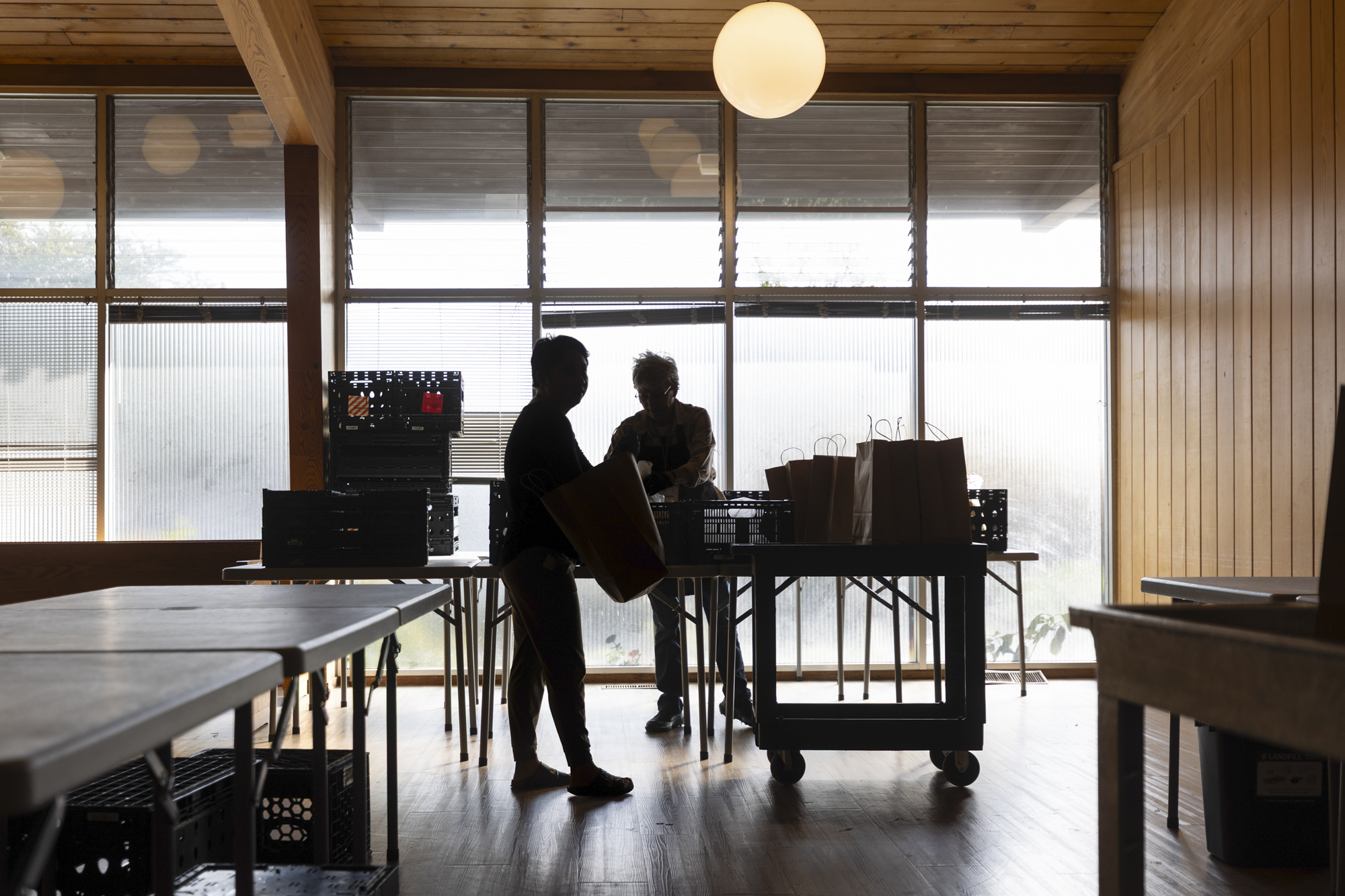
"caption": "Volunteers prepare paper bags filled with groceries inside Berkeley Friends Church on Jan. 28, 2026, in Berkeley. It's helped more than 4,000 residents a month. But as it readies to close, its volunteers say food distribution is not the only thing being lost.\r\n",
"credit": "Gustavo Hernandez/KQED",
"altTag": null,
"description": null,
"imgSizes": {
"thumbnail": {
"file": "https://cdn.kqed.org/wp-content/uploads/sites/10/2026/01/012826_THEBERKELEYFOODPANTRY_GH_015-KQED-160x107.jpg",
"width": 160,
"height": 107,
"mimeType": "image/jpeg"
},
"1536x1536": {
"file": "https://cdn.kqed.org/wp-content/uploads/sites/10/2026/01/012826_THEBERKELEYFOODPANTRY_GH_015-KQED-1536x1024.jpg",
"width": 1536,
"height": 1024,
"mimeType": "image/jpeg"
},
"post-thumbnail": {
"file": "https://cdn.kqed.org/wp-content/uploads/sites/10/2026/01/012826_THEBERKELEYFOODPANTRY_GH_015-KQED-672x372.jpg",
"width": 672,
"height": 372,
"mimeType": "image/jpeg"
},
"twentyfourteen-full-width": {
"file": "https://cdn.kqed.org/wp-content/uploads/sites/10/2026/01/012826_THEBERKELEYFOODPANTRY_GH_015-KQED-1038x576.jpg",
"width": 1038,
"height": 576,
"mimeType": "image/jpeg"
},
"npr-cds-wide": {
"file": "https://cdn.kqed.org/wp-content/uploads/sites/10/2026/01/012826_THEBERKELEYFOODPANTRY_GH_015-KQED-1200x675.jpg",
"width": 1200,
"height": 675,
"mimeType": "image/jpeg"
},
"kqedFullSize": {
"file": "https://cdn.kqed.org/wp-content/uploads/sites/10/2026/01/012826_THEBERKELEYFOODPANTRY_GH_015-KQED.jpg",
"width": 2000,
"height": 1333
}
},
"isLoading": false,
"fetchFailed": false
},
"news_12071699": {
"type": "attachments",
"id": "news_12071699",
"meta": {
"index": "attachments_1716263798",
"site": "news",
"id": "12071699",
"found": true
},
"title": "LEDE Montara view",
"publishDate": 1769795855,
"status": "inherit",
"parent": 12071684,
"modified": 1769801055,
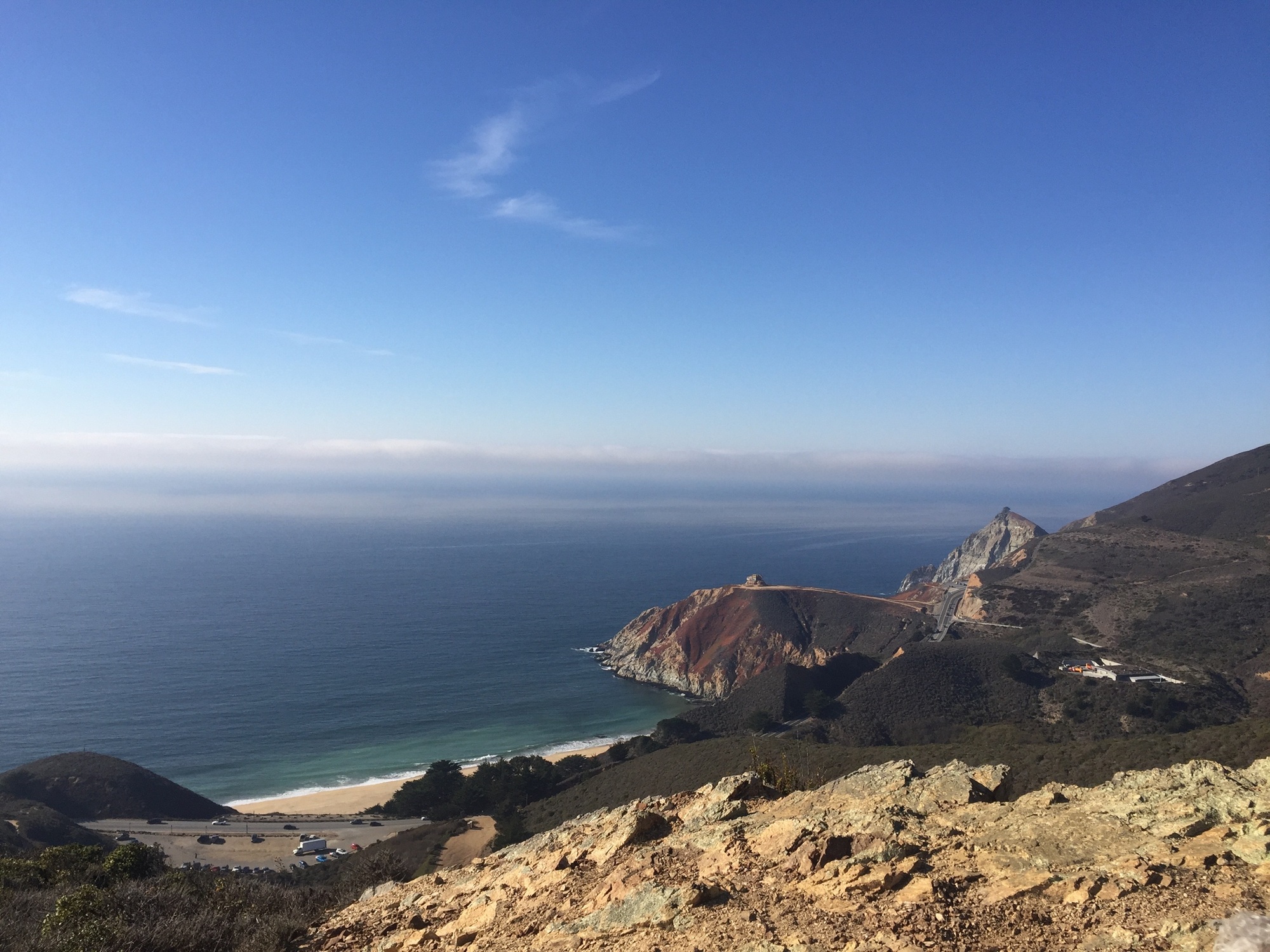
"caption": "Even midway up Montara Mountain on a clear day, seen here on Oct. 30, 2020, the ocean views can be stunning.",
"credit": "Sarah Wright/KQED",
"altTag": null,
"description": null,
"imgSizes": {
"thumbnail": {
"file": "https://cdn.kqed.org/wp-content/uploads/sites/10/2026/01/LEDE-Montara-view-160x120.jpg",
"width": 160,
"height": 120,
"mimeType": "image/jpeg"
},
"1536x1536": {
"file": "https://cdn.kqed.org/wp-content/uploads/sites/10/2026/01/LEDE-Montara-view-1536x1152.jpg",
"width": 1536,
"height": 1152,
"mimeType": "image/jpeg"
},
"post-thumbnail": {
"file": "https://cdn.kqed.org/wp-content/uploads/sites/10/2026/01/LEDE-Montara-view-672x372.jpg",
"width": 672,
"height": 372,
"mimeType": "image/jpeg"
},
"twentyfourteen-full-width": {
"file": "https://cdn.kqed.org/wp-content/uploads/sites/10/2026/01/LEDE-Montara-view-1038x576.jpg",
"width": 1038,
"height": 576,
"mimeType": "image/jpeg"
},
"npr-cds-wide": {
"file": "https://cdn.kqed.org/wp-content/uploads/sites/10/2026/01/LEDE-Montara-view-1200x675.jpg",
"width": 1200,
"height": 675,
"mimeType": "image/jpeg"
},
"kqedFullSize": {
"file": "https://cdn.kqed.org/wp-content/uploads/sites/10/2026/01/LEDE-Montara-view.jpg",
"width": 2000,
"height": 1500
}
},
"isLoading": false,
"fetchFailed": false
},
"news_12071620": {
"type": "attachments",
"id": "news_12071620",
"meta": {
"index": "attachments_1716263798",
"site": "news",
"id": "12071620",
"found": true
},
"title": "2026 Brussels Motor Show",
"publishDate": 1769729156,
"status": "inherit",
"parent": 12071615,
"modified": 1769735893,
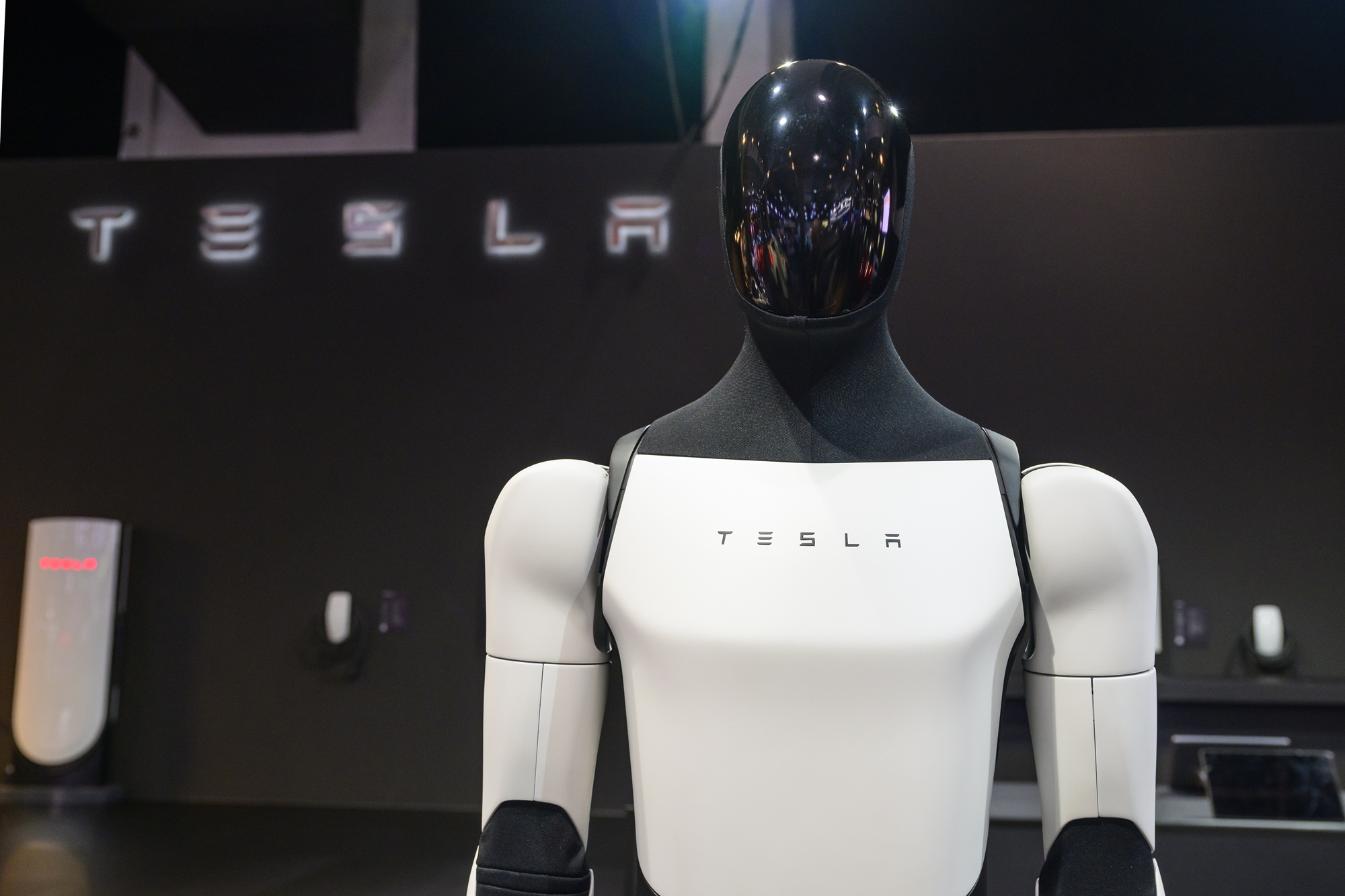
"caption": "Tesla Optimus, also known as Tesla Bot, a general-purpose robotic humanoid on display at the AutoSalon press preview on Jan. 9, 2026, in Brussels, Belgium. The 102nd Brussels Motor Show has firmly established itself on the international calendar, featuring over 60 car brands and more than 20 motorcycle brands, and visited by over 270,000 people. ",
"credit": "Sjoerd van der Wal/Getty Images",
"altTag": null,
"description": null,
"imgSizes": {
"thumbnail": {
"file": "https://cdn.kqed.org/wp-content/uploads/sites/10/2026/01/Tesla-Optimus-Getty-160x107.jpg",
"width": 160,
"height": 107,
"mimeType": "image/jpeg"
},
"1536x1536": {
"file": "https://cdn.kqed.org/wp-content/uploads/sites/10/2026/01/Tesla-Optimus-Getty-1536x1024.jpg",
"width": 1536,
"height": 1024,
"mimeType": "image/jpeg"
},
"post-thumbnail": {
"file": "https://cdn.kqed.org/wp-content/uploads/sites/10/2026/01/Tesla-Optimus-Getty-672x372.jpg",
"width": 672,
"height": 372,
"mimeType": "image/jpeg"
},
"twentyfourteen-full-width": {
"file": "https://cdn.kqed.org/wp-content/uploads/sites/10/2026/01/Tesla-Optimus-Getty-1038x576.jpg",
"width": 1038,
"height": 576,
"mimeType": "image/jpeg"
},
"npr-cds-wide": {
"file": "https://cdn.kqed.org/wp-content/uploads/sites/10/2026/01/Tesla-Optimus-Getty-1200x675.jpg",
"width": 1200,
"height": 675,
"mimeType": "image/jpeg"
},
"kqedFullSize": {
"file": "https://cdn.kqed.org/wp-content/uploads/sites/10/2026/01/Tesla-Optimus-Getty.jpg",
"width": 2000,
"height": 1333
}
},
"isLoading": false,
"fetchFailed": false
},
"news_12071340": {
"type": "attachments",
"id": "news_12071340",
"meta": {
"index": "attachments_1716263798",
"site": "news",
"id": "12071340",
"found": true
},
"title": "A rendering of the proposed development at Irvington Station.",
"publishDate": 1769621587,
"status": "inherit",
"parent": 0,
"modified": 1769622698,
"caption": "A rendering of the proposed development at Irvington Station entitled \"View from Concourse Looking South.\"",
"credit": "Courtesy of BART",
"altTag": null,
"description": null,
"imgSizes": {
"thumbnail": {
"file": "https://cdn.kqed.org/wp-content/uploads/sites/10/2026/01/260128-BART-Broke-03-KQED-160x94.jpg",
"width": 160,
"height": 94,
"mimeType": "image/jpeg"
},
"1536x1536": {
"file": "https://cdn.kqed.org/wp-content/uploads/sites/10/2026/01/260128-BART-Broke-03-KQED-1536x898.jpg",
"width": 1536,
"height": 898,
"mimeType": "image/jpeg"
},
"post-thumbnail": {
"file": "https://cdn.kqed.org/wp-content/uploads/sites/10/2026/01/260128-BART-Broke-03-KQED-672x372.jpg",
"width": 672,
"height": 372,
"mimeType": "image/jpeg"
},
"twentyfourteen-full-width": {
"file": "https://cdn.kqed.org/wp-content/uploads/sites/10/2026/01/260128-BART-Broke-03-KQED-1038x576.jpg",
"width": 1038,
"height": 576,
"mimeType": "image/jpeg"
},
"npr-cds-wide": {
"file": "https://cdn.kqed.org/wp-content/uploads/sites/10/2026/01/260128-BART-Broke-03-KQED-1200x675.jpg",
"width": 1200,
"height": 675,
"mimeType": "image/jpeg"
},
"kqedFullSize": {
"file": "https://cdn.kqed.org/wp-content/uploads/sites/10/2026/01/260128-BART-Broke-03-KQED.jpg",
"width": 2000,
"height": 1169
}
},
"isLoading": false,
"fetchFailed": false
},
"news_12070942": {
"type": "attachments",
"id": "news_12070942",
"meta": {
"index": "attachments_1716263798",
"site": "news",
"id": "12070942",
"found": true
},
"title": "GettyImages-2172084857-KQED",
"publishDate": 1769201605,
"status": "inherit",
"parent": 12070918,
"modified": 1769204710,
"caption": "Defensive lineman Kevin Johnson #94 of the Philadelphia Eagles looks on from the sideline during a game against the Washington Redskins at Veterans Stadium on Oct. 8, 1995, in Philadelphia, Pennsylvania. Johnson would go on to play for the Raiders in Oakland. ",
"credit": "George Gojkovich/Getty Images",
"altTag": null,
"description": null,
"imgSizes": {
"thumbnail": {
"file": "https://cdn.kqed.org/wp-content/uploads/sites/10/2026/01/GettyImages-2172084857-KQED-160x107.jpg",
"width": 160,
"height": 107,
"mimeType": "image/jpeg"
},
"1536x1536": {
"file": "https://cdn.kqed.org/wp-content/uploads/sites/10/2026/01/GettyImages-2172084857-KQED-1536x1025.jpg",
"width": 1536,
"height": 1025,
"mimeType": "image/jpeg"
},
"post-thumbnail": {
"file": "https://cdn.kqed.org/wp-content/uploads/sites/10/2026/01/GettyImages-2172084857-KQED-672x372.jpg",
"width": 672,
"height": 372,
"mimeType": "image/jpeg"
},
"twentyfourteen-full-width": {
"file": "https://cdn.kqed.org/wp-content/uploads/sites/10/2026/01/GettyImages-2172084857-KQED-1038x576.jpg",
"width": 1038,
"height": 576,
"mimeType": "image/jpeg"
},
"npr-cds-wide": {
"file": "https://cdn.kqed.org/wp-content/uploads/sites/10/2026/01/GettyImages-2172084857-KQED-1200x675.jpg",
"width": 1200,
"height": 675,
"mimeType": "image/jpeg"
},
"kqedFullSize": {
"file": "https://cdn.kqed.org/wp-content/uploads/sites/10/2026/01/GettyImages-2172084857-KQED.jpg",
"width": 2000,
"height": 1334
}
},
"isLoading": false,
"fetchFailed": false
},
"news_12070626": {
"type": "attachments",
"id": "news_12070626",
"meta": {
"index": "attachments_1716263798",
"site": "news",
"id": "12070626",
"found": true
},
"title": "City of Oakland Renames 57th Street Bobby Seale Way",
"publishDate": 1769028030,
"status": "inherit",
"parent": 12070619,
"modified": 1769039651,
"caption": "Oakland Mayor Barbara Lee speaks to the crowd during the Bobby Seale Way block party in Oakland, California, on Wednesday, Oct. 22, 2025. City of Oakland hosts community block party with speakers and live music to commemorate the official renaming of 57th Street at the intersection of Martin Luther King Jr. Way as Bobby Seale Way, in honor of the Black Panther Party cofounder. ",
"credit": "Amir Aziz for KQED",
"altTag": null,
"description": null,
"imgSizes": {
"thumbnail": {
"file": "https://cdn.kqed.org/wp-content/uploads/sites/10/2026/01/20251022_Bobby-Seale-Way_AA_023_qed-160x107.jpg",
"width": 160,
"height": 107,
"mimeType": "image/jpeg"
},
"1536x1536": {
"file": "https://cdn.kqed.org/wp-content/uploads/sites/10/2026/01/20251022_Bobby-Seale-Way_AA_023_qed-1536x1024.jpg",
"width": 1536,
"height": 1024,
"mimeType": "image/jpeg"
},
"post-thumbnail": {
"file": "https://cdn.kqed.org/wp-content/uploads/sites/10/2026/01/20251022_Bobby-Seale-Way_AA_023_qed-672x372.jpg",
"width": 672,
"height": 372,
"mimeType": "image/jpeg"
},
"twentyfourteen-full-width": {
"file": "https://cdn.kqed.org/wp-content/uploads/sites/10/2026/01/20251022_Bobby-Seale-Way_AA_023_qed-1038x576.jpg",
"width": 1038,
"height": 576,
"mimeType": "image/jpeg"
},
"npr-cds-wide": {
"file": "https://cdn.kqed.org/wp-content/uploads/sites/10/2026/01/20251022_Bobby-Seale-Way_AA_023_qed-1200x675.jpg",
"width": 1200,
"height": 675,
"mimeType": "image/jpeg"
},
"kqedFullSize": {
"file": "https://cdn.kqed.org/wp-content/uploads/sites/10/2026/01/20251022_Bobby-Seale-Way_AA_023_qed.jpg",
"width": 2000,
"height": 1333
}
},
"isLoading": false,
"fetchFailed": false
},
"news_11748206": {
"type": "attachments",
"id": "news_11748206",
"meta": {
"index": "attachments_1716263798",
"site": "news",
"id": "11748206",
"found": true
},
"title": "America's Cup - Finals Races 9 & 10",
"publishDate": 1558139942,
"status": "inherit",
"parent": 11748038,
"modified": 1558140358,
"caption": "You can see it from all over the Bay Area, but how many people who live here have actually been inside Coit Tower?",
"credit": "Jamie Squire/Getty Images",
"altTag": "You can see it from all over the Bay Area, but how many people who live here have actually been inside Coit Tower?",
"description": "You can see it from all over the Bay Area, but how many people who live here have actually been inside Coit Tower?",
"imgSizes": {
"thumbnail": {
"file": "https://cdn.kqed.org/wp-content/uploads/sites/10/2019/05/GettyImages-180658422-1-160x113.jpg",
"width": 160,
"height": 113,
"mimeType": "image/jpeg"
},
"medium": {
"file": "https://cdn.kqed.org/wp-content/uploads/sites/10/2019/05/GettyImages-180658422-1-800x565.jpg",
"width": 800,
"height": 565,
"mimeType": "image/jpeg"
},
"large": {
"file": "https://cdn.kqed.org/wp-content/uploads/sites/10/2019/05/GettyImages-180658422-1-1020x720.jpg",
"width": 1020,
"height": 720,
"mimeType": "image/jpeg"
},
"complete_open_graph": {
"file": "https://cdn.kqed.org/wp-content/uploads/sites/10/2019/05/GettyImages-180658422-1-1200x847.jpg",
"width": 1200,
"height": 847,
"mimeType": "image/jpeg"
},
"post-thumbnail": {
"file": "https://cdn.kqed.org/wp-content/uploads/sites/10/2019/05/GettyImages-180658422-1-672x372.jpg",
"width": 672,
"height": 372,
"mimeType": "image/jpeg"
},
"twentyfourteen-full-width": {
"file": "https://cdn.kqed.org/wp-content/uploads/sites/10/2019/05/GettyImages-180658422-1-1038x576.jpg",
"width": 1038,
"height": 576,
"mimeType": "image/jpeg"
},
"full-width": {
"file": "https://cdn.kqed.org/wp-content/uploads/sites/10/2019/05/GettyImages-180658422-1-1920x1355.jpg",
"width": 1920,
"height": 1355,
"mimeType": "image/jpeg"
},
"apple_news_ca_landscape_12_9": {
"file": "https://cdn.kqed.org/wp-content/uploads/sites/10/2019/05/GettyImages-180658422-1-1832x1374.jpg",
"width": 1832,
"height": 1374,
"mimeType": "image/jpeg"
},
"apple_news_ca_landscape_9_7": {
"file": "https://cdn.kqed.org/wp-content/uploads/sites/10/2019/05/GettyImages-180658422-1-1376x1032.jpg",
"width": 1376,
"height": 1032,
"mimeType": "image/jpeg"
},
"apple_news_ca_landscape_5_5": {
"file": "https://cdn.kqed.org/wp-content/uploads/sites/10/2019/05/GettyImages-180658422-1-1044x783.jpg",
"width": 1044,
"height": 783,
"mimeType": "image/jpeg"
},
"apple_news_ca_landscape_4_7": {
"file": "https://cdn.kqed.org/wp-content/uploads/sites/10/2019/05/GettyImages-180658422-1-632x474.jpg",
"width": 632,
"height": 474,
"mimeType": "image/jpeg"
},
"apple_news_ca_landscape_4_0": {
"file": "https://cdn.kqed.org/wp-content/uploads/sites/10/2019/05/GettyImages-180658422-1-536x402.jpg",
"width": 536,
"height": 402,
"mimeType": "image/jpeg"
},
"apple_news_ca_portrait_12_9": {
"file": "https://cdn.kqed.org/wp-content/uploads/sites/10/2019/05/GettyImages-180658422-1-1122x1496.jpg",
"width": 1122,
"height": 1496,
"mimeType": "image/jpeg"
},
"apple_news_ca_portrait_9_7": {
"file": "https://cdn.kqed.org/wp-content/uploads/sites/10/2019/05/GettyImages-180658422-1-840x1120.jpg",
"width": 840,
"height": 1120,
"mimeType": "image/jpeg"
},
"apple_news_ca_portrait_5_5": {
"file": "https://cdn.kqed.org/wp-content/uploads/sites/10/2019/05/GettyImages-180658422-1-687x916.jpg",
"width": 687,
"height": 916,
"mimeType": "image/jpeg"
},
"apple_news_ca_portrait_4_7": {
"file": "https://cdn.kqed.org/wp-content/uploads/sites/10/2019/05/GettyImages-180658422-1-414x552.jpg",
"width": 414,
"height": 552,
"mimeType": "image/jpeg"
},
"apple_news_ca_portrait_4_0": {
"file": "https://cdn.kqed.org/wp-content/uploads/sites/10/2019/05/GettyImages-180658422-1-354x472.jpg",
"width": 354,
"height": 472,
"mimeType": "image/jpeg"
},
"apple_news_ca_square_12_9": {
"file": "https://cdn.kqed.org/wp-content/uploads/sites/10/2019/05/GettyImages-180658422-1-1472x1472.jpg",
"width": 1472,
"height": 1472,
"mimeType": "image/jpeg"
},
"apple_news_ca_square_9_7": {
"file": "https://cdn.kqed.org/wp-content/uploads/sites/10/2019/05/GettyImages-180658422-1-1104x1104.jpg",
"width": 1104,
"height": 1104,
"mimeType": "image/jpeg"
},
"apple_news_ca_square_5_5": {
"file": "https://cdn.kqed.org/wp-content/uploads/sites/10/2019/05/GettyImages-180658422-1-912x912.jpg",
"width": 912,
"height": 912,
"mimeType": "image/jpeg"
},
"apple_news_ca_square_4_7": {
"file": "https://cdn.kqed.org/wp-content/uploads/sites/10/2019/05/GettyImages-180658422-1-550x550.jpg",
"width": 550,
"height": 550,
"mimeType": "image/jpeg"
},
"apple_news_ca_square_4_0": {
"file": "https://cdn.kqed.org/wp-content/uploads/sites/10/2019/05/GettyImages-180658422-1-470x470.jpg",
"width": 470,
"height": 470,
"mimeType": "image/jpeg"
},
"kqedFullSize": {
"file": "https://cdn.kqed.org/wp-content/uploads/sites/10/2019/05/GettyImages-180658422-1-e1769017310150.jpg",
"width": 2000,
"height": 1411
}
},
"isLoading": false,
"fetchFailed": false
},
"news_12066965": {
"type": "attachments",
"id": "news_12066965",
"meta": {
"index": "attachments_1716263798",
"site": "news",
"id": "12066965",
"found": true
},
"title": "California Gas Explosion",
"publishDate": 1765571202,
"status": "inherit",
"parent": 12066961,
"modified": 1765571308,
"caption": "Alameda County police officers and Search and Rescue access the aftermath at the site of the explosion on the 800 block of East Lewelling Boulevard, on Thursday, Dec. 11, 2025, in Hayward, California.",
"credit": "Minh Connors/AP Photo",
"altTag": null,
"description": null,
"imgSizes": {
"thumbnail": {
"file": "https://cdn.kqed.org/wp-content/uploads/sites/10/2025/12/HaywardExplosionAP2-160x107.jpg",
"width": 160,
"height": 107,
"mimeType": "image/jpeg"
},
"1536x1536": {
"file": "https://cdn.kqed.org/wp-content/uploads/sites/10/2025/12/HaywardExplosionAP2-1536x1024.jpg",
"width": 1536,
"height": 1024,
"mimeType": "image/jpeg"
},
"post-thumbnail": {
"file": "https://cdn.kqed.org/wp-content/uploads/sites/10/2025/12/HaywardExplosionAP2-672x372.jpg",
"width": 672,
"height": 372,
"mimeType": "image/jpeg"
},
"twentyfourteen-full-width": {
"file": "https://cdn.kqed.org/wp-content/uploads/sites/10/2025/12/HaywardExplosionAP2-1038x576.jpg",
"width": 1038,
"height": 576,
"mimeType": "image/jpeg"
},
"npr-cds-wide": {
"file": "https://cdn.kqed.org/wp-content/uploads/sites/10/2025/12/HaywardExplosionAP2-1200x675.jpg",
"width": 1200,
"height": 675,
"mimeType": "image/jpeg"
},
"kqedFullSize": {
"file": "https://cdn.kqed.org/wp-content/uploads/sites/10/2025/12/HaywardExplosionAP2.jpg",
"width": 2000,
"height": 1333
}
},
"isLoading": false,
"fetchFailed": false
},
"news_12051143": {
"type": "attachments",
"id": "news_12051143",
"meta": {
"index": "attachments_1716263798",
"site": "news",
"id": "12051143",
"found": true
},
"title": "The Richmond Police Department Offices in Richmond on Aug. 6, 2025.",
"publishDate": 1754512041,
"status": "inherit",
"parent": 12051745,
"modified": 1754956528,
"caption": "The Richmond Police Department in Richmond on Aug. 6, 2025.",
"credit": "Martin do Nascimento/KQED",
"altTag": null,
"description": null,
"imgSizes": {
"thumbnail": {
"file": "https://cdn.kqed.org/wp-content/uploads/sites/10/2025/08/250806-RICHMOND-POLICE-FILE-MD-03-KQED-160x107.jpg",
"width": 160,
"height": 107,
"mimeType": "image/jpeg"
},
"1536x1536": {
"file": "https://cdn.kqed.org/wp-content/uploads/sites/10/2025/08/250806-RICHMOND-POLICE-FILE-MD-03-KQED-1536x1025.jpg",
"width": 1536,
"height": 1025,
"mimeType": "image/jpeg"
},
"post-thumbnail": {
"file": "https://cdn.kqed.org/wp-content/uploads/sites/10/2025/08/250806-RICHMOND-POLICE-FILE-MD-03-KQED-672x372.jpg",
"width": 672,
"height": 372,
"mimeType": "image/jpeg"
},
"twentyfourteen-full-width": {
"file": "https://cdn.kqed.org/wp-content/uploads/sites/10/2025/08/250806-RICHMOND-POLICE-FILE-MD-03-KQED-1038x576.jpg",
"width": 1038,
"height": 576,
"mimeType": "image/jpeg"
},
"kqedFullSize": {
"file": "https://cdn.kqed.org/wp-content/uploads/sites/10/2025/08/250806-RICHMOND-POLICE-FILE-MD-03-KQED.jpg",
"width": 2000,
"height": 1334
}
},
"isLoading": false,
"fetchFailed": false
},
"news_12069868": {
"type": "attachments",
"id": "news_12069868",
"meta": {
"index": "attachments_1716263798",
"site": "news",
"id": "12069868",
"found": true
},
"title": "A speed camera on Geary St. in San Francisco on March 19, 2025.",
"publishDate": 1768432382,
"status": "inherit",
"parent": 12069838,
"modified": 1768434901,
"caption": "A speed camera on Geary Street in San Francisco on March 19, 2025.",
"credit": "Martin do Nascimento/KQED",
"altTag": null,
"description": null,
"imgSizes": {
"thumbnail": {
"file": "https://cdn.kqed.org/wp-content/uploads/sites/10/2026/01/250319-SF-SPEED-CAMERAS-MD-06_qed-1-160x107.jpg",
"width": 160,
"height": 107,
"mimeType": "image/jpeg"
},
"1536x1536": {
"file": "https://cdn.kqed.org/wp-content/uploads/sites/10/2026/01/250319-SF-SPEED-CAMERAS-MD-06_qed-1-1536x1024.jpg",
"width": 1536,
"height": 1024,
"mimeType": "image/jpeg"
},
"post-thumbnail": {
"file": "https://cdn.kqed.org/wp-content/uploads/sites/10/2026/01/250319-SF-SPEED-CAMERAS-MD-06_qed-1-672x372.jpg",
"width": 672,
"height": 372,
"mimeType": "image/jpeg"
},
"twentyfourteen-full-width": {
"file": "https://cdn.kqed.org/wp-content/uploads/sites/10/2026/01/250319-SF-SPEED-CAMERAS-MD-06_qed-1-1038x576.jpg",
"width": 1038,
"height": 576,
"mimeType": "image/jpeg"
},
"npr-cds-wide": {
"file": "https://cdn.kqed.org/wp-content/uploads/sites/10/2026/01/250319-SF-SPEED-CAMERAS-MD-06_qed-1-1200x675.jpg",
"width": 1200,
"height": 675,
"mimeType": "image/jpeg"
},
"kqedFullSize": {
"file": "https://cdn.kqed.org/wp-content/uploads/sites/10/2026/01/250319-SF-SPEED-CAMERAS-MD-06_qed-1.jpg",
"width": 2000,
"height": 1333
}
},
"isLoading": false,
"fetchFailed": false
},
"news_11933248": {
"type": "attachments",
"id": "news_11933248",
"meta": {
"index": "attachments_1716263798",
"site": "news",
"id": "11933248",
"found": true
},
"parent": 11933240,
"imgSizes": {
"twentyfourteen-full-width": {
"file": "https://ww2.kqed.org/app/uploads/sites/10/2022/11/RS55037_023_KQED_ChevronRefineryStrike_04072022-qut-1038x576.jpg",
"width": 1038,
"mimeType": "image/jpeg",
"height": 576
},
"thumbnail": {
"file": "https://ww2.kqed.org/app/uploads/sites/10/2022/11/RS55037_023_KQED_ChevronRefineryStrike_04072022-qut-160x107.jpg",
"width": 160,
"mimeType": "image/jpeg",
"height": 107
},
"post-thumbnail": {
"file": "https://ww2.kqed.org/app/uploads/sites/10/2022/11/RS55037_023_KQED_ChevronRefineryStrike_04072022-qut-672x372.jpg",
"width": 672,
"mimeType": "image/jpeg",
"height": 372
},
"kqedFullSize": {
"file": "https://ww2.kqed.org/app/uploads/sites/10/2022/11/RS55037_023_KQED_ChevronRefineryStrike_04072022-qut.jpg",
"width": 1920,
"height": 1280
},
"large": {
"file": "https://ww2.kqed.org/app/uploads/sites/10/2022/11/RS55037_023_KQED_ChevronRefineryStrike_04072022-qut-1020x680.jpg",
"width": 1020,
"mimeType": "image/jpeg",
"height": 680
},
"1536x1536": {
"file": "https://ww2.kqed.org/app/uploads/sites/10/2022/11/RS55037_023_KQED_ChevronRefineryStrike_04072022-qut-1536x1024.jpg",
"width": 1536,
"mimeType": "image/jpeg",
"height": 1024
},
"medium": {
"file": "https://ww2.kqed.org/app/uploads/sites/10/2022/11/RS55037_023_KQED_ChevronRefineryStrike_04072022-qut-800x533.jpg",
"width": 800,
"mimeType": "image/jpeg",
"height": 533
}
},
"publishDate": 1669504691,
"modified": 1669667422,
"caption": "Then-Council member (and current Mayor-Elect) Eduardo Martinez walks the picket line along with striking Chevron employees and their supporters during a strike for worker safety in front of Gate 14 at the Richmond refinery on April 7, 2022.",
"description": null,
"title": "RS55037_023_KQED_ChevronRefineryStrike_04072022-qut",
"credit": "Beth LaBerge/KQED",
"status": "inherit",
"altTag": "An older man with a blue shirt and a sign that says \"striking against Chevron\"",
"isLoading": false,
"fetchFailed": false
},
"news_12056716": {
"type": "attachments",
"id": "news_12056716",
"meta": {
"index": "attachments_1716263798",
"site": "news",
"id": "12056716",
"found": true
},
"title": "250303-AntiochPolice-12-BL_qed",
"publishDate": 1758240011,
"status": "inherit",
"parent": 12056666,
"modified": 1758240026,
"caption": "An Antioch Police vehicle sits in the parking lot of the Antioch Police Department on March 3, 2025.",
"credit": "Beth LaBerge/KQED",
"altTag": null,
"description": null,
"imgSizes": {
"thumbnail": {
"file": "https://cdn.kqed.org/wp-content/uploads/sites/10/2025/09/250303-AntiochPolice-12-BL_qed-160x107.jpg",
"width": 160,
"height": 107,
"mimeType": "image/jpeg"
},
"1536x1536": {
"file": "https://cdn.kqed.org/wp-content/uploads/sites/10/2025/09/250303-AntiochPolice-12-BL_qed-1536x1024.jpg",
"width": 1536,
"height": 1024,
"mimeType": "image/jpeg"
},
"post-thumbnail": {
"file": "https://cdn.kqed.org/wp-content/uploads/sites/10/2025/09/250303-AntiochPolice-12-BL_qed-672x372.jpg",
"width": 672,
"height": 372,
"mimeType": "image/jpeg"
},
"twentyfourteen-full-width": {
"file": "https://cdn.kqed.org/wp-content/uploads/sites/10/2025/09/250303-AntiochPolice-12-BL_qed-1038x576.jpg",
"width": 1038,
"height": 576,
"mimeType": "image/jpeg"
},
"kqedFullSize": {
"file": "https://cdn.kqed.org/wp-content/uploads/sites/10/2025/09/250303-AntiochPolice-12-BL_qed.jpg",
"width": 1999,
"height": 1333
}
},
"isLoading": false,
"fetchFailed": false
}
},
"audioPlayerReducer": {
"postId": "stream_live",
"isPaused": true,
"isPlaying": false,
"pfsActive": false,
"pledgeModalIsOpen": true,
"playerDrawerIsOpen": false,
"liveAudioPlayStartedAt": 0,
"liveAudioPlayContext": ""
},
"authorsReducer": {
"byline_news_12070561": {
"type": "authors",
"id": "byline_news_12070561",
"meta": {
"override": true
},
"slug": "byline_news_12070561",
"name": "KQED News and Arts Staff",
"isLoading": false
},
"rachael-myrow": {
"type": "authors",
"id": "251",
"meta": {
"index": "authors_1716337520",
"id": "251",
"found": true
},
"name": "Rachael Myrow",
"firstName": "Rachael",
"lastName": "Myrow",
"slug": "rachael-myrow",
"email": "rmyrow@kqed.org",
"display_author_email": true,
"staff_mastheads": [
"news"
],
"title": "Senior Editor of KQED's Silicon Valley News Desk",
"bio": "• I write and edit stories about how Silicon Valley power and policies shape everyday life in California. I’m also passionate about making Bay Area history and culture more accessible to a broad public. • I’ve been a journalist for most of my life, starting in high school with The Franklin Press in Los Angeles, where I grew up. While earning my first degree in English at UC Berkeley, I got my start in public radio at KALX-FM. After completing a second degree in journalism at Cal, I landed my first professional job at Marketplace, then moved on to KPCC (now LAist), and then KQED, where I hosted The California Report for more than seven years. • My reporting has appeared on NPR, The World, WBUR’s \u003ci>Here & Now\u003c/i>, and the BBC. I also guest host for KQED’s \u003ci>Forum\u003c/i>, as well as the Commonwealth Club in San Francisco. • I speak periodically on media, democracy and technology issues, and do voiceover work for documentaries and educational video projects. • Outside of the studio, you'll find me hiking Bay Area trails and whipping up Insta-ready meals in my kitchen. • I do not accept gifts, money, or favors from anyone connected to my reporting, I don't pay people for information, and I do not support or donate to political causes. • I strive to treat the people I report on with fairness, honesty, and respect. I also recognize there are often multiple sides to a story and work to verify information through multiple sources and documentation. If I get something wrong, I correct it.",
"avatar": "https://secure.gravatar.com/avatar/3ed8a3c5f26025e4a805ba634cda8cd764906b97438a6d9ce216b044e340da4e?s=600&d=blank&r=g",
"twitter": "rachaelmyrow",
"bluesky": null,
"facebook": null,
"instagram": null,
"linkedin": "https://www.linkedin.com/in/rachaelmyrow/",
"sites": [
{
"site": "arts",
"roles": [
"administrator"
]
},
{
"site": "news",
"roles": [
"edit_others_posts",
"editor"
]
},
{
"site": "futureofyou",
"roles": [
"editor"
]
},
{
"site": "bayareabites",
"roles": [
"editor"
]
},
{
"site": "stateofhealth",
"roles": [
"editor"
]
},
{
"site": "science",
"roles": [
"editor"
]
},
{
"site": "food",
"roles": [
"editor"
]
},
{
"site": "forum",
"roles": [
"editor"
]
},
{
"site": "liveblog",
"roles": [
"author"
]
}
],
"headData": {
"title": "Rachael Myrow | KQED",
"description": "Senior Editor of KQED's Silicon Valley News Desk",
"ogImgSrc": "https://secure.gravatar.com/avatar/3ed8a3c5f26025e4a805ba634cda8cd764906b97438a6d9ce216b044e340da4e?s=600&d=blank&r=g",
"twImgSrc": "https://secure.gravatar.com/avatar/3ed8a3c5f26025e4a805ba634cda8cd764906b97438a6d9ce216b044e340da4e?s=600&d=blank&r=g"
},
"isLoading": false,
"link": "/author/rachael-myrow"
},
"shossaini": {
"type": "authors",
"id": "3214",
"meta": {
"index": "authors_1716337520",
"id": "3214",
"found": true
},
"name": "Sara Hossaini",
"firstName": "Sara",
"lastName": "Hossaini",
"slug": "shossaini",
"email": "shossaini@kqed.org",
"display_author_email": true,
"staff_mastheads": [
"news"
],
"title": "KQED Reporter",
"bio": "Sara Hossaini came to general assignment reporting at KQED in 2013 after two winters reporting at Wyoming Public Radio. She holds a bachelor's degree in broadcast journalism from the University of Nebraska-Lincoln. Her radio romance began after a bitter breakup with documentary film (Ok, maybe it's still complicated). Her first simultaneous jobs in San Francisco were as Associate Producer on a PBS film series through the Center for Asian American Media and as a butler. She likes to trot, plot and make things with her hands.",
"avatar": "https://secure.gravatar.com/avatar/060e9f56b9554e17942e89f413242774?s=600&d=blank&r=g",
"twitter": "mshossaini",
"facebook": null,
"instagram": null,
"linkedin": null,
"sites": [
{
"site": "news",
"roles": [
"author"
]
},
{
"site": "stateofhealth",
"roles": [
"author"
]
}
],
"headData": {
"title": "Sara Hossaini | KQED",
"description": "KQED Reporter",
"ogImgSrc": "https://secure.gravatar.com/avatar/060e9f56b9554e17942e89f413242774?s=600&d=blank&r=g",
"twImgSrc": "https://secure.gravatar.com/avatar/060e9f56b9554e17942e89f413242774?s=600&d=blank&r=g"
},
"isLoading": false,
"link": "/author/shossaini"
},
"bwatt": {
"type": "authors",
"id": "11238",
"meta": {
"index": "authors_1716337520",
"id": "11238",
"found": true
},
"name": "Brian Watt",
"firstName": "Brian",
"lastName": "Watt",
"slug": "bwatt",
"email": "bwatt@KQED.org",
"display_author_email": false,
"staff_mastheads": [
"news"
],
"title": "Morning News Anchor",
"bio": "Brian Watt is KQED's morning radio news anchor. He joined the KQED News team in April of 2016. Prior to that, he worked as a Reporter for KPCC in Los Angeles and a producer at \u003cem>Marketplace.\u003c/em>\r\n\r\nDuring eight years at KPCC, Brian covered business and economics, and his work won several awards. In 2008, he won the Los Angeles Press Club’s first-place award for Business and Financial Reporting, Broadcast. He’s also received honorable mention and been first runner up for the Press Club’s Radio Journalist of the Year. He won two Golden Mike awards from the Radio and TV News Association of Southern California.\r\n\r\nBrian holds degrees in theater from Yale University and the Sorbonne, and has worked as an actor in France, Italy, Brazil, Hungary and . . . Hollywood. He appeared in a few television shows, including \u003cem>The West Wing, Judging Amy\u003c/em> and \u003cem>The District.\u003c/em>\r\n\r\nEmail: bwatt@KQED.org Twitter: @RadioBWatt",
"avatar": "https://secure.gravatar.com/avatar/55393ff57ed34e2be773ba4789dd6a19?s=600&d=blank&r=g",
"twitter": "@RadioBWatt",
"facebook": null,
"instagram": null,
"linkedin": null,
"sites": [
{
"site": "arts",
"roles": [
"contributor"
]
},
{
"site": "news",
"roles": [
"editor"
]
}
],
"headData": {
"title": "Brian Watt | KQED",
"description": "Morning News Anchor",
"ogImgSrc": "https://secure.gravatar.com/avatar/55393ff57ed34e2be773ba4789dd6a19?s=600&d=blank&r=g",
"twImgSrc": "https://secure.gravatar.com/avatar/55393ff57ed34e2be773ba4789dd6a19?s=600&d=blank&r=g"
},
"isLoading": false,
"link": "/author/bwatt"
},
"agonzalez": {
"type": "authors",
"id": "11724",
"meta": {
"index": "authors_1716337520",
"id": "11724",
"found": true
},
"name": "Alexander Gonzalez",
"firstName": "Alexander",
"lastName": "Gonzalez",
"slug": "agonzalez",
"email": "AlexanderGonzalez@KQED.org",
"display_author_email": false,
"staff_mastheads": [
"news"
],
"title": "KQED Contributor",
"bio": null,
"avatar": "https://secure.gravatar.com/avatar/9e291ed34e154df4c662edf858b641d70b4859939bfe40be478408f9dfd057d2?s=600&d=blank&r=g",
"twitter": null,
"bluesky": null,
"facebook": null,
"instagram": null,
"linkedin": null,
"sites": [
{
"site": "arts",
"roles": [
"editor"
]
},
{
"site": "news",
"roles": [
"editor"
]
},
{
"site": "science",
"roles": [
"editor"
]
}
],
"headData": {
"title": "Alexander Gonzalez | KQED",
"description": "KQED Contributor",
"ogImgSrc": "https://secure.gravatar.com/avatar/9e291ed34e154df4c662edf858b641d70b4859939bfe40be478408f9dfd057d2?s=600&d=blank&r=g",
"twImgSrc": "https://secure.gravatar.com/avatar/9e291ed34e154df4c662edf858b641d70b4859939bfe40be478408f9dfd057d2?s=600&d=blank&r=g"
},
"isLoading": false,
"link": "/author/agonzalez"
},
"jlara": {
"type": "authors",
"id": "11761",
"meta": {
"index": "authors_1716337520",
"id": "11761",
"found": true
},
"name": "Juan Carlos Lara",
"firstName": "Juan Carlos",
"lastName": "Lara",
"slug": "jlara",
"email": "jlara@kqed.org",
"display_author_email": false,
"staff_mastheads": [],
"title": "KQED Contributor",
"bio": null,
"avatar": "https://secure.gravatar.com/avatar/19e2052b9b05657c5ff2af2121846e9c?s=600&d=blank&r=g",
"twitter": null,
"facebook": null,
"instagram": null,
"linkedin": null,
"sites": [
{
"site": "arts",
"roles": [
"editor"
]
},
{
"site": "news",
"roles": [
"editor"
]
},
{
"site": "forum",
"roles": [
"editor"
]
},
{
"site": "liveblog",
"roles": [
"contributor"
]
}
],
"headData": {
"title": "Juan Carlos Lara | KQED",
"description": "KQED Contributor",
"ogImgSrc": "https://secure.gravatar.com/avatar/19e2052b9b05657c5ff2af2121846e9c?s=600&d=blank&r=g",
"twImgSrc": "https://secure.gravatar.com/avatar/19e2052b9b05657c5ff2af2121846e9c?s=600&d=blank&r=g"
},
"isLoading": false,
"link": "/author/jlara"
},
"adahlstromeckman": {
"type": "authors",
"id": "11785",
"meta": {
"index": "authors_1716337520",
"id": "11785",
"found": true
},
"name": "Azul Dahlstrom-Eckman",
"firstName": "Azul",
"lastName": "Dahlstrom-Eckman",
"slug": "adahlstromeckman",
"email": "adahlstrom-eckman@kqed.org",
"display_author_email": true,
"staff_mastheads": [],
"title": "Reporter",
"bio": "Azul is a reporter for KQED focusing on transportation and features. He joined KQED in 2021 as an alumnus of KALW's Audio Academy radio journalism training program.",
"avatar": "https://secure.gravatar.com/avatar/9cb750298435add7815a777f55bf1f46845c1386bb8452555c60a7b820b5aba3?s=600&d=blank&r=g",
"twitter": "@zuliemann",
"bluesky": "@azul415.bsky.social",
"facebook": null,
"instagram": null,
"linkedin": null,
"sites": [
{
"site": "arts",
"roles": [
"editor"
]
},
{
"site": "news",
"roles": [
"editor"
]
},
{
"site": "science",
"roles": [
"editor"
]
},
{
"site": "liveblog",
"roles": [
"author"
]
}
],
"headData": {
"title": "Azul Dahlstrom-Eckman | KQED",
"description": "Reporter",
"ogImgSrc": "https://secure.gravatar.com/avatar/9cb750298435add7815a777f55bf1f46845c1386bb8452555c60a7b820b5aba3?s=600&d=blank&r=g",
"twImgSrc": "https://secure.gravatar.com/avatar/9cb750298435add7815a777f55bf1f46845c1386bb8452555c60a7b820b5aba3?s=600&d=blank&r=g"
},
"isLoading": false,
"link": "/author/adahlstromeckman"
},
"daisynguyen": {
"type": "authors",
"id": "11829",
"meta": {
"index": "authors_1716337520",
"id": "11829",
"found": true
},
"name": "Daisy Nguyen",
"firstName": "Daisy",
"lastName": "Nguyen",
"slug": "daisynguyen",
"email": "daisynguyen@kqed.org",
"display_author_email": true,
"staff_mastheads": [
"news"
],
"title": "KQED Contributor",
"bio": "I have covered early childhood education and child care for KQED since 2022. I focus on policies aimed at increasing access to early care and education and how they shape individual lives. I've been a journalist for more than two decades, with most of that time devoted to covering breaking news throughout California for The Associated Press. I grew up in San Francisco and studied at UC Davis and Columbia University's Graduate School of Journalism. I live in Oakland with my husband and two kids.",
"avatar": "https://secure.gravatar.com/avatar/2da2127c27f7143b53ebd419800fd55f?s=600&d=blank&r=g",
"twitter": null,
"facebook": null,
"instagram": null,
"linkedin": "https://www.linkedin.com/in/daisynguyen/",
"sites": [
{
"site": "news",
"roles": [
"author"
]
},
{
"site": "liveblog",
"roles": [
"author"
]
}
],
"headData": {
"title": "Daisy Nguyen | KQED",
"description": "KQED Contributor",
"ogImgSrc": "https://secure.gravatar.com/avatar/2da2127c27f7143b53ebd419800fd55f?s=600&d=blank&r=g",
"twImgSrc": "https://secure.gravatar.com/avatar/2da2127c27f7143b53ebd419800fd55f?s=600&d=blank&r=g"
},
"isLoading": false,
"link": "/author/daisynguyen"
},
"kdebenedetti": {
"type": "authors",
"id": "11913",
"meta": {
"index": "authors_1716337520",
"id": "11913",
"found": true
},
"name": "Katie DeBenedetti",
"firstName": "Katie",
"lastName": "DeBenedetti",
"slug": "kdebenedetti",
"email": "kdebenedetti@kqed.org",
"display_author_email": false,
"staff_mastheads": [
"news",
"science"
],
"title": "KQED Contributor",
"bio": "Katie DeBenedetti is a digital reporter covering daily news for the Express Desk. Prior to joining KQED as a culture reporting intern in January 2024, she covered education and city government for the Napa Valley Register.",
"avatar": "https://secure.gravatar.com/avatar/6e31073cb8f7e4214ab03f42771d0f45?s=600&d=blank&r=g",
"twitter": null,
"facebook": null,
"instagram": null,
"linkedin": null,
"sites": [
{
"site": "news",
"roles": [
"author"
]
},
{
"site": "science",
"roles": [
"author"
]
},
{
"site": "liveblog",
"roles": [
"author"
]
}
],
"headData": {
"title": "Katie DeBenedetti | KQED",
"description": "KQED Contributor",
"ogImgSrc": "https://secure.gravatar.com/avatar/6e31073cb8f7e4214ab03f42771d0f45?s=600&d=blank&r=g",
"twImgSrc": "https://secure.gravatar.com/avatar/6e31073cb8f7e4214ab03f42771d0f45?s=600&d=blank&r=g"
},
"isLoading": false,
"link": "/author/kdebenedetti"
},
"sarahwright": {
"type": "authors",
"id": "11956",
"meta": {
"index": "authors_1716337520",
"id": "11956",
"found": true
},
"name": "Sarah Wright",
"firstName": "Sarah",
"lastName": "Wright",
"slug": "sarahwright",
"email": "swright@kqed.org",
"display_author_email": true,
"staff_mastheads": [],
"title": "Outdoors Engagement Reporter",
"bio": "Sarah Wright is KQED's Outdoors Engagement Reporter. Originally from Lake Tahoe, she completed a thru-hike of the Pacific Crest Trail in 2019 and was a U.S. Fulbright Program grantee to Argentina in 2023. Her journalism has appeared in The Guardian, The San Francisco Standard, The Palo Alto Weekly and the Half Moon Bay Review.",
"avatar": "https://secure.gravatar.com/avatar/c161a3d6441865cba25e6db4fa561099ad665799e9432e34da2b84d7e371524c?s=600&d=blank&r=g",
"twitter": null,
"bluesky": null,
"facebook": null,
"instagram": null,
"linkedin": null,
"sites": [
{
"site": "arts",
"roles": [
"editor"
]
},
{
"site": "news",
"roles": [
"editor"
]
},
{
"site": "science",
"roles": [
"contributor",
"author"
]
},
{
"site": "forum",
"roles": [
"editor"
]
}
],
"headData": {
"title": "Sarah Wright | KQED",
"description": "Outdoors Engagement Reporter",
"ogImgSrc": "https://secure.gravatar.com/avatar/c161a3d6441865cba25e6db4fa561099ad665799e9432e34da2b84d7e371524c?s=600&d=blank&r=g",
"twImgSrc": "https://secure.gravatar.com/avatar/c161a3d6441865cba25e6db4fa561099ad665799e9432e34da2b84d7e371524c?s=600&d=blank&r=g"
},
"isLoading": false,
"link": "/author/sarahwright"
}
},
"pagesReducer": {
"news_tag_east-bay": {
"type": "terms",
"id": "news_18352",
"meta": {
"index": "terms_1716263798",
"site": "news",
"id": "18352",
"score": 7.017371
},
"featImg": null,
"name": "East Bay",
"description": null,
"taxonomy": "tag",
"headData": {
"twImgId": null,
"twTitle": null,
"ogTitle": null,
"ogImgId": null,
"twDescription": null,
"description": null,
"title": "East Bay Archives | KQED News",
"ogDescription": null
},
"ttid": 18386,
"slug": "east-bay",
"isLoading": false,
"title": "East Bay",
"pageMeta": {
"site": "news",
"WpPageTemplate": "page-topic-editorial",
"currentPage": 12
},
"blocks": [
{
"blockName": "kqed/post-list",
"attrs": {
"layout": "cardArticle2",
"query": "posts/news?tag=east-bay",
"seeMore": false,
"paginated": true,
"page": 12
}
},
{
"blockName": "kqed/ad"
}
]
}
},
"pfsSessionReducer": {},
"postsReducer": {
"stream_live": {
"type": "live",
"id": "stream_live",
"audioUrl": "https://hls.kqed.org/hls/kqed_app/playlist.m3u8",
"title": "Live Stream",
"excerpt": "Live Stream information currently unavailable.",
"link": "/radio",
"featImg": "",
"label": {
"name": "KQED Live",
"link": "/"
}
},
"stream_kqedNewscast": {
"type": "posts",
"id": "stream_kqedNewscast",
"audioUrl": "https://www.kqed.org/.stream/anon/radio/RDnews/newscast.mp3?_=1",
"title": "KQED Newscast",
"featImg": "",
"label": {
"name": "88.5 FM",
"link": "/"
}
},
"news_12071598": {
"type": "posts",
"id": "news_12071598",
"meta": {
"index": "posts_1716263798",
"site": "news",
"id": "12071598",
"score": null,
"sort": [
1769958054000
]
},
"guestAuthors": [],
"slug": "for-56-years-this-berkeley-food-pantry-built-a-community-now-its-shutting-down",
"title": "For 56 Years, This Berkeley Food Pantry Built a Community. Now It’s Shutting Down",
"publishDate": 1769958054,
"format": "standard",
"headTitle": "For 56 Years, This Berkeley Food Pantry Built a Community. Now It’s Shutting Down | KQED",
"labelTerm": {
"site": "news"
},
"content": "\u003cp>For the last three years, Robin Franklin has been a fixture of the \u003ca href=\"https://www.kqed.org/news/tag/berkeley\">Berkeley\u003c/a> Food Pantry’s thrice-weekly distributions.\u003c/p>\n\u003cp>Without fail, she can be found on the bottom floor of the Berkeley Friends Quaker Church on Mondays, Wednesdays and Fridays, running the operation’s cold bag assembly like a well-oiled machine, loading paper sacks onto a queue of rolling carts to be wheeled out to the church parking lot.\u003c/p>\n\u003cp>“They didn’t used to do it like this. They didn’t use the carts,” Franklin said Wednesday as she packed macaroni salad — a premium “extra” — into bags filled with eggs and chicken.\u003c/p>\n\u003cp>[ad fullwidth]\u003c/p>\n\u003cp>“The bags get done by a morning group. They get them all set up on the table. I load the carts, and then when we start getting down, if we still have a lot of people coming in, I start making more bags,” Franklin said as a line formed around the block. “If there’s any that aren’t given away, then I have to break them down, put stuff back in the refrigerators, in the freezer, so it doesn’t spoil.”\u003c/p>\n\u003cp>That’s about to change, though, after the pantry shut its doors for good on Friday.\u003c/p>\n\u003cp>For 56 years, it operated out of the Berkeley Friends Church in North Berkeley, providing fresh produce and groceries to more than 4,000 Berkeley and Albany residents a month. But since July, Franklin and the pantry’s community of more than 100 volunteers — along with its shoppers and three part-time employees — have known changes, at the least, were on the horizon.\u003c/p>\n\u003cfigure id=\"attachment_12071484\" class=\"wp-caption aligncenter\" style=\"max-width: 2000px\">\u003cimg loading=\"lazy\" decoding=\"async\" class=\"size-full wp-image-12071484\" src=\"https://cdn.kqed.org/wp-content/uploads/sites/10/2026/01/012826_THEBERKELEYFOODPANTRY_GH_001-KQED.jpg\" alt=\"\" width=\"2000\" height=\"1333\" srcset=\"https://cdn.kqed.org/wp-content/uploads/sites/10/2026/01/012826_THEBERKELEYFOODPANTRY_GH_001-KQED.jpg 2000w, https://cdn.kqed.org/wp-content/uploads/sites/10/2026/01/012826_THEBERKELEYFOODPANTRY_GH_001-KQED-160x107.jpg 160w, https://cdn.kqed.org/wp-content/uploads/sites/10/2026/01/012826_THEBERKELEYFOODPANTRY_GH_001-KQED-1536x1024.jpg 1536w\" sizes=\"auto, (max-width: 2000px) 100vw, 2000px\">\u003cfigcaption class=\"wp-caption-text\">A volunteer with the Berkeley Food Pantry grabs a grocery bag to distribute to community members on Jan. 28, 2026, in Berkeley. \u003ccite>(Gustavo Hernandez/KQED)\u003c/cite>\u003c/figcaption>\u003c/figure>\n\u003cp>As the operation expands beyond the church’s capacity, and its congregation ages, Berkeley Friends Church \u003ca href=\"https://www.berkeleyfoodpantry.org/2025-july-newsletter\">announced over the summer\u003c/a> that the pantry would merge with the larger Berkeley Food Network, which serves about 6,500 residents a week in West Berkeley.\u003c/p>\n\u003cp>The pantry said at the time that beginning this year, it would be managed and overseen by the Berkeley Food Network, but its food distribution program would continue to operate at the church site.\u003c/p>\n\u003cp>Then, in December, the groups jointly announced that negotiations had fallen through, and the Berkeley Food Pantry would shutter at the end of January. A group of regular volunteers is still trying to figure out a way to keep the pantry open elsewhere, but it’s unclear whether that will be possible.[aside postID=news_12058985 hero='https://cdn.kqed.org/wp-content/uploads/sites/10/2025/10/EastBayFoodBankGetty1.jpg']“It’s incredibly sad,” said Marice Ash, who has volunteered every Wednesday for three and a half years. “It just feels like a very mutual, self-help community coming together. I’m going to miss it … and people need this. That’s hard, too, knowing that we’re closing when there’s so much need.”\u003c/p>\n\u003cp>Ash said that other food banks nearby will likely absorb the organization’s stock and customers, but the pantry has always felt different.\u003c/p>\n\u003cp>“We’re a little anarchic,” she said, laughing. “It’s a creative place, and we’re not stuck in narrow jobs. If you see a job that needs to get done, you can jump in and do it. And the clients are jumping in all the time, too.\u003c/p>\n\u003cp>“There’s a lot of people who’ve been here for years and years — in fact, some people … are still working here every day,” she continued.\u003c/p>\n\u003cp>Ash remembers when Franklin first volunteered: For years, she rummaged through the church’s garbage bins for cracked eggs and spoiled produce to feed her chickens. One day, she came by during a distribution and noticed that the crew was short-staffed, so she locked up her bike and offered to help.\u003c/p>\n\u003cp>“I’ve never missed a day since,” Franklin said.\u003c/p>\n\u003cfigure id=\"attachment_12071485\" class=\"wp-caption aligncenter\" style=\"max-width: 2000px\">\u003cimg loading=\"lazy\" decoding=\"async\" class=\"size-full wp-image-12071485\" src=\"https://cdn.kqed.org/wp-content/uploads/sites/10/2026/01/012826_THEBERKELEYFOODPANTRY_GH_003-KQED.jpg\" alt=\"\" width=\"2000\" height=\"1333\" srcset=\"https://cdn.kqed.org/wp-content/uploads/sites/10/2026/01/012826_THEBERKELEYFOODPANTRY_GH_003-KQED.jpg 2000w, https://cdn.kqed.org/wp-content/uploads/sites/10/2026/01/012826_THEBERKELEYFOODPANTRY_GH_003-KQED-160x107.jpg 160w, https://cdn.kqed.org/wp-content/uploads/sites/10/2026/01/012826_THEBERKELEYFOODPANTRY_GH_003-KQED-1536x1024.jpg 1536w\" sizes=\"auto, (max-width: 2000px) 100vw, 2000px\">\u003cfigcaption class=\"wp-caption-text\">Volunteers Kris Starr’Witort (right) and Carter Mehl embrace outside the Berkeley Food Pantry on Jan. 28, 2026, in Berkeley. The pantry is set to close on Friday after 56 years in operation. \u003ccite>(Gustavo Hernandez/KQED)\u003c/cite>\u003c/figcaption>\u003c/figure>\n\u003cp>Becky Cooper mans the “milk area,” directing clients to the right food bags from behind a small plastic table on Wednesdays. She said she started volunteering about nine months ago, when she came to pick up groceries for a neighbor on a day that they didn’t have a lot of help.\u003c/p>\n\u003cp>“I said, ‘[Do] you want me to put my groceries in the car and then I’ll come help?’ That’s how that happened,” she told KQED.\u003c/p>\n\u003cp>“It’s a nice interaction with the people, and it makes me smile,” she said. “If you can smile on Wednesday, you can make it to Friday.”\u003c/p>\n\u003cp>The pantry was founded by a Berkeley Friends Church member in 1969, and it still operates under the church’s 501(c)(3) nonprofit organization.\u003c/p>\n\u003cfigure id=\"attachment_12071491\" class=\"wp-caption aligncenter\" style=\"max-width: 2000px\">\u003cimg loading=\"lazy\" decoding=\"async\" class=\"wp-image-12071491 size-full\" src=\"https://cdn.kqed.org/wp-content/uploads/sites/10/2026/01/012826_THEBERKELEYFOODPANTRY_GH_016-KQED.jpg\" alt=\"\" width=\"2000\" height=\"1333\" srcset=\"https://cdn.kqed.org/wp-content/uploads/sites/10/2026/01/012826_THEBERKELEYFOODPANTRY_GH_016-KQED.jpg 2000w, https://cdn.kqed.org/wp-content/uploads/sites/10/2026/01/012826_THEBERKELEYFOODPANTRY_GH_016-KQED-160x107.jpg 160w, https://cdn.kqed.org/wp-content/uploads/sites/10/2026/01/012826_THEBERKELEYFOODPANTRY_GH_016-KQED-1536x1024.jpg 1536w\" sizes=\"auto, (max-width: 2000px) 100vw, 2000px\">\u003cfigcaption class=\"wp-caption-text\">Prepped paper bags line the walls inside Berkeley Friends Church on Jan. 28, 2026, in Berkeley. The church has housed the Berkeley Food Pantry for years and will host its final distribution on Friday. \u003ccite>(Gustavo Hernandez/KQED)\u003c/cite>\u003c/figcaption>\u003c/figure>\n\u003cp>But last month, as the church and the Berkeley Food Network tried to negotiate the future of the pantry, it became clear that neither organization had the capacity to transition and keep the pantry running, “particularly in light of the \u003ca href=\"https://www.kqed.org/news/12064126/snap-benefits-hung-in-limbo-for-weeks-it-was-a-peek-at-life-under-long-term-cuts\">impacts of the government shutdown\u003c/a> and surging needs for food assistance,” they said in a joint statement. “This mutual conclusion reflects a commitment to responsible stewardship of community resources.”\u003c/p>\n\u003cp>Franklin said that when the partnership with Berkeley Food Network fell through, a group of volunteers had hoped to find another nonprofit that might take in their operation. They identified two in the fall; one didn’t have a physical space large enough, but the other, First Presbyterian Church of Berkeley, already runs a bi-weekly pantry on Saturdays, she told KQED.\u003c/p>\n\u003cp>She said the Berkeley Friends Church didn’t seem open to those options.\u003c/p>\n\u003cp>Steve Sims, the presiding clerk for Berkeley Friends Church, said that the church is aware that some volunteers are trying to relocate the operation elsewhere and plans to meet with them in February to share their knowledge and give input. He said the pantry has volunteer and donor lists it could share.\u003c/p>\n\u003cfigure id=\"attachment_12071488\" class=\"wp-caption aligncenter\" style=\"max-width: 2000px\">\u003cimg loading=\"lazy\" decoding=\"async\" class=\"size-full wp-image-12071488\" src=\"https://cdn.kqed.org/wp-content/uploads/sites/10/2026/01/012826_THEBERKELEYFOODPANTRY_GH_007-KQED.jpg\" alt=\"\" width=\"2000\" height=\"1333\" srcset=\"https://cdn.kqed.org/wp-content/uploads/sites/10/2026/01/012826_THEBERKELEYFOODPANTRY_GH_007-KQED.jpg 2000w, https://cdn.kqed.org/wp-content/uploads/sites/10/2026/01/012826_THEBERKELEYFOODPANTRY_GH_007-KQED-160x107.jpg 160w, https://cdn.kqed.org/wp-content/uploads/sites/10/2026/01/012826_THEBERKELEYFOODPANTRY_GH_007-KQED-1536x1024.jpg 1536w\" sizes=\"auto, (max-width: 2000px) 100vw, 2000px\">\u003cfigcaption class=\"wp-caption-text\">Marice Ashe, a longtime volunteer and public health advocate, pauses while preparing grocery bags inside Berkeley Friends Church on Jan. 28, 2026, in Berkeley. The church has housed the pantry for years and will host its final distribution on Friday. \u003ccite>(Gustavo Hernandez/KQED)\u003c/cite>\u003c/figcaption>\u003c/figure>\n\u003cp>“We’re going to kind of take a fallow period to catch our breath, and then we’re going to do some discernment about what should be done with residual resources,” he said. The new operation wouldn’t operate under the same name, he said, but “if the new pantry is something that looks like it’s a viable operation and would be a responsible use of that money that still remains, we could contribute to them.”\u003c/p>\n\u003cp>But running the pantry out of the church is no longer an option, after it grew rapidly throughout the COVID-19 pandemic while the congregation dwindled in size.\u003c/p>\n\u003cp>“We just didn’t have the capacity to run that big of an organization,” he said.\u003c/p>\n\u003cp>Along with the community they built over several years, volunteers said the pantry’s closure also means losing longstanding relationships that people who’ve worked at the pantry for more than a decade have formed with local grocery stores and nonprofits. Most of that food will be redirected to other organizations, like Berkeley Food Network, but Franklin said some of these deals were unique, like one that a volunteer had struck up with the local Trader Joe’s for their damaged egg cartons.\u003c/p>\n\u003cfigure id=\"attachment_12071487\" class=\"wp-caption aligncenter\" style=\"max-width: 2000px\">\u003cimg loading=\"lazy\" decoding=\"async\" class=\"size-full wp-image-12071487\" src=\"https://cdn.kqed.org/wp-content/uploads/sites/10/2026/01/012826_THEBERKELEYFOODPANTRY_GH_006-KQED.jpg\" alt=\"\" width=\"2000\" height=\"1333\" srcset=\"https://cdn.kqed.org/wp-content/uploads/sites/10/2026/01/012826_THEBERKELEYFOODPANTRY_GH_006-KQED.jpg 2000w, https://cdn.kqed.org/wp-content/uploads/sites/10/2026/01/012826_THEBERKELEYFOODPANTRY_GH_006-KQED-160x107.jpg 160w, https://cdn.kqed.org/wp-content/uploads/sites/10/2026/01/012826_THEBERKELEYFOODPANTRY_GH_006-KQED-1536x1024.jpg 1536w\" sizes=\"auto, (max-width: 2000px) 100vw, 2000px\">\u003cfigcaption class=\"wp-caption-text\">A van marked with the Berkeley Food Pantry logo is parked as two people pass by on Jan. 28, 2026, in Berkeley. \u003ccite>(Gustavo Hernandez/KQED)\u003c/cite>\u003c/figcaption>\u003c/figure>\n\u003cp>She takes out the cracked ones and repackages the good eggs into new dozens — setting aside the broken ones for Franklin’s chickens.\u003c/p>\n\u003cp>Target delivers diapers and toiletries, and Tim Tang, who travels more than two miles by bike and bus to reach the pantry from South Berkeley, said he can sometimes get a rare assortment of specialty foods.\u003c/p>\n\u003cp>“I can pick up stuff that they usually don’t give out at food banks, like fermented foods … kimchi or some kombucha, or a bread that’s not made from wheat,” he said.\u003c/p>\n\u003cp>Customers can get four bags once a month — two of produce, along with one of grains and another with meat and eggs — and can come back a second time for two more, Cooper said. But Tang shows up on almost every distribution day because of another unconventional fixture of the pantry’s operation: the sharing table.\u003c/p>\n\u003cfigure id=\"attachment_12071486\" class=\"wp-caption aligncenter\" style=\"max-width: 2000px\">\u003cimg loading=\"lazy\" decoding=\"async\" class=\"size-full wp-image-12071486\" src=\"https://cdn.kqed.org/wp-content/uploads/sites/10/2026/01/012826_THEBERKELEYFOODPANTRY_GH_005-KQED.jpg\" alt=\"\" width=\"2000\" height=\"1333\" srcset=\"https://cdn.kqed.org/wp-content/uploads/sites/10/2026/01/012826_THEBERKELEYFOODPANTRY_GH_005-KQED.jpg 2000w, https://cdn.kqed.org/wp-content/uploads/sites/10/2026/01/012826_THEBERKELEYFOODPANTRY_GH_005-KQED-160x107.jpg 160w, https://cdn.kqed.org/wp-content/uploads/sites/10/2026/01/012826_THEBERKELEYFOODPANTRY_GH_005-KQED-1536x1024.jpg 1536w\" sizes=\"auto, (max-width: 2000px) 100vw, 2000px\">\u003cfigcaption class=\"wp-caption-text\">Two community members reach for a can of soup at a food swap table outside the Berkeley Food Pantry on Jan. 28, 2026, in Berkeley. \u003ccite>(Gustavo Hernandez/KQED)\u003c/cite>\u003c/figcaption>\u003c/figure>\n\u003cp>In the back corner of the church parking lot, people gather around two plastic folding tables, discarding and grabbing items they don’t want to schlep home or likely won’t eat.\u003c/p>\n\u003cp>“The general idea is that if you don’t want it, you put it on the table, and then there’s always other people like us vultures kind of circling around,” he said, eyeing a can of corn that’d just been put up for grabs. “It’s just kind of, so they don’t have to haul it home and throw it out.”\u003c/p>\n\u003cp>He said when the pantry closes, he’ll probably go to the Berkeley Food Network’s 9th Street warehouse, where they distribute food on Tuesdays and Thursdays.\u003c/p>\n\u003cp>“It’s going to be kind of a pain,” he said, adding that getting to the other spot means a bus transfer and likely longer lines.\u003c/p>\n\u003cfigure id=\"attachment_12071489\" class=\"wp-caption aligncenter\" style=\"max-width: 2000px\">\u003cimg loading=\"lazy\" decoding=\"async\" class=\"size-full wp-image-12071489\" src=\"https://cdn.kqed.org/wp-content/uploads/sites/10/2026/01/012826_THEBERKELEYFOODPANTRY_GH_008-KQED.jpg\" alt=\"\" width=\"2000\" height=\"1333\" srcset=\"https://cdn.kqed.org/wp-content/uploads/sites/10/2026/01/012826_THEBERKELEYFOODPANTRY_GH_008-KQED.jpg 2000w, https://cdn.kqed.org/wp-content/uploads/sites/10/2026/01/012826_THEBERKELEYFOODPANTRY_GH_008-KQED-160x107.jpg 160w, https://cdn.kqed.org/wp-content/uploads/sites/10/2026/01/012826_THEBERKELEYFOODPANTRY_GH_008-KQED-1536x1024.jpg 1536w\" sizes=\"auto, (max-width: 2000px) 100vw, 2000px\">\u003cfigcaption class=\"wp-caption-text\">A flyer posted at Berkeley Friends Church announces a Jan. 31, 2026, event marking the closure of the Berkeley Food Pantry after more than five decades in service. \u003ccite>(Gustavo Hernandez/KQED)\u003c/cite>\u003c/figcaption>\u003c/figure>\n\u003cp>Most of the volunteers said they would also look elsewhere to continue their work, though many aren’t sure where yet.\u003c/p>\n\u003cp>“Next Monday, when I’m not going to be here, am I going to be happy? I’ll figure out a routine for myself; it’ll just be different. I’ll be losing contact with a lot of the people around here,” Franklin said.\u003c/p>\n\u003cp>As Wednesday’s distribution was wrapping up around 4 p.m., many of the regulars were headed to Ash’s house to commemorate the final day.\u003c/p>\n\u003cp>“We’ve vowed to try to stay in contact. But you know people have busy lives,” Franklin said.\u003c/p>\n\u003cp>[ad floatright]\u003c/p>\n",
"blocks": [],
"excerpt": "The pantry operating out of North Berkeley’s Friends Quaker Church helped more than 4,000 residents a month. But as it closes, its volunteers say food distribution is not the only thing being lost.",
"status": "publish",
"parent": 0,
"modified": 1770050244,
"stats": {
"hasAudio": false,
"hasVideo": false,
"hasChartOrMap": false,
"iframeSrcs": [],
"hasGoogleForm": false,
"hasGallery": false,
"hasHearkenModule": false,
"hasPolis": false,
"paragraphCount": 40,
"wordCount": 1913
},
"headData": {
"title": "For 56 Years, This Berkeley Food Pantry Built a Community. Now It’s Shutting Down | KQED",
"description": "The pantry operating out of North Berkeley’s Friends Quaker Church helped more than 4,000 residents a month. But as it closes, its volunteers say food distribution is not the only thing being lost.",
"ogTitle": "",
"ogDescription": "",
"ogImgId": "",
"twTitle": "",
"twDescription": "",
"twImgId": "",
"schema": {
"@context": "https://schema.org",
"@type": "NewsArticle",
"headline": "For 56 Years, This Berkeley Food Pantry Built a Community. Now It’s Shutting Down",
"datePublished": "2026-02-01T07:00:54-08:00",
"dateModified": "2026-02-02T08:37:24-08:00",
"image": "https://cdn.kqed.org/wp-content/uploads/2020/02/KQED-OG-Image@1x.png",
"isAccessibleForFree": "True",
"publisher": {
"@type": "NewsMediaOrganization",
"@id": "https://www.kqed.org/#organization",
"name": "KQED",
"logo": "https://cdn.kqed.org/wp-content/uploads/2020/02/KQED-OG-Image@1x.png",
"url": "https://www.kqed.org",
"sameAs": [
"https://www.facebook.com/KQED",
"https://twitter.com/KQED",
"https://www.instagram.com/kqed/",
"https://www.tiktok.com/@kqedofficial",
"https://www.linkedin.com/company/kqed",
"https://www.youtube.com/channel/UCeC0IOo7i1P_61zVUWbJ4nw"
]
}
}
},
"primaryCategory": {
"termId": 28250,
"slug": "local",
"name": "Local"
},
"sticky": false,
"nprStoryId": "kqed-12071598",
"templateType": "standard",
"featuredImageType": "standard",
"excludeFromSiteSearch": "Include",
"articleAge": "0",
"path": "/news/12071598/for-56-years-this-berkeley-food-pantry-built-a-community-now-its-shutting-down",
"audioTrackLength": null,
"parsedContent": [
{
"type": "contentString",
"content": "\u003cdiv class=\"post-body\">\u003cp>\u003cp>For the last three years, Robin Franklin has been a fixture of the \u003ca href=\"https://www.kqed.org/news/tag/berkeley\">Berkeley\u003c/a> Food Pantry’s thrice-weekly distributions.\u003c/p>\n\u003cp>Without fail, she can be found on the bottom floor of the Berkeley Friends Quaker Church on Mondays, Wednesdays and Fridays, running the operation’s cold bag assembly like a well-oiled machine, loading paper sacks onto a queue of rolling carts to be wheeled out to the church parking lot.\u003c/p>\n\u003cp>“They didn’t used to do it like this. They didn’t use the carts,” Franklin said Wednesday as she packed macaroni salad — a premium “extra” — into bags filled with eggs and chicken.\u003c/p>\n\u003cp>\u003c/p>\u003c/div>",
"attributes": {
"named": {},
"numeric": []
}
},
{
"type": "component",
"content": "",
"name": "ad",
"attributes": {
"named": {
"label": "fullwidth"
},
"numeric": [
"fullwidth"
]
}
},
{
"type": "contentString",
"content": "\u003cdiv class=\"post-body\">\u003cp>\u003c/p>\n\u003cp>“The bags get done by a morning group. They get them all set up on the table. I load the carts, and then when we start getting down, if we still have a lot of people coming in, I start making more bags,” Franklin said as a line formed around the block. “If there’s any that aren’t given away, then I have to break them down, put stuff back in the refrigerators, in the freezer, so it doesn’t spoil.”\u003c/p>\n\u003cp>That’s about to change, though, after the pantry shut its doors for good on Friday.\u003c/p>\n\u003cp>For 56 years, it operated out of the Berkeley Friends Church in North Berkeley, providing fresh produce and groceries to more than 4,000 Berkeley and Albany residents a month. But since July, Franklin and the pantry’s community of more than 100 volunteers — along with its shoppers and three part-time employees — have known changes, at the least, were on the horizon.\u003c/p>\n\u003cfigure id=\"attachment_12071484\" class=\"wp-caption aligncenter\" style=\"max-width: 2000px\">\u003cimg loading=\"lazy\" decoding=\"async\" class=\"size-full wp-image-12071484\" src=\"https://cdn.kqed.org/wp-content/uploads/sites/10/2026/01/012826_THEBERKELEYFOODPANTRY_GH_001-KQED.jpg\" alt=\"\" width=\"2000\" height=\"1333\" srcset=\"https://cdn.kqed.org/wp-content/uploads/sites/10/2026/01/012826_THEBERKELEYFOODPANTRY_GH_001-KQED.jpg 2000w, https://cdn.kqed.org/wp-content/uploads/sites/10/2026/01/012826_THEBERKELEYFOODPANTRY_GH_001-KQED-160x107.jpg 160w, https://cdn.kqed.org/wp-content/uploads/sites/10/2026/01/012826_THEBERKELEYFOODPANTRY_GH_001-KQED-1536x1024.jpg 1536w\" sizes=\"auto, (max-width: 2000px) 100vw, 2000px\">\u003cfigcaption class=\"wp-caption-text\">A volunteer with the Berkeley Food Pantry grabs a grocery bag to distribute to community members on Jan. 28, 2026, in Berkeley. \u003ccite>(Gustavo Hernandez/KQED)\u003c/cite>\u003c/figcaption>\u003c/figure>\n\u003cp>As the operation expands beyond the church’s capacity, and its congregation ages, Berkeley Friends Church \u003ca href=\"https://www.berkeleyfoodpantry.org/2025-july-newsletter\">announced over the summer\u003c/a> that the pantry would merge with the larger Berkeley Food Network, which serves about 6,500 residents a week in West Berkeley.\u003c/p>\n\u003cp>The pantry said at the time that beginning this year, it would be managed and overseen by the Berkeley Food Network, but its food distribution program would continue to operate at the church site.\u003c/p>\n\u003cp>Then, in December, the groups jointly announced that negotiations had fallen through, and the Berkeley Food Pantry would shutter at the end of January. A group of regular volunteers is still trying to figure out a way to keep the pantry open elsewhere, but it’s unclear whether that will be possible.\u003c/p>\u003c/div>",
"attributes": {
"named": {},
"numeric": []
}
},
{
"type": "component",
"content": "",
"name": "aside",
"attributes": {
"named": {
"postid": "news_12058985",
"hero": "https://cdn.kqed.org/wp-content/uploads/sites/10/2025/10/EastBayFoodBankGetty1.jpg",
"label": ""
},
"numeric": []
}
},
{
"type": "contentString",
"content": "\u003cdiv class=\"post-body\">\u003cp>“It’s incredibly sad,” said Marice Ash, who has volunteered every Wednesday for three and a half years. “It just feels like a very mutual, self-help community coming together. I’m going to miss it … and people need this. That’s hard, too, knowing that we’re closing when there’s so much need.”\u003c/p>\n\u003cp>Ash said that other food banks nearby will likely absorb the organization’s stock and customers, but the pantry has always felt different.\u003c/p>\n\u003cp>“We’re a little anarchic,” she said, laughing. “It’s a creative place, and we’re not stuck in narrow jobs. If you see a job that needs to get done, you can jump in and do it. And the clients are jumping in all the time, too.\u003c/p>\n\u003cp>“There’s a lot of people who’ve been here for years and years — in fact, some people … are still working here every day,” she continued.\u003c/p>\n\u003cp>Ash remembers when Franklin first volunteered: For years, she rummaged through the church’s garbage bins for cracked eggs and spoiled produce to feed her chickens. One day, she came by during a distribution and noticed that the crew was short-staffed, so she locked up her bike and offered to help.\u003c/p>\n\u003cp>“I’ve never missed a day since,” Franklin said.\u003c/p>\n\u003cfigure id=\"attachment_12071485\" class=\"wp-caption aligncenter\" style=\"max-width: 2000px\">\u003cimg loading=\"lazy\" decoding=\"async\" class=\"size-full wp-image-12071485\" src=\"https://cdn.kqed.org/wp-content/uploads/sites/10/2026/01/012826_THEBERKELEYFOODPANTRY_GH_003-KQED.jpg\" alt=\"\" width=\"2000\" height=\"1333\" srcset=\"https://cdn.kqed.org/wp-content/uploads/sites/10/2026/01/012826_THEBERKELEYFOODPANTRY_GH_003-KQED.jpg 2000w, https://cdn.kqed.org/wp-content/uploads/sites/10/2026/01/012826_THEBERKELEYFOODPANTRY_GH_003-KQED-160x107.jpg 160w, https://cdn.kqed.org/wp-content/uploads/sites/10/2026/01/012826_THEBERKELEYFOODPANTRY_GH_003-KQED-1536x1024.jpg 1536w\" sizes=\"auto, (max-width: 2000px) 100vw, 2000px\">\u003cfigcaption class=\"wp-caption-text\">Volunteers Kris Starr’Witort (right) and Carter Mehl embrace outside the Berkeley Food Pantry on Jan. 28, 2026, in Berkeley. The pantry is set to close on Friday after 56 years in operation. \u003ccite>(Gustavo Hernandez/KQED)\u003c/cite>\u003c/figcaption>\u003c/figure>\n\u003cp>Becky Cooper mans the “milk area,” directing clients to the right food bags from behind a small plastic table on Wednesdays. She said she started volunteering about nine months ago, when she came to pick up groceries for a neighbor on a day that they didn’t have a lot of help.\u003c/p>\n\u003cp>“I said, ‘[Do] you want me to put my groceries in the car and then I’ll come help?’ That’s how that happened,” she told KQED.\u003c/p>\n\u003cp>“It’s a nice interaction with the people, and it makes me smile,” she said. “If you can smile on Wednesday, you can make it to Friday.”\u003c/p>\n\u003cp>The pantry was founded by a Berkeley Friends Church member in 1969, and it still operates under the church’s 501(c)(3) nonprofit organization.\u003c/p>\n\u003cfigure id=\"attachment_12071491\" class=\"wp-caption aligncenter\" style=\"max-width: 2000px\">\u003cimg loading=\"lazy\" decoding=\"async\" class=\"wp-image-12071491 size-full\" src=\"https://cdn.kqed.org/wp-content/uploads/sites/10/2026/01/012826_THEBERKELEYFOODPANTRY_GH_016-KQED.jpg\" alt=\"\" width=\"2000\" height=\"1333\" srcset=\"https://cdn.kqed.org/wp-content/uploads/sites/10/2026/01/012826_THEBERKELEYFOODPANTRY_GH_016-KQED.jpg 2000w, https://cdn.kqed.org/wp-content/uploads/sites/10/2026/01/012826_THEBERKELEYFOODPANTRY_GH_016-KQED-160x107.jpg 160w, https://cdn.kqed.org/wp-content/uploads/sites/10/2026/01/012826_THEBERKELEYFOODPANTRY_GH_016-KQED-1536x1024.jpg 1536w\" sizes=\"auto, (max-width: 2000px) 100vw, 2000px\">\u003cfigcaption class=\"wp-caption-text\">Prepped paper bags line the walls inside Berkeley Friends Church on Jan. 28, 2026, in Berkeley. The church has housed the Berkeley Food Pantry for years and will host its final distribution on Friday. \u003ccite>(Gustavo Hernandez/KQED)\u003c/cite>\u003c/figcaption>\u003c/figure>\n\u003cp>But last month, as the church and the Berkeley Food Network tried to negotiate the future of the pantry, it became clear that neither organization had the capacity to transition and keep the pantry running, “particularly in light of the \u003ca href=\"https://www.kqed.org/news/12064126/snap-benefits-hung-in-limbo-for-weeks-it-was-a-peek-at-life-under-long-term-cuts\">impacts of the government shutdown\u003c/a> and surging needs for food assistance,” they said in a joint statement. “This mutual conclusion reflects a commitment to responsible stewardship of community resources.”\u003c/p>\n\u003cp>Franklin said that when the partnership with Berkeley Food Network fell through, a group of volunteers had hoped to find another nonprofit that might take in their operation. They identified two in the fall; one didn’t have a physical space large enough, but the other, First Presbyterian Church of Berkeley, already runs a bi-weekly pantry on Saturdays, she told KQED.\u003c/p>\n\u003cp>She said the Berkeley Friends Church didn’t seem open to those options.\u003c/p>\n\u003cp>Steve Sims, the presiding clerk for Berkeley Friends Church, said that the church is aware that some volunteers are trying to relocate the operation elsewhere and plans to meet with them in February to share their knowledge and give input. He said the pantry has volunteer and donor lists it could share.\u003c/p>\n\u003cfigure id=\"attachment_12071488\" class=\"wp-caption aligncenter\" style=\"max-width: 2000px\">\u003cimg loading=\"lazy\" decoding=\"async\" class=\"size-full wp-image-12071488\" src=\"https://cdn.kqed.org/wp-content/uploads/sites/10/2026/01/012826_THEBERKELEYFOODPANTRY_GH_007-KQED.jpg\" alt=\"\" width=\"2000\" height=\"1333\" srcset=\"https://cdn.kqed.org/wp-content/uploads/sites/10/2026/01/012826_THEBERKELEYFOODPANTRY_GH_007-KQED.jpg 2000w, https://cdn.kqed.org/wp-content/uploads/sites/10/2026/01/012826_THEBERKELEYFOODPANTRY_GH_007-KQED-160x107.jpg 160w, https://cdn.kqed.org/wp-content/uploads/sites/10/2026/01/012826_THEBERKELEYFOODPANTRY_GH_007-KQED-1536x1024.jpg 1536w\" sizes=\"auto, (max-width: 2000px) 100vw, 2000px\">\u003cfigcaption class=\"wp-caption-text\">Marice Ashe, a longtime volunteer and public health advocate, pauses while preparing grocery bags inside Berkeley Friends Church on Jan. 28, 2026, in Berkeley. The church has housed the pantry for years and will host its final distribution on Friday. \u003ccite>(Gustavo Hernandez/KQED)\u003c/cite>\u003c/figcaption>\u003c/figure>\n\u003cp>“We’re going to kind of take a fallow period to catch our breath, and then we’re going to do some discernment about what should be done with residual resources,” he said. The new operation wouldn’t operate under the same name, he said, but “if the new pantry is something that looks like it’s a viable operation and would be a responsible use of that money that still remains, we could contribute to them.”\u003c/p>\n\u003cp>But running the pantry out of the church is no longer an option, after it grew rapidly throughout the COVID-19 pandemic while the congregation dwindled in size.\u003c/p>\n\u003cp>“We just didn’t have the capacity to run that big of an organization,” he said.\u003c/p>\n\u003cp>Along with the community they built over several years, volunteers said the pantry’s closure also means losing longstanding relationships that people who’ve worked at the pantry for more than a decade have formed with local grocery stores and nonprofits. Most of that food will be redirected to other organizations, like Berkeley Food Network, but Franklin said some of these deals were unique, like one that a volunteer had struck up with the local Trader Joe’s for their damaged egg cartons.\u003c/p>\n\u003cfigure id=\"attachment_12071487\" class=\"wp-caption aligncenter\" style=\"max-width: 2000px\">\u003cimg loading=\"lazy\" decoding=\"async\" class=\"size-full wp-image-12071487\" src=\"https://cdn.kqed.org/wp-content/uploads/sites/10/2026/01/012826_THEBERKELEYFOODPANTRY_GH_006-KQED.jpg\" alt=\"\" width=\"2000\" height=\"1333\" srcset=\"https://cdn.kqed.org/wp-content/uploads/sites/10/2026/01/012826_THEBERKELEYFOODPANTRY_GH_006-KQED.jpg 2000w, https://cdn.kqed.org/wp-content/uploads/sites/10/2026/01/012826_THEBERKELEYFOODPANTRY_GH_006-KQED-160x107.jpg 160w, https://cdn.kqed.org/wp-content/uploads/sites/10/2026/01/012826_THEBERKELEYFOODPANTRY_GH_006-KQED-1536x1024.jpg 1536w\" sizes=\"auto, (max-width: 2000px) 100vw, 2000px\">\u003cfigcaption class=\"wp-caption-text\">A van marked with the Berkeley Food Pantry logo is parked as two people pass by on Jan. 28, 2026, in Berkeley. \u003ccite>(Gustavo Hernandez/KQED)\u003c/cite>\u003c/figcaption>\u003c/figure>\n\u003cp>She takes out the cracked ones and repackages the good eggs into new dozens — setting aside the broken ones for Franklin’s chickens.\u003c/p>\n\u003cp>Target delivers diapers and toiletries, and Tim Tang, who travels more than two miles by bike and bus to reach the pantry from South Berkeley, said he can sometimes get a rare assortment of specialty foods.\u003c/p>\n\u003cp>“I can pick up stuff that they usually don’t give out at food banks, like fermented foods … kimchi or some kombucha, or a bread that’s not made from wheat,” he said.\u003c/p>\n\u003cp>Customers can get four bags once a month — two of produce, along with one of grains and another with meat and eggs — and can come back a second time for two more, Cooper said. But Tang shows up on almost every distribution day because of another unconventional fixture of the pantry’s operation: the sharing table.\u003c/p>\n\u003cfigure id=\"attachment_12071486\" class=\"wp-caption aligncenter\" style=\"max-width: 2000px\">\u003cimg loading=\"lazy\" decoding=\"async\" class=\"size-full wp-image-12071486\" src=\"https://cdn.kqed.org/wp-content/uploads/sites/10/2026/01/012826_THEBERKELEYFOODPANTRY_GH_005-KQED.jpg\" alt=\"\" width=\"2000\" height=\"1333\" srcset=\"https://cdn.kqed.org/wp-content/uploads/sites/10/2026/01/012826_THEBERKELEYFOODPANTRY_GH_005-KQED.jpg 2000w, https://cdn.kqed.org/wp-content/uploads/sites/10/2026/01/012826_THEBERKELEYFOODPANTRY_GH_005-KQED-160x107.jpg 160w, https://cdn.kqed.org/wp-content/uploads/sites/10/2026/01/012826_THEBERKELEYFOODPANTRY_GH_005-KQED-1536x1024.jpg 1536w\" sizes=\"auto, (max-width: 2000px) 100vw, 2000px\">\u003cfigcaption class=\"wp-caption-text\">Two community members reach for a can of soup at a food swap table outside the Berkeley Food Pantry on Jan. 28, 2026, in Berkeley. \u003ccite>(Gustavo Hernandez/KQED)\u003c/cite>\u003c/figcaption>\u003c/figure>\n\u003cp>In the back corner of the church parking lot, people gather around two plastic folding tables, discarding and grabbing items they don’t want to schlep home or likely won’t eat.\u003c/p>\n\u003cp>“The general idea is that if you don’t want it, you put it on the table, and then there’s always other people like us vultures kind of circling around,” he said, eyeing a can of corn that’d just been put up for grabs. “It’s just kind of, so they don’t have to haul it home and throw it out.”\u003c/p>\n\u003cp>He said when the pantry closes, he’ll probably go to the Berkeley Food Network’s 9th Street warehouse, where they distribute food on Tuesdays and Thursdays.\u003c/p>\n\u003cp>“It’s going to be kind of a pain,” he said, adding that getting to the other spot means a bus transfer and likely longer lines.\u003c/p>\n\u003cfigure id=\"attachment_12071489\" class=\"wp-caption aligncenter\" style=\"max-width: 2000px\">\u003cimg loading=\"lazy\" decoding=\"async\" class=\"size-full wp-image-12071489\" src=\"https://cdn.kqed.org/wp-content/uploads/sites/10/2026/01/012826_THEBERKELEYFOODPANTRY_GH_008-KQED.jpg\" alt=\"\" width=\"2000\" height=\"1333\" srcset=\"https://cdn.kqed.org/wp-content/uploads/sites/10/2026/01/012826_THEBERKELEYFOODPANTRY_GH_008-KQED.jpg 2000w, https://cdn.kqed.org/wp-content/uploads/sites/10/2026/01/012826_THEBERKELEYFOODPANTRY_GH_008-KQED-160x107.jpg 160w, https://cdn.kqed.org/wp-content/uploads/sites/10/2026/01/012826_THEBERKELEYFOODPANTRY_GH_008-KQED-1536x1024.jpg 1536w\" sizes=\"auto, (max-width: 2000px) 100vw, 2000px\">\u003cfigcaption class=\"wp-caption-text\">A flyer posted at Berkeley Friends Church announces a Jan. 31, 2026, event marking the closure of the Berkeley Food Pantry after more than five decades in service. \u003ccite>(Gustavo Hernandez/KQED)\u003c/cite>\u003c/figcaption>\u003c/figure>\n\u003cp>Most of the volunteers said they would also look elsewhere to continue their work, though many aren’t sure where yet.\u003c/p>\n\u003cp>“Next Monday, when I’m not going to be here, am I going to be happy? I’ll figure out a routine for myself; it’ll just be different. I’ll be losing contact with a lot of the people around here,” Franklin said.\u003c/p>\n\u003cp>As Wednesday’s distribution was wrapping up around 4 p.m., many of the regulars were headed to Ash’s house to commemorate the final day.\u003c/p>\n\u003cp>“We’ve vowed to try to stay in contact. But you know people have busy lives,” Franklin said.\u003c/p>\n\u003cp>\u003c/p>\u003c/div>",
"attributes": {
"named": {},
"numeric": []
}
},
{
"type": "component",
"content": "",
"name": "ad",
"attributes": {
"named": {
"label": "floatright"
},
"numeric": [
"floatright"
]
}
},
{
"type": "contentString",
"content": "\u003cdiv class=\"post-body\">\u003cp>\u003c/p>\n\u003c/div>\u003c/p>",
"attributes": {
"named": {},
"numeric": []
}
}
],
"link": "/news/12071598/for-56-years-this-berkeley-food-pantry-built-a-community-now-its-shutting-down",
"authors": [
"11913"
],
"categories": [
"news_24114",
"news_457",
"news_28250",
"news_8"
],
"tags": [
"news_129",
"news_18352",
"news_27626",
"news_23122",
"news_20337",
"news_21602"
],
"featImg": "news_12071490",
"label": "news"
},
"news_12071684": {
"type": "posts",
"id": "news_12071684",
"meta": {
"index": "posts_1716263798",
"site": "news",
"id": "12071684",
"score": null,
"sort": [
1769860814000
]
},
"guestAuthors": [],
"slug": "best-hard-bay-area-hikes-steep-mountains-alternative-to-gym-membership",
"title": "3 Great ‘Workout Hikes’ in the Bay Area to Try (When You Can’t Face the Gym)",
"publishDate": 1769860814,
"format": "standard",
"headTitle": "3 Great ‘Workout Hikes’ in the Bay Area to Try (When You Can’t Face the Gym) | KQED",
"labelTerm": {
"site": "news"
},
"content": "\u003cp>Did you \u003ca href=\"https://www.kqed.org/news/12068400/get-outside-on-new-years-day-with-these-guided-hikes\">set a resolution\u003c/a> to move your body more this year, get to the gym and promptly think: “I simply cannot do this”?\u003c/p>\n\u003cp>Maybe it’s the crowds (who wants to wait in line to punish themselves on the Stairmaster?), or the incessant squeaking noises of the machines, nearly mocking you for not really knowing how to use them. Or the sweaty, humid atmosphere where it feels like everyone is sizing everyone else up. Or, let’s face it, the sheer cost of a gym membership.\u003c/p>\n\u003cp>Here’s a solution: forget the gym and get your exercise another way in the great outdoors, courtesy of a butt-kicking, heart-pounding escapade up one of these three steep Bay Area mountains. As an added bonus, you’ll get some fresh air, a fantastic view and maybe even get to know a new part of the region.\u003c/p>\n\u003cp>[ad fullwidth]\u003c/p>\n\u003cp>Just remember: always check conditions ahead of time and always bring more water than you think you’ll need. On these treks in particular, \u003ca href=\"https://www.outsideonline.com/health/training-performance/trekking-poles-research/\">hiking poles can be your friend,\u003c/a> especially on those fire roads that get especially slippery after heavy rains.\u003c/p>\n\u003cp>And if you’re planning to take on any of these hikes for sunset, be aware of how long the hike down in the dark may take and be sure to bring a headlamp.\u003c/p>\n\u003cfigure id=\"attachment_12071688\" class=\"wp-caption aligncenter\" style=\"max-width: 2000px\">\u003cimg loading=\"lazy\" decoding=\"async\" class=\"wp-image-12071688 size-full\" src=\"https://cdn.kqed.org/wp-content/uploads/sites/10/2026/01/HikingGetty.jpg\" alt=\"\" width=\"2000\" height=\"1278\" srcset=\"https://cdn.kqed.org/wp-content/uploads/sites/10/2026/01/HikingGetty.jpg 2000w, https://cdn.kqed.org/wp-content/uploads/sites/10/2026/01/HikingGetty-160x102.jpg 160w, https://cdn.kqed.org/wp-content/uploads/sites/10/2026/01/HikingGetty-1536x982.jpg 1536w\" sizes=\"auto, (max-width: 2000px) 100vw, 2000px\">\u003cfigcaption class=\"wp-caption-text\">Moises Tapi snaps a photo of Alejandro Cruz and kids, Tommy Vargas, (top) Sebastian Cruz and Alexa Cruz (right) on the summit post atop Mission Peak, above Fremont, California, on Sept. 13, 2014. Crowds of hikers can be found climbing the steep grade up to the summit of East Bay Regional Park’s Mission Peak. At the top, they find a strange post embedded into an outcropping of rocks. \u003ccite>(Michael Macor/The San Francisco Chronicle via Getty Images)\u003c/cite>\u003c/figcaption>\u003c/figure>\n\u003ch2>Montara Mountain, Montara\u003c/h2>\n\u003cp>There are a few ways to access the top of this coastal peak: either \u003ca href=\"https://www.alltrails.com/trail/us/california/north-peak-via-montara-mountain-trail\">from Pacifica’s San Pedro Valley County Park\u003c/a> ($6 to enter and park), \u003ca href=\"https://www.alltrails.com/trail/us/california/montara-mountain-north-peak-loop-trail\">from Highway 1 near Grey Whale Cove Beach\u003c/a> (limited parking, no fee) or along \u003ca href=\"https://maps.app.goo.gl/fpunXUQwnkfGLp1J6\">Pedro Mountain Road or Corona Street\u003c/a> in Montara.\u003c/p>\n\u003cp>From Pacifica, the trail is slightly shorter, but more punishing. If you come from the Highway 1 side, you’ll start by passing horse stables and lovely views of the farmland below before ascending for a close-up look at the treacherous Devil’s Slide stretch of Highway 1 and the Tom Lantos Tunnel.\u003c/p>\n\u003cfigure id=\"attachment_12071694\" class=\"wp-caption aligncenter\" style=\"max-width: 2000px\">\u003cimg loading=\"lazy\" decoding=\"async\" class=\"size-full wp-image-12071694\" src=\"https://cdn.kqed.org/wp-content/uploads/sites/10/2026/01/1-Base-Montara-Mountain.jpg\" alt=\"\" width=\"2000\" height=\"1500\" srcset=\"https://cdn.kqed.org/wp-content/uploads/sites/10/2026/01/1-Base-Montara-Mountain.jpg 2000w, https://cdn.kqed.org/wp-content/uploads/sites/10/2026/01/1-Base-Montara-Mountain-160x120.jpg 160w, https://cdn.kqed.org/wp-content/uploads/sites/10/2026/01/1-Base-Montara-Mountain-1536x1152.jpg 1536w\" sizes=\"auto, (max-width: 2000px) 100vw, 2000px\">\u003cfigcaption class=\"wp-caption-text\">Montara Mountain, which rises from the Devil’s Slide area, from its base on April 3, 2021. \u003ccite>(Sarah Wright/KQED)\u003c/cite>\u003c/figcaption>\u003c/figure>\n\u003cp>The first few miles scale a very reasonable meandering grade that may be socked in with fog to start. But don’t worry, \u003ca href=\"https://www.kqed.org/science/1997579/bay-area-hikes-views-clouds-marine-inversion-layer\">you’ll soon start ascending to break through the clouds\u003c/a>, revealing vast views of the Pacific Ocean below.\u003c/p>\n\u003cp>Along the way, there are some benches to rest at and plenty of good views to enjoy with sips of water. But once your body burns out toward the very top, it may be time to turn around, since cell towers occupy the mountain’s actual peaks and don’t offer much in terms of resting spots with views.\u003c/p>\n\u003cp>But the good news is this: Turn around, and you’ll see that the descending views are even better than those on the uphill climb. On clear days, you can even keep your eyes peeled for a glimpse of the Farallon Islands.\u003c/p>\n\u003cp>\u003cstrong>Statistics:\u003c/strong> 7 miles-10 miles, 1,700 feet of elevation gain\u003c/p>\n\u003cp>\u003cstrong>Need-to-know: \u003c/strong>This trail is shared with mountain bikers, so be aware as you take tight corners. Be sure to bring sun protection and long layers; there’s poison oak and little to no shade on this hike.\u003c/p>\n\u003ch2>Mission Peak, Fremont\u003c/h2>\n\u003cp>Be warned: The seemingly endless upward trajectory of \u003ca href=\"https://www.alltrails.com/trail/us/california/mission-peak-loop-from-stanford-avenue-staging-area\">this hike\u003c/a> — perhaps the Bay Area’s best bang-for-your-buck “workout trail” — may send you through the full range of emotions.\u003c/p>\n\u003cp>This one has \u003ca href=\"https://www.ebparks.org/parks/mission-peak\">two parking options:\u003c/a> \u003ca href=\"https://www.alltrails.com/trail/us/california/mission-peak-loop-from-stanford-avenue-staging-area\">Stanford Staging Area\u003c/a>, which has limited but free parking, or \u003ca href=\"https://www.alltrails.com/trail/us/california/mission-peak-from-ohlone-college\">Ohlone College\u003c/a>, where parking is $4 but plentiful.\u003c/p>\n\u003cfigure id=\"attachment_12071695\" class=\"wp-caption aligncenter\" style=\"max-width: 2000px\">\u003cimg loading=\"lazy\" decoding=\"async\" class=\"size-full wp-image-12071695\" src=\"https://cdn.kqed.org/wp-content/uploads/sites/10/2026/01/2-Mission-peak-hiker.jpeg\" alt=\"\" width=\"2000\" height=\"1500\" srcset=\"https://cdn.kqed.org/wp-content/uploads/sites/10/2026/01/2-Mission-peak-hiker.jpeg 2000w, https://cdn.kqed.org/wp-content/uploads/sites/10/2026/01/2-Mission-peak-hiker-160x120.jpeg 160w, https://cdn.kqed.org/wp-content/uploads/sites/10/2026/01/2-Mission-peak-hiker-1536x1152.jpeg 1536w\" sizes=\"auto, (max-width: 2000px) 100vw, 2000px\">\u003cfigcaption class=\"wp-caption-text\">A hiker enjoys the view from the top of Mission Peak in Fremont on April 25, 2025. \u003ccite>(Sarah Wright/KQED)\u003c/cite>\u003c/figcaption>\u003c/figure>\n\u003cp>From either starting point, as you start your climb, the walk may seem casual — even doable. But after the 40th switchback with miles to go, you may start to regret your choice.\u003c/p>\n\u003cp>And the kicker? The hardest part of this trail is the top, where the nicely graded gravel trail turns into slippery, steep dirt. But by that point, you’ve committed — and \u003cem>not \u003c/em>pushing to the summit isn’t an option.\u003c/p>\n\u003cp>Yet after all this, the view at the top is your reward, and 100% worth the effort. You’ll be able to see the entire South Bay laid out in front of you, plus the rolling green hills of the East Bay behind — and on a clear day, maybe even some other high Bay Area peaks. Sometimes, a few paragliders might even greet you at the top.\u003c/p>\n\u003cfigure id=\"attachment_12071698\" class=\"wp-caption aligncenter\" style=\"max-width: 2000px\">\u003cimg loading=\"lazy\" decoding=\"async\" class=\"size-full wp-image-12071698\" src=\"https://cdn.kqed.org/wp-content/uploads/sites/10/2026/01/3-cow-mission-peak.jpg\" alt=\"\" width=\"2000\" height=\"1500\" srcset=\"https://cdn.kqed.org/wp-content/uploads/sites/10/2026/01/3-cow-mission-peak.jpg 2000w, https://cdn.kqed.org/wp-content/uploads/sites/10/2026/01/3-cow-mission-peak-160x120.jpg 160w, https://cdn.kqed.org/wp-content/uploads/sites/10/2026/01/3-cow-mission-peak-1536x1152.jpg 1536w\" sizes=\"auto, (max-width: 2000px) 100vw, 2000px\">\u003cfigcaption class=\"wp-caption-text\">A cow observes hikers scaling Mission Peak in Fremont on April 25, 2025. \u003ccite>(Sarah Wright/KQED)\u003c/cite>\u003c/figcaption>\u003c/figure>\n\u003cp>And on your way down? You’ll even get the satisfaction of offering a few words of encouragement to those still trekking up.\u003c/p>\n\u003cp>\u003cstrong>Statistics\u003c/strong>: 6 miles, 2,100 feet of elevation gain\u003c/p>\n\u003cp>\u003cstrong>Need-to-know: \u003c/strong>There is absolutely no water or shade on the way up this trail, so bring at least two liters per person. While dogs are allowed on this trail, be mindful that \u003ca href=\"https://www.ebparks.org/parks/mission-peak\">dogs have died on Mission Peak\u003c/a> due to heat stroke and dehydration, so take care of your pup — and know that you will be sharing the area with cows and equestrians.\u003c/p>\n\u003ch2>Rose Peak, Livermore\u003c/h2>\n\u003cp>This one is for the real masochists. Maybe you’re training for a trip to the Sierra this summer and want to fast-track getting your body ready. Perhaps you just want to test what you’re capable of in a day.\u003c/p>\n\u003cp>Or maybe you’ve just always looked at the East Bay’s expanse of open space and wondered: \u003cem>What is smack dab in the middle of that that’s worth seeing? \u003c/em>Here’s your answer: \u003ca href=\"http://google.com/search?q=rose+peak&rlz=1C1GCMA_en___US1162&oq=rose+peak&gs_lcrp=EgZjaHJvbWUqCggAEAAY4wIYgAQyCggAEAAY4wIYgAQyDQgBEC4YrwEYxwEYgAQyBwgCEAAYgAQyCQgDEEUYOxiABDIHCAQQABiABDIHCAUQABiABDIGCAYQRRg7MgYIBxBFGDzSAQgxMTA5ajBqN6gCALACAA&sourceid=chrome&ie=UTF-8&safe=active&ssui=on\">Rose Peak\u003c/a>.\u003c/p>\n\u003cfigure id=\"attachment_12071696\" class=\"wp-caption aligncenter\" style=\"max-width: 2000px\">\u003cimg loading=\"lazy\" decoding=\"async\" class=\"size-full wp-image-12071696\" src=\"https://cdn.kqed.org/wp-content/uploads/sites/10/2026/01/4-Near-top-of-Rose-Peak.jpeg\" alt=\"\" width=\"2000\" height=\"1500\" srcset=\"https://cdn.kqed.org/wp-content/uploads/sites/10/2026/01/4-Near-top-of-Rose-Peak.jpeg 2000w, https://cdn.kqed.org/wp-content/uploads/sites/10/2026/01/4-Near-top-of-Rose-Peak-160x120.jpeg 160w, https://cdn.kqed.org/wp-content/uploads/sites/10/2026/01/4-Near-top-of-Rose-Peak-1536x1152.jpeg 1536w\" sizes=\"auto, (max-width: 2000px) 100vw, 2000px\">\u003cfigcaption class=\"wp-caption-text\">The view near the top of Rose Peak, a punishing 20-mile hike along the Ohlone Wilderness Trail on April 23, 2025. \u003ccite>(Sarah Wright/KQED)\u003c/cite>\u003c/figcaption>\u003c/figure>\n\u003cp>The “centerpiece” of the \u003ca href=\"https://www.ebparks.org/parks/ohlone\">Ohlone Wilderness Regional Preserve,\u003c/a> it rises to 3,800 feet and is flush with wildlife and very few people, making it ideal for escaping any semblance of civilization for the day.\u003c/p>\n\u003cp>And be warned: it \u003cem>will \u003c/em>be a full day. Whether you start from the \u003ca href=\"https://www.alltrails.com/trail/us/california/rose-peak-from-sunol\">Sunol Wilderness Regional Preserve\u003c/a> or \u003ca href=\"https://www.alltrails.com/trail/us/california/del-valle-towards-rose-peak\">Del Valle Regional Park\u003c/a> (each costs $5 to park), expect nearly 20 miles and 4 to 5,000 feet of elevation gain.[aside postID=science_1997579 hero='https://cdn.kqed.org/wp-content/uploads/sites/35/2025/07/GettyImages-1267735347-2000x1125.jpg']But for all your effort, you’ll get a truly unplugged experience and a full view of the East Bay and beyond. What’s more, you’ll probably have the summit all to yourself to relish in your accomplishment.\u003c/p>\n\u003cp>\u003cstrong>Statistics: \u003c/strong>17 miles-20 miles, 4,000 feet-5,500 feet of elevation gain\u003c/p>\n\u003cp>\u003cstrong>Need-to-know:\u003c/strong> \u003ca href=\"https://www.ebparks.org/about-us/whats-new/news/permit-requirement-discontinued-ohlone-wilderness-trail\">New rules mean you no longer need a permit to do this hike.\u003c/a> While there are some water sources along the route, you’ll have to plan to filter or treat it or bring enough for the entire day.\u003c/p>\n\u003cp>Also, plan to bring enough food to sustain you for the full 8 hours-10 hours this hike will take, plus layers in case of dramatic changes in weather.\u003c/p>\n\u003cp>[ad floatright]\u003c/p>\n",
"blocks": [],
"excerpt": "Want to get some heavy exercise without a treadmill? Pick one of these arduous — but rewarding — local mountain trails.",
"status": "publish",
"parent": 0,
"modified": 1769801498,
"stats": {
"hasAudio": false,
"hasVideo": false,
"hasChartOrMap": false,
"iframeSrcs": [],
"hasGoogleForm": false,
"hasGallery": false,
"hasHearkenModule": false,
"hasPolis": false,
"paragraphCount": 29,
"wordCount": 1323
},
"headData": {
"title": "3 Great ‘Workout Hikes’ in the Bay Area to Try (When You Can’t Face the Gym) | KQED",
"description": "Want to get some heavy exercise without a treadmill? Pick one of these arduous — but rewarding — local mountain trails.",
"ogTitle": "",
"ogDescription": "",
"ogImgId": "",
"twTitle": "",
"twDescription": "",
"twImgId": "",
"schema": {
"@context": "https://schema.org",
"@type": "NewsArticle",
"headline": "3 Great ‘Workout Hikes’ in the Bay Area to Try (When You Can’t Face the Gym)",
"datePublished": "2026-01-31T04:00:14-08:00",
"dateModified": "2026-01-30T11:31:38-08:00",
"image": "https://cdn.kqed.org/wp-content/uploads/2020/02/KQED-OG-Image@1x.png",
"isAccessibleForFree": "True",
"publisher": {
"@type": "NewsMediaOrganization",
"@id": "https://www.kqed.org/#organization",
"name": "KQED",
"logo": "https://cdn.kqed.org/wp-content/uploads/2020/02/KQED-OG-Image@1x.png",
"url": "https://www.kqed.org",
"sameAs": [
"https://www.facebook.com/KQED",
"https://twitter.com/KQED",
"https://www.instagram.com/kqed/",
"https://www.tiktok.com/@kqedofficial",
"https://www.linkedin.com/company/kqed",
"https://www.youtube.com/channel/UCeC0IOo7i1P_61zVUWbJ4nw"
]
}
}
},
"primaryCategory": {
"termId": 34168,
"slug": "guides-and-explainers",
"name": "Guides and Explainers"
},
"sticky": false,
"templateType": "standard",
"featuredImageType": "standard",
"excludeFromSiteSearch": "Include",
"articleAge": "0",
"path": "/news/12071684/best-hard-bay-area-hikes-steep-mountains-alternative-to-gym-membership",
"audioTrackLength": null,
"parsedContent": [
{
"type": "contentString",
"content": "\u003cdiv class=\"post-body\">\u003cp>\u003cp>Did you \u003ca href=\"https://www.kqed.org/news/12068400/get-outside-on-new-years-day-with-these-guided-hikes\">set a resolution\u003c/a> to move your body more this year, get to the gym and promptly think: “I simply cannot do this”?\u003c/p>\n\u003cp>Maybe it’s the crowds (who wants to wait in line to punish themselves on the Stairmaster?), or the incessant squeaking noises of the machines, nearly mocking you for not really knowing how to use them. Or the sweaty, humid atmosphere where it feels like everyone is sizing everyone else up. Or, let’s face it, the sheer cost of a gym membership.\u003c/p>\n\u003cp>Here’s a solution: forget the gym and get your exercise another way in the great outdoors, courtesy of a butt-kicking, heart-pounding escapade up one of these three steep Bay Area mountains. As an added bonus, you’ll get some fresh air, a fantastic view and maybe even get to know a new part of the region.\u003c/p>\n\u003cp>\u003c/p>\u003c/div>",
"attributes": {
"named": {},
"numeric": []
}
},
{
"type": "component",
"content": "",
"name": "ad",
"attributes": {
"named": {
"label": "fullwidth"
},
"numeric": [
"fullwidth"
]
}
},
{
"type": "contentString",
"content": "\u003cdiv class=\"post-body\">\u003cp>\u003c/p>\n\u003cp>Just remember: always check conditions ahead of time and always bring more water than you think you’ll need. On these treks in particular, \u003ca href=\"https://www.outsideonline.com/health/training-performance/trekking-poles-research/\">hiking poles can be your friend,\u003c/a> especially on those fire roads that get especially slippery after heavy rains.\u003c/p>\n\u003cp>And if you’re planning to take on any of these hikes for sunset, be aware of how long the hike down in the dark may take and be sure to bring a headlamp.\u003c/p>\n\u003cfigure id=\"attachment_12071688\" class=\"wp-caption aligncenter\" style=\"max-width: 2000px\">\u003cimg loading=\"lazy\" decoding=\"async\" class=\"wp-image-12071688 size-full\" src=\"https://cdn.kqed.org/wp-content/uploads/sites/10/2026/01/HikingGetty.jpg\" alt=\"\" width=\"2000\" height=\"1278\" srcset=\"https://cdn.kqed.org/wp-content/uploads/sites/10/2026/01/HikingGetty.jpg 2000w, https://cdn.kqed.org/wp-content/uploads/sites/10/2026/01/HikingGetty-160x102.jpg 160w, https://cdn.kqed.org/wp-content/uploads/sites/10/2026/01/HikingGetty-1536x982.jpg 1536w\" sizes=\"auto, (max-width: 2000px) 100vw, 2000px\">\u003cfigcaption class=\"wp-caption-text\">Moises Tapi snaps a photo of Alejandro Cruz and kids, Tommy Vargas, (top) Sebastian Cruz and Alexa Cruz (right) on the summit post atop Mission Peak, above Fremont, California, on Sept. 13, 2014. Crowds of hikers can be found climbing the steep grade up to the summit of East Bay Regional Park’s Mission Peak. At the top, they find a strange post embedded into an outcropping of rocks. \u003ccite>(Michael Macor/The San Francisco Chronicle via Getty Images)\u003c/cite>\u003c/figcaption>\u003c/figure>\n\u003ch2>Montara Mountain, Montara\u003c/h2>\n\u003cp>There are a few ways to access the top of this coastal peak: either \u003ca href=\"https://www.alltrails.com/trail/us/california/north-peak-via-montara-mountain-trail\">from Pacifica’s San Pedro Valley County Park\u003c/a> ($6 to enter and park), \u003ca href=\"https://www.alltrails.com/trail/us/california/montara-mountain-north-peak-loop-trail\">from Highway 1 near Grey Whale Cove Beach\u003c/a> (limited parking, no fee) or along \u003ca href=\"https://maps.app.goo.gl/fpunXUQwnkfGLp1J6\">Pedro Mountain Road or Corona Street\u003c/a> in Montara.\u003c/p>\n\u003cp>From Pacifica, the trail is slightly shorter, but more punishing. If you come from the Highway 1 side, you’ll start by passing horse stables and lovely views of the farmland below before ascending for a close-up look at the treacherous Devil’s Slide stretch of Highway 1 and the Tom Lantos Tunnel.\u003c/p>\n\u003cfigure id=\"attachment_12071694\" class=\"wp-caption aligncenter\" style=\"max-width: 2000px\">\u003cimg loading=\"lazy\" decoding=\"async\" class=\"size-full wp-image-12071694\" src=\"https://cdn.kqed.org/wp-content/uploads/sites/10/2026/01/1-Base-Montara-Mountain.jpg\" alt=\"\" width=\"2000\" height=\"1500\" srcset=\"https://cdn.kqed.org/wp-content/uploads/sites/10/2026/01/1-Base-Montara-Mountain.jpg 2000w, https://cdn.kqed.org/wp-content/uploads/sites/10/2026/01/1-Base-Montara-Mountain-160x120.jpg 160w, https://cdn.kqed.org/wp-content/uploads/sites/10/2026/01/1-Base-Montara-Mountain-1536x1152.jpg 1536w\" sizes=\"auto, (max-width: 2000px) 100vw, 2000px\">\u003cfigcaption class=\"wp-caption-text\">Montara Mountain, which rises from the Devil’s Slide area, from its base on April 3, 2021. \u003ccite>(Sarah Wright/KQED)\u003c/cite>\u003c/figcaption>\u003c/figure>\n\u003cp>The first few miles scale a very reasonable meandering grade that may be socked in with fog to start. But don’t worry, \u003ca href=\"https://www.kqed.org/science/1997579/bay-area-hikes-views-clouds-marine-inversion-layer\">you’ll soon start ascending to break through the clouds\u003c/a>, revealing vast views of the Pacific Ocean below.\u003c/p>\n\u003cp>Along the way, there are some benches to rest at and plenty of good views to enjoy with sips of water. But once your body burns out toward the very top, it may be time to turn around, since cell towers occupy the mountain’s actual peaks and don’t offer much in terms of resting spots with views.\u003c/p>\n\u003cp>But the good news is this: Turn around, and you’ll see that the descending views are even better than those on the uphill climb. On clear days, you can even keep your eyes peeled for a glimpse of the Farallon Islands.\u003c/p>\n\u003cp>\u003cstrong>Statistics:\u003c/strong> 7 miles-10 miles, 1,700 feet of elevation gain\u003c/p>\n\u003cp>\u003cstrong>Need-to-know: \u003c/strong>This trail is shared with mountain bikers, so be aware as you take tight corners. Be sure to bring sun protection and long layers; there’s poison oak and little to no shade on this hike.\u003c/p>\n\u003ch2>Mission Peak, Fremont\u003c/h2>\n\u003cp>Be warned: The seemingly endless upward trajectory of \u003ca href=\"https://www.alltrails.com/trail/us/california/mission-peak-loop-from-stanford-avenue-staging-area\">this hike\u003c/a> — perhaps the Bay Area’s best bang-for-your-buck “workout trail” — may send you through the full range of emotions.\u003c/p>\n\u003cp>This one has \u003ca href=\"https://www.ebparks.org/parks/mission-peak\">two parking options:\u003c/a> \u003ca href=\"https://www.alltrails.com/trail/us/california/mission-peak-loop-from-stanford-avenue-staging-area\">Stanford Staging Area\u003c/a>, which has limited but free parking, or \u003ca href=\"https://www.alltrails.com/trail/us/california/mission-peak-from-ohlone-college\">Ohlone College\u003c/a>, where parking is $4 but plentiful.\u003c/p>\n\u003cfigure id=\"attachment_12071695\" class=\"wp-caption aligncenter\" style=\"max-width: 2000px\">\u003cimg loading=\"lazy\" decoding=\"async\" class=\"size-full wp-image-12071695\" src=\"https://cdn.kqed.org/wp-content/uploads/sites/10/2026/01/2-Mission-peak-hiker.jpeg\" alt=\"\" width=\"2000\" height=\"1500\" srcset=\"https://cdn.kqed.org/wp-content/uploads/sites/10/2026/01/2-Mission-peak-hiker.jpeg 2000w, https://cdn.kqed.org/wp-content/uploads/sites/10/2026/01/2-Mission-peak-hiker-160x120.jpeg 160w, https://cdn.kqed.org/wp-content/uploads/sites/10/2026/01/2-Mission-peak-hiker-1536x1152.jpeg 1536w\" sizes=\"auto, (max-width: 2000px) 100vw, 2000px\">\u003cfigcaption class=\"wp-caption-text\">A hiker enjoys the view from the top of Mission Peak in Fremont on April 25, 2025. \u003ccite>(Sarah Wright/KQED)\u003c/cite>\u003c/figcaption>\u003c/figure>\n\u003cp>From either starting point, as you start your climb, the walk may seem casual — even doable. But after the 40th switchback with miles to go, you may start to regret your choice.\u003c/p>\n\u003cp>And the kicker? The hardest part of this trail is the top, where the nicely graded gravel trail turns into slippery, steep dirt. But by that point, you’ve committed — and \u003cem>not \u003c/em>pushing to the summit isn’t an option.\u003c/p>\n\u003cp>Yet after all this, the view at the top is your reward, and 100% worth the effort. You’ll be able to see the entire South Bay laid out in front of you, plus the rolling green hills of the East Bay behind — and on a clear day, maybe even some other high Bay Area peaks. Sometimes, a few paragliders might even greet you at the top.\u003c/p>\n\u003cfigure id=\"attachment_12071698\" class=\"wp-caption aligncenter\" style=\"max-width: 2000px\">\u003cimg loading=\"lazy\" decoding=\"async\" class=\"size-full wp-image-12071698\" src=\"https://cdn.kqed.org/wp-content/uploads/sites/10/2026/01/3-cow-mission-peak.jpg\" alt=\"\" width=\"2000\" height=\"1500\" srcset=\"https://cdn.kqed.org/wp-content/uploads/sites/10/2026/01/3-cow-mission-peak.jpg 2000w, https://cdn.kqed.org/wp-content/uploads/sites/10/2026/01/3-cow-mission-peak-160x120.jpg 160w, https://cdn.kqed.org/wp-content/uploads/sites/10/2026/01/3-cow-mission-peak-1536x1152.jpg 1536w\" sizes=\"auto, (max-width: 2000px) 100vw, 2000px\">\u003cfigcaption class=\"wp-caption-text\">A cow observes hikers scaling Mission Peak in Fremont on April 25, 2025. \u003ccite>(Sarah Wright/KQED)\u003c/cite>\u003c/figcaption>\u003c/figure>\n\u003cp>And on your way down? You’ll even get the satisfaction of offering a few words of encouragement to those still trekking up.\u003c/p>\n\u003cp>\u003cstrong>Statistics\u003c/strong>: 6 miles, 2,100 feet of elevation gain\u003c/p>\n\u003cp>\u003cstrong>Need-to-know: \u003c/strong>There is absolutely no water or shade on the way up this trail, so bring at least two liters per person. While dogs are allowed on this trail, be mindful that \u003ca href=\"https://www.ebparks.org/parks/mission-peak\">dogs have died on Mission Peak\u003c/a> due to heat stroke and dehydration, so take care of your pup — and know that you will be sharing the area with cows and equestrians.\u003c/p>\n\u003ch2>Rose Peak, Livermore\u003c/h2>\n\u003cp>This one is for the real masochists. Maybe you’re training for a trip to the Sierra this summer and want to fast-track getting your body ready. Perhaps you just want to test what you’re capable of in a day.\u003c/p>\n\u003cp>Or maybe you’ve just always looked at the East Bay’s expanse of open space and wondered: \u003cem>What is smack dab in the middle of that that’s worth seeing? \u003c/em>Here’s your answer: \u003ca href=\"http://google.com/search?q=rose+peak&rlz=1C1GCMA_en___US1162&oq=rose+peak&gs_lcrp=EgZjaHJvbWUqCggAEAAY4wIYgAQyCggAEAAY4wIYgAQyDQgBEC4YrwEYxwEYgAQyBwgCEAAYgAQyCQgDEEUYOxiABDIHCAQQABiABDIHCAUQABiABDIGCAYQRRg7MgYIBxBFGDzSAQgxMTA5ajBqN6gCALACAA&sourceid=chrome&ie=UTF-8&safe=active&ssui=on\">Rose Peak\u003c/a>.\u003c/p>\n\u003cfigure id=\"attachment_12071696\" class=\"wp-caption aligncenter\" style=\"max-width: 2000px\">\u003cimg loading=\"lazy\" decoding=\"async\" class=\"size-full wp-image-12071696\" src=\"https://cdn.kqed.org/wp-content/uploads/sites/10/2026/01/4-Near-top-of-Rose-Peak.jpeg\" alt=\"\" width=\"2000\" height=\"1500\" srcset=\"https://cdn.kqed.org/wp-content/uploads/sites/10/2026/01/4-Near-top-of-Rose-Peak.jpeg 2000w, https://cdn.kqed.org/wp-content/uploads/sites/10/2026/01/4-Near-top-of-Rose-Peak-160x120.jpeg 160w, https://cdn.kqed.org/wp-content/uploads/sites/10/2026/01/4-Near-top-of-Rose-Peak-1536x1152.jpeg 1536w\" sizes=\"auto, (max-width: 2000px) 100vw, 2000px\">\u003cfigcaption class=\"wp-caption-text\">The view near the top of Rose Peak, a punishing 20-mile hike along the Ohlone Wilderness Trail on April 23, 2025. \u003ccite>(Sarah Wright/KQED)\u003c/cite>\u003c/figcaption>\u003c/figure>\n\u003cp>The “centerpiece” of the \u003ca href=\"https://www.ebparks.org/parks/ohlone\">Ohlone Wilderness Regional Preserve,\u003c/a> it rises to 3,800 feet and is flush with wildlife and very few people, making it ideal for escaping any semblance of civilization for the day.\u003c/p>\n\u003cp>And be warned: it \u003cem>will \u003c/em>be a full day. Whether you start from the \u003ca href=\"https://www.alltrails.com/trail/us/california/rose-peak-from-sunol\">Sunol Wilderness Regional Preserve\u003c/a> or \u003ca href=\"https://www.alltrails.com/trail/us/california/del-valle-towards-rose-peak\">Del Valle Regional Park\u003c/a> (each costs $5 to park), expect nearly 20 miles and 4 to 5,000 feet of elevation gain.\u003c/p>\u003c/div>",
"attributes": {
"named": {},
"numeric": []
}
},
{
"type": "component",
"content": "",
"name": "aside",
"attributes": {
"named": {
"postid": "science_1997579",
"hero": "https://cdn.kqed.org/wp-content/uploads/sites/35/2025/07/GettyImages-1267735347-2000x1125.jpg",
"label": ""
},
"numeric": []
}
},
{
"type": "contentString",
"content": "\u003cdiv class=\"post-body\">\u003cp>But for all your effort, you’ll get a truly unplugged experience and a full view of the East Bay and beyond. What’s more, you’ll probably have the summit all to yourself to relish in your accomplishment.\u003c/p>\n\u003cp>\u003cstrong>Statistics: \u003c/strong>17 miles-20 miles, 4,000 feet-5,500 feet of elevation gain\u003c/p>\n\u003cp>\u003cstrong>Need-to-know:\u003c/strong> \u003ca href=\"https://www.ebparks.org/about-us/whats-new/news/permit-requirement-discontinued-ohlone-wilderness-trail\">New rules mean you no longer need a permit to do this hike.\u003c/a> While there are some water sources along the route, you’ll have to plan to filter or treat it or bring enough for the entire day.\u003c/p>\n\u003cp>Also, plan to bring enough food to sustain you for the full 8 hours-10 hours this hike will take, plus layers in case of dramatic changes in weather.\u003c/p>\n\u003cp>\u003c/p>\u003c/div>",
"attributes": {
"named": {},
"numeric": []
}
},
{
"type": "component",
"content": "",
"name": "ad",
"attributes": {
"named": {
"label": "floatright"
},
"numeric": [
"floatright"
]
}
},
{
"type": "contentString",
"content": "\u003cdiv class=\"post-body\">\u003cp>\u003c/p>\n\u003c/div>\u003c/p>",
"attributes": {
"named": {},
"numeric": []
}
}
],
"link": "/news/12071684/best-hard-bay-area-hikes-steep-mountains-alternative-to-gym-membership",
"authors": [
"11956"
],
"categories": [
"news_34168",
"news_457",
"news_8"
],
"tags": [
"news_32707",
"news_1386",
"news_18538",
"news_18352",
"news_35888",
"news_27626",
"news_66",
"news_29828",
"news_17925",
"news_36379"
],
"featImg": "news_12071699",
"label": "news"
},
"news_12071615": {
"type": "posts",
"id": "news_12071615",
"meta": {
"index": "posts_1716263798",
"site": "news",
"id": "12071615",
"score": null,
"sort": [
1769735199000
]
},
"guestAuthors": [],
"slug": "fremont-ready-to-wave-goodbye-to-tesla-models-s-and-x-welcome-its-new-robot-overlords",
"title": "Fremont Ready to Wave Goodbye to Tesla Models S and X, Welcome Its New Robot Overlords",
"publishDate": 1769735199,
"format": "audio",
"headTitle": "Fremont Ready to Wave Goodbye to Tesla Models S and X, Welcome Its New Robot Overlords | KQED",
"labelTerm": {
"site": "news"
},
"content": "\u003cp>Fifteen years ago, Tesla began production of its Model S sedan in a \u003ca href=\"https://www.kqed.org/forum/201005210900/tesla-and-toyota-at-nummi\">shuttered auto plant\u003c/a> in Fremont.\u003c/p>\n\u003cp>At the time, the company was a fragile startup on the verge of collapse. Most major automakers didn’t even consider EVs as serious competitors in the mainstream market.\u003c/p>\n\u003cp>Now, the trillion-dollar company is poised to churn out a different edge case product on the plant’s assembly lines: its humanoid robot known as Optimus.\u003c/p>\n\u003cp>“They took a factory that was one of the oldest operating auto factories in the country and turned it into the most productive auto plant in North America,” said Donovan Lazaro, Fremont’s economic development director. “I would imagine they’ll have that same fiery tenacity when it comes to rolling out Optimus.”\u003c/p>\n\u003cp>[ad fullwidth]\u003c/p>\n\u003cp>CEO Elon Musk said Wednesday that the automaker is ending production of its Model S and X vehicles at the factory to free that part of the space to build Optimus, but overall auto production is not ending in Fremont.\u003c/p>\n\u003cp>“It’s time to basically bring the Model S and X programs to an end with an honorable discharge,” Musk said on the company’s fourth-quarter earnings call, “with the long-term goal of having 1 million units [a] year line of Optimus in the SX space in Fremont.”\u003c/p>\n\u003cp>Today, the Fremont factory \u003ca href=\"https://www.bizjournals.com/sanjose/news/2024/01/12/tesla-ups-fremont-workers-salaries.html\">employs 30,000 people\u003c/a> to build four Tesla vehicles: the S and X for now, but also the newer Models 3 and Y. The\u003ca href=\"https://www.npr.org/sections/alltechconsidered/2012/06/22/155525142/teslas-new-electric-sedan-five-passengers-89-mpg-and-no-engine\"> Model S\u003c/a> was the first vehicle built at Tesla’s Fremont factory, but the S and X lines accounted for \u003ca href=\"https://www.wardsauto.com/news/tesla-ending-production-models-modelx-elon-musk/810837/#:~:text=Dive%20Insight:,Tesla's%20year%2Dend%20sales%20summary.\">only 3%\u003c/a> of Tesla’s global production in 2025.\u003c/p>\n\u003cfigure id=\"attachment_12064376\" class=\"wp-caption aligncenter\" style=\"max-width: 2000px\">\u003cimg loading=\"lazy\" decoding=\"async\" class=\"size-full wp-image-12064376\" src=\"https://cdn.kqed.org/wp-content/uploads/sites/10/2025/11/TeslaFremontGetty.jpg\" alt=\"\" width=\"2000\" height=\"1190\" srcset=\"https://cdn.kqed.org/wp-content/uploads/sites/10/2025/11/TeslaFremontGetty.jpg 2000w, https://cdn.kqed.org/wp-content/uploads/sites/10/2025/11/TeslaFremontGetty-160x95.jpg 160w, https://cdn.kqed.org/wp-content/uploads/sites/10/2025/11/TeslaFremontGetty-1536x914.jpg 1536w\" sizes=\"auto, (max-width: 2000px) 100vw, 2000px\">\u003cfigcaption class=\"wp-caption-text\">The Tesla manufacturing facility on Sept. 18, 2023, in Fremont, California. \u003ccite>(Justin Sullivan/Getty Images)\u003c/cite>\u003c/figcaption>\u003c/figure>\n\u003cp>To see them sunset is a symbolic loss, but it is not expected to be much of an economic loss for the company or the region.\u003c/p>\n\u003cp>“We’re making big investments for an epic future,” Musk said of the switch.\u003c/p>\n\u003cp>Musk said Tesla expects to increase headcount at the Fremont facility as it builds out robot production and “to significantly increase output.”\u003c/p>\n\u003cp>Tesla is\u003ca href=\"https://www.tesla.com/en_EU/careers/search/?query=Optimus&site=US\"> already hiring\u003c/a> for the Optimus work, and Lazaro said he believes most of the people trained in the Tesla way will stay put through the retooling.\u003c/p>\n\u003cp>“While I can’t speak with granularity to Tesla’s plans, I will just say in general we have a shortage of skilled labor in this country, especially for manufacturing and advanced manufacturing jobs,” he said. “And so I would absolutely imagine that there will be roles found in other parts of the facility for any affected workers.”[aside postID=forum_2010101883541 hero='https://ww2.kqed.org/app/uploads/sites/43/2021/05/GettyImages-1229894905-1020x697.jpeg']Lazaro added that a new product line will require a new supply chain, which could attract all sorts of new suppliers to the region. Tesla is also \u003ca href=\"https://www.bizjournals.com/sanfrancisco/news/2026/01/26/tesla-fremont-factory-expansion.html\">leasing additional space\u003c/a> near its existing factory to support the company’s work in AI, engineering, and, of course, robotics.\u003c/p>\n\u003cp>Fremont Mayor Raj Salwan said city officials are “delighted” by Musk’s announcement.\u003c/p>\n\u003cp>“Tesla’s Fremont facility evolving into robotics manufacturing is a vote of confidence in our workforce, supplier ecosystem, and advanced manufacturing base,” Salwan wrote to KQED.\u003c/p>\n\u003cp>Tesla said it plans to unveil the third generation of Optimus later this quarter, calling it the company’s first design intended for mass production, intended to be used for factory work, household tasks and caregiving. Musk said on the conference call with investors and analysts that he expects artificial intelligence to usher in an era of “sustainable abundance” in which robots do all the work and “everyone can have whatever they want.”\u003c/p>\n\u003cp>He’s also said he imagines one for\u003ca href=\"https://www.businessinsider.com/elon-musk-personal-robots-warns-terminator-style-risks-saudi-robotaxi-2025-5\"> every person on Earth\u003c/a>, all of them running Tesla software. But that may have more to do with his desire to justify his\u003ca href=\"https://www.npr.org/2025/11/06/nx-s1-5596440/tesla-musk-2025-trillion-dollar-compensation-vote\"> outsize Tesla pay package\u003c/a>, involving up to $1 trillion worth of Tesla stock, than his penchant for predicting the future.\u003c/p>\n\u003cp>Musk’s personal move to Texas in 2020, his decision to move \u003ca href=\"https://www.kqed.org/news/11995900/elon-musk-says-hes-moving-spacex-x-headquarters-from-california-to-texas\">SpaceX and Tesla headquarters \u003c/a>to Austin in 2021, his \u003ca href=\"https://www.kqed.org/forum/2010101904725/the-extremely-hardcore-story-of-elon-musks-twitter-takeover\">takeover of Twitter\u003c/a> in 2022, his \u003ca href=\"https://www.kqed.org/news/12071559/growing-wave-of-silicon-valley-workers-condemns-ice-as-c-suites-split-over-fear-of-trump\">support for the Trump administration\u003c/a> and \u003ca href=\"https://www.kqed.org/news/12029281/musks-costly-cuts-x-will-doge-trump-face-similar-fallout\">leadership of DOGE\u003c/a> in 2025 have alienated many Californians. His promotion of Tesla’s controversial “\u003ca href=\"https://www.kqed.org/news/12010070/feds-investigate-tesla-after-deadly-full-self-driving-crash\">self-driving\u003c/a>” technology, despite documented accidents and safety concerns, has led to criticism and lawsuits.” The same is true for his cavalier approach to \u003ca href=\"https://www.kqed.org/news/12069808/california-investigates-elon-musks-ai-company-after-avalanche-of-complaints-about-sexual-content\">complaints about xAI\u003c/a>.\u003c/p>\n\u003cp>Additionally, it’s not clear how many people on Earth will feel a driving need to purchase a robot.\u003c/p>\n\u003cp>It’s no matter to Stephen Baiter, executive director of the East Bay Economic Development Alliance.\u003c/p>\n\u003cp>“They really are leveraging all the plentiful assets, resources, the talent and everything else that makes the Bay Area such a unique and global powerhouse,” he said. “I think their capacity to fulfill their bigger ambitions over time is realistic. What time horizon, I guess, remains to be seen.”\u003c/p>\n\u003cp>\u003c/p>\n",
"blocks": [],
"excerpt": "East Bay officials are reacting to the news that Tesla will stop producing its Model S and X vehicles at its Fremont factory and switch to building Optimus humanoid robots by year’s end.",
"status": "publish",
"parent": 0,
"modified": 1769797916,
"stats": {
"hasAudio": false,
"hasVideo": false,
"hasChartOrMap": false,
"iframeSrcs": [],
"hasGoogleForm": false,
"hasGallery": false,
"hasHearkenModule": false,
"hasPolis": false,
"paragraphCount": 22,
"wordCount": 877
},
"headData": {
"title": "Fremont Ready to Wave Goodbye to Tesla Models S and X, Welcome Its New Robot Overlords | KQED",
"description": "East Bay officials are reacting to the news that Tesla will stop producing its Model S and X vehicles at its Fremont factory and switch to building Optimus humanoid robots by year’s end.",
"ogTitle": "",
"ogDescription": "",
"ogImgId": "",
"twTitle": "",
"twDescription": "",
"twImgId": "",
"schema": {
"@context": "https://schema.org",
"@type": "NewsArticle",
"headline": "Fremont Ready to Wave Goodbye to Tesla Models S and X, Welcome Its New Robot Overlords",
"datePublished": "2026-01-29T17:06:39-08:00",
"dateModified": "2026-01-30T10:31:56-08:00",
"image": "https://cdn.kqed.org/wp-content/uploads/2020/02/KQED-OG-Image@1x.png",
"isAccessibleForFree": "True",
"publisher": {
"@type": "NewsMediaOrganization",
"@id": "https://www.kqed.org/#organization",
"name": "KQED",
"logo": "https://cdn.kqed.org/wp-content/uploads/2020/02/KQED-OG-Image@1x.png",
"url": "https://www.kqed.org",
"sameAs": [
"https://www.facebook.com/KQED",
"https://twitter.com/KQED",
"https://www.instagram.com/kqed/",
"https://www.tiktok.com/@kqedofficial",
"https://www.linkedin.com/company/kqed",
"https://www.youtube.com/channel/UCeC0IOo7i1P_61zVUWbJ4nw"
]
}
}
},
"primaryCategory": {
"termId": 248,
"slug": "technology",
"name": "Technology"
},
"audioUrl": "https://traffic.omny.fm/d/clips/0af137ef-751e-4b19-a055-aaef00d2d578/ffca7e9f-6831-4[…]f-aaef00f5a073/1872d188-aee4-4da1-a9fa-b3e2001bb553/audio.mp3",
"sticky": false,
"nprStoryId": "kqed-12071615",
"templateType": "standard",
"featuredImageType": "standard",
"excludeFromSiteSearch": "Include",
"articleAge": "0",
"path": "/news/12071615/fremont-ready-to-wave-goodbye-to-tesla-models-s-and-x-welcome-its-new-robot-overlords",
"audioTrackLength": null,
"parsedContent": [
{
"type": "contentString",
"content": "\u003cdiv class=\"post-body\">\u003cp>\u003cp>Fifteen years ago, Tesla began production of its Model S sedan in a \u003ca href=\"https://www.kqed.org/forum/201005210900/tesla-and-toyota-at-nummi\">shuttered auto plant\u003c/a> in Fremont.\u003c/p>\n\u003cp>At the time, the company was a fragile startup on the verge of collapse. Most major automakers didn’t even consider EVs as serious competitors in the mainstream market.\u003c/p>\n\u003cp>Now, the trillion-dollar company is poised to churn out a different edge case product on the plant’s assembly lines: its humanoid robot known as Optimus.\u003c/p>\n\u003cp>“They took a factory that was one of the oldest operating auto factories in the country and turned it into the most productive auto plant in North America,” said Donovan Lazaro, Fremont’s economic development director. “I would imagine they’ll have that same fiery tenacity when it comes to rolling out Optimus.”\u003c/p>\n\u003cp>\u003c/p>\u003c/div>",
"attributes": {
"named": {},
"numeric": []
}
},
{
"type": "component",
"content": "",
"name": "ad",
"attributes": {
"named": {
"label": "fullwidth"
},
"numeric": [
"fullwidth"
]
}
},
{
"type": "contentString",
"content": "\u003cdiv class=\"post-body\">\u003cp>\u003c/p>\n\u003cp>CEO Elon Musk said Wednesday that the automaker is ending production of its Model S and X vehicles at the factory to free that part of the space to build Optimus, but overall auto production is not ending in Fremont.\u003c/p>\n\u003cp>“It’s time to basically bring the Model S and X programs to an end with an honorable discharge,” Musk said on the company’s fourth-quarter earnings call, “with the long-term goal of having 1 million units [a] year line of Optimus in the SX space in Fremont.”\u003c/p>\n\u003cp>Today, the Fremont factory \u003ca href=\"https://www.bizjournals.com/sanjose/news/2024/01/12/tesla-ups-fremont-workers-salaries.html\">employs 30,000 people\u003c/a> to build four Tesla vehicles: the S and X for now, but also the newer Models 3 and Y. The\u003ca href=\"https://www.npr.org/sections/alltechconsidered/2012/06/22/155525142/teslas-new-electric-sedan-five-passengers-89-mpg-and-no-engine\"> Model S\u003c/a> was the first vehicle built at Tesla’s Fremont factory, but the S and X lines accounted for \u003ca href=\"https://www.wardsauto.com/news/tesla-ending-production-models-modelx-elon-musk/810837/#:~:text=Dive%20Insight:,Tesla's%20year%2Dend%20sales%20summary.\">only 3%\u003c/a> of Tesla’s global production in 2025.\u003c/p>\n\u003cfigure id=\"attachment_12064376\" class=\"wp-caption aligncenter\" style=\"max-width: 2000px\">\u003cimg loading=\"lazy\" decoding=\"async\" class=\"size-full wp-image-12064376\" src=\"https://cdn.kqed.org/wp-content/uploads/sites/10/2025/11/TeslaFremontGetty.jpg\" alt=\"\" width=\"2000\" height=\"1190\" srcset=\"https://cdn.kqed.org/wp-content/uploads/sites/10/2025/11/TeslaFremontGetty.jpg 2000w, https://cdn.kqed.org/wp-content/uploads/sites/10/2025/11/TeslaFremontGetty-160x95.jpg 160w, https://cdn.kqed.org/wp-content/uploads/sites/10/2025/11/TeslaFremontGetty-1536x914.jpg 1536w\" sizes=\"auto, (max-width: 2000px) 100vw, 2000px\">\u003cfigcaption class=\"wp-caption-text\">The Tesla manufacturing facility on Sept. 18, 2023, in Fremont, California. \u003ccite>(Justin Sullivan/Getty Images)\u003c/cite>\u003c/figcaption>\u003c/figure>\n\u003cp>To see them sunset is a symbolic loss, but it is not expected to be much of an economic loss for the company or the region.\u003c/p>\n\u003cp>“We’re making big investments for an epic future,” Musk said of the switch.\u003c/p>\n\u003cp>Musk said Tesla expects to increase headcount at the Fremont facility as it builds out robot production and “to significantly increase output.”\u003c/p>\n\u003cp>Tesla is\u003ca href=\"https://www.tesla.com/en_EU/careers/search/?query=Optimus&site=US\"> already hiring\u003c/a> for the Optimus work, and Lazaro said he believes most of the people trained in the Tesla way will stay put through the retooling.\u003c/p>\n\u003cp>“While I can’t speak with granularity to Tesla’s plans, I will just say in general we have a shortage of skilled labor in this country, especially for manufacturing and advanced manufacturing jobs,” he said. “And so I would absolutely imagine that there will be roles found in other parts of the facility for any affected workers.”\u003c/p>\u003c/div>",
"attributes": {
"named": {},
"numeric": []
}
},
{
"type": "component",
"content": "",
"name": "aside",
"attributes": {
"named": {
"postid": "forum_2010101883541",
"hero": "https://ww2.kqed.org/app/uploads/sites/43/2021/05/GettyImages-1229894905-1020x697.jpeg",
"label": ""
},
"numeric": []
}
},
{
"type": "contentString",
"content": "\u003cdiv class=\"post-body\">\u003cp>Lazaro added that a new product line will require a new supply chain, which could attract all sorts of new suppliers to the region. Tesla is also \u003ca href=\"https://www.bizjournals.com/sanfrancisco/news/2026/01/26/tesla-fremont-factory-expansion.html\">leasing additional space\u003c/a> near its existing factory to support the company’s work in AI, engineering, and, of course, robotics.\u003c/p>\n\u003cp>Fremont Mayor Raj Salwan said city officials are “delighted” by Musk’s announcement.\u003c/p>\n\u003cp>“Tesla’s Fremont facility evolving into robotics manufacturing is a vote of confidence in our workforce, supplier ecosystem, and advanced manufacturing base,” Salwan wrote to KQED.\u003c/p>\n\u003cp>Tesla said it plans to unveil the third generation of Optimus later this quarter, calling it the company’s first design intended for mass production, intended to be used for factory work, household tasks and caregiving. Musk said on the conference call with investors and analysts that he expects artificial intelligence to usher in an era of “sustainable abundance” in which robots do all the work and “everyone can have whatever they want.”\u003c/p>\n\u003cp>He’s also said he imagines one for\u003ca href=\"https://www.businessinsider.com/elon-musk-personal-robots-warns-terminator-style-risks-saudi-robotaxi-2025-5\"> every person on Earth\u003c/a>, all of them running Tesla software. But that may have more to do with his desire to justify his\u003ca href=\"https://www.npr.org/2025/11/06/nx-s1-5596440/tesla-musk-2025-trillion-dollar-compensation-vote\"> outsize Tesla pay package\u003c/a>, involving up to $1 trillion worth of Tesla stock, than his penchant for predicting the future.\u003c/p>\n\u003cp>Musk’s personal move to Texas in 2020, his decision to move \u003ca href=\"https://www.kqed.org/news/11995900/elon-musk-says-hes-moving-spacex-x-headquarters-from-california-to-texas\">SpaceX and Tesla headquarters \u003c/a>to Austin in 2021, his \u003ca href=\"https://www.kqed.org/forum/2010101904725/the-extremely-hardcore-story-of-elon-musks-twitter-takeover\">takeover of Twitter\u003c/a> in 2022, his \u003ca href=\"https://www.kqed.org/news/12071559/growing-wave-of-silicon-valley-workers-condemns-ice-as-c-suites-split-over-fear-of-trump\">support for the Trump administration\u003c/a> and \u003ca href=\"https://www.kqed.org/news/12029281/musks-costly-cuts-x-will-doge-trump-face-similar-fallout\">leadership of DOGE\u003c/a> in 2025 have alienated many Californians. His promotion of Tesla’s controversial “\u003ca href=\"https://www.kqed.org/news/12010070/feds-investigate-tesla-after-deadly-full-self-driving-crash\">self-driving\u003c/a>” technology, despite documented accidents and safety concerns, has led to criticism and lawsuits.” The same is true for his cavalier approach to \u003ca href=\"https://www.kqed.org/news/12069808/california-investigates-elon-musks-ai-company-after-avalanche-of-complaints-about-sexual-content\">complaints about xAI\u003c/a>.\u003c/p>\n\u003cp>Additionally, it’s not clear how many people on Earth will feel a driving need to purchase a robot.\u003c/p>\n\u003cp>It’s no matter to Stephen Baiter, executive director of the East Bay Economic Development Alliance.\u003c/p>\n\u003cp>“They really are leveraging all the plentiful assets, resources, the talent and everything else that makes the Bay Area such a unique and global powerhouse,” he said. “I think their capacity to fulfill their bigger ambitions over time is realistic. What time horizon, I guess, remains to be seen.”\u003c/p>\n\u003cp>\u003c/p>\n\u003c/div>\u003c/p>",
"attributes": {
"named": {},
"numeric": []
}
}
],
"link": "/news/12071615/fremont-ready-to-wave-goodbye-to-tesla-models-s-and-x-welcome-its-new-robot-overlords",
"authors": [
"251"
],
"categories": [
"news_8",
"news_248"
],
"tags": [
"news_18352",
"news_3897",
"news_66",
"news_21278",
"news_34586",
"news_1631",
"news_57"
],
"featImg": "news_12071620",
"label": "news"
},
"news_12071302": {
"type": "posts",
"id": "news_12071302",
"meta": {
"index": "posts_1716263798",
"site": "news",
"id": "12071302",
"score": null,
"sort": [
1769624472000
]
},
"guestAuthors": [],
"slug": "aisha-wahab-lambasts-bart-for-failing-to-build-shovel-ready-irvington-station-in-fremont",
"title": "Aisha Wahab Lambasts BART for Failing to Build ‘Shovel-Ready’ Irvington Station in Fremont",
"publishDate": 1769624472,
"format": "standard",
"headTitle": "Aisha Wahab Lambasts BART for Failing to Build ‘Shovel-Ready’ Irvington Station in Fremont | KQED",
"labelTerm": {
"site": "news"
},
"content": "\u003cp>A \u003ca href=\"https://www.kqed.org/news/tag/bay-area\">Bay Area\u003c/a> lawmaker issued an open letter to the \u003ca href=\"https://www.kqed.org/news/tag/bart\">BART\u003c/a> board on Monday, urging the cash-strapped agency to apply now for state funding to pursue a “shovel-ready” station roughly halfway between the Fremont and Warm Springs stations.\u003c/p>\n\u003cp>“Leaving state dollars on the table while BART faces a fiscal crisis is unacceptable,” state Sen. Aisha Wahab, D-Fremont, wrote to the BART board. “Timing is critical. Irvington must be delivered before the Downtown San José extension to avoid significantly higher costs, service disruptions, and impacts to riders. Continued delays also jeopardize nearly 1,000 affordable housing units planned within the surrounding Transit Priority Development Area, undermining regional housing and mobility goals.”\u003c/p>\n\u003cp>Wahab directed BART to the Transit and Intercity Rail Capital Program, which provides grants to modernize California’s intercity, commuter, and urban rail systems, as well as bus and ferry transit systems, to significantly reduce emissions of greenhouse gases and congestion.\u003c/p>\n\u003cp>[ad fullwidth]\u003c/p>\n\u003cp>The Irvington BART Station has been planned since it was studied as part of the Warm Springs extension in 1979, and its construction was approved by the BART board in 1992.\u003c/p>\n\u003cp>Several agencies gave millions of dollars to fund the design phase of Irvington, including the Metropolitan Transportation Commission and the Alameda County Transportation Commission. In 2014, Alameda County voters approved Measure BB, which allocated $120 million toward the station’s construction.\u003c/p>\n\u003cp>Since then, BART officials have worked with the city of Fremont to update the station’s concept plan, surrounding area plan and environmental review. As of November 2023, the start of construction was pushed back to mid-2026, and the station opening to 2031.\u003c/p>\n\u003cfigure id=\"attachment_11963801\" class=\"wp-caption aligncenter\" style=\"max-width: 2000px\">\u003cimg loading=\"lazy\" decoding=\"async\" class=\"wp-image-11963801 size-full\" src=\"https://cdn.kqed.org/wp-content/uploads/sites/10/2023/10/GettyImages-1246541284-scaled-e1760983873339.jpg\" alt=\"A South Asian woman in a gray suit speaks into a mic.\" width=\"2000\" height=\"1334\">\u003cfigcaption class=\"wp-caption-text\">State Sen. Aisha Wahab, D-Fremont, speaks during the 50th Anniversary of Roe v. Wade at San Francisco City Hall on Jan. 25, 2023. \u003ccite>(Tayfun Coskun/Anadolu Agency via Getty Images)\u003c/cite>\u003c/figcaption>\u003c/figure>\n\u003cp>Wahab’s letter listed a variety of ways in which Irvington is an advantageous candidate for the funding, including that environmental clearance is complete, and 14 of 17 relevant properties have been acquired.\u003c/p>\n\u003cp>Both Wahab and BART Board President Melissa Hernandez are running to fill the Congressional seat vacated by East Bay U.S. Rep. Eric Swalwell in his run for governor, but Wahab told KQED she’d be happy to mediate between the city and BART, which have been in negotiations over the proposed station for years.\u003c/p>\n\u003cp>The public transit agency has been \u003ca href=\"https://www.kqed.org/news/12070685/campaign-to-avert-bay-area-public-transit-death-spiral-gets-underway\">staggering\u003c/a> through a financial crisis ever since the COVID-19 pandemic gutted \u003ca href=\"https://www.bart.gov/about/reports/ridership\">ridership\u003c/a>. BART officials have \u003ca href=\"https://www.kqed.org/news/12054992/newsom-will-not-provide-stopgap-loan-to-prevent-cuts-to-bay-area-transit-lawmakers-say\">warned of drastic cuts\u003c/a> without more state funding, saying they face a $350 million to $400 million annual deficit beginning in the 2027 fiscal year.[aside postID=news_12071026 hero='https://cdn.kqed.org/wp-content/uploads/sites/10/2025/08/20241204-BART-JY-023_qed.jpg']The agency balanced its FY26 budget with $35 million in cuts and cost controls, and BART board members have been lobbying in Sacramento for \u003ca href=\"https://www.kqed.org/news/12054992/newsom-will-not-provide-stopgap-loan-to-prevent-cuts-to-bay-area-transit-lawmakers-say\">bridge loans\u003c/a> while pursuing a November 2026 ballot measure. Should that measure fail with voters, contingency plans to be presented at the next board meeting on Feb. 12 are expected to include a recommendation that the agency close between 10 and 15 stations. Details, including which stations are potentially on the chopping block, will be released to the public at the end of next week.\u003c/p>\n\u003cp>“The letter caught us off guard,” said Alicia Trost, chief communications officer for BART.\u003c/p>\n\u003cp>The agency is applying for TIRCP money to rebuild aging infrastructure and power stations responsible for \u003ca href=\"https://www.kqed.org/news/12070756/frustrating-bart-board-directors-react-to-inconclusive-report-on-systemwide-delays\">recent service disruptions\u003c/a>, and Trost said BART doesn’t want to submit a competing application for Irvington that might endanger the application for funds to support core services.\u003c/p>\n\u003cp>“These are core things that our riders rely on, in order to keep BART survivable,” she said.\u003c/p>\n\u003cp>Even if Fremont managed to raise the remaining funds to build \u003ca href=\"https://www.fremont.gov/home/showpublisheddocument/19401/638997628481730000\">Irvington\u003c/a>, Trost said the station is not a priority for the agency for the foreseeable future.\u003c/p>\n\u003cp>“We don’t have the money to staff a 51st BART station,” she said.\u003c/p>\n\u003cp>She added that the agency is able to operate the Milpitas and Berryessa stations only because of \u003ca href=\"https://www.vta.org/about\">Valley Transportation Agency\u003c/a> funding.\u003c/p>\n\u003cfigure id=\"attachment_12071338\" class=\"wp-caption aligncenter\" style=\"max-width: 2000px\">\u003cimg loading=\"lazy\" decoding=\"async\" class=\"size-full wp-image-12071338\" src=\"https://cdn.kqed.org/wp-content/uploads/sites/10/2026/01/260128-BART-Broke-01-KQED.jpg\" alt=\"\" width=\"2000\" height=\"1198\" srcset=\"https://cdn.kqed.org/wp-content/uploads/sites/10/2026/01/260128-BART-Broke-01-KQED.jpg 2000w, https://cdn.kqed.org/wp-content/uploads/sites/10/2026/01/260128-BART-Broke-01-KQED-160x96.jpg 160w, https://cdn.kqed.org/wp-content/uploads/sites/10/2026/01/260128-BART-Broke-01-KQED-1536x920.jpg 1536w\" sizes=\"auto, (max-width: 2000px) 100vw, 2000px\">\u003cfigcaption class=\"wp-caption-text\">A map outlining the proposed development at Irvington Station. \u003ccite>(Courtesy of BART)\u003c/cite>\u003c/figcaption>\u003c/figure>\n\u003cp>The city and the senator agree that Fremont has previously agreed to raise all the money necessary to build Irvington on its own, but the city cannot apply for TIRCP funds as it’s not the relevant transit agency.\u003c/p>\n\u003cp>“We acknowledge the challenging times for funding Bay Area transit and emphasize the urgent need to invest in both operations and projects that will increase ridership and bring transit closer to jobs and housing,” Fremont Mayor Raj Salwan wrote to KQED in an email. “Building the Irvington BART station is a cost-effective way to add new riders and a commitment to the Alameda County voters. Since the tracks are already in place, this project is much less expensive than extending tracks to new areas.”\u003c/p>\n\u003cp>Wahab emphasized that the MTC is supportive of Fremont’s bid. The Irvington BART Station was listed as a “near-term priority” for the years 2025-2035 in the MTC’s \u003ca href=\"https://mtc.ca.gov/planning/long-range-planning/plan-bay-area-2050\">Plan Bay Area 2050+\u003c/a>, approved by that agency’s planning committee a year ago.\u003c/p>\n\u003cp>Wahab expressed exasperation with the Bay Area’s 27 transit agencies and their collective inability to deliver a public transit system that serves the nine counties as a viable alternative to driving for the bulk of the population, especially in the South Bay.\u003c/p>\n\u003cp>“We keep seeing the requests for more funding to these agencies, yet less and less accountability to the public, and this [Irvington] is a prime example.”\u003c/p>\n\u003cp>\u003c/p>\n",
"blocks": [],
"excerpt": "BART has declined to seek a particular kind of state funding that Fremont hopes will pay for a third BART station in the congested East Bay city, saying it is not a priority at this time. ",
"status": "publish",
"parent": 0,
"modified": 1769626296,
"stats": {
"hasAudio": false,
"hasVideo": false,
"hasChartOrMap": false,
"iframeSrcs": [],
"hasGoogleForm": false,
"hasGallery": false,
"hasHearkenModule": false,
"hasPolis": false,
"paragraphCount": 22,
"wordCount": 967
},
"headData": {
"title": "Aisha Wahab Lambasts BART for Failing to Build ‘Shovel-Ready’ Irvington Station in Fremont | KQED",
"description": "BART has declined to seek a particular kind of state funding that Fremont hopes will pay for a third BART station in the congested East Bay city, saying it is not a priority at this time. ",
"ogTitle": "",
"ogDescription": "",
"ogImgId": "",
"twTitle": "",
"twDescription": "",
"twImgId": "",
"schema": {
"@context": "https://schema.org",
"@type": "NewsArticle",
"headline": "Aisha Wahab Lambasts BART for Failing to Build ‘Shovel-Ready’ Irvington Station in Fremont",
"datePublished": "2026-01-28T10:21:12-08:00",
"dateModified": "2026-01-28T10:51:36-08:00",
"image": "https://cdn.kqed.org/wp-content/uploads/2020/02/KQED-OG-Image@1x.png",
"isAccessibleForFree": "True",
"publisher": {
"@type": "NewsMediaOrganization",
"@id": "https://www.kqed.org/#organization",
"name": "KQED",
"logo": "https://cdn.kqed.org/wp-content/uploads/2020/02/KQED-OG-Image@1x.png",
"url": "https://www.kqed.org",
"sameAs": [
"https://www.facebook.com/KQED",
"https://twitter.com/KQED",
"https://www.instagram.com/kqed/",
"https://www.tiktok.com/@kqedofficial",
"https://www.linkedin.com/company/kqed",
"https://www.youtube.com/channel/UCeC0IOo7i1P_61zVUWbJ4nw"
]
}
}
},
"primaryCategory": {
"termId": 1397,
"slug": "transportation",
"name": "Transportation"
},
"sticky": false,
"nprStoryId": "kqed-12071302",
"templateType": "standard",
"featuredImageType": "standard",
"excludeFromSiteSearch": "Include",
"articleAge": "0",
"path": "/news/12071302/aisha-wahab-lambasts-bart-for-failing-to-build-shovel-ready-irvington-station-in-fremont",
"audioTrackLength": null,
"parsedContent": [
{
"type": "contentString",
"content": "\u003cdiv class=\"post-body\">\u003cp>\u003cp>A \u003ca href=\"https://www.kqed.org/news/tag/bay-area\">Bay Area\u003c/a> lawmaker issued an open letter to the \u003ca href=\"https://www.kqed.org/news/tag/bart\">BART\u003c/a> board on Monday, urging the cash-strapped agency to apply now for state funding to pursue a “shovel-ready” station roughly halfway between the Fremont and Warm Springs stations.\u003c/p>\n\u003cp>“Leaving state dollars on the table while BART faces a fiscal crisis is unacceptable,” state Sen. Aisha Wahab, D-Fremont, wrote to the BART board. “Timing is critical. Irvington must be delivered before the Downtown San José extension to avoid significantly higher costs, service disruptions, and impacts to riders. Continued delays also jeopardize nearly 1,000 affordable housing units planned within the surrounding Transit Priority Development Area, undermining regional housing and mobility goals.”\u003c/p>\n\u003cp>Wahab directed BART to the Transit and Intercity Rail Capital Program, which provides grants to modernize California’s intercity, commuter, and urban rail systems, as well as bus and ferry transit systems, to significantly reduce emissions of greenhouse gases and congestion.\u003c/p>\n\u003cp>\u003c/p>\u003c/div>",
"attributes": {
"named": {},
"numeric": []
}
},
{
"type": "component",
"content": "",
"name": "ad",
"attributes": {
"named": {
"label": "fullwidth"
},
"numeric": [
"fullwidth"
]
}
},
{
"type": "contentString",
"content": "\u003cdiv class=\"post-body\">\u003cp>\u003c/p>\n\u003cp>The Irvington BART Station has been planned since it was studied as part of the Warm Springs extension in 1979, and its construction was approved by the BART board in 1992.\u003c/p>\n\u003cp>Several agencies gave millions of dollars to fund the design phase of Irvington, including the Metropolitan Transportation Commission and the Alameda County Transportation Commission. In 2014, Alameda County voters approved Measure BB, which allocated $120 million toward the station’s construction.\u003c/p>\n\u003cp>Since then, BART officials have worked with the city of Fremont to update the station’s concept plan, surrounding area plan and environmental review. As of November 2023, the start of construction was pushed back to mid-2026, and the station opening to 2031.\u003c/p>\n\u003cfigure id=\"attachment_11963801\" class=\"wp-caption aligncenter\" style=\"max-width: 2000px\">\u003cimg loading=\"lazy\" decoding=\"async\" class=\"wp-image-11963801 size-full\" src=\"https://cdn.kqed.org/wp-content/uploads/sites/10/2023/10/GettyImages-1246541284-scaled-e1760983873339.jpg\" alt=\"A South Asian woman in a gray suit speaks into a mic.\" width=\"2000\" height=\"1334\">\u003cfigcaption class=\"wp-caption-text\">State Sen. Aisha Wahab, D-Fremont, speaks during the 50th Anniversary of Roe v. Wade at San Francisco City Hall on Jan. 25, 2023. \u003ccite>(Tayfun Coskun/Anadolu Agency via Getty Images)\u003c/cite>\u003c/figcaption>\u003c/figure>\n\u003cp>Wahab’s letter listed a variety of ways in which Irvington is an advantageous candidate for the funding, including that environmental clearance is complete, and 14 of 17 relevant properties have been acquired.\u003c/p>\n\u003cp>Both Wahab and BART Board President Melissa Hernandez are running to fill the Congressional seat vacated by East Bay U.S. Rep. Eric Swalwell in his run for governor, but Wahab told KQED she’d be happy to mediate between the city and BART, which have been in negotiations over the proposed station for years.\u003c/p>\n\u003cp>The public transit agency has been \u003ca href=\"https://www.kqed.org/news/12070685/campaign-to-avert-bay-area-public-transit-death-spiral-gets-underway\">staggering\u003c/a> through a financial crisis ever since the COVID-19 pandemic gutted \u003ca href=\"https://www.bart.gov/about/reports/ridership\">ridership\u003c/a>. BART officials have \u003ca href=\"https://www.kqed.org/news/12054992/newsom-will-not-provide-stopgap-loan-to-prevent-cuts-to-bay-area-transit-lawmakers-say\">warned of drastic cuts\u003c/a> without more state funding, saying they face a $350 million to $400 million annual deficit beginning in the 2027 fiscal year.\u003c/p>\u003c/div>",
"attributes": {
"named": {},
"numeric": []
}
},
{
"type": "component",
"content": "",
"name": "aside",
"attributes": {
"named": {
"postid": "news_12071026",
"hero": "https://cdn.kqed.org/wp-content/uploads/sites/10/2025/08/20241204-BART-JY-023_qed.jpg",
"label": ""
},
"numeric": []
}
},
{
"type": "contentString",
"content": "\u003cdiv class=\"post-body\">\u003cp>The agency balanced its FY26 budget with $35 million in cuts and cost controls, and BART board members have been lobbying in Sacramento for \u003ca href=\"https://www.kqed.org/news/12054992/newsom-will-not-provide-stopgap-loan-to-prevent-cuts-to-bay-area-transit-lawmakers-say\">bridge loans\u003c/a> while pursuing a November 2026 ballot measure. Should that measure fail with voters, contingency plans to be presented at the next board meeting on Feb. 12 are expected to include a recommendation that the agency close between 10 and 15 stations. Details, including which stations are potentially on the chopping block, will be released to the public at the end of next week.\u003c/p>\n\u003cp>“The letter caught us off guard,” said Alicia Trost, chief communications officer for BART.\u003c/p>\n\u003cp>The agency is applying for TIRCP money to rebuild aging infrastructure and power stations responsible for \u003ca href=\"https://www.kqed.org/news/12070756/frustrating-bart-board-directors-react-to-inconclusive-report-on-systemwide-delays\">recent service disruptions\u003c/a>, and Trost said BART doesn’t want to submit a competing application for Irvington that might endanger the application for funds to support core services.\u003c/p>\n\u003cp>“These are core things that our riders rely on, in order to keep BART survivable,” she said.\u003c/p>\n\u003cp>Even if Fremont managed to raise the remaining funds to build \u003ca href=\"https://www.fremont.gov/home/showpublisheddocument/19401/638997628481730000\">Irvington\u003c/a>, Trost said the station is not a priority for the agency for the foreseeable future.\u003c/p>\n\u003cp>“We don’t have the money to staff a 51st BART station,” she said.\u003c/p>\n\u003cp>She added that the agency is able to operate the Milpitas and Berryessa stations only because of \u003ca href=\"https://www.vta.org/about\">Valley Transportation Agency\u003c/a> funding.\u003c/p>\n\u003cfigure id=\"attachment_12071338\" class=\"wp-caption aligncenter\" style=\"max-width: 2000px\">\u003cimg loading=\"lazy\" decoding=\"async\" class=\"size-full wp-image-12071338\" src=\"https://cdn.kqed.org/wp-content/uploads/sites/10/2026/01/260128-BART-Broke-01-KQED.jpg\" alt=\"\" width=\"2000\" height=\"1198\" srcset=\"https://cdn.kqed.org/wp-content/uploads/sites/10/2026/01/260128-BART-Broke-01-KQED.jpg 2000w, https://cdn.kqed.org/wp-content/uploads/sites/10/2026/01/260128-BART-Broke-01-KQED-160x96.jpg 160w, https://cdn.kqed.org/wp-content/uploads/sites/10/2026/01/260128-BART-Broke-01-KQED-1536x920.jpg 1536w\" sizes=\"auto, (max-width: 2000px) 100vw, 2000px\">\u003cfigcaption class=\"wp-caption-text\">A map outlining the proposed development at Irvington Station. \u003ccite>(Courtesy of BART)\u003c/cite>\u003c/figcaption>\u003c/figure>\n\u003cp>The city and the senator agree that Fremont has previously agreed to raise all the money necessary to build Irvington on its own, but the city cannot apply for TIRCP funds as it’s not the relevant transit agency.\u003c/p>\n\u003cp>“We acknowledge the challenging times for funding Bay Area transit and emphasize the urgent need to invest in both operations and projects that will increase ridership and bring transit closer to jobs and housing,” Fremont Mayor Raj Salwan wrote to KQED in an email. “Building the Irvington BART station is a cost-effective way to add new riders and a commitment to the Alameda County voters. Since the tracks are already in place, this project is much less expensive than extending tracks to new areas.”\u003c/p>\n\u003cp>Wahab emphasized that the MTC is supportive of Fremont’s bid. The Irvington BART Station was listed as a “near-term priority” for the years 2025-2035 in the MTC’s \u003ca href=\"https://mtc.ca.gov/planning/long-range-planning/plan-bay-area-2050\">Plan Bay Area 2050+\u003c/a>, approved by that agency’s planning committee a year ago.\u003c/p>\n\u003cp>Wahab expressed exasperation with the Bay Area’s 27 transit agencies and their collective inability to deliver a public transit system that serves the nine counties as a viable alternative to driving for the bulk of the population, especially in the South Bay.\u003c/p>\n\u003cp>“We keep seeing the requests for more funding to these agencies, yet less and less accountability to the public, and this [Irvington] is a prime example.”\u003c/p>\n\u003cp>\u003c/p>\n\u003c/div>\u003c/p>",
"attributes": {
"named": {},
"numeric": []
}
}
],
"link": "/news/12071302/aisha-wahab-lambasts-bart-for-failing-to-build-shovel-ready-irvington-station-in-fremont",
"authors": [
"251"
],
"categories": [
"news_28250",
"news_8",
"news_1397"
],
"tags": [
"news_24191",
"news_269",
"news_31530",
"news_1386",
"news_18352",
"news_66",
"news_34388",
"news_1764",
"news_1533",
"news_34586",
"news_20517"
],
"featImg": "news_12071340",
"label": "news"
},
"news_12070918": {
"type": "posts",
"id": "news_12070918",
"meta": {
"index": "posts_1716263798",
"site": "news",
"id": "12070918",
"score": null,
"sort": [
1769200242000
]
},
"guestAuthors": [],
"slug": "former-oakland-raider-kevin-johnson-is-killed-at-la-encampment",
"title": "Former Oakland Raider Kevin Johnson Is Killed at LA Encampment",
"publishDate": 1769200242,
"format": "aside",
"headTitle": "Former Oakland Raider Kevin Johnson Is Killed at LA Encampment | KQED",
"labelTerm": {
"site": "news"
},
"content": "\u003cdiv class=\"mceTemp\">\u003c/div>\n\u003cfigure id=\"attachment_12070938\" class=\"wp-caption aligncenter\" style=\"max-width: 1656px\">\u003cimg loading=\"lazy\" decoding=\"async\" class=\"size-full wp-image-12070938\" src=\"https://cdn.kqed.org/wp-content/uploads/sites/10/2026/01/GETTYIMAGES-1359135581-KQED-1.jpg\" alt=\"\" width=\"1656\" height=\"1861\" srcset=\"https://cdn.kqed.org/wp-content/uploads/sites/10/2026/01/GETTYIMAGES-1359135581-KQED-1.jpg 1656w, https://cdn.kqed.org/wp-content/uploads/sites/10/2026/01/GETTYIMAGES-1359135581-KQED-1-160x180.jpg 160w, https://cdn.kqed.org/wp-content/uploads/sites/10/2026/01/GETTYIMAGES-1359135581-KQED-1-1367x1536.jpg 1367w\" sizes=\"auto, (max-width: 1656px) 100vw, 1656px\">\u003cfigcaption class=\"wp-caption-text\">Raiders DT Kevin Johnson hauls down Broncos QB John Elway on Oct. 19, 1997. Johnson was believed to have been living at a Los Angeles homeless encampment when he was found dead in January 2026 with stab wounds. \u003ccite>(Meri Simon/MediaNews Group/Mercury News via Getty Images)\u003c/cite>\u003c/figcaption>\u003c/figure>\n\u003cp>A former \u003ca href=\"https://www.kqed.org/news/tag/oakland\">Oakland\u003c/a> Raiders player was stabbed to death at a Los Angeles homeless encampment this week, authorities said Friday.\u003c/p>\n\u003cp>Investigators found the body of Kevin Johnson, who played one season with the Raiders in the late ’90s, unconscious near the encampment on Wednesday morning, suffering from stab wounds and blunt head trauma. Johnson was identified on Friday, and his death is being investigated as a homicide, according to the Los Angeles County medical examiner’s office.\u003c/p>\n\u003cp>Johnson, who grew up in Los Angeles, played as a defensive tackle for the Philadelphia Eagles for two years before joining the Raiders for 15 games in 1997.\u003c/p>\n\u003cp>[ad fullwidth]\u003c/p>\n\u003cp>Investigators believe that he had been living at the encampment in the unincorporated Willowbrook area of South Los Angeles. \u003cem>The Associated Press\u003c/em> reported that friends said Johnson had health issues later in life that contributed to his situation.\u003c/p>\n\u003cp>Some told \u003ca href=\"https://abc7.com/post/former-nfl-player-kevin-johnson-found-dead-la-homeless-encampment-apparent-murder/18452626/\">\u003cem>ABC7\u003c/em> in Los Angeles\u003c/a> that they believed those issues could have been the result of chronic traumatic encephalopathy (CTE), a degenerative brain disease that’s become common among former football players.\u003c/p>\n\u003cfigure id=\"attachment_12070930\" class=\"wp-caption alignright\" style=\"max-width: 1252px\">\u003cimg loading=\"lazy\" decoding=\"async\" class=\"wp-image-12070930 size-full\" src=\"https://cdn.kqed.org/wp-content/uploads/sites/10/2026/01/GettyImages-2172084857-scaled-e1769200104311.jpg\" alt=\"\" width=\"1252\" height=\"2000\">\u003cfigcaption class=\"wp-caption-text\">Defensive lineman Kevin Johnson #94 of the Philadelphia Eagles looks on from the sideline during a game against the Washington Redskins at Veterans Stadium on Oct. 8, 1995, in Philadelphia, Pennsylvania. Johnson would go on to play for the Raiders in Oakland. \u003ccite>(George Gojkovich/Getty Images)\u003c/cite>\u003c/figcaption>\u003c/figure>\n\u003cp>The condition is the result of repeated traumatic brain injuries, which can happen repeatedly over the course of a football season. According to Dr. Daniel Daneshvar, a Harvard University professor and co-director of sports concussion at Mass General Brigham in Boston, CTE easily flies under the radar because it can only be diagnosed via brain analysis after a person’s death.\u003c/p>\n\u003cp>After another former Raiders player, Doug Martin, \u003ca href=\"https://www.kqed.org/news/12060707/reported-death-of-ex-raider-doug-martin-in-oakland-police-custody-raises-questions\">died in Oakland police custody\u003c/a> in October, investigators told \u003ca href=\"https://www.mercurynews.com/2025/10/21/former-nfl-running-back-doug-martins-brain-to-be-tested-for-cte-authorities-confirm/\">\u003cem>the Mercury News\u003c/em>\u003c/a> that his brain was being preserved for CTE testing.\u003c/p>\n\u003cp>Before his death, Martin had experienced mental health challenges that affected his personal and professional life, according to his former agent Brian Murphy. On the night of his arrest, his parents had been seeking medical assistance for him. He fled his home and entered a neighbor’s two doors down, where he was taken into police custody.\u003c/p>\n\u003cp>Daneshvar told KQED at the time that it’s common for people suffering from CTE to experience depression or emotional dysregulation. In addition to mental health challenges, CTE can cause problems with thinking, decision-making and memory.\u003c/p>\n\u003cp>“The areas of the brain that are affected with CTE are the areas responsible for our thinking and our behavior and our mood,” he said.\u003c/p>\n\u003cp>It’s not clear if Johnson will be evaluated for CTE. No motive for his killing or potential suspect information has been released at this time.\u003c/p>\n\u003cp>\u003c/p>\n",
"blocks": [],
"excerpt": "Johnson, who was found suffering from stab wounds and blunt head trauma, was believed to have been living at the encampment. Some friends said he may have had CTE.",
"status": "publish",
"parent": 0,
"modified": 1769204712,
"stats": {
"hasAudio": false,
"hasVideo": false,
"hasChartOrMap": false,
"iframeSrcs": [],
"hasGoogleForm": false,
"hasGallery": false,
"hasHearkenModule": false,
"hasPolis": false,
"paragraphCount": 13,
"wordCount": 515
},
"headData": {
"title": "Former Oakland Raider Kevin Johnson Is Killed at LA Encampment | KQED",
"description": "Johnson, who was found suffering from stab wounds and blunt head trauma, was believed to have been living at the encampment. Some friends said he may have had CTE.",
"ogTitle": "",
"ogDescription": "",
"ogImgId": "",
"twTitle": "",
"twDescription": "",
"twImgId": "",
"schema": {
"@context": "https://schema.org",
"@type": "NewsArticle",
"headline": "Former Oakland Raider Kevin Johnson Is Killed at LA Encampment",
"datePublished": "2026-01-23T12:30:42-08:00",
"dateModified": "2026-01-23T13:45:12-08:00",
"image": "https://cdn.kqed.org/wp-content/uploads/2020/02/KQED-OG-Image@1x.png",
"isAccessibleForFree": "True",
"publisher": {
"@type": "NewsMediaOrganization",
"@id": "https://www.kqed.org/#organization",
"name": "KQED",
"logo": "https://cdn.kqed.org/wp-content/uploads/2020/02/KQED-OG-Image@1x.png",
"url": "https://www.kqed.org",
"sameAs": [
"https://www.facebook.com/KQED",
"https://twitter.com/KQED",
"https://www.instagram.com/kqed/",
"https://www.tiktok.com/@kqedofficial",
"https://www.linkedin.com/company/kqed",
"https://www.youtube.com/channel/UCeC0IOo7i1P_61zVUWbJ4nw"
]
}
}
},
"primaryCategory": {
"termId": 34167,
"slug": "criminal-justice",
"name": "Criminal Justice"
},
"sticky": false,
"nprStoryId": "kqed-12070918",
"templateType": "standard",
"featuredImageType": "standard",
"excludeFromSiteSearch": "Include",
"articleAge": "0",
"path": "/news/12070918/former-oakland-raider-kevin-johnson-is-killed-at-la-encampment",
"audioTrackLength": null,
"parsedContent": [
{
"type": "contentString",
"content": "\u003cdiv class=\"post-body\">\u003cp>\u003cdiv class=\"mceTemp\">\u003c/div>\n\u003cfigure id=\"attachment_12070938\" class=\"wp-caption aligncenter\" style=\"max-width: 1656px\">\u003cimg loading=\"lazy\" decoding=\"async\" class=\"size-full wp-image-12070938\" src=\"https://cdn.kqed.org/wp-content/uploads/sites/10/2026/01/GETTYIMAGES-1359135581-KQED-1.jpg\" alt=\"\" width=\"1656\" height=\"1861\" srcset=\"https://cdn.kqed.org/wp-content/uploads/sites/10/2026/01/GETTYIMAGES-1359135581-KQED-1.jpg 1656w, https://cdn.kqed.org/wp-content/uploads/sites/10/2026/01/GETTYIMAGES-1359135581-KQED-1-160x180.jpg 160w, https://cdn.kqed.org/wp-content/uploads/sites/10/2026/01/GETTYIMAGES-1359135581-KQED-1-1367x1536.jpg 1367w\" sizes=\"auto, (max-width: 1656px) 100vw, 1656px\">\u003cfigcaption class=\"wp-caption-text\">Raiders DT Kevin Johnson hauls down Broncos QB John Elway on Oct. 19, 1997. Johnson was believed to have been living at a Los Angeles homeless encampment when he was found dead in January 2026 with stab wounds. \u003ccite>(Meri Simon/MediaNews Group/Mercury News via Getty Images)\u003c/cite>\u003c/figcaption>\u003c/figure>\n\u003cp>A former \u003ca href=\"https://www.kqed.org/news/tag/oakland\">Oakland\u003c/a> Raiders player was stabbed to death at a Los Angeles homeless encampment this week, authorities said Friday.\u003c/p>\n\u003cp>Investigators found the body of Kevin Johnson, who played one season with the Raiders in the late ’90s, unconscious near the encampment on Wednesday morning, suffering from stab wounds and blunt head trauma. Johnson was identified on Friday, and his death is being investigated as a homicide, according to the Los Angeles County medical examiner’s office.\u003c/p>\n\u003cp>Johnson, who grew up in Los Angeles, played as a defensive tackle for the Philadelphia Eagles for two years before joining the Raiders for 15 games in 1997.\u003c/p>\n\u003cp>\u003c/p>\u003c/div>",
"attributes": {
"named": {},
"numeric": []
}
},
{
"type": "component",
"content": "",
"name": "ad",
"attributes": {
"named": {
"label": "fullwidth"
},
"numeric": [
"fullwidth"
]
}
},
{
"type": "contentString",
"content": "\u003cdiv class=\"post-body\">\u003cp>\u003c/p>\n\u003cp>Investigators believe that he had been living at the encampment in the unincorporated Willowbrook area of South Los Angeles. \u003cem>The Associated Press\u003c/em> reported that friends said Johnson had health issues later in life that contributed to his situation.\u003c/p>\n\u003cp>Some told \u003ca href=\"https://abc7.com/post/former-nfl-player-kevin-johnson-found-dead-la-homeless-encampment-apparent-murder/18452626/\">\u003cem>ABC7\u003c/em> in Los Angeles\u003c/a> that they believed those issues could have been the result of chronic traumatic encephalopathy (CTE), a degenerative brain disease that’s become common among former football players.\u003c/p>\n\u003cfigure id=\"attachment_12070930\" class=\"wp-caption alignright\" style=\"max-width: 1252px\">\u003cimg loading=\"lazy\" decoding=\"async\" class=\"wp-image-12070930 size-full\" src=\"https://cdn.kqed.org/wp-content/uploads/sites/10/2026/01/GettyImages-2172084857-scaled-e1769200104311.jpg\" alt=\"\" width=\"1252\" height=\"2000\">\u003cfigcaption class=\"wp-caption-text\">Defensive lineman Kevin Johnson #94 of the Philadelphia Eagles looks on from the sideline during a game against the Washington Redskins at Veterans Stadium on Oct. 8, 1995, in Philadelphia, Pennsylvania. Johnson would go on to play for the Raiders in Oakland. \u003ccite>(George Gojkovich/Getty Images)\u003c/cite>\u003c/figcaption>\u003c/figure>\n\u003cp>The condition is the result of repeated traumatic brain injuries, which can happen repeatedly over the course of a football season. According to Dr. Daniel Daneshvar, a Harvard University professor and co-director of sports concussion at Mass General Brigham in Boston, CTE easily flies under the radar because it can only be diagnosed via brain analysis after a person’s death.\u003c/p>\n\u003cp>After another former Raiders player, Doug Martin, \u003ca href=\"https://www.kqed.org/news/12060707/reported-death-of-ex-raider-doug-martin-in-oakland-police-custody-raises-questions\">died in Oakland police custody\u003c/a> in October, investigators told \u003ca href=\"https://www.mercurynews.com/2025/10/21/former-nfl-running-back-doug-martins-brain-to-be-tested-for-cte-authorities-confirm/\">\u003cem>the Mercury News\u003c/em>\u003c/a> that his brain was being preserved for CTE testing.\u003c/p>\n\u003cp>Before his death, Martin had experienced mental health challenges that affected his personal and professional life, according to his former agent Brian Murphy. On the night of his arrest, his parents had been seeking medical assistance for him. He fled his home and entered a neighbor’s two doors down, where he was taken into police custody.\u003c/p>\n\u003cp>Daneshvar told KQED at the time that it’s common for people suffering from CTE to experience depression or emotional dysregulation. In addition to mental health challenges, CTE can cause problems with thinking, decision-making and memory.\u003c/p>\n\u003cp>“The areas of the brain that are affected with CTE are the areas responsible for our thinking and our behavior and our mood,” he said.\u003c/p>\n\u003cp>It’s not clear if Johnson will be evaluated for CTE. No motive for his killing or potential suspect information has been released at this time.\u003c/p>\n\u003cp>\u003c/p>\n\u003c/div>\u003c/p>",
"attributes": {
"named": {},
"numeric": []
}
}
],
"link": "/news/12070918/former-oakland-raider-kevin-johnson-is-killed-at-la-encampment",
"authors": [
"11913"
],
"categories": [
"news_34167",
"news_6188",
"news_8",
"news_13"
],
"tags": [
"news_1386",
"news_17725",
"news_18352",
"news_4020",
"news_4",
"news_34054",
"news_366"
],
"featImg": "news_12070942",
"label": "news"
},
"news_12070619": {
"type": "posts",
"id": "news_12070619",
"meta": {
"index": "posts_1716263798",
"site": "news",
"id": "12070619",
"score": null,
"sort": [
1769037682000
]
},
"guestAuthors": [],
"slug": "oakland-restores-police-cadet-program-to-address-staffing-crisis",
"title": "Oakland Restores Police Cadet Program to Address Staffing Crisis",
"publishDate": 1769037682,
"format": "standard",
"headTitle": "Oakland Restores Police Cadet Program to Address Staffing Crisis | KQED",
"labelTerm": {
"site": "news"
},
"content": "\u003cp>The Oakland Police Department is bringing back its cadet training program in an effort to build a pipeline of officers and address a staffing crisis among its ranks.\u003c/p>\n\u003cp>The program, which fell victim to major budget cuts in 2023, will be reinstated thanks to $900,000 in funding from Kaiser Permanente and PG&E, \u003ca href=\"https://www.kqed.org/news/tag/barbara-lee\">Mayor Barbara Lee\u003c/a> announced Wednesday.\u003c/p>\n\u003cp>She said the program, which provides mentorship, training and paid, part-time work to prepare college students for a career in public safety, has a 25-year record of success. Cadets graduate from the Police Academy at a higher rate than non-cadet recruits.\u003c/p>\n\u003cp>[ad fullwidth]\u003c/p>\n\u003cp>“One of the most effective ways to strengthen public safety is to ensure that the people entrusted with this responsibility come from Oakland and that they understand Oakland and are accountable to the communities that they serve,” Lee said at a news conference.\u003c/p>\n\u003cp>Oakland is among several Bay Area cities struggling to \u003ca href=\"https://www.kqed.org/news/12064143/oakland-struggles-to-boost-number-of-women-officers-amid-worsening-staff-shortage\">recruit and retain police officers\u003c/a> as it faces a worsening staffing crisis.\u003c/p>\n\u003cdiv class=\"mceTemp\">\u003c/div>\n\u003cfigure id=\"attachment_11524304\" class=\"wp-caption aligncenter\" style=\"max-width: 1920px\">\u003cimg loading=\"lazy\" decoding=\"async\" class=\"size-full wp-image-11524304\" src=\"https://cdn.kqed.org/wp-content/uploads/sites/10/2017/06/OPDbldg.jpg\" alt=\"Oakland police headquarters on Nov. 12, 2016.\" width=\"1920\" height=\"1305\" srcset=\"https://cdn.kqed.org/wp-content/uploads/sites/10/2017/06/OPDbldg.jpg 1920w, https://cdn.kqed.org/wp-content/uploads/sites/10/2017/06/OPDbldg-160x109.jpg 160w, https://cdn.kqed.org/wp-content/uploads/sites/10/2017/06/OPDbldg-800x544.jpg 800w, https://cdn.kqed.org/wp-content/uploads/sites/10/2017/06/OPDbldg-1020x693.jpg 1020w, https://cdn.kqed.org/wp-content/uploads/sites/10/2017/06/OPDbldg-1180x802.jpg 1180w, https://cdn.kqed.org/wp-content/uploads/sites/10/2017/06/OPDbldg-960x653.jpg 960w, https://cdn.kqed.org/wp-content/uploads/sites/10/2017/06/OPDbldg-240x163.jpg 240w, https://cdn.kqed.org/wp-content/uploads/sites/10/2017/06/OPDbldg-375x255.jpg 375w, https://cdn.kqed.org/wp-content/uploads/sites/10/2017/06/OPDbldg-520x353.jpg 520w\" sizes=\"auto, (max-width: 1920px) 100vw, 1920px\">\u003cfigcaption class=\"wp-caption-text\">Oakland police headquarters on Nov. 12, 2016. \u003ccite>(Alex Emslie/KQED)\u003c/cite>\u003c/figcaption>\u003c/figure>\n\u003cp>OPD has 619 sworn officers, but the police union contends only 490 of them are actively working.\u003c/p>\n\u003cp>Huy Nguyen, president of the Oakland Police Officers Association, praised the refunding of the cadet program as a long-term strategy to grow the next generation of officers, but said city leaders need to do more now to beef up staffing.\u003c/p>\n\u003cp>“We are in a crisis and there is, concerningly, no end in sight unless the Mayor and Council take action to retain the small force of dedicated officers we have and to draw new recruits now to Oakland through improved pay, benefits, and working conditions,” he said in a statement.[aside postID=news_12068975 hero='https://cdn.kqed.org/wp-content/uploads/sites/10/2025/07/250702-OAKLAND-POLICE-DEPARTMENT-MD-01_qed.jpg']The city budget currently allows for 687 officers. Interim Police Chief James Beere said he’s hopeful he can reach that staffing level and higher.\u003c/p>\n\u003cp>He said up to a dozen officers are planning to rejoin the force, and another Police Academy class will graduate in May.\u003c/p>\n\u003cp>Ultimately, the chief said he hopes to get staffing up to 877, as recommended by an \u003ca href=\"https://www.documentcloud.org/documents/26209764-pfm-llc-opd-staffing-study/\">independent firm\u003c/a> in April, to drive down crime.\u003c/p>\n\u003cp>“We have a lot of work ahead, but I can tell you this is the best traction I’ve seen in a long time to get our numbers back up where they should be,” Beere said.\u003c/p>\n\u003cp>Lee said she hopes cadets will go on to not only serve the communities they come from, but also to spend their careers at OPD. She was joined by four officers who grew up in Oakland and came through the cadet program.\u003c/p>\n\u003cp>Two of those officers, Isaac and Isaiah Harris, are identical twin brothers who learned about the cadet program from their resource officer at Skyline High School.\u003c/p>\n\u003cfigure id=\"attachment_12070672\" class=\"wp-caption aligncenter\" style=\"max-width: 2000px\">\u003cimg loading=\"lazy\" decoding=\"async\" class=\"size-full wp-image-12070672\" src=\"https://cdn.kqed.org/wp-content/uploads/sites/10/2026/01/IMG_0508-1-scaled-e1769036304761.jpg\" alt=\"\" width=\"2000\" height=\"1500\">\u003cfigcaption class=\"wp-caption-text\">Twin brothers and Oakland police officers Isaac and Isaiah Harris stand alongside Mayor Barbara Lee and Interim Police Chief James Beere at a news conference on Jan. 21, 2026, to announce a nearly $1 million fund to restore OPD’s cadet program. \u003ccite>(Daisy Nguyen/KQED)\u003c/cite>\u003c/figcaption>\u003c/figure>\n\u003cp>“That was honestly the best and easiest transition from the civilian world into our profession,” Isaac Harris said. “The cadet program set us up perfectly. It helped us sharpen our multi-tasking skills, helped us become a leader … honestly, it was the perfect segue into the academy.”\u003c/p>\n\u003cp>Lee said the funding will support nine cadet positions over two years. She said she’ll continue to work on public-private partnerships to sustain the program, which she said is “definitely a priority.”\u003c/p>\n\u003cp>\u003c/p>\n",
"blocks": [],
"excerpt": "Close to $1 million in private funding will provide mentorship and paid, part-time work to prepare college students for the Police Academy or other public safety jobs.",
"status": "publish",
"parent": 0,
"modified": 1769039660,
"stats": {
"hasAudio": false,
"hasVideo": false,
"hasChartOrMap": false,
"iframeSrcs": [],
"hasGoogleForm": false,
"hasGallery": false,
"hasHearkenModule": false,
"hasPolis": false,
"paragraphCount": 17,
"wordCount": 628
},
"headData": {
"title": "Oakland Restores Police Cadet Program to Address Staffing Crisis | KQED",
"description": "Close to $1 million in private funding will provide mentorship and paid, part-time work to prepare college students for the Police Academy or other public safety jobs.",
"ogTitle": "",
"ogDescription": "",
"ogImgId": "",
"twTitle": "",
"twDescription": "",
"twImgId": "",
"schema": {
"@context": "https://schema.org",
"@type": "NewsArticle",
"headline": "Oakland Restores Police Cadet Program to Address Staffing Crisis",
"datePublished": "2026-01-21T15:21:22-08:00",
"dateModified": "2026-01-21T15:54:20-08:00",
"image": "https://cdn.kqed.org/wp-content/uploads/2020/02/KQED-OG-Image@1x.png",
"isAccessibleForFree": "True",
"publisher": {
"@type": "NewsMediaOrganization",
"@id": "https://www.kqed.org/#organization",
"name": "KQED",
"logo": "https://cdn.kqed.org/wp-content/uploads/2020/02/KQED-OG-Image@1x.png",
"url": "https://www.kqed.org",
"sameAs": [
"https://www.facebook.com/KQED",
"https://twitter.com/KQED",
"https://www.instagram.com/kqed/",
"https://www.tiktok.com/@kqedofficial",
"https://www.linkedin.com/company/kqed",
"https://www.youtube.com/channel/UCeC0IOo7i1P_61zVUWbJ4nw"
]
}
}
},
"primaryCategory": {
"termId": 28250,
"slug": "local",
"name": "Local"
},
"sticky": false,
"nprStoryId": "kqed-12070619",
"templateType": "standard",
"featuredImageType": "standard",
"excludeFromSiteSearch": "Include",
"articleAge": "0",
"path": "/news/12070619/oakland-restores-police-cadet-program-to-address-staffing-crisis",
"audioTrackLength": null,
"parsedContent": [
{
"type": "contentString",
"content": "\u003cdiv class=\"post-body\">\u003cp>\u003cp>The Oakland Police Department is bringing back its cadet training program in an effort to build a pipeline of officers and address a staffing crisis among its ranks.\u003c/p>\n\u003cp>The program, which fell victim to major budget cuts in 2023, will be reinstated thanks to $900,000 in funding from Kaiser Permanente and PG&E, \u003ca href=\"https://www.kqed.org/news/tag/barbara-lee\">Mayor Barbara Lee\u003c/a> announced Wednesday.\u003c/p>\n\u003cp>She said the program, which provides mentorship, training and paid, part-time work to prepare college students for a career in public safety, has a 25-year record of success. Cadets graduate from the Police Academy at a higher rate than non-cadet recruits.\u003c/p>\n\u003cp>\u003c/p>\u003c/div>",
"attributes": {
"named": {},
"numeric": []
}
},
{
"type": "component",
"content": "",
"name": "ad",
"attributes": {
"named": {
"label": "fullwidth"
},
"numeric": [
"fullwidth"
]
}
},
{
"type": "contentString",
"content": "\u003cdiv class=\"post-body\">\u003cp>\u003c/p>\n\u003cp>“One of the most effective ways to strengthen public safety is to ensure that the people entrusted with this responsibility come from Oakland and that they understand Oakland and are accountable to the communities that they serve,” Lee said at a news conference.\u003c/p>\n\u003cp>Oakland is among several Bay Area cities struggling to \u003ca href=\"https://www.kqed.org/news/12064143/oakland-struggles-to-boost-number-of-women-officers-amid-worsening-staff-shortage\">recruit and retain police officers\u003c/a> as it faces a worsening staffing crisis.\u003c/p>\n\u003cdiv class=\"mceTemp\">\u003c/div>\n\u003cfigure id=\"attachment_11524304\" class=\"wp-caption aligncenter\" style=\"max-width: 1920px\">\u003cimg loading=\"lazy\" decoding=\"async\" class=\"size-full wp-image-11524304\" src=\"https://cdn.kqed.org/wp-content/uploads/sites/10/2017/06/OPDbldg.jpg\" alt=\"Oakland police headquarters on Nov. 12, 2016.\" width=\"1920\" height=\"1305\" srcset=\"https://cdn.kqed.org/wp-content/uploads/sites/10/2017/06/OPDbldg.jpg 1920w, https://cdn.kqed.org/wp-content/uploads/sites/10/2017/06/OPDbldg-160x109.jpg 160w, https://cdn.kqed.org/wp-content/uploads/sites/10/2017/06/OPDbldg-800x544.jpg 800w, https://cdn.kqed.org/wp-content/uploads/sites/10/2017/06/OPDbldg-1020x693.jpg 1020w, https://cdn.kqed.org/wp-content/uploads/sites/10/2017/06/OPDbldg-1180x802.jpg 1180w, https://cdn.kqed.org/wp-content/uploads/sites/10/2017/06/OPDbldg-960x653.jpg 960w, https://cdn.kqed.org/wp-content/uploads/sites/10/2017/06/OPDbldg-240x163.jpg 240w, https://cdn.kqed.org/wp-content/uploads/sites/10/2017/06/OPDbldg-375x255.jpg 375w, https://cdn.kqed.org/wp-content/uploads/sites/10/2017/06/OPDbldg-520x353.jpg 520w\" sizes=\"auto, (max-width: 1920px) 100vw, 1920px\">\u003cfigcaption class=\"wp-caption-text\">Oakland police headquarters on Nov. 12, 2016. \u003ccite>(Alex Emslie/KQED)\u003c/cite>\u003c/figcaption>\u003c/figure>\n\u003cp>OPD has 619 sworn officers, but the police union contends only 490 of them are actively working.\u003c/p>\n\u003cp>Huy Nguyen, president of the Oakland Police Officers Association, praised the refunding of the cadet program as a long-term strategy to grow the next generation of officers, but said city leaders need to do more now to beef up staffing.\u003c/p>\n\u003cp>“We are in a crisis and there is, concerningly, no end in sight unless the Mayor and Council take action to retain the small force of dedicated officers we have and to draw new recruits now to Oakland through improved pay, benefits, and working conditions,” he said in a statement.\u003c/p>\u003c/div>",
"attributes": {
"named": {},
"numeric": []
}
},
{
"type": "component",
"content": "",
"name": "aside",
"attributes": {
"named": {
"postid": "news_12068975",
"hero": "https://cdn.kqed.org/wp-content/uploads/sites/10/2025/07/250702-OAKLAND-POLICE-DEPARTMENT-MD-01_qed.jpg",
"label": ""
},
"numeric": []
}
},
{
"type": "contentString",
"content": "\u003cdiv class=\"post-body\">\u003cp>The city budget currently allows for 687 officers. Interim Police Chief James Beere said he’s hopeful he can reach that staffing level and higher.\u003c/p>\n\u003cp>He said up to a dozen officers are planning to rejoin the force, and another Police Academy class will graduate in May.\u003c/p>\n\u003cp>Ultimately, the chief said he hopes to get staffing up to 877, as recommended by an \u003ca href=\"https://www.documentcloud.org/documents/26209764-pfm-llc-opd-staffing-study/\">independent firm\u003c/a> in April, to drive down crime.\u003c/p>\n\u003cp>“We have a lot of work ahead, but I can tell you this is the best traction I’ve seen in a long time to get our numbers back up where they should be,” Beere said.\u003c/p>\n\u003cp>Lee said she hopes cadets will go on to not only serve the communities they come from, but also to spend their careers at OPD. She was joined by four officers who grew up in Oakland and came through the cadet program.\u003c/p>\n\u003cp>Two of those officers, Isaac and Isaiah Harris, are identical twin brothers who learned about the cadet program from their resource officer at Skyline High School.\u003c/p>\n\u003cfigure id=\"attachment_12070672\" class=\"wp-caption aligncenter\" style=\"max-width: 2000px\">\u003cimg loading=\"lazy\" decoding=\"async\" class=\"size-full wp-image-12070672\" src=\"https://cdn.kqed.org/wp-content/uploads/sites/10/2026/01/IMG_0508-1-scaled-e1769036304761.jpg\" alt=\"\" width=\"2000\" height=\"1500\">\u003cfigcaption class=\"wp-caption-text\">Twin brothers and Oakland police officers Isaac and Isaiah Harris stand alongside Mayor Barbara Lee and Interim Police Chief James Beere at a news conference on Jan. 21, 2026, to announce a nearly $1 million fund to restore OPD’s cadet program. \u003ccite>(Daisy Nguyen/KQED)\u003c/cite>\u003c/figcaption>\u003c/figure>\n\u003cp>“That was honestly the best and easiest transition from the civilian world into our profession,” Isaac Harris said. “The cadet program set us up perfectly. It helped us sharpen our multi-tasking skills, helped us become a leader … honestly, it was the perfect segue into the academy.”\u003c/p>\n\u003cp>Lee said the funding will support nine cadet positions over two years. She said she’ll continue to work on public-private partnerships to sustain the program, which she said is “definitely a priority.”\u003c/p>\n\u003cp>\u003c/p>\n\u003c/div>\u003c/p>",
"attributes": {
"named": {},
"numeric": []
}
}
],
"link": "/news/12070619/oakland-restores-police-cadet-program-to-address-staffing-crisis",
"authors": [
"11829"
],
"categories": [
"news_34167",
"news_28250",
"news_8",
"news_13"
],
"tags": [
"news_260",
"news_22185",
"news_18352",
"news_34054",
"news_412",
"news_416",
"news_22456"
],
"featImg": "news_12070626",
"label": "news"
},
"news_12070561": {
"type": "posts",
"id": "news_12070561",
"meta": {
"index": "posts_1716263798",
"site": "news",
"id": "12070561",
"score": null,
"sort": [
1769018668000
]
},
"guestAuthors": [],
"slug": "free-things-to-do-san-francisco-bay-area-kids-hikes-museums",
"title": "More Free Things to Do in the Bay Area in 2026",
"publishDate": 1769018668,
"format": "standard",
"headTitle": "More Free Things to Do in the Bay Area in 2026 | KQED",
"labelTerm": {
"site": "news"
},
"content": "\u003cp>The first weeks of \u003ca href=\"https://www.kqed.org/news/12069387/no-alcohol-tips-stop-drinking-dry-january-good-for-you-timeline\">the new year \u003c/a>can feel tough in many ways — not least financially. And if your wallet continues to feel the strain after the holiday season, rest assured, you’re not alone.\u003c/p>\n\u003cp>While \u003ca href=\"https://www.sfgate.com/local/article/bay-area-cities-dominate-list-expensive-places-20238581.php\">the cost of living here \u003c/a>\u003cem>is \u003c/em>an ever-present concern for so many in the Bay Area — and some days it feels like just leaving your home costs money — luckily, this region still offers a surprising amount of \u003ca href=\"https://www.kqed.org/news/12022427/things-to-do-in-the-bay-area-families-events-live-music-listings-newsletters\">things to do that are 100% free.\u003c/a>\u003c/p>\n\u003cp>So if you find you’ve exhausted all the usual options for free activities around the Bay Area, we’ve rounded up some extra ideas for things to do in San Francisco and beyond in the coming week that require no admission fee.\u003c/p>\n\u003cp>[ad fullwidth]\u003c/p>\n\u003cp>\u003cstrong>Jump straight to free activities in:\u003c/strong>\u003c/p>\n\u003cul>\n\u003cli>\u003cstrong>\u003ca href=\"#EastBay\">East Bay\u003c/a>\u003c/strong>\u003c/li>\n\u003cli>\u003cstrong>\u003ca href=\"#NorthBay\">North Bay\u003c/a>\u003c/strong>\u003c/li>\n\u003cli>\u003cstrong>\u003ca href=\"#SouthBayandPeninsula\">South Bay and Peninsula\u003c/a>\u003c/strong>\u003c/li>\n\u003c/ul>\n\u003ch2>A few free things to do in San Francisco this winter\u003c/h2>\n\u003cp>\u003cstrong>Explore Fort Point\u003cbr>\n\u003c/strong>\u003c/p>\n\u003cp>There’s \u003ca href=\"https://www.nps.gov/fopo/planyourvisit/fees.htm\">no entrance fee required \u003c/a>to tour this San Francisco national park structure that dates from 1853, most famous today as a filming location for Alfred Hitchcock’s 1958 thriller \u003cem>Vertigo\u003c/em>. The parking lot is free, too.\u003c/p>\n\u003cfigure id=\"attachment_12058363\" class=\"wp-caption aligncenter\" style=\"max-width: 2000px\">\u003cimg loading=\"lazy\" decoding=\"async\" class=\"size-full wp-image-12058363\" src=\"https://cdn.kqed.org/wp-content/uploads/sites/10/2025/10/GGBridgeGetty.jpg\" alt=\"\" width=\"2000\" height=\"1333\" srcset=\"https://cdn.kqed.org/wp-content/uploads/sites/10/2025/10/GGBridgeGetty.jpg 2000w, https://cdn.kqed.org/wp-content/uploads/sites/10/2025/10/GGBridgeGetty-160x107.jpg 160w, https://cdn.kqed.org/wp-content/uploads/sites/10/2025/10/GGBridgeGetty-1536x1024.jpg 1536w\" sizes=\"auto, (max-width: 2000px) 100vw, 2000px\">\u003cfigcaption class=\"wp-caption-text\">Fort Point, a signature landmark located beneath the Golden Gate Bridge in San Francisco, California, on April 16, 2025. \u003ccite>(EyeEm Mobile GmbH/iStock via Getty Images)\u003c/cite>\u003c/figcaption>\u003c/figure>\n\u003cp>\u003cstrong>Make the most of a museum free day \u003c/strong>\u003c/p>\n\u003cp>Many local museums have regular monthly free days; for example, the de Young Museum and the Legion of Honor both offer free admission for Bay Area residents every Saturday. You can also get free access to many museums with your EBT card or to certain local locations every first full weekend of the month with a Bank of America or Merrill bank card. For more, check out \u003ca href=\"https://www.kqed.org/news/11943906/how-to-find-free-museum-tickets-in-the-bay-area\">our full list of Bay Area museums’ free days.\u003c/a>\u003c/p>\n\u003cp>\u003cstrong>Sketch in a gallery \u003c/strong>\u003c/p>\n\u003cp>Speaking of the de Young Museum, you’ll find \u003ca href=\"https://www.famsf.org/events/sketching-in-the-galleries\">free art materials – and a stool – provided on certain Saturdays\u003c/a> as part of their Sketching in the Galleries program.\u003c/p>\n\u003cp>\u003cstrong>Take a tour of the Coit Tower Murals \u003c/strong>\u003c/p>\n\u003cp>Start your Saturday or Wednesday morning with \u003ca href=\"https://sfcityguides.org/tour/coit-tower-murals/\">an in-depth guided tour, courtesy of SF City Guides, to Coit Tower’s stunning murals \u003c/a>honoring the working people of 1930s California. Learn more about the 26 contributing artists, Lillie Coit herself and the folks who’ve taken care of the art over the years (sign-up in advance is required).\u003c/p>\n\u003cp>\u003cstrong>Visit Golden Gate Park’s Bison Paddock \u003c/strong>\u003c/p>\n\u003cp>Head to the western end of John F. Kennedy Drive and marvel at the majestic ladies of \u003ca href=\"https://sfrecpark.org/facilities/facility/details/bison-paddock-224\">the Bison Paddock\u003c/a>. (The herd has been all-female since the 1990s, after multiple escapes led by males.) \u003ca href=\"https://www.kqed.org/news/11495697/whats-with-the-bison-in-golden-gate-park\">A mainstay of Golden Gate Park since 1891\u003c/a>, these San Francisco icons offer a glimpse into America’s wild history.\u003c/p>\n\u003cfigure id=\"attachment_11497001\" class=\"wp-caption aligncenter\" style=\"max-width: 1920px\">\u003cimg loading=\"lazy\" decoding=\"async\" class=\"wp-image-11497001 size-full\" src=\"https://cdn.kqed.org/wp-content/uploads/sites/10/2017/06/Bison_3.jpg\" alt=\"A bison at Golden Gate Park\" width=\"1920\" height=\"1080\" srcset=\"https://cdn.kqed.org/wp-content/uploads/sites/10/2017/06/Bison_3.jpg 1920w, https://cdn.kqed.org/wp-content/uploads/sites/10/2017/06/Bison_3-160x90.jpg 160w, https://cdn.kqed.org/wp-content/uploads/sites/10/2017/06/Bison_3-800x450.jpg 800w, https://cdn.kqed.org/wp-content/uploads/sites/10/2017/06/Bison_3-1020x574.jpg 1020w, https://cdn.kqed.org/wp-content/uploads/sites/10/2017/06/Bison_3-1180x664.jpg 1180w, https://cdn.kqed.org/wp-content/uploads/sites/10/2017/06/Bison_3-960x540.jpg 960w, https://cdn.kqed.org/wp-content/uploads/sites/10/2017/06/Bison_3-240x135.jpg 240w, https://cdn.kqed.org/wp-content/uploads/sites/10/2017/06/Bison_3-375x211.jpg 375w, https://cdn.kqed.org/wp-content/uploads/sites/10/2017/06/Bison_3-520x293.jpg 520w\" sizes=\"auto, (max-width: 1920px) 100vw, 1920px\">\u003cfigcaption class=\"wp-caption-text\">A bison at Golden Gate Park. \u003ccite>(Erasmo Martinez/KQED)\u003c/cite>\u003c/figcaption>\u003c/figure>\n\u003cp>\u003cstrong>Tour the Mission District’s free art galleries …\u003c/strong>\u003c/p>\n\u003cp>The Mission is peppered with fantastic independent small galleries that highlight the work of local artists and are free for all to visit. This very walkable list includes: The Drawing Room, City Art Cooperative Gallery, Rossi Mission SF, Incline Gallery, Voss Gallery, Artist’s Television Access, MRKT Gallery and Luna Rienne.\u003c/p>\n\u003cp>\u003cstrong>… and then go for a stroll through the Mission’s alley murals\u003c/strong>\u003c/p>\n\u003cp>[ad fullwidth]\u003c/p>\n\u003cp>For decades, muralists, graffiti artists and other community members have collectively covered the walls of many of the neighborhood’s alleyways — with different alleys developing specific themes. You can learn about the migration history of the Mission’s various diasporas at Balmy Alley (accessible on 24th Street between Treat Avenue and Harrison Street), get a walkthrough of the many social justice movements present in the Bay Area at Clarion Alley (accessible on Mission Street between 17th and 18th streets) and see how different generations of the city’s graffiti artists have covered large parts of both Lilac and Cypress Streets, along 24th Street.\u003c/p>\n\u003cfigure id=\"attachment_11931036\" class=\"wp-caption aligncenter\" style=\"max-width: 2000px\">\u003cimg loading=\"lazy\" decoding=\"async\" class=\"size-full wp-image-11931036\" src=\"https://cdn.kqed.org/wp-content/uploads/sites/10/2022/11/012_Calle24_PaseoArtistico_12092017_7693-scaled-e1769018300454.jpg\" alt=\"Aztec dancer in traditional dresswith head raised dances with others in a Mission District alley surrounded by colorful murals\" width=\"2000\" height=\"1330\">\u003cfigcaption class=\"wp-caption-text\">Louie Gutierrez (foreground), director of Danza Azteca Coyolxauhqui, and other Aztec dancers commemorate the Day of the Virgin Guadalupe by dancing in front of murals depicting the Virgin of Guadalupe around the Mission District during Paseo Artistico on Dec. 9, 2017. \u003ccite>(Beth LaBerge/KQED)\u003c/cite>\u003c/figcaption>\u003c/figure>\n\u003cp>\u003cstrong>Watch the sunset from Bernal Hill \u003c/strong>\u003c/p>\n\u003cp>Watch as the setting sun lights up each corner of San Francisco from above at \u003ca href=\"https://sfrecpark.org/facilities/facility/details/Bernal-Heights-Park-151\">Bernal Hill\u003c/a>, with vistas of the Golden Gate Bridge, San Bruno Mountain and across the bay on clear days. The park is free, small and easy to navigate, but never feels overly crowded with visitors, plus it’s dog-friendly.\u003c/p>\n\u003cp>\u003cstrong>Take a free dance class \u003c/strong>\u003c/p>\n\u003cp>San Francisco’s UN Plaza hosts \u003ca href=\"https://sfciviccenter.org/event/un-plaza-fitness-classes-dance-yoga-strength-more/\">free dance classes\u003c/a> soundtracked to all different types of genres, from salsa to K-pop, but be aware that RSVPs are usually required. ODC in the Mission District also has \u003ca href=\"https://odc.dance/dance101\">free dance classes\u003c/a>, taught through Zoom.\u003c/p>\n\u003cp>\u003cstrong>Visit the San Francisco Cable Car Museum \u003c/strong>\u003c/p>\n\u003cp>See historic cable cars and learn how they operate at this small-but-worth-a-visit free museum on Nob Hill’s Mason Street. After your visit, you can stroll into neighboring Chinatown.\u003c/p>\n\u003cp>\u003cstrong>Go to Musee Mecanique\u003c/strong>\u003c/p>\n\u003cp>This pick counts as \u003cem>almost\u003c/em>-free, since the Musee’s array of old-timey arcade games, attractions and photo booths admittedly require varying levels of quarters (available from the change machines) — but entry is no-cost, and even just wandering this sprawling Fisherman’s Wharf warehouse is a vibe.\u003c/p>\n\u003ch2>\u003ca id=\"EastBay\">\u003c/a>A few free things to do in the East Bay this winter\u003c/h2>\n\u003cp>\u003cstrong>Get a free workout in Claremont Canyon \u003c/strong>\u003c/p>\n\u003cp>When the costs of a gym membership or class feel prohibitive, it’s good to remember that the Bay Area is blessed with many steep trails that offer a semi-punishing workout with a glorious view at the end as your reward. \u003ca href=\"https://www.alltrails.com/trail/us/california/stonewall-panoramic-trail-to-viewpoint\">The Stonewall-Panoramic Trail in Berkeley’s Claremont Canyon\u003c/a> is, rightly, a classic example.\u003c/p>\n\u003cfigure id=\"attachment_12022193\" class=\"wp-caption aligncenter\" style=\"max-width: 2000px\">\u003cimg loading=\"lazy\" decoding=\"async\" class=\"wp-image-12022193 size-full\" src=\"https://cdn.kqed.org/wp-content/uploads/sites/10/2025/01/20250113_Oakland-Fires_DMB_02798.jpg\" alt=\"\" width=\"2000\" height=\"1333\" srcset=\"https://cdn.kqed.org/wp-content/uploads/sites/10/2025/01/20250113_Oakland-Fires_DMB_02798.jpg 2000w, https://cdn.kqed.org/wp-content/uploads/sites/10/2025/01/20250113_Oakland-Fires_DMB_02798-800x533.jpg 800w, https://cdn.kqed.org/wp-content/uploads/sites/10/2025/01/20250113_Oakland-Fires_DMB_02798-1020x680.jpg 1020w, https://cdn.kqed.org/wp-content/uploads/sites/10/2025/01/20250113_Oakland-Fires_DMB_02798-160x107.jpg 160w, https://cdn.kqed.org/wp-content/uploads/sites/10/2025/01/20250113_Oakland-Fires_DMB_02798-1536x1024.jpg 1536w, https://cdn.kqed.org/wp-content/uploads/sites/10/2025/01/20250113_Oakland-Fires_DMB_02798-1920x1280.jpg 1920w\" sizes=\"auto, (max-width: 2000px) 100vw, 2000px\">\u003cfigcaption class=\"wp-caption-text\">The Golden Gate, as seen from Claremont Canyon Regional Preserve. \u003ccite>(David M. Barreda/KQED)\u003c/cite>\u003c/figcaption>\u003c/figure>\n\u003cp>\u003cstrong>Explore Mountain View Cemetery\u003c/strong>\u003c/p>\n\u003cp>Not only is this historic Oakland cemetery full of picturesque views and elaborate crypts, but it also offers the chance to pay your respects to a plethora of Bay Area legends, including Black Panther Bobby Hutton, poet Ina Coolbrith, architect \u003ca href=\"https://www.kqed.org/arts/13886781/californias-trailblazing-female-architect-built-lavishly-lived-simply\">Julia Morgan\u003c/a>, rapper \u003ca href=\"https://www.kqed.org/arts/13967351/mac-dre-20-years-death-furly-ghost-bay-area\">Mac Dre\u003c/a> and actor \u003ca href=\"https://www.kqed.org/arts/13932485/tributes-angus-cloud-euphoria-oakland-osa-kehlani-zendaya-kev-choice-jwalt\">Angus Cloud\u003c/a>. It’s also the final resting place of Elizabeth Short, aka \u003ca href=\"https://en.wikipedia.org/wiki/Black_Dahlia\">the Black Dahlia\u003c/a>.\u003c/p>\n\u003cp>[ad fullwidth]\u003c/p>\n\u003cp>\u003cstrong>Pay a visit to Rosie the Riveter \u003c/strong>\u003c/p>\n\u003cp>This museum on the Richmond waterfront — \u003ca href=\"https://www.nps.gov/rori/planyourvisit/fees.htm\">the Rosie the Riveter WWII Home Front National Historical Park\u003c/a>, to acknowledge its full name — explores the lives of local people on the WWII home front, and has no entry fee.\u003c/p>\n\u003ch2>\u003ca id=\"SouthBayandPeninsula\">\u003c/a>A few free things to do in the South Bay and the Peninsula this winter\u003c/h2>\n\u003cp>\u003cstrong>Birdwatch at the Baylands \u003c/strong>\u003c/p>\n\u003cp>Winter is one of the best times to get into birdwatching, and \u003ca href=\"https://www.paloalto.gov/Departments/Community-Services/Parks-Open-Space-Golf-Division/Neighborhood-Parks/Baylands-Nature-Preserve\">Palo Alto’s Baylands Nature Preserve\u003c/a> boasts hundreds of bird species that call its nearly 2,000 acres of marshland home. The preserve is entirely free to enter.\u003c/p>\n\u003cfigure id=\"attachment_12040916\" class=\"wp-caption aligncenter\" style=\"max-width: 2000px\">\u003cimg loading=\"lazy\" decoding=\"async\" class=\"size-full wp-image-12040916\" src=\"https://cdn.kqed.org/wp-content/uploads/sites/10/2025/05/BaylandsGetty.jpg\" alt=\"\" width=\"2000\" height=\"1278\" srcset=\"https://cdn.kqed.org/wp-content/uploads/sites/10/2025/05/BaylandsGetty.jpg 2000w, https://cdn.kqed.org/wp-content/uploads/sites/10/2025/05/BaylandsGetty-800x511.jpg 800w, https://cdn.kqed.org/wp-content/uploads/sites/10/2025/05/BaylandsGetty-1020x652.jpg 1020w, https://cdn.kqed.org/wp-content/uploads/sites/10/2025/05/BaylandsGetty-160x102.jpg 160w, https://cdn.kqed.org/wp-content/uploads/sites/10/2025/05/BaylandsGetty-1536x982.jpg 1536w, https://cdn.kqed.org/wp-content/uploads/sites/10/2025/05/BaylandsGetty-1920x1227.jpg 1920w\" sizes=\"auto, (max-width: 2000px) 100vw, 2000px\">\u003cfigcaption class=\"wp-caption-text\">Sixth graders from Jane Lathrop Middle School in Palo Alto line the banks of San Francisquito Creek to help plant 500 native wetland seedlings as part of a “Save The Bay” restoration project at the Palo Alto Baylands Nature Preserve. \u003ccite>(Michael Macor/The San Francisco Chronicle via Getty Images)\u003c/cite>\u003c/figcaption>\u003c/figure>\n\u003cp>\u003cstrong>Bring a picnic to the Pulgas Water Temple \u003c/strong>\u003c/p>\n\u003cp>Don’t want to spring for\u003ca href=\"https://filoli.org/\"> a visit to Filoli\u003c/a>? The \u003ca href=\"https://www.sfpuc.gov/learning/come-visit/pulgas-water-temple\">Pulgas Water Temple\u003c/a> is a small slice of garden heaven that’s completely free, with a serene tree-lined pool and Instagram-worthy Corinthian design that pays tribute to the extensive network that brings fresh mountain water all the way from Hetch Hetchy Reservoir in the Sierra Nevada mountains to the Bay Area. Monday through Friday, the parking lot is open and free to enter — but on weekends, you’ll have to walk or bike around half a mile to the grounds via Cañada Road from Highway 92 or Edgewood Road.\u003c/p>\n\u003ch2>\u003ca id=\"NorthBay\">\u003c/a>A few free things to do in the North Bay this winter\u003c/h2>\n\u003cp>\u003cstrong>Try magnet fishing in Santa Rosa’s Lake Ralphine …\u003c/strong>\u003c/p>\n\u003cp>… or anywhere you feel like dropping a cheap neodymium magnet attached to a long rope (note: check for any local prohibitions in that area first) and seeing what ancient metal objects you can pull out of the water. It’s that simple — but sure, you can read \u003ca href=\"https://www.popularmechanics.com/adventure/outdoor-gear/a39679643/everything-you-need-to-get-started-in-magnet-fishing/\">a long explainer\u003c/a> if you’d like.[aside postID=news_11943906 hero='https://cdn.kqed.org/wp-content/uploads/sites/10/2022/05/RS47523_009_SanFrancisco_SkyStarWheel_03042021-qut-1020x680.jpg']\u003cstrong>Bring a picnic to Bartholomew \u003c/strong>\u003c/p>\n\u003cp>Craft a picnic according to your personal budget and take it to the Bartholomew Estate just outside the town of Sonoma.\u003c/p>\n\u003cp>While outside food isn’t permitted in the patio or grounds directly outside the winery, there is a whole hillside of spots with picnic tables — and trails — \u003ca href=\"https://www.bartholomewestate.com/hiking/\">across the street in Bartholomew Park\u003c/a>, where you get the same fancy view without buying a bottle (although you can do that too, of course.)\u003c/p>\n\u003cp>\u003cstrong>Gravity Hill\u003c/strong>\u003c/p>\n\u003cp>Put your car in neutral on \u003ca href=\"https://maps.app.goo.gl/8AiVX2qj73d7yUg56\">Lichau Road in rural Sonoma County\u003c/a> just east of Rohnert Park, and then question reality as you watch it slowly roll uphill. Yes, \u003cem>uphill\u003c/em>!\u003c/p>\n\u003cp>\u003cem>KQED’s Carly Severn, Rae Alexandra, Gabe Meline, Sarah Wright, Carlos Cabrera-Lomelí, Nisa Khan and Emily DeRuy contributed reporting to this story.\u003c/em>\u003c/p>\n\u003cp>[ad floatright]\u003c/p>\n",
"blocks": [],
"excerpt": "Wallet still hurting after the holidays? We have free things to do around the San Francisco Bay Area — beyond the usual suspects.",
"status": "publish",
"parent": 0,
"modified": 1772477530,
"stats": {
"hasAudio": false,
"hasVideo": false,
"hasChartOrMap": false,
"iframeSrcs": [],
"hasGoogleForm": false,
"hasGallery": false,
"hasHearkenModule": false,
"hasPolis": false,
"paragraphCount": 47,
"wordCount": 1610
},
"headData": {
"title": "More Free Things to Do in the Bay Area in 2026 | KQED",
"description": "Wallet still hurting after the holidays? We have free things to do around the San Francisco Bay Area — beyond the usual suspects.",
"ogTitle": "",
"ogDescription": "",
"ogImgId": "",
"twTitle": "",
"twDescription": "",
"twImgId": "",
"schema": {
"@context": "https://schema.org",
"@type": "NewsArticle",
"headline": "More Free Things to Do in the Bay Area in 2026",
"datePublished": "2026-01-21T10:04:28-08:00",
"dateModified": "2026-03-02T10:52:10-08:00",
"image": "https://cdn.kqed.org/wp-content/uploads/2020/02/KQED-OG-Image@1x.png",
"isAccessibleForFree": "True",
"publisher": {
"@type": "NewsMediaOrganization",
"@id": "https://www.kqed.org/#organization",
"name": "KQED",
"logo": "https://cdn.kqed.org/wp-content/uploads/2020/02/KQED-OG-Image@1x.png",
"url": "https://www.kqed.org",
"sameAs": [
"https://www.facebook.com/KQED",
"https://twitter.com/KQED",
"https://www.instagram.com/kqed/",
"https://www.tiktok.com/@kqedofficial",
"https://www.linkedin.com/company/kqed",
"https://www.youtube.com/channel/UCeC0IOo7i1P_61zVUWbJ4nw"
]
}
}
},
"primaryCategory": {
"termId": 34168,
"slug": "guides-and-explainers",
"name": "Guides and Explainers"
},
"sticky": false,
"nprByline": "KQED News and Arts Staff",
"nprStoryId": "kqed-12070561",
"templateType": "standard",
"featuredImageType": "standard",
"excludeFromSiteSearch": "Include",
"showOnAuthorArchivePages": "No",
"articleAge": "0",
"path": "/news/12070561/free-things-to-do-san-francisco-bay-area-kids-hikes-museums",
"audioTrackLength": null,
"parsedContent": [
{
"type": "contentString",
"content": "\u003cdiv class=\"post-body\">\u003cp>\u003cp>The first weeks of \u003ca href=\"https://www.kqed.org/news/12069387/no-alcohol-tips-stop-drinking-dry-january-good-for-you-timeline\">the new year \u003c/a>can feel tough in many ways — not least financially. And if your wallet continues to feel the strain after the holiday season, rest assured, you’re not alone.\u003c/p>\n\u003cp>While \u003ca href=\"https://www.sfgate.com/local/article/bay-area-cities-dominate-list-expensive-places-20238581.php\">the cost of living here \u003c/a>\u003cem>is \u003c/em>an ever-present concern for so many in the Bay Area — and some days it feels like just leaving your home costs money — luckily, this region still offers a surprising amount of \u003ca href=\"https://www.kqed.org/news/12022427/things-to-do-in-the-bay-area-families-events-live-music-listings-newsletters\">things to do that are 100% free.\u003c/a>\u003c/p>\n\u003cp>So if you find you’ve exhausted all the usual options for free activities around the Bay Area, we’ve rounded up some extra ideas for things to do in San Francisco and beyond in the coming week that require no admission fee.\u003c/p>\n\u003cp>\u003c/p>\u003c/div>",
"attributes": {
"named": {},
"numeric": []
}
},
{
"type": "component",
"content": "",
"name": "ad",
"attributes": {
"named": {
"label": "fullwidth"
},
"numeric": [
"fullwidth"
]
}
},
{
"type": "contentString",
"content": "\u003cdiv class=\"post-body\">\u003cp>\u003c/p>\n\u003cp>\u003cstrong>Jump straight to free activities in:\u003c/strong>\u003c/p>\n\u003cul>\n\u003cli>\u003cstrong>\u003ca href=\"#EastBay\">East Bay\u003c/a>\u003c/strong>\u003c/li>\n\u003cli>\u003cstrong>\u003ca href=\"#NorthBay\">North Bay\u003c/a>\u003c/strong>\u003c/li>\n\u003cli>\u003cstrong>\u003ca href=\"#SouthBayandPeninsula\">South Bay and Peninsula\u003c/a>\u003c/strong>\u003c/li>\n\u003c/ul>\n\u003ch2>A few free things to do in San Francisco this winter\u003c/h2>\n\u003cp>\u003cstrong>Explore Fort Point\u003cbr>\n\u003c/strong>\u003c/p>\n\u003cp>There’s \u003ca href=\"https://www.nps.gov/fopo/planyourvisit/fees.htm\">no entrance fee required \u003c/a>to tour this San Francisco national park structure that dates from 1853, most famous today as a filming location for Alfred Hitchcock’s 1958 thriller \u003cem>Vertigo\u003c/em>. The parking lot is free, too.\u003c/p>\n\u003cfigure id=\"attachment_12058363\" class=\"wp-caption aligncenter\" style=\"max-width: 2000px\">\u003cimg loading=\"lazy\" decoding=\"async\" class=\"size-full wp-image-12058363\" src=\"https://cdn.kqed.org/wp-content/uploads/sites/10/2025/10/GGBridgeGetty.jpg\" alt=\"\" width=\"2000\" height=\"1333\" srcset=\"https://cdn.kqed.org/wp-content/uploads/sites/10/2025/10/GGBridgeGetty.jpg 2000w, https://cdn.kqed.org/wp-content/uploads/sites/10/2025/10/GGBridgeGetty-160x107.jpg 160w, https://cdn.kqed.org/wp-content/uploads/sites/10/2025/10/GGBridgeGetty-1536x1024.jpg 1536w\" sizes=\"auto, (max-width: 2000px) 100vw, 2000px\">\u003cfigcaption class=\"wp-caption-text\">Fort Point, a signature landmark located beneath the Golden Gate Bridge in San Francisco, California, on April 16, 2025. \u003ccite>(EyeEm Mobile GmbH/iStock via Getty Images)\u003c/cite>\u003c/figcaption>\u003c/figure>\n\u003cp>\u003cstrong>Make the most of a museum free day \u003c/strong>\u003c/p>\n\u003cp>Many local museums have regular monthly free days; for example, the de Young Museum and the Legion of Honor both offer free admission for Bay Area residents every Saturday. You can also get free access to many museums with your EBT card or to certain local locations every first full weekend of the month with a Bank of America or Merrill bank card. For more, check out \u003ca href=\"https://www.kqed.org/news/11943906/how-to-find-free-museum-tickets-in-the-bay-area\">our full list of Bay Area museums’ free days.\u003c/a>\u003c/p>\n\u003cp>\u003cstrong>Sketch in a gallery \u003c/strong>\u003c/p>\n\u003cp>Speaking of the de Young Museum, you’ll find \u003ca href=\"https://www.famsf.org/events/sketching-in-the-galleries\">free art materials – and a stool – provided on certain Saturdays\u003c/a> as part of their Sketching in the Galleries program.\u003c/p>\n\u003cp>\u003cstrong>Take a tour of the Coit Tower Murals \u003c/strong>\u003c/p>\n\u003cp>Start your Saturday or Wednesday morning with \u003ca href=\"https://sfcityguides.org/tour/coit-tower-murals/\">an in-depth guided tour, courtesy of SF City Guides, to Coit Tower’s stunning murals \u003c/a>honoring the working people of 1930s California. Learn more about the 26 contributing artists, Lillie Coit herself and the folks who’ve taken care of the art over the years (sign-up in advance is required).\u003c/p>\n\u003cp>\u003cstrong>Visit Golden Gate Park’s Bison Paddock \u003c/strong>\u003c/p>\n\u003cp>Head to the western end of John F. Kennedy Drive and marvel at the majestic ladies of \u003ca href=\"https://sfrecpark.org/facilities/facility/details/bison-paddock-224\">the Bison Paddock\u003c/a>. (The herd has been all-female since the 1990s, after multiple escapes led by males.) \u003ca href=\"https://www.kqed.org/news/11495697/whats-with-the-bison-in-golden-gate-park\">A mainstay of Golden Gate Park since 1891\u003c/a>, these San Francisco icons offer a glimpse into America’s wild history.\u003c/p>\n\u003cfigure id=\"attachment_11497001\" class=\"wp-caption aligncenter\" style=\"max-width: 1920px\">\u003cimg loading=\"lazy\" decoding=\"async\" class=\"wp-image-11497001 size-full\" src=\"https://cdn.kqed.org/wp-content/uploads/sites/10/2017/06/Bison_3.jpg\" alt=\"A bison at Golden Gate Park\" width=\"1920\" height=\"1080\" srcset=\"https://cdn.kqed.org/wp-content/uploads/sites/10/2017/06/Bison_3.jpg 1920w, https://cdn.kqed.org/wp-content/uploads/sites/10/2017/06/Bison_3-160x90.jpg 160w, https://cdn.kqed.org/wp-content/uploads/sites/10/2017/06/Bison_3-800x450.jpg 800w, https://cdn.kqed.org/wp-content/uploads/sites/10/2017/06/Bison_3-1020x574.jpg 1020w, https://cdn.kqed.org/wp-content/uploads/sites/10/2017/06/Bison_3-1180x664.jpg 1180w, https://cdn.kqed.org/wp-content/uploads/sites/10/2017/06/Bison_3-960x540.jpg 960w, https://cdn.kqed.org/wp-content/uploads/sites/10/2017/06/Bison_3-240x135.jpg 240w, https://cdn.kqed.org/wp-content/uploads/sites/10/2017/06/Bison_3-375x211.jpg 375w, https://cdn.kqed.org/wp-content/uploads/sites/10/2017/06/Bison_3-520x293.jpg 520w\" sizes=\"auto, (max-width: 1920px) 100vw, 1920px\">\u003cfigcaption class=\"wp-caption-text\">A bison at Golden Gate Park. \u003ccite>(Erasmo Martinez/KQED)\u003c/cite>\u003c/figcaption>\u003c/figure>\n\u003cp>\u003cstrong>Tour the Mission District’s free art galleries …\u003c/strong>\u003c/p>\n\u003cp>The Mission is peppered with fantastic independent small galleries that highlight the work of local artists and are free for all to visit. This very walkable list includes: The Drawing Room, City Art Cooperative Gallery, Rossi Mission SF, Incline Gallery, Voss Gallery, Artist’s Television Access, MRKT Gallery and Luna Rienne.\u003c/p>\n\u003cp>\u003cstrong>… and then go for a stroll through the Mission’s alley murals\u003c/strong>\u003c/p>\n\u003cp>\u003c/p>\u003c/div>",
"attributes": {
"named": {},
"numeric": []
}
},
{
"type": "component",
"content": "",
"name": "ad",
"attributes": {
"named": {
"label": "fullwidth"
},
"numeric": [
"fullwidth"
]
}
},
{
"type": "contentString",
"content": "\u003cdiv class=\"post-body\">\u003cp>\u003c/p>\n\u003cp>For decades, muralists, graffiti artists and other community members have collectively covered the walls of many of the neighborhood’s alleyways — with different alleys developing specific themes. You can learn about the migration history of the Mission’s various diasporas at Balmy Alley (accessible on 24th Street between Treat Avenue and Harrison Street), get a walkthrough of the many social justice movements present in the Bay Area at Clarion Alley (accessible on Mission Street between 17th and 18th streets) and see how different generations of the city’s graffiti artists have covered large parts of both Lilac and Cypress Streets, along 24th Street.\u003c/p>\n\u003cfigure id=\"attachment_11931036\" class=\"wp-caption aligncenter\" style=\"max-width: 2000px\">\u003cimg loading=\"lazy\" decoding=\"async\" class=\"size-full wp-image-11931036\" src=\"https://cdn.kqed.org/wp-content/uploads/sites/10/2022/11/012_Calle24_PaseoArtistico_12092017_7693-scaled-e1769018300454.jpg\" alt=\"Aztec dancer in traditional dresswith head raised dances with others in a Mission District alley surrounded by colorful murals\" width=\"2000\" height=\"1330\">\u003cfigcaption class=\"wp-caption-text\">Louie Gutierrez (foreground), director of Danza Azteca Coyolxauhqui, and other Aztec dancers commemorate the Day of the Virgin Guadalupe by dancing in front of murals depicting the Virgin of Guadalupe around the Mission District during Paseo Artistico on Dec. 9, 2017. \u003ccite>(Beth LaBerge/KQED)\u003c/cite>\u003c/figcaption>\u003c/figure>\n\u003cp>\u003cstrong>Watch the sunset from Bernal Hill \u003c/strong>\u003c/p>\n\u003cp>Watch as the setting sun lights up each corner of San Francisco from above at \u003ca href=\"https://sfrecpark.org/facilities/facility/details/Bernal-Heights-Park-151\">Bernal Hill\u003c/a>, with vistas of the Golden Gate Bridge, San Bruno Mountain and across the bay on clear days. The park is free, small and easy to navigate, but never feels overly crowded with visitors, plus it’s dog-friendly.\u003c/p>\n\u003cp>\u003cstrong>Take a free dance class \u003c/strong>\u003c/p>\n\u003cp>San Francisco’s UN Plaza hosts \u003ca href=\"https://sfciviccenter.org/event/un-plaza-fitness-classes-dance-yoga-strength-more/\">free dance classes\u003c/a> soundtracked to all different types of genres, from salsa to K-pop, but be aware that RSVPs are usually required. ODC in the Mission District also has \u003ca href=\"https://odc.dance/dance101\">free dance classes\u003c/a>, taught through Zoom.\u003c/p>\n\u003cp>\u003cstrong>Visit the San Francisco Cable Car Museum \u003c/strong>\u003c/p>\n\u003cp>See historic cable cars and learn how they operate at this small-but-worth-a-visit free museum on Nob Hill’s Mason Street. After your visit, you can stroll into neighboring Chinatown.\u003c/p>\n\u003cp>\u003cstrong>Go to Musee Mecanique\u003c/strong>\u003c/p>\n\u003cp>This pick counts as \u003cem>almost\u003c/em>-free, since the Musee’s array of old-timey arcade games, attractions and photo booths admittedly require varying levels of quarters (available from the change machines) — but entry is no-cost, and even just wandering this sprawling Fisherman’s Wharf warehouse is a vibe.\u003c/p>\n\u003ch2>\u003ca id=\"EastBay\">\u003c/a>A few free things to do in the East Bay this winter\u003c/h2>\n\u003cp>\u003cstrong>Get a free workout in Claremont Canyon \u003c/strong>\u003c/p>\n\u003cp>When the costs of a gym membership or class feel prohibitive, it’s good to remember that the Bay Area is blessed with many steep trails that offer a semi-punishing workout with a glorious view at the end as your reward. \u003ca href=\"https://www.alltrails.com/trail/us/california/stonewall-panoramic-trail-to-viewpoint\">The Stonewall-Panoramic Trail in Berkeley’s Claremont Canyon\u003c/a> is, rightly, a classic example.\u003c/p>\n\u003cfigure id=\"attachment_12022193\" class=\"wp-caption aligncenter\" style=\"max-width: 2000px\">\u003cimg loading=\"lazy\" decoding=\"async\" class=\"wp-image-12022193 size-full\" src=\"https://cdn.kqed.org/wp-content/uploads/sites/10/2025/01/20250113_Oakland-Fires_DMB_02798.jpg\" alt=\"\" width=\"2000\" height=\"1333\" srcset=\"https://cdn.kqed.org/wp-content/uploads/sites/10/2025/01/20250113_Oakland-Fires_DMB_02798.jpg 2000w, https://cdn.kqed.org/wp-content/uploads/sites/10/2025/01/20250113_Oakland-Fires_DMB_02798-800x533.jpg 800w, https://cdn.kqed.org/wp-content/uploads/sites/10/2025/01/20250113_Oakland-Fires_DMB_02798-1020x680.jpg 1020w, https://cdn.kqed.org/wp-content/uploads/sites/10/2025/01/20250113_Oakland-Fires_DMB_02798-160x107.jpg 160w, https://cdn.kqed.org/wp-content/uploads/sites/10/2025/01/20250113_Oakland-Fires_DMB_02798-1536x1024.jpg 1536w, https://cdn.kqed.org/wp-content/uploads/sites/10/2025/01/20250113_Oakland-Fires_DMB_02798-1920x1280.jpg 1920w\" sizes=\"auto, (max-width: 2000px) 100vw, 2000px\">\u003cfigcaption class=\"wp-caption-text\">The Golden Gate, as seen from Claremont Canyon Regional Preserve. \u003ccite>(David M. Barreda/KQED)\u003c/cite>\u003c/figcaption>\u003c/figure>\n\u003cp>\u003cstrong>Explore Mountain View Cemetery\u003c/strong>\u003c/p>\n\u003cp>Not only is this historic Oakland cemetery full of picturesque views and elaborate crypts, but it also offers the chance to pay your respects to a plethora of Bay Area legends, including Black Panther Bobby Hutton, poet Ina Coolbrith, architect \u003ca href=\"https://www.kqed.org/arts/13886781/californias-trailblazing-female-architect-built-lavishly-lived-simply\">Julia Morgan\u003c/a>, rapper \u003ca href=\"https://www.kqed.org/arts/13967351/mac-dre-20-years-death-furly-ghost-bay-area\">Mac Dre\u003c/a> and actor \u003ca href=\"https://www.kqed.org/arts/13932485/tributes-angus-cloud-euphoria-oakland-osa-kehlani-zendaya-kev-choice-jwalt\">Angus Cloud\u003c/a>. It’s also the final resting place of Elizabeth Short, aka \u003ca href=\"https://en.wikipedia.org/wiki/Black_Dahlia\">the Black Dahlia\u003c/a>.\u003c/p>\n\u003cp>\u003c/p>\u003c/div>",
"attributes": {
"named": {},
"numeric": []
}
},
{
"type": "component",
"content": "",
"name": "ad",
"attributes": {
"named": {
"label": "fullwidth"
},
"numeric": [
"fullwidth"
]
}
},
{
"type": "contentString",
"content": "\u003cdiv class=\"post-body\">\u003cp>\u003c/p>\n\u003cp>\u003cstrong>Pay a visit to Rosie the Riveter \u003c/strong>\u003c/p>\n\u003cp>This museum on the Richmond waterfront — \u003ca href=\"https://www.nps.gov/rori/planyourvisit/fees.htm\">the Rosie the Riveter WWII Home Front National Historical Park\u003c/a>, to acknowledge its full name — explores the lives of local people on the WWII home front, and has no entry fee.\u003c/p>\n\u003ch2>\u003ca id=\"SouthBayandPeninsula\">\u003c/a>A few free things to do in the South Bay and the Peninsula this winter\u003c/h2>\n\u003cp>\u003cstrong>Birdwatch at the Baylands \u003c/strong>\u003c/p>\n\u003cp>Winter is one of the best times to get into birdwatching, and \u003ca href=\"https://www.paloalto.gov/Departments/Community-Services/Parks-Open-Space-Golf-Division/Neighborhood-Parks/Baylands-Nature-Preserve\">Palo Alto’s Baylands Nature Preserve\u003c/a> boasts hundreds of bird species that call its nearly 2,000 acres of marshland home. The preserve is entirely free to enter.\u003c/p>\n\u003cfigure id=\"attachment_12040916\" class=\"wp-caption aligncenter\" style=\"max-width: 2000px\">\u003cimg loading=\"lazy\" decoding=\"async\" class=\"size-full wp-image-12040916\" src=\"https://cdn.kqed.org/wp-content/uploads/sites/10/2025/05/BaylandsGetty.jpg\" alt=\"\" width=\"2000\" height=\"1278\" srcset=\"https://cdn.kqed.org/wp-content/uploads/sites/10/2025/05/BaylandsGetty.jpg 2000w, https://cdn.kqed.org/wp-content/uploads/sites/10/2025/05/BaylandsGetty-800x511.jpg 800w, https://cdn.kqed.org/wp-content/uploads/sites/10/2025/05/BaylandsGetty-1020x652.jpg 1020w, https://cdn.kqed.org/wp-content/uploads/sites/10/2025/05/BaylandsGetty-160x102.jpg 160w, https://cdn.kqed.org/wp-content/uploads/sites/10/2025/05/BaylandsGetty-1536x982.jpg 1536w, https://cdn.kqed.org/wp-content/uploads/sites/10/2025/05/BaylandsGetty-1920x1227.jpg 1920w\" sizes=\"auto, (max-width: 2000px) 100vw, 2000px\">\u003cfigcaption class=\"wp-caption-text\">Sixth graders from Jane Lathrop Middle School in Palo Alto line the banks of San Francisquito Creek to help plant 500 native wetland seedlings as part of a “Save The Bay” restoration project at the Palo Alto Baylands Nature Preserve. \u003ccite>(Michael Macor/The San Francisco Chronicle via Getty Images)\u003c/cite>\u003c/figcaption>\u003c/figure>\n\u003cp>\u003cstrong>Bring a picnic to the Pulgas Water Temple \u003c/strong>\u003c/p>\n\u003cp>Don’t want to spring for\u003ca href=\"https://filoli.org/\"> a visit to Filoli\u003c/a>? The \u003ca href=\"https://www.sfpuc.gov/learning/come-visit/pulgas-water-temple\">Pulgas Water Temple\u003c/a> is a small slice of garden heaven that’s completely free, with a serene tree-lined pool and Instagram-worthy Corinthian design that pays tribute to the extensive network that brings fresh mountain water all the way from Hetch Hetchy Reservoir in the Sierra Nevada mountains to the Bay Area. Monday through Friday, the parking lot is open and free to enter — but on weekends, you’ll have to walk or bike around half a mile to the grounds via Cañada Road from Highway 92 or Edgewood Road.\u003c/p>\n\u003ch2>\u003ca id=\"NorthBay\">\u003c/a>A few free things to do in the North Bay this winter\u003c/h2>\n\u003cp>\u003cstrong>Try magnet fishing in Santa Rosa’s Lake Ralphine …\u003c/strong>\u003c/p>\n\u003cp>… or anywhere you feel like dropping a cheap neodymium magnet attached to a long rope (note: check for any local prohibitions in that area first) and seeing what ancient metal objects you can pull out of the water. It’s that simple — but sure, you can read \u003ca href=\"https://www.popularmechanics.com/adventure/outdoor-gear/a39679643/everything-you-need-to-get-started-in-magnet-fishing/\">a long explainer\u003c/a> if you’d like.\u003c/p>\u003c/div>",
"attributes": {
"named": {},
"numeric": []
}
},
{
"type": "component",
"content": "",
"name": "aside",
"attributes": {
"named": {
"postid": "news_11943906",
"hero": "https://cdn.kqed.org/wp-content/uploads/sites/10/2022/05/RS47523_009_SanFrancisco_SkyStarWheel_03042021-qut-1020x680.jpg",
"label": ""
},
"numeric": []
}
},
{
"type": "contentString",
"content": "\u003cdiv class=\"post-body\">\u003cp>\u003cstrong>Bring a picnic to Bartholomew \u003c/strong>\u003c/p>\n\u003cp>Craft a picnic according to your personal budget and take it to the Bartholomew Estate just outside the town of Sonoma.\u003c/p>\n\u003cp>While outside food isn’t permitted in the patio or grounds directly outside the winery, there is a whole hillside of spots with picnic tables — and trails — \u003ca href=\"https://www.bartholomewestate.com/hiking/\">across the street in Bartholomew Park\u003c/a>, where you get the same fancy view without buying a bottle (although you can do that too, of course.)\u003c/p>\n\u003cp>\u003cstrong>Gravity Hill\u003c/strong>\u003c/p>\n\u003cp>Put your car in neutral on \u003ca href=\"https://maps.app.goo.gl/8AiVX2qj73d7yUg56\">Lichau Road in rural Sonoma County\u003c/a> just east of Rohnert Park, and then question reality as you watch it slowly roll uphill. Yes, \u003cem>uphill\u003c/em>!\u003c/p>\n\u003cp>\u003cem>KQED’s Carly Severn, Rae Alexandra, Gabe Meline, Sarah Wright, Carlos Cabrera-Lomelí, Nisa Khan and Emily DeRuy contributed reporting to this story.\u003c/em>\u003c/p>\n\u003cp>\u003c/p>\u003c/div>",
"attributes": {
"named": {},
"numeric": []
}
},
{
"type": "component",
"content": "",
"name": "ad",
"attributes": {
"named": {
"label": "floatright"
},
"numeric": [
"floatright"
]
}
},
{
"type": "contentString",
"content": "\u003cdiv class=\"post-body\">\u003cp>\u003c/p>\n\u003c/div>\u003c/p>",
"attributes": {
"named": {},
"numeric": []
}
}
],
"link": "/news/12070561/free-things-to-do-san-francisco-bay-area-kids-hikes-museums",
"authors": [
"byline_news_12070561"
],
"categories": [
"news_29992",
"news_31795",
"news_34168",
"news_28250",
"news_8"
],
"tags": [
"news_19133",
"news_32662",
"news_32707",
"news_1386",
"news_18352",
"news_34081",
"news_35888",
"news_1247",
"news_6615",
"news_34054",
"news_1259",
"news_38",
"news_21285",
"news_35466",
"news_3868"
],
"featImg": "news_11748206",
"label": "news"
},
"news_12070011": {
"type": "posts",
"id": "news_12070011",
"meta": {
"index": "posts_1716263798",
"site": "news",
"id": "12070011",
"score": null,
"sort": [
1768518412000
]
},
"guestAuthors": [],
"slug": "pge-told-firefighters-they-did-not-need-assistance-before-gas-explosion-near-hayward",
"title": "PG&E Told Firefighters They ‘Did Not Need Assistance’ Before Gas Explosion Near Hayward",
"publishDate": 1768518412,
"format": "standard",
"headTitle": "PG&E Told Firefighters They ‘Did Not Need Assistance’ Before Gas Explosion Near Hayward | KQED",
"labelTerm": {
"site": "news"
},
"content": "\u003cp>A new report by federal investigators looking into a fire and explosion near Hayward last month revealed that \u003ca href=\"https://www.kqed.org/news/tag/alameda-county\">Alameda County\u003c/a> Fire Department officials who were on scene to respond to the damaged gas line left at the suggestion of PG&E more than an hour and a half before the explosion erupted.\u003c/p>\n\u003cp>The National Transportation Safety Board’s \u003ca href=\"https://www.ntsb.gov/investigations/Pages/PLD26FR002.aspx\">preliminary report\u003c/a>, released Thursday, is the clearest timeline of events on Dec. 11, which resulted in three destroyed buildings and six people being hospitalized. Investigators have not said what sparked the explosion.\u003c/p>\n\u003cp>The brief report recounts some details that officials had already disclosed. Just before 7:30 that morning, PG&E learned that construction workers had damaged one of their gas lines on the 800 block of Lewelling Boulevard in the unincorporated East Bay community of Ashland.\u003c/p>\n\u003cp>[ad fullwidth]\u003c/p>\n\u003cp>Within 20 minutes, PG&E was on scene and identified a gas leak. While fire department officials had previously acknowledged that they arrived and then quickly left, the report clearly states why.\u003c/p>\n\u003cp>“The Alameda County Fire Department arrived on the scene about 7:51 a.m. but left soon after when a PG&E responder informed them that they did not need assistance,” the report said.\u003c/p>\n\u003cp>The NTSB report notably did not address a claim from an involved construction company that the affected PG&E gas line was at a depth that “deviated” from required code specifications. Officials with the NTSB also previously declined to answer questions about the pipe depth while investigators were on site.\u003c/p>\n\u003cfigure id=\"attachment_12066812\" class=\"wp-caption aligncenter\" style=\"max-width: 2000px\">\u003cimg loading=\"lazy\" decoding=\"async\" class=\"wp-image-12066812 size-full\" src=\"https://cdn.kqed.org/wp-content/uploads/sites/10/2025/12/HaywardCHPExplosion.jpg\" alt=\"\" width=\"2000\" height=\"1500\" srcset=\"https://cdn.kqed.org/wp-content/uploads/sites/10/2025/12/HaywardCHPExplosion.jpg 2000w, https://cdn.kqed.org/wp-content/uploads/sites/10/2025/12/HaywardCHPExplosion-160x120.jpg 160w, https://cdn.kqed.org/wp-content/uploads/sites/10/2025/12/HaywardCHPExplosion-1536x1152.jpg 1536w\" sizes=\"auto, (max-width: 2000px) 100vw, 2000px\">\u003cfigcaption class=\"wp-caption-text\">Southbound 238 to E 14th Street and Lewelling Boulevard, from Mission to Paradise Boulevards, are closed due to a fire. CHP is advising residents to please avoid the area and use alternate routes on Dec. 11, 2025. \u003ccite>(Courtesy of CHP Hayward)\u003c/cite>\u003c/figcaption>\u003c/figure>\n\u003cp>PG&E officials said federal investigation rules restrict them from commenting on the matter.\u003c/p>\n\u003cp>Roughly 30 minutes after arriving, around 8:18 a.m., PG&E had squeezed off the damaged line to stop the leak, but then detected gas near a home across the street.\u003c/p>\n\u003cp>“A PG&E crew on scene reported that they had knocked on the doors of the accident home, and the two houses on either side of the accident home … to make contact with the residents, but no one responded,” the report continues, citing interviews with those PG&E workers.[aside postID=news_12066961 hero='https://cdn.kqed.org/wp-content/uploads/sites/10/2025/12/HaywardExplosionAP1.jpg']That crew started digging around 8:40 a.m. and had stopped the flow of gas to additional service lines by around 9:29 a.m., but less than ten minutes later, the explosion sparked.\u003c/p>\n\u003cp>\u003ca href=\"https://www.youtube.com/watch?v=xTotv7YBnSw\">Video footage\u003c/a> from a nearby doorbell camera shows a home’s roof falling to pieces as workers run for cover.\u003c/p>\n\u003cp>Although PG&E workers said they got no response to knocking attempts, there were at least three people within the home who suffered serious injuries, two of whom were still being treated at the Bothin Burn Center at UCSF Health Hyde Hospital in San Francisco the following afternoon.\u003c/p>\n\u003cp>A\u003ca href=\"https://www.gofundme.com/f/rebuilding-lives-help-hayward-family-after-tragic-gas-blast\"> GoFundMe page\u003c/a> reportedly set up by a neighbor on behalf of the family identified those hospitalized as two adult siblings and a child.\u003c/p>\n\u003cp>“This family has been left with nothing. No clothing, no food, no cars — everything exploded or was burned by the ensuing fire,” the GoFundMe page states.\u003c/p>\n\u003cp>Three members of the PG&E crew also went to the hospital with injuries, but were treated and released.\u003c/p>\n\u003cp>Federal investigators say they won’t be releasing any additional details at this time, and the full investigation could take one to two years to complete.\u003c/p>\n\u003cp>\u003c/p>\n",
"blocks": [],
"excerpt": "The National Transportation Safety Board’s new report shows the clearest timeline of the East Bay blast, which destroyed three buildings and hospitalized six people.",
"status": "publish",
"parent": 0,
"modified": 1768520300,
"stats": {
"hasAudio": false,
"hasVideo": false,
"hasChartOrMap": false,
"iframeSrcs": [],
"hasGoogleForm": false,
"hasGallery": false,
"hasHearkenModule": false,
"hasPolis": false,
"paragraphCount": 17,
"wordCount": 628
},
"headData": {
"title": "PG&E Told Firefighters They ‘Did Not Need Assistance’ Before Gas Explosion Near Hayward | KQED",
"description": "The National Transportation Safety Board’s new report shows the clearest timeline of the East Bay blast, which destroyed three buildings and hospitalized six people.",
"ogTitle": "",
"ogDescription": "",
"ogImgId": "",
"twTitle": "",
"twDescription": "",
"twImgId": "",
"schema": {
"@context": "https://schema.org",
"@type": "NewsArticle",
"headline": "PG&E Told Firefighters They ‘Did Not Need Assistance’ Before Gas Explosion Near Hayward",
"datePublished": "2026-01-15T15:06:52-08:00",
"dateModified": "2026-01-15T15:38:20-08:00",
"image": "https://cdn.kqed.org/wp-content/uploads/2020/02/KQED-OG-Image@1x.png",
"isAccessibleForFree": "True",
"publisher": {
"@type": "NewsMediaOrganization",
"@id": "https://www.kqed.org/#organization",
"name": "KQED",
"logo": "https://cdn.kqed.org/wp-content/uploads/2020/02/KQED-OG-Image@1x.png",
"url": "https://www.kqed.org",
"sameAs": [
"https://www.facebook.com/KQED",
"https://twitter.com/KQED",
"https://www.instagram.com/kqed/",
"https://www.tiktok.com/@kqedofficial",
"https://www.linkedin.com/company/kqed",
"https://www.youtube.com/channel/UCeC0IOo7i1P_61zVUWbJ4nw"
]
}
}
},
"primaryCategory": {
"termId": 8,
"slug": "news",
"name": "News"
},
"sticky": false,
"nprStoryId": "kqed-12070011",
"templateType": "standard",
"featuredImageType": "standard",
"excludeFromSiteSearch": "Include",
"articleAge": "0",
"path": "/news/12070011/pge-told-firefighters-they-did-not-need-assistance-before-gas-explosion-near-hayward",
"audioTrackLength": null,
"parsedContent": [
{
"type": "contentString",
"content": "\u003cdiv class=\"post-body\">\u003cp>\u003cp>A new report by federal investigators looking into a fire and explosion near Hayward last month revealed that \u003ca href=\"https://www.kqed.org/news/tag/alameda-county\">Alameda County\u003c/a> Fire Department officials who were on scene to respond to the damaged gas line left at the suggestion of PG&E more than an hour and a half before the explosion erupted.\u003c/p>\n\u003cp>The National Transportation Safety Board’s \u003ca href=\"https://www.ntsb.gov/investigations/Pages/PLD26FR002.aspx\">preliminary report\u003c/a>, released Thursday, is the clearest timeline of events on Dec. 11, which resulted in three destroyed buildings and six people being hospitalized. Investigators have not said what sparked the explosion.\u003c/p>\n\u003cp>The brief report recounts some details that officials had already disclosed. Just before 7:30 that morning, PG&E learned that construction workers had damaged one of their gas lines on the 800 block of Lewelling Boulevard in the unincorporated East Bay community of Ashland.\u003c/p>\n\u003cp>\u003c/p>\u003c/div>",
"attributes": {
"named": {},
"numeric": []
}
},
{
"type": "component",
"content": "",
"name": "ad",
"attributes": {
"named": {
"label": "fullwidth"
},
"numeric": [
"fullwidth"
]
}
},
{
"type": "contentString",
"content": "\u003cdiv class=\"post-body\">\u003cp>\u003c/p>\n\u003cp>Within 20 minutes, PG&E was on scene and identified a gas leak. While fire department officials had previously acknowledged that they arrived and then quickly left, the report clearly states why.\u003c/p>\n\u003cp>“The Alameda County Fire Department arrived on the scene about 7:51 a.m. but left soon after when a PG&E responder informed them that they did not need assistance,” the report said.\u003c/p>\n\u003cp>The NTSB report notably did not address a claim from an involved construction company that the affected PG&E gas line was at a depth that “deviated” from required code specifications. Officials with the NTSB also previously declined to answer questions about the pipe depth while investigators were on site.\u003c/p>\n\u003cfigure id=\"attachment_12066812\" class=\"wp-caption aligncenter\" style=\"max-width: 2000px\">\u003cimg loading=\"lazy\" decoding=\"async\" class=\"wp-image-12066812 size-full\" src=\"https://cdn.kqed.org/wp-content/uploads/sites/10/2025/12/HaywardCHPExplosion.jpg\" alt=\"\" width=\"2000\" height=\"1500\" srcset=\"https://cdn.kqed.org/wp-content/uploads/sites/10/2025/12/HaywardCHPExplosion.jpg 2000w, https://cdn.kqed.org/wp-content/uploads/sites/10/2025/12/HaywardCHPExplosion-160x120.jpg 160w, https://cdn.kqed.org/wp-content/uploads/sites/10/2025/12/HaywardCHPExplosion-1536x1152.jpg 1536w\" sizes=\"auto, (max-width: 2000px) 100vw, 2000px\">\u003cfigcaption class=\"wp-caption-text\">Southbound 238 to E 14th Street and Lewelling Boulevard, from Mission to Paradise Boulevards, are closed due to a fire. CHP is advising residents to please avoid the area and use alternate routes on Dec. 11, 2025. \u003ccite>(Courtesy of CHP Hayward)\u003c/cite>\u003c/figcaption>\u003c/figure>\n\u003cp>PG&E officials said federal investigation rules restrict them from commenting on the matter.\u003c/p>\n\u003cp>Roughly 30 minutes after arriving, around 8:18 a.m., PG&E had squeezed off the damaged line to stop the leak, but then detected gas near a home across the street.\u003c/p>\n\u003cp>“A PG&E crew on scene reported that they had knocked on the doors of the accident home, and the two houses on either side of the accident home … to make contact with the residents, but no one responded,” the report continues, citing interviews with those PG&E workers.\u003c/p>\u003c/div>",
"attributes": {
"named": {},
"numeric": []
}
},
{
"type": "component",
"content": "",
"name": "aside",
"attributes": {
"named": {
"postid": "news_12066961",
"hero": "https://cdn.kqed.org/wp-content/uploads/sites/10/2025/12/HaywardExplosionAP1.jpg",
"label": ""
},
"numeric": []
}
},
{
"type": "contentString",
"content": "\u003cdiv class=\"post-body\">\u003cp>That crew started digging around 8:40 a.m. and had stopped the flow of gas to additional service lines by around 9:29 a.m., but less than ten minutes later, the explosion sparked.\u003c/p>\n\u003cp>\u003ca href=\"https://www.youtube.com/watch?v=xTotv7YBnSw\">Video footage\u003c/a> from a nearby doorbell camera shows a home’s roof falling to pieces as workers run for cover.\u003c/p>\n\u003cp>Although PG&E workers said they got no response to knocking attempts, there were at least three people within the home who suffered serious injuries, two of whom were still being treated at the Bothin Burn Center at UCSF Health Hyde Hospital in San Francisco the following afternoon.\u003c/p>\n\u003cp>A\u003ca href=\"https://www.gofundme.com/f/rebuilding-lives-help-hayward-family-after-tragic-gas-blast\"> GoFundMe page\u003c/a> reportedly set up by a neighbor on behalf of the family identified those hospitalized as two adult siblings and a child.\u003c/p>\n\u003cp>“This family has been left with nothing. No clothing, no food, no cars — everything exploded or was burned by the ensuing fire,” the GoFundMe page states.\u003c/p>\n\u003cp>Three members of the PG&E crew also went to the hospital with injuries, but were treated and released.\u003c/p>\n\u003cp>Federal investigators say they won’t be releasing any additional details at this time, and the full investigation could take one to two years to complete.\u003c/p>\n\u003cp>\u003c/p>\n\u003c/div>\u003c/p>",
"attributes": {
"named": {},
"numeric": []
}
}
],
"link": "/news/12070011/pge-told-firefighters-they-did-not-need-assistance-before-gas-explosion-near-hayward",
"authors": [
"11761"
],
"categories": [
"news_8"
],
"tags": [
"news_260",
"news_18352",
"news_35612",
"news_18719",
"news_140",
"news_22456"
],
"featImg": "news_12066965",
"label": "news"
},
"news_12069774": {
"type": "posts",
"id": "news_12069774",
"meta": {
"index": "posts_1716263798",
"site": "news",
"id": "12069774",
"score": null,
"sort": [
1768496419000
]
},
"guestAuthors": [],
"slug": "staffing-mental-health-surveillance-tech-are-top-of-mind-for-richmond-polices-new-chief",
"title": "Staffing, Mental Health, Surveillance Tech Are Top of Mind for Richmond Police’s New Chief",
"publishDate": 1768496419,
"format": "standard",
"headTitle": "Staffing, Mental Health, Surveillance Tech Are Top of Mind for Richmond Police’s New Chief | KQED",
"labelTerm": {
"site": "news"
},
"content": "\u003cp>When Timothy Simmons began his law enforcement career at the \u003ca href=\"https://www.kqed.org/news/tag/contra-costa-county\">Contra Costa County\u003c/a> Sheriff’s Office 17 years ago, he knew he wanted to stay rooted in his hometown communities.\u003c/p>\n\u003cp>Originally from Vallejo, Simmons said the hallmarks of his childhood — soccer games and hangouts at the mall — took place just as much in Richmond, a city that has dealt with a history of high crime rates and headlines driven largely by the Chevron refinery.\u003c/p>\n\u003cp>“Now not only have I adopted the city of Richmond as a second home, I actually have family members who live in this community, and that’s really informed a lot of my ideology and my philosophy,” said Simmons, who officially assumes the role of the department’s new chief, starting on Jan. 17.\u003c/p>\n\u003cp>Simmons, who was formerly assistant chief, shared his vision with KQED’s Brian Watt, explaining the importance of community policing, ongoing staffing challenges and mental health. Here are highlights from their conversation.\u003c/p>\n\u003cp>[ad fullwidth]\u003c/p>\n\u003ch2>A reckoning after George Floyd\u003c/h2>\n\u003cp>Simmons said when he joined Richmond Police, former chief Chris Magnus was trying to shift the department toward community-oriented policing. According to Simmons, officers were encouraged to build relationships with community-based organizations, such as neighborhood councils and business districts.\u003c/p>\n\u003cp>“[These groups] would begin to know who their beat officer [was], and there would be a personal connection made. And officers would assume the ownership of the quality of life and the crime issues within those areas that they’re assigned,” he said.\u003c/p>\n\u003cfigure id=\"attachment_12069790\" class=\"wp-caption alignleft\" style=\"max-width: 1707px\">\u003cimg loading=\"lazy\" decoding=\"async\" class=\"size-full wp-image-12069790\" src=\"https://cdn.kqed.org/wp-content/uploads/sites/10/2026/01/Simmons_Timothy-scaled.jpg\" alt=\"\" width=\"1707\" height=\"2560\" srcset=\"https://cdn.kqed.org/wp-content/uploads/sites/10/2026/01/Simmons_Timothy-scaled.jpg 1707w, https://cdn.kqed.org/wp-content/uploads/sites/10/2026/01/Simmons_Timothy-2000x3000.jpg 2000w, https://cdn.kqed.org/wp-content/uploads/sites/10/2026/01/Simmons_Timothy-160x240.jpg 160w, https://cdn.kqed.org/wp-content/uploads/sites/10/2026/01/Simmons_Timothy-1024x1536.jpg 1024w, https://cdn.kqed.org/wp-content/uploads/sites/10/2026/01/Simmons_Timothy-1365x2048.jpg 1365w\" sizes=\"auto, (max-width: 1707px) 100vw, 1707px\">\u003cfigcaption class=\"wp-caption-text\">Timothy Simmons, the new chief for the Richmond Police Department, has been a law enforcement officer for 17 years, beginning at the Contra Costa County Sheriff’s Office. \u003ccite>(Courtesy of Richmond Police Department)\u003c/cite>\u003c/figcaption>\u003c/figure>\n\u003cp>The department has faced its share of scandals. In 2014, Officer Wallace Jensen \u003ca href=\"https://www.kqed.org/news/11733690/even-with-new-disclosure-law-fight-continues-to-unseal-californias-secret-police-files\">shot and killed\u003c/a> 24-year-old Richard “Pedie” Perez, who was unarmed. Richmond Police was also \u003ca href=\"https://www.kqed.org/news/11767613/ex-richmond-police-lieutenant-swapped-sexually-explicit-texts-with-exploited-teen\">involved\u003c/a> in a massive sexual exploitation case centered on a teenage sex worker.\u003c/p>\n\u003cp>But the watershed moment likely arrived in earnest in 2020, after racial justice protests sparked by the police murder of George Floyd. In response, law enforcement agencies around the country began to \u003ca href=\"https://www.npr.org/2025/05/23/nx-s1-5399738/george-floyd-police-justice-change\">reexamine\u003c/a> their own policies and practices.\u003c/p>\n\u003cp>“Departments were thrown into disarray,” Simmons said.\u003c/p>\n\u003cp>In response, several East Bay cities, such as Berkeley, Oakland and Richmond, created task forces to reimagine public safety.\u003c/p>\n\u003cp>Simmons represented the force in Richmond’s \u003ca href=\"https://www.ci.richmond.ca.us/4011/Reimagining-Public-Safety\">effort\u003c/a> but said the reallocation of $3 million from the city’s budget to fund policing alternatives had an unintended effect on staffing.\u003c/p>\n\u003cp>“There wasn’t a strong consideration as to what the impacts to the police department would be directly,” he said. “People on the lower end of the seniority tenure started to believe that there might be layoffs, and they didn’t want to stick around to see if they were going to lose their job.”\u003c/p>\n\u003cp>Simmons said within a two-year period, Richmond Police lost around 45 officers who were hired at other jurisdictions — including those who had been working to build community relationships.\u003c/p>\n\u003cp>“We started to be a little bit more on the reactive side, rather than on the proactive side when it comes to solving neighborhood problems,” said Simmons, who, as chief, plans to focus on recruitment and retention to improve relationship-building work.\u003c/p>\n\u003ch2>Mental health for officers and residents\u003c/h2>\n\u003cp>One of Simmons’ other priorities is to improve mental health support for officers. Research has long shown police officers face \u003ca href=\"https://www.npr.org/2025/05/26/nx-s1-5389653/police-protests-mental-health-treatment-growth\">worse\u003c/a> health outcomes than the general public, specifically as it relates to higher rates of depression, burnout and post-traumatic stress disorder.\u003c/p>\n\u003cp>“When you’re short-staffed, officers are working a lot of mandatory overtime. So, it’s a challenge for us to maintain proper mental health and proper work-life balance and make sure that our staff gets to spend time with their families and their friends and spend time doing things that you know fills their spirit, so to speak,” Simmons said.[aside postID=news_12068817 hero='https://ww2.kqed.org/app/uploads/sites/10/2022/11/RS55037_023_KQED_ChevronRefineryStrike_04072022-qut-1020x680.jpg']The way Richmond Police handles mental health made headlines last year, following the police shooting death of 27-year-old \u003ca href=\"https://www.kqed.org/news/12054383/during-mental-health-crises-california-police-are-still-first-responders-its-not-working\">Angel Montaño\u003c/a>. During a 911 call, his family said he was threatening to kill them and cited “mental health issues.”\u003c/p>\n\u003cp>At the time, Bisa French, Richmond Police’s former chief, called for reforms but expressed uncertainty about “what can be done differently.”\u003c/p>\n\u003cp>Simmons acknowledged that distress calls associated with mental health continue to be a challenge. He said the department will keep focusing on annual training.\u003c/p>\n\u003cp>“Until the system changes, this will continue to be an issue that society relies on law enforcement to be a response to,” he said. “We have a lot of work to do in this area, but Richmond [Police] and myself, we’re going to be committed to being as well-trained as we can, as empathetic as we possibly can and understanding the dynamics — while also putting the reverence for life as one of our primary things that is in our oath that we have to protect. It’s a balance.”\u003c/p>\n\u003ch2>Concerns over surveillance tech\u003c/h2>\n\u003cp>As many California cities have \u003ca href=\"https://www.kqed.org/news/12066989/california-cities-double-down-on-license-plate-readers-as-federal-surveillance-grows\">doubled down\u003c/a> on automated license plate readers, Simmons has prioritized data privacy concerns. Last fall, he decided to shut down Richmond’s system after a configuration error made local data potentially searchable by outside agencies.\u003c/p>\n\u003cp>“Not only are we a sanctuary state, but we are also a sanctuary city,” he said. “As such, I support the values and ideals of this community, making sure that our immigrant community, our undocumented community, and everybody in Richmond who calls Richmond home have the right to feel like their privacy is protected and it’s not being exploited by any city government or police department.”\u003c/p>\n\u003cfigure id=\"attachment_12051259\" class=\"wp-caption aligncenter\" style=\"max-width: 1777px\">\u003cimg loading=\"lazy\" decoding=\"async\" class=\"size-full wp-image-12051259\" src=\"https://cdn.kqed.org/wp-content/uploads/sites/10/2025/08/20160901_115600_qed.jpg\" alt=\"\" width=\"1777\" height=\"1333\" srcset=\"https://cdn.kqed.org/wp-content/uploads/sites/10/2025/08/20160901_115600_qed.jpg 1777w, https://cdn.kqed.org/wp-content/uploads/sites/10/2025/08/20160901_115600_qed-160x120.jpg 160w, https://cdn.kqed.org/wp-content/uploads/sites/10/2025/08/20160901_115600_qed-1536x1152.jpg 1536w\" sizes=\"auto, (max-width: 1777px) 100vw, 1777px\">\u003cfigcaption class=\"wp-caption-text\">A Richmond Police vehicle on Sept. 1, 2016. \u003ccite>(Alex Emslie/KQED)\u003c/cite>\u003c/figcaption>\u003c/figure>\n\u003cp>In December, Flock Safety, the system vendor, told KQED that it had shut off out-of-state access to camera data from California law enforcement agencies.\u003c/p>\n\u003cp>The police department wrote in a \u003ca href=\"https://www.facebook.com/richmondpolicecali/posts/pfbid02DLgEZwDpaCE6ZEXMyYboDY4EFiQFq8axkX2SG9YE6oQFUdgQDVuHMdPwx8xzXbpel\">Facebook post\u003c/a> announcing the suspension that it has no evidence that any outside agency actually viewed Richmond’s data.\u003c/p>\n\u003cp>Since then, Simmons said he wanted to get the system running again, arguing the lack of access to ALPR data has left investigators, officers and victims of crime “at a deficit, where we would have had a lot of investigative leads.”\u003c/p>\n\u003cp>“There are a lot of crimes that have been committed in our city and our community since turning that off,” Simmons said. “It is extremely important for us to be able to leverage technology so that we can provide the best possible law enforcement services to our community, [while] ensuring that privacy is protected. I value both of those things equally.”\u003c/p>\n\u003cp>[ad floatright]\u003c/p>\n",
"blocks": [],
"excerpt": "Timothy Simmons said officer recruitment and mental health will be priorities as chief of the East Bay police department. ",
"status": "publish",
"parent": 0,
"modified": 1768680712,
"stats": {
"hasAudio": false,
"hasVideo": false,
"hasChartOrMap": false,
"iframeSrcs": [],
"hasGoogleForm": false,
"hasGallery": false,
"hasHearkenModule": false,
"hasPolis": false,
"paragraphCount": 27,
"wordCount": 1187
},
"headData": {
"title": "Staffing, Mental Health, Surveillance Tech Are Top of Mind for Richmond Police’s New Chief | KQED",
"description": "Timothy Simmons said officer recruitment and mental health will be priorities as chief of the East Bay police department. ",
"ogTitle": "",
"ogDescription": "",
"ogImgId": "",
"twTitle": "",
"twDescription": "",
"twImgId": "",
"schema": {
"@context": "https://schema.org",
"@type": "NewsArticle",
"headline": "Staffing, Mental Health, Surveillance Tech Are Top of Mind for Richmond Police’s New Chief",
"datePublished": "2026-01-15T09:00:19-08:00",
"dateModified": "2026-01-17T12:11:52-08:00",
"image": "https://cdn.kqed.org/wp-content/uploads/2020/02/KQED-OG-Image@1x.png",
"isAccessibleForFree": "True",
"publisher": {
"@type": "NewsMediaOrganization",
"@id": "https://www.kqed.org/#organization",
"name": "KQED",
"logo": "https://cdn.kqed.org/wp-content/uploads/2020/02/KQED-OG-Image@1x.png",
"url": "https://www.kqed.org",
"sameAs": [
"https://www.facebook.com/KQED",
"https://twitter.com/KQED",
"https://www.instagram.com/kqed/",
"https://www.tiktok.com/@kqedofficial",
"https://www.linkedin.com/company/kqed",
"https://www.youtube.com/channel/UCeC0IOo7i1P_61zVUWbJ4nw"
]
}
}
},
"primaryCategory": {
"termId": 8,
"slug": "news",
"name": "News"
},
"audioUrl": "https://traffic.omny.fm/d/clips/0af137ef-751e-4b19-a055-aaef00d2d578/ffca7e9f-6831-41c5-bcaf-aaef00f5a073/16f58fc5-a985-41dc-935c-b3d301226d5c/audio.mp3",
"sticky": false,
"nprStoryId": "kqed-12069774",
"templateType": "standard",
"featuredImageType": "standard",
"excludeFromSiteSearch": "Include",
"articleAge": "0",
"path": "/news/12069774/staffing-mental-health-surveillance-tech-are-top-of-mind-for-richmond-polices-new-chief",
"audioTrackLength": null,
"parsedContent": [
{
"type": "contentString",
"content": "\u003cdiv class=\"post-body\">\u003cp>\u003cp>When Timothy Simmons began his law enforcement career at the \u003ca href=\"https://www.kqed.org/news/tag/contra-costa-county\">Contra Costa County\u003c/a> Sheriff’s Office 17 years ago, he knew he wanted to stay rooted in his hometown communities.\u003c/p>\n\u003cp>Originally from Vallejo, Simmons said the hallmarks of his childhood — soccer games and hangouts at the mall — took place just as much in Richmond, a city that has dealt with a history of high crime rates and headlines driven largely by the Chevron refinery.\u003c/p>\n\u003cp>“Now not only have I adopted the city of Richmond as a second home, I actually have family members who live in this community, and that’s really informed a lot of my ideology and my philosophy,” said Simmons, who officially assumes the role of the department’s new chief, starting on Jan. 17.\u003c/p>\n\u003cp>Simmons, who was formerly assistant chief, shared his vision with KQED’s Brian Watt, explaining the importance of community policing, ongoing staffing challenges and mental health. Here are highlights from their conversation.\u003c/p>\n\u003cp>\u003c/p>\u003c/div>",
"attributes": {
"named": {},
"numeric": []
}
},
{
"type": "component",
"content": "",
"name": "ad",
"attributes": {
"named": {
"label": "fullwidth"
},
"numeric": [
"fullwidth"
]
}
},
{
"type": "contentString",
"content": "\u003cdiv class=\"post-body\">\u003cp>\u003c/p>\n\u003ch2>A reckoning after George Floyd\u003c/h2>\n\u003cp>Simmons said when he joined Richmond Police, former chief Chris Magnus was trying to shift the department toward community-oriented policing. According to Simmons, officers were encouraged to build relationships with community-based organizations, such as neighborhood councils and business districts.\u003c/p>\n\u003cp>“[These groups] would begin to know who their beat officer [was], and there would be a personal connection made. And officers would assume the ownership of the quality of life and the crime issues within those areas that they’re assigned,” he said.\u003c/p>\n\u003cfigure id=\"attachment_12069790\" class=\"wp-caption alignleft\" style=\"max-width: 1707px\">\u003cimg loading=\"lazy\" decoding=\"async\" class=\"size-full wp-image-12069790\" src=\"https://cdn.kqed.org/wp-content/uploads/sites/10/2026/01/Simmons_Timothy-scaled.jpg\" alt=\"\" width=\"1707\" height=\"2560\" srcset=\"https://cdn.kqed.org/wp-content/uploads/sites/10/2026/01/Simmons_Timothy-scaled.jpg 1707w, https://cdn.kqed.org/wp-content/uploads/sites/10/2026/01/Simmons_Timothy-2000x3000.jpg 2000w, https://cdn.kqed.org/wp-content/uploads/sites/10/2026/01/Simmons_Timothy-160x240.jpg 160w, https://cdn.kqed.org/wp-content/uploads/sites/10/2026/01/Simmons_Timothy-1024x1536.jpg 1024w, https://cdn.kqed.org/wp-content/uploads/sites/10/2026/01/Simmons_Timothy-1365x2048.jpg 1365w\" sizes=\"auto, (max-width: 1707px) 100vw, 1707px\">\u003cfigcaption class=\"wp-caption-text\">Timothy Simmons, the new chief for the Richmond Police Department, has been a law enforcement officer for 17 years, beginning at the Contra Costa County Sheriff’s Office. \u003ccite>(Courtesy of Richmond Police Department)\u003c/cite>\u003c/figcaption>\u003c/figure>\n\u003cp>The department has faced its share of scandals. In 2014, Officer Wallace Jensen \u003ca href=\"https://www.kqed.org/news/11733690/even-with-new-disclosure-law-fight-continues-to-unseal-californias-secret-police-files\">shot and killed\u003c/a> 24-year-old Richard “Pedie” Perez, who was unarmed. Richmond Police was also \u003ca href=\"https://www.kqed.org/news/11767613/ex-richmond-police-lieutenant-swapped-sexually-explicit-texts-with-exploited-teen\">involved\u003c/a> in a massive sexual exploitation case centered on a teenage sex worker.\u003c/p>\n\u003cp>But the watershed moment likely arrived in earnest in 2020, after racial justice protests sparked by the police murder of George Floyd. In response, law enforcement agencies around the country began to \u003ca href=\"https://www.npr.org/2025/05/23/nx-s1-5399738/george-floyd-police-justice-change\">reexamine\u003c/a> their own policies and practices.\u003c/p>\n\u003cp>“Departments were thrown into disarray,” Simmons said.\u003c/p>\n\u003cp>In response, several East Bay cities, such as Berkeley, Oakland and Richmond, created task forces to reimagine public safety.\u003c/p>\n\u003cp>Simmons represented the force in Richmond’s \u003ca href=\"https://www.ci.richmond.ca.us/4011/Reimagining-Public-Safety\">effort\u003c/a> but said the reallocation of $3 million from the city’s budget to fund policing alternatives had an unintended effect on staffing.\u003c/p>\n\u003cp>“There wasn’t a strong consideration as to what the impacts to the police department would be directly,” he said. “People on the lower end of the seniority tenure started to believe that there might be layoffs, and they didn’t want to stick around to see if they were going to lose their job.”\u003c/p>\n\u003cp>Simmons said within a two-year period, Richmond Police lost around 45 officers who were hired at other jurisdictions — including those who had been working to build community relationships.\u003c/p>\n\u003cp>“We started to be a little bit more on the reactive side, rather than on the proactive side when it comes to solving neighborhood problems,” said Simmons, who, as chief, plans to focus on recruitment and retention to improve relationship-building work.\u003c/p>\n\u003ch2>Mental health for officers and residents\u003c/h2>\n\u003cp>One of Simmons’ other priorities is to improve mental health support for officers. Research has long shown police officers face \u003ca href=\"https://www.npr.org/2025/05/26/nx-s1-5389653/police-protests-mental-health-treatment-growth\">worse\u003c/a> health outcomes than the general public, specifically as it relates to higher rates of depression, burnout and post-traumatic stress disorder.\u003c/p>\n\u003cp>“When you’re short-staffed, officers are working a lot of mandatory overtime. So, it’s a challenge for us to maintain proper mental health and proper work-life balance and make sure that our staff gets to spend time with their families and their friends and spend time doing things that you know fills their spirit, so to speak,” Simmons said.\u003c/p>\u003c/div>",
"attributes": {
"named": {},
"numeric": []
}
},
{
"type": "component",
"content": "",
"name": "aside",
"attributes": {
"named": {
"postid": "news_12068817",
"hero": "https://ww2.kqed.org/app/uploads/sites/10/2022/11/RS55037_023_KQED_ChevronRefineryStrike_04072022-qut-1020x680.jpg",
"label": ""
},
"numeric": []
}
},
{
"type": "contentString",
"content": "\u003cdiv class=\"post-body\">\u003cp>The way Richmond Police handles mental health made headlines last year, following the police shooting death of 27-year-old \u003ca href=\"https://www.kqed.org/news/12054383/during-mental-health-crises-california-police-are-still-first-responders-its-not-working\">Angel Montaño\u003c/a>. During a 911 call, his family said he was threatening to kill them and cited “mental health issues.”\u003c/p>\n\u003cp>At the time, Bisa French, Richmond Police’s former chief, called for reforms but expressed uncertainty about “what can be done differently.”\u003c/p>\n\u003cp>Simmons acknowledged that distress calls associated with mental health continue to be a challenge. He said the department will keep focusing on annual training.\u003c/p>\n\u003cp>“Until the system changes, this will continue to be an issue that society relies on law enforcement to be a response to,” he said. “We have a lot of work to do in this area, but Richmond [Police] and myself, we’re going to be committed to being as well-trained as we can, as empathetic as we possibly can and understanding the dynamics — while also putting the reverence for life as one of our primary things that is in our oath that we have to protect. It’s a balance.”\u003c/p>\n\u003ch2>Concerns over surveillance tech\u003c/h2>\n\u003cp>As many California cities have \u003ca href=\"https://www.kqed.org/news/12066989/california-cities-double-down-on-license-plate-readers-as-federal-surveillance-grows\">doubled down\u003c/a> on automated license plate readers, Simmons has prioritized data privacy concerns. Last fall, he decided to shut down Richmond’s system after a configuration error made local data potentially searchable by outside agencies.\u003c/p>\n\u003cp>“Not only are we a sanctuary state, but we are also a sanctuary city,” he said. “As such, I support the values and ideals of this community, making sure that our immigrant community, our undocumented community, and everybody in Richmond who calls Richmond home have the right to feel like their privacy is protected and it’s not being exploited by any city government or police department.”\u003c/p>\n\u003cfigure id=\"attachment_12051259\" class=\"wp-caption aligncenter\" style=\"max-width: 1777px\">\u003cimg loading=\"lazy\" decoding=\"async\" class=\"size-full wp-image-12051259\" src=\"https://cdn.kqed.org/wp-content/uploads/sites/10/2025/08/20160901_115600_qed.jpg\" alt=\"\" width=\"1777\" height=\"1333\" srcset=\"https://cdn.kqed.org/wp-content/uploads/sites/10/2025/08/20160901_115600_qed.jpg 1777w, https://cdn.kqed.org/wp-content/uploads/sites/10/2025/08/20160901_115600_qed-160x120.jpg 160w, https://cdn.kqed.org/wp-content/uploads/sites/10/2025/08/20160901_115600_qed-1536x1152.jpg 1536w\" sizes=\"auto, (max-width: 1777px) 100vw, 1777px\">\u003cfigcaption class=\"wp-caption-text\">A Richmond Police vehicle on Sept. 1, 2016. \u003ccite>(Alex Emslie/KQED)\u003c/cite>\u003c/figcaption>\u003c/figure>\n\u003cp>In December, Flock Safety, the system vendor, told KQED that it had shut off out-of-state access to camera data from California law enforcement agencies.\u003c/p>\n\u003cp>The police department wrote in a \u003ca href=\"https://www.facebook.com/richmondpolicecali/posts/pfbid02DLgEZwDpaCE6ZEXMyYboDY4EFiQFq8axkX2SG9YE6oQFUdgQDVuHMdPwx8xzXbpel\">Facebook post\u003c/a> announcing the suspension that it has no evidence that any outside agency actually viewed Richmond’s data.\u003c/p>\n\u003cp>Since then, Simmons said he wanted to get the system running again, arguing the lack of access to ALPR data has left investigators, officers and victims of crime “at a deficit, where we would have had a lot of investigative leads.”\u003c/p>\n\u003cp>“There are a lot of crimes that have been committed in our city and our community since turning that off,” Simmons said. “It is extremely important for us to be able to leverage technology so that we can provide the best possible law enforcement services to our community, [while] ensuring that privacy is protected. I value both of those things equally.”\u003c/p>\n\u003cp>\u003c/p>\u003c/div>",
"attributes": {
"named": {},
"numeric": []
}
},
{
"type": "component",
"content": "",
"name": "ad",
"attributes": {
"named": {
"label": "floatright"
},
"numeric": [
"floatright"
]
}
},
{
"type": "contentString",
"content": "\u003cdiv class=\"post-body\">\u003cp>\u003c/p>\n\u003c/div>\u003c/p>",
"attributes": {
"named": {},
"numeric": []
}
}
],
"link": "/news/12069774/staffing-mental-health-surveillance-tech-are-top-of-mind-for-richmond-polices-new-chief",
"authors": [
"11724",
"11238"
],
"categories": [
"news_34167",
"news_6188",
"news_8",
"news_13"
],
"tags": [
"news_1386",
"news_1467",
"news_26945",
"news_17725",
"news_18352",
"news_27626",
"news_579",
"news_19662"
],
"featImg": "news_12051143",
"label": "news"
},
"news_12069838": {
"type": "posts",
"id": "news_12069838",
"meta": {
"index": "posts_1716263798",
"site": "news",
"id": "12069838",
"score": null,
"sort": [
1768432840000
]
},
"guestAuthors": [],
"slug": "oakland-speed-cameras-are-online-will-begin-issuing-warnings",
"title": "Oakland's Speed Cameras Are Now Issuing Warnings, Fines Coming Soon",
"publishDate": 1768432840,
"format": "standard",
"headTitle": "Oakland’s Speed Cameras Are Now Issuing Warnings, Fines Coming Soon | KQED",
"labelTerm": {
"site": "news"
},
"content": "\u003cp>Automated speed cameras began issuing $0 citations as warnings to speeding drivers in 18 locations across \u003ca href=\"https://www.kqed.org/news/tag/oakland\">Oakland\u003c/a> on Wednesday, city officials said.\u003c/p>\n\u003cp>For the next 60 days, the \u003ca href=\"https://www.kqed.org/news/12065601/oakland-begins-installing-speed-cameras-in-18-locations-with-tickets-coming-in-march\">35 speed cameras\u003c/a> — two at each of the 18 locations, except on Seventh Street at Broadway, which is a one-way street and will have only one camera — will issue warnings to drivers who travel 11 miles an hour or more over the speed limit. By mid-March, drivers in Oakland caught speeding at camera locations will receive fines starting at $50.\u003c/p>\n\u003cp>Oakland is now the second city in the state to make good on \u003ca href=\"https://leginfo.legislature.ca.gov/faces/billNavClient.xhtml?bill_id=202320240AB645\">AB 645\u003c/a>, a 2023 state bill that authorized six cities in the state to pilot the cameras for five years in a bid to slow speeding drivers and make streets safer.\u003c/p>\n\u003cp>[ad fullwidth]\u003c/p>\n\u003cp>The cameras are located along high-injury corridors, the 6% of Oakland streets that account for 60% of severe and fatal collisions. City officials said every week, two Oaklanders are killed or seriously injured in a traffic collision and that these crashes disproportionately impact people of color, seniors, children and people with disabilities.\u003c/p>\n\u003cp>San Francisco, the first city to implement the pilot, has reported dramatic reductions in speeding drivers at 33 automated speed camera locations since the cameras first went online last March, according to an initial \u003ca href=\"https://www.sfmta.com/blog/our-speed-cameras-are-working-initial-evaluation-shows-drivers-are-slowing-down\">evaluation by the SFMTA\u003c/a>. That study of 15 camera locations in the city showed an average 72% reduction in speeding vehicles 6 months after the cameras were first installed.\u003c/p>\n\u003cp>\u003c!-- iframe plugin v.4.3 wordpress.org/plugins/iframe/ -->\u003cbr>\n\u003ciframe loading=\"lazy\" title=\"OakDOT: Proposed Speed Safety Camera Locations\" aria-label=\"Map\" id=\"“san-jose”\" src=\"https://oakgis.maps.arcgis.com/apps/instant/basic/index.html?appid=b683cfc6bb1040498714103744ba91f0\" scrolling=\"no\" frameborder=\"0\" style=\"border: none;\" width=\"1000\" height=\"650\" data-external=\"1\" class=\"iframe-class\">\u003c/iframe>\u003c/p>\n\u003cp>George Spies, a co-organizer with Traffic Violence Rapid Response, a pedestrian safety organization based in Oakland, told KQED he supports the automated speed cameras, but said the most effective way to reduce vehicle speeds is to redesign streets to make them slower and safer.\u003c/p>\n\u003cp>“ We don’t want to see any city use automated speed cameras as an excuse not to proceed as quickly and as forcefully as possible with making streets safer through infrastructural change,” Spies said.\u003c/p>\n\u003cp>Spies added that he believes automated speed enforcement removes bias that may be present when a police officer conducts a traffic stop.\u003c/p>\n\u003cp>“ We don’t want to see that kind of enforcement continue because it leads to all sorts of really problematic outcomes,” Spies said.[aside postID=news_12065712 hero='https://cdn.kqed.org/wp-content/uploads/sites/10/2025/12/251202-OAKSPEEDCAMERAS-02-BL-KQED.jpg']Oakland contracted Verra Mobility, an Arizona-based smart transportation company, to administer the program. AB 645 sets in place several privacy protections, including that the camera footage may be retained only for five days if no violation is issued, or 60 days if a violation is issued, and that the Oakland Department of Transportation will collect it and may not be shared or used for any other purpose.\u003c/p>\n\u003cp>Spies said he believes privacy concerns with the speed cameras have been adequately addressed, as opposed to a \u003ca href=\"https://www.kqed.org/news/12067461/oakland-council-expands-flock-license-plate-reader-network-despite-privacy-concerns\">recent controversy in Oakland\u003c/a>, when federal agencies gained access to data collected by automated license plate readers operated by Flock Safety.\u003c/p>\n\u003cp>Oakland officials said notifications of violations will be mailed to the registered owner of a speeding vehicle within two weeks of the violation. Citation amounts vary by how fast a driver is speeding, with the maximum fine capped at $500 for driving 100 miles per hour or more over the speed limit. The program offers discounted citations for people who are on public benefits or are low-income.\u003c/p>\n\u003cp>AB 645 also authorized the cities of San José, Glendale, Long Beach, and Los Angeles to implement automated speed camera programs, but those cities have yet to install the cameras.\u003c/p>\n\u003cp>\u003c/p>\n",
"blocks": [],
"excerpt": "The cameras will issue $0 citations to speeding drivers for the next 60 days. Then come the fines. ",
"status": "publish",
"parent": 0,
"modified": 1768438430,
"stats": {
"hasAudio": false,
"hasVideo": false,
"hasChartOrMap": true,
"iframeSrcs": [
"https://oakgis.maps.arcgis.com/apps/instant/basic/index.html"
],
"hasGoogleForm": false,
"hasGallery": false,
"hasHearkenModule": false,
"hasPolis": false,
"paragraphCount": 15,
"wordCount": 612
},
"headData": {
"title": "Oakland's Speed Cameras Are Now Issuing Warnings, Fines Coming Soon | KQED",
"description": "The cameras will issue $0 citations to speeding drivers for the next 60 days. Then come the fines. ",
"ogTitle": "",
"ogDescription": "",
"ogImgId": "",
"twTitle": "",
"twDescription": "",
"twImgId": "",
"schema": {
"@context": "https://schema.org",
"@type": "NewsArticle",
"headline": "Oakland's Speed Cameras Are Now Issuing Warnings, Fines Coming Soon",
"datePublished": "2026-01-14T15:20:40-08:00",
"dateModified": "2026-01-14T16:53:50-08:00",
"image": "https://cdn.kqed.org/wp-content/uploads/2020/02/KQED-OG-Image@1x.png",
"isAccessibleForFree": "True",
"publisher": {
"@type": "NewsMediaOrganization",
"@id": "https://www.kqed.org/#organization",
"name": "KQED",
"logo": "https://cdn.kqed.org/wp-content/uploads/2020/02/KQED-OG-Image@1x.png",
"url": "https://www.kqed.org",
"sameAs": [
"https://www.facebook.com/KQED",
"https://twitter.com/KQED",
"https://www.instagram.com/kqed/",
"https://www.tiktok.com/@kqedofficial",
"https://www.linkedin.com/company/kqed",
"https://www.youtube.com/channel/UCeC0IOo7i1P_61zVUWbJ4nw"
]
}
}
},
"primaryCategory": {
"termId": 28250,
"slug": "local",
"name": "Local"
},
"sticky": false,
"nprStoryId": "kqed-12069838",
"templateType": "standard",
"featuredImageType": "standard",
"excludeFromSiteSearch": "Include",
"articleAge": "0",
"path": "/news/12069838/oakland-speed-cameras-are-online-will-begin-issuing-warnings",
"audioTrackLength": null,
"parsedContent": [
{
"type": "contentString",
"content": "\u003cdiv class=\"post-body\">\u003cp>\u003cp>Automated speed cameras began issuing $0 citations as warnings to speeding drivers in 18 locations across \u003ca href=\"https://www.kqed.org/news/tag/oakland\">Oakland\u003c/a> on Wednesday, city officials said.\u003c/p>\n\u003cp>For the next 60 days, the \u003ca href=\"https://www.kqed.org/news/12065601/oakland-begins-installing-speed-cameras-in-18-locations-with-tickets-coming-in-march\">35 speed cameras\u003c/a> — two at each of the 18 locations, except on Seventh Street at Broadway, which is a one-way street and will have only one camera — will issue warnings to drivers who travel 11 miles an hour or more over the speed limit. By mid-March, drivers in Oakland caught speeding at camera locations will receive fines starting at $50.\u003c/p>\n\u003cp>Oakland is now the second city in the state to make good on \u003ca href=\"https://leginfo.legislature.ca.gov/faces/billNavClient.xhtml?bill_id=202320240AB645\">AB 645\u003c/a>, a 2023 state bill that authorized six cities in the state to pilot the cameras for five years in a bid to slow speeding drivers and make streets safer.\u003c/p>\n\u003cp>\u003c/p>\u003c/div>",
"attributes": {
"named": {},
"numeric": []
}
},
{
"type": "component",
"content": "",
"name": "ad",
"attributes": {
"named": {
"label": "fullwidth"
},
"numeric": [
"fullwidth"
]
}
},
{
"type": "contentString",
"content": "\u003cdiv class=\"post-body\">\u003cp>\u003c/p>\n\u003cp>The cameras are located along high-injury corridors, the 6% of Oakland streets that account for 60% of severe and fatal collisions. City officials said every week, two Oaklanders are killed or seriously injured in a traffic collision and that these crashes disproportionately impact people of color, seniors, children and people with disabilities.\u003c/p>\n\u003cp>San Francisco, the first city to implement the pilot, has reported dramatic reductions in speeding drivers at 33 automated speed camera locations since the cameras first went online last March, according to an initial \u003ca href=\"https://www.sfmta.com/blog/our-speed-cameras-are-working-initial-evaluation-shows-drivers-are-slowing-down\">evaluation by the SFMTA\u003c/a>. That study of 15 camera locations in the city showed an average 72% reduction in speeding vehicles 6 months after the cameras were first installed.\u003c/p>\n\u003cp>\u003c!-- iframe plugin v.4.3 wordpress.org/plugins/iframe/ -->\u003cbr>\n\u003ciframe loading=\"lazy\" title=\"OakDOT: Proposed Speed Safety Camera Locations\" aria-label=\"Map\" id=\"“san-jose”\" src=\"https://oakgis.maps.arcgis.com/apps/instant/basic/index.html?appid=b683cfc6bb1040498714103744ba91f0\" scrolling=\"no\" frameborder=\"0\" style=\"border: none;\" width=\"1000\" height=\"650\" data-external=\"1\" class=\"iframe-class\">\u003c/iframe>\u003c/p>\n\u003cp>George Spies, a co-organizer with Traffic Violence Rapid Response, a pedestrian safety organization based in Oakland, told KQED he supports the automated speed cameras, but said the most effective way to reduce vehicle speeds is to redesign streets to make them slower and safer.\u003c/p>\n\u003cp>“ We don’t want to see any city use automated speed cameras as an excuse not to proceed as quickly and as forcefully as possible with making streets safer through infrastructural change,” Spies said.\u003c/p>\n\u003cp>Spies added that he believes automated speed enforcement removes bias that may be present when a police officer conducts a traffic stop.\u003c/p>\n\u003cp>“ We don’t want to see that kind of enforcement continue because it leads to all sorts of really problematic outcomes,” Spies said.\u003c/p>\u003c/div>",
"attributes": {
"named": {},
"numeric": []
}
},
{
"type": "component",
"content": "",
"name": "aside",
"attributes": {
"named": {
"postid": "news_12065712",
"hero": "https://cdn.kqed.org/wp-content/uploads/sites/10/2025/12/251202-OAKSPEEDCAMERAS-02-BL-KQED.jpg",
"label": ""
},
"numeric": []
}
},
{
"type": "contentString",
"content": "\u003cdiv class=\"post-body\">\u003cp>Oakland contracted Verra Mobility, an Arizona-based smart transportation company, to administer the program. AB 645 sets in place several privacy protections, including that the camera footage may be retained only for five days if no violation is issued, or 60 days if a violation is issued, and that the Oakland Department of Transportation will collect it and may not be shared or used for any other purpose.\u003c/p>\n\u003cp>Spies said he believes privacy concerns with the speed cameras have been adequately addressed, as opposed to a \u003ca href=\"https://www.kqed.org/news/12067461/oakland-council-expands-flock-license-plate-reader-network-despite-privacy-concerns\">recent controversy in Oakland\u003c/a>, when federal agencies gained access to data collected by automated license plate readers operated by Flock Safety.\u003c/p>\n\u003cp>Oakland officials said notifications of violations will be mailed to the registered owner of a speeding vehicle within two weeks of the violation. Citation amounts vary by how fast a driver is speeding, with the maximum fine capped at $500 for driving 100 miles per hour or more over the speed limit. The program offers discounted citations for people who are on public benefits or are low-income.\u003c/p>\n\u003cp>AB 645 also authorized the cities of San José, Glendale, Long Beach, and Los Angeles to implement automated speed camera programs, but those cities have yet to install the cameras.\u003c/p>\n\u003cp>\u003c/p>\n\u003c/div>\u003c/p>",
"attributes": {
"named": {},
"numeric": []
}
}
],
"link": "/news/12069838/oakland-speed-cameras-are-online-will-begin-issuing-warnings",
"authors": [
"11785"
],
"categories": [
"news_34167",
"news_6188",
"news_28250",
"news_8",
"news_1397"
],
"tags": [
"news_260",
"news_36200",
"news_32939",
"news_18352",
"news_34054",
"news_412",
"news_416",
"news_20517"
],
"featImg": "news_12069868",
"label": "news"
},
"news_12068817": {
"type": "posts",
"id": "news_12068817",
"meta": {
"index": "posts_1716263798",
"site": "news",
"id": "12068817",
"score": null,
"sort": [
1767743624000
]
},
"guestAuthors": [],
"slug": "richmond-mayor-faces-possible-censure-by-city-council-after-bondi-beach-conspiracy-posts",
"title": "Richmond Mayor Faces Possible Censure by City Council After Bondi Beach Conspiracy Posts",
"publishDate": 1767743624,
"format": "standard",
"headTitle": "Richmond Mayor Faces Possible Censure by City Council After Bondi Beach Conspiracy Posts | KQED",
"labelTerm": {
"site": "news"
},
"content": "\u003cp>Richmond Mayor Eduardo Martinez is facing possible censure by the Richmond City Council on Tuesday evening for \u003ca href=\"https://www.kqed.org/news/12068010/jewish-group-demands-richmond-mayors-resignation-over-bondi-beach-shooting-conspiracies\">reposting conspiracy theories\u003c/a> on social media in the days following the deadly attack on a Hanukkah celebration in Australia.\u003c/p>\n\u003cp>Martinez has apologized for reposting the content, which included claims that Israel’s actions are the root cause of antisemitism, and has since taken the posts down. Still, the episode has unsettled Richmond’s small Jewish community and prompted broader calls for accountability.\u003c/p>\n\u003cp>At Temple Beth Hillel, Richmond’s only synagogue, Rabbi Julie Saxe-Taller said the mayor’s reposts — particularly one suggesting the attack may have been a false flag operation — were “shocking” and left her congregation of 70 households feeling unseen and vulnerable.\u003c/p>\n\u003cp>[ad fullwidth]\u003c/p>\n\u003cp>“We celebrate Hanukkah sometimes in public,” Saxe-Taller said, explaining that the posts made people think twice about gathering. “It’s hard to imagine what it would feel like for people who celebrate the dominant holidays to be afraid to go to a Christmas celebration, but that’s how people feel.”\u003c/p>\n\u003cp>Still, Saxe-Taller is not calling for Martinez’s resignation, at least for now. Instead, she is urging a process centered on direct conversation and learning. Martinez has reached out by email, she said, and the two have agreed to meet later this month.\u003c/p>\n\u003cp>“I want to address it in a way that’s actually people talking to each other,” Saxe-Taller said. “I don’t think it was wrong to call out the mayor’s serious mistakes. But that having happened, I want to go forward in actual conversation. That’s how learning and dialogue happens.”[aside postID=news_12068010 hero='https://cdn.kqed.org/wp-content/uploads/sites/10/2025/12/Eduardo-Martinez-Getty.jpg']That approach is reflected in a proposed censure resolution authored by Councilmembers Cesar Zepeda and Jamelia Brown, which they hope to introduce at a regular city council meeting on Tuesday evening. Because the agenda was published early due to the holidays, Zepeda must first secure five votes to take up the item as an emergency measure. Without those votes, the resolution would be agendized later this month.\u003c/p>\n\u003cp>Zepeda has said the censure is meant to help repair harm, not to force the mayor from office. The proposal would require Martinez to meet with Jewish community leaders and members, and complete antisemitism and cultural sensitivity training. The proposal also calls for the mayor to make a charitable donation to a Richmond nonprofit aimed at bringing communities together.\u003c/p>\n\u003cp>Zepeda described the effort as personally difficult, saying he has lost sleep in recent days. “[Pursuing censure] is not easy. [It] takes a toll on both the individual receiving it and the individual. [It] should not be taken lightly, regardless of the outcome,” Zepeda said.\u003c/p>\n\u003cp>He emphasized that he does not intend to run for mayor and the move is not politically motivated, but a response to residents who say they feel unsafe.\u003c/p>\n\u003cp>Elsewhere in the Jewish community, opinions vary. Regional Jewish organizations are planning a rally outside City Hall calling for Martinez’s resignation, while groups such as Jewish Voice for Peace argue that education, not removal from office, is the appropriate response following the mayor’s apology.\u003c/p>\n\u003cp>\u003c/p>\n",
"blocks": [],
"excerpt": "The resolution, authored by two Richmond City Council members, would require Mayor Eduardo Martinez to meet with Jewish community leaders and members.",
"status": "publish",
"parent": 0,
"modified": 1767748093,
"stats": {
"hasAudio": false,
"hasVideo": false,
"hasChartOrMap": false,
"iframeSrcs": [],
"hasGoogleForm": false,
"hasGallery": false,
"hasHearkenModule": false,
"hasPolis": false,
"paragraphCount": 12,
"wordCount": 562
},
"headData": {
"title": "Richmond Mayor Faces Possible Censure by City Council After Bondi Beach Conspiracy Posts | KQED",
"description": "The resolution, authored by two Richmond City Council members, would require Mayor Eduardo Martinez to meet with Jewish community leaders and members.",
"ogTitle": "",
"ogDescription": "",
"ogImgId": "",
"twTitle": "",
"twDescription": "",
"twImgId": "",
"schema": {
"@context": "https://schema.org",
"@type": "NewsArticle",
"headline": "Richmond Mayor Faces Possible Censure by City Council After Bondi Beach Conspiracy Posts",
"datePublished": "2026-01-06T15:53:44-08:00",
"dateModified": "2026-01-06T17:08:13-08:00",
"image": "https://cdn.kqed.org/wp-content/uploads/2020/02/KQED-OG-Image@1x.png",
"isAccessibleForFree": "True",
"publisher": {
"@type": "NewsMediaOrganization",
"@id": "https://www.kqed.org/#organization",
"name": "KQED",
"logo": "https://cdn.kqed.org/wp-content/uploads/2020/02/KQED-OG-Image@1x.png",
"url": "https://www.kqed.org",
"sameAs": [
"https://www.facebook.com/KQED",
"https://twitter.com/KQED",
"https://www.instagram.com/kqed/",
"https://www.tiktok.com/@kqedofficial",
"https://www.linkedin.com/company/kqed",
"https://www.youtube.com/channel/UCeC0IOo7i1P_61zVUWbJ4nw"
]
}
}
},
"primaryCategory": {
"termId": 13,
"slug": "politics",
"name": "Politics"
},
"sticky": false,
"nprStoryId": "kqed-12068817",
"templateType": "standard",
"featuredImageType": "standard",
"excludeFromSiteSearch": "Include",
"articleAge": "0",
"path": "/news/12068817/richmond-mayor-faces-possible-censure-by-city-council-after-bondi-beach-conspiracy-posts",
"audioTrackLength": null,
"parsedContent": [
{
"type": "contentString",
"content": "\u003cdiv class=\"post-body\">\u003cp>\u003cp>Richmond Mayor Eduardo Martinez is facing possible censure by the Richmond City Council on Tuesday evening for \u003ca href=\"https://www.kqed.org/news/12068010/jewish-group-demands-richmond-mayors-resignation-over-bondi-beach-shooting-conspiracies\">reposting conspiracy theories\u003c/a> on social media in the days following the deadly attack on a Hanukkah celebration in Australia.\u003c/p>\n\u003cp>Martinez has apologized for reposting the content, which included claims that Israel’s actions are the root cause of antisemitism, and has since taken the posts down. Still, the episode has unsettled Richmond’s small Jewish community and prompted broader calls for accountability.\u003c/p>\n\u003cp>At Temple Beth Hillel, Richmond’s only synagogue, Rabbi Julie Saxe-Taller said the mayor’s reposts — particularly one suggesting the attack may have been a false flag operation — were “shocking” and left her congregation of 70 households feeling unseen and vulnerable.\u003c/p>\n\u003cp>\u003c/p>\u003c/div>",
"attributes": {
"named": {},
"numeric": []
}
},
{
"type": "component",
"content": "",
"name": "ad",
"attributes": {
"named": {
"label": "fullwidth"
},
"numeric": [
"fullwidth"
]
}
},
{
"type": "contentString",
"content": "\u003cdiv class=\"post-body\">\u003cp>\u003c/p>\n\u003cp>“We celebrate Hanukkah sometimes in public,” Saxe-Taller said, explaining that the posts made people think twice about gathering. “It’s hard to imagine what it would feel like for people who celebrate the dominant holidays to be afraid to go to a Christmas celebration, but that’s how people feel.”\u003c/p>\n\u003cp>Still, Saxe-Taller is not calling for Martinez’s resignation, at least for now. Instead, she is urging a process centered on direct conversation and learning. Martinez has reached out by email, she said, and the two have agreed to meet later this month.\u003c/p>\n\u003cp>“I want to address it in a way that’s actually people talking to each other,” Saxe-Taller said. “I don’t think it was wrong to call out the mayor’s serious mistakes. But that having happened, I want to go forward in actual conversation. That’s how learning and dialogue happens.”\u003c/p>\u003c/div>",
"attributes": {
"named": {},
"numeric": []
}
},
{
"type": "component",
"content": "",
"name": "aside",
"attributes": {
"named": {
"postid": "news_12068010",
"hero": "https://cdn.kqed.org/wp-content/uploads/sites/10/2025/12/Eduardo-Martinez-Getty.jpg",
"label": ""
},
"numeric": []
}
},
{
"type": "contentString",
"content": "\u003cdiv class=\"post-body\">\u003cp>That approach is reflected in a proposed censure resolution authored by Councilmembers Cesar Zepeda and Jamelia Brown, which they hope to introduce at a regular city council meeting on Tuesday evening. Because the agenda was published early due to the holidays, Zepeda must first secure five votes to take up the item as an emergency measure. Without those votes, the resolution would be agendized later this month.\u003c/p>\n\u003cp>Zepeda has said the censure is meant to help repair harm, not to force the mayor from office. The proposal would require Martinez to meet with Jewish community leaders and members, and complete antisemitism and cultural sensitivity training. The proposal also calls for the mayor to make a charitable donation to a Richmond nonprofit aimed at bringing communities together.\u003c/p>\n\u003cp>Zepeda described the effort as personally difficult, saying he has lost sleep in recent days. “[Pursuing censure] is not easy. [It] takes a toll on both the individual receiving it and the individual. [It] should not be taken lightly, regardless of the outcome,” Zepeda said.\u003c/p>\n\u003cp>He emphasized that he does not intend to run for mayor and the move is not politically motivated, but a response to residents who say they feel unsafe.\u003c/p>\n\u003cp>Elsewhere in the Jewish community, opinions vary. Regional Jewish organizations are planning a rally outside City Hall calling for Martinez’s resignation, while groups such as Jewish Voice for Peace argue that education, not removal from office, is the appropriate response following the mayor’s apology.\u003c/p>\n\u003cp>\u003c/p>\n\u003c/div>\u003c/p>",
"attributes": {
"named": {},
"numeric": []
}
}
],
"link": "/news/12068817/richmond-mayor-faces-possible-censure-by-city-council-after-bondi-beach-conspiracy-posts",
"authors": [
"3214"
],
"categories": [
"news_28250",
"news_8",
"news_13"
],
"tags": [
"news_18352",
"news_17968",
"news_21509",
"news_579"
],
"featImg": "news_11933248",
"label": "news"
},
"news_12068020": {
"type": "posts",
"id": "news_12068020",
"meta": {
"index": "posts_1716263798",
"site": "news",
"id": "12068020",
"score": null,
"sort": [
1766191513000
]
},
"guestAuthors": [],
"slug": "antioch-agrees-to-pay-4-6-million-reform-police-department-after-misconduct-suit",
"title": "Antioch Agrees to Pay $4.6 Million, Reform Police Department After Misconduct Suit",
"publishDate": 1766191513,
"format": "standard",
"headTitle": "Antioch Agrees to Pay $4.6 Million, Reform Police Department After Misconduct Suit | KQED",
"labelTerm": {
"site": "news"
},
"content": "\u003cp>The city of \u003ca href=\"https://www.kqed.org/news/tag/antioch\">Antioch\u003c/a> has agreed to implement a series of police reforms and pay $4.6 million to settle a lawsuit over allegations of widespread officer misconduct, officials announced Friday.\u003c/p>\n\u003cp>The reforms include enhanced training for officers, new restrictions on acceptable use of force and an independent monitor meant to assess the department’s ongoing compliance \u003ca href=\"https://bncllaw.com/antioch-agreement.pdf\">with the agreement. \u003c/a>\u003c/p>\n\u003cp>The settlement came more than two years after 23 residents sued 45 Antioch Police Department officers over \u003ca href=\"https://www.kqed.org/news/11947876/antioch-police-racist-texting-scandal-confirms-what-many-black-and-brown-residents-have-decried-for-years\">accusations of physical abuse\u003c/a>, widespread use of various slurs and a lack of supervision or accountability.\u003c/p>\n\u003cp>[ad fullwidth]\u003c/p>\n\u003cp>“The important part is not that we have put the agreement together,” civil rights attorney John Burris, who filed the complaint on behalf of the residents, said. “The important part is to implement it and that it’s followed, and that people are held accountable if they, in fact, do not follow the rules and procedures set forth.”\u003c/p>\n\u003cp>Burris said his clients reached the $4.6 million settlement agreement with the city earlier this year. He appeared alongside city government officials on Friday morning to sign the agreement.\u003c/p>\n\u003cp>“The last few years have been difficult and for many residents deeply unsettling,” Antioch City Manager Bessie Scott said. “Trust was strained, confidence in institutions took a serious hit and many in our community have carried that weight in ways that don’t throw up in the headlines.”\u003c/p>\n\u003cfigure id=\"attachment_12062501\" class=\"wp-caption aligncenter\" style=\"max-width: 2000px\">\u003cimg loading=\"lazy\" decoding=\"async\" class=\"size-full wp-image-12062501\" src=\"https://cdn.kqed.org/wp-content/uploads/sites/10/2025/10/251030-ATIOCHPITTSBURGFILE_00937_TV-KQED.jpg\" alt=\"\" width=\"2000\" height=\"1333\" srcset=\"https://cdn.kqed.org/wp-content/uploads/sites/10/2025/10/251030-ATIOCHPITTSBURGFILE_00937_TV-KQED.jpg 2000w, https://cdn.kqed.org/wp-content/uploads/sites/10/2025/10/251030-ATIOCHPITTSBURGFILE_00937_TV-KQED-160x107.jpg 160w, https://cdn.kqed.org/wp-content/uploads/sites/10/2025/10/251030-ATIOCHPITTSBURGFILE_00937_TV-KQED-1536x1024.jpg 1536w\" sizes=\"auto, (max-width: 2000px) 100vw, 2000px\">\u003cfigcaption class=\"wp-caption-text\">The Antioch Police Department in Antioch, California, on Oct. 30, 2025. \u003ccite>(Tâm Vũ/KQED)\u003c/cite>\u003c/figcaption>\u003c/figure>\n\u003cp>Some of the changes to police department policy seemed to address specific allegations of misconduct from the suit.\u003c/p>\n\u003cp>One plaintiff, Trent Allen, was arrested on murder charges in 2021. Allen alleged that Antioch officers knocked him unconscious and then continued to kick him.\u003c/p>\n\u003cp>During an FBI investigation into alleged criminal activity by Antioch and Pittsburg officers, investigators found a \u003ca href=\"https://s3.documentcloud.org/documents/23778279/disclosure-report-court-redactions-final.pdf\">trove\u003c/a> of \u003ca href=\"https://www.kqed.org/news/12029300/former-antioch-officers-face-trial-for-alleged-conspiracy-civil-rights-violations\">racist and violent text messages\u003c/a> from the arresting officers.\u003c/p>\n\u003cp>That federal investigation ultimately resulted in\u003ca href=\"https://www.kqed.org/news/11958522/fbi-arrests-antioch-pittsburg-police-officers-following-indictments\"> the arrests of several other officers\u003c/a> from both Antioch and Pittsburg for a range of charges, including illegally obtaining and distributing anabolic steroids, destroying evidence and faking college credits to get pay bumps.[aside postID=news_12065727 hero='https://cdn.kqed.org/wp-content/uploads/sites/10/2025/04/230816-Dublin-Womens-Prison-Suit-MD-01_qed-1020x680.jpg']Former officer \u003ca href=\"https://www.kqed.org/news/12030234/ex-antioch-officer-testifies-against-former-partner-in-federal-civil-rights-case\">Eric Rombaugh\u003c/a> sent messages saying he kicked Allen’s head like a field goal while using racist slurs against Black people. Rombaugh, who pleaded guilty earlier this year to conspiracy, testified that he and former officer \u003ca href=\"https://www.kqed.org/news/12045925/7-year-sentence-for-former-antioch-cop-stands-out-among-east-bay-officers-cases\">Morteza Amiri \u003c/a>would send each other photos of the injuries they caused and congratulate each other on uses of force. Amiri was later convicted of using excessive force with his police K-9.\u003c/p>\n\u003cp>The department’s new policy states that head strikes with hands, feet or hard objects are now explicitly prohibited unless no reasonable alternative is available and it’s justifiable force.\u003c/p>\n\u003cp>Antioch officers are also required to establish a database for any incidents where force was “used and/or displayed, articulated, or suggested,” including K-9 deployments.\u003c/p>\n\u003cp>Complaints of officer misconduct relating to discriminatory policing, use of force or unbecoming conduct must now be forwarded to the chief of police within three days and the city manager is also required to be kept in the loop.\u003c/p>\n\u003cp>“The community, when they make a complaint against an officer … they need to know that matter is going to be investigated timely and objectively, fairly. That doesn’t always happen,” Burris said.\u003c/p>\n\u003cp>The agreement expires after two years of compliance. If the city has not reached compliance after 5 years, an extension would have to be determined in court.\u003c/p>\n\u003cp>\u003c/p>\n",
"blocks": [],
"excerpt": "The city agreed to implement reforms after officers were found to be sharing racist texts, using excessive force and falsifying records. ",
"status": "publish",
"parent": 0,
"modified": 1766196368,
"stats": {
"hasAudio": false,
"hasVideo": false,
"hasChartOrMap": false,
"iframeSrcs": [],
"hasGoogleForm": false,
"hasGallery": false,
"hasHearkenModule": false,
"hasPolis": false,
"paragraphCount": 17,
"wordCount": 627
},
"headData": {
"title": "Antioch Agrees to Pay $4.6 Million, Reform Police Department After Misconduct Suit | KQED",
"description": "The city agreed to implement reforms after officers were found to be sharing racist texts, using excessive force and falsifying records. ",
"ogTitle": "",
"ogDescription": "",
"ogImgId": "",
"twTitle": "",
"twDescription": "",
"twImgId": "",
"schema": {
"@context": "https://schema.org",
"@type": "NewsArticle",
"headline": "Antioch Agrees to Pay $4.6 Million, Reform Police Department After Misconduct Suit",
"datePublished": "2025-12-19T16:45:13-08:00",
"dateModified": "2025-12-19T18:06:08-08:00",
"image": "https://cdn.kqed.org/wp-content/uploads/2020/02/KQED-OG-Image@1x.png",
"isAccessibleForFree": "True",
"publisher": {
"@type": "NewsMediaOrganization",
"@id": "https://www.kqed.org/#organization",
"name": "KQED",
"logo": "https://cdn.kqed.org/wp-content/uploads/2020/02/KQED-OG-Image@1x.png",
"url": "https://www.kqed.org",
"sameAs": [
"https://www.facebook.com/KQED",
"https://twitter.com/KQED",
"https://www.instagram.com/kqed/",
"https://www.tiktok.com/@kqedofficial",
"https://www.linkedin.com/company/kqed",
"https://www.youtube.com/channel/UCeC0IOo7i1P_61zVUWbJ4nw"
]
}
}
},
"primaryCategory": {
"termId": 34167,
"slug": "criminal-justice",
"name": "Criminal Justice"
},
"sticky": false,
"nprStoryId": "kqed-12068020",
"templateType": "standard",
"featuredImageType": "standard",
"excludeFromSiteSearch": "Include",
"articleAge": "0",
"path": "/news/12068020/antioch-agrees-to-pay-4-6-million-reform-police-department-after-misconduct-suit",
"audioTrackLength": null,
"parsedContent": [
{
"type": "contentString",
"content": "\u003cdiv class=\"post-body\">\u003cp>\u003cp>The city of \u003ca href=\"https://www.kqed.org/news/tag/antioch\">Antioch\u003c/a> has agreed to implement a series of police reforms and pay $4.6 million to settle a lawsuit over allegations of widespread officer misconduct, officials announced Friday.\u003c/p>\n\u003cp>The reforms include enhanced training for officers, new restrictions on acceptable use of force and an independent monitor meant to assess the department’s ongoing compliance \u003ca href=\"https://bncllaw.com/antioch-agreement.pdf\">with the agreement. \u003c/a>\u003c/p>\n\u003cp>The settlement came more than two years after 23 residents sued 45 Antioch Police Department officers over \u003ca href=\"https://www.kqed.org/news/11947876/antioch-police-racist-texting-scandal-confirms-what-many-black-and-brown-residents-have-decried-for-years\">accusations of physical abuse\u003c/a>, widespread use of various slurs and a lack of supervision or accountability.\u003c/p>\n\u003cp>\u003c/p>\u003c/div>",
"attributes": {
"named": {},
"numeric": []
}
},
{
"type": "component",
"content": "",
"name": "ad",
"attributes": {
"named": {
"label": "fullwidth"
},
"numeric": [
"fullwidth"
]
}
},
{
"type": "contentString",
"content": "\u003cdiv class=\"post-body\">\u003cp>\u003c/p>\n\u003cp>“The important part is not that we have put the agreement together,” civil rights attorney John Burris, who filed the complaint on behalf of the residents, said. “The important part is to implement it and that it’s followed, and that people are held accountable if they, in fact, do not follow the rules and procedures set forth.”\u003c/p>\n\u003cp>Burris said his clients reached the $4.6 million settlement agreement with the city earlier this year. He appeared alongside city government officials on Friday morning to sign the agreement.\u003c/p>\n\u003cp>“The last few years have been difficult and for many residents deeply unsettling,” Antioch City Manager Bessie Scott said. “Trust was strained, confidence in institutions took a serious hit and many in our community have carried that weight in ways that don’t throw up in the headlines.”\u003c/p>\n\u003cfigure id=\"attachment_12062501\" class=\"wp-caption aligncenter\" style=\"max-width: 2000px\">\u003cimg loading=\"lazy\" decoding=\"async\" class=\"size-full wp-image-12062501\" src=\"https://cdn.kqed.org/wp-content/uploads/sites/10/2025/10/251030-ATIOCHPITTSBURGFILE_00937_TV-KQED.jpg\" alt=\"\" width=\"2000\" height=\"1333\" srcset=\"https://cdn.kqed.org/wp-content/uploads/sites/10/2025/10/251030-ATIOCHPITTSBURGFILE_00937_TV-KQED.jpg 2000w, https://cdn.kqed.org/wp-content/uploads/sites/10/2025/10/251030-ATIOCHPITTSBURGFILE_00937_TV-KQED-160x107.jpg 160w, https://cdn.kqed.org/wp-content/uploads/sites/10/2025/10/251030-ATIOCHPITTSBURGFILE_00937_TV-KQED-1536x1024.jpg 1536w\" sizes=\"auto, (max-width: 2000px) 100vw, 2000px\">\u003cfigcaption class=\"wp-caption-text\">The Antioch Police Department in Antioch, California, on Oct. 30, 2025. \u003ccite>(Tâm Vũ/KQED)\u003c/cite>\u003c/figcaption>\u003c/figure>\n\u003cp>Some of the changes to police department policy seemed to address specific allegations of misconduct from the suit.\u003c/p>\n\u003cp>One plaintiff, Trent Allen, was arrested on murder charges in 2021. Allen alleged that Antioch officers knocked him unconscious and then continued to kick him.\u003c/p>\n\u003cp>During an FBI investigation into alleged criminal activity by Antioch and Pittsburg officers, investigators found a \u003ca href=\"https://s3.documentcloud.org/documents/23778279/disclosure-report-court-redactions-final.pdf\">trove\u003c/a> of \u003ca href=\"https://www.kqed.org/news/12029300/former-antioch-officers-face-trial-for-alleged-conspiracy-civil-rights-violations\">racist and violent text messages\u003c/a> from the arresting officers.\u003c/p>\n\u003cp>That federal investigation ultimately resulted in\u003ca href=\"https://www.kqed.org/news/11958522/fbi-arrests-antioch-pittsburg-police-officers-following-indictments\"> the arrests of several other officers\u003c/a> from both Antioch and Pittsburg for a range of charges, including illegally obtaining and distributing anabolic steroids, destroying evidence and faking college credits to get pay bumps.\u003c/p>\u003c/div>",
"attributes": {
"named": {},
"numeric": []
}
},
{
"type": "component",
"content": "",
"name": "aside",
"attributes": {
"named": {
"postid": "news_12065727",
"hero": "https://cdn.kqed.org/wp-content/uploads/sites/10/2025/04/230816-Dublin-Womens-Prison-Suit-MD-01_qed-1020x680.jpg",
"label": ""
},
"numeric": []
}
},
{
"type": "contentString",
"content": "\u003cdiv class=\"post-body\">\u003cp>Former officer \u003ca href=\"https://www.kqed.org/news/12030234/ex-antioch-officer-testifies-against-former-partner-in-federal-civil-rights-case\">Eric Rombaugh\u003c/a> sent messages saying he kicked Allen’s head like a field goal while using racist slurs against Black people. Rombaugh, who pleaded guilty earlier this year to conspiracy, testified that he and former officer \u003ca href=\"https://www.kqed.org/news/12045925/7-year-sentence-for-former-antioch-cop-stands-out-among-east-bay-officers-cases\">Morteza Amiri \u003c/a>would send each other photos of the injuries they caused and congratulate each other on uses of force. Amiri was later convicted of using excessive force with his police K-9.\u003c/p>\n\u003cp>The department’s new policy states that head strikes with hands, feet or hard objects are now explicitly prohibited unless no reasonable alternative is available and it’s justifiable force.\u003c/p>\n\u003cp>Antioch officers are also required to establish a database for any incidents where force was “used and/or displayed, articulated, or suggested,” including K-9 deployments.\u003c/p>\n\u003cp>Complaints of officer misconduct relating to discriminatory policing, use of force or unbecoming conduct must now be forwarded to the chief of police within three days and the city manager is also required to be kept in the loop.\u003c/p>\n\u003cp>“The community, when they make a complaint against an officer … they need to know that matter is going to be investigated timely and objectively, fairly. That doesn’t always happen,” Burris said.\u003c/p>\n\u003cp>The agreement expires after two years of compliance. If the city has not reached compliance after 5 years, an extension would have to be determined in court.\u003c/p>\n\u003cp>\u003c/p>\n\u003c/div>\u003c/p>",
"attributes": {
"named": {},
"numeric": []
}
}
],
"link": "/news/12068020/antioch-agrees-to-pay-4-6-million-reform-police-department-after-misconduct-suit",
"authors": [
"11761"
],
"categories": [
"news_34167",
"news_28250",
"news_8"
],
"tags": [
"news_19122",
"news_32621",
"news_17725",
"news_18352"
],
"featImg": "news_12056716",
"label": "news"
}
},
"podcastsReducer": {
"isFetching": false,
"fetchFailed": false,
"hasFetched": false,
"podcasts": {}
},
"radioProgramsReducer": {
"isFetching": false,
"fetchFailed": false,
"hasFetched": false,
"radioPrograms": {}
},
"radioSearchSegmentsReducer": {},
"programsReducer": {
"all-things-considered": {
"id": "all-things-considered",
"title": "All Things Considered",
"info": "Every weekday, \u003cem>All Things Considered\u003c/em> hosts Robert Siegel, Audie Cornish, Ari Shapiro, and Kelly McEvers present the program's trademark mix of news, interviews, commentaries, reviews, and offbeat features. Michel Martin hosts on the weekends.",
"airtime": "MON-FRI 1pm-2pm, 4:30pm-6:30pm\u003cbr />SAT-SUN 5pm-6pm",
"imageSrc": "https://cdn.kqed.org/wp-content/uploads/2024/04/All-Things-Considered-Podcast-Tile-360x360-1.jpg",
"officialWebsiteLink": "https://www.npr.org/programs/all-things-considered/",
"meta": {
"site": "news",
"source": "npr"
},
"link": "/radio/program/all-things-considered"
},
"american-suburb-podcast": {
"id": "american-suburb-podcast",
"title": "American Suburb: The Podcast",
"tagline": "The flip side of gentrification, told through one town",
"info": "Gentrification is changing cities across America, forcing people from neighborhoods they have long called home. Call them the displaced. Now those priced out of the Bay Area are looking for a better life in an unlikely place. American Suburb follows this migration to one California town along the Delta, 45 miles from San Francisco. But is this once sleepy suburb ready for them?",
"imageSrc": "https://cdn.kqed.org/wp-content/uploads/2024/04/American-Suburb-Podcast-Tile-703x703-1.jpg",
"officialWebsiteLink": "/news/series/american-suburb-podcast",
"meta": {
"site": "news",
"source": "kqed",
"order": 19
},
"link": "/news/series/american-suburb-podcast/",
"subscribe": {
"npr": "https://rpb3r.app.goo.gl/RBrW",
"apple": "https://itunes.apple.com/WebObjects/MZStore.woa/wa/viewPodcast?mt=2&id=1287748328",
"tuneIn": "https://tunein.com/radio/American-Suburb-p1086805/",
"rss": "https://ww2.kqed.org/news/series/american-suburb-podcast/feed/podcast",
"google": "https://podcasts.google.com/feed/aHR0cHM6Ly9mZWVkcy5tZWdhcGhvbmUuZm0vS1FJTkMzMDExODgxNjA5"
}
},
"baycurious": {
"id": "baycurious",
"title": "Bay Curious",
"tagline": "Exploring the Bay Area, one question at a time",
"info": "KQED’s new podcast, Bay Curious, gets to the bottom of the mysteries — both profound and peculiar — that give the Bay Area its unique identity. And we’ll do it with your help! You ask the questions. You decide what Bay Curious investigates. And you join us on the journey to find the answers.",
"imageSrc": "https://cdn.kqed.org/wp-content/uploads/2024/04/Bay-Curious-Podcast-Tile-703x703-1.jpg",
"imageAlt": "KQED Bay Curious",
"officialWebsiteLink": "/news/series/baycurious",
"meta": {
"site": "news",
"source": "kqed",
"order": 3
},
"link": "/podcasts/baycurious",
"subscribe": {
"apple": "https://podcasts.apple.com/us/podcast/bay-curious/id1172473406",
"npr": "https://www.npr.org/podcasts/500557090/bay-curious",
"rss": "https://ww2.kqed.org/news/category/bay-curious-podcast/feed/podcast",
"amazon": "https://music.amazon.com/podcasts/9a90d476-aa04-455d-9a4c-0871ed6216d4/bay-curious",
"stitcher": "https://www.stitcher.com/podcast/kqed/bay-curious",
"spotify": "https://open.spotify.com/show/6O76IdmhixfijmhTZLIJ8k"
}
},
"bbc-world-service": {
"id": "bbc-world-service",
"title": "BBC World Service",
"info": "The day's top stories from BBC News compiled twice daily in the week, once at weekends.",
"airtime": "MON-FRI 9pm-10pm, TUE-FRI 1am-2am",
"imageSrc": "https://cdn.kqed.org/wp-content/uploads/2024/04/BBC-World-Service-Podcast-Tile-360x360-1.jpg",
"officialWebsiteLink": "https://www.bbc.co.uk/sounds/play/live:bbc_world_service",
"meta": {
"site": "news",
"source": "BBC World Service"
},
"link": "/radio/program/bbc-world-service",
"subscribe": {
"apple": "https://itunes.apple.com/us/podcast/global-news-podcast/id135067274?mt=2",
"tuneIn": "https://tunein.com/radio/BBC-World-Service-p455581/",
"rss": "https://podcasts.files.bbci.co.uk/p02nq0gn.rss"
}
},
"californiareport": {
"id": "californiareport",
"title": "The California Report",
"tagline": "California, day by day",
"info": "KQED’s statewide radio news program providing daily coverage of issues, trends and public policy decisions.",
"imageSrc": "https://cdn.kqed.org/wp-content/uploads/2024/04/The-California-Report-Podcast-Tile-703x703-1.jpg",
"imageAlt": "KQED The California Report",
"officialWebsiteLink": "/californiareport",
"meta": {
"site": "news",
"source": "kqed",
"order": 8
},
"link": "/californiareport",
"subscribe": {
"apple": "https://podcasts.apple.com/us/podcast/kqeds-the-california-report/id79681292",
"amazon": "https://music.amazon.com/podcasts/26099305-72af-4542-9dde-ac1807fe36d5/kqed-s-the-california-report",
"npr": "https://www.npr.org/podcasts/432285393/the-california-report",
"stitcher": "https://www.stitcher.com/podcast/kqedfm-kqeds-the-california-report-podcast-8838",
"rss": "https://ww2.kqed.org/news/tag/tcram/feed/podcast"
}
},
"californiareportmagazine": {
"id": "californiareportmagazine",
"title": "The California Report Magazine",
"tagline": "Your state, your stories",
"info": "Every week, The California Report Magazine takes you on a road trip for the ears: to visit the places and meet the people who make California unique. The in-depth storytelling podcast from the California Report.",
"airtime": "FRI 4:30pm-5pm, 6:30pm-7pm, 11pm-11:30pm",
"imageSrc": "https://cdn.kqed.org/wp-content/uploads/2024/04/The-California-Report-Magazine-Podcast-Tile-703x703-1.jpg",
"imageAlt": "KQED The California Report Magazine",
"officialWebsiteLink": "/californiareportmagazine",
"meta": {
"site": "news",
"source": "kqed",
"order": 10
},
"link": "/californiareportmagazine",
"subscribe": {
"apple": "https://podcasts.apple.com/us/podcast/the-california-report-magazine/id1314750545",
"google": "https://podcasts.google.com/feed/aHR0cHM6Ly9mZWVkcy5tZWdhcGhvbmUuZm0vS1FJTkM3NjkwNjk1OTAz",
"npr": "https://www.npr.org/podcasts/564733126/the-california-report-magazine",
"stitcher": "https://www.stitcher.com/podcast/kqed/the-california-report-magazine",
"rss": "https://ww2.kqed.org/news/tag/tcrmag/feed/podcast"
}
},
"city-arts": {
"id": "city-arts",
"title": "City Arts & Lectures",
"info": "A one-hour radio program to hear celebrated writers, artists and thinkers address contemporary ideas and values, often discussing the creative process. Please note: tapes or transcripts are not available",
"imageSrc": "https://ww2.kqed.org/radio/wp-content/uploads/sites/50/2018/05/cityartsandlecture-300x300.jpg",
"officialWebsiteLink": "https://www.cityarts.net/",
"airtime": "SUN 1pm-2pm, TUE 10pm, WED 1am",
"meta": {
"site": "news",
"source": "City Arts & Lectures"
},
"link": "https://www.cityarts.net",
"subscribe": {
"tuneIn": "https://tunein.com/radio/City-Arts-and-Lectures-p692/",
"rss": "https://www.cityarts.net/feed/"
}
},
"closealltabs": {
"id": "closealltabs",
"title": "Close All Tabs",
"tagline": "Your irreverent guide to the trends redefining our world",
"info": "Close All Tabs breaks down how digital culture shapes our world through thoughtful insights and irreverent humor.",
"imageSrc": "https://cdn.kqed.org/wp-content/uploads/2025/02/CAT_2_Tile-scaled.jpg",
"imageAlt": "KQED Close All Tabs",
"officialWebsiteLink": "/podcasts/closealltabs",
"meta": {
"site": "news",
"source": "kqed",
"order": 1
},
"link": "/podcasts/closealltabs",
"subscribe": {
"apple": "https://podcasts.apple.com/us/podcast/close-all-tabs/id214663465",
"rss": "https://feeds.megaphone.fm/KQINC6993880386",
"amazon": "https://music.amazon.com/podcasts/92d9d4ac-67a3-4eed-b10a-fb45d45b1ef2/close-all-tabs",
"spotify": "https://open.spotify.com/show/6LAJFHnGK1pYXYzv6SIol6?si=deb0cae19813417c"
}
},
"code-switch-life-kit": {
"id": "code-switch-life-kit",
"title": "Code Switch / Life Kit",
"info": "\u003cem>Code Switch\u003c/em>, which listeners will hear in the first part of the hour, has fearless and much-needed conversations about race. Hosted by journalists of color, the show tackles the subject of race head-on, exploring how it impacts every part of society — from politics and pop culture to history, sports and more.\u003cbr />\u003cbr />\u003cem>Life Kit\u003c/em>, which will be in the second part of the hour, guides you through spaces and feelings no one prepares you for — from finances to mental health, from workplace microaggressions to imposter syndrome, from relationships to parenting. The show features experts with real world experience and shares their knowledge. Because everyone needs a little help being human.\u003cbr />\u003cbr />\u003ca href=\"https://www.npr.org/podcasts/510312/codeswitch\">\u003cem>Code Switch\u003c/em> offical site and podcast\u003c/a>\u003cbr />\u003ca href=\"https://www.npr.org/lifekit\">\u003cem>Life Kit\u003c/em> offical site and podcast\u003c/a>\u003cbr />",
"airtime": "SUN 9pm-10pm",
"imageSrc": "https://cdn.kqed.org/wp-content/uploads/2024/04/Code-Switch-Life-Kit-Podcast-Tile-360x360-1.jpg",
"meta": {
"site": "radio",
"source": "npr"
},
"link": "/radio/program/code-switch-life-kit",
"subscribe": {
"apple": "https://podcasts.apple.com/podcast/1112190608?mt=2&at=11l79Y&ct=nprdirectory",
"google": "https://podcasts.google.com/feed/aHR0cHM6Ly93d3cubnByLm9yZy9yc3MvcG9kY2FzdC5waHA_aWQ9NTEwMzEy",
"spotify": "https://open.spotify.com/show/3bExJ9JQpkwNhoHvaIIuyV",
"rss": "https://feeds.npr.org/510312/podcast.xml"
}
},
"commonwealth-club": {
"id": "commonwealth-club",
"title": "Commonwealth Club of California Podcast",
"info": "The Commonwealth Club of California is the nation's oldest and largest public affairs forum. As a non-partisan forum, The Club brings to the public airwaves diverse viewpoints on important topics. The Club's weekly radio broadcast - the oldest in the U.S., dating back to 1924 - is carried across the nation on public radio stations and is now podcasting. Our website archive features audio of our recent programs, as well as selected speeches from our long and distinguished history. This podcast feed is usually updated twice a week and is always un-edited.",
"airtime": "THU 10pm, FRI 1am",
"imageSrc": "https://cdn.kqed.org/wp-content/uploads/2024/04/Commonwealth-Club-Podcast-Tile-360x360-1.jpg",
"officialWebsiteLink": "https://www.commonwealthclub.org/podcasts",
"meta": {
"site": "news",
"source": "Commonwealth Club of California"
},
"link": "/radio/program/commonwealth-club",
"subscribe": {
"apple": "https://itunes.apple.com/us/podcast/commonwealth-club-of-california-podcast/id976334034?mt=2",
"google": "https://podcasts.google.com/feed/aHR0cDovL3d3dy5jb21tb253ZWFsdGhjbHViLm9yZy9hdWRpby9wb2RjYXN0L3dlZWtseS54bWw",
"tuneIn": "https://tunein.com/radio/Commonwealth-Club-of-California-p1060/"
}
},
"forum": {
"id": "forum",
"title": "Forum",
"tagline": "The conversation starts here",
"info": "KQED’s live call-in program discussing local, state, national and international issues, as well as in-depth interviews.",
"airtime": "MON-FRI 9am-11am, 10pm-11pm",
"imageSrc": "https://cdn.kqed.org/wp-content/uploads/2024/04/Forum-Podcast-Tile-703x703-1.jpg",
"imageAlt": "KQED Forum with Mina Kim and Alexis Madrigal",
"officialWebsiteLink": "/forum",
"meta": {
"site": "news",
"source": "kqed",
"order": 9
},
"link": "/forum",
"subscribe": {
"apple": "https://podcasts.apple.com/us/podcast/kqeds-forum/id73329719",
"google": "https://podcasts.google.com/feed/aHR0cHM6Ly9mZWVkcy5tZWdhcGhvbmUuZm0vS1FJTkM5NTU3MzgxNjMz",
"npr": "https://www.npr.org/podcasts/432307980/forum",
"stitcher": "https://www.stitcher.com/podcast/kqedfm-kqeds-forum-podcast",
"rss": "https://feeds.megaphone.fm/KQINC9557381633"
}
},
"freakonomics-radio": {
"id": "freakonomics-radio",
"title": "Freakonomics Radio",
"info": "Freakonomics Radio is a one-hour award-winning podcast and public-radio project hosted by Stephen Dubner, with co-author Steve Levitt as a regular guest. It is produced in partnership with WNYC.",
"imageSrc": "https://ww2.kqed.org/news/wp-content/uploads/sites/10/2018/05/freakonomicsRadio.png",
"officialWebsiteLink": "http://freakonomics.com/",
"airtime": "SUN 1am-2am, SAT 3pm-4pm",
"meta": {
"site": "radio",
"source": "WNYC"
},
"link": "/radio/program/freakonomics-radio",
"subscribe": {
"npr": "https://rpb3r.app.goo.gl/4s8b",
"apple": "https://itunes.apple.com/us/podcast/freakonomics-radio/id354668519",
"tuneIn": "https://tunein.com/podcasts/WNYC-Podcasts/Freakonomics-Radio-p272293/",
"rss": "https://feeds.feedburner.com/freakonomicsradio"
}
},
"fresh-air": {
"id": "fresh-air",
"title": "Fresh Air",
"info": "Hosted by Terry Gross, \u003cem>Fresh Air from WHYY\u003c/em> is the Peabody Award-winning weekday magazine of contemporary arts and issues. One of public radio's most popular programs, Fresh Air features intimate conversations with today's biggest luminaries.",
"airtime": "MON-FRI 7pm-8pm",
"imageSrc": "https://cdn.kqed.org/wp-content/uploads/2024/04/Fresh-Air-Podcast-Tile-360x360-1.jpg",
"officialWebsiteLink": "https://www.npr.org/programs/fresh-air/",
"meta": {
"site": "radio",
"source": "npr"
},
"link": "/radio/program/fresh-air",
"subscribe": {
"npr": "https://rpb3r.app.goo.gl/4s8b",
"apple": "https://itunes.apple.com/WebObjects/MZStore.woa/wa/viewPodcast?s=143441&mt=2&id=214089682&at=11l79Y&ct=nprdirectory",
"tuneIn": "https://tunein.com/radio/Fresh-Air-p17/",
"rss": "https://feeds.npr.org/381444908/podcast.xml"
}
},
"here-and-now": {
"id": "here-and-now",
"title": "Here & Now",
"info": "A live production of NPR and WBUR Boston, in collaboration with stations across the country, Here & Now reflects the fluid world of news as it's happening in the middle of the day, with timely, in-depth news, interviews and conversation. Hosted by Robin Young, Jeremy Hobson and Tonya Mosley.",
"airtime": "MON-THU 11am-12pm",
"imageSrc": "https://cdn.kqed.org/wp-content/uploads/2024/04/Here-And-Now-Podcast-Tile-360x360-1.jpg",
"officialWebsiteLink": "http://www.wbur.org/hereandnow",
"meta": {
"site": "news",
"source": "npr"
},
"link": "/radio/program/here-and-now",
"subsdcribe": {
"apple": "https://itunes.apple.com/WebObjects/MZStore.woa/wa/viewPodcast?mt=2&id=426698661",
"tuneIn": "https://tunein.com/radio/Here--Now-p211/",
"rss": "https://feeds.npr.org/510051/podcast.xml"
}
},
"hidden-brain": {
"id": "hidden-brain",
"title": "Hidden Brain",
"info": "Shankar Vedantam uses science and storytelling to reveal the unconscious patterns that drive human behavior, shape our choices and direct our relationships.",
"imageSrc": "https://ww2.kqed.org/radio/wp-content/uploads/sites/50/2018/05/hiddenbrain.jpg",
"officialWebsiteLink": "https://www.npr.org/series/423302056/hidden-brain",
"airtime": "SUN 7pm-8pm",
"meta": {
"site": "news",
"source": "NPR"
},
"link": "/radio/program/hidden-brain",
"subscribe": {
"apple": "https://itunes.apple.com/us/podcast/hidden-brain/id1028908750?mt=2",
"tuneIn": "https://tunein.com/podcasts/Science-Podcasts/Hidden-Brain-p787503/",
"rss": "https://feeds.npr.org/510308/podcast.xml"
}
},
"how-i-built-this": {
"id": "how-i-built-this",
"title": "How I Built This with Guy Raz",
"info": "Guy Raz dives into the stories behind some of the world's best known companies. How I Built This weaves a narrative journey about innovators, entrepreneurs and idealists—and the movements they built.",
"imageSrc": "https://ww2.kqed.org/news/wp-content/uploads/sites/10/2018/05/howIBuiltThis.png",
"officialWebsiteLink": "https://www.npr.org/podcasts/510313/how-i-built-this",
"airtime": "SUN 7:30pm-8pm",
"meta": {
"site": "news",
"source": "npr"
},
"link": "/radio/program/how-i-built-this",
"subscribe": {
"npr": "https://rpb3r.app.goo.gl/3zxy",
"apple": "https://itunes.apple.com/us/podcast/how-i-built-this-with-guy-raz/id1150510297?mt=2",
"tuneIn": "https://tunein.com/podcasts/Arts--Culture-Podcasts/How-I-Built-This-p910896/",
"rss": "https://feeds.npr.org/510313/podcast.xml"
}
},
"hyphenacion": {
"id": "hyphenacion",
"title": "Hyphenación",
"tagline": "Where conversation and cultura meet",
"info": "What kind of no sabo word is Hyphenación? For us, it’s about living within a hyphenation. Like being a third-gen Mexican-American from the Texas border now living that Bay Area Chicano life. Like Xorje! Each week we bring together a couple of hyphenated Latinos to talk all about personal life choices: family, careers, relationships, belonging … everything is on the table. ",
"imageSrc": "https://cdn.kqed.org/wp-content/uploads/2025/03/Hyphenacion_FinalAssets_PodcastTile.png",
"imageAlt": "KQED Hyphenación",
"officialWebsiteLink": "/podcasts/hyphenacion",
"meta": {
"site": "news",
"source": "kqed",
"order": 15
},
"link": "/podcasts/hyphenacion",
"subscribe": {
"apple": "https://podcasts.apple.com/us/podcast/hyphenaci%C3%B3n/id1191591838",
"spotify": "https://open.spotify.com/show/2p3Fifq96nw9BPcmFdIq0o?si=39209f7b25774f38",
"youtube": "https://www.youtube.com/c/kqedarts",
"amazon": "https://music.amazon.com/podcasts/6c3dd23c-93fb-4aab-97ba-1725fa6315f1/hyphenaci%C3%B3n",
"rss": "https://feeds.megaphone.fm/KQINC2275451163"
}
},
"jerrybrown": {
"id": "jerrybrown",
"title": "The Political Mind of Jerry Brown",
"tagline": "Lessons from a lifetime in politics",
"info": "The Political Mind of Jerry Brown brings listeners the wisdom of the former Governor, Mayor, and presidential candidate. Scott Shafer interviewed Brown for more than 40 hours, covering the former governor's life and half-century in the political game – and Brown has some lessons he'd like to share. ",
"imageSrc": "https://cdn.kqed.org/wp-content/uploads/2024/04/The-Political-Mind-of-Jerry-Brown-Podcast-Tile-703x703-1.jpg",
"imageAlt": "KQED The Political Mind of Jerry Brown",
"officialWebsiteLink": "/podcasts/jerrybrown",
"meta": {
"site": "news",
"source": "kqed",
"order": 18
},
"link": "/podcasts/jerrybrown",
"subscribe": {
"npr": "https://www.npr.org/podcasts/790253322/the-political-mind-of-jerry-brown",
"apple": "https://itunes.apple.com/us/podcast/id1492194549",
"rss": "https://ww2.kqed.org/news/series/jerrybrown/feed/podcast/",
"tuneIn": "http://tun.in/pjGcK",
"stitcher": "https://www.stitcher.com/podcast/kqed/the-political-mind-of-jerry-brown",
"spotify": "https://open.spotify.com/show/54C1dmuyFyKMFttY6X2j6r?si=K8SgRCoISNK6ZbjpXrX5-w",
"amazon": "https://music.amazon.com/podcasts/44420f75-3b0e-4301-ab3b-16da6b09e543/the-political-mind-of-jerry-brown"
}
},
"latino-usa": {
"id": "latino-usa",
"title": "Latino USA",
"airtime": "MON 1am-2am, SUN 6pm-7pm",
"info": "Latino USA, the radio journal of news and culture, is the only national, English-language radio program produced from a Latino perspective.",
"imageSrc": "https://ww2.kqed.org/radio/wp-content/uploads/sites/50/2018/04/latinoUsa.jpg",
"officialWebsiteLink": "http://latinousa.org/",
"meta": {
"site": "news",
"source": "npr"
},
"link": "/radio/program/latino-usa",
"subscribe": {
"npr": "https://rpb3r.app.goo.gl/xtTd",
"apple": "https://itunes.apple.com/WebObjects/MZStore.woa/wa/viewPodcast?s=143441&mt=2&id=79681317&at=11l79Y&ct=nprdirectory",
"tuneIn": "https://tunein.com/radio/Latino-USA-p621/",
"rss": "https://feeds.npr.org/510016/podcast.xml"
}
},
"marketplace": {
"id": "marketplace",
"title": "Marketplace",
"info": "Our flagship program, helmed by Kai Ryssdal, examines what the day in money delivered, through stories, conversations, newsworthy numbers and more. Updated Monday through Friday at about 3:30 p.m. PT.",
"airtime": "MON-FRI 4pm-4:30pm, MON-WED 6:30pm-7pm",
"imageSrc": "https://cdn.kqed.org/wp-content/uploads/2024/04/Marketplace-Podcast-Tile-360x360-1.jpg",
"officialWebsiteLink": "https://www.marketplace.org/",
"meta": {
"site": "news",
"source": "American Public Media"
},
"link": "/radio/program/marketplace",
"subscribe": {
"apple": "https://itunes.apple.com/WebObjects/MZStore.woa/wa/viewPodcast?s=143441&mt=2&id=201853034&at=11l79Y&ct=nprdirectory",
"tuneIn": "https://tunein.com/radio/APM-Marketplace-p88/",
"rss": "https://feeds.publicradio.org/public_feeds/marketplace-pm/rss/rss"
}
},
"masters-of-scale": {
"id": "masters-of-scale",
"title": "Masters of Scale",
"info": "Masters of Scale is an original podcast in which LinkedIn co-founder and Greylock Partner Reid Hoffman sets out to describe and prove theories that explain how great entrepreneurs take their companies from zero to a gazillion in ingenious fashion.",
"airtime": "Every other Wednesday June 12 through October 16 at 8pm (repeats Thursdays at 2am)",
"imageSrc": "https://cdn.kqed.org/wp-content/uploads/2024/04/Masters-of-Scale-Podcast-Tile-360x360-1.jpg",
"officialWebsiteLink": "https://mastersofscale.com/",
"meta": {
"site": "radio",
"source": "WaitWhat"
},
"link": "/radio/program/masters-of-scale",
"subscribe": {
"apple": "http://mastersofscale.app.link/",
"rss": "https://rss.art19.com/masters-of-scale"
}
},
"mindshift": {
"id": "mindshift",
"title": "MindShift",
"tagline": "A podcast about the future of learning and how we raise our kids",
"info": "The MindShift podcast explores the innovations in education that are shaping how kids learn. Hosts Ki Sung and Katrina Schwartz introduce listeners to educators, researchers, parents and students who are developing effective ways to improve how kids learn. We cover topics like how fed-up administrators are developing surprising tactics to deal with classroom disruptions; how listening to podcasts are helping kids develop reading skills; the consequences of overparenting; and why interdisciplinary learning can engage students on all ends of the traditional achievement spectrum. This podcast is part of the MindShift education site, a division of KQED News. KQED is an NPR/PBS member station based in San Francisco. You can also visit the MindShift website for episodes and supplemental blog posts or tweet us \u003ca href=\"https://twitter.com/MindShiftKQED\">@MindShiftKQED\u003c/a> or visit us at \u003ca href=\"/mindshift\">MindShift.KQED.org\u003c/a>",
"imageSrc": "https://cdn.kqed.org/wp-content/uploads/2024/04/Mindshift-Podcast-Tile-703x703-1.jpg",
"imageAlt": "KQED MindShift: How We Will Learn",
"officialWebsiteLink": "/mindshift/",
"meta": {
"site": "news",
"source": "kqed",
"order": 12
},
"link": "/podcasts/mindshift",
"subscribe": {
"apple": "https://podcasts.apple.com/us/podcast/mindshift-podcast/id1078765985",
"google": "https://podcasts.google.com/feed/aHR0cHM6Ly9mZWVkcy5tZWdhcGhvbmUuZm0vS1FJTkM1NzY0NjAwNDI5",
"npr": "https://www.npr.org/podcasts/464615685/mind-shift-podcast",
"stitcher": "https://www.stitcher.com/podcast/kqed/stories-teachers-share",
"spotify": "https://open.spotify.com/show/0MxSpNYZKNprFLCl7eEtyx"
}
},
"morning-edition": {
"id": "morning-edition",
"title": "Morning Edition",
"info": "\u003cem>Morning Edition\u003c/em> takes listeners around the country and the world with multi-faceted stories and commentaries every weekday. Hosts Steve Inskeep, David Greene and Rachel Martin bring you the latest breaking news and features to prepare you for the day.",
"airtime": "MON-FRI 3am-9am",
"imageSrc": "https://cdn.kqed.org/wp-content/uploads/2024/04/Morning-Edition-Podcast-Tile-360x360-1.jpg",
"officialWebsiteLink": "https://www.npr.org/programs/morning-edition/",
"meta": {
"site": "news",
"source": "npr"
},
"link": "/radio/program/morning-edition"
},
"onourwatch": {
"id": "onourwatch",
"title": "On Our Watch",
"tagline": "Deeply-reported investigative journalism",
"info": "For decades, the process for how police police themselves has been inconsistent – if not opaque. In some states, like California, these proceedings were completely hidden. After a new police transparency law unsealed scores of internal affairs files, our reporters set out to examine these cases and the shadow world of police discipline. On Our Watch brings listeners into the rooms where officers are questioned and witnesses are interrogated to find out who this system is really protecting. Is it the officers, or the public they've sworn to serve?",
"imageSrc": "https://cdn.kqed.org/wp-content/uploads/2024/04/On-Our-Watch-Podcast-Tile-703x703-1.jpg",
"imageAlt": "On Our Watch from NPR and KQED",
"officialWebsiteLink": "/podcasts/onourwatch",
"meta": {
"site": "news",
"source": "kqed",
"order": 11
},
"link": "/podcasts/onourwatch",
"subscribe": {
"apple": "https://podcasts.apple.com/podcast/id1567098962",
"google": "https://podcasts.google.com/feed/aHR0cHM6Ly9mZWVkcy5ucHIub3JnLzUxMDM2MC9wb2RjYXN0LnhtbD9zYz1nb29nbGVwb2RjYXN0cw",
"npr": "https://rpb3r.app.goo.gl/onourwatch",
"spotify": "https://open.spotify.com/show/0OLWoyizopu6tY1XiuX70x",
"tuneIn": "https://tunein.com/radio/On-Our-Watch-p1436229/",
"stitcher": "https://www.stitcher.com/show/on-our-watch",
"rss": "https://feeds.npr.org/510360/podcast.xml"
}
},
"on-the-media": {
"id": "on-the-media",
"title": "On The Media",
"info": "Our weekly podcast explores how the media 'sausage' is made, casts an incisive eye on fluctuations in the marketplace of ideas, and examines threats to the freedom of information and expression in America and abroad. For one hour a week, the show tries to lift the veil from the process of \"making media,\" especially news media, because it's through that lens that we see the world and the world sees us",
"airtime": "SUN 2pm-3pm, MON 12am-1am",
"imageSrc": "https://ww2.kqed.org/radio/wp-content/uploads/sites/50/2018/04/onTheMedia.png",
"officialWebsiteLink": "https://www.wnycstudios.org/shows/otm",
"meta": {
"site": "news",
"source": "wnyc"
},
"link": "/radio/program/on-the-media",
"subscribe": {
"apple": "https://itunes.apple.com/us/podcast/on-the-media/id73330715?mt=2",
"tuneIn": "https://tunein.com/radio/On-the-Media-p69/",
"rss": "http://feeds.wnyc.org/onthemedia"
}
},
"pbs-newshour": {
"id": "pbs-newshour",
"title": "PBS NewsHour",
"info": "Analysis, background reports and updates from the PBS NewsHour putting today's news in context.",
"airtime": "MON-FRI 3pm-4pm",
"imageSrc": "https://cdn.kqed.org/wp-content/uploads/2024/04/PBS-News-Hour-Podcast-Tile-360x360-1.jpg",
"officialWebsiteLink": "https://www.pbs.org/newshour/",
"meta": {
"site": "news",
"source": "pbs"
},
"link": "/radio/program/pbs-newshour",
"subscribe": {
"apple": "https://itunes.apple.com/us/podcast/pbs-newshour-full-show/id394432287?mt=2",
"tuneIn": "https://tunein.com/radio/PBS-NewsHour---Full-Show-p425698/",
"rss": "https://www.pbs.org/newshour/feeds/rss/podcasts/show"
}
},
"perspectives": {
"id": "perspectives",
"title": "Perspectives",
"tagline": "KQED's series of daily listener commentaries since 1991",
"info": "KQED's series of daily listener commentaries since 1991.",
"imageSrc": "https://cdn.kqed.org/wp-content/uploads/2025/01/Perspectives_Tile_Final.jpg",
"imageAlt": "KQED Perspectives",
"officialWebsiteLink": "/perspectives/",
"meta": {
"site": "radio",
"source": "kqed",
"order": 14
},
"link": "/perspectives",
"subscribe": {
"apple": "https://podcasts.apple.com/us/podcast/id73801135",
"npr": "https://www.npr.org/podcasts/432309616/perspectives",
"rss": "https://ww2.kqed.org/perspectives/category/perspectives/feed/",
"google": "https://podcasts.google.com/feed/aHR0cHM6Ly93dzIua3FlZC5vcmcvcGVyc3BlY3RpdmVzL2NhdGVnb3J5L3BlcnNwZWN0aXZlcy9mZWVkLw"
}
},
"planet-money": {
"id": "planet-money",
"title": "Planet Money",
"info": "The economy explained. Imagine you could call up a friend and say, Meet me at the bar and tell me what's going on with the economy. Now imagine that's actually a fun evening.",
"airtime": "SUN 3pm-4pm",
"imageSrc": "https://ww2.kqed.org/radio/wp-content/uploads/sites/50/2018/04/planetmoney.jpg",
"officialWebsiteLink": "https://www.npr.org/sections/money/",
"meta": {
"site": "news",
"source": "npr"
},
"link": "/radio/program/planet-money",
"subscribe": {
"npr": "https://rpb3r.app.goo.gl/M4f5",
"apple": "https://itunes.apple.com/us/podcast/planet-money/id290783428?mt=2",
"tuneIn": "https://tunein.com/podcasts/Business--Economics-Podcasts/Planet-Money-p164680/",
"rss": "https://feeds.npr.org/510289/podcast.xml"
}
},
"politicalbreakdown": {
"id": "politicalbreakdown",
"title": "Political Breakdown",
"tagline": "Politics from a personal perspective",
"info": "Political Breakdown is a new series that explores the political intersection of California and the nation. Each week hosts Scott Shafer and Marisa Lagos are joined with a new special guest to unpack politics -- with personality — and offer an insider’s glimpse at how politics happens.",
"airtime": "THU 6:30pm-7pm",
"imageSrc": "https://cdn.kqed.org/wp-content/uploads/2024/04/Political-Breakdown-2024-Podcast-Tile-703x703-1.jpg",
"imageAlt": "KQED Political Breakdown",
"officialWebsiteLink": "/podcasts/politicalbreakdown",
"meta": {
"site": "radio",
"source": "kqed",
"order": 5
},
"link": "/podcasts/politicalbreakdown",
"subscribe": {
"apple": "https://podcasts.apple.com/us/podcast/political-breakdown/id1327641087",
"amazon": "https://music.amazon.com/podcasts/e0c2d153-ad36-4c8d-901d-f1da6a724824/political-breakdown",
"npr": "https://www.npr.org/podcasts/572155894/political-breakdown",
"stitcher": "https://www.stitcher.com/podcast/kqed/political-breakdown",
"spotify": "https://open.spotify.com/show/07RVyIjIdk2WDuVehvBMoN",
"rss": "https://ww2.kqed.org/news/tag/political-breakdown/feed/podcast"
}
},
"possible": {
"id": "possible",
"title": "Possible",
"info": "Possible is hosted by entrepreneur Reid Hoffman and writer Aria Finger. Together in Possible, Hoffman and Finger lead enlightening discussions about building a brighter collective future. The show features interviews with visionary guests like Trevor Noah, Sam Altman and Janette Sadik-Khan. Possible paints an optimistic portrait of the world we can create through science, policy, business, art and our shared humanity. It asks: What if everything goes right for once? How can we get there? Each episode also includes a short fiction story generated by advanced AI GPT-4, serving as a thought-provoking springboard to speculate how humanity could leverage technology for good.",
"airtime": "SUN 2pm",
"imageSrc": "https://cdn.kqed.org/wp-content/uploads/2024/04/Possible-Podcast-Tile-360x360-1.jpg",
"officialWebsiteLink": "https://www.possible.fm/",
"meta": {
"site": "news",
"source": "Possible"
},
"link": "/radio/program/possible",
"subscribe": {
"apple": "https://podcasts.apple.com/us/podcast/possible/id1677184070",
"spotify": "https://open.spotify.com/show/730YpdUSNlMyPQwNnyjp4k"
}
},
"pri-the-world": {
"id": "pri-the-world",
"title": "PRI's The World: Latest Edition",
"info": "Each weekday, host Marco Werman and his team of producers bring you the world's most interesting stories in an hour of radio that reminds us just how small our planet really is.",
"airtime": "MON-FRI 2pm-3pm",
"imageSrc": "https://cdn.kqed.org/wp-content/uploads/2024/04/The-World-Podcast-Tile-360x360-1.jpg",
"officialWebsiteLink": "https://www.pri.org/programs/the-world",
"meta": {
"site": "news",
"source": "PRI"
},
"link": "/radio/program/pri-the-world",
"subscribe": {
"apple": "https://itunes.apple.com/us/podcast/pris-the-world-latest-edition/id278196007?mt=2",
"tuneIn": "https://tunein.com/podcasts/News--Politics-Podcasts/PRIs-The-World-p24/",
"rss": "http://feeds.feedburner.com/pri/theworld"
}
},
"radiolab": {
"id": "radiolab",
"title": "Radiolab",
"info": "A two-time Peabody Award-winner, Radiolab is an investigation told through sounds and stories, and centered around one big idea. In the Radiolab world, information sounds like music and science and culture collide. Hosted by Jad Abumrad and Robert Krulwich, the show is designed for listeners who demand skepticism, but appreciate wonder. WNYC Studios is the producer of other leading podcasts including Freakonomics Radio, Death, Sex & Money, On the Media and many more.",
"airtime": "SUN 12am-1am, SAT 2pm-3pm",
"imageSrc": "https://ww2.kqed.org/radio/wp-content/uploads/sites/50/2018/04/radiolab1400.png",
"officialWebsiteLink": "https://www.wnycstudios.org/shows/radiolab/",
"meta": {
"site": "science",
"source": "WNYC"
},
"link": "/radio/program/radiolab",
"subscribe": {
"apple": "https://itunes.apple.com/us/podcast/radiolab/id152249110?mt=2",
"tuneIn": "https://tunein.com/radio/RadioLab-p68032/",
"rss": "https://feeds.wnyc.org/radiolab"
}
},
"reveal": {
"id": "reveal",
"title": "Reveal",
"info": "Created by The Center for Investigative Reporting and PRX, Reveal is public radios first one-hour weekly radio show and podcast dedicated to investigative reporting. Credible, fact based and without a partisan agenda, Reveal combines the power and artistry of driveway moment storytelling with data-rich reporting on critically important issues. The result is stories that inform and inspire, arming our listeners with information to right injustices, hold the powerful accountable and improve lives.Reveal is hosted by Al Letson and showcases the award-winning work of CIR and newsrooms large and small across the nation. In a radio and podcast market crowded with choices, Reveal focuses on important and often surprising stories that illuminate the world for our listeners.",
"airtime": "SAT 4pm-5pm",
"imageSrc": "https://ww2.kqed.org/radio/wp-content/uploads/sites/50/2018/04/reveal300px.png",
"officialWebsiteLink": "https://www.revealnews.org/episodes/",
"meta": {
"site": "news",
"source": "npr"
},
"link": "/radio/program/reveal",
"subscribe": {
"apple": "https://itunes.apple.com/us/podcast/reveal/id886009669",
"tuneIn": "https://tunein.com/radio/Reveal-p679597/",
"rss": "http://feeds.revealradio.org/revealpodcast"
}
},
"rightnowish": {
"id": "rightnowish",
"title": "Rightnowish",
"tagline": "Art is where you find it",
"info": "Rightnowish digs into life in the Bay Area right now… ish. Journalist Pendarvis Harshaw takes us to galleries painted on the sides of liquor stores in West Oakland. We'll dance in warehouses in the Bayview, make smoothies with kids in South Berkeley, and listen to classical music in a 1984 Cutlass Supreme in Richmond. Every week, Pen talks to movers and shakers about how the Bay Area shapes what they create, and how they shape the place we call home.",
"imageSrc": "https://cdn.kqed.org/wp-content/uploads/2024/04/Rightnowish-Podcast-Tile-500x500-1.jpg",
"imageAlt": "KQED Rightnowish with Pendarvis Harshaw",
"officialWebsiteLink": "/podcasts/rightnowish",
"meta": {
"site": "arts",
"source": "kqed",
"order": 16
},
"link": "/podcasts/rightnowish",
"subscribe": {
"npr": "https://www.npr.org/podcasts/721590300/rightnowish",
"rss": "https://ww2.kqed.org/arts/programs/rightnowish/feed/podcast",
"apple": "https://podcasts.apple.com/us/podcast/rightnowish/id1482187648",
"stitcher": "https://www.stitcher.com/podcast/kqed/rightnowish",
"google": "https://podcasts.google.com/feed/aHR0cHM6Ly9mZWVkcy5tZWdhcGhvbmUuZm0vS1FJTkMxMjU5MTY3NDc4",
"spotify": "https://open.spotify.com/show/7kEJuafTzTVan7B78ttz1I"
}
},
"science-friday": {
"id": "science-friday",
"title": "Science Friday",
"info": "Science Friday is a weekly science talk show, broadcast live over public radio stations nationwide. Each week, the show focuses on science topics that are in the news and tries to bring an educated, balanced discussion to bear on the scientific issues at hand. Panels of expert guests join host Ira Flatow, a veteran science journalist, to discuss science and to take questions from listeners during the call-in portion of the program.",
"airtime": "FRI 11am-1pm",
"imageSrc": "https://cdn.kqed.org/wp-content/uploads/2024/04/Science-Friday-Podcast-Tile-360x360-1.jpg",
"officialWebsiteLink": "https://www.wnycstudios.org/shows/science-friday",
"meta": {
"site": "news",
"source": "npr"
},
"link": "/radio/program/science-friday",
"subscribe": {
"apple": "https://itunes.apple.com/WebObjects/MZStore.woa/wa/viewPodcast?s=143441&mt=2&id=73329284&at=11l79Y&ct=nprdirectory",
"tuneIn": "https://tunein.com/radio/Science-Friday-p394/",
"rss": "http://feeds.wnyc.org/science-friday"
}
},
"snap-judgment": {
"id": "snap-judgment",
"title": "Snap Judgment",
"tagline": "Real stories with killer beats",
"info": "The Snap Judgment radio show and podcast mixes real stories with killer beats to produce cinematic, dramatic radio. Snap's musical brand of storytelling dares listeners to see the world through the eyes of another. This is storytelling... with a BEAT!! Snap first aired on public radio stations nationwide in July 2010. Today, Snap Judgment airs on over 450 public radio stations and is brought to the airwaves by KQED & PRX.",
"airtime": "SAT 1pm-2pm, 9pm-10pm",
"imageSrc": "https://cdn.kqed.org/wp-content/uploads/2024/05/Snap-Judgment-Podcast-Tile-703x703-1.jpg",
"imageAlt": "KQED Snap Judgment",
"officialWebsiteLink": "https://snapjudgment.org",
"meta": {
"site": "arts",
"source": "kqed",
"order": 4
},
"link": "https://snapjudgment.org",
"subscribe": {
"apple": "https://podcasts.apple.com/us/podcast/snap-judgment/id283657561",
"npr": "https://www.npr.org/podcasts/449018144/snap-judgment",
"stitcher": "https://www.pandora.com/podcast/snap-judgment/PC:241?source=stitcher-sunset",
"spotify": "https://open.spotify.com/show/3Cct7ZWmxHNAtLgBTqjC5v",
"rss": "https://snap.feed.snapjudgment.org/"
}
},
"soldout": {
"id": "soldout",
"title": "SOLD OUT: Rethinking Housing in America",
"tagline": "A new future for housing",
"info": "Sold Out: Rethinking Housing in America",
"imageSrc": "https://cdn.kqed.org/wp-content/uploads/2024/04/Sold-Out-Podcast-Tile-703x703-1.jpg",
"imageAlt": "KQED Sold Out: Rethinking Housing in America",
"officialWebsiteLink": "/podcasts/soldout",
"meta": {
"site": "news",
"source": "kqed",
"order": 13
},
"link": "/podcasts/soldout",
"subscribe": {
"npr": "https://www.npr.org/podcasts/911586047/s-o-l-d-o-u-t-a-new-future-for-housing",
"apple": "https://podcasts.apple.com/us/podcast/introducing-sold-out-rethinking-housing-in-america/id1531354937",
"rss": "https://feeds.megaphone.fm/soldout",
"spotify": "https://open.spotify.com/show/38dTBSk2ISFoPiyYNoKn1X",
"stitcher": "https://www.stitcher.com/podcast/kqed/sold-out-rethinking-housing-in-america",
"tunein": "https://tunein.com/radio/SOLD-OUT-Rethinking-Housing-in-America-p1365871/"
}
},
"spooked": {
"id": "spooked",
"title": "Spooked",
"tagline": "True-life supernatural stories",
"info": "",
"imageSrc": "https://cdn.kqed.org/wp-content/uploads/2024/10/Spooked-Podcast-Tile-703x703-1.jpg",
"imageAlt": "KQED Spooked",
"officialWebsiteLink": "https://spookedpodcast.org/",
"meta": {
"site": "news",
"source": "kqed",
"order": 7
},
"link": "https://spookedpodcast.org/",
"subscribe": {
"apple": "https://podcasts.apple.com/us/podcast/spooked/id1279361017",
"npr": "https://www.npr.org/podcasts/549547848/snap-judgment-presents-spooked",
"spotify": "https://open.spotify.com/show/76571Rfl3m7PLJQZKQIGCT",
"rss": "https://feeds.simplecast.com/TBotaapn"
}
},
"tech-nation": {
"id": "tech-nation",
"title": "Tech Nation Radio Podcast",
"info": "Tech Nation is a weekly public radio program, hosted by Dr. Moira Gunn. Founded in 1993, it has grown from a simple interview show to a multi-faceted production, featuring conversations with noted technology and science leaders, and a weekly science and technology-related commentary.",
"airtime": "FRI 10pm",
"imageSrc": "https://cdn.kqed.org/wp-content/uploads/2024/04/Tech-Nation-Radio-Podcast-Tile-360x360-1.jpg",
"officialWebsiteLink": "http://technation.podomatic.com/",
"meta": {
"site": "science",
"source": "Tech Nation Media"
},
"link": "/radio/program/tech-nation",
"subscribe": {
"rss": "https://technation.podomatic.com/rss2.xml"
}
},
"ted-radio-hour": {
"id": "ted-radio-hour",
"title": "TED Radio Hour",
"info": "The TED Radio Hour is a journey through fascinating ideas, astonishing inventions, fresh approaches to old problems, and new ways to think and create.",
"airtime": "SUN 3pm-4pm, SAT 10pm-11pm",
"imageSrc": "https://ww2.kqed.org/radio/wp-content/uploads/sites/50/2018/04/tedRadioHour.jpg",
"officialWebsiteLink": "https://www.npr.org/programs/ted-radio-hour/?showDate=2018-06-22",
"meta": {
"site": "news",
"source": "npr"
},
"link": "/radio/program/ted-radio-hour",
"subscribe": {
"npr": "https://rpb3r.app.goo.gl/8vsS",
"apple": "https://itunes.apple.com/WebObjects/MZStore.woa/wa/viewPodcast?s=143441&mt=2&id=523121474&at=11l79Y&ct=nprdirectory",
"tuneIn": "https://tunein.com/radio/TED-Radio-Hour-p418021/",
"rss": "https://feeds.npr.org/510298/podcast.xml"
}
},
"thebay": {
"id": "thebay",
"title": "The Bay",
"tagline": "Local news to keep you rooted",
"info": "Host Devin Katayama walks you through the biggest story of the day with reporters and newsmakers.",
"imageSrc": "https://cdn.kqed.org/wp-content/uploads/2024/04/The-Bay-Podcast-Tile-703x703-1.jpg",
"imageAlt": "KQED The Bay",
"officialWebsiteLink": "/podcasts/thebay",
"meta": {
"site": "radio",
"source": "kqed",
"order": 2
},
"link": "/podcasts/thebay",
"subscribe": {
"apple": "https://podcasts.apple.com/us/podcast/the-bay/id1350043452",
"amazon": "https://music.amazon.com/podcasts/d800ea4c-7a2c-42f2-b861-edaf78a5db0b/the-bay",
"npr": "https://www.npr.org/podcasts/586725995/the-bay",
"stitcher": "https://www.stitcher.com/podcast/kqed/the-bay",
"spotify": "https://open.spotify.com/show/4BIKBKIujizLHlIlBNaAqQ",
"rss": "https://feeds.megaphone.fm/KQINC8259786327"
}
},
"thelatest": {
"id": "thelatest",
"title": "The Latest",
"tagline": "Trusted local news in real time",
"info": "",
"imageSrc": "https://cdn.kqed.org/wp-content/uploads/2025/05/The-Latest-2025-Podcast-Tile-703x703-1.jpg",
"imageAlt": "KQED The Latest",
"officialWebsiteLink": "/thelatest",
"meta": {
"site": "news",
"source": "kqed",
"order": 6
},
"link": "/thelatest",
"subscribe": {
"apple": "https://podcasts.apple.com/us/podcast/the-latest-from-kqed/id1197721799",
"npr": "https://www.npr.org/podcasts/1257949365/the-latest-from-k-q-e-d",
"spotify": "https://open.spotify.com/show/5KIIXMgM9GTi5AepwOYvIZ?si=bd3053fec7244dba",
"rss": "https://feeds.megaphone.fm/KQINC9137121918"
}
},
"theleap": {
"id": "theleap",
"title": "The Leap",
"tagline": "What if you closed your eyes, and jumped?",
"info": "Stories about people making dramatic, risky changes, told by award-winning public radio reporter Judy Campbell.",
"imageSrc": "https://cdn.kqed.org/wp-content/uploads/2024/04/The-Leap-Podcast-Tile-703x703-1.jpg",
"imageAlt": "KQED The Leap",
"officialWebsiteLink": "/podcasts/theleap",
"meta": {
"site": "news",
"source": "kqed",
"order": 17
},
"link": "/podcasts/theleap",
"subscribe": {
"apple": "https://podcasts.apple.com/us/podcast/the-leap/id1046668171",
"npr": "https://www.npr.org/podcasts/447248267/the-leap",
"stitcher": "https://www.stitcher.com/podcast/kqed/the-leap",
"spotify": "https://open.spotify.com/show/3sSlVHHzU0ytLwuGs1SD1U",
"rss": "https://ww2.kqed.org/news/programs/the-leap/feed/podcast"
}
},
"the-moth-radio-hour": {
"id": "the-moth-radio-hour",
"title": "The Moth Radio Hour",
"info": "Since its launch in 1997, The Moth has presented thousands of true stories, told live and without notes, to standing-room-only crowds worldwide. Moth storytellers stand alone, under a spotlight, with only a microphone and a roomful of strangers. The storyteller and the audience embark on a high-wire act of shared experience which is both terrifying and exhilarating. Since 2008, The Moth podcast has featured many of our favorite stories told live on Moth stages around the country. For information on all of our programs and live events, visit themoth.org.",
"airtime": "SAT 8pm-9pm and SUN 11am-12pm",
"imageSrc": "https://ww2.kqed.org/radio/wp-content/uploads/sites/50/2018/04/theMoth.jpg",
"officialWebsiteLink": "https://themoth.org/",
"meta": {
"site": "arts",
"source": "prx"
},
"link": "/radio/program/the-moth-radio-hour",
"subscribe": {
"apple": "https://itunes.apple.com/us/podcast/the-moth-podcast/id275699983?mt=2",
"tuneIn": "https://tunein.com/radio/The-Moth-p273888/",
"rss": "http://feeds.themoth.org/themothpodcast"
}
},
"the-new-yorker-radio-hour": {
"id": "the-new-yorker-radio-hour",
"title": "The New Yorker Radio Hour",
"info": "The New Yorker Radio Hour is a weekly program presented by the magazine's editor, David Remnick, and produced by WNYC Studios and The New Yorker. Each episode features a diverse mix of interviews, profiles, storytelling, and an occasional burst of humor inspired by the magazine, and shaped by its writers, artists, and editors. This isn't a radio version of a magazine, but something all its own, reflecting the rich possibilities of audio storytelling and conversation. Theme music for the show was composed and performed by Merrill Garbus of tUnE-YArDs.",
"airtime": "SAT 10am-11am",
"imageSrc": "https://cdn.kqed.org/wp-content/uploads/2024/04/The-New-Yorker-Podcast-Tile-360x360-1.jpg",
"officialWebsiteLink": "https://www.wnycstudios.org/shows/tnyradiohour",
"meta": {
"site": "arts",
"source": "WNYC"
},
"link": "/radio/program/the-new-yorker-radio-hour",
"subscribe": {
"apple": "https://itunes.apple.com/us/podcast/id1050430296",
"tuneIn": "https://tunein.com/podcasts/WNYC-Podcasts/New-Yorker-Radio-Hour-p803804/",
"rss": "https://feeds.feedburner.com/newyorkerradiohour"
}
},
"the-sam-sanders-show": {
"id": "the-sam-sanders-show",
"title": "The Sam Sanders Show",
"info": "One of public radio's most dynamic voices, Sam Sanders helped launch The NPR Politics Podcast and hosted NPR's hit show It's Been A Minute. Now, the award-winning host returns with something brand new, The Sam Sanders Show. Every week, Sam Sanders and friends dig into the culture that shapes our lives: what's driving the biggest trends, how artists really think, and even the memes you can't stop scrolling past. Sam is beloved for his way of unpacking the world and bringing you up close to fresh currents and engaging conversations. The Sam Sanders Show is smart, funny and always a good time.",
"airtime": "FRI 12-1pm AND SAT 11am-12pm",
"imageSrc": "https://cdn.kqed.org/wp-content/uploads/2025/11/The-Sam-Sanders-Show-Podcast-Tile-400x400-1.jpg",
"officialWebsiteLink": "https://www.kcrw.com/shows/the-sam-sanders-show/latest",
"meta": {
"site": "arts",
"source": "KCRW"
},
"link": "https://www.kcrw.com/shows/the-sam-sanders-show/latest",
"subscribe": {
"rss": "https://feed.cdnstream1.com/zjb/feed/download/ac/28/59/ac28594c-e1d0-4231-8728-61865cdc80e8.xml"
}
},
"the-splendid-table": {
"id": "the-splendid-table",
"title": "The Splendid Table",
"info": "\u003cem>The Splendid Table\u003c/em> hosts our nation's conversations about cooking, sustainability and food culture.",
"imageSrc": "https://cdn.kqed.org/wp-content/uploads/2024/04/The-Splendid-Table-Podcast-Tile-360x360-1.jpg",
"officialWebsiteLink": "https://www.splendidtable.org/",
"airtime": "SUN 10-11 pm",
"meta": {
"site": "radio",
"source": "npr"
},
"link": "/radio/program/the-splendid-table"
},
"this-american-life": {
"id": "this-american-life",
"title": "This American Life",
"info": "This American Life is a weekly public radio show, heard by 2.2 million people on more than 500 stations. Another 2.5 million people download the weekly podcast. It is hosted by Ira Glass, produced in collaboration with Chicago Public Media, delivered to stations by PRX The Public Radio Exchange, and has won all of the major broadcasting awards.",
"airtime": "SAT 12pm-1pm, 7pm-8pm",
"imageSrc": "https://ww2.kqed.org/radio/wp-content/uploads/sites/50/2018/04/thisAmericanLife.png",
"officialWebsiteLink": "https://www.thisamericanlife.org/",
"meta": {
"site": "news",
"source": "wbez"
},
"link": "/radio/program/this-american-life",
"subscribe": {
"apple": "https://itunes.apple.com/WebObjects/MZStore.woa/wa/viewPodcast?s=143441&mt=2&id=201671138&at=11l79Y&ct=nprdirectory",
"rss": "https://www.thisamericanlife.org/podcast/rss.xml"
}
},
"tinydeskradio": {
"id": "tinydeskradio",
"title": "Tiny Desk Radio",
"info": "We're bringing the best of Tiny Desk to the airwaves, only on public radio.",
"airtime": "SUN 8pm and SAT 9pm",
"imageSrc": "https://cdn.kqed.org/wp-content/uploads/2025/04/300x300-For-Member-Station-Logo-Tiny-Desk-Radio-@2x.png",
"officialWebsiteLink": "https://www.npr.org/series/g-s1-52030/tiny-desk-radio",
"meta": {
"site": "news",
"source": "npr"
},
"link": "/radio/program/tinydeskradio",
"subscribe": {
"rss": "https://feeds.npr.org/g-s1-52030/rss.xml"
}
},
"wait-wait-dont-tell-me": {
"id": "wait-wait-dont-tell-me",
"title": "Wait Wait... Don't Tell Me!",
"info": "Peter Sagal and Bill Kurtis host the weekly NPR News quiz show alongside some of the best and brightest news and entertainment personalities.",
"airtime": "SUN 10am-11am, SAT 11am-12pm, SAT 6pm-7pm",
"imageSrc": "https://cdn.kqed.org/wp-content/uploads/2024/04/Wait-Wait-Podcast-Tile-300x300-1.jpg",
"officialWebsiteLink": "https://www.npr.org/programs/wait-wait-dont-tell-me/",
"meta": {
"site": "news",
"source": "npr"
},
"link": "/radio/program/wait-wait-dont-tell-me",
"subscribe": {
"npr": "https://rpb3r.app.goo.gl/Xogv",
"apple": "https://itunes.apple.com/WebObjects/MZStore.woa/wa/viewPodcast?s=143441&mt=2&id=121493804&at=11l79Y&ct=nprdirectory",
"tuneIn": "https://tunein.com/radio/Wait-Wait-Dont-Tell-Me-p46/",
"rss": "https://feeds.npr.org/344098539/podcast.xml"
}
},
"weekend-edition-saturday": {
"id": "weekend-edition-saturday",
"title": "Weekend Edition Saturday",
"info": "Weekend Edition Saturday wraps up the week's news and offers a mix of analysis and features on a wide range of topics, including arts, sports, entertainment, and human interest stories. The two-hour program is hosted by NPR's Peabody Award-winning Scott Simon.",
"airtime": "SAT 5am-10am",
"imageSrc": "https://cdn.kqed.org/wp-content/uploads/2024/04/Weekend-Edition-Podcast-Tile-360x360-1.jpg",
"officialWebsiteLink": "https://www.npr.org/programs/weekend-edition-saturday/",
"meta": {
"site": "news",
"source": "npr"
},
"link": "/radio/program/weekend-edition-saturday"
},
"weekend-edition-sunday": {
"id": "weekend-edition-sunday",
"title": "Weekend Edition Sunday",
"info": "Weekend Edition Sunday features interviews with newsmakers, artists, scientists, politicians, musicians, writers, theologians and historians. The program has covered news events from Nelson Mandela's 1990 release from a South African prison to the capture of Saddam Hussein.",
"airtime": "SUN 5am-10am",
"imageSrc": "https://cdn.kqed.org/wp-content/uploads/2024/04/Weekend-Edition-Podcast-Tile-360x360-1.jpg",
"officialWebsiteLink": "https://www.npr.org/programs/weekend-edition-sunday/",
"meta": {
"site": "news",
"source": "npr"
},
"link": "/radio/program/weekend-edition-sunday"
}
},
"racesReducer": {},
"racesGenElectionReducer": {},
"racesGenElection2026Reducer": {},
"racesGeneralEl2026Reducer": {},
"radioSchedulesReducer": {},
"listsReducer": {
"posts/news?tag=east-bay": {
"isFetching": false,
"latestQuery": {
"from": 132,
"size": 12
},
"vitalsOnly": false,
"totalRequested": 12,
"isLoading": false,
"isLoadingMore": true,
"total": {
"value": 362,
"relation": "eq"
},
"items": [
"news_12071598",
"news_12071684",
"news_12071615",
"news_12071302",
"news_12070918",
"news_12070619",
"news_12070561",
"news_12070011",
"news_12069774",
"news_12069838",
"news_12068817",
"news_12068020"
],
"complete": true
}
},
"recallGuideReducer": {
"intros": {},
"policy": {},
"candidates": {}
},
"savedArticleReducer": {
"articles": [],
"status": {}
},
"newslettersReducer": {
"isFetching": false,
"fetchFailed": false,
"hasFetched": false,
"newsletters": {},
"isSubscribing": false,
"isUnsubscribing": false,
"subscribedNewsletters": {}
},
"termsReducer": {
"about": {
"name": "About",
"type": "terms",
"id": "about",
"slug": "about",
"link": "/about",
"taxonomy": "site"
},
"arts": {
"name": "Arts & Culture",
"grouping": [
"arts",
"pop",
"trulyca"
],
"description": "KQED Arts provides daily in-depth coverage of the Bay Area's music, art, film, performing arts, literature and arts news, as well as cultural commentary and criticism.",
"type": "terms",
"id": "arts",
"slug": "arts",
"link": "/arts",
"taxonomy": "site"
},
"artschool": {
"name": "Art School",
"parent": "arts",
"type": "terms",
"id": "artschool",
"slug": "artschool",
"link": "/artschool",
"taxonomy": "site"
},
"bayareabites": {
"name": "KQED food",
"grouping": [
"food",
"bayareabites",
"checkplease"
],
"parent": "food",
"type": "terms",
"id": "bayareabites",
"slug": "bayareabites",
"link": "/food",
"taxonomy": "site"
},
"bayareahiphop": {
"name": "Bay Area Hiphop",
"type": "terms",
"id": "bayareahiphop",
"slug": "bayareahiphop",
"link": "/bayareahiphop",
"taxonomy": "site"
},
"campaign21": {
"name": "Campaign 21",
"type": "terms",
"id": "campaign21",
"slug": "campaign21",
"link": "/campaign21",
"taxonomy": "site"
},
"careers": {
"name": "Careers",
"type": "terms",
"id": "careers",
"slug": "careers",
"link": "/careers",
"taxonomy": "site"
},
"checkplease": {
"name": "KQED food",
"grouping": [
"food",
"bayareabites",
"checkplease"
],
"parent": "food",
"type": "terms",
"id": "checkplease",
"slug": "checkplease",
"link": "/food",
"taxonomy": "site"
},
"education": {
"name": "Education",
"grouping": [
"education"
],
"type": "terms",
"id": "education",
"slug": "education",
"link": "/education",
"taxonomy": "site"
},
"elections": {
"name": "Elections",
"type": "terms",
"id": "elections",
"slug": "elections",
"link": "/elections",
"taxonomy": "site"
},
"events": {
"name": "Events",
"type": "terms",
"id": "events",
"slug": "events",
"link": "/events",
"taxonomy": "site"
},
"event": {
"name": "Event",
"alias": "events",
"type": "terms",
"id": "event",
"slug": "event",
"link": "/event",
"taxonomy": "site"
},
"filmschoolshorts": {
"name": "Film School Shorts",
"type": "terms",
"id": "filmschoolshorts",
"slug": "filmschoolshorts",
"link": "/filmschoolshorts",
"taxonomy": "site"
},
"food": {
"name": "KQED food",
"grouping": [
"food",
"bayareabites",
"checkplease"
],
"type": "terms",
"id": "food",
"slug": "food",
"link": "/food",
"taxonomy": "site"
},
"forum": {
"name": "Forum",
"relatedContentQuery": "posts/forum?",
"parent": "news",
"type": "terms",
"id": "forum",
"slug": "forum",
"link": "/forum",
"taxonomy": "site"
},
"futureofyou": {
"name": "Future of You",
"grouping": [
"science",
"futureofyou"
],
"parent": "science",
"type": "terms",
"id": "futureofyou",
"slug": "futureofyou",
"link": "/futureofyou",
"taxonomy": "site"
},
"jpepinheart": {
"name": "KQED food",
"relatedContentQuery": "posts/food,bayareabites,checkplease",
"parent": "food",
"type": "terms",
"id": "jpepinheart",
"slug": "jpepinheart",
"link": "/food",
"taxonomy": "site"
},
"liveblog": {
"name": "Live Blog",
"type": "terms",
"id": "liveblog",
"slug": "liveblog",
"link": "/liveblog",
"taxonomy": "site"
},
"livetv": {
"name": "Live TV",
"parent": "tv",
"type": "terms",
"id": "livetv",
"slug": "livetv",
"link": "/livetv",
"taxonomy": "site"
},
"lowdown": {
"name": "The Lowdown",
"relatedContentQuery": "posts/lowdown?",
"parent": "news",
"type": "terms",
"id": "lowdown",
"slug": "lowdown",
"link": "/lowdown",
"taxonomy": "site"
},
"mindshift": {
"name": "Mindshift",
"parent": "news",
"description": "MindShift explores the future of education by highlighting the innovative – and sometimes counterintuitive – ways educators and parents are helping all children succeed.",
"type": "terms",
"id": "mindshift",
"slug": "mindshift",
"link": "/mindshift",
"taxonomy": "site"
},
"news": {
"name": "News",
"grouping": [
"news",
"forum"
],
"type": "terms",
"id": "news",
"slug": "news",
"link": "/news",
"taxonomy": "site"
},
"newsletters": {
"name": "newsletters",
"type": "terms",
"id": "newsletters",
"slug": "newsletters",
"link": "/newsletters",
"taxonomy": "site"
},
"perspectives": {
"name": "Perspectives",
"parent": "radio",
"type": "terms",
"id": "perspectives",
"slug": "perspectives",
"link": "/perspectives",
"taxonomy": "site"
},
"podcasts": {
"name": "Podcasts",
"type": "terms",
"id": "podcasts",
"slug": "podcasts",
"link": "/podcasts",
"taxonomy": "site"
},
"pop": {
"name": "Pop",
"parent": "arts",
"type": "terms",
"id": "pop",
"slug": "pop",
"link": "/pop",
"taxonomy": "site"
},
"pressroom": {
"name": "Pressroom",
"type": "terms",
"id": "pressroom",
"slug": "pressroom",
"link": "/pressroom",
"taxonomy": "site"
},
"quest": {
"name": "Quest",
"parent": "science",
"type": "terms",
"id": "quest",
"slug": "quest",
"link": "/quest",
"taxonomy": "site"
},
"radio": {
"name": "Radio",
"grouping": [
"forum",
"perspectives"
],
"description": "Listen to KQED Public Radio – home of Forum and The California Report – on 88.5 FM in San Francisco, 89.3 FM in Sacramento, 88.3 FM in Santa Rosa and 88.1 FM in Martinez.",
"type": "terms",
"id": "radio",
"slug": "radio",
"link": "/radio",
"taxonomy": "site"
},
"root": {
"name": "KQED",
"image": "https://ww2.kqed.org/app/uploads/2020/02/KQED-OG-Image@1x.png",
"imageWidth": 1200,
"imageHeight": 630,
"headData": {
"title": "KQED | News, Radio, Podcasts, TV | Public Media for Northern California",
"description": "KQED provides public radio, television, and independent reporting on issues that matter to the Bay Area. We’re the NPR and PBS member station for Northern California."
},
"type": "terms",
"id": "root",
"slug": "root",
"link": "/root",
"taxonomy": "site"
},
"science": {
"name": "Science",
"grouping": [
"science",
"futureofyou"
],
"description": "KQED Science brings you award-winning science and environment coverage from the Bay Area and beyond.",
"type": "terms",
"id": "science",
"slug": "science",
"link": "/science",
"taxonomy": "site"
},
"stateofhealth": {
"name": "State of Health",
"parent": "science",
"type": "terms",
"id": "stateofhealth",
"slug": "stateofhealth",
"link": "/stateofhealth",
"taxonomy": "site"
},
"support": {
"name": "Support",
"type": "terms",
"id": "support",
"slug": "support",
"link": "/support",
"taxonomy": "site"
},
"thedolist": {
"name": "The Do List",
"parent": "arts",
"type": "terms",
"id": "thedolist",
"slug": "thedolist",
"link": "/thedolist",
"taxonomy": "site"
},
"trulyca": {
"name": "Truly CA",
"grouping": [
"arts",
"pop",
"trulyca"
],
"parent": "arts",
"type": "terms",
"id": "trulyca",
"slug": "trulyca",
"link": "/trulyca",
"taxonomy": "site"
},
"tv": {
"name": "TV",
"type": "terms",
"id": "tv",
"slug": "tv",
"link": "/tv",
"taxonomy": "site"
},
"voterguide": {
"name": "Voter Guide",
"parent": "elections",
"alias": "elections",
"type": "terms",
"id": "voterguide",
"slug": "voterguide",
"link": "/voterguide",
"taxonomy": "site"
},
"guiaelectoral": {
"name": "Guia Electoral",
"parent": "elections",
"alias": "elections",
"type": "terms",
"id": "guiaelectoral",
"slug": "guiaelectoral",
"link": "/guiaelectoral",
"taxonomy": "site"
},
"news_tag_east-bay": {
"isLoading": true
},
"news_18352": {
"type": "terms",
"id": "news_18352",
"meta": {
"index": "terms_1716263798",
"site": "news",
"id": "18352",
"found": true
},
"relationships": {},
"featImg": null,
"name": "East Bay",
"description": null,
"taxonomy": "tag",
"headData": {
"twImgId": null,
"twTitle": null,
"ogTitle": null,
"ogImgId": null,
"twDescription": null,
"description": null,
"title": "East Bay Archives | KQED News",
"ogDescription": null
},
"ttid": 18386,
"slug": "east-bay",
"isLoading": false,
"link": "/news/tag/east-bay"
},
"news_24114": {
"type": "terms",
"id": "news_24114",
"meta": {
"index": "terms_1716263798",
"site": "news",
"id": "24114",
"found": true
},
"relationships": {},
"featImg": null,
"name": "Food",
"description": null,
"taxonomy": "category",
"headData": {
"twImgId": null,
"twTitle": null,
"ogTitle": null,
"ogImgId": null,
"twDescription": null,
"description": null,
"title": "Food Archives | KQED News",
"ogDescription": null
},
"ttid": 24131,
"slug": "food",
"isLoading": false,
"link": "/news/category/food"
},
"news_457": {
"type": "terms",
"id": "news_457",
"meta": {
"index": "terms_1716263798",
"site": "news",
"id": "457",
"found": true
},
"relationships": {},
"featImg": null,
"name": "Health",
"description": null,
"taxonomy": "category",
"headData": {
"twImgId": null,
"twTitle": null,
"ogTitle": null,
"ogImgId": null,
"twDescription": null,
"description": null,
"title": "Health Archives | KQED News",
"ogDescription": null
},
"ttid": 16998,
"slug": "health",
"isLoading": false,
"link": "/news/category/health"
},
"news_28250": {
"type": "terms",
"id": "news_28250",
"meta": {
"index": "terms_1716263798",
"site": "news",
"id": "28250",
"found": true
},
"relationships": {},
"featImg": null,
"name": "Local",
"description": null,
"taxonomy": "category",
"headData": {
"twImgId": null,
"twTitle": null,
"ogTitle": null,
"ogImgId": null,
"twDescription": null,
"description": null,
"title": "Local Archives | KQED News",
"ogDescription": null
},
"ttid": 28267,
"slug": "local",
"isLoading": false,
"link": "/news/category/local"
},
"news_8": {
"type": "terms",
"id": "news_8",
"meta": {
"index": "terms_1716263798",
"site": "news",
"id": "8",
"found": true
},
"relationships": {},
"featImg": null,
"name": "News",
"description": null,
"taxonomy": "category",
"headData": {
"twImgId": null,
"twTitle": null,
"ogTitle": null,
"ogImgId": null,
"twDescription": null,
"description": null,
"title": "News Archives | KQED News",
"ogDescription": null
},
"ttid": 8,
"slug": "news",
"isLoading": false,
"link": "/news/category/news"
},
"news_129": {
"type": "terms",
"id": "news_129",
"meta": {
"index": "terms_1716263798",
"site": "news",
"id": "129",
"found": true
},
"relationships": {},
"featImg": null,
"name": "Berkeley",
"description": null,
"taxonomy": "tag",
"headData": {
"twImgId": null,
"twTitle": null,
"ogTitle": null,
"ogImgId": null,
"twDescription": null,
"description": null,
"title": "Berkeley Archives | KQED News",
"ogDescription": null
},
"ttid": 133,
"slug": "berkeley",
"isLoading": false,
"link": "/news/tag/berkeley"
},
"news_27626": {
"type": "terms",
"id": "news_27626",
"meta": {
"index": "terms_1716263798",
"site": "news",
"id": "27626",
"found": true
},
"relationships": {},
"featImg": null,
"name": "featured-news",
"description": null,
"taxonomy": "tag",
"headData": {
"twImgId": null,
"twTitle": null,
"ogTitle": null,
"ogImgId": null,
"twDescription": null,
"description": null,
"title": "featured-news Archives | KQED News",
"ogDescription": null
},
"ttid": 27643,
"slug": "featured-news",
"isLoading": false,
"link": "/news/tag/featured-news"
},
"news_23122": {
"type": "terms",
"id": "news_23122",
"meta": {
"index": "terms_1716263798",
"site": "news",
"id": "23122",
"found": true
},
"relationships": {},
"featImg": null,
"name": "food assistance",
"description": null,
"taxonomy": "tag",
"headData": {
"twImgId": null,
"twTitle": null,
"ogTitle": null,
"ogImgId": null,
"twDescription": null,
"description": null,
"title": "food assistance Archives | KQED News",
"ogDescription": null
},
"ttid": 23139,
"slug": "food-assistance",
"isLoading": false,
"link": "/news/tag/food-assistance"
},
"news_20337": {
"type": "terms",
"id": "news_20337",
"meta": {
"index": "terms_1716263798",
"site": "news",
"id": "20337",
"found": true
},
"relationships": {},
"featImg": null,
"name": "food banks",
"description": null,
"taxonomy": "tag",
"headData": {
"twImgId": null,
"twTitle": null,
"ogTitle": null,
"ogImgId": null,
"twDescription": null,
"description": null,
"title": "food banks Archives | KQED News",
"ogDescription": null
},
"ttid": 20354,
"slug": "food-banks",
"isLoading": false,
"link": "/news/tag/food-banks"
},
"news_21602": {
"type": "terms",
"id": "news_21602",
"meta": {
"index": "terms_1716263798",
"site": "news",
"id": "21602",
"found": true
},
"relationships": {},
"featImg": null,
"name": "food insecurity",
"description": null,
"taxonomy": "tag",
"headData": {
"twImgId": null,
"twTitle": null,
"ogTitle": null,
"ogImgId": null,
"twDescription": null,
"description": null,
"title": "food insecurity Archives | KQED News",
"ogDescription": null
},
"ttid": 21619,
"slug": "food-insecurity",
"isLoading": false,
"link": "/news/tag/food-insecurity"
},
"news_33742": {
"type": "terms",
"id": "news_33742",
"meta": {
"index": "terms_1716263798",
"site": "news",
"id": "33742",
"found": true
},
"relationships": {},
"featImg": null,
"name": "Berkeley",
"description": null,
"taxonomy": "interest",
"headData": {
"twImgId": null,
"twTitle": null,
"ogTitle": null,
"ogImgId": null,
"twDescription": null,
"description": null,
"title": "Berkeley Archives | KQED News",
"ogDescription": null
},
"ttid": 33759,
"slug": "berkeley",
"isLoading": false,
"link": "/news/interest/berkeley"
},
"news_33735": {
"type": "terms",
"id": "news_33735",
"meta": {
"index": "terms_1716263798",
"site": "news",
"id": "33735",
"found": true
},
"relationships": {},
"featImg": null,
"name": "Food and Drink",
"description": null,
"taxonomy": "interest",
"headData": {
"twImgId": null,
"twTitle": null,
"ogTitle": null,
"ogImgId": null,
"twDescription": null,
"description": null,
"title": "Food and Drink Archives | KQED News",
"ogDescription": null
},
"ttid": 33752,
"slug": "food-and-drink",
"isLoading": false,
"link": "/news/interest/food-and-drink"
},
"news_33733": {
"type": "terms",
"id": "news_33733",
"meta": {
"index": "terms_1716263798",
"site": "news",
"id": "33733",
"found": true
},
"relationships": {},
"featImg": null,
"name": "News",
"description": null,
"taxonomy": "interest",
"headData": {
"twImgId": null,
"twTitle": null,
"ogTitle": null,
"ogImgId": null,
"twDescription": null,
"description": null,
"title": "News Archives | KQED News",
"ogDescription": null
},
"ttid": 33750,
"slug": "news",
"isLoading": false,
"link": "/news/interest/news"
},
"news_34168": {
"type": "terms",
"id": "news_34168",
"meta": {
"index": "terms_1716263798",
"site": "news",
"id": "34168",
"found": true
},
"relationships": {},
"name": "Guides and Explainers",
"slug": "guides-and-explainers",
"taxonomy": "category",
"description": null,
"featImg": null,
"headData": {
"title": "Guides and Explainers Archives | KQED News",
"description": null,
"ogTitle": null,
"ogDescription": null,
"ogImgId": null,
"twTitle": null,
"twDescription": null,
"twImgId": null
},
"ttid": 34185,
"isLoading": false,
"link": "/news/category/guides-and-explainers"
},
"news_32707": {
"type": "terms",
"id": "news_32707",
"meta": {
"index": "terms_1716263798",
"site": "news",
"id": "32707",
"found": true
},
"relationships": {},
"featImg": null,
"name": "audience-news",
"description": null,
"taxonomy": "tag",
"headData": {
"twImgId": null,
"twTitle": null,
"ogTitle": null,
"ogImgId": null,
"twDescription": null,
"description": null,
"title": "audience-news Archives | KQED News",
"ogDescription": null
},
"ttid": 32724,
"slug": "audience-news",
"isLoading": false,
"link": "/news/tag/audience-news"
},
"news_1386": {
"type": "terms",
"id": "news_1386",
"meta": {
"index": "terms_1716263798",
"site": "news",
"id": "1386",
"found": true
},
"relationships": {},
"featImg": null,
"name": "Bay Area",
"description": null,
"taxonomy": "tag",
"headData": {
"twImgId": null,
"twTitle": null,
"ogTitle": null,
"ogImgId": null,
"twDescription": null,
"description": null,
"title": "Bay Area Archives | KQED News",
"ogDescription": null
},
"ttid": 1398,
"slug": "bay-area",
"isLoading": false,
"link": "/news/tag/bay-area"
},
"news_18538": {
"type": "terms",
"id": "news_18538",
"meta": {
"index": "terms_1716263798",
"site": "news",
"id": "18538",
"found": true
},
"relationships": {},
"featImg": null,
"name": "California",
"description": null,
"taxonomy": "tag",
"headData": {
"twImgId": null,
"twTitle": null,
"ogTitle": null,
"ogImgId": null,
"twDescription": null,
"description": null,
"title": "California Archives | KQED News",
"ogDescription": null
},
"ttid": 31,
"slug": "california",
"isLoading": false,
"link": "/news/tag/california"
},
"news_35888": {
"type": "terms",
"id": "news_35888",
"meta": {
"index": "terms_1716263798",
"site": "news",
"id": "35888",
"found": true
},
"relationships": {},
"name": "featured-audience-news",
"slug": "featured-audience-news",
"taxonomy": "tag",
"description": null,
"featImg": null,
"headData": {
"title": "featured-audience-news | KQED News",
"description": null,
"ogTitle": null,
"ogDescription": null,
"ogImgId": null,
"twTitle": null,
"twDescription": null,
"twImgId": null
},
"ttid": 35905,
"isLoading": false,
"link": "/news/tag/featured-audience-news"
},
"news_66": {
"type": "terms",
"id": "news_66",
"meta": {
"index": "terms_1716263798",
"site": "news",
"id": "66",
"found": true
},
"relationships": {},
"featImg": null,
"name": "Fremont",
"description": null,
"taxonomy": "tag",
"headData": {
"twImgId": null,
"twTitle": null,
"ogTitle": null,
"ogImgId": null,
"twDescription": null,
"description": null,
"title": "Fremont Archives | KQED News",
"ogDescription": null
},
"ttid": 67,
"slug": "fremont",
"isLoading": false,
"link": "/news/tag/fremont"
},
"news_29828": {
"type": "terms",
"id": "news_29828",
"meta": {
"index": "terms_1716263798",
"site": "news",
"id": "29828",
"found": true
},
"relationships": {},
"featImg": null,
"name": "hikes",
"description": null,
"taxonomy": "tag",
"headData": {
"twImgId": null,
"twTitle": null,
"ogTitle": null,
"ogImgId": null,
"twDescription": null,
"description": null,
"title": "hikes Archives | KQED News",
"ogDescription": null
},
"ttid": 29845,
"slug": "hikes",
"isLoading": false,
"link": "/news/tag/hikes"
},
"news_17925": {
"type": "terms",
"id": "news_17925",
"meta": {
"index": "terms_1716263798",
"site": "news",
"id": "17925",
"found": true
},
"relationships": {},
"featImg": null,
"name": "hiking",
"description": null,
"taxonomy": "tag",
"headData": {
"twImgId": null,
"twTitle": null,
"ogTitle": null,
"ogImgId": null,
"twDescription": null,
"description": null,
"title": "hiking Archives | KQED News",
"ogDescription": null
},
"ttid": 17959,
"slug": "hiking",
"isLoading": false,
"link": "/news/tag/hiking"
},
"news_36379": {
"type": "terms",
"id": "news_36379",
"meta": {
"index": "terms_1716263798",
"site": "news",
"id": "36379",
"found": true
},
"relationships": {},
"name": "outdoors",
"slug": "outdoors",
"taxonomy": "tag",
"description": null,
"featImg": null,
"headData": {
"title": "outdoors | KQED News",
"description": null,
"ogTitle": null,
"ogDescription": null,
"ogImgId": null,
"twTitle": null,
"twDescription": null,
"twImgId": null
},
"ttid": 36396,
"isLoading": false,
"link": "/news/tag/outdoors"
},
"news_33738": {
"type": "terms",
"id": "news_33738",
"meta": {
"index": "terms_1716263798",
"site": "news",
"id": "33738",
"found": true
},
"relationships": {},
"featImg": null,
"name": "California",
"description": null,
"taxonomy": "interest",
"headData": {
"twImgId": null,
"twTitle": null,
"ogTitle": null,
"ogImgId": null,
"twDescription": null,
"description": null,
"title": "California Archives | KQED News",
"ogDescription": null
},
"ttid": 33755,
"slug": "california",
"isLoading": false,
"link": "/news/interest/california"
},
"news_33747": {
"type": "terms",
"id": "news_33747",
"meta": {
"index": "terms_1716263798",
"site": "news",
"id": "33747",
"found": true
},
"relationships": {},
"featImg": null,
"name": "Health",
"description": null,
"taxonomy": "interest",
"headData": {
"twImgId": null,
"twTitle": null,
"ogTitle": null,
"ogImgId": null,
"twDescription": null,
"description": null,
"title": "Health Archives | KQED News",
"ogDescription": null
},
"ttid": 33764,
"slug": "health",
"isLoading": false,
"link": "/news/interest/health"
},
"news_248": {
"type": "terms",
"id": "news_248",
"meta": {
"index": "terms_1716263798",
"site": "news",
"id": "248",
"found": true
},
"relationships": {},
"featImg": null,
"name": "Technology",
"description": null,
"taxonomy": "category",
"headData": {
"twImgId": null,
"twTitle": null,
"ogTitle": null,
"ogImgId": null,
"twDescription": null,
"description": null,
"title": "Technology Archives | KQED News",
"ogDescription": null
},
"ttid": 256,
"slug": "technology",
"isLoading": false,
"link": "/news/category/technology"
},
"news_3897": {
"type": "terms",
"id": "news_3897",
"meta": {
"index": "terms_1716263798",
"site": "news",
"id": "3897",
"found": true
},
"relationships": {},
"featImg": null,
"name": "Elon Musk",
"description": null,
"taxonomy": "tag",
"headData": {
"twImgId": null,
"twTitle": null,
"ogTitle": null,
"ogImgId": null,
"twDescription": null,
"description": null,
"title": "Elon Musk Archives | KQED News",
"ogDescription": null
},
"ttid": 3916,
"slug": "elon-musk",
"isLoading": false,
"link": "/news/tag/elon-musk"
},
"news_21278": {
"type": "terms",
"id": "news_21278",
"meta": {
"index": "terms_1716263798",
"site": "news",
"id": "21278",
"found": true
},
"relationships": {},
"featImg": null,
"name": "Robots",
"description": null,
"taxonomy": "tag",
"headData": {
"twImgId": null,
"twTitle": null,
"ogTitle": null,
"ogImgId": null,
"twDescription": null,
"description": null,
"title": "Robots Archives | KQED News",
"ogDescription": null
},
"ttid": 21295,
"slug": "robots",
"isLoading": false,
"link": "/news/tag/robots"
},
"news_34586": {
"type": "terms",
"id": "news_34586",
"meta": {
"index": "terms_1716263798",
"site": "news",
"id": "34586",
"found": true
},
"relationships": {},
"name": "Silicon Valley",
"slug": "silicon-valley",
"taxonomy": "tag",
"description": null,
"featImg": null,
"headData": {
"title": "Silicon Valley | KQED News",
"description": null,
"ogTitle": null,
"ogDescription": null,
"ogImgId": null,
"twTitle": null,
"twDescription": null,
"twImgId": null
},
"ttid": 34603,
"isLoading": false,
"link": "/news/tag/silicon-valley"
},
"news_1631": {
"type": "terms",
"id": "news_1631",
"meta": {
"index": "terms_1716263798",
"site": "news",
"id": "1631",
"found": true
},
"relationships": {},
"name": "Technology",
"slug": "technology",
"taxonomy": "tag",
"description": null,
"featImg": null,
"headData": {
"title": "Technology | KQED News",
"description": null,
"ogTitle": null,
"ogDescription": null,
"ogImgId": null,
"twTitle": null,
"twDescription": null,
"twImgId": null
},
"ttid": 1643,
"isLoading": false,
"link": "/news/tag/technology"
},
"news_57": {
"type": "terms",
"id": "news_57",
"meta": {
"index": "terms_1716263798",
"site": "news",
"id": "57",
"found": true
},
"relationships": {},
"featImg": null,
"name": "Tesla",
"description": null,
"taxonomy": "tag",
"headData": {
"twImgId": null,
"twTitle": null,
"ogTitle": null,
"ogImgId": null,
"twDescription": null,
"description": null,
"title": "Tesla Archives | KQED News",
"ogDescription": null
},
"ttid": 57,
"slug": "tesla",
"isLoading": false,
"link": "/news/tag/tesla"
},
"news_33741": {
"type": "terms",
"id": "news_33741",
"meta": {
"index": "terms_1716263798",
"site": "news",
"id": "33741",
"found": true
},
"relationships": {},
"featImg": null,
"name": "East Bay",
"description": null,
"taxonomy": "interest",
"headData": {
"twImgId": null,
"twTitle": null,
"ogTitle": null,
"ogImgId": null,
"twDescription": null,
"description": null,
"title": "East Bay Archives | KQED News",
"ogDescription": null
},
"ttid": 33758,
"slug": "east-bay",
"isLoading": false,
"link": "/news/interest/east-bay"
},
"news_33732": {
"type": "terms",
"id": "news_33732",
"meta": {
"index": "terms_1716263798",
"site": "news",
"id": "33732",
"found": true
},
"relationships": {},
"featImg": null,
"name": "Technology",
"description": null,
"taxonomy": "interest",
"headData": {
"twImgId": null,
"twTitle": null,
"ogTitle": null,
"ogImgId": null,
"twDescription": null,
"description": null,
"title": "Technology Archives | KQED News",
"ogDescription": null
},
"ttid": 33749,
"slug": "technology",
"isLoading": false,
"link": "/news/interest/technology"
},
"news_1397": {
"type": "terms",
"id": "news_1397",
"meta": {
"index": "terms_1716263798",
"site": "news",
"id": "1397",
"found": true
},
"relationships": {},
"featImg": null,
"name": "Transportation",
"description": null,
"taxonomy": "category",
"headData": {
"twImgId": null,
"twTitle": null,
"ogTitle": null,
"ogImgId": null,
"twDescription": null,
"description": null,
"title": "Transportation Archives | KQED News",
"ogDescription": null
},
"ttid": 1409,
"slug": "transportation",
"isLoading": false,
"link": "/news/category/transportation"
},
"news_24191": {
"type": "terms",
"id": "news_24191",
"meta": {
"index": "terms_1716263798",
"site": "news",
"id": "24191",
"found": true
},
"relationships": {},
"name": "Aisha Wahab",
"slug": "aisha-wahab",
"taxonomy": "tag",
"description": null,
"featImg": null,
"headData": {
"title": "Aisha Wahab | KQED News",
"description": null,
"ogTitle": null,
"ogDescription": null,
"ogImgId": null,
"twTitle": null,
"twDescription": null,
"twImgId": null,
"metaRobotsNoIndex": "noindex"
},
"ttid": 24208,
"isLoading": false,
"link": "/news/tag/aisha-wahab"
},
"news_269": {
"type": "terms",
"id": "news_269",
"meta": {
"index": "terms_1716263798",
"site": "news",
"id": "269",
"found": true
},
"relationships": {},
"featImg": null,
"name": "BART",
"description": null,
"taxonomy": "tag",
"headData": {
"twImgId": null,
"twTitle": null,
"ogTitle": null,
"ogImgId": null,
"twDescription": null,
"description": null,
"title": "BART Archives | KQED News",
"ogDescription": null
},
"ttid": 277,
"slug": "bart",
"isLoading": false,
"link": "/news/tag/bart"
},
"news_31530": {
"type": "terms",
"id": "news_31530",
"meta": {
"index": "terms_1716263798",
"site": "news",
"id": "31530",
"found": true
},
"relationships": {},
"featImg": null,
"name": "BART fares",
"description": null,
"taxonomy": "tag",
"headData": {
"twImgId": null,
"twTitle": null,
"ogTitle": null,
"ogImgId": null,
"twDescription": null,
"description": null,
"title": "BART fares Archives | KQED News",
"ogDescription": null
},
"ttid": 31547,
"slug": "bart-fares",
"isLoading": false,
"link": "/news/tag/bart-fares"
},
"news_34388": {
"type": "terms",
"id": "news_34388",
"meta": {
"index": "terms_1716263798",
"site": "news",
"id": "34388",
"found": true
},
"relationships": {},
"name": "funding",
"slug": "funding",
"taxonomy": "tag",
"description": null,
"featImg": null,
"headData": {
"title": "funding Archives | KQED News",
"description": null,
"ogTitle": null,
"ogDescription": null,
"ogImgId": null,
"twTitle": null,
"twDescription": null,
"twImgId": null
},
"ttid": 34405,
"isLoading": false,
"link": "/news/tag/funding"
},
"news_1764": {
"type": "terms",
"id": "news_1764",
"meta": {
"index": "terms_1716263798",
"site": "news",
"id": "1764",
"found": true
},
"relationships": {},
"featImg": null,
"name": "public transit",
"description": null,
"taxonomy": "tag",
"headData": {
"twImgId": null,
"twTitle": null,
"ogTitle": null,
"ogImgId": null,
"twDescription": null,
"description": null,
"title": "public transit Archives | KQED News",
"ogDescription": null
},
"ttid": 1777,
"slug": "public-transit",
"isLoading": false,
"link": "/news/tag/public-transit"
},
"news_1533": {
"type": "terms",
"id": "news_1533",
"meta": {
"index": "terms_1716263798",
"site": "news",
"id": "1533",
"found": true
},
"relationships": {},
"featImg": null,
"name": "public transportation",
"description": null,
"taxonomy": "tag",
"headData": {
"twImgId": null,
"twTitle": null,
"ogTitle": null,
"ogImgId": null,
"twDescription": null,
"description": null,
"title": "public transportation Archives | KQED News",
"ogDescription": null
},
"ttid": 1545,
"slug": "public-transportation",
"isLoading": false,
"link": "/news/tag/public-transportation"
},
"news_20517": {
"type": "terms",
"id": "news_20517",
"meta": {
"index": "terms_1716263798",
"site": "news",
"id": "20517",
"found": true
},
"relationships": {},
"featImg": null,
"name": "transportation",
"description": null,
"taxonomy": "tag",
"headData": {
"twImgId": null,
"twTitle": null,
"ogTitle": null,
"ogImgId": null,
"twDescription": null,
"description": null,
"title": "transportation Archives | KQED News",
"ogDescription": null
},
"ttid": 20534,
"slug": "transportation",
"isLoading": false,
"link": "/news/tag/transportation"
},
"news_33734": {
"type": "terms",
"id": "news_33734",
"meta": {
"index": "terms_1716263798",
"site": "news",
"id": "33734",
"found": true
},
"relationships": {},
"featImg": null,
"name": "Local Politics",
"description": null,
"taxonomy": "interest",
"headData": {
"twImgId": null,
"twTitle": null,
"ogTitle": null,
"ogImgId": null,
"twDescription": null,
"description": null,
"title": "Local Politics Archives | KQED News",
"ogDescription": null
},
"ttid": 33751,
"slug": "local-politics",
"isLoading": false,
"link": "/news/interest/local-politics"
},
"news_34167": {
"type": "terms",
"id": "news_34167",
"meta": {
"index": "terms_1716263798",
"site": "news",
"id": "34167",
"found": true
},
"relationships": {},
"name": "Criminal Justice",
"slug": "criminal-justice",
"taxonomy": "category",
"description": null,
"featImg": null,
"headData": {
"title": "Criminal Justice Archives | KQED News",
"description": null,
"ogTitle": null,
"ogDescription": null,
"ogImgId": null,
"twTitle": null,
"twDescription": null,
"twImgId": null
},
"ttid": 34184,
"isLoading": false,
"link": "/news/category/criminal-justice"
},
"news_6188": {
"type": "terms",
"id": "news_6188",
"meta": {
"index": "terms_1716263798",
"site": "news",
"id": "6188",
"found": true
},
"relationships": {},
"featImg": null,
"name": "Law and Justice",
"description": null,
"taxonomy": "category",
"headData": {
"twImgId": null,
"twTitle": null,
"ogTitle": null,
"ogImgId": null,
"twDescription": null,
"description": null,
"title": "Law and Justice Archives | KQED News",
"ogDescription": null
},
"ttid": 6212,
"slug": "law-and-justice",
"isLoading": false,
"link": "/news/category/law-and-justice"
},
"news_13": {
"type": "terms",
"id": "news_13",
"meta": {
"index": "terms_1716263798",
"site": "news",
"id": "13",
"found": true
},
"relationships": {},
"name": "Politics",
"slug": "politics",
"taxonomy": "category",
"description": null,
"featImg": null,
"headData": {
"title": "Politics | KQED News",
"description": null,
"ogTitle": null,
"ogDescription": null,
"ogImgId": null,
"twTitle": null,
"twDescription": null,
"twImgId": null
},
"ttid": 13,
"isLoading": false,
"link": "/news/category/politics"
},
"news_17725": {
"type": "terms",
"id": "news_17725",
"meta": {
"index": "terms_1716263798",
"site": "news",
"id": "17725",
"found": true
},
"relationships": {},
"featImg": null,
"name": "criminal justice",
"description": null,
"taxonomy": "tag",
"headData": {
"twImgId": null,
"twTitle": null,
"ogTitle": null,
"ogImgId": null,
"twDescription": null,
"description": null,
"title": "criminal justice Archives | KQED News",
"ogDescription": null
},
"ttid": 17759,
"slug": "criminal-justice",
"isLoading": false,
"link": "/news/tag/criminal-justice"
},
"news_4020": {
"type": "terms",
"id": "news_4020",
"meta": {
"index": "terms_1716263798",
"site": "news",
"id": "4020",
"found": true
},
"relationships": {},
"name": "Homelessness",
"slug": "homelessness",
"taxonomy": "tag",
"description": null,
"featImg": null,
"headData": {
"title": "Homelessness | KQED News",
"description": null,
"ogTitle": null,
"ogDescription": null,
"ogImgId": null,
"twTitle": null,
"twDescription": null,
"twImgId": null,
"metaRobotsNoIndex": "index"
},
"ttid": 4039,
"isLoading": false,
"link": "/news/tag/homelessness"
},
"news_4": {
"type": "terms",
"id": "news_4",
"meta": {
"index": "terms_1716263798",
"site": "news",
"id": "4",
"found": true
},
"relationships": {},
"featImg": null,
"name": "los angeles",
"description": null,
"taxonomy": "tag",
"headData": {
"twImgId": null,
"twTitle": null,
"ogTitle": null,
"ogImgId": null,
"twDescription": null,
"description": null,
"title": "los angeles Archives | KQED News",
"ogDescription": null
},
"ttid": 4,
"slug": "los-angeles",
"isLoading": false,
"link": "/news/tag/los-angeles"
},
"news_34054": {
"type": "terms",
"id": "news_34054",
"meta": {
"index": "terms_1716263798",
"site": "news",
"id": "34054",
"found": true
},
"relationships": {},
"featImg": null,
"name": "oakland",
"description": null,
"taxonomy": "tag",
"headData": {
"twImgId": null,
"twTitle": null,
"ogTitle": null,
"ogImgId": null,
"twDescription": null,
"description": null,
"title": "oakland Archives | KQED News",
"ogDescription": null
},
"ttid": 34071,
"slug": "oakland",
"isLoading": false,
"link": "/news/tag/oakland"
},
"news_366": {
"type": "terms",
"id": "news_366",
"meta": {
"index": "terms_1716263798",
"site": "news",
"id": "366",
"found": true
},
"relationships": {},
"featImg": null,
"name": "Oakland Raiders",
"description": null,
"taxonomy": "tag",
"headData": {
"twImgId": null,
"twTitle": null,
"ogTitle": null,
"ogImgId": null,
"twDescription": null,
"description": null,
"title": "Oakland Raiders Archives | KQED News",
"ogDescription": null
},
"ttid": 374,
"slug": "oakland-raiders",
"isLoading": false,
"link": "/news/tag/oakland-raiders"
},
"news_33745": {
"type": "terms",
"id": "news_33745",
"meta": {
"index": "terms_1716263798",
"site": "news",
"id": "33745",
"found": true
},
"relationships": {},
"featImg": null,
"name": "Criminal Justice",
"description": null,
"taxonomy": "interest",
"headData": {
"twImgId": null,
"twTitle": null,
"ogTitle": null,
"ogImgId": null,
"twDescription": null,
"description": null,
"title": "Criminal Justice Archives | KQED News",
"ogDescription": null
},
"ttid": 33762,
"slug": "criminal-justice",
"isLoading": false,
"link": "/news/interest/criminal-justice"
},
"news_260": {
"type": "terms",
"id": "news_260",
"meta": {
"index": "terms_1716263798",
"site": "news",
"id": "260",
"found": true
},
"relationships": {},
"featImg": null,
"name": "Alameda County",
"description": null,
"taxonomy": "tag",
"headData": {
"twImgId": null,
"twTitle": null,
"ogTitle": null,
"ogImgId": null,
"twDescription": null,
"description": null,
"title": "Alameda County Archives | KQED News",
"ogDescription": null
},
"ttid": 268,
"slug": "alameda-county",
"isLoading": false,
"link": "/news/tag/alameda-county"
},
"news_22185": {
"type": "terms",
"id": "news_22185",
"meta": {
"index": "terms_1716263798",
"site": "news",
"id": "22185",
"found": true
},
"relationships": {},
"featImg": null,
"name": "Barbara Lee",
"description": null,
"taxonomy": "tag",
"headData": {
"twImgId": null,
"twTitle": null,
"ogTitle": null,
"ogImgId": null,
"twDescription": null,
"description": null,
"title": "Barbara Lee Archives | KQED News",
"ogDescription": null
},
"ttid": 22202,
"slug": "barbara-lee",
"isLoading": false,
"link": "/news/tag/barbara-lee"
},
"news_412": {
"type": "terms",
"id": "news_412",
"meta": {
"index": "terms_1716263798",
"site": "news",
"id": "412",
"found": true
},
"relationships": {},
"featImg": null,
"name": "Oakland police",
"description": null,
"taxonomy": "tag",
"headData": {
"twImgId": null,
"twTitle": null,
"ogTitle": null,
"ogImgId": null,
"twDescription": null,
"description": null,
"title": "Oakland police Archives | KQED News",
"ogDescription": null
},
"ttid": 421,
"slug": "oakland-police",
"isLoading": false,
"link": "/news/tag/oakland-police"
},
"news_416": {
"type": "terms",
"id": "news_416",
"meta": {
"index": "terms_1716263798",
"site": "news",
"id": "416",
"found": true
},
"relationships": {},
"featImg": null,
"name": "Oakland Police Department",
"description": null,
"taxonomy": "tag",
"headData": {
"twImgId": null,
"twTitle": null,
"ogTitle": null,
"ogImgId": null,
"twDescription": null,
"description": null,
"title": "Oakland Police Department Archives | KQED News",
"ogDescription": null
},
"ttid": 425,
"slug": "oakland-police-department",
"isLoading": false,
"link": "/news/tag/oakland-police-department"
},
"news_22456": {
"type": "terms",
"id": "news_22456",
"meta": {
"index": "terms_1716263798",
"site": "news",
"id": "22456",
"found": true
},
"relationships": {},
"featImg": null,
"name": "public safety",
"description": null,
"taxonomy": "tag",
"headData": {
"twImgId": null,
"twTitle": null,
"ogTitle": null,
"ogImgId": null,
"twDescription": null,
"description": null,
"title": "public safety Archives | KQED News",
"ogDescription": null
},
"ttid": 22473,
"slug": "public-safety",
"isLoading": false,
"link": "/news/tag/public-safety"
},
"news_33730": {
"type": "terms",
"id": "news_33730",
"meta": {
"index": "terms_1716263798",
"site": "news",
"id": "33730",
"found": true
},
"relationships": {},
"featImg": null,
"name": "Oakland",
"description": null,
"taxonomy": "interest",
"headData": {
"twImgId": null,
"twTitle": null,
"ogTitle": null,
"ogImgId": null,
"twDescription": null,
"description": null,
"title": "Oakland Archives | KQED News",
"ogDescription": null
},
"ttid": 33747,
"slug": "oakland",
"isLoading": false,
"link": "/news/interest/oakland"
},
"news_29992": {
"type": "terms",
"id": "news_29992",
"meta": {
"index": "terms_1716263798",
"site": "news",
"id": "29992",
"found": true
},
"relationships": {},
"featImg": null,
"name": "Arts",
"description": null,
"taxonomy": "category",
"headData": {
"twImgId": null,
"twTitle": null,
"ogTitle": null,
"ogImgId": null,
"twDescription": null,
"description": null,
"title": "Arts Archives | KQED News",
"ogDescription": null
},
"ttid": 30009,
"slug": "arts",
"isLoading": false,
"link": "/news/category/arts"
},
"news_31795": {
"type": "terms",
"id": "news_31795",
"meta": {
"index": "terms_1716263798",
"site": "news",
"id": "31795",
"found": true
},
"relationships": {},
"featImg": null,
"name": "California",
"description": null,
"taxonomy": "category",
"headData": {
"twImgId": null,
"twTitle": null,
"ogTitle": null,
"ogImgId": null,
"twDescription": null,
"description": null,
"title": "California Archives | KQED News",
"ogDescription": null
},
"ttid": 31812,
"slug": "california",
"isLoading": false,
"link": "/news/category/california"
},
"news_19133": {
"type": "terms",
"id": "news_19133",
"meta": {
"index": "terms_1716263798",
"site": "news",
"id": "19133",
"found": true
},
"relationships": {},
"featImg": null,
"name": "Arts",
"description": null,
"taxonomy": "tag",
"headData": {
"twImgId": null,
"twTitle": null,
"ogTitle": null,
"ogImgId": null,
"twDescription": null,
"description": null,
"title": "Arts Archives | KQED News",
"ogDescription": null
},
"ttid": 19150,
"slug": "arts",
"isLoading": false,
"link": "/news/tag/arts"
},
"news_32662": {
"type": "terms",
"id": "news_32662",
"meta": {
"index": "terms_1716263798",
"site": "news",
"id": "32662",
"found": true
},
"relationships": {},
"featImg": null,
"name": "arts and culture",
"description": null,
"taxonomy": "tag",
"headData": {
"twImgId": null,
"twTitle": null,
"ogTitle": null,
"ogImgId": null,
"twDescription": null,
"description": null,
"title": "arts and culture Archives | KQED News",
"ogDescription": null
},
"ttid": 32679,
"slug": "arts-and-culture",
"isLoading": false,
"link": "/news/tag/arts-and-culture"
},
"news_34081": {
"type": "terms",
"id": "news_34081",
"meta": {
"index": "terms_1716263798",
"site": "news",
"id": "34081",
"found": true
},
"relationships": {},
"featImg": null,
"name": "events",
"description": null,
"taxonomy": "tag",
"headData": {
"twImgId": null,
"twTitle": null,
"ogTitle": null,
"ogImgId": null,
"twDescription": null,
"description": null,
"title": "events Archives | KQED News",
"ogDescription": null
},
"ttid": 34098,
"slug": "events",
"isLoading": false,
"link": "/news/tag/events"
},
"news_1247": {
"type": "terms",
"id": "news_1247",
"meta": {
"index": "terms_1716263798",
"site": "news",
"id": "1247",
"found": true
},
"relationships": {},
"featImg": null,
"name": "mural",
"description": null,
"taxonomy": "tag",
"headData": {
"twImgId": null,
"twTitle": null,
"ogTitle": null,
"ogImgId": null,
"twDescription": null,
"description": null,
"title": "mural Archives | KQED News",
"ogDescription": null
},
"ttid": 1259,
"slug": "mural",
"isLoading": false,
"link": "/news/tag/mural"
},
"news_6615": {
"type": "terms",
"id": "news_6615",
"meta": {
"index": "terms_1716263798",
"site": "news",
"id": "6615",
"found": true
},
"relationships": {},
"featImg": null,
"name": "North Bay",
"description": null,
"taxonomy": "tag",
"headData": {
"twImgId": null,
"twTitle": null,
"ogTitle": null,
"ogImgId": null,
"twDescription": null,
"description": null,
"title": "North Bay Archives | KQED News",
"ogDescription": null
},
"ttid": 6639,
"slug": "north-bay",
"isLoading": false,
"link": "/news/tag/north-bay"
},
"news_1259": {
"type": "terms",
"id": "news_1259",
"meta": {
"index": "terms_1716263798",
"site": "news",
"id": "1259",
"found": true
},
"relationships": {},
"featImg": null,
"name": "Peninsula",
"description": null,
"taxonomy": "tag",
"headData": {
"twImgId": null,
"twTitle": null,
"ogTitle": null,
"ogImgId": null,
"twDescription": null,
"description": null,
"title": "Peninsula Archives | KQED News",
"ogDescription": null
},
"ttid": 1271,
"slug": "peninsula",
"isLoading": false,
"link": "/news/tag/peninsula"
},
"news_38": {
"type": "terms",
"id": "news_38",
"meta": {
"index": "terms_1716263798",
"site": "news",
"id": "38",
"found": true
},
"relationships": {},
"featImg": null,
"name": "San Francisco",
"description": null,
"taxonomy": "tag",
"headData": {
"twImgId": null,
"twTitle": null,
"ogTitle": null,
"ogImgId": null,
"twDescription": null,
"description": null,
"title": "San Francisco Archives | KQED News",
"ogDescription": null
},
"ttid": 58,
"slug": "san-francisco",
"isLoading": false,
"link": "/news/tag/san-francisco"
},
"news_21285": {
"type": "terms",
"id": "news_21285",
"meta": {
"index": "terms_1716263798",
"site": "news",
"id": "21285",
"found": true
},
"relationships": {},
"featImg": null,
"name": "South Bay",
"description": null,
"taxonomy": "tag",
"headData": {
"twImgId": null,
"twTitle": null,
"ogTitle": null,
"ogImgId": null,
"twDescription": null,
"description": null,
"title": "South Bay Archives | KQED News",
"ogDescription": null
},
"ttid": 21302,
"slug": "south-bay",
"isLoading": false,
"link": "/news/tag/south-bay"
},
"news_35466": {
"type": "terms",
"id": "news_35466",
"meta": {
"index": "terms_1716263798",
"site": "news",
"id": "35466",
"found": true
},
"relationships": {},
"name": "thedolist",
"slug": "thedolist",
"taxonomy": "tag",
"description": null,
"featImg": null,
"headData": {
"title": "thedolist | KQED News",
"description": null,
"ogTitle": null,
"ogDescription": null,
"ogImgId": null,
"twTitle": null,
"twDescription": null,
"twImgId": null
},
"ttid": 35483,
"isLoading": false,
"link": "/news/tag/thedolist"
},
"news_3868": {
"type": "terms",
"id": "news_3868",
"meta": {
"index": "terms_1716263798",
"site": "news",
"id": "3868",
"found": true
},
"relationships": {},
"featImg": null,
"name": "winter",
"description": null,
"taxonomy": "tag",
"headData": {
"twImgId": null,
"twTitle": null,
"ogTitle": null,
"ogImgId": null,
"twDescription": null,
"description": null,
"title": "winter Archives | KQED News",
"ogDescription": null
},
"ttid": 3887,
"slug": "winter",
"isLoading": false,
"link": "/news/tag/winter"
},
"news_33749": {
"type": "terms",
"id": "news_33749",
"meta": {
"index": "terms_1716263798",
"site": "news",
"id": "33749",
"found": true
},
"relationships": {},
"featImg": null,
"name": "Entertainment",
"description": null,
"taxonomy": "interest",
"headData": {
"twImgId": null,
"twTitle": null,
"ogTitle": null,
"ogImgId": null,
"twDescription": null,
"description": null,
"title": "Entertainment Archives | KQED News",
"ogDescription": null
},
"ttid": 33766,
"slug": "entertainment",
"isLoading": false,
"link": "/news/interest/entertainment"
},
"news_33740": {
"type": "terms",
"id": "news_33740",
"meta": {
"index": "terms_1716263798",
"site": "news",
"id": "33740",
"found": true
},
"relationships": {},
"featImg": null,
"name": "Events",
"description": null,
"taxonomy": "interest",
"headData": {
"twImgId": null,
"twTitle": null,
"ogTitle": null,
"ogImgId": null,
"twDescription": null,
"description": null,
"title": "Events Archives | KQED News",
"ogDescription": null
},
"ttid": 33757,
"slug": "events",
"isLoading": false,
"link": "/news/interest/events"
},
"news_35612": {
"type": "terms",
"id": "news_35612",
"meta": {
"index": "terms_1716263798",
"site": "news",
"id": "35612",
"found": true
},
"relationships": {},
"name": "explosion",
"slug": "explosion",
"taxonomy": "tag",
"description": null,
"featImg": null,
"headData": {
"title": "explosion | KQED News",
"description": null,
"ogTitle": null,
"ogDescription": null,
"ogImgId": null,
"twTitle": null,
"twDescription": null,
"twImgId": null
},
"ttid": 35629,
"isLoading": false,
"link": "/news/tag/explosion"
},
"news_18719": {
"type": "terms",
"id": "news_18719",
"meta": {
"index": "terms_1716263798",
"site": "news",
"id": "18719",
"found": true
},
"relationships": {},
"featImg": null,
"name": "gas leak",
"description": null,
"taxonomy": "tag",
"headData": {
"twImgId": null,
"twTitle": null,
"ogTitle": null,
"ogImgId": null,
"twDescription": null,
"description": null,
"title": "gas leak Archives | KQED News",
"ogDescription": null
},
"ttid": 18736,
"slug": "gas-leak",
"isLoading": false,
"link": "/news/tag/gas-leak"
},
"news_140": {
"type": "terms",
"id": "news_140",
"meta": {
"index": "terms_1716263798",
"site": "news",
"id": "140",
"found": true
},
"relationships": {},
"featImg": null,
"name": "PG&E",
"description": null,
"taxonomy": "tag",
"headData": {
"twImgId": null,
"twTitle": null,
"ogTitle": null,
"ogImgId": null,
"twDescription": null,
"description": null,
"title": "PG&E Archives | KQED News",
"ogDescription": null
},
"ttid": 144,
"slug": "pge",
"isLoading": false,
"link": "/news/tag/pge"
},
"news_1467": {
"type": "terms",
"id": "news_1467",
"meta": {
"index": "terms_1716263798",
"site": "news",
"id": "1467",
"found": true
},
"relationships": {},
"featImg": null,
"name": "Contra Costa County",
"description": null,
"taxonomy": "tag",
"headData": {
"twImgId": null,
"twTitle": null,
"ogTitle": null,
"ogImgId": null,
"twDescription": null,
"description": null,
"title": "Contra Costa County Archives | KQED News",
"ogDescription": null
},
"ttid": 1479,
"slug": "contra-costa-county",
"isLoading": false,
"link": "/news/tag/contra-costa-county"
},
"news_26945": {
"type": "terms",
"id": "news_26945",
"meta": {
"index": "terms_1716263798",
"site": "news",
"id": "26945",
"found": true
},
"relationships": {},
"featImg": null,
"name": "Contra Costa County Sheriff",
"description": null,
"taxonomy": "tag",
"headData": {
"twImgId": null,
"twTitle": null,
"ogTitle": null,
"ogImgId": null,
"twDescription": null,
"description": null,
"title": "Contra Costa County Sheriff Archives | KQED News",
"ogDescription": null
},
"ttid": 26962,
"slug": "contra-costa-county-sheriff",
"isLoading": false,
"link": "/news/tag/contra-costa-county-sheriff"
},
"news_579": {
"type": "terms",
"id": "news_579",
"meta": {
"index": "terms_1716263798",
"site": "news",
"id": "579",
"found": true
},
"relationships": {},
"featImg": null,
"name": "Richmond",
"description": null,
"taxonomy": "tag",
"headData": {
"twImgId": null,
"twTitle": null,
"ogTitle": null,
"ogImgId": null,
"twDescription": null,
"description": null,
"title": "Richmond Archives | KQED News",
"ogDescription": null
},
"ttid": 2717,
"slug": "richmond",
"isLoading": false,
"link": "/news/tag/richmond"
},
"news_19662": {
"type": "terms",
"id": "news_19662",
"meta": {
"index": "terms_1716263798",
"site": "news",
"id": "19662",
"found": true
},
"relationships": {},
"featImg": null,
"name": "Richmond Police Department",
"description": null,
"taxonomy": "tag",
"headData": {
"twImgId": null,
"twTitle": null,
"ogTitle": null,
"ogImgId": null,
"twDescription": null,
"description": null,
"title": "Richmond Police Department Archives | KQED News",
"ogDescription": null
},
"ttid": 19679,
"slug": "richmond-police-department",
"isLoading": false,
"link": "/news/tag/richmond-police-department"
},
"news_36200": {
"type": "terms",
"id": "news_36200",
"meta": {
"index": "terms_1716263798",
"site": "news",
"id": "36200",
"found": true
},
"relationships": {},
"name": "automated license plate readers",
"slug": "automated-license-plate-readers",
"taxonomy": "tag",
"description": null,
"featImg": null,
"headData": {
"title": "automated license plate readers | KQED News",
"description": null,
"ogTitle": null,
"ogDescription": null,
"ogImgId": null,
"twTitle": null,
"twDescription": null,
"twImgId": null
},
"ttid": 36217,
"isLoading": false,
"link": "/news/tag/automated-license-plate-readers"
},
"news_32939": {
"type": "terms",
"id": "news_32939",
"meta": {
"index": "terms_1716263798",
"site": "news",
"id": "32939",
"found": true
},
"relationships": {},
"featImg": null,
"name": "automated speeding tickets",
"description": null,
"taxonomy": "tag",
"headData": {
"twImgId": null,
"twTitle": null,
"ogTitle": null,
"ogImgId": null,
"twDescription": null,
"description": null,
"title": "automated speeding tickets Archives | KQED News",
"ogDescription": null
},
"ttid": 32956,
"slug": "automated-speeding-tickets",
"isLoading": false,
"link": "/news/tag/automated-speeding-tickets"
},
"news_17968": {
"type": "terms",
"id": "news_17968",
"meta": {
"index": "terms_1716263798",
"site": "news",
"id": "17968",
"found": true
},
"relationships": {},
"name": "Politics",
"slug": "politics",
"taxonomy": "tag",
"description": null,
"featImg": null,
"headData": {
"title": "Politics | KQED News",
"description": null,
"ogTitle": null,
"ogDescription": null,
"ogImgId": null,
"twTitle": null,
"twDescription": null,
"twImgId": null
},
"ttid": 18002,
"isLoading": false,
"link": "/news/tag/politics"
},
"news_21509": {
"type": "terms",
"id": "news_21509",
"meta": {
"index": "terms_1716263798",
"site": "news",
"id": "21509",
"found": true
},
"relationships": {},
"featImg": null,
"name": "recall",
"description": null,
"taxonomy": "tag",
"headData": {
"twImgId": null,
"twTitle": null,
"ogTitle": null,
"ogImgId": null,
"twDescription": null,
"description": null,
"title": "recall Archives | KQED News",
"ogDescription": null
},
"ttid": 21526,
"slug": "recall",
"isLoading": false,
"link": "/news/tag/recall"
},
"news_19122": {
"type": "terms",
"id": "news_19122",
"meta": {
"index": "terms_1716263798",
"site": "news",
"id": "19122",
"found": true
},
"relationships": {},
"featImg": null,
"name": "Antioch",
"description": null,
"taxonomy": "tag",
"headData": {
"twImgId": null,
"twTitle": null,
"ogTitle": null,
"ogImgId": null,
"twDescription": null,
"description": null,
"title": "Antioch Archives | KQED News",
"ogDescription": null
},
"ttid": 19139,
"slug": "antioch",
"isLoading": false,
"link": "/news/tag/antioch"
},
"news_32621": {
"type": "terms",
"id": "news_32621",
"meta": {
"index": "terms_1716263798",
"site": "news",
"id": "32621",
"found": true
},
"relationships": {},
"featImg": null,
"name": "Antioch Police Department",
"description": null,
"taxonomy": "tag",
"headData": {
"twImgId": null,
"twTitle": null,
"ogTitle": null,
"ogImgId": null,
"twDescription": null,
"description": null,
"title": "Antioch Police Department Archives | KQED News",
"ogDescription": null
},
"ttid": 32638,
"slug": "antioch-police-department",
"isLoading": false,
"link": "/news/tag/antioch-police-department"
}
},
"userPermissionsReducer": {
"wpLoggedIn": false
},
"eventsReducer": {},
"fssReducer": {},
"tvDailyScheduleReducer": {},
"tvWeeklyScheduleReducer": {},
"tvPrimetimeScheduleReducer": {},
"tvMonthlyScheduleReducer": {},
"userAccountReducer": {
"user": {
"email": null,
"emailStatus": "EMAIL_UNVALIDATED",
"loggedStatus": "LOGGED_OUT",
"loggingChecked": false,
"articles": [],
"firstName": null,
"lastName": null,
"phoneNumber": null,
"fetchingMembership": false,
"membershipError": false,
"memberships": [
{
"id": null,
"startDate": null,
"firstName": null,
"lastName": null,
"familyNumber": null,
"memberNumber": null,
"memberSince": null,
"expirationDate": null,
"pfsEligible": false,
"isSustaining": false,
"membershipLevel": "Prospect",
"membershipStatus": "Non Member",
"lastGiftDate": null,
"renewalDate": null,
"lastDonationAmount": null
}
]
},
"authModal": {
"isOpen": false,
"view": "LANDING_VIEW"
},
"error": null
},
"youthMediaReducer": {},
"checkPleaseReducer": {
"filterData": {
"region": {
"key": "Restaurant Region",
"filters": [
"Any Region"
]
},
"cuisine": {
"key": "Restaurant Cuisine",
"filters": [
"Any Cuisine"
]
}
},
"restaurantDataById": {},
"restaurantIdsSorted": [],
"error": null
},
"userAgentReducer": {
"userAgent": "Mozilla/5.0 AppleWebKit/537.36 (KHTML, like Gecko; compatible; ClaudeBot/1.0; +claudebot@anthropic.com)",
"isBot": true
},
"requestOutcomesReducer": {
"notFound": []
},
"navPromosReducer": {
"isFetching": false,
"fetchFailed": false,
"hasFetched": true,
"promos": {
"news": {
"name": "2026 Voter Guide",
"link": "/voterguide",
"imageURL": "https://cdn.kqed.org/wp-content/uploads/2026/10/Nav-News-Nov2026ElectionCoverage@2x-7bd4aad4.png",
"description": "Get informed in minutes with our Voter Guide for California’s November 3 election."
},
"podcasts-radio": {},
"video-tv": {},
"events": {},
"support": {}
}
}
}